window.__IS_SSR__=true
window.__INITIAL_STATE__={
"attachmentsReducer": {
"audio_0": {
"type": "attachments",
"id": "audio_0",
"imgSizes": {
"kqedFullSize": {
"file": "https://ww2.kqed.org/news/wp-content/themes/KQED-unified/img/audio_bgs/background0.jpg"
}
}
},
"audio_1": {
"type": "attachments",
"id": "audio_1",
"imgSizes": {
"kqedFullSize": {
"file": "https://ww2.kqed.org/news/wp-content/themes/KQED-unified/img/audio_bgs/background1.jpg"
}
}
},
"audio_2": {
"type": "attachments",
"id": "audio_2",
"imgSizes": {
"kqedFullSize": {
"file": "https://ww2.kqed.org/news/wp-content/themes/KQED-unified/img/audio_bgs/background2.jpg"
}
}
},
"audio_3": {
"type": "attachments",
"id": "audio_3",
"imgSizes": {
"kqedFullSize": {
"file": "https://ww2.kqed.org/news/wp-content/themes/KQED-unified/img/audio_bgs/background3.jpg"
}
}
},
"audio_4": {
"type": "attachments",
"id": "audio_4",
"imgSizes": {
"kqedFullSize": {
"file": "https://ww2.kqed.org/news/wp-content/themes/KQED-unified/img/audio_bgs/background4.jpg"
}
}
},
"placeholder": {
"type": "attachments",
"id": "placeholder",
"imgSizes": {
"thumbnail": {
"file": "https://cdn.kqed.org/wp-content/uploads/2024/12/KQED-Default-Image-816638274-2000x1333-1-160x107.jpg",
"width": 160,
"height": 107,
"mimeType": "image/jpeg"
},
"medium": {
"file": "https://cdn.kqed.org/wp-content/uploads/2024/12/KQED-Default-Image-816638274-2000x1333-1-800x533.jpg",
"width": 800,
"height": 533,
"mimeType": "image/jpeg"
},
"medium_large": {
"file": "https://cdn.kqed.org/wp-content/uploads/2024/12/KQED-Default-Image-816638274-2000x1333-1-768x512.jpg",
"width": 768,
"height": 512,
"mimeType": "image/jpeg"
},
"large": {
"file": "https://cdn.kqed.org/wp-content/uploads/2024/12/KQED-Default-Image-816638274-2000x1333-1-1020x680.jpg",
"width": 1020,
"height": 680,
"mimeType": "image/jpeg"
},
"1536x1536": {
"file": "https://cdn.kqed.org/wp-content/uploads/2024/12/KQED-Default-Image-816638274-2000x1333-1-1536x1024.jpg",
"width": 1536,
"height": 1024,
"mimeType": "image/jpeg"
},
"fd-lrg": {
"file": "https://cdn.kqed.org/wp-content/uploads/2024/12/KQED-Default-Image-816638274-2000x1333-1-1536x1024.jpg",
"width": 1536,
"height": 1024,
"mimeType": "image/jpeg"
},
"fd-med": {
"file": "https://cdn.kqed.org/wp-content/uploads/2024/12/KQED-Default-Image-816638274-2000x1333-1-1020x680.jpg",
"width": 1020,
"height": 680,
"mimeType": "image/jpeg"
},
"fd-sm": {
"file": "https://cdn.kqed.org/wp-content/uploads/2024/12/KQED-Default-Image-816638274-2000x1333-1-800x533.jpg",
"width": 800,
"height": 533,
"mimeType": "image/jpeg"
},
"post-thumbnail": {
"file": "https://cdn.kqed.org/wp-content/uploads/2024/12/KQED-Default-Image-816638274-2000x1333-1-672x372.jpg",
"width": 672,
"height": 372,
"mimeType": "image/jpeg"
},
"twentyfourteen-full-width": {
"file": "https://cdn.kqed.org/wp-content/uploads/2024/12/KQED-Default-Image-816638274-2000x1333-1-1038x576.jpg",
"width": 1038,
"height": 576,
"mimeType": "image/jpeg"
},
"xxsmall": {
"file": "https://cdn.kqed.org/wp-content/uploads/2024/12/KQED-Default-Image-816638274-2000x1333-1-160x107.jpg",
"width": 160,
"height": 107,
"mimeType": "image/jpeg"
},
"xsmall": {
"file": "https://cdn.kqed.org/wp-content/uploads/2024/12/KQED-Default-Image-816638274-2000x1333-1-672x372.jpg",
"width": 672,
"height": 372,
"mimeType": "image/jpeg"
},
"small": {
"file": "https://cdn.kqed.org/wp-content/uploads/2024/12/KQED-Default-Image-816638274-2000x1333-1-672x372.jpg",
"width": 672,
"height": 372,
"mimeType": "image/jpeg"
},
"xlarge": {
"file": "https://cdn.kqed.org/wp-content/uploads/2024/12/KQED-Default-Image-816638274-2000x1333-1-1020x680.jpg",
"width": 1020,
"height": 680,
"mimeType": "image/jpeg"
},
"full-width": {
"file": "https://cdn.kqed.org/wp-content/uploads/2024/12/KQED-Default-Image-816638274-2000x1333-1-1920x1280.jpg",
"width": 1920,
"height": 1280,
"mimeType": "image/jpeg"
},
"guest-author-32": {
"file": "https://cdn.kqed.org/wp-content/uploads/2025/01/KQED-Default-Image-816638274-1333x1333-1-160x160.jpg",
"width": 32,
"height": 32,
"mimeType": "image/jpeg"
},
"guest-author-50": {
"file": "https://cdn.kqed.org/wp-content/uploads/2025/01/KQED-Default-Image-816638274-1333x1333-1-160x160.jpg",
"width": 50,
"height": 50,
"mimeType": "image/jpeg"
},
"guest-author-64": {
"file": "https://cdn.kqed.org/wp-content/uploads/2025/01/KQED-Default-Image-816638274-1333x1333-1-160x160.jpg",
"width": 64,
"height": 64,
"mimeType": "image/jpeg"
},
"guest-author-96": {
"file": "https://cdn.kqed.org/wp-content/uploads/2025/01/KQED-Default-Image-816638274-1333x1333-1-160x160.jpg",
"width": 96,
"height": 96,
"mimeType": "image/jpeg"
},
"guest-author-128": {
"file": "https://cdn.kqed.org/wp-content/uploads/2025/01/KQED-Default-Image-816638274-1333x1333-1-160x160.jpg",
"width": 128,
"height": 128,
"mimeType": "image/jpeg"
},
"detail": {
"file": "https://cdn.kqed.org/wp-content/uploads/2025/01/KQED-Default-Image-816638274-1333x1333-1-160x160.jpg",
"width": 160,
"height": 160,
"mimeType": "image/jpeg"
},
"kqedFullSize": {
"file": "https://cdn.kqed.org/wp-content/uploads/2024/12/KQED-Default-Image-816638274-2000x1333-1.jpg",
"width": 2000,
"height": 1333
}
}
},
"news_12050964": {
"type": "attachments",
"id": "news_12050964",
"meta": {
"index": "attachments_1716263798",
"site": "news",
"id": "12050964",
"found": true
},
"title": "20250725_KaiserTransProtest_GC-1_qed",
"publishDate": 1754419388,
"status": "inherit",
"parent": 12050945,
"modified": 1754419407,
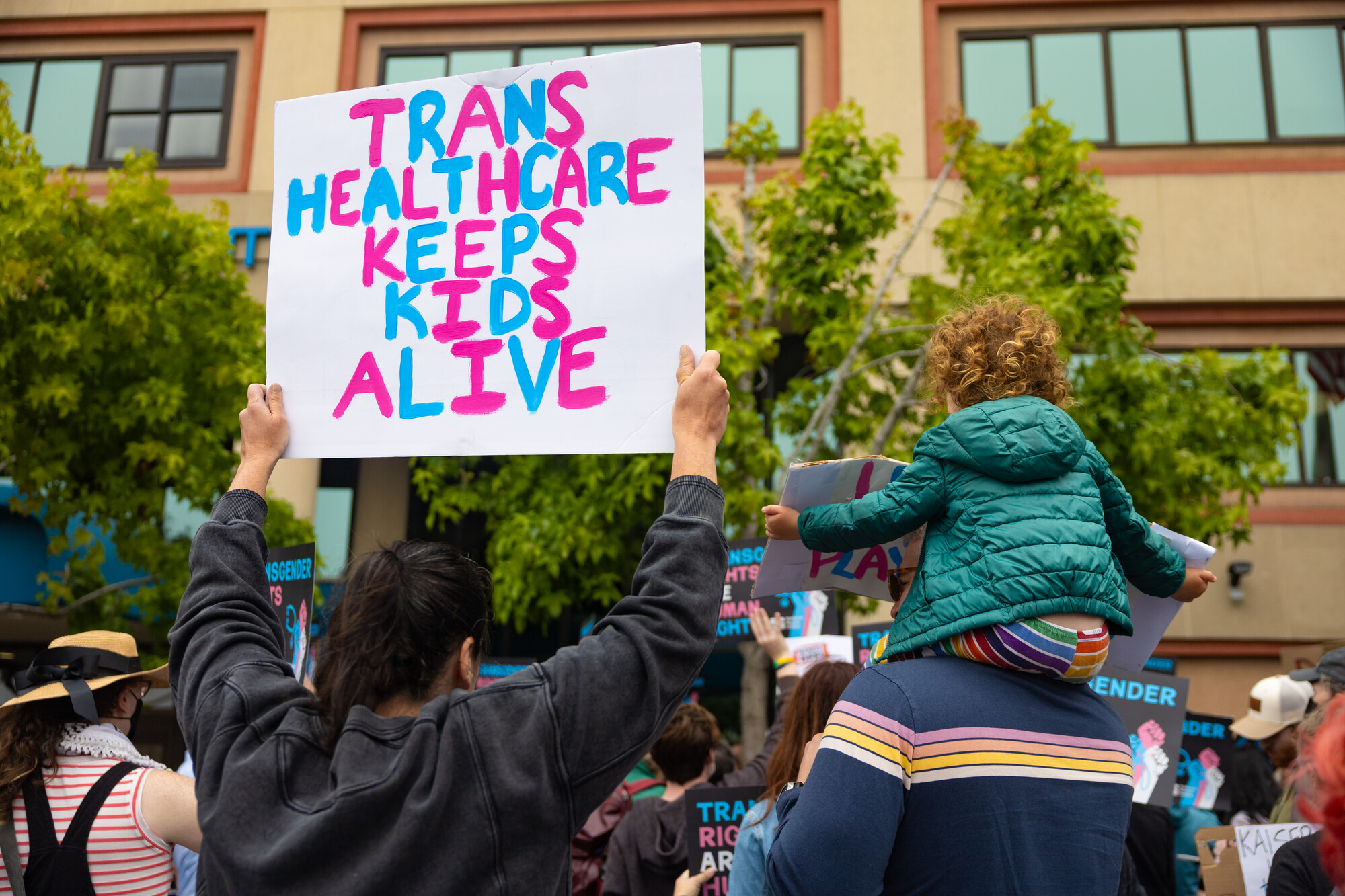
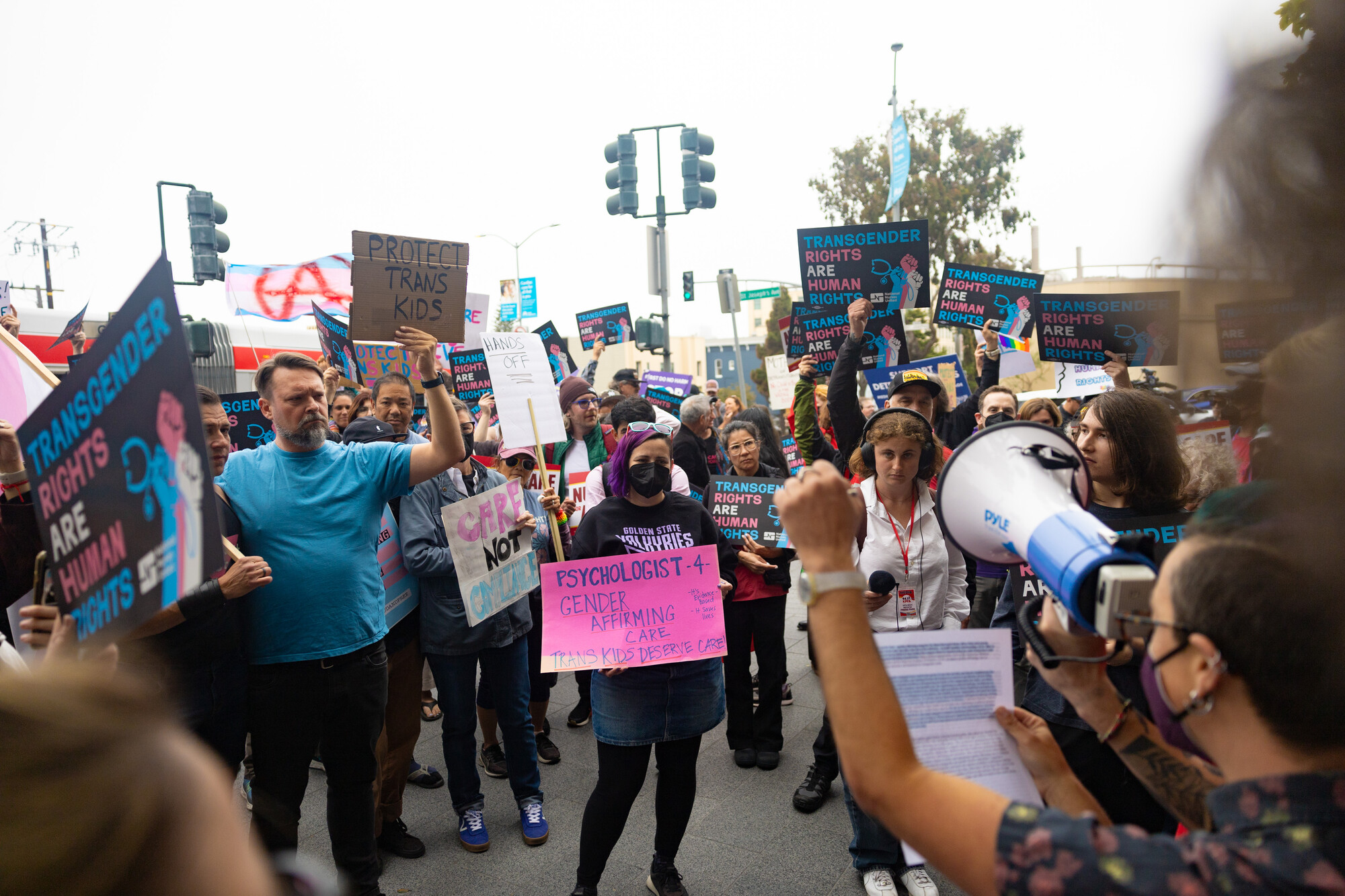
"caption": "Union nurses and community supporters rally outside of Kaiser Permanente, honoring transgender patients affected by Kaiser’s decision to halt gender-affirming care to minors, on July 25, 2025. ",
"credit": "Gina Castro/KQED",
"altTag": null,
"description": null,
"imgSizes": {
"thumbnail": {
"file": "https://cdn.kqed.org/wp-content/uploads/sites/10/2025/08/20250725_KaiserTransProtest_GC-1_qed-160x107.jpg",
"width": 160,
"height": 107,
"mimeType": "image/jpeg"
},
"1536x1536": {
"file": "https://cdn.kqed.org/wp-content/uploads/sites/10/2025/08/20250725_KaiserTransProtest_GC-1_qed-1536x1024.jpg",
"width": 1536,
"height": 1024,
"mimeType": "image/jpeg"
},
"post-thumbnail": {
"file": "https://cdn.kqed.org/wp-content/uploads/sites/10/2025/08/20250725_KaiserTransProtest_GC-1_qed-672x372.jpg",
"width": 672,
"height": 372,
"mimeType": "image/jpeg"
},
"twentyfourteen-full-width": {
"file": "https://cdn.kqed.org/wp-content/uploads/sites/10/2025/08/20250725_KaiserTransProtest_GC-1_qed-1038x576.jpg",
"width": 1038,
"height": 576,
"mimeType": "image/jpeg"
},
"kqedFullSize": {
"file": "https://cdn.kqed.org/wp-content/uploads/sites/10/2025/08/20250725_KaiserTransProtest_GC-1_qed.jpg",
"width": 2000,
"height": 1333
}
},
"isLoading": false,
"fetchFailed": false
},
"news_12050987": {
"type": "attachments",
"id": "news_12050987",
"meta": {
"index": "attachments_1716263798",
"site": "news",
"id": "12050987",
"found": true
},
"title": "Election 2026 California Redistricting",
"publishDate": 1754422424,
"status": "inherit",
"parent": 12050983,
"modified": 1754432188,
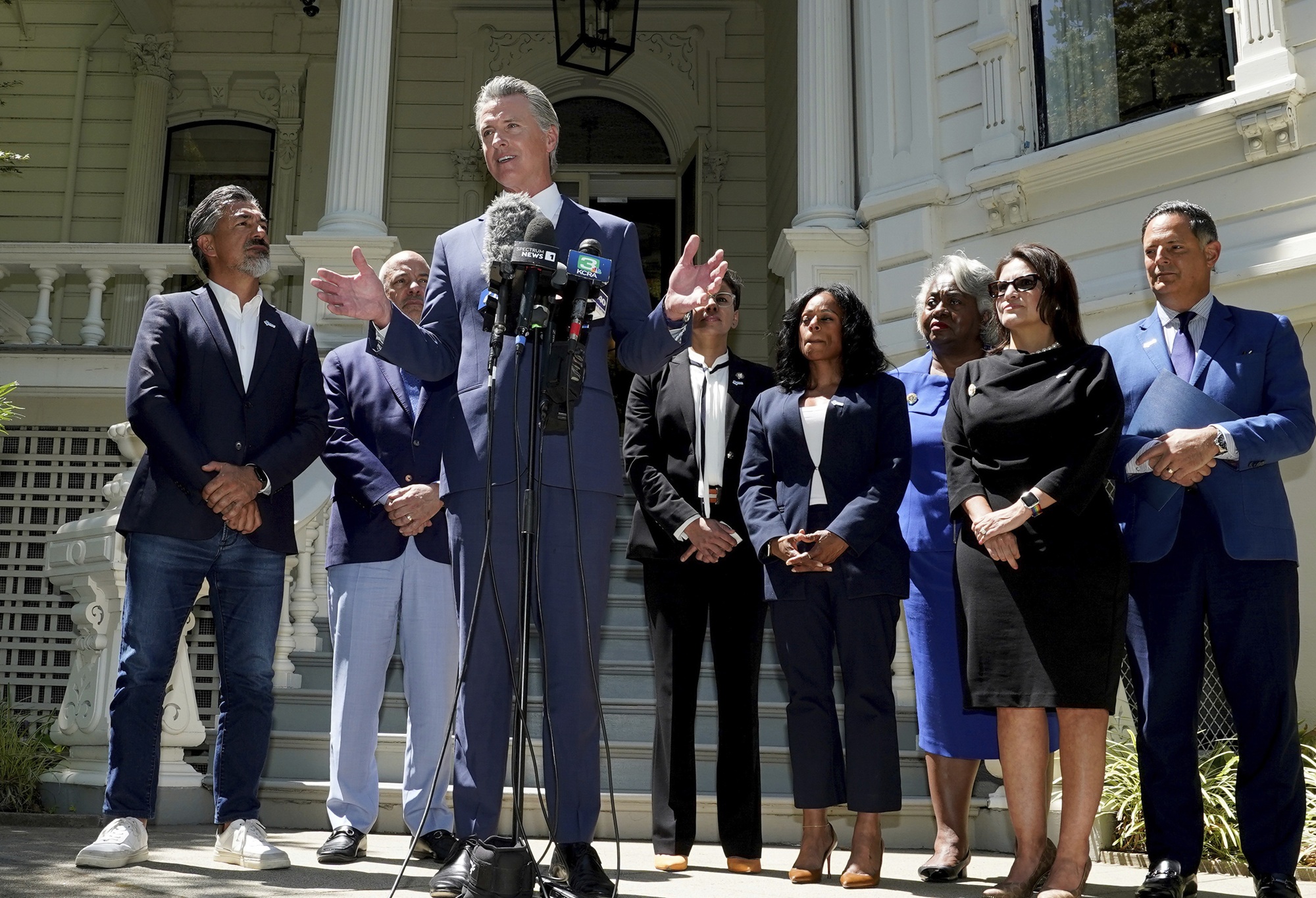
"caption": "California Gov. Gavin Newsom, accompanied by several members of the Texas state Legislature, calls for a new way for California to redraw its voting districts during a news conference in Sacramento, California, on Friday, July 25, 2025. ",
"credit": "Rich Pedroncelli/AP Photo",
"altTag": null,
"description": null,
"imgSizes": {
"thumbnail": {
"file": "https://cdn.kqed.org/wp-content/uploads/sites/10/2025/08/GavinNewsomSacramentoAug2025AP-160x109.jpg",
"width": 160,
"height": 109,
"mimeType": "image/jpeg"
},
"1536x1536": {
"file": "https://cdn.kqed.org/wp-content/uploads/sites/10/2025/08/GavinNewsomSacramentoAug2025AP-1536x1048.jpg",
"width": 1536,
"height": 1048,
"mimeType": "image/jpeg"
},
"post-thumbnail": {
"file": "https://cdn.kqed.org/wp-content/uploads/sites/10/2025/08/GavinNewsomSacramentoAug2025AP-672x372.jpg",
"width": 672,
"height": 372,
"mimeType": "image/jpeg"
},
"twentyfourteen-full-width": {
"file": "https://cdn.kqed.org/wp-content/uploads/sites/10/2025/08/GavinNewsomSacramentoAug2025AP-1038x576.jpg",
"width": 1038,
"height": 576,
"mimeType": "image/jpeg"
},
"kqedFullSize": {
"file": "https://cdn.kqed.org/wp-content/uploads/sites/10/2025/08/GavinNewsomSacramentoAug2025AP.jpg",
"width": 2000,
"height": 1364
}
},
"isLoading": false,
"fetchFailed": false
},
"news_11732929": {
"type": "attachments",
"id": "news_11732929",
"meta": {
"index": "attachments_1716263798",
"site": "news",
"id": "11732929",
"found": true
},
"parent": 11732835,
"imgSizes": {
"twentyfourteen-full-width": {
"file": "https://ww2.kqed.org/app/uploads/sites/10/2019/03/GettyImages-1135386368-1038x576.jpg",
"width": 1038,
"mimeType": "image/jpeg",
"height": 576
},
"thumbnail": {
"file": "https://ww2.kqed.org/app/uploads/sites/10/2019/03/GettyImages-1135386368-160x106.jpg",
"width": 160,
"mimeType": "image/jpeg",
"height": 106
},
"post-thumbnail": {
"file": "https://ww2.kqed.org/app/uploads/sites/10/2019/03/GettyImages-1135386368-672x372.jpg",
"width": 672,
"mimeType": "image/jpeg",
"height": 372
},
"kqedFullSize": {
"file": "https://ww2.kqed.org/app/uploads/sites/10/2019/03/GettyImages-1135386368-e1552589629977.jpg",
"width": 1920,
"height": 1278
},
"large": {
"file": "https://ww2.kqed.org/app/uploads/sites/10/2019/03/GettyImages-1135386368-1020x679.jpg",
"width": 1020,
"mimeType": "image/jpeg",
"height": 679
},
"complete_open_graph": {
"file": "https://ww2.kqed.org/app/uploads/sites/10/2019/03/GettyImages-1135386368-1200x799.jpg",
"width": 1200,
"mimeType": "image/jpeg",
"height": 799
},
"guest-author-50": {
"file": "https://ww2.kqed.org/app/uploads/sites/10/2019/03/GettyImages-1135386368-50x50.jpg",
"width": 50,
"mimeType": "image/jpeg",
"height": 50
},
"guest-author-96": {
"file": "https://ww2.kqed.org/app/uploads/sites/10/2019/03/GettyImages-1135386368-96x96.jpg",
"width": 96,
"mimeType": "image/jpeg",
"height": 96
},
"medium": {
"file": "https://ww2.kqed.org/app/uploads/sites/10/2019/03/GettyImages-1135386368-800x532.jpg",
"width": 800,
"mimeType": "image/jpeg",
"height": 532
},
"guest-author-64": {
"file": "https://ww2.kqed.org/app/uploads/sites/10/2019/03/GettyImages-1135386368-64x64.jpg",
"width": 64,
"mimeType": "image/jpeg",
"height": 64
},
"guest-author-32": {
"file": "https://ww2.kqed.org/app/uploads/sites/10/2019/03/GettyImages-1135386368-32x32.jpg",
"width": 32,
"mimeType": "image/jpeg",
"height": 32
},
"full-width": {
"file": "https://ww2.kqed.org/app/uploads/sites/10/2019/03/GettyImages-1135386368-1920x1278.jpg",
"width": 1920,
"mimeType": "image/jpeg",
"height": 1278
},
"guest-author-128": {
"file": "https://ww2.kqed.org/app/uploads/sites/10/2019/03/GettyImages-1135386368-128x128.jpg",
"width": 128,
"mimeType": "image/jpeg",
"height": 128
}
},
"publishDate": 1552589542,
"modified": 1552601592,
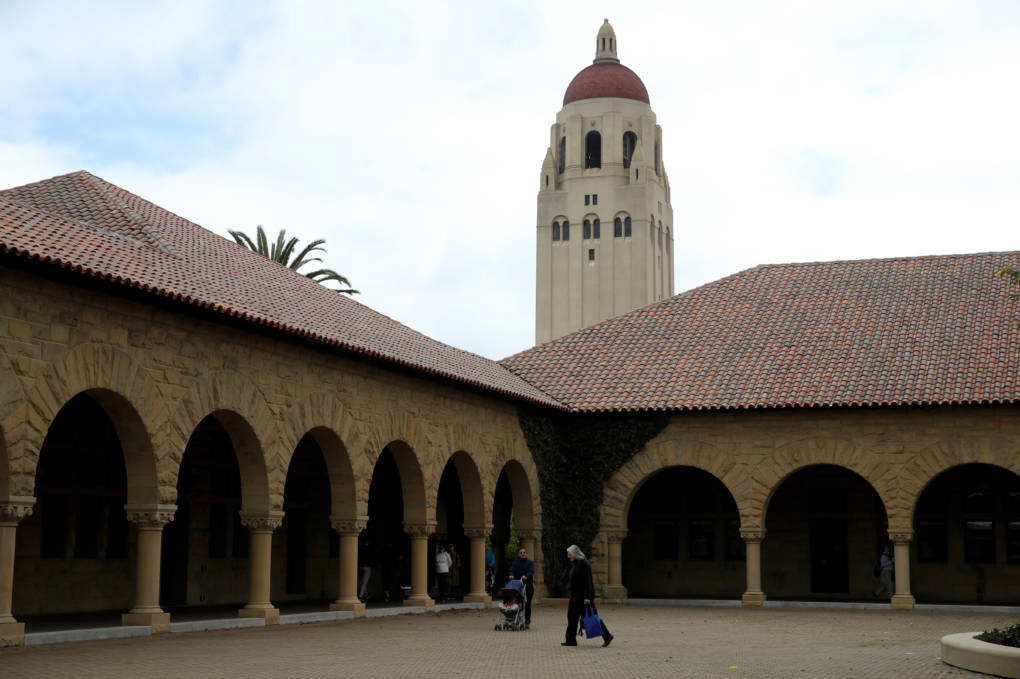
"caption": "People walk by Hoover Tower on the Stanford University campus on March 12, 2019. Fifty people, including actresses Lori Loughlin and Felicity Huffman, have been charged in a widespread elite college admission bribery scheme. Parents, ACT and SAT administrators and coaches at universities including Stanford, Georgetown, Yale and the University of Southern California have been charged.",
"description": null,
"title": "More Than 30 People Charged In Elite College Entry Bribery Scheme",
"credit": "Justin Sullivan/Getty Images",
"status": "inherit",
"isLoading": false,
"fetchFailed": false
},
"news_12051054": {
"type": "attachments",
"id": "news_12051054",
"meta": {
"index": "attachments_1716263798",
"site": "news",
"id": "12051054",
"found": true
},
"title": "US-POLITICS-TRUMP-FEMA",
"publishDate": 1754436690,
"status": "inherit",
"parent": 12051050,
"modified": 1754436746,
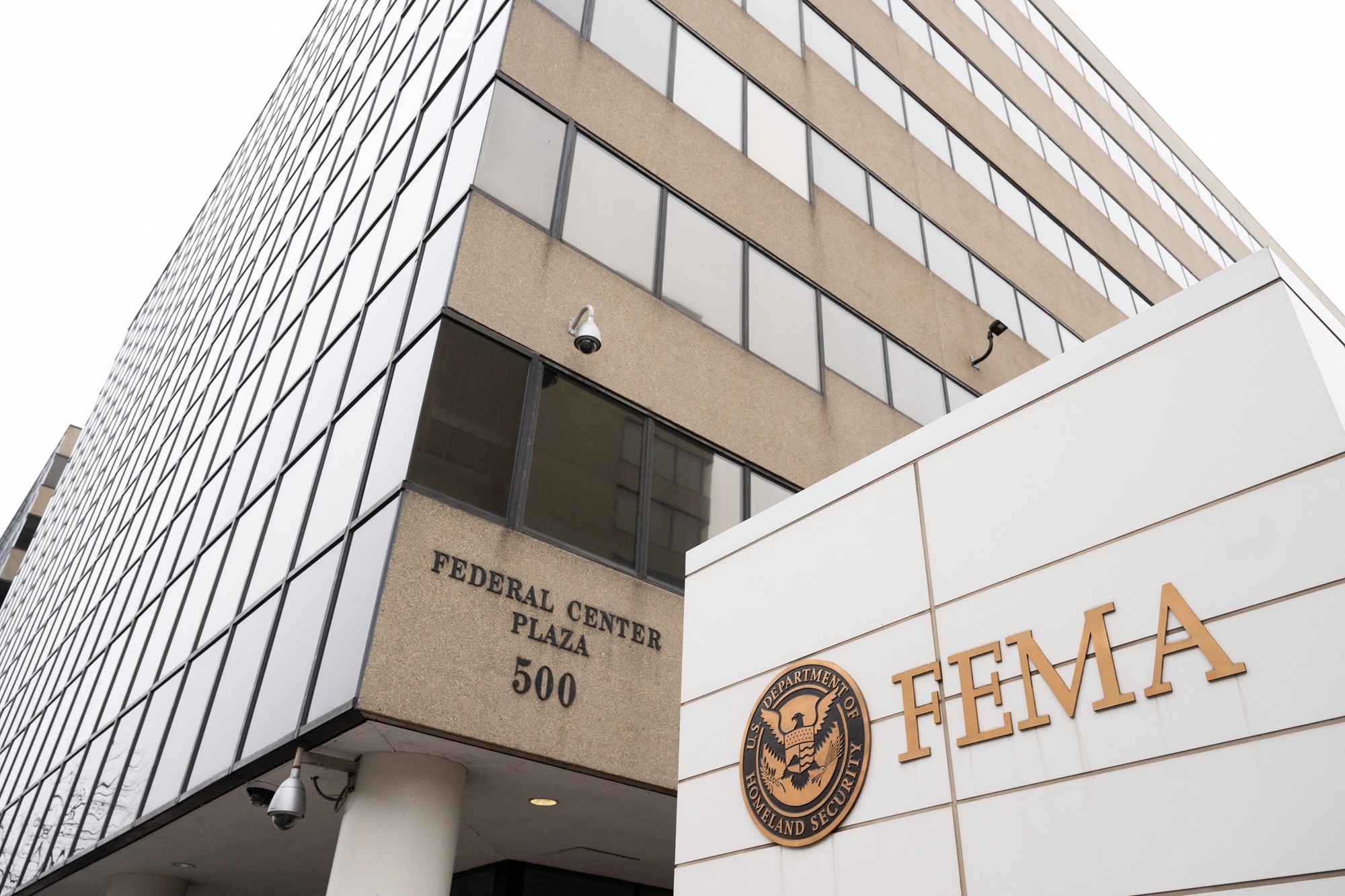
"caption": "FEMA (Federal Emergency Management Agency) Headquarters is seen in Washington, D.C., on Feb. 11, 2025. President Donald Trump launched a fresh attack Tuesday on the U.S. federal disaster agency FEMA, calling for it to be shut down and its duties instead handed to individual states. ",
"credit": "Saul Loeb/AFP via Getty Images",
"altTag": null,
"description": null,
"imgSizes": {
"thumbnail": {
"file": "https://cdn.kqed.org/wp-content/uploads/sites/10/2025/08/FEMAGetty-160x107.jpg",
"width": 160,
"height": 107,
"mimeType": "image/jpeg"
},
"1536x1536": {
"file": "https://cdn.kqed.org/wp-content/uploads/sites/10/2025/08/FEMAGetty-1536x1024.jpg",
"width": 1536,
"height": 1024,
"mimeType": "image/jpeg"
},
"post-thumbnail": {
"file": "https://cdn.kqed.org/wp-content/uploads/sites/10/2025/08/FEMAGetty-672x372.jpg",
"width": 672,
"height": 372,
"mimeType": "image/jpeg"
},
"twentyfourteen-full-width": {
"file": "https://cdn.kqed.org/wp-content/uploads/sites/10/2025/08/FEMAGetty-1038x576.jpg",
"width": 1038,
"height": 576,
"mimeType": "image/jpeg"
},
"kqedFullSize": {
"file": "https://cdn.kqed.org/wp-content/uploads/sites/10/2025/08/FEMAGetty.jpg",
"width": 2000,
"height": 1333
}
},
"isLoading": false,
"fetchFailed": false
},
"news_12050965": {
"type": "attachments",
"id": "news_12050965",
"meta": {
"index": "attachments_1716263798",
"site": "news",
"id": "12050965",
"found": true
},
"title": "250805-SONOMA HUNGER STRIKE-BL-01-KQED",
"publishDate": 1754420780,
"status": "inherit",
"parent": 0,
"modified": 1754421014,
"caption": "Rev Aija Simpson-Newbury speaks to faith leaders, congregation members, immigrant rights groups and allies outside of the Sonoma County Board of Supervisors offices in Santa Rosa on Aug. 5, 2025, during a rally to launch an indefinite hunger strike urging the county to adopt a sanctuary law.",
"credit": "Beth LaBerge/KQED",
"altTag": null,
"description": null,
"imgSizes": {
"thumbnail": {
"file": "https://cdn.kqed.org/wp-content/uploads/sites/10/2025/08/250805-SONOMA-HUNGER-STRIKE-BL-01-KQED-160x107.jpg",
"width": 160,
"height": 107,
"mimeType": "image/jpeg"
},
"1536x1536": {
"file": "https://cdn.kqed.org/wp-content/uploads/sites/10/2025/08/250805-SONOMA-HUNGER-STRIKE-BL-01-KQED-1536x1024.jpg",
"width": 1536,
"height": 1024,
"mimeType": "image/jpeg"
},
"post-thumbnail": {
"file": "https://cdn.kqed.org/wp-content/uploads/sites/10/2025/08/250805-SONOMA-HUNGER-STRIKE-BL-01-KQED-672x372.jpg",
"width": 672,
"height": 372,
"mimeType": "image/jpeg"
},
"twentyfourteen-full-width": {
"file": "https://cdn.kqed.org/wp-content/uploads/sites/10/2025/08/250805-SONOMA-HUNGER-STRIKE-BL-01-KQED-1038x576.jpg",
"width": 1038,
"height": 576,
"mimeType": "image/jpeg"
},
"kqedFullSize": {
"file": "https://cdn.kqed.org/wp-content/uploads/sites/10/2025/08/250805-SONOMA-HUNGER-STRIKE-BL-01-KQED.jpg",
"width": 2000,
"height": 1333
}
},
"isLoading": false,
"fetchFailed": false
},
"news_12050658": {
"type": "attachments",
"id": "news_12050658",
"meta": {
"index": "attachments_1716263798",
"site": "news",
"id": "12050658",
"found": true
},
"title": "07112025-ICECOUPLEDEPORTED-ET-PU-06-KQED",
"publishDate": 1754073904,
"status": "inherit",
"parent": 0,
"modified": 1754346713,
"caption": "Roberto stands in the bedroom of the apartment he shares with his wife, Sandra, whose belongings remain untouched after she was arrested and detained by immigration authorities during a check-in at ICE’s San Francisco office on July 11, 2025.",
"credit": "Pablo Unzueta for El Tecolote for CatchLight Local",
"altTag": null,
"description": null,
"imgSizes": {
"thumbnail": {
"file": "https://cdn.kqed.org/wp-content/uploads/sites/10/2025/08/07112025-ICECOUPLEDEPORTED-ET-PU-06-KQED-160x106.jpg",
"width": 160,
"height": 106,
"mimeType": "image/jpeg"
},
"1536x1536": {
"file": "https://cdn.kqed.org/wp-content/uploads/sites/10/2025/08/07112025-ICECOUPLEDEPORTED-ET-PU-06-KQED-1536x1022.jpg",
"width": 1536,
"height": 1022,
"mimeType": "image/jpeg"
},
"post-thumbnail": {
"file": "https://cdn.kqed.org/wp-content/uploads/sites/10/2025/08/07112025-ICECOUPLEDEPORTED-ET-PU-06-KQED-672x372.jpg",
"width": 672,
"height": 372,
"mimeType": "image/jpeg"
},
"twentyfourteen-full-width": {
"file": "https://cdn.kqed.org/wp-content/uploads/sites/10/2025/08/07112025-ICECOUPLEDEPORTED-ET-PU-06-KQED-1038x576.jpg",
"width": 1038,
"height": 576,
"mimeType": "image/jpeg"
},
"kqedFullSize": {
"file": "https://cdn.kqed.org/wp-content/uploads/sites/10/2025/08/07112025-ICECOUPLEDEPORTED-ET-PU-06-KQED.jpg",
"width": 2000,
"height": 1331
}
},
"isLoading": false,
"fetchFailed": false
},
"news_12050663": {
"type": "attachments",
"id": "news_12050663",
"meta": {
"index": "attachments_1716263798",
"site": "news",
"id": "12050663",
"found": true
},
"title": "UCLA Settles Lawsuit Brought By Jewish Students For $6 Million",
"publishDate": 1754074399,
"status": "inherit",
"parent": 12050654,
"modified": 1754095074,
"caption": "People walk on the UCLA campus on July 30, 2025, in Los Angeles. UCLA has reached a $6 million settlement with Jewish students and a professor in a lawsuit alleging discrimination over the 2024 pro-Palestinian campus protests.",
"credit": "Mario Tama/Getty Images",
"altTag": null,
"description": null,
"imgSizes": {
"thumbnail": {
"file": "https://cdn.kqed.org/wp-content/uploads/sites/10/2025/08/UCLAGetty-160x102.jpg",
"width": 160,
"height": 102,
"mimeType": "image/jpeg"
},
"1536x1536": {
"file": "https://cdn.kqed.org/wp-content/uploads/sites/10/2025/08/UCLAGetty-1536x982.jpg",
"width": 1536,
"height": 982,
"mimeType": "image/jpeg"
},
"post-thumbnail": {
"file": "https://cdn.kqed.org/wp-content/uploads/sites/10/2025/08/UCLAGetty-672x372.jpg",
"width": 672,
"height": 372,
"mimeType": "image/jpeg"
},
"twentyfourteen-full-width": {
"file": "https://cdn.kqed.org/wp-content/uploads/sites/10/2025/08/UCLAGetty-1038x576.jpg",
"width": 1038,
"height": 576,
"mimeType": "image/jpeg"
},
"kqedFullSize": {
"file": "https://cdn.kqed.org/wp-content/uploads/sites/10/2025/08/UCLAGetty.jpg",
"width": 2000,
"height": 1278
}
},
"isLoading": false,
"fetchFailed": false
},
"news_12050651": {
"type": "attachments",
"id": "news_12050651",
"meta": {
"index": "attachments_1716263798",
"site": "news",
"id": "12050651",
"found": true
},
"title": "20250428_WarrantlessSearches_GC-19_qed",
"publishDate": 1754073306,
"status": "inherit",
"parent": 12050648,
"modified": 1754073315,
"caption": "San Francisco Sheriff Paul Miyamoto, center, speaks during a press conference announcing the San Francisco Sheriff’s Office’s plan to resume warrantless searches of criminal defendants who have been released and awaiting trial, outside of City Hall on April 28, 2025.",
"credit": "Gina Castro/KQED",
"altTag": null,
"description": null,
"imgSizes": {
"thumbnail": {
"file": "https://cdn.kqed.org/wp-content/uploads/sites/10/2025/08/20250428_WarrantlessSearches_GC-19_qed-160x107.jpg",
"width": 160,
"height": 107,
"mimeType": "image/jpeg"
},
"1536x1536": {
"file": "https://cdn.kqed.org/wp-content/uploads/sites/10/2025/08/20250428_WarrantlessSearches_GC-19_qed-1536x1024.jpg",
"width": 1536,
"height": 1024,
"mimeType": "image/jpeg"
},
"post-thumbnail": {
"file": "https://cdn.kqed.org/wp-content/uploads/sites/10/2025/08/20250428_WarrantlessSearches_GC-19_qed-672x372.jpg",
"width": 672,
"height": 372,
"mimeType": "image/jpeg"
},
"twentyfourteen-full-width": {
"file": "https://cdn.kqed.org/wp-content/uploads/sites/10/2025/08/20250428_WarrantlessSearches_GC-19_qed-1038x576.jpg",
"width": 1038,
"height": 576,
"mimeType": "image/jpeg"
},
"kqedFullSize": {
"file": "https://cdn.kqed.org/wp-content/uploads/sites/10/2025/08/20250428_WarrantlessSearches_GC-19_qed.jpg",
"width": 2000,
"height": 1333
}
},
"isLoading": false,
"fetchFailed": false
},
"news_12049935": {
"type": "attachments",
"id": "news_12049935",
"meta": {
"index": "attachments_1716263798",
"site": "news",
"id": "12049935",
"found": true
},
"title": "20250725_KaiserTransProtest_GC-7_qed",
"publishDate": 1753496897,
"status": "inherit",
"parent": 12049666,
"modified": 1753496913,
"caption": "Union nurses and community supporters rally outside of Kaiser Permanente, honoring transgender patients affected by Kaiser’s decision to halt gender-affirming care to minors, on July 25, 2025.",
"credit": "Gina Castro/KQED",
"altTag": null,
"description": null,
"imgSizes": {
"thumbnail": {
"file": "https://cdn.kqed.org/wp-content/uploads/sites/10/2025/07/20250725_KaiserTransProtest_GC-7_qed-160x107.jpg",
"width": 160,
"height": 107,
"mimeType": "image/jpeg"
},
"1536x1536": {
"file": "https://cdn.kqed.org/wp-content/uploads/sites/10/2025/07/20250725_KaiserTransProtest_GC-7_qed-1536x1024.jpg",
"width": 1536,
"height": 1024,
"mimeType": "image/jpeg"
},
"post-thumbnail": {
"file": "https://cdn.kqed.org/wp-content/uploads/sites/10/2025/07/20250725_KaiserTransProtest_GC-7_qed-672x372.jpg",
"width": 672,
"height": 372,
"mimeType": "image/jpeg"
},
"twentyfourteen-full-width": {
"file": "https://cdn.kqed.org/wp-content/uploads/sites/10/2025/07/20250725_KaiserTransProtest_GC-7_qed-1038x576.jpg",
"width": 1038,
"height": 576,
"mimeType": "image/jpeg"
},
"kqedFullSize": {
"file": "https://cdn.kqed.org/wp-content/uploads/sites/10/2025/07/20250725_KaiserTransProtest_GC-7_qed.jpg",
"width": 2000,
"height": 1333
}
},
"isLoading": false,
"fetchFailed": false
},
"news_12027118": {
"type": "attachments",
"id": "news_12027118",
"meta": {
"index": "attachments_1716263798",
"site": "news",
"id": "12027118",
"found": true
},
"title": "U.S.-SAN FRANCISCO-THANKSGIVING-FLIGHT-TRAVEL",
"publishDate": 1739496901,
"status": "inherit",
"parent": 12027050,
"modified": 1753979148,
"caption": "Passengers at San Francisco International Airport on Nov. 26, 2023. ",
"credit": "Li Jianguo/Xinhua via Getty Images",
"altTag": "A crowded hallway at a busy airport.",
"description": null,
"imgSizes": {
"medium": {
"file": "https://cdn.kqed.org/wp-content/uploads/sites/10/2025/02/GettyImages-1808440413-800x533.jpg",
"width": 800,
"height": 533,
"mimeType": "image/jpeg"
},
"large": {
"file": "https://cdn.kqed.org/wp-content/uploads/sites/10/2025/02/GettyImages-1808440413-1020x680.jpg",
"width": 1020,
"height": 680,
"mimeType": "image/jpeg"
},
"thumbnail": {
"file": "https://cdn.kqed.org/wp-content/uploads/sites/10/2025/02/GettyImages-1808440413-160x107.jpg",
"width": 160,
"height": 107,
"mimeType": "image/jpeg"
},
"1536x1536": {
"file": "https://cdn.kqed.org/wp-content/uploads/sites/10/2025/02/GettyImages-1808440413-1536x1024.jpg",
"width": 1536,
"height": 1024,
"mimeType": "image/jpeg"
},
"2048x2048": {
"file": "https://cdn.kqed.org/wp-content/uploads/sites/10/2025/02/GettyImages-1808440413-2048x1365.jpg",
"width": 2048,
"height": 1365,
"mimeType": "image/jpeg"
},
"post-thumbnail": {
"file": "https://cdn.kqed.org/wp-content/uploads/sites/10/2025/02/GettyImages-1808440413-672x372.jpg",
"width": 672,
"height": 372,
"mimeType": "image/jpeg"
},
"twentyfourteen-full-width": {
"file": "https://cdn.kqed.org/wp-content/uploads/sites/10/2025/02/GettyImages-1808440413-1038x576.jpg",
"width": 1038,
"height": 576,
"mimeType": "image/jpeg"
},
"full-width": {
"file": "https://cdn.kqed.org/wp-content/uploads/sites/10/2025/02/GettyImages-1808440413-1920x1280.jpg",
"width": 1920,
"height": 1280,
"mimeType": "image/jpeg"
},
"kqedFullSize": {
"file": "https://cdn.kqed.org/wp-content/uploads/sites/10/2025/02/GettyImages-1808440413-scaled-e1753979118594.jpg",
"width": 2000,
"height": 1334
}
},
"isLoading": false,
"fetchFailed": false
},
"news_12011901": {
"type": "attachments",
"id": "news_12011901",
"meta": {
"index": "attachments_1716263798",
"site": "news",
"id": "12011901",
"found": true
},
"title": "Early voting process ahead of presidential election in San Francisco",
"publishDate": 1730399191,
"status": "inherit",
"parent": 12011898,
"modified": 1730490547,
"caption": "A view of an official ballot drop box next to the Department of Elections at City Hall in San Francisco on Oct. 24, 2024. ",
"credit": "Tayfun Coskun/Anadolu via Getty Images",
"altTag": null,
"description": null,
"imgSizes": {
"medium": {
"file": "https://cdn.kqed.org/wp-content/uploads/sites/10/2025/10/GettyImages-2180061713_qed-800x533.jpg",
"width": 800,
"height": 533,
"mimeType": "image/jpeg"
},
"large": {
"file": "https://cdn.kqed.org/wp-content/uploads/sites/10/2025/10/GettyImages-2180061713_qed-1020x680.jpg",
"width": 1020,
"height": 680,
"mimeType": "image/jpeg"
},
"thumbnail": {
"file": "https://cdn.kqed.org/wp-content/uploads/sites/10/2025/10/GettyImages-2180061713_qed-160x107.jpg",
"width": 160,
"height": 107,
"mimeType": "image/jpeg"
},
"1536x1536": {
"file": "https://cdn.kqed.org/wp-content/uploads/sites/10/2025/10/GettyImages-2180061713_qed-1536x1024.jpg",
"width": 1536,
"height": 1024,
"mimeType": "image/jpeg"
},
"post-thumbnail": {
"file": "https://cdn.kqed.org/wp-content/uploads/sites/10/2025/10/GettyImages-2180061713_qed-672x372.jpg",
"width": 672,
"height": 372,
"mimeType": "image/jpeg"
},
"twentyfourteen-full-width": {
"file": "https://cdn.kqed.org/wp-content/uploads/sites/10/2025/10/GettyImages-2180061713_qed-1038x576.jpg",
"width": 1038,
"height": 576,
"mimeType": "image/jpeg"
},
"full-width": {
"file": "https://cdn.kqed.org/wp-content/uploads/sites/10/2025/10/GettyImages-2180061713_qed-1920x1280.jpg",
"width": 1920,
"height": 1280,
"mimeType": "image/jpeg"
},
"kqedFullSize": {
"file": "https://cdn.kqed.org/wp-content/uploads/sites/10/2025/10/GettyImages-2180061713_qed.jpg",
"width": 2000,
"height": 1333
}
},
"isLoading": false,
"fetchFailed": false
},
"news_12040284": {
"type": "attachments",
"id": "news_12040284",
"meta": {
"index": "attachments_1716263798",
"site": "news",
"id": "12040284",
"found": true
},
"title": "UCSF Medical Center at Mission Bay in San Francisco on April 24, 2025.",
"publishDate": 1747328580,
"status": "inherit",
"parent": 0,
"modified": 1747328602,
"caption": "UCSF Medical Center at Mission Bay in San Francisco on April 24, 2025.",
"credit": "Gina Castro/KQED",
"altTag": null,
"description": null,
"imgSizes": {
"medium": {
"file": "https://cdn.kqed.org/wp-content/uploads/sites/10/2025/05/20250424_UCSFFile_GC-16_qed-800x533.jpg",
"width": 800,
"height": 533,
"mimeType": "image/jpeg"
},
"large": {
"file": "https://cdn.kqed.org/wp-content/uploads/sites/10/2025/05/20250424_UCSFFile_GC-16_qed-1020x680.jpg",
"width": 1020,
"height": 680,
"mimeType": "image/jpeg"
},
"thumbnail": {
"file": "https://cdn.kqed.org/wp-content/uploads/sites/10/2025/05/20250424_UCSFFile_GC-16_qed-160x107.jpg",
"width": 160,
"height": 107,
"mimeType": "image/jpeg"
},
"1536x1536": {
"file": "https://cdn.kqed.org/wp-content/uploads/sites/10/2025/05/20250424_UCSFFile_GC-16_qed-1536x1024.jpg",
"width": 1536,
"height": 1024,
"mimeType": "image/jpeg"
},
"post-thumbnail": {
"file": "https://cdn.kqed.org/wp-content/uploads/sites/10/2025/05/20250424_UCSFFile_GC-16_qed-672x372.jpg",
"width": 672,
"height": 372,
"mimeType": "image/jpeg"
},
"twentyfourteen-full-width": {
"file": "https://cdn.kqed.org/wp-content/uploads/sites/10/2025/05/20250424_UCSFFile_GC-16_qed-1038x576.jpg",
"width": 1038,
"height": 576,
"mimeType": "image/jpeg"
},
"full-width": {
"file": "https://cdn.kqed.org/wp-content/uploads/sites/10/2025/05/20250424_UCSFFile_GC-16_qed-1920x1280.jpg",
"width": 1920,
"height": 1280,
"mimeType": "image/jpeg"
},
"kqedFullSize": {
"file": "https://cdn.kqed.org/wp-content/uploads/sites/10/2025/05/20250424_UCSFFile_GC-16_qed.jpg",
"width": 2000,
"height": 1333
}
},
"isLoading": false,
"fetchFailed": false
}
},
"audioPlayerReducer": {
"postId": "stream_live",
"isPaused": true,
"isPlaying": false,
"pfsActive": false,
"pledgeModalIsOpen": true,
"playerDrawerIsOpen": false,
"liveAudioPlayStartedAt": 0,
"liveAudioPlayContext": ""
},
"authorsReducer": {
"byline_news_12050841": {
"type": "authors",
"id": "byline_news_12050841",
"meta": {
"override": true
},
"slug": "byline_news_12050841",
"name": "Mariana Duran, El Tecolote",
"isLoading": false
},
"dventon": {
"type": "authors",
"id": "11088",
"meta": {
"index": "authors_1716337520",
"id": "11088",
"found": true
},
"name": "Danielle Venton",
"firstName": "Danielle",
"lastName": "Venton",
"slug": "dventon",
"email": "dventon@kqed.org",
"display_author_email": true,
"staff_mastheads": [
"science"
],
"title": "Science reporter",
"bio": "Danielle Venton is a reporter for KQED Science. She covers wildfires, space and oceans (though she is prone to sea sickness).\r\n\r\nBefore joining KQED in 2015, Danielle was a staff reporter at KRCB in Sonoma County and a freelancer. She studied science communication at UC Santa Cruz and formerly worked at CERN in Geneva, Switzerland where she wrote about computing. She lives in Sonoma County and enjoys backpacking.",
"avatar": "https://secure.gravatar.com/avatar/ebaf11ee6cfb7bb40329a143d463829e?s=600&d=blank&r=g",
"twitter": "DanielleVenton",
"facebook": null,
"instagram": null,
"linkedin": null,
"sites": [
{
"site": "arts",
"roles": [
"contributor"
]
},
{
"site": "news",
"roles": [
"editor"
]
},
{
"site": "futureofyou",
"roles": [
"editor"
]
},
{
"site": "science",
"roles": [
"editor"
]
},
{
"site": "liveblog",
"roles": [
"contributor"
]
}
],
"headData": {
"title": "Danielle Venton | KQED",
"description": "Science reporter",
"ogImgSrc": "https://secure.gravatar.com/avatar/ebaf11ee6cfb7bb40329a143d463829e?s=600&d=blank&r=g",
"twImgSrc": "https://secure.gravatar.com/avatar/ebaf11ee6cfb7bb40329a143d463829e?s=600&d=blank&r=g"
},
"isLoading": false,
"link": "/author/dventon"
},
"agonzalez": {
"type": "authors",
"id": "11724",
"meta": {
"index": "authors_1716337520",
"id": "11724",
"found": true
},
"name": "Alexander Gonzalez",
"firstName": "Alexander",
"lastName": "Gonzalez",
"slug": "agonzalez",
"email": "AlexanderGonzalez@KQED.org",
"display_author_email": false,
"staff_mastheads": [
"news"
],
"title": "KQED Contributor",
"bio": null,
"avatar": "https://secure.gravatar.com/avatar/9e291ed34e154df4c662edf858b641d70b4859939bfe40be478408f9dfd057d2?s=600&d=blank&r=g",
"twitter": null,
"bluesky": null,
"facebook": null,
"instagram": null,
"linkedin": null,
"sites": [
{
"site": "arts",
"roles": [
"editor"
]
},
{
"site": "news",
"roles": [
"editor"
]
},
{
"site": "science",
"roles": [
"editor"
]
}
],
"headData": {
"title": "Alexander Gonzalez | KQED",
"description": "KQED Contributor",
"ogImgSrc": "https://secure.gravatar.com/avatar/9e291ed34e154df4c662edf858b641d70b4859939bfe40be478408f9dfd057d2?s=600&d=blank&r=g",
"twImgSrc": "https://secure.gravatar.com/avatar/9e291ed34e154df4c662edf858b641d70b4859939bfe40be478408f9dfd057d2?s=600&d=blank&r=g"
},
"isLoading": false,
"link": "/author/agonzalez"
},
"jgeha": {
"type": "authors",
"id": "11906",
"meta": {
"index": "authors_1716337520",
"id": "11906",
"found": true
},
"name": "Joseph Geha",
"firstName": "Joseph",
"lastName": "Geha",
"slug": "jgeha",
"email": "jgeha@kqed.org",
"display_author_email": false,
"staff_mastheads": [
"news",
"science"
],
"title": "KQED Contributor",
"bio": null,
"avatar": "https://secure.gravatar.com/avatar/ea84d2b6dd93d6369d453edf19dd583f117cd1759d2d9c9c92f9de77017354fe?s=600&d=blank&r=g",
"twitter": null,
"bluesky": null,
"facebook": null,
"instagram": null,
"linkedin": null,
"sites": [
{
"site": "news",
"roles": [
"editor"
]
},
{
"site": "liveblog",
"roles": [
"author"
]
}
],
"headData": {
"title": "Joseph Geha | KQED",
"description": "KQED Contributor",
"ogImgSrc": "https://secure.gravatar.com/avatar/ea84d2b6dd93d6369d453edf19dd583f117cd1759d2d9c9c92f9de77017354fe?s=600&d=blank&r=g",
"twImgSrc": "https://secure.gravatar.com/avatar/ea84d2b6dd93d6369d453edf19dd583f117cd1759d2d9c9c92f9de77017354fe?s=600&d=blank&r=g"
},
"isLoading": false,
"link": "/author/jgeha"
},
"jservantez": {
"type": "authors",
"id": "11909",
"meta": {
"index": "authors_1716337520",
"id": "11909",
"found": true
},
"name": "Jared Servantez",
"firstName": "Jared",
"lastName": "Servantez",
"slug": "jservantez",
"email": "jservantez@kqed.org",
"display_author_email": true,
"staff_mastheads": [
"news"
],
"title": "KQED Contributor",
"bio": "Jared Servantez is the editor of KQED's Express Desk, leading the newsroom's online breaking news operation. He most recently worked for the Los Angeles Times, where he served as a breaking news editor, the Metro Desk's night editor, and a copy editor. Jared is a graduate of the USC Annenberg School for Communication and Journalism.",
"avatar": "https://secure.gravatar.com/avatar/46e9029cd4e3bc3391184e65511d73e6?s=600&d=mm&r=g",
"twitter": "jservantez",
"facebook": null,
"instagram": null,
"linkedin": null,
"sites": [
{
"site": "news",
"roles": [
"editor"
]
},
{
"site": "science",
"roles": [
"editor",
"author"
]
},
{
"site": "liveblog",
"roles": [
"editor"
]
}
],
"headData": {
"title": "Jared Servantez | KQED",
"description": "KQED Contributor",
"ogImgSrc": "https://secure.gravatar.com/avatar/46e9029cd4e3bc3391184e65511d73e6?s=600&d=mm&r=g",
"twImgSrc": "https://secure.gravatar.com/avatar/46e9029cd4e3bc3391184e65511d73e6?s=600&d=mm&r=g"
},
"isLoading": false,
"link": "/author/jservantez"
},
"kdebenedetti": {
"type": "authors",
"id": "11913",
"meta": {
"index": "authors_1716337520",
"id": "11913",
"found": true
},
"name": "Katie DeBenedetti",
"firstName": "Katie",
"lastName": "DeBenedetti",
"slug": "kdebenedetti",
"email": "kdebenedetti@kqed.org",
"display_author_email": false,
"staff_mastheads": [
"news",
"science"
],
"title": "KQED Contributor",
"bio": "Katie DeBenedetti is a digital reporter covering daily news for the Express Desk. Prior to joining KQED as a culture reporting intern in January 2024, she covered education and city government for the Napa Valley Register.",
"avatar": "https://secure.gravatar.com/avatar/6e31073cb8f7e4214ab03f42771d0f45?s=600&d=blank&r=g",
"twitter": null,
"facebook": null,
"instagram": null,
"linkedin": null,
"sites": [
{
"site": "news",
"roles": [
"author"
]
},
{
"site": "science",
"roles": [
"author"
]
},
{
"site": "liveblog",
"roles": [
"author"
]
}
],
"headData": {
"title": "Katie DeBenedetti | KQED",
"description": "KQED Contributor",
"ogImgSrc": "https://secure.gravatar.com/avatar/6e31073cb8f7e4214ab03f42771d0f45?s=600&d=blank&r=g",
"twImgSrc": "https://secure.gravatar.com/avatar/6e31073cb8f7e4214ab03f42771d0f45?s=600&d=blank&r=g"
},
"isLoading": false,
"link": "/author/kdebenedetti"
},
"bkrans": {
"type": "authors",
"id": "11923",
"meta": {
"index": "authors_1716337520",
"id": "11923",
"found": true
},
"name": "Brian Krans",
"firstName": "Brian",
"lastName": "Krans",
"slug": "bkrans",
"email": "bkrans@kqed.org",
"display_author_email": false,
"staff_mastheads": [
"news"
],
"title": "KQED Contributing Reporter",
"bio": "Brian Krans is an award-winning local news and investigative reporter who has been proudly working as a general assignment reporter for KQED since August 2023. He lives in Richmond, where he also reports on air pollution for Richmondside. He is also a founding member of the Vallejo Sun.",
"avatar": "https://secure.gravatar.com/avatar/d1014d604089314a94807d2c4f2d3e06?s=600&d=blank&r=g",
"twitter": "citizenkrans",
"facebook": null,
"instagram": null,
"linkedin": null,
"sites": [
{
"site": "news",
"roles": [
"editor"
]
}
],
"headData": {
"title": "Brian Krans | KQED",
"description": "KQED Contributing Reporter",
"ogImgSrc": "https://secure.gravatar.com/avatar/d1014d604089314a94807d2c4f2d3e06?s=600&d=blank&r=g",
"twImgSrc": "https://secure.gravatar.com/avatar/d1014d604089314a94807d2c4f2d3e06?s=600&d=blank&r=g"
},
"isLoading": false,
"link": "/author/bkrans"
},
"emanoukian": {
"type": "authors",
"id": "11925",
"meta": {
"index": "authors_1716337520",
"id": "11925",
"found": true
},
"name": "Elize Manoukian",
"firstName": "Elize",
"lastName": "Manoukian",
"slug": "emanoukian",
"email": "emanoukian@KQED.org",
"display_author_email": false,
"staff_mastheads": [
"news"
],
"title": "Digital Producer",
"bio": null,
"avatar": "https://secure.gravatar.com/avatar/4525f1a8e46ccb30933b32653d9772064cfefe3fa655eb45b3b3a80341f6bdad?s=600&d=blank&r=g",
"twitter": null,
"bluesky": null,
"facebook": null,
"instagram": null,
"linkedin": null,
"sites": [
{
"site": "arts",
"roles": [
"editor"
]
},
{
"site": "news",
"roles": [
"editor"
]
},
{
"site": "science",
"roles": [
"editor"
]
}
],
"headData": {
"title": "Elize Manoukian | KQED",
"description": "Digital Producer",
"ogImgSrc": "https://secure.gravatar.com/avatar/4525f1a8e46ccb30933b32653d9772064cfefe3fa655eb45b3b3a80341f6bdad?s=600&d=blank&r=g",
"twImgSrc": "https://secure.gravatar.com/avatar/4525f1a8e46ccb30933b32653d9772064cfefe3fa655eb45b3b3a80341f6bdad?s=600&d=blank&r=g"
},
"isLoading": false,
"link": "/author/emanoukian"
},
"gzada": {
"type": "authors",
"id": "11929",
"meta": {
"index": "authors_1716337520",
"id": "11929",
"found": true
},
"name": "Gilare Zada",
"firstName": "Gilare",
"lastName": "Zada",
"slug": "gzada",
"email": "gzada@kqed.org",
"display_author_email": true,
"staff_mastheads": [
"news"
],
"title": null,
"bio": "Gilare Zada is a Kurdish-American from San Diego, CA. Storytelling, fitness, and binge reading are some of her passions outside of news reporting. Her work has appeared in Mission Local, the Peninsula Press, the San Francisco Press Club, and more. She also writes as a class correspondent for the Stanford Magazine - go Card!",
"avatar": "https://secure.gravatar.com/avatar/33a75f2b947669a488a805edec3fbf3838c1cedaedda710e983770633b4d6a75?s=600&d=blank&r=g",
"twitter": null,
"bluesky": null,
"facebook": null,
"instagram": null,
"linkedin": null,
"sites": [
{
"site": "arts",
"roles": [
"editor"
]
},
{
"site": "news",
"roles": [
"editor",
"contributor"
]
},
{
"site": "science",
"roles": [
"editor"
]
}
],
"headData": {
"title": "Gilare Zada | KQED",
"description": null,
"ogImgSrc": "https://secure.gravatar.com/avatar/33a75f2b947669a488a805edec3fbf3838c1cedaedda710e983770633b4d6a75?s=600&d=blank&r=g",
"twImgSrc": "https://secure.gravatar.com/avatar/33a75f2b947669a488a805edec3fbf3838c1cedaedda710e983770633b4d6a75?s=600&d=blank&r=g"
},
"isLoading": false,
"link": "/author/gzada"
},
"skennedy": {
"type": "authors",
"id": "11935",
"meta": {
"index": "authors_1716337520",
"id": "11935",
"found": true
},
"name": "Samantha Kennedy",
"firstName": "Samantha",
"lastName": "Kennedy",
"slug": "skennedy",
"email": "SKennedy@kqed.org",
"display_author_email": false,
"staff_mastheads": [],
"title": "KQED Contributor",
"bio": null,
"avatar": "https://secure.gravatar.com/avatar/adc7b14bf1e801793202a156ecc864d4ad505b0fd63162a2f3da0e5ba57222d0?s=600&d=blank&r=g",
"twitter": null,
"bluesky": null,
"facebook": null,
"instagram": null,
"linkedin": null,
"sites": [
{
"site": "arts",
"roles": [
"author"
]
},
{
"site": "news",
"roles": [
"editor"
]
},
{
"site": "science",
"roles": [
"editor"
]
}
],
"headData": {
"title": "Samantha Kennedy | KQED",
"description": "KQED Contributor",
"ogImgSrc": "https://secure.gravatar.com/avatar/adc7b14bf1e801793202a156ecc864d4ad505b0fd63162a2f3da0e5ba57222d0?s=600&d=blank&r=g",
"twImgSrc": "https://secure.gravatar.com/avatar/adc7b14bf1e801793202a156ecc864d4ad505b0fd63162a2f3da0e5ba57222d0?s=600&d=blank&r=g"
},
"isLoading": false,
"link": "/author/skennedy"
}
},
"pagesReducer": {
"news_tag_donald-trump": {
"type": "terms",
"id": "news_1323",
"meta": {
"index": "terms_1716263798",
"site": "news",
"id": "1323",
"score": 8.555192
},
"featImg": null,
"name": "Donald Trump",
"description": null,
"taxonomy": "tag",
"headData": {
"twImgId": null,
"twTitle": null,
"ogTitle": null,
"ogImgId": null,
"twDescription": null,
"description": null,
"title": "Donald Trump Archives | KQED News",
"ogDescription": null
},
"ttid": 1335,
"slug": "donald-trump",
"isLoading": false,
"title": "Donald Trump",
"pageMeta": {
"site": "news",
"WpPageTemplate": "page-topic-editorial",
"currentPage": 26
},
"blocks": [
{
"blockName": "kqed/post-list",
"attrs": {
"layout": "cardArticle2",
"query": "posts/news?tag=donald-trump",
"seeMore": false,
"paginated": true,
"page": 26
}
},
{
"blockName": "kqed/ad"
}
]
}
},
"pfsSessionReducer": {},
"postsReducer": {
"stream_live": {
"type": "live",
"id": "stream_live",
"audioUrl": "https://streams.kqed.org/kqedradio",
"title": "Live Stream",
"excerpt": "Live Stream information currently unavailable.",
"link": "/radio",
"featImg": "",
"label": {
"name": "KQED Live",
"link": "/"
}
},
"stream_kqedNewscast": {
"type": "posts",
"id": "stream_kqedNewscast",
"audioUrl": "https://www.kqed.org/.stream/anon/radio/RDnews/newscast.mp3?_=1",
"title": "KQED Newscast",
"featImg": "",
"label": {
"name": "88.5 FM",
"link": "/"
}
},
"news_12050945": {
"type": "posts",
"id": "news_12050945",
"meta": {
"index": "posts_1716263798",
"site": "news",
"id": "12050945",
"score": null,
"sort": [
1754488816000
]
},
"guestAuthors": [],
"slug": "dangerous-how-a-top-civil-rights-attorney-describes-attack-on-trans-health-care",
"title": "‘Dangerous’: How a Top Civil Rights Attorney Describes Attack on Trans Health Care",
"publishDate": 1754488816,
"format": "standard",
"headTitle": "‘Dangerous’: How a Top Civil Rights Attorney Describes Attack on Trans Health Care | KQED",
"labelTerm": {
"site": "news"
},
"content": "\u003cp>In recent weeks, the Bay Area’s trans community has experienced a series of painful political setbacks, following a wave of backlash across the country.\u003c/p>\n\u003cp>On July 24, \u003ca href=\"https://www.kqed.org/news/12049555/kaiser-to-stop-gender-affirming-surgeries-for-minors-leaving-trans-kids-with-fewer-options\">Oakland-based Kaiser Permanente\u003c/a> said it would join a growing list of medical providers in the state to roll back or fully restrict gender-affirming surgical treatment for trans youth in July, \u003ca href=\"https://www.kqed.org/news/12049666/nowhere-else-to-go-sf-families-protest-kaisers-new-limits-on-gender-affirming-care\">leaving patients and families with few options\u003c/a> for care.\u003c/p>\n\u003cp>Kaiser cited a challenging “legal and regulatory environment” — a clear takeaway from the Trump administration’s January \u003ca href=\"https://www.whitehouse.gov/presidential-actions/2025/01/protecting-children-from-chemical-and-surgical-mutilation/\">executive order\u003c/a> that sought to target funding and other support for hospitals that provide such care. And last month, the \u003ca href=\"https://www.justice.gov/opa/pr/department-justice-subpoenas-doctors-and-clinics-involved-performing-transgender-medical\">Department of Justice subpoenaed\u003c/a> more than 20 doctors and clinics that perform gender-affirming procedures on minors.\u003c/p>\n\u003cp>[ad fullwidth]\u003c/p>\n\u003cp>California has pushed back, with state Attorney General Rob Bonta \u003ca href=\"https://www.kqed.org/news/12050618/california-sues-trump-administration-over-efforts-to-deny-gender-affirming-health-care\">filing a lawsuit\u003c/a> against the administration on Friday on behalf of more than a dozen other states. Bonta framed the issue as a life-and-death matter, citing the higher rates of suicide and other forms of self-harm among young people whose assigned gender at birth doesn’t match their identity. To deny these youth lifesaving care, Bonta argued, is both “cruel and irresponsible.”\u003c/p>\n\u003cp>According to Shannon Minter, legal director at the National Center for LGBTQ Rights and a longtime civil rights attorney, Trump’s order represents a broader legal threat to doctor-patient confidentiality and sets a troubling precedent for federal overreach.\u003c/p>\n\u003cp>Minter, who led the fight for marriage equality in California’s landmark 2009 case, spoke with KQED from his home in East Texas about the legal implications of this order — and why everyone, not just trans people, should be paying attention.\u003c/p>\n\u003cfigure id=\"attachment_12051038\" class=\"wp-caption aligncenter\" style=\"max-width: 800px\">\u003cimg loading=\"lazy\" decoding=\"async\" class=\"wp-image-12051038 size-full\" src=\"https://cdn.kqed.org/wp-content/uploads/sites/10/2025/08/ShannonMinter.jpg\" alt=\"\" width=\"800\" height=\"640\" srcset=\"https://cdn.kqed.org/wp-content/uploads/sites/10/2025/08/ShannonMinter.jpg 800w, https://cdn.kqed.org/wp-content/uploads/sites/10/2025/08/ShannonMinter-160x128.jpg 160w\" sizes=\"auto, (max-width: 800px) 100vw, 800px\">\u003cfigcaption class=\"wp-caption-text\">Shannon Minter is the legal director at the National Center for LGBTQ Rights and a civil rights attorney. Minter criticized President Donald Trump’s criminalization of health care for trans youth and said the president’s executive orders have no legal basis. \u003ccite>(Courtesy of Shannon Minter)\u003c/cite>\u003c/figcaption>\u003c/figure>\n\u003cp>\u003cstrong>KQED:\u003c/strong> Could I get your initial reaction to the news that California is suing the Trump administration over the president’s successful efforts to deny gender-affirming care to youth across the country?\u003c/p>\n\u003cp>\u003cstrong>Minter: \u003c/strong>I’m very grateful to California for pushing back on this. I don’t think I’ve ever seen anything like this level of intimidation and bullying and harassment from the federal government going after medical providers. And it’s just absolutely essential that states stand up for patients and for the families who need this care and for medical privacy for all of us.\u003c/p>\n\u003cp>\u003cstrong>KQED:\u003c/strong> What is the legal basis for Trump’s executive orders? Is there a precedent for this kind of top-down action?\u003c/p>\n\u003cp>\u003cstrong>Minter:\u003c/strong> Unprecedented, and there is absolutely zero legal basis for these orders. The federal government has ordered the Department of Justice to threaten — with criminal and civil prosecution — hospitals who are simply providing medical care to these young people. The lawsuit points out that there is no basis for it.[aside postID=news_12050618 hero='https://cdn.kqed.org/wp-content/uploads/sites/10/2025/07/20250725_KaiserTransProtest_GC-7_qed.jpg']This is really mafia-like behavior on the part of the federal government, just pure intimidation and coercion. There is not a single federal law that in any way prohibits, much less criminalizes, providing medical care to these young people.\u003c/p>\n\u003cp>\u003cstrong>KQED:\u003c/strong> What are the chances of success for this lawsuit?\u003c/p>\n\u003cp>\u003cstrong>Minter: \u003c/strong>Very, very high. Some of the challenges are tougher than others. This one, I think, has got an extremely high likelihood of success because there’s just no legal foundation for what the federal government is doing here.\u003c/p>\n\u003cp>There’s literally no federal law that supports them coming after these hospitals and asking for medical records and threatening some kind of vague civil or criminal prosecution. That’s just not the way our legal system works.\u003c/p>\n\u003cp>The federal government, if they’re going to threaten any of us with a criminal prosecution or civil prosecution, they have to be able to point to a law that we are allegedly violating. And the problem for the federal government here, is there is no federal law that prohibits doctors or hospitals from providing this medical care.\u003c/p>\n\u003cp>There’s just nothing to back up this use of force by the Department of Justice. That’s why I say this is really kind of like mafia-like behavior. It’s just a sheer exercise of federal coercion and abuse of federal power. And I do believe the courts will shut this down very quickly.\u003c/p>\n\u003cfigure id=\"attachment_12029440\" class=\"wp-caption aligncenter\" style=\"max-width: 2000px\">\u003cimg loading=\"lazy\" decoding=\"async\" class=\"size-full wp-image-12029440\" src=\"https://cdn.kqed.org/wp-content/uploads/sites/10/2025/03/TransIdentityAP.jpg\" alt=\"\" width=\"2000\" height=\"1333\" srcset=\"https://cdn.kqed.org/wp-content/uploads/sites/10/2025/03/TransIdentityAP.jpg 2000w, https://cdn.kqed.org/wp-content/uploads/sites/10/2025/03/TransIdentityAP-800x533.jpg 800w, https://cdn.kqed.org/wp-content/uploads/sites/10/2025/03/TransIdentityAP-1020x680.jpg 1020w, https://cdn.kqed.org/wp-content/uploads/sites/10/2025/03/TransIdentityAP-160x107.jpg 160w, https://cdn.kqed.org/wp-content/uploads/sites/10/2025/03/TransIdentityAP-1536x1024.jpg 1536w, https://cdn.kqed.org/wp-content/uploads/sites/10/2025/03/TransIdentityAP-1920x1280.jpg 1920w\" sizes=\"auto, (max-width: 2000px) 100vw, 2000px\">\u003cfigcaption class=\"wp-caption-text\">A protester is silhouetted against a trans pride flag during a pro-transgender rights protest outside of Seattle Children’s Hospital, in Seattle, on Feb. 9, 2025. \u003ccite>(Lindsey Wasson/AP Photo)\u003c/cite>\u003c/figcaption>\u003c/figure>\n\u003cp>\u003cstrong>KQED: \u003c/strong>And a presidential executive order doesn’t count as legal precedent?\u003c/p>\n\u003cp>\u003cstrong>Minter: \u003c/strong>No, no, the president can’t just make something up out of thin air and threaten criminal prosecution based on an executive order.\u003c/p>\n\u003cp>\u003cstrong>KQED: \u003c/strong>What legal rights to care do young people seeking gender-affirming care in California have in California?\u003c/p>\n\u003cp>\u003cstrong>Minter:\u003c/strong> California, as well as many other states, have enacted laws that prohibit discrimination against transgender people in health care. Those laws are fully operative in California and many other states.\u003c/p>\n\u003cp>And that’s also one of the bases for the claims in this lawsuit: that the federal government is trying to interfere with and override state law in an area in which the federal government has no business.\u003c/p>\n\u003cp>Nothing in our Constitution gives the federal government any authority whatsoever to regulate medical care. That’s something that is left to the states. Traditionally, in our system of government, that’s something the states do.\u003c/p>\n\u003cp>The 10th Amendment prohibits the federal government from doing anything to interfere with areas in which states have authority. And so this lawsuit is saying, among other things, this order violates the 10th Amendment.\u003c/p>\n\u003cfigure id=\"attachment_12050962\" class=\"wp-caption aligncenter\" style=\"max-width: 2000px\">\u003cimg loading=\"lazy\" decoding=\"async\" class=\"size-full wp-image-12050962\" src=\"https://cdn.kqed.org/wp-content/uploads/sites/10/2025/08/20250725_KaiserTransProtest_GC-14_qed.jpg\" alt=\"\" width=\"2000\" height=\"1333\" srcset=\"https://cdn.kqed.org/wp-content/uploads/sites/10/2025/08/20250725_KaiserTransProtest_GC-14_qed.jpg 2000w, https://cdn.kqed.org/wp-content/uploads/sites/10/2025/08/20250725_KaiserTransProtest_GC-14_qed-160x107.jpg 160w, https://cdn.kqed.org/wp-content/uploads/sites/10/2025/08/20250725_KaiserTransProtest_GC-14_qed-1536x1024.jpg 1536w\" sizes=\"auto, (max-width: 2000px) 100vw, 2000px\">\u003cfigcaption class=\"wp-caption-text\">Union nurses and community supporters rally outside of Kaiser Permanente, honoring transgender patients affected by Kaiser’s decision to halt gender-affirming care to minors, on July 25, 2025. \u003ccite>(Gina Castro/KQED)\u003c/cite>\u003c/figcaption>\u003c/figure>\n\u003cp>\u003cstrong>KQED: \u003c/strong>Is it not ironic that the federal government is typically in favor of states’ rights when it comes to regulating issues like abortion, but then, when it comes to gender-affirming care, the federal government is now actively interfering with state laws?\u003c/p>\n\u003cp>\u003cstrong>Minter:\u003c/strong> It is ironic. I really hope people recognize the federal government is taking advantage of the fact that many people don’t know much about transgender people.\u003c/p>\n\u003cp>They may think, ‘Oh, this has nothing to do with me.’\u003c/p>\n\u003cp>Maybe people even don’t approve of the care themselves, so they’re not paying attention to it. But this sets a terrible precedent. This is the federal government literally coming in, demanding private patient medical records from hospitals, and also purporting to tell states and hospitals how to perform health care, like what types of care they can and cannot perform.\u003c/p>\n\u003cp>This is a federal takeover of our state health care system, getting us all used to the idea that the federal government can demand any of our private records anytime they want to for any reason they want to. That is so dangerous.\u003c/p>\n\u003cp>\u003cstrong>KQED: \u003c/strong>What’s at stake for the young people and families who are being affected by this?[aside postID=news_12049666 hero='https://cdn.kqed.org/wp-content/uploads/sites/10/2025/07/20250725_KaiserTransProtest_GC-31_qed.jpg']\u003cstrong>Minter:\u003c/strong> It’s terrible for these families. Nobody knows a child better than that child’s parents. These are parents who have been through a process consulting with medical experts, coming to terms with the fact that their child has a very serious medical condition — gender dysphoria — and that their child is among the very small number of young people who really need and benefit from medical treatment for that condition.\u003c/p>\n\u003cp>This care is so effective, and many kids who receive it are doing great. There was a really comprehensive study systematic review that was just \u003ca href=\"https://www.sltrib.com/news/politics/2025/05/22/utah-lawmakers-own-study-found/\">conducted by the University of Utah\u003c/a> that looked at every available study on this topic and found that the care is safe and effective, that it significantly reduces suicidality in young people. And that there are virtually no regrets — almost no one who obtains this care has any reason to wish they hadn’t.\u003c/p>\n\u003cp>Losing that care for these families is really devastating. You can only imagine — if you know your child is getting the care they need, and they’re doing great, and you know what will happen if they lose that care, that they’re going to be really severely harmed. Parents are in a panic, understandably.\u003c/p>\n\u003cp>\u003cstrong>KQED:\u003c/strong> What other legal action can the state or patients and their allies take?\u003c/p>\n\u003cp>\u003cstrong>Minter: \u003c/strong>Well, the state is doing the best thing it can do, which is ask a federal court to tell the federal government to knock it off and to leave these providers alone.\u003c/p>\n\u003cp>In terms of what families can do, a lot of families are making sure to notify these hospitals that they do not give the hospitals permission in any way, shape or form to share their private medical records. So that’s always a good thing to do.\u003c/p>\n\u003cp>All of us can reach out to these hospitals and express support and tell them, please do keep providing this care and please do not cooperate with these unlawful subpoenas. We don’t want hospitals to ever, ever violate their oath of confidentiality to patients. The more everyone can speak up and not be misled — don’t be distracted by the fact that this is about one particular group of people. This is really about protecting all of our medical freedom and the privacy of our medical information.\u003c/p>\n\u003cp>\u003cstrong>KQED: \u003c/strong>Do you think Bonta should sue providers for denying patients their legal care or are providers in between a rock and a hard place?\u003c/p>\n\u003cp>\u003cstrong>Minter: \u003c/strong>I do think that providers need to comply with state law.\u003c/p>\n\u003cp>I understand it’s frightening to be served with a subpoena by the federal government. But it’s disappointing to see providers pausing the care. I think we might have a moment of grace — maybe it was a spur-of-the-moment reaction to being served with the subpoena like that.\u003c/p>\n\u003cp>But it’s unlawful, it’s wrong, they’re betraying their patients and they need to get back to providing this care. And if they don’t, yes — I think the attorney general can and will and should sue them if necessary. I like to think it wouldn’t come to that.\u003c/p>\n\u003cp>Families can also sue them, and I’m pretty sure that will happen if these providers recover and get back to doing what they’re supposed to be doing, which is serve all their patients. Of course, you can’t just decide you’re gonna stop providing care to a particular group of people because the federal government is targeting that group. That is really a blatant violation of California law.\u003c/p>\n\u003cp>[ad floatright]\u003c/p>\n",
"blocks": [],
"excerpt": "Shannon Minter, legal director for the National Center for LGBTQ Rights, criticized President Donald Trump’s criminalization of health care for trans youth and said the president’s executive orders have no legal basis. ",
"status": "publish",
"parent": 0,
"modified": 1754441924,
"stats": {
"hasAudio": false,
"hasVideo": false,
"hasChartOrMap": false,
"iframeSrcs": [],
"hasGoogleForm": false,
"hasGallery": false,
"hasHearkenModule": false,
"hasPolis": false,
"paragraphCount": 41,
"wordCount": 1902
},
"headData": {
"title": "‘Dangerous’: How a Top Civil Rights Attorney Describes Attack on Trans Health Care | KQED",
"description": "Shannon Minter, legal director for the National Center for LGBTQ Rights, criticized President Donald Trump’s criminalization of health care for trans youth and said the president’s executive orders have no legal basis. ",
"ogTitle": "",
"ogDescription": "",
"ogImgId": "",
"twTitle": "",
"twDescription": "",
"twImgId": "",
"schema": {
"@context": "https://schema.org",
"@type": "NewsArticle",
"headline": "‘Dangerous’: How a Top Civil Rights Attorney Describes Attack on Trans Health Care",
"datePublished": "2025-08-06T07:00:16-07:00",
"dateModified": "2025-08-05T17:58:44-07:00",
"image": "https://cdn.kqed.org/wp-content/uploads/2020/02/KQED-OG-Image@1x.png",
"isAccessibleForFree": "True",
"publisher": {
"@type": "NewsMediaOrganization",
"@id": "https://www.kqed.org/#organization",
"name": "KQED",
"logo": "https://cdn.kqed.org/wp-content/uploads/2020/02/KQED-OG-Image@1x.png",
"url": "https://www.kqed.org",
"sameAs": [
"https://www.facebook.com/KQED",
"https://twitter.com/KQED",
"https://www.instagram.com/kqed/",
"https://www.tiktok.com/@kqedofficial",
"https://www.linkedin.com/company/kqed",
"https://www.youtube.com/channel/UCeC0IOo7i1P_61zVUWbJ4nw"
]
}
}
},
"primaryCategory": {
"termId": 8,
"slug": "news",
"name": "News"
},
"sticky": false,
"templateType": "standard",
"featuredImageType": "standard",
"excludeFromSiteSearch": "Include",
"articleAge": "0",
"path": "/news/12050945/dangerous-how-a-top-civil-rights-attorney-describes-attack-on-trans-health-care",
"audioTrackLength": null,
"parsedContent": [
{
"type": "contentString",
"content": "\u003cdiv class=\"post-body\">\u003cp>\u003cp>In recent weeks, the Bay Area’s trans community has experienced a series of painful political setbacks, following a wave of backlash across the country.\u003c/p>\n\u003cp>On July 24, \u003ca href=\"https://www.kqed.org/news/12049555/kaiser-to-stop-gender-affirming-surgeries-for-minors-leaving-trans-kids-with-fewer-options\">Oakland-based Kaiser Permanente\u003c/a> said it would join a growing list of medical providers in the state to roll back or fully restrict gender-affirming surgical treatment for trans youth in July, \u003ca href=\"https://www.kqed.org/news/12049666/nowhere-else-to-go-sf-families-protest-kaisers-new-limits-on-gender-affirming-care\">leaving patients and families with few options\u003c/a> for care.\u003c/p>\n\u003cp>Kaiser cited a challenging “legal and regulatory environment” — a clear takeaway from the Trump administration’s January \u003ca href=\"https://www.whitehouse.gov/presidential-actions/2025/01/protecting-children-from-chemical-and-surgical-mutilation/\">executive order\u003c/a> that sought to target funding and other support for hospitals that provide such care. And last month, the \u003ca href=\"https://www.justice.gov/opa/pr/department-justice-subpoenas-doctors-and-clinics-involved-performing-transgender-medical\">Department of Justice subpoenaed\u003c/a> more than 20 doctors and clinics that perform gender-affirming procedures on minors.\u003c/p>\n\u003cp>\u003c/p>\u003c/div>",
"attributes": {
"named": {},
"numeric": []
}
},
{
"type": "component",
"content": "",
"name": "ad",
"attributes": {
"named": {
"label": "fullwidth"
},
"numeric": [
"fullwidth"
]
}
},
{
"type": "contentString",
"content": "\u003cdiv class=\"post-body\">\u003cp>\u003c/p>\n\u003cp>California has pushed back, with state Attorney General Rob Bonta \u003ca href=\"https://www.kqed.org/news/12050618/california-sues-trump-administration-over-efforts-to-deny-gender-affirming-health-care\">filing a lawsuit\u003c/a> against the administration on Friday on behalf of more than a dozen other states. Bonta framed the issue as a life-and-death matter, citing the higher rates of suicide and other forms of self-harm among young people whose assigned gender at birth doesn’t match their identity. To deny these youth lifesaving care, Bonta argued, is both “cruel and irresponsible.”\u003c/p>\n\u003cp>According to Shannon Minter, legal director at the National Center for LGBTQ Rights and a longtime civil rights attorney, Trump’s order represents a broader legal threat to doctor-patient confidentiality and sets a troubling precedent for federal overreach.\u003c/p>\n\u003cp>Minter, who led the fight for marriage equality in California’s landmark 2009 case, spoke with KQED from his home in East Texas about the legal implications of this order — and why everyone, not just trans people, should be paying attention.\u003c/p>\n\u003cfigure id=\"attachment_12051038\" class=\"wp-caption aligncenter\" style=\"max-width: 800px\">\u003cimg loading=\"lazy\" decoding=\"async\" class=\"wp-image-12051038 size-full\" src=\"https://cdn.kqed.org/wp-content/uploads/sites/10/2025/08/ShannonMinter.jpg\" alt=\"\" width=\"800\" height=\"640\" srcset=\"https://cdn.kqed.org/wp-content/uploads/sites/10/2025/08/ShannonMinter.jpg 800w, https://cdn.kqed.org/wp-content/uploads/sites/10/2025/08/ShannonMinter-160x128.jpg 160w\" sizes=\"auto, (max-width: 800px) 100vw, 800px\">\u003cfigcaption class=\"wp-caption-text\">Shannon Minter is the legal director at the National Center for LGBTQ Rights and a civil rights attorney. Minter criticized President Donald Trump’s criminalization of health care for trans youth and said the president’s executive orders have no legal basis. \u003ccite>(Courtesy of Shannon Minter)\u003c/cite>\u003c/figcaption>\u003c/figure>\n\u003cp>\u003cstrong>KQED:\u003c/strong> Could I get your initial reaction to the news that California is suing the Trump administration over the president’s successful efforts to deny gender-affirming care to youth across the country?\u003c/p>\n\u003cp>\u003cstrong>Minter: \u003c/strong>I’m very grateful to California for pushing back on this. I don’t think I’ve ever seen anything like this level of intimidation and bullying and harassment from the federal government going after medical providers. And it’s just absolutely essential that states stand up for patients and for the families who need this care and for medical privacy for all of us.\u003c/p>\n\u003cp>\u003cstrong>KQED:\u003c/strong> What is the legal basis for Trump’s executive orders? Is there a precedent for this kind of top-down action?\u003c/p>\n\u003cp>\u003cstrong>Minter:\u003c/strong> Unprecedented, and there is absolutely zero legal basis for these orders. The federal government has ordered the Department of Justice to threaten — with criminal and civil prosecution — hospitals who are simply providing medical care to these young people. The lawsuit points out that there is no basis for it.\u003c/p>\u003c/div>",
"attributes": {
"named": {},
"numeric": []
}
},
{
"type": "component",
"content": "",
"name": "aside",
"attributes": {
"named": {
"postid": "news_12050618",
"hero": "https://cdn.kqed.org/wp-content/uploads/sites/10/2025/07/20250725_KaiserTransProtest_GC-7_qed.jpg",
"label": ""
},
"numeric": []
}
},
{
"type": "contentString",
"content": "\u003cdiv class=\"post-body\">\u003cp>This is really mafia-like behavior on the part of the federal government, just pure intimidation and coercion. There is not a single federal law that in any way prohibits, much less criminalizes, providing medical care to these young people.\u003c/p>\n\u003cp>\u003cstrong>KQED:\u003c/strong> What are the chances of success for this lawsuit?\u003c/p>\n\u003cp>\u003cstrong>Minter: \u003c/strong>Very, very high. Some of the challenges are tougher than others. This one, I think, has got an extremely high likelihood of success because there’s just no legal foundation for what the federal government is doing here.\u003c/p>\n\u003cp>There’s literally no federal law that supports them coming after these hospitals and asking for medical records and threatening some kind of vague civil or criminal prosecution. That’s just not the way our legal system works.\u003c/p>\n\u003cp>The federal government, if they’re going to threaten any of us with a criminal prosecution or civil prosecution, they have to be able to point to a law that we are allegedly violating. And the problem for the federal government here, is there is no federal law that prohibits doctors or hospitals from providing this medical care.\u003c/p>\n\u003cp>There’s just nothing to back up this use of force by the Department of Justice. That’s why I say this is really kind of like mafia-like behavior. It’s just a sheer exercise of federal coercion and abuse of federal power. And I do believe the courts will shut this down very quickly.\u003c/p>\n\u003cfigure id=\"attachment_12029440\" class=\"wp-caption aligncenter\" style=\"max-width: 2000px\">\u003cimg loading=\"lazy\" decoding=\"async\" class=\"size-full wp-image-12029440\" src=\"https://cdn.kqed.org/wp-content/uploads/sites/10/2025/03/TransIdentityAP.jpg\" alt=\"\" width=\"2000\" height=\"1333\" srcset=\"https://cdn.kqed.org/wp-content/uploads/sites/10/2025/03/TransIdentityAP.jpg 2000w, https://cdn.kqed.org/wp-content/uploads/sites/10/2025/03/TransIdentityAP-800x533.jpg 800w, https://cdn.kqed.org/wp-content/uploads/sites/10/2025/03/TransIdentityAP-1020x680.jpg 1020w, https://cdn.kqed.org/wp-content/uploads/sites/10/2025/03/TransIdentityAP-160x107.jpg 160w, https://cdn.kqed.org/wp-content/uploads/sites/10/2025/03/TransIdentityAP-1536x1024.jpg 1536w, https://cdn.kqed.org/wp-content/uploads/sites/10/2025/03/TransIdentityAP-1920x1280.jpg 1920w\" sizes=\"auto, (max-width: 2000px) 100vw, 2000px\">\u003cfigcaption class=\"wp-caption-text\">A protester is silhouetted against a trans pride flag during a pro-transgender rights protest outside of Seattle Children’s Hospital, in Seattle, on Feb. 9, 2025. \u003ccite>(Lindsey Wasson/AP Photo)\u003c/cite>\u003c/figcaption>\u003c/figure>\n\u003cp>\u003cstrong>KQED: \u003c/strong>And a presidential executive order doesn’t count as legal precedent?\u003c/p>\n\u003cp>\u003cstrong>Minter: \u003c/strong>No, no, the president can’t just make something up out of thin air and threaten criminal prosecution based on an executive order.\u003c/p>\n\u003cp>\u003cstrong>KQED: \u003c/strong>What legal rights to care do young people seeking gender-affirming care in California have in California?\u003c/p>\n\u003cp>\u003cstrong>Minter:\u003c/strong> California, as well as many other states, have enacted laws that prohibit discrimination against transgender people in health care. Those laws are fully operative in California and many other states.\u003c/p>\n\u003cp>And that’s also one of the bases for the claims in this lawsuit: that the federal government is trying to interfere with and override state law in an area in which the federal government has no business.\u003c/p>\n\u003cp>Nothing in our Constitution gives the federal government any authority whatsoever to regulate medical care. That’s something that is left to the states. Traditionally, in our system of government, that’s something the states do.\u003c/p>\n\u003cp>The 10th Amendment prohibits the federal government from doing anything to interfere with areas in which states have authority. And so this lawsuit is saying, among other things, this order violates the 10th Amendment.\u003c/p>\n\u003cfigure id=\"attachment_12050962\" class=\"wp-caption aligncenter\" style=\"max-width: 2000px\">\u003cimg loading=\"lazy\" decoding=\"async\" class=\"size-full wp-image-12050962\" src=\"https://cdn.kqed.org/wp-content/uploads/sites/10/2025/08/20250725_KaiserTransProtest_GC-14_qed.jpg\" alt=\"\" width=\"2000\" height=\"1333\" srcset=\"https://cdn.kqed.org/wp-content/uploads/sites/10/2025/08/20250725_KaiserTransProtest_GC-14_qed.jpg 2000w, https://cdn.kqed.org/wp-content/uploads/sites/10/2025/08/20250725_KaiserTransProtest_GC-14_qed-160x107.jpg 160w, https://cdn.kqed.org/wp-content/uploads/sites/10/2025/08/20250725_KaiserTransProtest_GC-14_qed-1536x1024.jpg 1536w\" sizes=\"auto, (max-width: 2000px) 100vw, 2000px\">\u003cfigcaption class=\"wp-caption-text\">Union nurses and community supporters rally outside of Kaiser Permanente, honoring transgender patients affected by Kaiser’s decision to halt gender-affirming care to minors, on July 25, 2025. \u003ccite>(Gina Castro/KQED)\u003c/cite>\u003c/figcaption>\u003c/figure>\n\u003cp>\u003cstrong>KQED: \u003c/strong>Is it not ironic that the federal government is typically in favor of states’ rights when it comes to regulating issues like abortion, but then, when it comes to gender-affirming care, the federal government is now actively interfering with state laws?\u003c/p>\n\u003cp>\u003cstrong>Minter:\u003c/strong> It is ironic. I really hope people recognize the federal government is taking advantage of the fact that many people don’t know much about transgender people.\u003c/p>\n\u003cp>They may think, ‘Oh, this has nothing to do with me.’\u003c/p>\n\u003cp>Maybe people even don’t approve of the care themselves, so they’re not paying attention to it. But this sets a terrible precedent. This is the federal government literally coming in, demanding private patient medical records from hospitals, and also purporting to tell states and hospitals how to perform health care, like what types of care they can and cannot perform.\u003c/p>\n\u003cp>This is a federal takeover of our state health care system, getting us all used to the idea that the federal government can demand any of our private records anytime they want to for any reason they want to. That is so dangerous.\u003c/p>\n\u003cp>\u003cstrong>KQED: \u003c/strong>What’s at stake for the young people and families who are being affected by this?\u003c/p>\u003c/div>",
"attributes": {
"named": {},
"numeric": []
}
},
{
"type": "component",
"content": "",
"name": "aside",
"attributes": {
"named": {
"postid": "news_12049666",
"hero": "https://cdn.kqed.org/wp-content/uploads/sites/10/2025/07/20250725_KaiserTransProtest_GC-31_qed.jpg",
"label": ""
},
"numeric": []
}
},
{
"type": "contentString",
"content": "\u003cdiv class=\"post-body\">\u003cp>\u003cstrong>Minter:\u003c/strong> It’s terrible for these families. Nobody knows a child better than that child’s parents. These are parents who have been through a process consulting with medical experts, coming to terms with the fact that their child has a very serious medical condition — gender dysphoria — and that their child is among the very small number of young people who really need and benefit from medical treatment for that condition.\u003c/p>\n\u003cp>This care is so effective, and many kids who receive it are doing great. There was a really comprehensive study systematic review that was just \u003ca href=\"https://www.sltrib.com/news/politics/2025/05/22/utah-lawmakers-own-study-found/\">conducted by the University of Utah\u003c/a> that looked at every available study on this topic and found that the care is safe and effective, that it significantly reduces suicidality in young people. And that there are virtually no regrets — almost no one who obtains this care has any reason to wish they hadn’t.\u003c/p>\n\u003cp>Losing that care for these families is really devastating. You can only imagine — if you know your child is getting the care they need, and they’re doing great, and you know what will happen if they lose that care, that they’re going to be really severely harmed. Parents are in a panic, understandably.\u003c/p>\n\u003cp>\u003cstrong>KQED:\u003c/strong> What other legal action can the state or patients and their allies take?\u003c/p>\n\u003cp>\u003cstrong>Minter: \u003c/strong>Well, the state is doing the best thing it can do, which is ask a federal court to tell the federal government to knock it off and to leave these providers alone.\u003c/p>\n\u003cp>In terms of what families can do, a lot of families are making sure to notify these hospitals that they do not give the hospitals permission in any way, shape or form to share their private medical records. So that’s always a good thing to do.\u003c/p>\n\u003cp>All of us can reach out to these hospitals and express support and tell them, please do keep providing this care and please do not cooperate with these unlawful subpoenas. We don’t want hospitals to ever, ever violate their oath of confidentiality to patients. The more everyone can speak up and not be misled — don’t be distracted by the fact that this is about one particular group of people. This is really about protecting all of our medical freedom and the privacy of our medical information.\u003c/p>\n\u003cp>\u003cstrong>KQED: \u003c/strong>Do you think Bonta should sue providers for denying patients their legal care or are providers in between a rock and a hard place?\u003c/p>\n\u003cp>\u003cstrong>Minter: \u003c/strong>I do think that providers need to comply with state law.\u003c/p>\n\u003cp>I understand it’s frightening to be served with a subpoena by the federal government. But it’s disappointing to see providers pausing the care. I think we might have a moment of grace — maybe it was a spur-of-the-moment reaction to being served with the subpoena like that.\u003c/p>\n\u003cp>But it’s unlawful, it’s wrong, they’re betraying their patients and they need to get back to providing this care. And if they don’t, yes — I think the attorney general can and will and should sue them if necessary. I like to think it wouldn’t come to that.\u003c/p>\n\u003cp>Families can also sue them, and I’m pretty sure that will happen if these providers recover and get back to doing what they’re supposed to be doing, which is serve all their patients. Of course, you can’t just decide you’re gonna stop providing care to a particular group of people because the federal government is targeting that group. That is really a blatant violation of California law.\u003c/p>\n\u003cp>\u003c/p>\u003c/div>",
"attributes": {
"named": {},
"numeric": []
}
},
{
"type": "component",
"content": "",
"name": "ad",
"attributes": {
"named": {
"label": "floatright"
},
"numeric": [
"floatright"
]
}
},
{
"type": "contentString",
"content": "\u003cdiv class=\"post-body\">\u003cp>\u003c/p>\n\u003c/div>\u003c/p>",
"attributes": {
"named": {},
"numeric": []
}
}
],
"link": "/news/12050945/dangerous-how-a-top-civil-rights-attorney-describes-attack-on-trans-health-care",
"authors": [
"11925"
],
"categories": [
"news_457",
"news_8",
"news_13"
],
"tags": [
"news_18538",
"news_1323",
"news_31843",
"news_17911",
"news_34905",
"news_18543",
"news_35118",
"news_20004",
"news_20003",
"news_19345",
"news_32549",
"news_2486",
"news_35628"
],
"featImg": "news_12050964",
"label": "news"
},
"news_12050983": {
"type": "posts",
"id": "news_12050983",
"meta": {
"index": "posts_1716263798",
"site": "news",
"id": "12050983",
"score": null,
"sort": [
1754478046000
]
},
"guestAuthors": [],
"slug": "californias-political-maps-are-drawn-independently-will-newsom-change-that",
"title": "California’s Political Maps Are Drawn Independently. Will Newsom Change That?",
"publishDate": 1754478046,
"format": "standard",
"headTitle": "California’s Political Maps Are Drawn Independently. Will Newsom Change That? | KQED",
"labelTerm": {
"site": "news"
},
"content": "\u003cp>When Jeanne Raya joined California’s first independent redistricting commission in 2010, she felt emboldened — this was the opportunity for a \u003ca href=\"https://www.kqed.org/news/11895368/drawing-new-political-maps-for-the-bay\">citizen-led group\u003c/a> to do what she viewed as important work, free of partisan politics.\u003c/p>\n\u003cp>“It’s important because the process listens to the people, gives people the opportunity to participate actively, to have access to the maps and to have a voice in how they are drawn,” she said.\u003c/p>\n\u003cp>Raya, a Democrat, is now among the critics speaking out against the escalating political chess game between California and Texas, which races to redistrict ahead of the 2026 midterms.\u003c/p>\n\u003cp>[ad fullwidth]\u003c/p>\n\u003cp>Gov. Gavin Newsom has responded \u003ca href=\"https://www.kqed.org/news/12049973/newsoms-break-the-glass-plan-sets-up-california-midterm-redistricting-fight\">with his own plan to redraw\u003c/a> the state’s political maps if the Republican-led effort in Texas is successful.\u003c/p>\n\u003cp>“It’s triggered on the basis of what occurs or doesn’t occur in Texas,” said Newsom, addressing reporters during an unrelated news conference in Sacramento on Monday. “If they move forward, California will not sit by idly and watch this democracy waste away. We’ll fight fire with fire.”\u003c/p>\n\u003cp>These kinds of bold declarations from Newsom in recent weeks have set the stage for a high-stakes political drama. The state’s voter-approved independent redistricting commission, which advocates against political gerrymandering, is now caught in the middle.\u003c/p>\n\u003cfigure id=\"attachment_12051012\" class=\"wp-caption alignleft\" style=\"max-width: 320px\">\u003cimg loading=\"lazy\" decoding=\"async\" class=\"wp-image-12051012 size-full\" src=\"https://cdn.kqed.org/wp-content/uploads/sites/10/2025/08/320Jeanne-Headshot-320x320-1.jpg\" alt=\"\" width=\"320\" height=\"320\" srcset=\"https://cdn.kqed.org/wp-content/uploads/sites/10/2025/08/320Jeanne-Headshot-320x320-1.jpg 320w, https://cdn.kqed.org/wp-content/uploads/sites/10/2025/08/320Jeanne-Headshot-320x320-1-160x160.jpg 160w\" sizes=\"auto, (max-width: 320px) 100vw, 320px\">\u003cfigcaption class=\"wp-caption-text\">Jeanne Raya, former chair of California’s first independent redistricting commission. \u003ccite>(Courtesy of Jeanne Raya)\u003c/cite>\u003c/figcaption>\u003c/figure>\n\u003cp>In 2008, California voters first approved a ballot measure that removed the power of state legislators to draw their own seats. (In Texas, state lawmakers are currently responsible for redrawing congressional districts.) Two years later, California voters decided to expand the commission’s authority to include congressional maps. This measure garnered over 66% support statewide, according to political data analyst Paul Mitchell.\u003c/p>\n\u003cp>Raya said the maps drawn up during her tenure survived multiple challenges until the next commission began its work in 2020. She said the group’s non-partisan approach, based on population changes and in compliance with the federal Voting Rights Act, helped represent more communities of color that the political system had historically overlooked.\u003c/p>\n\u003cp>“We did draw districts that reflected communities of interest that had not previously had the attention they should have because legislators were drawing districts to choose voters that would assure incumbents staying in office,” Raya said.\u003c/p>\n\u003cp>The commission’s past work resulted, for example, in three more \u003ca href=\"https://calmatters.org/politics/2021/12/california-redistricting-final-maps/\">Latino-majority districts\u003c/a> in the Central Valley. And notably in the Bay Area, the \u003ca href=\"https://www.kqed.org/news/11912468/activists-helped-create-the-bay-areas-most-diverse-congressional-district-now-theyre-probably-getting-john-garamendi\">8th Congressional District\u003c/a> became the most racially and ethnically diverse district in the region and statewide.\u003c/p>\n\u003cp>In the face of the current political moment, Newsom has said he is exploring several different pathways to enact new maps, including asking the state Legislature to place a measure on the ballot in a special election, which would ask voters to approve new maps for congressional districts or to create a new process for drawing them.[aside postID=news_12050648 hero='https://cdn.kqed.org/wp-content/uploads/sites/10/2025/08/20250428_WarrantlessSearches_GC-19_qed.jpg']“The problem is that the commission remains highly popular with voters in polling,” Mitchell told KQED’s Political Breakdown podcast. “To get around that, Newsom may need to make concessions, like a temporary pause that resumes the independent redistricting process, after the next census.”\u003c/p>\n\u003cp>Raya, who spent 10 months working on the commission to draw up the maps at the time, said the special election route would be logistically challenging and costly.\u003c/p>\n\u003cp>“There is absolutely no way you can have that same level of transparency, which is the central component of independent redistricting, in two months,” she said. “Not to mention, of course, the cost of doing this. We’re in a deficit, and we’re going to think about spending a lot of money to put up an initiative that is the governor’s initiative or the legislature’s initiative. So [that’s] partisan right there, as opposed to an initiative from the people.”\u003c/p>\n\u003cp>The redistricting moves have also drawn criticism from Republicans. \u003ca href=\"https://www.kqed.org/news/tag/kevin-kiley\">California Rep. Kevin Kiley, R-Rocklin\u003c/a>, whose seat would be in jeopardy, said he plans to introduce a bill that would invalidate any new political maps drawn up before the 2030 Census. He’s also opposed to throwing out the independent commission to return power to politicians.\u003c/p>\n\u003cp>“I don’t think it was a good thing, regardless of which state is doing it, whether it’s a red state or a blue state,” Kiley told KQED. “Constantly shifting around district lines based upon when you think it’s politically convenient, it’s a really unhealthy thing for democracy.”\u003c/p>\n\u003cp>Raya supports a proposal like Kiley’s and believes the redistricting drama goes against most Californians’ values.\u003c/p>\n\u003cp>“The idea of doing this sort of as retribution for what’s happening in Texas — we’ve seen what retribution politics looks like on the federal level. And I don’t think Californians want that,” she said.\u003c/p>\n\u003cp>\u003cem>KQED’s \u003c/em>\u003ca href=\"https://www.kqed.org/author/kmizuguchi\">\u003cem>Keith Mizuguchi\u003c/em>\u003c/a>\u003cem> and \u003c/em>\u003ca href=\"https://www.kqed.org/author/bwatt\">\u003cem>Brian Watt\u003c/em>\u003c/a>\u003cem> contributed to this report.\u003c/em>\u003c/p>\n\u003cp>\u003c/p>\n",
"blocks": [],
"excerpt": "Gov. Gavin Newsom’s plan to redraw the state’s congressional maps in response to a related effort in Texas is drawing bipartisan criticism.",
"status": "publish",
"parent": 0,
"modified": 1754510318,
"stats": {
"hasAudio": false,
"hasVideo": false,
"hasChartOrMap": false,
"iframeSrcs": [],
"hasGoogleForm": false,
"hasGallery": false,
"hasHearkenModule": false,
"hasPolis": false,
"paragraphCount": 20,
"wordCount": 879
},
"headData": {
"title": "California’s Political Maps Are Drawn Independently. Will Newsom Change That? | KQED",
"description": "Gov. Gavin Newsom’s plan to redraw the state’s congressional maps in response to a related effort in Texas is drawing bipartisan criticism.",
"ogTitle": "",
"ogDescription": "",
"ogImgId": "",
"twTitle": "",
"twDescription": "",
"twImgId": "",
"schema": {
"@context": "https://schema.org",
"@type": "NewsArticle",
"headline": "California’s Political Maps Are Drawn Independently. Will Newsom Change That?",
"datePublished": "2025-08-06T04:00:46-07:00",
"dateModified": "2025-08-06T12:58:38-07:00",
"image": "https://cdn.kqed.org/wp-content/uploads/2020/02/KQED-OG-Image@1x.png",
"isAccessibleForFree": "True",
"publisher": {
"@type": "NewsMediaOrganization",
"@id": "https://www.kqed.org/#organization",
"name": "KQED",
"logo": "https://cdn.kqed.org/wp-content/uploads/2020/02/KQED-OG-Image@1x.png",
"url": "https://www.kqed.org",
"sameAs": [
"https://www.facebook.com/KQED",
"https://twitter.com/KQED",
"https://www.instagram.com/kqed/",
"https://www.tiktok.com/@kqedofficial",
"https://www.linkedin.com/company/kqed",
"https://www.youtube.com/channel/UCeC0IOo7i1P_61zVUWbJ4nw"
]
}
}
},
"primaryCategory": {
"termId": 8,
"slug": "news",
"name": "News"
},
"audioUrl": "https://traffic.omny.fm/d/clips/0af137ef-751e-4b19-a055-aaef00d2d578/ffca7e9f-6831-41c5-bcaf-aaef00f5a073/c890fa87-bb98-4aed-af83-b331010aaa26/audio.mp3",
"sticky": false,
"nprStoryId": "kqed-12050983",
"templateType": "standard",
"featuredImageType": "standard",
"excludeFromSiteSearch": "Include",
"articleAge": "0",
"path": "/news/12050983/californias-political-maps-are-drawn-independently-will-newsom-change-that",
"audioTrackLength": null,
"parsedContent": [
{
"type": "contentString",
"content": "\u003cdiv class=\"post-body\">\u003cp>\u003cp>When Jeanne Raya joined California’s first independent redistricting commission in 2010, she felt emboldened — this was the opportunity for a \u003ca href=\"https://www.kqed.org/news/11895368/drawing-new-political-maps-for-the-bay\">citizen-led group\u003c/a> to do what she viewed as important work, free of partisan politics.\u003c/p>\n\u003cp>“It’s important because the process listens to the people, gives people the opportunity to participate actively, to have access to the maps and to have a voice in how they are drawn,” she said.\u003c/p>\n\u003cp>Raya, a Democrat, is now among the critics speaking out against the escalating political chess game between California and Texas, which races to redistrict ahead of the 2026 midterms.\u003c/p>\n\u003cp>\u003c/p>\u003c/div>",
"attributes": {
"named": {},
"numeric": []
}
},
{
"type": "component",
"content": "",
"name": "ad",
"attributes": {
"named": {
"label": "fullwidth"
},
"numeric": [
"fullwidth"
]
}
},
{
"type": "contentString",
"content": "\u003cdiv class=\"post-body\">\u003cp>\u003c/p>\n\u003cp>Gov. Gavin Newsom has responded \u003ca href=\"https://www.kqed.org/news/12049973/newsoms-break-the-glass-plan-sets-up-california-midterm-redistricting-fight\">with his own plan to redraw\u003c/a> the state’s political maps if the Republican-led effort in Texas is successful.\u003c/p>\n\u003cp>“It’s triggered on the basis of what occurs or doesn’t occur in Texas,” said Newsom, addressing reporters during an unrelated news conference in Sacramento on Monday. “If they move forward, California will not sit by idly and watch this democracy waste away. We’ll fight fire with fire.”\u003c/p>\n\u003cp>These kinds of bold declarations from Newsom in recent weeks have set the stage for a high-stakes political drama. The state’s voter-approved independent redistricting commission, which advocates against political gerrymandering, is now caught in the middle.\u003c/p>\n\u003cfigure id=\"attachment_12051012\" class=\"wp-caption alignleft\" style=\"max-width: 320px\">\u003cimg loading=\"lazy\" decoding=\"async\" class=\"wp-image-12051012 size-full\" src=\"https://cdn.kqed.org/wp-content/uploads/sites/10/2025/08/320Jeanne-Headshot-320x320-1.jpg\" alt=\"\" width=\"320\" height=\"320\" srcset=\"https://cdn.kqed.org/wp-content/uploads/sites/10/2025/08/320Jeanne-Headshot-320x320-1.jpg 320w, https://cdn.kqed.org/wp-content/uploads/sites/10/2025/08/320Jeanne-Headshot-320x320-1-160x160.jpg 160w\" sizes=\"auto, (max-width: 320px) 100vw, 320px\">\u003cfigcaption class=\"wp-caption-text\">Jeanne Raya, former chair of California’s first independent redistricting commission. \u003ccite>(Courtesy of Jeanne Raya)\u003c/cite>\u003c/figcaption>\u003c/figure>\n\u003cp>In 2008, California voters first approved a ballot measure that removed the power of state legislators to draw their own seats. (In Texas, state lawmakers are currently responsible for redrawing congressional districts.) Two years later, California voters decided to expand the commission’s authority to include congressional maps. This measure garnered over 66% support statewide, according to political data analyst Paul Mitchell.\u003c/p>\n\u003cp>Raya said the maps drawn up during her tenure survived multiple challenges until the next commission began its work in 2020. She said the group’s non-partisan approach, based on population changes and in compliance with the federal Voting Rights Act, helped represent more communities of color that the political system had historically overlooked.\u003c/p>\n\u003cp>“We did draw districts that reflected communities of interest that had not previously had the attention they should have because legislators were drawing districts to choose voters that would assure incumbents staying in office,” Raya said.\u003c/p>\n\u003cp>The commission’s past work resulted, for example, in three more \u003ca href=\"https://calmatters.org/politics/2021/12/california-redistricting-final-maps/\">Latino-majority districts\u003c/a> in the Central Valley. And notably in the Bay Area, the \u003ca href=\"https://www.kqed.org/news/11912468/activists-helped-create-the-bay-areas-most-diverse-congressional-district-now-theyre-probably-getting-john-garamendi\">8th Congressional District\u003c/a> became the most racially and ethnically diverse district in the region and statewide.\u003c/p>\n\u003cp>In the face of the current political moment, Newsom has said he is exploring several different pathways to enact new maps, including asking the state Legislature to place a measure on the ballot in a special election, which would ask voters to approve new maps for congressional districts or to create a new process for drawing them.\u003c/p>\u003c/div>",
"attributes": {
"named": {},
"numeric": []
}
},
{
"type": "component",
"content": "",
"name": "aside",
"attributes": {
"named": {
"postid": "news_12050648",
"hero": "https://cdn.kqed.org/wp-content/uploads/sites/10/2025/08/20250428_WarrantlessSearches_GC-19_qed.jpg",
"label": ""
},
"numeric": []
}
},
{
"type": "contentString",
"content": "\u003cdiv class=\"post-body\">\u003cp>“The problem is that the commission remains highly popular with voters in polling,” Mitchell told KQED’s Political Breakdown podcast. “To get around that, Newsom may need to make concessions, like a temporary pause that resumes the independent redistricting process, after the next census.”\u003c/p>\n\u003cp>Raya, who spent 10 months working on the commission to draw up the maps at the time, said the special election route would be logistically challenging and costly.\u003c/p>\n\u003cp>“There is absolutely no way you can have that same level of transparency, which is the central component of independent redistricting, in two months,” she said. “Not to mention, of course, the cost of doing this. We’re in a deficit, and we’re going to think about spending a lot of money to put up an initiative that is the governor’s initiative or the legislature’s initiative. So [that’s] partisan right there, as opposed to an initiative from the people.”\u003c/p>\n\u003cp>The redistricting moves have also drawn criticism from Republicans. \u003ca href=\"https://www.kqed.org/news/tag/kevin-kiley\">California Rep. Kevin Kiley, R-Rocklin\u003c/a>, whose seat would be in jeopardy, said he plans to introduce a bill that would invalidate any new political maps drawn up before the 2030 Census. He’s also opposed to throwing out the independent commission to return power to politicians.\u003c/p>\n\u003cp>“I don’t think it was a good thing, regardless of which state is doing it, whether it’s a red state or a blue state,” Kiley told KQED. “Constantly shifting around district lines based upon when you think it’s politically convenient, it’s a really unhealthy thing for democracy.”\u003c/p>\n\u003cp>Raya supports a proposal like Kiley’s and believes the redistricting drama goes against most Californians’ values.\u003c/p>\n\u003cp>“The idea of doing this sort of as retribution for what’s happening in Texas — we’ve seen what retribution politics looks like on the federal level. And I don’t think Californians want that,” she said.\u003c/p>\n\u003cp>\u003cem>KQED’s \u003c/em>\u003ca href=\"https://www.kqed.org/author/kmizuguchi\">\u003cem>Keith Mizuguchi\u003c/em>\u003c/a>\u003cem> and \u003c/em>\u003ca href=\"https://www.kqed.org/author/bwatt\">\u003cem>Brian Watt\u003c/em>\u003c/a>\u003cem> contributed to this report.\u003c/em>\u003c/p>\n\u003cp>\u003c/p>\n\u003c/div>\u003c/p>",
"attributes": {
"named": {},
"numeric": []
}
}
],
"link": "/news/12050983/californias-political-maps-are-drawn-independently-will-newsom-change-that",
"authors": [
"11724"
],
"categories": [
"news_31795",
"news_28250",
"news_8",
"news_13"
],
"tags": [
"news_18538",
"news_29954",
"news_20149",
"news_1323",
"news_23394",
"news_27626",
"news_34377",
"news_16",
"news_17968",
"news_282",
"news_21540",
"news_2027"
],
"featImg": "news_12050987",
"label": "news"
},
"news_12050989": {
"type": "posts",
"id": "news_12050989",
"meta": {
"index": "posts_1716263798",
"site": "news",
"id": "12050989",
"score": null,
"sort": [
1754440919000
]
},
"guestAuthors": [],
"slug": "stanford-university-lays-off-363-employees-citing-trump-cuts",
"title": "Stanford University Lays Off 363 Employees, Citing Trump Cuts",
"publishDate": 1754440919,
"format": "standard",
"headTitle": "Stanford University Lays Off 363 Employees, Citing Trump Cuts | KQED",
"labelTerm": {
"site": "news"
},
"content": "\u003cp>\u003ca href=\"https://www.kqed.org/news/tag/stanford-university\">Stanford University\u003c/a> is laying off hundreds of employees as part of sweeping budget reductions forced by federal policies championed by the Trump administration, according to documents filed by the school.\u003c/p>\n\u003cp>The layoffs will impact 363 staff members across departments, cutting roles in administrative services, research, facilities, communications, libraries, marketing and student services — according to a list Stanford provided to the state as part of required worker layoff notification filing, known as a WARN notice. The layoffs include workers in the School of Medicine, although it appears educators will be largely unaffected.\u003c/p>\n\u003cp>The notice adds more clarity to a major announcement by the school’s president and provost in late June, which said Stanford would cut $140 million in general funding from its coming year budget.\u003c/p>\n\u003cp>[ad fullwidth]\u003c/p>\n\u003cp>In a July 31 letter to the state’s Employment Development Department, Stanford’s head of human resources, Elizabeth Zacharias, said the layoffs, which are set to take effect between Sept. 30 and Nov. 1, are chiefly due to ongoing economic uncertainty stemming from anticipated changes in federal policy.\u003c/p>\n\u003cp>The government’s cutting of federal research funding and planned increases to its endowment tax “are expected to have significant budgetary consequences,” she said.\u003c/p>\n\u003cp>Zacharias also pointed to “rising operational costs, shifts in funding sources, and programmatic changes” as contributing to the layoff decision.\u003c/p>\n\u003cp>The school declined an interview request on Tuesday.\u003c/p>\n\u003cp>Stanford’s roughly $37.6 billion \u003ca href=\"https://facts.stanford.edu/administration/finances/\">endowment\u003c/a> was previously taxed at a rate of 1.4% annually on its investment earnings. Under President Donald Trump’s so-called “One Big Beautiful Bill,” approved by the Republican-controlled Congress, the endowment will now face an 8% tax.[aside postID=news_12044201 hero='https://cdn.kqed.org/wp-content/uploads/sites/10/2025/06/VaccinationsStory.jpg']Stanford President Jonathan Levin and Provost Jenny Martinez said in a July 31 \u003ca href=\"https://news.stanford.edu/stories/2025/07/budget-staffing-update\">statement\u003c/a> to the school community that many schools and units at Stanford have made staff reductions.\u003c/p>\n\u003cp>“The university is providing support resources as well as layoff benefits to eligible employees. Nonetheless, these are difficult actions that affect valued colleagues and friends who have made important contributions to Stanford,” Levin and Martinez said.\u003c/p>\n\u003cp>A Stanford spokesperson, Luisa Rapport, told KQED in an email that laid off eligible employees will receive “severance based on their years of service to the university, contributions to their benefits premiums for three months, and outplacement assistance.”\u003c/p>\n\u003cp>In a June \u003ca href=\"https://news.stanford.edu/stories/2025/06/update-2025-2026-budget\">announcement\u003c/a>, Levin and Martinez noted that the school would continue \u003ca href=\"https://www.kqed.org/news/12029016/stanford-freezes-staff-hiring-as-it-braces-for-possible-federal-funding-cuts\">its hiring freeze for staff members\u003c/a>, but faculty hiring would likely continue, though possibly at a slower rate than normal.\u003c/p>\n\u003cp>“We believe deeply in the value of universities, in federal support for basic research, and in the endowment model that underpins financial aid and graduate fellowships. We will continue to advocate for these things,” they wrote.\u003c/p>\n\u003cp>“At the same time, we need to be realistic about the current landscape and its consequences. There is significant uncertainty about how federal support for universities will evolve, but it is clear that the status quo has changed.”\u003c/p>\n\u003cp>\u003c/p>\n",
"blocks": [],
"excerpt": "President Donald Trump’s “One Big Beautiful Bill” raised the tax rate for Stanford’s endowment, among other factors, pushing the school to lay off hundreds.",
"status": "publish",
"parent": 0,
"modified": 1754501032,
"stats": {
"hasAudio": false,
"hasVideo": false,
"hasChartOrMap": false,
"iframeSrcs": [],
"hasGoogleForm": false,
"hasGallery": false,
"hasHearkenModule": false,
"hasPolis": false,
"paragraphCount": 15,
"wordCount": 522
},
"headData": {
"title": "Stanford University Lays Off 363 Employees, Citing Trump Cuts | KQED",
"description": "President Donald Trump’s “One Big Beautiful Bill” raised the tax rate for Stanford’s endowment, among other factors, pushing the school to lay off hundreds.",
"ogTitle": "",
"ogDescription": "",
"ogImgId": "",
"twTitle": "",
"twDescription": "",
"twImgId": "",
"schema": {
"@context": "https://schema.org",
"@type": "NewsArticle",
"headline": "Stanford University Lays Off 363 Employees, Citing Trump Cuts",
"datePublished": "2025-08-05T17:41:59-07:00",
"dateModified": "2025-08-06T10:23:52-07:00",
"image": "https://cdn.kqed.org/wp-content/uploads/2020/02/KQED-OG-Image@1x.png",
"isAccessibleForFree": "True",
"publisher": {
"@type": "NewsMediaOrganization",
"@id": "https://www.kqed.org/#organization",
"name": "KQED",
"logo": "https://cdn.kqed.org/wp-content/uploads/2020/02/KQED-OG-Image@1x.png",
"url": "https://www.kqed.org",
"sameAs": [
"https://www.facebook.com/KQED",
"https://twitter.com/KQED",
"https://www.instagram.com/kqed/",
"https://www.tiktok.com/@kqedofficial",
"https://www.linkedin.com/company/kqed",
"https://www.youtube.com/channel/UCeC0IOo7i1P_61zVUWbJ4nw"
]
}
}
},
"primaryCategory": {
"termId": 8,
"slug": "news",
"name": "News"
},
"sticky": false,
"nprStoryId": "kqed-12050989",
"templateType": "standard",
"featuredImageType": "standard",
"excludeFromSiteSearch": "Include",
"articleAge": "0",
"path": "/news/12050989/stanford-university-lays-off-363-employees-citing-trump-cuts",
"audioTrackLength": null,
"parsedContent": [
{
"type": "contentString",
"content": "\u003cdiv class=\"post-body\">\u003cp>\u003cp>\u003ca href=\"https://www.kqed.org/news/tag/stanford-university\">Stanford University\u003c/a> is laying off hundreds of employees as part of sweeping budget reductions forced by federal policies championed by the Trump administration, according to documents filed by the school.\u003c/p>\n\u003cp>The layoffs will impact 363 staff members across departments, cutting roles in administrative services, research, facilities, communications, libraries, marketing and student services — according to a list Stanford provided to the state as part of required worker layoff notification filing, known as a WARN notice. The layoffs include workers in the School of Medicine, although it appears educators will be largely unaffected.\u003c/p>\n\u003cp>The notice adds more clarity to a major announcement by the school’s president and provost in late June, which said Stanford would cut $140 million in general funding from its coming year budget.\u003c/p>\n\u003cp>\u003c/p>\u003c/div>",
"attributes": {
"named": {},
"numeric": []
}
},
{
"type": "component",
"content": "",
"name": "ad",
"attributes": {
"named": {
"label": "fullwidth"
},
"numeric": [
"fullwidth"
]
}
},
{
"type": "contentString",
"content": "\u003cdiv class=\"post-body\">\u003cp>\u003c/p>\n\u003cp>In a July 31 letter to the state’s Employment Development Department, Stanford’s head of human resources, Elizabeth Zacharias, said the layoffs, which are set to take effect between Sept. 30 and Nov. 1, are chiefly due to ongoing economic uncertainty stemming from anticipated changes in federal policy.\u003c/p>\n\u003cp>The government’s cutting of federal research funding and planned increases to its endowment tax “are expected to have significant budgetary consequences,” she said.\u003c/p>\n\u003cp>Zacharias also pointed to “rising operational costs, shifts in funding sources, and programmatic changes” as contributing to the layoff decision.\u003c/p>\n\u003cp>The school declined an interview request on Tuesday.\u003c/p>\n\u003cp>Stanford’s roughly $37.6 billion \u003ca href=\"https://facts.stanford.edu/administration/finances/\">endowment\u003c/a> was previously taxed at a rate of 1.4% annually on its investment earnings. Under President Donald Trump’s so-called “One Big Beautiful Bill,” approved by the Republican-controlled Congress, the endowment will now face an 8% tax.\u003c/p>\u003c/div>",
"attributes": {
"named": {},
"numeric": []
}
},
{
"type": "component",
"content": "",
"name": "aside",
"attributes": {
"named": {
"postid": "news_12044201",
"hero": "https://cdn.kqed.org/wp-content/uploads/sites/10/2025/06/VaccinationsStory.jpg",
"label": ""
},
"numeric": []
}
},
{
"type": "contentString",
"content": "\u003cdiv class=\"post-body\">\u003cp>Stanford President Jonathan Levin and Provost Jenny Martinez said in a July 31 \u003ca href=\"https://news.stanford.edu/stories/2025/07/budget-staffing-update\">statement\u003c/a> to the school community that many schools and units at Stanford have made staff reductions.\u003c/p>\n\u003cp>“The university is providing support resources as well as layoff benefits to eligible employees. Nonetheless, these are difficult actions that affect valued colleagues and friends who have made important contributions to Stanford,” Levin and Martinez said.\u003c/p>\n\u003cp>A Stanford spokesperson, Luisa Rapport, told KQED in an email that laid off eligible employees will receive “severance based on their years of service to the university, contributions to their benefits premiums for three months, and outplacement assistance.”\u003c/p>\n\u003cp>In a June \u003ca href=\"https://news.stanford.edu/stories/2025/06/update-2025-2026-budget\">announcement\u003c/a>, Levin and Martinez noted that the school would continue \u003ca href=\"https://www.kqed.org/news/12029016/stanford-freezes-staff-hiring-as-it-braces-for-possible-federal-funding-cuts\">its hiring freeze for staff members\u003c/a>, but faculty hiring would likely continue, though possibly at a slower rate than normal.\u003c/p>\n\u003cp>“We believe deeply in the value of universities, in federal support for basic research, and in the endowment model that underpins financial aid and graduate fellowships. We will continue to advocate for these things,” they wrote.\u003c/p>\n\u003cp>“At the same time, we need to be realistic about the current landscape and its consequences. There is significant uncertainty about how federal support for universities will evolve, but it is clear that the status quo has changed.”\u003c/p>\n\u003cp>\u003c/p>\n\u003c/div>\u003c/p>",
"attributes": {
"named": {},
"numeric": []
}
}
],
"link": "/news/12050989/stanford-university-lays-off-363-employees-citing-trump-cuts",
"authors": [
"11906"
],
"categories": [
"news_31795",
"news_18540",
"news_34551",
"news_28250",
"news_8",
"news_13"
],
"tags": [
"news_3854",
"news_1323",
"news_20013",
"news_20466",
"news_27626",
"news_19904",
"news_21285",
"news_178",
"news_1928"
],
"featImg": "news_11732929",
"label": "news"
},
"news_12051050": {
"type": "posts",
"id": "news_12051050",
"meta": {
"index": "posts_1716263798",
"site": "news",
"id": "12051050",
"score": null,
"sort": [
1754436983000
]
},
"guestAuthors": [],
"slug": "judge-blocks-fema-from-diverting-funds-from-landmark-disaster-preparedness-program",
"title": "Judge Blocks FEMA From Diverting Funds From Landmark Disaster Preparedness Program",
"publishDate": 1754436983,
"format": "standard",
"headTitle": "Judge Blocks FEMA From Diverting Funds From Landmark Disaster Preparedness Program | KQED",
"labelTerm": {
"site": "news"
},
"content": "\u003cp>A district judge in Massachusetts has granted a request from California Attorney General Rob Bonta temporarily barring the Federal Emergency Management Agency from \u003ca href=\"https://www.kqed.org/science/1997852/bonta-sues-trump-again-this-time-for-torching-disaster-prep-in-crisis-prone-summer\">redirecting money from a landmark program\u003c/a> designed to help states prepare for and avoid disasters.\u003c/p>\n\u003cp>The \u003ca href=\"https://oag.ca.gov/system/files/attachments/press-docs/PI%20order.pdf\">court order\u003c/a> [PDF] issued Tuesday approves a preliminary injunction against the Trump administration’s FEMA. The agency is seeking to end a program known as Building Resilient Infrastructure and Communities, or BRIC, without approval from Congress.\u003c/p>\n\u003cp>Bonta, along with attorneys general and governors of 19 other states, filed a lawsuit on July 16 \u003ca href=\"https://www.kqed.org/science/1997852/bonta-sues-trump-again-this-time-for-torching-disaster-prep-in-crisis-prone-summer\">contending that\u003c/a> this is an illegal shuttering of a much-needed program. While the ruling doesn’t release the funds, it does stop them from being used for other purposes until a final ruling is reached in the case.\u003c/p>\n\u003cp>[ad fullwidth]\u003c/p>\n\u003cp>“The President keeps breaking the law, and we keep holding him accountable in court,” Bonta said in a statement. “Shuttering this program would do nothing to prevent waste, fraud, and abuse or improve government efficiency.”\u003c/p>\n\u003cp>In California, this program is helping to fund projects to reduce risks from landslides, flooding, fires and earthquakes.\u003c/p>\n\u003cp>“I’m pleased the District Court has ensured this funding will not be redirected and misspent while our litigation continues,” Bonta said.\u003c/p>\n\u003cfigure id=\"attachment_11959336\" class=\"wp-caption aligncenter\" style=\"max-width: 2000px\">\u003cimg loading=\"lazy\" decoding=\"async\" class=\"size-full wp-image-11959336\" src=\"https://cdn.kqed.org/wp-content/uploads/sites/10/2023/08/230828-ROB-BONTA-AP-MJS-KQED.jpg\" alt=\"A man wearing a navy blue suit, white shirt and blue foulard tie speaks into a microphone.\" width=\"2000\" height=\"1333\" srcset=\"https://cdn.kqed.org/wp-content/uploads/sites/10/2023/08/230828-ROB-BONTA-AP-MJS-KQED.jpg 2000w, https://cdn.kqed.org/wp-content/uploads/sites/10/2023/08/230828-ROB-BONTA-AP-MJS-KQED-800x533.jpg 800w, https://cdn.kqed.org/wp-content/uploads/sites/10/2023/08/230828-ROB-BONTA-AP-MJS-KQED-1020x680.jpg 1020w, https://cdn.kqed.org/wp-content/uploads/sites/10/2023/08/230828-ROB-BONTA-AP-MJS-KQED-160x107.jpg 160w, https://cdn.kqed.org/wp-content/uploads/sites/10/2023/08/230828-ROB-BONTA-AP-MJS-KQED-1536x1024.jpg 1536w, https://cdn.kqed.org/wp-content/uploads/sites/10/2023/08/230828-ROB-BONTA-AP-MJS-KQED-1920x1280.jpg 1920w\" sizes=\"auto, (max-width: 2000px) 100vw, 2000px\">\u003cfigcaption class=\"wp-caption-text\">California Attorney General Rob Bonta fields questions during a press conference on Monday, Aug. 28, 2023, in Los Angeles. \u003ccite>(Marcio Jose Sanchez/AP Photo)\u003c/cite>\u003c/figcaption>\u003c/figure>\n\u003cp>While FEMA officials said in public statements and advisories last April that they were concluding the program, they later said in court documents that they have not formally terminated the program, that they have the discretion to reallocate funds from the BRIC account and that the states lacked standing to sue because they hadn’t yet suffered harm.\u003c/p>\n\u003cp>The judge rejected these arguments and ruled in favor of the states, saying the threat of harm hung overhead like the “Sword of Damocles” and that states didn’t have to wait until the sword dropped before seeking relief.\u003c/p>\n\u003cp>The judge wrote: “The BRIC program is designed to protect against natural disasters and save lives. The potential hardship to the Government, in contrast, is minimal.”[aside postID=science_1997852 hero='https://cdn.kqed.org/wp-content/uploads/sites/35/2025/07/240109-CAWindStorm-081_qed-1.jpg']A FEMA spokesperson didn’t immediately respond to a request for comment on Tuesday.\u003c/p>\n\u003cp>While FEMA has said previously that the program is wasteful and has become politicized, states say it is highly effective and has saved money and lives during disasters.\u003c/p>\n\u003cp>The creation of BRIC after Hurricane Katrina was a milestone in foresight, Jeffrey Schlegelmilch, associate professor at the Columbia Climate School and director of the National Center for Disaster Preparedness, told\u003ca href=\"https://www.kqed.org/science/1997852/bonta-sues-trump-again-this-time-for-torching-disaster-prep-in-crisis-prone-summer\"> KQED in July\u003c/a>.\u003c/p>\n\u003cp>It has historically been very difficult for states to fund infrastructure projects, but a dollar spent in pre-planning can save many more post-disaster. Indeed, FEMA’s own\u003ca href=\"https://www.fema.gov/sites/default/files/2020-07/fema_mitsaves-factsheet_2018.pdf\"> fact sheets\u003c/a> say every $1 spent on federal mitigation grants saves $6.\u003c/p>\n\u003cp>“What the BRIC funding did was it created a standing mechanism where states and localities — through the states — could get funding for these really sort of large, kind of expensive infrastructure projects that would actually build resilience and prevent the loss of lives and loss of livelihood,” Schlegelmilch said. “So it marked a really important turning point. It was actually a very forward-looking achievement.”\u003c/p>\n\u003cp>According to the July lawsuit, in recent years, four states — Louisiana, New Jersey, New York and Texas — have each avoided at least $10 billion in post-disaster costs thanks to BRIC grants.\u003c/p>\n\u003cp>\u003c/p>\n",
"blocks": [],
"excerpt": "A Massachusetts judge has sided with California Attorney General Rob Bonta in a request blocking the Trump administration from gutting one of the nation’s most effective tools for preventing flood, earthquake and wildfire damage.",
"status": "publish",
"parent": 0,
"modified": 1754439960,
"stats": {
"hasAudio": false,
"hasVideo": false,
"hasChartOrMap": false,
"iframeSrcs": [],
"hasGoogleForm": false,
"hasGallery": false,
"hasHearkenModule": false,
"hasPolis": false,
"paragraphCount": 16,
"wordCount": 615
},
"headData": {
"title": "Judge Blocks FEMA From Diverting Funds From Landmark Disaster Preparedness Program | KQED",
"description": "A Massachusetts judge has sided with California Attorney General Rob Bonta in a request blocking the Trump administration from gutting one of the nation’s most effective tools for preventing flood, earthquake and wildfire damage.",
"ogTitle": "",
"ogDescription": "",
"ogImgId": "",
"twTitle": "",
"twDescription": "",
"twImgId": "",
"schema": {
"@context": "https://schema.org",
"@type": "NewsArticle",
"headline": "Judge Blocks FEMA From Diverting Funds From Landmark Disaster Preparedness Program",
"datePublished": "2025-08-05T16:36:23-07:00",
"dateModified": "2025-08-05T17:26:00-07:00",
"image": "https://cdn.kqed.org/wp-content/uploads/2020/02/KQED-OG-Image@1x.png",
"isAccessibleForFree": "True",
"publisher": {
"@type": "NewsMediaOrganization",
"@id": "https://www.kqed.org/#organization",
"name": "KQED",
"logo": "https://cdn.kqed.org/wp-content/uploads/2020/02/KQED-OG-Image@1x.png",
"url": "https://www.kqed.org",
"sameAs": [
"https://www.facebook.com/KQED",
"https://twitter.com/KQED",
"https://www.instagram.com/kqed/",
"https://www.tiktok.com/@kqedofficial",
"https://www.linkedin.com/company/kqed",
"https://www.youtube.com/channel/UCeC0IOo7i1P_61zVUWbJ4nw"
]
}
}
},
"primaryCategory": {
"termId": 8,
"slug": "news",
"name": "News"
},
"sticky": false,
"nprStoryId": "kqed-12051050",
"templateType": "standard",
"featuredImageType": "standard",
"excludeFromSiteSearch": "Include",
"articleAge": "0",
"path": "/news/12051050/judge-blocks-fema-from-diverting-funds-from-landmark-disaster-preparedness-program",
"audioTrackLength": null,
"parsedContent": [
{
"type": "contentString",
"content": "\u003cdiv class=\"post-body\">\u003cp>\u003cp>A district judge in Massachusetts has granted a request from California Attorney General Rob Bonta temporarily barring the Federal Emergency Management Agency from \u003ca href=\"https://www.kqed.org/science/1997852/bonta-sues-trump-again-this-time-for-torching-disaster-prep-in-crisis-prone-summer\">redirecting money from a landmark program\u003c/a> designed to help states prepare for and avoid disasters.\u003c/p>\n\u003cp>The \u003ca href=\"https://oag.ca.gov/system/files/attachments/press-docs/PI%20order.pdf\">court order\u003c/a> [PDF] issued Tuesday approves a preliminary injunction against the Trump administration’s FEMA. The agency is seeking to end a program known as Building Resilient Infrastructure and Communities, or BRIC, without approval from Congress.\u003c/p>\n\u003cp>Bonta, along with attorneys general and governors of 19 other states, filed a lawsuit on July 16 \u003ca href=\"https://www.kqed.org/science/1997852/bonta-sues-trump-again-this-time-for-torching-disaster-prep-in-crisis-prone-summer\">contending that\u003c/a> this is an illegal shuttering of a much-needed program. While the ruling doesn’t release the funds, it does stop them from being used for other purposes until a final ruling is reached in the case.\u003c/p>\n\u003cp>\u003c/p>\u003c/div>",
"attributes": {
"named": {},
"numeric": []
}
},
{
"type": "component",
"content": "",
"name": "ad",
"attributes": {
"named": {
"label": "fullwidth"
},
"numeric": [
"fullwidth"
]
}
},
{
"type": "contentString",
"content": "\u003cdiv class=\"post-body\">\u003cp>\u003c/p>\n\u003cp>“The President keeps breaking the law, and we keep holding him accountable in court,” Bonta said in a statement. “Shuttering this program would do nothing to prevent waste, fraud, and abuse or improve government efficiency.”\u003c/p>\n\u003cp>In California, this program is helping to fund projects to reduce risks from landslides, flooding, fires and earthquakes.\u003c/p>\n\u003cp>“I’m pleased the District Court has ensured this funding will not be redirected and misspent while our litigation continues,” Bonta said.\u003c/p>\n\u003cfigure id=\"attachment_11959336\" class=\"wp-caption aligncenter\" style=\"max-width: 2000px\">\u003cimg loading=\"lazy\" decoding=\"async\" class=\"size-full wp-image-11959336\" src=\"https://cdn.kqed.org/wp-content/uploads/sites/10/2023/08/230828-ROB-BONTA-AP-MJS-KQED.jpg\" alt=\"A man wearing a navy blue suit, white shirt and blue foulard tie speaks into a microphone.\" width=\"2000\" height=\"1333\" srcset=\"https://cdn.kqed.org/wp-content/uploads/sites/10/2023/08/230828-ROB-BONTA-AP-MJS-KQED.jpg 2000w, https://cdn.kqed.org/wp-content/uploads/sites/10/2023/08/230828-ROB-BONTA-AP-MJS-KQED-800x533.jpg 800w, https://cdn.kqed.org/wp-content/uploads/sites/10/2023/08/230828-ROB-BONTA-AP-MJS-KQED-1020x680.jpg 1020w, https://cdn.kqed.org/wp-content/uploads/sites/10/2023/08/230828-ROB-BONTA-AP-MJS-KQED-160x107.jpg 160w, https://cdn.kqed.org/wp-content/uploads/sites/10/2023/08/230828-ROB-BONTA-AP-MJS-KQED-1536x1024.jpg 1536w, https://cdn.kqed.org/wp-content/uploads/sites/10/2023/08/230828-ROB-BONTA-AP-MJS-KQED-1920x1280.jpg 1920w\" sizes=\"auto, (max-width: 2000px) 100vw, 2000px\">\u003cfigcaption class=\"wp-caption-text\">California Attorney General Rob Bonta fields questions during a press conference on Monday, Aug. 28, 2023, in Los Angeles. \u003ccite>(Marcio Jose Sanchez/AP Photo)\u003c/cite>\u003c/figcaption>\u003c/figure>\n\u003cp>While FEMA officials said in public statements and advisories last April that they were concluding the program, they later said in court documents that they have not formally terminated the program, that they have the discretion to reallocate funds from the BRIC account and that the states lacked standing to sue because they hadn’t yet suffered harm.\u003c/p>\n\u003cp>The judge rejected these arguments and ruled in favor of the states, saying the threat of harm hung overhead like the “Sword of Damocles” and that states didn’t have to wait until the sword dropped before seeking relief.\u003c/p>\n\u003cp>The judge wrote: “The BRIC program is designed to protect against natural disasters and save lives. The potential hardship to the Government, in contrast, is minimal.”\u003c/p>\u003c/div>",
"attributes": {
"named": {},
"numeric": []
}
},
{
"type": "component",
"content": "",
"name": "aside",
"attributes": {
"named": {
"postid": "science_1997852",
"hero": "https://cdn.kqed.org/wp-content/uploads/sites/35/2025/07/240109-CAWindStorm-081_qed-1.jpg",
"label": ""
},
"numeric": []
}
},
{
"type": "contentString",
"content": "\u003cdiv class=\"post-body\">\u003cp>A FEMA spokesperson didn’t immediately respond to a request for comment on Tuesday.\u003c/p>\n\u003cp>While FEMA has said previously that the program is wasteful and has become politicized, states say it is highly effective and has saved money and lives during disasters.\u003c/p>\n\u003cp>The creation of BRIC after Hurricane Katrina was a milestone in foresight, Jeffrey Schlegelmilch, associate professor at the Columbia Climate School and director of the National Center for Disaster Preparedness, told\u003ca href=\"https://www.kqed.org/science/1997852/bonta-sues-trump-again-this-time-for-torching-disaster-prep-in-crisis-prone-summer\"> KQED in July\u003c/a>.\u003c/p>\n\u003cp>It has historically been very difficult for states to fund infrastructure projects, but a dollar spent in pre-planning can save many more post-disaster. Indeed, FEMA’s own\u003ca href=\"https://www.fema.gov/sites/default/files/2020-07/fema_mitsaves-factsheet_2018.pdf\"> fact sheets\u003c/a> say every $1 spent on federal mitigation grants saves $6.\u003c/p>\n\u003cp>“What the BRIC funding did was it created a standing mechanism where states and localities — through the states — could get funding for these really sort of large, kind of expensive infrastructure projects that would actually build resilience and prevent the loss of lives and loss of livelihood,” Schlegelmilch said. “So it marked a really important turning point. It was actually a very forward-looking achievement.”\u003c/p>\n\u003cp>According to the July lawsuit, in recent years, four states — Louisiana, New Jersey, New York and Texas — have each avoided at least $10 billion in post-disaster costs thanks to BRIC grants.\u003c/p>\n\u003cp>\u003c/p>\n\u003c/div>\u003c/p>",
"attributes": {
"named": {},
"numeric": []
}
}
],
"link": "/news/12051050/judge-blocks-fema-from-diverting-funds-from-landmark-disaster-preparedness-program",
"authors": [
"11088"
],
"categories": [
"news_31795",
"news_34165",
"news_8",
"news_13"
],
"tags": [
"news_18538",
"news_19204",
"news_25411",
"news_1323",
"news_34377",
"news_28199",
"news_35063",
"news_21917",
"news_3396",
"news_881",
"news_17968",
"news_3674"
],
"featImg": "news_12051054",
"label": "news"
},
"news_12050872": {
"type": "posts",
"id": "news_12050872",
"meta": {
"index": "posts_1716263798",
"site": "news",
"id": "12050872",
"score": null,
"sort": [
1754421406000
]
},
"guestAuthors": [],
"slug": "activists-declare-hunger-strike-demanding-sanctuary-status-for-sonoma-county",
"title": "Activists Declare Hunger Strike, Demanding Sanctuary Status for Sonoma County",
"publishDate": 1754421406,
"format": "standard",
"headTitle": "Activists Declare Hunger Strike, Demanding Sanctuary Status for Sonoma County | KQED",
"labelTerm": {
"site": "news"
},
"content": "\u003cp>A group of faith leaders and activists set up camp outside of \u003ca href=\"https://www.kqed.org/news/tag/sonoma-county\">Sonoma County\u003c/a>’s office in Santa Rosa on Tuesday, vowing not to eat or leave until the jurisdiction declares itself a sanctuary for undocumented immigrants.\u003c/p>\n\u003cp>About a dozen people, coordinated by the Sonoma County Sanctuary Coalition, a group of local faith-based and immigrants’ rights organizers, plan to hunger strike outside of the county’s Board of Supervisors’ chamber until the county agrees to pass a resolution protecting immigrants from federal Immigration and Customs Enforcement.\u003c/p>\n\u003cp>“With the large immigrant community that [Sonoma County] has — immigrant workers who sustain the wine industry and the hospitality and tourism industries — it really is a slap in the face that the Board of Supervisors has not yet passed this law,” said Renee Saucedo, a community organizer with environmental group Raizes Collective and one of the strikers.\u003c/p>\n\u003cp>[ad fullwidth]\u003c/p>\n\u003cp>“We’re going to camp all day, every day, and we’re not going to give up until Sonoma County minimally passes a sanctuary ordinance so that people can feel safe that local law enforcement will not report them to ICE,” she continued.\u003c/p>\n\u003cp>Saucedo said that activists have urged the county to pass a sanctuary policy for years, but that the need has become increasingly pressing in recent months as ICE enforcement has escalated throughout California and after the agency received a federal budget boost.\u003c/p>\n\u003cfigure id=\"attachment_12050969\" class=\"wp-caption aligncenter\" style=\"max-width: 2000px\">\u003cimg loading=\"lazy\" decoding=\"async\" class=\"size-full wp-image-12050969\" src=\"https://cdn.kqed.org/wp-content/uploads/sites/10/2025/08/250805-SONOMA-HUNGER-STRIKE-BL-05-KQED.jpg\" alt=\"\" width=\"2000\" height=\"1333\" srcset=\"https://cdn.kqed.org/wp-content/uploads/sites/10/2025/08/250805-SONOMA-HUNGER-STRIKE-BL-05-KQED.jpg 2000w, https://cdn.kqed.org/wp-content/uploads/sites/10/2025/08/250805-SONOMA-HUNGER-STRIKE-BL-05-KQED-160x107.jpg 160w, https://cdn.kqed.org/wp-content/uploads/sites/10/2025/08/250805-SONOMA-HUNGER-STRIKE-BL-05-KQED-1536x1024.jpg 1536w\" sizes=\"auto, (max-width: 2000px) 100vw, 2000px\">\u003cfigcaption class=\"wp-caption-text\">Miguel Trujillo listens to speakers alongside leaders, immigrant rights groups and allies outside of the Sonoma County Board of Supervisors offices in Santa Rosa on Aug. 5, 2025, during a rally to launch an indefinite hunger strike urging the county to adopt a sanctuary law. \u003ccite>(Beth LaBerge/KQED)\u003c/cite>\u003c/figcaption>\u003c/figure>\n\u003cp>She said the Sanctuary Coalition, which formed after President Trump’s election in November, is worried that Sonoma could begin to see more widespread raids like those occurring at farms, hardware stores and gas stations in \u003ca href=\"https://www.kqed.org/news/12043885/increased-ice-raids-send-shock-waves-through-farm-worker-community\">Southern California\u003c/a>, and more recently, \u003ca href=\"https://www.kqed.org/news/12048690/no-sanctuary-anywhere-border-patrol-raids-strike-heart-of-california-capitol\">Sacramento\u003c/a>.\u003c/p>\n\u003cp>Sonoma County is one of four Bay Area counties that does not have a local ordinance declaring itself a sanctuary for undocumented people, but in January, supervisors did pass a resolution pledging to protect immigrants’ civil rights.\u003c/p>\n\u003cp>Sonoma County Supervisor Lynda Hopkins said the resolution — which is less forceful than an ordinance — directed county departments to safeguard immigrants’ sensitive information and ensure they can continue to access services. The resolution also calls for the county to comply with a \u003ca href=\"https://www.kqed.org/news/12016037/california-is-a-sanctuary-state-how-much-protection-will-that-give-immigrants-from-trumps-deportation-plans\">trio of California sanctuary laws\u003c/a> that limit how local law enforcement agencies interact with ICE.[aside postID=news_12050403 hero='https://cdn.kqed.org/wp-content/uploads/sites/10/2025/10/GettyImages-2180061713_qed-1020x680.jpg']Hopkins, who chairs the board, said she and Vice Chair Rebecca Hermosillo met with the Sanctuary Coalition earlier this summer, and have another discussion set for later this month. Hopkins said she respects their pledge to strike, and believes the activists and county largely have the same priorities for protecting immigrants.\u003c/p>\n\u003cp>In her opinion, however, a sanctuary ordinance would do little to expand actual protections for undocumented people, while peddling false hope.\u003c/p>\n\u003cp>“We, at this point, can’t actually create a sanctuary county,” Hopkins said. “Even if we called ourselves a sanctuary county, ICE is still able to come in here and, honestly, take folks anytime, anywhere. That’s a really alarming reality that we’re facing.”\u003c/p>\n\u003cp>She also reiterated a fear expressed by \u003ca href=\"https://www.pressdemocrat.com/article/napa/immigration-napa-ice-state-california/\">Napa police\u003c/a> officials in January when discussing why they had not passed local sanctuary laws: that doing so could draw scrutiny from the federal government.\u003c/p>\n\u003cp>“It might actually put a target on the backs of our immigrant community and lead to increased ICE action and ICE presence in our community,” Hopkins said.\u003c/p>\n\u003cfigure id=\"attachment_12050967\" class=\"wp-caption aligncenter\" style=\"max-width: 2000px\">\u003cimg loading=\"lazy\" decoding=\"async\" class=\"size-full wp-image-12050967\" src=\"https://cdn.kqed.org/wp-content/uploads/sites/10/2025/08/250805-SONOMA-HUNGER-STRIKE-BL-03-KQED.jpg\" alt=\"\" width=\"2000\" height=\"1333\" srcset=\"https://cdn.kqed.org/wp-content/uploads/sites/10/2025/08/250805-SONOMA-HUNGER-STRIKE-BL-03-KQED.jpg 2000w, https://cdn.kqed.org/wp-content/uploads/sites/10/2025/08/250805-SONOMA-HUNGER-STRIKE-BL-03-KQED-160x107.jpg 160w, https://cdn.kqed.org/wp-content/uploads/sites/10/2025/08/250805-SONOMA-HUNGER-STRIKE-BL-03-KQED-1536x1024.jpg 1536w\" sizes=\"auto, (max-width: 2000px) 100vw, 2000px\">\u003cfigcaption class=\"wp-caption-text\">Faith leaders, immigrant rights groups and allies gather outside of the Sonoma County Board of Supervisors offices in Santa Rosa on Aug. 5, 2025, during a rally to launch an indefinite hunger strike urging the county to adopt a sanctuary law. \u003ccite>(Beth LaBerge/KQED)\u003c/cite>\u003c/figcaption>\u003c/figure>\n\u003cp>Along with Napa and Sonoma, Contra Costa and Marin counties also lack express sanctuary laws. Contra Costa County has said it follows state law and supports immigrants in the East Bay county.\u003c/p>\n\u003cp>In Marin County, a tense, hourslong debate at a Board of Supervisors meeting in 2020 \u003ca href=\"https://web.archive.org/web/20220527210637/https://www.marinij.com/2020/09/16/marin-supervisors-reject-call-for-sanctuary-county/\">ended without a sanctuary ordinance\u003c/a>. The supervisors at the time passed a resolution calling on the Sheriff’s Office to greatly reduce its correspondence with ICE, but stopped short of declaring a sanctuary county, citing disagreements with the sheriff over what he should report.\u003c/p>\n\u003cp>Unlike cities, whose councils directly oversee their police chiefs, county officials do not have authority over sheriff’s offices beyond approving their budgets.\u003c/p>\n\u003cp>Then-Marin County Sheriff Robert Doyle defended sharing information — like when some incarcerated people will be released — with ICE, according to reporting from the \u003cem>Marin Independent Journal\u003c/em> at the time. Supervisors passed a resolution urging Doyle to limit publicly posting release dates, limit reporting released to ICE to only undocumented people with serious or violent felony convictions, and notify ICE if someone facing pending charges for a serious crime is undocumented, only if a judge determines there is probable cause at a preliminary hearing.\u003c/p>\n\u003cfigure id=\"attachment_12050966\" class=\"wp-caption aligncenter\" style=\"max-width: 2000px\">\u003cimg loading=\"lazy\" decoding=\"async\" class=\"size-full wp-image-12050966\" src=\"https://cdn.kqed.org/wp-content/uploads/sites/10/2025/08/250805-SONOMA-HUNGER-STRIKE-BL-02-KQED.jpg\" alt=\"\" width=\"2000\" height=\"1333\" srcset=\"https://cdn.kqed.org/wp-content/uploads/sites/10/2025/08/250805-SONOMA-HUNGER-STRIKE-BL-02-KQED.jpg 2000w, https://cdn.kqed.org/wp-content/uploads/sites/10/2025/08/250805-SONOMA-HUNGER-STRIKE-BL-02-KQED-160x107.jpg 160w, https://cdn.kqed.org/wp-content/uploads/sites/10/2025/08/250805-SONOMA-HUNGER-STRIKE-BL-02-KQED-1536x1024.jpg 1536w\" sizes=\"auto, (max-width: 2000px) 100vw, 2000px\">\u003cfigcaption class=\"wp-caption-text\">Gabriela Hernandez, from Almas Libres, leads a cleansing for hunger strikers during a rally to launch an indefinite hunger strike urging the county to adopt a sanctuary law outside of the Sonoma County Board of Supervisors offices in Santa Rosa on Aug. 5, 2025. \u003ccite>(Beth LaBerge/KQED)\u003c/cite>\u003c/figcaption>\u003c/figure>\n\u003cp>While Saucedo said she believes Sonoma’s sheriff is complying with ICE, Hopkins believes California law already prevents the Sonoma County Sheriff’s Office from sharing personal information, like immigration status, with ICE unless it is subpoenaed.\u003c/p>\n\u003cp>She said the Sheriff’s Office doesn’t ask people their immigration status, and if ICE were to subpoena their data collection system, the records would not include that information.\u003c/p>\n\u003cp>“He’s actually going above and beyond [California law] in terms of noncooperation with ICE or non-notification based on ICE requests,” Hopkins told KQED.\u003c/p>\n\u003cp>Sheriff’s Office spokesperson Juan Valencia told KQED that the department doesn’t proactively contact ICE, and only responds to its information requests when it seeks public intel or is legally required to.\u003c/p>\n\u003cp>The department will only hold a person being released for immigration officials if they receive a warrant.\u003c/p>\n\u003cfigure id=\"attachment_12050968\" class=\"wp-caption aligncenter\" style=\"max-width: 2000px\">\u003cimg loading=\"lazy\" decoding=\"async\" class=\"size-full wp-image-12050968\" src=\"https://cdn.kqed.org/wp-content/uploads/sites/10/2025/08/250805-SONOMA-HUNGER-STRIKE-BL-04-KQED.jpg\" alt=\"\" width=\"2000\" height=\"1333\" srcset=\"https://cdn.kqed.org/wp-content/uploads/sites/10/2025/08/250805-SONOMA-HUNGER-STRIKE-BL-04-KQED.jpg 2000w, https://cdn.kqed.org/wp-content/uploads/sites/10/2025/08/250805-SONOMA-HUNGER-STRIKE-BL-04-KQED-160x107.jpg 160w, https://cdn.kqed.org/wp-content/uploads/sites/10/2025/08/250805-SONOMA-HUNGER-STRIKE-BL-04-KQED-1536x1024.jpg 1536w\" sizes=\"auto, (max-width: 2000px) 100vw, 2000px\">\u003cfigcaption class=\"wp-caption-text\">Faith leaders, immigrant rights groups and allies gather outside of the Sonoma County Board of Supervisors offices in Santa Rosa on Aug. 5, 2025, during a rally to launch an indefinite hunger strike urging the county to adopt a sanctuary law. \u003ccite>(Beth LaBerge/KQED)\u003c/cite>\u003c/figcaption>\u003c/figure>\n\u003cp>“We don’t actually do any enforcement at all of immigration, that’s not our job,” Valencia said.\u003c/p>\n\u003cp>Even with the state law, Saucedo said several other Bay Area counties, including San Francisco, San Mateo, Santa Clara and Alameda, have passed local ordinances expanding sanctuary protections.\u003c/p>\n\u003cp>She also pointed out that Humboldt County in Northern California — “which,” she said, “is not considered to be the bastion of radical politics” — has one of the state’s strongest laws against ICE.\u003c/p>\n\u003cp>“It really is unforgivable,” she told KQED, that Sonoma has not followed suit.\u003c/p>\n\u003cp>She and a group of 10 to 15 strikers began their action on Tuesday at 9 a.m., pitching tents and holding a ceremonial opening with dozens more activists and faith leaders. Throughout the week, Saucedo said people plan to join the core group of strikers for a day of fasting or support, but only a small group will remain camped outside the county office.\u003c/p>\n\u003cp>“We’re holding this hunger strike to convey the message to the Board of Supervisors and to the community at large that we won’t stop until our law passes, and immigrant communities are safer,” Saucedo said.\u003c/p>\n\u003cp>\u003cem>KQED’s \u003c/em>\u003ca href=\"https://www.kqed.org/author/carlysevern\">\u003cem>Carly Severn\u003c/em>\u003c/a>\u003cem> contributed to this report.\u003c/em>\u003c/p>\n\u003cp>[ad floatright]\u003c/p>\n",
"blocks": [],
"excerpt": "Faith leaders and community organizers said they would not end their strike until Sonoma County passes a sanctuary ordinance, enshrining protections against immigration enforcement. ",
"status": "publish",
"parent": 0,
"modified": 1754421406,
"stats": {
"hasAudio": false,
"hasVideo": false,
"hasChartOrMap": false,
"iframeSrcs": [],
"hasGoogleForm": false,
"hasGallery": false,
"hasHearkenModule": false,
"hasPolis": false,
"paragraphCount": 30,
"wordCount": 1346
},
"headData": {
"title": "Activists Declare Hunger Strike, Demanding Sanctuary Status for Sonoma County | KQED",
"description": "Faith leaders and community organizers said they would not end their strike until Sonoma County passes a sanctuary ordinance, enshrining protections against immigration enforcement. ",
"ogTitle": "",
"ogDescription": "",
"ogImgId": "",
"twTitle": "",
"twDescription": "",
"twImgId": "",
"schema": {
"@context": "https://schema.org",
"@type": "NewsArticle",
"headline": "Activists Declare Hunger Strike, Demanding Sanctuary Status for Sonoma County",
"datePublished": "2025-08-05T12:16:46-07:00",
"dateModified": "2025-08-05T12:16:46-07:00",
"image": "https://cdn.kqed.org/wp-content/uploads/2020/02/KQED-OG-Image@1x.png",
"isAccessibleForFree": "True",
"publisher": {
"@type": "NewsMediaOrganization",
"@id": "https://www.kqed.org/#organization",
"name": "KQED",
"logo": "https://cdn.kqed.org/wp-content/uploads/2020/02/KQED-OG-Image@1x.png",
"url": "https://www.kqed.org",
"sameAs": [
"https://www.facebook.com/KQED",
"https://twitter.com/KQED",
"https://www.instagram.com/kqed/",
"https://www.tiktok.com/@kqedofficial",
"https://www.linkedin.com/company/kqed",
"https://www.youtube.com/channel/UCeC0IOo7i1P_61zVUWbJ4nw"
]
}
}
},
"primaryCategory": {
"termId": 8,
"slug": "news",
"name": "News"
},
"sticky": false,
"nprStoryId": "kqed-12050872",
"templateType": "standard",
"featuredImageType": "standard",
"excludeFromSiteSearch": "Include",
"articleAge": "0",
"path": "/news/12050872/activists-declare-hunger-strike-demanding-sanctuary-status-for-sonoma-county",
"audioTrackLength": null,
"parsedContent": [
{
"type": "contentString",
"content": "\u003cdiv class=\"post-body\">\u003cp>\u003cp>A group of faith leaders and activists set up camp outside of \u003ca href=\"https://www.kqed.org/news/tag/sonoma-county\">Sonoma County\u003c/a>’s office in Santa Rosa on Tuesday, vowing not to eat or leave until the jurisdiction declares itself a sanctuary for undocumented immigrants.\u003c/p>\n\u003cp>About a dozen people, coordinated by the Sonoma County Sanctuary Coalition, a group of local faith-based and immigrants’ rights organizers, plan to hunger strike outside of the county’s Board of Supervisors’ chamber until the county agrees to pass a resolution protecting immigrants from federal Immigration and Customs Enforcement.\u003c/p>\n\u003cp>“With the large immigrant community that [Sonoma County] has — immigrant workers who sustain the wine industry and the hospitality and tourism industries — it really is a slap in the face that the Board of Supervisors has not yet passed this law,” said Renee Saucedo, a community organizer with environmental group Raizes Collective and one of the strikers.\u003c/p>\n\u003cp>\u003c/p>\u003c/div>",
"attributes": {
"named": {},
"numeric": []
}
},
{
"type": "component",
"content": "",
"name": "ad",
"attributes": {
"named": {
"label": "fullwidth"
},
"numeric": [
"fullwidth"
]
}
},
{
"type": "contentString",
"content": "\u003cdiv class=\"post-body\">\u003cp>\u003c/p>\n\u003cp>“We’re going to camp all day, every day, and we’re not going to give up until Sonoma County minimally passes a sanctuary ordinance so that people can feel safe that local law enforcement will not report them to ICE,” she continued.\u003c/p>\n\u003cp>Saucedo said that activists have urged the county to pass a sanctuary policy for years, but that the need has become increasingly pressing in recent months as ICE enforcement has escalated throughout California and after the agency received a federal budget boost.\u003c/p>\n\u003cfigure id=\"attachment_12050969\" class=\"wp-caption aligncenter\" style=\"max-width: 2000px\">\u003cimg loading=\"lazy\" decoding=\"async\" class=\"size-full wp-image-12050969\" src=\"https://cdn.kqed.org/wp-content/uploads/sites/10/2025/08/250805-SONOMA-HUNGER-STRIKE-BL-05-KQED.jpg\" alt=\"\" width=\"2000\" height=\"1333\" srcset=\"https://cdn.kqed.org/wp-content/uploads/sites/10/2025/08/250805-SONOMA-HUNGER-STRIKE-BL-05-KQED.jpg 2000w, https://cdn.kqed.org/wp-content/uploads/sites/10/2025/08/250805-SONOMA-HUNGER-STRIKE-BL-05-KQED-160x107.jpg 160w, https://cdn.kqed.org/wp-content/uploads/sites/10/2025/08/250805-SONOMA-HUNGER-STRIKE-BL-05-KQED-1536x1024.jpg 1536w\" sizes=\"auto, (max-width: 2000px) 100vw, 2000px\">\u003cfigcaption class=\"wp-caption-text\">Miguel Trujillo listens to speakers alongside leaders, immigrant rights groups and allies outside of the Sonoma County Board of Supervisors offices in Santa Rosa on Aug. 5, 2025, during a rally to launch an indefinite hunger strike urging the county to adopt a sanctuary law. \u003ccite>(Beth LaBerge/KQED)\u003c/cite>\u003c/figcaption>\u003c/figure>\n\u003cp>She said the Sanctuary Coalition, which formed after President Trump’s election in November, is worried that Sonoma could begin to see more widespread raids like those occurring at farms, hardware stores and gas stations in \u003ca href=\"https://www.kqed.org/news/12043885/increased-ice-raids-send-shock-waves-through-farm-worker-community\">Southern California\u003c/a>, and more recently, \u003ca href=\"https://www.kqed.org/news/12048690/no-sanctuary-anywhere-border-patrol-raids-strike-heart-of-california-capitol\">Sacramento\u003c/a>.\u003c/p>\n\u003cp>Sonoma County is one of four Bay Area counties that does not have a local ordinance declaring itself a sanctuary for undocumented people, but in January, supervisors did pass a resolution pledging to protect immigrants’ civil rights.\u003c/p>\n\u003cp>Sonoma County Supervisor Lynda Hopkins said the resolution — which is less forceful than an ordinance — directed county departments to safeguard immigrants’ sensitive information and ensure they can continue to access services. The resolution also calls for the county to comply with a \u003ca href=\"https://www.kqed.org/news/12016037/california-is-a-sanctuary-state-how-much-protection-will-that-give-immigrants-from-trumps-deportation-plans\">trio of California sanctuary laws\u003c/a> that limit how local law enforcement agencies interact with ICE.\u003c/p>\u003c/div>",
"attributes": {
"named": {},
"numeric": []
}
},
{
"type": "component",
"content": "",
"name": "aside",
"attributes": {
"named": {
"postid": "news_12050403",
"hero": "https://cdn.kqed.org/wp-content/uploads/sites/10/2025/10/GettyImages-2180061713_qed-1020x680.jpg",
"label": ""
},
"numeric": []
}
},
{
"type": "contentString",
"content": "\u003cdiv class=\"post-body\">\u003cp>Hopkins, who chairs the board, said she and Vice Chair Rebecca Hermosillo met with the Sanctuary Coalition earlier this summer, and have another discussion set for later this month. Hopkins said she respects their pledge to strike, and believes the activists and county largely have the same priorities for protecting immigrants.\u003c/p>\n\u003cp>In her opinion, however, a sanctuary ordinance would do little to expand actual protections for undocumented people, while peddling false hope.\u003c/p>\n\u003cp>“We, at this point, can’t actually create a sanctuary county,” Hopkins said. “Even if we called ourselves a sanctuary county, ICE is still able to come in here and, honestly, take folks anytime, anywhere. That’s a really alarming reality that we’re facing.”\u003c/p>\n\u003cp>She also reiterated a fear expressed by \u003ca href=\"https://www.pressdemocrat.com/article/napa/immigration-napa-ice-state-california/\">Napa police\u003c/a> officials in January when discussing why they had not passed local sanctuary laws: that doing so could draw scrutiny from the federal government.\u003c/p>\n\u003cp>“It might actually put a target on the backs of our immigrant community and lead to increased ICE action and ICE presence in our community,” Hopkins said.\u003c/p>\n\u003cfigure id=\"attachment_12050967\" class=\"wp-caption aligncenter\" style=\"max-width: 2000px\">\u003cimg loading=\"lazy\" decoding=\"async\" class=\"size-full wp-image-12050967\" src=\"https://cdn.kqed.org/wp-content/uploads/sites/10/2025/08/250805-SONOMA-HUNGER-STRIKE-BL-03-KQED.jpg\" alt=\"\" width=\"2000\" height=\"1333\" srcset=\"https://cdn.kqed.org/wp-content/uploads/sites/10/2025/08/250805-SONOMA-HUNGER-STRIKE-BL-03-KQED.jpg 2000w, https://cdn.kqed.org/wp-content/uploads/sites/10/2025/08/250805-SONOMA-HUNGER-STRIKE-BL-03-KQED-160x107.jpg 160w, https://cdn.kqed.org/wp-content/uploads/sites/10/2025/08/250805-SONOMA-HUNGER-STRIKE-BL-03-KQED-1536x1024.jpg 1536w\" sizes=\"auto, (max-width: 2000px) 100vw, 2000px\">\u003cfigcaption class=\"wp-caption-text\">Faith leaders, immigrant rights groups and allies gather outside of the Sonoma County Board of Supervisors offices in Santa Rosa on Aug. 5, 2025, during a rally to launch an indefinite hunger strike urging the county to adopt a sanctuary law. \u003ccite>(Beth LaBerge/KQED)\u003c/cite>\u003c/figcaption>\u003c/figure>\n\u003cp>Along with Napa and Sonoma, Contra Costa and Marin counties also lack express sanctuary laws. Contra Costa County has said it follows state law and supports immigrants in the East Bay county.\u003c/p>\n\u003cp>In Marin County, a tense, hourslong debate at a Board of Supervisors meeting in 2020 \u003ca href=\"https://web.archive.org/web/20220527210637/https://www.marinij.com/2020/09/16/marin-supervisors-reject-call-for-sanctuary-county/\">ended without a sanctuary ordinance\u003c/a>. The supervisors at the time passed a resolution calling on the Sheriff’s Office to greatly reduce its correspondence with ICE, but stopped short of declaring a sanctuary county, citing disagreements with the sheriff over what he should report.\u003c/p>\n\u003cp>Unlike cities, whose councils directly oversee their police chiefs, county officials do not have authority over sheriff’s offices beyond approving their budgets.\u003c/p>\n\u003cp>Then-Marin County Sheriff Robert Doyle defended sharing information — like when some incarcerated people will be released — with ICE, according to reporting from the \u003cem>Marin Independent Journal\u003c/em> at the time. Supervisors passed a resolution urging Doyle to limit publicly posting release dates, limit reporting released to ICE to only undocumented people with serious or violent felony convictions, and notify ICE if someone facing pending charges for a serious crime is undocumented, only if a judge determines there is probable cause at a preliminary hearing.\u003c/p>\n\u003cfigure id=\"attachment_12050966\" class=\"wp-caption aligncenter\" style=\"max-width: 2000px\">\u003cimg loading=\"lazy\" decoding=\"async\" class=\"size-full wp-image-12050966\" src=\"https://cdn.kqed.org/wp-content/uploads/sites/10/2025/08/250805-SONOMA-HUNGER-STRIKE-BL-02-KQED.jpg\" alt=\"\" width=\"2000\" height=\"1333\" srcset=\"https://cdn.kqed.org/wp-content/uploads/sites/10/2025/08/250805-SONOMA-HUNGER-STRIKE-BL-02-KQED.jpg 2000w, https://cdn.kqed.org/wp-content/uploads/sites/10/2025/08/250805-SONOMA-HUNGER-STRIKE-BL-02-KQED-160x107.jpg 160w, https://cdn.kqed.org/wp-content/uploads/sites/10/2025/08/250805-SONOMA-HUNGER-STRIKE-BL-02-KQED-1536x1024.jpg 1536w\" sizes=\"auto, (max-width: 2000px) 100vw, 2000px\">\u003cfigcaption class=\"wp-caption-text\">Gabriela Hernandez, from Almas Libres, leads a cleansing for hunger strikers during a rally to launch an indefinite hunger strike urging the county to adopt a sanctuary law outside of the Sonoma County Board of Supervisors offices in Santa Rosa on Aug. 5, 2025. \u003ccite>(Beth LaBerge/KQED)\u003c/cite>\u003c/figcaption>\u003c/figure>\n\u003cp>While Saucedo said she believes Sonoma’s sheriff is complying with ICE, Hopkins believes California law already prevents the Sonoma County Sheriff’s Office from sharing personal information, like immigration status, with ICE unless it is subpoenaed.\u003c/p>\n\u003cp>She said the Sheriff’s Office doesn’t ask people their immigration status, and if ICE were to subpoena their data collection system, the records would not include that information.\u003c/p>\n\u003cp>“He’s actually going above and beyond [California law] in terms of noncooperation with ICE or non-notification based on ICE requests,” Hopkins told KQED.\u003c/p>\n\u003cp>Sheriff’s Office spokesperson Juan Valencia told KQED that the department doesn’t proactively contact ICE, and only responds to its information requests when it seeks public intel or is legally required to.\u003c/p>\n\u003cp>The department will only hold a person being released for immigration officials if they receive a warrant.\u003c/p>\n\u003cfigure id=\"attachment_12050968\" class=\"wp-caption aligncenter\" style=\"max-width: 2000px\">\u003cimg loading=\"lazy\" decoding=\"async\" class=\"size-full wp-image-12050968\" src=\"https://cdn.kqed.org/wp-content/uploads/sites/10/2025/08/250805-SONOMA-HUNGER-STRIKE-BL-04-KQED.jpg\" alt=\"\" width=\"2000\" height=\"1333\" srcset=\"https://cdn.kqed.org/wp-content/uploads/sites/10/2025/08/250805-SONOMA-HUNGER-STRIKE-BL-04-KQED.jpg 2000w, https://cdn.kqed.org/wp-content/uploads/sites/10/2025/08/250805-SONOMA-HUNGER-STRIKE-BL-04-KQED-160x107.jpg 160w, https://cdn.kqed.org/wp-content/uploads/sites/10/2025/08/250805-SONOMA-HUNGER-STRIKE-BL-04-KQED-1536x1024.jpg 1536w\" sizes=\"auto, (max-width: 2000px) 100vw, 2000px\">\u003cfigcaption class=\"wp-caption-text\">Faith leaders, immigrant rights groups and allies gather outside of the Sonoma County Board of Supervisors offices in Santa Rosa on Aug. 5, 2025, during a rally to launch an indefinite hunger strike urging the county to adopt a sanctuary law. \u003ccite>(Beth LaBerge/KQED)\u003c/cite>\u003c/figcaption>\u003c/figure>\n\u003cp>“We don’t actually do any enforcement at all of immigration, that’s not our job,” Valencia said.\u003c/p>\n\u003cp>Even with the state law, Saucedo said several other Bay Area counties, including San Francisco, San Mateo, Santa Clara and Alameda, have passed local ordinances expanding sanctuary protections.\u003c/p>\n\u003cp>She also pointed out that Humboldt County in Northern California — “which,” she said, “is not considered to be the bastion of radical politics” — has one of the state’s strongest laws against ICE.\u003c/p>\n\u003cp>“It really is unforgivable,” she told KQED, that Sonoma has not followed suit.\u003c/p>\n\u003cp>She and a group of 10 to 15 strikers began their action on Tuesday at 9 a.m., pitching tents and holding a ceremonial opening with dozens more activists and faith leaders. Throughout the week, Saucedo said people plan to join the core group of strikers for a day of fasting or support, but only a small group will remain camped outside the county office.\u003c/p>\n\u003cp>“We’re holding this hunger strike to convey the message to the Board of Supervisors and to the community at large that we won’t stop until our law passes, and immigrant communities are safer,” Saucedo said.\u003c/p>\n\u003cp>\u003cem>KQED’s \u003c/em>\u003ca href=\"https://www.kqed.org/author/carlysevern\">\u003cem>Carly Severn\u003c/em>\u003c/a>\u003cem> contributed to this report.\u003c/em>\u003c/p>\n\u003cp>\u003c/p>\u003c/div>",
"attributes": {
"named": {},
"numeric": []
}
},
{
"type": "component",
"content": "",
"name": "ad",
"attributes": {
"named": {
"label": "floatright"
},
"numeric": [
"floatright"
]
}
},
{
"type": "contentString",
"content": "\u003cdiv class=\"post-body\">\u003cp>\u003c/p>\n\u003c/div>\u003c/p>",
"attributes": {
"named": {},
"numeric": []
}
}
],
"link": "/news/12050872/activists-declare-hunger-strike-demanding-sanctuary-status-for-sonoma-county",
"authors": [
"11913"
],
"categories": [
"news_31795",
"news_1169",
"news_8",
"news_13"
],
"tags": [
"news_1386",
"news_18538",
"news_1323",
"news_27626",
"news_34377",
"news_1925",
"news_35606",
"news_20202",
"news_17968",
"news_20445",
"news_18775",
"news_474",
"news_21766",
"news_20529"
],
"featImg": "news_12050965",
"label": "news"
},
"news_12050841": {
"type": "posts",
"id": "news_12050841",
"meta": {
"index": "posts_1716263798",
"site": "news",
"id": "12050841",
"score": null,
"sort": [
1754402401000
]
},
"guestAuthors": [],
"slug": "shes-my-home-an-sf-couples-life-unraveled-after-an-ice-check-in",
"title": "‘She’s My Home’: An SF Couple’s Life Unraveled After an ICE Check-In",
"publishDate": 1754402401,
"format": "standard",
"headTitle": "‘She’s My Home’: An SF Couple’s Life Unraveled After an ICE Check-In | KQED",
"labelTerm": {},
"content": "\u003cp>He hadn’t moved anything in the house. Their bed was still unmade — it had been like that for days, he said, since the last night they slept in it. Her shoes, tossed near the front door. On the small dining table were further scattered bits of her presence: the leaves of her morning mate, a stack of her unopened letters.\u003c/p>\n\u003cp>In the kitchen, their dishes still sat untouched in the sink. He said he couldn’t bring himself to wash the ones they had used to eat breakfast before they left the house that last morning.\u003c/p>\n\u003cp>“We didn’t know this was the last time she was going to come back,” he told \u003cem>El Tecolote\u003c/em>.\u003c/p>\n\u003cp>[ad fullwidth]\u003c/p>\n\u003cp>For the past weeks, Roberto has been sleeping on a friend’s couch, too distraught to spend the night alone in his house.\u003c/p>\n\u003cp>This July, Roberto’s wife Sandra was arrested by Immigration and Customs Enforcement during a routine check-in appointment at the agency’s San Francisco field office. Since then, she has been held in a detention center, waiting for updates on her pending asylum case.\u003c/p>\n\u003cp>For years, ICE has allowed many immigrants with pending cases, like Sandra, to remain in their communities and work while they go through immigration proceedings. As an alternative to detention, those individuals must comply with several ICE supervision guidelines, including attending regular check-in appointments at ICE’s field offices.\u003c/p>\n\u003cfigure id=\"attachment_12050656\" class=\"wp-caption aligncenter\" style=\"max-width: 2000px\">\u003cimg loading=\"lazy\" decoding=\"async\" class=\"size-full wp-image-12050656\" src=\"https://cdn.kqed.org/wp-content/uploads/sites/10/2025/08/07112025-ICECOUPLEDEPORTED-ET-PU-02-KQED.jpg\" alt=\"\" width=\"2000\" height=\"1331\" srcset=\"https://cdn.kqed.org/wp-content/uploads/sites/10/2025/08/07112025-ICECOUPLEDEPORTED-ET-PU-02-KQED.jpg 2000w, https://cdn.kqed.org/wp-content/uploads/sites/10/2025/08/07112025-ICECOUPLEDEPORTED-ET-PU-02-KQED-160x106.jpg 160w, https://cdn.kqed.org/wp-content/uploads/sites/10/2025/08/07112025-ICECOUPLEDEPORTED-ET-PU-02-KQED-1536x1022.jpg 1536w\" sizes=\"auto, (max-width: 2000px) 100vw, 2000px\">\u003cfigcaption class=\"wp-caption-text\">Sandra’s closet remains full in the home she shares with her husband, Roberto, after she was detained during a check-in with immigration authorities in San Francisco, California, on July 11, 2025. \u003ccite>(Pablo Unzueta for El Tecolote for CatchLight Local)\u003c/cite>\u003c/figcaption>\u003c/figure>\n\u003cp>But since the Trump administration raised ICE’s daily arrest quotas in late May, arrests at routine check-ins have \u003ca href=\"https://eltecolote.org/content/en/sf-ice-detentions-checkin-court-arrests/\">surged\u003c/a>, sparking protests in San Francisco and beyond. Immigration advocates warn that the trend, coupled with \u003ca href=\"https://www.nytimes.com/2025/06/28/us/immigrant-detention-conditions.html\">harsh detention conditions\u003c/a>, could pressure some asylum seekers to abandon viable claims.\u003c/p>\n\u003cp>Legal aid groups say dozens have been detained in recent weeks, with an estimated\u003ca href=\"https://missionlocal.org/2025/07/qa-meet-the-attorney-at-the-center-of-s-f-s-response-to-ice/\"> five to 15 arrests\u003c/a> daily at ICE’s San Francisco office, though shifting policies make the agency’s actions hard to predict.\u003c/p>\n\u003cp>Roberto said that the day Sandra was detained, ICE agents told him she could wait for updates on her case from inside a detention center, just as she had while living with him. Yet her process has already been ongoing for years. Sandra is still waiting for her first court date, according to ICE and immigration court records. With the backlog mounting, there is no telling when her case might move forward.[aside postID=news_12049817 hero='https://cdn.kqed.org/wp-content/uploads/sites/10/2023/08/230817-PETALUMA-VINEYARD-FARMWORKERS-AP-ER-KQED-1020x680.jpg']“For them, it’s very normal. But the result is a home destroyed,” Roberto said. “I’m really depressed. I haven’t eaten in days. I’m not hungry, I don’t want to eat anything.”\u003c/p>\n\u003cp>“She’s my family,” he added. “She’s my home.”\u003c/p>\n\u003cp style=\"text-align: center;\">…\u003c/p>\n\u003cp>Roberto met Sandra on Facebook in 2017, when they were still living on different continents. He was in San Francisco, working as a social worker and awaiting a decision on his own immigration case, when her profile popped up under the platform’s “People you might know” tab. Curious, he sent her a friendship request, and they began chatting, quickly discovering they had a world of commonalities.\u003c/p>\n\u003cp>She lived in the same small town that his parents had grown up in and that he had visited in his childhood. Her house was just three blocks away from his grandmother’s. She had spent 10 years living in the South American country where Roberto had been born and raised. Though they’d unknowingly walked the same streets, they had never crossed paths.\u003c/p>\n\u003cp>They dated online for a few months, but after a while, the relationship fizzled out. Still, they stayed in touch: liking each other’s pictures and celebrating each other’s birthdays. In 2021, Roberto asked a friend traveling to Sandra’s town to buy and bring her candies. Their relationship rekindled.\u003c/p>\n\u003cfigure id=\"attachment_12050659\" class=\"wp-caption aligncenter\" style=\"max-width: 2000px\">\u003cimg loading=\"lazy\" decoding=\"async\" class=\"size-full wp-image-12050659\" src=\"https://cdn.kqed.org/wp-content/uploads/sites/10/2025/08/07112025-ICECOUPLEDEPORTED-ET-PU-08-KQED.jpg\" alt=\"\" width=\"2000\" height=\"1331\" srcset=\"https://cdn.kqed.org/wp-content/uploads/sites/10/2025/08/07112025-ICECOUPLEDEPORTED-ET-PU-08-KQED.jpg 2000w, https://cdn.kqed.org/wp-content/uploads/sites/10/2025/08/07112025-ICECOUPLEDEPORTED-ET-PU-08-KQED-160x106.jpg 160w, https://cdn.kqed.org/wp-content/uploads/sites/10/2025/08/07112025-ICECOUPLEDEPORTED-ET-PU-08-KQED-1536x1022.jpg 1536w\" sizes=\"auto, (max-width: 2000px) 100vw, 2000px\">\u003cfigcaption class=\"wp-caption-text\">Roberto shows a photograph on his phone of a heart shape made with his and Sandra’s hands. Sandra was arrested and detained by immigration authorities during a check-in at the U.S. Immigration and Customs Enforcement office in San Francisco on July 11, 2025. \u003ccite>(Pablo Unzueta for El Tecolote for CatchLight Local)\u003c/cite>\u003c/figcaption>\u003c/figure>\n\u003cp>A year later, Sandra embarked on a months-long journey to meet him. She took several planes, crossed Central America on foot with some relatives, and got lost for 10 days in the Darien Gap, a dangerous stretch of rainforest between Colombia and Panama known as a major route for migrants. “She almost died,” Roberto said.\u003c/p>\n\u003cp>When she eventually made it out of the jungle, she reunited with the relatives she had been walking with. Together, they made their way to the U.S.-Mexico border, where she turned herself in to border officials.\u003c/p>\n\u003cp>After two months in detention, she was released to her uncle’s house in another U.S. state, and Roberto flew to see her for the first time.\u003c/p>\n\u003cp>“It was a magical moment,” he said. “I had been waiting for a long time to meet her.”\u003c/p>\n\u003cp>Over the next three years, the couple started building a life together in San Francisco as they waited for updates on their immigration cases. Sandra started taking English classes at City College. They traveled across the U.S., visiting landmarks and meeting each other’s families. They slowly covered their fridge with magnets of the places they visited: New York City, Las Vegas, and Arizona. They put up souvenirs that their new friends had brought them from their trips around the world. Early this year, they celebrated their wedding.[aside postID=news_12047506 hero='https://cdn.kqed.org/wp-content/uploads/sites/10/2025/07/250609-SEIUProtests-07-BL_qed.jpg']“We’re not just married,” Roberto said. “We go to the gym together, we’re together throughout the day and through the night. And we don’t get bored of each other.”\u003c/p>\n\u003cp>Sandra, he said, is someone “everyone loves.” She buys clothes to donate to homeless shelters. She cooks for her friends and Roberto’s coworkers, and always returns from her trips with gifts for them. She calls her parents regularly and is very close to his family.\u003c/p>\n\u003cp>This summer, Roberto said, “Many things started happening at once.” After almost a decade of waiting, Roberto secured legal status. In late June, they took a trip so Sandra could reunite with her two brothers. Soon after, he received a promotion at work. The couple was elated.\u003c/p>\n\u003cp>They were already planning their next trip to Washington D.C., and once Sandra obtained legal status, to visit the rest of the world, starting with Denmark and the Dominican Republic.\u003c/p>\n\u003cp>“We were looking to start a family,” he said.\u003c/p>\n\u003cp>But the morning after they learned of Roberto’s promotion, their lives took a turn when ICE arrested Sandra.\u003c/p>\n\u003cp style=\"text-align: center;\">…\u003c/p>\n\u003cp>Roberto can’t stop lamenting that day. That morning, as they waited for her appointment, she was “more affectionate than normal,” taking a selfie with Roberto and giving him small kisses.\u003c/p>\n\u003cp>She asked him to give her a hug, he said, and he told her she was being dramatic.\u003c/p>\n\u003cfigure id=\"attachment_12050657\" class=\"wp-caption aligncenter\" style=\"max-width: 2000px\">\u003cimg loading=\"lazy\" decoding=\"async\" class=\"size-full wp-image-12050657\" src=\"https://cdn.kqed.org/wp-content/uploads/sites/10/2025/08/07112025-ICECOUPLEDEPORTED-ET-PU-04-KQED.jpg\" alt=\"\" width=\"2000\" height=\"1331\" srcset=\"https://cdn.kqed.org/wp-content/uploads/sites/10/2025/08/07112025-ICECOUPLEDEPORTED-ET-PU-04-KQED.jpg 2000w, https://cdn.kqed.org/wp-content/uploads/sites/10/2025/08/07112025-ICECOUPLEDEPORTED-ET-PU-04-KQED-160x106.jpg 160w, https://cdn.kqed.org/wp-content/uploads/sites/10/2025/08/07112025-ICECOUPLEDEPORTED-ET-PU-04-KQED-1536x1022.jpg 1536w\" sizes=\"auto, (max-width: 2000px) 100vw, 2000px\">\u003cfigcaption class=\"wp-caption-text\">Sandra’s teddy bear remains untouched on the couple’s bed after she was arrested and detained by immigration authorities during a check-in at ICE’s San Francisco office on July 11, 2025. \u003ccite>(Pablo Unzueta for El Tecolote for CatchLight Local)\u003c/cite>\u003c/figcaption>\u003c/figure>\n\u003cp>As 9 a.m. approached, Roberto told Sandra he had to leave for work. She didn’t want to be left alone and asked him to call in sick. But he was scheduled to start in 30 minutes, and decided to go in for the first part of the work day.\u003c/p>\n\u003cp>“My love,” he said he told her, “I’ll come back.”\u003c/p>\n\u003cp>But by the time he was clocking in, his phone rang. The call, he said, came from an unidentified number. When he picked up, he heard Sandra’s voice. She had been arrested, she told him, and would soon be moved to a detention center. Roberto rushed out of work and began calling legal aid groups. It was already too late.\u003c/p>\n\u003cp>“It’s like she could feel like something was going to happen,” Roberto said. “And I was so stupid … I think that if I had been with her, maybe they wouldn’t have taken her. I don’t know.”\u003c/p>\n\u003cp>ICE transferred Sandra to a detention center where she remains, according to \u003ca href=\"https://locator.ice.gov/odls/\">the agency’s detainee locator\u003c/a>. And Roberto was left outside, facing new beginnings, but separated from the person he most wanted to share them with.\u003c/p>\n\u003cfigure id=\"attachment_12050660\" class=\"wp-caption aligncenter\" style=\"max-width: 2000px\">\u003cimg loading=\"lazy\" decoding=\"async\" class=\"size-full wp-image-12050660\" src=\"https://cdn.kqed.org/wp-content/uploads/sites/10/2025/08/07112025-ICECOUPLEDEPORTED-ET-PU-12-KQED.jpg\" alt=\"\" width=\"2000\" height=\"1331\" srcset=\"https://cdn.kqed.org/wp-content/uploads/sites/10/2025/08/07112025-ICECOUPLEDEPORTED-ET-PU-12-KQED.jpg 2000w, https://cdn.kqed.org/wp-content/uploads/sites/10/2025/08/07112025-ICECOUPLEDEPORTED-ET-PU-12-KQED-160x106.jpg 160w, https://cdn.kqed.org/wp-content/uploads/sites/10/2025/08/07112025-ICECOUPLEDEPORTED-ET-PU-12-KQED-1536x1022.jpg 1536w\" sizes=\"auto, (max-width: 2000px) 100vw, 2000px\">\u003cfigcaption class=\"wp-caption-text\">Roberto stands in the kitchen of the apartment he shares with his wife, Sandra. The space remains untouched after Sandra was arrested and detained by immigration authorities during a check-in at the U.S. Immigration and Customs Enforcement office in San Francisco on July 11, 2025. \u003ccite>(Pablo Unzueta for El Tecolote for CatchLight Local)\u003c/cite>\u003c/figcaption>\u003c/figure>\n\u003cp>“How can I stay focused?” he said. “I’ve gone to church a lot to beg God. I’ve gone to the beach because that’s where you feel the presence. And I’ve cried. I’ve cried so much. I won’t be at peace until we’re together again.”\u003c/p>\n\u003cp>Now, Roberto and Sandra call every day. He sends her money so she can rent a tablet from the facility and pay for video calls with him and her lawyer. Roberto said agents at the facility told Sandra that her case would take time to be resolved, making her feel hopeless.\u003c/p>\n\u003cp>“She doesn’t want to be there for a long time,” Roberto said.\u003c/p>\n\u003cp>Despite urging Sandra not to sign any documents, Roberto said lawyers and nonprofits haven’t given them much hope either.[aside postID=news_12050470 hero='https://cdn.kqed.org/wp-content/uploads/sites/10/2025/07/250731-DEPORTBILL-JG-2_qed.jpg']Some told him Sandra might be deported to her home country. Others said that she might be able to get out of detention, but that it will take time. Some said it might be easier for her to decide to leave on her own, and for Roberto to bring her back, a path that could take years. One supposed attorney claimed he could get Sandra out in a year for $25,000 up front — an offer many nonprofits warn immigrants to be wary of. Roberto walked out. Sandra’s attorney, meanwhile, continues to fight for her pending asylum application, which allows her to remain in the U.S.\u003c/p>\n\u003cp>ICE has also made it harder for many detained immigrants to be released, said Alex Mensing of the California Collaborative for Immigrant Justice (CCIJ). A new July policy made millions \u003ca href=\"https://abcnews.go.com/US/millions-undocumented-immigrants-longer-eligible-bond-hearings-ice/story?id=123761973\">ineligible for bond hearings\u003c/a>, and release decisions now often rely on ICE’s discretion, making outcomes “arbitrary and very political.” The current landscape could further complicate Roberto and Sandra’s desire to reunite.\u003c/p>\n\u003cp>“All I want is to have her with me,” Roberto said. “That’s all I want. I want my wife to be with me again, but it doesn’t seem like it will be possible.”\u003c/p>\n\u003cp>Roberto has considered visiting the detention center so he can see Sandra in person, but lawyers and family have warned him not to, fearing that, without citizenship, he might be at risk of detention as well.\u003c/p>\n\u003cp>Inside his house, he said, it’s impossible not to remember her. On a cabinet near the kitchen table are three framed photographs: the two of them bundled up in Lake Tahoe, Roberto kissing Sandra’s cheek at the edge of the Grand Canyon, and a portrait of Sandra’s parents, smiling. Her favorite snacks are still stocked in the drawers. Her makeup is still in the bathroom. Her gym bag sits by the door.\u003c/p>\n\u003cp>Roberto said he can’t bring himself to touch anything Sandra left behind.\u003c/p>\n\u003cp>“She’s my best friend,” he said. “And I don’t know when I’m going to be with her again. I don’t know why they’re doing this.”\u003c/p>\n\u003cp>\u003cstrong>Editor’s note:\u003c/strong> \u003ca href=\"https://eltecolote.org/content/en/ice-check-in-sf-separated/\">\u003cem>El Tecolote originally published this article\u003c/em>\u003c/a>\u003cem>. The couple’s names and countries of origin have been changed or withheld at their request, due to fear of retaliation. Key details were verified via ICE and immigration court records, documentation reviewed during a home visit and confirmation from legal advocates.\u003c/em>\u003c/p>\n\u003cp>[ad floatright]\u003c/p>\n",
"blocks": [],
"excerpt": "He fell in love with an asylum seeker. After building a life together in San Francisco, a routine Immigration and Customs Enforcement check-in tore them apart again.\r\n",
"status": "publish",
"parent": 0,
"modified": 1754412298,
"stats": {
"hasAudio": false,
"hasVideo": false,
"hasChartOrMap": false,
"iframeSrcs": [],
"hasGoogleForm": false,
"hasGallery": false,
"hasHearkenModule": false,
"hasPolis": false,
"paragraphCount": 43,
"wordCount": 2213
},
"headData": {
"title": "‘She’s My Home’: An SF Couple’s Life Unraveled After an ICE Check-In | KQED",
"description": "He fell in love with an asylum seeker. After building a life together in San Francisco, a routine Immigration and Customs Enforcement check-in tore them apart again.\r\n",
"ogTitle": "",
"ogDescription": "",
"ogImgId": "",
"twTitle": "",
"twDescription": "",
"twImgId": "",
"schema": {
"@context": "https://schema.org",
"@type": "NewsArticle",
"headline": "‘She’s My Home’: An SF Couple’s Life Unraveled After an ICE Check-In",
"datePublished": "2025-08-05T07:00:01-07:00",
"dateModified": "2025-08-05T09:44:58-07:00",
"image": "https://cdn.kqed.org/wp-content/uploads/2020/02/KQED-OG-Image@1x.png",
"isAccessibleForFree": "True",
"publisher": {
"@type": "NewsMediaOrganization",
"@id": "https://www.kqed.org/#organization",
"name": "KQED",
"logo": "https://cdn.kqed.org/wp-content/uploads/2020/02/KQED-OG-Image@1x.png",
"url": "https://www.kqed.org",
"sameAs": [
"https://www.facebook.com/KQED",
"https://twitter.com/KQED",
"https://www.instagram.com/kqed/",
"https://www.tiktok.com/@kqedofficial",
"https://www.linkedin.com/company/kqed",
"https://www.youtube.com/channel/UCeC0IOo7i1P_61zVUWbJ4nw"
]
}
}
},
"primaryCategory": {
"termId": 8,
"slug": "news",
"name": "News"
},
"source": "El Tecolote",
"sourceUrl": "https://eltecolote.org/content/en/",
"sticky": false,
"nprByline": "Mariana Duran, El Tecolote",
"nprStoryId": "kqed-12050841",
"templateType": "standard",
"featuredImageType": "standard",
"excludeFromSiteSearch": "Include",
"showOnAuthorArchivePages": "No",
"articleAge": "0",
"path": "/news/12050841/shes-my-home-an-sf-couples-life-unraveled-after-an-ice-check-in",
"audioTrackLength": null,
"parsedContent": [
{
"type": "contentString",
"content": "\u003cdiv class=\"post-body\">\u003cp>\u003cp>He hadn’t moved anything in the house. Their bed was still unmade — it had been like that for days, he said, since the last night they slept in it. Her shoes, tossed near the front door. On the small dining table were further scattered bits of her presence: the leaves of her morning mate, a stack of her unopened letters.\u003c/p>\n\u003cp>In the kitchen, their dishes still sat untouched in the sink. He said he couldn’t bring himself to wash the ones they had used to eat breakfast before they left the house that last morning.\u003c/p>\n\u003cp>“We didn’t know this was the last time she was going to come back,” he told \u003cem>El Tecolote\u003c/em>.\u003c/p>\n\u003cp>\u003c/p>\u003c/div>",
"attributes": {
"named": {},
"numeric": []
}
},
{
"type": "component",
"content": "",
"name": "ad",
"attributes": {
"named": {
"label": "fullwidth"
},
"numeric": [
"fullwidth"
]
}
},
{
"type": "contentString",
"content": "\u003cdiv class=\"post-body\">\u003cp>\u003c/p>\n\u003cp>For the past weeks, Roberto has been sleeping on a friend’s couch, too distraught to spend the night alone in his house.\u003c/p>\n\u003cp>This July, Roberto’s wife Sandra was arrested by Immigration and Customs Enforcement during a routine check-in appointment at the agency’s San Francisco field office. Since then, she has been held in a detention center, waiting for updates on her pending asylum case.\u003c/p>\n\u003cp>For years, ICE has allowed many immigrants with pending cases, like Sandra, to remain in their communities and work while they go through immigration proceedings. As an alternative to detention, those individuals must comply with several ICE supervision guidelines, including attending regular check-in appointments at ICE’s field offices.\u003c/p>\n\u003cfigure id=\"attachment_12050656\" class=\"wp-caption aligncenter\" style=\"max-width: 2000px\">\u003cimg loading=\"lazy\" decoding=\"async\" class=\"size-full wp-image-12050656\" src=\"https://cdn.kqed.org/wp-content/uploads/sites/10/2025/08/07112025-ICECOUPLEDEPORTED-ET-PU-02-KQED.jpg\" alt=\"\" width=\"2000\" height=\"1331\" srcset=\"https://cdn.kqed.org/wp-content/uploads/sites/10/2025/08/07112025-ICECOUPLEDEPORTED-ET-PU-02-KQED.jpg 2000w, https://cdn.kqed.org/wp-content/uploads/sites/10/2025/08/07112025-ICECOUPLEDEPORTED-ET-PU-02-KQED-160x106.jpg 160w, https://cdn.kqed.org/wp-content/uploads/sites/10/2025/08/07112025-ICECOUPLEDEPORTED-ET-PU-02-KQED-1536x1022.jpg 1536w\" sizes=\"auto, (max-width: 2000px) 100vw, 2000px\">\u003cfigcaption class=\"wp-caption-text\">Sandra’s closet remains full in the home she shares with her husband, Roberto, after she was detained during a check-in with immigration authorities in San Francisco, California, on July 11, 2025. \u003ccite>(Pablo Unzueta for El Tecolote for CatchLight Local)\u003c/cite>\u003c/figcaption>\u003c/figure>\n\u003cp>But since the Trump administration raised ICE’s daily arrest quotas in late May, arrests at routine check-ins have \u003ca href=\"https://eltecolote.org/content/en/sf-ice-detentions-checkin-court-arrests/\">surged\u003c/a>, sparking protests in San Francisco and beyond. Immigration advocates warn that the trend, coupled with \u003ca href=\"https://www.nytimes.com/2025/06/28/us/immigrant-detention-conditions.html\">harsh detention conditions\u003c/a>, could pressure some asylum seekers to abandon viable claims.\u003c/p>\n\u003cp>Legal aid groups say dozens have been detained in recent weeks, with an estimated\u003ca href=\"https://missionlocal.org/2025/07/qa-meet-the-attorney-at-the-center-of-s-f-s-response-to-ice/\"> five to 15 arrests\u003c/a> daily at ICE’s San Francisco office, though shifting policies make the agency’s actions hard to predict.\u003c/p>\n\u003cp>Roberto said that the day Sandra was detained, ICE agents told him she could wait for updates on her case from inside a detention center, just as she had while living with him. Yet her process has already been ongoing for years. Sandra is still waiting for her first court date, according to ICE and immigration court records. With the backlog mounting, there is no telling when her case might move forward.\u003c/p>\u003c/div>",
"attributes": {
"named": {},
"numeric": []
}
},
{
"type": "component",
"content": "",
"name": "aside",
"attributes": {
"named": {
"postid": "news_12049817",
"hero": "https://cdn.kqed.org/wp-content/uploads/sites/10/2023/08/230817-PETALUMA-VINEYARD-FARMWORKERS-AP-ER-KQED-1020x680.jpg",
"label": ""
},
"numeric": []
}
},
{
"type": "contentString",
"content": "\u003cdiv class=\"post-body\">\u003cp>“For them, it’s very normal. But the result is a home destroyed,” Roberto said. “I’m really depressed. I haven’t eaten in days. I’m not hungry, I don’t want to eat anything.”\u003c/p>\n\u003cp>“She’s my family,” he added. “She’s my home.”\u003c/p>\n\u003cp style=\"text-align: center;\">…\u003c/p>\n\u003cp>Roberto met Sandra on Facebook in 2017, when they were still living on different continents. He was in San Francisco, working as a social worker and awaiting a decision on his own immigration case, when her profile popped up under the platform’s “People you might know” tab. Curious, he sent her a friendship request, and they began chatting, quickly discovering they had a world of commonalities.\u003c/p>\n\u003cp>She lived in the same small town that his parents had grown up in and that he had visited in his childhood. Her house was just three blocks away from his grandmother’s. She had spent 10 years living in the South American country where Roberto had been born and raised. Though they’d unknowingly walked the same streets, they had never crossed paths.\u003c/p>\n\u003cp>They dated online for a few months, but after a while, the relationship fizzled out. Still, they stayed in touch: liking each other’s pictures and celebrating each other’s birthdays. In 2021, Roberto asked a friend traveling to Sandra’s town to buy and bring her candies. Their relationship rekindled.\u003c/p>\n\u003cfigure id=\"attachment_12050659\" class=\"wp-caption aligncenter\" style=\"max-width: 2000px\">\u003cimg loading=\"lazy\" decoding=\"async\" class=\"size-full wp-image-12050659\" src=\"https://cdn.kqed.org/wp-content/uploads/sites/10/2025/08/07112025-ICECOUPLEDEPORTED-ET-PU-08-KQED.jpg\" alt=\"\" width=\"2000\" height=\"1331\" srcset=\"https://cdn.kqed.org/wp-content/uploads/sites/10/2025/08/07112025-ICECOUPLEDEPORTED-ET-PU-08-KQED.jpg 2000w, https://cdn.kqed.org/wp-content/uploads/sites/10/2025/08/07112025-ICECOUPLEDEPORTED-ET-PU-08-KQED-160x106.jpg 160w, https://cdn.kqed.org/wp-content/uploads/sites/10/2025/08/07112025-ICECOUPLEDEPORTED-ET-PU-08-KQED-1536x1022.jpg 1536w\" sizes=\"auto, (max-width: 2000px) 100vw, 2000px\">\u003cfigcaption class=\"wp-caption-text\">Roberto shows a photograph on his phone of a heart shape made with his and Sandra’s hands. Sandra was arrested and detained by immigration authorities during a check-in at the U.S. Immigration and Customs Enforcement office in San Francisco on July 11, 2025. \u003ccite>(Pablo Unzueta for El Tecolote for CatchLight Local)\u003c/cite>\u003c/figcaption>\u003c/figure>\n\u003cp>A year later, Sandra embarked on a months-long journey to meet him. She took several planes, crossed Central America on foot with some relatives, and got lost for 10 days in the Darien Gap, a dangerous stretch of rainforest between Colombia and Panama known as a major route for migrants. “She almost died,” Roberto said.\u003c/p>\n\u003cp>When she eventually made it out of the jungle, she reunited with the relatives she had been walking with. Together, they made their way to the U.S.-Mexico border, where she turned herself in to border officials.\u003c/p>\n\u003cp>After two months in detention, she was released to her uncle’s house in another U.S. state, and Roberto flew to see her for the first time.\u003c/p>\n\u003cp>“It was a magical moment,” he said. “I had been waiting for a long time to meet her.”\u003c/p>\n\u003cp>Over the next three years, the couple started building a life together in San Francisco as they waited for updates on their immigration cases. Sandra started taking English classes at City College. They traveled across the U.S., visiting landmarks and meeting each other’s families. They slowly covered their fridge with magnets of the places they visited: New York City, Las Vegas, and Arizona. They put up souvenirs that their new friends had brought them from their trips around the world. Early this year, they celebrated their wedding.\u003c/p>\u003c/div>",
"attributes": {
"named": {},
"numeric": []
}
},
{
"type": "component",
"content": "",
"name": "aside",
"attributes": {
"named": {
"postid": "news_12047506",
"hero": "https://cdn.kqed.org/wp-content/uploads/sites/10/2025/07/250609-SEIUProtests-07-BL_qed.jpg",
"label": ""
},
"numeric": []
}
},
{
"type": "contentString",
"content": "\u003cdiv class=\"post-body\">\u003cp>“We’re not just married,” Roberto said. “We go to the gym together, we’re together throughout the day and through the night. And we don’t get bored of each other.”\u003c/p>\n\u003cp>Sandra, he said, is someone “everyone loves.” She buys clothes to donate to homeless shelters. She cooks for her friends and Roberto’s coworkers, and always returns from her trips with gifts for them. She calls her parents regularly and is very close to his family.\u003c/p>\n\u003cp>This summer, Roberto said, “Many things started happening at once.” After almost a decade of waiting, Roberto secured legal status. In late June, they took a trip so Sandra could reunite with her two brothers. Soon after, he received a promotion at work. The couple was elated.\u003c/p>\n\u003cp>They were already planning their next trip to Washington D.C., and once Sandra obtained legal status, to visit the rest of the world, starting with Denmark and the Dominican Republic.\u003c/p>\n\u003cp>“We were looking to start a family,” he said.\u003c/p>\n\u003cp>But the morning after they learned of Roberto’s promotion, their lives took a turn when ICE arrested Sandra.\u003c/p>\n\u003cp style=\"text-align: center;\">…\u003c/p>\n\u003cp>Roberto can’t stop lamenting that day. That morning, as they waited for her appointment, she was “more affectionate than normal,” taking a selfie with Roberto and giving him small kisses.\u003c/p>\n\u003cp>She asked him to give her a hug, he said, and he told her she was being dramatic.\u003c/p>\n\u003cfigure id=\"attachment_12050657\" class=\"wp-caption aligncenter\" style=\"max-width: 2000px\">\u003cimg loading=\"lazy\" decoding=\"async\" class=\"size-full wp-image-12050657\" src=\"https://cdn.kqed.org/wp-content/uploads/sites/10/2025/08/07112025-ICECOUPLEDEPORTED-ET-PU-04-KQED.jpg\" alt=\"\" width=\"2000\" height=\"1331\" srcset=\"https://cdn.kqed.org/wp-content/uploads/sites/10/2025/08/07112025-ICECOUPLEDEPORTED-ET-PU-04-KQED.jpg 2000w, https://cdn.kqed.org/wp-content/uploads/sites/10/2025/08/07112025-ICECOUPLEDEPORTED-ET-PU-04-KQED-160x106.jpg 160w, https://cdn.kqed.org/wp-content/uploads/sites/10/2025/08/07112025-ICECOUPLEDEPORTED-ET-PU-04-KQED-1536x1022.jpg 1536w\" sizes=\"auto, (max-width: 2000px) 100vw, 2000px\">\u003cfigcaption class=\"wp-caption-text\">Sandra’s teddy bear remains untouched on the couple’s bed after she was arrested and detained by immigration authorities during a check-in at ICE’s San Francisco office on July 11, 2025. \u003ccite>(Pablo Unzueta for El Tecolote for CatchLight Local)\u003c/cite>\u003c/figcaption>\u003c/figure>\n\u003cp>As 9 a.m. approached, Roberto told Sandra he had to leave for work. She didn’t want to be left alone and asked him to call in sick. But he was scheduled to start in 30 minutes, and decided to go in for the first part of the work day.\u003c/p>\n\u003cp>“My love,” he said he told her, “I’ll come back.”\u003c/p>\n\u003cp>But by the time he was clocking in, his phone rang. The call, he said, came from an unidentified number. When he picked up, he heard Sandra’s voice. She had been arrested, she told him, and would soon be moved to a detention center. Roberto rushed out of work and began calling legal aid groups. It was already too late.\u003c/p>\n\u003cp>“It’s like she could feel like something was going to happen,” Roberto said. “And I was so stupid … I think that if I had been with her, maybe they wouldn’t have taken her. I don’t know.”\u003c/p>\n\u003cp>ICE transferred Sandra to a detention center where she remains, according to \u003ca href=\"https://locator.ice.gov/odls/\">the agency’s detainee locator\u003c/a>. And Roberto was left outside, facing new beginnings, but separated from the person he most wanted to share them with.\u003c/p>\n\u003cfigure id=\"attachment_12050660\" class=\"wp-caption aligncenter\" style=\"max-width: 2000px\">\u003cimg loading=\"lazy\" decoding=\"async\" class=\"size-full wp-image-12050660\" src=\"https://cdn.kqed.org/wp-content/uploads/sites/10/2025/08/07112025-ICECOUPLEDEPORTED-ET-PU-12-KQED.jpg\" alt=\"\" width=\"2000\" height=\"1331\" srcset=\"https://cdn.kqed.org/wp-content/uploads/sites/10/2025/08/07112025-ICECOUPLEDEPORTED-ET-PU-12-KQED.jpg 2000w, https://cdn.kqed.org/wp-content/uploads/sites/10/2025/08/07112025-ICECOUPLEDEPORTED-ET-PU-12-KQED-160x106.jpg 160w, https://cdn.kqed.org/wp-content/uploads/sites/10/2025/08/07112025-ICECOUPLEDEPORTED-ET-PU-12-KQED-1536x1022.jpg 1536w\" sizes=\"auto, (max-width: 2000px) 100vw, 2000px\">\u003cfigcaption class=\"wp-caption-text\">Roberto stands in the kitchen of the apartment he shares with his wife, Sandra. The space remains untouched after Sandra was arrested and detained by immigration authorities during a check-in at the U.S. Immigration and Customs Enforcement office in San Francisco on July 11, 2025. \u003ccite>(Pablo Unzueta for El Tecolote for CatchLight Local)\u003c/cite>\u003c/figcaption>\u003c/figure>\n\u003cp>“How can I stay focused?” he said. “I’ve gone to church a lot to beg God. I’ve gone to the beach because that’s where you feel the presence. And I’ve cried. I’ve cried so much. I won’t be at peace until we’re together again.”\u003c/p>\n\u003cp>Now, Roberto and Sandra call every day. He sends her money so she can rent a tablet from the facility and pay for video calls with him and her lawyer. Roberto said agents at the facility told Sandra that her case would take time to be resolved, making her feel hopeless.\u003c/p>\n\u003cp>“She doesn’t want to be there for a long time,” Roberto said.\u003c/p>\n\u003cp>Despite urging Sandra not to sign any documents, Roberto said lawyers and nonprofits haven’t given them much hope either.\u003c/p>\u003c/div>",
"attributes": {
"named": {},
"numeric": []
}
},
{
"type": "component",
"content": "",
"name": "aside",
"attributes": {
"named": {
"postid": "news_12050470",
"hero": "https://cdn.kqed.org/wp-content/uploads/sites/10/2025/07/250731-DEPORTBILL-JG-2_qed.jpg",
"label": ""
},
"numeric": []
}
},
{
"type": "contentString",
"content": "\u003cdiv class=\"post-body\">\u003cp>Some told him Sandra might be deported to her home country. Others said that she might be able to get out of detention, but that it will take time. Some said it might be easier for her to decide to leave on her own, and for Roberto to bring her back, a path that could take years. One supposed attorney claimed he could get Sandra out in a year for $25,000 up front — an offer many nonprofits warn immigrants to be wary of. Roberto walked out. Sandra’s attorney, meanwhile, continues to fight for her pending asylum application, which allows her to remain in the U.S.\u003c/p>\n\u003cp>ICE has also made it harder for many detained immigrants to be released, said Alex Mensing of the California Collaborative for Immigrant Justice (CCIJ). A new July policy made millions \u003ca href=\"https://abcnews.go.com/US/millions-undocumented-immigrants-longer-eligible-bond-hearings-ice/story?id=123761973\">ineligible for bond hearings\u003c/a>, and release decisions now often rely on ICE’s discretion, making outcomes “arbitrary and very political.” The current landscape could further complicate Roberto and Sandra’s desire to reunite.\u003c/p>\n\u003cp>“All I want is to have her with me,” Roberto said. “That’s all I want. I want my wife to be with me again, but it doesn’t seem like it will be possible.”\u003c/p>\n\u003cp>Roberto has considered visiting the detention center so he can see Sandra in person, but lawyers and family have warned him not to, fearing that, without citizenship, he might be at risk of detention as well.\u003c/p>\n\u003cp>Inside his house, he said, it’s impossible not to remember her. On a cabinet near the kitchen table are three framed photographs: the two of them bundled up in Lake Tahoe, Roberto kissing Sandra’s cheek at the edge of the Grand Canyon, and a portrait of Sandra’s parents, smiling. Her favorite snacks are still stocked in the drawers. Her makeup is still in the bathroom. Her gym bag sits by the door.\u003c/p>\n\u003cp>Roberto said he can’t bring himself to touch anything Sandra left behind.\u003c/p>\n\u003cp>“She’s my best friend,” he said. “And I don’t know when I’m going to be with her again. I don’t know why they’re doing this.”\u003c/p>\n\u003cp>\u003cstrong>Editor’s note:\u003c/strong> \u003ca href=\"https://eltecolote.org/content/en/ice-check-in-sf-separated/\">\u003cem>El Tecolote originally published this article\u003c/em>\u003c/a>\u003cem>. The couple’s names and countries of origin have been changed or withheld at their request, due to fear of retaliation. Key details were verified via ICE and immigration court records, documentation reviewed during a home visit and confirmation from legal advocates.\u003c/em>\u003c/p>\n\u003cp>\u003c/p>\u003c/div>",
"attributes": {
"named": {},
"numeric": []
}
},
{
"type": "component",
"content": "",
"name": "ad",
"attributes": {
"named": {
"label": "floatright"
},
"numeric": [
"floatright"
]
}
},
{
"type": "contentString",
"content": "\u003cdiv class=\"post-body\">\u003cp>\u003c/p>\n\u003c/div>\u003c/p>",
"attributes": {
"named": {},
"numeric": []
}
}
],
"link": "/news/12050841/shes-my-home-an-sf-couples-life-unraveled-after-an-ice-check-in",
"authors": [
"byline_news_12050841"
],
"categories": [
"news_31795",
"news_1169",
"news_28250",
"news_8",
"news_13"
],
"tags": [
"news_23087",
"news_26233",
"news_23653",
"news_1386",
"news_18538",
"news_1323",
"news_20466",
"news_27626",
"news_35606",
"news_17708",
"news_20202",
"news_35278",
"news_17968",
"news_38",
"news_20529",
"news_244"
],
"affiliates": [
"news_28184"
],
"featImg": "news_12050658",
"label": "source_news_12050841"
},
"news_12050654": {
"type": "posts",
"id": "news_12050654",
"meta": {
"index": "posts_1716263798",
"site": "news",
"id": "12050654",
"score": null,
"sort": [
1754143256000
]
},
"guestAuthors": [],
"slug": "trump-is-freezing-hundreds-of-grants-to-ucla-over-suspected-antisemitism",
"title": "Trump Is Freezing Hundreds of Grants to UCLA Over Suspected Antisemitism",
"publishDate": 1754143256,
"format": "standard",
"headTitle": "Trump Is Freezing Hundreds of Grants to UCLA Over Suspected Antisemitism | KQED",
"labelTerm": {
"site": "news"
},
"content": "\u003cp>The \u003ca href=\"https://www.kqed.org/news/tag/donald-trump\">Trump\u003c/a> administration is freezing hundreds of grants to \u003ca href=\"https://www.kqed.org/news/12050114/ucla-settles-lawsuit-alleging-it-allowed-activists-to-create-jew-exclusion-zone\">UCLA\u003c/a> for allegedly failing to promote a research environment free of antisemitism and other bias at the university — the latest escalation in tensions between the UC system and the federal government.\u003c/p>\n\u003cp>The cuts come just days after the university \u003ca href=\"https://www.kqed.org/news/12050114/ucla-settles-lawsuit-alleging-it-allowed-activists-to-create-jew-exclusion-zone\">settled a $6.4 million lawsuit that alleged it failed to prevent \u003c/a>— and at times allowed — antisemitic behavior. Separately, the U.S. Department of Justice that same day said UCLA had violated civil rights laws by “creating a hostile educational environment for Jewish and Israeli students.”\u003c/p>\n\u003cp>“This far-reaching penalty of defunding life-saving research does nothing to address any alleged discrimination,” Chancellor Julio Frenk wrote in a letter to the university community about the freeze. “Antisemitism has no place on our campus, nor does any form of discrimination. We recognize that we can improve, and I am committed to doing so.”\u003c/p>\n\u003cp>[ad fullwidth]\u003c/p>\n\u003cp>Last month, UCLA committed $2 million to fighting antisemitism as part of the lawsuit.\u003c/p>\n\u003cp>The Faculty for Justice in Palestine at UCLA pushed back against the Trump funding cuts, but also said actions by Frenk and UCLA “enable Trump’s authoritarian overreach.” The group pointed to the recently settled lawsuit and accusations that the university “doubled down” on policing free expression on campus.\u003c/p>\n\u003cfigure id=\"attachment_12035711\" class=\"wp-caption aligncenter\" style=\"max-width: 2000px\">\u003cimg loading=\"lazy\" decoding=\"async\" class=\"size-full wp-image-12035711\" src=\"https://cdn.kqed.org/wp-content/uploads/sites/10/2025/04/UCLAProtestGetty.jpg\" alt=\"\" width=\"2000\" height=\"1333\" srcset=\"https://cdn.kqed.org/wp-content/uploads/sites/10/2025/04/UCLAProtestGetty.jpg 2000w, https://cdn.kqed.org/wp-content/uploads/sites/10/2025/04/UCLAProtestGetty-800x533.jpg 800w, https://cdn.kqed.org/wp-content/uploads/sites/10/2025/04/UCLAProtestGetty-1020x680.jpg 1020w, https://cdn.kqed.org/wp-content/uploads/sites/10/2025/04/UCLAProtestGetty-160x107.jpg 160w, https://cdn.kqed.org/wp-content/uploads/sites/10/2025/04/UCLAProtestGetty-1536x1024.jpg 1536w, https://cdn.kqed.org/wp-content/uploads/sites/10/2025/04/UCLAProtestGetty-1920x1280.jpg 1920w\" sizes=\"auto, (max-width: 2000px) 100vw, 2000px\">\u003cfigcaption class=\"wp-caption-text\">Pro-Palestine protesters attempt to block a counterprotester with an Israeli flag at UCLA on Tuesday, March 11, 2025, in Los Angeles. Attendees rallied to protest ICE’s detainment of Mahmoud Khalil, a Palestinian activist who led protests at Columbia University last year. \u003ccite>(Juliana Yamada/Los Angeles Times via Getty Images)\u003c/cite>\u003c/figcaption>\u003c/figure>\n\u003cp>“Doomed to failure, this strategy amounts not merely to surrender but to active collaboration. We demand UCLA change course,” the group said in a statement.\u003c/p>\n\u003cp>As the Trump administration \u003ca href=\"https://www.kqed.org/news/12034707/federal-antisemitism-investigations-california-higher-education-explained\">seeks to exert greater control over higher education\u003c/a>, state officials have grown concerned about \u003ca href=\"https://www.kqed.org/news/12029887/trump-doj-investigate-university-california-over-antisemitism-allegations\">the targeting of the University of California\u003c/a> — and especially its most prominent campuses in Los Angeles and Berkeley.\u003c/p>\n\u003cp>Along with UCLA, UC Berkeley is one of five UC campuses that have faced multi-pronged federal investigations this year by both the Education and Justice departments over allegations of antisemitism.[aside postID=news_12050114 hero='https://cdn.kqed.org/wp-content/uploads/sites/10/2023/05/RS19451_GettyImages-143309520-qut-1020x686.jpg']And last month, UC Berkeley Chancellor Rich Lyons\u003ca href=\"https://www.kqed.org/news/12047251/chancellor-lyons-to-testify-in-house-hearing-on-uc-berkeley-antisemitism-policies\"> testified on Capitol Hill about the university’s efforts\u003c/a> to prevent antisemitic discrimination and harassment. House Republicans leading those hearings, which have included leaders of schools such as Columbia University and the University of Pennsylvania, have threatened to revoke federal funding if schools don’t carry out requested reforms.\u003c/p>\n\u003cp>UC Berkeley officials declined to comment on Friday about the funding freeze at UCLA and what it could mean for their campus. University spokesperson Dan Mogulof previously told KQED that UC Berkeley received $419 million in research funding from the federal government for the fiscal year that ended June 30, 2024.\u003c/p>\n\u003cp>In cases where universities are willing to negotiate with the Trump administration to resolve allegations about campus conduct, more than a dozen Democratic federal lawmakers have warned against taking that path.\u003c/p>\n\u003cp>Lawmakers, including Bay Area Reps. Sam Liccardo, D-San José, and John Garamendi, D-Fairfield, cautioned Harvard University\u003ca href=\"https://www.reuters.com/world/us/trump-signals-openness-500-million-settlement-with-harvard-2025-07-30/\"> about a reported $500 million settlement\u003c/a> to resolve a dispute about the Trump administration’s canceled funding to the school because of allegations of antisemitism.\u003c/p>\n\u003cp>“These institutions play a critical role in advancing research and innovation in vital fields, ranging from medicine to agriculture, while fostering the intellectual freedom that is essential to our democracy,” Garamendi said in a statement about Harvard’s potential settlement. “I am deeply concerned that settling with an administration that seeks to bully academic institutions will produce a chilling effect across higher education, ultimately undermining the invaluable contributions these institutions make to our society.”\u003c/p>\n\u003cp>\u003c/p>\n",
"blocks": [],
"excerpt": "The funding cuts are the latest escalation in the conflict between President Donald Trump’s administration and the UC over allegations of antisemitism and bias on campus. ",
"status": "publish",
"parent": 0,
"modified": 1754096316,
"stats": {
"hasAudio": false,
"hasVideo": false,
"hasChartOrMap": false,
"iframeSrcs": [],
"hasGoogleForm": false,
"hasGallery": false,
"hasHearkenModule": false,
"hasPolis": false,
"paragraphCount": 14,
"wordCount": 661
},
"headData": {
"title": "Trump Is Freezing Hundreds of Grants to UCLA Over Suspected Antisemitism | KQED",
"description": "The funding cuts are the latest escalation in the conflict between President Donald Trump’s administration and the UC over allegations of antisemitism and bias on campus. ",
"ogTitle": "",
"ogDescription": "",
"ogImgId": "",
"twTitle": "",
"twDescription": "",
"twImgId": "",
"schema": {
"@context": "https://schema.org",
"@type": "NewsArticle",
"headline": "Trump Is Freezing Hundreds of Grants to UCLA Over Suspected Antisemitism",
"datePublished": "2025-08-02T07:00:56-07:00",
"dateModified": "2025-08-01T17:58:36-07:00",
"image": "https://cdn.kqed.org/wp-content/uploads/2020/02/KQED-OG-Image@1x.png",
"isAccessibleForFree": "True",
"publisher": {
"@type": "NewsMediaOrganization",
"@id": "https://www.kqed.org/#organization",
"name": "KQED",
"logo": "https://cdn.kqed.org/wp-content/uploads/2020/02/KQED-OG-Image@1x.png",
"url": "https://www.kqed.org",
"sameAs": [
"https://www.facebook.com/KQED",
"https://twitter.com/KQED",
"https://www.instagram.com/kqed/",
"https://www.tiktok.com/@kqedofficial",
"https://www.linkedin.com/company/kqed",
"https://www.youtube.com/channel/UCeC0IOo7i1P_61zVUWbJ4nw"
]
}
}
},
"primaryCategory": {
"termId": 8,
"slug": "news",
"name": "News"
},
"sticky": false,
"templateType": "standard",
"featuredImageType": "standard",
"excludeFromSiteSearch": "Include",
"articleAge": "0",
"path": "/news/12050654/trump-is-freezing-hundreds-of-grants-to-ucla-over-suspected-antisemitism",
"audioTrackLength": null,
"parsedContent": [
{
"type": "contentString",
"content": "\u003cdiv class=\"post-body\">\u003cp>\u003cp>The \u003ca href=\"https://www.kqed.org/news/tag/donald-trump\">Trump\u003c/a> administration is freezing hundreds of grants to \u003ca href=\"https://www.kqed.org/news/12050114/ucla-settles-lawsuit-alleging-it-allowed-activists-to-create-jew-exclusion-zone\">UCLA\u003c/a> for allegedly failing to promote a research environment free of antisemitism and other bias at the university — the latest escalation in tensions between the UC system and the federal government.\u003c/p>\n\u003cp>The cuts come just days after the university \u003ca href=\"https://www.kqed.org/news/12050114/ucla-settles-lawsuit-alleging-it-allowed-activists-to-create-jew-exclusion-zone\">settled a $6.4 million lawsuit that alleged it failed to prevent \u003c/a>— and at times allowed — antisemitic behavior. Separately, the U.S. Department of Justice that same day said UCLA had violated civil rights laws by “creating a hostile educational environment for Jewish and Israeli students.”\u003c/p>\n\u003cp>“This far-reaching penalty of defunding life-saving research does nothing to address any alleged discrimination,” Chancellor Julio Frenk wrote in a letter to the university community about the freeze. “Antisemitism has no place on our campus, nor does any form of discrimination. We recognize that we can improve, and I am committed to doing so.”\u003c/p>\n\u003cp>\u003c/p>\u003c/div>",
"attributes": {
"named": {},
"numeric": []
}
},
{
"type": "component",
"content": "",
"name": "ad",
"attributes": {
"named": {
"label": "fullwidth"
},
"numeric": [
"fullwidth"
]
}
},
{
"type": "contentString",
"content": "\u003cdiv class=\"post-body\">\u003cp>\u003c/p>\n\u003cp>Last month, UCLA committed $2 million to fighting antisemitism as part of the lawsuit.\u003c/p>\n\u003cp>The Faculty for Justice in Palestine at UCLA pushed back against the Trump funding cuts, but also said actions by Frenk and UCLA “enable Trump’s authoritarian overreach.” The group pointed to the recently settled lawsuit and accusations that the university “doubled down” on policing free expression on campus.\u003c/p>\n\u003cfigure id=\"attachment_12035711\" class=\"wp-caption aligncenter\" style=\"max-width: 2000px\">\u003cimg loading=\"lazy\" decoding=\"async\" class=\"size-full wp-image-12035711\" src=\"https://cdn.kqed.org/wp-content/uploads/sites/10/2025/04/UCLAProtestGetty.jpg\" alt=\"\" width=\"2000\" height=\"1333\" srcset=\"https://cdn.kqed.org/wp-content/uploads/sites/10/2025/04/UCLAProtestGetty.jpg 2000w, https://cdn.kqed.org/wp-content/uploads/sites/10/2025/04/UCLAProtestGetty-800x533.jpg 800w, https://cdn.kqed.org/wp-content/uploads/sites/10/2025/04/UCLAProtestGetty-1020x680.jpg 1020w, https://cdn.kqed.org/wp-content/uploads/sites/10/2025/04/UCLAProtestGetty-160x107.jpg 160w, https://cdn.kqed.org/wp-content/uploads/sites/10/2025/04/UCLAProtestGetty-1536x1024.jpg 1536w, https://cdn.kqed.org/wp-content/uploads/sites/10/2025/04/UCLAProtestGetty-1920x1280.jpg 1920w\" sizes=\"auto, (max-width: 2000px) 100vw, 2000px\">\u003cfigcaption class=\"wp-caption-text\">Pro-Palestine protesters attempt to block a counterprotester with an Israeli flag at UCLA on Tuesday, March 11, 2025, in Los Angeles. Attendees rallied to protest ICE’s detainment of Mahmoud Khalil, a Palestinian activist who led protests at Columbia University last year. \u003ccite>(Juliana Yamada/Los Angeles Times via Getty Images)\u003c/cite>\u003c/figcaption>\u003c/figure>\n\u003cp>“Doomed to failure, this strategy amounts not merely to surrender but to active collaboration. We demand UCLA change course,” the group said in a statement.\u003c/p>\n\u003cp>As the Trump administration \u003ca href=\"https://www.kqed.org/news/12034707/federal-antisemitism-investigations-california-higher-education-explained\">seeks to exert greater control over higher education\u003c/a>, state officials have grown concerned about \u003ca href=\"https://www.kqed.org/news/12029887/trump-doj-investigate-university-california-over-antisemitism-allegations\">the targeting of the University of California\u003c/a> — and especially its most prominent campuses in Los Angeles and Berkeley.\u003c/p>\n\u003cp>Along with UCLA, UC Berkeley is one of five UC campuses that have faced multi-pronged federal investigations this year by both the Education and Justice departments over allegations of antisemitism.\u003c/p>\u003c/div>",
"attributes": {
"named": {},
"numeric": []
}
},
{
"type": "component",
"content": "",
"name": "aside",
"attributes": {
"named": {
"postid": "news_12050114",
"hero": "https://cdn.kqed.org/wp-content/uploads/sites/10/2023/05/RS19451_GettyImages-143309520-qut-1020x686.jpg",
"label": ""
},
"numeric": []
}
},
{
"type": "contentString",
"content": "\u003cdiv class=\"post-body\">\u003cp>And last month, UC Berkeley Chancellor Rich Lyons\u003ca href=\"https://www.kqed.org/news/12047251/chancellor-lyons-to-testify-in-house-hearing-on-uc-berkeley-antisemitism-policies\"> testified on Capitol Hill about the university’s efforts\u003c/a> to prevent antisemitic discrimination and harassment. House Republicans leading those hearings, which have included leaders of schools such as Columbia University and the University of Pennsylvania, have threatened to revoke federal funding if schools don’t carry out requested reforms.\u003c/p>\n\u003cp>UC Berkeley officials declined to comment on Friday about the funding freeze at UCLA and what it could mean for their campus. University spokesperson Dan Mogulof previously told KQED that UC Berkeley received $419 million in research funding from the federal government for the fiscal year that ended June 30, 2024.\u003c/p>\n\u003cp>In cases where universities are willing to negotiate with the Trump administration to resolve allegations about campus conduct, more than a dozen Democratic federal lawmakers have warned against taking that path.\u003c/p>\n\u003cp>Lawmakers, including Bay Area Reps. Sam Liccardo, D-San José, and John Garamendi, D-Fairfield, cautioned Harvard University\u003ca href=\"https://www.reuters.com/world/us/trump-signals-openness-500-million-settlement-with-harvard-2025-07-30/\"> about a reported $500 million settlement\u003c/a> to resolve a dispute about the Trump administration’s canceled funding to the school because of allegations of antisemitism.\u003c/p>\n\u003cp>“These institutions play a critical role in advancing research and innovation in vital fields, ranging from medicine to agriculture, while fostering the intellectual freedom that is essential to our democracy,” Garamendi said in a statement about Harvard’s potential settlement. “I am deeply concerned that settling with an administration that seeks to bully academic institutions will produce a chilling effect across higher education, ultimately undermining the invaluable contributions these institutions make to our society.”\u003c/p>\n\u003cp>\u003c/p>\n\u003c/div>\u003c/p>",
"attributes": {
"named": {},
"numeric": []
}
}
],
"link": "/news/12050654/trump-is-freezing-hundreds-of-grants-to-ucla-over-suspected-antisemitism",
"authors": [
"11935"
],
"categories": [
"news_31795",
"news_18540",
"news_8"
],
"tags": [
"news_24276",
"news_18538",
"news_33552",
"news_1323",
"news_20013",
"news_27626",
"news_34377",
"news_35063",
"news_34388",
"news_18543",
"news_17968",
"news_3187",
"news_2792"
],
"featImg": "news_12050663",
"label": "news"
},
"news_12050648": {
"type": "posts",
"id": "news_12050648",
"meta": {
"index": "posts_1716263798",
"site": "news",
"id": "12050648",
"score": null,
"sort": [
1754092060000
]
},
"guestAuthors": [],
"slug": "were-both-sheriffs-sfs-miyamoto-endorses-maga-republican-for-ca-governor",
"title": "‘We’re Both Sheriffs’: SF’s Miyamoto Endorses MAGA Republican for CA Governor",
"publishDate": 1754092060,
"format": "standard",
"headTitle": "‘We’re Both Sheriffs’: SF’s Miyamoto Endorses MAGA Republican for CA Governor | KQED",
"labelTerm": {
"site": "news"
},
"content": "\u003cp>Paul Miyamoto, \u003ca href=\"https://www.kqed.org/news/tag/san-francisco\">San Francisco\u003c/a>’s Democratic sheriff, is defending his endorsement of Chad Bianco, a Trump-supporting Republican sheriff in Riverside County running to be California’s next governor.\u003c/p>\n\u003cp>Miyamoto’s name appears on Bianco’s campaign \u003ca href=\"https://biancoforgovernor.com/endorse-chad/\">website \u003c/a>for endorsements — first \u003ca href=\"https://missionlocal.org/2025/07/chad-bianco-paul-miyamoto-california-governor/\">reported \u003c/a>by Mission Local — along with the names of three dozen other California sheriffs. (The only other Bay Area sheriff on that list is Solano County Sheriff Tom Ferrara.)\u003c/p>\n\u003cp>In an interview with KQED on Friday, Miyamoto said he and other sheriffs signed a letter of support for Bianco, but his endorsement has limits: as a professional courtesy to a fellow law enforcement officer and member of the \u003ca href=\"https://www.calsheriffs.org/%5C\">California State Sheriffs Association\u003c/a>, the nonprofit professional organization representing all of California’s 58 elected sheriffs.\u003c/p>\n\u003cp>[ad fullwidth]\u003c/p>\n\u003cp>“I don’t support him in terms of political affiliation or political party,” Miyamoto said. “This is coming from the fact that we’re both sheriffs working together in a sheriffs’ association.”\u003c/p>\n\u003cp>Miyamoto’s endorsement raised eyebrows considering Bianco’s staunch support of President Trump, \u003ca href=\"https://www.cbsnews.com/losangeles/news/riverside-county-sheriff-says-hes-ready-to-put-a-felon-in-the-white-house/\">saying\u003c/a> in a video posted to social media last year, “I think it’s time we put a felon in the White House” as Trump sought a second term.\u003c/p>\n\u003cfigure id=\"attachment_12027241\" class=\"wp-caption aligncenter\" style=\"max-width: 2560px\">\u003cimg loading=\"lazy\" decoding=\"async\" class=\"size-full wp-image-12027241\" src=\"https://cdn.kqed.org/wp-content/uploads/sites/10/2025/02/GettyImages-2177538092-scaled.jpg\" alt=\"\" width=\"2560\" height=\"1573\" srcset=\"https://cdn.kqed.org/wp-content/uploads/sites/10/2025/02/GettyImages-2177538092-scaled.jpg 2560w, https://cdn.kqed.org/wp-content/uploads/sites/10/2025/02/GettyImages-2177538092-800x492.jpg 800w, https://cdn.kqed.org/wp-content/uploads/sites/10/2025/02/GettyImages-2177538092-1020x627.jpg 1020w, https://cdn.kqed.org/wp-content/uploads/sites/10/2025/02/GettyImages-2177538092-160x98.jpg 160w, https://cdn.kqed.org/wp-content/uploads/sites/10/2025/02/GettyImages-2177538092-1536x944.jpg 1536w, https://cdn.kqed.org/wp-content/uploads/sites/10/2025/02/GettyImages-2177538092-2048x1258.jpg 2048w, https://cdn.kqed.org/wp-content/uploads/sites/10/2025/02/GettyImages-2177538092-1920x1180.jpg 1920w\" sizes=\"auto, (max-width: 2560px) 100vw, 2560px\">\u003cfigcaption class=\"wp-caption-text\">Riverside County Sheriff Chad Bianco addresses supporters of U.S. President and Republican presidential candidate Donald Trump during a rally in Coachella, California, on Oct. 12, 2024. \u003ccite>(Frederic J. Brown/AFP via Getty Images)\u003c/cite>\u003c/figcaption>\u003c/figure>\n\u003cp>Bianco was also previously a \u003ca href=\"https://www.npr.org/2021/10/06/1043651361/oath-keepers-california-sheriff-chad-bianco-january-6-us-capitol\">paying member of the Oath Keepers\u003c/a>, one of the groups responsible for the Jan. 6 attack on the U.S. Capitol, among several other \u003ca href=\"https://www.theguardian.com/us-news/article/2024/jun/06/riverside-california-sheriff-chad-bianco-coroner\">scandals\u003c/a>.\u003c/p>\n\u003cp>Bianco was elected Riverside’s sheriff in 2018. By then, the department had already been under a federal consent decree for two years due to conditions in the county jails. That decree remains active to this day.\u003c/p>\n\u003cp>In 2022, at least 19 people died while held in Riverside County detention facilities. In response, Bianco used social media to shift blame from his department, even blaming the deceased and their families.[aside postID=news_12050346 hero='https://cdn.kqed.org/wp-content/uploads/sites/10/2025/06/GavinNewsomRobBontaGetty.jpg']The following year, California Attorney General Rob Bonta \u003ca href=\"https://oag.ca.gov/news/press-releases/attorney-general-bonta-launches-civil-rights-investigation-riverside-county\">announced\u003c/a> his office was opening a civil rights investigation into the Riverside County Sheriff’s Office to determine if it had “engaged in a pattern or practice of unconstitutional policing amid deeply concerning allegations relating to conditions of confinement in its jail facilities, excessive force, and other misconduct.”\u003c/p>\n\u003cp>In a video posted to social media, Bianco — wearing his sheriff’s uniform — has \u003ca href=\"https://www.cbsnews.com/losangeles/news/riverside-county-sheriff-says-hes-ready-to-put-a-felon-in-the-white-house/\">called Bonta\u003c/a> “an embarrassment to law enforcement.”\u003c/p>\n\u003cp>A board vote on Wednesday to establish whether Riverside County needed an oversight committee and inspector general to oversee the sheriff’s office failed. Bianco called the move \u003ca href=\"https://www.kvcrnews.org/2025-07-30/riverside-county-sheriff-oversight-committee-motion-fails\">“anti-law enforcement,”\u003c/a> according to NPR affiliate KVCR.\u003c/p>\n\u003cp>Miyamoto said he considers Bianco a friend whom he connected with through the quarterly meetings of the state sheriff’s association, and sees benefits in his relationship with Bianco, even if they don’t see eye-to-eye politically. In a \u003ca href=\"https://www.calsheriffs.org/about-us-mission-statement/\">group photo\u003c/a> on the CSSA website, Miyamoto is standing behind Bianco.\u003c/p>\n\u003cp>“One thing about law enforcement and public safety is that all sheriffs are consistent in wanting to keep their community safe,” Miyamoto said, “We all have different constituencies, but we have the underlying foundation of all working towards keeping people safe, and that’s something I know that Chad Bianco is earnest about.”\u003c/p>\n\u003cfigure id=\"attachment_12050730\" class=\"wp-caption aligncenter\" style=\"max-width: 1300px\">\u003cimg loading=\"lazy\" decoding=\"async\" class=\"size-full wp-image-12050730\" src=\"https://cdn.kqed.org/wp-content/uploads/sites/10/2025/08/Placer_County_CSSA_2025_Sheriff_Group_Shot_Website.jpg\" alt=\"\" width=\"1300\" height=\"867\" srcset=\"https://cdn.kqed.org/wp-content/uploads/sites/10/2025/08/Placer_County_CSSA_2025_Sheriff_Group_Shot_Website.jpg 1300w, https://cdn.kqed.org/wp-content/uploads/sites/10/2025/08/Placer_County_CSSA_2025_Sheriff_Group_Shot_Website-160x107.jpg 160w\" sizes=\"auto, (max-width: 1300px) 100vw, 1300px\">\u003cfigcaption class=\"wp-caption-text\">A group photo of the California State Sheriffs’ Association, a nonprofit professional organization comprised of the 58 sheriffs, along with thousands of law-abiding citizens throughout the state. \u003ccite>(Courtesy of the California State Sheriffs' Association)\u003c/cite>\u003c/figcaption>\u003c/figure>\n\u003cp>Miyamoto said he stands by his endorsement of Bianco from a law enforcement perspective, but he won’t be supporting his candidacy any further, including campaigning or donating to his campaign.\u003c/p>\n\u003cp>“I’m a true-blue Democrat,” Miyamoto said, emphasizing he is not supportive of President Trump, “and what he [Trump] represents.”\u003c/p>\n\u003cp>This week, Kamala Harris, the former vice president, San Francisco district attorney, and California attorney general, said \u003ca href=\"https://www.kqed.org/news/12030198/prewrite-kamala-harris-enters-california-governor-race-upending-democratic-landscape\">she wouldn’t be running for governor,\u003c/a> which Bianco called “the first right decision in a career full of wrong ones.” The state needs “real leadership – grounded in public safety, common sense, and accountability – not more empty promises from the political elite,” Bianco continued in a social media post. “I’m running to fix what they broke.”\u003c/p>\n\u003cp>While local political columnists have \u003ca href=\"https://www.sfchronicle.com/politics/joegarofoli/article/paul-miyamoto-chad-bianco-20796990.php\">highlighted \u003c/a>Bianco’s slim chances of being elected in left-leaning California, Miyamoto said relating to a “Governor Bianco” would be just as similar as his interactions with Sheriff Bianco.\u003c/p>\n\u003cp>“Even if we have polarizing or differences of opinion or approaches to things, being able to present different perspectives at a table is where we really work on meaningful change, and not one-sided or politically based change,” he said. “So I’m absolutely looking forward to doing something like that. We do it already at the sheriff’s association.”\u003c/p>\n\u003cp>\u003c/p>\n",
"blocks": [],
"excerpt": "San Francisco Sheriff Paul Miyamoto said he endorsed Riverside County Sheriff Chad Bianco, a MAGA Republican, for California governor, as a professional courtesy to a friend and fellow sheriff. ",
"status": "publish",
"parent": 0,
"modified": 1754092095,
"stats": {
"hasAudio": false,
"hasVideo": false,
"hasChartOrMap": false,
"iframeSrcs": [],
"hasGoogleForm": false,
"hasGallery": false,
"hasHearkenModule": false,
"hasPolis": false,
"paragraphCount": 19,
"wordCount": 890
},
"headData": {
"title": "‘We’re Both Sheriffs’: SF’s Miyamoto Endorses MAGA Republican for CA Governor | KQED",
"description": "San Francisco Sheriff Paul Miyamoto said he endorsed Riverside County Sheriff Chad Bianco, a MAGA Republican, for California governor, as a professional courtesy to a friend and fellow sheriff. ",
"ogTitle": "",
"ogDescription": "",
"ogImgId": "",
"twTitle": "",
"twDescription": "",
"twImgId": "",
"schema": {
"@context": "https://schema.org",
"@type": "NewsArticle",
"headline": "‘We’re Both Sheriffs’: SF’s Miyamoto Endorses MAGA Republican for CA Governor",
"datePublished": "2025-08-01T16:47:40-07:00",
"dateModified": "2025-08-01T16:48:15-07:00",
"image": "https://cdn.kqed.org/wp-content/uploads/2020/02/KQED-OG-Image@1x.png",
"isAccessibleForFree": "True",
"publisher": {
"@type": "NewsMediaOrganization",
"@id": "https://www.kqed.org/#organization",
"name": "KQED",
"logo": "https://cdn.kqed.org/wp-content/uploads/2020/02/KQED-OG-Image@1x.png",
"url": "https://www.kqed.org",
"sameAs": [
"https://www.facebook.com/KQED",
"https://twitter.com/KQED",
"https://www.instagram.com/kqed/",
"https://www.tiktok.com/@kqedofficial",
"https://www.linkedin.com/company/kqed",
"https://www.youtube.com/channel/UCeC0IOo7i1P_61zVUWbJ4nw"
]
}
}
},
"primaryCategory": {
"termId": 8,
"slug": "news",
"name": "News"
},
"sticky": false,
"nprStoryId": "kqed-12050648",
"templateType": "standard",
"featuredImageType": "standard",
"excludeFromSiteSearch": "Include",
"articleAge": "0",
"path": "/news/12050648/were-both-sheriffs-sfs-miyamoto-endorses-maga-republican-for-ca-governor",
"audioTrackLength": null,
"parsedContent": [
{
"type": "contentString",
"content": "\u003cdiv class=\"post-body\">\u003cp>\u003cp>Paul Miyamoto, \u003ca href=\"https://www.kqed.org/news/tag/san-francisco\">San Francisco\u003c/a>’s Democratic sheriff, is defending his endorsement of Chad Bianco, a Trump-supporting Republican sheriff in Riverside County running to be California’s next governor.\u003c/p>\n\u003cp>Miyamoto’s name appears on Bianco’s campaign \u003ca href=\"https://biancoforgovernor.com/endorse-chad/\">website \u003c/a>for endorsements — first \u003ca href=\"https://missionlocal.org/2025/07/chad-bianco-paul-miyamoto-california-governor/\">reported \u003c/a>by Mission Local — along with the names of three dozen other California sheriffs. (The only other Bay Area sheriff on that list is Solano County Sheriff Tom Ferrara.)\u003c/p>\n\u003cp>In an interview with KQED on Friday, Miyamoto said he and other sheriffs signed a letter of support for Bianco, but his endorsement has limits: as a professional courtesy to a fellow law enforcement officer and member of the \u003ca href=\"https://www.calsheriffs.org/%5C\">California State Sheriffs Association\u003c/a>, the nonprofit professional organization representing all of California’s 58 elected sheriffs.\u003c/p>\n\u003cp>\u003c/p>\u003c/div>",
"attributes": {
"named": {},
"numeric": []
}
},
{
"type": "component",
"content": "",
"name": "ad",
"attributes": {
"named": {
"label": "fullwidth"
},
"numeric": [
"fullwidth"
]
}
},
{
"type": "contentString",
"content": "\u003cdiv class=\"post-body\">\u003cp>\u003c/p>\n\u003cp>“I don’t support him in terms of political affiliation or political party,” Miyamoto said. “This is coming from the fact that we’re both sheriffs working together in a sheriffs’ association.”\u003c/p>\n\u003cp>Miyamoto’s endorsement raised eyebrows considering Bianco’s staunch support of President Trump, \u003ca href=\"https://www.cbsnews.com/losangeles/news/riverside-county-sheriff-says-hes-ready-to-put-a-felon-in-the-white-house/\">saying\u003c/a> in a video posted to social media last year, “I think it’s time we put a felon in the White House” as Trump sought a second term.\u003c/p>\n\u003cfigure id=\"attachment_12027241\" class=\"wp-caption aligncenter\" style=\"max-width: 2560px\">\u003cimg loading=\"lazy\" decoding=\"async\" class=\"size-full wp-image-12027241\" src=\"https://cdn.kqed.org/wp-content/uploads/sites/10/2025/02/GettyImages-2177538092-scaled.jpg\" alt=\"\" width=\"2560\" height=\"1573\" srcset=\"https://cdn.kqed.org/wp-content/uploads/sites/10/2025/02/GettyImages-2177538092-scaled.jpg 2560w, https://cdn.kqed.org/wp-content/uploads/sites/10/2025/02/GettyImages-2177538092-800x492.jpg 800w, https://cdn.kqed.org/wp-content/uploads/sites/10/2025/02/GettyImages-2177538092-1020x627.jpg 1020w, https://cdn.kqed.org/wp-content/uploads/sites/10/2025/02/GettyImages-2177538092-160x98.jpg 160w, https://cdn.kqed.org/wp-content/uploads/sites/10/2025/02/GettyImages-2177538092-1536x944.jpg 1536w, https://cdn.kqed.org/wp-content/uploads/sites/10/2025/02/GettyImages-2177538092-2048x1258.jpg 2048w, https://cdn.kqed.org/wp-content/uploads/sites/10/2025/02/GettyImages-2177538092-1920x1180.jpg 1920w\" sizes=\"auto, (max-width: 2560px) 100vw, 2560px\">\u003cfigcaption class=\"wp-caption-text\">Riverside County Sheriff Chad Bianco addresses supporters of U.S. President and Republican presidential candidate Donald Trump during a rally in Coachella, California, on Oct. 12, 2024. \u003ccite>(Frederic J. Brown/AFP via Getty Images)\u003c/cite>\u003c/figcaption>\u003c/figure>\n\u003cp>Bianco was also previously a \u003ca href=\"https://www.npr.org/2021/10/06/1043651361/oath-keepers-california-sheriff-chad-bianco-january-6-us-capitol\">paying member of the Oath Keepers\u003c/a>, one of the groups responsible for the Jan. 6 attack on the U.S. Capitol, among several other \u003ca href=\"https://www.theguardian.com/us-news/article/2024/jun/06/riverside-california-sheriff-chad-bianco-coroner\">scandals\u003c/a>.\u003c/p>\n\u003cp>Bianco was elected Riverside’s sheriff in 2018. By then, the department had already been under a federal consent decree for two years due to conditions in the county jails. That decree remains active to this day.\u003c/p>\n\u003cp>In 2022, at least 19 people died while held in Riverside County detention facilities. In response, Bianco used social media to shift blame from his department, even blaming the deceased and their families.\u003c/p>\u003c/div>",
"attributes": {
"named": {},
"numeric": []
}
},
{
"type": "component",
"content": "",
"name": "aside",
"attributes": {
"named": {
"postid": "news_12050346",
"hero": "https://cdn.kqed.org/wp-content/uploads/sites/10/2025/06/GavinNewsomRobBontaGetty.jpg",
"label": ""
},
"numeric": []
}
},
{
"type": "contentString",
"content": "\u003cdiv class=\"post-body\">\u003cp>The following year, California Attorney General Rob Bonta \u003ca href=\"https://oag.ca.gov/news/press-releases/attorney-general-bonta-launches-civil-rights-investigation-riverside-county\">announced\u003c/a> his office was opening a civil rights investigation into the Riverside County Sheriff’s Office to determine if it had “engaged in a pattern or practice of unconstitutional policing amid deeply concerning allegations relating to conditions of confinement in its jail facilities, excessive force, and other misconduct.”\u003c/p>\n\u003cp>In a video posted to social media, Bianco — wearing his sheriff’s uniform — has \u003ca href=\"https://www.cbsnews.com/losangeles/news/riverside-county-sheriff-says-hes-ready-to-put-a-felon-in-the-white-house/\">called Bonta\u003c/a> “an embarrassment to law enforcement.”\u003c/p>\n\u003cp>A board vote on Wednesday to establish whether Riverside County needed an oversight committee and inspector general to oversee the sheriff’s office failed. Bianco called the move \u003ca href=\"https://www.kvcrnews.org/2025-07-30/riverside-county-sheriff-oversight-committee-motion-fails\">“anti-law enforcement,”\u003c/a> according to NPR affiliate KVCR.\u003c/p>\n\u003cp>Miyamoto said he considers Bianco a friend whom he connected with through the quarterly meetings of the state sheriff’s association, and sees benefits in his relationship with Bianco, even if they don’t see eye-to-eye politically. In a \u003ca href=\"https://www.calsheriffs.org/about-us-mission-statement/\">group photo\u003c/a> on the CSSA website, Miyamoto is standing behind Bianco.\u003c/p>\n\u003cp>“One thing about law enforcement and public safety is that all sheriffs are consistent in wanting to keep their community safe,” Miyamoto said, “We all have different constituencies, but we have the underlying foundation of all working towards keeping people safe, and that’s something I know that Chad Bianco is earnest about.”\u003c/p>\n\u003cfigure id=\"attachment_12050730\" class=\"wp-caption aligncenter\" style=\"max-width: 1300px\">\u003cimg loading=\"lazy\" decoding=\"async\" class=\"size-full wp-image-12050730\" src=\"https://cdn.kqed.org/wp-content/uploads/sites/10/2025/08/Placer_County_CSSA_2025_Sheriff_Group_Shot_Website.jpg\" alt=\"\" width=\"1300\" height=\"867\" srcset=\"https://cdn.kqed.org/wp-content/uploads/sites/10/2025/08/Placer_County_CSSA_2025_Sheriff_Group_Shot_Website.jpg 1300w, https://cdn.kqed.org/wp-content/uploads/sites/10/2025/08/Placer_County_CSSA_2025_Sheriff_Group_Shot_Website-160x107.jpg 160w\" sizes=\"auto, (max-width: 1300px) 100vw, 1300px\">\u003cfigcaption class=\"wp-caption-text\">A group photo of the California State Sheriffs’ Association, a nonprofit professional organization comprised of the 58 sheriffs, along with thousands of law-abiding citizens throughout the state. \u003ccite>(Courtesy of the California State Sheriffs' Association)\u003c/cite>\u003c/figcaption>\u003c/figure>\n\u003cp>Miyamoto said he stands by his endorsement of Bianco from a law enforcement perspective, but he won’t be supporting his candidacy any further, including campaigning or donating to his campaign.\u003c/p>\n\u003cp>“I’m a true-blue Democrat,” Miyamoto said, emphasizing he is not supportive of President Trump, “and what he [Trump] represents.”\u003c/p>\n\u003cp>This week, Kamala Harris, the former vice president, San Francisco district attorney, and California attorney general, said \u003ca href=\"https://www.kqed.org/news/12030198/prewrite-kamala-harris-enters-california-governor-race-upending-democratic-landscape\">she wouldn’t be running for governor,\u003c/a> which Bianco called “the first right decision in a career full of wrong ones.” The state needs “real leadership – grounded in public safety, common sense, and accountability – not more empty promises from the political elite,” Bianco continued in a social media post. “I’m running to fix what they broke.”\u003c/p>\n\u003cp>While local political columnists have \u003ca href=\"https://www.sfchronicle.com/politics/joegarofoli/article/paul-miyamoto-chad-bianco-20796990.php\">highlighted \u003c/a>Bianco’s slim chances of being elected in left-leaning California, Miyamoto said relating to a “Governor Bianco” would be just as similar as his interactions with Sheriff Bianco.\u003c/p>\n\u003cp>“Even if we have polarizing or differences of opinion or approaches to things, being able to present different perspectives at a table is where we really work on meaningful change, and not one-sided or politically based change,” he said. “So I’m absolutely looking forward to doing something like that. We do it already at the sheriff’s association.”\u003c/p>\n\u003cp>\u003c/p>\n\u003c/div>\u003c/p>",
"attributes": {
"named": {},
"numeric": []
}
}
],
"link": "/news/12050648/were-both-sheriffs-sfs-miyamoto-endorses-maga-republican-for-ca-governor",
"authors": [
"11923"
],
"categories": [
"news_31795",
"news_28250",
"news_8",
"news_13"
],
"tags": [
"news_18538",
"news_29125",
"news_35699",
"news_35040",
"news_1323",
"news_27626",
"news_34377",
"news_16",
"news_34583",
"news_17968",
"news_22732",
"news_20859",
"news_38",
"news_1973",
"news_34766"
],
"featImg": "news_12050651",
"label": "news"
},
"news_12050618": {
"type": "posts",
"id": "news_12050618",
"meta": {
"index": "posts_1716263798",
"site": "news",
"id": "12050618",
"score": null,
"sort": [
1754069780000
]
},
"guestAuthors": [],
"slug": "california-sues-trump-administration-over-efforts-to-deny-gender-affirming-health-care",
"title": "California Sues Trump Administration Over Efforts to Deny Gender-Affirming Health Care",
"publishDate": 1754069780,
"format": "standard",
"headTitle": "California Sues Trump Administration Over Efforts to Deny Gender-Affirming Health Care | KQED",
"labelTerm": {
"site": "news"
},
"content": "\u003cp>\u003cem>Updated 12:31 p.m. Friday\u003c/em>\u003c/p>\n\u003cp>California is leading a coalition of more than a dozen states suing the Trump administration over its restrictions on \u003ca href=\"https://www.kqed.org/news/12049666/nowhere-else-to-go-sf-families-protest-kaisers-new-limits-on-gender-affirming-care\">gender-affirming health care\u003c/a>, Attorney General Rob Bonta announced Friday morning.\u003c/p>\n\u003cp>Bonta said President Trump and U.S. Attorney General Pam Bondi’s orders and directives restricting that care to people under the age of 19 infringe upon states’ laws that protect their residents’ access to gender-affirming care.\u003c/p>\n\u003cp>The lawsuit is joined by 15 other states and the District of Columbia.\u003c/p>\n\u003cp>[ad fullwidth]\u003c/p>\n\u003cp>Bonta framed the issue as a life-and-death matter, citing the higher rates of suicide and other forms of self-harm among young people whose assigned gender at birth doesn’t match their identity.\u003c/p>\n\u003cp>The Trump administration’s “demands that our healthcare providers discriminate against transgender individuals and deny them access to medically-necessary healthcare is cruel and irresponsible,” Bonta said in a statement. “These actions have created a chilling effect in which providers are pressured to scale back on their care for fear of prosecution, leaving countless individuals without the critical care they need and are entitled to under law.”\u003c/p>\n\u003cfigure id=\"attachment_11959336\" class=\"wp-caption aligncenter\" style=\"max-width: 2000px\">\u003cimg loading=\"lazy\" decoding=\"async\" class=\"size-full wp-image-11959336\" src=\"https://cdn.kqed.org/wp-content/uploads/sites/10/2023/08/230828-ROB-BONTA-AP-MJS-KQED.jpg\" alt=\"A man wearing a navy blue suit, white shirt and blue foulard tie speaks into a microphone.\" width=\"2000\" height=\"1333\" srcset=\"https://cdn.kqed.org/wp-content/uploads/sites/10/2023/08/230828-ROB-BONTA-AP-MJS-KQED.jpg 2000w, https://cdn.kqed.org/wp-content/uploads/sites/10/2023/08/230828-ROB-BONTA-AP-MJS-KQED-800x533.jpg 800w, https://cdn.kqed.org/wp-content/uploads/sites/10/2023/08/230828-ROB-BONTA-AP-MJS-KQED-1020x680.jpg 1020w, https://cdn.kqed.org/wp-content/uploads/sites/10/2023/08/230828-ROB-BONTA-AP-MJS-KQED-160x107.jpg 160w, https://cdn.kqed.org/wp-content/uploads/sites/10/2023/08/230828-ROB-BONTA-AP-MJS-KQED-1536x1024.jpg 1536w, https://cdn.kqed.org/wp-content/uploads/sites/10/2023/08/230828-ROB-BONTA-AP-MJS-KQED-1920x1280.jpg 1920w\" sizes=\"auto, (max-width: 2000px) 100vw, 2000px\">\u003cfigcaption class=\"wp-caption-text\">California Attorney General Rob Bonta fields questions during a press conference on Monday, Aug. 28, 2023, in Los Angeles. \u003ccite>(Marcio Jose Sanchez/AP Photo)\u003c/cite>\u003c/figcaption>\u003c/figure>\n\u003cp>Oakland-based Kaiser Permanente recently announced it was following \u003ca href=\"https://www.kqed.org/science/1997491/stanford-scales-back-trans-care-for-minors-amid-federal-crackdown\">Stanford Medicine\u003c/a> and other health care providers in \u003ca href=\"https://www.kqed.org/news/12049555/kaiser-to-stop-gender-affirming-surgeries-for-minors-leaving-trans-kids-with-fewer-options\">pausing gender-affirming surgeries\u003c/a> for patients under 19 — something Bonta warned hospitals not to do.\u003c/p>\n\u003cp>Kaiser, which serves 12 million people across eight states, cited the “significant risks” created by the current legal and regulatory environment surrounding care for transgender minors.\u003c/p>\n\u003cp>The health care giant pointed to a \u003ca href=\"https://www.whitehouse.gov/presidential-actions/2025/01/protecting-children-from-chemical-and-surgical-mutilation/\">January executive order\u003c/a> from Trump threatening funding for medical centers that provide gender-affirming care to minors. The order directs agencies to “not fund, sponsor, promote, assist, or support the so‑called ‘transition’ of a child from one sex to another.”\u003c/p>\n\u003cp>Kaiser also cited changes to insurance coverage and ongoing federal investigations. Last month, for example, the \u003ca href=\"https://www.justice.gov/opa/pr/department-justice-subpoenas-doctors-and-clinics-involved-performing-transgender-medical\">Department of Justice subpoenaed\u003c/a> more than 20 doctors and clinics that perform gender-affirming procedures on minors.\u003c/p>\n\u003cp>Equality California, a statewide LGBTQ+ rights organization, said the Trump administration was bullying hospitals and doctors into curtailing gender-affirming treatments, calling the lawsuit announced Friday “a critical step toward protecting access to lifesaving healthcare for transgender youth — and pushing back against a coordinated political assault on our community.” [aside postID=news_12049666 hero='https://cdn.kqed.org/wp-content/uploads/sites/10/2025/07/20250725_KaiserTransProtest_GC-31_qed.jpg']“These attacks are not about fairness or safety — they are about fearmongering, erasure, and punishing transgender people for simply existing,” Equality California executive director Tony Hoang said in a statement. “The Trump administration’s actions are not just discriminatory — they are dangerous, and fly in the face of both medical standards and basic human decency.”\u003c/p>\n\u003cp>While several Republican-led states have moved to restrict surgeries and other care for transgender youth, California has doubled down on \u003ca href=\"https://www.kqed.org/news/11929233/california-becomes-first-sanctuary-state-for-transgender-youth-seeking-medical-care\">shielding such medical services\u003c/a>. State law bars hospitals from refusing to provide health care to transgender people, and Bonta has warned providers that denying or pausing care for trans youth based on political pressure could be illegal.\u003c/p>\n\u003cp>State Sen. Scott Wiener (D–San Francisco), who authored a 2022 law to make California a \u003ca href=\"https://sd11.senate.ca.gov/news/senator-wieners-historic-bill-provide-refuge-trans-kids-and-their-families-signed-law\">safe refuge for transgender youth\u003c/a> seeking medical care, previously told KQED that state politicians should put pressure on Bonta’s office to enforce state law on access to health care.\u003c/p>\n\u003cp>“I don’t want the state to have to fight with Kaiser or with Stanford or with any of our great health systems, but we have to enforce the law,” he said. “California should be a safe place for trans people and LGBTQ people generally, and this is not what should be happening.”\u003c/p>\n\u003cp>Groups including the \u003ca href=\"https://www.ama-assn.org/press-center/ama-press-releases/ama-states-stop-interfering-health-care-transgender-children\">American Medical Association\u003c/a> and the \u003ca href=\"https://publications.aap.org/aapnews/news/25340/AAP-reaffirms-gender-affirming-care-policy?autologincheck=redirected\">American Pediatrics Association\u003c/a> maintain that gender-affirming care, including surgeries in some cases, can be medically necessary for both children and adults. A 2022 study by researchers at Stanford University \u003ca href=\"https://med.stanford.edu/news/all-news/2022/01/mental-health-hormone-treatment-transgender-people.html\">found better mental health outcomes\u003c/a> for transgender people who started receiving hormone therapy as teens compared with those who waited until they were adults.\u003c/p>\n\u003cp>Amy Whelan, a senior staff attorney with the National Center for LGBTQ Rights, told KQED earlier that “there are very few patients under 19 who receive surgery, but for those who do, this is very essential health care.”\u003c/p>\n\u003cp>A \u003ca href=\"https://hsph.harvard.edu/news/gender-affirming-surgeries-rarely-performed-on-transgender-youth/\">recent study\u003c/a> from researchers at Harvard University’s T.H. Chan School of Public Health found that gender-affirming surgeries were rarely performed on transgender or gender-diverse (TGS) youth in the U.S. For 15- to 17-year-olds, the rate of gender-affirming surgeries associated with a TGS-related diagnosis in 2019 was just 2 in 100,000. The rate was 0.1 in 100,000 for 13- and 14-year-olds, and the study found no such surgeries on trans children under 12.\u003c/p>\n\u003cp>Still, some medical experts have \u003ca href=\"https://bmjgroup.com/gender-dysphoria-is-rising-and-so-is-professional-disagreement/\">urged greater caution\u003c/a>, calling for more scrutiny of the evidence underpinning these gender-affirming treatments. Critics have also questioned the strength of long-term data and raised concerns about the potential irreversibility of certain medical interventions — concerns echoed in a recent \u003ca href=\"https://opa.hhs.gov/gender-dysphoria-report\">report on gender dysphoria\u003c/a> commissioned by the Trump administration.\u003c/p>\n\u003cp>\u003c/p>\n",
"blocks": [],
"excerpt": "California and over a dozen other states filed the lawsuit over the restrictions, which Attorney General Rob Bonta framed as a life-and-death matter for young transgender people.",
"status": "publish",
"parent": 0,
"modified": 1754076727,
"stats": {
"hasAudio": false,
"hasVideo": false,
"hasChartOrMap": false,
"iframeSrcs": [],
"hasGoogleForm": false,
"hasGallery": false,
"hasHearkenModule": false,
"hasPolis": false,
"paragraphCount": 20,
"wordCount": 912
},
"headData": {
"title": "California Sues Trump Administration Over Efforts to Deny Gender-Affirming Health Care | KQED",
"description": "California and over a dozen other states filed the lawsuit over the restrictions, which Attorney General Rob Bonta framed as a life-and-death matter for young transgender people.",
"ogTitle": "",
"ogDescription": "",
"ogImgId": "",
"twTitle": "",
"twDescription": "",
"twImgId": "",
"schema": {
"@context": "https://schema.org",
"@type": "NewsArticle",
"headline": "California Sues Trump Administration Over Efforts to Deny Gender-Affirming Health Care",
"datePublished": "2025-08-01T10:36:20-07:00",
"dateModified": "2025-08-01T12:32:07-07:00",
"image": "https://cdn.kqed.org/wp-content/uploads/2020/02/KQED-OG-Image@1x.png",
"isAccessibleForFree": "True",
"publisher": {
"@type": "NewsMediaOrganization",
"@id": "https://www.kqed.org/#organization",
"name": "KQED",
"logo": "https://cdn.kqed.org/wp-content/uploads/2020/02/KQED-OG-Image@1x.png",
"url": "https://www.kqed.org",
"sameAs": [
"https://www.facebook.com/KQED",
"https://twitter.com/KQED",
"https://www.instagram.com/kqed/",
"https://www.tiktok.com/@kqedofficial",
"https://www.linkedin.com/company/kqed",
"https://www.youtube.com/channel/UCeC0IOo7i1P_61zVUWbJ4nw"
]
}
}
},
"primaryCategory": {
"termId": 8,
"slug": "news",
"name": "News"
},
"sticky": false,
"nprStoryId": "kqed-12050618",
"templateType": "standard",
"featuredImageType": "standard",
"excludeFromSiteSearch": "Include",
"articleAge": "0",
"path": "/news/12050618/california-sues-trump-administration-over-efforts-to-deny-gender-affirming-health-care",
"audioTrackLength": null,
"parsedContent": [
{
"type": "contentString",
"content": "\u003cdiv class=\"post-body\">\u003cp>\u003cp>\u003cem>Updated 12:31 p.m. Friday\u003c/em>\u003c/p>\n\u003cp>California is leading a coalition of more than a dozen states suing the Trump administration over its restrictions on \u003ca href=\"https://www.kqed.org/news/12049666/nowhere-else-to-go-sf-families-protest-kaisers-new-limits-on-gender-affirming-care\">gender-affirming health care\u003c/a>, Attorney General Rob Bonta announced Friday morning.\u003c/p>\n\u003cp>Bonta said President Trump and U.S. Attorney General Pam Bondi’s orders and directives restricting that care to people under the age of 19 infringe upon states’ laws that protect their residents’ access to gender-affirming care.\u003c/p>\n\u003cp>The lawsuit is joined by 15 other states and the District of Columbia.\u003c/p>\n\u003cp>\u003c/p>\u003c/div>",
"attributes": {
"named": {},
"numeric": []
}
},
{
"type": "component",
"content": "",
"name": "ad",
"attributes": {
"named": {
"label": "fullwidth"
},
"numeric": [
"fullwidth"
]
}
},
{
"type": "contentString",
"content": "\u003cdiv class=\"post-body\">\u003cp>\u003c/p>\n\u003cp>Bonta framed the issue as a life-and-death matter, citing the higher rates of suicide and other forms of self-harm among young people whose assigned gender at birth doesn’t match their identity.\u003c/p>\n\u003cp>The Trump administration’s “demands that our healthcare providers discriminate against transgender individuals and deny them access to medically-necessary healthcare is cruel and irresponsible,” Bonta said in a statement. “These actions have created a chilling effect in which providers are pressured to scale back on their care for fear of prosecution, leaving countless individuals without the critical care they need and are entitled to under law.”\u003c/p>\n\u003cfigure id=\"attachment_11959336\" class=\"wp-caption aligncenter\" style=\"max-width: 2000px\">\u003cimg loading=\"lazy\" decoding=\"async\" class=\"size-full wp-image-11959336\" src=\"https://cdn.kqed.org/wp-content/uploads/sites/10/2023/08/230828-ROB-BONTA-AP-MJS-KQED.jpg\" alt=\"A man wearing a navy blue suit, white shirt and blue foulard tie speaks into a microphone.\" width=\"2000\" height=\"1333\" srcset=\"https://cdn.kqed.org/wp-content/uploads/sites/10/2023/08/230828-ROB-BONTA-AP-MJS-KQED.jpg 2000w, https://cdn.kqed.org/wp-content/uploads/sites/10/2023/08/230828-ROB-BONTA-AP-MJS-KQED-800x533.jpg 800w, https://cdn.kqed.org/wp-content/uploads/sites/10/2023/08/230828-ROB-BONTA-AP-MJS-KQED-1020x680.jpg 1020w, https://cdn.kqed.org/wp-content/uploads/sites/10/2023/08/230828-ROB-BONTA-AP-MJS-KQED-160x107.jpg 160w, https://cdn.kqed.org/wp-content/uploads/sites/10/2023/08/230828-ROB-BONTA-AP-MJS-KQED-1536x1024.jpg 1536w, https://cdn.kqed.org/wp-content/uploads/sites/10/2023/08/230828-ROB-BONTA-AP-MJS-KQED-1920x1280.jpg 1920w\" sizes=\"auto, (max-width: 2000px) 100vw, 2000px\">\u003cfigcaption class=\"wp-caption-text\">California Attorney General Rob Bonta fields questions during a press conference on Monday, Aug. 28, 2023, in Los Angeles. \u003ccite>(Marcio Jose Sanchez/AP Photo)\u003c/cite>\u003c/figcaption>\u003c/figure>\n\u003cp>Oakland-based Kaiser Permanente recently announced it was following \u003ca href=\"https://www.kqed.org/science/1997491/stanford-scales-back-trans-care-for-minors-amid-federal-crackdown\">Stanford Medicine\u003c/a> and other health care providers in \u003ca href=\"https://www.kqed.org/news/12049555/kaiser-to-stop-gender-affirming-surgeries-for-minors-leaving-trans-kids-with-fewer-options\">pausing gender-affirming surgeries\u003c/a> for patients under 19 — something Bonta warned hospitals not to do.\u003c/p>\n\u003cp>Kaiser, which serves 12 million people across eight states, cited the “significant risks” created by the current legal and regulatory environment surrounding care for transgender minors.\u003c/p>\n\u003cp>The health care giant pointed to a \u003ca href=\"https://www.whitehouse.gov/presidential-actions/2025/01/protecting-children-from-chemical-and-surgical-mutilation/\">January executive order\u003c/a> from Trump threatening funding for medical centers that provide gender-affirming care to minors. The order directs agencies to “not fund, sponsor, promote, assist, or support the so‑called ‘transition’ of a child from one sex to another.”\u003c/p>\n\u003cp>Kaiser also cited changes to insurance coverage and ongoing federal investigations. Last month, for example, the \u003ca href=\"https://www.justice.gov/opa/pr/department-justice-subpoenas-doctors-and-clinics-involved-performing-transgender-medical\">Department of Justice subpoenaed\u003c/a> more than 20 doctors and clinics that perform gender-affirming procedures on minors.\u003c/p>\n\u003cp>Equality California, a statewide LGBTQ+ rights organization, said the Trump administration was bullying hospitals and doctors into curtailing gender-affirming treatments, calling the lawsuit announced Friday “a critical step toward protecting access to lifesaving healthcare for transgender youth — and pushing back against a coordinated political assault on our community.” \u003c/p>\u003c/div>",
"attributes": {
"named": {},
"numeric": []
}
},
{
"type": "component",
"content": "",
"name": "aside",
"attributes": {
"named": {
"postid": "news_12049666",
"hero": "https://cdn.kqed.org/wp-content/uploads/sites/10/2025/07/20250725_KaiserTransProtest_GC-31_qed.jpg",
"label": ""
},
"numeric": []
}
},
{
"type": "contentString",
"content": "\u003cdiv class=\"post-body\">\u003cp>“These attacks are not about fairness or safety — they are about fearmongering, erasure, and punishing transgender people for simply existing,” Equality California executive director Tony Hoang said in a statement. “The Trump administration’s actions are not just discriminatory — they are dangerous, and fly in the face of both medical standards and basic human decency.”\u003c/p>\n\u003cp>While several Republican-led states have moved to restrict surgeries and other care for transgender youth, California has doubled down on \u003ca href=\"https://www.kqed.org/news/11929233/california-becomes-first-sanctuary-state-for-transgender-youth-seeking-medical-care\">shielding such medical services\u003c/a>. State law bars hospitals from refusing to provide health care to transgender people, and Bonta has warned providers that denying or pausing care for trans youth based on political pressure could be illegal.\u003c/p>\n\u003cp>State Sen. Scott Wiener (D–San Francisco), who authored a 2022 law to make California a \u003ca href=\"https://sd11.senate.ca.gov/news/senator-wieners-historic-bill-provide-refuge-trans-kids-and-their-families-signed-law\">safe refuge for transgender youth\u003c/a> seeking medical care, previously told KQED that state politicians should put pressure on Bonta’s office to enforce state law on access to health care.\u003c/p>\n\u003cp>“I don’t want the state to have to fight with Kaiser or with Stanford or with any of our great health systems, but we have to enforce the law,” he said. “California should be a safe place for trans people and LGBTQ people generally, and this is not what should be happening.”\u003c/p>\n\u003cp>Groups including the \u003ca href=\"https://www.ama-assn.org/press-center/ama-press-releases/ama-states-stop-interfering-health-care-transgender-children\">American Medical Association\u003c/a> and the \u003ca href=\"https://publications.aap.org/aapnews/news/25340/AAP-reaffirms-gender-affirming-care-policy?autologincheck=redirected\">American Pediatrics Association\u003c/a> maintain that gender-affirming care, including surgeries in some cases, can be medically necessary for both children and adults. A 2022 study by researchers at Stanford University \u003ca href=\"https://med.stanford.edu/news/all-news/2022/01/mental-health-hormone-treatment-transgender-people.html\">found better mental health outcomes\u003c/a> for transgender people who started receiving hormone therapy as teens compared with those who waited until they were adults.\u003c/p>\n\u003cp>Amy Whelan, a senior staff attorney with the National Center for LGBTQ Rights, told KQED earlier that “there are very few patients under 19 who receive surgery, but for those who do, this is very essential health care.”\u003c/p>\n\u003cp>A \u003ca href=\"https://hsph.harvard.edu/news/gender-affirming-surgeries-rarely-performed-on-transgender-youth/\">recent study\u003c/a> from researchers at Harvard University’s T.H. Chan School of Public Health found that gender-affirming surgeries were rarely performed on transgender or gender-diverse (TGS) youth in the U.S. For 15- to 17-year-olds, the rate of gender-affirming surgeries associated with a TGS-related diagnosis in 2019 was just 2 in 100,000. The rate was 0.1 in 100,000 for 13- and 14-year-olds, and the study found no such surgeries on trans children under 12.\u003c/p>\n\u003cp>Still, some medical experts have \u003ca href=\"https://bmjgroup.com/gender-dysphoria-is-rising-and-so-is-professional-disagreement/\">urged greater caution\u003c/a>, calling for more scrutiny of the evidence underpinning these gender-affirming treatments. Critics have also questioned the strength of long-term data and raised concerns about the potential irreversibility of certain medical interventions — concerns echoed in a recent \u003ca href=\"https://opa.hhs.gov/gender-dysphoria-report\">report on gender dysphoria\u003c/a> commissioned by the Trump administration.\u003c/p>\n\u003cp>\u003c/p>\n\u003c/div>\u003c/p>",
"attributes": {
"named": {},
"numeric": []
}
}
],
"link": "/news/12050618/california-sues-trump-administration-over-efforts-to-deny-gender-affirming-health-care",
"authors": [
"11923",
"11909"
],
"categories": [
"news_457",
"news_8",
"news_13"
],
"tags": [
"news_18538",
"news_1323",
"news_27626",
"news_34377",
"news_16",
"news_31843",
"news_34905",
"news_18543",
"news_35118",
"news_20004",
"news_20003",
"news_19345",
"news_17968",
"news_3674",
"news_2486",
"news_35628"
],
"featImg": "news_12049935",
"label": "news"
},
"news_12050395": {
"type": "posts",
"id": "news_12050395",
"meta": {
"index": "posts_1716263798",
"site": "news",
"id": "12050395",
"score": null,
"sort": [
1754006016000
]
},
"guestAuthors": [],
"slug": "green-card-holder-detained-at-sfo-raises-alarm-over-trump-era-immigration-crackdown",
"title": "Green Card Holder Detained at SFO Raises Alarm Over Trump-Era Immigration Crackdown",
"publishDate": 1754006016,
"format": "standard",
"headTitle": "Green Card Holder Detained at SFO Raises Alarm Over Trump-Era Immigration Crackdown | KQED",
"labelTerm": {
"site": "news"
},
"content": "\u003cp>\u003cem>Updated 1:20 p.m. Friday\u003c/em>\u003c/p>\n\u003cp>A permanent U.S. resident who was detained by federal law enforcement at \u003ca href=\"https://www.kqed.org/news/tag/san-francisco-international-airport\">San Francisco International Airport \u003c/a>for a week is now being held at an immigration detention center, according to one of his lawyers.\u003c/p>\n\u003cp>Tae “Will” Heung Kim, a Korean-born Lyme disease researcher who has been in the U.S. since he was 5, was held in Customs and Border Protection’s facility with “no daylight, sleeping in [a] chair, and no access to [a] lawyer,” attorney Eric Lee posted on the social media website X this week.\u003c/p>\n\u003cp>“There’s a certain historic, dark historical resonance to the fact that an Asian person was coming to San Francisco and kept for a week in deplorable, inhumane conditions,” Lee told KQED, referring to the treatment Asian immigrants faced on Angel Island. “This administration is dredging up everything dirty and mucky from American history and flinging it for all of us to see.”\u003c/p>\n\u003cp>[ad fullwidth]\u003c/p>\n\u003cp>Kim had arrived at SFO on a connecting flight to Texas after traveling from South Korea, according to Lee.\u003c/p>\n\u003cp>A spokesperson for U.S. Immigration and Customs Enforcement did not immediately respond to requests for comment on why Kim was detained. Supporters of Kim have suggested that a 14-year-old misdemeanor marijuana possession charge could be the reason for his detention.\u003c/p>\n\u003cp>“If people were subject to the type of conditions that he was subjected to this last week because of minor marijuana possession, over half the country would be in jail,” said Lee, who confirmed Kim’s previous charge.\u003c/p>\n\u003cp>A spokesperson for Customs and Border Protection said that “this alien is in ICE custody pending removal proceedings.”\u003c/p>\n\u003cp>“If a green card holder is convicted of a drug offense, violating their status, that person is issued a Notice to Appear and CBP coordinates detention space with ICE ERO,” the agency said.\u003c/p>\n\u003cp>In a letter calling for Kim’s release, the National Korean American Service and Education Consortium said the case highlights broader concerns.[aside postID=news_12047506 hero='https://cdn.kqed.org/wp-content/uploads/sites/10/2025/07/250609-SEIUProtests-07-BL_qed.jpg']“It spotlights the urgent need for accountability and transparency in federal detention practices and upholds the fundamental rights of those who call America home,” the organization, which organizes around Asian American immigrant issues, said.\u003c/p>\n\u003cp>Lee called the case a “double whammy” because of Kim’s role as a Lyme disease researcher.\u003c/p>\n\u003cp>“What you’re seeing here is an individual who is, as a result of the administration’s crackdown, not able to participate in really critical scientific research to develop a vaccine for a disease that impacts the lives of millions of people,” Lee said. “That’s why I think this case has particularly significant implications for the future.”\u003c/p>\n\u003cp>Kim’s detention comes amid a broader ramp-up of immigration enforcement under the Trump administration. In recent months, immigration attorneys have warned that lawful permanent residents — like Kim — risk being detained if they travel abroad, \u003ca href=\"https://www.npr.org/2025/06/04/nx-s1-5416767/more-green-card-holders-are-being-detained-over-criminal-records-lawyers-say\">according to NPR.\u003c/a>\u003c/p>\n\u003cp>Since Trump took office in January, ICE arrests in the San Francisco area of responsibility have increased 70% compared with the last six months of the Biden administration, according to \u003ca href=\"https://www.sfchronicle.com/bayarea/article/ice-arrest-immigrant-california-20395589.php\">analysis\u003c/a> by the \u003cem>San Francisco Chronicle\u003c/em>.\u003c/p>\n\u003cp>“As an immigration lawyer, to see this type of thing happen is staggering,” Lee said. “Every day there’s some new Rubicon of horrors, which is being crossed.”\u003c/p>\n\u003cp>\u003cem>KQED’s \u003c/em>\u003ca href=\"https://www.kqed.org/author/bkrans\">\u003cem>Brian Krans\u003c/em>\u003c/a>\u003cem> contributed to this story\u003c/em>.\u003c/p>\n\u003cp>\u003c/p>\n",
"blocks": [],
"excerpt": "A Korean American Lyme disease researcher and longtime U.S. resident was detained for a week at San Francisco International Airport. Now, he’s being held by immigration authorities. ",
"status": "publish",
"parent": 0,
"modified": 1754079783,
"stats": {
"hasAudio": false,
"hasVideo": false,
"hasChartOrMap": false,
"iframeSrcs": [],
"hasGoogleForm": false,
"hasGallery": false,
"hasHearkenModule": false,
"hasPolis": false,
"paragraphCount": 18,
"wordCount": 613
},
"headData": {
"title": "Green Card Holder Detained at SFO Raises Alarm Over Trump-Era Immigration Crackdown | KQED",
"description": "A Korean American Lyme disease researcher and longtime U.S. resident was detained for a week at San Francisco International Airport. Now, he’s being held by immigration authorities. ",
"ogTitle": "",
"ogDescription": "",
"ogImgId": "",
"twTitle": "",
"twDescription": "",
"twImgId": "",
"schema": {
"@context": "https://schema.org",
"@type": "NewsArticle",
"headline": "Green Card Holder Detained at SFO Raises Alarm Over Trump-Era Immigration Crackdown",
"datePublished": "2025-07-31T16:53:36-07:00",
"dateModified": "2025-08-01T13:23:03-07:00",
"image": "https://cdn.kqed.org/wp-content/uploads/2020/02/KQED-OG-Image@1x.png",
"isAccessibleForFree": "True",
"publisher": {
"@type": "NewsMediaOrganization",
"@id": "https://www.kqed.org/#organization",
"name": "KQED",
"logo": "https://cdn.kqed.org/wp-content/uploads/2020/02/KQED-OG-Image@1x.png",
"url": "https://www.kqed.org",
"sameAs": [
"https://www.facebook.com/KQED",
"https://twitter.com/KQED",
"https://www.instagram.com/kqed/",
"https://www.tiktok.com/@kqedofficial",
"https://www.linkedin.com/company/kqed",
"https://www.youtube.com/channel/UCeC0IOo7i1P_61zVUWbJ4nw"
]
}
}
},
"primaryCategory": {
"termId": 8,
"slug": "news",
"name": "News"
},
"sticky": false,
"nprStoryId": "kqed-12050395",
"templateType": "standard",
"featuredImageType": "standard",
"excludeFromSiteSearch": "Include",
"articleAge": "0",
"path": "/news/12050395/green-card-holder-detained-at-sfo-raises-alarm-over-trump-era-immigration-crackdown",
"audioTrackLength": null,
"parsedContent": [
{
"type": "contentString",
"content": "\u003cdiv class=\"post-body\">\u003cp>\u003cp>\u003cem>Updated 1:20 p.m. Friday\u003c/em>\u003c/p>\n\u003cp>A permanent U.S. resident who was detained by federal law enforcement at \u003ca href=\"https://www.kqed.org/news/tag/san-francisco-international-airport\">San Francisco International Airport \u003c/a>for a week is now being held at an immigration detention center, according to one of his lawyers.\u003c/p>\n\u003cp>Tae “Will” Heung Kim, a Korean-born Lyme disease researcher who has been in the U.S. since he was 5, was held in Customs and Border Protection’s facility with “no daylight, sleeping in [a] chair, and no access to [a] lawyer,” attorney Eric Lee posted on the social media website X this week.\u003c/p>\n\u003cp>“There’s a certain historic, dark historical resonance to the fact that an Asian person was coming to San Francisco and kept for a week in deplorable, inhumane conditions,” Lee told KQED, referring to the treatment Asian immigrants faced on Angel Island. “This administration is dredging up everything dirty and mucky from American history and flinging it for all of us to see.”\u003c/p>\n\u003cp>\u003c/p>\u003c/div>",
"attributes": {
"named": {},
"numeric": []
}
},
{
"type": "component",
"content": "",
"name": "ad",
"attributes": {
"named": {
"label": "fullwidth"
},
"numeric": [
"fullwidth"
]
}
},
{
"type": "contentString",
"content": "\u003cdiv class=\"post-body\">\u003cp>\u003c/p>\n\u003cp>Kim had arrived at SFO on a connecting flight to Texas after traveling from South Korea, according to Lee.\u003c/p>\n\u003cp>A spokesperson for U.S. Immigration and Customs Enforcement did not immediately respond to requests for comment on why Kim was detained. Supporters of Kim have suggested that a 14-year-old misdemeanor marijuana possession charge could be the reason for his detention.\u003c/p>\n\u003cp>“If people were subject to the type of conditions that he was subjected to this last week because of minor marijuana possession, over half the country would be in jail,” said Lee, who confirmed Kim’s previous charge.\u003c/p>\n\u003cp>A spokesperson for Customs and Border Protection said that “this alien is in ICE custody pending removal proceedings.”\u003c/p>\n\u003cp>“If a green card holder is convicted of a drug offense, violating their status, that person is issued a Notice to Appear and CBP coordinates detention space with ICE ERO,” the agency said.\u003c/p>\n\u003cp>In a letter calling for Kim’s release, the National Korean American Service and Education Consortium said the case highlights broader concerns.\u003c/p>\u003c/div>",
"attributes": {
"named": {},
"numeric": []
}
},
{
"type": "component",
"content": "",
"name": "aside",
"attributes": {
"named": {
"postid": "news_12047506",
"hero": "https://cdn.kqed.org/wp-content/uploads/sites/10/2025/07/250609-SEIUProtests-07-BL_qed.jpg",
"label": ""
},
"numeric": []
}
},
{
"type": "contentString",
"content": "\u003cdiv class=\"post-body\">\u003cp>“It spotlights the urgent need for accountability and transparency in federal detention practices and upholds the fundamental rights of those who call America home,” the organization, which organizes around Asian American immigrant issues, said.\u003c/p>\n\u003cp>Lee called the case a “double whammy” because of Kim’s role as a Lyme disease researcher.\u003c/p>\n\u003cp>“What you’re seeing here is an individual who is, as a result of the administration’s crackdown, not able to participate in really critical scientific research to develop a vaccine for a disease that impacts the lives of millions of people,” Lee said. “That’s why I think this case has particularly significant implications for the future.”\u003c/p>\n\u003cp>Kim’s detention comes amid a broader ramp-up of immigration enforcement under the Trump administration. In recent months, immigration attorneys have warned that lawful permanent residents — like Kim — risk being detained if they travel abroad, \u003ca href=\"https://www.npr.org/2025/06/04/nx-s1-5416767/more-green-card-holders-are-being-detained-over-criminal-records-lawyers-say\">according to NPR.\u003c/a>\u003c/p>\n\u003cp>Since Trump took office in January, ICE arrests in the San Francisco area of responsibility have increased 70% compared with the last six months of the Biden administration, according to \u003ca href=\"https://www.sfchronicle.com/bayarea/article/ice-arrest-immigrant-california-20395589.php\">analysis\u003c/a> by the \u003cem>San Francisco Chronicle\u003c/em>.\u003c/p>\n\u003cp>“As an immigration lawyer, to see this type of thing happen is staggering,” Lee said. “Every day there’s some new Rubicon of horrors, which is being crossed.”\u003c/p>\n\u003cp>\u003cem>KQED’s \u003c/em>\u003ca href=\"https://www.kqed.org/author/bkrans\">\u003cem>Brian Krans\u003c/em>\u003c/a>\u003cem> contributed to this story\u003c/em>.\u003c/p>\n\u003cp>\u003c/p>\n\u003c/div>\u003c/p>",
"attributes": {
"named": {},
"numeric": []
}
}
],
"link": "/news/12050395/green-card-holder-detained-at-sfo-raises-alarm-over-trump-era-immigration-crackdown",
"authors": [
"11935"
],
"categories": [
"news_31795",
"news_1169",
"news_8"
],
"tags": [
"news_1323",
"news_27626",
"news_20829",
"news_20606",
"news_27924",
"news_20202",
"news_21791",
"news_2767",
"news_451",
"news_20529"
],
"featImg": "news_12027118",
"label": "news"
},
"news_12050403": {
"type": "posts",
"id": "news_12050403",
"meta": {
"index": "posts_1716263798",
"site": "news",
"id": "12050403",
"score": null,
"sort": [
1754004923000
]
},
"guestAuthors": [],
"slug": "sf-officials-push-back-as-doj-seeks-data-on-voters-removed-over-citizenship-rules",
"title": "SF Officials Push Back as DOJ Seeks Data on Voters Removed Over Citizenship Rules",
"publishDate": 1754004923,
"format": "standard",
"headTitle": "SF Officials Push Back as DOJ Seeks Data on Voters Removed Over Citizenship Rules | KQED",
"labelTerm": {
"site": "news"
},
"content": "\u003cp>The U.S. Department of Justice is demanding that \u003ca href=\"https://www.kqed.org/news/tag/san-francisco\">San Francisco\u003c/a> election officials share private information about voters whose registration was cancelled for failing to meet citizenship requirements.\u003c/p>\n\u003cp>That’s according to letters exchanged between the city and the federal department, as well as reports from election officials.\u003c/p>\n\u003cp>The DOJ’s \u003ca href=\"https://drive.google.com/file/d/1ROHHzMDHKMPn4sokEjA3V_0SE-YgnA6k/view?usp=sharing\">letter\u003c/a>, dated July 9, requested from the Department of Elections five years’ worth of records related to registered voters who were found ineligible due to citizenship status.\u003c/p>\n\u003cp>[ad fullwidth]\u003c/p>\n\u003cp>Maureen Riordan, a senior official and the letter’s author, also requested a range of personal information about those voters, including driver’s license numbers, Social Security numbers and dates of birth.\u003c/p>\n\u003cp>The move is the latest in a series of actions by the DOJ targeting major California cities over voter data. Last month, the department \u003ca href=\"https://www.justice.gov/opa/pr/justice-department-files-suit-against-orange-county-california-registrar-voters-refusing\">sued \u003c/a>Orange County’s Registrar of Voters for refusing to disclose the requested information.\u003c/p>\n\u003cfigure id=\"attachment_11680891\" class=\"wp-caption aligncenter\" style=\"max-width: 2000px\">\u003cimg loading=\"lazy\" decoding=\"async\" class=\"size-full wp-image-11680891\" src=\"https://cdn.kqed.org/wp-content/uploads/sites/10/2018/07/john-arntz-e1754004589666.jpg\" alt=\"John Arntz, director of San Francisco's elections department.\" width=\"2000\" height=\"1500\">\u003cfigcaption class=\"wp-caption-text\">John Arntz, director of San Francisco’s elections department. \u003ccite>(Chloe Veltman/KQED)\u003c/cite>\u003c/figcaption>\u003c/figure>\n\u003cp>San Francisco’s Director of Elections, John Arntz, \u003ca href=\"https://drive.google.com/file/d/1NnTgAb13j-5Y4lhEIyVFBQ-0qS1c1K4j/view?usp=sharing\">responded \u003c/a>to Riordan on July 23, saying he would review the request but asked the department to clarify “whether records produced will be kept confidential within the Department of Justice.”\u003c/p>\n\u003cp>Arntz, who didn’t respond to KQED’s requests for comment, raised questions about confidentiality that echo broader concerns over fears the Trump administration could use voter data to ramp up aggressive immigration enforcement.\u003c/p>\n\u003cp>David Becker, executive director of the Center for Election Innovation and Research, said the federal government has no legal standing in the case.\u003c/p>\n\u003cp>“The DOJ has absolutely no authority under any federal law to compel a state to look for non-civilians on their list, to dictate to states that state policy,” Becker said.[aside postID=news_12034004 hero='https://cdn.kqed.org/wp-content/uploads/sites/10/2025/01/250122-OaklandImmigrants-13-BL-1020x680.jpg']Riordan cited the Help America Vote Act in her letter to Arntz, but the act requires local officials to work with their state, not federal, counterparts.\u003c/p>\n\u003cp>Becker also noted a pattern in the counties that the DOJ seems to be most aggressively targeting: San Francisco County, Orange County, San Diego County and Los Angeles County — all Democrat strongholds.\u003c/p>\n\u003cp>“Probably four of the counties with the largest number of Democratic Party voters as opposed to Republican Party voters were targeted,” Becker said. “With little justification.”\u003c/p>\n\u003cp>While Becker believes the DOJ’s case lacks merit, UC Berkeley Law School’s Emily Zhang was more measured in her assessment.\u003c/p>\n\u003cp>“If we have some independent state authority not to disclose this information, are those rules superseded, or being preempted, by some federal law?” Zhang asked.\u003c/p>\n\u003cp>Contrary to claims by the Trump administration, noncitizen voting is “extremely rare,” according to Zhang.\u003c/p>\n\u003cp>“That’s the kind of fraud that they’re saying is happening,” Zhang said. “Now that they are in power, there is a pressure to kind of prove that claim, to demonstrate that this is actually a problem.”\u003c/p>\n\u003cp>\u003c/p>\n",
"blocks": [],
"excerpt": "The Department of Justice is pressuring San Francisco and other major California cities to release personal data on canceled voter registrations, raising legal and privacy questions.",
"status": "publish",
"parent": 0,
"modified": 1754008484,
"stats": {
"hasAudio": false,
"hasVideo": false,
"hasChartOrMap": false,
"iframeSrcs": [],
"hasGoogleForm": false,
"hasGallery": false,
"hasHearkenModule": false,
"hasPolis": false,
"paragraphCount": 17,
"wordCount": 524
},
"headData": {
"title": "SF Officials Push Back as DOJ Seeks Data on Voters Removed Over Citizenship Rules | KQED",
"description": "The Department of Justice is pressuring San Francisco and other major California cities to release personal data on canceled voter registrations, raising legal and privacy questions.",
"ogTitle": "",
"ogDescription": "",
"ogImgId": "",
"twTitle": "",
"twDescription": "",
"twImgId": "",
"schema": {
"@context": "https://schema.org",
"@type": "NewsArticle",
"headline": "SF Officials Push Back as DOJ Seeks Data on Voters Removed Over Citizenship Rules",
"datePublished": "2025-07-31T16:35:23-07:00",
"dateModified": "2025-07-31T17:34:44-07:00",
"image": "https://cdn.kqed.org/wp-content/uploads/2020/02/KQED-OG-Image@1x.png",
"isAccessibleForFree": "True",
"publisher": {
"@type": "NewsMediaOrganization",
"@id": "https://www.kqed.org/#organization",
"name": "KQED",
"logo": "https://cdn.kqed.org/wp-content/uploads/2020/02/KQED-OG-Image@1x.png",
"url": "https://www.kqed.org",
"sameAs": [
"https://www.facebook.com/KQED",
"https://twitter.com/KQED",
"https://www.instagram.com/kqed/",
"https://www.tiktok.com/@kqedofficial",
"https://www.linkedin.com/company/kqed",
"https://www.youtube.com/channel/UCeC0IOo7i1P_61zVUWbJ4nw"
]
}
}
},
"primaryCategory": {
"termId": 8,
"slug": "news",
"name": "News"
},
"sticky": false,
"nprStoryId": "kqed-12050403",
"templateType": "standard",
"featuredImageType": "standard",
"excludeFromSiteSearch": "Include",
"articleAge": "0",
"path": "/news/12050403/sf-officials-push-back-as-doj-seeks-data-on-voters-removed-over-citizenship-rules",
"audioTrackLength": null,
"parsedContent": [
{
"type": "contentString",
"content": "\u003cdiv class=\"post-body\">\u003cp>\u003cp>The U.S. Department of Justice is demanding that \u003ca href=\"https://www.kqed.org/news/tag/san-francisco\">San Francisco\u003c/a> election officials share private information about voters whose registration was cancelled for failing to meet citizenship requirements.\u003c/p>\n\u003cp>That’s according to letters exchanged between the city and the federal department, as well as reports from election officials.\u003c/p>\n\u003cp>The DOJ’s \u003ca href=\"https://drive.google.com/file/d/1ROHHzMDHKMPn4sokEjA3V_0SE-YgnA6k/view?usp=sharing\">letter\u003c/a>, dated July 9, requested from the Department of Elections five years’ worth of records related to registered voters who were found ineligible due to citizenship status.\u003c/p>\n\u003cp>\u003c/p>\u003c/div>",
"attributes": {
"named": {},
"numeric": []
}
},
{
"type": "component",
"content": "",
"name": "ad",
"attributes": {
"named": {
"label": "fullwidth"
},
"numeric": [
"fullwidth"
]
}
},
{
"type": "contentString",
"content": "\u003cdiv class=\"post-body\">\u003cp>\u003c/p>\n\u003cp>Maureen Riordan, a senior official and the letter’s author, also requested a range of personal information about those voters, including driver’s license numbers, Social Security numbers and dates of birth.\u003c/p>\n\u003cp>The move is the latest in a series of actions by the DOJ targeting major California cities over voter data. Last month, the department \u003ca href=\"https://www.justice.gov/opa/pr/justice-department-files-suit-against-orange-county-california-registrar-voters-refusing\">sued \u003c/a>Orange County’s Registrar of Voters for refusing to disclose the requested information.\u003c/p>\n\u003cfigure id=\"attachment_11680891\" class=\"wp-caption aligncenter\" style=\"max-width: 2000px\">\u003cimg loading=\"lazy\" decoding=\"async\" class=\"size-full wp-image-11680891\" src=\"https://cdn.kqed.org/wp-content/uploads/sites/10/2018/07/john-arntz-e1754004589666.jpg\" alt=\"John Arntz, director of San Francisco's elections department.\" width=\"2000\" height=\"1500\">\u003cfigcaption class=\"wp-caption-text\">John Arntz, director of San Francisco’s elections department. \u003ccite>(Chloe Veltman/KQED)\u003c/cite>\u003c/figcaption>\u003c/figure>\n\u003cp>San Francisco’s Director of Elections, John Arntz, \u003ca href=\"https://drive.google.com/file/d/1NnTgAb13j-5Y4lhEIyVFBQ-0qS1c1K4j/view?usp=sharing\">responded \u003c/a>to Riordan on July 23, saying he would review the request but asked the department to clarify “whether records produced will be kept confidential within the Department of Justice.”\u003c/p>\n\u003cp>Arntz, who didn’t respond to KQED’s requests for comment, raised questions about confidentiality that echo broader concerns over fears the Trump administration could use voter data to ramp up aggressive immigration enforcement.\u003c/p>\n\u003cp>David Becker, executive director of the Center for Election Innovation and Research, said the federal government has no legal standing in the case.\u003c/p>\n\u003cp>“The DOJ has absolutely no authority under any federal law to compel a state to look for non-civilians on their list, to dictate to states that state policy,” Becker said.\u003c/p>\u003c/div>",
"attributes": {
"named": {},
"numeric": []
}
},
{
"type": "component",
"content": "",
"name": "aside",
"attributes": {
"named": {
"postid": "news_12034004",
"hero": "https://cdn.kqed.org/wp-content/uploads/sites/10/2025/01/250122-OaklandImmigrants-13-BL-1020x680.jpg",
"label": ""
},
"numeric": []
}
},
{
"type": "contentString",
"content": "\u003cdiv class=\"post-body\">\u003cp>Riordan cited the Help America Vote Act in her letter to Arntz, but the act requires local officials to work with their state, not federal, counterparts.\u003c/p>\n\u003cp>Becker also noted a pattern in the counties that the DOJ seems to be most aggressively targeting: San Francisco County, Orange County, San Diego County and Los Angeles County — all Democrat strongholds.\u003c/p>\n\u003cp>“Probably four of the counties with the largest number of Democratic Party voters as opposed to Republican Party voters were targeted,” Becker said. “With little justification.”\u003c/p>\n\u003cp>While Becker believes the DOJ’s case lacks merit, UC Berkeley Law School’s Emily Zhang was more measured in her assessment.\u003c/p>\n\u003cp>“If we have some independent state authority not to disclose this information, are those rules superseded, or being preempted, by some federal law?” Zhang asked.\u003c/p>\n\u003cp>Contrary to claims by the Trump administration, noncitizen voting is “extremely rare,” according to Zhang.\u003c/p>\n\u003cp>“That’s the kind of fraud that they’re saying is happening,” Zhang said. “Now that they are in power, there is a pressure to kind of prove that claim, to demonstrate that this is actually a problem.”\u003c/p>\n\u003cp>\u003c/p>\n\u003c/div>\u003c/p>",
"attributes": {
"named": {},
"numeric": []
}
}
],
"link": "/news/12050403/sf-officials-push-back-as-doj-seeks-data-on-voters-removed-over-citizenship-rules",
"authors": [
"11929"
],
"categories": [
"news_28250",
"news_8",
"news_13"
],
"tags": [
"news_1386",
"news_3014",
"news_4016",
"news_1323",
"news_23394",
"news_34377",
"news_17708",
"news_20202",
"news_17968",
"news_38",
"news_244"
],
"featImg": "news_12011901",
"label": "news"
},
"news_12050453": {
"type": "posts",
"id": "news_12050453",
"meta": {
"index": "posts_1716263798",
"site": "news",
"id": "12050453",
"score": null,
"sort": [
1753996543000
]
},
"guestAuthors": [],
"slug": "ucsf-this-is-how-to-cut-hospital-visits-for-kids-with-eating-disorders",
"title": "This Is How to Cut Hospital Visits for Kids With Eating Disorders, UCSF Study Says",
"publishDate": 1753996543,
"format": "standard",
"headTitle": "This Is How to Cut Hospital Visits for Kids With Eating Disorders, UCSF Study Says | KQED",
"labelTerm": {
"site": "news"
},
"content": "\u003cp>Amid \u003ca href=\"https://www.kqed.org/mindshift/64715/youth-mental-health-is-declining-school-based-supports-can-help\">a mental health crisis\u003c/a> impacting the country’s young people, researchers at the University of California, San Francisco may have found a way to break the cycle of hospitalizations for eating disorders in youth — more therapy.\u003c/p>\n\u003cp>A new study led by researchers at UCSF shows that youths who receive more than eight therapy sessions after being hospitalized for an eating disorder are 25 times less likely to be rehospitalized than their peers who receive fewer than four sessions.\u003c/p>\n\u003cp>[ad fullwidth]\u003c/p>\n\u003cp>And providers who conduct the therapy don’t have to have any specialty or expertise in eating disorder treatment to see the impact of the sessions, the study found.\u003c/p>\n\u003cp>“A modest amount of outpatient therapy from any type of provider can help break the cycle of repeat hospitalizations,” said Erin Accurso, clinical director at UCSF’s Eating Disorder Program and one of the study’s authors.\u003c/p>\n\u003cfigure id=\"attachment_12010740\" class=\"wp-caption aligncenter\" style=\"max-width: 2120px\">\u003cimg loading=\"lazy\" decoding=\"async\" class=\"size-full wp-image-12010740\" src=\"https://cdn.kqed.org/wp-content/uploads/sites/10/2024/10/GettyImages-1292740035.jpg\" alt=\"A young white girl rests on her stomach on a bed, looking at a tablet.\" width=\"2120\" height=\"1414\" srcset=\"https://cdn.kqed.org/wp-content/uploads/sites/10/2024/10/GettyImages-1292740035.jpg 2120w, https://cdn.kqed.org/wp-content/uploads/sites/10/2024/10/GettyImages-1292740035-800x534.jpg 800w, https://cdn.kqed.org/wp-content/uploads/sites/10/2024/10/GettyImages-1292740035-1020x680.jpg 1020w, https://cdn.kqed.org/wp-content/uploads/sites/10/2024/10/GettyImages-1292740035-160x107.jpg 160w, https://cdn.kqed.org/wp-content/uploads/sites/10/2024/10/GettyImages-1292740035-1536x1024.jpg 1536w, https://cdn.kqed.org/wp-content/uploads/sites/10/2024/10/GettyImages-1292740035-2048x1366.jpg 2048w, https://cdn.kqed.org/wp-content/uploads/sites/10/2024/10/GettyImages-1292740035-1920x1281.jpg 1920w\" sizes=\"auto, (max-width: 2120px) 100vw, 2120px\">\u003cfigcaption class=\"wp-caption-text\">Studies have found that as young children get online at earlier ages, preteens spend over half of their waking days on screens and social media algorithms push harmful, addictive content to teen users, the threat of a dangerous interaction is often one unsolicited or derogatory message away. \u003ccite>(Finn Hafemann via Getty Images)\u003c/cite>\u003c/figcaption>\u003c/figure>\n\u003cp>More treatment could also save more than $7 million per year for the Medi-Cal program because of the reductions in rehospitalizations, the study said.\u003c/p>\n\u003cp>Eating disorders have one of the highest mortality rates of any mental illness, and the prevalence of the disease in youth has risen over the last decade, according to a study from \u003ca href=\"https://med.stanford.edu/news/insights/2024/01/kids-hospitalized-eating-disorders-why.html\">Stanford Medicine\u003c/a>.\u003c/p>\n\u003cp>After the COVID-19 pandemic, hospitalizations related to eating disorders increased — with more than 5% of youth now affected, according to UCSF.[aside postID=news_12041102 hero='https://cdn.kqed.org/wp-content/uploads/sites/10/2025/05/SocialMediaChildrenHealthGetty-1020x680.jpg']UCSF researchers used data from 920 youths hospitalized for an eating disorder between the ages of 7 and 18 enrolled in Medi-Cal in the study.\u003c/p>\n\u003cp>Youths who are enrolled in Medi-Cal typically have a harder time accessing care compared to their peers on private insurance because of fewer financial resources and schedules that are not always flexible enough, according to Megan Mikhail, one of the study’s authors.\u003c/p>\n\u003cp>With \u003ca href=\"https://www.kqed.org/news/12047342/how-healthcare-cuts-in-trumps-megabill-will-hurt-californians\">President Donald Trump’s cuts to Medicaid\u003c/a>, Accurso said she worries about what that means for treatments that serve those with conditions like eating disorders.\u003c/p>\n\u003cp>“It’s already such a challenge,” Accurso said. “Lack of access to care, that lack of access is really costly.”\u003c/p>\n\u003cp>The cuts, recently signed by Trump as part of the federal budget, are set to cut Medicaid spending by more than $910 billion over the next 10 years, according to \u003ca href=\"https://www.kff.org/medicaid/issue-brief/allocating-cbos-estimates-of-federal-medicaid-spending-reductions-across-the-states-enacted-reconciliation-package/\">an analysis by KFF\u003c/a>.\u003c/p>\n\u003cp>According to an estimate from state health officials and Gov. Gavin Newsom, that could mean more than 3.4 million residents in California would lose health coverage.\u003c/p>\n\u003cp>\u003cem>Aug. 1: A previous version of this story said youths who receive more than eight therapy sessions after being hospitalized for an eating disorder are 25% less likely to be rehospitalized than their peers who receive fewer than four sessions. The actual comparison is 25 times less likely.\u003c/em>\u003c/p>\n\u003cp>\u003c/p>\n",
"blocks": [],
"excerpt": "Hospitalization can be especially challenging for families on Medicaid, which will suffer even greater cuts due to President Trump’s new spending bill. ",
"status": "publish",
"parent": 0,
"modified": 1754080112,
"stats": {
"hasAudio": false,
"hasVideo": false,
"hasChartOrMap": false,
"iframeSrcs": [],
"hasGoogleForm": false,
"hasGallery": false,
"hasHearkenModule": false,
"hasPolis": false,
"paragraphCount": 15,
"wordCount": 538
},
"headData": {
"title": "This Is How to Cut Hospital Visits for Kids With Eating Disorders, UCSF Study Says | KQED",
"description": "Hospitalization can be especially challenging for families on Medicaid, which will suffer even greater cuts due to President Trump’s new spending bill. ",
"ogTitle": "",
"ogDescription": "",
"ogImgId": "",
"twTitle": "",
"twDescription": "",
"twImgId": "",
"schema": {
"@context": "https://schema.org",
"@type": "NewsArticle",
"headline": "This Is How to Cut Hospital Visits for Kids With Eating Disorders, UCSF Study Says",
"datePublished": "2025-07-31T14:15:43-07:00",
"dateModified": "2025-08-01T13:28:32-07:00",
"image": "https://cdn.kqed.org/wp-content/uploads/2020/02/KQED-OG-Image@1x.png",
"isAccessibleForFree": "True",
"publisher": {
"@type": "NewsMediaOrganization",
"@id": "https://www.kqed.org/#organization",
"name": "KQED",
"logo": "https://cdn.kqed.org/wp-content/uploads/2020/02/KQED-OG-Image@1x.png",
"url": "https://www.kqed.org",
"sameAs": [
"https://www.facebook.com/KQED",
"https://twitter.com/KQED",
"https://www.instagram.com/kqed/",
"https://www.tiktok.com/@kqedofficial",
"https://www.linkedin.com/company/kqed",
"https://www.youtube.com/channel/UCeC0IOo7i1P_61zVUWbJ4nw"
]
}
}
},
"primaryCategory": {
"termId": 8,
"slug": "news",
"name": "News"
},
"sticky": false,
"nprStoryId": "kqed-12050453",
"templateType": "standard",
"featuredImageType": "standard",
"excludeFromSiteSearch": "Include",
"articleAge": "0",
"path": "/news/12050453/ucsf-this-is-how-to-cut-hospital-visits-for-kids-with-eating-disorders",
"audioTrackLength": null,
"parsedContent": [
{
"type": "contentString",
"content": "\u003cdiv class=\"post-body\">\u003cp>\u003cp>Amid \u003ca href=\"https://www.kqed.org/mindshift/64715/youth-mental-health-is-declining-school-based-supports-can-help\">a mental health crisis\u003c/a> impacting the country’s young people, researchers at the University of California, San Francisco may have found a way to break the cycle of hospitalizations for eating disorders in youth — more therapy.\u003c/p>\n\u003cp>A new study led by researchers at UCSF shows that youths who receive more than eight therapy sessions after being hospitalized for an eating disorder are 25 times less likely to be rehospitalized than their peers who receive fewer than four sessions.\u003c/p>\n\u003cp>\u003c/p>\u003c/div>",
"attributes": {
"named": {},
"numeric": []
}
},
{
"type": "component",
"content": "",
"name": "ad",
"attributes": {
"named": {
"label": "fullwidth"
},
"numeric": [
"fullwidth"
]
}
},
{
"type": "contentString",
"content": "\u003cdiv class=\"post-body\">\u003cp>\u003c/p>\n\u003cp>And providers who conduct the therapy don’t have to have any specialty or expertise in eating disorder treatment to see the impact of the sessions, the study found.\u003c/p>\n\u003cp>“A modest amount of outpatient therapy from any type of provider can help break the cycle of repeat hospitalizations,” said Erin Accurso, clinical director at UCSF’s Eating Disorder Program and one of the study’s authors.\u003c/p>\n\u003cfigure id=\"attachment_12010740\" class=\"wp-caption aligncenter\" style=\"max-width: 2120px\">\u003cimg loading=\"lazy\" decoding=\"async\" class=\"size-full wp-image-12010740\" src=\"https://cdn.kqed.org/wp-content/uploads/sites/10/2024/10/GettyImages-1292740035.jpg\" alt=\"A young white girl rests on her stomach on a bed, looking at a tablet.\" width=\"2120\" height=\"1414\" srcset=\"https://cdn.kqed.org/wp-content/uploads/sites/10/2024/10/GettyImages-1292740035.jpg 2120w, https://cdn.kqed.org/wp-content/uploads/sites/10/2024/10/GettyImages-1292740035-800x534.jpg 800w, https://cdn.kqed.org/wp-content/uploads/sites/10/2024/10/GettyImages-1292740035-1020x680.jpg 1020w, https://cdn.kqed.org/wp-content/uploads/sites/10/2024/10/GettyImages-1292740035-160x107.jpg 160w, https://cdn.kqed.org/wp-content/uploads/sites/10/2024/10/GettyImages-1292740035-1536x1024.jpg 1536w, https://cdn.kqed.org/wp-content/uploads/sites/10/2024/10/GettyImages-1292740035-2048x1366.jpg 2048w, https://cdn.kqed.org/wp-content/uploads/sites/10/2024/10/GettyImages-1292740035-1920x1281.jpg 1920w\" sizes=\"auto, (max-width: 2120px) 100vw, 2120px\">\u003cfigcaption class=\"wp-caption-text\">Studies have found that as young children get online at earlier ages, preteens spend over half of their waking days on screens and social media algorithms push harmful, addictive content to teen users, the threat of a dangerous interaction is often one unsolicited or derogatory message away. \u003ccite>(Finn Hafemann via Getty Images)\u003c/cite>\u003c/figcaption>\u003c/figure>\n\u003cp>More treatment could also save more than $7 million per year for the Medi-Cal program because of the reductions in rehospitalizations, the study said.\u003c/p>\n\u003cp>Eating disorders have one of the highest mortality rates of any mental illness, and the prevalence of the disease in youth has risen over the last decade, according to a study from \u003ca href=\"https://med.stanford.edu/news/insights/2024/01/kids-hospitalized-eating-disorders-why.html\">Stanford Medicine\u003c/a>.\u003c/p>\n\u003cp>After the COVID-19 pandemic, hospitalizations related to eating disorders increased — with more than 5% of youth now affected, according to UCSF.\u003c/p>\u003c/div>",
"attributes": {
"named": {},
"numeric": []
}
},
{
"type": "component",
"content": "",
"name": "aside",
"attributes": {
"named": {
"postid": "news_12041102",
"hero": "https://cdn.kqed.org/wp-content/uploads/sites/10/2025/05/SocialMediaChildrenHealthGetty-1020x680.jpg",
"label": ""
},
"numeric": []
}
},
{
"type": "contentString",
"content": "\u003cdiv class=\"post-body\">\u003cp>UCSF researchers used data from 920 youths hospitalized for an eating disorder between the ages of 7 and 18 enrolled in Medi-Cal in the study.\u003c/p>\n\u003cp>Youths who are enrolled in Medi-Cal typically have a harder time accessing care compared to their peers on private insurance because of fewer financial resources and schedules that are not always flexible enough, according to Megan Mikhail, one of the study’s authors.\u003c/p>\n\u003cp>With \u003ca href=\"https://www.kqed.org/news/12047342/how-healthcare-cuts-in-trumps-megabill-will-hurt-californians\">President Donald Trump’s cuts to Medicaid\u003c/a>, Accurso said she worries about what that means for treatments that serve those with conditions like eating disorders.\u003c/p>\n\u003cp>“It’s already such a challenge,” Accurso said. “Lack of access to care, that lack of access is really costly.”\u003c/p>\n\u003cp>The cuts, recently signed by Trump as part of the federal budget, are set to cut Medicaid spending by more than $910 billion over the next 10 years, according to \u003ca href=\"https://www.kff.org/medicaid/issue-brief/allocating-cbos-estimates-of-federal-medicaid-spending-reductions-across-the-states-enacted-reconciliation-package/\">an analysis by KFF\u003c/a>.\u003c/p>\n\u003cp>According to an estimate from state health officials and Gov. Gavin Newsom, that could mean more than 3.4 million residents in California would lose health coverage.\u003c/p>\n\u003cp>\u003cem>Aug. 1: A previous version of this story said youths who receive more than eight therapy sessions after being hospitalized for an eating disorder are 25% less likely to be rehospitalized than their peers who receive fewer than four sessions. The actual comparison is 25 times less likely.\u003c/em>\u003c/p>\n\u003cp>\u003c/p>\n\u003c/div>\u003c/p>",
"attributes": {
"named": {},
"numeric": []
}
}
],
"link": "/news/12050453/ucsf-this-is-how-to-cut-hospital-visits-for-kids-with-eating-disorders",
"authors": [
"11935"
],
"categories": [
"news_31795",
"news_457",
"news_8",
"news_13"
],
"tags": [
"news_3854",
"news_18538",
"news_1323",
"news_18543",
"news_35118",
"news_2605",
"news_30761",
"news_20666",
"news_26763",
"news_2109",
"news_17968",
"news_20385",
"news_922",
"news_98"
],
"featImg": "news_12040284",
"label": "news"
}
},
"podcastsReducer": {
"isFetching": false,
"fetchFailed": false,
"hasFetched": false,
"podcasts": {}
},
"radioProgramsReducer": {
"isFetching": false,
"fetchFailed": false,
"hasFetched": false,
"radioPrograms": {}
},
"programsReducer": {
"all-things-considered": {
"id": "all-things-considered",
"title": "All Things Considered",
"info": "Every weekday, \u003cem>All Things Considered\u003c/em> hosts Robert Siegel, Audie Cornish, Ari Shapiro, and Kelly McEvers present the program's trademark mix of news, interviews, commentaries, reviews, and offbeat features. Michel Martin hosts on the weekends.",
"airtime": "MON-FRI 1pm-2pm, 4:30pm-6:30pm\u003cbr />SAT-SUN 5pm-6pm",
"imageSrc": "https://cdn.kqed.org/wp-content/uploads/2024/04/All-Things-Considered-Podcast-Tile-360x360-1.jpg",
"officialWebsiteLink": "https://www.npr.org/programs/all-things-considered/",
"meta": {
"site": "news",
"source": "npr"
},
"link": "/radio/program/all-things-considered"
},
"american-suburb-podcast": {
"id": "american-suburb-podcast",
"title": "American Suburb: The Podcast",
"tagline": "The flip side of gentrification, told through one town",
"info": "Gentrification is changing cities across America, forcing people from neighborhoods they have long called home. Call them the displaced. Now those priced out of the Bay Area are looking for a better life in an unlikely place. American Suburb follows this migration to one California town along the Delta, 45 miles from San Francisco. But is this once sleepy suburb ready for them?",
"imageSrc": "https://cdn.kqed.org/wp-content/uploads/2024/04/American-Suburb-Podcast-Tile-703x703-1.jpg",
"officialWebsiteLink": "/news/series/american-suburb-podcast",
"meta": {
"site": "news",
"source": "kqed",
"order": 19
},
"link": "/news/series/american-suburb-podcast/",
"subscribe": {
"npr": "https://rpb3r.app.goo.gl/RBrW",
"apple": "https://itunes.apple.com/WebObjects/MZStore.woa/wa/viewPodcast?mt=2&id=1287748328",
"tuneIn": "https://tunein.com/radio/American-Suburb-p1086805/",
"rss": "https://ww2.kqed.org/news/series/american-suburb-podcast/feed/podcast",
"google": "https://podcasts.google.com/feed/aHR0cHM6Ly9mZWVkcy5tZWdhcGhvbmUuZm0vS1FJTkMzMDExODgxNjA5"
}
},
"baycurious": {
"id": "baycurious",
"title": "Bay Curious",
"tagline": "Exploring the Bay Area, one question at a time",
"info": "KQED’s new podcast, Bay Curious, gets to the bottom of the mysteries — both profound and peculiar — that give the Bay Area its unique identity. And we’ll do it with your help! You ask the questions. You decide what Bay Curious investigates. And you join us on the journey to find the answers.",
"imageSrc": "https://cdn.kqed.org/wp-content/uploads/2024/04/Bay-Curious-Podcast-Tile-703x703-1.jpg",
"imageAlt": "KQED Bay Curious",
"officialWebsiteLink": "/news/series/baycurious",
"meta": {
"site": "news",
"source": "kqed",
"order": 3
},
"link": "/podcasts/baycurious",
"subscribe": {
"apple": "https://podcasts.apple.com/us/podcast/bay-curious/id1172473406",
"npr": "https://www.npr.org/podcasts/500557090/bay-curious",
"rss": "https://ww2.kqed.org/news/category/bay-curious-podcast/feed/podcast",
"amazon": "https://music.amazon.com/podcasts/9a90d476-aa04-455d-9a4c-0871ed6216d4/bay-curious",
"stitcher": "https://www.stitcher.com/podcast/kqed/bay-curious",
"spotify": "https://open.spotify.com/show/6O76IdmhixfijmhTZLIJ8k"
}
},
"bbc-world-service": {
"id": "bbc-world-service",
"title": "BBC World Service",
"info": "The day's top stories from BBC News compiled twice daily in the week, once at weekends.",
"airtime": "MON-FRI 9pm-10pm, TUE-FRI 1am-2am",
"imageSrc": "https://cdn.kqed.org/wp-content/uploads/2024/04/BBC-World-Service-Podcast-Tile-360x360-1.jpg",
"officialWebsiteLink": "https://www.bbc.co.uk/sounds/play/live:bbc_world_service",
"meta": {
"site": "news",
"source": "BBC World Service"
},
"link": "/radio/program/bbc-world-service",
"subscribe": {
"apple": "https://itunes.apple.com/us/podcast/global-news-podcast/id135067274?mt=2",
"tuneIn": "https://tunein.com/radio/BBC-World-Service-p455581/",
"rss": "https://podcasts.files.bbci.co.uk/p02nq0gn.rss"
}
},
"californiareport": {
"id": "californiareport",
"title": "The California Report",
"tagline": "California, day by day",
"info": "KQED’s statewide radio news program providing daily coverage of issues, trends and public policy decisions.",
"imageSrc": "https://cdn.kqed.org/wp-content/uploads/2024/04/The-California-Report-Podcast-Tile-703x703-1.jpg",
"imageAlt": "KQED The California Report",
"officialWebsiteLink": "/californiareport",
"meta": {
"site": "news",
"source": "kqed",
"order": 8
},
"link": "/californiareport",
"subscribe": {
"apple": "https://podcasts.apple.com/us/podcast/kqeds-the-california-report/id79681292",
"amazon": "https://music.amazon.com/podcasts/26099305-72af-4542-9dde-ac1807fe36d5/kqed-s-the-california-report",
"npr": "https://www.npr.org/podcasts/432285393/the-california-report",
"stitcher": "https://www.stitcher.com/podcast/kqedfm-kqeds-the-california-report-podcast-8838",
"rss": "https://ww2.kqed.org/news/tag/tcram/feed/podcast"
}
},
"californiareportmagazine": {
"id": "californiareportmagazine",
"title": "The California Report Magazine",
"tagline": "Your state, your stories",
"info": "Every week, The California Report Magazine takes you on a road trip for the ears: to visit the places and meet the people who make California unique. The in-depth storytelling podcast from the California Report.",
"airtime": "FRI 4:30pm-5pm, 6:30pm-7pm, 11pm-11:30pm",
"imageSrc": "https://cdn.kqed.org/wp-content/uploads/2024/04/The-California-Report-Magazine-Podcast-Tile-703x703-1.jpg",
"imageAlt": "KQED The California Report Magazine",
"officialWebsiteLink": "/californiareportmagazine",
"meta": {
"site": "news",
"source": "kqed",
"order": 10
},
"link": "/californiareportmagazine",
"subscribe": {
"apple": "https://podcasts.apple.com/us/podcast/the-california-report-magazine/id1314750545",
"google": "https://podcasts.google.com/feed/aHR0cHM6Ly9mZWVkcy5tZWdhcGhvbmUuZm0vS1FJTkM3NjkwNjk1OTAz",
"npr": "https://www.npr.org/podcasts/564733126/the-california-report-magazine",
"stitcher": "https://www.stitcher.com/podcast/kqed/the-california-report-magazine",
"rss": "https://ww2.kqed.org/news/tag/tcrmag/feed/podcast"
}
},
"city-arts": {
"id": "city-arts",
"title": "City Arts & Lectures",
"info": "A one-hour radio program to hear celebrated writers, artists and thinkers address contemporary ideas and values, often discussing the creative process. Please note: tapes or transcripts are not available",
"imageSrc": "https://ww2.kqed.org/radio/wp-content/uploads/sites/50/2018/05/cityartsandlecture-300x300.jpg",
"officialWebsiteLink": "https://www.cityarts.net/",
"airtime": "SUN 1pm-2pm, TUE 10pm, WED 1am",
"meta": {
"site": "news",
"source": "City Arts & Lectures"
},
"link": "https://www.cityarts.net",
"subscribe": {
"tuneIn": "https://tunein.com/radio/City-Arts-and-Lectures-p692/",
"rss": "https://www.cityarts.net/feed/"
}
},
"closealltabs": {
"id": "closealltabs",
"title": "Close All Tabs",
"tagline": "Your irreverent guide to the trends redefining our world",
"info": "Close All Tabs breaks down how digital culture shapes our world through thoughtful insights and irreverent humor.",
"imageSrc": "https://cdn.kqed.org/wp-content/uploads/2025/02/CAT_2_Tile-scaled.jpg",
"imageAlt": "KQED Close All Tabs",
"officialWebsiteLink": "/podcasts/closealltabs",
"meta": {
"site": "news",
"source": "kqed",
"order": 1
},
"link": "/podcasts/closealltabs",
"subscribe": {
"apple": "https://podcasts.apple.com/us/podcast/close-all-tabs/id214663465",
"rss": "https://feeds.megaphone.fm/KQINC6993880386",
"amazon": "https://music.amazon.com/podcasts/92d9d4ac-67a3-4eed-b10a-fb45d45b1ef2/close-all-tabs",
"spotify": "https://open.spotify.com/show/6LAJFHnGK1pYXYzv6SIol6?si=deb0cae19813417c"
}
},
"code-switch-life-kit": {
"id": "code-switch-life-kit",
"title": "Code Switch / Life Kit",
"info": "\u003cem>Code Switch\u003c/em>, which listeners will hear in the first part of the hour, has fearless and much-needed conversations about race. Hosted by journalists of color, the show tackles the subject of race head-on, exploring how it impacts every part of society — from politics and pop culture to history, sports and more.\u003cbr />\u003cbr />\u003cem>Life Kit\u003c/em>, which will be in the second part of the hour, guides you through spaces and feelings no one prepares you for — from finances to mental health, from workplace microaggressions to imposter syndrome, from relationships to parenting. The show features experts with real world experience and shares their knowledge. Because everyone needs a little help being human.\u003cbr />\u003cbr />\u003ca href=\"https://www.npr.org/podcasts/510312/codeswitch\">\u003cem>Code Switch\u003c/em> offical site and podcast\u003c/a>\u003cbr />\u003ca href=\"https://www.npr.org/lifekit\">\u003cem>Life Kit\u003c/em> offical site and podcast\u003c/a>\u003cbr />",
"airtime": "SUN 9pm-10pm",
"imageSrc": "https://cdn.kqed.org/wp-content/uploads/2024/04/Code-Switch-Life-Kit-Podcast-Tile-360x360-1.jpg",
"meta": {
"site": "radio",
"source": "npr"
},
"link": "/radio/program/code-switch-life-kit",
"subscribe": {
"apple": "https://podcasts.apple.com/podcast/1112190608?mt=2&at=11l79Y&ct=nprdirectory",
"google": "https://podcasts.google.com/feed/aHR0cHM6Ly93d3cubnByLm9yZy9yc3MvcG9kY2FzdC5waHA_aWQ9NTEwMzEy",
"spotify": "https://open.spotify.com/show/3bExJ9JQpkwNhoHvaIIuyV",
"rss": "https://feeds.npr.org/510312/podcast.xml"
}
},
"commonwealth-club": {
"id": "commonwealth-club",
"title": "Commonwealth Club of California Podcast",
"info": "The Commonwealth Club of California is the nation's oldest and largest public affairs forum. As a non-partisan forum, The Club brings to the public airwaves diverse viewpoints on important topics. The Club's weekly radio broadcast - the oldest in the U.S., dating back to 1924 - is carried across the nation on public radio stations and is now podcasting. Our website archive features audio of our recent programs, as well as selected speeches from our long and distinguished history. This podcast feed is usually updated twice a week and is always un-edited.",
"airtime": "THU 10pm, FRI 1am",
"imageSrc": "https://cdn.kqed.org/wp-content/uploads/2024/04/Commonwealth-Club-Podcast-Tile-360x360-1.jpg",
"officialWebsiteLink": "https://www.commonwealthclub.org/podcasts",
"meta": {
"site": "news",
"source": "Commonwealth Club of California"
},
"link": "/radio/program/commonwealth-club",
"subscribe": {
"apple": "https://itunes.apple.com/us/podcast/commonwealth-club-of-california-podcast/id976334034?mt=2",
"google": "https://podcasts.google.com/feed/aHR0cDovL3d3dy5jb21tb253ZWFsdGhjbHViLm9yZy9hdWRpby9wb2RjYXN0L3dlZWtseS54bWw",
"tuneIn": "https://tunein.com/radio/Commonwealth-Club-of-California-p1060/"
}
},
"forum": {
"id": "forum",
"title": "Forum",
"tagline": "The conversation starts here",
"info": "KQED’s live call-in program discussing local, state, national and international issues, as well as in-depth interviews.",
"airtime": "MON-FRI 9am-11am, 10pm-11pm",
"imageSrc": "https://cdn.kqed.org/wp-content/uploads/2024/04/Forum-Podcast-Tile-703x703-1.jpg",
"imageAlt": "KQED Forum with Mina Kim and Alexis Madrigal",
"officialWebsiteLink": "/forum",
"meta": {
"site": "news",
"source": "kqed",
"order": 9
},
"link": "/forum",
"subscribe": {
"apple": "https://podcasts.apple.com/us/podcast/kqeds-forum/id73329719",
"google": "https://podcasts.google.com/feed/aHR0cHM6Ly9mZWVkcy5tZWdhcGhvbmUuZm0vS1FJTkM5NTU3MzgxNjMz",
"npr": "https://www.npr.org/podcasts/432307980/forum",
"stitcher": "https://www.stitcher.com/podcast/kqedfm-kqeds-forum-podcast",
"rss": "https://feeds.megaphone.fm/KQINC9557381633"
}
},
"freakonomics-radio": {
"id": "freakonomics-radio",
"title": "Freakonomics Radio",
"info": "Freakonomics Radio is a one-hour award-winning podcast and public-radio project hosted by Stephen Dubner, with co-author Steve Levitt as a regular guest. It is produced in partnership with WNYC.",
"imageSrc": "https://ww2.kqed.org/news/wp-content/uploads/sites/10/2018/05/freakonomicsRadio.png",
"officialWebsiteLink": "http://freakonomics.com/",
"airtime": "SUN 1am-2am, SAT 3pm-4pm",
"meta": {
"site": "radio",
"source": "WNYC"
},
"link": "/radio/program/freakonomics-radio",
"subscribe": {
"npr": "https://rpb3r.app.goo.gl/4s8b",
"apple": "https://itunes.apple.com/us/podcast/freakonomics-radio/id354668519",
"tuneIn": "https://tunein.com/podcasts/WNYC-Podcasts/Freakonomics-Radio-p272293/",
"rss": "https://feeds.feedburner.com/freakonomicsradio"
}
},
"fresh-air": {
"id": "fresh-air",
"title": "Fresh Air",
"info": "Hosted by Terry Gross, \u003cem>Fresh Air from WHYY\u003c/em> is the Peabody Award-winning weekday magazine of contemporary arts and issues. One of public radio's most popular programs, Fresh Air features intimate conversations with today's biggest luminaries.",
"airtime": "MON-FRI 7pm-8pm",
"imageSrc": "https://cdn.kqed.org/wp-content/uploads/2024/04/Fresh-Air-Podcast-Tile-360x360-1.jpg",
"officialWebsiteLink": "https://www.npr.org/programs/fresh-air/",
"meta": {
"site": "radio",
"source": "npr"
},
"link": "/radio/program/fresh-air",
"subscribe": {
"npr": "https://rpb3r.app.goo.gl/4s8b",
"apple": "https://itunes.apple.com/WebObjects/MZStore.woa/wa/viewPodcast?s=143441&mt=2&id=214089682&at=11l79Y&ct=nprdirectory",
"tuneIn": "https://tunein.com/radio/Fresh-Air-p17/",
"rss": "https://feeds.npr.org/381444908/podcast.xml"
}
},
"here-and-now": {
"id": "here-and-now",
"title": "Here & Now",
"info": "A live production of NPR and WBUR Boston, in collaboration with stations across the country, Here & Now reflects the fluid world of news as it's happening in the middle of the day, with timely, in-depth news, interviews and conversation. Hosted by Robin Young, Jeremy Hobson and Tonya Mosley.",
"airtime": "MON-THU 11am-12pm",
"imageSrc": "https://cdn.kqed.org/wp-content/uploads/2024/04/Here-And-Now-Podcast-Tile-360x360-1.jpg",
"officialWebsiteLink": "http://www.wbur.org/hereandnow",
"meta": {
"site": "news",
"source": "npr"
},
"link": "/radio/program/here-and-now",
"subsdcribe": {
"apple": "https://itunes.apple.com/WebObjects/MZStore.woa/wa/viewPodcast?mt=2&id=426698661",
"tuneIn": "https://tunein.com/radio/Here--Now-p211/",
"rss": "https://feeds.npr.org/510051/podcast.xml"
}
},
"hidden-brain": {
"id": "hidden-brain",
"title": "Hidden Brain",
"info": "Shankar Vedantam uses science and storytelling to reveal the unconscious patterns that drive human behavior, shape our choices and direct our relationships.",
"imageSrc": "https://ww2.kqed.org/radio/wp-content/uploads/sites/50/2018/05/hiddenbrain.jpg",
"officialWebsiteLink": "https://www.npr.org/series/423302056/hidden-brain",
"airtime": "SUN 7pm-8pm",
"meta": {
"site": "news",
"source": "NPR"
},
"link": "/radio/program/hidden-brain",
"subscribe": {
"apple": "https://itunes.apple.com/us/podcast/hidden-brain/id1028908750?mt=2",
"tuneIn": "https://tunein.com/podcasts/Science-Podcasts/Hidden-Brain-p787503/",
"rss": "https://feeds.npr.org/510308/podcast.xml"
}
},
"how-i-built-this": {
"id": "how-i-built-this",
"title": "How I Built This with Guy Raz",
"info": "Guy Raz dives into the stories behind some of the world's best known companies. How I Built This weaves a narrative journey about innovators, entrepreneurs and idealists—and the movements they built.",
"imageSrc": "https://ww2.kqed.org/news/wp-content/uploads/sites/10/2018/05/howIBuiltThis.png",
"officialWebsiteLink": "https://www.npr.org/podcasts/510313/how-i-built-this",
"airtime": "SUN 7:30pm-8pm",
"meta": {
"site": "news",
"source": "npr"
},
"link": "/radio/program/how-i-built-this",
"subscribe": {
"npr": "https://rpb3r.app.goo.gl/3zxy",
"apple": "https://itunes.apple.com/us/podcast/how-i-built-this-with-guy-raz/id1150510297?mt=2",
"tuneIn": "https://tunein.com/podcasts/Arts--Culture-Podcasts/How-I-Built-This-p910896/",
"rss": "https://feeds.npr.org/510313/podcast.xml"
}
},
"hyphenacion": {
"id": "hyphenacion",
"title": "Hyphenación",
"tagline": "Where conversation and cultura meet",
"info": "What kind of no sabo word is Hyphenación? For us, it’s about living within a hyphenation. Like being a third-gen Mexican-American from the Texas border now living that Bay Area Chicano life. Like Xorje! Each week we bring together a couple of hyphenated Latinos to talk all about personal life choices: family, careers, relationships, belonging … everything is on the table. ",
"imageSrc": "https://cdn.kqed.org/wp-content/uploads/2025/03/Hyphenacion_FinalAssets_PodcastTile.png",
"imageAlt": "KQED Hyphenación",
"officialWebsiteLink": "/podcasts/hyphenacion",
"meta": {
"site": "news",
"source": "kqed",
"order": 15
},
"link": "/podcasts/hyphenacion",
"subscribe": {
"apple": "https://podcasts.apple.com/us/podcast/hyphenaci%C3%B3n/id1191591838",
"spotify": "https://open.spotify.com/show/2p3Fifq96nw9BPcmFdIq0o?si=39209f7b25774f38",
"youtube": "https://www.youtube.com/c/kqedarts",
"amazon": "https://music.amazon.com/podcasts/6c3dd23c-93fb-4aab-97ba-1725fa6315f1/hyphenaci%C3%B3n",
"rss": "https://feeds.megaphone.fm/KQINC2275451163"
}
},
"jerrybrown": {
"id": "jerrybrown",
"title": "The Political Mind of Jerry Brown",
"tagline": "Lessons from a lifetime in politics",
"info": "The Political Mind of Jerry Brown brings listeners the wisdom of the former Governor, Mayor, and presidential candidate. Scott Shafer interviewed Brown for more than 40 hours, covering the former governor's life and half-century in the political game – and Brown has some lessons he'd like to share. ",
"imageSrc": "https://cdn.kqed.org/wp-content/uploads/2024/04/The-Political-Mind-of-Jerry-Brown-Podcast-Tile-703x703-1.jpg",
"imageAlt": "KQED The Political Mind of Jerry Brown",
"officialWebsiteLink": "/podcasts/jerrybrown",
"meta": {
"site": "news",
"source": "kqed",
"order": 18
},
"link": "/podcasts/jerrybrown",
"subscribe": {
"npr": "https://www.npr.org/podcasts/790253322/the-political-mind-of-jerry-brown",
"apple": "https://itunes.apple.com/us/podcast/id1492194549",
"rss": "https://ww2.kqed.org/news/series/jerrybrown/feed/podcast/",
"tuneIn": "http://tun.in/pjGcK",
"stitcher": "https://www.stitcher.com/podcast/kqed/the-political-mind-of-jerry-brown",
"spotify": "https://open.spotify.com/show/54C1dmuyFyKMFttY6X2j6r?si=K8SgRCoISNK6ZbjpXrX5-w",
"amazon": "https://music.amazon.com/podcasts/44420f75-3b0e-4301-ab3b-16da6b09e543/the-political-mind-of-jerry-brown"
}
},
"latino-usa": {
"id": "latino-usa",
"title": "Latino USA",
"airtime": "MON 1am-2am, SUN 6pm-7pm",
"info": "Latino USA, the radio journal of news and culture, is the only national, English-language radio program produced from a Latino perspective.",
"imageSrc": "https://ww2.kqed.org/radio/wp-content/uploads/sites/50/2018/04/latinoUsa.jpg",
"officialWebsiteLink": "http://latinousa.org/",
"meta": {
"site": "news",
"source": "npr"
},
"link": "/radio/program/latino-usa",
"subscribe": {
"npr": "https://rpb3r.app.goo.gl/xtTd",
"apple": "https://itunes.apple.com/WebObjects/MZStore.woa/wa/viewPodcast?s=143441&mt=2&id=79681317&at=11l79Y&ct=nprdirectory",
"tuneIn": "https://tunein.com/radio/Latino-USA-p621/",
"rss": "https://feeds.npr.org/510016/podcast.xml"
}
},
"marketplace": {
"id": "marketplace",
"title": "Marketplace",
"info": "Our flagship program, helmed by Kai Ryssdal, examines what the day in money delivered, through stories, conversations, newsworthy numbers and more. Updated Monday through Friday at about 3:30 p.m. PT.",
"airtime": "MON-FRI 4pm-4:30pm, MON-WED 6:30pm-7pm",
"imageSrc": "https://cdn.kqed.org/wp-content/uploads/2024/04/Marketplace-Podcast-Tile-360x360-1.jpg",
"officialWebsiteLink": "https://www.marketplace.org/",
"meta": {
"site": "news",
"source": "American Public Media"
},
"link": "/radio/program/marketplace",
"subscribe": {
"apple": "https://itunes.apple.com/WebObjects/MZStore.woa/wa/viewPodcast?s=143441&mt=2&id=201853034&at=11l79Y&ct=nprdirectory",
"tuneIn": "https://tunein.com/radio/APM-Marketplace-p88/",
"rss": "https://feeds.publicradio.org/public_feeds/marketplace-pm/rss/rss"
}
},
"masters-of-scale": {
"id": "masters-of-scale",
"title": "Masters of Scale",
"info": "Masters of Scale is an original podcast in which LinkedIn co-founder and Greylock Partner Reid Hoffman sets out to describe and prove theories that explain how great entrepreneurs take their companies from zero to a gazillion in ingenious fashion.",
"airtime": "Every other Wednesday June 12 through October 16 at 8pm (repeats Thursdays at 2am)",
"imageSrc": "https://cdn.kqed.org/wp-content/uploads/2024/04/Masters-of-Scale-Podcast-Tile-360x360-1.jpg",
"officialWebsiteLink": "https://mastersofscale.com/",
"meta": {
"site": "radio",
"source": "WaitWhat"
},
"link": "/radio/program/masters-of-scale",
"subscribe": {
"apple": "http://mastersofscale.app.link/",
"rss": "https://rss.art19.com/masters-of-scale"
}
},
"mindshift": {
"id": "mindshift",
"title": "MindShift",
"tagline": "A podcast about the future of learning and how we raise our kids",
"info": "The MindShift podcast explores the innovations in education that are shaping how kids learn. Hosts Ki Sung and Katrina Schwartz introduce listeners to educators, researchers, parents and students who are developing effective ways to improve how kids learn. We cover topics like how fed-up administrators are developing surprising tactics to deal with classroom disruptions; how listening to podcasts are helping kids develop reading skills; the consequences of overparenting; and why interdisciplinary learning can engage students on all ends of the traditional achievement spectrum. This podcast is part of the MindShift education site, a division of KQED News. KQED is an NPR/PBS member station based in San Francisco. You can also visit the MindShift website for episodes and supplemental blog posts or tweet us \u003ca href=\"https://twitter.com/MindShiftKQED\">@MindShiftKQED\u003c/a> or visit us at \u003ca href=\"/mindshift\">MindShift.KQED.org\u003c/a>",
"imageSrc": "https://cdn.kqed.org/wp-content/uploads/2024/04/Mindshift-Podcast-Tile-703x703-1.jpg",
"imageAlt": "KQED MindShift: How We Will Learn",
"officialWebsiteLink": "/mindshift/",
"meta": {
"site": "news",
"source": "kqed",
"order": 12
},
"link": "/podcasts/mindshift",
"subscribe": {
"apple": "https://podcasts.apple.com/us/podcast/mindshift-podcast/id1078765985",
"google": "https://podcasts.google.com/feed/aHR0cHM6Ly9mZWVkcy5tZWdhcGhvbmUuZm0vS1FJTkM1NzY0NjAwNDI5",
"npr": "https://www.npr.org/podcasts/464615685/mind-shift-podcast",
"stitcher": "https://www.stitcher.com/podcast/kqed/stories-teachers-share",
"spotify": "https://open.spotify.com/show/0MxSpNYZKNprFLCl7eEtyx"
}
},
"morning-edition": {
"id": "morning-edition",
"title": "Morning Edition",
"info": "\u003cem>Morning Edition\u003c/em> takes listeners around the country and the world with multi-faceted stories and commentaries every weekday. Hosts Steve Inskeep, David Greene and Rachel Martin bring you the latest breaking news and features to prepare you for the day.",
"airtime": "MON-FRI 3am-9am",
"imageSrc": "https://cdn.kqed.org/wp-content/uploads/2024/04/Morning-Edition-Podcast-Tile-360x360-1.jpg",
"officialWebsiteLink": "https://www.npr.org/programs/morning-edition/",
"meta": {
"site": "news",
"source": "npr"
},
"link": "/radio/program/morning-edition"
},
"onourwatch": {
"id": "onourwatch",
"title": "On Our Watch",
"tagline": "Deeply-reported investigative journalism",
"info": "For decades, the process for how police police themselves has been inconsistent – if not opaque. In some states, like California, these proceedings were completely hidden. After a new police transparency law unsealed scores of internal affairs files, our reporters set out to examine these cases and the shadow world of police discipline. On Our Watch brings listeners into the rooms where officers are questioned and witnesses are interrogated to find out who this system is really protecting. Is it the officers, or the public they've sworn to serve?",
"imageSrc": "https://cdn.kqed.org/wp-content/uploads/2024/04/On-Our-Watch-Podcast-Tile-703x703-1.jpg",
"imageAlt": "On Our Watch from NPR and KQED",
"officialWebsiteLink": "/podcasts/onourwatch",
"meta": {
"site": "news",
"source": "kqed",
"order": 11
},
"link": "/podcasts/onourwatch",
"subscribe": {
"apple": "https://podcasts.apple.com/podcast/id1567098962",
"google": "https://podcasts.google.com/feed/aHR0cHM6Ly9mZWVkcy5ucHIub3JnLzUxMDM2MC9wb2RjYXN0LnhtbD9zYz1nb29nbGVwb2RjYXN0cw",
"npr": "https://rpb3r.app.goo.gl/onourwatch",
"spotify": "https://open.spotify.com/show/0OLWoyizopu6tY1XiuX70x",
"tuneIn": "https://tunein.com/radio/On-Our-Watch-p1436229/",
"stitcher": "https://www.stitcher.com/show/on-our-watch",
"rss": "https://feeds.npr.org/510360/podcast.xml"
}
},
"on-the-media": {
"id": "on-the-media",
"title": "On The Media",
"info": "Our weekly podcast explores how the media 'sausage' is made, casts an incisive eye on fluctuations in the marketplace of ideas, and examines threats to the freedom of information and expression in America and abroad. For one hour a week, the show tries to lift the veil from the process of \"making media,\" especially news media, because it's through that lens that we see the world and the world sees us",
"airtime": "SUN 2pm-3pm, MON 12am-1am",
"imageSrc": "https://ww2.kqed.org/radio/wp-content/uploads/sites/50/2018/04/onTheMedia.png",
"officialWebsiteLink": "https://www.wnycstudios.org/shows/otm",
"meta": {
"site": "news",
"source": "wnyc"
},
"link": "/radio/program/on-the-media",
"subscribe": {
"apple": "https://itunes.apple.com/us/podcast/on-the-media/id73330715?mt=2",
"tuneIn": "https://tunein.com/radio/On-the-Media-p69/",
"rss": "http://feeds.wnyc.org/onthemedia"
}
},
"pbs-newshour": {
"id": "pbs-newshour",
"title": "PBS NewsHour",
"info": "Analysis, background reports and updates from the PBS NewsHour putting today's news in context.",
"airtime": "MON-FRI 3pm-4pm",
"imageSrc": "https://cdn.kqed.org/wp-content/uploads/2024/04/PBS-News-Hour-Podcast-Tile-360x360-1.jpg",
"officialWebsiteLink": "https://www.pbs.org/newshour/",
"meta": {
"site": "news",
"source": "pbs"
},
"link": "/radio/program/pbs-newshour",
"subscribe": {
"apple": "https://itunes.apple.com/us/podcast/pbs-newshour-full-show/id394432287?mt=2",
"tuneIn": "https://tunein.com/radio/PBS-NewsHour---Full-Show-p425698/",
"rss": "https://www.pbs.org/newshour/feeds/rss/podcasts/show"
}
},
"perspectives": {
"id": "perspectives",
"title": "Perspectives",
"tagline": "KQED's series of daily listener commentaries since 1991",
"info": "KQED's series of daily listener commentaries since 1991.",
"imageSrc": "https://cdn.kqed.org/wp-content/uploads/2025/01/Perspectives_Tile_Final.jpg",
"imageAlt": "KQED Perspectives",
"officialWebsiteLink": "/perspectives/",
"meta": {
"site": "radio",
"source": "kqed",
"order": 14
},
"link": "/perspectives",
"subscribe": {
"apple": "https://podcasts.apple.com/us/podcast/id73801135",
"npr": "https://www.npr.org/podcasts/432309616/perspectives",
"rss": "https://ww2.kqed.org/perspectives/category/perspectives/feed/",
"google": "https://podcasts.google.com/feed/aHR0cHM6Ly93dzIua3FlZC5vcmcvcGVyc3BlY3RpdmVzL2NhdGVnb3J5L3BlcnNwZWN0aXZlcy9mZWVkLw"
}
},
"planet-money": {
"id": "planet-money",
"title": "Planet Money",
"info": "The economy explained. Imagine you could call up a friend and say, Meet me at the bar and tell me what's going on with the economy. Now imagine that's actually a fun evening.",
"airtime": "SUN 3pm-4pm",
"imageSrc": "https://ww2.kqed.org/radio/wp-content/uploads/sites/50/2018/04/planetmoney.jpg",
"officialWebsiteLink": "https://www.npr.org/sections/money/",
"meta": {
"site": "news",
"source": "npr"
},
"link": "/radio/program/planet-money",
"subscribe": {
"npr": "https://rpb3r.app.goo.gl/M4f5",
"apple": "https://itunes.apple.com/us/podcast/planet-money/id290783428?mt=2",
"tuneIn": "https://tunein.com/podcasts/Business--Economics-Podcasts/Planet-Money-p164680/",
"rss": "https://feeds.npr.org/510289/podcast.xml"
}
},
"politicalbreakdown": {
"id": "politicalbreakdown",
"title": "Political Breakdown",
"tagline": "Politics from a personal perspective",
"info": "Political Breakdown is a new series that explores the political intersection of California and the nation. Each week hosts Scott Shafer and Marisa Lagos are joined with a new special guest to unpack politics -- with personality — and offer an insider’s glimpse at how politics happens.",
"airtime": "THU 6:30pm-7pm",
"imageSrc": "https://cdn.kqed.org/wp-content/uploads/2024/04/Political-Breakdown-2024-Podcast-Tile-703x703-1.jpg",
"imageAlt": "KQED Political Breakdown",
"officialWebsiteLink": "/podcasts/politicalbreakdown",
"meta": {
"site": "radio",
"source": "kqed",
"order": 5
},
"link": "/podcasts/politicalbreakdown",
"subscribe": {
"apple": "https://podcasts.apple.com/us/podcast/political-breakdown/id1327641087",
"amazon": "https://music.amazon.com/podcasts/e0c2d153-ad36-4c8d-901d-f1da6a724824/political-breakdown",
"npr": "https://www.npr.org/podcasts/572155894/political-breakdown",
"stitcher": "https://www.stitcher.com/podcast/kqed/political-breakdown",
"spotify": "https://open.spotify.com/show/07RVyIjIdk2WDuVehvBMoN",
"rss": "https://ww2.kqed.org/news/tag/political-breakdown/feed/podcast"
}
},
"possible": {
"id": "possible",
"title": "Possible",
"info": "Possible is hosted by entrepreneur Reid Hoffman and writer Aria Finger. Together in Possible, Hoffman and Finger lead enlightening discussions about building a brighter collective future. The show features interviews with visionary guests like Trevor Noah, Sam Altman and Janette Sadik-Khan. Possible paints an optimistic portrait of the world we can create through science, policy, business, art and our shared humanity. It asks: What if everything goes right for once? How can we get there? Each episode also includes a short fiction story generated by advanced AI GPT-4, serving as a thought-provoking springboard to speculate how humanity could leverage technology for good.",
"airtime": "SUN 2pm",
"imageSrc": "https://cdn.kqed.org/wp-content/uploads/2024/04/Possible-Podcast-Tile-360x360-1.jpg",
"officialWebsiteLink": "https://www.possible.fm/",
"meta": {
"site": "news",
"source": "Possible"
},
"link": "/radio/program/possible",
"subscribe": {
"apple": "https://podcasts.apple.com/us/podcast/possible/id1677184070",
"spotify": "https://open.spotify.com/show/730YpdUSNlMyPQwNnyjp4k"
}
},
"pri-the-world": {
"id": "pri-the-world",
"title": "PRI's The World: Latest Edition",
"info": "Each weekday, host Marco Werman and his team of producers bring you the world's most interesting stories in an hour of radio that reminds us just how small our planet really is.",
"airtime": "MON-FRI 2pm-3pm",
"imageSrc": "https://cdn.kqed.org/wp-content/uploads/2024/04/The-World-Podcast-Tile-360x360-1.jpg",
"officialWebsiteLink": "https://www.pri.org/programs/the-world",
"meta": {
"site": "news",
"source": "PRI"
},
"link": "/radio/program/pri-the-world",
"subscribe": {
"apple": "https://itunes.apple.com/us/podcast/pris-the-world-latest-edition/id278196007?mt=2",
"tuneIn": "https://tunein.com/podcasts/News--Politics-Podcasts/PRIs-The-World-p24/",
"rss": "http://feeds.feedburner.com/pri/theworld"
}
},
"radiolab": {
"id": "radiolab",
"title": "Radiolab",
"info": "A two-time Peabody Award-winner, Radiolab is an investigation told through sounds and stories, and centered around one big idea. In the Radiolab world, information sounds like music and science and culture collide. Hosted by Jad Abumrad and Robert Krulwich, the show is designed for listeners who demand skepticism, but appreciate wonder. WNYC Studios is the producer of other leading podcasts including Freakonomics Radio, Death, Sex & Money, On the Media and many more.",
"airtime": "SUN 12am-1am, SAT 2pm-3pm",
"imageSrc": "https://ww2.kqed.org/radio/wp-content/uploads/sites/50/2018/04/radiolab1400.png",
"officialWebsiteLink": "https://www.wnycstudios.org/shows/radiolab/",
"meta": {
"site": "science",
"source": "WNYC"
},
"link": "/radio/program/radiolab",
"subscribe": {
"apple": "https://itunes.apple.com/us/podcast/radiolab/id152249110?mt=2",
"tuneIn": "https://tunein.com/radio/RadioLab-p68032/",
"rss": "https://feeds.wnyc.org/radiolab"
}
},
"reveal": {
"id": "reveal",
"title": "Reveal",
"info": "Created by The Center for Investigative Reporting and PRX, Reveal is public radios first one-hour weekly radio show and podcast dedicated to investigative reporting. Credible, fact based and without a partisan agenda, Reveal combines the power and artistry of driveway moment storytelling with data-rich reporting on critically important issues. The result is stories that inform and inspire, arming our listeners with information to right injustices, hold the powerful accountable and improve lives.Reveal is hosted by Al Letson and showcases the award-winning work of CIR and newsrooms large and small across the nation. In a radio and podcast market crowded with choices, Reveal focuses on important and often surprising stories that illuminate the world for our listeners.",
"airtime": "SAT 4pm-5pm",
"imageSrc": "https://ww2.kqed.org/radio/wp-content/uploads/sites/50/2018/04/reveal300px.png",
"officialWebsiteLink": "https://www.revealnews.org/episodes/",
"meta": {
"site": "news",
"source": "npr"
},
"link": "/radio/program/reveal",
"subscribe": {
"apple": "https://itunes.apple.com/us/podcast/reveal/id886009669",
"tuneIn": "https://tunein.com/radio/Reveal-p679597/",
"rss": "http://feeds.revealradio.org/revealpodcast"
}
},
"rightnowish": {
"id": "rightnowish",
"title": "Rightnowish",
"tagline": "Art is where you find it",
"info": "Rightnowish digs into life in the Bay Area right now… ish. Journalist Pendarvis Harshaw takes us to galleries painted on the sides of liquor stores in West Oakland. We'll dance in warehouses in the Bayview, make smoothies with kids in South Berkeley, and listen to classical music in a 1984 Cutlass Supreme in Richmond. Every week, Pen talks to movers and shakers about how the Bay Area shapes what they create, and how they shape the place we call home.",
"imageSrc": "https://cdn.kqed.org/wp-content/uploads/2024/04/Rightnowish-Podcast-Tile-500x500-1.jpg",
"imageAlt": "KQED Rightnowish with Pendarvis Harshaw",
"officialWebsiteLink": "/podcasts/rightnowish",
"meta": {
"site": "arts",
"source": "kqed",
"order": 16
},
"link": "/podcasts/rightnowish",
"subscribe": {
"npr": "https://www.npr.org/podcasts/721590300/rightnowish",
"rss": "https://ww2.kqed.org/arts/programs/rightnowish/feed/podcast",
"apple": "https://podcasts.apple.com/us/podcast/rightnowish/id1482187648",
"stitcher": "https://www.stitcher.com/podcast/kqed/rightnowish",
"google": "https://podcasts.google.com/feed/aHR0cHM6Ly9mZWVkcy5tZWdhcGhvbmUuZm0vS1FJTkMxMjU5MTY3NDc4",
"spotify": "https://open.spotify.com/show/7kEJuafTzTVan7B78ttz1I"
}
},
"science-friday": {
"id": "science-friday",
"title": "Science Friday",
"info": "Science Friday is a weekly science talk show, broadcast live over public radio stations nationwide. Each week, the show focuses on science topics that are in the news and tries to bring an educated, balanced discussion to bear on the scientific issues at hand. Panels of expert guests join host Ira Flatow, a veteran science journalist, to discuss science and to take questions from listeners during the call-in portion of the program.",
"airtime": "FRI 11am-1pm",
"imageSrc": "https://cdn.kqed.org/wp-content/uploads/2024/04/Science-Friday-Podcast-Tile-360x360-1.jpg",
"officialWebsiteLink": "https://www.wnycstudios.org/shows/science-friday",
"meta": {
"site": "news",
"source": "npr"
},
"link": "/radio/program/science-friday",
"subscribe": {
"apple": "https://itunes.apple.com/WebObjects/MZStore.woa/wa/viewPodcast?s=143441&mt=2&id=73329284&at=11l79Y&ct=nprdirectory",
"tuneIn": "https://tunein.com/radio/Science-Friday-p394/",
"rss": "http://feeds.wnyc.org/science-friday"
}
},
"snap-judgment": {
"id": "snap-judgment",
"title": "Snap Judgment",
"tagline": "Real stories with killer beats",
"info": "The Snap Judgment radio show and podcast mixes real stories with killer beats to produce cinematic, dramatic radio. Snap's musical brand of storytelling dares listeners to see the world through the eyes of another. This is storytelling... with a BEAT!! Snap first aired on public radio stations nationwide in July 2010. Today, Snap Judgment airs on over 450 public radio stations and is brought to the airwaves by KQED & PRX.",
"airtime": "SAT 1pm-2pm, 9pm-10pm",
"imageSrc": "https://cdn.kqed.org/wp-content/uploads/2024/05/Snap-Judgment-Podcast-Tile-703x703-1.jpg",
"imageAlt": "KQED Snap Judgment",
"officialWebsiteLink": "https://snapjudgment.org",
"meta": {
"site": "arts",
"source": "kqed",
"order": 4
},
"link": "https://snapjudgment.org",
"subscribe": {
"apple": "https://podcasts.apple.com/us/podcast/snap-judgment/id283657561",
"npr": "https://www.npr.org/podcasts/449018144/snap-judgment",
"stitcher": "https://www.pandora.com/podcast/snap-judgment/PC:241?source=stitcher-sunset",
"spotify": "https://open.spotify.com/show/3Cct7ZWmxHNAtLgBTqjC5v",
"rss": "https://snap.feed.snapjudgment.org/"
}
},
"soldout": {
"id": "soldout",
"title": "SOLD OUT: Rethinking Housing in America",
"tagline": "A new future for housing",
"info": "Sold Out: Rethinking Housing in America",
"imageSrc": "https://cdn.kqed.org/wp-content/uploads/2024/04/Sold-Out-Podcast-Tile-703x703-1.jpg",
"imageAlt": "KQED Sold Out: Rethinking Housing in America",
"officialWebsiteLink": "/podcasts/soldout",
"meta": {
"site": "news",
"source": "kqed",
"order": 13
},
"link": "/podcasts/soldout",
"subscribe": {
"npr": "https://www.npr.org/podcasts/911586047/s-o-l-d-o-u-t-a-new-future-for-housing",
"apple": "https://podcasts.apple.com/us/podcast/introducing-sold-out-rethinking-housing-in-america/id1531354937",
"rss": "https://feeds.megaphone.fm/soldout",
"spotify": "https://open.spotify.com/show/38dTBSk2ISFoPiyYNoKn1X",
"stitcher": "https://www.stitcher.com/podcast/kqed/sold-out-rethinking-housing-in-america",
"tunein": "https://tunein.com/radio/SOLD-OUT-Rethinking-Housing-in-America-p1365871/"
}
},
"spooked": {
"id": "spooked",
"title": "Spooked",
"tagline": "True-life supernatural stories",
"info": "",
"imageSrc": "https://cdn.kqed.org/wp-content/uploads/2024/10/Spooked-Podcast-Tile-703x703-1.jpg",
"imageAlt": "KQED Spooked",
"officialWebsiteLink": "https://spookedpodcast.org/",
"meta": {
"site": "news",
"source": "kqed",
"order": 7
},
"link": "https://spookedpodcast.org/",
"subscribe": {
"apple": "https://podcasts.apple.com/us/podcast/spooked/id1279361017",
"npr": "https://www.npr.org/podcasts/549547848/snap-judgment-presents-spooked",
"spotify": "https://open.spotify.com/show/76571Rfl3m7PLJQZKQIGCT",
"rss": "https://feeds.simplecast.com/TBotaapn"
}
},
"tech-nation": {
"id": "tech-nation",
"title": "Tech Nation Radio Podcast",
"info": "Tech Nation is a weekly public radio program, hosted by Dr. Moira Gunn. Founded in 1993, it has grown from a simple interview show to a multi-faceted production, featuring conversations with noted technology and science leaders, and a weekly science and technology-related commentary.",
"airtime": "FRI 10pm",
"imageSrc": "https://cdn.kqed.org/wp-content/uploads/2024/04/Tech-Nation-Radio-Podcast-Tile-360x360-1.jpg",
"officialWebsiteLink": "http://technation.podomatic.com/",
"meta": {
"site": "science",
"source": "Tech Nation Media"
},
"link": "/radio/program/tech-nation",
"subscribe": {
"rss": "https://technation.podomatic.com/rss2.xml"
}
},
"ted-radio-hour": {
"id": "ted-radio-hour",
"title": "TED Radio Hour",
"info": "The TED Radio Hour is a journey through fascinating ideas, astonishing inventions, fresh approaches to old problems, and new ways to think and create.",
"airtime": "SUN 3pm-4pm, SAT 10pm-11pm",
"imageSrc": "https://ww2.kqed.org/radio/wp-content/uploads/sites/50/2018/04/tedRadioHour.jpg",
"officialWebsiteLink": "https://www.npr.org/programs/ted-radio-hour/?showDate=2018-06-22",
"meta": {
"site": "news",
"source": "npr"
},
"link": "/radio/program/ted-radio-hour",
"subscribe": {
"npr": "https://rpb3r.app.goo.gl/8vsS",
"apple": "https://itunes.apple.com/WebObjects/MZStore.woa/wa/viewPodcast?s=143441&mt=2&id=523121474&at=11l79Y&ct=nprdirectory",
"tuneIn": "https://tunein.com/radio/TED-Radio-Hour-p418021/",
"rss": "https://feeds.npr.org/510298/podcast.xml"
}
},
"thebay": {
"id": "thebay",
"title": "The Bay",
"tagline": "Local news to keep you rooted",
"info": "Host Devin Katayama walks you through the biggest story of the day with reporters and newsmakers.",
"imageSrc": "https://cdn.kqed.org/wp-content/uploads/2024/04/The-Bay-Podcast-Tile-703x703-1.jpg",
"imageAlt": "KQED The Bay",
"officialWebsiteLink": "/podcasts/thebay",
"meta": {
"site": "radio",
"source": "kqed",
"order": 2
},
"link": "/podcasts/thebay",
"subscribe": {
"apple": "https://podcasts.apple.com/us/podcast/the-bay/id1350043452",
"amazon": "https://music.amazon.com/podcasts/d800ea4c-7a2c-42f2-b861-edaf78a5db0b/the-bay",
"npr": "https://www.npr.org/podcasts/586725995/the-bay",
"stitcher": "https://www.stitcher.com/podcast/kqed/the-bay",
"spotify": "https://open.spotify.com/show/4BIKBKIujizLHlIlBNaAqQ",
"rss": "https://feeds.megaphone.fm/KQINC8259786327"
}
},
"thelatest": {
"id": "thelatest",
"title": "The Latest",
"tagline": "Trusted local news in real time",
"info": "",
"imageSrc": "https://cdn.kqed.org/wp-content/uploads/2025/05/The-Latest-2025-Podcast-Tile-703x703-1.jpg",
"imageAlt": "KQED The Latest",
"officialWebsiteLink": "/thelatest",
"meta": {
"site": "news",
"source": "kqed",
"order": 6
},
"link": "/thelatest",
"subscribe": {
"apple": "https://podcasts.apple.com/us/podcast/the-latest-from-kqed/id1197721799",
"npr": "https://www.npr.org/podcasts/1257949365/the-latest-from-k-q-e-d",
"spotify": "https://open.spotify.com/show/5KIIXMgM9GTi5AepwOYvIZ?si=bd3053fec7244dba",
"rss": "https://feeds.megaphone.fm/KQINC9137121918"
}
},
"theleap": {
"id": "theleap",
"title": "The Leap",
"tagline": "What if you closed your eyes, and jumped?",
"info": "Stories about people making dramatic, risky changes, told by award-winning public radio reporter Judy Campbell.",
"imageSrc": "https://cdn.kqed.org/wp-content/uploads/2024/04/The-Leap-Podcast-Tile-703x703-1.jpg",
"imageAlt": "KQED The Leap",
"officialWebsiteLink": "/podcasts/theleap",
"meta": {
"site": "news",
"source": "kqed",
"order": 17
},
"link": "/podcasts/theleap",
"subscribe": {
"apple": "https://podcasts.apple.com/us/podcast/the-leap/id1046668171",
"npr": "https://www.npr.org/podcasts/447248267/the-leap",
"stitcher": "https://www.stitcher.com/podcast/kqed/the-leap",
"spotify": "https://open.spotify.com/show/3sSlVHHzU0ytLwuGs1SD1U",
"rss": "https://ww2.kqed.org/news/programs/the-leap/feed/podcast"
}
},
"the-moth-radio-hour": {
"id": "the-moth-radio-hour",
"title": "The Moth Radio Hour",
"info": "Since its launch in 1997, The Moth has presented thousands of true stories, told live and without notes, to standing-room-only crowds worldwide. Moth storytellers stand alone, under a spotlight, with only a microphone and a roomful of strangers. The storyteller and the audience embark on a high-wire act of shared experience which is both terrifying and exhilarating. Since 2008, The Moth podcast has featured many of our favorite stories told live on Moth stages around the country. For information on all of our programs and live events, visit themoth.org.",
"airtime": "SAT 8pm-9pm and SUN 11am-12pm",
"imageSrc": "https://ww2.kqed.org/radio/wp-content/uploads/sites/50/2018/04/theMoth.jpg",
"officialWebsiteLink": "https://themoth.org/",
"meta": {
"site": "arts",
"source": "prx"
},
"link": "/radio/program/the-moth-radio-hour",
"subscribe": {
"apple": "https://itunes.apple.com/us/podcast/the-moth-podcast/id275699983?mt=2",
"tuneIn": "https://tunein.com/radio/The-Moth-p273888/",
"rss": "http://feeds.themoth.org/themothpodcast"
}
},
"the-new-yorker-radio-hour": {
"id": "the-new-yorker-radio-hour",
"title": "The New Yorker Radio Hour",
"info": "The New Yorker Radio Hour is a weekly program presented by the magazine's editor, David Remnick, and produced by WNYC Studios and The New Yorker. Each episode features a diverse mix of interviews, profiles, storytelling, and an occasional burst of humor inspired by the magazine, and shaped by its writers, artists, and editors. This isn't a radio version of a magazine, but something all its own, reflecting the rich possibilities of audio storytelling and conversation. Theme music for the show was composed and performed by Merrill Garbus of tUnE-YArDs.",
"airtime": "SAT 10am-11am",
"imageSrc": "https://cdn.kqed.org/wp-content/uploads/2024/04/The-New-Yorker-Podcast-Tile-360x360-1.jpg",
"officialWebsiteLink": "https://www.wnycstudios.org/shows/tnyradiohour",
"meta": {
"site": "arts",
"source": "WNYC"
},
"link": "/radio/program/the-new-yorker-radio-hour",
"subscribe": {
"apple": "https://itunes.apple.com/us/podcast/id1050430296",
"tuneIn": "https://tunein.com/podcasts/WNYC-Podcasts/New-Yorker-Radio-Hour-p803804/",
"rss": "https://feeds.feedburner.com/newyorkerradiohour"
}
},
"the-sam-sanders-show": {
"id": "the-sam-sanders-show",
"title": "The Sam Sanders Show",
"info": "One of public radio's most dynamic voices, Sam Sanders helped launch The NPR Politics Podcast and hosted NPR's hit show It's Been A Minute. Now, the award-winning host returns with something brand new, The Sam Sanders Show. Every week, Sam Sanders and friends dig into the culture that shapes our lives: what's driving the biggest trends, how artists really think, and even the memes you can't stop scrolling past. Sam is beloved for his way of unpacking the world and bringing you up close to fresh currents and engaging conversations. The Sam Sanders Show is smart, funny and always a good time.",
"airtime": "FRI 12-1pm AND SAT 11am-12pm",
"imageSrc": "https://cdn.kqed.org/wp-content/uploads/2025/11/The-Sam-Sanders-Show-Podcast-Tile-400x400-1.jpg",
"officialWebsiteLink": "https://www.kcrw.com/shows/the-sam-sanders-show/latest",
"meta": {
"site": "arts",
"source": "KCRW"
},
"link": "https://www.kcrw.com/shows/the-sam-sanders-show/latest",
"subscribe": {
"rss": "https://feed.cdnstream1.com/zjb/feed/download/ac/28/59/ac28594c-e1d0-4231-8728-61865cdc80e8.xml"
}
},
"the-splendid-table": {
"id": "the-splendid-table",
"title": "The Splendid Table",
"info": "\u003cem>The Splendid Table\u003c/em> hosts our nation's conversations about cooking, sustainability and food culture.",
"imageSrc": "https://cdn.kqed.org/wp-content/uploads/2024/04/The-Splendid-Table-Podcast-Tile-360x360-1.jpg",
"officialWebsiteLink": "https://www.splendidtable.org/",
"airtime": "SUN 10-11 pm",
"meta": {
"site": "radio",
"source": "npr"
},
"link": "/radio/program/the-splendid-table"
},
"this-american-life": {
"id": "this-american-life",
"title": "This American Life",
"info": "This American Life is a weekly public radio show, heard by 2.2 million people on more than 500 stations. Another 2.5 million people download the weekly podcast. It is hosted by Ira Glass, produced in collaboration with Chicago Public Media, delivered to stations by PRX The Public Radio Exchange, and has won all of the major broadcasting awards.",
"airtime": "SAT 12pm-1pm, 7pm-8pm",
"imageSrc": "https://ww2.kqed.org/radio/wp-content/uploads/sites/50/2018/04/thisAmericanLife.png",
"officialWebsiteLink": "https://www.thisamericanlife.org/",
"meta": {
"site": "news",
"source": "wbez"
},
"link": "/radio/program/this-american-life",
"subscribe": {
"apple": "https://itunes.apple.com/WebObjects/MZStore.woa/wa/viewPodcast?s=143441&mt=2&id=201671138&at=11l79Y&ct=nprdirectory",
"rss": "https://www.thisamericanlife.org/podcast/rss.xml"
}
},
"tinydeskradio": {
"id": "tinydeskradio",
"title": "Tiny Desk Radio",
"info": "We're bringing the best of Tiny Desk to the airwaves, only on public radio.",
"airtime": "SUN 8pm and SAT 9pm",
"imageSrc": "https://cdn.kqed.org/wp-content/uploads/2025/04/300x300-For-Member-Station-Logo-Tiny-Desk-Radio-@2x.png",
"officialWebsiteLink": "https://www.npr.org/series/g-s1-52030/tiny-desk-radio",
"meta": {
"site": "news",
"source": "npr"
},
"link": "/radio/program/tinydeskradio",
"subscribe": {
"rss": "https://feeds.npr.org/g-s1-52030/rss.xml"
}
},
"wait-wait-dont-tell-me": {
"id": "wait-wait-dont-tell-me",
"title": "Wait Wait... Don't Tell Me!",
"info": "Peter Sagal and Bill Kurtis host the weekly NPR News quiz show alongside some of the best and brightest news and entertainment personalities.",
"airtime": "SUN 10am-11am, SAT 11am-12pm, SAT 6pm-7pm",
"imageSrc": "https://cdn.kqed.org/wp-content/uploads/2024/04/Wait-Wait-Podcast-Tile-300x300-1.jpg",
"officialWebsiteLink": "https://www.npr.org/programs/wait-wait-dont-tell-me/",
"meta": {
"site": "news",
"source": "npr"
},
"link": "/radio/program/wait-wait-dont-tell-me",
"subscribe": {
"npr": "https://rpb3r.app.goo.gl/Xogv",
"apple": "https://itunes.apple.com/WebObjects/MZStore.woa/wa/viewPodcast?s=143441&mt=2&id=121493804&at=11l79Y&ct=nprdirectory",
"tuneIn": "https://tunein.com/radio/Wait-Wait-Dont-Tell-Me-p46/",
"rss": "https://feeds.npr.org/344098539/podcast.xml"
}
},
"weekend-edition-saturday": {
"id": "weekend-edition-saturday",
"title": "Weekend Edition Saturday",
"info": "Weekend Edition Saturday wraps up the week's news and offers a mix of analysis and features on a wide range of topics, including arts, sports, entertainment, and human interest stories. The two-hour program is hosted by NPR's Peabody Award-winning Scott Simon.",
"airtime": "SAT 5am-10am",
"imageSrc": "https://cdn.kqed.org/wp-content/uploads/2024/04/Weekend-Edition-Podcast-Tile-360x360-1.jpg",
"officialWebsiteLink": "https://www.npr.org/programs/weekend-edition-saturday/",
"meta": {
"site": "news",
"source": "npr"
},
"link": "/radio/program/weekend-edition-saturday"
},
"weekend-edition-sunday": {
"id": "weekend-edition-sunday",
"title": "Weekend Edition Sunday",
"info": "Weekend Edition Sunday features interviews with newsmakers, artists, scientists, politicians, musicians, writers, theologians and historians. The program has covered news events from Nelson Mandela's 1990 release from a South African prison to the capture of Saddam Hussein.",
"airtime": "SUN 5am-10am",
"imageSrc": "https://cdn.kqed.org/wp-content/uploads/2024/04/Weekend-Edition-Podcast-Tile-360x360-1.jpg",
"officialWebsiteLink": "https://www.npr.org/programs/weekend-edition-sunday/",
"meta": {
"site": "news",
"source": "npr"
},
"link": "/radio/program/weekend-edition-sunday"
}
},
"racesReducer": {},
"racesGenElectionReducer": {},
"racesGenElection2026Reducer": {},
"radioSchedulesReducer": {},
"listsReducer": {
"posts/news?tag=donald-trump": {
"isFetching": false,
"latestQuery": {
"from": 300,
"size": 12
},
"vitalsOnly": false,
"totalRequested": 12,
"isLoading": false,
"isLoadingMore": true,
"total": {
"value": 2272,
"relation": "eq"
},
"items": [
"news_12050945",
"news_12050983",
"news_12050989",
"news_12051050",
"news_12050872",
"news_12050841",
"news_12050654",
"news_12050648",
"news_12050618",
"news_12050395",
"news_12050403",
"news_12050453"
],
"complete": true
}
},
"recallGuideReducer": {
"intros": {},
"policy": {},
"candidates": {}
},
"savedArticleReducer": {
"articles": [],
"status": {}
},
"newslettersReducer": {
"isFetching": false,
"fetchFailed": false,
"hasFetched": false,
"newsletters": {},
"isSubscribing": false,
"isUnsubscribing": false,
"subscribedNewsletters": {}
},
"termsReducer": {
"about": {
"name": "About",
"type": "terms",
"id": "about",
"slug": "about",
"link": "/about",
"taxonomy": "site"
},
"arts": {
"name": "Arts & Culture",
"grouping": [
"arts",
"pop",
"trulyca"
],
"description": "KQED Arts provides daily in-depth coverage of the Bay Area's music, art, film, performing arts, literature and arts news, as well as cultural commentary and criticism.",
"type": "terms",
"id": "arts",
"slug": "arts",
"link": "/arts",
"taxonomy": "site"
},
"artschool": {
"name": "Art School",
"parent": "arts",
"type": "terms",
"id": "artschool",
"slug": "artschool",
"link": "/artschool",
"taxonomy": "site"
},
"bayareabites": {
"name": "KQED food",
"grouping": [
"food",
"bayareabites",
"checkplease"
],
"parent": "food",
"type": "terms",
"id": "bayareabites",
"slug": "bayareabites",
"link": "/food",
"taxonomy": "site"
},
"bayareahiphop": {
"name": "Bay Area Hiphop",
"type": "terms",
"id": "bayareahiphop",
"slug": "bayareahiphop",
"link": "/bayareahiphop",
"taxonomy": "site"
},
"campaign21": {
"name": "Campaign 21",
"type": "terms",
"id": "campaign21",
"slug": "campaign21",
"link": "/campaign21",
"taxonomy": "site"
},
"careers": {
"name": "Careers",
"type": "terms",
"id": "careers",
"slug": "careers",
"link": "/careers",
"taxonomy": "site"
},
"checkplease": {
"name": "KQED food",
"grouping": [
"food",
"bayareabites",
"checkplease"
],
"parent": "food",
"type": "terms",
"id": "checkplease",
"slug": "checkplease",
"link": "/food",
"taxonomy": "site"
},
"education": {
"name": "Education",
"grouping": [
"education"
],
"type": "terms",
"id": "education",
"slug": "education",
"link": "/education",
"taxonomy": "site"
},
"elections": {
"name": "Elections",
"type": "terms",
"id": "elections",
"slug": "elections",
"link": "/elections",
"taxonomy": "site"
},
"events": {
"name": "Events",
"type": "terms",
"id": "events",
"slug": "events",
"link": "/events",
"taxonomy": "site"
},
"event": {
"name": "Event",
"alias": "events",
"type": "terms",
"id": "event",
"slug": "event",
"link": "/event",
"taxonomy": "site"
},
"filmschoolshorts": {
"name": "Film School Shorts",
"type": "terms",
"id": "filmschoolshorts",
"slug": "filmschoolshorts",
"link": "/filmschoolshorts",
"taxonomy": "site"
},
"food": {
"name": "KQED food",
"grouping": [
"food",
"bayareabites",
"checkplease"
],
"type": "terms",
"id": "food",
"slug": "food",
"link": "/food",
"taxonomy": "site"
},
"forum": {
"name": "Forum",
"relatedContentQuery": "posts/forum?",
"parent": "news",
"type": "terms",
"id": "forum",
"slug": "forum",
"link": "/forum",
"taxonomy": "site"
},
"futureofyou": {
"name": "Future of You",
"grouping": [
"science",
"futureofyou"
],
"parent": "science",
"type": "terms",
"id": "futureofyou",
"slug": "futureofyou",
"link": "/futureofyou",
"taxonomy": "site"
},
"jpepinheart": {
"name": "KQED food",
"relatedContentQuery": "posts/food,bayareabites,checkplease",
"parent": "food",
"type": "terms",
"id": "jpepinheart",
"slug": "jpepinheart",
"link": "/food",
"taxonomy": "site"
},
"liveblog": {
"name": "Live Blog",
"type": "terms",
"id": "liveblog",
"slug": "liveblog",
"link": "/liveblog",
"taxonomy": "site"
},
"livetv": {
"name": "Live TV",
"parent": "tv",
"type": "terms",
"id": "livetv",
"slug": "livetv",
"link": "/livetv",
"taxonomy": "site"
},
"lowdown": {
"name": "The Lowdown",
"relatedContentQuery": "posts/lowdown?",
"parent": "news",
"type": "terms",
"id": "lowdown",
"slug": "lowdown",
"link": "/lowdown",
"taxonomy": "site"
},
"mindshift": {
"name": "Mindshift",
"parent": "news",
"description": "MindShift explores the future of education by highlighting the innovative – and sometimes counterintuitive – ways educators and parents are helping all children succeed.",
"type": "terms",
"id": "mindshift",
"slug": "mindshift",
"link": "/mindshift",
"taxonomy": "site"
},
"news": {
"name": "News",
"grouping": [
"news",
"forum"
],
"type": "terms",
"id": "news",
"slug": "news",
"link": "/news",
"taxonomy": "site"
},
"newsletters": {
"name": "newsletters",
"type": "terms",
"id": "newsletters",
"slug": "newsletters",
"link": "/newsletters",
"taxonomy": "site"
},
"perspectives": {
"name": "Perspectives",
"parent": "radio",
"type": "terms",
"id": "perspectives",
"slug": "perspectives",
"link": "/perspectives",
"taxonomy": "site"
},
"podcasts": {
"name": "Podcasts",
"type": "terms",
"id": "podcasts",
"slug": "podcasts",
"link": "/podcasts",
"taxonomy": "site"
},
"pop": {
"name": "Pop",
"parent": "arts",
"type": "terms",
"id": "pop",
"slug": "pop",
"link": "/pop",
"taxonomy": "site"
},
"pressroom": {
"name": "Pressroom",
"type": "terms",
"id": "pressroom",
"slug": "pressroom",
"link": "/pressroom",
"taxonomy": "site"
},
"quest": {
"name": "Quest",
"parent": "science",
"type": "terms",
"id": "quest",
"slug": "quest",
"link": "/quest",
"taxonomy": "site"
},
"radio": {
"name": "Radio",
"grouping": [
"forum",
"perspectives"
],
"description": "Listen to KQED Public Radio – home of Forum and The California Report – on 88.5 FM in San Francisco, 89.3 FM in Sacramento, 88.3 FM in Santa Rosa and 88.1 FM in Martinez.",
"type": "terms",
"id": "radio",
"slug": "radio",
"link": "/radio",
"taxonomy": "site"
},
"root": {
"name": "KQED",
"image": "https://ww2.kqed.org/app/uploads/2020/02/KQED-OG-Image@1x.png",
"imageWidth": 1200,
"imageHeight": 630,
"headData": {
"title": "KQED | News, Radio, Podcasts, TV | Public Media for Northern California",
"description": "KQED provides public radio, television, and independent reporting on issues that matter to the Bay Area. We’re the NPR and PBS member station for Northern California."
},
"type": "terms",
"id": "root",
"slug": "root",
"link": "/root",
"taxonomy": "site"
},
"science": {
"name": "Science",
"grouping": [
"science",
"futureofyou"
],
"description": "KQED Science brings you award-winning science and environment coverage from the Bay Area and beyond.",
"type": "terms",
"id": "science",
"slug": "science",
"link": "/science",
"taxonomy": "site"
},
"stateofhealth": {
"name": "State of Health",
"parent": "science",
"type": "terms",
"id": "stateofhealth",
"slug": "stateofhealth",
"link": "/stateofhealth",
"taxonomy": "site"
},
"support": {
"name": "Support",
"type": "terms",
"id": "support",
"slug": "support",
"link": "/support",
"taxonomy": "site"
},
"thedolist": {
"name": "The Do List",
"parent": "arts",
"type": "terms",
"id": "thedolist",
"slug": "thedolist",
"link": "/thedolist",
"taxonomy": "site"
},
"trulyca": {
"name": "Truly CA",
"grouping": [
"arts",
"pop",
"trulyca"
],
"parent": "arts",
"type": "terms",
"id": "trulyca",
"slug": "trulyca",
"link": "/trulyca",
"taxonomy": "site"
},
"tv": {
"name": "TV",
"type": "terms",
"id": "tv",
"slug": "tv",
"link": "/tv",
"taxonomy": "site"
},
"voterguide": {
"name": "Voter Guide",
"parent": "elections",
"alias": "elections",
"type": "terms",
"id": "voterguide",
"slug": "voterguide",
"link": "/voterguide",
"taxonomy": "site"
},
"guiaelectoral": {
"name": "Guia Electoral",
"parent": "elections",
"alias": "elections",
"type": "terms",
"id": "guiaelectoral",
"slug": "guiaelectoral",
"link": "/guiaelectoral",
"taxonomy": "site"
},
"news_tag_donald-trump": {
"isLoading": true
},
"news_1323": {
"type": "terms",
"id": "news_1323",
"meta": {
"index": "terms_1716263798",
"site": "news",
"id": "1323",
"found": true
},
"relationships": {},
"featImg": null,
"name": "Donald Trump",
"description": null,
"taxonomy": "tag",
"headData": {
"twImgId": null,
"twTitle": null,
"ogTitle": null,
"ogImgId": null,
"twDescription": null,
"description": null,
"title": "Donald Trump Archives | KQED News",
"ogDescription": null
},
"ttid": 1335,
"slug": "donald-trump",
"isLoading": false,
"link": "/news/tag/donald-trump"
},
"source_news_12050841": {
"type": "terms",
"id": "source_news_12050841",
"meta": {
"override": true
},
"name": "El Tecolote",
"link": "https://eltecolote.org/content/en/",
"isLoading": false
},
"news_457": {
"type": "terms",
"id": "news_457",
"meta": {
"index": "terms_1716263798",
"site": "news",
"id": "457",
"found": true
},
"relationships": {},
"featImg": null,
"name": "Health",
"description": null,
"taxonomy": "category",
"headData": {
"twImgId": null,
"twTitle": null,
"ogTitle": null,
"ogImgId": null,
"twDescription": null,
"description": null,
"title": "Health Archives | KQED News",
"ogDescription": null
},
"ttid": 16998,
"slug": "health",
"isLoading": false,
"link": "/news/category/health"
},
"news_8": {
"type": "terms",
"id": "news_8",
"meta": {
"index": "terms_1716263798",
"site": "news",
"id": "8",
"found": true
},
"relationships": {},
"featImg": null,
"name": "News",
"description": null,
"taxonomy": "category",
"headData": {
"twImgId": null,
"twTitle": null,
"ogTitle": null,
"ogImgId": null,
"twDescription": null,
"description": null,
"title": "News Archives | KQED News",
"ogDescription": null
},
"ttid": 8,
"slug": "news",
"isLoading": false,
"link": "/news/category/news"
},
"news_13": {
"type": "terms",
"id": "news_13",
"meta": {
"index": "terms_1716263798",
"site": "news",
"id": "13",
"found": true
},
"relationships": {},
"name": "Politics",
"slug": "politics",
"taxonomy": "category",
"description": null,
"featImg": null,
"headData": {
"title": "Politics | KQED News",
"description": null,
"ogTitle": null,
"ogDescription": null,
"ogImgId": null,
"twTitle": null,
"twDescription": null,
"twImgId": null
},
"ttid": 13,
"isLoading": false,
"link": "/news/category/politics"
},
"news_18538": {
"type": "terms",
"id": "news_18538",
"meta": {
"index": "terms_1716263798",
"site": "news",
"id": "18538",
"found": true
},
"relationships": {},
"featImg": null,
"name": "California",
"description": null,
"taxonomy": "tag",
"headData": {
"twImgId": null,
"twTitle": null,
"ogTitle": null,
"ogImgId": null,
"twDescription": null,
"description": null,
"title": "California Archives | KQED News",
"ogDescription": null
},
"ttid": 31,
"slug": "california",
"isLoading": false,
"link": "/news/tag/california"
},
"news_31843": {
"type": "terms",
"id": "news_31843",
"meta": {
"index": "terms_1716263798",
"site": "news",
"id": "31843",
"found": true
},
"relationships": {},
"featImg": null,
"name": "gender affirming care",
"description": null,
"taxonomy": "tag",
"headData": {
"twImgId": null,
"twTitle": null,
"ogTitle": null,
"ogImgId": null,
"twDescription": null,
"description": null,
"title": "gender affirming care Archives | KQED News",
"ogDescription": null
},
"ttid": 31860,
"slug": "gender-affirming-care",
"isLoading": false,
"link": "/news/tag/gender-affirming-care"
},
"news_17911": {
"type": "terms",
"id": "news_17911",
"meta": {
"index": "terms_1716263798",
"site": "news",
"id": "17911",
"found": true
},
"relationships": {},
"featImg": null,
"name": "gender discrimination",
"description": null,
"taxonomy": "tag",
"headData": {
"twImgId": null,
"twTitle": null,
"ogTitle": null,
"ogImgId": null,
"twDescription": null,
"description": null,
"title": "gender discrimination Archives | KQED News",
"ogDescription": null
},
"ttid": 17945,
"slug": "gender-discrimination",
"isLoading": false,
"link": "/news/tag/gender-discrimination"
},
"news_34905": {
"type": "terms",
"id": "news_34905",
"meta": {
"index": "terms_1716263798",
"site": "news",
"id": "34905",
"found": true
},
"relationships": {},
"name": "gender identity",
"slug": "gender-identity",
"taxonomy": "tag",
"description": null,
"featImg": null,
"headData": {
"title": "gender identity | KQED News",
"description": null,
"ogTitle": null,
"ogDescription": null,
"ogImgId": null,
"twTitle": null,
"twDescription": null,
"twImgId": null
},
"ttid": 34922,
"isLoading": false,
"link": "/news/tag/gender-identity"
},
"news_18543": {
"type": "terms",
"id": "news_18543",
"meta": {
"index": "terms_1716263798",
"site": "news",
"id": "18543",
"found": true
},
"relationships": {},
"featImg": null,
"name": "Health",
"description": null,
"taxonomy": "tag",
"headData": {
"twImgId": null,
"twTitle": null,
"ogTitle": null,
"ogImgId": null,
"twDescription": null,
"description": null,
"title": "Health Archives | KQED News",
"ogDescription": null
},
"ttid": 466,
"slug": "health",
"isLoading": false,
"link": "/news/tag/health"
},
"news_35118": {
"type": "terms",
"id": "news_35118",
"meta": {
"index": "terms_1716263798",
"site": "news",
"id": "35118",
"found": true
},
"relationships": {},
"name": "health care",
"slug": "health-care",
"taxonomy": "tag",
"description": null,
"featImg": null,
"headData": {
"title": "health care | KQED News",
"description": null,
"ogTitle": null,
"ogDescription": null,
"ogImgId": null,
"twTitle": null,
"twDescription": null,
"twImgId": null
},
"ttid": 35135,
"isLoading": false,
"link": "/news/tag/health-care"
},
"news_20004": {
"type": "terms",
"id": "news_20004",
"meta": {
"index": "terms_1716263798",
"site": "news",
"id": "20004",
"found": true
},
"relationships": {},
"featImg": null,
"name": "LGBTQ",
"description": null,
"taxonomy": "tag",
"headData": {
"twImgId": null,
"twTitle": null,
"ogTitle": null,
"ogImgId": null,
"twDescription": null,
"description": null,
"title": "LGBTQ Archives | KQED News",
"ogDescription": null
},
"ttid": 20021,
"slug": "lgbtq",
"isLoading": false,
"link": "/news/tag/lgbtq"
},
"news_20003": {
"type": "terms",
"id": "news_20003",
"meta": {
"index": "terms_1716263798",
"site": "news",
"id": "20003",
"found": true
},
"relationships": {},
"featImg": null,
"name": "LGBTQ community",
"description": null,
"taxonomy": "tag",
"headData": {
"twImgId": null,
"twTitle": null,
"ogTitle": null,
"ogImgId": null,
"twDescription": null,
"description": null,
"title": "LGBTQ community Archives | KQED News",
"ogDescription": null
},
"ttid": 20020,
"slug": "lgbtq-community",
"isLoading": false,
"link": "/news/tag/lgbtq-community"
},
"news_19345": {
"type": "terms",
"id": "news_19345",
"meta": {
"index": "terms_1716263798",
"site": "news",
"id": "19345",
"found": true
},
"relationships": {},
"featImg": null,
"name": "LGBTQ rights",
"description": null,
"taxonomy": "tag",
"headData": {
"twImgId": null,
"twTitle": null,
"ogTitle": null,
"ogImgId": null,
"twDescription": null,
"description": null,
"title": "LGBTQ rights Archives | KQED News",
"ogDescription": null
},
"ttid": 19362,
"slug": "lgbtq-rights",
"isLoading": false,
"link": "/news/tag/lgbtq-rights"
},
"news_32549": {
"type": "terms",
"id": "news_32549",
"meta": {
"index": "terms_1716263798",
"site": "news",
"id": "32549",
"found": true
},
"relationships": {},
"featImg": null,
"name": "LGBTQ youth",
"description": null,
"taxonomy": "tag",
"headData": {
"twImgId": null,
"twTitle": null,
"ogTitle": null,
"ogImgId": null,
"twDescription": null,
"description": null,
"title": "LGBTQ youth Archives | KQED News",
"ogDescription": null
},
"ttid": 32566,
"slug": "lgbtq-youth",
"isLoading": false,
"link": "/news/tag/lgbtq-youth"
},
"news_2486": {
"type": "terms",
"id": "news_2486",
"meta": {
"index": "terms_1716263798",
"site": "news",
"id": "2486",
"found": true
},
"relationships": {},
"featImg": null,
"name": "transgender",
"description": null,
"taxonomy": "tag",
"headData": {
"twImgId": null,
"twTitle": null,
"ogTitle": null,
"ogImgId": null,
"twDescription": null,
"description": null,
"title": "transgender Archives | KQED News",
"ogDescription": null
},
"ttid": 2501,
"slug": "transgender",
"isLoading": false,
"link": "/news/tag/transgender"
},
"news_35628": {
"type": "terms",
"id": "news_35628",
"meta": {
"index": "terms_1716263798",
"site": "news",
"id": "35628",
"found": true
},
"relationships": {},
"name": "transgender rights",
"slug": "transgender-rights",
"taxonomy": "tag",
"description": null,
"featImg": null,
"headData": {
"title": "transgender rights | KQED News",
"description": null,
"ogTitle": null,
"ogDescription": null,
"ogImgId": null,
"twTitle": null,
"twDescription": null,
"twImgId": null
},
"ttid": 35645,
"isLoading": false,
"link": "/news/tag/transgender-rights"
},
"news_33747": {
"type": "terms",
"id": "news_33747",
"meta": {
"index": "terms_1716263798",
"site": "news",
"id": "33747",
"found": true
},
"relationships": {},
"featImg": null,
"name": "Health",
"description": null,
"taxonomy": "interest",
"headData": {
"twImgId": null,
"twTitle": null,
"ogTitle": null,
"ogImgId": null,
"twDescription": null,
"description": null,
"title": "Health Archives | KQED News",
"ogDescription": null
},
"ttid": 33764,
"slug": "health",
"isLoading": false,
"link": "/news/interest/health"
},
"news_33734": {
"type": "terms",
"id": "news_33734",
"meta": {
"index": "terms_1716263798",
"site": "news",
"id": "33734",
"found": true
},
"relationships": {},
"featImg": null,
"name": "Local Politics",
"description": null,
"taxonomy": "interest",
"headData": {
"twImgId": null,
"twTitle": null,
"ogTitle": null,
"ogImgId": null,
"twDescription": null,
"description": null,
"title": "Local Politics Archives | KQED News",
"ogDescription": null
},
"ttid": 33751,
"slug": "local-politics",
"isLoading": false,
"link": "/news/interest/local-politics"
},
"news_33733": {
"type": "terms",
"id": "news_33733",
"meta": {
"index": "terms_1716263798",
"site": "news",
"id": "33733",
"found": true
},
"relationships": {},
"featImg": null,
"name": "News",
"description": null,
"taxonomy": "interest",
"headData": {
"twImgId": null,
"twTitle": null,
"ogTitle": null,
"ogImgId": null,
"twDescription": null,
"description": null,
"title": "News Archives | KQED News",
"ogDescription": null
},
"ttid": 33750,
"slug": "news",
"isLoading": false,
"link": "/news/interest/news"
},
"news_31795": {
"type": "terms",
"id": "news_31795",
"meta": {
"index": "terms_1716263798",
"site": "news",
"id": "31795",
"found": true
},
"relationships": {},
"featImg": null,
"name": "California",
"description": null,
"taxonomy": "category",
"headData": {
"twImgId": null,
"twTitle": null,
"ogTitle": null,
"ogImgId": null,
"twDescription": null,
"description": null,
"title": "California Archives | KQED News",
"ogDescription": null
},
"ttid": 31812,
"slug": "california",
"isLoading": false,
"link": "/news/category/california"
},
"news_28250": {
"type": "terms",
"id": "news_28250",
"meta": {
"index": "terms_1716263798",
"site": "news",
"id": "28250",
"found": true
},
"relationships": {},
"featImg": null,
"name": "Local",
"description": null,
"taxonomy": "category",
"headData": {
"twImgId": null,
"twTitle": null,
"ogTitle": null,
"ogImgId": null,
"twDescription": null,
"description": null,
"title": "Local Archives | KQED News",
"ogDescription": null
},
"ttid": 28267,
"slug": "local",
"isLoading": false,
"link": "/news/category/local"
},
"news_29954": {
"type": "terms",
"id": "news_29954",
"meta": {
"index": "terms_1716263798",
"site": "news",
"id": "29954",
"found": true
},
"relationships": {},
"featImg": null,
"name": "California Citizens Redistricting Commission",
"description": null,
"taxonomy": "tag",
"headData": {
"twImgId": null,
"twTitle": null,
"ogTitle": null,
"ogImgId": null,
"twDescription": null,
"description": null,
"title": "California Citizens Redistricting Commission Archives | KQED News",
"ogDescription": null
},
"ttid": 29971,
"slug": "california-citizens-redistricting-commission",
"isLoading": false,
"link": "/news/tag/california-citizens-redistricting-commission"
},
"news_20149": {
"type": "terms",
"id": "news_20149",
"meta": {
"index": "terms_1716263798",
"site": "news",
"id": "20149",
"found": true
},
"relationships": {},
"featImg": null,
"name": "Congress",
"description": null,
"taxonomy": "tag",
"headData": {
"twImgId": null,
"twTitle": null,
"ogTitle": null,
"ogImgId": null,
"twDescription": null,
"description": null,
"title": "Congress Archives | KQED News",
"ogDescription": null
},
"ttid": 20166,
"slug": "congress",
"isLoading": false,
"link": "/news/tag/congress"
},
"news_23394": {
"type": "terms",
"id": "news_23394",
"meta": {
"index": "terms_1716263798",
"site": "news",
"id": "23394",
"found": true
},
"relationships": {},
"featImg": null,
"name": "elections",
"description": null,
"taxonomy": "tag",
"headData": {
"twImgId": null,
"twTitle": null,
"ogTitle": null,
"ogImgId": null,
"twDescription": null,
"description": null,
"title": "elections Archives | KQED News",
"ogDescription": null
},
"ttid": 23411,
"slug": "elections",
"isLoading": false,
"link": "/news/tag/elections"
},
"news_27626": {
"type": "terms",
"id": "news_27626",
"meta": {
"index": "terms_1716263798",
"site": "news",
"id": "27626",
"found": true
},
"relationships": {},
"featImg": null,
"name": "featured-news",
"description": null,
"taxonomy": "tag",
"headData": {
"twImgId": null,
"twTitle": null,
"ogTitle": null,
"ogImgId": null,
"twDescription": null,
"description": null,
"title": "featured-news Archives | KQED News",
"ogDescription": null
},
"ttid": 27643,
"slug": "featured-news",
"isLoading": false,
"link": "/news/tag/featured-news"
},
"news_34377": {
"type": "terms",
"id": "news_34377",
"meta": {
"index": "terms_1716263798",
"site": "news",
"id": "34377",
"found": true
},
"relationships": {},
"name": "featured-politics",
"slug": "featured-politics",
"taxonomy": "tag",
"description": null,
"featImg": null,
"headData": {
"title": "featured-politics Archives | KQED News",
"description": null,
"ogTitle": null,
"ogDescription": null,
"ogImgId": null,
"twTitle": null,
"twDescription": null,
"twImgId": null
},
"ttid": 34394,
"isLoading": false,
"link": "/news/tag/featured-politics"
},
"news_16": {
"type": "terms",
"id": "news_16",
"meta": {
"index": "terms_1716263798",
"site": "news",
"id": "16",
"found": true
},
"relationships": {},
"featImg": null,
"name": "Gavin Newsom",
"description": null,
"taxonomy": "tag",
"headData": {
"twImgId": null,
"twTitle": null,
"ogTitle": null,
"ogImgId": null,
"twDescription": null,
"description": null,
"title": "Gavin Newsom Archives | KQED News",
"ogDescription": null
},
"ttid": 16,
"slug": "gavin-newsom",
"isLoading": false,
"link": "/news/tag/gavin-newsom"
},
"news_17968": {
"type": "terms",
"id": "news_17968",
"meta": {
"index": "terms_1716263798",
"site": "news",
"id": "17968",
"found": true
},
"relationships": {},
"name": "Politics",
"slug": "politics",
"taxonomy": "tag",
"description": null,
"featImg": null,
"headData": {
"title": "Politics | KQED News",
"description": null,
"ogTitle": null,
"ogDescription": null,
"ogImgId": null,
"twTitle": null,
"twDescription": null,
"twImgId": null
},
"ttid": 18002,
"isLoading": false,
"link": "/news/tag/politics"
},
"news_282": {
"type": "terms",
"id": "news_282",
"meta": {
"index": "terms_1716263798",
"site": "news",
"id": "282",
"found": true
},
"relationships": {},
"featImg": null,
"name": "redistricting",
"description": null,
"taxonomy": "tag",
"headData": {
"twImgId": null,
"twTitle": null,
"ogTitle": null,
"ogImgId": null,
"twDescription": null,
"description": null,
"title": "redistricting Archives | KQED News",
"ogDescription": null
},
"ttid": 290,
"slug": "redistricting",
"isLoading": false,
"link": "/news/tag/redistricting"
},
"news_21540": {
"type": "terms",
"id": "news_21540",
"meta": {
"index": "terms_1716263798",
"site": "news",
"id": "21540",
"found": true
},
"relationships": {},
"featImg": null,
"name": "Texas",
"description": null,
"taxonomy": "tag",
"headData": {
"twImgId": null,
"twTitle": null,
"ogTitle": null,
"ogImgId": null,
"twDescription": null,
"description": null,
"title": "Texas Archives | KQED News",
"ogDescription": null
},
"ttid": 21557,
"slug": "texas",
"isLoading": false,
"link": "/news/tag/texas"
},
"news_2027": {
"type": "terms",
"id": "news_2027",
"meta": {
"index": "terms_1716263798",
"site": "news",
"id": "2027",
"found": true
},
"relationships": {},
"featImg": null,
"name": "voting",
"description": null,
"taxonomy": "tag",
"headData": {
"twImgId": null,
"twTitle": null,
"ogTitle": null,
"ogImgId": null,
"twDescription": null,
"description": null,
"title": "voting Archives | KQED News",
"ogDescription": null
},
"ttid": 2042,
"slug": "voting",
"isLoading": false,
"link": "/news/tag/voting"
},
"news_33738": {
"type": "terms",
"id": "news_33738",
"meta": {
"index": "terms_1716263798",
"site": "news",
"id": "33738",
"found": true
},
"relationships": {},
"featImg": null,
"name": "California",
"description": null,
"taxonomy": "interest",
"headData": {
"twImgId": null,
"twTitle": null,
"ogTitle": null,
"ogImgId": null,
"twDescription": null,
"description": null,
"title": "California Archives | KQED News",
"ogDescription": null
},
"ttid": 33755,
"slug": "california",
"isLoading": false,
"link": "/news/interest/california"
},
"news_18540": {
"type": "terms",
"id": "news_18540",
"meta": {
"index": "terms_1716263798",
"site": "news",
"id": "18540",
"found": true
},
"relationships": {},
"featImg": null,
"name": "Education",
"description": null,
"taxonomy": "category",
"headData": {
"twImgId": null,
"twTitle": null,
"ogTitle": null,
"ogImgId": null,
"twDescription": null,
"description": null,
"title": "Education Archives | KQED News",
"ogDescription": null
},
"ttid": 2595,
"slug": "education",
"isLoading": false,
"link": "/news/category/education"
},
"news_34551": {
"type": "terms",
"id": "news_34551",
"meta": {
"index": "terms_1716263798",
"site": "news",
"id": "34551",
"found": true
},
"relationships": {},
"name": "Labor",
"slug": "labor",
"taxonomy": "category",
"description": "We examine worker safety, workplace regulation, employment trends and union organizing.",
"featImg": null,
"headData": {
"title": "Labor | KQED News",
"description": "We examine worker safety, workplace regulation, employment trends and union organizing.",
"ogTitle": null,
"ogDescription": null,
"ogImgId": null,
"twTitle": null,
"twDescription": null,
"twImgId": null
},
"ttid": 34568,
"isLoading": false,
"link": "/news/category/labor"
},
"news_3854": {
"type": "terms",
"id": "news_3854",
"meta": {
"index": "terms_1716263798",
"site": "news",
"id": "3854",
"found": true
},
"relationships": {},
"featImg": null,
"name": "budget cuts",
"description": null,
"taxonomy": "tag",
"headData": {
"twImgId": null,
"twTitle": null,
"ogTitle": null,
"ogImgId": null,
"twDescription": null,
"description": null,
"title": "budget cuts Archives | KQED News",
"ogDescription": null
},
"ttid": 3873,
"slug": "budget-cuts",
"isLoading": false,
"link": "/news/tag/budget-cuts"
},
"news_20013": {
"type": "terms",
"id": "news_20013",
"meta": {
"index": "terms_1716263798",
"site": "news",
"id": "20013",
"found": true
},
"relationships": {},
"featImg": null,
"name": "education",
"description": null,
"taxonomy": "tag",
"headData": {
"twImgId": null,
"twTitle": null,
"ogTitle": null,
"ogImgId": null,
"twDescription": null,
"description": null,
"title": "education Archives | KQED News",
"ogDescription": null
},
"ttid": 20030,
"slug": "education",
"isLoading": false,
"link": "/news/tag/education"
},
"news_20466": {
"type": "terms",
"id": "news_20466",
"meta": {
"index": "terms_1716263798",
"site": "news",
"id": "20466",
"found": true
},
"relationships": {},
"featImg": null,
"name": "Executive Order",
"description": null,
"taxonomy": "tag",
"headData": {
"twImgId": null,
"twTitle": null,
"ogTitle": null,
"ogImgId": null,
"twDescription": null,
"description": null,
"title": "Executive Order Archives | KQED News",
"ogDescription": null
},
"ttid": 20483,
"slug": "executive-order",
"isLoading": false,
"link": "/news/tag/executive-order"
},
"news_19904": {
"type": "terms",
"id": "news_19904",
"meta": {
"index": "terms_1716263798",
"site": "news",
"id": "19904",
"found": true
},
"relationships": {},
"name": "Labor",
"slug": "labor",
"taxonomy": "tag",
"description": null,
"featImg": null,
"headData": {
"title": "Labor | KQED News",
"description": null,
"ogTitle": null,
"ogDescription": null,
"ogImgId": null,
"twTitle": null,
"twDescription": null,
"twImgId": null
},
"ttid": 19921,
"isLoading": false,
"link": "/news/tag/labor"
},
"news_21285": {
"type": "terms",
"id": "news_21285",
"meta": {
"index": "terms_1716263798",
"site": "news",
"id": "21285",
"found": true
},
"relationships": {},
"featImg": null,
"name": "South Bay",
"description": null,
"taxonomy": "tag",
"headData": {
"twImgId": null,
"twTitle": null,
"ogTitle": null,
"ogImgId": null,
"twDescription": null,
"description": null,
"title": "South Bay Archives | KQED News",
"ogDescription": null
},
"ttid": 21302,
"slug": "south-bay",
"isLoading": false,
"link": "/news/tag/south-bay"
},
"news_178": {
"type": "terms",
"id": "news_178",
"meta": {
"index": "terms_1716263798",
"site": "news",
"id": "178",
"found": true
},
"relationships": {},
"featImg": null,
"name": "Stanford",
"description": null,
"taxonomy": "tag",
"headData": {
"twImgId": null,
"twTitle": null,
"ogTitle": null,
"ogImgId": null,
"twDescription": null,
"description": null,
"title": "Stanford Archives | KQED News",
"ogDescription": null
},
"ttid": 185,
"slug": "stanford",
"isLoading": false,
"link": "/news/tag/stanford"
},
"news_1928": {
"type": "terms",
"id": "news_1928",
"meta": {
"index": "terms_1716263798",
"site": "news",
"id": "1928",
"found": true
},
"relationships": {},
"featImg": null,
"name": "Stanford University",
"description": null,
"taxonomy": "tag",
"headData": {
"twImgId": null,
"twTitle": null,
"ogTitle": null,
"ogImgId": null,
"twDescription": null,
"description": null,
"title": "Stanford University Archives | KQED News",
"ogDescription": null
},
"ttid": 1943,
"slug": "stanford-university",
"isLoading": false,
"link": "/news/tag/stanford-university"
},
"news_33746": {
"type": "terms",
"id": "news_33746",
"meta": {
"index": "terms_1716263798",
"site": "news",
"id": "33746",
"found": true
},
"relationships": {},
"featImg": null,
"name": "Education",
"description": null,
"taxonomy": "interest",
"headData": {
"twImgId": null,
"twTitle": null,
"ogTitle": null,
"ogImgId": null,
"twDescription": null,
"description": null,
"title": "Education Archives | KQED News",
"ogDescription": null
},
"ttid": 33763,
"slug": "education",
"isLoading": false,
"link": "/news/interest/education"
},
"news_33731": {
"type": "terms",
"id": "news_33731",
"meta": {
"index": "terms_1716263798",
"site": "news",
"id": "33731",
"found": true
},
"relationships": {},
"featImg": null,
"name": "South Bay",
"description": null,
"taxonomy": "interest",
"headData": {
"twImgId": null,
"twTitle": null,
"ogTitle": null,
"ogImgId": null,
"twDescription": null,
"description": null,
"title": "South Bay Archives | KQED News",
"ogDescription": null
},
"ttid": 33748,
"slug": "south-bay",
"isLoading": false,
"link": "/news/interest/south-bay"
},
"news_34165": {
"type": "terms",
"id": "news_34165",
"meta": {
"index": "terms_1716263798",
"site": "news",
"id": "34165",
"found": true
},
"relationships": {},
"name": "Climate",
"slug": "climate",
"taxonomy": "category",
"description": null,
"featImg": null,
"headData": {
"title": "Climate Archives | KQED News",
"description": null,
"ogTitle": null,
"ogDescription": null,
"ogImgId": null,
"twTitle": null,
"twDescription": null,
"twImgId": null
},
"ttid": 34182,
"isLoading": false,
"link": "/news/category/climate"
},
"news_19204": {
"type": "terms",
"id": "news_19204",
"meta": {
"index": "terms_1716263798",
"site": "news",
"id": "19204",
"found": true
},
"relationships": {},
"featImg": null,
"name": "climate",
"description": null,
"taxonomy": "tag",
"headData": {
"twImgId": null,
"twTitle": null,
"ogTitle": null,
"ogImgId": null,
"twDescription": null,
"description": null,
"title": "climate Archives | KQED News",
"ogDescription": null
},
"ttid": 19221,
"slug": "climate",
"isLoading": false,
"link": "/news/tag/climate"
},
"news_25411": {
"type": "terms",
"id": "news_25411",
"meta": {
"index": "terms_1716263798",
"site": "news",
"id": "25411",
"found": true
},
"relationships": {},
"featImg": null,
"name": "disaster preparedness",
"description": null,
"taxonomy": "tag",
"headData": {
"twImgId": null,
"twTitle": null,
"ogTitle": null,
"ogImgId": null,
"twDescription": null,
"description": null,
"title": "disaster preparedness Archives | KQED News",
"ogDescription": null
},
"ttid": 25428,
"slug": "disaster-preparedness",
"isLoading": false,
"link": "/news/tag/disaster-preparedness"
},
"news_28199": {
"type": "terms",
"id": "news_28199",
"meta": {
"index": "terms_1716263798",
"site": "news",
"id": "28199",
"found": true
},
"relationships": {},
"featImg": null,
"name": "featured-science",
"description": null,
"taxonomy": "tag",
"headData": {
"twImgId": null,
"twTitle": null,
"ogTitle": null,
"ogImgId": null,
"twDescription": null,
"description": null,
"title": "featured-science Archives | KQED News",
"ogDescription": null
},
"ttid": 28216,
"slug": "featured-science",
"isLoading": false,
"link": "/news/tag/featured-science"
},
"news_35063": {
"type": "terms",
"id": "news_35063",
"meta": {
"index": "terms_1716263798",
"site": "news",
"id": "35063",
"found": true
},
"relationships": {},
"name": "federal funding",
"slug": "federal-funding",
"taxonomy": "tag",
"description": null,
"featImg": null,
"headData": {
"title": "federal funding | KQED News",
"description": null,
"ogTitle": null,
"ogDescription": null,
"ogImgId": null,
"twTitle": null,
"twDescription": null,
"twImgId": null
},
"ttid": 35080,
"isLoading": false,
"link": "/news/tag/federal-funding"
},
"news_21917": {
"type": "terms",
"id": "news_21917",
"meta": {
"index": "terms_1716263798",
"site": "news",
"id": "21917",
"found": true
},
"relationships": {},
"featImg": null,
"name": "FEMA",
"description": null,
"taxonomy": "tag",
"headData": {
"twImgId": null,
"twTitle": null,
"ogTitle": null,
"ogImgId": null,
"twDescription": null,
"description": null,
"title": "FEMA Archives | KQED News",
"ogDescription": null
},
"ttid": 21934,
"slug": "fema",
"isLoading": false,
"link": "/news/tag/fema"
},
"news_3396": {
"type": "terms",
"id": "news_3396",
"meta": {
"index": "terms_1716263798",
"site": "news",
"id": "3396",
"found": true
},
"relationships": {},
"featImg": null,
"name": "natural disaster",
"description": null,
"taxonomy": "tag",
"headData": {
"twImgId": null,
"twTitle": null,
"ogTitle": null,
"ogImgId": null,
"twDescription": null,
"description": null,
"title": "natural disaster Archives | KQED News",
"ogDescription": null
},
"ttid": 3414,
"slug": "natural-disaster",
"isLoading": false,
"link": "/news/tag/natural-disaster"
},
"news_881": {
"type": "terms",
"id": "news_881",
"meta": {
"index": "terms_1716263798",
"site": "news",
"id": "881",
"found": true
},
"relationships": {},
"featImg": null,
"name": "Natural Disasters",
"description": null,
"taxonomy": "tag",
"headData": {
"twImgId": null,
"twTitle": null,
"ogTitle": null,
"ogImgId": null,
"twDescription": null,
"description": null,
"title": "Natural Disasters Archives | KQED News",
"ogDescription": null
},
"ttid": 891,
"slug": "natural-disasters",
"isLoading": false,
"link": "/news/tag/natural-disasters"
},
"news_3674": {
"type": "terms",
"id": "news_3674",
"meta": {
"index": "terms_1716263798",
"site": "news",
"id": "3674",
"found": true
},
"relationships": {},
"featImg": null,
"name": "Rob Bonta",
"description": null,
"taxonomy": "tag",
"headData": {
"twImgId": null,
"twTitle": null,
"ogTitle": null,
"ogImgId": null,
"twDescription": null,
"description": null,
"title": "Rob Bonta Archives | KQED News",
"ogDescription": null
},
"ttid": 3692,
"slug": "rob-bonta",
"isLoading": false,
"link": "/news/tag/rob-bonta"
},
"news_33750": {
"type": "terms",
"id": "news_33750",
"meta": {
"index": "terms_1716263798",
"site": "news",
"id": "33750",
"found": true
},
"relationships": {},
"featImg": null,
"name": "Climate",
"description": null,
"taxonomy": "interest",
"headData": {
"twImgId": null,
"twTitle": null,
"ogTitle": null,
"ogImgId": null,
"twDescription": null,
"description": null,
"title": "Climate Archives | KQED News",
"ogDescription": null
},
"ttid": 33767,
"slug": "climate",
"isLoading": false,
"link": "/news/interest/climate"
},
"news_1169": {
"type": "terms",
"id": "news_1169",
"meta": {
"index": "terms_1716263798",
"site": "news",
"id": "1169",
"found": true
},
"relationships": {},
"featImg": null,
"name": "Immigration",
"description": null,
"taxonomy": "category",
"headData": {
"twImgId": null,
"twTitle": null,
"ogTitle": null,
"ogImgId": null,
"twDescription": null,
"description": null,
"title": "Immigration Archives | KQED News",
"ogDescription": null
},
"ttid": 1180,
"slug": "immigration",
"isLoading": false,
"link": "/news/category/immigration"
},
"news_1386": {
"type": "terms",
"id": "news_1386",
"meta": {
"index": "terms_1716263798",
"site": "news",
"id": "1386",
"found": true
},
"relationships": {},
"featImg": null,
"name": "Bay Area",
"description": null,
"taxonomy": "tag",
"headData": {
"twImgId": null,
"twTitle": null,
"ogTitle": null,
"ogImgId": null,
"twDescription": null,
"description": null,
"title": "Bay Area Archives | KQED News",
"ogDescription": null
},
"ttid": 1398,
"slug": "bay-area",
"isLoading": false,
"link": "/news/tag/bay-area"
},
"news_1925": {
"type": "terms",
"id": "news_1925",
"meta": {
"index": "terms_1716263798",
"site": "news",
"id": "1925",
"found": true
},
"relationships": {},
"featImg": null,
"name": "hunger strike",
"description": null,
"taxonomy": "tag",
"headData": {
"twImgId": null,
"twTitle": null,
"ogTitle": null,
"ogImgId": null,
"twDescription": null,
"description": null,
"title": "hunger strike Archives | KQED News",
"ogDescription": null
},
"ttid": 1940,
"slug": "hunger-strike",
"isLoading": false,
"link": "/news/tag/hunger-strike"
},
"news_35606": {
"type": "terms",
"id": "news_35606",
"meta": {
"index": "terms_1716263798",
"site": "news",
"id": "35606",
"found": true
},
"relationships": {},
"name": "ICE raids",
"slug": "ice-raids",
"taxonomy": "tag",
"description": null,
"featImg": null,
"headData": {
"title": "ICE raids | KQED News",
"description": null,
"ogTitle": null,
"ogDescription": null,
"ogImgId": null,
"twTitle": null,
"twDescription": null,
"twImgId": null
},
"ttid": 35623,
"isLoading": false,
"link": "/news/tag/ice-raids"
},
"news_20202": {
"type": "terms",
"id": "news_20202",
"meta": {
"index": "terms_1716263798",
"site": "news",
"id": "20202",
"found": true
},
"relationships": {},
"featImg": null,
"name": "immigration",
"description": null,
"taxonomy": "tag",
"headData": {
"twImgId": null,
"twTitle": null,
"ogTitle": null,
"ogImgId": null,
"twDescription": null,
"description": null,
"title": "immigration Archives | KQED News",
"ogDescription": null
},
"ttid": 20219,
"slug": "immigration",
"isLoading": false,
"link": "/news/tag/immigration"
},
"news_20445": {
"type": "terms",
"id": "news_20445",
"meta": {
"index": "terms_1716263798",
"site": "news",
"id": "20445",
"found": true
},
"relationships": {},
"featImg": null,
"name": "Sanctuary Cities",
"description": null,
"taxonomy": "tag",
"headData": {
"twImgId": null,
"twTitle": null,
"ogTitle": null,
"ogImgId": null,
"twDescription": null,
"description": null,
"title": "Sanctuary Cities Archives | KQED News",
"ogDescription": null
},
"ttid": 20462,
"slug": "sanctuary-cities",
"isLoading": false,
"link": "/news/tag/sanctuary-cities"
},
"news_18775": {
"type": "terms",
"id": "news_18775",
"meta": {
"index": "terms_1716263798",
"site": "news",
"id": "18775",
"found": true
},
"relationships": {},
"featImg": null,
"name": "sanctuary city",
"description": null,
"taxonomy": "tag",
"headData": {
"twImgId": null,
"twTitle": null,
"ogTitle": null,
"ogImgId": null,
"twDescription": null,
"description": null,
"title": "sanctuary city Archives | KQED News",
"ogDescription": null
},
"ttid": 18792,
"slug": "sanctuary-city",
"isLoading": false,
"link": "/news/tag/sanctuary-city"
},
"news_474": {
"type": "terms",
"id": "news_474",
"meta": {
"index": "terms_1716263798",
"site": "news",
"id": "474",
"found": true
},
"relationships": {},
"featImg": null,
"name": "Santa Rosa",
"description": null,
"taxonomy": "tag",
"headData": {
"twImgId": null,
"twTitle": null,
"ogTitle": null,
"ogImgId": null,
"twDescription": null,
"description": null,
"title": "Santa Rosa Archives | KQED News",
"ogDescription": null
},
"ttid": 483,
"slug": "santa-rosa",
"isLoading": false,
"link": "/news/tag/santa-rosa"
},
"news_21766": {
"type": "terms",
"id": "news_21766",
"meta": {
"index": "terms_1716263798",
"site": "news",
"id": "21766",
"found": true
},
"relationships": {},
"featImg": null,
"name": "Sonoma",
"description": null,
"taxonomy": "tag",
"headData": {
"twImgId": null,
"twTitle": null,
"ogTitle": null,
"ogImgId": null,
"twDescription": null,
"description": null,
"title": "Sonoma Archives | KQED News",
"ogDescription": null
},
"ttid": 21783,
"slug": "sonoma",
"isLoading": false,
"link": "/news/tag/sonoma"
},
"news_20529": {
"type": "terms",
"id": "news_20529",
"meta": {
"index": "terms_1716263798",
"site": "news",
"id": "20529",
"found": true
},
"relationships": {},
"featImg": null,
"name": "U.S. Immigration and Customs Enforcement",
"description": null,
"taxonomy": "tag",
"headData": {
"twImgId": null,
"twTitle": null,
"ogTitle": null,
"ogImgId": null,
"twDescription": null,
"description": null,
"title": "U.S. Immigration and Customs Enforcement Archives | KQED News",
"ogDescription": null
},
"ttid": 20546,
"slug": "u-s-immigration-and-customs-enforcement",
"isLoading": false,
"link": "/news/tag/u-s-immigration-and-customs-enforcement"
},
"news_33748": {
"type": "terms",
"id": "news_33748",
"meta": {
"index": "terms_1716263798",
"site": "news",
"id": "33748",
"found": true
},
"relationships": {},
"featImg": null,
"name": "Immigration",
"description": null,
"taxonomy": "interest",
"headData": {
"twImgId": null,
"twTitle": null,
"ogTitle": null,
"ogImgId": null,
"twDescription": null,
"description": null,
"title": "Immigration Archives | KQED News",
"ogDescription": null
},
"ttid": 33765,
"slug": "immigration",
"isLoading": false,
"link": "/news/interest/immigration"
},
"news_23087": {
"type": "terms",
"id": "news_23087",
"meta": {
"index": "terms_1716263798",
"site": "news",
"id": "23087",
"found": true
},
"relationships": {},
"featImg": null,
"name": "Asylum",
"description": null,
"taxonomy": "tag",
"headData": {
"twImgId": null,
"twTitle": null,
"ogTitle": null,
"ogImgId": null,
"twDescription": null,
"description": null,
"title": "Asylum Archives | KQED News",
"ogDescription": null
},
"ttid": 23104,
"slug": "asylum",
"isLoading": false,
"link": "/news/tag/asylum"
},
"news_26233": {
"type": "terms",
"id": "news_26233",
"meta": {
"index": "terms_1716263798",
"site": "news",
"id": "26233",
"found": true
},
"relationships": {},
"featImg": null,
"name": "asylum seeker",
"description": null,
"taxonomy": "tag",
"headData": {
"twImgId": null,
"twTitle": null,
"ogTitle": null,
"ogImgId": null,
"twDescription": null,
"description": null,
"title": "asylum seeker Archives | KQED News",
"ogDescription": null
},
"ttid": 26250,
"slug": "asylum-seeker",
"isLoading": false,
"link": "/news/tag/asylum-seeker"
},
"news_23653": {
"type": "terms",
"id": "news_23653",
"meta": {
"index": "terms_1716263798",
"site": "news",
"id": "23653",
"found": true
},
"relationships": {},
"featImg": null,
"name": "Asylum-seekers",
"description": null,
"taxonomy": "tag",
"headData": {
"twImgId": null,
"twTitle": null,
"ogTitle": null,
"ogImgId": null,
"twDescription": null,
"description": null,
"title": "Asylum-seekers Archives | KQED News",
"ogDescription": null
},
"ttid": 23670,
"slug": "asylum-seekers",
"isLoading": false,
"link": "/news/tag/asylum-seekers"
},
"news_17708": {
"type": "terms",
"id": "news_17708",
"meta": {
"index": "terms_1716263798",
"site": "news",
"id": "17708",
"found": true
},
"relationships": {},
"featImg": null,
"name": "immigrants",
"description": null,
"taxonomy": "tag",
"headData": {
"twImgId": null,
"twTitle": null,
"ogTitle": null,
"ogImgId": null,
"twDescription": null,
"description": null,
"title": "immigrants Archives | KQED News",
"ogDescription": null
},
"ttid": 17742,
"slug": "immigrants",
"isLoading": false,
"link": "/news/tag/immigrants"
},
"news_35278": {
"type": "terms",
"id": "news_35278",
"meta": {
"index": "terms_1716263798",
"site": "news",
"id": "35278",
"found": true
},
"relationships": {},
"name": "Immigration Raids",
"slug": "immigration-raids",
"taxonomy": "tag",
"description": null,
"featImg": null,
"headData": {
"title": "Immigration Raids | KQED News",
"description": null,
"ogTitle": null,
"ogDescription": null,
"ogImgId": null,
"twTitle": null,
"twDescription": null,
"twImgId": null
},
"ttid": 35295,
"isLoading": false,
"link": "/news/tag/immigration-raids"
},
"news_38": {
"type": "terms",
"id": "news_38",
"meta": {
"index": "terms_1716263798",
"site": "news",
"id": "38",
"found": true
},
"relationships": {},
"featImg": null,
"name": "San Francisco",
"description": null,
"taxonomy": "tag",
"headData": {
"twImgId": null,
"twTitle": null,
"ogTitle": null,
"ogImgId": null,
"twDescription": null,
"description": null,
"title": "San Francisco Archives | KQED News",
"ogDescription": null
},
"ttid": 58,
"slug": "san-francisco",
"isLoading": false,
"link": "/news/tag/san-francisco"
},
"news_244": {
"type": "terms",
"id": "news_244",
"meta": {
"index": "terms_1716263798",
"site": "news",
"id": "244",
"found": true
},
"relationships": {},
"featImg": null,
"name": "undocumented immigrants",
"description": null,
"taxonomy": "tag",
"headData": {
"twImgId": null,
"twTitle": null,
"ogTitle": null,
"ogImgId": null,
"twDescription": null,
"description": null,
"title": "undocumented immigrants Archives | KQED News",
"ogDescription": null
},
"ttid": 252,
"slug": "undocumented-immigrants",
"isLoading": false,
"link": "/news/tag/undocumented-immigrants"
},
"news_28184": {
"type": "terms",
"id": "news_28184",
"meta": {
"index": "terms_1716263798",
"site": "news",
"id": "28184",
"found": true
},
"relationships": {},
"featImg": null,
"name": "El Tecolote",
"description": null,
"taxonomy": "affiliate",
"headData": {
"twImgId": null,
"twTitle": null,
"ogTitle": null,
"ogImgId": null,
"twDescription": null,
"description": null,
"title": "El Tecolote Archives | KQED Arts",
"ogDescription": null
},
"ttid": 28201,
"slug": "el-tecolote",
"isLoading": false,
"link": "/news/affiliate/el-tecolote"
},
"news_24276": {
"type": "terms",
"id": "news_24276",
"meta": {
"index": "terms_1716263798",
"site": "news",
"id": "24276",
"found": true
},
"relationships": {},
"featImg": null,
"name": "Anti-Semitism",
"description": null,
"taxonomy": "tag",
"headData": {
"twImgId": null,
"twTitle": null,
"ogTitle": null,
"ogImgId": null,
"twDescription": null,
"description": null,
"title": "Anti-Semitism Archives | KQED News",
"ogDescription": null
},
"ttid": 24293,
"slug": "anti-semitism",
"isLoading": false,
"link": "/news/tag/anti-semitism"
},
"news_33552": {
"type": "terms",
"id": "news_33552",
"meta": {
"index": "terms_1716263798",
"site": "news",
"id": "33552",
"found": true
},
"relationships": {},
"featImg": null,
"name": "california school funding",
"description": null,
"taxonomy": "tag",
"headData": {
"twImgId": null,
"twTitle": null,
"ogTitle": null,
"ogImgId": null,
"twDescription": null,
"description": null,
"title": "california school funding Archives | KQED News",
"ogDescription": null
},
"ttid": 33569,
"slug": "california-school-funding",
"isLoading": false,
"link": "/news/tag/california-school-funding"
},
"news_34388": {
"type": "terms",
"id": "news_34388",
"meta": {
"index": "terms_1716263798",
"site": "news",
"id": "34388",
"found": true
},
"relationships": {},
"name": "funding",
"slug": "funding",
"taxonomy": "tag",
"description": null,
"featImg": null,
"headData": {
"title": "funding Archives | KQED News",
"description": null,
"ogTitle": null,
"ogDescription": null,
"ogImgId": null,
"twTitle": null,
"twDescription": null,
"twImgId": null
},
"ttid": 34405,
"isLoading": false,
"link": "/news/tag/funding"
},
"news_3187": {
"type": "terms",
"id": "news_3187",
"meta": {
"index": "terms_1716263798",
"site": "news",
"id": "3187",
"found": true
},
"relationships": {},
"featImg": null,
"name": "science",
"description": null,
"taxonomy": "tag",
"headData": {
"twImgId": null,
"twTitle": null,
"ogTitle": null,
"ogImgId": null,
"twDescription": null,
"description": null,
"title": "science Archives | KQED News",
"ogDescription": null
},
"ttid": 3205,
"slug": "science-2",
"isLoading": false,
"link": "/news/tag/science-2"
},
"news_2792": {
"type": "terms",
"id": "news_2792",
"meta": {
"index": "terms_1716263798",
"site": "news",
"id": "2792",
"found": true
},
"relationships": {},
"featImg": null,
"name": "UCLA",
"description": null,
"taxonomy": "tag",
"headData": {
"twImgId": null,
"twTitle": null,
"ogTitle": null,
"ogImgId": null,
"twDescription": null,
"description": null,
"title": "UCLA Archives | KQED News",
"ogDescription": null
},
"ttid": 2810,
"slug": "ucla",
"isLoading": false,
"link": "/news/tag/ucla"
},
"news_29125": {
"type": "terms",
"id": "news_29125",
"meta": {
"index": "terms_1716263798",
"site": "news",
"id": "29125",
"found": true
},
"relationships": {},
"featImg": null,
"name": "california governor",
"description": null,
"taxonomy": "tag",
"headData": {
"twImgId": null,
"twTitle": null,
"ogTitle": null,
"ogImgId": null,
"twDescription": null,
"description": null,
"title": "california governor Archives | KQED News",
"ogDescription": null
},
"ttid": 29142,
"slug": "california-governor",
"isLoading": false,
"link": "/news/tag/california-governor"
},
"news_35699": {
"type": "terms",
"id": "news_35699",
"meta": {
"index": "terms_1716263798",
"site": "news",
"id": "35699",
"found": true
},
"relationships": {},
"name": "california governor's race",
"slug": "california-governors-race",
"taxonomy": "tag",
"description": null,
"featImg": null,
"headData": {
"title": "california governor's race | KQED News",
"description": null,
"ogTitle": null,
"ogDescription": null,
"ogImgId": null,
"twTitle": null,
"twDescription": null,
"twImgId": null
},
"ttid": 35716,
"isLoading": false,
"link": "/news/tag/california-governors-race"
},
"news_35040": {
"type": "terms",
"id": "news_35040",
"meta": {
"index": "terms_1716263798",
"site": "news",
"id": "35040",
"found": true
},
"relationships": {},
"name": "chad bianco",
"slug": "chad-bianco",
"taxonomy": "tag",
"description": null,
"featImg": null,
"headData": {
"title": "chad bianco | KQED News",
"description": null,
"ogTitle": null,
"ogDescription": null,
"ogImgId": null,
"twTitle": null,
"twDescription": null,
"twImgId": null
},
"ttid": 35057,
"isLoading": false,
"link": "/news/tag/chad-bianco"
},
"news_34583": {
"type": "terms",
"id": "news_34583",
"meta": {
"index": "terms_1716263798",
"site": "news",
"id": "34583",
"found": true
},
"relationships": {},
"name": "paul miyamoto",
"slug": "paul-miyamoto",
"taxonomy": "tag",
"description": null,
"featImg": null,
"headData": {
"title": "paul miyamoto | KQED News",
"description": null,
"ogTitle": null,
"ogDescription": null,
"ogImgId": null,
"twTitle": null,
"twDescription": null,
"twImgId": null
},
"ttid": 34600,
"isLoading": false,
"link": "/news/tag/paul-miyamoto"
},
"news_22732": {
"type": "terms",
"id": "news_22732",
"meta": {
"index": "terms_1716263798",
"site": "news",
"id": "22732",
"found": true
},
"relationships": {},
"featImg": null,
"name": "Riverside",
"description": null,
"taxonomy": "tag",
"headData": {
"twImgId": null,
"twTitle": null,
"ogTitle": null,
"ogImgId": null,
"twDescription": null,
"description": null,
"title": "Riverside Archives | KQED News",
"ogDescription": null
},
"ttid": 22749,
"slug": "riverside",
"isLoading": false,
"link": "/news/tag/riverside"
},
"news_20859": {
"type": "terms",
"id": "news_20859",
"meta": {
"index": "terms_1716263798",
"site": "news",
"id": "20859",
"found": true
},
"relationships": {},
"featImg": null,
"name": "Riverside County",
"description": null,
"taxonomy": "tag",
"headData": {
"twImgId": null,
"twTitle": null,
"ogTitle": null,
"ogImgId": null,
"twDescription": null,
"description": null,
"title": "Riverside County Archives | KQED News",
"ogDescription": null
},
"ttid": 20876,
"slug": "riverside-county",
"isLoading": false,
"link": "/news/tag/riverside-county"
},
"news_1973": {
"type": "terms",
"id": "news_1973",
"meta": {
"index": "terms_1716263798",
"site": "news",
"id": "1973",
"found": true
},
"relationships": {},
"featImg": null,
"name": "San Francisco Sheriff",
"description": null,
"taxonomy": "tag",
"headData": {
"twImgId": null,
"twTitle": null,
"ogTitle": null,
"ogImgId": null,
"twDescription": null,
"description": null,
"title": "San Francisco Sheriff Archives | KQED News",
"ogDescription": null
},
"ttid": 1988,
"slug": "san-francisco-sheriff",
"isLoading": false,
"link": "/news/tag/san-francisco-sheriff"
},
"news_34766": {
"type": "terms",
"id": "news_34766",
"meta": {
"index": "terms_1716263798",
"site": "news",
"id": "34766",
"found": true
},
"relationships": {},
"name": "san francisco sheriff's department",
"slug": "san-francisco-sheriffs-department",
"taxonomy": "tag",
"description": null,
"featImg": null,
"headData": {
"title": "san francisco sheriff's department | KQED News",
"description": null,
"ogTitle": null,
"ogDescription": null,
"ogImgId": null,
"twTitle": null,
"twDescription": null,
"twImgId": null
},
"ttid": 34783,
"isLoading": false,
"link": "/news/tag/san-francisco-sheriffs-department"
},
"news_20829": {
"type": "terms",
"id": "news_20829",
"meta": {
"index": "terms_1716263798",
"site": "news",
"id": "20829",
"found": true
},
"relationships": {},
"featImg": null,
"name": "green card",
"description": null,
"taxonomy": "tag",
"headData": {
"twImgId": null,
"twTitle": null,
"ogTitle": null,
"ogImgId": null,
"twDescription": null,
"description": null,
"title": "green card Archives | KQED News",
"ogDescription": null
},
"ttid": 20846,
"slug": "green-card",
"isLoading": false,
"link": "/news/tag/green-card"
},
"news_20606": {
"type": "terms",
"id": "news_20606",
"meta": {
"index": "terms_1716263798",
"site": "news",
"id": "20606",
"found": true
},
"relationships": {},
"featImg": null,
"name": "immigrant detainees",
"description": null,
"taxonomy": "tag",
"headData": {
"twImgId": null,
"twTitle": null,
"ogTitle": null,
"ogImgId": null,
"twDescription": null,
"description": null,
"title": "immigrant detainees Archives | KQED News",
"ogDescription": null
},
"ttid": 20623,
"slug": "immigrant-detainees",
"isLoading": false,
"link": "/news/tag/immigrant-detainees"
},
"news_27924": {
"type": "terms",
"id": "news_27924",
"meta": {
"index": "terms_1716263798",
"site": "news",
"id": "27924",
"found": true
},
"relationships": {},
"featImg": null,
"name": "immigrant students",
"description": null,
"taxonomy": "tag",
"headData": {
"twImgId": null,
"twTitle": null,
"ogTitle": null,
"ogImgId": null,
"twDescription": null,
"description": null,
"title": "immigrant students Archives | KQED News",
"ogDescription": null
},
"ttid": 27941,
"slug": "immigrant-students",
"isLoading": false,
"link": "/news/tag/immigrant-students"
},
"news_21791": {
"type": "terms",
"id": "news_21791",
"meta": {
"index": "terms_1716263798",
"site": "news",
"id": "21791",
"found": true
},
"relationships": {},
"featImg": null,
"name": "immigration enforcement",
"description": null,
"taxonomy": "tag",
"headData": {
"twImgId": null,
"twTitle": null,
"ogTitle": null,
"ogImgId": null,
"twDescription": null,
"description": null,
"title": "immigration enforcement Archives | KQED News",
"ogDescription": null
},
"ttid": 21808,
"slug": "immigration-enforcement",
"isLoading": false,
"link": "/news/tag/immigration-enforcement"
},
"news_2767": {
"type": "terms",
"id": "news_2767",
"meta": {
"index": "terms_1716263798",
"site": "news",
"id": "2767",
"found": true
},
"relationships": {},
"featImg": null,
"name": "San Francisco international Airport",
"description": null,
"taxonomy": "tag",
"headData": {
"twImgId": null,
"twTitle": null,
"ogTitle": null,
"ogImgId": null,
"twDescription": null,
"description": null,
"title": "San Francisco international Airport Archives | KQED News",
"ogDescription": null
},
"ttid": 2785,
"slug": "san-francisco-international-airport",
"isLoading": false,
"link": "/news/tag/san-francisco-international-airport"
},
"news_451": {
"type": "terms",
"id": "news_451",
"meta": {
"index": "terms_1716263798",
"site": "news",
"id": "451",
"found": true
},
"relationships": {},
"featImg": null,
"name": "SFO",
"description": null,
"taxonomy": "tag",
"headData": {
"twImgId": null,
"twTitle": null,
"ogTitle": null,
"ogImgId": null,
"twDescription": null,
"description": null,
"title": "SFO Archives | KQED News",
"ogDescription": null
},
"ttid": 460,
"slug": "sfo",
"isLoading": false,
"link": "/news/tag/sfo"
},
"news_33729": {
"type": "terms",
"id": "news_33729",
"meta": {
"index": "terms_1716263798",
"site": "news",
"id": "33729",
"found": true
},
"relationships": {},
"featImg": null,
"name": "San Francisco",
"description": null,
"taxonomy": "interest",
"headData": {
"twImgId": null,
"twTitle": null,
"ogTitle": null,
"ogImgId": null,
"twDescription": null,
"description": null,
"title": "San Francisco Archives | KQED News",
"ogDescription": null
},
"ttid": 33746,
"slug": "san-francisco",
"isLoading": false,
"link": "/news/interest/san-francisco"
},
"news_3014": {
"type": "terms",
"id": "news_3014",
"meta": {
"index": "terms_1716263798",
"site": "news",
"id": "3014",
"found": true
},
"relationships": {},
"featImg": null,
"name": "California Department of Justice",
"description": null,
"taxonomy": "tag",
"headData": {
"twImgId": null,
"twTitle": null,
"ogTitle": null,
"ogImgId": null,
"twDescription": null,
"description": null,
"title": "California Department of Justice Archives | KQED News",
"ogDescription": null
},
"ttid": 3032,
"slug": "california-department-of-justice",
"isLoading": false,
"link": "/news/tag/california-department-of-justice"
},
"news_4016": {
"type": "terms",
"id": "news_4016",
"meta": {
"index": "terms_1716263798",
"site": "news",
"id": "4016",
"found": true
},
"relationships": {},
"featImg": null,
"name": "Department of Justice",
"description": null,
"taxonomy": "tag",
"headData": {
"twImgId": null,
"twTitle": null,
"ogTitle": null,
"ogImgId": null,
"twDescription": null,
"description": null,
"title": "Department of Justice Archives | KQED News",
"ogDescription": null
},
"ttid": 4035,
"slug": "department-of-justice",
"isLoading": false,
"link": "/news/tag/department-of-justice"
},
"news_2605": {
"type": "terms",
"id": "news_2605",
"meta": {
"index": "terms_1716263798",
"site": "news",
"id": "2605",
"found": true
},
"relationships": {},
"featImg": null,
"name": "Medi-Cal",
"description": null,
"taxonomy": "tag",
"headData": {
"twImgId": null,
"twTitle": null,
"ogTitle": null,
"ogImgId": null,
"twDescription": null,
"description": null,
"title": "Medi-Cal Archives | KQED News",
"ogDescription": null
},
"ttid": 2621,
"slug": "medi-cal",
"isLoading": false,
"link": "/news/tag/medi-cal"
},
"news_30761": {
"type": "terms",
"id": "news_30761",
"meta": {
"index": "terms_1716263798",
"site": "news",
"id": "30761",
"found": true
},
"relationships": {},
"featImg": null,
"name": "Medi-Cal coverage",
"description": null,
"taxonomy": "tag",
"headData": {
"twImgId": null,
"twTitle": null,
"ogTitle": null,
"ogImgId": null,
"twDescription": null,
"description": null,
"title": "Medi-Cal coverage Archives | KQED News",
"ogDescription": null
},
"ttid": 30778,
"slug": "medi-cal-coverage",
"isLoading": false,
"link": "/news/tag/medi-cal-coverage"
},
"news_20666": {
"type": "terms",
"id": "news_20666",
"meta": {
"index": "terms_1716263798",
"site": "news",
"id": "20666",
"found": true
},
"relationships": {},
"featImg": null,
"name": "Medicaid",
"description": null,
"taxonomy": "tag",
"headData": {
"twImgId": null,
"twTitle": null,
"ogTitle": null,
"ogImgId": null,
"twDescription": null,
"description": null,
"title": "Medicaid Archives | KQED News",
"ogDescription": null
},
"ttid": 20683,
"slug": "medicaid",
"isLoading": false,
"link": "/news/tag/medicaid"
},
"news_26763": {
"type": "terms",
"id": "news_26763",
"meta": {
"index": "terms_1716263798",
"site": "news",
"id": "26763",
"found": true
},
"relationships": {},
"featImg": null,
"name": "Medicare",
"description": null,
"taxonomy": "tag",
"headData": {
"twImgId": null,
"twTitle": null,
"ogTitle": null,
"ogImgId": null,
"twDescription": null,
"description": null,
"title": "Medicare Archives | KQED News",
"ogDescription": null
},
"ttid": 26780,
"slug": "medicare",
"isLoading": false,
"link": "/news/tag/medicare"
},
"news_2109": {
"type": "terms",
"id": "news_2109",
"meta": {
"index": "terms_1716263798",
"site": "news",
"id": "2109",
"found": true
},
"relationships": {},
"featImg": null,
"name": "mental health",
"description": null,
"taxonomy": "tag",
"headData": {
"twImgId": null,
"twTitle": null,
"ogTitle": null,
"ogImgId": null,
"twDescription": null,
"description": null,
"title": "mental health Archives | KQED News",
"ogDescription": null
},
"ttid": 2124,
"slug": "mental-health",
"isLoading": false,
"link": "/news/tag/mental-health"
},
"news_20385": {
"type": "terms",
"id": "news_20385",
"meta": {
"index": "terms_1716263798",
"site": "news",
"id": "20385",
"found": true
},
"relationships": {},
"featImg": null,
"name": "teens",
"description": null,
"taxonomy": "tag",
"headData": {
"twImgId": null,
"twTitle": null,
"ogTitle": null,
"ogImgId": null,
"twDescription": null,
"description": null,
"title": "teens Archives | KQED News",
"ogDescription": null
},
"ttid": 20402,
"slug": "teens",
"isLoading": false,
"link": "/news/tag/teens"
},
"news_922": {
"type": "terms",
"id": "news_922",
"meta": {
"index": "terms_1716263798",
"site": "news",
"id": "922",
"found": true
},
"relationships": {},
"featImg": null,
"name": "ucsf",
"description": null,
"taxonomy": "tag",
"headData": {
"twImgId": null,
"twTitle": null,
"ogTitle": null,
"ogImgId": null,
"twDescription": null,
"description": null,
"title": "ucsf Archives | KQED News",
"ogDescription": null
},
"ttid": 932,
"slug": "ucsf",
"isLoading": false,
"link": "/news/tag/ucsf"
},
"news_98": {
"type": "terms",
"id": "news_98",
"meta": {
"index": "terms_1716263798",
"site": "news",
"id": "98",
"found": true
},
"relationships": {},
"featImg": null,
"name": "Youth",
"description": null,
"taxonomy": "tag",
"headData": {
"twImgId": null,
"twTitle": null,
"ogTitle": null,
"ogImgId": null,
"twDescription": null,
"description": null,
"title": "Youth Archives | KQED News",
"ogDescription": null
},
"ttid": 101,
"slug": "youth",
"isLoading": false,
"link": "/news/tag/youth"
}
},
"userPermissionsReducer": {
"wpLoggedIn": false
},
"eventsReducer": {},
"fssReducer": {},
"tvDailyScheduleReducer": {},
"tvWeeklyScheduleReducer": {},
"tvPrimetimeScheduleReducer": {},
"tvMonthlyScheduleReducer": {},
"userAccountReducer": {
"user": {
"email": null,
"emailStatus": "EMAIL_UNVALIDATED",
"loggedStatus": "LOGGED_OUT",
"loggingChecked": false,
"articles": [],
"firstName": null,
"lastName": null,
"phoneNumber": null,
"fetchingMembership": false,
"membershipError": false,
"memberships": [
{
"id": null,
"startDate": null,
"firstName": null,
"lastName": null,
"familyNumber": null,
"memberNumber": null,
"memberSince": null,
"expirationDate": null,
"pfsEligible": false,
"isSustaining": false,
"membershipLevel": "Prospect",
"membershipStatus": "Non Member",
"lastGiftDate": null,
"renewalDate": null,
"lastDonationAmount": null
}
]
},
"authModal": {
"isOpen": false,
"view": "LANDING_VIEW"
},
"error": null
},
"youthMediaReducer": {},
"checkPleaseReducer": {
"filterData": {
"region": {
"key": "Restaurant Region",
"filters": [
"Any Region"
]
},
"cuisine": {
"key": "Restaurant Cuisine",
"filters": [
"Any Cuisine"
]
}
},
"restaurantDataById": {},
"restaurantIdsSorted": [],
"error": null
},
"userAgentReducer": {
"userAgent": "Mozilla/5.0 AppleWebKit/537.36 (KHTML, like Gecko; compatible; ClaudeBot/1.0; +claudebot@anthropic.com)",
"isBot": true
}
}