window.__IS_SSR__=true
window.__INITIAL_STATE__={
"attachmentsReducer": {
"audio_0": {
"type": "attachments",
"id": "audio_0",
"imgSizes": {
"kqedFullSize": {
"file": "https://ww2.kqed.org/news/wp-content/themes/KQED-unified/img/audio_bgs/background0.jpg"
}
}
},
"audio_1": {
"type": "attachments",
"id": "audio_1",
"imgSizes": {
"kqedFullSize": {
"file": "https://ww2.kqed.org/news/wp-content/themes/KQED-unified/img/audio_bgs/background1.jpg"
}
}
},
"audio_2": {
"type": "attachments",
"id": "audio_2",
"imgSizes": {
"kqedFullSize": {
"file": "https://ww2.kqed.org/news/wp-content/themes/KQED-unified/img/audio_bgs/background2.jpg"
}
}
},
"audio_3": {
"type": "attachments",
"id": "audio_3",
"imgSizes": {
"kqedFullSize": {
"file": "https://ww2.kqed.org/news/wp-content/themes/KQED-unified/img/audio_bgs/background3.jpg"
}
}
},
"audio_4": {
"type": "attachments",
"id": "audio_4",
"imgSizes": {
"kqedFullSize": {
"file": "https://ww2.kqed.org/news/wp-content/themes/KQED-unified/img/audio_bgs/background4.jpg"
}
}
},
"placeholder": {
"type": "attachments",
"id": "placeholder",
"imgSizes": {
"thumbnail": {
"file": "https://cdn.kqed.org/wp-content/uploads/2024/12/KQED-Default-Image-816638274-2000x1333-1-160x107.jpg",
"width": 160,
"height": 107,
"mimeType": "image/jpeg"
},
"medium": {
"file": "https://cdn.kqed.org/wp-content/uploads/2024/12/KQED-Default-Image-816638274-2000x1333-1-800x533.jpg",
"width": 800,
"height": 533,
"mimeType": "image/jpeg"
},
"medium_large": {
"file": "https://cdn.kqed.org/wp-content/uploads/2024/12/KQED-Default-Image-816638274-2000x1333-1-768x512.jpg",
"width": 768,
"height": 512,
"mimeType": "image/jpeg"
},
"large": {
"file": "https://cdn.kqed.org/wp-content/uploads/2024/12/KQED-Default-Image-816638274-2000x1333-1-1020x680.jpg",
"width": 1020,
"height": 680,
"mimeType": "image/jpeg"
},
"1536x1536": {
"file": "https://cdn.kqed.org/wp-content/uploads/2024/12/KQED-Default-Image-816638274-2000x1333-1-1536x1024.jpg",
"width": 1536,
"height": 1024,
"mimeType": "image/jpeg"
},
"fd-lrg": {
"file": "https://cdn.kqed.org/wp-content/uploads/2024/12/KQED-Default-Image-816638274-2000x1333-1-1536x1024.jpg",
"width": 1536,
"height": 1024,
"mimeType": "image/jpeg"
},
"fd-med": {
"file": "https://cdn.kqed.org/wp-content/uploads/2024/12/KQED-Default-Image-816638274-2000x1333-1-1020x680.jpg",
"width": 1020,
"height": 680,
"mimeType": "image/jpeg"
},
"fd-sm": {
"file": "https://cdn.kqed.org/wp-content/uploads/2024/12/KQED-Default-Image-816638274-2000x1333-1-800x533.jpg",
"width": 800,
"height": 533,
"mimeType": "image/jpeg"
},
"post-thumbnail": {
"file": "https://cdn.kqed.org/wp-content/uploads/2024/12/KQED-Default-Image-816638274-2000x1333-1-672x372.jpg",
"width": 672,
"height": 372,
"mimeType": "image/jpeg"
},
"twentyfourteen-full-width": {
"file": "https://cdn.kqed.org/wp-content/uploads/2024/12/KQED-Default-Image-816638274-2000x1333-1-1038x576.jpg",
"width": 1038,
"height": 576,
"mimeType": "image/jpeg"
},
"xxsmall": {
"file": "https://cdn.kqed.org/wp-content/uploads/2024/12/KQED-Default-Image-816638274-2000x1333-1-160x107.jpg",
"width": 160,
"height": 107,
"mimeType": "image/jpeg"
},
"xsmall": {
"file": "https://cdn.kqed.org/wp-content/uploads/2024/12/KQED-Default-Image-816638274-2000x1333-1-672x372.jpg",
"width": 672,
"height": 372,
"mimeType": "image/jpeg"
},
"small": {
"file": "https://cdn.kqed.org/wp-content/uploads/2024/12/KQED-Default-Image-816638274-2000x1333-1-672x372.jpg",
"width": 672,
"height": 372,
"mimeType": "image/jpeg"
},
"xlarge": {
"file": "https://cdn.kqed.org/wp-content/uploads/2024/12/KQED-Default-Image-816638274-2000x1333-1-1020x680.jpg",
"width": 1020,
"height": 680,
"mimeType": "image/jpeg"
},
"full-width": {
"file": "https://cdn.kqed.org/wp-content/uploads/2024/12/KQED-Default-Image-816638274-2000x1333-1-1920x1280.jpg",
"width": 1920,
"height": 1280,
"mimeType": "image/jpeg"
},
"guest-author-32": {
"file": "https://cdn.kqed.org/wp-content/uploads/2025/01/KQED-Default-Image-816638274-1333x1333-1-160x160.jpg",
"width": 32,
"height": 32,
"mimeType": "image/jpeg"
},
"guest-author-50": {
"file": "https://cdn.kqed.org/wp-content/uploads/2025/01/KQED-Default-Image-816638274-1333x1333-1-160x160.jpg",
"width": 50,
"height": 50,
"mimeType": "image/jpeg"
},
"guest-author-64": {
"file": "https://cdn.kqed.org/wp-content/uploads/2025/01/KQED-Default-Image-816638274-1333x1333-1-160x160.jpg",
"width": 64,
"height": 64,
"mimeType": "image/jpeg"
},
"guest-author-96": {
"file": "https://cdn.kqed.org/wp-content/uploads/2025/01/KQED-Default-Image-816638274-1333x1333-1-160x160.jpg",
"width": 96,
"height": 96,
"mimeType": "image/jpeg"
},
"guest-author-128": {
"file": "https://cdn.kqed.org/wp-content/uploads/2025/01/KQED-Default-Image-816638274-1333x1333-1-160x160.jpg",
"width": 128,
"height": 128,
"mimeType": "image/jpeg"
},
"detail": {
"file": "https://cdn.kqed.org/wp-content/uploads/2025/01/KQED-Default-Image-816638274-1333x1333-1-160x160.jpg",
"width": 160,
"height": 160,
"mimeType": "image/jpeg"
},
"kqedFullSize": {
"file": "https://cdn.kqed.org/wp-content/uploads/2024/12/KQED-Default-Image-816638274-2000x1333-1.jpg",
"width": 2000,
"height": 1333
}
}
},
"news_11395768": {
"type": "attachments",
"id": "news_11395768",
"meta": {
"index": "attachments_1716263798",
"site": "news",
"id": "11395768",
"found": true
},
"parent": 0,
"imgSizes": {
"small": {
"file": "https://ww2.kqed.org/app/uploads/sites/10/2017/04/TrumpPresser-520x347.jpg",
"width": 520,
"mimeType": "image/jpeg",
"height": 347
},
"twentyfourteen-full-width": {
"file": "https://ww2.kqed.org/app/uploads/sites/10/2017/04/TrumpPresser-1038x576.jpg",
"width": 1038,
"mimeType": "image/jpeg",
"height": 576
},
"thumbnail": {
"file": "https://ww2.kqed.org/app/uploads/sites/10/2017/04/TrumpPresser-160x107.jpg",
"width": 160,
"mimeType": "image/jpeg",
"height": 107
},
"fd-sm": {
"file": "https://ww2.kqed.org/app/uploads/sites/10/2017/04/TrumpPresser-960x640.jpg",
"width": 960,
"mimeType": "image/jpeg",
"height": 640
},
"post-thumbnail": {
"file": "https://ww2.kqed.org/app/uploads/sites/10/2017/04/TrumpPresser-672x372.jpg",
"width": 672,
"mimeType": "image/jpeg",
"height": 372
},
"xsmall": {
"file": "https://ww2.kqed.org/app/uploads/sites/10/2017/04/TrumpPresser-375x250.jpg",
"width": 375,
"mimeType": "image/jpeg",
"height": 250
},
"kqedFullSize": {
"file": "https://ww2.kqed.org/app/uploads/sites/10/2017/04/TrumpPresser.jpg",
"width": 1920,
"height": 1280
},
"large": {
"file": "https://ww2.kqed.org/app/uploads/sites/10/2017/04/TrumpPresser-1020x680.jpg",
"width": 1020,
"mimeType": "image/jpeg",
"height": 680
},
"xlarge": {
"file": "https://ww2.kqed.org/app/uploads/sites/10/2017/04/TrumpPresser-1180x787.jpg",
"width": 1180,
"mimeType": "image/jpeg",
"height": 787
},
"guest-author-50": {
"file": "https://ww2.kqed.org/app/uploads/sites/10/2017/04/TrumpPresser-50x50.jpg",
"width": 50,
"mimeType": "image/jpeg",
"height": 50
},
"guest-author-96": {
"file": "https://ww2.kqed.org/app/uploads/sites/10/2017/04/TrumpPresser-96x96.jpg",
"width": 96,
"mimeType": "image/jpeg",
"height": 96
},
"medium": {
"file": "https://ww2.kqed.org/app/uploads/sites/10/2017/04/TrumpPresser-800x533.jpg",
"width": 800,
"mimeType": "image/jpeg",
"height": 533
},
"guest-author-64": {
"file": "https://ww2.kqed.org/app/uploads/sites/10/2017/04/TrumpPresser-64x64.jpg",
"width": 64,
"mimeType": "image/jpeg",
"height": 64
},
"guest-author-32": {
"file": "https://ww2.kqed.org/app/uploads/sites/10/2017/04/TrumpPresser-32x32.jpg",
"width": 32,
"mimeType": "image/jpeg",
"height": 32
},
"fd-lrg": {
"file": "https://ww2.kqed.org/app/uploads/sites/10/2017/04/TrumpPresser-1920x1280.jpg",
"width": 1920,
"mimeType": "image/jpeg",
"height": 1280
},
"fd-med": {
"file": "https://ww2.kqed.org/app/uploads/sites/10/2017/04/TrumpPresser-1180x787.jpg",
"width": 1180,
"mimeType": "image/jpeg",
"height": 787
},
"full-width": {
"file": "https://ww2.kqed.org/app/uploads/sites/10/2017/04/TrumpPresser-1920x1280.jpg",
"width": 1920,
"mimeType": "image/jpeg",
"height": 1280
},
"detail": {
"file": "https://ww2.kqed.org/app/uploads/sites/10/2017/04/TrumpPresser-150x150.jpg",
"width": 150,
"mimeType": "image/jpeg",
"height": 150
},
"guest-author-128": {
"file": "https://ww2.kqed.org/app/uploads/sites/10/2017/04/TrumpPresser-128x128.jpg",
"width": 128,
"mimeType": "image/jpeg",
"height": 128
},
"xxsmall": {
"file": "https://ww2.kqed.org/app/uploads/sites/10/2017/04/TrumpPresser-240x160.jpg",
"width": 240,
"mimeType": "image/jpeg",
"height": 160
}
},
"publishDate": 1491532061,
"modified": 1494895403,
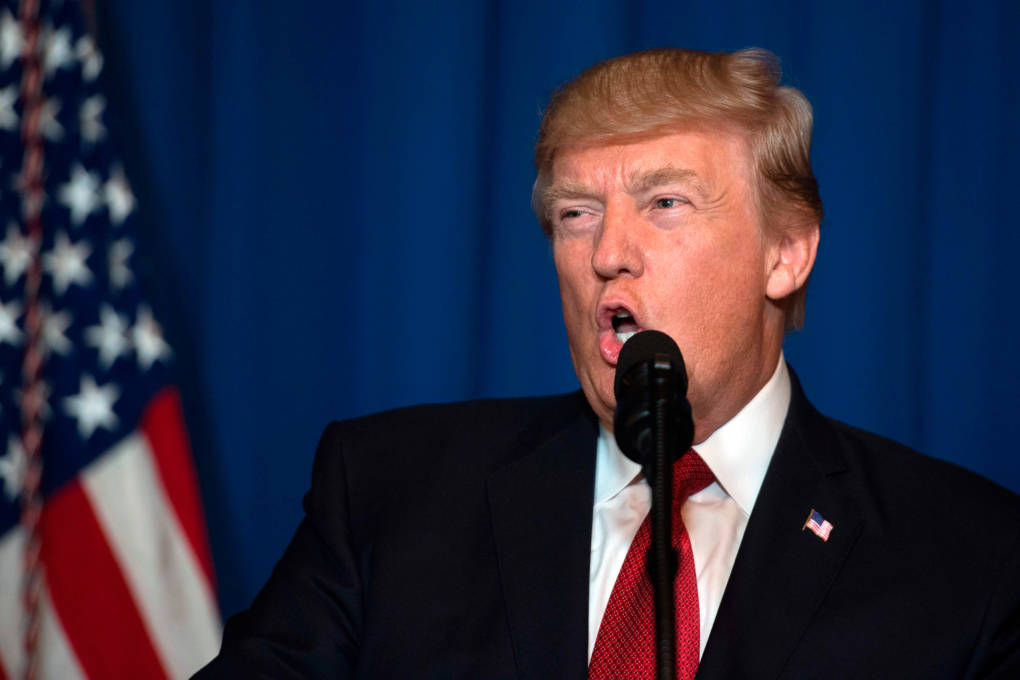
"caption": "President Trump delivers a statement following U.S. attacks on a Syrian air force base from his Mar-a-Lago estate in West Palm Beach, Florida, on April 6, 2017.",
"description": "President Donald Trump delivers a statement following U.S. attacks on a Syrian air force base from his Mar-a-Lago estate in West Palm Beach, Florida, on April 6, 2017.",
"title": "TrumpPresser",
"credit": "JIM WATSON/AFP/Getty Images",
"status": "inherit",
"isLoading": false,
"fetchFailed": false
},
"news_11459534": {
"type": "attachments",
"id": "news_11459534",
"meta": {
"index": "attachments_1716263798",
"site": "news",
"id": "11459534",
"found": true
},
"parent": 11459531,
"imgSizes": {
"small": {
"file": "https://ww2.kqed.org/app/uploads/sites/10/2017/05/Resist-long-shot-520x293.jpg",
"width": 520,
"mimeType": "image/jpeg",
"height": 293
},
"twentyfourteen-full-width": {
"file": "https://ww2.kqed.org/app/uploads/sites/10/2017/05/Resist-long-shot-1038x576.jpg",
"width": 1038,
"mimeType": "image/jpeg",
"height": 576
},
"thumbnail": {
"file": "https://ww2.kqed.org/app/uploads/sites/10/2017/05/Resist-long-shot-160x90.jpg",
"width": 160,
"mimeType": "image/jpeg",
"height": 90
},
"fd-sm": {
"file": "https://ww2.kqed.org/app/uploads/sites/10/2017/05/Resist-long-shot-960x540.jpg",
"width": 960,
"mimeType": "image/jpeg",
"height": 540
},
"post-thumbnail": {
"file": "https://ww2.kqed.org/app/uploads/sites/10/2017/05/Resist-long-shot-672x372.jpg",
"width": 672,
"mimeType": "image/jpeg",
"height": 372
},
"xsmall": {
"file": "https://ww2.kqed.org/app/uploads/sites/10/2017/05/Resist-long-shot-375x211.jpg",
"width": 375,
"mimeType": "image/jpeg",
"height": 211
},
"kqedFullSize": {
"file": "https://ww2.kqed.org/app/uploads/sites/10/2017/05/Resist-long-shot-e1494884453148.jpg",
"width": 1920,
"height": 1080
},
"large": {
"file": "https://ww2.kqed.org/app/uploads/sites/10/2017/05/Resist-long-shot-1020x574.jpg",
"width": 1020,
"mimeType": "image/jpeg",
"height": 574
},
"xlarge": {
"file": "https://ww2.kqed.org/app/uploads/sites/10/2017/05/Resist-long-shot-1180x664.jpg",
"width": 1180,
"mimeType": "image/jpeg",
"height": 664
},
"guest-author-50": {
"file": "https://ww2.kqed.org/app/uploads/sites/10/2017/05/Resist-long-shot-50x50.jpg",
"width": 50,
"mimeType": "image/jpeg",
"height": 50
},
"guest-author-96": {
"file": "https://ww2.kqed.org/app/uploads/sites/10/2017/05/Resist-long-shot-96x96.jpg",
"width": 96,
"mimeType": "image/jpeg",
"height": 96
},
"medium": {
"file": "https://ww2.kqed.org/app/uploads/sites/10/2017/05/Resist-long-shot-800x450.jpg",
"width": 800,
"mimeType": "image/jpeg",
"height": 450
},
"guest-author-64": {
"file": "https://ww2.kqed.org/app/uploads/sites/10/2017/05/Resist-long-shot-64x64.jpg",
"width": 64,
"mimeType": "image/jpeg",
"height": 64
},
"guest-author-32": {
"file": "https://ww2.kqed.org/app/uploads/sites/10/2017/05/Resist-long-shot-32x32.jpg",
"width": 32,
"mimeType": "image/jpeg",
"height": 32
},
"fd-lrg": {
"file": "https://ww2.kqed.org/app/uploads/sites/10/2017/05/Resist-long-shot-1920x1080.jpg",
"width": 1920,
"mimeType": "image/jpeg",
"height": 1080
},
"fd-med": {
"file": "https://ww2.kqed.org/app/uploads/sites/10/2017/05/Resist-long-shot-1180x664.jpg",
"width": 1180,
"mimeType": "image/jpeg",
"height": 664
},
"full-width": {
"file": "https://ww2.kqed.org/app/uploads/sites/10/2017/05/Resist-long-shot-1920x1080.jpg",
"width": 1920,
"mimeType": "image/jpeg",
"height": 1080
},
"detail": {
"file": "https://ww2.kqed.org/app/uploads/sites/10/2017/05/Resist-long-shot-150x150.jpg",
"width": 150,
"mimeType": "image/jpeg",
"height": 150
},
"guest-author-128": {
"file": "https://ww2.kqed.org/app/uploads/sites/10/2017/05/Resist-long-shot-128x128.jpg",
"width": 128,
"mimeType": "image/jpeg",
"height": 128
},
"xxsmall": {
"file": "https://ww2.kqed.org/app/uploads/sites/10/2017/05/Resist-long-shot-240x135.jpg",
"width": 240,
"mimeType": "image/jpeg",
"height": 135
}
},
"publishDate": 1494884409,
"modified": 1494980464,
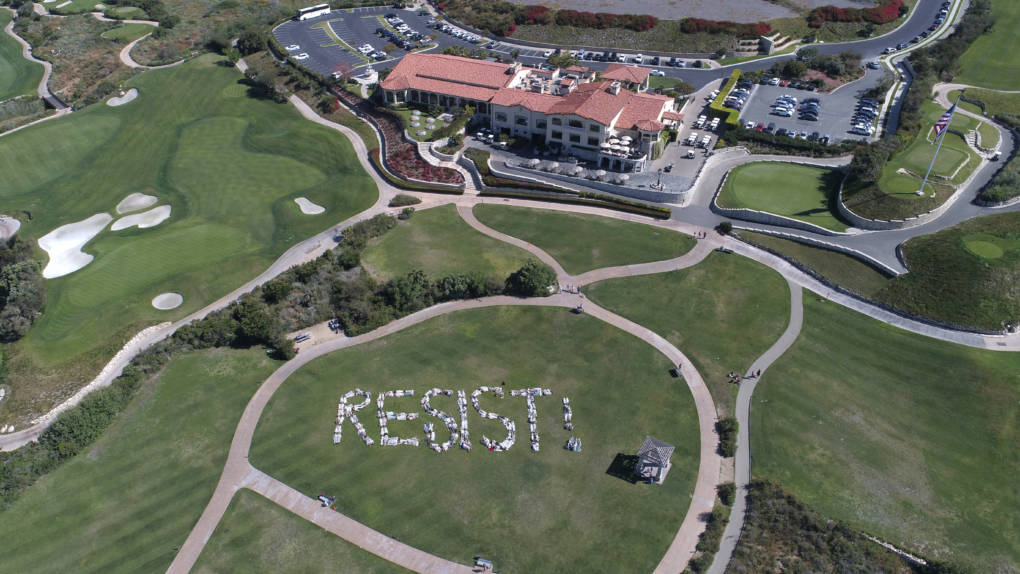
"caption": "Two hundred members of Indivisible San Pedro form the word RESIST! Saturday at Trump National Golf Course in Rancho Palos Verdes, California.",
"description": null,
"title": "DCIM100MEDIADJI_0006.JPG",
"credit": "Courtesy of Indivisible San Pedro",
"status": "inherit",
"isLoading": false,
"fetchFailed": false
},
"news_11459258": {
"type": "attachments",
"id": "news_11459258",
"meta": {
"index": "attachments_1716263798",
"site": "news",
"id": "11459258",
"found": true
},
"parent": 11459169,
"imgSizes": {
"small": {
"file": "https://ww2.kqed.org/app/uploads/sites/10/2017/05/RS23927_GettyImages-633034294-qut-520x363.jpg",
"width": 520,
"mimeType": "image/jpeg",
"height": 363
},
"twentyfourteen-full-width": {
"file": "https://ww2.kqed.org/app/uploads/sites/10/2017/05/RS23927_GettyImages-633034294-qut-1038x576.jpg",
"width": 1038,
"mimeType": "image/jpeg",
"height": 576
},
"thumbnail": {
"file": "https://ww2.kqed.org/app/uploads/sites/10/2017/05/RS23927_GettyImages-633034294-qut-160x112.jpg",
"width": 160,
"mimeType": "image/jpeg",
"height": 112
},
"fd-sm": {
"file": "https://ww2.kqed.org/app/uploads/sites/10/2017/05/RS23927_GettyImages-633034294-qut-960x670.jpg",
"width": 960,
"mimeType": "image/jpeg",
"height": 670
},
"post-thumbnail": {
"file": "https://ww2.kqed.org/app/uploads/sites/10/2017/05/RS23927_GettyImages-633034294-qut-672x372.jpg",
"width": 672,
"mimeType": "image/jpeg",
"height": 372
},
"xsmall": {
"file": "https://ww2.kqed.org/app/uploads/sites/10/2017/05/RS23927_GettyImages-633034294-qut-375x262.jpg",
"width": 375,
"mimeType": "image/jpeg",
"height": 262
},
"kqedFullSize": {
"file": "https://ww2.kqed.org/app/uploads/sites/10/2017/05/RS23927_GettyImages-633034294-qut.jpg",
"width": 1920,
"height": 1340
},
"large": {
"file": "https://ww2.kqed.org/app/uploads/sites/10/2017/05/RS23927_GettyImages-633034294-qut-1020x712.jpg",
"width": 1020,
"mimeType": "image/jpeg",
"height": 712
},
"xlarge": {
"file": "https://ww2.kqed.org/app/uploads/sites/10/2017/05/RS23927_GettyImages-633034294-qut-1180x824.jpg",
"width": 1180,
"mimeType": "image/jpeg",
"height": 824
},
"guest-author-50": {
"file": "https://ww2.kqed.org/app/uploads/sites/10/2017/05/RS23927_GettyImages-633034294-qut-50x50.jpg",
"width": 50,
"mimeType": "image/jpeg",
"height": 50
},
"guest-author-96": {
"file": "https://ww2.kqed.org/app/uploads/sites/10/2017/05/RS23927_GettyImages-633034294-qut-96x96.jpg",
"width": 96,
"mimeType": "image/jpeg",
"height": 96
},
"medium": {
"file": "https://ww2.kqed.org/app/uploads/sites/10/2017/05/RS23927_GettyImages-633034294-qut-800x558.jpg",
"width": 800,
"mimeType": "image/jpeg",
"height": 558
},
"guest-author-64": {
"file": "https://ww2.kqed.org/app/uploads/sites/10/2017/05/RS23927_GettyImages-633034294-qut-64x64.jpg",
"width": 64,
"mimeType": "image/jpeg",
"height": 64
},
"guest-author-32": {
"file": "https://ww2.kqed.org/app/uploads/sites/10/2017/05/RS23927_GettyImages-633034294-qut-32x32.jpg",
"width": 32,
"mimeType": "image/jpeg",
"height": 32
},
"fd-lrg": {
"file": "https://ww2.kqed.org/app/uploads/sites/10/2017/05/RS23927_GettyImages-633034294-qut-1920x1340.jpg",
"width": 1920,
"mimeType": "image/jpeg",
"height": 1340
},
"fd-med": {
"file": "https://ww2.kqed.org/app/uploads/sites/10/2017/05/RS23927_GettyImages-633034294-qut-1180x824.jpg",
"width": 1180,
"mimeType": "image/jpeg",
"height": 824
},
"full-width": {
"file": "https://ww2.kqed.org/app/uploads/sites/10/2017/05/RS23927_GettyImages-633034294-qut-1920x1340.jpg",
"width": 1920,
"mimeType": "image/jpeg",
"height": 1340
},
"detail": {
"file": "https://ww2.kqed.org/app/uploads/sites/10/2017/05/RS23927_GettyImages-633034294-qut-150x150.jpg",
"width": 150,
"mimeType": "image/jpeg",
"height": 150
},
"guest-author-128": {
"file": "https://ww2.kqed.org/app/uploads/sites/10/2017/05/RS23927_GettyImages-633034294-qut-128x128.jpg",
"width": 128,
"mimeType": "image/jpeg",
"height": 128
},
"xxsmall": {
"file": "https://ww2.kqed.org/app/uploads/sites/10/2017/05/RS23927_GettyImages-633034294-qut-240x168.jpg",
"width": 240,
"mimeType": "image/jpeg",
"height": 168
}
},
"publishDate": 1494872776,
"modified": 1494885328,
"caption": "Protesters at LAX days after President Trump issued a travel ban on people from several majority-Muslim countries. ",
"description": "Protesters at LAX days after President Donald Trump issued a travel ban on people from several majority-Muslim countries. ",
"title": "RS23927_GettyImages-633034294-qut",
"credit": "Justin Sullivan/Getty Images",
"status": "inherit",
"isLoading": false,
"fetchFailed": false
},
"news_11459162": {
"type": "attachments",
"id": "news_11459162",
"meta": {
"index": "attachments_1716263798",
"site": "news",
"id": "11459162",
"found": true
},
"parent": 11459089,
"imgSizes": {
"small": {
"file": "https://ww2.kqed.org/app/uploads/sites/10/2017/05/GettyImages-680132324-520x346.jpg",
"width": 520,
"mimeType": "image/jpeg",
"height": 346
},
"twentyfourteen-full-width": {
"file": "https://ww2.kqed.org/app/uploads/sites/10/2017/05/GettyImages-680132324-1038x576.jpg",
"width": 1038,
"mimeType": "image/jpeg",
"height": 576
},
"thumbnail": {
"file": "https://ww2.kqed.org/app/uploads/sites/10/2017/05/GettyImages-680132324-160x106.jpg",
"width": 160,
"mimeType": "image/jpeg",
"height": 106
},
"fd-sm": {
"file": "https://ww2.kqed.org/app/uploads/sites/10/2017/05/GettyImages-680132324-960x639.jpg",
"width": 960,
"mimeType": "image/jpeg",
"height": 639
},
"post-thumbnail": {
"file": "https://ww2.kqed.org/app/uploads/sites/10/2017/05/GettyImages-680132324-672x372.jpg",
"width": 672,
"mimeType": "image/jpeg",
"height": 372
},
"xsmall": {
"file": "https://ww2.kqed.org/app/uploads/sites/10/2017/05/GettyImages-680132324-375x250.jpg",
"width": 375,
"mimeType": "image/jpeg",
"height": 250
},
"kqedFullSize": {
"file": "https://ww2.kqed.org/app/uploads/sites/10/2017/05/GettyImages-680132324-e1494867744494.jpg",
"width": 1920,
"height": 1278
},
"large": {
"file": "https://ww2.kqed.org/app/uploads/sites/10/2017/05/GettyImages-680132324-1020x679.jpg",
"width": 1020,
"mimeType": "image/jpeg",
"height": 679
},
"xlarge": {
"file": "https://ww2.kqed.org/app/uploads/sites/10/2017/05/GettyImages-680132324-1180x785.jpg",
"width": 1180,
"mimeType": "image/jpeg",
"height": 785
},
"guest-author-50": {
"file": "https://ww2.kqed.org/app/uploads/sites/10/2017/05/GettyImages-680132324-50x50.jpg",
"width": 50,
"mimeType": "image/jpeg",
"height": 50
},
"guest-author-96": {
"file": "https://ww2.kqed.org/app/uploads/sites/10/2017/05/GettyImages-680132324-96x96.jpg",
"width": 96,
"mimeType": "image/jpeg",
"height": 96
},
"medium": {
"file": "https://ww2.kqed.org/app/uploads/sites/10/2017/05/GettyImages-680132324-800x532.jpg",
"width": 800,
"mimeType": "image/jpeg",
"height": 532
},
"guest-author-64": {
"file": "https://ww2.kqed.org/app/uploads/sites/10/2017/05/GettyImages-680132324-64x64.jpg",
"width": 64,
"mimeType": "image/jpeg",
"height": 64
},
"guest-author-32": {
"file": "https://ww2.kqed.org/app/uploads/sites/10/2017/05/GettyImages-680132324-32x32.jpg",
"width": 32,
"mimeType": "image/jpeg",
"height": 32
},
"fd-lrg": {
"file": "https://ww2.kqed.org/app/uploads/sites/10/2017/05/GettyImages-680132324-1920x1278.jpg",
"width": 1920,
"mimeType": "image/jpeg",
"height": 1278
},
"fd-med": {
"file": "https://ww2.kqed.org/app/uploads/sites/10/2017/05/GettyImages-680132324-1180x785.jpg",
"width": 1180,
"mimeType": "image/jpeg",
"height": 785
},
"full-width": {
"file": "https://ww2.kqed.org/app/uploads/sites/10/2017/05/GettyImages-680132324-1920x1278.jpg",
"width": 1920,
"mimeType": "image/jpeg",
"height": 1278
},
"detail": {
"file": "https://ww2.kqed.org/app/uploads/sites/10/2017/05/GettyImages-680132324-150x150.jpg",
"width": 150,
"mimeType": "image/jpeg",
"height": 150
},
"guest-author-128": {
"file": "https://ww2.kqed.org/app/uploads/sites/10/2017/05/GettyImages-680132324-128x128.jpg",
"width": 128,
"mimeType": "image/jpeg",
"height": 128
},
"xxsmall": {
"file": "https://ww2.kqed.org/app/uploads/sites/10/2017/05/GettyImages-680132324-240x160.jpg",
"width": 240,
"mimeType": "image/jpeg",
"height": 160
}
},
"publishDate": 1494867719,
"modified": 1494885894,
"caption": "Maxine Waters (L) and actor Tracee Ellis Ross speak onstage during the 2017 MTV Movie And TV Awards at the Shrine Auditorium on May 7, 2017, in Los Angeles. ",
"description": null,
"title": "2017 MTV Movie And TV Awards - Show",
"credit": "Kevin Winter/Getty Images",
"status": "inherit",
"isLoading": false,
"fetchFailed": false
},
"news_11454617": {
"type": "attachments",
"id": "news_11454617",
"meta": {
"index": "attachments_1716263798",
"site": "news",
"id": "11454617",
"found": true
},
"parent": 11452311,
"imgSizes": {
"small": {
"file": "https://ww2.kqed.org/app/uploads/sites/10/2017/05/TrumpDevos-520x347.jpg",
"width": 520,
"mimeType": "image/jpeg",
"height": 347
},
"twentyfourteen-full-width": {
"file": "https://ww2.kqed.org/app/uploads/sites/10/2017/05/TrumpDevos-1038x576.jpg",
"width": 1038,
"mimeType": "image/jpeg",
"height": 576
},
"thumbnail": {
"file": "https://ww2.kqed.org/app/uploads/sites/10/2017/05/TrumpDevos-160x107.jpg",
"width": 160,
"mimeType": "image/jpeg",
"height": 107
},
"fd-sm": {
"file": "https://ww2.kqed.org/app/uploads/sites/10/2017/05/TrumpDevos-960x640.jpg",
"width": 960,
"mimeType": "image/jpeg",
"height": 640
},
"post-thumbnail": {
"file": "https://ww2.kqed.org/app/uploads/sites/10/2017/05/TrumpDevos-672x372.jpg",
"width": 672,
"mimeType": "image/jpeg",
"height": 372
},
"xsmall": {
"file": "https://ww2.kqed.org/app/uploads/sites/10/2017/05/TrumpDevos-375x250.jpg",
"width": 375,
"mimeType": "image/jpeg",
"height": 250
},
"kqedFullSize": {
"file": "https://ww2.kqed.org/app/uploads/sites/10/2017/05/TrumpDevos.jpg",
"width": 1920,
"height": 1280
},
"large": {
"file": "https://ww2.kqed.org/app/uploads/sites/10/2017/05/TrumpDevos-1020x680.jpg",
"width": 1020,
"mimeType": "image/jpeg",
"height": 680
},
"xlarge": {
"file": "https://ww2.kqed.org/app/uploads/sites/10/2017/05/TrumpDevos-1180x787.jpg",
"width": 1180,
"mimeType": "image/jpeg",
"height": 787
},
"guest-author-50": {
"file": "https://ww2.kqed.org/app/uploads/sites/10/2017/05/TrumpDevos-50x50.jpg",
"width": 50,
"mimeType": "image/jpeg",
"height": 50
},
"guest-author-96": {
"file": "https://ww2.kqed.org/app/uploads/sites/10/2017/05/TrumpDevos-96x96.jpg",
"width": 96,
"mimeType": "image/jpeg",
"height": 96
},
"medium": {
"file": "https://ww2.kqed.org/app/uploads/sites/10/2017/05/TrumpDevos-800x533.jpg",
"width": 800,
"mimeType": "image/jpeg",
"height": 533
},
"guest-author-64": {
"file": "https://ww2.kqed.org/app/uploads/sites/10/2017/05/TrumpDevos-64x64.jpg",
"width": 64,
"mimeType": "image/jpeg",
"height": 64
},
"guest-author-32": {
"file": "https://ww2.kqed.org/app/uploads/sites/10/2017/05/TrumpDevos-32x32.jpg",
"width": 32,
"mimeType": "image/jpeg",
"height": 32
},
"fd-lrg": {
"file": "https://ww2.kqed.org/app/uploads/sites/10/2017/05/TrumpDevos-1920x1280.jpg",
"width": 1920,
"mimeType": "image/jpeg",
"height": 1280
},
"fd-med": {
"file": "https://ww2.kqed.org/app/uploads/sites/10/2017/05/TrumpDevos-1180x787.jpg",
"width": 1180,
"mimeType": "image/jpeg",
"height": 787
},
"full-width": {
"file": "https://ww2.kqed.org/app/uploads/sites/10/2017/05/TrumpDevos-1920x1280.jpg",
"width": 1920,
"mimeType": "image/jpeg",
"height": 1280
},
"detail": {
"file": "https://ww2.kqed.org/app/uploads/sites/10/2017/05/TrumpDevos-150x150.jpg",
"width": 150,
"mimeType": "image/jpeg",
"height": 150
},
"guest-author-128": {
"file": "https://ww2.kqed.org/app/uploads/sites/10/2017/05/TrumpDevos-128x128.jpg",
"width": 128,
"mimeType": "image/jpeg",
"height": 128
},
"xxsmall": {
"file": "https://ww2.kqed.org/app/uploads/sites/10/2017/05/TrumpDevos-240x160.jpg",
"width": 240,
"mimeType": "image/jpeg",
"height": 160
}
},
"publishDate": 1494631565,
"modified": 1494631688,
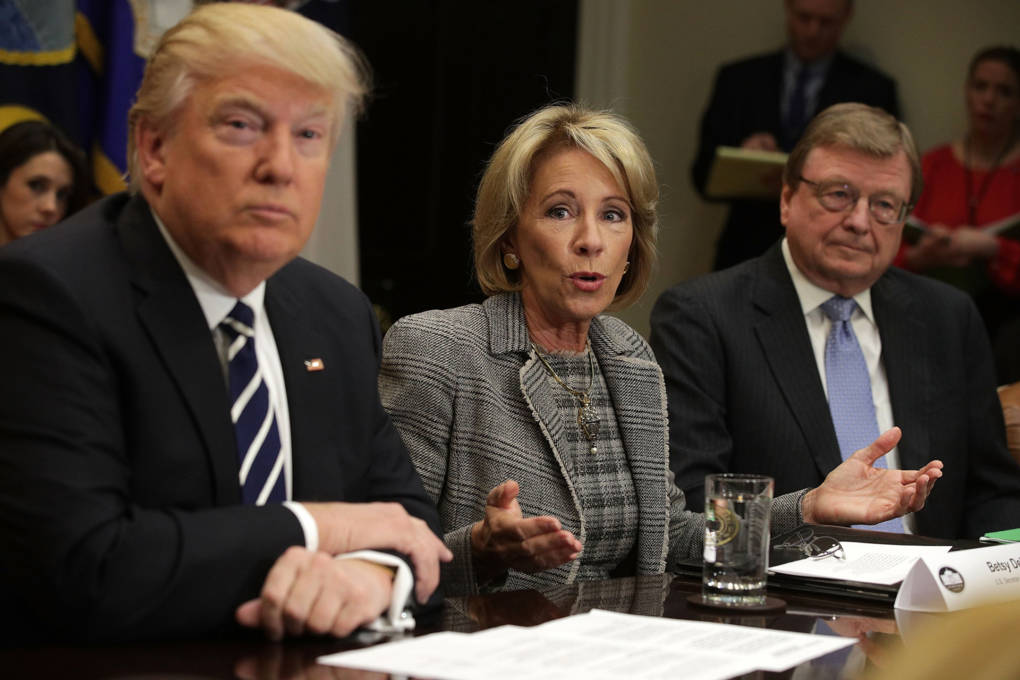
"caption": "Education Secretary Betsy DeVos (C) and President Trump attend a parent-teacher conference listening session at the White House on Feb. 14, 2017.",
"description": "Education Secretary Betsy DeVos (C) and President Trump attend a parent-teacher conference listening session at the White House on Feb. 14, 2017.",
"title": "TrumpDevos",
"credit": "Alex Wong/Getty Images",
"status": "inherit",
"isLoading": false,
"fetchFailed": false
},
"news_11454851": {
"type": "attachments",
"id": "news_11454851",
"meta": {
"index": "attachments_1716263798",
"site": "news",
"id": "11454851",
"found": true
},
"parent": 11454621,
"imgSizes": {
"small": {
"file": "https://ww2.kqed.org/app/uploads/sites/10/2017/05/ice-520x280.png",
"width": 520,
"mimeType": "image/png",
"height": 280
},
"twentyfourteen-full-width": {
"file": "https://ww2.kqed.org/app/uploads/sites/10/2017/05/ice-1038x576.png",
"width": 1038,
"mimeType": "image/png",
"height": 576
},
"thumbnail": {
"file": "https://ww2.kqed.org/app/uploads/sites/10/2017/05/ice-160x86.png",
"width": 160,
"mimeType": "image/png",
"height": 86
},
"fd-sm": {
"file": "https://ww2.kqed.org/app/uploads/sites/10/2017/05/ice-960x518.png",
"width": 960,
"mimeType": "image/png",
"height": 518
},
"post-thumbnail": {
"file": "https://ww2.kqed.org/app/uploads/sites/10/2017/05/ice-672x372.png",
"width": 672,
"mimeType": "image/png",
"height": 372
},
"xsmall": {
"file": "https://ww2.kqed.org/app/uploads/sites/10/2017/05/ice-375x202.png",
"width": 375,
"mimeType": "image/png",
"height": 202
},
"kqedFullSize": {
"file": "https://ww2.kqed.org/app/uploads/sites/10/2017/05/ice.png",
"width": 1278,
"height": 689
},
"large": {
"file": "https://ww2.kqed.org/app/uploads/sites/10/2017/05/ice-1020x550.png",
"width": 1020,
"mimeType": "image/png",
"height": 550
},
"xlarge": {
"file": "https://ww2.kqed.org/app/uploads/sites/10/2017/05/ice-1180x636.png",
"width": 1180,
"mimeType": "image/png",
"height": 636
},
"guest-author-50": {
"file": "https://ww2.kqed.org/app/uploads/sites/10/2017/05/ice-50x50.png",
"width": 50,
"mimeType": "image/png",
"height": 50
},
"guest-author-96": {
"file": "https://ww2.kqed.org/app/uploads/sites/10/2017/05/ice-96x96.png",
"width": 96,
"mimeType": "image/png",
"height": 96
},
"medium": {
"file": "https://ww2.kqed.org/app/uploads/sites/10/2017/05/ice-800x431.png",
"width": 800,
"mimeType": "image/png",
"height": 431
},
"guest-author-64": {
"file": "https://ww2.kqed.org/app/uploads/sites/10/2017/05/ice-64x64.png",
"width": 64,
"mimeType": "image/png",
"height": 64
},
"guest-author-32": {
"file": "https://ww2.kqed.org/app/uploads/sites/10/2017/05/ice-32x32.png",
"width": 32,
"mimeType": "image/png",
"height": 32
},
"fd-med": {
"file": "https://ww2.kqed.org/app/uploads/sites/10/2017/05/ice-1180x636.png",
"width": 1180,
"mimeType": "image/png",
"height": 636
},
"detail": {
"file": "https://ww2.kqed.org/app/uploads/sites/10/2017/05/ice-150x150.png",
"width": 150,
"mimeType": "image/png",
"height": 150
},
"guest-author-128": {
"file": "https://ww2.kqed.org/app/uploads/sites/10/2017/05/ice-128x128.png",
"width": 128,
"mimeType": "image/png",
"height": 128
},
"xxsmall": {
"file": "https://ww2.kqed.org/app/uploads/sites/10/2017/05/ice-240x129.png",
"width": 240,
"mimeType": "image/png",
"height": 129
}
},
"publishDate": 1494641276,
"modified": 1494641276,
"caption": null,
"description": null,
"title": "ice",
"credit": null,
"status": "inherit",
"isLoading": false,
"fetchFailed": false
},
"news_11453979": {
"type": "attachments",
"id": "news_11453979",
"meta": {
"index": "attachments_1716263798",
"site": "news",
"id": "11453979",
"found": true
},
"parent": 11453976,
"imgSizes": {
"small": {
"file": "https://ww2.kqed.org/app/uploads/sites/10/2017/05/GettyImages-632412514-520x347.jpg",
"width": 520,
"mimeType": "image/jpeg",
"height": 347
},
"twentyfourteen-full-width": {
"file": "https://ww2.kqed.org/app/uploads/sites/10/2017/05/GettyImages-632412514-1038x576.jpg",
"width": 1038,
"mimeType": "image/jpeg",
"height": 576
},
"thumbnail": {
"file": "https://ww2.kqed.org/app/uploads/sites/10/2017/05/GettyImages-632412514-160x107.jpg",
"width": 160,
"mimeType": "image/jpeg",
"height": 107
},
"fd-sm": {
"file": "https://ww2.kqed.org/app/uploads/sites/10/2017/05/GettyImages-632412514-960x640.jpg",
"width": 960,
"mimeType": "image/jpeg",
"height": 640
},
"post-thumbnail": {
"file": "https://ww2.kqed.org/app/uploads/sites/10/2017/05/GettyImages-632412514-672x372.jpg",
"width": 672,
"mimeType": "image/jpeg",
"height": 372
},
"xsmall": {
"file": "https://ww2.kqed.org/app/uploads/sites/10/2017/05/GettyImages-632412514-375x250.jpg",
"width": 375,
"mimeType": "image/jpeg",
"height": 250
},
"kqedFullSize": {
"file": "https://ww2.kqed.org/app/uploads/sites/10/2017/05/GettyImages-632412514-e1494604306887.jpg",
"width": 1920,
"height": 1281
},
"large": {
"file": "https://ww2.kqed.org/app/uploads/sites/10/2017/05/GettyImages-632412514-1020x680.jpg",
"width": 1020,
"mimeType": "image/jpeg",
"height": 680
},
"xlarge": {
"file": "https://ww2.kqed.org/app/uploads/sites/10/2017/05/GettyImages-632412514-1180x787.jpg",
"width": 1180,
"mimeType": "image/jpeg",
"height": 787
},
"guest-author-50": {
"file": "https://ww2.kqed.org/app/uploads/sites/10/2017/05/GettyImages-632412514-50x50.jpg",
"width": 50,
"mimeType": "image/jpeg",
"height": 50
},
"guest-author-96": {
"file": "https://ww2.kqed.org/app/uploads/sites/10/2017/05/GettyImages-632412514-96x96.jpg",
"width": 96,
"mimeType": "image/jpeg",
"height": 96
},
"medium": {
"file": "https://ww2.kqed.org/app/uploads/sites/10/2017/05/GettyImages-632412514-800x534.jpg",
"width": 800,
"mimeType": "image/jpeg",
"height": 534
},
"guest-author-64": {
"file": "https://ww2.kqed.org/app/uploads/sites/10/2017/05/GettyImages-632412514-64x64.jpg",
"width": 64,
"mimeType": "image/jpeg",
"height": 64
},
"guest-author-32": {
"file": "https://ww2.kqed.org/app/uploads/sites/10/2017/05/GettyImages-632412514-32x32.jpg",
"width": 32,
"mimeType": "image/jpeg",
"height": 32
},
"fd-lrg": {
"file": "https://ww2.kqed.org/app/uploads/sites/10/2017/05/GettyImages-632412514-1920x1281.jpg",
"width": 1920,
"mimeType": "image/jpeg",
"height": 1281
},
"fd-med": {
"file": "https://ww2.kqed.org/app/uploads/sites/10/2017/05/GettyImages-632412514-1180x787.jpg",
"width": 1180,
"mimeType": "image/jpeg",
"height": 787
},
"full-width": {
"file": "https://ww2.kqed.org/app/uploads/sites/10/2017/05/GettyImages-632412514-1920x1281.jpg",
"width": 1920,
"mimeType": "image/jpeg",
"height": 1281
},
"detail": {
"file": "https://ww2.kqed.org/app/uploads/sites/10/2017/05/GettyImages-632412514-150x150.jpg",
"width": 150,
"mimeType": "image/jpeg",
"height": 150
},
"guest-author-128": {
"file": "https://ww2.kqed.org/app/uploads/sites/10/2017/05/GettyImages-632412514-128x128.jpg",
"width": 128,
"mimeType": "image/jpeg",
"height": 128
},
"xxsmall": {
"file": "https://ww2.kqed.org/app/uploads/sites/10/2017/05/GettyImages-632412514-240x160.jpg",
"width": 240,
"mimeType": "image/jpeg",
"height": 160
}
},
"publishDate": 1494604279,
"modified": 1495237623,
"caption": "President Trump shakes hands with James Comey, director of the Federal Bureau of Investigation (FBI), during an Inaugural Law Enforcement Officers and First Responders Reception in the Blue Room of the White House on Jan. 22, 2017.",
"description": null,
"title": "President Trump Hosts The Inaugural Law Enforcement Officers And First Responders Reception At The White House",
"credit": "Andrew Harrer-Pool/Getty Images",
"status": "inherit",
"isLoading": false,
"fetchFailed": false
},
"news_11452321": {
"type": "attachments",
"id": "news_11452321",
"meta": {
"index": "attachments_1716263798",
"site": "news",
"id": "11452321",
"found": true
},
"parent": 11452058,
"imgSizes": {
"small": {
"file": "https://ww2.kqed.org/app/uploads/sites/10/2017/05/HaagMelinda-1-520x413.jpg",
"width": 520,
"mimeType": "image/jpeg",
"height": 413
},
"twentyfourteen-full-width": {
"file": "https://ww2.kqed.org/app/uploads/sites/10/2017/05/HaagMelinda-1-1038x576.jpg",
"width": 1038,
"mimeType": "image/jpeg",
"height": 576
},
"thumbnail": {
"file": "https://ww2.kqed.org/app/uploads/sites/10/2017/05/HaagMelinda-1-160x127.jpg",
"width": 160,
"mimeType": "image/jpeg",
"height": 127
},
"fd-sm": {
"file": "https://ww2.kqed.org/app/uploads/sites/10/2017/05/HaagMelinda-1-960x763.jpg",
"width": 960,
"mimeType": "image/jpeg",
"height": 763
},
"post-thumbnail": {
"file": "https://ww2.kqed.org/app/uploads/sites/10/2017/05/HaagMelinda-1-672x372.jpg",
"width": 672,
"mimeType": "image/jpeg",
"height": 372
},
"xsmall": {
"file": "https://ww2.kqed.org/app/uploads/sites/10/2017/05/HaagMelinda-1-375x298.jpg",
"width": 375,
"mimeType": "image/jpeg",
"height": 298
},
"kqedFullSize": {
"file": "https://ww2.kqed.org/app/uploads/sites/10/2017/05/HaagMelinda-1.jpg",
"width": 1920,
"height": 1525
},
"large": {
"file": "https://ww2.kqed.org/app/uploads/sites/10/2017/05/HaagMelinda-1-1020x810.jpg",
"width": 1020,
"mimeType": "image/jpeg",
"height": 810
},
"xlarge": {
"file": "https://ww2.kqed.org/app/uploads/sites/10/2017/05/HaagMelinda-1-1180x937.jpg",
"width": 1180,
"mimeType": "image/jpeg",
"height": 937
},
"guest-author-50": {
"file": "https://ww2.kqed.org/app/uploads/sites/10/2017/05/HaagMelinda-1-50x50.jpg",
"width": 50,
"mimeType": "image/jpeg",
"height": 50
},
"guest-author-96": {
"file": "https://ww2.kqed.org/app/uploads/sites/10/2017/05/HaagMelinda-1-96x96.jpg",
"width": 96,
"mimeType": "image/jpeg",
"height": 96
},
"medium": {
"file": "https://ww2.kqed.org/app/uploads/sites/10/2017/05/HaagMelinda-1-800x635.jpg",
"width": 800,
"mimeType": "image/jpeg",
"height": 635
},
"guest-author-64": {
"file": "https://ww2.kqed.org/app/uploads/sites/10/2017/05/HaagMelinda-1-64x64.jpg",
"width": 64,
"mimeType": "image/jpeg",
"height": 64
},
"guest-author-32": {
"file": "https://ww2.kqed.org/app/uploads/sites/10/2017/05/HaagMelinda-1-32x32.jpg",
"width": 32,
"mimeType": "image/jpeg",
"height": 32
},
"fd-lrg": {
"file": "https://ww2.kqed.org/app/uploads/sites/10/2017/05/HaagMelinda-1-1920x1525.jpg",
"width": 1920,
"mimeType": "image/jpeg",
"height": 1525
},
"fd-med": {
"file": "https://ww2.kqed.org/app/uploads/sites/10/2017/05/HaagMelinda-1-1180x937.jpg",
"width": 1180,
"mimeType": "image/jpeg",
"height": 937
},
"full-width": {
"file": "https://ww2.kqed.org/app/uploads/sites/10/2017/05/HaagMelinda-1-1920x1525.jpg",
"width": 1920,
"mimeType": "image/jpeg",
"height": 1525
},
"detail": {
"file": "https://ww2.kqed.org/app/uploads/sites/10/2017/05/HaagMelinda-1-150x150.jpg",
"width": 150,
"mimeType": "image/jpeg",
"height": 150
},
"guest-author-128": {
"file": "https://ww2.kqed.org/app/uploads/sites/10/2017/05/HaagMelinda-1-128x128.jpg",
"width": 128,
"mimeType": "image/jpeg",
"height": 128
},
"xxsmall": {
"file": "https://ww2.kqed.org/app/uploads/sites/10/2017/05/HaagMelinda-1-240x191.jpg",
"width": 240,
"mimeType": "image/jpeg",
"height": 191
}
},
"publishDate": 1494524283,
"modified": 1494524314,
"caption": "Melinda Haag is the former U.S. attorney for the Northern District of California.",
"description": "Melinda Haag is the former U.S. attorney for the Northern District of California.",
"title": "HaagMelinda",
"credit": "File photo",
"status": "inherit",
"isLoading": false,
"fetchFailed": false
},
"news_11452331": {
"type": "attachments",
"id": "news_11452331",
"meta": {
"index": "attachments_1716263798",
"site": "news",
"id": "11452331",
"found": true
},
"parent": 11450613,
"imgSizes": {
"small": {
"file": "https://ww2.kqed.org/app/uploads/sites/10/2017/05/MCCarthy-1-520x363.jpg",
"width": 520,
"mimeType": "image/jpeg",
"height": 363
},
"twentyfourteen-full-width": {
"file": "https://ww2.kqed.org/app/uploads/sites/10/2017/05/MCCarthy-1-1038x576.jpg",
"width": 1038,
"mimeType": "image/jpeg",
"height": 576
},
"thumbnail": {
"file": "https://ww2.kqed.org/app/uploads/sites/10/2017/05/MCCarthy-1-160x112.jpg",
"width": 160,
"mimeType": "image/jpeg",
"height": 112
},
"fd-sm": {
"file": "https://ww2.kqed.org/app/uploads/sites/10/2017/05/MCCarthy-1-960x670.jpg",
"width": 960,
"mimeType": "image/jpeg",
"height": 670
},
"post-thumbnail": {
"file": "https://ww2.kqed.org/app/uploads/sites/10/2017/05/MCCarthy-1-672x372.jpg",
"width": 672,
"mimeType": "image/jpeg",
"height": 372
},
"xsmall": {
"file": "https://ww2.kqed.org/app/uploads/sites/10/2017/05/MCCarthy-1-375x262.jpg",
"width": 375,
"mimeType": "image/jpeg",
"height": 262
},
"kqedFullSize": {
"file": "https://ww2.kqed.org/app/uploads/sites/10/2017/05/MCCarthy-1.jpg",
"width": 1920,
"height": 1340
},
"large": {
"file": "https://ww2.kqed.org/app/uploads/sites/10/2017/05/MCCarthy-1-1020x712.jpg",
"width": 1020,
"mimeType": "image/jpeg",
"height": 712
},
"xlarge": {
"file": "https://ww2.kqed.org/app/uploads/sites/10/2017/05/MCCarthy-1-1180x824.jpg",
"width": 1180,
"mimeType": "image/jpeg",
"height": 824
},
"guest-author-50": {
"file": "https://ww2.kqed.org/app/uploads/sites/10/2017/05/MCCarthy-1-50x50.jpg",
"width": 50,
"mimeType": "image/jpeg",
"height": 50
},
"guest-author-96": {
"file": "https://ww2.kqed.org/app/uploads/sites/10/2017/05/MCCarthy-1-96x96.jpg",
"width": 96,
"mimeType": "image/jpeg",
"height": 96
},
"medium": {
"file": "https://ww2.kqed.org/app/uploads/sites/10/2017/05/MCCarthy-1-800x558.jpg",
"width": 800,
"mimeType": "image/jpeg",
"height": 558
},
"guest-author-64": {
"file": "https://ww2.kqed.org/app/uploads/sites/10/2017/05/MCCarthy-1-64x64.jpg",
"width": 64,
"mimeType": "image/jpeg",
"height": 64
},
"guest-author-32": {
"file": "https://ww2.kqed.org/app/uploads/sites/10/2017/05/MCCarthy-1-32x32.jpg",
"width": 32,
"mimeType": "image/jpeg",
"height": 32
},
"fd-lrg": {
"file": "https://ww2.kqed.org/app/uploads/sites/10/2017/05/MCCarthy-1-1920x1340.jpg",
"width": 1920,
"mimeType": "image/jpeg",
"height": 1340
},
"fd-med": {
"file": "https://ww2.kqed.org/app/uploads/sites/10/2017/05/MCCarthy-1-1180x824.jpg",
"width": 1180,
"mimeType": "image/jpeg",
"height": 824
},
"full-width": {
"file": "https://ww2.kqed.org/app/uploads/sites/10/2017/05/MCCarthy-1-1920x1340.jpg",
"width": 1920,
"mimeType": "image/jpeg",
"height": 1340
},
"detail": {
"file": "https://ww2.kqed.org/app/uploads/sites/10/2017/05/MCCarthy-1-150x150.jpg",
"width": 150,
"mimeType": "image/jpeg",
"height": 150
},
"guest-author-128": {
"file": "https://ww2.kqed.org/app/uploads/sites/10/2017/05/MCCarthy-1-128x128.jpg",
"width": 128,
"mimeType": "image/jpeg",
"height": 128
},
"xxsmall": {
"file": "https://ww2.kqed.org/app/uploads/sites/10/2017/05/MCCarthy-1-240x168.jpg",
"width": 240,
"mimeType": "image/jpeg",
"height": 168
}
},
"publishDate": 1494525274,
"modified": 1494525304,
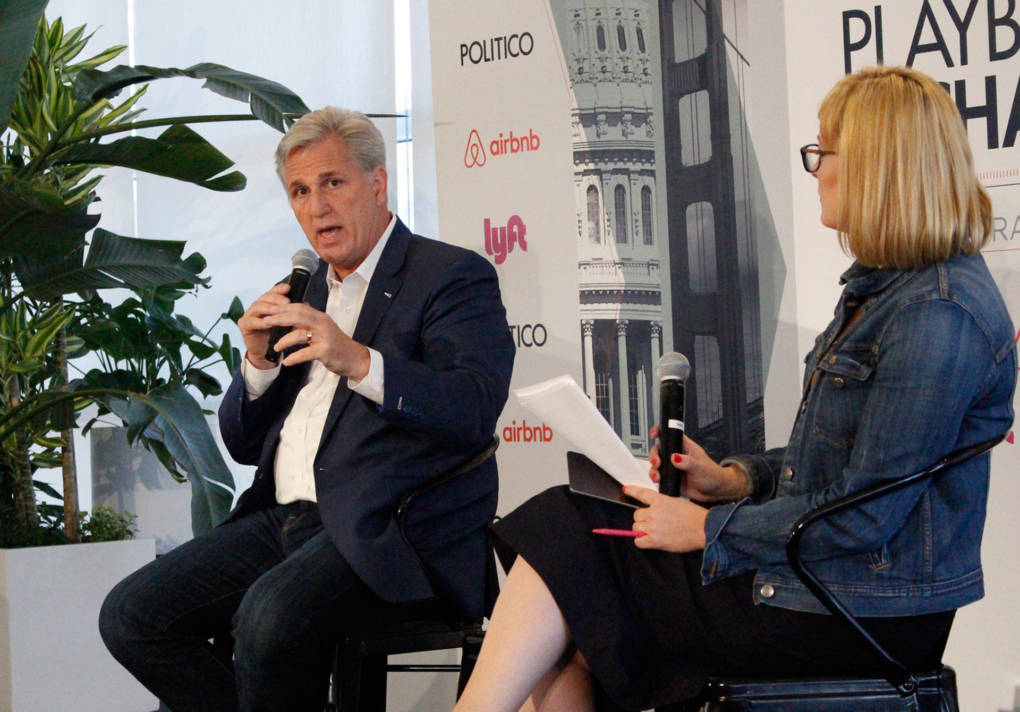
"caption": "Majority House Leader Kevin McCarthy on Trump firing FBI Director Comey, \"If you lose trust, it's got to change.\"",
"description": "Majority House Leader Kevin McCarthy on Trump firing FBI Director Comey, \"If you lose trust, it's got to change.\"",
"title": "MCCarthy",
"credit": "Mariana Urban/KQED",
"status": "inherit",
"isLoading": false,
"fetchFailed": false
},
"news_11450218": {
"type": "attachments",
"id": "news_11450218",
"meta": {
"index": "attachments_1716263798",
"site": "news",
"id": "11450218",
"found": true
},
"parent": 11450213,
"imgSizes": {
"small": {
"file": "https://ww2.kqed.org/app/uploads/sites/10/2017/05/GettyImages-677798384-520x347.jpg",
"width": 520,
"mimeType": "image/jpeg",
"height": 347
},
"twentyfourteen-full-width": {
"file": "https://ww2.kqed.org/app/uploads/sites/10/2017/05/GettyImages-677798384-1038x576.jpg",
"width": 1038,
"mimeType": "image/jpeg",
"height": 576
},
"thumbnail": {
"file": "https://ww2.kqed.org/app/uploads/sites/10/2017/05/GettyImages-677798384-160x107.jpg",
"width": 160,
"mimeType": "image/jpeg",
"height": 107
},
"fd-sm": {
"file": "https://ww2.kqed.org/app/uploads/sites/10/2017/05/GettyImages-677798384-960x640.jpg",
"width": 960,
"mimeType": "image/jpeg",
"height": 640
},
"post-thumbnail": {
"file": "https://ww2.kqed.org/app/uploads/sites/10/2017/05/GettyImages-677798384-672x372.jpg",
"width": 672,
"mimeType": "image/jpeg",
"height": 372
},
"xsmall": {
"file": "https://ww2.kqed.org/app/uploads/sites/10/2017/05/GettyImages-677798384-375x250.jpg",
"width": 375,
"mimeType": "image/jpeg",
"height": 250
},
"kqedFullSize": {
"file": "https://ww2.kqed.org/app/uploads/sites/10/2017/05/GettyImages-677798384-e1494437803157.jpg",
"width": 1920,
"height": 1280
},
"large": {
"file": "https://ww2.kqed.org/app/uploads/sites/10/2017/05/GettyImages-677798384-1020x680.jpg",
"width": 1020,
"mimeType": "image/jpeg",
"height": 680
},
"xlarge": {
"file": "https://ww2.kqed.org/app/uploads/sites/10/2017/05/GettyImages-677798384-1180x787.jpg",
"width": 1180,
"mimeType": "image/jpeg",
"height": 787
},
"guest-author-50": {
"file": "https://ww2.kqed.org/app/uploads/sites/10/2017/05/GettyImages-677798384-50x50.jpg",
"width": 50,
"mimeType": "image/jpeg",
"height": 50
},
"guest-author-96": {
"file": "https://ww2.kqed.org/app/uploads/sites/10/2017/05/GettyImages-677798384-96x96.jpg",
"width": 96,
"mimeType": "image/jpeg",
"height": 96
},
"medium": {
"file": "https://ww2.kqed.org/app/uploads/sites/10/2017/05/GettyImages-677798384-800x533.jpg",
"width": 800,
"mimeType": "image/jpeg",
"height": 533
},
"guest-author-64": {
"file": "https://ww2.kqed.org/app/uploads/sites/10/2017/05/GettyImages-677798384-64x64.jpg",
"width": 64,
"mimeType": "image/jpeg",
"height": 64
},
"guest-author-32": {
"file": "https://ww2.kqed.org/app/uploads/sites/10/2017/05/GettyImages-677798384-32x32.jpg",
"width": 32,
"mimeType": "image/jpeg",
"height": 32
},
"fd-lrg": {
"file": "https://ww2.kqed.org/app/uploads/sites/10/2017/05/GettyImages-677798384-1920x1280.jpg",
"width": 1920,
"mimeType": "image/jpeg",
"height": 1280
},
"fd-med": {
"file": "https://ww2.kqed.org/app/uploads/sites/10/2017/05/GettyImages-677798384-1180x787.jpg",
"width": 1180,
"mimeType": "image/jpeg",
"height": 787
},
"full-width": {
"file": "https://ww2.kqed.org/app/uploads/sites/10/2017/05/GettyImages-677798384-1920x1280.jpg",
"width": 1920,
"mimeType": "image/jpeg",
"height": 1280
},
"detail": {
"file": "https://ww2.kqed.org/app/uploads/sites/10/2017/05/GettyImages-677798384-150x150.jpg",
"width": 150,
"mimeType": "image/jpeg",
"height": 150
},
"guest-author-128": {
"file": "https://ww2.kqed.org/app/uploads/sites/10/2017/05/GettyImages-677798384-128x128.jpg",
"width": 128,
"mimeType": "image/jpeg",
"height": 128
},
"xxsmall": {
"file": "https://ww2.kqed.org/app/uploads/sites/10/2017/05/GettyImages-677798384-240x160.jpg",
"width": 240,
"mimeType": "image/jpeg",
"height": 160
}
},
"publishDate": 1494437773,
"modified": 1494451890,
"caption": "Former director of the Federal Bureau of Investigation James Comey testifies in front of the Senate Judiciary Committee during an oversight hearing on the FBI on Capitol Hill May 3, 2017, in Washington, D.C.",
"description": null,
"title": "FBI Director Comey Testifies At Senate Judiciary Committee Oversight Hearing",
"credit": "Eric Thayer/Getty Images",
"status": "inherit",
"isLoading": false,
"fetchFailed": false
},
"news_11448827": {
"type": "attachments",
"id": "news_11448827",
"meta": {
"index": "attachments_1716263798",
"site": "news",
"id": "11448827",
"found": true
},
"parent": 11448826,
"imgSizes": {
"small": {
"file": "https://ww2.kqed.org/app/uploads/sites/10/2017/05/gettyimages-677798454_custom-2c7cf9a62c74e14a0a2bb239835237443c75413d-520x345.jpg",
"width": 520,
"mimeType": "image/jpeg",
"height": 345
},
"twentyfourteen-full-width": {
"file": "https://ww2.kqed.org/app/uploads/sites/10/2017/05/gettyimages-677798454_custom-2c7cf9a62c74e14a0a2bb239835237443c75413d-1038x576.jpg",
"width": 1038,
"mimeType": "image/jpeg",
"height": 576
},
"thumbnail": {
"file": "https://ww2.kqed.org/app/uploads/sites/10/2017/05/gettyimages-677798454_custom-2c7cf9a62c74e14a0a2bb239835237443c75413d-160x106.jpg",
"width": 160,
"mimeType": "image/jpeg",
"height": 106
},
"fd-sm": {
"file": "https://ww2.kqed.org/app/uploads/sites/10/2017/05/gettyimages-677798454_custom-2c7cf9a62c74e14a0a2bb239835237443c75413d-960x638.jpg",
"width": 960,
"mimeType": "image/jpeg",
"height": 638
},
"post-thumbnail": {
"file": "https://ww2.kqed.org/app/uploads/sites/10/2017/05/gettyimages-677798454_custom-2c7cf9a62c74e14a0a2bb239835237443c75413d-672x372.jpg",
"width": 672,
"mimeType": "image/jpeg",
"height": 372
},
"xsmall": {
"file": "https://ww2.kqed.org/app/uploads/sites/10/2017/05/gettyimages-677798454_custom-2c7cf9a62c74e14a0a2bb239835237443c75413d-375x249.jpg",
"width": 375,
"mimeType": "image/jpeg",
"height": 249
},
"kqedFullSize": {
"file": "https://ww2.kqed.org/app/uploads/sites/10/2017/05/gettyimages-677798454_custom-2c7cf9a62c74e14a0a2bb239835237443c75413d-e1494367629301.jpg",
"width": 1920,
"height": 1275
},
"large": {
"file": "https://ww2.kqed.org/app/uploads/sites/10/2017/05/gettyimages-677798454_custom-2c7cf9a62c74e14a0a2bb239835237443c75413d-1020x677.jpg",
"width": 1020,
"mimeType": "image/jpeg",
"height": 677
},
"xlarge": {
"file": "https://ww2.kqed.org/app/uploads/sites/10/2017/05/gettyimages-677798454_custom-2c7cf9a62c74e14a0a2bb239835237443c75413d-1180x784.jpg",
"width": 1180,
"mimeType": "image/jpeg",
"height": 784
},
"guest-author-50": {
"file": "https://ww2.kqed.org/app/uploads/sites/10/2017/05/gettyimages-677798454_custom-2c7cf9a62c74e14a0a2bb239835237443c75413d-50x50.jpg",
"width": 50,
"mimeType": "image/jpeg",
"height": 50
},
"guest-author-96": {
"file": "https://ww2.kqed.org/app/uploads/sites/10/2017/05/gettyimages-677798454_custom-2c7cf9a62c74e14a0a2bb239835237443c75413d-96x96.jpg",
"width": 96,
"mimeType": "image/jpeg",
"height": 96
},
"medium": {
"file": "https://ww2.kqed.org/app/uploads/sites/10/2017/05/gettyimages-677798454_custom-2c7cf9a62c74e14a0a2bb239835237443c75413d-800x531.jpg",
"width": 800,
"mimeType": "image/jpeg",
"height": 531
},
"guest-author-64": {
"file": "https://ww2.kqed.org/app/uploads/sites/10/2017/05/gettyimages-677798454_custom-2c7cf9a62c74e14a0a2bb239835237443c75413d-64x64.jpg",
"width": 64,
"mimeType": "image/jpeg",
"height": 64
},
"guest-author-32": {
"file": "https://ww2.kqed.org/app/uploads/sites/10/2017/05/gettyimages-677798454_custom-2c7cf9a62c74e14a0a2bb239835237443c75413d-32x32.jpg",
"width": 32,
"mimeType": "image/jpeg",
"height": 32
},
"fd-lrg": {
"file": "https://ww2.kqed.org/app/uploads/sites/10/2017/05/gettyimages-677798454_custom-2c7cf9a62c74e14a0a2bb239835237443c75413d-1920x1275.jpg",
"width": 1920,
"mimeType": "image/jpeg",
"height": 1275
},
"fd-med": {
"file": "https://ww2.kqed.org/app/uploads/sites/10/2017/05/gettyimages-677798454_custom-2c7cf9a62c74e14a0a2bb239835237443c75413d-1180x784.jpg",
"width": 1180,
"mimeType": "image/jpeg",
"height": 784
},
"full-width": {
"file": "https://ww2.kqed.org/app/uploads/sites/10/2017/05/gettyimages-677798454_custom-2c7cf9a62c74e14a0a2bb239835237443c75413d-1920x1275.jpg",
"width": 1920,
"mimeType": "image/jpeg",
"height": 1275
},
"detail": {
"file": "https://ww2.kqed.org/app/uploads/sites/10/2017/05/gettyimages-677798454_custom-2c7cf9a62c74e14a0a2bb239835237443c75413d-150x150.jpg",
"width": 150,
"mimeType": "image/jpeg",
"height": 150
},
"guest-author-128": {
"file": "https://ww2.kqed.org/app/uploads/sites/10/2017/05/gettyimages-677798454_custom-2c7cf9a62c74e14a0a2bb239835237443c75413d-128x128.jpg",
"width": 128,
"mimeType": "image/jpeg",
"height": 128
},
"xxsmall": {
"file": "https://ww2.kqed.org/app/uploads/sites/10/2017/05/gettyimages-677798454_custom-2c7cf9a62c74e14a0a2bb239835237443c75413d-240x159.jpg",
"width": 240,
"mimeType": "image/jpeg",
"height": 159
}
},
"publishDate": 1494367489,
"modified": 1494369145,
"caption": "Director of the Federal Bureau of Investigation, James Comey, testifies in front of the Senate Judiciary Committee during an oversight hearing on the FBI on May 3. Comey was terminated from his position on Tuesday, May 9, according to a statement from the White House press secretary.",
"description": "Director of the Federal Bureau of Investigation, James Comey testifies in front of the Senate Judiciary Committee during an oversight hearing on the FBI on May 3. Comey was terminated from his position on Tuesday according to a statement from the White House press secretary.",
"title": "Director of the Federal Bureau of Investigation, James Comey testifies in front of the Senate Judiciary Committee during an oversight hearing on the FBI on May 3. Comey was terminated from his position on Tuesday according to a statement from the White House press secretary.",
"credit": "Eric Thayer/Getty Images",
"status": "inherit",
"isLoading": false,
"fetchFailed": false
},
"news_11449110": {
"type": "attachments",
"id": "news_11449110",
"meta": {
"index": "attachments_1716263798",
"site": "news",
"id": "11449110",
"found": true
},
"parent": 11448845,
"imgSizes": {
"small": {
"file": "https://ww2.kqed.org/app/uploads/sites/10/2017/05/Comey-qut-520x346.jpg",
"width": 520,
"mimeType": "image/jpeg",
"height": 346
},
"twentyfourteen-full-width": {
"file": "https://ww2.kqed.org/app/uploads/sites/10/2017/05/Comey-qut-1038x576.jpg",
"width": 1038,
"mimeType": "image/jpeg",
"height": 576
},
"thumbnail": {
"file": "https://ww2.kqed.org/app/uploads/sites/10/2017/05/Comey-qut-160x107.jpg",
"width": 160,
"mimeType": "image/jpeg",
"height": 107
},
"fd-sm": {
"file": "https://ww2.kqed.org/app/uploads/sites/10/2017/05/Comey-qut-960x639.jpg",
"width": 960,
"mimeType": "image/jpeg",
"height": 639
},
"post-thumbnail": {
"file": "https://ww2.kqed.org/app/uploads/sites/10/2017/05/Comey-qut-672x372.jpg",
"width": 672,
"mimeType": "image/jpeg",
"height": 372
},
"xsmall": {
"file": "https://ww2.kqed.org/app/uploads/sites/10/2017/05/Comey-qut-375x250.jpg",
"width": 375,
"mimeType": "image/jpeg",
"height": 250
},
"kqedFullSize": {
"file": "https://ww2.kqed.org/app/uploads/sites/10/2017/05/Comey-qut.jpg",
"width": 1920,
"height": 1278
},
"large": {
"file": "https://ww2.kqed.org/app/uploads/sites/10/2017/05/Comey-qut-1020x679.jpg",
"width": 1020,
"mimeType": "image/jpeg",
"height": 679
},
"xlarge": {
"file": "https://ww2.kqed.org/app/uploads/sites/10/2017/05/Comey-qut-1180x785.jpg",
"width": 1180,
"mimeType": "image/jpeg",
"height": 785
},
"guest-author-50": {
"file": "https://ww2.kqed.org/app/uploads/sites/10/2017/05/Comey-qut-50x50.jpg",
"width": 50,
"mimeType": "image/jpeg",
"height": 50
},
"guest-author-96": {
"file": "https://ww2.kqed.org/app/uploads/sites/10/2017/05/Comey-qut-96x96.jpg",
"width": 96,
"mimeType": "image/jpeg",
"height": 96
},
"medium": {
"file": "https://ww2.kqed.org/app/uploads/sites/10/2017/05/Comey-qut-800x533.jpg",
"width": 800,
"mimeType": "image/jpeg",
"height": 533
},
"guest-author-64": {
"file": "https://ww2.kqed.org/app/uploads/sites/10/2017/05/Comey-qut-64x64.jpg",
"width": 64,
"mimeType": "image/jpeg",
"height": 64
},
"guest-author-32": {
"file": "https://ww2.kqed.org/app/uploads/sites/10/2017/05/Comey-qut-32x32.jpg",
"width": 32,
"mimeType": "image/jpeg",
"height": 32
},
"fd-lrg": {
"file": "https://ww2.kqed.org/app/uploads/sites/10/2017/05/Comey-qut-1920x1278.jpg",
"width": 1920,
"mimeType": "image/jpeg",
"height": 1278
},
"fd-med": {
"file": "https://ww2.kqed.org/app/uploads/sites/10/2017/05/Comey-qut-1180x785.jpg",
"width": 1180,
"mimeType": "image/jpeg",
"height": 785
},
"full-width": {
"file": "https://ww2.kqed.org/app/uploads/sites/10/2017/05/Comey-qut-1920x1278.jpg",
"width": 1920,
"mimeType": "image/jpeg",
"height": 1278
},
"detail": {
"file": "https://ww2.kqed.org/app/uploads/sites/10/2017/05/Comey-qut-150x150.jpg",
"width": 150,
"mimeType": "image/jpeg",
"height": 150
},
"guest-author-128": {
"file": "https://ww2.kqed.org/app/uploads/sites/10/2017/05/Comey-qut-128x128.jpg",
"width": 128,
"mimeType": "image/jpeg",
"height": 128
},
"xxsmall": {
"file": "https://ww2.kqed.org/app/uploads/sites/10/2017/05/Comey-qut-240x160.jpg",
"width": 240,
"mimeType": "image/jpeg",
"height": 160
}
},
"publishDate": 1494377977,
"modified": 1494378006,
"caption": "Federal Bureau of Investigation (FBI) director James Comey testifies before the House Judiciary Committee on the encryption of the iPhone belonging to one of the San Bernardino attackers on Capitol Hill in Washington, DC, on March 1, 2016. / AFP / Nicholas Kamm (Photo credit should read NICHOLAS KAMM/AFP/Getty Images)",
"description": null,
"title": "US-TECHNOLOGY-TELECOM-CYBER-PROBE",
"credit": "NICHOLAS KAMM/AFP/Getty Images",
"status": "inherit",
"isLoading": false,
"fetchFailed": false
}
},
"audioPlayerReducer": {
"postId": "stream_live",
"isPaused": true,
"isPlaying": false,
"pfsActive": false,
"pledgeModalIsOpen": true,
"playerDrawerIsOpen": false,
"liveAudioPlayStartedAt": 0,
"liveAudioPlayContext": ""
},
"authorsReducer": {
"byline_news_11459618": {
"type": "authors",
"id": "byline_news_11459618",
"meta": {
"override": true
},
"slug": "byline_news_11459618",
"name": "\u003cstrong>Associated Press\u003c/strong>",
"isLoading": false
},
"byline_news_11459089": {
"type": "authors",
"id": "byline_news_11459089",
"meta": {
"override": true
},
"slug": "byline_news_11459089",
"name": "\u003cstrong>Vanessa Romo\u003c/strong>",
"isLoading": false
},
"byline_news_11453976": {
"type": "authors",
"id": "byline_news_11453976",
"meta": {
"override": true
},
"slug": "byline_news_11453976",
"name": "Miles Parks",
"isLoading": false
},
"byline_news_11450213": {
"type": "authors",
"id": "byline_news_11450213",
"meta": {
"override": true
},
"slug": "byline_news_11450213",
"name": "\u003cstrong>Julie Pace, Eileen Sullivan & Eric Tucker\u003cbr>Associated Press\u003c/strong>",
"isLoading": false
},
"byline_news_11448826": {
"type": "authors",
"id": "byline_news_11448826",
"meta": {
"override": true
},
"slug": "byline_news_11448826",
"name": "\u003cstrong>\u003ca href=\"http://www.npr.org/people/404496424/jessica-taylor\">Jessica Taylor\u003c/a>\u003cbr />\u003ca href=\"http://www.npr.org/\">NPR\u003c/a>\u003c/strong>",
"isLoading": false
},
"anatintocalis": {
"type": "authors",
"id": "211",
"meta": {
"index": "authors_1716337520",
"id": "211",
"found": true
},
"name": "Ana Tintocalis",
"firstName": "Ana",
"lastName": "Tintocalis",
"slug": "anatintocalis",
"email": "atintocalis@kqed.org",
"display_author_email": false,
"staff_mastheads": [],
"title": null,
"bio": null,
"avatar": "https://secure.gravatar.com/avatar/722c50f51f04eff38fa0e5a3f1d29450?s=600&d=blank&r=g",
"twitter": null,
"facebook": null,
"instagram": null,
"linkedin": null,
"sites": [
{
"site": "news",
"roles": [
"subscriber"
]
},
{
"site": "stateofhealth",
"roles": [
"subscriber"
]
}
],
"headData": {
"title": "Ana Tintocalis | KQED",
"description": null,
"ogImgSrc": "https://secure.gravatar.com/avatar/722c50f51f04eff38fa0e5a3f1d29450?s=600&d=blank&r=g",
"twImgSrc": "https://secure.gravatar.com/avatar/722c50f51f04eff38fa0e5a3f1d29450?s=600&d=blank&r=g"
},
"isLoading": false,
"link": "/author/anatintocalis"
},
"kqed": {
"type": "authors",
"id": "236",
"meta": {
"index": "authors_1716337520",
"id": "236",
"found": true
},
"name": "KQED News Staff",
"firstName": "KQED News Staff",
"lastName": null,
"slug": "kqed",
"email": "faq@kqed.org",
"display_author_email": false,
"staff_mastheads": [],
"title": null,
"bio": null,
"avatar": "https://secure.gravatar.com/avatar/ef0e801a68c4c54afa9180db14084167?s=600&d=blank&r=g",
"twitter": null,
"facebook": null,
"instagram": null,
"linkedin": null,
"sites": [
{
"site": "arts",
"roles": [
"contributor"
]
},
{
"site": "news",
"roles": [
"editor"
]
},
{
"site": "futureofyou",
"roles": [
"author"
]
}
],
"headData": {
"title": "KQED News Staff | KQED",
"description": null,
"ogImgSrc": "https://secure.gravatar.com/avatar/ef0e801a68c4c54afa9180db14084167?s=600&d=blank&r=g",
"twImgSrc": "https://secure.gravatar.com/avatar/ef0e801a68c4c54afa9180db14084167?s=600&d=blank&r=g"
},
"isLoading": false,
"link": "/author/kqed"
},
"kqednewsstaffandwires": {
"type": "authors",
"id": "237",
"meta": {
"index": "authors_1716337520",
"id": "237",
"found": true
},
"name": "KQED News Staff and Wires",
"firstName": "KQED News Staff and Wires",
"lastName": null,
"slug": "kqednewsstaffandwires",
"email": "onlinenewsstaff@kqed.org",
"display_author_email": false,
"staff_mastheads": [],
"title": null,
"bio": null,
"avatar": "https://secure.gravatar.com/avatar/72295af8ebbfbd19a4948f5271285664?s=600&d=blank&r=g",
"twitter": null,
"facebook": null,
"instagram": null,
"linkedin": null,
"sites": [
{
"site": "arts",
"roles": [
"contributor"
]
},
{
"site": "news",
"roles": [
"contributor"
]
},
{
"site": "lowdown",
"roles": [
"author"
]
},
{
"site": "stateofhealth",
"roles": [
"contributor"
]
},
{
"site": "food",
"roles": [
"author"
]
}
],
"headData": {
"title": "KQED News Staff and Wires | KQED",
"description": null,
"ogImgSrc": "https://secure.gravatar.com/avatar/72295af8ebbfbd19a4948f5271285664?s=600&d=blank&r=g",
"twImgSrc": "https://secure.gravatar.com/avatar/72295af8ebbfbd19a4948f5271285664?s=600&d=blank&r=g"
},
"isLoading": false,
"link": "/author/kqednewsstaffandwires"
},
"scottshafer": {
"type": "authors",
"id": "255",
"meta": {
"index": "authors_1716337520",
"id": "255",
"found": true
},
"name": "Scott Shafer",
"firstName": "Scott",
"lastName": "Shafer",
"slug": "scottshafer",
"email": "sshafer@kqed.org",
"display_author_email": false,
"staff_mastheads": [
"news"
],
"title": "KQED Contributor",
"bio": "Scott Shafer is a senior editor with the KQED Politics and Government desk. He is co-host of Political Breakdown, the award-winning radio show and podcast with a personal take on the world of politics. Scott came to KQED in 1998 to host the statewide\u003cem> California Report\u003c/em>. Prior to that he had extended stints in politics and government\u003cem>.\u003c/em> He uses that inside experience at KQED in his, reporting, hosting and analysis for the politics desk. Scott collaborated \u003cem>Political Breakdown a\u003c/em>nd on \u003cem>The Political Mind of Jerry Brown, \u003c/em>an eight-part series about the life and extraordinary political career of the former governor. For fun, he plays water polo with the San Francisco Tsunami.",
"avatar": "https://secure.gravatar.com/avatar/a62ebae45b79d7aed1a39a0e3bf68104?s=600&d=blank&r=g",
"twitter": "scottshafer",
"bluesky": null,
"facebook": null,
"instagram": null,
"linkedin": null,
"sites": [
{
"site": "news",
"roles": [
"editor"
]
},
{
"site": "stateofhealth",
"roles": [
"author"
]
},
{
"site": "science",
"roles": [
"author"
]
},
{
"site": "forum",
"roles": [
"subscriber"
]
},
{
"site": "liveblog",
"roles": [
"author"
]
}
],
"headData": {
"title": "Scott Shafer | KQED",
"description": "KQED Contributor",
"ogImgSrc": "https://secure.gravatar.com/avatar/a62ebae45b79d7aed1a39a0e3bf68104?s=600&d=blank&r=g",
"twImgSrc": "https://secure.gravatar.com/avatar/a62ebae45b79d7aed1a39a0e3bf68104?s=600&d=blank&r=g"
},
"isLoading": false,
"link": "/author/scottshafer"
},
"tgoldberg": {
"type": "authors",
"id": "258",
"meta": {
"index": "authors_1716337520",
"id": "258",
"found": true
},
"name": "Ted Goldberg",
"firstName": "Ted",
"lastName": "Goldberg",
"slug": "tgoldberg",
"email": "tgoldberg@kqed.org",
"display_author_email": true,
"staff_mastheads": [
"news"
],
"title": "KQED Managing Editor, News and Newscasts",
"bio": "Ted Goldberg is Managing Editor of News and Newscasts at KQED. His main reporting beat is the Bay Area's oil refining industry.\r\n\r\nPrior to joining KQED in 2014, Ted worked at CBS News and WCBS AM in New York and Bay City News and KCBS Radio in San Francisco. He graduated from Oberlin College in Ohio in 1998.",
"avatar": "https://secure.gravatar.com/avatar/30ce2e4fe89135e104f89be2394d16225b9d36c121b5b3cb7651ce642978b96f?s=600&d=blank&r=g",
"twitter": "TedrickG",
"bluesky": null,
"facebook": null,
"instagram": null,
"linkedin": null,
"sites": [
{
"site": "news",
"roles": [
"editor"
]
},
{
"site": "science",
"roles": [
"editor"
]
}
],
"headData": {
"title": "Ted Goldberg | KQED",
"description": "KQED Managing Editor, News and Newscasts",
"ogImgSrc": "https://secure.gravatar.com/avatar/30ce2e4fe89135e104f89be2394d16225b9d36c121b5b3cb7651ce642978b96f?s=600&d=blank&r=g",
"twImgSrc": "https://secure.gravatar.com/avatar/30ce2e4fe89135e104f89be2394d16225b9d36c121b5b3cb7651ce642978b96f?s=600&d=blank&r=g"
},
"isLoading": false,
"link": "/author/tgoldberg"
},
"mlagos": {
"type": "authors",
"id": "3239",
"meta": {
"index": "authors_1716337520",
"id": "3239",
"found": true
},
"name": "Marisa Lagos",
"firstName": "Marisa",
"lastName": "Lagos",
"slug": "mlagos",
"email": "mlagos@kqed.org",
"display_author_email": false,
"staff_mastheads": [
"news"
],
"title": "KQED Contributor",
"bio": "Marisa Lagos is a correspondent for KQED’s California Politics and Government Desk and co-hosts the award-winning show and podcast, Political Breakdown. At KQED, Lagos also conducts reporting, analysis and investigations into state, local and national politics for radio, TV, online and onstage. In 2022, she and co-host, Scott Shafer, moderated the only gubernatorial debate in California. In 2020, the \u003ci>Washington Post\u003c/i> named her one of the top political journalists in California; she was nominated for a Peabody and won several other awards for her work investigating the 2017 California wildfires. She has worked at the \u003ci>San Francisco Chronicle\u003c/i>, \u003ci>San Francisco Examiner\u003c/i> and \u003ci>Los Angeles Times\u003c/i>. A UC Santa Barbara graduate, she lives in San Francisco with her two sons and husband.",
"avatar": "https://secure.gravatar.com/avatar/a261a0d3696fc066871ef96b85b5e7d2?s=600&d=blank&r=g",
"twitter": "@mlagos",
"facebook": null,
"instagram": null,
"linkedin": null,
"sites": [
{
"site": "arts",
"roles": [
"author"
]
},
{
"site": "news",
"roles": [
"editor"
]
},
{
"site": "science",
"roles": [
"editor"
]
},
{
"site": "forum",
"roles": [
"author"
]
},
{
"site": "liveblog",
"roles": [
"author"
]
}
],
"headData": {
"title": "Marisa Lagos | KQED",
"description": "KQED Contributor",
"ogImgSrc": "https://secure.gravatar.com/avatar/a261a0d3696fc066871ef96b85b5e7d2?s=600&d=blank&r=g",
"twImgSrc": "https://secure.gravatar.com/avatar/a261a0d3696fc066871ef96b85b5e7d2?s=600&d=blank&r=g"
},
"isLoading": false,
"link": "/author/mlagos"
},
"mleitsinger": {
"type": "authors",
"id": "11310",
"meta": {
"index": "authors_1716337520",
"id": "11310",
"found": true
},
"name": "Miranda Leitsinger",
"firstName": "Miranda",
"lastName": "Leitsinger",
"slug": "mleitsinger",
"email": "mleitsinger@KQED.org",
"display_author_email": false,
"staff_mastheads": [
"news"
],
"title": "KQED Contributor",
"bio": "Miranda Leitsinger has worked in journalism as a reporter and editor since 2000, including seven years at The Associated Press in locales such as Cambodia and Puerto Rico, four years at NBC News Digital in New York and 2.5 years at CNN.com International in Hong Kong. Major stories she has covered included sexual abuse in the yoga community, the rise of women in local politics post-2016 election, the struggle over LGBTQ inclusion in the Boy Scouts, aftermath of the 2004 and 2011 tsunamis, the Aurora movie theater attack, the Newtown school shooting, Superstorm Sandy and the Boston Marathon bombing.",
"avatar": "https://secure.gravatar.com/avatar/cdd00de7be92aab3b7fd3d915e02033d?s=600&d=blank&r=g",
"twitter": "mimileitsinger",
"facebook": null,
"instagram": null,
"linkedin": null,
"sites": [
{
"site": "arts",
"roles": [
"author"
]
},
{
"site": "news",
"roles": [
"subscriber"
]
},
{
"site": "futureofyou",
"roles": [
"editor"
]
},
{
"site": "stateofhealth",
"roles": [
"editor"
]
}
],
"headData": {
"title": "Miranda Leitsinger | KQED",
"description": "KQED Contributor",
"ogImgSrc": "https://secure.gravatar.com/avatar/cdd00de7be92aab3b7fd3d915e02033d?s=600&d=blank&r=g",
"twImgSrc": "https://secure.gravatar.com/avatar/cdd00de7be92aab3b7fd3d915e02033d?s=600&d=blank&r=g"
},
"isLoading": false,
"link": "/author/mleitsinger"
}
},
"pagesReducer": {
"news_tag_donald-trump": {
"type": "terms",
"id": "news_1323",
"meta": {
"index": "terms_1716263798",
"site": "news",
"id": "1323",
"score": 8.557401
},
"featImg": null,
"name": "Donald Trump",
"description": null,
"taxonomy": "tag",
"headData": {
"twImgId": null,
"twTitle": null,
"ogTitle": null,
"ogImgId": null,
"twDescription": null,
"description": null,
"title": "Donald Trump Archives | KQED News",
"ogDescription": null
},
"ttid": 1335,
"slug": "donald-trump",
"isLoading": false,
"title": "Donald Trump",
"pageMeta": {
"site": "news",
"WpPageTemplate": "page-topic-editorial",
"currentPage": 159
},
"blocks": [
{
"blockName": "kqed/post-list",
"attrs": {
"layout": "cardArticle2",
"query": "posts/news?tag=donald-trump",
"seeMore": false,
"paginated": true,
"page": 159
}
},
{
"blockName": "kqed/ad"
}
]
}
},
"pfsSessionReducer": {},
"postsReducer": {
"stream_live": {
"type": "live",
"id": "stream_live",
"audioUrl": "https://streams.kqed.org/kqedradio",
"title": "Live Stream",
"excerpt": "Live Stream information currently unavailable.",
"link": "/radio",
"featImg": "",
"label": {
"name": "KQED Live",
"link": "/"
}
},
"stream_kqedNewscast": {
"type": "posts",
"id": "stream_kqedNewscast",
"audioUrl": "https://www.kqed.org/.stream/anon/radio/RDnews/newscast.mp3?_=1",
"title": "KQED Newscast",
"featImg": "",
"label": {
"name": "88.5 FM",
"link": "/"
}
},
"news_11459618": {
"type": "posts",
"id": "news_11459618",
"meta": {
"index": "posts_1716263798",
"site": "news",
"id": "11459618",
"score": null,
"sort": [
1494887506000
]
},
"parent": 0,
"labelTerm": {
"site": "news",
"term": 72
},
"blocks": [],
"publishDate": 1494887506,
"format": "standard",
"disqusTitle": "Report: Trump Shared Secret Info About Islamic State With Russians",
"title": "Report: Trump Shared Secret Info About Islamic State With Russians",
"headTitle": "The California Report | KQED News",
"content": "\u003cp>\u003cstrong>Update: Monday, 4:43 p.m. PT\u003c/strong>\u003c/p>\n\u003cp>President Trump revealed highly classified information about Islamic State militants to Russian officials during a meeting at the White House last week, the Washington Post \u003ca href=\"https://www.washingtonpost.com/world/national-security/trump-revealed-highly-classified-information-to-russian-foreign-minister-and-ambassador/2017/05/15/530c172a-3960-11e7-9e48-c4f199710b69_story.html?hpid=hp_hp-top-table-high_trumpintel-0504pm%3Ahomepage%2Fstory&utm_term=.95c3babfdedf\">reported Monday.\u003c/a>\u003c/p>\n\u003cp>The newspaper cited current and former U.S. officials who said Trump shared details about an Islamic State terror threat with Russian Foreign Minister Sergei Lavrov and Russian Ambassador Sergey Kislyak. The threat was related to the use of laptop computers on aircraft.\u003c/p>\n\u003cp>National Security Adviser H.R. McMaster told reporters outside the White House that the \"story that came out tonight as reported is false.\"\u003c/p>\n\u003cp>\"At no time were intelligence sources or methods discussed, and the president did not disclose any military operation that were not already publicly known,\" McMaster said. However, the Post story and other subsequent reports didn't say that it was sources, methods or military operations discussed, but simply classified information.\u003c/p>\n\u003cp>[ad fullwidth]\u003c/p>\n\u003cp>\"I was in the room, and it didn't happen,\" McMaster said at the end of his abrupt statement. He departed without taking questions.\u003c/p>\n\u003cp>\"This is the last place in the world I wanted to be. I'm leaving. I'm leaving,\" he said when questioned by reporters.\u003c/p>\n\u003cp>The Post said the intelligence partner had not given the United States permission to share the material with Russian officials. By doing so, Trump jeopardized cooperation from an ally familiar with the inner workings of the Islamic State group.\u003c/p>\n\u003cp>Afterward, White House officials took steps to contain the damage, placing calls to the CIA and the National Security Agency, the newspaper said.\u003c/p>\n\u003cp>It's unlikely that Trump has broken any law. As president, Trump has broad authority to declassify government secrets.\u003c/p>\n\u003cp>Lawmakers from both parties were quick to weigh in.\u003c/p>\n\u003cp>Sen. Bob Corker, R-Tenn., chairman of the Senate Foreign Relations Committee, told reporters Monday evening that the Trump White House \"has got to do something soon to bring itself under control and order.\"\u003c/p>\n\u003cp>He said he would have more to say when he knows more about the news report.\u003c/p>\n\u003cp>\"The shame of it is there's a really good national security team in place and there are good, productive things that are under way through them and through others,\" Corker said. \"But the chaos that is being created by the lack of discipline — it's creating an environment that I think makes — it creates a worrisome environment.\"\u003c/p>\n\u003cp>The story prompted Sen. Martin Heinrich, D-N.M., to tweet: \"Protip: Don't give the Russians classified information. #Classified101.\"\u003c/p>\n\u003cp>Sen. Mark Warner, D-Va., tweeted: \"If true, this is a slap in the face to the intel community. Risking sources & methods is inexcusable, particularly with the Russians.\"\u003c/p>\n\u003cp>\u003c/p>\n\u003cp>\u003cem>Copyright 2017 The Associated Press. All rights reserved. \u003c/em>\u003c/p>\n\n",
"disqusIdentifier": "11459618 https://ww2.kqed.org/news/?p=11459618",
"disqusUrl": "https://ww2.kqed.org/news/2017/05/15/report-trump-shared-secret-info-about-islamic-state-with-russians/",
"stats": {
"hasVideo": false,
"hasChartOrMap": false,
"hasAudio": false,
"hasPolis": false,
"wordCount": 458,
"hasGoogleForm": false,
"hasGallery": false,
"hasHearkenModule": false,
"iframeSrcs": [],
"paragraphCount": 19
},
"modified": 1494895705,
"excerpt": "The Post cites current and former U.S. officials who say Trump jeopardized a critical source of intelligence.",
"headData": {
"twImgId": "",
"twTitle": "",
"ogTitle": "",
"ogImgId": "",
"twDescription": "",
"description": "The Post cites current and former U.S. officials who say Trump jeopardized a critical source of intelligence.",
"title": "Report: Trump Shared Secret Info About Islamic State With Russians | KQED",
"ogDescription": "",
"schema": {
"@context": "https://schema.org",
"@type": "NewsArticle",
"headline": "Report: Trump Shared Secret Info About Islamic State With Russians",
"datePublished": "2017-05-15T15:31:46-07:00",
"dateModified": "2017-05-15T17:48:25-07:00",
"image": "https://cdn.kqed.org/wp-content/uploads/2020/02/KQED-OG-Image@1x.png",
"isAccessibleForFree": "True",
"publisher": {
"@type": "NewsMediaOrganization",
"@id": "https://www.kqed.org/#organization",
"name": "KQED",
"logo": "https://cdn.kqed.org/wp-content/uploads/2020/02/KQED-OG-Image@1x.png",
"url": "https://www.kqed.org",
"sameAs": [
"https://www.facebook.com/KQED",
"https://twitter.com/KQED",
"https://www.instagram.com/kqed/",
"https://www.tiktok.com/@kqedofficial",
"https://www.linkedin.com/company/kqed",
"https://www.youtube.com/channel/UCeC0IOo7i1P_61zVUWbJ4nw"
]
}
}
},
"guestAuthors": [],
"slug": "report-trump-shared-secret-info-about-islamic-state-with-russians",
"status": "publish",
"nprByline": "\u003cstrong>Associated Press\u003c/strong>",
"path": "/news/11459618/report-trump-shared-secret-info-about-islamic-state-with-russians",
"audioTrackLength": null,
"parsedContent": [
{
"type": "contentString",
"content": "\u003cdiv class=\"post-body\">\u003cp>\u003cp>\u003cstrong>Update: Monday, 4:43 p.m. PT\u003c/strong>\u003c/p>\n\u003cp>President Trump revealed highly classified information about Islamic State militants to Russian officials during a meeting at the White House last week, the Washington Post \u003ca href=\"https://www.washingtonpost.com/world/national-security/trump-revealed-highly-classified-information-to-russian-foreign-minister-and-ambassador/2017/05/15/530c172a-3960-11e7-9e48-c4f199710b69_story.html?hpid=hp_hp-top-table-high_trumpintel-0504pm%3Ahomepage%2Fstory&utm_term=.95c3babfdedf\">reported Monday.\u003c/a>\u003c/p>\n\u003cp>The newspaper cited current and former U.S. officials who said Trump shared details about an Islamic State terror threat with Russian Foreign Minister Sergei Lavrov and Russian Ambassador Sergey Kislyak. The threat was related to the use of laptop computers on aircraft.\u003c/p>\n\u003cp>National Security Adviser H.R. McMaster told reporters outside the White House that the \"story that came out tonight as reported is false.\"\u003c/p>\n\u003cp>\"At no time were intelligence sources or methods discussed, and the president did not disclose any military operation that were not already publicly known,\" McMaster said. However, the Post story and other subsequent reports didn't say that it was sources, methods or military operations discussed, but simply classified information.\u003c/p>\n\u003cp>\u003c/p>\u003c/div>",
"attributes": {
"named": {},
"numeric": []
}
},
{
"type": "component",
"content": "",
"name": "ad",
"attributes": {
"named": {
"label": "fullwidth"
},
"numeric": [
"fullwidth"
]
}
},
{
"type": "contentString",
"content": "\u003cdiv class=\"post-body\">\u003cp>\u003c/p>\n\u003cp>\"I was in the room, and it didn't happen,\" McMaster said at the end of his abrupt statement. He departed without taking questions.\u003c/p>\n\u003cp>\"This is the last place in the world I wanted to be. I'm leaving. I'm leaving,\" he said when questioned by reporters.\u003c/p>\n\u003cp>The Post said the intelligence partner had not given the United States permission to share the material with Russian officials. By doing so, Trump jeopardized cooperation from an ally familiar with the inner workings of the Islamic State group.\u003c/p>\n\u003cp>Afterward, White House officials took steps to contain the damage, placing calls to the CIA and the National Security Agency, the newspaper said.\u003c/p>\n\u003cp>It's unlikely that Trump has broken any law. As president, Trump has broad authority to declassify government secrets.\u003c/p>\n\u003cp>Lawmakers from both parties were quick to weigh in.\u003c/p>\n\u003cp>Sen. Bob Corker, R-Tenn., chairman of the Senate Foreign Relations Committee, told reporters Monday evening that the Trump White House \"has got to do something soon to bring itself under control and order.\"\u003c/p>\n\u003cp>He said he would have more to say when he knows more about the news report.\u003c/p>\n\u003cp>\"The shame of it is there's a really good national security team in place and there are good, productive things that are under way through them and through others,\" Corker said. \"But the chaos that is being created by the lack of discipline — it's creating an environment that I think makes — it creates a worrisome environment.\"\u003c/p>\n\u003cp>The story prompted Sen. Martin Heinrich, D-N.M., to tweet: \"Protip: Don't give the Russians classified information. #Classified101.\"\u003c/p>\n\u003cp>Sen. Mark Warner, D-Va., tweeted: \"If true, this is a slap in the face to the intel community. Risking sources & methods is inexcusable, particularly with the Russians.\"\u003c/p>\n\u003cp>\u003c/p>\n\u003cp>\u003cem>Copyright 2017 The Associated Press. All rights reserved. \u003c/em>\u003c/p>\n\n\u003c/div>\u003c/p>",
"attributes": {
"named": {},
"numeric": []
}
}
],
"link": "/news/11459618/report-trump-shared-secret-info-about-islamic-state-with-russians",
"authors": [
"byline_news_11459618"
],
"programs": [
"news_6944",
"news_72"
],
"categories": [
"news_6188",
"news_8",
"news_13"
],
"tags": [
"news_1323",
"news_19542",
"news_6780",
"news_20279"
],
"featImg": "news_11395768",
"label": "news_72"
},
"news_11459531": {
"type": "posts",
"id": "news_11459531",
"meta": {
"index": "posts_1716263798",
"site": "news",
"id": "11459531",
"score": null,
"sort": [
1494886011000
]
},
"guestAuthors": [],
"slug": "protesters-give-trump-golf-course-near-l-a-a-new-look",
"title": "Protesters Give Trump Golf Course Near L.A. a New Look",
"publishDate": 1494886011,
"format": "standard",
"headTitle": "Protesters Give Trump Golf Course Near L.A. a New Look | KQED",
"labelTerm": {
"term": 72,
"site": "news"
},
"content": "\u003cp>Some 200 protesters gathered at President Trump’s golf course near Los Angeles and spread out in the grass to form the word “RESIST!”\u003c/p>\n\u003cp>A group calling itself “Indivisible San Pedro” organized the demonstration Saturday at a public park nestled within Trump National Golf Course in Rancho Palos Verdes.\u003c/p>\n\u003cp>Peter Warren, a retired journalist and volunteer with the group, said Indivisible San Pedro is calling for a special prosecutor to investigate the Trump campaign and Russia’s interference in the 2016 elections. They’re also urging Trump to release his tax returns.\u003c/p>\n\u003cp>“This is not a candidate running for president; this is the president of the United States,” said Warren. “He needs to [release his tax returns].”\u003c/p>\n\u003cp>It took 15 minutes to form the 30-foot-tall letters, after which the group sang “God Bless America.”\u003c/p>\n\u003cp>[ad fullwidth]\u003c/p>\n\u003cp>Warren says it would have been too hard to spell out “release your taxes,” so they opted for “resist” instead.\u003c/p>\n\u003cp>He says golf course officials and sheriff’s deputies watched from the clubhouse but didn’t intervene. Warren says the group held their demonstration in the public access area of the golf course.\u003c/p>\n\u003cp>Warren says this was one of the group’s bigger actions, calling it a “family event.” Kids as young as 1½ participated.\u003c/p>\n\u003cp>As for organizing strategy, Warren says Indivisible San Pedro aims to push people to call their direct representatives on Capitol Hill.\u003c/p>\n\u003cp>\u003c/p>\n\u003cp>“Don’t call Paul Ryan. Don’t call Mitch McConnell,” said Warren. “You have to talk to your members of Congress and tell them: ‘Here’s what I want.’ “\u003c/p>\n\n",
"blocks": [],
"excerpt": "This is probably one message not endorsed by the new president.",
"status": "publish",
"parent": 0,
"modified": 1721152561,
"stats": {
"hasAudio": false,
"hasVideo": false,
"hasChartOrMap": false,
"iframeSrcs": [],
"hasGoogleForm": false,
"hasGallery": false,
"hasHearkenModule": false,
"hasPolis": false,
"paragraphCount": 12,
"wordCount": 300
},
"headData": {
"title": "Protesters Give Trump Golf Course Near L.A. a New Look | KQED",
"description": "This is probably one message not endorsed by the new president.",
"ogTitle": "",
"ogDescription": "",
"ogImgId": "",
"twTitle": "",
"twDescription": "",
"twImgId": "",
"schema": {
"@context": "https://schema.org",
"@type": "NewsArticle",
"headline": "Protesters Give Trump Golf Course Near L.A. a New Look",
"datePublished": "2017-05-15T15:06:51-07:00",
"dateModified": "2024-07-16T10:56:01-07:00",
"image": "https://cdn.kqed.org/wp-content/uploads/2020/02/KQED-OG-Image@1x.png",
"isAccessibleForFree": "True",
"publisher": {
"@type": "NewsMediaOrganization",
"@id": "https://www.kqed.org/#organization",
"name": "KQED",
"logo": "https://cdn.kqed.org/wp-content/uploads/2020/02/KQED-OG-Image@1x.png",
"url": "https://www.kqed.org",
"sameAs": [
"https://www.facebook.com/KQED",
"https://twitter.com/KQED",
"https://www.instagram.com/kqed/",
"https://www.tiktok.com/@kqedofficial",
"https://www.linkedin.com/company/kqed",
"https://www.youtube.com/channel/UCeC0IOo7i1P_61zVUWbJ4nw"
]
}
}
},
"sticky": false,
"path": "/news/11459531/protesters-give-trump-golf-course-near-l-a-a-new-look",
"audioTrackLength": null,
"parsedContent": [
{
"type": "contentString",
"content": "\u003cdiv class=\"post-body\">\u003cp>\u003cp>Some 200 protesters gathered at President Trump’s golf course near Los Angeles and spread out in the grass to form the word “RESIST!”\u003c/p>\n\u003cp>A group calling itself “Indivisible San Pedro” organized the demonstration Saturday at a public park nestled within Trump National Golf Course in Rancho Palos Verdes.\u003c/p>\n\u003cp>Peter Warren, a retired journalist and volunteer with the group, said Indivisible San Pedro is calling for a special prosecutor to investigate the Trump campaign and Russia’s interference in the 2016 elections. They’re also urging Trump to release his tax returns.\u003c/p>\n\u003cp>“This is not a candidate running for president; this is the president of the United States,” said Warren. “He needs to [release his tax returns].”\u003c/p>\n\u003cp>It took 15 minutes to form the 30-foot-tall letters, after which the group sang “God Bless America.”\u003c/p>\n\u003cp>\u003c/p>\u003c/div>",
"attributes": {
"named": {},
"numeric": []
}
},
{
"type": "component",
"content": "",
"name": "ad",
"attributes": {
"named": {
"label": "fullwidth"
},
"numeric": [
"fullwidth"
]
}
},
{
"type": "contentString",
"content": "\u003cdiv class=\"post-body\">\u003cp>\u003c/p>\n\u003cp>Warren says it would have been too hard to spell out “release your taxes,” so they opted for “resist” instead.\u003c/p>\n\u003cp>He says golf course officials and sheriff’s deputies watched from the clubhouse but didn’t intervene. Warren says the group held their demonstration in the public access area of the golf course.\u003c/p>\n\u003cp>Warren says this was one of the group’s bigger actions, calling it a “family event.” Kids as young as 1½ participated.\u003c/p>\n\u003cp>As for organizing strategy, Warren says Indivisible San Pedro aims to push people to call their direct representatives on Capitol Hill.\u003c/p>\n\u003cp>\u003c/p>\n\u003cp>“Don’t call Paul Ryan. Don’t call Mitch McConnell,” said Warren. “You have to talk to your members of Congress and tell them: ‘Here’s what I want.’ “\u003c/p>\n\n\u003c/div>\u003c/p>",
"attributes": {
"named": {},
"numeric": []
}
}
],
"link": "/news/11459531/protesters-give-trump-golf-course-near-l-a-a-new-look",
"authors": [
"237"
],
"programs": [
"news_6944",
"news_72"
],
"categories": [
"news_223",
"news_6188",
"news_8",
"news_13"
],
"tags": [
"news_1323",
"news_20279"
],
"featImg": "news_11459534",
"label": "news_72"
},
"news_11459169": {
"type": "posts",
"id": "news_11459169",
"meta": {
"index": "posts_1716263798",
"site": "news",
"id": "11459169",
"score": null,
"sort": [
1494874717000
]
},
"parent": 0,
"labelTerm": {
"site": "news",
"term": 72
},
"blocks": [],
"publishDate": 1494874717,
"format": "audio",
"disqusTitle": "9th Circuit Focuses on Trump's Muslim Statements in Travel Ban Hearing",
"title": "9th Circuit Focuses on Trump's Muslim Statements in Travel Ban Hearing",
"headTitle": "The California Report | KQED News",
"content": "\u003cp>Once again, statements about Muslims made by President Trump on both the campaign trail and in the White House took center stage at a court hearing over the president's ban on travel from six majority-Muslim countries.\u003c/p>\n\u003cp>Today, a three-judge panel of the 9th U.S. Circuit Court of Appeals in Seattle is considering one of three lawsuits challenging the ban, this one \u003ca href=\"https://ww2.kqed.org/news/2017/03/30/federal-judge-in-hawaii-extends-his-block-on-trump-travel-ban/\">brought by the state of Hawaii\u003c/a>. The ban has been on hold because of the suits, which are expected to ultimately be decided by the U.S. Supreme Court.\u003c/p>\n\u003cp>[contextly_sidebar id=\"EQmi8u4Tts1gAZmrvJqPJDIvhDZjiIeU\"]\u003c/p>\n\u003cp>Lawyers for the government argue that the president should have wide discretion when it comes to national security concerns, and that Trump's repeated calls for a Muslim ban are not what the court should consider when weighing the intent or need for the executive order that instated the travel ban.\u003c/p>\n\u003cp>Senior Circuit Judge Michael Daly Hawkins pushed back, asking Solicitor General Jeff Wall:\u003c/p>\n\u003cp>[ad fullwidth]\u003c/p>\n\u003cp>\"Has the president ever disavowed his campaign statements -- has he ever said, 'I said before I want to ban all members of the Islamic faith from entering the United States of America, I was wrong, I have consulted with lawyers, I am now addressing it simply to security?' \"\u003c/p>\n\u003cp>\"Yes, Judge Hawkins, he has said several things approaching that,\" Wall replied, saying that over time it's become clear that Trump was really talking about Islamic terrorist groups, not all Muslims.\u003c/p>\n\u003cp>Hawkins was joined by Circuit Judges Ronald M. Gould and Richard A. Paez -- all Bill Clinton appointees -- to hear more than an hour of oral arguments by Wall and attorney Neal Katyal, who is representing the state of Hawaii.\u003c/p>\n\u003cp>Katyal argued that Trump is overstepping his executive authority, noting that in 2015 Congress considered whether the people from countries cited in the travel ban posed a broad threat, but decided that requiring them to secure visas was sufficient to protect the U.S.\u003c/p>\n\u003cp>[contextly_sidebar id=\"PJaK1ceAnuMh2DVZRvyElBghzOUVVwCZ\"]\u003c/p>\n\u003cp>Kaytal said the government couldn't point to anything specific Trump has said to disavow his promise of a Muslim ban \"because in truth there is no such statement.\"\u003c/p>\n\u003cp>By contrast, he argued, the plaintiffs cited Trump's statements both before and after he became president calling for a ban based on religion \"chapter and verse.\"\u003c/p>\n\u003cp>Katyal said upholding the travel ban would do away with decades of immigration law and precedent.\u003c/p>\n\u003cp>\"The law has always been, even when there is a delegation of authority (by Congress), it still has to be viewed within the context of a broader immigration scheme, and to view it the way they do would allow the president to take a magic eraser to the entire code,\" he said.\u003c/p>\n\u003cp>Another 9th Circuit panel already \u003ca href=\"https://ww2.kqed.org/news/2017/02/09/9th-circuit-denies-reinstatement-of-trump-travel-ban/\">refused to reinstate the travel ban\u003c/a> in February, ruling that it does not believe the Trump administration is likely to succeed upon appeal, or that the administration demonstrated that the ban needs to be instated. That case was brought by the states of Washington and Minnesota, and joined by more than a dozen other states including California.\u003c/p>\n\u003cp>Another lawsuit, brought by the state of Maryland, also \u003ca href=\"http://www.baltimoresun.com/news/maryland/bs-md-trump-travel-unconstitutional-20170316-story.html\">resulted in an injunction against the travel ban\u003c/a>, but a more narrow one.\u003c/p>\n\u003cp>The judges hearing the Hawaii case didn't give much indication which way they would rule. Hawkins pressed Wall on why the government is arguing the court should take only Trump's \"good\" statements seriously and discount \"bad\" things he said. But he also asked Kaytal why the court shouldn't \"be deferential to the office of the president of the U.S. in this situation?\"\u003c/p>\n\u003cp>\"That's the million-dollar question,\" Kaytal replied, arguing that the question is not what the president says he means but what a neutral observer would infer from his own words.\u003c/p>\n\u003cp>Katyal cited the hundreds of groups -- including governments, faith groups, labor unions and even conservative groups -- who are supporting Hawaii's position.\u003c/p>\n\u003cp>\u003c/p>\n\u003cp>\"They are all coming before you and saying, look, this is unprecedented -- we have not seen anything like this within our lifetimes, in which a president is establishing a disfavored religion.\"\u003c/p>\n\n",
"disqusIdentifier": "11459169 https://ww2.kqed.org/news/?p=11459169",
"disqusUrl": "https://ww2.kqed.org/news/2017/05/15/9th-circuit-focuses-on-trumps-muslim-statements-in-travel-ban-hearing/",
"stats": {
"hasVideo": false,
"hasChartOrMap": false,
"hasAudio": false,
"hasPolis": false,
"wordCount": 699,
"hasGoogleForm": false,
"hasGallery": false,
"hasHearkenModule": false,
"iframeSrcs": [],
"paragraphCount": 22
},
"modified": 1494957367,
"excerpt": "A three-judge panel in Seattle is considering one of three lawsuits challenging the president's travel ban, this one brought by the state of Hawaii.",
"headData": {
"twImgId": "",
"twTitle": "",
"ogTitle": "",
"ogImgId": "",
"twDescription": "",
"description": "A three-judge panel in Seattle is considering one of three lawsuits challenging the president's travel ban, this one brought by the state of Hawaii.",
"title": "9th Circuit Focuses on Trump's Muslim Statements in Travel Ban Hearing | KQED",
"ogDescription": "",
"schema": {
"@context": "https://schema.org",
"@type": "NewsArticle",
"headline": "9th Circuit Focuses on Trump's Muslim Statements in Travel Ban Hearing",
"datePublished": "2017-05-15T11:58:37-07:00",
"dateModified": "2017-05-16T10:56:07-07:00",
"image": "https://cdn.kqed.org/wp-content/uploads/2020/02/KQED-OG-Image@1x.png",
"isAccessibleForFree": "True",
"publisher": {
"@type": "NewsMediaOrganization",
"@id": "https://www.kqed.org/#organization",
"name": "KQED",
"logo": "https://cdn.kqed.org/wp-content/uploads/2020/02/KQED-OG-Image@1x.png",
"url": "https://www.kqed.org",
"sameAs": [
"https://www.facebook.com/KQED",
"https://twitter.com/KQED",
"https://www.instagram.com/kqed/",
"https://www.tiktok.com/@kqedofficial",
"https://www.linkedin.com/company/kqed",
"https://www.youtube.com/channel/UCeC0IOo7i1P_61zVUWbJ4nw"
]
}
}
},
"guestAuthors": [],
"slug": "9th-circuit-focuses-on-trumps-muslim-statements-in-travel-ban-hearing",
"status": "publish",
"audioUrl": "http://www.kqed.org/.stream/anon/radio/tcr/2017/05/2017-05-16c-tcr.mp3",
"guestFields": "0",
"path": "/news/11459169/9th-circuit-focuses-on-trumps-muslim-statements-in-travel-ban-hearing",
"audioTrackLength": null,
"parsedContent": [
{
"type": "contentString",
"content": "\u003cdiv class=\"post-body\">\u003cp>\u003cp>Once again, statements about Muslims made by President Trump on both the campaign trail and in the White House took center stage at a court hearing over the president's ban on travel from six majority-Muslim countries.\u003c/p>\n\u003cp>Today, a three-judge panel of the 9th U.S. Circuit Court of Appeals in Seattle is considering one of three lawsuits challenging the ban, this one \u003ca href=\"https://ww2.kqed.org/news/2017/03/30/federal-judge-in-hawaii-extends-his-block-on-trump-travel-ban/\">brought by the state of Hawaii\u003c/a>. The ban has been on hold because of the suits, which are expected to ultimately be decided by the U.S. Supreme Court.\u003c/p>\n\u003cp>\u003c/p>\u003cp>\u003c/p>\u003cp>\u003c/p>\n\u003cp>Lawyers for the government argue that the president should have wide discretion when it comes to national security concerns, and that Trump's repeated calls for a Muslim ban are not what the court should consider when weighing the intent or need for the executive order that instated the travel ban.\u003c/p>\n\u003cp>Senior Circuit Judge Michael Daly Hawkins pushed back, asking Solicitor General Jeff Wall:\u003c/p>\n\u003cp>\u003c/p>\u003c/div>",
"attributes": {
"named": {},
"numeric": []
}
},
{
"type": "component",
"content": "",
"name": "ad",
"attributes": {
"named": {
"label": "fullwidth"
},
"numeric": [
"fullwidth"
]
}
},
{
"type": "contentString",
"content": "\u003cdiv class=\"post-body\">\u003cp>\u003c/p>\n\u003cp>\"Has the president ever disavowed his campaign statements -- has he ever said, 'I said before I want to ban all members of the Islamic faith from entering the United States of America, I was wrong, I have consulted with lawyers, I am now addressing it simply to security?' \"\u003c/p>\n\u003cp>\"Yes, Judge Hawkins, he has said several things approaching that,\" Wall replied, saying that over time it's become clear that Trump was really talking about Islamic terrorist groups, not all Muslims.\u003c/p>\n\u003cp>Hawkins was joined by Circuit Judges Ronald M. Gould and Richard A. Paez -- all Bill Clinton appointees -- to hear more than an hour of oral arguments by Wall and attorney Neal Katyal, who is representing the state of Hawaii.\u003c/p>\n\u003cp>Katyal argued that Trump is overstepping his executive authority, noting that in 2015 Congress considered whether the people from countries cited in the travel ban posed a broad threat, but decided that requiring them to secure visas was sufficient to protect the U.S.\u003c/p>\n\u003cp>\u003c/p>\u003cp>\u003c/p>\u003cp>\u003c/p>\n\u003cp>Kaytal said the government couldn't point to anything specific Trump has said to disavow his promise of a Muslim ban \"because in truth there is no such statement.\"\u003c/p>\n\u003cp>By contrast, he argued, the plaintiffs cited Trump's statements both before and after he became president calling for a ban based on religion \"chapter and verse.\"\u003c/p>\n\u003cp>Katyal said upholding the travel ban would do away with decades of immigration law and precedent.\u003c/p>\n\u003cp>\"The law has always been, even when there is a delegation of authority (by Congress), it still has to be viewed within the context of a broader immigration scheme, and to view it the way they do would allow the president to take a magic eraser to the entire code,\" he said.\u003c/p>\n\u003cp>Another 9th Circuit panel already \u003ca href=\"https://ww2.kqed.org/news/2017/02/09/9th-circuit-denies-reinstatement-of-trump-travel-ban/\">refused to reinstate the travel ban\u003c/a> in February, ruling that it does not believe the Trump administration is likely to succeed upon appeal, or that the administration demonstrated that the ban needs to be instated. That case was brought by the states of Washington and Minnesota, and joined by more than a dozen other states including California.\u003c/p>\n\u003cp>Another lawsuit, brought by the state of Maryland, also \u003ca href=\"http://www.baltimoresun.com/news/maryland/bs-md-trump-travel-unconstitutional-20170316-story.html\">resulted in an injunction against the travel ban\u003c/a>, but a more narrow one.\u003c/p>\n\u003cp>The judges hearing the Hawaii case didn't give much indication which way they would rule. Hawkins pressed Wall on why the government is arguing the court should take only Trump's \"good\" statements seriously and discount \"bad\" things he said. But he also asked Kaytal why the court shouldn't \"be deferential to the office of the president of the U.S. in this situation?\"\u003c/p>\n\u003cp>\"That's the million-dollar question,\" Kaytal replied, arguing that the question is not what the president says he means but what a neutral observer would infer from his own words.\u003c/p>\n\u003cp>Katyal cited the hundreds of groups -- including governments, faith groups, labor unions and even conservative groups -- who are supporting Hawaii's position.\u003c/p>\n\u003cp>\u003c/p>\n\u003cp>\"They are all coming before you and saying, look, this is unprecedented -- we have not seen anything like this within our lifetimes, in which a president is establishing a disfavored religion.\"\u003c/p>\n\n\u003c/div>\u003c/p>",
"attributes": {
"named": {},
"numeric": []
}
}
],
"link": "/news/11459169/9th-circuit-focuses-on-trumps-muslim-statements-in-travel-ban-hearing",
"authors": [
"3239"
],
"programs": [
"news_6944",
"news_72"
],
"categories": [
"news_1169",
"news_6188",
"news_8",
"news_13"
],
"tags": [
"news_1323",
"news_20946",
"news_4272",
"news_17286",
"news_20467"
],
"featImg": "news_11459258",
"label": "news_72"
},
"news_11459089": {
"type": "posts",
"id": "news_11459089",
"meta": {
"index": "posts_1716263798",
"site": "news",
"id": "11459089",
"score": null,
"sort": [
1494869278000
]
},
"parent": 0,
"labelTerm": {},
"blocks": [],
"publishDate": 1494869278,
"format": "standard",
"disqusTitle": "'Auntie' Maxine: The Young Progressives' Political Crush of the Moment",
"title": "'Auntie' Maxine: The Young Progressives' Political Crush of the Moment",
"headTitle": "The California Report | KQED News",
"content": "\u003cp>There's a famous story about how Lana Turner was discovered: sitting in a Hollywood drugstore, sipping a soda. Next thing you know, she's one of the most sought after \"It\" girls of the 1940s.\u003c/p>\n\u003cp>There may be some key details left out of that account, but one can assume, at least in theory, that it makes sense.\u003c/p>\n\u003cp>What doesn't necessarily make sense? The recent fever pitch over 78-year-old Rep. Maxine Waters, D-Calif., who has been adopted by a new generation as \"Auntie Maxine.\"\u003c/p>\n\u003cp>Waters has spent more than four decades in public service but it's only now that she's become the political crush for young progressives. That's due to her fierce attacks on President Trump and his new administration. While other politicians practice staid sound bites, Waters is extemporaneous and unpredictable. But usually her message is along the lines of \"Impeach 45!\"\u003c/p>\n\u003cp>That has made her deep raspy voice and withering facial expressions almost inescapable recently.\u003c/p>\n\u003cp>[ad fullwidth]\u003c/p>\n\u003cp>Although she's been a staple of cable news shows on CNN and MSNBC, Waters' popularity and reach have surpassed the traditional political audience and grabbed hold of young left-leaning hearts and minds.\u003c/p>\n\u003cp>In the past month alone, she's appeared at the MTV Music Awards where she basked and curtsied in the roaring applause of a standing ovation that went on and on. She's been featured in the \u003cem>Huffington Post\u003c/em>, \u003cem>Teen Vogue\u003c/em>, \u003cem>Ebony\u003c/em> and \u003cem>The Washington Post's\u003c/em> \"Cape Up\" podcast.\u003c/p>\n\u003cp>But it was probably a \u003ca href=\"http://www.elle.com/culture/career-politics/news/a42222/rep-maxine-waters-will-read-you-now/\">January article\u003c/a> by humor columnist R. Eric Thomas on Elle.com that catapulted the septuagenarian to stardom with the selfie-taking set and led to her new, familial nickname.\u003c/p>\n\u003cfigure id=\"attachment_11459093\" class=\"wp-caption aligncenter\" style=\"max-width: 640px\">\u003cimg class=\"wp-image-11459093 size-large\" src=\"https://ww2.kqed.org/news/wp-content/uploads/sites/10/2017/05/GettyImages-623386242-1020x680.jpg\" alt=\"\" width=\"640\" height=\"427\">\u003cfigcaption class=\"wp-caption-text\">Rep. Maxine Waters speaks during a House Financial Services Committee hearing on Capitol Hill on Nov. 15, 2016, in Washington, D.C. \u003ccite>(Zach Gibson/Getty Images)\u003c/cite>\u003c/figcaption>\u003c/figure>\n\u003cp>Apparently, Thomas, who has a Lana Turner story of his own — he was hired by the magazine after being discovered on Twitter — was home watching C-SPAN, when Waters serendipitously appeared on the screen.\u003c/p>\n\u003cp>Thomas had found a new muse.\u003c/p>\n\u003cp>If you haven't seen the performance that launched hundreds of thousands of tweets, take 30 seconds to watch the \u003ca href=\"https://www.c-span.org/video/?c4646033/maxine-waters-says-fbi-director-credibility\">whole thing\u003c/a>. But if you don't have the time, here's what you need to know: Waters had left an intelligence briefing with then-FBI Director James Comey. She was not pleased with what she had heard.\u003c/p>\n\u003cp>\"Yes, can I help you? What do you want?\" is how she addressed reporters.\u003c/p>\n\u003cp>Thomas can't help laughing as he recalls watching it unfold in real time. \"I was like, 'Who is this person?' \" he said, \"She walks into a press conference like they're already on her last nerve.\"\u003c/p>\n\u003cp>He was delighted, flabbergasted and inspired and that led to \u003ca href=\"http://www.elle.com/culture/career-politics/news/a42222/rep-maxine-waters-will-read-you-now/\">this unforgettable paragraph\u003c/a>:\u003c/p>\n\u003cblockquote>\u003cp>\"I have never seen anything like this outside of a family reunion. Rep. Waters is definitely that auntie who got rich selling Avon and doesn't really like your father. Or any of these low-rent people. But you sit by her so that she can stage-whisper critiques with a mouth full of potato salad.\"\u003c/p>\u003c/blockquote>\n\u003cp>So, technically, the words \"Auntie Maxine\" may never have been strung together by Thomas, but he takes full credit anyway.\u003c/p>\n\u003cp>\"It's on my business card!\" he bragged.\u003c/p>\n\u003cp>Asheya Warren is among Waters' legion of fans, and says the congresswoman's frank style and \"shade\"-throwing skills are what appeal to her.\u003c/p>\n\u003cp>\"It's the way she says what she says,\" Warren said. Older women like Waters get a pass to freely speak their minds, added the 30-year-old.\u003c/p>\n\u003cp>Once a woman is over 60, she said, \"You're able to say whatever you want to, whenever you want to. My mom does it, her two sisters do it, my grandmother did it, and again, that's why that 'Auntie' moniker is so well received.\"\u003c/p>\n\u003cp>Waters is thrilled by it all.\u003c/p>\n\u003cp>\"I am surprised and honored to be so enthusiastically supported by millennials,\" she said by phone from her office in Los Angeles.\u003c/p>\n\u003cp>She says millennials — though she may be a little generous with that designation — stop her on the street, at the mall and in restaurants, with the same cry. \"Auntie Maxine! Oh my God, can I take a picture?\" they squeal in excitement.\u003c/p>\n\u003cp>Waters recognizes she's filling a void left by today's professional politicians, who are sometimes afraid to state their genuine opinions, fearing a backlash from constituents or the potential loss of their seat. \"But I'm not afraid of that,\" she said defiantly. \"I will speak my mind.\"\u003c/p>\n\u003cp>\u003c/p>\n\u003cp>And if that makes you want to call her \"Auntie,\" be ready. She likes giving hugs.\u003c/p>\n\u003cdiv class=\"fullattribution\">Copyright 2017 NPR. To see more, visit http://www.npr.org/.\u003cimg src=\"https://www.google-analytics.com/__utm.gif?utmac=UA-5828686-4&utmdt=%27Auntie%27+Maxine+Waters+Is+The+Political+Crush+Of+The+Moment+For+Young+Progressives&utme=8(APIKey)9(MDAxOTAwOTE4MDEyMTkxMDAzNjczZDljZA004)\">\u003c/div>\n\n",
"disqusIdentifier": "11459089 https://ww2.kqed.org/news/?p=11459089",
"disqusUrl": "https://ww2.kqed.org/news/2017/05/15/auntie-maxine-the-young-progressives-political-crush-of-the-moment/",
"stats": {
"hasVideo": false,
"hasChartOrMap": false,
"hasAudio": false,
"hasPolis": false,
"wordCount": 805,
"hasGoogleForm": false,
"hasGallery": false,
"hasHearkenModule": false,
"iframeSrcs": [],
"paragraphCount": 27
},
"modified": 1494887063,
"excerpt": "Rep. Maxine Waters, D-Calif., has spent more than 40 years in public service. But suddenly, she's the \"It\" girl of the left.",
"headData": {
"twImgId": "",
"twTitle": "",
"ogTitle": "",
"ogImgId": "",
"twDescription": "",
"description": "Rep. Maxine Waters, D-Calif., has spent more than 40 years in public service. But suddenly, she's the "It" girl of the left.",
"title": "'Auntie' Maxine: The Young Progressives' Political Crush of the Moment | KQED",
"ogDescription": "",
"schema": {
"@context": "https://schema.org",
"@type": "NewsArticle",
"headline": "'Auntie' Maxine: The Young Progressives' Political Crush of the Moment",
"datePublished": "2017-05-15T10:27:58-07:00",
"dateModified": "2017-05-15T15:24:23-07:00",
"image": "https://cdn.kqed.org/wp-content/uploads/2020/02/KQED-OG-Image@1x.png",
"isAccessibleForFree": "True",
"publisher": {
"@type": "NewsMediaOrganization",
"@id": "https://www.kqed.org/#organization",
"name": "KQED",
"logo": "https://cdn.kqed.org/wp-content/uploads/2020/02/KQED-OG-Image@1x.png",
"url": "https://www.kqed.org",
"sameAs": [
"https://www.facebook.com/KQED",
"https://twitter.com/KQED",
"https://www.instagram.com/kqed/",
"https://www.tiktok.com/@kqedofficial",
"https://www.linkedin.com/company/kqed",
"https://www.youtube.com/channel/UCeC0IOo7i1P_61zVUWbJ4nw"
]
}
}
},
"guestAuthors": [],
"slug": "auntie-maxine-the-young-progressives-political-crush-of-the-moment",
"status": "publish",
"nprApiLink": "http://api.npr.org/query?id=528294333&apiKey=MDAxOTAwOTE4MDEyMTkxMDAzNjczZDljZA004",
"nprStoryDate": "Sat, 13 May 2017 21:43:00 -0400",
"nprLastModifiedDate": "Sat, 13 May 2017 22:18:14 -0400",
"nprHtmlLink": "http://www.npr.org/2017/05/13/528294333/auntie-maxine-waters-is-the-political-crush-of-the-moment-for-young-progressives?ft=nprml&f=528294333",
"nprAudio": "https://ondemand.npr.org/anon.npr-mp3/npr/wesat/2017/05/20170513_wesat_auntie_maxine.mp3?orgId=1&topicId=1014&d=190&story=528294333&ft=nprml&f=528294333",
"nprImageAgency": "AP",
"source": "NPR",
"nprAudioM3u": "http://api.npr.org/m3u/1528302794-5c264a.m3u?orgId=1&topicId=1014&d=190&story=528294333&ft=nprml&f=528294333",
"nprStoryId": "528294333",
"nprByline": "\u003cstrong>Vanessa Romo\u003c/strong>",
"nprImageCredit": "Manuel Balce Ceneta",
"nprRetrievedStory": "1",
"nprPubDate": "Sat, 13 May 2017 22:18:00 -0400",
"path": "/news/11459089/auntie-maxine-the-young-progressives-political-crush-of-the-moment",
"audioUrl": "https://ondemand.npr.org/anon.npr-mp3/npr/wesat/2017/05/20170513_wesat_auntie_maxine.mp3?orgId=1&topicId=1014&d=190&story=528294333&ft=nprml&f=528294333",
"audioTrackLength": null,
"parsedContent": [
{
"type": "contentString",
"content": "\u003cdiv class=\"post-body\">\u003cp>\u003cp>There's a famous story about how Lana Turner was discovered: sitting in a Hollywood drugstore, sipping a soda. Next thing you know, she's one of the most sought after \"It\" girls of the 1940s.\u003c/p>\n\u003cp>There may be some key details left out of that account, but one can assume, at least in theory, that it makes sense.\u003c/p>\n\u003cp>What doesn't necessarily make sense? The recent fever pitch over 78-year-old Rep. Maxine Waters, D-Calif., who has been adopted by a new generation as \"Auntie Maxine.\"\u003c/p>\n\u003cp>Waters has spent more than four decades in public service but it's only now that she's become the political crush for young progressives. That's due to her fierce attacks on President Trump and his new administration. While other politicians practice staid sound bites, Waters is extemporaneous and unpredictable. But usually her message is along the lines of \"Impeach 45!\"\u003c/p>\n\u003cp>That has made her deep raspy voice and withering facial expressions almost inescapable recently.\u003c/p>\n\u003cp>\u003c/p>\u003c/div>",
"attributes": {
"named": {},
"numeric": []
}
},
{
"type": "component",
"content": "",
"name": "ad",
"attributes": {
"named": {
"label": "fullwidth"
},
"numeric": [
"fullwidth"
]
}
},
{
"type": "contentString",
"content": "\u003cdiv class=\"post-body\">\u003cp>\u003c/p>\n\u003cp>Although she's been a staple of cable news shows on CNN and MSNBC, Waters' popularity and reach have surpassed the traditional political audience and grabbed hold of young left-leaning hearts and minds.\u003c/p>\n\u003cp>In the past month alone, she's appeared at the MTV Music Awards where she basked and curtsied in the roaring applause of a standing ovation that went on and on. She's been featured in the \u003cem>Huffington Post\u003c/em>, \u003cem>Teen Vogue\u003c/em>, \u003cem>Ebony\u003c/em> and \u003cem>The Washington Post's\u003c/em> \"Cape Up\" podcast.\u003c/p>\n\u003cp>But it was probably a \u003ca href=\"http://www.elle.com/culture/career-politics/news/a42222/rep-maxine-waters-will-read-you-now/\">January article\u003c/a> by humor columnist R. Eric Thomas on Elle.com that catapulted the septuagenarian to stardom with the selfie-taking set and led to her new, familial nickname.\u003c/p>\n\u003cfigure id=\"attachment_11459093\" class=\"wp-caption aligncenter\" style=\"max-width: 640px\">\u003cimg class=\"wp-image-11459093 size-large\" src=\"https://ww2.kqed.org/news/wp-content/uploads/sites/10/2017/05/GettyImages-623386242-1020x680.jpg\" alt=\"\" width=\"640\" height=\"427\">\u003cfigcaption class=\"wp-caption-text\">Rep. Maxine Waters speaks during a House Financial Services Committee hearing on Capitol Hill on Nov. 15, 2016, in Washington, D.C. \u003ccite>(Zach Gibson/Getty Images)\u003c/cite>\u003c/figcaption>\u003c/figure>\n\u003cp>Apparently, Thomas, who has a Lana Turner story of his own — he was hired by the magazine after being discovered on Twitter — was home watching C-SPAN, when Waters serendipitously appeared on the screen.\u003c/p>\n\u003cp>Thomas had found a new muse.\u003c/p>\n\u003cp>If you haven't seen the performance that launched hundreds of thousands of tweets, take 30 seconds to watch the \u003ca href=\"https://www.c-span.org/video/?c4646033/maxine-waters-says-fbi-director-credibility\">whole thing\u003c/a>. But if you don't have the time, here's what you need to know: Waters had left an intelligence briefing with then-FBI Director James Comey. She was not pleased with what she had heard.\u003c/p>\n\u003cp>\"Yes, can I help you? What do you want?\" is how she addressed reporters.\u003c/p>\n\u003cp>Thomas can't help laughing as he recalls watching it unfold in real time. \"I was like, 'Who is this person?' \" he said, \"She walks into a press conference like they're already on her last nerve.\"\u003c/p>\n\u003cp>He was delighted, flabbergasted and inspired and that led to \u003ca href=\"http://www.elle.com/culture/career-politics/news/a42222/rep-maxine-waters-will-read-you-now/\">this unforgettable paragraph\u003c/a>:\u003c/p>\n\u003cblockquote>\u003cp>\"I have never seen anything like this outside of a family reunion. Rep. Waters is definitely that auntie who got rich selling Avon and doesn't really like your father. Or any of these low-rent people. But you sit by her so that she can stage-whisper critiques with a mouth full of potato salad.\"\u003c/p>\u003c/blockquote>\n\u003cp>So, technically, the words \"Auntie Maxine\" may never have been strung together by Thomas, but he takes full credit anyway.\u003c/p>\n\u003cp>\"It's on my business card!\" he bragged.\u003c/p>\n\u003cp>Asheya Warren is among Waters' legion of fans, and says the congresswoman's frank style and \"shade\"-throwing skills are what appeal to her.\u003c/p>\n\u003cp>\"It's the way she says what she says,\" Warren said. Older women like Waters get a pass to freely speak their minds, added the 30-year-old.\u003c/p>\n\u003cp>Once a woman is over 60, she said, \"You're able to say whatever you want to, whenever you want to. My mom does it, her two sisters do it, my grandmother did it, and again, that's why that 'Auntie' moniker is so well received.\"\u003c/p>\n\u003cp>Waters is thrilled by it all.\u003c/p>\n\u003cp>\"I am surprised and honored to be so enthusiastically supported by millennials,\" she said by phone from her office in Los Angeles.\u003c/p>\n\u003cp>She says millennials — though she may be a little generous with that designation — stop her on the street, at the mall and in restaurants, with the same cry. \"Auntie Maxine! Oh my God, can I take a picture?\" they squeal in excitement.\u003c/p>\n\u003cp>Waters recognizes she's filling a void left by today's professional politicians, who are sometimes afraid to state their genuine opinions, fearing a backlash from constituents or the potential loss of their seat. \"But I'm not afraid of that,\" she said defiantly. \"I will speak my mind.\"\u003c/p>\n\u003cp>\u003c/p>\n\u003cp>And if that makes you want to call her \"Auntie,\" be ready. She likes giving hugs.\u003c/p>\n\u003cdiv class=\"fullattribution\">Copyright 2017 NPR. To see more, visit http://www.npr.org/.\u003cimg src=\"https://www.google-analytics.com/__utm.gif?utmac=UA-5828686-4&utmdt=%27Auntie%27+Maxine+Waters+Is+The+Political+Crush+Of+The+Moment+For+Young+Progressives&utme=8(APIKey)9(MDAxOTAwOTE4MDEyMTkxMDAzNjczZDljZA004)\">\u003c/div>\n\n\u003c/div>\u003c/p>",
"attributes": {
"named": {},
"numeric": []
}
}
],
"link": "/news/11459089/auntie-maxine-the-young-progressives-political-crush-of-the-moment",
"authors": [
"byline_news_11459089"
],
"programs": [
"news_6944",
"news_72"
],
"categories": [
"news_6188",
"news_8",
"news_13"
],
"tags": [
"news_176",
"news_1323",
"news_20954"
],
"affiliates": [
"news_253"
],
"featImg": "news_11459162",
"label": "source_news_11459089"
},
"news_11452311": {
"type": "posts",
"id": "news_11452311",
"meta": {
"index": "posts_1716263798",
"site": "news",
"id": "11452311",
"score": null,
"sort": [
1494831951000
]
},
"guestAuthors": [],
"slug": "how-could-trump-impact-california-schools-a-cheat-sheet",
"title": "How Could Trump Impact California Schools? A Cheat Sheet",
"publishDate": 1494831951,
"format": "audio",
"headTitle": "How Could Trump Impact California Schools? A Cheat Sheet | KQED",
"labelTerm": {
"term": 72,
"site": "news"
},
"content": "\u003cp>\u003cem>KQED teamed up with KPCC in Los Angeles, KPBS in San Diego and CALmatters to produce a series called “\u003ca href=\"https://ww2.kqed.org/news/tag/trump-ed/\" target=\"_blank\" rel=\"noopener\">Trump ED\u003c/a>,” exploring the intersection between President Trump’s proposed federal education policies and how they might impact California schools.\u003c/em>\u003c/p>\n\u003ch3>Trump has pledged to expand ‘school choice.’ Do most California families have access to school choice now?\u003c/h3>\n\u003cp>California offers “school choice” options in the form of \u003ca href=\"http://www.cde.ca.gov/sp/cs/\" target=\"_blank\" rel=\"noopener noreferrer\">charter schools\u003c/a>,\u003ca href=\"http://www.cde.ca.gov/sp/eo/mt/index.asp\" target=\"_blank\" rel=\"noopener noreferrer\"> magnet schools\u003c/a> and \u003ca href=\"http://www.cde.ca.gov/sp/eo/op/\">open enrollment policies\u003c/a>. Of these options, the majority of California families opt for charter schools, which are public schools that operate independently from school districts, giving them greater flexibility when it comes to hiring and curriculum.\u003c/p>\n\u003cp>\u003ca href=\"http://www.ccsa.org/understanding/numbers/\">California has the most charter schools\u003c/a> and charter school students in the United States — and that number is expected to grow if President Trump’s \u003ca href=\"https://www.whitehouse.gov/sites/whitehouse.gov/files/omb/budget/fy2018/2018_blueprint.pdf\">federal education spending plan\u003c/a> is approved by Congress.\u003c/p>\n\u003cp>[contextly_sidebar id=”6YFwWXlUo5QYxRX1aYkYli973IevpATM”]\u003c/p>\n\u003cp>Trump wants to boost the federal charter school grant program — currently funded at $333 million — by an additional $168 million. These grants allow state and charter organizations to start new charters and expand existing ones.\u003c/p>\n\u003cp>[ad fullwidth]\u003c/p>\n\u003cp>Some charter school advocates in California welcome that support, while others worry Trump’s support of charters — backed by \u003ca href=\"https://www2.ed.gov/news/staff/bios/devos.html?src=hp\">U.S. Secretary of Education Betsy DeVos\u003c/a> — might prove toxic and end up bolstering local opposition to charter schools.\u003c/p>\n\u003ch3>Will Trump give California public schools more money? Or take funding away?\u003c/h3>\n\u003cp>Trump wants to do both.\u003c/p>\n\u003cp>The president’s proposed 2017-18 budget calls for a historic $1.4 billion federal investment in school choice, including new money for private school vouchers and charter schools, as well as directing $1 billion to follow students to the school of their choice.\u003c/p>\n\u003cp>That infusion of school choice cash is far smaller than the $20 billion investment he proposed on the campaign trail, but it still represents a big shift in federal priorities.\u003c/p>\n\u003cp>At the same time, he’s proposing to slash federal funding for long-established after school programs, early learning initiatives and teacher preparation and retention.\u003c/p>\n\u003cp>[contextly_sidebar id=”j6YcLp3S5SKHMnEvzH19LUIKDBiztGXZ”]\u003c/p>\n\u003cp>Because California is one of the largest states with the most public school students, Trump’s plan would result in a loss of hundreds of millions of federal dollars.\u003c/p>\n\u003cp>Trump also doesn’t plan to increase funding for special education programs under the \u003ca href=\"http://idea.ed.gov/\">Individuals with Disabilities Education Act (IDEA)\u003c/a>. Special education advocates have been pushing for more federal support because special education programs are costly, forcing state and school districts to make up the difference.\u003c/p>\n\u003ch3>Some local teachers unions say Trump wants to ‘privatize’ public schools. What does that mean? Will he do it?\u003c/h3>\n\u003cp>President Trump has made it clear he wants to create a private school choice program at the federal level, which would offer American families alternatives if they don’t want to send their children to local public schools.\u003c/p>\n\u003cp>California’s \u003ca href=\"https://www.ij.org/images/pdf_folder/school_choice/50statereport/states/california.pdf\">Constitution prohibits private school choice programs\u003c/a>. However, more than a dozen other states do support them — the most popular programs being school vouchers and tax credit scholarships.\u003c/p>\n\u003cp>As such, these are the two options Trump wants to make the centerpiece of his education agenda, which is outlined in his proposed 2017-18 budget. But restructuring the country’s public school system to allow for more private school choice is likely to face legal challenges and hurdles from Democratic-controlled states.\u003c/p>\n\u003cp>U.S. Education Secretary Betsy DeVos has said she will not impose a federal school choice program on states, which leaves many unanswered questions.\u003c/p>\n\u003ch3>What’s the difference between a school voucher and a tax credit scholarship?\u003c/h3>\n\u003cp>\u003ca href=\"http://www.ncsl.org/research/education/school-choice-vouchers.aspx\">School vouchers\u003c/a> are publicly funded coupons set aside by a state.\u003c/p>\n\u003cp>Qualifying families can use vouchers to pay for the private school of their choice, whether it’s a parochial or independent school. But critics point out vouchers may not cover the full cost of tuition, leaving many low-income families in a precarious position from year to year.\u003c/p>\n\u003cp>Critics also say vouchers rob public schools of state funding, making it difficult for them to improve the quality of education.\u003c/p>\n\u003cp>\u003ca href=\"http://www.ncsl.org/research/education/school-choice-scholarship-tax-credits.aspx\">Tax credit scholarships\u003c/a> on the other hand are funded through individuals and businesses who donate to nonprofits specializing in these grants. In return, those individuals and businesses get tax breaks.\u003c/p>\n\u003cp>Families must apply for tax credit scholarships, which can only be used at private schools that accept them.\u003c/p>\n\u003cp>Critics say — much like vouchers — tax credit scholarships don’t always cover the full cost of tuition, and the most disadvantaged families are often competing with middle class families to secure the grants.\u003c/p>\n\u003cp>Additionally, private schools don’t have to adhere to the same kind of accountability rules that public schools must follow — and private schools can also be selective in who they admit.\u003c/p>\n\u003cp>So even if a family has secured a tax-credit scholarship, their child isn’t guaranteed a seat in class.\u003c/p>\n\u003ch3>Can I start exploring private schools in California as an option for my child?\u003c/h3>\n\u003cp>California — along with 35 other states — adheres to what’s called the \u003ca href=\"https://www.ij.org/images/pdf_folder/school_choice/50statereport/states/california.pdf\">Blaine Amendment\u003c/a>, a statute written into the state Constitution which sets strict limits on public dollars going to religious causes, i.e. parochial school tuition, in this instance.\u003c/p>\n\u003cp>As a result, the Golden State prohibits the use of tax credit scholarships or school vouchers, so families cannot leverage these options in looking for private school alternatives.\u003c/p>\n\u003cp>State lawmakers could adopt another statute which would override the Blaine amendment — but that’s not likely to happen in deep-blue California which is a strong defender of its public school system.\u003c/p>\n\u003cp>Of course, all that could change if Trump imposes a private school choice program on states.\u003c/p>\n\u003cp>\u003c/p>\n\u003cp>A recent public opinion poll found more Californians are interested in the idea of school vouchers, with roughly 60 percent of residents liking the concept.\u003c/p>\n\n",
"blocks": [],
"excerpt": "California is likely to push back aggressively on much of Trump's education reform agenda. So what does that mean for the state’s schools, both public and private?",
"status": "publish",
"parent": 0,
"modified": 1721110305,
"stats": {
"hasAudio": false,
"hasVideo": false,
"hasChartOrMap": false,
"iframeSrcs": [],
"hasGoogleForm": false,
"hasGallery": false,
"hasHearkenModule": false,
"hasPolis": false,
"paragraphCount": 32,
"wordCount": 996
},
"headData": {
"title": "How Could Trump Impact California Schools? A Cheat Sheet | KQED",
"description": "California is likely to push back aggressively on much of Trump's education reform agenda. So what does that mean for the state’s schools, both public and private?",
"ogTitle": "",
"ogDescription": "",
"ogImgId": "",
"twTitle": "",
"twDescription": "",
"twImgId": "",
"schema": {
"@context": "https://schema.org",
"@type": "NewsArticle",
"headline": "How Could Trump Impact California Schools? A Cheat Sheet",
"datePublished": "2017-05-15T00:05:51-07:00",
"dateModified": "2024-07-15T23:11:45-07:00",
"image": "https://cdn.kqed.org/wp-content/uploads/2020/02/KQED-OG-Image@1x.png",
"isAccessibleForFree": "True",
"publisher": {
"@type": "NewsMediaOrganization",
"@id": "https://www.kqed.org/#organization",
"name": "KQED",
"logo": "https://cdn.kqed.org/wp-content/uploads/2020/02/KQED-OG-Image@1x.png",
"url": "https://www.kqed.org",
"sameAs": [
"https://www.facebook.com/KQED",
"https://twitter.com/KQED",
"https://www.instagram.com/kqed/",
"https://www.tiktok.com/@kqedofficial",
"https://www.linkedin.com/company/kqed",
"https://www.youtube.com/channel/UCeC0IOo7i1P_61zVUWbJ4nw"
]
}
}
},
"audioUrl": "http://www.kqed.org/.stream/anon/radio/tcr/2017/05/2017-05-15c-tcr.mp3",
"guestFields": "0",
"sticky": false,
"path": "/news/11452311/how-could-trump-impact-california-schools-a-cheat-sheet",
"audioTrackLength": null,
"parsedContent": [
{
"type": "contentString",
"content": "\u003cdiv class=\"post-body\">\u003cp>\u003cp>\u003cem>KQED teamed up with KPCC in Los Angeles, KPBS in San Diego and CALmatters to produce a series called “\u003ca href=\"https://ww2.kqed.org/news/tag/trump-ed/\" target=\"_blank\" rel=\"noopener\">Trump ED\u003c/a>,” exploring the intersection between President Trump’s proposed federal education policies and how they might impact California schools.\u003c/em>\u003c/p>\n\u003ch3>Trump has pledged to expand ‘school choice.’ Do most California families have access to school choice now?\u003c/h3>\n\u003cp>California offers “school choice” options in the form of \u003ca href=\"http://www.cde.ca.gov/sp/cs/\" target=\"_blank\" rel=\"noopener noreferrer\">charter schools\u003c/a>,\u003ca href=\"http://www.cde.ca.gov/sp/eo/mt/index.asp\" target=\"_blank\" rel=\"noopener noreferrer\"> magnet schools\u003c/a> and \u003ca href=\"http://www.cde.ca.gov/sp/eo/op/\">open enrollment policies\u003c/a>. Of these options, the majority of California families opt for charter schools, which are public schools that operate independently from school districts, giving them greater flexibility when it comes to hiring and curriculum.\u003c/p>\n\u003cp>\u003ca href=\"http://www.ccsa.org/understanding/numbers/\">California has the most charter schools\u003c/a> and charter school students in the United States — and that number is expected to grow if President Trump’s \u003ca href=\"https://www.whitehouse.gov/sites/whitehouse.gov/files/omb/budget/fy2018/2018_blueprint.pdf\">federal education spending plan\u003c/a> is approved by Congress.\u003c/p>\n\u003cp>\u003c/p>\u003cp>\u003c/p>\u003cp>\u003c/p>\n\u003cp>Trump wants to boost the federal charter school grant program — currently funded at $333 million — by an additional $168 million. These grants allow state and charter organizations to start new charters and expand existing ones.\u003c/p>\n\u003cp>\u003c/p>\u003c/div>",
"attributes": {
"named": {},
"numeric": []
}
},
{
"type": "component",
"content": "",
"name": "ad",
"attributes": {
"named": {
"label": "fullwidth"
},
"numeric": [
"fullwidth"
]
}
},
{
"type": "contentString",
"content": "\u003cdiv class=\"post-body\">\u003cp>\u003c/p>\n\u003cp>Some charter school advocates in California welcome that support, while others worry Trump’s support of charters — backed by \u003ca href=\"https://www2.ed.gov/news/staff/bios/devos.html?src=hp\">U.S. Secretary of Education Betsy DeVos\u003c/a> — might prove toxic and end up bolstering local opposition to charter schools.\u003c/p>\n\u003ch3>Will Trump give California public schools more money? Or take funding away?\u003c/h3>\n\u003cp>Trump wants to do both.\u003c/p>\n\u003cp>The president’s proposed 2017-18 budget calls for a historic $1.4 billion federal investment in school choice, including new money for private school vouchers and charter schools, as well as directing $1 billion to follow students to the school of their choice.\u003c/p>\n\u003cp>That infusion of school choice cash is far smaller than the $20 billion investment he proposed on the campaign trail, but it still represents a big shift in federal priorities.\u003c/p>\n\u003cp>At the same time, he’s proposing to slash federal funding for long-established after school programs, early learning initiatives and teacher preparation and retention.\u003c/p>\n\u003cp>\u003c/p>\u003cp>\u003c/p>\u003cp>\u003c/p>\n\u003cp>Because California is one of the largest states with the most public school students, Trump’s plan would result in a loss of hundreds of millions of federal dollars.\u003c/p>\n\u003cp>Trump also doesn’t plan to increase funding for special education programs under the \u003ca href=\"http://idea.ed.gov/\">Individuals with Disabilities Education Act (IDEA)\u003c/a>. Special education advocates have been pushing for more federal support because special education programs are costly, forcing state and school districts to make up the difference.\u003c/p>\n\u003ch3>Some local teachers unions say Trump wants to ‘privatize’ public schools. What does that mean? Will he do it?\u003c/h3>\n\u003cp>President Trump has made it clear he wants to create a private school choice program at the federal level, which would offer American families alternatives if they don’t want to send their children to local public schools.\u003c/p>\n\u003cp>California’s \u003ca href=\"https://www.ij.org/images/pdf_folder/school_choice/50statereport/states/california.pdf\">Constitution prohibits private school choice programs\u003c/a>. However, more than a dozen other states do support them — the most popular programs being school vouchers and tax credit scholarships.\u003c/p>\n\u003cp>As such, these are the two options Trump wants to make the centerpiece of his education agenda, which is outlined in his proposed 2017-18 budget. But restructuring the country’s public school system to allow for more private school choice is likely to face legal challenges and hurdles from Democratic-controlled states.\u003c/p>\n\u003cp>U.S. Education Secretary Betsy DeVos has said she will not impose a federal school choice program on states, which leaves many unanswered questions.\u003c/p>\n\u003ch3>What’s the difference between a school voucher and a tax credit scholarship?\u003c/h3>\n\u003cp>\u003ca href=\"http://www.ncsl.org/research/education/school-choice-vouchers.aspx\">School vouchers\u003c/a> are publicly funded coupons set aside by a state.\u003c/p>\n\u003cp>Qualifying families can use vouchers to pay for the private school of their choice, whether it’s a parochial or independent school. But critics point out vouchers may not cover the full cost of tuition, leaving many low-income families in a precarious position from year to year.\u003c/p>\n\u003cp>Critics also say vouchers rob public schools of state funding, making it difficult for them to improve the quality of education.\u003c/p>\n\u003cp>\u003ca href=\"http://www.ncsl.org/research/education/school-choice-scholarship-tax-credits.aspx\">Tax credit scholarships\u003c/a> on the other hand are funded through individuals and businesses who donate to nonprofits specializing in these grants. In return, those individuals and businesses get tax breaks.\u003c/p>\n\u003cp>Families must apply for tax credit scholarships, which can only be used at private schools that accept them.\u003c/p>\n\u003cp>Critics say — much like vouchers — tax credit scholarships don’t always cover the full cost of tuition, and the most disadvantaged families are often competing with middle class families to secure the grants.\u003c/p>\n\u003cp>Additionally, private schools don’t have to adhere to the same kind of accountability rules that public schools must follow — and private schools can also be selective in who they admit.\u003c/p>\n\u003cp>So even if a family has secured a tax-credit scholarship, their child isn’t guaranteed a seat in class.\u003c/p>\n\u003ch3>Can I start exploring private schools in California as an option for my child?\u003c/h3>\n\u003cp>California — along with 35 other states — adheres to what’s called the \u003ca href=\"https://www.ij.org/images/pdf_folder/school_choice/50statereport/states/california.pdf\">Blaine Amendment\u003c/a>, a statute written into the state Constitution which sets strict limits on public dollars going to religious causes, i.e. parochial school tuition, in this instance.\u003c/p>\n\u003cp>As a result, the Golden State prohibits the use of tax credit scholarships or school vouchers, so families cannot leverage these options in looking for private school alternatives.\u003c/p>\n\u003cp>State lawmakers could adopt another statute which would override the Blaine amendment — but that’s not likely to happen in deep-blue California which is a strong defender of its public school system.\u003c/p>\n\u003cp>Of course, all that could change if Trump imposes a private school choice program on states.\u003c/p>\n\u003cp>\u003c/p>\n\u003cp>A recent public opinion poll found more Californians are interested in the idea of school vouchers, with roughly 60 percent of residents liking the concept.\u003c/p>\n\n\u003c/div>\u003c/p>",
"attributes": {
"named": {},
"numeric": []
}
}
],
"link": "/news/11452311/how-could-trump-impact-california-schools-a-cheat-sheet",
"authors": [
"211"
],
"programs": [
"news_72"
],
"categories": [
"news_18540",
"news_8",
"news_13"
],
"tags": [
"news_20504",
"news_1323",
"news_19542",
"news_20516",
"news_20515",
"news_17286",
"news_17041"
],
"affiliates": [
"news_18481",
"news_7054",
"news_7055"
],
"featImg": "news_11454617",
"label": "news_72"
},
"news_11454621": {
"type": "posts",
"id": "news_11454621",
"meta": {
"index": "posts_1716263798",
"site": "news",
"id": "11454621",
"score": null,
"sort": [
1494641446000
]
},
"guestAuthors": [],
"slug": "rep-eric-swalwell-sheriff-david-livingston-maz-jobrani-golden-state-warriors",
"title": "Rep. Eric Swalwell, Sheriff David Livingston, Maz Jobrani, Golden State Warriors",
"publishDate": 1494641446,
"format": "video",
"headTitle": "Rep. Eric Swalwell, Sheriff David Livingston, Maz Jobrani, Golden State Warriors | KQED",
"labelTerm": {
"term": 7052,
"site": "news"
},
"content": "\u003cp>\u003cstrong>Congressman Eric Swalwell\u003c/strong>\u003c/p>\n\u003cp>California Congressman Eric Swalwell condemned President Trump’s decision to fire FBI director James Comey\u003cstrong>. \u003c/strong>Swalwell is also calling for an independent, bipartisan committee to investigate potential interference by Russian officials in the 2016 presidential elections.\u003c/p>\n\u003cp>\u003cstrong>Contra Costa Sheriff David Livingston\u003c/strong>\u003c/p>\n\u003cp>Contra Costa County Sheriff David Livingston discusses his opposition to a proposed state bill to make California a sanctuary state and why the county jail leases beds to Immigration and Customs Enforcement for use in detaining undocumented immigrants.\u003c/p>\n\u003cp>\u003cstrong>Maz Jobrani\u003c/strong>\u003c/p>\n\u003cp>[ad fullwidth]\u003c/p>\n\u003cp>Iranian-American Maz Jobrani studied political science at UC Berkeley but ended up pursuing a career in comedy, where he tackles politics, race, and stereotypes about the Middle East. Jobrani stopped by KQED on his way to speaking at commencement at his alma mater, UC Berkeley.\u003c/p>\n\u003cp>\u003cstrong>Golden State Warriors\u003c/strong>\u003c/p>\n\u003cp>\u003c/p>\n\u003cp>This weekend the Golden State Warriors resume their run for a second NBA title in three years. They’ll take on the San Antonio Spurs Sunday at home for the first game of their best of seven series for the Western Conference.\u003c/p>\n\u003cul>\n\u003cli>Guest: Bay Area News Group columnist Marcus Thompson\u003c/li>\n\u003c/ul>\n\n",
"blocks": [],
"excerpt": "Congressman Eric Swalwell, Sheriff David Livingston, Maz Jobrani and Golden State Warriors playoff run.",
"status": "publish",
"parent": 0,
"modified": 1738109502,
"stats": {
"hasAudio": false,
"hasVideo": false,
"hasChartOrMap": false,
"iframeSrcs": [],
"hasGoogleForm": false,
"hasGallery": false,
"hasHearkenModule": false,
"hasPolis": false,
"paragraphCount": 10,
"wordCount": 187
},
"headData": {
"title": "Rep. Eric Swalwell, Sheriff David Livingston, Maz Jobrani, Golden State Warriors | KQED",
"description": "Congressman Eric Swalwell, Sheriff David Livingston, Maz Jobrani and Golden State Warriors playoff run.",
"ogTitle": "",
"ogDescription": "",
"ogImgId": "",
"twTitle": "",
"twDescription": "",
"twImgId": "",
"schema": {
"@context": "https://schema.org",
"@type": "NewsArticle",
"headline": "Rep. Eric Swalwell, Sheriff David Livingston, Maz Jobrani, Golden State Warriors",
"datePublished": "2017-05-12T19:10:46-07:00",
"dateModified": "2025-01-28T16:11:42-08:00",
"image": "https://cdn.kqed.org/wp-content/uploads/2020/02/KQED-OG-Image@1x.png",
"isAccessibleForFree": "True",
"publisher": {
"@type": "NewsMediaOrganization",
"@id": "https://www.kqed.org/#organization",
"name": "KQED",
"logo": "https://cdn.kqed.org/wp-content/uploads/2020/02/KQED-OG-Image@1x.png",
"url": "https://www.kqed.org",
"sameAs": [
"https://www.facebook.com/KQED",
"https://twitter.com/KQED",
"https://www.instagram.com/kqed/",
"https://www.tiktok.com/@kqedofficial",
"https://www.linkedin.com/company/kqed",
"https://www.youtube.com/channel/UCeC0IOo7i1P_61zVUWbJ4nw"
]
}
}
},
"videoEmbed": "https://youtu.be/AD1-J9hlqMU",
"sticky": false,
"path": "/news/11454621/rep-eric-swalwell-sheriff-david-livingston-maz-jobrani-golden-state-warriors",
"audioTrackLength": null,
"parsedContent": [
{
"type": "contentString",
"content": "\u003cdiv class=\"post-body\">\u003cp>\u003cp>\u003cstrong>Congressman Eric Swalwell\u003c/strong>\u003c/p>\n\u003cp>California Congressman Eric Swalwell condemned President Trump’s decision to fire FBI director James Comey\u003cstrong>. \u003c/strong>Swalwell is also calling for an independent, bipartisan committee to investigate potential interference by Russian officials in the 2016 presidential elections.\u003c/p>\n\u003cp>\u003cstrong>Contra Costa Sheriff David Livingston\u003c/strong>\u003c/p>\n\u003cp>Contra Costa County Sheriff David Livingston discusses his opposition to a proposed state bill to make California a sanctuary state and why the county jail leases beds to Immigration and Customs Enforcement for use in detaining undocumented immigrants.\u003c/p>\n\u003cp>\u003cstrong>Maz Jobrani\u003c/strong>\u003c/p>\n\u003cp>\u003c/p>\u003c/div>",
"attributes": {
"named": {},
"numeric": []
}
},
{
"type": "component",
"content": "",
"name": "ad",
"attributes": {
"named": {
"label": "fullwidth"
},
"numeric": [
"fullwidth"
]
}
},
{
"type": "contentString",
"content": "\u003cdiv class=\"post-body\">\u003cp>\u003c/p>\n\u003cp>Iranian-American Maz Jobrani studied political science at UC Berkeley but ended up pursuing a career in comedy, where he tackles politics, race, and stereotypes about the Middle East. Jobrani stopped by KQED on his way to speaking at commencement at his alma mater, UC Berkeley.\u003c/p>\n\u003cp>\u003cstrong>Golden State Warriors\u003c/strong>\u003c/p>\n\u003cp>\u003c/p>\n\u003cp>This weekend the Golden State Warriors resume their run for a second NBA title in three years. They’ll take on the San Antonio Spurs Sunday at home for the first game of their best of seven series for the Western Conference.\u003c/p>\n\u003cul>\n\u003cli>Guest: Bay Area News Group columnist Marcus Thompson\u003c/li>\n\u003c/ul>\n\n\u003c/div>\u003c/p>",
"attributes": {
"named": {},
"numeric": []
}
}
],
"link": "/news/11454621/rep-eric-swalwell-sheriff-david-livingston-maz-jobrani-golden-state-warriors",
"authors": [
"236"
],
"programs": [
"news_7052"
],
"categories": [
"news_1169",
"news_8",
"news_13",
"news_10"
],
"tags": [
"news_1467",
"news_1323",
"news_20910",
"news_425",
"news_935",
"news_20383",
"news_4593",
"news_20297",
"news_19177",
"news_20445",
"news_20951",
"news_18016",
"news_20529",
"news_17597"
],
"featImg": "news_11454851",
"label": "news_7052"
},
"news_11453976": {
"type": "posts",
"id": "news_11453976",
"meta": {
"index": "posts_1716263798",
"site": "news",
"id": "11453976",
"score": null,
"sort": [
1494611520000
]
},
"parent": 0,
"labelTerm": {},
"blocks": [],
"publishDate": 1494611520,
"format": "standard",
"disqusTitle": "Trump Tweet Suggests His Conversations With Comey Might Have Been Recorded",
"title": "Trump Tweet Suggests His Conversations With Comey Might Have Been Recorded",
"headTitle": "The California Report | KQED News",
"content": "\u003cp>\u003cstrong>Updated at 6:23 p.m. ET\u003c/strong>\u003c/p>\n\u003cp>President Trump \u003ca href=\"https://twitter.com/realDonaldTrump/status/863007411132649473\">suggested on Twitter Friday morning\u003c/a> there might be recordings of his private conversations with former FBI Director James Comey, whom he \u003ca href=\"http://www.npr.org/2017/05/09/527663050/president-trump-fires-fbi-director-james-comey\">fired earlier this week\u003c/a>, in an apparent attempt to caution Comey against \"leaking to the press.\"\u003c/p>\n\u003cp>At the White House briefing in the afternoon, press secretary Sean Spicer refused multiple times to confirm or deny whether there is a secret recording device in the Oval Office.\u003c/p>\n\u003cp>\"I've talked to the president, and the president has nothing further to add on that,\" Spicer said, adding his oft-used statement that \"the tweet speaks for itself.\"\u003c/p>\n\u003cp>https://twitter.com/realDonaldTrump/status/863007411132649473?ref_src=twsrc%5Etfw&ref_url=https%3A%2F%2Fww2.kqed.org%2Fnews%2F2017%2F05%2F12%2Ftrump-james-comey-better-hope-that-there-are-no-tapes%2F\u003c/p>\n\u003cp>[ad fullwidth]\u003c/p>\n\u003cp>Asked whether the White House has a recording of Comey's conversations with the president, Spicer said, \"I am not aware of that.\" He also denied the tweet was a \"threat,\" saying instead that the president had \"simply stated a fact.\"\u003c/p>\n\u003cp>\u003cstrong>A week of contradictions from the White House\u003c/strong>\u003c/p>\n\u003cp>Friday's suggestion from the president caps a chaotic week for the White House, which has struggled to control the fallout after Comey's abrupt termination.\u003c/p>\n\u003cp>The presidential tweet appeared to be a response to news stories since the Tuesday firing, which have contradicted the White House's initial version of the events surrounding Comey's dismissal.\u003c/p>\n\u003cp>But in an NBC News interview on Thursday, it was \u003ca href=\"http://www.npr.org/2017/05/11/527950704/trump-says-he-called-comey-and-asked-if-he-was-under-investigation\">Trump himself who said\u003c/a> he was going to fire Comey regardless of \u003ca href=\"http://www.npr.org/2017/05/09/527663050/president-trump-fires-fbi-director-james-comey\">the Justice Department's recommendation\u003c/a> — even though White House staff and even Vice President Pence had pointed to the recommendation [contextly_sidebar id=\"gYqTrKpnqX5barAwi0rDglhZ8F3b7TrA\"]from Deputy Attorney General Rod Rosenstein and Attorney General Jeff Sessions earlier in the week as the impetus for Trump's decision.\u003c/p>\n\u003cp>Senate Minority Leader Chuck Schumer, D-N.Y., announced Friday afternoon that Rosenstein has agreed to brief the full Senate next week in a closed-door session about Comey's dismissal and the FBI's Russia investigation.\u003c/p>\n\u003cp>Multiple outlets have reported that Trump asked Comey for his loyalty at a private dinner in January but that the then-FBI director \"declined to make that pledge,\" \u003ca href=\"https://www.nytimes.com/2017/05/11/us/politics/trump-comey-firing.html\">The New York Times reported\u003c/a>.\u003c/p>\n\u003cp>Spicer denied that Trump had asked Comey to pledge his loyalty during that dinner.\u003c/p>\n\u003cp>In an \u003ca href=\"http://insider.foxnews.com/2017/05/12/judge-jeanine-pirro-interview-president-trump/\">interview\u003c/a> set to air Saturday night with Fox News' Jeanine Pirro, Trump said he didn't ask Comey for his loyalty but he didn't think it \"would be a bad question to ask\" and wasn't an inappropriate inquiry to the head of the FBI.\u003c/p>\n\u003cp>On MSNBC Friday afternoon, former Director of National Intelligence James Clapper told Andrea Mitchell that Comey had told him he was having dinner at the White House that evening in January and that he was \"uneasy\" over the invitation from Trump.\u003c/p>\n\u003cp>\u003cstrong>Congressional Democrats want \"tapes\" — and answers\u003c/strong>\u003c/p>\n\u003cp>The Senate Intelligence Committee had asked Comey to testify before it next Tuesday, but ranking member Mark Warner, D-Va., told MSNBC Friday that the former FBI director declined, although \"it is our hope in the not too distant future that we can find a time for him to come in and talk to our committee.\"\u003c/p>\n\u003cp>\"I believe at the appropriate time and place [Comey] is going to tell his side of the story, and my hope is that that place at least will be in front of our committee,\" Warner said.\u003c/p>\n\u003cp>It's unclear whether the \"tapes\" Trump alluded to in his tweet would be audio or video recordings, or whether they exist at all. As \u003ca href=\"https://www.washingtonpost.com/news/post-politics/wp/2017/05/12/trump-suggests-there-may-be-tapes-of-his-private-conversations-with-former-fbi-director/?hpid=hp_rhp-top-table-main_trumpcomey-940a%3Ahomepage%2Fstory&utm_term=.63d057ba7a63\">The Washington Post pointed out\u003c/a>, the president used a similar construction in his unsubstantiated wiretapping accusations against former President Barack Obama.\u003c/p>\n\u003cp>Soon after Trump's tweets, Rep. Raja Krishnamoorthi, D-Ill., \u003ca href=\"https://drive.google.com/file/d/0Byw_mdx_m3nDU3ZKellDUy1wamc/view\">requested\u003c/a> that White House Counsel Donald McGahn turn over any recordings of the president's conversations with Comey to the [contextly_sidebar id=\"RONeTTV3SunSNwiJIPTNmH00mqMstHem\"]House Oversight Committee. Krishnamoorthi also asked for any recording of Trump's \u003ca href=\"http://www.npr.org/sections/thetwo-way/2017/05/10/527755991/trump-meets-with-russias-lavrov-at-the-white-house-today\">Wednesday meeting\u003c/a> with Russian officials and \"any conversations regarding the hiring or firing\" of former national security adviser Michael Flynn.\u003c/p>\n\u003cp>\"These White House tapes could accelerate current investigations as previous tapes have aided past inquiries,\" Krishnamoorthi \u003ca href=\"https://krishnamoorthi.house.gov/media/press-releases/rep-krishnamoorthi-calls-upon-white-house-counsel-turn-over-trump-white-house\">said in a statement\u003c/a>.\u003c/p>\n\u003cp>House Oversight Committee ranking member Elijah Cummings, D-Md., and House Judiciary Committee ranking member John Conyers, D-Mich., also sent McGahn a \u003ca href=\"https://democrats-judiciary.house.gov/sites/democrats.judiciary.house.gov/files/documents/Letter%20to%20WH%20Counsel%205.12.pdf\">letter\u003c/a> requesting any tapes or communications between Trump and Comey. The two also said they believed Trump may have intimidated a potential witness with his tweet, which is a federal crime.\u003c/p>\n\u003cp>\"The President's actions this morning—as well as his admission yesterday on national television that he fired Director Comey because he was investigating Trump campaign officials and their connections to the Russian government—raise the specter of possible intimidation and obstruction of justice,\" Cummings and Conyers wrote in the letter. \"The President's actions also risk undermining the ongoing criminal and counter-intelligence investigations and the independence of federal law enforcement agencies.\"\u003c/p>\n\u003cp>House Intelligence Committee ranking member Adam Schiff, D-Calif., also issued a blistering statement on Trump's tweets, calling on the president to \"immediately provide any such recordings to Congress or admit, once again, to have made a deliberately misleading — and in this case threatening — statement.\"\u003c/p>\n\u003cp>\u003cstrong>Clapper pushes back against Trump's claims on Russia investigation\u003c/strong>\u003c/p>\n\u003cp>Trump also tweeted Friday morning that Clapper had testified there was no evidence of collusion between Trump's campaign and Russia — which the president deemed a \"witch hunt.\"\u003c/p>\n\u003cp>On Monday, Clapper \u003ca href=\"http://www.cnn.com/2017/05/08/politics/white-house-donald-trump-russia-james-clapper/\">testified\u003c/a> in a hearing on Russian election interference held by the Senate Judiciary Subcommittee on Crime [contextly_sidebar id=\"0xvOgzJiXd7N72wQE1G09bKHUgqIcQZy\"]and Terrorism that he wasn't aware of any evidence of collusion and hadn't even been aware of the ongoing FBI investigation until Comey revealed it during a House hearing in March.\u003c/p>\n\u003cp>But Clapper later clarified to MSNBC that as DNI during the Obama administration he let FBI investigations operate independently and that such knowledge would be outside his scope.\u003c/p>\n\u003cp>\"It is not surprising or ... abnormal that I would not have known about the investigation, or even more importantly, the content of that investigation,\" Clapper said. \"So I don't know if there was collusion or not. I don't know if there was evidence of collusion or not. Nor should I have in this particular context.\"\u003c/p>\n\u003cp>\u003cstrong>Trump threatens to ax White House press briefings\u003c/strong>\u003c/p>\n\u003cp>In his Friday morning tweetstorm, the president also suggested that his administration \u003ca href=\"https://twitter.com/realDonaldTrump/status/863002719400976384\">could do away with briefings for the press\u003c/a> and instead give out written statements.\u003c/p>\n\u003cp>\u003ca href=\"https://twitter.com/realDonaldTrump/status/863000553265270786\">Trump added\u003c/a> that \"as a very active president with lots of things happening,\" it's impossible for him to stay in such close communication with his staff that the briefings would be completely accurate.\u003c/p>\n\u003cp>https://twitter.com/realDonaldTrump/status/863014620516233216?ref_src=twsrc%5Etfw&ref_url=http%3A%2F%2Fwww.npr.org%2F\u003c/p>\n\u003cp>Schiff took issue with that as well. \"Finally, and with respect to the President's suggestion that as a very busy person, he doesn't have time to ensure that his spokespeople are accurately portraying his actions — it is difficult to know how to respond — except to say, being truthful with the American people is a core responsibility of the job,\" Schiff said. \"If he did not want to willingly undertake even the minimal requirements of the Presidency, it would have been far better for him to have considered that before he chose to run for the highest office in the land.\"\u003c/p>\n\u003cp>Spicer also didn't knock down the idea that press briefings in the future may be curtailed, saying that the president was dismayed over the press's attempts to \"parse every little word and make it more of a game of 'gotcha.' \"\u003c/p>\n\u003cp>Trump reiterated in his interview with Fox News' Pirro that he believes ending the briefings would be a good idea.\u003c/p>\n\u003cp>\"Unless I have them every two weeks and do it myself, we won't have them. I think it's a good idea,\" the president said.\u003c/p>\n\u003cp>White House Correspondents' Association President Jeff Mason, a Reuters journalist, reiterated in a statement that canceling briefings would be an affront to the \"constitutionally-protected principles\" of a free press.\u003c/p>\n\u003cp>\"White House briefings and press conferences provide substantive and symbolic opportunities for journalists to pose questions to officials at the highest levels of the U.S. government. That exercise, conducted in full view of our republic's citizens, is clearly in line with the spirit of the First Amendment,\" Mason said. \"Doing away with briefings would reduce accountability, transparency, and the opportunity for Americans to see that, in the U.S. system, no political figure is above being questioned.\"\u003c/p>\n\u003cp>[ad floatright]\u003c/p>\n\u003cp>\u003cem>NPR's Geoff Bennett and Susan Davis contributed to this report.\u003c/em>\u003c/p>\n\u003cdiv class=\"fullattribution\">Copyright 2017 NPR. To see more, visit http://www.npr.org/.\u003cimg src=\"https://www.google-analytics.com/__utm.gif?utmac=UA-5828686-4&utmdt=Trump+Tweet+Suggests+His+Conversations+With+Comey+Might+Have+Been+Recorded&utme=8(APIKey)9(MDAxOTAwOTE4MDEyMTkxMDAzNjczZDljZA004)\">\u003c/div>\n\n",
"disqusIdentifier": "11453976 https://ww2.kqed.org/news/?p=11453976",
"disqusUrl": "https://ww2.kqed.org/news/2017/05/12/trump-james-comey-better-hope-that-there-are-no-tapes/",
"stats": {
"hasVideo": false,
"hasChartOrMap": false,
"hasAudio": false,
"hasPolis": false,
"wordCount": 1483,
"hasGoogleForm": false,
"hasGallery": false,
"hasHearkenModule": false,
"iframeSrcs": [],
"paragraphCount": 40
},
"modified": 1494634551,
"excerpt": "The president seemed to be cautioning the former FBI director against \"leaking to the press.\" Spokesman Sean Spicer wouldn't confirm or deny whether there is a recording device in the Oval Office.",
"headData": {
"twImgId": "",
"twTitle": "",
"ogTitle": "",
"ogImgId": "",
"twDescription": "",
"description": "The president seemed to be cautioning the former FBI director against "leaking to the press." Spokesman Sean Spicer wouldn't confirm or deny whether there is a recording device in the Oval Office.",
"title": "Trump Tweet Suggests His Conversations With Comey Might Have Been Recorded | KQED",
"ogDescription": "",
"schema": {
"@context": "https://schema.org",
"@type": "NewsArticle",
"headline": "Trump Tweet Suggests His Conversations With Comey Might Have Been Recorded",
"datePublished": "2017-05-12T10:52:00-07:00",
"dateModified": "2017-05-12T17:15:51-07:00",
"image": "https://cdn.kqed.org/wp-content/uploads/2020/02/KQED-OG-Image@1x.png",
"isAccessibleForFree": "True",
"publisher": {
"@type": "NewsMediaOrganization",
"@id": "https://www.kqed.org/#organization",
"name": "KQED",
"logo": "https://cdn.kqed.org/wp-content/uploads/2020/02/KQED-OG-Image@1x.png",
"url": "https://www.kqed.org",
"sameAs": [
"https://www.facebook.com/KQED",
"https://twitter.com/KQED",
"https://www.instagram.com/kqed/",
"https://www.tiktok.com/@kqedofficial",
"https://www.linkedin.com/company/kqed",
"https://www.youtube.com/channel/UCeC0IOo7i1P_61zVUWbJ4nw"
]
}
}
},
"guestAuthors": [],
"slug": "trump-james-comey-better-hope-that-there-are-no-tapes",
"status": "publish",
"sourceUrl": "npr.org",
"nprApiLink": "http://api.npr.org/query?id=528104260&apiKey=MDAxOTAwOTE4MDEyMTkxMDAzNjczZDljZA004",
"nprByline": "Miles Parks",
"nprStoryDate": "Fri, 12 May 2017 10:52:00 -0400",
"nprLastModifiedDate": "Fri, 12 May 2017 19:36:40 -0400",
"nprHtmlLink": "http://www.npr.org/2017/05/12/528104260/trump-tweet-suggests-his-conversations-with-comey-might-have-been-recorded?ft=nprml&f=528104260",
"nprImageAgency": "AP",
"nprImageCredit": "Evan Vucci",
"source": "NPR",
"nprStoryId": "528104260",
"nprRetrievedStory": "1",
"nprPubDate": "Fri, 12 May 2017 19:36:00 -0400",
"path": "/news/11453976/trump-james-comey-better-hope-that-there-are-no-tapes",
"audioTrackLength": null,
"parsedContent": [
{
"type": "contentString",
"content": "\u003cdiv class=\"post-body\">\u003cp>\u003cp>\u003cstrong>Updated at 6:23 p.m. ET\u003c/strong>\u003c/p>\n\u003cp>President Trump \u003ca href=\"https://twitter.com/realDonaldTrump/status/863007411132649473\">suggested on Twitter Friday morning\u003c/a> there might be recordings of his private conversations with former FBI Director James Comey, whom he \u003ca href=\"http://www.npr.org/2017/05/09/527663050/president-trump-fires-fbi-director-james-comey\">fired earlier this week\u003c/a>, in an apparent attempt to caution Comey against \"leaking to the press.\"\u003c/p>\n\u003cp>At the White House briefing in the afternoon, press secretary Sean Spicer refused multiple times to confirm or deny whether there is a secret recording device in the Oval Office.\u003c/p>\n\u003cp>\"I've talked to the president, and the president has nothing further to add on that,\" Spicer said, adding his oft-used statement that \"the tweet speaks for itself.\"\u003c/p>\u003c/p>\u003c/div>",
"attributes": {
"named": {},
"numeric": []
}
},
{
"type": "component",
"content": "",
"name": "singleTwitterStatus",
"attributes": {
"named": {
"id": "863007411132649473"
},
"numeric": []
}
},
{
"type": "contentString",
"content": "\u003cdiv class=\"post-body\">\u003cp>\n\u003cp>\u003c/p>\u003c/div>",
"attributes": {
"named": {},
"numeric": []
}
},
{
"type": "component",
"content": "",
"name": "ad",
"attributes": {
"named": {
"label": "fullwidth"
},
"numeric": [
"fullwidth"
]
}
},
{
"type": "contentString",
"content": "\u003cdiv class=\"post-body\">\u003cp>\u003c/p>\n\u003cp>Asked whether the White House has a recording of Comey's conversations with the president, Spicer said, \"I am not aware of that.\" He also denied the tweet was a \"threat,\" saying instead that the president had \"simply stated a fact.\"\u003c/p>\n\u003cp>\u003cstrong>A week of contradictions from the White House\u003c/strong>\u003c/p>\n\u003cp>Friday's suggestion from the president caps a chaotic week for the White House, which has struggled to control the fallout after Comey's abrupt termination.\u003c/p>\n\u003cp>The presidential tweet appeared to be a response to news stories since the Tuesday firing, which have contradicted the White House's initial version of the events surrounding Comey's dismissal.\u003c/p>\n\u003cp>But in an NBC News interview on Thursday, it was \u003ca href=\"http://www.npr.org/2017/05/11/527950704/trump-says-he-called-comey-and-asked-if-he-was-under-investigation\">Trump himself who said\u003c/a> he was going to fire Comey regardless of \u003ca href=\"http://www.npr.org/2017/05/09/527663050/president-trump-fires-fbi-director-james-comey\">the Justice Department's recommendation\u003c/a> — even though White House staff and even Vice President Pence had pointed to the recommendation \u003c/p>\u003cp>\u003c/p>\u003cp>from Deputy Attorney General Rod Rosenstein and Attorney General Jeff Sessions earlier in the week as the impetus for Trump's decision.\u003c/p>\n\u003cp>Senate Minority Leader Chuck Schumer, D-N.Y., announced Friday afternoon that Rosenstein has agreed to brief the full Senate next week in a closed-door session about Comey's dismissal and the FBI's Russia investigation.\u003c/p>\n\u003cp>Multiple outlets have reported that Trump asked Comey for his loyalty at a private dinner in January but that the then-FBI director \"declined to make that pledge,\" \u003ca href=\"https://www.nytimes.com/2017/05/11/us/politics/trump-comey-firing.html\">The New York Times reported\u003c/a>.\u003c/p>\n\u003cp>Spicer denied that Trump had asked Comey to pledge his loyalty during that dinner.\u003c/p>\n\u003cp>In an \u003ca href=\"http://insider.foxnews.com/2017/05/12/judge-jeanine-pirro-interview-president-trump/\">interview\u003c/a> set to air Saturday night with Fox News' Jeanine Pirro, Trump said he didn't ask Comey for his loyalty but he didn't think it \"would be a bad question to ask\" and wasn't an inappropriate inquiry to the head of the FBI.\u003c/p>\n\u003cp>On MSNBC Friday afternoon, former Director of National Intelligence James Clapper told Andrea Mitchell that Comey had told him he was having dinner at the White House that evening in January and that he was \"uneasy\" over the invitation from Trump.\u003c/p>\n\u003cp>\u003cstrong>Congressional Democrats want \"tapes\" — and answers\u003c/strong>\u003c/p>\n\u003cp>The Senate Intelligence Committee had asked Comey to testify before it next Tuesday, but ranking member Mark Warner, D-Va., told MSNBC Friday that the former FBI director declined, although \"it is our hope in the not too distant future that we can find a time for him to come in and talk to our committee.\"\u003c/p>\n\u003cp>\"I believe at the appropriate time and place [Comey] is going to tell his side of the story, and my hope is that that place at least will be in front of our committee,\" Warner said.\u003c/p>\n\u003cp>It's unclear whether the \"tapes\" Trump alluded to in his tweet would be audio or video recordings, or whether they exist at all. As \u003ca href=\"https://www.washingtonpost.com/news/post-politics/wp/2017/05/12/trump-suggests-there-may-be-tapes-of-his-private-conversations-with-former-fbi-director/?hpid=hp_rhp-top-table-main_trumpcomey-940a%3Ahomepage%2Fstory&utm_term=.63d057ba7a63\">The Washington Post pointed out\u003c/a>, the president used a similar construction in his unsubstantiated wiretapping accusations against former President Barack Obama.\u003c/p>\n\u003cp>Soon after Trump's tweets, Rep. Raja Krishnamoorthi, D-Ill., \u003ca href=\"https://drive.google.com/file/d/0Byw_mdx_m3nDU3ZKellDUy1wamc/view\">requested\u003c/a> that White House Counsel Donald McGahn turn over any recordings of the president's conversations with Comey to the \u003c/p>\u003cp>\u003c/p>\u003cp>House Oversight Committee. Krishnamoorthi also asked for any recording of Trump's \u003ca href=\"http://www.npr.org/sections/thetwo-way/2017/05/10/527755991/trump-meets-with-russias-lavrov-at-the-white-house-today\">Wednesday meeting\u003c/a> with Russian officials and \"any conversations regarding the hiring or firing\" of former national security adviser Michael Flynn.\u003c/p>\n\u003cp>\"These White House tapes could accelerate current investigations as previous tapes have aided past inquiries,\" Krishnamoorthi \u003ca href=\"https://krishnamoorthi.house.gov/media/press-releases/rep-krishnamoorthi-calls-upon-white-house-counsel-turn-over-trump-white-house\">said in a statement\u003c/a>.\u003c/p>\n\u003cp>House Oversight Committee ranking member Elijah Cummings, D-Md., and House Judiciary Committee ranking member John Conyers, D-Mich., also sent McGahn a \u003ca href=\"https://democrats-judiciary.house.gov/sites/democrats.judiciary.house.gov/files/documents/Letter%20to%20WH%20Counsel%205.12.pdf\">letter\u003c/a> requesting any tapes or communications between Trump and Comey. The two also said they believed Trump may have intimidated a potential witness with his tweet, which is a federal crime.\u003c/p>\n\u003cp>\"The President's actions this morning—as well as his admission yesterday on national television that he fired Director Comey because he was investigating Trump campaign officials and their connections to the Russian government—raise the specter of possible intimidation and obstruction of justice,\" Cummings and Conyers wrote in the letter. \"The President's actions also risk undermining the ongoing criminal and counter-intelligence investigations and the independence of federal law enforcement agencies.\"\u003c/p>\n\u003cp>House Intelligence Committee ranking member Adam Schiff, D-Calif., also issued a blistering statement on Trump's tweets, calling on the president to \"immediately provide any such recordings to Congress or admit, once again, to have made a deliberately misleading — and in this case threatening — statement.\"\u003c/p>\n\u003cp>\u003cstrong>Clapper pushes back against Trump's claims on Russia investigation\u003c/strong>\u003c/p>\n\u003cp>Trump also tweeted Friday morning that Clapper had testified there was no evidence of collusion between Trump's campaign and Russia — which the president deemed a \"witch hunt.\"\u003c/p>\n\u003cp>On Monday, Clapper \u003ca href=\"http://www.cnn.com/2017/05/08/politics/white-house-donald-trump-russia-james-clapper/\">testified\u003c/a> in a hearing on Russian election interference held by the Senate Judiciary Subcommittee on Crime \u003c/p>\u003cp>\u003c/p>\u003cp>and Terrorism that he wasn't aware of any evidence of collusion and hadn't even been aware of the ongoing FBI investigation until Comey revealed it during a House hearing in March.\u003c/p>\n\u003cp>But Clapper later clarified to MSNBC that as DNI during the Obama administration he let FBI investigations operate independently and that such knowledge would be outside his scope.\u003c/p>\n\u003cp>\"It is not surprising or ... abnormal that I would not have known about the investigation, or even more importantly, the content of that investigation,\" Clapper said. \"So I don't know if there was collusion or not. I don't know if there was evidence of collusion or not. Nor should I have in this particular context.\"\u003c/p>\n\u003cp>\u003cstrong>Trump threatens to ax White House press briefings\u003c/strong>\u003c/p>\n\u003cp>In his Friday morning tweetstorm, the president also suggested that his administration \u003ca href=\"https://twitter.com/realDonaldTrump/status/863002719400976384\">could do away with briefings for the press\u003c/a> and instead give out written statements.\u003c/p>\n\u003cp>\u003ca href=\"https://twitter.com/realDonaldTrump/status/863000553265270786\">Trump added\u003c/a> that \"as a very active president with lots of things happening,\" it's impossible for him to stay in such close communication with his staff that the briefings would be completely accurate.\u003c/p>\u003c/p>\u003c/div>",
"attributes": {
"named": {},
"numeric": []
}
},
{
"type": "component",
"content": "",
"name": "singleTwitterStatus",
"attributes": {
"named": {
"id": "863014620516233216"
},
"numeric": []
}
},
{
"type": "contentString",
"content": "\u003cdiv class=\"post-body\">\u003cp>\n\u003cp>Schiff took issue with that as well. \"Finally, and with respect to the President's suggestion that as a very busy person, he doesn't have time to ensure that his spokespeople are accurately portraying his actions — it is difficult to know how to respond — except to say, being truthful with the American people is a core responsibility of the job,\" Schiff said. \"If he did not want to willingly undertake even the minimal requirements of the Presidency, it would have been far better for him to have considered that before he chose to run for the highest office in the land.\"\u003c/p>\n\u003cp>Spicer also didn't knock down the idea that press briefings in the future may be curtailed, saying that the president was dismayed over the press's attempts to \"parse every little word and make it more of a game of 'gotcha.' \"\u003c/p>\n\u003cp>Trump reiterated in his interview with Fox News' Pirro that he believes ending the briefings would be a good idea.\u003c/p>\n\u003cp>\"Unless I have them every two weeks and do it myself, we won't have them. I think it's a good idea,\" the president said.\u003c/p>\n\u003cp>White House Correspondents' Association President Jeff Mason, a Reuters journalist, reiterated in a statement that canceling briefings would be an affront to the \"constitutionally-protected principles\" of a free press.\u003c/p>\n\u003cp>\"White House briefings and press conferences provide substantive and symbolic opportunities for journalists to pose questions to officials at the highest levels of the U.S. government. That exercise, conducted in full view of our republic's citizens, is clearly in line with the spirit of the First Amendment,\" Mason said. \"Doing away with briefings would reduce accountability, transparency, and the opportunity for Americans to see that, in the U.S. system, no political figure is above being questioned.\"\u003c/p>\n\u003cp>\u003c/p>\u003c/div>",
"attributes": {
"named": {},
"numeric": []
}
},
{
"type": "component",
"content": "",
"name": "ad",
"attributes": {
"named": {
"label": "floatright"
},
"numeric": [
"floatright"
]
}
},
{
"type": "contentString",
"content": "\u003cdiv class=\"post-body\">\u003cp>\u003c/p>\n\u003cp>\u003cem>NPR's Geoff Bennett and Susan Davis contributed to this report.\u003c/em>\u003c/p>\n\u003cdiv class=\"fullattribution\">Copyright 2017 NPR. To see more, visit http://www.npr.org/.\u003cimg src=\"https://www.google-analytics.com/__utm.gif?utmac=UA-5828686-4&utmdt=Trump+Tweet+Suggests+His+Conversations+With+Comey+Might+Have+Been+Recorded&utme=8(APIKey)9(MDAxOTAwOTE4MDEyMTkxMDAzNjczZDljZA004)\">\u003c/div>\n\n\u003c/div>\u003c/p>",
"attributes": {
"named": {},
"numeric": []
}
}
],
"link": "/news/11453976/trump-james-comey-better-hope-that-there-are-no-tapes",
"authors": [
"byline_news_11453976"
],
"programs": [
"news_6944",
"news_72"
],
"categories": [
"news_8"
],
"tags": [
"news_1323",
"news_425",
"news_19542",
"news_20383",
"news_17041"
],
"featImg": "news_11453979",
"label": "source_news_11453976"
},
"news_11452058": {
"type": "posts",
"id": "news_11452058",
"meta": {
"index": "posts_1716263798",
"site": "news",
"id": "11452058",
"score": null,
"sort": [
1494522968000
]
},
"parent": 0,
"labelTerm": {
"site": "news",
"term": 72
},
"blocks": [],
"publishDate": 1494522968,
"format": "audio",
"disqusTitle": "After Comey, Former Top S.F. Federal Prosecutor Calls on Keeping Politics Out of the FBI",
"title": "After Comey, Former Top S.F. Federal Prosecutor Calls on Keeping Politics Out of the FBI",
"headTitle": "The California Report | KQED News",
"content": "\u003cp>Melinda Haag is calling on top Justice Department officials to shield federal law enforcement agents and lawyers from the political turmoil she says led to the firing of FBI Director James Comey.\u003c/p>\n\u003cp>\"It appears that there's political interference here, or at least a strong smell of political interference,\" said Haag, who served as U.S. attorney for the Northern District of California from 2010 to 2015.\u003c/p>\n\u003cp>Comey's FBI was in the midst of investigating allegations of collusion between the Trump campaign and the Russians.\u003c/p>\n\u003cp>President Trump's firing of the director is \"startling and troubling and it certainly smacks of politics,\" said Haag.\u003c/p>\n\u003cp>Haag is now in private practice. She is the global head of litigation at the San Francisco-based Orrick law firm. After being appointed by President Obama and confirmed by the Senate, Haag oversaw some of the Bay Area's most significant criminal cases, including the prosecutions of former state Sen. Leland Yee and Giants slugger Barry Bonds.\u003c/p>\n\u003cp>[ad fullwidth]\u003c/p>\n\u003cp>The White House has said Comey was fired for mishandling the investigation into Hillary Clinton's emails.\u003c/p>\n\u003cp>Haag agrees Comey did not handle that case well, but says he should not have lost his job over it.\u003c/p>\n\u003cp>\"I don't believe it was a firing offense,\" she said.\u003c/p>\n\u003cp>Deputy Attorney General Rod Rosenstein played a key role in firing Comey. Because Attorney General Jeff Sessions recused himself from all matters related to the Russia probes, Rosenstein will take the lead.\u003c/p>\n\u003cp>Haag worked with Rosenstein when he served as a U.S. attorney in Maryland.\u003c/p>\n\u003cp>She said he needs to persuade the public that he's dedicated to shielding federal law enforcement officials and lawyers from politics. If he can't, he needs to appoint a special prosecutor to take over the Russia investigation, she said.\u003c/p>\n\u003cp>\"I can only imagine that the FBI at this moment is in tremendous turmoil,\" Haag said.\u003c/p>\n\u003cp>\u003c/p>\n\u003cp>\u003cem>KQED's Mina Kim contributed reporting to this post. \u003c/em>\u003c/p>\n\n",
"disqusIdentifier": "11452058 https://ww2.kqed.org/news/?p=11452058",
"disqusUrl": "https://ww2.kqed.org/news/2017/05/11/after-comey-former-top-sf-federal-prosecutor-calls-on-keeping-politics-out-of-the-fbi/",
"stats": {
"hasVideo": false,
"hasChartOrMap": false,
"hasAudio": false,
"hasPolis": false,
"wordCount": 331,
"hasGoogleForm": false,
"hasGallery": false,
"hasHearkenModule": false,
"iframeSrcs": [],
"paragraphCount": 15
},
"modified": 1494548024,
"excerpt": "Comey's firing is troubling and smacks of politics, said U.S. Attorney Melinda Haag. ",
"headData": {
"twImgId": "",
"twTitle": "",
"ogTitle": "",
"ogImgId": "",
"twDescription": "",
"description": "Comey's firing is troubling and smacks of politics, said U.S. Attorney Melinda Haag. ",
"title": "After Comey, Former Top S.F. Federal Prosecutor Calls on Keeping Politics Out of the FBI | KQED",
"ogDescription": "",
"schema": {
"@context": "https://schema.org",
"@type": "NewsArticle",
"headline": "After Comey, Former Top S.F. Federal Prosecutor Calls on Keeping Politics Out of the FBI",
"datePublished": "2017-05-11T10:16:08-07:00",
"dateModified": "2017-05-11T17:13:44-07:00",
"image": "https://cdn.kqed.org/wp-content/uploads/2020/02/KQED-OG-Image@1x.png",
"isAccessibleForFree": "True",
"publisher": {
"@type": "NewsMediaOrganization",
"@id": "https://www.kqed.org/#organization",
"name": "KQED",
"logo": "https://cdn.kqed.org/wp-content/uploads/2020/02/KQED-OG-Image@1x.png",
"url": "https://www.kqed.org",
"sameAs": [
"https://www.facebook.com/KQED",
"https://twitter.com/KQED",
"https://www.instagram.com/kqed/",
"https://www.tiktok.com/@kqedofficial",
"https://www.linkedin.com/company/kqed",
"https://www.youtube.com/channel/UCeC0IOo7i1P_61zVUWbJ4nw"
]
}
}
},
"guestAuthors": [],
"slug": "after-comey-former-top-sf-federal-prosecutor-calls-on-keeping-politics-out-of-the-fbi",
"status": "publish",
"audioUrl": "http://www.kqed.org/.stream/anon/radio/RDnews/2017/05/20170510ComeySpecialPros2way.mp3",
"guestFields": "0",
"path": "/news/11452058/after-comey-former-top-sf-federal-prosecutor-calls-on-keeping-politics-out-of-the-fbi",
"audioTrackLength": null,
"parsedContent": [
{
"type": "contentString",
"content": "\u003cdiv class=\"post-body\">\u003cp>\u003cp>Melinda Haag is calling on top Justice Department officials to shield federal law enforcement agents and lawyers from the political turmoil she says led to the firing of FBI Director James Comey.\u003c/p>\n\u003cp>\"It appears that there's political interference here, or at least a strong smell of political interference,\" said Haag, who served as U.S. attorney for the Northern District of California from 2010 to 2015.\u003c/p>\n\u003cp>Comey's FBI was in the midst of investigating allegations of collusion between the Trump campaign and the Russians.\u003c/p>\n\u003cp>President Trump's firing of the director is \"startling and troubling and it certainly smacks of politics,\" said Haag.\u003c/p>\n\u003cp>Haag is now in private practice. She is the global head of litigation at the San Francisco-based Orrick law firm. After being appointed by President Obama and confirmed by the Senate, Haag oversaw some of the Bay Area's most significant criminal cases, including the prosecutions of former state Sen. Leland Yee and Giants slugger Barry Bonds.\u003c/p>\n\u003cp>\u003c/p>\u003c/div>",
"attributes": {
"named": {},
"numeric": []
}
},
{
"type": "component",
"content": "",
"name": "ad",
"attributes": {
"named": {
"label": "fullwidth"
},
"numeric": [
"fullwidth"
]
}
},
{
"type": "contentString",
"content": "\u003cdiv class=\"post-body\">\u003cp>\u003c/p>\n\u003cp>The White House has said Comey was fired for mishandling the investigation into Hillary Clinton's emails.\u003c/p>\n\u003cp>Haag agrees Comey did not handle that case well, but says he should not have lost his job over it.\u003c/p>\n\u003cp>\"I don't believe it was a firing offense,\" she said.\u003c/p>\n\u003cp>Deputy Attorney General Rod Rosenstein played a key role in firing Comey. Because Attorney General Jeff Sessions recused himself from all matters related to the Russia probes, Rosenstein will take the lead.\u003c/p>\n\u003cp>Haag worked with Rosenstein when he served as a U.S. attorney in Maryland.\u003c/p>\n\u003cp>She said he needs to persuade the public that he's dedicated to shielding federal law enforcement officials and lawyers from politics. If he can't, he needs to appoint a special prosecutor to take over the Russia investigation, she said.\u003c/p>\n\u003cp>\"I can only imagine that the FBI at this moment is in tremendous turmoil,\" Haag said.\u003c/p>\n\u003cp>\u003c/p>\n\u003cp>\u003cem>KQED's Mina Kim contributed reporting to this post. \u003c/em>\u003c/p>\n\n\u003c/div>\u003c/p>",
"attributes": {
"named": {},
"numeric": []
}
}
],
"link": "/news/11452058/after-comey-former-top-sf-federal-prosecutor-calls-on-keeping-politics-out-of-the-fbi",
"authors": [
"258"
],
"programs": [
"news_6944",
"news_72"
],
"categories": [
"news_6188",
"news_8",
"news_13"
],
"tags": [
"news_1323",
"news_425",
"news_20383",
"news_17286"
],
"featImg": "news_11452321",
"label": "news_72"
},
"news_11450613": {
"type": "posts",
"id": "news_11450613",
"meta": {
"index": "posts_1716263798",
"site": "news",
"id": "11450613",
"score": null,
"sort": [
1494474858000
]
},
"guestAuthors": [],
"slug": "gop-leader-mccarthy-says-trump-is-not-a-right-winger",
"title": "'Comey Made the FBI Political': GOP Leader McCarthy",
"publishDate": 1494474858,
"format": "audio",
"headTitle": "‘Comey Made the FBI Political’: GOP Leader McCarthy | KQED",
"labelTerm": {
"term": 72,
"site": "news"
},
"content": "\u003cp>Speaking Wednesday evening at the San Francisco headquarters of the ride hailing company Lyft, House Majority Leader \u003ca href=\"https://kevinmccarthy.house.gov/\" target=\"_blank\" rel=\"noopener noreferrer\">Kevin McCarthy \u003c/a>broke the ice with a question.\u003c/p>\n\u003cp>“I voted for Trump,” McCarthy said, stating the obvious. “Anybody in here vote for him besides me?”\u003c/p>\n\u003cp>Not a single hand went up, but McCarthy didn’t skip a beat.\u003c/p>\n\u003cp>“So I’m going to take it you might have a different philosophical place than I am.”\u003c/p>\n\u003cp>Dressed casually in blue jeans with no tie, McCarthy (R-Bakersfield) gamely suggested that the crowd of mostly young tech workers should embrace Trump.\u003c/p>\n\u003cp>[ad fullwidth]\u003c/p>\n\u003cp>“He is not philosophically bent to the far right,” McCarthy said of Trump. “He is a disrupter. All of you work for businesses that are disrupters.”\u003c/p>\n\u003cp>Disrupters like Airbnb, which co-sponsored the event with the online publication Politico.\u003c/p>\n\u003cp>[contextly_sidebar id=”ttmkXUYfiOu6i9HDLUJxjupMetN4YzPW”]\u003c/p>\n\u003cp>McCarthy said that Trump “wasn’t my first, second or third choice to be president,” but he said the 45th president was “misknown (sic) as being rigid, but he’s open-minded.”\u003c/p>\n\u003cp>McCarthy also defended Trump’s controversial \u003ca href=\"https://ww2.kqed.org/news/2017/05/10/comey-sought-more-resources-for-russia-investigation-before-firing/\" target=\"_blank\" rel=\"noopener noreferrer\">firing\u003c/a> of FBI Director James Comey, saying Democrats and Republicans had lost faith in the agency.\u003c/p>\n\u003cp>“When the FBI director thinks he becomes also the attorney general and the prosecutor, he’s probably overstepped,” McCarthy said. “I would argue that Comey made the FBI political, and that’s probably not the place to be.”\u003c/p>\n\u003cp>Of course McCarthy is nothing if not political. When House Speaker John Boehner announced he was retiring in 2015, McCarthy seemed first in line to replace him. Then he went on TV and said (correctly) that the House investigation of Hillary Clinton’s role in the killing of the U.S. Ambassador to Libya at the embassy in Benghazi was focused not on getting the truth but at taking her down.\u003c/p>\n\u003cp>“Everybody thought Hillary Clinton was unbeatable, right,? ” McCarthy told Sean Hannity of Fox News. “But we put together a Benghazi special committee, a select committee. What are her numbers today? Her numbers are dropping. Why? Because she’s untrustable. But no one would have known any of that had happened, had we not fought.”\u003c/p>\n\u003cp>McCarthy soon announced he would not seek the speakership.\u003c/p>\n\u003cp>\u003c!-- iframe plugin v.4.3 wordpress.org/plugins/iframe/ -->\u003cbr>\n\u003ciframe loading=\"lazy\" src=\"https://www.facebook.com/plugins/video.php?href=https%3A%2F%2Fwww.facebook.com%2FKQEDnews%2Fvideos%2F1449451891795870%2F&show_text=0&width=560\" width=\"800\" height=\"420\" style=\"border:none;overflow:hidden\" scrolling=\"no\" frameborder=\"0\" allowtransparency=\"true\" allowfullscreen=\"true\" class=\"iframe-class\">\u003c/iframe>\u003c/p>\n\u003cp>At the Wednesday event in San Francisco, McCarthy answered mostly friendly questions from Politico’s Anna Palmer, who promised to focus mostly on issues of interest to the tech industry.\u003c/p>\n\u003cp>“I love Silicon Valley,” Trump said, adding that government needed to take a page from the tech industry’s innovative thinking.\u003c/p>\n\u003cp>But he also took a little shot at the mostly young, white members of the audience. “My \u003ca href=\"https://en.wikipedia.org/wiki/California%27s_23rd_congressional_district\" target=\"_blank\" rel=\"noopener noreferrer\">district\u003c/a> is diverse,” he said, adding “a lot more diverse than this room.”\u003c/p>\n\u003cp>A week after Republicans in the House passed the \u003ca href=\"https://www.govtrack.us/congress/bills/115/hr1628\" target=\"_blank\" rel=\"noopener noreferrer\">American Health Care Act \u003c/a>to replace Obamacare, McCarthy said he was confident a similar bill would get support in the Senate.\u003c/p>\n\u003cp>“I believe the Senate will pass this,” McCarthy said.\u003c/p>\n\u003cp>Regarding the Republican plan to remove strict Obamacare guidelines for minimum coverage, McCarthy said “you go into the marketplace and now we don’t dictate what health care plans you have to provide so you have all different options.”\u003c/p>\n\u003cp>Democrats and health care advocates say the Republican plan will lead to higher premiums and deductibles, especially for older Americans.\u003c/p>\n\u003cp>When asked about immigration reform, McCarthy said he thought it would happen sooner rather than later. And he signaled that people brought here illegally as kids — the so-called dreamers — will be protected.\u003c/p>\n\u003cp>“So if you were if you came here over the age of 18, I think you have a path to go forward.” McCarthy said. “If you came here over the age of 18 and you broke some major felony, I think you need to depart.”\u003c/p>\n\u003cp>Democratic congressman Eric Swalwell also attended the event and said afterwards he’d like to take up McCarthy’s offer to help protect immigrant families.\u003c/p>\n\u003cp>“Actions speak louder than words,” Swalwell said. “And if the Majority Leader is sympathetic, and I’ll take him at his word that he is, we should put into law some of the protections that he’d like to see.\u003c/p>\n\u003cp>“If they’re serious about immigration reform, they’ll find Democrats, including me, that would like to work with them,” he added.\u003c/p>\n\u003cp>When KQED later asked McCarthy about the seven Republican members of Congress from California targeted for defeat by Democrats, McCarthy said he wasn’t too worried it.\u003c/p>\n\u003cp>“Those are the same that they said in the last campaign and they won,” he said. “Those are the same ones who carried their districts but the presidential race went different. The Democrats focus on it every time. But these members represent their districts.”\u003c/p>\n\u003cp>\u003c/p>\n\u003cp>It’s unlikely McCarthy converted many in the crowd to his cause but some seemed to appreciate that he showed up to make his case.\u003c/p>\n\n",
"blocks": [],
"excerpt": "House Majority Leader Kevin McCarthy seemed unfazed when not a single person in the San Francisco audience acknowledged voting for Donald Trump.",
"status": "publish",
"parent": 0,
"modified": 1721110267,
"stats": {
"hasAudio": false,
"hasVideo": false,
"hasChartOrMap": false,
"iframeSrcs": [],
"hasGoogleForm": false,
"hasGallery": false,
"hasHearkenModule": false,
"hasPolis": false,
"paragraphCount": 32,
"wordCount": 884
},
"headData": {
"title": "'Comey Made the FBI Political': GOP Leader McCarthy | KQED",
"description": "House Majority Leader Kevin McCarthy seemed unfazed when not a single person in the San Francisco audience acknowledged voting for Donald Trump.",
"ogTitle": "",
"ogDescription": "",
"ogImgId": "",
"twTitle": "",
"twDescription": "",
"twImgId": "",
"schema": {
"@context": "https://schema.org",
"@type": "NewsArticle",
"headline": "'Comey Made the FBI Political': GOP Leader McCarthy",
"datePublished": "2017-05-10T20:54:18-07:00",
"dateModified": "2024-07-15T23:11:07-07:00",
"image": "https://cdn.kqed.org/wp-content/uploads/2020/02/KQED-OG-Image@1x.png",
"isAccessibleForFree": "True",
"publisher": {
"@type": "NewsMediaOrganization",
"@id": "https://www.kqed.org/#organization",
"name": "KQED",
"logo": "https://cdn.kqed.org/wp-content/uploads/2020/02/KQED-OG-Image@1x.png",
"url": "https://www.kqed.org",
"sameAs": [
"https://www.facebook.com/KQED",
"https://twitter.com/KQED",
"https://www.instagram.com/kqed/",
"https://www.tiktok.com/@kqedofficial",
"https://www.linkedin.com/company/kqed",
"https://www.youtube.com/channel/UCeC0IOo7i1P_61zVUWbJ4nw"
]
}
}
},
"audioUrl": "http://www.kqed.org/.stream/anon/radio/tcr/2017/05/2017-05-11a-tcr.mp3",
"guestFields": "0",
"sticky": false,
"path": "/news/11450613/gop-leader-mccarthy-says-trump-is-not-a-right-winger",
"audioTrackLength": null,
"parsedContent": [
{
"type": "contentString",
"content": "\u003cdiv class=\"post-body\">\u003cp>\u003cp>Speaking Wednesday evening at the San Francisco headquarters of the ride hailing company Lyft, House Majority Leader \u003ca href=\"https://kevinmccarthy.house.gov/\" target=\"_blank\" rel=\"noopener noreferrer\">Kevin McCarthy \u003c/a>broke the ice with a question.\u003c/p>\n\u003cp>“I voted for Trump,” McCarthy said, stating the obvious. “Anybody in here vote for him besides me?”\u003c/p>\n\u003cp>Not a single hand went up, but McCarthy didn’t skip a beat.\u003c/p>\n\u003cp>“So I’m going to take it you might have a different philosophical place than I am.”\u003c/p>\n\u003cp>Dressed casually in blue jeans with no tie, McCarthy (R-Bakersfield) gamely suggested that the crowd of mostly young tech workers should embrace Trump.\u003c/p>\n\u003cp>\u003c/p>\u003c/div>",
"attributes": {
"named": {},
"numeric": []
}
},
{
"type": "component",
"content": "",
"name": "ad",
"attributes": {
"named": {
"label": "fullwidth"
},
"numeric": [
"fullwidth"
]
}
},
{
"type": "contentString",
"content": "\u003cdiv class=\"post-body\">\u003cp>\u003c/p>\n\u003cp>“He is not philosophically bent to the far right,” McCarthy said of Trump. “He is a disrupter. All of you work for businesses that are disrupters.”\u003c/p>\n\u003cp>Disrupters like Airbnb, which co-sponsored the event with the online publication Politico.\u003c/p>\n\u003cp>\u003c/p>\u003cp>\u003c/p>\u003cp>\u003c/p>\n\u003cp>McCarthy said that Trump “wasn’t my first, second or third choice to be president,” but he said the 45th president was “misknown (sic) as being rigid, but he’s open-minded.”\u003c/p>\n\u003cp>McCarthy also defended Trump’s controversial \u003ca href=\"https://ww2.kqed.org/news/2017/05/10/comey-sought-more-resources-for-russia-investigation-before-firing/\" target=\"_blank\" rel=\"noopener noreferrer\">firing\u003c/a> of FBI Director James Comey, saying Democrats and Republicans had lost faith in the agency.\u003c/p>\n\u003cp>“When the FBI director thinks he becomes also the attorney general and the prosecutor, he’s probably overstepped,” McCarthy said. “I would argue that Comey made the FBI political, and that’s probably not the place to be.”\u003c/p>\n\u003cp>Of course McCarthy is nothing if not political. When House Speaker John Boehner announced he was retiring in 2015, McCarthy seemed first in line to replace him. Then he went on TV and said (correctly) that the House investigation of Hillary Clinton’s role in the killing of the U.S. Ambassador to Libya at the embassy in Benghazi was focused not on getting the truth but at taking her down.\u003c/p>\n\u003cp>“Everybody thought Hillary Clinton was unbeatable, right,? ” McCarthy told Sean Hannity of Fox News. “But we put together a Benghazi special committee, a select committee. What are her numbers today? Her numbers are dropping. Why? Because she’s untrustable. But no one would have known any of that had happened, had we not fought.”\u003c/p>\n\u003cp>McCarthy soon announced he would not seek the speakership.\u003c/p>\n\u003cp>\u003c!-- iframe plugin v.4.3 wordpress.org/plugins/iframe/ -->\u003cbr>\n\u003ciframe loading=\"lazy\" src=\"https://www.facebook.com/plugins/video.php?href=https%3A%2F%2Fwww.facebook.com%2FKQEDnews%2Fvideos%2F1449451891795870%2F&show_text=0&width=560\" width=\"800\" height=\"420\" style=\"border:none;overflow:hidden\" scrolling=\"no\" frameborder=\"0\" allowtransparency=\"true\" allowfullscreen=\"true\" class=\"iframe-class\">\u003c/iframe>\u003c/p>\n\u003cp>At the Wednesday event in San Francisco, McCarthy answered mostly friendly questions from Politico’s Anna Palmer, who promised to focus mostly on issues of interest to the tech industry.\u003c/p>\n\u003cp>“I love Silicon Valley,” Trump said, adding that government needed to take a page from the tech industry’s innovative thinking.\u003c/p>\n\u003cp>But he also took a little shot at the mostly young, white members of the audience. “My \u003ca href=\"https://en.wikipedia.org/wiki/California%27s_23rd_congressional_district\" target=\"_blank\" rel=\"noopener noreferrer\">district\u003c/a> is diverse,” he said, adding “a lot more diverse than this room.”\u003c/p>\n\u003cp>A week after Republicans in the House passed the \u003ca href=\"https://www.govtrack.us/congress/bills/115/hr1628\" target=\"_blank\" rel=\"noopener noreferrer\">American Health Care Act \u003c/a>to replace Obamacare, McCarthy said he was confident a similar bill would get support in the Senate.\u003c/p>\n\u003cp>“I believe the Senate will pass this,” McCarthy said.\u003c/p>\n\u003cp>Regarding the Republican plan to remove strict Obamacare guidelines for minimum coverage, McCarthy said “you go into the marketplace and now we don’t dictate what health care plans you have to provide so you have all different options.”\u003c/p>\n\u003cp>Democrats and health care advocates say the Republican plan will lead to higher premiums and deductibles, especially for older Americans.\u003c/p>\n\u003cp>When asked about immigration reform, McCarthy said he thought it would happen sooner rather than later. And he signaled that people brought here illegally as kids — the so-called dreamers — will be protected.\u003c/p>\n\u003cp>“So if you were if you came here over the age of 18, I think you have a path to go forward.” McCarthy said. “If you came here over the age of 18 and you broke some major felony, I think you need to depart.”\u003c/p>\n\u003cp>Democratic congressman Eric Swalwell also attended the event and said afterwards he’d like to take up McCarthy’s offer to help protect immigrant families.\u003c/p>\n\u003cp>“Actions speak louder than words,” Swalwell said. “And if the Majority Leader is sympathetic, and I’ll take him at his word that he is, we should put into law some of the protections that he’d like to see.\u003c/p>\n\u003cp>“If they’re serious about immigration reform, they’ll find Democrats, including me, that would like to work with them,” he added.\u003c/p>\n\u003cp>When KQED later asked McCarthy about the seven Republican members of Congress from California targeted for defeat by Democrats, McCarthy said he wasn’t too worried it.\u003c/p>\n\u003cp>“Those are the same that they said in the last campaign and they won,” he said. “Those are the same ones who carried their districts but the presidential race went different. The Democrats focus on it every time. But these members represent their districts.”\u003c/p>\n\u003cp>\u003c/p>\n\u003cp>It’s unlikely McCarthy converted many in the crowd to his cause but some seemed to appreciate that he showed up to make his case.\u003c/p>\n\n\u003c/div>\u003c/p>",
"attributes": {
"named": {},
"numeric": []
}
}
],
"link": "/news/11450613/gop-leader-mccarthy-says-trump-is-not-a-right-winger",
"authors": [
"255"
],
"programs": [
"news_6944",
"news_72"
],
"categories": [
"news_8",
"news_13",
"news_248"
],
"tags": [
"news_20578",
"news_20890",
"news_20226",
"news_1323",
"news_20415",
"news_20910",
"news_425",
"news_20383",
"news_1891",
"news_3890",
"news_17041"
],
"featImg": "news_11452331",
"label": "news_72"
},
"news_11450213": {
"type": "posts",
"id": "news_11450213",
"meta": {
"index": "posts_1716263798",
"site": "news",
"id": "11450213",
"score": null,
"sort": [
1494438860000
]
},
"parent": 0,
"labelTerm": {
"site": "news",
"term": 72
},
"blocks": [],
"publishDate": 1494438860,
"format": "standard",
"disqusTitle": "Comey Sought More Resources for Russia Investigation Before Firing",
"title": "Comey Sought More Resources for Russia Investigation Before Firing",
"headTitle": "The California Report | KQED News",
"content": "\u003cp>In the days before his\u003ca href=\"https://ww2.kqed.org/news/2017/05/09/president-trump-fires-fbi-director-james-comey/\"> firing\u003c/a> by President Trump, FBI Director James Comey told U.S. lawmakers he had asked the Justice Department for more resources to pursue the bureau's investigation into Russia's interference in last year's presidential election, three U.S. officials said Wednesday.\u003c/p>\n\u003cp>The officials said Comey met last week with Rod Rosenstein, the deputy attorney general, to make the request. Comey then alerted lawmakers with ties to the concurrent congressional investigations into Russia's meddling, according to the officials, who insisted on anonymity in order to disclose the private conversations.\u003c/p>\n\u003cp>Justice Department spokeswoman Sarah Isgur Flores said it was false that Comey had asked Rosenstein for money for the Russia investigation.\u003c/p>\n\u003cp>The revelations raise new questions about what prompted Trump's decision to fire Comey. The White House has cited a memo from Rosenstein, in which he criticizes Comey's handling of last year's investigation into Democrat Hillary Clinton's email practices\u003c/p>\n\u003cp>Rosenstein's memo makes no mention of the FBI's Russia investigation, which is probing both Russia's hacking of Democratic groups last year and whether Trump campaign associates had ties to Moscow's election interference.\u003c/p>\n\u003cp>[ad fullwidth]\u003c/p>\n\u003cp>Trump defended his decision Wednesday, asserting in a flurry of tweets that both Democrats and Republicans \"will be thanking me\" for his action. He did not mention any effect the dismissal might have on the FBI and congressional investigations into contacts between his 2016 election campaign and Russia.\u003c/p>\n\u003cblockquote class=\"twitter-tweet\" data-width=\"550\" data-dnt=\"true\">\n\u003cp lang=\"en\" dir=\"ltr\">Cryin' Chuck Schumer stated recently, \"I do not have confidence in him (James Comey) any longer.\" Then acts so indignant. \u003ca href=\"https://twitter.com/hashtag/draintheswamp?src=hash&ref_src=twsrc%5Etfw\">#draintheswamp\u003c/a>\u003c/p>\n\u003cp>— Donald J. Trump (@realDonaldTrump) \u003ca href=\"https://twitter.com/realDonaldTrump/status/862135824745467905?ref_src=twsrc%5Etfw\">May 10, 2017\u003c/a>\u003c/p>\u003c/blockquote>\n\u003cp>\u003cscript async src=\"https://platform.twitter.com/widgets.js\" charset=\"utf-8\">\u003c/script>\u003c/p>\n\u003cblockquote class=\"twitter-tweet\" data-width=\"550\" data-dnt=\"true\">\n\u003cp lang=\"en\" dir=\"ltr\">The Democrats have said some of the worst things about James Comey, including the fact that he should be fired, but now they play so sad!\u003c/p>\n\u003cp>— Donald J. Trump (@realDonaldTrump) \u003ca href=\"https://twitter.com/realDonaldTrump/status/862263649821503489?ref_src=twsrc%5Etfw\">May 10, 2017\u003c/a>\u003c/p>\u003c/blockquote>\n\u003cp>\u003cscript async src=\"https://platform.twitter.com/widgets.js\" charset=\"utf-8\">\u003c/script>\u003c/p>\n\u003cblockquote class=\"twitter-tweet\" data-width=\"550\" data-dnt=\"true\">\n\u003cp lang=\"en\" dir=\"ltr\">James Comey will be replaced by someone who will do a far better job, bringing back the spirit and prestige of the FBI.\u003c/p>\n\u003cp>— Donald J. Trump (@realDonaldTrump) \u003ca href=\"https://twitter.com/realDonaldTrump/status/862265729718128641?ref_src=twsrc%5Etfw\">May 10, 2017\u003c/a>\u003c/p>\u003c/blockquote>\n\u003cp>\u003cscript async src=\"https://platform.twitter.com/widgets.js\" charset=\"utf-8\">\u003c/script>\u003c/p>\n\u003cblockquote class=\"twitter-tweet\" data-width=\"550\" data-dnt=\"true\">\n\u003cp lang=\"en\" dir=\"ltr\">Comey lost the confidence of almost everyone in Washington, Republican and Democrat alike. When things calm down, they will be thanking me!\u003c/p>\n\u003cp>— Donald J. Trump (@realDonaldTrump) \u003ca href=\"https://twitter.com/realDonaldTrump/status/862267781336752128?ref_src=twsrc%5Etfw\">May 10, 2017\u003c/a>\u003c/p>\u003c/blockquote>\n\u003cp>\u003cscript async src=\"https://platform.twitter.com/widgets.js\" charset=\"utf-8\">\u003c/script>\u003c/p>\n\u003cp>\"He wasn't doing a good job. Very simply. He was not doing a good job,\" Trump said in brief remarks to reporters in the Oval Office, where he was joined by former Secretary of State Henry Kissinger.\u003c/p>\n\u003cp>The abrupt firing of Comey threw into question the future of the FBI's investigation and immediately raised suspicions of an underhanded effort to stymie a probe that has shadowed the administration from the outset. Trump has ridiculed the investigations as \"a hoax\" and denied any campaign involvement with the Russians.\u003c/p>\n\u003cp>Democrats compared Comey's ouster to President Richard Nixon's \"Saturday Night Massacre\" during the Watergate investigation and renewed calls for the appointment of a special prosecutor.\u003c/p>\n\u003cp>Ironically, Kissinger, who was meeting with Trump, was Nixon's secretary of state in 1973, having just moved over from being Nixon's national security adviser.\u003c/p>\n\u003cp>Earlier Wednesday, Senate Democratic leader Chuck Schumer of New York urged Attorney General Jeff Sessions and his deputy, Rosenstein, to appear before the Senate to answer questions about the circumstances surrounding Trump's action.\u003c/p>\n\u003cp>However, Senate Majority Leader Mitch McConnell brushed aside calls for a special prosecutor, saying a new investigation into Russian meddling would only \"impede the current work being done.\" He noted that Democrats had repeatedly criticized Comey in the past and some had called for his removal.\u003c/p>\n\u003cp>Trump made a similar case on Twitter, saying Comey had \"lost the confidence of almost everyone in Washington,\" adding: \"When things calm down, they will be thanking me!\"\u003c/p>\n\u003cp>Vice President Mike Pence said at the Capitol that Trump had made \"the right decision at the right time.\"\u003c/p>\n\u003cp>The Justice Department said Sessions was interviewing candidates to serve as an interim replacement. Comey's deputy, FBI veteran Andrew McCabe, became acting director after Comey was fired.\u003c/p>\n\u003cp>In his brief letter Tuesday to Comey, Trump said the firing was necessary to restore \"public trust and confidence\" in the FBI. The administration paired the letter with a scathing review by Rosenstein, the recently confirmed deputy attorney general, of how Comey handled the investigation into Clinton's email practices, including his decision to hold a news conference announcing its findings and releasing \"derogatory information\" about Clinton.\u003c/p>\n\u003cp>\"You can't make this stuff up,\" Rep. Adam Schiff of California, top Democrat on the House intelligence committee, said Wednesday on MSNBC. As to Trump's contention that the firing had to do with Comey's decision-making on such matters as the Clinton emails, he said, \"Nobody believes that.\"\u003c/p>\n\u003cp>Trump, in his letter, pointedly thanked Comey for telling him three times \"that I am not under investigation.\" The FBI has not confirmed that Comey ever made those assurances to the president. In public hearings, Comey has declined to answer when asked if Trump is under investigation, urging lawmakers not to read anything into that statement.\u003c/p>\n\u003cp>While Comey has drawn anger from Democrats since he reopened the email investigation in the closing days of last year's campaign, they didn't buy that justification for his firing. Several Republicans joined them in raising alarms of how it could affect probes into possible coordination between Trump associates and Russia to influence the election.\u003c/p>\n\u003cp>In one of the strongest statements by Republicans, Sen. Richard Burr of North Carolina, chairman of the Senate intelligence committee, said, \"I am troubled by the timing and reasoning of Director Comey's termination.\"\u003c/p>\n\u003cp>\"His dismissal further confuses an already difficult investigation by the committee,\" Burr said.[contextly_sidebar id=\"tdRpwtjmhWeRM6H7jHyrLgu4duKaXiTl\"]\u003c/p>\n\u003cp>Schumer told Trump in a phone call he thought dumping Comey was a mistake. On Wednesday, Trump labeled the Senate minority leader \"Cryin' Chuck Schumer.\"\u003c/p>\n\u003cp>Trump will now appoint a successor at the FBI, which has been investigating since late July, and who will almost certainly have an impact on how the probe moves forward and whether the public will accept its outcome.\u003c/p>\n\u003cp>It was only the second firing of an FBI director in history. President Bill Clinton dismissed William Sessions amid allegations of ethical lapses in 1993.\u003c/p>\n\u003cp>Republican Sen. John McCain of Arizona said Congress must form a special committee to investigate Russia's interference in the election.\u003c/p>\n\u003cp>Comey, 56, was nominated by President Barack Obama for the FBI post in 2013 to a 10-year term, though that appointment does not ensure a director will serve the full term.\u003c/p>\n\u003cp>Praised frequently by both parties for his independence and integrity, he spent three decades in law enforcement. Before the past months' controversies, the former deputy attorney general in the George W. Bush administration was perhaps best known for a remarkable 2004 standoff with top officials over a federal domestic surveillance program. In March of that year, Comey rushed to the hospital bed of Attorney General John Ashcroft to physically stop White House officials in their bid to get his ailing boss to reauthorize a secret no-warrant wiretapping program.\u003c/p>\n\u003cp>But his prominent role in the 2016 presidential campaign raised questions about his judgment and impartiality. Though the FBI did not recommend charges against Clinton for mishandling classified information, Comey was blisteringly critical of her decision to use a personal email account and private internet server during her four years as secretary of state.\u003c/p>\n\u003cp>Comey strongly defended his decisions during a Senate Judiciary Committee hearing last week. He said he was \"mildly nauseous\" at the thought of having swayed the election, but also said he would do the same again.\u003c/p>\n\u003cp>Clinton has partially blamed her loss on Comey's disclosure to Congress less than two weeks before Election Day that the email investigation would be revisited. Comey later said the FBI, again, had found no reason to bring any charges.\u003c/p>\n\u003cp>___\u003c/p>\n\u003cp>[ad floatright]\u003c/p>\n\u003cp>AP writers Darlene Superville, Ken Thomas, Vivian Salama, Catherine Lucey and Sadie Gurman in Washington and Michael Balsamo in Los Angeles contributed to this report.\u003c/p>\n\n",
"disqusIdentifier": "11450213 https://ww2.kqed.org/news/?p=11450213",
"disqusUrl": "https://ww2.kqed.org/news/2017/05/10/comey-sought-more-resources-for-russia-investigation-before-firing/",
"stats": {
"hasVideo": false,
"hasChartOrMap": false,
"hasAudio": false,
"hasPolis": false,
"wordCount": 1334,
"hasGoogleForm": false,
"hasGallery": false,
"hasHearkenModule": false,
"iframeSrcs": [],
"paragraphCount": 42
},
"modified": 1494452334,
"excerpt": "Revelations raise new questions about what prompted President Trump's decision to fire FBI director. ",
"headData": {
"twImgId": "",
"twTitle": "",
"ogTitle": "",
"ogImgId": "",
"twDescription": "",
"description": "Revelations raise new questions about what prompted President Trump's decision to fire FBI director. ",
"title": "Comey Sought More Resources for Russia Investigation Before Firing | KQED",
"ogDescription": "",
"schema": {
"@context": "https://schema.org",
"@type": "NewsArticle",
"headline": "Comey Sought More Resources for Russia Investigation Before Firing",
"datePublished": "2017-05-10T10:54:20-07:00",
"dateModified": "2017-05-10T14:38:54-07:00",
"image": "https://cdn.kqed.org/wp-content/uploads/2020/02/KQED-OG-Image@1x.png",
"isAccessibleForFree": "True",
"publisher": {
"@type": "NewsMediaOrganization",
"@id": "https://www.kqed.org/#organization",
"name": "KQED",
"logo": "https://cdn.kqed.org/wp-content/uploads/2020/02/KQED-OG-Image@1x.png",
"url": "https://www.kqed.org",
"sameAs": [
"https://www.facebook.com/KQED",
"https://twitter.com/KQED",
"https://www.instagram.com/kqed/",
"https://www.tiktok.com/@kqedofficial",
"https://www.linkedin.com/company/kqed",
"https://www.youtube.com/channel/UCeC0IOo7i1P_61zVUWbJ4nw"
]
}
}
},
"guestAuthors": [],
"slug": "comey-sought-more-resources-for-russia-investigation-before-firing",
"status": "publish",
"nprByline": "\u003cstrong>Julie Pace, Eileen Sullivan & Eric Tucker\u003cbr>Associated Press\u003c/strong>",
"path": "/news/11450213/comey-sought-more-resources-for-russia-investigation-before-firing",
"audioTrackLength": null,
"parsedContent": [
{
"type": "contentString",
"content": "\u003cdiv class=\"post-body\">\u003cp>\u003cp>In the days before his\u003ca href=\"https://ww2.kqed.org/news/2017/05/09/president-trump-fires-fbi-director-james-comey/\"> firing\u003c/a> by President Trump, FBI Director James Comey told U.S. lawmakers he had asked the Justice Department for more resources to pursue the bureau's investigation into Russia's interference in last year's presidential election, three U.S. officials said Wednesday.\u003c/p>\n\u003cp>The officials said Comey met last week with Rod Rosenstein, the deputy attorney general, to make the request. Comey then alerted lawmakers with ties to the concurrent congressional investigations into Russia's meddling, according to the officials, who insisted on anonymity in order to disclose the private conversations.\u003c/p>\n\u003cp>Justice Department spokeswoman Sarah Isgur Flores said it was false that Comey had asked Rosenstein for money for the Russia investigation.\u003c/p>\n\u003cp>The revelations raise new questions about what prompted Trump's decision to fire Comey. The White House has cited a memo from Rosenstein, in which he criticizes Comey's handling of last year's investigation into Democrat Hillary Clinton's email practices\u003c/p>\n\u003cp>Rosenstein's memo makes no mention of the FBI's Russia investigation, which is probing both Russia's hacking of Democratic groups last year and whether Trump campaign associates had ties to Moscow's election interference.\u003c/p>\n\u003cp>\u003c/p>\u003c/div>",
"attributes": {
"named": {},
"numeric": []
}
},
{
"type": "component",
"content": "",
"name": "ad",
"attributes": {
"named": {
"label": "fullwidth"
},
"numeric": [
"fullwidth"
]
}
},
{
"type": "contentString",
"content": "\u003cdiv class=\"post-body\">\u003cp>\u003c/p>\n\u003cp>Trump defended his decision Wednesday, asserting in a flurry of tweets that both Democrats and Republicans \"will be thanking me\" for his action. He did not mention any effect the dismissal might have on the FBI and congressional investigations into contacts between his 2016 election campaign and Russia.\u003c/p>\n\u003cblockquote class=\"twitter-tweet\" data-width=\"550\" data-dnt=\"true\">\n\u003cp lang=\"en\" dir=\"ltr\">Cryin' Chuck Schumer stated recently, \"I do not have confidence in him (James Comey) any longer.\" Then acts so indignant. \u003ca href=\"https://twitter.com/hashtag/draintheswamp?src=hash&ref_src=twsrc%5Etfw\">#draintheswamp\u003c/a>\u003c/p>\n\u003cp>— Donald J. Trump (@realDonaldTrump) \u003ca href=\"https://twitter.com/realDonaldTrump/status/862135824745467905?ref_src=twsrc%5Etfw\">May 10, 2017\u003c/a>\u003c/p>\u003c/blockquote>\n\u003cp>\u003cscript async src=\"https://platform.twitter.com/widgets.js\" charset=\"utf-8\">\u003c/script>\u003c/p>\n\u003cblockquote class=\"twitter-tweet\" data-width=\"550\" data-dnt=\"true\">\n\u003cp lang=\"en\" dir=\"ltr\">The Democrats have said some of the worst things about James Comey, including the fact that he should be fired, but now they play so sad!\u003c/p>\n\u003cp>— Donald J. Trump (@realDonaldTrump) \u003ca href=\"https://twitter.com/realDonaldTrump/status/862263649821503489?ref_src=twsrc%5Etfw\">May 10, 2017\u003c/a>\u003c/p>\u003c/blockquote>\n\u003cp>\u003cscript async src=\"https://platform.twitter.com/widgets.js\" charset=\"utf-8\">\u003c/script>\u003c/p>\n\u003cblockquote class=\"twitter-tweet\" data-width=\"550\" data-dnt=\"true\">\n\u003cp lang=\"en\" dir=\"ltr\">James Comey will be replaced by someone who will do a far better job, bringing back the spirit and prestige of the FBI.\u003c/p>\n\u003cp>— Donald J. Trump (@realDonaldTrump) \u003ca href=\"https://twitter.com/realDonaldTrump/status/862265729718128641?ref_src=twsrc%5Etfw\">May 10, 2017\u003c/a>\u003c/p>\u003c/blockquote>\n\u003cp>\u003cscript async src=\"https://platform.twitter.com/widgets.js\" charset=\"utf-8\">\u003c/script>\u003c/p>\n\u003cblockquote class=\"twitter-tweet\" data-width=\"550\" data-dnt=\"true\">\n\u003cp lang=\"en\" dir=\"ltr\">Comey lost the confidence of almost everyone in Washington, Republican and Democrat alike. When things calm down, they will be thanking me!\u003c/p>\n\u003cp>— Donald J. Trump (@realDonaldTrump) \u003ca href=\"https://twitter.com/realDonaldTrump/status/862267781336752128?ref_src=twsrc%5Etfw\">May 10, 2017\u003c/a>\u003c/p>\u003c/blockquote>\n\u003cp>\u003cscript async src=\"https://platform.twitter.com/widgets.js\" charset=\"utf-8\">\u003c/script>\u003c/p>\n\u003cp>\"He wasn't doing a good job. Very simply. He was not doing a good job,\" Trump said in brief remarks to reporters in the Oval Office, where he was joined by former Secretary of State Henry Kissinger.\u003c/p>\n\u003cp>The abrupt firing of Comey threw into question the future of the FBI's investigation and immediately raised suspicions of an underhanded effort to stymie a probe that has shadowed the administration from the outset. Trump has ridiculed the investigations as \"a hoax\" and denied any campaign involvement with the Russians.\u003c/p>\n\u003cp>Democrats compared Comey's ouster to President Richard Nixon's \"Saturday Night Massacre\" during the Watergate investigation and renewed calls for the appointment of a special prosecutor.\u003c/p>\n\u003cp>Ironically, Kissinger, who was meeting with Trump, was Nixon's secretary of state in 1973, having just moved over from being Nixon's national security adviser.\u003c/p>\n\u003cp>Earlier Wednesday, Senate Democratic leader Chuck Schumer of New York urged Attorney General Jeff Sessions and his deputy, Rosenstein, to appear before the Senate to answer questions about the circumstances surrounding Trump's action.\u003c/p>\n\u003cp>However, Senate Majority Leader Mitch McConnell brushed aside calls for a special prosecutor, saying a new investigation into Russian meddling would only \"impede the current work being done.\" He noted that Democrats had repeatedly criticized Comey in the past and some had called for his removal.\u003c/p>\n\u003cp>Trump made a similar case on Twitter, saying Comey had \"lost the confidence of almost everyone in Washington,\" adding: \"When things calm down, they will be thanking me!\"\u003c/p>\n\u003cp>Vice President Mike Pence said at the Capitol that Trump had made \"the right decision at the right time.\"\u003c/p>\n\u003cp>The Justice Department said Sessions was interviewing candidates to serve as an interim replacement. Comey's deputy, FBI veteran Andrew McCabe, became acting director after Comey was fired.\u003c/p>\n\u003cp>In his brief letter Tuesday to Comey, Trump said the firing was necessary to restore \"public trust and confidence\" in the FBI. The administration paired the letter with a scathing review by Rosenstein, the recently confirmed deputy attorney general, of how Comey handled the investigation into Clinton's email practices, including his decision to hold a news conference announcing its findings and releasing \"derogatory information\" about Clinton.\u003c/p>\n\u003cp>\"You can't make this stuff up,\" Rep. Adam Schiff of California, top Democrat on the House intelligence committee, said Wednesday on MSNBC. As to Trump's contention that the firing had to do with Comey's decision-making on such matters as the Clinton emails, he said, \"Nobody believes that.\"\u003c/p>\n\u003cp>Trump, in his letter, pointedly thanked Comey for telling him three times \"that I am not under investigation.\" The FBI has not confirmed that Comey ever made those assurances to the president. In public hearings, Comey has declined to answer when asked if Trump is under investigation, urging lawmakers not to read anything into that statement.\u003c/p>\n\u003cp>While Comey has drawn anger from Democrats since he reopened the email investigation in the closing days of last year's campaign, they didn't buy that justification for his firing. Several Republicans joined them in raising alarms of how it could affect probes into possible coordination between Trump associates and Russia to influence the election.\u003c/p>\n\u003cp>In one of the strongest statements by Republicans, Sen. Richard Burr of North Carolina, chairman of the Senate intelligence committee, said, \"I am troubled by the timing and reasoning of Director Comey's termination.\"\u003c/p>\n\u003cp>\"His dismissal further confuses an already difficult investigation by the committee,\" Burr said.\u003c/p>\u003cp>\u003c/p>\u003cp>\u003c/p>\n\u003cp>Schumer told Trump in a phone call he thought dumping Comey was a mistake. On Wednesday, Trump labeled the Senate minority leader \"Cryin' Chuck Schumer.\"\u003c/p>\n\u003cp>Trump will now appoint a successor at the FBI, which has been investigating since late July, and who will almost certainly have an impact on how the probe moves forward and whether the public will accept its outcome.\u003c/p>\n\u003cp>It was only the second firing of an FBI director in history. President Bill Clinton dismissed William Sessions amid allegations of ethical lapses in 1993.\u003c/p>\n\u003cp>Republican Sen. John McCain of Arizona said Congress must form a special committee to investigate Russia's interference in the election.\u003c/p>\n\u003cp>Comey, 56, was nominated by President Barack Obama for the FBI post in 2013 to a 10-year term, though that appointment does not ensure a director will serve the full term.\u003c/p>\n\u003cp>Praised frequently by both parties for his independence and integrity, he spent three decades in law enforcement. Before the past months' controversies, the former deputy attorney general in the George W. Bush administration was perhaps best known for a remarkable 2004 standoff with top officials over a federal domestic surveillance program. In March of that year, Comey rushed to the hospital bed of Attorney General John Ashcroft to physically stop White House officials in their bid to get his ailing boss to reauthorize a secret no-warrant wiretapping program.\u003c/p>\n\u003cp>But his prominent role in the 2016 presidential campaign raised questions about his judgment and impartiality. Though the FBI did not recommend charges against Clinton for mishandling classified information, Comey was blisteringly critical of her decision to use a personal email account and private internet server during her four years as secretary of state.\u003c/p>\n\u003cp>Comey strongly defended his decisions during a Senate Judiciary Committee hearing last week. He said he was \"mildly nauseous\" at the thought of having swayed the election, but also said he would do the same again.\u003c/p>\n\u003cp>Clinton has partially blamed her loss on Comey's disclosure to Congress less than two weeks before Election Day that the email investigation would be revisited. Comey later said the FBI, again, had found no reason to bring any charges.\u003c/p>\n\u003cp>___\u003c/p>\n\u003cp>\u003c/p>\u003c/div>",
"attributes": {
"named": {},
"numeric": []
}
},
{
"type": "component",
"content": "",
"name": "ad",
"attributes": {
"named": {
"label": "floatright"
},
"numeric": [
"floatright"
]
}
},
{
"type": "contentString",
"content": "\u003cdiv class=\"post-body\">\u003cp>\u003c/p>\n\u003cp>AP writers Darlene Superville, Ken Thomas, Vivian Salama, Catherine Lucey and Sadie Gurman in Washington and Michael Balsamo in Los Angeles contributed to this report.\u003c/p>\n\n\u003c/div>\u003c/p>",
"attributes": {
"named": {},
"numeric": []
}
}
],
"link": "/news/11450213/comey-sought-more-resources-for-russia-investigation-before-firing",
"authors": [
"byline_news_11450213"
],
"programs": [
"news_6944",
"news_72"
],
"categories": [
"news_6188",
"news_8",
"news_13"
],
"tags": [
"news_1323",
"news_425",
"news_19542",
"news_20383",
"news_20279",
"news_17286"
],
"featImg": "news_11450218",
"label": "news_72"
},
"news_11448826": {
"type": "posts",
"id": "news_11448826",
"meta": {
"index": "posts_1716263798",
"site": "news",
"id": "11448826",
"score": null,
"sort": [
1494377760000
]
},
"parent": 0,
"labelTerm": {},
"blocks": [],
"publishDate": 1494377760,
"format": "standard",
"disqusTitle": "President Trump Fires FBI Director James Comey",
"title": "President Trump Fires FBI Director James Comey",
"headTitle": "The California Report | KQED News",
"content": "\u003cp>\u003cstrong>Updated at 9:22 p.m. ET\u003c/strong>\u003c/p>\n\u003cp>The president has fired FBI Director James Comey, who was overseeing an investigation into Russian meddling in the 2016 elections and possible ties to the Trump campaign and top aides.\u003c/p>\n\u003cp>The White House pointed to Comey's handling of the probe into Democratic presidential nominee Hillary Clinton's private email server while secretary of state as the reason for his dismissal. But Democrats were quick to call the move \u003ca href=\"http://www.npr.org/2017/05/09/527677009/nothing-less-than-nixonian-democrats-react-to-comey-firing\">\"Nixonian,\"\u003c/a> claiming that the decision by President Trump was part of an effort to impede the Justice Department's Russia investigation which, in the view of many leading Capitol Hill Democrats, could now only be managed by a special prosecutor going forward.\u003c/p>\n\u003cp>[contextly_sidebar id=\"k818C8K6OQZHsKqpY3gDbg9mJLadMcgE\"]\u003c/p>\n\u003cp>\"Today, President Donald J. Trump informed FBI Director James Comey that he has been terminated and removed from office. President Trump acted based on the clear recommendations of both Deputy Attorney General Rod Rosenstein and Attorney General Jeff Sessions,\" White House press secretary Sean Spicer said in a statement.\u003c/p>\n\u003cp>[ad fullwidth]\u003c/p>\n\u003cp>\"The FBI is one of our Nation's most cherished and respected institutions and today will mark a new beginning for our crown jewel of law enforcement,\" the president said in the statement.\u003c/p>\n\u003cp>[ComeyLetter]\u003c/p>\n\u003ch3>Russia probe looms over surprise dismissal\u003c/h3>\n\u003cp>The abrupt decision by the White House brings to an end a tumultuous tenure for the career prosecutor who found himself at the center of controversy about the 2016 election, taking heat from both sides.\u003c/p>\n\u003cp>But it also raised questions about the ongoing Russia probe, with Democrats saying the firing was an effort by the White House to derail the investigation.\u003c/p>\n\u003cp>[contextly_sidebar id=\"VaybQVaWkmjLDjl8fmG8g8Mq88CxuJ4E\"]\u003c/p>\n\u003cp>\"The first question the administration has to answer is, 'Why now?'\" said Senate Democratic Leader Chuck Schumer, D-N.Y. \"If the administration had objections to the way Director Comey handled the Clinton investigation, they had those objections the minute the president got into office. But they didn't fire him then. Why did it happen today?\"\u003c/p>\n\u003cp>\"If Deputy Attorney General Rosenstein does not appoint an independent special prosecutor, every American will rightly suspect that the decision to fire Director Comey was part of a cover-up,\" Schumer continued.\u003c/p>\n\u003ch3>FBI Director became a flashpoint in 2016 election\u003c/h3>\n\u003cp>Comey first made waves in July 2016 when he announced that the FBI was \u003ca href=\"http://www.npr.org/sections/thetwo-way/2016/07/05/484785586/fbi-recommends-no-charges-for-hillary-clinton-in-email-server-case\">not recommending any charges\u003c/a> against Democratic presidential nominee Hillary Clinton over her handling of her controversial private server while she was secretary of state during the Obama administration.\u003c/p>\n\u003cp>But even though there would be no prosecution, Comey's press conference in and of itself was damning, as he declared that Clinton and her staff had been \"extremely careless\" in handling classified data — fodder that Trump and Republicans would use throughout the campaign.\u003c/p>\n\u003cp>[contextly_sidebar id=\"QV3UFD190E7qSw6JLODT7BMkn9Ph2pvz\"]\u003c/p>\n\u003cp>But Rosenstein, Trump's deputy attorney general, said in his memorandum to Attorney General Jeff Sessions that those actions were in part what motivated his dismissal:\u003c/p>\n\u003cblockquote>\n\u003cp>\"The Director was wrong to usurp the Attorney General's authority on July 5, 2016, and announce his conclusion that the case should be closed without prosecution. It is not the function of the Director to make such an announcement. At most, the Director should have said the FBI had completed its investigation and presented its findings to federal prosecutors.\"\u003c/p>\n\u003c/blockquote>\n\u003cp>On Twitter last week, Trump \u003ca href=\"https://twitter.com/realDonaldTrump/status/859601184285491201\">claimed\u003c/a> that Comey \"was the best thing that ever happened to Hillary Clinton in that he gave her a free pass for many bad deeds!\"\u003c/p>\n\u003cp>Comey again found himself at the center of a political firestorm when less than two weeks before Election Day last year he notified Congress he was re-opening the investigation into Clinton's emails. Clinton \u003ca href=\"http://www.npr.org/2017/05/02/526586505/clinton-blames-2016-loss-on-comey-letter-russian-interference-and-herself\">said last week\u003c/a> she believed that controversial decision contributed to her loss.\u003c/p>\n\u003cp>During the campaign, Trump \u003ca href=\"http://thehill.com/policy/national-security/332641-flashback-trump-praised-comey-in-october\">said\u003c/a> that Comey's decision to re-open the Clinton investigation \"took a lot of guts.\"\u003c/p>\n\u003cp>\"It makes me mildly nauseous to think that we might have had some impact on the election,\" \u003ca href=\"http://www.npr.org/2017/05/03/526720922/fbi-director-comey-testifies-before-senate-judiciary-committee\">Comey testified\u003c/a> before the Senate Judiciary Committee last week in defending his decision. \"But honestly, it wouldn't change the decision.\"\u003c/p>\n\u003cp>[contextly_sidebar id=\"pLfvsQawVlc7vbLyKQB7YtWQGxsQaRXL\"]\u003c/p>\n\u003cp>During that same testimony, Comey said that Clinton aide Huma Abedin had forwarded \"hundreds and thousands\" of Clinton's emails, \"some of which contained classified information\" to her then-husband, former Rep. Anthony Weiner, to print out. The discovery of those emails while Weiner was being investigated for possible lewd contact with a minor online is what triggered the re-opening of the Clinton investigation just before Election Day. However, after \u003ca href=\"https://www.propublica.org/article/comeys-testimony-on-huma-abedin-forwarding-emails-was-inaccurate\">ProPublica\u003c/a> reported Comey's testimony had been inaccurate, and that there had only been a \"small number\" of emails forwarded, Comey had to clarify those comments in a \u003ca href=\"https://www.judiciary.senate.gov/imo/media/doc/2017-05-09%20FBI%20to%20CEG%20-%20Comey%20Testimony%20Supplement.pdf\">letter\u003c/a> to the Senate Judiciary Committee released Tuesday nearly the same time news of his firing began to break in the media.\u003c/p>\n\u003cp>Comey \u003ca href=\"http://www.npr.org/sections/thetwo-way/2017/03/20/520765159/watch-live-house-hearing-on-russian-attempts-to-interfere-in-u-s-election\">confirmed\u003c/a> earlier this year that the FBI was investigating possible coordination between the Trump campaign and Russian attempts to influence the U.S. presidential election. The president has repeatedly downplayed any investigation, dismissing it as a \"total hoax.\"\u003c/p>\n\u003cp>In his letter to Comey relieving him of his duties effective immediately, Trump alluded to the ongoing Russia investigation but also stressed that he had not personally been implicated:\u003c/p>\n\u003cblockquote>\n\u003cp>\"While I greatly appreciate you informing me. on three separate occasions. that I am not under investigation, I nevertheless concur with the judgment of the Department of Justice that you are not able to effectively lead the Bureau.\"\u003c/p>\n\u003c/blockquote>\n\u003cp>But the ongoing Russia investigation badly complicates Trump's decision to fire Comey.\u003c/p>\n\u003cp>Sessions, who recommended Comey's dismissal, had already \u003ca href=\"http://www.npr.org/2017/03/02/518198749/attorney-general-sessions-to-recuse-himself-from-any-trump-campaign-investigatio\">recused himself\u003c/a> from any investigation into Russian meddling in the 2016 election, leaving any inquiry to be led by Rosenstein. The decision by Sessions, who was a top Trump surrogate, came in March after he first testified he had no contact with Russian officials during the campaign but then later clarified that he did twice meet with Russian Ambassador to the U.S. Sergey Kislyak.\u003c/p>\n\u003cp>\"Given that the Attorney General supposedly recused himself from the Russia investigation, he should not have played any role in removing the lead investigator from his duties,\" Sen. Patrick Leahy, D-Vt., a senior Judiciary Committee member, said in a statement. \"Deputy Attorney General Rosenstein now has no choice but to appoint a Special Counsel. His integrity, and the integrity of the entire Justice Department, are at stake.\u003c/p>\n\u003ch3>Republicans raise concerns over firing \u003c/h3>\n\u003cp>It wasn't just Democrats who were questioning the rapid turn of events. Senate Intelligence Committee Chairman Richard Burr said in a statement that he was \"troubled by the timing and reasoning of Director Comey's termination.\"\u003c/p>\n\u003cp>\"Director Comey has been more forthcoming with information than any FBI Director I can recall in my tenure on the congressional intelligence committees,\" the North Carolina Republican said. \"His dismissal, I believe, is a loss for the Bureau and the nation.\u003c/p>\n\u003cp>[contextly_sidebar id=\"Kqi3HsmW5cOzCoWr1VYxyQUhM9X8g40b\"]\u003c/p>\n\u003cp>Rep. Justin Amash, R-Mich., who's been critical of Trump in the past, \u003ca href=\"https://twitter.com/justinamash/status/862089192603607041\">tweeted\u003c/a> that he and his staff were \"reviewing legislation to establish an independent commission on Russia,\" calling Trump's comments in his letter to Comey underscoring that he himself wasn't under investigation \"bizarre.\"\u003c/p>\n\u003cp>Comey was just four years into a ten-year term after being nominated by President Obama in 2013. His pick drew bipartisan praise and he was \u003ca href=\"http://thehill.com/blogs/floor-action/senate/314179-senate-votes-93-1-to-confirm-obamas-nominee-to-lead-the-fbi\">confirmed\u003c/a> by the Senate overwhelmingly by a vote of 93-1. A former Republican, Comey served as the deputy attorney general for nearly two years under President George W. Bush.\u003c/p>\n\u003cp>Comey has repeatedly reiterated he planned to remain at the FBI, \u003ca href=\"http://www.npr.org/2017/03/08/519235979/youre-stuck-with-me-fbi-director-says-citing-no-plans-to-leave-job\">saying in March\u003c/a>, \"You're stuck with me for about 6 1/2 years.\"\u003c/p>\n\u003cp>Trump does have the authority to fire the FBI director, even without a reason, as \u003ca href=\"http://www.newsweek.com/can-president-fire-fbi-director-trump-comey-594716\">Newsweek\u003c/a> noted just last week.\u003c/p>\n\u003cp>[ad floatright]\u003c/p>\n\u003cp>But a president has only taken such action once before. In 1993 President Bill Clinton \u003ca href=\"http://www.nytimes.com/1993/07/20/us/defiant-fbi-chief-removed-from-job-by-the-president.html\">dismissed\u003c/a> FBI Director William Sessions amid ethics concerns after Sessions refused to resign. But that was after the culmination of a long investigation that found that Sessions had abused his office. \u003c/p>\n\u003cdiv class=\"fullattribution\">Copyright 2017 NPR. To see more, visit http://www.npr.org/.\u003cimg src=\"https://www.google-analytics.com/__utm.gif?utmac=UA-5828686-4&utmdt=President+Trump+Fires+FBI+Director+James+Comey&utme=8(APIKey)9(MDAxOTAwOTE4MDEyMTkxMDAzNjczZDljZA004)\">\u003c/div>\n\n",
"disqusIdentifier": "11448826 https://ww2.kqed.org/news/?p=11448826",
"disqusUrl": "https://ww2.kqed.org/news/2017/05/09/president-trump-fires-fbi-director-james-comey/",
"stats": {
"hasVideo": false,
"hasChartOrMap": false,
"hasAudio": false,
"hasPolis": false,
"wordCount": 1362,
"hasGoogleForm": false,
"hasGallery": false,
"hasHearkenModule": false,
"iframeSrcs": [],
"paragraphCount": 39
},
"modified": 1494438736,
"excerpt": "The White House pointed to Comey's handling of Clinton's email server as the reason for his firing, but Democrats argued it was designed to derail the investigation into Russian election interference.",
"headData": {
"twImgId": "",
"twTitle": "",
"ogTitle": "",
"ogImgId": "",
"twDescription": "",
"description": "The White House pointed to Comey's handling of Clinton's email server as the reason for his firing, but Democrats argued it was designed to derail the investigation into Russian election interference.",
"title": "President Trump Fires FBI Director James Comey | KQED",
"ogDescription": "",
"schema": {
"@context": "https://schema.org",
"@type": "NewsArticle",
"headline": "President Trump Fires FBI Director James Comey",
"datePublished": "2017-05-09T17:56:00-07:00",
"dateModified": "2017-05-10T10:52:16-07:00",
"image": "https://cdn.kqed.org/wp-content/uploads/2020/02/KQED-OG-Image@1x.png",
"isAccessibleForFree": "True",
"publisher": {
"@type": "NewsMediaOrganization",
"@id": "https://www.kqed.org/#organization",
"name": "KQED",
"logo": "https://cdn.kqed.org/wp-content/uploads/2020/02/KQED-OG-Image@1x.png",
"url": "https://www.kqed.org",
"sameAs": [
"https://www.facebook.com/KQED",
"https://twitter.com/KQED",
"https://www.instagram.com/kqed/",
"https://www.tiktok.com/@kqedofficial",
"https://www.linkedin.com/company/kqed",
"https://www.youtube.com/channel/UCeC0IOo7i1P_61zVUWbJ4nw"
]
}
}
},
"guestAuthors": [],
"slug": "president-trump-fires-fbi-director-james-comey",
"status": "publish",
"sourceUrl": "http://www.npr.org/",
"nprApiLink": "http://api.npr.org/query?id=527663050&apiKey=MDAxOTAwOTE4MDEyMTkxMDAzNjczZDljZA004",
"nprByline": "\u003cstrong>\u003ca href=\"http://www.npr.org/people/404496424/jessica-taylor\">Jessica Taylor\u003c/a>\u003cbr />\u003ca href=\"http://www.npr.org/\">NPR\u003c/a>\u003c/strong>",
"nprStoryDate": "Tue, 09 May 2017 17:56:00 -0400",
"nprLastModifiedDate": "Tue, 09 May 2017 21:23:57 -0400",
"nprHtmlLink": "http://www.npr.org/2017/05/09/527663050/president-trump-fires-fbi-director-james-comey?ft=nprml&f=527663050",
"nprImageAgency": "Getty Images",
"nprImageCredit": "Eric Thayer",
"source": "NPR",
"nprStoryId": "527663050",
"nprRetrievedStory": "1",
"nprPubDate": "Tue, 09 May 2017 21:23:00 -0400",
"path": "/news/11448826/president-trump-fires-fbi-director-james-comey",
"audioTrackLength": null,
"parsedContent": [
{
"type": "contentString",
"content": "\u003cdiv class=\"post-body\">\u003cp>\u003cp>\u003cstrong>Updated at 9:22 p.m. ET\u003c/strong>\u003c/p>\n\u003cp>The president has fired FBI Director James Comey, who was overseeing an investigation into Russian meddling in the 2016 elections and possible ties to the Trump campaign and top aides.\u003c/p>\n\u003cp>The White House pointed to Comey's handling of the probe into Democratic presidential nominee Hillary Clinton's private email server while secretary of state as the reason for his dismissal. But Democrats were quick to call the move \u003ca href=\"http://www.npr.org/2017/05/09/527677009/nothing-less-than-nixonian-democrats-react-to-comey-firing\">\"Nixonian,\"\u003c/a> claiming that the decision by President Trump was part of an effort to impede the Justice Department's Russia investigation which, in the view of many leading Capitol Hill Democrats, could now only be managed by a special prosecutor going forward.\u003c/p>\n\u003cp>\u003c/p>\u003cp>\u003c/p>\u003cp>\u003c/p>\n\u003cp>\"Today, President Donald J. Trump informed FBI Director James Comey that he has been terminated and removed from office. President Trump acted based on the clear recommendations of both Deputy Attorney General Rod Rosenstein and Attorney General Jeff Sessions,\" White House press secretary Sean Spicer said in a statement.\u003c/p>\n\u003cp>\u003c/p>\u003c/div>",
"attributes": {
"named": {},
"numeric": []
}
},
{
"type": "component",
"content": "",
"name": "ad",
"attributes": {
"named": {
"label": "fullwidth"
},
"numeric": [
"fullwidth"
]
}
},
{
"type": "contentString",
"content": "\u003cdiv class=\"post-body\">\u003cp>\u003c/p>\n\u003cp>\"The FBI is one of our Nation's most cherished and respected institutions and today will mark a new beginning for our crown jewel of law enforcement,\" the president said in the statement.\u003c/p>\n\u003cp>[ComeyLetter]\u003c/p>\n\u003ch3>Russia probe looms over surprise dismissal\u003c/h3>\n\u003cp>The abrupt decision by the White House brings to an end a tumultuous tenure for the career prosecutor who found himself at the center of controversy about the 2016 election, taking heat from both sides.\u003c/p>\n\u003cp>But it also raised questions about the ongoing Russia probe, with Democrats saying the firing was an effort by the White House to derail the investigation.\u003c/p>\n\u003cp>\u003c/p>\u003cp>\u003c/p>\u003cp>\u003c/p>\n\u003cp>\"The first question the administration has to answer is, 'Why now?'\" said Senate Democratic Leader Chuck Schumer, D-N.Y. \"If the administration had objections to the way Director Comey handled the Clinton investigation, they had those objections the minute the president got into office. But they didn't fire him then. Why did it happen today?\"\u003c/p>\n\u003cp>\"If Deputy Attorney General Rosenstein does not appoint an independent special prosecutor, every American will rightly suspect that the decision to fire Director Comey was part of a cover-up,\" Schumer continued.\u003c/p>\n\u003ch3>FBI Director became a flashpoint in 2016 election\u003c/h3>\n\u003cp>Comey first made waves in July 2016 when he announced that the FBI was \u003ca href=\"http://www.npr.org/sections/thetwo-way/2016/07/05/484785586/fbi-recommends-no-charges-for-hillary-clinton-in-email-server-case\">not recommending any charges\u003c/a> against Democratic presidential nominee Hillary Clinton over her handling of her controversial private server while she was secretary of state during the Obama administration.\u003c/p>\n\u003cp>But even though there would be no prosecution, Comey's press conference in and of itself was damning, as he declared that Clinton and her staff had been \"extremely careless\" in handling classified data — fodder that Trump and Republicans would use throughout the campaign.\u003c/p>\n\u003cp>\u003c/p>\u003cp>\u003c/p>\u003cp>\u003c/p>\n\u003cp>But Rosenstein, Trump's deputy attorney general, said in his memorandum to Attorney General Jeff Sessions that those actions were in part what motivated his dismissal:\u003c/p>\n\u003cblockquote>\n\u003cp>\"The Director was wrong to usurp the Attorney General's authority on July 5, 2016, and announce his conclusion that the case should be closed without prosecution. It is not the function of the Director to make such an announcement. At most, the Director should have said the FBI had completed its investigation and presented its findings to federal prosecutors.\"\u003c/p>\n\u003c/blockquote>\n\u003cp>On Twitter last week, Trump \u003ca href=\"https://twitter.com/realDonaldTrump/status/859601184285491201\">claimed\u003c/a> that Comey \"was the best thing that ever happened to Hillary Clinton in that he gave her a free pass for many bad deeds!\"\u003c/p>\n\u003cp>Comey again found himself at the center of a political firestorm when less than two weeks before Election Day last year he notified Congress he was re-opening the investigation into Clinton's emails. Clinton \u003ca href=\"http://www.npr.org/2017/05/02/526586505/clinton-blames-2016-loss-on-comey-letter-russian-interference-and-herself\">said last week\u003c/a> she believed that controversial decision contributed to her loss.\u003c/p>\n\u003cp>During the campaign, Trump \u003ca href=\"http://thehill.com/policy/national-security/332641-flashback-trump-praised-comey-in-october\">said\u003c/a> that Comey's decision to re-open the Clinton investigation \"took a lot of guts.\"\u003c/p>\n\u003cp>\"It makes me mildly nauseous to think that we might have had some impact on the election,\" \u003ca href=\"http://www.npr.org/2017/05/03/526720922/fbi-director-comey-testifies-before-senate-judiciary-committee\">Comey testified\u003c/a> before the Senate Judiciary Committee last week in defending his decision. \"But honestly, it wouldn't change the decision.\"\u003c/p>\n\u003cp>\u003c/p>\u003cp>\u003c/p>\u003cp>\u003c/p>\n\u003cp>During that same testimony, Comey said that Clinton aide Huma Abedin had forwarded \"hundreds and thousands\" of Clinton's emails, \"some of which contained classified information\" to her then-husband, former Rep. Anthony Weiner, to print out. The discovery of those emails while Weiner was being investigated for possible lewd contact with a minor online is what triggered the re-opening of the Clinton investigation just before Election Day. However, after \u003ca href=\"https://www.propublica.org/article/comeys-testimony-on-huma-abedin-forwarding-emails-was-inaccurate\">ProPublica\u003c/a> reported Comey's testimony had been inaccurate, and that there had only been a \"small number\" of emails forwarded, Comey had to clarify those comments in a \u003ca href=\"https://www.judiciary.senate.gov/imo/media/doc/2017-05-09%20FBI%20to%20CEG%20-%20Comey%20Testimony%20Supplement.pdf\">letter\u003c/a> to the Senate Judiciary Committee released Tuesday nearly the same time news of his firing began to break in the media.\u003c/p>\n\u003cp>Comey \u003ca href=\"http://www.npr.org/sections/thetwo-way/2017/03/20/520765159/watch-live-house-hearing-on-russian-attempts-to-interfere-in-u-s-election\">confirmed\u003c/a> earlier this year that the FBI was investigating possible coordination between the Trump campaign and Russian attempts to influence the U.S. presidential election. The president has repeatedly downplayed any investigation, dismissing it as a \"total hoax.\"\u003c/p>\n\u003cp>In his letter to Comey relieving him of his duties effective immediately, Trump alluded to the ongoing Russia investigation but also stressed that he had not personally been implicated:\u003c/p>\n\u003cblockquote>\n\u003cp>\"While I greatly appreciate you informing me. on three separate occasions. that I am not under investigation, I nevertheless concur with the judgment of the Department of Justice that you are not able to effectively lead the Bureau.\"\u003c/p>\n\u003c/blockquote>\n\u003cp>But the ongoing Russia investigation badly complicates Trump's decision to fire Comey.\u003c/p>\n\u003cp>Sessions, who recommended Comey's dismissal, had already \u003ca href=\"http://www.npr.org/2017/03/02/518198749/attorney-general-sessions-to-recuse-himself-from-any-trump-campaign-investigatio\">recused himself\u003c/a> from any investigation into Russian meddling in the 2016 election, leaving any inquiry to be led by Rosenstein. The decision by Sessions, who was a top Trump surrogate, came in March after he first testified he had no contact with Russian officials during the campaign but then later clarified that he did twice meet with Russian Ambassador to the U.S. Sergey Kislyak.\u003c/p>\n\u003cp>\"Given that the Attorney General supposedly recused himself from the Russia investigation, he should not have played any role in removing the lead investigator from his duties,\" Sen. Patrick Leahy, D-Vt., a senior Judiciary Committee member, said in a statement. \"Deputy Attorney General Rosenstein now has no choice but to appoint a Special Counsel. His integrity, and the integrity of the entire Justice Department, are at stake.\u003c/p>\n\u003ch3>Republicans raise concerns over firing \u003c/h3>\n\u003cp>It wasn't just Democrats who were questioning the rapid turn of events. Senate Intelligence Committee Chairman Richard Burr said in a statement that he was \"troubled by the timing and reasoning of Director Comey's termination.\"\u003c/p>\n\u003cp>\"Director Comey has been more forthcoming with information than any FBI Director I can recall in my tenure on the congressional intelligence committees,\" the North Carolina Republican said. \"His dismissal, I believe, is a loss for the Bureau and the nation.\u003c/p>\n\u003cp>\u003c/p>\u003cp>\u003c/p>\u003cp>\u003c/p>\n\u003cp>Rep. Justin Amash, R-Mich., who's been critical of Trump in the past, \u003ca href=\"https://twitter.com/justinamash/status/862089192603607041\">tweeted\u003c/a> that he and his staff were \"reviewing legislation to establish an independent commission on Russia,\" calling Trump's comments in his letter to Comey underscoring that he himself wasn't under investigation \"bizarre.\"\u003c/p>\n\u003cp>Comey was just four years into a ten-year term after being nominated by President Obama in 2013. His pick drew bipartisan praise and he was \u003ca href=\"http://thehill.com/blogs/floor-action/senate/314179-senate-votes-93-1-to-confirm-obamas-nominee-to-lead-the-fbi\">confirmed\u003c/a> by the Senate overwhelmingly by a vote of 93-1. A former Republican, Comey served as the deputy attorney general for nearly two years under President George W. Bush.\u003c/p>\n\u003cp>Comey has repeatedly reiterated he planned to remain at the FBI, \u003ca href=\"http://www.npr.org/2017/03/08/519235979/youre-stuck-with-me-fbi-director-says-citing-no-plans-to-leave-job\">saying in March\u003c/a>, \"You're stuck with me for about 6 1/2 years.\"\u003c/p>\n\u003cp>Trump does have the authority to fire the FBI director, even without a reason, as \u003ca href=\"http://www.newsweek.com/can-president-fire-fbi-director-trump-comey-594716\">Newsweek\u003c/a> noted just last week.\u003c/p>\n\u003cp>\u003c/p>\u003c/div>",
"attributes": {
"named": {},
"numeric": []
}
},
{
"type": "component",
"content": "",
"name": "ad",
"attributes": {
"named": {
"label": "floatright"
},
"numeric": [
"floatright"
]
}
},
{
"type": "contentString",
"content": "\u003cdiv class=\"post-body\">\u003cp>\u003c/p>\n\u003cp>But a president has only taken such action once before. In 1993 President Bill Clinton \u003ca href=\"http://www.nytimes.com/1993/07/20/us/defiant-fbi-chief-removed-from-job-by-the-president.html\">dismissed\u003c/a> FBI Director William Sessions amid ethics concerns after Sessions refused to resign. But that was after the culmination of a long investigation that found that Sessions had abused his office. \u003c/p>\n\u003cdiv class=\"fullattribution\">Copyright 2017 NPR. To see more, visit http://www.npr.org/.\u003cimg src=\"https://www.google-analytics.com/__utm.gif?utmac=UA-5828686-4&utmdt=President+Trump+Fires+FBI+Director+James+Comey&utme=8(APIKey)9(MDAxOTAwOTE4MDEyMTkxMDAzNjczZDljZA004)\">\u003c/div>\n\n\u003c/div>\u003c/p>",
"attributes": {
"named": {},
"numeric": []
}
}
],
"link": "/news/11448826/president-trump-fires-fbi-director-james-comey",
"authors": [
"byline_news_11448826"
],
"programs": [
"news_6944",
"news_72"
],
"categories": [
"news_6188",
"news_8",
"news_13"
],
"tags": [
"news_1323",
"news_425",
"news_20383"
],
"affiliates": [
"news_253"
],
"featImg": "news_11448827",
"label": "source_news_11448826"
},
"news_11448845": {
"type": "posts",
"id": "news_11448845",
"meta": {
"index": "posts_1716263798",
"site": "news",
"id": "11448845",
"score": null,
"sort": [
1494374696000
]
},
"parent": 0,
"labelTerm": {
"site": "news",
"term": 72
},
"blocks": [],
"publishDate": 1494374696,
"format": "standard",
"disqusTitle": "What California Representatives Say About Trump Firing Comey",
"title": "What California Representatives Say About Trump Firing Comey",
"headTitle": "The California Report | KQED News",
"content": "\u003cp>\u003cem>Updated 3:45 p.m. Wednesday\u003c/em>\u003c/p>\n\u003cp>The White House on Tuesday fired FBI Director James Comey, who was overseeing an investigation into Russian meddling in the 2016 election and possible ties to the Trump campaign and top aides.\u003c/p>\n\u003cp>[contextly_sidebar id=\"Xpuf2cvuMxbCz08bjG3qcaj5MVdYi9Wd\"]\u003c/p>\n\u003cp>“The FBI is one of our Nation’s most cherished and respected institutions and today will mark a new beginning for our crown jewel of law enforcement,” the president said in the statement.\u003c/p>\n\u003cp>“Today, President Donald J. Trump informed FBI Director James Comey that he has been terminated and removed from office. President Trump acted based on the clear recommendations of both Deputy Attorney General Rod Rosenstein and Attorney General Jeff Sessions,” White House press secretary Sean Spicer said in a statement.\u003c/p>\n\u003cp>[ad fullwidth]\u003c/p>\n\u003cp>[audio src=\"http://www.kqed.org/.stream/anon/radio/tcr/2017/05/2017-05-10d-tcr.mp3\" Image=\"https://ww2.kqed.org/news/wp-content/uploads/sites/10/2017/03/KNR_web_promo_AdamSchiff-1-672x372.jpg\" Title=\"Rep. Adam Schiff Calls for Independent Prosecutor\" program=\"The California Report\"]\u003c/p>\n\u003cp>KQED checked all of the social media accounts of California's congressional delegation. Here are the responses we have found so far:\u003c/p>\n\u003ch3>\u003cstrong>Senate\u003c/strong>\u003c/h3>\n\u003cp>\u003cstrong>U.S. Sen. Dianne Feinstein\u003c/strong>\u003cbr>\n“President Trump called me at 5:30 p.m. and indicated he would be removing Director Comey, saying the FBI needed a change. The next FBI director must be strong and independent and will receive a fair hearing in the Judiciary Committee.”\u003c/p>\n\u003cp>\u003cstrong>U.S. Sen. Kamala Harris\u003cbr>\n\u003c/strong>“I've said it before and will again - we must have a special prosecutor to oversee the FBI's Russia investigation. This cannot wait.”\u003c/p>\n\u003ch3>\u003cstrong>House of Representatives\u003c/strong>\u003c/h3>\n\u003cp>\u003cstrong>Ami Bera (D-Elk Grove, District 7)\u003cbr>\n\u003c/strong>\"The same day the FBI escalated the investigation into Russian interference in the election, President Trump abruptly fired the leader of the investigation. The timing of FBI Director Comey’s firing is not only unprecedented, it raises serious questions about our democracy. Now more than ever, we need an independent investigation to answer these questions for the American people.\"\u003c/p>\n\u003cp>\u003cstrong>Rep. Ken Calvert (R-Corona, District 42)\u003c/strong>\u003cbr>\n“First, I would like to thank James Comey for his years of public service under multiple Administrations. While I understand that there is much speculation about the timing and reasoning, I believe that Deputy AG Rosenstein’s letter lays out the case for a new FBI Director. I continue to have the upmost confidence in the over 35,000 employees and Special Agents at the FBI who continue to execute the mission of the Department. It is a new day at the FBI and I look forward to welcoming the next FBI Director.”\u003c/p>\n\u003cp>\u003cstrong>Rep. Jeff Denham (R-Atwater, District 10)\u003cbr>\n\u003c/strong>\u003cem>His office said he doesn't have a statement at this time.\u003c/em>\u003c/p>\n\u003cp>\u003cstrong>Rep. John Garamendi (D-Walnut Grove)\u003c/strong>\u003cbr>\n\"This is serious, this isn't about a Democrat or a Republican, this is about a bad man in the office. A fellow that has shown his inability to understand the nuances and the way in which government works, and even the Constitution, to say nothing of public policy. So we've got to get to the bottom of the Russian thing, understand the emoluments clause and that the graft and corruption in this administration is beyond anything we've seen since the Teapot Dome scandal in the early 1900s.\"\u003c/p>\n\u003cp>\u003cstrong>Rep. Jared Huffman (D-San Rafael, District 2)\u003cbr>\n\u003c/strong>\"It's very clear that we need a special prosecutor + indep commission \u003ca class=\"twitter-hashtag pretty-link js-nav\" href=\"https://twitter.com/hashtag/TrumpRussia?src=hash\">\u003cs>#\u003c/s>TrumpRussia\u003c/a> \u003ca class=\"twitter-atreply pretty-link js-nav\" href=\"https://twitter.com/townhallproject\">\u003cs>@\u003c/s>townhallproject\u003c/a> \u003ca class=\"twitter-atreply pretty-link js-nav\" href=\"https://twitter.com/IndivisibleLuma\">\u003cs>@\u003c/s>IndivisibleLuma\u003c/a>\"\u003cbr>\nAnd if my GOP colleagues held \u003ca class=\"twitter-hashtag pretty-link js-nav\" href=\"https://twitter.com/hashtag/townhalls?src=hash\">\u003cs>#\u003c/s>\u003cb>townhalls\u003c/b>\u003c/a> + listened to their constituents, maybe they'd act and not just express \"concern\" this morning.\"\u003c/p>\n\u003cp>\u003cstrong>Rep. Steve Knight (R-Santa Clarita, District 25)\u003c/strong>\u003cbr>\n“The President has the authority to hire or fire anyone that reports to the Executive Branch of the Federal government. I continue to support current Congressional investigations into this and other matters and I look forward to seeing their findings.”\u003c/p>\n\u003cp>\u003cstrong>Rep. Doug LaMalfa (R-Richvale, District 1)\u003cbr>\n\u003c/strong>From his office: \"Congressman LaMalfa thinks it was the right decision. Director Comey has lost confidence from both sides of the aisle, and it was the right time to make a change.\"\u003c/p>\n\u003cp>\u003cstrong>Rep. Barbara Lee (D-Oakland)\u003c/strong>\u003cbr>\n“The Trump Administration is in shambles. What is this Administration trying to hide? An independent commission is needed now! #TrumpRussia”\u003c/p>\n\u003cp>\u003cstrong>Rep. Ted Lieu (D-Torrance)\u003c/strong>\u003cbr>\n\"America is great because \u003ca class=\"twitter-atreply pretty-link js-nav\" href=\"https://twitter.com/POTUS\">\u003cs>@\u003c/s>\u003cb>POTUS\u003c/b>\u003c/a> can't stop an investigation against himself or his associates. FBI Counterintelligence decides how it ends.\"\u003c/p>\n\u003cp>\u003cstrong>Rep. Doris Matsui (D-Sacramento, District 6)\u003cbr>\n\u003c/strong>\"We must have an independent prosecutor to investigate Russian interference in our election.\"\u003c/p>\n\u003cp>\u003cstrong>Rep. Kevin McCarthy (R-Bakersfield, District 23)\u003c/strong>\u003cbr>\n“When the FBI director thinks he becomes also the attorney general and the prosecutor he’s probably overstepped,” McCarthy said. “I would argue that Comey made the FBI political, and that’s probably not the place to be.”\u003c/p>\n\u003cp>\u003cstrong>Rep. Tom McClintock (R-Elk Grove, District 4)\u003c/strong>\u003cbr>\n\"I strongly support President Trump’s decision to fire James Comey for gross misconduct during his tenure, and only wish he had done so on January 20th. Because of the highly politicized circumstances involving the Russia inquiry, I think an independent prosecutor would be advisable to place the inquiry above reproach. I believe it is equally important to appoint an independent prosecutor to purse the investigations that were swept under the rug during the Obama administration, including the use of the IRS to intimidate Tea Party members, the Clinton email scandal and how much top secret intelligence was lost to our enemies, and the unfolding scandal involving use of the NSA to spy on political opponents.\"\u003c/p>\n\u003cp>\u003cstrong>Rep. Scott Peters (D-La Jolla)\u003c/strong>\u003cbr>\n“Firing law enforcement officers who may be investigating you or your associates and then appointing their replacements is something that happens in dictatorships – not in the United States of America. This move from the President is breathtaking in its brazen disregard for the independence of our justice system. Republican members of Congress who fail to stand up against this are complicit in this assault on our democracy.\u003c/p>\n\u003cp>“The founding fathers made Congress a check on the power of the Presidency. That check only functions when it is used without regard for political party. Congress – Democrats and Republicans – must stand up in a bipartisan defense of our institutions and insist that a special prosecutor be appointed before confirming a new director.\u003c/p>\n\u003cp>“Never before has it been clearer that the integrity of our democracy depends on an independent commission to investigate Russian interference in our election and a special prosecutor at the Department of Justice to follow an investigation to wherever – and whomever – it leads. Anyone who stands in the way of an independent investigation denies the American people the answers they deserve.”\u003c/p>\n\u003cp>\u003cstrong>Rep. Dana Rohrabacher (R-Costa Mesa)\u003c/strong>\u003cem>\u003cstrong>\u003cbr>\n\u003c/strong>His office said he doesn't have a statement at this time.\u003c/em>\u003c/p>\n\u003cp>\u003cstrong>Rep. Lucille Roybal-Allard (D-Los Angeles)\u003c/strong>\u003cbr>\n#Trump firing #Comey only intensifies the need for a thorough investigation of Trump's ties to #Russia. We must leave no stone unturned.\u003c/p>\n\u003cp>\u003cstrong>Rep. Adam Schiff (D-Burbank)\u003c/strong>\u003cbr>\n\"The decision by a President whose campaign associates are under investigation by the FBI for collusion with Russia to fire the man overseeing that investigation, upon the recommendation of an Attorney General who has recused himself from that investigation, raises profound questions about whether the White House is brazenly interfering in a criminal matter. While I had deep reservations with the way Director Comey handled the investigation into the Clinton emails which I made clear at the time and since, to take this action without addressing the profound conflict of interest of the President and Attorney General harkens back to a similarly tainted decision by President Nixon.\u003c/p>\n\u003cp>\"The same President who has called the investigation into the Russian hacking of our democracy and the potential complicity of his campaign a ‘fake,’ cannot pretend to have made such a decision uninfluenced by his concerns over Comey's continued involvement in the investigation. It is more imperative than ever that an independent prosecutor be appointed to restore a modicum of public confidence – now completely lacking – that the criminal investigation will continue without further interference by the White House.\"\u003c/p>\n\u003cp>\u003cstrong>Rep. Brad Sherman (D-Sherman Oaks)\u003cbr>\n\u003c/strong>\"#Trump fires #Comey. No reason given. What’s Trump trying to hide? More than ever, need #SpecialCounsel to investigate Trump and #Russia.\u003cbr>\n#Trump fired #Comey. Nixon fired Cox, Richardson, and Ruckelshaus. Didn’t work then, won’t work now. #SpecialCounsel\u003cbr>\n#Comey error slight. Emails got to Weiner laptop via “back-up of devices” rather than “forwarding of email.” What’s real reason for firing?\"\u003cbr>\n\u003cstrong>\u003cbr>\nEric Swalwell (D-Dublin)\u003cbr>\n\u003c/strong>\"This is not what an innocent person would do. Firing the guy investigating \u003ca class=\"twitter-hashtag pretty-link js-nav\" href=\"https://twitter.com/hashtag/RussianHacking?src=hash\">\u003cs>#\u003c/s>RussianHacking\u003c/a> -- without cause -- is consciousness of guilt.\"\u003cstrong>\u003cbr>\n\u003c/strong>\u003c/p>\n\u003cp>\u003cstrong>Rep. Mike Thompson (D-St. Helena, District 5)\u003cbr>\n\u003c/strong>\"The firing of \u003ca class=\"profileLink\" href=\"https://www.facebook.com/FBI/\">FBI – Federal Bureau of Investigation\u003c/a> Director Comey by the \u003ca class=\"profileLink\" href=\"https://www.facebook.com/POTUS/\">President Donald J. Trump\u003c/a> once again shows the urgent need to appoint a special prosecutor to investigate Russian interference into our 2016 elections.\"\u003c/p>\n\u003cp>\u003cstrong>Norma Torres (D-Pomona)\u003c/strong>\u003cbr>\n\"Firing \u003ca class=\"twitter-hashtag pretty-link js-nav\" href=\"https://twitter.com/hashtag/JamesComey?src=hash\">\u003cs>#\u003c/s>\u003cb>JamesComey\u003c/b>\u003c/a> as he’s investigating ties b/w Trump campaign & Russia only raises more questions \u003ca class=\"twitter-hashtag pretty-link js-nav\" href=\"https://twitter.com/hashtag/FollowtheFacts?src=hash\">\u003cs>#\u003c/s>\u003cb>FollowtheFacts\u003c/b>\u003c/a>\"\u003c/p>\n\u003cp>[ad floatright]\u003c/p>\n\u003cp>\u003cem>KQED News' Nina Thorsen, Scott Shafer and Ericka Cruz Guevarra contributed to this report.\u003c/em>\u003c/p>\n\n",
"disqusIdentifier": "11448845 https://ww2.kqed.org/news/?p=11448845",
"disqusUrl": "https://ww2.kqed.org/news/2017/05/09/what-california-representatives-say-about-trump-firing-comey/",
"stats": {
"hasVideo": false,
"hasChartOrMap": false,
"hasAudio": true,
"hasPolis": false,
"wordCount": 1584,
"hasGoogleForm": false,
"hasGallery": false,
"hasHearkenModule": false,
"iframeSrcs": [],
"paragraphCount": 33
},
"modified": 1494542582,
"excerpt": "From calls for a special prosecutor to questions about Trump's motive, California's congressional delegation responding to Comey's firing.",
"headData": {
"twImgId": "",
"twTitle": "",
"ogTitle": "",
"ogImgId": "",
"twDescription": "",
"description": "From calls for a special prosecutor to questions about Trump's motive, California's congressional delegation responding to Comey's firing.",
"title": "What California Representatives Say About Trump Firing Comey | KQED",
"ogDescription": "",
"schema": {
"@context": "https://schema.org",
"@type": "NewsArticle",
"headline": "What California Representatives Say About Trump Firing Comey",
"datePublished": "2017-05-09T17:04:56-07:00",
"dateModified": "2017-05-11T15:43:02-07:00",
"image": "https://cdn.kqed.org/wp-content/uploads/2020/02/KQED-OG-Image@1x.png",
"isAccessibleForFree": "True",
"publisher": {
"@type": "NewsMediaOrganization",
"@id": "https://www.kqed.org/#organization",
"name": "KQED",
"logo": "https://cdn.kqed.org/wp-content/uploads/2020/02/KQED-OG-Image@1x.png",
"url": "https://www.kqed.org",
"sameAs": [
"https://www.facebook.com/KQED",
"https://twitter.com/KQED",
"https://www.instagram.com/kqed/",
"https://www.tiktok.com/@kqedofficial",
"https://www.linkedin.com/company/kqed",
"https://www.youtube.com/channel/UCeC0IOo7i1P_61zVUWbJ4nw"
]
}
}
},
"guestAuthors": [],
"slug": "what-california-representatives-say-about-trump-firing-comey",
"status": "publish",
"path": "/news/11448845/what-california-representatives-say-about-trump-firing-comey",
"audioTrackLength": null,
"parsedContent": [
{
"type": "contentString",
"content": "\u003cdiv class=\"post-body\">\u003cp>\u003cp>\u003cem>Updated 3:45 p.m. Wednesday\u003c/em>\u003c/p>\n\u003cp>The White House on Tuesday fired FBI Director James Comey, who was overseeing an investigation into Russian meddling in the 2016 election and possible ties to the Trump campaign and top aides.\u003c/p>\n\u003cp>\u003c/p>\u003cp>\u003c/p>\u003cp>\u003c/p>\n\u003cp>“The FBI is one of our Nation’s most cherished and respected institutions and today will mark a new beginning for our crown jewel of law enforcement,” the president said in the statement.\u003c/p>\n\u003cp>“Today, President Donald J. Trump informed FBI Director James Comey that he has been terminated and removed from office. President Trump acted based on the clear recommendations of both Deputy Attorney General Rod Rosenstein and Attorney General Jeff Sessions,” White House press secretary Sean Spicer said in a statement.\u003c/p>\n\u003cp>\u003c/p>\u003c/div>",
"attributes": {
"named": {},
"numeric": []
}
},
{
"type": "component",
"content": "",
"name": "ad",
"attributes": {
"named": {
"label": "fullwidth"
},
"numeric": [
"fullwidth"
]
}
},
{
"type": "contentString",
"content": "\u003cdiv class=\"post-body\">\u003cp>\u003c/p>\n\u003cp>\u003c/p>\u003c/div>",
"attributes": {
"named": {},
"numeric": []
}
},
{
"type": "component",
"content": "",
"name": "audio",
"attributes": {
"named": {
"src": "http://www.kqed.org/.stream/anon/radio/tcr/2017/05/2017-05-10d-tcr.mp3",
"image": "https://ww2.kqed.org/news/wp-content/uploads/sites/10/2017/03/KNR_web_promo_AdamSchiff-1-672x372.jpg",
"title": "Rep. Adam Schiff Calls for Independent Prosecutor",
"program": "The California Report",
"label": ""
},
"numeric": []
}
},
{
"type": "contentString",
"content": "\u003cdiv class=\"post-body\">\u003cp>\u003c/p>\n\u003cp>KQED checked all of the social media accounts of California's congressional delegation. Here are the responses we have found so far:\u003c/p>\n\u003ch3>\u003cstrong>Senate\u003c/strong>\u003c/h3>\n\u003cp>\u003cstrong>U.S. Sen. Dianne Feinstein\u003c/strong>\u003cbr>\n“President Trump called me at 5:30 p.m. and indicated he would be removing Director Comey, saying the FBI needed a change. The next FBI director must be strong and independent and will receive a fair hearing in the Judiciary Committee.”\u003c/p>\n\u003cp>\u003cstrong>U.S. Sen. Kamala Harris\u003cbr>\n\u003c/strong>“I've said it before and will again - we must have a special prosecutor to oversee the FBI's Russia investigation. This cannot wait.”\u003c/p>\n\u003ch3>\u003cstrong>House of Representatives\u003c/strong>\u003c/h3>\n\u003cp>\u003cstrong>Ami Bera (D-Elk Grove, District 7)\u003cbr>\n\u003c/strong>\"The same day the FBI escalated the investigation into Russian interference in the election, President Trump abruptly fired the leader of the investigation. The timing of FBI Director Comey’s firing is not only unprecedented, it raises serious questions about our democracy. Now more than ever, we need an independent investigation to answer these questions for the American people.\"\u003c/p>\n\u003cp>\u003cstrong>Rep. Ken Calvert (R-Corona, District 42)\u003c/strong>\u003cbr>\n“First, I would like to thank James Comey for his years of public service under multiple Administrations. While I understand that there is much speculation about the timing and reasoning, I believe that Deputy AG Rosenstein’s letter lays out the case for a new FBI Director. I continue to have the upmost confidence in the over 35,000 employees and Special Agents at the FBI who continue to execute the mission of the Department. It is a new day at the FBI and I look forward to welcoming the next FBI Director.”\u003c/p>\n\u003cp>\u003cstrong>Rep. Jeff Denham (R-Atwater, District 10)\u003cbr>\n\u003c/strong>\u003cem>His office said he doesn't have a statement at this time.\u003c/em>\u003c/p>\n\u003cp>\u003cstrong>Rep. John Garamendi (D-Walnut Grove)\u003c/strong>\u003cbr>\n\"This is serious, this isn't about a Democrat or a Republican, this is about a bad man in the office. A fellow that has shown his inability to understand the nuances and the way in which government works, and even the Constitution, to say nothing of public policy. So we've got to get to the bottom of the Russian thing, understand the emoluments clause and that the graft and corruption in this administration is beyond anything we've seen since the Teapot Dome scandal in the early 1900s.\"\u003c/p>\n\u003cp>\u003cstrong>Rep. Jared Huffman (D-San Rafael, District 2)\u003cbr>\n\u003c/strong>\"It's very clear that we need a special prosecutor + indep commission \u003ca class=\"twitter-hashtag pretty-link js-nav\" href=\"https://twitter.com/hashtag/TrumpRussia?src=hash\">\u003cs>#\u003c/s>TrumpRussia\u003c/a> \u003ca class=\"twitter-atreply pretty-link js-nav\" href=\"https://twitter.com/townhallproject\">\u003cs>@\u003c/s>townhallproject\u003c/a> \u003ca class=\"twitter-atreply pretty-link js-nav\" href=\"https://twitter.com/IndivisibleLuma\">\u003cs>@\u003c/s>IndivisibleLuma\u003c/a>\"\u003cbr>\nAnd if my GOP colleagues held \u003ca class=\"twitter-hashtag pretty-link js-nav\" href=\"https://twitter.com/hashtag/townhalls?src=hash\">\u003cs>#\u003c/s>\u003cb>townhalls\u003c/b>\u003c/a> + listened to their constituents, maybe they'd act and not just express \"concern\" this morning.\"\u003c/p>\n\u003cp>\u003cstrong>Rep. Steve Knight (R-Santa Clarita, District 25)\u003c/strong>\u003cbr>\n“The President has the authority to hire or fire anyone that reports to the Executive Branch of the Federal government. I continue to support current Congressional investigations into this and other matters and I look forward to seeing their findings.”\u003c/p>\n\u003cp>\u003cstrong>Rep. Doug LaMalfa (R-Richvale, District 1)\u003cbr>\n\u003c/strong>From his office: \"Congressman LaMalfa thinks it was the right decision. Director Comey has lost confidence from both sides of the aisle, and it was the right time to make a change.\"\u003c/p>\n\u003cp>\u003cstrong>Rep. Barbara Lee (D-Oakland)\u003c/strong>\u003cbr>\n“The Trump Administration is in shambles. What is this Administration trying to hide? An independent commission is needed now! #TrumpRussia”\u003c/p>\n\u003cp>\u003cstrong>Rep. Ted Lieu (D-Torrance)\u003c/strong>\u003cbr>\n\"America is great because \u003ca class=\"twitter-atreply pretty-link js-nav\" href=\"https://twitter.com/POTUS\">\u003cs>@\u003c/s>\u003cb>POTUS\u003c/b>\u003c/a> can't stop an investigation against himself or his associates. FBI Counterintelligence decides how it ends.\"\u003c/p>\n\u003cp>\u003cstrong>Rep. Doris Matsui (D-Sacramento, District 6)\u003cbr>\n\u003c/strong>\"We must have an independent prosecutor to investigate Russian interference in our election.\"\u003c/p>\n\u003cp>\u003cstrong>Rep. Kevin McCarthy (R-Bakersfield, District 23)\u003c/strong>\u003cbr>\n“When the FBI director thinks he becomes also the attorney general and the prosecutor he’s probably overstepped,” McCarthy said. “I would argue that Comey made the FBI political, and that’s probably not the place to be.”\u003c/p>\n\u003cp>\u003cstrong>Rep. Tom McClintock (R-Elk Grove, District 4)\u003c/strong>\u003cbr>\n\"I strongly support President Trump’s decision to fire James Comey for gross misconduct during his tenure, and only wish he had done so on January 20th. Because of the highly politicized circumstances involving the Russia inquiry, I think an independent prosecutor would be advisable to place the inquiry above reproach. I believe it is equally important to appoint an independent prosecutor to purse the investigations that were swept under the rug during the Obama administration, including the use of the IRS to intimidate Tea Party members, the Clinton email scandal and how much top secret intelligence was lost to our enemies, and the unfolding scandal involving use of the NSA to spy on political opponents.\"\u003c/p>\n\u003cp>\u003cstrong>Rep. Scott Peters (D-La Jolla)\u003c/strong>\u003cbr>\n“Firing law enforcement officers who may be investigating you or your associates and then appointing their replacements is something that happens in dictatorships – not in the United States of America. This move from the President is breathtaking in its brazen disregard for the independence of our justice system. Republican members of Congress who fail to stand up against this are complicit in this assault on our democracy.\u003c/p>\n\u003cp>“The founding fathers made Congress a check on the power of the Presidency. That check only functions when it is used without regard for political party. Congress – Democrats and Republicans – must stand up in a bipartisan defense of our institutions and insist that a special prosecutor be appointed before confirming a new director.\u003c/p>\n\u003cp>“Never before has it been clearer that the integrity of our democracy depends on an independent commission to investigate Russian interference in our election and a special prosecutor at the Department of Justice to follow an investigation to wherever – and whomever – it leads. Anyone who stands in the way of an independent investigation denies the American people the answers they deserve.”\u003c/p>\n\u003cp>\u003cstrong>Rep. Dana Rohrabacher (R-Costa Mesa)\u003c/strong>\u003cem>\u003cstrong>\u003cbr>\n\u003c/strong>His office said he doesn't have a statement at this time.\u003c/em>\u003c/p>\n\u003cp>\u003cstrong>Rep. Lucille Roybal-Allard (D-Los Angeles)\u003c/strong>\u003cbr>\n#Trump firing #Comey only intensifies the need for a thorough investigation of Trump's ties to #Russia. We must leave no stone unturned.\u003c/p>\n\u003cp>\u003cstrong>Rep. Adam Schiff (D-Burbank)\u003c/strong>\u003cbr>\n\"The decision by a President whose campaign associates are under investigation by the FBI for collusion with Russia to fire the man overseeing that investigation, upon the recommendation of an Attorney General who has recused himself from that investigation, raises profound questions about whether the White House is brazenly interfering in a criminal matter. While I had deep reservations with the way Director Comey handled the investigation into the Clinton emails which I made clear at the time and since, to take this action without addressing the profound conflict of interest of the President and Attorney General harkens back to a similarly tainted decision by President Nixon.\u003c/p>\n\u003cp>\"The same President who has called the investigation into the Russian hacking of our democracy and the potential complicity of his campaign a ‘fake,’ cannot pretend to have made such a decision uninfluenced by his concerns over Comey's continued involvement in the investigation. It is more imperative than ever that an independent prosecutor be appointed to restore a modicum of public confidence – now completely lacking – that the criminal investigation will continue without further interference by the White House.\"\u003c/p>\n\u003cp>\u003cstrong>Rep. Brad Sherman (D-Sherman Oaks)\u003cbr>\n\u003c/strong>\"#Trump fires #Comey. No reason given. What’s Trump trying to hide? More than ever, need #SpecialCounsel to investigate Trump and #Russia.\u003cbr>\n#Trump fired #Comey. Nixon fired Cox, Richardson, and Ruckelshaus. Didn’t work then, won’t work now. #SpecialCounsel\u003cbr>\n#Comey error slight. Emails got to Weiner laptop via “back-up of devices” rather than “forwarding of email.” What’s real reason for firing?\"\u003cbr>\n\u003cstrong>\u003cbr>\nEric Swalwell (D-Dublin)\u003cbr>\n\u003c/strong>\"This is not what an innocent person would do. Firing the guy investigating \u003ca class=\"twitter-hashtag pretty-link js-nav\" href=\"https://twitter.com/hashtag/RussianHacking?src=hash\">\u003cs>#\u003c/s>RussianHacking\u003c/a> -- without cause -- is consciousness of guilt.\"\u003cstrong>\u003cbr>\n\u003c/strong>\u003c/p>\n\u003cp>\u003cstrong>Rep. Mike Thompson (D-St. Helena, District 5)\u003cbr>\n\u003c/strong>\"The firing of \u003ca class=\"profileLink\" href=\"https://www.facebook.com/FBI/\">FBI – Federal Bureau of Investigation\u003c/a> Director Comey by the \u003ca class=\"profileLink\" href=\"https://www.facebook.com/POTUS/\">President Donald J. Trump\u003c/a> once again shows the urgent need to appoint a special prosecutor to investigate Russian interference into our 2016 elections.\"\u003c/p>\n\u003cp>\u003cstrong>Norma Torres (D-Pomona)\u003c/strong>\u003cbr>\n\"Firing \u003ca class=\"twitter-hashtag pretty-link js-nav\" href=\"https://twitter.com/hashtag/JamesComey?src=hash\">\u003cs>#\u003c/s>\u003cb>JamesComey\u003c/b>\u003c/a> as he’s investigating ties b/w Trump campaign & Russia only raises more questions \u003ca class=\"twitter-hashtag pretty-link js-nav\" href=\"https://twitter.com/hashtag/FollowtheFacts?src=hash\">\u003cs>#\u003c/s>\u003cb>FollowtheFacts\u003c/b>\u003c/a>\"\u003c/p>\n\u003cp>\u003c/p>\u003c/div>",
"attributes": {
"named": {},
"numeric": []
}
},
{
"type": "component",
"content": "",
"name": "ad",
"attributes": {
"named": {
"label": "floatright"
},
"numeric": [
"floatright"
]
}
},
{
"type": "contentString",
"content": "\u003cdiv class=\"post-body\">\u003cp>\u003c/p>\n\u003cp>\u003cem>KQED News' Nina Thorsen, Scott Shafer and Ericka Cruz Guevarra contributed to this report.\u003c/em>\u003c/p>\n\n\u003c/div>\u003c/p>",
"attributes": {
"named": {},
"numeric": []
}
}
],
"link": "/news/11448845/what-california-representatives-say-about-trump-firing-comey",
"authors": [
"11310"
],
"programs": [
"news_6944",
"news_72"
],
"categories": [
"news_8"
],
"tags": [
"news_274",
"news_1323",
"news_20910",
"news_425",
"news_20383",
"news_61"
],
"featImg": "news_11449110",
"label": "news_72"
}
},
"podcastsReducer": {
"isFetching": false,
"fetchFailed": false,
"hasFetched": false,
"podcasts": {}
},
"radioProgramsReducer": {
"isFetching": false,
"fetchFailed": false,
"hasFetched": false,
"radioPrograms": {}
},
"radioSearchSegmentsReducer": {},
"programsReducer": {
"all-things-considered": {
"id": "all-things-considered",
"title": "All Things Considered",
"info": "Every weekday, \u003cem>All Things Considered\u003c/em> hosts Robert Siegel, Audie Cornish, Ari Shapiro, and Kelly McEvers present the program's trademark mix of news, interviews, commentaries, reviews, and offbeat features. Michel Martin hosts on the weekends.",
"airtime": "MON-FRI 1pm-2pm, 4:30pm-6:30pm\u003cbr />SAT-SUN 5pm-6pm",
"imageSrc": "https://cdn.kqed.org/wp-content/uploads/2024/04/All-Things-Considered-Podcast-Tile-360x360-1.jpg",
"officialWebsiteLink": "https://www.npr.org/programs/all-things-considered/",
"meta": {
"site": "news",
"source": "npr"
},
"link": "/radio/program/all-things-considered"
},
"american-suburb-podcast": {
"id": "american-suburb-podcast",
"title": "American Suburb: The Podcast",
"tagline": "The flip side of gentrification, told through one town",
"info": "Gentrification is changing cities across America, forcing people from neighborhoods they have long called home. Call them the displaced. Now those priced out of the Bay Area are looking for a better life in an unlikely place. American Suburb follows this migration to one California town along the Delta, 45 miles from San Francisco. But is this once sleepy suburb ready for them?",
"imageSrc": "https://cdn.kqed.org/wp-content/uploads/2024/04/American-Suburb-Podcast-Tile-703x703-1.jpg",
"officialWebsiteLink": "/news/series/american-suburb-podcast",
"meta": {
"site": "news",
"source": "kqed",
"order": 19
},
"link": "/news/series/american-suburb-podcast/",
"subscribe": {
"npr": "https://rpb3r.app.goo.gl/RBrW",
"apple": "https://itunes.apple.com/WebObjects/MZStore.woa/wa/viewPodcast?mt=2&id=1287748328",
"tuneIn": "https://tunein.com/radio/American-Suburb-p1086805/",
"rss": "https://ww2.kqed.org/news/series/american-suburb-podcast/feed/podcast",
"google": "https://podcasts.google.com/feed/aHR0cHM6Ly9mZWVkcy5tZWdhcGhvbmUuZm0vS1FJTkMzMDExODgxNjA5"
}
},
"baycurious": {
"id": "baycurious",
"title": "Bay Curious",
"tagline": "Exploring the Bay Area, one question at a time",
"info": "KQED’s new podcast, Bay Curious, gets to the bottom of the mysteries — both profound and peculiar — that give the Bay Area its unique identity. And we’ll do it with your help! You ask the questions. You decide what Bay Curious investigates. And you join us on the journey to find the answers.",
"imageSrc": "https://cdn.kqed.org/wp-content/uploads/2024/04/Bay-Curious-Podcast-Tile-703x703-1.jpg",
"imageAlt": "KQED Bay Curious",
"officialWebsiteLink": "/news/series/baycurious",
"meta": {
"site": "news",
"source": "kqed",
"order": 3
},
"link": "/podcasts/baycurious",
"subscribe": {
"apple": "https://podcasts.apple.com/us/podcast/bay-curious/id1172473406",
"npr": "https://www.npr.org/podcasts/500557090/bay-curious",
"rss": "https://ww2.kqed.org/news/category/bay-curious-podcast/feed/podcast",
"amazon": "https://music.amazon.com/podcasts/9a90d476-aa04-455d-9a4c-0871ed6216d4/bay-curious",
"stitcher": "https://www.stitcher.com/podcast/kqed/bay-curious",
"spotify": "https://open.spotify.com/show/6O76IdmhixfijmhTZLIJ8k"
}
},
"bbc-world-service": {
"id": "bbc-world-service",
"title": "BBC World Service",
"info": "The day's top stories from BBC News compiled twice daily in the week, once at weekends.",
"airtime": "MON-FRI 9pm-10pm, TUE-FRI 1am-2am",
"imageSrc": "https://cdn.kqed.org/wp-content/uploads/2024/04/BBC-World-Service-Podcast-Tile-360x360-1.jpg",
"officialWebsiteLink": "https://www.bbc.co.uk/sounds/play/live:bbc_world_service",
"meta": {
"site": "news",
"source": "BBC World Service"
},
"link": "/radio/program/bbc-world-service",
"subscribe": {
"apple": "https://itunes.apple.com/us/podcast/global-news-podcast/id135067274?mt=2",
"tuneIn": "https://tunein.com/radio/BBC-World-Service-p455581/",
"rss": "https://podcasts.files.bbci.co.uk/p02nq0gn.rss"
}
},
"californiareport": {
"id": "californiareport",
"title": "The California Report",
"tagline": "California, day by day",
"info": "KQED’s statewide radio news program providing daily coverage of issues, trends and public policy decisions.",
"imageSrc": "https://cdn.kqed.org/wp-content/uploads/2024/04/The-California-Report-Podcast-Tile-703x703-1.jpg",
"imageAlt": "KQED The California Report",
"officialWebsiteLink": "/californiareport",
"meta": {
"site": "news",
"source": "kqed",
"order": 8
},
"link": "/californiareport",
"subscribe": {
"apple": "https://podcasts.apple.com/us/podcast/kqeds-the-california-report/id79681292",
"amazon": "https://music.amazon.com/podcasts/26099305-72af-4542-9dde-ac1807fe36d5/kqed-s-the-california-report",
"npr": "https://www.npr.org/podcasts/432285393/the-california-report",
"stitcher": "https://www.stitcher.com/podcast/kqedfm-kqeds-the-california-report-podcast-8838",
"rss": "https://ww2.kqed.org/news/tag/tcram/feed/podcast"
}
},
"californiareportmagazine": {
"id": "californiareportmagazine",
"title": "The California Report Magazine",
"tagline": "Your state, your stories",
"info": "Every week, The California Report Magazine takes you on a road trip for the ears: to visit the places and meet the people who make California unique. The in-depth storytelling podcast from the California Report.",
"airtime": "FRI 4:30pm-5pm, 6:30pm-7pm, 11pm-11:30pm",
"imageSrc": "https://cdn.kqed.org/wp-content/uploads/2024/04/The-California-Report-Magazine-Podcast-Tile-703x703-1.jpg",
"imageAlt": "KQED The California Report Magazine",
"officialWebsiteLink": "/californiareportmagazine",
"meta": {
"site": "news",
"source": "kqed",
"order": 10
},
"link": "/californiareportmagazine",
"subscribe": {
"apple": "https://podcasts.apple.com/us/podcast/the-california-report-magazine/id1314750545",
"google": "https://podcasts.google.com/feed/aHR0cHM6Ly9mZWVkcy5tZWdhcGhvbmUuZm0vS1FJTkM3NjkwNjk1OTAz",
"npr": "https://www.npr.org/podcasts/564733126/the-california-report-magazine",
"stitcher": "https://www.stitcher.com/podcast/kqed/the-california-report-magazine",
"rss": "https://ww2.kqed.org/news/tag/tcrmag/feed/podcast"
}
},
"city-arts": {
"id": "city-arts",
"title": "City Arts & Lectures",
"info": "A one-hour radio program to hear celebrated writers, artists and thinkers address contemporary ideas and values, often discussing the creative process. Please note: tapes or transcripts are not available",
"imageSrc": "https://ww2.kqed.org/radio/wp-content/uploads/sites/50/2018/05/cityartsandlecture-300x300.jpg",
"officialWebsiteLink": "https://www.cityarts.net/",
"airtime": "SUN 1pm-2pm, TUE 10pm, WED 1am",
"meta": {
"site": "news",
"source": "City Arts & Lectures"
},
"link": "https://www.cityarts.net",
"subscribe": {
"tuneIn": "https://tunein.com/radio/City-Arts-and-Lectures-p692/",
"rss": "https://www.cityarts.net/feed/"
}
},
"closealltabs": {
"id": "closealltabs",
"title": "Close All Tabs",
"tagline": "Your irreverent guide to the trends redefining our world",
"info": "Close All Tabs breaks down how digital culture shapes our world through thoughtful insights and irreverent humor.",
"imageSrc": "https://cdn.kqed.org/wp-content/uploads/2025/02/CAT_2_Tile-scaled.jpg",
"imageAlt": "KQED Close All Tabs",
"officialWebsiteLink": "/podcasts/closealltabs",
"meta": {
"site": "news",
"source": "kqed",
"order": 1
},
"link": "/podcasts/closealltabs",
"subscribe": {
"apple": "https://podcasts.apple.com/us/podcast/close-all-tabs/id214663465",
"rss": "https://feeds.megaphone.fm/KQINC6993880386",
"amazon": "https://music.amazon.com/podcasts/92d9d4ac-67a3-4eed-b10a-fb45d45b1ef2/close-all-tabs",
"spotify": "https://open.spotify.com/show/6LAJFHnGK1pYXYzv6SIol6?si=deb0cae19813417c"
}
},
"code-switch-life-kit": {
"id": "code-switch-life-kit",
"title": "Code Switch / Life Kit",
"info": "\u003cem>Code Switch\u003c/em>, which listeners will hear in the first part of the hour, has fearless and much-needed conversations about race. Hosted by journalists of color, the show tackles the subject of race head-on, exploring how it impacts every part of society — from politics and pop culture to history, sports and more.\u003cbr />\u003cbr />\u003cem>Life Kit\u003c/em>, which will be in the second part of the hour, guides you through spaces and feelings no one prepares you for — from finances to mental health, from workplace microaggressions to imposter syndrome, from relationships to parenting. The show features experts with real world experience and shares their knowledge. Because everyone needs a little help being human.\u003cbr />\u003cbr />\u003ca href=\"https://www.npr.org/podcasts/510312/codeswitch\">\u003cem>Code Switch\u003c/em> offical site and podcast\u003c/a>\u003cbr />\u003ca href=\"https://www.npr.org/lifekit\">\u003cem>Life Kit\u003c/em> offical site and podcast\u003c/a>\u003cbr />",
"airtime": "SUN 9pm-10pm",
"imageSrc": "https://cdn.kqed.org/wp-content/uploads/2024/04/Code-Switch-Life-Kit-Podcast-Tile-360x360-1.jpg",
"meta": {
"site": "radio",
"source": "npr"
},
"link": "/radio/program/code-switch-life-kit",
"subscribe": {
"apple": "https://podcasts.apple.com/podcast/1112190608?mt=2&at=11l79Y&ct=nprdirectory",
"google": "https://podcasts.google.com/feed/aHR0cHM6Ly93d3cubnByLm9yZy9yc3MvcG9kY2FzdC5waHA_aWQ9NTEwMzEy",
"spotify": "https://open.spotify.com/show/3bExJ9JQpkwNhoHvaIIuyV",
"rss": "https://feeds.npr.org/510312/podcast.xml"
}
},
"commonwealth-club": {
"id": "commonwealth-club",
"title": "Commonwealth Club of California Podcast",
"info": "The Commonwealth Club of California is the nation's oldest and largest public affairs forum. As a non-partisan forum, The Club brings to the public airwaves diverse viewpoints on important topics. The Club's weekly radio broadcast - the oldest in the U.S., dating back to 1924 - is carried across the nation on public radio stations and is now podcasting. Our website archive features audio of our recent programs, as well as selected speeches from our long and distinguished history. This podcast feed is usually updated twice a week and is always un-edited.",
"airtime": "THU 10pm, FRI 1am",
"imageSrc": "https://cdn.kqed.org/wp-content/uploads/2024/04/Commonwealth-Club-Podcast-Tile-360x360-1.jpg",
"officialWebsiteLink": "https://www.commonwealthclub.org/podcasts",
"meta": {
"site": "news",
"source": "Commonwealth Club of California"
},
"link": "/radio/program/commonwealth-club",
"subscribe": {
"apple": "https://itunes.apple.com/us/podcast/commonwealth-club-of-california-podcast/id976334034?mt=2",
"google": "https://podcasts.google.com/feed/aHR0cDovL3d3dy5jb21tb253ZWFsdGhjbHViLm9yZy9hdWRpby9wb2RjYXN0L3dlZWtseS54bWw",
"tuneIn": "https://tunein.com/radio/Commonwealth-Club-of-California-p1060/"
}
},
"forum": {
"id": "forum",
"title": "Forum",
"tagline": "The conversation starts here",
"info": "KQED’s live call-in program discussing local, state, national and international issues, as well as in-depth interviews.",
"airtime": "MON-FRI 9am-11am, 10pm-11pm",
"imageSrc": "https://cdn.kqed.org/wp-content/uploads/2024/04/Forum-Podcast-Tile-703x703-1.jpg",
"imageAlt": "KQED Forum with Mina Kim and Alexis Madrigal",
"officialWebsiteLink": "/forum",
"meta": {
"site": "news",
"source": "kqed",
"order": 9
},
"link": "/forum",
"subscribe": {
"apple": "https://podcasts.apple.com/us/podcast/kqeds-forum/id73329719",
"google": "https://podcasts.google.com/feed/aHR0cHM6Ly9mZWVkcy5tZWdhcGhvbmUuZm0vS1FJTkM5NTU3MzgxNjMz",
"npr": "https://www.npr.org/podcasts/432307980/forum",
"stitcher": "https://www.stitcher.com/podcast/kqedfm-kqeds-forum-podcast",
"rss": "https://feeds.megaphone.fm/KQINC9557381633"
}
},
"freakonomics-radio": {
"id": "freakonomics-radio",
"title": "Freakonomics Radio",
"info": "Freakonomics Radio is a one-hour award-winning podcast and public-radio project hosted by Stephen Dubner, with co-author Steve Levitt as a regular guest. It is produced in partnership with WNYC.",
"imageSrc": "https://ww2.kqed.org/news/wp-content/uploads/sites/10/2018/05/freakonomicsRadio.png",
"officialWebsiteLink": "http://freakonomics.com/",
"airtime": "SUN 1am-2am, SAT 3pm-4pm",
"meta": {
"site": "radio",
"source": "WNYC"
},
"link": "/radio/program/freakonomics-radio",
"subscribe": {
"npr": "https://rpb3r.app.goo.gl/4s8b",
"apple": "https://itunes.apple.com/us/podcast/freakonomics-radio/id354668519",
"tuneIn": "https://tunein.com/podcasts/WNYC-Podcasts/Freakonomics-Radio-p272293/",
"rss": "https://feeds.feedburner.com/freakonomicsradio"
}
},
"fresh-air": {
"id": "fresh-air",
"title": "Fresh Air",
"info": "Hosted by Terry Gross, \u003cem>Fresh Air from WHYY\u003c/em> is the Peabody Award-winning weekday magazine of contemporary arts and issues. One of public radio's most popular programs, Fresh Air features intimate conversations with today's biggest luminaries.",
"airtime": "MON-FRI 7pm-8pm",
"imageSrc": "https://cdn.kqed.org/wp-content/uploads/2024/04/Fresh-Air-Podcast-Tile-360x360-1.jpg",
"officialWebsiteLink": "https://www.npr.org/programs/fresh-air/",
"meta": {
"site": "radio",
"source": "npr"
},
"link": "/radio/program/fresh-air",
"subscribe": {
"npr": "https://rpb3r.app.goo.gl/4s8b",
"apple": "https://itunes.apple.com/WebObjects/MZStore.woa/wa/viewPodcast?s=143441&mt=2&id=214089682&at=11l79Y&ct=nprdirectory",
"tuneIn": "https://tunein.com/radio/Fresh-Air-p17/",
"rss": "https://feeds.npr.org/381444908/podcast.xml"
}
},
"here-and-now": {
"id": "here-and-now",
"title": "Here & Now",
"info": "A live production of NPR and WBUR Boston, in collaboration with stations across the country, Here & Now reflects the fluid world of news as it's happening in the middle of the day, with timely, in-depth news, interviews and conversation. Hosted by Robin Young, Jeremy Hobson and Tonya Mosley.",
"airtime": "MON-THU 11am-12pm",
"imageSrc": "https://cdn.kqed.org/wp-content/uploads/2024/04/Here-And-Now-Podcast-Tile-360x360-1.jpg",
"officialWebsiteLink": "http://www.wbur.org/hereandnow",
"meta": {
"site": "news",
"source": "npr"
},
"link": "/radio/program/here-and-now",
"subsdcribe": {
"apple": "https://itunes.apple.com/WebObjects/MZStore.woa/wa/viewPodcast?mt=2&id=426698661",
"tuneIn": "https://tunein.com/radio/Here--Now-p211/",
"rss": "https://feeds.npr.org/510051/podcast.xml"
}
},
"hidden-brain": {
"id": "hidden-brain",
"title": "Hidden Brain",
"info": "Shankar Vedantam uses science and storytelling to reveal the unconscious patterns that drive human behavior, shape our choices and direct our relationships.",
"imageSrc": "https://ww2.kqed.org/radio/wp-content/uploads/sites/50/2018/05/hiddenbrain.jpg",
"officialWebsiteLink": "https://www.npr.org/series/423302056/hidden-brain",
"airtime": "SUN 7pm-8pm",
"meta": {
"site": "news",
"source": "NPR"
},
"link": "/radio/program/hidden-brain",
"subscribe": {
"apple": "https://itunes.apple.com/us/podcast/hidden-brain/id1028908750?mt=2",
"tuneIn": "https://tunein.com/podcasts/Science-Podcasts/Hidden-Brain-p787503/",
"rss": "https://feeds.npr.org/510308/podcast.xml"
}
},
"how-i-built-this": {
"id": "how-i-built-this",
"title": "How I Built This with Guy Raz",
"info": "Guy Raz dives into the stories behind some of the world's best known companies. How I Built This weaves a narrative journey about innovators, entrepreneurs and idealists—and the movements they built.",
"imageSrc": "https://ww2.kqed.org/news/wp-content/uploads/sites/10/2018/05/howIBuiltThis.png",
"officialWebsiteLink": "https://www.npr.org/podcasts/510313/how-i-built-this",
"airtime": "SUN 7:30pm-8pm",
"meta": {
"site": "news",
"source": "npr"
},
"link": "/radio/program/how-i-built-this",
"subscribe": {
"npr": "https://rpb3r.app.goo.gl/3zxy",
"apple": "https://itunes.apple.com/us/podcast/how-i-built-this-with-guy-raz/id1150510297?mt=2",
"tuneIn": "https://tunein.com/podcasts/Arts--Culture-Podcasts/How-I-Built-This-p910896/",
"rss": "https://feeds.npr.org/510313/podcast.xml"
}
},
"hyphenacion": {
"id": "hyphenacion",
"title": "Hyphenación",
"tagline": "Where conversation and cultura meet",
"info": "What kind of no sabo word is Hyphenación? For us, it’s about living within a hyphenation. Like being a third-gen Mexican-American from the Texas border now living that Bay Area Chicano life. Like Xorje! Each week we bring together a couple of hyphenated Latinos to talk all about personal life choices: family, careers, relationships, belonging … everything is on the table. ",
"imageSrc": "https://cdn.kqed.org/wp-content/uploads/2025/03/Hyphenacion_FinalAssets_PodcastTile.png",
"imageAlt": "KQED Hyphenación",
"officialWebsiteLink": "/podcasts/hyphenacion",
"meta": {
"site": "news",
"source": "kqed",
"order": 15
},
"link": "/podcasts/hyphenacion",
"subscribe": {
"apple": "https://podcasts.apple.com/us/podcast/hyphenaci%C3%B3n/id1191591838",
"spotify": "https://open.spotify.com/show/2p3Fifq96nw9BPcmFdIq0o?si=39209f7b25774f38",
"youtube": "https://www.youtube.com/c/kqedarts",
"amazon": "https://music.amazon.com/podcasts/6c3dd23c-93fb-4aab-97ba-1725fa6315f1/hyphenaci%C3%B3n",
"rss": "https://feeds.megaphone.fm/KQINC2275451163"
}
},
"jerrybrown": {
"id": "jerrybrown",
"title": "The Political Mind of Jerry Brown",
"tagline": "Lessons from a lifetime in politics",
"info": "The Political Mind of Jerry Brown brings listeners the wisdom of the former Governor, Mayor, and presidential candidate. Scott Shafer interviewed Brown for more than 40 hours, covering the former governor's life and half-century in the political game – and Brown has some lessons he'd like to share. ",
"imageSrc": "https://cdn.kqed.org/wp-content/uploads/2024/04/The-Political-Mind-of-Jerry-Brown-Podcast-Tile-703x703-1.jpg",
"imageAlt": "KQED The Political Mind of Jerry Brown",
"officialWebsiteLink": "/podcasts/jerrybrown",
"meta": {
"site": "news",
"source": "kqed",
"order": 18
},
"link": "/podcasts/jerrybrown",
"subscribe": {
"npr": "https://www.npr.org/podcasts/790253322/the-political-mind-of-jerry-brown",
"apple": "https://itunes.apple.com/us/podcast/id1492194549",
"rss": "https://ww2.kqed.org/news/series/jerrybrown/feed/podcast/",
"tuneIn": "http://tun.in/pjGcK",
"stitcher": "https://www.stitcher.com/podcast/kqed/the-political-mind-of-jerry-brown",
"spotify": "https://open.spotify.com/show/54C1dmuyFyKMFttY6X2j6r?si=K8SgRCoISNK6ZbjpXrX5-w",
"amazon": "https://music.amazon.com/podcasts/44420f75-3b0e-4301-ab3b-16da6b09e543/the-political-mind-of-jerry-brown"
}
},
"latino-usa": {
"id": "latino-usa",
"title": "Latino USA",
"airtime": "MON 1am-2am, SUN 6pm-7pm",
"info": "Latino USA, the radio journal of news and culture, is the only national, English-language radio program produced from a Latino perspective.",
"imageSrc": "https://ww2.kqed.org/radio/wp-content/uploads/sites/50/2018/04/latinoUsa.jpg",
"officialWebsiteLink": "http://latinousa.org/",
"meta": {
"site": "news",
"source": "npr"
},
"link": "/radio/program/latino-usa",
"subscribe": {
"npr": "https://rpb3r.app.goo.gl/xtTd",
"apple": "https://itunes.apple.com/WebObjects/MZStore.woa/wa/viewPodcast?s=143441&mt=2&id=79681317&at=11l79Y&ct=nprdirectory",
"tuneIn": "https://tunein.com/radio/Latino-USA-p621/",
"rss": "https://feeds.npr.org/510016/podcast.xml"
}
},
"marketplace": {
"id": "marketplace",
"title": "Marketplace",
"info": "Our flagship program, helmed by Kai Ryssdal, examines what the day in money delivered, through stories, conversations, newsworthy numbers and more. Updated Monday through Friday at about 3:30 p.m. PT.",
"airtime": "MON-FRI 4pm-4:30pm, MON-WED 6:30pm-7pm",
"imageSrc": "https://cdn.kqed.org/wp-content/uploads/2024/04/Marketplace-Podcast-Tile-360x360-1.jpg",
"officialWebsiteLink": "https://www.marketplace.org/",
"meta": {
"site": "news",
"source": "American Public Media"
},
"link": "/radio/program/marketplace",
"subscribe": {
"apple": "https://itunes.apple.com/WebObjects/MZStore.woa/wa/viewPodcast?s=143441&mt=2&id=201853034&at=11l79Y&ct=nprdirectory",
"tuneIn": "https://tunein.com/radio/APM-Marketplace-p88/",
"rss": "https://feeds.publicradio.org/public_feeds/marketplace-pm/rss/rss"
}
},
"masters-of-scale": {
"id": "masters-of-scale",
"title": "Masters of Scale",
"info": "Masters of Scale is an original podcast in which LinkedIn co-founder and Greylock Partner Reid Hoffman sets out to describe and prove theories that explain how great entrepreneurs take their companies from zero to a gazillion in ingenious fashion.",
"airtime": "Every other Wednesday June 12 through October 16 at 8pm (repeats Thursdays at 2am)",
"imageSrc": "https://cdn.kqed.org/wp-content/uploads/2024/04/Masters-of-Scale-Podcast-Tile-360x360-1.jpg",
"officialWebsiteLink": "https://mastersofscale.com/",
"meta": {
"site": "radio",
"source": "WaitWhat"
},
"link": "/radio/program/masters-of-scale",
"subscribe": {
"apple": "http://mastersofscale.app.link/",
"rss": "https://rss.art19.com/masters-of-scale"
}
},
"mindshift": {
"id": "mindshift",
"title": "MindShift",
"tagline": "A podcast about the future of learning and how we raise our kids",
"info": "The MindShift podcast explores the innovations in education that are shaping how kids learn. Hosts Ki Sung and Katrina Schwartz introduce listeners to educators, researchers, parents and students who are developing effective ways to improve how kids learn. We cover topics like how fed-up administrators are developing surprising tactics to deal with classroom disruptions; how listening to podcasts are helping kids develop reading skills; the consequences of overparenting; and why interdisciplinary learning can engage students on all ends of the traditional achievement spectrum. This podcast is part of the MindShift education site, a division of KQED News. KQED is an NPR/PBS member station based in San Francisco. You can also visit the MindShift website for episodes and supplemental blog posts or tweet us \u003ca href=\"https://twitter.com/MindShiftKQED\">@MindShiftKQED\u003c/a> or visit us at \u003ca href=\"/mindshift\">MindShift.KQED.org\u003c/a>",
"imageSrc": "https://cdn.kqed.org/wp-content/uploads/2024/04/Mindshift-Podcast-Tile-703x703-1.jpg",
"imageAlt": "KQED MindShift: How We Will Learn",
"officialWebsiteLink": "/mindshift/",
"meta": {
"site": "news",
"source": "kqed",
"order": 12
},
"link": "/podcasts/mindshift",
"subscribe": {
"apple": "https://podcasts.apple.com/us/podcast/mindshift-podcast/id1078765985",
"google": "https://podcasts.google.com/feed/aHR0cHM6Ly9mZWVkcy5tZWdhcGhvbmUuZm0vS1FJTkM1NzY0NjAwNDI5",
"npr": "https://www.npr.org/podcasts/464615685/mind-shift-podcast",
"stitcher": "https://www.stitcher.com/podcast/kqed/stories-teachers-share",
"spotify": "https://open.spotify.com/show/0MxSpNYZKNprFLCl7eEtyx"
}
},
"morning-edition": {
"id": "morning-edition",
"title": "Morning Edition",
"info": "\u003cem>Morning Edition\u003c/em> takes listeners around the country and the world with multi-faceted stories and commentaries every weekday. Hosts Steve Inskeep, David Greene and Rachel Martin bring you the latest breaking news and features to prepare you for the day.",
"airtime": "MON-FRI 3am-9am",
"imageSrc": "https://cdn.kqed.org/wp-content/uploads/2024/04/Morning-Edition-Podcast-Tile-360x360-1.jpg",
"officialWebsiteLink": "https://www.npr.org/programs/morning-edition/",
"meta": {
"site": "news",
"source": "npr"
},
"link": "/radio/program/morning-edition"
},
"onourwatch": {
"id": "onourwatch",
"title": "On Our Watch",
"tagline": "Deeply-reported investigative journalism",
"info": "For decades, the process for how police police themselves has been inconsistent – if not opaque. In some states, like California, these proceedings were completely hidden. After a new police transparency law unsealed scores of internal affairs files, our reporters set out to examine these cases and the shadow world of police discipline. On Our Watch brings listeners into the rooms where officers are questioned and witnesses are interrogated to find out who this system is really protecting. Is it the officers, or the public they've sworn to serve?",
"imageSrc": "https://cdn.kqed.org/wp-content/uploads/2024/04/On-Our-Watch-Podcast-Tile-703x703-1.jpg",
"imageAlt": "On Our Watch from NPR and KQED",
"officialWebsiteLink": "/podcasts/onourwatch",
"meta": {
"site": "news",
"source": "kqed",
"order": 11
},
"link": "/podcasts/onourwatch",
"subscribe": {
"apple": "https://podcasts.apple.com/podcast/id1567098962",
"google": "https://podcasts.google.com/feed/aHR0cHM6Ly9mZWVkcy5ucHIub3JnLzUxMDM2MC9wb2RjYXN0LnhtbD9zYz1nb29nbGVwb2RjYXN0cw",
"npr": "https://rpb3r.app.goo.gl/onourwatch",
"spotify": "https://open.spotify.com/show/0OLWoyizopu6tY1XiuX70x",
"tuneIn": "https://tunein.com/radio/On-Our-Watch-p1436229/",
"stitcher": "https://www.stitcher.com/show/on-our-watch",
"rss": "https://feeds.npr.org/510360/podcast.xml"
}
},
"on-the-media": {
"id": "on-the-media",
"title": "On The Media",
"info": "Our weekly podcast explores how the media 'sausage' is made, casts an incisive eye on fluctuations in the marketplace of ideas, and examines threats to the freedom of information and expression in America and abroad. For one hour a week, the show tries to lift the veil from the process of \"making media,\" especially news media, because it's through that lens that we see the world and the world sees us",
"airtime": "SUN 2pm-3pm, MON 12am-1am",
"imageSrc": "https://ww2.kqed.org/radio/wp-content/uploads/sites/50/2018/04/onTheMedia.png",
"officialWebsiteLink": "https://www.wnycstudios.org/shows/otm",
"meta": {
"site": "news",
"source": "wnyc"
},
"link": "/radio/program/on-the-media",
"subscribe": {
"apple": "https://itunes.apple.com/us/podcast/on-the-media/id73330715?mt=2",
"tuneIn": "https://tunein.com/radio/On-the-Media-p69/",
"rss": "http://feeds.wnyc.org/onthemedia"
}
},
"pbs-newshour": {
"id": "pbs-newshour",
"title": "PBS NewsHour",
"info": "Analysis, background reports and updates from the PBS NewsHour putting today's news in context.",
"airtime": "MON-FRI 3pm-4pm",
"imageSrc": "https://cdn.kqed.org/wp-content/uploads/2024/04/PBS-News-Hour-Podcast-Tile-360x360-1.jpg",
"officialWebsiteLink": "https://www.pbs.org/newshour/",
"meta": {
"site": "news",
"source": "pbs"
},
"link": "/radio/program/pbs-newshour",
"subscribe": {
"apple": "https://itunes.apple.com/us/podcast/pbs-newshour-full-show/id394432287?mt=2",
"tuneIn": "https://tunein.com/radio/PBS-NewsHour---Full-Show-p425698/",
"rss": "https://www.pbs.org/newshour/feeds/rss/podcasts/show"
}
},
"perspectives": {
"id": "perspectives",
"title": "Perspectives",
"tagline": "KQED's series of daily listener commentaries since 1991",
"info": "KQED's series of daily listener commentaries since 1991.",
"imageSrc": "https://cdn.kqed.org/wp-content/uploads/2025/01/Perspectives_Tile_Final.jpg",
"imageAlt": "KQED Perspectives",
"officialWebsiteLink": "/perspectives/",
"meta": {
"site": "radio",
"source": "kqed",
"order": 14
},
"link": "/perspectives",
"subscribe": {
"apple": "https://podcasts.apple.com/us/podcast/id73801135",
"npr": "https://www.npr.org/podcasts/432309616/perspectives",
"rss": "https://ww2.kqed.org/perspectives/category/perspectives/feed/",
"google": "https://podcasts.google.com/feed/aHR0cHM6Ly93dzIua3FlZC5vcmcvcGVyc3BlY3RpdmVzL2NhdGVnb3J5L3BlcnNwZWN0aXZlcy9mZWVkLw"
}
},
"planet-money": {
"id": "planet-money",
"title": "Planet Money",
"info": "The economy explained. Imagine you could call up a friend and say, Meet me at the bar and tell me what's going on with the economy. Now imagine that's actually a fun evening.",
"airtime": "SUN 3pm-4pm",
"imageSrc": "https://ww2.kqed.org/radio/wp-content/uploads/sites/50/2018/04/planetmoney.jpg",
"officialWebsiteLink": "https://www.npr.org/sections/money/",
"meta": {
"site": "news",
"source": "npr"
},
"link": "/radio/program/planet-money",
"subscribe": {
"npr": "https://rpb3r.app.goo.gl/M4f5",
"apple": "https://itunes.apple.com/us/podcast/planet-money/id290783428?mt=2",
"tuneIn": "https://tunein.com/podcasts/Business--Economics-Podcasts/Planet-Money-p164680/",
"rss": "https://feeds.npr.org/510289/podcast.xml"
}
},
"politicalbreakdown": {
"id": "politicalbreakdown",
"title": "Political Breakdown",
"tagline": "Politics from a personal perspective",
"info": "Political Breakdown is a new series that explores the political intersection of California and the nation. Each week hosts Scott Shafer and Marisa Lagos are joined with a new special guest to unpack politics -- with personality — and offer an insider’s glimpse at how politics happens.",
"airtime": "THU 6:30pm-7pm",
"imageSrc": "https://cdn.kqed.org/wp-content/uploads/2024/04/Political-Breakdown-2024-Podcast-Tile-703x703-1.jpg",
"imageAlt": "KQED Political Breakdown",
"officialWebsiteLink": "/podcasts/politicalbreakdown",
"meta": {
"site": "radio",
"source": "kqed",
"order": 5
},
"link": "/podcasts/politicalbreakdown",
"subscribe": {
"apple": "https://podcasts.apple.com/us/podcast/political-breakdown/id1327641087",
"amazon": "https://music.amazon.com/podcasts/e0c2d153-ad36-4c8d-901d-f1da6a724824/political-breakdown",
"npr": "https://www.npr.org/podcasts/572155894/political-breakdown",
"stitcher": "https://www.stitcher.com/podcast/kqed/political-breakdown",
"spotify": "https://open.spotify.com/show/07RVyIjIdk2WDuVehvBMoN",
"rss": "https://ww2.kqed.org/news/tag/political-breakdown/feed/podcast"
}
},
"possible": {
"id": "possible",
"title": "Possible",
"info": "Possible is hosted by entrepreneur Reid Hoffman and writer Aria Finger. Together in Possible, Hoffman and Finger lead enlightening discussions about building a brighter collective future. The show features interviews with visionary guests like Trevor Noah, Sam Altman and Janette Sadik-Khan. Possible paints an optimistic portrait of the world we can create through science, policy, business, art and our shared humanity. It asks: What if everything goes right for once? How can we get there? Each episode also includes a short fiction story generated by advanced AI GPT-4, serving as a thought-provoking springboard to speculate how humanity could leverage technology for good.",
"airtime": "SUN 2pm",
"imageSrc": "https://cdn.kqed.org/wp-content/uploads/2024/04/Possible-Podcast-Tile-360x360-1.jpg",
"officialWebsiteLink": "https://www.possible.fm/",
"meta": {
"site": "news",
"source": "Possible"
},
"link": "/radio/program/possible",
"subscribe": {
"apple": "https://podcasts.apple.com/us/podcast/possible/id1677184070",
"spotify": "https://open.spotify.com/show/730YpdUSNlMyPQwNnyjp4k"
}
},
"pri-the-world": {
"id": "pri-the-world",
"title": "PRI's The World: Latest Edition",
"info": "Each weekday, host Marco Werman and his team of producers bring you the world's most interesting stories in an hour of radio that reminds us just how small our planet really is.",
"airtime": "MON-FRI 2pm-3pm",
"imageSrc": "https://cdn.kqed.org/wp-content/uploads/2024/04/The-World-Podcast-Tile-360x360-1.jpg",
"officialWebsiteLink": "https://www.pri.org/programs/the-world",
"meta": {
"site": "news",
"source": "PRI"
},
"link": "/radio/program/pri-the-world",
"subscribe": {
"apple": "https://itunes.apple.com/us/podcast/pris-the-world-latest-edition/id278196007?mt=2",
"tuneIn": "https://tunein.com/podcasts/News--Politics-Podcasts/PRIs-The-World-p24/",
"rss": "http://feeds.feedburner.com/pri/theworld"
}
},
"radiolab": {
"id": "radiolab",
"title": "Radiolab",
"info": "A two-time Peabody Award-winner, Radiolab is an investigation told through sounds and stories, and centered around one big idea. In the Radiolab world, information sounds like music and science and culture collide. Hosted by Jad Abumrad and Robert Krulwich, the show is designed for listeners who demand skepticism, but appreciate wonder. WNYC Studios is the producer of other leading podcasts including Freakonomics Radio, Death, Sex & Money, On the Media and many more.",
"airtime": "SUN 12am-1am, SAT 2pm-3pm",
"imageSrc": "https://ww2.kqed.org/radio/wp-content/uploads/sites/50/2018/04/radiolab1400.png",
"officialWebsiteLink": "https://www.wnycstudios.org/shows/radiolab/",
"meta": {
"site": "science",
"source": "WNYC"
},
"link": "/radio/program/radiolab",
"subscribe": {
"apple": "https://itunes.apple.com/us/podcast/radiolab/id152249110?mt=2",
"tuneIn": "https://tunein.com/radio/RadioLab-p68032/",
"rss": "https://feeds.wnyc.org/radiolab"
}
},
"reveal": {
"id": "reveal",
"title": "Reveal",
"info": "Created by The Center for Investigative Reporting and PRX, Reveal is public radios first one-hour weekly radio show and podcast dedicated to investigative reporting. Credible, fact based and without a partisan agenda, Reveal combines the power and artistry of driveway moment storytelling with data-rich reporting on critically important issues. The result is stories that inform and inspire, arming our listeners with information to right injustices, hold the powerful accountable and improve lives.Reveal is hosted by Al Letson and showcases the award-winning work of CIR and newsrooms large and small across the nation. In a radio and podcast market crowded with choices, Reveal focuses on important and often surprising stories that illuminate the world for our listeners.",
"airtime": "SAT 4pm-5pm",
"imageSrc": "https://ww2.kqed.org/radio/wp-content/uploads/sites/50/2018/04/reveal300px.png",
"officialWebsiteLink": "https://www.revealnews.org/episodes/",
"meta": {
"site": "news",
"source": "npr"
},
"link": "/radio/program/reveal",
"subscribe": {
"apple": "https://itunes.apple.com/us/podcast/reveal/id886009669",
"tuneIn": "https://tunein.com/radio/Reveal-p679597/",
"rss": "http://feeds.revealradio.org/revealpodcast"
}
},
"rightnowish": {
"id": "rightnowish",
"title": "Rightnowish",
"tagline": "Art is where you find it",
"info": "Rightnowish digs into life in the Bay Area right now… ish. Journalist Pendarvis Harshaw takes us to galleries painted on the sides of liquor stores in West Oakland. We'll dance in warehouses in the Bayview, make smoothies with kids in South Berkeley, and listen to classical music in a 1984 Cutlass Supreme in Richmond. Every week, Pen talks to movers and shakers about how the Bay Area shapes what they create, and how they shape the place we call home.",
"imageSrc": "https://cdn.kqed.org/wp-content/uploads/2024/04/Rightnowish-Podcast-Tile-500x500-1.jpg",
"imageAlt": "KQED Rightnowish with Pendarvis Harshaw",
"officialWebsiteLink": "/podcasts/rightnowish",
"meta": {
"site": "arts",
"source": "kqed",
"order": 16
},
"link": "/podcasts/rightnowish",
"subscribe": {
"npr": "https://www.npr.org/podcasts/721590300/rightnowish",
"rss": "https://ww2.kqed.org/arts/programs/rightnowish/feed/podcast",
"apple": "https://podcasts.apple.com/us/podcast/rightnowish/id1482187648",
"stitcher": "https://www.stitcher.com/podcast/kqed/rightnowish",
"google": "https://podcasts.google.com/feed/aHR0cHM6Ly9mZWVkcy5tZWdhcGhvbmUuZm0vS1FJTkMxMjU5MTY3NDc4",
"spotify": "https://open.spotify.com/show/7kEJuafTzTVan7B78ttz1I"
}
},
"science-friday": {
"id": "science-friday",
"title": "Science Friday",
"info": "Science Friday is a weekly science talk show, broadcast live over public radio stations nationwide. Each week, the show focuses on science topics that are in the news and tries to bring an educated, balanced discussion to bear on the scientific issues at hand. Panels of expert guests join host Ira Flatow, a veteran science journalist, to discuss science and to take questions from listeners during the call-in portion of the program.",
"airtime": "FRI 11am-1pm",
"imageSrc": "https://cdn.kqed.org/wp-content/uploads/2024/04/Science-Friday-Podcast-Tile-360x360-1.jpg",
"officialWebsiteLink": "https://www.wnycstudios.org/shows/science-friday",
"meta": {
"site": "news",
"source": "npr"
},
"link": "/radio/program/science-friday",
"subscribe": {
"apple": "https://itunes.apple.com/WebObjects/MZStore.woa/wa/viewPodcast?s=143441&mt=2&id=73329284&at=11l79Y&ct=nprdirectory",
"tuneIn": "https://tunein.com/radio/Science-Friday-p394/",
"rss": "http://feeds.wnyc.org/science-friday"
}
},
"snap-judgment": {
"id": "snap-judgment",
"title": "Snap Judgment",
"tagline": "Real stories with killer beats",
"info": "The Snap Judgment radio show and podcast mixes real stories with killer beats to produce cinematic, dramatic radio. Snap's musical brand of storytelling dares listeners to see the world through the eyes of another. This is storytelling... with a BEAT!! Snap first aired on public radio stations nationwide in July 2010. Today, Snap Judgment airs on over 450 public radio stations and is brought to the airwaves by KQED & PRX.",
"airtime": "SAT 1pm-2pm, 9pm-10pm",
"imageSrc": "https://cdn.kqed.org/wp-content/uploads/2024/05/Snap-Judgment-Podcast-Tile-703x703-1.jpg",
"imageAlt": "KQED Snap Judgment",
"officialWebsiteLink": "https://snapjudgment.org",
"meta": {
"site": "arts",
"source": "kqed",
"order": 4
},
"link": "https://snapjudgment.org",
"subscribe": {
"apple": "https://podcasts.apple.com/us/podcast/snap-judgment/id283657561",
"npr": "https://www.npr.org/podcasts/449018144/snap-judgment",
"stitcher": "https://www.pandora.com/podcast/snap-judgment/PC:241?source=stitcher-sunset",
"spotify": "https://open.spotify.com/show/3Cct7ZWmxHNAtLgBTqjC5v",
"rss": "https://snap.feed.snapjudgment.org/"
}
},
"soldout": {
"id": "soldout",
"title": "SOLD OUT: Rethinking Housing in America",
"tagline": "A new future for housing",
"info": "Sold Out: Rethinking Housing in America",
"imageSrc": "https://cdn.kqed.org/wp-content/uploads/2024/04/Sold-Out-Podcast-Tile-703x703-1.jpg",
"imageAlt": "KQED Sold Out: Rethinking Housing in America",
"officialWebsiteLink": "/podcasts/soldout",
"meta": {
"site": "news",
"source": "kqed",
"order": 13
},
"link": "/podcasts/soldout",
"subscribe": {
"npr": "https://www.npr.org/podcasts/911586047/s-o-l-d-o-u-t-a-new-future-for-housing",
"apple": "https://podcasts.apple.com/us/podcast/introducing-sold-out-rethinking-housing-in-america/id1531354937",
"rss": "https://feeds.megaphone.fm/soldout",
"spotify": "https://open.spotify.com/show/38dTBSk2ISFoPiyYNoKn1X",
"stitcher": "https://www.stitcher.com/podcast/kqed/sold-out-rethinking-housing-in-america",
"tunein": "https://tunein.com/radio/SOLD-OUT-Rethinking-Housing-in-America-p1365871/"
}
},
"spooked": {
"id": "spooked",
"title": "Spooked",
"tagline": "True-life supernatural stories",
"info": "",
"imageSrc": "https://cdn.kqed.org/wp-content/uploads/2024/10/Spooked-Podcast-Tile-703x703-1.jpg",
"imageAlt": "KQED Spooked",
"officialWebsiteLink": "https://spookedpodcast.org/",
"meta": {
"site": "news",
"source": "kqed",
"order": 7
},
"link": "https://spookedpodcast.org/",
"subscribe": {
"apple": "https://podcasts.apple.com/us/podcast/spooked/id1279361017",
"npr": "https://www.npr.org/podcasts/549547848/snap-judgment-presents-spooked",
"spotify": "https://open.spotify.com/show/76571Rfl3m7PLJQZKQIGCT",
"rss": "https://feeds.simplecast.com/TBotaapn"
}
},
"tech-nation": {
"id": "tech-nation",
"title": "Tech Nation Radio Podcast",
"info": "Tech Nation is a weekly public radio program, hosted by Dr. Moira Gunn. Founded in 1993, it has grown from a simple interview show to a multi-faceted production, featuring conversations with noted technology and science leaders, and a weekly science and technology-related commentary.",
"airtime": "FRI 10pm",
"imageSrc": "https://cdn.kqed.org/wp-content/uploads/2024/04/Tech-Nation-Radio-Podcast-Tile-360x360-1.jpg",
"officialWebsiteLink": "http://technation.podomatic.com/",
"meta": {
"site": "science",
"source": "Tech Nation Media"
},
"link": "/radio/program/tech-nation",
"subscribe": {
"rss": "https://technation.podomatic.com/rss2.xml"
}
},
"ted-radio-hour": {
"id": "ted-radio-hour",
"title": "TED Radio Hour",
"info": "The TED Radio Hour is a journey through fascinating ideas, astonishing inventions, fresh approaches to old problems, and new ways to think and create.",
"airtime": "SUN 3pm-4pm, SAT 10pm-11pm",
"imageSrc": "https://ww2.kqed.org/radio/wp-content/uploads/sites/50/2018/04/tedRadioHour.jpg",
"officialWebsiteLink": "https://www.npr.org/programs/ted-radio-hour/?showDate=2018-06-22",
"meta": {
"site": "news",
"source": "npr"
},
"link": "/radio/program/ted-radio-hour",
"subscribe": {
"npr": "https://rpb3r.app.goo.gl/8vsS",
"apple": "https://itunes.apple.com/WebObjects/MZStore.woa/wa/viewPodcast?s=143441&mt=2&id=523121474&at=11l79Y&ct=nprdirectory",
"tuneIn": "https://tunein.com/radio/TED-Radio-Hour-p418021/",
"rss": "https://feeds.npr.org/510298/podcast.xml"
}
},
"thebay": {
"id": "thebay",
"title": "The Bay",
"tagline": "Local news to keep you rooted",
"info": "Host Devin Katayama walks you through the biggest story of the day with reporters and newsmakers.",
"imageSrc": "https://cdn.kqed.org/wp-content/uploads/2024/04/The-Bay-Podcast-Tile-703x703-1.jpg",
"imageAlt": "KQED The Bay",
"officialWebsiteLink": "/podcasts/thebay",
"meta": {
"site": "radio",
"source": "kqed",
"order": 2
},
"link": "/podcasts/thebay",
"subscribe": {
"apple": "https://podcasts.apple.com/us/podcast/the-bay/id1350043452",
"amazon": "https://music.amazon.com/podcasts/d800ea4c-7a2c-42f2-b861-edaf78a5db0b/the-bay",
"npr": "https://www.npr.org/podcasts/586725995/the-bay",
"stitcher": "https://www.stitcher.com/podcast/kqed/the-bay",
"spotify": "https://open.spotify.com/show/4BIKBKIujizLHlIlBNaAqQ",
"rss": "https://feeds.megaphone.fm/KQINC8259786327"
}
},
"thelatest": {
"id": "thelatest",
"title": "The Latest",
"tagline": "Trusted local news in real time",
"info": "",
"imageSrc": "https://cdn.kqed.org/wp-content/uploads/2025/05/The-Latest-2025-Podcast-Tile-703x703-1.jpg",
"imageAlt": "KQED The Latest",
"officialWebsiteLink": "/thelatest",
"meta": {
"site": "news",
"source": "kqed",
"order": 6
},
"link": "/thelatest",
"subscribe": {
"apple": "https://podcasts.apple.com/us/podcast/the-latest-from-kqed/id1197721799",
"npr": "https://www.npr.org/podcasts/1257949365/the-latest-from-k-q-e-d",
"spotify": "https://open.spotify.com/show/5KIIXMgM9GTi5AepwOYvIZ?si=bd3053fec7244dba",
"rss": "https://feeds.megaphone.fm/KQINC9137121918"
}
},
"theleap": {
"id": "theleap",
"title": "The Leap",
"tagline": "What if you closed your eyes, and jumped?",
"info": "Stories about people making dramatic, risky changes, told by award-winning public radio reporter Judy Campbell.",
"imageSrc": "https://cdn.kqed.org/wp-content/uploads/2024/04/The-Leap-Podcast-Tile-703x703-1.jpg",
"imageAlt": "KQED The Leap",
"officialWebsiteLink": "/podcasts/theleap",
"meta": {
"site": "news",
"source": "kqed",
"order": 17
},
"link": "/podcasts/theleap",
"subscribe": {
"apple": "https://podcasts.apple.com/us/podcast/the-leap/id1046668171",
"npr": "https://www.npr.org/podcasts/447248267/the-leap",
"stitcher": "https://www.stitcher.com/podcast/kqed/the-leap",
"spotify": "https://open.spotify.com/show/3sSlVHHzU0ytLwuGs1SD1U",
"rss": "https://ww2.kqed.org/news/programs/the-leap/feed/podcast"
}
},
"the-moth-radio-hour": {
"id": "the-moth-radio-hour",
"title": "The Moth Radio Hour",
"info": "Since its launch in 1997, The Moth has presented thousands of true stories, told live and without notes, to standing-room-only crowds worldwide. Moth storytellers stand alone, under a spotlight, with only a microphone and a roomful of strangers. The storyteller and the audience embark on a high-wire act of shared experience which is both terrifying and exhilarating. Since 2008, The Moth podcast has featured many of our favorite stories told live on Moth stages around the country. For information on all of our programs and live events, visit themoth.org.",
"airtime": "SAT 8pm-9pm and SUN 11am-12pm",
"imageSrc": "https://ww2.kqed.org/radio/wp-content/uploads/sites/50/2018/04/theMoth.jpg",
"officialWebsiteLink": "https://themoth.org/",
"meta": {
"site": "arts",
"source": "prx"
},
"link": "/radio/program/the-moth-radio-hour",
"subscribe": {
"apple": "https://itunes.apple.com/us/podcast/the-moth-podcast/id275699983?mt=2",
"tuneIn": "https://tunein.com/radio/The-Moth-p273888/",
"rss": "http://feeds.themoth.org/themothpodcast"
}
},
"the-new-yorker-radio-hour": {
"id": "the-new-yorker-radio-hour",
"title": "The New Yorker Radio Hour",
"info": "The New Yorker Radio Hour is a weekly program presented by the magazine's editor, David Remnick, and produced by WNYC Studios and The New Yorker. Each episode features a diverse mix of interviews, profiles, storytelling, and an occasional burst of humor inspired by the magazine, and shaped by its writers, artists, and editors. This isn't a radio version of a magazine, but something all its own, reflecting the rich possibilities of audio storytelling and conversation. Theme music for the show was composed and performed by Merrill Garbus of tUnE-YArDs.",
"airtime": "SAT 10am-11am",
"imageSrc": "https://cdn.kqed.org/wp-content/uploads/2024/04/The-New-Yorker-Podcast-Tile-360x360-1.jpg",
"officialWebsiteLink": "https://www.wnycstudios.org/shows/tnyradiohour",
"meta": {
"site": "arts",
"source": "WNYC"
},
"link": "/radio/program/the-new-yorker-radio-hour",
"subscribe": {
"apple": "https://itunes.apple.com/us/podcast/id1050430296",
"tuneIn": "https://tunein.com/podcasts/WNYC-Podcasts/New-Yorker-Radio-Hour-p803804/",
"rss": "https://feeds.feedburner.com/newyorkerradiohour"
}
},
"the-sam-sanders-show": {
"id": "the-sam-sanders-show",
"title": "The Sam Sanders Show",
"info": "One of public radio's most dynamic voices, Sam Sanders helped launch The NPR Politics Podcast and hosted NPR's hit show It's Been A Minute. Now, the award-winning host returns with something brand new, The Sam Sanders Show. Every week, Sam Sanders and friends dig into the culture that shapes our lives: what's driving the biggest trends, how artists really think, and even the memes you can't stop scrolling past. Sam is beloved for his way of unpacking the world and bringing you up close to fresh currents and engaging conversations. The Sam Sanders Show is smart, funny and always a good time.",
"airtime": "FRI 12-1pm AND SAT 11am-12pm",
"imageSrc": "https://cdn.kqed.org/wp-content/uploads/2025/11/The-Sam-Sanders-Show-Podcast-Tile-400x400-1.jpg",
"officialWebsiteLink": "https://www.kcrw.com/shows/the-sam-sanders-show/latest",
"meta": {
"site": "arts",
"source": "KCRW"
},
"link": "https://www.kcrw.com/shows/the-sam-sanders-show/latest",
"subscribe": {
"rss": "https://feed.cdnstream1.com/zjb/feed/download/ac/28/59/ac28594c-e1d0-4231-8728-61865cdc80e8.xml"
}
},
"the-splendid-table": {
"id": "the-splendid-table",
"title": "The Splendid Table",
"info": "\u003cem>The Splendid Table\u003c/em> hosts our nation's conversations about cooking, sustainability and food culture.",
"imageSrc": "https://cdn.kqed.org/wp-content/uploads/2024/04/The-Splendid-Table-Podcast-Tile-360x360-1.jpg",
"officialWebsiteLink": "https://www.splendidtable.org/",
"airtime": "SUN 10-11 pm",
"meta": {
"site": "radio",
"source": "npr"
},
"link": "/radio/program/the-splendid-table"
},
"this-american-life": {
"id": "this-american-life",
"title": "This American Life",
"info": "This American Life is a weekly public radio show, heard by 2.2 million people on more than 500 stations. Another 2.5 million people download the weekly podcast. It is hosted by Ira Glass, produced in collaboration with Chicago Public Media, delivered to stations by PRX The Public Radio Exchange, and has won all of the major broadcasting awards.",
"airtime": "SAT 12pm-1pm, 7pm-8pm",
"imageSrc": "https://ww2.kqed.org/radio/wp-content/uploads/sites/50/2018/04/thisAmericanLife.png",
"officialWebsiteLink": "https://www.thisamericanlife.org/",
"meta": {
"site": "news",
"source": "wbez"
},
"link": "/radio/program/this-american-life",
"subscribe": {
"apple": "https://itunes.apple.com/WebObjects/MZStore.woa/wa/viewPodcast?s=143441&mt=2&id=201671138&at=11l79Y&ct=nprdirectory",
"rss": "https://www.thisamericanlife.org/podcast/rss.xml"
}
},
"tinydeskradio": {
"id": "tinydeskradio",
"title": "Tiny Desk Radio",
"info": "We're bringing the best of Tiny Desk to the airwaves, only on public radio.",
"airtime": "SUN 8pm and SAT 9pm",
"imageSrc": "https://cdn.kqed.org/wp-content/uploads/2025/04/300x300-For-Member-Station-Logo-Tiny-Desk-Radio-@2x.png",
"officialWebsiteLink": "https://www.npr.org/series/g-s1-52030/tiny-desk-radio",
"meta": {
"site": "news",
"source": "npr"
},
"link": "/radio/program/tinydeskradio",
"subscribe": {
"rss": "https://feeds.npr.org/g-s1-52030/rss.xml"
}
},
"wait-wait-dont-tell-me": {
"id": "wait-wait-dont-tell-me",
"title": "Wait Wait... Don't Tell Me!",
"info": "Peter Sagal and Bill Kurtis host the weekly NPR News quiz show alongside some of the best and brightest news and entertainment personalities.",
"airtime": "SUN 10am-11am, SAT 11am-12pm, SAT 6pm-7pm",
"imageSrc": "https://cdn.kqed.org/wp-content/uploads/2024/04/Wait-Wait-Podcast-Tile-300x300-1.jpg",
"officialWebsiteLink": "https://www.npr.org/programs/wait-wait-dont-tell-me/",
"meta": {
"site": "news",
"source": "npr"
},
"link": "/radio/program/wait-wait-dont-tell-me",
"subscribe": {
"npr": "https://rpb3r.app.goo.gl/Xogv",
"apple": "https://itunes.apple.com/WebObjects/MZStore.woa/wa/viewPodcast?s=143441&mt=2&id=121493804&at=11l79Y&ct=nprdirectory",
"tuneIn": "https://tunein.com/radio/Wait-Wait-Dont-Tell-Me-p46/",
"rss": "https://feeds.npr.org/344098539/podcast.xml"
}
},
"weekend-edition-saturday": {
"id": "weekend-edition-saturday",
"title": "Weekend Edition Saturday",
"info": "Weekend Edition Saturday wraps up the week's news and offers a mix of analysis and features on a wide range of topics, including arts, sports, entertainment, and human interest stories. The two-hour program is hosted by NPR's Peabody Award-winning Scott Simon.",
"airtime": "SAT 5am-10am",
"imageSrc": "https://cdn.kqed.org/wp-content/uploads/2024/04/Weekend-Edition-Podcast-Tile-360x360-1.jpg",
"officialWebsiteLink": "https://www.npr.org/programs/weekend-edition-saturday/",
"meta": {
"site": "news",
"source": "npr"
},
"link": "/radio/program/weekend-edition-saturday"
},
"weekend-edition-sunday": {
"id": "weekend-edition-sunday",
"title": "Weekend Edition Sunday",
"info": "Weekend Edition Sunday features interviews with newsmakers, artists, scientists, politicians, musicians, writers, theologians and historians. The program has covered news events from Nelson Mandela's 1990 release from a South African prison to the capture of Saddam Hussein.",
"airtime": "SUN 5am-10am",
"imageSrc": "https://cdn.kqed.org/wp-content/uploads/2024/04/Weekend-Edition-Podcast-Tile-360x360-1.jpg",
"officialWebsiteLink": "https://www.npr.org/programs/weekend-edition-sunday/",
"meta": {
"site": "news",
"source": "npr"
},
"link": "/radio/program/weekend-edition-sunday"
}
},
"racesReducer": {},
"racesGenElectionReducer": {},
"racesGenElection2026Reducer": {},
"radioSchedulesReducer": {},
"listsReducer": {
"posts/news?tag=donald-trump": {
"isFetching": false,
"latestQuery": {
"from": 1896,
"size": 12
},
"vitalsOnly": false,
"totalRequested": 12,
"isLoading": false,
"isLoadingMore": true,
"total": {
"value": 2293,
"relation": "eq"
},
"items": [
"news_11459618",
"news_11459531",
"news_11459169",
"news_11459089",
"news_11452311",
"news_11454621",
"news_11453976",
"news_11452058",
"news_11450613",
"news_11450213",
"news_11448826",
"news_11448845"
],
"complete": true
}
},
"recallGuideReducer": {
"intros": {},
"policy": {},
"candidates": {}
},
"savedArticleReducer": {
"articles": [],
"status": {}
},
"newslettersReducer": {
"isFetching": false,
"fetchFailed": false,
"hasFetched": false,
"newsletters": {},
"isSubscribing": false,
"isUnsubscribing": false,
"subscribedNewsletters": {}
},
"termsReducer": {
"about": {
"name": "About",
"type": "terms",
"id": "about",
"slug": "about",
"link": "/about",
"taxonomy": "site"
},
"arts": {
"name": "Arts & Culture",
"grouping": [
"arts",
"pop",
"trulyca"
],
"description": "KQED Arts provides daily in-depth coverage of the Bay Area's music, art, film, performing arts, literature and arts news, as well as cultural commentary and criticism.",
"type": "terms",
"id": "arts",
"slug": "arts",
"link": "/arts",
"taxonomy": "site"
},
"artschool": {
"name": "Art School",
"parent": "arts",
"type": "terms",
"id": "artschool",
"slug": "artschool",
"link": "/artschool",
"taxonomy": "site"
},
"bayareabites": {
"name": "KQED food",
"grouping": [
"food",
"bayareabites",
"checkplease"
],
"parent": "food",
"type": "terms",
"id": "bayareabites",
"slug": "bayareabites",
"link": "/food",
"taxonomy": "site"
},
"bayareahiphop": {
"name": "Bay Area Hiphop",
"type": "terms",
"id": "bayareahiphop",
"slug": "bayareahiphop",
"link": "/bayareahiphop",
"taxonomy": "site"
},
"campaign21": {
"name": "Campaign 21",
"type": "terms",
"id": "campaign21",
"slug": "campaign21",
"link": "/campaign21",
"taxonomy": "site"
},
"careers": {
"name": "Careers",
"type": "terms",
"id": "careers",
"slug": "careers",
"link": "/careers",
"taxonomy": "site"
},
"checkplease": {
"name": "KQED food",
"grouping": [
"food",
"bayareabites",
"checkplease"
],
"parent": "food",
"type": "terms",
"id": "checkplease",
"slug": "checkplease",
"link": "/food",
"taxonomy": "site"
},
"education": {
"name": "Education",
"grouping": [
"education"
],
"type": "terms",
"id": "education",
"slug": "education",
"link": "/education",
"taxonomy": "site"
},
"elections": {
"name": "Elections",
"type": "terms",
"id": "elections",
"slug": "elections",
"link": "/elections",
"taxonomy": "site"
},
"events": {
"name": "Events",
"type": "terms",
"id": "events",
"slug": "events",
"link": "/events",
"taxonomy": "site"
},
"event": {
"name": "Event",
"alias": "events",
"type": "terms",
"id": "event",
"slug": "event",
"link": "/event",
"taxonomy": "site"
},
"filmschoolshorts": {
"name": "Film School Shorts",
"type": "terms",
"id": "filmschoolshorts",
"slug": "filmschoolshorts",
"link": "/filmschoolshorts",
"taxonomy": "site"
},
"food": {
"name": "KQED food",
"grouping": [
"food",
"bayareabites",
"checkplease"
],
"type": "terms",
"id": "food",
"slug": "food",
"link": "/food",
"taxonomy": "site"
},
"forum": {
"name": "Forum",
"relatedContentQuery": "posts/forum?",
"parent": "news",
"type": "terms",
"id": "forum",
"slug": "forum",
"link": "/forum",
"taxonomy": "site"
},
"futureofyou": {
"name": "Future of You",
"grouping": [
"science",
"futureofyou"
],
"parent": "science",
"type": "terms",
"id": "futureofyou",
"slug": "futureofyou",
"link": "/futureofyou",
"taxonomy": "site"
},
"jpepinheart": {
"name": "KQED food",
"relatedContentQuery": "posts/food,bayareabites,checkplease",
"parent": "food",
"type": "terms",
"id": "jpepinheart",
"slug": "jpepinheart",
"link": "/food",
"taxonomy": "site"
},
"liveblog": {
"name": "Live Blog",
"type": "terms",
"id": "liveblog",
"slug": "liveblog",
"link": "/liveblog",
"taxonomy": "site"
},
"livetv": {
"name": "Live TV",
"parent": "tv",
"type": "terms",
"id": "livetv",
"slug": "livetv",
"link": "/livetv",
"taxonomy": "site"
},
"lowdown": {
"name": "The Lowdown",
"relatedContentQuery": "posts/lowdown?",
"parent": "news",
"type": "terms",
"id": "lowdown",
"slug": "lowdown",
"link": "/lowdown",
"taxonomy": "site"
},
"mindshift": {
"name": "Mindshift",
"parent": "news",
"description": "MindShift explores the future of education by highlighting the innovative – and sometimes counterintuitive – ways educators and parents are helping all children succeed.",
"type": "terms",
"id": "mindshift",
"slug": "mindshift",
"link": "/mindshift",
"taxonomy": "site"
},
"news": {
"name": "News",
"grouping": [
"news",
"forum"
],
"type": "terms",
"id": "news",
"slug": "news",
"link": "/news",
"taxonomy": "site"
},
"newsletters": {
"name": "newsletters",
"type": "terms",
"id": "newsletters",
"slug": "newsletters",
"link": "/newsletters",
"taxonomy": "site"
},
"perspectives": {
"name": "Perspectives",
"parent": "radio",
"type": "terms",
"id": "perspectives",
"slug": "perspectives",
"link": "/perspectives",
"taxonomy": "site"
},
"podcasts": {
"name": "Podcasts",
"type": "terms",
"id": "podcasts",
"slug": "podcasts",
"link": "/podcasts",
"taxonomy": "site"
},
"pop": {
"name": "Pop",
"parent": "arts",
"type": "terms",
"id": "pop",
"slug": "pop",
"link": "/pop",
"taxonomy": "site"
},
"pressroom": {
"name": "Pressroom",
"type": "terms",
"id": "pressroom",
"slug": "pressroom",
"link": "/pressroom",
"taxonomy": "site"
},
"quest": {
"name": "Quest",
"parent": "science",
"type": "terms",
"id": "quest",
"slug": "quest",
"link": "/quest",
"taxonomy": "site"
},
"radio": {
"name": "Radio",
"grouping": [
"forum",
"perspectives"
],
"description": "Listen to KQED Public Radio – home of Forum and The California Report – on 88.5 FM in San Francisco, 89.3 FM in Sacramento, 88.3 FM in Santa Rosa and 88.1 FM in Martinez.",
"type": "terms",
"id": "radio",
"slug": "radio",
"link": "/radio",
"taxonomy": "site"
},
"root": {
"name": "KQED",
"image": "https://ww2.kqed.org/app/uploads/2020/02/KQED-OG-Image@1x.png",
"imageWidth": 1200,
"imageHeight": 630,
"headData": {
"title": "KQED | News, Radio, Podcasts, TV | Public Media for Northern California",
"description": "KQED provides public radio, television, and independent reporting on issues that matter to the Bay Area. We’re the NPR and PBS member station for Northern California."
},
"type": "terms",
"id": "root",
"slug": "root",
"link": "/root",
"taxonomy": "site"
},
"science": {
"name": "Science",
"grouping": [
"science",
"futureofyou"
],
"description": "KQED Science brings you award-winning science and environment coverage from the Bay Area and beyond.",
"type": "terms",
"id": "science",
"slug": "science",
"link": "/science",
"taxonomy": "site"
},
"stateofhealth": {
"name": "State of Health",
"parent": "science",
"type": "terms",
"id": "stateofhealth",
"slug": "stateofhealth",
"link": "/stateofhealth",
"taxonomy": "site"
},
"support": {
"name": "Support",
"type": "terms",
"id": "support",
"slug": "support",
"link": "/support",
"taxonomy": "site"
},
"thedolist": {
"name": "The Do List",
"parent": "arts",
"type": "terms",
"id": "thedolist",
"slug": "thedolist",
"link": "/thedolist",
"taxonomy": "site"
},
"trulyca": {
"name": "Truly CA",
"grouping": [
"arts",
"pop",
"trulyca"
],
"parent": "arts",
"type": "terms",
"id": "trulyca",
"slug": "trulyca",
"link": "/trulyca",
"taxonomy": "site"
},
"tv": {
"name": "TV",
"type": "terms",
"id": "tv",
"slug": "tv",
"link": "/tv",
"taxonomy": "site"
},
"voterguide": {
"name": "Voter Guide",
"parent": "elections",
"alias": "elections",
"type": "terms",
"id": "voterguide",
"slug": "voterguide",
"link": "/voterguide",
"taxonomy": "site"
},
"guiaelectoral": {
"name": "Guia Electoral",
"parent": "elections",
"alias": "elections",
"type": "terms",
"id": "guiaelectoral",
"slug": "guiaelectoral",
"link": "/guiaelectoral",
"taxonomy": "site"
},
"news_tag_donald-trump": {
"isLoading": true
},
"news_1323": {
"type": "terms",
"id": "news_1323",
"meta": {
"index": "terms_1716263798",
"site": "news",
"id": "1323",
"found": true
},
"relationships": {},
"featImg": null,
"name": "Donald Trump",
"description": null,
"taxonomy": "tag",
"headData": {
"twImgId": null,
"twTitle": null,
"ogTitle": null,
"ogImgId": null,
"twDescription": null,
"description": null,
"title": "Donald Trump Archives | KQED News",
"ogDescription": null
},
"ttid": 1335,
"slug": "donald-trump",
"isLoading": false,
"link": "/news/tag/donald-trump"
},
"source_news_11459089": {
"type": "terms",
"id": "source_news_11459089",
"meta": {
"override": true
},
"name": "NPR",
"isLoading": false
},
"source_news_11453976": {
"type": "terms",
"id": "source_news_11453976",
"meta": {
"override": true
},
"name": "NPR",
"link": "npr.org",
"isLoading": false
},
"source_news_11448826": {
"type": "terms",
"id": "source_news_11448826",
"meta": {
"override": true
},
"name": "NPR",
"link": "http://www.npr.org/",
"isLoading": false
},
"news_6944": {
"type": "terms",
"id": "news_6944",
"meta": {
"index": "terms_1716263798",
"site": "news",
"id": "6944",
"found": true
},
"relationships": {},
"featImg": "https://ww2.kqed.org/app/uploads/sites/10/2014/10/News-Fix-Logo-Web-Banners-04.png",
"name": "News Fix",
"description": null,
"taxonomy": "program",
"headData": {
"twImgId": null,
"twTitle": null,
"ogTitle": null,
"ogImgId": null,
"twDescription": null,
"description": "The News Fix is a daily news podcast from KQED that breaks down the latest headlines and provides in-depth analysis of the stories that matter to the Bay Area.",
"title": "News Fix - Daily Dose of Bay Area News | KQED",
"ogDescription": null
},
"ttid": 6968,
"slug": "news-fix",
"isLoading": false,
"link": "/news/program/news-fix"
},
"news_72": {
"type": "terms",
"id": "news_72",
"meta": {
"index": "terms_1716263798",
"site": "news",
"id": "72",
"found": true
},
"relationships": {},
"featImg": "https://ww2.kqed.org/app/uploads/sites/10/2014/10/TCR-2-Logo-Web-Banners-03.png",
"name": "The California Report",
"description": null,
"taxonomy": "program",
"headData": {
"twImgId": null,
"twTitle": null,
"ogTitle": null,
"ogImgId": null,
"twDescription": null,
"description": null,
"title": "The California Report Archives | KQED News",
"ogDescription": null
},
"ttid": 6969,
"slug": "the-california-report",
"isLoading": false,
"link": "/news/program/the-california-report"
},
"news_6188": {
"type": "terms",
"id": "news_6188",
"meta": {
"index": "terms_1716263798",
"site": "news",
"id": "6188",
"found": true
},
"relationships": {},
"featImg": null,
"name": "Law and Justice",
"description": null,
"taxonomy": "category",
"headData": {
"twImgId": null,
"twTitle": null,
"ogTitle": null,
"ogImgId": null,
"twDescription": null,
"description": null,
"title": "Law and Justice Archives | KQED News",
"ogDescription": null
},
"ttid": 6212,
"slug": "law-and-justice",
"isLoading": false,
"link": "/news/category/law-and-justice"
},
"news_8": {
"type": "terms",
"id": "news_8",
"meta": {
"index": "terms_1716263798",
"site": "news",
"id": "8",
"found": true
},
"relationships": {},
"featImg": null,
"name": "News",
"description": null,
"taxonomy": "category",
"headData": {
"twImgId": null,
"twTitle": null,
"ogTitle": null,
"ogImgId": null,
"twDescription": null,
"description": null,
"title": "News Archives | KQED News",
"ogDescription": null
},
"ttid": 8,
"slug": "news",
"isLoading": false,
"link": "/news/category/news"
},
"news_13": {
"type": "terms",
"id": "news_13",
"meta": {
"index": "terms_1716263798",
"site": "news",
"id": "13",
"found": true
},
"relationships": {},
"name": "Politics",
"slug": "politics",
"taxonomy": "category",
"description": null,
"featImg": null,
"headData": {
"title": "Politics | KQED News",
"description": null,
"ogTitle": null,
"ogDescription": null,
"ogImgId": null,
"twTitle": null,
"twDescription": null,
"twImgId": null
},
"ttid": 13,
"isLoading": false,
"link": "/news/category/politics"
},
"news_19542": {
"type": "terms",
"id": "news_19542",
"meta": {
"index": "terms_1716263798",
"site": "news",
"id": "19542",
"found": true
},
"relationships": {},
"featImg": null,
"name": "featured",
"description": null,
"taxonomy": "tag",
"headData": {
"twImgId": null,
"twTitle": null,
"ogTitle": null,
"ogImgId": null,
"twDescription": null,
"description": null,
"title": "featured Archives | KQED News",
"ogDescription": null
},
"ttid": 19559,
"slug": "featured",
"isLoading": false,
"link": "/news/tag/featured"
},
"news_6780": {
"type": "terms",
"id": "news_6780",
"meta": {
"index": "terms_1716263798",
"site": "news",
"id": "6780",
"found": true
},
"relationships": {},
"featImg": null,
"name": "ISIS",
"description": null,
"taxonomy": "tag",
"headData": {
"twImgId": null,
"twTitle": null,
"ogTitle": null,
"ogImgId": null,
"twDescription": null,
"description": null,
"title": "ISIS Archives | KQED News",
"ogDescription": null
},
"ttid": 6804,
"slug": "isis",
"isLoading": false,
"link": "/news/tag/isis"
},
"news_20279": {
"type": "terms",
"id": "news_20279",
"meta": {
"index": "terms_1716263798",
"site": "news",
"id": "20279",
"found": true
},
"relationships": {},
"featImg": null,
"name": "Russia",
"description": null,
"taxonomy": "tag",
"headData": {
"twImgId": null,
"twTitle": null,
"ogTitle": null,
"ogImgId": null,
"twDescription": null,
"description": null,
"title": "Russia Archives | KQED News",
"ogDescription": null
},
"ttid": 20296,
"slug": "russia",
"isLoading": false,
"link": "/news/tag/russia"
},
"news_223": {
"type": "terms",
"id": "news_223",
"meta": {
"index": "terms_1716263798",
"site": "news",
"id": "223",
"found": true
},
"relationships": {},
"featImg": null,
"name": "Arts and Culture",
"description": null,
"taxonomy": "category",
"headData": {
"twImgId": null,
"twTitle": null,
"ogTitle": null,
"ogImgId": null,
"twDescription": null,
"description": null,
"title": "Arts and Culture Archives | KQED News",
"ogDescription": null
},
"ttid": 231,
"slug": "arts-and-culture",
"isLoading": false,
"link": "/news/category/arts-and-culture"
},
"news_1169": {
"type": "terms",
"id": "news_1169",
"meta": {
"index": "terms_1716263798",
"site": "news",
"id": "1169",
"found": true
},
"relationships": {},
"featImg": null,
"name": "Immigration",
"description": null,
"taxonomy": "category",
"headData": {
"twImgId": null,
"twTitle": null,
"ogTitle": null,
"ogImgId": null,
"twDescription": null,
"description": null,
"title": "Immigration Archives | KQED News",
"ogDescription": null
},
"ttid": 1180,
"slug": "immigration",
"isLoading": false,
"link": "/news/category/immigration"
},
"news_20946": {
"type": "terms",
"id": "news_20946",
"meta": {
"index": "terms_1716263798",
"site": "news",
"id": "20946",
"found": true
},
"relationships": {},
"featImg": null,
"name": "Muslim ban",
"description": null,
"taxonomy": "tag",
"headData": {
"twImgId": null,
"twTitle": null,
"ogTitle": null,
"ogImgId": null,
"twDescription": null,
"description": null,
"title": "Muslim ban Archives | KQED News",
"ogDescription": null
},
"ttid": 20963,
"slug": "muslim-ban",
"isLoading": false,
"link": "/news/tag/muslim-ban"
},
"news_4272": {
"type": "terms",
"id": "news_4272",
"meta": {
"index": "terms_1716263798",
"site": "news",
"id": "4272",
"found": true
},
"relationships": {},
"featImg": null,
"name": "Muslims",
"description": null,
"taxonomy": "tag",
"headData": {
"twImgId": null,
"twTitle": null,
"ogTitle": null,
"ogImgId": null,
"twDescription": null,
"description": null,
"title": "Muslims Archives | KQED News",
"ogDescription": null
},
"ttid": 4291,
"slug": "muslims",
"isLoading": false,
"link": "/news/tag/muslims"
},
"news_17286": {
"type": "terms",
"id": "news_17286",
"meta": {
"index": "terms_1716263798",
"site": "news",
"id": "17286",
"found": true
},
"relationships": {},
"featImg": null,
"name": "tcr",
"description": null,
"taxonomy": "tag",
"headData": {
"twImgId": null,
"twTitle": null,
"ogTitle": null,
"ogImgId": null,
"twDescription": null,
"description": null,
"title": "tcr Archives | KQED News",
"ogDescription": null
},
"ttid": 17318,
"slug": "tcr",
"isLoading": false,
"link": "/news/tag/tcr"
},
"news_20467": {
"type": "terms",
"id": "news_20467",
"meta": {
"index": "terms_1716263798",
"site": "news",
"id": "20467",
"found": true
},
"relationships": {},
"featImg": null,
"name": "Travel Ban",
"description": null,
"taxonomy": "tag",
"headData": {
"twImgId": null,
"twTitle": null,
"ogTitle": null,
"ogImgId": null,
"twDescription": null,
"description": null,
"title": "Travel Ban Archives | KQED News",
"ogDescription": null
},
"ttid": 20484,
"slug": "travel-ban",
"isLoading": false,
"link": "/news/tag/travel-ban"
},
"news_176": {
"type": "terms",
"id": "news_176",
"meta": {
"index": "terms_1716263798",
"site": "news",
"id": "176",
"found": true
},
"relationships": {},
"featImg": null,
"name": "Democrats",
"description": null,
"taxonomy": "tag",
"headData": {
"twImgId": null,
"twTitle": null,
"ogTitle": null,
"ogImgId": null,
"twDescription": null,
"description": null,
"title": "Democrats Archives | KQED News",
"ogDescription": null
},
"ttid": 183,
"slug": "democrats",
"isLoading": false,
"link": "/news/tag/democrats"
},
"news_20954": {
"type": "terms",
"id": "news_20954",
"meta": {
"index": "terms_1716263798",
"site": "news",
"id": "20954",
"found": true
},
"relationships": {},
"name": "Maxine Waters",
"slug": "maxine-waters",
"taxonomy": "tag",
"description": null,
"featImg": null,
"headData": {
"title": "Maxine Waters | KQED News",
"description": null,
"ogTitle": null,
"ogDescription": null,
"ogImgId": null,
"twTitle": null,
"twDescription": null,
"twImgId": null,
"metaRobotsNoIndex": "noindex"
},
"ttid": 20971,
"isLoading": false,
"link": "/news/tag/maxine-waters"
},
"news_253": {
"type": "terms",
"id": "news_253",
"meta": {
"index": "terms_1716263798",
"site": "news",
"id": "253",
"found": true
},
"relationships": {},
"featImg": null,
"name": "NPR",
"description": null,
"taxonomy": "affiliate",
"headData": {
"twImgId": null,
"twTitle": null,
"ogTitle": null,
"ogImgId": null,
"twDescription": null,
"description": "KQED is the NPR station for the Bay Area, providing award-winning news, programming, and community engagement.",
"title": "NPR Archives - Get the Latest News and Reports from California | KQED",
"ogDescription": null
},
"ttid": 7083,
"slug": "npr",
"isLoading": false,
"link": "/news/affiliate/npr"
},
"news_18540": {
"type": "terms",
"id": "news_18540",
"meta": {
"index": "terms_1716263798",
"site": "news",
"id": "18540",
"found": true
},
"relationships": {},
"featImg": null,
"name": "Education",
"description": null,
"taxonomy": "category",
"headData": {
"twImgId": null,
"twTitle": null,
"ogTitle": null,
"ogImgId": null,
"twDescription": null,
"description": null,
"title": "Education Archives | KQED News",
"ogDescription": null
},
"ttid": 2595,
"slug": "education",
"isLoading": false,
"link": "/news/category/education"
},
"news_20504": {
"type": "terms",
"id": "news_20504",
"meta": {
"index": "terms_1716263798",
"site": "news",
"id": "20504",
"found": true
},
"relationships": {},
"featImg": null,
"name": "Betsy DeVos",
"description": null,
"taxonomy": "tag",
"headData": {
"twImgId": null,
"twTitle": null,
"ogTitle": null,
"ogImgId": null,
"twDescription": null,
"description": null,
"title": "Betsy DeVos Archives | KQED News",
"ogDescription": null
},
"ttid": 20521,
"slug": "betsy-devos",
"isLoading": false,
"link": "/news/tag/betsy-devos"
},
"news_20516": {
"type": "terms",
"id": "news_20516",
"meta": {
"index": "terms_1716263798",
"site": "news",
"id": "20516",
"found": true
},
"relationships": {},
"featImg": null,
"name": "public schools",
"description": null,
"taxonomy": "tag",
"headData": {
"twImgId": null,
"twTitle": null,
"ogTitle": null,
"ogImgId": null,
"twDescription": null,
"description": null,
"title": "public schools Archives | KQED News",
"ogDescription": null
},
"ttid": 20533,
"slug": "public-schools",
"isLoading": false,
"link": "/news/tag/public-schools"
},
"news_20515": {
"type": "terms",
"id": "news_20515",
"meta": {
"index": "terms_1716263798",
"site": "news",
"id": "20515",
"found": true
},
"relationships": {},
"featImg": null,
"name": "school choice",
"description": null,
"taxonomy": "tag",
"headData": {
"twImgId": null,
"twTitle": null,
"ogTitle": null,
"ogImgId": null,
"twDescription": null,
"description": null,
"title": "school choice Archives | KQED News",
"ogDescription": null
},
"ttid": 20532,
"slug": "school-choice",
"isLoading": false,
"link": "/news/tag/school-choice"
},
"news_17041": {
"type": "terms",
"id": "news_17041",
"meta": {
"index": "terms_1716263798",
"site": "news",
"id": "17041",
"found": true
},
"relationships": {},
"featImg": null,
"name": "the-california-report-featured",
"description": null,
"taxonomy": "tag",
"headData": {
"twImgId": null,
"twTitle": null,
"ogTitle": null,
"ogImgId": null,
"twDescription": null,
"description": null,
"title": "the-california-report-featured Archives | KQED News",
"ogDescription": null
},
"ttid": 17067,
"slug": "the-california-report-featured",
"isLoading": false,
"link": "/news/tag/the-california-report-featured"
},
"news_18481": {
"type": "terms",
"id": "news_18481",
"meta": {
"index": "terms_1716263798",
"site": "news",
"id": "18481",
"found": true
},
"relationships": {},
"featImg": null,
"name": "CALmatters",
"description": null,
"taxonomy": "affiliate",
"headData": {
"twImgId": null,
"twTitle": null,
"ogTitle": null,
"ogImgId": null,
"twDescription": null,
"description": null,
"title": "CALmatters Archives | KQED Arts",
"ogDescription": null
},
"ttid": 18515,
"slug": "calmatters",
"isLoading": false,
"link": "/news/affiliate/calmatters"
},
"news_7054": {
"type": "terms",
"id": "news_7054",
"meta": {
"index": "terms_1716263798",
"site": "news",
"id": "7054",
"found": true
},
"relationships": {},
"featImg": null,
"name": "KPBS",
"description": null,
"taxonomy": "affiliate",
"headData": {
"twImgId": null,
"twTitle": null,
"ogTitle": null,
"ogImgId": null,
"twDescription": null,
"description": null,
"title": "KPBS Archives | KQED Arts",
"ogDescription": null
},
"ttid": 7081,
"slug": "kpbs",
"isLoading": false,
"link": "/news/affiliate/kpbs"
},
"news_7055": {
"type": "terms",
"id": "news_7055",
"meta": {
"index": "terms_1716263798",
"site": "news",
"id": "7055",
"found": true
},
"relationships": {},
"featImg": null,
"name": "KPCC",
"description": null,
"taxonomy": "affiliate",
"headData": {
"twImgId": null,
"twTitle": null,
"ogTitle": null,
"ogImgId": null,
"twDescription": null,
"description": null,
"title": "KPCC Archives | KQED Arts",
"ogDescription": null
},
"ttid": 7082,
"slug": "kpcc",
"isLoading": false,
"link": "/news/affiliate/kpcc"
},
"news_7052": {
"type": "terms",
"id": "news_7052",
"meta": {
"index": "terms_1716263798",
"site": "news",
"id": "7052",
"found": true
},
"relationships": {
"ogImgId": {
"data": {
"type": "attachments",
"id": "news_117396"
}
}
},
"featImg": "https://ww2.kqed.org/app/uploads/sites/10/2014/10/KQED-Newsroom-Logo-Web-Banners-051.png",
"name": "KQED Newsroom",
"description": null,
"taxonomy": "program",
"headData": {
"twImgId": null,
"twTitle": null,
"ogTitle": "KQED Newsroom",
"ogImgId": "news_117396",
"twDescription": null,
"description": "KQED Newsroom airs every Friday on KQED-9",
"title": "KQED Newsroom | KQED Arts",
"ogDescription": "KQED Newsroom is our weekly show highlighting the issues that matter most to the people of Northern California."
},
"ttid": 7078,
"slug": "kqed-newsroom",
"isLoading": false,
"link": "/news/program/kqed-newsroom"
},
"news_10": {
"type": "terms",
"id": "news_10",
"meta": {
"index": "terms_1716263798",
"site": "news",
"id": "10",
"found": true
},
"relationships": {},
"featImg": null,
"name": "Sports",
"description": null,
"taxonomy": "category",
"headData": {
"twImgId": null,
"twTitle": null,
"ogTitle": null,
"ogImgId": null,
"twDescription": null,
"description": null,
"title": "Sports Archives | KQED News",
"ogDescription": null
},
"ttid": 10,
"slug": "sports",
"isLoading": false,
"link": "/news/category/sports"
},
"news_1467": {
"type": "terms",
"id": "news_1467",
"meta": {
"index": "terms_1716263798",
"site": "news",
"id": "1467",
"found": true
},
"relationships": {},
"featImg": null,
"name": "Contra Costa County",
"description": null,
"taxonomy": "tag",
"headData": {
"twImgId": null,
"twTitle": null,
"ogTitle": null,
"ogImgId": null,
"twDescription": null,
"description": null,
"title": "Contra Costa County Archives | KQED News",
"ogDescription": null
},
"ttid": 1479,
"slug": "contra-costa-county",
"isLoading": false,
"link": "/news/tag/contra-costa-county"
},
"news_20910": {
"type": "terms",
"id": "news_20910",
"meta": {
"index": "terms_1716263798",
"site": "news",
"id": "20910",
"found": true
},
"relationships": {},
"featImg": null,
"name": "Eric Swalwell",
"description": null,
"taxonomy": "tag",
"headData": {
"twImgId": null,
"twTitle": null,
"ogTitle": null,
"ogImgId": null,
"twDescription": null,
"description": null,
"title": "Eric Swalwell Archives | KQED News",
"ogDescription": null
},
"ttid": 20927,
"slug": "eric-swalwell",
"isLoading": false,
"link": "/news/tag/eric-swalwell"
},
"news_425": {
"type": "terms",
"id": "news_425",
"meta": {
"index": "terms_1716263798",
"site": "news",
"id": "425",
"found": true
},
"relationships": {},
"featImg": null,
"name": "FBI",
"description": null,
"taxonomy": "tag",
"headData": {
"twImgId": null,
"twTitle": null,
"ogTitle": null,
"ogImgId": null,
"twDescription": null,
"description": null,
"title": "FBI Archives | KQED News",
"ogDescription": null
},
"ttid": 434,
"slug": "fbi",
"isLoading": false,
"link": "/news/tag/fbi"
},
"news_935": {
"type": "terms",
"id": "news_935",
"meta": {
"index": "terms_1716263798",
"site": "news",
"id": "935",
"found": true
},
"relationships": {},
"featImg": null,
"name": "golden state warriors",
"description": null,
"taxonomy": "tag",
"headData": {
"twImgId": null,
"twTitle": null,
"ogTitle": null,
"ogImgId": null,
"twDescription": null,
"description": null,
"title": "golden state warriors Archives | KQED News",
"ogDescription": null
},
"ttid": 945,
"slug": "golden-state-warriors",
"isLoading": false,
"link": "/news/tag/golden-state-warriors"
},
"news_20383": {
"type": "terms",
"id": "news_20383",
"meta": {
"index": "terms_1716263798",
"site": "news",
"id": "20383",
"found": true
},
"relationships": {},
"featImg": null,
"name": "James Comey",
"description": null,
"taxonomy": "tag",
"headData": {
"twImgId": null,
"twTitle": null,
"ogTitle": null,
"ogImgId": null,
"twDescription": null,
"description": null,
"title": "James Comey Archives | KQED News",
"ogDescription": null
},
"ttid": 20400,
"slug": "james-comey",
"isLoading": false,
"link": "/news/tag/james-comey"
},
"news_4593": {
"type": "terms",
"id": "news_4593",
"meta": {
"index": "terms_1716263798",
"site": "news",
"id": "4593",
"found": true
},
"relationships": {},
"featImg": null,
"name": "KQED newsroom",
"description": null,
"taxonomy": "tag",
"headData": {
"twImgId": null,
"twTitle": null,
"ogTitle": null,
"ogImgId": null,
"twDescription": null,
"description": null,
"title": "KQED newsroom Archives | KQED News",
"ogDescription": null
},
"ttid": 4612,
"slug": "newsroom-kqed",
"isLoading": false,
"link": "/news/tag/newsroom-kqed"
},
"news_20297": {
"type": "terms",
"id": "news_20297",
"meta": {
"index": "terms_1716263798",
"site": "news",
"id": "20297",
"found": true
},
"relationships": {},
"featImg": "https://ww2.kqed.org/app/uploads/sites/10/2014/10/KQED-Newsroom-Logo-Web-Banners-051.png",
"name": "KQED Newsroom Full Episodes",
"description": null,
"taxonomy": "tag",
"headData": {
"twImgId": null,
"twTitle": null,
"ogTitle": null,
"ogImgId": null,
"twDescription": null,
"description": null,
"title": "KQED Newsroom Full Episodes Archives | KQED News",
"ogDescription": null
},
"ttid": 20314,
"slug": "kqed-newsroom-episode",
"isLoading": false,
"link": "/news/tag/kqed-newsroom-episode"
},
"news_19177": {
"type": "terms",
"id": "news_19177",
"meta": {
"index": "terms_1716263798",
"site": "news",
"id": "19177",
"found": true
},
"relationships": {},
"featImg": null,
"name": "kqed-newsroom-featured",
"description": null,
"taxonomy": "tag",
"headData": {
"twImgId": null,
"twTitle": null,
"ogTitle": null,
"ogImgId": null,
"twDescription": null,
"description": null,
"title": "kqed-newsroom-featured Archives | KQED News",
"ogDescription": null
},
"ttid": 19194,
"slug": "kqed-newsroom-featured",
"isLoading": false,
"link": "/news/tag/kqed-newsroom-featured"
},
"news_20445": {
"type": "terms",
"id": "news_20445",
"meta": {
"index": "terms_1716263798",
"site": "news",
"id": "20445",
"found": true
},
"relationships": {},
"featImg": null,
"name": "Sanctuary Cities",
"description": null,
"taxonomy": "tag",
"headData": {
"twImgId": null,
"twTitle": null,
"ogTitle": null,
"ogImgId": null,
"twDescription": null,
"description": null,
"title": "Sanctuary Cities Archives | KQED News",
"ogDescription": null
},
"ttid": 20462,
"slug": "sanctuary-cities",
"isLoading": false,
"link": "/news/tag/sanctuary-cities"
},
"news_20951": {
"type": "terms",
"id": "news_20951",
"meta": {
"index": "terms_1716263798",
"site": "news",
"id": "20951",
"found": true
},
"relationships": {},
"name": "sheriff david livingston",
"slug": "sheriff-david-livingston",
"taxonomy": "tag",
"description": null,
"featImg": null,
"headData": {
"title": "sheriff david livingston | KQED News",
"description": null,
"ogTitle": null,
"ogDescription": null,
"ogImgId": null,
"twTitle": null,
"twDescription": null,
"twImgId": null,
"metaRobotsNoIndex": "noindex"
},
"ttid": 20968,
"isLoading": false,
"link": "/news/tag/sheriff-david-livingston"
},
"news_18016": {
"type": "terms",
"id": "news_18016",
"meta": {
"index": "terms_1716263798",
"site": "news",
"id": "18016",
"found": true
},
"relationships": {},
"featImg": null,
"name": "Steph Curry",
"description": null,
"taxonomy": "tag",
"headData": {
"twImgId": null,
"twTitle": null,
"ogTitle": null,
"ogImgId": null,
"twDescription": null,
"description": null,
"title": "Steph Curry Archives | KQED News",
"ogDescription": null
},
"ttid": 18050,
"slug": "steph-curry",
"isLoading": false,
"link": "/news/tag/steph-curry"
},
"news_20529": {
"type": "terms",
"id": "news_20529",
"meta": {
"index": "terms_1716263798",
"site": "news",
"id": "20529",
"found": true
},
"relationships": {},
"featImg": null,
"name": "U.S. Immigration and Customs Enforcement",
"description": null,
"taxonomy": "tag",
"headData": {
"twImgId": null,
"twTitle": null,
"ogTitle": null,
"ogImgId": null,
"twDescription": null,
"description": null,
"title": "U.S. Immigration and Customs Enforcement Archives | KQED News",
"ogDescription": null
},
"ttid": 20546,
"slug": "u-s-immigration-and-customs-enforcement",
"isLoading": false,
"link": "/news/tag/u-s-immigration-and-customs-enforcement"
},
"news_17597": {
"type": "terms",
"id": "news_17597",
"meta": {
"index": "terms_1716263798",
"site": "news",
"id": "17597",
"found": true
},
"relationships": {},
"featImg": null,
"name": "UC Berkeley",
"description": null,
"taxonomy": "tag",
"headData": {
"twImgId": null,
"twTitle": null,
"ogTitle": null,
"ogImgId": null,
"twDescription": null,
"description": null,
"title": "UC Berkeley Archives | KQED News",
"ogDescription": null
},
"ttid": 17631,
"slug": "uc-berkeley",
"isLoading": false,
"link": "/news/tag/uc-berkeley"
},
"news_248": {
"type": "terms",
"id": "news_248",
"meta": {
"index": "terms_1716263798",
"site": "news",
"id": "248",
"found": true
},
"relationships": {},
"featImg": null,
"name": "Technology",
"description": null,
"taxonomy": "category",
"headData": {
"twImgId": null,
"twTitle": null,
"ogTitle": null,
"ogImgId": null,
"twDescription": null,
"description": null,
"title": "Technology Archives | KQED News",
"ogDescription": null
},
"ttid": 256,
"slug": "technology",
"isLoading": false,
"link": "/news/category/technology"
},
"news_20578": {
"type": "terms",
"id": "news_20578",
"meta": {
"index": "terms_1716263798",
"site": "news",
"id": "20578",
"found": true
},
"relationships": {},
"featImg": null,
"name": "ACA",
"description": null,
"taxonomy": "tag",
"headData": {
"twImgId": null,
"twTitle": null,
"ogTitle": null,
"ogImgId": null,
"twDescription": null,
"description": null,
"title": "ACA Archives | KQED News",
"ogDescription": null
},
"ttid": 20595,
"slug": "aca",
"isLoading": false,
"link": "/news/tag/aca"
},
"news_20890": {
"type": "terms",
"id": "news_20890",
"meta": {
"index": "terms_1716263798",
"site": "news",
"id": "20890",
"found": true
},
"relationships": {},
"name": "ahca",
"slug": "ahca",
"taxonomy": "tag",
"description": null,
"featImg": null,
"headData": {
"title": "ahca | KQED News",
"description": null,
"ogTitle": null,
"ogDescription": null,
"ogImgId": null,
"twTitle": null,
"twDescription": null,
"twImgId": null,
"metaRobotsNoIndex": "noindex"
},
"ttid": 20907,
"isLoading": false,
"link": "/news/tag/ahca"
},
"news_20226": {
"type": "terms",
"id": "news_20226",
"meta": {
"index": "terms_1716263798",
"site": "news",
"id": "20226",
"found": true
},
"relationships": {},
"featImg": null,
"name": "DACA",
"description": null,
"taxonomy": "tag",
"headData": {
"twImgId": null,
"twTitle": null,
"ogTitle": null,
"ogImgId": null,
"twDescription": null,
"description": null,
"title": "DACA Archives | KQED News",
"ogDescription": null
},
"ttid": 20243,
"slug": "daca",
"isLoading": false,
"link": "/news/tag/daca"
},
"news_20415": {
"type": "terms",
"id": "news_20415",
"meta": {
"index": "terms_1716263798",
"site": "news",
"id": "20415",
"found": true
},
"relationships": {},
"featImg": null,
"name": "dreamers",
"description": null,
"taxonomy": "tag",
"headData": {
"twImgId": null,
"twTitle": null,
"ogTitle": null,
"ogImgId": null,
"twDescription": null,
"description": null,
"title": "dreamers Archives | KQED News",
"ogDescription": null
},
"ttid": 20432,
"slug": "dreamers",
"isLoading": false,
"link": "/news/tag/dreamers"
},
"news_1891": {
"type": "terms",
"id": "news_1891",
"meta": {
"index": "terms_1716263798",
"site": "news",
"id": "1891",
"found": true
},
"relationships": {},
"featImg": null,
"name": "Kevin McCarthy",
"description": null,
"taxonomy": "tag",
"headData": {
"twImgId": null,
"twTitle": null,
"ogTitle": null,
"ogImgId": null,
"twDescription": null,
"description": null,
"title": "Kevin McCarthy Archives | KQED News",
"ogDescription": null
},
"ttid": 1906,
"slug": "kevin-mccarthy",
"isLoading": false,
"link": "/news/tag/kevin-mccarthy"
},
"news_3890": {
"type": "terms",
"id": "news_3890",
"meta": {
"index": "terms_1716263798",
"site": "news",
"id": "3890",
"found": true
},
"relationships": {},
"featImg": null,
"name": "Obamacare",
"description": null,
"taxonomy": "tag",
"headData": {
"twImgId": null,
"twTitle": null,
"ogTitle": null,
"ogImgId": null,
"twDescription": null,
"description": null,
"title": "Obamacare Archives | KQED News",
"ogDescription": null
},
"ttid": 3909,
"slug": "obamacare",
"isLoading": false,
"link": "/news/tag/obamacare"
},
"news_274": {
"type": "terms",
"id": "news_274",
"meta": {
"index": "terms_1716263798",
"site": "news",
"id": "274",
"found": true
},
"relationships": {},
"featImg": null,
"name": "Dianne Feinstein",
"description": null,
"taxonomy": "tag",
"headData": {
"twImgId": null,
"twTitle": null,
"ogTitle": null,
"ogImgId": null,
"twDescription": null,
"description": null,
"title": "Dianne Feinstein Archives | KQED News",
"ogDescription": null
},
"ttid": 282,
"slug": "dianne-feinstein",
"isLoading": false,
"link": "/news/tag/dianne-feinstein"
},
"news_61": {
"type": "terms",
"id": "news_61",
"meta": {
"index": "terms_1716263798",
"site": "news",
"id": "61",
"found": true
},
"relationships": {},
"name": "Kamala Harris",
"slug": "kamala-harris",
"taxonomy": "tag",
"description": "Browse all our stories on Vice President Kamala Harris, including archive coverage of her accomplishments — and controversies — during her time in Bay Area and California politics before 2020.\r\n\r\nThe Oakland-born, Berkeley-raised Harris was San Francisco district attorney from 2004–10, California attorney general from 2011–17 and United States senator for California from 2017–21. In 2020, she became the first woman, the first Black woman and the first South Asian woman to be elected to vice president.",
"featImg": null,
"headData": {
"title": "Kamala Harris Archives | KQED News",
"description": "Browse all our stories on Vice President Kamala Harris, including archive coverage of her accomplishments — and controversies — during her time in Bay Area and California politics before 2020. The Oakland-born, Berkeley-raised Harris was San Francisco district attorney from 2004–10, California attorney general from 2011–17 and United States senator for California from 2017–21. In 2020, she became the first woman, the first Black woman and the first South Asian woman to be elected to vice president.",
"ogTitle": null,
"ogDescription": null,
"ogImgId": null,
"twTitle": null,
"twDescription": null,
"twImgId": null
},
"ttid": 62,
"isLoading": false,
"link": "/news/tag/kamala-harris"
}
},
"userPermissionsReducer": {
"wpLoggedIn": false
},
"eventsReducer": {},
"fssReducer": {},
"tvDailyScheduleReducer": {},
"tvWeeklyScheduleReducer": {},
"tvPrimetimeScheduleReducer": {},
"tvMonthlyScheduleReducer": {},
"userAccountReducer": {
"user": {
"email": null,
"emailStatus": "EMAIL_UNVALIDATED",
"loggedStatus": "LOGGED_OUT",
"loggingChecked": false,
"articles": [],
"firstName": null,
"lastName": null,
"phoneNumber": null,
"fetchingMembership": false,
"membershipError": false,
"memberships": [
{
"id": null,
"startDate": null,
"firstName": null,
"lastName": null,
"familyNumber": null,
"memberNumber": null,
"memberSince": null,
"expirationDate": null,
"pfsEligible": false,
"isSustaining": false,
"membershipLevel": "Prospect",
"membershipStatus": "Non Member",
"lastGiftDate": null,
"renewalDate": null,
"lastDonationAmount": null
}
]
},
"authModal": {
"isOpen": false,
"view": "LANDING_VIEW"
},
"error": null
},
"youthMediaReducer": {},
"checkPleaseReducer": {
"filterData": {
"region": {
"key": "Restaurant Region",
"filters": [
"Any Region"
]
},
"cuisine": {
"key": "Restaurant Cuisine",
"filters": [
"Any Cuisine"
]
}
},
"restaurantDataById": {},
"restaurantIdsSorted": [],
"error": null
},
"userAgentReducer": {
"userAgent": "Mozilla/5.0 AppleWebKit/537.36 (KHTML, like Gecko; compatible; ClaudeBot/1.0; +claudebot@anthropic.com)",
"isBot": true
},
"requestOutcomesReducer": {
"notFound": []
}
}