window.__IS_SSR__=true
window.__INITIAL_STATE__={
"attachmentsReducer": {
"audio_0": {
"type": "attachments",
"id": "audio_0",
"imgSizes": {
"kqedFullSize": {
"file": "https://ww2.kqed.org/news/wp-content/themes/KQED-unified/img/audio_bgs/background0.jpg"
}
}
},
"audio_1": {
"type": "attachments",
"id": "audio_1",
"imgSizes": {
"kqedFullSize": {
"file": "https://ww2.kqed.org/news/wp-content/themes/KQED-unified/img/audio_bgs/background1.jpg"
}
}
},
"audio_2": {
"type": "attachments",
"id": "audio_2",
"imgSizes": {
"kqedFullSize": {
"file": "https://ww2.kqed.org/news/wp-content/themes/KQED-unified/img/audio_bgs/background2.jpg"
}
}
},
"audio_3": {
"type": "attachments",
"id": "audio_3",
"imgSizes": {
"kqedFullSize": {
"file": "https://ww2.kqed.org/news/wp-content/themes/KQED-unified/img/audio_bgs/background3.jpg"
}
}
},
"audio_4": {
"type": "attachments",
"id": "audio_4",
"imgSizes": {
"kqedFullSize": {
"file": "https://ww2.kqed.org/news/wp-content/themes/KQED-unified/img/audio_bgs/background4.jpg"
}
}
},
"placeholder": {
"type": "attachments",
"id": "placeholder",
"imgSizes": {
"thumbnail": {
"file": "https://cdn.kqed.org/wp-content/uploads/2024/12/KQED-Default-Image-816638274-2000x1333-1-160x107.jpg",
"width": 160,
"height": 107,
"mimeType": "image/jpeg"
},
"medium": {
"file": "https://cdn.kqed.org/wp-content/uploads/2024/12/KQED-Default-Image-816638274-2000x1333-1-800x533.jpg",
"width": 800,
"height": 533,
"mimeType": "image/jpeg"
},
"medium_large": {
"file": "https://cdn.kqed.org/wp-content/uploads/2024/12/KQED-Default-Image-816638274-2000x1333-1-768x512.jpg",
"width": 768,
"height": 512,
"mimeType": "image/jpeg"
},
"large": {
"file": "https://cdn.kqed.org/wp-content/uploads/2024/12/KQED-Default-Image-816638274-2000x1333-1-1020x680.jpg",
"width": 1020,
"height": 680,
"mimeType": "image/jpeg"
},
"1536x1536": {
"file": "https://cdn.kqed.org/wp-content/uploads/2024/12/KQED-Default-Image-816638274-2000x1333-1-1536x1024.jpg",
"width": 1536,
"height": 1024,
"mimeType": "image/jpeg"
},
"fd-lrg": {
"file": "https://cdn.kqed.org/wp-content/uploads/2024/12/KQED-Default-Image-816638274-2000x1333-1-1536x1024.jpg",
"width": 1536,
"height": 1024,
"mimeType": "image/jpeg"
},
"fd-med": {
"file": "https://cdn.kqed.org/wp-content/uploads/2024/12/KQED-Default-Image-816638274-2000x1333-1-1020x680.jpg",
"width": 1020,
"height": 680,
"mimeType": "image/jpeg"
},
"fd-sm": {
"file": "https://cdn.kqed.org/wp-content/uploads/2024/12/KQED-Default-Image-816638274-2000x1333-1-800x533.jpg",
"width": 800,
"height": 533,
"mimeType": "image/jpeg"
},
"post-thumbnail": {
"file": "https://cdn.kqed.org/wp-content/uploads/2024/12/KQED-Default-Image-816638274-2000x1333-1-672x372.jpg",
"width": 672,
"height": 372,
"mimeType": "image/jpeg"
},
"twentyfourteen-full-width": {
"file": "https://cdn.kqed.org/wp-content/uploads/2024/12/KQED-Default-Image-816638274-2000x1333-1-1038x576.jpg",
"width": 1038,
"height": 576,
"mimeType": "image/jpeg"
},
"xxsmall": {
"file": "https://cdn.kqed.org/wp-content/uploads/2024/12/KQED-Default-Image-816638274-2000x1333-1-160x107.jpg",
"width": 160,
"height": 107,
"mimeType": "image/jpeg"
},
"xsmall": {
"file": "https://cdn.kqed.org/wp-content/uploads/2024/12/KQED-Default-Image-816638274-2000x1333-1-672x372.jpg",
"width": 672,
"height": 372,
"mimeType": "image/jpeg"
},
"small": {
"file": "https://cdn.kqed.org/wp-content/uploads/2024/12/KQED-Default-Image-816638274-2000x1333-1-672x372.jpg",
"width": 672,
"height": 372,
"mimeType": "image/jpeg"
},
"xlarge": {
"file": "https://cdn.kqed.org/wp-content/uploads/2024/12/KQED-Default-Image-816638274-2000x1333-1-1020x680.jpg",
"width": 1020,
"height": 680,
"mimeType": "image/jpeg"
},
"full-width": {
"file": "https://cdn.kqed.org/wp-content/uploads/2024/12/KQED-Default-Image-816638274-2000x1333-1-1920x1280.jpg",
"width": 1920,
"height": 1280,
"mimeType": "image/jpeg"
},
"guest-author-32": {
"file": "https://cdn.kqed.org/wp-content/uploads/2025/01/KQED-Default-Image-816638274-1333x1333-1-160x160.jpg",
"width": 32,
"height": 32,
"mimeType": "image/jpeg"
},
"guest-author-50": {
"file": "https://cdn.kqed.org/wp-content/uploads/2025/01/KQED-Default-Image-816638274-1333x1333-1-160x160.jpg",
"width": 50,
"height": 50,
"mimeType": "image/jpeg"
},
"guest-author-64": {
"file": "https://cdn.kqed.org/wp-content/uploads/2025/01/KQED-Default-Image-816638274-1333x1333-1-160x160.jpg",
"width": 64,
"height": 64,
"mimeType": "image/jpeg"
},
"guest-author-96": {
"file": "https://cdn.kqed.org/wp-content/uploads/2025/01/KQED-Default-Image-816638274-1333x1333-1-160x160.jpg",
"width": 96,
"height": 96,
"mimeType": "image/jpeg"
},
"guest-author-128": {
"file": "https://cdn.kqed.org/wp-content/uploads/2025/01/KQED-Default-Image-816638274-1333x1333-1-160x160.jpg",
"width": 128,
"height": 128,
"mimeType": "image/jpeg"
},
"detail": {
"file": "https://cdn.kqed.org/wp-content/uploads/2025/01/KQED-Default-Image-816638274-1333x1333-1-160x160.jpg",
"width": 160,
"height": 160,
"mimeType": "image/jpeg"
},
"kqedFullSize": {
"file": "https://cdn.kqed.org/wp-content/uploads/2024/12/KQED-Default-Image-816638274-2000x1333-1.jpg",
"width": 2000,
"height": 1333
}
}
},
"news_12062218": {
"type": "attachments",
"id": "news_12062218",
"meta": {
"index": "attachments_1716263798",
"site": "news",
"id": "12062218",
"found": true
},
"title": "251027-YOSEMITESHUTDOWN-47-BL_QED-KQED",
"publishDate": 1761842868,
"status": "inherit",
"parent": 12062476,
"modified": 1761929975,
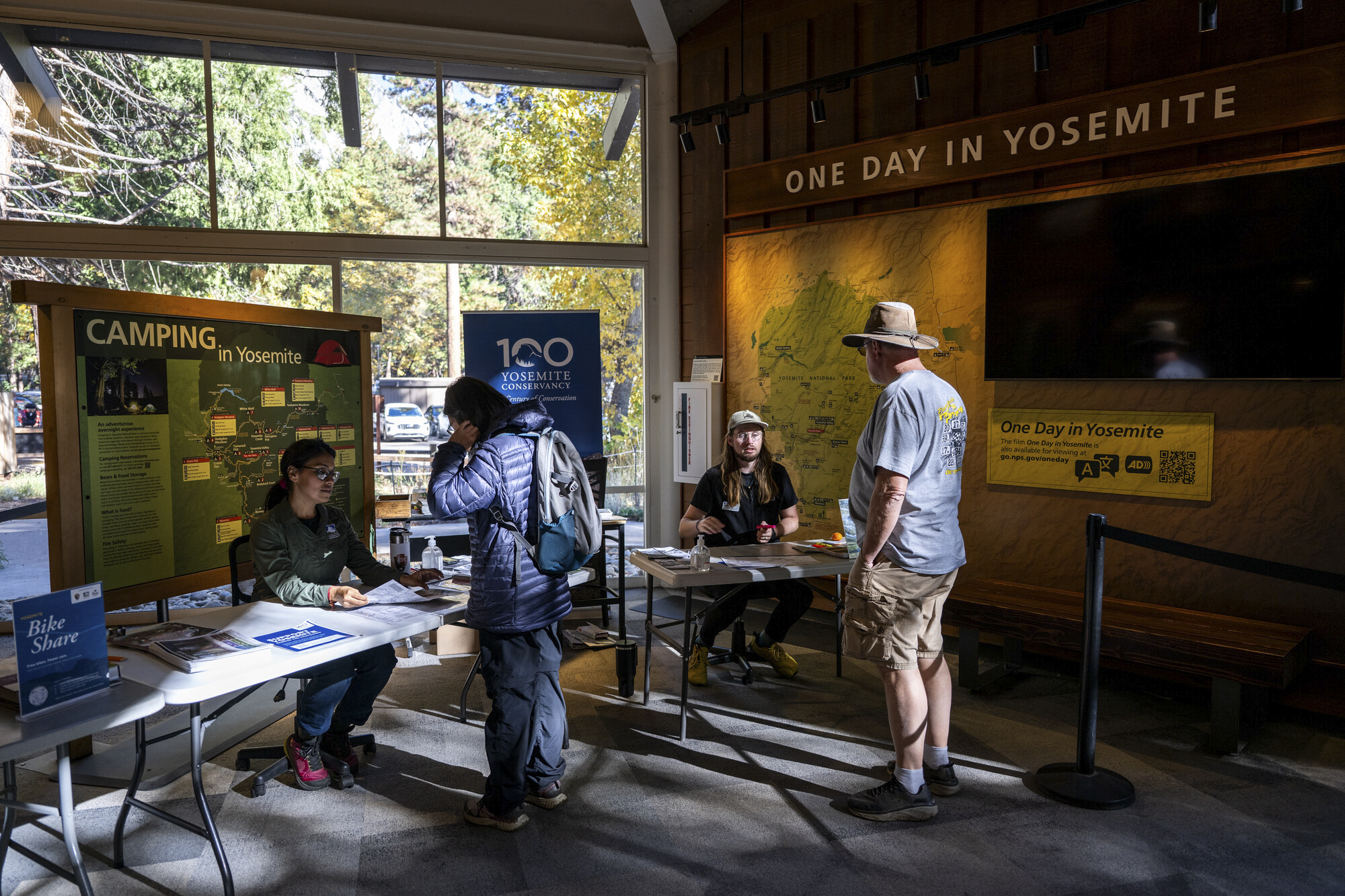
"caption": "Yosemite Conservancy staff answer questions at the Welcome Center at Yosemite National Park in the Sierra Nevada Mountains on Oct. 27, 2025. Wage cuts announced for Yosemite National Park employees come as reported new performance metrics raise ethical alarms for National Park Service leaders and employees.\r\n",
"credit": "Beth LaBerge/KQED",
"altTag": null,
"description": null,
"imgSizes": {
"thumbnail": {
"file": "https://cdn.kqed.org/wp-content/uploads/sites/10/2025/10/251027-YOSEMITESHUTDOWN-47-BL_QED-KQED-160x107.jpg",
"width": 160,
"height": 107,
"mimeType": "image/jpeg"
},
"1536x1536": {
"file": "https://cdn.kqed.org/wp-content/uploads/sites/10/2025/10/251027-YOSEMITESHUTDOWN-47-BL_QED-KQED-1536x1024.jpg",
"width": 1536,
"height": 1024,
"mimeType": "image/jpeg"
},
"post-thumbnail": {
"file": "https://cdn.kqed.org/wp-content/uploads/sites/10/2025/10/251027-YOSEMITESHUTDOWN-47-BL_QED-KQED-672x372.jpg",
"width": 672,
"height": 372,
"mimeType": "image/jpeg"
},
"twentyfourteen-full-width": {
"file": "https://cdn.kqed.org/wp-content/uploads/sites/10/2025/10/251027-YOSEMITESHUTDOWN-47-BL_QED-KQED-1038x576.jpg",
"width": 1038,
"height": 576,
"mimeType": "image/jpeg"
},
"npr-cds-wide": {
"file": "https://cdn.kqed.org/wp-content/uploads/sites/10/2025/10/251027-YOSEMITESHUTDOWN-47-BL_QED-KQED-1600x900.jpg",
"width": 1600,
"height": 900,
"mimeType": "image/jpeg"
},
"kqedFullSize": {
"file": "https://cdn.kqed.org/wp-content/uploads/sites/10/2025/10/251027-YOSEMITESHUTDOWN-47-BL_QED-KQED.jpg",
"width": 2000,
"height": 1333
}
},
"isLoading": false,
"fetchFailed": false
},
"news_12066641": {
"type": "attachments",
"id": "news_12066641",
"meta": {
"index": "attachments_1716263798",
"site": "news",
"id": "12066641",
"found": true
},
"title": "Federal Enforcement-Los Angeles",
"publishDate": 1765393573,
"status": "inherit",
"parent": 12066625,
"modified": 1765393613,
"caption": "Members of the California National Guard and U.S. Marines guard a federal building on June 17, 2025, in Los Angeles. ",
"credit": "Damian Dovarganes/AP Photo",
"altTag": null,
"description": null,
"imgSizes": {
"thumbnail": {
"file": "https://cdn.kqed.org/wp-content/uploads/sites/10/2025/12/CaliforniaNationalGuardAP-160x107.jpg",
"width": 160,
"height": 107,
"mimeType": "image/jpeg"
},
"1536x1536": {
"file": "https://cdn.kqed.org/wp-content/uploads/sites/10/2025/12/CaliforniaNationalGuardAP-1536x1027.jpg",
"width": 1536,
"height": 1027,
"mimeType": "image/jpeg"
},
"post-thumbnail": {
"file": "https://cdn.kqed.org/wp-content/uploads/sites/10/2025/12/CaliforniaNationalGuardAP-672x372.jpg",
"width": 672,
"height": 372,
"mimeType": "image/jpeg"
},
"twentyfourteen-full-width": {
"file": "https://cdn.kqed.org/wp-content/uploads/sites/10/2025/12/CaliforniaNationalGuardAP-1038x576.jpg",
"width": 1038,
"height": 576,
"mimeType": "image/jpeg"
},
"npr-cds-wide": {
"file": "https://cdn.kqed.org/wp-content/uploads/sites/10/2025/12/CaliforniaNationalGuardAP-1200x675.jpg",
"width": 1200,
"height": 675,
"mimeType": "image/jpeg"
},
"kqedFullSize": {
"file": "https://cdn.kqed.org/wp-content/uploads/sites/10/2025/12/CaliforniaNationalGuardAP.jpg",
"width": 2000,
"height": 1337
}
},
"isLoading": false,
"fetchFailed": false
},
"news_11979156": {
"type": "attachments",
"id": "news_11979156",
"meta": {
"index": "attachments_1716263798",
"site": "news",
"id": "11979156",
"found": true
},
"title": "240212-ImmigrationCourt-31-BL_qut",
"publishDate": 1710283094,
"status": "inherit",
"parent": 11979131,
"modified": 1748456121,
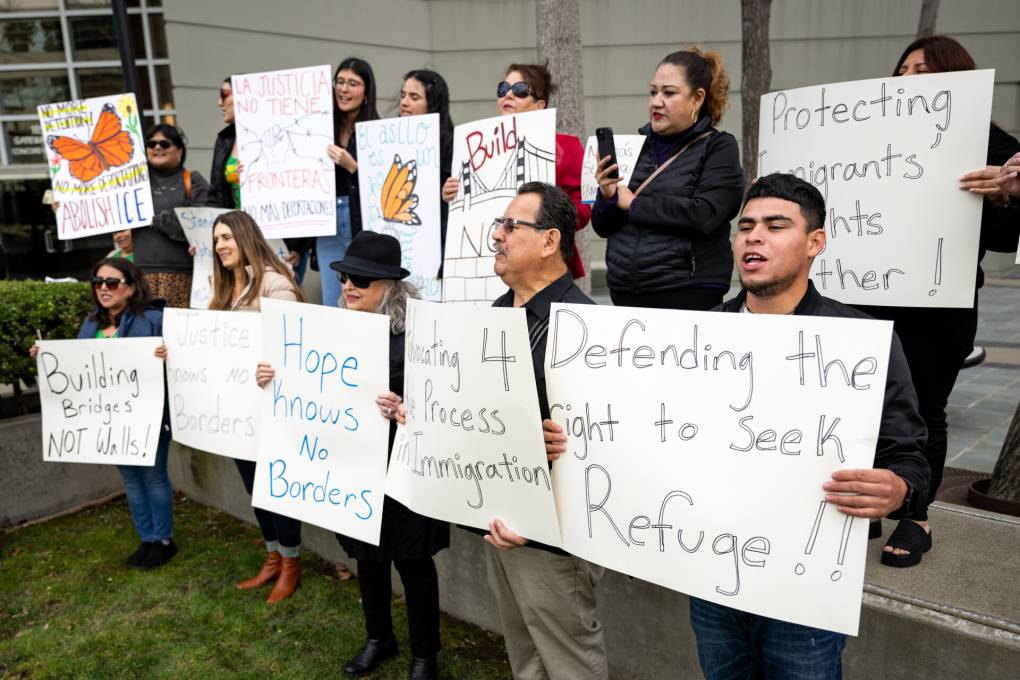
"caption": "Immigration rights supporters stand outside the new Concord Immigration Court in Concord during a press conference on Feb. 12, 2024.",
"credit": "Beth LaBerge/KQED",
"altTag": null,
"description": null,
"imgSizes": {
"medium": {
"file": "https://cdn.kqed.org/wp-content/uploads/sites/10/2024/03/240212-ImmigrationCourt-31-BL_qut-800x533.jpg",
"width": 800,
"height": 533,
"mimeType": "image/jpeg"
},
"large": {
"file": "https://cdn.kqed.org/wp-content/uploads/sites/10/2024/03/240212-ImmigrationCourt-31-BL_qut-1020x680.jpg",
"width": 1020,
"height": 680,
"mimeType": "image/jpeg"
},
"thumbnail": {
"file": "https://cdn.kqed.org/wp-content/uploads/sites/10/2024/03/240212-ImmigrationCourt-31-BL_qut-160x107.jpg",
"width": 160,
"height": 107,
"mimeType": "image/jpeg"
},
"1536x1536": {
"file": "https://cdn.kqed.org/wp-content/uploads/sites/10/2024/03/240212-ImmigrationCourt-31-BL_qut-1536x1024.jpg",
"width": 1536,
"height": 1024,
"mimeType": "image/jpeg"
},
"post-thumbnail": {
"file": "https://cdn.kqed.org/wp-content/uploads/sites/10/2024/03/240212-ImmigrationCourt-31-BL_qut-672x372.jpg",
"width": 672,
"height": 372,
"mimeType": "image/jpeg"
},
"twentyfourteen-full-width": {
"file": "https://cdn.kqed.org/wp-content/uploads/sites/10/2024/03/240212-ImmigrationCourt-31-BL_qut-1038x576.jpg",
"width": 1038,
"height": 576,
"mimeType": "image/jpeg"
},
"kqedFullSize": {
"file": "https://cdn.kqed.org/wp-content/uploads/sites/10/2024/03/240212-ImmigrationCourt-31-BL_qut.jpg",
"width": 1920,
"height": 1280
}
},
"isLoading": false,
"fetchFailed": false
},
"news_12066517": {
"type": "attachments",
"id": "news_12066517",
"meta": {
"index": "attachments_1716263798",
"site": "news",
"id": "12066517",
"found": true
},
"title": "BilalMahmoodKQED1",
"publishDate": 1765323538,
"status": "inherit",
"parent": 12066486,
"modified": 1765323820,
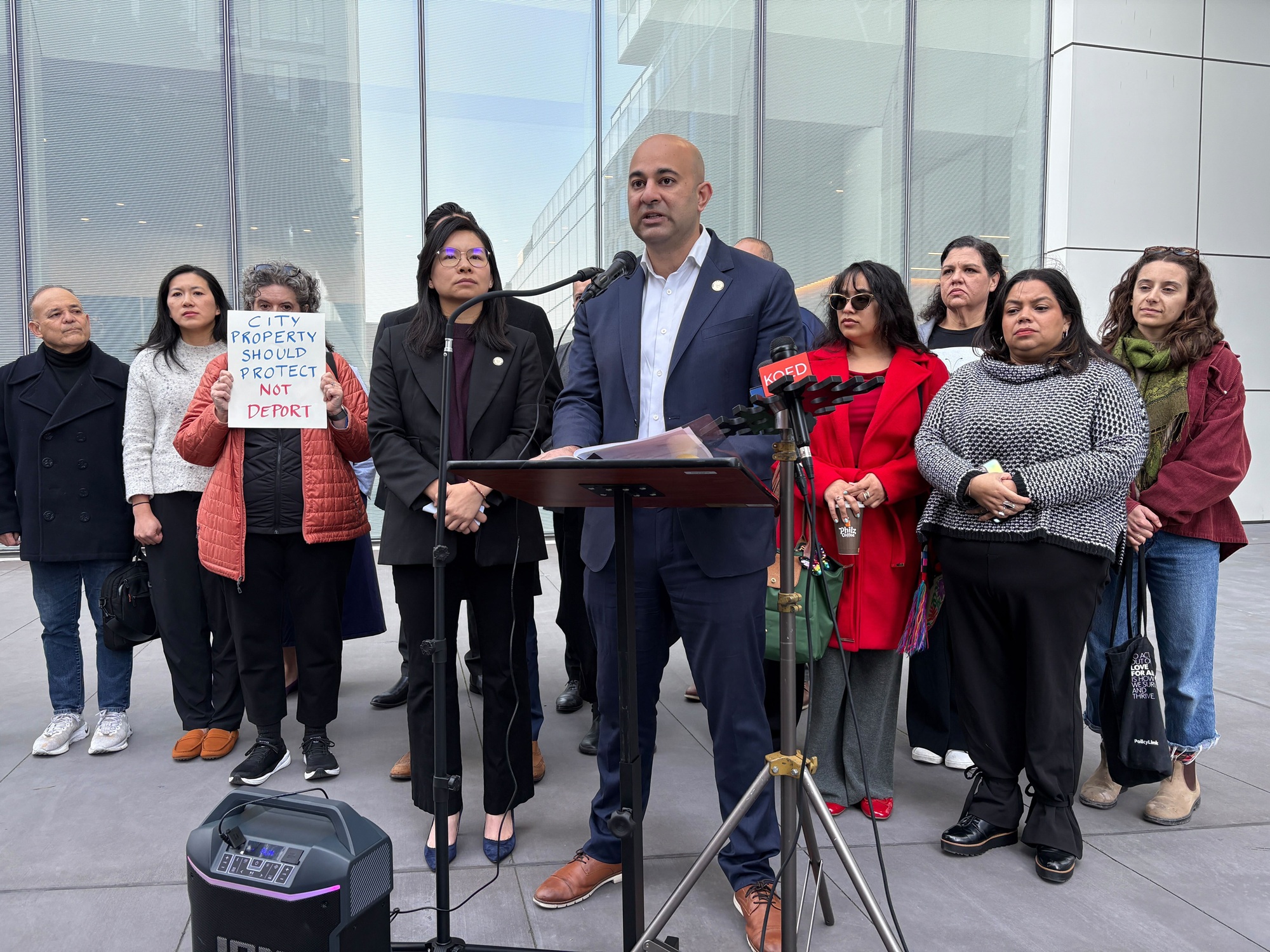
"caption": "Supervisors Bilal Mahmood and Chyanne Chen are proposing to block federal immigration activity from city-owned spaces.",
"credit": "Sydney Johnson/KQED",
"altTag": null,
"description": null,
"imgSizes": {
"thumbnail": {
"file": "https://cdn.kqed.org/wp-content/uploads/sites/10/2025/12/BilalMahmoodKQED1-160x120.jpg",
"width": 160,
"height": 120,
"mimeType": "image/jpeg"
},
"1536x1536": {
"file": "https://cdn.kqed.org/wp-content/uploads/sites/10/2025/12/BilalMahmoodKQED1-1536x1152.jpg",
"width": 1536,
"height": 1152,
"mimeType": "image/jpeg"
},
"post-thumbnail": {
"file": "https://cdn.kqed.org/wp-content/uploads/sites/10/2025/12/BilalMahmoodKQED1-672x372.jpg",
"width": 672,
"height": 372,
"mimeType": "image/jpeg"
},
"twentyfourteen-full-width": {
"file": "https://cdn.kqed.org/wp-content/uploads/sites/10/2025/12/BilalMahmoodKQED1-1038x576.jpg",
"width": 1038,
"height": 576,
"mimeType": "image/jpeg"
},
"npr-cds-wide": {
"file": "https://cdn.kqed.org/wp-content/uploads/sites/10/2025/12/BilalMahmoodKQED1-1200x675.jpg",
"width": 1200,
"height": 675,
"mimeType": "image/jpeg"
},
"kqedFullSize": {
"file": "https://cdn.kqed.org/wp-content/uploads/sites/10/2025/12/BilalMahmoodKQED1.jpg",
"width": 2000,
"height": 1500
}
},
"isLoading": false,
"fetchFailed": false
},
"news_12062364": {
"type": "attachments",
"id": "news_12062364",
"meta": {
"index": "attachments_1716263798",
"site": "news",
"id": "12062364",
"found": true
},
"title": "251030-BAYAREAVOTERS-04-BL-KQED",
"publishDate": 1761860780,
"status": "inherit",
"parent": 0,
"modified": 1761860918,
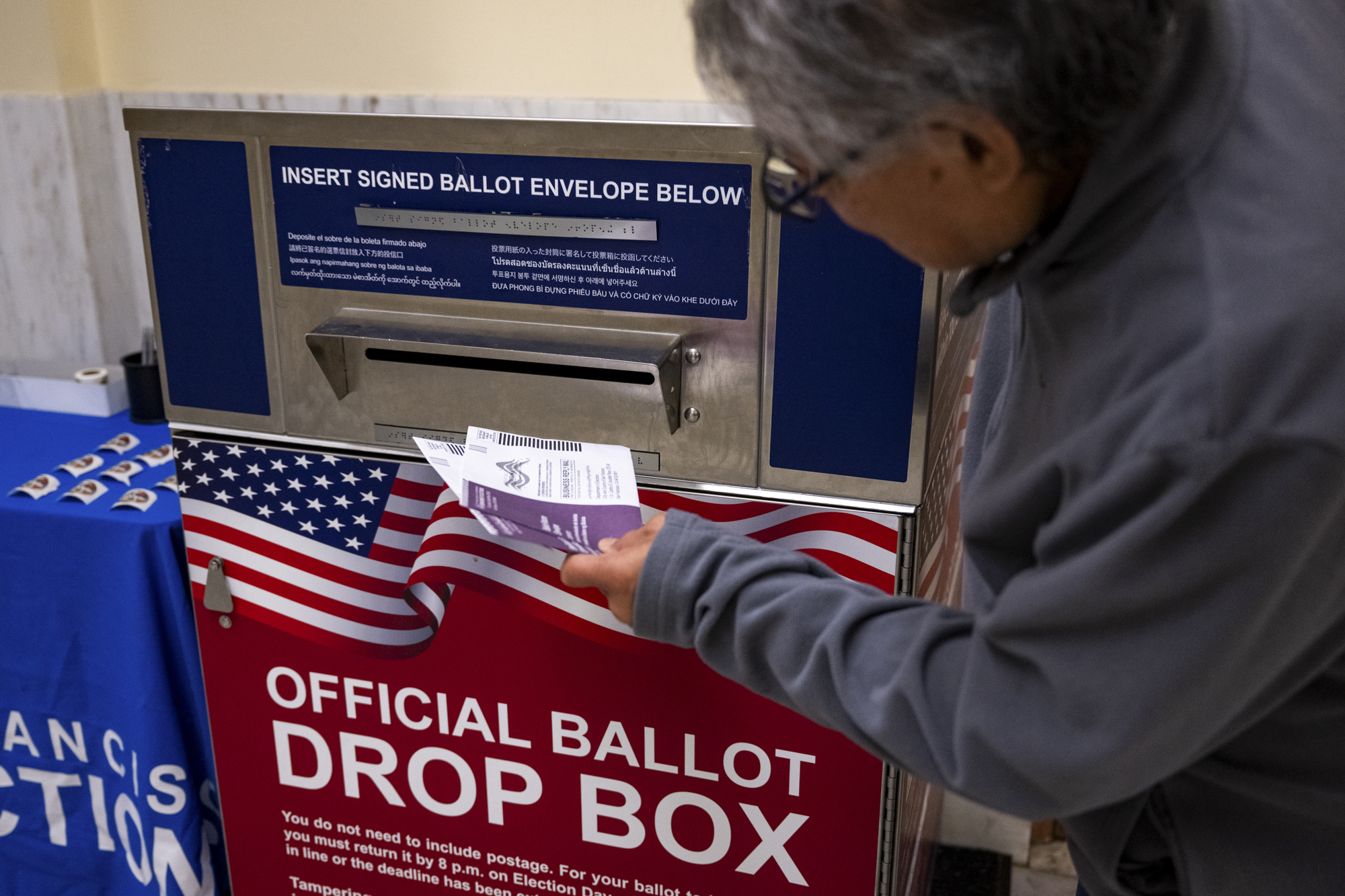
"caption": "John Chan drops off his ballot at City Hall in San Francisco on Oct. 30, 2025, ahead of the statewide special election.",
"credit": "Beth LaBerge/KQED",
"altTag": null,
"description": null,
"imgSizes": {
"thumbnail": {
"file": "https://cdn.kqed.org/wp-content/uploads/sites/10/2025/10/251030-BAYAREAVOTERS-04-BL-KQED-160x107.jpg",
"width": 160,
"height": 107,
"mimeType": "image/jpeg"
},
"1536x1536": {
"file": "https://cdn.kqed.org/wp-content/uploads/sites/10/2025/10/251030-BAYAREAVOTERS-04-BL-KQED-1536x1024.jpg",
"width": 1536,
"height": 1024,
"mimeType": "image/jpeg"
},
"post-thumbnail": {
"file": "https://cdn.kqed.org/wp-content/uploads/sites/10/2025/10/251030-BAYAREAVOTERS-04-BL-KQED-672x372.jpg",
"width": 672,
"height": 372,
"mimeType": "image/jpeg"
},
"twentyfourteen-full-width": {
"file": "https://cdn.kqed.org/wp-content/uploads/sites/10/2025/10/251030-BAYAREAVOTERS-04-BL-KQED-1038x576.jpg",
"width": 1038,
"height": 576,
"mimeType": "image/jpeg"
},
"npr-cds-wide": {
"file": "https://cdn.kqed.org/wp-content/uploads/sites/10/2025/10/251030-BAYAREAVOTERS-04-BL-KQED-1200x675.jpg",
"width": 1200,
"height": 675,
"mimeType": "image/jpeg"
},
"kqedFullSize": {
"file": "https://cdn.kqed.org/wp-content/uploads/sites/10/2025/10/251030-BAYAREAVOTERS-04-BL-KQED.jpg",
"width": 2000,
"height": 1333
}
},
"isLoading": false,
"fetchFailed": false
},
"news_12065499": {
"type": "attachments",
"id": "news_12065499",
"meta": {
"index": "attachments_1716263798",
"site": "news",
"id": "12065499",
"found": true
},
"title": "251124-DISABILITYJUSTICELEADERS00314_TV-KQED",
"publishDate": 1764191449,
"status": "inherit",
"parent": 0,
"modified": 1764883872,
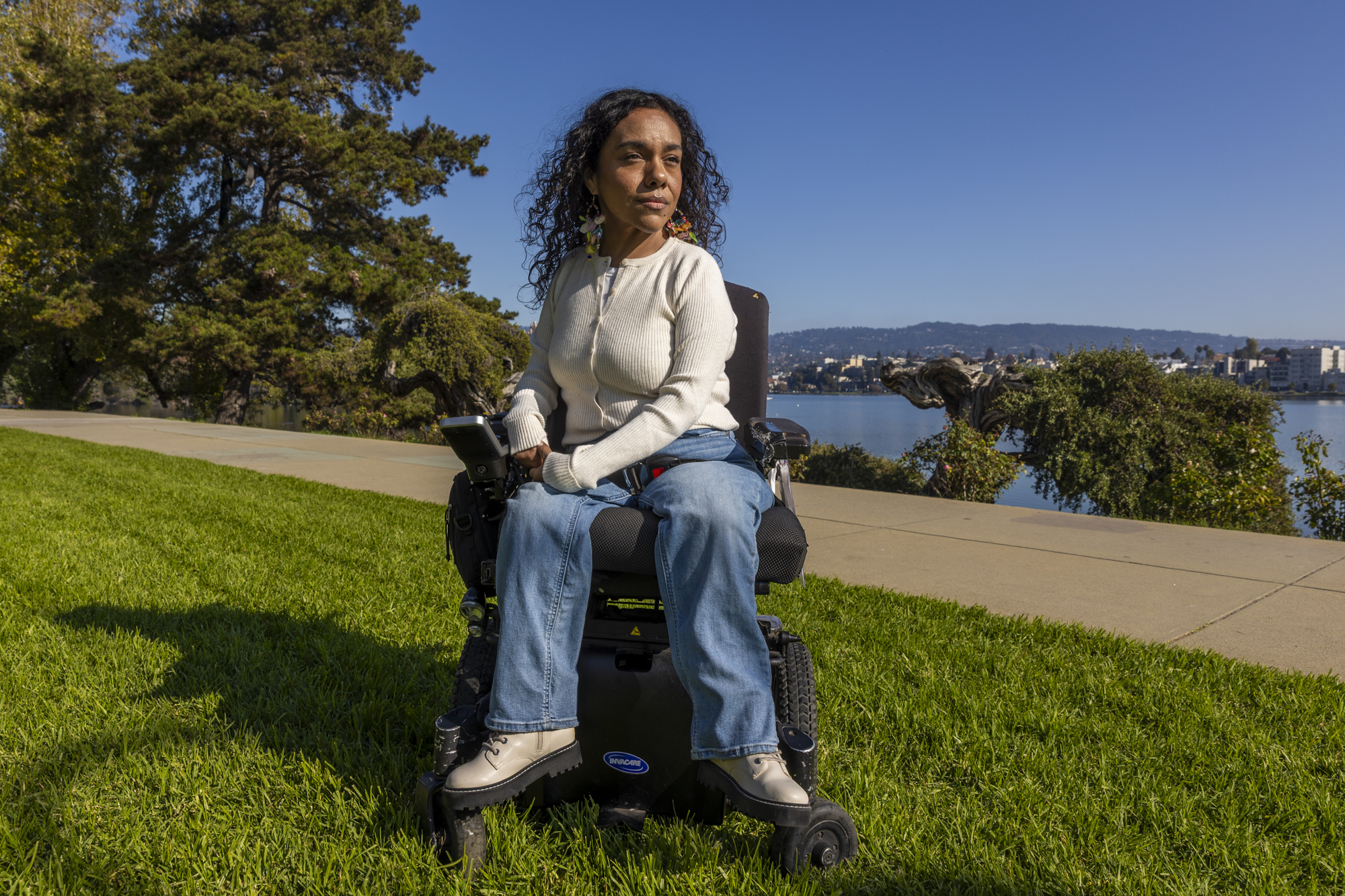
"caption": "Brittanie Hernandez-Wilson, a disability justice activist, poses for a portrait at Lake Merritt in Oakland on Nov. 24, 2025. Hernandez-Wilson worked closely with Alice Wong, a disability justice leader who died in November.",
"credit": "Tâm Vũ/KQED",
"altTag": null,
"description": null,
"imgSizes": {
"thumbnail": {
"file": "https://cdn.kqed.org/wp-content/uploads/sites/10/2025/11/251124-DISABILITYJUSTICELEADERS00314_TV-KQED-160x107.jpg",
"width": 160,
"height": 107,
"mimeType": "image/jpeg"
},
"1536x1536": {
"file": "https://cdn.kqed.org/wp-content/uploads/sites/10/2025/11/251124-DISABILITYJUSTICELEADERS00314_TV-KQED-1536x1024.jpg",
"width": 1536,
"height": 1024,
"mimeType": "image/jpeg"
},
"post-thumbnail": {
"file": "https://cdn.kqed.org/wp-content/uploads/sites/10/2025/11/251124-DISABILITYJUSTICELEADERS00314_TV-KQED-672x372.jpg",
"width": 672,
"height": 372,
"mimeType": "image/jpeg"
},
"twentyfourteen-full-width": {
"file": "https://cdn.kqed.org/wp-content/uploads/sites/10/2025/11/251124-DISABILITYJUSTICELEADERS00314_TV-KQED-1038x576.jpg",
"width": 1038,
"height": 576,
"mimeType": "image/jpeg"
},
"npr-cds-wide": {
"file": "https://cdn.kqed.org/wp-content/uploads/sites/10/2025/11/251124-DISABILITYJUSTICELEADERS00314_TV-KQED-1200x675.jpg",
"width": 1200,
"height": 675,
"mimeType": "image/jpeg"
},
"kqedFullSize": {
"file": "https://cdn.kqed.org/wp-content/uploads/sites/10/2025/11/251124-DISABILITYJUSTICELEADERS00314_TV-KQED.jpg",
"width": 2000,
"height": 1333
}
},
"isLoading": false,
"fetchFailed": false
},
"news_12044826": {
"type": "attachments",
"id": "news_12044826",
"meta": {
"index": "attachments_1716263798",
"site": "news",
"id": "12044826",
"found": true
},
"title": "Protests Erupt In L.A. County Sparked By Federal Immigration Raids",
"publishDate": 1750202502,
"status": "inherit",
"parent": 12044637,
"modified": 1757026443,
"caption": "A police officer holds a less lethal rifle as protesters confront California National Guard soldiers and police outside of a federal building, as protests continue in Los Angeles following 3 days of clashes with police after a series of immigration raids on June 9, 2025. ",
"credit": "David McNew/Getty Images",
"altTag": null,
"description": null,
"imgSizes": {
"medium": {
"file": "https://cdn.kqed.org/wp-content/uploads/sites/10/2025/06/GettyImages-2219434485-2000x1333.jpg",
"width": 2000,
"height": 1333,
"mimeType": "image/jpeg"
},
"large": {
"file": "https://cdn.kqed.org/wp-content/uploads/sites/10/2025/06/GettyImages-2219434485-2000x1333.jpg",
"width": 2000,
"height": 1333,
"mimeType": "image/jpeg"
},
"thumbnail": {
"file": "https://cdn.kqed.org/wp-content/uploads/sites/10/2025/06/GettyImages-2219434485-160x107.jpg",
"width": 160,
"height": 107,
"mimeType": "image/jpeg"
},
"1536x1536": {
"file": "https://cdn.kqed.org/wp-content/uploads/sites/10/2025/06/GettyImages-2219434485-1536x1024.jpg",
"width": 1536,
"height": 1024,
"mimeType": "image/jpeg"
},
"2048x2048": {
"file": "https://cdn.kqed.org/wp-content/uploads/sites/10/2025/06/GettyImages-2219434485-2048x1365.jpg",
"width": 2048,
"height": 1365,
"mimeType": "image/jpeg"
},
"post-thumbnail": {
"file": "https://cdn.kqed.org/wp-content/uploads/sites/10/2025/06/GettyImages-2219434485-672x372.jpg",
"width": 672,
"height": 372,
"mimeType": "image/jpeg"
},
"twentyfourteen-full-width": {
"file": "https://cdn.kqed.org/wp-content/uploads/sites/10/2025/06/GettyImages-2219434485-1038x576.jpg",
"width": 1038,
"height": 576,
"mimeType": "image/jpeg"
},
"full-width": {
"file": "https://cdn.kqed.org/wp-content/uploads/sites/10/2025/06/GettyImages-2219434485-2000x1333.jpg",
"width": 2000,
"height": 1333,
"mimeType": "image/jpeg"
},
"kqedFullSize": {
"file": "https://cdn.kqed.org/wp-content/uploads/sites/10/2025/06/GettyImages-2219434485-scaled-e1753393070287.jpg",
"width": 2000,
"height": 1334
}
},
"isLoading": false,
"fetchFailed": false
},
"news_12065985": {
"type": "attachments",
"id": "news_12065985",
"meta": {
"index": "attachments_1716263798",
"site": "news",
"id": "12065985",
"found": true
},
"title": "IMG_1280",
"publishDate": 1764804943,
"status": "inherit",
"parent": 12065967,
"modified": 1764804975,
"caption": "What to know if you're a borrower in the process of paying off student debt — from the changes to federal loan forgiveness and income-driven repayment plans to the latest legal proceedings and how they might affect you.",
"credit": "Anna Vignet/KQED",
"altTag": null,
"description": null,
"imgSizes": {
"medium": {
"file": "https://cdn.kqed.org/wp-content/uploads/sites/10/2025/12/IMG_1280-2000x1500.jpg",
"width": 2000,
"height": 1500,
"mimeType": "image/jpeg"
},
"large": {
"file": "https://cdn.kqed.org/wp-content/uploads/sites/10/2025/12/IMG_1280-2000x1500.jpg",
"width": 2000,
"height": 1500,
"mimeType": "image/jpeg"
},
"thumbnail": {
"file": "https://cdn.kqed.org/wp-content/uploads/sites/10/2025/12/IMG_1280-160x120.jpg",
"width": 160,
"height": 120,
"mimeType": "image/jpeg"
},
"1536x1536": {
"file": "https://cdn.kqed.org/wp-content/uploads/sites/10/2025/12/IMG_1280-1536x1152.jpg",
"width": 1536,
"height": 1152,
"mimeType": "image/jpeg"
},
"2048x2048": {
"file": "https://cdn.kqed.org/wp-content/uploads/sites/10/2025/12/IMG_1280-2048x1536.jpg",
"width": 2048,
"height": 1536,
"mimeType": "image/jpeg"
},
"post-thumbnail": {
"file": "https://cdn.kqed.org/wp-content/uploads/sites/10/2025/12/IMG_1280-672x372.jpg",
"width": 672,
"height": 372,
"mimeType": "image/jpeg"
},
"twentyfourteen-full-width": {
"file": "https://cdn.kqed.org/wp-content/uploads/sites/10/2025/12/IMG_1280-1038x576.jpg",
"width": 1038,
"height": 576,
"mimeType": "image/jpeg"
},
"full-width": {
"file": "https://cdn.kqed.org/wp-content/uploads/sites/10/2025/12/IMG_1280-2000x1500.jpg",
"width": 2000,
"height": 1500,
"mimeType": "image/jpeg"
},
"npr-cds-wide": {
"file": "https://cdn.kqed.org/wp-content/uploads/sites/10/2025/12/IMG_1280-1200x675.jpg",
"width": 1200,
"height": 675,
"mimeType": "image/jpeg"
},
"kqedFullSize": {
"file": "https://cdn.kqed.org/wp-content/uploads/sites/10/2025/12/IMG_1280.jpg",
"width": 2560,
"height": 1920
}
},
"isLoading": false,
"fetchFailed": false
},
"news_12065897": {
"type": "attachments",
"id": "news_12065897",
"meta": {
"index": "attachments_1716263798",
"site": "news",
"id": "12065897",
"found": true
},
"title": "080924_SF-Sweep_MO_CM_15",
"publishDate": 1764786767,
"status": "inherit",
"parent": 12065893,
"modified": 1764786785,
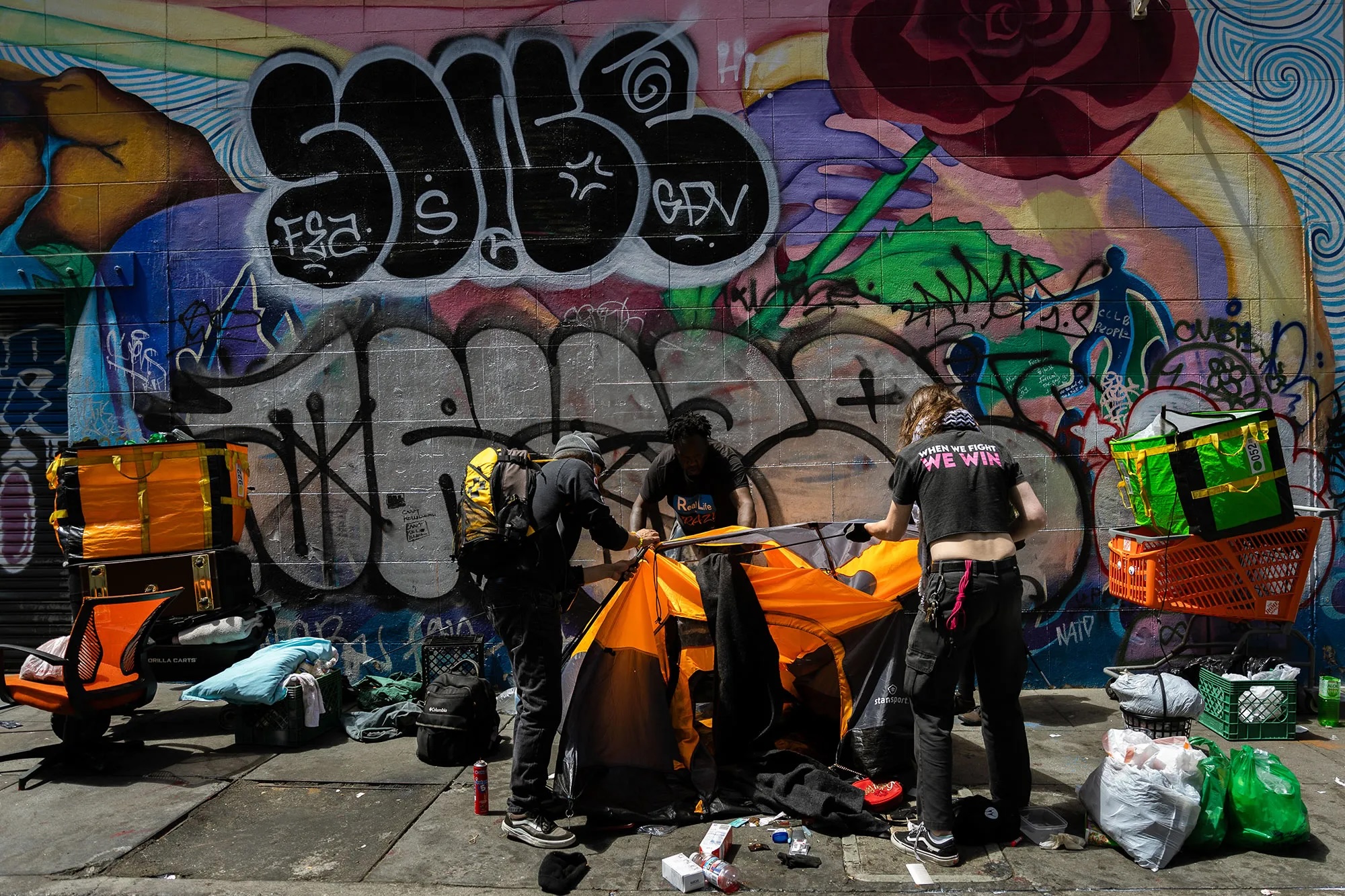
"caption": "Michael Johnson takes down his tent in downtown San Francisco with the help of activists on Aug. 9, 2024. ",
"credit": "Photo by Manuel Orbegozo for CalMatters",
"altTag": null,
"description": null,
"imgSizes": {
"thumbnail": {
"file": "https://cdn.kqed.org/wp-content/uploads/sites/10/2025/12/080924_SF-Sweep_MO_CM_15-160x107.jpeg",
"width": 160,
"height": 107,
"mimeType": "image/jpeg"
},
"1536x1536": {
"file": "https://cdn.kqed.org/wp-content/uploads/sites/10/2025/12/080924_SF-Sweep_MO_CM_15-1536x1024.jpeg",
"width": 1536,
"height": 1024,
"mimeType": "image/jpeg"
},
"post-thumbnail": {
"file": "https://cdn.kqed.org/wp-content/uploads/sites/10/2025/12/080924_SF-Sweep_MO_CM_15-672x372.jpeg",
"width": 672,
"height": 372,
"mimeType": "image/jpeg"
},
"twentyfourteen-full-width": {
"file": "https://cdn.kqed.org/wp-content/uploads/sites/10/2025/12/080924_SF-Sweep_MO_CM_15-1038x576.jpeg",
"width": 1038,
"height": 576,
"mimeType": "image/jpeg"
},
"npr-cds-wide": {
"file": "https://cdn.kqed.org/wp-content/uploads/sites/10/2025/12/080924_SF-Sweep_MO_CM_15-1200x675.jpeg",
"width": 1200,
"height": 675,
"mimeType": "image/jpeg"
},
"kqedFullSize": {
"file": "https://cdn.kqed.org/wp-content/uploads/sites/10/2025/12/080924_SF-Sweep_MO_CM_15.jpeg",
"width": 2000,
"height": 1333
}
},
"isLoading": false,
"fetchFailed": false
},
"news_12065612": {
"type": "attachments",
"id": "news_12065612",
"meta": {
"index": "attachments_1716263798",
"site": "news",
"id": "12065612",
"found": true
},
"title": "PAKISTAN-AFGHANISTAN-REFUGEES-MUSIC",
"publishDate": 1764618319,
"status": "inherit",
"parent": 12065607,
"modified": 1764618408,
"caption": "In this photograph taken on Sept. 2, 2025, Afghan refugee Shayma is pictured during an interview with AFP at her residence in Islamabad. Before their scheduled February flight, President Donald Trump indefinitely suspended refugee admissions, stranding around 15,000 Afghans already prepared to fly out from Islamabad. ",
"credit": "Farooq Naeem/AFP via Getty Images",
"altTag": null,
"description": null,
"imgSizes": {
"thumbnail": {
"file": "https://cdn.kqed.org/wp-content/uploads/sites/10/2025/12/AfghanRefugeeGetty-160x107.jpg",
"width": 160,
"height": 107,
"mimeType": "image/jpeg"
},
"1536x1536": {
"file": "https://cdn.kqed.org/wp-content/uploads/sites/10/2025/12/AfghanRefugeeGetty-1536x1024.jpg",
"width": 1536,
"height": 1024,
"mimeType": "image/jpeg"
},
"post-thumbnail": {
"file": "https://cdn.kqed.org/wp-content/uploads/sites/10/2025/12/AfghanRefugeeGetty-672x372.jpg",
"width": 672,
"height": 372,
"mimeType": "image/jpeg"
},
"twentyfourteen-full-width": {
"file": "https://cdn.kqed.org/wp-content/uploads/sites/10/2025/12/AfghanRefugeeGetty-1038x576.jpg",
"width": 1038,
"height": 576,
"mimeType": "image/jpeg"
},
"npr-cds-wide": {
"file": "https://cdn.kqed.org/wp-content/uploads/sites/10/2025/12/AfghanRefugeeGetty-1200x675.jpg",
"width": 1200,
"height": 675,
"mimeType": "image/jpeg"
},
"kqedFullSize": {
"file": "https://cdn.kqed.org/wp-content/uploads/sites/10/2025/12/AfghanRefugeeGetty.jpg",
"width": 2000,
"height": 1333
}
},
"isLoading": false,
"fetchFailed": false
},
"news_12065425": {
"type": "attachments",
"id": "news_12065425",
"meta": {
"index": "attachments_1716263798",
"site": "news",
"id": "12065425",
"found": true
},
"title": "091125-Melon-Farm-and-Kerman-LV-22",
"publishDate": 1764116266,
"status": "inherit",
"parent": 12065421,
"modified": 1764177730,
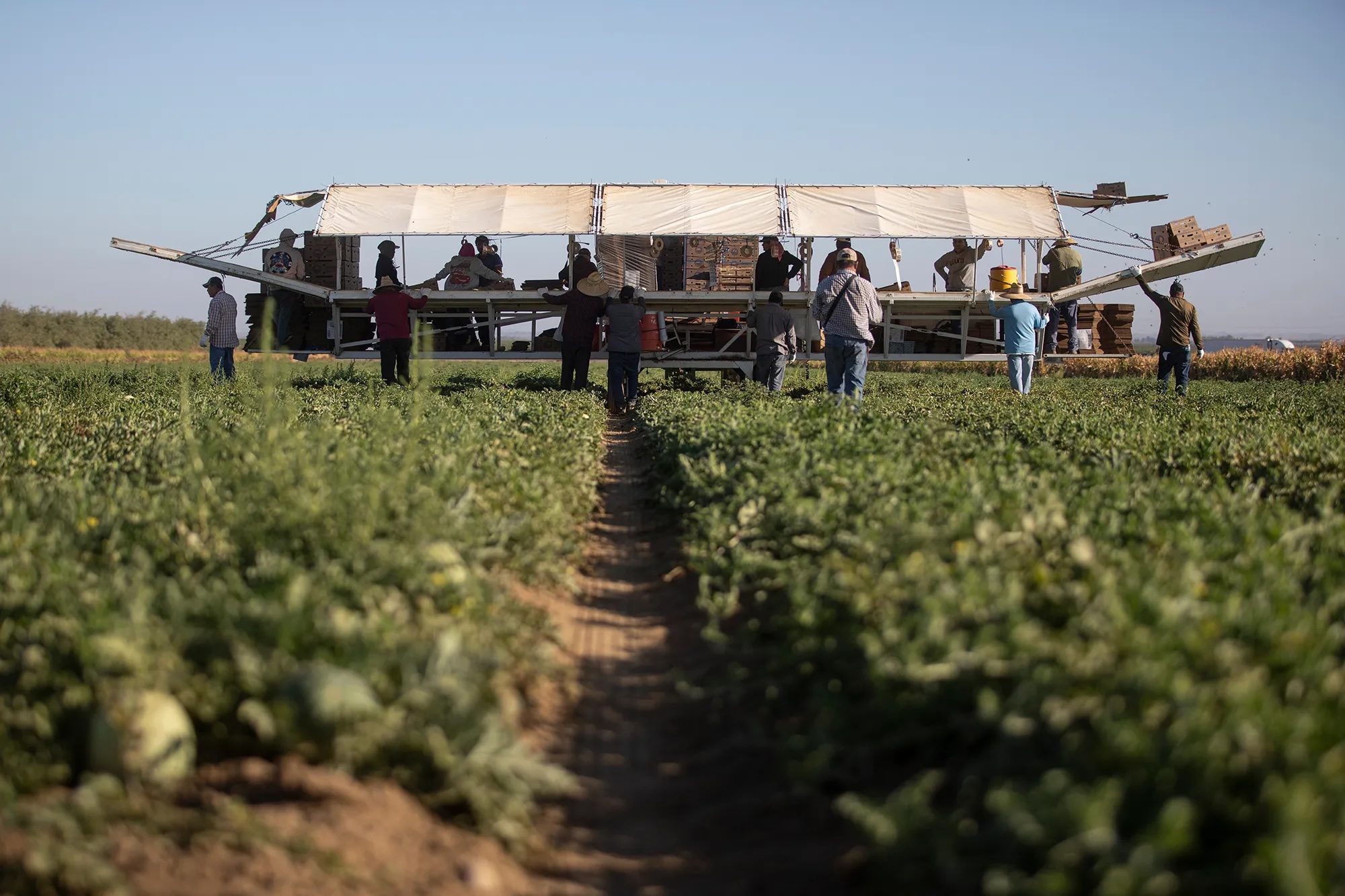
"caption": "Farmworkers harvest melons behind a tractor on a melon farm outside of Firebaugh on Sept. 11, 2025. ",
"credit": "Larry Valenzuela, CalMatters/CatchLight Local",
"altTag": null,
"description": null,
"imgSizes": {
"thumbnail": {
"file": "https://cdn.kqed.org/wp-content/uploads/sites/10/2025/11/091125-Melon-Farm-and-Kerman-LV-22-160x107.jpeg",
"width": 160,
"height": 107,
"mimeType": "image/jpeg"
},
"1536x1536": {
"file": "https://cdn.kqed.org/wp-content/uploads/sites/10/2025/11/091125-Melon-Farm-and-Kerman-LV-22-1536x1024.jpeg",
"width": 1536,
"height": 1024,
"mimeType": "image/jpeg"
},
"post-thumbnail": {
"file": "https://cdn.kqed.org/wp-content/uploads/sites/10/2025/11/091125-Melon-Farm-and-Kerman-LV-22-672x372.jpeg",
"width": 672,
"height": 372,
"mimeType": "image/jpeg"
},
"twentyfourteen-full-width": {
"file": "https://cdn.kqed.org/wp-content/uploads/sites/10/2025/11/091125-Melon-Farm-and-Kerman-LV-22-1038x576.jpeg",
"width": 1038,
"height": 576,
"mimeType": "image/jpeg"
},
"npr-cds-wide": {
"file": "https://cdn.kqed.org/wp-content/uploads/sites/10/2025/11/091125-Melon-Farm-and-Kerman-LV-22-1200x675.jpeg",
"width": 1200,
"height": 675,
"mimeType": "image/jpeg"
},
"kqedFullSize": {
"file": "https://cdn.kqed.org/wp-content/uploads/sites/10/2025/11/091125-Melon-Farm-and-Kerman-LV-22.jpeg",
"width": 2000,
"height": 1333
}
},
"isLoading": false,
"fetchFailed": false
},
"news_12065491": {
"type": "attachments",
"id": "news_12065491",
"meta": {
"index": "attachments_1716263798",
"site": "news",
"id": "12065491",
"found": true
},
"title": "112823_DACA-Students_AE_CM_20",
"publishDate": 1764188381,
"status": "inherit",
"parent": 12065490,
"modified": 1764188402,
"caption": "Stickers and flyers on a table in the Undocumented Community Center at the College of San Mateo in San Mateo, on Nov. 28, 2023. At this center, students without legal status can access financial and legal aid as well as guidance in navigating grant applications.",
"credit": "Photo by Amaya Edwards for CalMatters",
"altTag": null,
"description": null,
"imgSizes": {
"thumbnail": {
"file": "https://cdn.kqed.org/wp-content/uploads/sites/10/2025/11/112823_DACA-Students_AE_CM_20-160x107.jpeg",
"width": 160,
"height": 107,
"mimeType": "image/jpeg"
},
"1536x1536": {
"file": "https://cdn.kqed.org/wp-content/uploads/sites/10/2025/11/112823_DACA-Students_AE_CM_20-1536x1024.jpeg",
"width": 1536,
"height": 1024,
"mimeType": "image/jpeg"
},
"post-thumbnail": {
"file": "https://cdn.kqed.org/wp-content/uploads/sites/10/2025/11/112823_DACA-Students_AE_CM_20-672x372.jpeg",
"width": 672,
"height": 372,
"mimeType": "image/jpeg"
},
"twentyfourteen-full-width": {
"file": "https://cdn.kqed.org/wp-content/uploads/sites/10/2025/11/112823_DACA-Students_AE_CM_20-1038x576.jpeg",
"width": 1038,
"height": 576,
"mimeType": "image/jpeg"
},
"npr-cds-wide": {
"file": "https://cdn.kqed.org/wp-content/uploads/sites/10/2025/11/112823_DACA-Students_AE_CM_20-1200x675.jpeg",
"width": 1200,
"height": 675,
"mimeType": "image/jpeg"
},
"kqedFullSize": {
"file": "https://cdn.kqed.org/wp-content/uploads/sites/10/2025/11/112823_DACA-Students_AE_CM_20.jpeg",
"width": 2000,
"height": 1333
}
},
"isLoading": false,
"fetchFailed": false
}
},
"audioPlayerReducer": {
"postId": "stream_live",
"isPaused": true,
"isPlaying": false,
"pfsActive": false,
"pledgeModalIsOpen": true,
"playerDrawerIsOpen": false,
"liveAudioPlayStartedAt": 0,
"liveAudioPlayContext": ""
},
"authorsReducer": {
"byline_news_12065893": {
"type": "authors",
"id": "byline_news_12065893",
"meta": {
"override": true
},
"slug": "byline_news_12065893",
"name": "Marissa Kendall, CalMatters",
"isLoading": false
},
"byline_news_12065421": {
"type": "authors",
"id": "byline_news_12065421",
"meta": {
"override": true
},
"slug": "byline_news_12065421",
"name": "Jocelyn Wiener, CalMatters",
"isLoading": false
},
"byline_news_12065490": {
"type": "authors",
"id": "byline_news_12065490",
"meta": {
"override": true
},
"slug": "byline_news_12065490",
"name": "Adam Echelman and Mikhail Zinshteyn, CalMatters",
"isLoading": false
},
"tychehendricks": {
"type": "authors",
"id": "259",
"meta": {
"index": "authors_1716337520",
"id": "259",
"found": true
},
"name": "Tyche Hendricks",
"firstName": "Tyche",
"lastName": "Hendricks",
"slug": "tychehendricks",
"email": "thendricks@kqed.org",
"display_author_email": true,
"staff_mastheads": [
"news"
],
"title": "KQED Senior Editor, Immigration",
"bio": "\u003cspan style=\"font-weight: 400;\">Tyche Hendricks is KQED’s senior editor for immigration, leading coverage of the policy and politics that affect California’s immigrant communities. Her work for KQED’s radio and online audiences is also carried on NPR and other national outlets. She has been recognized with awards from the Radio and Television News Directors Association, the Society for Professional Journalists; the Education Writers Association; the Best of the West and the National Federation of Community Broadcasters. Before joining KQED in 2010, Tyche spent more than a dozen years as a newspaper reporter, notably at the \u003c/span>\u003ci>\u003cspan style=\"font-weight: 400;\">San Francisco Chronicle\u003c/span>\u003c/i>\u003cspan style=\"font-weight: 400;\">. At different times she has covered criminal justice, government and politics and urban planning. Tyche has taught in the MFA Creative Writing program at the University of San Francisco and at UC Berkeley’s Graduate School of Journalism, where she was co-director of a national immigration symposium for professional journalists. She is the author of \u003c/span>\u003ci>\u003cspan style=\"font-weight: 400;\">The Wind Doesn't Need a Passport: Stories from the U.S.-Mexico Borderlands\u003c/span>\u003c/i>\u003cspan style=\"font-weight: 400;\"> (University of California Press). \u003c/span>",
"avatar": "https://secure.gravatar.com/avatar/b8ee458e2731c2d43df86882ce17267e?s=600&d=blank&r=g",
"twitter": "tychehendricks",
"facebook": null,
"instagram": null,
"linkedin": null,
"sites": [
{
"site": "news",
"roles": [
"editor"
]
},
{
"site": "stateofhealth",
"roles": [
"editor"
]
}
],
"headData": {
"title": "Tyche Hendricks | KQED",
"description": "KQED Senior Editor, Immigration",
"ogImgSrc": "https://secure.gravatar.com/avatar/b8ee458e2731c2d43df86882ce17267e?s=600&d=blank&r=g",
"twImgSrc": "https://secure.gravatar.com/avatar/b8ee458e2731c2d43df86882ce17267e?s=600&d=blank&r=g"
},
"isLoading": false,
"link": "/author/tychehendricks"
},
"shossaini": {
"type": "authors",
"id": "3214",
"meta": {
"index": "authors_1716337520",
"id": "3214",
"found": true
},
"name": "Sara Hossaini",
"firstName": "Sara",
"lastName": "Hossaini",
"slug": "shossaini",
"email": "shossaini@kqed.org",
"display_author_email": true,
"staff_mastheads": [
"news"
],
"title": "KQED Reporter",
"bio": "Sara Hossaini came to general assignment reporting at KQED in 2013 after two winters reporting at Wyoming Public Radio. She holds a bachelor's degree in broadcast journalism from the University of Nebraska-Lincoln. Her radio romance began after a bitter breakup with documentary film (Ok, maybe it's still complicated). Her first simultaneous jobs in San Francisco were as Associate Producer on a PBS film series through the Center for Asian American Media and as a butler. She likes to trot, plot and make things with her hands.",
"avatar": "https://secure.gravatar.com/avatar/060e9f56b9554e17942e89f413242774?s=600&d=blank&r=g",
"twitter": "mshossaini",
"facebook": null,
"instagram": null,
"linkedin": null,
"sites": [
{
"site": "news",
"roles": [
"author"
]
},
{
"site": "stateofhealth",
"roles": [
"author"
]
}
],
"headData": {
"title": "Sara Hossaini | KQED",
"description": "KQED Reporter",
"ogImgSrc": "https://secure.gravatar.com/avatar/060e9f56b9554e17942e89f413242774?s=600&d=blank&r=g",
"twImgSrc": "https://secure.gravatar.com/avatar/060e9f56b9554e17942e89f413242774?s=600&d=blank&r=g"
},
"isLoading": false,
"link": "/author/shossaini"
},
"mlagos": {
"type": "authors",
"id": "3239",
"meta": {
"index": "authors_1716337520",
"id": "3239",
"found": true
},
"name": "Marisa Lagos",
"firstName": "Marisa",
"lastName": "Lagos",
"slug": "mlagos",
"email": "mlagos@kqed.org",
"display_author_email": false,
"staff_mastheads": [
"news"
],
"title": "KQED Contributor",
"bio": "Marisa Lagos is a correspondent for KQED’s California Politics and Government Desk and co-hosts the award-winning show and podcast, Political Breakdown. At KQED, Lagos also conducts reporting, analysis and investigations into state, local and national politics for radio, TV, online and onstage. In 2022, she and co-host, Scott Shafer, moderated the only gubernatorial debate in California. In 2020, the \u003ci>Washington Post\u003c/i> named her one of the top political journalists in California; she was nominated for a Peabody and won several other awards for her work investigating the 2017 California wildfires. She has worked at the \u003ci>San Francisco Chronicle\u003c/i>, \u003ci>San Francisco Examiner\u003c/i> and \u003ci>Los Angeles Times\u003c/i>. A UC Santa Barbara graduate, she lives in San Francisco with her two sons and husband.",
"avatar": "https://secure.gravatar.com/avatar/a261a0d3696fc066871ef96b85b5e7d2?s=600&d=blank&r=g",
"twitter": "@mlagos",
"facebook": null,
"instagram": null,
"linkedin": null,
"sites": [
{
"site": "arts",
"roles": [
"author"
]
},
{
"site": "news",
"roles": [
"editor"
]
},
{
"site": "science",
"roles": [
"editor"
]
},
{
"site": "forum",
"roles": [
"author"
]
},
{
"site": "liveblog",
"roles": [
"author"
]
}
],
"headData": {
"title": "Marisa Lagos | KQED",
"description": "KQED Contributor",
"ogImgSrc": "https://secure.gravatar.com/avatar/a261a0d3696fc066871ef96b85b5e7d2?s=600&d=blank&r=g",
"twImgSrc": "https://secure.gravatar.com/avatar/a261a0d3696fc066871ef96b85b5e7d2?s=600&d=blank&r=g"
},
"isLoading": false,
"link": "/author/mlagos"
},
"jsmall": {
"type": "authors",
"id": "6625",
"meta": {
"index": "authors_1716337520",
"id": "6625",
"found": true
},
"name": "Julie Small",
"firstName": "Julie",
"lastName": "Small",
"slug": "jsmall",
"email": "jsmall@kqed.org",
"display_author_email": true,
"staff_mastheads": [
"news"
],
"title": "KQED Contributor",
"bio": "Julie Small reports on criminal justice and immigration.\r\n\r\nShe was part of a team at KQED awarded a regional 2019 Edward R. Murrow award for continuing coverage of the Trump Administration's family separation policy.\r\n\r\nThe Society for Professional Journalists recognized Julie's 2018 \u003ca href=\"https://www.kqed.org/news/11636262/the-officer-tased-him-31-times-the-sheriff-called-his-death-an-accident\">reporting\u003c/a> on the San Joaquin County Sheriff's \u003ca href=\"https://www.kqed.org/news/11634689/autopsy-doctors-sheriff-overrode-death-findings-to-protect-law-enforcement\">interference\u003c/a> in death investigations with an Excellence in Journalism Award for Ongoing Coverage.\r\n\r\nJulie's\u003ca href=\"https://www.kqed.org/news/11039666/two-mentally-ill-inmates-died-one-month-in-santa-clara\"> reporting\u003c/a> with Lisa Pickoff-White on the treatment of mentally ill offenders in California jails earned a 2017 regional Edward R. Murrow Award for news reporting and an investigative reporting award from the SPJ of Northern California.\r\n\r\nBefore joining KQED, Julie covered government and politics in Sacramento for Southern California Public Radio (SCPR). Her 2010 \u003ca href=\"https://www.scpr.org/specials/prisonmedical/\">series\u003c/a> on lapses in California’s prison medical care also won a regional Edward R. Murrow Award for investigative reporting and a Golden Mic Award from the RTNDA of Southern California.\r\n\r\nJulie began her career in journalism in 2000 as the deputy foreign editor for public radio's \u003cem>Marketplace, \u003c/em>while earning her master's degree in journalism from USC’s Annenberg School of Communication.",
"avatar": "https://secure.gravatar.com/avatar/4baedf201468df97be97c2a9dd7585d0?s=600&d=blank&r=g",
"twitter": "@SmallRadio2",
"facebook": null,
"instagram": null,
"linkedin": null,
"sites": [
{
"site": "news",
"roles": [
"editor"
]
},
{
"site": "stateofhealth",
"roles": [
"author"
]
},
{
"site": "science",
"roles": [
"author"
]
}
],
"headData": {
"title": "Julie Small | KQED",
"description": "KQED Contributor",
"ogImgSrc": "https://secure.gravatar.com/avatar/4baedf201468df97be97c2a9dd7585d0?s=600&d=blank&r=g",
"twImgSrc": "https://secure.gravatar.com/avatar/4baedf201468df97be97c2a9dd7585d0?s=600&d=blank&r=g"
},
"isLoading": false,
"link": "/author/jsmall"
},
"ccabreralomeli": {
"type": "authors",
"id": "11708",
"meta": {
"index": "authors_1716337520",
"id": "11708",
"found": true
},
"name": "Carlos Cabrera-Lomelí",
"firstName": "Carlos",
"lastName": "Cabrera-Lomelí",
"slug": "ccabreralomeli",
"email": "ccabreralomeli@KQED.org",
"display_author_email": true,
"staff_mastheads": [
"news"
],
"title": "Community Reporter",
"bio": "Carlos Cabrera-Lomelí is a community reporter with KQED's digital engagement team. He also reports and co-produces for KQED's bilingual news hub KQED en Español. He grew up in San Francisco's Mission District and has previously worked with Univision, 48 Hills and REFORMA in Mexico City.",
"avatar": "https://secure.gravatar.com/avatar/c309be9665e484f887b818c89e273ecc673004f426f36b24d00a4d813a2e0518?s=600&d=blank&r=g",
"twitter": "@LomeliCabrera",
"bluesky": null,
"facebook": null,
"instagram": null,
"linkedin": null,
"sites": [
{
"site": "arts",
"roles": [
"editor"
]
},
{
"site": "news",
"roles": [
"editor"
]
},
{
"site": "about",
"roles": [
"editor"
]
},
{
"site": "science",
"roles": [
"editor"
]
},
{
"site": "perspectives",
"roles": [
"editor"
]
},
{
"site": "elections",
"roles": [
"editor"
]
},
{
"site": "liveblog",
"roles": [
"contributor"
]
}
],
"headData": {
"title": "Carlos Cabrera-Lomelí | KQED",
"description": "Community Reporter",
"ogImgSrc": "https://secure.gravatar.com/avatar/c309be9665e484f887b818c89e273ecc673004f426f36b24d00a4d813a2e0518?s=600&d=blank&r=g",
"twImgSrc": "https://secure.gravatar.com/avatar/c309be9665e484f887b818c89e273ecc673004f426f36b24d00a4d813a2e0518?s=600&d=blank&r=g"
},
"isLoading": false,
"link": "/author/ccabreralomeli"
},
"sjohnson": {
"type": "authors",
"id": "11840",
"meta": {
"index": "authors_1716337520",
"id": "11840",
"found": true
},
"name": "Sydney Johnson",
"firstName": "Sydney",
"lastName": "Johnson",
"slug": "sjohnson",
"email": "sjohnson@kqed.org",
"display_author_email": false,
"staff_mastheads": [
"news"
],
"title": "KQED Reporter",
"bio": "Sydney Johnson is a general assignment reporter at KQED. She previously reported on public health and city government at the San Francisco Examiner, and before that, she covered statewide education policy for EdSource. Her reporting has won multiple local, state and national awards. Sydney is a graduate of the University of California, Berkeley and lives in San Francisco.",
"avatar": "https://secure.gravatar.com/avatar/97855f2719b72ad6190b7c535fe642c8?s=600&d=blank&r=g",
"twitter": "sydneyfjohnson",
"facebook": null,
"instagram": null,
"linkedin": null,
"sites": [
{
"site": "news",
"roles": [
"editor"
]
}
],
"headData": {
"title": "Sydney Johnson | KQED",
"description": "KQED Reporter",
"ogImgSrc": "https://secure.gravatar.com/avatar/97855f2719b72ad6190b7c535fe642c8?s=600&d=blank&r=g",
"twImgSrc": "https://secure.gravatar.com/avatar/97855f2719b72ad6190b7c535fe642c8?s=600&d=blank&r=g"
},
"isLoading": false,
"link": "/author/sjohnson"
},
"ffenzi": {
"type": "authors",
"id": "11926",
"meta": {
"index": "authors_1716337520",
"id": "11926",
"found": true
},
"name": "Francesca Fenzi",
"firstName": "Francesca",
"lastName": "Fenzi",
"slug": "ffenzi",
"email": "ffenzi@kqed.org",
"display_author_email": false,
"staff_mastheads": [
"news"
],
"title": "Producer, Forum",
"bio": "Francesca Fenzi is a journalist and audio producer focused on making news media as transparent, participatory, and community-driven as possible. Since joining KQED's \u003cem>Forum\u003c/em> team in 2022, she's produced both local and statewide hours of the live public affairs show, and has reported other radio, podcast, and digital content for KQED News. She previously managed \u003ca href=\"https://discord.gg/kqed\">KQED's digital community on Discord\u003c/a> – connecting listeners with journalists, subject matter experts, and each other online.",
"avatar": "https://secure.gravatar.com/avatar/fcda5bbce7779d32c08ad4ff83a25f7a?s=600&d=blank&r=g",
"twitter": null,
"bluesky": null,
"facebook": null,
"instagram": null,
"linkedin": null,
"sites": [
{
"site": "",
"roles": [
"editor"
]
},
{
"site": "news",
"roles": [
"editor"
]
},
{
"site": "about",
"roles": [
"editor"
]
},
{
"site": "forum",
"roles": [
"editor"
]
}
],
"headData": {
"title": "Francesca Fenzi | KQED",
"description": "Producer, Forum",
"ogImgSrc": "https://secure.gravatar.com/avatar/fcda5bbce7779d32c08ad4ff83a25f7a?s=600&d=blank&r=g",
"twImgSrc": "https://secure.gravatar.com/avatar/fcda5bbce7779d32c08ad4ff83a25f7a?s=600&d=blank&r=g"
},
"isLoading": false,
"link": "/author/ffenzi"
},
"sarahwright": {
"type": "authors",
"id": "11956",
"meta": {
"index": "authors_1716337520",
"id": "11956",
"found": true
},
"name": "Sarah Wright",
"firstName": "Sarah",
"lastName": "Wright",
"slug": "sarahwright",
"email": "swright@kqed.org",
"display_author_email": true,
"staff_mastheads": [],
"title": "Outdoors Engagement Reporter",
"bio": "Sarah Wright is KQED's Outdoors Engagement Reporter. Originally from Lake Tahoe, she completed a thru-hike of the Pacific Crest Trail in 2019 and was a U.S. Fulbright Program grantee to Argentina in 2023. Her journalism has appeared in The Guardian, The San Francisco Standard, The Palo Alto Weekly and the Half Moon Bay Review.",
"avatar": "https://secure.gravatar.com/avatar/c161a3d6441865cba25e6db4fa561099ad665799e9432e34da2b84d7e371524c?s=600&d=blank&r=g",
"twitter": null,
"bluesky": null,
"facebook": null,
"instagram": null,
"linkedin": null,
"sites": [
{
"site": "arts",
"roles": [
"editor"
]
},
{
"site": "news",
"roles": [
"editor"
]
},
{
"site": "science",
"roles": [
"contributor",
"author"
]
},
{
"site": "forum",
"roles": [
"editor"
]
}
],
"headData": {
"title": "Sarah Wright | KQED",
"description": "Outdoors Engagement Reporter",
"ogImgSrc": "https://secure.gravatar.com/avatar/c161a3d6441865cba25e6db4fa561099ad665799e9432e34da2b84d7e371524c?s=600&d=blank&r=g",
"twImgSrc": "https://secure.gravatar.com/avatar/c161a3d6441865cba25e6db4fa561099ad665799e9432e34da2b84d7e371524c?s=600&d=blank&r=g"
},
"isLoading": false,
"link": "/author/sarahwright"
}
},
"pagesReducer": {
"news_tag_donald-trump": {
"type": "terms",
"id": "news_1323",
"meta": {
"index": "terms_1716263798",
"site": "news",
"id": "1323",
"score": 8.557362
},
"featImg": null,
"name": "Donald Trump",
"description": null,
"taxonomy": "tag",
"headData": {
"twImgId": null,
"twTitle": null,
"ogTitle": null,
"ogImgId": null,
"twDescription": null,
"description": null,
"title": "Donald Trump Archives | KQED News",
"ogDescription": null
},
"ttid": 1335,
"slug": "donald-trump",
"isLoading": false,
"title": "Donald Trump",
"pageMeta": {
"site": "news",
"WpPageTemplate": "page-topic-editorial",
"currentPage": 14
},
"blocks": [
{
"blockName": "kqed/post-list",
"attrs": {
"layout": "cardArticle2",
"query": "posts/news?tag=donald-trump",
"seeMore": false,
"paginated": true,
"page": 14
}
},
{
"blockName": "kqed/ad"
}
]
}
},
"pfsSessionReducer": {},
"postsReducer": {
"stream_live": {
"type": "live",
"id": "stream_live",
"audioUrl": "https://streams.kqed.org/kqedradio",
"title": "Live Stream",
"excerpt": "Live Stream information currently unavailable.",
"link": "/radio",
"featImg": "",
"label": {
"name": "KQED Live",
"link": "/"
}
},
"stream_kqedNewscast": {
"type": "posts",
"id": "stream_kqedNewscast",
"audioUrl": "https://www.kqed.org/.stream/anon/radio/RDnews/newscast.mp3?_=1",
"title": "KQED Newscast",
"featImg": "",
"label": {
"name": "88.5 FM",
"link": "/"
}
},
"news_12066741": {
"type": "posts",
"id": "news_12066741",
"meta": {
"index": "posts_1716263798",
"site": "news",
"id": "12066741",
"score": null,
"sort": [
1765555252000
]
},
"guestAuthors": [],
"slug": "a-morale-bomb-national-park-workers-face-wage-cuts-and-dubiously-legal-review-system",
"title": "‘A Morale Bomb’: National Park Workers Face Wage Cuts and 'Dubiously Legal' Review System",
"publishDate": 1765555252,
"format": "standard",
"headTitle": "‘A Morale Bomb’: National Park Workers Face Wage Cuts and ‘Dubiously Legal’ Review System | KQED",
"labelTerm": {
"site": "news"
},
"content": "\u003cp>As National Park Service leaders grapple with\u003ca href=\"https://www.kqed.org/news/12054083/yosemite-sequoia-and-kings-canyon-workers-unionize-amid-fears-of-further-firings\"> reduced staffing\u003c/a> and \u003ca href=\"https://www.kqed.org/news/12065920/trump-orders-dei-out-of-national-park-bookstores\">restrictive, ideological policies\u003c/a>, maintenance workers at Yosemite National Park are now also facing a pay cut in 2026 that could reduce hourly wages by as much as $3.50 for some positions.\u003c/p>\n\u003cp>That’s after the National Park Service told its staff that pay for newly hired or promoted employees will now be based on rates for the Fresno area, instead of Stockton, as they have been \u003ca href=\"https://www.federalregister.gov/documents/2009/05/13/E9-11193/prevailing-rate-systems-redefinition-of-the-fresno-and-stockton-ca-appropriated-fund-federal-wage\">for the last 16 years\u003c/a>.\u003c/p>\n\u003cp>The National Federation of Federal Employees’ Local 465, which represents NPS employees at five national parks, including Yosemite, put out a press release this week saying workers were told of the wage change in late November.\u003c/p>\n\u003cp>[ad fullwidth]\u003c/p>\n\u003cp>The move comes as park service leaders nationwide say they’re being told to make changes to employee reviews and performance ratings that they worry could influence future potential layoffs they fear are coming in the near future.\u003c/p>\n\u003cp>Former national park employee Elizabeth Villano, a spokesperson for advocacy group Resistance Rangers, called the changes to the review process a “morale bomb” for workers.\u003c/p>\n\u003cp>“They’re going to continue to push out qualified, passionate civil servants from their job,” she said.\u003c/p>\n\u003cfigure id=\"attachment_12060933\" class=\"wp-caption aligncenter\" style=\"max-width: 2000px\">\u003cimg loading=\"lazy\" decoding=\"async\" class=\"wp-image-12060933 size-full\" src=\"https://cdn.kqed.org/wp-content/uploads/sites/10/2025/10/NationalParkServiceGetty.jpg\" alt=\"\" width=\"2000\" height=\"1335\" srcset=\"https://cdn.kqed.org/wp-content/uploads/sites/10/2025/10/NationalParkServiceGetty.jpg 2000w, https://cdn.kqed.org/wp-content/uploads/sites/10/2025/10/NationalParkServiceGetty-160x107.jpg 160w, https://cdn.kqed.org/wp-content/uploads/sites/10/2025/10/NationalParkServiceGetty-1536x1025.jpg 1536w\" sizes=\"auto, (max-width: 2000px) 100vw, 2000px\">\u003cfigcaption class=\"wp-caption-text\">A National Park Service employee at Yosemite National Park, California, on March 1, 2025. \u003ccite>(Laure Andrillon/AFP via Getty Images)\u003c/cite>\u003c/figcaption>\u003c/figure>\n\u003cp>Any wage-grade employee, like maintenance workers for park facilities and trails, hired, promoted or changing positions as of Jan. 1, 2026, will have their pay changed — “a reduction,” the NFFE release said.\u003c/p>\n\u003cp>One NPS employee who is also a NFFE union representative called the change a “slap in the face” for the hundreds of employees affected, many of whom commute one or even two hours into work and face steep costs of living in and around the Yosemite area. KQED has agreed not to publish the names of employees because they fear retribution.\u003c/p>\n\u003cp>National parks are still suffering from a \u003ca href=\"https://www.npca.org/articles/9551-staffing-crisis-at-national-parks-reaches-breaking-point-new-data-shows-24\">24% reduction\u003c/a> in their workforce. While the Department of the Interior has technically \u003ca href=\"https://www.doi.gov/document-library/human-resources-policy/memo-2025-lifting-may-2-2025-personnel-actions-freeze\">lifted\u003c/a> its hiring freeze, the NFFE is continuing to raise concerns about the Trump administration’s ongoing \u003ca href=\"https://www.whitehouse.gov/presidential-actions/2025/02/implementing-the-presidents-department-of-government-efficiency-cost-efficiency-initiative/\">policies\u003c/a> promoting government efficiency, which have instructed parks to reduce their workforces.\u003c/p>\n\u003cp>“The loss in pay and the pressure to fill gaps will likely result in added stress to the Yosemite [wage-grade] workers, lower retention, fewer opportunities for workers to detail into different positions to gain career experience, and slower overall park operations,” the release states.\u003c/p>\n\u003cp>In an email to KQED, a spokesperson for the Department of the Interior, which oversees the National Park Service, said that the U.S. Office of Personnel Management “created new locality areas for the Federal Wage System effective October 1,” which meant that “most wage system employees will see a pay increase under the new structure.”\u003c/p>\n\u003cp>“A small number of locations, including Yosemite, will see a decrease based on the updated OPM tables,” said the DOI spokesperson. “We are coordinating with the Office of Human Capital to understand the impacts and to identify options that may help affected employees.”\u003c/p>\n\u003cp>Regarding reviews within the parks system, the DOI said that “There is no percentage cap on [Employee Performance Appraisal Plan] ratings,” and that “consistent with OPM’s government-wide performance management guidance, we are working to normalize ratings across the agency. The goal of this effort is to ensure fair, consistent performance evaluations across all of our parks and programs.”\u003c/p>\n\u003ch2>Reviews an ‘insult to injury’\u003c/h2>\n\u003cp>Currently underway at parks nationwide is a wider discussion about employee performance plans, whose drafting and implementation have been delayed all year.\u003c/p>\n\u003cp>According to several national park employees from across the country, NPS leadership has instructed them to abide by a new “quota” or “cap” on high performance ratings — currently issued on a one-to-five scale. Under the revised system, the employees say they’ve been told, only around 30% of employees appear to be allowed to get high ratings. Different parks have been given different numbers over the past week, Villano said, only adding to the confusion.\u003c/p>\n\u003cfigure id=\"attachment_11970738\" class=\"wp-caption aligncenter\" style=\"max-width: 2000px\">\u003cimg loading=\"lazy\" decoding=\"async\" class=\"size-full wp-image-11970738\" src=\"https://cdn.kqed.org/wp-content/uploads/sites/10/2023/12/GettyImages-1846156476-scaled-e1759449061670.jpg\" alt=\"state parks\" width=\"2000\" height=\"1334\">\u003cfigcaption class=\"wp-caption-text\">A welcome sign is seen at the Yosemite National Park on Dec. 13, 2023. \u003ccite>(Tayfun Coskun/Anadolu via Getty Images)\u003c/cite>\u003c/figcaption>\u003c/figure>\n\u003cp>The NPS employees say this mandate has essentially forced park leaders to artificially deflate their employees’ performance reviews — a move Villano said is akin to “asking employees and supervisors to lie.” She also called the action “dubiously legal” and potentially in violation of the \u003ca href=\"https://www.ecfr.gov/current/title-5/chapter-I/subchapter-B/part-430/subpart-B/section-430.208\">federal code\u003c/a> that outlines how performance ratings must occur.\u003c/p>\n\u003cp>“That’s them taking a dagger into the backs of everyone who’s been working overtime, crushing themselves just to keep the parks open, safe, accessible and the resources protected,” Villano said. “It feels like an insult to injury.”\u003c/p>\n\u003cp>Park superintendents, she said, were “told explicitly that the management of their park, no matter how above and beyond they were going, was a three, except for if they were managing more than one park, then they could maybe get a four,” Villano said.\u003c/p>\n\u003cp>One park superintendent, who also asked to remain anonymous for fear of retaliation or firing, said by the time they got the new instructions, they had already sent out their initial performance reviews. Now, they’re being told to rescind and resubmit them because they didn’t conform to the new requirements, they said.[aside postID=news_12065920 hero='https://cdn.kqed.org/wp-content/uploads/sites/10/2025/12/251027-YosemiteShutdown-51-BL_qed.jpg']“Employees across the parks know what they would have gotten and are now going to get something different,” the superintendent said. “All of the park superintendents are having to carry the liability for this.”\u003c/p>\n\u003cp>Also concerning is the potential “self-fulfilling prophecy” of giving mid-tier grades to most employees, said Bill Wade, executive director of the Association of National Park Rangers.\u003c/p>\n\u003cp>“If they know ahead of time that they’re gonna be rated as average … over time, that’s exactly what they’re gonna get,” Wade said. “It defies all good sense of leadership.”\u003c/p>\n\u003cp>Villano said while there is no denying that the park service’s normal system of performance reviews is flawed, these changes have not been thought out or systematic, and she’s worried that low scores could be used to justify future layoffs.\u003c/p>\n\u003cp>In fact, according to a \u003ca href=\"https://www.govexec.com/management/2025/11/agency-layoff-rules-get-overhaul-under-nearly-finalized-trump-administration-proposal/409706/\">report \u003c/a>from \u003cem>Government Executive\u003c/em>, the U.S. Office of Personnel Management is set to propose new formulas for federal layoffs that would base decisions on the weighted sum of their three most recent performance ratings — rather than their time of service at the agency.\u003c/p>\n\u003cp>In addition to the ethical and legal questions, the anonymous NPS employee and NFFE union representative said the Yosemite wage and performance review changes create a major morale issue for current workers, and are likely to deter prospective ones, too.\u003c/p>\n\u003cp>“I can’t tell you how many people are looking for jobs actively outside the park,” they said. “It’s just not a winning deal right now to come work for the National Park Service, and that’s a sad thing to say about one of our most beloved institutions.”\u003c/p>\n\u003cfigure id=\"attachment_12066876\" class=\"wp-caption aligncenter\" style=\"max-width: 2000px\">\u003cimg loading=\"lazy\" decoding=\"async\" class=\"size-full wp-image-12066876\" src=\"https://cdn.kqed.org/wp-content/uploads/sites/10/2025/12/251028-YosemiteShutdown-123-BL_qed.jpg\" alt=\"\" width=\"2000\" height=\"1333\" srcset=\"https://cdn.kqed.org/wp-content/uploads/sites/10/2025/12/251028-YosemiteShutdown-123-BL_qed.jpg 2000w, https://cdn.kqed.org/wp-content/uploads/sites/10/2025/12/251028-YosemiteShutdown-123-BL_qed-160x107.jpg 160w, https://cdn.kqed.org/wp-content/uploads/sites/10/2025/12/251028-YosemiteShutdown-123-BL_qed-1536x1024.jpg 1536w\" sizes=\"auto, (max-width: 2000px) 100vw, 2000px\">\u003cfigcaption class=\"wp-caption-text\">A park ranger holds a map at the entrance to Yosemite National Park in the Sierra Nevada Mountains on Oct. 28, 2025. \u003ccite>(Beth LaBerge/KQED)\u003c/cite>\u003c/figcaption>\u003c/figure>\n\u003cp>Wade agreed, saying that even with the hiring freeze now lifted, the loss of a quarter of permanent positions at the NPS since January 2025 – in addition to reduced numbers of applicants to federal jobs and continued restrictions on hiring – he’s most worried about a coming “experience gap” at parks, and what that would mean for the future of these treasured landmarks..\u003c/p>\n\u003cp>“People are being asked to do more with less,” he said.\u003c/p>\n\u003cp>In response to the changes, Villano said park leaders and employees are organizing — the most coordination she’s seen since the February 2025 mass layoffs dubbed the “\u003ca href=\"https://www.usatoday.com/story/travel/experience/national-parks/2025/02/25/national-park-service-layoffs-what-to-know/80234977007/\">Valentine’s Day massacre\u003c/a>.” She said some have even planned to unilaterally give out the same exact score to everyone so as not to deflate some and not others’ reviews.\u003c/p>\n\u003cp>“They took it a step too far this time by asking by asking us to turn on each other and tell each other that we’re doing bad work when day in and day out we know how deeply untrue that is,” she said.\u003c/p>\n\u003cp>Resistance Rangers, she said, is offering information and resources on how to respond, including instructions to help supervisors and employees create a paper trail of how their ratings may be changing and what options they may have, including refusing to sign new performance reviews.\u003c/p>\n\u003cp>“My message to rangers right now is that even just showing up to work when every single day you’re being told that your work doesn’t matter, and the agency you work for is slowly disintegrating around you — that in and of itself is heroic,” she said.\u003c/p>\n\u003cp>“There is a community of rangers who are fighting together to make sure that your work doesn’t go unappreciated and unrewarded.”\u003c/p>\n\u003cp>[ad floatright]\u003c/p>\n",
"blocks": [],
"excerpt": "Wage cuts announced for Yosemite National Park employees come as reported new performance metrics raise ethical alarms for National Park Service leaders and employees.\r\n",
"status": "publish",
"parent": 0,
"modified": 1765565063,
"stats": {
"hasAudio": false,
"hasVideo": false,
"hasChartOrMap": false,
"iframeSrcs": [],
"hasGoogleForm": false,
"hasGallery": false,
"hasHearkenModule": false,
"hasPolis": false,
"paragraphCount": 34,
"wordCount": 1594
},
"headData": {
"title": "‘A Morale Bomb’: National Park Workers Face Wage Cuts and 'Dubiously Legal' Review System | KQED",
"description": "Wage cuts announced for Yosemite National Park employees come as reported new performance metrics raise ethical alarms for National Park Service leaders and employees.\r\n",
"ogTitle": "",
"ogDescription": "",
"ogImgId": "",
"twTitle": "",
"twDescription": "",
"twImgId": "",
"schema": {
"@context": "https://schema.org",
"@type": "NewsArticle",
"headline": "‘A Morale Bomb’: National Park Workers Face Wage Cuts and 'Dubiously Legal' Review System",
"datePublished": "2025-12-12T08:00:52-08:00",
"dateModified": "2025-12-12T10:44:23-08:00",
"image": "https://cdn.kqed.org/wp-content/uploads/2020/02/KQED-OG-Image@1x.png",
"isAccessibleForFree": "True",
"publisher": {
"@type": "NewsMediaOrganization",
"@id": "https://www.kqed.org/#organization",
"name": "KQED",
"logo": "https://cdn.kqed.org/wp-content/uploads/2020/02/KQED-OG-Image@1x.png",
"url": "https://www.kqed.org",
"sameAs": [
"https://www.facebook.com/KQED",
"https://twitter.com/KQED",
"https://www.instagram.com/kqed/",
"https://www.tiktok.com/@kqedofficial",
"https://www.linkedin.com/company/kqed",
"https://www.youtube.com/channel/UCeC0IOo7i1P_61zVUWbJ4nw"
]
}
}
},
"primaryCategory": {
"termId": 34551,
"slug": "labor",
"name": "Labor"
},
"sticky": false,
"nprStoryId": "kqed-12066741",
"templateType": "standard",
"featuredImageType": "standard",
"excludeFromSiteSearch": "Include",
"articleAge": "0",
"path": "/news/12066741/a-morale-bomb-national-park-workers-face-wage-cuts-and-dubiously-legal-review-system",
"audioTrackLength": null,
"parsedContent": [
{
"type": "contentString",
"content": "\u003cdiv class=\"post-body\">\u003cp>\u003cp>As National Park Service leaders grapple with\u003ca href=\"https://www.kqed.org/news/12054083/yosemite-sequoia-and-kings-canyon-workers-unionize-amid-fears-of-further-firings\"> reduced staffing\u003c/a> and \u003ca href=\"https://www.kqed.org/news/12065920/trump-orders-dei-out-of-national-park-bookstores\">restrictive, ideological policies\u003c/a>, maintenance workers at Yosemite National Park are now also facing a pay cut in 2026 that could reduce hourly wages by as much as $3.50 for some positions.\u003c/p>\n\u003cp>That’s after the National Park Service told its staff that pay for newly hired or promoted employees will now be based on rates for the Fresno area, instead of Stockton, as they have been \u003ca href=\"https://www.federalregister.gov/documents/2009/05/13/E9-11193/prevailing-rate-systems-redefinition-of-the-fresno-and-stockton-ca-appropriated-fund-federal-wage\">for the last 16 years\u003c/a>.\u003c/p>\n\u003cp>The National Federation of Federal Employees’ Local 465, which represents NPS employees at five national parks, including Yosemite, put out a press release this week saying workers were told of the wage change in late November.\u003c/p>\n\u003cp>\u003c/p>\u003c/div>",
"attributes": {
"named": {},
"numeric": []
}
},
{
"type": "component",
"content": "",
"name": "ad",
"attributes": {
"named": {
"label": "fullwidth"
},
"numeric": [
"fullwidth"
]
}
},
{
"type": "contentString",
"content": "\u003cdiv class=\"post-body\">\u003cp>\u003c/p>\n\u003cp>The move comes as park service leaders nationwide say they’re being told to make changes to employee reviews and performance ratings that they worry could influence future potential layoffs they fear are coming in the near future.\u003c/p>\n\u003cp>Former national park employee Elizabeth Villano, a spokesperson for advocacy group Resistance Rangers, called the changes to the review process a “morale bomb” for workers.\u003c/p>\n\u003cp>“They’re going to continue to push out qualified, passionate civil servants from their job,” she said.\u003c/p>\n\u003cfigure id=\"attachment_12060933\" class=\"wp-caption aligncenter\" style=\"max-width: 2000px\">\u003cimg loading=\"lazy\" decoding=\"async\" class=\"wp-image-12060933 size-full\" src=\"https://cdn.kqed.org/wp-content/uploads/sites/10/2025/10/NationalParkServiceGetty.jpg\" alt=\"\" width=\"2000\" height=\"1335\" srcset=\"https://cdn.kqed.org/wp-content/uploads/sites/10/2025/10/NationalParkServiceGetty.jpg 2000w, https://cdn.kqed.org/wp-content/uploads/sites/10/2025/10/NationalParkServiceGetty-160x107.jpg 160w, https://cdn.kqed.org/wp-content/uploads/sites/10/2025/10/NationalParkServiceGetty-1536x1025.jpg 1536w\" sizes=\"auto, (max-width: 2000px) 100vw, 2000px\">\u003cfigcaption class=\"wp-caption-text\">A National Park Service employee at Yosemite National Park, California, on March 1, 2025. \u003ccite>(Laure Andrillon/AFP via Getty Images)\u003c/cite>\u003c/figcaption>\u003c/figure>\n\u003cp>Any wage-grade employee, like maintenance workers for park facilities and trails, hired, promoted or changing positions as of Jan. 1, 2026, will have their pay changed — “a reduction,” the NFFE release said.\u003c/p>\n\u003cp>One NPS employee who is also a NFFE union representative called the change a “slap in the face” for the hundreds of employees affected, many of whom commute one or even two hours into work and face steep costs of living in and around the Yosemite area. KQED has agreed not to publish the names of employees because they fear retribution.\u003c/p>\n\u003cp>National parks are still suffering from a \u003ca href=\"https://www.npca.org/articles/9551-staffing-crisis-at-national-parks-reaches-breaking-point-new-data-shows-24\">24% reduction\u003c/a> in their workforce. While the Department of the Interior has technically \u003ca href=\"https://www.doi.gov/document-library/human-resources-policy/memo-2025-lifting-may-2-2025-personnel-actions-freeze\">lifted\u003c/a> its hiring freeze, the NFFE is continuing to raise concerns about the Trump administration’s ongoing \u003ca href=\"https://www.whitehouse.gov/presidential-actions/2025/02/implementing-the-presidents-department-of-government-efficiency-cost-efficiency-initiative/\">policies\u003c/a> promoting government efficiency, which have instructed parks to reduce their workforces.\u003c/p>\n\u003cp>“The loss in pay and the pressure to fill gaps will likely result in added stress to the Yosemite [wage-grade] workers, lower retention, fewer opportunities for workers to detail into different positions to gain career experience, and slower overall park operations,” the release states.\u003c/p>\n\u003cp>In an email to KQED, a spokesperson for the Department of the Interior, which oversees the National Park Service, said that the U.S. Office of Personnel Management “created new locality areas for the Federal Wage System effective October 1,” which meant that “most wage system employees will see a pay increase under the new structure.”\u003c/p>\n\u003cp>“A small number of locations, including Yosemite, will see a decrease based on the updated OPM tables,” said the DOI spokesperson. “We are coordinating with the Office of Human Capital to understand the impacts and to identify options that may help affected employees.”\u003c/p>\n\u003cp>Regarding reviews within the parks system, the DOI said that “There is no percentage cap on [Employee Performance Appraisal Plan] ratings,” and that “consistent with OPM’s government-wide performance management guidance, we are working to normalize ratings across the agency. The goal of this effort is to ensure fair, consistent performance evaluations across all of our parks and programs.”\u003c/p>\n\u003ch2>Reviews an ‘insult to injury’\u003c/h2>\n\u003cp>Currently underway at parks nationwide is a wider discussion about employee performance plans, whose drafting and implementation have been delayed all year.\u003c/p>\n\u003cp>According to several national park employees from across the country, NPS leadership has instructed them to abide by a new “quota” or “cap” on high performance ratings — currently issued on a one-to-five scale. Under the revised system, the employees say they’ve been told, only around 30% of employees appear to be allowed to get high ratings. Different parks have been given different numbers over the past week, Villano said, only adding to the confusion.\u003c/p>\n\u003cfigure id=\"attachment_11970738\" class=\"wp-caption aligncenter\" style=\"max-width: 2000px\">\u003cimg loading=\"lazy\" decoding=\"async\" class=\"size-full wp-image-11970738\" src=\"https://cdn.kqed.org/wp-content/uploads/sites/10/2023/12/GettyImages-1846156476-scaled-e1759449061670.jpg\" alt=\"state parks\" width=\"2000\" height=\"1334\">\u003cfigcaption class=\"wp-caption-text\">A welcome sign is seen at the Yosemite National Park on Dec. 13, 2023. \u003ccite>(Tayfun Coskun/Anadolu via Getty Images)\u003c/cite>\u003c/figcaption>\u003c/figure>\n\u003cp>The NPS employees say this mandate has essentially forced park leaders to artificially deflate their employees’ performance reviews — a move Villano said is akin to “asking employees and supervisors to lie.” She also called the action “dubiously legal” and potentially in violation of the \u003ca href=\"https://www.ecfr.gov/current/title-5/chapter-I/subchapter-B/part-430/subpart-B/section-430.208\">federal code\u003c/a> that outlines how performance ratings must occur.\u003c/p>\n\u003cp>“That’s them taking a dagger into the backs of everyone who’s been working overtime, crushing themselves just to keep the parks open, safe, accessible and the resources protected,” Villano said. “It feels like an insult to injury.”\u003c/p>\n\u003cp>Park superintendents, she said, were “told explicitly that the management of their park, no matter how above and beyond they were going, was a three, except for if they were managing more than one park, then they could maybe get a four,” Villano said.\u003c/p>\n\u003cp>One park superintendent, who also asked to remain anonymous for fear of retaliation or firing, said by the time they got the new instructions, they had already sent out their initial performance reviews. Now, they’re being told to rescind and resubmit them because they didn’t conform to the new requirements, they said.\u003c/p>\u003c/div>",
"attributes": {
"named": {},
"numeric": []
}
},
{
"type": "component",
"content": "",
"name": "aside",
"attributes": {
"named": {
"postid": "news_12065920",
"hero": "https://cdn.kqed.org/wp-content/uploads/sites/10/2025/12/251027-YosemiteShutdown-51-BL_qed.jpg",
"label": ""
},
"numeric": []
}
},
{
"type": "contentString",
"content": "\u003cdiv class=\"post-body\">\u003cp>“Employees across the parks know what they would have gotten and are now going to get something different,” the superintendent said. “All of the park superintendents are having to carry the liability for this.”\u003c/p>\n\u003cp>Also concerning is the potential “self-fulfilling prophecy” of giving mid-tier grades to most employees, said Bill Wade, executive director of the Association of National Park Rangers.\u003c/p>\n\u003cp>“If they know ahead of time that they’re gonna be rated as average … over time, that’s exactly what they’re gonna get,” Wade said. “It defies all good sense of leadership.”\u003c/p>\n\u003cp>Villano said while there is no denying that the park service’s normal system of performance reviews is flawed, these changes have not been thought out or systematic, and she’s worried that low scores could be used to justify future layoffs.\u003c/p>\n\u003cp>In fact, according to a \u003ca href=\"https://www.govexec.com/management/2025/11/agency-layoff-rules-get-overhaul-under-nearly-finalized-trump-administration-proposal/409706/\">report \u003c/a>from \u003cem>Government Executive\u003c/em>, the U.S. Office of Personnel Management is set to propose new formulas for federal layoffs that would base decisions on the weighted sum of their three most recent performance ratings — rather than their time of service at the agency.\u003c/p>\n\u003cp>In addition to the ethical and legal questions, the anonymous NPS employee and NFFE union representative said the Yosemite wage and performance review changes create a major morale issue for current workers, and are likely to deter prospective ones, too.\u003c/p>\n\u003cp>“I can’t tell you how many people are looking for jobs actively outside the park,” they said. “It’s just not a winning deal right now to come work for the National Park Service, and that’s a sad thing to say about one of our most beloved institutions.”\u003c/p>\n\u003cfigure id=\"attachment_12066876\" class=\"wp-caption aligncenter\" style=\"max-width: 2000px\">\u003cimg loading=\"lazy\" decoding=\"async\" class=\"size-full wp-image-12066876\" src=\"https://cdn.kqed.org/wp-content/uploads/sites/10/2025/12/251028-YosemiteShutdown-123-BL_qed.jpg\" alt=\"\" width=\"2000\" height=\"1333\" srcset=\"https://cdn.kqed.org/wp-content/uploads/sites/10/2025/12/251028-YosemiteShutdown-123-BL_qed.jpg 2000w, https://cdn.kqed.org/wp-content/uploads/sites/10/2025/12/251028-YosemiteShutdown-123-BL_qed-160x107.jpg 160w, https://cdn.kqed.org/wp-content/uploads/sites/10/2025/12/251028-YosemiteShutdown-123-BL_qed-1536x1024.jpg 1536w\" sizes=\"auto, (max-width: 2000px) 100vw, 2000px\">\u003cfigcaption class=\"wp-caption-text\">A park ranger holds a map at the entrance to Yosemite National Park in the Sierra Nevada Mountains on Oct. 28, 2025. \u003ccite>(Beth LaBerge/KQED)\u003c/cite>\u003c/figcaption>\u003c/figure>\n\u003cp>Wade agreed, saying that even with the hiring freeze now lifted, the loss of a quarter of permanent positions at the NPS since January 2025 – in addition to reduced numbers of applicants to federal jobs and continued restrictions on hiring – he’s most worried about a coming “experience gap” at parks, and what that would mean for the future of these treasured landmarks..\u003c/p>\n\u003cp>“People are being asked to do more with less,” he said.\u003c/p>\n\u003cp>In response to the changes, Villano said park leaders and employees are organizing — the most coordination she’s seen since the February 2025 mass layoffs dubbed the “\u003ca href=\"https://www.usatoday.com/story/travel/experience/national-parks/2025/02/25/national-park-service-layoffs-what-to-know/80234977007/\">Valentine’s Day massacre\u003c/a>.” She said some have even planned to unilaterally give out the same exact score to everyone so as not to deflate some and not others’ reviews.\u003c/p>\n\u003cp>“They took it a step too far this time by asking by asking us to turn on each other and tell each other that we’re doing bad work when day in and day out we know how deeply untrue that is,” she said.\u003c/p>\n\u003cp>Resistance Rangers, she said, is offering information and resources on how to respond, including instructions to help supervisors and employees create a paper trail of how their ratings may be changing and what options they may have, including refusing to sign new performance reviews.\u003c/p>\n\u003cp>“My message to rangers right now is that even just showing up to work when every single day you’re being told that your work doesn’t matter, and the agency you work for is slowly disintegrating around you — that in and of itself is heroic,” she said.\u003c/p>\n\u003cp>“There is a community of rangers who are fighting together to make sure that your work doesn’t go unappreciated and unrewarded.”\u003c/p>\n\u003cp>\u003c/p>\u003c/div>",
"attributes": {
"named": {},
"numeric": []
}
},
{
"type": "component",
"content": "",
"name": "ad",
"attributes": {
"named": {
"label": "floatright"
},
"numeric": [
"floatright"
]
}
},
{
"type": "contentString",
"content": "\u003cdiv class=\"post-body\">\u003cp>\u003c/p>\n\u003c/div>\u003c/p>",
"attributes": {
"named": {},
"numeric": []
}
}
],
"link": "/news/12066741/a-morale-bomb-national-park-workers-face-wage-cuts-and-dubiously-legal-review-system",
"authors": [
"11956"
],
"categories": [
"news_31795",
"news_34551",
"news_8",
"news_13"
],
"tags": [
"news_32707",
"news_24345",
"news_1323",
"news_35888",
"news_27626",
"news_35063",
"news_19904",
"news_17898",
"news_35725",
"news_2905"
],
"featImg": "news_12062218",
"label": "news"
},
"news_12066625": {
"type": "posts",
"id": "news_12066625",
"meta": {
"index": "posts_1716263798",
"site": "news",
"id": "12066625",
"score": null,
"sort": [
1765396554000
]
},
"guestAuthors": [],
"slug": "federal-judge-orders-trump-to-return-national-guard-troops-in-la-to-state-control",
"title": "Federal Judge Orders Trump to Return National Guard Troops in LA to State Control",
"publishDate": 1765396554,
"format": "standard",
"headTitle": "Federal Judge Orders Trump to Return National Guard Troops in LA to State Control | KQED",
"labelTerm": {
"site": "news"
},
"content": "\u003cp>A federal judge on Wednesday \u003ca href=\"https://storage.courtlistener.com/recap/gov.uscourts.cand.450934/gov.uscourts.cand.450934.225.0_3.pdf\">ordered\u003c/a> President Donald Trump to end his deployment of 300 California National Guard troops to Los Angeles and return control to Gov. Gavin Newsom, ruling that there is no evidence to justify the ongoing military presence among civilians.\u003c/p>\n\u003cp>The ruling by U.S. District Judge Charles Breyer in San Francisco, which followed a Friday \u003ca href=\"https://www.kqed.org/news/12066202/california-renews-push-to-bring-national-guard-back-under-newsoms-command\">hearing,\u003c/a> bluntly rejects the Trump administration’s argument that the troops’ presence in Los Angeles remains necessary in order to enforce federal laws and flatly dismisses their contention that the courts have no place to review such an order.\u003c/p>\n\u003cp>“The founders designed our government to be a system of checks and balances. Defendants, however, make clear that the only check they want is a blank one,” Breyer wrote.\u003c/p>\n\u003cp>[ad fullwidth]\u003c/p>\n\u003cp>“Six months after they first federalized the California National Guard, defendants still retain control of approximately 300 Guardsmen, despite no evidence that execution of federal law is impeded in any way — let alone significantly. What’s more, defendants have sent California Guardsmen into other states, effectively creating a national police force made up of state troops,” he added in his scathing opening remarks.\u003c/p>\n\u003cp>California leaders celebrated the decision.\u003c/p>\n\u003cp>“Once again, a court has firmly rejected the president’s attempt to make the National Guard a traveling national police force,” said Attorney General Rob Bonta. “The president is not king. And he cannot federalize the National Guard whenever, wherever, and for however long he wants, without justification. This is a good day for our democracy and the strength of the rule of law.”\u003c/p>\n\u003cfigure id=\"attachment_12058864\" class=\"wp-caption aligncenter\" style=\"max-width: 2000px\">\u003cimg loading=\"lazy\" decoding=\"async\" class=\"size-full wp-image-12058864\" src=\"https://cdn.kqed.org/wp-content/uploads/sites/10/2025/10/RobBontaTrumpGetty.jpg\" alt=\"\" width=\"2000\" height=\"1333\" srcset=\"https://cdn.kqed.org/wp-content/uploads/sites/10/2025/10/RobBontaTrumpGetty.jpg 2000w, https://cdn.kqed.org/wp-content/uploads/sites/10/2025/10/RobBontaTrumpGetty-160x107.jpg 160w, https://cdn.kqed.org/wp-content/uploads/sites/10/2025/10/RobBontaTrumpGetty-1536x1024.jpg 1536w\" sizes=\"auto, (max-width: 2000px) 100vw, 2000px\">\u003cfigcaption class=\"wp-caption-text\">California Attorney General Rob Bonta is briefed by members of his Civil Rights Enforcement Section on litigation challenging the Trump administration at his offices in downtown Los Angeles, California, on March 11, 2025. \u003ccite>(Allen J. Schaben/Los Angeles Times via Getty Images)\u003c/cite>\u003c/figcaption>\u003c/figure>\n\u003cp>The ruling will not take effect until Monday, giving the Trump administration time to appeal to the 9th Circuit Court of Appeals, which earlier this year \u003ca href=\"https://www.kqed.org/news/12043920/judge-weighs-californias-lawsuit-over-trumps-troop-deployment-in-la\">halted\u003c/a> a previous, temporary ruling by Breyer that also \u003ca href=\"https://www.kqed.org/news/12043935/how-solid-is-californias-legal-case-against-trump-deploying-troops-to-la\">blocked the president from using the troops\u003c/a>. The appeals court later \u003ca href=\"https://calmatters.org/justice/2025/06/9th-circuit-los-angeles-national-guard/\">ruled in favor\u003c/a> of the president.\u003c/p>\n\u003cp>The appeals court is also considering a \u003ca href=\"https://www.kqed.org/news/12054322/judge-rules-trump-violated-law-by-sending-troops-to-los-angeles\">separate decision\u003c/a> from Breyer that prohibited the administration from using troops to patrol civilians in L.A.\u003c/p>\n\u003cp>The Department of Justice declined to comment on the ruling.\u003c/p>\n\u003cp>At issue in the current ruling is whether Trump had the authority to call up 300 members of the California National Guard over Newsom’s objections in June, amid immigration raids and subsequent protests in L.A. The state sued after that initial deployment. In August, the president extended the deployment through Nov. 4 — Election Day in California — and then, in October, moved again to lengthen the deployment through Feb. 2, 2026.[aside postID=news_12066492 hero='https://cdn.kqed.org/wp-content/uploads/sites/10/2024/03/240212-ImmigrationCourt-31-BL_qut-1020x680.jpg']Loyola Law School professor Jessica Levinson said that although the 9th Circuit might accord the Trump administration more deference on appeal, Breyer’s order painstakingly spells out why the government has not met the necessary standard under the law it used to justify the deployment: that it was unable to execute federal law.\u003c/p>\n\u003cp>“What we have here is a decision that basically says the Trump administration doesn’t get to just point to statutory language and say that the conditions are satisfied,” she said. “And Judge Breyer spends a good deal of time in this 35-page decision saying, I think you are able to execute federal law through the regular forces. And what happened on the ground doesn’t rise to the level of what you need to, as a president, do to take this fairly extraordinary step of federalizing National Guard members — again, when a governor doesn’t want you to.”\u003c/p>\n\u003cp>Breyer homed in on that question of whether there was an ongoing inability to execute federal laws in L.A., noting that in mid-August, Homeland Security Secretary Kristi Noem “announced that the immigration enforcement mission had succeeded: the administration had ‘Removed the Worst of the Worst Illegal Aliens,’ arresting ‘4,481 illegal aliens in the Los Angeles area’ since June 6.”\u003c/p>\n\u003cp>“In August of 2025, the situation in Los Angeles was calm,” Breyer wrote, adding that the administration at that point justified the extension of the deployment through Election Day by citing the June protests and a July incident in Ventura County — 50 miles away.\u003c/p>\n\u003cp>The October extension order, he wrote, was similarly justified based on past events, minor recent incidents and the situation in another state, Oregon.\u003c/p>\n\u003cfigure id=\"attachment_12052297\" class=\"wp-caption aligncenter\" style=\"max-width: 2000px\">\u003cimg loading=\"lazy\" decoding=\"async\" class=\"size-full wp-image-12052297\" src=\"https://cdn.kqed.org/wp-content/uploads/sites/10/2025/08/NationalGuardLAAP.jpg\" alt=\"\" width=\"2000\" height=\"1328\" srcset=\"https://cdn.kqed.org/wp-content/uploads/sites/10/2025/08/NationalGuardLAAP.jpg 2000w, https://cdn.kqed.org/wp-content/uploads/sites/10/2025/08/NationalGuardLAAP-160x106.jpg 160w, https://cdn.kqed.org/wp-content/uploads/sites/10/2025/08/NationalGuardLAAP-1536x1020.jpg 1536w\" sizes=\"auto, (max-width: 2000px) 100vw, 2000px\">\u003cfigcaption class=\"wp-caption-text\">Protesters stand off against California National Guard soldiers at the Federal Building in downtown Los Angeles during a “No Kings” protest on June 14, 2025. \u003ccite>(Richard Vogel/AP Photo)\u003c/cite>\u003c/figcaption>\u003c/figure>\n\u003cp>Breyer noted that the law cited by the Trump administration states that the president may call up National Guard troops when he “is unable” to execute federal law, writing that it’s clear “that the word ‘is’ conveys the present tense,” and that mere risk of future violence cannot justify something as serious as using military troops to police civilians.\u003c/p>\n\u003cp>“It is also a core right of the people to be able to gather in protest of their government and its policies — even when doing so is provocative, and even when doing so causes inconvenience,” Breyer wrote. “It is profoundly un-American to suggest that people peacefully exercising their fundamental right to protest constitute a risk justifying the federalization of military forces. Such logic, if accepted, would dangerously water down this precondition for federalization and run headfirst into the First Amendment.”\u003c/p>\n\u003cp>Trump has also deployed troops to Illinois, Oregon and Washington, D.C., over local objections. Lawsuits related to those cases are pending; the Illinois case is before the U.S. Supreme Court. California has filed in support of all of those cases, and also secured a ruling in October blocking the deployment of California National Guard troops to Oregon.\u003c/p>\n\u003cp>Levinson said those cases will remain separate because the legality of the deployment hinges on the facts on the ground.\u003c/p>\n\u003cp>“So these cases can’t really be consolidated,” she said. “This is not just a question of what does the law say. It’s a question of what does the law allow under different circumstances. … And so, what we see in all of these cases is federal judges looking at what’s actually happening. Are these protests turning violent? Can ICE agents execute immigration law?”\u003c/p>\n\u003cp>[ad floatright]\u003c/p>\n",
"blocks": [],
"excerpt": "Judge Charles Breyer in San Francisco rejected the government’s claims that troops are needed to enforce federal law. The Trump administration will have time to appeal.",
"status": "publish",
"parent": 0,
"modified": 1765398935,
"stats": {
"hasAudio": false,
"hasVideo": false,
"hasChartOrMap": false,
"iframeSrcs": [],
"hasGoogleForm": false,
"hasGallery": false,
"hasHearkenModule": false,
"hasPolis": false,
"paragraphCount": 21,
"wordCount": 1136
},
"headData": {
"title": "Federal Judge Orders Trump to Return National Guard Troops in LA to State Control | KQED",
"description": "Judge Charles Breyer in San Francisco rejected the government’s claims that troops are needed to enforce federal law. The Trump administration will have time to appeal.",
"ogTitle": "",
"ogDescription": "",
"ogImgId": "",
"twTitle": "",
"twDescription": "",
"twImgId": "",
"schema": {
"@context": "https://schema.org",
"@type": "NewsArticle",
"headline": "Federal Judge Orders Trump to Return National Guard Troops in LA to State Control",
"datePublished": "2025-12-10T11:55:54-08:00",
"dateModified": "2025-12-10T12:35:35-08:00",
"image": "https://cdn.kqed.org/wp-content/uploads/2020/02/KQED-OG-Image@1x.png",
"isAccessibleForFree": "True",
"publisher": {
"@type": "NewsMediaOrganization",
"@id": "https://www.kqed.org/#organization",
"name": "KQED",
"logo": "https://cdn.kqed.org/wp-content/uploads/2020/02/KQED-OG-Image@1x.png",
"url": "https://www.kqed.org",
"sameAs": [
"https://www.facebook.com/KQED",
"https://twitter.com/KQED",
"https://www.instagram.com/kqed/",
"https://www.tiktok.com/@kqedofficial",
"https://www.linkedin.com/company/kqed",
"https://www.youtube.com/channel/UCeC0IOo7i1P_61zVUWbJ4nw"
]
}
}
},
"primaryCategory": {
"termId": 13,
"slug": "politics",
"name": "Politics"
},
"sticky": false,
"nprStoryId": "kqed-12066625",
"templateType": "standard",
"featuredImageType": "standard",
"excludeFromSiteSearch": "Include",
"articleAge": "0",
"path": "/news/12066625/federal-judge-orders-trump-to-return-national-guard-troops-in-la-to-state-control",
"audioTrackLength": null,
"parsedContent": [
{
"type": "contentString",
"content": "\u003cdiv class=\"post-body\">\u003cp>\u003cp>A federal judge on Wednesday \u003ca href=\"https://storage.courtlistener.com/recap/gov.uscourts.cand.450934/gov.uscourts.cand.450934.225.0_3.pdf\">ordered\u003c/a> President Donald Trump to end his deployment of 300 California National Guard troops to Los Angeles and return control to Gov. Gavin Newsom, ruling that there is no evidence to justify the ongoing military presence among civilians.\u003c/p>\n\u003cp>The ruling by U.S. District Judge Charles Breyer in San Francisco, which followed a Friday \u003ca href=\"https://www.kqed.org/news/12066202/california-renews-push-to-bring-national-guard-back-under-newsoms-command\">hearing,\u003c/a> bluntly rejects the Trump administration’s argument that the troops’ presence in Los Angeles remains necessary in order to enforce federal laws and flatly dismisses their contention that the courts have no place to review such an order.\u003c/p>\n\u003cp>“The founders designed our government to be a system of checks and balances. Defendants, however, make clear that the only check they want is a blank one,” Breyer wrote.\u003c/p>\n\u003cp>\u003c/p>\u003c/div>",
"attributes": {
"named": {},
"numeric": []
}
},
{
"type": "component",
"content": "",
"name": "ad",
"attributes": {
"named": {
"label": "fullwidth"
},
"numeric": [
"fullwidth"
]
}
},
{
"type": "contentString",
"content": "\u003cdiv class=\"post-body\">\u003cp>\u003c/p>\n\u003cp>“Six months after they first federalized the California National Guard, defendants still retain control of approximately 300 Guardsmen, despite no evidence that execution of federal law is impeded in any way — let alone significantly. What’s more, defendants have sent California Guardsmen into other states, effectively creating a national police force made up of state troops,” he added in his scathing opening remarks.\u003c/p>\n\u003cp>California leaders celebrated the decision.\u003c/p>\n\u003cp>“Once again, a court has firmly rejected the president’s attempt to make the National Guard a traveling national police force,” said Attorney General Rob Bonta. “The president is not king. And he cannot federalize the National Guard whenever, wherever, and for however long he wants, without justification. This is a good day for our democracy and the strength of the rule of law.”\u003c/p>\n\u003cfigure id=\"attachment_12058864\" class=\"wp-caption aligncenter\" style=\"max-width: 2000px\">\u003cimg loading=\"lazy\" decoding=\"async\" class=\"size-full wp-image-12058864\" src=\"https://cdn.kqed.org/wp-content/uploads/sites/10/2025/10/RobBontaTrumpGetty.jpg\" alt=\"\" width=\"2000\" height=\"1333\" srcset=\"https://cdn.kqed.org/wp-content/uploads/sites/10/2025/10/RobBontaTrumpGetty.jpg 2000w, https://cdn.kqed.org/wp-content/uploads/sites/10/2025/10/RobBontaTrumpGetty-160x107.jpg 160w, https://cdn.kqed.org/wp-content/uploads/sites/10/2025/10/RobBontaTrumpGetty-1536x1024.jpg 1536w\" sizes=\"auto, (max-width: 2000px) 100vw, 2000px\">\u003cfigcaption class=\"wp-caption-text\">California Attorney General Rob Bonta is briefed by members of his Civil Rights Enforcement Section on litigation challenging the Trump administration at his offices in downtown Los Angeles, California, on March 11, 2025. \u003ccite>(Allen J. Schaben/Los Angeles Times via Getty Images)\u003c/cite>\u003c/figcaption>\u003c/figure>\n\u003cp>The ruling will not take effect until Monday, giving the Trump administration time to appeal to the 9th Circuit Court of Appeals, which earlier this year \u003ca href=\"https://www.kqed.org/news/12043920/judge-weighs-californias-lawsuit-over-trumps-troop-deployment-in-la\">halted\u003c/a> a previous, temporary ruling by Breyer that also \u003ca href=\"https://www.kqed.org/news/12043935/how-solid-is-californias-legal-case-against-trump-deploying-troops-to-la\">blocked the president from using the troops\u003c/a>. The appeals court later \u003ca href=\"https://calmatters.org/justice/2025/06/9th-circuit-los-angeles-national-guard/\">ruled in favor\u003c/a> of the president.\u003c/p>\n\u003cp>The appeals court is also considering a \u003ca href=\"https://www.kqed.org/news/12054322/judge-rules-trump-violated-law-by-sending-troops-to-los-angeles\">separate decision\u003c/a> from Breyer that prohibited the administration from using troops to patrol civilians in L.A.\u003c/p>\n\u003cp>The Department of Justice declined to comment on the ruling.\u003c/p>\n\u003cp>At issue in the current ruling is whether Trump had the authority to call up 300 members of the California National Guard over Newsom’s objections in June, amid immigration raids and subsequent protests in L.A. The state sued after that initial deployment. In August, the president extended the deployment through Nov. 4 — Election Day in California — and then, in October, moved again to lengthen the deployment through Feb. 2, 2026.\u003c/p>\u003c/div>",
"attributes": {
"named": {},
"numeric": []
}
},
{
"type": "component",
"content": "",
"name": "aside",
"attributes": {
"named": {
"postid": "news_12066492",
"hero": "https://cdn.kqed.org/wp-content/uploads/sites/10/2024/03/240212-ImmigrationCourt-31-BL_qut-1020x680.jpg",
"label": ""
},
"numeric": []
}
},
{
"type": "contentString",
"content": "\u003cdiv class=\"post-body\">\u003cp>Loyola Law School professor Jessica Levinson said that although the 9th Circuit might accord the Trump administration more deference on appeal, Breyer’s order painstakingly spells out why the government has not met the necessary standard under the law it used to justify the deployment: that it was unable to execute federal law.\u003c/p>\n\u003cp>“What we have here is a decision that basically says the Trump administration doesn’t get to just point to statutory language and say that the conditions are satisfied,” she said. “And Judge Breyer spends a good deal of time in this 35-page decision saying, I think you are able to execute federal law through the regular forces. And what happened on the ground doesn’t rise to the level of what you need to, as a president, do to take this fairly extraordinary step of federalizing National Guard members — again, when a governor doesn’t want you to.”\u003c/p>\n\u003cp>Breyer homed in on that question of whether there was an ongoing inability to execute federal laws in L.A., noting that in mid-August, Homeland Security Secretary Kristi Noem “announced that the immigration enforcement mission had succeeded: the administration had ‘Removed the Worst of the Worst Illegal Aliens,’ arresting ‘4,481 illegal aliens in the Los Angeles area’ since June 6.”\u003c/p>\n\u003cp>“In August of 2025, the situation in Los Angeles was calm,” Breyer wrote, adding that the administration at that point justified the extension of the deployment through Election Day by citing the June protests and a July incident in Ventura County — 50 miles away.\u003c/p>\n\u003cp>The October extension order, he wrote, was similarly justified based on past events, minor recent incidents and the situation in another state, Oregon.\u003c/p>\n\u003cfigure id=\"attachment_12052297\" class=\"wp-caption aligncenter\" style=\"max-width: 2000px\">\u003cimg loading=\"lazy\" decoding=\"async\" class=\"size-full wp-image-12052297\" src=\"https://cdn.kqed.org/wp-content/uploads/sites/10/2025/08/NationalGuardLAAP.jpg\" alt=\"\" width=\"2000\" height=\"1328\" srcset=\"https://cdn.kqed.org/wp-content/uploads/sites/10/2025/08/NationalGuardLAAP.jpg 2000w, https://cdn.kqed.org/wp-content/uploads/sites/10/2025/08/NationalGuardLAAP-160x106.jpg 160w, https://cdn.kqed.org/wp-content/uploads/sites/10/2025/08/NationalGuardLAAP-1536x1020.jpg 1536w\" sizes=\"auto, (max-width: 2000px) 100vw, 2000px\">\u003cfigcaption class=\"wp-caption-text\">Protesters stand off against California National Guard soldiers at the Federal Building in downtown Los Angeles during a “No Kings” protest on June 14, 2025. \u003ccite>(Richard Vogel/AP Photo)\u003c/cite>\u003c/figcaption>\u003c/figure>\n\u003cp>Breyer noted that the law cited by the Trump administration states that the president may call up National Guard troops when he “is unable” to execute federal law, writing that it’s clear “that the word ‘is’ conveys the present tense,” and that mere risk of future violence cannot justify something as serious as using military troops to police civilians.\u003c/p>\n\u003cp>“It is also a core right of the people to be able to gather in protest of their government and its policies — even when doing so is provocative, and even when doing so causes inconvenience,” Breyer wrote. “It is profoundly un-American to suggest that people peacefully exercising their fundamental right to protest constitute a risk justifying the federalization of military forces. Such logic, if accepted, would dangerously water down this precondition for federalization and run headfirst into the First Amendment.”\u003c/p>\n\u003cp>Trump has also deployed troops to Illinois, Oregon and Washington, D.C., over local objections. Lawsuits related to those cases are pending; the Illinois case is before the U.S. Supreme Court. California has filed in support of all of those cases, and also secured a ruling in October blocking the deployment of California National Guard troops to Oregon.\u003c/p>\n\u003cp>Levinson said those cases will remain separate because the legality of the deployment hinges on the facts on the ground.\u003c/p>\n\u003cp>“So these cases can’t really be consolidated,” she said. “This is not just a question of what does the law say. It’s a question of what does the law allow under different circumstances. … And so, what we see in all of these cases is federal judges looking at what’s actually happening. Are these protests turning violent? Can ICE agents execute immigration law?”\u003c/p>\n\u003cp>\u003c/p>\u003c/div>",
"attributes": {
"named": {},
"numeric": []
}
},
{
"type": "component",
"content": "",
"name": "ad",
"attributes": {
"named": {
"label": "floatright"
},
"numeric": [
"floatright"
]
}
},
{
"type": "contentString",
"content": "\u003cdiv class=\"post-body\">\u003cp>\u003c/p>\n\u003c/div>\u003c/p>",
"attributes": {
"named": {},
"numeric": []
}
}
],
"link": "/news/12066625/federal-judge-orders-trump-to-return-national-guard-troops-in-la-to-state-control",
"authors": [
"3239"
],
"categories": [
"news_31795",
"news_1169",
"news_6188",
"news_8",
"news_13"
],
"tags": [
"news_1386",
"news_18538",
"news_20098",
"news_1323",
"news_34377",
"news_35606",
"news_20202",
"news_19954",
"news_4",
"news_79",
"news_17968",
"news_38"
],
"featImg": "news_12066641",
"label": "news"
},
"news_12066492": {
"type": "posts",
"id": "news_12066492",
"meta": {
"index": "posts_1716263798",
"site": "news",
"id": "12066492",
"score": null,
"sort": [
1765328716000
]
},
"guestAuthors": [],
"slug": "us-judge-hears-lawsuits-over-ice-arrests-at-courthouses-immigration-check-ins",
"title": "US Judge Hears Lawsuits Over ICE Arrests at Courthouses, Immigration Check-Ins",
"publishDate": 1765328716,
"format": "standard",
"headTitle": "US Judge Hears Lawsuits Over ICE Arrests at Courthouses, Immigration Check-Ins | KQED",
"labelTerm": {
"site": "news"
},
"content": "\u003cp>After hearings on Tuesday in two related cases, a federal judge in San José is set to decide whether to temporarily block Trump administration \u003ca href=\"https://www.kqed.org/news/12056762/bay-area-immigrant-advocates-sue-the-trump-administration-to-end-courthouse-arrests\">arrests at immigration courthouses\u003c/a> and check-in appointments.\u003c/p>\n\u003cp>U.S. District Judge P. Casey Pitts quizzed lawyers for the government, as well as for the Bay Area civil rights organizations that brought the lawsuits alleging U.S. Immigration and Customs Enforcement has essentially turned mandatory court hearings and ICE check-ins into traps — ensnaring people who are following the rules in hopes of winning a legal way to stay in the country.\u003c/p>\n\u003cp>The cases are \u003ca href=\"https://www.kqed.org/news/12060821/bay-area-advocates-head-to-court-to-halt-trump-administrations-immigration-policies\">part of a larger legal pushback\u003c/a> by immigrant advocacy groups across the country, challenging the Trump administration’s aggressive immigration enforcement tactics.\u003c/p>\n\u003cp>[ad fullwidth]\u003c/p>\n\u003cp>Since May, U.S. Immigration and Customs Enforcement has been handcuffing asylum seekers and others in the halls of immigration courthouses and at required check-ins with ICE, resulting in more than 100 arrests in Northern and Central California. Many of those arrested had previously been granted conditional release and allowed to remain out of custody, typically after border agents had determined they were not dangerous and would show up for their hearings.\u003c/p>\n\u003cp>Lawyers representing immigrants in the two cases argued that both the \u003ca href=\"https://www.google.com/url?q=https://lccrsf.org/wp-content/uploads/2025/10/2025-10-16-Dkt-No-94-705-Motion-Courthouse-Arrests.pdf&sa=D&source=docs&ust=1765332439579751&usg=AOvVaw2ilDpL-79bjt4YO7Bha2hI\" target=\"_blank\" rel=\"noopener\">courthouse arrests\u003c/a> and the \u003ca href=\"https://www.google.com/url?q=https://www.aclunc.org/sites/default/files/2025.10.16%2520%255B48%255D%2520Plts%2520705%2520Motion%2520to%2520Postpone%2520Effective%2520Date%2520of%2520Agency%2520Action%2520or%2520Preserve%2520Status%2520or%2520Rights.pdf&sa=D&source=docs&ust=1765332475568008&usg=AOvVaw1zmcS1lxWUxXtP8-mIRY04\" target=\"_blank\" rel=\"noopener\">rearrest of people\u003c/a> who had been previously released were unheard of before this year — and called the actions arbitrary and illegal.\u003c/p>\n\u003cp>“Just imagine if the government changed a [policy] and all of a sudden you could be thrown in jail at any time. Imagine how that would harm you. That’s how it harms our clients,” said Bree Bernwanger, a senior staff attorney for the ACLU of Northern California, who is representing plaintiffs in the lawsuit challenging rearrests.\u003c/p>\n\u003cfigure id=\"attachment_12063685\" class=\"wp-caption aligncenter\" style=\"max-width: 2000px\">\u003cimg loading=\"lazy\" decoding=\"async\" class=\"size-full wp-image-12063685\" src=\"https://cdn.kqed.org/wp-content/uploads/sites/10/2025/11/20251106_ICE-Vigil_GH-15_qed.jpg\" alt=\"\" width=\"2000\" height=\"1333\" srcset=\"https://cdn.kqed.org/wp-content/uploads/sites/10/2025/11/20251106_ICE-Vigil_GH-15_qed.jpg 2000w, https://cdn.kqed.org/wp-content/uploads/sites/10/2025/11/20251106_ICE-Vigil_GH-15_qed-160x107.jpg 160w, https://cdn.kqed.org/wp-content/uploads/sites/10/2025/11/20251106_ICE-Vigil_GH-15_qed-1536x1024.jpg 1536w\" sizes=\"auto, (max-width: 2000px) 100vw, 2000px\">\u003cfigcaption class=\"wp-caption-text\">A demonstrator holds a sign reading “Santuario: Manteniendo Familias Unidas” (“Sanctuary: Keeping Families United”) during the Faith in Action “Walking Our Faith” vigil outside the San Francisco Immigration Court on Nov. 6, 2025. The multi-faith gathering called for compassion and protection for immigrant families. \u003ccite>(Gustavo Hernandez/KQED)\u003c/cite>\u003c/figcaption>\u003c/figure>\n\u003cp>She said the courthouse arrests — challenged in the other case, which was argued by attorneys with the Lawyers’ Committee for Civil Rights of the San Francisco Bay Area — are also causing irreparable harm to people trying to defend themselves in immigration court.\u003c/p>\n\u003cp>If an immigrant fails to appear for a hearing, they automatically lose their case and are ordered deported in absentia.\u003c/p>\n\u003cp>The plaintiffs have asked Pitts, who was appointed to the bench by former President Joe Biden, to halt the arrests while the cases are decided.\u003c/p>\n\u003cp>Lawyers for the government argued that ICE has the authority to make arrests where and how the agency deems fit. They say new policies for\u003ca href=\"https://www.ice.gov/doclib/foia/policy/11072.4.pdf\"> ICE\u003c/a> and the \u003ca href=\"https://perma.cc/S9CB-FP96\">immigration courts \u003c/a>that now deem arrests in or near courthouses acceptable simply reflect the will of voters who elected President Donald Trump on a promise to crack down on illegal immigration.\u003c/p>\n\u003cp>In late May, ICE officials acknowledged the courthouse operations in a statement that read, in part: “Secretary Noem is reversing Biden’s catch and release policy that allowed millions of unvetted illegal aliens to be let loose on American streets. This Administration is once again implementing the rule of law.”[aside postID=news_12062774 hero='https://cdn.kqed.org/wp-content/uploads/sites/10/2025/06/CORECIVICCALCITY1-KQED.jpg']With regard to rearresting immigrants who are following the law and abiding by the terms of their release, the government lawyers deny there’s a new policy and say the Trump administration is simply reinterpreting the law.\u003c/p>\n\u003cp>But Bernwanger said the administration has radically reversed a four-decade-long policy of not redetaining immigrants unless there is a material change in their circumstances.\u003c/p>\n\u003cp>“Congress has never interpreted the detention statutes that way,” she said. “Immigration agencies, under every prior president since these immigration statutes were enacted, have never interpreted the laws that way. And that’s because that’s just not what they say.”\u003c/p>\n\u003cp>The cases are being heard at a time when California immigration lawyers say they are seeing another new and unprecedented trend: immigrants who are in the process of becoming legal U.S. residents being arrested when they attend their green card interviews.\u003c/p>\n\u003cp>Late last month, in a ruling on a separate part of the courthouse arrest case, Pitts ordered ICE to immediately improve the conditions in its short-term holding cells in downtown San Francisco, where the agency has begun detaining people for days at a time in a facility not meant for overnight use.\u003c/p>\n\u003cp>Detainees claimed the conditions were punishing and inhumane. Pitts agreed and ordered ICE to provide mattresses and clean bedding, hygiene supplies and medical care, and to dim the lights at night.\u003c/p>\n\u003cp>On the current question of halting the arrests while the cases play out, Pitts said he will rule “as quickly as possible.”\u003c/p>\n\u003cp>\u003c/p>\n",
"blocks": [],
"excerpt": "The lawsuits, brought by Bay Area civil rights groups, challenge the Trump administration’s aggressive immigration enforcement tactics. ",
"status": "publish",
"parent": 0,
"modified": 1765388487,
"stats": {
"hasAudio": false,
"hasVideo": false,
"hasChartOrMap": false,
"iframeSrcs": [],
"hasGoogleForm": false,
"hasGallery": false,
"hasHearkenModule": false,
"hasPolis": false,
"paragraphCount": 19,
"wordCount": 831
},
"headData": {
"title": "US Judge Hears Lawsuits Over ICE Arrests at Courthouses, Immigration Check-Ins | KQED",
"description": "The lawsuits, brought by Bay Area civil rights groups, challenge the Trump administration’s aggressive immigration enforcement tactics. ",
"ogTitle": "",
"ogDescription": "",
"ogImgId": "",
"twTitle": "",
"twDescription": "",
"twImgId": "",
"schema": {
"@context": "https://schema.org",
"@type": "NewsArticle",
"headline": "US Judge Hears Lawsuits Over ICE Arrests at Courthouses, Immigration Check-Ins",
"datePublished": "2025-12-09T17:05:16-08:00",
"dateModified": "2025-12-10T09:41:27-08:00",
"image": "https://cdn.kqed.org/wp-content/uploads/2020/02/KQED-OG-Image@1x.png",
"isAccessibleForFree": "True",
"publisher": {
"@type": "NewsMediaOrganization",
"@id": "https://www.kqed.org/#organization",
"name": "KQED",
"logo": "https://cdn.kqed.org/wp-content/uploads/2020/02/KQED-OG-Image@1x.png",
"url": "https://www.kqed.org",
"sameAs": [
"https://www.facebook.com/KQED",
"https://twitter.com/KQED",
"https://www.instagram.com/kqed/",
"https://www.tiktok.com/@kqedofficial",
"https://www.linkedin.com/company/kqed",
"https://www.youtube.com/channel/UCeC0IOo7i1P_61zVUWbJ4nw"
]
}
}
},
"primaryCategory": {
"termId": 1169,
"slug": "immigration",
"name": "Immigration"
},
"audioUrl": "https://traffic.omny.fm/d/clips/0af137ef-751e-4b19-a055-aaef00d2d578/ffca7e9f-6831-41c5-bcaf-aaef00f5a073/42cbb5bf-934a-4be8-8f1a-b3af011f4668/audio.mp3",
"sticky": false,
"nprStoryId": "kqed-12066492",
"templateType": "standard",
"featuredImageType": "standard",
"excludeFromSiteSearch": "Include",
"articleAge": "0",
"path": "/news/12066492/us-judge-hears-lawsuits-over-ice-arrests-at-courthouses-immigration-check-ins",
"audioTrackLength": null,
"parsedContent": [
{
"type": "contentString",
"content": "\u003cdiv class=\"post-body\">\u003cp>\u003cp>After hearings on Tuesday in two related cases, a federal judge in San José is set to decide whether to temporarily block Trump administration \u003ca href=\"https://www.kqed.org/news/12056762/bay-area-immigrant-advocates-sue-the-trump-administration-to-end-courthouse-arrests\">arrests at immigration courthouses\u003c/a> and check-in appointments.\u003c/p>\n\u003cp>U.S. District Judge P. Casey Pitts quizzed lawyers for the government, as well as for the Bay Area civil rights organizations that brought the lawsuits alleging U.S. Immigration and Customs Enforcement has essentially turned mandatory court hearings and ICE check-ins into traps — ensnaring people who are following the rules in hopes of winning a legal way to stay in the country.\u003c/p>\n\u003cp>The cases are \u003ca href=\"https://www.kqed.org/news/12060821/bay-area-advocates-head-to-court-to-halt-trump-administrations-immigration-policies\">part of a larger legal pushback\u003c/a> by immigrant advocacy groups across the country, challenging the Trump administration’s aggressive immigration enforcement tactics.\u003c/p>\n\u003cp>\u003c/p>\u003c/div>",
"attributes": {
"named": {},
"numeric": []
}
},
{
"type": "component",
"content": "",
"name": "ad",
"attributes": {
"named": {
"label": "fullwidth"
},
"numeric": [
"fullwidth"
]
}
},
{
"type": "contentString",
"content": "\u003cdiv class=\"post-body\">\u003cp>\u003c/p>\n\u003cp>Since May, U.S. Immigration and Customs Enforcement has been handcuffing asylum seekers and others in the halls of immigration courthouses and at required check-ins with ICE, resulting in more than 100 arrests in Northern and Central California. Many of those arrested had previously been granted conditional release and allowed to remain out of custody, typically after border agents had determined they were not dangerous and would show up for their hearings.\u003c/p>\n\u003cp>Lawyers representing immigrants in the two cases argued that both the \u003ca href=\"https://www.google.com/url?q=https://lccrsf.org/wp-content/uploads/2025/10/2025-10-16-Dkt-No-94-705-Motion-Courthouse-Arrests.pdf&sa=D&source=docs&ust=1765332439579751&usg=AOvVaw2ilDpL-79bjt4YO7Bha2hI\" target=\"_blank\" rel=\"noopener\">courthouse arrests\u003c/a> and the \u003ca href=\"https://www.google.com/url?q=https://www.aclunc.org/sites/default/files/2025.10.16%2520%255B48%255D%2520Plts%2520705%2520Motion%2520to%2520Postpone%2520Effective%2520Date%2520of%2520Agency%2520Action%2520or%2520Preserve%2520Status%2520or%2520Rights.pdf&sa=D&source=docs&ust=1765332475568008&usg=AOvVaw1zmcS1lxWUxXtP8-mIRY04\" target=\"_blank\" rel=\"noopener\">rearrest of people\u003c/a> who had been previously released were unheard of before this year — and called the actions arbitrary and illegal.\u003c/p>\n\u003cp>“Just imagine if the government changed a [policy] and all of a sudden you could be thrown in jail at any time. Imagine how that would harm you. That’s how it harms our clients,” said Bree Bernwanger, a senior staff attorney for the ACLU of Northern California, who is representing plaintiffs in the lawsuit challenging rearrests.\u003c/p>\n\u003cfigure id=\"attachment_12063685\" class=\"wp-caption aligncenter\" style=\"max-width: 2000px\">\u003cimg loading=\"lazy\" decoding=\"async\" class=\"size-full wp-image-12063685\" src=\"https://cdn.kqed.org/wp-content/uploads/sites/10/2025/11/20251106_ICE-Vigil_GH-15_qed.jpg\" alt=\"\" width=\"2000\" height=\"1333\" srcset=\"https://cdn.kqed.org/wp-content/uploads/sites/10/2025/11/20251106_ICE-Vigil_GH-15_qed.jpg 2000w, https://cdn.kqed.org/wp-content/uploads/sites/10/2025/11/20251106_ICE-Vigil_GH-15_qed-160x107.jpg 160w, https://cdn.kqed.org/wp-content/uploads/sites/10/2025/11/20251106_ICE-Vigil_GH-15_qed-1536x1024.jpg 1536w\" sizes=\"auto, (max-width: 2000px) 100vw, 2000px\">\u003cfigcaption class=\"wp-caption-text\">A demonstrator holds a sign reading “Santuario: Manteniendo Familias Unidas” (“Sanctuary: Keeping Families United”) during the Faith in Action “Walking Our Faith” vigil outside the San Francisco Immigration Court on Nov. 6, 2025. The multi-faith gathering called for compassion and protection for immigrant families. \u003ccite>(Gustavo Hernandez/KQED)\u003c/cite>\u003c/figcaption>\u003c/figure>\n\u003cp>She said the courthouse arrests — challenged in the other case, which was argued by attorneys with the Lawyers’ Committee for Civil Rights of the San Francisco Bay Area — are also causing irreparable harm to people trying to defend themselves in immigration court.\u003c/p>\n\u003cp>If an immigrant fails to appear for a hearing, they automatically lose their case and are ordered deported in absentia.\u003c/p>\n\u003cp>The plaintiffs have asked Pitts, who was appointed to the bench by former President Joe Biden, to halt the arrests while the cases are decided.\u003c/p>\n\u003cp>Lawyers for the government argued that ICE has the authority to make arrests where and how the agency deems fit. They say new policies for\u003ca href=\"https://www.ice.gov/doclib/foia/policy/11072.4.pdf\"> ICE\u003c/a> and the \u003ca href=\"https://perma.cc/S9CB-FP96\">immigration courts \u003c/a>that now deem arrests in or near courthouses acceptable simply reflect the will of voters who elected President Donald Trump on a promise to crack down on illegal immigration.\u003c/p>\n\u003cp>In late May, ICE officials acknowledged the courthouse operations in a statement that read, in part: “Secretary Noem is reversing Biden’s catch and release policy that allowed millions of unvetted illegal aliens to be let loose on American streets. This Administration is once again implementing the rule of law.”\u003c/p>\u003c/div>",
"attributes": {
"named": {},
"numeric": []
}
},
{
"type": "component",
"content": "",
"name": "aside",
"attributes": {
"named": {
"postid": "news_12062774",
"hero": "https://cdn.kqed.org/wp-content/uploads/sites/10/2025/06/CORECIVICCALCITY1-KQED.jpg",
"label": ""
},
"numeric": []
}
},
{
"type": "contentString",
"content": "\u003cdiv class=\"post-body\">\u003cp>With regard to rearresting immigrants who are following the law and abiding by the terms of their release, the government lawyers deny there’s a new policy and say the Trump administration is simply reinterpreting the law.\u003c/p>\n\u003cp>But Bernwanger said the administration has radically reversed a four-decade-long policy of not redetaining immigrants unless there is a material change in their circumstances.\u003c/p>\n\u003cp>“Congress has never interpreted the detention statutes that way,” she said. “Immigration agencies, under every prior president since these immigration statutes were enacted, have never interpreted the laws that way. And that’s because that’s just not what they say.”\u003c/p>\n\u003cp>The cases are being heard at a time when California immigration lawyers say they are seeing another new and unprecedented trend: immigrants who are in the process of becoming legal U.S. residents being arrested when they attend their green card interviews.\u003c/p>\n\u003cp>Late last month, in a ruling on a separate part of the courthouse arrest case, Pitts ordered ICE to immediately improve the conditions in its short-term holding cells in downtown San Francisco, where the agency has begun detaining people for days at a time in a facility not meant for overnight use.\u003c/p>\n\u003cp>Detainees claimed the conditions were punishing and inhumane. Pitts agreed and ordered ICE to provide mattresses and clean bedding, hygiene supplies and medical care, and to dim the lights at night.\u003c/p>\n\u003cp>On the current question of halting the arrests while the cases play out, Pitts said he will rule “as quickly as possible.”\u003c/p>\n\u003cp>\u003c/p>\n\u003c/div>\u003c/p>",
"attributes": {
"named": {},
"numeric": []
}
}
],
"link": "/news/12066492/us-judge-hears-lawsuits-over-ice-arrests-at-courthouses-immigration-check-ins",
"authors": [
"259"
],
"categories": [
"news_31795",
"news_34167",
"news_1169",
"news_6188",
"news_8",
"news_13"
],
"tags": [
"news_350",
"news_4750",
"news_17725",
"news_1323",
"news_27626",
"news_35606",
"news_17708",
"news_20202",
"news_19954",
"news_18541",
"news_21285",
"news_20529",
"news_244"
],
"featImg": "news_11979156",
"label": "news"
},
"news_12066486": {
"type": "posts",
"id": "news_12066486",
"meta": {
"index": "posts_1716263798",
"site": "news",
"id": "12066486",
"score": null,
"sort": [
1765324437000
]
},
"guestAuthors": [],
"slug": "san-francisco-supervisors-look-to-block-ice-from-city-property",
"title": "San Francisco Supervisors Look to Block ICE From City Property",
"publishDate": 1765324437,
"format": "standard",
"headTitle": "San Francisco Supervisors Look to Block ICE From City Property | KQED",
"labelTerm": {
"site": "news"
},
"content": "\u003cp>San Francisco is looking to strengthen its \u003ca href=\"https://www.kqed.org/news/12027607/sfs-long-history-as-sanctuary-city-faces-renewed-challenges-under-trump\">sanctuary city status\u003c/a> by prohibiting federal law enforcement agencies from using city-owned properties for immigration enforcement.\u003c/p>\n\u003cp>The new proposal from Supervisor Bilal Mahmood comes amid an uptick in U.S. Immigration and Customs Enforcement (ICE) activity both locally and around the country, and just weeks after San Francisco narrowly averted President Donald Trump’s call for a federal immigration surge in the city.\u003c/p>\n\u003cp>“We can’t blur the lines between local government and federal immigration enforcement,” Mahmood, who is the son of immigrants, said at a press conference on Tuesday. “It is our job to deliver services. It is our job to make residents feel they can trust us. And it is our job to make sure that this city works for everyone.”\u003c/p>\n\u003cp>[ad fullwidth]\u003c/p>\n\u003cp>The proposed legislation would block agencies like ICE from using city-owned buildings, parks and even parking lots for anything that could disrupt public services.\u003c/p>\n\u003cp>It would also amend San Francisco’s Administrative Code to clarify that federal immigration enforcement is not a city purpose, and allow the city attorney to take legal action for unauthorized use of city property.\u003c/p>\n\u003cp>Other cities with dense immigrant populations, like San José, have similarly sought to create so-called “\u003ca href=\"https://www.kqed.org/news/12060893/south-bay-leaders-aim-to-create-ice-free-zones\">ICE-free zones\u003c/a>” in the wake of rising deportations and increased immigration raids across the country.\u003c/p>\n\u003cfigure id=\"attachment_12066528\" class=\"wp-caption aligncenter\" style=\"max-width: 2000px\">\u003cimg loading=\"lazy\" decoding=\"async\" class=\"size-full wp-image-12066528\" src=\"https://cdn.kqed.org/wp-content/uploads/sites/10/2025/12/ChyanneChenKQED1.jpg\" alt=\"\" width=\"2000\" height=\"1500\" srcset=\"https://cdn.kqed.org/wp-content/uploads/sites/10/2025/12/ChyanneChenKQED1.jpg 2000w, https://cdn.kqed.org/wp-content/uploads/sites/10/2025/12/ChyanneChenKQED1-160x120.jpg 160w, https://cdn.kqed.org/wp-content/uploads/sites/10/2025/12/ChyanneChenKQED1-1536x1152.jpg 1536w\" sizes=\"auto, (max-width: 2000px) 100vw, 2000px\">\u003cfigcaption class=\"wp-caption-text\">A proposal co-sponsored by Supervisor Chyanne Chen and written by City Attorney David Chiu goes to the Board of Supervisors in January. It would let the city attorney take legal action if federal agents use city property for unauthorized purposes, including immigration enforcement. \u003ccite>(Sydney Johnson/KQED)\u003c/cite>\u003c/figcaption>\u003c/figure>\n\u003cp>San Francisco would be among the first cities in the nation to codify what federal law enforcement can and cannot do on city properties, which Mahmood said gives the proposal stronger teeth than some approaches other cities are taking.\u003c/p>\n\u003cp>“Other actions that we’ve heard about across the country that we learned from were non-binding resolutions, or they were executive orders by the respective mayor,” Mahmood said. “Here, as a legislative body, we are taking action to make this into law.”\u003c/p>\n\u003cp>California also recently moved to bar law enforcement, including ICE agents, from \u003ca href=\"https://www.kqed.org/news/12059088/masking-law-just-part-of-bigger-fight-over-immigration-enforcement\">wearing masks during operations\u003c/a>; however, the Trump administration is fighting the ban in court.\u003c/p>\n\u003cp>“Our immigration unit sees the human costs of detention and deportation every single day. People are taken from their families with little warning, held in remote facilities, and forced to navigate a system where due process is far from assured,” said San Francisco Public Defender Mano Raju, who is supporting the legislation.[aside postID=news_12065708 hero='https://cdn.kqed.org/wp-content/uploads/sites/10/2025/04/250325-ApartmentsonWestside-06-BL_qed-1020x680.jpg']Mayor Daniel Lurie, who has refrained from mentioning Trump by name, recently helped the city navigate the president’s threats to send in the National Guard and other federal agencies to carry out a large-scale federal immigration crackdown.\u003c/p>\n\u003cp>Lurie, along with wealthy billionaires like Salesforce CEO Marc Benioff and Nvidia CEO Jensen Huang, managed to convince the president to \u003ca href=\"https://www.kqed.org/news/12061209/lurie-trump-is-calling-off-plans-to-send-federal-troops-to-san-francisco\">hold off on sending troops\u003c/a> directly to the city.\u003c/p>\n\u003cp>But federal immigration enforcement has increased overall this year. Arrests outside the city’s immigration court and high-profile incidents, like when a \u003ca href=\"https://www.kqed.org/news/12047397/ice-officers-drive-through-protesters-trying-to-stop-arrest-at-sf-immigration-court\">van drove through a group\u003c/a> of anti-ICE protestors, have all led to rising tensions.\u003c/p>\n\u003cp>At Tuesday’s press conference, Mahmood and other immigrant advocates said many of the communities they serve are fearful of escalating ICE arrests and other demonstrations of force.\u003c/p>\n\u003cp>Mahmood, whose district includes the Tenderloin, where many immigrant families live, explained how undocumented families have stayed home from school, work, medical appointments or other public services to avoid encountering immigration officials.\u003c/p>\n\u003cfigure id=\"attachment_12028393\" class=\"wp-caption aligncenter\" style=\"max-width: 2000px\">\u003cimg loading=\"lazy\" decoding=\"async\" class=\"size-full wp-image-12028393\" src=\"https://cdn.kqed.org/wp-content/uploads/sites/10/2025/02/250224-SFPD-POLICE-COMMISSIONER-PROTEST-MD-23.jpg\" alt=\"\" width=\"2000\" height=\"1333\" srcset=\"https://cdn.kqed.org/wp-content/uploads/sites/10/2025/02/250224-SFPD-POLICE-COMMISSIONER-PROTEST-MD-23.jpg 2000w, https://cdn.kqed.org/wp-content/uploads/sites/10/2025/02/250224-SFPD-POLICE-COMMISSIONER-PROTEST-MD-23-800x533.jpg 800w, https://cdn.kqed.org/wp-content/uploads/sites/10/2025/02/250224-SFPD-POLICE-COMMISSIONER-PROTEST-MD-23-1020x680.jpg 1020w, https://cdn.kqed.org/wp-content/uploads/sites/10/2025/02/250224-SFPD-POLICE-COMMISSIONER-PROTEST-MD-23-160x107.jpg 160w, https://cdn.kqed.org/wp-content/uploads/sites/10/2025/02/250224-SFPD-POLICE-COMMISSIONER-PROTEST-MD-23-1536x1024.jpg 1536w, https://cdn.kqed.org/wp-content/uploads/sites/10/2025/02/250224-SFPD-POLICE-COMMISSIONER-PROTEST-MD-23-1920x1280.jpg 1920w\" sizes=\"auto, (max-width: 2000px) 100vw, 2000px\">\u003cfigcaption class=\"wp-caption-text\">San Francisco Public Defender Mano Raju speaks at a rally protesting Mayor Daniel Lurie’s attempt to remove Max Carter-Oberstone from the Police Commission on the steps of San Francisco City Hall, on Feb. 24, 2025. \u003ccite>(Martin do Nascimento/KQED)\u003c/cite>\u003c/figcaption>\u003c/figure>\n\u003cp>“San Francisco works best when people can move through our city without fear,” Raju said. “The ICE-free zones ordinance reinforces that vision by making clear that city property cannot be repurposed in ways that create fear or that undermine the trust our communities place in public institutions.”\u003c/p>\n\u003cp>Nearly four in five Chinatown residents are also immigrants, according to Annie Lee, managing director for policy at Chinese for Affirmative Action, which is based in the neighborhood.\u003c/p>\n\u003cp>“Immigrant safety must be paramount for San Francisco because immigrants are our neighbors, they are our friends, they are our students. They drive our buses, deliver mail, they open the shops and the restaurants that we love,” Lee said at the press conference. “They make up the very fabric of this city, which has long been a beacon around the world as a place of opportunity, freedom and inclusion.”\u003c/p>\n\u003cp>The proposal, which was co-sponsored by Supervisor Chyanne Chen and written by City Attorney David Chiu, is expected to go before the full Board of Supervisors for a vote in January.\u003c/p>\n\u003cp>\u003c/p>\n",
"blocks": [],
"excerpt": "The plan would allow the city attorney to take legal action if federal law enforcement uses city property for unauthorized means, including immigration enforcement.",
"status": "publish",
"parent": 0,
"modified": 1765403974,
"stats": {
"hasAudio": false,
"hasVideo": false,
"hasChartOrMap": false,
"iframeSrcs": [],
"hasGoogleForm": false,
"hasGallery": false,
"hasHearkenModule": false,
"hasPolis": false,
"paragraphCount": 20,
"wordCount": 867
},
"headData": {
"title": "San Francisco Supervisors Look to Block ICE From City Property | KQED",
"description": "The plan would allow the city attorney to take legal action if federal law enforcement uses city property for unauthorized means, including immigration enforcement.",
"ogTitle": "",
"ogDescription": "",
"ogImgId": "",
"twTitle": "",
"twDescription": "",
"twImgId": "",
"schema": {
"@context": "https://schema.org",
"@type": "NewsArticle",
"headline": "San Francisco Supervisors Look to Block ICE From City Property",
"datePublished": "2025-12-09T15:53:57-08:00",
"dateModified": "2025-12-10T13:59:34-08:00",
"image": "https://cdn.kqed.org/wp-content/uploads/2020/02/KQED-OG-Image@1x.png",
"isAccessibleForFree": "True",
"publisher": {
"@type": "NewsMediaOrganization",
"@id": "https://www.kqed.org/#organization",
"name": "KQED",
"logo": "https://cdn.kqed.org/wp-content/uploads/2020/02/KQED-OG-Image@1x.png",
"url": "https://www.kqed.org",
"sameAs": [
"https://www.facebook.com/KQED",
"https://twitter.com/KQED",
"https://www.instagram.com/kqed/",
"https://www.tiktok.com/@kqedofficial",
"https://www.linkedin.com/company/kqed",
"https://www.youtube.com/channel/UCeC0IOo7i1P_61zVUWbJ4nw"
]
}
}
},
"primaryCategory": {
"termId": 1169,
"slug": "immigration",
"name": "Immigration"
},
"sticky": false,
"nprStoryId": "kqed-12066486",
"templateType": "standard",
"featuredImageType": "standard",
"excludeFromSiteSearch": "Include",
"articleAge": "0",
"path": "/news/12066486/san-francisco-supervisors-look-to-block-ice-from-city-property",
"audioTrackLength": null,
"parsedContent": [
{
"type": "contentString",
"content": "\u003cdiv class=\"post-body\">\u003cp>\u003cp>San Francisco is looking to strengthen its \u003ca href=\"https://www.kqed.org/news/12027607/sfs-long-history-as-sanctuary-city-faces-renewed-challenges-under-trump\">sanctuary city status\u003c/a> by prohibiting federal law enforcement agencies from using city-owned properties for immigration enforcement.\u003c/p>\n\u003cp>The new proposal from Supervisor Bilal Mahmood comes amid an uptick in U.S. Immigration and Customs Enforcement (ICE) activity both locally and around the country, and just weeks after San Francisco narrowly averted President Donald Trump’s call for a federal immigration surge in the city.\u003c/p>\n\u003cp>“We can’t blur the lines between local government and federal immigration enforcement,” Mahmood, who is the son of immigrants, said at a press conference on Tuesday. “It is our job to deliver services. It is our job to make residents feel they can trust us. And it is our job to make sure that this city works for everyone.”\u003c/p>\n\u003cp>\u003c/p>\u003c/div>",
"attributes": {
"named": {},
"numeric": []
}
},
{
"type": "component",
"content": "",
"name": "ad",
"attributes": {
"named": {
"label": "fullwidth"
},
"numeric": [
"fullwidth"
]
}
},
{
"type": "contentString",
"content": "\u003cdiv class=\"post-body\">\u003cp>\u003c/p>\n\u003cp>The proposed legislation would block agencies like ICE from using city-owned buildings, parks and even parking lots for anything that could disrupt public services.\u003c/p>\n\u003cp>It would also amend San Francisco’s Administrative Code to clarify that federal immigration enforcement is not a city purpose, and allow the city attorney to take legal action for unauthorized use of city property.\u003c/p>\n\u003cp>Other cities with dense immigrant populations, like San José, have similarly sought to create so-called “\u003ca href=\"https://www.kqed.org/news/12060893/south-bay-leaders-aim-to-create-ice-free-zones\">ICE-free zones\u003c/a>” in the wake of rising deportations and increased immigration raids across the country.\u003c/p>\n\u003cfigure id=\"attachment_12066528\" class=\"wp-caption aligncenter\" style=\"max-width: 2000px\">\u003cimg loading=\"lazy\" decoding=\"async\" class=\"size-full wp-image-12066528\" src=\"https://cdn.kqed.org/wp-content/uploads/sites/10/2025/12/ChyanneChenKQED1.jpg\" alt=\"\" width=\"2000\" height=\"1500\" srcset=\"https://cdn.kqed.org/wp-content/uploads/sites/10/2025/12/ChyanneChenKQED1.jpg 2000w, https://cdn.kqed.org/wp-content/uploads/sites/10/2025/12/ChyanneChenKQED1-160x120.jpg 160w, https://cdn.kqed.org/wp-content/uploads/sites/10/2025/12/ChyanneChenKQED1-1536x1152.jpg 1536w\" sizes=\"auto, (max-width: 2000px) 100vw, 2000px\">\u003cfigcaption class=\"wp-caption-text\">A proposal co-sponsored by Supervisor Chyanne Chen and written by City Attorney David Chiu goes to the Board of Supervisors in January. It would let the city attorney take legal action if federal agents use city property for unauthorized purposes, including immigration enforcement. \u003ccite>(Sydney Johnson/KQED)\u003c/cite>\u003c/figcaption>\u003c/figure>\n\u003cp>San Francisco would be among the first cities in the nation to codify what federal law enforcement can and cannot do on city properties, which Mahmood said gives the proposal stronger teeth than some approaches other cities are taking.\u003c/p>\n\u003cp>“Other actions that we’ve heard about across the country that we learned from were non-binding resolutions, or they were executive orders by the respective mayor,” Mahmood said. “Here, as a legislative body, we are taking action to make this into law.”\u003c/p>\n\u003cp>California also recently moved to bar law enforcement, including ICE agents, from \u003ca href=\"https://www.kqed.org/news/12059088/masking-law-just-part-of-bigger-fight-over-immigration-enforcement\">wearing masks during operations\u003c/a>; however, the Trump administration is fighting the ban in court.\u003c/p>\n\u003cp>“Our immigration unit sees the human costs of detention and deportation every single day. People are taken from their families with little warning, held in remote facilities, and forced to navigate a system where due process is far from assured,” said San Francisco Public Defender Mano Raju, who is supporting the legislation.\u003c/p>\u003c/div>",
"attributes": {
"named": {},
"numeric": []
}
},
{
"type": "component",
"content": "",
"name": "aside",
"attributes": {
"named": {
"postid": "news_12065708",
"hero": "https://cdn.kqed.org/wp-content/uploads/sites/10/2025/04/250325-ApartmentsonWestside-06-BL_qed-1020x680.jpg",
"label": ""
},
"numeric": []
}
},
{
"type": "contentString",
"content": "\u003cdiv class=\"post-body\">\u003cp>Mayor Daniel Lurie, who has refrained from mentioning Trump by name, recently helped the city navigate the president’s threats to send in the National Guard and other federal agencies to carry out a large-scale federal immigration crackdown.\u003c/p>\n\u003cp>Lurie, along with wealthy billionaires like Salesforce CEO Marc Benioff and Nvidia CEO Jensen Huang, managed to convince the president to \u003ca href=\"https://www.kqed.org/news/12061209/lurie-trump-is-calling-off-plans-to-send-federal-troops-to-san-francisco\">hold off on sending troops\u003c/a> directly to the city.\u003c/p>\n\u003cp>But federal immigration enforcement has increased overall this year. Arrests outside the city’s immigration court and high-profile incidents, like when a \u003ca href=\"https://www.kqed.org/news/12047397/ice-officers-drive-through-protesters-trying-to-stop-arrest-at-sf-immigration-court\">van drove through a group\u003c/a> of anti-ICE protestors, have all led to rising tensions.\u003c/p>\n\u003cp>At Tuesday’s press conference, Mahmood and other immigrant advocates said many of the communities they serve are fearful of escalating ICE arrests and other demonstrations of force.\u003c/p>\n\u003cp>Mahmood, whose district includes the Tenderloin, where many immigrant families live, explained how undocumented families have stayed home from school, work, medical appointments or other public services to avoid encountering immigration officials.\u003c/p>\n\u003cfigure id=\"attachment_12028393\" class=\"wp-caption aligncenter\" style=\"max-width: 2000px\">\u003cimg loading=\"lazy\" decoding=\"async\" class=\"size-full wp-image-12028393\" src=\"https://cdn.kqed.org/wp-content/uploads/sites/10/2025/02/250224-SFPD-POLICE-COMMISSIONER-PROTEST-MD-23.jpg\" alt=\"\" width=\"2000\" height=\"1333\" srcset=\"https://cdn.kqed.org/wp-content/uploads/sites/10/2025/02/250224-SFPD-POLICE-COMMISSIONER-PROTEST-MD-23.jpg 2000w, https://cdn.kqed.org/wp-content/uploads/sites/10/2025/02/250224-SFPD-POLICE-COMMISSIONER-PROTEST-MD-23-800x533.jpg 800w, https://cdn.kqed.org/wp-content/uploads/sites/10/2025/02/250224-SFPD-POLICE-COMMISSIONER-PROTEST-MD-23-1020x680.jpg 1020w, https://cdn.kqed.org/wp-content/uploads/sites/10/2025/02/250224-SFPD-POLICE-COMMISSIONER-PROTEST-MD-23-160x107.jpg 160w, https://cdn.kqed.org/wp-content/uploads/sites/10/2025/02/250224-SFPD-POLICE-COMMISSIONER-PROTEST-MD-23-1536x1024.jpg 1536w, https://cdn.kqed.org/wp-content/uploads/sites/10/2025/02/250224-SFPD-POLICE-COMMISSIONER-PROTEST-MD-23-1920x1280.jpg 1920w\" sizes=\"auto, (max-width: 2000px) 100vw, 2000px\">\u003cfigcaption class=\"wp-caption-text\">San Francisco Public Defender Mano Raju speaks at a rally protesting Mayor Daniel Lurie’s attempt to remove Max Carter-Oberstone from the Police Commission on the steps of San Francisco City Hall, on Feb. 24, 2025. \u003ccite>(Martin do Nascimento/KQED)\u003c/cite>\u003c/figcaption>\u003c/figure>\n\u003cp>“San Francisco works best when people can move through our city without fear,” Raju said. “The ICE-free zones ordinance reinforces that vision by making clear that city property cannot be repurposed in ways that create fear or that undermine the trust our communities place in public institutions.”\u003c/p>\n\u003cp>Nearly four in five Chinatown residents are also immigrants, according to Annie Lee, managing director for policy at Chinese for Affirmative Action, which is based in the neighborhood.\u003c/p>\n\u003cp>“Immigrant safety must be paramount for San Francisco because immigrants are our neighbors, they are our friends, they are our students. They drive our buses, deliver mail, they open the shops and the restaurants that we love,” Lee said at the press conference. “They make up the very fabric of this city, which has long been a beacon around the world as a place of opportunity, freedom and inclusion.”\u003c/p>\n\u003cp>The proposal, which was co-sponsored by Supervisor Chyanne Chen and written by City Attorney David Chiu, is expected to go before the full Board of Supervisors for a vote in January.\u003c/p>\n\u003cp>\u003c/p>\n\u003c/div>\u003c/p>",
"attributes": {
"named": {},
"numeric": []
}
}
],
"link": "/news/12066486/san-francisco-supervisors-look-to-block-ice-from-city-property",
"authors": [
"11840"
],
"categories": [
"news_1169",
"news_28250",
"news_8",
"news_13"
],
"tags": [
"news_1386",
"news_35666",
"news_167",
"news_1323",
"news_35606",
"news_20202",
"news_17968",
"news_38",
"news_196",
"news_18541",
"news_18775",
"news_20529"
],
"featImg": "news_12066517",
"label": "news"
},
"news_12066482": {
"type": "posts",
"id": "news_12066482",
"meta": {
"index": "posts_1716263798",
"site": "news",
"id": "12066482",
"score": null,
"sort": [
1765322010000
]
},
"guestAuthors": [],
"slug": "californians-more-enthusiastic-about-midterm-elections-as-trump-approval-ratings-fall",
"title": "Californians More Enthusiastic About Midterm Elections as Trump Approval Ratings Fall",
"publishDate": 1765322010,
"format": "standard",
"headTitle": "Californians More Enthusiastic About Midterm Elections as Trump Approval Ratings Fall | KQED",
"labelTerm": {
"site": "news"
},
"content": "\u003cp>Californians overwhelmingly view \u003ca href=\"https://www.kqed.org/news/tag/donald-trump\">President Donald Trump\u003c/a> and his policies negatively, according to a new poll that also found growing enthusiasm in the state for the 2026 midterm elections.\u003c/p>\n\u003cp>The \u003ca href=\"https://www.ppic.org/publication/ppic-statewide-survey-californians-and-their-government-december-2025/?utm_source=ppic&utm_medium=email&utm_campaign=epub\">poll from the Public Policy Institute of California\u003c/a>, meanwhile, also suggests the race for governor remains \u003ca href=\"https://www.kqed.org/news/12065058/california-governors-race-is-still-up-for-grabs\">up for grabs\u003c/a>. Former Rep. Katie Porter leads a crowded field, though the survey was conducted last month, before Rep. Eric Swalwell and businessman Tom Steyer, both fellow Democrats, entered the race.\u003c/p>\n\u003cp>Porter had 21% support among likely voters, followed by former Health and Human Services Secretary Xavier Becerra, a Democrat, and businessman Steve Hilton, a Republican, tied at 14 %.\u003c/p>\n\u003cp>[ad fullwidth]\u003c/p>\n\u003cp>But Mark Baldassare, the PPIC survey director, noted that 40% of voters said they were not satisfied with their choices of candidates.\u003c/p>\n\u003cp>“Obviously, it’s a wide-open race, and many people say that they’re currently not satisfied with the choices that they had, so we’ll see how people feel now that there are more choices,” he said, noting that Porter likely benefited from her run for U.S. Senate last year, which helped raise her profile among voters.\u003c/p>\n\u003cfigure id=\"attachment_12030712\" class=\"wp-caption aligncenter\" style=\"max-width: 1920px\">\u003ca href=\"https://cdn.kqed.org/wp-content/uploads/sites/10/2025/03/AP25069706250720.jpg\">\u003cimg loading=\"lazy\" decoding=\"async\" class=\"size-full wp-image-12030712\" src=\"https://cdn.kqed.org/wp-content/uploads/sites/10/2025/03/AP25069706250720.jpg\" alt=\"\" width=\"1920\" height=\"1280\" srcset=\"https://cdn.kqed.org/wp-content/uploads/sites/10/2025/03/AP25069706250720.jpg 1920w, https://cdn.kqed.org/wp-content/uploads/sites/10/2025/03/AP25069706250720-800x533.jpg 800w, https://cdn.kqed.org/wp-content/uploads/sites/10/2025/03/AP25069706250720-1020x680.jpg 1020w, https://cdn.kqed.org/wp-content/uploads/sites/10/2025/03/AP25069706250720-160x107.jpg 160w, https://cdn.kqed.org/wp-content/uploads/sites/10/2025/03/AP25069706250720-1536x1024.jpg 1536w\" sizes=\"auto, (max-width: 1920px) 100vw, 1920px\">\u003c/a>\u003cfigcaption class=\"wp-caption-text\">Former U.S. Rep. Katie Porter, D-Irvine, smiles as she prepares to address supporters at an election night party, Tuesday, March 5, 2024, in Long Beach, California. \u003ccite>(Damian Dovarganes/Associated Press)\u003c/cite>\u003c/figcaption>\u003c/figure>\n\u003cp>“The other important thing to keep in mind is that many Californians are saying they’re looking for somebody with experience and a proven track record, but not necessarily somebody who’s gonna continue to do what Gavin Newsom has done, although he remains popular as governor,” Baldassare said.\u003c/p>\n\u003cp>The PPIC survey also found Trump with the lowest approval ratings since his term started nearly a year ago: 25% of California adults and 29% of likely voters approve of his performance, down from 30% and 33% at the start of the year, respectively. Those numbers are driven by partisan identity: Just 4% of Democrats and 21% of independent voters approve of the president, while 79% of GOP voters say they approve of Trump’s performance.\u003c/p>\n\u003cp>More than two-thirds of Californians and likely voters also disapprove of some of the president’s key policy pushes, including the job Immigration and Customs Enforcement is doing and the deployment of \u003ca href=\"https://www.kqed.org/news/12066202/california-renews-push-to-bring-national-guard-back-under-newsoms-command\">National Guard troops\u003c/a> to U.S. cities, including Los Angeles. And 70% of both groups say Congress should take action to extend the tax credits for Affordable Care Act insurance, which are set to expire at the end of the year.\u003c/p>\n\u003cp>“A lot of what we’re seeing in terms of the president’s approval rating, and for that matter Congress, has to do with a misalignment between the priorities of Californians, policy-wise, and what they’re seeing coming out of Washington right now,” Baldassare said.[aside postID=news_12066235 hero='https://cdn.kqed.org/wp-content/uploads/sites/10/2019/07/GettyImages-1153108468-1020x671.jpg']Given those concerns about the direction of the federal government, Baldassare said it’s perhaps unsurprising that Californians are more enthusiastic than usual about the \u003ca href=\"https://www.kqed.org/news/12060682/california-at-forefront-as-democrats-tap-doctors-for-high-stakes-house-races\">2026 midterm elections\u003c/a>, particularly the battle for control of the House of Representatives. About 6 in 10 voters say they want to see Democrats regain control of Congress, and more than 60% said that \u003ca href=\"https://www.kqed.org/news/12063016/how-prop-50s-win-reshapes-californias-2026-elections\">passing Proposition 50\u003c/a> was “mostly a good thing” for California, with more than half saying it was worth the cost.\u003c/p>\n\u003cp>“I’ve asked this question in other special elections and didn’t get a similar response,” Baldassare said. “We’re seeing fairly positive ratings for the direction of the state overall and both Governor Newsom and the Legislature. And that’s pretty remarkable given how doom and gloom people are about the economy and democracy in general.”\u003c/p>\n\u003cp>Baldassare said, however, that voters list different concerns when they are asked about the biggest problems facing the U.S. and the state. When asked about the most important problem facing the U.S. today, the largest segment — one-third of voters — cited political extremism and threats to democracy. For California, poll respondents cite the cost of living and economic conditions as the most important issue.\u003c/p>\n\u003cp>“We see very few people saying that they’re satisfied with the way democracy is working in the U.S.,” Baldassare said. “For me, most alarming in this poll was the increase that we saw in the number of people who thought that there’s going to be more political violence in the future. … Overall, Californians are feeling that, yeah, the economy is a problem, but what we’re seeing coming out of Washington right now really bothers us in terms of where democracy is headed, both for the president and the Congress.”\u003c/p>\n\u003cp>The survey of more than 1,600 Californians was conducted between Nov. 13 and Nov. 19.\u003c/p>\n\u003cp>\u003c/p>\n",
"blocks": [],
"excerpt": "A new poll from the Public Policy Institute of California finds President Trump with his lowest approval ratings in the state since his term began, and growing concern about the state of democracy.",
"status": "publish",
"parent": 0,
"modified": 1765323395,
"stats": {
"hasAudio": false,
"hasVideo": false,
"hasChartOrMap": false,
"iframeSrcs": [],
"hasGoogleForm": false,
"hasGallery": false,
"hasHearkenModule": false,
"hasPolis": false,
"paragraphCount": 15,
"wordCount": 832
},
"headData": {
"title": "Californians More Enthusiastic About Midterm Elections as Trump Approval Ratings Fall | KQED",
"description": "A new poll from the Public Policy Institute of California finds President Trump with his lowest approval ratings in the state since his term began, and growing concern about the state of democracy.",
"ogTitle": "",
"ogDescription": "",
"ogImgId": "",
"twTitle": "",
"twDescription": "",
"twImgId": "",
"schema": {
"@context": "https://schema.org",
"@type": "NewsArticle",
"headline": "Californians More Enthusiastic About Midterm Elections as Trump Approval Ratings Fall",
"datePublished": "2025-12-09T15:13:30-08:00",
"dateModified": "2025-12-09T15:36:35-08:00",
"image": "https://cdn.kqed.org/wp-content/uploads/2020/02/KQED-OG-Image@1x.png",
"isAccessibleForFree": "True",
"publisher": {
"@type": "NewsMediaOrganization",
"@id": "https://www.kqed.org/#organization",
"name": "KQED",
"logo": "https://cdn.kqed.org/wp-content/uploads/2020/02/KQED-OG-Image@1x.png",
"url": "https://www.kqed.org",
"sameAs": [
"https://www.facebook.com/KQED",
"https://twitter.com/KQED",
"https://www.instagram.com/kqed/",
"https://www.tiktok.com/@kqedofficial",
"https://www.linkedin.com/company/kqed",
"https://www.youtube.com/channel/UCeC0IOo7i1P_61zVUWbJ4nw"
]
}
}
},
"primaryCategory": {
"termId": 13,
"slug": "politics",
"name": "Politics"
},
"sticky": false,
"nprStoryId": "kqed-12066482",
"templateType": "standard",
"featuredImageType": "standard",
"excludeFromSiteSearch": "Include",
"articleAge": "0",
"path": "/news/12066482/californians-more-enthusiastic-about-midterm-elections-as-trump-approval-ratings-fall",
"audioTrackLength": null,
"parsedContent": [
{
"type": "contentString",
"content": "\u003cdiv class=\"post-body\">\u003cp>\u003cp>Californians overwhelmingly view \u003ca href=\"https://www.kqed.org/news/tag/donald-trump\">President Donald Trump\u003c/a> and his policies negatively, according to a new poll that also found growing enthusiasm in the state for the 2026 midterm elections.\u003c/p>\n\u003cp>The \u003ca href=\"https://www.ppic.org/publication/ppic-statewide-survey-californians-and-their-government-december-2025/?utm_source=ppic&utm_medium=email&utm_campaign=epub\">poll from the Public Policy Institute of California\u003c/a>, meanwhile, also suggests the race for governor remains \u003ca href=\"https://www.kqed.org/news/12065058/california-governors-race-is-still-up-for-grabs\">up for grabs\u003c/a>. Former Rep. Katie Porter leads a crowded field, though the survey was conducted last month, before Rep. Eric Swalwell and businessman Tom Steyer, both fellow Democrats, entered the race.\u003c/p>\n\u003cp>Porter had 21% support among likely voters, followed by former Health and Human Services Secretary Xavier Becerra, a Democrat, and businessman Steve Hilton, a Republican, tied at 14 %.\u003c/p>\n\u003cp>\u003c/p>\u003c/div>",
"attributes": {
"named": {},
"numeric": []
}
},
{
"type": "component",
"content": "",
"name": "ad",
"attributes": {
"named": {
"label": "fullwidth"
},
"numeric": [
"fullwidth"
]
}
},
{
"type": "contentString",
"content": "\u003cdiv class=\"post-body\">\u003cp>\u003c/p>\n\u003cp>But Mark Baldassare, the PPIC survey director, noted that 40% of voters said they were not satisfied with their choices of candidates.\u003c/p>\n\u003cp>“Obviously, it’s a wide-open race, and many people say that they’re currently not satisfied with the choices that they had, so we’ll see how people feel now that there are more choices,” he said, noting that Porter likely benefited from her run for U.S. Senate last year, which helped raise her profile among voters.\u003c/p>\n\u003cfigure id=\"attachment_12030712\" class=\"wp-caption aligncenter\" style=\"max-width: 1920px\">\u003ca href=\"https://cdn.kqed.org/wp-content/uploads/sites/10/2025/03/AP25069706250720.jpg\">\u003cimg loading=\"lazy\" decoding=\"async\" class=\"size-full wp-image-12030712\" src=\"https://cdn.kqed.org/wp-content/uploads/sites/10/2025/03/AP25069706250720.jpg\" alt=\"\" width=\"1920\" height=\"1280\" srcset=\"https://cdn.kqed.org/wp-content/uploads/sites/10/2025/03/AP25069706250720.jpg 1920w, https://cdn.kqed.org/wp-content/uploads/sites/10/2025/03/AP25069706250720-800x533.jpg 800w, https://cdn.kqed.org/wp-content/uploads/sites/10/2025/03/AP25069706250720-1020x680.jpg 1020w, https://cdn.kqed.org/wp-content/uploads/sites/10/2025/03/AP25069706250720-160x107.jpg 160w, https://cdn.kqed.org/wp-content/uploads/sites/10/2025/03/AP25069706250720-1536x1024.jpg 1536w\" sizes=\"auto, (max-width: 1920px) 100vw, 1920px\">\u003c/a>\u003cfigcaption class=\"wp-caption-text\">Former U.S. Rep. Katie Porter, D-Irvine, smiles as she prepares to address supporters at an election night party, Tuesday, March 5, 2024, in Long Beach, California. \u003ccite>(Damian Dovarganes/Associated Press)\u003c/cite>\u003c/figcaption>\u003c/figure>\n\u003cp>“The other important thing to keep in mind is that many Californians are saying they’re looking for somebody with experience and a proven track record, but not necessarily somebody who’s gonna continue to do what Gavin Newsom has done, although he remains popular as governor,” Baldassare said.\u003c/p>\n\u003cp>The PPIC survey also found Trump with the lowest approval ratings since his term started nearly a year ago: 25% of California adults and 29% of likely voters approve of his performance, down from 30% and 33% at the start of the year, respectively. Those numbers are driven by partisan identity: Just 4% of Democrats and 21% of independent voters approve of the president, while 79% of GOP voters say they approve of Trump’s performance.\u003c/p>\n\u003cp>More than two-thirds of Californians and likely voters also disapprove of some of the president’s key policy pushes, including the job Immigration and Customs Enforcement is doing and the deployment of \u003ca href=\"https://www.kqed.org/news/12066202/california-renews-push-to-bring-national-guard-back-under-newsoms-command\">National Guard troops\u003c/a> to U.S. cities, including Los Angeles. And 70% of both groups say Congress should take action to extend the tax credits for Affordable Care Act insurance, which are set to expire at the end of the year.\u003c/p>\n\u003cp>“A lot of what we’re seeing in terms of the president’s approval rating, and for that matter Congress, has to do with a misalignment between the priorities of Californians, policy-wise, and what they’re seeing coming out of Washington right now,” Baldassare said.\u003c/p>\u003c/div>",
"attributes": {
"named": {},
"numeric": []
}
},
{
"type": "component",
"content": "",
"name": "aside",
"attributes": {
"named": {
"postid": "news_12066235",
"hero": "https://cdn.kqed.org/wp-content/uploads/sites/10/2019/07/GettyImages-1153108468-1020x671.jpg",
"label": ""
},
"numeric": []
}
},
{
"type": "contentString",
"content": "\u003cdiv class=\"post-body\">\u003cp>Given those concerns about the direction of the federal government, Baldassare said it’s perhaps unsurprising that Californians are more enthusiastic than usual about the \u003ca href=\"https://www.kqed.org/news/12060682/california-at-forefront-as-democrats-tap-doctors-for-high-stakes-house-races\">2026 midterm elections\u003c/a>, particularly the battle for control of the House of Representatives. About 6 in 10 voters say they want to see Democrats regain control of Congress, and more than 60% said that \u003ca href=\"https://www.kqed.org/news/12063016/how-prop-50s-win-reshapes-californias-2026-elections\">passing Proposition 50\u003c/a> was “mostly a good thing” for California, with more than half saying it was worth the cost.\u003c/p>\n\u003cp>“I’ve asked this question in other special elections and didn’t get a similar response,” Baldassare said. “We’re seeing fairly positive ratings for the direction of the state overall and both Governor Newsom and the Legislature. And that’s pretty remarkable given how doom and gloom people are about the economy and democracy in general.”\u003c/p>\n\u003cp>Baldassare said, however, that voters list different concerns when they are asked about the biggest problems facing the U.S. and the state. When asked about the most important problem facing the U.S. today, the largest segment — one-third of voters — cited political extremism and threats to democracy. For California, poll respondents cite the cost of living and economic conditions as the most important issue.\u003c/p>\n\u003cp>“We see very few people saying that they’re satisfied with the way democracy is working in the U.S.,” Baldassare said. “For me, most alarming in this poll was the increase that we saw in the number of people who thought that there’s going to be more political violence in the future. … Overall, Californians are feeling that, yeah, the economy is a problem, but what we’re seeing coming out of Washington right now really bothers us in terms of where democracy is headed, both for the president and the Congress.”\u003c/p>\n\u003cp>The survey of more than 1,600 Californians was conducted between Nov. 13 and Nov. 19.\u003c/p>\n\u003cp>\u003c/p>\n\u003c/div>\u003c/p>",
"attributes": {
"named": {},
"numeric": []
}
}
],
"link": "/news/12066482/californians-more-enthusiastic-about-midterm-elections-as-trump-approval-ratings-fall",
"authors": [
"3239"
],
"categories": [
"news_31795",
"news_8",
"news_13"
],
"tags": [
"news_27166",
"news_28843",
"news_1323",
"news_23394",
"news_29026",
"news_30202",
"news_34377",
"news_23969",
"news_17968",
"news_29025",
"news_20147"
],
"featImg": "news_12062364",
"label": "news"
},
"news_12065192": {
"type": "posts",
"id": "news_12065192",
"meta": {
"index": "posts_1716263798",
"site": "news",
"id": "12065192",
"score": null,
"sort": [
1765206048000
]
},
"guestAuthors": [],
"slug": "friends-honor-alice-wong-as-disabled-advocates-brace-for-deep-medicaid-cuts",
"title": "After Alice Wong’s Death, Her Friends Vow to Keep Fighting for Disability Justice",
"publishDate": 1765206048,
"format": "standard",
"headTitle": "After Alice Wong’s Death, Her Friends Vow to Keep Fighting for Disability Justice | KQED",
"labelTerm": {
"site": "news"
},
"content": "\u003cp>With a smile, Brittanie Hernandez-Wilson, 38, closes her eyes when she says her friend’s name. She pauses. A tear rolls down her cheek.\u003c/p>\n\u003cp>“There’s a real level of rage that I feel around Alice’s death,” she said.\u003c/p>\n\u003cp>It’s been \u003ca href=\"https://www.kqed.org/arts/13983848/alice-wong-disability-rights-activist-obituary\"> a month\u003c/a> since disability activist and author \u003ca href=\"https://www.kqed.org/forum/2010101912041/remembering-disability-activist-alice-wong\">Alice Wong\u003c/a> died in San Francisco. Since her passing, KQED has spoken with many of Wong’s friends and collaborators in the Bay Area to better understand what motivated her decades of organizing.\u003c/p>\n\u003cp>In her writings and public appearances, Wong spoke of the need for disabled people to advocate loudly for their health needs. This mission brought together a bold and effective network of advocates living with different disabilities. But now, folks are preparing for the biggest challenge yet: more than a trillion dollars in cuts to Medicaid and other social services in the coming decade, \u003ca href=\"https://www.kqed.org/news/12058930/medicaid-cuts-could-put-services-for-disabled-californians-at-risk\">slashing a lifeline\u003c/a> for disabled people nationwide.\u003c/p>\n\u003cp>[ad fullwidth]\u003c/p>\n\u003cp>“Alice fought like hell to exist in her body and mind every day,” said Hernandez-Wilson, who works for a nonprofit that advocates for domestic workers and caretakers. “There is a larger system at play that dictates if we are worthy enough of getting care.”\u003c/p>\n\u003cp>Raised in rural Minnesota, Hernandez-Wilson was the only student with a disability in her class and one of the few students of color in her entire school. “I was afraid that if I was labeled as a certain type of disabled person, I would be locked away in a classroom … that deep internalized ableism can really mess with your mind,” she said.\u003c/p>\n\u003cp>As an adult, she picked up \u003ca href=\"https://www.penguinrandomhouse.com/books/617802/disability-visibility-by-alice-wong/\">\u003cem>Disability Visibility: First-Person Stories from the Twenty-First Century\u003c/em>\u003c/a>, an anthology edited by Wong.\u003c/p>\n\u003cfigure id=\"attachment_12065500\" class=\"wp-caption aligncenter\" style=\"max-width: 2000px\">\u003cimg loading=\"lazy\" decoding=\"async\" class=\"size-full wp-image-12065500\" src=\"https://cdn.kqed.org/wp-content/uploads/sites/10/2025/11/251124-DISABILITYJUSTICELEADERS00424_TV-KQED.jpg\" alt=\"\" width=\"2000\" height=\"1333\" srcset=\"https://cdn.kqed.org/wp-content/uploads/sites/10/2025/11/251124-DISABILITYJUSTICELEADERS00424_TV-KQED.jpg 2000w, https://cdn.kqed.org/wp-content/uploads/sites/10/2025/11/251124-DISABILITYJUSTICELEADERS00424_TV-KQED-160x107.jpg 160w, https://cdn.kqed.org/wp-content/uploads/sites/10/2025/11/251124-DISABILITYJUSTICELEADERS00424_TV-KQED-1536x1024.jpg 1536w\" sizes=\"auto, (max-width: 2000px) 100vw, 2000px\">\u003cfigcaption class=\"wp-caption-text\">Sandy Ho, left, and Brittanie Hernandez-Wilson, right, hold hands at Lake Merritt in Oakland on Nov. 24, 2025. Hernandez-Wilson and Ho, who both worked closely with disability justice leader Alice Wong, are mourning their loss, yet continuing their fight for disability justice. \u003ccite>(Tâm Vũ/KQED)\u003c/cite>\u003c/figcaption>\u003c/figure>\n\u003cp>“It was the first time in my entire life that I really saw disabled people who looked like me embody self-love, embracing their body and mind,” she said. “It was like a hug from the universe.”\u003c/p>\n\u003cp>After Hernandez-Wilson moved to the Bay Area last year, Wong became her mentor and friend. They shared jokes, stories of old crushes and how each managed their health. Born with spinal muscular atrophy, Wong dealt with chronic health issues throughout her life. After a series of medical emergencies in 2022, she began communicating \u003ca href=\"https://www.kqed.org/perspectives/201601143471/alice-wong-i-still-have-a-voice-2\">through text-to-speech technology\u003c/a> and her family confirmed that her death was due to an infection.\u003c/p>\n\u003cp>“If the systems weren’t the way they are, many of our people would still be here,” said Hernandez-Wilson. But even after Wong’s passing, she said, a generation of activists mentored by her is ready to push forward a bolder vision of liberation for all disabled people.\u003c/p>\n\u003ch2>Centering the most marginalized\u003c/h2>\n\u003cp>Gifted with radiant charm and a disarming sense of humor, Wong, who was 51, built coalitions between different disabled communities. Cross-disability solidarity is \u003ca href=\"https://sinsinvalid.org/10-principles-of-disability-justice/\">a core principle of disability justice\u003c/a>, a framework developed over the last decade by queer and trans disabled activists of color in California.\u003c/p>\n\u003cp>In the 20th century, the primary objective for many disabled activists was securing equal employment, political participation and economic self-sufficiency — as outlined in the Americans with Disabilities Act of 1980.\u003c/p>\n\u003cfigure id=\"attachment_12065194\" class=\"wp-caption aligncenter\" style=\"max-width: 2000px\">\u003cimg loading=\"lazy\" decoding=\"async\" class=\"size-full wp-image-12065194\" src=\"https://cdn.kqed.org/wp-content/uploads/sites/10/2025/11/250813-DisabilityCulturalCenter-10_qed.jpg\" alt=\"\" width=\"2000\" height=\"1333\" srcset=\"https://cdn.kqed.org/wp-content/uploads/sites/10/2025/11/250813-DisabilityCulturalCenter-10_qed.jpg 2000w, https://cdn.kqed.org/wp-content/uploads/sites/10/2025/11/250813-DisabilityCulturalCenter-10_qed-160x107.jpg 160w, https://cdn.kqed.org/wp-content/uploads/sites/10/2025/11/250813-DisabilityCulturalCenter-10_qed-1536x1024.jpg 1536w\" sizes=\"auto, (max-width: 2000px) 100vw, 2000px\">\u003cfigcaption class=\"wp-caption-text\">Alice Wong, a disability rights activist and founder of the Disability Visibility Project, sits in the courtyard at the Disability Cultural Center on Aug. 13, 2025. \u003ccite>(Beth LaBerge/KQED)\u003c/cite>\u003c/figcaption>\u003c/figure>\n\u003cp>This organizing was rooted in the Bay Area: the independent living movement \u003ca href=\"https://www.kalw.org/news/2017-04-05/berkeley-disability-activists-took-cues-from-the-civil-rights-era-and-sparked-a-national-movement\">took off here in the 1970s\u003c/a>; activists in Berkeley created the state’s \u003ca href=\"https://www.pbs.org/wgbh/americanexperience/features/they-took-sledgehammers-sidewalks-heres-why-curb-cut-effect/\">first sidewalk curb cuts\u003c/a>; and in 1977, \u003ca href=\"https://www.kqed.org/arts/13966861/judith-heumann-disability-rights-uc-berkeley-center-independent-living\">more than 100 disabled protesters\u003c/a> occupied the San Francisco Federal Building to demand implementation of the rule that prohibited discrimination based on disability in federally funded programs.\u003c/p>\n\u003cp>Proponents of disability justice maintain that ableism affects everyone — particularly those living with disabilities — and call for a future free of all systems that oppress disabled people. This fight, Wong said in \u003ca href=\"https://www.buzzsprout.com/2003809/episodes/10799918-making-the-world-brighter-sassier-and-more-colorful-alice-wong-on-disability-justice\">a 2022 podcast\u003c/a>, “must center on the most marginalized.” Nowhere is this more necessary, she added, than in a post-COVID world.\u003c/p>\n\u003cp>While cities and states rushed to loosen pandemic restrictions, Wong pushed back and demanded hospitals — including her own care provider, UCSF — continue \u003ca href=\"https://disabilityvisibilityproject.com/2024/01/25/n95s4ucsf-call-to-action/\">requiring face masks\u003c/a> and expand \u003ca href=\"https://nursing.ucsf.edu/news/disability-and-health-care-conversation-activist-alice-wong\">research into treatments\u003c/a> for those living with long COVID.[aside postID=news_11984990 hero='https://cdn.kqed.org/wp-content/uploads/sites/10/2023/12/Featured-photo-horizontal-Alice-Wong-1020x574.png']That’s how she met Charlie McCone.\u003c/p>\n\u003cp>Before contracting COVID in 2020, McCone, 35, said he had never experienced a serious health problem before.\u003c/p>\n\u003cp>“When you go from biking 10 miles a day to work to being housebound indefinitely, losing your job and not having any answers from the medical system, it is absolutely devastating,” he said.\u003c/p>\n\u003cp>\u003ca href=\"https://www.kqed.org/news/tag/long-covid\">Long COVID\u003c/a> — a chronic condition that follows many coronavirus infections and still confounds researchers — permanently altered McCone’s life.\u003c/p>\n\u003cp>Searching for answers to his condition, he joined Twitter (now known as X). From his San Francisco home, he shared his experiences online, hoping more people would take long COVID seriously. But after two years, “I came to the realization that otherwise good and reasonable people are still completely unfazed by the fact that their next COVID infection could cause extreme harm to them or their family,” he said.\u003c/p>\n\u003cp>He started to feel rage at the injustices he saw.\u003c/p>\n\u003cp>“People disabled by this virus and those already disabled prior to the pandemic are being completely disregarded and considered disposable by the general public,” he said.\u003c/p>\n\u003ch2>Preparing for cuts\u003c/h2>\n\u003cp>While others recommended he temper his emotions online, Wong encouraged McCone to lean into them. They met in person for the first time in 2023 over tea and soon got to work: over the next year, their online network launched \u003ca href=\"https://disabilityvisibilityproject.com/2024/01/02/disabled-outrage-and-podsavejon/\">a massive social media campaign\u003c/a> to pressure federal lawmakers to address the needs of those with long COVID.\u003c/p>\n\u003cp>Their efforts would bear fruit in January 2024 when Sen. Bernie Sanders (I-Vermont) held the \u003ca href=\"https://www.npr.org/2024/01/20/1225862790/advocates-push-for-greater-investment-in-long-covid-research-at-senate-hearing\">first Congressional hearing\u003c/a> on long COVID. Patients and doctors testified and called for long-term investments in research. Democrats \u003ca href=\"https://www.kqed.org/news/12006894/bay-areas-long-covid-community-celebrates-moonshot-bill-for-10-billion-in-funding\">later proposed $10 billion\u003c/a> in funding for research, treatment and education.\u003c/p>\n\u003cfigure id=\"attachment_12052187\" class=\"wp-caption aligncenter\" style=\"max-width: 2000px\">\u003cimg loading=\"lazy\" decoding=\"async\" class=\"size-full wp-image-12052187\" src=\"https://cdn.kqed.org/wp-content/uploads/sites/10/2025/08/250813-DISABILITYCULTURALCENTER-05-KQED.jpg\" alt=\"\" width=\"2000\" height=\"1333\" srcset=\"https://cdn.kqed.org/wp-content/uploads/sites/10/2025/08/250813-DISABILITYCULTURALCENTER-05-KQED.jpg 2000w, https://cdn.kqed.org/wp-content/uploads/sites/10/2025/08/250813-DISABILITYCULTURALCENTER-05-KQED-160x107.jpg 160w, https://cdn.kqed.org/wp-content/uploads/sites/10/2025/08/250813-DISABILITYCULTURALCENTER-05-KQED-1536x1024.jpg 1536w\" sizes=\"auto, (max-width: 2000px) 100vw, 2000px\">\u003cfigcaption class=\"wp-caption-text\">(From left) Eli Gelardin, Director of the Mayor’s Office on Disability, speaks with Alice Wong, a disability rights activist, and Debbie Kaplan, Deputy Director of Programmatic Access, at the Disability Cultural Center on Aug. 13, 2025. \u003ccite>(Beth LaBerge/KQED)\u003c/cite>\u003c/figcaption>\u003c/figure>\n\u003cp>“Alice could make incredibly meaningful change through media,” McCone said, adding that folks living with long COVID need to keep sharing their stories — now more than ever.\u003c/p>\n\u003cp>Legislation to fund long COVID research has stalled since Republicans took control of Congress, but the Trump administration is moving quickly to implement \u003ca href=\"https://www.kqed.org/science/1997707/how-will-trumps-mega-bill-impact-health-care-in-california\">major health care reforms\u003c/a> outlined in the sweeping legislation known as the One Big Beautiful Bill.\u003c/p>\n\u003cp>The bill establishes \u003ca href=\"https://www.kqed.org/news/12047647/trumps-health-law-spurs-big-medi-cal-changes-what-californians-need-to-know\">new eligibility rules for Medi-Cal\u003c/a>, the state’s Medicaid program that covers over 15 million low-income Californians. State health officials predict that up to 3.4 million Medi-Cal recipients could lose their coverage in the coming years under new rules that include more frequent eligibility screenings and work requirements for certain groups. While the White House \u003ca href=\"https://www.whitehouse.gov/articles/2025/06/myth-vs-fact-the-one-big-beautiful-bill/\">insists\u003c/a> that the bill will not take coverage away from Americans with disabilities, \u003ca href=\"https://www.kqed.org/news/12058930/medicaid-cuts-could-put-services-for-disabled-californians-at-risk\">independent policy experts note\u003c/a> that California will lose matching federal funds as residents lose their Medi-Cal coverage.\u003c/p>\n\u003cp>State lawmakers could respond by \u003ca href=\"https://www.healthaffairs.org/content/forefront/history-repeats-faced-medicaid-cuts-states-reduced-support-older-adults-and-disabled\">cutting home and community-based services\u003c/a>, which allow people with disabilities to receive treatment, care and job training in their own communities rather than in institutions like nursing homes.\u003c/p>\n\u003cp>“If you really want people with disabilities to get jobs, then you don’t cut the health care that allows people to stay well enough to work,” said Silvia Yee, public policy director at the Berkeley-based Disability Rights Education and Defense Fund. “You don’t cut the services that help people with disabilities navigate hiring and settling into a job.”\u003c/p>\n\u003cp>Besides Medicaid changes, Yee noted that the One Big Beautiful Bill also failed to extend subsidies for people who bought health insurance through Affordable Care Act marketplaces like Covered California. Many people with a disability or chronic illness have an ACA insurance plan and will have to pay more to receive necessary care.\u003c/p>\n\u003cp>“These all seem like different cuts, but they affect the same pool of people,” Yee said. “All of this together makes it incredibly hard for people with disabilities to participate and live as part of the community.”\u003c/p>\n\u003ch2>‘The weight of carrying out disability justice’\u003c/h2>\n\u003cp>The future can quite often feel precarious when you’re disabled, said Sandy Ho, one of Wong’s closest friends and executive director of the Disability and Philanthropy Forum. Ho, originally from Boston, met Wong 15 years ago online. They didn’t meet in person until Ho moved to Oakland, but the bond of their friendship endured.\u003c/p>\n\u003cp>“There are always forces trying to take away our health care, and Alice understood that on a level that emboldened her to just say, ‘F— it all, either you’re with me, or you’re not,’” said Ho, who Wong tasked with carrying forward some of her unfinished projects, including her next book.\u003c/p>\n\u003cfigure id=\"attachment_12065498\" class=\"wp-caption aligncenter\" style=\"max-width: 2000px\">\u003cimg loading=\"lazy\" decoding=\"async\" class=\"size-full wp-image-12065498\" src=\"https://cdn.kqed.org/wp-content/uploads/sites/10/2025/11/251124-DISABILITYJUSTICELEADERS00080_TV-KQED.jpg\" alt=\"\" width=\"2000\" height=\"1333\" srcset=\"https://cdn.kqed.org/wp-content/uploads/sites/10/2025/11/251124-DISABILITYJUSTICELEADERS00080_TV-KQED.jpg 2000w, https://cdn.kqed.org/wp-content/uploads/sites/10/2025/11/251124-DISABILITYJUSTICELEADERS00080_TV-KQED-160x107.jpg 160w, https://cdn.kqed.org/wp-content/uploads/sites/10/2025/11/251124-DISABILITYJUSTICELEADERS00080_TV-KQED-1536x1024.jpg 1536w\" sizes=\"auto, (max-width: 2000px) 100vw, 2000px\">\u003cfigcaption class=\"wp-caption-text\">Sandy Ho, a disability justice activist, poses for a portrait at Lake Merritt in Oakland on Nov. 24, 2025. Ho worked closely with Alice Wong, a disability justice leader who died in November. \u003ccite>(Tâm Vũ/KQED)\u003c/cite>\u003c/figcaption>\u003c/figure>\n\u003cp>“So many of us got to witness her life and be a part of it on so many different levels,” she said, adding that Wong loved organizing dinner parties for her friends, bringing together artists, organizers, researchers and health care workers. “She is our future — the future looks like getting fed really well because disabled people deserve delicious things. Disabled people deserve joy, to have fun and create.”\u003c/p>\n\u003cp>This year also saw the death of another leader in the disabled community: Patty Berne — co-founder of the Bay Area-based performance group \u003ca href=\"https://sinsinvalid.org/about-sins/\">Sins Invalid\u003c/a> and one of the minds behind the disability justice framework — \u003ca href=\"https://19thnews.org/2025/08/patty-berne-obituary-disability-justice-movement/\">died last May in Berkeley\u003c/a>.\u003c/p>\n\u003cp>“One of the things that I have unfortunately experienced a lot in the disability community is grief,” said Rosemary McDonnell-Horita, a Berkeley-based writer who was a friend to Wong and Berne. “The depths of love also come with the depths of grief.”\u003c/p>\n\u003cp>Campaigns both online and in Sacramento \u003ca href=\"https://dredf.org/oppose-cuts-to-medi-cal/\">are already underway\u003c/a> to protect Medi-Cal funding that serves disabled Californians. Other friends of Wong are \u003ca href=\"https://llps.substack.com/p/alice-wong-was-crips-for-esims-for\">continuing her call\u003c/a> to help provide disabled Palestinians in Gaza with cellular data. And McDonnell-Horita plans to keep working on a project that Wong loudly cheered: a cookbook for disabled people by disabled people.\u003c/p>\n\u003cp>“We all now bear the weight of carrying out disability justice to the best of our ability,” she said.\u003c/p>\n\u003cp>[ad floatright]\u003c/p>\n",
"blocks": [],
"excerpt": "Friends, activists and policy experts reflect on Alice Wong’s legacy as looming Medicaid cuts threaten critical services for disabled people in California and nationwide.",
"status": "publish",
"parent": 0,
"modified": 1765247568,
"stats": {
"hasAudio": false,
"hasVideo": false,
"hasChartOrMap": false,
"iframeSrcs": [],
"hasGoogleForm": false,
"hasGallery": false,
"hasHearkenModule": false,
"hasPolis": false,
"paragraphCount": 39,
"wordCount": 1914
},
"headData": {
"title": "After Alice Wong’s Death, Her Friends Vow to Keep Fighting for Disability Justice | KQED",
"description": "Friends, activists and policy experts reflect on Alice Wong’s legacy as looming Medicaid cuts threaten critical services for disabled people in California and nationwide.",
"ogTitle": "",
"ogDescription": "",
"ogImgId": "",
"twTitle": "",
"twDescription": "",
"twImgId": "",
"schema": {
"@context": "https://schema.org",
"@type": "NewsArticle",
"headline": "After Alice Wong’s Death, Her Friends Vow to Keep Fighting for Disability Justice",
"datePublished": "2025-12-08T07:00:48-08:00",
"dateModified": "2025-12-08T18:32:48-08:00",
"image": "https://cdn.kqed.org/wp-content/uploads/2020/02/KQED-OG-Image@1x.png",
"isAccessibleForFree": "True",
"publisher": {
"@type": "NewsMediaOrganization",
"@id": "https://www.kqed.org/#organization",
"name": "KQED",
"logo": "https://cdn.kqed.org/wp-content/uploads/2020/02/KQED-OG-Image@1x.png",
"url": "https://www.kqed.org",
"sameAs": [
"https://www.facebook.com/KQED",
"https://twitter.com/KQED",
"https://www.instagram.com/kqed/",
"https://www.tiktok.com/@kqedofficial",
"https://www.linkedin.com/company/kqed",
"https://www.youtube.com/channel/UCeC0IOo7i1P_61zVUWbJ4nw"
]
}
}
},
"primaryCategory": {
"termId": 457,
"slug": "health",
"name": "Health"
},
"sticky": false,
"nprStoryId": "kqed-12065192",
"templateType": "standard",
"featuredImageType": "standard",
"excludeFromSiteSearch": "Include",
"articleAge": "0",
"path": "/news/12065192/friends-honor-alice-wong-as-disabled-advocates-brace-for-deep-medicaid-cuts",
"audioTrackLength": null,
"parsedContent": [
{
"type": "contentString",
"content": "\u003cdiv class=\"post-body\">\u003cp>\u003cp>With a smile, Brittanie Hernandez-Wilson, 38, closes her eyes when she says her friend’s name. She pauses. A tear rolls down her cheek.\u003c/p>\n\u003cp>“There’s a real level of rage that I feel around Alice’s death,” she said.\u003c/p>\n\u003cp>It’s been \u003ca href=\"https://www.kqed.org/arts/13983848/alice-wong-disability-rights-activist-obituary\"> a month\u003c/a> since disability activist and author \u003ca href=\"https://www.kqed.org/forum/2010101912041/remembering-disability-activist-alice-wong\">Alice Wong\u003c/a> died in San Francisco. Since her passing, KQED has spoken with many of Wong’s friends and collaborators in the Bay Area to better understand what motivated her decades of organizing.\u003c/p>\n\u003cp>In her writings and public appearances, Wong spoke of the need for disabled people to advocate loudly for their health needs. This mission brought together a bold and effective network of advocates living with different disabilities. But now, folks are preparing for the biggest challenge yet: more than a trillion dollars in cuts to Medicaid and other social services in the coming decade, \u003ca href=\"https://www.kqed.org/news/12058930/medicaid-cuts-could-put-services-for-disabled-californians-at-risk\">slashing a lifeline\u003c/a> for disabled people nationwide.\u003c/p>\n\u003cp>\u003c/p>\u003c/div>",
"attributes": {
"named": {},
"numeric": []
}
},
{
"type": "component",
"content": "",
"name": "ad",
"attributes": {
"named": {
"label": "fullwidth"
},
"numeric": [
"fullwidth"
]
}
},
{
"type": "contentString",
"content": "\u003cdiv class=\"post-body\">\u003cp>\u003c/p>\n\u003cp>“Alice fought like hell to exist in her body and mind every day,” said Hernandez-Wilson, who works for a nonprofit that advocates for domestic workers and caretakers. “There is a larger system at play that dictates if we are worthy enough of getting care.”\u003c/p>\n\u003cp>Raised in rural Minnesota, Hernandez-Wilson was the only student with a disability in her class and one of the few students of color in her entire school. “I was afraid that if I was labeled as a certain type of disabled person, I would be locked away in a classroom … that deep internalized ableism can really mess with your mind,” she said.\u003c/p>\n\u003cp>As an adult, she picked up \u003ca href=\"https://www.penguinrandomhouse.com/books/617802/disability-visibility-by-alice-wong/\">\u003cem>Disability Visibility: First-Person Stories from the Twenty-First Century\u003c/em>\u003c/a>, an anthology edited by Wong.\u003c/p>\n\u003cfigure id=\"attachment_12065500\" class=\"wp-caption aligncenter\" style=\"max-width: 2000px\">\u003cimg loading=\"lazy\" decoding=\"async\" class=\"size-full wp-image-12065500\" src=\"https://cdn.kqed.org/wp-content/uploads/sites/10/2025/11/251124-DISABILITYJUSTICELEADERS00424_TV-KQED.jpg\" alt=\"\" width=\"2000\" height=\"1333\" srcset=\"https://cdn.kqed.org/wp-content/uploads/sites/10/2025/11/251124-DISABILITYJUSTICELEADERS00424_TV-KQED.jpg 2000w, https://cdn.kqed.org/wp-content/uploads/sites/10/2025/11/251124-DISABILITYJUSTICELEADERS00424_TV-KQED-160x107.jpg 160w, https://cdn.kqed.org/wp-content/uploads/sites/10/2025/11/251124-DISABILITYJUSTICELEADERS00424_TV-KQED-1536x1024.jpg 1536w\" sizes=\"auto, (max-width: 2000px) 100vw, 2000px\">\u003cfigcaption class=\"wp-caption-text\">Sandy Ho, left, and Brittanie Hernandez-Wilson, right, hold hands at Lake Merritt in Oakland on Nov. 24, 2025. Hernandez-Wilson and Ho, who both worked closely with disability justice leader Alice Wong, are mourning their loss, yet continuing their fight for disability justice. \u003ccite>(Tâm Vũ/KQED)\u003c/cite>\u003c/figcaption>\u003c/figure>\n\u003cp>“It was the first time in my entire life that I really saw disabled people who looked like me embody self-love, embracing their body and mind,” she said. “It was like a hug from the universe.”\u003c/p>\n\u003cp>After Hernandez-Wilson moved to the Bay Area last year, Wong became her mentor and friend. They shared jokes, stories of old crushes and how each managed their health. Born with spinal muscular atrophy, Wong dealt with chronic health issues throughout her life. After a series of medical emergencies in 2022, she began communicating \u003ca href=\"https://www.kqed.org/perspectives/201601143471/alice-wong-i-still-have-a-voice-2\">through text-to-speech technology\u003c/a> and her family confirmed that her death was due to an infection.\u003c/p>\n\u003cp>“If the systems weren’t the way they are, many of our people would still be here,” said Hernandez-Wilson. But even after Wong’s passing, she said, a generation of activists mentored by her is ready to push forward a bolder vision of liberation for all disabled people.\u003c/p>\n\u003ch2>Centering the most marginalized\u003c/h2>\n\u003cp>Gifted with radiant charm and a disarming sense of humor, Wong, who was 51, built coalitions between different disabled communities. Cross-disability solidarity is \u003ca href=\"https://sinsinvalid.org/10-principles-of-disability-justice/\">a core principle of disability justice\u003c/a>, a framework developed over the last decade by queer and trans disabled activists of color in California.\u003c/p>\n\u003cp>In the 20th century, the primary objective for many disabled activists was securing equal employment, political participation and economic self-sufficiency — as outlined in the Americans with Disabilities Act of 1980.\u003c/p>\n\u003cfigure id=\"attachment_12065194\" class=\"wp-caption aligncenter\" style=\"max-width: 2000px\">\u003cimg loading=\"lazy\" decoding=\"async\" class=\"size-full wp-image-12065194\" src=\"https://cdn.kqed.org/wp-content/uploads/sites/10/2025/11/250813-DisabilityCulturalCenter-10_qed.jpg\" alt=\"\" width=\"2000\" height=\"1333\" srcset=\"https://cdn.kqed.org/wp-content/uploads/sites/10/2025/11/250813-DisabilityCulturalCenter-10_qed.jpg 2000w, https://cdn.kqed.org/wp-content/uploads/sites/10/2025/11/250813-DisabilityCulturalCenter-10_qed-160x107.jpg 160w, https://cdn.kqed.org/wp-content/uploads/sites/10/2025/11/250813-DisabilityCulturalCenter-10_qed-1536x1024.jpg 1536w\" sizes=\"auto, (max-width: 2000px) 100vw, 2000px\">\u003cfigcaption class=\"wp-caption-text\">Alice Wong, a disability rights activist and founder of the Disability Visibility Project, sits in the courtyard at the Disability Cultural Center on Aug. 13, 2025. \u003ccite>(Beth LaBerge/KQED)\u003c/cite>\u003c/figcaption>\u003c/figure>\n\u003cp>This organizing was rooted in the Bay Area: the independent living movement \u003ca href=\"https://www.kalw.org/news/2017-04-05/berkeley-disability-activists-took-cues-from-the-civil-rights-era-and-sparked-a-national-movement\">took off here in the 1970s\u003c/a>; activists in Berkeley created the state’s \u003ca href=\"https://www.pbs.org/wgbh/americanexperience/features/they-took-sledgehammers-sidewalks-heres-why-curb-cut-effect/\">first sidewalk curb cuts\u003c/a>; and in 1977, \u003ca href=\"https://www.kqed.org/arts/13966861/judith-heumann-disability-rights-uc-berkeley-center-independent-living\">more than 100 disabled protesters\u003c/a> occupied the San Francisco Federal Building to demand implementation of the rule that prohibited discrimination based on disability in federally funded programs.\u003c/p>\n\u003cp>Proponents of disability justice maintain that ableism affects everyone — particularly those living with disabilities — and call for a future free of all systems that oppress disabled people. This fight, Wong said in \u003ca href=\"https://www.buzzsprout.com/2003809/episodes/10799918-making-the-world-brighter-sassier-and-more-colorful-alice-wong-on-disability-justice\">a 2022 podcast\u003c/a>, “must center on the most marginalized.” Nowhere is this more necessary, she added, than in a post-COVID world.\u003c/p>\n\u003cp>While cities and states rushed to loosen pandemic restrictions, Wong pushed back and demanded hospitals — including her own care provider, UCSF — continue \u003ca href=\"https://disabilityvisibilityproject.com/2024/01/25/n95s4ucsf-call-to-action/\">requiring face masks\u003c/a> and expand \u003ca href=\"https://nursing.ucsf.edu/news/disability-and-health-care-conversation-activist-alice-wong\">research into treatments\u003c/a> for those living with long COVID.\u003c/p>\u003c/div>",
"attributes": {
"named": {},
"numeric": []
}
},
{
"type": "component",
"content": "",
"name": "aside",
"attributes": {
"named": {
"postid": "news_11984990",
"hero": "https://cdn.kqed.org/wp-content/uploads/sites/10/2023/12/Featured-photo-horizontal-Alice-Wong-1020x574.png",
"label": ""
},
"numeric": []
}
},
{
"type": "contentString",
"content": "\u003cdiv class=\"post-body\">\u003cp>That’s how she met Charlie McCone.\u003c/p>\n\u003cp>Before contracting COVID in 2020, McCone, 35, said he had never experienced a serious health problem before.\u003c/p>\n\u003cp>“When you go from biking 10 miles a day to work to being housebound indefinitely, losing your job and not having any answers from the medical system, it is absolutely devastating,” he said.\u003c/p>\n\u003cp>\u003ca href=\"https://www.kqed.org/news/tag/long-covid\">Long COVID\u003c/a> — a chronic condition that follows many coronavirus infections and still confounds researchers — permanently altered McCone’s life.\u003c/p>\n\u003cp>Searching for answers to his condition, he joined Twitter (now known as X). From his San Francisco home, he shared his experiences online, hoping more people would take long COVID seriously. But after two years, “I came to the realization that otherwise good and reasonable people are still completely unfazed by the fact that their next COVID infection could cause extreme harm to them or their family,” he said.\u003c/p>\n\u003cp>He started to feel rage at the injustices he saw.\u003c/p>\n\u003cp>“People disabled by this virus and those already disabled prior to the pandemic are being completely disregarded and considered disposable by the general public,” he said.\u003c/p>\n\u003ch2>Preparing for cuts\u003c/h2>\n\u003cp>While others recommended he temper his emotions online, Wong encouraged McCone to lean into them. They met in person for the first time in 2023 over tea and soon got to work: over the next year, their online network launched \u003ca href=\"https://disabilityvisibilityproject.com/2024/01/02/disabled-outrage-and-podsavejon/\">a massive social media campaign\u003c/a> to pressure federal lawmakers to address the needs of those with long COVID.\u003c/p>\n\u003cp>Their efforts would bear fruit in January 2024 when Sen. Bernie Sanders (I-Vermont) held the \u003ca href=\"https://www.npr.org/2024/01/20/1225862790/advocates-push-for-greater-investment-in-long-covid-research-at-senate-hearing\">first Congressional hearing\u003c/a> on long COVID. Patients and doctors testified and called for long-term investments in research. Democrats \u003ca href=\"https://www.kqed.org/news/12006894/bay-areas-long-covid-community-celebrates-moonshot-bill-for-10-billion-in-funding\">later proposed $10 billion\u003c/a> in funding for research, treatment and education.\u003c/p>\n\u003cfigure id=\"attachment_12052187\" class=\"wp-caption aligncenter\" style=\"max-width: 2000px\">\u003cimg loading=\"lazy\" decoding=\"async\" class=\"size-full wp-image-12052187\" src=\"https://cdn.kqed.org/wp-content/uploads/sites/10/2025/08/250813-DISABILITYCULTURALCENTER-05-KQED.jpg\" alt=\"\" width=\"2000\" height=\"1333\" srcset=\"https://cdn.kqed.org/wp-content/uploads/sites/10/2025/08/250813-DISABILITYCULTURALCENTER-05-KQED.jpg 2000w, https://cdn.kqed.org/wp-content/uploads/sites/10/2025/08/250813-DISABILITYCULTURALCENTER-05-KQED-160x107.jpg 160w, https://cdn.kqed.org/wp-content/uploads/sites/10/2025/08/250813-DISABILITYCULTURALCENTER-05-KQED-1536x1024.jpg 1536w\" sizes=\"auto, (max-width: 2000px) 100vw, 2000px\">\u003cfigcaption class=\"wp-caption-text\">(From left) Eli Gelardin, Director of the Mayor’s Office on Disability, speaks with Alice Wong, a disability rights activist, and Debbie Kaplan, Deputy Director of Programmatic Access, at the Disability Cultural Center on Aug. 13, 2025. \u003ccite>(Beth LaBerge/KQED)\u003c/cite>\u003c/figcaption>\u003c/figure>\n\u003cp>“Alice could make incredibly meaningful change through media,” McCone said, adding that folks living with long COVID need to keep sharing their stories — now more than ever.\u003c/p>\n\u003cp>Legislation to fund long COVID research has stalled since Republicans took control of Congress, but the Trump administration is moving quickly to implement \u003ca href=\"https://www.kqed.org/science/1997707/how-will-trumps-mega-bill-impact-health-care-in-california\">major health care reforms\u003c/a> outlined in the sweeping legislation known as the One Big Beautiful Bill.\u003c/p>\n\u003cp>The bill establishes \u003ca href=\"https://www.kqed.org/news/12047647/trumps-health-law-spurs-big-medi-cal-changes-what-californians-need-to-know\">new eligibility rules for Medi-Cal\u003c/a>, the state’s Medicaid program that covers over 15 million low-income Californians. State health officials predict that up to 3.4 million Medi-Cal recipients could lose their coverage in the coming years under new rules that include more frequent eligibility screenings and work requirements for certain groups. While the White House \u003ca href=\"https://www.whitehouse.gov/articles/2025/06/myth-vs-fact-the-one-big-beautiful-bill/\">insists\u003c/a> that the bill will not take coverage away from Americans with disabilities, \u003ca href=\"https://www.kqed.org/news/12058930/medicaid-cuts-could-put-services-for-disabled-californians-at-risk\">independent policy experts note\u003c/a> that California will lose matching federal funds as residents lose their Medi-Cal coverage.\u003c/p>\n\u003cp>State lawmakers could respond by \u003ca href=\"https://www.healthaffairs.org/content/forefront/history-repeats-faced-medicaid-cuts-states-reduced-support-older-adults-and-disabled\">cutting home and community-based services\u003c/a>, which allow people with disabilities to receive treatment, care and job training in their own communities rather than in institutions like nursing homes.\u003c/p>\n\u003cp>“If you really want people with disabilities to get jobs, then you don’t cut the health care that allows people to stay well enough to work,” said Silvia Yee, public policy director at the Berkeley-based Disability Rights Education and Defense Fund. “You don’t cut the services that help people with disabilities navigate hiring and settling into a job.”\u003c/p>\n\u003cp>Besides Medicaid changes, Yee noted that the One Big Beautiful Bill also failed to extend subsidies for people who bought health insurance through Affordable Care Act marketplaces like Covered California. Many people with a disability or chronic illness have an ACA insurance plan and will have to pay more to receive necessary care.\u003c/p>\n\u003cp>“These all seem like different cuts, but they affect the same pool of people,” Yee said. “All of this together makes it incredibly hard for people with disabilities to participate and live as part of the community.”\u003c/p>\n\u003ch2>‘The weight of carrying out disability justice’\u003c/h2>\n\u003cp>The future can quite often feel precarious when you’re disabled, said Sandy Ho, one of Wong’s closest friends and executive director of the Disability and Philanthropy Forum. Ho, originally from Boston, met Wong 15 years ago online. They didn’t meet in person until Ho moved to Oakland, but the bond of their friendship endured.\u003c/p>\n\u003cp>“There are always forces trying to take away our health care, and Alice understood that on a level that emboldened her to just say, ‘F— it all, either you’re with me, or you’re not,’” said Ho, who Wong tasked with carrying forward some of her unfinished projects, including her next book.\u003c/p>\n\u003cfigure id=\"attachment_12065498\" class=\"wp-caption aligncenter\" style=\"max-width: 2000px\">\u003cimg loading=\"lazy\" decoding=\"async\" class=\"size-full wp-image-12065498\" src=\"https://cdn.kqed.org/wp-content/uploads/sites/10/2025/11/251124-DISABILITYJUSTICELEADERS00080_TV-KQED.jpg\" alt=\"\" width=\"2000\" height=\"1333\" srcset=\"https://cdn.kqed.org/wp-content/uploads/sites/10/2025/11/251124-DISABILITYJUSTICELEADERS00080_TV-KQED.jpg 2000w, https://cdn.kqed.org/wp-content/uploads/sites/10/2025/11/251124-DISABILITYJUSTICELEADERS00080_TV-KQED-160x107.jpg 160w, https://cdn.kqed.org/wp-content/uploads/sites/10/2025/11/251124-DISABILITYJUSTICELEADERS00080_TV-KQED-1536x1024.jpg 1536w\" sizes=\"auto, (max-width: 2000px) 100vw, 2000px\">\u003cfigcaption class=\"wp-caption-text\">Sandy Ho, a disability justice activist, poses for a portrait at Lake Merritt in Oakland on Nov. 24, 2025. Ho worked closely with Alice Wong, a disability justice leader who died in November. \u003ccite>(Tâm Vũ/KQED)\u003c/cite>\u003c/figcaption>\u003c/figure>\n\u003cp>“So many of us got to witness her life and be a part of it on so many different levels,” she said, adding that Wong loved organizing dinner parties for her friends, bringing together artists, organizers, researchers and health care workers. “She is our future — the future looks like getting fed really well because disabled people deserve delicious things. Disabled people deserve joy, to have fun and create.”\u003c/p>\n\u003cp>This year also saw the death of another leader in the disabled community: Patty Berne — co-founder of the Bay Area-based performance group \u003ca href=\"https://sinsinvalid.org/about-sins/\">Sins Invalid\u003c/a> and one of the minds behind the disability justice framework — \u003ca href=\"https://19thnews.org/2025/08/patty-berne-obituary-disability-justice-movement/\">died last May in Berkeley\u003c/a>.\u003c/p>\n\u003cp>“One of the things that I have unfortunately experienced a lot in the disability community is grief,” said Rosemary McDonnell-Horita, a Berkeley-based writer who was a friend to Wong and Berne. “The depths of love also come with the depths of grief.”\u003c/p>\n\u003cp>Campaigns both online and in Sacramento \u003ca href=\"https://dredf.org/oppose-cuts-to-medi-cal/\">are already underway\u003c/a> to protect Medi-Cal funding that serves disabled Californians. Other friends of Wong are \u003ca href=\"https://llps.substack.com/p/alice-wong-was-crips-for-esims-for\">continuing her call\u003c/a> to help provide disabled Palestinians in Gaza with cellular data. And McDonnell-Horita plans to keep working on a project that Wong loudly cheered: a cookbook for disabled people by disabled people.\u003c/p>\n\u003cp>“We all now bear the weight of carrying out disability justice to the best of our ability,” she said.\u003c/p>\n\u003cp>\u003c/p>\u003c/div>",
"attributes": {
"named": {},
"numeric": []
}
},
{
"type": "component",
"content": "",
"name": "ad",
"attributes": {
"named": {
"label": "floatright"
},
"numeric": [
"floatright"
]
}
},
{
"type": "contentString",
"content": "\u003cdiv class=\"post-body\">\u003cp>\u003c/p>\n\u003c/div>\u003c/p>",
"attributes": {
"named": {},
"numeric": []
}
}
],
"link": "/news/12065192/friends-honor-alice-wong-as-disabled-advocates-brace-for-deep-medicaid-cuts",
"authors": [
"11708"
],
"categories": [
"news_457",
"news_28250",
"news_8",
"news_13"
],
"tags": [
"news_28001",
"news_32707",
"news_29228",
"news_25262",
"news_1323",
"news_35888",
"news_27626",
"news_18543",
"news_35118",
"news_2605",
"news_20666",
"news_17968",
"news_38"
],
"featImg": "news_12065499",
"label": "news"
},
"news_12066202": {
"type": "posts",
"id": "news_12066202",
"meta": {
"index": "posts_1716263798",
"site": "news",
"id": "12066202",
"score": null,
"sort": [
1764984516000
]
},
"guestAuthors": [],
"slug": "california-renews-push-to-bring-national-guard-back-under-newsoms-command",
"title": "California Renews Push to Bring National Guard Back Under Newsom’s Command",
"publishDate": 1764984516,
"format": "standard",
"headTitle": "California Renews Push to Bring National Guard Back Under Newsom’s Command | KQED",
"labelTerm": {
"site": "news"
},
"content": "\u003cp>Lawyers for California and for the Trump administration returned to court on Friday to argue whether the president has the authority to extend the federal deployment of \u003ca href=\"https://www.kqed.org/news/12051954/judge-to-rule-whether-trumps-use-of-troops-in-la-violated-federal-law\">more than 300 members of the state’s National Guard\u003c/a> indefinitely.\u003c/p>\n\u003cp>In a U.S. District Court in San Francisco, Judge Charles Breyer spent the better part of an hour-and-a-half-long hearing asking the U.S. attorney to cite specific evidence to support the decision to federalize state troops during protests against immigration enforcement in Los Angeles.\u003c/p>\n\u003cp>“What evidence is there?” Breyer repeatedly asked Deputy Assistant Attorney General Eric Hamilton, who alleged threats to federal personnel and property.\u003c/p>\n\u003cp>[ad fullwidth]\u003c/p>\n\u003cp>Breyer then asked the U.S. attorney whether there are any checks on the president’s power to determine the length of a deployment.\u003c/p>\n\u003cp>“Is it your view that the president can keep troops federalized indefinitely without any judicial review?” Breyer asked.\u003c/p>\n\u003cp>https://www.youtube.com/watch?v=fV4Fyi2qwrU\u003c/p>\n\u003cp>“Yes,” Hamilton answered.\u003c/p>\n\u003cp>“In other words, like diamonds, it’s forever, right?” Breyer pressed. “As long as the president believes in his discretion that justifies the federalization of the National Guard, it’s forever.”\u003c/p>\n\u003cp>California challenged President Donald Trump’s ongoing deployment in a renewed \u003ca href=\"https://oag.ca.gov/news/press-releases/new-filing-attorney-general-bonta-and-governor-newsom-ask-court-block-renewed\">motion\u003c/a> in September, after the president extended the federalization of 300 troops through the November election, and again through Feb. 2.\u003c/p>\n\u003cp>“The federal government has taken the remarkable position that they can make decisions about the deployment of the National Guard, including here,” Bonta said after the hearing. “And judges can do nothing about it, that there is no check, that there is no balance, that there is no coequal branch of government called the judiciary to review their decision.”\u003c/p>\n\u003cp>Breyer did not immediately issue a ruling on Friday, but said one would come soon.\u003c/p>\n\u003cp>The judge previously ruled that the use of \u003ca href=\"https://www.kqed.org/news/12054322/judge-rules-trump-violated-law-by-sending-troops-to-los-angeles\">state troops \u003c/a>violated the Constitution and the Posse Comitatus Act and ordered the administration to cease using them for policing activities. However, because federal appeals court judges \u003ca href=\"https://storage.courtlistener.com/recap/gov.uscourts.ca9.33862d2f-fcee-484b-82e0-2aefd5de7aaa/gov.uscourts.ca9.33862d2f-fcee-484b-82e0-2aefd5de7aaa.7.0.pdf\">granted\u003c/a> the government’s request for a stay, the order never took effect.[aside postID=news_12060875 hero='https://cdn.kqed.org/wp-content/uploads/sites/10/2025/10/NationalGuardGetty.jpg']Defense Secretary Pete Hegseth initially federalized 4000 National Guard troops and more than 700 Marines to Los Angeles in early June.\u003c/p>\n\u003cp>“Violent protests threaten the security of and significant damage to Federal immigration detention facilities and other Federal property,” Trump said in a June 7 memo. “To the extent that protests or acts of violence directly inhibit the execution of the laws, they constitute a form of rebellion.”\u003c/p>\n\u003cp>The necessity of that deployment has been the center of a see-sawing legal battle between California and the Trump administration, and has become the model for mobilizations throughout the country.\u003c/p>\n\u003cp>In October, the Trump administration redeployed 214 California National Guard troops to Portland, an action ultimately prevented by \u003ca href=\"https://www.kqed.org/news/12059205/sf-appeals-court-appears-reluctant-to-block-trumps-national-guard-deployment-to-portland\">a federal judge in Oregon\u003c/a>. Those guards remained outside the city at a base until November, when the president released them from their mission. At this time, the troops are in the process of demobilizing at Fort Hood, Texas, according to a spokesperson for Northern Command, but are still under the federal government’s command.\u003c/p>\n\u003cp>The 100 troops in Los Angeles “remain staged at various locations” according to the U.S. government’s \u003ca href=\"https://cdn.kqed.org/wp-content/uploads/sites/10/2025/12/214.pdf\">court filings\u003c/a>, “to provide rapid response protection support to federal facilities, functions, and personnel.”\u003c/p>\n\u003cp>The state’s argument also drew attention to an \u003ca href=\"https://cdn.kqed.org/wp-content/uploads/sites/10/2025/12/212-2.pdf\">Aug. 25 presidential order\u003c/a> instructing “the Secretary of Defense [to] ensure the availability of a standing National Guard quick reaction force that shall be resourced, trained, and available for rapid nationwide deployment.”\u003c/p>\n\u003cp>As the administration’s justification for the initial mobilization in Los Angeles remained the subject of fierce national debate over the limits of presidential power, California argued that the continued federalization of the 100 troops could no longer be rationalized by any measure.\u003c/p>\n\u003cp>“The lack of any violence or other justifying events in Los Angeles and Defendants’ choice to remove most of those troops from Los Angeles confirms it,” Bonta asserted in \u003ca href=\"https://cdn.kqed.org/wp-content/uploads/sites/10/2025/12/Renewed-Motion.pdf\">court filings\u003c/a> urging the court to “enjoin any continued federalization and deployment of National Guard troops in and around Los Angeles, and end this unlawful federalization now.”\u003c/p>\n\u003cp>California has also argued that the Trump administration’s federalization of the state’s National Guard has become a blueprint in a war against blue states and cities.\u003c/p>\n\u003cp>“Defendants began to implement in other parts of the country the model of military occupation that began in Los Angeles,” attorneys wrote in court filings.\u003c/p>\n\u003cp>It remained unclear, however, what effect a ruling on California’s renewed motion would have, given other cases challenging the federalization of state’s national guard moving through the courts. That includes Trump v. Illinois, which is on the emergency docket before the U.S. Supreme Court.\u003c/p>\n\u003cp>After the hearing, Bonta said that all of the cases currently moving through the courts focus on the same component of the law that allows the president to deploy the National Guard if there’s an inability to execute the federal law with the regular forces.\u003c/p>\n\u003cp>“And that’s what the U.S. Supreme Court is going to look at, at least the aspect of what are regular forces and how you’re supposed to analyze that issue,” Bonta said.\u003c/p>\n\u003cp>\u003cem>KQED’s Amanda Hernandez contributed to this report. \u003c/em>\u003c/p>\n\u003cp>\u003c/p>\n",
"blocks": [],
"excerpt": "California Attorney General Rob Bonta said the state’s National Guard is not President Donald Trump’s “royal guard.” \r\n",
"status": "publish",
"parent": 0,
"modified": 1765232322,
"stats": {
"hasAudio": false,
"hasVideo": true,
"hasChartOrMap": false,
"iframeSrcs": [],
"hasGoogleForm": false,
"hasGallery": false,
"hasHearkenModule": false,
"hasPolis": false,
"paragraphCount": 26,
"wordCount": 948
},
"headData": {
"title": "California Renews Push to Bring National Guard Back Under Newsom’s Command | KQED",
"description": "California Attorney General Rob Bonta said the state’s National Guard is not President Donald Trump’s “royal guard.” \r\n",
"ogTitle": "",
"ogDescription": "",
"ogImgId": "",
"twTitle": "",
"twDescription": "",
"twImgId": "",
"schema": {
"@context": "https://schema.org",
"@type": "NewsArticle",
"headline": "California Renews Push to Bring National Guard Back Under Newsom’s Command",
"datePublished": "2025-12-05T17:28:36-08:00",
"dateModified": "2025-12-08T14:18:42-08:00",
"image": "https://cdn.kqed.org/wp-content/uploads/2020/02/KQED-OG-Image@1x.png",
"isAccessibleForFree": "True",
"publisher": {
"@type": "NewsMediaOrganization",
"@id": "https://www.kqed.org/#organization",
"name": "KQED",
"logo": "https://cdn.kqed.org/wp-content/uploads/2020/02/KQED-OG-Image@1x.png",
"url": "https://www.kqed.org",
"sameAs": [
"https://www.facebook.com/KQED",
"https://twitter.com/KQED",
"https://www.instagram.com/kqed/",
"https://www.tiktok.com/@kqedofficial",
"https://www.linkedin.com/company/kqed",
"https://www.youtube.com/channel/UCeC0IOo7i1P_61zVUWbJ4nw"
]
}
}
},
"primaryCategory": {
"termId": 31795,
"slug": "california",
"name": "California"
},
"sticky": false,
"nprStoryId": "kqed-12066202",
"templateType": "standard",
"featuredImageType": "standard",
"excludeFromSiteSearch": "Include",
"articleAge": "0",
"path": "/news/12066202/california-renews-push-to-bring-national-guard-back-under-newsoms-command",
"audioTrackLength": null,
"parsedContent": [
{
"type": "contentString",
"content": "\u003cdiv class=\"post-body\">\u003cp>\u003cp>Lawyers for California and for the Trump administration returned to court on Friday to argue whether the president has the authority to extend the federal deployment of \u003ca href=\"https://www.kqed.org/news/12051954/judge-to-rule-whether-trumps-use-of-troops-in-la-violated-federal-law\">more than 300 members of the state’s National Guard\u003c/a> indefinitely.\u003c/p>\n\u003cp>In a U.S. District Court in San Francisco, Judge Charles Breyer spent the better part of an hour-and-a-half-long hearing asking the U.S. attorney to cite specific evidence to support the decision to federalize state troops during protests against immigration enforcement in Los Angeles.\u003c/p>\n\u003cp>“What evidence is there?” Breyer repeatedly asked Deputy Assistant Attorney General Eric Hamilton, who alleged threats to federal personnel and property.\u003c/p>\n\u003cp>\u003c/p>\u003c/div>",
"attributes": {
"named": {},
"numeric": []
}
},
{
"type": "component",
"content": "",
"name": "ad",
"attributes": {
"named": {
"label": "fullwidth"
},
"numeric": [
"fullwidth"
]
}
},
{
"type": "contentString",
"content": "\u003cdiv class=\"post-body\">\u003cp>\u003c/p>\n\u003cp>Breyer then asked the U.S. attorney whether there are any checks on the president’s power to determine the length of a deployment.\u003c/p>\n\u003cp>“Is it your view that the president can keep troops federalized indefinitely without any judicial review?” Breyer asked.\u003c/p>\u003c/p>\u003cp>\u003cspan class='utils-parseShortcode-shortcodes-__youtubeShortcode__embedYoutube'>\n \u003cspan class='utils-parseShortcode-shortcodes-__youtubeShortcode__embedYoutubeInside'>\n \u003ciframe\n loading='lazy'\n class='utils-parseShortcode-shortcodes-__youtubeShortcode__youtubePlayer'\n type='text/html'\n src='//www.youtube.com/embed/fV4Fyi2qwrU'\n title='//www.youtube.com/embed/fV4Fyi2qwrU'\n allowfullscreen='true'\n style='border:0;'>\u003c/iframe>\n \u003c/span>\n \u003c/span>\u003c/p>\u003cp>\u003cp>“Yes,” Hamilton answered.\u003c/p>\n\u003cp>“In other words, like diamonds, it’s forever, right?” Breyer pressed. “As long as the president believes in his discretion that justifies the federalization of the National Guard, it’s forever.”\u003c/p>\n\u003cp>California challenged President Donald Trump’s ongoing deployment in a renewed \u003ca href=\"https://oag.ca.gov/news/press-releases/new-filing-attorney-general-bonta-and-governor-newsom-ask-court-block-renewed\">motion\u003c/a> in September, after the president extended the federalization of 300 troops through the November election, and again through Feb. 2.\u003c/p>\n\u003cp>“The federal government has taken the remarkable position that they can make decisions about the deployment of the National Guard, including here,” Bonta said after the hearing. “And judges can do nothing about it, that there is no check, that there is no balance, that there is no coequal branch of government called the judiciary to review their decision.”\u003c/p>\n\u003cp>Breyer did not immediately issue a ruling on Friday, but said one would come soon.\u003c/p>\n\u003cp>The judge previously ruled that the use of \u003ca href=\"https://www.kqed.org/news/12054322/judge-rules-trump-violated-law-by-sending-troops-to-los-angeles\">state troops \u003c/a>violated the Constitution and the Posse Comitatus Act and ordered the administration to cease using them for policing activities. However, because federal appeals court judges \u003ca href=\"https://storage.courtlistener.com/recap/gov.uscourts.ca9.33862d2f-fcee-484b-82e0-2aefd5de7aaa/gov.uscourts.ca9.33862d2f-fcee-484b-82e0-2aefd5de7aaa.7.0.pdf\">granted\u003c/a> the government’s request for a stay, the order never took effect.\u003c/p>\u003c/div>",
"attributes": {
"named": {},
"numeric": []
}
},
{
"type": "component",
"content": "",
"name": "aside",
"attributes": {
"named": {
"postid": "news_12060875",
"hero": "https://cdn.kqed.org/wp-content/uploads/sites/10/2025/10/NationalGuardGetty.jpg",
"label": ""
},
"numeric": []
}
},
{
"type": "contentString",
"content": "\u003cdiv class=\"post-body\">\u003cp>Defense Secretary Pete Hegseth initially federalized 4000 National Guard troops and more than 700 Marines to Los Angeles in early June.\u003c/p>\n\u003cp>“Violent protests threaten the security of and significant damage to Federal immigration detention facilities and other Federal property,” Trump said in a June 7 memo. “To the extent that protests or acts of violence directly inhibit the execution of the laws, they constitute a form of rebellion.”\u003c/p>\n\u003cp>The necessity of that deployment has been the center of a see-sawing legal battle between California and the Trump administration, and has become the model for mobilizations throughout the country.\u003c/p>\n\u003cp>In October, the Trump administration redeployed 214 California National Guard troops to Portland, an action ultimately prevented by \u003ca href=\"https://www.kqed.org/news/12059205/sf-appeals-court-appears-reluctant-to-block-trumps-national-guard-deployment-to-portland\">a federal judge in Oregon\u003c/a>. Those guards remained outside the city at a base until November, when the president released them from their mission. At this time, the troops are in the process of demobilizing at Fort Hood, Texas, according to a spokesperson for Northern Command, but are still under the federal government’s command.\u003c/p>\n\u003cp>The 100 troops in Los Angeles “remain staged at various locations” according to the U.S. government’s \u003ca href=\"https://cdn.kqed.org/wp-content/uploads/sites/10/2025/12/214.pdf\">court filings\u003c/a>, “to provide rapid response protection support to federal facilities, functions, and personnel.”\u003c/p>\n\u003cp>The state’s argument also drew attention to an \u003ca href=\"https://cdn.kqed.org/wp-content/uploads/sites/10/2025/12/212-2.pdf\">Aug. 25 presidential order\u003c/a> instructing “the Secretary of Defense [to] ensure the availability of a standing National Guard quick reaction force that shall be resourced, trained, and available for rapid nationwide deployment.”\u003c/p>\n\u003cp>As the administration’s justification for the initial mobilization in Los Angeles remained the subject of fierce national debate over the limits of presidential power, California argued that the continued federalization of the 100 troops could no longer be rationalized by any measure.\u003c/p>\n\u003cp>“The lack of any violence or other justifying events in Los Angeles and Defendants’ choice to remove most of those troops from Los Angeles confirms it,” Bonta asserted in \u003ca href=\"https://cdn.kqed.org/wp-content/uploads/sites/10/2025/12/Renewed-Motion.pdf\">court filings\u003c/a> urging the court to “enjoin any continued federalization and deployment of National Guard troops in and around Los Angeles, and end this unlawful federalization now.”\u003c/p>\n\u003cp>California has also argued that the Trump administration’s federalization of the state’s National Guard has become a blueprint in a war against blue states and cities.\u003c/p>\n\u003cp>“Defendants began to implement in other parts of the country the model of military occupation that began in Los Angeles,” attorneys wrote in court filings.\u003c/p>\n\u003cp>It remained unclear, however, what effect a ruling on California’s renewed motion would have, given other cases challenging the federalization of state’s national guard moving through the courts. That includes Trump v. Illinois, which is on the emergency docket before the U.S. Supreme Court.\u003c/p>\n\u003cp>After the hearing, Bonta said that all of the cases currently moving through the courts focus on the same component of the law that allows the president to deploy the National Guard if there’s an inability to execute the federal law with the regular forces.\u003c/p>\n\u003cp>“And that’s what the U.S. Supreme Court is going to look at, at least the aspect of what are regular forces and how you’re supposed to analyze that issue,” Bonta said.\u003c/p>\n\u003cp>\u003cem>KQED’s Amanda Hernandez contributed to this report. \u003c/em>\u003c/p>\n\u003cp>\u003c/p>\n\u003c/div>\u003c/p>",
"attributes": {
"named": {},
"numeric": []
}
}
],
"link": "/news/12066202/california-renews-push-to-bring-national-guard-back-under-newsoms-command",
"authors": [
"6625"
],
"categories": [
"news_31795",
"news_1169",
"news_6188",
"news_8",
"news_13"
],
"tags": [
"news_1386",
"news_18538",
"news_20098",
"news_1323",
"news_27626",
"news_34377",
"news_4",
"news_79",
"news_17968",
"news_38"
],
"featImg": "news_12044826",
"label": "news"
},
"news_12065967": {
"type": "posts",
"id": "news_12065967",
"meta": {
"index": "posts_1716263798",
"site": "news",
"id": "12065967",
"score": null,
"sort": [
1764946814000
]
},
"guestAuthors": [],
"slug": "student-loan-repayment-changes-save-plan-repayments-income-driven-default-trump-administration",
"title": "What to Know About Repaying Student Loans, as Delinquency in California Skyrockets",
"publishDate": 1764946814,
"format": "standard",
"headTitle": "What to Know About Repaying Student Loans, as Delinquency in California Skyrockets | KQED",
"labelTerm": {
"site": "news"
},
"content": "\u003cp>More than 350,000 Californians are now behind on their student loan payments — the highest delinquency rate for any type of debt in over two decades, according to the \u003ca href=\"https://capolicylab.org/news/student-loan-delinquencies-surging-especially-for-older-borrowers/\">California Policy Lab\u003c/a>.\u003c/p>\n\u003cp>It’s also the highest rate of delinquencies that UC Berkeley California Policy Lab executive director Evan White said he’s seen in the data “for any credit product, including student loans, auto loans, mortgage loans, credit cards” since 2004.\u003c/p>\n\u003cp>The missed payments are a symptom of a financial safety net that was already frayed before the COVID-19 pandemic greatly disrupted loan repayments. And now, that safety net is unravelling as \u003ca href=\"https://protectborrowers.org/resource/obbba-increased-costs-fact-sheet/\">borrowers face higher bills\u003c/a>, \u003ca href=\"https://studentaid.gov/announcements-events/idr-court-actions\">fewer repayment options\u003c/a> and \u003ca href=\"https://www.federalregister.gov/documents/2025/10/31/2025-19729/william-d-ford-federal-direct-loan-direct-loan-program\">limited eligibility for loan forgiveness programs\u003c/a> amid a system that even experts call confusing.\u003c/p>\n\u003cp>[ad fullwidth]\u003c/p>\n\u003cp>“The federal student loan system is broken,” said Mike Pierce, Executive Director and co-founder of the legal advocacy group \u003ca href=\"https://protectborrowers.org/\">Protect Borrowers\u003c/a>. “It’s been broken for decades, and lawmakers have failed to deal with that.”\u003c/p>\n\u003cp>Amid this uncertainty, here’s what to know if you’re a borrower in the process of paying off student debt — from the changes to federal loan forgiveness and income-driven repayment plans to the latest legal proceedings and how they might affect you.\u003c/p>\n\u003cp>\u003cstrong>Jump straight to:\u003c/strong>\u003c/p>\n\u003cul>\n\u003cli>\u003cstrong>\u003ca href=\"#Whataremyoptionsforincomedrivenrepayment\">What are my options for income-driven repayment?\u003c/a>\u003c/strong>\u003c/li>\n\u003cli>\u003cstrong>\u003ca href=\"#IworkforanonprofitorganizationCanIstillqualifyforPublicServiceLoanForgivenessPSLF\">I work for a nonprofit organization. Can I still qualify for Public Service Loan Forgiveness (PSLF)?\u003c/a>\u003c/strong>\u003c/li>\n\u003cli>\u003cstrong>\u003ca href=\"#ImenrolledintheSAVEplanWhatshouldIbedoing\">I’m enrolled in the SAVE plan. What should I be doing?\u003c/a> \u003c/strong>\u003c/li>\n\u003cli>\u003cstrong>\u003ca href=\"#HowwilltheOneBigBeautifulBillimpactmyloans\">How will the ‘One Big Beautiful Bill’ impact my loans?\u003c/a>\u003c/strong>\u003c/li>\n\u003cli>\u003cstrong>\u003ca href=\"#IthinkmyloanservicermadeamistakeWhatshouldIdo\">I think my loan servicer made a mistake. What should I do?\u003c/a>\u003c/strong>\u003c/li>\n\u003c/ul>\n\u003ch2>How did my student loans get so complicated?\u003c/h2>\n\u003cp>When the COVID-19 pandemic hit in 2020, \u003ca href=\"https://www.nytimes.com/2020/03/20/us/politics/coronavirus-student-loans-education-testing.html\">the federal government paused student loan payments and interest\u003c/a>, giving borrowers an unprecedented break that lasted over three years. Many Californians used that breathing room to pay down credit card debt, build up savings, and even open new lines of credit. Financial wellness metrics improved across the board, according to White and the California Policy Lab.\u003c/p>\n\u003cp>But as pandemic-era supports ended and loan payments restarted, that relief has now given way to widespread confusion. Borrowers faced mixed messages about repayment deadlines, forgiveness options and which income-driven plans they could actually enroll in. \u003ca href=\"https://www.nytimes.com/2020/11/13/business/biden-student-loans.html\">Federal loan forgiveness became a political hot potato during and after the 2020 election\u003c/a>, with \u003ca href=\"https://www.nytimes.com/2022/04/05/business/student-loan-pause-pandemic.html\">repayment deadlines rescheduled under President Donald Trump’s first term … and again\u003c/a> under President Joe Biden. And each delay created more uncertainty about when payments would resume and whether borrowers might qualify for relief, said Mike Pierce.\u003c/p>\n\u003cfigure id=\"attachment_12061284\" class=\"wp-caption aligncenter\" style=\"max-width: 1999px\">\u003cimg loading=\"lazy\" decoding=\"async\" class=\"size-full wp-image-12061284\" src=\"https://cdn.kqed.org/wp-content/uploads/sites/10/2025/10/033_KQED_SanFrancisco_SFSU_03112020_6923_qed.jpg\" alt=\"\" width=\"1999\" height=\"1333\" srcset=\"https://cdn.kqed.org/wp-content/uploads/sites/10/2025/10/033_KQED_SanFrancisco_SFSU_03112020_6923_qed.jpg 1999w, https://cdn.kqed.org/wp-content/uploads/sites/10/2025/10/033_KQED_SanFrancisco_SFSU_03112020_6923_qed-160x107.jpg 160w, https://cdn.kqed.org/wp-content/uploads/sites/10/2025/10/033_KQED_SanFrancisco_SFSU_03112020_6923_qed-1536x1024.jpg 1536w\" sizes=\"auto, (max-width: 1999px) 100vw, 1999px\">\u003cfigcaption class=\"wp-caption-text\">San Francisco State University on March 11, 2020. \u003ccite>(Beth LaBerge/KQED)\u003c/cite>\u003c/figcaption>\u003c/figure>\n\u003cp>Then the legal battles began. The SAVE plan used by millions of student loan borrowers — along with several income-driven repayment options that predated this Biden-era plan — became embroiled in court challenges that have continued to drag on for months.\u003c/p>\n\u003cp>Now, student loan borrowers have found themselves stuck in limbo for most of 2025: unable to enroll in affordable repayment plans, unsure whether they qualify for loan forgiveness and unclear about the latest and most accurate guidance.\u003c/p>\n\u003cp>The result is a system where even borrowers who \u003cem>want \u003c/em>to pay are struggling to get a handle on their loans, according to Jonathan Glater, a law professor at the University of California, Berkeley, and co-founder of the \u003ca href=\"https://www.slli.org/\">Student Loan Law Initiative\u003c/a>.\u003c/p>\n\u003cp>“One of the criticisms of this whole complicated edifice that we’ve got is that it’s very, very difficult for borrowers to navigate,” said Glater. “It is way too complicated.”\u003c/p>\n\u003ch2>Which borrowers are most affected right now?\u003c/h2>\n\u003cp>Lower-income student loan borrowers are “mostly worse off than they were before the pandemic happened,” said the California Policy Lab’s White, who’s also a member of the research team that created and maintains the \u003ca href=\"https://capolicylab.org/california-credit-dashboard/\">California Credit Dashboard\u003c/a>.\u003c/p>\n\u003cp>Older borrowers are the most likely to be impacted in California, White added. According to the California Policy Lab. \u003ca href=\"https://capolicylab.org/wp-content/uploads/2025/09/Student-Loan-Delinquencies-Surging.pdf\">One possible reason for higher delinquency rates among older borrowers is that they typically owe a larger monthly payment\u003c/a> on their student loans. [aside postID=mindshift_65377 hero='https://cdn.kqed.org/wp-content/uploads/sites/23/2025/03/capossela-npr-book-education-v2-final-1020x680.jpeg']The average Boomer with student debt owes $150 per month in student loan payments — 2.4 times that of the average Millennial ($62/month) and 5.8 times that of the average Gen Zer ($26/month). These loans may have been used to pay for their own education, one or more children’s education — or a combination.\u003c/p>\n\u003cp>The financial burden hitting older borrowers might also be attributed in part to the way the federal loan repayment system works, said White.\u003c/p>\n\u003cp>Loan repayment plans are designed to limit the amount of payments borrowers make to a fixed period of time. But after a long pandemic pause, borrowers may be resuming their payments with fewer monthly payments remaining — and a balance that hasn’t diminished, or has actually grown from interest.\u003c/p>\n\u003cp>The result: higher monthly payments than what borrowers may have been paying even prior to pandemic assistance.\u003c/p>\n\u003ch2>\u003ca id=\"Whataremyoptionsforincomedrivenrepayment\">\u003c/a>What are my options for income-driven repayment?\u003c/h2>\n\u003cp>After a two-month freeze, \u003ca href=\"https://studentloanborrowerassistance.org/idr-application-is-back-up/#2\">the Department of Education is now processing applications for income-driven repayment (IDR) plans again\u003c/a>.\u003c/p>\n\u003cp>There are currently four IDR plans available to borrowers with federal student loans. (Federal loans generally include “direct” or “federal” in the title, but you can find \u003ca href=\"https://studentaid.gov/manage-loans/repayment/plans/income-driven#eligibility\">a complete list of eligible loan types here\u003c/a>, to make sure yours qualifies.)\u003c/p>\n\u003cfigure id=\"attachment_12047499\" class=\"wp-caption aligncenter\" style=\"max-width: 2000px\">\u003cimg loading=\"lazy\" decoding=\"async\" class=\"wp-image-12047499 size-full\" src=\"https://cdn.kqed.org/wp-content/uploads/sites/10/2025/07/DepartofEducation.jpg\" alt=\"\" width=\"2000\" height=\"1333\" srcset=\"https://cdn.kqed.org/wp-content/uploads/sites/10/2025/07/DepartofEducation.jpg 2000w, https://cdn.kqed.org/wp-content/uploads/sites/10/2025/07/DepartofEducation-160x107.jpg 160w, https://cdn.kqed.org/wp-content/uploads/sites/10/2025/07/DepartofEducation-1536x1024.jpg 1536w\" sizes=\"auto, (max-width: 2000px) 100vw, 2000px\">\u003cfigcaption class=\"wp-caption-text\">The U.S. Department of Education is seen before the Safeguard Students, Empower Education Rally & Press Conference on April 29, 2025, in Washington, D.C. \u003ccite>(Pete Kiehart for The Washington Post via Getty Images)\u003c/cite>\u003c/figcaption>\u003c/figure>\n\u003cp>It’s important to carefully compare plans, as each borrower’s situation is different. You can use this \u003ca href=\"https://studentaid.gov/loan-simulator/\">Federal Student Loan Simulator\u003c/a> to calculate and compare your monthly payments under each of the available federal IDR plans.\u003c/p>\n\u003cp>All IDR plans base your monthly loan payment on a percentage of your discretionary income, in combination with your family size. The exact percentage of your income and how long you will have to repay varies by plan.\u003c/p>\n\u003cp>You can find \u003ca href=\"https://studentaid.gov/manage-loans/repayment/plans/income-driven#repayment-period\">detailed information about all federal IDR plans here\u003c/a>, but here are the highlights at a glance:\u003c/p>\n\u003cul>\n\u003cli>\u003cstrong>Pay As You Earn (PAYE) Repayment Plan\u003c/strong>\n\u003cul>\n\u003cli>Capped at 10% of discretionary income, repaid over 20 years\u003c/li>\n\u003c/ul>\n\u003c/li>\n\u003cli>\u003cstrong>New Income-Based Repayment (IBR) Plan\u003c/strong>\n\u003cul>\n\u003cli>For eligible loans borrowed \u003cem>after \u003c/em>July 1, 2014\u003c/li>\n\u003cli>Capped at 10% of discretionary income, repaid over 20 years\u003c/li>\n\u003c/ul>\n\u003c/li>\n\u003cli>\u003cstrong>Old Income-Based Repayment (IBR) Plan\u003c/strong>\n\u003cul>\n\u003cli>For eligible loans borrowed \u003cem>before \u003c/em>July 1, 2014\u003c/li>\n\u003cli>Capped at 15% of discretionary income, repaid over 25 years\u003c/li>\n\u003c/ul>\n\u003c/li>\n\u003cli>\u003cstrong>Income-Contingent Repayment (ICR) Plan\u003c/strong>\n\u003cul>\n\u003cli>Capped at 20% of discretionary income, repaid over 25 years\u003c/li>\n\u003c/ul>\n\u003c/li>\n\u003c/ul>\n\u003cp>\u003ca href=\"https://studentaid.gov/idr/\">Apply for an income-driven plan for the first time, or switch between plans, here\u003c/a>.\u003c/p>\n\u003ch2>The benefits of income-driven repayment plans\u003c/h2>\n\u003cp>For some people, payments on an IDR plan can be as low as $0 per month. Others may be able to take advantage of another perk — exemption from interest on their loans — if their income-adjusted payments wouldn’t cover the interest accruing on their student loans each month.\u003c/p>\n\u003cp>IDR plans also operate on a fixed schedule, meaning you’re committed to repaying them over a period of 20 or 25 years — \u003ca href=\"https://www.kqed.org/mindshift/65643/how-is-your-student-loan-repayment-affected-by-the-one-big-beautiful-bill\">although the new Repayment Assistance Plan (RAP) will offer a 30-year repayment period \u003c/a>beginning in 2028. While paying several decades of loan payments may not sound like your idea of a great time, any remaining loan balance could be forgiven outright if your federal student loans aren’t fully repaid by the end of this period.\u003c/p>\n\u003ch2>The drawbacks of income-driven repayment plans\u003c/h2>\n\u003cp>Before you celebrate loan forgiveness, be sure to read the fine print. Loan balances forgiven at the end of an IDR repayment period are actually subject to income tax — leading savvy borrowers to save for the \u003ca href=\"https://tax.thomsonreuters.com/news/changes-ahead-for-taxpayers-with-discharged-student-loan-debt/\">“tax bomb” that will accompany their emancipation from student debt\u003c/a>.\u003c/p>\n\u003cp>Once you enroll in an IDR plan, you should also set a reminder to update, or “recertify,” your income and family size every year, even if there has been no change.\u003c/p>\n\u003cfigure id=\"attachment_12049948\" class=\"wp-caption aligncenter\" style=\"max-width: 2000px\">\u003cimg loading=\"lazy\" decoding=\"async\" class=\"size-full wp-image-12049948\" src=\"https://cdn.kqed.org/wp-content/uploads/sites/10/2025/07/AP25195724697543-scaled-e1764803931499.jpg\" alt=\"\" width=\"2000\" height=\"1333\">\u003cfigcaption class=\"wp-caption-text\">Education Secretary Linda McMahon speaks during a Senate Appropriations hearing, Tuesday, June 3, 2025, on Capitol Hill in Washington. \u003ccite>(Julia Demaree Nikhinson/AP Photo)\u003c/cite>\u003c/figcaption>\u003c/figure>\n\u003cp>The consequences for borrowers on IDR plans who don’t recertify their incomes are strict, as you could be removed from your plan and placed on an alternative plan where monthly payments are \u003cem>not \u003c/em>based on income, leading to higher monthly payments and resumed interest.\u003c/p>\n\u003cp>And while you can reapply for your preferred IDR plan, recertification issues can cause delays in loan forgiveness, not to mention financial stress. The Department of Education warns that \u003ca href=\"https://studentaid.gov/help-center/answers/article/status-of-idr-plan-application\">new applications for IDR plans typically take 30 days to process\u003c/a> – leaving you on the hook for any student loan payments and interest accrued in the meantime.\u003c/p>\n\u003cp>\u003ca href=\"https://studentaid.gov/idr/\">Apply for an income-driven plan for the first time, or switch between plans, here\u003c/a>.\u003c/p>\n\u003ch2>\u003ca id=\"IworkforanonprofitorganizationCanIstillqualifyforPublicServiceLoanForgivenessPSLF\">\u003c/a>I work for a nonprofit organization. Can I still qualify for Public Service Loan Forgiveness (PSLF)?\u003c/h2>\n\u003cp>If you work for a nonprofit or government employer, Public Service Loan Forgiveness (PSLF) can be a powerful tool for managing your student debt.\u003c/p>\n\u003cp>Here’s how it works: make 120 qualifying monthly payments over a 10-year period while working full-time for a qualifying employer, and any remaining federal student loan debt gets forgiven — without that “tax bomb” of income-driven repayment plans.\u003c/p>\n\u003cp>PSLF was created by Congress in 2007 specifically to help recruit and retain talented people in public service jobs that often pay less than private sector positions. More than 1 million public servants, from teachers, nurses and social workers to librarians and public defenders, had their loans forgiven through this program under the Biden administration. [aside postID=news_11963857 hero='https://ww2.kqed.org/app/uploads/sites/10/2023/10/GettyImages-1364803352-qut-1020x680.jpg']Now, \u003ca href=\"https://www.nytimes.com/2025/03/07/us/politics/trump-executive-order-student-loan-forgiveness.html\">President Donald Trump’s second administration is seeking to change who qualifies\u003c/a>. An executive order signed by Trump in March and set to take effect July 1, 2026, would allow the education secretary — not the courts or Congress — to deny loan forgiveness to workers whose employers engage in activities deemed to have a “substantial illegal purpose.”\u003c/p>\n\u003cp>The \u003ca href=\"https://www.federalregister.gov/documents/2025/10/31/2025-19729/william-d-ford-federal-direct-loan-direct-loan-program\">examples listed in the rule include\u003c/a> “aiding and abetting violations of Federal immigration laws” and providing certain types of gender-affirming care. San Francisco and several other cities are suing to block this rule.\u003c/p>\n\u003cp>Protect Borrowers has been involved in filing several of these lawsuits, claiming that restricting public service loan forgiveness is “an attempt to target organizations and jurisdictions whose missions and policies do not align with [the Trump administration’s] political positions on immigration, race, gender, free speech, and public protest.”\u003c/p>\n\u003cp>“The Trump administration recognized that there’s real power in the federal government, because it is the creditor for 40 million people,” Pierce said. He is concerned that public service workers could lose access to loan forgiveness simply because their employer resisted federal immigration enforcement or maintained diversity, equity and inclusion programs — even though those local policies may be perfectly legal.\u003c/p>\n\u003cp>So amid this legal action, what should you do if you’re working toward PSLF forgiveness?\u003c/p>\n\u003col>\n\u003cli>\u003cstrong> Don’t wait\u003c/strong>\u003c/li>\n\u003c/ol>\n\u003cp>Submit your employment certification forms now to get credit for the payments you’ve already made.\u003c/p>\n\u003col start=\"2\">\n\u003cli>\u003cstrong> Keep meticulous records \u003c/strong>\u003c/li>\n\u003c/ol>\n\u003cp>Your employment, every loan payment you’ve made — collect screenshots, confirmation emails, everything.\u003c/p>\n\u003col start=\"3\">\n\u003cli>\u003cstrong> Work extra-fast if you’re close to hitting that 120-payment mark\u003c/strong>\u003c/li>\n\u003c/ol>\n\u003cp>Prioritize reaching that threshold before the July 2026 deadline when this rule takes effect.\u003c/p>\n\u003cp>And if you’re currently enrolled in SAVE, consider switching to another income-driven repayment plan to resume qualifying PSLF payments.\u003c/p>\n\u003cp>You should also pay attention to how this lawsuit unfolds, said Pierce. \u003ca href=\"https://protectborrowers.org/litigation/pslf-lawsuit/\">The plaintiffs argue the Education Department is overstepping its authority and rewriting what Congress clearly defined as “public service” — any government job or 501(c)(3) nonprofit\u003c/a>. The courts will ultimately decide whether the secretary has the power to add political litmus tests to a program Congress designed to support all public service workers.\u003c/p>\n\u003cp>In the meantime, protect yourself by documenting everything and staying informed about your rights.\u003c/p>\n\u003ch2>\u003ca id=\"ImenrolledintheSAVEplanWhatshouldIbedoing\">\u003c/a>I’m enrolled in the SAVE plan. Should I switch to another income-driven repayment option?\u003c/h2>\n\u003cp>The SAVE plan was designed to be a lifeline — the most affordable income-driven repayment option the federal government had offered to date.\u003c/p>\n\u003cp>Promising shorter repayment periods, more generous income calculations that would lower monthly payments and a faster path to loan forgiveness for low-income borrowers, \u003ca href=\"https://protectborrowers.org/new-court-filing-reveals-backlog-of-2-million-borrower-payment-plan-applications/#:~:text=Background,district%20court%20for%20further%20proceedings.\">the SAVE plan had eight million enrollees\u003c/a> as of May 2025.\u003c/p>\n\u003cfigure id=\"attachment_11955722\" class=\"wp-caption aligncenter\" style=\"max-width: 2000px\">\u003cimg loading=\"lazy\" decoding=\"async\" class=\"size-full wp-image-11955722\" src=\"https://cdn.kqed.org/wp-content/uploads/sites/10/2023/07/230714-SUPREME-COURT-STUDENT-DEBT-Getty-KD-KQED.jpg\" alt='People hold signs reading \"Cancel Student Debt Now!\" in front of the columned facade of the supreme court.' width=\"2000\" height=\"1302\" srcset=\"https://cdn.kqed.org/wp-content/uploads/sites/10/2023/07/230714-SUPREME-COURT-STUDENT-DEBT-Getty-KD-KQED.jpg 2000w, https://cdn.kqed.org/wp-content/uploads/sites/10/2023/07/230714-SUPREME-COURT-STUDENT-DEBT-Getty-KD-KQED-800x521.jpg 800w, https://cdn.kqed.org/wp-content/uploads/sites/10/2023/07/230714-SUPREME-COURT-STUDENT-DEBT-Getty-KD-KQED-1020x664.jpg 1020w, https://cdn.kqed.org/wp-content/uploads/sites/10/2023/07/230714-SUPREME-COURT-STUDENT-DEBT-Getty-KD-KQED-160x104.jpg 160w, https://cdn.kqed.org/wp-content/uploads/sites/10/2023/07/230714-SUPREME-COURT-STUDENT-DEBT-Getty-KD-KQED-1536x1000.jpg 1536w, https://cdn.kqed.org/wp-content/uploads/sites/10/2023/07/230714-SUPREME-COURT-STUDENT-DEBT-Getty-KD-KQED-1920x1250.jpg 1920w\" sizes=\"auto, (max-width: 2000px) 100vw, 2000px\">\u003cfigcaption class=\"wp-caption-text\">Student debt relief activists participate in a rally at the U.S. Supreme Court on June 30, 2023, in Washington, D.C. \u003ccite>(Kevin Dietsch/Getty Images)\u003c/cite>\u003c/figcaption>\u003c/figure>\n\u003cp>But Missouri and several other Republican-led states filed lawsuits challenging the SAVE repayment plan and arguing that the Biden administration had overstepped its authority beginning in spring 2024 — and \u003ca href=\"https://studentloanborrowerassistance.org/part-2-the-current-impact-on-borrowers-of-lawsuits-challenging-the-save-plan-and-the-removal-of-idr-applications/\">SAVE has been frozen in legal limbo ever since\u003c/a>.\u003c/p>\n\u003cp>If you’re enrolled in SAVE, here’s what’s happening with your loans right now: You haven’t been required to make payments since last summer while the case winds through the courts.\u003c/p>\n\u003cp>You’re in what’s known as “forbearance,” and while those months do count toward eventual income-driven repayment forgiveness (typically after 20 to 25 years), they don’t count as qualifying payments toward Public Service Loan Forgiveness.\u003c/p>\n\u003cp>And as of August, interest has resumed accruing — which means your balance will continue to grow each month, unless you make payments to offset the interest.\u003c/p>\n\u003cp>For borrowers working toward PSLF who are close to the 120-payment finish line, staying in SAVE means you’re losing time: those paused months won’t count, and \u003ca href=\"https://studentaid.gov/manage-loans/forgiveness-cancellation/public-service/public-service-loan-forgiveness-buyback\">you may need to use a “buy back” option later to pay for these months retroactively\u003c/a>.\u003c/p>\n\u003cp>The good news? You have options. Applications for other income-driven repayment plans — Income-Based Repayment, Pay as You Earn, and Income-Contingent Repayment — are now open again after a months-long delay. If you’re pursuing Public Service Loan Forgiveness, switching to one of these plans means your payments will start counting toward that 120-payment requirement again.\u003c/p>\n\u003cp>And if you’re simply trying to stop your balance from ballooning, moving to an active repayment plan gives you more control. The application process may take a few weeks, but for many borrowers — especially those close to PSLF eligibility or watching their interest pile up — making the switch may be worth it to get back on track.\u003c/p>\n\u003ch2>\u003ca id=\"HowwilltheOneBigBeautifulBillimpactmyloans\">\u003c/a>How will the ‘One Big Beautiful Bill’ impact my loans?\u003c/h2>\n\u003cp>If you’re a federal student loan borrower, the \u003ca href=\"https://www.congress.gov/bill/119th-congress/house-bill/1/text\">H.R.1 budget, known as the One Big Beautiful Bill Act\u003c/a>, that passed in July, included changes to the federal loan system that could impact you.\u003c/p>\n\u003cp>The SAVE plan is being shut down by July 1, 2028 — but so are two other income-driven repayment plans: Pay as You Earn (PAYE) and Income-Contingent Repayment (ICR). If you’re currently enrolled in either of these plans, you’ll need to switch before that deadline.\u003c/p>\n\u003cfigure id=\"attachment_12047827\" class=\"wp-caption aligncenter\" style=\"max-width: 1800px\">\u003cimg loading=\"lazy\" decoding=\"async\" class=\"size-full wp-image-12047827\" src=\"https://cdn.kqed.org/wp-content/uploads/sites/10/2025/07/npr.brightspotcdn-copy-7.jpg\" alt=\"\" width=\"1800\" height=\"1200\" srcset=\"https://cdn.kqed.org/wp-content/uploads/sites/10/2025/07/npr.brightspotcdn-copy-7.jpg 1800w, https://cdn.kqed.org/wp-content/uploads/sites/10/2025/07/npr.brightspotcdn-copy-7-160x107.jpg 160w, https://cdn.kqed.org/wp-content/uploads/sites/10/2025/07/npr.brightspotcdn-copy-7-1536x1024.jpg 1536w\" sizes=\"auto, (max-width: 1800px) 100vw, 1800px\">\u003cfigcaption class=\"wp-caption-text\">President Trump bangs a gavel after signing the One Big Beautiful Bill Act at the White House on July 4. \u003ccite>(Brendan Smialowski/Pool/AFP via Getty Images)\u003c/cite>\u003c/figcaption>\u003c/figure>\n\u003cp>The Income-Based Repayment (IBR) plan, a Reagan-era program that was implemented by Congress, will remain available for current borrowers. Pierce said it’s worth considering now, especially since it offers loan forgiveness after 20 or 25 years instead of the 30 years required under the Trump administration’s proposed replacement plan.\u003c/p>\n\u003cp>That new Repayment Assistance Plan (RAP) won’t be ready until next year, and key details haven’t been revealed yet — leaving borrowers with limited information to plan ahead.\u003c/p>\n\u003cp>The spending bill includes provisions that also affect future students: new borrowers taking out loans after July 1, 2026, will not have access to traditional income-driven repayment plans at all. They’ll be limited to the new RAP or a standard fixed-payment plan, both with far less flexibility than previous options. [aside postID=mindshift_65643 hero='https://cdn.kqed.org/wp-content/uploads/sites/23/2025/07/gettyimages-1676464096-2000x1220.jpeg']The law also introduces borrowing caps for graduate and professional degree students ($20,500 annually, $100,000 lifetime) and parents taking out loans to assist with a child’s education ($20,000 per year, $65,000 per child).\u003c/p>\n\u003cp>Student loan experts worry these caps will push more borrowers toward private lenders, which charge higher interest rates, offer less favorable terms and don’t qualify for any income-driven repayment or forgiveness programs.\u003c/p>\n\u003cp>“You’re pushing people into the private student loan market and away from safe federal student loans with good consumer protections,” said Pierce.\u003c/p>\n\u003cp>According to Jonathan Glater, H.R.1 does nothing to address why student debt became a crisis in the first place: skyrocketing college tuition costs. By capping federal borrowing without tackling affordability, the law may simply shift the burden from federal loans to private debt, he warned — or price students out of higher education entirely.\u003c/p>\n\u003cp>“My fear is that what we are seeing is a lifting of the ladder of higher ed opportunity higher, so it’ll be out of reach for more people,” said Glater.\u003c/p>\n\u003cp>If you’re planning for graduate school or helping a child pay for college, factor these new limits into your timeline and consider whether starting \u003cem>before \u003c/em>July 2026 would give you access to more generous borrowing options.\u003c/p>\n\u003cp>And document everything — experts caution that, considering the sheer volume of changes, and the Education Department operating with reduced staff, keeping detailed records of your loans, payments, and applications is more important than ever.\u003c/p>\n\u003ch2>\u003ca id=\"IthinkmyloanservicermadeamistakeWhatshouldIdo\">\u003c/a>I think my loan servicer made a mistake. What should I do?\u003c/h2>\n\u003cp>Your federal student loans might be owned by the government, but they’re managed by private loan servicing companies.\u003c/p>\n\u003cp>“It is a black mark on the student loan system that people need to know what a student loan servicer is,” Pierce said. These are companies contracted to administer and collect your loans, handle your payments, process paperwork for income-driven repayment plans and answer your questions.\u003c/p>\n\u003cfigure id=\"attachment_11955727\" class=\"wp-caption aligncenter\" style=\"max-width: 2000px\">\u003cimg loading=\"lazy\" decoding=\"async\" class=\"wp-image-11955727 size-full\" src=\"https://cdn.kqed.org/wp-content/uploads/sites/10/2023/07/230714-SUPREME-COURT-STUDENT-DEBT-Getty-KN-KQED.jpg\" alt='A person with long hair and a black t-shirt holds up a bright yellow sign reading \"Cancel Student Debt\" amidst others doing similar.' width=\"2000\" height=\"1333\" srcset=\"https://cdn.kqed.org/wp-content/uploads/sites/10/2023/07/230714-SUPREME-COURT-STUDENT-DEBT-Getty-KN-KQED.jpg 2000w, https://cdn.kqed.org/wp-content/uploads/sites/10/2023/07/230714-SUPREME-COURT-STUDENT-DEBT-Getty-KN-KQED-800x533.jpg 800w, https://cdn.kqed.org/wp-content/uploads/sites/10/2023/07/230714-SUPREME-COURT-STUDENT-DEBT-Getty-KN-KQED-1020x680.jpg 1020w, https://cdn.kqed.org/wp-content/uploads/sites/10/2023/07/230714-SUPREME-COURT-STUDENT-DEBT-Getty-KN-KQED-160x107.jpg 160w, https://cdn.kqed.org/wp-content/uploads/sites/10/2023/07/230714-SUPREME-COURT-STUDENT-DEBT-Getty-KN-KQED-1536x1024.jpg 1536w, https://cdn.kqed.org/wp-content/uploads/sites/10/2023/07/230714-SUPREME-COURT-STUDENT-DEBT-Getty-KN-KQED-1920x1280.jpg 1920w\" sizes=\"auto, (max-width: 2000px) 100vw, 2000px\">\u003cfigcaption class=\"wp-caption-text\">A demonstrator holds a “Cancel Student Debt” sign outside of the Supreme Court of the United States after the nation’s high court stuck down President Biden’s student debt relief program in Washington, D.C. on June 30, 2023. \u003ccite>(Kent Nishimura/Los Angeles Times via Getty Images)\u003c/cite>\u003c/figcaption>\u003c/figure>\n\u003cp>The problem? In their role as the middleman between you and the Department of Education, several \u003ca href=\"https://www.consumerfinance.gov/about-us/newsroom/cfpb-bans-navient-from-federal-student-loan-servicing-and-orders-the-company-to-pay-120-million-for-wide-ranging-student-lending-failures/\">loan servicers have made serious administrative errors\u003c/a> and \u003ca href=\"https://www.aft.org/sites/default/files/media/documents/2024/AFT%20v.%20MOHELA_Complaint%2007.22.2024.pdf\">have been targets of class action lawsuits for mishandling borrower accounts\u003c/a>.\u003c/p>\n\u003cp>“We hear the worst stories about lost paperwork, changing balances, the rules being rewritten for people right in the middle of paying their loans back when those loan companies change,” said Pierce.\u003c/p>\n\u003cp>If you’ve been repaying loans for a while, you’ve probably experienced at least one transfer of your debt from one servicer to another. According to Pierce, each transfer creates an opportunity for information to get lost, payment counts to be recorded incorrectly or for the servicer to lose contact with you entirely.\u003c/p>\n\u003cp>If you think your loan servicer made a mistake — whether it’s incorrect payment counts, wrong balance information, or problems with your repayment plan — don’t just accept it, urged Pierce.\u003c/p>\n\u003cp>Protect Borrowers has detailed resources on their website explaining what steps to take when your servicer gets it wrong, which include:\u003c/p>\n\u003cp>\u003cstrong>Start by documenting everything\u003c/strong>\u003c/p>\n\u003cp>Take screenshots of your account, save emails and letters, and keep records of every phone call, said Pierce — including the date, time, and name of the representative.\u003c/p>\n\u003cp>\u003cstrong>File a formal complaint with your servicer first\u003c/strong>\u003c/p>\n\u003cp>…but be ready to escalate to the \u003ca href=\"https://studentaid.gov/feedback-ombudsman\">Federal Student Aid Ombudsman\u003c/a> if the issue isn’t resolved.\u003c/p>\n\u003cp>California borrowers have an additional resource: the state’s dedicated \u003ca href=\"https://dfpi.ca.gov/consumers/student-loans/contact-us/\">Student Loan Ombudsman\u003c/a>, who can help navigate disputes and advocate on your behalf.\u003c/p>\n\u003cp>\u003cstrong>Be proactive and persistent\u003c/strong>\u003c/p>\n\u003cp>Loan servicers handle millions of accounts, and mistakes happen — but those mistakes can cost you thousands of dollars or years of progress toward forgiveness if they’re not caught and corrected, said Pierce.\u003c/p>\n\u003cp>\u003cstrong>Don’t assume your servicer has correct information for you\u003c/strong>\u003c/p>\n\u003cp>…especially after a transfer. Regularly check your account, verify your payment counts match your records, and if something looks off, speak up immediately. The more documentation you have, the easier it will be to prove an error and get it fixed, said Pierce.\u003c/p>\n\u003cp>His advice for borrowers “that are just stuck” is to go to your lawmaker and \u003ca href=\"https://protectborrowers.org/resource/protect-borrowers-congressional-casework-tool/\">open up a case with your local member of Congress or your state senator\u003c/a>.\u003c/p>\n\u003cp>“There’s only so much you can do with the current law, but for people that are stuck waiting on hold … or feel like they’ve been lied to by a student loan company, often going to your member of congress and opening up a case with them is the best way forward here,” he said, adding that Congressional casework can cut through red tape when the Education Department is overwhelmed or unresponsive.\u003c/p>\n\u003ch2>I need help navigating my student loans, but I’m not hearing back. Why?\u003c/h2>\n\u003cp>\u003ca href=\"https://www.kqed.org/news/12031831/i-have-student-loans-what-should-i-do-during-these-department-of-education-cuts\">The Department of Education has been hit hard by cuts under the Trump administration;\u003c/a> its workforce was slashed in half earlier this year, \u003ca href=\"https://www.ed.gov/about/news/press-release/us-department-of-education-initiates-reduction-force\">dropping from about 4,100 employees to roughly 2,200\u003c/a>.\u003c/p>\n\u003cp>Many of the dismissed employees worked within the Federal Student Aid department and assisted with the technical administration of student loans, including handling disputes between borrowers and loan servicers and answering FAFSA questions.\u003c/p>\n\u003cfigure id=\"attachment_12058099\" class=\"wp-caption aligncenter\" style=\"max-width: 2000px\">\u003cimg loading=\"lazy\" decoding=\"async\" class=\"size-full wp-image-12058099\" src=\"https://cdn.kqed.org/wp-content/uploads/sites/10/2025/09/20250929_UCBERKELEY_GC-1-KQED.jpg\" alt=\"\" width=\"2000\" height=\"1333\" srcset=\"https://cdn.kqed.org/wp-content/uploads/sites/10/2025/09/20250929_UCBERKELEY_GC-1-KQED.jpg 2000w, https://cdn.kqed.org/wp-content/uploads/sites/10/2025/09/20250929_UCBERKELEY_GC-1-KQED-160x107.jpg 160w, https://cdn.kqed.org/wp-content/uploads/sites/10/2025/09/20250929_UCBERKELEY_GC-1-KQED-1536x1024.jpg 1536w\" sizes=\"auto, (max-width: 2000px) 100vw, 2000px\">\u003cfigcaption class=\"wp-caption-text\">Students walk on campus at UC Berkeley in Berkeley on Sept. 29, 2025. \u003ccite>(Gina Castro/KQED)\u003c/cite>\u003c/figcaption>\u003c/figure>\n\u003cp>The recent government shutdown has only made things worse, \u003ca href=\"https://www.kqed.org/news/12058230/government-shutdown-affect-student-loans-fafsa-education-department-2025\">furloughing about 87% of the department’s remaining workforce\u003c/a>.\u003c/p>\n\u003cp>The practical impact? Expect longer wait times for processing income-driven repayment applications, employment certification for PSLF and responses to borrower disputes.\u003c/p>\n\u003cp>The good news is you’re not on your own. While the federal government has scaled back support, there are still nonprofit organizations and state resources available to help you navigate your loans.\u003c/p>\n\u003cp>The National Consumer Law Center offers \u003ca href=\"https://www.nclc.org/issue/student-loans/\">Student Loan Borrower Assistance\u003c/a>, providing free information for people struggling with payments or dealing with default. Protect Borrowers focuses on existing pathways to debt cancellation through the \u003ca href=\"https://www.cancelmystudentdebt.org/\">Cancel My Student Debt campaign\u003c/a>. And California borrowers have access to the state’s dedicated \u003ca href=\"https://dfpi.ca.gov/consumers/student-loans/contact-us/\">Student Loan Ombudsman\u003c/a>, who can help resolve disputes with loan servicers.\u003c/p>\n\u003cp>“These big structural problems, the fact that [borrowers] can’t afford their loan payment or that nobody will return their phone calls, this isn’t because they did something wrong,” Pierce added. “It’s scary for people that are staring down a bill they can’t afford. But this is a function of public policy. It’s not an individual failing.”\u003c/p>\n\u003cp>[ad floatright]\u003c/p>\n",
"blocks": [],
"excerpt": "More than 350,000 Californians are now behind on their student loan payments. Here's what to know if you're paying off student debt, from changes to income-driven repayment plans to the latest legal proceedings.",
"status": "publish",
"parent": 0,
"modified": 1764964948,
"stats": {
"hasAudio": false,
"hasVideo": false,
"hasChartOrMap": false,
"iframeSrcs": [],
"hasGoogleForm": false,
"hasGallery": false,
"hasHearkenModule": false,
"hasPolis": false,
"paragraphCount": 90,
"wordCount": 4000
},
"headData": {
"title": "What to Know About Repaying Student Loans, as Delinquency in California Skyrockets | KQED",
"description": "More than 350,000 Californians are now behind on their student loan payments. Here's what to know if you're paying off student debt, from changes to income-driven repayment plans to the latest legal proceedings.",
"ogTitle": "",
"ogDescription": "",
"ogImgId": "",
"twTitle": "",
"twDescription": "",
"twImgId": "",
"schema": {
"@context": "https://schema.org",
"@type": "NewsArticle",
"headline": "What to Know About Repaying Student Loans, as Delinquency in California Skyrockets",
"datePublished": "2025-12-05T07:00:14-08:00",
"dateModified": "2025-12-05T12:02:28-08:00",
"image": "https://cdn.kqed.org/wp-content/uploads/2020/02/KQED-OG-Image@1x.png",
"isAccessibleForFree": "True",
"publisher": {
"@type": "NewsMediaOrganization",
"@id": "https://www.kqed.org/#organization",
"name": "KQED",
"logo": "https://cdn.kqed.org/wp-content/uploads/2020/02/KQED-OG-Image@1x.png",
"url": "https://www.kqed.org",
"sameAs": [
"https://www.facebook.com/KQED",
"https://twitter.com/KQED",
"https://www.instagram.com/kqed/",
"https://www.tiktok.com/@kqedofficial",
"https://www.linkedin.com/company/kqed",
"https://www.youtube.com/channel/UCeC0IOo7i1P_61zVUWbJ4nw"
]
}
}
},
"primaryCategory": {
"termId": 18540,
"slug": "education",
"name": "Education"
},
"sticky": false,
"nprStoryId": "kqed-12065967",
"templateType": "standard",
"featuredImageType": "standard",
"excludeFromSiteSearch": "Include",
"articleAge": "0",
"path": "/news/12065967/student-loan-repayment-changes-save-plan-repayments-income-driven-default-trump-administration",
"audioTrackLength": null,
"parsedContent": [
{
"type": "contentString",
"content": "\u003cdiv class=\"post-body\">\u003cp>\u003cp>More than 350,000 Californians are now behind on their student loan payments — the highest delinquency rate for any type of debt in over two decades, according to the \u003ca href=\"https://capolicylab.org/news/student-loan-delinquencies-surging-especially-for-older-borrowers/\">California Policy Lab\u003c/a>.\u003c/p>\n\u003cp>It’s also the highest rate of delinquencies that UC Berkeley California Policy Lab executive director Evan White said he’s seen in the data “for any credit product, including student loans, auto loans, mortgage loans, credit cards” since 2004.\u003c/p>\n\u003cp>The missed payments are a symptom of a financial safety net that was already frayed before the COVID-19 pandemic greatly disrupted loan repayments. And now, that safety net is unravelling as \u003ca href=\"https://protectborrowers.org/resource/obbba-increased-costs-fact-sheet/\">borrowers face higher bills\u003c/a>, \u003ca href=\"https://studentaid.gov/announcements-events/idr-court-actions\">fewer repayment options\u003c/a> and \u003ca href=\"https://www.federalregister.gov/documents/2025/10/31/2025-19729/william-d-ford-federal-direct-loan-direct-loan-program\">limited eligibility for loan forgiveness programs\u003c/a> amid a system that even experts call confusing.\u003c/p>\n\u003cp>\u003c/p>\u003c/div>",
"attributes": {
"named": {},
"numeric": []
}
},
{
"type": "component",
"content": "",
"name": "ad",
"attributes": {
"named": {
"label": "fullwidth"
},
"numeric": [
"fullwidth"
]
}
},
{
"type": "contentString",
"content": "\u003cdiv class=\"post-body\">\u003cp>\u003c/p>\n\u003cp>“The federal student loan system is broken,” said Mike Pierce, Executive Director and co-founder of the legal advocacy group \u003ca href=\"https://protectborrowers.org/\">Protect Borrowers\u003c/a>. “It’s been broken for decades, and lawmakers have failed to deal with that.”\u003c/p>\n\u003cp>Amid this uncertainty, here’s what to know if you’re a borrower in the process of paying off student debt — from the changes to federal loan forgiveness and income-driven repayment plans to the latest legal proceedings and how they might affect you.\u003c/p>\n\u003cp>\u003cstrong>Jump straight to:\u003c/strong>\u003c/p>\n\u003cul>\n\u003cli>\u003cstrong>\u003ca href=\"#Whataremyoptionsforincomedrivenrepayment\">What are my options for income-driven repayment?\u003c/a>\u003c/strong>\u003c/li>\n\u003cli>\u003cstrong>\u003ca href=\"#IworkforanonprofitorganizationCanIstillqualifyforPublicServiceLoanForgivenessPSLF\">I work for a nonprofit organization. Can I still qualify for Public Service Loan Forgiveness (PSLF)?\u003c/a>\u003c/strong>\u003c/li>\n\u003cli>\u003cstrong>\u003ca href=\"#ImenrolledintheSAVEplanWhatshouldIbedoing\">I’m enrolled in the SAVE plan. What should I be doing?\u003c/a> \u003c/strong>\u003c/li>\n\u003cli>\u003cstrong>\u003ca href=\"#HowwilltheOneBigBeautifulBillimpactmyloans\">How will the ‘One Big Beautiful Bill’ impact my loans?\u003c/a>\u003c/strong>\u003c/li>\n\u003cli>\u003cstrong>\u003ca href=\"#IthinkmyloanservicermadeamistakeWhatshouldIdo\">I think my loan servicer made a mistake. What should I do?\u003c/a>\u003c/strong>\u003c/li>\n\u003c/ul>\n\u003ch2>How did my student loans get so complicated?\u003c/h2>\n\u003cp>When the COVID-19 pandemic hit in 2020, \u003ca href=\"https://www.nytimes.com/2020/03/20/us/politics/coronavirus-student-loans-education-testing.html\">the federal government paused student loan payments and interest\u003c/a>, giving borrowers an unprecedented break that lasted over three years. Many Californians used that breathing room to pay down credit card debt, build up savings, and even open new lines of credit. Financial wellness metrics improved across the board, according to White and the California Policy Lab.\u003c/p>\n\u003cp>But as pandemic-era supports ended and loan payments restarted, that relief has now given way to widespread confusion. Borrowers faced mixed messages about repayment deadlines, forgiveness options and which income-driven plans they could actually enroll in. \u003ca href=\"https://www.nytimes.com/2020/11/13/business/biden-student-loans.html\">Federal loan forgiveness became a political hot potato during and after the 2020 election\u003c/a>, with \u003ca href=\"https://www.nytimes.com/2022/04/05/business/student-loan-pause-pandemic.html\">repayment deadlines rescheduled under President Donald Trump’s first term … and again\u003c/a> under President Joe Biden. And each delay created more uncertainty about when payments would resume and whether borrowers might qualify for relief, said Mike Pierce.\u003c/p>\n\u003cfigure id=\"attachment_12061284\" class=\"wp-caption aligncenter\" style=\"max-width: 1999px\">\u003cimg loading=\"lazy\" decoding=\"async\" class=\"size-full wp-image-12061284\" src=\"https://cdn.kqed.org/wp-content/uploads/sites/10/2025/10/033_KQED_SanFrancisco_SFSU_03112020_6923_qed.jpg\" alt=\"\" width=\"1999\" height=\"1333\" srcset=\"https://cdn.kqed.org/wp-content/uploads/sites/10/2025/10/033_KQED_SanFrancisco_SFSU_03112020_6923_qed.jpg 1999w, https://cdn.kqed.org/wp-content/uploads/sites/10/2025/10/033_KQED_SanFrancisco_SFSU_03112020_6923_qed-160x107.jpg 160w, https://cdn.kqed.org/wp-content/uploads/sites/10/2025/10/033_KQED_SanFrancisco_SFSU_03112020_6923_qed-1536x1024.jpg 1536w\" sizes=\"auto, (max-width: 1999px) 100vw, 1999px\">\u003cfigcaption class=\"wp-caption-text\">San Francisco State University on March 11, 2020. \u003ccite>(Beth LaBerge/KQED)\u003c/cite>\u003c/figcaption>\u003c/figure>\n\u003cp>Then the legal battles began. The SAVE plan used by millions of student loan borrowers — along with several income-driven repayment options that predated this Biden-era plan — became embroiled in court challenges that have continued to drag on for months.\u003c/p>\n\u003cp>Now, student loan borrowers have found themselves stuck in limbo for most of 2025: unable to enroll in affordable repayment plans, unsure whether they qualify for loan forgiveness and unclear about the latest and most accurate guidance.\u003c/p>\n\u003cp>The result is a system where even borrowers who \u003cem>want \u003c/em>to pay are struggling to get a handle on their loans, according to Jonathan Glater, a law professor at the University of California, Berkeley, and co-founder of the \u003ca href=\"https://www.slli.org/\">Student Loan Law Initiative\u003c/a>.\u003c/p>\n\u003cp>“One of the criticisms of this whole complicated edifice that we’ve got is that it’s very, very difficult for borrowers to navigate,” said Glater. “It is way too complicated.”\u003c/p>\n\u003ch2>Which borrowers are most affected right now?\u003c/h2>\n\u003cp>Lower-income student loan borrowers are “mostly worse off than they were before the pandemic happened,” said the California Policy Lab’s White, who’s also a member of the research team that created and maintains the \u003ca href=\"https://capolicylab.org/california-credit-dashboard/\">California Credit Dashboard\u003c/a>.\u003c/p>\n\u003cp>Older borrowers are the most likely to be impacted in California, White added. According to the California Policy Lab. \u003ca href=\"https://capolicylab.org/wp-content/uploads/2025/09/Student-Loan-Delinquencies-Surging.pdf\">One possible reason for higher delinquency rates among older borrowers is that they typically owe a larger monthly payment\u003c/a> on their student loans. \u003c/p>\u003c/div>",
"attributes": {
"named": {},
"numeric": []
}
},
{
"type": "component",
"content": "",
"name": "aside",
"attributes": {
"named": {
"postid": "mindshift_65377",
"hero": "https://cdn.kqed.org/wp-content/uploads/sites/23/2025/03/capossela-npr-book-education-v2-final-1020x680.jpeg",
"label": ""
},
"numeric": []
}
},
{
"type": "contentString",
"content": "\u003cdiv class=\"post-body\">\u003cp>The average Boomer with student debt owes $150 per month in student loan payments — 2.4 times that of the average Millennial ($62/month) and 5.8 times that of the average Gen Zer ($26/month). These loans may have been used to pay for their own education, one or more children’s education — or a combination.\u003c/p>\n\u003cp>The financial burden hitting older borrowers might also be attributed in part to the way the federal loan repayment system works, said White.\u003c/p>\n\u003cp>Loan repayment plans are designed to limit the amount of payments borrowers make to a fixed period of time. But after a long pandemic pause, borrowers may be resuming their payments with fewer monthly payments remaining — and a balance that hasn’t diminished, or has actually grown from interest.\u003c/p>\n\u003cp>The result: higher monthly payments than what borrowers may have been paying even prior to pandemic assistance.\u003c/p>\n\u003ch2>\u003ca id=\"Whataremyoptionsforincomedrivenrepayment\">\u003c/a>What are my options for income-driven repayment?\u003c/h2>\n\u003cp>After a two-month freeze, \u003ca href=\"https://studentloanborrowerassistance.org/idr-application-is-back-up/#2\">the Department of Education is now processing applications for income-driven repayment (IDR) plans again\u003c/a>.\u003c/p>\n\u003cp>There are currently four IDR plans available to borrowers with federal student loans. (Federal loans generally include “direct” or “federal” in the title, but you can find \u003ca href=\"https://studentaid.gov/manage-loans/repayment/plans/income-driven#eligibility\">a complete list of eligible loan types here\u003c/a>, to make sure yours qualifies.)\u003c/p>\n\u003cfigure id=\"attachment_12047499\" class=\"wp-caption aligncenter\" style=\"max-width: 2000px\">\u003cimg loading=\"lazy\" decoding=\"async\" class=\"wp-image-12047499 size-full\" src=\"https://cdn.kqed.org/wp-content/uploads/sites/10/2025/07/DepartofEducation.jpg\" alt=\"\" width=\"2000\" height=\"1333\" srcset=\"https://cdn.kqed.org/wp-content/uploads/sites/10/2025/07/DepartofEducation.jpg 2000w, https://cdn.kqed.org/wp-content/uploads/sites/10/2025/07/DepartofEducation-160x107.jpg 160w, https://cdn.kqed.org/wp-content/uploads/sites/10/2025/07/DepartofEducation-1536x1024.jpg 1536w\" sizes=\"auto, (max-width: 2000px) 100vw, 2000px\">\u003cfigcaption class=\"wp-caption-text\">The U.S. Department of Education is seen before the Safeguard Students, Empower Education Rally & Press Conference on April 29, 2025, in Washington, D.C. \u003ccite>(Pete Kiehart for The Washington Post via Getty Images)\u003c/cite>\u003c/figcaption>\u003c/figure>\n\u003cp>It’s important to carefully compare plans, as each borrower’s situation is different. You can use this \u003ca href=\"https://studentaid.gov/loan-simulator/\">Federal Student Loan Simulator\u003c/a> to calculate and compare your monthly payments under each of the available federal IDR plans.\u003c/p>\n\u003cp>All IDR plans base your monthly loan payment on a percentage of your discretionary income, in combination with your family size. The exact percentage of your income and how long you will have to repay varies by plan.\u003c/p>\n\u003cp>You can find \u003ca href=\"https://studentaid.gov/manage-loans/repayment/plans/income-driven#repayment-period\">detailed information about all federal IDR plans here\u003c/a>, but here are the highlights at a glance:\u003c/p>\n\u003cul>\n\u003cli>\u003cstrong>Pay As You Earn (PAYE) Repayment Plan\u003c/strong>\n\u003cul>\n\u003cli>Capped at 10% of discretionary income, repaid over 20 years\u003c/li>\n\u003c/ul>\n\u003c/li>\n\u003cli>\u003cstrong>New Income-Based Repayment (IBR) Plan\u003c/strong>\n\u003cul>\n\u003cli>For eligible loans borrowed \u003cem>after \u003c/em>July 1, 2014\u003c/li>\n\u003cli>Capped at 10% of discretionary income, repaid over 20 years\u003c/li>\n\u003c/ul>\n\u003c/li>\n\u003cli>\u003cstrong>Old Income-Based Repayment (IBR) Plan\u003c/strong>\n\u003cul>\n\u003cli>For eligible loans borrowed \u003cem>before \u003c/em>July 1, 2014\u003c/li>\n\u003cli>Capped at 15% of discretionary income, repaid over 25 years\u003c/li>\n\u003c/ul>\n\u003c/li>\n\u003cli>\u003cstrong>Income-Contingent Repayment (ICR) Plan\u003c/strong>\n\u003cul>\n\u003cli>Capped at 20% of discretionary income, repaid over 25 years\u003c/li>\n\u003c/ul>\n\u003c/li>\n\u003c/ul>\n\u003cp>\u003ca href=\"https://studentaid.gov/idr/\">Apply for an income-driven plan for the first time, or switch between plans, here\u003c/a>.\u003c/p>\n\u003ch2>The benefits of income-driven repayment plans\u003c/h2>\n\u003cp>For some people, payments on an IDR plan can be as low as $0 per month. Others may be able to take advantage of another perk — exemption from interest on their loans — if their income-adjusted payments wouldn’t cover the interest accruing on their student loans each month.\u003c/p>\n\u003cp>IDR plans also operate on a fixed schedule, meaning you’re committed to repaying them over a period of 20 or 25 years — \u003ca href=\"https://www.kqed.org/mindshift/65643/how-is-your-student-loan-repayment-affected-by-the-one-big-beautiful-bill\">although the new Repayment Assistance Plan (RAP) will offer a 30-year repayment period \u003c/a>beginning in 2028. While paying several decades of loan payments may not sound like your idea of a great time, any remaining loan balance could be forgiven outright if your federal student loans aren’t fully repaid by the end of this period.\u003c/p>\n\u003ch2>The drawbacks of income-driven repayment plans\u003c/h2>\n\u003cp>Before you celebrate loan forgiveness, be sure to read the fine print. Loan balances forgiven at the end of an IDR repayment period are actually subject to income tax — leading savvy borrowers to save for the \u003ca href=\"https://tax.thomsonreuters.com/news/changes-ahead-for-taxpayers-with-discharged-student-loan-debt/\">“tax bomb” that will accompany their emancipation from student debt\u003c/a>.\u003c/p>\n\u003cp>Once you enroll in an IDR plan, you should also set a reminder to update, or “recertify,” your income and family size every year, even if there has been no change.\u003c/p>\n\u003cfigure id=\"attachment_12049948\" class=\"wp-caption aligncenter\" style=\"max-width: 2000px\">\u003cimg loading=\"lazy\" decoding=\"async\" class=\"size-full wp-image-12049948\" src=\"https://cdn.kqed.org/wp-content/uploads/sites/10/2025/07/AP25195724697543-scaled-e1764803931499.jpg\" alt=\"\" width=\"2000\" height=\"1333\">\u003cfigcaption class=\"wp-caption-text\">Education Secretary Linda McMahon speaks during a Senate Appropriations hearing, Tuesday, June 3, 2025, on Capitol Hill in Washington. \u003ccite>(Julia Demaree Nikhinson/AP Photo)\u003c/cite>\u003c/figcaption>\u003c/figure>\n\u003cp>The consequences for borrowers on IDR plans who don’t recertify their incomes are strict, as you could be removed from your plan and placed on an alternative plan where monthly payments are \u003cem>not \u003c/em>based on income, leading to higher monthly payments and resumed interest.\u003c/p>\n\u003cp>And while you can reapply for your preferred IDR plan, recertification issues can cause delays in loan forgiveness, not to mention financial stress. The Department of Education warns that \u003ca href=\"https://studentaid.gov/help-center/answers/article/status-of-idr-plan-application\">new applications for IDR plans typically take 30 days to process\u003c/a> – leaving you on the hook for any student loan payments and interest accrued in the meantime.\u003c/p>\n\u003cp>\u003ca href=\"https://studentaid.gov/idr/\">Apply for an income-driven plan for the first time, or switch between plans, here\u003c/a>.\u003c/p>\n\u003ch2>\u003ca id=\"IworkforanonprofitorganizationCanIstillqualifyforPublicServiceLoanForgivenessPSLF\">\u003c/a>I work for a nonprofit organization. Can I still qualify for Public Service Loan Forgiveness (PSLF)?\u003c/h2>\n\u003cp>If you work for a nonprofit or government employer, Public Service Loan Forgiveness (PSLF) can be a powerful tool for managing your student debt.\u003c/p>\n\u003cp>Here’s how it works: make 120 qualifying monthly payments over a 10-year period while working full-time for a qualifying employer, and any remaining federal student loan debt gets forgiven — without that “tax bomb” of income-driven repayment plans.\u003c/p>\n\u003cp>PSLF was created by Congress in 2007 specifically to help recruit and retain talented people in public service jobs that often pay less than private sector positions. More than 1 million public servants, from teachers, nurses and social workers to librarians and public defenders, had their loans forgiven through this program under the Biden administration. \u003c/p>\u003c/div>",
"attributes": {
"named": {},
"numeric": []
}
},
{
"type": "component",
"content": "",
"name": "aside",
"attributes": {
"named": {
"postid": "news_11963857",
"hero": "https://ww2.kqed.org/app/uploads/sites/10/2023/10/GettyImages-1364803352-qut-1020x680.jpg",
"label": ""
},
"numeric": []
}
},
{
"type": "contentString",
"content": "\u003cdiv class=\"post-body\">\u003cp>Now, \u003ca href=\"https://www.nytimes.com/2025/03/07/us/politics/trump-executive-order-student-loan-forgiveness.html\">President Donald Trump’s second administration is seeking to change who qualifies\u003c/a>. An executive order signed by Trump in March and set to take effect July 1, 2026, would allow the education secretary — not the courts or Congress — to deny loan forgiveness to workers whose employers engage in activities deemed to have a “substantial illegal purpose.”\u003c/p>\n\u003cp>The \u003ca href=\"https://www.federalregister.gov/documents/2025/10/31/2025-19729/william-d-ford-federal-direct-loan-direct-loan-program\">examples listed in the rule include\u003c/a> “aiding and abetting violations of Federal immigration laws” and providing certain types of gender-affirming care. San Francisco and several other cities are suing to block this rule.\u003c/p>\n\u003cp>Protect Borrowers has been involved in filing several of these lawsuits, claiming that restricting public service loan forgiveness is “an attempt to target organizations and jurisdictions whose missions and policies do not align with [the Trump administration’s] political positions on immigration, race, gender, free speech, and public protest.”\u003c/p>\n\u003cp>“The Trump administration recognized that there’s real power in the federal government, because it is the creditor for 40 million people,” Pierce said. He is concerned that public service workers could lose access to loan forgiveness simply because their employer resisted federal immigration enforcement or maintained diversity, equity and inclusion programs — even though those local policies may be perfectly legal.\u003c/p>\n\u003cp>So amid this legal action, what should you do if you’re working toward PSLF forgiveness?\u003c/p>\n\u003col>\n\u003cli>\u003cstrong> Don’t wait\u003c/strong>\u003c/li>\n\u003c/ol>\n\u003cp>Submit your employment certification forms now to get credit for the payments you’ve already made.\u003c/p>\n\u003col start=\"2\">\n\u003cli>\u003cstrong> Keep meticulous records \u003c/strong>\u003c/li>\n\u003c/ol>\n\u003cp>Your employment, every loan payment you’ve made — collect screenshots, confirmation emails, everything.\u003c/p>\n\u003col start=\"3\">\n\u003cli>\u003cstrong> Work extra-fast if you’re close to hitting that 120-payment mark\u003c/strong>\u003c/li>\n\u003c/ol>\n\u003cp>Prioritize reaching that threshold before the July 2026 deadline when this rule takes effect.\u003c/p>\n\u003cp>And if you’re currently enrolled in SAVE, consider switching to another income-driven repayment plan to resume qualifying PSLF payments.\u003c/p>\n\u003cp>You should also pay attention to how this lawsuit unfolds, said Pierce. \u003ca href=\"https://protectborrowers.org/litigation/pslf-lawsuit/\">The plaintiffs argue the Education Department is overstepping its authority and rewriting what Congress clearly defined as “public service” — any government job or 501(c)(3) nonprofit\u003c/a>. The courts will ultimately decide whether the secretary has the power to add political litmus tests to a program Congress designed to support all public service workers.\u003c/p>\n\u003cp>In the meantime, protect yourself by documenting everything and staying informed about your rights.\u003c/p>\n\u003ch2>\u003ca id=\"ImenrolledintheSAVEplanWhatshouldIbedoing\">\u003c/a>I’m enrolled in the SAVE plan. Should I switch to another income-driven repayment option?\u003c/h2>\n\u003cp>The SAVE plan was designed to be a lifeline — the most affordable income-driven repayment option the federal government had offered to date.\u003c/p>\n\u003cp>Promising shorter repayment periods, more generous income calculations that would lower monthly payments and a faster path to loan forgiveness for low-income borrowers, \u003ca href=\"https://protectborrowers.org/new-court-filing-reveals-backlog-of-2-million-borrower-payment-plan-applications/#:~:text=Background,district%20court%20for%20further%20proceedings.\">the SAVE plan had eight million enrollees\u003c/a> as of May 2025.\u003c/p>\n\u003cfigure id=\"attachment_11955722\" class=\"wp-caption aligncenter\" style=\"max-width: 2000px\">\u003cimg loading=\"lazy\" decoding=\"async\" class=\"size-full wp-image-11955722\" src=\"https://cdn.kqed.org/wp-content/uploads/sites/10/2023/07/230714-SUPREME-COURT-STUDENT-DEBT-Getty-KD-KQED.jpg\" alt='People hold signs reading \"Cancel Student Debt Now!\" in front of the columned facade of the supreme court.' width=\"2000\" height=\"1302\" srcset=\"https://cdn.kqed.org/wp-content/uploads/sites/10/2023/07/230714-SUPREME-COURT-STUDENT-DEBT-Getty-KD-KQED.jpg 2000w, https://cdn.kqed.org/wp-content/uploads/sites/10/2023/07/230714-SUPREME-COURT-STUDENT-DEBT-Getty-KD-KQED-800x521.jpg 800w, https://cdn.kqed.org/wp-content/uploads/sites/10/2023/07/230714-SUPREME-COURT-STUDENT-DEBT-Getty-KD-KQED-1020x664.jpg 1020w, https://cdn.kqed.org/wp-content/uploads/sites/10/2023/07/230714-SUPREME-COURT-STUDENT-DEBT-Getty-KD-KQED-160x104.jpg 160w, https://cdn.kqed.org/wp-content/uploads/sites/10/2023/07/230714-SUPREME-COURT-STUDENT-DEBT-Getty-KD-KQED-1536x1000.jpg 1536w, https://cdn.kqed.org/wp-content/uploads/sites/10/2023/07/230714-SUPREME-COURT-STUDENT-DEBT-Getty-KD-KQED-1920x1250.jpg 1920w\" sizes=\"auto, (max-width: 2000px) 100vw, 2000px\">\u003cfigcaption class=\"wp-caption-text\">Student debt relief activists participate in a rally at the U.S. Supreme Court on June 30, 2023, in Washington, D.C. \u003ccite>(Kevin Dietsch/Getty Images)\u003c/cite>\u003c/figcaption>\u003c/figure>\n\u003cp>But Missouri and several other Republican-led states filed lawsuits challenging the SAVE repayment plan and arguing that the Biden administration had overstepped its authority beginning in spring 2024 — and \u003ca href=\"https://studentloanborrowerassistance.org/part-2-the-current-impact-on-borrowers-of-lawsuits-challenging-the-save-plan-and-the-removal-of-idr-applications/\">SAVE has been frozen in legal limbo ever since\u003c/a>.\u003c/p>\n\u003cp>If you’re enrolled in SAVE, here’s what’s happening with your loans right now: You haven’t been required to make payments since last summer while the case winds through the courts.\u003c/p>\n\u003cp>You’re in what’s known as “forbearance,” and while those months do count toward eventual income-driven repayment forgiveness (typically after 20 to 25 years), they don’t count as qualifying payments toward Public Service Loan Forgiveness.\u003c/p>\n\u003cp>And as of August, interest has resumed accruing — which means your balance will continue to grow each month, unless you make payments to offset the interest.\u003c/p>\n\u003cp>For borrowers working toward PSLF who are close to the 120-payment finish line, staying in SAVE means you’re losing time: those paused months won’t count, and \u003ca href=\"https://studentaid.gov/manage-loans/forgiveness-cancellation/public-service/public-service-loan-forgiveness-buyback\">you may need to use a “buy back” option later to pay for these months retroactively\u003c/a>.\u003c/p>\n\u003cp>The good news? You have options. Applications for other income-driven repayment plans — Income-Based Repayment, Pay as You Earn, and Income-Contingent Repayment — are now open again after a months-long delay. If you’re pursuing Public Service Loan Forgiveness, switching to one of these plans means your payments will start counting toward that 120-payment requirement again.\u003c/p>\n\u003cp>And if you’re simply trying to stop your balance from ballooning, moving to an active repayment plan gives you more control. The application process may take a few weeks, but for many borrowers — especially those close to PSLF eligibility or watching their interest pile up — making the switch may be worth it to get back on track.\u003c/p>\n\u003ch2>\u003ca id=\"HowwilltheOneBigBeautifulBillimpactmyloans\">\u003c/a>How will the ‘One Big Beautiful Bill’ impact my loans?\u003c/h2>\n\u003cp>If you’re a federal student loan borrower, the \u003ca href=\"https://www.congress.gov/bill/119th-congress/house-bill/1/text\">H.R.1 budget, known as the One Big Beautiful Bill Act\u003c/a>, that passed in July, included changes to the federal loan system that could impact you.\u003c/p>\n\u003cp>The SAVE plan is being shut down by July 1, 2028 — but so are two other income-driven repayment plans: Pay as You Earn (PAYE) and Income-Contingent Repayment (ICR). If you’re currently enrolled in either of these plans, you’ll need to switch before that deadline.\u003c/p>\n\u003cfigure id=\"attachment_12047827\" class=\"wp-caption aligncenter\" style=\"max-width: 1800px\">\u003cimg loading=\"lazy\" decoding=\"async\" class=\"size-full wp-image-12047827\" src=\"https://cdn.kqed.org/wp-content/uploads/sites/10/2025/07/npr.brightspotcdn-copy-7.jpg\" alt=\"\" width=\"1800\" height=\"1200\" srcset=\"https://cdn.kqed.org/wp-content/uploads/sites/10/2025/07/npr.brightspotcdn-copy-7.jpg 1800w, https://cdn.kqed.org/wp-content/uploads/sites/10/2025/07/npr.brightspotcdn-copy-7-160x107.jpg 160w, https://cdn.kqed.org/wp-content/uploads/sites/10/2025/07/npr.brightspotcdn-copy-7-1536x1024.jpg 1536w\" sizes=\"auto, (max-width: 1800px) 100vw, 1800px\">\u003cfigcaption class=\"wp-caption-text\">President Trump bangs a gavel after signing the One Big Beautiful Bill Act at the White House on July 4. \u003ccite>(Brendan Smialowski/Pool/AFP via Getty Images)\u003c/cite>\u003c/figcaption>\u003c/figure>\n\u003cp>The Income-Based Repayment (IBR) plan, a Reagan-era program that was implemented by Congress, will remain available for current borrowers. Pierce said it’s worth considering now, especially since it offers loan forgiveness after 20 or 25 years instead of the 30 years required under the Trump administration’s proposed replacement plan.\u003c/p>\n\u003cp>That new Repayment Assistance Plan (RAP) won’t be ready until next year, and key details haven’t been revealed yet — leaving borrowers with limited information to plan ahead.\u003c/p>\n\u003cp>The spending bill includes provisions that also affect future students: new borrowers taking out loans after July 1, 2026, will not have access to traditional income-driven repayment plans at all. They’ll be limited to the new RAP or a standard fixed-payment plan, both with far less flexibility than previous options. \u003c/p>\u003c/div>",
"attributes": {
"named": {},
"numeric": []
}
},
{
"type": "component",
"content": "",
"name": "aside",
"attributes": {
"named": {
"postid": "mindshift_65643",
"hero": "https://cdn.kqed.org/wp-content/uploads/sites/23/2025/07/gettyimages-1676464096-2000x1220.jpeg",
"label": ""
},
"numeric": []
}
},
{
"type": "contentString",
"content": "\u003cdiv class=\"post-body\">\u003cp>The law also introduces borrowing caps for graduate and professional degree students ($20,500 annually, $100,000 lifetime) and parents taking out loans to assist with a child’s education ($20,000 per year, $65,000 per child).\u003c/p>\n\u003cp>Student loan experts worry these caps will push more borrowers toward private lenders, which charge higher interest rates, offer less favorable terms and don’t qualify for any income-driven repayment or forgiveness programs.\u003c/p>\n\u003cp>“You’re pushing people into the private student loan market and away from safe federal student loans with good consumer protections,” said Pierce.\u003c/p>\n\u003cp>According to Jonathan Glater, H.R.1 does nothing to address why student debt became a crisis in the first place: skyrocketing college tuition costs. By capping federal borrowing without tackling affordability, the law may simply shift the burden from federal loans to private debt, he warned — or price students out of higher education entirely.\u003c/p>\n\u003cp>“My fear is that what we are seeing is a lifting of the ladder of higher ed opportunity higher, so it’ll be out of reach for more people,” said Glater.\u003c/p>\n\u003cp>If you’re planning for graduate school or helping a child pay for college, factor these new limits into your timeline and consider whether starting \u003cem>before \u003c/em>July 2026 would give you access to more generous borrowing options.\u003c/p>\n\u003cp>And document everything — experts caution that, considering the sheer volume of changes, and the Education Department operating with reduced staff, keeping detailed records of your loans, payments, and applications is more important than ever.\u003c/p>\n\u003ch2>\u003ca id=\"IthinkmyloanservicermadeamistakeWhatshouldIdo\">\u003c/a>I think my loan servicer made a mistake. What should I do?\u003c/h2>\n\u003cp>Your federal student loans might be owned by the government, but they’re managed by private loan servicing companies.\u003c/p>\n\u003cp>“It is a black mark on the student loan system that people need to know what a student loan servicer is,” Pierce said. These are companies contracted to administer and collect your loans, handle your payments, process paperwork for income-driven repayment plans and answer your questions.\u003c/p>\n\u003cfigure id=\"attachment_11955727\" class=\"wp-caption aligncenter\" style=\"max-width: 2000px\">\u003cimg loading=\"lazy\" decoding=\"async\" class=\"wp-image-11955727 size-full\" src=\"https://cdn.kqed.org/wp-content/uploads/sites/10/2023/07/230714-SUPREME-COURT-STUDENT-DEBT-Getty-KN-KQED.jpg\" alt='A person with long hair and a black t-shirt holds up a bright yellow sign reading \"Cancel Student Debt\" amidst others doing similar.' width=\"2000\" height=\"1333\" srcset=\"https://cdn.kqed.org/wp-content/uploads/sites/10/2023/07/230714-SUPREME-COURT-STUDENT-DEBT-Getty-KN-KQED.jpg 2000w, https://cdn.kqed.org/wp-content/uploads/sites/10/2023/07/230714-SUPREME-COURT-STUDENT-DEBT-Getty-KN-KQED-800x533.jpg 800w, https://cdn.kqed.org/wp-content/uploads/sites/10/2023/07/230714-SUPREME-COURT-STUDENT-DEBT-Getty-KN-KQED-1020x680.jpg 1020w, https://cdn.kqed.org/wp-content/uploads/sites/10/2023/07/230714-SUPREME-COURT-STUDENT-DEBT-Getty-KN-KQED-160x107.jpg 160w, https://cdn.kqed.org/wp-content/uploads/sites/10/2023/07/230714-SUPREME-COURT-STUDENT-DEBT-Getty-KN-KQED-1536x1024.jpg 1536w, https://cdn.kqed.org/wp-content/uploads/sites/10/2023/07/230714-SUPREME-COURT-STUDENT-DEBT-Getty-KN-KQED-1920x1280.jpg 1920w\" sizes=\"auto, (max-width: 2000px) 100vw, 2000px\">\u003cfigcaption class=\"wp-caption-text\">A demonstrator holds a “Cancel Student Debt” sign outside of the Supreme Court of the United States after the nation’s high court stuck down President Biden’s student debt relief program in Washington, D.C. on June 30, 2023. \u003ccite>(Kent Nishimura/Los Angeles Times via Getty Images)\u003c/cite>\u003c/figcaption>\u003c/figure>\n\u003cp>The problem? In their role as the middleman between you and the Department of Education, several \u003ca href=\"https://www.consumerfinance.gov/about-us/newsroom/cfpb-bans-navient-from-federal-student-loan-servicing-and-orders-the-company-to-pay-120-million-for-wide-ranging-student-lending-failures/\">loan servicers have made serious administrative errors\u003c/a> and \u003ca href=\"https://www.aft.org/sites/default/files/media/documents/2024/AFT%20v.%20MOHELA_Complaint%2007.22.2024.pdf\">have been targets of class action lawsuits for mishandling borrower accounts\u003c/a>.\u003c/p>\n\u003cp>“We hear the worst stories about lost paperwork, changing balances, the rules being rewritten for people right in the middle of paying their loans back when those loan companies change,” said Pierce.\u003c/p>\n\u003cp>If you’ve been repaying loans for a while, you’ve probably experienced at least one transfer of your debt from one servicer to another. According to Pierce, each transfer creates an opportunity for information to get lost, payment counts to be recorded incorrectly or for the servicer to lose contact with you entirely.\u003c/p>\n\u003cp>If you think your loan servicer made a mistake — whether it’s incorrect payment counts, wrong balance information, or problems with your repayment plan — don’t just accept it, urged Pierce.\u003c/p>\n\u003cp>Protect Borrowers has detailed resources on their website explaining what steps to take when your servicer gets it wrong, which include:\u003c/p>\n\u003cp>\u003cstrong>Start by documenting everything\u003c/strong>\u003c/p>\n\u003cp>Take screenshots of your account, save emails and letters, and keep records of every phone call, said Pierce — including the date, time, and name of the representative.\u003c/p>\n\u003cp>\u003cstrong>File a formal complaint with your servicer first\u003c/strong>\u003c/p>\n\u003cp>…but be ready to escalate to the \u003ca href=\"https://studentaid.gov/feedback-ombudsman\">Federal Student Aid Ombudsman\u003c/a> if the issue isn’t resolved.\u003c/p>\n\u003cp>California borrowers have an additional resource: the state’s dedicated \u003ca href=\"https://dfpi.ca.gov/consumers/student-loans/contact-us/\">Student Loan Ombudsman\u003c/a>, who can help navigate disputes and advocate on your behalf.\u003c/p>\n\u003cp>\u003cstrong>Be proactive and persistent\u003c/strong>\u003c/p>\n\u003cp>Loan servicers handle millions of accounts, and mistakes happen — but those mistakes can cost you thousands of dollars or years of progress toward forgiveness if they’re not caught and corrected, said Pierce.\u003c/p>\n\u003cp>\u003cstrong>Don’t assume your servicer has correct information for you\u003c/strong>\u003c/p>\n\u003cp>…especially after a transfer. Regularly check your account, verify your payment counts match your records, and if something looks off, speak up immediately. The more documentation you have, the easier it will be to prove an error and get it fixed, said Pierce.\u003c/p>\n\u003cp>His advice for borrowers “that are just stuck” is to go to your lawmaker and \u003ca href=\"https://protectborrowers.org/resource/protect-borrowers-congressional-casework-tool/\">open up a case with your local member of Congress or your state senator\u003c/a>.\u003c/p>\n\u003cp>“There’s only so much you can do with the current law, but for people that are stuck waiting on hold … or feel like they’ve been lied to by a student loan company, often going to your member of congress and opening up a case with them is the best way forward here,” he said, adding that Congressional casework can cut through red tape when the Education Department is overwhelmed or unresponsive.\u003c/p>\n\u003ch2>I need help navigating my student loans, but I’m not hearing back. Why?\u003c/h2>\n\u003cp>\u003ca href=\"https://www.kqed.org/news/12031831/i-have-student-loans-what-should-i-do-during-these-department-of-education-cuts\">The Department of Education has been hit hard by cuts under the Trump administration;\u003c/a> its workforce was slashed in half earlier this year, \u003ca href=\"https://www.ed.gov/about/news/press-release/us-department-of-education-initiates-reduction-force\">dropping from about 4,100 employees to roughly 2,200\u003c/a>.\u003c/p>\n\u003cp>Many of the dismissed employees worked within the Federal Student Aid department and assisted with the technical administration of student loans, including handling disputes between borrowers and loan servicers and answering FAFSA questions.\u003c/p>\n\u003cfigure id=\"attachment_12058099\" class=\"wp-caption aligncenter\" style=\"max-width: 2000px\">\u003cimg loading=\"lazy\" decoding=\"async\" class=\"size-full wp-image-12058099\" src=\"https://cdn.kqed.org/wp-content/uploads/sites/10/2025/09/20250929_UCBERKELEY_GC-1-KQED.jpg\" alt=\"\" width=\"2000\" height=\"1333\" srcset=\"https://cdn.kqed.org/wp-content/uploads/sites/10/2025/09/20250929_UCBERKELEY_GC-1-KQED.jpg 2000w, https://cdn.kqed.org/wp-content/uploads/sites/10/2025/09/20250929_UCBERKELEY_GC-1-KQED-160x107.jpg 160w, https://cdn.kqed.org/wp-content/uploads/sites/10/2025/09/20250929_UCBERKELEY_GC-1-KQED-1536x1024.jpg 1536w\" sizes=\"auto, (max-width: 2000px) 100vw, 2000px\">\u003cfigcaption class=\"wp-caption-text\">Students walk on campus at UC Berkeley in Berkeley on Sept. 29, 2025. \u003ccite>(Gina Castro/KQED)\u003c/cite>\u003c/figcaption>\u003c/figure>\n\u003cp>The recent government shutdown has only made things worse, \u003ca href=\"https://www.kqed.org/news/12058230/government-shutdown-affect-student-loans-fafsa-education-department-2025\">furloughing about 87% of the department’s remaining workforce\u003c/a>.\u003c/p>\n\u003cp>The practical impact? Expect longer wait times for processing income-driven repayment applications, employment certification for PSLF and responses to borrower disputes.\u003c/p>\n\u003cp>The good news is you’re not on your own. While the federal government has scaled back support, there are still nonprofit organizations and state resources available to help you navigate your loans.\u003c/p>\n\u003cp>The National Consumer Law Center offers \u003ca href=\"https://www.nclc.org/issue/student-loans/\">Student Loan Borrower Assistance\u003c/a>, providing free information for people struggling with payments or dealing with default. Protect Borrowers focuses on existing pathways to debt cancellation through the \u003ca href=\"https://www.cancelmystudentdebt.org/\">Cancel My Student Debt campaign\u003c/a>. And California borrowers have access to the state’s dedicated \u003ca href=\"https://dfpi.ca.gov/consumers/student-loans/contact-us/\">Student Loan Ombudsman\u003c/a>, who can help resolve disputes with loan servicers.\u003c/p>\n\u003cp>“These big structural problems, the fact that [borrowers] can’t afford their loan payment or that nobody will return their phone calls, this isn’t because they did something wrong,” Pierce added. “It’s scary for people that are staring down a bill they can’t afford. But this is a function of public policy. It’s not an individual failing.”\u003c/p>\n\u003cp>\u003c/p>\u003c/div>",
"attributes": {
"named": {},
"numeric": []
}
},
{
"type": "component",
"content": "",
"name": "ad",
"attributes": {
"named": {
"label": "floatright"
},
"numeric": [
"floatright"
]
}
},
{
"type": "contentString",
"content": "\u003cdiv class=\"post-body\">\u003cp>\u003c/p>\n\u003c/div>\u003c/p>",
"attributes": {
"named": {},
"numeric": []
}
}
],
"link": "/news/12065967/student-loan-repayment-changes-save-plan-repayments-income-driven-default-trump-administration",
"authors": [
"11926"
],
"categories": [
"news_31795",
"news_18540",
"news_28250",
"news_8",
"news_13"
],
"tags": [
"news_32707",
"news_18538",
"news_20382",
"news_35652",
"news_1323",
"news_18545",
"news_20013",
"news_31715",
"news_35888",
"news_17968",
"news_25523",
"news_21567"
],
"featImg": "news_12065985",
"label": "news"
},
"news_12065893": {
"type": "posts",
"id": "news_12065893",
"meta": {
"index": "posts_1716263798",
"site": "news",
"id": "12065893",
"score": null,
"sort": [
1764787175000
]
},
"guestAuthors": [],
"slug": "lawsuits-challenge-trump-administrations-radical-homeless-policy-changes",
"title": "Lawsuits Challenge Trump Administration’s Radical Homeless Policy Changes",
"publishDate": 1764787175,
"format": "standard",
"headTitle": "Lawsuits Challenge Trump Administration’s Radical Homeless Policy Changes | KQED",
"labelTerm": {},
"content": "\u003cp>\u003cem>This story was originally published by \u003ca href=\"https://calmatters.org/\">CalMatters\u003c/a>. \u003ca href=\"https://calmatters.org/subscribe-to-calmatters/\">Sign up\u003c/a> for their newsletters.\u003c/em>\u003c/p>\n\u003cp>Two recently filed lawsuits accuse the U.S. Department of Housing and Urban Development of illegally going over Congress’ head to make massive changes to the way \u003ca href=\"https://www.kqed.org/housing\">federal homelessness funds\u003c/a> are distributed.\u003c/p>\n\u003cp>“HUD’s new grant rules would effectively defund permanent supportive housing and rapid rehousing programs across the nation, eliminating proven tools that help residents exit homelessness sustainably,” Santa Clara County Counsel Tony LoPresti said in a statement. “This is another instance of the Trump administration prioritizing its political agenda above the needs of our most vulnerable community members.”\u003c/p>\n\u003cp>[ad fullwidth]\u003c/p>\n\u003cp>Santa Clara County and San Francisco \u003ca href=\"https://democracyforward.org/wp-content/uploads/2025/12/NAEH-v-HUD-25-cv-636-Complaint-with-civil-cover-sheet-and-summons.pdf\">sued the Trump administration\u003c/a> this week, in conjunction with the National Alliance to End Homelessness and the National Low Income Housing Coalition. A \u003ca href=\"https://oag.ca.gov/system/files/attachments/press-docs/001_Cmplt.pdf\">separate lawsuit\u003c/a> was filed last week by Gov. Gavin Newsom’s administration and a handful of other states. It marked the 47th time California sued the Trump administration in 44 weeks.\u003c/p>\n\u003cp>Now, homeless service providers are waiting anxiously to see how the litigation plays out and wondering if the impending legal battle will further delay the money they desperately need.\u003c/p>\n\u003cfigure id=\"attachment_11954915\" class=\"wp-caption aligncenter\" style=\"max-width: 1200px\">\u003ca href=\"https://cdn.kqed.org/wp-content/uploads/sites/10/2023/07/CalMattersUnhousedLA02.jpg\">\u003cimg loading=\"lazy\" decoding=\"async\" class=\"size-full wp-image-11954915\" src=\"https://cdn.kqed.org/wp-content/uploads/sites/10/2023/07/CalMattersUnhousedLA02.jpg\" alt=\"A unhoused encampment is seen in Los Angeles. There are tents, belongings scattered and stacked, RVs in the background, a random shopping cart, and more. Many blue tarps cover the tops of the encampment area.\" width=\"1200\" height=\"800\" srcset=\"https://cdn.kqed.org/wp-content/uploads/sites/10/2023/07/CalMattersUnhousedLA02.jpg 1200w, https://cdn.kqed.org/wp-content/uploads/sites/10/2023/07/CalMattersUnhousedLA02-800x533.jpg 800w, https://cdn.kqed.org/wp-content/uploads/sites/10/2023/07/CalMattersUnhousedLA02-1020x680.jpg 1020w, https://cdn.kqed.org/wp-content/uploads/sites/10/2023/07/CalMattersUnhousedLA02-160x107.jpg 160w\" sizes=\"auto, (max-width: 1200px) 100vw, 1200px\">\u003c/a>\u003cfigcaption class=\"wp-caption-text\">An encampment, in Los Angeles on June 20, 2023. \u003ccite>(Julie A Hotz/CalMatters)\u003c/cite>\u003c/figcaption>\u003c/figure>\n\u003cp>“It’s just the matter of how long it’s going to take that concerns me,” said Robert Ratner, director of Santa Cruz County’s Housing for Health, which coordinates the county’s homelessness response. “Because while we’re waiting for these issues to get resolved, we have programs that are going to run out of money to support people.”\u003c/p>\n\u003cp>The Department of Housing and Urban Development did not respond to a request for comment.\u003c/p>\n\u003cp>In a statement last month, HUD Secretary Scott Turner said the changes are aimed at “stopping the Biden-era slush fund that fueled the homelessness crisis, shut out faith-based providers simply because of their values, and incentivized never-ending government dependency.”\u003c/p>\n\u003cp>At issue are \u003ca href=\"https://calmatters.org/newsletter/trump-homeless-funds-cuts/\">changes\u003c/a> the Trump administration made to its funding policy last month. Jurisdictions applying for a piece of about $4 billion in federal homelessness funds now can’t spend more than 30% of that money on permanent housing — a significant decrease. Los Angeles County, for example, currently spends more than 80% on permanent housing. Instead, the federal government wants localities to prioritize emergency shelter and temporary housing programs that require participants to be sober or participate in treatment.\u003c/p>\n\u003cp>While shelters offer a temporary respite from the streets, permanent housing can end someone’s homelessness. For years, the federal government has prioritized funding permanent housing using the “housing first” method — a strategy that moves people into housing as quickly as possible, without requiring them to first get sober or agree to addiction treatment. Veering away from both of those principles marks a major policy shift.[aside postID=news_12065708 hero='https://cdn.kqed.org/wp-content/uploads/sites/10/2025/04/250325-ApartmentsonWestside-06-BL_qed-1020x680.jpg']Last year, California communities won more than $683 million in federal homelessness funds through what is called the Continuum of Care program. About 90% of that went to permanent housing projects, which currently house tens of thousands of Californians, according to Newsom. The new rule threatens to put those people back out onto the street, he said in a \u003ca href=\"https://www.gov.ca.gov/2025/11/25/governor-newsom-sues-trump-administration-for-cruel-cuts-to-homeless-housing-funding-that-will-hurt-families/\">news release\u003c/a>.\u003c/p>\n\u003cp>The new policy also prohibits the use of federal funds for diversity and inclusion efforts, support of transgender clients, and use of “harm reduction” strategies that seek to reduce overdose deaths by helping people in active addiction use drugs more safely. And it gives preference for projects in cities, counties and states that ban homeless encampments.\u003c/p>\n\u003cp>Both lawsuits allege that the Trump administration’s funding changes violate the Administrative Procedure Act and the Constitution by defying the rules Congress set out for distributing the funds. Congress authorized a two-year grant cycle in 2024, meaning local jurisdictions wouldn’t have to reapply for funds in 2025. The Trump administration flouted that decision when it suddenly forced jurisdictions to reapply, the lawsuits allege.\u003c/p>\n\u003cp>The lawsuits also claim the administration didn’t go through proper protocol before enacting the changes to its funding strategy, which would have included giving cities and counties more time to comply with the new rules, and allowing stakeholders to comment on the changes.\u003c/p>\n\u003cp>In Santa Cruz County, Ratner is of two minds about the lawsuits. On one hand, he believes the abrupt way the Trump administration rolled out the funding changes was “very inappropriate.” But he worries a lengthy court battle could tie up funds his county needs to pay people’s rents.\u003c/p>\n\u003cp>The National Alliance to End Homelessness \u003ca href=\"https://calmatters.org/housing/homelessness/2025/09/ca-homelessness-funding-population/\">sued the Trump administration\u003c/a> over similar allegations tied to a smaller, $75 million pot of homelessness funding in September. A judge \u003ca href=\"https://endhomelessness.org/media/court-blocks-trump-vance-administrations-unlawful-housing-grant-restrictions/\">sided with the Alliance\u003c/a>, and temporarily barred the federal government from distributing those funds. But now that money is frozen, unable to help unhoused residents as the case moves forward.\u003c/p>\n\u003cfigure>\n\u003cblockquote>\u003cp>“While we’re waiting for these issues to get resolved, we have programs that are going to run out of money to support people.”\u003c/p>\n\u003cp>\u003ccite>Robert Ratner, director, Housing for Health\u003c/cite>\u003c/p>\u003c/blockquote>\n\u003c/figure>\n\u003cp>Ratner worries that could happen again in this case. Santa Cruz County is set to start hitting serious financial problems as soon as February, Ratner said. That’s when a $1.2 million supportive housing grant, which currently houses about 50 people in different apartments around the county, is set to expire.\u003c/p>\n\u003cp>The Trump administration doesn’t expect to start awarding Continuum of Care money until May. It’s unclear how the lawsuits will affect that timeline.\u003c/p>\n\u003cp>In the meantime, Ratner and other homeless service providers are trying to remain optimistic.\u003c/p>\n\u003cp>“At this point, we don’t know how long the litigation process will take, but we’re hopeful it leads to a more workable path forward,” Sacramento Steps Forward CEO Lisa Bates said in a statement. “Of course, any delay in federal funding would have real impacts on communities across the country, including ours, to operate shelters, rapid rehousing, permanent supportive housing, and essential system coordination.”\u003c/p>\n\u003cp>\u003cem>This article was \u003ca href=\"https://calmatters.org/housing/homelessness/2025/12/homelessness-funding-lawsuits/\">originally published on CalMatters\u003c/a> and was republished under the \u003ca href=\"https://creativecommons.org/licenses/by-nc-nd/4.0/\">Creative Commons Attribution-NonCommercial-NoDerivatives\u003c/a> license.\u003c/em>\u003c/p>\n\u003cp>[ad floatright]\u003c/p>\n",
"blocks": [],
"excerpt": "Gov. Gavin Newsom, Santa Clara County and San Francisco are suing the Trump administration over a huge shift in homelessness policy.\r\n\r\n",
"status": "publish",
"parent": 0,
"modified": 1764787175,
"stats": {
"hasAudio": false,
"hasVideo": false,
"hasChartOrMap": false,
"iframeSrcs": [],
"hasGoogleForm": false,
"hasGallery": false,
"hasHearkenModule": false,
"hasPolis": false,
"paragraphCount": 24,
"wordCount": 1075
},
"headData": {
"title": "Lawsuits Challenge Trump Administration’s Radical Homeless Policy Changes | KQED",
"description": "Gov. Gavin Newsom, Santa Clara County and San Francisco are suing the Trump administration over a huge shift in homelessness policy.\r\n\r\n",
"ogTitle": "",
"ogDescription": "",
"ogImgId": "",
"twTitle": "",
"twDescription": "",
"twImgId": "",
"schema": {
"@context": "https://schema.org",
"@type": "NewsArticle",
"headline": "Lawsuits Challenge Trump Administration’s Radical Homeless Policy Changes",
"datePublished": "2025-12-03T10:39:35-08:00",
"dateModified": "2025-12-03T10:39:35-08:00",
"image": "https://cdn.kqed.org/wp-content/uploads/2020/02/KQED-OG-Image@1x.png",
"isAccessibleForFree": "True",
"publisher": {
"@type": "NewsMediaOrganization",
"@id": "https://www.kqed.org/#organization",
"name": "KQED",
"logo": "https://cdn.kqed.org/wp-content/uploads/2020/02/KQED-OG-Image@1x.png",
"url": "https://www.kqed.org",
"sameAs": [
"https://www.facebook.com/KQED",
"https://twitter.com/KQED",
"https://www.instagram.com/kqed/",
"https://www.tiktok.com/@kqedofficial",
"https://www.linkedin.com/company/kqed",
"https://www.youtube.com/channel/UCeC0IOo7i1P_61zVUWbJ4nw"
]
}
}
},
"primaryCategory": {
"termId": 6266,
"slug": "housing",
"name": "Housing"
},
"source": "CalMatters",
"sourceUrl": "https://calmatters.org/",
"sticky": false,
"nprByline": "Marissa Kendall, CalMatters",
"nprStoryId": "kqed-12065893",
"templateType": "standard",
"featuredImageType": "standard",
"excludeFromSiteSearch": "Include",
"showOnAuthorArchivePages": "No",
"articleAge": "0",
"path": "/news/12065893/lawsuits-challenge-trump-administrations-radical-homeless-policy-changes",
"audioTrackLength": null,
"parsedContent": [
{
"type": "contentString",
"content": "\u003cdiv class=\"post-body\">\u003cp>\u003cp>\u003cem>This story was originally published by \u003ca href=\"https://calmatters.org/\">CalMatters\u003c/a>. \u003ca href=\"https://calmatters.org/subscribe-to-calmatters/\">Sign up\u003c/a> for their newsletters.\u003c/em>\u003c/p>\n\u003cp>Two recently filed lawsuits accuse the U.S. Department of Housing and Urban Development of illegally going over Congress’ head to make massive changes to the way \u003ca href=\"https://www.kqed.org/housing\">federal homelessness funds\u003c/a> are distributed.\u003c/p>\n\u003cp>“HUD’s new grant rules would effectively defund permanent supportive housing and rapid rehousing programs across the nation, eliminating proven tools that help residents exit homelessness sustainably,” Santa Clara County Counsel Tony LoPresti said in a statement. “This is another instance of the Trump administration prioritizing its political agenda above the needs of our most vulnerable community members.”\u003c/p>\n\u003cp>\u003c/p>\u003c/div>",
"attributes": {
"named": {},
"numeric": []
}
},
{
"type": "component",
"content": "",
"name": "ad",
"attributes": {
"named": {
"label": "fullwidth"
},
"numeric": [
"fullwidth"
]
}
},
{
"type": "contentString",
"content": "\u003cdiv class=\"post-body\">\u003cp>\u003c/p>\n\u003cp>Santa Clara County and San Francisco \u003ca href=\"https://democracyforward.org/wp-content/uploads/2025/12/NAEH-v-HUD-25-cv-636-Complaint-with-civil-cover-sheet-and-summons.pdf\">sued the Trump administration\u003c/a> this week, in conjunction with the National Alliance to End Homelessness and the National Low Income Housing Coalition. A \u003ca href=\"https://oag.ca.gov/system/files/attachments/press-docs/001_Cmplt.pdf\">separate lawsuit\u003c/a> was filed last week by Gov. Gavin Newsom’s administration and a handful of other states. It marked the 47th time California sued the Trump administration in 44 weeks.\u003c/p>\n\u003cp>Now, homeless service providers are waiting anxiously to see how the litigation plays out and wondering if the impending legal battle will further delay the money they desperately need.\u003c/p>\n\u003cfigure id=\"attachment_11954915\" class=\"wp-caption aligncenter\" style=\"max-width: 1200px\">\u003ca href=\"https://cdn.kqed.org/wp-content/uploads/sites/10/2023/07/CalMattersUnhousedLA02.jpg\">\u003cimg loading=\"lazy\" decoding=\"async\" class=\"size-full wp-image-11954915\" src=\"https://cdn.kqed.org/wp-content/uploads/sites/10/2023/07/CalMattersUnhousedLA02.jpg\" alt=\"A unhoused encampment is seen in Los Angeles. There are tents, belongings scattered and stacked, RVs in the background, a random shopping cart, and more. Many blue tarps cover the tops of the encampment area.\" width=\"1200\" height=\"800\" srcset=\"https://cdn.kqed.org/wp-content/uploads/sites/10/2023/07/CalMattersUnhousedLA02.jpg 1200w, https://cdn.kqed.org/wp-content/uploads/sites/10/2023/07/CalMattersUnhousedLA02-800x533.jpg 800w, https://cdn.kqed.org/wp-content/uploads/sites/10/2023/07/CalMattersUnhousedLA02-1020x680.jpg 1020w, https://cdn.kqed.org/wp-content/uploads/sites/10/2023/07/CalMattersUnhousedLA02-160x107.jpg 160w\" sizes=\"auto, (max-width: 1200px) 100vw, 1200px\">\u003c/a>\u003cfigcaption class=\"wp-caption-text\">An encampment, in Los Angeles on June 20, 2023. \u003ccite>(Julie A Hotz/CalMatters)\u003c/cite>\u003c/figcaption>\u003c/figure>\n\u003cp>“It’s just the matter of how long it’s going to take that concerns me,” said Robert Ratner, director of Santa Cruz County’s Housing for Health, which coordinates the county’s homelessness response. “Because while we’re waiting for these issues to get resolved, we have programs that are going to run out of money to support people.”\u003c/p>\n\u003cp>The Department of Housing and Urban Development did not respond to a request for comment.\u003c/p>\n\u003cp>In a statement last month, HUD Secretary Scott Turner said the changes are aimed at “stopping the Biden-era slush fund that fueled the homelessness crisis, shut out faith-based providers simply because of their values, and incentivized never-ending government dependency.”\u003c/p>\n\u003cp>At issue are \u003ca href=\"https://calmatters.org/newsletter/trump-homeless-funds-cuts/\">changes\u003c/a> the Trump administration made to its funding policy last month. Jurisdictions applying for a piece of about $4 billion in federal homelessness funds now can’t spend more than 30% of that money on permanent housing — a significant decrease. Los Angeles County, for example, currently spends more than 80% on permanent housing. Instead, the federal government wants localities to prioritize emergency shelter and temporary housing programs that require participants to be sober or participate in treatment.\u003c/p>\n\u003cp>While shelters offer a temporary respite from the streets, permanent housing can end someone’s homelessness. For years, the federal government has prioritized funding permanent housing using the “housing first” method — a strategy that moves people into housing as quickly as possible, without requiring them to first get sober or agree to addiction treatment. Veering away from both of those principles marks a major policy shift.\u003c/p>\u003c/div>",
"attributes": {
"named": {},
"numeric": []
}
},
{
"type": "component",
"content": "",
"name": "aside",
"attributes": {
"named": {
"postid": "news_12065708",
"hero": "https://cdn.kqed.org/wp-content/uploads/sites/10/2025/04/250325-ApartmentsonWestside-06-BL_qed-1020x680.jpg",
"label": ""
},
"numeric": []
}
},
{
"type": "contentString",
"content": "\u003cdiv class=\"post-body\">\u003cp>Last year, California communities won more than $683 million in federal homelessness funds through what is called the Continuum of Care program. About 90% of that went to permanent housing projects, which currently house tens of thousands of Californians, according to Newsom. The new rule threatens to put those people back out onto the street, he said in a \u003ca href=\"https://www.gov.ca.gov/2025/11/25/governor-newsom-sues-trump-administration-for-cruel-cuts-to-homeless-housing-funding-that-will-hurt-families/\">news release\u003c/a>.\u003c/p>\n\u003cp>The new policy also prohibits the use of federal funds for diversity and inclusion efforts, support of transgender clients, and use of “harm reduction” strategies that seek to reduce overdose deaths by helping people in active addiction use drugs more safely. And it gives preference for projects in cities, counties and states that ban homeless encampments.\u003c/p>\n\u003cp>Both lawsuits allege that the Trump administration’s funding changes violate the Administrative Procedure Act and the Constitution by defying the rules Congress set out for distributing the funds. Congress authorized a two-year grant cycle in 2024, meaning local jurisdictions wouldn’t have to reapply for funds in 2025. The Trump administration flouted that decision when it suddenly forced jurisdictions to reapply, the lawsuits allege.\u003c/p>\n\u003cp>The lawsuits also claim the administration didn’t go through proper protocol before enacting the changes to its funding strategy, which would have included giving cities and counties more time to comply with the new rules, and allowing stakeholders to comment on the changes.\u003c/p>\n\u003cp>In Santa Cruz County, Ratner is of two minds about the lawsuits. On one hand, he believes the abrupt way the Trump administration rolled out the funding changes was “very inappropriate.” But he worries a lengthy court battle could tie up funds his county needs to pay people’s rents.\u003c/p>\n\u003cp>The National Alliance to End Homelessness \u003ca href=\"https://calmatters.org/housing/homelessness/2025/09/ca-homelessness-funding-population/\">sued the Trump administration\u003c/a> over similar allegations tied to a smaller, $75 million pot of homelessness funding in September. A judge \u003ca href=\"https://endhomelessness.org/media/court-blocks-trump-vance-administrations-unlawful-housing-grant-restrictions/\">sided with the Alliance\u003c/a>, and temporarily barred the federal government from distributing those funds. But now that money is frozen, unable to help unhoused residents as the case moves forward.\u003c/p>\n\u003cfigure>\n\u003cblockquote>\u003cp>“While we’re waiting for these issues to get resolved, we have programs that are going to run out of money to support people.”\u003c/p>\n\u003cp>\u003ccite>Robert Ratner, director, Housing for Health\u003c/cite>\u003c/p>\u003c/blockquote>\n\u003c/figure>\n\u003cp>Ratner worries that could happen again in this case. Santa Cruz County is set to start hitting serious financial problems as soon as February, Ratner said. That’s when a $1.2 million supportive housing grant, which currently houses about 50 people in different apartments around the county, is set to expire.\u003c/p>\n\u003cp>The Trump administration doesn’t expect to start awarding Continuum of Care money until May. It’s unclear how the lawsuits will affect that timeline.\u003c/p>\n\u003cp>In the meantime, Ratner and other homeless service providers are trying to remain optimistic.\u003c/p>\n\u003cp>“At this point, we don’t know how long the litigation process will take, but we’re hopeful it leads to a more workable path forward,” Sacramento Steps Forward CEO Lisa Bates said in a statement. “Of course, any delay in federal funding would have real impacts on communities across the country, including ours, to operate shelters, rapid rehousing, permanent supportive housing, and essential system coordination.”\u003c/p>\n\u003cp>\u003cem>This article was \u003ca href=\"https://calmatters.org/housing/homelessness/2025/12/homelessness-funding-lawsuits/\">originally published on CalMatters\u003c/a> and was republished under the \u003ca href=\"https://creativecommons.org/licenses/by-nc-nd/4.0/\">Creative Commons Attribution-NonCommercial-NoDerivatives\u003c/a> license.\u003c/em>\u003c/p>\n\u003cp>\u003c/p>\u003c/div>",
"attributes": {
"named": {},
"numeric": []
}
},
{
"type": "component",
"content": "",
"name": "ad",
"attributes": {
"named": {
"label": "floatright"
},
"numeric": [
"floatright"
]
}
},
{
"type": "contentString",
"content": "\u003cdiv class=\"post-body\">\u003cp>\u003c/p>\n\u003c/div>\u003c/p>",
"attributes": {
"named": {},
"numeric": []
}
}
],
"link": "/news/12065893/lawsuits-challenge-trump-administrations-radical-homeless-policy-changes",
"authors": [
"byline_news_12065893"
],
"categories": [
"news_31795",
"news_6266",
"news_8"
],
"tags": [
"news_18538",
"news_22772",
"news_1323",
"news_16",
"news_18543",
"news_1775",
"news_38",
"news_18188"
],
"featImg": "news_12065897",
"label": "source_news_12065893"
},
"news_12065607": {
"type": "posts",
"id": "news_12065607",
"meta": {
"index": "posts_1716263798",
"site": "news",
"id": "12065607",
"score": null,
"sort": [
1764636219000
]
},
"guestAuthors": [],
"slug": "bay-area-afghans-grow-worried-as-trump-targets-immigration-after-dc-shooting",
"title": "Bay Area Afghans Grow Worried as Trump Targets Immigration After DC Shooting",
"publishDate": 1764636219,
"format": "standard",
"headTitle": "Bay Area Afghans Grow Worried as Trump Targets Immigration After DC Shooting | KQED",
"labelTerm": {
"site": "news"
},
"content": "\u003cp>Afghan American leaders in the Bay Area are increasingly worried that last week’s \u003ca href=\"https://www.kqed.org/news/12065556/newsom-condemns-violence-of-any-kind-after-national-guard-troops-are-shot-in-d-c\">shooting of two National Guard members\u003c/a> near the White House will spark a political backlash against Afghan evacuees nationwide.\u003c/p>\n\u003cp>Rahmanullah Lakanwal, a 29-year-old Afghan national who served in a CIA-backed strike force in Afghanistan before being evacuated to the U.S. in 2021, is accused of killing Army Spc. Sarah Beckstrom and wounding Air Force Staff Sgt. Andrew Wolfe. Leaders of the Bay Area’s Afghan community said they were horrified by the attack.\u003c/p>\n\u003cp>Fremont is home to one of the \u003ca href=\"https://www.kqed.org/news/12053196/how-fremont-became-a-hub-for-afghan-americans\">largest Afghan populations in the U.S.\u003c/a>, but across the Bay Area, Afghan Americans said they are already feeling the fervor surrounding the case.\u003c/p>\n\u003cp>[ad fullwidth]\u003c/p>\n\u003cp>Afghan American Foundation Board Chair Joseph Azam of Oakland said the community is concerned that the alleged actions of one man will now be used to justify broad restrictions on immigration.\u003c/p>\n\u003cp>“As Americans, anybody who doesn’t start with the horror of what happened is missing the gravity of this moment,” Azam said. “But there’s also fear. People are nervous for their safety because political rhetoric comes with real danger.”\u003c/p>\n\u003cp>Speaking to reporters after the shooting, President Trump vacillated from suggesting the suspect might have gone “cuckoo” to arguing he was not properly vetted. He went on to \u003ca href=\"https://www.pbs.org/newshour/politics/watch-are-you-stupid-trump-rebuffs-reporters-question-on-afghan-resettlement-vetting\">insult\u003c/a> a CBS reporter who tried to ask why his own administration had recently described the evacuee vetting process as thorough.\u003c/p>\n\u003cfigure id=\"attachment_12051925\" class=\"wp-caption aligncenter\" style=\"max-width: 2000px\">\u003cimg loading=\"lazy\" decoding=\"async\" class=\"wp-image-12051925 size-full\" src=\"https://cdn.kqed.org/wp-content/uploads/sites/10/2025/08/GettyImages-2229572233-scaled-e1756854510343.jpg\" alt=\"\" width=\"2000\" height=\"1334\">\u003cfigcaption class=\"wp-caption-text\">U.S. President Donald Trump answers questions during a press conference in the James S. Brady Press Briefing Room of the White House on Aug. 11, 2025, in Washington, D.C. Trump announced he will use his authority to place the D.C. Metropolitan Police Department under federal control to assist in crime prevention in the nation’s capital, and that the National Guard will be deployed to D.C. \u003ccite>(Andrew Harnik/Getty Images)\u003c/cite>\u003c/figcaption>\u003c/figure>\n\u003cp>At one point, he launched into familiar anti-immigrant rhetoric, describing them as criminals and a national security threat, saying: “For the most part, we don’t want them.”\u003c/p>\n\u003cp>In the wake of the shooting, the Trump administration said it would halt the processing of Afghan immigration applications. Azam said many in the community worry that the federal response signals a return to the suspicion and xenophobia that Middle Easterners and others faced after the Sept. 11 attacks.\u003c/p>\n\u003cp>“I’m hearing a sense that we’re going back in time, to darker periods when communities have been scapegoated, targeted and used as political pawns,” he said.\u003c/p>\n\u003cp>State Sen. Aisha Wahab (D–Hayward), the first Afghan American \u003ca href=\"https://www.kqed.org/news/11932627/aisha-wahab-on-her-historic-election-to-the-state-senate\">elected to the California Legislature\u003c/a>, called the attacks on National Guard members on U.S. soil “disheartening.”[aside postID=news_12063980 hero='https://cdn.kqed.org/wp-content/uploads/sites/10/2023/10/231005-TRUCK-GETTY-KQED-1020x680.jpg']Wahab said that while many questions remain for investigators, it’s clear that Afghans undergo some of the most rigorous security screening of any immigrant population, such as biometric data and interagency scrutiny.\u003c/p>\n\u003cp>“The mere fact of this incident taking place should not be used as an excuse by political parties to demonize immigrants,” Wahab said.\u003c/p>\n\u003cp>She noted that Afghans who worked alongside U.S. forces did so under extraordinary circumstances — and at great personal risk — after being \u003ca href=\"https://www.kqed.org/news/12040425/bay-area-afghans-allies-decry-trumps-end-of-tps-theyre-terrified\">promised a path to safety\u003c/a> for themselves and their immediate families. Many, she said, are still coping with trauma from decades of war. She called for a balanced response.\u003c/p>\n\u003cp>“There are individuals that will have mental health issues, that will have PTSD, that will have a lot of other concerns,” Wahab said, “but we also are a nation built by immigrants. And we need to honor that and make sure that people feel welcomed and supported and treated equally.”\u003c/p>\n\u003cp>Azam said approximately 80% of recent Afghan arrivals are working, with many employed at major American companies or serving in the U.S. military. Halting their progress because of one violent act, he said, would be “a tough pill to swallow.”\u003c/p>\n\u003cfigure id=\"attachment_12060605\" class=\"wp-caption aligncenter\" style=\"max-width: 2000px\">\u003cimg loading=\"lazy\" decoding=\"async\" class=\"size-full wp-image-12060605\" src=\"https://cdn.kqed.org/wp-content/uploads/sites/10/2025/10/20251018_NoKingsOakland_Hernandez-26_qed.jpg\" alt=\"\" width=\"2000\" height=\"1333\" srcset=\"https://cdn.kqed.org/wp-content/uploads/sites/10/2025/10/20251018_NoKingsOakland_Hernandez-26_qed.jpg 2000w, https://cdn.kqed.org/wp-content/uploads/sites/10/2025/10/20251018_NoKingsOakland_Hernandez-26_qed-160x107.jpg 160w, https://cdn.kqed.org/wp-content/uploads/sites/10/2025/10/20251018_NoKingsOakland_Hernandez-26_qed-1536x1024.jpg 1536w\" sizes=\"auto, (max-width: 2000px) 100vw, 2000px\">\u003cfigcaption class=\"wp-caption-text\">A demonstrator’s silhouette is cast beneath an American flag during the No Kings National Day of Action in Oakland on Oct. 18, 2025. \u003ccite>(Gustavo Hernandez/KQED)\u003c/cite>\u003c/figcaption>\u003c/figure>\n\u003cp>He called on national leaders in both parties to return to the bipartisan cooperation that once guided Afghan resettlement, pointing to the 2021 testimony of Trump’s former national security advisor-turned United Nations ambassador, Mike Waltz.\u003c/p>\n\u003cp>Waltz, the first Green Beret elected to the U.S. House, \u003ca href=\"https://www.congress.gov/117/crec/2021/06/22/167/108/CREC-2021-06-22.pdf\">appeared\u003c/a> before Congress alongside one of his former Afghan interpreters as he urged the Biden White House to take care of its allies as the U.S. military completed its \u003ca href=\"https://www.kqed.org/forum/2010101885239/afghanistan-in-a-long-history-of-military-withdrawals\">withdrawal from Afghanistan\u003c/a>.\u003c/p>\n\u003cp>“We need to ask ourselves, as Americans, what message are we sending in terms of keeping our promises, not only with the Afghans, but again, around the world?” Waltz testified. “The bottom line is, we need to get them out. We have a moral obligation to get them out. This is not just a moral obligation, but it is a national security obligation.”\u003c/p>\n\u003cp>Azam said the answer to one heinous act is not collective punishment: “I hope cooler heads prevail.”\u003c/p>\n\u003cp>\u003c/p>\n",
"blocks": [],
"excerpt": "Afghan American leaders said they were horrified by the shooting of two National Guard members near the White House and feared it would be used to justify broad restrictions on immigration.",
"status": "publish",
"parent": 0,
"modified": 1764637983,
"stats": {
"hasAudio": false,
"hasVideo": false,
"hasChartOrMap": false,
"iframeSrcs": [],
"hasGoogleForm": false,
"hasGallery": false,
"hasHearkenModule": false,
"hasPolis": false,
"paragraphCount": 20,
"wordCount": 898
},
"headData": {
"title": "Bay Area Afghans Grow Worried as Trump Targets Immigration After DC Shooting | KQED",
"description": "Afghan American leaders said they were horrified by the shooting of two National Guard members near the White House and feared it would be used to justify broad restrictions on immigration.",
"ogTitle": "",
"ogDescription": "",
"ogImgId": "",
"twTitle": "",
"twDescription": "",
"twImgId": "",
"schema": {
"@context": "https://schema.org",
"@type": "NewsArticle",
"headline": "Bay Area Afghans Grow Worried as Trump Targets Immigration After DC Shooting",
"datePublished": "2025-12-01T16:43:39-08:00",
"dateModified": "2025-12-01T17:13:03-08:00",
"image": "https://cdn.kqed.org/wp-content/uploads/2020/02/KQED-OG-Image@1x.png",
"isAccessibleForFree": "True",
"publisher": {
"@type": "NewsMediaOrganization",
"@id": "https://www.kqed.org/#organization",
"name": "KQED",
"logo": "https://cdn.kqed.org/wp-content/uploads/2020/02/KQED-OG-Image@1x.png",
"url": "https://www.kqed.org",
"sameAs": [
"https://www.facebook.com/KQED",
"https://twitter.com/KQED",
"https://www.instagram.com/kqed/",
"https://www.tiktok.com/@kqedofficial",
"https://www.linkedin.com/company/kqed",
"https://www.youtube.com/channel/UCeC0IOo7i1P_61zVUWbJ4nw"
]
}
}
},
"primaryCategory": {
"termId": 1169,
"slug": "immigration",
"name": "Immigration"
},
"sticky": false,
"nprStoryId": "kqed-12065607",
"templateType": "standard",
"featuredImageType": "standard",
"excludeFromSiteSearch": "Include",
"articleAge": "0",
"path": "/news/12065607/bay-area-afghans-grow-worried-as-trump-targets-immigration-after-dc-shooting",
"audioTrackLength": null,
"parsedContent": [
{
"type": "contentString",
"content": "\u003cdiv class=\"post-body\">\u003cp>\u003cp>Afghan American leaders in the Bay Area are increasingly worried that last week’s \u003ca href=\"https://www.kqed.org/news/12065556/newsom-condemns-violence-of-any-kind-after-national-guard-troops-are-shot-in-d-c\">shooting of two National Guard members\u003c/a> near the White House will spark a political backlash against Afghan evacuees nationwide.\u003c/p>\n\u003cp>Rahmanullah Lakanwal, a 29-year-old Afghan national who served in a CIA-backed strike force in Afghanistan before being evacuated to the U.S. in 2021, is accused of killing Army Spc. Sarah Beckstrom and wounding Air Force Staff Sgt. Andrew Wolfe. Leaders of the Bay Area’s Afghan community said they were horrified by the attack.\u003c/p>\n\u003cp>Fremont is home to one of the \u003ca href=\"https://www.kqed.org/news/12053196/how-fremont-became-a-hub-for-afghan-americans\">largest Afghan populations in the U.S.\u003c/a>, but across the Bay Area, Afghan Americans said they are already feeling the fervor surrounding the case.\u003c/p>\n\u003cp>\u003c/p>\u003c/div>",
"attributes": {
"named": {},
"numeric": []
}
},
{
"type": "component",
"content": "",
"name": "ad",
"attributes": {
"named": {
"label": "fullwidth"
},
"numeric": [
"fullwidth"
]
}
},
{
"type": "contentString",
"content": "\u003cdiv class=\"post-body\">\u003cp>\u003c/p>\n\u003cp>Afghan American Foundation Board Chair Joseph Azam of Oakland said the community is concerned that the alleged actions of one man will now be used to justify broad restrictions on immigration.\u003c/p>\n\u003cp>“As Americans, anybody who doesn’t start with the horror of what happened is missing the gravity of this moment,” Azam said. “But there’s also fear. People are nervous for their safety because political rhetoric comes with real danger.”\u003c/p>\n\u003cp>Speaking to reporters after the shooting, President Trump vacillated from suggesting the suspect might have gone “cuckoo” to arguing he was not properly vetted. He went on to \u003ca href=\"https://www.pbs.org/newshour/politics/watch-are-you-stupid-trump-rebuffs-reporters-question-on-afghan-resettlement-vetting\">insult\u003c/a> a CBS reporter who tried to ask why his own administration had recently described the evacuee vetting process as thorough.\u003c/p>\n\u003cfigure id=\"attachment_12051925\" class=\"wp-caption aligncenter\" style=\"max-width: 2000px\">\u003cimg loading=\"lazy\" decoding=\"async\" class=\"wp-image-12051925 size-full\" src=\"https://cdn.kqed.org/wp-content/uploads/sites/10/2025/08/GettyImages-2229572233-scaled-e1756854510343.jpg\" alt=\"\" width=\"2000\" height=\"1334\">\u003cfigcaption class=\"wp-caption-text\">U.S. President Donald Trump answers questions during a press conference in the James S. Brady Press Briefing Room of the White House on Aug. 11, 2025, in Washington, D.C. Trump announced he will use his authority to place the D.C. Metropolitan Police Department under federal control to assist in crime prevention in the nation’s capital, and that the National Guard will be deployed to D.C. \u003ccite>(Andrew Harnik/Getty Images)\u003c/cite>\u003c/figcaption>\u003c/figure>\n\u003cp>At one point, he launched into familiar anti-immigrant rhetoric, describing them as criminals and a national security threat, saying: “For the most part, we don’t want them.”\u003c/p>\n\u003cp>In the wake of the shooting, the Trump administration said it would halt the processing of Afghan immigration applications. Azam said many in the community worry that the federal response signals a return to the suspicion and xenophobia that Middle Easterners and others faced after the Sept. 11 attacks.\u003c/p>\n\u003cp>“I’m hearing a sense that we’re going back in time, to darker periods when communities have been scapegoated, targeted and used as political pawns,” he said.\u003c/p>\n\u003cp>State Sen. Aisha Wahab (D–Hayward), the first Afghan American \u003ca href=\"https://www.kqed.org/news/11932627/aisha-wahab-on-her-historic-election-to-the-state-senate\">elected to the California Legislature\u003c/a>, called the attacks on National Guard members on U.S. soil “disheartening.”\u003c/p>\u003c/div>",
"attributes": {
"named": {},
"numeric": []
}
},
{
"type": "component",
"content": "",
"name": "aside",
"attributes": {
"named": {
"postid": "news_12063980",
"hero": "https://cdn.kqed.org/wp-content/uploads/sites/10/2023/10/231005-TRUCK-GETTY-KQED-1020x680.jpg",
"label": ""
},
"numeric": []
}
},
{
"type": "contentString",
"content": "\u003cdiv class=\"post-body\">\u003cp>Wahab said that while many questions remain for investigators, it’s clear that Afghans undergo some of the most rigorous security screening of any immigrant population, such as biometric data and interagency scrutiny.\u003c/p>\n\u003cp>“The mere fact of this incident taking place should not be used as an excuse by political parties to demonize immigrants,” Wahab said.\u003c/p>\n\u003cp>She noted that Afghans who worked alongside U.S. forces did so under extraordinary circumstances — and at great personal risk — after being \u003ca href=\"https://www.kqed.org/news/12040425/bay-area-afghans-allies-decry-trumps-end-of-tps-theyre-terrified\">promised a path to safety\u003c/a> for themselves and their immediate families. Many, she said, are still coping with trauma from decades of war. She called for a balanced response.\u003c/p>\n\u003cp>“There are individuals that will have mental health issues, that will have PTSD, that will have a lot of other concerns,” Wahab said, “but we also are a nation built by immigrants. And we need to honor that and make sure that people feel welcomed and supported and treated equally.”\u003c/p>\n\u003cp>Azam said approximately 80% of recent Afghan arrivals are working, with many employed at major American companies or serving in the U.S. military. Halting their progress because of one violent act, he said, would be “a tough pill to swallow.”\u003c/p>\n\u003cfigure id=\"attachment_12060605\" class=\"wp-caption aligncenter\" style=\"max-width: 2000px\">\u003cimg loading=\"lazy\" decoding=\"async\" class=\"size-full wp-image-12060605\" src=\"https://cdn.kqed.org/wp-content/uploads/sites/10/2025/10/20251018_NoKingsOakland_Hernandez-26_qed.jpg\" alt=\"\" width=\"2000\" height=\"1333\" srcset=\"https://cdn.kqed.org/wp-content/uploads/sites/10/2025/10/20251018_NoKingsOakland_Hernandez-26_qed.jpg 2000w, https://cdn.kqed.org/wp-content/uploads/sites/10/2025/10/20251018_NoKingsOakland_Hernandez-26_qed-160x107.jpg 160w, https://cdn.kqed.org/wp-content/uploads/sites/10/2025/10/20251018_NoKingsOakland_Hernandez-26_qed-1536x1024.jpg 1536w\" sizes=\"auto, (max-width: 2000px) 100vw, 2000px\">\u003cfigcaption class=\"wp-caption-text\">A demonstrator’s silhouette is cast beneath an American flag during the No Kings National Day of Action in Oakland on Oct. 18, 2025. \u003ccite>(Gustavo Hernandez/KQED)\u003c/cite>\u003c/figcaption>\u003c/figure>\n\u003cp>He called on national leaders in both parties to return to the bipartisan cooperation that once guided Afghan resettlement, pointing to the 2021 testimony of Trump’s former national security advisor-turned United Nations ambassador, Mike Waltz.\u003c/p>\n\u003cp>Waltz, the first Green Beret elected to the U.S. House, \u003ca href=\"https://www.congress.gov/117/crec/2021/06/22/167/108/CREC-2021-06-22.pdf\">appeared\u003c/a> before Congress alongside one of his former Afghan interpreters as he urged the Biden White House to take care of its allies as the U.S. military completed its \u003ca href=\"https://www.kqed.org/forum/2010101885239/afghanistan-in-a-long-history-of-military-withdrawals\">withdrawal from Afghanistan\u003c/a>.\u003c/p>\n\u003cp>“We need to ask ourselves, as Americans, what message are we sending in terms of keeping our promises, not only with the Afghans, but again, around the world?” Waltz testified. “The bottom line is, we need to get them out. We have a moral obligation to get them out. This is not just a moral obligation, but it is a national security obligation.”\u003c/p>\n\u003cp>Azam said the answer to one heinous act is not collective punishment: “I hope cooler heads prevail.”\u003c/p>\n\u003cp>\u003c/p>\n\u003c/div>\u003c/p>",
"attributes": {
"named": {},
"numeric": []
}
}
],
"link": "/news/12065607/bay-area-afghans-grow-worried-as-trump-targets-immigration-after-dc-shooting",
"authors": [
"3214"
],
"categories": [
"news_31795",
"news_1169",
"news_28250",
"news_8",
"news_13"
],
"tags": [
"news_29800",
"news_29803",
"news_19537",
"news_1386",
"news_1323",
"news_27626",
"news_20202",
"news_17968"
],
"featImg": "news_12065612",
"label": "news"
},
"news_12065421": {
"type": "posts",
"id": "news_12065421",
"meta": {
"index": "posts_1716263798",
"site": "news",
"id": "12065421",
"score": null,
"sort": [
1764514818000
]
},
"guestAuthors": [],
"slug": "how-fear-of-trumps-immigration-blitz-is-changing-life-in-california-farm-towns",
"title": "How Fear of Trump’s Immigration Blitz Is Changing Life in California Farm Towns",
"publishDate": 1764514818,
"format": "image",
"headTitle": "How Fear of Trump’s Immigration Blitz Is Changing Life in California Farm Towns | KQED",
"labelTerm": {},
"content": "\u003cp>\u003cem>This story was originally published by \u003ca href=\"https://calmatters.org/\">CalMatters\u003c/a>. \u003ca href=\"https://calmatters.org/subscribe-to-calmatters/\">Sign up\u003c/a> for their newsletters.\u003c/em>\u003c/p>\n\u003cp>Trailing in the shade of a \u003ca href=\"https://www.kqed.org/news/tag/farming\">tractor-pulled harvester\u003c/a>, a small huddle of people in broad hats trawl the ochre rows of a green field. Every six or so feet, someone squats down and pulls into the morning sunlight a bright, spotted watermelon.\u003c/p>\n\u003cp>Walking a dozen yards behind this crew of pickers is their supervisor, Raul. He has done this for 21 years, since he was 18.\u003c/p>\n\u003cp>[ad fullwidth]\u003c/p>\n\u003cp>He, better than anybody, knows that perfectly ripe watermelons aren’t just pulled off the vine, they’re chosen. And the choosing still relies, as it ever has, on workers who are delicate with the fruit and severe with the choice. The job requires years of repetition: seeing the right melon, bending to heft it, cutting its root and placing it carefully on the harvester bed or a bag hanging off the back.\u003c/p>\n\u003cp>Rookies have trouble. They pick a melon before it’s ready, or they fumble the blades and cut themselves, or their bodies simply inform them after a day or a week of bending and lifting and bending and lifting that they will not be getting out of bed that morning.\u003c/p>\n\u003cfigure>\u003cimg decoding=\"async\" src=\"https://calmatters.org/wp-content/uploads/2025/11/091125-Melon-Farm-and-Kerman-LV-44-1024x682.jpg\" alt=\"A back view of a person in work clothes and a hat walking through a field of watermelons as workers harvest in the background on a tractor.\">\u003cfigcaption>A farmworker walks through a field where melons are harvested at a farm outside of Firebaugh on Sept. 11, 2025. Photo by Larry Valenzuela, CalMatters/CatchLight Local\u003c/figcaption>\u003c/figure>\n\u003cp>Raul knows this land. He raised his kids in the farmland around the town of Firebaugh, 38 miles west of \u003ca href=\"https://www.kqed.org/news/tag/fresno\">Fresno\u003c/a>.\u003c/p>\n\u003cp>He points to a grove of full-grown almond trees near the Del Bosque melon farm where he works.\u003c/p>\n\u003cp>“We were putting in those trees when they were young, my first year,” Raul said in Spanish.\u003c/p>\n\u003cp>For the last two decades, Raul would drive north when the melon harvest ends to work in the vineyards and then the apple and cherry orchards.\u003c/p>\n\u003cp>But this year is different, and Raul, who didn’t want his last name used in this story because he is in the country illegally, is not sure how much longer he can stay in the United States.[aside postID=news_12055072 hero='https://cdn.kqed.org/wp-content/uploads/sites/10/2025/09/20250903_FARMLABORCRISIS_GC-20-KQED.jpg']As this year’s harvest ends, the small Central Valley towns that rely on migrant or undocumented labor to survive are themselves forced to imagine the end of a way of life.\u003c/p>\n\u003cp>The worry here is the workers might not return next year, at least not in the numbers that sustain local economies and power the state’s \u003ca href=\"https://plantingseedsblog.cdfa.ca.gov/wordpress/?p=29277\">$60 billion agricultural industry\u003c/a>, which grows three-fourths of the fruits and nuts consumed in the U.S.\u003c/p>\n\u003cp>The second \u003ca href=\"https://www.kqed.org/news/tag/donald-trump\">Trump administration \u003c/a>has pledged to carry out the largest deportation program in American history. They have, so far, mostly left the agricultural industry alone. But Trump and his advisers \u003ca href=\"https://www.politico.com/news/2025/08/08/trump-teased-a-solution-for-farmers-its-likely-not-coming-soon-00498932\">have wavered\u003c/a> on whether to protect farms from \u003ca href=\"https://www.kqed.org/immigration\">immigration raids,\u003c/a> so the seasonal workers and their employers will have to wait and see.\u003c/p>\n\u003cp>In the meantime, what connects tiny truck stop towns and big cities of this part of the valley \u003ca href=\"https://calmatters.org/justice/2025/03/immigration-raids-rumors/\">is fear\u003c/a>: of \u003ca href=\"https://calmatters.org/environment/water/2024/04/california-farmers-groundwater-probation-kings-county/\">tightened water allocations\u003c/a>, of \u003ca href=\"https://calmatters.org/economy/2025/08/california-european-wines-tariffs/\">market turbulence\u003c/a> and, this year, of immigration agents.\u003c/p>\n\u003cp>Small farm towns in the Central Valley are similar in their seasonal economics to a beach town on the East Coast: Both swell in summer with a population boom, then dig in for a slow winter. Firebaugh City Manager Ben Gallegos said the town of 4,000 grows to 8,000 people in the summer, then empties out after the harvest.\u003c/p>\n\u003cp>The story plays out in the numbers, but already this year’s numbers tell a different tale.\u003c/p>\n\u003cfigure>\n\u003cfigure>\u003cimg decoding=\"async\" src=\"https://calmatters.org/wp-content/uploads/2025/11/091125-Melon-Farm-and-Kerman-LV-04-1024x682.jpg\" alt=\"A ground-level view of three watermelons growing on a vine in the middle of a field with the sun rising in the background, as workers pick in the far distance, just out of focus.\">\u003c/figure>\n\u003cfigure>\u003cimg decoding=\"async\" src=\"https://calmatters.org/wp-content/uploads/2025/11/091125-Melon-Farm-and-Kerman-LV-13-1024x682.jpg\" alt=\"A person holds up a watermelon after picking it from a field to put it on a conveyor belt while working in a watermelon field. The person has a slight shadow over their face to not show their identity.\">\u003c/figure>\u003cfigcaption>\u003cstrong>First: \u003c/strong>Melons in a field at a melon farm outside of Firebaugh. \u003cstrong>Last:\u003c/strong> A farmworker picks up a melon while harvesting at a melon farm outside of Firebaugh on Sept. 11, 2025. Photos by Larry Valenzuela, CalMatters/CatchLight Local\u003c/figcaption>\u003c/figure>\n\u003cp>In the second quarter of the year, which runs from April 1 to June 30, total taxable transactions in Firebaugh were down 29% from the same quarter last year, according to the California Department of Tax and Fee Administration. In nearby Chowchilla, total taxable receipts are down 21% in the second quarter of this year compared to the same period last year.\u003c/p>\n\u003cp>People don’t want to shop or go out to eat, Gallegos said. The city of Firebaugh is staring down cuts to its police force, its parks and its senior center. In September, the appearance of county probation officers dressed in green fatigues caused waves of panicked Whatsapp texts. Some people went into hiding.\u003c/p>\n\u003cp>The food bank in Firebaugh used to serve about 50 families. Today, at weekly distributions behind city hall, that number is up to 150. When it’s over, volunteers take the remaining food boxes to families who are too afraid to leave their homes.\u003c/p>\n\u003cp>“We need those individuals to drive our community,” Gallegos said. “They’re the ones that eat at our local restaurants, they’re the ones that shop at our local stores. Without them, what do we do?\u003c/p>\n\u003cfigure>\u003cimg decoding=\"async\" src=\"https://calmatters.org/wp-content/uploads/2025/11/091125-Melon-Farm-and-Kerman-LV-06-1024x682.jpg\" alt=\"A side view of field workers picking watermelons in a green field filled with vines behind a tractor pulling a conveyor belt. In the background are more green fields and a view of a semi-truck driving on a highway.\">\u003cfigcaption>Farmworkers harvest melons behind a tractor on a melon farm outside of Firebaugh on Sept. 11, 2025. Photo by Larry Valenzuela, CalMatters/CatchLight Local\u003c/figcaption>\u003c/figure>\n\u003cp>“They’re scared to come out \u003ca href=\"https://calmatters.org/justice/2025/09/la-immigration-sweeps-supreme-court/\">because of the color of their skin\u003c/a>.”\u003c/p>\n\u003cp>Raul and his crew of six pickers will have to choose, too. Will they come back?\u003c/p>\n\u003ch2>Borrowed time\u003c/h2>\n\u003cp>“My clients say this country’s not for them anymore,” said Fresno immigration attorney Jesus Ibañez, who works with farmworkers. “They feel like they’re on borrowed time here. That sentiment is not one I heard a lot one year ago.”\u003c/p>\n\u003cp>The choices to stay or self-deport come down to money, but also the futures those farmworkers want for their children born in the United States, Ibañez said.[aside postID=news_12065240 hero='https://cdn.kqed.org/wp-content/uploads/sites/10/2022/01/IMG_4486-1020x765.jpeg']Sometimes the choice is more complicated – the U.S. isn’t as safe for them as it was, but its school districts still offer things like mental health care and physical therapy that migrant workers fear they won’t get in their home countries. Balanced against that is the possibility of \u003ca href=\"https://calmatters.org/politics/2025/10/caregiver-deportation-california/\">one or both parents being deported\u003c/a>, leaving the children with no legal guardians in this country.\u003c/p>\n\u003cp>Statistically, it’s difficult to even know the number of farmworkers employed today, let alone how much the fear of deportation is affecting employment in the industry. In late October, Ag Alert, a publication of the California Farm Bureau, \u003ca href=\"https://www.agalert.com/california-ag-news/archives/october-22-2025/farmworkers-set-fear-aside-to-pick-california-bounty/\">broke the news\u003c/a> that both the U.S. Department of Agriculture and the U.S. Department of Labor canceled annual farmworker labor surveys. That means that, for the first time since the late 1980s, there is no federal documentation of farmworker hours, wages or demographics. Historically, \u003ca href=\"http://www.ers.usda.gov/data-products/chart-gallery/chart-detail?chartId=63466\">about 40% of farmworkers\u003c/a> in the last decade were undocumented.\u003c/p>\n\u003cp>The nonpartisan Pew Research Center found that more immigrants \u003ca href=\"https://www.pewresearch.org/short-reads/2025/08/21/key-findings-about-us-immigrants/?mod=ANLink\">left the country or were deported\u003c/a> this year than the number who arrived. If the trend holds until the end of the year, 2025 will be the first year since the 1960s that \u003ca href=\"https://calmatters.org/justice/2025/08/immigrant-population-declines/\">the population of immigrants in the U.S. falls\u003c/a>.\u003c/p>\n\u003cp>For Raul, the question of returning is simple. He will need to earn money so he can support his kids, so he plans on coming back.\u003c/p>\n\u003cp>“Que quisiera un padre? Raul said. “Quiere que sea lo mejor para los hijos.”\u003c/p>\n\u003cp>\u003cem>What would a father want? He wants what’s best for his children.\u003c/em>\u003c/p>\n\u003ch2>A town shaped by a river\u003c/h2>\n\u003cp>The road into Firebaugh rolls up and over a wash, next to the spot where Andrew Firebaugh founded a ferry across the San Joaquin River that became an important stop on stagecoach routes.\u003c/p>\n\u003cp>The river has always been what kept this town alive, first as an obstacle around which they built a settlement and later as the lifeblood of its farms and fields.\u003c/p>\n\u003cfigure>\u003cimg decoding=\"async\" src=\"https://calmatters.org/wp-content/uploads/2025/11/091125-Melon-Farm-and-Kerman-LV-38-1024x682.jpg\" alt=\"A water tower that reads “Firebaugh” on its side over a street in a small town, with vehicles driving by between local businesses.\">\u003cfigcaption>The water tower in Firebaugh on Sept. 11, 2025. Photo by Larry Valenzuela, CalMatters/CatchLight Local\u003c/figcaption>\u003c/figure>\n\u003cp>Just outside of town, the pavement has fractured and buckled. The street signs are tiny and faded on the broad grid of roads bounded by fields that push right up to the street. You orient yourself with both cardinal directions and crops.\u003c/p>\n\u003cp>\u003cem>Prunus amygdalus\u003c/em>, also called almond trees, look like they’re raising their arms. \u003cem>Pistacia vera\u003c/em>, the pistachio tree, look like they’re shrugging.\u003c/p>\n\u003cp>Uncovered truck bed bins spill ripe red tomatoes on tight turns. Tractors with their tillers raised trundle slowly down the highway. On the side of the road bobs of lettuce heads peek out of the ground, followed by a massive pile of unhulled almonds, and then a series of palm trees, some very tall and some a little squat.\u003c/p>\n\u003cfigure>\n\u003cfigure>\u003cimg decoding=\"async\" src=\"https://calmatters.org/wp-content/uploads/2025/11/092425-Melon-Farm-Day-2-LV-13-1024x682.jpg\" alt=\"A ground-level view of two rows of trees growing crops in an agricultural field on a cloudy morning.\">\u003c/figure>\n\u003cfigure>\u003cimg decoding=\"async\" src=\"https://calmatters.org/wp-content/uploads/2025/11/092425_Melon-Farm-Day-2_LV_CM_08-1024x682.jpg\" alt=\"A semi-truck carrying crops drives down the street during an early morning illuminated by the soft orange light of the sunrise.\">\u003c/figure>\u003cfigcaption>\u003cstrong>First:\u003c/strong> Rows of trees in an orchard outside of Firebaugh.\u003cstrong> Last:\u003c/strong> A truck carrying crops drives through farmland outside of Firebaugh in Fresno County on Sept. 24, 2025. Photo by Larry Valenzuela, CalMatters/CatchLight Local\u003c/figcaption>\u003c/figure>\n\u003cp>At the corner of one of these roads, just before it meets the interstate, is the melon farm owned by Joe Del Bosque, Raul’s employer of 21 years. And the first thing people inclined to these kinds of questions will ask Del Bosque is why he hires undocumented labor.\u003c/p>\n\u003cp>He begins explaining his trouble hiring people on the federal H-2A visa, which permits employers to hire foreign seasonal workers. It’s not just that he has to pay them $3 more per hour, Del Bosque said. It’s that he must also pay for their transportation to and from the farm every day. He must pay for the rooms where they sleep and the food they eat. It is, he said, economically impossible to rely on the visa program.\u003c/p>\n\u003cp>The next suggestion is hiring local people. Del Bosque laughed and said he tried that. The locals made it a week, at the most, and then found some other way to make money that didn’t leave them sore all over.\u003c/p>\n\u003cp>He knows that one day soon, he’ll likely have to turn over operations to the only family member active in the business, his son-in-law. But that’s only if there’s still a farm to hand over.\u003c/p>\n\u003cp>“I don’t have a lot of confidence that the future of our farm and a lot of farms is looking very good right now,” Del Bosque said.\u003c/p>\n\u003cfigure>\u003cimg decoding=\"async\" src=\"https://calmatters.org/wp-content/uploads/2025/11/091125-Melon-Farm-and-Kerman-LV-30.jpg\" alt=\"A ground-level view of a man dressed in a cowboy hat and a button-down shirt standing in a watermelon field. The vines from the field are visible in the lower portion of the frame, with a part of a mountain range peaking out in the background and a blue sky as the backdrop.\">\u003cfigcaption>Joe Del Bosque, owner of Del Bosque Farms, stands in one of his melon fields as they are being harvested outside of Firebaugh on Sept. 11, 2025. Photo by Larry Valenzuela, CalMatters/CatchLight Local\u003c/figcaption>\u003c/figure>\n\u003cp>The U.S. Department of Labor is already sounding the alarm on losing farmworkers and the threat that poses to the nation’s food supply in a \u003ca href=\"https://www.federalregister.gov/documents/2025/10/02/2025-19365/adverse-effect-wage-rate-methodology-for-the-temporary-employment-of-h-2a-nonimmigrants-in-non-range\">notice in the Federal Register in October.\u003c/a>\u003c/p>\n\u003cp>“The near total cessation of the inflow of illegal aliens combined with the lack of an available legal workforce, results in significant disruptions to production costs and threatening the stability of domestic food production and prices for U.S consumers,” the department said in a rule-making proposal that would allow employers to pay H-2A workers less than they are paying now.\u003c/p>\n\u003cp>“Unless the Department acts immediately to provide a source of stable and lawful labor, this threat will grow,” the notice said, citing the likelihood of enhanced immigration enforcement under the budget bill Trump signed earlier this year.\u003c/p>\n\u003cp>Those longer-term consequences in the labor market won’t be felt evenly.\u003c/p>\n\u003ch2>This is Trump country\u003c/h2>\n\u003cp>Fresno County and the rest of the Central Valley went for Trump in the 2024 election. Del Bosque calls himself a conservative, though he \u003ca href=\"https://www.opensecrets.org/donor-lookup/results?name=joe+del+bosque\">donates to both parties\u003c/a> – Democratic Sen. Adam Schiff and former President \u003ca href=\"https://obamaoralhistory.columbia.edu/interviews/joe-del-bosque\">Barack Obama\u003c/a> have both made public visits to his acreage.\u003c/p>\n\u003cp>Next to his farm – right up on the property line where everyone will see it – is a massive Trump 2024 sign, erected by his neighbor. No one driving to the Del Bosque Farm will miss it. Del Bosque laughs about it, but it’s also a reflection of how their differing crops help define their politics.\u003c/p>\n\u003cfigure>\u003cimg decoding=\"async\" src=\"https://calmatters.org/wp-content/uploads/2025/11/091125-Melon-Farm-and-Kerman-LV-34-1024x682.jpg\" alt=\"A banner on a sign that reads “2024 TRUMP END THIS HELL SAVE AMERICA NOW” on the side of a country road next to a fence. In the background is a red barn on a ranch and a mountain range.\">\u003cfigcaption>A Trump sign posted on a neighboring property of Del Bosque Farms outside of Firebaugh on Sept. 11, 2025. Photo by Larry Valenzuela, CalMatters/CatchLight Local\u003c/figcaption>\u003c/figure>\n\u003cp>Del Bosque grows melons, which are labor intensive and require lots of people to work long hours. He supports an easier path to employment for undocumented workers. Next door, his neighbor grows almonds. They only require one person to drive a “shaker” to get the nuts out of the trees and another to operate the basket that catches them as they fall. His neighbor, whom CalMatters was unable to contact, doesn’t require much labor at all.\u003c/p>\n\u003cp>“Here’s the thing, not all farms are the same, not all farmers are the same,” Del Bosque said. “I’m concerned about these people. (The neighbor) is not concerned about that, because he has almonds. He manages his almonds with just him and one or two more people.\u003c/p>\n\u003cp>“He can do his whole farm with two, three people. So this immigration (enforcement) does not affect him at all.”\u003c/p>\n\u003cp>Author and Central Valley farmer David Mas Masumoto wrote about neighborly tension in his 1995 “Epitaph for a Peach.”\u003c/p>\n\u003cp>“We depend on labor from Mexico, part of a seasonal flow of men and families. Many come here for the summer, return to Mexico during the slow winter months, and return the following year. They’re predominantly young men with the faces of boys. We’re dependent on their strong backs and quick hands. And they are hungry for work.…\u003c/p>\n\u003cp>“This September, farmers drive down the road staring straight ahead, steering clear of a chance meeting with a competitor who was once a neighbor. Eyes avoid eyes, hands hesitate and refrain from waving. It’s an ugly September.”\u003c/p>\n\u003cp>Politics out here can make it a whole ugly season.\u003c/p>\n\u003ch2>‘Big and rapid change’\u003c/h2>\n\u003cp>What if they don’t come back?\u003c/p>\n\u003cp>“We don’t have a precedent for trying to understand that major of a disruption to our state’s economy and demographics,” said Liz Carlisle, an associate professor in the Environmental Studies Program at UC Santa Barbara.\u003c/p>\n\u003cfigure>\u003cimg decoding=\"async\" src=\"https://calmatters.org/wp-content/uploads/2025/11/092425-Melon-Farm-Day-2-LV-12-1024x682.jpg\" alt=\"A view of field workers walking in a line between rows of trees in an agricultural field and a country road. The workers are walking along power poles near the field as the sun rises in the background, casting a golden haze across the sky.\">\u003cfigcaption>Farmworkers walk past rows of trees on an orchard outside of Firebaugh in Fresno County on Sept. 24, 2025. Photo by Larry Valenzuela, CalMatters/CatchLight Local\u003c/figcaption>\u003c/figure>\n\u003cp>Something is changing in one of the world’s most productive agricultural regions. \u003ca href=\"https://www.kqed.org/news/12060895/visiting-a-vineyard-to-see-how-the-bays-wine-industry-is-doing\">Wine grapes are going unharvested\u003c/a>, rotting in the fields, as exports to Canada collapsed under new tariffs and younger consumers started shying away from alcohol.\u003c/p>\n\u003cp>\u003ca href=\"https://www.siliconvalley.com/2025/01/28/california-groundwater-crisis-farms-fail/\">Land values are cratering\u003c/a> in places with limited water, leaving farmers in multi-million dollar debt. Water costs are skyrocketing in part because of a \u003ca href=\"https://water.ca.gov/programs/groundwater-management/sgma-groundwater-management\">2014 conservation law\u003c/a> that seeks to regulate years of agricultural over-pumping.\u003c/p>\n\u003cp>“I do think we’re looking at the potential of really big and rapid change to California’s agricultural sector and all of the workers and everything that touches the economy,” Carlisle said. “It’s kind of a perfect storm because you have major shifts in trade policy at the same time as you have major shifts in the workforce at the same time you have major shifts in climate and potential regulatory responses to those climate impacts.\u003c/p>\n\u003cp>“So that’s a lot of huge transformations for people in the agricultural sector to try to manage at once.”\u003c/p>\n\u003cp>This year, the problems were the usual problems: Five or six big storms clobbered the Central Valley with rain and hail, hitting young crops just as they were approaching maturity. But larger battles loom.[aside postID=news_12063793 hero='https://cdn.kqed.org/wp-content/uploads/sites/10/2025/10/20251028_IMMIGRANT-MASS-_HERNANDEZ-17-KQED.jpg']During the first Trump administration, the labor market for Central Valley farmers tightened significantly, said California Fresh Fruits Association president Daniel Hartwig, when migration numbers plummeted and farms would lose workers to a neighboring operation that offered an extra 25 cents per hour.\u003c/p>\n\u003cp>During this second go-round with Trump as president, those concerns seem almost archaic. Now, Hartwig said, he’ll spend a couple hours every week running down rumors of immigration enforcement: an unmarked white van in Madera County that turned out to belong to a carpet cleaning business; a cluster of cars outside a health clinic that turned out to be a local police operation; a shaky TikTok of unknown provenance showing men in green fatigues that sent farmworkers rushing back to their homes.\u003c/p>\n\u003cp>“If you did let your imagination run wild, especially if you were undocumented, everywhere you look, around the corner, is somebody that you’re fearful is going to try and get you and deport you,” Hartwig said.\u003c/p>\n\u003cp>Now these towns in the lower basin of the Central Valley hunker down for an anxious winter, on the farms, at the food bank, in Firebaugh’s City Hall.\u003c/p>\n\u003cp>They are dependent on so many factors out of their own control. Executive impulses in the White House. Cloud formations and wind speeds. Commodity prices set globally. Water prices set locally. And in the winter there is time to think and there is time to ask questions.\u003c/p>\n\u003cp>Will the federal government increase immigration enforcement at farms? Will it rain enough early in the season? Will it rain too much when the fruit is in the fields? Could there be a repeat of last year’s heat wave? Or this year’s storms? What if the water gets costlier? What if the commodities get cheaper?\u003c/p>\n\u003cp>And a question perhaps more crucial than any other: What if they don’t come back?\u003c/p>\n\u003cp>\u003cem>Editor’s note: Author David Mas Masumoto is a member of the CalMatters board of director\u003c/em>s.\u003c/p>\n\u003cp>\u003cem>This article was \u003ca href=\"https://calmatters.org/economy/2025/11/immigration-california-farms/\">originally published on CalMatters\u003c/a> and was republished under the \u003ca href=\"https://creativecommons.org/licenses/by-nc-nd/4.0/\">Creative Commons Attribution-NonCommercial-NoDerivatives\u003c/a> license.\u003c/em>\u003c/p>\n\u003cp>[ad floatright]\u003c/p>\n",
"blocks": [],
"excerpt": "Tax receipts are down almost 30% in one California farm town, where immigrants are afraid to go out and some longtime workers are weighing self-deportation.",
"status": "publish",
"parent": 0,
"modified": 1764608495,
"stats": {
"hasAudio": false,
"hasVideo": false,
"hasChartOrMap": false,
"iframeSrcs": [],
"hasGoogleForm": false,
"hasGallery": false,
"hasHearkenModule": false,
"hasPolis": false,
"paragraphCount": 68,
"wordCount": 3079
},
"headData": {
"title": "How Fear of Trump’s Immigration Blitz Is Changing Life in California Farm Towns | KQED",
"description": "Tax receipts are down almost 30% in one California farm town, where immigrants are afraid to go out and some longtime workers are weighing self-deportation.",
"ogTitle": "",
"ogDescription": "",
"ogImgId": "",
"twTitle": "",
"twDescription": "",
"twImgId": "",
"schema": {
"@context": "https://schema.org",
"@type": "NewsArticle",
"headline": "How Fear of Trump’s Immigration Blitz Is Changing Life in California Farm Towns",
"datePublished": "2025-11-30T07:00:18-08:00",
"dateModified": "2025-12-01T09:01:35-08:00",
"image": "https://cdn.kqed.org/wp-content/uploads/2020/02/KQED-OG-Image@1x.png",
"isAccessibleForFree": "True",
"publisher": {
"@type": "NewsMediaOrganization",
"@id": "https://www.kqed.org/#organization",
"name": "KQED",
"logo": "https://cdn.kqed.org/wp-content/uploads/2020/02/KQED-OG-Image@1x.png",
"url": "https://www.kqed.org",
"sameAs": [
"https://www.facebook.com/KQED",
"https://twitter.com/KQED",
"https://www.instagram.com/kqed/",
"https://www.tiktok.com/@kqedofficial",
"https://www.linkedin.com/company/kqed",
"https://www.youtube.com/channel/UCeC0IOo7i1P_61zVUWbJ4nw"
]
}
}
},
"primaryCategory": {
"termId": 1169,
"slug": "immigration",
"name": "Immigration"
},
"source": "CalMatters",
"sticky": false,
"nprByline": "Jocelyn Wiener, CalMatters",
"nprStoryId": "kqed-12065421",
"templateType": "standard",
"featuredImageType": "standard",
"excludeFromSiteSearch": "Include",
"showOnAuthorArchivePages": "No",
"articleAge": "0",
"path": "/news/12065421/how-fear-of-trumps-immigration-blitz-is-changing-life-in-california-farm-towns",
"audioTrackLength": null,
"parsedContent": [
{
"type": "contentString",
"content": "\u003cdiv class=\"post-body\">\u003cp>\u003cp>\u003cem>This story was originally published by \u003ca href=\"https://calmatters.org/\">CalMatters\u003c/a>. \u003ca href=\"https://calmatters.org/subscribe-to-calmatters/\">Sign up\u003c/a> for their newsletters.\u003c/em>\u003c/p>\n\u003cp>Trailing in the shade of a \u003ca href=\"https://www.kqed.org/news/tag/farming\">tractor-pulled harvester\u003c/a>, a small huddle of people in broad hats trawl the ochre rows of a green field. Every six or so feet, someone squats down and pulls into the morning sunlight a bright, spotted watermelon.\u003c/p>\n\u003cp>Walking a dozen yards behind this crew of pickers is their supervisor, Raul. He has done this for 21 years, since he was 18.\u003c/p>\n\u003cp>\u003c/p>\u003c/div>",
"attributes": {
"named": {},
"numeric": []
}
},
{
"type": "component",
"content": "",
"name": "ad",
"attributes": {
"named": {
"label": "fullwidth"
},
"numeric": [
"fullwidth"
]
}
},
{
"type": "contentString",
"content": "\u003cdiv class=\"post-body\">\u003cp>\u003c/p>\n\u003cp>He, better than anybody, knows that perfectly ripe watermelons aren’t just pulled off the vine, they’re chosen. And the choosing still relies, as it ever has, on workers who are delicate with the fruit and severe with the choice. The job requires years of repetition: seeing the right melon, bending to heft it, cutting its root and placing it carefully on the harvester bed or a bag hanging off the back.\u003c/p>\n\u003cp>Rookies have trouble. They pick a melon before it’s ready, or they fumble the blades and cut themselves, or their bodies simply inform them after a day or a week of bending and lifting and bending and lifting that they will not be getting out of bed that morning.\u003c/p>\n\u003cfigure>\u003cimg decoding=\"async\" src=\"https://calmatters.org/wp-content/uploads/2025/11/091125-Melon-Farm-and-Kerman-LV-44-1024x682.jpg\" alt=\"A back view of a person in work clothes and a hat walking through a field of watermelons as workers harvest in the background on a tractor.\">\u003cfigcaption>A farmworker walks through a field where melons are harvested at a farm outside of Firebaugh on Sept. 11, 2025. Photo by Larry Valenzuela, CalMatters/CatchLight Local\u003c/figcaption>\u003c/figure>\n\u003cp>Raul knows this land. He raised his kids in the farmland around the town of Firebaugh, 38 miles west of \u003ca href=\"https://www.kqed.org/news/tag/fresno\">Fresno\u003c/a>.\u003c/p>\n\u003cp>He points to a grove of full-grown almond trees near the Del Bosque melon farm where he works.\u003c/p>\n\u003cp>“We were putting in those trees when they were young, my first year,” Raul said in Spanish.\u003c/p>\n\u003cp>For the last two decades, Raul would drive north when the melon harvest ends to work in the vineyards and then the apple and cherry orchards.\u003c/p>\n\u003cp>But this year is different, and Raul, who didn’t want his last name used in this story because he is in the country illegally, is not sure how much longer he can stay in the United States.\u003c/p>\u003c/div>",
"attributes": {
"named": {},
"numeric": []
}
},
{
"type": "component",
"content": "",
"name": "aside",
"attributes": {
"named": {
"postid": "news_12055072",
"hero": "https://cdn.kqed.org/wp-content/uploads/sites/10/2025/09/20250903_FARMLABORCRISIS_GC-20-KQED.jpg",
"label": ""
},
"numeric": []
}
},
{
"type": "contentString",
"content": "\u003cdiv class=\"post-body\">\u003cp>As this year’s harvest ends, the small Central Valley towns that rely on migrant or undocumented labor to survive are themselves forced to imagine the end of a way of life.\u003c/p>\n\u003cp>The worry here is the workers might not return next year, at least not in the numbers that sustain local economies and power the state’s \u003ca href=\"https://plantingseedsblog.cdfa.ca.gov/wordpress/?p=29277\">$60 billion agricultural industry\u003c/a>, which grows three-fourths of the fruits and nuts consumed in the U.S.\u003c/p>\n\u003cp>The second \u003ca href=\"https://www.kqed.org/news/tag/donald-trump\">Trump administration \u003c/a>has pledged to carry out the largest deportation program in American history. They have, so far, mostly left the agricultural industry alone. But Trump and his advisers \u003ca href=\"https://www.politico.com/news/2025/08/08/trump-teased-a-solution-for-farmers-its-likely-not-coming-soon-00498932\">have wavered\u003c/a> on whether to protect farms from \u003ca href=\"https://www.kqed.org/immigration\">immigration raids,\u003c/a> so the seasonal workers and their employers will have to wait and see.\u003c/p>\n\u003cp>In the meantime, what connects tiny truck stop towns and big cities of this part of the valley \u003ca href=\"https://calmatters.org/justice/2025/03/immigration-raids-rumors/\">is fear\u003c/a>: of \u003ca href=\"https://calmatters.org/environment/water/2024/04/california-farmers-groundwater-probation-kings-county/\">tightened water allocations\u003c/a>, of \u003ca href=\"https://calmatters.org/economy/2025/08/california-european-wines-tariffs/\">market turbulence\u003c/a> and, this year, of immigration agents.\u003c/p>\n\u003cp>Small farm towns in the Central Valley are similar in their seasonal economics to a beach town on the East Coast: Both swell in summer with a population boom, then dig in for a slow winter. Firebaugh City Manager Ben Gallegos said the town of 4,000 grows to 8,000 people in the summer, then empties out after the harvest.\u003c/p>\n\u003cp>The story plays out in the numbers, but already this year’s numbers tell a different tale.\u003c/p>\n\u003cfigure>\n\u003cfigure>\u003cimg decoding=\"async\" src=\"https://calmatters.org/wp-content/uploads/2025/11/091125-Melon-Farm-and-Kerman-LV-04-1024x682.jpg\" alt=\"A ground-level view of three watermelons growing on a vine in the middle of a field with the sun rising in the background, as workers pick in the far distance, just out of focus.\">\u003c/figure>\n\u003cfigure>\u003cimg decoding=\"async\" src=\"https://calmatters.org/wp-content/uploads/2025/11/091125-Melon-Farm-and-Kerman-LV-13-1024x682.jpg\" alt=\"A person holds up a watermelon after picking it from a field to put it on a conveyor belt while working in a watermelon field. The person has a slight shadow over their face to not show their identity.\">\u003c/figure>\u003cfigcaption>\u003cstrong>First: \u003c/strong>Melons in a field at a melon farm outside of Firebaugh. \u003cstrong>Last:\u003c/strong> A farmworker picks up a melon while harvesting at a melon farm outside of Firebaugh on Sept. 11, 2025. Photos by Larry Valenzuela, CalMatters/CatchLight Local\u003c/figcaption>\u003c/figure>\n\u003cp>In the second quarter of the year, which runs from April 1 to June 30, total taxable transactions in Firebaugh were down 29% from the same quarter last year, according to the California Department of Tax and Fee Administration. In nearby Chowchilla, total taxable receipts are down 21% in the second quarter of this year compared to the same period last year.\u003c/p>\n\u003cp>People don’t want to shop or go out to eat, Gallegos said. The city of Firebaugh is staring down cuts to its police force, its parks and its senior center. In September, the appearance of county probation officers dressed in green fatigues caused waves of panicked Whatsapp texts. Some people went into hiding.\u003c/p>\n\u003cp>The food bank in Firebaugh used to serve about 50 families. Today, at weekly distributions behind city hall, that number is up to 150. When it’s over, volunteers take the remaining food boxes to families who are too afraid to leave their homes.\u003c/p>\n\u003cp>“We need those individuals to drive our community,” Gallegos said. “They’re the ones that eat at our local restaurants, they’re the ones that shop at our local stores. Without them, what do we do?\u003c/p>\n\u003cfigure>\u003cimg decoding=\"async\" src=\"https://calmatters.org/wp-content/uploads/2025/11/091125-Melon-Farm-and-Kerman-LV-06-1024x682.jpg\" alt=\"A side view of field workers picking watermelons in a green field filled with vines behind a tractor pulling a conveyor belt. In the background are more green fields and a view of a semi-truck driving on a highway.\">\u003cfigcaption>Farmworkers harvest melons behind a tractor on a melon farm outside of Firebaugh on Sept. 11, 2025. Photo by Larry Valenzuela, CalMatters/CatchLight Local\u003c/figcaption>\u003c/figure>\n\u003cp>“They’re scared to come out \u003ca href=\"https://calmatters.org/justice/2025/09/la-immigration-sweeps-supreme-court/\">because of the color of their skin\u003c/a>.”\u003c/p>\n\u003cp>Raul and his crew of six pickers will have to choose, too. Will they come back?\u003c/p>\n\u003ch2>Borrowed time\u003c/h2>\n\u003cp>“My clients say this country’s not for them anymore,” said Fresno immigration attorney Jesus Ibañez, who works with farmworkers. “They feel like they’re on borrowed time here. That sentiment is not one I heard a lot one year ago.”\u003c/p>\n\u003cp>The choices to stay or self-deport come down to money, but also the futures those farmworkers want for their children born in the United States, Ibañez said.\u003c/p>\u003c/div>",
"attributes": {
"named": {},
"numeric": []
}
},
{
"type": "component",
"content": "",
"name": "aside",
"attributes": {
"named": {
"postid": "news_12065240",
"hero": "https://cdn.kqed.org/wp-content/uploads/sites/10/2022/01/IMG_4486-1020x765.jpeg",
"label": ""
},
"numeric": []
}
},
{
"type": "contentString",
"content": "\u003cdiv class=\"post-body\">\u003cp>Sometimes the choice is more complicated – the U.S. isn’t as safe for them as it was, but its school districts still offer things like mental health care and physical therapy that migrant workers fear they won’t get in their home countries. Balanced against that is the possibility of \u003ca href=\"https://calmatters.org/politics/2025/10/caregiver-deportation-california/\">one or both parents being deported\u003c/a>, leaving the children with no legal guardians in this country.\u003c/p>\n\u003cp>Statistically, it’s difficult to even know the number of farmworkers employed today, let alone how much the fear of deportation is affecting employment in the industry. In late October, Ag Alert, a publication of the California Farm Bureau, \u003ca href=\"https://www.agalert.com/california-ag-news/archives/october-22-2025/farmworkers-set-fear-aside-to-pick-california-bounty/\">broke the news\u003c/a> that both the U.S. Department of Agriculture and the U.S. Department of Labor canceled annual farmworker labor surveys. That means that, for the first time since the late 1980s, there is no federal documentation of farmworker hours, wages or demographics. Historically, \u003ca href=\"http://www.ers.usda.gov/data-products/chart-gallery/chart-detail?chartId=63466\">about 40% of farmworkers\u003c/a> in the last decade were undocumented.\u003c/p>\n\u003cp>The nonpartisan Pew Research Center found that more immigrants \u003ca href=\"https://www.pewresearch.org/short-reads/2025/08/21/key-findings-about-us-immigrants/?mod=ANLink\">left the country or were deported\u003c/a> this year than the number who arrived. If the trend holds until the end of the year, 2025 will be the first year since the 1960s that \u003ca href=\"https://calmatters.org/justice/2025/08/immigrant-population-declines/\">the population of immigrants in the U.S. falls\u003c/a>.\u003c/p>\n\u003cp>For Raul, the question of returning is simple. He will need to earn money so he can support his kids, so he plans on coming back.\u003c/p>\n\u003cp>“Que quisiera un padre? Raul said. “Quiere que sea lo mejor para los hijos.”\u003c/p>\n\u003cp>\u003cem>What would a father want? He wants what’s best for his children.\u003c/em>\u003c/p>\n\u003ch2>A town shaped by a river\u003c/h2>\n\u003cp>The road into Firebaugh rolls up and over a wash, next to the spot where Andrew Firebaugh founded a ferry across the San Joaquin River that became an important stop on stagecoach routes.\u003c/p>\n\u003cp>The river has always been what kept this town alive, first as an obstacle around which they built a settlement and later as the lifeblood of its farms and fields.\u003c/p>\n\u003cfigure>\u003cimg decoding=\"async\" src=\"https://calmatters.org/wp-content/uploads/2025/11/091125-Melon-Farm-and-Kerman-LV-38-1024x682.jpg\" alt=\"A water tower that reads “Firebaugh” on its side over a street in a small town, with vehicles driving by between local businesses.\">\u003cfigcaption>The water tower in Firebaugh on Sept. 11, 2025. Photo by Larry Valenzuela, CalMatters/CatchLight Local\u003c/figcaption>\u003c/figure>\n\u003cp>Just outside of town, the pavement has fractured and buckled. The street signs are tiny and faded on the broad grid of roads bounded by fields that push right up to the street. You orient yourself with both cardinal directions and crops.\u003c/p>\n\u003cp>\u003cem>Prunus amygdalus\u003c/em>, also called almond trees, look like they’re raising their arms. \u003cem>Pistacia vera\u003c/em>, the pistachio tree, look like they’re shrugging.\u003c/p>\n\u003cp>Uncovered truck bed bins spill ripe red tomatoes on tight turns. Tractors with their tillers raised trundle slowly down the highway. On the side of the road bobs of lettuce heads peek out of the ground, followed by a massive pile of unhulled almonds, and then a series of palm trees, some very tall and some a little squat.\u003c/p>\n\u003cfigure>\n\u003cfigure>\u003cimg decoding=\"async\" src=\"https://calmatters.org/wp-content/uploads/2025/11/092425-Melon-Farm-Day-2-LV-13-1024x682.jpg\" alt=\"A ground-level view of two rows of trees growing crops in an agricultural field on a cloudy morning.\">\u003c/figure>\n\u003cfigure>\u003cimg decoding=\"async\" src=\"https://calmatters.org/wp-content/uploads/2025/11/092425_Melon-Farm-Day-2_LV_CM_08-1024x682.jpg\" alt=\"A semi-truck carrying crops drives down the street during an early morning illuminated by the soft orange light of the sunrise.\">\u003c/figure>\u003cfigcaption>\u003cstrong>First:\u003c/strong> Rows of trees in an orchard outside of Firebaugh.\u003cstrong> Last:\u003c/strong> A truck carrying crops drives through farmland outside of Firebaugh in Fresno County on Sept. 24, 2025. Photo by Larry Valenzuela, CalMatters/CatchLight Local\u003c/figcaption>\u003c/figure>\n\u003cp>At the corner of one of these roads, just before it meets the interstate, is the melon farm owned by Joe Del Bosque, Raul’s employer of 21 years. And the first thing people inclined to these kinds of questions will ask Del Bosque is why he hires undocumented labor.\u003c/p>\n\u003cp>He begins explaining his trouble hiring people on the federal H-2A visa, which permits employers to hire foreign seasonal workers. It’s not just that he has to pay them $3 more per hour, Del Bosque said. It’s that he must also pay for their transportation to and from the farm every day. He must pay for the rooms where they sleep and the food they eat. It is, he said, economically impossible to rely on the visa program.\u003c/p>\n\u003cp>The next suggestion is hiring local people. Del Bosque laughed and said he tried that. The locals made it a week, at the most, and then found some other way to make money that didn’t leave them sore all over.\u003c/p>\n\u003cp>He knows that one day soon, he’ll likely have to turn over operations to the only family member active in the business, his son-in-law. But that’s only if there’s still a farm to hand over.\u003c/p>\n\u003cp>“I don’t have a lot of confidence that the future of our farm and a lot of farms is looking very good right now,” Del Bosque said.\u003c/p>\n\u003cfigure>\u003cimg decoding=\"async\" src=\"https://calmatters.org/wp-content/uploads/2025/11/091125-Melon-Farm-and-Kerman-LV-30.jpg\" alt=\"A ground-level view of a man dressed in a cowboy hat and a button-down shirt standing in a watermelon field. The vines from the field are visible in the lower portion of the frame, with a part of a mountain range peaking out in the background and a blue sky as the backdrop.\">\u003cfigcaption>Joe Del Bosque, owner of Del Bosque Farms, stands in one of his melon fields as they are being harvested outside of Firebaugh on Sept. 11, 2025. Photo by Larry Valenzuela, CalMatters/CatchLight Local\u003c/figcaption>\u003c/figure>\n\u003cp>The U.S. Department of Labor is already sounding the alarm on losing farmworkers and the threat that poses to the nation’s food supply in a \u003ca href=\"https://www.federalregister.gov/documents/2025/10/02/2025-19365/adverse-effect-wage-rate-methodology-for-the-temporary-employment-of-h-2a-nonimmigrants-in-non-range\">notice in the Federal Register in October.\u003c/a>\u003c/p>\n\u003cp>“The near total cessation of the inflow of illegal aliens combined with the lack of an available legal workforce, results in significant disruptions to production costs and threatening the stability of domestic food production and prices for U.S consumers,” the department said in a rule-making proposal that would allow employers to pay H-2A workers less than they are paying now.\u003c/p>\n\u003cp>“Unless the Department acts immediately to provide a source of stable and lawful labor, this threat will grow,” the notice said, citing the likelihood of enhanced immigration enforcement under the budget bill Trump signed earlier this year.\u003c/p>\n\u003cp>Those longer-term consequences in the labor market won’t be felt evenly.\u003c/p>\n\u003ch2>This is Trump country\u003c/h2>\n\u003cp>Fresno County and the rest of the Central Valley went for Trump in the 2024 election. Del Bosque calls himself a conservative, though he \u003ca href=\"https://www.opensecrets.org/donor-lookup/results?name=joe+del+bosque\">donates to both parties\u003c/a> – Democratic Sen. Adam Schiff and former President \u003ca href=\"https://obamaoralhistory.columbia.edu/interviews/joe-del-bosque\">Barack Obama\u003c/a> have both made public visits to his acreage.\u003c/p>\n\u003cp>Next to his farm – right up on the property line where everyone will see it – is a massive Trump 2024 sign, erected by his neighbor. No one driving to the Del Bosque Farm will miss it. Del Bosque laughs about it, but it’s also a reflection of how their differing crops help define their politics.\u003c/p>\n\u003cfigure>\u003cimg decoding=\"async\" src=\"https://calmatters.org/wp-content/uploads/2025/11/091125-Melon-Farm-and-Kerman-LV-34-1024x682.jpg\" alt=\"A banner on a sign that reads “2024 TRUMP END THIS HELL SAVE AMERICA NOW” on the side of a country road next to a fence. In the background is a red barn on a ranch and a mountain range.\">\u003cfigcaption>A Trump sign posted on a neighboring property of Del Bosque Farms outside of Firebaugh on Sept. 11, 2025. Photo by Larry Valenzuela, CalMatters/CatchLight Local\u003c/figcaption>\u003c/figure>\n\u003cp>Del Bosque grows melons, which are labor intensive and require lots of people to work long hours. He supports an easier path to employment for undocumented workers. Next door, his neighbor grows almonds. They only require one person to drive a “shaker” to get the nuts out of the trees and another to operate the basket that catches them as they fall. His neighbor, whom CalMatters was unable to contact, doesn’t require much labor at all.\u003c/p>\n\u003cp>“Here’s the thing, not all farms are the same, not all farmers are the same,” Del Bosque said. “I’m concerned about these people. (The neighbor) is not concerned about that, because he has almonds. He manages his almonds with just him and one or two more people.\u003c/p>\n\u003cp>“He can do his whole farm with two, three people. So this immigration (enforcement) does not affect him at all.”\u003c/p>\n\u003cp>Author and Central Valley farmer David Mas Masumoto wrote about neighborly tension in his 1995 “Epitaph for a Peach.”\u003c/p>\n\u003cp>“We depend on labor from Mexico, part of a seasonal flow of men and families. Many come here for the summer, return to Mexico during the slow winter months, and return the following year. They’re predominantly young men with the faces of boys. We’re dependent on their strong backs and quick hands. And they are hungry for work.…\u003c/p>\n\u003cp>“This September, farmers drive down the road staring straight ahead, steering clear of a chance meeting with a competitor who was once a neighbor. Eyes avoid eyes, hands hesitate and refrain from waving. It’s an ugly September.”\u003c/p>\n\u003cp>Politics out here can make it a whole ugly season.\u003c/p>\n\u003ch2>‘Big and rapid change’\u003c/h2>\n\u003cp>What if they don’t come back?\u003c/p>\n\u003cp>“We don’t have a precedent for trying to understand that major of a disruption to our state’s economy and demographics,” said Liz Carlisle, an associate professor in the Environmental Studies Program at UC Santa Barbara.\u003c/p>\n\u003cfigure>\u003cimg decoding=\"async\" src=\"https://calmatters.org/wp-content/uploads/2025/11/092425-Melon-Farm-Day-2-LV-12-1024x682.jpg\" alt=\"A view of field workers walking in a line between rows of trees in an agricultural field and a country road. The workers are walking along power poles near the field as the sun rises in the background, casting a golden haze across the sky.\">\u003cfigcaption>Farmworkers walk past rows of trees on an orchard outside of Firebaugh in Fresno County on Sept. 24, 2025. Photo by Larry Valenzuela, CalMatters/CatchLight Local\u003c/figcaption>\u003c/figure>\n\u003cp>Something is changing in one of the world’s most productive agricultural regions. \u003ca href=\"https://www.kqed.org/news/12060895/visiting-a-vineyard-to-see-how-the-bays-wine-industry-is-doing\">Wine grapes are going unharvested\u003c/a>, rotting in the fields, as exports to Canada collapsed under new tariffs and younger consumers started shying away from alcohol.\u003c/p>\n\u003cp>\u003ca href=\"https://www.siliconvalley.com/2025/01/28/california-groundwater-crisis-farms-fail/\">Land values are cratering\u003c/a> in places with limited water, leaving farmers in multi-million dollar debt. Water costs are skyrocketing in part because of a \u003ca href=\"https://water.ca.gov/programs/groundwater-management/sgma-groundwater-management\">2014 conservation law\u003c/a> that seeks to regulate years of agricultural over-pumping.\u003c/p>\n\u003cp>“I do think we’re looking at the potential of really big and rapid change to California’s agricultural sector and all of the workers and everything that touches the economy,” Carlisle said. “It’s kind of a perfect storm because you have major shifts in trade policy at the same time as you have major shifts in the workforce at the same time you have major shifts in climate and potential regulatory responses to those climate impacts.\u003c/p>\n\u003cp>“So that’s a lot of huge transformations for people in the agricultural sector to try to manage at once.”\u003c/p>\n\u003cp>This year, the problems were the usual problems: Five or six big storms clobbered the Central Valley with rain and hail, hitting young crops just as they were approaching maturity. But larger battles loom.\u003c/p>\u003c/div>",
"attributes": {
"named": {},
"numeric": []
}
},
{
"type": "component",
"content": "",
"name": "aside",
"attributes": {
"named": {
"postid": "news_12063793",
"hero": "https://cdn.kqed.org/wp-content/uploads/sites/10/2025/10/20251028_IMMIGRANT-MASS-_HERNANDEZ-17-KQED.jpg",
"label": ""
},
"numeric": []
}
},
{
"type": "contentString",
"content": "\u003cdiv class=\"post-body\">\u003cp>During the first Trump administration, the labor market for Central Valley farmers tightened significantly, said California Fresh Fruits Association president Daniel Hartwig, when migration numbers plummeted and farms would lose workers to a neighboring operation that offered an extra 25 cents per hour.\u003c/p>\n\u003cp>During this second go-round with Trump as president, those concerns seem almost archaic. Now, Hartwig said, he’ll spend a couple hours every week running down rumors of immigration enforcement: an unmarked white van in Madera County that turned out to belong to a carpet cleaning business; a cluster of cars outside a health clinic that turned out to be a local police operation; a shaky TikTok of unknown provenance showing men in green fatigues that sent farmworkers rushing back to their homes.\u003c/p>\n\u003cp>“If you did let your imagination run wild, especially if you were undocumented, everywhere you look, around the corner, is somebody that you’re fearful is going to try and get you and deport you,” Hartwig said.\u003c/p>\n\u003cp>Now these towns in the lower basin of the Central Valley hunker down for an anxious winter, on the farms, at the food bank, in Firebaugh’s City Hall.\u003c/p>\n\u003cp>They are dependent on so many factors out of their own control. Executive impulses in the White House. Cloud formations and wind speeds. Commodity prices set globally. Water prices set locally. And in the winter there is time to think and there is time to ask questions.\u003c/p>\n\u003cp>Will the federal government increase immigration enforcement at farms? Will it rain enough early in the season? Will it rain too much when the fruit is in the fields? Could there be a repeat of last year’s heat wave? Or this year’s storms? What if the water gets costlier? What if the commodities get cheaper?\u003c/p>\n\u003cp>And a question perhaps more crucial than any other: What if they don’t come back?\u003c/p>\n\u003cp>\u003cem>Editor’s note: Author David Mas Masumoto is a member of the CalMatters board of director\u003c/em>s.\u003c/p>\n\u003cp>\u003cem>This article was \u003ca href=\"https://calmatters.org/economy/2025/11/immigration-california-farms/\">originally published on CalMatters\u003c/a> and was republished under the \u003ca href=\"https://creativecommons.org/licenses/by-nc-nd/4.0/\">Creative Commons Attribution-NonCommercial-NoDerivatives\u003c/a> license.\u003c/em>\u003c/p>\n\u003cp>\u003c/p>\u003c/div>",
"attributes": {
"named": {},
"numeric": []
}
},
{
"type": "component",
"content": "",
"name": "ad",
"attributes": {
"named": {
"label": "floatright"
},
"numeric": [
"floatright"
]
}
},
{
"type": "contentString",
"content": "\u003cdiv class=\"post-body\">\u003cp>\u003c/p>\n\u003c/div>\u003c/p>",
"attributes": {
"named": {},
"numeric": []
}
}
],
"link": "/news/12065421/how-fear-of-trumps-immigration-blitz-is-changing-life-in-california-farm-towns",
"authors": [
"byline_news_12065421"
],
"categories": [
"news_31795",
"news_24114",
"news_1169",
"news_8"
],
"tags": [
"news_4092",
"news_18538",
"news_22772",
"news_1323",
"news_20202"
],
"featImg": "news_12065425",
"label": "source_news_12065421"
},
"news_12065490": {
"type": "posts",
"id": "news_12065490",
"meta": {
"index": "posts_1716263798",
"site": "news",
"id": "12065490",
"score": null,
"sort": [
1764255627000
]
},
"guestAuthors": [],
"slug": "misinformation-spreads-as-trump-moves-to-cut-aid-for-some-california-students",
"title": "Misinformation Spreads as Trump Moves to Cut Aid for Some California Students",
"publishDate": 1764255627,
"format": "standard",
"headTitle": "Misinformation Spreads as Trump Moves to Cut Aid for Some California Students | KQED",
"labelTerm": {},
"content": "\u003cp>\u003cem>This story was originally published by \u003ca href=\"https://calmatters.org/\">CalMatters\u003c/a>. \u003ca href=\"https://calmatters.org/subscribe-to-calmatters/\">Sign up\u003c/a> for their newsletters.\u003c/em>\u003c/p>\n\u003cp>Hours after the \u003ca href=\"https://www.kqed.org/news/tag/donald-trump\">Trump administration\u003c/a> sued \u003ca href=\"https://www.kqed.org/news/tag/california\">California\u003c/a> last week, threatening to end key benefits for students without legal status, Michelle was scrolling social media when she saw a video that made her panic.\u003c/p>\n\u003cp>The Trump administration \u003ca href=\"https://storage.courtlistener.com/recap/gov.uscourts.caed.475466/gov.uscourts.caed.475466.1.0.pdf\">is challenging\u003c/a> California’s policy of providing in-state tuition, scholarships and subsidized loans to immigrants without legal status — including Michelle, an immigrant who is a community college student in \u003ca href=\"https://www.kqed.org/news/tag/san-mateo-county\">San Mateo County\u003c/a>. CalMatters has agreed to withhold her full name because she fears drawing attention to her legal status.\u003c/p>\n\u003cp>On TikTok, rumors swirled. Michelle saw a video of a young man, around her age, asking if the Free Application for Federal Student Aid, or FAFSA, \u003ca href=\"https://www.tiktok.com/@king.squidwardd/video/7574821777012985118?q=is%20fafsa%20getting%20taken%20away%20king.squidwardd&t=1764088724748\">is gone\u003c/a>.\u003c/p>\n\u003cp>[ad fullwidth]\u003c/p>\n\u003cp>In reality, FAFSA is still around, and while the new lawsuit could affect some students’ financial aid, some top legal experts say the Trump administration is unlikely to win. Regardless, the court process may take weeks or much longer to resolve the government’s claims against California.\u003c/p>\n\u003cp>In the lawsuit, the U.S. Department of Justice alleges that California’s policy of granting in-state tuition and financial aid for some students without legal status is unconstitutional. Federal lawyers also argue that California’s policies violate a 1996 federal law, which bars states from providing benefits to residents without legal status that aren’t also available to U.S. citizens who live anywhere in the U.S. The Justice Department is arguing that California either needs to drop the policy or let all U.S. citizens, including those who are out-of-state, pay the same rate.[aside postID=news_12063723 hero='https://cdn.kqed.org/wp-content/uploads/sites/10/2025/11/251110-COLLEGE-STUDENTS-CALFRESH-MD-01-KQED.jpg']In California, over \u003ca href=\"https://www.higheredimmigrationportal.org/state/california/\">100,000 college students\u003c/a> lack legal status, according to one estimate by an alliance of university leaders who advocate for immigrants. Federal assistance, such as Pell grants and federal student loans, are off-limits to anyone who isn’t a U.S. citizen or does not have permanent legal status. California has its own money for college financial aid, which it distributes according to state law.\u003c/p>\n\u003cp>As long as individuals meet certain requirements, such as attending three years of high school in California, they’re eligible for in-state tuition, saving as much as $39,000 of dollars each year \u003ca href=\"https://admission.universityofcalifornia.edu/tuition-financial-aid/tuition-cost-of-attendance/\">compared\u003c/a> to their out-of-state peers. Once they meet those requirements, students without legal status can also qualify for the state’s cornerstone financial aid program, known as Cal Grant, though \u003ca href=\"https://www.csac.ca.gov/undocumented-student-affordability-report\">only a small fraction\u003c/a> of these students actually apply for and receive it.\u003c/p>\n\u003cp>To Kevin Johnson, a law professor at UC Davis, Trump’s actions may be more about political wins than legal ones. “The Trump administration is engaged in a full-court press on undocumented immigrants and so-called sanctuary jurisdictions, and California and Governor Newsom in particular,” Johnson said. That the U.S. Department of Justice named the suit “United States of America v. Newsom” is another indication that this is political, he added.\u003c/p>\n\u003cp>Others noted that states have\u003ca href=\"https://calmatters.org/education/k-12-education/2025/08/immigrants-california/\"> already invested\u003c/a> in students without legal status and denying them an affordable path toward a college education is a waste of resources. Economists have pointed out that immigrants without status also are \u003ca href=\"https://calmatters.org/economy/2025/11/immigration-california-farms/\">integral\u003c/a> to the U.S. workforce and aren’t \u003ca href=\"https://calmatters.org/politics/2025/06/trumps-first-immigration-crackdown-shrank-californias-population-it-could-happen-again/\">easily replaceable\u003c/a>.\u003c/p>\n\u003ch2>‘We didn’t expect them to go this low’\u003c/h2>\n\u003cp>Even weak lawsuits or outright misinformation can make students nervous during November, when college and financial aid application season is in full swing.\u003c/p>\n\u003cp>On TikTok, videos of students \u003ca href=\"https://www.tiktok.com/@biancadanae_/video/7351047038030597422?q=fafsa%20glitches&t=1764088866073\">panicking\u003c/a> about the financial aid system surfaced last winter, after the Biden administration delayed and botched the rollout of the new FAFSA. Among its many \u003ca href=\"https://calmatters.org/education/higher-education/2024/02/federal-financial-aid/\">glitches\u003c/a>, the new form prevented students whose parents lacked a Social Security number from submitting their information.[aside postID=news_12065240 hero='https://cdn.kqed.org/wp-content/uploads/sites/10/2022/01/IMG_4486-1020x765.jpeg']After Trump was elected last November, fears about the \u003ca href=\"https://www.tiktok.com/@brisprivatediary/video/7434187434746711327?q=is%20fafsa%20getting%20taken%20away&t=1764076992930\">total demise\u003c/a> of federal financial aid swirled again on TikTok. Over the course of this year, as his administration targets universities and continues to dismantle the U.S. Department of Education, those fears have \u003ca href=\"https://www.tiktok.com/@christian_jwalker/video/7484092163530280235?q=is%20fafsa%20getting%20taken%20away&t=1764076992930\">persisted\u003c/a>.\u003c/p>\n\u003cp>In California, Trump seeks to impose a $1 billion penalty on UCLA for alleged civil rights abuses, though a federal judge recently \u003ca href=\"https://calmatters.org/education/higher-education/2025/11/uc/\">handed the White House a temporary loss \u003c/a>on that front. His administration is also suing California colleges and universities for alleged antisemitism violations and has sought to freeze or curtail billions of dollars in federal research funding.\u003c/p>\n\u003cp>Much of those freezes have been blocked or reversed \u003ca href=\"https://calmatters.org/education/2025/09/ucla-research-grants/\">by federal judges\u003c/a>, but hundreds of millions of dollars still remain \u003ca href=\"https://calmatters.org/education/higher-education/2025/11/uc-tuition/#:~:text=Nearly%20800%20employees,totalling%20%24230%20million\">cut off to campuses\u003c/a>. Much, if not all, of those friction points between California and Trump could be resolved through settlements and negotiations, which are political in nature, said UCLA law professor Hiroshi Motomura in an interview.\u003c/p>\n\u003cp>Before Trump was elected, state leaders, including Assemblymember \u003ca href=\"https://calmatters.digitaldemocracy.org/legislators/david-alvarez-112993\">David Alvarez\u003c/a>, a Chula Vista Democrat, pushed for California to offer additional benefits to students without legal status, such as the opportunity to work \u003ca href=\"https://calmatters.org/education/higher-education/2024/05/undocumented-students-work/\">campus jobs\u003c/a>.\u003c/p>\n\u003cp>Now, with access to financial aid programs at risk for these students, Alvarez said the focus is shifting. “We didn’t expect it would go this low as to go after students that the president had previously said should be welcomed here.” In 2024, Trump told a podcast host that students should \u003ca href=\"https://x.com/theallinpod/status/1803932968794108081?lang=en\">“automatically”\u003c/a> receive “a Green Card,” otherwise known as permanent residency, when they get their college diploma.\u003c/p>\n\u003ch2>Legal scholars doubt Trump’s lawsuit will win\u003c/h2>\n\u003cp>The lawsuit against California is the Trump administration’s sixth against states with policies allowing in-state tuition for students without legal status. The White House went after \u003ca href=\"https://www.texastribune.org/2025/06/04/texas-justice-department-lawsuit-undocumented-in-state-tuition/\">Texas first\u003c/a>, in June. Underscoring how much of a bipartisan issue in-state tuition is, Texan lawmakers were the first in the U.S. to enshrine the policy in 2001. In all, \u003ca href=\"https://www.higheredimmigrationportal.org/states/\">more than\u003c/a> 20 states passed some in-state tuition policy benefiting some residents without legal status.\u003c/p>\n\u003cp>Trump’s legal attacks on the policy this year prompted leaders in \u003ca href=\"https://www.courtlistener.com/docket/70562424/united-states-v-beshear/\">Kentucky\u003c/a>, \u003ca href=\"https://www.insidehighered.com/news/quick-takes/2025/08/06/after-doj-sues-okla-ends-state-tuition-noncitizens\">Oklahoma\u003c/a> and \u003ca href=\"https://www.texastribune.org/2025/06/04/texas-justice-department-lawsuit-undocumented-in-state-tuition/\">Texas\u003c/a> to side with the White House to terminate the benefit in those respective states. Some \u003ca href=\"https://www.insidehighered.com/news/quick-takes/2025/11/20/judge-lets-group-defend-kys-undocumented-state-tuition\">legal groups\u003c/a> that want to continue in-state tuition for students lacking legal status are challenging those states’ moves.[aside postID=news_12065375 hero='https://cdn.kqed.org/wp-content/uploads/sites/10/2025/11/240508-Berkeley-High-File-MD-03_qed.jpg']Trump has also sued Minnesota and Illinois, states with Democrats as governors and attorneys general who are \u003ca href=\"https://storage.courtlistener.com/recap/gov.uscourts.mnd.226137/gov.uscourts.mnd.226137.9.0.pdf\">challenging\u003c/a> Trump’s \u003ca href=\"https://storage.courtlistener.com/recap/gov.uscourts.ilsd.106533/gov.uscourts.ilsd.106533.18.0.pdf\">lawsuits\u003c/a>.\u003c/p>\n\u003cp>The U.S. Department of Justice \u003ca href=\"https://storage.courtlistener.com/recap/gov.uscourts.caed.475466/gov.uscourts.caed.475466.1.0.pdf#page=12\">says that\u003c/a> the federal law in question bars students without legal status from receiving in-state tuition and financial aid benefits based on their living in the state. This, the federal lawyers argue, violates federal law since public campuses in California require U.S. citizens from other states to pay higher tuition rates.\u003c/p>\n\u003cp>However, California’s law, \u003ca href=\"https://leginfo.legislature.ca.gov/faces/billTextClient.xhtml?bill_id=200120020AB540\">Assembly Bill 540\u003c/a>, doesn’t extend in-state tuition based on where students live, scholars and a previous court ruling say. Instead, students generally need to prove that they \u003ca href=\"https://www.csac.ca.gov/post/california-nonresident-tuition-exemption\">attended three years of high school\u003c/a> or community college in California; they also need to earn in California a high school diploma or obtain enough community college credits to be eligible for transfer into a public university.\u003c/p>\n\u003cp>The Department of Justice says those three-year high school or community college requirements are tantamount to an in-state residency criteria and therefore violate the 1996 federal law.\u003c/p>\n\u003cp>But the California Supreme Court in 2010 already \u003ca href=\"https://cases.justia.com/california/supreme-court/S167791.PDF?ts=1462305163\">struck down that interpretation\u003c/a>. The high court observed that some students living in areas bordering California are permitted to study at California high schools. High school students from out of state enrolled in private boarding schools also satisfy the requirement; they don’t count as residents of California either. And students who were residents of California during high school but moved to a different state could still enroll in California colleges or universities paying in-state tuition.\u003c/p>\n\u003cp>All of these scenarios require a student to complete the same AB 540 application as students who lack legal status. The only difference is that students without status must also complete an affidavit that they’ll pursue legal residency as soon as they can.\u003c/p>\n\u003cp>In fact, the University of California enrolled more students under AB 540 who were legal U.S. residents than those who weren’t, the state high court said then.\u003c/p>\n\u003cp>“If Congress had intended to prohibit states entirely from making unlawful aliens eligible for in-state tuition, it could easily have done so,” the state Supreme Court wrote in 2010. But Congress didn’t do that, the court noted.\u003c/p>\n\u003cp>Lawmakers in California who passed AB 540 in 2001 knew what the federal law restricted, said Motomura, and they crafted a state law that wouldn’t contravene what Congress intended. “It was drafted to avoid the residency test, and it was drafted to avoid the exclusion of U.S. citizens,” he said.\u003c/p>\n\u003ch2>What’s likely next\u003c/h2>\n\u003cp>California has already signaled that it will fight the lawsuit. “The Trump Administration has once again missed the mark with its latest attack on California, and we look forward to proving it in court,” wrote Nina Sheridan, a spokesperson for the California Department of Justice.\u003c/p>\n\u003cp>Both the UC and the community college system said their tuition and financial aid policies have always been legally compliant. The Cal State University system did not respond to a request for comment.[aside postID=news_12063793 hero='https://cdn.kqed.org/wp-content/uploads/sites/10/2025/10/20251028_IMMIGRANT-MASS-_HERNANDEZ-17-KQED.jpg']The Trump administration may also seek a preliminary injunction to halt California’s in-state tuition law for nonresidents, which would again expose Californians to a seesaw of temporary court orders, sometimes contradictory in nature, while the full legal merits of the case play out slowly in court.\u003c/p>\n\u003cp>Thomas A. Saenz, president and general counsel for the Mexican American Legal Defense and Educational Fund, or MALDEF, thinks the U.S. Supreme Court will likely side with California despite its conservative orientation if the case goes that far.\u003c/p>\n\u003cp>A major legal question underscoring the case against California is when and how federal rules preempt or supersede state laws. The Trump White House is arguing California’s in-state policies are preempted by federal law. But the legal concept of preemption is a pillar in jurisprudence. Liberal and conservative interests benefit similarly from a consistent application of preemption as a legal concept, Saenz said. For example, businesses rely on preemption rules in situations where a state law is more progressive or consumer-friendly than a federal rule and want courts to defend them from following the more demanding state rules.\u003c/p>\n\u003cp>The U.S. Supreme Court is “going to be very wary of making bad law in the realm of preemption, because it could then come back to bite the right wing in protecting businesses,” Saenz said.\u003c/p>\n\u003cp>For Michelle and other students without legal status navigating their own financial aid applications — and the misinformation online — a series of temporary court orders could create more panic. Financial aid is top of mind, said Michelle, but she doesn’t have time to track the legal back-and-forth of her eligibility.\u003c/p>\n\u003cp>In addition to being a full-time student, Michelle works four days a week at a restaurant, saving up money not only to support herself but also her family. She’s the oldest of four kids and said she sends $500 to her parents each month.\u003c/p>\n\u003cp>College is “an opportunity for me to be someone in life, to make my parents proud,” she said. Asked about the lawsuit at the cafeteria of her college, Michelle made a choking gesture with her hand, as though the threat of losing financial aid next year could kill her. “Trump is taking that opportunity away because he doesn’t like immigrants.”\u003c/p>\n\u003cp>The deadline to submit financial aid applications for community college is Sept. 2, but Michelle is already working on her application, just in case.\u003c/p>\n\u003cp>\u003cem>This article was \u003ca href=\"https://calmatters.org/economy/2025/11/electric-bills-will-not-reflect-historically-low-profit-margins/\">originally published on CalMatters\u003c/a> and was republished under the \u003ca href=\"https://creativecommons.org/licenses/by-nc-nd/4.0/\">Creative Commons Attribution-NonCommercial-NoDerivatives\u003c/a> license.\u003c/em>\u003c/p>\n\u003cp>[ad floatright]\u003c/p>\n",
"blocks": [],
"excerpt": "The Trump administration is suing California, asking the state to end its policies allowing students without legal status to access in-state tuition and financial aid. But the administration’s legal argument is weak, according to top legal experts.\r\n\r\n\r\n",
"status": "publish",
"parent": 0,
"modified": 1764191367,
"stats": {
"hasAudio": false,
"hasVideo": false,
"hasChartOrMap": false,
"iframeSrcs": [],
"hasGoogleForm": false,
"hasGallery": false,
"hasHearkenModule": false,
"hasPolis": false,
"paragraphCount": 37,
"wordCount": 2098
},
"headData": {
"title": "Misinformation Spreads as Trump Moves to Cut Aid for Some California Students | KQED",
"description": "The Trump administration is suing California, asking the state to end its policies allowing students without legal status to access in-state tuition and financial aid. But the administration’s legal argument is weak, according to top legal experts.\r\n\r\n\r\n",
"ogTitle": "",
"ogDescription": "",
"ogImgId": "",
"twTitle": "",
"twDescription": "",
"twImgId": "",
"schema": {
"@context": "https://schema.org",
"@type": "NewsArticle",
"headline": "Misinformation Spreads as Trump Moves to Cut Aid for Some California Students",
"datePublished": "2025-11-27T07:00:27-08:00",
"dateModified": "2025-11-26T13:09:27-08:00",
"image": "https://cdn.kqed.org/wp-content/uploads/2020/02/KQED-OG-Image@1x.png",
"isAccessibleForFree": "True",
"publisher": {
"@type": "NewsMediaOrganization",
"@id": "https://www.kqed.org/#organization",
"name": "KQED",
"logo": "https://cdn.kqed.org/wp-content/uploads/2020/02/KQED-OG-Image@1x.png",
"url": "https://www.kqed.org",
"sameAs": [
"https://www.facebook.com/KQED",
"https://twitter.com/KQED",
"https://www.instagram.com/kqed/",
"https://www.tiktok.com/@kqedofficial",
"https://www.linkedin.com/company/kqed",
"https://www.youtube.com/channel/UCeC0IOo7i1P_61zVUWbJ4nw"
]
}
}
},
"primaryCategory": {
"termId": 18540,
"slug": "education",
"name": "Education"
},
"source": "CalMatters",
"sourceUrl": "https://calmatters.org/",
"sticky": false,
"nprByline": "Adam Echelman and Mikhail Zinshteyn, CalMatters",
"nprStoryId": "kqed-12064807",
"templateType": "standard",
"featuredImageType": "standard",
"excludeFromSiteSearch": "Include",
"showOnAuthorArchivePages": "No",
"articleAge": "0",
"path": "/news/12065490/misinformation-spreads-as-trump-moves-to-cut-aid-for-some-california-students",
"audioTrackLength": null,
"parsedContent": [
{
"type": "contentString",
"content": "\u003cdiv class=\"post-body\">\u003cp>\u003cp>\u003cem>This story was originally published by \u003ca href=\"https://calmatters.org/\">CalMatters\u003c/a>. \u003ca href=\"https://calmatters.org/subscribe-to-calmatters/\">Sign up\u003c/a> for their newsletters.\u003c/em>\u003c/p>\n\u003cp>Hours after the \u003ca href=\"https://www.kqed.org/news/tag/donald-trump\">Trump administration\u003c/a> sued \u003ca href=\"https://www.kqed.org/news/tag/california\">California\u003c/a> last week, threatening to end key benefits for students without legal status, Michelle was scrolling social media when she saw a video that made her panic.\u003c/p>\n\u003cp>The Trump administration \u003ca href=\"https://storage.courtlistener.com/recap/gov.uscourts.caed.475466/gov.uscourts.caed.475466.1.0.pdf\">is challenging\u003c/a> California’s policy of providing in-state tuition, scholarships and subsidized loans to immigrants without legal status — including Michelle, an immigrant who is a community college student in \u003ca href=\"https://www.kqed.org/news/tag/san-mateo-county\">San Mateo County\u003c/a>. CalMatters has agreed to withhold her full name because she fears drawing attention to her legal status.\u003c/p>\n\u003cp>On TikTok, rumors swirled. Michelle saw a video of a young man, around her age, asking if the Free Application for Federal Student Aid, or FAFSA, \u003ca href=\"https://www.tiktok.com/@king.squidwardd/video/7574821777012985118?q=is%20fafsa%20getting%20taken%20away%20king.squidwardd&t=1764088724748\">is gone\u003c/a>.\u003c/p>\n\u003cp>\u003c/p>\u003c/div>",
"attributes": {
"named": {},
"numeric": []
}
},
{
"type": "component",
"content": "",
"name": "ad",
"attributes": {
"named": {
"label": "fullwidth"
},
"numeric": [
"fullwidth"
]
}
},
{
"type": "contentString",
"content": "\u003cdiv class=\"post-body\">\u003cp>\u003c/p>\n\u003cp>In reality, FAFSA is still around, and while the new lawsuit could affect some students’ financial aid, some top legal experts say the Trump administration is unlikely to win. Regardless, the court process may take weeks or much longer to resolve the government’s claims against California.\u003c/p>\n\u003cp>In the lawsuit, the U.S. Department of Justice alleges that California’s policy of granting in-state tuition and financial aid for some students without legal status is unconstitutional. Federal lawyers also argue that California’s policies violate a 1996 federal law, which bars states from providing benefits to residents without legal status that aren’t also available to U.S. citizens who live anywhere in the U.S. The Justice Department is arguing that California either needs to drop the policy or let all U.S. citizens, including those who are out-of-state, pay the same rate.\u003c/p>\u003c/div>",
"attributes": {
"named": {},
"numeric": []
}
},
{
"type": "component",
"content": "",
"name": "aside",
"attributes": {
"named": {
"postid": "news_12063723",
"hero": "https://cdn.kqed.org/wp-content/uploads/sites/10/2025/11/251110-COLLEGE-STUDENTS-CALFRESH-MD-01-KQED.jpg",
"label": ""
},
"numeric": []
}
},
{
"type": "contentString",
"content": "\u003cdiv class=\"post-body\">\u003cp>In California, over \u003ca href=\"https://www.higheredimmigrationportal.org/state/california/\">100,000 college students\u003c/a> lack legal status, according to one estimate by an alliance of university leaders who advocate for immigrants. Federal assistance, such as Pell grants and federal student loans, are off-limits to anyone who isn’t a U.S. citizen or does not have permanent legal status. California has its own money for college financial aid, which it distributes according to state law.\u003c/p>\n\u003cp>As long as individuals meet certain requirements, such as attending three years of high school in California, they’re eligible for in-state tuition, saving as much as $39,000 of dollars each year \u003ca href=\"https://admission.universityofcalifornia.edu/tuition-financial-aid/tuition-cost-of-attendance/\">compared\u003c/a> to their out-of-state peers. Once they meet those requirements, students without legal status can also qualify for the state’s cornerstone financial aid program, known as Cal Grant, though \u003ca href=\"https://www.csac.ca.gov/undocumented-student-affordability-report\">only a small fraction\u003c/a> of these students actually apply for and receive it.\u003c/p>\n\u003cp>To Kevin Johnson, a law professor at UC Davis, Trump’s actions may be more about political wins than legal ones. “The Trump administration is engaged in a full-court press on undocumented immigrants and so-called sanctuary jurisdictions, and California and Governor Newsom in particular,” Johnson said. That the U.S. Department of Justice named the suit “United States of America v. Newsom” is another indication that this is political, he added.\u003c/p>\n\u003cp>Others noted that states have\u003ca href=\"https://calmatters.org/education/k-12-education/2025/08/immigrants-california/\"> already invested\u003c/a> in students without legal status and denying them an affordable path toward a college education is a waste of resources. Economists have pointed out that immigrants without status also are \u003ca href=\"https://calmatters.org/economy/2025/11/immigration-california-farms/\">integral\u003c/a> to the U.S. workforce and aren’t \u003ca href=\"https://calmatters.org/politics/2025/06/trumps-first-immigration-crackdown-shrank-californias-population-it-could-happen-again/\">easily replaceable\u003c/a>.\u003c/p>\n\u003ch2>‘We didn’t expect them to go this low’\u003c/h2>\n\u003cp>Even weak lawsuits or outright misinformation can make students nervous during November, when college and financial aid application season is in full swing.\u003c/p>\n\u003cp>On TikTok, videos of students \u003ca href=\"https://www.tiktok.com/@biancadanae_/video/7351047038030597422?q=fafsa%20glitches&t=1764088866073\">panicking\u003c/a> about the financial aid system surfaced last winter, after the Biden administration delayed and botched the rollout of the new FAFSA. Among its many \u003ca href=\"https://calmatters.org/education/higher-education/2024/02/federal-financial-aid/\">glitches\u003c/a>, the new form prevented students whose parents lacked a Social Security number from submitting their information.\u003c/p>\u003c/div>",
"attributes": {
"named": {},
"numeric": []
}
},
{
"type": "component",
"content": "",
"name": "aside",
"attributes": {
"named": {
"postid": "news_12065240",
"hero": "https://cdn.kqed.org/wp-content/uploads/sites/10/2022/01/IMG_4486-1020x765.jpeg",
"label": ""
},
"numeric": []
}
},
{
"type": "contentString",
"content": "\u003cdiv class=\"post-body\">\u003cp>After Trump was elected last November, fears about the \u003ca href=\"https://www.tiktok.com/@brisprivatediary/video/7434187434746711327?q=is%20fafsa%20getting%20taken%20away&t=1764076992930\">total demise\u003c/a> of federal financial aid swirled again on TikTok. Over the course of this year, as his administration targets universities and continues to dismantle the U.S. Department of Education, those fears have \u003ca href=\"https://www.tiktok.com/@christian_jwalker/video/7484092163530280235?q=is%20fafsa%20getting%20taken%20away&t=1764076992930\">persisted\u003c/a>.\u003c/p>\n\u003cp>In California, Trump seeks to impose a $1 billion penalty on UCLA for alleged civil rights abuses, though a federal judge recently \u003ca href=\"https://calmatters.org/education/higher-education/2025/11/uc/\">handed the White House a temporary loss \u003c/a>on that front. His administration is also suing California colleges and universities for alleged antisemitism violations and has sought to freeze or curtail billions of dollars in federal research funding.\u003c/p>\n\u003cp>Much of those freezes have been blocked or reversed \u003ca href=\"https://calmatters.org/education/2025/09/ucla-research-grants/\">by federal judges\u003c/a>, but hundreds of millions of dollars still remain \u003ca href=\"https://calmatters.org/education/higher-education/2025/11/uc-tuition/#:~:text=Nearly%20800%20employees,totalling%20%24230%20million\">cut off to campuses\u003c/a>. Much, if not all, of those friction points between California and Trump could be resolved through settlements and negotiations, which are political in nature, said UCLA law professor Hiroshi Motomura in an interview.\u003c/p>\n\u003cp>Before Trump was elected, state leaders, including Assemblymember \u003ca href=\"https://calmatters.digitaldemocracy.org/legislators/david-alvarez-112993\">David Alvarez\u003c/a>, a Chula Vista Democrat, pushed for California to offer additional benefits to students without legal status, such as the opportunity to work \u003ca href=\"https://calmatters.org/education/higher-education/2024/05/undocumented-students-work/\">campus jobs\u003c/a>.\u003c/p>\n\u003cp>Now, with access to financial aid programs at risk for these students, Alvarez said the focus is shifting. “We didn’t expect it would go this low as to go after students that the president had previously said should be welcomed here.” In 2024, Trump told a podcast host that students should \u003ca href=\"https://x.com/theallinpod/status/1803932968794108081?lang=en\">“automatically”\u003c/a> receive “a Green Card,” otherwise known as permanent residency, when they get their college diploma.\u003c/p>\n\u003ch2>Legal scholars doubt Trump’s lawsuit will win\u003c/h2>\n\u003cp>The lawsuit against California is the Trump administration’s sixth against states with policies allowing in-state tuition for students without legal status. The White House went after \u003ca href=\"https://www.texastribune.org/2025/06/04/texas-justice-department-lawsuit-undocumented-in-state-tuition/\">Texas first\u003c/a>, in June. Underscoring how much of a bipartisan issue in-state tuition is, Texan lawmakers were the first in the U.S. to enshrine the policy in 2001. In all, \u003ca href=\"https://www.higheredimmigrationportal.org/states/\">more than\u003c/a> 20 states passed some in-state tuition policy benefiting some residents without legal status.\u003c/p>\n\u003cp>Trump’s legal attacks on the policy this year prompted leaders in \u003ca href=\"https://www.courtlistener.com/docket/70562424/united-states-v-beshear/\">Kentucky\u003c/a>, \u003ca href=\"https://www.insidehighered.com/news/quick-takes/2025/08/06/after-doj-sues-okla-ends-state-tuition-noncitizens\">Oklahoma\u003c/a> and \u003ca href=\"https://www.texastribune.org/2025/06/04/texas-justice-department-lawsuit-undocumented-in-state-tuition/\">Texas\u003c/a> to side with the White House to terminate the benefit in those respective states. Some \u003ca href=\"https://www.insidehighered.com/news/quick-takes/2025/11/20/judge-lets-group-defend-kys-undocumented-state-tuition\">legal groups\u003c/a> that want to continue in-state tuition for students lacking legal status are challenging those states’ moves.\u003c/p>\u003c/div>",
"attributes": {
"named": {},
"numeric": []
}
},
{
"type": "component",
"content": "",
"name": "aside",
"attributes": {
"named": {
"postid": "news_12065375",
"hero": "https://cdn.kqed.org/wp-content/uploads/sites/10/2025/11/240508-Berkeley-High-File-MD-03_qed.jpg",
"label": ""
},
"numeric": []
}
},
{
"type": "contentString",
"content": "\u003cdiv class=\"post-body\">\u003cp>Trump has also sued Minnesota and Illinois, states with Democrats as governors and attorneys general who are \u003ca href=\"https://storage.courtlistener.com/recap/gov.uscourts.mnd.226137/gov.uscourts.mnd.226137.9.0.pdf\">challenging\u003c/a> Trump’s \u003ca href=\"https://storage.courtlistener.com/recap/gov.uscourts.ilsd.106533/gov.uscourts.ilsd.106533.18.0.pdf\">lawsuits\u003c/a>.\u003c/p>\n\u003cp>The U.S. Department of Justice \u003ca href=\"https://storage.courtlistener.com/recap/gov.uscourts.caed.475466/gov.uscourts.caed.475466.1.0.pdf#page=12\">says that\u003c/a> the federal law in question bars students without legal status from receiving in-state tuition and financial aid benefits based on their living in the state. This, the federal lawyers argue, violates federal law since public campuses in California require U.S. citizens from other states to pay higher tuition rates.\u003c/p>\n\u003cp>However, California’s law, \u003ca href=\"https://leginfo.legislature.ca.gov/faces/billTextClient.xhtml?bill_id=200120020AB540\">Assembly Bill 540\u003c/a>, doesn’t extend in-state tuition based on where students live, scholars and a previous court ruling say. Instead, students generally need to prove that they \u003ca href=\"https://www.csac.ca.gov/post/california-nonresident-tuition-exemption\">attended three years of high school\u003c/a> or community college in California; they also need to earn in California a high school diploma or obtain enough community college credits to be eligible for transfer into a public university.\u003c/p>\n\u003cp>The Department of Justice says those three-year high school or community college requirements are tantamount to an in-state residency criteria and therefore violate the 1996 federal law.\u003c/p>\n\u003cp>But the California Supreme Court in 2010 already \u003ca href=\"https://cases.justia.com/california/supreme-court/S167791.PDF?ts=1462305163\">struck down that interpretation\u003c/a>. The high court observed that some students living in areas bordering California are permitted to study at California high schools. High school students from out of state enrolled in private boarding schools also satisfy the requirement; they don’t count as residents of California either. And students who were residents of California during high school but moved to a different state could still enroll in California colleges or universities paying in-state tuition.\u003c/p>\n\u003cp>All of these scenarios require a student to complete the same AB 540 application as students who lack legal status. The only difference is that students without status must also complete an affidavit that they’ll pursue legal residency as soon as they can.\u003c/p>\n\u003cp>In fact, the University of California enrolled more students under AB 540 who were legal U.S. residents than those who weren’t, the state high court said then.\u003c/p>\n\u003cp>“If Congress had intended to prohibit states entirely from making unlawful aliens eligible for in-state tuition, it could easily have done so,” the state Supreme Court wrote in 2010. But Congress didn’t do that, the court noted.\u003c/p>\n\u003cp>Lawmakers in California who passed AB 540 in 2001 knew what the federal law restricted, said Motomura, and they crafted a state law that wouldn’t contravene what Congress intended. “It was drafted to avoid the residency test, and it was drafted to avoid the exclusion of U.S. citizens,” he said.\u003c/p>\n\u003ch2>What’s likely next\u003c/h2>\n\u003cp>California has already signaled that it will fight the lawsuit. “The Trump Administration has once again missed the mark with its latest attack on California, and we look forward to proving it in court,” wrote Nina Sheridan, a spokesperson for the California Department of Justice.\u003c/p>\n\u003cp>Both the UC and the community college system said their tuition and financial aid policies have always been legally compliant. The Cal State University system did not respond to a request for comment.\u003c/p>\u003c/div>",
"attributes": {
"named": {},
"numeric": []
}
},
{
"type": "component",
"content": "",
"name": "aside",
"attributes": {
"named": {
"postid": "news_12063793",
"hero": "https://cdn.kqed.org/wp-content/uploads/sites/10/2025/10/20251028_IMMIGRANT-MASS-_HERNANDEZ-17-KQED.jpg",
"label": ""
},
"numeric": []
}
},
{
"type": "contentString",
"content": "\u003cdiv class=\"post-body\">\u003cp>The Trump administration may also seek a preliminary injunction to halt California’s in-state tuition law for nonresidents, which would again expose Californians to a seesaw of temporary court orders, sometimes contradictory in nature, while the full legal merits of the case play out slowly in court.\u003c/p>\n\u003cp>Thomas A. Saenz, president and general counsel for the Mexican American Legal Defense and Educational Fund, or MALDEF, thinks the U.S. Supreme Court will likely side with California despite its conservative orientation if the case goes that far.\u003c/p>\n\u003cp>A major legal question underscoring the case against California is when and how federal rules preempt or supersede state laws. The Trump White House is arguing California’s in-state policies are preempted by federal law. But the legal concept of preemption is a pillar in jurisprudence. Liberal and conservative interests benefit similarly from a consistent application of preemption as a legal concept, Saenz said. For example, businesses rely on preemption rules in situations where a state law is more progressive or consumer-friendly than a federal rule and want courts to defend them from following the more demanding state rules.\u003c/p>\n\u003cp>The U.S. Supreme Court is “going to be very wary of making bad law in the realm of preemption, because it could then come back to bite the right wing in protecting businesses,” Saenz said.\u003c/p>\n\u003cp>For Michelle and other students without legal status navigating their own financial aid applications — and the misinformation online — a series of temporary court orders could create more panic. Financial aid is top of mind, said Michelle, but she doesn’t have time to track the legal back-and-forth of her eligibility.\u003c/p>\n\u003cp>In addition to being a full-time student, Michelle works four days a week at a restaurant, saving up money not only to support herself but also her family. She’s the oldest of four kids and said she sends $500 to her parents each month.\u003c/p>\n\u003cp>College is “an opportunity for me to be someone in life, to make my parents proud,” she said. Asked about the lawsuit at the cafeteria of her college, Michelle made a choking gesture with her hand, as though the threat of losing financial aid next year could kill her. “Trump is taking that opportunity away because he doesn’t like immigrants.”\u003c/p>\n\u003cp>The deadline to submit financial aid applications for community college is Sept. 2, but Michelle is already working on her application, just in case.\u003c/p>\n\u003cp>\u003cem>This article was \u003ca href=\"https://calmatters.org/economy/2025/11/electric-bills-will-not-reflect-historically-low-profit-margins/\">originally published on CalMatters\u003c/a> and was republished under the \u003ca href=\"https://creativecommons.org/licenses/by-nc-nd/4.0/\">Creative Commons Attribution-NonCommercial-NoDerivatives\u003c/a> license.\u003c/em>\u003c/p>\n\u003cp>\u003c/p>\u003c/div>",
"attributes": {
"named": {},
"numeric": []
}
},
{
"type": "component",
"content": "",
"name": "ad",
"attributes": {
"named": {
"label": "floatright"
},
"numeric": [
"floatright"
]
}
},
{
"type": "contentString",
"content": "\u003cdiv class=\"post-body\">\u003cp>\u003c/p>\n\u003c/div>\u003c/p>",
"attributes": {
"named": {},
"numeric": []
}
}
],
"link": "/news/12065490/misinformation-spreads-as-trump-moves-to-cut-aid-for-some-california-students",
"authors": [
"byline_news_12065490"
],
"categories": [
"news_31795",
"news_18540",
"news_1169",
"news_8"
],
"tags": [
"news_18538",
"news_22772",
"news_1323",
"news_20013",
"news_20202"
],
"affiliates": [
"news_18481"
],
"featImg": "news_12065491",
"label": "source_news_12065490"
}
},
"podcastsReducer": {
"isFetching": false,
"fetchFailed": false,
"hasFetched": false,
"podcasts": {}
},
"radioProgramsReducer": {
"isFetching": false,
"fetchFailed": false,
"hasFetched": false,
"radioPrograms": {}
},
"radioSearchSegmentsReducer": {},
"programsReducer": {
"all-things-considered": {
"id": "all-things-considered",
"title": "All Things Considered",
"info": "Every weekday, \u003cem>All Things Considered\u003c/em> hosts Robert Siegel, Audie Cornish, Ari Shapiro, and Kelly McEvers present the program's trademark mix of news, interviews, commentaries, reviews, and offbeat features. Michel Martin hosts on the weekends.",
"airtime": "MON-FRI 1pm-2pm, 4:30pm-6:30pm\u003cbr />SAT-SUN 5pm-6pm",
"imageSrc": "https://cdn.kqed.org/wp-content/uploads/2024/04/All-Things-Considered-Podcast-Tile-360x360-1.jpg",
"officialWebsiteLink": "https://www.npr.org/programs/all-things-considered/",
"meta": {
"site": "news",
"source": "npr"
},
"link": "/radio/program/all-things-considered"
},
"american-suburb-podcast": {
"id": "american-suburb-podcast",
"title": "American Suburb: The Podcast",
"tagline": "The flip side of gentrification, told through one town",
"info": "Gentrification is changing cities across America, forcing people from neighborhoods they have long called home. Call them the displaced. Now those priced out of the Bay Area are looking for a better life in an unlikely place. American Suburb follows this migration to one California town along the Delta, 45 miles from San Francisco. But is this once sleepy suburb ready for them?",
"imageSrc": "https://cdn.kqed.org/wp-content/uploads/2024/04/American-Suburb-Podcast-Tile-703x703-1.jpg",
"officialWebsiteLink": "/news/series/american-suburb-podcast",
"meta": {
"site": "news",
"source": "kqed",
"order": 19
},
"link": "/news/series/american-suburb-podcast/",
"subscribe": {
"npr": "https://rpb3r.app.goo.gl/RBrW",
"apple": "https://itunes.apple.com/WebObjects/MZStore.woa/wa/viewPodcast?mt=2&id=1287748328",
"tuneIn": "https://tunein.com/radio/American-Suburb-p1086805/",
"rss": "https://ww2.kqed.org/news/series/american-suburb-podcast/feed/podcast",
"google": "https://podcasts.google.com/feed/aHR0cHM6Ly9mZWVkcy5tZWdhcGhvbmUuZm0vS1FJTkMzMDExODgxNjA5"
}
},
"baycurious": {
"id": "baycurious",
"title": "Bay Curious",
"tagline": "Exploring the Bay Area, one question at a time",
"info": "KQED’s new podcast, Bay Curious, gets to the bottom of the mysteries — both profound and peculiar — that give the Bay Area its unique identity. And we’ll do it with your help! You ask the questions. You decide what Bay Curious investigates. And you join us on the journey to find the answers.",
"imageSrc": "https://cdn.kqed.org/wp-content/uploads/2024/04/Bay-Curious-Podcast-Tile-703x703-1.jpg",
"imageAlt": "KQED Bay Curious",
"officialWebsiteLink": "/news/series/baycurious",
"meta": {
"site": "news",
"source": "kqed",
"order": 3
},
"link": "/podcasts/baycurious",
"subscribe": {
"apple": "https://podcasts.apple.com/us/podcast/bay-curious/id1172473406",
"npr": "https://www.npr.org/podcasts/500557090/bay-curious",
"rss": "https://ww2.kqed.org/news/category/bay-curious-podcast/feed/podcast",
"amazon": "https://music.amazon.com/podcasts/9a90d476-aa04-455d-9a4c-0871ed6216d4/bay-curious",
"stitcher": "https://www.stitcher.com/podcast/kqed/bay-curious",
"spotify": "https://open.spotify.com/show/6O76IdmhixfijmhTZLIJ8k"
}
},
"bbc-world-service": {
"id": "bbc-world-service",
"title": "BBC World Service",
"info": "The day's top stories from BBC News compiled twice daily in the week, once at weekends.",
"airtime": "MON-FRI 9pm-10pm, TUE-FRI 1am-2am",
"imageSrc": "https://cdn.kqed.org/wp-content/uploads/2024/04/BBC-World-Service-Podcast-Tile-360x360-1.jpg",
"officialWebsiteLink": "https://www.bbc.co.uk/sounds/play/live:bbc_world_service",
"meta": {
"site": "news",
"source": "BBC World Service"
},
"link": "/radio/program/bbc-world-service",
"subscribe": {
"apple": "https://itunes.apple.com/us/podcast/global-news-podcast/id135067274?mt=2",
"tuneIn": "https://tunein.com/radio/BBC-World-Service-p455581/",
"rss": "https://podcasts.files.bbci.co.uk/p02nq0gn.rss"
}
},
"californiareport": {
"id": "californiareport",
"title": "The California Report",
"tagline": "California, day by day",
"info": "KQED’s statewide radio news program providing daily coverage of issues, trends and public policy decisions.",
"imageSrc": "https://cdn.kqed.org/wp-content/uploads/2024/04/The-California-Report-Podcast-Tile-703x703-1.jpg",
"imageAlt": "KQED The California Report",
"officialWebsiteLink": "/californiareport",
"meta": {
"site": "news",
"source": "kqed",
"order": 8
},
"link": "/californiareport",
"subscribe": {
"apple": "https://podcasts.apple.com/us/podcast/kqeds-the-california-report/id79681292",
"amazon": "https://music.amazon.com/podcasts/26099305-72af-4542-9dde-ac1807fe36d5/kqed-s-the-california-report",
"npr": "https://www.npr.org/podcasts/432285393/the-california-report",
"stitcher": "https://www.stitcher.com/podcast/kqedfm-kqeds-the-california-report-podcast-8838",
"rss": "https://ww2.kqed.org/news/tag/tcram/feed/podcast"
}
},
"californiareportmagazine": {
"id": "californiareportmagazine",
"title": "The California Report Magazine",
"tagline": "Your state, your stories",
"info": "Every week, The California Report Magazine takes you on a road trip for the ears: to visit the places and meet the people who make California unique. The in-depth storytelling podcast from the California Report.",
"airtime": "FRI 4:30pm-5pm, 6:30pm-7pm, 11pm-11:30pm",
"imageSrc": "https://cdn.kqed.org/wp-content/uploads/2024/04/The-California-Report-Magazine-Podcast-Tile-703x703-1.jpg",
"imageAlt": "KQED The California Report Magazine",
"officialWebsiteLink": "/californiareportmagazine",
"meta": {
"site": "news",
"source": "kqed",
"order": 10
},
"link": "/californiareportmagazine",
"subscribe": {
"apple": "https://podcasts.apple.com/us/podcast/the-california-report-magazine/id1314750545",
"google": "https://podcasts.google.com/feed/aHR0cHM6Ly9mZWVkcy5tZWdhcGhvbmUuZm0vS1FJTkM3NjkwNjk1OTAz",
"npr": "https://www.npr.org/podcasts/564733126/the-california-report-magazine",
"stitcher": "https://www.stitcher.com/podcast/kqed/the-california-report-magazine",
"rss": "https://ww2.kqed.org/news/tag/tcrmag/feed/podcast"
}
},
"city-arts": {
"id": "city-arts",
"title": "City Arts & Lectures",
"info": "A one-hour radio program to hear celebrated writers, artists and thinkers address contemporary ideas and values, often discussing the creative process. Please note: tapes or transcripts are not available",
"imageSrc": "https://ww2.kqed.org/radio/wp-content/uploads/sites/50/2018/05/cityartsandlecture-300x300.jpg",
"officialWebsiteLink": "https://www.cityarts.net/",
"airtime": "SUN 1pm-2pm, TUE 10pm, WED 1am",
"meta": {
"site": "news",
"source": "City Arts & Lectures"
},
"link": "https://www.cityarts.net",
"subscribe": {
"tuneIn": "https://tunein.com/radio/City-Arts-and-Lectures-p692/",
"rss": "https://www.cityarts.net/feed/"
}
},
"closealltabs": {
"id": "closealltabs",
"title": "Close All Tabs",
"tagline": "Your irreverent guide to the trends redefining our world",
"info": "Close All Tabs breaks down how digital culture shapes our world through thoughtful insights and irreverent humor.",
"imageSrc": "https://cdn.kqed.org/wp-content/uploads/2025/02/CAT_2_Tile-scaled.jpg",
"imageAlt": "KQED Close All Tabs",
"officialWebsiteLink": "/podcasts/closealltabs",
"meta": {
"site": "news",
"source": "kqed",
"order": 1
},
"link": "/podcasts/closealltabs",
"subscribe": {
"apple": "https://podcasts.apple.com/us/podcast/close-all-tabs/id214663465",
"rss": "https://feeds.megaphone.fm/KQINC6993880386",
"amazon": "https://music.amazon.com/podcasts/92d9d4ac-67a3-4eed-b10a-fb45d45b1ef2/close-all-tabs",
"spotify": "https://open.spotify.com/show/6LAJFHnGK1pYXYzv6SIol6?si=deb0cae19813417c"
}
},
"code-switch-life-kit": {
"id": "code-switch-life-kit",
"title": "Code Switch / Life Kit",
"info": "\u003cem>Code Switch\u003c/em>, which listeners will hear in the first part of the hour, has fearless and much-needed conversations about race. Hosted by journalists of color, the show tackles the subject of race head-on, exploring how it impacts every part of society — from politics and pop culture to history, sports and more.\u003cbr />\u003cbr />\u003cem>Life Kit\u003c/em>, which will be in the second part of the hour, guides you through spaces and feelings no one prepares you for — from finances to mental health, from workplace microaggressions to imposter syndrome, from relationships to parenting. The show features experts with real world experience and shares their knowledge. Because everyone needs a little help being human.\u003cbr />\u003cbr />\u003ca href=\"https://www.npr.org/podcasts/510312/codeswitch\">\u003cem>Code Switch\u003c/em> offical site and podcast\u003c/a>\u003cbr />\u003ca href=\"https://www.npr.org/lifekit\">\u003cem>Life Kit\u003c/em> offical site and podcast\u003c/a>\u003cbr />",
"airtime": "SUN 9pm-10pm",
"imageSrc": "https://cdn.kqed.org/wp-content/uploads/2024/04/Code-Switch-Life-Kit-Podcast-Tile-360x360-1.jpg",
"meta": {
"site": "radio",
"source": "npr"
},
"link": "/radio/program/code-switch-life-kit",
"subscribe": {
"apple": "https://podcasts.apple.com/podcast/1112190608?mt=2&at=11l79Y&ct=nprdirectory",
"google": "https://podcasts.google.com/feed/aHR0cHM6Ly93d3cubnByLm9yZy9yc3MvcG9kY2FzdC5waHA_aWQ9NTEwMzEy",
"spotify": "https://open.spotify.com/show/3bExJ9JQpkwNhoHvaIIuyV",
"rss": "https://feeds.npr.org/510312/podcast.xml"
}
},
"commonwealth-club": {
"id": "commonwealth-club",
"title": "Commonwealth Club of California Podcast",
"info": "The Commonwealth Club of California is the nation's oldest and largest public affairs forum. As a non-partisan forum, The Club brings to the public airwaves diverse viewpoints on important topics. The Club's weekly radio broadcast - the oldest in the U.S., dating back to 1924 - is carried across the nation on public radio stations and is now podcasting. Our website archive features audio of our recent programs, as well as selected speeches from our long and distinguished history. This podcast feed is usually updated twice a week and is always un-edited.",
"airtime": "THU 10pm, FRI 1am",
"imageSrc": "https://cdn.kqed.org/wp-content/uploads/2024/04/Commonwealth-Club-Podcast-Tile-360x360-1.jpg",
"officialWebsiteLink": "https://www.commonwealthclub.org/podcasts",
"meta": {
"site": "news",
"source": "Commonwealth Club of California"
},
"link": "/radio/program/commonwealth-club",
"subscribe": {
"apple": "https://itunes.apple.com/us/podcast/commonwealth-club-of-california-podcast/id976334034?mt=2",
"google": "https://podcasts.google.com/feed/aHR0cDovL3d3dy5jb21tb253ZWFsdGhjbHViLm9yZy9hdWRpby9wb2RjYXN0L3dlZWtseS54bWw",
"tuneIn": "https://tunein.com/radio/Commonwealth-Club-of-California-p1060/"
}
},
"forum": {
"id": "forum",
"title": "Forum",
"tagline": "The conversation starts here",
"info": "KQED’s live call-in program discussing local, state, national and international issues, as well as in-depth interviews.",
"airtime": "MON-FRI 9am-11am, 10pm-11pm",
"imageSrc": "https://cdn.kqed.org/wp-content/uploads/2024/04/Forum-Podcast-Tile-703x703-1.jpg",
"imageAlt": "KQED Forum with Mina Kim and Alexis Madrigal",
"officialWebsiteLink": "/forum",
"meta": {
"site": "news",
"source": "kqed",
"order": 9
},
"link": "/forum",
"subscribe": {
"apple": "https://podcasts.apple.com/us/podcast/kqeds-forum/id73329719",
"google": "https://podcasts.google.com/feed/aHR0cHM6Ly9mZWVkcy5tZWdhcGhvbmUuZm0vS1FJTkM5NTU3MzgxNjMz",
"npr": "https://www.npr.org/podcasts/432307980/forum",
"stitcher": "https://www.stitcher.com/podcast/kqedfm-kqeds-forum-podcast",
"rss": "https://feeds.megaphone.fm/KQINC9557381633"
}
},
"freakonomics-radio": {
"id": "freakonomics-radio",
"title": "Freakonomics Radio",
"info": "Freakonomics Radio is a one-hour award-winning podcast and public-radio project hosted by Stephen Dubner, with co-author Steve Levitt as a regular guest. It is produced in partnership with WNYC.",
"imageSrc": "https://ww2.kqed.org/news/wp-content/uploads/sites/10/2018/05/freakonomicsRadio.png",
"officialWebsiteLink": "http://freakonomics.com/",
"airtime": "SUN 1am-2am, SAT 3pm-4pm",
"meta": {
"site": "radio",
"source": "WNYC"
},
"link": "/radio/program/freakonomics-radio",
"subscribe": {
"npr": "https://rpb3r.app.goo.gl/4s8b",
"apple": "https://itunes.apple.com/us/podcast/freakonomics-radio/id354668519",
"tuneIn": "https://tunein.com/podcasts/WNYC-Podcasts/Freakonomics-Radio-p272293/",
"rss": "https://feeds.feedburner.com/freakonomicsradio"
}
},
"fresh-air": {
"id": "fresh-air",
"title": "Fresh Air",
"info": "Hosted by Terry Gross, \u003cem>Fresh Air from WHYY\u003c/em> is the Peabody Award-winning weekday magazine of contemporary arts and issues. One of public radio's most popular programs, Fresh Air features intimate conversations with today's biggest luminaries.",
"airtime": "MON-FRI 7pm-8pm",
"imageSrc": "https://cdn.kqed.org/wp-content/uploads/2024/04/Fresh-Air-Podcast-Tile-360x360-1.jpg",
"officialWebsiteLink": "https://www.npr.org/programs/fresh-air/",
"meta": {
"site": "radio",
"source": "npr"
},
"link": "/radio/program/fresh-air",
"subscribe": {
"npr": "https://rpb3r.app.goo.gl/4s8b",
"apple": "https://itunes.apple.com/WebObjects/MZStore.woa/wa/viewPodcast?s=143441&mt=2&id=214089682&at=11l79Y&ct=nprdirectory",
"tuneIn": "https://tunein.com/radio/Fresh-Air-p17/",
"rss": "https://feeds.npr.org/381444908/podcast.xml"
}
},
"here-and-now": {
"id": "here-and-now",
"title": "Here & Now",
"info": "A live production of NPR and WBUR Boston, in collaboration with stations across the country, Here & Now reflects the fluid world of news as it's happening in the middle of the day, with timely, in-depth news, interviews and conversation. Hosted by Robin Young, Jeremy Hobson and Tonya Mosley.",
"airtime": "MON-THU 11am-12pm",
"imageSrc": "https://cdn.kqed.org/wp-content/uploads/2024/04/Here-And-Now-Podcast-Tile-360x360-1.jpg",
"officialWebsiteLink": "http://www.wbur.org/hereandnow",
"meta": {
"site": "news",
"source": "npr"
},
"link": "/radio/program/here-and-now",
"subsdcribe": {
"apple": "https://itunes.apple.com/WebObjects/MZStore.woa/wa/viewPodcast?mt=2&id=426698661",
"tuneIn": "https://tunein.com/radio/Here--Now-p211/",
"rss": "https://feeds.npr.org/510051/podcast.xml"
}
},
"hidden-brain": {
"id": "hidden-brain",
"title": "Hidden Brain",
"info": "Shankar Vedantam uses science and storytelling to reveal the unconscious patterns that drive human behavior, shape our choices and direct our relationships.",
"imageSrc": "https://ww2.kqed.org/radio/wp-content/uploads/sites/50/2018/05/hiddenbrain.jpg",
"officialWebsiteLink": "https://www.npr.org/series/423302056/hidden-brain",
"airtime": "SUN 7pm-8pm",
"meta": {
"site": "news",
"source": "NPR"
},
"link": "/radio/program/hidden-brain",
"subscribe": {
"apple": "https://itunes.apple.com/us/podcast/hidden-brain/id1028908750?mt=2",
"tuneIn": "https://tunein.com/podcasts/Science-Podcasts/Hidden-Brain-p787503/",
"rss": "https://feeds.npr.org/510308/podcast.xml"
}
},
"how-i-built-this": {
"id": "how-i-built-this",
"title": "How I Built This with Guy Raz",
"info": "Guy Raz dives into the stories behind some of the world's best known companies. How I Built This weaves a narrative journey about innovators, entrepreneurs and idealists—and the movements they built.",
"imageSrc": "https://ww2.kqed.org/news/wp-content/uploads/sites/10/2018/05/howIBuiltThis.png",
"officialWebsiteLink": "https://www.npr.org/podcasts/510313/how-i-built-this",
"airtime": "SUN 7:30pm-8pm",
"meta": {
"site": "news",
"source": "npr"
},
"link": "/radio/program/how-i-built-this",
"subscribe": {
"npr": "https://rpb3r.app.goo.gl/3zxy",
"apple": "https://itunes.apple.com/us/podcast/how-i-built-this-with-guy-raz/id1150510297?mt=2",
"tuneIn": "https://tunein.com/podcasts/Arts--Culture-Podcasts/How-I-Built-This-p910896/",
"rss": "https://feeds.npr.org/510313/podcast.xml"
}
},
"hyphenacion": {
"id": "hyphenacion",
"title": "Hyphenación",
"tagline": "Where conversation and cultura meet",
"info": "What kind of no sabo word is Hyphenación? For us, it’s about living within a hyphenation. Like being a third-gen Mexican-American from the Texas border now living that Bay Area Chicano life. Like Xorje! Each week we bring together a couple of hyphenated Latinos to talk all about personal life choices: family, careers, relationships, belonging … everything is on the table. ",
"imageSrc": "https://cdn.kqed.org/wp-content/uploads/2025/03/Hyphenacion_FinalAssets_PodcastTile.png",
"imageAlt": "KQED Hyphenación",
"officialWebsiteLink": "/podcasts/hyphenacion",
"meta": {
"site": "news",
"source": "kqed",
"order": 15
},
"link": "/podcasts/hyphenacion",
"subscribe": {
"apple": "https://podcasts.apple.com/us/podcast/hyphenaci%C3%B3n/id1191591838",
"spotify": "https://open.spotify.com/show/2p3Fifq96nw9BPcmFdIq0o?si=39209f7b25774f38",
"youtube": "https://www.youtube.com/c/kqedarts",
"amazon": "https://music.amazon.com/podcasts/6c3dd23c-93fb-4aab-97ba-1725fa6315f1/hyphenaci%C3%B3n",
"rss": "https://feeds.megaphone.fm/KQINC2275451163"
}
},
"jerrybrown": {
"id": "jerrybrown",
"title": "The Political Mind of Jerry Brown",
"tagline": "Lessons from a lifetime in politics",
"info": "The Political Mind of Jerry Brown brings listeners the wisdom of the former Governor, Mayor, and presidential candidate. Scott Shafer interviewed Brown for more than 40 hours, covering the former governor's life and half-century in the political game – and Brown has some lessons he'd like to share. ",
"imageSrc": "https://cdn.kqed.org/wp-content/uploads/2024/04/The-Political-Mind-of-Jerry-Brown-Podcast-Tile-703x703-1.jpg",
"imageAlt": "KQED The Political Mind of Jerry Brown",
"officialWebsiteLink": "/podcasts/jerrybrown",
"meta": {
"site": "news",
"source": "kqed",
"order": 18
},
"link": "/podcasts/jerrybrown",
"subscribe": {
"npr": "https://www.npr.org/podcasts/790253322/the-political-mind-of-jerry-brown",
"apple": "https://itunes.apple.com/us/podcast/id1492194549",
"rss": "https://ww2.kqed.org/news/series/jerrybrown/feed/podcast/",
"tuneIn": "http://tun.in/pjGcK",
"stitcher": "https://www.stitcher.com/podcast/kqed/the-political-mind-of-jerry-brown",
"spotify": "https://open.spotify.com/show/54C1dmuyFyKMFttY6X2j6r?si=K8SgRCoISNK6ZbjpXrX5-w",
"amazon": "https://music.amazon.com/podcasts/44420f75-3b0e-4301-ab3b-16da6b09e543/the-political-mind-of-jerry-brown"
}
},
"latino-usa": {
"id": "latino-usa",
"title": "Latino USA",
"airtime": "MON 1am-2am, SUN 6pm-7pm",
"info": "Latino USA, the radio journal of news and culture, is the only national, English-language radio program produced from a Latino perspective.",
"imageSrc": "https://ww2.kqed.org/radio/wp-content/uploads/sites/50/2018/04/latinoUsa.jpg",
"officialWebsiteLink": "http://latinousa.org/",
"meta": {
"site": "news",
"source": "npr"
},
"link": "/radio/program/latino-usa",
"subscribe": {
"npr": "https://rpb3r.app.goo.gl/xtTd",
"apple": "https://itunes.apple.com/WebObjects/MZStore.woa/wa/viewPodcast?s=143441&mt=2&id=79681317&at=11l79Y&ct=nprdirectory",
"tuneIn": "https://tunein.com/radio/Latino-USA-p621/",
"rss": "https://feeds.npr.org/510016/podcast.xml"
}
},
"marketplace": {
"id": "marketplace",
"title": "Marketplace",
"info": "Our flagship program, helmed by Kai Ryssdal, examines what the day in money delivered, through stories, conversations, newsworthy numbers and more. Updated Monday through Friday at about 3:30 p.m. PT.",
"airtime": "MON-FRI 4pm-4:30pm, MON-WED 6:30pm-7pm",
"imageSrc": "https://cdn.kqed.org/wp-content/uploads/2024/04/Marketplace-Podcast-Tile-360x360-1.jpg",
"officialWebsiteLink": "https://www.marketplace.org/",
"meta": {
"site": "news",
"source": "American Public Media"
},
"link": "/radio/program/marketplace",
"subscribe": {
"apple": "https://itunes.apple.com/WebObjects/MZStore.woa/wa/viewPodcast?s=143441&mt=2&id=201853034&at=11l79Y&ct=nprdirectory",
"tuneIn": "https://tunein.com/radio/APM-Marketplace-p88/",
"rss": "https://feeds.publicradio.org/public_feeds/marketplace-pm/rss/rss"
}
},
"masters-of-scale": {
"id": "masters-of-scale",
"title": "Masters of Scale",
"info": "Masters of Scale is an original podcast in which LinkedIn co-founder and Greylock Partner Reid Hoffman sets out to describe and prove theories that explain how great entrepreneurs take their companies from zero to a gazillion in ingenious fashion.",
"airtime": "Every other Wednesday June 12 through October 16 at 8pm (repeats Thursdays at 2am)",
"imageSrc": "https://cdn.kqed.org/wp-content/uploads/2024/04/Masters-of-Scale-Podcast-Tile-360x360-1.jpg",
"officialWebsiteLink": "https://mastersofscale.com/",
"meta": {
"site": "radio",
"source": "WaitWhat"
},
"link": "/radio/program/masters-of-scale",
"subscribe": {
"apple": "http://mastersofscale.app.link/",
"rss": "https://rss.art19.com/masters-of-scale"
}
},
"mindshift": {
"id": "mindshift",
"title": "MindShift",
"tagline": "A podcast about the future of learning and how we raise our kids",
"info": "The MindShift podcast explores the innovations in education that are shaping how kids learn. Hosts Ki Sung and Katrina Schwartz introduce listeners to educators, researchers, parents and students who are developing effective ways to improve how kids learn. We cover topics like how fed-up administrators are developing surprising tactics to deal with classroom disruptions; how listening to podcasts are helping kids develop reading skills; the consequences of overparenting; and why interdisciplinary learning can engage students on all ends of the traditional achievement spectrum. This podcast is part of the MindShift education site, a division of KQED News. KQED is an NPR/PBS member station based in San Francisco. You can also visit the MindShift website for episodes and supplemental blog posts or tweet us \u003ca href=\"https://twitter.com/MindShiftKQED\">@MindShiftKQED\u003c/a> or visit us at \u003ca href=\"/mindshift\">MindShift.KQED.org\u003c/a>",
"imageSrc": "https://cdn.kqed.org/wp-content/uploads/2024/04/Mindshift-Podcast-Tile-703x703-1.jpg",
"imageAlt": "KQED MindShift: How We Will Learn",
"officialWebsiteLink": "/mindshift/",
"meta": {
"site": "news",
"source": "kqed",
"order": 12
},
"link": "/podcasts/mindshift",
"subscribe": {
"apple": "https://podcasts.apple.com/us/podcast/mindshift-podcast/id1078765985",
"google": "https://podcasts.google.com/feed/aHR0cHM6Ly9mZWVkcy5tZWdhcGhvbmUuZm0vS1FJTkM1NzY0NjAwNDI5",
"npr": "https://www.npr.org/podcasts/464615685/mind-shift-podcast",
"stitcher": "https://www.stitcher.com/podcast/kqed/stories-teachers-share",
"spotify": "https://open.spotify.com/show/0MxSpNYZKNprFLCl7eEtyx"
}
},
"morning-edition": {
"id": "morning-edition",
"title": "Morning Edition",
"info": "\u003cem>Morning Edition\u003c/em> takes listeners around the country and the world with multi-faceted stories and commentaries every weekday. Hosts Steve Inskeep, David Greene and Rachel Martin bring you the latest breaking news and features to prepare you for the day.",
"airtime": "MON-FRI 3am-9am",
"imageSrc": "https://cdn.kqed.org/wp-content/uploads/2024/04/Morning-Edition-Podcast-Tile-360x360-1.jpg",
"officialWebsiteLink": "https://www.npr.org/programs/morning-edition/",
"meta": {
"site": "news",
"source": "npr"
},
"link": "/radio/program/morning-edition"
},
"onourwatch": {
"id": "onourwatch",
"title": "On Our Watch",
"tagline": "Deeply-reported investigative journalism",
"info": "For decades, the process for how police police themselves has been inconsistent – if not opaque. In some states, like California, these proceedings were completely hidden. After a new police transparency law unsealed scores of internal affairs files, our reporters set out to examine these cases and the shadow world of police discipline. On Our Watch brings listeners into the rooms where officers are questioned and witnesses are interrogated to find out who this system is really protecting. Is it the officers, or the public they've sworn to serve?",
"imageSrc": "https://cdn.kqed.org/wp-content/uploads/2024/04/On-Our-Watch-Podcast-Tile-703x703-1.jpg",
"imageAlt": "On Our Watch from NPR and KQED",
"officialWebsiteLink": "/podcasts/onourwatch",
"meta": {
"site": "news",
"source": "kqed",
"order": 11
},
"link": "/podcasts/onourwatch",
"subscribe": {
"apple": "https://podcasts.apple.com/podcast/id1567098962",
"google": "https://podcasts.google.com/feed/aHR0cHM6Ly9mZWVkcy5ucHIub3JnLzUxMDM2MC9wb2RjYXN0LnhtbD9zYz1nb29nbGVwb2RjYXN0cw",
"npr": "https://rpb3r.app.goo.gl/onourwatch",
"spotify": "https://open.spotify.com/show/0OLWoyizopu6tY1XiuX70x",
"tuneIn": "https://tunein.com/radio/On-Our-Watch-p1436229/",
"stitcher": "https://www.stitcher.com/show/on-our-watch",
"rss": "https://feeds.npr.org/510360/podcast.xml"
}
},
"on-the-media": {
"id": "on-the-media",
"title": "On The Media",
"info": "Our weekly podcast explores how the media 'sausage' is made, casts an incisive eye on fluctuations in the marketplace of ideas, and examines threats to the freedom of information and expression in America and abroad. For one hour a week, the show tries to lift the veil from the process of \"making media,\" especially news media, because it's through that lens that we see the world and the world sees us",
"airtime": "SUN 2pm-3pm, MON 12am-1am",
"imageSrc": "https://ww2.kqed.org/radio/wp-content/uploads/sites/50/2018/04/onTheMedia.png",
"officialWebsiteLink": "https://www.wnycstudios.org/shows/otm",
"meta": {
"site": "news",
"source": "wnyc"
},
"link": "/radio/program/on-the-media",
"subscribe": {
"apple": "https://itunes.apple.com/us/podcast/on-the-media/id73330715?mt=2",
"tuneIn": "https://tunein.com/radio/On-the-Media-p69/",
"rss": "http://feeds.wnyc.org/onthemedia"
}
},
"pbs-newshour": {
"id": "pbs-newshour",
"title": "PBS NewsHour",
"info": "Analysis, background reports and updates from the PBS NewsHour putting today's news in context.",
"airtime": "MON-FRI 3pm-4pm",
"imageSrc": "https://cdn.kqed.org/wp-content/uploads/2024/04/PBS-News-Hour-Podcast-Tile-360x360-1.jpg",
"officialWebsiteLink": "https://www.pbs.org/newshour/",
"meta": {
"site": "news",
"source": "pbs"
},
"link": "/radio/program/pbs-newshour",
"subscribe": {
"apple": "https://itunes.apple.com/us/podcast/pbs-newshour-full-show/id394432287?mt=2",
"tuneIn": "https://tunein.com/radio/PBS-NewsHour---Full-Show-p425698/",
"rss": "https://www.pbs.org/newshour/feeds/rss/podcasts/show"
}
},
"perspectives": {
"id": "perspectives",
"title": "Perspectives",
"tagline": "KQED's series of daily listener commentaries since 1991",
"info": "KQED's series of daily listener commentaries since 1991.",
"imageSrc": "https://cdn.kqed.org/wp-content/uploads/2025/01/Perspectives_Tile_Final.jpg",
"imageAlt": "KQED Perspectives",
"officialWebsiteLink": "/perspectives/",
"meta": {
"site": "radio",
"source": "kqed",
"order": 14
},
"link": "/perspectives",
"subscribe": {
"apple": "https://podcasts.apple.com/us/podcast/id73801135",
"npr": "https://www.npr.org/podcasts/432309616/perspectives",
"rss": "https://ww2.kqed.org/perspectives/category/perspectives/feed/",
"google": "https://podcasts.google.com/feed/aHR0cHM6Ly93dzIua3FlZC5vcmcvcGVyc3BlY3RpdmVzL2NhdGVnb3J5L3BlcnNwZWN0aXZlcy9mZWVkLw"
}
},
"planet-money": {
"id": "planet-money",
"title": "Planet Money",
"info": "The economy explained. Imagine you could call up a friend and say, Meet me at the bar and tell me what's going on with the economy. Now imagine that's actually a fun evening.",
"airtime": "SUN 3pm-4pm",
"imageSrc": "https://ww2.kqed.org/radio/wp-content/uploads/sites/50/2018/04/planetmoney.jpg",
"officialWebsiteLink": "https://www.npr.org/sections/money/",
"meta": {
"site": "news",
"source": "npr"
},
"link": "/radio/program/planet-money",
"subscribe": {
"npr": "https://rpb3r.app.goo.gl/M4f5",
"apple": "https://itunes.apple.com/us/podcast/planet-money/id290783428?mt=2",
"tuneIn": "https://tunein.com/podcasts/Business--Economics-Podcasts/Planet-Money-p164680/",
"rss": "https://feeds.npr.org/510289/podcast.xml"
}
},
"politicalbreakdown": {
"id": "politicalbreakdown",
"title": "Political Breakdown",
"tagline": "Politics from a personal perspective",
"info": "Political Breakdown is a new series that explores the political intersection of California and the nation. Each week hosts Scott Shafer and Marisa Lagos are joined with a new special guest to unpack politics -- with personality — and offer an insider’s glimpse at how politics happens.",
"airtime": "THU 6:30pm-7pm",
"imageSrc": "https://cdn.kqed.org/wp-content/uploads/2024/04/Political-Breakdown-2024-Podcast-Tile-703x703-1.jpg",
"imageAlt": "KQED Political Breakdown",
"officialWebsiteLink": "/podcasts/politicalbreakdown",
"meta": {
"site": "radio",
"source": "kqed",
"order": 5
},
"link": "/podcasts/politicalbreakdown",
"subscribe": {
"apple": "https://podcasts.apple.com/us/podcast/political-breakdown/id1327641087",
"amazon": "https://music.amazon.com/podcasts/e0c2d153-ad36-4c8d-901d-f1da6a724824/political-breakdown",
"npr": "https://www.npr.org/podcasts/572155894/political-breakdown",
"stitcher": "https://www.stitcher.com/podcast/kqed/political-breakdown",
"spotify": "https://open.spotify.com/show/07RVyIjIdk2WDuVehvBMoN",
"rss": "https://ww2.kqed.org/news/tag/political-breakdown/feed/podcast"
}
},
"possible": {
"id": "possible",
"title": "Possible",
"info": "Possible is hosted by entrepreneur Reid Hoffman and writer Aria Finger. Together in Possible, Hoffman and Finger lead enlightening discussions about building a brighter collective future. The show features interviews with visionary guests like Trevor Noah, Sam Altman and Janette Sadik-Khan. Possible paints an optimistic portrait of the world we can create through science, policy, business, art and our shared humanity. It asks: What if everything goes right for once? How can we get there? Each episode also includes a short fiction story generated by advanced AI GPT-4, serving as a thought-provoking springboard to speculate how humanity could leverage technology for good.",
"airtime": "SUN 2pm",
"imageSrc": "https://cdn.kqed.org/wp-content/uploads/2024/04/Possible-Podcast-Tile-360x360-1.jpg",
"officialWebsiteLink": "https://www.possible.fm/",
"meta": {
"site": "news",
"source": "Possible"
},
"link": "/radio/program/possible",
"subscribe": {
"apple": "https://podcasts.apple.com/us/podcast/possible/id1677184070",
"spotify": "https://open.spotify.com/show/730YpdUSNlMyPQwNnyjp4k"
}
},
"pri-the-world": {
"id": "pri-the-world",
"title": "PRI's The World: Latest Edition",
"info": "Each weekday, host Marco Werman and his team of producers bring you the world's most interesting stories in an hour of radio that reminds us just how small our planet really is.",
"airtime": "MON-FRI 2pm-3pm",
"imageSrc": "https://cdn.kqed.org/wp-content/uploads/2024/04/The-World-Podcast-Tile-360x360-1.jpg",
"officialWebsiteLink": "https://www.pri.org/programs/the-world",
"meta": {
"site": "news",
"source": "PRI"
},
"link": "/radio/program/pri-the-world",
"subscribe": {
"apple": "https://itunes.apple.com/us/podcast/pris-the-world-latest-edition/id278196007?mt=2",
"tuneIn": "https://tunein.com/podcasts/News--Politics-Podcasts/PRIs-The-World-p24/",
"rss": "http://feeds.feedburner.com/pri/theworld"
}
},
"radiolab": {
"id": "radiolab",
"title": "Radiolab",
"info": "A two-time Peabody Award-winner, Radiolab is an investigation told through sounds and stories, and centered around one big idea. In the Radiolab world, information sounds like music and science and culture collide. Hosted by Jad Abumrad and Robert Krulwich, the show is designed for listeners who demand skepticism, but appreciate wonder. WNYC Studios is the producer of other leading podcasts including Freakonomics Radio, Death, Sex & Money, On the Media and many more.",
"airtime": "SUN 12am-1am, SAT 2pm-3pm",
"imageSrc": "https://ww2.kqed.org/radio/wp-content/uploads/sites/50/2018/04/radiolab1400.png",
"officialWebsiteLink": "https://www.wnycstudios.org/shows/radiolab/",
"meta": {
"site": "science",
"source": "WNYC"
},
"link": "/radio/program/radiolab",
"subscribe": {
"apple": "https://itunes.apple.com/us/podcast/radiolab/id152249110?mt=2",
"tuneIn": "https://tunein.com/radio/RadioLab-p68032/",
"rss": "https://feeds.wnyc.org/radiolab"
}
},
"reveal": {
"id": "reveal",
"title": "Reveal",
"info": "Created by The Center for Investigative Reporting and PRX, Reveal is public radios first one-hour weekly radio show and podcast dedicated to investigative reporting. Credible, fact based and without a partisan agenda, Reveal combines the power and artistry of driveway moment storytelling with data-rich reporting on critically important issues. The result is stories that inform and inspire, arming our listeners with information to right injustices, hold the powerful accountable and improve lives.Reveal is hosted by Al Letson and showcases the award-winning work of CIR and newsrooms large and small across the nation. In a radio and podcast market crowded with choices, Reveal focuses on important and often surprising stories that illuminate the world for our listeners.",
"airtime": "SAT 4pm-5pm",
"imageSrc": "https://ww2.kqed.org/radio/wp-content/uploads/sites/50/2018/04/reveal300px.png",
"officialWebsiteLink": "https://www.revealnews.org/episodes/",
"meta": {
"site": "news",
"source": "npr"
},
"link": "/radio/program/reveal",
"subscribe": {
"apple": "https://itunes.apple.com/us/podcast/reveal/id886009669",
"tuneIn": "https://tunein.com/radio/Reveal-p679597/",
"rss": "http://feeds.revealradio.org/revealpodcast"
}
},
"rightnowish": {
"id": "rightnowish",
"title": "Rightnowish",
"tagline": "Art is where you find it",
"info": "Rightnowish digs into life in the Bay Area right now… ish. Journalist Pendarvis Harshaw takes us to galleries painted on the sides of liquor stores in West Oakland. We'll dance in warehouses in the Bayview, make smoothies with kids in South Berkeley, and listen to classical music in a 1984 Cutlass Supreme in Richmond. Every week, Pen talks to movers and shakers about how the Bay Area shapes what they create, and how they shape the place we call home.",
"imageSrc": "https://cdn.kqed.org/wp-content/uploads/2024/04/Rightnowish-Podcast-Tile-500x500-1.jpg",
"imageAlt": "KQED Rightnowish with Pendarvis Harshaw",
"officialWebsiteLink": "/podcasts/rightnowish",
"meta": {
"site": "arts",
"source": "kqed",
"order": 16
},
"link": "/podcasts/rightnowish",
"subscribe": {
"npr": "https://www.npr.org/podcasts/721590300/rightnowish",
"rss": "https://ww2.kqed.org/arts/programs/rightnowish/feed/podcast",
"apple": "https://podcasts.apple.com/us/podcast/rightnowish/id1482187648",
"stitcher": "https://www.stitcher.com/podcast/kqed/rightnowish",
"google": "https://podcasts.google.com/feed/aHR0cHM6Ly9mZWVkcy5tZWdhcGhvbmUuZm0vS1FJTkMxMjU5MTY3NDc4",
"spotify": "https://open.spotify.com/show/7kEJuafTzTVan7B78ttz1I"
}
},
"science-friday": {
"id": "science-friday",
"title": "Science Friday",
"info": "Science Friday is a weekly science talk show, broadcast live over public radio stations nationwide. Each week, the show focuses on science topics that are in the news and tries to bring an educated, balanced discussion to bear on the scientific issues at hand. Panels of expert guests join host Ira Flatow, a veteran science journalist, to discuss science and to take questions from listeners during the call-in portion of the program.",
"airtime": "FRI 11am-1pm",
"imageSrc": "https://cdn.kqed.org/wp-content/uploads/2024/04/Science-Friday-Podcast-Tile-360x360-1.jpg",
"officialWebsiteLink": "https://www.wnycstudios.org/shows/science-friday",
"meta": {
"site": "news",
"source": "npr"
},
"link": "/radio/program/science-friday",
"subscribe": {
"apple": "https://itunes.apple.com/WebObjects/MZStore.woa/wa/viewPodcast?s=143441&mt=2&id=73329284&at=11l79Y&ct=nprdirectory",
"tuneIn": "https://tunein.com/radio/Science-Friday-p394/",
"rss": "http://feeds.wnyc.org/science-friday"
}
},
"snap-judgment": {
"id": "snap-judgment",
"title": "Snap Judgment",
"tagline": "Real stories with killer beats",
"info": "The Snap Judgment radio show and podcast mixes real stories with killer beats to produce cinematic, dramatic radio. Snap's musical brand of storytelling dares listeners to see the world through the eyes of another. This is storytelling... with a BEAT!! Snap first aired on public radio stations nationwide in July 2010. Today, Snap Judgment airs on over 450 public radio stations and is brought to the airwaves by KQED & PRX.",
"airtime": "SAT 1pm-2pm, 9pm-10pm",
"imageSrc": "https://cdn.kqed.org/wp-content/uploads/2024/05/Snap-Judgment-Podcast-Tile-703x703-1.jpg",
"imageAlt": "KQED Snap Judgment",
"officialWebsiteLink": "https://snapjudgment.org",
"meta": {
"site": "arts",
"source": "kqed",
"order": 4
},
"link": "https://snapjudgment.org",
"subscribe": {
"apple": "https://podcasts.apple.com/us/podcast/snap-judgment/id283657561",
"npr": "https://www.npr.org/podcasts/449018144/snap-judgment",
"stitcher": "https://www.pandora.com/podcast/snap-judgment/PC:241?source=stitcher-sunset",
"spotify": "https://open.spotify.com/show/3Cct7ZWmxHNAtLgBTqjC5v",
"rss": "https://snap.feed.snapjudgment.org/"
}
},
"soldout": {
"id": "soldout",
"title": "SOLD OUT: Rethinking Housing in America",
"tagline": "A new future for housing",
"info": "Sold Out: Rethinking Housing in America",
"imageSrc": "https://cdn.kqed.org/wp-content/uploads/2024/04/Sold-Out-Podcast-Tile-703x703-1.jpg",
"imageAlt": "KQED Sold Out: Rethinking Housing in America",
"officialWebsiteLink": "/podcasts/soldout",
"meta": {
"site": "news",
"source": "kqed",
"order": 13
},
"link": "/podcasts/soldout",
"subscribe": {
"npr": "https://www.npr.org/podcasts/911586047/s-o-l-d-o-u-t-a-new-future-for-housing",
"apple": "https://podcasts.apple.com/us/podcast/introducing-sold-out-rethinking-housing-in-america/id1531354937",
"rss": "https://feeds.megaphone.fm/soldout",
"spotify": "https://open.spotify.com/show/38dTBSk2ISFoPiyYNoKn1X",
"stitcher": "https://www.stitcher.com/podcast/kqed/sold-out-rethinking-housing-in-america",
"tunein": "https://tunein.com/radio/SOLD-OUT-Rethinking-Housing-in-America-p1365871/"
}
},
"spooked": {
"id": "spooked",
"title": "Spooked",
"tagline": "True-life supernatural stories",
"info": "",
"imageSrc": "https://cdn.kqed.org/wp-content/uploads/2024/10/Spooked-Podcast-Tile-703x703-1.jpg",
"imageAlt": "KQED Spooked",
"officialWebsiteLink": "https://spookedpodcast.org/",
"meta": {
"site": "news",
"source": "kqed",
"order": 7
},
"link": "https://spookedpodcast.org/",
"subscribe": {
"apple": "https://podcasts.apple.com/us/podcast/spooked/id1279361017",
"npr": "https://www.npr.org/podcasts/549547848/snap-judgment-presents-spooked",
"spotify": "https://open.spotify.com/show/76571Rfl3m7PLJQZKQIGCT",
"rss": "https://feeds.simplecast.com/TBotaapn"
}
},
"tech-nation": {
"id": "tech-nation",
"title": "Tech Nation Radio Podcast",
"info": "Tech Nation is a weekly public radio program, hosted by Dr. Moira Gunn. Founded in 1993, it has grown from a simple interview show to a multi-faceted production, featuring conversations with noted technology and science leaders, and a weekly science and technology-related commentary.",
"airtime": "FRI 10pm",
"imageSrc": "https://cdn.kqed.org/wp-content/uploads/2024/04/Tech-Nation-Radio-Podcast-Tile-360x360-1.jpg",
"officialWebsiteLink": "http://technation.podomatic.com/",
"meta": {
"site": "science",
"source": "Tech Nation Media"
},
"link": "/radio/program/tech-nation",
"subscribe": {
"rss": "https://technation.podomatic.com/rss2.xml"
}
},
"ted-radio-hour": {
"id": "ted-radio-hour",
"title": "TED Radio Hour",
"info": "The TED Radio Hour is a journey through fascinating ideas, astonishing inventions, fresh approaches to old problems, and new ways to think and create.",
"airtime": "SUN 3pm-4pm, SAT 10pm-11pm",
"imageSrc": "https://ww2.kqed.org/radio/wp-content/uploads/sites/50/2018/04/tedRadioHour.jpg",
"officialWebsiteLink": "https://www.npr.org/programs/ted-radio-hour/?showDate=2018-06-22",
"meta": {
"site": "news",
"source": "npr"
},
"link": "/radio/program/ted-radio-hour",
"subscribe": {
"npr": "https://rpb3r.app.goo.gl/8vsS",
"apple": "https://itunes.apple.com/WebObjects/MZStore.woa/wa/viewPodcast?s=143441&mt=2&id=523121474&at=11l79Y&ct=nprdirectory",
"tuneIn": "https://tunein.com/radio/TED-Radio-Hour-p418021/",
"rss": "https://feeds.npr.org/510298/podcast.xml"
}
},
"thebay": {
"id": "thebay",
"title": "The Bay",
"tagline": "Local news to keep you rooted",
"info": "Host Devin Katayama walks you through the biggest story of the day with reporters and newsmakers.",
"imageSrc": "https://cdn.kqed.org/wp-content/uploads/2024/04/The-Bay-Podcast-Tile-703x703-1.jpg",
"imageAlt": "KQED The Bay",
"officialWebsiteLink": "/podcasts/thebay",
"meta": {
"site": "radio",
"source": "kqed",
"order": 2
},
"link": "/podcasts/thebay",
"subscribe": {
"apple": "https://podcasts.apple.com/us/podcast/the-bay/id1350043452",
"amazon": "https://music.amazon.com/podcasts/d800ea4c-7a2c-42f2-b861-edaf78a5db0b/the-bay",
"npr": "https://www.npr.org/podcasts/586725995/the-bay",
"stitcher": "https://www.stitcher.com/podcast/kqed/the-bay",
"spotify": "https://open.spotify.com/show/4BIKBKIujizLHlIlBNaAqQ",
"rss": "https://feeds.megaphone.fm/KQINC8259786327"
}
},
"thelatest": {
"id": "thelatest",
"title": "The Latest",
"tagline": "Trusted local news in real time",
"info": "",
"imageSrc": "https://cdn.kqed.org/wp-content/uploads/2025/05/The-Latest-2025-Podcast-Tile-703x703-1.jpg",
"imageAlt": "KQED The Latest",
"officialWebsiteLink": "/thelatest",
"meta": {
"site": "news",
"source": "kqed",
"order": 6
},
"link": "/thelatest",
"subscribe": {
"apple": "https://podcasts.apple.com/us/podcast/the-latest-from-kqed/id1197721799",
"npr": "https://www.npr.org/podcasts/1257949365/the-latest-from-k-q-e-d",
"spotify": "https://open.spotify.com/show/5KIIXMgM9GTi5AepwOYvIZ?si=bd3053fec7244dba",
"rss": "https://feeds.megaphone.fm/KQINC9137121918"
}
},
"theleap": {
"id": "theleap",
"title": "The Leap",
"tagline": "What if you closed your eyes, and jumped?",
"info": "Stories about people making dramatic, risky changes, told by award-winning public radio reporter Judy Campbell.",
"imageSrc": "https://cdn.kqed.org/wp-content/uploads/2024/04/The-Leap-Podcast-Tile-703x703-1.jpg",
"imageAlt": "KQED The Leap",
"officialWebsiteLink": "/podcasts/theleap",
"meta": {
"site": "news",
"source": "kqed",
"order": 17
},
"link": "/podcasts/theleap",
"subscribe": {
"apple": "https://podcasts.apple.com/us/podcast/the-leap/id1046668171",
"npr": "https://www.npr.org/podcasts/447248267/the-leap",
"stitcher": "https://www.stitcher.com/podcast/kqed/the-leap",
"spotify": "https://open.spotify.com/show/3sSlVHHzU0ytLwuGs1SD1U",
"rss": "https://ww2.kqed.org/news/programs/the-leap/feed/podcast"
}
},
"the-moth-radio-hour": {
"id": "the-moth-radio-hour",
"title": "The Moth Radio Hour",
"info": "Since its launch in 1997, The Moth has presented thousands of true stories, told live and without notes, to standing-room-only crowds worldwide. Moth storytellers stand alone, under a spotlight, with only a microphone and a roomful of strangers. The storyteller and the audience embark on a high-wire act of shared experience which is both terrifying and exhilarating. Since 2008, The Moth podcast has featured many of our favorite stories told live on Moth stages around the country. For information on all of our programs and live events, visit themoth.org.",
"airtime": "SAT 8pm-9pm and SUN 11am-12pm",
"imageSrc": "https://ww2.kqed.org/radio/wp-content/uploads/sites/50/2018/04/theMoth.jpg",
"officialWebsiteLink": "https://themoth.org/",
"meta": {
"site": "arts",
"source": "prx"
},
"link": "/radio/program/the-moth-radio-hour",
"subscribe": {
"apple": "https://itunes.apple.com/us/podcast/the-moth-podcast/id275699983?mt=2",
"tuneIn": "https://tunein.com/radio/The-Moth-p273888/",
"rss": "http://feeds.themoth.org/themothpodcast"
}
},
"the-new-yorker-radio-hour": {
"id": "the-new-yorker-radio-hour",
"title": "The New Yorker Radio Hour",
"info": "The New Yorker Radio Hour is a weekly program presented by the magazine's editor, David Remnick, and produced by WNYC Studios and The New Yorker. Each episode features a diverse mix of interviews, profiles, storytelling, and an occasional burst of humor inspired by the magazine, and shaped by its writers, artists, and editors. This isn't a radio version of a magazine, but something all its own, reflecting the rich possibilities of audio storytelling and conversation. Theme music for the show was composed and performed by Merrill Garbus of tUnE-YArDs.",
"airtime": "SAT 10am-11am",
"imageSrc": "https://cdn.kqed.org/wp-content/uploads/2024/04/The-New-Yorker-Podcast-Tile-360x360-1.jpg",
"officialWebsiteLink": "https://www.wnycstudios.org/shows/tnyradiohour",
"meta": {
"site": "arts",
"source": "WNYC"
},
"link": "/radio/program/the-new-yorker-radio-hour",
"subscribe": {
"apple": "https://itunes.apple.com/us/podcast/id1050430296",
"tuneIn": "https://tunein.com/podcasts/WNYC-Podcasts/New-Yorker-Radio-Hour-p803804/",
"rss": "https://feeds.feedburner.com/newyorkerradiohour"
}
},
"the-sam-sanders-show": {
"id": "the-sam-sanders-show",
"title": "The Sam Sanders Show",
"info": "One of public radio's most dynamic voices, Sam Sanders helped launch The NPR Politics Podcast and hosted NPR's hit show It's Been A Minute. Now, the award-winning host returns with something brand new, The Sam Sanders Show. Every week, Sam Sanders and friends dig into the culture that shapes our lives: what's driving the biggest trends, how artists really think, and even the memes you can't stop scrolling past. Sam is beloved for his way of unpacking the world and bringing you up close to fresh currents and engaging conversations. The Sam Sanders Show is smart, funny and always a good time.",
"airtime": "FRI 12-1pm AND SAT 11am-12pm",
"imageSrc": "https://cdn.kqed.org/wp-content/uploads/2025/11/The-Sam-Sanders-Show-Podcast-Tile-400x400-1.jpg",
"officialWebsiteLink": "https://www.kcrw.com/shows/the-sam-sanders-show/latest",
"meta": {
"site": "arts",
"source": "KCRW"
},
"link": "https://www.kcrw.com/shows/the-sam-sanders-show/latest",
"subscribe": {
"rss": "https://feed.cdnstream1.com/zjb/feed/download/ac/28/59/ac28594c-e1d0-4231-8728-61865cdc80e8.xml"
}
},
"the-splendid-table": {
"id": "the-splendid-table",
"title": "The Splendid Table",
"info": "\u003cem>The Splendid Table\u003c/em> hosts our nation's conversations about cooking, sustainability and food culture.",
"imageSrc": "https://cdn.kqed.org/wp-content/uploads/2024/04/The-Splendid-Table-Podcast-Tile-360x360-1.jpg",
"officialWebsiteLink": "https://www.splendidtable.org/",
"airtime": "SUN 10-11 pm",
"meta": {
"site": "radio",
"source": "npr"
},
"link": "/radio/program/the-splendid-table"
},
"this-american-life": {
"id": "this-american-life",
"title": "This American Life",
"info": "This American Life is a weekly public radio show, heard by 2.2 million people on more than 500 stations. Another 2.5 million people download the weekly podcast. It is hosted by Ira Glass, produced in collaboration with Chicago Public Media, delivered to stations by PRX The Public Radio Exchange, and has won all of the major broadcasting awards.",
"airtime": "SAT 12pm-1pm, 7pm-8pm",
"imageSrc": "https://ww2.kqed.org/radio/wp-content/uploads/sites/50/2018/04/thisAmericanLife.png",
"officialWebsiteLink": "https://www.thisamericanlife.org/",
"meta": {
"site": "news",
"source": "wbez"
},
"link": "/radio/program/this-american-life",
"subscribe": {
"apple": "https://itunes.apple.com/WebObjects/MZStore.woa/wa/viewPodcast?s=143441&mt=2&id=201671138&at=11l79Y&ct=nprdirectory",
"rss": "https://www.thisamericanlife.org/podcast/rss.xml"
}
},
"tinydeskradio": {
"id": "tinydeskradio",
"title": "Tiny Desk Radio",
"info": "We're bringing the best of Tiny Desk to the airwaves, only on public radio.",
"airtime": "SUN 8pm and SAT 9pm",
"imageSrc": "https://cdn.kqed.org/wp-content/uploads/2025/04/300x300-For-Member-Station-Logo-Tiny-Desk-Radio-@2x.png",
"officialWebsiteLink": "https://www.npr.org/series/g-s1-52030/tiny-desk-radio",
"meta": {
"site": "news",
"source": "npr"
},
"link": "/radio/program/tinydeskradio",
"subscribe": {
"rss": "https://feeds.npr.org/g-s1-52030/rss.xml"
}
},
"wait-wait-dont-tell-me": {
"id": "wait-wait-dont-tell-me",
"title": "Wait Wait... Don't Tell Me!",
"info": "Peter Sagal and Bill Kurtis host the weekly NPR News quiz show alongside some of the best and brightest news and entertainment personalities.",
"airtime": "SUN 10am-11am, SAT 11am-12pm, SAT 6pm-7pm",
"imageSrc": "https://cdn.kqed.org/wp-content/uploads/2024/04/Wait-Wait-Podcast-Tile-300x300-1.jpg",
"officialWebsiteLink": "https://www.npr.org/programs/wait-wait-dont-tell-me/",
"meta": {
"site": "news",
"source": "npr"
},
"link": "/radio/program/wait-wait-dont-tell-me",
"subscribe": {
"npr": "https://rpb3r.app.goo.gl/Xogv",
"apple": "https://itunes.apple.com/WebObjects/MZStore.woa/wa/viewPodcast?s=143441&mt=2&id=121493804&at=11l79Y&ct=nprdirectory",
"tuneIn": "https://tunein.com/radio/Wait-Wait-Dont-Tell-Me-p46/",
"rss": "https://feeds.npr.org/344098539/podcast.xml"
}
},
"weekend-edition-saturday": {
"id": "weekend-edition-saturday",
"title": "Weekend Edition Saturday",
"info": "Weekend Edition Saturday wraps up the week's news and offers a mix of analysis and features on a wide range of topics, including arts, sports, entertainment, and human interest stories. The two-hour program is hosted by NPR's Peabody Award-winning Scott Simon.",
"airtime": "SAT 5am-10am",
"imageSrc": "https://cdn.kqed.org/wp-content/uploads/2024/04/Weekend-Edition-Podcast-Tile-360x360-1.jpg",
"officialWebsiteLink": "https://www.npr.org/programs/weekend-edition-saturday/",
"meta": {
"site": "news",
"source": "npr"
},
"link": "/radio/program/weekend-edition-saturday"
},
"weekend-edition-sunday": {
"id": "weekend-edition-sunday",
"title": "Weekend Edition Sunday",
"info": "Weekend Edition Sunday features interviews with newsmakers, artists, scientists, politicians, musicians, writers, theologians and historians. The program has covered news events from Nelson Mandela's 1990 release from a South African prison to the capture of Saddam Hussein.",
"airtime": "SUN 5am-10am",
"imageSrc": "https://cdn.kqed.org/wp-content/uploads/2024/04/Weekend-Edition-Podcast-Tile-360x360-1.jpg",
"officialWebsiteLink": "https://www.npr.org/programs/weekend-edition-sunday/",
"meta": {
"site": "news",
"source": "npr"
},
"link": "/radio/program/weekend-edition-sunday"
}
},
"racesReducer": {},
"racesGenElectionReducer": {},
"racesGenElection2026Reducer": {},
"radioSchedulesReducer": {},
"listsReducer": {
"posts/news?tag=donald-trump": {
"isFetching": false,
"latestQuery": {
"from": 156,
"size": 12
},
"vitalsOnly": false,
"totalRequested": 12,
"isLoading": false,
"isLoadingMore": true,
"total": {
"value": 2292,
"relation": "eq"
},
"items": [
"news_12066741",
"news_12066625",
"news_12066492",
"news_12066486",
"news_12066482",
"news_12065192",
"news_12066202",
"news_12065967",
"news_12065893",
"news_12065607",
"news_12065421",
"news_12065490"
],
"complete": true
}
},
"recallGuideReducer": {
"intros": {},
"policy": {},
"candidates": {}
},
"savedArticleReducer": {
"articles": [],
"status": {}
},
"newslettersReducer": {
"isFetching": false,
"fetchFailed": false,
"hasFetched": false,
"newsletters": {},
"isSubscribing": false,
"isUnsubscribing": false,
"subscribedNewsletters": {}
},
"termsReducer": {
"about": {
"name": "About",
"type": "terms",
"id": "about",
"slug": "about",
"link": "/about",
"taxonomy": "site"
},
"arts": {
"name": "Arts & Culture",
"grouping": [
"arts",
"pop",
"trulyca"
],
"description": "KQED Arts provides daily in-depth coverage of the Bay Area's music, art, film, performing arts, literature and arts news, as well as cultural commentary and criticism.",
"type": "terms",
"id": "arts",
"slug": "arts",
"link": "/arts",
"taxonomy": "site"
},
"artschool": {
"name": "Art School",
"parent": "arts",
"type": "terms",
"id": "artschool",
"slug": "artschool",
"link": "/artschool",
"taxonomy": "site"
},
"bayareabites": {
"name": "KQED food",
"grouping": [
"food",
"bayareabites",
"checkplease"
],
"parent": "food",
"type": "terms",
"id": "bayareabites",
"slug": "bayareabites",
"link": "/food",
"taxonomy": "site"
},
"bayareahiphop": {
"name": "Bay Area Hiphop",
"type": "terms",
"id": "bayareahiphop",
"slug": "bayareahiphop",
"link": "/bayareahiphop",
"taxonomy": "site"
},
"campaign21": {
"name": "Campaign 21",
"type": "terms",
"id": "campaign21",
"slug": "campaign21",
"link": "/campaign21",
"taxonomy": "site"
},
"careers": {
"name": "Careers",
"type": "terms",
"id": "careers",
"slug": "careers",
"link": "/careers",
"taxonomy": "site"
},
"checkplease": {
"name": "KQED food",
"grouping": [
"food",
"bayareabites",
"checkplease"
],
"parent": "food",
"type": "terms",
"id": "checkplease",
"slug": "checkplease",
"link": "/food",
"taxonomy": "site"
},
"education": {
"name": "Education",
"grouping": [
"education"
],
"type": "terms",
"id": "education",
"slug": "education",
"link": "/education",
"taxonomy": "site"
},
"elections": {
"name": "Elections",
"type": "terms",
"id": "elections",
"slug": "elections",
"link": "/elections",
"taxonomy": "site"
},
"events": {
"name": "Events",
"type": "terms",
"id": "events",
"slug": "events",
"link": "/events",
"taxonomy": "site"
},
"event": {
"name": "Event",
"alias": "events",
"type": "terms",
"id": "event",
"slug": "event",
"link": "/event",
"taxonomy": "site"
},
"filmschoolshorts": {
"name": "Film School Shorts",
"type": "terms",
"id": "filmschoolshorts",
"slug": "filmschoolshorts",
"link": "/filmschoolshorts",
"taxonomy": "site"
},
"food": {
"name": "KQED food",
"grouping": [
"food",
"bayareabites",
"checkplease"
],
"type": "terms",
"id": "food",
"slug": "food",
"link": "/food",
"taxonomy": "site"
},
"forum": {
"name": "Forum",
"relatedContentQuery": "posts/forum?",
"parent": "news",
"type": "terms",
"id": "forum",
"slug": "forum",
"link": "/forum",
"taxonomy": "site"
},
"futureofyou": {
"name": "Future of You",
"grouping": [
"science",
"futureofyou"
],
"parent": "science",
"type": "terms",
"id": "futureofyou",
"slug": "futureofyou",
"link": "/futureofyou",
"taxonomy": "site"
},
"jpepinheart": {
"name": "KQED food",
"relatedContentQuery": "posts/food,bayareabites,checkplease",
"parent": "food",
"type": "terms",
"id": "jpepinheart",
"slug": "jpepinheart",
"link": "/food",
"taxonomy": "site"
},
"liveblog": {
"name": "Live Blog",
"type": "terms",
"id": "liveblog",
"slug": "liveblog",
"link": "/liveblog",
"taxonomy": "site"
},
"livetv": {
"name": "Live TV",
"parent": "tv",
"type": "terms",
"id": "livetv",
"slug": "livetv",
"link": "/livetv",
"taxonomy": "site"
},
"lowdown": {
"name": "The Lowdown",
"relatedContentQuery": "posts/lowdown?",
"parent": "news",
"type": "terms",
"id": "lowdown",
"slug": "lowdown",
"link": "/lowdown",
"taxonomy": "site"
},
"mindshift": {
"name": "Mindshift",
"parent": "news",
"description": "MindShift explores the future of education by highlighting the innovative – and sometimes counterintuitive – ways educators and parents are helping all children succeed.",
"type": "terms",
"id": "mindshift",
"slug": "mindshift",
"link": "/mindshift",
"taxonomy": "site"
},
"news": {
"name": "News",
"grouping": [
"news",
"forum"
],
"type": "terms",
"id": "news",
"slug": "news",
"link": "/news",
"taxonomy": "site"
},
"newsletters": {
"name": "newsletters",
"type": "terms",
"id": "newsletters",
"slug": "newsletters",
"link": "/newsletters",
"taxonomy": "site"
},
"perspectives": {
"name": "Perspectives",
"parent": "radio",
"type": "terms",
"id": "perspectives",
"slug": "perspectives",
"link": "/perspectives",
"taxonomy": "site"
},
"podcasts": {
"name": "Podcasts",
"type": "terms",
"id": "podcasts",
"slug": "podcasts",
"link": "/podcasts",
"taxonomy": "site"
},
"pop": {
"name": "Pop",
"parent": "arts",
"type": "terms",
"id": "pop",
"slug": "pop",
"link": "/pop",
"taxonomy": "site"
},
"pressroom": {
"name": "Pressroom",
"type": "terms",
"id": "pressroom",
"slug": "pressroom",
"link": "/pressroom",
"taxonomy": "site"
},
"quest": {
"name": "Quest",
"parent": "science",
"type": "terms",
"id": "quest",
"slug": "quest",
"link": "/quest",
"taxonomy": "site"
},
"radio": {
"name": "Radio",
"grouping": [
"forum",
"perspectives"
],
"description": "Listen to KQED Public Radio – home of Forum and The California Report – on 88.5 FM in San Francisco, 89.3 FM in Sacramento, 88.3 FM in Santa Rosa and 88.1 FM in Martinez.",
"type": "terms",
"id": "radio",
"slug": "radio",
"link": "/radio",
"taxonomy": "site"
},
"root": {
"name": "KQED",
"image": "https://ww2.kqed.org/app/uploads/2020/02/KQED-OG-Image@1x.png",
"imageWidth": 1200,
"imageHeight": 630,
"headData": {
"title": "KQED | News, Radio, Podcasts, TV | Public Media for Northern California",
"description": "KQED provides public radio, television, and independent reporting on issues that matter to the Bay Area. We’re the NPR and PBS member station for Northern California."
},
"type": "terms",
"id": "root",
"slug": "root",
"link": "/root",
"taxonomy": "site"
},
"science": {
"name": "Science",
"grouping": [
"science",
"futureofyou"
],
"description": "KQED Science brings you award-winning science and environment coverage from the Bay Area and beyond.",
"type": "terms",
"id": "science",
"slug": "science",
"link": "/science",
"taxonomy": "site"
},
"stateofhealth": {
"name": "State of Health",
"parent": "science",
"type": "terms",
"id": "stateofhealth",
"slug": "stateofhealth",
"link": "/stateofhealth",
"taxonomy": "site"
},
"support": {
"name": "Support",
"type": "terms",
"id": "support",
"slug": "support",
"link": "/support",
"taxonomy": "site"
},
"thedolist": {
"name": "The Do List",
"parent": "arts",
"type": "terms",
"id": "thedolist",
"slug": "thedolist",
"link": "/thedolist",
"taxonomy": "site"
},
"trulyca": {
"name": "Truly CA",
"grouping": [
"arts",
"pop",
"trulyca"
],
"parent": "arts",
"type": "terms",
"id": "trulyca",
"slug": "trulyca",
"link": "/trulyca",
"taxonomy": "site"
},
"tv": {
"name": "TV",
"type": "terms",
"id": "tv",
"slug": "tv",
"link": "/tv",
"taxonomy": "site"
},
"voterguide": {
"name": "Voter Guide",
"parent": "elections",
"alias": "elections",
"type": "terms",
"id": "voterguide",
"slug": "voterguide",
"link": "/voterguide",
"taxonomy": "site"
},
"guiaelectoral": {
"name": "Guia Electoral",
"parent": "elections",
"alias": "elections",
"type": "terms",
"id": "guiaelectoral",
"slug": "guiaelectoral",
"link": "/guiaelectoral",
"taxonomy": "site"
},
"news_tag_donald-trump": {
"isLoading": true
},
"news_1323": {
"type": "terms",
"id": "news_1323",
"meta": {
"index": "terms_1716263798",
"site": "news",
"id": "1323",
"found": true
},
"relationships": {},
"featImg": null,
"name": "Donald Trump",
"description": null,
"taxonomy": "tag",
"headData": {
"twImgId": null,
"twTitle": null,
"ogTitle": null,
"ogImgId": null,
"twDescription": null,
"description": null,
"title": "Donald Trump Archives | KQED News",
"ogDescription": null
},
"ttid": 1335,
"slug": "donald-trump",
"isLoading": false,
"link": "/news/tag/donald-trump"
},
"source_news_12065893": {
"type": "terms",
"id": "source_news_12065893",
"meta": {
"override": true
},
"name": "CalMatters",
"link": "https://calmatters.org/",
"isLoading": false
},
"source_news_12065421": {
"type": "terms",
"id": "source_news_12065421",
"meta": {
"override": true
},
"name": "CalMatters",
"isLoading": false
},
"source_news_12065490": {
"type": "terms",
"id": "source_news_12065490",
"meta": {
"override": true
},
"name": "CalMatters",
"link": "https://calmatters.org/",
"isLoading": false
},
"news_31795": {
"type": "terms",
"id": "news_31795",
"meta": {
"index": "terms_1716263798",
"site": "news",
"id": "31795",
"found": true
},
"relationships": {},
"featImg": null,
"name": "California",
"description": null,
"taxonomy": "category",
"headData": {
"twImgId": null,
"twTitle": null,
"ogTitle": null,
"ogImgId": null,
"twDescription": null,
"description": null,
"title": "California Archives | KQED News",
"ogDescription": null
},
"ttid": 31812,
"slug": "california",
"isLoading": false,
"link": "/news/category/california"
},
"news_34551": {
"type": "terms",
"id": "news_34551",
"meta": {
"index": "terms_1716263798",
"site": "news",
"id": "34551",
"found": true
},
"relationships": {},
"name": "Labor",
"slug": "labor",
"taxonomy": "category",
"description": "We examine worker safety, workplace regulation, employment trends and union organizing.",
"featImg": null,
"headData": {
"title": "Labor | KQED News",
"description": "We examine worker safety, workplace regulation, employment trends and union organizing.",
"ogTitle": null,
"ogDescription": null,
"ogImgId": null,
"twTitle": null,
"twDescription": null,
"twImgId": null
},
"ttid": 34568,
"isLoading": false,
"link": "/news/category/labor"
},
"news_8": {
"type": "terms",
"id": "news_8",
"meta": {
"index": "terms_1716263798",
"site": "news",
"id": "8",
"found": true
},
"relationships": {},
"featImg": null,
"name": "News",
"description": null,
"taxonomy": "category",
"headData": {
"twImgId": null,
"twTitle": null,
"ogTitle": null,
"ogImgId": null,
"twDescription": null,
"description": null,
"title": "News Archives | KQED News",
"ogDescription": null
},
"ttid": 8,
"slug": "news",
"isLoading": false,
"link": "/news/category/news"
},
"news_13": {
"type": "terms",
"id": "news_13",
"meta": {
"index": "terms_1716263798",
"site": "news",
"id": "13",
"found": true
},
"relationships": {},
"name": "Politics",
"slug": "politics",
"taxonomy": "category",
"description": null,
"featImg": null,
"headData": {
"title": "Politics | KQED News",
"description": null,
"ogTitle": null,
"ogDescription": null,
"ogImgId": null,
"twTitle": null,
"twDescription": null,
"twImgId": null
},
"ttid": 13,
"isLoading": false,
"link": "/news/category/politics"
},
"news_32707": {
"type": "terms",
"id": "news_32707",
"meta": {
"index": "terms_1716263798",
"site": "news",
"id": "32707",
"found": true
},
"relationships": {},
"featImg": null,
"name": "audience-news",
"description": null,
"taxonomy": "tag",
"headData": {
"twImgId": null,
"twTitle": null,
"ogTitle": null,
"ogImgId": null,
"twDescription": null,
"description": null,
"title": "audience-news Archives | KQED News",
"ogDescription": null
},
"ttid": 32724,
"slug": "audience-news",
"isLoading": false,
"link": "/news/tag/audience-news"
},
"news_24345": {
"type": "terms",
"id": "news_24345",
"meta": {
"index": "terms_1716263798",
"site": "news",
"id": "24345",
"found": true
},
"relationships": {},
"featImg": null,
"name": "California State Parks",
"description": null,
"taxonomy": "tag",
"headData": {
"twImgId": null,
"twTitle": null,
"ogTitle": null,
"ogImgId": null,
"twDescription": null,
"description": null,
"title": "California State Parks Archives | KQED News",
"ogDescription": null
},
"ttid": 24362,
"slug": "california-state-parks",
"isLoading": false,
"link": "/news/tag/california-state-parks"
},
"news_35888": {
"type": "terms",
"id": "news_35888",
"meta": {
"index": "terms_1716263798",
"site": "news",
"id": "35888",
"found": true
},
"relationships": {},
"name": "featured-audience-news",
"slug": "featured-audience-news",
"taxonomy": "tag",
"description": null,
"featImg": null,
"headData": {
"title": "featured-audience-news | KQED News",
"description": null,
"ogTitle": null,
"ogDescription": null,
"ogImgId": null,
"twTitle": null,
"twDescription": null,
"twImgId": null
},
"ttid": 35905,
"isLoading": false,
"link": "/news/tag/featured-audience-news"
},
"news_27626": {
"type": "terms",
"id": "news_27626",
"meta": {
"index": "terms_1716263798",
"site": "news",
"id": "27626",
"found": true
},
"relationships": {},
"featImg": null,
"name": "featured-news",
"description": null,
"taxonomy": "tag",
"headData": {
"twImgId": null,
"twTitle": null,
"ogTitle": null,
"ogImgId": null,
"twDescription": null,
"description": null,
"title": "featured-news Archives | KQED News",
"ogDescription": null
},
"ttid": 27643,
"slug": "featured-news",
"isLoading": false,
"link": "/news/tag/featured-news"
},
"news_35063": {
"type": "terms",
"id": "news_35063",
"meta": {
"index": "terms_1716263798",
"site": "news",
"id": "35063",
"found": true
},
"relationships": {},
"name": "federal funding",
"slug": "federal-funding",
"taxonomy": "tag",
"description": null,
"featImg": null,
"headData": {
"title": "federal funding | KQED News",
"description": null,
"ogTitle": null,
"ogDescription": null,
"ogImgId": null,
"twTitle": null,
"twDescription": null,
"twImgId": null
},
"ttid": 35080,
"isLoading": false,
"link": "/news/tag/federal-funding"
},
"news_19904": {
"type": "terms",
"id": "news_19904",
"meta": {
"index": "terms_1716263798",
"site": "news",
"id": "19904",
"found": true
},
"relationships": {},
"name": "Labor",
"slug": "labor",
"taxonomy": "tag",
"description": null,
"featImg": null,
"headData": {
"title": "Labor | KQED News",
"description": null,
"ogTitle": null,
"ogDescription": null,
"ogImgId": null,
"twTitle": null,
"twDescription": null,
"twImgId": null
},
"ttid": 19921,
"isLoading": false,
"link": "/news/tag/labor"
},
"news_17898": {
"type": "terms",
"id": "news_17898",
"meta": {
"index": "terms_1716263798",
"site": "news",
"id": "17898",
"found": true
},
"relationships": {},
"featImg": null,
"name": "National Park Service",
"description": null,
"taxonomy": "tag",
"headData": {
"twImgId": null,
"twTitle": null,
"ogTitle": null,
"ogImgId": null,
"twDescription": null,
"description": null,
"title": "National Park Service Archives | KQED News",
"ogDescription": null
},
"ttid": 17932,
"slug": "national-park-service",
"isLoading": false,
"link": "/news/tag/national-park-service"
},
"news_35725": {
"type": "terms",
"id": "news_35725",
"meta": {
"index": "terms_1716263798",
"site": "news",
"id": "35725",
"found": true
},
"relationships": {},
"name": "National Parks Service",
"slug": "national-parks-service",
"taxonomy": "tag",
"description": null,
"featImg": null,
"headData": {
"title": "National Parks Service | KQED News",
"description": null,
"ogTitle": null,
"ogDescription": null,
"ogImgId": null,
"twTitle": null,
"twDescription": null,
"twImgId": null
},
"ttid": 35742,
"isLoading": false,
"link": "/news/tag/national-parks-service"
},
"news_2905": {
"type": "terms",
"id": "news_2905",
"meta": {
"index": "terms_1716263798",
"site": "news",
"id": "2905",
"found": true
},
"relationships": {},
"featImg": null,
"name": "parks",
"description": null,
"taxonomy": "tag",
"headData": {
"twImgId": null,
"twTitle": null,
"ogTitle": null,
"ogImgId": null,
"twDescription": null,
"description": null,
"title": "parks Archives | KQED News",
"ogDescription": null
},
"ttid": 2923,
"slug": "parks",
"isLoading": false,
"link": "/news/tag/parks"
},
"news_33738": {
"type": "terms",
"id": "news_33738",
"meta": {
"index": "terms_1716263798",
"site": "news",
"id": "33738",
"found": true
},
"relationships": {},
"featImg": null,
"name": "California",
"description": null,
"taxonomy": "interest",
"headData": {
"twImgId": null,
"twTitle": null,
"ogTitle": null,
"ogImgId": null,
"twDescription": null,
"description": null,
"title": "California Archives | KQED News",
"ogDescription": null
},
"ttid": 33755,
"slug": "california",
"isLoading": false,
"link": "/news/interest/california"
},
"news_33734": {
"type": "terms",
"id": "news_33734",
"meta": {
"index": "terms_1716263798",
"site": "news",
"id": "33734",
"found": true
},
"relationships": {},
"featImg": null,
"name": "Local Politics",
"description": null,
"taxonomy": "interest",
"headData": {
"twImgId": null,
"twTitle": null,
"ogTitle": null,
"ogImgId": null,
"twDescription": null,
"description": null,
"title": "Local Politics Archives | KQED News",
"ogDescription": null
},
"ttid": 33751,
"slug": "local-politics",
"isLoading": false,
"link": "/news/interest/local-politics"
},
"news_33733": {
"type": "terms",
"id": "news_33733",
"meta": {
"index": "terms_1716263798",
"site": "news",
"id": "33733",
"found": true
},
"relationships": {},
"featImg": null,
"name": "News",
"description": null,
"taxonomy": "interest",
"headData": {
"twImgId": null,
"twTitle": null,
"ogTitle": null,
"ogImgId": null,
"twDescription": null,
"description": null,
"title": "News Archives | KQED News",
"ogDescription": null
},
"ttid": 33750,
"slug": "news",
"isLoading": false,
"link": "/news/interest/news"
},
"news_1169": {
"type": "terms",
"id": "news_1169",
"meta": {
"index": "terms_1716263798",
"site": "news",
"id": "1169",
"found": true
},
"relationships": {},
"featImg": null,
"name": "Immigration",
"description": null,
"taxonomy": "category",
"headData": {
"twImgId": null,
"twTitle": null,
"ogTitle": null,
"ogImgId": null,
"twDescription": null,
"description": null,
"title": "Immigration Archives | KQED News",
"ogDescription": null
},
"ttid": 1180,
"slug": "immigration",
"isLoading": false,
"link": "/news/category/immigration"
},
"news_6188": {
"type": "terms",
"id": "news_6188",
"meta": {
"index": "terms_1716263798",
"site": "news",
"id": "6188",
"found": true
},
"relationships": {},
"featImg": null,
"name": "Law and Justice",
"description": null,
"taxonomy": "category",
"headData": {
"twImgId": null,
"twTitle": null,
"ogTitle": null,
"ogImgId": null,
"twDescription": null,
"description": null,
"title": "Law and Justice Archives | KQED News",
"ogDescription": null
},
"ttid": 6212,
"slug": "law-and-justice",
"isLoading": false,
"link": "/news/category/law-and-justice"
},
"news_1386": {
"type": "terms",
"id": "news_1386",
"meta": {
"index": "terms_1716263798",
"site": "news",
"id": "1386",
"found": true
},
"relationships": {},
"featImg": null,
"name": "Bay Area",
"description": null,
"taxonomy": "tag",
"headData": {
"twImgId": null,
"twTitle": null,
"ogTitle": null,
"ogImgId": null,
"twDescription": null,
"description": null,
"title": "Bay Area Archives | KQED News",
"ogDescription": null
},
"ttid": 1398,
"slug": "bay-area",
"isLoading": false,
"link": "/news/tag/bay-area"
},
"news_18538": {
"type": "terms",
"id": "news_18538",
"meta": {
"index": "terms_1716263798",
"site": "news",
"id": "18538",
"found": true
},
"relationships": {},
"featImg": null,
"name": "California",
"description": null,
"taxonomy": "tag",
"headData": {
"twImgId": null,
"twTitle": null,
"ogTitle": null,
"ogImgId": null,
"twDescription": null,
"description": null,
"title": "California Archives | KQED News",
"ogDescription": null
},
"ttid": 31,
"slug": "california",
"isLoading": false,
"link": "/news/tag/california"
},
"news_20098": {
"type": "terms",
"id": "news_20098",
"meta": {
"index": "terms_1716263798",
"site": "news",
"id": "20098",
"found": true
},
"relationships": {},
"featImg": null,
"name": "California National Guard",
"description": null,
"taxonomy": "tag",
"headData": {
"twImgId": null,
"twTitle": null,
"ogTitle": null,
"ogImgId": null,
"twDescription": null,
"description": null,
"title": "California National Guard Archives | KQED News",
"ogDescription": null
},
"ttid": 20115,
"slug": "california-national-guard",
"isLoading": false,
"link": "/news/tag/california-national-guard"
},
"news_34377": {
"type": "terms",
"id": "news_34377",
"meta": {
"index": "terms_1716263798",
"site": "news",
"id": "34377",
"found": true
},
"relationships": {},
"name": "featured-politics",
"slug": "featured-politics",
"taxonomy": "tag",
"description": null,
"featImg": null,
"headData": {
"title": "featured-politics Archives | KQED News",
"description": null,
"ogTitle": null,
"ogDescription": null,
"ogImgId": null,
"twTitle": null,
"twDescription": null,
"twImgId": null
},
"ttid": 34394,
"isLoading": false,
"link": "/news/tag/featured-politics"
},
"news_35606": {
"type": "terms",
"id": "news_35606",
"meta": {
"index": "terms_1716263798",
"site": "news",
"id": "35606",
"found": true
},
"relationships": {},
"name": "ICE raids",
"slug": "ice-raids",
"taxonomy": "tag",
"description": null,
"featImg": null,
"headData": {
"title": "ICE raids | KQED News",
"description": null,
"ogTitle": null,
"ogDescription": null,
"ogImgId": null,
"twTitle": null,
"twDescription": null,
"twImgId": null
},
"ttid": 35623,
"isLoading": false,
"link": "/news/tag/ice-raids"
},
"news_20202": {
"type": "terms",
"id": "news_20202",
"meta": {
"index": "terms_1716263798",
"site": "news",
"id": "20202",
"found": true
},
"relationships": {},
"featImg": null,
"name": "immigration",
"description": null,
"taxonomy": "tag",
"headData": {
"twImgId": null,
"twTitle": null,
"ogTitle": null,
"ogImgId": null,
"twDescription": null,
"description": null,
"title": "immigration Archives | KQED News",
"ogDescription": null
},
"ttid": 20219,
"slug": "immigration",
"isLoading": false,
"link": "/news/tag/immigration"
},
"news_19954": {
"type": "terms",
"id": "news_19954",
"meta": {
"index": "terms_1716263798",
"site": "news",
"id": "19954",
"found": true
},
"relationships": {},
"featImg": null,
"name": "Law and Justice",
"description": null,
"taxonomy": "tag",
"headData": {
"twImgId": null,
"twTitle": null,
"ogTitle": null,
"ogImgId": null,
"twDescription": null,
"description": null,
"title": "Law and Justice Archives | KQED News",
"ogDescription": null
},
"ttid": 19971,
"slug": "law-and-justice",
"isLoading": false,
"link": "/news/tag/law-and-justice"
},
"news_4": {
"type": "terms",
"id": "news_4",
"meta": {
"index": "terms_1716263798",
"site": "news",
"id": "4",
"found": true
},
"relationships": {},
"featImg": null,
"name": "los angeles",
"description": null,
"taxonomy": "tag",
"headData": {
"twImgId": null,
"twTitle": null,
"ogTitle": null,
"ogImgId": null,
"twDescription": null,
"description": null,
"title": "los angeles Archives | KQED News",
"ogDescription": null
},
"ttid": 4,
"slug": "los-angeles",
"isLoading": false,
"link": "/news/tag/los-angeles"
},
"news_79": {
"type": "terms",
"id": "news_79",
"meta": {
"index": "terms_1716263798",
"site": "news",
"id": "79",
"found": true
},
"relationships": {},
"featImg": null,
"name": "National Guard",
"description": null,
"taxonomy": "tag",
"headData": {
"twImgId": null,
"twTitle": null,
"ogTitle": null,
"ogImgId": null,
"twDescription": null,
"description": null,
"title": "National Guard Archives | KQED News",
"ogDescription": null
},
"ttid": 80,
"slug": "national-guard",
"isLoading": false,
"link": "/news/tag/national-guard"
},
"news_17968": {
"type": "terms",
"id": "news_17968",
"meta": {
"index": "terms_1716263798",
"site": "news",
"id": "17968",
"found": true
},
"relationships": {},
"name": "Politics",
"slug": "politics",
"taxonomy": "tag",
"description": null,
"featImg": null,
"headData": {
"title": "Politics | KQED News",
"description": null,
"ogTitle": null,
"ogDescription": null,
"ogImgId": null,
"twTitle": null,
"twDescription": null,
"twImgId": null
},
"ttid": 18002,
"isLoading": false,
"link": "/news/tag/politics"
},
"news_38": {
"type": "terms",
"id": "news_38",
"meta": {
"index": "terms_1716263798",
"site": "news",
"id": "38",
"found": true
},
"relationships": {},
"featImg": null,
"name": "San Francisco",
"description": null,
"taxonomy": "tag",
"headData": {
"twImgId": null,
"twTitle": null,
"ogTitle": null,
"ogImgId": null,
"twDescription": null,
"description": null,
"title": "San Francisco Archives | KQED News",
"ogDescription": null
},
"ttid": 58,
"slug": "san-francisco",
"isLoading": false,
"link": "/news/tag/san-francisco"
},
"news_33748": {
"type": "terms",
"id": "news_33748",
"meta": {
"index": "terms_1716263798",
"site": "news",
"id": "33748",
"found": true
},
"relationships": {},
"featImg": null,
"name": "Immigration",
"description": null,
"taxonomy": "interest",
"headData": {
"twImgId": null,
"twTitle": null,
"ogTitle": null,
"ogImgId": null,
"twDescription": null,
"description": null,
"title": "Immigration Archives | KQED News",
"ogDescription": null
},
"ttid": 33765,
"slug": "immigration",
"isLoading": false,
"link": "/news/interest/immigration"
},
"news_34167": {
"type": "terms",
"id": "news_34167",
"meta": {
"index": "terms_1716263798",
"site": "news",
"id": "34167",
"found": true
},
"relationships": {},
"name": "Criminal Justice",
"slug": "criminal-justice",
"taxonomy": "category",
"description": null,
"featImg": null,
"headData": {
"title": "Criminal Justice Archives | KQED News",
"description": null,
"ogTitle": null,
"ogDescription": null,
"ogImgId": null,
"twTitle": null,
"twDescription": null,
"twImgId": null
},
"ttid": 34184,
"isLoading": false,
"link": "/news/category/criminal-justice"
},
"news_350": {
"type": "terms",
"id": "news_350",
"meta": {
"index": "terms_1716263798",
"site": "news",
"id": "350",
"found": true
},
"relationships": {},
"featImg": null,
"name": "ACLU",
"description": null,
"taxonomy": "tag",
"headData": {
"twImgId": null,
"twTitle": null,
"ogTitle": null,
"ogImgId": null,
"twDescription": null,
"description": null,
"title": "ACLU Archives | KQED News",
"ogDescription": null
},
"ttid": 358,
"slug": "aclu",
"isLoading": false,
"link": "/news/tag/aclu"
},
"news_4750": {
"type": "terms",
"id": "news_4750",
"meta": {
"index": "terms_1716263798",
"site": "news",
"id": "4750",
"found": true
},
"relationships": {},
"featImg": null,
"name": "civil rights",
"description": null,
"taxonomy": "tag",
"headData": {
"twImgId": null,
"twTitle": null,
"ogTitle": null,
"ogImgId": null,
"twDescription": null,
"description": null,
"title": "civil rights Archives | KQED News",
"ogDescription": null
},
"ttid": 4769,
"slug": "civil-rights",
"isLoading": false,
"link": "/news/tag/civil-rights"
},
"news_17725": {
"type": "terms",
"id": "news_17725",
"meta": {
"index": "terms_1716263798",
"site": "news",
"id": "17725",
"found": true
},
"relationships": {},
"featImg": null,
"name": "criminal justice",
"description": null,
"taxonomy": "tag",
"headData": {
"twImgId": null,
"twTitle": null,
"ogTitle": null,
"ogImgId": null,
"twDescription": null,
"description": null,
"title": "criminal justice Archives | KQED News",
"ogDescription": null
},
"ttid": 17759,
"slug": "criminal-justice",
"isLoading": false,
"link": "/news/tag/criminal-justice"
},
"news_17708": {
"type": "terms",
"id": "news_17708",
"meta": {
"index": "terms_1716263798",
"site": "news",
"id": "17708",
"found": true
},
"relationships": {},
"featImg": null,
"name": "immigrants",
"description": null,
"taxonomy": "tag",
"headData": {
"twImgId": null,
"twTitle": null,
"ogTitle": null,
"ogImgId": null,
"twDescription": null,
"description": null,
"title": "immigrants Archives | KQED News",
"ogDescription": null
},
"ttid": 17742,
"slug": "immigrants",
"isLoading": false,
"link": "/news/tag/immigrants"
},
"news_18541": {
"type": "terms",
"id": "news_18541",
"meta": {
"index": "terms_1716263798",
"site": "news",
"id": "18541",
"found": true
},
"relationships": {},
"featImg": null,
"name": "San Jose",
"description": null,
"taxonomy": "tag",
"headData": {
"twImgId": null,
"twTitle": null,
"ogTitle": null,
"ogImgId": null,
"twDescription": null,
"description": null,
"title": "San Jose Archives | KQED News",
"ogDescription": null
},
"ttid": 91,
"slug": "san-jose",
"isLoading": false,
"link": "/news/tag/san-jose"
},
"news_21285": {
"type": "terms",
"id": "news_21285",
"meta": {
"index": "terms_1716263798",
"site": "news",
"id": "21285",
"found": true
},
"relationships": {},
"featImg": null,
"name": "South Bay",
"description": null,
"taxonomy": "tag",
"headData": {
"twImgId": null,
"twTitle": null,
"ogTitle": null,
"ogImgId": null,
"twDescription": null,
"description": null,
"title": "South Bay Archives | KQED News",
"ogDescription": null
},
"ttid": 21302,
"slug": "south-bay",
"isLoading": false,
"link": "/news/tag/south-bay"
},
"news_20529": {
"type": "terms",
"id": "news_20529",
"meta": {
"index": "terms_1716263798",
"site": "news",
"id": "20529",
"found": true
},
"relationships": {},
"featImg": null,
"name": "U.S. Immigration and Customs Enforcement",
"description": null,
"taxonomy": "tag",
"headData": {
"twImgId": null,
"twTitle": null,
"ogTitle": null,
"ogImgId": null,
"twDescription": null,
"description": null,
"title": "U.S. Immigration and Customs Enforcement Archives | KQED News",
"ogDescription": null
},
"ttid": 20546,
"slug": "u-s-immigration-and-customs-enforcement",
"isLoading": false,
"link": "/news/tag/u-s-immigration-and-customs-enforcement"
},
"news_244": {
"type": "terms",
"id": "news_244",
"meta": {
"index": "terms_1716263798",
"site": "news",
"id": "244",
"found": true
},
"relationships": {},
"featImg": null,
"name": "undocumented immigrants",
"description": null,
"taxonomy": "tag",
"headData": {
"twImgId": null,
"twTitle": null,
"ogTitle": null,
"ogImgId": null,
"twDescription": null,
"description": null,
"title": "undocumented immigrants Archives | KQED News",
"ogDescription": null
},
"ttid": 252,
"slug": "undocumented-immigrants",
"isLoading": false,
"link": "/news/tag/undocumented-immigrants"
},
"news_33731": {
"type": "terms",
"id": "news_33731",
"meta": {
"index": "terms_1716263798",
"site": "news",
"id": "33731",
"found": true
},
"relationships": {},
"featImg": null,
"name": "South Bay",
"description": null,
"taxonomy": "interest",
"headData": {
"twImgId": null,
"twTitle": null,
"ogTitle": null,
"ogImgId": null,
"twDescription": null,
"description": null,
"title": "South Bay Archives | KQED News",
"ogDescription": null
},
"ttid": 33748,
"slug": "south-bay",
"isLoading": false,
"link": "/news/interest/south-bay"
},
"news_28250": {
"type": "terms",
"id": "news_28250",
"meta": {
"index": "terms_1716263798",
"site": "news",
"id": "28250",
"found": true
},
"relationships": {},
"featImg": null,
"name": "Local",
"description": null,
"taxonomy": "category",
"headData": {
"twImgId": null,
"twTitle": null,
"ogTitle": null,
"ogImgId": null,
"twDescription": null,
"description": null,
"title": "Local Archives | KQED News",
"ogDescription": null
},
"ttid": 28267,
"slug": "local",
"isLoading": false,
"link": "/news/category/local"
},
"news_35666": {
"type": "terms",
"id": "news_35666",
"meta": {
"index": "terms_1716263798",
"site": "news",
"id": "35666",
"found": true
},
"relationships": {},
"name": "bilal mahmood",
"slug": "bilal-mahmood",
"taxonomy": "tag",
"description": null,
"featImg": null,
"headData": {
"title": "bilal mahmood | KQED News",
"description": null,
"ogTitle": null,
"ogDescription": null,
"ogImgId": null,
"twTitle": null,
"twDescription": null,
"twImgId": null
},
"ttid": 35683,
"isLoading": false,
"link": "/news/tag/bilal-mahmood"
},
"news_167": {
"type": "terms",
"id": "news_167",
"meta": {
"index": "terms_1716263798",
"site": "news",
"id": "167",
"found": true
},
"relationships": {},
"featImg": null,
"name": "David Chiu",
"description": null,
"taxonomy": "tag",
"headData": {
"twImgId": null,
"twTitle": null,
"ogTitle": null,
"ogImgId": null,
"twDescription": null,
"description": null,
"title": "David Chiu Archives | KQED News",
"ogDescription": null
},
"ttid": 174,
"slug": "david-chiu",
"isLoading": false,
"link": "/news/tag/david-chiu"
},
"news_196": {
"type": "terms",
"id": "news_196",
"meta": {
"index": "terms_1716263798",
"site": "news",
"id": "196",
"found": true
},
"relationships": {},
"featImg": null,
"name": "San Francisco Board of Supervisors",
"description": null,
"taxonomy": "tag",
"headData": {
"twImgId": null,
"twTitle": null,
"ogTitle": null,
"ogImgId": null,
"twDescription": null,
"description": null,
"title": "San Francisco Board of Supervisors Archives | KQED News",
"ogDescription": null
},
"ttid": 204,
"slug": "san-francisco-board-of-supervisors",
"isLoading": false,
"link": "/news/tag/san-francisco-board-of-supervisors"
},
"news_18775": {
"type": "terms",
"id": "news_18775",
"meta": {
"index": "terms_1716263798",
"site": "news",
"id": "18775",
"found": true
},
"relationships": {},
"featImg": null,
"name": "sanctuary city",
"description": null,
"taxonomy": "tag",
"headData": {
"twImgId": null,
"twTitle": null,
"ogTitle": null,
"ogImgId": null,
"twDescription": null,
"description": null,
"title": "sanctuary city Archives | KQED News",
"ogDescription": null
},
"ttid": 18792,
"slug": "sanctuary-city",
"isLoading": false,
"link": "/news/tag/sanctuary-city"
},
"news_33729": {
"type": "terms",
"id": "news_33729",
"meta": {
"index": "terms_1716263798",
"site": "news",
"id": "33729",
"found": true
},
"relationships": {},
"featImg": null,
"name": "San Francisco",
"description": null,
"taxonomy": "interest",
"headData": {
"twImgId": null,
"twTitle": null,
"ogTitle": null,
"ogImgId": null,
"twDescription": null,
"description": null,
"title": "San Francisco Archives | KQED News",
"ogDescription": null
},
"ttid": 33746,
"slug": "san-francisco",
"isLoading": false,
"link": "/news/interest/san-francisco"
},
"news_27166": {
"type": "terms",
"id": "news_27166",
"meta": {
"index": "terms_1716263798",
"site": "news",
"id": "27166",
"found": true
},
"relationships": {},
"featImg": null,
"name": "california voters",
"description": null,
"taxonomy": "tag",
"headData": {
"twImgId": null,
"twTitle": null,
"ogTitle": null,
"ogImgId": null,
"twDescription": null,
"description": null,
"title": "california voters Archives | KQED News",
"ogDescription": null
},
"ttid": 27183,
"slug": "california-voters",
"isLoading": false,
"link": "/news/tag/california-voters"
},
"news_28843": {
"type": "terms",
"id": "news_28843",
"meta": {
"index": "terms_1716263798",
"site": "news",
"id": "28843",
"found": true
},
"relationships": {},
"featImg": null,
"name": "democracy",
"description": null,
"taxonomy": "tag",
"headData": {
"twImgId": null,
"twTitle": null,
"ogTitle": null,
"ogImgId": null,
"twDescription": null,
"description": null,
"title": "democracy Archives | KQED News",
"ogDescription": null
},
"ttid": 28860,
"slug": "democracy",
"isLoading": false,
"link": "/news/tag/democracy"
},
"news_23394": {
"type": "terms",
"id": "news_23394",
"meta": {
"index": "terms_1716263798",
"site": "news",
"id": "23394",
"found": true
},
"relationships": {},
"featImg": null,
"name": "elections",
"description": null,
"taxonomy": "tag",
"headData": {
"twImgId": null,
"twTitle": null,
"ogTitle": null,
"ogImgId": null,
"twDescription": null,
"description": null,
"title": "elections Archives | KQED News",
"ogDescription": null
},
"ttid": 23411,
"slug": "elections",
"isLoading": false,
"link": "/news/tag/elections"
},
"news_29026": {
"type": "terms",
"id": "news_29026",
"meta": {
"index": "terms_1716263798",
"site": "news",
"id": "29026",
"found": true
},
"relationships": {},
"featImg": null,
"name": "extremism",
"description": null,
"taxonomy": "tag",
"headData": {
"twImgId": null,
"twTitle": null,
"ogTitle": null,
"ogImgId": null,
"twDescription": null,
"description": null,
"title": "extremism Archives | KQED News",
"ogDescription": null
},
"ttid": 29043,
"slug": "extremism",
"isLoading": false,
"link": "/news/tag/extremism"
},
"news_30202": {
"type": "terms",
"id": "news_30202",
"meta": {
"index": "terms_1716263798",
"site": "news",
"id": "30202",
"found": true
},
"relationships": {},
"featImg": null,
"name": "Far right extremism",
"description": null,
"taxonomy": "tag",
"headData": {
"twImgId": null,
"twTitle": null,
"ogTitle": null,
"ogImgId": null,
"twDescription": null,
"description": null,
"title": "Far right extremism Archives | KQED News",
"ogDescription": null
},
"ttid": 30219,
"slug": "far-right-extremism",
"isLoading": false,
"link": "/news/tag/far-right-extremism"
},
"news_23969": {
"type": "terms",
"id": "news_23969",
"meta": {
"index": "terms_1716263798",
"site": "news",
"id": "23969",
"found": true
},
"relationships": {},
"featImg": null,
"name": "midterms",
"description": null,
"taxonomy": "tag",
"headData": {
"twImgId": null,
"twTitle": null,
"ogTitle": null,
"ogImgId": null,
"twDescription": null,
"description": null,
"title": "midterms Archives | KQED News",
"ogDescription": null
},
"ttid": 23986,
"slug": "midterms",
"isLoading": false,
"link": "/news/tag/midterms"
},
"news_29025": {
"type": "terms",
"id": "news_29025",
"meta": {
"index": "terms_1716263798",
"site": "news",
"id": "29025",
"found": true
},
"relationships": {},
"featImg": null,
"name": "right-wing extremism",
"description": null,
"taxonomy": "tag",
"headData": {
"twImgId": null,
"twTitle": null,
"ogTitle": null,
"ogImgId": null,
"twDescription": null,
"description": null,
"title": "right-wing extremism Archives | KQED News",
"ogDescription": null
},
"ttid": 29042,
"slug": "right-wing-extremism",
"isLoading": false,
"link": "/news/tag/right-wing-extremism"
},
"news_20147": {
"type": "terms",
"id": "news_20147",
"meta": {
"index": "terms_1716263798",
"site": "news",
"id": "20147",
"found": true
},
"relationships": {},
"featImg": null,
"name": "voters",
"description": null,
"taxonomy": "tag",
"headData": {
"twImgId": null,
"twTitle": null,
"ogTitle": null,
"ogImgId": null,
"twDescription": null,
"description": null,
"title": "voters Archives | KQED News",
"ogDescription": null
},
"ttid": 20164,
"slug": "voters",
"isLoading": false,
"link": "/news/tag/voters"
},
"news_457": {
"type": "terms",
"id": "news_457",
"meta": {
"index": "terms_1716263798",
"site": "news",
"id": "457",
"found": true
},
"relationships": {},
"featImg": null,
"name": "Health",
"description": null,
"taxonomy": "category",
"headData": {
"twImgId": null,
"twTitle": null,
"ogTitle": null,
"ogImgId": null,
"twDescription": null,
"description": null,
"title": "Health Archives | KQED News",
"ogDescription": null
},
"ttid": 16998,
"slug": "health",
"isLoading": false,
"link": "/news/category/health"
},
"news_28001": {
"type": "terms",
"id": "news_28001",
"meta": {
"index": "terms_1716263798",
"site": "news",
"id": "28001",
"found": true
},
"relationships": {},
"name": "Alice Wong",
"slug": "alice-wong",
"taxonomy": "tag",
"description": null,
"featImg": null,
"headData": {
"title": "Alice Wong | KQED News",
"description": null,
"ogTitle": null,
"ogDescription": null,
"ogImgId": null,
"twTitle": null,
"twDescription": null,
"twImgId": null,
"metaRobotsNoIndex": "noindex"
},
"ttid": 28018,
"isLoading": false,
"link": "/news/tag/alice-wong"
},
"news_29228": {
"type": "terms",
"id": "news_29228",
"meta": {
"index": "terms_1716263798",
"site": "news",
"id": "29228",
"found": true
},
"relationships": {},
"featImg": null,
"name": "disability community",
"description": null,
"taxonomy": "tag",
"headData": {
"twImgId": null,
"twTitle": null,
"ogTitle": null,
"ogImgId": null,
"twDescription": null,
"description": null,
"title": "disability community Archives | KQED News",
"ogDescription": null
},
"ttid": 29245,
"slug": "disability-community",
"isLoading": false,
"link": "/news/tag/disability-community"
},
"news_25262": {
"type": "terms",
"id": "news_25262",
"meta": {
"index": "terms_1716263798",
"site": "news",
"id": "25262",
"found": true
},
"relationships": {},
"featImg": null,
"name": "disability rights",
"description": null,
"taxonomy": "tag",
"headData": {
"twImgId": null,
"twTitle": null,
"ogTitle": null,
"ogImgId": null,
"twDescription": null,
"description": null,
"title": "disability rights Archives | KQED News",
"ogDescription": null
},
"ttid": 25279,
"slug": "disability-rights",
"isLoading": false,
"link": "/news/tag/disability-rights"
},
"news_18543": {
"type": "terms",
"id": "news_18543",
"meta": {
"index": "terms_1716263798",
"site": "news",
"id": "18543",
"found": true
},
"relationships": {},
"featImg": null,
"name": "Health",
"description": null,
"taxonomy": "tag",
"headData": {
"twImgId": null,
"twTitle": null,
"ogTitle": null,
"ogImgId": null,
"twDescription": null,
"description": null,
"title": "Health Archives | KQED News",
"ogDescription": null
},
"ttid": 466,
"slug": "health",
"isLoading": false,
"link": "/news/tag/health"
},
"news_35118": {
"type": "terms",
"id": "news_35118",
"meta": {
"index": "terms_1716263798",
"site": "news",
"id": "35118",
"found": true
},
"relationships": {},
"name": "health care",
"slug": "health-care",
"taxonomy": "tag",
"description": null,
"featImg": null,
"headData": {
"title": "health care | KQED News",
"description": null,
"ogTitle": null,
"ogDescription": null,
"ogImgId": null,
"twTitle": null,
"twDescription": null,
"twImgId": null
},
"ttid": 35135,
"isLoading": false,
"link": "/news/tag/health-care"
},
"news_2605": {
"type": "terms",
"id": "news_2605",
"meta": {
"index": "terms_1716263798",
"site": "news",
"id": "2605",
"found": true
},
"relationships": {},
"featImg": null,
"name": "Medi-Cal",
"description": null,
"taxonomy": "tag",
"headData": {
"twImgId": null,
"twTitle": null,
"ogTitle": null,
"ogImgId": null,
"twDescription": null,
"description": null,
"title": "Medi-Cal Archives | KQED News",
"ogDescription": null
},
"ttid": 2621,
"slug": "medi-cal",
"isLoading": false,
"link": "/news/tag/medi-cal"
},
"news_20666": {
"type": "terms",
"id": "news_20666",
"meta": {
"index": "terms_1716263798",
"site": "news",
"id": "20666",
"found": true
},
"relationships": {},
"featImg": null,
"name": "Medicaid",
"description": null,
"taxonomy": "tag",
"headData": {
"twImgId": null,
"twTitle": null,
"ogTitle": null,
"ogImgId": null,
"twDescription": null,
"description": null,
"title": "Medicaid Archives | KQED News",
"ogDescription": null
},
"ttid": 20683,
"slug": "medicaid",
"isLoading": false,
"link": "/news/tag/medicaid"
},
"news_33747": {
"type": "terms",
"id": "news_33747",
"meta": {
"index": "terms_1716263798",
"site": "news",
"id": "33747",
"found": true
},
"relationships": {},
"featImg": null,
"name": "Health",
"description": null,
"taxonomy": "interest",
"headData": {
"twImgId": null,
"twTitle": null,
"ogTitle": null,
"ogImgId": null,
"twDescription": null,
"description": null,
"title": "Health Archives | KQED News",
"ogDescription": null
},
"ttid": 33764,
"slug": "health",
"isLoading": false,
"link": "/news/interest/health"
},
"news_18540": {
"type": "terms",
"id": "news_18540",
"meta": {
"index": "terms_1716263798",
"site": "news",
"id": "18540",
"found": true
},
"relationships": {},
"featImg": null,
"name": "Education",
"description": null,
"taxonomy": "category",
"headData": {
"twImgId": null,
"twTitle": null,
"ogTitle": null,
"ogImgId": null,
"twDescription": null,
"description": null,
"title": "Education Archives | KQED News",
"ogDescription": null
},
"ttid": 2595,
"slug": "education",
"isLoading": false,
"link": "/news/category/education"
},
"news_20382": {
"type": "terms",
"id": "news_20382",
"meta": {
"index": "terms_1716263798",
"site": "news",
"id": "20382",
"found": true
},
"relationships": {},
"featImg": null,
"name": "debt",
"description": null,
"taxonomy": "tag",
"headData": {
"twImgId": null,
"twTitle": null,
"ogTitle": null,
"ogImgId": null,
"twDescription": null,
"description": null,
"title": "debt Archives | KQED News",
"ogDescription": null
},
"ttid": 20399,
"slug": "debt",
"isLoading": false,
"link": "/news/tag/debt"
},
"news_35652": {
"type": "terms",
"id": "news_35652",
"meta": {
"index": "terms_1716263798",
"site": "news",
"id": "35652",
"found": true
},
"relationships": {},
"name": "department of education",
"slug": "department-of-education",
"taxonomy": "tag",
"description": null,
"featImg": null,
"headData": {
"title": "department of education | KQED News",
"description": null,
"ogTitle": null,
"ogDescription": null,
"ogImgId": null,
"twTitle": null,
"twDescription": null,
"twImgId": null
},
"ttid": 35669,
"isLoading": false,
"link": "/news/tag/department-of-education"
},
"news_18545": {
"type": "terms",
"id": "news_18545",
"meta": {
"index": "terms_1716263798",
"site": "news",
"id": "18545",
"found": true
},
"relationships": {},
"featImg": null,
"name": "Economy",
"description": null,
"taxonomy": "tag",
"headData": {
"twImgId": null,
"twTitle": null,
"ogTitle": null,
"ogImgId": null,
"twDescription": null,
"description": null,
"title": "Economy Archives | KQED News",
"ogDescription": null
},
"ttid": 1771,
"slug": "economy",
"isLoading": false,
"link": "/news/tag/economy"
},
"news_20013": {
"type": "terms",
"id": "news_20013",
"meta": {
"index": "terms_1716263798",
"site": "news",
"id": "20013",
"found": true
},
"relationships": {},
"featImg": null,
"name": "education",
"description": null,
"taxonomy": "tag",
"headData": {
"twImgId": null,
"twTitle": null,
"ogTitle": null,
"ogImgId": null,
"twDescription": null,
"description": null,
"title": "education Archives | KQED News",
"ogDescription": null
},
"ttid": 20030,
"slug": "education",
"isLoading": false,
"link": "/news/tag/education"
},
"news_31715": {
"type": "terms",
"id": "news_31715",
"meta": {
"index": "terms_1716263798",
"site": "news",
"id": "31715",
"found": true
},
"relationships": {},
"featImg": null,
"name": "FAFSA",
"description": null,
"taxonomy": "tag",
"headData": {
"twImgId": null,
"twTitle": null,
"ogTitle": null,
"ogImgId": null,
"twDescription": null,
"description": null,
"title": "FAFSA Archives | KQED News",
"ogDescription": null
},
"ttid": 31732,
"slug": "fafsa",
"isLoading": false,
"link": "/news/tag/fafsa"
},
"news_25523": {
"type": "terms",
"id": "news_25523",
"meta": {
"index": "terms_1716263798",
"site": "news",
"id": "25523",
"found": true
},
"relationships": {},
"featImg": null,
"name": "student loans",
"description": null,
"taxonomy": "tag",
"headData": {
"twImgId": null,
"twTitle": null,
"ogTitle": null,
"ogImgId": null,
"twDescription": null,
"description": null,
"title": "student loans Archives | KQED News",
"ogDescription": null
},
"ttid": 25540,
"slug": "student-loans",
"isLoading": false,
"link": "/news/tag/student-loans"
},
"news_21567": {
"type": "terms",
"id": "news_21567",
"meta": {
"index": "terms_1716263798",
"site": "news",
"id": "21567",
"found": true
},
"relationships": {},
"featImg": null,
"name": "U.S. Department of Education",
"description": null,
"taxonomy": "tag",
"headData": {
"twImgId": null,
"twTitle": null,
"ogTitle": null,
"ogImgId": null,
"twDescription": null,
"description": null,
"title": "U.S. Department of Education Archives | KQED News",
"ogDescription": null
},
"ttid": 21584,
"slug": "u-s-department-of-education",
"isLoading": false,
"link": "/news/tag/u-s-department-of-education"
},
"news_33746": {
"type": "terms",
"id": "news_33746",
"meta": {
"index": "terms_1716263798",
"site": "news",
"id": "33746",
"found": true
},
"relationships": {},
"featImg": null,
"name": "Education",
"description": null,
"taxonomy": "interest",
"headData": {
"twImgId": null,
"twTitle": null,
"ogTitle": null,
"ogImgId": null,
"twDescription": null,
"description": null,
"title": "Education Archives | KQED News",
"ogDescription": null
},
"ttid": 33763,
"slug": "education",
"isLoading": false,
"link": "/news/interest/education"
},
"news_6266": {
"type": "terms",
"id": "news_6266",
"meta": {
"index": "terms_1716263798",
"site": "news",
"id": "6266",
"found": true
},
"relationships": {},
"featImg": null,
"name": "Housing",
"description": null,
"taxonomy": "category",
"headData": {
"twImgId": null,
"twTitle": null,
"ogTitle": null,
"ogImgId": null,
"twDescription": null,
"description": null,
"title": "Housing Archives | KQED News",
"ogDescription": null
},
"ttid": 6290,
"slug": "housing",
"isLoading": false,
"link": "/news/category/housing"
},
"news_22772": {
"type": "terms",
"id": "news_22772",
"meta": {
"index": "terms_1716263798",
"site": "news",
"id": "22772",
"found": true
},
"relationships": {},
"featImg": null,
"name": "CALmatters",
"description": null,
"taxonomy": "tag",
"headData": {
"twImgId": null,
"twTitle": null,
"ogTitle": null,
"ogImgId": null,
"twDescription": null,
"description": null,
"title": "CALmatters Archives | KQED News",
"ogDescription": null
},
"ttid": 22789,
"slug": "calmatters",
"isLoading": false,
"link": "/news/tag/calmatters"
},
"news_16": {
"type": "terms",
"id": "news_16",
"meta": {
"index": "terms_1716263798",
"site": "news",
"id": "16",
"found": true
},
"relationships": {},
"featImg": null,
"name": "Gavin Newsom",
"description": null,
"taxonomy": "tag",
"headData": {
"twImgId": null,
"twTitle": null,
"ogTitle": null,
"ogImgId": null,
"twDescription": null,
"description": null,
"title": "Gavin Newsom Archives | KQED News",
"ogDescription": null
},
"ttid": 16,
"slug": "gavin-newsom",
"isLoading": false,
"link": "/news/tag/gavin-newsom"
},
"news_1775": {
"type": "terms",
"id": "news_1775",
"meta": {
"index": "terms_1716263798",
"site": "news",
"id": "1775",
"found": true
},
"relationships": {},
"featImg": null,
"name": "housing",
"description": null,
"taxonomy": "tag",
"headData": {
"twImgId": null,
"twTitle": null,
"ogTitle": null,
"ogImgId": null,
"twDescription": null,
"description": null,
"title": "housing Archives | KQED News",
"ogDescription": null
},
"ttid": 1790,
"slug": "housing",
"isLoading": false,
"link": "/news/tag/housing"
},
"news_18188": {
"type": "terms",
"id": "news_18188",
"meta": {
"index": "terms_1716263798",
"site": "news",
"id": "18188",
"found": true
},
"relationships": {},
"featImg": null,
"name": "Santa Clara County",
"description": null,
"taxonomy": "tag",
"headData": {
"twImgId": null,
"twTitle": null,
"ogTitle": null,
"ogImgId": null,
"twDescription": null,
"description": null,
"title": "Santa Clara County Archives | KQED News",
"ogDescription": null
},
"ttid": 18222,
"slug": "santa-clara-county",
"isLoading": false,
"link": "/news/tag/santa-clara-county"
},
"news_33739": {
"type": "terms",
"id": "news_33739",
"meta": {
"index": "terms_1716263798",
"site": "news",
"id": "33739",
"found": true
},
"relationships": {},
"featImg": null,
"name": "Housing",
"description": null,
"taxonomy": "interest",
"headData": {
"twImgId": null,
"twTitle": null,
"ogTitle": null,
"ogImgId": null,
"twDescription": null,
"description": null,
"title": "Housing Archives | KQED News",
"ogDescription": null
},
"ttid": 33756,
"slug": "housing",
"isLoading": false,
"link": "/news/interest/housing"
},
"news_29800": {
"type": "terms",
"id": "news_29800",
"meta": {
"index": "terms_1716263798",
"site": "news",
"id": "29800",
"found": true
},
"relationships": {},
"name": "afghan american",
"slug": "afghan-american",
"taxonomy": "tag",
"description": null,
"featImg": null,
"headData": {
"title": "afghan american | KQED News",
"description": null,
"ogTitle": null,
"ogDescription": null,
"ogImgId": null,
"twTitle": null,
"twDescription": null,
"twImgId": null,
"metaRobotsNoIndex": "noindex"
},
"ttid": 29817,
"isLoading": false,
"link": "/news/tag/afghan-american"
},
"news_29803": {
"type": "terms",
"id": "news_29803",
"meta": {
"index": "terms_1716263798",
"site": "news",
"id": "29803",
"found": true
},
"relationships": {},
"featImg": null,
"name": "Afghan refugees",
"description": null,
"taxonomy": "tag",
"headData": {
"twImgId": null,
"twTitle": null,
"ogTitle": null,
"ogImgId": null,
"twDescription": null,
"description": null,
"title": "Afghan refugees Archives | KQED News",
"ogDescription": null
},
"ttid": 29820,
"slug": "afghan-refugees",
"isLoading": false,
"link": "/news/tag/afghan-refugees"
},
"news_19537": {
"type": "terms",
"id": "news_19537",
"meta": {
"index": "terms_1716263798",
"site": "news",
"id": "19537",
"found": true
},
"relationships": {},
"featImg": null,
"name": "Afghanistan",
"description": null,
"taxonomy": "tag",
"headData": {
"twImgId": null,
"twTitle": null,
"ogTitle": null,
"ogImgId": null,
"twDescription": null,
"description": null,
"title": "Afghanistan Archives | KQED News",
"ogDescription": null
},
"ttid": 19554,
"slug": "afghanistan",
"isLoading": false,
"link": "/news/tag/afghanistan"
},
"news_24114": {
"type": "terms",
"id": "news_24114",
"meta": {
"index": "terms_1716263798",
"site": "news",
"id": "24114",
"found": true
},
"relationships": {},
"featImg": null,
"name": "Food",
"description": null,
"taxonomy": "category",
"headData": {
"twImgId": null,
"twTitle": null,
"ogTitle": null,
"ogImgId": null,
"twDescription": null,
"description": null,
"title": "Food Archives | KQED News",
"ogDescription": null
},
"ttid": 24131,
"slug": "food",
"isLoading": false,
"link": "/news/category/food"
},
"news_4092": {
"type": "terms",
"id": "news_4092",
"meta": {
"index": "terms_1716263798",
"site": "news",
"id": "4092",
"found": true
},
"relationships": {},
"featImg": null,
"name": "agriculture",
"description": null,
"taxonomy": "tag",
"headData": {
"twImgId": null,
"twTitle": null,
"ogTitle": null,
"ogImgId": null,
"twDescription": null,
"description": null,
"title": "agriculture Archives | KQED News",
"ogDescription": null
},
"ttid": 4111,
"slug": "agriculture-2",
"isLoading": false,
"link": "/news/tag/agriculture-2"
},
"news_18481": {
"type": "terms",
"id": "news_18481",
"meta": {
"index": "terms_1716263798",
"site": "news",
"id": "18481",
"found": true
},
"relationships": {},
"featImg": null,
"name": "CALmatters",
"description": null,
"taxonomy": "affiliate",
"headData": {
"twImgId": null,
"twTitle": null,
"ogTitle": null,
"ogImgId": null,
"twDescription": null,
"description": null,
"title": "CALmatters Archives | KQED Arts",
"ogDescription": null
},
"ttid": 18515,
"slug": "calmatters",
"isLoading": false,
"link": "/news/affiliate/calmatters"
}
},
"userPermissionsReducer": {
"wpLoggedIn": false
},
"eventsReducer": {},
"fssReducer": {},
"tvDailyScheduleReducer": {},
"tvWeeklyScheduleReducer": {},
"tvPrimetimeScheduleReducer": {},
"tvMonthlyScheduleReducer": {},
"userAccountReducer": {
"user": {
"email": null,
"emailStatus": "EMAIL_UNVALIDATED",
"loggedStatus": "LOGGED_OUT",
"loggingChecked": false,
"articles": [],
"firstName": null,
"lastName": null,
"phoneNumber": null,
"fetchingMembership": false,
"membershipError": false,
"memberships": [
{
"id": null,
"startDate": null,
"firstName": null,
"lastName": null,
"familyNumber": null,
"memberNumber": null,
"memberSince": null,
"expirationDate": null,
"pfsEligible": false,
"isSustaining": false,
"membershipLevel": "Prospect",
"membershipStatus": "Non Member",
"lastGiftDate": null,
"renewalDate": null,
"lastDonationAmount": null
}
]
},
"authModal": {
"isOpen": false,
"view": "LANDING_VIEW"
},
"error": null
},
"youthMediaReducer": {},
"checkPleaseReducer": {
"filterData": {
"region": {
"key": "Restaurant Region",
"filters": [
"Any Region"
]
},
"cuisine": {
"key": "Restaurant Cuisine",
"filters": [
"Any Cuisine"
]
}
},
"restaurantDataById": {},
"restaurantIdsSorted": [],
"error": null
},
"userAgentReducer": {
"userAgent": "Mozilla/5.0 AppleWebKit/537.36 (KHTML, like Gecko; compatible; ClaudeBot/1.0; +claudebot@anthropic.com)",
"isBot": true
},
"requestOutcomesReducer": {
"notFound": []
}
}