window.__IS_SSR__=true
window.__INITIAL_STATE__={
"attachmentsReducer": {
"audio_0": {
"type": "attachments",
"id": "audio_0",
"imgSizes": {
"kqedFullSize": {
"file": "https://ww2.kqed.org/news/wp-content/themes/KQED-unified/img/audio_bgs/background0.jpg"
}
}
},
"audio_1": {
"type": "attachments",
"id": "audio_1",
"imgSizes": {
"kqedFullSize": {
"file": "https://ww2.kqed.org/news/wp-content/themes/KQED-unified/img/audio_bgs/background1.jpg"
}
}
},
"audio_2": {
"type": "attachments",
"id": "audio_2",
"imgSizes": {
"kqedFullSize": {
"file": "https://ww2.kqed.org/news/wp-content/themes/KQED-unified/img/audio_bgs/background2.jpg"
}
}
},
"audio_3": {
"type": "attachments",
"id": "audio_3",
"imgSizes": {
"kqedFullSize": {
"file": "https://ww2.kqed.org/news/wp-content/themes/KQED-unified/img/audio_bgs/background3.jpg"
}
}
},
"audio_4": {
"type": "attachments",
"id": "audio_4",
"imgSizes": {
"kqedFullSize": {
"file": "https://ww2.kqed.org/news/wp-content/themes/KQED-unified/img/audio_bgs/background4.jpg"
}
}
},
"placeholder": {
"type": "attachments",
"id": "placeholder",
"imgSizes": {
"thumbnail": {
"file": "https://cdn.kqed.org/wp-content/uploads/2024/12/KQED-Default-Image-816638274-2000x1333-1-160x107.jpg",
"width": 160,
"height": 107,
"mimeType": "image/jpeg"
},
"medium": {
"file": "https://cdn.kqed.org/wp-content/uploads/2024/12/KQED-Default-Image-816638274-2000x1333-1-800x533.jpg",
"width": 800,
"height": 533,
"mimeType": "image/jpeg"
},
"medium_large": {
"file": "https://cdn.kqed.org/wp-content/uploads/2024/12/KQED-Default-Image-816638274-2000x1333-1-768x512.jpg",
"width": 768,
"height": 512,
"mimeType": "image/jpeg"
},
"large": {
"file": "https://cdn.kqed.org/wp-content/uploads/2024/12/KQED-Default-Image-816638274-2000x1333-1-1020x680.jpg",
"width": 1020,
"height": 680,
"mimeType": "image/jpeg"
},
"1536x1536": {
"file": "https://cdn.kqed.org/wp-content/uploads/2024/12/KQED-Default-Image-816638274-2000x1333-1-1536x1024.jpg",
"width": 1536,
"height": 1024,
"mimeType": "image/jpeg"
},
"fd-lrg": {
"file": "https://cdn.kqed.org/wp-content/uploads/2024/12/KQED-Default-Image-816638274-2000x1333-1-1536x1024.jpg",
"width": 1536,
"height": 1024,
"mimeType": "image/jpeg"
},
"fd-med": {
"file": "https://cdn.kqed.org/wp-content/uploads/2024/12/KQED-Default-Image-816638274-2000x1333-1-1020x680.jpg",
"width": 1020,
"height": 680,
"mimeType": "image/jpeg"
},
"fd-sm": {
"file": "https://cdn.kqed.org/wp-content/uploads/2024/12/KQED-Default-Image-816638274-2000x1333-1-800x533.jpg",
"width": 800,
"height": 533,
"mimeType": "image/jpeg"
},
"post-thumbnail": {
"file": "https://cdn.kqed.org/wp-content/uploads/2024/12/KQED-Default-Image-816638274-2000x1333-1-672x372.jpg",
"width": 672,
"height": 372,
"mimeType": "image/jpeg"
},
"twentyfourteen-full-width": {
"file": "https://cdn.kqed.org/wp-content/uploads/2024/12/KQED-Default-Image-816638274-2000x1333-1-1038x576.jpg",
"width": 1038,
"height": 576,
"mimeType": "image/jpeg"
},
"xxsmall": {
"file": "https://cdn.kqed.org/wp-content/uploads/2024/12/KQED-Default-Image-816638274-2000x1333-1-160x107.jpg",
"width": 160,
"height": 107,
"mimeType": "image/jpeg"
},
"xsmall": {
"file": "https://cdn.kqed.org/wp-content/uploads/2024/12/KQED-Default-Image-816638274-2000x1333-1-672x372.jpg",
"width": 672,
"height": 372,
"mimeType": "image/jpeg"
},
"small": {
"file": "https://cdn.kqed.org/wp-content/uploads/2024/12/KQED-Default-Image-816638274-2000x1333-1-672x372.jpg",
"width": 672,
"height": 372,
"mimeType": "image/jpeg"
},
"xlarge": {
"file": "https://cdn.kqed.org/wp-content/uploads/2024/12/KQED-Default-Image-816638274-2000x1333-1-1020x680.jpg",
"width": 1020,
"height": 680,
"mimeType": "image/jpeg"
},
"full-width": {
"file": "https://cdn.kqed.org/wp-content/uploads/2024/12/KQED-Default-Image-816638274-2000x1333-1-1920x1280.jpg",
"width": 1920,
"height": 1280,
"mimeType": "image/jpeg"
},
"guest-author-32": {
"file": "https://cdn.kqed.org/wp-content/uploads/2025/01/KQED-Default-Image-816638274-1333x1333-1-160x160.jpg",
"width": 32,
"height": 32,
"mimeType": "image/jpeg"
},
"guest-author-50": {
"file": "https://cdn.kqed.org/wp-content/uploads/2025/01/KQED-Default-Image-816638274-1333x1333-1-160x160.jpg",
"width": 50,
"height": 50,
"mimeType": "image/jpeg"
},
"guest-author-64": {
"file": "https://cdn.kqed.org/wp-content/uploads/2025/01/KQED-Default-Image-816638274-1333x1333-1-160x160.jpg",
"width": 64,
"height": 64,
"mimeType": "image/jpeg"
},
"guest-author-96": {
"file": "https://cdn.kqed.org/wp-content/uploads/2025/01/KQED-Default-Image-816638274-1333x1333-1-160x160.jpg",
"width": 96,
"height": 96,
"mimeType": "image/jpeg"
},
"guest-author-128": {
"file": "https://cdn.kqed.org/wp-content/uploads/2025/01/KQED-Default-Image-816638274-1333x1333-1-160x160.jpg",
"width": 128,
"height": 128,
"mimeType": "image/jpeg"
},
"detail": {
"file": "https://cdn.kqed.org/wp-content/uploads/2025/01/KQED-Default-Image-816638274-1333x1333-1-160x160.jpg",
"width": 160,
"height": 160,
"mimeType": "image/jpeg"
},
"kqedFullSize": {
"file": "https://cdn.kqed.org/wp-content/uploads/2024/12/KQED-Default-Image-816638274-2000x1333-1.jpg",
"width": 2000,
"height": 1333
}
}
},
"news_12066613": {
"type": "attachments",
"id": "news_12066613",
"meta": {
"index": "attachments_1716263798",
"site": "news",
"id": "12066613",
"found": true
},
"title": "SENIOR CENTERS SAN FRANCISCO IMMIGRANTS",
"publishDate": 1765389181,
"status": "inherit",
"parent": 0,
"modified": 1765389469,
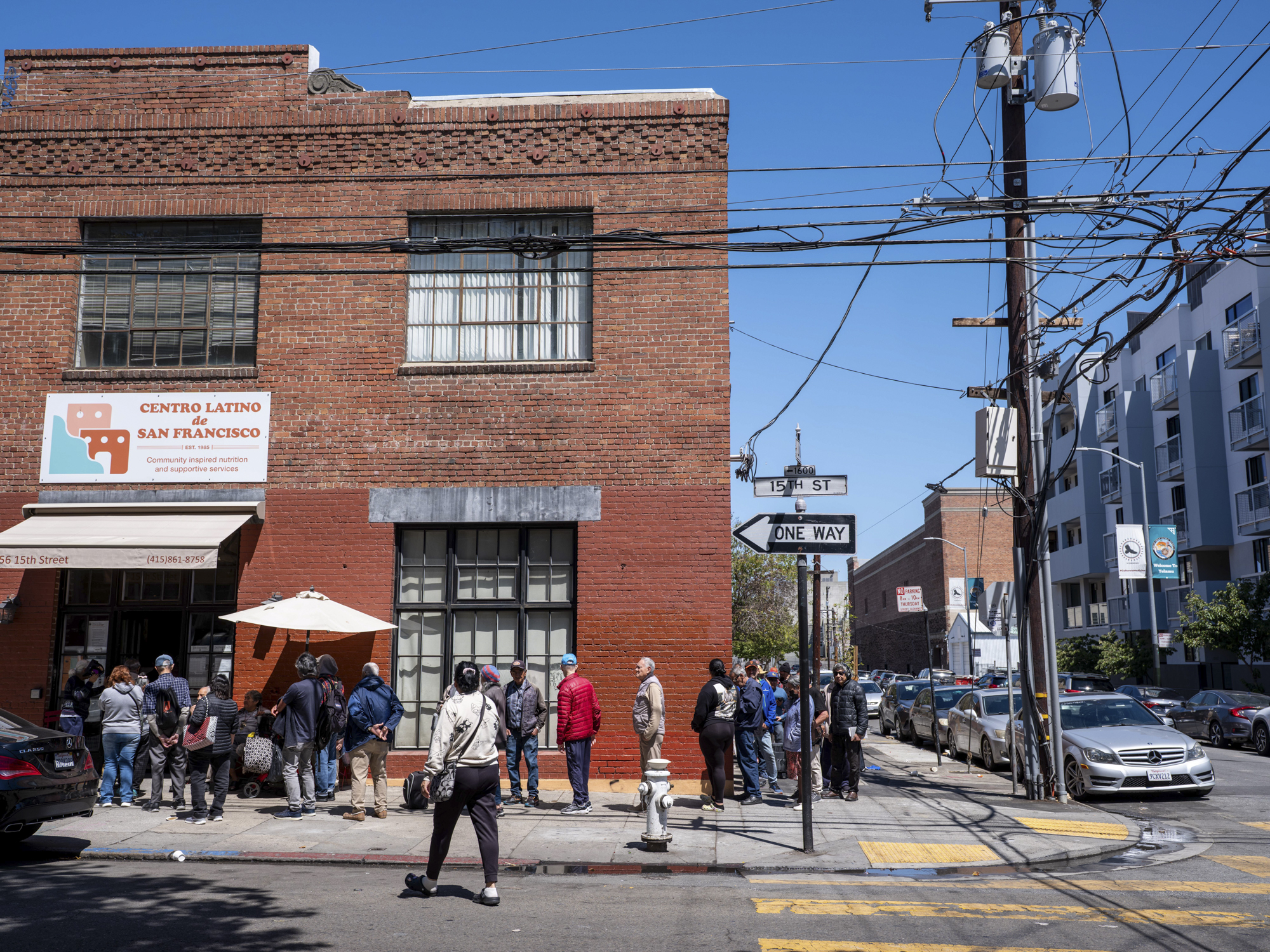
"caption": "People line up outside the Centro Latino de San Francisco, a civic center serving seniors and those with disabilities, to receive the free lunch that they offer in San Francisco on Aug. 14, 2025. Experts across the state are reporting that older patients and social service clients are staying home to avoid rampant immigration enforcement. ",
"credit": "Courtesy of Matthew Busch/The Investigative Reporting Program",
"altTag": null,
"description": null,
"imgSizes": {
"thumbnail": {
"file": "https://cdn.kqed.org/wp-content/uploads/sites/10/2025/12/251210-Aging-Immigrants-ICE-MD-01-KQED-160x120.jpg",
"width": 160,
"height": 120,
"mimeType": "image/jpeg"
},
"1536x1536": {
"file": "https://cdn.kqed.org/wp-content/uploads/sites/10/2025/12/251210-Aging-Immigrants-ICE-MD-01-KQED-1536x1152.jpg",
"width": 1536,
"height": 1152,
"mimeType": "image/jpeg"
},
"post-thumbnail": {
"file": "https://cdn.kqed.org/wp-content/uploads/sites/10/2025/12/251210-Aging-Immigrants-ICE-MD-01-KQED-672x372.jpg",
"width": 672,
"height": 372,
"mimeType": "image/jpeg"
},
"twentyfourteen-full-width": {
"file": "https://cdn.kqed.org/wp-content/uploads/sites/10/2025/12/251210-Aging-Immigrants-ICE-MD-01-KQED-1038x576.jpg",
"width": 1038,
"height": 576,
"mimeType": "image/jpeg"
},
"npr-cds-wide": {
"file": "https://cdn.kqed.org/wp-content/uploads/sites/10/2025/12/251210-Aging-Immigrants-ICE-MD-01-KQED-1200x675.jpg",
"width": 1200,
"height": 675,
"mimeType": "image/jpeg"
},
"kqedFullSize": {
"file": "https://cdn.kqed.org/wp-content/uploads/sites/10/2025/12/251210-Aging-Immigrants-ICE-MD-01-KQED.jpg",
"width": 2000,
"height": 1500
}
},
"isLoading": false,
"fetchFailed": false
},
"news_12067546": {
"type": "attachments",
"id": "news_12067546",
"meta": {
"index": "attachments_1716263798",
"site": "news",
"id": "12067546",
"found": true
},
"title": "Woman uses automated passport control kiosk",
"publishDate": 1765994495,
"status": "inherit",
"parent": 12067497,
"modified": 1766004975,
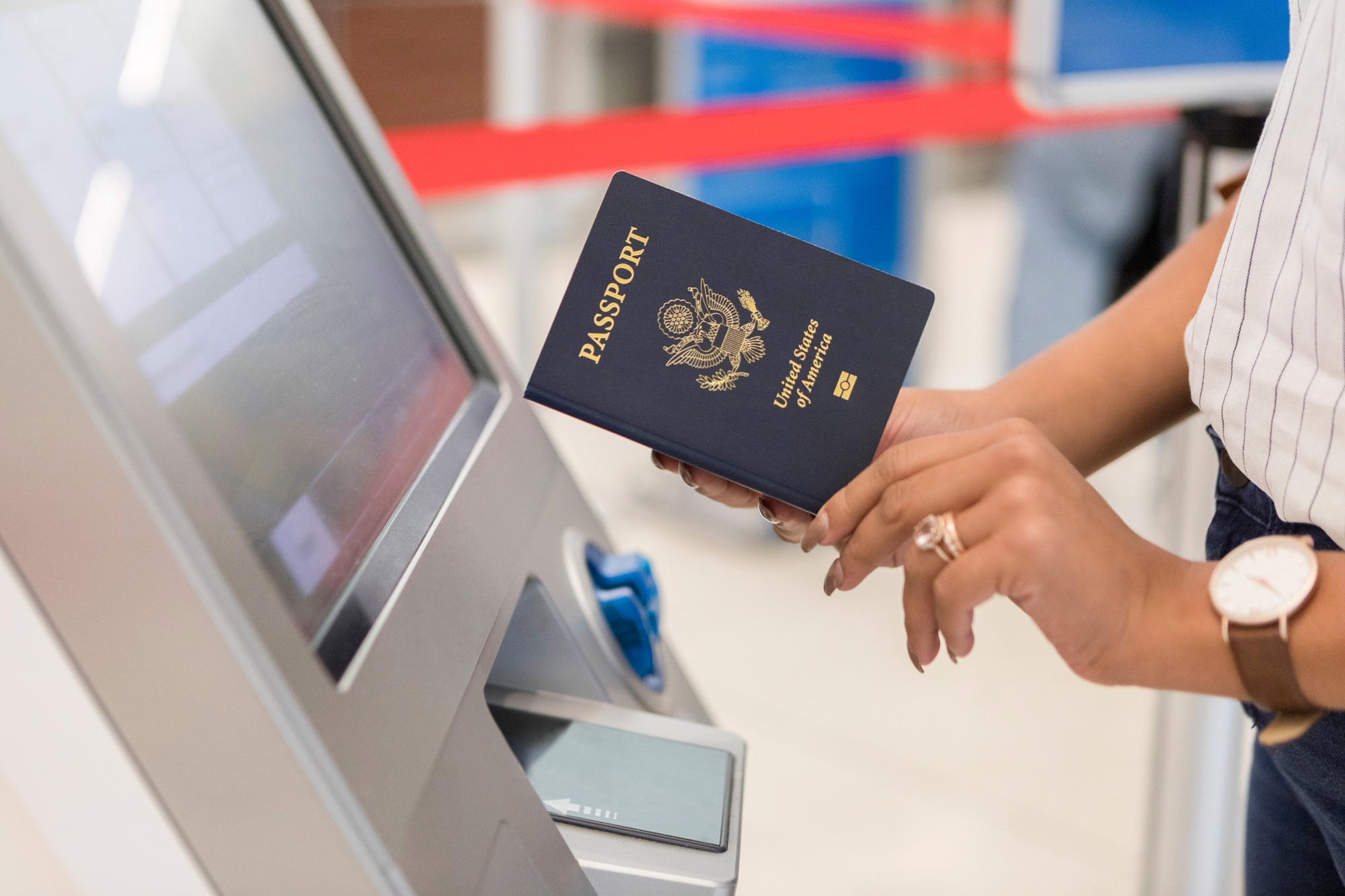
"caption": "An unrecognizable business traveler uses an automated passport control kiosk at an international airport.",
"credit": "SDI Productions/Getty Images",
"altTag": null,
"description": null,
"imgSizes": {
"thumbnail": {
"file": "https://cdn.kqed.org/wp-content/uploads/sites/10/2025/12/PassportGetty-160x107.jpg",
"width": 160,
"height": 107,
"mimeType": "image/jpeg"
},
"1536x1536": {
"file": "https://cdn.kqed.org/wp-content/uploads/sites/10/2025/12/PassportGetty-1536x1024.jpg",
"width": 1536,
"height": 1024,
"mimeType": "image/jpeg"
},
"post-thumbnail": {
"file": "https://cdn.kqed.org/wp-content/uploads/sites/10/2025/12/PassportGetty-672x372.jpg",
"width": 672,
"height": 372,
"mimeType": "image/jpeg"
},
"twentyfourteen-full-width": {
"file": "https://cdn.kqed.org/wp-content/uploads/sites/10/2025/12/PassportGetty-1038x576.jpg",
"width": 1038,
"height": 576,
"mimeType": "image/jpeg"
},
"npr-cds-wide": {
"file": "https://cdn.kqed.org/wp-content/uploads/sites/10/2025/12/PassportGetty-1200x675.jpg",
"width": 1200,
"height": 675,
"mimeType": "image/jpeg"
},
"kqedFullSize": {
"file": "https://cdn.kqed.org/wp-content/uploads/sites/10/2025/12/PassportGetty.jpg",
"width": 2000,
"height": 1333
}
},
"isLoading": false,
"fetchFailed": false
},
"news_12067538": {
"type": "attachments",
"id": "news_12067538",
"meta": {
"index": "attachments_1716263798",
"site": "news",
"id": "12067538",
"found": true
},
"title": "20251216_REVOKE OF COMMERCIAL DRIVERS LICENSES_DECEMBER_GH-9-KQED",
"publishDate": 1765991722,
"status": "inherit",
"parent": 12067557,
"modified": 1772147172,
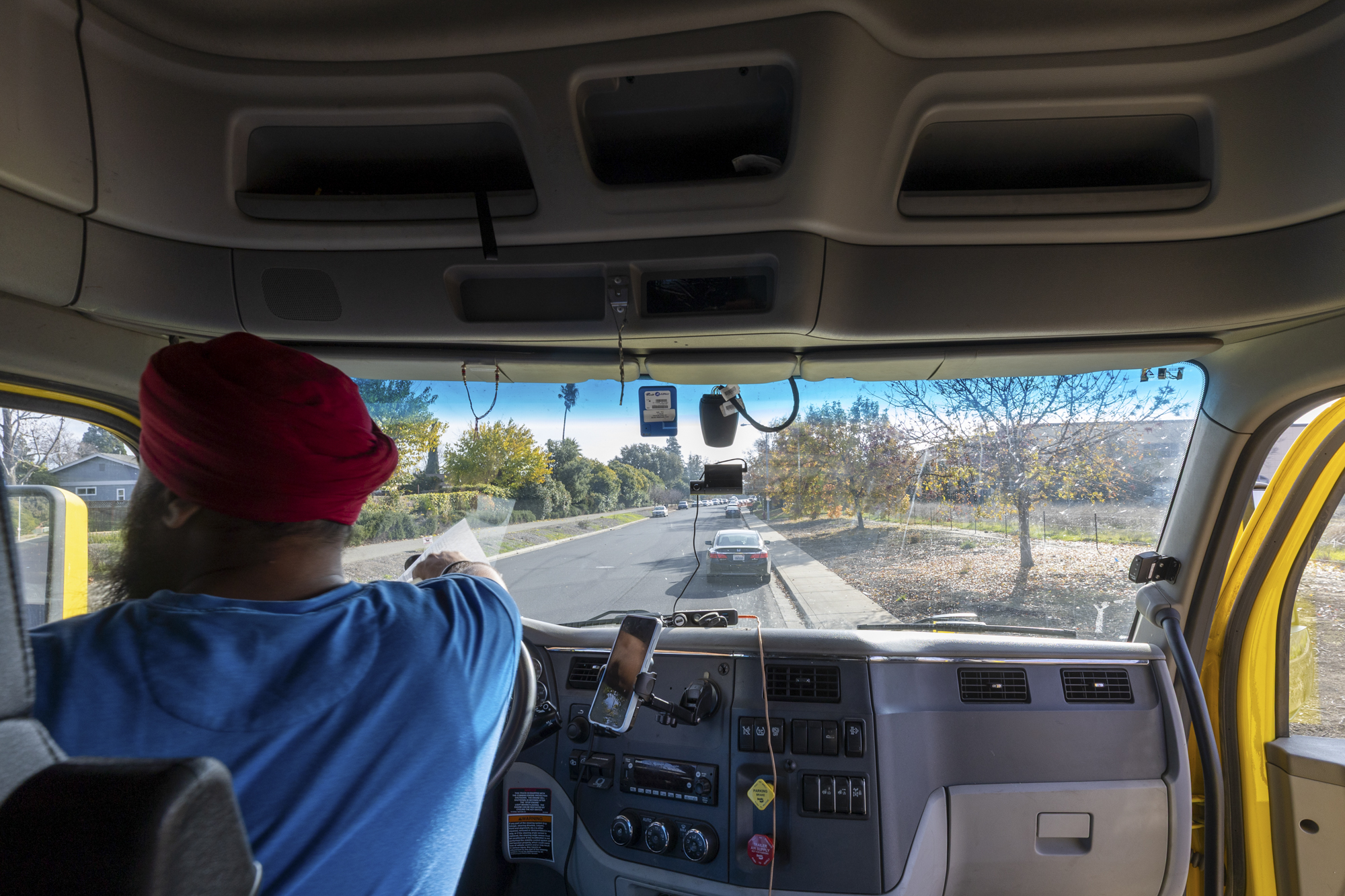
"caption": "The view from inside Amarjit Singh’s truck in Livermore, on Dec. 16, 2025. ",
"credit": "Gustavo Hernandez/KQED",
"altTag": null,
"description": null,
"imgSizes": {
"thumbnail": {
"file": "https://cdn.kqed.org/wp-content/uploads/sites/10/2025/12/20251216_REVOKE-OF-COMMERCIAL-DRIVERS-LICENSES_DECEMBER_GH-9-KQED-160x107.jpg",
"width": 160,
"height": 107,
"mimeType": "image/jpeg"
},
"1536x1536": {
"file": "https://cdn.kqed.org/wp-content/uploads/sites/10/2025/12/20251216_REVOKE-OF-COMMERCIAL-DRIVERS-LICENSES_DECEMBER_GH-9-KQED-1536x1024.jpg",
"width": 1536,
"height": 1024,
"mimeType": "image/jpeg"
},
"post-thumbnail": {
"file": "https://cdn.kqed.org/wp-content/uploads/sites/10/2025/12/20251216_REVOKE-OF-COMMERCIAL-DRIVERS-LICENSES_DECEMBER_GH-9-KQED-672x372.jpg",
"width": 672,
"height": 372,
"mimeType": "image/jpeg"
},
"twentyfourteen-full-width": {
"file": "https://cdn.kqed.org/wp-content/uploads/sites/10/2025/12/20251216_REVOKE-OF-COMMERCIAL-DRIVERS-LICENSES_DECEMBER_GH-9-KQED-1038x576.jpg",
"width": 1038,
"height": 576,
"mimeType": "image/jpeg"
},
"npr-cds-wide": {
"file": "https://cdn.kqed.org/wp-content/uploads/sites/10/2025/12/20251216_REVOKE-OF-COMMERCIAL-DRIVERS-LICENSES_DECEMBER_GH-9-KQED-1200x675.jpg",
"width": 1200,
"height": 675,
"mimeType": "image/jpeg"
},
"kqedFullSize": {
"file": "https://cdn.kqed.org/wp-content/uploads/sites/10/2025/12/20251216_REVOKE-OF-COMMERCIAL-DRIVERS-LICENSES_DECEMBER_GH-9-KQED.jpg",
"width": 2000,
"height": 1333
}
},
"isLoading": false,
"fetchFailed": false
},
"news_12067916": {
"type": "attachments",
"id": "news_12067916",
"meta": {
"index": "attachments_1716263798",
"site": "news",
"id": "12067916",
"found": true
},
"title": "MigrantDayKQED",
"publishDate": 1766104573,
"status": "inherit",
"parent": 12067803,
"modified": 1766107014,
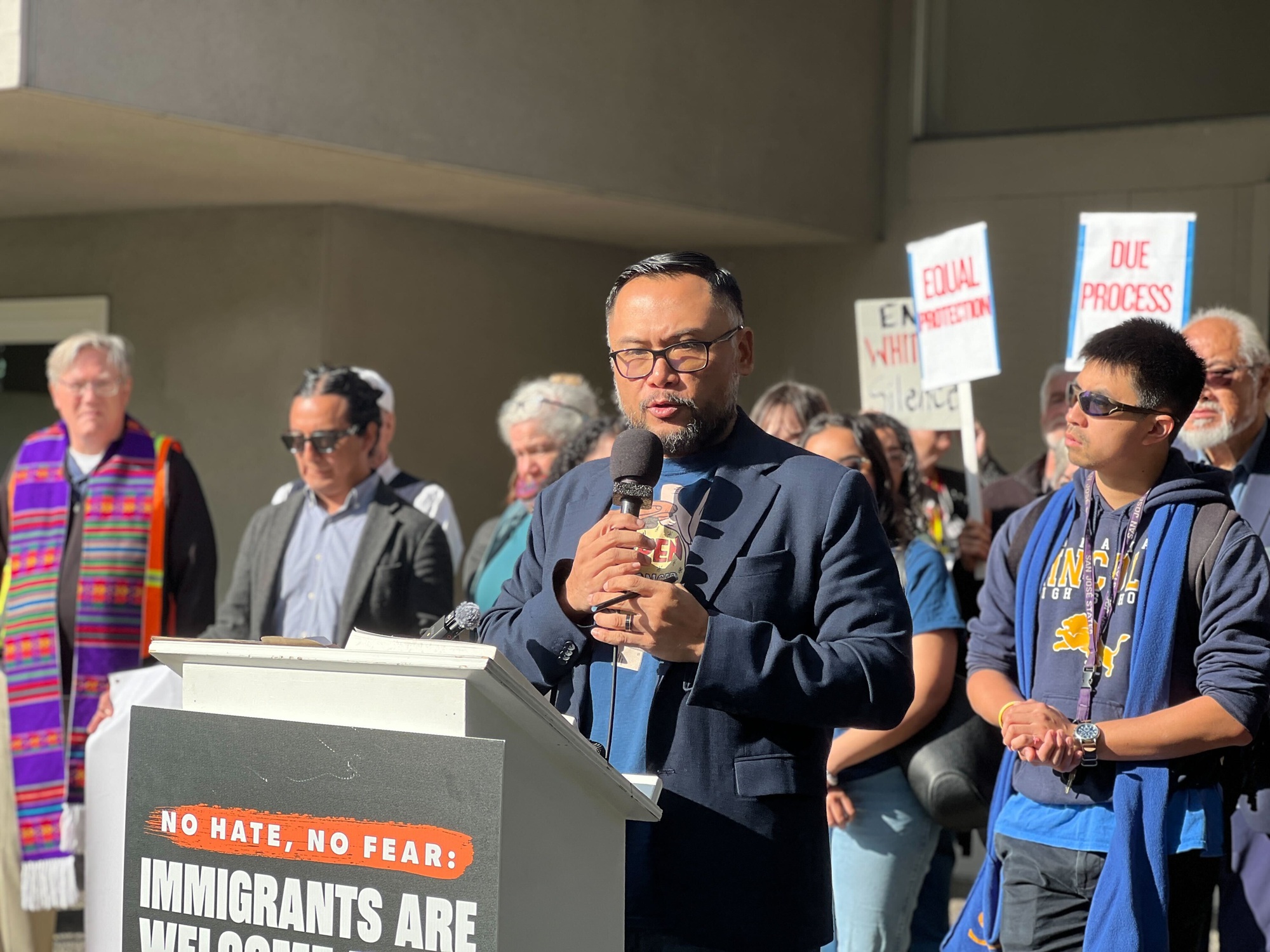
"caption": "Services, Immigrant Rights & Education Network’s Executive Director Huy Tran speaks during an International Migrants Day press conference on Dec. 18, 2025.",
"credit": "Ayah Ali-Ahmad/KQED",
"altTag": null,
"description": null,
"imgSizes": {
"thumbnail": {
"file": "https://cdn.kqed.org/wp-content/uploads/sites/10/2025/12/MigrantDayKQED-160x120.jpg",
"width": 160,
"height": 120,
"mimeType": "image/jpeg"
},
"1536x1536": {
"file": "https://cdn.kqed.org/wp-content/uploads/sites/10/2025/12/MigrantDayKQED-1536x1152.jpg",
"width": 1536,
"height": 1152,
"mimeType": "image/jpeg"
},
"post-thumbnail": {
"file": "https://cdn.kqed.org/wp-content/uploads/sites/10/2025/12/MigrantDayKQED-672x372.jpg",
"width": 672,
"height": 372,
"mimeType": "image/jpeg"
},
"twentyfourteen-full-width": {
"file": "https://cdn.kqed.org/wp-content/uploads/sites/10/2025/12/MigrantDayKQED-1038x576.jpg",
"width": 1038,
"height": 576,
"mimeType": "image/jpeg"
},
"npr-cds-wide": {
"file": "https://cdn.kqed.org/wp-content/uploads/sites/10/2025/12/MigrantDayKQED-1200x675.jpg",
"width": 1200,
"height": 675,
"mimeType": "image/jpeg"
},
"kqedFullSize": {
"file": "https://cdn.kqed.org/wp-content/uploads/sites/10/2025/12/MigrantDayKQED.jpg",
"width": 2000,
"height": 1500
}
},
"isLoading": false,
"fetchFailed": false
},
"news_12067898": {
"type": "attachments",
"id": "news_12067898",
"meta": {
"index": "attachments_1716263798",
"site": "news",
"id": "12067898",
"found": true
},
"title": "Migrants At The US-Mexico Border",
"publishDate": 1766101184,
"status": "inherit",
"parent": 12067561,
"modified": 1766102644,
"caption": "The U.S. Border Patrol processes migrants near the Jacumba Hot Springs after crossing the US-Mexico border on June 13, 2024, in San Diego, California. ",
"credit": "Qian Weizhong/VCG via Getty Images",
"altTag": null,
"description": null,
"imgSizes": {
"thumbnail": {
"file": "https://cdn.kqed.org/wp-content/uploads/sites/10/2025/12/MexicoBorderChildrenGetty-160x107.jpg",
"width": 160,
"height": 107,
"mimeType": "image/jpeg"
},
"1536x1536": {
"file": "https://cdn.kqed.org/wp-content/uploads/sites/10/2025/12/MexicoBorderChildrenGetty-1536x1024.jpg",
"width": 1536,
"height": 1024,
"mimeType": "image/jpeg"
},
"post-thumbnail": {
"file": "https://cdn.kqed.org/wp-content/uploads/sites/10/2025/12/MexicoBorderChildrenGetty-672x372.jpg",
"width": 672,
"height": 372,
"mimeType": "image/jpeg"
},
"twentyfourteen-full-width": {
"file": "https://cdn.kqed.org/wp-content/uploads/sites/10/2025/12/MexicoBorderChildrenGetty-1038x576.jpg",
"width": 1038,
"height": 576,
"mimeType": "image/jpeg"
},
"npr-cds-wide": {
"file": "https://cdn.kqed.org/wp-content/uploads/sites/10/2025/12/MexicoBorderChildrenGetty-1200x675.jpg",
"width": 1200,
"height": 675,
"mimeType": "image/jpeg"
},
"kqedFullSize": {
"file": "https://cdn.kqed.org/wp-content/uploads/sites/10/2025/12/MexicoBorderChildrenGetty.jpg",
"width": 2000,
"height": 1333
}
},
"isLoading": false,
"fetchFailed": false
},
"news_12067555": {
"type": "attachments",
"id": "news_12067555",
"meta": {
"index": "attachments_1716263798",
"site": "news",
"id": "12067555",
"found": true
},
"title": "Parents Of Trans Children Protest Sutter's End To Gender-Affirming Care",
"publishDate": 1765996929,
"status": "inherit",
"parent": 12067552,
"modified": 1765997015,
"caption": "Members of Rainbow Families Action march from Bay Street in Emeryville, California, on Monday, Dec. 8, 2025, to the Sutter corporate offices on Powell Street to protest the end of gender-affirming care to patients under age 19. ",
"credit": "Jessica Christian/San Francisco Chronicle via Getty Images",
"altTag": null,
"description": null,
"imgSizes": {
"thumbnail": {
"file": "https://cdn.kqed.org/wp-content/uploads/sites/10/2025/12/SutterHealthGenderAffirmingCareGetty-160x107.jpg",
"width": 160,
"height": 107,
"mimeType": "image/jpeg"
},
"1536x1536": {
"file": "https://cdn.kqed.org/wp-content/uploads/sites/10/2025/12/SutterHealthGenderAffirmingCareGetty-1536x1024.jpg",
"width": 1536,
"height": 1024,
"mimeType": "image/jpeg"
},
"post-thumbnail": {
"file": "https://cdn.kqed.org/wp-content/uploads/sites/10/2025/12/SutterHealthGenderAffirmingCareGetty-672x372.jpg",
"width": 672,
"height": 372,
"mimeType": "image/jpeg"
},
"twentyfourteen-full-width": {
"file": "https://cdn.kqed.org/wp-content/uploads/sites/10/2025/12/SutterHealthGenderAffirmingCareGetty-1038x576.jpg",
"width": 1038,
"height": 576,
"mimeType": "image/jpeg"
},
"npr-cds-wide": {
"file": "https://cdn.kqed.org/wp-content/uploads/sites/10/2025/12/SutterHealthGenderAffirmingCareGetty-1200x675.jpg",
"width": 1200,
"height": 675,
"mimeType": "image/jpeg"
},
"kqedFullSize": {
"file": "https://cdn.kqed.org/wp-content/uploads/sites/10/2025/12/SutterHealthGenderAffirmingCareGetty.jpg",
"width": 2000,
"height": 1333
}
},
"isLoading": false,
"fetchFailed": false
},
"news_12067537": {
"type": "attachments",
"id": "news_12067537",
"meta": {
"index": "attachments_1716263798",
"site": "news",
"id": "12067537",
"found": true
},
"title": "20251216_REVOKE OF COMMERCIAL DRIVERS LICENSES_DECEMBER_GH-5-KQED",
"publishDate": 1765991719,
"status": "inherit",
"parent": 0,
"modified": 1766015725,
"caption": "Amarjit Singh stands beside his truck on Dec. 16, 2025, in Livermore. Singh is among thousands of immigrant drivers whose commercial licenses the state planned to revoke after federal pressure. ",
"credit": "Gustavo Hernandez/KQED",
"altTag": null,
"description": null,
"imgSizes": {
"thumbnail": {
"file": "https://cdn.kqed.org/wp-content/uploads/sites/10/2025/12/20251216_REVOKE-OF-COMMERCIAL-DRIVERS-LICENSES_DECEMBER_GH-5-KQED-160x107.jpg",
"width": 160,
"height": 107,
"mimeType": "image/jpeg"
},
"1536x1536": {
"file": "https://cdn.kqed.org/wp-content/uploads/sites/10/2025/12/20251216_REVOKE-OF-COMMERCIAL-DRIVERS-LICENSES_DECEMBER_GH-5-KQED-1536x1024.jpg",
"width": 1536,
"height": 1024,
"mimeType": "image/jpeg"
},
"post-thumbnail": {
"file": "https://cdn.kqed.org/wp-content/uploads/sites/10/2025/12/20251216_REVOKE-OF-COMMERCIAL-DRIVERS-LICENSES_DECEMBER_GH-5-KQED-672x372.jpg",
"width": 672,
"height": 372,
"mimeType": "image/jpeg"
},
"twentyfourteen-full-width": {
"file": "https://cdn.kqed.org/wp-content/uploads/sites/10/2025/12/20251216_REVOKE-OF-COMMERCIAL-DRIVERS-LICENSES_DECEMBER_GH-5-KQED-1038x576.jpg",
"width": 1038,
"height": 576,
"mimeType": "image/jpeg"
},
"npr-cds-wide": {
"file": "https://cdn.kqed.org/wp-content/uploads/sites/10/2025/12/20251216_REVOKE-OF-COMMERCIAL-DRIVERS-LICENSES_DECEMBER_GH-5-KQED-1200x675.jpg",
"width": 1200,
"height": 675,
"mimeType": "image/jpeg"
},
"kqedFullSize": {
"file": "https://cdn.kqed.org/wp-content/uploads/sites/10/2025/12/20251216_REVOKE-OF-COMMERCIAL-DRIVERS-LICENSES_DECEMBER_GH-5-KQED.jpg",
"width": 2000,
"height": 1333
}
},
"isLoading": false,
"fetchFailed": false
},
"news_12067103": {
"type": "attachments",
"id": "news_12067103",
"meta": {
"index": "attachments_1716263798",
"site": "news",
"id": "12067103",
"found": true
},
"title": "IMG_6628",
"publishDate": 1765820279,
"status": "inherit",
"parent": 12067098,
"modified": 1765933964,
"caption": "In between prayer, congregants make their way to langar — the community kitchen where free meals are served throughout the day at the San José Gurdwara.",
"credit": "Courtesy of Tanay Gokhale",
"altTag": null,
"description": null,
"imgSizes": {
"medium": {
"file": "https://cdn.kqed.org/wp-content/uploads/sites/10/2025/12/IMG_6628-2000x1500.jpg",
"width": 2000,
"height": 1500,
"mimeType": "image/jpeg"
},
"large": {
"file": "https://cdn.kqed.org/wp-content/uploads/sites/10/2025/12/IMG_6628-2000x1500.jpg",
"width": 2000,
"height": 1500,
"mimeType": "image/jpeg"
},
"thumbnail": {
"file": "https://cdn.kqed.org/wp-content/uploads/sites/10/2025/12/IMG_6628-160x120.jpg",
"width": 160,
"height": 120,
"mimeType": "image/jpeg"
},
"1536x1536": {
"file": "https://cdn.kqed.org/wp-content/uploads/sites/10/2025/12/IMG_6628-1536x1152.jpg",
"width": 1536,
"height": 1152,
"mimeType": "image/jpeg"
},
"2048x2048": {
"file": "https://cdn.kqed.org/wp-content/uploads/sites/10/2025/12/IMG_6628-2048x1536.jpg",
"width": 2048,
"height": 1536,
"mimeType": "image/jpeg"
},
"post-thumbnail": {
"file": "https://cdn.kqed.org/wp-content/uploads/sites/10/2025/12/IMG_6628-672x372.jpg",
"width": 672,
"height": 372,
"mimeType": "image/jpeg"
},
"twentyfourteen-full-width": {
"file": "https://cdn.kqed.org/wp-content/uploads/sites/10/2025/12/IMG_6628-1038x576.jpg",
"width": 1038,
"height": 576,
"mimeType": "image/jpeg"
},
"full-width": {
"file": "https://cdn.kqed.org/wp-content/uploads/sites/10/2025/12/IMG_6628-2000x1500.jpg",
"width": 2000,
"height": 1500,
"mimeType": "image/jpeg"
},
"npr-cds-wide": {
"file": "https://cdn.kqed.org/wp-content/uploads/sites/10/2025/12/IMG_6628-1200x675.jpg",
"width": 1200,
"height": 675,
"mimeType": "image/jpeg"
},
"kqedFullSize": {
"file": "https://cdn.kqed.org/wp-content/uploads/sites/10/2025/12/IMG_6628-scaled-e1765820322626.jpg",
"width": 2000,
"height": 1500
}
},
"isLoading": false,
"fetchFailed": false
},
"news_12066941": {
"type": "attachments",
"id": "news_12066941",
"meta": {
"index": "attachments_1716263798",
"site": "news",
"id": "12066941",
"found": true
},
"title": "Close-up of a boy's hands using the mouse of his laptop in a dim environment.",
"publishDate": 1765566466,
"status": "inherit",
"parent": 12066920,
"modified": 1765566485,
"caption": "Close-up of a boy's hands using the mouse of his laptop in a dim environment.",
"credit": "Manuel Arias Duran/Getty Images",
"altTag": null,
"description": null,
"imgSizes": {
"thumbnail": {
"file": "https://cdn.kqed.org/wp-content/uploads/sites/10/2025/12/FAFSAGetty1-160x107.jpg",
"width": 160,
"height": 107,
"mimeType": "image/jpeg"
},
"1536x1536": {
"file": "https://cdn.kqed.org/wp-content/uploads/sites/10/2025/12/FAFSAGetty1-1536x1024.jpg",
"width": 1536,
"height": 1024,
"mimeType": "image/jpeg"
},
"post-thumbnail": {
"file": "https://cdn.kqed.org/wp-content/uploads/sites/10/2025/12/FAFSAGetty1-672x372.jpg",
"width": 672,
"height": 372,
"mimeType": "image/jpeg"
},
"twentyfourteen-full-width": {
"file": "https://cdn.kqed.org/wp-content/uploads/sites/10/2025/12/FAFSAGetty1-1038x576.jpg",
"width": 1038,
"height": 576,
"mimeType": "image/jpeg"
},
"npr-cds-wide": {
"file": "https://cdn.kqed.org/wp-content/uploads/sites/10/2025/12/FAFSAGetty1-1200x675.jpg",
"width": 1200,
"height": 675,
"mimeType": "image/jpeg"
},
"kqedFullSize": {
"file": "https://cdn.kqed.org/wp-content/uploads/sites/10/2025/12/FAFSAGetty1.jpg",
"width": 2000,
"height": 1333
}
},
"isLoading": false,
"fetchFailed": false
},
"news_11955727": {
"type": "attachments",
"id": "news_11955727",
"meta": {
"index": "attachments_1716263798",
"site": "news",
"id": "11955727",
"found": true
},
"title": "Supreme Courts Rules On Major LGBTQ Case And Strikes Down Biden's Student Loan Forgiveness Plan",
"publishDate": 1689360216,
"status": "inherit",
"parent": 12065967,
"modified": 1765577210,
"caption": "D'Aungilique Jackson, of Fresno, California, holds a \"Cancel Student Debt\" sign outside of the Supreme Court of the United States after the nation's high court struck down President Biden's student debt relief program in Washington, D.C., on June 30, 2023.",
"credit": "Kent Nishimura/Los Angeles Times via Getty Images",
"altTag": "A person with long hair and a black T-shirt holds up a bright yellow sign reading \"Cancel Student Debt\" amidst others doing similar.",
"description": null,
"imgSizes": {
"medium": {
"file": "https://cdn.kqed.org/wp-content/uploads/sites/10/2023/07/230714-SUPREME-COURT-STUDENT-DEBT-Getty-KN-KQED-800x533.jpg",
"width": 800,
"height": 533,
"mimeType": "image/jpeg"
},
"large": {
"file": "https://cdn.kqed.org/wp-content/uploads/sites/10/2023/07/230714-SUPREME-COURT-STUDENT-DEBT-Getty-KN-KQED-1020x680.jpg",
"width": 1020,
"height": 680,
"mimeType": "image/jpeg"
},
"thumbnail": {
"file": "https://cdn.kqed.org/wp-content/uploads/sites/10/2023/07/230714-SUPREME-COURT-STUDENT-DEBT-Getty-KN-KQED-160x107.jpg",
"width": 160,
"height": 107,
"mimeType": "image/jpeg"
},
"1536x1536": {
"file": "https://cdn.kqed.org/wp-content/uploads/sites/10/2023/07/230714-SUPREME-COURT-STUDENT-DEBT-Getty-KN-KQED-1536x1024.jpg",
"width": 1536,
"height": 1024,
"mimeType": "image/jpeg"
},
"post-thumbnail": {
"file": "https://cdn.kqed.org/wp-content/uploads/sites/10/2023/07/230714-SUPREME-COURT-STUDENT-DEBT-Getty-KN-KQED-672x372.jpg",
"width": 672,
"height": 372,
"mimeType": "image/jpeg"
},
"twentyfourteen-full-width": {
"file": "https://cdn.kqed.org/wp-content/uploads/sites/10/2023/07/230714-SUPREME-COURT-STUDENT-DEBT-Getty-KN-KQED-1038x576.jpg",
"width": 1038,
"height": 576,
"mimeType": "image/jpeg"
},
"full-width": {
"file": "https://cdn.kqed.org/wp-content/uploads/sites/10/2023/07/230714-SUPREME-COURT-STUDENT-DEBT-Getty-KN-KQED-1920x1280.jpg",
"width": 1920,
"height": 1280,
"mimeType": "image/jpeg"
},
"kqedFullSize": {
"file": "https://cdn.kqed.org/wp-content/uploads/sites/10/2023/07/230714-SUPREME-COURT-STUDENT-DEBT-Getty-KN-KQED.jpg",
"width": 2000,
"height": 1333
}
},
"isLoading": false,
"fetchFailed": false
},
"news_12066914": {
"type": "attachments",
"id": "news_12066914",
"meta": {
"index": "attachments_1716263798",
"site": "news",
"id": "12066914",
"found": true
},
"title": "President Trump Signs Executive Orders In The Oval Office",
"publishDate": 1765563347,
"status": "inherit",
"parent": 12066910,
"modified": 1765563390,
"caption": "U.S. President Donald Trump displays a signed executive order in the Oval Office of the White House on Dec. 11, 2025, in Washington, D.C. The executive order curbs states' ability to regulate artificial intelligence, something for which the tech industry has been lobbying. ",
"credit": "Alex Wong/Getty Images",
"altTag": null,
"description": null,
"imgSizes": {
"thumbnail": {
"file": "https://cdn.kqed.org/wp-content/uploads/sites/10/2025/12/DonaldTrumpGetty1-160x110.jpg",
"width": 160,
"height": 110,
"mimeType": "image/jpeg"
},
"1536x1536": {
"file": "https://cdn.kqed.org/wp-content/uploads/sites/10/2025/12/DonaldTrumpGetty1-1536x1059.jpg",
"width": 1536,
"height": 1059,
"mimeType": "image/jpeg"
},
"post-thumbnail": {
"file": "https://cdn.kqed.org/wp-content/uploads/sites/10/2025/12/DonaldTrumpGetty1-672x372.jpg",
"width": 672,
"height": 372,
"mimeType": "image/jpeg"
},
"twentyfourteen-full-width": {
"file": "https://cdn.kqed.org/wp-content/uploads/sites/10/2025/12/DonaldTrumpGetty1-1038x576.jpg",
"width": 1038,
"height": 576,
"mimeType": "image/jpeg"
},
"npr-cds-wide": {
"file": "https://cdn.kqed.org/wp-content/uploads/sites/10/2025/12/DonaldTrumpGetty1-1200x675.jpg",
"width": 1200,
"height": 675,
"mimeType": "image/jpeg"
},
"kqedFullSize": {
"file": "https://cdn.kqed.org/wp-content/uploads/sites/10/2025/12/DonaldTrumpGetty1.jpg",
"width": 2000,
"height": 1379
}
},
"isLoading": false,
"fetchFailed": false
},
"news_11804662": {
"type": "attachments",
"id": "news_11804662",
"meta": {
"index": "attachments_1716263798",
"site": "news",
"id": "11804662",
"found": true
},
"title": "John-Garamendi",
"publishDate": 1583198835,
"status": "inherit",
"parent": 11804430,
"modified": 1751487973,
"caption": "North Bay Rep. John Garamendi (right), pictured in 2011. ",
"credit": "Chip Somodevilla/Getty Images",
"altTag": "North Bay Rep. John Garamendi (right), pictured in 2011. Garamendi and two other California congressmen want clarity from federal health officials in the wake of a whistleblower complaint.",
"description": "North Bay Rep. John Garamendi (right), pictured in 2011. Garamendi and two other California congressmen want clarity from federal health officials in the wake of a whistleblower complaint.",
"imgSizes": {
"thumbnail": {
"file": "https://cdn.kqed.org/wp-content/uploads/sites/10/2020/03/John-Garamendi-160x94.jpg",
"width": 160,
"height": 94,
"mimeType": "image/jpeg"
},
"medium": {
"file": "https://cdn.kqed.org/wp-content/uploads/sites/10/2020/03/John-Garamendi-800x470.jpg",
"width": 800,
"height": 470,
"mimeType": "image/jpeg"
},
"large": {
"file": "https://cdn.kqed.org/wp-content/uploads/sites/10/2020/03/John-Garamendi-1020x599.jpg",
"width": 1020,
"height": 599,
"mimeType": "image/jpeg"
},
"post-thumbnail": {
"file": "https://cdn.kqed.org/wp-content/uploads/sites/10/2020/03/John-Garamendi-672x372.jpg",
"width": 672,
"height": 372,
"mimeType": "image/jpeg"
},
"twentyfourteen-full-width": {
"file": "https://cdn.kqed.org/wp-content/uploads/sites/10/2020/03/John-Garamendi-1038x576.jpg",
"width": 1038,
"height": 576,
"mimeType": "image/jpeg"
},
"full-width": {
"file": "https://cdn.kqed.org/wp-content/uploads/sites/10/2020/03/John-Garamendi-1920x1128.jpg",
"width": 1920,
"height": 1128,
"mimeType": "image/jpeg"
},
"apple_news_ca_landscape_12_9": {
"file": "https://cdn.kqed.org/wp-content/uploads/sites/10/2020/03/John-Garamendi-1832x1128.jpg",
"width": 1832,
"height": 1128,
"mimeType": "image/jpeg"
},
"apple_news_ca_landscape_9_7": {
"file": "https://cdn.kqed.org/wp-content/uploads/sites/10/2020/03/John-Garamendi-1376x1032.jpg",
"width": 1376,
"height": 1032,
"mimeType": "image/jpeg"
},
"apple_news_ca_landscape_5_5": {
"file": "https://cdn.kqed.org/wp-content/uploads/sites/10/2020/03/John-Garamendi-1044x783.jpg",
"width": 1044,
"height": 783,
"mimeType": "image/jpeg"
},
"apple_news_ca_landscape_4_7": {
"file": "https://cdn.kqed.org/wp-content/uploads/sites/10/2020/03/John-Garamendi-632x474.jpg",
"width": 632,
"height": 474,
"mimeType": "image/jpeg"
},
"apple_news_ca_landscape_4_0": {
"file": "https://cdn.kqed.org/wp-content/uploads/sites/10/2020/03/John-Garamendi-536x402.jpg",
"width": 536,
"height": 402,
"mimeType": "image/jpeg"
},
"apple_news_ca_portrait_12_9": {
"file": "https://cdn.kqed.org/wp-content/uploads/sites/10/2020/03/John-Garamendi-1122x1128.jpg",
"width": 1122,
"height": 1128,
"mimeType": "image/jpeg"
},
"apple_news_ca_portrait_9_7": {
"file": "https://cdn.kqed.org/wp-content/uploads/sites/10/2020/03/John-Garamendi-840x1120.jpg",
"width": 840,
"height": 1120,
"mimeType": "image/jpeg"
},
"apple_news_ca_portrait_5_5": {
"file": "https://cdn.kqed.org/wp-content/uploads/sites/10/2020/03/John-Garamendi-687x916.jpg",
"width": 687,
"height": 916,
"mimeType": "image/jpeg"
},
"apple_news_ca_portrait_4_7": {
"file": "https://cdn.kqed.org/wp-content/uploads/sites/10/2020/03/John-Garamendi-414x552.jpg",
"width": 414,
"height": 552,
"mimeType": "image/jpeg"
},
"apple_news_ca_portrait_4_0": {
"file": "https://cdn.kqed.org/wp-content/uploads/sites/10/2020/03/John-Garamendi-354x472.jpg",
"width": 354,
"height": 472,
"mimeType": "image/jpeg"
},
"apple_news_ca_square_12_9": {
"file": "https://cdn.kqed.org/wp-content/uploads/sites/10/2020/03/John-Garamendi-1472x1128.jpg",
"width": 1472,
"height": 1128,
"mimeType": "image/jpeg"
},
"apple_news_ca_square_9_7": {
"file": "https://cdn.kqed.org/wp-content/uploads/sites/10/2020/03/John-Garamendi-1104x1104.jpg",
"width": 1104,
"height": 1104,
"mimeType": "image/jpeg"
},
"apple_news_ca_square_5_5": {
"file": "https://cdn.kqed.org/wp-content/uploads/sites/10/2020/03/John-Garamendi-912x912.jpg",
"width": 912,
"height": 912,
"mimeType": "image/jpeg"
},
"apple_news_ca_square_4_7": {
"file": "https://cdn.kqed.org/wp-content/uploads/sites/10/2020/03/John-Garamendi-550x550.jpg",
"width": 550,
"height": 550,
"mimeType": "image/jpeg"
},
"apple_news_ca_square_4_0": {
"file": "https://cdn.kqed.org/wp-content/uploads/sites/10/2020/03/John-Garamendi-470x470.jpg",
"width": 470,
"height": 470,
"mimeType": "image/jpeg"
},
"kqedFullSize": {
"file": "https://cdn.kqed.org/wp-content/uploads/sites/10/2020/03/John-Garamendi.jpg",
"width": 1920,
"height": 1128
}
},
"isLoading": false,
"fetchFailed": false
}
},
"audioPlayerReducer": {
"postId": "stream_live",
"isPaused": true,
"isPlaying": false,
"pfsActive": false,
"pledgeModalIsOpen": true,
"playerDrawerIsOpen": false,
"liveAudioPlayStartedAt": 0,
"liveAudioPlayContext": ""
},
"authorsReducer": {
"byline_news_12068004": {
"type": "authors",
"id": "byline_news_12068004",
"meta": {
"override": true
},
"slug": "byline_news_12068004",
"name": "Hussain Khan ",
"isLoading": false
},
"byline_news_12067561": {
"type": "authors",
"id": "byline_news_12067561",
"meta": {
"override": true
},
"slug": "byline_news_12067561",
"name": "Mark Betancourt, The California Newsroom",
"isLoading": false
},
"rachael-myrow": {
"type": "authors",
"id": "251",
"meta": {
"index": "authors_1716337520",
"id": "251",
"found": true
},
"name": "Rachael Myrow",
"firstName": "Rachael",
"lastName": "Myrow",
"slug": "rachael-myrow",
"email": "rmyrow@kqed.org",
"display_author_email": true,
"staff_mastheads": [
"news"
],
"title": "Senior Editor of KQED's Silicon Valley News Desk",
"bio": "• I write and edit stories about how Silicon Valley power and policies shape everyday life in California. I’m also passionate about making Bay Area history and culture more accessible to a broad public. • I’ve been a journalist for most of my life, starting in high school with The Franklin Press in Los Angeles, where I grew up. While earning my first degree in English at UC Berkeley, I got my start in public radio at KALX-FM. After completing a second degree in journalism at Cal, I landed my first professional job at Marketplace, then moved on to KPCC (now LAist), and then KQED, where I hosted The California Report for more than seven years. • My reporting has appeared on NPR, The World, WBUR’s \u003ci>Here & Now\u003c/i>, and the BBC. I also guest host for KQED’s \u003ci>Forum\u003c/i>, as well as the Commonwealth Club in San Francisco. • I speak periodically on media, democracy and technology issues, and do voiceover work for documentaries and educational video projects. • Outside of the studio, you'll find me hiking Bay Area trails and whipping up Insta-ready meals in my kitchen. • I do not accept gifts, money, or favors from anyone connected to my reporting, I don't pay people for information, and I do not support or donate to political causes. • I strive to treat the people I report on with fairness, honesty, and respect. I also recognize there are often multiple sides to a story and work to verify information through multiple sources and documentation. If I get something wrong, I correct it.",
"avatar": "https://secure.gravatar.com/avatar/3ed8a3c5f26025e4a805ba634cda8cd764906b97438a6d9ce216b044e340da4e?s=600&d=blank&r=g",
"twitter": "rachaelmyrow",
"bluesky": null,
"facebook": null,
"instagram": null,
"linkedin": "https://www.linkedin.com/in/rachaelmyrow/",
"sites": [
{
"site": "arts",
"roles": [
"administrator"
]
},
{
"site": "news",
"roles": [
"edit_others_posts",
"editor"
]
},
{
"site": "futureofyou",
"roles": [
"editor"
]
},
{
"site": "bayareabites",
"roles": [
"editor"
]
},
{
"site": "stateofhealth",
"roles": [
"editor"
]
},
{
"site": "science",
"roles": [
"editor"
]
},
{
"site": "food",
"roles": [
"editor"
]
},
{
"site": "forum",
"roles": [
"editor"
]
},
{
"site": "liveblog",
"roles": [
"author"
]
}
],
"headData": {
"title": "Rachael Myrow | KQED",
"description": "Senior Editor of KQED's Silicon Valley News Desk",
"ogImgSrc": "https://secure.gravatar.com/avatar/3ed8a3c5f26025e4a805ba634cda8cd764906b97438a6d9ce216b044e340da4e?s=600&d=blank&r=g",
"twImgSrc": "https://secure.gravatar.com/avatar/3ed8a3c5f26025e4a805ba634cda8cd764906b97438a6d9ce216b044e340da4e?s=600&d=blank&r=g"
},
"isLoading": false,
"link": "/author/rachael-myrow"
},
"tychehendricks": {
"type": "authors",
"id": "259",
"meta": {
"index": "authors_1716337520",
"id": "259",
"found": true
},
"name": "Tyche Hendricks",
"firstName": "Tyche",
"lastName": "Hendricks",
"slug": "tychehendricks",
"email": "thendricks@kqed.org",
"display_author_email": true,
"staff_mastheads": [
"news"
],
"title": "KQED Senior Editor, Immigration",
"bio": "\u003cspan style=\"font-weight: 400;\">Tyche Hendricks is KQED’s senior editor for immigration, leading coverage of the policy and politics that affect California’s immigrant communities. Her work for KQED’s radio and online audiences is also carried on NPR and other national outlets. She has been recognized with awards from the Radio and Television News Directors Association, the Society for Professional Journalists; the Education Writers Association; the Best of the West and the National Federation of Community Broadcasters. Before joining KQED in 2010, Tyche spent more than a dozen years as a newspaper reporter, notably at the \u003c/span>\u003ci>\u003cspan style=\"font-weight: 400;\">San Francisco Chronicle\u003c/span>\u003c/i>\u003cspan style=\"font-weight: 400;\">. At different times she has covered criminal justice, government and politics and urban planning. Tyche has taught in the MFA Creative Writing program at the University of San Francisco and at UC Berkeley’s Graduate School of Journalism, where she was co-director of a national immigration symposium for professional journalists. She is the author of \u003c/span>\u003ci>\u003cspan style=\"font-weight: 400;\">The Wind Doesn't Need a Passport: Stories from the U.S.-Mexico Borderlands\u003c/span>\u003c/i>\u003cspan style=\"font-weight: 400;\"> (University of California Press). \u003c/span>",
"avatar": "https://secure.gravatar.com/avatar/b8ee458e2731c2d43df86882ce17267e?s=600&d=blank&r=g",
"twitter": "tychehendricks",
"facebook": null,
"instagram": null,
"linkedin": null,
"sites": [
{
"site": "news",
"roles": [
"editor"
]
},
{
"site": "stateofhealth",
"roles": [
"editor"
]
}
],
"headData": {
"title": "Tyche Hendricks | KQED",
"description": "KQED Senior Editor, Immigration",
"ogImgSrc": "https://secure.gravatar.com/avatar/b8ee458e2731c2d43df86882ce17267e?s=600&d=blank&r=g",
"twImgSrc": "https://secure.gravatar.com/avatar/b8ee458e2731c2d43df86882ce17267e?s=600&d=blank&r=g"
},
"isLoading": false,
"link": "/author/tychehendricks"
},
"fjhabvala": {
"type": "authors",
"id": "8659",
"meta": {
"index": "authors_1716337520",
"id": "8659",
"found": true
},
"name": "Farida Jhabvala Romero",
"firstName": "Farida",
"lastName": "Jhabvala Romero",
"slug": "fjhabvala",
"email": "fjhabvala@kqed.org",
"display_author_email": true,
"staff_mastheads": [
"news"
],
"title": "KQED Contributor",
"bio": "Farida Jhabvala Romero is a Labor Correspondent for KQED. She previously covered immigration. Farida was \u003ca href=\"https://www.ccnma.org/2022-most-influential-latina-journalists\">named\u003c/a> one of the 10 Most Influential Latina Journalists in California in 2022 by the California Chicano News Media Association. Her work has won awards from the Society of Professional Journalists (Northern California), as well as a national and regional Edward M. Murrow Award for the collaborative reporting projects “Dangerous Air” and “Graying California.” Before joining KQED, Farida worked as a producer at Radio Bilingüe, a national public radio network. Farida earned her master’s degree in journalism from Stanford University.",
"avatar": "https://secure.gravatar.com/avatar/f9f022d4e2609741874222a1e9d41f48fea74011aa7c615eef91d9a50c944ebe?s=600&d=blank&r=g",
"twitter": "FaridaJhabvala",
"bluesky": null,
"facebook": null,
"instagram": null,
"linkedin": "https://www.linkedin.com/in/faridajhabvala/",
"sites": [
{
"site": "news",
"roles": [
"editor"
]
},
{
"site": "stateofhealth",
"roles": [
"author"
]
},
{
"site": "liveblog",
"roles": [
"author"
]
}
],
"headData": {
"title": "Farida Jhabvala Romero | KQED",
"description": "KQED Contributor",
"ogImgSrc": "https://secure.gravatar.com/avatar/f9f022d4e2609741874222a1e9d41f48fea74011aa7c615eef91d9a50c944ebe?s=600&d=blank&r=g",
"twImgSrc": "https://secure.gravatar.com/avatar/f9f022d4e2609741874222a1e9d41f48fea74011aa7c615eef91d9a50c944ebe?s=600&d=blank&r=g"
},
"isLoading": false,
"link": "/author/fjhabvala"
},
"ccabreralomeli": {
"type": "authors",
"id": "11708",
"meta": {
"index": "authors_1716337520",
"id": "11708",
"found": true
},
"name": "Carlos Cabrera-Lomelí",
"firstName": "Carlos",
"lastName": "Cabrera-Lomelí",
"slug": "ccabreralomeli",
"email": "ccabreralomeli@KQED.org",
"display_author_email": true,
"staff_mastheads": [
"news"
],
"title": "Community Reporter",
"bio": "Carlos Cabrera-Lomelí is a community reporter with KQED's digital engagement team. He also reports and co-produces for KQED's bilingual news hub KQED en Español. He grew up in San Francisco's Mission District and has previously worked with Univision, 48 Hills and REFORMA in Mexico City.",
"avatar": "https://secure.gravatar.com/avatar/c309be9665e484f887b818c89e273ecc673004f426f36b24d00a4d813a2e0518?s=600&d=blank&r=g",
"twitter": "@LomeliCabrera",
"bluesky": null,
"facebook": null,
"instagram": null,
"linkedin": null,
"sites": [
{
"site": "arts",
"roles": [
"editor"
]
},
{
"site": "news",
"roles": [
"editor"
]
},
{
"site": "about",
"roles": [
"editor"
]
},
{
"site": "science",
"roles": [
"editor"
]
},
{
"site": "perspectives",
"roles": [
"editor"
]
},
{
"site": "elections",
"roles": [
"editor"
]
},
{
"site": "liveblog",
"roles": [
"contributor"
]
}
],
"headData": {
"title": "Carlos Cabrera-Lomelí | KQED",
"description": "Community Reporter",
"ogImgSrc": "https://secure.gravatar.com/avatar/c309be9665e484f887b818c89e273ecc673004f426f36b24d00a4d813a2e0518?s=600&d=blank&r=g",
"twImgSrc": "https://secure.gravatar.com/avatar/c309be9665e484f887b818c89e273ecc673004f426f36b24d00a4d813a2e0518?s=600&d=blank&r=g"
},
"isLoading": false,
"link": "/author/ccabreralomeli"
},
"jlara": {
"type": "authors",
"id": "11761",
"meta": {
"index": "authors_1716337520",
"id": "11761",
"found": true
},
"name": "Juan Carlos Lara",
"firstName": "Juan Carlos",
"lastName": "Lara",
"slug": "jlara",
"email": "jlara@kqed.org",
"display_author_email": false,
"staff_mastheads": [],
"title": "KQED Contributor",
"bio": null,
"avatar": "https://secure.gravatar.com/avatar/19e2052b9b05657c5ff2af2121846e9c?s=600&d=blank&r=g",
"twitter": null,
"facebook": null,
"instagram": null,
"linkedin": null,
"sites": [
{
"site": "arts",
"roles": [
"editor"
]
},
{
"site": "news",
"roles": [
"editor"
]
},
{
"site": "forum",
"roles": [
"editor"
]
},
{
"site": "liveblog",
"roles": [
"contributor"
]
}
],
"headData": {
"title": "Juan Carlos Lara | KQED",
"description": "KQED Contributor",
"ogImgSrc": "https://secure.gravatar.com/avatar/19e2052b9b05657c5ff2af2121846e9c?s=600&d=blank&r=g",
"twImgSrc": "https://secure.gravatar.com/avatar/19e2052b9b05657c5ff2af2121846e9c?s=600&d=blank&r=g"
},
"isLoading": false,
"link": "/author/jlara"
},
"nkhan": {
"type": "authors",
"id": "11867",
"meta": {
"index": "authors_1716337520",
"id": "11867",
"found": true
},
"name": "Nisa Khan",
"firstName": "Nisa",
"lastName": "Khan",
"slug": "nkhan",
"email": "nkhan@kqed.org",
"display_author_email": false,
"staff_mastheads": [],
"title": "KQED Contributor",
"bio": "Nisa Khan is a reporter for KQED's Audience News Desk. She was formerly a data reporter at Michigan Radio. She earned a Bachelor of Science in Information from the University of Michigan and a Master of Arts in Communication from Stanford University.",
"avatar": "https://secure.gravatar.com/avatar/8720459eef081ff64582b3506b124d58523e80e120704a0cbd9892533c914991?s=600&d=blank&r=g",
"twitter": "mnisakhan",
"bluesky": null,
"facebook": null,
"instagram": null,
"linkedin": null,
"sites": [
{
"site": "arts",
"roles": [
"editor"
]
},
{
"site": "news",
"roles": [
"editor"
]
},
{
"site": "science",
"roles": [
"editor",
"author"
]
},
{
"site": "forum",
"roles": [
"editor"
]
},
{
"site": "liveblog",
"roles": [
"contributor"
]
}
],
"headData": {
"title": "Nisa Khan | KQED",
"description": "KQED Contributor",
"ogImgSrc": "https://secure.gravatar.com/avatar/8720459eef081ff64582b3506b124d58523e80e120704a0cbd9892533c914991?s=600&d=blank&r=g",
"twImgSrc": "https://secure.gravatar.com/avatar/8720459eef081ff64582b3506b124d58523e80e120704a0cbd9892533c914991?s=600&d=blank&r=g"
},
"isLoading": false,
"link": "/author/nkhan"
},
"kdebenedetti": {
"type": "authors",
"id": "11913",
"meta": {
"index": "authors_1716337520",
"id": "11913",
"found": true
},
"name": "Katie DeBenedetti",
"firstName": "Katie",
"lastName": "DeBenedetti",
"slug": "kdebenedetti",
"email": "kdebenedetti@kqed.org",
"display_author_email": false,
"staff_mastheads": [
"news",
"science"
],
"title": "KQED Contributor",
"bio": "Katie DeBenedetti is a digital reporter covering daily news for the Express Desk. Prior to joining KQED as a culture reporting intern in January 2024, she covered education and city government for the Napa Valley Register.",
"avatar": "https://secure.gravatar.com/avatar/6e31073cb8f7e4214ab03f42771d0f45?s=600&d=blank&r=g",
"twitter": null,
"facebook": null,
"instagram": null,
"linkedin": null,
"sites": [
{
"site": "news",
"roles": [
"author"
]
},
{
"site": "science",
"roles": [
"author"
]
},
{
"site": "liveblog",
"roles": [
"author"
]
}
],
"headData": {
"title": "Katie DeBenedetti | KQED",
"description": "KQED Contributor",
"ogImgSrc": "https://secure.gravatar.com/avatar/6e31073cb8f7e4214ab03f42771d0f45?s=600&d=blank&r=g",
"twImgSrc": "https://secure.gravatar.com/avatar/6e31073cb8f7e4214ab03f42771d0f45?s=600&d=blank&r=g"
},
"isLoading": false,
"link": "/author/kdebenedetti"
},
"sprabha": {
"type": "authors",
"id": "11976",
"meta": {
"index": "authors_1716337520",
"id": "11976",
"found": true
},
"name": "Srishti Prabha",
"firstName": "Srishti",
"lastName": "Prabha",
"slug": "sprabha",
"email": "sprabha@KQED.org",
"display_author_email": false,
"staff_mastheads": [],
"title": "KQED Contributor",
"bio": "Srishti Prabha is a producer and reporter for KQED news and podcasts. They also work on longform human-interest features as a Beat Reporting Fellow with KALW. Their reporting has appeared on NPR, Morning Edition, All Things Considered, The California Report Magazine, and more. Most recently, Prabha covered education for CapRadio as a Report for America corps member, focusing on issues affecting communities of color in the Sacramento region. They previously served as managing editor of India Currents, where they reported on immigration, cultural identity, and health in South Asian communities. Prabha's work has been recognized by the San Francisco Press Club, the California News Publishers Association, and the Edward R. Murrow Awards.",
"avatar": "https://secure.gravatar.com/avatar/cc4d8ef770090714faad7e1d24857f806d09340456c5734167b9a6361b175d7d?s=600&d=blank&r=g",
"twitter": null,
"bluesky": null,
"facebook": null,
"instagram": null,
"linkedin": null,
"sites": [
{
"site": "news",
"roles": [
"editor"
]
}
],
"headData": {
"title": "Srishti Prabha | KQED",
"description": "KQED Contributor",
"ogImgSrc": "https://secure.gravatar.com/avatar/cc4d8ef770090714faad7e1d24857f806d09340456c5734167b9a6361b175d7d?s=600&d=blank&r=g",
"twImgSrc": "https://secure.gravatar.com/avatar/cc4d8ef770090714faad7e1d24857f806d09340456c5734167b9a6361b175d7d?s=600&d=blank&r=g"
},
"isLoading": false,
"link": "/author/sprabha"
},
"aaliahmad": {
"type": "authors",
"id": "11986",
"meta": {
"index": "authors_1716337520",
"id": "11986",
"found": true
},
"name": "Ayah Ali-Ahmad",
"firstName": "Ayah",
"lastName": "Ali-Ahmad",
"slug": "aaliahmad",
"email": "aaliahmad@KQED.org",
"display_author_email": false,
"staff_mastheads": [],
"title": "KQED Contributor",
"bio": null,
"avatar": "https://secure.gravatar.com/avatar/1cf54f187a5e1064b2cfef3f3d2f1e4f93e453395d56912aca6382a6071ec3ed?s=600&d=blank&r=g",
"twitter": "ayahaliahmad",
"bluesky": null,
"facebook": null,
"instagram": null,
"linkedin": null,
"sites": [
{
"site": "news",
"roles": [
"subscriber"
]
}
],
"headData": {
"title": "Ayah Ali-Ahmad | KQED",
"description": "KQED Contributor",
"ogImgSrc": "https://secure.gravatar.com/avatar/1cf54f187a5e1064b2cfef3f3d2f1e4f93e453395d56912aca6382a6071ec3ed?s=600&d=blank&r=g",
"twImgSrc": "https://secure.gravatar.com/avatar/1cf54f187a5e1064b2cfef3f3d2f1e4f93e453395d56912aca6382a6071ec3ed?s=600&d=blank&r=g"
},
"isLoading": false,
"link": "/author/aaliahmad"
}
},
"pagesReducer": {
"news_tag_donald-trump": {
"type": "terms",
"id": "news_1323",
"meta": {
"index": "terms_1716263798",
"site": "news",
"id": "1323",
"score": 8.557341
},
"featImg": null,
"name": "Donald Trump",
"description": null,
"taxonomy": "tag",
"headData": {
"twImgId": null,
"twTitle": null,
"ogTitle": null,
"ogImgId": null,
"twDescription": null,
"description": null,
"title": "Donald Trump Archives | KQED News",
"ogDescription": null
},
"ttid": 1335,
"slug": "donald-trump",
"isLoading": false,
"title": "Donald Trump",
"pageMeta": {
"site": "news",
"WpPageTemplate": "page-topic-editorial",
"currentPage": 13
},
"blocks": [
{
"blockName": "kqed/post-list",
"attrs": {
"layout": "cardArticle2",
"query": "posts/news?tag=donald-trump",
"seeMore": false,
"paginated": true,
"page": 13
}
},
{
"blockName": "kqed/ad"
}
]
}
},
"pfsSessionReducer": {},
"postsReducer": {
"stream_live": {
"type": "live",
"id": "stream_live",
"audioUrl": "https://streams.kqed.org/kqedradio",
"title": "Live Stream",
"excerpt": "Live Stream information currently unavailable.",
"link": "/radio",
"featImg": "",
"label": {
"name": "KQED Live",
"link": "/"
}
},
"stream_kqedNewscast": {
"type": "posts",
"id": "stream_kqedNewscast",
"audioUrl": "https://www.kqed.org/.stream/anon/radio/RDnews/newscast.mp3?_=1",
"title": "KQED Newscast",
"featImg": "",
"label": {
"name": "88.5 FM",
"link": "/"
}
},
"news_12068004": {
"type": "posts",
"id": "news_12068004",
"meta": {
"index": "posts_1716263798",
"site": "news",
"id": "12068004",
"score": null,
"sort": [
1766325634000
]
},
"guestAuthors": [],
"slug": "fearing-ice-californias-immigrant-seniors-retreat-from-social-and-health-services",
"title": "Fearing ICE, California’s Immigrant Seniors Retreat From Social and Health Services",
"publishDate": 1766325634,
"format": "standard",
"headTitle": "Fearing ICE, California’s Immigrant Seniors Retreat From Social and Health Services | KQED",
"labelTerm": {
"site": "news"
},
"content": "\u003cp>When patients started cancelling appointments out of fear that \u003ca href=\"https://www.kqed.org/immigration\">Immigration and Customs Enforcement\u003c/a> might arrest them on the street, St. John’s Community Health in Los Angeles adapted.\u003c/p>\n\u003cp>The clinic began sending nurse practitioners, like Gabriella Oloye, to patients’ homes.\u003c/p>\n\u003cp>“It felt like I was in a movie,” Oloye said. “Like I was meeting patients in secrecy.”\u003c/p>\n\u003cp>[ad fullwidth]\u003c/p>\n\u003cp>As the months passed, the home visitation program became more familiar to staff, who packed a van with fresh food and hygiene supplies to deliver through the \u003ca href=\"https://www.sjch.org/grocery-assistance\">clinic’s\u003c/a> Healthcare Without Fear program.\u003c/p>\n\u003cp>Oloye estimates 40% of her patients are over age 50 and often behind on screenings like mammograms or colonoscopies.\u003c/p>\n\u003cp>One patient in his 50’s with a chronic condition was too scared to leave home, even for a walk or to go to work. “I can’t even go out to the park,” he told her. “This is no way to live.”\u003c/p>\n\u003cfigure id=\"attachment_12066615\" class=\"wp-caption aligncenter\" style=\"max-width: 2000px\">\u003ca href=\"https://cdn.kqed.org/wp-content/uploads/sites/10/2025/12/251210-Aging-Immigrants-ICE-MD-03-KQED.jpg\">\u003cimg loading=\"lazy\" decoding=\"async\" class=\"size-full wp-image-12066615\" src=\"https://cdn.kqed.org/wp-content/uploads/sites/10/2025/12/251210-Aging-Immigrants-ICE-MD-03-KQED.jpg\" alt=\"\" width=\"2000\" height=\"1500\" srcset=\"https://cdn.kqed.org/wp-content/uploads/sites/10/2025/12/251210-Aging-Immigrants-ICE-MD-03-KQED.jpg 2000w, https://cdn.kqed.org/wp-content/uploads/sites/10/2025/12/251210-Aging-Immigrants-ICE-MD-03-KQED-160x120.jpg 160w, https://cdn.kqed.org/wp-content/uploads/sites/10/2025/12/251210-Aging-Immigrants-ICE-MD-03-KQED-1536x1152.jpg 1536w\" sizes=\"auto, (max-width: 2000px) 100vw, 2000px\">\u003c/a>\u003cfigcaption class=\"wp-caption-text\">Shashi Dalal, 88, originally from Mumbai, India, center, eats a free lunch at Centro Latino de San Francisco, a civic center serving seniors and those with disabilities in San Francisco on Aug. 14, 2025. \u003ccite>(Courtesy of Matthew Busch/The Investigative Reporting Program)\u003c/cite>\u003c/figcaption>\u003c/figure>\n\u003cp>Another patient waited too long to seek help for cellulitis in an infected toe.\u003c/p>\n\u003cp>“That could mean losing limbs or appendages,” Oloye said.\u003c/p>\n\u003cp>Since President Donald Trump took office, the U.S. Department of Homeland Security has deported over 527,000 people, with another 1.5 million who have self-deported, according to a recent announcement by the agency. And one of the administration’s first \u003ca href=\"https://www.dhs.gov/news/2025/01/21/statement-dhs-spokesperson-directives-expanding-law-enforcement-and-ending-abuse\">orders\u003c/a> was to rescind a Biden-era rule that protected “sensitive locations” — places of worship, schools, hospitals and clinics — from immigration operations.\u003c/p>\n\u003cp>Advocates who coordinate care for immigrant patients have reported seeing this hesitancy to access healthcare.\u003c/p>\n\u003cp>“We had over a thousand cases a few years ago,” said Laszlo Maderas, the chief medical officer of the Migrant Clinicians Network. “Now, we’re down to a few dozen.”\u003c/p>\n\u003cp>According to \u003ca href=\"https://www.pbs.org/newshour/politics/what-americans-think-about-trumps-deportations-right-now\">polling\u003c/a> conducted by NPR with PBS and Marist, support for these mass deportations is split across party lines; a majority of polled Republicans believe these policies are making the country safer.[aside postID=news_12067803 hero='https://cdn.kqed.org/wp-content/uploads/sites/10/2025/12/MigrantDayKQED.jpg']But health care and service providers in California who work with immigrants said they are concerned about the toll the Trump administration’s immigration policy is having on their patients — many of whom are avoiding medical treatment and social programs because they fear immigration arrests or raids. Clinicians and social workers said they are particularly concerned for older immigrants and those with chronic conditions, for whom routine medical care is more critical.\u003c/p>\n\u003cp>For older patients, often dealing with cancer or chronic conditions such as diabetes and heart disease, avoiding care can mean greater severity for someone already holding more disease.\u003c/p>\n\u003cp>While telehealth offers an alternative to a routine appointment, services like lab tests and vaccines require in-person visits.\u003c/p>\n\u003cp>“That fear will outweigh the need to actually get care,” Wang said. “That’s the real human impact.”\u003c/p>\n\u003cp>While Alameda County did not provide data tracking the relation between immigrants avoiding care and adverse health outcomes, research suggests the two are correlated: \u003ca href=\"https://www.healthaffairs.org/content/briefs/mitigating-health-impacts-exclusionary-immigration-policies-evidence-review\">studies\u003c/a> and \u003ca href=\"https://pmc.ncbi.nlm.nih.gov/articles/PMC4074451/\">literature reviews\u003c/a> show that fear of detainment leads to exacerbated stress and reluctance to obtain health services amongst both undocumented and legal migrant populations. Wang speculated that missed care may have already contributed to premature deaths, noting chronic disease — prevalent in older populations — is the leading cause of death in Alameda County.\u003c/p>\n\u003cp>“If you don’t pay attention to it,” Wang warned, “you’re going to die early from something totally preventable.”\u003c/p>\n\u003cp>Staff at the Mission Neighborhood Centers’ Health Aging and Disability Program in San Francisco said that patient fears have led to a noticeable drop in attendance. The center is located at the corner of 19th and Capp Street in the Mission District,\u003ca href=\"https://www.kqed.org/news/11906012/latinos-in-la-mision-a-story-of-resistance-and-community\"> the heart of San Francisco’s Latino community\u003c/a>, which has attracted generations of immigrant families and more recent migrants.\u003c/p>\n\u003cfigure id=\"attachment_12066618\" class=\"wp-caption aligncenter\" style=\"max-width: 2000px\">\u003ca href=\"https://cdn.kqed.org/wp-content/uploads/sites/10/2025/12/251210-Aging-Immigrants-ICE-MD-06-KQED.jpg\">\u003cimg loading=\"lazy\" decoding=\"async\" class=\"size-full wp-image-12066618\" src=\"https://cdn.kqed.org/wp-content/uploads/sites/10/2025/12/251210-Aging-Immigrants-ICE-MD-06-KQED.jpg\" alt=\"\" width=\"2000\" height=\"1500\" srcset=\"https://cdn.kqed.org/wp-content/uploads/sites/10/2025/12/251210-Aging-Immigrants-ICE-MD-06-KQED.jpg 2000w, https://cdn.kqed.org/wp-content/uploads/sites/10/2025/12/251210-Aging-Immigrants-ICE-MD-06-KQED-160x120.jpg 160w, https://cdn.kqed.org/wp-content/uploads/sites/10/2025/12/251210-Aging-Immigrants-ICE-MD-06-KQED-1536x1152.jpg 1536w\" sizes=\"auto, (max-width: 2000px) 100vw, 2000px\">\u003c/a>\u003cfigcaption class=\"wp-caption-text\">Sandra Arena, 82, left, and Amalia Quintanilla, 80, right, play bingo at Mission Neighborhood Center, a civic center serving seniors in San Francisco on Aug. 14, 2025. \u003ccite>(Courtesy of Matthew Busch/The Investigative Reporting Program)\u003c/cite>\u003c/figcaption>\u003c/figure>\n\u003cp>Fear for themselves or undocumented family and friends, combined with rumors, has pushed many into isolation. Claudia Perez-Vaughan, who leads senior activities for the program, said the current situation reminds her of what many seniors were forced to endure during the COVID-19 lockdown. \u003ca href=\"https://jamanetwork.com/journals/jamanetworkopen/fullarticle/2821456\">Studies\u003c/a> have shown a correlation between isolation and increased risk of mortality, dementia, and disability in older results.\u003c/p>\n\u003cp>“They have this community center that is their second house, their second home,” she said. “We are like a family.”\u003c/p>\n\u003cp>The atmosphere has changed recently. Some seniors have limited their visits to once a month, said Cinthia Torres, the community services coordinator. Others come only for to-go meals. A few have disappeared entirely. She remembers clients who used to drop by to say hello or play bingo.\u003c/p>\n\u003cp>“They don’t come anymore,” Torres said.\u003c/p>\n\u003cp>José Sequaira, 77, and a naturalized citizen, still comes to the center for community activities like bingo, but it isn’t without trepidation. He’s upset by stories of people being ambushed by ICE officers and deported after building lives here. “I’m afraid because people with power, they treat them like nothing,” he said. “I don’t have any power, and how are they going to treat me?”\u003c/p>\n\u003cfigure id=\"attachment_12066617\" class=\"wp-caption aligncenter\" style=\"max-width: 2000px\">\u003ca href=\"https://cdn.kqed.org/wp-content/uploads/sites/10/2025/12/251210-Aging-Immigrants-ICE-MD-05-KQED.jpg\">\u003cimg loading=\"lazy\" decoding=\"async\" class=\"size-full wp-image-12066617\" src=\"https://cdn.kqed.org/wp-content/uploads/sites/10/2025/12/251210-Aging-Immigrants-ICE-MD-05-KQED.jpg\" alt=\"\" width=\"2000\" height=\"1500\" srcset=\"https://cdn.kqed.org/wp-content/uploads/sites/10/2025/12/251210-Aging-Immigrants-ICE-MD-05-KQED.jpg 2000w, https://cdn.kqed.org/wp-content/uploads/sites/10/2025/12/251210-Aging-Immigrants-ICE-MD-05-KQED-160x120.jpg 160w, https://cdn.kqed.org/wp-content/uploads/sites/10/2025/12/251210-Aging-Immigrants-ICE-MD-05-KQED-1536x1152.jpg 1536w\" sizes=\"auto, (max-width: 2000px) 100vw, 2000px\">\u003c/a>\u003cfigcaption class=\"wp-caption-text\">Seniors play bingo at the Mission Neighborhood Center, a civic center serving seniors in San Francisco, on Aug. 14, 2025. \u003ccite>(Courtesy of Matthew Busch/The Investigative Reporting Program)\u003c/cite>\u003c/figcaption>\u003c/figure>\n\u003cp>Much of the fear stems from language barriers, Torres noted.\u003c/p>\n\u003cp>“Let’s say someone stops them and asks them something. They’re afraid they won’t be able to answer, and they’re going to be taken away.”\u003c/p>\n\u003cp>Torres reminds clients that Mission Neighborhood Centers isn’t a sanctuary, but staff will do everything they can to protect them — “even if we have to sleep here.”\u003c/p>\n\u003cp>Citizenship can offer some protection against the threat. Jake Simons, associate director and naturalization program manager at Centro Latino de San Francisco, said there’s a push among clients to enroll in classes.\u003c/p>\n\u003cp>Naturalization class enrollment applications have jumped from 250 to 400 in the past year at Centro Latino, a community center for older adults and people with disabilities. It’s normal to be nervous before citizenship exams, Simons said. Now he’s seeing students break down crying during one-on-one conversations with him, others are being prescribed anxiety medication. A few ask staff to accompany them to their citizenship exams, a service the center doesn’t officially offer.\u003c/p>\n\u003cp>“They think going through this process, something bad is going to happen to them when in reality it should be a positive thing,” Simons said.[aside postID=news_12067566 hero='https://cdn.kqed.org/wp-content/uploads/sites/10/2024/06/240408-FCIDublin-017-BL_qut-1-1020x680.jpg']Julio Sifuentes, 67, who attends the naturalization classes, said a friend had a heart attack brought on by fear and stress.\u003c/p>\n\u003cp>The man, undocumented, was rushed to the ER and now won’t leave his house.\u003c/p>\n\u003cp>“I was scared,” Sifuentes said. “I also thought it could happen to me.”\u003c/p>\n\u003cp>Beyond medical appointments and social activities, some seniors are also choosing not to apply or recertify for CalFresh food benefits or Medi-Cal health insurance, said Centro Latino social worker Veronica Lacayo. She said the seniors worry that their information could be accessed by ICE — which had\u003ca href=\"https://www.wired.com/story/ice-access-medicaid-data/\"> access \u003c/a>to Medicaid data before being \u003ca href=\"https://www.healthcareitnews.com/news/use-medicaid-data-ice-blocked-20-states\">blocked\u003c/a> in California.\u003c/p>\n\u003cp>“Part of [their] well-being is food, it’s medical assistance. If they won’t get those services, it’s devastating,” Lacayo said.\u003c/p>\n\u003cp>Centro Latino distributes hot meals, often drawing long lines. Now, it’s not unusual for clients to ask to wait indoors, afraid of being seen by immigration agents, Lacayo said.\u003c/p>\n\u003cp>Others hide at home. Meal-delivery drivers have reported seniors not answering their doors. When Lacayo calls to follow up with clients, they tell her they thought ICE was knocking.\u003c/p>\n\u003cp>“For most, it’s the only meal they get all day,” she said. Now, she instructs drivers to loudly say “la comida,” announcing the meal, and to identify themselves.\u003c/p>\n\u003cp>Some clients have asked Lacayo for virtual programming, she said, and she urges them to return in person.\u003c/p>\n\u003cp>“But this situation is really challenging,” she said. “Encourage them how, when they feel fear?”\u003c/p>\n\u003cp>\u003cem>Hussain Khan is a reporter and Matthew Busch is a photographer with the Investigative Reporting Program at the \u003c/em>\u003ca href=\"https://journalism.berkeley.edu/\">\u003cem>UC Berkeley Graduate School of Journalism\u003c/em>\u003c/a>\u003cem>. They covered this story through a grant from \u003c/em>\u003ca href=\"https://www.thescanfoundation.org/\">\u003cem>The SCAN Foundation\u003c/em>\u003c/a>\u003cem>.\u003c/em>\u003c/p>\n\u003cp>[ad floatright]\u003c/p>\n",
"blocks": [],
"excerpt": "Experts in the Bay Area and Los Angeles report that older patients and social service clients are staying home to avoid rampant immigration enforcement. ",
"status": "publish",
"parent": 0,
"modified": 1766176971,
"stats": {
"hasAudio": false,
"hasVideo": false,
"hasChartOrMap": false,
"iframeSrcs": [],
"hasGoogleForm": false,
"hasGallery": false,
"hasHearkenModule": false,
"hasPolis": false,
"paragraphCount": 41,
"wordCount": 1551
},
"headData": {
"title": "Fearing ICE, California’s Immigrant Seniors Retreat From Social and Health Services | KQED",
"description": "Experts in the Bay Area and Los Angeles report that older patients and social service clients are staying home to avoid rampant immigration enforcement. ",
"ogTitle": "",
"ogDescription": "",
"ogImgId": "",
"twTitle": "",
"twDescription": "",
"twImgId": "",
"schema": {
"@context": "https://schema.org",
"@type": "NewsArticle",
"headline": "Fearing ICE, California’s Immigrant Seniors Retreat From Social and Health Services",
"datePublished": "2025-12-21T06:00:34-08:00",
"dateModified": "2025-12-19T12:42:51-08:00",
"image": "https://cdn.kqed.org/wp-content/uploads/2020/02/KQED-OG-Image@1x.png",
"isAccessibleForFree": "True",
"publisher": {
"@type": "NewsMediaOrganization",
"@id": "https://www.kqed.org/#organization",
"name": "KQED",
"logo": "https://cdn.kqed.org/wp-content/uploads/2020/02/KQED-OG-Image@1x.png",
"url": "https://www.kqed.org",
"sameAs": [
"https://www.facebook.com/KQED",
"https://twitter.com/KQED",
"https://www.instagram.com/kqed/",
"https://www.tiktok.com/@kqedofficial",
"https://www.linkedin.com/company/kqed",
"https://www.youtube.com/channel/UCeC0IOo7i1P_61zVUWbJ4nw"
]
}
}
},
"primaryCategory": {
"termId": 1169,
"slug": "immigration",
"name": "Immigration"
},
"sticky": false,
"nprByline": "Hussain Khan ",
"nprStoryId": "kqed-12067803",
"templateType": "standard",
"featuredImageType": "standard",
"excludeFromSiteSearch": "Include",
"showOnAuthorArchivePages": "No",
"articleAge": "0",
"path": "/news/12068004/fearing-ice-californias-immigrant-seniors-retreat-from-social-and-health-services",
"audioTrackLength": null,
"parsedContent": [
{
"type": "contentString",
"content": "\u003cdiv class=\"post-body\">\u003cp>\u003cp>When patients started cancelling appointments out of fear that \u003ca href=\"https://www.kqed.org/immigration\">Immigration and Customs Enforcement\u003c/a> might arrest them on the street, St. John’s Community Health in Los Angeles adapted.\u003c/p>\n\u003cp>The clinic began sending nurse practitioners, like Gabriella Oloye, to patients’ homes.\u003c/p>\n\u003cp>“It felt like I was in a movie,” Oloye said. “Like I was meeting patients in secrecy.”\u003c/p>\n\u003cp>\u003c/p>\u003c/div>",
"attributes": {
"named": {},
"numeric": []
}
},
{
"type": "component",
"content": "",
"name": "ad",
"attributes": {
"named": {
"label": "fullwidth"
},
"numeric": [
"fullwidth"
]
}
},
{
"type": "contentString",
"content": "\u003cdiv class=\"post-body\">\u003cp>\u003c/p>\n\u003cp>As the months passed, the home visitation program became more familiar to staff, who packed a van with fresh food and hygiene supplies to deliver through the \u003ca href=\"https://www.sjch.org/grocery-assistance\">clinic’s\u003c/a> Healthcare Without Fear program.\u003c/p>\n\u003cp>Oloye estimates 40% of her patients are over age 50 and often behind on screenings like mammograms or colonoscopies.\u003c/p>\n\u003cp>One patient in his 50’s with a chronic condition was too scared to leave home, even for a walk or to go to work. “I can’t even go out to the park,” he told her. “This is no way to live.”\u003c/p>\n\u003cfigure id=\"attachment_12066615\" class=\"wp-caption aligncenter\" style=\"max-width: 2000px\">\u003ca href=\"https://cdn.kqed.org/wp-content/uploads/sites/10/2025/12/251210-Aging-Immigrants-ICE-MD-03-KQED.jpg\">\u003cimg loading=\"lazy\" decoding=\"async\" class=\"size-full wp-image-12066615\" src=\"https://cdn.kqed.org/wp-content/uploads/sites/10/2025/12/251210-Aging-Immigrants-ICE-MD-03-KQED.jpg\" alt=\"\" width=\"2000\" height=\"1500\" srcset=\"https://cdn.kqed.org/wp-content/uploads/sites/10/2025/12/251210-Aging-Immigrants-ICE-MD-03-KQED.jpg 2000w, https://cdn.kqed.org/wp-content/uploads/sites/10/2025/12/251210-Aging-Immigrants-ICE-MD-03-KQED-160x120.jpg 160w, https://cdn.kqed.org/wp-content/uploads/sites/10/2025/12/251210-Aging-Immigrants-ICE-MD-03-KQED-1536x1152.jpg 1536w\" sizes=\"auto, (max-width: 2000px) 100vw, 2000px\">\u003c/a>\u003cfigcaption class=\"wp-caption-text\">Shashi Dalal, 88, originally from Mumbai, India, center, eats a free lunch at Centro Latino de San Francisco, a civic center serving seniors and those with disabilities in San Francisco on Aug. 14, 2025. \u003ccite>(Courtesy of Matthew Busch/The Investigative Reporting Program)\u003c/cite>\u003c/figcaption>\u003c/figure>\n\u003cp>Another patient waited too long to seek help for cellulitis in an infected toe.\u003c/p>\n\u003cp>“That could mean losing limbs or appendages,” Oloye said.\u003c/p>\n\u003cp>Since President Donald Trump took office, the U.S. Department of Homeland Security has deported over 527,000 people, with another 1.5 million who have self-deported, according to a recent announcement by the agency. And one of the administration’s first \u003ca href=\"https://www.dhs.gov/news/2025/01/21/statement-dhs-spokesperson-directives-expanding-law-enforcement-and-ending-abuse\">orders\u003c/a> was to rescind a Biden-era rule that protected “sensitive locations” — places of worship, schools, hospitals and clinics — from immigration operations.\u003c/p>\n\u003cp>Advocates who coordinate care for immigrant patients have reported seeing this hesitancy to access healthcare.\u003c/p>\n\u003cp>“We had over a thousand cases a few years ago,” said Laszlo Maderas, the chief medical officer of the Migrant Clinicians Network. “Now, we’re down to a few dozen.”\u003c/p>\n\u003cp>According to \u003ca href=\"https://www.pbs.org/newshour/politics/what-americans-think-about-trumps-deportations-right-now\">polling\u003c/a> conducted by NPR with PBS and Marist, support for these mass deportations is split across party lines; a majority of polled Republicans believe these policies are making the country safer.\u003c/p>\u003c/div>",
"attributes": {
"named": {},
"numeric": []
}
},
{
"type": "component",
"content": "",
"name": "aside",
"attributes": {
"named": {
"postid": "news_12067803",
"hero": "https://cdn.kqed.org/wp-content/uploads/sites/10/2025/12/MigrantDayKQED.jpg",
"label": ""
},
"numeric": []
}
},
{
"type": "contentString",
"content": "\u003cdiv class=\"post-body\">\u003cp>But health care and service providers in California who work with immigrants said they are concerned about the toll the Trump administration’s immigration policy is having on their patients — many of whom are avoiding medical treatment and social programs because they fear immigration arrests or raids. Clinicians and social workers said they are particularly concerned for older immigrants and those with chronic conditions, for whom routine medical care is more critical.\u003c/p>\n\u003cp>For older patients, often dealing with cancer or chronic conditions such as diabetes and heart disease, avoiding care can mean greater severity for someone already holding more disease.\u003c/p>\n\u003cp>While telehealth offers an alternative to a routine appointment, services like lab tests and vaccines require in-person visits.\u003c/p>\n\u003cp>“That fear will outweigh the need to actually get care,” Wang said. “That’s the real human impact.”\u003c/p>\n\u003cp>While Alameda County did not provide data tracking the relation between immigrants avoiding care and adverse health outcomes, research suggests the two are correlated: \u003ca href=\"https://www.healthaffairs.org/content/briefs/mitigating-health-impacts-exclusionary-immigration-policies-evidence-review\">studies\u003c/a> and \u003ca href=\"https://pmc.ncbi.nlm.nih.gov/articles/PMC4074451/\">literature reviews\u003c/a> show that fear of detainment leads to exacerbated stress and reluctance to obtain health services amongst both undocumented and legal migrant populations. Wang speculated that missed care may have already contributed to premature deaths, noting chronic disease — prevalent in older populations — is the leading cause of death in Alameda County.\u003c/p>\n\u003cp>“If you don’t pay attention to it,” Wang warned, “you’re going to die early from something totally preventable.”\u003c/p>\n\u003cp>Staff at the Mission Neighborhood Centers’ Health Aging and Disability Program in San Francisco said that patient fears have led to a noticeable drop in attendance. The center is located at the corner of 19th and Capp Street in the Mission District,\u003ca href=\"https://www.kqed.org/news/11906012/latinos-in-la-mision-a-story-of-resistance-and-community\"> the heart of San Francisco’s Latino community\u003c/a>, which has attracted generations of immigrant families and more recent migrants.\u003c/p>\n\u003cfigure id=\"attachment_12066618\" class=\"wp-caption aligncenter\" style=\"max-width: 2000px\">\u003ca href=\"https://cdn.kqed.org/wp-content/uploads/sites/10/2025/12/251210-Aging-Immigrants-ICE-MD-06-KQED.jpg\">\u003cimg loading=\"lazy\" decoding=\"async\" class=\"size-full wp-image-12066618\" src=\"https://cdn.kqed.org/wp-content/uploads/sites/10/2025/12/251210-Aging-Immigrants-ICE-MD-06-KQED.jpg\" alt=\"\" width=\"2000\" height=\"1500\" srcset=\"https://cdn.kqed.org/wp-content/uploads/sites/10/2025/12/251210-Aging-Immigrants-ICE-MD-06-KQED.jpg 2000w, https://cdn.kqed.org/wp-content/uploads/sites/10/2025/12/251210-Aging-Immigrants-ICE-MD-06-KQED-160x120.jpg 160w, https://cdn.kqed.org/wp-content/uploads/sites/10/2025/12/251210-Aging-Immigrants-ICE-MD-06-KQED-1536x1152.jpg 1536w\" sizes=\"auto, (max-width: 2000px) 100vw, 2000px\">\u003c/a>\u003cfigcaption class=\"wp-caption-text\">Sandra Arena, 82, left, and Amalia Quintanilla, 80, right, play bingo at Mission Neighborhood Center, a civic center serving seniors in San Francisco on Aug. 14, 2025. \u003ccite>(Courtesy of Matthew Busch/The Investigative Reporting Program)\u003c/cite>\u003c/figcaption>\u003c/figure>\n\u003cp>Fear for themselves or undocumented family and friends, combined with rumors, has pushed many into isolation. Claudia Perez-Vaughan, who leads senior activities for the program, said the current situation reminds her of what many seniors were forced to endure during the COVID-19 lockdown. \u003ca href=\"https://jamanetwork.com/journals/jamanetworkopen/fullarticle/2821456\">Studies\u003c/a> have shown a correlation between isolation and increased risk of mortality, dementia, and disability in older results.\u003c/p>\n\u003cp>“They have this community center that is their second house, their second home,” she said. “We are like a family.”\u003c/p>\n\u003cp>The atmosphere has changed recently. Some seniors have limited their visits to once a month, said Cinthia Torres, the community services coordinator. Others come only for to-go meals. A few have disappeared entirely. She remembers clients who used to drop by to say hello or play bingo.\u003c/p>\n\u003cp>“They don’t come anymore,” Torres said.\u003c/p>\n\u003cp>José Sequaira, 77, and a naturalized citizen, still comes to the center for community activities like bingo, but it isn’t without trepidation. He’s upset by stories of people being ambushed by ICE officers and deported after building lives here. “I’m afraid because people with power, they treat them like nothing,” he said. “I don’t have any power, and how are they going to treat me?”\u003c/p>\n\u003cfigure id=\"attachment_12066617\" class=\"wp-caption aligncenter\" style=\"max-width: 2000px\">\u003ca href=\"https://cdn.kqed.org/wp-content/uploads/sites/10/2025/12/251210-Aging-Immigrants-ICE-MD-05-KQED.jpg\">\u003cimg loading=\"lazy\" decoding=\"async\" class=\"size-full wp-image-12066617\" src=\"https://cdn.kqed.org/wp-content/uploads/sites/10/2025/12/251210-Aging-Immigrants-ICE-MD-05-KQED.jpg\" alt=\"\" width=\"2000\" height=\"1500\" srcset=\"https://cdn.kqed.org/wp-content/uploads/sites/10/2025/12/251210-Aging-Immigrants-ICE-MD-05-KQED.jpg 2000w, https://cdn.kqed.org/wp-content/uploads/sites/10/2025/12/251210-Aging-Immigrants-ICE-MD-05-KQED-160x120.jpg 160w, https://cdn.kqed.org/wp-content/uploads/sites/10/2025/12/251210-Aging-Immigrants-ICE-MD-05-KQED-1536x1152.jpg 1536w\" sizes=\"auto, (max-width: 2000px) 100vw, 2000px\">\u003c/a>\u003cfigcaption class=\"wp-caption-text\">Seniors play bingo at the Mission Neighborhood Center, a civic center serving seniors in San Francisco, on Aug. 14, 2025. \u003ccite>(Courtesy of Matthew Busch/The Investigative Reporting Program)\u003c/cite>\u003c/figcaption>\u003c/figure>\n\u003cp>Much of the fear stems from language barriers, Torres noted.\u003c/p>\n\u003cp>“Let’s say someone stops them and asks them something. They’re afraid they won’t be able to answer, and they’re going to be taken away.”\u003c/p>\n\u003cp>Torres reminds clients that Mission Neighborhood Centers isn’t a sanctuary, but staff will do everything they can to protect them — “even if we have to sleep here.”\u003c/p>\n\u003cp>Citizenship can offer some protection against the threat. Jake Simons, associate director and naturalization program manager at Centro Latino de San Francisco, said there’s a push among clients to enroll in classes.\u003c/p>\n\u003cp>Naturalization class enrollment applications have jumped from 250 to 400 in the past year at Centro Latino, a community center for older adults and people with disabilities. It’s normal to be nervous before citizenship exams, Simons said. Now he’s seeing students break down crying during one-on-one conversations with him, others are being prescribed anxiety medication. A few ask staff to accompany them to their citizenship exams, a service the center doesn’t officially offer.\u003c/p>\n\u003cp>“They think going through this process, something bad is going to happen to them when in reality it should be a positive thing,” Simons said.\u003c/p>\u003c/div>",
"attributes": {
"named": {},
"numeric": []
}
},
{
"type": "component",
"content": "",
"name": "aside",
"attributes": {
"named": {
"postid": "news_12067566",
"hero": "https://cdn.kqed.org/wp-content/uploads/sites/10/2024/06/240408-FCIDublin-017-BL_qut-1-1020x680.jpg",
"label": ""
},
"numeric": []
}
},
{
"type": "contentString",
"content": "\u003cdiv class=\"post-body\">\u003cp>Julio Sifuentes, 67, who attends the naturalization classes, said a friend had a heart attack brought on by fear and stress.\u003c/p>\n\u003cp>The man, undocumented, was rushed to the ER and now won’t leave his house.\u003c/p>\n\u003cp>“I was scared,” Sifuentes said. “I also thought it could happen to me.”\u003c/p>\n\u003cp>Beyond medical appointments and social activities, some seniors are also choosing not to apply or recertify for CalFresh food benefits or Medi-Cal health insurance, said Centro Latino social worker Veronica Lacayo. She said the seniors worry that their information could be accessed by ICE — which had\u003ca href=\"https://www.wired.com/story/ice-access-medicaid-data/\"> access \u003c/a>to Medicaid data before being \u003ca href=\"https://www.healthcareitnews.com/news/use-medicaid-data-ice-blocked-20-states\">blocked\u003c/a> in California.\u003c/p>\n\u003cp>“Part of [their] well-being is food, it’s medical assistance. If they won’t get those services, it’s devastating,” Lacayo said.\u003c/p>\n\u003cp>Centro Latino distributes hot meals, often drawing long lines. Now, it’s not unusual for clients to ask to wait indoors, afraid of being seen by immigration agents, Lacayo said.\u003c/p>\n\u003cp>Others hide at home. Meal-delivery drivers have reported seniors not answering their doors. When Lacayo calls to follow up with clients, they tell her they thought ICE was knocking.\u003c/p>\n\u003cp>“For most, it’s the only meal they get all day,” she said. Now, she instructs drivers to loudly say “la comida,” announcing the meal, and to identify themselves.\u003c/p>\n\u003cp>Some clients have asked Lacayo for virtual programming, she said, and she urges them to return in person.\u003c/p>\n\u003cp>“But this situation is really challenging,” she said. “Encourage them how, when they feel fear?”\u003c/p>\n\u003cp>\u003cem>Hussain Khan is a reporter and Matthew Busch is a photographer with the Investigative Reporting Program at the \u003c/em>\u003ca href=\"https://journalism.berkeley.edu/\">\u003cem>UC Berkeley Graduate School of Journalism\u003c/em>\u003c/a>\u003cem>. They covered this story through a grant from \u003c/em>\u003ca href=\"https://www.thescanfoundation.org/\">\u003cem>The SCAN Foundation\u003c/em>\u003c/a>\u003cem>.\u003c/em>\u003c/p>\n\u003cp>\u003c/p>\u003c/div>",
"attributes": {
"named": {},
"numeric": []
}
},
{
"type": "component",
"content": "",
"name": "ad",
"attributes": {
"named": {
"label": "floatright"
},
"numeric": [
"floatright"
]
}
},
{
"type": "contentString",
"content": "\u003cdiv class=\"post-body\">\u003cp>\u003c/p>\n\u003c/div>\u003c/p>",
"attributes": {
"named": {},
"numeric": []
}
}
],
"link": "/news/12068004/fearing-ice-californias-immigrant-seniors-retreat-from-social-and-health-services",
"authors": [
"byline_news_12068004"
],
"categories": [
"news_31795",
"news_1169",
"news_28250",
"news_8"
],
"tags": [
"news_2814",
"news_1386",
"news_18538",
"news_1323",
"news_27626",
"news_17708",
"news_20202",
"news_4",
"news_17968",
"news_38"
],
"featImg": "news_12066613",
"label": "news"
},
"news_12067497": {
"type": "posts",
"id": "news_12067497",
"meta": {
"index": "posts_1716263798",
"site": "news",
"id": "12067497",
"score": null,
"sort": [
1766242800000
]
},
"guestAuthors": [],
"slug": "trans-flying-for-holidays-san-francisco-california-airports-ids-identification",
"title": "Are You Trans and Flying for the Holidays? What to Know About IDs at the Airport",
"publishDate": 1766242800,
"format": "standard",
"headTitle": "Are You Trans and Flying for the Holidays? What to Know About IDs at the Airport | KQED",
"labelTerm": {
"site": "news"
},
"content": "\u003cp>Mere hours after his Jan. 20 inauguration, President \u003ca href=\"https://www.kqed.org/news/tag/donald-trump\">Donald Trump\u003c/a> issued an executive order stating that the federal government would recognize only two sexes, male and female. The State Department subsequently \u003ca href=\"https://www.kqed.org/news/12029428/how-californians-can-start-changing-names-and-gender-markers-on-government-ids\">eliminated\u003c/a> the “X” gender as an option and suspended its previous policy that permitted transgender, intersex and nonbinary people to update gender markers on their passports.\u003c/p>\n\u003cp>Lawsuits against the administration quickly followed, and, for the rest of 2025, guidelines around gender markers flip-flopped. In the middle of the year, a preliminary injunction paused Trump’s order, allowing Americans to get gender markers that matched their identity.\u003c/p>\n\u003cp>However, in early \u003ca href=\"https://apnews.com/article/trump-transgender-nonbinary-passport-sex-marker-5040c6412e06a072889af30cfae97462\">November\u003c/a>, the \u003ca href=\"https://news.gallup.com/poll/695759/new-high-say-supreme-court-too-conservative.aspx\">conservative-leaning\u003c/a> Supreme Court allowed the Trump administration to enforce its initial policy through an emergency stay.\u003c/p>\n\u003cp>[ad fullwidth]\u003c/p>\n\u003cp>“It is no longer possible for people to get an accurate passport,” explained Carl Charles, senior attorney at \u003ca href=\"https://lambdalegal.org/\">Lambda Legal\u003c/a>, a New York-based organization serving LGBTQ+ people across the country. Charles, based in Atlanta, is currently part of a separate lawsuit against the State Department on behalf of \u003ca href=\"https://lambdalegal.org/case/schlacter-v-us-dept-of-state/\">seven transgender people\u003c/a> impacted by Trump’s gender-marker policy.\u003c/p>\n\u003cp>The back-and-forth has left transgender and intersex Americans confused and stressed about the state of their documentation.\u003c/p>\n\u003cfigure id=\"attachment_12067542\" class=\"wp-caption alignleft\" style=\"max-width: 1000px\">\u003cimg loading=\"lazy\" decoding=\"async\" class=\"size-full wp-image-12067542\" src=\"https://cdn.kqed.org/wp-content/uploads/sites/10/2025/12/Carl-Charles.jpg\" alt=\"\" width=\"1000\" height=\"667\" srcset=\"https://cdn.kqed.org/wp-content/uploads/sites/10/2025/12/Carl-Charles.jpg 1000w, https://cdn.kqed.org/wp-content/uploads/sites/10/2025/12/Carl-Charles-160x107.jpg 160w\" sizes=\"auto, (max-width: 1000px) 100vw, 1000px\">\u003cfigcaption class=\"wp-caption-text\">Carl Charles, Counsel in the Southern Regional Office of Lambda Legal. \u003ccite>(Courtesy of Lambda Legal)\u003c/cite>\u003c/figcaption>\u003c/figure>\n\u003cp>“There’s really no purpose for policies like this one, apart from making the people it affects’ lives miserable,” said Alexis Levy, a San Francisco-based lawyer who specializes in \u003ca href=\"https://www.identityaffirmation.org/about\">name and gender-marker changes\u003c/a>.\u003c/p>\n\u003cp>There is still hope for the policy to be reversed again, Charles said. The lawsuit, filed by the American Civil Liberties Union, is still ongoing, and advocates are “optimistic” about “a positive resolution.”\u003c/p>\n\u003cp>However, in the meantime, “this means that the discriminatory policy is in place,” he said.\u003c/p>\n\u003cp>Amid the uncertainty around the current passport policy, KQED spoke to Charles about what transgender, intersex and nonbinary Americans should know about their passports and federal documentation, ahead of a busy holiday travel season.\u003c/p>\n\u003cp>This interview has been condensed and edited for clarity. Keep in mind that this is not legal advice, and it is best to consult with an expert on your specific situation.\u003c/p>\n\u003cp>\u003cstrong>Nisa Khan: \u003c/strong>The State Department has been \u003ca href=\"https://www.erininthemorning.com/p/trump-admin-quietly-changes-state?utm_source=post-email-title&publication_id=994764&post_id=178905046&utm_campaign=email-post-title&isFreemail=true&r=1thvn9&triedRedirect=true&utm_medium=email\">vague\u003c/a> about whether it will invalidate passports that have the X gender marker or updated gender markers. Have there been cases where someone has had their passport denied?\u003c/p>\n\u003cp>\u003cstrong>Carl Charles:\u003c/strong> There are federal regulations that permit the revocation of passports that the State Department determines were issued, for example, on the basis of fraud, such as if someone is using a fake identity or using someone else’s identity to obtain a passport.\u003c/p>\n\u003cp>But it is pretty difficult for the State Department to go and change a passport that was validly issued.\u003c/p>\n\u003cp>That’s not to say they couldn’t try, but we have been hearing from trans and intersex community members across the United States who have confirmed for us that their passports issued under the preliminary injunction in the ACLU’s case remain valid.\u003c/p>\n\u003cfigure id=\"attachment_12067210\" class=\"wp-caption aligncenter\" style=\"max-width: 2000px\">\u003cimg loading=\"lazy\" decoding=\"async\" class=\"size-full wp-image-12067210\" src=\"https://cdn.kqed.org/wp-content/uploads/sites/10/2025/12/251210-SFOEating-86-BL_qed.jpg\" alt=\"\" width=\"2000\" height=\"1333\" srcset=\"https://cdn.kqed.org/wp-content/uploads/sites/10/2025/12/251210-SFOEating-86-BL_qed.jpg 2000w, https://cdn.kqed.org/wp-content/uploads/sites/10/2025/12/251210-SFOEating-86-BL_qed-160x107.jpg 160w, https://cdn.kqed.org/wp-content/uploads/sites/10/2025/12/251210-SFOEating-86-BL_qed-1536x1024.jpg 1536w\" sizes=\"auto, (max-width: 2000px) 100vw, 2000px\">\u003cfigcaption class=\"wp-caption-text\">Passengers wait for their flight at San Francisco International Airport on Dec. 10, 2025.\u003c/figcaption>\u003c/figure>\n\u003cp>They have not had issues at airports or crossing international borders, and I’m really happy to be able to share that that continues to be people’s experience, we are hearing from at our legal help desk with Lambda Legal.\u003c/p>\n\u003cp>We have not heard of the State Department taking action to revoke any of those legally and correctly issued passports. If that happens, we will update our \u003ca href=\"https://lambdalegal.org/tgnc-checklist-under-trump/\">information materials on our website immediately\u003c/a>.\u003c/p>\n\u003cp>I am not denying that the climate in which we are living right now under the Trump administration is \u003ca href=\"https://www.kqed.org/news/tag/transgender\">explicitly anti-trans\u003c/a>. Anti-LGBT, anti-trans specifically. That is just the truth of the moment we are living in.\u003c/p>\n\u003cp>I think people need to continue to live their lives and make decisions that are based on the best information and reflect their own sort of risk assessment.\u003c/p>\n\u003cp>\u003cstrong>Have you heard of any cases of people being questioned at Transportation Security Administration (TSA) screening?\u003c/strong>[aside postID=news_12065480 hero='https://cdn.kqed.org/wp-content/uploads/sites/10/2025/08/20250725_KaiserTransProtest_GC-1_qed.jpg']We know broadly that \u003ca href=\"https://daily.jstor.org/going-through-tsa-while-trans/\">trans people have always had issues with TSA,\u003c/a> as a result of gender nonconformity or TSA’s gender policing.\u003c/p>\n\u003cp>But as it relates to people’s specific passports, no one is being flagged, taken aside, asked more questions, prevented from leaving the country or prevented from returning to the country. So that continues to be the best and most up-to-date information to share with people.\u003c/p>\n\u003cp>\u003cstrong>What are you recommending to people who \u003cem>are \u003c/em>nervous about flying in this climate? Are there any documents they should be carrying? \u003c/strong>\u003c/p>\n\u003cp>We are continuing to recommend to people that if they are traveling internationally, they carry additional copies of their identity documents.\u003c/p>\n\u003cp>Bring a copy of your certified name change, and bring a copy of your gender order change. Bring a copy of your correct birth certificate.\u003c/p>\n\u003cp>You just want to have more copies of these things, not because you know that you’re going to be asked for them, but because it’s a good idea to have them. In the event that you need them, they’re right there in a folder in your backpack.\u003c/p>\n\u003cp>\u003cstrong>How can friends or loved ones help?\u003c/strong>\u003c/p>\n\u003cp>We also include a recommendation that travelers have a group of people that they are communicating with via text or phone call as they are traveling, wherever they’re going.\u003c/p>\n\u003cp>Some people are doing this for domestic travel. I would say absolutely do this if you’re traveling internationally: have someone, have two people actually, that you’re talking to via text or via phone call, and let them know when you’re approaching the security line.\u003c/p>\n\u003cfigure id=\"attachment_144165\" class=\"wp-caption aligncenter\" style=\"max-width: 2000px\">\u003cimg loading=\"lazy\" decoding=\"async\" class=\"size-full wp-image-144165\" src=\"https://cdn.kqed.org/wp-content/uploads/sites/10/2014/08/470823295-e1766003646657.jpg\" alt=\"A TSA arm patch is seen at Los Angeles International Airport in February 2014. (David McNew/Getty Images)\" width=\"2000\" height=\"1334\">\u003cfigcaption class=\"wp-caption-text\">A TSA arm patch is seen at Los Angeles International Airport in February 2014. (David McNew/Getty Images) \u003ccite>(David McNew/Getty Images)\u003c/cite>\u003c/figcaption>\u003c/figure>\n\u003cp>Say, “OK, I’m getting in the security line, I’m gonna go through this checkpoint. If I don’t text you in an hour, you know where I last was.”\u003c/p>\n\u003cp>That’s just good safety planning. But I think it’s especially helpful in this moment, where trans people are living in a climate that is very circumspect of our existence and is targeting us for discrimination. I think that’s an even more important step to take for personal security.\u003c/p>\n\u003cp>\u003cstrong>If someone were to be stopped at TSA, what is some guidance for the traveler?\u003c/strong>\u003c/p>\n\u003cp>I know it’s easier said than done, but the best thing you can do is stay really calm.\u003c/p>\n\u003cp>It is always a good idea to try to make a record. Try to take notes about what is happening while it’s happening. Even if the notes you’re taking are in your head, you want to remember and try to note everything that happens along the timeline of what’s occurring.[aside postID=news_12029428 hero='https://cdn.kqed.org/wp-content/uploads/sites/10/2025/03/250226-NAMEGENDERMARKERS-12-BL-KQED-1020x680.jpg']It’s always a good idea to try to identify the people who are talking to you. If you get pulled aside for a pat down, you’re permitted to ask for an officer’s badge number or for their name.\u003c/p>\n\u003cp>Note as closely as possible what time it was, why you were pulled aside in the TSA line or in customs. You can communicate very clearly. You can ask questions.\u003c/p>\n\u003cp>And you can say if you think your rights are being violated, “This is not right, this should not be happening, my passport is valid.”\u003c/p>\n\u003cp>What I recommend is, immediately after, call someone and tell them what happened, and have them take notes for you. Have them write down everything for you, have them type notes into a Word document, so that someone else is helping you to reflect on what happened.\u003c/p>\n\u003cp>I do know some people in advance of travel who reached out and consulted a lawyer. They can’t go through border protection with you. So the best that they can do really is be on the phone with you until you have to put your phone in the security bin and send it through the scanner, and then they can talk to you afterward.\u003c/p>\n\u003cp>\u003cstrong>More resources and support\u003c/strong>\u003c/p>\n\u003cul>\n\u003cli>\u003ca href=\"https://lambdalegal.org/tgnc-checklist-under-trump/\">Lambda Legal’s guide to passport and identity documents \u003c/a>\u003c/li>\n\u003cli>\u003ca href=\"https://lambdalegal.org/helpdesk/\">Lambda Legal’s help desk\u003c/a> (cannot assist in emergencies)\u003c/li>\n\u003cli>\u003ca href=\"https://transequality.org/transgender-legal-services-network\">Trans Legal Services Network directory\u003c/a>\u003c/li>\n\u003cli>San Francisco’s \u003ca href=\"https://www.sf.gov/information--tgnci-legal-services\">list of resources for transgender, gender non-conforming & intersex residents\u003c/a>\u003c/li>\n\u003cli>\u003ca href=\"https://www.americanbar.org/groups/diversity/sexual_orientation/resources/transgenderrights/\">American Bar Association\u003c/a>\u003c/li>\n\u003cli>\u003ca href=\"https://lgbtqbar.org/about/gethelp/\">LGBTQ+ Bar\u003c/a>\u003c/li>\n\u003cli>\u003ca href=\"https://www.sfcenter.org/resources/page/3/\">SF LGBT Center\u003c/a>\u003c/li>\n\u003cli>\u003ca href=\"https://www.translifeline.org/hotline\">Trans Lifeline\u003c/a>\u003c/li>\n\u003cli>\u003ca href=\"https://transequality.org/resources/know-your-rights-airport-security\">Advocates for Trans Equality\u003c/a>\u003c/li>\n\u003cli>\u003ca href=\"https://transgenderlawcenter.org/\">Transgender Law Center\u003c/a>\u003c/li>\n\u003cli>\u003ca href=\"https://lgbthotline.org/\">LGBT National Hotline\u003c/a>\u003c/li>\n\u003cli>\u003ca href=\"http://www.lgbthotline.org/senior-hotline\">LGBT National Senior Hotline\u003c/a>\u003c/li>\n\u003cli>\u003ca href=\"https://lgbthotline.org/youth-talkline\">LGBT National Youth Talkline\u003c/a>\u003c/li>\n\u003c/ul>\n\u003cp>[ad floatright]\u003c/p>\n",
"blocks": [],
"excerpt": "As federal policy continues to flip-flop, here’s what transgender, intersex and nonbinary Americans should know about their passports and federal documentation ahead of a busy holiday travel season.",
"status": "publish",
"parent": 0,
"modified": 1766006759,
"stats": {
"hasAudio": false,
"hasVideo": false,
"hasChartOrMap": false,
"iframeSrcs": [],
"hasGoogleForm": false,
"hasGallery": false,
"hasHearkenModule": false,
"hasPolis": false,
"paragraphCount": 39,
"wordCount": 1514
},
"headData": {
"title": "Are You Trans and Flying for the Holidays? What to Know About IDs at the Airport | KQED",
"description": "As federal policy continues to flip-flop, here’s what transgender, intersex and nonbinary Americans should know about their passports and federal documentation ahead of a busy holiday travel season.",
"ogTitle": "",
"ogDescription": "",
"ogImgId": "",
"twTitle": "",
"twDescription": "",
"twImgId": "",
"schema": {
"@context": "https://schema.org",
"@type": "NewsArticle",
"headline": "Are You Trans and Flying for the Holidays? What to Know About IDs at the Airport",
"datePublished": "2025-12-20T07:00:00-08:00",
"dateModified": "2025-12-17T13:25:59-08:00",
"image": "https://cdn.kqed.org/wp-content/uploads/2020/02/KQED-OG-Image@1x.png",
"isAccessibleForFree": "True",
"publisher": {
"@type": "NewsMediaOrganization",
"@id": "https://www.kqed.org/#organization",
"name": "KQED",
"logo": "https://cdn.kqed.org/wp-content/uploads/2020/02/KQED-OG-Image@1x.png",
"url": "https://www.kqed.org",
"sameAs": [
"https://www.facebook.com/KQED",
"https://twitter.com/KQED",
"https://www.instagram.com/kqed/",
"https://www.tiktok.com/@kqedofficial",
"https://www.linkedin.com/company/kqed",
"https://www.youtube.com/channel/UCeC0IOo7i1P_61zVUWbJ4nw"
]
}
}
},
"primaryCategory": {
"termId": 34168,
"slug": "guides-and-explainers",
"name": "Guides and Explainers"
},
"sticky": false,
"templateType": "standard",
"featuredImageType": "standard",
"excludeFromSiteSearch": "Include",
"articleAge": "0",
"path": "/news/12067497/trans-flying-for-holidays-san-francisco-california-airports-ids-identification",
"audioTrackLength": null,
"parsedContent": [
{
"type": "contentString",
"content": "\u003cdiv class=\"post-body\">\u003cp>\u003cp>Mere hours after his Jan. 20 inauguration, President \u003ca href=\"https://www.kqed.org/news/tag/donald-trump\">Donald Trump\u003c/a> issued an executive order stating that the federal government would recognize only two sexes, male and female. The State Department subsequently \u003ca href=\"https://www.kqed.org/news/12029428/how-californians-can-start-changing-names-and-gender-markers-on-government-ids\">eliminated\u003c/a> the “X” gender as an option and suspended its previous policy that permitted transgender, intersex and nonbinary people to update gender markers on their passports.\u003c/p>\n\u003cp>Lawsuits against the administration quickly followed, and, for the rest of 2025, guidelines around gender markers flip-flopped. In the middle of the year, a preliminary injunction paused Trump’s order, allowing Americans to get gender markers that matched their identity.\u003c/p>\n\u003cp>However, in early \u003ca href=\"https://apnews.com/article/trump-transgender-nonbinary-passport-sex-marker-5040c6412e06a072889af30cfae97462\">November\u003c/a>, the \u003ca href=\"https://news.gallup.com/poll/695759/new-high-say-supreme-court-too-conservative.aspx\">conservative-leaning\u003c/a> Supreme Court allowed the Trump administration to enforce its initial policy through an emergency stay.\u003c/p>\n\u003cp>\u003c/p>\u003c/div>",
"attributes": {
"named": {},
"numeric": []
}
},
{
"type": "component",
"content": "",
"name": "ad",
"attributes": {
"named": {
"label": "fullwidth"
},
"numeric": [
"fullwidth"
]
}
},
{
"type": "contentString",
"content": "\u003cdiv class=\"post-body\">\u003cp>\u003c/p>\n\u003cp>“It is no longer possible for people to get an accurate passport,” explained Carl Charles, senior attorney at \u003ca href=\"https://lambdalegal.org/\">Lambda Legal\u003c/a>, a New York-based organization serving LGBTQ+ people across the country. Charles, based in Atlanta, is currently part of a separate lawsuit against the State Department on behalf of \u003ca href=\"https://lambdalegal.org/case/schlacter-v-us-dept-of-state/\">seven transgender people\u003c/a> impacted by Trump’s gender-marker policy.\u003c/p>\n\u003cp>The back-and-forth has left transgender and intersex Americans confused and stressed about the state of their documentation.\u003c/p>\n\u003cfigure id=\"attachment_12067542\" class=\"wp-caption alignleft\" style=\"max-width: 1000px\">\u003cimg loading=\"lazy\" decoding=\"async\" class=\"size-full wp-image-12067542\" src=\"https://cdn.kqed.org/wp-content/uploads/sites/10/2025/12/Carl-Charles.jpg\" alt=\"\" width=\"1000\" height=\"667\" srcset=\"https://cdn.kqed.org/wp-content/uploads/sites/10/2025/12/Carl-Charles.jpg 1000w, https://cdn.kqed.org/wp-content/uploads/sites/10/2025/12/Carl-Charles-160x107.jpg 160w\" sizes=\"auto, (max-width: 1000px) 100vw, 1000px\">\u003cfigcaption class=\"wp-caption-text\">Carl Charles, Counsel in the Southern Regional Office of Lambda Legal. \u003ccite>(Courtesy of Lambda Legal)\u003c/cite>\u003c/figcaption>\u003c/figure>\n\u003cp>“There’s really no purpose for policies like this one, apart from making the people it affects’ lives miserable,” said Alexis Levy, a San Francisco-based lawyer who specializes in \u003ca href=\"https://www.identityaffirmation.org/about\">name and gender-marker changes\u003c/a>.\u003c/p>\n\u003cp>There is still hope for the policy to be reversed again, Charles said. The lawsuit, filed by the American Civil Liberties Union, is still ongoing, and advocates are “optimistic” about “a positive resolution.”\u003c/p>\n\u003cp>However, in the meantime, “this means that the discriminatory policy is in place,” he said.\u003c/p>\n\u003cp>Amid the uncertainty around the current passport policy, KQED spoke to Charles about what transgender, intersex and nonbinary Americans should know about their passports and federal documentation, ahead of a busy holiday travel season.\u003c/p>\n\u003cp>This interview has been condensed and edited for clarity. Keep in mind that this is not legal advice, and it is best to consult with an expert on your specific situation.\u003c/p>\n\u003cp>\u003cstrong>Nisa Khan: \u003c/strong>The State Department has been \u003ca href=\"https://www.erininthemorning.com/p/trump-admin-quietly-changes-state?utm_source=post-email-title&publication_id=994764&post_id=178905046&utm_campaign=email-post-title&isFreemail=true&r=1thvn9&triedRedirect=true&utm_medium=email\">vague\u003c/a> about whether it will invalidate passports that have the X gender marker or updated gender markers. Have there been cases where someone has had their passport denied?\u003c/p>\n\u003cp>\u003cstrong>Carl Charles:\u003c/strong> There are federal regulations that permit the revocation of passports that the State Department determines were issued, for example, on the basis of fraud, such as if someone is using a fake identity or using someone else’s identity to obtain a passport.\u003c/p>\n\u003cp>But it is pretty difficult for the State Department to go and change a passport that was validly issued.\u003c/p>\n\u003cp>That’s not to say they couldn’t try, but we have been hearing from trans and intersex community members across the United States who have confirmed for us that their passports issued under the preliminary injunction in the ACLU’s case remain valid.\u003c/p>\n\u003cfigure id=\"attachment_12067210\" class=\"wp-caption aligncenter\" style=\"max-width: 2000px\">\u003cimg loading=\"lazy\" decoding=\"async\" class=\"size-full wp-image-12067210\" src=\"https://cdn.kqed.org/wp-content/uploads/sites/10/2025/12/251210-SFOEating-86-BL_qed.jpg\" alt=\"\" width=\"2000\" height=\"1333\" srcset=\"https://cdn.kqed.org/wp-content/uploads/sites/10/2025/12/251210-SFOEating-86-BL_qed.jpg 2000w, https://cdn.kqed.org/wp-content/uploads/sites/10/2025/12/251210-SFOEating-86-BL_qed-160x107.jpg 160w, https://cdn.kqed.org/wp-content/uploads/sites/10/2025/12/251210-SFOEating-86-BL_qed-1536x1024.jpg 1536w\" sizes=\"auto, (max-width: 2000px) 100vw, 2000px\">\u003cfigcaption class=\"wp-caption-text\">Passengers wait for their flight at San Francisco International Airport on Dec. 10, 2025.\u003c/figcaption>\u003c/figure>\n\u003cp>They have not had issues at airports or crossing international borders, and I’m really happy to be able to share that that continues to be people’s experience, we are hearing from at our legal help desk with Lambda Legal.\u003c/p>\n\u003cp>We have not heard of the State Department taking action to revoke any of those legally and correctly issued passports. If that happens, we will update our \u003ca href=\"https://lambdalegal.org/tgnc-checklist-under-trump/\">information materials on our website immediately\u003c/a>.\u003c/p>\n\u003cp>I am not denying that the climate in which we are living right now under the Trump administration is \u003ca href=\"https://www.kqed.org/news/tag/transgender\">explicitly anti-trans\u003c/a>. Anti-LGBT, anti-trans specifically. That is just the truth of the moment we are living in.\u003c/p>\n\u003cp>I think people need to continue to live their lives and make decisions that are based on the best information and reflect their own sort of risk assessment.\u003c/p>\n\u003cp>\u003cstrong>Have you heard of any cases of people being questioned at Transportation Security Administration (TSA) screening?\u003c/strong>\u003c/p>\u003c/div>",
"attributes": {
"named": {},
"numeric": []
}
},
{
"type": "component",
"content": "",
"name": "aside",
"attributes": {
"named": {
"postid": "news_12065480",
"hero": "https://cdn.kqed.org/wp-content/uploads/sites/10/2025/08/20250725_KaiserTransProtest_GC-1_qed.jpg",
"label": ""
},
"numeric": []
}
},
{
"type": "contentString",
"content": "\u003cdiv class=\"post-body\">\u003cp>We know broadly that \u003ca href=\"https://daily.jstor.org/going-through-tsa-while-trans/\">trans people have always had issues with TSA,\u003c/a> as a result of gender nonconformity or TSA’s gender policing.\u003c/p>\n\u003cp>But as it relates to people’s specific passports, no one is being flagged, taken aside, asked more questions, prevented from leaving the country or prevented from returning to the country. So that continues to be the best and most up-to-date information to share with people.\u003c/p>\n\u003cp>\u003cstrong>What are you recommending to people who \u003cem>are \u003c/em>nervous about flying in this climate? Are there any documents they should be carrying? \u003c/strong>\u003c/p>\n\u003cp>We are continuing to recommend to people that if they are traveling internationally, they carry additional copies of their identity documents.\u003c/p>\n\u003cp>Bring a copy of your certified name change, and bring a copy of your gender order change. Bring a copy of your correct birth certificate.\u003c/p>\n\u003cp>You just want to have more copies of these things, not because you know that you’re going to be asked for them, but because it’s a good idea to have them. In the event that you need them, they’re right there in a folder in your backpack.\u003c/p>\n\u003cp>\u003cstrong>How can friends or loved ones help?\u003c/strong>\u003c/p>\n\u003cp>We also include a recommendation that travelers have a group of people that they are communicating with via text or phone call as they are traveling, wherever they’re going.\u003c/p>\n\u003cp>Some people are doing this for domestic travel. I would say absolutely do this if you’re traveling internationally: have someone, have two people actually, that you’re talking to via text or via phone call, and let them know when you’re approaching the security line.\u003c/p>\n\u003cfigure id=\"attachment_144165\" class=\"wp-caption aligncenter\" style=\"max-width: 2000px\">\u003cimg loading=\"lazy\" decoding=\"async\" class=\"size-full wp-image-144165\" src=\"https://cdn.kqed.org/wp-content/uploads/sites/10/2014/08/470823295-e1766003646657.jpg\" alt=\"A TSA arm patch is seen at Los Angeles International Airport in February 2014. (David McNew/Getty Images)\" width=\"2000\" height=\"1334\">\u003cfigcaption class=\"wp-caption-text\">A TSA arm patch is seen at Los Angeles International Airport in February 2014. (David McNew/Getty Images) \u003ccite>(David McNew/Getty Images)\u003c/cite>\u003c/figcaption>\u003c/figure>\n\u003cp>Say, “OK, I’m getting in the security line, I’m gonna go through this checkpoint. If I don’t text you in an hour, you know where I last was.”\u003c/p>\n\u003cp>That’s just good safety planning. But I think it’s especially helpful in this moment, where trans people are living in a climate that is very circumspect of our existence and is targeting us for discrimination. I think that’s an even more important step to take for personal security.\u003c/p>\n\u003cp>\u003cstrong>If someone were to be stopped at TSA, what is some guidance for the traveler?\u003c/strong>\u003c/p>\n\u003cp>I know it’s easier said than done, but the best thing you can do is stay really calm.\u003c/p>\n\u003cp>It is always a good idea to try to make a record. Try to take notes about what is happening while it’s happening. Even if the notes you’re taking are in your head, you want to remember and try to note everything that happens along the timeline of what’s occurring.\u003c/p>\u003c/div>",
"attributes": {
"named": {},
"numeric": []
}
},
{
"type": "component",
"content": "",
"name": "aside",
"attributes": {
"named": {
"postid": "news_12029428",
"hero": "https://cdn.kqed.org/wp-content/uploads/sites/10/2025/03/250226-NAMEGENDERMARKERS-12-BL-KQED-1020x680.jpg",
"label": ""
},
"numeric": []
}
},
{
"type": "contentString",
"content": "\u003cdiv class=\"post-body\">\u003cp>It’s always a good idea to try to identify the people who are talking to you. If you get pulled aside for a pat down, you’re permitted to ask for an officer’s badge number or for their name.\u003c/p>\n\u003cp>Note as closely as possible what time it was, why you were pulled aside in the TSA line or in customs. You can communicate very clearly. You can ask questions.\u003c/p>\n\u003cp>And you can say if you think your rights are being violated, “This is not right, this should not be happening, my passport is valid.”\u003c/p>\n\u003cp>What I recommend is, immediately after, call someone and tell them what happened, and have them take notes for you. Have them write down everything for you, have them type notes into a Word document, so that someone else is helping you to reflect on what happened.\u003c/p>\n\u003cp>I do know some people in advance of travel who reached out and consulted a lawyer. They can’t go through border protection with you. So the best that they can do really is be on the phone with you until you have to put your phone in the security bin and send it through the scanner, and then they can talk to you afterward.\u003c/p>\n\u003cp>\u003cstrong>More resources and support\u003c/strong>\u003c/p>\n\u003cul>\n\u003cli>\u003ca href=\"https://lambdalegal.org/tgnc-checklist-under-trump/\">Lambda Legal’s guide to passport and identity documents \u003c/a>\u003c/li>\n\u003cli>\u003ca href=\"https://lambdalegal.org/helpdesk/\">Lambda Legal’s help desk\u003c/a> (cannot assist in emergencies)\u003c/li>\n\u003cli>\u003ca href=\"https://transequality.org/transgender-legal-services-network\">Trans Legal Services Network directory\u003c/a>\u003c/li>\n\u003cli>San Francisco’s \u003ca href=\"https://www.sf.gov/information--tgnci-legal-services\">list of resources for transgender, gender non-conforming & intersex residents\u003c/a>\u003c/li>\n\u003cli>\u003ca href=\"https://www.americanbar.org/groups/diversity/sexual_orientation/resources/transgenderrights/\">American Bar Association\u003c/a>\u003c/li>\n\u003cli>\u003ca href=\"https://lgbtqbar.org/about/gethelp/\">LGBTQ+ Bar\u003c/a>\u003c/li>\n\u003cli>\u003ca href=\"https://www.sfcenter.org/resources/page/3/\">SF LGBT Center\u003c/a>\u003c/li>\n\u003cli>\u003ca href=\"https://www.translifeline.org/hotline\">Trans Lifeline\u003c/a>\u003c/li>\n\u003cli>\u003ca href=\"https://transequality.org/resources/know-your-rights-airport-security\">Advocates for Trans Equality\u003c/a>\u003c/li>\n\u003cli>\u003ca href=\"https://transgenderlawcenter.org/\">Transgender Law Center\u003c/a>\u003c/li>\n\u003cli>\u003ca href=\"https://lgbthotline.org/\">LGBT National Hotline\u003c/a>\u003c/li>\n\u003cli>\u003ca href=\"http://www.lgbthotline.org/senior-hotline\">LGBT National Senior Hotline\u003c/a>\u003c/li>\n\u003cli>\u003ca href=\"https://lgbthotline.org/youth-talkline\">LGBT National Youth Talkline\u003c/a>\u003c/li>\n\u003c/ul>\n\u003cp>\u003c/p>\u003c/div>",
"attributes": {
"named": {},
"numeric": []
}
},
{
"type": "component",
"content": "",
"name": "ad",
"attributes": {
"named": {
"label": "floatright"
},
"numeric": [
"floatright"
]
}
},
{
"type": "contentString",
"content": "\u003cdiv class=\"post-body\">\u003cp>\u003c/p>\n\u003c/div>\u003c/p>",
"attributes": {
"named": {},
"numeric": []
}
}
],
"link": "/news/12067497/trans-flying-for-holidays-san-francisco-california-airports-ids-identification",
"authors": [
"11867"
],
"categories": [
"news_34168",
"news_8",
"news_13",
"news_1397"
],
"tags": [
"news_20281",
"news_32707",
"news_1323",
"news_35888",
"news_27626",
"news_17911",
"news_34905",
"news_20004",
"news_19345",
"news_24732",
"news_33915",
"news_17968",
"news_508",
"news_20517",
"news_1855"
],
"featImg": "news_12067546",
"label": "news"
},
"news_12068027": {
"type": "posts",
"id": "news_12068027",
"meta": {
"index": "posts_1716263798",
"site": "news",
"id": "12068027",
"score": null,
"sort": [
1766189097000
]
},
"guestAuthors": [],
"slug": "california-delays-plan-to-reissue-commercial-licenses-drivers-mired-in-uncertainty",
"title": "California Delays Plan to Reissue Commercial Licenses, Drivers Mired in Uncertainty",
"publishDate": 1766189097,
"format": "standard",
"headTitle": "California Delays Plan to Reissue Commercial Licenses, Drivers Mired in Uncertainty | KQED",
"labelTerm": {
"site": "news"
},
"content": "\u003cp>\u003ca href=\"https://www.kqed.org/news/tag/california\">California\u003c/a> has paused its plan to resume issuing contested commercial driver’s licenses under pressure from the \u003ca href=\"https://www.kqed.org/news/tag/donald-trump\">Trump\u003c/a> administration, according to state transportation officials, leaving thousands of immigrant truck and bus drivers uncertain if they can keep their jobs.\u003c/p>\n\u003cp>The delay is the latest twist in a monthslong dispute between California and the federal government over non-domiciled commercial drivers’ licenses for noncitizens who are authorized to work but lack permanent residency (or a green card).\u003c/p>\n\u003cp>At stake is more than $150 million in federal highway funding that the U.S. Department of Transportation threatened to withhold from California unless the state fixes problems with its non-domiciled CDL program, including licenses that expired at a later date than the driver’s work permit.\u003c/p>\n\u003cp>[ad fullwidth]\u003c/p>\n\u003cp>After a state review found more than 20,000 licenses had incorrect expiration dates, due to Department of Motor Vehicles clerical errors, the agency sent those drivers 60-day cancellation notices. The licenses of most of these drivers, 17,000, are now set to be rescinded on Jan. 5. Many of them are Sikh truckers, with roots in Punjab, India, who said they have valid work permits and the revocations threaten their livelihoods and families.\u003c/p>\n\u003cp>“People are going to lose out. Most of these guys have homes, families, businesses,” said Rajinder Singh Tanda, president at Global Truck Permits near Stockton, who has heard from many concerned truckers who could lose their license. “This will be a disaster in California.”\u003c/p>\n\u003cp>For weeks, several unions and other driver advocates pushed the state to allow eligible drivers to renew their licenses. This week, the DMV said it planned to \u003ca href=\"https://www.kqed.org/news/12067557/california-plans-to-reissue-contested-drivers-licenses-to-thousands-of-immigrants\">begin reissuing\u003c/a> these documents on Dec. 17, as the agency believed it met all conditions to fix earlier problems. But the federal government notified the DMV on Dec. 16 that it may not issue these licenses yet.\u003c/p>\n\u003cfigure id=\"attachment_12068050\" class=\"wp-caption aligncenter\" style=\"max-width: 1999px\">\u003cimg loading=\"lazy\" decoding=\"async\" class=\"wp-image-12068050 size-full\" src=\"https://cdn.kqed.org/wp-content/uploads/sites/10/2025/12/20251216_revoke-of-commercial-drivers-licenses_December_GH-16_qed.jpg\" alt=\"\" width=\"1999\" height=\"1333\" srcset=\"https://cdn.kqed.org/wp-content/uploads/sites/10/2025/12/20251216_revoke-of-commercial-drivers-licenses_December_GH-16_qed.jpg 1999w, https://cdn.kqed.org/wp-content/uploads/sites/10/2025/12/20251216_revoke-of-commercial-drivers-licenses_December_GH-16_qed-160x107.jpg 160w, https://cdn.kqed.org/wp-content/uploads/sites/10/2025/12/20251216_revoke-of-commercial-drivers-licenses_December_GH-16_qed-1536x1024.jpg 1536w\" sizes=\"auto, (max-width: 1999px) 100vw, 1999px\">\u003cfigcaption class=\"wp-caption-text\">A long-haul truck driver holds a letter from the California Department of Motor Vehicles notifying him of the cancellation of his commercial driver’s license on Dec. 16, 2025, in Livermore, California. \u003ccite>(Gustavo Hernandez/KQED)\u003c/cite>\u003c/figcaption>\u003c/figure>\n\u003cp>“DMV stands ready to resume issuing commercial driver’s licenses, including corrected licenses to eligible drivers,” Eva Spiegel, Deputy Director of the Office of Public Affairs at the DMV, said in a statement. “Given we are in compliance with federal regulations and state law, this delay by the federal government not only hurts our trucking industry, but it also leaves eligible drivers in the cold without any resolution during this holiday season.”\u003c/p>\n\u003cp>“We are hopeful the federal government will do the right thing and allow California to reissue these commercial driver’s licenses promptly,” Spiegel added. “Commercial drivers are an important part of our economy — our supply chains don’t move and our communities don’t stay connected without them.”\u003c/p>\n\u003cp>The U.S. Department of Transportation did not immediately respond to a request for comment.\u003c/p>\n\u003cp>The department’s Federal Motor Carrier Safety Administration has been reviewing whether the state is complying with federal guidelines. In a Nov. 13 letter to Steve Gordon, California DMV director, the agency warned it could penalize the state by withholding not just funding but also its authority to issue all commercial drivers’ licenses.[aside postID=news_12067557 hero='https://cdn.kqed.org/wp-content/uploads/sites/10/2025/12/20251216_REVOKE-OF-COMMERCIAL-DRIVERS-LICENSES_DECEMBER_GH-5-KQED.jpg']About 700,000 drivers have commercial licenses in California to operate large vehicles such as school buses, garbage trucks and big rigs, according to the DMV.\u003c/p>\n\u003cp>The back and forth comes as the Trump administration tried to exclude most asylum seekers, refugees and other immigrants from holding non-domiciled CDLs through an interim rule it issued in September. The emergency regulation, \u003ca href=\"https://www.fmcsa.dot.gov/newsroom/trumps-transportation-secretary-sean-p-duffy-takes-emergency-action-protect-americas-roads\">announced by\u003c/a> U.S. Transportation Secretary Sean Duffy, aimed to improve safety on the roads after a series of deadly crashes involving immigrant truck drivers in Florida and other states. Trucking industry experts, however, doubted that any reliable evidence links safe driving to immigration status.\u003c/p>\n\u003cp>A federal court in Washington, DC put that regulation on hold on Nov. 10, which meant the 20,000 immigrant drivers with cancellation notices in California could be eligible again to renew licenses. But now those drivers will have to wait longer for a resolution, even though the state’s program is in compliance, said Shane Gusman, legislative director for Teamsters California.\u003c/p>\n\u003cp>“We’re very disappointed,” said Gusman, whose union represents truck drivers who could lose their jobs. “There’s absolutely no legitimate reason why the federal government stepped in and said, ‘hold off.’ And it’s really disappointing for folks right before the holiday who thought their license issues were going to be fixed. And now it’s kind of left in the world of the unknown.”\u003c/p>\n\u003cp>Bhupinder Kaur, director of operations for United Sikhs, said the nonprofit organization is encouraging hundreds of impacted drivers, including through a WhatsApp chat group, to stay hopeful.\u003c/p>\n\u003cp>“We always strive to fight for what is right,” Kaur said. “United Sikhs will continue fighting for the right of these drivers to pursue their life, liberty and pursuit of happiness.”\u003c/p>\n\u003cp>\u003c/p>\n",
"blocks": [],
"excerpt": "More than 20,000 immigrant truck and bus drivers in the state could lose their jobs starting next month if their commercial driver’s licenses are cancelled with no recourse.",
"status": "publish",
"parent": 0,
"modified": 1766195331,
"stats": {
"hasAudio": false,
"hasVideo": false,
"hasChartOrMap": false,
"iframeSrcs": [],
"hasGoogleForm": false,
"hasGallery": false,
"hasHearkenModule": false,
"hasPolis": false,
"paragraphCount": 17,
"wordCount": 886
},
"headData": {
"title": "California Delays Plan to Reissue Commercial Licenses, Drivers Mired in Uncertainty | KQED",
"description": "More than 20,000 immigrant truck and bus drivers in the state could lose their jobs starting next month if their commercial driver’s licenses are cancelled with no recourse.",
"ogTitle": "",
"ogDescription": "",
"ogImgId": "",
"twTitle": "",
"twDescription": "",
"twImgId": "",
"schema": {
"@context": "https://schema.org",
"@type": "NewsArticle",
"headline": "California Delays Plan to Reissue Commercial Licenses, Drivers Mired in Uncertainty",
"datePublished": "2025-12-19T16:04:57-08:00",
"dateModified": "2025-12-19T17:48:51-08:00",
"image": "https://cdn.kqed.org/wp-content/uploads/2020/02/KQED-OG-Image@1x.png",
"isAccessibleForFree": "True",
"publisher": {
"@type": "NewsMediaOrganization",
"@id": "https://www.kqed.org/#organization",
"name": "KQED",
"logo": "https://cdn.kqed.org/wp-content/uploads/2020/02/KQED-OG-Image@1x.png",
"url": "https://www.kqed.org",
"sameAs": [
"https://www.facebook.com/KQED",
"https://twitter.com/KQED",
"https://www.instagram.com/kqed/",
"https://www.tiktok.com/@kqedofficial",
"https://www.linkedin.com/company/kqed",
"https://www.youtube.com/channel/UCeC0IOo7i1P_61zVUWbJ4nw"
]
}
}
},
"primaryCategory": {
"termId": 34551,
"slug": "labor",
"name": "Labor"
},
"sticky": false,
"nprStoryId": "kqed-12068027",
"templateType": "standard",
"featuredImageType": "standard",
"excludeFromSiteSearch": "Include",
"articleAge": "0",
"path": "/news/12068027/california-delays-plan-to-reissue-commercial-licenses-drivers-mired-in-uncertainty",
"audioTrackLength": null,
"parsedContent": [
{
"type": "contentString",
"content": "\u003cdiv class=\"post-body\">\u003cp>\u003cp>\u003ca href=\"https://www.kqed.org/news/tag/california\">California\u003c/a> has paused its plan to resume issuing contested commercial driver’s licenses under pressure from the \u003ca href=\"https://www.kqed.org/news/tag/donald-trump\">Trump\u003c/a> administration, according to state transportation officials, leaving thousands of immigrant truck and bus drivers uncertain if they can keep their jobs.\u003c/p>\n\u003cp>The delay is the latest twist in a monthslong dispute between California and the federal government over non-domiciled commercial drivers’ licenses for noncitizens who are authorized to work but lack permanent residency (or a green card).\u003c/p>\n\u003cp>At stake is more than $150 million in federal highway funding that the U.S. Department of Transportation threatened to withhold from California unless the state fixes problems with its non-domiciled CDL program, including licenses that expired at a later date than the driver’s work permit.\u003c/p>\n\u003cp>\u003c/p>\u003c/div>",
"attributes": {
"named": {},
"numeric": []
}
},
{
"type": "component",
"content": "",
"name": "ad",
"attributes": {
"named": {
"label": "fullwidth"
},
"numeric": [
"fullwidth"
]
}
},
{
"type": "contentString",
"content": "\u003cdiv class=\"post-body\">\u003cp>\u003c/p>\n\u003cp>After a state review found more than 20,000 licenses had incorrect expiration dates, due to Department of Motor Vehicles clerical errors, the agency sent those drivers 60-day cancellation notices. The licenses of most of these drivers, 17,000, are now set to be rescinded on Jan. 5. Many of them are Sikh truckers, with roots in Punjab, India, who said they have valid work permits and the revocations threaten their livelihoods and families.\u003c/p>\n\u003cp>“People are going to lose out. Most of these guys have homes, families, businesses,” said Rajinder Singh Tanda, president at Global Truck Permits near Stockton, who has heard from many concerned truckers who could lose their license. “This will be a disaster in California.”\u003c/p>\n\u003cp>For weeks, several unions and other driver advocates pushed the state to allow eligible drivers to renew their licenses. This week, the DMV said it planned to \u003ca href=\"https://www.kqed.org/news/12067557/california-plans-to-reissue-contested-drivers-licenses-to-thousands-of-immigrants\">begin reissuing\u003c/a> these documents on Dec. 17, as the agency believed it met all conditions to fix earlier problems. But the federal government notified the DMV on Dec. 16 that it may not issue these licenses yet.\u003c/p>\n\u003cfigure id=\"attachment_12068050\" class=\"wp-caption aligncenter\" style=\"max-width: 1999px\">\u003cimg loading=\"lazy\" decoding=\"async\" class=\"wp-image-12068050 size-full\" src=\"https://cdn.kqed.org/wp-content/uploads/sites/10/2025/12/20251216_revoke-of-commercial-drivers-licenses_December_GH-16_qed.jpg\" alt=\"\" width=\"1999\" height=\"1333\" srcset=\"https://cdn.kqed.org/wp-content/uploads/sites/10/2025/12/20251216_revoke-of-commercial-drivers-licenses_December_GH-16_qed.jpg 1999w, https://cdn.kqed.org/wp-content/uploads/sites/10/2025/12/20251216_revoke-of-commercial-drivers-licenses_December_GH-16_qed-160x107.jpg 160w, https://cdn.kqed.org/wp-content/uploads/sites/10/2025/12/20251216_revoke-of-commercial-drivers-licenses_December_GH-16_qed-1536x1024.jpg 1536w\" sizes=\"auto, (max-width: 1999px) 100vw, 1999px\">\u003cfigcaption class=\"wp-caption-text\">A long-haul truck driver holds a letter from the California Department of Motor Vehicles notifying him of the cancellation of his commercial driver’s license on Dec. 16, 2025, in Livermore, California. \u003ccite>(Gustavo Hernandez/KQED)\u003c/cite>\u003c/figcaption>\u003c/figure>\n\u003cp>“DMV stands ready to resume issuing commercial driver’s licenses, including corrected licenses to eligible drivers,” Eva Spiegel, Deputy Director of the Office of Public Affairs at the DMV, said in a statement. “Given we are in compliance with federal regulations and state law, this delay by the federal government not only hurts our trucking industry, but it also leaves eligible drivers in the cold without any resolution during this holiday season.”\u003c/p>\n\u003cp>“We are hopeful the federal government will do the right thing and allow California to reissue these commercial driver’s licenses promptly,” Spiegel added. “Commercial drivers are an important part of our economy — our supply chains don’t move and our communities don’t stay connected without them.”\u003c/p>\n\u003cp>The U.S. Department of Transportation did not immediately respond to a request for comment.\u003c/p>\n\u003cp>The department’s Federal Motor Carrier Safety Administration has been reviewing whether the state is complying with federal guidelines. In a Nov. 13 letter to Steve Gordon, California DMV director, the agency warned it could penalize the state by withholding not just funding but also its authority to issue all commercial drivers’ licenses.\u003c/p>\u003c/div>",
"attributes": {
"named": {},
"numeric": []
}
},
{
"type": "component",
"content": "",
"name": "aside",
"attributes": {
"named": {
"postid": "news_12067557",
"hero": "https://cdn.kqed.org/wp-content/uploads/sites/10/2025/12/20251216_REVOKE-OF-COMMERCIAL-DRIVERS-LICENSES_DECEMBER_GH-5-KQED.jpg",
"label": ""
},
"numeric": []
}
},
{
"type": "contentString",
"content": "\u003cdiv class=\"post-body\">\u003cp>About 700,000 drivers have commercial licenses in California to operate large vehicles such as school buses, garbage trucks and big rigs, according to the DMV.\u003c/p>\n\u003cp>The back and forth comes as the Trump administration tried to exclude most asylum seekers, refugees and other immigrants from holding non-domiciled CDLs through an interim rule it issued in September. The emergency regulation, \u003ca href=\"https://www.fmcsa.dot.gov/newsroom/trumps-transportation-secretary-sean-p-duffy-takes-emergency-action-protect-americas-roads\">announced by\u003c/a> U.S. Transportation Secretary Sean Duffy, aimed to improve safety on the roads after a series of deadly crashes involving immigrant truck drivers in Florida and other states. Trucking industry experts, however, doubted that any reliable evidence links safe driving to immigration status.\u003c/p>\n\u003cp>A federal court in Washington, DC put that regulation on hold on Nov. 10, which meant the 20,000 immigrant drivers with cancellation notices in California could be eligible again to renew licenses. But now those drivers will have to wait longer for a resolution, even though the state’s program is in compliance, said Shane Gusman, legislative director for Teamsters California.\u003c/p>\n\u003cp>“We’re very disappointed,” said Gusman, whose union represents truck drivers who could lose their jobs. “There’s absolutely no legitimate reason why the federal government stepped in and said, ‘hold off.’ And it’s really disappointing for folks right before the holiday who thought their license issues were going to be fixed. And now it’s kind of left in the world of the unknown.”\u003c/p>\n\u003cp>Bhupinder Kaur, director of operations for United Sikhs, said the nonprofit organization is encouraging hundreds of impacted drivers, including through a WhatsApp chat group, to stay hopeful.\u003c/p>\n\u003cp>“We always strive to fight for what is right,” Kaur said. “United Sikhs will continue fighting for the right of these drivers to pursue their life, liberty and pursuit of happiness.”\u003c/p>\n\u003cp>\u003c/p>\n\u003c/div>\u003c/p>",
"attributes": {
"named": {},
"numeric": []
}
}
],
"link": "/news/12068027/california-delays-plan-to-reissue-commercial-licenses-drivers-mired-in-uncertainty",
"authors": [
"8659"
],
"categories": [
"news_31795",
"news_1169",
"news_34551",
"news_28250",
"news_8",
"news_13"
],
"tags": [
"news_18538",
"news_1323",
"news_27626",
"news_36248",
"news_35825",
"news_17708",
"news_20202",
"news_19904",
"news_17968"
],
"featImg": "news_12067538",
"label": "news"
},
"news_12067803": {
"type": "posts",
"id": "news_12067803",
"meta": {
"index": "posts_1716263798",
"site": "news",
"id": "12067803",
"score": null,
"sort": [
1766160018000
]
},
"guestAuthors": [],
"slug": "san-jose-activists-march-on-international-migrants-day-at-a-time-of-unprecedented-threats",
"title": "San José Activists March on International Migrants Day, at a Time of Unprecedented Threats",
"publishDate": 1766160018,
"format": "standard",
"headTitle": "San José Activists March on International Migrants Day, at a Time of Unprecedented Threats | KQED",
"labelTerm": {
"site": "news"
},
"content": "\u003cp>In commemoration of International Migrants Day, dozens of faith leaders, activists and residents marched through \u003ca href=\"https://www.kqed.org/news/tag/san-jose\">San José\u003c/a> on Thursday to protest the Trump administration’s immigration policies and pressure the city to bolster investments in \u003ca href=\"https://www.kqed.org/news/tag/immigration\">immigration\u003c/a> legal services.\u003c/p>\n\u003cp>Participants from the nonprofit Services, Immigrant Rights & Education Network and the multi-faith group PACT reenacted “La Posada,” a Latin American tradition dramatizing a scene in the Bible where Mary and Joseph seek shelter but are repeatedly turned away — a metaphor for the U.S.’s treatment of asylum seekers today, advocates said.\u003c/p>\n\u003cp>Joanna Becerra, a community leader with Amigos de Guadalupe, spoke through an interpreter about the critical need for legal representation. She cited the administration’s expanded funding for enforcement — an estimated $\u003ca href=\"https://www.kqed.org/forum/2010101910650/ices-budget-just-tripled-whats-next\">170 billion federal budget for ICE\u003c/a> — as a direct threat to families in the South Bay.\u003c/p>\n\u003cp>[ad fullwidth]\u003c/p>\n\u003cp>“The Trump administration has put together a massive machine to deport millions of people,” Becerra said. “When people facing deportation have access to legal representation, they have a way better chance at a positive outcome.”\u003c/p>\n\u003cp>The coalition, which includes the South Bay Labor Council and Amigos de Guadalupe, is demanding that the San José City Council allocate an additional $500,000 toward the legal defense of immigrant communities. This would bring the city’s total commitment to roughly $1.5 million for legal services and rapid response networks.\u003c/p>\n\u003cfigure id=\"attachment_12060896\" class=\"wp-caption aligncenter\" style=\"max-width: 2000px\">\u003cimg loading=\"lazy\" decoding=\"async\" class=\"size-full wp-image-12060896\" src=\"https://cdn.kqed.org/wp-content/uploads/sites/10/2025/10/PeterOrtizKQED.jpg\" alt=\"\" width=\"2000\" height=\"1505\" srcset=\"https://cdn.kqed.org/wp-content/uploads/sites/10/2025/10/PeterOrtizKQED.jpg 2000w, https://cdn.kqed.org/wp-content/uploads/sites/10/2025/10/PeterOrtizKQED-160x120.jpg 160w, https://cdn.kqed.org/wp-content/uploads/sites/10/2025/10/PeterOrtizKQED-1536x1156.jpg 1536w\" sizes=\"auto, (max-width: 2000px) 100vw, 2000px\">\u003cfigcaption class=\"wp-caption-text\">District 5 San José City Councilmember Peter Ortiz speaks during a protest against ICE in South San José on June 6, 2025. \u003ccite>(Joseph Geha/KQED)\u003c/cite>\u003c/figcaption>\u003c/figure>\n\u003cp>The push follows similar moves in neighboring \u003ca href=\"https://www.kqed.org/news/12059894/alameda-county-approves-3-5-million-to-scale-up-immigrant-defense-amid-ice-surge\">Alameda County\u003c/a> and \u003ca href=\"https://www.kqed.org/news/12061844/after-trump-surge-scare-sf-supervisors-race-to-fund-immigrant-legal-defense\">San Francisco\u003c/a>, where officials recently increased their own funding for immigrant legal defense in anticipation of federal policy changes.\u003c/p>\n\u003cp>With President Donald Trump’s mass deportation program recently expanding to include attacks on naturalized citizens and challenges to birthright citizenship in the Supreme Court, San José leaders are racing to fortify local protections.\u003c/p>\n\u003cp>The council moved forward with measures to establish “\u003ca href=\"https://www.kqed.org/news/12060893/south-bay-leaders-aim-to-create-ice-free-zones\">ICE-free zones\u003c/a>” on city property—barring federal agents from using city parking lots or facilities for operations—and \u003ca href=\"https://www.kqed.org/news/12058155/san-jose-city-council-supports-ice-mask-ban-after-plainclothes-arrest\">banned federal immigration officers\u003c/a> from concealing their identities with \u003ca href=\"https://www.kqed.org/news/12059900/san-jose-could-soon-ban-ice-from-wearing-masks\">masks\u003c/a>.\u003c/p>\n\u003cp>“We’re on the offense,” said San José Councilmember Peter Ortiz, who led both of those initiatives, and who joined the march. “I was watching what happened in Chicago and Los Angeles … so I took those test cases and started doing what those legislators were doing.”[aside postID=news_12066314 hero='https://cdn.kqed.org/wp-content/uploads/sites/10/2025/12/251203-SJPRIESTIMMIGRATION00043_TV-KQED.jpg']Ortiz acknowledged that the city faces a budget shortfall, meaning difficult choices lie ahead during the mid-year budget review. He stressed that funding legal defense might require cuts to other programs or outreach to philanthropy, but argued inaction is not an option.\u003c/p>\n\u003cp>The threat of raids has already rippled through the local economy in East San José, Ortiz said. La Perla Taqueria, a small business in his district, recently announced it would close. He attributed the struggle, in part, to a drop in clientele as fear grips the neighborhood.\u003c/p>\n\u003cp>“I’ve spoken to businesses who have seen a 40%-50% decrease in their customers,” Ortiz said. “They’re scared to go to their local restaurants … and it’s impacting our entire ecosystem.”\u003c/p>\n\u003cp>The march made strategic stops to deliver their demands, including at the office of U.S. Rep. Zoe Lofgren (D-San José). While \u003ca href=\"https://www.kqed.org/news/12066314/as-immigration-enforcement-escalates-how-one-south-bay-priest-is-pushing-back\">Father Jon Pedigo\u003c/a>, executive director of PACT, praised Lofgren as a longstanding ally in Congress, the group asked federal lawmakers to act with greater urgency.\u003c/p>\n\u003cp>Pedigo noted that while the Posada is traditionally a celebration of hope, the mood this year has shifted toward vigilance against rising “intolerance” and “white Christian nationalism.”\u003c/p>\n\u003cp>“We see the light getting darker,” Pedigo said. “We’re knocking on doors. Not just asking, but demanding a response for justice for immigrants.”\u003c/p>\n\u003cfigure id=\"attachment_12066050\" class=\"wp-caption aligncenter\" style=\"max-width: 2000px\">\u003cimg loading=\"lazy\" decoding=\"async\" class=\"wp-image-12066050 size-full\" src=\"https://cdn.kqed.org/wp-content/uploads/sites/10/2025/12/251203-SJPRIESTIMMIGRATION00002_TV-KQED.jpg\" alt=\"\" width=\"2000\" height=\"1333\" srcset=\"https://cdn.kqed.org/wp-content/uploads/sites/10/2025/12/251203-SJPRIESTIMMIGRATION00002_TV-KQED.jpg 2000w, https://cdn.kqed.org/wp-content/uploads/sites/10/2025/12/251203-SJPRIESTIMMIGRATION00002_TV-KQED-160x107.jpg 160w, https://cdn.kqed.org/wp-content/uploads/sites/10/2025/12/251203-SJPRIESTIMMIGRATION00002_TV-KQED-1536x1024.jpg 1536w\" sizes=\"auto, (max-width: 2000px) 100vw, 2000px\">\u003cfigcaption class=\"wp-caption-text\">A mural decorates the exterior of Our Lady of Guadalupe Church, where Father Jon Pedigo has worked as a priest in San José on Dec. 3, 2025. Father Pedigo, who worked with immigrant communities affected by ICE raids and deportations, left his full-time job as a priest to be a full-time organizer. \u003ccite>(Tâm Vũ/KQED)\u003c/cite>\u003c/figcaption>\u003c/figure>\n\u003cp>The coalition’s demands also highlighted the intersection of immigration status and housing, calling for services that specifically include unhoused residents in their planning.\u003c/p>\n\u003cp>Paul Fong of the South Bay Labor Council emphasized that the fight for immigrant rights is inextricably linked to labor rights in the region.\u003c/p>\n\u003cp>“Our unions are negotiating right now for strong contracts, fair wages and safe working conditions,” Fong said. “The work succeeds when the broader community stands with us, especially as immigrant workers are targeted and exploited to weaken labor standards for everyone.”\u003c/p>\n\u003cp>Speaking to the crowd, Huy Tran, SIREN’s executive director, reflected on his own family’s journey as refugees from Vietnam.\u003c/p>\n\u003cp>“I knew that all of us came here for the same reasons: Safety. Security. Stability,” Tran said. “We are as American as anybody else in this country. No document or decree can take that from us.”\u003c/p>\n\u003cp>The demonstration in San José coincided with similar actions in Fresno and 25 other cities across the U.S. as part of a national mobilization by the Fair Immigration Reform Movement.\u003c/p>\n\u003cp>\u003c/p>\n",
"blocks": [],
"excerpt": "“Inaction” in the face of threats to the city’s immigrant community “is not an option,” San José city Councilmember Pete Ortiz said.",
"status": "publish",
"parent": 0,
"modified": 1766165270,
"stats": {
"hasAudio": false,
"hasVideo": false,
"hasChartOrMap": false,
"iframeSrcs": [],
"hasGoogleForm": false,
"hasGallery": false,
"hasHearkenModule": false,
"hasPolis": false,
"paragraphCount": 22,
"wordCount": 940
},
"headData": {
"title": "San José Activists March on International Migrants Day, at a Time of Unprecedented Threats | KQED",
"description": "“Inaction” in the face of threats to the city’s immigrant community “is not an option,” San José city Councilmember Pete Ortiz said.",
"ogTitle": "",
"ogDescription": "",
"ogImgId": "",
"twTitle": "",
"twDescription": "",
"twImgId": "",
"schema": {
"@context": "https://schema.org",
"@type": "NewsArticle",
"headline": "San José Activists March on International Migrants Day, at a Time of Unprecedented Threats",
"datePublished": "2025-12-19T08:00:18-08:00",
"dateModified": "2025-12-19T09:27:50-08:00",
"image": "https://cdn.kqed.org/wp-content/uploads/2020/02/KQED-OG-Image@1x.png",
"isAccessibleForFree": "True",
"publisher": {
"@type": "NewsMediaOrganization",
"@id": "https://www.kqed.org/#organization",
"name": "KQED",
"logo": "https://cdn.kqed.org/wp-content/uploads/2020/02/KQED-OG-Image@1x.png",
"url": "https://www.kqed.org",
"sameAs": [
"https://www.facebook.com/KQED",
"https://twitter.com/KQED",
"https://www.instagram.com/kqed/",
"https://www.tiktok.com/@kqedofficial",
"https://www.linkedin.com/company/kqed",
"https://www.youtube.com/channel/UCeC0IOo7i1P_61zVUWbJ4nw"
]
}
}
},
"primaryCategory": {
"termId": 1169,
"slug": "immigration",
"name": "Immigration"
},
"audioUrl": "https://traffic.omny.fm/d/clips/0af137ef-751e-4b19-a055-aaef00d2d578/ffca7e9f-6831-41c5-bcaf-aaef00f5a073/232caada-dc05-48e6-8699-b3b8011e204f/audio.mp3",
"sticky": false,
"nprStoryId": "kqed-12067803",
"templateType": "standard",
"featuredImageType": "standard",
"excludeFromSiteSearch": "Include",
"articleAge": "0",
"path": "/news/12067803/san-jose-activists-march-on-international-migrants-day-at-a-time-of-unprecedented-threats",
"audioTrackLength": null,
"parsedContent": [
{
"type": "contentString",
"content": "\u003cdiv class=\"post-body\">\u003cp>\u003cp>In commemoration of International Migrants Day, dozens of faith leaders, activists and residents marched through \u003ca href=\"https://www.kqed.org/news/tag/san-jose\">San José\u003c/a> on Thursday to protest the Trump administration’s immigration policies and pressure the city to bolster investments in \u003ca href=\"https://www.kqed.org/news/tag/immigration\">immigration\u003c/a> legal services.\u003c/p>\n\u003cp>Participants from the nonprofit Services, Immigrant Rights & Education Network and the multi-faith group PACT reenacted “La Posada,” a Latin American tradition dramatizing a scene in the Bible where Mary and Joseph seek shelter but are repeatedly turned away — a metaphor for the U.S.’s treatment of asylum seekers today, advocates said.\u003c/p>\n\u003cp>Joanna Becerra, a community leader with Amigos de Guadalupe, spoke through an interpreter about the critical need for legal representation. She cited the administration’s expanded funding for enforcement — an estimated $\u003ca href=\"https://www.kqed.org/forum/2010101910650/ices-budget-just-tripled-whats-next\">170 billion federal budget for ICE\u003c/a> — as a direct threat to families in the South Bay.\u003c/p>\n\u003cp>\u003c/p>\u003c/div>",
"attributes": {
"named": {},
"numeric": []
}
},
{
"type": "component",
"content": "",
"name": "ad",
"attributes": {
"named": {
"label": "fullwidth"
},
"numeric": [
"fullwidth"
]
}
},
{
"type": "contentString",
"content": "\u003cdiv class=\"post-body\">\u003cp>\u003c/p>\n\u003cp>“The Trump administration has put together a massive machine to deport millions of people,” Becerra said. “When people facing deportation have access to legal representation, they have a way better chance at a positive outcome.”\u003c/p>\n\u003cp>The coalition, which includes the South Bay Labor Council and Amigos de Guadalupe, is demanding that the San José City Council allocate an additional $500,000 toward the legal defense of immigrant communities. This would bring the city’s total commitment to roughly $1.5 million for legal services and rapid response networks.\u003c/p>\n\u003cfigure id=\"attachment_12060896\" class=\"wp-caption aligncenter\" style=\"max-width: 2000px\">\u003cimg loading=\"lazy\" decoding=\"async\" class=\"size-full wp-image-12060896\" src=\"https://cdn.kqed.org/wp-content/uploads/sites/10/2025/10/PeterOrtizKQED.jpg\" alt=\"\" width=\"2000\" height=\"1505\" srcset=\"https://cdn.kqed.org/wp-content/uploads/sites/10/2025/10/PeterOrtizKQED.jpg 2000w, https://cdn.kqed.org/wp-content/uploads/sites/10/2025/10/PeterOrtizKQED-160x120.jpg 160w, https://cdn.kqed.org/wp-content/uploads/sites/10/2025/10/PeterOrtizKQED-1536x1156.jpg 1536w\" sizes=\"auto, (max-width: 2000px) 100vw, 2000px\">\u003cfigcaption class=\"wp-caption-text\">District 5 San José City Councilmember Peter Ortiz speaks during a protest against ICE in South San José on June 6, 2025. \u003ccite>(Joseph Geha/KQED)\u003c/cite>\u003c/figcaption>\u003c/figure>\n\u003cp>The push follows similar moves in neighboring \u003ca href=\"https://www.kqed.org/news/12059894/alameda-county-approves-3-5-million-to-scale-up-immigrant-defense-amid-ice-surge\">Alameda County\u003c/a> and \u003ca href=\"https://www.kqed.org/news/12061844/after-trump-surge-scare-sf-supervisors-race-to-fund-immigrant-legal-defense\">San Francisco\u003c/a>, where officials recently increased their own funding for immigrant legal defense in anticipation of federal policy changes.\u003c/p>\n\u003cp>With President Donald Trump’s mass deportation program recently expanding to include attacks on naturalized citizens and challenges to birthright citizenship in the Supreme Court, San José leaders are racing to fortify local protections.\u003c/p>\n\u003cp>The council moved forward with measures to establish “\u003ca href=\"https://www.kqed.org/news/12060893/south-bay-leaders-aim-to-create-ice-free-zones\">ICE-free zones\u003c/a>” on city property—barring federal agents from using city parking lots or facilities for operations—and \u003ca href=\"https://www.kqed.org/news/12058155/san-jose-city-council-supports-ice-mask-ban-after-plainclothes-arrest\">banned federal immigration officers\u003c/a> from concealing their identities with \u003ca href=\"https://www.kqed.org/news/12059900/san-jose-could-soon-ban-ice-from-wearing-masks\">masks\u003c/a>.\u003c/p>\n\u003cp>“We’re on the offense,” said San José Councilmember Peter Ortiz, who led both of those initiatives, and who joined the march. “I was watching what happened in Chicago and Los Angeles … so I took those test cases and started doing what those legislators were doing.”\u003c/p>\u003c/div>",
"attributes": {
"named": {},
"numeric": []
}
},
{
"type": "component",
"content": "",
"name": "aside",
"attributes": {
"named": {
"postid": "news_12066314",
"hero": "https://cdn.kqed.org/wp-content/uploads/sites/10/2025/12/251203-SJPRIESTIMMIGRATION00043_TV-KQED.jpg",
"label": ""
},
"numeric": []
}
},
{
"type": "contentString",
"content": "\u003cdiv class=\"post-body\">\u003cp>Ortiz acknowledged that the city faces a budget shortfall, meaning difficult choices lie ahead during the mid-year budget review. He stressed that funding legal defense might require cuts to other programs or outreach to philanthropy, but argued inaction is not an option.\u003c/p>\n\u003cp>The threat of raids has already rippled through the local economy in East San José, Ortiz said. La Perla Taqueria, a small business in his district, recently announced it would close. He attributed the struggle, in part, to a drop in clientele as fear grips the neighborhood.\u003c/p>\n\u003cp>“I’ve spoken to businesses who have seen a 40%-50% decrease in their customers,” Ortiz said. “They’re scared to go to their local restaurants … and it’s impacting our entire ecosystem.”\u003c/p>\n\u003cp>The march made strategic stops to deliver their demands, including at the office of U.S. Rep. Zoe Lofgren (D-San José). While \u003ca href=\"https://www.kqed.org/news/12066314/as-immigration-enforcement-escalates-how-one-south-bay-priest-is-pushing-back\">Father Jon Pedigo\u003c/a>, executive director of PACT, praised Lofgren as a longstanding ally in Congress, the group asked federal lawmakers to act with greater urgency.\u003c/p>\n\u003cp>Pedigo noted that while the Posada is traditionally a celebration of hope, the mood this year has shifted toward vigilance against rising “intolerance” and “white Christian nationalism.”\u003c/p>\n\u003cp>“We see the light getting darker,” Pedigo said. “We’re knocking on doors. Not just asking, but demanding a response for justice for immigrants.”\u003c/p>\n\u003cfigure id=\"attachment_12066050\" class=\"wp-caption aligncenter\" style=\"max-width: 2000px\">\u003cimg loading=\"lazy\" decoding=\"async\" class=\"wp-image-12066050 size-full\" src=\"https://cdn.kqed.org/wp-content/uploads/sites/10/2025/12/251203-SJPRIESTIMMIGRATION00002_TV-KQED.jpg\" alt=\"\" width=\"2000\" height=\"1333\" srcset=\"https://cdn.kqed.org/wp-content/uploads/sites/10/2025/12/251203-SJPRIESTIMMIGRATION00002_TV-KQED.jpg 2000w, https://cdn.kqed.org/wp-content/uploads/sites/10/2025/12/251203-SJPRIESTIMMIGRATION00002_TV-KQED-160x107.jpg 160w, https://cdn.kqed.org/wp-content/uploads/sites/10/2025/12/251203-SJPRIESTIMMIGRATION00002_TV-KQED-1536x1024.jpg 1536w\" sizes=\"auto, (max-width: 2000px) 100vw, 2000px\">\u003cfigcaption class=\"wp-caption-text\">A mural decorates the exterior of Our Lady of Guadalupe Church, where Father Jon Pedigo has worked as a priest in San José on Dec. 3, 2025. Father Pedigo, who worked with immigrant communities affected by ICE raids and deportations, left his full-time job as a priest to be a full-time organizer. \u003ccite>(Tâm Vũ/KQED)\u003c/cite>\u003c/figcaption>\u003c/figure>\n\u003cp>The coalition’s demands also highlighted the intersection of immigration status and housing, calling for services that specifically include unhoused residents in their planning.\u003c/p>\n\u003cp>Paul Fong of the South Bay Labor Council emphasized that the fight for immigrant rights is inextricably linked to labor rights in the region.\u003c/p>\n\u003cp>“Our unions are negotiating right now for strong contracts, fair wages and safe working conditions,” Fong said. “The work succeeds when the broader community stands with us, especially as immigrant workers are targeted and exploited to weaken labor standards for everyone.”\u003c/p>\n\u003cp>Speaking to the crowd, Huy Tran, SIREN’s executive director, reflected on his own family’s journey as refugees from Vietnam.\u003c/p>\n\u003cp>“I knew that all of us came here for the same reasons: Safety. Security. Stability,” Tran said. “We are as American as anybody else in this country. No document or decree can take that from us.”\u003c/p>\n\u003cp>The demonstration in San José coincided with similar actions in Fresno and 25 other cities across the U.S. as part of a national mobilization by the Fair Immigration Reform Movement.\u003c/p>\n\u003cp>\u003c/p>\n\u003c/div>\u003c/p>",
"attributes": {
"named": {},
"numeric": []
}
}
],
"link": "/news/12067803/san-jose-activists-march-on-international-migrants-day-at-a-time-of-unprecedented-threats",
"authors": [
"11986"
],
"categories": [
"news_31795",
"news_1169",
"news_28250",
"news_8"
],
"tags": [
"news_1386",
"news_18538",
"news_1323",
"news_17708",
"news_20202",
"news_23978",
"news_17968",
"news_18541",
"news_21285",
"news_244"
],
"featImg": "news_12067916",
"label": "news"
},
"news_12067561": {
"type": "posts",
"id": "news_12067561",
"meta": {
"index": "posts_1716263798",
"site": "news",
"id": "12067561",
"score": null,
"sort": [
1766103889000
]
},
"guestAuthors": [],
"slug": "the-trump-admin-has-all-but-stopped-reuniting-detained-migrant-children-with-their-families-2",
"title": "The Trump Admin Has All but Stopped Reuniting Detained Migrant Children With Their Families",
"publishDate": 1766103889,
"format": "standard",
"headTitle": "The Trump Admin Has All but Stopped Reuniting Detained Migrant Children With Their Families | KQED",
"labelTerm": {
"site": "news"
},
"content": "\u003cp>The \u003ca href=\"https://www.kqed.org/news/tag/donald-trump\">Trump\u003c/a> administration has virtually stopped releasing children without permanent legal status who are in federal custody to their parents and other relatives. That’s according to data obtained by the \u003cem>California Newsroom\u003c/em>, immigration attorneys around the country and officials inside the Office of Refugee Resettlement (ORR), the agency tasked with caring for those children.\u003c/p>\n\u003cp>\u003cspan style=\"font-weight: 400;\">The Administration for Children and Families, which oversees ORR, said via email that earlier this year, it put in place “enhanced vetting policies” for adults who will care for the children after their release. The goal, it said, was to better protect children from harm. But it said the office “has not issued a moratorium” on releases to those adults.\u003c/span>\u003c/p>\n\u003cp>\u003cspan style=\"font-weight: 400;\">However, sources with knowledge of the office’s directives contradict that claim, saying ORR leadership began issuing verbal orders to staff in early November to stop releasing kids to their relatives until further notice.\u003c/span>\u003c/p>\n\u003cp>Here’s what we know right now:\u003c/p>\n\u003cp>[ad fullwidth]\u003c/p>\n\u003ch2>Who are the children stuck in federal custody?\u003c/h2>\n\u003cp>These are kids without legal immigration status — from toddlers to teenagers — who were apprehended crossing the border without a parent or legal guardian or were separated from them \u003ca href=\"https://www.propublica.org/article/ice-detentions-immigrant-kids-family-separations\">during arrests\u003c/a> by Immigration and Customs Enforcement.\u003c/p>\n\u003cp>The children are then handed over to ORR, which usually places them at shelters it oversees around the country. There are about 2,400 kids in ORR custody right now.\u003c/p>\n\u003cfigure id=\"attachment_12067900\" class=\"wp-caption aligncenter\" style=\"max-width: 2000px\">\u003cimg loading=\"lazy\" decoding=\"async\" class=\"wp-image-12067900 size-full\" src=\"https://cdn.kqed.org/wp-content/uploads/sites/10/2025/12/MexicoBorderChildrenGetty2.jpg\" alt=\"\" width=\"2000\" height=\"1333\" srcset=\"https://cdn.kqed.org/wp-content/uploads/sites/10/2025/12/MexicoBorderChildrenGetty2.jpg 2000w, https://cdn.kqed.org/wp-content/uploads/sites/10/2025/12/MexicoBorderChildrenGetty2-160x107.jpg 160w, https://cdn.kqed.org/wp-content/uploads/sites/10/2025/12/MexicoBorderChildrenGetty2-1536x1024.jpg 1536w\" sizes=\"auto, (max-width: 2000px) 100vw, 2000px\">\u003cfigcaption class=\"wp-caption-text\">Colombian asylum-seekers walk through the desert after crossing the U.S.-Mexico border on Sept. 22, 2024, near Jacumba Hot Springs, California. \u003ccite>(John Moore/Getty Images)\u003c/cite>\u003c/figcaption>\u003c/figure>\n\u003cp>Here in California, there are about 30 shelters with more than 300 kids altogether.\u003c/p>\n\u003cp>Most of these children came to the U.S. to join their parents or other family members, who immigration officials call sponsors. ORR must vet those adults before the kids can be released to them.\u003c/p>\n\u003cp>Attorneys say many of these kids are fleeing violence, persecution or abuse in their home countries, and they plan to apply for an immigration status that protects them from being deported back to those situations.\u003c/p>\n\u003ch2>What’s happening to them now?\u003c/h2>\n\u003cp>According to eight officials at ORR, who asked not to be named because they fear losing their jobs, the government largely stopped releasing children to sponsors in early November, even those who had cleared the vetting process.\u003c/p>\n\u003cp>Eight immigration attorneys across the country — in San Francisco, Los Angeles, Houston, Miami, Charlotte and Washington, D.C. — said that since early November, they have not been able to get kids with cleared sponsors out of ORR custody in most cases, even after sending letters to ORR demanding they be released and threatening litigation. The attorneys said the government has not explained why it won’t let the kids go.\u003c/p>\n\u003cfigure id=\"attachment_12060605\" class=\"wp-caption aligncenter\" style=\"max-width: 2000px\">\u003cimg loading=\"lazy\" decoding=\"async\" class=\"size-full wp-image-12060605\" src=\"https://cdn.kqed.org/wp-content/uploads/sites/10/2025/10/20251018_NoKingsOakland_Hernandez-26_qed.jpg\" alt=\"\" width=\"2000\" height=\"1333\" srcset=\"https://cdn.kqed.org/wp-content/uploads/sites/10/2025/10/20251018_NoKingsOakland_Hernandez-26_qed.jpg 2000w, https://cdn.kqed.org/wp-content/uploads/sites/10/2025/10/20251018_NoKingsOakland_Hernandez-26_qed-160x107.jpg 160w, https://cdn.kqed.org/wp-content/uploads/sites/10/2025/10/20251018_NoKingsOakland_Hernandez-26_qed-1536x1024.jpg 1536w\" sizes=\"auto, (max-width: 2000px) 100vw, 2000px\">\u003cfigcaption class=\"wp-caption-text\">A demonstrator’s silhouette is cast beneath an American flag during the No Kings National Day of Action in Oakland on Oct. 18, 2025. \u003ccite>(Gustavo Hernandez/KQED)\u003c/cite>\u003c/figcaption>\u003c/figure>\n\u003cp>According to recent ORR data obtained by the \u003cem>California Newsroom\u003c/em>, the government released about four children per day to sponsors throughout the month of October, before releases were all but stopped. That’s a little over 100 children for the month.\u003c/p>\n\u003cp>Over the last month and a half, ORR has released only four kids \u003cem>total\u003c/em> to sponsors, according to the data.\u003c/p>\n\u003cp>It’s unclear why the four were released, and no other children were.\u003c/p>\n\u003cp>“ORR continues to discharge children to vetted sponsors when all statutory and safety requirements are fully met and when release is assessed to be appropriate given the child’s individual needs and circumstances,” the Administration for Children and Families told the California Newsroom. “Each case is evaluated individually, and decisions are made based on child welfare best practices.”[aside postID=news_12065240 hero='https://cdn.kqed.org/wp-content/uploads/sites/10/2022/01/IMG_4486-1020x765.jpeg']But three ORR officials with knowledge of the office’s release process told the California Newsroom that in early November, agency leadership ordered a hold on releasing children to sponsors until further notice, even if the sponsors have been cleared to receive them.\u003c/p>\n\u003cp>The sources said the order was not put in writing, but issued verbally to field officers across the country who are charged with signing off on releases.\u003c/p>\n\u003cp>“Many cases are absolutely ready to go, but because releases aren’t being allowed, they are in limbo,” a field officer who received the order said.\u003c/p>\n\u003cp>Neha Desai, who leads the National Center for Youth Law’s work on behalf of immigrant children, pushed back on the agency’s explanation for the stalled releases, citing research that shows prolonged detention is \u003ca href=\"https://acaciajustice.org/two-new-reports-reveal-harms-of-prolonged-custody-for-unaccompanied-children/\">detrimental to children’s health\u003c/a>.\u003c/p>\n\u003cp>“There are currently many children in custody who are very predictably experiencing a severe mental health decline,” she said. “The premise that kids are necessarily safer while in government custody than they are in the homes of their families is fundamentally flawed.”\u003c/p>\n\u003cp>Marion “Mickey” Donovan-Kaloust, legal services director at Immigrant Defenders Law Center in L.A., said that, whatever the reason for the vanishingly few sponsor releases, it’s taking a toll on kids. “Children are very tearful, expressing difficulty sleeping,” she said. “No one can tell them, ‘Well, just wait a little longer, only this step is missing.’ We have no idea why they’re still detained.“\u003c/p>\n\u003ch2>Has this ever happened before?\u003c/h2>\n\u003cp>Child welfare experts inside and outside ORR who work with migrant children told the California Newsroom they’ve never seen reunifications at a virtual standstill, the way they have since early November.\u003c/p>\n\u003cp>Starting this spring, the Trump administration began adding new vetting requirements for sponsors — for example, all adult members of a household have to be fingerprinted, and sponsors claiming to be related to the child must take DNA tests.\u003c/p>\n\u003cp>“Earlier this year ORR enhanced its sponsor vetting policies — since the previous administration’s policies prioritized speed over safety and put children in danger — to address common categories of sponsor fraud and to establish clear protocols for detecting, documenting, and preventing criminals from exploiting children,” the Administration for Children and Families said.\u003c/p>\n\u003cfigure id=\"attachment_12060144\" class=\"wp-caption aligncenter\" style=\"max-width: 2000px\">\u003cimg loading=\"lazy\" decoding=\"async\" class=\"size-full wp-image-12060144\" src=\"https://cdn.kqed.org/wp-content/uploads/sites/10/2025/10/FamilySeparationGetty2.jpg\" alt=\"\" width=\"2000\" height=\"1403\" srcset=\"https://cdn.kqed.org/wp-content/uploads/sites/10/2025/10/FamilySeparationGetty2.jpg 2000w, https://cdn.kqed.org/wp-content/uploads/sites/10/2025/10/FamilySeparationGetty2-160x112.jpg 160w, https://cdn.kqed.org/wp-content/uploads/sites/10/2025/10/FamilySeparationGetty2-1536x1078.jpg 1536w\" sizes=\"auto, (max-width: 2000px) 100vw, 2000px\">\u003cfigcaption class=\"wp-caption-text\">Protesters stand outside the James A. Musick Facility, a detention center that houses immigrants lacking permanent legal status, to protest President Trump’s immigration policies and demand that children be reunited with their families in Irvine on June 30, 2018. \u003ccite>(Kevin Sullivan/Orange County Register via Getty Images)\u003c/cite>\u003c/figcaption>\u003c/figure>\n\u003cp>The requirements added earlier this year \u003ca href=\"https://youthlaw.org/wp-content/uploads/ncyl_the-unraveling-of-orr_sept2025_final.pdf\">ground vetting to a crawl\u003c/a>.\u003c/p>\n\u003cp>“Across the board, we are seeing prolonged detention and extreme delays in the reunification process,” said Alexa Sendukas, an attorney at the Galveston-Houston Immigrant Representation Project.\u003c/p>\n\u003cp>Kids who would have spent only a few weeks in ORR custody are now \u003ca href=\"https://acaciajustice.org/wp-content/uploads/2025/09/Acacia-Dismantling-Protections-2025-09.pdf\">stuck there for months\u003c/a>, advocates said. Prior to November, they were at least trickling out of custody on a daily basis, according to the ORR data.\u003c/p>\n\u003cp>ACF did not specify whether yet another vetting process has been put in place since early November.\u003c/p>\n\u003ch2>What are advocates doing about it?\u003c/h2>\n\u003cp>In addition to sending letters to ORR demanding the government release children in its care, attorneys are also preparing to file habeas corpus petitions — in other words, they’ll be asking federal courts to force the government to release kids based on the claim that it has no legal reason to detain them.\u003c/p>\n\u003cp>Many of those attorneys are now having to learn the mechanics of a habeas petition, which, until recently, has rarely been necessary for children.\u003c/p>\n\u003cp>“Habeas is really starting to feel like the only way to help a child get to their family,” Donovan-Kaloust said.\u003c/p>\n\u003ch2>Why isn’t the administration releasing kids now?\u003c/h2>\n\u003cp>Sources within ORR said the office’s leadership is keeping a tight lid on why reunifications have been halted, and when or whether they will return to previous levels.\u003c/p>\n\u003cp>Attorneys have said that an increasing number of children are deciding that waiting to be released to their sponsors isn’t worth it. Instead, they’re choosing to get out of U.S. custody by leaving the country.[aside postID=news_12060135 hero='https://cdn.kqed.org/wp-content/uploads/sites/10/2025/10/FamilySeparationGetty1.jpg']Scott Bassett, managing attorney for the children’s program at Amica Center for Immigrant Rights in Washington, D.C., said the delay in getting kids released has turned ORR shelters into “pressure cookers.”\u003c/p>\n\u003cp>In addition to expanding the vetting requirements for sponsors, Bassett listed off the other ways the Trump administration has twisted the screws on unaccompanied minors: \u003ca href=\"https://nysfocus.com/2025/10/24/big-beauitful-bill-immigrant-children-fine\">fining them thousands of dollars\u003c/a> for entering the U.S. without authorization, \u003ca href=\"https://www.cnn.com/2018/09/20/politics/ice-arrested-immigrants-sponsor-children/index.html\">arresting family members\u003c/a> who come to claim them and \u003ca href=\"https://www.theguardian.com/us-news/2025/oct/03/unaccompanied-minors-self-deport-payment\">offering them money to leave the country\u003c/a>.\u003c/p>\n\u003cp>Now, attorneys have to tell children there’s no way to know how long they could be in federal custody.\u003c/p>\n\u003cp>“That’s definitely contributing to these decisions to take voluntary departure,” Bassett said.\u003c/p>\n\u003cp>During a recent visit to an ORR shelter, Bassett said he was wrapping up a know-your-rights training when a teenage girl raised her hand and asked a simple question: “Why do they keep doing this to us?”\u003c/p>\n\u003cp>\u003ca href=\"https://www.kqed.org/californianewsroom\">\u003cem>The California Newsroom\u003c/em>\u003c/a>\u003cem> is a collaboration of public media outlets throughout the state, with NPR as its national partner. \u003c/em>\u003c/p>\n\u003cp>[ad floatright]\u003c/p>\n",
"blocks": [],
"excerpt": "Government sources say that for the last six weeks, they’ve been ordered not to release children lacking permanent legal status who are in federal custody to their parents and relatives.",
"status": "publish",
"parent": 0,
"modified": 1782154374,
"stats": {
"hasAudio": false,
"hasVideo": false,
"hasChartOrMap": false,
"iframeSrcs": [],
"hasGoogleForm": false,
"hasGallery": false,
"hasHearkenModule": false,
"hasPolis": false,
"paragraphCount": 39,
"wordCount": 1592
},
"headData": {
"title": "The Trump Admin Has All but Stopped Reuniting Detained Migrant Children With Their Families | KQED",
"description": "Government sources say that for the last six weeks, they’ve been ordered not to release children lacking permanent legal status who are in federal custody to their parents and relatives.",
"ogTitle": "",
"ogDescription": "",
"ogImgId": "",
"twTitle": "",
"twDescription": "",
"twImgId": "",
"schema": {
"@context": "https://schema.org",
"@type": "NewsArticle",
"headline": "The Trump Admin Has All but Stopped Reuniting Detained Migrant Children With Their Families",
"datePublished": "2025-12-18T16:24:49-08:00",
"dateModified": "2026-06-22T11:52:54-07:00",
"image": "https://cdn.kqed.org/wp-content/uploads/2020/02/KQED-OG-Image@1x.png",
"isAccessibleForFree": "True",
"publisher": {
"@type": "NewsMediaOrganization",
"@id": "https://www.kqed.org/#organization",
"name": "KQED",
"logo": "https://cdn.kqed.org/wp-content/uploads/2020/02/KQED-OG-Image@1x.png",
"url": "https://www.kqed.org",
"sameAs": [
"https://www.facebook.com/KQED",
"https://twitter.com/KQED",
"https://www.instagram.com/kqed/",
"https://www.tiktok.com/@kqedofficial",
"https://www.linkedin.com/company/kqed",
"https://www.youtube.com/channel/UCeC0IOo7i1P_61zVUWbJ4nw"
]
}
}
},
"primaryCategory": {
"termId": 1169,
"slug": "immigration",
"name": "Immigration"
},
"sticky": false,
"nprByline": "Mark Betancourt, The California Newsroom",
"nprStoryId": "kqed-12067561",
"templateType": "standard",
"featuredImageType": "standard",
"excludeFromSiteSearch": "Include",
"showOnAuthorArchivePages": "No",
"articleAge": "0",
"path": "/news/12067561/the-trump-admin-has-all-but-stopped-reuniting-detained-migrant-children-with-their-families-2",
"audioTrackLength": null,
"parsedContent": [
{
"type": "contentString",
"content": "\u003cdiv class=\"post-body\">\u003cp>\u003cp>The \u003ca href=\"https://www.kqed.org/news/tag/donald-trump\">Trump\u003c/a> administration has virtually stopped releasing children without permanent legal status who are in federal custody to their parents and other relatives. That’s according to data obtained by the \u003cem>California Newsroom\u003c/em>, immigration attorneys around the country and officials inside the Office of Refugee Resettlement (ORR), the agency tasked with caring for those children.\u003c/p>\n\u003cp>\u003cspan style=\"font-weight: 400;\">The Administration for Children and Families, which oversees ORR, said via email that earlier this year, it put in place “enhanced vetting policies” for adults who will care for the children after their release. The goal, it said, was to better protect children from harm. But it said the office “has not issued a moratorium” on releases to those adults.\u003c/span>\u003c/p>\n\u003cp>\u003cspan style=\"font-weight: 400;\">However, sources with knowledge of the office’s directives contradict that claim, saying ORR leadership began issuing verbal orders to staff in early November to stop releasing kids to their relatives until further notice.\u003c/span>\u003c/p>\n\u003cp>Here’s what we know right now:\u003c/p>\n\u003cp>\u003c/p>\u003c/div>",
"attributes": {
"named": {},
"numeric": []
}
},
{
"type": "component",
"content": "",
"name": "ad",
"attributes": {
"named": {
"label": "fullwidth"
},
"numeric": [
"fullwidth"
]
}
},
{
"type": "contentString",
"content": "\u003cdiv class=\"post-body\">\u003cp>\u003c/p>\n\u003ch2>Who are the children stuck in federal custody?\u003c/h2>\n\u003cp>These are kids without legal immigration status — from toddlers to teenagers — who were apprehended crossing the border without a parent or legal guardian or were separated from them \u003ca href=\"https://www.propublica.org/article/ice-detentions-immigrant-kids-family-separations\">during arrests\u003c/a> by Immigration and Customs Enforcement.\u003c/p>\n\u003cp>The children are then handed over to ORR, which usually places them at shelters it oversees around the country. There are about 2,400 kids in ORR custody right now.\u003c/p>\n\u003cfigure id=\"attachment_12067900\" class=\"wp-caption aligncenter\" style=\"max-width: 2000px\">\u003cimg loading=\"lazy\" decoding=\"async\" class=\"wp-image-12067900 size-full\" src=\"https://cdn.kqed.org/wp-content/uploads/sites/10/2025/12/MexicoBorderChildrenGetty2.jpg\" alt=\"\" width=\"2000\" height=\"1333\" srcset=\"https://cdn.kqed.org/wp-content/uploads/sites/10/2025/12/MexicoBorderChildrenGetty2.jpg 2000w, https://cdn.kqed.org/wp-content/uploads/sites/10/2025/12/MexicoBorderChildrenGetty2-160x107.jpg 160w, https://cdn.kqed.org/wp-content/uploads/sites/10/2025/12/MexicoBorderChildrenGetty2-1536x1024.jpg 1536w\" sizes=\"auto, (max-width: 2000px) 100vw, 2000px\">\u003cfigcaption class=\"wp-caption-text\">Colombian asylum-seekers walk through the desert after crossing the U.S.-Mexico border on Sept. 22, 2024, near Jacumba Hot Springs, California. \u003ccite>(John Moore/Getty Images)\u003c/cite>\u003c/figcaption>\u003c/figure>\n\u003cp>Here in California, there are about 30 shelters with more than 300 kids altogether.\u003c/p>\n\u003cp>Most of these children came to the U.S. to join their parents or other family members, who immigration officials call sponsors. ORR must vet those adults before the kids can be released to them.\u003c/p>\n\u003cp>Attorneys say many of these kids are fleeing violence, persecution or abuse in their home countries, and they plan to apply for an immigration status that protects them from being deported back to those situations.\u003c/p>\n\u003ch2>What’s happening to them now?\u003c/h2>\n\u003cp>According to eight officials at ORR, who asked not to be named because they fear losing their jobs, the government largely stopped releasing children to sponsors in early November, even those who had cleared the vetting process.\u003c/p>\n\u003cp>Eight immigration attorneys across the country — in San Francisco, Los Angeles, Houston, Miami, Charlotte and Washington, D.C. — said that since early November, they have not been able to get kids with cleared sponsors out of ORR custody in most cases, even after sending letters to ORR demanding they be released and threatening litigation. The attorneys said the government has not explained why it won’t let the kids go.\u003c/p>\n\u003cfigure id=\"attachment_12060605\" class=\"wp-caption aligncenter\" style=\"max-width: 2000px\">\u003cimg loading=\"lazy\" decoding=\"async\" class=\"size-full wp-image-12060605\" src=\"https://cdn.kqed.org/wp-content/uploads/sites/10/2025/10/20251018_NoKingsOakland_Hernandez-26_qed.jpg\" alt=\"\" width=\"2000\" height=\"1333\" srcset=\"https://cdn.kqed.org/wp-content/uploads/sites/10/2025/10/20251018_NoKingsOakland_Hernandez-26_qed.jpg 2000w, https://cdn.kqed.org/wp-content/uploads/sites/10/2025/10/20251018_NoKingsOakland_Hernandez-26_qed-160x107.jpg 160w, https://cdn.kqed.org/wp-content/uploads/sites/10/2025/10/20251018_NoKingsOakland_Hernandez-26_qed-1536x1024.jpg 1536w\" sizes=\"auto, (max-width: 2000px) 100vw, 2000px\">\u003cfigcaption class=\"wp-caption-text\">A demonstrator’s silhouette is cast beneath an American flag during the No Kings National Day of Action in Oakland on Oct. 18, 2025. \u003ccite>(Gustavo Hernandez/KQED)\u003c/cite>\u003c/figcaption>\u003c/figure>\n\u003cp>According to recent ORR data obtained by the \u003cem>California Newsroom\u003c/em>, the government released about four children per day to sponsors throughout the month of October, before releases were all but stopped. That’s a little over 100 children for the month.\u003c/p>\n\u003cp>Over the last month and a half, ORR has released only four kids \u003cem>total\u003c/em> to sponsors, according to the data.\u003c/p>\n\u003cp>It’s unclear why the four were released, and no other children were.\u003c/p>\n\u003cp>“ORR continues to discharge children to vetted sponsors when all statutory and safety requirements are fully met and when release is assessed to be appropriate given the child’s individual needs and circumstances,” the Administration for Children and Families told the California Newsroom. “Each case is evaluated individually, and decisions are made based on child welfare best practices.”\u003c/p>\u003c/div>",
"attributes": {
"named": {},
"numeric": []
}
},
{
"type": "component",
"content": "",
"name": "aside",
"attributes": {
"named": {
"postid": "news_12065240",
"hero": "https://cdn.kqed.org/wp-content/uploads/sites/10/2022/01/IMG_4486-1020x765.jpeg",
"label": ""
},
"numeric": []
}
},
{
"type": "contentString",
"content": "\u003cdiv class=\"post-body\">\u003cp>But three ORR officials with knowledge of the office’s release process told the California Newsroom that in early November, agency leadership ordered a hold on releasing children to sponsors until further notice, even if the sponsors have been cleared to receive them.\u003c/p>\n\u003cp>The sources said the order was not put in writing, but issued verbally to field officers across the country who are charged with signing off on releases.\u003c/p>\n\u003cp>“Many cases are absolutely ready to go, but because releases aren’t being allowed, they are in limbo,” a field officer who received the order said.\u003c/p>\n\u003cp>Neha Desai, who leads the National Center for Youth Law’s work on behalf of immigrant children, pushed back on the agency’s explanation for the stalled releases, citing research that shows prolonged detention is \u003ca href=\"https://acaciajustice.org/two-new-reports-reveal-harms-of-prolonged-custody-for-unaccompanied-children/\">detrimental to children’s health\u003c/a>.\u003c/p>\n\u003cp>“There are currently many children in custody who are very predictably experiencing a severe mental health decline,” she said. “The premise that kids are necessarily safer while in government custody than they are in the homes of their families is fundamentally flawed.”\u003c/p>\n\u003cp>Marion “Mickey” Donovan-Kaloust, legal services director at Immigrant Defenders Law Center in L.A., said that, whatever the reason for the vanishingly few sponsor releases, it’s taking a toll on kids. “Children are very tearful, expressing difficulty sleeping,” she said. “No one can tell them, ‘Well, just wait a little longer, only this step is missing.’ We have no idea why they’re still detained.“\u003c/p>\n\u003ch2>Has this ever happened before?\u003c/h2>\n\u003cp>Child welfare experts inside and outside ORR who work with migrant children told the California Newsroom they’ve never seen reunifications at a virtual standstill, the way they have since early November.\u003c/p>\n\u003cp>Starting this spring, the Trump administration began adding new vetting requirements for sponsors — for example, all adult members of a household have to be fingerprinted, and sponsors claiming to be related to the child must take DNA tests.\u003c/p>\n\u003cp>“Earlier this year ORR enhanced its sponsor vetting policies — since the previous administration’s policies prioritized speed over safety and put children in danger — to address common categories of sponsor fraud and to establish clear protocols for detecting, documenting, and preventing criminals from exploiting children,” the Administration for Children and Families said.\u003c/p>\n\u003cfigure id=\"attachment_12060144\" class=\"wp-caption aligncenter\" style=\"max-width: 2000px\">\u003cimg loading=\"lazy\" decoding=\"async\" class=\"size-full wp-image-12060144\" src=\"https://cdn.kqed.org/wp-content/uploads/sites/10/2025/10/FamilySeparationGetty2.jpg\" alt=\"\" width=\"2000\" height=\"1403\" srcset=\"https://cdn.kqed.org/wp-content/uploads/sites/10/2025/10/FamilySeparationGetty2.jpg 2000w, https://cdn.kqed.org/wp-content/uploads/sites/10/2025/10/FamilySeparationGetty2-160x112.jpg 160w, https://cdn.kqed.org/wp-content/uploads/sites/10/2025/10/FamilySeparationGetty2-1536x1078.jpg 1536w\" sizes=\"auto, (max-width: 2000px) 100vw, 2000px\">\u003cfigcaption class=\"wp-caption-text\">Protesters stand outside the James A. Musick Facility, a detention center that houses immigrants lacking permanent legal status, to protest President Trump’s immigration policies and demand that children be reunited with their families in Irvine on June 30, 2018. \u003ccite>(Kevin Sullivan/Orange County Register via Getty Images)\u003c/cite>\u003c/figcaption>\u003c/figure>\n\u003cp>The requirements added earlier this year \u003ca href=\"https://youthlaw.org/wp-content/uploads/ncyl_the-unraveling-of-orr_sept2025_final.pdf\">ground vetting to a crawl\u003c/a>.\u003c/p>\n\u003cp>“Across the board, we are seeing prolonged detention and extreme delays in the reunification process,” said Alexa Sendukas, an attorney at the Galveston-Houston Immigrant Representation Project.\u003c/p>\n\u003cp>Kids who would have spent only a few weeks in ORR custody are now \u003ca href=\"https://acaciajustice.org/wp-content/uploads/2025/09/Acacia-Dismantling-Protections-2025-09.pdf\">stuck there for months\u003c/a>, advocates said. Prior to November, they were at least trickling out of custody on a daily basis, according to the ORR data.\u003c/p>\n\u003cp>ACF did not specify whether yet another vetting process has been put in place since early November.\u003c/p>\n\u003ch2>What are advocates doing about it?\u003c/h2>\n\u003cp>In addition to sending letters to ORR demanding the government release children in its care, attorneys are also preparing to file habeas corpus petitions — in other words, they’ll be asking federal courts to force the government to release kids based on the claim that it has no legal reason to detain them.\u003c/p>\n\u003cp>Many of those attorneys are now having to learn the mechanics of a habeas petition, which, until recently, has rarely been necessary for children.\u003c/p>\n\u003cp>“Habeas is really starting to feel like the only way to help a child get to their family,” Donovan-Kaloust said.\u003c/p>\n\u003ch2>Why isn’t the administration releasing kids now?\u003c/h2>\n\u003cp>Sources within ORR said the office’s leadership is keeping a tight lid on why reunifications have been halted, and when or whether they will return to previous levels.\u003c/p>\n\u003cp>Attorneys have said that an increasing number of children are deciding that waiting to be released to their sponsors isn’t worth it. Instead, they’re choosing to get out of U.S. custody by leaving the country.\u003c/p>\u003c/div>",
"attributes": {
"named": {},
"numeric": []
}
},
{
"type": "component",
"content": "",
"name": "aside",
"attributes": {
"named": {
"postid": "news_12060135",
"hero": "https://cdn.kqed.org/wp-content/uploads/sites/10/2025/10/FamilySeparationGetty1.jpg",
"label": ""
},
"numeric": []
}
},
{
"type": "contentString",
"content": "\u003cdiv class=\"post-body\">\u003cp>Scott Bassett, managing attorney for the children’s program at Amica Center for Immigrant Rights in Washington, D.C., said the delay in getting kids released has turned ORR shelters into “pressure cookers.”\u003c/p>\n\u003cp>In addition to expanding the vetting requirements for sponsors, Bassett listed off the other ways the Trump administration has twisted the screws on unaccompanied minors: \u003ca href=\"https://nysfocus.com/2025/10/24/big-beauitful-bill-immigrant-children-fine\">fining them thousands of dollars\u003c/a> for entering the U.S. without authorization, \u003ca href=\"https://www.cnn.com/2018/09/20/politics/ice-arrested-immigrants-sponsor-children/index.html\">arresting family members\u003c/a> who come to claim them and \u003ca href=\"https://www.theguardian.com/us-news/2025/oct/03/unaccompanied-minors-self-deport-payment\">offering them money to leave the country\u003c/a>.\u003c/p>\n\u003cp>Now, attorneys have to tell children there’s no way to know how long they could be in federal custody.\u003c/p>\n\u003cp>“That’s definitely contributing to these decisions to take voluntary departure,” Bassett said.\u003c/p>\n\u003cp>During a recent visit to an ORR shelter, Bassett said he was wrapping up a know-your-rights training when a teenage girl raised her hand and asked a simple question: “Why do they keep doing this to us?”\u003c/p>\n\u003cp>\u003ca href=\"https://www.kqed.org/californianewsroom\">\u003cem>The California Newsroom\u003c/em>\u003c/a>\u003cem> is a collaboration of public media outlets throughout the state, with NPR as its national partner. \u003c/em>\u003c/p>\n\u003cp>\u003c/p>\u003c/div>",
"attributes": {
"named": {},
"numeric": []
}
},
{
"type": "component",
"content": "",
"name": "ad",
"attributes": {
"named": {
"label": "floatright"
},
"numeric": [
"floatright"
]
}
},
{
"type": "contentString",
"content": "\u003cdiv class=\"post-body\">\u003cp>\u003c/p>\n\u003c/div>\u003c/p>",
"attributes": {
"named": {},
"numeric": []
}
}
],
"link": "/news/12067561/the-trump-admin-has-all-but-stopped-reuniting-detained-migrant-children-with-their-families-2",
"authors": [
"byline_news_12067561"
],
"categories": [
"news_31795",
"news_1169",
"news_8",
"news_13"
],
"tags": [
"news_18538",
"news_36765",
"news_1323",
"news_27626",
"news_34377",
"news_6904",
"news_20202",
"news_36181",
"news_17968",
"news_23744",
"news_20529",
"news_21038"
],
"featImg": "news_12067898",
"label": "news"
},
"news_12067552": {
"type": "posts",
"id": "news_12067552",
"meta": {
"index": "posts_1716263798",
"site": "news",
"id": "12067552",
"score": null,
"sort": [
1766093104000
]
},
"guestAuthors": [],
"slug": "sutter-healths-trans-youth-care-hasnt-stopped-parents-say-but-trump-wants-a-ban",
"title": "Sutter Health’s Trans Youth Care Hasn’t Stopped, Parents Say, but Trump Wants a Ban",
"publishDate": 1766093104,
"format": "standard",
"headTitle": "Sutter Health’s Trans Youth Care Hasn’t Stopped, Parents Say, but Trump Wants a Ban | KQED",
"labelTerm": {
"site": "news"
},
"content": "\u003cp>After families were informed last month that Sutter Health planned to join a growing list of health care providers \u003ca href=\"https://www.kqed.org/news/12065480/its-just-cruel-bay-area-parents-say-sutter-health-is-set-to-halt-trans-youth-care\">limiting gender-affirming care for minors\u003c/a>, some say the Northern California-based network is reversing course, despite mounting pressure from the federal government.\u003c/p>\n\u003cp>But the temporary reprieve is shaky, according to East Bay mother Nikki, whose 14-year-old son relies on a Sutter doctor for frequent, steady care. The Trump administration on Thursday announced funding restrictions that could effectively \u003ca href=\"https://www.npr.org/sections/shots-health-news/2025/12/18/nx-s1-5647789/transgender-gender-affirming-care-rfk-jr-dr-oz-trump\">halt all pediatric gender-affirming care\u003c/a>, and Nikki worries the move could push Sutter to backtrack — and make it nearly impossible to find a provider.\u003c/p>\n\u003cp>“I’m trying really hard to hold on to the victory of this last week and a half or so that this care has not stopped,” she told KQED. “But that unforeseeable future weighs heavily on my husband and I. We do our best to shelter our children, but this is the world intruding upon our lives and the government trying to make decisions for us.”\u003c/p>\n\u003cp>[ad fullwidth]\u003c/p>\n\u003cp>In November, Nikki, who asked to be identified by only her first name for fear of retribution against her and her son’s caregiver, was informed that his care would be discontinued just weeks later, on Dec. 10. Several other families with transgender children said their doctors had relayed similar messages.\u003c/p>\n\u003cp>But last week, according to Nikki, her son’s doctor said the hospital network appeared to reverse course and would no longer stop offering treatments on that date.\u003c/p>\n\u003cp>In a statement, Sutter said it was working to ensure compliance with recent federal actions affecting gender-affirming care for patients under 19.\u003c/p>\n\u003cfigure id=\"attachment_11980957\" class=\"wp-caption aligncenter\" style=\"max-width: 1920px\">\u003cimg loading=\"lazy\" decoding=\"async\" class=\"size-full wp-image-11980957\" src=\"https://cdn.kqed.org/wp-content/uploads/sites/10/2024/03/240208-HospitalViolence-11-BL_qut.jpg\" alt=\"\" width=\"1920\" height=\"1280\" srcset=\"https://cdn.kqed.org/wp-content/uploads/sites/10/2024/03/240208-HospitalViolence-11-BL_qut.jpg 1920w, https://cdn.kqed.org/wp-content/uploads/sites/10/2024/03/240208-HospitalViolence-11-BL_qut-800x533.jpg 800w, https://cdn.kqed.org/wp-content/uploads/sites/10/2024/03/240208-HospitalViolence-11-BL_qut-1020x680.jpg 1020w, https://cdn.kqed.org/wp-content/uploads/sites/10/2024/03/240208-HospitalViolence-11-BL_qut-160x107.jpg 160w, https://cdn.kqed.org/wp-content/uploads/sites/10/2024/03/240208-HospitalViolence-11-BL_qut-1536x1024.jpg 1536w\" sizes=\"auto, (max-width: 1920px) 100vw, 1920px\">\u003cfigcaption class=\"wp-caption-text\">The Sutter Health CPMC Davies Campus in San Francisco on Feb. 8, 2024. \u003ccite>(Beth LaBerge/KQED)\u003c/cite>\u003c/figcaption>\u003c/figure>\n\u003cp>“Sutter-aligned physicians are engaging directly with their patients to have open and thoughtful conversations and to determine individual care plans that will meet anticipated requirements,” the nonprofit hospital network said, adding that gender-affirming surgeries for young patients had previously ceased. “We continue to support careful, patient-centered discussions with appropriate resources and guidance.”\u003c/p>\n\u003cp>Nikki said she’s still waiting for her son’s future appointments to be rescheduled after they were canceled last month, but she’s heard from other families that they’ve been able to get back on their caregivers’ calendars.\u003c/p>\n\u003cp>Still, she said, the last few weeks have been extremely nerve-wracking as she and other families awaited pending federal policy moves that would essentially ban gender-affirming care for youth, even in states where it’s legal.\u003c/p>\n\u003cp>That came Thursday morning, when Health Secretary Robert F. Kennedy Jr. and Medicaid Administrator Dr. Mehmet Oz announced two new rules.[aside postID=news_12065480 hero='https://cdn.kqed.org/wp-content/uploads/sites/10/2025/08/20250725_KaiserTransProtest_GC-1_qed.jpg']The first would prevent hospitals and doctors from receiving Medicaid reimbursements for gender-affirming care for children. Medicaid offers health coverage to millions of low-income Americans. The second would go further, blocking all funding from Medicaid and Medicare, which covers older people and those with disabilities, for medical centers that provide gender-affirming care to youth.\u003c/p>\n\u003cp>Hospitals rely heavily on Medicaid and Medicare funding to operate — combined, the two federal programs covered about 45% of spending on hospital care in 2023, \u003ca href=\"https://www.kff.org/health-costs/key-facts-about-hospitals/?entry=national-hospital-spending-spending-by-payer\">according to the health policy research organization KFF\u003c/a>.\u003c/p>\n\u003cp>The proposed rules have to go through a 60-day period during which the public can weigh in, and they are likely to face legal challenges; the American Civil Liberties Union has already said it plans to sue.\u003c/p>\n\u003cp>If they’re finalized, though, Nikki worries that it will become nearly impossible to find a doctor who offers the care her son needs.\u003c/p>\n\u003cp>“Then what am I going to do to find a physician? Who are those physicians?” Nikki asked.\u003c/p>\n\u003cp>That’s because other major networks have already moved to limit gender-affirming care in light of the Trump administration’s crackdown. In June, Stanford Medicine paused gender-affirming surgeries and stopped providing prescriptions for puberty blockers to young people, and Kaiser Permanente halted surgical care in July.\u003c/p>\n\u003cfigure id=\"attachment_12049926\" class=\"wp-caption aligncenter\" style=\"max-width: 2000px\">\u003cimg loading=\"lazy\" decoding=\"async\" class=\"size-full wp-image-12049926\" src=\"https://cdn.kqed.org/wp-content/uploads/sites/10/2025/07/20250725_KaiserTransProtest_GC-31_qed.jpg\" alt=\"\" width=\"2000\" height=\"1333\" srcset=\"https://cdn.kqed.org/wp-content/uploads/sites/10/2025/07/20250725_KaiserTransProtest_GC-31_qed.jpg 2000w, https://cdn.kqed.org/wp-content/uploads/sites/10/2025/07/20250725_KaiserTransProtest_GC-31_qed-160x107.jpg 160w, https://cdn.kqed.org/wp-content/uploads/sites/10/2025/07/20250725_KaiserTransProtest_GC-31_qed-1536x1024.jpg 1536w\" sizes=\"auto, (max-width: 2000px) 100vw, 2000px\">\u003cfigcaption class=\"wp-caption-text\">Calder Storm waves a transgender flag at a rally and vigil, honoring transgender patients affected by Kaiser’s decision to halt gender-affirming care to minors, outside of Kaiser Permanente on July 25, 2025. \u003ccite>(Gina Castro/KQED)\u003c/cite>\u003c/figcaption>\u003c/figure>\n\u003cp>Nikki called the president’s efforts to withhold funding from caregivers who provide gender affirming care “financial sabotage.”\u003c/p>\n\u003cp>“It’s terrifying,” she said. “It feels completely helpless and hopeless.”\u003c/p>\n\u003cp>She’s been searching for a new provider who doesn’t rely on federal funding since the initial word last month from her Sutter doctor, but she hasn’t found one yet. The threat that her son’s care could be stopped with just days or weeks of notice is especially worrisome, she said, because of how time sensitive it is.\u003c/p>\n\u003cp>He takes a weekly testosterone shot, which has to be picked up one dose at a time, and re-prescribed every six months, due to their insurance coverage.\u003c/p>\n\u003cp>Right now, he’s out of refills. He’s still within his normal dose cycle, Nikki said, but if he’s unable to get a new prescription within days and falls behind, the effects will be pretty immediately noticeable.\u003c/p>\n\u003cp>While she thinks he’ll be able to see his Sutter caregiver for a prescription this time, if that option goes away in the future, “I’m, for lack of a word, shit out of luck,” Nikki said.\u003c/p>\n\u003cp>\u003cem>KQED’s \u003c/em>\u003ca href=\"https://www.kqed.org/author/nnavarro\">\u003cem>Natalia Navarro\u003c/em>\u003c/a>\u003cem> contributed to this report.\u003c/em>\u003c/p>\n\u003cp>\u003c/p>\n",
"blocks": [],
"excerpt": "While Bay Area families said Sutter Health reversed course on halting gender-affirming care for minors, the Trump administration on Thursday announced rules that could effectively ban it. ",
"status": "publish",
"parent": 0,
"modified": 1766097453,
"stats": {
"hasAudio": false,
"hasVideo": false,
"hasChartOrMap": false,
"iframeSrcs": [],
"hasGoogleForm": false,
"hasGallery": false,
"hasHearkenModule": false,
"hasPolis": false,
"paragraphCount": 24,
"wordCount": 964
},
"headData": {
"title": "Sutter Health’s Trans Youth Care Hasn’t Stopped, Parents Say, but Trump Wants a Ban | KQED",
"description": "While Bay Area families said Sutter Health reversed course on halting gender-affirming care for minors, the Trump administration on Thursday announced rules that could effectively ban it. ",
"ogTitle": "",
"ogDescription": "",
"ogImgId": "",
"twTitle": "",
"twDescription": "",
"twImgId": "",
"schema": {
"@context": "https://schema.org",
"@type": "NewsArticle",
"headline": "Sutter Health’s Trans Youth Care Hasn’t Stopped, Parents Say, but Trump Wants a Ban",
"datePublished": "2025-12-18T13:25:04-08:00",
"dateModified": "2025-12-18T14:37:33-08:00",
"image": "https://cdn.kqed.org/wp-content/uploads/2020/02/KQED-OG-Image@1x.png",
"isAccessibleForFree": "True",
"publisher": {
"@type": "NewsMediaOrganization",
"@id": "https://www.kqed.org/#organization",
"name": "KQED",
"logo": "https://cdn.kqed.org/wp-content/uploads/2020/02/KQED-OG-Image@1x.png",
"url": "https://www.kqed.org",
"sameAs": [
"https://www.facebook.com/KQED",
"https://twitter.com/KQED",
"https://www.instagram.com/kqed/",
"https://www.tiktok.com/@kqedofficial",
"https://www.linkedin.com/company/kqed",
"https://www.youtube.com/channel/UCeC0IOo7i1P_61zVUWbJ4nw"
]
}
}
},
"primaryCategory": {
"termId": 457,
"slug": "health",
"name": "Health"
},
"sticky": false,
"nprStoryId": "kqed-12067552",
"templateType": "standard",
"featuredImageType": "standard",
"excludeFromSiteSearch": "Include",
"articleAge": "0",
"path": "/news/12067552/sutter-healths-trans-youth-care-hasnt-stopped-parents-say-but-trump-wants-a-ban",
"audioTrackLength": null,
"parsedContent": [
{
"type": "contentString",
"content": "\u003cdiv class=\"post-body\">\u003cp>\u003cp>After families were informed last month that Sutter Health planned to join a growing list of health care providers \u003ca href=\"https://www.kqed.org/news/12065480/its-just-cruel-bay-area-parents-say-sutter-health-is-set-to-halt-trans-youth-care\">limiting gender-affirming care for minors\u003c/a>, some say the Northern California-based network is reversing course, despite mounting pressure from the federal government.\u003c/p>\n\u003cp>But the temporary reprieve is shaky, according to East Bay mother Nikki, whose 14-year-old son relies on a Sutter doctor for frequent, steady care. The Trump administration on Thursday announced funding restrictions that could effectively \u003ca href=\"https://www.npr.org/sections/shots-health-news/2025/12/18/nx-s1-5647789/transgender-gender-affirming-care-rfk-jr-dr-oz-trump\">halt all pediatric gender-affirming care\u003c/a>, and Nikki worries the move could push Sutter to backtrack — and make it nearly impossible to find a provider.\u003c/p>\n\u003cp>“I’m trying really hard to hold on to the victory of this last week and a half or so that this care has not stopped,” she told KQED. “But that unforeseeable future weighs heavily on my husband and I. We do our best to shelter our children, but this is the world intruding upon our lives and the government trying to make decisions for us.”\u003c/p>\n\u003cp>\u003c/p>\u003c/div>",
"attributes": {
"named": {},
"numeric": []
}
},
{
"type": "component",
"content": "",
"name": "ad",
"attributes": {
"named": {
"label": "fullwidth"
},
"numeric": [
"fullwidth"
]
}
},
{
"type": "contentString",
"content": "\u003cdiv class=\"post-body\">\u003cp>\u003c/p>\n\u003cp>In November, Nikki, who asked to be identified by only her first name for fear of retribution against her and her son’s caregiver, was informed that his care would be discontinued just weeks later, on Dec. 10. Several other families with transgender children said their doctors had relayed similar messages.\u003c/p>\n\u003cp>But last week, according to Nikki, her son’s doctor said the hospital network appeared to reverse course and would no longer stop offering treatments on that date.\u003c/p>\n\u003cp>In a statement, Sutter said it was working to ensure compliance with recent federal actions affecting gender-affirming care for patients under 19.\u003c/p>\n\u003cfigure id=\"attachment_11980957\" class=\"wp-caption aligncenter\" style=\"max-width: 1920px\">\u003cimg loading=\"lazy\" decoding=\"async\" class=\"size-full wp-image-11980957\" src=\"https://cdn.kqed.org/wp-content/uploads/sites/10/2024/03/240208-HospitalViolence-11-BL_qut.jpg\" alt=\"\" width=\"1920\" height=\"1280\" srcset=\"https://cdn.kqed.org/wp-content/uploads/sites/10/2024/03/240208-HospitalViolence-11-BL_qut.jpg 1920w, https://cdn.kqed.org/wp-content/uploads/sites/10/2024/03/240208-HospitalViolence-11-BL_qut-800x533.jpg 800w, https://cdn.kqed.org/wp-content/uploads/sites/10/2024/03/240208-HospitalViolence-11-BL_qut-1020x680.jpg 1020w, https://cdn.kqed.org/wp-content/uploads/sites/10/2024/03/240208-HospitalViolence-11-BL_qut-160x107.jpg 160w, https://cdn.kqed.org/wp-content/uploads/sites/10/2024/03/240208-HospitalViolence-11-BL_qut-1536x1024.jpg 1536w\" sizes=\"auto, (max-width: 1920px) 100vw, 1920px\">\u003cfigcaption class=\"wp-caption-text\">The Sutter Health CPMC Davies Campus in San Francisco on Feb. 8, 2024. \u003ccite>(Beth LaBerge/KQED)\u003c/cite>\u003c/figcaption>\u003c/figure>\n\u003cp>“Sutter-aligned physicians are engaging directly with their patients to have open and thoughtful conversations and to determine individual care plans that will meet anticipated requirements,” the nonprofit hospital network said, adding that gender-affirming surgeries for young patients had previously ceased. “We continue to support careful, patient-centered discussions with appropriate resources and guidance.”\u003c/p>\n\u003cp>Nikki said she’s still waiting for her son’s future appointments to be rescheduled after they were canceled last month, but she’s heard from other families that they’ve been able to get back on their caregivers’ calendars.\u003c/p>\n\u003cp>Still, she said, the last few weeks have been extremely nerve-wracking as she and other families awaited pending federal policy moves that would essentially ban gender-affirming care for youth, even in states where it’s legal.\u003c/p>\n\u003cp>That came Thursday morning, when Health Secretary Robert F. Kennedy Jr. and Medicaid Administrator Dr. Mehmet Oz announced two new rules.\u003c/p>\u003c/div>",
"attributes": {
"named": {},
"numeric": []
}
},
{
"type": "component",
"content": "",
"name": "aside",
"attributes": {
"named": {
"postid": "news_12065480",
"hero": "https://cdn.kqed.org/wp-content/uploads/sites/10/2025/08/20250725_KaiserTransProtest_GC-1_qed.jpg",
"label": ""
},
"numeric": []
}
},
{
"type": "contentString",
"content": "\u003cdiv class=\"post-body\">\u003cp>The first would prevent hospitals and doctors from receiving Medicaid reimbursements for gender-affirming care for children. Medicaid offers health coverage to millions of low-income Americans. The second would go further, blocking all funding from Medicaid and Medicare, which covers older people and those with disabilities, for medical centers that provide gender-affirming care to youth.\u003c/p>\n\u003cp>Hospitals rely heavily on Medicaid and Medicare funding to operate — combined, the two federal programs covered about 45% of spending on hospital care in 2023, \u003ca href=\"https://www.kff.org/health-costs/key-facts-about-hospitals/?entry=national-hospital-spending-spending-by-payer\">according to the health policy research organization KFF\u003c/a>.\u003c/p>\n\u003cp>The proposed rules have to go through a 60-day period during which the public can weigh in, and they are likely to face legal challenges; the American Civil Liberties Union has already said it plans to sue.\u003c/p>\n\u003cp>If they’re finalized, though, Nikki worries that it will become nearly impossible to find a doctor who offers the care her son needs.\u003c/p>\n\u003cp>“Then what am I going to do to find a physician? Who are those physicians?” Nikki asked.\u003c/p>\n\u003cp>That’s because other major networks have already moved to limit gender-affirming care in light of the Trump administration’s crackdown. In June, Stanford Medicine paused gender-affirming surgeries and stopped providing prescriptions for puberty blockers to young people, and Kaiser Permanente halted surgical care in July.\u003c/p>\n\u003cfigure id=\"attachment_12049926\" class=\"wp-caption aligncenter\" style=\"max-width: 2000px\">\u003cimg loading=\"lazy\" decoding=\"async\" class=\"size-full wp-image-12049926\" src=\"https://cdn.kqed.org/wp-content/uploads/sites/10/2025/07/20250725_KaiserTransProtest_GC-31_qed.jpg\" alt=\"\" width=\"2000\" height=\"1333\" srcset=\"https://cdn.kqed.org/wp-content/uploads/sites/10/2025/07/20250725_KaiserTransProtest_GC-31_qed.jpg 2000w, https://cdn.kqed.org/wp-content/uploads/sites/10/2025/07/20250725_KaiserTransProtest_GC-31_qed-160x107.jpg 160w, https://cdn.kqed.org/wp-content/uploads/sites/10/2025/07/20250725_KaiserTransProtest_GC-31_qed-1536x1024.jpg 1536w\" sizes=\"auto, (max-width: 2000px) 100vw, 2000px\">\u003cfigcaption class=\"wp-caption-text\">Calder Storm waves a transgender flag at a rally and vigil, honoring transgender patients affected by Kaiser’s decision to halt gender-affirming care to minors, outside of Kaiser Permanente on July 25, 2025. \u003ccite>(Gina Castro/KQED)\u003c/cite>\u003c/figcaption>\u003c/figure>\n\u003cp>Nikki called the president’s efforts to withhold funding from caregivers who provide gender affirming care “financial sabotage.”\u003c/p>\n\u003cp>“It’s terrifying,” she said. “It feels completely helpless and hopeless.”\u003c/p>\n\u003cp>She’s been searching for a new provider who doesn’t rely on federal funding since the initial word last month from her Sutter doctor, but she hasn’t found one yet. The threat that her son’s care could be stopped with just days or weeks of notice is especially worrisome, she said, because of how time sensitive it is.\u003c/p>\n\u003cp>He takes a weekly testosterone shot, which has to be picked up one dose at a time, and re-prescribed every six months, due to their insurance coverage.\u003c/p>\n\u003cp>Right now, he’s out of refills. He’s still within his normal dose cycle, Nikki said, but if he’s unable to get a new prescription within days and falls behind, the effects will be pretty immediately noticeable.\u003c/p>\n\u003cp>While she thinks he’ll be able to see his Sutter caregiver for a prescription this time, if that option goes away in the future, “I’m, for lack of a word, shit out of luck,” Nikki said.\u003c/p>\n\u003cp>\u003cem>KQED’s \u003c/em>\u003ca href=\"https://www.kqed.org/author/nnavarro\">\u003cem>Natalia Navarro\u003c/em>\u003c/a>\u003cem> contributed to this report.\u003c/em>\u003c/p>\n\u003cp>\u003c/p>\n\u003c/div>\u003c/p>",
"attributes": {
"named": {},
"numeric": []
}
}
],
"link": "/news/12067552/sutter-healths-trans-youth-care-hasnt-stopped-parents-say-but-trump-wants-a-ban",
"authors": [
"11913"
],
"categories": [
"news_31795",
"news_457",
"news_28250",
"news_8",
"news_13"
],
"tags": [
"news_1386",
"news_1323",
"news_27626",
"news_31843",
"news_18543",
"news_35118",
"news_20004",
"news_19345",
"news_17968",
"news_18093",
"news_2486",
"news_35628"
],
"featImg": "news_12067555",
"label": "news"
},
"news_12067557": {
"type": "posts",
"id": "news_12067557",
"meta": {
"index": "posts_1716263798",
"site": "news",
"id": "12067557",
"score": null,
"sort": [
1766014745000
]
},
"guestAuthors": [],
"slug": "california-plans-to-reissue-contested-drivers-licenses-to-thousands-of-immigrants",
"title": "California Plans to Reissue Contested Driver’s Licenses to Thousands of Immigrants",
"publishDate": 1766014745,
"format": "standard",
"headTitle": "California Plans to Reissue Contested Driver’s Licenses to Thousands of Immigrants | KQED",
"labelTerm": {
"site": "news"
},
"content": "\u003cp>\u003cstrong>Update, 11:05 a.m. Saturday: \u003c/strong>After this story was published, the California Department of Motor Vehicles \u003ca href=\"https://www.kqed.org/news/12068027/california-delays-plan-to-reissue-commercial-licenses-drivers-mired-in-uncertainty\">announced it has paused its plan\u003c/a> to resume issuing non-domiciled commercial driver’s licenses under pressure from the Trump administration.\u003c/p>\n\u003cp>\u003cstrong>Original story, 3:39 p.m. Wednesday \u003c/strong>\u003ca href=\"https://www.kqed.org/news/12067524/sikh-truck-drivers-have-a-second-chance-in-california\">Thousands of immigrant truck drivers\u003c/a> are breathing a sigh of relief after \u003ca href=\"https://www.kqed.org/news/tag/california\">California\u003c/a> said Tuesday it’s preparing to reissue commercial licences it planned to revoke after federal pressure.\u003c/p>\n\u003cp>State transportation officials confirmed that the Department of Motor Vehicles will start reissuing the contested licences to 17,000 immigrant drivers who were sent 60-day cancellation notices on Nov. 6. The agency has yet to clarify how that process will work.\u003c/p>\n\u003cp>“I was so happy,” said Amarjit Singh, a 41-year-old truck owner and driver who worried he wouldn’t be able to support his two young children or afford the $4,000 monthly payments on his truck if the state canceled his license on Jan. 6. “This is a very big relief.”\u003c/p>\n\u003cp>[ad fullwidth]\u003c/p>\n\u003cp>Singh, a Livermore resident whose work authorization is valid through 2029, first heard the news while making an afternoon delivery 90 miles away in Santa Rosa. He took a moment in his yellow sleeper truck cabin, with a 53-foot trailer, to pray in gratitude. When he made it home and told his wife, Zoraida, she cried, he said.\u003c/p>\n\u003cp>“It’s great news,” said Singh, who invested all his savings and borrowed money from relatives to purchase his truck in 2022 for $160,000. “It’s going to save my life, and it’s going to save my business.”\u003c/p>\n\u003cfigure id=\"attachment_12067538\" class=\"wp-caption aligncenter\" style=\"max-width: 2000px\">\u003cimg loading=\"lazy\" decoding=\"async\" class=\"size-full wp-image-12067538\" src=\"https://cdn.kqed.org/wp-content/uploads/sites/10/2025/12/20251216_REVOKE-OF-COMMERCIAL-DRIVERS-LICENSES_DECEMBER_GH-9-KQED.jpg\" alt=\"\" width=\"2000\" height=\"1333\" srcset=\"https://cdn.kqed.org/wp-content/uploads/sites/10/2025/12/20251216_REVOKE-OF-COMMERCIAL-DRIVERS-LICENSES_DECEMBER_GH-9-KQED.jpg 2000w, https://cdn.kqed.org/wp-content/uploads/sites/10/2025/12/20251216_REVOKE-OF-COMMERCIAL-DRIVERS-LICENSES_DECEMBER_GH-9-KQED-160x107.jpg 160w, https://cdn.kqed.org/wp-content/uploads/sites/10/2025/12/20251216_REVOKE-OF-COMMERCIAL-DRIVERS-LICENSES_DECEMBER_GH-9-KQED-1536x1024.jpg 1536w\" sizes=\"auto, (max-width: 2000px) 100vw, 2000px\">\u003cfigcaption class=\"wp-caption-text\">The view from inside Amarjit Singh’s truck in Livermore, on Dec. 16, 2025. Advocates are calling on California officials to halt the planned license revocations. \u003ccite>(Gustavo Hernandez/KQED)\u003c/cite>\u003c/figcaption>\u003c/figure>\n\u003cp>The U.S. Department of Transportation threatened to pull more than $150 million in highway funding from California unless the state addressed non-domiciled commercial driver’s licenses, in which the driver’s work permit ended before the license expired, due to a DMV clerical error. A state review found at least 17,000 licenses with mismatched expiration dates, many of them held by Sikh men like Singh who fled persecution in India and sought asylum in the U.S.\u003c/p>\n\u003cp>The transportation and logistics industry is a major source of employment for Sikhs, a community with roots in Punjab, India, that has its largest U.S. population in California. About 150,000 Sikhs work in the trucking industry nationwide, according to \u003ca href=\"https://www.sikhcoalition.org/our-work/ending-employment-discrimination/resources-for-sikh-truck-drivers/\">estimates\u003c/a>.\u003c/p>\n\u003cp>Non-domiciled CDLs, issued to noncitizens without permanent U.S. residency (or a green card), became a political flashpoint after incidents of fatal crashes involving immigrant truck drivers in Florida and other states.[aside postID=news_12067098 hero='https://cdn.kqed.org/wp-content/uploads/sites/10/2025/12/IMG_6628-2000x1500.jpg']President Donald Trump signed an \u003ca href=\"https://www.whitehouse.gov/presidential-actions/2025/04/enforcing-commonsense-rules-of-the-road-for-americas-truck-drivers/\">executive order\u003c/a> in April, reinforcing English requirements for commercial vehicle drivers. In September, the Federal Motor Carrier Safety Administration announced an emergency rule to exclude asylum seekers, refugees and other immigrants from holding these licenses, arguing it would \u003ca href=\"https://www.fmcsa.dot.gov/newsroom/trumps-transportation-secretary-sean-p-duffy-takes-emergency-action-protect-americas-roads\">improve safety\u003c/a> on the roads. About 200,000 commercial drivers with valid work permits were expected to lose their licenses and jobs as a result.\u003c/p>\n\u003cp>“We have a vulnerable workforce here that [has] become a political football,” said Steve Viscelli, a sociology professor at the University of Pennsylvania who studies the trucking industry.\u003c/p>\n\u003cp>Viscelli questioned whether any reliable evidence links safe driving with immigration status. He recommended the administration focus instead on enhancing job conditions and wages in the industry, especially in long-haul trucking.\u003c/p>\n\u003cp>“The best thing we can do for safety is to retain experienced, well-compensated professional drivers,” he said. “Experienced drivers are more knowledgeable, just more ready to handle those unexpected situations. And the problem is we can’t retain them.”\u003c/p>\n\u003cp>About 700,000 drivers have commercial licenses in California to operate large vehicles ranging from semi-trailers to oil tankers and school buses, according to the DMV. A federal court in Washington, D.C. halted the FMCSA rule in November after unions, drivers and others sued. The administration is preparing a permanent regulation and reviewing public comments.\u003c/p>\n\u003cfigure id=\"attachment_12067539\" class=\"wp-caption aligncenter\" style=\"max-width: 2000px\">\u003cimg loading=\"lazy\" decoding=\"async\" class=\"size-full wp-image-12067539\" src=\"https://cdn.kqed.org/wp-content/uploads/sites/10/2025/12/20251216_REVOKE-OF-COMMERCIAL-DRIVERS-LICENSES_DECEMBER_GH-13-KQED.jpg\" alt=\"\" width=\"2000\" height=\"1333\" srcset=\"https://cdn.kqed.org/wp-content/uploads/sites/10/2025/12/20251216_REVOKE-OF-COMMERCIAL-DRIVERS-LICENSES_DECEMBER_GH-13-KQED.jpg 2000w, https://cdn.kqed.org/wp-content/uploads/sites/10/2025/12/20251216_REVOKE-OF-COMMERCIAL-DRIVERS-LICENSES_DECEMBER_GH-13-KQED-160x107.jpg 160w, https://cdn.kqed.org/wp-content/uploads/sites/10/2025/12/20251216_REVOKE-OF-COMMERCIAL-DRIVERS-LICENSES_DECEMBER_GH-13-KQED-1536x1024.jpg 1536w\" sizes=\"auto, (max-width: 2000px) 100vw, 2000px\">\u003cfigcaption class=\"wp-caption-text\">The sleeping area inside Amarjit Singh’s truck is seen on Dec. 16, 2025, in Livermore. \u003ccite>(Gustavo Hernandez/KQED)\u003c/cite>\u003c/figcaption>\u003c/figure>\n\u003cp>The California DMV’s Nov. 6 cancellation letters said that only drivers who met the new FMCSA rule requirements may keep their commercial licenses. But the court’s decision putting that rule on hold meant the state could reissue CDLs with correct expiration dates to those who have valid work authorization and pass knowledge, skills and medical tests, according to several unions, elected officials and nonprofits that called on Gov. Gavin Newsom to intervene. Groups such as United Sikhs and the Sikh Coalition said \u003ca href=\"https://www.sikhcoalition.org/blog/2025/fateh-solution-for-truck-drivers-targeted-in-california/\">they met\u003c/a> with state officials seeking a resolution.\u003c/p>\n\u003cp>A spokesperson with the California State Transportation Agency, which oversees the DMV, maintained as of early Tuesday that the agency could not issue or renew non-domiciled commercial driver’s licenses due to the FMCSA findings of mismatched dates. Members of WhatsApp driver chat groups, however, and several sources not authorized to speak with the media said they expected a good outcome for drivers would be announced soon.\u003c/p>\n\u003cp>Shortly after the \u003cem>San Francisco Chronicle\u003c/em> \u003ca href=\"https://www.sfchronicle.com/politics/article/california-immigrant-truck-drivers-21235419.php\">first reported\u003c/a> California’s plans to start reissuing non-domiciled CDLs for drivers, the transportation agency spokesperson confirmed to KQED the news but declined to provide more information.\u003c/p>\n\u003cfigure id=\"attachment_12068050\" class=\"wp-caption aligncenter\" style=\"max-width: 1999px\">\u003cimg loading=\"lazy\" decoding=\"async\" class=\"size-full wp-image-12068050\" src=\"https://cdn.kqed.org/wp-content/uploads/sites/10/2025/12/20251216_revoke-of-commercial-drivers-licenses_December_GH-16_qed.jpg\" alt=\"\" width=\"1999\" height=\"1333\" srcset=\"https://cdn.kqed.org/wp-content/uploads/sites/10/2025/12/20251216_revoke-of-commercial-drivers-licenses_December_GH-16_qed.jpg 1999w, https://cdn.kqed.org/wp-content/uploads/sites/10/2025/12/20251216_revoke-of-commercial-drivers-licenses_December_GH-16_qed-160x107.jpg 160w, https://cdn.kqed.org/wp-content/uploads/sites/10/2025/12/20251216_revoke-of-commercial-drivers-licenses_December_GH-16_qed-1536x1024.jpg 1536w\" sizes=\"auto, (max-width: 1999px) 100vw, 1999px\">\u003cfigcaption class=\"wp-caption-text\">Amarjit Singh holds a letter from the California Department of Motor Vehicles notifying him of the cancellation of his commercial driver’s license on Dec. 16, 2025, in Livermore, California. \u003ccite>(Gustavo Hernandez/KQED)\u003c/cite>\u003c/figcaption>\u003c/figure>\n\u003cp>As of Wednesday afternoon, the DMV’s website had not posted updates on the issue and drivers said they had not yet received emailed notifications of any changes.\u003c/p>\n\u003cp>It’s unclear how federal officials will react if the state moves to reissue these licenses. The U.S. Department of Transportation did not immediately respond to a request for comment.\u003c/p>\n\u003cp>Bhupinder Kaur, director of operations of advocacy group United Sikhs, said many drivers have contacted the \u003ca href=\"https://unitedsikhs.org/umeed-our-247-helpline-is-a-potential-lifeline-you-are-helping-sustain-it/\">nonprofit’s helpline\u003c/a> with questions about what steps they should follow to keep their licenses.\u003c/p>\n\u003cp>Some reported that DMV offices they’d flocked to on Wednesday morning were still not sharing updated information.\u003c/p>\n\u003cp>Overall, Kaur said the ordeal left her and several relatives in the trucking business “on edge,” fearing that these licenses could still be taken away, which would threaten families’ livelihoods. She added that some Sikh drivers and logistics businesses had already lost income as a result of the uncertainty.\u003c/p>\n\u003cp>“Immigrant truck drivers were turned into collateral damage in a federal power struggle,” Kaur said. “It should never have happened, and we hope it doesn’t happen again.”\u003c/p>\n\u003cp>[ad floatright]\u003c/p>\n",
"blocks": [],
"excerpt": "Sikh truckers and other vulnerable workers have become a “political football” in the Trump administration’s push to restrict who gets commercial driver’s licenses. ",
"status": "publish",
"parent": 0,
"modified": 1766259327,
"stats": {
"hasAudio": false,
"hasVideo": false,
"hasChartOrMap": false,
"iframeSrcs": [],
"hasGoogleForm": false,
"hasGallery": false,
"hasHearkenModule": false,
"hasPolis": false,
"paragraphCount": 24,
"wordCount": 1172
},
"headData": {
"title": "California Plans to Reissue Contested Driver’s Licenses to Thousands of Immigrants | KQED",
"description": "Sikh truckers and other vulnerable workers have become a “political football” in the Trump administration’s push to restrict who gets commercial driver’s licenses. ",
"ogTitle": "",
"ogDescription": "",
"ogImgId": "",
"twTitle": "",
"twDescription": "",
"twImgId": "",
"schema": {
"@context": "https://schema.org",
"@type": "NewsArticle",
"headline": "California Plans to Reissue Contested Driver’s Licenses to Thousands of Immigrants",
"datePublished": "2025-12-17T15:39:05-08:00",
"dateModified": "2025-12-20T11:35:27-08:00",
"image": "https://cdn.kqed.org/wp-content/uploads/2020/02/KQED-OG-Image@1x.png",
"isAccessibleForFree": "True",
"publisher": {
"@type": "NewsMediaOrganization",
"@id": "https://www.kqed.org/#organization",
"name": "KQED",
"logo": "https://cdn.kqed.org/wp-content/uploads/2020/02/KQED-OG-Image@1x.png",
"url": "https://www.kqed.org",
"sameAs": [
"https://www.facebook.com/KQED",
"https://twitter.com/KQED",
"https://www.instagram.com/kqed/",
"https://www.tiktok.com/@kqedofficial",
"https://www.linkedin.com/company/kqed",
"https://www.youtube.com/channel/UCeC0IOo7i1P_61zVUWbJ4nw"
]
}
}
},
"primaryCategory": {
"termId": 34551,
"slug": "labor",
"name": "Labor"
},
"audioUrl": "https://traffic.omny.fm/d/clips/0af137ef-751e-4b19-a055-aaef00d2d578/ffca7e9f-6831-41c5-bcaf-aaef00f5a073/33d7e542-f322-4f5f-91ca-b3b60120bd95/audio.mp3",
"sticky": false,
"nprStoryId": "kqed-12067557",
"templateType": "standard",
"featuredImageType": "standard",
"excludeFromSiteSearch": "Include",
"articleAge": "0",
"path": "/news/12067557/california-plans-to-reissue-contested-drivers-licenses-to-thousands-of-immigrants",
"audioTrackLength": null,
"parsedContent": [
{
"type": "contentString",
"content": "\u003cdiv class=\"post-body\">\u003cp>\u003cp>\u003cstrong>Update, 11:05 a.m. Saturday: \u003c/strong>After this story was published, the California Department of Motor Vehicles \u003ca href=\"https://www.kqed.org/news/12068027/california-delays-plan-to-reissue-commercial-licenses-drivers-mired-in-uncertainty\">announced it has paused its plan\u003c/a> to resume issuing non-domiciled commercial driver’s licenses under pressure from the Trump administration.\u003c/p>\n\u003cp>\u003cstrong>Original story, 3:39 p.m. Wednesday \u003c/strong>\u003ca href=\"https://www.kqed.org/news/12067524/sikh-truck-drivers-have-a-second-chance-in-california\">Thousands of immigrant truck drivers\u003c/a> are breathing a sigh of relief after \u003ca href=\"https://www.kqed.org/news/tag/california\">California\u003c/a> said Tuesday it’s preparing to reissue commercial licences it planned to revoke after federal pressure.\u003c/p>\n\u003cp>State transportation officials confirmed that the Department of Motor Vehicles will start reissuing the contested licences to 17,000 immigrant drivers who were sent 60-day cancellation notices on Nov. 6. The agency has yet to clarify how that process will work.\u003c/p>\n\u003cp>“I was so happy,” said Amarjit Singh, a 41-year-old truck owner and driver who worried he wouldn’t be able to support his two young children or afford the $4,000 monthly payments on his truck if the state canceled his license on Jan. 6. “This is a very big relief.”\u003c/p>\n\u003cp>\u003c/p>\u003c/div>",
"attributes": {
"named": {},
"numeric": []
}
},
{
"type": "component",
"content": "",
"name": "ad",
"attributes": {
"named": {
"label": "fullwidth"
},
"numeric": [
"fullwidth"
]
}
},
{
"type": "contentString",
"content": "\u003cdiv class=\"post-body\">\u003cp>\u003c/p>\n\u003cp>Singh, a Livermore resident whose work authorization is valid through 2029, first heard the news while making an afternoon delivery 90 miles away in Santa Rosa. He took a moment in his yellow sleeper truck cabin, with a 53-foot trailer, to pray in gratitude. When he made it home and told his wife, Zoraida, she cried, he said.\u003c/p>\n\u003cp>“It’s great news,” said Singh, who invested all his savings and borrowed money from relatives to purchase his truck in 2022 for $160,000. “It’s going to save my life, and it’s going to save my business.”\u003c/p>\n\u003cfigure id=\"attachment_12067538\" class=\"wp-caption aligncenter\" style=\"max-width: 2000px\">\u003cimg loading=\"lazy\" decoding=\"async\" class=\"size-full wp-image-12067538\" src=\"https://cdn.kqed.org/wp-content/uploads/sites/10/2025/12/20251216_REVOKE-OF-COMMERCIAL-DRIVERS-LICENSES_DECEMBER_GH-9-KQED.jpg\" alt=\"\" width=\"2000\" height=\"1333\" srcset=\"https://cdn.kqed.org/wp-content/uploads/sites/10/2025/12/20251216_REVOKE-OF-COMMERCIAL-DRIVERS-LICENSES_DECEMBER_GH-9-KQED.jpg 2000w, https://cdn.kqed.org/wp-content/uploads/sites/10/2025/12/20251216_REVOKE-OF-COMMERCIAL-DRIVERS-LICENSES_DECEMBER_GH-9-KQED-160x107.jpg 160w, https://cdn.kqed.org/wp-content/uploads/sites/10/2025/12/20251216_REVOKE-OF-COMMERCIAL-DRIVERS-LICENSES_DECEMBER_GH-9-KQED-1536x1024.jpg 1536w\" sizes=\"auto, (max-width: 2000px) 100vw, 2000px\">\u003cfigcaption class=\"wp-caption-text\">The view from inside Amarjit Singh’s truck in Livermore, on Dec. 16, 2025. Advocates are calling on California officials to halt the planned license revocations. \u003ccite>(Gustavo Hernandez/KQED)\u003c/cite>\u003c/figcaption>\u003c/figure>\n\u003cp>The U.S. Department of Transportation threatened to pull more than $150 million in highway funding from California unless the state addressed non-domiciled commercial driver’s licenses, in which the driver’s work permit ended before the license expired, due to a DMV clerical error. A state review found at least 17,000 licenses with mismatched expiration dates, many of them held by Sikh men like Singh who fled persecution in India and sought asylum in the U.S.\u003c/p>\n\u003cp>The transportation and logistics industry is a major source of employment for Sikhs, a community with roots in Punjab, India, that has its largest U.S. population in California. About 150,000 Sikhs work in the trucking industry nationwide, according to \u003ca href=\"https://www.sikhcoalition.org/our-work/ending-employment-discrimination/resources-for-sikh-truck-drivers/\">estimates\u003c/a>.\u003c/p>\n\u003cp>Non-domiciled CDLs, issued to noncitizens without permanent U.S. residency (or a green card), became a political flashpoint after incidents of fatal crashes involving immigrant truck drivers in Florida and other states.\u003c/p>\u003c/div>",
"attributes": {
"named": {},
"numeric": []
}
},
{
"type": "component",
"content": "",
"name": "aside",
"attributes": {
"named": {
"postid": "news_12067098",
"hero": "https://cdn.kqed.org/wp-content/uploads/sites/10/2025/12/IMG_6628-2000x1500.jpg",
"label": ""
},
"numeric": []
}
},
{
"type": "contentString",
"content": "\u003cdiv class=\"post-body\">\u003cp>President Donald Trump signed an \u003ca href=\"https://www.whitehouse.gov/presidential-actions/2025/04/enforcing-commonsense-rules-of-the-road-for-americas-truck-drivers/\">executive order\u003c/a> in April, reinforcing English requirements for commercial vehicle drivers. In September, the Federal Motor Carrier Safety Administration announced an emergency rule to exclude asylum seekers, refugees and other immigrants from holding these licenses, arguing it would \u003ca href=\"https://www.fmcsa.dot.gov/newsroom/trumps-transportation-secretary-sean-p-duffy-takes-emergency-action-protect-americas-roads\">improve safety\u003c/a> on the roads. About 200,000 commercial drivers with valid work permits were expected to lose their licenses and jobs as a result.\u003c/p>\n\u003cp>“We have a vulnerable workforce here that [has] become a political football,” said Steve Viscelli, a sociology professor at the University of Pennsylvania who studies the trucking industry.\u003c/p>\n\u003cp>Viscelli questioned whether any reliable evidence links safe driving with immigration status. He recommended the administration focus instead on enhancing job conditions and wages in the industry, especially in long-haul trucking.\u003c/p>\n\u003cp>“The best thing we can do for safety is to retain experienced, well-compensated professional drivers,” he said. “Experienced drivers are more knowledgeable, just more ready to handle those unexpected situations. And the problem is we can’t retain them.”\u003c/p>\n\u003cp>About 700,000 drivers have commercial licenses in California to operate large vehicles ranging from semi-trailers to oil tankers and school buses, according to the DMV. A federal court in Washington, D.C. halted the FMCSA rule in November after unions, drivers and others sued. The administration is preparing a permanent regulation and reviewing public comments.\u003c/p>\n\u003cfigure id=\"attachment_12067539\" class=\"wp-caption aligncenter\" style=\"max-width: 2000px\">\u003cimg loading=\"lazy\" decoding=\"async\" class=\"size-full wp-image-12067539\" src=\"https://cdn.kqed.org/wp-content/uploads/sites/10/2025/12/20251216_REVOKE-OF-COMMERCIAL-DRIVERS-LICENSES_DECEMBER_GH-13-KQED.jpg\" alt=\"\" width=\"2000\" height=\"1333\" srcset=\"https://cdn.kqed.org/wp-content/uploads/sites/10/2025/12/20251216_REVOKE-OF-COMMERCIAL-DRIVERS-LICENSES_DECEMBER_GH-13-KQED.jpg 2000w, https://cdn.kqed.org/wp-content/uploads/sites/10/2025/12/20251216_REVOKE-OF-COMMERCIAL-DRIVERS-LICENSES_DECEMBER_GH-13-KQED-160x107.jpg 160w, https://cdn.kqed.org/wp-content/uploads/sites/10/2025/12/20251216_REVOKE-OF-COMMERCIAL-DRIVERS-LICENSES_DECEMBER_GH-13-KQED-1536x1024.jpg 1536w\" sizes=\"auto, (max-width: 2000px) 100vw, 2000px\">\u003cfigcaption class=\"wp-caption-text\">The sleeping area inside Amarjit Singh’s truck is seen on Dec. 16, 2025, in Livermore. \u003ccite>(Gustavo Hernandez/KQED)\u003c/cite>\u003c/figcaption>\u003c/figure>\n\u003cp>The California DMV’s Nov. 6 cancellation letters said that only drivers who met the new FMCSA rule requirements may keep their commercial licenses. But the court’s decision putting that rule on hold meant the state could reissue CDLs with correct expiration dates to those who have valid work authorization and pass knowledge, skills and medical tests, according to several unions, elected officials and nonprofits that called on Gov. Gavin Newsom to intervene. Groups such as United Sikhs and the Sikh Coalition said \u003ca href=\"https://www.sikhcoalition.org/blog/2025/fateh-solution-for-truck-drivers-targeted-in-california/\">they met\u003c/a> with state officials seeking a resolution.\u003c/p>\n\u003cp>A spokesperson with the California State Transportation Agency, which oversees the DMV, maintained as of early Tuesday that the agency could not issue or renew non-domiciled commercial driver’s licenses due to the FMCSA findings of mismatched dates. Members of WhatsApp driver chat groups, however, and several sources not authorized to speak with the media said they expected a good outcome for drivers would be announced soon.\u003c/p>\n\u003cp>Shortly after the \u003cem>San Francisco Chronicle\u003c/em> \u003ca href=\"https://www.sfchronicle.com/politics/article/california-immigrant-truck-drivers-21235419.php\">first reported\u003c/a> California’s plans to start reissuing non-domiciled CDLs for drivers, the transportation agency spokesperson confirmed to KQED the news but declined to provide more information.\u003c/p>\n\u003cfigure id=\"attachment_12068050\" class=\"wp-caption aligncenter\" style=\"max-width: 1999px\">\u003cimg loading=\"lazy\" decoding=\"async\" class=\"size-full wp-image-12068050\" src=\"https://cdn.kqed.org/wp-content/uploads/sites/10/2025/12/20251216_revoke-of-commercial-drivers-licenses_December_GH-16_qed.jpg\" alt=\"\" width=\"1999\" height=\"1333\" srcset=\"https://cdn.kqed.org/wp-content/uploads/sites/10/2025/12/20251216_revoke-of-commercial-drivers-licenses_December_GH-16_qed.jpg 1999w, https://cdn.kqed.org/wp-content/uploads/sites/10/2025/12/20251216_revoke-of-commercial-drivers-licenses_December_GH-16_qed-160x107.jpg 160w, https://cdn.kqed.org/wp-content/uploads/sites/10/2025/12/20251216_revoke-of-commercial-drivers-licenses_December_GH-16_qed-1536x1024.jpg 1536w\" sizes=\"auto, (max-width: 1999px) 100vw, 1999px\">\u003cfigcaption class=\"wp-caption-text\">Amarjit Singh holds a letter from the California Department of Motor Vehicles notifying him of the cancellation of his commercial driver’s license on Dec. 16, 2025, in Livermore, California. \u003ccite>(Gustavo Hernandez/KQED)\u003c/cite>\u003c/figcaption>\u003c/figure>\n\u003cp>As of Wednesday afternoon, the DMV’s website had not posted updates on the issue and drivers said they had not yet received emailed notifications of any changes.\u003c/p>\n\u003cp>It’s unclear how federal officials will react if the state moves to reissue these licenses. The U.S. Department of Transportation did not immediately respond to a request for comment.\u003c/p>\n\u003cp>Bhupinder Kaur, director of operations of advocacy group United Sikhs, said many drivers have contacted the \u003ca href=\"https://unitedsikhs.org/umeed-our-247-helpline-is-a-potential-lifeline-you-are-helping-sustain-it/\">nonprofit’s helpline\u003c/a> with questions about what steps they should follow to keep their licenses.\u003c/p>\n\u003cp>Some reported that DMV offices they’d flocked to on Wednesday morning were still not sharing updated information.\u003c/p>\n\u003cp>Overall, Kaur said the ordeal left her and several relatives in the trucking business “on edge,” fearing that these licenses could still be taken away, which would threaten families’ livelihoods. She added that some Sikh drivers and logistics businesses had already lost income as a result of the uncertainty.\u003c/p>\n\u003cp>“Immigrant truck drivers were turned into collateral damage in a federal power struggle,” Kaur said. “It should never have happened, and we hope it doesn’t happen again.”\u003c/p>\n\u003cp>\u003c/p>\u003c/div>",
"attributes": {
"named": {},
"numeric": []
}
},
{
"type": "component",
"content": "",
"name": "ad",
"attributes": {
"named": {
"label": "floatright"
},
"numeric": [
"floatright"
]
}
},
{
"type": "contentString",
"content": "\u003cdiv class=\"post-body\">\u003cp>\u003c/p>\n\u003c/div>\u003c/p>",
"attributes": {
"named": {},
"numeric": []
}
}
],
"link": "/news/12067557/california-plans-to-reissue-contested-drivers-licenses-to-thousands-of-immigrants",
"authors": [
"8659"
],
"categories": [
"news_31795",
"news_1169",
"news_34551",
"news_8"
],
"tags": [
"news_1386",
"news_18538",
"news_1323",
"news_35346",
"news_17940",
"news_20579",
"news_35825",
"news_20202",
"news_19904",
"news_35347",
"news_804",
"news_17968",
"news_20242",
"news_20056",
"news_20517"
],
"featImg": "news_12067537",
"label": "news"
},
"news_12067098": {
"type": "posts",
"id": "news_12067098",
"meta": {
"index": "posts_1716263798",
"site": "news",
"id": "12067098",
"score": null,
"sort": [
1765904681000
]
},
"guestAuthors": [],
"slug": "ice-deportations-create-fear-and-isolation-in-californias-sikh-community",
"title": "ICE Deportations Create Fear and Isolation in California’s Sikh Community",
"publishDate": 1765904681,
"format": "standard",
"headTitle": "ICE Deportations Create Fear and Isolation in California’s Sikh Community | KQED",
"labelTerm": {
"term": 26731,
"site": "news"
},
"content": "\u003cp>\u003cem>Below are excerpts from their conversation, edited for brevity and clarity. For the full interview, listen to the audio linked at the top of this story.\u003c/em>\u003c/p>\n\u003cp>Atop the rolling hills of \u003ca href=\"https://www.kqed.org/news/tag/san-jose\">East San José\u003c/a> sits the largest \u003ca href=\"https://www.sanjose.org/listings/sikh-gurdwara-sahib\">Sikh temple\u003c/a> in the United States, its white domes visible for miles.\u003c/p>\n\u003cp>Inside, on an October Sunday, music drifted through the prayer hall and congregants made their way to\u003cem> langar\u003c/em>, the community kitchen where free meals are served each day. For decades, this gurdwara has been both a spiritual anchor and a lifeline for tens of thousands of worshippers.\u003c/p>\n\u003cp>But over the past year, a quiet, growing fear has settled into the space.\u003c/p>\n\u003cp>[ad fullwidth]\u003c/p>\n\u003cp>South Asians are rarely included in conversations about undocumented communities, yet 35,000 people from India were \u003ca href=\"https://www.cbp.gov/newsroom/stats/nationwide-encounters\">apprehended\u003c/a> at the U.S. border this year — many of them Punjabi Sikhs. Some arrive seeking political refuge; others come on temporary visas and take low-wage jobs that leave them especially exposed when immigration policy shifts.\u003c/p>\n\u003cp>Following a January \u003ca href=\"https://www.dhs.gov/news/2025/01/21/statement-dhs-spokesperson-directives-expanding-law-enforcement-and-ending-abuse\">memo\u003c/a> from the Department of Homeland Security, expanding where officers can operate, federal immigration agents are more routinely showing up at formerly protected “sensitive locations” — hospitals, clinics, schools and places of worship. The intensification of \u003ca href=\"https://www.kqed.org/news/12053380/as-ice-arrests-surge-a-journalist-in-southern-california-covers-raids-in-her-own-backyard\">ICE enforcement across California\u003c/a> has left many Sikh immigrants wondering whether even their gurdwaras are still safe.\u003c/p>\n\u003cfigure id=\"attachment_12066899\" class=\"wp-caption aligncenter\" style=\"max-width: 2000px\">\u003ca href=\"https://cdn.kqed.org/wp-content/uploads/sites/10/2025/12/20251211_ICEGURUDWARA_DECEMBER_GH-3-KQED.jpg\">\u003cimg loading=\"lazy\" decoding=\"async\" class=\"size-full wp-image-12066899\" src=\"https://cdn.kqed.org/wp-content/uploads/sites/10/2025/12/20251211_ICEGURUDWARA_DECEMBER_GH-3-KQED.jpg\" alt=\"\" width=\"2000\" height=\"1333\" srcset=\"https://cdn.kqed.org/wp-content/uploads/sites/10/2025/12/20251211_ICEGURUDWARA_DECEMBER_GH-3-KQED.jpg 2000w, https://cdn.kqed.org/wp-content/uploads/sites/10/2025/12/20251211_ICEGURUDWARA_DECEMBER_GH-3-KQED-160x107.jpg 160w, https://cdn.kqed.org/wp-content/uploads/sites/10/2025/12/20251211_ICEGURUDWARA_DECEMBER_GH-3-KQED-1536x1024.jpg 1536w\" sizes=\"auto, (max-width: 2000px) 100vw, 2000px\">\u003c/a>\u003cfigcaption class=\"wp-caption-text\">Tanay Gokhale, a journalist covering how immigration enforcement affects Punjabi Sikh residents across California, stands in front of Gurdwara Sahib Hayward, a Sikh temple established in 1993, in Hayward on Dec. 11, 2025. \u003ccite>(Gustavo Hernandez/KQED)\u003c/cite>\u003c/figcaption>\u003c/figure>\n\u003cp>Gurdwaras act as a touchstone for medical care, social services and community support for Sikh Punjabi immigrants and their families. With Punjabi being the \u003ca href=\"https://mesa.ucdavis.edu/punjabi#:~:text=Why%20Learn%20Punjabi?,that%20started%20in%20the%201890s.\">third\u003c/a> most-spoken language in several California counties, many find solace in the in-language information the space offers.\u003c/p>\n\u003cp>Journalist Tanay Gokhale spent the past year with this community, reporting for \u003ca href=\"https://indiacurrents.com/whats-at-stake-in-the-battle-to-keep-ice-out-of-gurdwaras/\">India Currents\u003c/a>, a San José–based nonprofit magazine serving South Asian immigrants.\u003c/p>\n\u003cp>He joined \u003ca href=\"https://www.kqed.org/news/program/the-california-report-magazine\">\u003cem>The California Report Magazine\u003c/em>\u003c/a> host Sasha Khokha to explain how rising ICE activity is reshaping daily life for Sikh immigrants in California.\u003c/p>\n\u003cp>\u003cem>Below are excerpts from their conversation, edited for brevity and clarity. For the full interview, listen to the audio linked at the top of this story.\u003c/em>\u003c/p>\n\u003ch2>Only why he turned his attention to Sikh Punjabi immigrants\u003c/h2>\n\u003cp>When the administration’s immigration crackdown started, I was thinking of how this might impact the Indian diaspora. And generally, when you think of the Indian diaspora, you think of an affluent group of well-educated people who are accomplished.\u003c/p>\n\u003cp>But few people know that Indians are actually the fifth-largest \u003ca href=\"https://www.pewresearch.org/race-and-ethnicity/2025/08/21/u-s-unauthorized-immigrant-population-reached-a-record-14-million-in-2023/#:~:text=After%20Mexico%2C%20the%20countries%20with%20the%20largest,(850%2C000)%20*%20Honduras%20(775%2C000)%20*%20India%20(680%2C000)\">undocumented\u003c/a> group in the country. And this community is largely underreported and a lot of these people are Sikhs coming from [the state of] Punjab to settle in California. They’re working \u003ca href=\"https://www.kqed.org/news/11849926/why-farmers-drove-a-tractor-to-protest-at-the-indian-consulate-in-san-francisco\">blue-collar jobs like agricultural labor\u003c/a> or in the trucking industry. I also thought about how the immigration crackdown is also impacting immigrants’ health outcomes because people are more afraid to go out and seek health care.\u003c/p>\n\u003ch2>On what changed after President Donald Trump took office in January of 2025\u003c/h2>\n\u003cp>The DHS issued the memo on Jan. 21, right after the Trump administration took charge. It basically allowed ICE officers to conduct operations inside places of worship, which in the past was a big no-no unless it was absolutely necessary.[aside postID=news_12053380 hero='https://cdn.kqed.org/wp-content/uploads/sites/10/2025/08/75ACE4D9-068E-4167-9BD3-CFF3A0BE597B-2000x1335.jpg']Right after the memo came out, there were also some false rumors about ICE raids in gurdwaras across the country, and that further fueled the paranoia and fear.\u003c/p>\n\u003cp>Suddenly, Sikhs around the country were thinking, “Hold on, if I go to the gurdwara every Sunday, but this time when I step out, is there a chance that I’m gonna get picked up by ICE?” And that led to a lot of fear among the community and gurdwaras were reporting a drop in attendance.\u003c/p>\n\u003cp>I spoke to Narenda Singh Thandi, a former Amtrak bus driver who’s now serving as the president of \u003ca href=\"https://indiacurrents.com/whats-at-stake-in-the-battle-to-keep-ice-out-of-gurdwaras/\">the West Sacramento gurdwara\u003c/a>. And he was talking about how he’s concerned that immigration activity would go against the decorum that gurdwaras need to maintain.\u003c/p>\n\u003cp>“We don’t want ICE in the temple,” Thandi said. “We don’t want people to go with the shoes on, with guns on, which is against our system.”\u003c/p>\n\u003cp>When Sikhs go to the gurdwara, their heads are supposed to be covered at all times, and there’s absolutely no weapons allowed inside. You’re also supposed to take your shoes off before you enter the prayer hall. If an ICE operation or a homeland security operation is happening, chances are that officers aren’t necessarily gonna follow that.\u003c/p>\n\u003ch2>On why gurdwaras are essential support hubs — and the cost of staying away\u003c/h2>\n\u003cp>Gurdwaras are a house of worship, but they’re also kind of like resource hubs for new immigrants, especially those who do not speak English and only speak Punjabi. These are spaces where you pray, but you also seek out fellowship: you meet a familiar-looking face from your city back home in India.\u003c/p>\n\u003cp>The gurdwara offers all of these wonderful services like you mentioned. So, when you’re seeing a drop in attendance in gurdwaras because of fear of immigration activity, it also means that congregants are not accessing these services, and that can lead to some pretty serious outcomes for their health.\u003c/p>\n\u003cfigure id=\"attachment_12066902\" class=\"wp-caption aligncenter\" style=\"max-width: 2000px\">\u003ca href=\"https://cdn.kqed.org/wp-content/uploads/sites/10/2025/12/20251211_ICEGURUDWARA_DECEMBER_GH-8-KQED.jpg\">\u003cimg loading=\"lazy\" decoding=\"async\" class=\"size-full wp-image-12066902\" src=\"https://cdn.kqed.org/wp-content/uploads/sites/10/2025/12/20251211_ICEGURUDWARA_DECEMBER_GH-8-KQED.jpg\" alt=\"\" width=\"2000\" height=\"1333\" srcset=\"https://cdn.kqed.org/wp-content/uploads/sites/10/2025/12/20251211_ICEGURUDWARA_DECEMBER_GH-8-KQED.jpg 2000w, https://cdn.kqed.org/wp-content/uploads/sites/10/2025/12/20251211_ICEGURUDWARA_DECEMBER_GH-8-KQED-160x107.jpg 160w, https://cdn.kqed.org/wp-content/uploads/sites/10/2025/12/20251211_ICEGURUDWARA_DECEMBER_GH-8-KQED-1536x1024.jpg 1536w\" sizes=\"auto, (max-width: 2000px) 100vw, 2000px\">\u003c/a>\u003cfigcaption class=\"wp-caption-text\">Volunteers prepare food in the langar kitchen at Gurdwara Sahib Hayward in Hayward on Dec. 11, 2025. The Sikh tradition of langar emphasizes community service and equality through shared meals. \u003ccite>(Gustavo Hernandez/KQED)\u003c/cite>\u003c/figcaption>\u003c/figure>\n\u003cp>I spoke to Dr. Harpreet Singh Pannu. He’s a Kaiser doctor, but on Sundays, he runs a \u003ca href=\"https://indiacurrents.com/language-barriers-cripple-sikh-immigrants-access-to-healthcare/\">free medical clinic\u003c/a> at the San José gurdwara. By training, he’s an internal medicine specialist, but at this gurdwara, he is a physician, he’s a mental health counselor, he’s a health advocate, he’s a health educator — all rolled into one.\u003c/p>\n\u003cp>Especially among older congregants, someone who speaks in Punjabi offers a level of comfort and familiarity that they often cannot find in a hospital, which can seem foreign and sterile.\u003c/p>\n\u003cp>“We don’t make a difference in terms of whether they are documented or undocumented,” Pannu said. “But there is reluctance because they are worried if they come here, they could end up in trouble.”\u003c/p>\n\u003cp>By ‘ending up in trouble,’ he’s talking about getting picked up by ICE in a raid, and this is especially problematic for some of the older congregants who have this as their only point of contact with any sort of health practitioner.\u003c/p>\n\u003ch2>On one man’s quiet support for Sikh detainees\u003c/h2>\n\u003cp>In 2016, driven purely by his own curiosity, Simran Singh made the 20-minute trip [from his home] to the \u003ca href=\"https://indiacurrents.com/for-sikhs-in-ice-detention-centers-faith-represents-hope/\">Mesa Verde detention center\u003c/a>. He didn’t expect there to be any [South Asian detainees], but was actually surprised to see that there were three.\u003c/p>\n\u003cp>Detention centers can be really isolating places for detainees.[aside postID=news_12066314 hero='https://cdn.kqed.org/wp-content/uploads/sites/10/2025/12/251203-SJPRIESTIMMIGRATION00043_TV-KQED.jpg']You’ve just had a months-long journey from India to the U.S. border, and suddenly you find yourself in this place where you have very little personal space and there’s also nobody to talk to because you’re often speaking different languages.\u003c/p>\n\u003cp>A phone call — an international phone call back home — costs 85 cents a minute. You can work an entire day, and you can barely scrape together enough money to speak for one minute to your family.\u003c/p>\n\u003cp>Singh completed a four-hour volunteer course that the detention center offers. And once he completed that, he had access to the detainees. He found that none of the detainees had access to gutke — a holy prayer book that Sikhs usually have on their person — and it is a really important part of prayer and Sikhism and of their faith.\u003c/p>\n\u003cp>“Most of them weren’t fluent in English,” Singh said, “It was just heartwarming to see them have something that connects them to the outside world so they’re not just isolated in this place.”\u003c/p>\n\u003cp>He visited every week with some langar food, gutke, turban cloths and Punjabi newspapers to keep them updated on what was happening back home in India.\u003c/p>\n\u003ch2>On the battle to protect articles of faith behind bars\u003c/h2>\n\u003cp>Detainees did not have access to articles of faith — no gutke, no prayer beads, no turban cloths. There’s a lack of awareness and lack of resources on the ICE detention centers part.\u003c/p>\n\u003cfigure id=\"attachment_12067105\" class=\"wp-caption alignright\" style=\"max-width: 1200px\">\u003ca href=\"https://cdn.kqed.org/wp-content/uploads/sites/10/2025/12/simran-middle.jpeg\">\u003cimg loading=\"lazy\" decoding=\"async\" class=\"size-full wp-image-12067105\" src=\"https://cdn.kqed.org/wp-content/uploads/sites/10/2025/12/simran-middle.jpeg\" alt=\"\" width=\"1200\" height=\"675\" srcset=\"https://cdn.kqed.org/wp-content/uploads/sites/10/2025/12/simran-middle.jpeg 1200w, https://cdn.kqed.org/wp-content/uploads/sites/10/2025/12/simran-middle-160x90.jpeg 160w\" sizes=\"auto, (max-width: 1200px) 100vw, 1200px\">\u003c/a>\u003cfigcaption class=\"wp-caption-text\">Simran Singh (middle) during a group tour of the Bakersfield Detention Center that he organized to raise awareness about Sikh detainees among the Sikh diaspora. \u003ccite>(Courtesy of Simran Singh.)\u003c/cite>\u003c/figcaption>\u003c/figure>\n\u003cp>For example, in detention centers, detainees cannot keep hardbound books on their person. But the gutke are almost always hardbound because they’re holy and they’re supposed to be kept protected at all times, and they shouldn’t have any damage.\u003c/p>\n\u003cp>When Singh found out, he found an importer in India, a manufacturer who makes softbound gutke and he added a layer of zip-close bag protection as security. And then it was okay to distribute them among the detainees.\u003c/p>\n\u003cp>Another contentious article of faith is the turban. Sikh men are required to wear a turban to cover the head at all times. It’s very important to them. It’s a representation of their faith. And taking off one’s turban, especially in public, represents great dishonor among practicing Sikhs.\u003c/p>\n\u003cp>But in 2022, there were dozens of cases in which Sikh detainees were \u003ca href=\"https://arizonastatelawjournal.org/2022/10/03/a-call-for-accountability-u-s-border-patrol-officers-confiscate-and-discard-sikh-turbans/\">forced\u003c/a> to take off their turbans at the border by immigration officers. In some cases, the turbans were thrown into the trash right in front of them.\u003c/p>\n\u003ch2>On shared suffering and solidarity\u003c/h2>\n\u003cp>In some ways, the detainees are all in the same boat with respect to some common struggles. They’re all away from home, they’re all anxious about their future, their families, their finances.\u003c/p>\n\u003cp>Often, there’s a language barrier that prevents them from connecting, except sometimes through faith. In that kind of a situation, faith becomes a really powerful thing to hang on to.\u003c/p>\n\u003cfigure id=\"attachment_12066900\" class=\"wp-caption aligncenter\" style=\"max-width: 2000px\">\u003ca href=\"https://cdn.kqed.org/wp-content/uploads/sites/10/2025/12/20251211_ICEGURUDWARA_DECEMBER_GH-7-KQED.jpg\">\u003cimg loading=\"lazy\" decoding=\"async\" class=\"size-full wp-image-12066900\" src=\"https://cdn.kqed.org/wp-content/uploads/sites/10/2025/12/20251211_ICEGURUDWARA_DECEMBER_GH-7-KQED.jpg\" alt=\"\" width=\"2000\" height=\"1333\" srcset=\"https://cdn.kqed.org/wp-content/uploads/sites/10/2025/12/20251211_ICEGURUDWARA_DECEMBER_GH-7-KQED.jpg 2000w, https://cdn.kqed.org/wp-content/uploads/sites/10/2025/12/20251211_ICEGURUDWARA_DECEMBER_GH-7-KQED-160x107.jpg 160w, https://cdn.kqed.org/wp-content/uploads/sites/10/2025/12/20251211_ICEGURUDWARA_DECEMBER_GH-7-KQED-1536x1024.jpg 1536w\" sizes=\"auto, (max-width: 2000px) 100vw, 2000px\">\u003c/a>\u003cfigcaption class=\"wp-caption-text\">Worshippers sit on the floor and eat langar, a free communal meal, inside Gurdwara Sahib Hayward in Hayward on Dec. 11, 2025. Sikh temples serve langar to all visitors, regardless of background or religion. \u003ccite>(Gustavo Hernandez/KQED)\u003c/cite>\u003c/figcaption>\u003c/figure>\n\u003cp>Singh also found that prayer beads — malas —that he was bringing to Sikh detainees are actually used by multiple faiths. They’re used in Catholicism, Islam, Hinduism and other faiths as well. And that became a point of connection inside the detention center.\u003c/p>\n\u003cp>“The South Asian detainees would also take back extra \u003cem>malas\u003c/em> to give out to people and so kind of build this relationship with someone from El Salvador or Mexico,” said Singh. “Neither of you are speaking English well, but now you have something to give to them, and that gesture goes a long way.”\u003c/p>\n\u003ch2>On why this community needs greater attention and support\u003c/h2>\n\u003cp>When Singh visited the detention facility for the first time in 2016, he saw three South Asian detainees. Now he’s seeing 65, of which half are Sikhs.\u003c/p>\n\u003cp>There’s still not enough advocacy and enough support for this population, even within the Indian diaspora. It is heartening to see people like Singh stepping in, doing everything that they can and filling in that gap, but I do think there needs to be more advocacy and support and just general awareness about this population.\u003c/p>\n\u003cp>[ad floatright]\u003c/p>\n",
"blocks": [],
"excerpt": "The intensification of ICE enforcement has left many Sikh immigrants in cities like San José wondering whether even their gurdwaras, sacred places of worship, are safe.\r\n",
"status": "publish",
"parent": 0,
"modified": 1765934686,
"stats": {
"hasAudio": false,
"hasVideo": false,
"hasChartOrMap": false,
"iframeSrcs": [],
"hasGoogleForm": false,
"hasGallery": false,
"hasHearkenModule": false,
"hasPolis": false,
"paragraphCount": 42,
"wordCount": 2023
},
"headData": {
"title": "ICE Deportations Create Fear and Isolation in California’s Sikh Community | KQED",
"description": "The intensification of ICE enforcement has left many Sikh immigrants in cities like San José wondering whether even their gurdwaras, sacred places of worship, are safe.\r\n",
"ogTitle": "",
"ogDescription": "",
"ogImgId": "",
"twTitle": "",
"twDescription": "",
"twImgId": "",
"schema": {
"@context": "https://schema.org",
"@type": "NewsArticle",
"headline": "ICE Deportations Create Fear and Isolation in California’s Sikh Community",
"datePublished": "2025-12-16T09:04:41-08:00",
"dateModified": "2025-12-16T17:24:46-08:00",
"image": "https://cdn.kqed.org/wp-content/uploads/2020/02/KQED-OG-Image@1x.png",
"isAccessibleForFree": "True",
"publisher": {
"@type": "NewsMediaOrganization",
"@id": "https://www.kqed.org/#organization",
"name": "KQED",
"logo": "https://cdn.kqed.org/wp-content/uploads/2020/02/KQED-OG-Image@1x.png",
"url": "https://www.kqed.org",
"sameAs": [
"https://www.facebook.com/KQED",
"https://twitter.com/KQED",
"https://www.instagram.com/kqed/",
"https://www.tiktok.com/@kqedofficial",
"https://www.linkedin.com/company/kqed",
"https://www.youtube.com/channel/UCeC0IOo7i1P_61zVUWbJ4nw"
]
}
}
},
"primaryCategory": {
"termId": 1169,
"slug": "immigration",
"name": "Immigration"
},
"audioUrl": "https://traffic.omny.fm/d/clips/0af137ef-751e-4b19-a055-aaef00d2d578/ffca7e9f-6831-41c5-bcaf-aaef00f5a073/dfe9309e-0c0b-4805-83f8-b3af0155bc91/audio.mp3",
"sticky": false,
"nprStoryId": "kqed-12067098",
"templateType": "standard",
"featuredImageType": "standard",
"excludeFromSiteSearch": "Include",
"showOnAuthorArchivePages": "Yes",
"articleAge": "0",
"path": "/news/12067098/ice-deportations-create-fear-and-isolation-in-californias-sikh-community",
"audioTrackLength": null,
"parsedContent": [
{
"type": "contentString",
"content": "\u003cdiv class=\"post-body\">\u003cp>\u003cp>\u003cem>Below are excerpts from their conversation, edited for brevity and clarity. For the full interview, listen to the audio linked at the top of this story.\u003c/em>\u003c/p>\n\u003cp>Atop the rolling hills of \u003ca href=\"https://www.kqed.org/news/tag/san-jose\">East San José\u003c/a> sits the largest \u003ca href=\"https://www.sanjose.org/listings/sikh-gurdwara-sahib\">Sikh temple\u003c/a> in the United States, its white domes visible for miles.\u003c/p>\n\u003cp>Inside, on an October Sunday, music drifted through the prayer hall and congregants made their way to\u003cem> langar\u003c/em>, the community kitchen where free meals are served each day. For decades, this gurdwara has been both a spiritual anchor and a lifeline for tens of thousands of worshippers.\u003c/p>\n\u003cp>But over the past year, a quiet, growing fear has settled into the space.\u003c/p>\n\u003cp>\u003c/p>\u003c/div>",
"attributes": {
"named": {},
"numeric": []
}
},
{
"type": "component",
"content": "",
"name": "ad",
"attributes": {
"named": {
"label": "fullwidth"
},
"numeric": [
"fullwidth"
]
}
},
{
"type": "contentString",
"content": "\u003cdiv class=\"post-body\">\u003cp>\u003c/p>\n\u003cp>South Asians are rarely included in conversations about undocumented communities, yet 35,000 people from India were \u003ca href=\"https://www.cbp.gov/newsroom/stats/nationwide-encounters\">apprehended\u003c/a> at the U.S. border this year — many of them Punjabi Sikhs. Some arrive seeking political refuge; others come on temporary visas and take low-wage jobs that leave them especially exposed when immigration policy shifts.\u003c/p>\n\u003cp>Following a January \u003ca href=\"https://www.dhs.gov/news/2025/01/21/statement-dhs-spokesperson-directives-expanding-law-enforcement-and-ending-abuse\">memo\u003c/a> from the Department of Homeland Security, expanding where officers can operate, federal immigration agents are more routinely showing up at formerly protected “sensitive locations” — hospitals, clinics, schools and places of worship. The intensification of \u003ca href=\"https://www.kqed.org/news/12053380/as-ice-arrests-surge-a-journalist-in-southern-california-covers-raids-in-her-own-backyard\">ICE enforcement across California\u003c/a> has left many Sikh immigrants wondering whether even their gurdwaras are still safe.\u003c/p>\n\u003cfigure id=\"attachment_12066899\" class=\"wp-caption aligncenter\" style=\"max-width: 2000px\">\u003ca href=\"https://cdn.kqed.org/wp-content/uploads/sites/10/2025/12/20251211_ICEGURUDWARA_DECEMBER_GH-3-KQED.jpg\">\u003cimg loading=\"lazy\" decoding=\"async\" class=\"size-full wp-image-12066899\" src=\"https://cdn.kqed.org/wp-content/uploads/sites/10/2025/12/20251211_ICEGURUDWARA_DECEMBER_GH-3-KQED.jpg\" alt=\"\" width=\"2000\" height=\"1333\" srcset=\"https://cdn.kqed.org/wp-content/uploads/sites/10/2025/12/20251211_ICEGURUDWARA_DECEMBER_GH-3-KQED.jpg 2000w, https://cdn.kqed.org/wp-content/uploads/sites/10/2025/12/20251211_ICEGURUDWARA_DECEMBER_GH-3-KQED-160x107.jpg 160w, https://cdn.kqed.org/wp-content/uploads/sites/10/2025/12/20251211_ICEGURUDWARA_DECEMBER_GH-3-KQED-1536x1024.jpg 1536w\" sizes=\"auto, (max-width: 2000px) 100vw, 2000px\">\u003c/a>\u003cfigcaption class=\"wp-caption-text\">Tanay Gokhale, a journalist covering how immigration enforcement affects Punjabi Sikh residents across California, stands in front of Gurdwara Sahib Hayward, a Sikh temple established in 1993, in Hayward on Dec. 11, 2025. \u003ccite>(Gustavo Hernandez/KQED)\u003c/cite>\u003c/figcaption>\u003c/figure>\n\u003cp>Gurdwaras act as a touchstone for medical care, social services and community support for Sikh Punjabi immigrants and their families. With Punjabi being the \u003ca href=\"https://mesa.ucdavis.edu/punjabi#:~:text=Why%20Learn%20Punjabi?,that%20started%20in%20the%201890s.\">third\u003c/a> most-spoken language in several California counties, many find solace in the in-language information the space offers.\u003c/p>\n\u003cp>Journalist Tanay Gokhale spent the past year with this community, reporting for \u003ca href=\"https://indiacurrents.com/whats-at-stake-in-the-battle-to-keep-ice-out-of-gurdwaras/\">India Currents\u003c/a>, a San José–based nonprofit magazine serving South Asian immigrants.\u003c/p>\n\u003cp>He joined \u003ca href=\"https://www.kqed.org/news/program/the-california-report-magazine\">\u003cem>The California Report Magazine\u003c/em>\u003c/a> host Sasha Khokha to explain how rising ICE activity is reshaping daily life for Sikh immigrants in California.\u003c/p>\n\u003cp>\u003cem>Below are excerpts from their conversation, edited for brevity and clarity. For the full interview, listen to the audio linked at the top of this story.\u003c/em>\u003c/p>\n\u003ch2>Only why he turned his attention to Sikh Punjabi immigrants\u003c/h2>\n\u003cp>When the administration’s immigration crackdown started, I was thinking of how this might impact the Indian diaspora. And generally, when you think of the Indian diaspora, you think of an affluent group of well-educated people who are accomplished.\u003c/p>\n\u003cp>But few people know that Indians are actually the fifth-largest \u003ca href=\"https://www.pewresearch.org/race-and-ethnicity/2025/08/21/u-s-unauthorized-immigrant-population-reached-a-record-14-million-in-2023/#:~:text=After%20Mexico%2C%20the%20countries%20with%20the%20largest,(850%2C000)%20*%20Honduras%20(775%2C000)%20*%20India%20(680%2C000)\">undocumented\u003c/a> group in the country. And this community is largely underreported and a lot of these people are Sikhs coming from [the state of] Punjab to settle in California. They’re working \u003ca href=\"https://www.kqed.org/news/11849926/why-farmers-drove-a-tractor-to-protest-at-the-indian-consulate-in-san-francisco\">blue-collar jobs like agricultural labor\u003c/a> or in the trucking industry. I also thought about how the immigration crackdown is also impacting immigrants’ health outcomes because people are more afraid to go out and seek health care.\u003c/p>\n\u003ch2>On what changed after President Donald Trump took office in January of 2025\u003c/h2>\n\u003cp>The DHS issued the memo on Jan. 21, right after the Trump administration took charge. It basically allowed ICE officers to conduct operations inside places of worship, which in the past was a big no-no unless it was absolutely necessary.\u003c/p>\u003c/div>",
"attributes": {
"named": {},
"numeric": []
}
},
{
"type": "component",
"content": "",
"name": "aside",
"attributes": {
"named": {
"postid": "news_12053380",
"hero": "https://cdn.kqed.org/wp-content/uploads/sites/10/2025/08/75ACE4D9-068E-4167-9BD3-CFF3A0BE597B-2000x1335.jpg",
"label": ""
},
"numeric": []
}
},
{
"type": "contentString",
"content": "\u003cdiv class=\"post-body\">\u003cp>Right after the memo came out, there were also some false rumors about ICE raids in gurdwaras across the country, and that further fueled the paranoia and fear.\u003c/p>\n\u003cp>Suddenly, Sikhs around the country were thinking, “Hold on, if I go to the gurdwara every Sunday, but this time when I step out, is there a chance that I’m gonna get picked up by ICE?” And that led to a lot of fear among the community and gurdwaras were reporting a drop in attendance.\u003c/p>\n\u003cp>I spoke to Narenda Singh Thandi, a former Amtrak bus driver who’s now serving as the president of \u003ca href=\"https://indiacurrents.com/whats-at-stake-in-the-battle-to-keep-ice-out-of-gurdwaras/\">the West Sacramento gurdwara\u003c/a>. And he was talking about how he’s concerned that immigration activity would go against the decorum that gurdwaras need to maintain.\u003c/p>\n\u003cp>“We don’t want ICE in the temple,” Thandi said. “We don’t want people to go with the shoes on, with guns on, which is against our system.”\u003c/p>\n\u003cp>When Sikhs go to the gurdwara, their heads are supposed to be covered at all times, and there’s absolutely no weapons allowed inside. You’re also supposed to take your shoes off before you enter the prayer hall. If an ICE operation or a homeland security operation is happening, chances are that officers aren’t necessarily gonna follow that.\u003c/p>\n\u003ch2>On why gurdwaras are essential support hubs — and the cost of staying away\u003c/h2>\n\u003cp>Gurdwaras are a house of worship, but they’re also kind of like resource hubs for new immigrants, especially those who do not speak English and only speak Punjabi. These are spaces where you pray, but you also seek out fellowship: you meet a familiar-looking face from your city back home in India.\u003c/p>\n\u003cp>The gurdwara offers all of these wonderful services like you mentioned. So, when you’re seeing a drop in attendance in gurdwaras because of fear of immigration activity, it also means that congregants are not accessing these services, and that can lead to some pretty serious outcomes for their health.\u003c/p>\n\u003cfigure id=\"attachment_12066902\" class=\"wp-caption aligncenter\" style=\"max-width: 2000px\">\u003ca href=\"https://cdn.kqed.org/wp-content/uploads/sites/10/2025/12/20251211_ICEGURUDWARA_DECEMBER_GH-8-KQED.jpg\">\u003cimg loading=\"lazy\" decoding=\"async\" class=\"size-full wp-image-12066902\" src=\"https://cdn.kqed.org/wp-content/uploads/sites/10/2025/12/20251211_ICEGURUDWARA_DECEMBER_GH-8-KQED.jpg\" alt=\"\" width=\"2000\" height=\"1333\" srcset=\"https://cdn.kqed.org/wp-content/uploads/sites/10/2025/12/20251211_ICEGURUDWARA_DECEMBER_GH-8-KQED.jpg 2000w, https://cdn.kqed.org/wp-content/uploads/sites/10/2025/12/20251211_ICEGURUDWARA_DECEMBER_GH-8-KQED-160x107.jpg 160w, https://cdn.kqed.org/wp-content/uploads/sites/10/2025/12/20251211_ICEGURUDWARA_DECEMBER_GH-8-KQED-1536x1024.jpg 1536w\" sizes=\"auto, (max-width: 2000px) 100vw, 2000px\">\u003c/a>\u003cfigcaption class=\"wp-caption-text\">Volunteers prepare food in the langar kitchen at Gurdwara Sahib Hayward in Hayward on Dec. 11, 2025. The Sikh tradition of langar emphasizes community service and equality through shared meals. \u003ccite>(Gustavo Hernandez/KQED)\u003c/cite>\u003c/figcaption>\u003c/figure>\n\u003cp>I spoke to Dr. Harpreet Singh Pannu. He’s a Kaiser doctor, but on Sundays, he runs a \u003ca href=\"https://indiacurrents.com/language-barriers-cripple-sikh-immigrants-access-to-healthcare/\">free medical clinic\u003c/a> at the San José gurdwara. By training, he’s an internal medicine specialist, but at this gurdwara, he is a physician, he’s a mental health counselor, he’s a health advocate, he’s a health educator — all rolled into one.\u003c/p>\n\u003cp>Especially among older congregants, someone who speaks in Punjabi offers a level of comfort and familiarity that they often cannot find in a hospital, which can seem foreign and sterile.\u003c/p>\n\u003cp>“We don’t make a difference in terms of whether they are documented or undocumented,” Pannu said. “But there is reluctance because they are worried if they come here, they could end up in trouble.”\u003c/p>\n\u003cp>By ‘ending up in trouble,’ he’s talking about getting picked up by ICE in a raid, and this is especially problematic for some of the older congregants who have this as their only point of contact with any sort of health practitioner.\u003c/p>\n\u003ch2>On one man’s quiet support for Sikh detainees\u003c/h2>\n\u003cp>In 2016, driven purely by his own curiosity, Simran Singh made the 20-minute trip [from his home] to the \u003ca href=\"https://indiacurrents.com/for-sikhs-in-ice-detention-centers-faith-represents-hope/\">Mesa Verde detention center\u003c/a>. He didn’t expect there to be any [South Asian detainees], but was actually surprised to see that there were three.\u003c/p>\n\u003cp>Detention centers can be really isolating places for detainees.\u003c/p>\u003c/div>",
"attributes": {
"named": {},
"numeric": []
}
},
{
"type": "component",
"content": "",
"name": "aside",
"attributes": {
"named": {
"postid": "news_12066314",
"hero": "https://cdn.kqed.org/wp-content/uploads/sites/10/2025/12/251203-SJPRIESTIMMIGRATION00043_TV-KQED.jpg",
"label": ""
},
"numeric": []
}
},
{
"type": "contentString",
"content": "\u003cdiv class=\"post-body\">\u003cp>You’ve just had a months-long journey from India to the U.S. border, and suddenly you find yourself in this place where you have very little personal space and there’s also nobody to talk to because you’re often speaking different languages.\u003c/p>\n\u003cp>A phone call — an international phone call back home — costs 85 cents a minute. You can work an entire day, and you can barely scrape together enough money to speak for one minute to your family.\u003c/p>\n\u003cp>Singh completed a four-hour volunteer course that the detention center offers. And once he completed that, he had access to the detainees. He found that none of the detainees had access to gutke — a holy prayer book that Sikhs usually have on their person — and it is a really important part of prayer and Sikhism and of their faith.\u003c/p>\n\u003cp>“Most of them weren’t fluent in English,” Singh said, “It was just heartwarming to see them have something that connects them to the outside world so they’re not just isolated in this place.”\u003c/p>\n\u003cp>He visited every week with some langar food, gutke, turban cloths and Punjabi newspapers to keep them updated on what was happening back home in India.\u003c/p>\n\u003ch2>On the battle to protect articles of faith behind bars\u003c/h2>\n\u003cp>Detainees did not have access to articles of faith — no gutke, no prayer beads, no turban cloths. There’s a lack of awareness and lack of resources on the ICE detention centers part.\u003c/p>\n\u003cfigure id=\"attachment_12067105\" class=\"wp-caption alignright\" style=\"max-width: 1200px\">\u003ca href=\"https://cdn.kqed.org/wp-content/uploads/sites/10/2025/12/simran-middle.jpeg\">\u003cimg loading=\"lazy\" decoding=\"async\" class=\"size-full wp-image-12067105\" src=\"https://cdn.kqed.org/wp-content/uploads/sites/10/2025/12/simran-middle.jpeg\" alt=\"\" width=\"1200\" height=\"675\" srcset=\"https://cdn.kqed.org/wp-content/uploads/sites/10/2025/12/simran-middle.jpeg 1200w, https://cdn.kqed.org/wp-content/uploads/sites/10/2025/12/simran-middle-160x90.jpeg 160w\" sizes=\"auto, (max-width: 1200px) 100vw, 1200px\">\u003c/a>\u003cfigcaption class=\"wp-caption-text\">Simran Singh (middle) during a group tour of the Bakersfield Detention Center that he organized to raise awareness about Sikh detainees among the Sikh diaspora. \u003ccite>(Courtesy of Simran Singh.)\u003c/cite>\u003c/figcaption>\u003c/figure>\n\u003cp>For example, in detention centers, detainees cannot keep hardbound books on their person. But the gutke are almost always hardbound because they’re holy and they’re supposed to be kept protected at all times, and they shouldn’t have any damage.\u003c/p>\n\u003cp>When Singh found out, he found an importer in India, a manufacturer who makes softbound gutke and he added a layer of zip-close bag protection as security. And then it was okay to distribute them among the detainees.\u003c/p>\n\u003cp>Another contentious article of faith is the turban. Sikh men are required to wear a turban to cover the head at all times. It’s very important to them. It’s a representation of their faith. And taking off one’s turban, especially in public, represents great dishonor among practicing Sikhs.\u003c/p>\n\u003cp>But in 2022, there were dozens of cases in which Sikh detainees were \u003ca href=\"https://arizonastatelawjournal.org/2022/10/03/a-call-for-accountability-u-s-border-patrol-officers-confiscate-and-discard-sikh-turbans/\">forced\u003c/a> to take off their turbans at the border by immigration officers. In some cases, the turbans were thrown into the trash right in front of them.\u003c/p>\n\u003ch2>On shared suffering and solidarity\u003c/h2>\n\u003cp>In some ways, the detainees are all in the same boat with respect to some common struggles. They’re all away from home, they’re all anxious about their future, their families, their finances.\u003c/p>\n\u003cp>Often, there’s a language barrier that prevents them from connecting, except sometimes through faith. In that kind of a situation, faith becomes a really powerful thing to hang on to.\u003c/p>\n\u003cfigure id=\"attachment_12066900\" class=\"wp-caption aligncenter\" style=\"max-width: 2000px\">\u003ca href=\"https://cdn.kqed.org/wp-content/uploads/sites/10/2025/12/20251211_ICEGURUDWARA_DECEMBER_GH-7-KQED.jpg\">\u003cimg loading=\"lazy\" decoding=\"async\" class=\"size-full wp-image-12066900\" src=\"https://cdn.kqed.org/wp-content/uploads/sites/10/2025/12/20251211_ICEGURUDWARA_DECEMBER_GH-7-KQED.jpg\" alt=\"\" width=\"2000\" height=\"1333\" srcset=\"https://cdn.kqed.org/wp-content/uploads/sites/10/2025/12/20251211_ICEGURUDWARA_DECEMBER_GH-7-KQED.jpg 2000w, https://cdn.kqed.org/wp-content/uploads/sites/10/2025/12/20251211_ICEGURUDWARA_DECEMBER_GH-7-KQED-160x107.jpg 160w, https://cdn.kqed.org/wp-content/uploads/sites/10/2025/12/20251211_ICEGURUDWARA_DECEMBER_GH-7-KQED-1536x1024.jpg 1536w\" sizes=\"auto, (max-width: 2000px) 100vw, 2000px\">\u003c/a>\u003cfigcaption class=\"wp-caption-text\">Worshippers sit on the floor and eat langar, a free communal meal, inside Gurdwara Sahib Hayward in Hayward on Dec. 11, 2025. Sikh temples serve langar to all visitors, regardless of background or religion. \u003ccite>(Gustavo Hernandez/KQED)\u003c/cite>\u003c/figcaption>\u003c/figure>\n\u003cp>Singh also found that prayer beads — malas —that he was bringing to Sikh detainees are actually used by multiple faiths. They’re used in Catholicism, Islam, Hinduism and other faiths as well. And that became a point of connection inside the detention center.\u003c/p>\n\u003cp>“The South Asian detainees would also take back extra \u003cem>malas\u003c/em> to give out to people and so kind of build this relationship with someone from El Salvador or Mexico,” said Singh. “Neither of you are speaking English well, but now you have something to give to them, and that gesture goes a long way.”\u003c/p>\n\u003ch2>On why this community needs greater attention and support\u003c/h2>\n\u003cp>When Singh visited the detention facility for the first time in 2016, he saw three South Asian detainees. Now he’s seeing 65, of which half are Sikhs.\u003c/p>\n\u003cp>There’s still not enough advocacy and enough support for this population, even within the Indian diaspora. It is heartening to see people like Singh stepping in, doing everything that they can and filling in that gap, but I do think there needs to be more advocacy and support and just general awareness about this population.\u003c/p>\n\u003cp>\u003c/p>\u003c/div>",
"attributes": {
"named": {},
"numeric": []
}
},
{
"type": "component",
"content": "",
"name": "ad",
"attributes": {
"named": {
"label": "floatright"
},
"numeric": [
"floatright"
]
}
},
{
"type": "contentString",
"content": "\u003cdiv class=\"post-body\">\u003cp>\u003c/p>\n\u003c/div>\u003c/p>",
"attributes": {
"named": {},
"numeric": []
}
}
],
"link": "/news/12067098/ice-deportations-create-fear-and-isolation-in-californias-sikh-community",
"authors": [
"11976"
],
"programs": [
"news_26731"
],
"categories": [
"news_31795",
"news_1169",
"news_8",
"news_33520"
],
"tags": [
"news_18538",
"news_1323",
"news_27626",
"news_21027",
"news_20202",
"news_20242",
"news_20056"
],
"featImg": "news_12067103",
"label": "news_26731"
},
"news_12066920": {
"type": "posts",
"id": "news_12066920",
"meta": {
"index": "posts_1716263798",
"site": "news",
"id": "12066920",
"score": null,
"sort": [
1765638015000
]
},
"guestAuthors": [],
"slug": "what-should-mixed-status-students-know-about-fafsa-this-year",
"title": "Students From Mixed-Status Families: What Should You Know About FAFSA This Year?",
"publishDate": 1765638015,
"format": "standard",
"headTitle": "Students From Mixed-Status Families: What Should You Know About FAFSA This Year? | KQED",
"labelTerm": {
"site": "news"
},
"content": "\u003cp>Applying for student aid can be a stressful, fraught process at the best of times.\u003c/p>\n\u003cp>But in the past two years, the Free Application for Federal Student Aid (\u003ca href=\"https://www.kqed.org/news/tag/fafsa\">FAFSA\u003c/a>) has been a particular source of anxiety for mixed-status families — when the college applicant has a Social Security number, but one or both parents don’t, due to their immigration status.\u003c/p>\n\u003cp>According to 2023 numbers from \u003ca href=\"https://immigrantdataca.org/indicators/mixed-status-families?breakdown=by-age-group\">the California Immigrant Data Portal\u003c/a>, 20% of Californians under 18 are either undocumented or living with undocumented family members.\u003c/p>\n\u003cp>[ad fullwidth]\u003c/p>\n\u003cp>And after this group faced the challenge of a glitch in the 2024-25 FAFSA that \u003ca href=\"https://www.kqed.org/news/11979367/fafsa-2024-the-big-error-affecting-mixed-status-families-and-what-to-do-if-youre-an-affected-student\">locked many students from mixed-status families out of their applications\u003c/a> entirely, a new concern has emerged for this year’s applicants.\u003c/p>\n\u003cp>Between President Donald Trump’s \u003ca href=\"https://www.kqed.org/immigration\">immigration crackdown\u003c/a> and news of \u003ca href=\"https://www.kqed.org/news/12035735/what-we-now-know-about-the-irs-ice-tax-data-deal\">an agreement\u003c/a> between the Internal Revenue Service and U.S. Immigration and Customs Enforcement, some \u003ca href=\"https://calmatters.org/education/2025/07/financial-aid-immigration-deportation-fears/\">mixed-status students are concerned\u003c/a> that filling out the FAFSA can put their family members at risk of deportation.\u003c/p>\n\u003cp>According to the \u003ca href=\"https://www.ncan.org/news/713255/Updated-FAFSA-Guidance-for-Mixed-Status-Families.htm\">National College Attainment Network\u003c/a>, the \u003ca href=\"https://fsapartners.ed.gov/knowledge-center/fsa-handbook/2020-2021/appendices/appx-g-higher-education-act-1965-table-contents-august-26-2020\">Higher Education Act\u003c/a> prohibits the use of data for any purposes other than financial assistance.\u003c/p>\n\u003cfigure id=\"attachment_11968720\" class=\"wp-caption aligncenter\" style=\"max-width: 1920px\">\u003cimg loading=\"lazy\" decoding=\"async\" class=\"size-full wp-image-11968720\" src=\"https://cdn.kqed.org/wp-content/uploads/sites/10/2023/11/IMG_0524.jpg\" alt=\"An illustration showing a pair of hands holding a yellow sheet of paper that reads FAFSA. In the background, a number of figures representing family members talk.\" width=\"1920\" height=\"1240\" srcset=\"https://cdn.kqed.org/wp-content/uploads/sites/10/2023/11/IMG_0524.jpg 1920w, https://cdn.kqed.org/wp-content/uploads/sites/10/2023/11/IMG_0524-800x517.jpg 800w, https://cdn.kqed.org/wp-content/uploads/sites/10/2023/11/IMG_0524-1020x659.jpg 1020w, https://cdn.kqed.org/wp-content/uploads/sites/10/2023/11/IMG_0524-160x103.jpg 160w, https://cdn.kqed.org/wp-content/uploads/sites/10/2023/11/IMG_0524-1536x992.jpg 1536w\" sizes=\"auto, (max-width: 1920px) 100vw, 1920px\">\u003cfigcaption class=\"wp-caption-text\">Completing FAFSA nearly always means involving your family in discussions about finances. For many students, that’s far from a simple conversation. \u003ccite>(Anna Vignet/KQED)\u003c/cite>\u003c/figcaption>\u003c/figure>\n\u003cp>However, the network warned students and their families that it can no longer “assure” them that data submitted through the FAFSA “will continue to be protected.”\u003c/p>\n\u003cp>“While the Office of Federal Student Aid (FSA) has confirmed that ED has not and will not share information that breaks the law, we understand many families’ confidence in this statement may not be as certain under the current administration,” the network’s \u003ca href=\"https://www.ncan.org/news/713255/Updated-FAFSA-Guidance-for-Mixed-Status-Families.htm\">guidance reads\u003c/a>.\u003c/p>\n\u003cp>The Department of Education did not respond to KQED’s request for comment.\u003c/p>\n\u003cp>The priority application deadline for most colleges and institutions is just a few months away, on March 2, 2026. Keep reading to see what guidance is available for mixed-status families — while bearing in mind that this is not legal advice, and you should consult with an expert on your specific situation.\u003c/p>\n\u003cul>\n\u003cli>\u003cstrong>Jump straight to: \u003ca href=\"#Wherecanmixedstatusfamiliesfindmoreinformationorsupport\">Where can mixed-status families find more information or support?\u003c/a>\u003c/strong>\u003c/li>\n\u003c/ul>\n\u003ch2>What advice do California officials have for mixed-status families about financial aid?\u003c/h2>\n\u003cp>The California Student Aid Commission (CSAC) maintains that students from mixed-status families, as well as \u003ca href=\"https://www.csac.ca.gov/sites/default/files/file-attachments/california_dream_act_application_1.pdf\">undocumented students\u003c/a>, can apply to the state-based \u003ca href=\"https://dream.csac.ca.gov/landing\">California DREAM Act\u003c/a> (CADAA). This application allows access to state aid but not federal aid.\u003c/p>\n\u003cp>“We encourage all mixed-status families to use that application,” said Daisy Gonzales, the Executive Director of CSAC, during a Dec. 3 press conference. “That is California’s solution to access financial aid.”[aside postID=news_12059007 hero='https://cdn.kqed.org/wp-content/uploads/sites/10/2024/03/GettyImages-1403066184-1020x680.jpg']According to \u003ca href=\"https://dream.csac.ca.gov/landing\">the California Dream Act website\u003c/a>, “any information you provide on a CA Dream Act Application (CADAA) is only used to determine eligibility for state financial aid.”\u003c/p>\n\u003cp>“Your information is never shared with the federal government or used for immigration enforcement,” the notice reads.\u003c/p>\n\u003cp>If a mixed-status family chooses to complete the FAFSA, the state \u003ca href=\"https://www.csac.ca.gov/cadaa-msf\">emphasized\u003c/a> that they “should be prepared to provide consent to direct data exchange with the IRS.”\u003c/p>\n\u003cp>Since “direct data exchange does not yet work for non-SSN contributors,” these applicants “will also be asked to manually enter their tax information from 2024,” \u003ca href=\"https://www.csac.ca.gov/cadaa-msf\">the California Dream Act website\u003c/a> explains.\u003c/p>\n\u003ch2>What advice do advocates have for mixed-status families?\u003c/h2>\n\u003cp>Ultimately, there isn’t one simple answer for a student and a family, said Catherine Marroquín, senior director at \u003ca href=\"https://www.missiongraduates.org/\">Mission Graduates\u003c/a>, a San Francisco-based organization that helps immigrant and low-income students go to college.\u003c/p>\n\u003cp>“It really just comes down to individually talking to families and figuring out what they feel the most secure doing,” she said. She recommends families decide how much of their own information they are willing to share with state and federal agencies — and identify what they have already shared in the past.\u003c/p>\n\u003cfigure id=\"attachment_11987761\" class=\"wp-caption aligncenter\" style=\"max-width: 1920px\">\u003cimg loading=\"lazy\" decoding=\"async\" class=\"wp-image-11987761 size-full\" src=\"https://cdn.kqed.org/wp-content/uploads/sites/10/2024/05/image-6.png\" alt=\"\" width=\"1920\" height=\"1241\" srcset=\"https://cdn.kqed.org/wp-content/uploads/sites/10/2024/05/image-6.png 1920w, https://cdn.kqed.org/wp-content/uploads/sites/10/2024/05/image-6-800x517.png 800w, https://cdn.kqed.org/wp-content/uploads/sites/10/2024/05/image-6-1020x659.png 1020w, https://cdn.kqed.org/wp-content/uploads/sites/10/2024/05/image-6-160x103.png 160w, https://cdn.kqed.org/wp-content/uploads/sites/10/2024/05/image-6-1536x993.png 1536w\" sizes=\"auto, (max-width: 1920px) 100vw, 1920px\">\u003cfigcaption class=\"wp-caption-text\">According to 2023 numbers from the California Immigrant Data Portal, 20% of Californians under 18 are either undocumented or living with undocumented family members. \u003ccite>(Anna Vignet/KQED)\u003c/cite>\u003c/figcaption>\u003c/figure>\n\u003cp>“If a student was born here, their parents are undocumented, but the parents have done taxes before or have an ITIN number, then the IRS already has their information,” Marroquín said. If families have never filed taxes or requested an \u003ca href=\"https://www.irs.gov/tin/itin/individual-taxpayer-identification-number-itin\">Individual Taxpayer Identification Number\u003c/a>, they may choose to skip FAFSA and avoid any interaction with the federal system for now.\u003c/p>\n\u003cp>It’s still possible to receive financial aid for college by only completing CADAA and not FAFSA, but students may need to put in extra work and look for private scholarships to make up for the loss in federal financial aid. In fact, Mission Graduates is even “encouraging students to also apply for private schools, just because their funding can be more generous,” she said.\u003c/p>\n\u003cp>Some students could also go to institutions that offer free tuition to eligible students — like \u003ca href=\"https://www.ccsf.edu/free-city\">City College of San Francisco\u003c/a> — and transfer in the future if federal policy changes. In all this uncertainty, Marroquín said that programs like hers want to emphasize “power, not panic.”\u003c/p>\n\u003cp>“How do we prepare our families?” she said. “For them to feel safe [with] their kids going to college and the college choices they’re making … this is all part of the universe of concerns that the families are having right now with this administration.”\u003c/p>\n\u003ch2>\u003ca id=\"Wherecanmixedstatusfamiliesfindmoreinformationorsupport\">\u003c/a>Where can mixed-status families find more information or support?\u003c/h2>\n\u003cp>Marroquín recommended consulting a spreadsheet of \u003ca href=\"https://docs.google.com/spreadsheets/d/1EDEaggHiMvXk1Vdg-34T_Njwgfw9GzXzaklS_mgP0LE/edit?gid=0#gid=0\">aid available to mixed-status and undocumented families\u003c/a> created by the Northern California College Promise Coalition. The group Immigration Rising also has a list of \u003ca href=\"https://immigrantsrising.org/resource/list-of-scholarships-and-fellowships/\">scholarships and fellowships\u003c/a> that don’t require proof of U.S. citizenship.\u003c/p>\n\u003cp>Other places you can find support include:\u003c/p>\n\u003cul>\n\u003cli>\u003ca href=\"https://firstgenempower.org/advising-students-ca\">First Gen Empower\u003c/a>\u003c/li>\n\u003cli>\u003ca href=\"https://www.ncan.org/news/713255/Updated-FAFSA-Guidance-for-Mixed-Status-Families.htm\">National College Attainment Network\u003c/a>\u003c/li>\n\u003cli>\u003ca href=\"https://www.csac.ca.gov/cadaa-msf\">California Student Aid Commission’s guidance\u003c/a> for mixed-status families\u003c/li>\n\u003cli>\u003ca href=\"https://contigoed.org/blog/supportingmixedstatusfamilies\">ContingoEd\u003c/a>\u003c/li>\n\u003cli>\u003ca href=\"https://immigrantsrising.org/resources?_sft_topics=higher-education\">Immigrants Rising\u003c/a>\u003c/li>\n\u003cli>\u003ca href=\"https://www.missiongraduates.org/\">Mission Graduates\u003c/a>\u003c/li>\n\u003c/ul>\n\u003cp>\u003c/p>\n",
"blocks": [],
"excerpt": "In this college application cycle, here's what advocates say mixed-status families — students with at least one parent without a Social Security number due to their immigration status — should know about requesting financial aid.",
"status": "publish",
"parent": 0,
"modified": 1767830396,
"stats": {
"hasAudio": false,
"hasVideo": false,
"hasChartOrMap": false,
"iframeSrcs": [],
"hasGoogleForm": false,
"hasGallery": false,
"hasHearkenModule": false,
"hasPolis": false,
"paragraphCount": 25,
"wordCount": 1055
},
"headData": {
"title": "Students From Mixed-Status Families: What Should You Know About FAFSA This Year? | KQED",
"description": "In this college application cycle, here's what advocates say mixed-status families — students with at least one parent without a Social Security number due to their immigration status — should know about requesting financial aid.",
"ogTitle": "",
"ogDescription": "",
"ogImgId": "",
"twTitle": "",
"twDescription": "",
"twImgId": "",
"schema": {
"@context": "https://schema.org",
"@type": "NewsArticle",
"headline": "Students From Mixed-Status Families: What Should You Know About FAFSA This Year?",
"datePublished": "2025-12-13T07:00:15-08:00",
"dateModified": "2026-01-07T15:59:56-08:00",
"image": "https://cdn.kqed.org/wp-content/uploads/2020/02/KQED-OG-Image@1x.png",
"isAccessibleForFree": "True",
"publisher": {
"@type": "NewsMediaOrganization",
"@id": "https://www.kqed.org/#organization",
"name": "KQED",
"logo": "https://cdn.kqed.org/wp-content/uploads/2020/02/KQED-OG-Image@1x.png",
"url": "https://www.kqed.org",
"sameAs": [
"https://www.facebook.com/KQED",
"https://twitter.com/KQED",
"https://www.instagram.com/kqed/",
"https://www.tiktok.com/@kqedofficial",
"https://www.linkedin.com/company/kqed",
"https://www.youtube.com/channel/UCeC0IOo7i1P_61zVUWbJ4nw"
]
}
}
},
"primaryCategory": {
"termId": 34168,
"slug": "guides-and-explainers",
"name": "Guides and Explainers"
},
"sticky": false,
"nprStoryId": "kqed-12066920",
"templateType": "standard",
"featuredImageType": "standard",
"excludeFromSiteSearch": "Include",
"articleAge": "0",
"path": "/news/12066920/what-should-mixed-status-students-know-about-fafsa-this-year",
"audioTrackLength": null,
"parsedContent": [
{
"type": "contentString",
"content": "\u003cdiv class=\"post-body\">\u003cp>\u003cp>Applying for student aid can be a stressful, fraught process at the best of times.\u003c/p>\n\u003cp>But in the past two years, the Free Application for Federal Student Aid (\u003ca href=\"https://www.kqed.org/news/tag/fafsa\">FAFSA\u003c/a>) has been a particular source of anxiety for mixed-status families — when the college applicant has a Social Security number, but one or both parents don’t, due to their immigration status.\u003c/p>\n\u003cp>According to 2023 numbers from \u003ca href=\"https://immigrantdataca.org/indicators/mixed-status-families?breakdown=by-age-group\">the California Immigrant Data Portal\u003c/a>, 20% of Californians under 18 are either undocumented or living with undocumented family members.\u003c/p>\n\u003cp>\u003c/p>\u003c/div>",
"attributes": {
"named": {},
"numeric": []
}
},
{
"type": "component",
"content": "",
"name": "ad",
"attributes": {
"named": {
"label": "fullwidth"
},
"numeric": [
"fullwidth"
]
}
},
{
"type": "contentString",
"content": "\u003cdiv class=\"post-body\">\u003cp>\u003c/p>\n\u003cp>And after this group faced the challenge of a glitch in the 2024-25 FAFSA that \u003ca href=\"https://www.kqed.org/news/11979367/fafsa-2024-the-big-error-affecting-mixed-status-families-and-what-to-do-if-youre-an-affected-student\">locked many students from mixed-status families out of their applications\u003c/a> entirely, a new concern has emerged for this year’s applicants.\u003c/p>\n\u003cp>Between President Donald Trump’s \u003ca href=\"https://www.kqed.org/immigration\">immigration crackdown\u003c/a> and news of \u003ca href=\"https://www.kqed.org/news/12035735/what-we-now-know-about-the-irs-ice-tax-data-deal\">an agreement\u003c/a> between the Internal Revenue Service and U.S. Immigration and Customs Enforcement, some \u003ca href=\"https://calmatters.org/education/2025/07/financial-aid-immigration-deportation-fears/\">mixed-status students are concerned\u003c/a> that filling out the FAFSA can put their family members at risk of deportation.\u003c/p>\n\u003cp>According to the \u003ca href=\"https://www.ncan.org/news/713255/Updated-FAFSA-Guidance-for-Mixed-Status-Families.htm\">National College Attainment Network\u003c/a>, the \u003ca href=\"https://fsapartners.ed.gov/knowledge-center/fsa-handbook/2020-2021/appendices/appx-g-higher-education-act-1965-table-contents-august-26-2020\">Higher Education Act\u003c/a> prohibits the use of data for any purposes other than financial assistance.\u003c/p>\n\u003cfigure id=\"attachment_11968720\" class=\"wp-caption aligncenter\" style=\"max-width: 1920px\">\u003cimg loading=\"lazy\" decoding=\"async\" class=\"size-full wp-image-11968720\" src=\"https://cdn.kqed.org/wp-content/uploads/sites/10/2023/11/IMG_0524.jpg\" alt=\"An illustration showing a pair of hands holding a yellow sheet of paper that reads FAFSA. In the background, a number of figures representing family members talk.\" width=\"1920\" height=\"1240\" srcset=\"https://cdn.kqed.org/wp-content/uploads/sites/10/2023/11/IMG_0524.jpg 1920w, https://cdn.kqed.org/wp-content/uploads/sites/10/2023/11/IMG_0524-800x517.jpg 800w, https://cdn.kqed.org/wp-content/uploads/sites/10/2023/11/IMG_0524-1020x659.jpg 1020w, https://cdn.kqed.org/wp-content/uploads/sites/10/2023/11/IMG_0524-160x103.jpg 160w, https://cdn.kqed.org/wp-content/uploads/sites/10/2023/11/IMG_0524-1536x992.jpg 1536w\" sizes=\"auto, (max-width: 1920px) 100vw, 1920px\">\u003cfigcaption class=\"wp-caption-text\">Completing FAFSA nearly always means involving your family in discussions about finances. For many students, that’s far from a simple conversation. \u003ccite>(Anna Vignet/KQED)\u003c/cite>\u003c/figcaption>\u003c/figure>\n\u003cp>However, the network warned students and their families that it can no longer “assure” them that data submitted through the FAFSA “will continue to be protected.”\u003c/p>\n\u003cp>“While the Office of Federal Student Aid (FSA) has confirmed that ED has not and will not share information that breaks the law, we understand many families’ confidence in this statement may not be as certain under the current administration,” the network’s \u003ca href=\"https://www.ncan.org/news/713255/Updated-FAFSA-Guidance-for-Mixed-Status-Families.htm\">guidance reads\u003c/a>.\u003c/p>\n\u003cp>The Department of Education did not respond to KQED’s request for comment.\u003c/p>\n\u003cp>The priority application deadline for most colleges and institutions is just a few months away, on March 2, 2026. Keep reading to see what guidance is available for mixed-status families — while bearing in mind that this is not legal advice, and you should consult with an expert on your specific situation.\u003c/p>\n\u003cul>\n\u003cli>\u003cstrong>Jump straight to: \u003ca href=\"#Wherecanmixedstatusfamiliesfindmoreinformationorsupport\">Where can mixed-status families find more information or support?\u003c/a>\u003c/strong>\u003c/li>\n\u003c/ul>\n\u003ch2>What advice do California officials have for mixed-status families about financial aid?\u003c/h2>\n\u003cp>The California Student Aid Commission (CSAC) maintains that students from mixed-status families, as well as \u003ca href=\"https://www.csac.ca.gov/sites/default/files/file-attachments/california_dream_act_application_1.pdf\">undocumented students\u003c/a>, can apply to the state-based \u003ca href=\"https://dream.csac.ca.gov/landing\">California DREAM Act\u003c/a> (CADAA). This application allows access to state aid but not federal aid.\u003c/p>\n\u003cp>“We encourage all mixed-status families to use that application,” said Daisy Gonzales, the Executive Director of CSAC, during a Dec. 3 press conference. “That is California’s solution to access financial aid.”\u003c/p>\u003c/div>",
"attributes": {
"named": {},
"numeric": []
}
},
{
"type": "component",
"content": "",
"name": "aside",
"attributes": {
"named": {
"postid": "news_12059007",
"hero": "https://cdn.kqed.org/wp-content/uploads/sites/10/2024/03/GettyImages-1403066184-1020x680.jpg",
"label": ""
},
"numeric": []
}
},
{
"type": "contentString",
"content": "\u003cdiv class=\"post-body\">\u003cp>According to \u003ca href=\"https://dream.csac.ca.gov/landing\">the California Dream Act website\u003c/a>, “any information you provide on a CA Dream Act Application (CADAA) is only used to determine eligibility for state financial aid.”\u003c/p>\n\u003cp>“Your information is never shared with the federal government or used for immigration enforcement,” the notice reads.\u003c/p>\n\u003cp>If a mixed-status family chooses to complete the FAFSA, the state \u003ca href=\"https://www.csac.ca.gov/cadaa-msf\">emphasized\u003c/a> that they “should be prepared to provide consent to direct data exchange with the IRS.”\u003c/p>\n\u003cp>Since “direct data exchange does not yet work for non-SSN contributors,” these applicants “will also be asked to manually enter their tax information from 2024,” \u003ca href=\"https://www.csac.ca.gov/cadaa-msf\">the California Dream Act website\u003c/a> explains.\u003c/p>\n\u003ch2>What advice do advocates have for mixed-status families?\u003c/h2>\n\u003cp>Ultimately, there isn’t one simple answer for a student and a family, said Catherine Marroquín, senior director at \u003ca href=\"https://www.missiongraduates.org/\">Mission Graduates\u003c/a>, a San Francisco-based organization that helps immigrant and low-income students go to college.\u003c/p>\n\u003cp>“It really just comes down to individually talking to families and figuring out what they feel the most secure doing,” she said. She recommends families decide how much of their own information they are willing to share with state and federal agencies — and identify what they have already shared in the past.\u003c/p>\n\u003cfigure id=\"attachment_11987761\" class=\"wp-caption aligncenter\" style=\"max-width: 1920px\">\u003cimg loading=\"lazy\" decoding=\"async\" class=\"wp-image-11987761 size-full\" src=\"https://cdn.kqed.org/wp-content/uploads/sites/10/2024/05/image-6.png\" alt=\"\" width=\"1920\" height=\"1241\" srcset=\"https://cdn.kqed.org/wp-content/uploads/sites/10/2024/05/image-6.png 1920w, https://cdn.kqed.org/wp-content/uploads/sites/10/2024/05/image-6-800x517.png 800w, https://cdn.kqed.org/wp-content/uploads/sites/10/2024/05/image-6-1020x659.png 1020w, https://cdn.kqed.org/wp-content/uploads/sites/10/2024/05/image-6-160x103.png 160w, https://cdn.kqed.org/wp-content/uploads/sites/10/2024/05/image-6-1536x993.png 1536w\" sizes=\"auto, (max-width: 1920px) 100vw, 1920px\">\u003cfigcaption class=\"wp-caption-text\">According to 2023 numbers from the California Immigrant Data Portal, 20% of Californians under 18 are either undocumented or living with undocumented family members. \u003ccite>(Anna Vignet/KQED)\u003c/cite>\u003c/figcaption>\u003c/figure>\n\u003cp>“If a student was born here, their parents are undocumented, but the parents have done taxes before or have an ITIN number, then the IRS already has their information,” Marroquín said. If families have never filed taxes or requested an \u003ca href=\"https://www.irs.gov/tin/itin/individual-taxpayer-identification-number-itin\">Individual Taxpayer Identification Number\u003c/a>, they may choose to skip FAFSA and avoid any interaction with the federal system for now.\u003c/p>\n\u003cp>It’s still possible to receive financial aid for college by only completing CADAA and not FAFSA, but students may need to put in extra work and look for private scholarships to make up for the loss in federal financial aid. In fact, Mission Graduates is even “encouraging students to also apply for private schools, just because their funding can be more generous,” she said.\u003c/p>\n\u003cp>Some students could also go to institutions that offer free tuition to eligible students — like \u003ca href=\"https://www.ccsf.edu/free-city\">City College of San Francisco\u003c/a> — and transfer in the future if federal policy changes. In all this uncertainty, Marroquín said that programs like hers want to emphasize “power, not panic.”\u003c/p>\n\u003cp>“How do we prepare our families?” she said. “For them to feel safe [with] their kids going to college and the college choices they’re making … this is all part of the universe of concerns that the families are having right now with this administration.”\u003c/p>\n\u003ch2>\u003ca id=\"Wherecanmixedstatusfamiliesfindmoreinformationorsupport\">\u003c/a>Where can mixed-status families find more information or support?\u003c/h2>\n\u003cp>Marroquín recommended consulting a spreadsheet of \u003ca href=\"https://docs.google.com/spreadsheets/d/1EDEaggHiMvXk1Vdg-34T_Njwgfw9GzXzaklS_mgP0LE/edit?gid=0#gid=0\">aid available to mixed-status and undocumented families\u003c/a> created by the Northern California College Promise Coalition. The group Immigration Rising also has a list of \u003ca href=\"https://immigrantsrising.org/resource/list-of-scholarships-and-fellowships/\">scholarships and fellowships\u003c/a> that don’t require proof of U.S. citizenship.\u003c/p>\n\u003cp>Other places you can find support include:\u003c/p>\n\u003cul>\n\u003cli>\u003ca href=\"https://firstgenempower.org/advising-students-ca\">First Gen Empower\u003c/a>\u003c/li>\n\u003cli>\u003ca href=\"https://www.ncan.org/news/713255/Updated-FAFSA-Guidance-for-Mixed-Status-Families.htm\">National College Attainment Network\u003c/a>\u003c/li>\n\u003cli>\u003ca href=\"https://www.csac.ca.gov/cadaa-msf\">California Student Aid Commission’s guidance\u003c/a> for mixed-status families\u003c/li>\n\u003cli>\u003ca href=\"https://contigoed.org/blog/supportingmixedstatusfamilies\">ContingoEd\u003c/a>\u003c/li>\n\u003cli>\u003ca href=\"https://immigrantsrising.org/resources?_sft_topics=higher-education\">Immigrants Rising\u003c/a>\u003c/li>\n\u003cli>\u003ca href=\"https://www.missiongraduates.org/\">Mission Graduates\u003c/a>\u003c/li>\n\u003c/ul>\n\u003cp>\u003c/p>\n\u003c/div>\u003c/p>",
"attributes": {
"named": {},
"numeric": []
}
}
],
"link": "/news/12066920/what-should-mixed-status-students-know-about-fafsa-this-year",
"authors": [
"11867",
"11708"
],
"categories": [
"news_18540",
"news_34168",
"news_8",
"news_13"
],
"tags": [
"news_26598",
"news_32707",
"news_20382",
"news_1323",
"news_20013",
"news_31715",
"news_23333",
"news_35888",
"news_27626",
"news_22697",
"news_28093",
"news_25523",
"news_21567"
],
"featImg": "news_12066941",
"label": "news"
},
"news_12066761": {
"type": "posts",
"id": "news_12066761",
"meta": {
"index": "posts_1716263798",
"site": "news",
"id": "12066761",
"score": null,
"sort": [
1765575194000
]
},
"guestAuthors": [],
"slug": "sf-judge-rejects-government-bid-to-delay-processing-student-debt-claims",
"title": "SF Judge Rejects Government Bid to Delay Processing Student Debt Claims",
"publishDate": 1765575194,
"format": "standard",
"headTitle": "SF Judge Rejects Government Bid to Delay Processing Student Debt Claims | KQED",
"labelTerm": {
"site": "news"
},
"content": "\u003cp>Tens of thousands of student loan borrowers who say their schools misled them may soon find out whether that debt will be cleared after a Thursday ruling from a federal judge in \u003ca href=\"https://www.kqed.org/news/tag/san-francisco\">San Francisco\u003c/a>.\u003c/p>\n\u003cp>U.S. District Judge William Alsup denied the Department of Education’s request for an 18-month deadline extension, as the agency grapples with roughly 250,000 applications for student loan relief, originally filed in the latter half of 2022.\u003c/p>\n\u003cp>“I think [Alsup]’s really come to see the way that the system has failed and that there are obligations in the law that are put on the people with power and authority, and they can ignore them and just leave students and individuals holding the bag,” said Eileen Connor, executive director for the Project on Predatory Student Lending and co-counsel for borrowers.\u003c/p>\n\u003cp>[ad fullwidth]\u003c/p>\n\u003cp>The ruling stems from a class-action lawsuit by plaintiffs who claimed the Department of Education illegally delayed processing or improperly denied hundreds of thousands of borrower defense claims, a process that allows federal loans to be wiped out if a school engaged in misconduct or the student was misled when applying.\u003c/p>\n\u003cp>As part of a settlement reached in June 2022, the Department of Education was expected to meet a Jan. 28, 2026, deadline to decide on applications filed between late June and mid-November of 2022.\u003c/p>\n\u003cp>Alsup ruled that the government must abide by that looming deadline for applicants who attended schools with previous evidence of misconduct, or clear the debt entirely.\u003c/p>\n\u003cfigure id=\"attachment_11974333\" class=\"wp-caption aligncenter\" style=\"max-width: 1920px\">\u003cimg loading=\"lazy\" decoding=\"async\" class=\"wp-image-11974333 size-full\" src=\"https://cdn.kqed.org/wp-content/uploads/sites/10/2024/01/Graduation.jpg\" alt=\"A tight shot captured from behind of hundreds of students in blue and yellow graduation caps sitting down.\" width=\"1920\" height=\"1280\" srcset=\"https://cdn.kqed.org/wp-content/uploads/sites/10/2024/01/Graduation.jpg 1920w, https://cdn.kqed.org/wp-content/uploads/sites/10/2024/01/Graduation-800x533.jpg 800w, https://cdn.kqed.org/wp-content/uploads/sites/10/2024/01/Graduation-1020x680.jpg 1020w, https://cdn.kqed.org/wp-content/uploads/sites/10/2024/01/Graduation-160x107.jpg 160w, https://cdn.kqed.org/wp-content/uploads/sites/10/2024/01/Graduation-1536x1024.jpg 1536w\" sizes=\"auto, (max-width: 1920px) 100vw, 1920px\">\u003cfigcaption class=\"wp-caption-text\">Nearly 43 million individuals — one in six adult Americans — have federal student loan debt. \u003ccite>(Vanessa Rancano/KQED)\u003c/cite>\u003c/figcaption>\u003c/figure>\n\u003cp>For applicants from any other schools, Alsup granted the government an extension to April 15, 2026.\u003c/p>\n\u003cp>In a statement, the Department of Education said it is still evaluating the impact of Alsup’s order.\u003c/p>\n\u003cp>“We remain committed to doing the right thing for students, families, and taxpayers,” Press Secretary Ellen Keast said.\u003c/p>\n\u003cp>Alice Panzo is a clinical psychologist who racked up roughly $250,000 in loans attending the for-profit, and now-defunct, Argosy University for her graduate degree between 2009 and 2014.[aside postID=news_12065967 hero='https://cdn.kqed.org/wp-content/uploads/sites/10/2025/12/IMG_1280-2000x1500.jpg']“What I was sold on when I accepted and started attending was not at all what the program was,” Panzo said. “It was promises about an [American Psychological Association] accredited internship is guaranteed coming out of our program. That was a lie.”\u003c/p>\n\u003cp>In the years since graduating, Panzo said compounding interest ballooned her debt to roughly $400,000, despite making consistent payments. She applied for borrower defense in 2022 and has been waiting for a decision ever since.\u003c/p>\n\u003cp>“It has been literally waiting in limbo,” Panzo said. “My husband and I have put off pursuing IVF until we know … it seems irresponsible to start doing that if we are going to have to pay all of these loans back.”\u003c/p>\n\u003cp>In the meantime, Panzo said the debt has ruined her credit score.\u003c/p>\n\u003cp>When her father died last month, Panzo said she didn’t qualify for a low-interest loan to cover the funeral expenses.\u003c/p>\n\u003cp>“Obviously, I was going to find whatever way I could, whether this is wise or not, to have a funeral for my father. So, I ended up having to take out an embarrassingly high-interest rate loan just to cover those expenses,” Panzo said.\u003c/p>\n\u003cfigure id=\"attachment_12063651\" class=\"wp-caption aligncenter\" style=\"max-width: 2000px\">\u003cimg loading=\"lazy\" decoding=\"async\" class=\"size-full wp-image-12063651\" src=\"https://cdn.kqed.org/wp-content/uploads/sites/10/2025/11/251110-COLLEGE-STUDENTS-CALFRESH-MD-07-KQED.jpg\" alt=\"\" width=\"2000\" height=\"1334\" srcset=\"https://cdn.kqed.org/wp-content/uploads/sites/10/2025/11/251110-COLLEGE-STUDENTS-CALFRESH-MD-07-KQED.jpg 2000w, https://cdn.kqed.org/wp-content/uploads/sites/10/2025/11/251110-COLLEGE-STUDENTS-CALFRESH-MD-07-KQED-160x107.jpg 160w, https://cdn.kqed.org/wp-content/uploads/sites/10/2025/11/251110-COLLEGE-STUDENTS-CALFRESH-MD-07-KQED-1536x1025.jpg 1536w\" sizes=\"auto, (max-width: 2000px) 100vw, 2000px\">\u003cfigcaption class=\"wp-caption-text\">Students on campus at Santa Clara University on Nov. 10, 2025. \u003ccite>(Martin do Nascimento/KQED)\u003c/cite>\u003c/figcaption>\u003c/figure>\n\u003cp>Argosy was among the list of roughly 150 schools with known misconduct allegations, so Panzo said she expects to learn the fate of her debt in just a few weeks.\u003c/p>\n\u003cp>“It’s incredibly comforting,” Panzo said.\u003c/p>\n\u003cp>Panzo acknowledged that the government could choose to deny her application, meaning she will have to pay down that roughly $400,000, but she said it’s better than having to live with the uncertainty.[aside postID=news_12063723 hero='https://cdn.kqed.org/wp-content/uploads/sites/10/2025/11/251110-COLLEGE-STUDENTS-CALFRESH-MD-01-KQED.jpg']Though the government is now working to review the applications in this group by the established deadlines, new applications continue to pour in from other students claiming to have been defrauded.\u003c/p>\n\u003cp>According to court documents, 250,000 applications for borrower defense were filed between late 2022, after the group covered by the ruling, and May 2025.\u003c/p>\n\u003cp>Connor, the co-counsel for borrowers, expressed concern that, without significant change, the department will fall behind again, leaving new claimants in limbo for years.\u003c/p>\n\u003cp>“This settlement was meant to put leverage and pressure onto the department to stand up a system that would be able to handle the volume of borrower defense applications and force other reforms,” Connor said. “I don’t have confidence that that message has quite gotten through yet or that those reforms have happened.”\u003c/p>\n\u003cp>On the contrary, Connor said the problem might be worsened by cuts and massive layoffs as part of the Trump administration’s “efficiency” initiative this year.\u003c/p>\n\u003cp>“The problem of fraud is only going to grow, because there’s no enforcement happening at the Department of Education right now,” Connor said. “It’s a failure on a very large scale, and it’s going to hurt a lot of people. And some people will make money off of it.”\u003c/p>\n\u003cp>\u003c/p>\n",
"blocks": [],
"excerpt": "The U.S. government must process borrower defense claims from applicants who attended schools with past evidence of misconduct by January 2026. ",
"status": "publish",
"parent": 0,
"modified": 1765579215,
"stats": {
"hasAudio": false,
"hasVideo": false,
"hasChartOrMap": false,
"iframeSrcs": [],
"hasGoogleForm": false,
"hasGallery": false,
"hasHearkenModule": false,
"hasPolis": false,
"paragraphCount": 25,
"wordCount": 930
},
"headData": {
"title": "SF Judge Rejects Government Bid to Delay Processing Student Debt Claims | KQED",
"description": "The U.S. government must process borrower defense claims from applicants who attended schools with past evidence of misconduct by January 2026. ",
"ogTitle": "",
"ogDescription": "",
"ogImgId": "",
"twTitle": "",
"twDescription": "",
"twImgId": "",
"schema": {
"@context": "https://schema.org",
"@type": "NewsArticle",
"headline": "SF Judge Rejects Government Bid to Delay Processing Student Debt Claims",
"datePublished": "2025-12-12T13:33:14-08:00",
"dateModified": "2025-12-12T14:40:15-08:00",
"image": "https://cdn.kqed.org/wp-content/uploads/2020/02/KQED-OG-Image@1x.png",
"isAccessibleForFree": "True",
"publisher": {
"@type": "NewsMediaOrganization",
"@id": "https://www.kqed.org/#organization",
"name": "KQED",
"logo": "https://cdn.kqed.org/wp-content/uploads/2020/02/KQED-OG-Image@1x.png",
"url": "https://www.kqed.org",
"sameAs": [
"https://www.facebook.com/KQED",
"https://twitter.com/KQED",
"https://www.instagram.com/kqed/",
"https://www.tiktok.com/@kqedofficial",
"https://www.linkedin.com/company/kqed",
"https://www.youtube.com/channel/UCeC0IOo7i1P_61zVUWbJ4nw"
]
}
}
},
"primaryCategory": {
"termId": 18540,
"slug": "education",
"name": "Education"
},
"sticky": false,
"nprStoryId": "kqed-12066761",
"templateType": "standard",
"featuredImageType": "standard",
"excludeFromSiteSearch": "Include",
"articleAge": "0",
"path": "/news/12066761/sf-judge-rejects-government-bid-to-delay-processing-student-debt-claims",
"audioTrackLength": null,
"parsedContent": [
{
"type": "contentString",
"content": "\u003cdiv class=\"post-body\">\u003cp>\u003cp>Tens of thousands of student loan borrowers who say their schools misled them may soon find out whether that debt will be cleared after a Thursday ruling from a federal judge in \u003ca href=\"https://www.kqed.org/news/tag/san-francisco\">San Francisco\u003c/a>.\u003c/p>\n\u003cp>U.S. District Judge William Alsup denied the Department of Education’s request for an 18-month deadline extension, as the agency grapples with roughly 250,000 applications for student loan relief, originally filed in the latter half of 2022.\u003c/p>\n\u003cp>“I think [Alsup]’s really come to see the way that the system has failed and that there are obligations in the law that are put on the people with power and authority, and they can ignore them and just leave students and individuals holding the bag,” said Eileen Connor, executive director for the Project on Predatory Student Lending and co-counsel for borrowers.\u003c/p>\n\u003cp>\u003c/p>\u003c/div>",
"attributes": {
"named": {},
"numeric": []
}
},
{
"type": "component",
"content": "",
"name": "ad",
"attributes": {
"named": {
"label": "fullwidth"
},
"numeric": [
"fullwidth"
]
}
},
{
"type": "contentString",
"content": "\u003cdiv class=\"post-body\">\u003cp>\u003c/p>\n\u003cp>The ruling stems from a class-action lawsuit by plaintiffs who claimed the Department of Education illegally delayed processing or improperly denied hundreds of thousands of borrower defense claims, a process that allows federal loans to be wiped out if a school engaged in misconduct or the student was misled when applying.\u003c/p>\n\u003cp>As part of a settlement reached in June 2022, the Department of Education was expected to meet a Jan. 28, 2026, deadline to decide on applications filed between late June and mid-November of 2022.\u003c/p>\n\u003cp>Alsup ruled that the government must abide by that looming deadline for applicants who attended schools with previous evidence of misconduct, or clear the debt entirely.\u003c/p>\n\u003cfigure id=\"attachment_11974333\" class=\"wp-caption aligncenter\" style=\"max-width: 1920px\">\u003cimg loading=\"lazy\" decoding=\"async\" class=\"wp-image-11974333 size-full\" src=\"https://cdn.kqed.org/wp-content/uploads/sites/10/2024/01/Graduation.jpg\" alt=\"A tight shot captured from behind of hundreds of students in blue and yellow graduation caps sitting down.\" width=\"1920\" height=\"1280\" srcset=\"https://cdn.kqed.org/wp-content/uploads/sites/10/2024/01/Graduation.jpg 1920w, https://cdn.kqed.org/wp-content/uploads/sites/10/2024/01/Graduation-800x533.jpg 800w, https://cdn.kqed.org/wp-content/uploads/sites/10/2024/01/Graduation-1020x680.jpg 1020w, https://cdn.kqed.org/wp-content/uploads/sites/10/2024/01/Graduation-160x107.jpg 160w, https://cdn.kqed.org/wp-content/uploads/sites/10/2024/01/Graduation-1536x1024.jpg 1536w\" sizes=\"auto, (max-width: 1920px) 100vw, 1920px\">\u003cfigcaption class=\"wp-caption-text\">Nearly 43 million individuals — one in six adult Americans — have federal student loan debt. \u003ccite>(Vanessa Rancano/KQED)\u003c/cite>\u003c/figcaption>\u003c/figure>\n\u003cp>For applicants from any other schools, Alsup granted the government an extension to April 15, 2026.\u003c/p>\n\u003cp>In a statement, the Department of Education said it is still evaluating the impact of Alsup’s order.\u003c/p>\n\u003cp>“We remain committed to doing the right thing for students, families, and taxpayers,” Press Secretary Ellen Keast said.\u003c/p>\n\u003cp>Alice Panzo is a clinical psychologist who racked up roughly $250,000 in loans attending the for-profit, and now-defunct, Argosy University for her graduate degree between 2009 and 2014.\u003c/p>\u003c/div>",
"attributes": {
"named": {},
"numeric": []
}
},
{
"type": "component",
"content": "",
"name": "aside",
"attributes": {
"named": {
"postid": "news_12065967",
"hero": "https://cdn.kqed.org/wp-content/uploads/sites/10/2025/12/IMG_1280-2000x1500.jpg",
"label": ""
},
"numeric": []
}
},
{
"type": "contentString",
"content": "\u003cdiv class=\"post-body\">\u003cp>“What I was sold on when I accepted and started attending was not at all what the program was,” Panzo said. “It was promises about an [American Psychological Association] accredited internship is guaranteed coming out of our program. That was a lie.”\u003c/p>\n\u003cp>In the years since graduating, Panzo said compounding interest ballooned her debt to roughly $400,000, despite making consistent payments. She applied for borrower defense in 2022 and has been waiting for a decision ever since.\u003c/p>\n\u003cp>“It has been literally waiting in limbo,” Panzo said. “My husband and I have put off pursuing IVF until we know … it seems irresponsible to start doing that if we are going to have to pay all of these loans back.”\u003c/p>\n\u003cp>In the meantime, Panzo said the debt has ruined her credit score.\u003c/p>\n\u003cp>When her father died last month, Panzo said she didn’t qualify for a low-interest loan to cover the funeral expenses.\u003c/p>\n\u003cp>“Obviously, I was going to find whatever way I could, whether this is wise or not, to have a funeral for my father. So, I ended up having to take out an embarrassingly high-interest rate loan just to cover those expenses,” Panzo said.\u003c/p>\n\u003cfigure id=\"attachment_12063651\" class=\"wp-caption aligncenter\" style=\"max-width: 2000px\">\u003cimg loading=\"lazy\" decoding=\"async\" class=\"size-full wp-image-12063651\" src=\"https://cdn.kqed.org/wp-content/uploads/sites/10/2025/11/251110-COLLEGE-STUDENTS-CALFRESH-MD-07-KQED.jpg\" alt=\"\" width=\"2000\" height=\"1334\" srcset=\"https://cdn.kqed.org/wp-content/uploads/sites/10/2025/11/251110-COLLEGE-STUDENTS-CALFRESH-MD-07-KQED.jpg 2000w, https://cdn.kqed.org/wp-content/uploads/sites/10/2025/11/251110-COLLEGE-STUDENTS-CALFRESH-MD-07-KQED-160x107.jpg 160w, https://cdn.kqed.org/wp-content/uploads/sites/10/2025/11/251110-COLLEGE-STUDENTS-CALFRESH-MD-07-KQED-1536x1025.jpg 1536w\" sizes=\"auto, (max-width: 2000px) 100vw, 2000px\">\u003cfigcaption class=\"wp-caption-text\">Students on campus at Santa Clara University on Nov. 10, 2025. \u003ccite>(Martin do Nascimento/KQED)\u003c/cite>\u003c/figcaption>\u003c/figure>\n\u003cp>Argosy was among the list of roughly 150 schools with known misconduct allegations, so Panzo said she expects to learn the fate of her debt in just a few weeks.\u003c/p>\n\u003cp>“It’s incredibly comforting,” Panzo said.\u003c/p>\n\u003cp>Panzo acknowledged that the government could choose to deny her application, meaning she will have to pay down that roughly $400,000, but she said it’s better than having to live with the uncertainty.\u003c/p>\u003c/div>",
"attributes": {
"named": {},
"numeric": []
}
},
{
"type": "component",
"content": "",
"name": "aside",
"attributes": {
"named": {
"postid": "news_12063723",
"hero": "https://cdn.kqed.org/wp-content/uploads/sites/10/2025/11/251110-COLLEGE-STUDENTS-CALFRESH-MD-01-KQED.jpg",
"label": ""
},
"numeric": []
}
},
{
"type": "contentString",
"content": "\u003cdiv class=\"post-body\">\u003cp>Though the government is now working to review the applications in this group by the established deadlines, new applications continue to pour in from other students claiming to have been defrauded.\u003c/p>\n\u003cp>According to court documents, 250,000 applications for borrower defense were filed between late 2022, after the group covered by the ruling, and May 2025.\u003c/p>\n\u003cp>Connor, the co-counsel for borrowers, expressed concern that, without significant change, the department will fall behind again, leaving new claimants in limbo for years.\u003c/p>\n\u003cp>“This settlement was meant to put leverage and pressure onto the department to stand up a system that would be able to handle the volume of borrower defense applications and force other reforms,” Connor said. “I don’t have confidence that that message has quite gotten through yet or that those reforms have happened.”\u003c/p>\n\u003cp>On the contrary, Connor said the problem might be worsened by cuts and massive layoffs as part of the Trump administration’s “efficiency” initiative this year.\u003c/p>\n\u003cp>“The problem of fraud is only going to grow, because there’s no enforcement happening at the Department of Education right now,” Connor said. “It’s a failure on a very large scale, and it’s going to hurt a lot of people. And some people will make money off of it.”\u003c/p>\n\u003cp>\u003c/p>\n\u003c/div>\u003c/p>",
"attributes": {
"named": {},
"numeric": []
}
}
],
"link": "/news/12066761/sf-judge-rejects-government-bid-to-delay-processing-student-debt-claims",
"authors": [
"11761"
],
"categories": [
"news_31795",
"news_18540",
"news_8",
"news_13"
],
"tags": [
"news_18538",
"news_20382",
"news_1323",
"news_20013",
"news_2924",
"news_17968",
"news_38",
"news_25523",
"news_21567"
],
"featImg": "news_11955727",
"label": "news"
},
"news_12066910": {
"type": "posts",
"id": "news_12066910",
"meta": {
"index": "posts_1716263798",
"site": "news",
"id": "12066910",
"score": null,
"sort": [
1765573663000
]
},
"guestAuthors": [],
"slug": "trumps-ai-order-provokes-pushback-from-california-officials-and-consumer-advocates",
"title": "Trump’s AI Order Provokes Pushback from California Officials and Consumer Advocates",
"publishDate": 1765573663,
"format": "audio",
"headTitle": "Trump’s AI Order Provokes Pushback from California Officials and Consumer Advocates | KQED",
"labelTerm": {
"site": "news"
},
"content": "\u003cp>In the last decade, California has passed 42 laws to regulate artificial intelligence, more than any other state, according to \u003ca href=\"https://hai.stanford.edu/ai-index/2025-ai-index-report\">Stanford’s Institute for Human-Centered AI\u003c/a>. So it comes as no surprise that state leaders reacted with ire to President Donald Trump’s \u003ca href=\"https://www.whitehouse.gov/presidential-actions/2025/12/eliminating-state-law-obstruction-of-national-artificial-intelligence-policy/\">executive order\u003c/a> slapping down state efforts to regulate AI.\u003c/p>\n\u003cp>The clash highlights the growing friction between California’s push for consumer protections and the tech industry’s efforts to neutralize regulation. The executive order follows \u003ca href=\"https://www.wsj.com/tech/ai/the-silicon-valley-campaign-to-win-trump-over-on-ai-regulation-214bd6bd\">previous failures\u003c/a> led by Silicon Valley venture capitalist David Sacks, now the president’s AI and crypto advisor, to pass a moratorium on state AI regulation through Congress.\u003c/p>\n\u003cp>“President Trump and Davis Sacks aren’t making policy — they’re running a con. And every day, they push the limits to see how far they can take it,” Gov. Gavin Newsom wrote in a statement on Thursday.\u003c/p>\n\u003cp>[ad fullwidth]\u003c/p>\n\u003cp>As an earlier draft of the order circulated in Washington, critics warned it would neuter state laws designed to protect children and adults from the more predatory forms of commercial AI.\u003c/p>\n\u003cp>Trump’s executive order echoed talking points articulated by Silicon Valley leaders, including calls for a uniform federal regulatory framework, and concerns that state regulations could slow the pace of AI innovation.\u003c/p>\n\u003cp>“POTUS stepping in creates space for builders to focus on innovation while Congress finishes the job,”\u003ca href=\"https://x.com/Collin_McCune/status/1999264399459066212?s=20\"> wrote\u003c/a> Collin McCune, who leads government affairs for the Menlo Park-based venture capital firm Andreessen Horowitz, which is among the companies that have spent tens of millions of dollars to block or weaken Congressional action. “Now lawmakers have to act. Our standing in the global AI race—and the direct benefits Americans will see from it—depend on it,” he added.\u003c/p>\n\u003cp>https://twitter.com/RapidResponse47/status/1999257391356125348\u003c/p>\n\u003cp>The industry push to get the White House to supersede state legislation is “shortsighted,” said State Sen. Josh Becker, D-Menlo Park, who has worked to pass several of California’s state bills governing AI. “I think they’re going to pay the price in the long run.”\u003c/p>\n\u003cp>But just how big of an effect the order will have on California’s AI regulations is unclear. It includes exemptions for laws that cover child safety, data center infrastructure, state government use of AI and “other topics as shall be determined.”\u003c/p>\n\u003cp>“This is going to sow massive confusion in the industry,” Becker said.\u003c/p>\n\u003cp>Becker is wondering about the future of several AI bills he co-authored, including one regulating AI companion chatbots, due to go into effect in January, which Newsom \u003ca href=\"https://www.gov.ca.gov/2025/10/13/governor-newsom-signs-bills-to-further-strengthen-californias-leadership-in-protecting-children-online/\">signed\u003c/a> into law as part of a \u003ca href=\"https://www.kqed.org/news/12059714/newsom-vetoes-most-watched-childrens-ai-bill-signs-16-others-targeting-tech\">broader package\u003c/a> of online safety and emerging-tech protections.\u003c/p>\n\u003cp>“Is that affected by this? Because there’s a big part of it that deals with kids and chatbots, but there were parts of the bill that dealt with other things,” Becker said.[aside postID=forum_2010101912169 hero='https://cdn.kqed.org/wp-content/uploads/sites/43/2025/11/GettyImages-2203864303-2000x1333.jpg']The executive order is widely expected to prompt legal challenges because only Congress has the authority to override state laws. Speaking in Sacramento on Friday, California Attorney General Rob Bonta said it was too early to determine any legal action.\u003c/p>\n\u003cp>“Where it’s headed, and what it intends to do, raises great concerns and flags. But we don’t sue until there’s action that we can take. Sometimes that’s upon the issuance of the executive order. Sometimes it’s later,” said Bonta, whose office has sued the Trump administration 49 times this year.\u003c/p>\n\u003cp>Bonta’s measured stance contrasts with state lawmakers who see imminent danger in this latest move from the White House.\u003c/p>\n\u003cp>“President Trump’s executive order is a dangerous attack on states’ constitutional authority to protect our residents from urgent AI harms,” wrote Assemblymember Rebecca Bauer-Kahan, D-Orinda, who has authored multiple AI bills regulating everything from algorithmic discrimination and transparency to protections for children and Hollywood creatives.\u003c/p>\n\u003cp>“While the tech industry lobbies for deregulation, women are being victimized by AI-powered nudification apps, artists and creators are having their livelihoods cannibalized without notice, deepfakes are being weaponized for harassment and fraud, and AI systems are perpetuating discrimination in housing, employment, and lending. These aren’t theoretical risks— they’re happening now and demand action,” Bauer-Kahan wrote.\u003c/p>\n\u003cp>California is not alone in its efforts to regulate AI at the state level. This year, all 50 states and territories introduced AI legislation and 38 states adopted about 100 laws, according to the \u003ca href=\"https://www.ncsl.org/state-legislatures-news/details/as-ai-tools-become-commonplace-so-do-concerns\">National Conference of State Legislatures\u003c/a>.\u003c/p>\n\u003cp>“This executive order is an outrageous betrayal of the states that, as Congress has stalled, have worked tirelessly to protect their residents from the very real risks of AI,” wrote James Steyer, head of Common Sense Media. The advocacy group has sponsored state bills in California and elsewhere. “Stripping states of their constitutional rights to protect their residents from unsafe AI — while holding critical broadband funding hostage, no less — erases the progress they are making and puts lives in danger,” Steyer wrote.\u003c/p>\n\u003cp>\u003c/p>\n",
"blocks": [],
"excerpt": "President Trump’s executive order directing federal agencies to challenge, preempt or otherwise neutralize state AI rules is widely seen as a win for Silicon Valley companies that lobbied against regulation, but blowback is expected imminently.\r\n",
"status": "publish",
"parent": 0,
"modified": 1765654804,
"stats": {
"hasAudio": false,
"hasVideo": false,
"hasChartOrMap": false,
"iframeSrcs": [],
"hasGoogleForm": false,
"hasGallery": false,
"hasHearkenModule": false,
"hasPolis": false,
"paragraphCount": 19,
"wordCount": 890
},
"headData": {
"title": "Trump’s AI Order Provokes Pushback from California Officials and Consumer Advocates | KQED",
"description": "President Trump’s executive order directing federal agencies to challenge, preempt or otherwise neutralize state AI rules is widely seen as a win for Silicon Valley companies that lobbied against regulation, but blowback is expected imminently.\r\n",
"ogTitle": "",
"ogDescription": "",
"ogImgId": "",
"twTitle": "",
"twDescription": "",
"twImgId": "",
"schema": {
"@context": "https://schema.org",
"@type": "NewsArticle",
"headline": "Trump’s AI Order Provokes Pushback from California Officials and Consumer Advocates",
"datePublished": "2025-12-12T13:07:43-08:00",
"dateModified": "2025-12-13T11:40:04-08:00",
"image": "https://cdn.kqed.org/wp-content/uploads/2020/02/KQED-OG-Image@1x.png",
"isAccessibleForFree": "True",
"publisher": {
"@type": "NewsMediaOrganization",
"@id": "https://www.kqed.org/#organization",
"name": "KQED",
"logo": "https://cdn.kqed.org/wp-content/uploads/2020/02/KQED-OG-Image@1x.png",
"url": "https://www.kqed.org",
"sameAs": [
"https://www.facebook.com/KQED",
"https://twitter.com/KQED",
"https://www.instagram.com/kqed/",
"https://www.tiktok.com/@kqedofficial",
"https://www.linkedin.com/company/kqed",
"https://www.youtube.com/channel/UCeC0IOo7i1P_61zVUWbJ4nw"
]
}
}
},
"primaryCategory": {
"termId": 248,
"slug": "technology",
"name": "Technology"
},
"audioUrl": "https://traffic.omny.fm/d/clips/0af137ef-751e-4b19-a055-aaef00d2d578/ffca7e9f-6831-4[…]f-aaef00f5a073/6afb0475-7a02-409c-abe7-b3b200048172/audio.mp3",
"sticky": false,
"nprStoryId": "kqed-12066910",
"templateType": "standard",
"featuredImageType": "standard",
"excludeFromSiteSearch": "Include",
"articleAge": "0",
"path": "/news/12066910/trumps-ai-order-provokes-pushback-from-california-officials-and-consumer-advocates",
"audioTrackLength": null,
"parsedContent": [
{
"type": "contentString",
"content": "\u003cdiv class=\"post-body\">\u003cp>\u003cp>In the last decade, California has passed 42 laws to regulate artificial intelligence, more than any other state, according to \u003ca href=\"https://hai.stanford.edu/ai-index/2025-ai-index-report\">Stanford’s Institute for Human-Centered AI\u003c/a>. So it comes as no surprise that state leaders reacted with ire to President Donald Trump’s \u003ca href=\"https://www.whitehouse.gov/presidential-actions/2025/12/eliminating-state-law-obstruction-of-national-artificial-intelligence-policy/\">executive order\u003c/a> slapping down state efforts to regulate AI.\u003c/p>\n\u003cp>The clash highlights the growing friction between California’s push for consumer protections and the tech industry’s efforts to neutralize regulation. The executive order follows \u003ca href=\"https://www.wsj.com/tech/ai/the-silicon-valley-campaign-to-win-trump-over-on-ai-regulation-214bd6bd\">previous failures\u003c/a> led by Silicon Valley venture capitalist David Sacks, now the president’s AI and crypto advisor, to pass a moratorium on state AI regulation through Congress.\u003c/p>\n\u003cp>“President Trump and Davis Sacks aren’t making policy — they’re running a con. And every day, they push the limits to see how far they can take it,” Gov. Gavin Newsom wrote in a statement on Thursday.\u003c/p>\n\u003cp>\u003c/p>\u003c/div>",
"attributes": {
"named": {},
"numeric": []
}
},
{
"type": "component",
"content": "",
"name": "ad",
"attributes": {
"named": {
"label": "fullwidth"
},
"numeric": [
"fullwidth"
]
}
},
{
"type": "contentString",
"content": "\u003cdiv class=\"post-body\">\u003cp>\u003c/p>\n\u003cp>As an earlier draft of the order circulated in Washington, critics warned it would neuter state laws designed to protect children and adults from the more predatory forms of commercial AI.\u003c/p>\n\u003cp>Trump’s executive order echoed talking points articulated by Silicon Valley leaders, including calls for a uniform federal regulatory framework, and concerns that state regulations could slow the pace of AI innovation.\u003c/p>\n\u003cp>“POTUS stepping in creates space for builders to focus on innovation while Congress finishes the job,”\u003ca href=\"https://x.com/Collin_McCune/status/1999264399459066212?s=20\"> wrote\u003c/a> Collin McCune, who leads government affairs for the Menlo Park-based venture capital firm Andreessen Horowitz, which is among the companies that have spent tens of millions of dollars to block or weaken Congressional action. “Now lawmakers have to act. Our standing in the global AI race—and the direct benefits Americans will see from it—depend on it,” he added.\u003c/p>\u003c/p>\u003c/div>",
"attributes": {
"named": {},
"numeric": []
}
},
{
"type": "component",
"content": "",
"name": "singleTwitterStatus",
"attributes": {
"named": {
"id": "1999257391356125348"
},
"numeric": []
}
},
{
"type": "contentString",
"content": "\u003cdiv class=\"post-body\">\u003cp>\n\u003cp>The industry push to get the White House to supersede state legislation is “shortsighted,” said State Sen. Josh Becker, D-Menlo Park, who has worked to pass several of California’s state bills governing AI. “I think they’re going to pay the price in the long run.”\u003c/p>\n\u003cp>But just how big of an effect the order will have on California’s AI regulations is unclear. It includes exemptions for laws that cover child safety, data center infrastructure, state government use of AI and “other topics as shall be determined.”\u003c/p>\n\u003cp>“This is going to sow massive confusion in the industry,” Becker said.\u003c/p>\n\u003cp>Becker is wondering about the future of several AI bills he co-authored, including one regulating AI companion chatbots, due to go into effect in January, which Newsom \u003ca href=\"https://www.gov.ca.gov/2025/10/13/governor-newsom-signs-bills-to-further-strengthen-californias-leadership-in-protecting-children-online/\">signed\u003c/a> into law as part of a \u003ca href=\"https://www.kqed.org/news/12059714/newsom-vetoes-most-watched-childrens-ai-bill-signs-16-others-targeting-tech\">broader package\u003c/a> of online safety and emerging-tech protections.\u003c/p>\n\u003cp>“Is that affected by this? Because there’s a big part of it that deals with kids and chatbots, but there were parts of the bill that dealt with other things,” Becker said.\u003c/p>\u003c/div>",
"attributes": {
"named": {},
"numeric": []
}
},
{
"type": "component",
"content": "",
"name": "aside",
"attributes": {
"named": {
"postid": "forum_2010101912169",
"hero": "https://cdn.kqed.org/wp-content/uploads/sites/43/2025/11/GettyImages-2203864303-2000x1333.jpg",
"label": ""
},
"numeric": []
}
},
{
"type": "contentString",
"content": "\u003cdiv class=\"post-body\">\u003cp>The executive order is widely expected to prompt legal challenges because only Congress has the authority to override state laws. Speaking in Sacramento on Friday, California Attorney General Rob Bonta said it was too early to determine any legal action.\u003c/p>\n\u003cp>“Where it’s headed, and what it intends to do, raises great concerns and flags. But we don’t sue until there’s action that we can take. Sometimes that’s upon the issuance of the executive order. Sometimes it’s later,” said Bonta, whose office has sued the Trump administration 49 times this year.\u003c/p>\n\u003cp>Bonta’s measured stance contrasts with state lawmakers who see imminent danger in this latest move from the White House.\u003c/p>\n\u003cp>“President Trump’s executive order is a dangerous attack on states’ constitutional authority to protect our residents from urgent AI harms,” wrote Assemblymember Rebecca Bauer-Kahan, D-Orinda, who has authored multiple AI bills regulating everything from algorithmic discrimination and transparency to protections for children and Hollywood creatives.\u003c/p>\n\u003cp>“While the tech industry lobbies for deregulation, women are being victimized by AI-powered nudification apps, artists and creators are having their livelihoods cannibalized without notice, deepfakes are being weaponized for harassment and fraud, and AI systems are perpetuating discrimination in housing, employment, and lending. These aren’t theoretical risks— they’re happening now and demand action,” Bauer-Kahan wrote.\u003c/p>\n\u003cp>California is not alone in its efforts to regulate AI at the state level. This year, all 50 states and territories introduced AI legislation and 38 states adopted about 100 laws, according to the \u003ca href=\"https://www.ncsl.org/state-legislatures-news/details/as-ai-tools-become-commonplace-so-do-concerns\">National Conference of State Legislatures\u003c/a>.\u003c/p>\n\u003cp>“This executive order is an outrageous betrayal of the states that, as Congress has stalled, have worked tirelessly to protect their residents from the very real risks of AI,” wrote James Steyer, head of Common Sense Media. The advocacy group has sponsored state bills in California and elsewhere. “Stripping states of their constitutional rights to protect their residents from unsafe AI — while holding critical broadband funding hostage, no less — erases the progress they are making and puts lives in danger,” Steyer wrote.\u003c/p>\n\u003cp>\u003c/p>\n\u003c/div>\u003c/p>",
"attributes": {
"named": {},
"numeric": []
}
}
],
"link": "/news/12066910/trumps-ai-order-provokes-pushback-from-california-officials-and-consumer-advocates",
"authors": [
"251"
],
"categories": [
"news_31795",
"news_8",
"news_13",
"news_248"
],
"tags": [
"news_25184",
"news_32664",
"news_34755",
"news_1386",
"news_18538",
"news_32668",
"news_1323",
"news_17968",
"news_34586",
"news_21285",
"news_1631"
],
"featImg": "news_12066914",
"label": "news"
},
"news_12066906": {
"type": "posts",
"id": "news_12066906",
"meta": {
"index": "posts_1716263798",
"site": "news",
"id": "12066906",
"score": null,
"sort": [
1765567254000
]
},
"guestAuthors": [],
"slug": "pentagon-diverted-2b-of-military-spending-to-immigration-enforcement-democrats-say",
"title": "Pentagon Diverted $2 Billion of Military Spending to Immigration Enforcement, Democrats Say",
"publishDate": 1765567254,
"format": "standard",
"headTitle": "Pentagon Diverted $2 Billion of Military Spending to Immigration Enforcement, Democrats Say | KQED",
"labelTerm": {
"site": "news"
},
"content": "\u003cp>A Bay Area lawmaker is among a group of Democrats who say the Pentagon has diverted more than $2 billion in military funds toward \u003ca href=\"https://www.kqed.org/news/12058799/trumps-national-guard-moves-are-part-of-a-dangerous-plan-california-ag-warns\">the Trump administration’s aggressive immigration enforcement\u003c/a> agenda.\u003c/p>\n\u003cp>\u003ca href=\"https://www.kqed.org/news/tag/john-garamendi\">Rep. John Garamendi, D-Fairfield,\u003c/a> whose district includes Travis Air Force Base, on Thursday said deploying soldiers and funding to the Southern border undermines national security and threatens military readiness.\u003c/p>\n\u003cp>\u003cstrong>“\u003c/strong>The [Army’s] 101st Division, which is one of the three divisions that we keep always ready to go in a moment’s notice, has been \u003ca href=\"https://www.northcom.mil/Newsroom/Press-Releases/Article/4323057/joint-task-forcesouthern-border-conducts-transfer-of-authority-from-10th-mounta/\">diverted\u003c/a> to border activities,” said Garamendi, who serves as the ranking Democrat on the House Armed Services Committee. “So the management, the infrastructure, the logistics — all of that is totally disrupted. And they are not prepared to depart at a moment’s notice to some urgency around the world.”\u003c/p>\n\u003cp>[ad fullwidth]\u003c/p>\n\u003cp>The \u003ca href=\"https://www.warren.senate.gov/imo/media/doc/cost_report_on_diverting_military_resources_for_immigration_enforcement.pdf\">review \u003c/a>of Pentagon border funding, co-authored by Massachusetts Sen. Elizabeth Warren, California Sens. Alex Padilla and Adam Schiff and nine other members of Congress, found that the Department of Defense has committed $1.3 billion for border enforcement, including troops and wall construction. And the agency’s budget \u003ca href=\"https://comptroller.war.gov/Portals/45/Documents/defbudget/FY2026/FY2026_Budget_Request_Overview_Book.pdf\">request\u003c/a> for fiscal year 2026 indicated plans to spend an additional $5 billion on southern border operations alone.\u003c/p>\n\u003cp>The report also highlighted the Pentagon’s commitment to spend:\u003c/p>\n\u003cul>\n\u003cli>$250 million to deploy troops in U.S. cities, aiding immigration operations\u003c/li>\n\u003cli>$420 million for detention operations on military bases, including Guantanamo\u003c/li>\n\u003cli>$55 million to reassign military lawyers as immigration judges\u003c/li>\n\u003cli>$40 million for air transport of detainees, including deportation flights\u003c/li>\n\u003c/ul>\n\u003cp>“What is clear is that the public can expect DoD to spend billions more on immigration enforcement in the near future,” the report stated.\u003c/p>\n\u003cp>The Democrats called the diversion of funds a waste of taxpayer resources and “baffling,” in light of the Republican-controlled Congress’s unprecedented $170 billion allocation to the Department of Homeland Security earlier this year.\u003c/p>\n\u003cfigure id=\"attachment_12037936\" class=\"wp-caption aligncenter\" style=\"max-width: 2000px\">\u003cimg loading=\"lazy\" decoding=\"async\" class=\"size-full wp-image-12037936\" src=\"https://cdn.kqed.org/wp-content/uploads/sites/10/2025/04/TravisAirForceBaseGetty2.jpg\" alt=\"\" width=\"2000\" height=\"1334\" srcset=\"https://cdn.kqed.org/wp-content/uploads/sites/10/2025/04/TravisAirForceBaseGetty2.jpg 2000w, https://cdn.kqed.org/wp-content/uploads/sites/10/2025/04/TravisAirForceBaseGetty2-800x534.jpg 800w, https://cdn.kqed.org/wp-content/uploads/sites/10/2025/04/TravisAirForceBaseGetty2-1020x680.jpg 1020w, https://cdn.kqed.org/wp-content/uploads/sites/10/2025/04/TravisAirForceBaseGetty2-160x107.jpg 160w, https://cdn.kqed.org/wp-content/uploads/sites/10/2025/04/TravisAirForceBaseGetty2-1536x1025.jpg 1536w, https://cdn.kqed.org/wp-content/uploads/sites/10/2025/04/TravisAirForceBaseGetty2-1920x1281.jpg 1920w\" sizes=\"auto, (max-width: 2000px) 100vw, 2000px\">\u003cfigcaption class=\"wp-caption-text\">A KC-10 Extender is parked on the ramp as a C-5M Super Galaxy takes off at Travis Air Force Base, California, on March 16, 2017. \u003ccite>(Hum Images/Universal Images Group via Getty Images)\u003c/cite>\u003c/figcaption>\u003c/figure>\n\u003cp>This year, Garamendi has strenuously resisted the Pentagon’s use of military aircraft for deportation flights, the use of the U.S. naval base at Guantanamo Bay, Cuba, for immigration detention, and a proposal — first reported by KQED — to build \u003ca href=\"https://www.kqed.org/news/12037889/trump-administration-considers-immigration-detention-bay-area-military-base-records-show\">an immigration detention center at Travis\u003c/a>. After he and North Bay Democratic Rep. Mike Thompson raised questions, Garamendi said military officials told them the plan had been \u003ca href=\"https://www.kqed.org/news/12055651/trump-administrations-plans-for-ice-detention-on-bay-area-military-base-are-on-hold\">put on hold\u003c/a>.\u003c/p>\n\u003cp>The lawmaker also said he believes redirecting troops to immigration efforts at the border and in cities such as Los Angeles is a violation of \u003ca href=\"https://www.kqed.org/news/12066202/california-renews-push-to-bring-national-guard-back-under-newsoms-command\">the Posse Comitatus Act\u003c/a>, an 1878 law that limits the use of military personnel to police domestic laws.\u003c/p>\n\u003cp>“One of the things we’ve learned about the Trump administration is they don’t much care what the law is. They simply will do what they want to do, regardless of the law. It’s kind of like, ‘catch me if you can,’” he said\u003cem>.\u003c/em> “We’re gonna call it out. We’re gonna say it’s illegal. It’s the use of the military for domestic law enforcement purposes.”[aside postID=news_12066492 hero='https://cdn.kqed.org/wp-content/uploads/sites/10/2024/03/240212-ImmigrationCourt-31-BL_qut-1020x680.jpg']The Defense Department has not addressed the question of legality. But in a statement, Press Secretary Kingsley Wilson affirmed that the Pentagon is committing resources to immigration efforts. With a nearly $1 trillion defense budget, there’s plenty of money to go around, she said.\u003c/p>\n\u003cp>“Operations with the Department of Homeland Security wouldn’t be necessary if Joe Biden didn’t turn the Southern Border into a national security threat, but this administration is proud to fix the problem Democrats started,” she said. “Spending allocated money on one mission does not mean other missions become depleted. That’s ludicrous and just plain stupid.”\u003c/p>\n\u003cp>The Department of Homeland Security did not respond to a request for comment.\u003c/p>\n\u003cp>In a Dec. 9 \u003ca href=\"https://www.warren.senate.gov/imo/media/doc/cover_letter_to_pentagon_on_immigration_deployment_costs_report.pdf\">letter\u003c/a>, the Democrats shared the report with Defense Secretary Pete Hegseth and asked a series of pointed questions about how the military funds are being used. They also cited news reports that the deployments in support of Homeland Security operations are hurting troop morale and raising concerns about retention and recruitment.\u003c/p>\n\u003cp>“Similar deployments during the first Trump administration led to higher instances of alcohol and drug abuse amongst servicemembers assigned to these missions, and potentially contributed to several tragic suicides,” the letter said. “We urge you to uphold the commitment you made to the Senate during your confirmation process and stop using the military for these political stunts.”\u003c/p>\n\u003cp>Padilla noted that the report comes on the heels of a \u003ca href=\"https://www.kqed.org/news/12066625/federal-judge-orders-trump-to-return-national-guard-troops-in-la-to-state-control\">federal judge’s ruling on \u003c/a>Wednesday ordering the Trump administration to end the National Guard deployment in Los Angeles and return the federalized troops to California’s control.\u003c/p>\n\u003cp>On Thursday, the Senate Armed Services Committee held a \u003ca href=\"https://www.armed-services.senate.gov/hearings/to-receive-testimony-on-the-administrations-deployment-of-the-national-guard-across-the-united-states\">hearing\u003c/a> on the deployment of the National Guard across the U.S.\u003c/p>\n\u003cp>\u003c/p>\n",
"blocks": [],
"excerpt": "A new investigation, led by Bay Area Rep. John Garamendi and Massachusetts Sen. Elizabeth Warren, says the President’s immigration agenda may come at the cost of military readiness and morale. ",
"status": "publish",
"parent": 0,
"modified": 1765571388,
"stats": {
"hasAudio": false,
"hasVideo": false,
"hasChartOrMap": false,
"iframeSrcs": [],
"hasGoogleForm": false,
"hasGallery": false,
"hasHearkenModule": false,
"hasPolis": false,
"paragraphCount": 18,
"wordCount": 892
},
"headData": {
"title": "Pentagon Diverted $2 Billion of Military Spending to Immigration Enforcement, Democrats Say | KQED",
"description": "A new investigation, led by Bay Area Rep. John Garamendi and Massachusetts Sen. Elizabeth Warren, says the President’s immigration agenda may come at the cost of military readiness and morale. ",
"ogTitle": "",
"ogDescription": "",
"ogImgId": "",
"twTitle": "",
"twDescription": "",
"twImgId": "",
"schema": {
"@context": "https://schema.org",
"@type": "NewsArticle",
"headline": "Pentagon Diverted $2 Billion of Military Spending to Immigration Enforcement, Democrats Say",
"datePublished": "2025-12-12T11:20:54-08:00",
"dateModified": "2025-12-12T12:29:48-08:00",
"image": "https://cdn.kqed.org/wp-content/uploads/2020/02/KQED-OG-Image@1x.png",
"isAccessibleForFree": "True",
"publisher": {
"@type": "NewsMediaOrganization",
"@id": "https://www.kqed.org/#organization",
"name": "KQED",
"logo": "https://cdn.kqed.org/wp-content/uploads/2020/02/KQED-OG-Image@1x.png",
"url": "https://www.kqed.org",
"sameAs": [
"https://www.facebook.com/KQED",
"https://twitter.com/KQED",
"https://www.instagram.com/kqed/",
"https://www.tiktok.com/@kqedofficial",
"https://www.linkedin.com/company/kqed",
"https://www.youtube.com/channel/UCeC0IOo7i1P_61zVUWbJ4nw"
]
}
}
},
"primaryCategory": {
"termId": 1169,
"slug": "immigration",
"name": "Immigration"
},
"audioUrl": "https://traffic.omny.fm/d/clips/0af137ef-751e-4b19-a055-aaef00d2d578/ffca7e9f-6831-4[…]f-aaef00f5a073/4aa53f61-f91b-46bc-8d82-b3b1013df6a9/audio.mp3",
"sticky": false,
"nprStoryId": "kqed-12066906",
"templateType": "standard",
"featuredImageType": "standard",
"excludeFromSiteSearch": "Include",
"articleAge": "0",
"path": "/news/12066906/pentagon-diverted-2b-of-military-spending-to-immigration-enforcement-democrats-say",
"audioTrackLength": null,
"parsedContent": [
{
"type": "contentString",
"content": "\u003cdiv class=\"post-body\">\u003cp>\u003cp>A Bay Area lawmaker is among a group of Democrats who say the Pentagon has diverted more than $2 billion in military funds toward \u003ca href=\"https://www.kqed.org/news/12058799/trumps-national-guard-moves-are-part-of-a-dangerous-plan-california-ag-warns\">the Trump administration’s aggressive immigration enforcement\u003c/a> agenda.\u003c/p>\n\u003cp>\u003ca href=\"https://www.kqed.org/news/tag/john-garamendi\">Rep. John Garamendi, D-Fairfield,\u003c/a> whose district includes Travis Air Force Base, on Thursday said deploying soldiers and funding to the Southern border undermines national security and threatens military readiness.\u003c/p>\n\u003cp>\u003cstrong>“\u003c/strong>The [Army’s] 101st Division, which is one of the three divisions that we keep always ready to go in a moment’s notice, has been \u003ca href=\"https://www.northcom.mil/Newsroom/Press-Releases/Article/4323057/joint-task-forcesouthern-border-conducts-transfer-of-authority-from-10th-mounta/\">diverted\u003c/a> to border activities,” said Garamendi, who serves as the ranking Democrat on the House Armed Services Committee. “So the management, the infrastructure, the logistics — all of that is totally disrupted. And they are not prepared to depart at a moment’s notice to some urgency around the world.”\u003c/p>\n\u003cp>\u003c/p>\u003c/div>",
"attributes": {
"named": {},
"numeric": []
}
},
{
"type": "component",
"content": "",
"name": "ad",
"attributes": {
"named": {
"label": "fullwidth"
},
"numeric": [
"fullwidth"
]
}
},
{
"type": "contentString",
"content": "\u003cdiv class=\"post-body\">\u003cp>\u003c/p>\n\u003cp>The \u003ca href=\"https://www.warren.senate.gov/imo/media/doc/cost_report_on_diverting_military_resources_for_immigration_enforcement.pdf\">review \u003c/a>of Pentagon border funding, co-authored by Massachusetts Sen. Elizabeth Warren, California Sens. Alex Padilla and Adam Schiff and nine other members of Congress, found that the Department of Defense has committed $1.3 billion for border enforcement, including troops and wall construction. And the agency’s budget \u003ca href=\"https://comptroller.war.gov/Portals/45/Documents/defbudget/FY2026/FY2026_Budget_Request_Overview_Book.pdf\">request\u003c/a> for fiscal year 2026 indicated plans to spend an additional $5 billion on southern border operations alone.\u003c/p>\n\u003cp>The report also highlighted the Pentagon’s commitment to spend:\u003c/p>\n\u003cul>\n\u003cli>$250 million to deploy troops in U.S. cities, aiding immigration operations\u003c/li>\n\u003cli>$420 million for detention operations on military bases, including Guantanamo\u003c/li>\n\u003cli>$55 million to reassign military lawyers as immigration judges\u003c/li>\n\u003cli>$40 million for air transport of detainees, including deportation flights\u003c/li>\n\u003c/ul>\n\u003cp>“What is clear is that the public can expect DoD to spend billions more on immigration enforcement in the near future,” the report stated.\u003c/p>\n\u003cp>The Democrats called the diversion of funds a waste of taxpayer resources and “baffling,” in light of the Republican-controlled Congress’s unprecedented $170 billion allocation to the Department of Homeland Security earlier this year.\u003c/p>\n\u003cfigure id=\"attachment_12037936\" class=\"wp-caption aligncenter\" style=\"max-width: 2000px\">\u003cimg loading=\"lazy\" decoding=\"async\" class=\"size-full wp-image-12037936\" src=\"https://cdn.kqed.org/wp-content/uploads/sites/10/2025/04/TravisAirForceBaseGetty2.jpg\" alt=\"\" width=\"2000\" height=\"1334\" srcset=\"https://cdn.kqed.org/wp-content/uploads/sites/10/2025/04/TravisAirForceBaseGetty2.jpg 2000w, https://cdn.kqed.org/wp-content/uploads/sites/10/2025/04/TravisAirForceBaseGetty2-800x534.jpg 800w, https://cdn.kqed.org/wp-content/uploads/sites/10/2025/04/TravisAirForceBaseGetty2-1020x680.jpg 1020w, https://cdn.kqed.org/wp-content/uploads/sites/10/2025/04/TravisAirForceBaseGetty2-160x107.jpg 160w, https://cdn.kqed.org/wp-content/uploads/sites/10/2025/04/TravisAirForceBaseGetty2-1536x1025.jpg 1536w, https://cdn.kqed.org/wp-content/uploads/sites/10/2025/04/TravisAirForceBaseGetty2-1920x1281.jpg 1920w\" sizes=\"auto, (max-width: 2000px) 100vw, 2000px\">\u003cfigcaption class=\"wp-caption-text\">A KC-10 Extender is parked on the ramp as a C-5M Super Galaxy takes off at Travis Air Force Base, California, on March 16, 2017. \u003ccite>(Hum Images/Universal Images Group via Getty Images)\u003c/cite>\u003c/figcaption>\u003c/figure>\n\u003cp>This year, Garamendi has strenuously resisted the Pentagon’s use of military aircraft for deportation flights, the use of the U.S. naval base at Guantanamo Bay, Cuba, for immigration detention, and a proposal — first reported by KQED — to build \u003ca href=\"https://www.kqed.org/news/12037889/trump-administration-considers-immigration-detention-bay-area-military-base-records-show\">an immigration detention center at Travis\u003c/a>. After he and North Bay Democratic Rep. Mike Thompson raised questions, Garamendi said military officials told them the plan had been \u003ca href=\"https://www.kqed.org/news/12055651/trump-administrations-plans-for-ice-detention-on-bay-area-military-base-are-on-hold\">put on hold\u003c/a>.\u003c/p>\n\u003cp>The lawmaker also said he believes redirecting troops to immigration efforts at the border and in cities such as Los Angeles is a violation of \u003ca href=\"https://www.kqed.org/news/12066202/california-renews-push-to-bring-national-guard-back-under-newsoms-command\">the Posse Comitatus Act\u003c/a>, an 1878 law that limits the use of military personnel to police domestic laws.\u003c/p>\n\u003cp>“One of the things we’ve learned about the Trump administration is they don’t much care what the law is. They simply will do what they want to do, regardless of the law. It’s kind of like, ‘catch me if you can,’” he said\u003cem>.\u003c/em> “We’re gonna call it out. We’re gonna say it’s illegal. It’s the use of the military for domestic law enforcement purposes.”\u003c/p>\u003c/div>",
"attributes": {
"named": {},
"numeric": []
}
},
{
"type": "component",
"content": "",
"name": "aside",
"attributes": {
"named": {
"postid": "news_12066492",
"hero": "https://cdn.kqed.org/wp-content/uploads/sites/10/2024/03/240212-ImmigrationCourt-31-BL_qut-1020x680.jpg",
"label": ""
},
"numeric": []
}
},
{
"type": "contentString",
"content": "\u003cdiv class=\"post-body\">\u003cp>The Defense Department has not addressed the question of legality. But in a statement, Press Secretary Kingsley Wilson affirmed that the Pentagon is committing resources to immigration efforts. With a nearly $1 trillion defense budget, there’s plenty of money to go around, she said.\u003c/p>\n\u003cp>“Operations with the Department of Homeland Security wouldn’t be necessary if Joe Biden didn’t turn the Southern Border into a national security threat, but this administration is proud to fix the problem Democrats started,” she said. “Spending allocated money on one mission does not mean other missions become depleted. That’s ludicrous and just plain stupid.”\u003c/p>\n\u003cp>The Department of Homeland Security did not respond to a request for comment.\u003c/p>\n\u003cp>In a Dec. 9 \u003ca href=\"https://www.warren.senate.gov/imo/media/doc/cover_letter_to_pentagon_on_immigration_deployment_costs_report.pdf\">letter\u003c/a>, the Democrats shared the report with Defense Secretary Pete Hegseth and asked a series of pointed questions about how the military funds are being used. They also cited news reports that the deployments in support of Homeland Security operations are hurting troop morale and raising concerns about retention and recruitment.\u003c/p>\n\u003cp>“Similar deployments during the first Trump administration led to higher instances of alcohol and drug abuse amongst servicemembers assigned to these missions, and potentially contributed to several tragic suicides,” the letter said. “We urge you to uphold the commitment you made to the Senate during your confirmation process and stop using the military for these political stunts.”\u003c/p>\n\u003cp>Padilla noted that the report comes on the heels of a \u003ca href=\"https://www.kqed.org/news/12066625/federal-judge-orders-trump-to-return-national-guard-troops-in-la-to-state-control\">federal judge’s ruling on \u003c/a>Wednesday ordering the Trump administration to end the National Guard deployment in Los Angeles and return the federalized troops to California’s control.\u003c/p>\n\u003cp>On Thursday, the Senate Armed Services Committee held a \u003ca href=\"https://www.armed-services.senate.gov/hearings/to-receive-testimony-on-the-administrations-deployment-of-the-national-guard-across-the-united-states\">hearing\u003c/a> on the deployment of the National Guard across the U.S.\u003c/p>\n\u003cp>\u003c/p>\n\u003c/div>\u003c/p>",
"attributes": {
"named": {},
"numeric": []
}
}
],
"link": "/news/12066906/pentagon-diverted-2b-of-military-spending-to-immigration-enforcement-democrats-say",
"authors": [
"259"
],
"categories": [
"news_1169",
"news_8",
"news_13"
],
"tags": [
"news_20716",
"news_19112",
"news_27240",
"news_1323",
"news_24972",
"news_22215",
"news_20202",
"news_21791",
"news_1537",
"news_20100",
"news_17968",
"news_21140",
"news_20529",
"news_21417"
],
"featImg": "news_11804662",
"label": "news"
}
},
"podcastsReducer": {
"isFetching": false,
"fetchFailed": false,
"hasFetched": false,
"podcasts": {}
},
"radioProgramsReducer": {
"isFetching": false,
"fetchFailed": false,
"hasFetched": false,
"radioPrograms": {}
},
"radioSearchSegmentsReducer": {},
"programsReducer": {
"all-things-considered": {
"id": "all-things-considered",
"title": "All Things Considered",
"info": "Every weekday, \u003cem>All Things Considered\u003c/em> hosts Robert Siegel, Audie Cornish, Ari Shapiro, and Kelly McEvers present the program's trademark mix of news, interviews, commentaries, reviews, and offbeat features. Michel Martin hosts on the weekends.",
"airtime": "MON-FRI 1pm-2pm, 4:30pm-6:30pm\u003cbr />SAT-SUN 5pm-6pm",
"imageSrc": "https://cdn.kqed.org/wp-content/uploads/2024/04/All-Things-Considered-Podcast-Tile-360x360-1.jpg",
"officialWebsiteLink": "https://www.npr.org/programs/all-things-considered/",
"meta": {
"site": "news",
"source": "npr"
},
"link": "/radio/program/all-things-considered"
},
"american-suburb-podcast": {
"id": "american-suburb-podcast",
"title": "American Suburb: The Podcast",
"tagline": "The flip side of gentrification, told through one town",
"info": "Gentrification is changing cities across America, forcing people from neighborhoods they have long called home. Call them the displaced. Now those priced out of the Bay Area are looking for a better life in an unlikely place. American Suburb follows this migration to one California town along the Delta, 45 miles from San Francisco. But is this once sleepy suburb ready for them?",
"imageSrc": "https://cdn.kqed.org/wp-content/uploads/2024/04/American-Suburb-Podcast-Tile-703x703-1.jpg",
"officialWebsiteLink": "/news/series/american-suburb-podcast",
"meta": {
"site": "news",
"source": "kqed",
"order": 19
},
"link": "/news/series/american-suburb-podcast/",
"subscribe": {
"npr": "https://rpb3r.app.goo.gl/RBrW",
"apple": "https://itunes.apple.com/WebObjects/MZStore.woa/wa/viewPodcast?mt=2&id=1287748328",
"tuneIn": "https://tunein.com/radio/American-Suburb-p1086805/",
"rss": "https://ww2.kqed.org/news/series/american-suburb-podcast/feed/podcast",
"google": "https://podcasts.google.com/feed/aHR0cHM6Ly9mZWVkcy5tZWdhcGhvbmUuZm0vS1FJTkMzMDExODgxNjA5"
}
},
"baycurious": {
"id": "baycurious",
"title": "Bay Curious",
"tagline": "Exploring the Bay Area, one question at a time",
"info": "KQED’s new podcast, Bay Curious, gets to the bottom of the mysteries — both profound and peculiar — that give the Bay Area its unique identity. And we’ll do it with your help! You ask the questions. You decide what Bay Curious investigates. And you join us on the journey to find the answers.",
"imageSrc": "https://cdn.kqed.org/wp-content/uploads/2024/04/Bay-Curious-Podcast-Tile-703x703-1.jpg",
"imageAlt": "KQED Bay Curious",
"officialWebsiteLink": "/news/series/baycurious",
"meta": {
"site": "news",
"source": "kqed",
"order": 3
},
"link": "/podcasts/baycurious",
"subscribe": {
"apple": "https://podcasts.apple.com/us/podcast/bay-curious/id1172473406",
"npr": "https://www.npr.org/podcasts/500557090/bay-curious",
"rss": "https://ww2.kqed.org/news/category/bay-curious-podcast/feed/podcast",
"amazon": "https://music.amazon.com/podcasts/9a90d476-aa04-455d-9a4c-0871ed6216d4/bay-curious",
"stitcher": "https://www.stitcher.com/podcast/kqed/bay-curious",
"spotify": "https://open.spotify.com/show/6O76IdmhixfijmhTZLIJ8k"
}
},
"bbc-world-service": {
"id": "bbc-world-service",
"title": "BBC World Service",
"info": "The day's top stories from BBC News compiled twice daily in the week, once at weekends.",
"airtime": "MON-FRI 9pm-10pm, TUE-FRI 1am-2am",
"imageSrc": "https://cdn.kqed.org/wp-content/uploads/2024/04/BBC-World-Service-Podcast-Tile-360x360-1.jpg",
"officialWebsiteLink": "https://www.bbc.co.uk/sounds/play/live:bbc_world_service",
"meta": {
"site": "news",
"source": "BBC World Service"
},
"link": "/radio/program/bbc-world-service",
"subscribe": {
"apple": "https://itunes.apple.com/us/podcast/global-news-podcast/id135067274?mt=2",
"tuneIn": "https://tunein.com/radio/BBC-World-Service-p455581/",
"rss": "https://podcasts.files.bbci.co.uk/p02nq0gn.rss"
}
},
"californiareport": {
"id": "californiareport",
"title": "The California Report",
"tagline": "California, day by day",
"info": "KQED’s statewide radio news program providing daily coverage of issues, trends and public policy decisions.",
"imageSrc": "https://cdn.kqed.org/wp-content/uploads/2024/04/The-California-Report-Podcast-Tile-703x703-1.jpg",
"imageAlt": "KQED The California Report",
"officialWebsiteLink": "/californiareport",
"meta": {
"site": "news",
"source": "kqed",
"order": 8
},
"link": "/californiareport",
"subscribe": {
"apple": "https://podcasts.apple.com/us/podcast/kqeds-the-california-report/id79681292",
"amazon": "https://music.amazon.com/podcasts/26099305-72af-4542-9dde-ac1807fe36d5/kqed-s-the-california-report",
"npr": "https://www.npr.org/podcasts/432285393/the-california-report",
"stitcher": "https://www.stitcher.com/podcast/kqedfm-kqeds-the-california-report-podcast-8838",
"rss": "https://ww2.kqed.org/news/tag/tcram/feed/podcast"
}
},
"californiareportmagazine": {
"id": "californiareportmagazine",
"title": "The California Report Magazine",
"tagline": "Your state, your stories",
"info": "Every week, The California Report Magazine takes you on a road trip for the ears: to visit the places and meet the people who make California unique. The in-depth storytelling podcast from the California Report.",
"airtime": "FRI 4:30pm-5pm, 6:30pm-7pm, 11pm-11:30pm",
"imageSrc": "https://cdn.kqed.org/wp-content/uploads/2024/04/The-California-Report-Magazine-Podcast-Tile-703x703-1.jpg",
"imageAlt": "KQED The California Report Magazine",
"officialWebsiteLink": "/californiareportmagazine",
"meta": {
"site": "news",
"source": "kqed",
"order": 10
},
"link": "/californiareportmagazine",
"subscribe": {
"apple": "https://podcasts.apple.com/us/podcast/the-california-report-magazine/id1314750545",
"google": "https://podcasts.google.com/feed/aHR0cHM6Ly9mZWVkcy5tZWdhcGhvbmUuZm0vS1FJTkM3NjkwNjk1OTAz",
"npr": "https://www.npr.org/podcasts/564733126/the-california-report-magazine",
"stitcher": "https://www.stitcher.com/podcast/kqed/the-california-report-magazine",
"rss": "https://ww2.kqed.org/news/tag/tcrmag/feed/podcast"
}
},
"city-arts": {
"id": "city-arts",
"title": "City Arts & Lectures",
"info": "A one-hour radio program to hear celebrated writers, artists and thinkers address contemporary ideas and values, often discussing the creative process. Please note: tapes or transcripts are not available",
"imageSrc": "https://ww2.kqed.org/radio/wp-content/uploads/sites/50/2018/05/cityartsandlecture-300x300.jpg",
"officialWebsiteLink": "https://www.cityarts.net/",
"airtime": "SUN 1pm-2pm, TUE 10pm, WED 1am",
"meta": {
"site": "news",
"source": "City Arts & Lectures"
},
"link": "https://www.cityarts.net",
"subscribe": {
"tuneIn": "https://tunein.com/radio/City-Arts-and-Lectures-p692/",
"rss": "https://www.cityarts.net/feed/"
}
},
"closealltabs": {
"id": "closealltabs",
"title": "Close All Tabs",
"tagline": "Your irreverent guide to the trends redefining our world",
"info": "Close All Tabs breaks down how digital culture shapes our world through thoughtful insights and irreverent humor.",
"imageSrc": "https://cdn.kqed.org/wp-content/uploads/2025/02/CAT_2_Tile-scaled.jpg",
"imageAlt": "KQED Close All Tabs",
"officialWebsiteLink": "/podcasts/closealltabs",
"meta": {
"site": "news",
"source": "kqed",
"order": 1
},
"link": "/podcasts/closealltabs",
"subscribe": {
"apple": "https://podcasts.apple.com/us/podcast/close-all-tabs/id214663465",
"rss": "https://feeds.megaphone.fm/KQINC6993880386",
"amazon": "https://music.amazon.com/podcasts/92d9d4ac-67a3-4eed-b10a-fb45d45b1ef2/close-all-tabs",
"spotify": "https://open.spotify.com/show/6LAJFHnGK1pYXYzv6SIol6?si=deb0cae19813417c"
}
},
"code-switch-life-kit": {
"id": "code-switch-life-kit",
"title": "Code Switch / Life Kit",
"info": "\u003cem>Code Switch\u003c/em>, which listeners will hear in the first part of the hour, has fearless and much-needed conversations about race. Hosted by journalists of color, the show tackles the subject of race head-on, exploring how it impacts every part of society — from politics and pop culture to history, sports and more.\u003cbr />\u003cbr />\u003cem>Life Kit\u003c/em>, which will be in the second part of the hour, guides you through spaces and feelings no one prepares you for — from finances to mental health, from workplace microaggressions to imposter syndrome, from relationships to parenting. The show features experts with real world experience and shares their knowledge. Because everyone needs a little help being human.\u003cbr />\u003cbr />\u003ca href=\"https://www.npr.org/podcasts/510312/codeswitch\">\u003cem>Code Switch\u003c/em> offical site and podcast\u003c/a>\u003cbr />\u003ca href=\"https://www.npr.org/lifekit\">\u003cem>Life Kit\u003c/em> offical site and podcast\u003c/a>\u003cbr />",
"airtime": "SUN 9pm-10pm",
"imageSrc": "https://cdn.kqed.org/wp-content/uploads/2024/04/Code-Switch-Life-Kit-Podcast-Tile-360x360-1.jpg",
"meta": {
"site": "radio",
"source": "npr"
},
"link": "/radio/program/code-switch-life-kit",
"subscribe": {
"apple": "https://podcasts.apple.com/podcast/1112190608?mt=2&at=11l79Y&ct=nprdirectory",
"google": "https://podcasts.google.com/feed/aHR0cHM6Ly93d3cubnByLm9yZy9yc3MvcG9kY2FzdC5waHA_aWQ9NTEwMzEy",
"spotify": "https://open.spotify.com/show/3bExJ9JQpkwNhoHvaIIuyV",
"rss": "https://feeds.npr.org/510312/podcast.xml"
}
},
"commonwealth-club": {
"id": "commonwealth-club",
"title": "Commonwealth Club of California Podcast",
"info": "The Commonwealth Club of California is the nation's oldest and largest public affairs forum. As a non-partisan forum, The Club brings to the public airwaves diverse viewpoints on important topics. The Club's weekly radio broadcast - the oldest in the U.S., dating back to 1924 - is carried across the nation on public radio stations and is now podcasting. Our website archive features audio of our recent programs, as well as selected speeches from our long and distinguished history. This podcast feed is usually updated twice a week and is always un-edited.",
"airtime": "THU 10pm, FRI 1am",
"imageSrc": "https://cdn.kqed.org/wp-content/uploads/2024/04/Commonwealth-Club-Podcast-Tile-360x360-1.jpg",
"officialWebsiteLink": "https://www.commonwealthclub.org/podcasts",
"meta": {
"site": "news",
"source": "Commonwealth Club of California"
},
"link": "/radio/program/commonwealth-club",
"subscribe": {
"apple": "https://itunes.apple.com/us/podcast/commonwealth-club-of-california-podcast/id976334034?mt=2",
"google": "https://podcasts.google.com/feed/aHR0cDovL3d3dy5jb21tb253ZWFsdGhjbHViLm9yZy9hdWRpby9wb2RjYXN0L3dlZWtseS54bWw",
"tuneIn": "https://tunein.com/radio/Commonwealth-Club-of-California-p1060/"
}
},
"forum": {
"id": "forum",
"title": "Forum",
"tagline": "The conversation starts here",
"info": "KQED’s live call-in program discussing local, state, national and international issues, as well as in-depth interviews.",
"airtime": "MON-FRI 9am-11am, 10pm-11pm",
"imageSrc": "https://cdn.kqed.org/wp-content/uploads/2024/04/Forum-Podcast-Tile-703x703-1.jpg",
"imageAlt": "KQED Forum with Mina Kim and Alexis Madrigal",
"officialWebsiteLink": "/forum",
"meta": {
"site": "news",
"source": "kqed",
"order": 9
},
"link": "/forum",
"subscribe": {
"apple": "https://podcasts.apple.com/us/podcast/kqeds-forum/id73329719",
"google": "https://podcasts.google.com/feed/aHR0cHM6Ly9mZWVkcy5tZWdhcGhvbmUuZm0vS1FJTkM5NTU3MzgxNjMz",
"npr": "https://www.npr.org/podcasts/432307980/forum",
"stitcher": "https://www.stitcher.com/podcast/kqedfm-kqeds-forum-podcast",
"rss": "https://feeds.megaphone.fm/KQINC9557381633"
}
},
"freakonomics-radio": {
"id": "freakonomics-radio",
"title": "Freakonomics Radio",
"info": "Freakonomics Radio is a one-hour award-winning podcast and public-radio project hosted by Stephen Dubner, with co-author Steve Levitt as a regular guest. It is produced in partnership with WNYC.",
"imageSrc": "https://ww2.kqed.org/news/wp-content/uploads/sites/10/2018/05/freakonomicsRadio.png",
"officialWebsiteLink": "http://freakonomics.com/",
"airtime": "SUN 1am-2am, SAT 3pm-4pm",
"meta": {
"site": "radio",
"source": "WNYC"
},
"link": "/radio/program/freakonomics-radio",
"subscribe": {
"npr": "https://rpb3r.app.goo.gl/4s8b",
"apple": "https://itunes.apple.com/us/podcast/freakonomics-radio/id354668519",
"tuneIn": "https://tunein.com/podcasts/WNYC-Podcasts/Freakonomics-Radio-p272293/",
"rss": "https://feeds.feedburner.com/freakonomicsradio"
}
},
"fresh-air": {
"id": "fresh-air",
"title": "Fresh Air",
"info": "Hosted by Terry Gross, \u003cem>Fresh Air from WHYY\u003c/em> is the Peabody Award-winning weekday magazine of contemporary arts and issues. One of public radio's most popular programs, Fresh Air features intimate conversations with today's biggest luminaries.",
"airtime": "MON-FRI 7pm-8pm",
"imageSrc": "https://cdn.kqed.org/wp-content/uploads/2024/04/Fresh-Air-Podcast-Tile-360x360-1.jpg",
"officialWebsiteLink": "https://www.npr.org/programs/fresh-air/",
"meta": {
"site": "radio",
"source": "npr"
},
"link": "/radio/program/fresh-air",
"subscribe": {
"npr": "https://rpb3r.app.goo.gl/4s8b",
"apple": "https://itunes.apple.com/WebObjects/MZStore.woa/wa/viewPodcast?s=143441&mt=2&id=214089682&at=11l79Y&ct=nprdirectory",
"tuneIn": "https://tunein.com/radio/Fresh-Air-p17/",
"rss": "https://feeds.npr.org/381444908/podcast.xml"
}
},
"here-and-now": {
"id": "here-and-now",
"title": "Here & Now",
"info": "A live production of NPR and WBUR Boston, in collaboration with stations across the country, Here & Now reflects the fluid world of news as it's happening in the middle of the day, with timely, in-depth news, interviews and conversation. Hosted by Robin Young, Jeremy Hobson and Tonya Mosley.",
"airtime": "MON-THU 11am-12pm",
"imageSrc": "https://cdn.kqed.org/wp-content/uploads/2024/04/Here-And-Now-Podcast-Tile-360x360-1.jpg",
"officialWebsiteLink": "http://www.wbur.org/hereandnow",
"meta": {
"site": "news",
"source": "npr"
},
"link": "/radio/program/here-and-now",
"subsdcribe": {
"apple": "https://itunes.apple.com/WebObjects/MZStore.woa/wa/viewPodcast?mt=2&id=426698661",
"tuneIn": "https://tunein.com/radio/Here--Now-p211/",
"rss": "https://feeds.npr.org/510051/podcast.xml"
}
},
"hidden-brain": {
"id": "hidden-brain",
"title": "Hidden Brain",
"info": "Shankar Vedantam uses science and storytelling to reveal the unconscious patterns that drive human behavior, shape our choices and direct our relationships.",
"imageSrc": "https://ww2.kqed.org/radio/wp-content/uploads/sites/50/2018/05/hiddenbrain.jpg",
"officialWebsiteLink": "https://www.npr.org/series/423302056/hidden-brain",
"airtime": "SUN 7pm-8pm",
"meta": {
"site": "news",
"source": "NPR"
},
"link": "/radio/program/hidden-brain",
"subscribe": {
"apple": "https://itunes.apple.com/us/podcast/hidden-brain/id1028908750?mt=2",
"tuneIn": "https://tunein.com/podcasts/Science-Podcasts/Hidden-Brain-p787503/",
"rss": "https://feeds.npr.org/510308/podcast.xml"
}
},
"how-i-built-this": {
"id": "how-i-built-this",
"title": "How I Built This with Guy Raz",
"info": "Guy Raz dives into the stories behind some of the world's best known companies. How I Built This weaves a narrative journey about innovators, entrepreneurs and idealists—and the movements they built.",
"imageSrc": "https://ww2.kqed.org/news/wp-content/uploads/sites/10/2018/05/howIBuiltThis.png",
"officialWebsiteLink": "https://www.npr.org/podcasts/510313/how-i-built-this",
"airtime": "SUN 7:30pm-8pm",
"meta": {
"site": "news",
"source": "npr"
},
"link": "/radio/program/how-i-built-this",
"subscribe": {
"npr": "https://rpb3r.app.goo.gl/3zxy",
"apple": "https://itunes.apple.com/us/podcast/how-i-built-this-with-guy-raz/id1150510297?mt=2",
"tuneIn": "https://tunein.com/podcasts/Arts--Culture-Podcasts/How-I-Built-This-p910896/",
"rss": "https://feeds.npr.org/510313/podcast.xml"
}
},
"hyphenacion": {
"id": "hyphenacion",
"title": "Hyphenación",
"tagline": "Where conversation and cultura meet",
"info": "What kind of no sabo word is Hyphenación? For us, it’s about living within a hyphenation. Like being a third-gen Mexican-American from the Texas border now living that Bay Area Chicano life. Like Xorje! Each week we bring together a couple of hyphenated Latinos to talk all about personal life choices: family, careers, relationships, belonging … everything is on the table. ",
"imageSrc": "https://cdn.kqed.org/wp-content/uploads/2025/03/Hyphenacion_FinalAssets_PodcastTile.png",
"imageAlt": "KQED Hyphenación",
"officialWebsiteLink": "/podcasts/hyphenacion",
"meta": {
"site": "news",
"source": "kqed",
"order": 15
},
"link": "/podcasts/hyphenacion",
"subscribe": {
"apple": "https://podcasts.apple.com/us/podcast/hyphenaci%C3%B3n/id1191591838",
"spotify": "https://open.spotify.com/show/2p3Fifq96nw9BPcmFdIq0o?si=39209f7b25774f38",
"youtube": "https://www.youtube.com/c/kqedarts",
"amazon": "https://music.amazon.com/podcasts/6c3dd23c-93fb-4aab-97ba-1725fa6315f1/hyphenaci%C3%B3n",
"rss": "https://feeds.megaphone.fm/KQINC2275451163"
}
},
"jerrybrown": {
"id": "jerrybrown",
"title": "The Political Mind of Jerry Brown",
"tagline": "Lessons from a lifetime in politics",
"info": "The Political Mind of Jerry Brown brings listeners the wisdom of the former Governor, Mayor, and presidential candidate. Scott Shafer interviewed Brown for more than 40 hours, covering the former governor's life and half-century in the political game – and Brown has some lessons he'd like to share. ",
"imageSrc": "https://cdn.kqed.org/wp-content/uploads/2024/04/The-Political-Mind-of-Jerry-Brown-Podcast-Tile-703x703-1.jpg",
"imageAlt": "KQED The Political Mind of Jerry Brown",
"officialWebsiteLink": "/podcasts/jerrybrown",
"meta": {
"site": "news",
"source": "kqed",
"order": 18
},
"link": "/podcasts/jerrybrown",
"subscribe": {
"npr": "https://www.npr.org/podcasts/790253322/the-political-mind-of-jerry-brown",
"apple": "https://itunes.apple.com/us/podcast/id1492194549",
"rss": "https://ww2.kqed.org/news/series/jerrybrown/feed/podcast/",
"tuneIn": "http://tun.in/pjGcK",
"stitcher": "https://www.stitcher.com/podcast/kqed/the-political-mind-of-jerry-brown",
"spotify": "https://open.spotify.com/show/54C1dmuyFyKMFttY6X2j6r?si=K8SgRCoISNK6ZbjpXrX5-w",
"amazon": "https://music.amazon.com/podcasts/44420f75-3b0e-4301-ab3b-16da6b09e543/the-political-mind-of-jerry-brown"
}
},
"latino-usa": {
"id": "latino-usa",
"title": "Latino USA",
"airtime": "MON 1am-2am, SUN 6pm-7pm",
"info": "Latino USA, the radio journal of news and culture, is the only national, English-language radio program produced from a Latino perspective.",
"imageSrc": "https://ww2.kqed.org/radio/wp-content/uploads/sites/50/2018/04/latinoUsa.jpg",
"officialWebsiteLink": "http://latinousa.org/",
"meta": {
"site": "news",
"source": "npr"
},
"link": "/radio/program/latino-usa",
"subscribe": {
"npr": "https://rpb3r.app.goo.gl/xtTd",
"apple": "https://itunes.apple.com/WebObjects/MZStore.woa/wa/viewPodcast?s=143441&mt=2&id=79681317&at=11l79Y&ct=nprdirectory",
"tuneIn": "https://tunein.com/radio/Latino-USA-p621/",
"rss": "https://feeds.npr.org/510016/podcast.xml"
}
},
"marketplace": {
"id": "marketplace",
"title": "Marketplace",
"info": "Our flagship program, helmed by Kai Ryssdal, examines what the day in money delivered, through stories, conversations, newsworthy numbers and more. Updated Monday through Friday at about 3:30 p.m. PT.",
"airtime": "MON-FRI 4pm-4:30pm, MON-WED 6:30pm-7pm",
"imageSrc": "https://cdn.kqed.org/wp-content/uploads/2024/04/Marketplace-Podcast-Tile-360x360-1.jpg",
"officialWebsiteLink": "https://www.marketplace.org/",
"meta": {
"site": "news",
"source": "American Public Media"
},
"link": "/radio/program/marketplace",
"subscribe": {
"apple": "https://itunes.apple.com/WebObjects/MZStore.woa/wa/viewPodcast?s=143441&mt=2&id=201853034&at=11l79Y&ct=nprdirectory",
"tuneIn": "https://tunein.com/radio/APM-Marketplace-p88/",
"rss": "https://feeds.publicradio.org/public_feeds/marketplace-pm/rss/rss"
}
},
"masters-of-scale": {
"id": "masters-of-scale",
"title": "Masters of Scale",
"info": "Masters of Scale is an original podcast in which LinkedIn co-founder and Greylock Partner Reid Hoffman sets out to describe and prove theories that explain how great entrepreneurs take their companies from zero to a gazillion in ingenious fashion.",
"airtime": "Every other Wednesday June 12 through October 16 at 8pm (repeats Thursdays at 2am)",
"imageSrc": "https://cdn.kqed.org/wp-content/uploads/2024/04/Masters-of-Scale-Podcast-Tile-360x360-1.jpg",
"officialWebsiteLink": "https://mastersofscale.com/",
"meta": {
"site": "radio",
"source": "WaitWhat"
},
"link": "/radio/program/masters-of-scale",
"subscribe": {
"apple": "http://mastersofscale.app.link/",
"rss": "https://rss.art19.com/masters-of-scale"
}
},
"mindshift": {
"id": "mindshift",
"title": "MindShift",
"tagline": "A podcast about the future of learning and how we raise our kids",
"info": "The MindShift podcast explores the innovations in education that are shaping how kids learn. Hosts Ki Sung and Katrina Schwartz introduce listeners to educators, researchers, parents and students who are developing effective ways to improve how kids learn. We cover topics like how fed-up administrators are developing surprising tactics to deal with classroom disruptions; how listening to podcasts are helping kids develop reading skills; the consequences of overparenting; and why interdisciplinary learning can engage students on all ends of the traditional achievement spectrum. This podcast is part of the MindShift education site, a division of KQED News. KQED is an NPR/PBS member station based in San Francisco. You can also visit the MindShift website for episodes and supplemental blog posts or tweet us \u003ca href=\"https://twitter.com/MindShiftKQED\">@MindShiftKQED\u003c/a> or visit us at \u003ca href=\"/mindshift\">MindShift.KQED.org\u003c/a>",
"imageSrc": "https://cdn.kqed.org/wp-content/uploads/2024/04/Mindshift-Podcast-Tile-703x703-1.jpg",
"imageAlt": "KQED MindShift: How We Will Learn",
"officialWebsiteLink": "/mindshift/",
"meta": {
"site": "news",
"source": "kqed",
"order": 12
},
"link": "/podcasts/mindshift",
"subscribe": {
"apple": "https://podcasts.apple.com/us/podcast/mindshift-podcast/id1078765985",
"google": "https://podcasts.google.com/feed/aHR0cHM6Ly9mZWVkcy5tZWdhcGhvbmUuZm0vS1FJTkM1NzY0NjAwNDI5",
"npr": "https://www.npr.org/podcasts/464615685/mind-shift-podcast",
"stitcher": "https://www.stitcher.com/podcast/kqed/stories-teachers-share",
"spotify": "https://open.spotify.com/show/0MxSpNYZKNprFLCl7eEtyx"
}
},
"morning-edition": {
"id": "morning-edition",
"title": "Morning Edition",
"info": "\u003cem>Morning Edition\u003c/em> takes listeners around the country and the world with multi-faceted stories and commentaries every weekday. Hosts Steve Inskeep, David Greene and Rachel Martin bring you the latest breaking news and features to prepare you for the day.",
"airtime": "MON-FRI 3am-9am",
"imageSrc": "https://cdn.kqed.org/wp-content/uploads/2024/04/Morning-Edition-Podcast-Tile-360x360-1.jpg",
"officialWebsiteLink": "https://www.npr.org/programs/morning-edition/",
"meta": {
"site": "news",
"source": "npr"
},
"link": "/radio/program/morning-edition"
},
"onourwatch": {
"id": "onourwatch",
"title": "On Our Watch",
"tagline": "Deeply-reported investigative journalism",
"info": "For decades, the process for how police police themselves has been inconsistent – if not opaque. In some states, like California, these proceedings were completely hidden. After a new police transparency law unsealed scores of internal affairs files, our reporters set out to examine these cases and the shadow world of police discipline. On Our Watch brings listeners into the rooms where officers are questioned and witnesses are interrogated to find out who this system is really protecting. Is it the officers, or the public they've sworn to serve?",
"imageSrc": "https://cdn.kqed.org/wp-content/uploads/2024/04/On-Our-Watch-Podcast-Tile-703x703-1.jpg",
"imageAlt": "On Our Watch from NPR and KQED",
"officialWebsiteLink": "/podcasts/onourwatch",
"meta": {
"site": "news",
"source": "kqed",
"order": 11
},
"link": "/podcasts/onourwatch",
"subscribe": {
"apple": "https://podcasts.apple.com/podcast/id1567098962",
"google": "https://podcasts.google.com/feed/aHR0cHM6Ly9mZWVkcy5ucHIub3JnLzUxMDM2MC9wb2RjYXN0LnhtbD9zYz1nb29nbGVwb2RjYXN0cw",
"npr": "https://rpb3r.app.goo.gl/onourwatch",
"spotify": "https://open.spotify.com/show/0OLWoyizopu6tY1XiuX70x",
"tuneIn": "https://tunein.com/radio/On-Our-Watch-p1436229/",
"stitcher": "https://www.stitcher.com/show/on-our-watch",
"rss": "https://feeds.npr.org/510360/podcast.xml"
}
},
"on-the-media": {
"id": "on-the-media",
"title": "On The Media",
"info": "Our weekly podcast explores how the media 'sausage' is made, casts an incisive eye on fluctuations in the marketplace of ideas, and examines threats to the freedom of information and expression in America and abroad. For one hour a week, the show tries to lift the veil from the process of \"making media,\" especially news media, because it's through that lens that we see the world and the world sees us",
"airtime": "SUN 2pm-3pm, MON 12am-1am",
"imageSrc": "https://ww2.kqed.org/radio/wp-content/uploads/sites/50/2018/04/onTheMedia.png",
"officialWebsiteLink": "https://www.wnycstudios.org/shows/otm",
"meta": {
"site": "news",
"source": "wnyc"
},
"link": "/radio/program/on-the-media",
"subscribe": {
"apple": "https://itunes.apple.com/us/podcast/on-the-media/id73330715?mt=2",
"tuneIn": "https://tunein.com/radio/On-the-Media-p69/",
"rss": "http://feeds.wnyc.org/onthemedia"
}
},
"pbs-newshour": {
"id": "pbs-newshour",
"title": "PBS NewsHour",
"info": "Analysis, background reports and updates from the PBS NewsHour putting today's news in context.",
"airtime": "MON-FRI 3pm-4pm",
"imageSrc": "https://cdn.kqed.org/wp-content/uploads/2024/04/PBS-News-Hour-Podcast-Tile-360x360-1.jpg",
"officialWebsiteLink": "https://www.pbs.org/newshour/",
"meta": {
"site": "news",
"source": "pbs"
},
"link": "/radio/program/pbs-newshour",
"subscribe": {
"apple": "https://itunes.apple.com/us/podcast/pbs-newshour-full-show/id394432287?mt=2",
"tuneIn": "https://tunein.com/radio/PBS-NewsHour---Full-Show-p425698/",
"rss": "https://www.pbs.org/newshour/feeds/rss/podcasts/show"
}
},
"perspectives": {
"id": "perspectives",
"title": "Perspectives",
"tagline": "KQED's series of daily listener commentaries since 1991",
"info": "KQED's series of daily listener commentaries since 1991.",
"imageSrc": "https://cdn.kqed.org/wp-content/uploads/2025/01/Perspectives_Tile_Final.jpg",
"imageAlt": "KQED Perspectives",
"officialWebsiteLink": "/perspectives/",
"meta": {
"site": "radio",
"source": "kqed",
"order": 14
},
"link": "/perspectives",
"subscribe": {
"apple": "https://podcasts.apple.com/us/podcast/id73801135",
"npr": "https://www.npr.org/podcasts/432309616/perspectives",
"rss": "https://ww2.kqed.org/perspectives/category/perspectives/feed/",
"google": "https://podcasts.google.com/feed/aHR0cHM6Ly93dzIua3FlZC5vcmcvcGVyc3BlY3RpdmVzL2NhdGVnb3J5L3BlcnNwZWN0aXZlcy9mZWVkLw"
}
},
"planet-money": {
"id": "planet-money",
"title": "Planet Money",
"info": "The economy explained. Imagine you could call up a friend and say, Meet me at the bar and tell me what's going on with the economy. Now imagine that's actually a fun evening.",
"airtime": "SUN 3pm-4pm",
"imageSrc": "https://ww2.kqed.org/radio/wp-content/uploads/sites/50/2018/04/planetmoney.jpg",
"officialWebsiteLink": "https://www.npr.org/sections/money/",
"meta": {
"site": "news",
"source": "npr"
},
"link": "/radio/program/planet-money",
"subscribe": {
"npr": "https://rpb3r.app.goo.gl/M4f5",
"apple": "https://itunes.apple.com/us/podcast/planet-money/id290783428?mt=2",
"tuneIn": "https://tunein.com/podcasts/Business--Economics-Podcasts/Planet-Money-p164680/",
"rss": "https://feeds.npr.org/510289/podcast.xml"
}
},
"politicalbreakdown": {
"id": "politicalbreakdown",
"title": "Political Breakdown",
"tagline": "Politics from a personal perspective",
"info": "Political Breakdown is a new series that explores the political intersection of California and the nation. Each week hosts Scott Shafer and Marisa Lagos are joined with a new special guest to unpack politics -- with personality — and offer an insider’s glimpse at how politics happens.",
"airtime": "THU 6:30pm-7pm",
"imageSrc": "https://cdn.kqed.org/wp-content/uploads/2024/04/Political-Breakdown-2024-Podcast-Tile-703x703-1.jpg",
"imageAlt": "KQED Political Breakdown",
"officialWebsiteLink": "/podcasts/politicalbreakdown",
"meta": {
"site": "radio",
"source": "kqed",
"order": 5
},
"link": "/podcasts/politicalbreakdown",
"subscribe": {
"apple": "https://podcasts.apple.com/us/podcast/political-breakdown/id1327641087",
"amazon": "https://music.amazon.com/podcasts/e0c2d153-ad36-4c8d-901d-f1da6a724824/political-breakdown",
"npr": "https://www.npr.org/podcasts/572155894/political-breakdown",
"stitcher": "https://www.stitcher.com/podcast/kqed/political-breakdown",
"spotify": "https://open.spotify.com/show/07RVyIjIdk2WDuVehvBMoN",
"rss": "https://ww2.kqed.org/news/tag/political-breakdown/feed/podcast"
}
},
"possible": {
"id": "possible",
"title": "Possible",
"info": "Possible is hosted by entrepreneur Reid Hoffman and writer Aria Finger. Together in Possible, Hoffman and Finger lead enlightening discussions about building a brighter collective future. The show features interviews with visionary guests like Trevor Noah, Sam Altman and Janette Sadik-Khan. Possible paints an optimistic portrait of the world we can create through science, policy, business, art and our shared humanity. It asks: What if everything goes right for once? How can we get there? Each episode also includes a short fiction story generated by advanced AI GPT-4, serving as a thought-provoking springboard to speculate how humanity could leverage technology for good.",
"airtime": "SUN 2pm",
"imageSrc": "https://cdn.kqed.org/wp-content/uploads/2024/04/Possible-Podcast-Tile-360x360-1.jpg",
"officialWebsiteLink": "https://www.possible.fm/",
"meta": {
"site": "news",
"source": "Possible"
},
"link": "/radio/program/possible",
"subscribe": {
"apple": "https://podcasts.apple.com/us/podcast/possible/id1677184070",
"spotify": "https://open.spotify.com/show/730YpdUSNlMyPQwNnyjp4k"
}
},
"pri-the-world": {
"id": "pri-the-world",
"title": "PRI's The World: Latest Edition",
"info": "Each weekday, host Marco Werman and his team of producers bring you the world's most interesting stories in an hour of radio that reminds us just how small our planet really is.",
"airtime": "MON-FRI 2pm-3pm",
"imageSrc": "https://cdn.kqed.org/wp-content/uploads/2024/04/The-World-Podcast-Tile-360x360-1.jpg",
"officialWebsiteLink": "https://www.pri.org/programs/the-world",
"meta": {
"site": "news",
"source": "PRI"
},
"link": "/radio/program/pri-the-world",
"subscribe": {
"apple": "https://itunes.apple.com/us/podcast/pris-the-world-latest-edition/id278196007?mt=2",
"tuneIn": "https://tunein.com/podcasts/News--Politics-Podcasts/PRIs-The-World-p24/",
"rss": "http://feeds.feedburner.com/pri/theworld"
}
},
"radiolab": {
"id": "radiolab",
"title": "Radiolab",
"info": "A two-time Peabody Award-winner, Radiolab is an investigation told through sounds and stories, and centered around one big idea. In the Radiolab world, information sounds like music and science and culture collide. Hosted by Jad Abumrad and Robert Krulwich, the show is designed for listeners who demand skepticism, but appreciate wonder. WNYC Studios is the producer of other leading podcasts including Freakonomics Radio, Death, Sex & Money, On the Media and many more.",
"airtime": "SUN 12am-1am, SAT 2pm-3pm",
"imageSrc": "https://ww2.kqed.org/radio/wp-content/uploads/sites/50/2018/04/radiolab1400.png",
"officialWebsiteLink": "https://www.wnycstudios.org/shows/radiolab/",
"meta": {
"site": "science",
"source": "WNYC"
},
"link": "/radio/program/radiolab",
"subscribe": {
"apple": "https://itunes.apple.com/us/podcast/radiolab/id152249110?mt=2",
"tuneIn": "https://tunein.com/radio/RadioLab-p68032/",
"rss": "https://feeds.wnyc.org/radiolab"
}
},
"reveal": {
"id": "reveal",
"title": "Reveal",
"info": "Created by The Center for Investigative Reporting and PRX, Reveal is public radios first one-hour weekly radio show and podcast dedicated to investigative reporting. Credible, fact based and without a partisan agenda, Reveal combines the power and artistry of driveway moment storytelling with data-rich reporting on critically important issues. The result is stories that inform and inspire, arming our listeners with information to right injustices, hold the powerful accountable and improve lives.Reveal is hosted by Al Letson and showcases the award-winning work of CIR and newsrooms large and small across the nation. In a radio and podcast market crowded with choices, Reveal focuses on important and often surprising stories that illuminate the world for our listeners.",
"airtime": "SAT 4pm-5pm",
"imageSrc": "https://ww2.kqed.org/radio/wp-content/uploads/sites/50/2018/04/reveal300px.png",
"officialWebsiteLink": "https://www.revealnews.org/episodes/",
"meta": {
"site": "news",
"source": "npr"
},
"link": "/radio/program/reveal",
"subscribe": {
"apple": "https://itunes.apple.com/us/podcast/reveal/id886009669",
"tuneIn": "https://tunein.com/radio/Reveal-p679597/",
"rss": "http://feeds.revealradio.org/revealpodcast"
}
},
"rightnowish": {
"id": "rightnowish",
"title": "Rightnowish",
"tagline": "Art is where you find it",
"info": "Rightnowish digs into life in the Bay Area right now… ish. Journalist Pendarvis Harshaw takes us to galleries painted on the sides of liquor stores in West Oakland. We'll dance in warehouses in the Bayview, make smoothies with kids in South Berkeley, and listen to classical music in a 1984 Cutlass Supreme in Richmond. Every week, Pen talks to movers and shakers about how the Bay Area shapes what they create, and how they shape the place we call home.",
"imageSrc": "https://cdn.kqed.org/wp-content/uploads/2024/04/Rightnowish-Podcast-Tile-500x500-1.jpg",
"imageAlt": "KQED Rightnowish with Pendarvis Harshaw",
"officialWebsiteLink": "/podcasts/rightnowish",
"meta": {
"site": "arts",
"source": "kqed",
"order": 16
},
"link": "/podcasts/rightnowish",
"subscribe": {
"npr": "https://www.npr.org/podcasts/721590300/rightnowish",
"rss": "https://ww2.kqed.org/arts/programs/rightnowish/feed/podcast",
"apple": "https://podcasts.apple.com/us/podcast/rightnowish/id1482187648",
"stitcher": "https://www.stitcher.com/podcast/kqed/rightnowish",
"google": "https://podcasts.google.com/feed/aHR0cHM6Ly9mZWVkcy5tZWdhcGhvbmUuZm0vS1FJTkMxMjU5MTY3NDc4",
"spotify": "https://open.spotify.com/show/7kEJuafTzTVan7B78ttz1I"
}
},
"science-friday": {
"id": "science-friday",
"title": "Science Friday",
"info": "Science Friday is a weekly science talk show, broadcast live over public radio stations nationwide. Each week, the show focuses on science topics that are in the news and tries to bring an educated, balanced discussion to bear on the scientific issues at hand. Panels of expert guests join host Ira Flatow, a veteran science journalist, to discuss science and to take questions from listeners during the call-in portion of the program.",
"airtime": "FRI 11am-1pm",
"imageSrc": "https://cdn.kqed.org/wp-content/uploads/2024/04/Science-Friday-Podcast-Tile-360x360-1.jpg",
"officialWebsiteLink": "https://www.wnycstudios.org/shows/science-friday",
"meta": {
"site": "news",
"source": "npr"
},
"link": "/radio/program/science-friday",
"subscribe": {
"apple": "https://itunes.apple.com/WebObjects/MZStore.woa/wa/viewPodcast?s=143441&mt=2&id=73329284&at=11l79Y&ct=nprdirectory",
"tuneIn": "https://tunein.com/radio/Science-Friday-p394/",
"rss": "http://feeds.wnyc.org/science-friday"
}
},
"snap-judgment": {
"id": "snap-judgment",
"title": "Snap Judgment",
"tagline": "Real stories with killer beats",
"info": "The Snap Judgment radio show and podcast mixes real stories with killer beats to produce cinematic, dramatic radio. Snap's musical brand of storytelling dares listeners to see the world through the eyes of another. This is storytelling... with a BEAT!! Snap first aired on public radio stations nationwide in July 2010. Today, Snap Judgment airs on over 450 public radio stations and is brought to the airwaves by KQED & PRX.",
"airtime": "SAT 1pm-2pm, 9pm-10pm",
"imageSrc": "https://cdn.kqed.org/wp-content/uploads/2024/05/Snap-Judgment-Podcast-Tile-703x703-1.jpg",
"imageAlt": "KQED Snap Judgment",
"officialWebsiteLink": "https://snapjudgment.org",
"meta": {
"site": "arts",
"source": "kqed",
"order": 4
},
"link": "https://snapjudgment.org",
"subscribe": {
"apple": "https://podcasts.apple.com/us/podcast/snap-judgment/id283657561",
"npr": "https://www.npr.org/podcasts/449018144/snap-judgment",
"stitcher": "https://www.pandora.com/podcast/snap-judgment/PC:241?source=stitcher-sunset",
"spotify": "https://open.spotify.com/show/3Cct7ZWmxHNAtLgBTqjC5v",
"rss": "https://snap.feed.snapjudgment.org/"
}
},
"soldout": {
"id": "soldout",
"title": "SOLD OUT: Rethinking Housing in America",
"tagline": "A new future for housing",
"info": "Sold Out: Rethinking Housing in America",
"imageSrc": "https://cdn.kqed.org/wp-content/uploads/2024/04/Sold-Out-Podcast-Tile-703x703-1.jpg",
"imageAlt": "KQED Sold Out: Rethinking Housing in America",
"officialWebsiteLink": "/podcasts/soldout",
"meta": {
"site": "news",
"source": "kqed",
"order": 13
},
"link": "/podcasts/soldout",
"subscribe": {
"npr": "https://www.npr.org/podcasts/911586047/s-o-l-d-o-u-t-a-new-future-for-housing",
"apple": "https://podcasts.apple.com/us/podcast/introducing-sold-out-rethinking-housing-in-america/id1531354937",
"rss": "https://feeds.megaphone.fm/soldout",
"spotify": "https://open.spotify.com/show/38dTBSk2ISFoPiyYNoKn1X",
"stitcher": "https://www.stitcher.com/podcast/kqed/sold-out-rethinking-housing-in-america",
"tunein": "https://tunein.com/radio/SOLD-OUT-Rethinking-Housing-in-America-p1365871/"
}
},
"spooked": {
"id": "spooked",
"title": "Spooked",
"tagline": "True-life supernatural stories",
"info": "",
"imageSrc": "https://cdn.kqed.org/wp-content/uploads/2024/10/Spooked-Podcast-Tile-703x703-1.jpg",
"imageAlt": "KQED Spooked",
"officialWebsiteLink": "https://spookedpodcast.org/",
"meta": {
"site": "news",
"source": "kqed",
"order": 7
},
"link": "https://spookedpodcast.org/",
"subscribe": {
"apple": "https://podcasts.apple.com/us/podcast/spooked/id1279361017",
"npr": "https://www.npr.org/podcasts/549547848/snap-judgment-presents-spooked",
"spotify": "https://open.spotify.com/show/76571Rfl3m7PLJQZKQIGCT",
"rss": "https://feeds.simplecast.com/TBotaapn"
}
},
"tech-nation": {
"id": "tech-nation",
"title": "Tech Nation Radio Podcast",
"info": "Tech Nation is a weekly public radio program, hosted by Dr. Moira Gunn. Founded in 1993, it has grown from a simple interview show to a multi-faceted production, featuring conversations with noted technology and science leaders, and a weekly science and technology-related commentary.",
"airtime": "FRI 10pm",
"imageSrc": "https://cdn.kqed.org/wp-content/uploads/2024/04/Tech-Nation-Radio-Podcast-Tile-360x360-1.jpg",
"officialWebsiteLink": "http://technation.podomatic.com/",
"meta": {
"site": "science",
"source": "Tech Nation Media"
},
"link": "/radio/program/tech-nation",
"subscribe": {
"rss": "https://technation.podomatic.com/rss2.xml"
}
},
"ted-radio-hour": {
"id": "ted-radio-hour",
"title": "TED Radio Hour",
"info": "The TED Radio Hour is a journey through fascinating ideas, astonishing inventions, fresh approaches to old problems, and new ways to think and create.",
"airtime": "SUN 3pm-4pm, SAT 10pm-11pm",
"imageSrc": "https://ww2.kqed.org/radio/wp-content/uploads/sites/50/2018/04/tedRadioHour.jpg",
"officialWebsiteLink": "https://www.npr.org/programs/ted-radio-hour/?showDate=2018-06-22",
"meta": {
"site": "news",
"source": "npr"
},
"link": "/radio/program/ted-radio-hour",
"subscribe": {
"npr": "https://rpb3r.app.goo.gl/8vsS",
"apple": "https://itunes.apple.com/WebObjects/MZStore.woa/wa/viewPodcast?s=143441&mt=2&id=523121474&at=11l79Y&ct=nprdirectory",
"tuneIn": "https://tunein.com/radio/TED-Radio-Hour-p418021/",
"rss": "https://feeds.npr.org/510298/podcast.xml"
}
},
"thebay": {
"id": "thebay",
"title": "The Bay",
"tagline": "Local news to keep you rooted",
"info": "Host Devin Katayama walks you through the biggest story of the day with reporters and newsmakers.",
"imageSrc": "https://cdn.kqed.org/wp-content/uploads/2024/04/The-Bay-Podcast-Tile-703x703-1.jpg",
"imageAlt": "KQED The Bay",
"officialWebsiteLink": "/podcasts/thebay",
"meta": {
"site": "radio",
"source": "kqed",
"order": 2
},
"link": "/podcasts/thebay",
"subscribe": {
"apple": "https://podcasts.apple.com/us/podcast/the-bay/id1350043452",
"amazon": "https://music.amazon.com/podcasts/d800ea4c-7a2c-42f2-b861-edaf78a5db0b/the-bay",
"npr": "https://www.npr.org/podcasts/586725995/the-bay",
"stitcher": "https://www.stitcher.com/podcast/kqed/the-bay",
"spotify": "https://open.spotify.com/show/4BIKBKIujizLHlIlBNaAqQ",
"rss": "https://feeds.megaphone.fm/KQINC8259786327"
}
},
"thelatest": {
"id": "thelatest",
"title": "The Latest",
"tagline": "Trusted local news in real time",
"info": "",
"imageSrc": "https://cdn.kqed.org/wp-content/uploads/2025/05/The-Latest-2025-Podcast-Tile-703x703-1.jpg",
"imageAlt": "KQED The Latest",
"officialWebsiteLink": "/thelatest",
"meta": {
"site": "news",
"source": "kqed",
"order": 6
},
"link": "/thelatest",
"subscribe": {
"apple": "https://podcasts.apple.com/us/podcast/the-latest-from-kqed/id1197721799",
"npr": "https://www.npr.org/podcasts/1257949365/the-latest-from-k-q-e-d",
"spotify": "https://open.spotify.com/show/5KIIXMgM9GTi5AepwOYvIZ?si=bd3053fec7244dba",
"rss": "https://feeds.megaphone.fm/KQINC9137121918"
}
},
"theleap": {
"id": "theleap",
"title": "The Leap",
"tagline": "What if you closed your eyes, and jumped?",
"info": "Stories about people making dramatic, risky changes, told by award-winning public radio reporter Judy Campbell.",
"imageSrc": "https://cdn.kqed.org/wp-content/uploads/2024/04/The-Leap-Podcast-Tile-703x703-1.jpg",
"imageAlt": "KQED The Leap",
"officialWebsiteLink": "/podcasts/theleap",
"meta": {
"site": "news",
"source": "kqed",
"order": 17
},
"link": "/podcasts/theleap",
"subscribe": {
"apple": "https://podcasts.apple.com/us/podcast/the-leap/id1046668171",
"npr": "https://www.npr.org/podcasts/447248267/the-leap",
"stitcher": "https://www.stitcher.com/podcast/kqed/the-leap",
"spotify": "https://open.spotify.com/show/3sSlVHHzU0ytLwuGs1SD1U",
"rss": "https://ww2.kqed.org/news/programs/the-leap/feed/podcast"
}
},
"the-moth-radio-hour": {
"id": "the-moth-radio-hour",
"title": "The Moth Radio Hour",
"info": "Since its launch in 1997, The Moth has presented thousands of true stories, told live and without notes, to standing-room-only crowds worldwide. Moth storytellers stand alone, under a spotlight, with only a microphone and a roomful of strangers. The storyteller and the audience embark on a high-wire act of shared experience which is both terrifying and exhilarating. Since 2008, The Moth podcast has featured many of our favorite stories told live on Moth stages around the country. For information on all of our programs and live events, visit themoth.org.",
"airtime": "SAT 8pm-9pm and SUN 11am-12pm",
"imageSrc": "https://ww2.kqed.org/radio/wp-content/uploads/sites/50/2018/04/theMoth.jpg",
"officialWebsiteLink": "https://themoth.org/",
"meta": {
"site": "arts",
"source": "prx"
},
"link": "/radio/program/the-moth-radio-hour",
"subscribe": {
"apple": "https://itunes.apple.com/us/podcast/the-moth-podcast/id275699983?mt=2",
"tuneIn": "https://tunein.com/radio/The-Moth-p273888/",
"rss": "http://feeds.themoth.org/themothpodcast"
}
},
"the-new-yorker-radio-hour": {
"id": "the-new-yorker-radio-hour",
"title": "The New Yorker Radio Hour",
"info": "The New Yorker Radio Hour is a weekly program presented by the magazine's editor, David Remnick, and produced by WNYC Studios and The New Yorker. Each episode features a diverse mix of interviews, profiles, storytelling, and an occasional burst of humor inspired by the magazine, and shaped by its writers, artists, and editors. This isn't a radio version of a magazine, but something all its own, reflecting the rich possibilities of audio storytelling and conversation. Theme music for the show was composed and performed by Merrill Garbus of tUnE-YArDs.",
"airtime": "SAT 10am-11am",
"imageSrc": "https://cdn.kqed.org/wp-content/uploads/2024/04/The-New-Yorker-Podcast-Tile-360x360-1.jpg",
"officialWebsiteLink": "https://www.wnycstudios.org/shows/tnyradiohour",
"meta": {
"site": "arts",
"source": "WNYC"
},
"link": "/radio/program/the-new-yorker-radio-hour",
"subscribe": {
"apple": "https://itunes.apple.com/us/podcast/id1050430296",
"tuneIn": "https://tunein.com/podcasts/WNYC-Podcasts/New-Yorker-Radio-Hour-p803804/",
"rss": "https://feeds.feedburner.com/newyorkerradiohour"
}
},
"the-sam-sanders-show": {
"id": "the-sam-sanders-show",
"title": "The Sam Sanders Show",
"info": "One of public radio's most dynamic voices, Sam Sanders helped launch The NPR Politics Podcast and hosted NPR's hit show It's Been A Minute. Now, the award-winning host returns with something brand new, The Sam Sanders Show. Every week, Sam Sanders and friends dig into the culture that shapes our lives: what's driving the biggest trends, how artists really think, and even the memes you can't stop scrolling past. Sam is beloved for his way of unpacking the world and bringing you up close to fresh currents and engaging conversations. The Sam Sanders Show is smart, funny and always a good time.",
"airtime": "FRI 12-1pm AND SAT 11am-12pm",
"imageSrc": "https://cdn.kqed.org/wp-content/uploads/2025/11/The-Sam-Sanders-Show-Podcast-Tile-400x400-1.jpg",
"officialWebsiteLink": "https://www.kcrw.com/shows/the-sam-sanders-show/latest",
"meta": {
"site": "arts",
"source": "KCRW"
},
"link": "https://www.kcrw.com/shows/the-sam-sanders-show/latest",
"subscribe": {
"rss": "https://feed.cdnstream1.com/zjb/feed/download/ac/28/59/ac28594c-e1d0-4231-8728-61865cdc80e8.xml"
}
},
"the-splendid-table": {
"id": "the-splendid-table",
"title": "The Splendid Table",
"info": "\u003cem>The Splendid Table\u003c/em> hosts our nation's conversations about cooking, sustainability and food culture.",
"imageSrc": "https://cdn.kqed.org/wp-content/uploads/2024/04/The-Splendid-Table-Podcast-Tile-360x360-1.jpg",
"officialWebsiteLink": "https://www.splendidtable.org/",
"airtime": "SUN 10-11 pm",
"meta": {
"site": "radio",
"source": "npr"
},
"link": "/radio/program/the-splendid-table"
},
"this-american-life": {
"id": "this-american-life",
"title": "This American Life",
"info": "This American Life is a weekly public radio show, heard by 2.2 million people on more than 500 stations. Another 2.5 million people download the weekly podcast. It is hosted by Ira Glass, produced in collaboration with Chicago Public Media, delivered to stations by PRX The Public Radio Exchange, and has won all of the major broadcasting awards.",
"airtime": "SAT 12pm-1pm, 7pm-8pm",
"imageSrc": "https://ww2.kqed.org/radio/wp-content/uploads/sites/50/2018/04/thisAmericanLife.png",
"officialWebsiteLink": "https://www.thisamericanlife.org/",
"meta": {
"site": "news",
"source": "wbez"
},
"link": "/radio/program/this-american-life",
"subscribe": {
"apple": "https://itunes.apple.com/WebObjects/MZStore.woa/wa/viewPodcast?s=143441&mt=2&id=201671138&at=11l79Y&ct=nprdirectory",
"rss": "https://www.thisamericanlife.org/podcast/rss.xml"
}
},
"tinydeskradio": {
"id": "tinydeskradio",
"title": "Tiny Desk Radio",
"info": "We're bringing the best of Tiny Desk to the airwaves, only on public radio.",
"airtime": "SUN 8pm and SAT 9pm",
"imageSrc": "https://cdn.kqed.org/wp-content/uploads/2025/04/300x300-For-Member-Station-Logo-Tiny-Desk-Radio-@2x.png",
"officialWebsiteLink": "https://www.npr.org/series/g-s1-52030/tiny-desk-radio",
"meta": {
"site": "news",
"source": "npr"
},
"link": "/radio/program/tinydeskradio",
"subscribe": {
"rss": "https://feeds.npr.org/g-s1-52030/rss.xml"
}
},
"wait-wait-dont-tell-me": {
"id": "wait-wait-dont-tell-me",
"title": "Wait Wait... Don't Tell Me!",
"info": "Peter Sagal and Bill Kurtis host the weekly NPR News quiz show alongside some of the best and brightest news and entertainment personalities.",
"airtime": "SUN 10am-11am, SAT 11am-12pm, SAT 6pm-7pm",
"imageSrc": "https://cdn.kqed.org/wp-content/uploads/2024/04/Wait-Wait-Podcast-Tile-300x300-1.jpg",
"officialWebsiteLink": "https://www.npr.org/programs/wait-wait-dont-tell-me/",
"meta": {
"site": "news",
"source": "npr"
},
"link": "/radio/program/wait-wait-dont-tell-me",
"subscribe": {
"npr": "https://rpb3r.app.goo.gl/Xogv",
"apple": "https://itunes.apple.com/WebObjects/MZStore.woa/wa/viewPodcast?s=143441&mt=2&id=121493804&at=11l79Y&ct=nprdirectory",
"tuneIn": "https://tunein.com/radio/Wait-Wait-Dont-Tell-Me-p46/",
"rss": "https://feeds.npr.org/344098539/podcast.xml"
}
},
"weekend-edition-saturday": {
"id": "weekend-edition-saturday",
"title": "Weekend Edition Saturday",
"info": "Weekend Edition Saturday wraps up the week's news and offers a mix of analysis and features on a wide range of topics, including arts, sports, entertainment, and human interest stories. The two-hour program is hosted by NPR's Peabody Award-winning Scott Simon.",
"airtime": "SAT 5am-10am",
"imageSrc": "https://cdn.kqed.org/wp-content/uploads/2024/04/Weekend-Edition-Podcast-Tile-360x360-1.jpg",
"officialWebsiteLink": "https://www.npr.org/programs/weekend-edition-saturday/",
"meta": {
"site": "news",
"source": "npr"
},
"link": "/radio/program/weekend-edition-saturday"
},
"weekend-edition-sunday": {
"id": "weekend-edition-sunday",
"title": "Weekend Edition Sunday",
"info": "Weekend Edition Sunday features interviews with newsmakers, artists, scientists, politicians, musicians, writers, theologians and historians. The program has covered news events from Nelson Mandela's 1990 release from a South African prison to the capture of Saddam Hussein.",
"airtime": "SUN 5am-10am",
"imageSrc": "https://cdn.kqed.org/wp-content/uploads/2024/04/Weekend-Edition-Podcast-Tile-360x360-1.jpg",
"officialWebsiteLink": "https://www.npr.org/programs/weekend-edition-sunday/",
"meta": {
"site": "news",
"source": "npr"
},
"link": "/radio/program/weekend-edition-sunday"
}
},
"racesReducer": {},
"racesGenElectionReducer": {},
"racesGenElection2026Reducer": {},
"radioSchedulesReducer": {},
"listsReducer": {
"posts/news?tag=donald-trump": {
"isFetching": false,
"latestQuery": {
"from": 144,
"size": 12
},
"vitalsOnly": false,
"totalRequested": 12,
"isLoading": false,
"isLoadingMore": true,
"total": {
"value": 2292,
"relation": "eq"
},
"items": [
"news_12068004",
"news_12067497",
"news_12068027",
"news_12067803",
"news_12067561",
"news_12067552",
"news_12067557",
"news_12067098",
"news_12066920",
"news_12066761",
"news_12066910",
"news_12066906"
],
"complete": true
}
},
"recallGuideReducer": {
"intros": {},
"policy": {},
"candidates": {}
},
"savedArticleReducer": {
"articles": [],
"status": {}
},
"newslettersReducer": {
"isFetching": false,
"fetchFailed": false,
"hasFetched": false,
"newsletters": {},
"isSubscribing": false,
"isUnsubscribing": false,
"subscribedNewsletters": {}
},
"termsReducer": {
"about": {
"name": "About",
"type": "terms",
"id": "about",
"slug": "about",
"link": "/about",
"taxonomy": "site"
},
"arts": {
"name": "Arts & Culture",
"grouping": [
"arts",
"pop",
"trulyca"
],
"description": "KQED Arts provides daily in-depth coverage of the Bay Area's music, art, film, performing arts, literature and arts news, as well as cultural commentary and criticism.",
"type": "terms",
"id": "arts",
"slug": "arts",
"link": "/arts",
"taxonomy": "site"
},
"artschool": {
"name": "Art School",
"parent": "arts",
"type": "terms",
"id": "artschool",
"slug": "artschool",
"link": "/artschool",
"taxonomy": "site"
},
"bayareabites": {
"name": "KQED food",
"grouping": [
"food",
"bayareabites",
"checkplease"
],
"parent": "food",
"type": "terms",
"id": "bayareabites",
"slug": "bayareabites",
"link": "/food",
"taxonomy": "site"
},
"bayareahiphop": {
"name": "Bay Area Hiphop",
"type": "terms",
"id": "bayareahiphop",
"slug": "bayareahiphop",
"link": "/bayareahiphop",
"taxonomy": "site"
},
"campaign21": {
"name": "Campaign 21",
"type": "terms",
"id": "campaign21",
"slug": "campaign21",
"link": "/campaign21",
"taxonomy": "site"
},
"careers": {
"name": "Careers",
"type": "terms",
"id": "careers",
"slug": "careers",
"link": "/careers",
"taxonomy": "site"
},
"checkplease": {
"name": "KQED food",
"grouping": [
"food",
"bayareabites",
"checkplease"
],
"parent": "food",
"type": "terms",
"id": "checkplease",
"slug": "checkplease",
"link": "/food",
"taxonomy": "site"
},
"education": {
"name": "Education",
"grouping": [
"education"
],
"type": "terms",
"id": "education",
"slug": "education",
"link": "/education",
"taxonomy": "site"
},
"elections": {
"name": "Elections",
"type": "terms",
"id": "elections",
"slug": "elections",
"link": "/elections",
"taxonomy": "site"
},
"events": {
"name": "Events",
"type": "terms",
"id": "events",
"slug": "events",
"link": "/events",
"taxonomy": "site"
},
"event": {
"name": "Event",
"alias": "events",
"type": "terms",
"id": "event",
"slug": "event",
"link": "/event",
"taxonomy": "site"
},
"filmschoolshorts": {
"name": "Film School Shorts",
"type": "terms",
"id": "filmschoolshorts",
"slug": "filmschoolshorts",
"link": "/filmschoolshorts",
"taxonomy": "site"
},
"food": {
"name": "KQED food",
"grouping": [
"food",
"bayareabites",
"checkplease"
],
"type": "terms",
"id": "food",
"slug": "food",
"link": "/food",
"taxonomy": "site"
},
"forum": {
"name": "Forum",
"relatedContentQuery": "posts/forum?",
"parent": "news",
"type": "terms",
"id": "forum",
"slug": "forum",
"link": "/forum",
"taxonomy": "site"
},
"futureofyou": {
"name": "Future of You",
"grouping": [
"science",
"futureofyou"
],
"parent": "science",
"type": "terms",
"id": "futureofyou",
"slug": "futureofyou",
"link": "/futureofyou",
"taxonomy": "site"
},
"jpepinheart": {
"name": "KQED food",
"relatedContentQuery": "posts/food,bayareabites,checkplease",
"parent": "food",
"type": "terms",
"id": "jpepinheart",
"slug": "jpepinheart",
"link": "/food",
"taxonomy": "site"
},
"liveblog": {
"name": "Live Blog",
"type": "terms",
"id": "liveblog",
"slug": "liveblog",
"link": "/liveblog",
"taxonomy": "site"
},
"livetv": {
"name": "Live TV",
"parent": "tv",
"type": "terms",
"id": "livetv",
"slug": "livetv",
"link": "/livetv",
"taxonomy": "site"
},
"lowdown": {
"name": "The Lowdown",
"relatedContentQuery": "posts/lowdown?",
"parent": "news",
"type": "terms",
"id": "lowdown",
"slug": "lowdown",
"link": "/lowdown",
"taxonomy": "site"
},
"mindshift": {
"name": "Mindshift",
"parent": "news",
"description": "MindShift explores the future of education by highlighting the innovative – and sometimes counterintuitive – ways educators and parents are helping all children succeed.",
"type": "terms",
"id": "mindshift",
"slug": "mindshift",
"link": "/mindshift",
"taxonomy": "site"
},
"news": {
"name": "News",
"grouping": [
"news",
"forum"
],
"type": "terms",
"id": "news",
"slug": "news",
"link": "/news",
"taxonomy": "site"
},
"newsletters": {
"name": "newsletters",
"type": "terms",
"id": "newsletters",
"slug": "newsletters",
"link": "/newsletters",
"taxonomy": "site"
},
"perspectives": {
"name": "Perspectives",
"parent": "radio",
"type": "terms",
"id": "perspectives",
"slug": "perspectives",
"link": "/perspectives",
"taxonomy": "site"
},
"podcasts": {
"name": "Podcasts",
"type": "terms",
"id": "podcasts",
"slug": "podcasts",
"link": "/podcasts",
"taxonomy": "site"
},
"pop": {
"name": "Pop",
"parent": "arts",
"type": "terms",
"id": "pop",
"slug": "pop",
"link": "/pop",
"taxonomy": "site"
},
"pressroom": {
"name": "Pressroom",
"type": "terms",
"id": "pressroom",
"slug": "pressroom",
"link": "/pressroom",
"taxonomy": "site"
},
"quest": {
"name": "Quest",
"parent": "science",
"type": "terms",
"id": "quest",
"slug": "quest",
"link": "/quest",
"taxonomy": "site"
},
"radio": {
"name": "Radio",
"grouping": [
"forum",
"perspectives"
],
"description": "Listen to KQED Public Radio – home of Forum and The California Report – on 88.5 FM in San Francisco, 89.3 FM in Sacramento, 88.3 FM in Santa Rosa and 88.1 FM in Martinez.",
"type": "terms",
"id": "radio",
"slug": "radio",
"link": "/radio",
"taxonomy": "site"
},
"root": {
"name": "KQED",
"image": "https://ww2.kqed.org/app/uploads/2020/02/KQED-OG-Image@1x.png",
"imageWidth": 1200,
"imageHeight": 630,
"headData": {
"title": "KQED | News, Radio, Podcasts, TV | Public Media for Northern California",
"description": "KQED provides public radio, television, and independent reporting on issues that matter to the Bay Area. We’re the NPR and PBS member station for Northern California."
},
"type": "terms",
"id": "root",
"slug": "root",
"link": "/root",
"taxonomy": "site"
},
"science": {
"name": "Science",
"grouping": [
"science",
"futureofyou"
],
"description": "KQED Science brings you award-winning science and environment coverage from the Bay Area and beyond.",
"type": "terms",
"id": "science",
"slug": "science",
"link": "/science",
"taxonomy": "site"
},
"stateofhealth": {
"name": "State of Health",
"parent": "science",
"type": "terms",
"id": "stateofhealth",
"slug": "stateofhealth",
"link": "/stateofhealth",
"taxonomy": "site"
},
"support": {
"name": "Support",
"type": "terms",
"id": "support",
"slug": "support",
"link": "/support",
"taxonomy": "site"
},
"thedolist": {
"name": "The Do List",
"parent": "arts",
"type": "terms",
"id": "thedolist",
"slug": "thedolist",
"link": "/thedolist",
"taxonomy": "site"
},
"trulyca": {
"name": "Truly CA",
"grouping": [
"arts",
"pop",
"trulyca"
],
"parent": "arts",
"type": "terms",
"id": "trulyca",
"slug": "trulyca",
"link": "/trulyca",
"taxonomy": "site"
},
"tv": {
"name": "TV",
"type": "terms",
"id": "tv",
"slug": "tv",
"link": "/tv",
"taxonomy": "site"
},
"voterguide": {
"name": "Voter Guide",
"parent": "elections",
"alias": "elections",
"type": "terms",
"id": "voterguide",
"slug": "voterguide",
"link": "/voterguide",
"taxonomy": "site"
},
"guiaelectoral": {
"name": "Guia Electoral",
"parent": "elections",
"alias": "elections",
"type": "terms",
"id": "guiaelectoral",
"slug": "guiaelectoral",
"link": "/guiaelectoral",
"taxonomy": "site"
},
"news_tag_donald-trump": {
"isLoading": true
},
"news_1323": {
"type": "terms",
"id": "news_1323",
"meta": {
"index": "terms_1716263798",
"site": "news",
"id": "1323",
"found": true
},
"relationships": {},
"featImg": null,
"name": "Donald Trump",
"description": null,
"taxonomy": "tag",
"headData": {
"twImgId": null,
"twTitle": null,
"ogTitle": null,
"ogImgId": null,
"twDescription": null,
"description": null,
"title": "Donald Trump Archives | KQED News",
"ogDescription": null
},
"ttid": 1335,
"slug": "donald-trump",
"isLoading": false,
"link": "/news/tag/donald-trump"
},
"news_31795": {
"type": "terms",
"id": "news_31795",
"meta": {
"index": "terms_1716263798",
"site": "news",
"id": "31795",
"found": true
},
"relationships": {},
"featImg": null,
"name": "California",
"description": null,
"taxonomy": "category",
"headData": {
"twImgId": null,
"twTitle": null,
"ogTitle": null,
"ogImgId": null,
"twDescription": null,
"description": null,
"title": "California Archives | KQED News",
"ogDescription": null
},
"ttid": 31812,
"slug": "california",
"isLoading": false,
"link": "/news/category/california"
},
"news_1169": {
"type": "terms",
"id": "news_1169",
"meta": {
"index": "terms_1716263798",
"site": "news",
"id": "1169",
"found": true
},
"relationships": {},
"featImg": null,
"name": "Immigration",
"description": null,
"taxonomy": "category",
"headData": {
"twImgId": null,
"twTitle": null,
"ogTitle": null,
"ogImgId": null,
"twDescription": null,
"description": null,
"title": "Immigration Archives | KQED News",
"ogDescription": null
},
"ttid": 1180,
"slug": "immigration",
"isLoading": false,
"link": "/news/category/immigration"
},
"news_28250": {
"type": "terms",
"id": "news_28250",
"meta": {
"index": "terms_1716263798",
"site": "news",
"id": "28250",
"found": true
},
"relationships": {},
"featImg": null,
"name": "Local",
"description": null,
"taxonomy": "category",
"headData": {
"twImgId": null,
"twTitle": null,
"ogTitle": null,
"ogImgId": null,
"twDescription": null,
"description": null,
"title": "Local Archives | KQED News",
"ogDescription": null
},
"ttid": 28267,
"slug": "local",
"isLoading": false,
"link": "/news/category/local"
},
"news_8": {
"type": "terms",
"id": "news_8",
"meta": {
"index": "terms_1716263798",
"site": "news",
"id": "8",
"found": true
},
"relationships": {},
"featImg": null,
"name": "News",
"description": null,
"taxonomy": "category",
"headData": {
"twImgId": null,
"twTitle": null,
"ogTitle": null,
"ogImgId": null,
"twDescription": null,
"description": null,
"title": "News Archives | KQED News",
"ogDescription": null
},
"ttid": 8,
"slug": "news",
"isLoading": false,
"link": "/news/category/news"
},
"news_2814": {
"type": "terms",
"id": "news_2814",
"meta": {
"index": "terms_1716263798",
"site": "news",
"id": "2814",
"found": true
},
"relationships": {},
"name": "aging",
"slug": "aging",
"taxonomy": "tag",
"description": null,
"featImg": null,
"headData": {
"title": "aging | KQED News",
"description": null,
"ogTitle": null,
"ogDescription": null,
"ogImgId": null,
"twTitle": null,
"twDescription": null,
"twImgId": null,
"metaRobotsNoIndex": "noindex"
},
"ttid": 2832,
"isLoading": false,
"link": "/news/tag/aging"
},
"news_1386": {
"type": "terms",
"id": "news_1386",
"meta": {
"index": "terms_1716263798",
"site": "news",
"id": "1386",
"found": true
},
"relationships": {},
"featImg": null,
"name": "Bay Area",
"description": null,
"taxonomy": "tag",
"headData": {
"twImgId": null,
"twTitle": null,
"ogTitle": null,
"ogImgId": null,
"twDescription": null,
"description": null,
"title": "Bay Area Archives | KQED News",
"ogDescription": null
},
"ttid": 1398,
"slug": "bay-area",
"isLoading": false,
"link": "/news/tag/bay-area"
},
"news_18538": {
"type": "terms",
"id": "news_18538",
"meta": {
"index": "terms_1716263798",
"site": "news",
"id": "18538",
"found": true
},
"relationships": {},
"featImg": null,
"name": "California",
"description": null,
"taxonomy": "tag",
"headData": {
"twImgId": null,
"twTitle": null,
"ogTitle": null,
"ogImgId": null,
"twDescription": null,
"description": null,
"title": "California Archives | KQED News",
"ogDescription": null
},
"ttid": 31,
"slug": "california",
"isLoading": false,
"link": "/news/tag/california"
},
"news_27626": {
"type": "terms",
"id": "news_27626",
"meta": {
"index": "terms_1716263798",
"site": "news",
"id": "27626",
"found": true
},
"relationships": {},
"featImg": null,
"name": "featured-news",
"description": null,
"taxonomy": "tag",
"headData": {
"twImgId": null,
"twTitle": null,
"ogTitle": null,
"ogImgId": null,
"twDescription": null,
"description": null,
"title": "featured-news Archives | KQED News",
"ogDescription": null
},
"ttid": 27643,
"slug": "featured-news",
"isLoading": false,
"link": "/news/tag/featured-news"
},
"news_17708": {
"type": "terms",
"id": "news_17708",
"meta": {
"index": "terms_1716263798",
"site": "news",
"id": "17708",
"found": true
},
"relationships": {},
"featImg": null,
"name": "immigrants",
"description": null,
"taxonomy": "tag",
"headData": {
"twImgId": null,
"twTitle": null,
"ogTitle": null,
"ogImgId": null,
"twDescription": null,
"description": null,
"title": "immigrants Archives | KQED News",
"ogDescription": null
},
"ttid": 17742,
"slug": "immigrants",
"isLoading": false,
"link": "/news/tag/immigrants"
},
"news_20202": {
"type": "terms",
"id": "news_20202",
"meta": {
"index": "terms_1716263798",
"site": "news",
"id": "20202",
"found": true
},
"relationships": {},
"featImg": null,
"name": "immigration",
"description": null,
"taxonomy": "tag",
"headData": {
"twImgId": null,
"twTitle": null,
"ogTitle": null,
"ogImgId": null,
"twDescription": null,
"description": null,
"title": "immigration Archives | KQED News",
"ogDescription": null
},
"ttid": 20219,
"slug": "immigration",
"isLoading": false,
"link": "/news/tag/immigration"
},
"news_4": {
"type": "terms",
"id": "news_4",
"meta": {
"index": "terms_1716263798",
"site": "news",
"id": "4",
"found": true
},
"relationships": {},
"featImg": null,
"name": "los angeles",
"description": null,
"taxonomy": "tag",
"headData": {
"twImgId": null,
"twTitle": null,
"ogTitle": null,
"ogImgId": null,
"twDescription": null,
"description": null,
"title": "los angeles Archives | KQED News",
"ogDescription": null
},
"ttid": 4,
"slug": "los-angeles",
"isLoading": false,
"link": "/news/tag/los-angeles"
},
"news_17968": {
"type": "terms",
"id": "news_17968",
"meta": {
"index": "terms_1716263798",
"site": "news",
"id": "17968",
"found": true
},
"relationships": {},
"name": "Politics",
"slug": "politics",
"taxonomy": "tag",
"description": null,
"featImg": null,
"headData": {
"title": "Politics | KQED News",
"description": null,
"ogTitle": null,
"ogDescription": null,
"ogImgId": null,
"twTitle": null,
"twDescription": null,
"twImgId": null
},
"ttid": 18002,
"isLoading": false,
"link": "/news/tag/politics"
},
"news_38": {
"type": "terms",
"id": "news_38",
"meta": {
"index": "terms_1716263798",
"site": "news",
"id": "38",
"found": true
},
"relationships": {},
"featImg": null,
"name": "San Francisco",
"description": null,
"taxonomy": "tag",
"headData": {
"twImgId": null,
"twTitle": null,
"ogTitle": null,
"ogImgId": null,
"twDescription": null,
"description": null,
"title": "San Francisco Archives | KQED News",
"ogDescription": null
},
"ttid": 58,
"slug": "san-francisco",
"isLoading": false,
"link": "/news/tag/san-francisco"
},
"news_33738": {
"type": "terms",
"id": "news_33738",
"meta": {
"index": "terms_1716263798",
"site": "news",
"id": "33738",
"found": true
},
"relationships": {},
"featImg": null,
"name": "California",
"description": null,
"taxonomy": "interest",
"headData": {
"twImgId": null,
"twTitle": null,
"ogTitle": null,
"ogImgId": null,
"twDescription": null,
"description": null,
"title": "California Archives | KQED News",
"ogDescription": null
},
"ttid": 33755,
"slug": "california",
"isLoading": false,
"link": "/news/interest/california"
},
"news_33748": {
"type": "terms",
"id": "news_33748",
"meta": {
"index": "terms_1716263798",
"site": "news",
"id": "33748",
"found": true
},
"relationships": {},
"featImg": null,
"name": "Immigration",
"description": null,
"taxonomy": "interest",
"headData": {
"twImgId": null,
"twTitle": null,
"ogTitle": null,
"ogImgId": null,
"twDescription": null,
"description": null,
"title": "Immigration Archives | KQED News",
"ogDescription": null
},
"ttid": 33765,
"slug": "immigration",
"isLoading": false,
"link": "/news/interest/immigration"
},
"news_33733": {
"type": "terms",
"id": "news_33733",
"meta": {
"index": "terms_1716263798",
"site": "news",
"id": "33733",
"found": true
},
"relationships": {},
"featImg": null,
"name": "News",
"description": null,
"taxonomy": "interest",
"headData": {
"twImgId": null,
"twTitle": null,
"ogTitle": null,
"ogImgId": null,
"twDescription": null,
"description": null,
"title": "News Archives | KQED News",
"ogDescription": null
},
"ttid": 33750,
"slug": "news",
"isLoading": false,
"link": "/news/interest/news"
},
"news_34168": {
"type": "terms",
"id": "news_34168",
"meta": {
"index": "terms_1716263798",
"site": "news",
"id": "34168",
"found": true
},
"relationships": {},
"name": "Guides and Explainers",
"slug": "guides-and-explainers",
"taxonomy": "category",
"description": null,
"featImg": null,
"headData": {
"title": "Guides and Explainers Archives | KQED News",
"description": null,
"ogTitle": null,
"ogDescription": null,
"ogImgId": null,
"twTitle": null,
"twDescription": null,
"twImgId": null
},
"ttid": 34185,
"isLoading": false,
"link": "/news/category/guides-and-explainers"
},
"news_13": {
"type": "terms",
"id": "news_13",
"meta": {
"index": "terms_1716263798",
"site": "news",
"id": "13",
"found": true
},
"relationships": {},
"name": "Politics",
"slug": "politics",
"taxonomy": "category",
"description": null,
"featImg": null,
"headData": {
"title": "Politics | KQED News",
"description": null,
"ogTitle": null,
"ogDescription": null,
"ogImgId": null,
"twTitle": null,
"twDescription": null,
"twImgId": null
},
"ttid": 13,
"isLoading": false,
"link": "/news/category/politics"
},
"news_1397": {
"type": "terms",
"id": "news_1397",
"meta": {
"index": "terms_1716263798",
"site": "news",
"id": "1397",
"found": true
},
"relationships": {},
"featImg": null,
"name": "Transportation",
"description": null,
"taxonomy": "category",
"headData": {
"twImgId": null,
"twTitle": null,
"ogTitle": null,
"ogImgId": null,
"twDescription": null,
"description": null,
"title": "Transportation Archives | KQED News",
"ogDescription": null
},
"ttid": 1409,
"slug": "transportation",
"isLoading": false,
"link": "/news/category/transportation"
},
"news_20281": {
"type": "terms",
"id": "news_20281",
"meta": {
"index": "terms_1716263798",
"site": "news",
"id": "20281",
"found": true
},
"relationships": {},
"featImg": null,
"name": "air travel",
"description": null,
"taxonomy": "tag",
"headData": {
"twImgId": null,
"twTitle": null,
"ogTitle": null,
"ogImgId": null,
"twDescription": null,
"description": null,
"title": "air travel Archives | KQED News",
"ogDescription": null
},
"ttid": 20298,
"slug": "air-travel",
"isLoading": false,
"link": "/news/tag/air-travel"
},
"news_32707": {
"type": "terms",
"id": "news_32707",
"meta": {
"index": "terms_1716263798",
"site": "news",
"id": "32707",
"found": true
},
"relationships": {},
"featImg": null,
"name": "audience-news",
"description": null,
"taxonomy": "tag",
"headData": {
"twImgId": null,
"twTitle": null,
"ogTitle": null,
"ogImgId": null,
"twDescription": null,
"description": null,
"title": "audience-news Archives | KQED News",
"ogDescription": null
},
"ttid": 32724,
"slug": "audience-news",
"isLoading": false,
"link": "/news/tag/audience-news"
},
"news_35888": {
"type": "terms",
"id": "news_35888",
"meta": {
"index": "terms_1716263798",
"site": "news",
"id": "35888",
"found": true
},
"relationships": {},
"name": "featured-audience-news",
"slug": "featured-audience-news",
"taxonomy": "tag",
"description": null,
"featImg": null,
"headData": {
"title": "featured-audience-news | KQED News",
"description": null,
"ogTitle": null,
"ogDescription": null,
"ogImgId": null,
"twTitle": null,
"twDescription": null,
"twImgId": null
},
"ttid": 35905,
"isLoading": false,
"link": "/news/tag/featured-audience-news"
},
"news_17911": {
"type": "terms",
"id": "news_17911",
"meta": {
"index": "terms_1716263798",
"site": "news",
"id": "17911",
"found": true
},
"relationships": {},
"featImg": null,
"name": "gender discrimination",
"description": null,
"taxonomy": "tag",
"headData": {
"twImgId": null,
"twTitle": null,
"ogTitle": null,
"ogImgId": null,
"twDescription": null,
"description": null,
"title": "gender discrimination Archives | KQED News",
"ogDescription": null
},
"ttid": 17945,
"slug": "gender-discrimination",
"isLoading": false,
"link": "/news/tag/gender-discrimination"
},
"news_34905": {
"type": "terms",
"id": "news_34905",
"meta": {
"index": "terms_1716263798",
"site": "news",
"id": "34905",
"found": true
},
"relationships": {},
"name": "gender identity",
"slug": "gender-identity",
"taxonomy": "tag",
"description": null,
"featImg": null,
"headData": {
"title": "gender identity | KQED News",
"description": null,
"ogTitle": null,
"ogDescription": null,
"ogImgId": null,
"twTitle": null,
"twDescription": null,
"twImgId": null
},
"ttid": 34922,
"isLoading": false,
"link": "/news/tag/gender-identity"
},
"news_20004": {
"type": "terms",
"id": "news_20004",
"meta": {
"index": "terms_1716263798",
"site": "news",
"id": "20004",
"found": true
},
"relationships": {},
"featImg": null,
"name": "LGBTQ",
"description": null,
"taxonomy": "tag",
"headData": {
"twImgId": null,
"twTitle": null,
"ogTitle": null,
"ogImgId": null,
"twDescription": null,
"description": null,
"title": "LGBTQ Archives | KQED News",
"ogDescription": null
},
"ttid": 20021,
"slug": "lgbtq",
"isLoading": false,
"link": "/news/tag/lgbtq"
},
"news_19345": {
"type": "terms",
"id": "news_19345",
"meta": {
"index": "terms_1716263798",
"site": "news",
"id": "19345",
"found": true
},
"relationships": {},
"featImg": null,
"name": "LGBTQ rights",
"description": null,
"taxonomy": "tag",
"headData": {
"twImgId": null,
"twTitle": null,
"ogTitle": null,
"ogImgId": null,
"twDescription": null,
"description": null,
"title": "LGBTQ rights Archives | KQED News",
"ogDescription": null
},
"ttid": 19362,
"slug": "lgbtq-rights",
"isLoading": false,
"link": "/news/tag/lgbtq-rights"
},
"news_24732": {
"type": "terms",
"id": "news_24732",
"meta": {
"index": "terms_1716263798",
"site": "news",
"id": "24732",
"found": true
},
"relationships": {},
"featImg": null,
"name": "nonbinary",
"description": null,
"taxonomy": "tag",
"headData": {
"twImgId": null,
"twTitle": null,
"ogTitle": null,
"ogImgId": null,
"twDescription": null,
"description": null,
"title": "nonbinary Archives | KQED News",
"ogDescription": null
},
"ttid": 24749,
"slug": "nonbinary",
"isLoading": false,
"link": "/news/tag/nonbinary"
},
"news_33915": {
"type": "terms",
"id": "news_33915",
"meta": {
"index": "terms_1716263798",
"site": "news",
"id": "33915",
"found": true
},
"relationships": {},
"featImg": null,
"name": "Oakland Airport",
"description": null,
"taxonomy": "tag",
"headData": {
"twImgId": null,
"twTitle": null,
"ogTitle": null,
"ogImgId": null,
"twDescription": null,
"description": null,
"title": "Oakland Airport Archives | KQED News",
"ogDescription": null
},
"ttid": 33932,
"slug": "oakland-airport",
"isLoading": false,
"link": "/news/tag/oakland-airport"
},
"news_508": {
"type": "terms",
"id": "news_508",
"meta": {
"index": "terms_1716263798",
"site": "news",
"id": "508",
"found": true
},
"relationships": {},
"featImg": null,
"name": "San Francisco Airport",
"description": null,
"taxonomy": "tag",
"headData": {
"twImgId": null,
"twTitle": null,
"ogTitle": null,
"ogImgId": null,
"twDescription": null,
"description": null,
"title": "San Francisco Airport Archives | KQED News",
"ogDescription": null
},
"ttid": 517,
"slug": "san-francisco-airport",
"isLoading": false,
"link": "/news/tag/san-francisco-airport"
},
"news_20517": {
"type": "terms",
"id": "news_20517",
"meta": {
"index": "terms_1716263798",
"site": "news",
"id": "20517",
"found": true
},
"relationships": {},
"featImg": null,
"name": "transportation",
"description": null,
"taxonomy": "tag",
"headData": {
"twImgId": null,
"twTitle": null,
"ogTitle": null,
"ogImgId": null,
"twDescription": null,
"description": null,
"title": "transportation Archives | KQED News",
"ogDescription": null
},
"ttid": 20534,
"slug": "transportation",
"isLoading": false,
"link": "/news/tag/transportation"
},
"news_1855": {
"type": "terms",
"id": "news_1855",
"meta": {
"index": "terms_1716263798",
"site": "news",
"id": "1855",
"found": true
},
"relationships": {},
"featImg": null,
"name": "travel",
"description": null,
"taxonomy": "tag",
"headData": {
"twImgId": null,
"twTitle": null,
"ogTitle": null,
"ogImgId": null,
"twDescription": null,
"description": null,
"title": "travel Archives | KQED News",
"ogDescription": null
},
"ttid": 1870,
"slug": "travel",
"isLoading": false,
"link": "/news/tag/travel"
},
"news_33734": {
"type": "terms",
"id": "news_33734",
"meta": {
"index": "terms_1716263798",
"site": "news",
"id": "33734",
"found": true
},
"relationships": {},
"featImg": null,
"name": "Local Politics",
"description": null,
"taxonomy": "interest",
"headData": {
"twImgId": null,
"twTitle": null,
"ogTitle": null,
"ogImgId": null,
"twDescription": null,
"description": null,
"title": "Local Politics Archives | KQED News",
"ogDescription": null
},
"ttid": 33751,
"slug": "local-politics",
"isLoading": false,
"link": "/news/interest/local-politics"
},
"news_34551": {
"type": "terms",
"id": "news_34551",
"meta": {
"index": "terms_1716263798",
"site": "news",
"id": "34551",
"found": true
},
"relationships": {},
"name": "Labor",
"slug": "labor",
"taxonomy": "category",
"description": "We examine worker safety, workplace regulation, employment trends and union organizing.",
"featImg": null,
"headData": {
"title": "Labor | KQED News",
"description": "We examine worker safety, workplace regulation, employment trends and union organizing.",
"ogTitle": null,
"ogDescription": null,
"ogImgId": null,
"twTitle": null,
"twDescription": null,
"twImgId": null
},
"ttid": 34568,
"isLoading": false,
"link": "/news/category/labor"
},
"news_36248": {
"type": "terms",
"id": "news_36248",
"meta": {
"index": "terms_1716263798",
"site": "news",
"id": "36248",
"found": true
},
"relationships": {},
"name": "immigrant drivers",
"slug": "immigrant-drivers",
"taxonomy": "tag",
"description": null,
"featImg": null,
"headData": {
"title": "immigrant drivers | KQED News",
"description": null,
"ogTitle": null,
"ogDescription": null,
"ogImgId": null,
"twTitle": null,
"twDescription": null,
"twImgId": null
},
"ttid": 36265,
"isLoading": false,
"link": "/news/tag/immigrant-drivers"
},
"news_35825": {
"type": "terms",
"id": "news_35825",
"meta": {
"index": "terms_1716263798",
"site": "news",
"id": "35825",
"found": true
},
"relationships": {},
"name": "immigrant workers",
"slug": "immigrant-workers",
"taxonomy": "tag",
"description": null,
"featImg": null,
"headData": {
"title": "immigrant workers | KQED News",
"description": null,
"ogTitle": null,
"ogDescription": null,
"ogImgId": null,
"twTitle": null,
"twDescription": null,
"twImgId": null
},
"ttid": 35842,
"isLoading": false,
"link": "/news/tag/immigrant-workers"
},
"news_19904": {
"type": "terms",
"id": "news_19904",
"meta": {
"index": "terms_1716263798",
"site": "news",
"id": "19904",
"found": true
},
"relationships": {},
"name": "Labor",
"slug": "labor",
"taxonomy": "tag",
"description": null,
"featImg": null,
"headData": {
"title": "Labor | KQED News",
"description": null,
"ogTitle": null,
"ogDescription": null,
"ogImgId": null,
"twTitle": null,
"twDescription": null,
"twImgId": null
},
"ttid": 19921,
"isLoading": false,
"link": "/news/tag/labor"
},
"news_23978": {
"type": "terms",
"id": "news_23978",
"meta": {
"index": "terms_1716263798",
"site": "news",
"id": "23978",
"found": true
},
"relationships": {},
"featImg": null,
"name": "migrants",
"description": null,
"taxonomy": "tag",
"headData": {
"twImgId": null,
"twTitle": null,
"ogTitle": null,
"ogImgId": null,
"twDescription": null,
"description": null,
"title": "migrants Archives | KQED News",
"ogDescription": null
},
"ttid": 23995,
"slug": "migrants",
"isLoading": false,
"link": "/news/tag/migrants"
},
"news_18541": {
"type": "terms",
"id": "news_18541",
"meta": {
"index": "terms_1716263798",
"site": "news",
"id": "18541",
"found": true
},
"relationships": {},
"featImg": null,
"name": "San Jose",
"description": null,
"taxonomy": "tag",
"headData": {
"twImgId": null,
"twTitle": null,
"ogTitle": null,
"ogImgId": null,
"twDescription": null,
"description": null,
"title": "San Jose Archives | KQED News",
"ogDescription": null
},
"ttid": 91,
"slug": "san-jose",
"isLoading": false,
"link": "/news/tag/san-jose"
},
"news_21285": {
"type": "terms",
"id": "news_21285",
"meta": {
"index": "terms_1716263798",
"site": "news",
"id": "21285",
"found": true
},
"relationships": {},
"featImg": null,
"name": "South Bay",
"description": null,
"taxonomy": "tag",
"headData": {
"twImgId": null,
"twTitle": null,
"ogTitle": null,
"ogImgId": null,
"twDescription": null,
"description": null,
"title": "South Bay Archives | KQED News",
"ogDescription": null
},
"ttid": 21302,
"slug": "south-bay",
"isLoading": false,
"link": "/news/tag/south-bay"
},
"news_244": {
"type": "terms",
"id": "news_244",
"meta": {
"index": "terms_1716263798",
"site": "news",
"id": "244",
"found": true
},
"relationships": {},
"featImg": null,
"name": "undocumented immigrants",
"description": null,
"taxonomy": "tag",
"headData": {
"twImgId": null,
"twTitle": null,
"ogTitle": null,
"ogImgId": null,
"twDescription": null,
"description": null,
"title": "undocumented immigrants Archives | KQED News",
"ogDescription": null
},
"ttid": 252,
"slug": "undocumented-immigrants",
"isLoading": false,
"link": "/news/tag/undocumented-immigrants"
},
"news_36765": {
"type": "terms",
"id": "news_36765",
"meta": {
"index": "terms_1716263798",
"site": "news",
"id": "36765",
"found": true
},
"relationships": {},
"name": "California Newsroom",
"slug": "california-newsroom",
"taxonomy": "tag",
"description": "Tag that will file all California Newsroom-related stories to the California Newsroom landing page.",
"featImg": null,
"headData": {
"title": "California Newsroom | KQED News",
"description": "Tag that will file all California Newsroom-related stories to the California Newsroom landing page.",
"ogTitle": null,
"ogDescription": null,
"ogImgId": null,
"twTitle": null,
"twDescription": null,
"twImgId": null
},
"ttid": 36782,
"isLoading": false,
"link": "/news/tag/california-newsroom"
},
"news_34377": {
"type": "terms",
"id": "news_34377",
"meta": {
"index": "terms_1716263798",
"site": "news",
"id": "34377",
"found": true
},
"relationships": {},
"name": "featured-politics",
"slug": "featured-politics",
"taxonomy": "tag",
"description": null,
"featImg": null,
"headData": {
"title": "featured-politics Archives | KQED News",
"description": null,
"ogTitle": null,
"ogDescription": null,
"ogImgId": null,
"twTitle": null,
"twDescription": null,
"twImgId": null
},
"ttid": 34394,
"isLoading": false,
"link": "/news/tag/featured-politics"
},
"news_6904": {
"type": "terms",
"id": "news_6904",
"meta": {
"index": "terms_1716263798",
"site": "news",
"id": "6904",
"found": true
},
"relationships": {},
"featImg": null,
"name": "immigrant children",
"description": null,
"taxonomy": "tag",
"headData": {
"twImgId": null,
"twTitle": null,
"ogTitle": null,
"ogImgId": null,
"twDescription": null,
"description": null,
"title": "immigrant children Archives | KQED News",
"ogDescription": null
},
"ttid": 6928,
"slug": "immigrant-children",
"isLoading": false,
"link": "/news/tag/immigrant-children"
},
"news_36181": {
"type": "terms",
"id": "news_36181",
"meta": {
"index": "terms_1716263798",
"site": "news",
"id": "36181",
"found": true
},
"relationships": {},
"name": "kristi noem",
"slug": "kristi-noem",
"taxonomy": "tag",
"description": null,
"featImg": null,
"headData": {
"title": "kristi noem | KQED News",
"description": null,
"ogTitle": null,
"ogDescription": null,
"ogImgId": null,
"twTitle": null,
"twDescription": null,
"twImgId": null
},
"ttid": 36198,
"isLoading": false,
"link": "/news/tag/kristi-noem"
},
"news_23744": {
"type": "terms",
"id": "news_23744",
"meta": {
"index": "terms_1716263798",
"site": "news",
"id": "23744",
"found": true
},
"relationships": {},
"featImg": null,
"name": "U.S. Customs and Border Enforcement",
"description": null,
"taxonomy": "tag",
"headData": {
"twImgId": null,
"twTitle": null,
"ogTitle": null,
"ogImgId": null,
"twDescription": null,
"description": null,
"title": "U.S. Customs and Border Enforcement Archives | KQED News",
"ogDescription": null
},
"ttid": 23761,
"slug": "u-s-customs-and-border-enforcement",
"isLoading": false,
"link": "/news/tag/u-s-customs-and-border-enforcement"
},
"news_20529": {
"type": "terms",
"id": "news_20529",
"meta": {
"index": "terms_1716263798",
"site": "news",
"id": "20529",
"found": true
},
"relationships": {},
"featImg": null,
"name": "U.S. Immigration and Customs Enforcement",
"description": null,
"taxonomy": "tag",
"headData": {
"twImgId": null,
"twTitle": null,
"ogTitle": null,
"ogImgId": null,
"twDescription": null,
"description": null,
"title": "U.S. Immigration and Customs Enforcement Archives | KQED News",
"ogDescription": null
},
"ttid": 20546,
"slug": "u-s-immigration-and-customs-enforcement",
"isLoading": false,
"link": "/news/tag/u-s-immigration-and-customs-enforcement"
},
"news_21038": {
"type": "terms",
"id": "news_21038",
"meta": {
"index": "terms_1716263798",
"site": "news",
"id": "21038",
"found": true
},
"relationships": {},
"featImg": null,
"name": "U.S. Mexico border",
"description": null,
"taxonomy": "tag",
"headData": {
"twImgId": null,
"twTitle": null,
"ogTitle": null,
"ogImgId": null,
"twDescription": null,
"description": null,
"title": "U.S. Mexico border Archives | KQED News",
"ogDescription": null
},
"ttid": 21055,
"slug": "u-s-mexico-border",
"isLoading": false,
"link": "/news/tag/u-s-mexico-border"
},
"news_457": {
"type": "terms",
"id": "news_457",
"meta": {
"index": "terms_1716263798",
"site": "news",
"id": "457",
"found": true
},
"relationships": {},
"featImg": null,
"name": "Health",
"description": null,
"taxonomy": "category",
"headData": {
"twImgId": null,
"twTitle": null,
"ogTitle": null,
"ogImgId": null,
"twDescription": null,
"description": null,
"title": "Health Archives | KQED News",
"ogDescription": null
},
"ttid": 16998,
"slug": "health",
"isLoading": false,
"link": "/news/category/health"
},
"news_31843": {
"type": "terms",
"id": "news_31843",
"meta": {
"index": "terms_1716263798",
"site": "news",
"id": "31843",
"found": true
},
"relationships": {},
"featImg": null,
"name": "gender affirming care",
"description": null,
"taxonomy": "tag",
"headData": {
"twImgId": null,
"twTitle": null,
"ogTitle": null,
"ogImgId": null,
"twDescription": null,
"description": null,
"title": "gender affirming care Archives | KQED News",
"ogDescription": null
},
"ttid": 31860,
"slug": "gender-affirming-care",
"isLoading": false,
"link": "/news/tag/gender-affirming-care"
},
"news_18543": {
"type": "terms",
"id": "news_18543",
"meta": {
"index": "terms_1716263798",
"site": "news",
"id": "18543",
"found": true
},
"relationships": {},
"featImg": null,
"name": "Health",
"description": null,
"taxonomy": "tag",
"headData": {
"twImgId": null,
"twTitle": null,
"ogTitle": null,
"ogImgId": null,
"twDescription": null,
"description": null,
"title": "Health Archives | KQED News",
"ogDescription": null
},
"ttid": 466,
"slug": "health",
"isLoading": false,
"link": "/news/tag/health"
},
"news_35118": {
"type": "terms",
"id": "news_35118",
"meta": {
"index": "terms_1716263798",
"site": "news",
"id": "35118",
"found": true
},
"relationships": {},
"name": "health care",
"slug": "health-care",
"taxonomy": "tag",
"description": null,
"featImg": null,
"headData": {
"title": "health care | KQED News",
"description": null,
"ogTitle": null,
"ogDescription": null,
"ogImgId": null,
"twTitle": null,
"twDescription": null,
"twImgId": null
},
"ttid": 35135,
"isLoading": false,
"link": "/news/tag/health-care"
},
"news_18093": {
"type": "terms",
"id": "news_18093",
"meta": {
"index": "terms_1716263798",
"site": "news",
"id": "18093",
"found": true
},
"relationships": {},
"featImg": null,
"name": "Sutter Health",
"description": null,
"taxonomy": "tag",
"headData": {
"twImgId": null,
"twTitle": null,
"ogTitle": null,
"ogImgId": null,
"twDescription": null,
"description": null,
"title": "Sutter Health Archives | KQED News",
"ogDescription": null
},
"ttid": 18127,
"slug": "sutter-health",
"isLoading": false,
"link": "/news/tag/sutter-health"
},
"news_2486": {
"type": "terms",
"id": "news_2486",
"meta": {
"index": "terms_1716263798",
"site": "news",
"id": "2486",
"found": true
},
"relationships": {},
"featImg": null,
"name": "transgender",
"description": null,
"taxonomy": "tag",
"headData": {
"twImgId": null,
"twTitle": null,
"ogTitle": null,
"ogImgId": null,
"twDescription": null,
"description": null,
"title": "transgender Archives | KQED News",
"ogDescription": null
},
"ttid": 2501,
"slug": "transgender",
"isLoading": false,
"link": "/news/tag/transgender"
},
"news_35628": {
"type": "terms",
"id": "news_35628",
"meta": {
"index": "terms_1716263798",
"site": "news",
"id": "35628",
"found": true
},
"relationships": {},
"name": "transgender rights",
"slug": "transgender-rights",
"taxonomy": "tag",
"description": null,
"featImg": null,
"headData": {
"title": "transgender rights | KQED News",
"description": null,
"ogTitle": null,
"ogDescription": null,
"ogImgId": null,
"twTitle": null,
"twDescription": null,
"twImgId": null
},
"ttid": 35645,
"isLoading": false,
"link": "/news/tag/transgender-rights"
},
"news_33747": {
"type": "terms",
"id": "news_33747",
"meta": {
"index": "terms_1716263798",
"site": "news",
"id": "33747",
"found": true
},
"relationships": {},
"featImg": null,
"name": "Health",
"description": null,
"taxonomy": "interest",
"headData": {
"twImgId": null,
"twTitle": null,
"ogTitle": null,
"ogImgId": null,
"twDescription": null,
"description": null,
"title": "Health Archives | KQED News",
"ogDescription": null
},
"ttid": 33764,
"slug": "health",
"isLoading": false,
"link": "/news/interest/health"
},
"news_35346": {
"type": "terms",
"id": "news_35346",
"meta": {
"index": "terms_1716263798",
"site": "news",
"id": "35346",
"found": true
},
"relationships": {},
"name": "Drivers License",
"slug": "drivers-license",
"taxonomy": "tag",
"description": null,
"featImg": null,
"headData": {
"title": "Drivers License | KQED News",
"description": null,
"ogTitle": null,
"ogDescription": null,
"ogImgId": null,
"twTitle": null,
"twDescription": null,
"twImgId": null
},
"ttid": 35363,
"isLoading": false,
"link": "/news/tag/drivers-license"
},
"news_17940": {
"type": "terms",
"id": "news_17940",
"meta": {
"index": "terms_1716263798",
"site": "news",
"id": "17940",
"found": true
},
"relationships": {},
"featImg": null,
"name": "Drivers' Licenses",
"description": null,
"taxonomy": "tag",
"headData": {
"twImgId": null,
"twTitle": null,
"ogTitle": null,
"ogImgId": null,
"twDescription": null,
"description": null,
"title": "Drivers' Licenses Archives | KQED News",
"ogDescription": null
},
"ttid": 17974,
"slug": "drivers-licenses",
"isLoading": false,
"link": "/news/tag/drivers-licenses"
},
"news_20579": {
"type": "terms",
"id": "news_20579",
"meta": {
"index": "terms_1716263798",
"site": "news",
"id": "20579",
"found": true
},
"relationships": {},
"featImg": null,
"name": "immigrant rights",
"description": null,
"taxonomy": "tag",
"headData": {
"twImgId": null,
"twTitle": null,
"ogTitle": null,
"ogImgId": null,
"twDescription": null,
"description": null,
"title": "immigrant rights Archives | KQED News",
"ogDescription": null
},
"ttid": 20596,
"slug": "immigrant-rights",
"isLoading": false,
"link": "/news/tag/immigrant-rights"
},
"news_35347": {
"type": "terms",
"id": "news_35347",
"meta": {
"index": "terms_1716263798",
"site": "news",
"id": "35347",
"found": true
},
"relationships": {},
"name": "Licenses",
"slug": "licenses",
"taxonomy": "tag",
"description": null,
"featImg": null,
"headData": {
"title": "Licenses | KQED News",
"description": null,
"ogTitle": null,
"ogDescription": null,
"ogImgId": null,
"twTitle": null,
"twDescription": null,
"twImgId": null
},
"ttid": 35364,
"isLoading": false,
"link": "/news/tag/licenses"
},
"news_804": {
"type": "terms",
"id": "news_804",
"meta": {
"index": "terms_1716263798",
"site": "news",
"id": "804",
"found": true
},
"relationships": {},
"featImg": null,
"name": "Livermore",
"description": null,
"taxonomy": "tag",
"headData": {
"twImgId": null,
"twTitle": null,
"ogTitle": null,
"ogImgId": null,
"twDescription": null,
"description": null,
"title": "Livermore Archives | KQED News",
"ogDescription": null
},
"ttid": 814,
"slug": "livermore",
"isLoading": false,
"link": "/news/tag/livermore"
},
"news_20242": {
"type": "terms",
"id": "news_20242",
"meta": {
"index": "terms_1716263798",
"site": "news",
"id": "20242",
"found": true
},
"relationships": {},
"featImg": null,
"name": "Sikh",
"description": null,
"taxonomy": "tag",
"headData": {
"twImgId": null,
"twTitle": null,
"ogTitle": null,
"ogImgId": null,
"twDescription": null,
"description": null,
"title": "Sikh Archives | KQED News",
"ogDescription": null
},
"ttid": 20259,
"slug": "sikh",
"isLoading": false,
"link": "/news/tag/sikh"
},
"news_20056": {
"type": "terms",
"id": "news_20056",
"meta": {
"index": "terms_1716263798",
"site": "news",
"id": "20056",
"found": true
},
"relationships": {},
"featImg": null,
"name": "Sikh Community",
"description": null,
"taxonomy": "tag",
"headData": {
"twImgId": null,
"twTitle": null,
"ogTitle": null,
"ogImgId": null,
"twDescription": null,
"description": null,
"title": "Sikh Community Archives | KQED News",
"ogDescription": null
},
"ttid": 20073,
"slug": "sikh-community",
"isLoading": false,
"link": "/news/tag/sikh-community"
},
"news_26731": {
"type": "terms",
"id": "news_26731",
"meta": {
"index": "terms_1716263798",
"site": "news",
"id": "26731",
"found": true
},
"relationships": {},
"featImg": null,
"name": "The California Report Magazine",
"description": null,
"taxonomy": "program",
"headData": {
"twImgId": null,
"twTitle": null,
"ogTitle": null,
"ogImgId": null,
"twDescription": null,
"description": null,
"title": "The California Report Magazine Archives | KQED News",
"ogDescription": null
},
"ttid": 26748,
"slug": "the-california-report-magazine",
"isLoading": false,
"link": "/news/program/the-california-report-magazine"
},
"news_33520": {
"type": "terms",
"id": "news_33520",
"meta": {
"index": "terms_1716263798",
"site": "news",
"id": "33520",
"found": true
},
"relationships": {},
"featImg": null,
"name": "Podcast",
"description": null,
"taxonomy": "category",
"headData": {
"twImgId": null,
"twTitle": null,
"ogTitle": null,
"ogImgId": null,
"twDescription": null,
"description": null,
"title": "Podcast Archives | KQED News",
"ogDescription": null
},
"ttid": 33537,
"slug": "podcast",
"isLoading": false,
"link": "/news/category/podcast"
},
"news_21027": {
"type": "terms",
"id": "news_21027",
"meta": {
"index": "terms_1716263798",
"site": "news",
"id": "21027",
"found": true
},
"relationships": {},
"featImg": null,
"name": "ICE",
"description": null,
"taxonomy": "tag",
"headData": {
"twImgId": null,
"twTitle": null,
"ogTitle": null,
"ogImgId": null,
"twDescription": null,
"description": null,
"title": "ICE Archives | KQED News",
"ogDescription": null
},
"ttid": 21044,
"slug": "ice",
"isLoading": false,
"link": "/news/tag/ice"
},
"news_33731": {
"type": "terms",
"id": "news_33731",
"meta": {
"index": "terms_1716263798",
"site": "news",
"id": "33731",
"found": true
},
"relationships": {},
"featImg": null,
"name": "South Bay",
"description": null,
"taxonomy": "interest",
"headData": {
"twImgId": null,
"twTitle": null,
"ogTitle": null,
"ogImgId": null,
"twDescription": null,
"description": null,
"title": "South Bay Archives | KQED News",
"ogDescription": null
},
"ttid": 33748,
"slug": "south-bay",
"isLoading": false,
"link": "/news/interest/south-bay"
},
"news_18540": {
"type": "terms",
"id": "news_18540",
"meta": {
"index": "terms_1716263798",
"site": "news",
"id": "18540",
"found": true
},
"relationships": {},
"featImg": null,
"name": "Education",
"description": null,
"taxonomy": "category",
"headData": {
"twImgId": null,
"twTitle": null,
"ogTitle": null,
"ogImgId": null,
"twDescription": null,
"description": null,
"title": "Education Archives | KQED News",
"ogDescription": null
},
"ttid": 2595,
"slug": "education",
"isLoading": false,
"link": "/news/category/education"
},
"news_26598": {
"type": "terms",
"id": "news_26598",
"meta": {
"index": "terms_1716263798",
"site": "news",
"id": "26598",
"found": true
},
"relationships": {},
"name": "affordability",
"slug": "affordability",
"taxonomy": "tag",
"description": null,
"featImg": null,
"headData": {
"title": "affordability | KQED News",
"description": null,
"ogTitle": null,
"ogDescription": null,
"ogImgId": null,
"twTitle": null,
"twDescription": null,
"twImgId": null,
"metaRobotsNoIndex": "noindex"
},
"ttid": 26615,
"isLoading": false,
"link": "/news/tag/affordability"
},
"news_20382": {
"type": "terms",
"id": "news_20382",
"meta": {
"index": "terms_1716263798",
"site": "news",
"id": "20382",
"found": true
},
"relationships": {},
"featImg": null,
"name": "debt",
"description": null,
"taxonomy": "tag",
"headData": {
"twImgId": null,
"twTitle": null,
"ogTitle": null,
"ogImgId": null,
"twDescription": null,
"description": null,
"title": "debt Archives | KQED News",
"ogDescription": null
},
"ttid": 20399,
"slug": "debt",
"isLoading": false,
"link": "/news/tag/debt"
},
"news_20013": {
"type": "terms",
"id": "news_20013",
"meta": {
"index": "terms_1716263798",
"site": "news",
"id": "20013",
"found": true
},
"relationships": {},
"featImg": null,
"name": "education",
"description": null,
"taxonomy": "tag",
"headData": {
"twImgId": null,
"twTitle": null,
"ogTitle": null,
"ogImgId": null,
"twDescription": null,
"description": null,
"title": "education Archives | KQED News",
"ogDescription": null
},
"ttid": 20030,
"slug": "education",
"isLoading": false,
"link": "/news/tag/education"
},
"news_31715": {
"type": "terms",
"id": "news_31715",
"meta": {
"index": "terms_1716263798",
"site": "news",
"id": "31715",
"found": true
},
"relationships": {},
"featImg": null,
"name": "FAFSA",
"description": null,
"taxonomy": "tag",
"headData": {
"twImgId": null,
"twTitle": null,
"ogTitle": null,
"ogImgId": null,
"twDescription": null,
"description": null,
"title": "FAFSA Archives | KQED News",
"ogDescription": null
},
"ttid": 31732,
"slug": "fafsa",
"isLoading": false,
"link": "/news/tag/fafsa"
},
"news_23333": {
"type": "terms",
"id": "news_23333",
"meta": {
"index": "terms_1716263798",
"site": "news",
"id": "23333",
"found": true
},
"relationships": {},
"featImg": null,
"name": "families",
"description": null,
"taxonomy": "tag",
"headData": {
"twImgId": null,
"twTitle": null,
"ogTitle": null,
"ogImgId": null,
"twDescription": null,
"description": null,
"title": "families Archives | KQED News",
"ogDescription": null
},
"ttid": 23350,
"slug": "families",
"isLoading": false,
"link": "/news/tag/families"
},
"news_22697": {
"type": "terms",
"id": "news_22697",
"meta": {
"index": "terms_1716263798",
"site": "news",
"id": "22697",
"found": true
},
"relationships": {},
"featImg": null,
"name": "financial aid",
"description": null,
"taxonomy": "tag",
"headData": {
"twImgId": null,
"twTitle": null,
"ogTitle": null,
"ogImgId": null,
"twDescription": null,
"description": null,
"title": "financial aid Archives | KQED News",
"ogDescription": null
},
"ttid": 22714,
"slug": "financial-aid",
"isLoading": false,
"link": "/news/tag/financial-aid"
},
"news_28093": {
"type": "terms",
"id": "news_28093",
"meta": {
"index": "terms_1716263798",
"site": "news",
"id": "28093",
"found": true
},
"relationships": {},
"featImg": null,
"name": "mixed race",
"description": null,
"taxonomy": "tag",
"headData": {
"twImgId": null,
"twTitle": null,
"ogTitle": null,
"ogImgId": null,
"twDescription": null,
"description": null,
"title": "mixed race Archives | KQED News",
"ogDescription": null
},
"ttid": 28110,
"slug": "mixed-race",
"isLoading": false,
"link": "/news/tag/mixed-race"
},
"news_25523": {
"type": "terms",
"id": "news_25523",
"meta": {
"index": "terms_1716263798",
"site": "news",
"id": "25523",
"found": true
},
"relationships": {},
"featImg": null,
"name": "student loans",
"description": null,
"taxonomy": "tag",
"headData": {
"twImgId": null,
"twTitle": null,
"ogTitle": null,
"ogImgId": null,
"twDescription": null,
"description": null,
"title": "student loans Archives | KQED News",
"ogDescription": null
},
"ttid": 25540,
"slug": "student-loans",
"isLoading": false,
"link": "/news/tag/student-loans"
},
"news_21567": {
"type": "terms",
"id": "news_21567",
"meta": {
"index": "terms_1716263798",
"site": "news",
"id": "21567",
"found": true
},
"relationships": {},
"featImg": null,
"name": "U.S. Department of Education",
"description": null,
"taxonomy": "tag",
"headData": {
"twImgId": null,
"twTitle": null,
"ogTitle": null,
"ogImgId": null,
"twDescription": null,
"description": null,
"title": "U.S. Department of Education Archives | KQED News",
"ogDescription": null
},
"ttid": 21584,
"slug": "u-s-department-of-education",
"isLoading": false,
"link": "/news/tag/u-s-department-of-education"
},
"news_33746": {
"type": "terms",
"id": "news_33746",
"meta": {
"index": "terms_1716263798",
"site": "news",
"id": "33746",
"found": true
},
"relationships": {},
"featImg": null,
"name": "Education",
"description": null,
"taxonomy": "interest",
"headData": {
"twImgId": null,
"twTitle": null,
"ogTitle": null,
"ogImgId": null,
"twDescription": null,
"description": null,
"title": "Education Archives | KQED News",
"ogDescription": null
},
"ttid": 33763,
"slug": "education",
"isLoading": false,
"link": "/news/interest/education"
},
"news_2924": {
"type": "terms",
"id": "news_2924",
"meta": {
"index": "terms_1716263798",
"site": "news",
"id": "2924",
"found": true
},
"relationships": {},
"featImg": null,
"name": "for-profit colleges",
"description": null,
"taxonomy": "tag",
"headData": {
"twImgId": null,
"twTitle": null,
"ogTitle": null,
"ogImgId": null,
"twDescription": null,
"description": null,
"title": "for-profit colleges Archives | KQED News",
"ogDescription": null
},
"ttid": 2942,
"slug": "for-profit-colleges",
"isLoading": false,
"link": "/news/tag/for-profit-colleges"
},
"news_248": {
"type": "terms",
"id": "news_248",
"meta": {
"index": "terms_1716263798",
"site": "news",
"id": "248",
"found": true
},
"relationships": {},
"featImg": null,
"name": "Technology",
"description": null,
"taxonomy": "category",
"headData": {
"twImgId": null,
"twTitle": null,
"ogTitle": null,
"ogImgId": null,
"twDescription": null,
"description": null,
"title": "Technology Archives | KQED News",
"ogDescription": null
},
"ttid": 256,
"slug": "technology",
"isLoading": false,
"link": "/news/category/technology"
},
"news_25184": {
"type": "terms",
"id": "news_25184",
"meta": {
"index": "terms_1716263798",
"site": "news",
"id": "25184",
"found": true
},
"relationships": {},
"featImg": null,
"name": "AI",
"description": null,
"taxonomy": "tag",
"headData": {
"twImgId": null,
"twTitle": null,
"ogTitle": null,
"ogImgId": null,
"twDescription": null,
"description": null,
"title": "AI Archives | KQED News",
"ogDescription": null
},
"ttid": 25201,
"slug": "ai",
"isLoading": false,
"link": "/news/tag/ai"
},
"news_32664": {
"type": "terms",
"id": "news_32664",
"meta": {
"index": "terms_1716263798",
"site": "news",
"id": "32664",
"found": true
},
"relationships": {},
"name": "AI software",
"slug": "ai-software",
"taxonomy": "tag",
"description": null,
"featImg": null,
"headData": {
"title": "AI software | KQED News",
"description": null,
"ogTitle": null,
"ogDescription": null,
"ogImgId": null,
"twTitle": null,
"twDescription": null,
"twImgId": null
},
"ttid": 32681,
"isLoading": false,
"link": "/news/tag/ai-software"
},
"news_34755": {
"type": "terms",
"id": "news_34755",
"meta": {
"index": "terms_1716263798",
"site": "news",
"id": "34755",
"found": true
},
"relationships": {},
"name": "artificial intelligence",
"slug": "artificial-intelligence",
"taxonomy": "tag",
"description": null,
"featImg": null,
"headData": {
"title": "artificial intelligence | KQED News",
"description": null,
"ogTitle": null,
"ogDescription": null,
"ogImgId": null,
"twTitle": null,
"twDescription": null,
"twImgId": null
},
"ttid": 34772,
"isLoading": false,
"link": "/news/tag/artificial-intelligence"
},
"news_32668": {
"type": "terms",
"id": "news_32668",
"meta": {
"index": "terms_1716263798",
"site": "news",
"id": "32668",
"found": true
},
"relationships": {},
"featImg": null,
"name": "ChatGPT",
"description": null,
"taxonomy": "tag",
"headData": {
"twImgId": null,
"twTitle": null,
"ogTitle": null,
"ogImgId": null,
"twDescription": null,
"description": null,
"title": "ChatGPT Archives | KQED News",
"ogDescription": null
},
"ttid": 32685,
"slug": "chatgpt",
"isLoading": false,
"link": "/news/tag/chatgpt"
},
"news_34586": {
"type": "terms",
"id": "news_34586",
"meta": {
"index": "terms_1716263798",
"site": "news",
"id": "34586",
"found": true
},
"relationships": {},
"name": "Silicon Valley",
"slug": "silicon-valley",
"taxonomy": "tag",
"description": null,
"featImg": null,
"headData": {
"title": "Silicon Valley | KQED News",
"description": null,
"ogTitle": null,
"ogDescription": null,
"ogImgId": null,
"twTitle": null,
"twDescription": null,
"twImgId": null
},
"ttid": 34603,
"isLoading": false,
"link": "/news/tag/silicon-valley"
},
"news_1631": {
"type": "terms",
"id": "news_1631",
"meta": {
"index": "terms_1716263798",
"site": "news",
"id": "1631",
"found": true
},
"relationships": {},
"name": "Technology",
"slug": "technology",
"taxonomy": "tag",
"description": null,
"featImg": null,
"headData": {
"title": "Technology | KQED News",
"description": null,
"ogTitle": null,
"ogDescription": null,
"ogImgId": null,
"twTitle": null,
"twDescription": null,
"twImgId": null
},
"ttid": 1643,
"isLoading": false,
"link": "/news/tag/technology"
},
"news_33732": {
"type": "terms",
"id": "news_33732",
"meta": {
"index": "terms_1716263798",
"site": "news",
"id": "33732",
"found": true
},
"relationships": {},
"featImg": null,
"name": "Technology",
"description": null,
"taxonomy": "interest",
"headData": {
"twImgId": null,
"twTitle": null,
"ogTitle": null,
"ogImgId": null,
"twDescription": null,
"description": null,
"title": "Technology Archives | KQED News",
"ogDescription": null
},
"ttid": 33749,
"slug": "technology",
"isLoading": false,
"link": "/news/interest/technology"
},
"news_20716": {
"type": "terms",
"id": "news_20716",
"meta": {
"index": "terms_1716263798",
"site": "news",
"id": "20716",
"found": true
},
"relationships": {},
"featImg": null,
"name": "Adam Schiff",
"description": null,
"taxonomy": "tag",
"headData": {
"twImgId": null,
"twTitle": null,
"ogTitle": null,
"ogImgId": null,
"twDescription": null,
"description": null,
"title": "Adam Schiff Archives | KQED News",
"ogDescription": null
},
"ttid": 20733,
"slug": "adam-schiff",
"isLoading": false,
"link": "/news/tag/adam-schiff"
},
"news_19112": {
"type": "terms",
"id": "news_19112",
"meta": {
"index": "terms_1716263798",
"site": "news",
"id": "19112",
"found": true
},
"relationships": {},
"featImg": null,
"name": "Alex Padilla",
"description": null,
"taxonomy": "tag",
"headData": {
"twImgId": null,
"twTitle": null,
"ogTitle": null,
"ogImgId": null,
"twDescription": null,
"description": null,
"title": "Alex Padilla Archives | KQED News",
"ogDescription": null
},
"ttid": 19129,
"slug": "alex-padilla",
"isLoading": false,
"link": "/news/tag/alex-padilla"
},
"news_27240": {
"type": "terms",
"id": "news_27240",
"meta": {
"index": "terms_1716263798",
"site": "news",
"id": "27240",
"found": true
},
"relationships": {},
"featImg": null,
"name": "detention centers",
"description": null,
"taxonomy": "tag",
"headData": {
"twImgId": null,
"twTitle": null,
"ogTitle": null,
"ogImgId": null,
"twDescription": null,
"description": null,
"title": "detention centers Archives | KQED News",
"ogDescription": null
},
"ttid": 27257,
"slug": "detention-centers",
"isLoading": false,
"link": "/news/tag/detention-centers"
},
"news_24972": {
"type": "terms",
"id": "news_24972",
"meta": {
"index": "terms_1716263798",
"site": "news",
"id": "24972",
"found": true
},
"relationships": {},
"featImg": null,
"name": "Elizabeth Warren",
"description": null,
"taxonomy": "tag",
"headData": {
"twImgId": null,
"twTitle": null,
"ogTitle": null,
"ogImgId": null,
"twDescription": null,
"description": null,
"title": "Elizabeth Warren Archives | KQED News",
"ogDescription": null
},
"ttid": 24989,
"slug": "elizabeth-warren",
"isLoading": false,
"link": "/news/tag/elizabeth-warren"
},
"news_22215": {
"type": "terms",
"id": "news_22215",
"meta": {
"index": "terms_1716263798",
"site": "news",
"id": "22215",
"found": true
},
"relationships": {},
"featImg": null,
"name": "immigrant detention centers",
"description": null,
"taxonomy": "tag",
"headData": {
"twImgId": null,
"twTitle": null,
"ogTitle": null,
"ogImgId": null,
"twDescription": null,
"description": null,
"title": "immigrant detention centers Archives | KQED News",
"ogDescription": null
},
"ttid": 22232,
"slug": "immigrant-detention-centers",
"isLoading": false,
"link": "/news/tag/immigrant-detention-centers"
},
"news_21791": {
"type": "terms",
"id": "news_21791",
"meta": {
"index": "terms_1716263798",
"site": "news",
"id": "21791",
"found": true
},
"relationships": {},
"featImg": null,
"name": "immigration enforcement",
"description": null,
"taxonomy": "tag",
"headData": {
"twImgId": null,
"twTitle": null,
"ogTitle": null,
"ogImgId": null,
"twDescription": null,
"description": null,
"title": "immigration enforcement Archives | KQED News",
"ogDescription": null
},
"ttid": 21808,
"slug": "immigration-enforcement",
"isLoading": false,
"link": "/news/tag/immigration-enforcement"
},
"news_1537": {
"type": "terms",
"id": "news_1537",
"meta": {
"index": "terms_1716263798",
"site": "news",
"id": "1537",
"found": true
},
"relationships": {},
"featImg": null,
"name": "John Garamendi",
"description": null,
"taxonomy": "tag",
"headData": {
"twImgId": null,
"twTitle": null,
"ogTitle": null,
"ogImgId": null,
"twDescription": null,
"description": null,
"title": "John Garamendi Archives | KQED News",
"ogDescription": null
},
"ttid": 1549,
"slug": "john-garamendi",
"isLoading": false,
"link": "/news/tag/john-garamendi"
},
"news_20100": {
"type": "terms",
"id": "news_20100",
"meta": {
"index": "terms_1716263798",
"site": "news",
"id": "20100",
"found": true
},
"relationships": {},
"featImg": null,
"name": "Pentagon",
"description": null,
"taxonomy": "tag",
"headData": {
"twImgId": null,
"twTitle": null,
"ogTitle": null,
"ogImgId": null,
"twDescription": null,
"description": null,
"title": "Pentagon Archives | KQED News",
"ogDescription": null
},
"ttid": 20117,
"slug": "pentagon",
"isLoading": false,
"link": "/news/tag/pentagon"
},
"news_21140": {
"type": "terms",
"id": "news_21140",
"meta": {
"index": "terms_1716263798",
"site": "news",
"id": "21140",
"found": true
},
"relationships": {},
"featImg": null,
"name": "Travis Air Force Base",
"description": null,
"taxonomy": "tag",
"headData": {
"twImgId": null,
"twTitle": null,
"ogTitle": null,
"ogImgId": null,
"twDescription": null,
"description": null,
"title": "Travis Air Force Base Archives | KQED News",
"ogDescription": null
},
"ttid": 21157,
"slug": "travis-air-force-base",
"isLoading": false,
"link": "/news/tag/travis-air-force-base"
},
"news_21417": {
"type": "terms",
"id": "news_21417",
"meta": {
"index": "terms_1716263798",
"site": "news",
"id": "21417",
"found": true
},
"relationships": {},
"featImg": null,
"name": "U.S. Military",
"description": null,
"taxonomy": "tag",
"headData": {
"twImgId": null,
"twTitle": null,
"ogTitle": null,
"ogImgId": null,
"twDescription": null,
"description": null,
"title": "U.S. Military Archives | KQED News",
"ogDescription": null
},
"ttid": 21434,
"slug": "u-s-military",
"isLoading": false,
"link": "/news/tag/u-s-military"
}
},
"userPermissionsReducer": {
"wpLoggedIn": false
},
"eventsReducer": {},
"fssReducer": {},
"tvDailyScheduleReducer": {},
"tvWeeklyScheduleReducer": {},
"tvPrimetimeScheduleReducer": {},
"tvMonthlyScheduleReducer": {},
"userAccountReducer": {
"user": {
"email": null,
"emailStatus": "EMAIL_UNVALIDATED",
"loggedStatus": "LOGGED_OUT",
"loggingChecked": false,
"articles": [],
"firstName": null,
"lastName": null,
"phoneNumber": null,
"fetchingMembership": false,
"membershipError": false,
"memberships": [
{
"id": null,
"startDate": null,
"firstName": null,
"lastName": null,
"familyNumber": null,
"memberNumber": null,
"memberSince": null,
"expirationDate": null,
"pfsEligible": false,
"isSustaining": false,
"membershipLevel": "Prospect",
"membershipStatus": "Non Member",
"lastGiftDate": null,
"renewalDate": null,
"lastDonationAmount": null
}
]
},
"authModal": {
"isOpen": false,
"view": "LANDING_VIEW"
},
"error": null
},
"youthMediaReducer": {},
"checkPleaseReducer": {
"filterData": {
"region": {
"key": "Restaurant Region",
"filters": [
"Any Region"
]
},
"cuisine": {
"key": "Restaurant Cuisine",
"filters": [
"Any Cuisine"
]
}
},
"restaurantDataById": {},
"restaurantIdsSorted": [],
"error": null
},
"userAgentReducer": {
"userAgent": "Mozilla/5.0 AppleWebKit/537.36 (KHTML, like Gecko; compatible; ClaudeBot/1.0; +claudebot@anthropic.com)",
"isBot": true
},
"requestOutcomesReducer": {
"notFound": []
}
}