window.__IS_SSR__=true
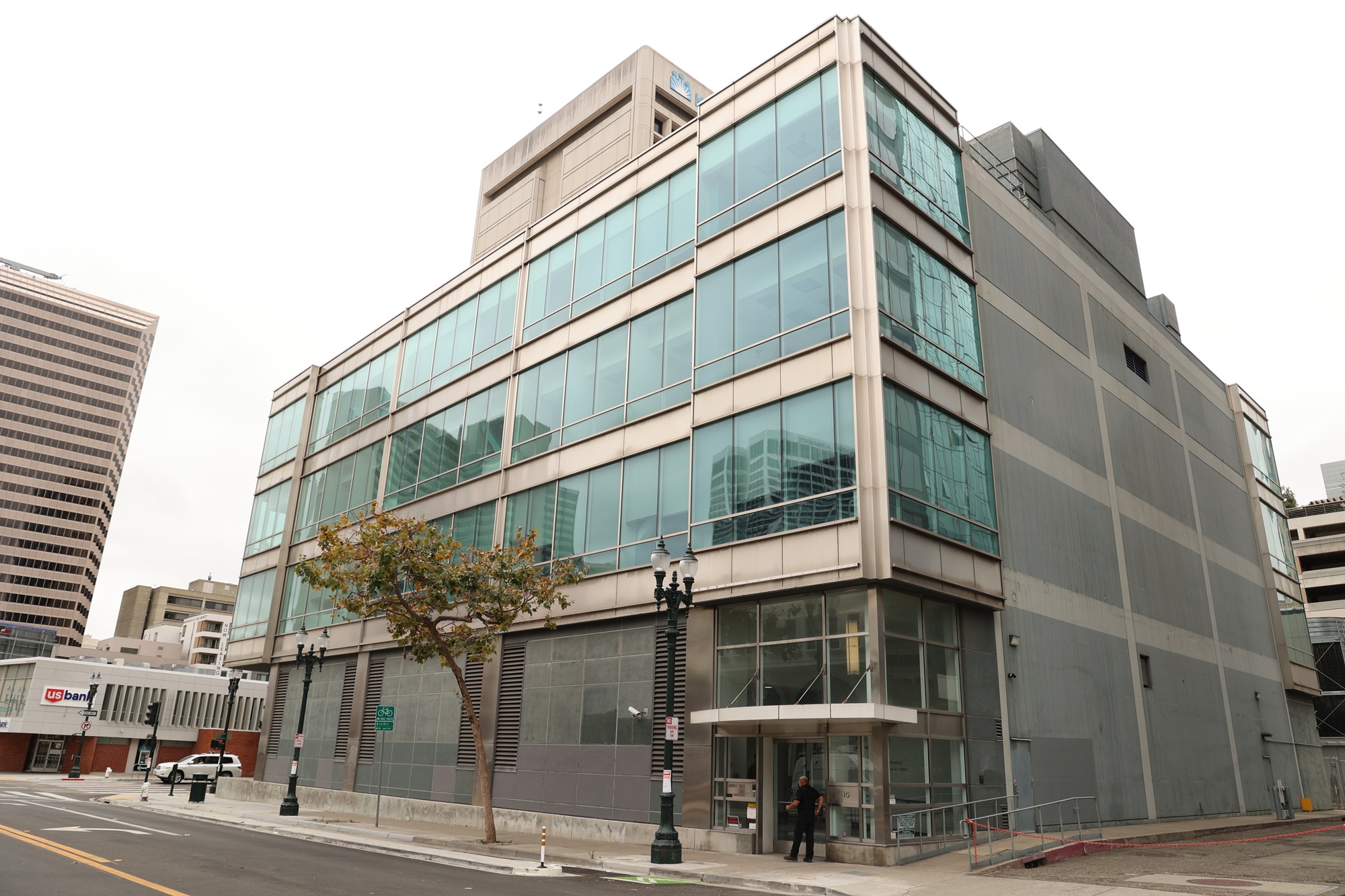
window.__INITIAL_STATE__={
"attachmentsReducer": {
"audio_0": {
"type": "attachments",
"id": "audio_0",
"imgSizes": {
"kqedFullSize": {
"file": "https://ww2.kqed.org/news/wp-content/themes/KQED-unified/img/audio_bgs/background0.jpg"
}
}
},
"audio_1": {
"type": "attachments",
"id": "audio_1",
"imgSizes": {
"kqedFullSize": {
"file": "https://ww2.kqed.org/news/wp-content/themes/KQED-unified/img/audio_bgs/background1.jpg"
}
}
},
"audio_2": {
"type": "attachments",
"id": "audio_2",
"imgSizes": {
"kqedFullSize": {
"file": "https://ww2.kqed.org/news/wp-content/themes/KQED-unified/img/audio_bgs/background2.jpg"
}
}
},
"audio_3": {
"type": "attachments",
"id": "audio_3",
"imgSizes": {
"kqedFullSize": {
"file": "https://ww2.kqed.org/news/wp-content/themes/KQED-unified/img/audio_bgs/background3.jpg"
}
}
},
"audio_4": {
"type": "attachments",
"id": "audio_4",
"imgSizes": {
"kqedFullSize": {
"file": "https://ww2.kqed.org/news/wp-content/themes/KQED-unified/img/audio_bgs/background4.jpg"
}
}
},
"placeholder": {
"type": "attachments",
"id": "placeholder",
"imgSizes": {
"thumbnail": {
"file": "https://cdn.kqed.org/wp-content/uploads/2024/12/KQED-Default-Image-816638274-2000x1333-1-160x107.jpg",
"width": 160,
"height": 107,
"mimeType": "image/jpeg"
},
"medium": {
"file": "https://cdn.kqed.org/wp-content/uploads/2024/12/KQED-Default-Image-816638274-2000x1333-1-800x533.jpg",
"width": 800,
"height": 533,
"mimeType": "image/jpeg"
},
"medium_large": {
"file": "https://cdn.kqed.org/wp-content/uploads/2024/12/KQED-Default-Image-816638274-2000x1333-1-768x512.jpg",
"width": 768,
"height": 512,
"mimeType": "image/jpeg"
},
"large": {
"file": "https://cdn.kqed.org/wp-content/uploads/2024/12/KQED-Default-Image-816638274-2000x1333-1-1020x680.jpg",
"width": 1020,
"height": 680,
"mimeType": "image/jpeg"
},
"1536x1536": {
"file": "https://cdn.kqed.org/wp-content/uploads/2024/12/KQED-Default-Image-816638274-2000x1333-1-1536x1024.jpg",
"width": 1536,
"height": 1024,
"mimeType": "image/jpeg"
},
"fd-lrg": {
"file": "https://cdn.kqed.org/wp-content/uploads/2024/12/KQED-Default-Image-816638274-2000x1333-1-1536x1024.jpg",
"width": 1536,
"height": 1024,
"mimeType": "image/jpeg"
},
"fd-med": {
"file": "https://cdn.kqed.org/wp-content/uploads/2024/12/KQED-Default-Image-816638274-2000x1333-1-1020x680.jpg",
"width": 1020,
"height": 680,
"mimeType": "image/jpeg"
},
"fd-sm": {
"file": "https://cdn.kqed.org/wp-content/uploads/2024/12/KQED-Default-Image-816638274-2000x1333-1-800x533.jpg",
"width": 800,
"height": 533,
"mimeType": "image/jpeg"
},
"post-thumbnail": {
"file": "https://cdn.kqed.org/wp-content/uploads/2024/12/KQED-Default-Image-816638274-2000x1333-1-672x372.jpg",
"width": 672,
"height": 372,
"mimeType": "image/jpeg"
},
"twentyfourteen-full-width": {
"file": "https://cdn.kqed.org/wp-content/uploads/2024/12/KQED-Default-Image-816638274-2000x1333-1-1038x576.jpg",
"width": 1038,
"height": 576,
"mimeType": "image/jpeg"
},
"xxsmall": {
"file": "https://cdn.kqed.org/wp-content/uploads/2024/12/KQED-Default-Image-816638274-2000x1333-1-160x107.jpg",
"width": 160,
"height": 107,
"mimeType": "image/jpeg"
},
"xsmall": {
"file": "https://cdn.kqed.org/wp-content/uploads/2024/12/KQED-Default-Image-816638274-2000x1333-1-672x372.jpg",
"width": 672,
"height": 372,
"mimeType": "image/jpeg"
},
"small": {
"file": "https://cdn.kqed.org/wp-content/uploads/2024/12/KQED-Default-Image-816638274-2000x1333-1-672x372.jpg",
"width": 672,
"height": 372,
"mimeType": "image/jpeg"
},
"xlarge": {
"file": "https://cdn.kqed.org/wp-content/uploads/2024/12/KQED-Default-Image-816638274-2000x1333-1-1020x680.jpg",
"width": 1020,
"height": 680,
"mimeType": "image/jpeg"
},
"full-width": {
"file": "https://cdn.kqed.org/wp-content/uploads/2024/12/KQED-Default-Image-816638274-2000x1333-1-1920x1280.jpg",
"width": 1920,
"height": 1280,
"mimeType": "image/jpeg"
},
"guest-author-32": {
"file": "https://cdn.kqed.org/wp-content/uploads/2025/01/KQED-Default-Image-816638274-1333x1333-1-160x160.jpg",
"width": 32,
"height": 32,
"mimeType": "image/jpeg"
},
"guest-author-50": {
"file": "https://cdn.kqed.org/wp-content/uploads/2025/01/KQED-Default-Image-816638274-1333x1333-1-160x160.jpg",
"width": 50,
"height": 50,
"mimeType": "image/jpeg"
},
"guest-author-64": {
"file": "https://cdn.kqed.org/wp-content/uploads/2025/01/KQED-Default-Image-816638274-1333x1333-1-160x160.jpg",
"width": 64,
"height": 64,
"mimeType": "image/jpeg"
},
"guest-author-96": {
"file": "https://cdn.kqed.org/wp-content/uploads/2025/01/KQED-Default-Image-816638274-1333x1333-1-160x160.jpg",
"width": 96,
"height": 96,
"mimeType": "image/jpeg"
},
"guest-author-128": {
"file": "https://cdn.kqed.org/wp-content/uploads/2025/01/KQED-Default-Image-816638274-1333x1333-1-160x160.jpg",
"width": 128,
"height": 128,
"mimeType": "image/jpeg"
},
"detail": {
"file": "https://cdn.kqed.org/wp-content/uploads/2025/01/KQED-Default-Image-816638274-1333x1333-1-160x160.jpg",
"width": 160,
"height": 160,
"mimeType": "image/jpeg"
},
"kqedFullSize": {
"file": "https://cdn.kqed.org/wp-content/uploads/2024/12/KQED-Default-Image-816638274-2000x1333-1.jpg",
"width": 2000,
"height": 1333
}
}
},
"news_12095475": {
"type": "attachments",
"id": "news_12095475",
"meta": {
"index": "attachments_1716263798",
"site": "news",
"id": "12095475",
"found": true
},
"title": "OAK Data Center",
"publishDate": 1786823066,
"status": "inherit",
"parent": 12095308,
"modified": 1786832236,
"caption": "The location of a proposed data center at 415 20th St. in Oakland on Aug. 14, 2026. The proposal from Behring Companies is part of a larger artificial intelligence campus that formerly housed a supercomputer facility.",
"credit": "Juan Carlos Lara/KQED",
"altTag": null,
"description": null,
"imgSizes": {
"thumbnail": {
"file": "https://cdn.kqed.org/wp-content/uploads/sites/10/2026/08/OAK-Data-Center-160x107.jpg",
"width": 160,
"height": 107,
"mimeType": "image/jpeg"
},
"1536x1536": {
"file": "https://cdn.kqed.org/wp-content/uploads/sites/10/2026/08/OAK-Data-Center-1536x1024.jpg",
"width": 1536,
"height": 1024,
"mimeType": "image/jpeg"
},
"post-thumbnail": {
"file": "https://cdn.kqed.org/wp-content/uploads/sites/10/2026/08/OAK-Data-Center-672x372.jpg",
"width": 672,
"height": 372,
"mimeType": "image/jpeg"
},
"twentyfourteen-full-width": {
"file": "https://cdn.kqed.org/wp-content/uploads/sites/10/2026/08/OAK-Data-Center-1038x576.jpg",
"width": 1038,
"height": 576,
"mimeType": "image/jpeg"
},
"npr-cds-wide": {
"file": "https://cdn.kqed.org/wp-content/uploads/sites/10/2026/08/OAK-Data-Center-1200x675.jpg",
"width": 1200,
"height": 675,
"mimeType": "image/jpeg"
},
"npr-cds-square": {
"file": "https://cdn.kqed.org/wp-content/uploads/sites/10/2026/08/OAK-Data-Center-600x600.jpg",
"width": 600,
"height": 600,
"mimeType": "image/jpeg"
},
"kqedFullSize": {
"file": "https://cdn.kqed.org/wp-content/uploads/sites/10/2026/08/OAK-Data-Center.jpg",
"width": 2000,
"height": 1333
}
},
"isLoading": false,
"fetchFailed": false
},
"news_12091348": {
"type": "attachments",
"id": "news_12091348",
"meta": {
"index": "attachments_1716263798",
"site": "news",
"id": "12091348",
"found": true
},
"title": "Construction Continues On Southern California Data Center",
"publishDate": 1784223390,
"status": "inherit",
"parent": 12091341,
"modified": 1786659282,
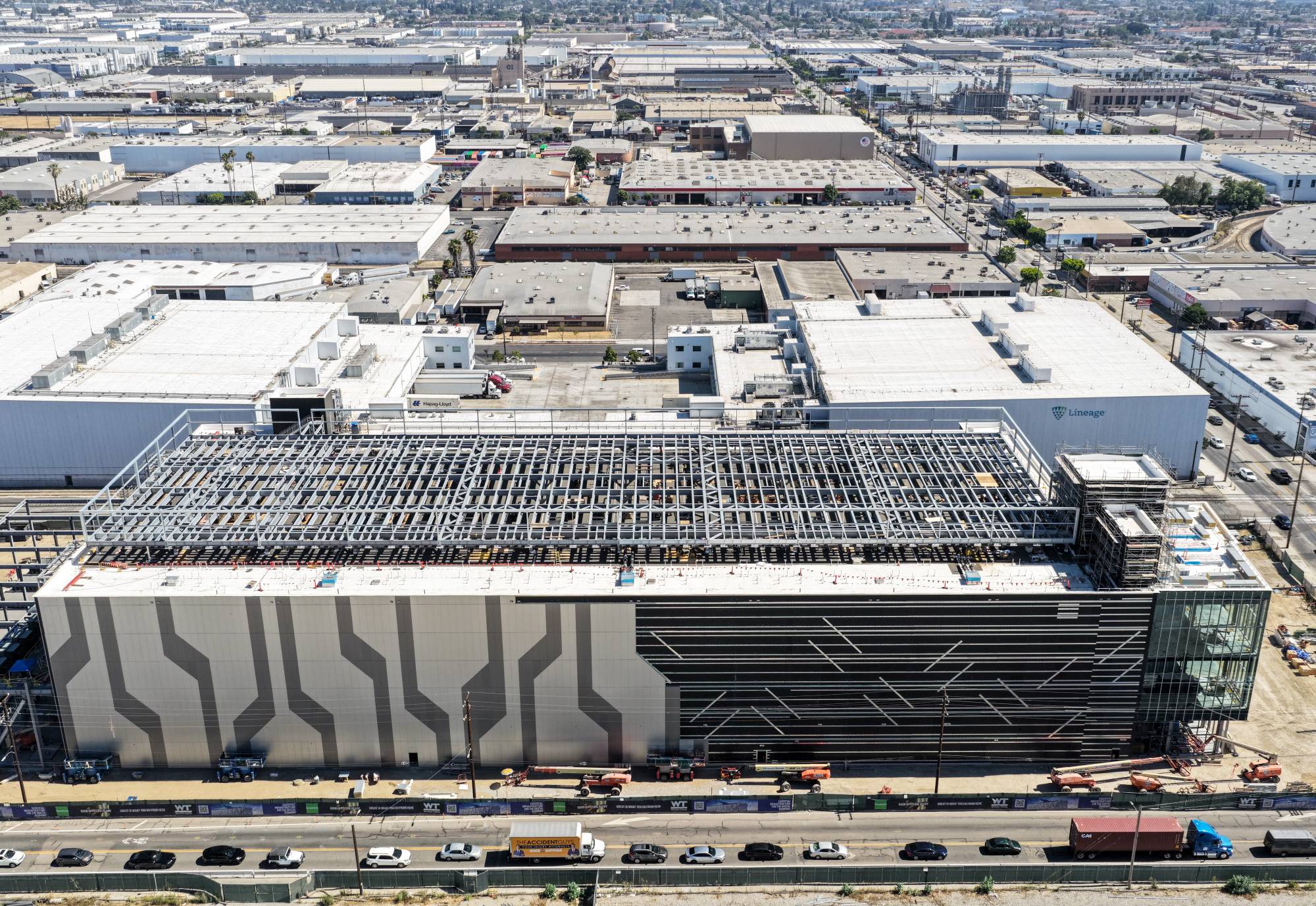
"caption": "An aerial view of a 49.5-megawatt, three-level data center under construction on July 8, 2026, in Vernon, California. A surge in demand for artificial intelligence infrastructure is fueling a boom in data centers across the country and around the globe. ",
"credit": "Mario Tama/Getty Images",
"altTag": null,
"description": null,
"imgSizes": {
"medium": {
"file": "https://cdn.kqed.org/wp-content/uploads/sites/10/2026/07/GettyImages-2285283677-2000x1377.jpg",
"width": 2000,
"height": 1377,
"mimeType": "image/jpeg"
},
"large": {
"file": "https://cdn.kqed.org/wp-content/uploads/sites/10/2026/07/GettyImages-2285283677-2000x1377.jpg",
"width": 2000,
"height": 1377,
"mimeType": "image/jpeg"
},
"thumbnail": {
"file": "https://cdn.kqed.org/wp-content/uploads/sites/10/2026/07/GettyImages-2285283677-160x110.jpg",
"width": 160,
"height": 110,
"mimeType": "image/jpeg"
},
"1536x1536": {
"file": "https://cdn.kqed.org/wp-content/uploads/sites/10/2026/07/GettyImages-2285283677-1536x1057.jpg",
"width": 1536,
"height": 1057,
"mimeType": "image/jpeg"
},
"2048x2048": {
"file": "https://cdn.kqed.org/wp-content/uploads/sites/10/2026/07/GettyImages-2285283677-2048x1410.jpg",
"width": 2048,
"height": 1410,
"mimeType": "image/jpeg"
},
"post-thumbnail": {
"file": "https://cdn.kqed.org/wp-content/uploads/sites/10/2026/07/GettyImages-2285283677-672x372.jpg",
"width": 672,
"height": 372,
"mimeType": "image/jpeg"
},
"twentyfourteen-full-width": {
"file": "https://cdn.kqed.org/wp-content/uploads/sites/10/2026/07/GettyImages-2285283677-1038x576.jpg",
"width": 1038,
"height": 576,
"mimeType": "image/jpeg"
},
"full-width": {
"file": "https://cdn.kqed.org/wp-content/uploads/sites/10/2026/07/GettyImages-2285283677-2000x1377.jpg",
"width": 2000,
"height": 1377,
"mimeType": "image/jpeg"
},
"npr-cds-wide": {
"file": "https://cdn.kqed.org/wp-content/uploads/sites/10/2026/07/GettyImages-2285283677-1200x675.jpg",
"width": 1200,
"height": 675,
"mimeType": "image/jpeg"
},
"npr-cds-square": {
"file": "https://cdn.kqed.org/wp-content/uploads/sites/10/2026/07/GettyImages-2285283677-600x600.jpg",
"width": 600,
"height": 600,
"mimeType": "image/jpeg"
},
"kqedFullSize": {
"file": "https://cdn.kqed.org/wp-content/uploads/sites/10/2026/07/GettyImages-2285283677-scaled-e1786637636410.jpg",
"width": 2000,
"height": 1377
}
},
"isLoading": false,
"fetchFailed": false
},
"news_12089535": {
"type": "attachments",
"id": "news_12089535",
"meta": {
"index": "attachments_1716263798",
"site": "news",
"id": "12089535",
"found": true
},
"title": "fi-data-centers-monterey-park",
"publishDate": 1782928746,
"status": "inherit",
"parent": 12089321,
"modified": 1782941329,
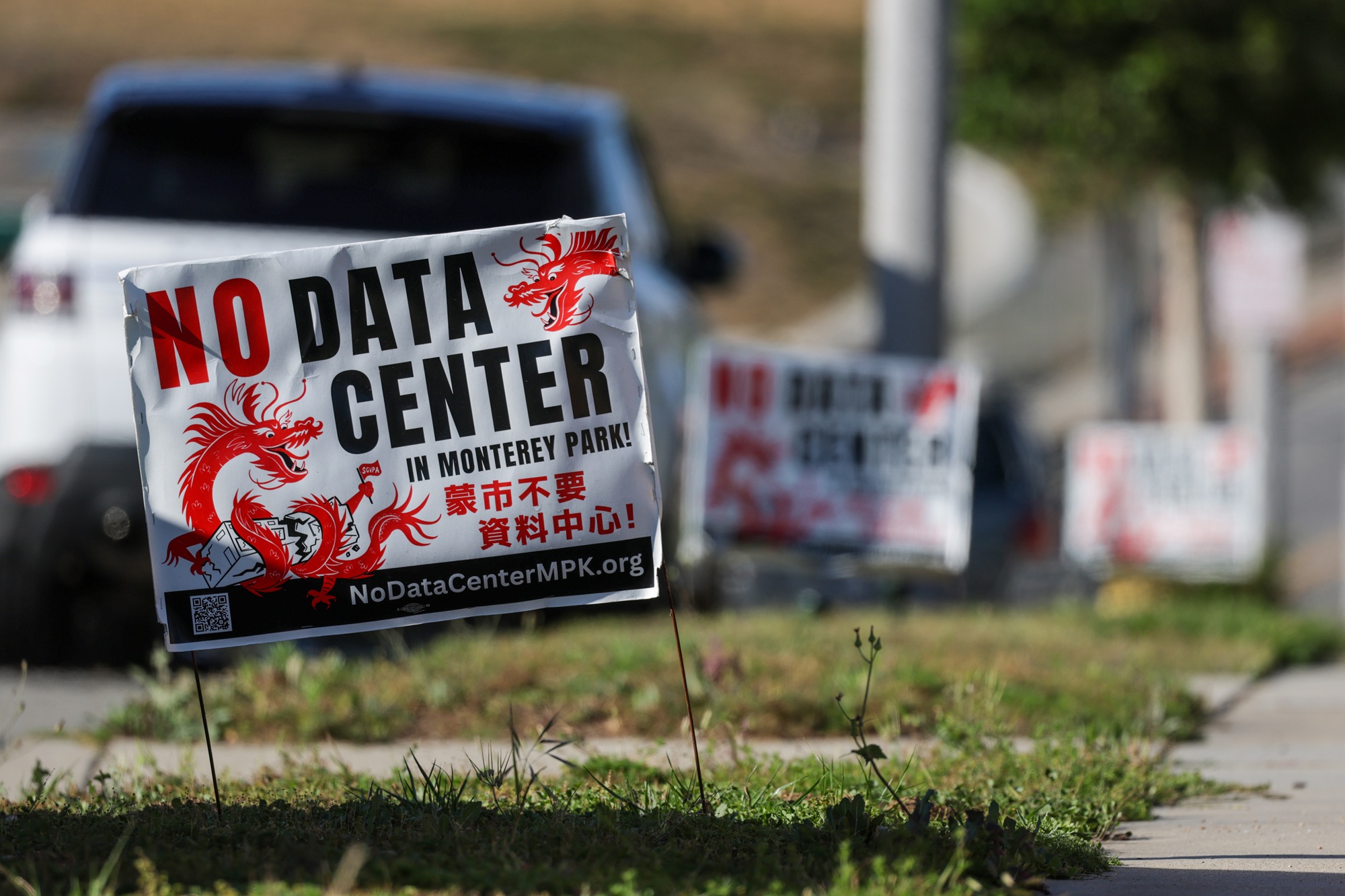
"caption": "City officials had previously welcomed its plans to build a sprawling new data center and the jobs and tax revenue that would follow, but suddenly city opposition to the plan sprang up. Signs of protest pepper front yards in a nearby residential neighborhood in Monterey Park, California, on April 1, 2026.",
"credit": "Robert Gauthier/Los Angeles Times via Getty Images",
"altTag": null,
"description": null,
"imgSizes": {
"thumbnail": {
"file": "https://cdn.kqed.org/wp-content/uploads/sites/10/2026/06/MontereyParkGetty-160x107.jpg",
"width": 160,
"height": 107,
"mimeType": "image/jpeg"
},
"1536x1536": {
"file": "https://cdn.kqed.org/wp-content/uploads/sites/10/2026/06/MontereyParkGetty-1536x1024.jpg",
"width": 1536,
"height": 1024,
"mimeType": "image/jpeg"
},
"post-thumbnail": {
"file": "https://cdn.kqed.org/wp-content/uploads/sites/10/2026/06/MontereyParkGetty-672x372.jpg",
"width": 672,
"height": 372,
"mimeType": "image/jpeg"
},
"twentyfourteen-full-width": {
"file": "https://cdn.kqed.org/wp-content/uploads/sites/10/2026/06/MontereyParkGetty-1038x576.jpg",
"width": 1038,
"height": 576,
"mimeType": "image/jpeg"
},
"npr-cds-wide": {
"file": "https://cdn.kqed.org/wp-content/uploads/sites/10/2026/06/MontereyParkGetty-1200x675.jpg",
"width": 1200,
"height": 675,
"mimeType": "image/jpeg"
},
"npr-cds-square": {
"file": "https://cdn.kqed.org/wp-content/uploads/sites/10/2026/06/MontereyParkGetty-600x600.jpg",
"width": 600,
"height": 600,
"mimeType": "image/jpeg"
},
"kqedFullSize": {
"file": "https://cdn.kqed.org/wp-content/uploads/sites/10/2026/06/MontereyParkGetty.jpg",
"width": 2000,
"height": 1333
}
},
"isLoading": false,
"fetchFailed": false
},
"news_12087918": {
"type": "attachments",
"id": "news_12087918",
"meta": {
"index": "attachments_1716263798",
"site": "news",
"id": "12087918",
"found": true
},
"title": "Chicago Cubs v San Francisco Giants",
"publishDate": 1781714150,
"status": "inherit",
"parent": 12087912,
"modified": 1781714204,
"caption": "Landen Roupp, #65 of the San Francisco Giants, pitches against the Chicago Cubs in the top of the first inning of a major league baseball game at Oracle Park on June 12, 2026, in San Francisco, California. ",
"credit": "Thearon W. Henderson/Getty Images",
"altTag": null,
"description": null,
"imgSizes": {
"thumbnail": {
"file": "https://cdn.kqed.org/wp-content/uploads/sites/10/2026/06/SFGiantsLandenRouppGetty-160x108.jpg",
"width": 160,
"height": 108,
"mimeType": "image/jpeg"
},
"1536x1536": {
"file": "https://cdn.kqed.org/wp-content/uploads/sites/10/2026/06/SFGiantsLandenRouppGetty-1536x1037.jpg",
"width": 1536,
"height": 1037,
"mimeType": "image/jpeg"
},
"post-thumbnail": {
"file": "https://cdn.kqed.org/wp-content/uploads/sites/10/2026/06/SFGiantsLandenRouppGetty-672x372.jpg",
"width": 672,
"height": 372,
"mimeType": "image/jpeg"
},
"twentyfourteen-full-width": {
"file": "https://cdn.kqed.org/wp-content/uploads/sites/10/2026/06/SFGiantsLandenRouppGetty-1038x576.jpg",
"width": 1038,
"height": 576,
"mimeType": "image/jpeg"
},
"npr-cds-wide": {
"file": "https://cdn.kqed.org/wp-content/uploads/sites/10/2026/06/SFGiantsLandenRouppGetty-1200x675.jpg",
"width": 1200,
"height": 675,
"mimeType": "image/jpeg"
},
"npr-cds-square": {
"file": "https://cdn.kqed.org/wp-content/uploads/sites/10/2026/06/SFGiantsLandenRouppGetty-600x600.jpg",
"width": 600,
"height": 600,
"mimeType": "image/jpeg"
},
"kqedFullSize": {
"file": "https://cdn.kqed.org/wp-content/uploads/sites/10/2026/06/SFGiantsLandenRouppGetty.jpg",
"width": 2000,
"height": 1350
}
},
"isLoading": false,
"fetchFailed": false
},
"news_12088326": {
"type": "attachments",
"id": "news_12088326",
"meta": {
"index": "attachments_1716263798",
"site": "news",
"id": "12088326",
"found": true
},
"title": "fi-data-centers-monterey-park",
"publishDate": 1782136622,
"status": "inherit",
"parent": 12088325,
"modified": 1782136670,
"caption": "Monterey Park, CA - April 01:\nCity officials had previously welcomed its plans to build a sprawling, new data center and the jobs and tax revenue that would follow, but suddenly city opposition to the plan spurred up. Signs of protest pepper front yards in a nearby residential neighborhood in Monterey Park, CA on Wednesday, April 1, 2026.",
"credit": "Robert Gauthier/Los Angeles Times via Getty Images",
"altTag": null,
"description": null,
"imgSizes": {
"medium": {
"file": "https://cdn.kqed.org/wp-content/uploads/sites/10/2026/06/GettyImages-2269038179-2000x1333.jpg",
"width": 2000,
"height": 1333,
"mimeType": "image/jpeg"
},
"large": {
"file": "https://cdn.kqed.org/wp-content/uploads/sites/10/2026/06/GettyImages-2269038179-2000x1333.jpg",
"width": 2000,
"height": 1333,
"mimeType": "image/jpeg"
},
"thumbnail": {
"file": "https://cdn.kqed.org/wp-content/uploads/sites/10/2026/06/GettyImages-2269038179-160x107.jpg",
"width": 160,
"height": 107,
"mimeType": "image/jpeg"
},
"1536x1536": {
"file": "https://cdn.kqed.org/wp-content/uploads/sites/10/2026/06/GettyImages-2269038179-1536x1024.jpg",
"width": 1536,
"height": 1024,
"mimeType": "image/jpeg"
},
"2048x2048": {
"file": "https://cdn.kqed.org/wp-content/uploads/sites/10/2026/06/GettyImages-2269038179-2048x1365.jpg",
"width": 2048,
"height": 1365,
"mimeType": "image/jpeg"
},
"post-thumbnail": {
"file": "https://cdn.kqed.org/wp-content/uploads/sites/10/2026/06/GettyImages-2269038179-672x372.jpg",
"width": 672,
"height": 372,
"mimeType": "image/jpeg"
},
"twentyfourteen-full-width": {
"file": "https://cdn.kqed.org/wp-content/uploads/sites/10/2026/06/GettyImages-2269038179-1038x576.jpg",
"width": 1038,
"height": 576,
"mimeType": "image/jpeg"
},
"full-width": {
"file": "https://cdn.kqed.org/wp-content/uploads/sites/10/2026/06/GettyImages-2269038179-2000x1333.jpg",
"width": 2000,
"height": 1333,
"mimeType": "image/jpeg"
},
"npr-cds-wide": {
"file": "https://cdn.kqed.org/wp-content/uploads/sites/10/2026/06/GettyImages-2269038179-1200x675.jpg",
"width": 1200,
"height": 675,
"mimeType": "image/jpeg"
},
"npr-cds-square": {
"file": "https://cdn.kqed.org/wp-content/uploads/sites/10/2026/06/GettyImages-2269038179-600x600.jpg",
"width": 600,
"height": 600,
"mimeType": "image/jpeg"
},
"kqedFullSize": {
"file": "https://cdn.kqed.org/wp-content/uploads/sites/10/2026/06/GettyImages-2269038179-scaled.jpg",
"width": 2560,
"height": 1707
}
},
"isLoading": false,
"fetchFailed": false
},
"news_12076159": {
"type": "attachments",
"id": "news_12076159",
"meta": {
"index": "attachments_1716263798",
"site": "news",
"id": "12076159",
"found": true
},
"title": "BIP_Renderings_Page_4",
"publishDate": 1773266079,
"status": "inherit",
"parent": 12076074,
"modified": 1773272212,
"caption": "The Bridgehead Industrial Project would transform 164 acres near the San Joaquin River and Big Break Regional Shoreline into industrial buildings, potentially housing warehouses, logistics facilities and battery storage. Data center use has been eliminated from the project.",
"credit": "Courtesy of City of Oakley",
"altTag": null,
"description": null,
"imgSizes": {
"thumbnail": {
"file": "https://cdn.kqed.org/wp-content/uploads/sites/10/2026/03/BIP_Renderings_Page_4-160x78.jpg",
"width": 160,
"height": 78,
"mimeType": "image/jpeg"
},
"1536x1536": {
"file": "https://cdn.kqed.org/wp-content/uploads/sites/10/2026/03/BIP_Renderings_Page_4-1536x749.jpg",
"width": 1536,
"height": 749,
"mimeType": "image/jpeg"
},
"post-thumbnail": {
"file": "https://cdn.kqed.org/wp-content/uploads/sites/10/2026/03/BIP_Renderings_Page_4-672x372.jpg",
"width": 672,
"height": 372,
"mimeType": "image/jpeg"
},
"twentyfourteen-full-width": {
"file": "https://cdn.kqed.org/wp-content/uploads/sites/10/2026/03/BIP_Renderings_Page_4-1038x576.jpg",
"width": 1038,
"height": 576,
"mimeType": "image/jpeg"
},
"npr-cds-wide": {
"file": "https://cdn.kqed.org/wp-content/uploads/sites/10/2026/03/BIP_Renderings_Page_4-1200x675.jpg",
"width": 1200,
"height": 675,
"mimeType": "image/jpeg"
},
"kqedFullSize": {
"file": "https://cdn.kqed.org/wp-content/uploads/sites/10/2026/03/BIP_Renderings_Page_4.jpg",
"width": 2000,
"height": 975
}
},
"isLoading": false,
"fetchFailed": false
},
"news_12072128": {
"type": "attachments",
"id": "news_12072128",
"meta": {
"index": "attachments_1716263798",
"site": "news",
"id": "12072128",
"found": true
},
"title": "CAT — DataCenters2",
"publishDate": 1770160949,
"status": "inherit",
"parent": 12072118,
"modified": 1770186681,
"caption": "An aerial view of a large data center is featured in this collage with an image of the King Memorial railroad station in Atlanta, GA.",
"credit": "Photos by Alex Potemkin and Richard Newstead / Getty Images; composite image by Gabriela Glueck / KQED",
"altTag": "An aerial view shows high voltage power lines running through a sub-station along the electrical power grid. Green trees and the Miami skyline appear in the background. The words “CLOSE ALL TABS” appear in pixelated text in the lower right with a black background.",
"description": null,
"imgSizes": {
"medium": {
"file": "https://cdn.kqed.org/wp-content/uploads/sites/10/2026/02/CAT-—-DataCenters2-2000x1125.png",
"width": 2000,
"height": 1125,
"mimeType": "image/png"
},
"large": {
"file": "https://cdn.kqed.org/wp-content/uploads/sites/10/2026/02/CAT-—-DataCenters2-2000x1125.png",
"width": 2000,
"height": 1125,
"mimeType": "image/png"
},
"thumbnail": {
"file": "https://cdn.kqed.org/wp-content/uploads/sites/10/2026/02/CAT-—-DataCenters2-160x90.png",
"width": 160,
"height": 90,
"mimeType": "image/png"
},
"1536x1536": {
"file": "https://cdn.kqed.org/wp-content/uploads/sites/10/2026/02/CAT-—-DataCenters2-1536x864.png",
"width": 1536,
"height": 864,
"mimeType": "image/png"
},
"2048x2048": {
"file": "https://cdn.kqed.org/wp-content/uploads/sites/10/2026/02/CAT-—-DataCenters2-2048x1152.png",
"width": 2048,
"height": 1152,
"mimeType": "image/png"
},
"post-thumbnail": {
"file": "https://cdn.kqed.org/wp-content/uploads/sites/10/2026/02/CAT-—-DataCenters2-672x372.png",
"width": 672,
"height": 372,
"mimeType": "image/png"
},
"twentyfourteen-full-width": {
"file": "https://cdn.kqed.org/wp-content/uploads/sites/10/2026/02/CAT-—-DataCenters2-1038x576.png",
"width": 1038,
"height": 576,
"mimeType": "image/png"
},
"full-width": {
"file": "https://cdn.kqed.org/wp-content/uploads/sites/10/2026/02/CAT-—-DataCenters2-2000x1125.png",
"width": 2000,
"height": 1125,
"mimeType": "image/png"
},
"npr-cds-wide": {
"file": "https://cdn.kqed.org/wp-content/uploads/sites/10/2026/02/CAT-—-DataCenters2-1200x675.png",
"width": 1200,
"height": 675,
"mimeType": "image/png"
},
"kqedFullSize": {
"file": "https://cdn.kqed.org/wp-content/uploads/sites/10/2026/02/CAT-—-DataCenters2.png",
"width": 6000,
"height": 3375
}
},
"isLoading": false,
"fetchFailed": false
},
"news_12071262": {
"type": "attachments",
"id": "news_12071262",
"meta": {
"index": "attachments_1716263798",
"site": "news",
"id": "12071262",
"found": true
},
"title": "CAT — AI and Environment_img",
"publishDate": 1769552248,
"status": "inherit",
"parent": 12071259,
"modified": 1769552439,
"caption": "In an aerial view, high voltage power lines run through a sub-station along the electrical power grid in Miami, Florida.",
"credit": "Photo by Joe Raedle / via Getty Images",
"altTag": "An aerial view shows high voltage power lines running through a sub-station along the electrical power grid. Green trees and the Miami skyline appear in the background. The words “CLOSE ALL TABS” appear in pixelated text in the lower right with a black background.",
"description": null,
"imgSizes": {
"thumbnail": {
"file": "https://cdn.kqed.org/wp-content/uploads/sites/10/2026/01/CAT-—-AI-and-Environment_img-160x90.png",
"width": 160,
"height": 90,
"mimeType": "image/png"
},
"1536x1536": {
"file": "https://cdn.kqed.org/wp-content/uploads/sites/10/2026/01/CAT-—-AI-and-Environment_img-1536x864.png",
"width": 1536,
"height": 864,
"mimeType": "image/png"
},
"post-thumbnail": {
"file": "https://cdn.kqed.org/wp-content/uploads/sites/10/2026/01/CAT-—-AI-and-Environment_img-672x372.png",
"width": 672,
"height": 372,
"mimeType": "image/png"
},
"twentyfourteen-full-width": {
"file": "https://cdn.kqed.org/wp-content/uploads/sites/10/2026/01/CAT-—-AI-and-Environment_img-1038x576.png",
"width": 1038,
"height": 576,
"mimeType": "image/png"
},
"npr-cds-wide": {
"file": "https://cdn.kqed.org/wp-content/uploads/sites/10/2026/01/CAT-—-AI-and-Environment_img-1200x675.png",
"width": 1200,
"height": 675,
"mimeType": "image/png"
},
"kqedFullSize": {
"file": "https://cdn.kqed.org/wp-content/uploads/sites/10/2026/01/CAT-—-AI-and-Environment_img.png",
"width": 1920,
"height": 1080
}
},
"isLoading": false,
"fetchFailed": false
},
"news_12064267": {
"type": "attachments",
"id": "news_12064267",
"meta": {
"index": "attachments_1716263798",
"site": "news",
"id": "12064267",
"found": true
},
"title": "One Wilshire, Data Center",
"publishDate": 1763331398,
"status": "inherit",
"parent": 12064265,
"modified": 1787960321,
"caption": "Some old and some new wiring connects to various servers at One Wilshire, a high-rise office building in downtown L.A. that has been almost entirely converted into a server farm. ",
"credit": "Genaro Molina/Los Angeles Times via Getty Images",
"altTag": "A panel of multiple wires of different colors inside an office building.",
"description": null,
"imgSizes": {
"thumbnail": {
"file": "https://cdn.kqed.org/wp-content/uploads/sites/10/2025/11/GettyImages-2172265986-160x107.jpg",
"width": 160,
"height": 107,
"mimeType": "image/jpeg"
},
"post-thumbnail": {
"file": "https://cdn.kqed.org/wp-content/uploads/sites/10/2025/11/GettyImages-2172265986-672x372.jpg",
"width": 672,
"height": 372,
"mimeType": "image/jpeg"
},
"twentyfourteen-full-width": {
"file": "https://cdn.kqed.org/wp-content/uploads/sites/10/2025/11/GettyImages-2172265986-1024x576.jpg",
"width": 1024,
"height": 576,
"mimeType": "image/jpeg"
},
"npr-cds-wide": {
"file": "https://cdn.kqed.org/wp-content/uploads/sites/10/2025/11/GettyImages-2172265986-1024x675.jpg",
"width": 1024,
"height": 675,
"mimeType": "image/jpeg"
},
"kqedFullSize": {
"file": "https://cdn.kqed.org/wp-content/uploads/sites/10/2025/11/GettyImages-2172265986.jpg",
"width": 1024,
"height": 683
}
},
"isLoading": false,
"fetchFailed": false
},
"news_12063588": {
"type": "attachments",
"id": "news_12063588",
"meta": {
"index": "attachments_1716263798",
"site": "news",
"id": "12063588",
"found": true
},
"title": "Data Centers Proliferate And Cause Controversy",
"publishDate": 1762781567,
"status": "inherit",
"parent": 12063587,
"modified": 1787960071,
"caption": "An aerial view of a 33 megawatt data center with closed-loop cooling system on October 20, 2025 in Vernon, California. ",
"credit": "Photo by Mario Tama/Getty Images",
"altTag": null,
"description": null,
"imgSizes": {
"medium": {
"file": "https://cdn.kqed.org/wp-content/uploads/sites/10/2025/11/GettyImages-2242294580-2000x1392.jpg",
"width": 2000,
"height": 1392,
"mimeType": "image/jpeg"
},
"large": {
"file": "https://cdn.kqed.org/wp-content/uploads/sites/10/2025/11/GettyImages-2242294580-2000x1392.jpg",
"width": 2000,
"height": 1392,
"mimeType": "image/jpeg"
},
"thumbnail": {
"file": "https://cdn.kqed.org/wp-content/uploads/sites/10/2025/11/GettyImages-2242294580-160x111.jpg",
"width": 160,
"height": 111,
"mimeType": "image/jpeg"
},
"1536x1536": {
"file": "https://cdn.kqed.org/wp-content/uploads/sites/10/2025/11/GettyImages-2242294580-1536x1069.jpg",
"width": 1536,
"height": 1069,
"mimeType": "image/jpeg"
},
"2048x2048": {
"file": "https://cdn.kqed.org/wp-content/uploads/sites/10/2025/11/GettyImages-2242294580-2048x1425.jpg",
"width": 2048,
"height": 1425,
"mimeType": "image/jpeg"
},
"post-thumbnail": {
"file": "https://cdn.kqed.org/wp-content/uploads/sites/10/2025/11/GettyImages-2242294580-672x372.jpg",
"width": 672,
"height": 372,
"mimeType": "image/jpeg"
},
"twentyfourteen-full-width": {
"file": "https://cdn.kqed.org/wp-content/uploads/sites/10/2025/11/GettyImages-2242294580-1038x576.jpg",
"width": 1038,
"height": 576,
"mimeType": "image/jpeg"
},
"full-width": {
"file": "https://cdn.kqed.org/wp-content/uploads/sites/10/2025/11/GettyImages-2242294580-2000x1392.jpg",
"width": 2000,
"height": 1392,
"mimeType": "image/jpeg"
},
"npr-cds-wide": {
"file": "https://cdn.kqed.org/wp-content/uploads/sites/10/2025/11/GettyImages-2242294580-1200x675.jpg",
"width": 1200,
"height": 675,
"mimeType": "image/jpeg"
},
"kqedFullSize": {
"file": "https://cdn.kqed.org/wp-content/uploads/sites/10/2025/11/GettyImages-2242294580-scaled-e1787960077712.jpg",
"width": 2000,
"height": 1392
}
},
"isLoading": false,
"fetchFailed": false
}
},
"audioPlayerReducer": {
"postId": "stream_live",
"isPaused": true,
"isPlaying": false,
"pfsActive": false,
"pledgeModalIsOpen": true,
"playerDrawerIsOpen": false,
"liveAudioPlayStartedAt": 0,
"liveAudioPlayContext": ""
},
"authorsReducer": {
"byline_news_12089321": {
"type": "authors",
"id": "byline_news_12089321",
"meta": {
"override": true
},
"slug": "byline_news_12089321",
"name": "Anthony Victoria, KVCR",
"isLoading": false
},
"byline_news_12064265": {
"type": "authors",
"id": "byline_news_12064265",
"meta": {
"override": true
},
"slug": "byline_news_12064265",
"name": "\u003ca href=\"https://calmatters.org/author/alejandro-lazo/\">Alejandro Lazo, \u003c/a>CalMatters",
"isLoading": false
},
"ecruzguevarra": {
"type": "authors",
"id": "8654",
"meta": {
"index": "authors_1716337520",
"id": "8654",
"found": true
},
"name": "Ericka Cruz Guevarra",
"firstName": "Ericka",
"lastName": "Cruz Guevarra",
"slug": "ecruzguevarra",
"email": "ecruzguevarra@kqed.org",
"display_author_email": true,
"staff_mastheads": [
"news"
],
"title": "Producer, The Bay Podcast",
"bio": "Ericka Cruz Guevarra is host of \u003ca href=\"https://www.kqed.org/podcasts/thebay\">\u003cem>The Bay\u003c/em>\u003c/a> podcast at KQED. Before host, she was the show’s producer. Her work in that capacity includes a three-part reported series on policing in Vallejo, which won a 2020 excellence in journalism award from the Society of Professional Journalists. Ericka has worked as a breaking news reporter at Oregon Public Broadcasting, helped produce the Code Switch podcast, and was KQED’s inaugural Raul Ramirez Diversity Fund intern. She’s also an alumna of NPR’s Next Generation Radio program. Send her an email if you have strong feelings about whether Fairfield and Suisun City are the Bay. Ericka is represented by SAG-AFTRA.",
"avatar": "https://secure.gravatar.com/avatar/accefc1de4bafc7e234b69bcb9b6f6536c130fd84709bc3069ef11a78787e1bb?s=600&d=blank&r=g",
"twitter": "NotoriousECG",
"bluesky": null,
"facebook": null,
"instagram": null,
"linkedin": null,
"sites": [
{
"site": "arts",
"roles": [
"subscriber"
]
},
{
"site": "news",
"roles": [
"editor",
"manage_categories"
]
},
{
"site": "futureofyou",
"roles": [
"subscriber"
]
},
{
"site": "stateofhealth",
"roles": [
"subscriber"
]
},
{
"site": "science",
"roles": [
"editor"
]
},
{
"site": "forum",
"roles": [
"subscriber"
]
}
],
"headData": {
"title": "Ericka Cruz Guevarra | KQED",
"description": "Producer, The Bay Podcast",
"ogImgSrc": "https://secure.gravatar.com/avatar/accefc1de4bafc7e234b69bcb9b6f6536c130fd84709bc3069ef11a78787e1bb?s=600&d=blank&r=g",
"twImgSrc": "https://secure.gravatar.com/avatar/accefc1de4bafc7e234b69bcb9b6f6536c130fd84709bc3069ef11a78787e1bb?s=600&d=blank&r=g"
},
"isLoading": false,
"link": "/author/ecruzguevarra"
},
"amontecillo": {
"type": "authors",
"id": "11649",
"meta": {
"index": "authors_1716337520",
"id": "11649",
"found": true
},
"name": "Alan Montecillo",
"firstName": "Alan",
"lastName": "Montecillo",
"slug": "amontecillo",
"email": "amontecillo@kqed.org",
"display_author_email": false,
"staff_mastheads": [
"news"
],
"title": "KQED Contributor",
"bio": "Alan Montecillo is the senior editor of \u003cem>\u003ca href=\"http://kqed.org/thebay\">The Bay\u003c/a>, \u003c/em> KQED's local news podcast. Before moving to the Bay Area, he worked as a senior talk show producer for WILL in Champaign-Urbana, Illinois and at Oregon Public Broadcasting in Portland, Oregon. He has won journalism awards from the Society of Professional Journalists Northern California, the Public Media Journalists Association, The Signal Awards, and has also received a regional Edward R. Murrow award. Alan is a Filipino American from Hong Kong and a graduate of Reed College.",
"avatar": "https://secure.gravatar.com/avatar/268f53a2066899ea9efdd8a5900218b17c822d9862cbc9326cccec53ef41d349?s=600&d=blank&r=g",
"twitter": "alanmontecillo",
"bluesky": null,
"facebook": null,
"instagram": null,
"linkedin": null,
"sites": [
{
"site": "",
"roles": [
"editor"
]
},
{
"site": "news",
"roles": [
"editor",
"manage_categories"
]
}
],
"headData": {
"title": "Alan Montecillo | KQED",
"description": "KQED Contributor",
"ogImgSrc": "https://secure.gravatar.com/avatar/268f53a2066899ea9efdd8a5900218b17c822d9862cbc9326cccec53ef41d349?s=600&d=blank&r=g",
"twImgSrc": "https://secure.gravatar.com/avatar/268f53a2066899ea9efdd8a5900218b17c822d9862cbc9326cccec53ef41d349?s=600&d=blank&r=g"
},
"isLoading": false,
"link": "/author/amontecillo"
},
"kmizuguchi": {
"type": "authors",
"id": "11739",
"meta": {
"index": "authors_1716337520",
"id": "11739",
"found": true
},
"name": "Keith Mizuguchi",
"firstName": "Keith",
"lastName": "Mizuguchi",
"slug": "kmizuguchi",
"email": "kmizuguchi@kqed.org",
"display_author_email": false,
"staff_mastheads": [],
"title": "KQED Contributor",
"bio": null,
"avatar": "https://secure.gravatar.com/avatar/64d8a7de0723d4099b9fe4e915136103febcc20809abce228ee4415bcb237023?s=600&d=blank&r=g",
"twitter": null,
"bluesky": null,
"facebook": null,
"instagram": null,
"linkedin": null,
"sites": [
{
"site": "news",
"roles": [
"editor"
]
},
{
"site": "science",
"roles": [
"editor"
]
}
],
"headData": {
"title": "Keith Mizuguchi | KQED",
"description": "KQED Contributor",
"ogImgSrc": "https://secure.gravatar.com/avatar/64d8a7de0723d4099b9fe4e915136103febcc20809abce228ee4415bcb237023?s=600&d=blank&r=g",
"twImgSrc": "https://secure.gravatar.com/avatar/64d8a7de0723d4099b9fe4e915136103febcc20809abce228ee4415bcb237023?s=600&d=blank&r=g"
},
"isLoading": false,
"link": "/author/kmizuguchi"
},
"ibloom": {
"type": "authors",
"id": "11805",
"meta": {
"index": "authors_1716337520",
"id": "11805",
"found": true
},
"name": "Izzy Bloom",
"firstName": "Izzy",
"lastName": "Bloom",
"slug": "ibloom",
"email": "ibloom@kqed.org",
"display_author_email": false,
"staff_mastheads": [],
"title": "KQED Reporter & Producer",
"bio": "Izzy is a reporter and producer on KQED's California Politics & Government Desk. She joined the desk in 2024 to produce Political Breakdown, covering local and national elections and attending the RNC and DNC in Milwaukee and Chicago. \r\n\r\nBefore that, Izzy was a producer on The California Report and reported long-form stories for The California Report Magazine. She was a finalist for the Third Coast/Richard H. Driehaus Foundation Competition and was awarded for her reporting on indigenous land back by the Society of Professional Journalists. Izzy received her master's in journalism from the University of California, Berkeley.",
"avatar": "https://secure.gravatar.com/avatar/cc4d272ca430783ee1a8efac470a6b1e0fdd082c3beb61da019801d0ff751c8c?s=600&d=blank&r=g",
"twitter": null,
"bluesky": null,
"facebook": null,
"instagram": null,
"linkedin": null,
"sites": [
{
"site": "news",
"roles": [
"editor"
]
},
{
"site": "perspectives",
"roles": [
"editor"
]
}
],
"headData": {
"title": "Izzy Bloom | KQED",
"description": "KQED Reporter & Producer",
"ogImgSrc": "https://secure.gravatar.com/avatar/cc4d272ca430783ee1a8efac470a6b1e0fdd082c3beb61da019801d0ff751c8c?s=600&d=blank&r=g",
"twImgSrc": "https://secure.gravatar.com/avatar/cc4d272ca430783ee1a8efac470a6b1e0fdd082c3beb61da019801d0ff751c8c?s=600&d=blank&r=g"
},
"isLoading": false,
"link": "/author/ibloom"
},
"chambrick": {
"type": "authors",
"id": "11832",
"meta": {
"index": "authors_1716337520",
"id": "11832",
"found": true
},
"name": "Chris Hambrick",
"firstName": "Chris",
"lastName": "Hambrick",
"slug": "chambrick",
"email": "chambrick@kqed.org",
"display_author_email": false,
"staff_mastheads": [],
"title": "KQED Contributor",
"bio": null,
"avatar": "https://secure.gravatar.com/avatar/23cb83888bc440645af5d36d0d1909e8ecb6cef21f2fdb96abf9a55495bb19d8?s=600&d=blank&r=g",
"twitter": null,
"bluesky": null,
"facebook": null,
"instagram": null,
"linkedin": null,
"sites": [
{
"site": "",
"roles": [
"editor"
]
},
{
"site": "arts",
"roles": [
"editor"
]
},
{
"site": "news",
"roles": [
"editor"
]
},
{
"site": "podcasts",
"roles": [
"editor"
]
}
],
"headData": {
"title": "Chris Hambrick | KQED",
"description": "KQED Contributor",
"ogImgSrc": "https://secure.gravatar.com/avatar/23cb83888bc440645af5d36d0d1909e8ecb6cef21f2fdb96abf9a55495bb19d8?s=600&d=blank&r=g",
"twImgSrc": "https://secure.gravatar.com/avatar/23cb83888bc440645af5d36d0d1909e8ecb6cef21f2fdb96abf9a55495bb19d8?s=600&d=blank&r=g"
},
"isLoading": false,
"link": "/author/chambrick"
},
"cegusa": {
"type": "authors",
"id": "11869",
"meta": {
"index": "authors_1716337520",
"id": "11869",
"found": true
},
"name": "Chris Egusa",
"firstName": "Chris",
"lastName": "Egusa",
"slug": "cegusa",
"email": "cegusa@kqed.org",
"display_author_email": false,
"staff_mastheads": [],
"title": "KQED Contributor",
"bio": null,
"avatar": "https://secure.gravatar.com/avatar/3562ed52747313a4c94017da88ea89f9e85cd901f63ebc056a7d5e0adf4a03da?s=600&d=blank&r=g",
"twitter": null,
"bluesky": null,
"facebook": null,
"instagram": null,
"linkedin": null,
"sites": [
{
"site": "arts",
"roles": [
"editor"
]
},
{
"site": "news",
"roles": [
"editor"
]
}
],
"headData": {
"title": "Chris Egusa | KQED",
"description": "KQED Contributor",
"ogImgSrc": "https://secure.gravatar.com/avatar/3562ed52747313a4c94017da88ea89f9e85cd901f63ebc056a7d5e0adf4a03da?s=600&d=blank&r=g",
"twImgSrc": "https://secure.gravatar.com/avatar/3562ed52747313a4c94017da88ea89f9e85cd901f63ebc056a7d5e0adf4a03da?s=600&d=blank&r=g"
},
"isLoading": false,
"link": "/author/cegusa"
},
"ffenzi": {
"type": "authors",
"id": "11926",
"meta": {
"index": "authors_1716337520",
"id": "11926",
"found": true
},
"name": "Francesca Fenzi",
"firstName": "Francesca",
"lastName": "Fenzi",
"slug": "ffenzi",
"email": "ffenzi@kqed.org",
"display_author_email": false,
"staff_mastheads": [
"news"
],
"title": "Producer, Forum",
"bio": "Francesca Fenzi is a journalist and audio producer focused on making news media as transparent, participatory, and community-driven as possible. Since joining KQED's \u003cem>Forum\u003c/em> team in 2022, she's produced both local and statewide hours of the live public affairs show, and has reported other radio, podcast, and digital content for KQED News. She previously managed \u003ca href=\"https://discord.gg/kqed\">KQED's digital community on Discord\u003c/a> – connecting listeners with journalists, subject matter experts, and each other online.",
"avatar": "https://secure.gravatar.com/avatar/ee77ef428c83307d7264619607140c84dd260b93748a969ce2d97016025feef3?s=600&d=blank&r=g",
"twitter": null,
"bluesky": null,
"facebook": null,
"instagram": null,
"linkedin": null,
"sites": [
{
"site": "",
"roles": [
"editor"
]
},
{
"site": "news",
"roles": [
"editor"
]
},
{
"site": "about",
"roles": [
"editor"
]
},
{
"site": "forum",
"roles": [
"editor"
]
}
],
"headData": {
"title": "Francesca Fenzi | KQED",
"description": "Producer, Forum",
"ogImgSrc": "https://secure.gravatar.com/avatar/ee77ef428c83307d7264619607140c84dd260b93748a969ce2d97016025feef3?s=600&d=blank&r=g",
"twImgSrc": "https://secure.gravatar.com/avatar/ee77ef428c83307d7264619607140c84dd260b93748a969ce2d97016025feef3?s=600&d=blank&r=g"
},
"isLoading": false,
"link": "/author/ffenzi"
},
"skennedy": {
"type": "authors",
"id": "11935",
"meta": {
"index": "authors_1716337520",
"id": "11935",
"found": true
},
"name": "Samantha Kennedy",
"firstName": "Samantha",
"lastName": "Kennedy",
"slug": "skennedy",
"email": "SKennedy@kqed.org",
"display_author_email": false,
"staff_mastheads": [],
"title": "KQED Contributor",
"bio": null,
"avatar": "https://secure.gravatar.com/avatar/adc7b14bf1e801793202a156ecc864d4ad505b0fd63162a2f3da0e5ba57222d0?s=600&d=blank&r=g",
"twitter": null,
"bluesky": null,
"facebook": null,
"instagram": null,
"linkedin": null,
"sites": [
{
"site": "arts",
"roles": [
"author"
]
},
{
"site": "news",
"roles": [
"editor"
]
},
{
"site": "science",
"roles": [
"editor"
]
}
],
"headData": {
"title": "Samantha Kennedy | KQED",
"description": "KQED Contributor",
"ogImgSrc": "https://secure.gravatar.com/avatar/adc7b14bf1e801793202a156ecc864d4ad505b0fd63162a2f3da0e5ba57222d0?s=600&d=blank&r=g",
"twImgSrc": "https://secure.gravatar.com/avatar/adc7b14bf1e801793202a156ecc864d4ad505b0fd63162a2f3da0e5ba57222d0?s=600&d=blank&r=g"
},
"isLoading": false,
"link": "/author/skennedy"
},
"mcueva": {
"type": "authors",
"id": "11943",
"meta": {
"index": "authors_1716337520",
"id": "11943",
"found": true
},
"name": "Maya Cueva",
"firstName": "Maya",
"lastName": "Cueva",
"slug": "mcueva",
"email": "mcueva@kqed.org",
"display_author_email": false,
"staff_mastheads": [],
"title": "KQED Contributor",
"bio": null,
"avatar": "https://secure.gravatar.com/avatar/238c7aba67c4b6b7b891965ba8cc9e9a4928b5dbdeaf4bde6a81c13e87f49b49?s=600&d=blank&r=g",
"twitter": null,
"bluesky": null,
"facebook": null,
"instagram": null,
"linkedin": null,
"sites": [
{
"site": "news",
"roles": [
"editor"
]
}
],
"headData": {
"title": "Maya Cueva | KQED",
"description": "KQED Contributor",
"ogImgSrc": "https://secure.gravatar.com/avatar/238c7aba67c4b6b7b891965ba8cc9e9a4928b5dbdeaf4bde6a81c13e87f49b49?s=600&d=blank&r=g",
"twImgSrc": "https://secure.gravatar.com/avatar/238c7aba67c4b6b7b891965ba8cc9e9a4928b5dbdeaf4bde6a81c13e87f49b49?s=600&d=blank&r=g"
},
"isLoading": false,
"link": "/author/mcueva"
},
"msung": {
"type": "authors",
"id": "11944",
"meta": {
"index": "authors_1716337520",
"id": "11944",
"found": true
},
"name": "Morgan Sung",
"firstName": "Morgan",
"lastName": "Sung",
"slug": "msung",
"email": "msung@kqed.org",
"display_author_email": false,
"staff_mastheads": [],
"title": "Close All Tabs Host",
"bio": null,
"avatar": "https://secure.gravatar.com/avatar/34033b8d232ee6c987ca6f0a1a28f0e5?s=600&d=blank&r=g",
"twitter": null,
"facebook": null,
"instagram": null,
"linkedin": null,
"sites": [
{
"site": "news",
"roles": [
"editor"
]
}
],
"headData": {
"title": "Morgan Sung | KQED",
"description": "Close All Tabs Host",
"ogImgSrc": "https://secure.gravatar.com/avatar/34033b8d232ee6c987ca6f0a1a28f0e5?s=600&d=blank&r=g",
"twImgSrc": "https://secure.gravatar.com/avatar/34033b8d232ee6c987ca6f0a1a28f0e5?s=600&d=blank&r=g"
},
"isLoading": false,
"link": "/author/msung"
},
"aaliahmad": {
"type": "authors",
"id": "11986",
"meta": {
"index": "authors_1716337520",
"id": "11986",
"found": true
},
"name": "Ayah Ali-Ahmad",
"firstName": "Ayah",
"lastName": "Ali-Ahmad",
"slug": "aaliahmad",
"email": "aaliahmad@KQED.org",
"display_author_email": false,
"staff_mastheads": [],
"title": "KQED Contributor",
"bio": null,
"avatar": "https://secure.gravatar.com/avatar/1cf54f187a5e1064b2cfef3f3d2f1e4f93e453395d56912aca6382a6071ec3ed?s=600&d=blank&r=g",
"twitter": "ayahaliahmad",
"bluesky": null,
"facebook": null,
"instagram": null,
"linkedin": null,
"sites": [
{
"site": "news",
"roles": [
"subscriber"
]
}
],
"headData": {
"title": "Ayah Ali-Ahmad | KQED",
"description": "KQED Contributor",
"ogImgSrc": "https://secure.gravatar.com/avatar/1cf54f187a5e1064b2cfef3f3d2f1e4f93e453395d56912aca6382a6071ec3ed?s=600&d=blank&r=g",
"twImgSrc": "https://secure.gravatar.com/avatar/1cf54f187a5e1064b2cfef3f3d2f1e4f93e453395d56912aca6382a6071ec3ed?s=600&d=blank&r=g"
},
"isLoading": false,
"link": "/author/aaliahmad"
}
},
"pagesReducer": {
"news_tag_data-centers": {
"type": "terms",
"id": "news_36087",
"meta": {
"index": "terms_1716263798",
"site": "news",
"id": "36087",
"score": 10.4075165
},
"name": "data centers",
"slug": "data-centers",
"taxonomy": "tag",
"description": null,
"featImg": null,
"headData": {
"title": "data centers | KQED News",
"description": null,
"ogTitle": null,
"ogDescription": null,
"ogImgId": null,
"twTitle": null,
"twDescription": null,
"twImgId": null
},
"ttid": 36104,
"isLoading": false,
"title": "data centers",
"pageMeta": {
"site": "news",
"WpPageTemplate": "page-topic-editorial",
"currentPage": 2
},
"blocks": [
{
"blockName": "kqed/post-list",
"attrs": {
"layout": "cardArticle2",
"query": "posts/news?tag=data-centers",
"seeMore": false,
"paginated": true,
"page": 2
}
},
{
"blockName": "kqed/ad"
}
]
}
},
"pfsSessionReducer": {},
"postsReducer": {
"stream_live": {
"type": "live",
"id": "stream_live",
"audioUrl": "https://hls.kqed.org/hls/kqed_app/playlist.m3u8",
"title": "Live Stream",
"excerpt": "Live Stream information currently unavailable.",
"link": "/radio",
"featImg": "",
"label": {
"name": "KQED Live",
"link": "/"
}
},
"stream_kqedNewscast": {
"type": "posts",
"id": "stream_kqedNewscast",
"audioUrl": "https://www.kqed.org/.stream/anon/radio/RDnews/newscast.mp3?_=1",
"title": "KQED Newscast",
"featImg": "",
"label": {
"name": "88.5 FM",
"link": "/"
}
},
"news_12095308": {
"type": "posts",
"id": "news_12095308",
"meta": {
"index": "posts_1716263798",
"site": "news",
"id": "12095308",
"score": null,
"sort": [
1786833000000
]
},
"guestAuthors": [],
"slug": "developer-councilmember-say-proposed-oakland-data-center-isnt-what-you-might-think",
"title": "Developer, Councilmember Say Proposed Oakland Data Center Isn’t What You Might Think",
"publishDate": 1786833000,
"format": "standard",
"headTitle": "Developer, Councilmember Say Proposed Oakland Data Center Isn’t What You Might Think | KQED",
"labelTerm": {
"site": "news"
},
"content": "\u003cp>A proposed data center in downtown \u003ca href=\"http://kqed.org/news/tag/oakland\">Oakland\u003c/a> is the latest artificial intelligence project to face backlash, but proponents say this one’s different. \u003c/p>\n\n\n\n\u003cp>Developer Behring Companies is planning to use a portion of an almost 83,000 square-foot 4-story building at 415 20th St. as a data center to complement a larger AI campus. About 20,000 square-foot would be used for the data center, according to Behring’s plans. \u003c/p>\n\n\n\n\u003cp>The building \u003ca href=\"https://www.nersc.gov/news-and-events/news/berkeley-lab-dedicates-first-oakland-city-facility\">used to be a supercomputing complex\u003c/a> for the Lawrence Berkeley National Laboratory. Behring Companies’ CEO Colin Behring says those operations are not different from what the project proposes. \u003c/p>\n\n\n\n\u003cfigure class=\"wp-block-image size-full\">\u003cimg loading=\"lazy\" decoding=\"async\" width=\"2000\" height=\"1333\" src=\"https://cdn.kqed.org/wp-content/uploads/sites/10/2026/08/OAK-Data-Center-Behring.jpg\" alt=\"\" class=\"wp-image-12095480\" srcset=\"https://cdn.kqed.org/wp-content/uploads/sites/10/2026/08/OAK-Data-Center-Behring.jpg 2000w, https://cdn.kqed.org/wp-content/uploads/sites/10/2026/08/OAK-Data-Center-Behring-160x107.jpg 160w, https://cdn.kqed.org/wp-content/uploads/sites/10/2026/08/OAK-Data-Center-Behring-1536x1024.jpg 1536w\" sizes=\"auto, (max-width: 2000px) 100vw, 2000px\">\u003cfigcaption class=\"wp-element-caption\">Colin Behring, CEO and founder of Behring Companies, addresses the media in front of 415 20th St. in Oakland on Friday, Aug. 14, 2026, as Councilmember Carroll Fife, to the right, listens in. (Juan Carlos Lara/KQED)\u003c/figcaption>\u003c/figure>\n\n\n\n\u003cp>“Nothing has changed, and our proposal at this point is to use the same building doing what it used to do the same way,” said Behring, who spoke at a Friday press conference alongside Oakland City Councilmember Carroll Fife. “While it might be big headlines to talk about data centers, this project is very much different.” \u003c/p>\n\n\n\n\u003cp>Behring said there are various definitions of what a “data center” is and the space is not like a typical data center that is made up of racks and computing for different outside parties in a dark place. \u003c/p>\n\n\n\n\u003cp>[ad fullwidth]\u003c/p>\n\u003cp>“For us, the data center is effectively really strong computers in your office,” Behring said. \u003c/p>\n\n\n\n\u003cp>The project includes three neighboring buildings and would house a 39-story apartment complex directly above the 19th Street BART station, 20 stories of office space and a parking area. The site already supports up to 20 megawatts of computing capacity because of its past use, according to Behring. \u003c/p>\n\n\n\n\u003cp>For comparison, that’s about 15 times smaller than the \u003ca href=\"https://www.imperial.ca.gov/276/Data-Center-Info\">largest proposed data center\u003c/a> in the state, which would consume 330 megawatts. \u003c/p>\n\n\n\n\n\n\u003cp>AI data centers popping up around the country have sparked concerns about water and energy usage, noise pollution and health effects. \u003c/p>\n\n\n\n\u003cp>In the Bay Area, data center proposals have not gone over well with residents. From \u003ca href=\"https://www.kqed.org/news/12076074/oakley-drops-data-center-plans-approves-massive-industrial-project\">Oakley \u003c/a>and \u003ca href=\"https://www.kqed.org/news/12093604/theyve-been-very-quiet-pittsburg-residents-seek-answers-as-data-center-sets-up-shop-in-city\">Pittsburg \u003c/a>in the East Bay to \u003ca href=\"https://www.kqed.org/forum/2010101914179/bay-area-communities-resist-data-center-boom\">Gilroy in Silicon Valley\u003c/a>, advocates have cited a range of environmental and aesthetic concerns with facilities planned in their communities. \u003c/p>\n\n\n\n\u003cp>“I wanted to be absolutely critically clear that this is not the large-scale mega-facility that people have expressed, and legitimately so, concerns,” Fife, who represents downtown Oakland where the project is proposed, said. \u003c/p>\n\n\n\n\u003cp>The councilmember told reporters her goal is to revitalize the downtown area by bringing responsible development to the city, and that she’ll be communicating with Behring to keep an eye on the proposal and ensure the public is informed. \u003c/p>\n\n\n\n\u003cp>Opponents still aren’t so sure. \u003c/p>\n\n\n\n\u003cp>The Party for Socialism and Liberation has emerged as one of the project’s primary opponents, starting an online petition over concerns AI data centers “destroy jobs and the environment,” \u003c/p>\n\n\n\n\u003cp>“As long as tech billionaires control AI, they’ll use the technology to raise profits by eliminating millions of jobs. And they don’t care if they have to destroy the planet to do so,” the website reads. “This fight is about who decides the future of Oakland: the people, or the ultra wealthy.” \u003c/p>\n\n\n\n\u003cp>Behring said the project would provide up to 2,300 jobs, with neighboring businesses producing more. \u003c/p>\n\n\n\n\u003cp>The proposal, which was sent to city staff a week ago, is still in the beginning stages, so it hasn’t reached the City Council. Fife said it may not need additional approval if Behring’s uses conform with existing uses by the Lawrence lab. \u003c/p>\n\n\n\n\u003cp>Either way, Fife said she’s in the process of developing legislation that would define what responsible AI use is.\u003c/p>\n\n\n\n\u003cp>\u003c/p>\n\u003cp>\u003cem>KQED’s \u003c/em>\u003ca href=\"https://www.kqed.org/author/jlara\">\u003cem>Juan Carlos Lara\u003c/em>\u003c/a>\u003cem> contributed to this report.\u003c/em>\u003c/p>\n\n",
"blocks": [
{
"blockName": "core/paragraph",
"attrs": {
"dropCap": false
},
"innerHTML": "\n\u003cp>A proposed data center in downtown \u003ca href=\"http://kqed.org/news/tag/oakland\">Oakland\u003c/a> is the latest artificial intelligence project to face backlash, but proponents say this one’s different. \u003c/p>\n",
"innerContent": [
"\n\u003cp>A proposed data center in downtown \u003ca href=\"http://kqed.org/news/tag/oakland\">Oakland\u003c/a> is the latest artificial intelligence project to face backlash, but proponents say this one’s different. \u003c/p>\n"
],
"innerBlocks": []
},
{
"blockName": "core/paragraph",
"attrs": {
"dropCap": false
},
"innerHTML": "\n\u003cp>Developer Behring Companies is planning to use a portion of an almost 83,000 square-foot 4-story building at 415 20th St. as a data center to complement a larger AI campus. About 20,000 square-foot would be used for the data center, according to Behring’s plans. \u003c/p>\n",
"innerContent": [
"\n\u003cp>Developer Behring Companies is planning to use a portion of an almost 83,000 square-foot 4-story building at 415 20th St. as a data center to complement a larger AI campus. About 20,000 square-foot would be used for the data center, according to Behring’s plans. \u003c/p>\n"
],
"innerBlocks": []
},
{
"blockName": "core/paragraph",
"attrs": {
"dropCap": false
},
"innerHTML": "\n\u003cp>The building \u003ca href=\"https://www.nersc.gov/news-and-events/news/berkeley-lab-dedicates-first-oakland-city-facility\">used to be a supercomputing complex\u003c/a> for the Lawrence Berkeley National Laboratory. Behring Companies’ CEO Colin Behring says those operations are not different from what the project proposes. \u003c/p>\n",
"innerContent": [
"\n\u003cp>The building \u003ca href=\"https://www.nersc.gov/news-and-events/news/berkeley-lab-dedicates-first-oakland-city-facility\">used to be a supercomputing complex\u003c/a> for the Lawrence Berkeley National Laboratory. Behring Companies’ CEO Colin Behring says those operations are not different from what the project proposes. \u003c/p>\n"
],
"innerBlocks": []
},
{
"blockName": "core/image",
"attrs": {
"id": 12095480,
"sizeSlug": "full",
"linkDestination": "none",
"imageCredit": "Juan Carlos Lara/KQED ",
"srcset": "https://cdn.kqed.org/wp-content/uploads/sites/10/2026/08/OAK-Data-Center-Behring.jpg 2000w, https://cdn.kqed.org/wp-content/uploads/sites/10/2026/08/OAK-Data-Center-Behring-160x107.jpg 160w, https://cdn.kqed.org/wp-content/uploads/sites/10/2026/08/OAK-Data-Center-Behring-1536x1024.jpg 1536w",
"sizes": "(min-width: 992px) min(100vw, 1536px), (min-width: 768px) min(100vw, 1280px), min(100vw, 1020px)",
"alt": ""
},
"innerHTML": "\n\u003cfigure class=\"wp-block-image size-full\">\u003cimg src=\"https://cdn.kqed.org/wp-content/uploads/sites/10/2026/08/OAK-Data-Center-Behring.jpg\" alt=\"\" class=\"wp-image-12095480\" srcset=\"https://cdn.kqed.org/wp-content/uploads/sites/10/2026/08/OAK-Data-Center-Behring.jpg 2000w, https://cdn.kqed.org/wp-content/uploads/sites/10/2026/08/OAK-Data-Center-Behring-160x107.jpg 160w, https://cdn.kqed.org/wp-content/uploads/sites/10/2026/08/OAK-Data-Center-Behring-1536x1024.jpg 1536w\" sizes=\"(min-width: 992px) min(100vw, 1536px), (min-width: 768px) min(100vw, 1280px), min(100vw, 1020px)\" />\u003cfigcaption class=\"wp-element-caption\">Colin Behring, CEO and founder of Behring Companies, addresses the media in front of 415 20th St. in Oakland on Friday, Aug. 14, 2026, as Councilmember Carroll Fife, to the right, listens in. \u003c/figcaption>\u003c/figure>\n",
"innerContent": [
"\n\u003cfigure class=\"wp-block-image size-full\">\u003cimg src=\"https://cdn.kqed.org/wp-content/uploads/sites/10/2026/08/OAK-Data-Center-Behring.jpg\" alt=\"\" class=\"wp-image-12095480\" />\u003cfigcaption class=\"wp-element-caption\">Colin Behring, CEO and founder of Behring Companies, addresses the media in front of 415 20th St. in Oakland on Friday, Aug. 14, 2026, as Councilmember Carroll Fife, to the right, listens in. \u003c/figcaption>\u003c/figure>\n"
],
"innerBlocks": []
},
{
"blockName": "core/paragraph",
"attrs": {
"dropCap": false
},
"innerHTML": "\n\u003cp>“Nothing has changed, and our proposal at this point is to use the same building doing what it used to do the same way,” said Behring, who spoke at a Friday press conference alongside Oakland City Councilmember Carroll Fife. “While it might be big headlines to talk about data centers, this project is very much different.” \u003c/p>\n",
"innerContent": [
"\n\u003cp>“Nothing has changed, and our proposal at this point is to use the same building doing what it used to do the same way,” said Behring, who spoke at a Friday press conference alongside Oakland City Councilmember Carroll Fife. “While it might be big headlines to talk about data centers, this project is very much different.” \u003c/p>\n"
],
"innerBlocks": []
},
{
"blockName": "core/paragraph",
"attrs": {
"dropCap": false
},
"innerHTML": "\n\u003cp>Behring said there are various definitions of what a “data center” is and the space is not like a typical data center that is made up of racks and computing for different outside parties in a dark place. \u003c/p>\n",
"innerContent": [
"\n\u003cp>Behring said there are various definitions of what a “data center” is and the space is not like a typical data center that is made up of racks and computing for different outside parties in a dark place. \u003c/p>\n"
],
"innerBlocks": []
},
{
"blockName": "kqed/ad",
"attrs": {
"format": "fullwidth"
},
"innerBlocks": [],
"innerHTML": "",
"innerContent": []
},
{
"blockName": "core/paragraph",
"attrs": {
"dropCap": false
},
"innerHTML": "\n\u003cp>“For us, the data center is effectively really strong computers in your office,” Behring said. \u003c/p>\n",
"innerContent": [
"\n\u003cp>“For us, the data center is effectively really strong computers in your office,” Behring said. \u003c/p>\n"
],
"innerBlocks": []
},
{
"blockName": "core/paragraph",
"attrs": {
"dropCap": false
},
"innerHTML": "\n\u003cp>The project includes three neighboring buildings and would house a 39-story apartment complex directly above the 19th Street BART station, 20 stories of office space and a parking area. The site already supports up to 20 megawatts of computing capacity because of its past use, according to Behring. \u003c/p>\n",
"innerContent": [
"\n\u003cp>The project includes three neighboring buildings and would house a 39-story apartment complex directly above the 19th Street BART station, 20 stories of office space and a parking area. The site already supports up to 20 megawatts of computing capacity because of its past use, according to Behring. \u003c/p>\n"
],
"innerBlocks": []
},
{
"blockName": "core/paragraph",
"attrs": {
"dropCap": false
},
"innerHTML": "\n\u003cp>For comparison, that’s about 15 times smaller than the \u003ca href=\"https://www.imperial.ca.gov/276/Data-Center-Info\">largest proposed data center\u003c/a> in the state, which would consume 330 megawatts. \u003c/p>\n",
"innerContent": [
"\n\u003cp>For comparison, that’s about 15 times smaller than the \u003ca href=\"https://www.imperial.ca.gov/276/Data-Center-Info\">largest proposed data center\u003c/a> in the state, which would consume 330 megawatts. \u003c/p>\n"
],
"innerBlocks": []
},
{
"blockName": "kqed-v2/related-articles",
"attrs": {
"postIds": [
"news_12095008"
],
"label": "Related Articles",
"maxPosts": 1,
"showImages": false,
"heroImage": "https://cdn.kqed.org/wp-content/uploads/sites/10/2026/07/GettyImages-2285283677-scaled-e1786637636410.jpg",
"query": "",
"labelWasCleared": false,
"heroImageAlt": "",
"heroImageLink": "",
"labelLink": "",
"alignment": "right",
"target": "_self",
"manualLinks": [],
"posts": []
},
"innerHTML": "",
"innerContent": [],
"innerBlocks": []
},
{
"blockName": "core/paragraph",
"attrs": {
"dropCap": false
},
"innerHTML": "\n\u003cp>AI data centers popping up around the country have sparked concerns about water and energy usage, noise pollution and health effects. \u003c/p>\n",
"innerContent": [
"\n\u003cp>AI data centers popping up around the country have sparked concerns about water and energy usage, noise pollution and health effects. \u003c/p>\n"
],
"innerBlocks": []
},
{
"blockName": "core/paragraph",
"attrs": {
"dropCap": false
},
"innerHTML": "\n\u003cp>In the Bay Area, data center proposals have not gone over well with residents. From \u003ca href=\"https://www.kqed.org/news/12076074/oakley-drops-data-center-plans-approves-massive-industrial-project\">Oakley \u003c/a>and \u003ca href=\"https://www.kqed.org/news/12093604/theyve-been-very-quiet-pittsburg-residents-seek-answers-as-data-center-sets-up-shop-in-city\">Pittsburg \u003c/a>in the East Bay to \u003ca href=\"https://www.kqed.org/forum/2010101914179/bay-area-communities-resist-data-center-boom\">Gilroy in Silicon Valley\u003c/a>, advocates have cited a range of environmental and aesthetic concerns with facilities planned in their communities. \u003c/p>\n",
"innerContent": [
"\n\u003cp>In the Bay Area, data center proposals have not gone over well with residents. From \u003ca href=\"https://www.kqed.org/news/12076074/oakley-drops-data-center-plans-approves-massive-industrial-project\">Oakley \u003c/a>and \u003ca href=\"https://www.kqed.org/news/12093604/theyve-been-very-quiet-pittsburg-residents-seek-answers-as-data-center-sets-up-shop-in-city\">Pittsburg \u003c/a>in the East Bay to \u003ca href=\"https://www.kqed.org/forum/2010101914179/bay-area-communities-resist-data-center-boom\">Gilroy in Silicon Valley\u003c/a>, advocates have cited a range of environmental and aesthetic concerns with facilities planned in their communities. \u003c/p>\n"
],
"innerBlocks": []
},
{
"blockName": "core/paragraph",
"attrs": {
"dropCap": false
},
"innerHTML": "\n\u003cp>“I wanted to be absolutely critically clear that this is not the large-scale mega-facility that people have expressed, and legitimately so, concerns,” Fife, who represents downtown Oakland where the project is proposed, said. \u003c/p>\n",
"innerContent": [
"\n\u003cp>“I wanted to be absolutely critically clear that this is not the large-scale mega-facility that people have expressed, and legitimately so, concerns,” Fife, who represents downtown Oakland where the project is proposed, said. \u003c/p>\n"
],
"innerBlocks": []
},
{
"blockName": "core/paragraph",
"attrs": {
"dropCap": false
},
"innerHTML": "\n\u003cp>The councilmember told reporters her goal is to revitalize the downtown area by bringing responsible development to the city, and that she’ll be communicating with Behring to keep an eye on the proposal and ensure the public is informed. \u003c/p>\n",
"innerContent": [
"\n\u003cp>The councilmember told reporters her goal is to revitalize the downtown area by bringing responsible development to the city, and that she’ll be communicating with Behring to keep an eye on the proposal and ensure the public is informed. \u003c/p>\n"
],
"innerBlocks": []
},
{
"blockName": "core/paragraph",
"attrs": {
"dropCap": false
},
"innerHTML": "\n\u003cp>Opponents still aren’t so sure. \u003c/p>\n",
"innerContent": [
"\n\u003cp>Opponents still aren’t so sure. \u003c/p>\n"
],
"innerBlocks": []
},
{
"blockName": "core/paragraph",
"attrs": {
"dropCap": false
},
"innerHTML": "\n\u003cp>The Party for Socialism and Liberation has emerged as one of the project’s primary opponents, starting an online petition over concerns AI data centers “destroy jobs and the environment,” \u003c/p>\n",
"innerContent": [
"\n\u003cp>The Party for Socialism and Liberation has emerged as one of the project’s primary opponents, starting an online petition over concerns AI data centers “destroy jobs and the environment,” \u003c/p>\n"
],
"innerBlocks": []
},
{
"blockName": "core/paragraph",
"attrs": {
"dropCap": false
},
"innerHTML": "\n\u003cp>“As long as tech billionaires control AI, they’ll use the technology to raise profits by eliminating millions of jobs. And they don’t care if they have to destroy the planet to do so,” the website reads. “This fight is about who decides the future of Oakland: the people, or the ultra wealthy.” \u003c/p>\n",
"innerContent": [
"\n\u003cp>“As long as tech billionaires control AI, they’ll use the technology to raise profits by eliminating millions of jobs. And they don’t care if they have to destroy the planet to do so,” the website reads. “This fight is about who decides the future of Oakland: the people, or the ultra wealthy.” \u003c/p>\n"
],
"innerBlocks": []
},
{
"blockName": "core/paragraph",
"attrs": {
"dropCap": false
},
"innerHTML": "\n\u003cp>Behring said the project would provide up to 2,300 jobs, with neighboring businesses producing more. \u003c/p>\n",
"innerContent": [
"\n\u003cp>Behring said the project would provide up to 2,300 jobs, with neighboring businesses producing more. \u003c/p>\n"
],
"innerBlocks": []
},
{
"blockName": "core/paragraph",
"attrs": {
"dropCap": false
},
"innerHTML": "\n\u003cp>The proposal, which was sent to city staff a week ago, is still in the beginning stages, so it hasn’t reached the City Council. Fife said it may not need additional approval if Behring’s uses conform with existing uses by the Lawrence lab. \u003c/p>\n",
"innerContent": [
"\n\u003cp>The proposal, which was sent to city staff a week ago, is still in the beginning stages, so it hasn’t reached the City Council. Fife said it may not need additional approval if Behring’s uses conform with existing uses by the Lawrence lab. \u003c/p>\n"
],
"innerBlocks": []
},
{
"blockName": "core/paragraph",
"attrs": {
"dropCap": false
},
"innerHTML": "\n\u003cp>Either way, Fife said she’s in the process of developing legislation that would define what responsible AI use is.\u003c/p>\n",
"innerContent": [
"\n\u003cp>Either way, Fife said she’s in the process of developing legislation that would define what responsible AI use is.\u003c/p>\n"
],
"innerBlocks": []
},
{
"blockName": "kqed/ad",
"attrs": {
"format": "floatright"
},
"innerBlocks": [],
"innerHTML": "",
"innerContent": []
},
{
"blockName": "core/paragraph",
"attrs": {
"dropCap": false
},
"innerHTML": "\n\u003cp>\u003cem>KQED’s \u003c/em>\u003ca href=\"https://www.kqed.org/author/jlara\">\u003cem>Juan Carlos Lara\u003c/em>\u003c/a>\u003cem> contributed to this report.\u003c/em>\u003c/p>\n",
"innerContent": [
"\n\u003cp>\u003cem>KQED’s \u003c/em>\u003ca href=\"https://www.kqed.org/author/jlara\">\u003cem>Juan Carlos Lara\u003c/em>\u003c/a>\u003cem> contributed to this report.\u003c/em>\u003c/p>\n"
],
"innerBlocks": []
}
],
"excerpt": "The proposal from Behring Companies is part of a larger artificial intelligence campus that formerly housed a supercomputer facility. ",
"status": "publish",
"parent": 0,
"modified": 1786832717,
"stats": {
"hasAudio": false,
"hasVideo": false,
"hasChartOrMap": false,
"iframeSrcs": [],
"hasGoogleForm": false,
"hasGallery": false,
"hasHearkenModule": false,
"hasPolis": false,
"paragraphCount": 21,
"wordCount": 687
},
"headData": {
"title": "Developer, Councilmember Say Proposed Oakland Data Center Isn’t What You Might Think | KQED",
"description": "The proposal from Behring Companies is part of a larger artificial intelligence campus that formerly housed a supercomputer facility. ",
"ogTitle": "",
"ogDescription": "",
"ogImgId": "",
"twTitle": "",
"twDescription": "",
"twImgId": "",
"schema": {
"@context": "https://schema.org",
"@type": "NewsArticle",
"headline": "Developer, Councilmember Say Proposed Oakland Data Center Isn’t What You Might Think",
"datePublished": "2026-08-15T15:30:00-07:00",
"dateModified": "2026-08-15T15:25:17-07:00",
"image": "https://cdn.kqed.org/wp-content/uploads/2020/02/KQED-OG-Image@1x.png",
"isAccessibleForFree": "True",
"publisher": {
"@type": "NewsMediaOrganization",
"@id": "https://www.kqed.org/#organization",
"name": "KQED",
"logo": "https://cdn.kqed.org/wp-content/uploads/2020/02/KQED-OG-Image@1x.png",
"url": "https://www.kqed.org",
"sameAs": [
"https://www.facebook.com/KQED",
"https://twitter.com/KQED",
"https://www.instagram.com/kqed/",
"https://www.tiktok.com/@kqedofficial",
"https://www.linkedin.com/company/kqed",
"https://www.youtube.com/channel/UCeC0IOo7i1P_61zVUWbJ4nw"
]
}
}
},
"primaryCategory": {
"termId": 28250,
"slug": "local",
"name": "Local"
},
"sticky": false,
"templateType": "standard",
"featuredImageType": "standard",
"excludeFromSiteSearch": "Include",
"articleAge": "0",
"path": "/news/12095308/developer-councilmember-say-proposed-oakland-data-center-isnt-what-you-might-think",
"audioTrackLength": null,
"parsedContent": [
{
"type": "contentString",
"content": "\u003cdiv class=\"post-body\">\u003cp>\u003cp>A proposed data center in downtown \u003ca href=\"http://kqed.org/news/tag/oakland\">Oakland\u003c/a> is the latest artificial intelligence project to face backlash, but proponents say this one’s different. \u003c/p>\n\n\n\n\u003cp>Developer Behring Companies is planning to use a portion of an almost 83,000 square-foot 4-story building at 415 20th St. as a data center to complement a larger AI campus. About 20,000 square-foot would be used for the data center, according to Behring’s plans. \u003c/p>\n\n\n\n\u003cp>The building \u003ca href=\"https://www.nersc.gov/news-and-events/news/berkeley-lab-dedicates-first-oakland-city-facility\">used to be a supercomputing complex\u003c/a> for the Lawrence Berkeley National Laboratory. Behring Companies’ CEO Colin Behring says those operations are not different from what the project proposes. \u003c/p>\n\n\n\n\u003cfigure class=\"wp-block-image size-full\">\u003cimg loading=\"lazy\" decoding=\"async\" width=\"2000\" height=\"1333\" src=\"https://cdn.kqed.org/wp-content/uploads/sites/10/2026/08/OAK-Data-Center-Behring.jpg\" alt=\"\" class=\"wp-image-12095480\" srcset=\"https://cdn.kqed.org/wp-content/uploads/sites/10/2026/08/OAK-Data-Center-Behring.jpg 2000w, https://cdn.kqed.org/wp-content/uploads/sites/10/2026/08/OAK-Data-Center-Behring-160x107.jpg 160w, https://cdn.kqed.org/wp-content/uploads/sites/10/2026/08/OAK-Data-Center-Behring-1536x1024.jpg 1536w\" sizes=\"auto, (max-width: 2000px) 100vw, 2000px\">\u003cfigcaption class=\"wp-element-caption\">Colin Behring, CEO and founder of Behring Companies, addresses the media in front of 415 20th St. in Oakland on Friday, Aug. 14, 2026, as Councilmember Carroll Fife, to the right, listens in. (Juan Carlos Lara/KQED)\u003c/figcaption>\u003c/figure>\n\n\n\n\u003cp>“Nothing has changed, and our proposal at this point is to use the same building doing what it used to do the same way,” said Behring, who spoke at a Friday press conference alongside Oakland City Councilmember Carroll Fife. “While it might be big headlines to talk about data centers, this project is very much different.” \u003c/p>\n\n\n\n\u003cp>Behring said there are various definitions of what a “data center” is and the space is not like a typical data center that is made up of racks and computing for different outside parties in a dark place. \u003c/p>\n\n\n\n\u003cp>\u003c/p>\u003c/div>",
"attributes": {
"named": {},
"numeric": []
}
},
{
"type": "component",
"content": "",
"name": "ad",
"attributes": {
"named": {
"label": "fullwidth"
},
"numeric": [
"fullwidth"
]
}
},
{
"type": "contentString",
"content": "\u003cdiv class=\"post-body\">\u003cp>\u003c/p>\n\u003cp>“For us, the data center is effectively really strong computers in your office,” Behring said. \u003c/p>\n\n\n\n\u003cp>The project includes three neighboring buildings and would house a 39-story apartment complex directly above the 19th Street BART station, 20 stories of office space and a parking area. The site already supports up to 20 megawatts of computing capacity because of its past use, according to Behring. \u003c/p>\n\n\n\n\u003cp>For comparison, that’s about 15 times smaller than the \u003ca href=\"https://www.imperial.ca.gov/276/Data-Center-Info\">largest proposed data center\u003c/a> in the state, which would consume 330 megawatts. \u003c/p>\n\n\n\n\n\n\u003cp>AI data centers popping up around the country have sparked concerns about water and energy usage, noise pollution and health effects. \u003c/p>\n\n\n\n\u003cp>In the Bay Area, data center proposals have not gone over well with residents. From \u003ca href=\"https://www.kqed.org/news/12076074/oakley-drops-data-center-plans-approves-massive-industrial-project\">Oakley \u003c/a>and \u003ca href=\"https://www.kqed.org/news/12093604/theyve-been-very-quiet-pittsburg-residents-seek-answers-as-data-center-sets-up-shop-in-city\">Pittsburg \u003c/a>in the East Bay to \u003ca href=\"https://www.kqed.org/forum/2010101914179/bay-area-communities-resist-data-center-boom\">Gilroy in Silicon Valley\u003c/a>, advocates have cited a range of environmental and aesthetic concerns with facilities planned in their communities. \u003c/p>\n\n\n\n\u003cp>“I wanted to be absolutely critically clear that this is not the large-scale mega-facility that people have expressed, and legitimately so, concerns,” Fife, who represents downtown Oakland where the project is proposed, said. \u003c/p>\n\n\n\n\u003cp>The councilmember told reporters her goal is to revitalize the downtown area by bringing responsible development to the city, and that she’ll be communicating with Behring to keep an eye on the proposal and ensure the public is informed. \u003c/p>\n\n\n\n\u003cp>Opponents still aren’t so sure. \u003c/p>\n\n\n\n\u003cp>The Party for Socialism and Liberation has emerged as one of the project’s primary opponents, starting an online petition over concerns AI data centers “destroy jobs and the environment,” \u003c/p>\n\n\n\n\u003cp>“As long as tech billionaires control AI, they’ll use the technology to raise profits by eliminating millions of jobs. And they don’t care if they have to destroy the planet to do so,” the website reads. “This fight is about who decides the future of Oakland: the people, or the ultra wealthy.” \u003c/p>\n\n\n\n\u003cp>Behring said the project would provide up to 2,300 jobs, with neighboring businesses producing more. \u003c/p>\n\n\n\n\u003cp>The proposal, which was sent to city staff a week ago, is still in the beginning stages, so it hasn’t reached the City Council. Fife said it may not need additional approval if Behring’s uses conform with existing uses by the Lawrence lab. \u003c/p>\n\n\n\n\u003cp>Either way, Fife said she’s in the process of developing legislation that would define what responsible AI use is.\u003c/p>\n\n\n\n\u003cp>\u003c/p>\n\u003cp>\u003cem>KQED’s \u003c/em>\u003ca href=\"https://www.kqed.org/author/jlara\">\u003cem>Juan Carlos Lara\u003c/em>\u003c/a>\u003cem> contributed to this report.\u003c/em>\u003c/p>\n\n\u003c/div>\u003c/p>",
"attributes": {
"named": {},
"numeric": []
}
}
],
"link": "/news/12095308/developer-councilmember-say-proposed-oakland-data-center-isnt-what-you-might-think",
"authors": [
"11935"
],
"categories": [
"news_28250",
"news_8",
"news_248"
],
"tags": [
"news_260",
"news_36087",
"news_18352",
"news_27626",
"news_17996",
"news_34054",
"news_1631"
],
"featImg": "news_12095475",
"label": "news"
},
"news_12095008": {
"type": "posts",
"id": "news_12095008",
"meta": {
"index": "posts_1716263798",
"site": "news",
"id": "12095008",
"score": null,
"sort": [
1786656482000
]
},
"guestAuthors": [],
"slug": "san-jose-weighs-data-center-benefits-as-residents-raise-environmental-concerns",
"title": "San José Weighs Data Center Benefits as Residents Raise Environmental Concerns",
"publishDate": 1786656482,
"format": "standard",
"headTitle": "San José Weighs Data Center Benefits as Residents Raise Environmental Concerns | KQED",
"labelTerm": {
"site": "news"
},
"content": "\u003cp>San José wants \u003ca href=\"https://www.kqed.org/news/tag/data-centers\">data center developers\u003c/a> to pay for something beyond the buildings themselves: parks, job training, affordable housing, home solar and clean energy programs in the neighborhoods that end up living next to them.\u003c/p>\n\n\n\n\u003cp>A City Council committee voted Wednesday to direct city staff to \u003ca href=\"https://sanjose.legistar.com/View.ashx?M=F&ID=15752905&GUID=11893A51-FCE0-417A-8951-EC5579F2384E&G=920296E4-80BE-4CA2-A78F-32C5EFCF78AF\">fold community benefits\u003c/a> into their ongoing drafting of standards for data centers, and to study whether a share of the tax revenue those facilities generate could be reinvested in a defined area around each site.\u003c/p>\n\n\n\n\u003cp>Councilmember David Cohen framed it as filling a hole in work already underway. The city has been drafting \u003ca href=\"https://sanjose.legistar.com/View.ashx?M=F&ID=15547954&GUID=A36CDEFA-BA9E-4B3B-BD22-1A00AB49745A\">environmental standards\u003c/a> since June, and he said the authors realized they should stipulate what residents might get in return.\u003c/p>\n\n\n\n\u003cp>The decision reflects a growing challenge as Silicon Valley leaders try to square the economic benefits of a growing data center industry with mounting concerns from residents who live near the projects. A recent \u003ca href=\"https://news.gallup.com/poll/709772/americans-oppose-data-centers-area.aspx\">Gallup\u003c/a> poll found that 7 in 10 Americans oppose constructing data centers for artificial intelligence in their local area, including nearly half who are strongly opposed. About a quarter favor these projects, with 7% strongly in favor.\u003c/p>\n\n\n\n\u003cfigure class=\"wp-block-image size-full\">\u003cimg loading=\"lazy\" decoding=\"async\" width=\"1999\" height=\"1333\" src=\"https://cdn.kqed.org/wp-content/uploads/sites/10/2025/07/250725-SJPOWER-JG-8_qed.jpg\" alt=\"\" class=\"wp-image-12049894\" srcset=\"https://cdn.kqed.org/wp-content/uploads/sites/10/2025/07/250725-SJPOWER-JG-8_qed.jpg 1999w, https://cdn.kqed.org/wp-content/uploads/sites/10/2025/07/250725-SJPOWER-JG-8_qed-160x107.jpg 160w, https://cdn.kqed.org/wp-content/uploads/sites/10/2025/07/250725-SJPOWER-JG-8_qed-1536x1024.jpg 1536w\" sizes=\"auto, (max-width: 1999px) 100vw, 1999px\">\u003cfigcaption class=\"wp-element-caption\">San José Mayor Matt Mahan speaks during a July 25, 2025, press conference in North San José about a partnership with PG&E intended to attract more data center development to the city. (Joseph Geha/KQED)\u003c/figcaption>\u003c/figure>\n\n\n\n\u003cp>Compared to other Bay Area cities, like \u003ca href=\"https://www.kqed.org/news/12076074/oakley-drops-data-center-plans-approves-massive-industrial-project\">Oakley, which have restricted\u003c/a> data center construction, San José has historically been more open to tech-related development and is already home to about 25 data centers as of last summer. \u003c/p>\n\n\n\n\u003cp>[ad fullwidth]\u003c/p>\n\u003cp>The city struck a \u003ca href=\"https://www.kqed.org/news/12049830/san-jose-and-pge-strike-deal-to-attract-data-centers-to-south-bay\">partnership with PG&E\u003c/a> that guaranteed power for 10 large projects and stopped the city’s plans to build its own utility. PG&E committed to \u003ca href=\"https://www.kqed.org/science/tag/pge\">investing $2.6 billion \u003c/a>in South Bay infrastructure between 2026 and 2035. City officials estimated then that each data center could generate $3.4 million to $6.8 million a year for the city in utility and property taxes.\u003c/p>\n\n\n\n\u003cp>San José is now reviewing 11 more Data Center projects.\u003c/p>\n\n\n\n\u003cp>Downtown, developers want to stack them vertically alongside housing. A proposal at 180 Park Ave. would put an 11-story data center next to a 28-story residential tower and an expansion of The Tech Interactive science museum. Another project, at 300 S. First St., pairs a seven-story data center with three 30-story towers holding 1,164 apartments. A third, at 323 Terraine St., offers the city a choice between a residential building alone or a version that adds a seven-story data center beneath 345 units.\u003c/p>\n\n\n\n\n\n\u003cp>Developers have also pitched standalone data center projects in North and South San José, with the substations, water tanks and generator yards visible from the street.\u003c/p>\n\n\n\n\u003cp>A project at 2549 Orchard Parkway would put two four-story buildings totaling 630,000 square feet on 22 acres, with three water-storage tanks, its own substation and a PG&E switching station. One on West Trimble Boulevard would remove 224 trees for a building with 21 generators and a private substation. Three more are pending in the south, near Highway 85 and Silver Creek, including a 516,000-square-foot facility on Silver Creek Valley Road and a 444,436-square-foot building proposed for Great Oaks Parkway.\u003c/p>\n\n\n\n\u003cp>The \u003ca href=\"https://www.sanjoseca.gov/your-government/departments-offices/planning-building-code-enforcement/planning-division/data-center-and-other-large-energy-use-projects#!/\">city’s list shows eight data center\u003c/a> applications under review and three approved. Several of the largest — approved and pending alike — are capped at 99 megawatts. Data centers are often sized that way to stay \u003ca href=\"https://www.kqed.org/news/12049830/san-jose-and-pge-strike-deal-to-attract-data-centers-to-south-bay\">under the 100-megawatt threshold\u003c/a> that triggers stricter state oversight.\u003c/p>\n\n\n\n\u003cp>In a \u003ca href=\"https://myemail.constantcontact.com/A-Message-from-Mayor-Matt.html?soid=1140225190588&aid=MQ9jlS7apXw\">July newsletter\u003c/a> to residents, San José Mayor Matt Mahan said that data centers generate stable revenue for the general fund and that a large facility should produce millions annually for police, firefighters, parks, libraries and roads.\u003c/p>\n\n\n\n\u003cp>“But revenue cannot be a permission slip to ignore quality of life or harm the environment,” Mahan wrote. “A project that creates economic value while shifting environmental or other costs to nearby families is not a good deal.”\u003c/p>\n\n\n\n\u003cp>At the Wednesday evening meeting, Lena Drape, speaking for the Santa Clara Valley Open Space Authority, asked the committee to go beyond the memo and stop accepting and processing new applications until the standards are approved. Compared with pausing, Drape said, it is more expensive for the city to continue taking proposals with the intention of revisiting them later.\u003c/p>\n\n\n\n\u003cfigure class=\"wp-block-image size-full\">\u003cimg loading=\"lazy\" decoding=\"async\" width=\"1999\" height=\"1333\" src=\"https://cdn.kqed.org/wp-content/uploads/sites/10/2026/03/20230801-SJCityHall-21-JY_qed.jpg\" alt=\"\" class=\"wp-image-12075969\" srcset=\"https://cdn.kqed.org/wp-content/uploads/sites/10/2026/03/20230801-SJCityHall-21-JY_qed.jpg 1999w, https://cdn.kqed.org/wp-content/uploads/sites/10/2026/03/20230801-SJCityHall-21-JY_qed-160x107.jpg 160w, https://cdn.kqed.org/wp-content/uploads/sites/10/2026/03/20230801-SJCityHall-21-JY_qed-1536x1024.jpg 1536w\" sizes=\"auto, (max-width: 1999px) 100vw, 1999px\">\u003cfigcaption class=\"wp-element-caption\">Pedestrians walk past City Hall in San José, California, on Aug. 1, 2023. (Juliana Yamada/KQED)\u003c/figcaption>\u003c/figure>\n\n\n\n\u003cp>“This would also address what is clearly an unintended reverse incentive for rushed applications to be submitted now before sound regulations are in place,” she said.\u003c/p>\n\n\n\n\u003cp>San José resident Evan Brooks told the committee that a rezoning effort tied to the marketing of a site for a data center is scheduled for council action Aug. 18 — one day before the city’s first community listening session on the standards.\u003c/p>\n\n\n\n\u003cp>“If entitlements move first, projects filed in the interim escape rules the council has already determined are necessary,” Brooks said.\u003c/p>\n\n\n\n\u003cp>Christopher Burton, the city’s planning director, said a special use permit takes longer than six months to move through review, and that anything filed now would not reach a hearing before February or March. Cohen added that a new data center requires its own environmental impact report, pushing the timeline out at least a year.\u003c/p>\n\n\n\n\u003cp>Many residents who addressed the committee said the timeline was beside the point. \u003c/p>\n\n\n\n\u003cfigure class=\"wp-block-image size-full\">\u003cimg loading=\"lazy\" decoding=\"async\" width=\"1999\" height=\"1333\" src=\"https://cdn.kqed.org/wp-content/uploads/sites/10/2025/04/20230801-SJCityHall-04-JY_qed.jpg\" alt=\"\" class=\"wp-image-12037773\" srcset=\"https://cdn.kqed.org/wp-content/uploads/sites/10/2025/04/20230801-SJCityHall-04-JY_qed.jpg 1999w, https://cdn.kqed.org/wp-content/uploads/sites/10/2025/04/20230801-SJCityHall-04-JY_qed-800x533.jpg 800w, https://cdn.kqed.org/wp-content/uploads/sites/10/2025/04/20230801-SJCityHall-04-JY_qed-1020x680.jpg 1020w, https://cdn.kqed.org/wp-content/uploads/sites/10/2025/04/20230801-SJCityHall-04-JY_qed-160x107.jpg 160w, https://cdn.kqed.org/wp-content/uploads/sites/10/2025/04/20230801-SJCityHall-04-JY_qed-1536x1024.jpg 1536w, https://cdn.kqed.org/wp-content/uploads/sites/10/2025/04/20230801-SJCityHall-04-JY_qed-1920x1280.jpg 1920w\" sizes=\"auto, (max-width: 1999px) 100vw, 1999px\">\u003cfigcaption class=\"wp-element-caption\">Flags at City Hall in San José, California, on Aug. 1, 2023. (Juliana Yamada/KQED)\u003c/figcaption>\u003c/figure>\n\n\n\n\u003cp>“The trade-off you’re asking us to accept is in exchange for some tax investment for our community to shoulder the health burdens imposed by AI data centers,” Dash Leeds, the conservation coordinator for the Sierra Club’s Loma Prieta chapter, said, arguing that infrasound and generator emissions cannot be mitigated away.\u003c/p>\n\n\n\n\u003cp>Jasmine Jordan, a design student at San José State University, told the committee the buildings will cost her generation more than they deliver. She said the artificial intelligence economy has shrunk the entry-level job market she and her classmates are graduating into, and “the building of data centers in San José will destroy our environment further than it already has been.”\u003c/p>\n\n\n\n\u003cp>More than a \u003ca href=\"https://sanjose.legistar.com/View.ashx?M=F&ID=15763923&GUID=3FBB3136-EB6C-4004-B29F-CF0885D0B501\">dozen letters \u003c/a>came in ahead of the meeting. Mani Bekele, writing for the city’s Climate Advisory Commission in July, urged the council to publish a live public dashboard of every existing, approved and proposed project, listing megawatt demand, water use, backup-generator capacity, revenue to date and permanent jobs created. The commission asked for numerical thresholds, rather than what it called “aspirational language,” and for a rule barring city staff, councilmembers and the mayor from signing nondisclosure agreements with developers.\u003c/p>\n\n\n\n\u003cp>Manuel Pineda, a deputy city manager overseeing energy projects, laid out an engagement plan that has been running since late July, involving small meetings already held with groups including the Sierra Club, Mothers Out Front and the local chapters of two building trades. \u003c/p>\n\n\n\n\n\n\u003cp>Officials said they hope to replicate past partnerships that they say have brought benefit to the community. For example, in 2021, after four years of negotiations on \u003ca href=\"https://www.kqed.org/news/12069836/googles-once-grand-vision-for-downtown-west-in-san-jose-still-on-hold-apparently\">Google’s Downtown West campus\u003c/a>, the city announced a $200 million \u003ca href=\"https://www.kqed.org/news/11868310/google-san-jose-development-deal-includes-200-million-in-housing-funds\">community benefits package\u003c/a>, including $150 million for preserving affordable housing, fighting homelessness and preventing displacement. \u003c/p>\n\n\n\n\u003cp>The campus was set to bring 4,000 homes, 600 of them affordable and 15 acres of open space. City officials had approved a $110 million sale of public land to Google in 2018, and housing advocates spent the subsequent years organizing over what the project would do to a city already struggling with affordability.\u003c/p>\n\n\n\n\u003cp>At the time, Maria Noel Fernandez, then-campaign director for Silicon Valley Rising, heralded the deal as endowing grassroots leaders in neighborhoods at risk of displacement with money and real decision-making power. She said it set a new model for how tech development could keep families housed.\u003c/p>\n\n\n\n\u003cp>The \u003ca href=\"https://www.sjeconomy.com/how-we-help/programs-and-services/why-data-centers-in-san-jose/data-centers-and-large-energy-project-uniform-standards\">first public listening session\u003c/a> around data center community benefits is Aug. 19 from 6-8 p.m. in the City Hall wing rooms, followed by working sessions, a developer roundtable and a Stanford University polling effort through September. Staff will offer small-group meetings to anyone who signs up and will bring a summary of every comment received when the standards return to the council in December.\u003c/p>\n\n\n\n\u003cp>San José City Councilmember Domingo Candelas said he plans to hold his own meetings in his district.\u003c/p>\n\n\n\n\u003cp>[ad floatright]\u003c/p>\n\u003cp>“This isn’t the final opportunity to review, supplement or modify,” he said. “But I think it’s important that we have an opportunity to engage our residents.”\u003c/p>\n\n",
"blocks": [
{
"blockName": "core/paragraph",
"attrs": {
"dropCap": false
},
"innerHTML": "\n\u003cp>San José wants \u003ca href=\"https://www.kqed.org/news/tag/data-centers\">data center developers\u003c/a> to pay for something beyond the buildings themselves: parks, job training, affordable housing, home solar and clean energy programs in the neighborhoods that end up living next to them.\u003c/p>\n",
"innerContent": [
"\n\u003cp>San José wants \u003ca href=\"https://www.kqed.org/news/tag/data-centers\">data center developers\u003c/a> to pay for something beyond the buildings themselves: parks, job training, affordable housing, home solar and clean energy programs in the neighborhoods that end up living next to them.\u003c/p>\n"
],
"innerBlocks": []
},
{
"blockName": "core/paragraph",
"attrs": {
"dropCap": false
},
"innerHTML": "\n\u003cp>A City Council committee voted Wednesday to direct city staff to \u003ca href=\"https://sanjose.legistar.com/View.ashx?M=F&ID=15752905&GUID=11893A51-FCE0-417A-8951-EC5579F2384E&G=920296E4-80BE-4CA2-A78F-32C5EFCF78AF\">fold community benefits\u003c/a> into their ongoing drafting of standards for data centers, and to study whether a share of the tax revenue those facilities generate could be reinvested in a defined area around each site.\u003c/p>\n",
"innerContent": [
"\n\u003cp>A City Council committee voted Wednesday to direct city staff to \u003ca href=\"https://sanjose.legistar.com/View.ashx?M=F&ID=15752905&GUID=11893A51-FCE0-417A-8951-EC5579F2384E&G=920296E4-80BE-4CA2-A78F-32C5EFCF78AF\">fold community benefits\u003c/a> into their ongoing drafting of standards for data centers, and to study whether a share of the tax revenue those facilities generate could be reinvested in a defined area around each site.\u003c/p>\n"
],
"innerBlocks": []
},
{
"blockName": "core/paragraph",
"attrs": {
"dropCap": false
},
"innerHTML": "\n\u003cp>Councilmember David Cohen framed it as filling a hole in work already underway. The city has been drafting \u003ca href=\"https://sanjose.legistar.com/View.ashx?M=F&ID=15547954&GUID=A36CDEFA-BA9E-4B3B-BD22-1A00AB49745A\">environmental standards\u003c/a> since June, and he said the authors realized they should stipulate what residents might get in return.\u003c/p>\n",
"innerContent": [
"\n\u003cp>Councilmember David Cohen framed it as filling a hole in work already underway. The city has been drafting \u003ca href=\"https://sanjose.legistar.com/View.ashx?M=F&ID=15547954&GUID=A36CDEFA-BA9E-4B3B-BD22-1A00AB49745A\">environmental standards\u003c/a> since June, and he said the authors realized they should stipulate what residents might get in return.\u003c/p>\n"
],
"innerBlocks": []
},
{
"blockName": "core/paragraph",
"attrs": {
"dropCap": false
},
"innerHTML": "\n\u003cp>The decision reflects a growing challenge as Silicon Valley leaders try to square the economic benefits of a growing data center industry with mounting concerns from residents who live near the projects. A recent \u003ca href=\"https://news.gallup.com/poll/709772/americans-oppose-data-centers-area.aspx\">Gallup\u003c/a> poll found that 7 in 10 Americans oppose constructing data centers for artificial intelligence in their local area, including nearly half who are strongly opposed. About a quarter favor these projects, with 7% strongly in favor.\u003c/p>\n",
"innerContent": [
"\n\u003cp>The decision reflects a growing challenge as Silicon Valley leaders try to square the economic benefits of a growing data center industry with mounting concerns from residents who live near the projects. A recent \u003ca href=\"https://news.gallup.com/poll/709772/americans-oppose-data-centers-area.aspx\">Gallup\u003c/a> poll found that 7 in 10 Americans oppose constructing data centers for artificial intelligence in their local area, including nearly half who are strongly opposed. About a quarter favor these projects, with 7% strongly in favor.\u003c/p>\n"
],
"innerBlocks": []
},
{
"blockName": "core/image",
"attrs": {
"id": 12049894,
"sizeSlug": "full",
"linkDestination": "none",
"imageCredit": "Joseph Geha/KQED",
"srcset": "https://cdn.kqed.org/wp-content/uploads/sites/10/2025/07/250725-SJPOWER-JG-8_qed.jpg 1999w, https://cdn.kqed.org/wp-content/uploads/sites/10/2025/07/250725-SJPOWER-JG-8_qed-160x107.jpg 160w, https://cdn.kqed.org/wp-content/uploads/sites/10/2025/07/250725-SJPOWER-JG-8_qed-1536x1024.jpg 1536w",
"sizes": "(min-width: 992px) min(100vw, 1536px), (min-width: 768px) min(100vw, 1280px), min(100vw, 1020px)",
"alt": ""
},
"innerHTML": "\n\u003cfigure class=\"wp-block-image size-full\">\u003cimg src=\"https://cdn.kqed.org/wp-content/uploads/sites/10/2025/07/250725-SJPOWER-JG-8_qed.jpg\" alt=\"\" class=\"wp-image-12049894\" srcset=\"https://cdn.kqed.org/wp-content/uploads/sites/10/2025/07/250725-SJPOWER-JG-8_qed.jpg 1999w, https://cdn.kqed.org/wp-content/uploads/sites/10/2025/07/250725-SJPOWER-JG-8_qed-160x107.jpg 160w, https://cdn.kqed.org/wp-content/uploads/sites/10/2025/07/250725-SJPOWER-JG-8_qed-1536x1024.jpg 1536w\" sizes=\"(min-width: 992px) min(100vw, 1536px), (min-width: 768px) min(100vw, 1280px), min(100vw, 1020px)\" />\u003cfigcaption class=\"wp-element-caption\">San José Mayor Matt Mahan speaks during a July 25, 2025, press conference in North San José about a partnership with PG&E intended to attract more data center development to the city. \u003c/figcaption>\u003c/figure>\n",
"innerContent": [
"\n\u003cfigure class=\"wp-block-image size-full\">\u003cimg src=\"https://cdn.kqed.org/wp-content/uploads/sites/10/2025/07/250725-SJPOWER-JG-8_qed.jpg\" alt=\"\" class=\"wp-image-12049894\" />\u003cfigcaption class=\"wp-element-caption\">San José Mayor Matt Mahan speaks during a July 25, 2025, press conference in North San José about a partnership with PG&E intended to attract more data center development to the city. \u003c/figcaption>\u003c/figure>\n"
],
"innerBlocks": []
},
{
"blockName": "core/paragraph",
"attrs": {
"dropCap": false
},
"innerHTML": "\n\u003cp>Compared to other Bay Area cities, like \u003ca href=\"https://www.kqed.org/news/12076074/oakley-drops-data-center-plans-approves-massive-industrial-project\">Oakley, which have restricted\u003c/a> data center construction, San José has historically been more open to tech-related development and is already home to about 25 data centers as of last summer. \u003c/p>\n",
"innerContent": [
"\n\u003cp>Compared to other Bay Area cities, like \u003ca href=\"https://www.kqed.org/news/12076074/oakley-drops-data-center-plans-approves-massive-industrial-project\">Oakley, which have restricted\u003c/a> data center construction, San José has historically been more open to tech-related development and is already home to about 25 data centers as of last summer. \u003c/p>\n"
],
"innerBlocks": []
},
{
"blockName": "kqed/ad",
"attrs": {
"format": "fullwidth"
},
"innerBlocks": [],
"innerHTML": "",
"innerContent": []
},
{
"blockName": "core/paragraph",
"attrs": {
"dropCap": false
},
"innerHTML": "\n\u003cp>The city struck a \u003ca href=\"https://www.kqed.org/news/12049830/san-jose-and-pge-strike-deal-to-attract-data-centers-to-south-bay\">partnership with PG&E\u003c/a> that guaranteed power for 10 large projects and stopped the city’s plans to build its own utility. PG&E committed to \u003ca href=\"https://www.kqed.org/science/tag/pge\">investing $2.6 billion \u003c/a>in South Bay infrastructure between 2026 and 2035. City officials estimated then that each data center could generate $3.4 million to $6.8 million a year for the city in utility and property taxes.\u003c/p>\n",
"innerContent": [
"\n\u003cp>The city struck a \u003ca href=\"https://www.kqed.org/news/12049830/san-jose-and-pge-strike-deal-to-attract-data-centers-to-south-bay\">partnership with PG&E\u003c/a> that guaranteed power for 10 large projects and stopped the city’s plans to build its own utility. PG&E committed to \u003ca href=\"https://www.kqed.org/science/tag/pge\">investing $2.6 billion \u003c/a>in South Bay infrastructure between 2026 and 2035. City officials estimated then that each data center could generate $3.4 million to $6.8 million a year for the city in utility and property taxes.\u003c/p>\n"
],
"innerBlocks": []
},
{
"blockName": "core/paragraph",
"attrs": {
"dropCap": false
},
"innerHTML": "\n\u003cp>San José is now reviewing 11 more Data Center projects.\u003c/p>\n",
"innerContent": [
"\n\u003cp>San José is now reviewing 11 more Data Center projects.\u003c/p>\n"
],
"innerBlocks": []
},
{
"blockName": "core/paragraph",
"attrs": {
"dropCap": false
},
"innerHTML": "\n\u003cp>Downtown, developers want to stack them vertically alongside housing. A proposal at 180 Park Ave. would put an 11-story data center next to a 28-story residential tower and an expansion of The Tech Interactive science museum. Another project, at 300 S. First St., pairs a seven-story data center with three 30-story towers holding 1,164 apartments. A third, at 323 Terraine St., offers the city a choice between a residential building alone or a version that adds a seven-story data center beneath 345 units.\u003c/p>\n",
"innerContent": [
"\n\u003cp>Downtown, developers want to stack them vertically alongside housing. A proposal at 180 Park Ave. would put an 11-story data center next to a 28-story residential tower and an expansion of The Tech Interactive science museum. Another project, at 300 S. First St., pairs a seven-story data center with three 30-story towers holding 1,164 apartments. A third, at 323 Terraine St., offers the city a choice between a residential building alone or a version that adds a seven-story data center beneath 345 units.\u003c/p>\n"
],
"innerBlocks": []
},
{
"blockName": "kqed-v2/related-articles",
"attrs": {
"postIds": [
"news_12088325"
],
"label": "Related Articles",
"maxPosts": 1,
"showImages": false,
"heroImage": "https://cdn.kqed.org/wp-content/uploads/sites/10/2026/06/GettyImages-2269038179-scaled.jpg",
"query": "",
"labelWasCleared": false,
"heroImageAlt": "",
"heroImageLink": "",
"labelLink": "",
"alignment": "right",
"target": "_self",
"manualLinks": [],
"posts": []
},
"innerHTML": "",
"innerContent": [],
"innerBlocks": []
},
{
"blockName": "core/paragraph",
"attrs": {
"dropCap": false
},
"innerHTML": "\n\u003cp>Developers have also pitched standalone data center projects in North and South San José, with the substations, water tanks and generator yards visible from the street.\u003c/p>\n",
"innerContent": [
"\n\u003cp>Developers have also pitched standalone data center projects in North and South San José, with the substations, water tanks and generator yards visible from the street.\u003c/p>\n"
],
"innerBlocks": []
},
{
"blockName": "core/paragraph",
"attrs": {
"dropCap": false
},
"innerHTML": "\n\u003cp>A project at 2549 Orchard Parkway would put two four-story buildings totaling 630,000 square feet on 22 acres, with three water-storage tanks, its own substation and a PG&E switching station. One on West Trimble Boulevard would remove 224 trees for a building with 21 generators and a private substation. Three more are pending in the south, near Highway 85 and Silver Creek, including a 516,000-square-foot facility on Silver Creek Valley Road and a 444,436-square-foot building proposed for Great Oaks Parkway.\u003c/p>\n",
"innerContent": [
"\n\u003cp>A project at 2549 Orchard Parkway would put two four-story buildings totaling 630,000 square feet on 22 acres, with three water-storage tanks, its own substation and a PG&E switching station. One on West Trimble Boulevard would remove 224 trees for a building with 21 generators and a private substation. Three more are pending in the south, near Highway 85 and Silver Creek, including a 516,000-square-foot facility on Silver Creek Valley Road and a 444,436-square-foot building proposed for Great Oaks Parkway.\u003c/p>\n"
],
"innerBlocks": []
},
{
"blockName": "core/paragraph",
"attrs": {
"dropCap": false
},
"innerHTML": "\n\u003cp>The \u003ca href=\"https://www.sanjoseca.gov/your-government/departments-offices/planning-building-code-enforcement/planning-division/data-center-and-other-large-energy-use-projects#!/\">city’s list shows eight data center\u003c/a> applications under review and three approved. Several of the largest — approved and pending alike — are capped at 99 megawatts. Data centers are often sized that way to stay \u003ca href=\"https://www.kqed.org/news/12049830/san-jose-and-pge-strike-deal-to-attract-data-centers-to-south-bay\">under the 100-megawatt threshold\u003c/a> that triggers stricter state oversight.\u003c/p>\n",
"innerContent": [
"\n\u003cp>The \u003ca href=\"https://www.sanjoseca.gov/your-government/departments-offices/planning-building-code-enforcement/planning-division/data-center-and-other-large-energy-use-projects#!/\">city’s list shows eight data center\u003c/a> applications under review and three approved. Several of the largest — approved and pending alike — are capped at 99 megawatts. Data centers are often sized that way to stay \u003ca href=\"https://www.kqed.org/news/12049830/san-jose-and-pge-strike-deal-to-attract-data-centers-to-south-bay\">under the 100-megawatt threshold\u003c/a> that triggers stricter state oversight.\u003c/p>\n"
],
"innerBlocks": []
},
{
"blockName": "core/paragraph",
"attrs": {
"dropCap": false
},
"innerHTML": "\n\u003cp>In a \u003ca href=\"https://myemail.constantcontact.com/A-Message-from-Mayor-Matt.html?soid=1140225190588&aid=MQ9jlS7apXw\">July newsletter\u003c/a> to residents, San José Mayor Matt Mahan said that data centers generate stable revenue for the general fund and that a large facility should produce millions annually for police, firefighters, parks, libraries and roads.\u003c/p>\n",
"innerContent": [
"\n\u003cp>In a \u003ca href=\"https://myemail.constantcontact.com/A-Message-from-Mayor-Matt.html?soid=1140225190588&aid=MQ9jlS7apXw\">July newsletter\u003c/a> to residents, San José Mayor Matt Mahan said that data centers generate stable revenue for the general fund and that a large facility should produce millions annually for police, firefighters, parks, libraries and roads.\u003c/p>\n"
],
"innerBlocks": []
},
{
"blockName": "core/paragraph",
"attrs": {
"dropCap": false
},
"innerHTML": "\n\u003cp>“But revenue cannot be a permission slip to ignore quality of life or harm the environment,” Mahan wrote. “A project that creates economic value while shifting environmental or other costs to nearby families is not a good deal.”\u003c/p>\n",
"innerContent": [
"\n\u003cp>“But revenue cannot be a permission slip to ignore quality of life or harm the environment,” Mahan wrote. “A project that creates economic value while shifting environmental or other costs to nearby families is not a good deal.”\u003c/p>\n"
],
"innerBlocks": []
},
{
"blockName": "core/paragraph",
"attrs": {
"dropCap": false
},
"innerHTML": "\n\u003cp>At the Wednesday evening meeting, Lena Drape, speaking for the Santa Clara Valley Open Space Authority, asked the committee to go beyond the memo and stop accepting and processing new applications until the standards are approved. Compared with pausing, Drape said, it is more expensive for the city to continue taking proposals with the intention of revisiting them later.\u003c/p>\n",
"innerContent": [
"\n\u003cp>At the Wednesday evening meeting, Lena Drape, speaking for the Santa Clara Valley Open Space Authority, asked the committee to go beyond the memo and stop accepting and processing new applications until the standards are approved. Compared with pausing, Drape said, it is more expensive for the city to continue taking proposals with the intention of revisiting them later.\u003c/p>\n"
],
"innerBlocks": []
},
{
"blockName": "core/image",
"attrs": {
"id": 12075969,
"sizeSlug": "full",
"linkDestination": "none",
"imageCredit": "Juliana Yamada/KQED",
"srcset": "https://cdn.kqed.org/wp-content/uploads/sites/10/2026/03/20230801-SJCityHall-21-JY_qed.jpg 1999w, https://cdn.kqed.org/wp-content/uploads/sites/10/2026/03/20230801-SJCityHall-21-JY_qed-160x107.jpg 160w, https://cdn.kqed.org/wp-content/uploads/sites/10/2026/03/20230801-SJCityHall-21-JY_qed-1536x1024.jpg 1536w",
"sizes": "(min-width: 992px) min(100vw, 1536px), (min-width: 768px) min(100vw, 1280px), min(100vw, 1020px)",
"alt": ""
},
"innerHTML": "\n\u003cfigure class=\"wp-block-image size-full\">\u003cimg src=\"https://cdn.kqed.org/wp-content/uploads/sites/10/2026/03/20230801-SJCityHall-21-JY_qed.jpg\" alt=\"\" class=\"wp-image-12075969\" srcset=\"https://cdn.kqed.org/wp-content/uploads/sites/10/2026/03/20230801-SJCityHall-21-JY_qed.jpg 1999w, https://cdn.kqed.org/wp-content/uploads/sites/10/2026/03/20230801-SJCityHall-21-JY_qed-160x107.jpg 160w, https://cdn.kqed.org/wp-content/uploads/sites/10/2026/03/20230801-SJCityHall-21-JY_qed-1536x1024.jpg 1536w\" sizes=\"(min-width: 992px) min(100vw, 1536px), (min-width: 768px) min(100vw, 1280px), min(100vw, 1020px)\" />\u003cfigcaption class=\"wp-element-caption\">Pedestrians walk past City Hall in San José, California, on Aug. 1, 2023.\u003c/figcaption>\u003c/figure>\n",
"innerContent": [
"\n\u003cfigure class=\"wp-block-image size-full\">\u003cimg src=\"https://cdn.kqed.org/wp-content/uploads/sites/10/2026/03/20230801-SJCityHall-21-JY_qed.jpg\" alt=\"\" class=\"wp-image-12075969\" />\u003cfigcaption class=\"wp-element-caption\">Pedestrians walk past City Hall in San José, California, on Aug. 1, 2023.\u003c/figcaption>\u003c/figure>\n"
],
"innerBlocks": []
},
{
"blockName": "core/paragraph",
"attrs": {
"dropCap": false
},
"innerHTML": "\n\u003cp>“This would also address what is clearly an unintended reverse incentive for rushed applications to be submitted now before sound regulations are in place,” she said.\u003c/p>\n",
"innerContent": [
"\n\u003cp>“This would also address what is clearly an unintended reverse incentive for rushed applications to be submitted now before sound regulations are in place,” she said.\u003c/p>\n"
],
"innerBlocks": []
},
{
"blockName": "core/paragraph",
"attrs": {
"dropCap": false
},
"innerHTML": "\n\u003cp>San José resident Evan Brooks told the committee that a rezoning effort tied to the marketing of a site for a data center is scheduled for council action Aug. 18 — one day before the city’s first community listening session on the standards.\u003c/p>\n",
"innerContent": [
"\n\u003cp>San José resident Evan Brooks told the committee that a rezoning effort tied to the marketing of a site for a data center is scheduled for council action Aug. 18 — one day before the city’s first community listening session on the standards.\u003c/p>\n"
],
"innerBlocks": []
},
{
"blockName": "core/paragraph",
"attrs": {
"dropCap": false
},
"innerHTML": "\n\u003cp>“If entitlements move first, projects filed in the interim escape rules the council has already determined are necessary,” Brooks said.\u003c/p>\n",
"innerContent": [
"\n\u003cp>“If entitlements move first, projects filed in the interim escape rules the council has already determined are necessary,” Brooks said.\u003c/p>\n"
],
"innerBlocks": []
},
{
"blockName": "core/paragraph",
"attrs": {
"dropCap": false
},
"innerHTML": "\n\u003cp>Christopher Burton, the city’s planning director, said a special use permit takes longer than six months to move through review, and that anything filed now would not reach a hearing before February or March. Cohen added that a new data center requires its own environmental impact report, pushing the timeline out at least a year.\u003c/p>\n",
"innerContent": [
"\n\u003cp>Christopher Burton, the city’s planning director, said a special use permit takes longer than six months to move through review, and that anything filed now would not reach a hearing before February or March. Cohen added that a new data center requires its own environmental impact report, pushing the timeline out at least a year.\u003c/p>\n"
],
"innerBlocks": []
},
{
"blockName": "core/paragraph",
"attrs": {
"dropCap": false
},
"innerHTML": "\n\u003cp>Many residents who addressed the committee said the timeline was beside the point. \u003c/p>\n",
"innerContent": [
"\n\u003cp>Many residents who addressed the committee said the timeline was beside the point. \u003c/p>\n"
],
"innerBlocks": []
},
{
"blockName": "core/image",
"attrs": {
"id": 12037773,
"sizeSlug": "full",
"linkDestination": "none",
"imageCredit": "Juliana Yamada/KQED",
"srcset": "https://cdn.kqed.org/wp-content/uploads/sites/10/2025/04/20230801-SJCityHall-04-JY_qed.jpg 1999w, https://cdn.kqed.org/wp-content/uploads/sites/10/2025/04/20230801-SJCityHall-04-JY_qed-800x533.jpg 800w, https://cdn.kqed.org/wp-content/uploads/sites/10/2025/04/20230801-SJCityHall-04-JY_qed-1020x680.jpg 1020w, https://cdn.kqed.org/wp-content/uploads/sites/10/2025/04/20230801-SJCityHall-04-JY_qed-160x107.jpg 160w, https://cdn.kqed.org/wp-content/uploads/sites/10/2025/04/20230801-SJCityHall-04-JY_qed-1536x1024.jpg 1536w, https://cdn.kqed.org/wp-content/uploads/sites/10/2025/04/20230801-SJCityHall-04-JY_qed-1920x1280.jpg 1920w",
"sizes": "(min-width: 992px) min(100vw, 1536px), (min-width: 768px) min(100vw, 1280px), min(100vw, 1020px)",
"alt": ""
},
"innerHTML": "\n\u003cfigure class=\"wp-block-image size-full\">\u003cimg src=\"https://cdn.kqed.org/wp-content/uploads/sites/10/2025/04/20230801-SJCityHall-04-JY_qed.jpg\" alt=\"\" class=\"wp-image-12037773\" srcset=\"https://cdn.kqed.org/wp-content/uploads/sites/10/2025/04/20230801-SJCityHall-04-JY_qed.jpg 1999w, https://cdn.kqed.org/wp-content/uploads/sites/10/2025/04/20230801-SJCityHall-04-JY_qed-800x533.jpg 800w, https://cdn.kqed.org/wp-content/uploads/sites/10/2025/04/20230801-SJCityHall-04-JY_qed-1020x680.jpg 1020w, https://cdn.kqed.org/wp-content/uploads/sites/10/2025/04/20230801-SJCityHall-04-JY_qed-160x107.jpg 160w, https://cdn.kqed.org/wp-content/uploads/sites/10/2025/04/20230801-SJCityHall-04-JY_qed-1536x1024.jpg 1536w, https://cdn.kqed.org/wp-content/uploads/sites/10/2025/04/20230801-SJCityHall-04-JY_qed-1920x1280.jpg 1920w\" sizes=\"(min-width: 992px) min(100vw, 1536px), (min-width: 768px) min(100vw, 1280px), min(100vw, 1020px)\" />\u003cfigcaption class=\"wp-element-caption\">Flags at City Hall in San José, California, on Aug. 1, 2023.\u003c/figcaption>\u003c/figure>\n",
"innerContent": [
"\n\u003cfigure class=\"wp-block-image size-full\">\u003cimg src=\"https://cdn.kqed.org/wp-content/uploads/sites/10/2025/04/20230801-SJCityHall-04-JY_qed.jpg\" alt=\"\" class=\"wp-image-12037773\" />\u003cfigcaption class=\"wp-element-caption\">Flags at City Hall in San José, California, on Aug. 1, 2023.\u003c/figcaption>\u003c/figure>\n"
],
"innerBlocks": []
},
{
"blockName": "core/paragraph",
"attrs": {
"dropCap": false
},
"innerHTML": "\n\u003cp>“The trade-off you’re asking us to accept is in exchange for some tax investment for our community to shoulder the health burdens imposed by AI data centers,” Dash Leeds, the conservation coordinator for the Sierra Club’s Loma Prieta chapter, said, arguing that infrasound and generator emissions cannot be mitigated away.\u003c/p>\n",
"innerContent": [
"\n\u003cp>“The trade-off you’re asking us to accept is in exchange for some tax investment for our community to shoulder the health burdens imposed by AI data centers,” Dash Leeds, the conservation coordinator for the Sierra Club’s Loma Prieta chapter, said, arguing that infrasound and generator emissions cannot be mitigated away.\u003c/p>\n"
],
"innerBlocks": []
},
{
"blockName": "core/paragraph",
"attrs": {
"dropCap": false
},
"innerHTML": "\n\u003cp>Jasmine Jordan, a design student at San José State University, told the committee the buildings will cost her generation more than they deliver. She said the artificial intelligence economy has shrunk the entry-level job market she and her classmates are graduating into, and “the building of data centers in San José will destroy our environment further than it already has been.”\u003c/p>\n",
"innerContent": [
"\n\u003cp>Jasmine Jordan, a design student at San José State University, told the committee the buildings will cost her generation more than they deliver. She said the artificial intelligence economy has shrunk the entry-level job market she and her classmates are graduating into, and “the building of data centers in San José will destroy our environment further than it already has been.”\u003c/p>\n"
],
"innerBlocks": []
},
{
"blockName": "core/paragraph",
"attrs": {
"dropCap": false
},
"innerHTML": "\n\u003cp>More than a \u003ca href=\"https://sanjose.legistar.com/View.ashx?M=F&ID=15763923&GUID=3FBB3136-EB6C-4004-B29F-CF0885D0B501\">dozen letters \u003c/a>came in ahead of the meeting. Mani Bekele, writing for the city’s Climate Advisory Commission in July, urged the council to publish a live public dashboard of every existing, approved and proposed project, listing megawatt demand, water use, backup-generator capacity, revenue to date and permanent jobs created. The commission asked for numerical thresholds, rather than what it called “aspirational language,” and for a rule barring city staff, councilmembers and the mayor from signing nondisclosure agreements with developers.\u003c/p>\n",
"innerContent": [
"\n\u003cp>More than a \u003ca href=\"https://sanjose.legistar.com/View.ashx?M=F&ID=15763923&GUID=3FBB3136-EB6C-4004-B29F-CF0885D0B501\">dozen letters \u003c/a>came in ahead of the meeting. Mani Bekele, writing for the city’s Climate Advisory Commission in July, urged the council to publish a live public dashboard of every existing, approved and proposed project, listing megawatt demand, water use, backup-generator capacity, revenue to date and permanent jobs created. The commission asked for numerical thresholds, rather than what it called “aspirational language,” and for a rule barring city staff, councilmembers and the mayor from signing nondisclosure agreements with developers.\u003c/p>\n"
],
"innerBlocks": []
},
{
"blockName": "core/paragraph",
"attrs": {
"dropCap": false
},
"innerHTML": "\n\u003cp>Manuel Pineda, a deputy city manager overseeing energy projects, laid out an engagement plan that has been running since late July, involving small meetings already held with groups including the Sierra Club, Mothers Out Front and the local chapters of two building trades. \u003c/p>\n",
"innerContent": [
"\n\u003cp>Manuel Pineda, a deputy city manager overseeing energy projects, laid out an engagement plan that has been running since late July, involving small meetings already held with groups including the Sierra Club, Mothers Out Front and the local chapters of two building trades. \u003c/p>\n"
],
"innerBlocks": []
},
{
"blockName": "kqed-v2/related-articles",
"attrs": {
"postIds": [
"news_12094873"
],
"label": "Related Articles",
"maxPosts": 1,
"showImages": false,
"heroImage": "https://cdn.kqed.org/wp-content/uploads/sites/10/2026/08/HumanoidRobotGetty.jpg",
"query": "",
"labelWasCleared": false,
"heroImageAlt": "",
"heroImageLink": "",
"labelLink": "",
"alignment": "right",
"target": "_self",
"manualLinks": [],
"posts": []
},
"innerHTML": "",
"innerContent": [],
"innerBlocks": []
},
{
"blockName": "core/paragraph",
"attrs": {
"dropCap": false
},
"innerHTML": "\n\u003cp>Officials said they hope to replicate past partnerships that they say have brought benefit to the community. For example, in 2021, after four years of negotiations on \u003ca href=\"https://www.kqed.org/news/12069836/googles-once-grand-vision-for-downtown-west-in-san-jose-still-on-hold-apparently\">Google’s Downtown West campus\u003c/a>, the city announced a $200 million \u003ca href=\"https://www.kqed.org/news/11868310/google-san-jose-development-deal-includes-200-million-in-housing-funds\">community benefits package\u003c/a>, including $150 million for preserving affordable housing, fighting homelessness and preventing displacement. \u003c/p>\n",
"innerContent": [
"\n\u003cp>Officials said they hope to replicate past partnerships that they say have brought benefit to the community. For example, in 2021, after four years of negotiations on \u003ca href=\"https://www.kqed.org/news/12069836/googles-once-grand-vision-for-downtown-west-in-san-jose-still-on-hold-apparently\">Google’s Downtown West campus\u003c/a>, the city announced a $200 million \u003ca href=\"https://www.kqed.org/news/11868310/google-san-jose-development-deal-includes-200-million-in-housing-funds\">community benefits package\u003c/a>, including $150 million for preserving affordable housing, fighting homelessness and preventing displacement. \u003c/p>\n"
],
"innerBlocks": []
},
{
"blockName": "core/paragraph",
"attrs": {
"dropCap": false
},
"innerHTML": "\n\u003cp>The campus was set to bring 4,000 homes, 600 of them affordable and 15 acres of open space. City officials had approved a $110 million sale of public land to Google in 2018, and housing advocates spent the subsequent years organizing over what the project would do to a city already struggling with affordability.\u003c/p>\n",
"innerContent": [
"\n\u003cp>The campus was set to bring 4,000 homes, 600 of them affordable and 15 acres of open space. City officials had approved a $110 million sale of public land to Google in 2018, and housing advocates spent the subsequent years organizing over what the project would do to a city already struggling with affordability.\u003c/p>\n"
],
"innerBlocks": []
},
{
"blockName": "core/paragraph",
"attrs": {
"dropCap": false
},
"innerHTML": "\n\u003cp>At the time, Maria Noel Fernandez, then-campaign director for Silicon Valley Rising, heralded the deal as endowing grassroots leaders in neighborhoods at risk of displacement with money and real decision-making power. She said it set a new model for how tech development could keep families housed.\u003c/p>\n",
"innerContent": [
"\n\u003cp>At the time, Maria Noel Fernandez, then-campaign director for Silicon Valley Rising, heralded the deal as endowing grassroots leaders in neighborhoods at risk of displacement with money and real decision-making power. She said it set a new model for how tech development could keep families housed.\u003c/p>\n"
],
"innerBlocks": []
},
{
"blockName": "core/paragraph",
"attrs": {
"dropCap": false
},
"innerHTML": "\n\u003cp>The \u003ca href=\"https://www.sjeconomy.com/how-we-help/programs-and-services/why-data-centers-in-san-jose/data-centers-and-large-energy-project-uniform-standards\">first public listening session\u003c/a> around data center community benefits is Aug. 19 from 6-8 p.m. in the City Hall wing rooms, followed by working sessions, a developer roundtable and a Stanford University polling effort through September. Staff will offer small-group meetings to anyone who signs up and will bring a summary of every comment received when the standards return to the council in December.\u003c/p>\n",
"innerContent": [
"\n\u003cp>The \u003ca href=\"https://www.sjeconomy.com/how-we-help/programs-and-services/why-data-centers-in-san-jose/data-centers-and-large-energy-project-uniform-standards\">first public listening session\u003c/a> around data center community benefits is Aug. 19 from 6-8 p.m. in the City Hall wing rooms, followed by working sessions, a developer roundtable and a Stanford University polling effort through September. Staff will offer small-group meetings to anyone who signs up and will bring a summary of every comment received when the standards return to the council in December.\u003c/p>\n"
],
"innerBlocks": []
},
{
"blockName": "core/paragraph",
"attrs": {
"dropCap": false
},
"innerHTML": "\n\u003cp>San José City Councilmember Domingo Candelas said he plans to hold his own meetings in his district.\u003c/p>\n",
"innerContent": [
"\n\u003cp>San José City Councilmember Domingo Candelas said he plans to hold his own meetings in his district.\u003c/p>\n"
],
"innerBlocks": []
},
{
"blockName": "kqed/ad",
"attrs": {
"format": "floatright"
},
"innerBlocks": [],
"innerHTML": "",
"innerContent": []
},
{
"blockName": "core/paragraph",
"attrs": {
"dropCap": false
},
"innerHTML": "\n\u003cp>“This isn’t the final opportunity to review, supplement or modify,” he said. “But I think it’s important that we have an opportunity to engage our residents.”\u003c/p>\n",
"innerContent": [
"\n\u003cp>“This isn’t the final opportunity to review, supplement or modify,” he said. “But I think it’s important that we have an opportunity to engage our residents.”\u003c/p>\n"
],
"innerBlocks": []
}
],
"excerpt": "Without hitting pause on development negotiations, a South Bay city committee voted Wednesday to consider community investments. ",
"status": "publish",
"parent": 0,
"modified": 1786749847,
"stats": {
"hasAudio": false,
"hasVideo": false,
"hasChartOrMap": false,
"iframeSrcs": [],
"hasGoogleForm": false,
"hasGallery": false,
"hasHearkenModule": false,
"hasPolis": false,
"paragraphCount": 31,
"wordCount": 1483
},
"headData": {
"title": "San José Weighs Data Center Benefits as Residents Raise Environmental Concerns | KQED",
"description": "Without hitting pause on development negotiations, a South Bay city committee voted Wednesday to consider community investments. ",
"ogTitle": "",
"ogDescription": "",
"ogImgId": "",
"twTitle": "",
"twDescription": "",
"twImgId": "",
"schema": {
"@context": "https://schema.org",
"@type": "NewsArticle",
"headline": "San José Weighs Data Center Benefits as Residents Raise Environmental Concerns",
"datePublished": "2026-08-13T14:28:02-07:00",
"dateModified": "2026-08-14T16:24:07-07:00",
"image": "https://cdn.kqed.org/wp-content/uploads/2020/02/KQED-OG-Image@1x.png",
"isAccessibleForFree": "True",
"publisher": {
"@type": "NewsMediaOrganization",
"@id": "https://www.kqed.org/#organization",
"name": "KQED",
"logo": "https://cdn.kqed.org/wp-content/uploads/2020/02/KQED-OG-Image@1x.png",
"url": "https://www.kqed.org",
"sameAs": [
"https://www.facebook.com/KQED",
"https://twitter.com/KQED",
"https://www.instagram.com/kqed/",
"https://www.tiktok.com/@kqedofficial",
"https://www.linkedin.com/company/kqed",
"https://www.youtube.com/channel/UCeC0IOo7i1P_61zVUWbJ4nw"
]
}
}
},
"primaryCategory": {
"termId": 248,
"slug": "technology",
"name": "Technology"
},
"sticky": false,
"nprStoryId": "kqed-12095008",
"templateType": "standard",
"featuredImageType": "standard",
"excludeFromSiteSearch": "Include",
"articleAge": "0",
"path": "/news/12095008/san-jose-weighs-data-center-benefits-as-residents-raise-environmental-concerns",
"audioTrackLength": null,
"parsedContent": [
{
"type": "contentString",
"content": "\u003cdiv class=\"post-body\">\u003cp>\u003cp>San José wants \u003ca href=\"https://www.kqed.org/news/tag/data-centers\">data center developers\u003c/a> to pay for something beyond the buildings themselves: parks, job training, affordable housing, home solar and clean energy programs in the neighborhoods that end up living next to them.\u003c/p>\n\n\n\n\u003cp>A City Council committee voted Wednesday to direct city staff to \u003ca href=\"https://sanjose.legistar.com/View.ashx?M=F&ID=15752905&GUID=11893A51-FCE0-417A-8951-EC5579F2384E&G=920296E4-80BE-4CA2-A78F-32C5EFCF78AF\">fold community benefits\u003c/a> into their ongoing drafting of standards for data centers, and to study whether a share of the tax revenue those facilities generate could be reinvested in a defined area around each site.\u003c/p>\n\n\n\n\u003cp>Councilmember David Cohen framed it as filling a hole in work already underway. The city has been drafting \u003ca href=\"https://sanjose.legistar.com/View.ashx?M=F&ID=15547954&GUID=A36CDEFA-BA9E-4B3B-BD22-1A00AB49745A\">environmental standards\u003c/a> since June, and he said the authors realized they should stipulate what residents might get in return.\u003c/p>\n\n\n\n\u003cp>The decision reflects a growing challenge as Silicon Valley leaders try to square the economic benefits of a growing data center industry with mounting concerns from residents who live near the projects. A recent \u003ca href=\"https://news.gallup.com/poll/709772/americans-oppose-data-centers-area.aspx\">Gallup\u003c/a> poll found that 7 in 10 Americans oppose constructing data centers for artificial intelligence in their local area, including nearly half who are strongly opposed. About a quarter favor these projects, with 7% strongly in favor.\u003c/p>\n\n\n\n\u003cfigure class=\"wp-block-image size-full\">\u003cimg loading=\"lazy\" decoding=\"async\" width=\"1999\" height=\"1333\" src=\"https://cdn.kqed.org/wp-content/uploads/sites/10/2025/07/250725-SJPOWER-JG-8_qed.jpg\" alt=\"\" class=\"wp-image-12049894\" srcset=\"https://cdn.kqed.org/wp-content/uploads/sites/10/2025/07/250725-SJPOWER-JG-8_qed.jpg 1999w, https://cdn.kqed.org/wp-content/uploads/sites/10/2025/07/250725-SJPOWER-JG-8_qed-160x107.jpg 160w, https://cdn.kqed.org/wp-content/uploads/sites/10/2025/07/250725-SJPOWER-JG-8_qed-1536x1024.jpg 1536w\" sizes=\"auto, (max-width: 1999px) 100vw, 1999px\">\u003cfigcaption class=\"wp-element-caption\">San José Mayor Matt Mahan speaks during a July 25, 2025, press conference in North San José about a partnership with PG&E intended to attract more data center development to the city. (Joseph Geha/KQED)\u003c/figcaption>\u003c/figure>\n\n\n\n\u003cp>Compared to other Bay Area cities, like \u003ca href=\"https://www.kqed.org/news/12076074/oakley-drops-data-center-plans-approves-massive-industrial-project\">Oakley, which have restricted\u003c/a> data center construction, San José has historically been more open to tech-related development and is already home to about 25 data centers as of last summer. \u003c/p>\n\n\n\n\u003cp>\u003c/p>\u003c/div>",
"attributes": {
"named": {},
"numeric": []
}
},
{
"type": "component",
"content": "",
"name": "ad",
"attributes": {
"named": {
"label": "fullwidth"
},
"numeric": [
"fullwidth"
]
}
},
{
"type": "contentString",
"content": "\u003cdiv class=\"post-body\">\u003cp>\u003c/p>\n\u003cp>The city struck a \u003ca href=\"https://www.kqed.org/news/12049830/san-jose-and-pge-strike-deal-to-attract-data-centers-to-south-bay\">partnership with PG&E\u003c/a> that guaranteed power for 10 large projects and stopped the city’s plans to build its own utility. PG&E committed to \u003ca href=\"https://www.kqed.org/science/tag/pge\">investing $2.6 billion \u003c/a>in South Bay infrastructure between 2026 and 2035. City officials estimated then that each data center could generate $3.4 million to $6.8 million a year for the city in utility and property taxes.\u003c/p>\n\n\n\n\u003cp>San José is now reviewing 11 more Data Center projects.\u003c/p>\n\n\n\n\u003cp>Downtown, developers want to stack them vertically alongside housing. A proposal at 180 Park Ave. would put an 11-story data center next to a 28-story residential tower and an expansion of The Tech Interactive science museum. Another project, at 300 S. First St., pairs a seven-story data center with three 30-story towers holding 1,164 apartments. A third, at 323 Terraine St., offers the city a choice between a residential building alone or a version that adds a seven-story data center beneath 345 units.\u003c/p>\n\n\n\n\n\n\u003cp>Developers have also pitched standalone data center projects in North and South San José, with the substations, water tanks and generator yards visible from the street.\u003c/p>\n\n\n\n\u003cp>A project at 2549 Orchard Parkway would put two four-story buildings totaling 630,000 square feet on 22 acres, with three water-storage tanks, its own substation and a PG&E switching station. One on West Trimble Boulevard would remove 224 trees for a building with 21 generators and a private substation. Three more are pending in the south, near Highway 85 and Silver Creek, including a 516,000-square-foot facility on Silver Creek Valley Road and a 444,436-square-foot building proposed for Great Oaks Parkway.\u003c/p>\n\n\n\n\u003cp>The \u003ca href=\"https://www.sanjoseca.gov/your-government/departments-offices/planning-building-code-enforcement/planning-division/data-center-and-other-large-energy-use-projects#!/\">city’s list shows eight data center\u003c/a> applications under review and three approved. Several of the largest — approved and pending alike — are capped at 99 megawatts. Data centers are often sized that way to stay \u003ca href=\"https://www.kqed.org/news/12049830/san-jose-and-pge-strike-deal-to-attract-data-centers-to-south-bay\">under the 100-megawatt threshold\u003c/a> that triggers stricter state oversight.\u003c/p>\n\n\n\n\u003cp>In a \u003ca href=\"https://myemail.constantcontact.com/A-Message-from-Mayor-Matt.html?soid=1140225190588&aid=MQ9jlS7apXw\">July newsletter\u003c/a> to residents, San José Mayor Matt Mahan said that data centers generate stable revenue for the general fund and that a large facility should produce millions annually for police, firefighters, parks, libraries and roads.\u003c/p>\n\n\n\n\u003cp>“But revenue cannot be a permission slip to ignore quality of life or harm the environment,” Mahan wrote. “A project that creates economic value while shifting environmental or other costs to nearby families is not a good deal.”\u003c/p>\n\n\n\n\u003cp>At the Wednesday evening meeting, Lena Drape, speaking for the Santa Clara Valley Open Space Authority, asked the committee to go beyond the memo and stop accepting and processing new applications until the standards are approved. Compared with pausing, Drape said, it is more expensive for the city to continue taking proposals with the intention of revisiting them later.\u003c/p>\n\n\n\n\u003cfigure class=\"wp-block-image size-full\">\u003cimg loading=\"lazy\" decoding=\"async\" width=\"1999\" height=\"1333\" src=\"https://cdn.kqed.org/wp-content/uploads/sites/10/2026/03/20230801-SJCityHall-21-JY_qed.jpg\" alt=\"\" class=\"wp-image-12075969\" srcset=\"https://cdn.kqed.org/wp-content/uploads/sites/10/2026/03/20230801-SJCityHall-21-JY_qed.jpg 1999w, https://cdn.kqed.org/wp-content/uploads/sites/10/2026/03/20230801-SJCityHall-21-JY_qed-160x107.jpg 160w, https://cdn.kqed.org/wp-content/uploads/sites/10/2026/03/20230801-SJCityHall-21-JY_qed-1536x1024.jpg 1536w\" sizes=\"auto, (max-width: 1999px) 100vw, 1999px\">\u003cfigcaption class=\"wp-element-caption\">Pedestrians walk past City Hall in San José, California, on Aug. 1, 2023. (Juliana Yamada/KQED)\u003c/figcaption>\u003c/figure>\n\n\n\n\u003cp>“This would also address what is clearly an unintended reverse incentive for rushed applications to be submitted now before sound regulations are in place,” she said.\u003c/p>\n\n\n\n\u003cp>San José resident Evan Brooks told the committee that a rezoning effort tied to the marketing of a site for a data center is scheduled for council action Aug. 18 — one day before the city’s first community listening session on the standards.\u003c/p>\n\n\n\n\u003cp>“If entitlements move first, projects filed in the interim escape rules the council has already determined are necessary,” Brooks said.\u003c/p>\n\n\n\n\u003cp>Christopher Burton, the city’s planning director, said a special use permit takes longer than six months to move through review, and that anything filed now would not reach a hearing before February or March. Cohen added that a new data center requires its own environmental impact report, pushing the timeline out at least a year.\u003c/p>\n\n\n\n\u003cp>Many residents who addressed the committee said the timeline was beside the point. \u003c/p>\n\n\n\n\u003cfigure class=\"wp-block-image size-full\">\u003cimg loading=\"lazy\" decoding=\"async\" width=\"1999\" height=\"1333\" src=\"https://cdn.kqed.org/wp-content/uploads/sites/10/2025/04/20230801-SJCityHall-04-JY_qed.jpg\" alt=\"\" class=\"wp-image-12037773\" srcset=\"https://cdn.kqed.org/wp-content/uploads/sites/10/2025/04/20230801-SJCityHall-04-JY_qed.jpg 1999w, https://cdn.kqed.org/wp-content/uploads/sites/10/2025/04/20230801-SJCityHall-04-JY_qed-800x533.jpg 800w, https://cdn.kqed.org/wp-content/uploads/sites/10/2025/04/20230801-SJCityHall-04-JY_qed-1020x680.jpg 1020w, https://cdn.kqed.org/wp-content/uploads/sites/10/2025/04/20230801-SJCityHall-04-JY_qed-160x107.jpg 160w, https://cdn.kqed.org/wp-content/uploads/sites/10/2025/04/20230801-SJCityHall-04-JY_qed-1536x1024.jpg 1536w, https://cdn.kqed.org/wp-content/uploads/sites/10/2025/04/20230801-SJCityHall-04-JY_qed-1920x1280.jpg 1920w\" sizes=\"auto, (max-width: 1999px) 100vw, 1999px\">\u003cfigcaption class=\"wp-element-caption\">Flags at City Hall in San José, California, on Aug. 1, 2023. (Juliana Yamada/KQED)\u003c/figcaption>\u003c/figure>\n\n\n\n\u003cp>“The trade-off you’re asking us to accept is in exchange for some tax investment for our community to shoulder the health burdens imposed by AI data centers,” Dash Leeds, the conservation coordinator for the Sierra Club’s Loma Prieta chapter, said, arguing that infrasound and generator emissions cannot be mitigated away.\u003c/p>\n\n\n\n\u003cp>Jasmine Jordan, a design student at San José State University, told the committee the buildings will cost her generation more than they deliver. She said the artificial intelligence economy has shrunk the entry-level job market she and her classmates are graduating into, and “the building of data centers in San José will destroy our environment further than it already has been.”\u003c/p>\n\n\n\n\u003cp>More than a \u003ca href=\"https://sanjose.legistar.com/View.ashx?M=F&ID=15763923&GUID=3FBB3136-EB6C-4004-B29F-CF0885D0B501\">dozen letters \u003c/a>came in ahead of the meeting. Mani Bekele, writing for the city’s Climate Advisory Commission in July, urged the council to publish a live public dashboard of every existing, approved and proposed project, listing megawatt demand, water use, backup-generator capacity, revenue to date and permanent jobs created. The commission asked for numerical thresholds, rather than what it called “aspirational language,” and for a rule barring city staff, councilmembers and the mayor from signing nondisclosure agreements with developers.\u003c/p>\n\n\n\n\u003cp>Manuel Pineda, a deputy city manager overseeing energy projects, laid out an engagement plan that has been running since late July, involving small meetings already held with groups including the Sierra Club, Mothers Out Front and the local chapters of two building trades. \u003c/p>\n\n\n\n\n\n\u003cp>Officials said they hope to replicate past partnerships that they say have brought benefit to the community. For example, in 2021, after four years of negotiations on \u003ca href=\"https://www.kqed.org/news/12069836/googles-once-grand-vision-for-downtown-west-in-san-jose-still-on-hold-apparently\">Google’s Downtown West campus\u003c/a>, the city announced a $200 million \u003ca href=\"https://www.kqed.org/news/11868310/google-san-jose-development-deal-includes-200-million-in-housing-funds\">community benefits package\u003c/a>, including $150 million for preserving affordable housing, fighting homelessness and preventing displacement. \u003c/p>\n\n\n\n\u003cp>The campus was set to bring 4,000 homes, 600 of them affordable and 15 acres of open space. City officials had approved a $110 million sale of public land to Google in 2018, and housing advocates spent the subsequent years organizing over what the project would do to a city already struggling with affordability.\u003c/p>\n\n\n\n\u003cp>At the time, Maria Noel Fernandez, then-campaign director for Silicon Valley Rising, heralded the deal as endowing grassroots leaders in neighborhoods at risk of displacement with money and real decision-making power. She said it set a new model for how tech development could keep families housed.\u003c/p>\n\n\n\n\u003cp>The \u003ca href=\"https://www.sjeconomy.com/how-we-help/programs-and-services/why-data-centers-in-san-jose/data-centers-and-large-energy-project-uniform-standards\">first public listening session\u003c/a> around data center community benefits is Aug. 19 from 6-8 p.m. in the City Hall wing rooms, followed by working sessions, a developer roundtable and a Stanford University polling effort through September. Staff will offer small-group meetings to anyone who signs up and will bring a summary of every comment received when the standards return to the council in December.\u003c/p>\n\n\n\n\u003cp>San José City Councilmember Domingo Candelas said he plans to hold his own meetings in his district.\u003c/p>\n\n\n\n\u003cp>\u003c/p>\u003c/div>",
"attributes": {
"named": {},
"numeric": []
}
},
{
"type": "component",
"content": "",
"name": "ad",
"attributes": {
"named": {
"label": "floatright"
},
"numeric": [
"floatright"
]
}
},
{
"type": "contentString",
"content": "\u003cdiv class=\"post-body\">\u003cp>\u003c/p>\n\u003cp>“This isn’t the final opportunity to review, supplement or modify,” he said. “But I think it’s important that we have an opportunity to engage our residents.”\u003c/p>\n\n\u003c/div>\u003c/p>",
"attributes": {
"named": {},
"numeric": []
}
}
],
"link": "/news/12095008/san-jose-weighs-data-center-benefits-as-residents-raise-environmental-concerns",
"authors": [
"11986"
],
"categories": [
"news_31795",
"news_19906",
"news_28250",
"news_8",
"news_248"
],
"tags": [
"news_25184",
"news_18538",
"news_34062",
"news_22960",
"news_36087",
"news_20023",
"news_27626",
"news_137",
"news_18541",
"news_34586",
"news_21285",
"news_1631",
"news_25372"
],
"featImg": "news_12091348",
"label": "news"
},
"news_12089321": {
"type": "posts",
"id": "news_12089321",
"meta": {
"index": "posts_1716263798",
"site": "news",
"id": "12089321",
"score": null,
"sort": [
1783180813000
]
},
"guestAuthors": [],
"slug": "california-cities-rethink-data-centers-as-residents-demand-transparency",
"title": "California Cities Rethink Data Centers as Residents Demand Transparency",
"publishDate": 1783180813,
"format": "standard",
"headTitle": "California Cities Rethink Data Centers as Residents Demand Transparency | KQED",
"labelTerm": {},
"content": "\u003cp>Monterey Park made history in June, becoming the first\u003ca href=\"https://lapublicpress.org/2026/06/monterey-park-data-center-ban-elections-2026/\"> U.S. city to permanently ban data centers\u003c/a>. Close to 90% of voters supported the ballot measure that made it possible. But the city, just east of Los Angeles, likely won’t be the last in California to ban \u003ca href=\"https://www.kqed.org/news/tag/data-centers\">data centers\u003c/a>, as political fights are erupting across the state.\u003c/p>\n\u003cp>Residents in regions like the Coachella Valley argue that the data center industry and local governments have failed to be transparent. Experts say organizations that run data centers should increase the amount of information that they share about their facility’s impacts and benefits, in an effort to bridge some trust.\u003c/p>\n\u003cp>[ad fullwidth]\u003c/p>\n\u003ch2>Behind Monterey Park’s ban on data centers\u003c/h2>\n\u003cp>\u003ca href=\"https://www.costar.com/article/290586268/hmc-capital-puts-multiple-us-data-centers-on-the-block\">HMC Stratcap\u003c/a> is an Australian Company that planned to build an AI data center at an office park near State Route 60 in Monterey Park. The center could have spanned up to 250,000 square feet — with the capacity to provide close to 50 megawatts of power — or enough to power thousands of homes.\u003c/p>\n\u003cp>Yun Wang, 50, has lived in Monterey Park since 2008. Wang said he lives about a mile from the office park.\u003c/p>\n\u003cp>“This whole area could have become a data center alley, similar to Northern Virginia,” Wang said as he drove up to the site.\u003c/p>\n\u003cfigure id=\"attachment_12089539\" class=\"wp-caption aligncenter\" style=\"max-width: 2000px\">\u003cimg loading=\"lazy\" decoding=\"async\" class=\"size-full wp-image-12089539\" src=\"https://cdn.kqed.org/wp-content/uploads/sites/10/2026/06/MontereyParkGetty2.jpg\" alt=\"\" width=\"2000\" height=\"1125\" srcset=\"https://cdn.kqed.org/wp-content/uploads/sites/10/2026/06/MontereyParkGetty2.jpg 2000w, https://cdn.kqed.org/wp-content/uploads/sites/10/2026/06/MontereyParkGetty2-160x90.jpg 160w, https://cdn.kqed.org/wp-content/uploads/sites/10/2026/06/MontereyParkGetty2-1536x864.jpg 1536w, https://cdn.kqed.org/wp-content/uploads/sites/10/2026/06/MontereyParkGetty2-1200x675.jpg 1200w\" sizes=\"auto, (max-width: 2000px) 100vw, 2000px\">\u003cfigcaption class=\"wp-caption-text\">City officials had previously welcomed plans to build a sprawling, new data center at an empty property on Saturn Avenue, pictured here on April 1, 2026, in Monterey Park, California. \u003ccite>(Robert Gauthier/Los Angeles Times via Getty Images)\u003c/cite>\u003c/figcaption>\u003c/figure>\n\u003cp>He added that many residents didn’t find out about the plans until a year after they were drafted, when the city was getting ready to approve an environmental report for the project. In that report, the city shared that HMC Stratcap’s proposed data center “did not pose significant harm to the environment.”\u003c/p>\n\u003cp>A year prior, in November 2024, the city changed the land use designation at the office park location to help accommodate future data center construction.\u003c/p>\n\u003cp>“No one knew what was going on. The details were obscure,” Wang said. “They were moving things along [under] the cover of night, I would say.”\u003c/p>\n\u003cp>Wang said most of the council seemed more interested in the possible tax revenue that data centers could bring, instead of advocating for constituents. Wang also said the council failed to address residents’ concerns about water and electricity use.[aside postID=news_12072118 hero='https://cdn.kqed.org/wp-content/uploads/sites/10/2026/02/CAT-%E2%80%94-DataCenters2.png']“I was very disappointed that my representative didn’t stand up for our city, and so far as how the city council handled everything,” Wang said.\u003c/p>\n\u003cp>So, Wang began canvassing home by home in his neighborhood. He later became a part of a growing coalition of people and groups opposing data centers in Monterey Park and the larger San Gabriel Valley area.\u003c/p>\n\u003cp>Wang claims the coalition even held their own educational meetings known as “teach-ins.” The public backlash led council members to reconsider their stances, and in March, Monterey Park’s city council unanimously \u003ca href=\"https://www.youtube.com/live/n66FWgy89yc?si=njo69Pgg3jKmipuS&t=14948\">voted to place a measure\u003c/a> banning data centers on the June ballot. After voting, Councilmember Jose Sanchez thanked residents for educating him about the impacts of data centers.\u003c/p>\n\u003cp>Wang said that aside from Sanchez, he remains skeptical of most council members, including his own representative. He also said HMC Stratcap’s approach intensified the backlash among Monterey Park residents, adding that the Australian company never reached out to the community or addressed their concerns until residents protested.\u003c/p>\n\u003cp>Instead, Wang said it was the community’s ability to come together and educate one another that helped make the difference at the polls.\u003c/p>\n\u003cp>“I can tell you that what went wrong with HMC was their community engagement was nonexistent,” Wang said. “They need to know where the residents stand, and not waste our time and not waste our money.”\u003c/p>\n\u003cp>HMC Stratcap did not respond to KVCR’s requests for comment.\u003c/p>\n\u003ch2>Experts argue transparency matters when proposing data centers\u003c/h2>\n\u003cp>Scientists and experts studying the impacts and benefits of data centers argue that it’s fair for communities to ask questions about transparency, especially around energy and water use.\u003c/p>\n\u003cp>Kate Stoll with the American Association for the Advancement of Science claims that the data center industry is trying to address environmental concerns. For example, she said, they’re using new technology like \u003ca href=\"https://www.ksl.com/article/news/utah/science-and-tech/closed-loop-cooling-systems-save-water-but-can-be-a-drain-on-electricity/51496230\">closed-loop cooling\u003c/a>, which requires less water by recycling it. However, the system also requires more electricity.\u003c/p>\n\u003cp>Stoll said some communities may decide whether they can absorb some of the impacts. She also emphasized that not every data center or developer is the same.\u003c/p>\n\u003cfigure id=\"attachment_12089540\" class=\"wp-caption aligncenter\" style=\"max-width: 2000px\">\u003cimg loading=\"lazy\" decoding=\"async\" class=\"wp-image-12089540 size-full\" src=\"https://cdn.kqed.org/wp-content/uploads/sites/10/2026/06/MontereyParkGetty3.jpg\" alt=\"\" width=\"2000\" height=\"1333\" srcset=\"https://cdn.kqed.org/wp-content/uploads/sites/10/2026/06/MontereyParkGetty3.jpg 2000w, https://cdn.kqed.org/wp-content/uploads/sites/10/2026/06/MontereyParkGetty3-160x107.jpg 160w, https://cdn.kqed.org/wp-content/uploads/sites/10/2026/06/MontereyParkGetty3-1536x1024.jpg 1536w\" sizes=\"auto, (max-width: 2000px) 100vw, 2000px\">\u003cfigcaption class=\"wp-caption-text\">The proposed site for a data center on Saturn Avenue in Monterey Park, California, on April 1, 2026. The city’s former plan to welcome a data center on the empty property spurred opposition among residents. \u003ccite>(Robert Gauthier/Los Angeles Times via Getty Images)\u003c/cite>\u003c/figcaption>\u003c/figure>\n\u003cp>“Some are better at community engagement up front. Some are better at making and sticking to sustainability practices than others,” Stoll said. “But I think transparency brings trust.”\u003c/p>\n\u003cp>“Once you lose trust, it’s harder to build it back up and that might be the case in some of these communities,” she added.\u003c/p>\n\u003cp>For now, it appears that the tech and data industry has taken an opposite strategy. The industries lobbied to \u003ca href=\"https://www.latimes.com/environment/story/2025-10-14/newsom-ai-data-center-water\">kill a state bill\u003c/a> that required data centers to disclose their water use. Governor Gavin Newsom vetoed \u003ca href=\"https://www.gov.ca.gov/wp-content/uploads/2025/10/AB-93-Veto.pdf\">Assembly Bill 93\u003c/a> in October because the economic impact was unclear.\u003c/p>\n\u003cp>Khara Boender, the director of state policy with the Data Center Coalition, said the bill could have required centers to reveal trade secrets. The Data Center Coalition was among the groups that \u003ca href=\"https://calmatters.digitaldemocracy.org/bills/ca_202520260ab93\">lobbied against it\u003c/a>.\u003c/p>\n\u003cp>Still, Boender said the data center industry could benefit from engaging with communities early on and answering their concerns.\u003c/p>\n\u003cp>“I think we’re also seeing many of our members engaging early and often with these communities to try to provide a better understanding,” Boender said.\u003c/p>\n\u003ch2>Data centers in Coachella placed on hold after weeks of protest\u003c/h2>\n\u003cp>Aside from Monterey Park, many cities across the state are now implementing moratoriums on data center approvals and considering their own bans on data centers entirely.\u003c/p>\n\u003cp>In the city of Coachella, a data center company’s failure to engage residents put plans to build six data centers in the desert city \u003ca href=\"https://kvcr.org/news/local/2026-06-06/coachella-council-approves-data-center-moratorium-directs-staff-to-draft-ban\">on hold\u003c/a>. In May, residents \u003ca href=\"https://www.kvcrnews.org/local-news/2026-05-28/coachella-considers-moratorium-on-data-centers-as-community-pushes-back-against-proposed-tech-campus\">packed\u003c/a> city council chambers after discovering that the city council had signed an agreement earlier that year with Stronghold Power Systems.\u003c/p>\n\u003cp>The Riverside County-based company builds energy infrastructure. It entered into an agreement to create a city-owned electric utility, paid for by developing data centers. The city’s current utility provider, Imperial Irrigation District, is \u003ca href=\"https://www.desertsun.com/story/news/local/la-quinta/2023/02/09/iid-east-coachella-valley-imperial-irrigation-district-cvwd-water-district/69885076007/\">unreliable\u003c/a> because it experiences frequent power outages during the summer. The district, based in the Imperial Valley, is also facing \u003ca href=\"https://www.kpbs.org/news/environment/2026/06/15/imperial-valley-data-center-developer-files-lawsuit-seeking-access-to-colorado-river-water\">legal challenges\u003c/a> after denying a data center developer access to water.\u003c/p>\n\u003cp>“There weren’t a lot of community members who were informed about these plans,” said Stephanie Ambriz, a Coachella resident who helped mobilize opposition to the agreement and data centers.[aside postID=news_12076074 hero='https://cdn.kqed.org/wp-content/uploads/sites/10/2026/03/BIP_Renderings_Page_4.jpg']Ambriz said she was outraged because the city didn’t include residents in the process, and added that she believes the council seemed oblivious to how much water data centers use. The Coachella Valley is already struggling with challenges to water access due to the depletion of watersheds like the Colorado River.\u003c/p>\n\u003cp>“We’re already living in this time where the city of Coachella needs to address our drinking water situation, and they’re introducing data centers,” Ambriz said. “It’s tone deaf. It’s enraging.”\u003c/p>\n\u003cp>After hundreds of public comments, the city council in June approved a 45-day temporary pause on data centers.\u003c/p>\n\u003cp>Ambriz said that the people’s voices mattered and the council listened this time. However, she thinks it’s too soon to celebrate.\u003c/p>\n\u003cp>“It’s going to be a long road,” Ambriz said. “I don’t anticipate Stronghold is going to take too kindly to it. There is a lot of distrust now between our community and local government.”\u003c/p>\n\u003cp>Nonetheless, Ambriz said, Coachella residents want to make sure the council sticks to their decision — and keep working on a plan to draft a permanent no-data-center ordinance.\u003c/p>\n\u003cp>\u003cem>This story was edited with support from \u003c/em>\u003ca href=\"https://www.kqed.org/californianewsroom\">\u003cem>The California Newsroom\u003c/em>\u003c/a>\u003cem>, a collaboration of public media outlets throughout the state. It was originally \u003c/em>\u003ca href=\"https://www.kvcrnews.org/local-news/2026-06-22/data-centers-face-backlash-across-california-as-residents-demand-more-transparency-around-their-impacts\">\u003cem>published\u003c/em>\u003c/a>\u003cem> by KVCR. \u003c/em>\u003c/p>\n\u003cp>[ad floatright]\u003c/p>\n",
"blocks": [],
"excerpt": "Communities from Monterey Park to Coachella are challenging proposed AI data centers over concerns about water, energy use and public transparency.",
"status": "publish",
"parent": 0,
"modified": 1782942809,
"stats": {
"hasAudio": false,
"hasVideo": false,
"hasChartOrMap": false,
"iframeSrcs": [],
"hasGoogleForm": false,
"hasGallery": false,
"hasHearkenModule": false,
"hasPolis": false,
"paragraphCount": 36,
"wordCount": 1488
},
"headData": {
"title": "California Cities Rethink Data Centers as Residents Demand Transparency | KQED",
"description": "Communities from Monterey Park to Coachella are challenging proposed AI data centers over concerns about water, energy use and public transparency.",
"ogTitle": "",
"ogDescription": "",
"ogImgId": "",
"twTitle": "",
"twDescription": "",
"twImgId": "",
"canonicalUrl": "https://www.kvcrnews.org/local-news/2026-06-22/data-centers-face-backlash-across-california-as-residents-demand-more-transparency-around-their-impacts",
"schema": {
"@context": "https://schema.org",
"@type": "NewsArticle",
"headline": "California Cities Rethink Data Centers as Residents Demand Transparency",
"datePublished": "2026-07-04T09:00:13-07:00",
"dateModified": "2026-07-01T14:53:29-07:00",
"image": "https://cdn.kqed.org/wp-content/uploads/2020/02/KQED-OG-Image@1x.png",
"isAccessibleForFree": "True",
"publisher": {
"@type": "NewsMediaOrganization",
"@id": "https://www.kqed.org/#organization",
"name": "KQED",
"logo": "https://cdn.kqed.org/wp-content/uploads/2020/02/KQED-OG-Image@1x.png",
"url": "https://www.kqed.org",
"sameAs": [
"https://www.facebook.com/KQED",
"https://twitter.com/KQED",
"https://www.instagram.com/kqed/",
"https://www.tiktok.com/@kqedofficial",
"https://www.linkedin.com/company/kqed",
"https://www.youtube.com/channel/UCeC0IOo7i1P_61zVUWbJ4nw"
]
}
}
},
"primaryCategory": {
"termId": 31795,
"slug": "california",
"name": "California"
},
"source": "The California Newsroom",
"sourceUrl": "https://california-newsroom.beehiiv.com/",
"sticky": false,
"nprByline": "Anthony Victoria, KVCR",
"templateType": "standard",
"featuredImageType": "standard",
"excludeFromSiteSearch": "Include",
"showOnAuthorArchivePages": "No",
"articleAge": "0",
"path": "https://www.kvcrnews.org/local-news/2026-06-22/data-centers-face-backlash-across-california-as-residents-demand-more-transparency-around-their-impacts",
"redirect": {
"type": "external",
"url": "https://www.kvcrnews.org/local-news/2026-06-22/data-centers-face-backlash-across-california-as-residents-demand-more-transparency-around-their-impacts"
},
"audioTrackLength": null,
"parsedContent": [
{
"type": "contentString",
"content": "\u003cdiv class=\"post-body\">\u003cp>\u003cp>Monterey Park made history in June, becoming the first\u003ca href=\"https://lapublicpress.org/2026/06/monterey-park-data-center-ban-elections-2026/\"> U.S. city to permanently ban data centers\u003c/a>. Close to 90% of voters supported the ballot measure that made it possible. But the city, just east of Los Angeles, likely won’t be the last in California to ban \u003ca href=\"https://www.kqed.org/news/tag/data-centers\">data centers\u003c/a>, as political fights are erupting across the state.\u003c/p>\n\u003cp>Residents in regions like the Coachella Valley argue that the data center industry and local governments have failed to be transparent. Experts say organizations that run data centers should increase the amount of information that they share about their facility’s impacts and benefits, in an effort to bridge some trust.\u003c/p>\n\u003cp>\u003c/p>\u003c/div>",
"attributes": {
"named": {},
"numeric": []
}
},
{
"type": "component",
"content": "",
"name": "ad",
"attributes": {
"named": {
"label": "fullwidth"
},
"numeric": [
"fullwidth"
]
}
},
{
"type": "contentString",
"content": "\u003cdiv class=\"post-body\">\u003cp>\u003c/p>\n\u003ch2>Behind Monterey Park’s ban on data centers\u003c/h2>\n\u003cp>\u003ca href=\"https://www.costar.com/article/290586268/hmc-capital-puts-multiple-us-data-centers-on-the-block\">HMC Stratcap\u003c/a> is an Australian Company that planned to build an AI data center at an office park near State Route 60 in Monterey Park. The center could have spanned up to 250,000 square feet — with the capacity to provide close to 50 megawatts of power — or enough to power thousands of homes.\u003c/p>\n\u003cp>Yun Wang, 50, has lived in Monterey Park since 2008. Wang said he lives about a mile from the office park.\u003c/p>\n\u003cp>“This whole area could have become a data center alley, similar to Northern Virginia,” Wang said as he drove up to the site.\u003c/p>\n\u003cfigure id=\"attachment_12089539\" class=\"wp-caption aligncenter\" style=\"max-width: 2000px\">\u003cimg loading=\"lazy\" decoding=\"async\" class=\"size-full wp-image-12089539\" src=\"https://cdn.kqed.org/wp-content/uploads/sites/10/2026/06/MontereyParkGetty2.jpg\" alt=\"\" width=\"2000\" height=\"1125\" srcset=\"https://cdn.kqed.org/wp-content/uploads/sites/10/2026/06/MontereyParkGetty2.jpg 2000w, https://cdn.kqed.org/wp-content/uploads/sites/10/2026/06/MontereyParkGetty2-160x90.jpg 160w, https://cdn.kqed.org/wp-content/uploads/sites/10/2026/06/MontereyParkGetty2-1536x864.jpg 1536w, https://cdn.kqed.org/wp-content/uploads/sites/10/2026/06/MontereyParkGetty2-1200x675.jpg 1200w\" sizes=\"auto, (max-width: 2000px) 100vw, 2000px\">\u003cfigcaption class=\"wp-caption-text\">City officials had previously welcomed plans to build a sprawling, new data center at an empty property on Saturn Avenue, pictured here on April 1, 2026, in Monterey Park, California. \u003ccite>(Robert Gauthier/Los Angeles Times via Getty Images)\u003c/cite>\u003c/figcaption>\u003c/figure>\n\u003cp>He added that many residents didn’t find out about the plans until a year after they were drafted, when the city was getting ready to approve an environmental report for the project. In that report, the city shared that HMC Stratcap’s proposed data center “did not pose significant harm to the environment.”\u003c/p>\n\u003cp>A year prior, in November 2024, the city changed the land use designation at the office park location to help accommodate future data center construction.\u003c/p>\n\u003cp>“No one knew what was going on. The details were obscure,” Wang said. “They were moving things along [under] the cover of night, I would say.”\u003c/p>\n\u003cp>Wang said most of the council seemed more interested in the possible tax revenue that data centers could bring, instead of advocating for constituents. Wang also said the council failed to address residents’ concerns about water and electricity use.\u003c/p>\u003c/div>",
"attributes": {
"named": {},
"numeric": []
}
},
{
"type": "component",
"content": "",
"name": "aside",
"attributes": {
"named": {
"postid": "news_12072118",
"hero": "https://cdn.kqed.org/wp-content/uploads/sites/10/2026/02/CAT-%E2%80%94-DataCenters2.png",
"label": ""
},
"numeric": []
}
},
{
"type": "contentString",
"content": "\u003cdiv class=\"post-body\">\u003cp>“I was very disappointed that my representative didn’t stand up for our city, and so far as how the city council handled everything,” Wang said.\u003c/p>\n\u003cp>So, Wang began canvassing home by home in his neighborhood. He later became a part of a growing coalition of people and groups opposing data centers in Monterey Park and the larger San Gabriel Valley area.\u003c/p>\n\u003cp>Wang claims the coalition even held their own educational meetings known as “teach-ins.” The public backlash led council members to reconsider their stances, and in March, Monterey Park’s city council unanimously \u003ca href=\"https://www.youtube.com/live/n66FWgy89yc?si=njo69Pgg3jKmipuS&t=14948\">voted to place a measure\u003c/a> banning data centers on the June ballot. After voting, Councilmember Jose Sanchez thanked residents for educating him about the impacts of data centers.\u003c/p>\n\u003cp>Wang said that aside from Sanchez, he remains skeptical of most council members, including his own representative. He also said HMC Stratcap’s approach intensified the backlash among Monterey Park residents, adding that the Australian company never reached out to the community or addressed their concerns until residents protested.\u003c/p>\n\u003cp>Instead, Wang said it was the community’s ability to come together and educate one another that helped make the difference at the polls.\u003c/p>\n\u003cp>“I can tell you that what went wrong with HMC was their community engagement was nonexistent,” Wang said. “They need to know where the residents stand, and not waste our time and not waste our money.”\u003c/p>\n\u003cp>HMC Stratcap did not respond to KVCR’s requests for comment.\u003c/p>\n\u003ch2>Experts argue transparency matters when proposing data centers\u003c/h2>\n\u003cp>Scientists and experts studying the impacts and benefits of data centers argue that it’s fair for communities to ask questions about transparency, especially around energy and water use.\u003c/p>\n\u003cp>Kate Stoll with the American Association for the Advancement of Science claims that the data center industry is trying to address environmental concerns. For example, she said, they’re using new technology like \u003ca href=\"https://www.ksl.com/article/news/utah/science-and-tech/closed-loop-cooling-systems-save-water-but-can-be-a-drain-on-electricity/51496230\">closed-loop cooling\u003c/a>, which requires less water by recycling it. However, the system also requires more electricity.\u003c/p>\n\u003cp>Stoll said some communities may decide whether they can absorb some of the impacts. She also emphasized that not every data center or developer is the same.\u003c/p>\n\u003cfigure id=\"attachment_12089540\" class=\"wp-caption aligncenter\" style=\"max-width: 2000px\">\u003cimg loading=\"lazy\" decoding=\"async\" class=\"wp-image-12089540 size-full\" src=\"https://cdn.kqed.org/wp-content/uploads/sites/10/2026/06/MontereyParkGetty3.jpg\" alt=\"\" width=\"2000\" height=\"1333\" srcset=\"https://cdn.kqed.org/wp-content/uploads/sites/10/2026/06/MontereyParkGetty3.jpg 2000w, https://cdn.kqed.org/wp-content/uploads/sites/10/2026/06/MontereyParkGetty3-160x107.jpg 160w, https://cdn.kqed.org/wp-content/uploads/sites/10/2026/06/MontereyParkGetty3-1536x1024.jpg 1536w\" sizes=\"auto, (max-width: 2000px) 100vw, 2000px\">\u003cfigcaption class=\"wp-caption-text\">The proposed site for a data center on Saturn Avenue in Monterey Park, California, on April 1, 2026. The city’s former plan to welcome a data center on the empty property spurred opposition among residents. \u003ccite>(Robert Gauthier/Los Angeles Times via Getty Images)\u003c/cite>\u003c/figcaption>\u003c/figure>\n\u003cp>“Some are better at community engagement up front. Some are better at making and sticking to sustainability practices than others,” Stoll said. “But I think transparency brings trust.”\u003c/p>\n\u003cp>“Once you lose trust, it’s harder to build it back up and that might be the case in some of these communities,” she added.\u003c/p>\n\u003cp>For now, it appears that the tech and data industry has taken an opposite strategy. The industries lobbied to \u003ca href=\"https://www.latimes.com/environment/story/2025-10-14/newsom-ai-data-center-water\">kill a state bill\u003c/a> that required data centers to disclose their water use. Governor Gavin Newsom vetoed \u003ca href=\"https://www.gov.ca.gov/wp-content/uploads/2025/10/AB-93-Veto.pdf\">Assembly Bill 93\u003c/a> in October because the economic impact was unclear.\u003c/p>\n\u003cp>Khara Boender, the director of state policy with the Data Center Coalition, said the bill could have required centers to reveal trade secrets. The Data Center Coalition was among the groups that \u003ca href=\"https://calmatters.digitaldemocracy.org/bills/ca_202520260ab93\">lobbied against it\u003c/a>.\u003c/p>\n\u003cp>Still, Boender said the data center industry could benefit from engaging with communities early on and answering their concerns.\u003c/p>\n\u003cp>“I think we’re also seeing many of our members engaging early and often with these communities to try to provide a better understanding,” Boender said.\u003c/p>\n\u003ch2>Data centers in Coachella placed on hold after weeks of protest\u003c/h2>\n\u003cp>Aside from Monterey Park, many cities across the state are now implementing moratoriums on data center approvals and considering their own bans on data centers entirely.\u003c/p>\n\u003cp>In the city of Coachella, a data center company’s failure to engage residents put plans to build six data centers in the desert city \u003ca href=\"https://kvcr.org/news/local/2026-06-06/coachella-council-approves-data-center-moratorium-directs-staff-to-draft-ban\">on hold\u003c/a>. In May, residents \u003ca href=\"https://www.kvcrnews.org/local-news/2026-05-28/coachella-considers-moratorium-on-data-centers-as-community-pushes-back-against-proposed-tech-campus\">packed\u003c/a> city council chambers after discovering that the city council had signed an agreement earlier that year with Stronghold Power Systems.\u003c/p>\n\u003cp>The Riverside County-based company builds energy infrastructure. It entered into an agreement to create a city-owned electric utility, paid for by developing data centers. The city’s current utility provider, Imperial Irrigation District, is \u003ca href=\"https://www.desertsun.com/story/news/local/la-quinta/2023/02/09/iid-east-coachella-valley-imperial-irrigation-district-cvwd-water-district/69885076007/\">unreliable\u003c/a> because it experiences frequent power outages during the summer. The district, based in the Imperial Valley, is also facing \u003ca href=\"https://www.kpbs.org/news/environment/2026/06/15/imperial-valley-data-center-developer-files-lawsuit-seeking-access-to-colorado-river-water\">legal challenges\u003c/a> after denying a data center developer access to water.\u003c/p>\n\u003cp>“There weren’t a lot of community members who were informed about these plans,” said Stephanie Ambriz, a Coachella resident who helped mobilize opposition to the agreement and data centers.\u003c/p>\u003c/div>",
"attributes": {
"named": {},
"numeric": []
}
},
{
"type": "component",
"content": "",
"name": "aside",
"attributes": {
"named": {
"postid": "news_12076074",
"hero": "https://cdn.kqed.org/wp-content/uploads/sites/10/2026/03/BIP_Renderings_Page_4.jpg",
"label": ""
},
"numeric": []
}
},
{
"type": "contentString",
"content": "\u003cdiv class=\"post-body\">\u003cp>Ambriz said she was outraged because the city didn’t include residents in the process, and added that she believes the council seemed oblivious to how much water data centers use. The Coachella Valley is already struggling with challenges to water access due to the depletion of watersheds like the Colorado River.\u003c/p>\n\u003cp>“We’re already living in this time where the city of Coachella needs to address our drinking water situation, and they’re introducing data centers,” Ambriz said. “It’s tone deaf. It’s enraging.”\u003c/p>\n\u003cp>After hundreds of public comments, the city council in June approved a 45-day temporary pause on data centers.\u003c/p>\n\u003cp>Ambriz said that the people’s voices mattered and the council listened this time. However, she thinks it’s too soon to celebrate.\u003c/p>\n\u003cp>“It’s going to be a long road,” Ambriz said. “I don’t anticipate Stronghold is going to take too kindly to it. There is a lot of distrust now between our community and local government.”\u003c/p>\n\u003cp>Nonetheless, Ambriz said, Coachella residents want to make sure the council sticks to their decision — and keep working on a plan to draft a permanent no-data-center ordinance.\u003c/p>\n\u003cp>\u003cem>This story was edited with support from \u003c/em>\u003ca href=\"https://www.kqed.org/californianewsroom\">\u003cem>The California Newsroom\u003c/em>\u003c/a>\u003cem>, a collaboration of public media outlets throughout the state. It was originally \u003c/em>\u003ca href=\"https://www.kvcrnews.org/local-news/2026-06-22/data-centers-face-backlash-across-california-as-residents-demand-more-transparency-around-their-impacts\">\u003cem>published\u003c/em>\u003c/a>\u003cem> by KVCR. \u003c/em>\u003c/p>\n\u003cp>\u003c/p>\u003c/div>",
"attributes": {
"named": {},
"numeric": []
}
},
{
"type": "component",
"content": "",
"name": "ad",
"attributes": {
"named": {
"label": "floatright"
},
"numeric": [
"floatright"
]
}
},
{
"type": "contentString",
"content": "\u003cdiv class=\"post-body\">\u003cp>\u003c/p>\n\u003c/div>\u003c/p>",
"attributes": {
"named": {},
"numeric": []
}
}
],
"link": "https://www.kvcrnews.org/local-news/2026-06-22/data-centers-face-backlash-across-california-as-residents-demand-more-transparency-around-their-impacts",
"authors": [
"byline_news_12089321"
],
"categories": [
"news_31795",
"news_8",
"news_248"
],
"tags": [
"news_18538",
"news_36765",
"news_36087",
"news_27626",
"news_21238",
"news_32324",
"news_17968",
"news_18355",
"news_1631"
],
"featImg": "news_12089535",
"label": "source_news_12089321"
},
"news_12089062": {
"type": "posts",
"id": "news_12089062",
"meta": {
"index": "posts_1716263798",
"site": "news",
"id": "12089062",
"score": null,
"sort": [
1782727253000
]
},
"guestAuthors": [],
"slug": "giants-pride-controversy-data-center-in-pittsburg-and-youth-backed-improvements-to-sf-bus-route",
"title": "Giants’ Pride Controversy, Data Center in Pittsburg, and Youth-Backed Improvements to SF Bus Route",
"publishDate": 1782727253,
"format": "audio",
"headTitle": "Giants’ Pride Controversy, Data Center in Pittsburg, and Youth-Backed Improvements to SF Bus Route | KQED",
"labelTerm": {},
"content": "\u003cp>In this June 2026 edition of the monthly news roundup, we discuss the Giants’ pride month controversy, the debate over a new data center coming to Pittsburg, and how high school students pushed for improvements to their local bus line in San Francisco.\u003c/p>\n\u003cp>\u003c!-- iframe plugin v.4.3 wordpress.org/plugins/iframe/ -->\u003cbr>\n\u003ciframe loading=\"lazy\" frameborder=\"0\" height=\"200\" scrolling=\"no\" src=\"https://playlist.megaphone.fm?e=KQINC9556918216&light=true\" width=\"100%\" class=\"iframe-class\">\u003c/iframe>\u003c/p>\n\u003cp>\u003cb>Links:\u003c/b>\u003c/p>\n\u003cul>\n\u003cli>\u003ca href=\"https://www.ktvu.com/news/pittsburg-controversy-over-data-center-old-delta-view-golf-course\">Pittsburg controversy over data center on old Delta View Golf Course\u003c/a>\u003c/li>\n\u003cli>\u003ca href=\"https://www.sfchronicle.com/bayarea/article/pittsburg-california-steel-mill-21307691.php\">This Bay Area suburb lost its main industry. Can it rebuild?\u003c/a>\u003c/li>\n\u003cli>\u003ca href=\"https://www.kqed.org/news/12084077/in-san-francisco-students-become-transit-advocates-to-fix-the-citys-school-bus\">In San Francisco, Students Become Transit Advocates to Fix ‘the City’s School Bus’ \u003c/a>\u003c/li>\n\u003cli>\u003ca href=\"https://www.sfgate.com/giants/article/sf-giants-fans-pride-response-22318144.php\">Fans chew out SF Giants for team’s ‘weak’ response to Pride Night saga\u003c/a>\u003c/li>\n\u003c/ul>\n\u003cp>\u003cspan class=\"\" title=\"\">\u003ci>Some members of the KQED podcast team are represented by The Screen Actors Guild, American Federation of Television and Radio Artists, San Francisco-Northern California Local.\u003c/i>\u003c/span>\u003c/p>\n\u003ch3>Episode transcript\u003c/h3>\n\u003cp>\u003cem>This transcript is computer-generated. While our team has reviewed it, there may be errors.\u003c/em>\u003c/p>\n\u003cp>[ad fullwidth]\u003c/p>\n\u003cp>\u003cstrong>Ericka Cruz Guevarra \u003c/strong>[00:00:51] I’m Ericka Cruz Guevara and welcome to The Bay, local news to keep you rooted, and welcome to our June news roundup where we talk about some of the other stories on our radars this month. In the studio with me is Senior Editor Alan Montecillo. Hey, Alan.\u003c/p>\n\u003cp>\u003cstrong>Alan Montecillo \u003c/strong>[00:01:07] Hello, good morning.\u003c/p>\n\u003cp>\u003cstrong>Ericka Cruz Guevarra \u003c/strong>[00:01:08] And our very special guest this week is KQED producer Francesca Fenzi. Hey Francesca.\u003c/p>\n\u003cp>\u003cstrong>Francesca Fenzi \u003c/strong>[00:01:14] Hey, thank you for having me.\u003c/p>\n\u003cp>\u003cstrong>Ericka Cruz Guevarra \u003c/strong>[00:01:15] Yeah, it’s so nice to have you here with us filling in on the show before our July break.\u003c/p>\n\u003cp>\u003cstrong>Alan Montecillo \u003c/strong>[00:01:22] Yes, as long-time listeners of the show know, we do not make new episodes in the month of July. There’s a few reasons why we do this. The main one is that it’s a lot of work to make three episodes a week with only three people. And so this is really the only time of year where we have the ability to do any kind of long-term planning, any strategizing about the future of the show. It’s also frankly the only times, Ericka, when both you and I can take vacation at the same time. So in July we’ll be taking a bit of a break, doing some planning, and we’ll also be introducing a new producer for the show, which we will have later on in July.\u003c/p>\n\u003cp>\u003cstrong>Ericka Cruz Guevarra \u003c/strong>[00:01:59] Right, right. So lots to come for you all listeners when we get back in August, but make sure you stay subscribed to The Bay.\u003c/p>\n\u003cp>\u003cstrong>Alan Montecillo \u003c/strong>[00:02:08] Maybe catch up on old episodes you didn’t finish.\u003c/p>\n\u003cp>\u003cstrong>Ericka Cruz Guevarra \u003c/strong>[00:02:11] Totally, or take a listen to some Bay Curious while you’re missing us. We’re also wrapping up the end of Pride Month here, and I guess to dive into our stories for this month, Francesca, not a great way to transition into your, I guess, kind of Pride month story, but tell us about the story you brought for us today.\u003c/p>\n\u003cp>\u003cstrong>Francesca Fenzi \u003c/strong>[00:02:38] Yes, yes. Well, as you may already know a little bit, there has been a bit of a pride controversy around the Giants, the San Francisco baseball team. So at a Pride Month event on June 12, this was a game themed around pride that the Giants play every year, or at least they’ve played this every year since about 2021. So it’s been going for a while. And three pitchers for the Giants walked onto the field with inscribed Bible verses on their hats. And that kicked off a controversy that we’re still feeling the ripple effects of for the rest of the month\u003c/p>\n\u003cp>\u003cstrong>Alan Montecillo \u003c/strong>[00:03:12] Right. So these were, um, for pride night, they were wearing these caps, right? That had the normal SF logo, but that was rainbow colored, right. And so the pictures had written references to Bible verses kind of over or on the hats. Is that right?\u003c/p>\n\u003cp>\u003cstrong>Francesca Fenzi \u003c/strong>[00:03:25] Yeah, exactly. So the typical uniform that players wear for this pride event, it’s the same San Francisco Giants jersey with rainbow insignia on the on the jerseys on the hats. And these three pictures, particularly the starting pitcher Landen Roupp, when he came onto the field, his hat had a reference to a passage from the book of Genesis, which had been scrolled over the rainbow logo. This is a passage that characterizes the rainbow as a sort of covenant between God and the faithful in Christianity. Obviously, rainbow is super prominent symbol for the queer community as well. So this Bible verse has been used by Christian groups in the past that oppose same-sex marriage and homosexuality in general to sort of, you know, kind of counter the narrative that rainbows are symbolic for the, the queer Community. And it’s kind of a controversial move.\u003c/p>\n\u003cp>\u003cstrong>Ericka Cruz Guevarra \u003c/strong>[00:04:16] Yeah, and I’ve seen quite a bit of the backlash online. I mean, a lot of Giants fans feeling really disappointed in the team.\u003c/p>\n\u003cp>\u003cstrong>Francesca Fenzi \u003c/strong>[00:04:28] Yes, the fan response has been pretty negative, particularly from the queer community. Obviously, San Francisco is a city that has long been a mecca for queer people, super gay city. And historically, the baseball team has been really aligned with that. The Giants were the first professional sports team to host a game raising awareness for and money for the AIDS epidemic. That was in 1994. And then, of course, in 2021, they began. This Pride event and we’re actually the first team to incorporate Rainbow Colors and do a Pride-themed game annually. Many other Major League Baseball teams have adopted that practice now. So the Giants have a pretty pro-LGBTQ community history and I think fans were very upset by that.\u003c/p>\n\u003cp>\u003cstrong>Alan Montecillo \u003c/strong>[00:05:14] So three players who wrote these verses over the Pride themed hats, I’m sure they’ve seen a lot of the backlash that’s happened. Have they responded to this publicly at all?\u003c/p>\n\u003cp>\u003cstrong>Francesca Fenzi \u003c/strong>[00:05:26] Well, so the players themselves have largely let the Bible verses speak for themselves. There was a post-game interview with that starting pitcher who I mentioned, Landon Roop. He more or less described this as something that represents his relationship to Christianity, the covenant between him and God, and tried to kind of downplay it as something that was a broader cultural statement and more about a personal belief.\u003c/p>\n\u003cp>\u003cstrong>Ericka Cruz Guevarra \u003c/strong>[00:05:53] What about the franchise more broadly and also the MLB, how are they responding to this?\u003c/p>\n\u003cp>\u003cstrong>Francesca Fenzi \u003c/strong>[00:05:58] Yeah, so the major league baseball officials did reprimand these pitchers, but not for the contents of their message. So MLB has a policy against slogans and writing on team uniforms generally, and they made a really big point of citing this as a rules violation of that standing no slogans policy. In fact, they even compared it to writing things like Happy Birthday Mom, which was another real example that a player’s been disciplined for in the past. So I think that landed a little lackluster for fans who were hoping to see the league take more of a stance on the content and the messaging. And then the team’s president, Buster Posey, this is his second year managing the team and he sort of dodged the controversy altogether.\u003c/p>\n\u003cp>\u003cstrong>Reporter \u003c/strong>[00:06:43] Buster, you were a member of this organization for a long time, and every year there’s been a night to honor the gay community. Did you object to those nights when you were player?\u003c/p>\n\u003cp>\u003cstrong>Buster Posey \u003c/strong>[00:06:57] I mentioned that I’m not going to revisit it, so if you want to ask baseball questions, I’ll answer baseball questions.\u003c/p>\n\u003cp>\u003cstrong>Reporter \u003c/strong>[00:07:02] Were you planning to reach out to the gay community about any of this or no?\u003c/p>\n\u003cp>\u003cstrong>Buster Posey \u003c/strong>[00:07:06] Again, if you wanna go baseball questions I made my statement.\u003c/p>\n\u003cp>\u003cstrong>Francesca Fenzi \u003c/strong>[00:07:09] Really awkward press conference where he actively avoided answering many questions about this. In addition to some of the questions about how the team was playing and some other uncomfortable things he didn’t want to have to talk about.\u003c/p>\n\u003cp>\u003cstrong>Alan Montecillo \u003c/strong>[00:07:23] I feel like whenever anything remotely controversial happens in San Francisco, many people across the country take notice and have opinions about it, particularly conservative media and conservative political figures. I know there’s been some stuff around that, right?\u003c/p>\n\u003cp>\u003cstrong>Francesca Fenzi \u003c/strong>[00:07:37] Yes, yes, certainly this became a national news story. The New York Times has been reporting about it. Fox News has been recording about it, and part of the reason why this has blown up so much is that it fits into this broader context of the Trump administration’s increasingly aggressive rhetoric, which has been demonizing queer and trans people. That, of course, has frustrated and frightened many people in the community, particularly in this month of pride, which is usually and a time to celebrate. And then it’s also fitting into this larger conversation that’s playing out in sports. This is, of course, not the first time that athletes or even Bay Area athletes have used their platform or visibility to advocate for personal beliefs. The most prominent example of that probably being 49ers football player Colin Kaepernick. He, of of course we all remember, took a knee to protest police brutality and racial injustice in 2016 as part of the Black Lives Matter movement. This current controversy with the Giants has become a flash point for some of those conversations about what the role of players’ beliefs should be in sport. And of course, the conservative media outlets have kind of latched onto this as being a one-for-one comparison. Fans have pushed back on this and have been describing the Bible verses as bigotry and something that is excluding a body of the fandom, a group of people, and not necessarily akin to the Black Lives Matter. Protests.\u003c/p>\n\u003cp>\u003cstrong>Ericka Cruz Guevarra \u003c/strong>[00:09:06] And if I’m understanding correctly as well, Francesca, the Giants aren’t doing very well in terms of their games either, right?\u003c/p>\n\u003cp>\u003cstrong>Francesca Fenzi \u003c/strong>[00:09:16] That has been I think the roughest part is that they are the Giants are not doing well this season. They are fourth in the division. They’ve lost a lot of games and I think even more specifically, they have lost a lotta games even when they’ve scored a lot of runs. So the fans have really pushed the blame on that to the bullpen and onto the pitchers for losing these advantages.\u003c/p>\n\u003cp>\u003cstrong>Ericka Cruz Guevarra \u003c/strong>[00:09:42] Well, Francesca, thank you so much for bringing that story. Appreciate it.\u003c/p>\n\u003cp>\u003cstrong>Francesca Fenzi \u003c/strong>[00:09:45] Yeah, my pleasure.\u003c/p>\n\u003cp>\u003cstrong>Ericka Cruz Guevarra \u003c/strong>[00:09:47] Well, we’re gonna take a quick break, but when we come back, we’re going to talk about some of the other stories on our radars this month. Stay with us.\u003c/p>\n\u003cp>\u003cstrong>Ericka Cruz Guevarra \u003c/strong>[00:10:45] And welcome back to the Bay’s June News Roundup, where we talk about some of the other stories on our radars this month. And now we’re gonna talk about a story that I am bringing from Pittsburg in Contra Costa County, where the city is planning to build a 300,000 square foot data center on a former golf course. And residents are not happy about it. Earlier this month, more than 300 Pittsburg residents packed this city hall meeting to express their concerns over this new data center. For context, Pittsburg is this working class suburb. It’s got real blue collar roots and it lost its main industry, the steel plant a couple years ago. And so it’s really sort of struggled with its economic identity and its economic future. And so meanwhile, the city says that this kind of is the answer to its economic problems, but of course others say this doesn’t really reflect the long-term vision that residents have for their city.\u003c/p>\n\u003cp>\u003cstrong>Alan Montecillo \u003c/strong>[00:11:55] So, uh, this data center you mentioned on a former golf course, 300,000 square feet, um, who is behind it and what is it supposed to be used for?\u003c/p>\n\u003cp>\u003cstrong>Ericka Cruz Guevarra \u003c/strong>[00:12:06] The company behind this data center is called AVAIO. They say that they develop this sort of energy smart hyper scale data centers that are used for AI.\u003c/p>\n\u003cp>\u003cstrong>Alan Montecillo \u003c/strong>[00:12:18] So the argument for this data center in Pittsburg is related to jobs and economic opportunity. You mentioned though that there’s some vocal pushback against it. What are those folks saying?\u003c/p>\n\u003cp>\u003cstrong>Ericka Cruz Guevarra \u003c/strong>[00:12:30] There’s a lot of concern from folks, the kind of things that you hear often when it comes to pushback on these data centers, concern about the resources it’ll take, the power, the water that it’ll take to cool down these data centers. But another really big part of this in Pittsburg in particular is this big question that residents have of like, can this valuable land be used for? Something else. Something that actually benefits the community on a daily basis. Maybe it’s a park or mixed-use retail dining, for example, or more community gathering spaces. Something that folks can really use on the day-to-day in their daily lives to improve life in Pittsburg. Another big part of this, too, is this question of transparency.\u003c/p>\n\u003cp>\u003cstrong>Pittsburg resident \u003c/strong>[00:13:28] How about you listen to the community when you represent. You represent that. If you want some money, I got some change in my pocket.\u003c/p>\n\u003cp>\u003cstrong>Ericka Cruz Guevarra \u003c/strong>[00:13:33] The interesting thing is that this data center was approved unanimously a couple of years ago, actually, in November of 2024. It seems like the public backlash is only sort of happening now, and that is in part because of these transparency concerns. I think a lot of folks spoke at this city council meeting earlier this month, really feeling not included in the process of deciding to build this data center, not feeling like they had enough opportunity to express their concerns about it. There’s a petition going around that’s been signed by more than 20,000 people now, and it states that this is not an opposition to technology or progress, but it’s a call for, quote, thoughtful planning and responsible land use that reflects the priorities of the community.\u003c/p>\n\u003cp>\u003cstrong>Alan Montecillo \u003c/strong>[00:14:24] Regarding the timeline, I also wonder if part of this is because there’s more of an AI backlash sentiment in the air in 2026 than there was in 2024, in that not just in the Bay, but nationwide opposition to data centers is perhaps one of the few tangible things that AI skeptics feel they can do to oppose this seemingly kind of so-called, framed as inevitable growth of AI. Not being a Pittsburgh resident. I don’t know if that’s the case, but I wonder if part of that, if you’re the city, you’re like, well, we had this two years ago, like, what’s your problem with it now, I think the conversation day to day around AI data centers is pretty different than it was two years.\u003c/p>\n\u003cp>\u003cstrong>Ericka Cruz Guevarra \u003c/strong>[00:15:08] No, totally. I mean, I feel like I know so much more about the water usage of these data centers than I did two years ago.\u003c/p>\n\u003cp>\u003cstrong>Francesca Fenzi \u003c/strong>[00:15:15] Same. Has the company behind this data center in Pittsburgh said where they’re planning to pull energy and resources from?\u003c/p>\n\u003cp>\u003cstrong>Ericka Cruz Guevarra \u003c/strong>[00:15:25] City officials have said that the power will not come from the PG&E power grid that supplies local residents, but instead something called the Pittsburgh Power Company. And so they’re really trying to say, like, this won’t cause any increase in local rates, for example, in people’s PG&Es bills. And then they’re saying that the water that will be used to cool the center will be primarily recycled water from the Delta Diablo treatment plant, according to the city of Pittsburgh.\u003c/p>\n\u003cp>\u003cstrong>Allison Spells \u003c/strong>[00:15:57] There are two concerns you hear about data centers all across the country, electricity and water. In Pittsburgh, the approved project handles both in ways that are specific to this community, and this is where it really stands apart.\u003c/p>\n\u003cp>\u003cstrong>Ericka Cruz Guevarra \u003c/strong>[00:16:11] John Funberg, the Assistant Director of Community and Economic Development, and Allison Spells, who’s a Senior Planner for the city, really emphasized in this video that, you know, the project is operating under very strict environmental rules that they did, their due diligence to do an environmental impact report on the potential, you now, consequences of having a data center in the community. And they say that they have plans for how to mitigate the environmental impact of this project.\u003c/p>\n\u003cp>\u003cstrong>Francesca Fenzi \u003c/strong>[00:16:46] And if I understand it correctly, this is not the only data center in the Bay Area that is meeting with some local pushback, right?\u003c/p>\n\u003cp>\u003cstrong>Ericka Cruz Guevarra \u003c/strong>[00:16:55] Yeah, that’s correct. Not too far away in Oakley, actually, the city recently unanimously voted to ban data centers. And then in December, Amazon began construction on a super controversial data center in Gilroy. So this is, I feel like another example of just these communities that exist on like the fringes of Silicon Valley. That are sort of struggling economically and then having to choose between a future where data centers are the future or it’s something else. And that is it for my very complicated news roundup story. Alan, we’re gonna turn to you for the last one here. What story did you bring for us today?\u003c/p>\n\u003cp>\u003cstrong>Alan Montecillo \u003c/strong>[00:17:48] So I have a fun, inspiring, lighter story about transit activism in San Francisco. This is a story by KQED’s Elise Manoukian about how students have been successfully pushing for improvements to their local bus line, specifically the 29. Shout out to the sunset, that’s where I live.\u003c/p>\n\u003cp>\u003cstrong>Francesca Fenzi \u003c/strong>[00:18:07] And so Alan, for those of us who don’t live in San Francisco, tell me more about the 29 and who it serves.\u003c/p>\n\u003cp>\u003cstrong>Alan Montecillo \u003c/strong>[00:18:13] This bus line goes through about 35 different schools across the city. 12% of riders on the 29 are students. That’s more than the city’s average. It goes from Baker Beach on one end, south through the Richmond, Golden Gate Park, the Sunset. It goes through San Francisco State and actually cuts east through Ingleside, Excelsior, Bayview. It’s actually the longest daytime bus route. And what students say, and honestly, many riders, including myself, would observe, is that. There’ve been lots of problems with crowding, delays, reliability. I mean, this is a very used bus line, actually. It’s about at 90% of pre-pandemic ridership because it, it serves lots of neighborhoods and not downtown. But if you can imagine a public bus line that has lots of students, you know, at around eight o’clock and 3.30, there’s just a huge influx of people getting on the bus. So you wind up with busses that get bunched together. Maybe you think you’re going to get on a bus, but it’s too full and you got to wait for the next one. Maybe you’re a student waiting for your bus in the morning and then you’re late for class because the bus you thought was gonna be available is not available. Some of that advocacy that came from students, particularly a group called the Lowell Transit Club at Lowell High School, had been pushing for changes since, honestly, before COVID, since around 2019.\u003c/p>\n\u003cp>\u003cstrong>Ericka Cruz Guevarra \u003c/strong>[00:19:30] I definitely remember being a student at San Francisco State, standing at the bus stop and then seeing a packed 29, filled like sardine, people just like squished in there and just always being like, God, I’m not going to get on that. The worst, truly.\u003c/p>\n\u003cp>\u003cstrong>Francesca Fenzi \u003c/strong>[00:19:48] The worst feeling. And so what were some of the changes that these students proposed?\u003c/p>\n\u003cp>\u003cstrong>Alan Montecillo \u003c/strong>[00:19:54] Right, so some of these students at the Lowell Transit Club had been going to public meetings and organizing feedback campaigns, talking directly to SFMTA officials. So a lot of these are sort of quality of life improvements, consolidating bus stops to help increase the speed, infrastructure improvements, making wider sidewalks so it’s easier to board. Sometimes consolidating stops can get a bit contentious because you get into this problem of access, like maybe you live near a bus stop and it’s no longer available. But then the trade-off is that You know, fewer stops equals going faster. Some of these proposed changes had even been, um, going on before COVID. So yeah, a series of changes designed to create faster service, more convenient service, and avoid this sort of overcrowding problem where, or this issue when you think you’re going to get on a bus and it’s packed to the brim and you just got to wait for the next one.\u003c/p>\n\u003cp>\u003cstrong>Ericka Cruz Guevarra \u003c/strong>[00:20:43] I mean, I think it’s interesting that some of these students have been working on this since like before the pandemic. I imagine some of them have probably graduated by this point, but I don’t know. It seems like an inspiring story about like, what you can do to like improve their community’s transit system.\u003c/p>\n\u003cp>[ad floatright]\u003c/p>\n\u003cp>\u003cstrong>Alan Montecillo \u003c/strong>[00:21:05] Yeah, I mean, I think it’s inspiring. This student advocacy has been going on, like you said, in various ways since 2019. So at this point in high school time, that’s like multiple generations of students who have been talking directly to SFMTA. I think its great whenever local officials are willing to talk directly to the people who use the thing that they’re in charge of and see what they can do with limited resources. And yeah, in many cases, some of these students can’t even vote yet. But they are constituents nonetheless, because they use a thing funded by tax dollars. And it’s not over yet either. There are some students who say they want a rapid line on the 29, kind of like the 38 that goes down Geary. Can we get a rapid-line that has fewer stops but faster service? SFMTA said they like the idea, but they want to stabilize funding before they consider it. But some of these students are also part of that organizing effort for the sales tax measures on the ballot this November. Even though they can’t vote in it. So, so yeah, I mean, organizing, talking to your official, it doesn’t always yield what you want, but it can happen. You can improve things where you live little by little.\u003c/p>\n\n",
"blocks": [],
"excerpt": "In this June 2026 edition of the monthly news roundup, we discuss the Giants’ pride month controversy, the debate over a new data center coming to Pittsburg, and how high school students pushed for improvements to their local bus line in San Francisco.",
"status": "publish",
"parent": 0,
"modified": 1782932892,
"stats": {
"hasAudio": true,
"hasVideo": false,
"hasChartOrMap": false,
"iframeSrcs": [],
"hasGoogleForm": false,
"hasGallery": false,
"hasHearkenModule": false,
"hasPolis": false,
"paragraphCount": 60,
"wordCount": 4049
},
"headData": {
"title": "Giants’ Pride Controversy, Data Center in Pittsburg, and Youth-Backed Improvements to SF Bus Route | KQED",
"description": "In this June 2026 edition of the monthly news roundup, we discuss the Giants’ pride month controversy, the debate over a new data center coming to Pittsburg, and how high school students pushed for improvements to their local bus line in San Francisco.",
"ogTitle": "",
"ogDescription": "",
"ogImgId": "",
"twTitle": "",
"twDescription": "",
"twImgId": "",
"socialDescription": "In this June 2026 edition of the monthly news roundup, we discuss the Giants’ pride month controversy, the debate over a new data center coming to Pittsburg, and how high school students pushed for improvements to their local bus line in San Francisco.",
"schema": {
"@context": "https://schema.org",
"@type": "NewsArticle",
"headline": "Giants’ Pride Controversy, Data Center in Pittsburg, and Youth-Backed Improvements to SF Bus Route",
"datePublished": "2026-06-29T03:00:53-07:00",
"dateModified": "2026-07-01T12:08:12-07:00",
"image": "https://cdn.kqed.org/wp-content/uploads/2020/02/KQED-OG-Image@1x.png",
"isAccessibleForFree": "True",
"publisher": {
"@type": "NewsMediaOrganization",
"@id": "https://www.kqed.org/#organization",
"name": "KQED",
"logo": "https://cdn.kqed.org/wp-content/uploads/2020/02/KQED-OG-Image@1x.png",
"url": "https://www.kqed.org",
"sameAs": [
"https://www.facebook.com/KQED",
"https://twitter.com/KQED",
"https://www.instagram.com/kqed/",
"https://www.tiktok.com/@kqedofficial",
"https://www.linkedin.com/company/kqed",
"https://www.youtube.com/channel/UCeC0IOo7i1P_61zVUWbJ4nw"
]
}
}
},
"primaryCategory": {
"termId": 33520,
"slug": "podcast",
"name": "Podcast"
},
"source": "The Bay",
"sourceUrl": "https://www.kqed.org/podcasts/thebay",
"audioUrl": "https://www.podtrac.com/pts/redirect.mp3/traffic.megaphone.fm/KQINC9556918216.mp3",
"sticky": false,
"nprStoryId": "kqed-12089062",
"templateType": "standard",
"featuredImageType": "standard",
"excludeFromSiteSearch": "Include",
"articleAge": "0",
"path": "/news/12089062/giants-pride-controversy-data-center-in-pittsburg-and-youth-backed-improvements-to-sf-bus-route",
"audioTrackLength": null,
"parsedContent": [
{
"type": "contentString",
"content": "\u003cdiv class=\"post-body\">\u003cp>\u003cp>In this June 2026 edition of the monthly news roundup, we discuss the Giants’ pride month controversy, the debate over a new data center coming to Pittsburg, and how high school students pushed for improvements to their local bus line in San Francisco.\u003c/p>\n\u003cp>\u003c!-- iframe plugin v.4.3 wordpress.org/plugins/iframe/ -->\u003cbr>\n\u003ciframe loading=\"lazy\" frameborder=\"0\" height=\"200\" scrolling=\"no\" src=\"https://playlist.megaphone.fm?e=KQINC9556918216&light=true\" width=\"100%\" class=\"iframe-class\">\u003c/iframe>\u003c/p>\n\u003cp>\u003cb>Links:\u003c/b>\u003c/p>\n\u003cul>\n\u003cli>\u003ca href=\"https://www.ktvu.com/news/pittsburg-controversy-over-data-center-old-delta-view-golf-course\">Pittsburg controversy over data center on old Delta View Golf Course\u003c/a>\u003c/li>\n\u003cli>\u003ca href=\"https://www.sfchronicle.com/bayarea/article/pittsburg-california-steel-mill-21307691.php\">This Bay Area suburb lost its main industry. Can it rebuild?\u003c/a>\u003c/li>\n\u003cli>\u003ca href=\"https://www.kqed.org/news/12084077/in-san-francisco-students-become-transit-advocates-to-fix-the-citys-school-bus\">In San Francisco, Students Become Transit Advocates to Fix ‘the City’s School Bus’ \u003c/a>\u003c/li>\n\u003cli>\u003ca href=\"https://www.sfgate.com/giants/article/sf-giants-fans-pride-response-22318144.php\">Fans chew out SF Giants for team’s ‘weak’ response to Pride Night saga\u003c/a>\u003c/li>\n\u003c/ul>\n\u003cp>\u003cspan class=\"\" title=\"\">\u003ci>Some members of the KQED podcast team are represented by The Screen Actors Guild, American Federation of Television and Radio Artists, San Francisco-Northern California Local.\u003c/i>\u003c/span>\u003c/p>\n\u003ch3>Episode transcript\u003c/h3>\n\u003cp>\u003cem>This transcript is computer-generated. While our team has reviewed it, there may be errors.\u003c/em>\u003c/p>\n\u003cp>\u003c/p>\u003c/div>",
"attributes": {
"named": {},
"numeric": []
}
},
{
"type": "component",
"content": "",
"name": "ad",
"attributes": {
"named": {
"label": "fullwidth"
},
"numeric": [
"fullwidth"
]
}
},
{
"type": "contentString",
"content": "\u003cdiv class=\"post-body\">\u003cp>\u003c/p>\n\u003cp>\u003cstrong>Ericka Cruz Guevarra \u003c/strong>[00:00:51] I’m Ericka Cruz Guevara and welcome to The Bay, local news to keep you rooted, and welcome to our June news roundup where we talk about some of the other stories on our radars this month. In the studio with me is Senior Editor Alan Montecillo. Hey, Alan.\u003c/p>\n\u003cp>\u003cstrong>Alan Montecillo \u003c/strong>[00:01:07] Hello, good morning.\u003c/p>\n\u003cp>\u003cstrong>Ericka Cruz Guevarra \u003c/strong>[00:01:08] And our very special guest this week is KQED producer Francesca Fenzi. Hey Francesca.\u003c/p>\n\u003cp>\u003cstrong>Francesca Fenzi \u003c/strong>[00:01:14] Hey, thank you for having me.\u003c/p>\n\u003cp>\u003cstrong>Ericka Cruz Guevarra \u003c/strong>[00:01:15] Yeah, it’s so nice to have you here with us filling in on the show before our July break.\u003c/p>\n\u003cp>\u003cstrong>Alan Montecillo \u003c/strong>[00:01:22] Yes, as long-time listeners of the show know, we do not make new episodes in the month of July. There’s a few reasons why we do this. The main one is that it’s a lot of work to make three episodes a week with only three people. And so this is really the only time of year where we have the ability to do any kind of long-term planning, any strategizing about the future of the show. It’s also frankly the only times, Ericka, when both you and I can take vacation at the same time. So in July we’ll be taking a bit of a break, doing some planning, and we’ll also be introducing a new producer for the show, which we will have later on in July.\u003c/p>\n\u003cp>\u003cstrong>Ericka Cruz Guevarra \u003c/strong>[00:01:59] Right, right. So lots to come for you all listeners when we get back in August, but make sure you stay subscribed to The Bay.\u003c/p>\n\u003cp>\u003cstrong>Alan Montecillo \u003c/strong>[00:02:08] Maybe catch up on old episodes you didn’t finish.\u003c/p>\n\u003cp>\u003cstrong>Ericka Cruz Guevarra \u003c/strong>[00:02:11] Totally, or take a listen to some Bay Curious while you’re missing us. We’re also wrapping up the end of Pride Month here, and I guess to dive into our stories for this month, Francesca, not a great way to transition into your, I guess, kind of Pride month story, but tell us about the story you brought for us today.\u003c/p>\n\u003cp>\u003cstrong>Francesca Fenzi \u003c/strong>[00:02:38] Yes, yes. Well, as you may already know a little bit, there has been a bit of a pride controversy around the Giants, the San Francisco baseball team. So at a Pride Month event on June 12, this was a game themed around pride that the Giants play every year, or at least they’ve played this every year since about 2021. So it’s been going for a while. And three pitchers for the Giants walked onto the field with inscribed Bible verses on their hats. And that kicked off a controversy that we’re still feeling the ripple effects of for the rest of the month\u003c/p>\n\u003cp>\u003cstrong>Alan Montecillo \u003c/strong>[00:03:12] Right. So these were, um, for pride night, they were wearing these caps, right? That had the normal SF logo, but that was rainbow colored, right. And so the pictures had written references to Bible verses kind of over or on the hats. Is that right?\u003c/p>\n\u003cp>\u003cstrong>Francesca Fenzi \u003c/strong>[00:03:25] Yeah, exactly. So the typical uniform that players wear for this pride event, it’s the same San Francisco Giants jersey with rainbow insignia on the on the jerseys on the hats. And these three pictures, particularly the starting pitcher Landen Roupp, when he came onto the field, his hat had a reference to a passage from the book of Genesis, which had been scrolled over the rainbow logo. This is a passage that characterizes the rainbow as a sort of covenant between God and the faithful in Christianity. Obviously, rainbow is super prominent symbol for the queer community as well. So this Bible verse has been used by Christian groups in the past that oppose same-sex marriage and homosexuality in general to sort of, you know, kind of counter the narrative that rainbows are symbolic for the, the queer Community. And it’s kind of a controversial move.\u003c/p>\n\u003cp>\u003cstrong>Ericka Cruz Guevarra \u003c/strong>[00:04:16] Yeah, and I’ve seen quite a bit of the backlash online. I mean, a lot of Giants fans feeling really disappointed in the team.\u003c/p>\n\u003cp>\u003cstrong>Francesca Fenzi \u003c/strong>[00:04:28] Yes, the fan response has been pretty negative, particularly from the queer community. Obviously, San Francisco is a city that has long been a mecca for queer people, super gay city. And historically, the baseball team has been really aligned with that. The Giants were the first professional sports team to host a game raising awareness for and money for the AIDS epidemic. That was in 1994. And then, of course, in 2021, they began. This Pride event and we’re actually the first team to incorporate Rainbow Colors and do a Pride-themed game annually. Many other Major League Baseball teams have adopted that practice now. So the Giants have a pretty pro-LGBTQ community history and I think fans were very upset by that.\u003c/p>\n\u003cp>\u003cstrong>Alan Montecillo \u003c/strong>[00:05:14] So three players who wrote these verses over the Pride themed hats, I’m sure they’ve seen a lot of the backlash that’s happened. Have they responded to this publicly at all?\u003c/p>\n\u003cp>\u003cstrong>Francesca Fenzi \u003c/strong>[00:05:26] Well, so the players themselves have largely let the Bible verses speak for themselves. There was a post-game interview with that starting pitcher who I mentioned, Landon Roop. He more or less described this as something that represents his relationship to Christianity, the covenant between him and God, and tried to kind of downplay it as something that was a broader cultural statement and more about a personal belief.\u003c/p>\n\u003cp>\u003cstrong>Ericka Cruz Guevarra \u003c/strong>[00:05:53] What about the franchise more broadly and also the MLB, how are they responding to this?\u003c/p>\n\u003cp>\u003cstrong>Francesca Fenzi \u003c/strong>[00:05:58] Yeah, so the major league baseball officials did reprimand these pitchers, but not for the contents of their message. So MLB has a policy against slogans and writing on team uniforms generally, and they made a really big point of citing this as a rules violation of that standing no slogans policy. In fact, they even compared it to writing things like Happy Birthday Mom, which was another real example that a player’s been disciplined for in the past. So I think that landed a little lackluster for fans who were hoping to see the league take more of a stance on the content and the messaging. And then the team’s president, Buster Posey, this is his second year managing the team and he sort of dodged the controversy altogether.\u003c/p>\n\u003cp>\u003cstrong>Reporter \u003c/strong>[00:06:43] Buster, you were a member of this organization for a long time, and every year there’s been a night to honor the gay community. Did you object to those nights when you were player?\u003c/p>\n\u003cp>\u003cstrong>Buster Posey \u003c/strong>[00:06:57] I mentioned that I’m not going to revisit it, so if you want to ask baseball questions, I’ll answer baseball questions.\u003c/p>\n\u003cp>\u003cstrong>Reporter \u003c/strong>[00:07:02] Were you planning to reach out to the gay community about any of this or no?\u003c/p>\n\u003cp>\u003cstrong>Buster Posey \u003c/strong>[00:07:06] Again, if you wanna go baseball questions I made my statement.\u003c/p>\n\u003cp>\u003cstrong>Francesca Fenzi \u003c/strong>[00:07:09] Really awkward press conference where he actively avoided answering many questions about this. In addition to some of the questions about how the team was playing and some other uncomfortable things he didn’t want to have to talk about.\u003c/p>\n\u003cp>\u003cstrong>Alan Montecillo \u003c/strong>[00:07:23] I feel like whenever anything remotely controversial happens in San Francisco, many people across the country take notice and have opinions about it, particularly conservative media and conservative political figures. I know there’s been some stuff around that, right?\u003c/p>\n\u003cp>\u003cstrong>Francesca Fenzi \u003c/strong>[00:07:37] Yes, yes, certainly this became a national news story. The New York Times has been reporting about it. Fox News has been recording about it, and part of the reason why this has blown up so much is that it fits into this broader context of the Trump administration’s increasingly aggressive rhetoric, which has been demonizing queer and trans people. That, of course, has frustrated and frightened many people in the community, particularly in this month of pride, which is usually and a time to celebrate. And then it’s also fitting into this larger conversation that’s playing out in sports. This is, of course, not the first time that athletes or even Bay Area athletes have used their platform or visibility to advocate for personal beliefs. The most prominent example of that probably being 49ers football player Colin Kaepernick. He, of of course we all remember, took a knee to protest police brutality and racial injustice in 2016 as part of the Black Lives Matter movement. This current controversy with the Giants has become a flash point for some of those conversations about what the role of players’ beliefs should be in sport. And of course, the conservative media outlets have kind of latched onto this as being a one-for-one comparison. Fans have pushed back on this and have been describing the Bible verses as bigotry and something that is excluding a body of the fandom, a group of people, and not necessarily akin to the Black Lives Matter. Protests.\u003c/p>\n\u003cp>\u003cstrong>Ericka Cruz Guevarra \u003c/strong>[00:09:06] And if I’m understanding correctly as well, Francesca, the Giants aren’t doing very well in terms of their games either, right?\u003c/p>\n\u003cp>\u003cstrong>Francesca Fenzi \u003c/strong>[00:09:16] That has been I think the roughest part is that they are the Giants are not doing well this season. They are fourth in the division. They’ve lost a lot of games and I think even more specifically, they have lost a lotta games even when they’ve scored a lot of runs. So the fans have really pushed the blame on that to the bullpen and onto the pitchers for losing these advantages.\u003c/p>\n\u003cp>\u003cstrong>Ericka Cruz Guevarra \u003c/strong>[00:09:42] Well, Francesca, thank you so much for bringing that story. Appreciate it.\u003c/p>\n\u003cp>\u003cstrong>Francesca Fenzi \u003c/strong>[00:09:45] Yeah, my pleasure.\u003c/p>\n\u003cp>\u003cstrong>Ericka Cruz Guevarra \u003c/strong>[00:09:47] Well, we’re gonna take a quick break, but when we come back, we’re going to talk about some of the other stories on our radars this month. Stay with us.\u003c/p>\n\u003cp>\u003cstrong>Ericka Cruz Guevarra \u003c/strong>[00:10:45] And welcome back to the Bay’s June News Roundup, where we talk about some of the other stories on our radars this month. And now we’re gonna talk about a story that I am bringing from Pittsburg in Contra Costa County, where the city is planning to build a 300,000 square foot data center on a former golf course. And residents are not happy about it. Earlier this month, more than 300 Pittsburg residents packed this city hall meeting to express their concerns over this new data center. For context, Pittsburg is this working class suburb. It’s got real blue collar roots and it lost its main industry, the steel plant a couple years ago. And so it’s really sort of struggled with its economic identity and its economic future. And so meanwhile, the city says that this kind of is the answer to its economic problems, but of course others say this doesn’t really reflect the long-term vision that residents have for their city.\u003c/p>\n\u003cp>\u003cstrong>Alan Montecillo \u003c/strong>[00:11:55] So, uh, this data center you mentioned on a former golf course, 300,000 square feet, um, who is behind it and what is it supposed to be used for?\u003c/p>\n\u003cp>\u003cstrong>Ericka Cruz Guevarra \u003c/strong>[00:12:06] The company behind this data center is called AVAIO. They say that they develop this sort of energy smart hyper scale data centers that are used for AI.\u003c/p>\n\u003cp>\u003cstrong>Alan Montecillo \u003c/strong>[00:12:18] So the argument for this data center in Pittsburg is related to jobs and economic opportunity. You mentioned though that there’s some vocal pushback against it. What are those folks saying?\u003c/p>\n\u003cp>\u003cstrong>Ericka Cruz Guevarra \u003c/strong>[00:12:30] There’s a lot of concern from folks, the kind of things that you hear often when it comes to pushback on these data centers, concern about the resources it’ll take, the power, the water that it’ll take to cool down these data centers. But another really big part of this in Pittsburg in particular is this big question that residents have of like, can this valuable land be used for? Something else. Something that actually benefits the community on a daily basis. Maybe it’s a park or mixed-use retail dining, for example, or more community gathering spaces. Something that folks can really use on the day-to-day in their daily lives to improve life in Pittsburg. Another big part of this, too, is this question of transparency.\u003c/p>\n\u003cp>\u003cstrong>Pittsburg resident \u003c/strong>[00:13:28] How about you listen to the community when you represent. You represent that. If you want some money, I got some change in my pocket.\u003c/p>\n\u003cp>\u003cstrong>Ericka Cruz Guevarra \u003c/strong>[00:13:33] The interesting thing is that this data center was approved unanimously a couple of years ago, actually, in November of 2024. It seems like the public backlash is only sort of happening now, and that is in part because of these transparency concerns. I think a lot of folks spoke at this city council meeting earlier this month, really feeling not included in the process of deciding to build this data center, not feeling like they had enough opportunity to express their concerns about it. There’s a petition going around that’s been signed by more than 20,000 people now, and it states that this is not an opposition to technology or progress, but it’s a call for, quote, thoughtful planning and responsible land use that reflects the priorities of the community.\u003c/p>\n\u003cp>\u003cstrong>Alan Montecillo \u003c/strong>[00:14:24] Regarding the timeline, I also wonder if part of this is because there’s more of an AI backlash sentiment in the air in 2026 than there was in 2024, in that not just in the Bay, but nationwide opposition to data centers is perhaps one of the few tangible things that AI skeptics feel they can do to oppose this seemingly kind of so-called, framed as inevitable growth of AI. Not being a Pittsburgh resident. I don’t know if that’s the case, but I wonder if part of that, if you’re the city, you’re like, well, we had this two years ago, like, what’s your problem with it now, I think the conversation day to day around AI data centers is pretty different than it was two years.\u003c/p>\n\u003cp>\u003cstrong>Ericka Cruz Guevarra \u003c/strong>[00:15:08] No, totally. I mean, I feel like I know so much more about the water usage of these data centers than I did two years ago.\u003c/p>\n\u003cp>\u003cstrong>Francesca Fenzi \u003c/strong>[00:15:15] Same. Has the company behind this data center in Pittsburgh said where they’re planning to pull energy and resources from?\u003c/p>\n\u003cp>\u003cstrong>Ericka Cruz Guevarra \u003c/strong>[00:15:25] City officials have said that the power will not come from the PG&E power grid that supplies local residents, but instead something called the Pittsburgh Power Company. And so they’re really trying to say, like, this won’t cause any increase in local rates, for example, in people’s PG&Es bills. And then they’re saying that the water that will be used to cool the center will be primarily recycled water from the Delta Diablo treatment plant, according to the city of Pittsburgh.\u003c/p>\n\u003cp>\u003cstrong>Allison Spells \u003c/strong>[00:15:57] There are two concerns you hear about data centers all across the country, electricity and water. In Pittsburgh, the approved project handles both in ways that are specific to this community, and this is where it really stands apart.\u003c/p>\n\u003cp>\u003cstrong>Ericka Cruz Guevarra \u003c/strong>[00:16:11] John Funberg, the Assistant Director of Community and Economic Development, and Allison Spells, who’s a Senior Planner for the city, really emphasized in this video that, you know, the project is operating under very strict environmental rules that they did, their due diligence to do an environmental impact report on the potential, you now, consequences of having a data center in the community. And they say that they have plans for how to mitigate the environmental impact of this project.\u003c/p>\n\u003cp>\u003cstrong>Francesca Fenzi \u003c/strong>[00:16:46] And if I understand it correctly, this is not the only data center in the Bay Area that is meeting with some local pushback, right?\u003c/p>\n\u003cp>\u003cstrong>Ericka Cruz Guevarra \u003c/strong>[00:16:55] Yeah, that’s correct. Not too far away in Oakley, actually, the city recently unanimously voted to ban data centers. And then in December, Amazon began construction on a super controversial data center in Gilroy. So this is, I feel like another example of just these communities that exist on like the fringes of Silicon Valley. That are sort of struggling economically and then having to choose between a future where data centers are the future or it’s something else. And that is it for my very complicated news roundup story. Alan, we’re gonna turn to you for the last one here. What story did you bring for us today?\u003c/p>\n\u003cp>\u003cstrong>Alan Montecillo \u003c/strong>[00:17:48] So I have a fun, inspiring, lighter story about transit activism in San Francisco. This is a story by KQED’s Elise Manoukian about how students have been successfully pushing for improvements to their local bus line, specifically the 29. Shout out to the sunset, that’s where I live.\u003c/p>\n\u003cp>\u003cstrong>Francesca Fenzi \u003c/strong>[00:18:07] And so Alan, for those of us who don’t live in San Francisco, tell me more about the 29 and who it serves.\u003c/p>\n\u003cp>\u003cstrong>Alan Montecillo \u003c/strong>[00:18:13] This bus line goes through about 35 different schools across the city. 12% of riders on the 29 are students. That’s more than the city’s average. It goes from Baker Beach on one end, south through the Richmond, Golden Gate Park, the Sunset. It goes through San Francisco State and actually cuts east through Ingleside, Excelsior, Bayview. It’s actually the longest daytime bus route. And what students say, and honestly, many riders, including myself, would observe, is that. There’ve been lots of problems with crowding, delays, reliability. I mean, this is a very used bus line, actually. It’s about at 90% of pre-pandemic ridership because it, it serves lots of neighborhoods and not downtown. But if you can imagine a public bus line that has lots of students, you know, at around eight o’clock and 3.30, there’s just a huge influx of people getting on the bus. So you wind up with busses that get bunched together. Maybe you think you’re going to get on a bus, but it’s too full and you got to wait for the next one. Maybe you’re a student waiting for your bus in the morning and then you’re late for class because the bus you thought was gonna be available is not available. Some of that advocacy that came from students, particularly a group called the Lowell Transit Club at Lowell High School, had been pushing for changes since, honestly, before COVID, since around 2019.\u003c/p>\n\u003cp>\u003cstrong>Ericka Cruz Guevarra \u003c/strong>[00:19:30] I definitely remember being a student at San Francisco State, standing at the bus stop and then seeing a packed 29, filled like sardine, people just like squished in there and just always being like, God, I’m not going to get on that. The worst, truly.\u003c/p>\n\u003cp>\u003cstrong>Francesca Fenzi \u003c/strong>[00:19:48] The worst feeling. And so what were some of the changes that these students proposed?\u003c/p>\n\u003cp>\u003cstrong>Alan Montecillo \u003c/strong>[00:19:54] Right, so some of these students at the Lowell Transit Club had been going to public meetings and organizing feedback campaigns, talking directly to SFMTA officials. So a lot of these are sort of quality of life improvements, consolidating bus stops to help increase the speed, infrastructure improvements, making wider sidewalks so it’s easier to board. Sometimes consolidating stops can get a bit contentious because you get into this problem of access, like maybe you live near a bus stop and it’s no longer available. But then the trade-off is that You know, fewer stops equals going faster. Some of these proposed changes had even been, um, going on before COVID. So yeah, a series of changes designed to create faster service, more convenient service, and avoid this sort of overcrowding problem where, or this issue when you think you’re going to get on a bus and it’s packed to the brim and you just got to wait for the next one.\u003c/p>\n\u003cp>\u003cstrong>Ericka Cruz Guevarra \u003c/strong>[00:20:43] I mean, I think it’s interesting that some of these students have been working on this since like before the pandemic. I imagine some of them have probably graduated by this point, but I don’t know. It seems like an inspiring story about like, what you can do to like improve their community’s transit system.\u003c/p>\n\u003cp>\u003c/p>\u003c/div>",
"attributes": {
"named": {},
"numeric": []
}
},
{
"type": "component",
"content": "",
"name": "ad",
"attributes": {
"named": {
"label": "floatright"
},
"numeric": [
"floatright"
]
}
},
{
"type": "contentString",
"content": "\u003cdiv class=\"post-body\">\u003cp>\u003c/p>\n\u003cp>\u003cstrong>Alan Montecillo \u003c/strong>[00:21:05] Yeah, I mean, I think it’s inspiring. This student advocacy has been going on, like you said, in various ways since 2019. So at this point in high school time, that’s like multiple generations of students who have been talking directly to SFMTA. I think its great whenever local officials are willing to talk directly to the people who use the thing that they’re in charge of and see what they can do with limited resources. And yeah, in many cases, some of these students can’t even vote yet. But they are constituents nonetheless, because they use a thing funded by tax dollars. And it’s not over yet either. There are some students who say they want a rapid line on the 29, kind of like the 38 that goes down Geary. Can we get a rapid-line that has fewer stops but faster service? SFMTA said they like the idea, but they want to stabilize funding before they consider it. But some of these students are also part of that organizing effort for the sales tax measures on the ballot this November. Even though they can’t vote in it. So, so yeah, I mean, organizing, talking to your official, it doesn’t always yield what you want, but it can happen. You can improve things where you live little by little.\u003c/p>\n\n\u003c/div>\u003c/p>",
"attributes": {
"named": {},
"numeric": []
}
}
],
"link": "/news/12089062/giants-pride-controversy-data-center-in-pittsburg-and-youth-backed-improvements-to-sf-bus-route",
"authors": [
"8654",
"11926",
"11649"
],
"categories": [
"news_8",
"news_33520",
"news_10",
"news_248",
"news_1397"
],
"tags": [
"news_25184",
"news_1467",
"news_36087",
"news_33812",
"news_320",
"news_23449",
"news_1764",
"news_38",
"news_17152",
"news_22598"
],
"featImg": "news_12087918",
"label": "source_news_12089062"
},
"news_12088325": {
"type": "posts",
"id": "news_12088325",
"meta": {
"index": "posts_1716263798",
"site": "news",
"id": "12088325",
"score": null,
"sort": [
1782158235000
]
},
"guestAuthors": [],
"slug": "more-and-more-communities-speaking-out-in-opposition-of-data-centers",
"title": "More and More Communities Speaking Out in Opposition of Data Centers",
"publishDate": 1782158235,
"format": "standard",
"headTitle": "More and More Communities Speaking Out in Opposition of Data Centers | KQED",
"labelTerm": {},
"content": "\u003cp>\u003cb>Here are the morning’s top stories on Monday, June 22, 2026\u003c/b>\u003c/p>\n\u003cul>\n\u003cli style=\"font-weight: 400\">\u003cspan style=\"font-weight: 400\">In Monterey Park, which is east of Los Angeles, the city made history when it \u003ca href=\"https://calmatters.org/newsletter/data-center-monterey-park-ban/\">became the first to ban data centers\u003c/a> earlier this month. But it’s likely not the last, as data center fights are erupting across California. \u003c/span>\u003c/li>\n\u003cli style=\"font-weight: 400\">\u003cspan style=\"font-weight: 400\">Firefighters \u003ca href=\"https://laist.com/news/climate-environment/boyle-heights-warehouse-fire-state-of-emergency\">have made significant progress in the warehouse fire\u003c/a> that has been burning for several days in the Boyle Heights neighborhood of Los Angeles. \u003c/span>\u003c/li>\n\u003cli style=\"font-weight: 400\">\u003cspan style=\"font-weight: 400\">The superintendent of the Los Angeles Unified School District \u003ca href=\"https://laist.com/brief/news/education/alberto-carvalho-resigns-lausd-superintendent-paid-leave-andres-chait\">Alberto Carvalho has resigned\u003c/a>, four months after the FBI searched his home and office.\u003c/span>\u003c/li>\n\u003c/ul>\n\u003ch2>\u003cstrong>Data center debate front and center in many California cities\u003c/strong>\u003c/h2>\n\u003cp>As the state grapples with artificial intelligence and how to regulate the industry, attempts to add data centers to support this wave of technology are being met with strong resistance.\u003c/p>\n\u003cp>Earlier this month in Monterey Park, east of Los Angeles, residents overwhelmingly \u003ca href=\"https://calmatters.org/newsletter/data-center-monterey-park-ban/\">voted to permanently ban data centers\u003c/a> in the city.\u003c/p>\n\u003cp>HMC Statcap is an Australian Company, and it had planned to build an AI data center in Monterey Park. Two years ago, the city paved the way for that to happen. But longtime resident Yun Wang said many residents didn’t find out about the plans until a year later. “They were moving things along for the cover of night, I would say.”\u003c/p>\n\u003cp>Residents packed a city council meeting in January to protest the plans. Wang said the city council didn’t really address residents’ concerns about water and electricity use. And so residents started organizing. Three months later, the city council voted to place a measure banning data centers on the June ballot. “I can tell you that what went wrong with HMC was their community engagement was nonexistent,” Wang said.\u003c/p>\n\u003cp>[ad fullwidth]\u003c/p>\n\u003cp>That lack of transparency is causing residents in communities across the state to consider whether these proposals are sound investments.\u003c/p>\n\u003cp>Data centers are \u003ca href=\"https://calmatters.org/newsletter/data-center-monterey-park-ban/\">the backbone that run AI technology\u003c/a> and California is home to at least 287 facilities. In 2024, data centers supported more than \u003ca href=\"https://www.centerofyourdigitalworld.org/2026-impact-study\">665,000 jobs in California\u003c/a> and generated $14.1 billion in state and local taxes, according to the Data Center Coalition.\u003c/p>\n\u003ch2 class=\"ArticlePage-headline\">\u003ca href=\"https://laist.com/news/climate-environment/boyle-heights-warehouse-fire-state-of-emergency\">\u003cstrong>Knockdown in sight after firefighters gain upper hand on Boyle Heights warehouse fire\u003c/strong>\u003c/a>\u003c/h2>\n\u003cp>Firefighters have made significant progress in the warehouse fire that has been burning for days in Boyle Heights.\u003c/p>\n\u003cp>At a Sunday news conference, LAFD Fire Chief Jaime Moore said fire crews were able to remove the walls to parts of the burning warehouse, paving the way for a full knockdown. He said he expects the acrid air that has spread across the region to subside soon. “I would anticipate this smoke for about two more days, possibly three,” Moore said Sunday.\u003c/p>\n\u003cp>Parks, pools and outdoor programs near the fire zone have been \u003ca class=\"Link\" href=\"https://www.instagram.com/p/DZ0sB5gEmCj/?igsh=MzRlODBiNWFlZA==\" target=\"_blank\" rel=\"noopener\" data-cms-ai=\"0\">closed\u003c/a> by L.A. County over air quality concerns.\u003c/p>\n\u003cp>The fire was\u003ca class=\"Link\" href=\"https://laist.com/news/climate-environment/boyle-heights-hazmat-fire-air-quality\" target=\"_blank\" rel=\"noopener\" data-cms-ai=\"0\"> \u003cu>first ignited\u003c/u>\u003c/a> Wednesday from what authorities said was a solar panel system atop the cold-storage facility leased and operated by Lineage. Flare-ups over the weekend sent smoke all across northeast L.A. — with smoke visible from afar into the weekend. Moore said firefighters have held the blaze to half of the 500,000-square-foot building, but chemicals used for refrigeration and the building’s layout have made fighting this fire a unique challenge.\u003c/p>\n\u003cp>Early monitoring showed particles were generally present at background levels, the South Coast Air Quality Management District said, but for several seconds at a time, they found increased levels of bromine and chlorine. “Bromine and chlorine are typically found at trace levels during structural fires and the levels seen were below short-term health-based exposure thresholds,” AQMD said. “Concentrations below this level are not expected to cause adverse health effects. No significant levels of air toxic metals were seen.”\u003c/p>\n\u003ch2>\u003cstrong>\u003ca class=\"BriefPromo-link\" href=\"https://laist.com/brief/news/education/alberto-carvalho-resigns-lausd-superintendent-paid-leave-andres-chait\" aria-label=\"Carvalho out at LAUSD\" data-label=\"Carvalho out at LAUSD\" data-cms-ai=\"0\">Carvalho out as head of LAUSD\u003c/a>\u003c/strong>\u003c/h2>\n\u003cp>Superintendent Alberto Carvalho has resigned as leader of the Los Angeles Unified School District, four months after the FBI searched his home and office.\u003c/p>\n\u003cp>\u003cb> \u003c/b>FBI agents \u003ca class=\"Link\" href=\"https://laist.com/news/education/fbi-raid-lausd-superintendent-alberto-carvalho\" data-cms-ai=\"0\">searched Carvalho’s home and office\u003c/a> on February 25. A Department of Justice spokesperson said the agency had a court-authorized warrant, but declined to provide additional details. Within days, LAUSD’s board voted unanimously to \u003ca class=\"Link\" href=\"https://laist.com/news/education/lausd-board-places-superintendent-alberto-carvalho-on-leave-fbi-search\" data-cms-ai=\"0\">place Carvalho on paid administrative\u003c/a> leave “pending investigation” and appoint longtime district administrator \u003ca class=\"Link\" href=\"https://laist.com/news/education/los-angeles-unified-lausd-acting-superintendent-andres-chait-board-meeting\" data-cms-ai=\"0\">Andres Chait as acting superintendent\u003c/a>. The district did not respond to LAist’s questions about whether the “investigation” referenced is federal or internal. \u003ca class=\"Link\" href=\"https://laist.com/news/education/lausd-superintendent-caravalho-return-fbi-raid-district\" data-cms-ai=\"0\">Carvalho declared his innocence\u003c/a> in a March statement and expressed a desire to return to his job.\u003c/p>\n\u003cp>\u003c/p>\n\u003cp>Chait remains acting superintendent, but the board is expected to take up a \u003ca class=\"Link\" href=\"https://boe.lausd.org/ourpages/auto/2025/7/16/35151741/06-17-26RegBdCSPost.pdf\" target=\"_blank\" rel=\"noopener\" data-cms-ai=\"0\">discussion of the district’s leadership\u003c/a> at a meeting this Wednesday. The status of the federal investigation into Carvalho is unclear. The L.A. searches are linked to a search of a Florida home associated with the company LAUSD contracted with to create a \u003ca class=\"Link\" href=\"https://laist.com/news/education/la-unified-deploys-ed-ai-chatbot-students-parents\" data-cms-ai=\"0\">\u003cu>short-lived AI tool\u003c/u>\u003c/a>.\u003c/p>\n\n",
"blocks": [],
"excerpt": "Monterey Park became the first city where voters approved a ban on the facilities.",
"status": "publish",
"parent": 0,
"modified": 1782158235,
"stats": {
"hasAudio": false,
"hasVideo": false,
"hasChartOrMap": false,
"iframeSrcs": [],
"hasGoogleForm": false,
"hasGallery": false,
"hasHearkenModule": false,
"hasPolis": false,
"paragraphCount": 16,
"wordCount": 863
},
"headData": {
"title": "More and More Communities Speaking Out in Opposition of Data Centers | KQED",
"description": "Monterey Park became the first city where voters approved a ban on the facilities.",
"ogTitle": "",
"ogDescription": "",
"ogImgId": "",
"twTitle": "",
"twDescription": "",
"twImgId": "",
"schema": {
"@context": "https://schema.org",
"@type": "NewsArticle",
"headline": "More and More Communities Speaking Out in Opposition of Data Centers",
"datePublished": "2026-06-22T12:57:15-07:00",
"dateModified": "2026-06-22T12:57:15-07:00",
"image": "https://cdn.kqed.org/wp-content/uploads/2020/02/KQED-OG-Image@1x.png",
"isAccessibleForFree": "True",
"publisher": {
"@type": "NewsMediaOrganization",
"@id": "https://www.kqed.org/#organization",
"name": "KQED",
"logo": "https://cdn.kqed.org/wp-content/uploads/2020/02/KQED-OG-Image@1x.png",
"url": "https://www.kqed.org",
"sameAs": [
"https://www.facebook.com/KQED",
"https://twitter.com/KQED",
"https://www.instagram.com/kqed/",
"https://www.tiktok.com/@kqedofficial",
"https://www.linkedin.com/company/kqed",
"https://www.youtube.com/channel/UCeC0IOo7i1P_61zVUWbJ4nw"
]
}
}
},
"primaryCategory": {
"termId": 33520,
"slug": "podcast",
"name": "Podcast"
},
"source": "The California Report",
"sourceUrl": "https://www.kqed.org/news/tag/tcrarchive/",
"audioUrl": "https://www.podtrac.com/pts/redirect.mp3/traffic.megaphone.fm/KQINC3939605963.mp3",
"sticky": false,
"nprStoryId": "kqed-12088325",
"templateType": "standard",
"featuredImageType": "standard",
"excludeFromSiteSearch": "Include",
"articleAge": "0",
"path": "/news/12088325/more-and-more-communities-speaking-out-in-opposition-of-data-centers",
"audioTrackLength": null,
"parsedContent": [
{
"type": "contentString",
"content": "\u003cdiv class=\"post-body\">\u003cp>\u003cp>\u003cb>Here are the morning’s top stories on Monday, June 22, 2026\u003c/b>\u003c/p>\n\u003cul>\n\u003cli style=\"font-weight: 400\">\u003cspan style=\"font-weight: 400\">In Monterey Park, which is east of Los Angeles, the city made history when it \u003ca href=\"https://calmatters.org/newsletter/data-center-monterey-park-ban/\">became the first to ban data centers\u003c/a> earlier this month. But it’s likely not the last, as data center fights are erupting across California. \u003c/span>\u003c/li>\n\u003cli style=\"font-weight: 400\">\u003cspan style=\"font-weight: 400\">Firefighters \u003ca href=\"https://laist.com/news/climate-environment/boyle-heights-warehouse-fire-state-of-emergency\">have made significant progress in the warehouse fire\u003c/a> that has been burning for several days in the Boyle Heights neighborhood of Los Angeles. \u003c/span>\u003c/li>\n\u003cli style=\"font-weight: 400\">\u003cspan style=\"font-weight: 400\">The superintendent of the Los Angeles Unified School District \u003ca href=\"https://laist.com/brief/news/education/alberto-carvalho-resigns-lausd-superintendent-paid-leave-andres-chait\">Alberto Carvalho has resigned\u003c/a>, four months after the FBI searched his home and office.\u003c/span>\u003c/li>\n\u003c/ul>\n\u003ch2>\u003cstrong>Data center debate front and center in many California cities\u003c/strong>\u003c/h2>\n\u003cp>As the state grapples with artificial intelligence and how to regulate the industry, attempts to add data centers to support this wave of technology are being met with strong resistance.\u003c/p>\n\u003cp>Earlier this month in Monterey Park, east of Los Angeles, residents overwhelmingly \u003ca href=\"https://calmatters.org/newsletter/data-center-monterey-park-ban/\">voted to permanently ban data centers\u003c/a> in the city.\u003c/p>\n\u003cp>HMC Statcap is an Australian Company, and it had planned to build an AI data center in Monterey Park. Two years ago, the city paved the way for that to happen. But longtime resident Yun Wang said many residents didn’t find out about the plans until a year later. “They were moving things along for the cover of night, I would say.”\u003c/p>\n\u003cp>Residents packed a city council meeting in January to protest the plans. Wang said the city council didn’t really address residents’ concerns about water and electricity use. And so residents started organizing. Three months later, the city council voted to place a measure banning data centers on the June ballot. “I can tell you that what went wrong with HMC was their community engagement was nonexistent,” Wang said.\u003c/p>\n\u003cp>\u003c/p>\u003c/div>",
"attributes": {
"named": {},
"numeric": []
}
},
{
"type": "component",
"content": "",
"name": "ad",
"attributes": {
"named": {
"label": "fullwidth"
},
"numeric": [
"fullwidth"
]
}
},
{
"type": "contentString",
"content": "\u003cdiv class=\"post-body\">\u003cp>\u003c/p>\n\u003cp>That lack of transparency is causing residents in communities across the state to consider whether these proposals are sound investments.\u003c/p>\n\u003cp>Data centers are \u003ca href=\"https://calmatters.org/newsletter/data-center-monterey-park-ban/\">the backbone that run AI technology\u003c/a> and California is home to at least 287 facilities. In 2024, data centers supported more than \u003ca href=\"https://www.centerofyourdigitalworld.org/2026-impact-study\">665,000 jobs in California\u003c/a> and generated $14.1 billion in state and local taxes, according to the Data Center Coalition.\u003c/p>\n\u003ch2 class=\"ArticlePage-headline\">\u003ca href=\"https://laist.com/news/climate-environment/boyle-heights-warehouse-fire-state-of-emergency\">\u003cstrong>Knockdown in sight after firefighters gain upper hand on Boyle Heights warehouse fire\u003c/strong>\u003c/a>\u003c/h2>\n\u003cp>Firefighters have made significant progress in the warehouse fire that has been burning for days in Boyle Heights.\u003c/p>\n\u003cp>At a Sunday news conference, LAFD Fire Chief Jaime Moore said fire crews were able to remove the walls to parts of the burning warehouse, paving the way for a full knockdown. He said he expects the acrid air that has spread across the region to subside soon. “I would anticipate this smoke for about two more days, possibly three,” Moore said Sunday.\u003c/p>\n\u003cp>Parks, pools and outdoor programs near the fire zone have been \u003ca class=\"Link\" href=\"https://www.instagram.com/p/DZ0sB5gEmCj/?igsh=MzRlODBiNWFlZA==\" target=\"_blank\" rel=\"noopener\" data-cms-ai=\"0\">closed\u003c/a> by L.A. County over air quality concerns.\u003c/p>\n\u003cp>The fire was\u003ca class=\"Link\" href=\"https://laist.com/news/climate-environment/boyle-heights-hazmat-fire-air-quality\" target=\"_blank\" rel=\"noopener\" data-cms-ai=\"0\"> \u003cu>first ignited\u003c/u>\u003c/a> Wednesday from what authorities said was a solar panel system atop the cold-storage facility leased and operated by Lineage. Flare-ups over the weekend sent smoke all across northeast L.A. — with smoke visible from afar into the weekend. Moore said firefighters have held the blaze to half of the 500,000-square-foot building, but chemicals used for refrigeration and the building’s layout have made fighting this fire a unique challenge.\u003c/p>\n\u003cp>Early monitoring showed particles were generally present at background levels, the South Coast Air Quality Management District said, but for several seconds at a time, they found increased levels of bromine and chlorine. “Bromine and chlorine are typically found at trace levels during structural fires and the levels seen were below short-term health-based exposure thresholds,” AQMD said. “Concentrations below this level are not expected to cause adverse health effects. No significant levels of air toxic metals were seen.”\u003c/p>\n\u003ch2>\u003cstrong>\u003ca class=\"BriefPromo-link\" href=\"https://laist.com/brief/news/education/alberto-carvalho-resigns-lausd-superintendent-paid-leave-andres-chait\" aria-label=\"Carvalho out at LAUSD\" data-label=\"Carvalho out at LAUSD\" data-cms-ai=\"0\">Carvalho out as head of LAUSD\u003c/a>\u003c/strong>\u003c/h2>\n\u003cp>Superintendent Alberto Carvalho has resigned as leader of the Los Angeles Unified School District, four months after the FBI searched his home and office.\u003c/p>\n\u003cp>\u003cb> \u003c/b>FBI agents \u003ca class=\"Link\" href=\"https://laist.com/news/education/fbi-raid-lausd-superintendent-alberto-carvalho\" data-cms-ai=\"0\">searched Carvalho’s home and office\u003c/a> on February 25. A Department of Justice spokesperson said the agency had a court-authorized warrant, but declined to provide additional details. Within days, LAUSD’s board voted unanimously to \u003ca class=\"Link\" href=\"https://laist.com/news/education/lausd-board-places-superintendent-alberto-carvalho-on-leave-fbi-search\" data-cms-ai=\"0\">place Carvalho on paid administrative\u003c/a> leave “pending investigation” and appoint longtime district administrator \u003ca class=\"Link\" href=\"https://laist.com/news/education/los-angeles-unified-lausd-acting-superintendent-andres-chait-board-meeting\" data-cms-ai=\"0\">Andres Chait as acting superintendent\u003c/a>. The district did not respond to LAist’s questions about whether the “investigation” referenced is federal or internal. \u003ca class=\"Link\" href=\"https://laist.com/news/education/lausd-superintendent-caravalho-return-fbi-raid-district\" data-cms-ai=\"0\">Carvalho declared his innocence\u003c/a> in a March statement and expressed a desire to return to his job.\u003c/p>\n\u003cp>\u003c/p>\n\u003cp>Chait remains acting superintendent, but the board is expected to take up a \u003ca class=\"Link\" href=\"https://boe.lausd.org/ourpages/auto/2025/7/16/35151741/06-17-26RegBdCSPost.pdf\" target=\"_blank\" rel=\"noopener\" data-cms-ai=\"0\">discussion of the district’s leadership\u003c/a> at a meeting this Wednesday. The status of the federal investigation into Carvalho is unclear. The L.A. searches are linked to a search of a Florida home associated with the company LAUSD contracted with to create a \u003ca class=\"Link\" href=\"https://laist.com/news/education/la-unified-deploys-ed-ai-chatbot-students-parents\" data-cms-ai=\"0\">\u003cu>short-lived AI tool\u003c/u>\u003c/a>.\u003c/p>\n\n\u003c/div>\u003c/p>",
"attributes": {
"named": {},
"numeric": []
}
}
],
"link": "/news/12088325/more-and-more-communities-speaking-out-in-opposition-of-data-centers",
"authors": [
"11739"
],
"programs": [
"news_72"
],
"categories": [
"news_33520",
"news_34018"
],
"tags": [
"news_36569",
"news_37075",
"news_36087",
"news_37074",
"news_24808",
"news_32324",
"news_37073",
"news_21998",
"news_21268",
"news_37076"
],
"featImg": "news_12088326",
"label": "source_news_12088325"
},
"news_12076074": {
"type": "posts",
"id": "news_12076074",
"meta": {
"index": "posts_1716263798",
"site": "news",
"id": "12076074",
"score": null,
"sort": [
1773269045000
]
},
"guestAuthors": [],
"slug": "oakley-drops-data-center-plans-approves-massive-industrial-project",
"title": "Oakley Drops Data Center Plans, Approves Massive Industrial Project",
"publishDate": 1773269045,
"format": "standard",
"headTitle": "Oakley Drops Data Center Plans, Approves Massive Industrial Project | KQED",
"labelTerm": {
"site": "news"
},
"content": "\u003cp>Following hours of public testimony and discussion, the Oakley City Council voted 4-1 on Tuesday to approve a controversial industrial project that will convert vineyards into a logistics hub, though the plan no longer includes data centers.\u003c/p>\n\u003cp>The developer removed that possibility from the project’s application before the council’s final vote around midnight.\u003c/p>\n\u003cp>The 164-acre \u003ca href=\"https://legistarweb-production.s3.amazonaws.com/uploads/attachment/pdf/3954117/SR_CC_BIP_2026-03-10.pdf\">Bridgehead Industrial Project\u003c/a> site sits in the northwestern corner of the east Contra Costa County town of Oakley, south of the San Joaquin Delta. The vineyards on the site also border single-family residences and the Big Break Regional Shoreline Park to the east.\u003c/p>\n\u003cp>Oxfoot Oakley LLC, the project applicant, requested the council approve a series of land-use changes to begin construction on 10 buildings that could be used for general warehousing, logistics facilities, truck and trailer parking and industrial battery storage. The original project also included data center use as a potential permitted use.\u003c/p>\n\u003cp>[ad fullwidth]\u003c/p>\n\u003cp>In total, the project will exceed a whopping 7 million square feet, making it one of the largest of its kind in the Bay Area. By comparison, Tesla’s Fremont Factory is more than 5 million square feet. The future tenants have not yet been identified.\u003c/p>\n\u003cp>During Tuesday’s meeting, residents packed the council’s chambers to express their concerns about the environmental impact of the project on their community and nearby ecosystems. The most pressing objections centered on the enormous water and electricity demands of the potential data centers.\u003c/p>\n\u003cp>“The risks obviously outweigh the benefits and your commute and comfort is likely not worth the health of our community, right?” 16-year Oakley resident Alyssa Thomas said during public comment. “We certainly cannot house an AI data center, but it’s also important just to keep in mind and for everyone to understand that Oakley does not need another lot full of warehouses.”\u003c/p>\n\u003cfigure id=\"attachment_12076162\" class=\"wp-caption aligncenter\" style=\"max-width: 2000px\">\u003cimg loading=\"lazy\" decoding=\"async\" class=\"wp-image-12076162 size-full\" src=\"https://cdn.kqed.org/wp-content/uploads/sites/10/2026/03/OakleyProjectRendering2.jpg\" alt=\"\" width=\"2000\" height=\"611\" srcset=\"https://cdn.kqed.org/wp-content/uploads/sites/10/2026/03/OakleyProjectRendering2.jpg 2000w, https://cdn.kqed.org/wp-content/uploads/sites/10/2026/03/OakleyProjectRendering2-160x49.jpg 160w, https://cdn.kqed.org/wp-content/uploads/sites/10/2026/03/OakleyProjectRendering2-1536x469.jpg 1536w\" sizes=\"auto, (max-width: 2000px) 100vw, 2000px\">\u003cfigcaption class=\"wp-caption-text\">The Bridgehead Industrial Project would transform 164 acres near the San Joaquin River and Big Break Regional Shoreline into industrial buildings, potentially housing warehouses, logistics facilities and battery storage. \u003ccite>(Courtesy of City of Oakley)\u003c/cite>\u003c/figcaption>\u003c/figure>\n\u003cp>Thomas also pointed to the “significant and unavoidable impacts” listed in the project’s Environmental Impact Report, which detailed the loss of farmland, conflicts with air quality plans during the project operation and an increase in air pollutants.\u003c/p>\n\u003cp>On the other hand, union representatives argued that the project would be a boon to the local economy, providing an estimated 3,500 jobs to a region starved for them.\u003c/p>\n\u003cp>Eric Haynes, a business representative with the Sheet Metal Workers Local Union 104, argued that even temporary jobs matter to workers.\u003c/p>\n\u003cp>“If I could work on one job for one year and I live in Oakley, that’s going to give me an extra thousand hours to spend with my family and with my community. I think you have to weigh that heavily,” Haynes said. “I think this is a wonderful opportunity to build something nice, new, shiny, sustainable. And I applaud the developer and the property owner for working with the trades and taking pride in union membership to build this project.”\u003c/p>\n\u003cp>Former Oakley Councilmember Brad Nix pointed to what he described as a massive jobs-to-housing imbalance in east Contra Costa County.[aside postID=news_12072118 hero='https://cdn.kqed.org/wp-content/uploads/sites/10/2026/02/CAT-%E2%80%94-DataCenters2-2000x1125.png']“The number one issue Oakley has always had has been jobs,” he said. “This is an opportunity to address that.”\u003c/p>\n\u003cp>When the applicant’s representative Jason Bennett, a principal with development firm JB2 Partners, rose to address the council, he acknowledged the community’s concerns and announced the developer was pulling data centers from the project entirely.\u003c/p>\n\u003cp>“We have certainly heard the concerns of the community and, in line with the fact that that was never our principal strategy to develop data centers here … I respectfully request a modifier application to remove [the] data center from … the application in its entirety,” he said.\u003c/p>\n\u003cp>Bennett’s announcement drew cheers and immediately shifted the council’s deliberations.\u003c/p>\n\u003cp>“I was not in any way ready to support this project with the data centers in it. I just think that it wasn’t something that my constituents were going to support,” Councilmember Shannon Shaw said, before casting her ‘yes’ vote. “It made this a whole lot easier.”\u003c/p>\n\u003cp>The soon-to-be-uprooted vineyards belong to Fred Cline of Cline Family Cellars, who also owns Oxfoot Oakley LLC. The family claims the vineyards have reached the end of their lifespan.\u003c/p>\n\u003cp>Even as the data center’s opponents claimed a partial victory, Oakley resident Savioso Ramirez worried the chemical runoff from the project in any form could threaten the local salmon population, and that increased truck traffic would worsen air quality.\u003c/p>\n\u003cp>“Regardless, if the data center is built there or not, we want to be clear that it will be devastating to the environment,” Ramirez told KQED.\u003c/p>\n\u003cp>\u003cem>KQED’s \u003c/em>\u003ca href=\"https://www.kqed.org/author/swhitney\">\u003cem>Spencer Whitney\u003c/em>\u003c/a>\u003cem> contributed to this report.\u003c/em>\u003c/p>\n\u003cp>https://docs.google.com/forms/d/e/1FAIpQLSeeeKhyuk-_odJH80iw5eAlpLBF-YWJnOi_Yqs4BEN9fY1YJA/viewform?usp=publish-editor\u003c/p>\n\u003cp>\u003c/p>\n",
"blocks": [],
"excerpt": "An east Contra Costa County city council greenlit a controversial industrial hub after the project’s developer agreed to drop proposed data centers. ",
"status": "publish",
"parent": 0,
"modified": 1773273645,
"stats": {
"hasAudio": false,
"hasVideo": false,
"hasChartOrMap": false,
"iframeSrcs": [],
"hasGoogleForm": true,
"hasGallery": false,
"hasHearkenModule": false,
"hasPolis": false,
"paragraphCount": 22,
"wordCount": 884
},
"headData": {
"title": "Oakley Drops Data Center Plans, Approves Massive Industrial Project | KQED",
"description": "An east Contra Costa County city council greenlit a controversial industrial hub after the project’s developer agreed to drop proposed data centers. ",
"ogTitle": "",
"ogDescription": "",
"ogImgId": "",
"twTitle": "",
"twDescription": "",
"twImgId": "",
"schema": {
"@context": "https://schema.org",
"@type": "NewsArticle",
"headline": "Oakley Drops Data Center Plans, Approves Massive Industrial Project",
"datePublished": "2026-03-11T15:44:05-07:00",
"dateModified": "2026-03-11T17:00:45-07:00",
"image": "https://cdn.kqed.org/wp-content/uploads/2020/02/KQED-OG-Image@1x.png",
"isAccessibleForFree": "True",
"publisher": {
"@type": "NewsMediaOrganization",
"@id": "https://www.kqed.org/#organization",
"name": "KQED",
"logo": "https://cdn.kqed.org/wp-content/uploads/2020/02/KQED-OG-Image@1x.png",
"url": "https://www.kqed.org",
"sameAs": [
"https://www.facebook.com/KQED",
"https://twitter.com/KQED",
"https://www.instagram.com/kqed/",
"https://www.tiktok.com/@kqedofficial",
"https://www.linkedin.com/company/kqed",
"https://www.youtube.com/channel/UCeC0IOo7i1P_61zVUWbJ4nw"
]
}
}
},
"primaryCategory": {
"termId": 8,
"slug": "news",
"name": "News"
},
"sticky": false,
"nprStoryId": "kqed-12076074",
"templateType": "standard",
"featuredImageType": "standard",
"excludeFromSiteSearch": "Include",
"articleAge": "0",
"path": "/news/12076074/oakley-drops-data-center-plans-approves-massive-industrial-project",
"audioTrackLength": null,
"parsedContent": [
{
"type": "contentString",
"content": "\u003cdiv class=\"post-body\">\u003cp>\u003cp>Following hours of public testimony and discussion, the Oakley City Council voted 4-1 on Tuesday to approve a controversial industrial project that will convert vineyards into a logistics hub, though the plan no longer includes data centers.\u003c/p>\n\u003cp>The developer removed that possibility from the project’s application before the council’s final vote around midnight.\u003c/p>\n\u003cp>The 164-acre \u003ca href=\"https://legistarweb-production.s3.amazonaws.com/uploads/attachment/pdf/3954117/SR_CC_BIP_2026-03-10.pdf\">Bridgehead Industrial Project\u003c/a> site sits in the northwestern corner of the east Contra Costa County town of Oakley, south of the San Joaquin Delta. The vineyards on the site also border single-family residences and the Big Break Regional Shoreline Park to the east.\u003c/p>\n\u003cp>Oxfoot Oakley LLC, the project applicant, requested the council approve a series of land-use changes to begin construction on 10 buildings that could be used for general warehousing, logistics facilities, truck and trailer parking and industrial battery storage. The original project also included data center use as a potential permitted use.\u003c/p>\n\u003cp>\u003c/p>\u003c/div>",
"attributes": {
"named": {},
"numeric": []
}
},
{
"type": "component",
"content": "",
"name": "ad",
"attributes": {
"named": {
"label": "fullwidth"
},
"numeric": [
"fullwidth"
]
}
},
{
"type": "contentString",
"content": "\u003cdiv class=\"post-body\">\u003cp>\u003c/p>\n\u003cp>In total, the project will exceed a whopping 7 million square feet, making it one of the largest of its kind in the Bay Area. By comparison, Tesla’s Fremont Factory is more than 5 million square feet. The future tenants have not yet been identified.\u003c/p>\n\u003cp>During Tuesday’s meeting, residents packed the council’s chambers to express their concerns about the environmental impact of the project on their community and nearby ecosystems. The most pressing objections centered on the enormous water and electricity demands of the potential data centers.\u003c/p>\n\u003cp>“The risks obviously outweigh the benefits and your commute and comfort is likely not worth the health of our community, right?” 16-year Oakley resident Alyssa Thomas said during public comment. “We certainly cannot house an AI data center, but it’s also important just to keep in mind and for everyone to understand that Oakley does not need another lot full of warehouses.”\u003c/p>\n\u003cfigure id=\"attachment_12076162\" class=\"wp-caption aligncenter\" style=\"max-width: 2000px\">\u003cimg loading=\"lazy\" decoding=\"async\" class=\"wp-image-12076162 size-full\" src=\"https://cdn.kqed.org/wp-content/uploads/sites/10/2026/03/OakleyProjectRendering2.jpg\" alt=\"\" width=\"2000\" height=\"611\" srcset=\"https://cdn.kqed.org/wp-content/uploads/sites/10/2026/03/OakleyProjectRendering2.jpg 2000w, https://cdn.kqed.org/wp-content/uploads/sites/10/2026/03/OakleyProjectRendering2-160x49.jpg 160w, https://cdn.kqed.org/wp-content/uploads/sites/10/2026/03/OakleyProjectRendering2-1536x469.jpg 1536w\" sizes=\"auto, (max-width: 2000px) 100vw, 2000px\">\u003cfigcaption class=\"wp-caption-text\">The Bridgehead Industrial Project would transform 164 acres near the San Joaquin River and Big Break Regional Shoreline into industrial buildings, potentially housing warehouses, logistics facilities and battery storage. \u003ccite>(Courtesy of City of Oakley)\u003c/cite>\u003c/figcaption>\u003c/figure>\n\u003cp>Thomas also pointed to the “significant and unavoidable impacts” listed in the project’s Environmental Impact Report, which detailed the loss of farmland, conflicts with air quality plans during the project operation and an increase in air pollutants.\u003c/p>\n\u003cp>On the other hand, union representatives argued that the project would be a boon to the local economy, providing an estimated 3,500 jobs to a region starved for them.\u003c/p>\n\u003cp>Eric Haynes, a business representative with the Sheet Metal Workers Local Union 104, argued that even temporary jobs matter to workers.\u003c/p>\n\u003cp>“If I could work on one job for one year and I live in Oakley, that’s going to give me an extra thousand hours to spend with my family and with my community. I think you have to weigh that heavily,” Haynes said. “I think this is a wonderful opportunity to build something nice, new, shiny, sustainable. And I applaud the developer and the property owner for working with the trades and taking pride in union membership to build this project.”\u003c/p>\n\u003cp>Former Oakley Councilmember Brad Nix pointed to what he described as a massive jobs-to-housing imbalance in east Contra Costa County.\u003c/p>\u003c/div>",
"attributes": {
"named": {},
"numeric": []
}
},
{
"type": "component",
"content": "",
"name": "aside",
"attributes": {
"named": {
"postid": "news_12072118",
"hero": "https://cdn.kqed.org/wp-content/uploads/sites/10/2026/02/CAT-%E2%80%94-DataCenters2-2000x1125.png",
"label": ""
},
"numeric": []
}
},
{
"type": "contentString",
"content": "\u003cdiv class=\"post-body\">\u003cp>“The number one issue Oakley has always had has been jobs,” he said. “This is an opportunity to address that.”\u003c/p>\n\u003cp>When the applicant’s representative Jason Bennett, a principal with development firm JB2 Partners, rose to address the council, he acknowledged the community’s concerns and announced the developer was pulling data centers from the project entirely.\u003c/p>\n\u003cp>“We have certainly heard the concerns of the community and, in line with the fact that that was never our principal strategy to develop data centers here … I respectfully request a modifier application to remove [the] data center from … the application in its entirety,” he said.\u003c/p>\n\u003cp>Bennett’s announcement drew cheers and immediately shifted the council’s deliberations.\u003c/p>\n\u003cp>“I was not in any way ready to support this project with the data centers in it. I just think that it wasn’t something that my constituents were going to support,” Councilmember Shannon Shaw said, before casting her ‘yes’ vote. “It made this a whole lot easier.”\u003c/p>\n\u003cp>The soon-to-be-uprooted vineyards belong to Fred Cline of Cline Family Cellars, who also owns Oxfoot Oakley LLC. The family claims the vineyards have reached the end of their lifespan.\u003c/p>\n\u003cp>Even as the data center’s opponents claimed a partial victory, Oakley resident Savioso Ramirez worried the chemical runoff from the project in any form could threaten the local salmon population, and that increased truck traffic would worsen air quality.\u003c/p>\n\u003cp>“Regardless, if the data center is built there or not, we want to be clear that it will be devastating to the environment,” Ramirez told KQED.\u003c/p>\n\u003cp>\u003cem>KQED’s \u003c/em>\u003ca href=\"https://www.kqed.org/author/swhitney\">\u003cem>Spencer Whitney\u003c/em>\u003c/a>\u003cem> contributed to this report.\u003c/em>\u003c/p>\u003c/p>\u003cp>\u003cdiv class='utils-parseShortcode-shortcodes-__shortcodes__shortcodeWrapper'>\n \u003ciframe\n src='https://docs.google.com/forms/d/e/1FAIpQLSeeeKhyuk-_odJH80iw5eAlpLBF-YWJnOi_Yqs4BEN9fY1YJA/viewform?usp=publish-editor?embedded=true'\n title='https://docs.google.com/forms/d/e/1FAIpQLSeeeKhyuk-_odJH80iw5eAlpLBF-YWJnOi_Yqs4BEN9fY1YJA/viewform?usp=publish-editor'\n width='760' height='500'\n frameborder='0'\n marginheight='0' marginwidth='0'>\u003c/iframe>\u003c/div>\u003c/p>\u003cp>\u003cp>\u003c/p>\n\u003c/div>\u003c/p>",
"attributes": {
"named": {},
"numeric": []
}
}
],
"link": "/news/12076074/oakley-drops-data-center-plans-approves-massive-industrial-project",
"authors": [
"11805"
],
"categories": [
"news_19906",
"news_8",
"news_13"
],
"tags": [
"news_1386",
"news_36087",
"news_20023",
"news_27626",
"news_17968"
],
"featImg": "news_12076159",
"label": "news"
},
"news_12072118": {
"type": "posts",
"id": "news_12072118",
"meta": {
"index": "posts_1716263798",
"site": "news",
"id": "12072118",
"score": null,
"sort": [
1770202823000
]
},
"guestAuthors": [],
"slug": "how-the-ai-data-center-boom-impacts-black-communities",
"title": "How the AI Data Center Boom Impacts Black Communities",
"publishDate": 1770202823,
"format": "audio",
"headTitle": "How the AI Data Center Boom Impacts Black Communities | KQED",
"labelTerm": {},
"content": "\u003cp>\u003ca href=\"#episode-transcript\">\u003ci>View the full episode transcript.\u003c/i>\u003c/a>\u003c/p>\n\u003cp>\u003cspan style=\"font-weight: 400\">Picture this… You move to a cozy home in an idyllic neighborhood: fresh air and birdsong in the morning and gorgeous sunsets at night. \u003c/span>\u003cspan style=\"font-weight: 400\">One day, you wake up to find an AI data center is being built right across the street. Your view of trees turns into piles of dirt, the songbird’s trill replaced by the hum of machinery. That’s the reality for many Atlanta metro area residents right now, facing an explosion of AI data center construction. \u003c/span>\u003c/p>\n\u003cp>\u003cspan style=\"font-weight: 400\">In this episode, Morgan is joined by \u003c/span>\u003cspan style=\"font-weight: 400\">reporters DorMiya Vance and Marlon Hyde from WABE in Atlanta\u003c/span>\u003cspan style=\"font-weight: 400\">. Vance and Hyde recently looked into why so many companies are targeting the Atlanta suburbs for their builds. They’ll break down what this means for the infrastructure of local energy companies, how to contextualize this trend within the historical strain placed on predominately Black communities, and what can be done to prepare for “stranded assets” if the bubble bursts.\u003c/span>\u003c/p>\n\u003cp>\u003c!-- iframe plugin v.4.3 wordpress.org/plugins/iframe/ -->\u003cbr>\n\u003ciframe loading=\"lazy\" frameborder=\"0\" height=\"200\" scrolling=\"no\" src=\"https://playlist.megaphone.fm?e=KQINC1658905284\" width=\"100%\" class=\"iframe-class\">\u003c/iframe>\u003c/p>\n\u003cp>\u003cstrong>Guests:\u003c/strong>\u003c/p>\n\u003cul>\n\u003cli>\u003ca href=\"https://www.wabe.org/people/dormiya-vance/\">\u003cspan style=\"font-weight: 400\">DorMiya Vance\u003c/span>\u003c/a>\u003cspan style=\"font-weight: 400\">, Southside reporter at \u003c/span>\u003ci>\u003cspan style=\"font-weight: 400\">WABE\u003c/span>\u003c/i>\u003c/li>\n\u003cli>\u003ca href=\"https://www.wabe.org/people/marlon-hyde/\">\u003cspan style=\"font-weight: 400\">Marlon Hyde\u003c/span>\u003c/a>\u003cspan style=\"font-weight: 400\">, business reporter at \u003c/span>\u003ci>\u003cspan style=\"font-weight: 400\">WABE\u003c/span>\u003c/i>\u003c/li>\n\u003c/ul>\n\u003cp>\u003cstrong>Further Reading/Listening:\u003c/strong>\u003c/p>\n\u003cul>\n\u003cli>\u003ca href=\"https://www.wabe.org/data-centers-are-growing-faster-in-atlanta-than-anywhere-else-in-the-us/\">\u003cspan style=\"font-weight: 400\">Data centers power our online lives. The business is growing faster in metro Atlanta than anywhere else in the US\u003c/span>\u003c/a>\u003cspan style=\"font-weight: 400\"> — Marlon Hyde, \u003c/span>\u003ci>\u003cspan style=\"font-weight: 400\">WABE\u003c/span>\u003c/i>\u003c/li>\n\u003cli>\u003ca href=\"https://www.wabe.org/south-atlanta-residents-brace-for-major-data-center-development/\">\u003cspan style=\"font-weight: 400\">South Atlanta residents brace for major data center development \u003c/span>\u003c/a>\u003cspan style=\"font-weight: 400\">— DorMiya Vance, \u003c/span>\u003ci>\u003cspan style=\"font-weight: 400\">WABE\u003c/span>\u003c/i>\u003c/li>\n\u003cli>\u003ca href=\"https://arstechnica.com/ai/2026/01/microsoft-vows-to-cover-full-power-costs-for-energy-hungry-ai-data-centers/\">\u003cspan style=\"font-weight: 400\">Microsoft vows to cover full power costs for energy-hungry AI data centers\u003c/span>\u003c/a>\u003cspan style=\"font-weight: 400\"> — Benj Edwards, \u003c/span>\u003ci>\u003cspan style=\"font-weight: 400\">Ars Technica\u003c/span>\u003c/i>\u003c/li>\n\u003cli>\u003ca href=\"https://capitalbnews.org/data-center-south-carolina-black-community/\">\u003cspan style=\"font-weight: 400\">After a White Town Rejected a Data Center, Developers Targeted a Black Area\u003c/span>\u003c/a>\u003cspan style=\"font-weight: 400\"> — Adam Mahoney, \u003c/span>\u003ci>\u003cspan style=\"font-weight: 400\">Capital B\u003c/span>\u003c/i>\u003c/li>\n\u003cli>\u003ca href=\"https://capitalbnews.org/musk-xai-memphis-black-neighborhood-pollution/\">\u003cspan style=\"font-weight: 400\">A Historic Black Community Takes On the World’s Richest Man Over Environmental Racism\u003c/span>\u003c/a>\u003cspan style=\"font-weight: 400\"> — Adam Mahoney, \u003c/span>\u003ci>\u003cspan style=\"font-weight: 400\">Capital B\u003c/span>\u003c/i>\u003c/li>\n\u003cli>\u003ca href=\"https://mediajustice.org/wp-content/uploads/2025/09/MediaJustice-Data-Centers-Report.pdf\">\u003cspan style=\"font-weight: 400\">The People Say No: Resisting Data Centers in the South\u003c/span>\u003c/a>\u003cspan style=\"font-weight: 400\"> — \u003c/span>\u003ci>\u003cspan style=\"font-weight: 400\">Media Justice\u003c/span>\u003c/i>\u003c/li>\n\u003cli>\u003ca href=\"https://www.washingtonpost.com/dc-md-va/2026/01/01/data-centers-prince-georges-county/\">\u003cspan style=\"font-weight: 400\">Data centers spark a ‘fight for the soul’ of this mostly Black Maryland county\u003c/span>\u003c/a>\u003cspan style=\"font-weight: 400\"> — Lateshia Beachum, \u003c/span>\u003ci>\u003cspan style=\"font-weight: 400\">The Washington Post\u003c/span>\u003c/i>\u003c/li>\n\u003cli>\u003ca href=\"https://www.theguardian.com/technology/2026/jan/26/georgia-datacenters-ai-ban\">\u003cspan style=\"font-weight: 400\">Georgia leads push to ban datacenters used to power America’s AI boom\u003c/span>\u003c/a>\u003cspan style=\"font-weight: 400\"> — Timothy Pratt, \u003c/span>\u003ci>\u003cspan style=\"font-weight: 400\">The Guardian\u003c/span>\u003c/i>\u003c/li>\n\u003c/ul>\n\u003cp>Want to give us feedback on the show? Shoot us an email at \u003ca href=\"mailto:CloseAllTabs@KQED.org\">CloseAllTabs@KQED.org\u003c/a>\u003c/p>\n\u003cp>\u003cspan style=\"font-weight: 400\">Follow us on\u003c/span>\u003ca href=\"https://www.instagram.com/closealltabspod/\"> \u003cspan style=\"font-weight: 400\">Instagram\u003c/span>\u003c/a>\u003cspan style=\"font-weight: 400\"> and\u003c/span>\u003ca href=\"https://www.tiktok.com/@closealltabs\"> \u003cspan style=\"font-weight: 400\">TikTok\u003c/span>\u003c/a>\u003c/p>\n\u003cp>[ad fullwidth]\u003c/p>\n\u003ch2 id=\"episode-transcript\">Episode Transcript\u003c/h2>\n\u003cp>\u003ci>This is a computer-generated transcript. While our team has reviewed it, there may be errors.\u003c/i>\u003c/p>\n\u003cp>\u003cb>Morgan Sung: \u003c/b>\u003cspan style=\"font-weight: 400\">Up until recently, the neighborhood of Planters Ridge in Fayetteville, Georgia was just another cozy suburb outside of Atlanta.\u003c/span>\u003c/p>\n\u003cp>\u003cb>DorMiya Vance: \u003c/b>\u003cspan style=\"font-weight: 400\">And it was like real chill, real quiet, like one of those sort of like sleepy neighborhoods.\u003c/span>\u003c/p>\n\u003cp>\u003cb>Morgan Sung: \u003c/b>\u003cspan style=\"font-weight: 400\">This is DorMiya Vance. She’s a reporter at WABE in Atlanta, and she covers the city’s Southside and the suburbs around it, where Planters Ridge is.\u003c/span>\u003c/p>\n\u003cp>\u003cb>DorMiya Vance: \u003c/b>\u003cspan style=\"font-weight: 400\">Nothing too crazy, just nice woodland area, kind of cul-de-sac. But like, as soon as sort of the trees started coming down, the construction started, it just looked, it looked crazy. And like the way her house is set up, she can see all of it through her front window.\u003c/span>\u003c/p>\n\u003cp>\u003cb>Morgan Sung: \u003c/b>\u003cspan style=\"font-weight: 400\">After reporting, DorMiya talked to this resident, Kecia Scott. Kecia had bought her house in 2024. She moved into what she thought was a sleepy neighborhood, not too far from the city, but just suburban enough for some peace and quiet. And Kecia spent a lot of time and money renovating her new home—a crisp, modern house with a floor-to-ceiling front window and views of the cozy cul-de-sac surrounded by woodlands. And then, less than a year after she moved in, the construction started.\u003c/span>\u003c/p>\n\u003cp>\u003cb>DorMiya Vance: \u003c/b>\u003cspan style=\"font-weight: 400\">So it was like, torn down trees, like no more green land, just woods and tractors and machines. And then like her neighbors in front of her, they either moved or sold their house because of the construction. However, Miss Kecia, she didn’t. Like, she had just built her house. She wasn’t trying to leave despite, you know, everything that happened and despite her neighborhood being somewhat just infiltrated a little bit. It was just a lot, it was a lot. Last time I was up there, it was not great. She had like a more modern house, so like the whole front window was like just straight, you know, window floor to ceiling. So like she could just walk by and just see everything. She didn’t have any curtains either. It was tough, it tough to see.\u003c/span>\u003c/p>\n\u003cp>\u003cb>Morgan Sung: \u003c/b>\u003cspan style=\"font-weight: 400\">Kecia had unknowingly built her house just across the street from a QTS development site. QTS, for Quality Technology Services, a data center company that’s built more than 75 campuses across the country. The campus going up across the streets from Kecia’s house will consist of 16 buildings, spanning over 600 acres. That’s about 450 football fields.\u003c/span>\u003c/p>\n\u003cp>\u003cb>DorMiya Vance: \u003c/b>\u003cspan style=\"font-weight: 400\"> These areas where some of these data centers are being built on the Southside where there is more land are sort of these more suburban residential areas and so obviously if I’m living in a nice neighborhood I don’t want to see construction for a data center right in front of it.\u003c/span>\u003c/p>\n\u003cp>\u003cb>Morgan Sung: \u003c/b>\u003cspan style=\"font-weight: 400\">Data centers like these have been the backbone of the digital world for the last 60 years. Streaming a Netflix show, gossiping on a Discord call, or uploading a photo dump on Instagram, all of that processing takes place in data centers—massive, windowless buildings on sprawling campuses filled with racks of networking equipment and storage systems and humming servers. They need a lot of electricity to run and a lot clean water to keep cool. Data centers aren’t actually new, but then the AI industry exploded. \u003c/span>\u003cspan style=\"font-weight: 400\">\u003cbr>\n\u003c/span>\u003cspan style=\"font-weight: 400\">\u003cbr>\n\u003c/span>\u003cspan style=\"font-weight: 400\">You might remember this stat from last week’s episode: generating one 5-second AI video is like running a microwave for an hour. It adds up fast, which is why AI companies are scrambling to build more and more data centers to feed this insatiable demand for computing power. As big tech companies prioritize AI, They’re building data centers all over the country, especially in the South. And as we heard from DorMiya, it’s not like these centers are all being built in the middle of nowhere. \u003c/span>\u003cspan style=\"font-weight: 400\">\u003cbr>\n\u003c/span>\u003cspan style=\"font-weight: 400\">\u003cbr>\n\u003c/span>\u003cspan style=\"font-weight: 400\">Take the Atlanta metro area. It’s known for being a foundational hub of the civil rights movement, for its booming music and film industry, and for its excellent food scene. Now, Atlanta is one of the fastest growing hubs for data center construction. Here, and in other cities throughout the South, developers are eyeing predominantly black suburbs for their new facilities, like in Planters Ridge, where Kecia built her house. \u003c/span>\u003cspan style=\"font-weight: 400\">\u003cbr>\n\u003c/span>\u003cspan style=\"font-weight: 400\">\u003cbr>\n\u003c/span>\u003cspan style=\"font-weight: 400\">Today, we’re heading to Atlanta to understand why the data center boom is happening here, what it means for the communities living alongside these facilities, and how residents are pushing back. \u003c/span>\u003cspan style=\"font-weight: 400\">\u003cbr>\n\u003c/span>\u003cspan style=\"font-weight: 400\">This is Close All Tabs. I’m Morgan Sung, tech journalist, and your chronically online friend, here to open as many browser tabs as it takes to help you understand how the digital world affects our real lives. \u003c/span>\u003cspan style=\"font-weight: 400\">\u003cbr>\n\u003c/span>\u003cspan style=\"font-weight: 400\">Let’s get into it. You know how this goes, we’re opening a new tab: What’s happening with data centers in Atlanta? \u003c/span>\u003cspan style=\"font-weight: 400\">\u003cbr>\n\u003c/span>\u003cspan style=\"font-weight: 400\">\u003cbr>\n\u003c/span>\u003cspan style=\"font-weight: 400\">For this deep dive, we teamed up with DorMiya Vance and her colleague Marlon Hyde. They’re two reporters from WABE in Atlanta, and they’ve been working on an ongoing series about the explosion of data centers around the city.\u003c/span>\u003c/p>\n\u003cp>\u003cb>DorMiya Vance: \u003c/b>\u003cspan style=\"font-weight: 400\">There’s a lot of money involved, a lot of opportunity, however, my coverage kind of comes into play when it comes to, okay, cool, what are we going to do about the people that live here?\u003c/span>\u003c/p>\n\u003cp>\u003cb>Morgan Sung: \u003c/b>\u003cspan style=\"font-weight: 400\">DorMiya has been covering the ways that these centers are affecting the Southside communities that live around them. And she says the impacts start well before the facilities ever come online.\u003c/span>\u003c/p>\n\u003cp>\u003cb>DorMiya Vance: \u003c/b>\u003cspan style=\"font-weight: 400\">The concerns around like noise and just like appearance, like, you know, the lights, construction, and having to build these large campuses for months on end.\u003c/span>\u003c/p>\n\u003cp>\u003cb>Morgan Sung: \u003c/b>\u003cspan style=\"font-weight: 400\">Construction is more than just an eyesore. It’s loud, disruptive, and in some parts of the state, so close to homes that it’s actually affecting residents’ water supply. About an hour from Atlanta is a massive data center owned by Meta. Residents there have complained about construction sediment and light pollution making their homes nearly unlivable. In a video shared with a news outlet, More Perfect Union, one resident talked about some of the effects she’s seen.\u003c/span>\u003c/p>\n\u003cp>\u003ci>\u003cspan style=\"font-weight: 400\">[More Perfect Union Video Clip]\u003c/span>\u003c/i>\u003ci>\u003cspan style=\"font-weight: 400\">\u003cbr>\n\u003c/span>\u003c/i>\u003ci>\u003cspan style=\"font-weight: 400\">Reporter Dan Lieberman: So you can see the sediment from the data center. Wow, and that’s just from the water coming out of your faucet.\u003c/span>\u003c/i>\u003c/p>\n\u003cp>\u003ci>\u003cspan style=\"font-weight: 400\">Mansfield Resident Beverly Morris: Yeah, and this is what’s in our pipes. I think eventually that affected our well water.\u003c/span>\u003c/i>\u003c/p>\n\u003cp>\u003cb>Morgan Sung: \u003c/b>\u003cspan style=\"font-weight: 400\"> She told More Perfect Union that she’s had to replace a hot water heater, two washing machines, and a dishwasher because of the construction sediment. Her tap water is undrinkable. And then, once these data centers are built and running, residents face other issues too. A major one, noise. A few years ago, the TV station WUSA measured noise levels around an Amazon data center in Virginia. Here’s what a neighborhood without a data center sounded like [birds and wind sounds] and the neighborhood of Great Oak near a data center [machinery hum sound]. It’s that low-frequency hum that’s just enough so that you can’t quite tune it out, going on 24-7. \u003c/span>\u003cspan style=\"font-weight: 400\">\u003cbr>\n\u003c/span>\u003cspan style=\"font-weight: 400\">\u003cbr>\n\u003c/span>\u003cspan style=\"font-weight: 400\">The Prince William Times is a newspaper that covers a neighborhood of Great Oak, where that data center you just heard is located. They recently spoke to a resident who’s lived next to that noise for the last few years. Here’s what it sounds like in his backyard.\u003c/span>\u003c/p>\n\u003cp>\u003cspan style=\"font-weight: 400\"> \u003c/span>\u003ci>\u003cspan style=\"font-weight: 400\">[Great Oak resident Rob Pixley]\u003c/span>\u003c/i>\u003cb> \u003c/b>\u003cb>\u003cbr>\n\u003c/b>\u003ci>\u003cspan style=\"font-weight: 400\">If it were like a highway that never stops. This is continual. It is just inordinately loud. Some people have claimed, well, but ‘it’s just like a conversation’ that never stops, is in your bedroom and you can never turn off. So it’s not, you know, 80 decibels, but it’s constant.\u003c/span>\u003c/i>\u003c/p>\n\u003cp>\u003cb>Morgan Sung: \u003c/b>\u003cspan style=\"font-weight: 400\">And then there are the concerns about air quality. Around Elon Musk’s xAI data center in Memphis, residents have complained about respiratory issues and a rotten, sulfurous cabbage smell pervading the neighborhood. Here’s what a few residents told Time Magazine.\u003c/span>\u003c/p>\n\u003cp>\u003ci>\u003cspan style=\"font-weight: 400\">[Boxtown Resident Alexis Humphries]\u003c/span>\u003c/i>\u003ci>\u003cspan style=\"font-weight: 400\">\u003cbr>\n\u003c/span>\u003c/i>\u003ci>\u003cspan style=\"font-weight: 400\">It smell like gas now, and it didn’t smell like as before Elon came.\u003c/span>\u003c/i>\u003cspan style=\"font-weight: 400\"> \u003c/span>\u003c/p>\n\u003cp>\u003ci>\u003cspan style=\"font-weight: 400\">[Memphis Community Against Pollution President KeShaun Pearson]\u003cbr>\n\u003c/span>\u003c/i>\u003ci>\u003cspan style=\"font-weight: 400\">I literally can taste it, I can taste the difference now.\u003c/span>\u003c/i>\u003c/p>\n\u003cp>\u003cb>Morgan Sung: \u003c/b>\u003cspan style=\"font-weight: 400\">To be clear, the reason the xAI data center is causing so many air quality issues is because it’s running its own methane gas turbines. Musk brought them in because the Memphis power grid could only provide a third of xAI’s electricity needs. Now, the Environmental Protection Agency just ruled that Musk may have acted illegally by essentially building an unsanctioned in-house power plant. It’s not the industry standard to circumvent power grid limitations like that. That’s just an Elon Musk thing. \u003c/span>\u003cspan style=\"font-weight: 400\">\u003cbr>\n\u003c/span>\u003cspan style=\"font-weight: 400\">\u003cbr>\n\u003c/span>\u003cspan style=\"font-weight: 400\">But like we talked about in our last episode, data centers need a lot of energy to function, and the xAI situation shows just how far some companies are willing to go to secure it. In Atlanta, the city’s power grid isn’t equipped to handle the scale of data center development planned in the area. Not yet, at least.\u003c/span>\u003c/p>\n\u003cp>\u003cb>Marlon Hyde: \u003c/b>\u003cspan style=\"font-weight: 400\">According to Science for Georgia, a nonprofit, they estimate that there are about 100 data centers in use and about 42 planned.\u003c/span>\u003c/p>\n\u003cp>\u003cb>Morgan Sung: \u003c/b>\u003cspan style=\"font-weight: 400\">That’s business reporter Marlon Hyde, who works with DorMiya at WABE.\u003cbr>\n\u003c/span>\u003cb>\u003c/b>\u003c/p>\n\u003cp>\u003cb>Marlon Hyde: \u003c/b>\u003cspan style=\"font-weight: 400\">In use and planned data centers are expected to draw about 14,000 megawatts of power from our grid. That’s enough to power about 6.3 million homes, according to the nonprofit, and Georgia has about 4.6 million housing units. So these data centers that are drawing more power than all of us combined in the state can use.\u003c/span>\u003c/p>\n\u003cp>\u003cb>Marlon Hyde: \u003c/b>\u003cspan style=\"font-weight: 400\">The Georgia Public Service Commission before the year ended approved Georgia Power’s new plan, which is about a $16 billion plan to add about another 10,000 megawatts of new power generation to the grid to meet the rising demand for data centers. And especially for the data centers, the power has to be built now. They need new transmitters, they need new substations. So to do all of that, Georgia Power has to go to work right now. They have to start building out the grid right now so that those data centers can come in and it can support more data centers that are in the pipeline.\u003c/span>\u003c/p>\n\u003cp>\u003cb>Morgan Sung: \u003c/b>\u003cspan style=\"font-weight: 400\">That brings us to another criticism of data centers, higher electricity bills for residents. All that power infrastructure Marlon mentioned, someone has to pay for it and critics worry that the costs could be passed on to residents of those areas. And as new data centers come online, all the extra energy demand is likely to raise rates. One study from Carnegie Mellon University found that by 2030, the average electricity bill in the highest demand markets could go up by 25%.\u003c/span>\u003c/p>\n\u003cp>\u003cb>Marlon Hyde: \u003c/b>\u003cspan style=\"font-weight: 400\">Very recently, people are paying more and more on their bills. We’re seeing higher bills, especially, I’m a resident as well. So if you’re already seeing bills increase and we’re not talking about data centers, now we’re talking about a huge entity that’s gonna continue to draw electricity 24 seven. And I’m expected to pay for it? That’s how a lot of residents feel. And that’s where state legislators are looking in the direction of. How do you hold these data centers accountable, these data center companies accountable for what they’re causing in the community, for what they’re building and how much they are paying? There was a proposal to make data centers pay their fair share on energy costs and it didn’t end up reaching the Senate floor for a vote.\u003c/span>\u003c/p>\n\u003cp>\u003cb>Morgan Sung: \u003c/b>\u003cspan style=\"font-weight: 400\">We have seen some recent evidence that big tech companies are responding to the pushback. In January, Microsoft actually vowed to foot the electricity costs for its data centers, including the cost of expanding the power grid. They’re calling it the community-first AI infrastructure plan. As part of the plan, the company will turn down any local property tax reductions and invest in AI training for local schools and libraries. Whether Microsoft follows through with the plan is yet to be seen. But the company has already developed new designs to reduce its environmental footprint in Georgia. \u003c/span>\u003cspan style=\"font-weight: 400\">\u003cbr>\n\u003c/span>\u003cspan style=\"font-weight: 400\">\u003cbr>\n\u003c/span>\u003cspan style=\"font-weight: 400\">Last year, Microsoft unveiled its second Fairwater AI Superfactory. This one’s in Atlanta. The facility uses a closed-loop system that doesn’t rely on drinking water for cooling. Microsoft says the system uses almost zero water, reducing the strain on local water supplies. But the Fairwater site is just one of hundreds of data center campuses in the area. Is it enough to make a difference? \u003c/span>\u003cspan style=\"font-weight: 400\">\u003cbr>\n\u003c/span>\u003cspan style=\"font-weight: 400\">\u003cbr>\n\u003c/span>\u003cspan style=\"font-weight: 400\">Virginia and Texas are leading the data center boom. There’s no comprehensive database of data centers in Georgia. So it’s hard to assess the full scope of this industry. Science for Georgia estimates around a hundred operational data centers. The data center research company Baxtel estimates that there could be almost 200. But what we do know is that Georgia is one of the fastest growing states for data center development. Media company Axios reported that as of the end of last year, the state had plans for 285 more. So what’s driving Georgia’s data center boom? Where these facilities are being built isn’t accidental. It’s shaped by policies, incentives, and longstanding inequalities. We’re opening a whole new tab on that after this break.\u003c/span>\u003c/p>\n\u003cp>\u003cb>Morgan Sung: \u003c/b>\u003cspan style=\"font-weight: 400\">Let’s open a new tab: Why are there so many data centers in Georgia? The tech companies that are building these massive complexes around Atlanta aren’t actually based there. We’re getting into this with DorMiya and Marlon again.\u003c/span>\u003c/p>\n\u003cp>\u003cb>Marlon Hyde: \u003c/b>\u003cspan style=\"font-weight: 400\">The data center boom here in Georgia has been largely supported by investments from major tech companies like Amazon Web Services, Meta, Microsoft, and Google. Google actually announced that they were investing $300 million to expand the data center campus and their footprint in Georgia. So we’ve also seen Amazon pledge billions into expanding its data center infrastructure here in George. So there’s a lot of money coming down south.\u003c/span>\u003c/p>\n\u003cp>\u003cb>Morgan Sung: \u003c/b>\u003cspan style=\"font-weight: 400\">Okay, so here’s why so many tech companies are flocking to the Atlanta metro area.\u003c/span>\u003c/p>\n\u003cp>\u003cb>Marlon Hyde: \u003c/b>\u003cspan style=\"font-weight: 400\">Georgia has land, it has power, and it has connectivity to the internet. On top of that, the state offers incentives. So looking at the liberal leaning economic advocacy group, Good Jobs First, Georgia is estimated to wave close to $300 million in sales and use taxes on data center equipment purchases in 2025. So it’s like, imagine you’re thinking of moving to another state, or, you know, even for example—we both have New York roots—imagine somebody said, ‘hey, if you’re willing to move back to New York, I’m gonna waive your first year of rent.’ You’re gonna move there pretty quickly.\u003c/span>\u003c/p>\n\u003cp>\u003cb>Morgan Sung: \u003c/b>\u003cspan style=\"font-weight: 400\">Yeah, I mean, let’s talk about some of these economic incentives at work here. Marlon, you’ve reported on this a lot. What else is at play?\u003c/span>\u003c/p>\n\u003cp>\u003cb>Marlon Hyde: \u003c/b>\u003cspan style=\"font-weight: 400\">Business speaks volumes. Economic development, they’re willing to give away incentives. You know, one of the first instances of reporting on data centers was Twitter known as X now, Elon Musk’s company, was applying for a $10 million tax abatement in Fulton County, a tax abate not having to pay taxes on sales and use taxes for the equipment that is being bought, mind you they’re buying millions of dollars worth of equipment. Everything we do, even right now as we’re talking, is passing through a data center, and you have to have up-to-date equipment to handle all of this processing power. So, for example, if Twitter wanted to get $200 million worth of the equipment, they would probably ask Fulton County, where their data center is, for some type of tax relief so that they don’t have to pay that money and that they could either save it and pocket it or push it forward in other ways to invest and grow their data center infrastructure. The money is here, the money is flowing and I do not see any of this investment slowing down anytime soon.\u003c/span>\u003c/p>\n\u003cp>\u003cb>Morgan Sung: \u003c/b>\u003cspan style=\"font-weight: 400\">Data centers bring promises of jobs and economic growth, but Marlon, based on your reporting, are those jobs permanent?\u003c/span>\u003c/p>\n\u003cp>\u003cb>Marlon Hyde: \u003c/b>\u003cspan style=\"font-weight: 400\">A majority of those jobs are not permanent. When I went to the data center that’s run by Georgia Tech, CODA in Tech Square, they had security. They had people throughout the building. But when you’re looking around, you’re not seeing 200-300 people ready and working on it. There were about 200 to 300 people involved in the actual building of it. But when it comes to the operations, you’re bringing only 20 to 30 jobs in and those are highly skilled jobs majority of the time. So, these companies are not employing hundreds of Georgians just for these data centers. It’s just, that’s not the reality.\u003c/span>\u003c/p>\n\u003cp>\u003cb>Morgan Sung: \u003c/b>\u003cspan style=\"font-weight: 400\">We also need to talk about where in Georgia these data centers are being built. As DorMiya has reported, the neighborhoods closest to these new developments are predominantly Black suburbs.\u003c/span>\u003c/p>\n\u003cp>\u003cb>DorMiya Vance: \u003c/b>\u003cspan style=\"font-weight: 400\">If we’re thinking about like Atlanta or Georgia and the areas that I reported on, you have to think about history. There’s certain areas that have been either redlined or certain barriers that may have been placed that were historically, systemically racist. And so there’s more Black people on the Southside that may have been pushed out. And there’s also more land, which, that land is cheaper. It’s unfortunate that that’s where the cheaper land is and that’s where the population is heavily dense, you know, people of color. From my reporting, like if I just think about the city of South Fulton, where it’s basically, you know almost 100% Black residents, and that is where data centers are coming. It goes back to sort of like, historical route and just land, like where is it located? If you’re heading north, it’s more dense. So yeah, those north Atlanta more white or more wealthy or whatever you want to name it. There’s no space.\u003c/span>\u003c/p>\n\u003cp>\u003cb>Morgan Sung: \u003c/b>\u003cspan style=\"font-weight: 400\">We’re seeing a similar trend around other data centers built in other states too. Developers are flocking to areas where land is cheap and there’s a lot of it. But as environmental justice advocates have pointed out, those areas tend to be Black and Latino communities. The smelly xAI data center in Memphis that residents say is ruining the air quality, that’s in Boxtown, which was founded by formerly enslaved people after the signing of the Emancipation Proclamation. To this day, Boxtown is still a predominantly Black neighborhood. \u003c/span>\u003cspan style=\"font-weight: 400\">\u003cbr>\n\u003c/span>\u003cspan style=\"font-weight: 400\">\u003cbr>\n\u003c/span>\u003cspan style=\"font-weight: 400\">Last year, residents of Jones County, Georgia, a majority white community, rejected the construction of a new data center complex. As Capital B News reported in January, the developers of that project are now trying to build it in a rural Black community in South Carolina. The community there has already been grappling with industrial pollution for generations. And in Prince George’s County in Maryland, another predominantly Black area, residents are pushing back against the development of another new data center. During a community meeting, residents confronted county officials over the history of pollution in the area.\u003c/span>\u003c/p>\n\u003cp>\u003ci>\u003cspan style=\"font-weight: 400\">[Speaker at Community Meeting] \u003c/span>\u003c/i>\u003ci>\u003cspan style=\"font-weight: 400\">\u003cbr>\n\u003c/span>\u003c/i>\u003ci>\u003cspan style=\"font-weight: 400\">I’m a three-year cancer survivor. I have been exposed to extreme environmental toxins in the PG County. PG County is the toilet of the state. Stop treating PG County as the toilet of the state. We deserve more. We deserve more.\u003c/span>\u003c/i>\u003c/p>\n\u003cp>\u003cb>Morgan Sung: \u003c/b>\u003cspan style=\"font-weight: 400\">The data center location trend is part of a larger history of environmental injustice, especially in Georgia. \u003c/span>\u003cspan style=\"font-weight: 400\">\u003cbr>\n\u003c/span>\u003cspan style=\"font-weight: 400\">\u003cbr>\n\u003c/span>\u003ci>\u003cspan style=\"font-weight: 400\">[Audio clip from short film, Pine Packs a Punch] \u003c/span>\u003c/i>\u003ci>\u003cspan style=\"font-weight: 400\">\u003cbr>\n\u003c/span>\u003c/i>\u003ci>\u003cspan style=\"font-weight: 400\">The land has always been an important commodity in Georgia. In the 19th century, stately plantation homes spelled a way of life unique in a changing world.\u003c/span>\u003c/i>\u003c/p>\n\u003cp>\u003cb>Morgan Sung: \u003c/b>\u003cspan style=\"font-weight: 400\">The Atlanta Journal-Constitution, another news outlet, analyzed years of EPA and census data. They found that communities near toxic waste sites in Georgia had a larger percentage of Black residents and lower property values. And in the city of South Fulton, where many neighborhoods are near industrial facilities, residents have been complaining about chemical odors, soil contamination, and air quality issues. And residents have left out of the loop when it comes to new industrial developments. From the 1950s to the present day. Data centers are adding to the environmental burden there.\u003c/span>\u003c/p>\n\u003cp>\u003cb>DorMiya Vance: \u003c/b>\u003cspan style=\"font-weight: 400\">Really just boils down to like, you know, systemic racism and segregation, like it’s a little bit of a history lesson.\u003c/span>\u003c/p>\n\u003cp>\u003cb>Morgan Sung: \u003c/b>\u003cspan style=\"font-weight: 400\">So developers are flocking to these areas that have a lot of land, for cheap, and promising that data center complexes will bring economic benefits to the marginalized communities that already live there. As Marlon has pointed out, there is so much money flowing into the construction of these facilities, all driven by the expectation that the AI industry will continue its exponential growth. But what happens if that investment dries up? Let’s open one last tab. What happens to data centers if the AI bubble pops?\u003c/span>\u003c/p>\n\u003cp>\u003cb>Marlon Hyde: \u003c/b>\u003cspan style=\"font-weight: 400\">That’s a question that researchers, professors, and data center developers are all asking themselves right now as well. There’s no answer right now. You could be potentially left with a stranded asset.\u003c/span>\u003c/p>\n\u003cp>\u003cb>Morgan Sung: \u003c/b>\u003cspan style=\"font-weight: 400\">Stranded assets are resources or infrastructure that are no longer valuable. They were built with a purpose, but can no longer be used and are now a financial liability. Think nuclear power plants that have been shut down or coal reserves that can’t be burned. There’s no economic value, but all of that stuff, that investment, it’s just sitting there.\u003c/span>\u003c/p>\n\u003cp>\u003cb>Marlon Hyde: \u003c/b>\u003cspan style=\"font-weight: 400\">Regardless, that’s still gonna be a warehouse full of technology. You can do something with it, potentially, but it’s really up to who owns it, who’s developing it, and what are the plans for the future. There’s no real answer for what if this AI bubble pops and we’re left with, at this point, about 100 data centers that are no longer operable.\u003c/span>\u003c/p>\n\u003cp>\u003cb>Morgan Sung: \u003c/b>\u003cspan style=\"font-weight: 400\">This is a nationwide question, but our eyes are on Georgia, where it’s hitting right now. Marlin told me about this one project that’s supposed to be built out by 2037.\u003c/span>\u003c/p>\n\u003cp>\u003cb>Marlon Hyde: \u003c/b>\u003cspan style=\"font-weight: 400\">The Forsyth Technology Campus, it is a $21 billion, let me say that one more time, $21 Billion, over 1,600 acre data center development in Monroe County. And it has the potential to become the single largest economic project in Middle Georgia. There is a desperate need for people that can build data centers because it’s already on the books. It’s planned, it’s ready to go. They need the people to build it. Now, back to your point, there’s not gonna be many permanent jobs that comes out of it afterwards. So we’re gonna have to continue to look at are data centers worth it? Is it worth it to continue building these structures? And for cities, municipalities, is it worth to attract these data centers here? Are we gonna be left with a stranded asset where it’s a warehouse full of servers and cables, but there’s no use for it anymore? What do you do there?\u003c/span>\u003c/p>\n\u003cp>\u003cb>DorMiya Vance: \u003c/b>\u003cspan style=\"font-weight: 400\">I think that’s why we’re seeing so many more like moratoriums and pauses because like these counties and cities, they want to genuinely try to understand what is it, like, what are you doing here? Are we going to have to worry about this later? What regulations do we need to put in place so our residents aren’t fearful of what you’re doing? I’m just thinking about residents of South Fulton who kind of have this issue already kinda. You know, where they have abandoned warehouses and different things that have been basically stranded there. And they’re still trying to figure out what do we even do with this from years ago.\u003c/span>\u003c/p>\n\u003cp>\u003cb>Morgan Sung: \u003c/b>\u003cspan style=\"font-weight: 400\">So whose responsibility is it to deal with these data centers if they’re no longer functional?\u003c/span>\u003c/p>\n\u003cp>\u003cb>Marlon Hyde: \u003c/b>\u003cspan style=\"font-weight: 400\">At the end of the day, it’s an investment from these companies and the state that are creating these data centers. So it’s also their responsibility whether or not these data centers continue to operate into the future. And if they’re just gonna be sucking up resources and not giving back anything in terms of economic development, they’re actually worsening our environment. If that all continues to be true, then it goes back on those municipalities and those data center companies to figure out what to do next.\u003c/span>\u003c/p>\n\u003cp>\u003cb>Morgan Sung: \u003c/b>\u003cspan style=\"font-weight: 400\">How are local communities responding to all of this construction? Like, are people getting more involved in local government?\u003c/span>\u003c/p>\n\u003cp>\u003cb>DorMiya Vance: \u003c/b>\u003cspan style=\"font-weight: 400\">100%. There was recently, and this is around like Marlon’s reporting on DeKalb County and their moratorium, but they had a town hall and it was basically packed. It was overflowing with residents speaking out, basically like, we don’t want this.\u003c/span>\u003c/p>\n\u003cp>\u003cb>Marlon Hyde: \u003c/b>\u003cspan style=\"font-weight: 400\">Residents are going to remain vocal. We are in Georgia, Atlanta, one of the hearts of the civil rights movement. People here feel connected to their local government. People here feel connected to the story and the history of Atlanta as we are a part of it at this current point in time. \u003c/span>\u003cspan style=\"font-weight: 400\">\u003cbr>\n\u003c/span>\u003cspan style=\"font-weight: 400\">\u003cbr>\n\u003c/span>\u003cspan style=\"font-weight: 400\">DeKalb County voted to extend a moratorium, a pause on data centers being built, constructed to the summer, 2026, June of 2026. And that’s because their phones have been ringing off the hook, according to the County Commissioner. There’ve been non-stop calls, texts, emails about residents not wanting these data centers here. People showing up to community meetings, town halls, any type of forum where they can have their voice heard. People are showing up to let commissioners and the economic leaders know that they don’t want these data centers here. \u003c/span>\u003cspan style=\"font-weight: 400\">\u003cbr>\n\u003c/span>\u003cspan style=\"font-weight: 400\">\u003cbr>\n\u003c/span>\u003cspan style=\"font-weight: 400\">And we understand that there is a need for data centers and for this infrastructure. But if you’re telling me that we need it, but it has to be built right next door to me and I have to hear it, I have be on the same power grid as it, I don’t want this around me. Go find somewhere else for it.\u003c/span>\u003c/p>\n\u003cp>\u003cb>Morgan Sung: \u003c/b>\u003cspan style=\"font-weight: 400\">Is there anything that these data center operators or regulators can do to mitigate these risks if the construction of the centers is inevitable?\u003c/span>\u003c/p>\n\u003cp>\u003cb>DorMiya Vance: \u003c/b>\u003cspan style=\"font-weight: 400\">Yeah, they need to have meetings. They need to talk to city officials. The mayor of Palmetto, she had a meeting and like had work sessions with Microsoft because there’s a Microsoft data center in Palmetto, Georgia. She told me that she had sort of hands-on meetings with the folks from Microsoft so they can interact with residents saying like, hey, this is what we’re building, you know, showing them exactly what they’re going to get. And I think that there needs to be more of that, however, the missing piece is the developer. \u003c/span>\u003cspan style=\"font-weight: 400\">\u003cbr>\n\u003c/span>\u003cspan style=\"font-weight: 400\">\u003cbr>\n\u003c/span>\u003cspan style=\"font-weight: 400\">You probably won’t see the developer until like the county commission meeting where they’re trying to approve or rezone, you know, where that’s when they pop up but they need to be in the more like regular meetings, town halls. I think that that’s where they need to sort of meet the people because if you’re just going to come into our neighborhood and not even announce yourself, of course we’re going to feel away about it. Like you just want to come in here and not even introduce yourself like, hmm. So I think they just need to meet the people where they are and being that, hey, you know, AI is rising, the internet is here, we have to have these things. How can we work together so that we are getting both ends of the deal met basically.\u003c/span>\u003c/p>\n\u003cp>\u003cb>Morgan Sung: \u003c/b>\u003cspan style=\"font-weight: 400\">What do you want people to know about the way that big tech is changing Atlanta?\u003c/span>\u003c/p>\n\u003cp>\u003cb>Marlon Hyde: \u003c/b>\u003cspan style=\"font-weight: 400\">Lynn McKee, a professor at Georgia State University, he mentions that for places like Butts County that it’s fighting for more economic development, more tax revenue, data centers could be beneficial. Now the question becomes, what is the overall value? You know, we could see in the short-term, yes, while this warehouse is running, it’s going to be paying whatever share was determined through, you know, whatever deals and arrangements they’re making. But outside of that, what is the city giving up? You know, are we giving up land that could be used for, you know schools, hospitals, homes? Are residents getting burdened with higher energy bills with more instances of environmental pollution, sound noise pollution, things of that nature? Is it gonna be worth it in the long term to put our residents through that? If artificial intelligence is growing in importance, growing in use, you can only expect data centers to grow and for the infrastructure to continue to expand, to support it.\u003c/span>\u003c/p>\n\u003cp>\u003cb>Morgan Sung: \u003c/b>\u003cspan style=\"font-weight: 400\">Georgia could actually be the first to issue a statewide pause on data center construction. Just last week, at the end of January, Georgia state lawmakers introduced a bill proposing a statewide moratorium on all data center projects until March of 2027. This legislation isn’t a ban on data centers. It’s just buying time. Putting all of these new developments on hold will give local governments and municipalities time to figure out how to regulate data centers. And at the very least, it would give residents a break from all the construction. Okay, now let’s close all these tabs. \u003c/span>\u003cspan style=\"font-weight: 400\">\u003cbr>\n\u003c/span>\u003cspan style=\"font-weight: 400\">\u003cbr>\n\u003c/span>\u003cspan style=\"font-weight: 400\">Close All Tabs is a production of KQED Studios and is reported and hosted by me, Morgan Sung. This episode was produced by Maya Cueva and edited by Chris Hambrick and Chris Egusa, who also composed our theme song and credits music. Additional music by APM. Brendan Willard is our audio engineer. Audience engagement support from Maha Sanad. Jen Chien is KQED’s director of podcasts. Katie Sprenger is our podcast operations manager and Ethan Toven-Lindsey is our editor-in-chief. \u003c/span>\u003cspan style=\"font-weight: 400\">\u003cbr>\n\u003c/span>\u003cspan style=\"font-weight: 400\">\u003cbr>\n\u003c/span>\u003cspan style=\"font-weight: 400\">Some members of the KQED podcast team are represented by the Screen Actors Guild, American Federation of Television and Radio Artists, San Francisco Northern California Local. \u003c/span>\u003cspan style=\"font-weight: 400\">\u003cbr>\n\u003c/span>\u003cspan style=\"font-weight: 400\">\u003cbr>\n\u003c/span>\u003cspan style=\"font-weight: 400\">This episode’s keyboard sounds were submitted by my dad, Casey Sung, and recorded on his white and blue Apple Maker Ala F99 keyboard with Greywood V3 switches and Cherry Profile PBT keycaps. \u003c/span>\u003cspan style=\"font-weight: 400\">\u003cbr>\n\u003c/span>\u003cspan style=\"font-weight: 400\">\u003cbr>\n\u003c/span>\u003cspan style=\"font-weight: 400\">Okay, and I know it’s a podcast cliche, but if you like these deep dives and want us to keep making more, It would really help us out if you could rate and review us on Spotify, Apple podcasts, or wherever you listen to the show. \u003c/span>\u003cspan style=\"font-weight: 400\">\u003cbr>\n\u003c/span>\u003cspan style=\"font-weight: 400\">\u003cbr>\n\u003c/span>\u003cspan style=\"font-weight: 400\">Don’t forget to drop a comment and tell your friends too, or even your enemies, or frenemies. And if you really like Close All Tabs and want to support public media, go to donate.kqed.org/podcasts. Thanks for listening.\u003c/span>\u003c/p>\n\u003cp>[ad floatright]\u003c/p>\n",
"blocks": [],
"excerpt": "As AI data centers move into Atlanta's suburbs, Black communities pay the price.",
"status": "publish",
"parent": 0,
"modified": 1773169065,
"stats": {
"hasAudio": true,
"hasVideo": false,
"hasChartOrMap": false,
"iframeSrcs": [],
"hasGoogleForm": false,
"hasGallery": false,
"hasHearkenModule": false,
"hasPolis": false,
"paragraphCount": 70,
"wordCount": 5870
},
"headData": {
"title": "How the AI Data Center Boom Impacts Black Communities | KQED",
"description": "Picture this… You move to a cozy home in an idyllic neighborhood: fresh air and birdsong in the morning and gorgeous sunsets at night. One day, you wake up to find an AI data center is being built right across the street. Your view of trees turns into piles of dirt, the songbird’s trill replaced by the hum of machinery. That’s the reality for many Atlanta metro area residents right now, facing an explosion of AI data center construction. In this episode, Morgan is joined by reporters DorMiya Vance and Marlon Hyde from WABE in Atlanta. Vance and Hyde recently looked into why so many companies are targeting the Atlanta suburbs for their builds. They’ll break down what this means for the infrastructure of local energy companies, how to contextualize this trend within the historical strain placed on predominately Black communities, and what can be done to prepare for “stranded assets” if the bubble bursts.",
"ogTitle": "",
"ogDescription": "",
"ogImgId": "",
"twTitle": "",
"twDescription": "",
"twImgId": "",
"socialDescription": "Picture this… You move to a cozy home in an idyllic neighborhood: fresh air and birdsong in the morning and gorgeous sunsets at night. One day, you wake up to find an AI data center is being built right across the street. Your view of trees turns into piles of dirt, the songbird’s trill replaced by the hum of machinery. That’s the reality for many Atlanta metro area residents right now, facing an explosion of AI data center construction. In this episode, Morgan is joined by reporters DorMiya Vance and Marlon Hyde from WABE in Atlanta. Vance and Hyde recently looked into why so many companies are targeting the Atlanta suburbs for their builds. They’ll break down what this means for the infrastructure of local energy companies, how to contextualize this trend within the historical strain placed on predominately Black communities, and what can be done to prepare for “stranded assets” if the bubble bursts.",
"schema": {
"@context": "https://schema.org",
"@type": "NewsArticle",
"headline": "How the AI Data Center Boom Impacts Black Communities",
"datePublished": "2026-02-04T03:00:23-08:00",
"dateModified": "2026-03-10T11:57:45-07:00",
"image": "https://cdn.kqed.org/wp-content/uploads/2020/02/KQED-OG-Image@1x.png",
"isAccessibleForFree": "True",
"publisher": {
"@type": "NewsMediaOrganization",
"@id": "https://www.kqed.org/#organization",
"name": "KQED",
"logo": "https://cdn.kqed.org/wp-content/uploads/2020/02/KQED-OG-Image@1x.png",
"url": "https://www.kqed.org",
"sameAs": [
"https://www.facebook.com/KQED",
"https://twitter.com/KQED",
"https://www.instagram.com/kqed/",
"https://www.tiktok.com/@kqedofficial",
"https://www.linkedin.com/company/kqed",
"https://www.youtube.com/channel/UCeC0IOo7i1P_61zVUWbJ4nw"
]
}
}
},
"primaryCategory": {
"termId": 33520,
"slug": "podcast",
"name": "Podcast"
},
"source": "Close All Tabs",
"sourceUrl": "https://www.kqed.org/podcasts/closealltabs",
"audioUrl": "https://traffic.megaphone.fm/KQINC1658905284.mp3?updated=1770180818",
"sticky": false,
"nprStoryId": "kqed-12072118",
"templateType": "standard",
"featuredImageType": "standard",
"excludeFromSiteSearch": "Include",
"articleAge": "0",
"path": "/news/12072118/how-the-ai-data-center-boom-impacts-black-communities",
"audioTrackLength": null,
"parsedContent": [
{
"type": "contentString",
"content": "\u003cdiv class=\"post-body\">\u003cp>\u003cp>\u003ca href=\"#episode-transcript\">\u003ci>View the full episode transcript.\u003c/i>\u003c/a>\u003c/p>\n\u003cp>\u003cspan style=\"font-weight: 400\">Picture this… You move to a cozy home in an idyllic neighborhood: fresh air and birdsong in the morning and gorgeous sunsets at night. \u003c/span>\u003cspan style=\"font-weight: 400\">One day, you wake up to find an AI data center is being built right across the street. Your view of trees turns into piles of dirt, the songbird’s trill replaced by the hum of machinery. That’s the reality for many Atlanta metro area residents right now, facing an explosion of AI data center construction. \u003c/span>\u003c/p>\n\u003cp>\u003cspan style=\"font-weight: 400\">In this episode, Morgan is joined by \u003c/span>\u003cspan style=\"font-weight: 400\">reporters DorMiya Vance and Marlon Hyde from WABE in Atlanta\u003c/span>\u003cspan style=\"font-weight: 400\">. Vance and Hyde recently looked into why so many companies are targeting the Atlanta suburbs for their builds. They’ll break down what this means for the infrastructure of local energy companies, how to contextualize this trend within the historical strain placed on predominately Black communities, and what can be done to prepare for “stranded assets” if the bubble bursts.\u003c/span>\u003c/p>\n\u003cp>\u003c!-- iframe plugin v.4.3 wordpress.org/plugins/iframe/ -->\u003cbr>\n\u003ciframe loading=\"lazy\" frameborder=\"0\" height=\"200\" scrolling=\"no\" src=\"https://playlist.megaphone.fm?e=KQINC1658905284\" width=\"100%\" class=\"iframe-class\">\u003c/iframe>\u003c/p>\n\u003cp>\u003cstrong>Guests:\u003c/strong>\u003c/p>\n\u003cul>\n\u003cli>\u003ca href=\"https://www.wabe.org/people/dormiya-vance/\">\u003cspan style=\"font-weight: 400\">DorMiya Vance\u003c/span>\u003c/a>\u003cspan style=\"font-weight: 400\">, Southside reporter at \u003c/span>\u003ci>\u003cspan style=\"font-weight: 400\">WABE\u003c/span>\u003c/i>\u003c/li>\n\u003cli>\u003ca href=\"https://www.wabe.org/people/marlon-hyde/\">\u003cspan style=\"font-weight: 400\">Marlon Hyde\u003c/span>\u003c/a>\u003cspan style=\"font-weight: 400\">, business reporter at \u003c/span>\u003ci>\u003cspan style=\"font-weight: 400\">WABE\u003c/span>\u003c/i>\u003c/li>\n\u003c/ul>\n\u003cp>\u003cstrong>Further Reading/Listening:\u003c/strong>\u003c/p>\n\u003cul>\n\u003cli>\u003ca href=\"https://www.wabe.org/data-centers-are-growing-faster-in-atlanta-than-anywhere-else-in-the-us/\">\u003cspan style=\"font-weight: 400\">Data centers power our online lives. The business is growing faster in metro Atlanta than anywhere else in the US\u003c/span>\u003c/a>\u003cspan style=\"font-weight: 400\"> — Marlon Hyde, \u003c/span>\u003ci>\u003cspan style=\"font-weight: 400\">WABE\u003c/span>\u003c/i>\u003c/li>\n\u003cli>\u003ca href=\"https://www.wabe.org/south-atlanta-residents-brace-for-major-data-center-development/\">\u003cspan style=\"font-weight: 400\">South Atlanta residents brace for major data center development \u003c/span>\u003c/a>\u003cspan style=\"font-weight: 400\">— DorMiya Vance, \u003c/span>\u003ci>\u003cspan style=\"font-weight: 400\">WABE\u003c/span>\u003c/i>\u003c/li>\n\u003cli>\u003ca href=\"https://arstechnica.com/ai/2026/01/microsoft-vows-to-cover-full-power-costs-for-energy-hungry-ai-data-centers/\">\u003cspan style=\"font-weight: 400\">Microsoft vows to cover full power costs for energy-hungry AI data centers\u003c/span>\u003c/a>\u003cspan style=\"font-weight: 400\"> — Benj Edwards, \u003c/span>\u003ci>\u003cspan style=\"font-weight: 400\">Ars Technica\u003c/span>\u003c/i>\u003c/li>\n\u003cli>\u003ca href=\"https://capitalbnews.org/data-center-south-carolina-black-community/\">\u003cspan style=\"font-weight: 400\">After a White Town Rejected a Data Center, Developers Targeted a Black Area\u003c/span>\u003c/a>\u003cspan style=\"font-weight: 400\"> — Adam Mahoney, \u003c/span>\u003ci>\u003cspan style=\"font-weight: 400\">Capital B\u003c/span>\u003c/i>\u003c/li>\n\u003cli>\u003ca href=\"https://capitalbnews.org/musk-xai-memphis-black-neighborhood-pollution/\">\u003cspan style=\"font-weight: 400\">A Historic Black Community Takes On the World’s Richest Man Over Environmental Racism\u003c/span>\u003c/a>\u003cspan style=\"font-weight: 400\"> — Adam Mahoney, \u003c/span>\u003ci>\u003cspan style=\"font-weight: 400\">Capital B\u003c/span>\u003c/i>\u003c/li>\n\u003cli>\u003ca href=\"https://mediajustice.org/wp-content/uploads/2025/09/MediaJustice-Data-Centers-Report.pdf\">\u003cspan style=\"font-weight: 400\">The People Say No: Resisting Data Centers in the South\u003c/span>\u003c/a>\u003cspan style=\"font-weight: 400\"> — \u003c/span>\u003ci>\u003cspan style=\"font-weight: 400\">Media Justice\u003c/span>\u003c/i>\u003c/li>\n\u003cli>\u003ca href=\"https://www.washingtonpost.com/dc-md-va/2026/01/01/data-centers-prince-georges-county/\">\u003cspan style=\"font-weight: 400\">Data centers spark a ‘fight for the soul’ of this mostly Black Maryland county\u003c/span>\u003c/a>\u003cspan style=\"font-weight: 400\"> — Lateshia Beachum, \u003c/span>\u003ci>\u003cspan style=\"font-weight: 400\">The Washington Post\u003c/span>\u003c/i>\u003c/li>\n\u003cli>\u003ca href=\"https://www.theguardian.com/technology/2026/jan/26/georgia-datacenters-ai-ban\">\u003cspan style=\"font-weight: 400\">Georgia leads push to ban datacenters used to power America’s AI boom\u003c/span>\u003c/a>\u003cspan style=\"font-weight: 400\"> — Timothy Pratt, \u003c/span>\u003ci>\u003cspan style=\"font-weight: 400\">The Guardian\u003c/span>\u003c/i>\u003c/li>\n\u003c/ul>\n\u003cp>Want to give us feedback on the show? Shoot us an email at \u003ca href=\"mailto:CloseAllTabs@KQED.org\">CloseAllTabs@KQED.org\u003c/a>\u003c/p>\n\u003cp>\u003cspan style=\"font-weight: 400\">Follow us on\u003c/span>\u003ca href=\"https://www.instagram.com/closealltabspod/\"> \u003cspan style=\"font-weight: 400\">Instagram\u003c/span>\u003c/a>\u003cspan style=\"font-weight: 400\"> and\u003c/span>\u003ca href=\"https://www.tiktok.com/@closealltabs\"> \u003cspan style=\"font-weight: 400\">TikTok\u003c/span>\u003c/a>\u003c/p>\n\u003cp>\u003c/p>\u003c/div>",
"attributes": {
"named": {},
"numeric": []
}
},
{
"type": "component",
"content": "",
"name": "ad",
"attributes": {
"named": {
"label": "fullwidth"
},
"numeric": [
"fullwidth"
]
}
},
{
"type": "contentString",
"content": "\u003cdiv class=\"post-body\">\u003c/div>",
"attributes": {
"named": {},
"numeric": []
}
},
{
"type": "contentString",
"content": "\u003cdiv class=\"post-content post-body\">\u003ch2 id=\"episode-transcript\">Episode Transcript\u003c/h2>\n\u003cp>\u003ci>This is a computer-generated transcript. While our team has reviewed it, there may be errors.\u003c/i>\u003c/p>\n\u003cp>\u003cb>Morgan Sung: \u003c/b>\u003cspan style=\"font-weight: 400\">Up until recently, the neighborhood of Planters Ridge in Fayetteville, Georgia was just another cozy suburb outside of Atlanta.\u003c/span>\u003c/p>\n\u003cp>\u003cb>DorMiya Vance: \u003c/b>\u003cspan style=\"font-weight: 400\">And it was like real chill, real quiet, like one of those sort of like sleepy neighborhoods.\u003c/span>\u003c/p>\n\u003cp>\u003cb>Morgan Sung: \u003c/b>\u003cspan style=\"font-weight: 400\">This is DorMiya Vance. She’s a reporter at WABE in Atlanta, and she covers the city’s Southside and the suburbs around it, where Planters Ridge is.\u003c/span>\u003c/p>\n\u003cp>\u003cb>DorMiya Vance: \u003c/b>\u003cspan style=\"font-weight: 400\">Nothing too crazy, just nice woodland area, kind of cul-de-sac. But like, as soon as sort of the trees started coming down, the construction started, it just looked, it looked crazy. And like the way her house is set up, she can see all of it through her front window.\u003c/span>\u003c/p>\n\u003cp>\u003cb>Morgan Sung: \u003c/b>\u003cspan style=\"font-weight: 400\">After reporting, DorMiya talked to this resident, Kecia Scott. Kecia had bought her house in 2024. She moved into what she thought was a sleepy neighborhood, not too far from the city, but just suburban enough for some peace and quiet. And Kecia spent a lot of time and money renovating her new home—a crisp, modern house with a floor-to-ceiling front window and views of the cozy cul-de-sac surrounded by woodlands. And then, less than a year after she moved in, the construction started.\u003c/span>\u003c/p>\n\u003cp>\u003cb>DorMiya Vance: \u003c/b>\u003cspan style=\"font-weight: 400\">So it was like, torn down trees, like no more green land, just woods and tractors and machines. And then like her neighbors in front of her, they either moved or sold their house because of the construction. However, Miss Kecia, she didn’t. Like, she had just built her house. She wasn’t trying to leave despite, you know, everything that happened and despite her neighborhood being somewhat just infiltrated a little bit. It was just a lot, it was a lot. Last time I was up there, it was not great. She had like a more modern house, so like the whole front window was like just straight, you know, window floor to ceiling. So like she could just walk by and just see everything. She didn’t have any curtains either. It was tough, it tough to see.\u003c/span>\u003c/p>\n\u003cp>\u003cb>Morgan Sung: \u003c/b>\u003cspan style=\"font-weight: 400\">Kecia had unknowingly built her house just across the street from a QTS development site. QTS, for Quality Technology Services, a data center company that’s built more than 75 campuses across the country. The campus going up across the streets from Kecia’s house will consist of 16 buildings, spanning over 600 acres. That’s about 450 football fields.\u003c/span>\u003c/p>\n\u003cp>\u003cb>DorMiya Vance: \u003c/b>\u003cspan style=\"font-weight: 400\"> These areas where some of these data centers are being built on the Southside where there is more land are sort of these more suburban residential areas and so obviously if I’m living in a nice neighborhood I don’t want to see construction for a data center right in front of it.\u003c/span>\u003c/p>\n\u003cp>\u003cb>Morgan Sung: \u003c/b>\u003cspan style=\"font-weight: 400\">Data centers like these have been the backbone of the digital world for the last 60 years. Streaming a Netflix show, gossiping on a Discord call, or uploading a photo dump on Instagram, all of that processing takes place in data centers—massive, windowless buildings on sprawling campuses filled with racks of networking equipment and storage systems and humming servers. They need a lot of electricity to run and a lot clean water to keep cool. Data centers aren’t actually new, but then the AI industry exploded. \u003c/span>\u003cspan style=\"font-weight: 400\">\u003cbr>\n\u003c/span>\u003cspan style=\"font-weight: 400\">\u003cbr>\n\u003c/span>\u003cspan style=\"font-weight: 400\">You might remember this stat from last week’s episode: generating one 5-second AI video is like running a microwave for an hour. It adds up fast, which is why AI companies are scrambling to build more and more data centers to feed this insatiable demand for computing power. As big tech companies prioritize AI, They’re building data centers all over the country, especially in the South. And as we heard from DorMiya, it’s not like these centers are all being built in the middle of nowhere. \u003c/span>\u003cspan style=\"font-weight: 400\">\u003cbr>\n\u003c/span>\u003cspan style=\"font-weight: 400\">\u003cbr>\n\u003c/span>\u003cspan style=\"font-weight: 400\">Take the Atlanta metro area. It’s known for being a foundational hub of the civil rights movement, for its booming music and film industry, and for its excellent food scene. Now, Atlanta is one of the fastest growing hubs for data center construction. Here, and in other cities throughout the South, developers are eyeing predominantly black suburbs for their new facilities, like in Planters Ridge, where Kecia built her house. \u003c/span>\u003cspan style=\"font-weight: 400\">\u003cbr>\n\u003c/span>\u003cspan style=\"font-weight: 400\">\u003cbr>\n\u003c/span>\u003cspan style=\"font-weight: 400\">Today, we’re heading to Atlanta to understand why the data center boom is happening here, what it means for the communities living alongside these facilities, and how residents are pushing back. \u003c/span>\u003cspan style=\"font-weight: 400\">\u003cbr>\n\u003c/span>\u003cspan style=\"font-weight: 400\">This is Close All Tabs. I’m Morgan Sung, tech journalist, and your chronically online friend, here to open as many browser tabs as it takes to help you understand how the digital world affects our real lives. \u003c/span>\u003cspan style=\"font-weight: 400\">\u003cbr>\n\u003c/span>\u003cspan style=\"font-weight: 400\">Let’s get into it. You know how this goes, we’re opening a new tab: What’s happening with data centers in Atlanta? \u003c/span>\u003cspan style=\"font-weight: 400\">\u003cbr>\n\u003c/span>\u003cspan style=\"font-weight: 400\">\u003cbr>\n\u003c/span>\u003cspan style=\"font-weight: 400\">For this deep dive, we teamed up with DorMiya Vance and her colleague Marlon Hyde. They’re two reporters from WABE in Atlanta, and they’ve been working on an ongoing series about the explosion of data centers around the city.\u003c/span>\u003c/p>\n\u003cp>\u003cb>DorMiya Vance: \u003c/b>\u003cspan style=\"font-weight: 400\">There’s a lot of money involved, a lot of opportunity, however, my coverage kind of comes into play when it comes to, okay, cool, what are we going to do about the people that live here?\u003c/span>\u003c/p>\n\u003cp>\u003cb>Morgan Sung: \u003c/b>\u003cspan style=\"font-weight: 400\">DorMiya has been covering the ways that these centers are affecting the Southside communities that live around them. And she says the impacts start well before the facilities ever come online.\u003c/span>\u003c/p>\n\u003cp>\u003cb>DorMiya Vance: \u003c/b>\u003cspan style=\"font-weight: 400\">The concerns around like noise and just like appearance, like, you know, the lights, construction, and having to build these large campuses for months on end.\u003c/span>\u003c/p>\n\u003cp>\u003cb>Morgan Sung: \u003c/b>\u003cspan style=\"font-weight: 400\">Construction is more than just an eyesore. It’s loud, disruptive, and in some parts of the state, so close to homes that it’s actually affecting residents’ water supply. About an hour from Atlanta is a massive data center owned by Meta. Residents there have complained about construction sediment and light pollution making their homes nearly unlivable. In a video shared with a news outlet, More Perfect Union, one resident talked about some of the effects she’s seen.\u003c/span>\u003c/p>\n\u003cp>\u003ci>\u003cspan style=\"font-weight: 400\">[More Perfect Union Video Clip]\u003c/span>\u003c/i>\u003ci>\u003cspan style=\"font-weight: 400\">\u003cbr>\n\u003c/span>\u003c/i>\u003ci>\u003cspan style=\"font-weight: 400\">Reporter Dan Lieberman: So you can see the sediment from the data center. Wow, and that’s just from the water coming out of your faucet.\u003c/span>\u003c/i>\u003c/p>\n\u003cp>\u003ci>\u003cspan style=\"font-weight: 400\">Mansfield Resident Beverly Morris: Yeah, and this is what’s in our pipes. I think eventually that affected our well water.\u003c/span>\u003c/i>\u003c/p>\n\u003cp>\u003cb>Morgan Sung: \u003c/b>\u003cspan style=\"font-weight: 400\"> She told More Perfect Union that she’s had to replace a hot water heater, two washing machines, and a dishwasher because of the construction sediment. Her tap water is undrinkable. And then, once these data centers are built and running, residents face other issues too. A major one, noise. A few years ago, the TV station WUSA measured noise levels around an Amazon data center in Virginia. Here’s what a neighborhood without a data center sounded like [birds and wind sounds] and the neighborhood of Great Oak near a data center [machinery hum sound]. It’s that low-frequency hum that’s just enough so that you can’t quite tune it out, going on 24-7. \u003c/span>\u003cspan style=\"font-weight: 400\">\u003cbr>\n\u003c/span>\u003cspan style=\"font-weight: 400\">\u003cbr>\n\u003c/span>\u003cspan style=\"font-weight: 400\">The Prince William Times is a newspaper that covers a neighborhood of Great Oak, where that data center you just heard is located. They recently spoke to a resident who’s lived next to that noise for the last few years. Here’s what it sounds like in his backyard.\u003c/span>\u003c/p>\n\u003cp>\u003cspan style=\"font-weight: 400\"> \u003c/span>\u003ci>\u003cspan style=\"font-weight: 400\">[Great Oak resident Rob Pixley]\u003c/span>\u003c/i>\u003cb> \u003c/b>\u003cb>\u003cbr>\n\u003c/b>\u003ci>\u003cspan style=\"font-weight: 400\">If it were like a highway that never stops. This is continual. It is just inordinately loud. Some people have claimed, well, but ‘it’s just like a conversation’ that never stops, is in your bedroom and you can never turn off. So it’s not, you know, 80 decibels, but it’s constant.\u003c/span>\u003c/i>\u003c/p>\n\u003cp>\u003cb>Morgan Sung: \u003c/b>\u003cspan style=\"font-weight: 400\">And then there are the concerns about air quality. Around Elon Musk’s xAI data center in Memphis, residents have complained about respiratory issues and a rotten, sulfurous cabbage smell pervading the neighborhood. Here’s what a few residents told Time Magazine.\u003c/span>\u003c/p>\n\u003cp>\u003ci>\u003cspan style=\"font-weight: 400\">[Boxtown Resident Alexis Humphries]\u003c/span>\u003c/i>\u003ci>\u003cspan style=\"font-weight: 400\">\u003cbr>\n\u003c/span>\u003c/i>\u003ci>\u003cspan style=\"font-weight: 400\">It smell like gas now, and it didn’t smell like as before Elon came.\u003c/span>\u003c/i>\u003cspan style=\"font-weight: 400\"> \u003c/span>\u003c/p>\n\u003cp>\u003ci>\u003cspan style=\"font-weight: 400\">[Memphis Community Against Pollution President KeShaun Pearson]\u003cbr>\n\u003c/span>\u003c/i>\u003ci>\u003cspan style=\"font-weight: 400\">I literally can taste it, I can taste the difference now.\u003c/span>\u003c/i>\u003c/p>\n\u003cp>\u003cb>Morgan Sung: \u003c/b>\u003cspan style=\"font-weight: 400\">To be clear, the reason the xAI data center is causing so many air quality issues is because it’s running its own methane gas turbines. Musk brought them in because the Memphis power grid could only provide a third of xAI’s electricity needs. Now, the Environmental Protection Agency just ruled that Musk may have acted illegally by essentially building an unsanctioned in-house power plant. It’s not the industry standard to circumvent power grid limitations like that. That’s just an Elon Musk thing. \u003c/span>\u003cspan style=\"font-weight: 400\">\u003cbr>\n\u003c/span>\u003cspan style=\"font-weight: 400\">\u003cbr>\n\u003c/span>\u003cspan style=\"font-weight: 400\">But like we talked about in our last episode, data centers need a lot of energy to function, and the xAI situation shows just how far some companies are willing to go to secure it. In Atlanta, the city’s power grid isn’t equipped to handle the scale of data center development planned in the area. Not yet, at least.\u003c/span>\u003c/p>\n\u003cp>\u003cb>Marlon Hyde: \u003c/b>\u003cspan style=\"font-weight: 400\">According to Science for Georgia, a nonprofit, they estimate that there are about 100 data centers in use and about 42 planned.\u003c/span>\u003c/p>\n\u003cp>\u003cb>Morgan Sung: \u003c/b>\u003cspan style=\"font-weight: 400\">That’s business reporter Marlon Hyde, who works with DorMiya at WABE.\u003cbr>\n\u003c/span>\u003cb>\u003c/b>\u003c/p>\n\u003cp>\u003cb>Marlon Hyde: \u003c/b>\u003cspan style=\"font-weight: 400\">In use and planned data centers are expected to draw about 14,000 megawatts of power from our grid. That’s enough to power about 6.3 million homes, according to the nonprofit, and Georgia has about 4.6 million housing units. So these data centers that are drawing more power than all of us combined in the state can use.\u003c/span>\u003c/p>\n\u003cp>\u003cb>Marlon Hyde: \u003c/b>\u003cspan style=\"font-weight: 400\">The Georgia Public Service Commission before the year ended approved Georgia Power’s new plan, which is about a $16 billion plan to add about another 10,000 megawatts of new power generation to the grid to meet the rising demand for data centers. And especially for the data centers, the power has to be built now. They need new transmitters, they need new substations. So to do all of that, Georgia Power has to go to work right now. They have to start building out the grid right now so that those data centers can come in and it can support more data centers that are in the pipeline.\u003c/span>\u003c/p>\n\u003cp>\u003cb>Morgan Sung: \u003c/b>\u003cspan style=\"font-weight: 400\">That brings us to another criticism of data centers, higher electricity bills for residents. All that power infrastructure Marlon mentioned, someone has to pay for it and critics worry that the costs could be passed on to residents of those areas. And as new data centers come online, all the extra energy demand is likely to raise rates. One study from Carnegie Mellon University found that by 2030, the average electricity bill in the highest demand markets could go up by 25%.\u003c/span>\u003c/p>\n\u003cp>\u003cb>Marlon Hyde: \u003c/b>\u003cspan style=\"font-weight: 400\">Very recently, people are paying more and more on their bills. We’re seeing higher bills, especially, I’m a resident as well. So if you’re already seeing bills increase and we’re not talking about data centers, now we’re talking about a huge entity that’s gonna continue to draw electricity 24 seven. And I’m expected to pay for it? That’s how a lot of residents feel. And that’s where state legislators are looking in the direction of. How do you hold these data centers accountable, these data center companies accountable for what they’re causing in the community, for what they’re building and how much they are paying? There was a proposal to make data centers pay their fair share on energy costs and it didn’t end up reaching the Senate floor for a vote.\u003c/span>\u003c/p>\n\u003cp>\u003cb>Morgan Sung: \u003c/b>\u003cspan style=\"font-weight: 400\">We have seen some recent evidence that big tech companies are responding to the pushback. In January, Microsoft actually vowed to foot the electricity costs for its data centers, including the cost of expanding the power grid. They’re calling it the community-first AI infrastructure plan. As part of the plan, the company will turn down any local property tax reductions and invest in AI training for local schools and libraries. Whether Microsoft follows through with the plan is yet to be seen. But the company has already developed new designs to reduce its environmental footprint in Georgia. \u003c/span>\u003cspan style=\"font-weight: 400\">\u003cbr>\n\u003c/span>\u003cspan style=\"font-weight: 400\">\u003cbr>\n\u003c/span>\u003cspan style=\"font-weight: 400\">Last year, Microsoft unveiled its second Fairwater AI Superfactory. This one’s in Atlanta. The facility uses a closed-loop system that doesn’t rely on drinking water for cooling. Microsoft says the system uses almost zero water, reducing the strain on local water supplies. But the Fairwater site is just one of hundreds of data center campuses in the area. Is it enough to make a difference? \u003c/span>\u003cspan style=\"font-weight: 400\">\u003cbr>\n\u003c/span>\u003cspan style=\"font-weight: 400\">\u003cbr>\n\u003c/span>\u003cspan style=\"font-weight: 400\">Virginia and Texas are leading the data center boom. There’s no comprehensive database of data centers in Georgia. So it’s hard to assess the full scope of this industry. Science for Georgia estimates around a hundred operational data centers. The data center research company Baxtel estimates that there could be almost 200. But what we do know is that Georgia is one of the fastest growing states for data center development. Media company Axios reported that as of the end of last year, the state had plans for 285 more. So what’s driving Georgia’s data center boom? Where these facilities are being built isn’t accidental. It’s shaped by policies, incentives, and longstanding inequalities. We’re opening a whole new tab on that after this break.\u003c/span>\u003c/p>\n\u003cp>\u003cb>Morgan Sung: \u003c/b>\u003cspan style=\"font-weight: 400\">Let’s open a new tab: Why are there so many data centers in Georgia? The tech companies that are building these massive complexes around Atlanta aren’t actually based there. We’re getting into this with DorMiya and Marlon again.\u003c/span>\u003c/p>\n\u003cp>\u003cb>Marlon Hyde: \u003c/b>\u003cspan style=\"font-weight: 400\">The data center boom here in Georgia has been largely supported by investments from major tech companies like Amazon Web Services, Meta, Microsoft, and Google. Google actually announced that they were investing $300 million to expand the data center campus and their footprint in Georgia. So we’ve also seen Amazon pledge billions into expanding its data center infrastructure here in George. So there’s a lot of money coming down south.\u003c/span>\u003c/p>\n\u003cp>\u003cb>Morgan Sung: \u003c/b>\u003cspan style=\"font-weight: 400\">Okay, so here’s why so many tech companies are flocking to the Atlanta metro area.\u003c/span>\u003c/p>\n\u003cp>\u003cb>Marlon Hyde: \u003c/b>\u003cspan style=\"font-weight: 400\">Georgia has land, it has power, and it has connectivity to the internet. On top of that, the state offers incentives. So looking at the liberal leaning economic advocacy group, Good Jobs First, Georgia is estimated to wave close to $300 million in sales and use taxes on data center equipment purchases in 2025. So it’s like, imagine you’re thinking of moving to another state, or, you know, even for example—we both have New York roots—imagine somebody said, ‘hey, if you’re willing to move back to New York, I’m gonna waive your first year of rent.’ You’re gonna move there pretty quickly.\u003c/span>\u003c/p>\n\u003cp>\u003cb>Morgan Sung: \u003c/b>\u003cspan style=\"font-weight: 400\">Yeah, I mean, let’s talk about some of these economic incentives at work here. Marlon, you’ve reported on this a lot. What else is at play?\u003c/span>\u003c/p>\n\u003cp>\u003cb>Marlon Hyde: \u003c/b>\u003cspan style=\"font-weight: 400\">Business speaks volumes. Economic development, they’re willing to give away incentives. You know, one of the first instances of reporting on data centers was Twitter known as X now, Elon Musk’s company, was applying for a $10 million tax abatement in Fulton County, a tax abate not having to pay taxes on sales and use taxes for the equipment that is being bought, mind you they’re buying millions of dollars worth of equipment. Everything we do, even right now as we’re talking, is passing through a data center, and you have to have up-to-date equipment to handle all of this processing power. So, for example, if Twitter wanted to get $200 million worth of the equipment, they would probably ask Fulton County, where their data center is, for some type of tax relief so that they don’t have to pay that money and that they could either save it and pocket it or push it forward in other ways to invest and grow their data center infrastructure. The money is here, the money is flowing and I do not see any of this investment slowing down anytime soon.\u003c/span>\u003c/p>\n\u003cp>\u003cb>Morgan Sung: \u003c/b>\u003cspan style=\"font-weight: 400\">Data centers bring promises of jobs and economic growth, but Marlon, based on your reporting, are those jobs permanent?\u003c/span>\u003c/p>\n\u003cp>\u003cb>Marlon Hyde: \u003c/b>\u003cspan style=\"font-weight: 400\">A majority of those jobs are not permanent. When I went to the data center that’s run by Georgia Tech, CODA in Tech Square, they had security. They had people throughout the building. But when you’re looking around, you’re not seeing 200-300 people ready and working on it. There were about 200 to 300 people involved in the actual building of it. But when it comes to the operations, you’re bringing only 20 to 30 jobs in and those are highly skilled jobs majority of the time. So, these companies are not employing hundreds of Georgians just for these data centers. It’s just, that’s not the reality.\u003c/span>\u003c/p>\n\u003cp>\u003cb>Morgan Sung: \u003c/b>\u003cspan style=\"font-weight: 400\">We also need to talk about where in Georgia these data centers are being built. As DorMiya has reported, the neighborhoods closest to these new developments are predominantly Black suburbs.\u003c/span>\u003c/p>\n\u003cp>\u003cb>DorMiya Vance: \u003c/b>\u003cspan style=\"font-weight: 400\">If we’re thinking about like Atlanta or Georgia and the areas that I reported on, you have to think about history. There’s certain areas that have been either redlined or certain barriers that may have been placed that were historically, systemically racist. And so there’s more Black people on the Southside that may have been pushed out. And there’s also more land, which, that land is cheaper. It’s unfortunate that that’s where the cheaper land is and that’s where the population is heavily dense, you know, people of color. From my reporting, like if I just think about the city of South Fulton, where it’s basically, you know almost 100% Black residents, and that is where data centers are coming. It goes back to sort of like, historical route and just land, like where is it located? If you’re heading north, it’s more dense. So yeah, those north Atlanta more white or more wealthy or whatever you want to name it. There’s no space.\u003c/span>\u003c/p>\n\u003cp>\u003cb>Morgan Sung: \u003c/b>\u003cspan style=\"font-weight: 400\">We’re seeing a similar trend around other data centers built in other states too. Developers are flocking to areas where land is cheap and there’s a lot of it. But as environmental justice advocates have pointed out, those areas tend to be Black and Latino communities. The smelly xAI data center in Memphis that residents say is ruining the air quality, that’s in Boxtown, which was founded by formerly enslaved people after the signing of the Emancipation Proclamation. To this day, Boxtown is still a predominantly Black neighborhood. \u003c/span>\u003cspan style=\"font-weight: 400\">\u003cbr>\n\u003c/span>\u003cspan style=\"font-weight: 400\">\u003cbr>\n\u003c/span>\u003cspan style=\"font-weight: 400\">Last year, residents of Jones County, Georgia, a majority white community, rejected the construction of a new data center complex. As Capital B News reported in January, the developers of that project are now trying to build it in a rural Black community in South Carolina. The community there has already been grappling with industrial pollution for generations. And in Prince George’s County in Maryland, another predominantly Black area, residents are pushing back against the development of another new data center. During a community meeting, residents confronted county officials over the history of pollution in the area.\u003c/span>\u003c/p>\n\u003cp>\u003ci>\u003cspan style=\"font-weight: 400\">[Speaker at Community Meeting] \u003c/span>\u003c/i>\u003ci>\u003cspan style=\"font-weight: 400\">\u003cbr>\n\u003c/span>\u003c/i>\u003ci>\u003cspan style=\"font-weight: 400\">I’m a three-year cancer survivor. I have been exposed to extreme environmental toxins in the PG County. PG County is the toilet of the state. Stop treating PG County as the toilet of the state. We deserve more. We deserve more.\u003c/span>\u003c/i>\u003c/p>\n\u003cp>\u003cb>Morgan Sung: \u003c/b>\u003cspan style=\"font-weight: 400\">The data center location trend is part of a larger history of environmental injustice, especially in Georgia. \u003c/span>\u003cspan style=\"font-weight: 400\">\u003cbr>\n\u003c/span>\u003cspan style=\"font-weight: 400\">\u003cbr>\n\u003c/span>\u003ci>\u003cspan style=\"font-weight: 400\">[Audio clip from short film, Pine Packs a Punch] \u003c/span>\u003c/i>\u003ci>\u003cspan style=\"font-weight: 400\">\u003cbr>\n\u003c/span>\u003c/i>\u003ci>\u003cspan style=\"font-weight: 400\">The land has always been an important commodity in Georgia. In the 19th century, stately plantation homes spelled a way of life unique in a changing world.\u003c/span>\u003c/i>\u003c/p>\n\u003cp>\u003cb>Morgan Sung: \u003c/b>\u003cspan style=\"font-weight: 400\">The Atlanta Journal-Constitution, another news outlet, analyzed years of EPA and census data. They found that communities near toxic waste sites in Georgia had a larger percentage of Black residents and lower property values. And in the city of South Fulton, where many neighborhoods are near industrial facilities, residents have been complaining about chemical odors, soil contamination, and air quality issues. And residents have left out of the loop when it comes to new industrial developments. From the 1950s to the present day. Data centers are adding to the environmental burden there.\u003c/span>\u003c/p>\n\u003cp>\u003cb>DorMiya Vance: \u003c/b>\u003cspan style=\"font-weight: 400\">Really just boils down to like, you know, systemic racism and segregation, like it’s a little bit of a history lesson.\u003c/span>\u003c/p>\n\u003cp>\u003cb>Morgan Sung: \u003c/b>\u003cspan style=\"font-weight: 400\">So developers are flocking to these areas that have a lot of land, for cheap, and promising that data center complexes will bring economic benefits to the marginalized communities that already live there. As Marlon has pointed out, there is so much money flowing into the construction of these facilities, all driven by the expectation that the AI industry will continue its exponential growth. But what happens if that investment dries up? Let’s open one last tab. What happens to data centers if the AI bubble pops?\u003c/span>\u003c/p>\n\u003cp>\u003cb>Marlon Hyde: \u003c/b>\u003cspan style=\"font-weight: 400\">That’s a question that researchers, professors, and data center developers are all asking themselves right now as well. There’s no answer right now. You could be potentially left with a stranded asset.\u003c/span>\u003c/p>\n\u003cp>\u003cb>Morgan Sung: \u003c/b>\u003cspan style=\"font-weight: 400\">Stranded assets are resources or infrastructure that are no longer valuable. They were built with a purpose, but can no longer be used and are now a financial liability. Think nuclear power plants that have been shut down or coal reserves that can’t be burned. There’s no economic value, but all of that stuff, that investment, it’s just sitting there.\u003c/span>\u003c/p>\n\u003cp>\u003cb>Marlon Hyde: \u003c/b>\u003cspan style=\"font-weight: 400\">Regardless, that’s still gonna be a warehouse full of technology. You can do something with it, potentially, but it’s really up to who owns it, who’s developing it, and what are the plans for the future. There’s no real answer for what if this AI bubble pops and we’re left with, at this point, about 100 data centers that are no longer operable.\u003c/span>\u003c/p>\n\u003cp>\u003cb>Morgan Sung: \u003c/b>\u003cspan style=\"font-weight: 400\">This is a nationwide question, but our eyes are on Georgia, where it’s hitting right now. Marlin told me about this one project that’s supposed to be built out by 2037.\u003c/span>\u003c/p>\n\u003cp>\u003cb>Marlon Hyde: \u003c/b>\u003cspan style=\"font-weight: 400\">The Forsyth Technology Campus, it is a $21 billion, let me say that one more time, $21 Billion, over 1,600 acre data center development in Monroe County. And it has the potential to become the single largest economic project in Middle Georgia. There is a desperate need for people that can build data centers because it’s already on the books. It’s planned, it’s ready to go. They need the people to build it. Now, back to your point, there’s not gonna be many permanent jobs that comes out of it afterwards. So we’re gonna have to continue to look at are data centers worth it? Is it worth it to continue building these structures? And for cities, municipalities, is it worth to attract these data centers here? Are we gonna be left with a stranded asset where it’s a warehouse full of servers and cables, but there’s no use for it anymore? What do you do there?\u003c/span>\u003c/p>\n\u003cp>\u003cb>DorMiya Vance: \u003c/b>\u003cspan style=\"font-weight: 400\">I think that’s why we’re seeing so many more like moratoriums and pauses because like these counties and cities, they want to genuinely try to understand what is it, like, what are you doing here? Are we going to have to worry about this later? What regulations do we need to put in place so our residents aren’t fearful of what you’re doing? I’m just thinking about residents of South Fulton who kind of have this issue already kinda. You know, where they have abandoned warehouses and different things that have been basically stranded there. And they’re still trying to figure out what do we even do with this from years ago.\u003c/span>\u003c/p>\n\u003cp>\u003cb>Morgan Sung: \u003c/b>\u003cspan style=\"font-weight: 400\">So whose responsibility is it to deal with these data centers if they’re no longer functional?\u003c/span>\u003c/p>\n\u003cp>\u003cb>Marlon Hyde: \u003c/b>\u003cspan style=\"font-weight: 400\">At the end of the day, it’s an investment from these companies and the state that are creating these data centers. So it’s also their responsibility whether or not these data centers continue to operate into the future. And if they’re just gonna be sucking up resources and not giving back anything in terms of economic development, they’re actually worsening our environment. If that all continues to be true, then it goes back on those municipalities and those data center companies to figure out what to do next.\u003c/span>\u003c/p>\n\u003cp>\u003cb>Morgan Sung: \u003c/b>\u003cspan style=\"font-weight: 400\">How are local communities responding to all of this construction? Like, are people getting more involved in local government?\u003c/span>\u003c/p>\n\u003cp>\u003cb>DorMiya Vance: \u003c/b>\u003cspan style=\"font-weight: 400\">100%. There was recently, and this is around like Marlon’s reporting on DeKalb County and their moratorium, but they had a town hall and it was basically packed. It was overflowing with residents speaking out, basically like, we don’t want this.\u003c/span>\u003c/p>\n\u003cp>\u003cb>Marlon Hyde: \u003c/b>\u003cspan style=\"font-weight: 400\">Residents are going to remain vocal. We are in Georgia, Atlanta, one of the hearts of the civil rights movement. People here feel connected to their local government. People here feel connected to the story and the history of Atlanta as we are a part of it at this current point in time. \u003c/span>\u003cspan style=\"font-weight: 400\">\u003cbr>\n\u003c/span>\u003cspan style=\"font-weight: 400\">\u003cbr>\n\u003c/span>\u003cspan style=\"font-weight: 400\">DeKalb County voted to extend a moratorium, a pause on data centers being built, constructed to the summer, 2026, June of 2026. And that’s because their phones have been ringing off the hook, according to the County Commissioner. There’ve been non-stop calls, texts, emails about residents not wanting these data centers here. People showing up to community meetings, town halls, any type of forum where they can have their voice heard. People are showing up to let commissioners and the economic leaders know that they don’t want these data centers here. \u003c/span>\u003cspan style=\"font-weight: 400\">\u003cbr>\n\u003c/span>\u003cspan style=\"font-weight: 400\">\u003cbr>\n\u003c/span>\u003cspan style=\"font-weight: 400\">And we understand that there is a need for data centers and for this infrastructure. But if you’re telling me that we need it, but it has to be built right next door to me and I have to hear it, I have be on the same power grid as it, I don’t want this around me. Go find somewhere else for it.\u003c/span>\u003c/p>\n\u003cp>\u003cb>Morgan Sung: \u003c/b>\u003cspan style=\"font-weight: 400\">Is there anything that these data center operators or regulators can do to mitigate these risks if the construction of the centers is inevitable?\u003c/span>\u003c/p>\n\u003cp>\u003cb>DorMiya Vance: \u003c/b>\u003cspan style=\"font-weight: 400\">Yeah, they need to have meetings. They need to talk to city officials. The mayor of Palmetto, she had a meeting and like had work sessions with Microsoft because there’s a Microsoft data center in Palmetto, Georgia. She told me that she had sort of hands-on meetings with the folks from Microsoft so they can interact with residents saying like, hey, this is what we’re building, you know, showing them exactly what they’re going to get. And I think that there needs to be more of that, however, the missing piece is the developer. \u003c/span>\u003cspan style=\"font-weight: 400\">\u003cbr>\n\u003c/span>\u003cspan style=\"font-weight: 400\">\u003cbr>\n\u003c/span>\u003cspan style=\"font-weight: 400\">You probably won’t see the developer until like the county commission meeting where they’re trying to approve or rezone, you know, where that’s when they pop up but they need to be in the more like regular meetings, town halls. I think that that’s where they need to sort of meet the people because if you’re just going to come into our neighborhood and not even announce yourself, of course we’re going to feel away about it. Like you just want to come in here and not even introduce yourself like, hmm. So I think they just need to meet the people where they are and being that, hey, you know, AI is rising, the internet is here, we have to have these things. How can we work together so that we are getting both ends of the deal met basically.\u003c/span>\u003c/p>\n\u003cp>\u003cb>Morgan Sung: \u003c/b>\u003cspan style=\"font-weight: 400\">What do you want people to know about the way that big tech is changing Atlanta?\u003c/span>\u003c/p>\n\u003cp>\u003cb>Marlon Hyde: \u003c/b>\u003cspan style=\"font-weight: 400\">Lynn McKee, a professor at Georgia State University, he mentions that for places like Butts County that it’s fighting for more economic development, more tax revenue, data centers could be beneficial. Now the question becomes, what is the overall value? You know, we could see in the short-term, yes, while this warehouse is running, it’s going to be paying whatever share was determined through, you know, whatever deals and arrangements they’re making. But outside of that, what is the city giving up? You know, are we giving up land that could be used for, you know schools, hospitals, homes? Are residents getting burdened with higher energy bills with more instances of environmental pollution, sound noise pollution, things of that nature? Is it gonna be worth it in the long term to put our residents through that? If artificial intelligence is growing in importance, growing in use, you can only expect data centers to grow and for the infrastructure to continue to expand, to support it.\u003c/span>\u003c/p>\n\u003cp>\u003cb>Morgan Sung: \u003c/b>\u003cspan style=\"font-weight: 400\">Georgia could actually be the first to issue a statewide pause on data center construction. Just last week, at the end of January, Georgia state lawmakers introduced a bill proposing a statewide moratorium on all data center projects until March of 2027. This legislation isn’t a ban on data centers. It’s just buying time. Putting all of these new developments on hold will give local governments and municipalities time to figure out how to regulate data centers. And at the very least, it would give residents a break from all the construction. Okay, now let’s close all these tabs. \u003c/span>\u003cspan style=\"font-weight: 400\">\u003cbr>\n\u003c/span>\u003cspan style=\"font-weight: 400\">\u003cbr>\n\u003c/span>\u003cspan style=\"font-weight: 400\">Close All Tabs is a production of KQED Studios and is reported and hosted by me, Morgan Sung. This episode was produced by Maya Cueva and edited by Chris Hambrick and Chris Egusa, who also composed our theme song and credits music. Additional music by APM. Brendan Willard is our audio engineer. Audience engagement support from Maha Sanad. Jen Chien is KQED’s director of podcasts. Katie Sprenger is our podcast operations manager and Ethan Toven-Lindsey is our editor-in-chief. \u003c/span>\u003cspan style=\"font-weight: 400\">\u003cbr>\n\u003c/span>\u003cspan style=\"font-weight: 400\">\u003cbr>\n\u003c/span>\u003cspan style=\"font-weight: 400\">Some members of the KQED podcast team are represented by the Screen Actors Guild, American Federation of Television and Radio Artists, San Francisco Northern California Local. \u003c/span>\u003cspan style=\"font-weight: 400\">\u003cbr>\n\u003c/span>\u003cspan style=\"font-weight: 400\">\u003cbr>\n\u003c/span>\u003cspan style=\"font-weight: 400\">This episode’s keyboard sounds were submitted by my dad, Casey Sung, and recorded on his white and blue Apple Maker Ala F99 keyboard with Greywood V3 switches and Cherry Profile PBT keycaps. \u003c/span>\u003cspan style=\"font-weight: 400\">\u003cbr>\n\u003c/span>\u003cspan style=\"font-weight: 400\">\u003cbr>\n\u003c/span>\u003cspan style=\"font-weight: 400\">Okay, and I know it’s a podcast cliche, but if you like these deep dives and want us to keep making more, It would really help us out if you could rate and review us on Spotify, Apple podcasts, or wherever you listen to the show. \u003c/span>\u003cspan style=\"font-weight: 400\">\u003cbr>\n\u003c/span>\u003cspan style=\"font-weight: 400\">\u003cbr>\n\u003c/span>\u003cspan style=\"font-weight: 400\">Don’t forget to drop a comment and tell your friends too, or even your enemies, or frenemies. And if you really like Close All Tabs and want to support public media, go to donate.kqed.org/podcasts. Thanks for listening.\u003c/span>\u003c/p>\n\u003cp>\u003c/p>\n\u003c/div>"
}
],
"link": "/news/12072118/how-the-ai-data-center-boom-impacts-black-communities",
"authors": [
"11944",
"11943",
"11869",
"11832"
],
"programs": [
"news_35082"
],
"categories": [
"news_33520"
],
"tags": [
"news_21126",
"news_25184",
"news_34755",
"news_35092",
"news_22973",
"news_21593",
"news_36087",
"news_21973",
"news_20023",
"news_3137",
"news_34646",
"news_36088",
"news_21028",
"news_28497",
"news_1631",
"news_483"
],
"featImg": "news_12072128",
"label": "source_news_12072118"
},
"news_12071259": {
"type": "posts",
"id": "news_12071259",
"meta": {
"index": "posts_1716263798",
"site": "news",
"id": "12071259",
"score": null,
"sort": [
1769598028000
]
},
"guestAuthors": [],
"slug": "the-real-cost-of-ai-slop",
"title": "The Real Cost of AI Slop",
"publishDate": 1769598028,
"format": "audio",
"headTitle": "The Real Cost of AI Slop | KQED",
"labelTerm": {},
"content": "\u003cp>\u003ca href=\"#episode-transcript\">\u003ci>View the full episode transcript.\u003c/i>\u003c/a>\u003c/p>\n\u003cp>How much does your own AI use matter? With all the warnings about AI’s adverse impact on the environment, it can be tough to understand what that means at the individual level. In this episode, Morgan breaks down the hidden costs of generative AI into something more relatable: microwave time. She’s joined by MIT Technology Review reporters Casey Crownhart and James O’Donnell, who spent months investigating how much energy and water AI systems actually use.\u003c/p>\n\u003cp>Together, they unpack how AI models are trained and which ones are more resource-intensive, what effect the expansion of AI data centers has on local energy grids and just how much electricity it takes when we ask AI to generate text, images and videos.\u003c/p>\n\u003cp>\u003c!-- iframe plugin v.4.3 wordpress.org/plugins/iframe/ -->\u003cbr>\n\u003ciframe loading=\"lazy\" frameborder=\"0\" height=\"200\" scrolling=\"no\" src=\"https://playlist.megaphone.fm?e=KQINC3471727862\" width=\"100%\" class=\"iframe-class\">\u003c/iframe>\u003c/p>\n\u003cp>\u003cstrong>Guests:\u003c/strong>\u003c/p>\n\u003cul>\n\u003cli>\u003cspan style=\"font-weight: 400\">\u003ca href=\"https://www.technologyreview.com/author/casey-crownhart/\">Casey Crownhart\u003c/a>, senior climate reporter at MIT Technology Review\u003c/span>\u003c/li>\n\u003cli>\u003cspan style=\"font-weight: 400\">\u003ca href=\"https://www.technologyreview.com/author/james-odonnell/\">James O’Donnell\u003c/a>, senior AI reporter at MIT Technology Review\u003c/span>\u003c/li>\n\u003c/ul>\n\u003cp>\u003cstrong>Further Reading/Listening:\u003c/strong>\u003c/p>\n\u003cul>\n\u003cli>\u003ca href=\"https://www.technologyreview.com/2025/05/20/1116327/ai-energy-usage-climate-footprint-big-tech/\">\u003cspan style=\"font-weight: 400\">We did the math on AI’s energy footprint. Here’s the story you haven’t heard.\u003c/span>\u003c/a>\u003cspan style=\"font-weight: 400\"> — Casey Crownhart and James O’Donnell, \u003c/span>\u003ci>\u003cspan style=\"font-weight: 400\">MIT Technology Review\u003c/span>\u003c/i>\u003c/li>\n\u003cli>\u003ca href=\"https://huggingface.co/blog/sasha/ai-energy-score-v2\">\u003cspan style=\"font-weight: 400\">AI Energy Score v2: Refreshed Leaderboard, now with Reasoning ?\u003c/span>\u003c/a>\u003cspan style=\"font-weight: 400\"> — \u003c/span>Sasha Luccioni and Boris Gamazaychikov, \u003ci>Hugging Face\u003c/i>\u003c/li>\n\u003cli>\u003ca href=\"https://www.technologyreview.com/2025/11/06/1127579/ai-footprint/\">\u003cspan style=\"font-weight: 400\">Stop worrying about your AI footprint. Look at the big picture instead.\u003c/span>\u003c/a>\u003cspan style=\"font-weight: 400\"> — Casey Crownhart, \u003c/span>\u003ci>\u003cspan style=\"font-weight: 400\">MIT Technology Review \u003c/span>\u003c/i>\u003c/li>\n\u003cli>\u003ca href=\"https://www.theverge.com/report/763080/google-ai-gemini-water-energy-emissions-study\">\u003cspan style=\"font-weight: 400\">Google says a typical AI text prompt only uses 5 drops of water — experts say that’s misleading\u003c/span>\u003c/a>\u003cspan style=\"font-weight: 400\"> — Justine Calma, \u003c/span>\u003ci>\u003cspan style=\"font-weight: 400\">The Verge\u003c/span>\u003c/i>\u003c/li>\n\u003c/ul>\n\u003cp>Want to give us feedback on the show? Shoot us an email at \u003ca href=\"mailto:CloseAllTabs@KQED.org\">CloseAllTabs@KQED.org\u003c/a>\u003c/p>\n\u003cp>\u003cspan style=\"font-weight: 400\">Follow us on\u003c/span>\u003ca href=\"https://www.instagram.com/closealltabspod/\"> \u003cspan style=\"font-weight: 400\">Instagram\u003c/span>\u003c/a>\u003cspan style=\"font-weight: 400\"> and\u003c/span>\u003ca href=\"https://www.tiktok.com/@closealltabs\"> \u003cspan style=\"font-weight: 400\">TikTok\u003c/span>\u003c/a>\u003c/p>\n\u003cp>[ad fullwidth]\u003c/p>\n\u003ch2 id=\"episode-transcript\">Episode Transcript\u003c/h2>\n\u003cp>\u003ci>\u003cspan style=\"font-weight: 400\">This is a computer-generated transcript. While our team has reviewed it, there may be errors.\u003c/span>\u003c/i>\u003c/p>\n\u003cp>\u003cb>Morgan Sung, Host: \u003c/b>\u003cspan style=\"font-weight: 400\"> You may have heard this one warning over and over recently. AI is bad for the environment. It’s using up all our clean water. It’s draining the power grids. It’s polluting our one precious world. But how? Let’s start with a video that fooled me a couple of months ago: bunnies on a trampoline. This video has like 250 million views on TikTok.\u003c/span>\u003c/p>\n\u003cp>\u003cspan style=\"font-weight: 400\">[\u003c/span>\u003ci>\u003cspan style=\"font-weight: 400\">Bouncing sounds\u003c/span>\u003c/i>\u003cspan style=\"font-weight: 400\">]\u003c/span>\u003c/p>\n\u003cp>\u003cb>Morgan Sung: \u003c/b>\u003cspan style=\"font-weight: 400\">This is a nighttime video, so it’s pretty dark and grainy. It looks like it could be in some suburban backyard. We see six or seven curious rabbits hopping onto the edge of a trampoline. Three of them move bravely toward the center and test a few jumps. Suddenly, all of the bunnies are bouncing up and down. It’s absolutely delightful. I mean, it’s bunnies on a trampoline. The person who posted it said they caught this moment on their ring camera. But my delight was cut short when I realized that one of the bunnies disappeared midair. The entire video was AI generated. \u003c/span>\u003cspan style=\"font-weight: 400\">\u003cbr>\n\u003c/span>\u003cspan style=\"font-weight: 400\">\u003cbr>\n\u003c/span>\u003cspan style=\"font-weight: 400\">According to researchers, one five-second video, like this one, generated using one of top-of-the-line open source AI models, uses about 3.4 million joules. Joules are the standard unit to measure energy. I’ll say that again. One five-second video uses 3.4 million joules to generate. Now, what does that mean to the average person who probably doesn’t measure their day in joules? Well, MIT Technology Review published a report on AI energy use. For that report, Casey Crownhart, who covers the climate, and James O’Donnell, who covers AI, did the math to translate that energy usage into something accessible. Here’s Casey.\u003c/span>\u003c/p>\n\u003cp>\u003cb>Casey Crownhart, Guest: \u003c/b>\u003cspan style=\"font-weight: 400\">One thing we really set out to do with this project was be able to answer that question for people who are using AI in their lives and wanna really understand what the energy footprint looks like. So we looked at a lot of things in our story. We also used distance on an e-bike, light bulbs, electric vehicles, but we found that the microwave was something that most people have experience with and it was units that sort of made sense.\u003c/span>\u003c/p>\n\u003cp>\u003cb>Morgan Sung: \u003c/b>\u003cspan style=\"font-weight: 400\">As part of this project, Casey and James worked with researchers to figure out how much AI generation really costs in microwave time. So that video of the bunnies on the trampoline, let’s say that five second video cost 3.4 million joules. That’s the equivalent of running the microwave for about an hour. You can get 30 bags of popcorn out of that if you’re lucky. \u003c/span>\u003cspan style=\"font-weight: 400\">\u003cbr>\n\u003c/span>\u003cspan style=\"font-weight: 400\">\u003cbr>\n\u003c/span>\u003cspan style=\"font-weight: 400\">The video of the bunnies on the trampoline was just one of dozens of AI-generated videos that I happen to scroll by every day. There are the videos of cats playing the violin, the physically impossible firework shows that my older family members keep sending the group chat, the many totally inappropriate videos of deep fake celebrities, the Facebook slop bait of animals rescuing old people from natural disasters, the AI- generated influencers shilling drop shipped products. Like, I could go on forever. \u003c/span>\u003cspan style=\"font-weight: 400\">\u003cbr>\n\u003c/span>\u003cspan style=\"font-weight: 400\">\u003cbr>\n\u003c/span>\u003cspan style=\"font-weight: 400\">The reality is that all of this content that’s being generated, seemingly 24-7, comes at a huge cost, energy-wise. Slop is literally draining our resources. And that’s not even accounting for the constant ChatGPT queries or the flood of image generation prompts every hour of every day, and that is only what we see produced by AI. There’s a lot going on in the backend that also takes up a ton of energy.\u003c/span>\u003c/p>\n\u003cp>\u003cb>Casey Crownhart: \u003c/b>\u003cspan style=\"font-weight: 400\">In our reporting, we found that, you know, those different use cases that can come with very different energy footprints. If you add it all up, ultimately, it can be significant. It’s probably a relatively small part of your total energy footprint, but it is definitely something that I think people are right to be thinking about in this new age.\u003c/span>\u003c/p>\n\u003cp>\u003cb>Morgan Sung: \u003c/b>\u003cspan style=\"font-weight: 400\">Concern is growing about AI’s toll on the environment. And yet, AI companies would have you believe that their products are indispensable and that their impact is manageable. So, what’s the truth? How do we know what to believe? And what, if anything, should we do about it? \u003c/span>\u003cspan style=\"font-weight: 400\">\u003cbr>\n\u003c/span>\u003cspan style=\"font-weight: 400\">\u003cbr>\n\u003c/span>\u003cspan style=\"font-weight: 400\">This is Close All Tabs. I’m Morgan Sung, tech journalist and your chronically-online friend, here to open as many browser tabs as it takes to help you understand how the digital world affects our real lives. Let’s get into it. \u003c/span>\u003cspan style=\"font-weight: 400\">\u003cbr>\n\u003c/span>\u003cspan style=\"font-weight: 400\">\u003cbr>\n\u003c/span>\u003cspan style=\"font-weight: 400\">Casey and James spent six months crunching the numbers to give us some real world comparisons for the amount of energy it really takes every time you type up a prompt. This was actually more complicated than it seems. The companies that run the most popular models aren’t the most upfront about the numbers. So the stats that we do have are based on the AI companies that are a bit more open. Casey and James worked with researchers at the University of Michigan’s ML Energy Initiative as well as researchers at Hugging Face’s AI Energy Score Project. Hugging Face is a platform that allows users to share AI tools and data sets. With the help of the researchers, Casey and James were able to get under the hood of a pretty closed off industry, which they’ll break down for us today. \u003c/span>\u003cspan style=\"font-weight: 400\">\u003cbr>\n\u003c/span>\u003cspan style=\"font-weight: 400\">\u003cbr>\n\u003c/span>\u003cspan style=\"font-weight: 400\">The explosion of AI use comes with many impacts, societal, economic, public health, and so none of them are equally distributed in terms of harm. But today, we’re just focusing on the environmental cost. And speaking of cost, let’s open our first tab. How much energy does a query cost? Let’s start with a little AI 101. When we talk about the environmental impact and energy use, where is all of this computing actually taking place? MIT Technology Review’s James O’Donnell broke it down.\u003c/span>\u003c/p>\n\u003cp>\u003cb>James O’Donnell, Guest: \u003c/b>\u003cspan style=\"font-weight: 400\">The computing is really taking place in buildings called data centers, which there’s about 3000 of them, uh, around the country. There’s even more as you go worldwide and really to visualize this, these are just like monolithic, huge, boring looking buildings that don’t have any windows or anything interesting on the outside and inside are just racks and racks of computers and chips and servers, crunching a lot of numbers.\u003c/span>\u003c/p>\n\u003cp>\u003cb>Morgan Sung: \u003c/b>\u003cspan style=\"font-weight: 400\">What we call artificial intelligence has existed in some form since the 1950s. But the technology that we call AI today is very different. There are many types that we now lump together under the AI umbrella, which all have different energy requirements. But for this deep dive, when we say AI, we’re referring to generative AI, specifically, the models that produce content based on a human entering a prompt. They include large language models, or LLMs, like ChatGPT and Claude and Gemini. When it comes to generative AI models, there are typically two different processes involved: training and inference. These also factor into the total energy use.\u003c/span>\u003c/p>\n\u003cp>\u003cb>James O’Donnell: \u003c/b>\u003cspan style=\"font-weight: 400\">So training is what you do when you want to build an AI model from scratch, from nothing and you, you have a large language model that is only going to be as smart as the data that you feed it. So training is basically the phase where you’re taking massive amounts of data. Normally this is a lot of language and text, which could be everything from the internet, could be every book that’s ever been written, uh, regardless of if these companies have the legal right to access that data, but they’re putting a bunch of data into this AI model. And the AI model is basically learning how to create better and better guesses of the text that it outputs. So it’s learning to generate texts, to string words together, to string sentences together and paragraphs together that sound realistic and accurate. And it’s doing that by noticing patterns of what words go together in this large data set.\u003c/span>\u003cspan style=\"font-weight: 400\">\u003cbr>\n\u003c/span>\u003cspan style=\"font-weight: 400\">\u003cbr>\n\u003c/span>\u003cspan style=\"font-weight: 400\">So training is sort of the number crunching of feeding all of that data into an AI model and at the end, it spits out this model that has learned millions and millions of parameters, we call them, basically like knobs on an AI model that help the model understand the connections between different words. And at the end, you have this model that can generate text.\u003c/span>\u003cspan style=\"font-weight: 400\">\u003cbr>\n\u003c/span>\u003cspan style=\"font-weight: 400\">\u003cbr>\n\u003c/span>\u003cspan style=\"font-weight: 400\"> A lot of electricity is used in the process of training that AI model. Years ago, that was like, when I say years ago, maybe two or three years ago that was the main concern of how much energy AI was using was really in that training phase. And what Casey and I discovered in our reporting is that that has changed really significantly. So most AI companies today are, you know, they’re planning for their energy budgets to be spent more on inference.\u003c/span>\u003c/p>\n\u003cp>\u003cb>Morgan Sung: \u003c/b>\u003cspan style=\"font-weight: 400\">So, what is inference?\u003c/span>\u003c/p>\n\u003cp>\u003cb>James O’Donnell: \u003c/b>\u003cspan style=\"font-weight: 400\">Inference is every time you ask an AI model something, so every time you ask a question or have it generate an image or a video, anytime it actually does the thing of generating something that’s called inference. And so the individual amounts of energy that are used at the time of inference can be quite small or, or sort of big. Um, but it’s really the summation of all of that, that gives you kind of the energy footprint of a given AI model.\u003c/span>\u003c/p>\n\u003cp>\u003cb>Morgan Sung: \u003c/b>\u003cspan style=\"font-weight: 400\">The generated output also changes the energy usage. The more complicated the prompt, the more energy it uses.\u003c/span>\u003c/p>\n\u003cp>\u003cb>Casey Crownhart: \u003c/b>\u003cspan style=\"font-weight: 400\">So, in our reporting we looked at text, images, and video. So kind of really broadly, and again, it can still vary, even within kind of a text query, depending on how complicated your ask is. So are you asking something to rewrite the whole works of Shakespeare, but like, in pirate speak, or are you just asking for a suggestion for a recipe? The open source models that we looked at, we found that the smallest models, if you were kind of asking a sort of standard query, might use about 114 joules of electricity. That’s equivalent to roughly a 10th of a second in a microwave, so a very, very small amount of electricity. A larger text model and one of the largest text models we looked at would use a lot more, so more like 6,700 joules, that’s about eight seconds in a microwave. So again, fairly small numbers.\u003c/span>\u003c/p>\n\u003cp>\u003cb>Morgan Sung: \u003c/b>\u003cspan style=\"font-weight: 400\">Also, the bigger the model, the more energy it uses. AI models have parameters. Like James said earlier, these are basically the adjustable knobs that allow models to make a prediction. With more parameters, AI models are more likely to generate a better response and are better equipped to handle complex requests. So, asking a chat bot, “What year did Shakespeare write Hamlet?” Is generally a less complex request than, say, “Translate all of Hamlet into pirate speak.” The smallest model that Casey and James tested had eight billion parameters. The largest had 405 billion parameters. OpenAI is pretty hush-hush about their infrastructure, but some estimate that the company’s latest model, GPT-5, is somewhere up in the trillions. So, as models get bigger, they need to run on more chips, which needs more energy.\u003c/span>\u003c/p>\n\u003cp>\u003cb>Casey Crownhart: \u003c/b>\u003cspan style=\"font-weight: 400\">What was really surprising and what I think really stood out in our reporting was that videos, based on the models that we were looking at, used significantly more energy, so thousands of times more energy than some of the smallest text models. So one model that we looked at used about 3.4 million joules of energy. That’s about an hour of microwave time. So there’s a really wide range here.\u003c/span>\u003c/p>\n\u003cp>\u003cb>Morgan Sung: \u003c/b>\u003cspan style=\"font-weight: 400\">Here’s another factor: reasoning models. Investors are all over these right now. Reasoning models are marketed as literal thinking machines that are able to break down complex problems into logical steps instead of just predicting the next answer based on the patterns it recognizes. They’re advertised to think like a human would and supposedly will become more energy efficient the smarter the model gets. One of the researchers that Casey and James worked with at Hugging Tree put this to the test.\u003c/span>\u003c/p>\n\u003cp>\u003cb>James O’Donnell: \u003c/b>\u003cspan style=\"font-weight: 400\">You know, a lot of people are excited about this idea of reasoning models. And so when this researcher studied these and figured out whether or not they’re energy efficient, she found that a lot these reasoning models can actually use 30 times more energy than a non-reasoning model.\u003c/span>\u003c/p>\n\u003cp>\u003cb>Morgan Sung: \u003c/b>\u003cspan style=\"font-weight: 400\">And then there’s the water usage. AI datacenters use massive quantities of water.\u003c/span>\u003c/p>\n\u003cp>\u003cb>Casey Crownhart: \u003c/b>\u003cspan style=\"font-weight: 400\">Yeah, this is something that has been a conversation and there’s still I think, to some extent, a lot of uncertainty about. But basically, data centers use water directly for a lot cooling systems. A lot of data centers are cooled with what’s called evaporative cooling. So, you know, water evaporates to cool down the equipment. There’s also sort of indirect water use, which is a little trickier to calculate, but there’s also water that’s used in power plants. And so if you kind of think, okay, the power plant is needed to power the data center. So the water used in the power plant, you can kind of attribute to AI as well. Oftentimes the water that is required in a data center has to be very, very high quality, very pure water because you’re dealing with very sensitive equipment. And so there is this big conversation about water. Google released estimates about its water use per query as well, but kind of to sum it up, there is a pretty major water requirement and we’re starting to see that as, again, data centers are being built in places, including those that are very water stressed.\u003c/span>\u003c/p>\n\u003cp>\u003cb>Morgan Sung: \u003c/b>\u003cspan style=\"font-weight: 400\">So that’s what we do know about AI and energy consumption. This is the usage that can be measured, even if companies aren’t the most upfront about their numbers. But what about everything else? We’re opening a new tab, after this break. Welcome back, we’re opening a new tab. What AI energy use isn’t being measured? So we’ve talked about the front and most visible uses, energy usages, generating videos, generating lists, translating Shakespeare’s text into pirate speak, right. What’s happening in the background that’s also using up energy? Like, how many times do you have to run a microwave for those processes?\u003c/span>\u003c/p>\n\u003cp>\u003cb>James O’Donnell: \u003c/b>\u003cspan style=\"font-weight: 400\">Well, I think it’s hard to know. Like since we’ve done this reporting, AI is being put into many parts of our online life and we don’t always have a lot of choice or visibility into how AI is being using used. So for example, Google famously, uh, went from just presenting you search results to then summarizing those search results with AI overviews. So now for the most part, people aren’t looking very far down that search page, they’re actually just relying on the AI overview. We would love to know how much energy is used by Google every time it creates an AI overview and the percentage of those searches that it uses overviews for, we weren’t able to get that information. Uh, Google wouldn’t share it with us. And so, you know, AI is being put into all these different parts of our online life. And I think we’ll look back on this as the sort of like simplest calculation of, of being able to estimate, you now, how much is used when you try and make a recipe or generate an image or something. But the truth is, as you point out, AI is sort of being put into everything and it’s going to be harder and harder to sort of track the footprint as that goes on.\u003c/span>\u003c/p>\n\u003cp>\u003cb>Morgan Sung: \u003c/b>\u003cspan style=\"font-weight: 400\">Can you elaborate on why this topic appears to be so divisive and so confusing for so many people having to confront their energy usage through AI?\u003c/span>\u003c/p>\n\u003cp>\u003cb>James O’Donnell: \u003c/b>\u003cspan style=\"font-weight: 400\">Okay. I have thoughts, but I’m sure Casey does too. So, you know, it’s not like asking ChatGPT a question is like, you know, polluting the earth as much as driving a 3000 mile road trip, right? Like ,we’re talking about small, relatively small numbers here, but it gets a lot of attention, I think, because public opinion for AI right now is just so abysmally low because so many people are skeptical of whether or not it’s really benefiting all of us. And I think the energy footprint is just kind of this glaring issue for people that say, like, what are we getting out of this technology, especially if it’s sort of draining us of resources.\u003c/span>\u003c/p>\n\u003cp>\u003cb>Casey Crownhart: \u003c/b>\u003cspan style=\"font-weight: 400\">I think part of the interesting phenomenon is that AI has really like crashed onto the scene for the general public. It’s this whole kind of new thing that we’re all having to kind of reckon with, like what is this doing to our brains? What is this going to our grids? It’s I think it’s natural to question this like entirely new thing. Another thing that I think is really interesting is that, as James mentioned, this is becoming less so, but to this point, it’s kind of discreet and countable in a way that a lot of our other activity, especially online activity, isn’t. You can go out on and, you know, how many times am I messaging this thing? So I think that kind of has lended itself to the natural kind of like, well, how much does each one of these queries, what does that mean for energy?\u003c/span>\u003c/p>\n\u003cp>\u003cb>Morgan Sung: \u003c/b>\u003cspan style=\"font-weight: 400\">So Google recently released data on the energy footprint of its AI model, Gemini, a couple of months after you guys put out your report. What did you make of that? Like, was it helpful? Can we trust those numbers? I guess wouldn’t they be incentivized to portray themselves as very energy friendly?\u003c/span>\u003c/p>\n\u003cp>\u003cb>Casey Crownhart: \u003c/b>\u003cspan style=\"font-weight: 400\">Yeah, it would have been nice to get these when we were reporting, but as James mentioned earlier, these companies know better than anybody what their energy footprint is. So I think there’s such value in getting some of this data. And Google had a really good technical report that went through kind of in-depth, you know, here’s where the energy is coming from this much from, you know the AI chips, this much from other processes. But I think it’s really significant what wasn’t included in that report. And what wasn’t included in the report is any sort of information about, you know, the total queries that its Gemini model gets in a day. \u003c/span>\u003cspan style=\"font-weight: 400\">\u003cbr>\n\u003c/span>\u003cspan style=\"font-weight: 400\">\u003cbr>\n\u003c/span>\u003cspan style=\"font-weight: 400\">So Google is able to point to this number and say, hey, look, this is such a small number. It’s in line with what we found for, kind of, our median text model. You know, something like a second or so in the microwave per query. But that’s, you know, for what Google says is an average or median query. You know, it’s not kind of giving us the full range, including, you now, different kind of queries that we know would take up a lot more energy. It doesn’t include image and video, which we know are more energy intensive. And ultimately we’re not able to, without that total number of, you not, how many times is this model being queried and giving responses a day? How many users, how many daily users? We don’t know the total footprint. We can only say, here’s this little number.\u003c/span>\u003c/p>\n\u003cp>\u003cb>Morgan Sung: \u003c/b>\u003cspan style=\"font-weight: 400\">Let’s talk about the energy grid. The type of energy matters, right? Like there are a lot of discussion on renewables versus fossil fuels. What might impact where that energy comes from when it comes to building data centers and maintaining them?\u003c/span>\u003c/p>\n\u003cp>\u003cb>Casey Crownhart: \u003c/b>\u003cspan style=\"font-weight: 400\">This is something that I really focused on in our reporting because as I think I put it in the piece, if we just had data centers that were hooked up to a bunch of solar panels and they ran when the sun is shining, oh, what a lovely world it would be, and I would be a lot less worried about all this. But the reality is that today, grids around the world are largely reliant on fossil fuels. So burning things like, you know, natural gas and coal to run the grid, keep the lights on. And one concern is what the grid will look like as energy demand from AI continues to rise.\u003c/span>\u003cspan style=\"font-weight: 400\">\u003cbr>\n\u003c/span>\u003cspan style=\"font-weight: 400\">\u003cbr>\n\u003c/span>\u003cspan style=\"font-weight: 400\">So today, we see that data centers are really concentrated on the East Coast, in places like Virginia, tends to be very natural gas heavy, reliant on coal. There are data centers that are on grids that have a lot more solar and hydropower and wind, and that means that the relative climate impact of data centers in those places can be lower than in the more fossil fuel-heavy places.\u003c/span>\u003cspan style=\"font-weight: 400\">\u003cbr>\n\u003c/span>\u003cspan style=\"font-weight: 400\">\u003cbr>\n\u003c/span>\u003cspan style=\"font-weight: 400\">But I think there’s a concern that as a lot, a lot of data center come online really quickly and need more electricity added to the grid in order to run, what is being added to grid in in order support those? Right now, the overwhelming answer is natural gas. And so that means that a lot of these new data centers will come with a pretty significant climate footprint attached.\u003c/span>\u003c/p>\n\u003cp>\u003cb>Morgan Sung: \u003c/b>\u003cspan style=\"font-weight: 400\">We may not know the exact amount of energy that the AI industry is actually using, but what we do know is that it’s a lot, and it is putting a strain on our already limited resources. Each individual query does cost something, and it adds up. Plus, there’s everything running in the background that we can’t measure. So what is each individual person responsible for? I mean, should we be worried about the future? Is there anything that we could actually do? Time for a new tab: does my AI footprint matter in the big picture? Luckily, Casey dove into this exact topic last year. She believes that policing individual AI usage isn’t as helpful in the grand scheme of things. Here’s why we should shift our focus, instead of putting the onus on each person to change their own behavior.\u003c/span>\u003c/p>\n\u003cp>\u003cb>Casey Crownhart: \u003c/b>\u003cspan style=\"font-weight: 400\">As we went through this reporting, I got a lot of questions and I had a lot of questions myself about, you know, what does this mean for me and my personal choices about AI? And again, kind of as somebody who spent a lot of time reporting on climate change, it really reminded me of the conversation around climate footprint. You know, what is my climate footprint? What should I personally do differently to help, kind of, address climate change? And what I’ve come to kind of understand through my reporting and believe is that climate change is this massive problem that goes beyond any single one of us. And there’s a really significant limit to how much our individual choices can address a global problem that is very systemic. \u003c/span>\u003cspan style=\"font-weight: 400\">\u003cbr>\n\u003c/span>\u003cspan style=\"font-weight: 400\">\u003cbr>\n\u003c/span>\u003cspan style=\"font-weight: 400\">You can compost all you want, but if only gas vehicles are available to you and that’s the only way you can get around in your community, there’s only so much you can do. And we now know that some fossil fuel funded PR campaigns helped to popularize this idea of carbon footprint to kind of shift the focus on to individuals and away from these big, powerful companies. \u003c/span>\u003cspan style=\"font-weight: 400\">\u003cbr>\n\u003c/span>\u003cspan style=\"font-weight: 400\">And I think that I see some parallels with AI today, you know, this attempt to kind of shift focus on, you now, well, are you using ChatGPT too many times in a day rather than what is the global impact and like, why aren’t these companies being more transparent about what the energy use of AI is on their scale. \u003c/span>\u003cspan style=\"font-weight: 400\">\u003cbr>\n\u003c/span>\u003cspan style=\"font-weight: 400\">\u003cbr>\n\u003c/span>\u003cspan style=\"font-weight: 400\">So I think ultimately, you know, there are limits to this. Like if you’re making a million AI slop videos every single day, I think that’s an individual action that you could probably safely make a choice that would be better for energy use. But overall, I think we should more be using our limited time and energy in the day to push for more transparency. You know, ask for regulations around AI and what’s powering it, and just generally not be so hard on ourselves because we operate in this system where it’s increasingly hard to get away from AI. As we’ve talked about, even if you don’t choose to go onto, you know chatgpt.com, you’re often, you’re part of this AI ecosystem. So we need to be talking about what that overall system looks like and how we can change it rather than the limited power of individuals.\u003c/span>\u003c/p>\n\u003cp>\u003cb>James O’Donnell: \u003c/b>\u003cspan style=\"font-weight: 400\">One of the biggest unanswered questions every time a data center is open is actually like, what’s the energy source going into that? And is it going to be, you know, powered with renewable sources or not? Is it just going to run 24 seven on natural gas? And so sometimes if you hyper focus on this question of your own individual footprint, it can kind of make you forget that actually there are decisions still to be made every time the data center goes up that will arguably have a bigger impact on the sort of net footprint, net emissions of it all.\u003c/span>\u003c/p>\n\u003cp>\u003cb>Morgan Sung: \u003c/b>\u003cspan style=\"font-weight: 400\">What do we know about where the AI industry wants to take us in the future, near future, like three years from now? What do they need energy-wise or water-wise to get us there?\u003c/span>\u003c/p>\n\u003cp>\u003cb>James O’Donnell: \u003c/b>\u003cspan style=\"font-weight: 400\">AI companies are planning for some pretty, uh, unprecedented levels of investment in, in data centers and, you know, to power all of those unprecedented levels of investment in power plants and nuclear energy and things like that. Um, I think where they want to go, uh, is to build AI models that are bigger first of all. To do that you need more and more chips and more and more power, and so there’s an incentive to just amass all of this energy and electricity. \u003c/span>\u003cspan style=\"font-weight: 400\">\u003cbr>\n\u003c/span>\u003cspan style=\"font-weight: 400\">\u003cbr>\n\u003c/span>\u003cspan style=\"font-weight: 400\">And then on the product side of it, I think these AI companies imagine that the world of AI in five years will not just be large language models that people type to and get an answer back, but that image generation and video generation and real time voice chats are kind of a part of our everyday lives. And so they’re planning for a lot more demand as well. \u003c/span>\u003cspan style=\"font-weight: 400\">\u003cbr>\n\u003c/span>\u003cspan style=\"font-weight: 400\">\u003cbr>\n\u003c/span>\u003cspan style=\"font-weight: 400\">And so you could think of this project from OpenAI and others called Stargate, which is basically a half a trillion dollars of investment into data centers that they want to pop up around the country. And I think the reason why they’re seeing success politically from this is that AI companies have framed AI as a question of national security, right? If the US wants to win this AI race against China, then the country that has the most energy is the country will create the best AI and the sort of you know, impedance to all of that is access to, to energy. And that’s why these companies have sort of made it their top priority.\u003c/span>\u003c/p>\n\u003cp>\u003cb>Casey Crownhart: \u003c/b>\u003cspan style=\"font-weight: 400\">Yeah, and just to add to that, I mean, I think these big dreams about, you know, how big AI could get, it’s going to be a lot of electricity. So as of 2024, data centers used over 400 terawatt hours of electricity, about 1.5% of all electricity used around the world. By 2030, the International Energy Agency says that that could more than double reaching 945 terawatts. Sorry to use inscrutable units, but that’s about 3% of global electricity consumption.\u003c/span>\u003c/p>\n\u003cp>\u003cb>Morgan Sung: \u003c/b>\u003cspan style=\"font-weight: 400\">What is that in microwave hours? [\u003cem>Laughter\u003c/em>]\u003c/span>\u003c/p>\n\u003cp>\u003cb>Casey Crownhart: \u003c/b>\u003cspan style=\"font-weight: 400\">A whole lot of microwaves, so many microwaves. So I think that basically we’re seeing really significant, really fast shifts and fast growth in electricity, including in places like the US that have seen very flat electricity demand for over a decade. And so I think that this is all going to add up to really complicated effects and really complicated, kind of, effects for local communities where these data centers and where these power plants are gonna be used.\u003c/span>\u003c/p>\n\u003cp>\u003cb>James O’Donnell: \u003c/b>\u003cspan style=\"font-weight: 400\">Yeah, this is something I didn’t totally get before I learned more from Casey and before we started reporting on this. So data centers were doing a lot of stuff in the early 2000s, like, this is Netflix, social media, like, all sorts of streaming, but electricity going to those data centers stayed pretty flat, and it wasn’t until AI that you actually started to see a huge jump in the amount of electricity that data centers required.\u003c/span>\u003c/p>\n\u003cp>\u003cb>Morgan Sung: \u003c/b>\u003cspan style=\"font-weight: 400\">Most AI companies, or AI hype guys who are investing very heavily in AI companies will say something like, oh, AI can solve problems like climate change, so the energy usage is worth it. How much do you guys buy into that argument? Llike, does it hold any water?\u003c/span>\u003c/p>\n\u003cp>\u003cb>Casey Crownhart: \u003c/b>\u003cspan style=\"font-weight: 400\">There’s so much potential for all kinds of AI, again, beyond chatbots, in all kinds problems that are related to climate change, from materials discovery, finding new materials that could make better batteries or help us capture carbon dioxide out of the atmosphere, superconductors that can move electricity around super efficiently. There’s also ways that AI could be used to help the grid run more efficiently. \u003c/span>\u003cspan style=\"font-weight: 400\">\u003cbr>\n\u003c/span>\u003cspan style=\"font-weight: 400\">\u003cbr>\n\u003c/span>\u003cspan style=\"font-weight: 400\">There’s really interesting research in all of these areas that I’m following very closely. But at this point, it’s all early stage. It’s all research. And I think there’s great potential for AI to be a positive force for the climate. But I think it’s absolutely irresponsible for us to punt on all of this concerns about AI’s current energy use because of some potential. Because there’s always the chance that this doesn’t work. \u003c/span>\u003cspan style=\"font-weight: 400\">\u003cbr>\n\u003c/span>\u003cspan style=\"font-weight: 400\">\u003cbr>\n\u003c/span>\u003cspan style=\"font-weight: 400\">And I think in any case, the progress could be significant, but it’s not gonna be a silver bullet. So I think we need to reckon very seriously with the current energy problems that we’re seeing now, rather than try to make some future promise that may never come true, build all this infrastructure that will be online for decades to come and could change our climate forever. Just doesn’t make sense.\u003c/span>\u003c/p>\n\u003cp>\u003cb>Morgan Sung: \u003c/b>\u003cspan style=\"font-weight: 400\">What do you think the most misunderstood part of this whole energy AI use conversation is?\u003c/span>\u003c/p>\n\u003cp>\u003cb>Casey Crownhart: \u003c/b>\u003cspan style=\"font-weight: 400\">I think that there’s kind of a nuanced picture of just how important AI energy use is in context. So it is true that AI is probably a small part of your individual energy picture. And in fact, in terms of like the global energy use picture, it’s 3% in 2030. That doesn’t seem like very much. But that kind of change over such a short amount of time is going to be very significant for especially local grids where this is taking place. It will have significant impacts for climate change. \u003c/span>\u003cspan style=\"font-weight: 400\">\u003cbr>\n\u003c/span>\u003cspan style=\"font-weight: 400\">\u003cbr>\n\u003c/span>\u003cspan style=\"font-weight: 400\">This kind of build out will definitely not go unnoticed by the climate, but I think the biggest impacts here will be faced by local communities seeing data centers going up, local communities with new fossil fuel infrastructure going up. And so all at once, this is a small fraction of individual and even global energy use, and a very, very significant trend for the energy system of the world.\u003c/span>\u003c/p>\n\u003cp>\u003cb>Morgan Sung: \u003c/b>\u003cspan style=\"font-weight: 400\">Looking toward the future is important, but the AI industry is changing residential communities right now in real time. The data center room promises to bring jobs and economic growth, but are AI companies following through on that? \u003c/span>\u003cspan style=\"font-weight: 400\">\u003cbr>\n\u003c/span>\u003cspan style=\"font-weight: 400\">\u003cbr>\n\u003c/span>\u003cspan style=\"font-weight: 400\">Next week, we’re taking our deep dive to one of the fastest growing hubs for AI data centers, Atlanta. But for now, let’s close all of these tabs. \u003c/span>\u003cspan style=\"font-weight: 400\">\u003cbr>\n\u003c/span>\u003cspan style=\"font-weight: 400\">\u003cbr>\n\u003c/span>\u003cspan style=\"font-weight: 400\">Close All Tabs is a production of KQED Studios and is reported and hosted by me, Morgan Sung.\u003cbr>\n\u003c/span>\u003cspan style=\"font-weight: 400\">\u003cbr>\n\u003c/span>\u003cspan style=\"font-weight: 400\">This episode was edited by Chris Hambrick and produced by Chris Egusa, who’s our senior editor and also composed our theme song and credits music. \u003c/span>\u003cspan style=\"font-weight: 400\">Additional music by APM. \u003c/span>\u003cspan style=\"font-weight: 400\">Close All Tabs producer is Maya Cueva. \u003c/span>\u003cspan style=\"font-weight: 400\">Brendan Willard is our audio engineer. \u003c/span>\u003cspan style=\"font-weight: 400\">Audience engagement support from Maha Sanad. \u003c/span>\u003cspan style=\"font-weight: 400\">Jen Chien is KQED’s director of podcasts. \u003c/span>\u003cspan style=\"font-weight: 400\">Katie Sprenger is our podcast operations manager a\u003c/span>\u003cspan style=\"font-weight: 400\">nd Ethan Toven-Lindsey is our Editor-in-Chief. \u003c/span>\u003cspan style=\"font-weight: 400\">\u003cbr>\n\u003c/span>\u003cspan style=\"font-weight: 400\">\u003cbr>\n\u003c/span>\u003cspan style=\"font-weight: 400\">Some members of the KQED podcast team are represented by the Screen Actors Guild, American Federation of Television and Radio Artists, San Francisco, Northern California local. \u003c/span>\u003cspan style=\"font-weight: 400\">\u003cbr>\n\u003c/span>\u003cspan style=\"font-weight: 400\">\u003cbr>\n\u003c/span>\u003cspan style=\"font-weight: 400\">This episode’s keyboard sounds were submitted by my dad, Casey Sung, and recorded on his white and blue Apple Maker Ala F99 keyboard with Greywood V3 switches and Cherry Profile PBT keycaps. \u003c/span>\u003cspan style=\"font-weight: 400\">\u003cbr>\n\u003c/span>\u003cspan style=\"font-weight: 400\">\u003cbr>\nOkay, and I know it’s a podcast cliche, but… if you like these deep dives and want us to keep making more, it would really help us out if you could rate and review us on Spotify, Apple Podcasts, or wherever you listen to the show. \u003c/span>\u003cspan style=\"font-weight: 400\">\u003cbr>\n\u003c/span>\u003cspan style=\"font-weight: 400\">\u003cbr>\n\u003c/span>\u003cspan style=\"font-weight: 400\">Don’t forget to drop a comment and tell your friends too, or even your enemies, or frenemies. And if you really like Close All Tabs and want to support public media, go to donate.kqed.org/podcasts. \u003c/span>\u003cspan style=\"font-weight: 400\">\u003cbr>\n\u003c/span>\u003cspan style=\"font-weight: 400\">Thanks for listening.\u003c/span>\u003c/p>\n\u003cp>[ad floatright]\u003c/p>\n",
"blocks": [],
"excerpt": "How much energy do AI data centers really use? We break down the hidden environmental costs of generative AI.",
"status": "publish",
"parent": 0,
"modified": 1769838052,
"stats": {
"hasAudio": true,
"hasVideo": false,
"hasChartOrMap": false,
"iframeSrcs": [],
"hasGoogleForm": false,
"hasGallery": false,
"hasHearkenModule": false,
"hasPolis": false,
"paragraphCount": 54,
"wordCount": 6170
},
"headData": {
"title": "The Real Cost of AI Slop | KQED",
"description": "How much does your own AI use matter? With all the warnings about AI’s adverse impact on the environment, it can be tough to understand what that means at the individual level. In this episode, Morgan breaks down the hidden costs of generative AI into something more relatable: microwave time. She’s joined by MIT Technology Review reporters Casey Crownhart and James O’Donnell, who spent months investigating how much energy and water AI systems actually use. Together, they unpack how AI models are trained and which ones are more resource-intensive, what effect the expansion of AI data centers has on local energy grids and just how much electricity it takes when we ask AI to generate text, images and videos.",
"ogTitle": "",
"ogDescription": "",
"ogImgId": "",
"twTitle": "",
"twDescription": "",
"twImgId": "",
"socialDescription": "How much does your own AI use matter? With all the warnings about AI’s adverse impact on the environment, it can be tough to understand what that means at the individual level. In this episode, Morgan breaks down the hidden costs of generative AI into something more relatable: microwave time. She’s joined by MIT Technology Review reporters Casey Crownhart and James O’Donnell, who spent months investigating how much energy and water AI systems actually use. Together, they unpack how AI models are trained and which ones are more resource-intensive, what effect the expansion of AI data centers has on local energy grids and just how much electricity it takes when we ask AI to generate text, images and videos.",
"schema": {
"@context": "https://schema.org",
"@type": "NewsArticle",
"headline": "The Real Cost of AI Slop",
"datePublished": "2026-01-28T03:00:28-08:00",
"dateModified": "2026-01-30T21:40:52-08:00",
"image": "https://cdn.kqed.org/wp-content/uploads/2020/02/KQED-OG-Image@1x.png",
"isAccessibleForFree": "True",
"publisher": {
"@type": "NewsMediaOrganization",
"@id": "https://www.kqed.org/#organization",
"name": "KQED",
"logo": "https://cdn.kqed.org/wp-content/uploads/2020/02/KQED-OG-Image@1x.png",
"url": "https://www.kqed.org",
"sameAs": [
"https://www.facebook.com/KQED",
"https://twitter.com/KQED",
"https://www.instagram.com/kqed/",
"https://www.tiktok.com/@kqedofficial",
"https://www.linkedin.com/company/kqed",
"https://www.youtube.com/channel/UCeC0IOo7i1P_61zVUWbJ4nw"
]
}
}
},
"primaryCategory": {
"termId": 33520,
"slug": "podcast",
"name": "Podcast"
},
"source": "Close All Tabs",
"sourceUrl": "https://www.kqed.org/podcasts/closealltabs",
"audioUrl": "https://traffic.megaphone.fm/KQINC3471727862.mp3?updated=1769567042",
"sticky": false,
"nprStoryId": "kqed-12071259",
"templateType": "standard",
"featuredImageType": "standard",
"excludeFromSiteSearch": "Include",
"articleAge": "0",
"path": "/news/12071259/the-real-cost-of-ai-slop",
"audioTrackLength": null,
"parsedContent": [
{
"type": "contentString",
"content": "\u003cdiv class=\"post-body\">\u003cp>\u003cp>\u003ca href=\"#episode-transcript\">\u003ci>View the full episode transcript.\u003c/i>\u003c/a>\u003c/p>\n\u003cp>How much does your own AI use matter? With all the warnings about AI’s adverse impact on the environment, it can be tough to understand what that means at the individual level. In this episode, Morgan breaks down the hidden costs of generative AI into something more relatable: microwave time. She’s joined by MIT Technology Review reporters Casey Crownhart and James O’Donnell, who spent months investigating how much energy and water AI systems actually use.\u003c/p>\n\u003cp>Together, they unpack how AI models are trained and which ones are more resource-intensive, what effect the expansion of AI data centers has on local energy grids and just how much electricity it takes when we ask AI to generate text, images and videos.\u003c/p>\n\u003cp>\u003c!-- iframe plugin v.4.3 wordpress.org/plugins/iframe/ -->\u003cbr>\n\u003ciframe loading=\"lazy\" frameborder=\"0\" height=\"200\" scrolling=\"no\" src=\"https://playlist.megaphone.fm?e=KQINC3471727862\" width=\"100%\" class=\"iframe-class\">\u003c/iframe>\u003c/p>\n\u003cp>\u003cstrong>Guests:\u003c/strong>\u003c/p>\n\u003cul>\n\u003cli>\u003cspan style=\"font-weight: 400\">\u003ca href=\"https://www.technologyreview.com/author/casey-crownhart/\">Casey Crownhart\u003c/a>, senior climate reporter at MIT Technology Review\u003c/span>\u003c/li>\n\u003cli>\u003cspan style=\"font-weight: 400\">\u003ca href=\"https://www.technologyreview.com/author/james-odonnell/\">James O’Donnell\u003c/a>, senior AI reporter at MIT Technology Review\u003c/span>\u003c/li>\n\u003c/ul>\n\u003cp>\u003cstrong>Further Reading/Listening:\u003c/strong>\u003c/p>\n\u003cul>\n\u003cli>\u003ca href=\"https://www.technologyreview.com/2025/05/20/1116327/ai-energy-usage-climate-footprint-big-tech/\">\u003cspan style=\"font-weight: 400\">We did the math on AI’s energy footprint. Here’s the story you haven’t heard.\u003c/span>\u003c/a>\u003cspan style=\"font-weight: 400\"> — Casey Crownhart and James O’Donnell, \u003c/span>\u003ci>\u003cspan style=\"font-weight: 400\">MIT Technology Review\u003c/span>\u003c/i>\u003c/li>\n\u003cli>\u003ca href=\"https://huggingface.co/blog/sasha/ai-energy-score-v2\">\u003cspan style=\"font-weight: 400\">AI Energy Score v2: Refreshed Leaderboard, now with Reasoning ?\u003c/span>\u003c/a>\u003cspan style=\"font-weight: 400\"> — \u003c/span>Sasha Luccioni and Boris Gamazaychikov, \u003ci>Hugging Face\u003c/i>\u003c/li>\n\u003cli>\u003ca href=\"https://www.technologyreview.com/2025/11/06/1127579/ai-footprint/\">\u003cspan style=\"font-weight: 400\">Stop worrying about your AI footprint. Look at the big picture instead.\u003c/span>\u003c/a>\u003cspan style=\"font-weight: 400\"> — Casey Crownhart, \u003c/span>\u003ci>\u003cspan style=\"font-weight: 400\">MIT Technology Review \u003c/span>\u003c/i>\u003c/li>\n\u003cli>\u003ca href=\"https://www.theverge.com/report/763080/google-ai-gemini-water-energy-emissions-study\">\u003cspan style=\"font-weight: 400\">Google says a typical AI text prompt only uses 5 drops of water — experts say that’s misleading\u003c/span>\u003c/a>\u003cspan style=\"font-weight: 400\"> — Justine Calma, \u003c/span>\u003ci>\u003cspan style=\"font-weight: 400\">The Verge\u003c/span>\u003c/i>\u003c/li>\n\u003c/ul>\n\u003cp>Want to give us feedback on the show? Shoot us an email at \u003ca href=\"mailto:CloseAllTabs@KQED.org\">CloseAllTabs@KQED.org\u003c/a>\u003c/p>\n\u003cp>\u003cspan style=\"font-weight: 400\">Follow us on\u003c/span>\u003ca href=\"https://www.instagram.com/closealltabspod/\"> \u003cspan style=\"font-weight: 400\">Instagram\u003c/span>\u003c/a>\u003cspan style=\"font-weight: 400\"> and\u003c/span>\u003ca href=\"https://www.tiktok.com/@closealltabs\"> \u003cspan style=\"font-weight: 400\">TikTok\u003c/span>\u003c/a>\u003c/p>\n\u003cp>\u003c/p>\u003c/div>",
"attributes": {
"named": {},
"numeric": []
}
},
{
"type": "component",
"content": "",
"name": "ad",
"attributes": {
"named": {
"label": "fullwidth"
},
"numeric": [
"fullwidth"
]
}
},
{
"type": "contentString",
"content": "\u003cdiv class=\"post-body\">\u003c/div>",
"attributes": {
"named": {},
"numeric": []
}
},
{
"type": "contentString",
"content": "\u003cdiv class=\"post-content post-body\">\u003ch2 id=\"episode-transcript\">Episode Transcript\u003c/h2>\n\u003cp>\u003ci>\u003cspan style=\"font-weight: 400\">This is a computer-generated transcript. While our team has reviewed it, there may be errors.\u003c/span>\u003c/i>\u003c/p>\n\u003cp>\u003cb>Morgan Sung, Host: \u003c/b>\u003cspan style=\"font-weight: 400\"> You may have heard this one warning over and over recently. AI is bad for the environment. It’s using up all our clean water. It’s draining the power grids. It’s polluting our one precious world. But how? Let’s start with a video that fooled me a couple of months ago: bunnies on a trampoline. This video has like 250 million views on TikTok.\u003c/span>\u003c/p>\n\u003cp>\u003cspan style=\"font-weight: 400\">[\u003c/span>\u003ci>\u003cspan style=\"font-weight: 400\">Bouncing sounds\u003c/span>\u003c/i>\u003cspan style=\"font-weight: 400\">]\u003c/span>\u003c/p>\n\u003cp>\u003cb>Morgan Sung: \u003c/b>\u003cspan style=\"font-weight: 400\">This is a nighttime video, so it’s pretty dark and grainy. It looks like it could be in some suburban backyard. We see six or seven curious rabbits hopping onto the edge of a trampoline. Three of them move bravely toward the center and test a few jumps. Suddenly, all of the bunnies are bouncing up and down. It’s absolutely delightful. I mean, it’s bunnies on a trampoline. The person who posted it said they caught this moment on their ring camera. But my delight was cut short when I realized that one of the bunnies disappeared midair. The entire video was AI generated. \u003c/span>\u003cspan style=\"font-weight: 400\">\u003cbr>\n\u003c/span>\u003cspan style=\"font-weight: 400\">\u003cbr>\n\u003c/span>\u003cspan style=\"font-weight: 400\">According to researchers, one five-second video, like this one, generated using one of top-of-the-line open source AI models, uses about 3.4 million joules. Joules are the standard unit to measure energy. I’ll say that again. One five-second video uses 3.4 million joules to generate. Now, what does that mean to the average person who probably doesn’t measure their day in joules? Well, MIT Technology Review published a report on AI energy use. For that report, Casey Crownhart, who covers the climate, and James O’Donnell, who covers AI, did the math to translate that energy usage into something accessible. Here’s Casey.\u003c/span>\u003c/p>\n\u003cp>\u003cb>Casey Crownhart, Guest: \u003c/b>\u003cspan style=\"font-weight: 400\">One thing we really set out to do with this project was be able to answer that question for people who are using AI in their lives and wanna really understand what the energy footprint looks like. So we looked at a lot of things in our story. We also used distance on an e-bike, light bulbs, electric vehicles, but we found that the microwave was something that most people have experience with and it was units that sort of made sense.\u003c/span>\u003c/p>\n\u003cp>\u003cb>Morgan Sung: \u003c/b>\u003cspan style=\"font-weight: 400\">As part of this project, Casey and James worked with researchers to figure out how much AI generation really costs in microwave time. So that video of the bunnies on the trampoline, let’s say that five second video cost 3.4 million joules. That’s the equivalent of running the microwave for about an hour. You can get 30 bags of popcorn out of that if you’re lucky. \u003c/span>\u003cspan style=\"font-weight: 400\">\u003cbr>\n\u003c/span>\u003cspan style=\"font-weight: 400\">\u003cbr>\n\u003c/span>\u003cspan style=\"font-weight: 400\">The video of the bunnies on the trampoline was just one of dozens of AI-generated videos that I happen to scroll by every day. There are the videos of cats playing the violin, the physically impossible firework shows that my older family members keep sending the group chat, the many totally inappropriate videos of deep fake celebrities, the Facebook slop bait of animals rescuing old people from natural disasters, the AI- generated influencers shilling drop shipped products. Like, I could go on forever. \u003c/span>\u003cspan style=\"font-weight: 400\">\u003cbr>\n\u003c/span>\u003cspan style=\"font-weight: 400\">\u003cbr>\n\u003c/span>\u003cspan style=\"font-weight: 400\">The reality is that all of this content that’s being generated, seemingly 24-7, comes at a huge cost, energy-wise. Slop is literally draining our resources. And that’s not even accounting for the constant ChatGPT queries or the flood of image generation prompts every hour of every day, and that is only what we see produced by AI. There’s a lot going on in the backend that also takes up a ton of energy.\u003c/span>\u003c/p>\n\u003cp>\u003cb>Casey Crownhart: \u003c/b>\u003cspan style=\"font-weight: 400\">In our reporting, we found that, you know, those different use cases that can come with very different energy footprints. If you add it all up, ultimately, it can be significant. It’s probably a relatively small part of your total energy footprint, but it is definitely something that I think people are right to be thinking about in this new age.\u003c/span>\u003c/p>\n\u003cp>\u003cb>Morgan Sung: \u003c/b>\u003cspan style=\"font-weight: 400\">Concern is growing about AI’s toll on the environment. And yet, AI companies would have you believe that their products are indispensable and that their impact is manageable. So, what’s the truth? How do we know what to believe? And what, if anything, should we do about it? \u003c/span>\u003cspan style=\"font-weight: 400\">\u003cbr>\n\u003c/span>\u003cspan style=\"font-weight: 400\">\u003cbr>\n\u003c/span>\u003cspan style=\"font-weight: 400\">This is Close All Tabs. I’m Morgan Sung, tech journalist and your chronically-online friend, here to open as many browser tabs as it takes to help you understand how the digital world affects our real lives. Let’s get into it. \u003c/span>\u003cspan style=\"font-weight: 400\">\u003cbr>\n\u003c/span>\u003cspan style=\"font-weight: 400\">\u003cbr>\n\u003c/span>\u003cspan style=\"font-weight: 400\">Casey and James spent six months crunching the numbers to give us some real world comparisons for the amount of energy it really takes every time you type up a prompt. This was actually more complicated than it seems. The companies that run the most popular models aren’t the most upfront about the numbers. So the stats that we do have are based on the AI companies that are a bit more open. Casey and James worked with researchers at the University of Michigan’s ML Energy Initiative as well as researchers at Hugging Face’s AI Energy Score Project. Hugging Face is a platform that allows users to share AI tools and data sets. With the help of the researchers, Casey and James were able to get under the hood of a pretty closed off industry, which they’ll break down for us today. \u003c/span>\u003cspan style=\"font-weight: 400\">\u003cbr>\n\u003c/span>\u003cspan style=\"font-weight: 400\">\u003cbr>\n\u003c/span>\u003cspan style=\"font-weight: 400\">The explosion of AI use comes with many impacts, societal, economic, public health, and so none of them are equally distributed in terms of harm. But today, we’re just focusing on the environmental cost. And speaking of cost, let’s open our first tab. How much energy does a query cost? Let’s start with a little AI 101. When we talk about the environmental impact and energy use, where is all of this computing actually taking place? MIT Technology Review’s James O’Donnell broke it down.\u003c/span>\u003c/p>\n\u003cp>\u003cb>James O’Donnell, Guest: \u003c/b>\u003cspan style=\"font-weight: 400\">The computing is really taking place in buildings called data centers, which there’s about 3000 of them, uh, around the country. There’s even more as you go worldwide and really to visualize this, these are just like monolithic, huge, boring looking buildings that don’t have any windows or anything interesting on the outside and inside are just racks and racks of computers and chips and servers, crunching a lot of numbers.\u003c/span>\u003c/p>\n\u003cp>\u003cb>Morgan Sung: \u003c/b>\u003cspan style=\"font-weight: 400\">What we call artificial intelligence has existed in some form since the 1950s. But the technology that we call AI today is very different. There are many types that we now lump together under the AI umbrella, which all have different energy requirements. But for this deep dive, when we say AI, we’re referring to generative AI, specifically, the models that produce content based on a human entering a prompt. They include large language models, or LLMs, like ChatGPT and Claude and Gemini. When it comes to generative AI models, there are typically two different processes involved: training and inference. These also factor into the total energy use.\u003c/span>\u003c/p>\n\u003cp>\u003cb>James O’Donnell: \u003c/b>\u003cspan style=\"font-weight: 400\">So training is what you do when you want to build an AI model from scratch, from nothing and you, you have a large language model that is only going to be as smart as the data that you feed it. So training is basically the phase where you’re taking massive amounts of data. Normally this is a lot of language and text, which could be everything from the internet, could be every book that’s ever been written, uh, regardless of if these companies have the legal right to access that data, but they’re putting a bunch of data into this AI model. And the AI model is basically learning how to create better and better guesses of the text that it outputs. So it’s learning to generate texts, to string words together, to string sentences together and paragraphs together that sound realistic and accurate. And it’s doing that by noticing patterns of what words go together in this large data set.\u003c/span>\u003cspan style=\"font-weight: 400\">\u003cbr>\n\u003c/span>\u003cspan style=\"font-weight: 400\">\u003cbr>\n\u003c/span>\u003cspan style=\"font-weight: 400\">So training is sort of the number crunching of feeding all of that data into an AI model and at the end, it spits out this model that has learned millions and millions of parameters, we call them, basically like knobs on an AI model that help the model understand the connections between different words. And at the end, you have this model that can generate text.\u003c/span>\u003cspan style=\"font-weight: 400\">\u003cbr>\n\u003c/span>\u003cspan style=\"font-weight: 400\">\u003cbr>\n\u003c/span>\u003cspan style=\"font-weight: 400\"> A lot of electricity is used in the process of training that AI model. Years ago, that was like, when I say years ago, maybe two or three years ago that was the main concern of how much energy AI was using was really in that training phase. And what Casey and I discovered in our reporting is that that has changed really significantly. So most AI companies today are, you know, they’re planning for their energy budgets to be spent more on inference.\u003c/span>\u003c/p>\n\u003cp>\u003cb>Morgan Sung: \u003c/b>\u003cspan style=\"font-weight: 400\">So, what is inference?\u003c/span>\u003c/p>\n\u003cp>\u003cb>James O’Donnell: \u003c/b>\u003cspan style=\"font-weight: 400\">Inference is every time you ask an AI model something, so every time you ask a question or have it generate an image or a video, anytime it actually does the thing of generating something that’s called inference. And so the individual amounts of energy that are used at the time of inference can be quite small or, or sort of big. Um, but it’s really the summation of all of that, that gives you kind of the energy footprint of a given AI model.\u003c/span>\u003c/p>\n\u003cp>\u003cb>Morgan Sung: \u003c/b>\u003cspan style=\"font-weight: 400\">The generated output also changes the energy usage. The more complicated the prompt, the more energy it uses.\u003c/span>\u003c/p>\n\u003cp>\u003cb>Casey Crownhart: \u003c/b>\u003cspan style=\"font-weight: 400\">So, in our reporting we looked at text, images, and video. So kind of really broadly, and again, it can still vary, even within kind of a text query, depending on how complicated your ask is. So are you asking something to rewrite the whole works of Shakespeare, but like, in pirate speak, or are you just asking for a suggestion for a recipe? The open source models that we looked at, we found that the smallest models, if you were kind of asking a sort of standard query, might use about 114 joules of electricity. That’s equivalent to roughly a 10th of a second in a microwave, so a very, very small amount of electricity. A larger text model and one of the largest text models we looked at would use a lot more, so more like 6,700 joules, that’s about eight seconds in a microwave. So again, fairly small numbers.\u003c/span>\u003c/p>\n\u003cp>\u003cb>Morgan Sung: \u003c/b>\u003cspan style=\"font-weight: 400\">Also, the bigger the model, the more energy it uses. AI models have parameters. Like James said earlier, these are basically the adjustable knobs that allow models to make a prediction. With more parameters, AI models are more likely to generate a better response and are better equipped to handle complex requests. So, asking a chat bot, “What year did Shakespeare write Hamlet?” Is generally a less complex request than, say, “Translate all of Hamlet into pirate speak.” The smallest model that Casey and James tested had eight billion parameters. The largest had 405 billion parameters. OpenAI is pretty hush-hush about their infrastructure, but some estimate that the company’s latest model, GPT-5, is somewhere up in the trillions. So, as models get bigger, they need to run on more chips, which needs more energy.\u003c/span>\u003c/p>\n\u003cp>\u003cb>Casey Crownhart: \u003c/b>\u003cspan style=\"font-weight: 400\">What was really surprising and what I think really stood out in our reporting was that videos, based on the models that we were looking at, used significantly more energy, so thousands of times more energy than some of the smallest text models. So one model that we looked at used about 3.4 million joules of energy. That’s about an hour of microwave time. So there’s a really wide range here.\u003c/span>\u003c/p>\n\u003cp>\u003cb>Morgan Sung: \u003c/b>\u003cspan style=\"font-weight: 400\">Here’s another factor: reasoning models. Investors are all over these right now. Reasoning models are marketed as literal thinking machines that are able to break down complex problems into logical steps instead of just predicting the next answer based on the patterns it recognizes. They’re advertised to think like a human would and supposedly will become more energy efficient the smarter the model gets. One of the researchers that Casey and James worked with at Hugging Tree put this to the test.\u003c/span>\u003c/p>\n\u003cp>\u003cb>James O’Donnell: \u003c/b>\u003cspan style=\"font-weight: 400\">You know, a lot of people are excited about this idea of reasoning models. And so when this researcher studied these and figured out whether or not they’re energy efficient, she found that a lot these reasoning models can actually use 30 times more energy than a non-reasoning model.\u003c/span>\u003c/p>\n\u003cp>\u003cb>Morgan Sung: \u003c/b>\u003cspan style=\"font-weight: 400\">And then there’s the water usage. AI datacenters use massive quantities of water.\u003c/span>\u003c/p>\n\u003cp>\u003cb>Casey Crownhart: \u003c/b>\u003cspan style=\"font-weight: 400\">Yeah, this is something that has been a conversation and there’s still I think, to some extent, a lot of uncertainty about. But basically, data centers use water directly for a lot cooling systems. A lot of data centers are cooled with what’s called evaporative cooling. So, you know, water evaporates to cool down the equipment. There’s also sort of indirect water use, which is a little trickier to calculate, but there’s also water that’s used in power plants. And so if you kind of think, okay, the power plant is needed to power the data center. So the water used in the power plant, you can kind of attribute to AI as well. Oftentimes the water that is required in a data center has to be very, very high quality, very pure water because you’re dealing with very sensitive equipment. And so there is this big conversation about water. Google released estimates about its water use per query as well, but kind of to sum it up, there is a pretty major water requirement and we’re starting to see that as, again, data centers are being built in places, including those that are very water stressed.\u003c/span>\u003c/p>\n\u003cp>\u003cb>Morgan Sung: \u003c/b>\u003cspan style=\"font-weight: 400\">So that’s what we do know about AI and energy consumption. This is the usage that can be measured, even if companies aren’t the most upfront about their numbers. But what about everything else? We’re opening a new tab, after this break. Welcome back, we’re opening a new tab. What AI energy use isn’t being measured? So we’ve talked about the front and most visible uses, energy usages, generating videos, generating lists, translating Shakespeare’s text into pirate speak, right. What’s happening in the background that’s also using up energy? Like, how many times do you have to run a microwave for those processes?\u003c/span>\u003c/p>\n\u003cp>\u003cb>James O’Donnell: \u003c/b>\u003cspan style=\"font-weight: 400\">Well, I think it’s hard to know. Like since we’ve done this reporting, AI is being put into many parts of our online life and we don’t always have a lot of choice or visibility into how AI is being using used. So for example, Google famously, uh, went from just presenting you search results to then summarizing those search results with AI overviews. So now for the most part, people aren’t looking very far down that search page, they’re actually just relying on the AI overview. We would love to know how much energy is used by Google every time it creates an AI overview and the percentage of those searches that it uses overviews for, we weren’t able to get that information. Uh, Google wouldn’t share it with us. And so, you know, AI is being put into all these different parts of our online life. And I think we’ll look back on this as the sort of like simplest calculation of, of being able to estimate, you now, how much is used when you try and make a recipe or generate an image or something. But the truth is, as you point out, AI is sort of being put into everything and it’s going to be harder and harder to sort of track the footprint as that goes on.\u003c/span>\u003c/p>\n\u003cp>\u003cb>Morgan Sung: \u003c/b>\u003cspan style=\"font-weight: 400\">Can you elaborate on why this topic appears to be so divisive and so confusing for so many people having to confront their energy usage through AI?\u003c/span>\u003c/p>\n\u003cp>\u003cb>James O’Donnell: \u003c/b>\u003cspan style=\"font-weight: 400\">Okay. I have thoughts, but I’m sure Casey does too. So, you know, it’s not like asking ChatGPT a question is like, you know, polluting the earth as much as driving a 3000 mile road trip, right? Like ,we’re talking about small, relatively small numbers here, but it gets a lot of attention, I think, because public opinion for AI right now is just so abysmally low because so many people are skeptical of whether or not it’s really benefiting all of us. And I think the energy footprint is just kind of this glaring issue for people that say, like, what are we getting out of this technology, especially if it’s sort of draining us of resources.\u003c/span>\u003c/p>\n\u003cp>\u003cb>Casey Crownhart: \u003c/b>\u003cspan style=\"font-weight: 400\">I think part of the interesting phenomenon is that AI has really like crashed onto the scene for the general public. It’s this whole kind of new thing that we’re all having to kind of reckon with, like what is this doing to our brains? What is this going to our grids? It’s I think it’s natural to question this like entirely new thing. Another thing that I think is really interesting is that, as James mentioned, this is becoming less so, but to this point, it’s kind of discreet and countable in a way that a lot of our other activity, especially online activity, isn’t. You can go out on and, you know, how many times am I messaging this thing? So I think that kind of has lended itself to the natural kind of like, well, how much does each one of these queries, what does that mean for energy?\u003c/span>\u003c/p>\n\u003cp>\u003cb>Morgan Sung: \u003c/b>\u003cspan style=\"font-weight: 400\">So Google recently released data on the energy footprint of its AI model, Gemini, a couple of months after you guys put out your report. What did you make of that? Like, was it helpful? Can we trust those numbers? I guess wouldn’t they be incentivized to portray themselves as very energy friendly?\u003c/span>\u003c/p>\n\u003cp>\u003cb>Casey Crownhart: \u003c/b>\u003cspan style=\"font-weight: 400\">Yeah, it would have been nice to get these when we were reporting, but as James mentioned earlier, these companies know better than anybody what their energy footprint is. So I think there’s such value in getting some of this data. And Google had a really good technical report that went through kind of in-depth, you know, here’s where the energy is coming from this much from, you know the AI chips, this much from other processes. But I think it’s really significant what wasn’t included in that report. And what wasn’t included in the report is any sort of information about, you know, the total queries that its Gemini model gets in a day. \u003c/span>\u003cspan style=\"font-weight: 400\">\u003cbr>\n\u003c/span>\u003cspan style=\"font-weight: 400\">\u003cbr>\n\u003c/span>\u003cspan style=\"font-weight: 400\">So Google is able to point to this number and say, hey, look, this is such a small number. It’s in line with what we found for, kind of, our median text model. You know, something like a second or so in the microwave per query. But that’s, you know, for what Google says is an average or median query. You know, it’s not kind of giving us the full range, including, you now, different kind of queries that we know would take up a lot more energy. It doesn’t include image and video, which we know are more energy intensive. And ultimately we’re not able to, without that total number of, you not, how many times is this model being queried and giving responses a day? How many users, how many daily users? We don’t know the total footprint. We can only say, here’s this little number.\u003c/span>\u003c/p>\n\u003cp>\u003cb>Morgan Sung: \u003c/b>\u003cspan style=\"font-weight: 400\">Let’s talk about the energy grid. The type of energy matters, right? Like there are a lot of discussion on renewables versus fossil fuels. What might impact where that energy comes from when it comes to building data centers and maintaining them?\u003c/span>\u003c/p>\n\u003cp>\u003cb>Casey Crownhart: \u003c/b>\u003cspan style=\"font-weight: 400\">This is something that I really focused on in our reporting because as I think I put it in the piece, if we just had data centers that were hooked up to a bunch of solar panels and they ran when the sun is shining, oh, what a lovely world it would be, and I would be a lot less worried about all this. But the reality is that today, grids around the world are largely reliant on fossil fuels. So burning things like, you know, natural gas and coal to run the grid, keep the lights on. And one concern is what the grid will look like as energy demand from AI continues to rise.\u003c/span>\u003cspan style=\"font-weight: 400\">\u003cbr>\n\u003c/span>\u003cspan style=\"font-weight: 400\">\u003cbr>\n\u003c/span>\u003cspan style=\"font-weight: 400\">So today, we see that data centers are really concentrated on the East Coast, in places like Virginia, tends to be very natural gas heavy, reliant on coal. There are data centers that are on grids that have a lot more solar and hydropower and wind, and that means that the relative climate impact of data centers in those places can be lower than in the more fossil fuel-heavy places.\u003c/span>\u003cspan style=\"font-weight: 400\">\u003cbr>\n\u003c/span>\u003cspan style=\"font-weight: 400\">\u003cbr>\n\u003c/span>\u003cspan style=\"font-weight: 400\">But I think there’s a concern that as a lot, a lot of data center come online really quickly and need more electricity added to the grid in order to run, what is being added to grid in in order support those? Right now, the overwhelming answer is natural gas. And so that means that a lot of these new data centers will come with a pretty significant climate footprint attached.\u003c/span>\u003c/p>\n\u003cp>\u003cb>Morgan Sung: \u003c/b>\u003cspan style=\"font-weight: 400\">We may not know the exact amount of energy that the AI industry is actually using, but what we do know is that it’s a lot, and it is putting a strain on our already limited resources. Each individual query does cost something, and it adds up. Plus, there’s everything running in the background that we can’t measure. So what is each individual person responsible for? I mean, should we be worried about the future? Is there anything that we could actually do? Time for a new tab: does my AI footprint matter in the big picture? Luckily, Casey dove into this exact topic last year. She believes that policing individual AI usage isn’t as helpful in the grand scheme of things. Here’s why we should shift our focus, instead of putting the onus on each person to change their own behavior.\u003c/span>\u003c/p>\n\u003cp>\u003cb>Casey Crownhart: \u003c/b>\u003cspan style=\"font-weight: 400\">As we went through this reporting, I got a lot of questions and I had a lot of questions myself about, you know, what does this mean for me and my personal choices about AI? And again, kind of as somebody who spent a lot of time reporting on climate change, it really reminded me of the conversation around climate footprint. You know, what is my climate footprint? What should I personally do differently to help, kind of, address climate change? And what I’ve come to kind of understand through my reporting and believe is that climate change is this massive problem that goes beyond any single one of us. And there’s a really significant limit to how much our individual choices can address a global problem that is very systemic. \u003c/span>\u003cspan style=\"font-weight: 400\">\u003cbr>\n\u003c/span>\u003cspan style=\"font-weight: 400\">\u003cbr>\n\u003c/span>\u003cspan style=\"font-weight: 400\">You can compost all you want, but if only gas vehicles are available to you and that’s the only way you can get around in your community, there’s only so much you can do. And we now know that some fossil fuel funded PR campaigns helped to popularize this idea of carbon footprint to kind of shift the focus on to individuals and away from these big, powerful companies. \u003c/span>\u003cspan style=\"font-weight: 400\">\u003cbr>\n\u003c/span>\u003cspan style=\"font-weight: 400\">And I think that I see some parallels with AI today, you know, this attempt to kind of shift focus on, you now, well, are you using ChatGPT too many times in a day rather than what is the global impact and like, why aren’t these companies being more transparent about what the energy use of AI is on their scale. \u003c/span>\u003cspan style=\"font-weight: 400\">\u003cbr>\n\u003c/span>\u003cspan style=\"font-weight: 400\">\u003cbr>\n\u003c/span>\u003cspan style=\"font-weight: 400\">So I think ultimately, you know, there are limits to this. Like if you’re making a million AI slop videos every single day, I think that’s an individual action that you could probably safely make a choice that would be better for energy use. But overall, I think we should more be using our limited time and energy in the day to push for more transparency. You know, ask for regulations around AI and what’s powering it, and just generally not be so hard on ourselves because we operate in this system where it’s increasingly hard to get away from AI. As we’ve talked about, even if you don’t choose to go onto, you know chatgpt.com, you’re often, you’re part of this AI ecosystem. So we need to be talking about what that overall system looks like and how we can change it rather than the limited power of individuals.\u003c/span>\u003c/p>\n\u003cp>\u003cb>James O’Donnell: \u003c/b>\u003cspan style=\"font-weight: 400\">One of the biggest unanswered questions every time a data center is open is actually like, what’s the energy source going into that? And is it going to be, you know, powered with renewable sources or not? Is it just going to run 24 seven on natural gas? And so sometimes if you hyper focus on this question of your own individual footprint, it can kind of make you forget that actually there are decisions still to be made every time the data center goes up that will arguably have a bigger impact on the sort of net footprint, net emissions of it all.\u003c/span>\u003c/p>\n\u003cp>\u003cb>Morgan Sung: \u003c/b>\u003cspan style=\"font-weight: 400\">What do we know about where the AI industry wants to take us in the future, near future, like three years from now? What do they need energy-wise or water-wise to get us there?\u003c/span>\u003c/p>\n\u003cp>\u003cb>James O’Donnell: \u003c/b>\u003cspan style=\"font-weight: 400\">AI companies are planning for some pretty, uh, unprecedented levels of investment in, in data centers and, you know, to power all of those unprecedented levels of investment in power plants and nuclear energy and things like that. Um, I think where they want to go, uh, is to build AI models that are bigger first of all. To do that you need more and more chips and more and more power, and so there’s an incentive to just amass all of this energy and electricity. \u003c/span>\u003cspan style=\"font-weight: 400\">\u003cbr>\n\u003c/span>\u003cspan style=\"font-weight: 400\">\u003cbr>\n\u003c/span>\u003cspan style=\"font-weight: 400\">And then on the product side of it, I think these AI companies imagine that the world of AI in five years will not just be large language models that people type to and get an answer back, but that image generation and video generation and real time voice chats are kind of a part of our everyday lives. And so they’re planning for a lot more demand as well. \u003c/span>\u003cspan style=\"font-weight: 400\">\u003cbr>\n\u003c/span>\u003cspan style=\"font-weight: 400\">\u003cbr>\n\u003c/span>\u003cspan style=\"font-weight: 400\">And so you could think of this project from OpenAI and others called Stargate, which is basically a half a trillion dollars of investment into data centers that they want to pop up around the country. And I think the reason why they’re seeing success politically from this is that AI companies have framed AI as a question of national security, right? If the US wants to win this AI race against China, then the country that has the most energy is the country will create the best AI and the sort of you know, impedance to all of that is access to, to energy. And that’s why these companies have sort of made it their top priority.\u003c/span>\u003c/p>\n\u003cp>\u003cb>Casey Crownhart: \u003c/b>\u003cspan style=\"font-weight: 400\">Yeah, and just to add to that, I mean, I think these big dreams about, you know, how big AI could get, it’s going to be a lot of electricity. So as of 2024, data centers used over 400 terawatt hours of electricity, about 1.5% of all electricity used around the world. By 2030, the International Energy Agency says that that could more than double reaching 945 terawatts. Sorry to use inscrutable units, but that’s about 3% of global electricity consumption.\u003c/span>\u003c/p>\n\u003cp>\u003cb>Morgan Sung: \u003c/b>\u003cspan style=\"font-weight: 400\">What is that in microwave hours? [\u003cem>Laughter\u003c/em>]\u003c/span>\u003c/p>\n\u003cp>\u003cb>Casey Crownhart: \u003c/b>\u003cspan style=\"font-weight: 400\">A whole lot of microwaves, so many microwaves. So I think that basically we’re seeing really significant, really fast shifts and fast growth in electricity, including in places like the US that have seen very flat electricity demand for over a decade. And so I think that this is all going to add up to really complicated effects and really complicated, kind of, effects for local communities where these data centers and where these power plants are gonna be used.\u003c/span>\u003c/p>\n\u003cp>\u003cb>James O’Donnell: \u003c/b>\u003cspan style=\"font-weight: 400\">Yeah, this is something I didn’t totally get before I learned more from Casey and before we started reporting on this. So data centers were doing a lot of stuff in the early 2000s, like, this is Netflix, social media, like, all sorts of streaming, but electricity going to those data centers stayed pretty flat, and it wasn’t until AI that you actually started to see a huge jump in the amount of electricity that data centers required.\u003c/span>\u003c/p>\n\u003cp>\u003cb>Morgan Sung: \u003c/b>\u003cspan style=\"font-weight: 400\">Most AI companies, or AI hype guys who are investing very heavily in AI companies will say something like, oh, AI can solve problems like climate change, so the energy usage is worth it. How much do you guys buy into that argument? Llike, does it hold any water?\u003c/span>\u003c/p>\n\u003cp>\u003cb>Casey Crownhart: \u003c/b>\u003cspan style=\"font-weight: 400\">There’s so much potential for all kinds of AI, again, beyond chatbots, in all kinds problems that are related to climate change, from materials discovery, finding new materials that could make better batteries or help us capture carbon dioxide out of the atmosphere, superconductors that can move electricity around super efficiently. There’s also ways that AI could be used to help the grid run more efficiently. \u003c/span>\u003cspan style=\"font-weight: 400\">\u003cbr>\n\u003c/span>\u003cspan style=\"font-weight: 400\">\u003cbr>\n\u003c/span>\u003cspan style=\"font-weight: 400\">There’s really interesting research in all of these areas that I’m following very closely. But at this point, it’s all early stage. It’s all research. And I think there’s great potential for AI to be a positive force for the climate. But I think it’s absolutely irresponsible for us to punt on all of this concerns about AI’s current energy use because of some potential. Because there’s always the chance that this doesn’t work. \u003c/span>\u003cspan style=\"font-weight: 400\">\u003cbr>\n\u003c/span>\u003cspan style=\"font-weight: 400\">\u003cbr>\n\u003c/span>\u003cspan style=\"font-weight: 400\">And I think in any case, the progress could be significant, but it’s not gonna be a silver bullet. So I think we need to reckon very seriously with the current energy problems that we’re seeing now, rather than try to make some future promise that may never come true, build all this infrastructure that will be online for decades to come and could change our climate forever. Just doesn’t make sense.\u003c/span>\u003c/p>\n\u003cp>\u003cb>Morgan Sung: \u003c/b>\u003cspan style=\"font-weight: 400\">What do you think the most misunderstood part of this whole energy AI use conversation is?\u003c/span>\u003c/p>\n\u003cp>\u003cb>Casey Crownhart: \u003c/b>\u003cspan style=\"font-weight: 400\">I think that there’s kind of a nuanced picture of just how important AI energy use is in context. So it is true that AI is probably a small part of your individual energy picture. And in fact, in terms of like the global energy use picture, it’s 3% in 2030. That doesn’t seem like very much. But that kind of change over such a short amount of time is going to be very significant for especially local grids where this is taking place. It will have significant impacts for climate change. \u003c/span>\u003cspan style=\"font-weight: 400\">\u003cbr>\n\u003c/span>\u003cspan style=\"font-weight: 400\">\u003cbr>\n\u003c/span>\u003cspan style=\"font-weight: 400\">This kind of build out will definitely not go unnoticed by the climate, but I think the biggest impacts here will be faced by local communities seeing data centers going up, local communities with new fossil fuel infrastructure going up. And so all at once, this is a small fraction of individual and even global energy use, and a very, very significant trend for the energy system of the world.\u003c/span>\u003c/p>\n\u003cp>\u003cb>Morgan Sung: \u003c/b>\u003cspan style=\"font-weight: 400\">Looking toward the future is important, but the AI industry is changing residential communities right now in real time. The data center room promises to bring jobs and economic growth, but are AI companies following through on that? \u003c/span>\u003cspan style=\"font-weight: 400\">\u003cbr>\n\u003c/span>\u003cspan style=\"font-weight: 400\">\u003cbr>\n\u003c/span>\u003cspan style=\"font-weight: 400\">Next week, we’re taking our deep dive to one of the fastest growing hubs for AI data centers, Atlanta. But for now, let’s close all of these tabs. \u003c/span>\u003cspan style=\"font-weight: 400\">\u003cbr>\n\u003c/span>\u003cspan style=\"font-weight: 400\">\u003cbr>\n\u003c/span>\u003cspan style=\"font-weight: 400\">Close All Tabs is a production of KQED Studios and is reported and hosted by me, Morgan Sung.\u003cbr>\n\u003c/span>\u003cspan style=\"font-weight: 400\">\u003cbr>\n\u003c/span>\u003cspan style=\"font-weight: 400\">This episode was edited by Chris Hambrick and produced by Chris Egusa, who’s our senior editor and also composed our theme song and credits music. \u003c/span>\u003cspan style=\"font-weight: 400\">Additional music by APM. \u003c/span>\u003cspan style=\"font-weight: 400\">Close All Tabs producer is Maya Cueva. \u003c/span>\u003cspan style=\"font-weight: 400\">Brendan Willard is our audio engineer. \u003c/span>\u003cspan style=\"font-weight: 400\">Audience engagement support from Maha Sanad. \u003c/span>\u003cspan style=\"font-weight: 400\">Jen Chien is KQED’s director of podcasts. \u003c/span>\u003cspan style=\"font-weight: 400\">Katie Sprenger is our podcast operations manager a\u003c/span>\u003cspan style=\"font-weight: 400\">nd Ethan Toven-Lindsey is our Editor-in-Chief. \u003c/span>\u003cspan style=\"font-weight: 400\">\u003cbr>\n\u003c/span>\u003cspan style=\"font-weight: 400\">\u003cbr>\n\u003c/span>\u003cspan style=\"font-weight: 400\">Some members of the KQED podcast team are represented by the Screen Actors Guild, American Federation of Television and Radio Artists, San Francisco, Northern California local. \u003c/span>\u003cspan style=\"font-weight: 400\">\u003cbr>\n\u003c/span>\u003cspan style=\"font-weight: 400\">\u003cbr>\n\u003c/span>\u003cspan style=\"font-weight: 400\">This episode’s keyboard sounds were submitted by my dad, Casey Sung, and recorded on his white and blue Apple Maker Ala F99 keyboard with Greywood V3 switches and Cherry Profile PBT keycaps. \u003c/span>\u003cspan style=\"font-weight: 400\">\u003cbr>\n\u003c/span>\u003cspan style=\"font-weight: 400\">\u003cbr>\nOkay, and I know it’s a podcast cliche, but… if you like these deep dives and want us to keep making more, it would really help us out if you could rate and review us on Spotify, Apple Podcasts, or wherever you listen to the show. \u003c/span>\u003cspan style=\"font-weight: 400\">\u003cbr>\n\u003c/span>\u003cspan style=\"font-weight: 400\">\u003cbr>\n\u003c/span>\u003cspan style=\"font-weight: 400\">Don’t forget to drop a comment and tell your friends too, or even your enemies, or frenemies. And if you really like Close All Tabs and want to support public media, go to donate.kqed.org/podcasts. \u003c/span>\u003cspan style=\"font-weight: 400\">\u003cbr>\n\u003c/span>\u003cspan style=\"font-weight: 400\">Thanks for listening.\u003c/span>\u003c/p>\n\u003cp>\u003c/p>\n\u003c/div>"
}
],
"link": "/news/12071259/the-real-cost-of-ai-slop",
"authors": [
"11944",
"11943",
"11869",
"11832"
],
"programs": [
"news_35082"
],
"categories": [
"news_33520"
],
"tags": [
"news_25184",
"news_34755",
"news_35092",
"news_22973",
"news_21593",
"news_36087",
"news_21973",
"news_20023",
"news_3137",
"news_34646",
"news_36088",
"news_1631",
"news_483"
],
"featImg": "news_12071262",
"label": "source_news_12071259"
},
"news_12064265": {
"type": "posts",
"id": "news_12064265",
"meta": {
"index": "posts_1716263798",
"site": "news",
"id": "12064265",
"score": null,
"sort": [
1763334013000
]
},
"guestAuthors": [],
"slug": "new-report-reveals-strain-of-data-centers-on-californias-grid",
"title": "New Report Reveals Strain of Data Centers on California's Grid",
"publishDate": 1763334013,
"format": "standard",
"headTitle": "New Report Reveals Strain of Data Centers on California’s Grid | KQED",
"labelTerm": {},
"content": "\u003cp>California is a major hub for data centers — the facilities that store and transmit much of the internet. But just how much these power-hungry operations affect the state’s energy use, climate and public health remains an open question for researchers.\u003c/p>\n\u003cp>A \u003ca href=\"https://www.next10.org/publications/ai-environmental-public-health-impacts\">new report\u003c/a> released this week by the environmental think tank Next 10 and a UC Riverside researcher attempts to quantify that impact — but its authors say the report is only an estimate without harder data from the centers themselves.\u003c/p>\n\u003cp>“We are just making these reports pretty much in the dark — since there’s almost zero information,” said Shaolei Ren, an AI researcher at UC Riverside and co-author of the report. “We have extremely little information about data centers in California.”\u003c/p>\n\u003cp>Ren and his coauthors conclude that between 2019 and 2023, electricity use and carbon emissions by California data centers nearly doubled, while on-site water consumption slightly more than doubled. Much of the increases were attributable to the electricity required to run artificial intelligence computations. But many of the report’s estimates, including its health impacts, are based on limited data — a key issue researchers said they encountered repeatedly when crafting the report.\u003c/p>\n\u003cp>The report underscores a growing \u003ca href=\"https://www.wri.org/insights/us-data-centers-electricity-demand#:~:text=Today%2C%20there%20is%20nearly%20universal,of%20all%20U.S.%20electricity%20consumption.\">tension in the industry\u003c/a>: advocates who support clean energy and experts who study energy demand agree the days of steady, flat energy use at data centers are over, but there’s far less consensus on just how sharply electricity demand will climb.\u003c/p>\n\u003cp>[ad fullwidth]\u003c/p>\n\u003cp>“In very simple terms, a lot of the uncertainty comes from: what is our life going to look like with AI in the next five years, 10 years, 20 years — how integrated is it going to become?” said Maia Leroy, a Sacramento-based advocate who focuses on clean energy and the grid. “Are we reaching a point where the use is going to plateau, or is it going to continue?”\u003c/p>\n\u003cp>Experts say more transparency is essential to better understand what resources data centers demand in California.\u003c/p>\n\u003cp>Liang Min, who manages the Bits and Watts Initiative at Stanford University, says the state should improve its forecasts for energy demand to support clean energy goals. Min, who \u003ca href=\"https://drive.google.com/file/d/14NhXPKynQCjbBC99xVk6tA5pqCD9U052/view\">investigates\u003c/a> AI’s growing strain on the electric grid, told CalMatters that demand at power centers rises in rapid, unpredictable phases and can shift quickly with each new generation of hardware.\u003c/p>\n\u003cp>The California Energy Commission, which plans for energy use and the growth in demand, “can play a pivotal role,” in understanding and adapting to the demands of AI.\u003c/p>\n\u003ch2>As demand grows, policy responses lag\u003c/h2>\n\u003cp>In Sacramento, efforts to add transparency and guardrails around data centers have struggled this year. California lawmakers \u003ca href=\"https://calmatters.org/environment/2025/09/data-centers-california-electricity-rates/\">shelved\u003c/a> most consumer and environmental proposals aimed at data centers, even as they approved a plan to \u003ca href=\"https://calmatters.org/politics/2025/08/western-regional-power-market/\">regionalize California’s power grid\u003c/a> to help meet demand from the sector. They set aside two bills focused on curbing data centers’ energy use — one requiring operators to \u003ca href=\"https://calmatters.digitaldemocracy.org/bills/ca_202520260ab222\">disclose their electricity use\u003c/a> and another that \u003ca href=\"https://calmatters.digitaldemocracy.org/bills/ca_202520260sb58\">offered clean power incentives\u003c/a>.\u003c/p>\n\u003cp>Gov. Gavin Newsom \u003ca href=\"https://www.gov.ca.gov/wp-content/uploads/2025/10/AB-93-Veto.pdf\">vetoed\u003c/a> a separate proposal that would have required data center operators to report their water use, even after the bill was weakened. In the end, Newsom — who has often highlighted California’s dominance in the artificial intelligence sector — signed only one measure, allowing regulators to determine whether data centers are \u003ca href=\"https://calmatters.digitaldemocracy.org/bills/ca_202520260sb57\">driving up costs\u003c/a>.\u003c/p>\n\u003cp>Mark Toney, who leads The Utility Reform Network and supported the transparency measure, has questioned whether data centers justify the costs they’re pushing onto ratepayers.\u003c/p>\n\u003cp>He warned of the centers’ “voracious consumption of energy and water, increased carbon emissions, and jacking up ratepayer bills.”\u003c/p>\n\u003cp>[aside postID=\"news_12049830,news_12028158\" label=\"Related Stories\"]\u003c/p>\n\u003cp>Hard facts about data centers are tough to find in California because most rent out power, cooling and floor space to other companies, said Ren, the UC Riverside researcher. Such colocation facilities don’t run their own servers or technology, so they report less information publicly than data centers built by major tech companies in other states.\u003c/p>\n\u003cp>While estimates vary, California has the third-most data centers in the country, after Texas and Virginia. \u003ca href=\"https://www.datacentermap.com/usa/\">DataCenterMap\u003c/a>, a commercial directory that tracks data centers worldwide, lists 321 sites across the state. More in California are expected in coming years.\u003c/p>\n\u003cp>The centers operate around the clock and often rely on diesel backup generators to maintain service during power failures — a practice that adds both greenhouse gases and local air pollutants. They also consume energy and water depending on their cooling methods.\u003c/p>\n\u003ch2>Rising data-center demand, and rising questions\u003c/h2>\n\u003cp>F. Noel Perry, the businessman and philanthropist who founded Next 10, said his organization’s report shines light on what is fundamentally a black box. “To solve a problem, we have to understand what the problem is,” he said.\u003c/p>\n\u003cp>“We’ve seen the proliferation of data centers in California, in the U.S. and across the world — and we also are seeing major implications for the environment,” Perry told CalMatters. “The real issue has to do with transparency — and the ability of elected officials and regulators to create some rules that will govern reductions in emissions, water consumption.”\u003c/p>\n\u003cp>The report estimated that data centers used 10.8 terawatt-hours of electricity in 2023, up from 5.5 terawatt-hours in 2019, accounting for 6% of the nation’s total data center energy use. Unless growth is curbed or better managed, the report’s authors project demand could rise to as high as 25 terawatt-hours by 2028, equal to the power use of roughly 2.4 million U.S. homes.\u003c/p>\n\u003cp>Carbon emissions from the sector nearly doubled during the same period, climbing from 1.2 million to 2.4 million tons, researchers estimated, while on site water use grew from 1,078 acre feet in 2019 to 2,302 acre feet in 2023. That’s enough to meet the annual water needs of almost seven thousand California households.\u003c/p>\n\u003cp>The report’s authors also estimated the public health costs from air pollution associated with data centers have potentially risen, from $45 million in 2019 to more than $155 million in 2023, with the burden expected to reach as high as $266 million by 2028.\u003c/p>\n\u003cp>Most of those costs stem from indirect pollution produced by fossil-fueled power plants that supply the grid. But authors pointed out that regions dense with data centers — particularly Santa Clara County, home to Silicon Valley — could face higher localized risks from diesel backup generators.\u003c/p>\n\u003cp>Dan Diorio, vice president of state policy for the Data Center Coalition, said the report exaggerates the impact of backup diesel generators, which are tightly regulated and rarely used in California, minimizing their contributions to air pollution. Data centers don’t control the water used in electricity generation, said Diorio. Since those water impacts don’t happen on site, it’s not fair to blame that on the centers themselves.\u003c/p>\n\u003cp>“It paints a skewed picture of this critical 21st-century industry,” Diorio said in a statement.\u003c/p>\n\u003cp>Diorio said the report also overlooks how cooling technology varies by region and has become more efficient in recent years.\u003c/p>\n\u003cp>But the authors say their findings underscore the need for uniform reporting standards for data centers’ energy and water use. The report said California should establish ongoing local monitoring and review of data centers — and make the findings public.\u003c/p>\n\u003cp>Ren, the UC Riverside researcher, said that California’s cleaner grid and stricter pollution rules are helping blunt some environmental impacts of data centers already.\u003c/p>\n\u003cp>[ad floatright]\u003c/p>\n\u003cp>“California — versus the national average — is doing a better job due to the cleaner grid,” he said.\u003c/p>\n\n",
"blocks": [],
"excerpt": "A new report estimates that California’s data centers are driving increases in electricity use, water demand and pollution even as lawmakers stall on oversight.",
"status": "publish",
"parent": 0,
"modified": 1763331855,
"stats": {
"hasAudio": false,
"hasVideo": false,
"hasChartOrMap": false,
"iframeSrcs": [],
"hasGoogleForm": false,
"hasGallery": false,
"hasHearkenModule": false,
"hasPolis": false,
"paragraphCount": 31,
"wordCount": 1321
},
"headData": {
"title": "New Report Reveals Strain of Data Centers on California's Grid | KQED",
"description": "A new report estimates that California’s data centers are driving increases in electricity use, water demand and pollution even as lawmakers stall on oversight.",
"ogTitle": "",
"ogDescription": "",
"ogImgId": "",
"twTitle": "",
"twDescription": "",
"twImgId": "",
"schema": {
"@context": "https://schema.org",
"@type": "NewsArticle",
"headline": "New Report Reveals Strain of Data Centers on California's Grid",
"datePublished": "2025-11-16T15:00:13-08:00",
"dateModified": "2025-11-16T14:24:15-08:00",
"image": "https://cdn.kqed.org/wp-content/uploads/2020/02/KQED-OG-Image@1x.png",
"isAccessibleForFree": "True",
"publisher": {
"@type": "NewsMediaOrganization",
"@id": "https://www.kqed.org/#organization",
"name": "KQED",
"logo": "https://cdn.kqed.org/wp-content/uploads/2020/02/KQED-OG-Image@1x.png",
"url": "https://www.kqed.org",
"sameAs": [
"https://www.facebook.com/KQED",
"https://twitter.com/KQED",
"https://www.instagram.com/kqed/",
"https://www.tiktok.com/@kqedofficial",
"https://www.linkedin.com/company/kqed",
"https://www.youtube.com/channel/UCeC0IOo7i1P_61zVUWbJ4nw"
]
}
}
},
"primaryCategory": {
"termId": 8,
"slug": "news",
"name": "News"
},
"source": "CalMatters",
"sourceUrl": "https://calmatters.org/",
"sticky": false,
"nprByline": "\u003ca href=\"https://calmatters.org/author/alejandro-lazo/\">Alejandro Lazo, \u003c/a>CalMatters",
"templateType": "standard",
"featuredImageType": "standard",
"excludeFromSiteSearch": "Include",
"showOnAuthorArchivePages": "No",
"articleAge": "0",
"path": "/news/12064265/new-report-reveals-strain-of-data-centers-on-californias-grid",
"audioTrackLength": null,
"parsedContent": [
{
"type": "contentString",
"content": "\u003cdiv class=\"post-body\">\u003cp>\u003cp>California is a major hub for data centers — the facilities that store and transmit much of the internet. But just how much these power-hungry operations affect the state’s energy use, climate and public health remains an open question for researchers.\u003c/p>\n\u003cp>A \u003ca href=\"https://www.next10.org/publications/ai-environmental-public-health-impacts\">new report\u003c/a> released this week by the environmental think tank Next 10 and a UC Riverside researcher attempts to quantify that impact — but its authors say the report is only an estimate without harder data from the centers themselves.\u003c/p>\n\u003cp>“We are just making these reports pretty much in the dark — since there’s almost zero information,” said Shaolei Ren, an AI researcher at UC Riverside and co-author of the report. “We have extremely little information about data centers in California.”\u003c/p>\n\u003cp>Ren and his coauthors conclude that between 2019 and 2023, electricity use and carbon emissions by California data centers nearly doubled, while on-site water consumption slightly more than doubled. Much of the increases were attributable to the electricity required to run artificial intelligence computations. But many of the report’s estimates, including its health impacts, are based on limited data — a key issue researchers said they encountered repeatedly when crafting the report.\u003c/p>\n\u003cp>The report underscores a growing \u003ca href=\"https://www.wri.org/insights/us-data-centers-electricity-demand#:~:text=Today%2C%20there%20is%20nearly%20universal,of%20all%20U.S.%20electricity%20consumption.\">tension in the industry\u003c/a>: advocates who support clean energy and experts who study energy demand agree the days of steady, flat energy use at data centers are over, but there’s far less consensus on just how sharply electricity demand will climb.\u003c/p>\n\u003cp>\u003c/p>\u003c/div>",
"attributes": {
"named": {},
"numeric": []
}
},
{
"type": "component",
"content": "",
"name": "ad",
"attributes": {
"named": {
"label": "fullwidth"
},
"numeric": [
"fullwidth"
]
}
},
{
"type": "contentString",
"content": "\u003cdiv class=\"post-body\">\u003cp>\u003c/p>\n\u003cp>“In very simple terms, a lot of the uncertainty comes from: what is our life going to look like with AI in the next five years, 10 years, 20 years — how integrated is it going to become?” said Maia Leroy, a Sacramento-based advocate who focuses on clean energy and the grid. “Are we reaching a point where the use is going to plateau, or is it going to continue?”\u003c/p>\n\u003cp>Experts say more transparency is essential to better understand what resources data centers demand in California.\u003c/p>\n\u003cp>Liang Min, who manages the Bits and Watts Initiative at Stanford University, says the state should improve its forecasts for energy demand to support clean energy goals. Min, who \u003ca href=\"https://drive.google.com/file/d/14NhXPKynQCjbBC99xVk6tA5pqCD9U052/view\">investigates\u003c/a> AI’s growing strain on the electric grid, told CalMatters that demand at power centers rises in rapid, unpredictable phases and can shift quickly with each new generation of hardware.\u003c/p>\n\u003cp>The California Energy Commission, which plans for energy use and the growth in demand, “can play a pivotal role,” in understanding and adapting to the demands of AI.\u003c/p>\n\u003ch2>As demand grows, policy responses lag\u003c/h2>\n\u003cp>In Sacramento, efforts to add transparency and guardrails around data centers have struggled this year. California lawmakers \u003ca href=\"https://calmatters.org/environment/2025/09/data-centers-california-electricity-rates/\">shelved\u003c/a> most consumer and environmental proposals aimed at data centers, even as they approved a plan to \u003ca href=\"https://calmatters.org/politics/2025/08/western-regional-power-market/\">regionalize California’s power grid\u003c/a> to help meet demand from the sector. They set aside two bills focused on curbing data centers’ energy use — one requiring operators to \u003ca href=\"https://calmatters.digitaldemocracy.org/bills/ca_202520260ab222\">disclose their electricity use\u003c/a> and another that \u003ca href=\"https://calmatters.digitaldemocracy.org/bills/ca_202520260sb58\">offered clean power incentives\u003c/a>.\u003c/p>\n\u003cp>Gov. Gavin Newsom \u003ca href=\"https://www.gov.ca.gov/wp-content/uploads/2025/10/AB-93-Veto.pdf\">vetoed\u003c/a> a separate proposal that would have required data center operators to report their water use, even after the bill was weakened. In the end, Newsom — who has often highlighted California’s dominance in the artificial intelligence sector — signed only one measure, allowing regulators to determine whether data centers are \u003ca href=\"https://calmatters.digitaldemocracy.org/bills/ca_202520260sb57\">driving up costs\u003c/a>.\u003c/p>\n\u003cp>Mark Toney, who leads The Utility Reform Network and supported the transparency measure, has questioned whether data centers justify the costs they’re pushing onto ratepayers.\u003c/p>\n\u003cp>He warned of the centers’ “voracious consumption of energy and water, increased carbon emissions, and jacking up ratepayer bills.”\u003c/p>\n\u003cp>\u003c/p>\u003c/div>",
"attributes": {
"named": {},
"numeric": []
}
},
{
"type": "component",
"content": "",
"name": "aside",
"attributes": {
"named": {
"postid": "news_12049830,news_12028158",
"label": "Related Stories "
},
"numeric": []
}
},
{
"type": "contentString",
"content": "\u003cdiv class=\"post-body\">\u003cp>\u003c/p>\n\u003cp>Hard facts about data centers are tough to find in California because most rent out power, cooling and floor space to other companies, said Ren, the UC Riverside researcher. Such colocation facilities don’t run their own servers or technology, so they report less information publicly than data centers built by major tech companies in other states.\u003c/p>\n\u003cp>While estimates vary, California has the third-most data centers in the country, after Texas and Virginia. \u003ca href=\"https://www.datacentermap.com/usa/\">DataCenterMap\u003c/a>, a commercial directory that tracks data centers worldwide, lists 321 sites across the state. More in California are expected in coming years.\u003c/p>\n\u003cp>The centers operate around the clock and often rely on diesel backup generators to maintain service during power failures — a practice that adds both greenhouse gases and local air pollutants. They also consume energy and water depending on their cooling methods.\u003c/p>\n\u003ch2>Rising data-center demand, and rising questions\u003c/h2>\n\u003cp>F. Noel Perry, the businessman and philanthropist who founded Next 10, said his organization’s report shines light on what is fundamentally a black box. “To solve a problem, we have to understand what the problem is,” he said.\u003c/p>\n\u003cp>“We’ve seen the proliferation of data centers in California, in the U.S. and across the world — and we also are seeing major implications for the environment,” Perry told CalMatters. “The real issue has to do with transparency — and the ability of elected officials and regulators to create some rules that will govern reductions in emissions, water consumption.”\u003c/p>\n\u003cp>The report estimated that data centers used 10.8 terawatt-hours of electricity in 2023, up from 5.5 terawatt-hours in 2019, accounting for 6% of the nation’s total data center energy use. Unless growth is curbed or better managed, the report’s authors project demand could rise to as high as 25 terawatt-hours by 2028, equal to the power use of roughly 2.4 million U.S. homes.\u003c/p>\n\u003cp>Carbon emissions from the sector nearly doubled during the same period, climbing from 1.2 million to 2.4 million tons, researchers estimated, while on site water use grew from 1,078 acre feet in 2019 to 2,302 acre feet in 2023. That’s enough to meet the annual water needs of almost seven thousand California households.\u003c/p>\n\u003cp>The report’s authors also estimated the public health costs from air pollution associated with data centers have potentially risen, from $45 million in 2019 to more than $155 million in 2023, with the burden expected to reach as high as $266 million by 2028.\u003c/p>\n\u003cp>Most of those costs stem from indirect pollution produced by fossil-fueled power plants that supply the grid. But authors pointed out that regions dense with data centers — particularly Santa Clara County, home to Silicon Valley — could face higher localized risks from diesel backup generators.\u003c/p>\n\u003cp>Dan Diorio, vice president of state policy for the Data Center Coalition, said the report exaggerates the impact of backup diesel generators, which are tightly regulated and rarely used in California, minimizing their contributions to air pollution. Data centers don’t control the water used in electricity generation, said Diorio. Since those water impacts don’t happen on site, it’s not fair to blame that on the centers themselves.\u003c/p>\n\u003cp>“It paints a skewed picture of this critical 21st-century industry,” Diorio said in a statement.\u003c/p>\n\u003cp>Diorio said the report also overlooks how cooling technology varies by region and has become more efficient in recent years.\u003c/p>\n\u003cp>But the authors say their findings underscore the need for uniform reporting standards for data centers’ energy and water use. The report said California should establish ongoing local monitoring and review of data centers — and make the findings public.\u003c/p>\n\u003cp>Ren, the UC Riverside researcher, said that California’s cleaner grid and stricter pollution rules are helping blunt some environmental impacts of data centers already.\u003c/p>\n\u003cp>\u003c/p>\u003c/div>",
"attributes": {
"named": {},
"numeric": []
}
},
{
"type": "component",
"content": "",
"name": "ad",
"attributes": {
"named": {
"label": "floatright"
},
"numeric": [
"floatright"
]
}
},
{
"type": "contentString",
"content": "\u003cdiv class=\"post-body\">\u003cp>\u003c/p>\n\u003cp>“California — versus the national average — is doing a better job due to the cleaner grid,” he said.\u003c/p>\n\n\u003c/div>\u003c/p>",
"attributes": {
"named": {},
"numeric": []
}
}
],
"link": "/news/12064265/new-report-reveals-strain-of-data-centers-on-californias-grid",
"authors": [
"byline_news_12064265"
],
"categories": [
"news_8"
],
"tags": [
"news_29147",
"news_21593",
"news_36087",
"news_31394",
"news_31571",
"news_483"
],
"featImg": "news_12064267",
"label": "source_news_12064265"
},
"news_12063587": {
"type": "posts",
"id": "news_12063587",
"meta": {
"index": "posts_1716263798",
"site": "news",
"id": "12063587",
"score": null,
"sort": [
1762796967000
]
},
"guestAuthors": [],
"slug": "ai-boom-leads-to-increased-concerns-of-environmental-impacts-of-data-centers",
"title": "AI Boom Leads To Increased Concerns Of Environmental Impacts Of Data Centers",
"publishDate": 1762796967,
"format": "audio",
"headTitle": "AI Boom Leads To Increased Concerns Of Environmental Impacts Of Data Centers | KQED",
"labelTerm": {},
"content": "\u003cp>\u003cb>Here are the morning’s top stories on Monday, November 10, 2025…\u003c/b>\u003c/p>\n\u003cul>\n\u003cli style=\"font-weight: 400\">\u003cspan style=\"font-weight: 400\">California legislators considered dozens of bills related to artificial intelligence this year. Those numbers have spiked as lawmakers grapple with the technology’s increasing presence and possible negative consequences. One point of concern: \u003c/span>\u003ca href=\"https://www.capradio.org/articles/2025/11/06/with-the-rise-of-ai-californias-data-centers-require-more-water-energy-but-by-how-much/\">\u003cspan style=\"font-weight: 400\">the impact that generative AI will have on the state’s natural resource\u003c/span>\u003c/a>\u003cspan style=\"font-weight: 400\">s as it becomes an everyday tool for Californians. \u003c/span>\u003c/li>\n\u003cli>Environmental activists are celebrating \u003ca href=\"https://www.kqed.org/news/12063468/environmentalists-celebrate-retirement-of-platform-esther-a-socal-oil-rig\">the retirement of a Southern California oil rig\u003c/a>, with a celebration at San Francisco’s waterfront. The California State Lands Commission officially finalized the decommission last week.\u003c/li>\n\u003c/ul>\n\u003ch2 class=\"page-title\">\u003ca href=\"https://www.capradio.org/articles/2025/11/06/with-the-rise-of-ai-californias-data-centers-require-more-water-energy-but-by-how-much/\">\u003cstrong>With The Rise Of AI, California’s Data Centers Require More Water, Energy. But By How Much?\u003c/strong>\u003c/a>\u003c/h2>\n\u003cp>Earlier this year, Governor Gavin Newsom \u003ca href=\"https://www.gov.ca.gov/2025/09/29/governor-newsom-signs-sb-53-advancing-californias-world-leading-artificial-intelligence-industry/\">signed\u003c/a> into law\u003ca href=\"https://leginfo.legislature.ca.gov/faces/billNavClient.xhtml?bill_id=202520260SB53\"> Senate Bill 53\u003c/a>, which would require large model developers like Anthropic and Open AI to be transparent about safety measures they put in place to prevent catastrophic events. The legislation would also create CalCompute, a public cloud infrastructure that expands access to AI resources for researchers, startups and public institutions.\u003c/p>\n\u003cp>This was one of several bills lawmakers introduced in Sacramento to regulate the AI industry. Assemblymember Rebecca Bauer-Kahan authored a bill requiring data centers to report their energy usage. It failed to pass. But she said the work for the bill began with that question, and a desire for more transparency. “As I started to ask questions about what kind of data was going into our understanding around the energy needs of the growing data center industry, it seemed like the answer was there wasn’t great data,” Bauer-Kahan said.\u003c/p>\n\u003cp>Assemblymember Diane Papan authored a similar bill looking to track water use at data centers. It required centers to provide estimates of their expected water use when applying for a business license, and an annual water use report thereafter. These centers generally require large amounts of water to cool down servers and other equipment. “I feel that the more information we have, it’ll help us integrate the growth of data centers into that broader task of climate resilient resource management, particularly as it relates to water,” Papan said. The bill passed through the legislature but was vetoed by Governor Newsom. In a statement, Newsom said he was “reluctant to impose rigid reporting requirements about operational details on this sector without understanding the full impact on businesses and the consumers of this technology.” The decision surprised Papan, who originally described the bill as one that was sure to pass given legislators’ desire to optimize California’s water planning. She said she disagrees with his thinking.\u003c/p>\n\u003cp>Data centers are places that contain the servers needed to provide essential services online, like web searches and video streaming. Large-scale data centers have been around for decades, first coming into existence about thirty years ago. But with the more recent rise of generative AI — the kind used for chatbots like ChatGPT — the water and energy these centers demand has gone up. Shaolei Ren, an associate professor of electrical and computer engineering at UC Riverside, said discussions about the environmental impacts associated with increasing AI use aren’t completely new. Artificial intelligence has been integrated in online platforms for years now — like with YouTube, for example, where AI is used to give tailored video recommendations. But Ren said it wasn’t until after 2020, when the general public became more aware of the integration of generative AI online, that these conversations really took hold. And with the technology’s growth comes a greater demand on resources – in California and the rest of the country. Citing a Lawrence Berkeley National Laboratory report, Ren said data centers accounted for 3% of the nation’s energy use in 2020. That’s projected to increase by up to 12% by 2028. Ren said the way in which data centers consume these resources also plays a part in their impact on state resources. A data center may consume the same amount of water in a year as an office building, for example. But if most of that consumption happens during one hot summer month instead of evenly throughout the year, he said that could create a different kind of stress on water resources.\u003c/p>\n\u003ch2 class=\"routes-Site-routes-Post-Title-__Title__title\">\u003ca href=\"https://www.kqed.org/news/12063468/environmentalists-celebrate-retirement-of-platform-esther-a-socal-oil-rig\">\u003cstrong>Environmentalists Celebrate ‘Retirement’ Of Platform Esther, A SoCal Oil Rig\u003c/strong>\u003c/a>\u003c/h2>\n\u003cp>Environmental activists partied outside the \u003ca href=\"https://www.kqed.org/news/tag/san-francisco\">San Francisco\u003c/a> Ferry Building on Friday to celebrate the decommission of a Southern California oil rig. The Center for Biological Diversity called the event a “retirement party” for Platform Esther, a soon-to-be decommissioned oil rig off the coast of Orange County.\u003c/p>\n\u003cp>[ad fullwidth]\u003c/p>\n\u003cp>Activists donned party hats and performed their own rendition of Kool & the Gang’s \u003cem>Celebration\u003c/em>, renamed \u003cem>Decommission. \u003c/em>They danced with a giant inflatable whale, and tore into a blue-iced cake decorated with a paper cutout of an oil rig.\u003c/p>\n\u003cp>Inside the Ferry Building, the California State Lands Commission officially finalized the decommission at a hearing. “This is actually a historic win. This platform is being retired about fifteen years ahead of the official end of its useful life,” said Ilonka Zlatar, an organizer with Oil and Gas Action Network. “We want to thank the State Lands Commission and the agencies that are standing up and helping us to transition into the clean energy economy that we need.”\u003c/p>\n\u003cp>Platform Esther was first built in 1965 and is located 1.5 miles off the coast of Seal Beach. It was rebuilt in the ’80s after sustaining major damage from a winter storm in 1983. Production officially ceased in August 2025.\u003c/p>\n\u003cp>\u003c/p>\n\u003cp>New leases for oil drilling off the coast haven’t been approved since 1984, and past Republican presidents have worked with Democrats in protecting California’s waters from drilling. But conservation efforts have faced new threats under the current and past Trump administrations, which \u003ca href=\"https://www.sfchronicle.com/california/article/trump-offshore-drilling-21116334.php\">recently revealed a proposal\u003c/a> to dramatically ramp up oil drilling off California’s coast to increase the country’s energy independence.\u003c/p>\n\n",
"blocks": [],
"excerpt": "State lawmakers introduced a handful of AI-related bills, but two related to data centers were not approved.",
"status": "publish",
"parent": 0,
"modified": 1762796967,
"stats": {
"hasAudio": false,
"hasVideo": false,
"hasChartOrMap": false,
"iframeSrcs": [],
"hasGoogleForm": false,
"hasGallery": false,
"hasHearkenModule": false,
"hasPolis": false,
"paragraphCount": 12,
"wordCount": 1038
},
"headData": {
"title": "AI Boom Leads To Increased Concerns Of Environmental Impacts Of Data Centers | KQED",
"description": "State lawmakers introduced a handful of AI-related bills, but two related to data centers were not approved.",
"ogTitle": "",
"ogDescription": "",
"ogImgId": "",
"twTitle": "",
"twDescription": "",
"twImgId": "",
"schema": {
"@context": "https://schema.org",
"@type": "NewsArticle",
"headline": "AI Boom Leads To Increased Concerns Of Environmental Impacts Of Data Centers",
"datePublished": "2025-11-10T09:49:27-08:00",
"dateModified": "2025-11-10T09:49:27-08:00",
"image": "https://cdn.kqed.org/wp-content/uploads/2020/02/KQED-OG-Image@1x.png",
"isAccessibleForFree": "True",
"publisher": {
"@type": "NewsMediaOrganization",
"@id": "https://www.kqed.org/#organization",
"name": "KQED",
"logo": "https://cdn.kqed.org/wp-content/uploads/2020/02/KQED-OG-Image@1x.png",
"url": "https://www.kqed.org",
"sameAs": [
"https://www.facebook.com/KQED",
"https://twitter.com/KQED",
"https://www.instagram.com/kqed/",
"https://www.tiktok.com/@kqedofficial",
"https://www.linkedin.com/company/kqed",
"https://www.youtube.com/channel/UCeC0IOo7i1P_61zVUWbJ4nw"
]
}
}
},
"primaryCategory": {
"termId": 33520,
"slug": "podcast",
"name": "Podcast"
},
"source": "The California Report",
"sourceUrl": "https://www.kqed.org/news/tag/tcrarchive/",
"audioUrl": "https://www.podtrac.com/pts/redirect.mp3/chrt.fm/track/G6C7C3/traffic.megaphone.fm/KQINC5370685452.mp3?updated=1762787431",
"sticky": false,
"nprStoryId": "kqed-12063587",
"templateType": "standard",
"featuredImageType": "standard",
"excludeFromSiteSearch": "Include",
"articleAge": "0",
"path": "/news/12063587/ai-boom-leads-to-increased-concerns-of-environmental-impacts-of-data-centers",
"audioTrackLength": null,
"parsedContent": [
{
"type": "contentString",
"content": "\u003cdiv class=\"post-body\">\u003cp>\u003cp>\u003cb>Here are the morning’s top stories on Monday, November 10, 2025…\u003c/b>\u003c/p>\n\u003cul>\n\u003cli style=\"font-weight: 400\">\u003cspan style=\"font-weight: 400\">California legislators considered dozens of bills related to artificial intelligence this year. Those numbers have spiked as lawmakers grapple with the technology’s increasing presence and possible negative consequences. One point of concern: \u003c/span>\u003ca href=\"https://www.capradio.org/articles/2025/11/06/with-the-rise-of-ai-californias-data-centers-require-more-water-energy-but-by-how-much/\">\u003cspan style=\"font-weight: 400\">the impact that generative AI will have on the state’s natural resource\u003c/span>\u003c/a>\u003cspan style=\"font-weight: 400\">s as it becomes an everyday tool for Californians. \u003c/span>\u003c/li>\n\u003cli>Environmental activists are celebrating \u003ca href=\"https://www.kqed.org/news/12063468/environmentalists-celebrate-retirement-of-platform-esther-a-socal-oil-rig\">the retirement of a Southern California oil rig\u003c/a>, with a celebration at San Francisco’s waterfront. The California State Lands Commission officially finalized the decommission last week.\u003c/li>\n\u003c/ul>\n\u003ch2 class=\"page-title\">\u003ca href=\"https://www.capradio.org/articles/2025/11/06/with-the-rise-of-ai-californias-data-centers-require-more-water-energy-but-by-how-much/\">\u003cstrong>With The Rise Of AI, California’s Data Centers Require More Water, Energy. But By How Much?\u003c/strong>\u003c/a>\u003c/h2>\n\u003cp>Earlier this year, Governor Gavin Newsom \u003ca href=\"https://www.gov.ca.gov/2025/09/29/governor-newsom-signs-sb-53-advancing-californias-world-leading-artificial-intelligence-industry/\">signed\u003c/a> into law\u003ca href=\"https://leginfo.legislature.ca.gov/faces/billNavClient.xhtml?bill_id=202520260SB53\"> Senate Bill 53\u003c/a>, which would require large model developers like Anthropic and Open AI to be transparent about safety measures they put in place to prevent catastrophic events. The legislation would also create CalCompute, a public cloud infrastructure that expands access to AI resources for researchers, startups and public institutions.\u003c/p>\n\u003cp>This was one of several bills lawmakers introduced in Sacramento to regulate the AI industry. Assemblymember Rebecca Bauer-Kahan authored a bill requiring data centers to report their energy usage. It failed to pass. But she said the work for the bill began with that question, and a desire for more transparency. “As I started to ask questions about what kind of data was going into our understanding around the energy needs of the growing data center industry, it seemed like the answer was there wasn’t great data,” Bauer-Kahan said.\u003c/p>\n\u003cp>Assemblymember Diane Papan authored a similar bill looking to track water use at data centers. It required centers to provide estimates of their expected water use when applying for a business license, and an annual water use report thereafter. These centers generally require large amounts of water to cool down servers and other equipment. “I feel that the more information we have, it’ll help us integrate the growth of data centers into that broader task of climate resilient resource management, particularly as it relates to water,” Papan said. The bill passed through the legislature but was vetoed by Governor Newsom. In a statement, Newsom said he was “reluctant to impose rigid reporting requirements about operational details on this sector without understanding the full impact on businesses and the consumers of this technology.” The decision surprised Papan, who originally described the bill as one that was sure to pass given legislators’ desire to optimize California’s water planning. She said she disagrees with his thinking.\u003c/p>\n\u003cp>Data centers are places that contain the servers needed to provide essential services online, like web searches and video streaming. Large-scale data centers have been around for decades, first coming into existence about thirty years ago. But with the more recent rise of generative AI — the kind used for chatbots like ChatGPT — the water and energy these centers demand has gone up. Shaolei Ren, an associate professor of electrical and computer engineering at UC Riverside, said discussions about the environmental impacts associated with increasing AI use aren’t completely new. Artificial intelligence has been integrated in online platforms for years now — like with YouTube, for example, where AI is used to give tailored video recommendations. But Ren said it wasn’t until after 2020, when the general public became more aware of the integration of generative AI online, that these conversations really took hold. And with the technology’s growth comes a greater demand on resources – in California and the rest of the country. Citing a Lawrence Berkeley National Laboratory report, Ren said data centers accounted for 3% of the nation’s energy use in 2020. That’s projected to increase by up to 12% by 2028. Ren said the way in which data centers consume these resources also plays a part in their impact on state resources. A data center may consume the same amount of water in a year as an office building, for example. But if most of that consumption happens during one hot summer month instead of evenly throughout the year, he said that could create a different kind of stress on water resources.\u003c/p>\n\u003ch2 class=\"routes-Site-routes-Post-Title-__Title__title\">\u003ca href=\"https://www.kqed.org/news/12063468/environmentalists-celebrate-retirement-of-platform-esther-a-socal-oil-rig\">\u003cstrong>Environmentalists Celebrate ‘Retirement’ Of Platform Esther, A SoCal Oil Rig\u003c/strong>\u003c/a>\u003c/h2>\n\u003cp>Environmental activists partied outside the \u003ca href=\"https://www.kqed.org/news/tag/san-francisco\">San Francisco\u003c/a> Ferry Building on Friday to celebrate the decommission of a Southern California oil rig. The Center for Biological Diversity called the event a “retirement party” for Platform Esther, a soon-to-be decommissioned oil rig off the coast of Orange County.\u003c/p>\n\u003cp>\u003c/p>\u003c/div>",
"attributes": {
"named": {},
"numeric": []
}
},
{
"type": "component",
"content": "",
"name": "ad",
"attributes": {
"named": {
"label": "fullwidth"
},
"numeric": [
"fullwidth"
]
}
},
{
"type": "contentString",
"content": "\u003cdiv class=\"post-body\">\u003cp>\u003c/p>\n\u003cp>Activists donned party hats and performed their own rendition of Kool & the Gang’s \u003cem>Celebration\u003c/em>, renamed \u003cem>Decommission. \u003c/em>They danced with a giant inflatable whale, and tore into a blue-iced cake decorated with a paper cutout of an oil rig.\u003c/p>\n\u003cp>Inside the Ferry Building, the California State Lands Commission officially finalized the decommission at a hearing. “This is actually a historic win. This platform is being retired about fifteen years ahead of the official end of its useful life,” said Ilonka Zlatar, an organizer with Oil and Gas Action Network. “We want to thank the State Lands Commission and the agencies that are standing up and helping us to transition into the clean energy economy that we need.”\u003c/p>\n\u003cp>Platform Esther was first built in 1965 and is located 1.5 miles off the coast of Seal Beach. It was rebuilt in the ’80s after sustaining major damage from a winter storm in 1983. Production officially ceased in August 2025.\u003c/p>\n\u003cp>\u003c/p>\n\u003cp>New leases for oil drilling off the coast haven’t been approved since 1984, and past Republican presidents have worked with Democrats in protecting California’s waters from drilling. But conservation efforts have faced new threats under the current and past Trump administrations, which \u003ca href=\"https://www.sfchronicle.com/california/article/trump-offshore-drilling-21116334.php\">recently revealed a proposal\u003c/a> to dramatically ramp up oil drilling off California’s coast to increase the country’s energy independence.\u003c/p>\n\n\u003c/div>\u003c/p>",
"attributes": {
"named": {},
"numeric": []
}
}
],
"link": "/news/12063587/ai-boom-leads-to-increased-concerns-of-environmental-impacts-of-data-centers",
"authors": [
"11739"
],
"programs": [
"news_72"
],
"categories": [
"news_33520",
"news_34018"
],
"tags": [
"news_25184",
"news_34755",
"news_36087",
"news_36091",
"news_36089",
"news_36088",
"news_36090",
"news_21998",
"news_21268"
],
"featImg": "news_12063588",
"label": "source_news_12063587"
}
},
"podcastsReducer": {
"isFetching": false,
"fetchFailed": false,
"hasFetched": false,
"podcasts": {}
},
"radioProgramsReducer": {
"isFetching": false,
"fetchFailed": false,
"hasFetched": false,
"radioPrograms": {}
},
"radioSearchSegmentsReducer": {},
"programsReducer": {
"all-things-considered": {
"id": "all-things-considered",
"title": "All Things Considered",
"info": "Every weekday, \u003cem>All Things Considered\u003c/em> hosts Robert Siegel, Audie Cornish, Ari Shapiro, and Kelly McEvers present the program's trademark mix of news, interviews, commentaries, reviews, and offbeat features. Michel Martin hosts on the weekends.",
"airtime": "MON-FRI 1pm-2pm, 4:30pm-6:30pm\u003cbr />SAT-SUN 5pm-6pm",
"imageSrc": "https://cdn.kqed.org/wp-content/uploads/2024/04/All-Things-Considered-Podcast-Tile-360x360-1.jpg",
"officialWebsiteLink": "https://www.npr.org/programs/all-things-considered/",
"meta": {
"site": "news",
"source": "npr"
},
"link": "/radio/program/all-things-considered"
},
"american-suburb-podcast": {
"id": "american-suburb-podcast",
"title": "American Suburb: The Podcast",
"tagline": "The flip side of gentrification, told through one town",
"info": "Gentrification is changing cities across America, forcing people from neighborhoods they have long called home. Call them the displaced. Now those priced out of the Bay Area are looking for a better life in an unlikely place. American Suburb follows this migration to one California town along the Delta, 45 miles from San Francisco. But is this once sleepy suburb ready for them?",
"imageSrc": "https://cdn.kqed.org/wp-content/uploads/2024/04/American-Suburb-Podcast-Tile-703x703-1.jpg",
"officialWebsiteLink": "/news/series/american-suburb-podcast",
"meta": {
"site": "news",
"source": "kqed",
"order": 19
},
"link": "/news/series/american-suburb-podcast/",
"subscribe": {
"npr": "https://rpb3r.app.goo.gl/RBrW",
"apple": "https://itunes.apple.com/WebObjects/MZStore.woa/wa/viewPodcast?mt=2&id=1287748328",
"tuneIn": "https://tunein.com/radio/American-Suburb-p1086805/",
"rss": "https://ww2.kqed.org/news/series/american-suburb-podcast/feed/podcast",
"google": "https://podcasts.google.com/feed/aHR0cHM6Ly9mZWVkcy5tZWdhcGhvbmUuZm0vS1FJTkMzMDExODgxNjA5"
}
},
"baycurious": {
"id": "baycurious",
"title": "Bay Curious",
"tagline": "Exploring the Bay Area, one question at a time",
"info": "KQED’s new podcast, Bay Curious, gets to the bottom of the mysteries — both profound and peculiar — that give the Bay Area its unique identity. And we’ll do it with your help! You ask the questions. You decide what Bay Curious investigates. And you join us on the journey to find the answers.",
"imageSrc": "https://cdn.kqed.org/wp-content/uploads/2024/04/Bay-Curious-Podcast-Tile-703x703-1.jpg",
"imageAlt": "KQED Bay Curious",
"officialWebsiteLink": "/news/series/baycurious",
"meta": {
"site": "news",
"source": "kqed",
"order": 3
},
"link": "/podcasts/baycurious",
"subscribe": {
"apple": "https://podcasts.apple.com/us/podcast/bay-curious/id1172473406",
"npr": "https://www.npr.org/podcasts/500557090/bay-curious",
"rss": "https://ww2.kqed.org/news/category/bay-curious-podcast/feed/podcast",
"amazon": "https://music.amazon.com/podcasts/9a90d476-aa04-455d-9a4c-0871ed6216d4/bay-curious",
"stitcher": "https://www.stitcher.com/podcast/kqed/bay-curious",
"spotify": "https://open.spotify.com/show/6O76IdmhixfijmhTZLIJ8k"
}
},
"bbc-world-service": {
"id": "bbc-world-service",
"title": "BBC World Service",
"info": "The day's top stories from BBC News compiled twice daily in the week, once at weekends.",
"airtime": "MON-FRI 9pm-10pm, TUE-FRI 1am-2am",
"imageSrc": "https://cdn.kqed.org/wp-content/uploads/2024/04/BBC-World-Service-Podcast-Tile-360x360-1.jpg",
"officialWebsiteLink": "https://www.bbc.co.uk/sounds/play/live:bbc_world_service",
"meta": {
"site": "news",
"source": "BBC World Service"
},
"link": "/radio/program/bbc-world-service",
"subscribe": {
"apple": "https://itunes.apple.com/us/podcast/global-news-podcast/id135067274?mt=2",
"tuneIn": "https://tunein.com/radio/BBC-World-Service-p455581/",
"rss": "https://podcasts.files.bbci.co.uk/p02nq0gn.rss"
}
},
"californiareport": {
"id": "californiareport",
"title": "The California Report",
"tagline": "California, day by day",
"info": "KQED’s statewide radio news program providing daily coverage of issues, trends and public policy decisions.",
"imageSrc": "https://cdn.kqed.org/wp-content/uploads/2024/04/The-California-Report-Podcast-Tile-703x703-1.jpg",
"imageAlt": "KQED The California Report",
"officialWebsiteLink": "/californiareport",
"meta": {
"site": "news",
"source": "kqed",
"order": 8
},
"link": "/californiareport",
"subscribe": {
"apple": "https://podcasts.apple.com/us/podcast/kqeds-the-california-report/id79681292",
"amazon": "https://music.amazon.com/podcasts/26099305-72af-4542-9dde-ac1807fe36d5/kqed-s-the-california-report",
"npr": "https://www.npr.org/podcasts/432285393/the-california-report",
"stitcher": "https://www.stitcher.com/podcast/kqedfm-kqeds-the-california-report-podcast-8838",
"rss": "https://ww2.kqed.org/news/tag/tcram/feed/podcast"
}
},
"californiareportmagazine": {
"id": "californiareportmagazine",
"title": "The California Report Magazine",
"tagline": "Your state, your stories",
"info": "Every week, The California Report Magazine takes you on a road trip for the ears: to visit the places and meet the people who make California unique. The in-depth storytelling podcast from the California Report.",
"airtime": "FRI 4:30pm-5pm, 6:30pm-7pm, 11pm-11:30pm",
"imageSrc": "https://cdn.kqed.org/wp-content/uploads/2024/04/The-California-Report-Magazine-Podcast-Tile-703x703-1.jpg",
"imageAlt": "KQED The California Report Magazine",
"officialWebsiteLink": "/californiareportmagazine",
"meta": {
"site": "news",
"source": "kqed",
"order": 10
},
"link": "/californiareportmagazine",
"subscribe": {
"apple": "https://podcasts.apple.com/us/podcast/the-california-report-magazine/id1314750545",
"google": "https://podcasts.google.com/feed/aHR0cHM6Ly9mZWVkcy5tZWdhcGhvbmUuZm0vS1FJTkM3NjkwNjk1OTAz",
"npr": "https://www.npr.org/podcasts/564733126/the-california-report-magazine",
"stitcher": "https://www.stitcher.com/podcast/kqed/the-california-report-magazine",
"rss": "https://ww2.kqed.org/news/tag/tcrmag/feed/podcast"
}
},
"city-arts": {
"id": "city-arts",
"title": "City Arts & Lectures",
"info": "A one-hour radio program to hear celebrated writers, artists and thinkers address contemporary ideas and values, often discussing the creative process. Please note: tapes or transcripts are not available",
"imageSrc": "https://ww2.kqed.org/radio/wp-content/uploads/sites/50/2018/05/cityartsandlecture-300x300.jpg",
"officialWebsiteLink": "https://www.cityarts.net/",
"airtime": "SUN 1pm-2pm, TUE 10pm, WED 1am",
"meta": {
"site": "news",
"source": "City Arts & Lectures"
},
"link": "https://www.cityarts.net",
"subscribe": {
"tuneIn": "https://tunein.com/radio/City-Arts-and-Lectures-p692/",
"rss": "https://www.cityarts.net/feed/"
}
},
"closealltabs": {
"id": "closealltabs",
"title": "Close All Tabs",
"tagline": "Your irreverent guide to the trends redefining our world",
"info": "Close All Tabs breaks down how digital culture shapes our world through thoughtful insights and irreverent humor.",
"imageSrc": "https://cdn.kqed.org/wp-content/uploads/2025/02/CAT_2_Tile-scaled.jpg",
"imageAlt": "KQED Close All Tabs",
"officialWebsiteLink": "/podcasts/closealltabs",
"meta": {
"site": "news",
"source": "kqed",
"order": 1
},
"link": "/podcasts/closealltabs",
"subscribe": {
"apple": "https://podcasts.apple.com/us/podcast/close-all-tabs/id214663465",
"rss": "https://feeds.megaphone.fm/KQINC6993880386",
"amazon": "https://music.amazon.com/podcasts/92d9d4ac-67a3-4eed-b10a-fb45d45b1ef2/close-all-tabs",
"spotify": "https://open.spotify.com/show/6LAJFHnGK1pYXYzv6SIol6?si=deb0cae19813417c"
}
},
"code-switch-life-kit": {
"id": "code-switch-life-kit",
"title": "Code Switch / Life Kit",
"info": "\u003cem>Code Switch\u003c/em>, which listeners will hear in the first part of the hour, has fearless and much-needed conversations about race. Hosted by journalists of color, the show tackles the subject of race head-on, exploring how it impacts every part of society — from politics and pop culture to history, sports and more.\u003cbr />\u003cbr />\u003cem>Life Kit\u003c/em>, which will be in the second part of the hour, guides you through spaces and feelings no one prepares you for — from finances to mental health, from workplace microaggressions to imposter syndrome, from relationships to parenting. The show features experts with real world experience and shares their knowledge. Because everyone needs a little help being human.\u003cbr />\u003cbr />\u003ca href=\"https://www.npr.org/podcasts/510312/codeswitch\">\u003cem>Code Switch\u003c/em> offical site and podcast\u003c/a>\u003cbr />\u003ca href=\"https://www.npr.org/lifekit\">\u003cem>Life Kit\u003c/em> offical site and podcast\u003c/a>\u003cbr />",
"airtime": "SUN 9pm-10pm",
"imageSrc": "https://cdn.kqed.org/wp-content/uploads/2024/04/Code-Switch-Life-Kit-Podcast-Tile-360x360-1.jpg",
"meta": {
"site": "radio",
"source": "npr"
},
"link": "/radio/program/code-switch-life-kit",
"subscribe": {
"apple": "https://podcasts.apple.com/podcast/1112190608?mt=2&at=11l79Y&ct=nprdirectory",
"google": "https://podcasts.google.com/feed/aHR0cHM6Ly93d3cubnByLm9yZy9yc3MvcG9kY2FzdC5waHA_aWQ9NTEwMzEy",
"spotify": "https://open.spotify.com/show/3bExJ9JQpkwNhoHvaIIuyV",
"rss": "https://feeds.npr.org/510312/podcast.xml"
}
},
"commonwealth-club": {
"id": "commonwealth-club",
"title": "Commonwealth Club of California Podcast",
"info": "The Commonwealth Club of California is the nation's oldest and largest public affairs forum. As a non-partisan forum, The Club brings to the public airwaves diverse viewpoints on important topics. The Club's weekly radio broadcast - the oldest in the U.S., dating back to 1924 - is carried across the nation on public radio stations and is now podcasting. Our website archive features audio of our recent programs, as well as selected speeches from our long and distinguished history. This podcast feed is usually updated twice a week and is always un-edited.",
"airtime": "THU 10pm, FRI 1am",
"imageSrc": "https://cdn.kqed.org/wp-content/uploads/2024/04/Commonwealth-Club-Podcast-Tile-360x360-1.jpg",
"officialWebsiteLink": "https://www.commonwealthclub.org/podcasts",
"meta": {
"site": "news",
"source": "Commonwealth Club of California"
},
"link": "/radio/program/commonwealth-club",
"subscribe": {
"apple": "https://itunes.apple.com/us/podcast/commonwealth-club-of-california-podcast/id976334034?mt=2",
"google": "https://podcasts.google.com/feed/aHR0cDovL3d3dy5jb21tb253ZWFsdGhjbHViLm9yZy9hdWRpby9wb2RjYXN0L3dlZWtseS54bWw",
"tuneIn": "https://tunein.com/radio/Commonwealth-Club-of-California-p1060/"
}
},
"forum": {
"id": "forum",
"title": "Forum",
"tagline": "The conversation starts here",
"info": "KQED’s live call-in program discussing local, state, national and international issues, as well as in-depth interviews.",
"airtime": "MON-FRI 9am-11am, 10pm-11pm",
"imageSrc": "https://cdn.kqed.org/wp-content/uploads/2024/04/Forum-Podcast-Tile-703x703-1.jpg",
"imageAlt": "KQED Forum with Mina Kim and Alexis Madrigal",
"officialWebsiteLink": "/forum",
"meta": {
"site": "news",
"source": "kqed",
"order": 9
},
"link": "/forum",
"subscribe": {
"apple": "https://podcasts.apple.com/us/podcast/kqeds-forum/id73329719",
"google": "https://podcasts.google.com/feed/aHR0cHM6Ly9mZWVkcy5tZWdhcGhvbmUuZm0vS1FJTkM5NTU3MzgxNjMz",
"npr": "https://www.npr.org/podcasts/432307980/forum",
"stitcher": "https://www.stitcher.com/podcast/kqedfm-kqeds-forum-podcast",
"rss": "https://feeds.megaphone.fm/KQINC9557381633"
}
},
"freakonomics-radio": {
"id": "freakonomics-radio",
"title": "Freakonomics Radio",
"info": "Freakonomics Radio is a one-hour award-winning podcast and public-radio project hosted by Stephen Dubner, with co-author Steve Levitt as a regular guest. It is produced in partnership with WNYC.",
"imageSrc": "https://ww2.kqed.org/news/wp-content/uploads/sites/10/2018/05/freakonomicsRadio.png",
"officialWebsiteLink": "http://freakonomics.com/",
"airtime": "SUN 1am-2am, SAT 3pm-4pm",
"meta": {
"site": "radio",
"source": "WNYC"
},
"link": "/radio/program/freakonomics-radio",
"subscribe": {
"npr": "https://rpb3r.app.goo.gl/4s8b",
"apple": "https://itunes.apple.com/us/podcast/freakonomics-radio/id354668519",
"tuneIn": "https://tunein.com/podcasts/WNYC-Podcasts/Freakonomics-Radio-p272293/",
"rss": "https://feeds.feedburner.com/freakonomicsradio"
}
},
"fresh-air": {
"id": "fresh-air",
"title": "Fresh Air",
"info": "Hosted by Terry Gross, \u003cem>Fresh Air from WHYY\u003c/em> is the Peabody Award-winning weekday magazine of contemporary arts and issues. One of public radio's most popular programs, Fresh Air features intimate conversations with today's biggest luminaries.",
"airtime": "MON-FRI 7pm-8pm",
"imageSrc": "https://cdn.kqed.org/wp-content/uploads/2024/04/Fresh-Air-Podcast-Tile-360x360-1.jpg",
"officialWebsiteLink": "https://www.npr.org/programs/fresh-air/",
"meta": {
"site": "radio",
"source": "npr"
},
"link": "/radio/program/fresh-air",
"subscribe": {
"npr": "https://rpb3r.app.goo.gl/4s8b",
"apple": "https://itunes.apple.com/WebObjects/MZStore.woa/wa/viewPodcast?s=143441&mt=2&id=214089682&at=11l79Y&ct=nprdirectory",
"tuneIn": "https://tunein.com/radio/Fresh-Air-p17/",
"rss": "https://feeds.npr.org/381444908/podcast.xml"
}
},
"here-and-now": {
"id": "here-and-now",
"title": "Here & Now",
"info": "A live production of NPR and WBUR Boston, in collaboration with stations across the country, Here & Now reflects the fluid world of news as it's happening in the middle of the day, with timely, in-depth news, interviews and conversation. Hosted by Robin Young, Jeremy Hobson and Tonya Mosley.",
"airtime": "MON-THU 11am-12pm",
"imageSrc": "https://cdn.kqed.org/wp-content/uploads/2024/04/Here-And-Now-Podcast-Tile-360x360-1.jpg",
"officialWebsiteLink": "http://www.wbur.org/hereandnow",
"meta": {
"site": "news",
"source": "npr"
},
"link": "/radio/program/here-and-now",
"subsdcribe": {
"apple": "https://itunes.apple.com/WebObjects/MZStore.woa/wa/viewPodcast?mt=2&id=426698661",
"tuneIn": "https://tunein.com/radio/Here--Now-p211/",
"rss": "https://feeds.npr.org/510051/podcast.xml"
}
},
"hidden-brain": {
"id": "hidden-brain",
"title": "Hidden Brain",
"info": "Shankar Vedantam uses science and storytelling to reveal the unconscious patterns that drive human behavior, shape our choices and direct our relationships.",
"imageSrc": "https://ww2.kqed.org/radio/wp-content/uploads/sites/50/2018/05/hiddenbrain.jpg",
"officialWebsiteLink": "https://www.npr.org/series/423302056/hidden-brain",
"airtime": "SUN 7pm-8pm",
"meta": {
"site": "news",
"source": "NPR"
},
"link": "/radio/program/hidden-brain",
"subscribe": {
"apple": "https://itunes.apple.com/us/podcast/hidden-brain/id1028908750?mt=2",
"tuneIn": "https://tunein.com/podcasts/Science-Podcasts/Hidden-Brain-p787503/",
"rss": "https://feeds.npr.org/510308/podcast.xml"
}
},
"how-i-built-this": {
"id": "how-i-built-this",
"title": "How I Built This with Guy Raz",
"info": "Guy Raz dives into the stories behind some of the world's best known companies. How I Built This weaves a narrative journey about innovators, entrepreneurs and idealists—and the movements they built.",
"imageSrc": "https://ww2.kqed.org/news/wp-content/uploads/sites/10/2018/05/howIBuiltThis.png",
"officialWebsiteLink": "https://www.npr.org/podcasts/510313/how-i-built-this",
"airtime": "SUN 7:30pm-8pm",
"meta": {
"site": "news",
"source": "npr"
},
"link": "/radio/program/how-i-built-this",
"subscribe": {
"npr": "https://rpb3r.app.goo.gl/3zxy",
"apple": "https://itunes.apple.com/us/podcast/how-i-built-this-with-guy-raz/id1150510297?mt=2",
"tuneIn": "https://tunein.com/podcasts/Arts--Culture-Podcasts/How-I-Built-This-p910896/",
"rss": "https://feeds.npr.org/510313/podcast.xml"
}
},
"hyphenacion": {
"id": "hyphenacion",
"title": "Hyphenación",
"tagline": "Where conversation and cultura meet",
"info": "What kind of no sabo word is Hyphenación? For us, it’s about living within a hyphenation. Like being a third-gen Mexican-American from the Texas border now living that Bay Area Chicano life. Like Xorje! Each week we bring together a couple of hyphenated Latinos to talk all about personal life choices: family, careers, relationships, belonging … everything is on the table. ",
"imageSrc": "https://cdn.kqed.org/wp-content/uploads/2025/03/Hyphenacion_FinalAssets_PodcastTile.png",
"imageAlt": "KQED Hyphenación",
"officialWebsiteLink": "/podcasts/hyphenacion",
"meta": {
"site": "news",
"source": "kqed",
"order": 15
},
"link": "/podcasts/hyphenacion",
"subscribe": {
"apple": "https://podcasts.apple.com/us/podcast/hyphenaci%C3%B3n/id1191591838",
"spotify": "https://open.spotify.com/show/2p3Fifq96nw9BPcmFdIq0o?si=39209f7b25774f38",
"youtube": "https://www.youtube.com/c/kqedarts",
"amazon": "https://music.amazon.com/podcasts/6c3dd23c-93fb-4aab-97ba-1725fa6315f1/hyphenaci%C3%B3n",
"rss": "https://feeds.megaphone.fm/KQINC2275451163"
}
},
"jerrybrown": {
"id": "jerrybrown",
"title": "The Political Mind of Jerry Brown",
"tagline": "Lessons from a lifetime in politics",
"info": "The Political Mind of Jerry Brown brings listeners the wisdom of the former Governor, Mayor, and presidential candidate. Scott Shafer interviewed Brown for more than 40 hours, covering the former governor's life and half-century in the political game – and Brown has some lessons he'd like to share. ",
"imageSrc": "https://cdn.kqed.org/wp-content/uploads/2024/04/The-Political-Mind-of-Jerry-Brown-Podcast-Tile-703x703-1.jpg",
"imageAlt": "KQED The Political Mind of Jerry Brown",
"officialWebsiteLink": "/podcasts/jerrybrown",
"meta": {
"site": "news",
"source": "kqed",
"order": 18
},
"link": "/podcasts/jerrybrown",
"subscribe": {
"npr": "https://www.npr.org/podcasts/790253322/the-political-mind-of-jerry-brown",
"apple": "https://itunes.apple.com/us/podcast/id1492194549",
"rss": "https://ww2.kqed.org/news/series/jerrybrown/feed/podcast/",
"tuneIn": "http://tun.in/pjGcK",
"stitcher": "https://www.stitcher.com/podcast/kqed/the-political-mind-of-jerry-brown",
"spotify": "https://open.spotify.com/show/54C1dmuyFyKMFttY6X2j6r?si=K8SgRCoISNK6ZbjpXrX5-w",
"amazon": "https://music.amazon.com/podcasts/44420f75-3b0e-4301-ab3b-16da6b09e543/the-political-mind-of-jerry-brown"
}
},
"latino-usa": {
"id": "latino-usa",
"title": "Latino USA",
"airtime": "MON 1am-2am, SUN 6pm-7pm",
"info": "Latino USA, the radio journal of news and culture, is the only national, English-language radio program produced from a Latino perspective.",
"imageSrc": "https://ww2.kqed.org/radio/wp-content/uploads/sites/50/2018/04/latinoUsa.jpg",
"officialWebsiteLink": "http://latinousa.org/",
"meta": {
"site": "news",
"source": "npr"
},
"link": "/radio/program/latino-usa",
"subscribe": {
"npr": "https://rpb3r.app.goo.gl/xtTd",
"apple": "https://itunes.apple.com/WebObjects/MZStore.woa/wa/viewPodcast?s=143441&mt=2&id=79681317&at=11l79Y&ct=nprdirectory",
"tuneIn": "https://tunein.com/radio/Latino-USA-p621/",
"rss": "https://feeds.npr.org/510016/podcast.xml"
}
},
"marketplace": {
"id": "marketplace",
"title": "Marketplace",
"info": "Our flagship program, helmed by Kai Ryssdal, examines what the day in money delivered, through stories, conversations, newsworthy numbers and more. Updated Monday through Friday at about 3:30 p.m. PT.",
"airtime": "MON-FRI 4pm-4:30pm, MON-WED 6:30pm-7pm",
"imageSrc": "https://cdn.kqed.org/wp-content/uploads/2024/04/Marketplace-Podcast-Tile-360x360-1.jpg",
"officialWebsiteLink": "https://www.marketplace.org/",
"meta": {
"site": "news",
"source": "American Public Media"
},
"link": "/radio/program/marketplace",
"subscribe": {
"apple": "https://itunes.apple.com/WebObjects/MZStore.woa/wa/viewPodcast?s=143441&mt=2&id=201853034&at=11l79Y&ct=nprdirectory",
"tuneIn": "https://tunein.com/radio/APM-Marketplace-p88/",
"rss": "https://feeds.publicradio.org/public_feeds/marketplace-pm/rss/rss"
}
},
"masters-of-scale": {
"id": "masters-of-scale",
"title": "Masters of Scale",
"info": "Masters of Scale is an original podcast in which LinkedIn co-founder and Greylock Partner Reid Hoffman sets out to describe and prove theories that explain how great entrepreneurs take their companies from zero to a gazillion in ingenious fashion.",
"airtime": "Every other Wednesday June 12 through October 16 at 8pm (repeats Thursdays at 2am)",
"imageSrc": "https://cdn.kqed.org/wp-content/uploads/2024/04/Masters-of-Scale-Podcast-Tile-360x360-1.jpg",
"officialWebsiteLink": "https://mastersofscale.com/",
"meta": {
"site": "radio",
"source": "WaitWhat"
},
"link": "/radio/program/masters-of-scale",
"subscribe": {
"apple": "http://mastersofscale.app.link/",
"rss": "https://rss.art19.com/masters-of-scale"
}
},
"mindshift": {
"id": "mindshift",
"title": "MindShift",
"tagline": "A podcast about the future of learning and how we raise our kids",
"info": "The MindShift podcast explores the innovations in education that are shaping how kids learn. Hosts Ki Sung and Katrina Schwartz introduce listeners to educators, researchers, parents and students who are developing effective ways to improve how kids learn. We cover topics like how fed-up administrators are developing surprising tactics to deal with classroom disruptions; how listening to podcasts are helping kids develop reading skills; the consequences of overparenting; and why interdisciplinary learning can engage students on all ends of the traditional achievement spectrum. This podcast is part of the MindShift education site, a division of KQED News. KQED is an NPR/PBS member station based in San Francisco. You can also visit the MindShift website for episodes and supplemental blog posts or tweet us \u003ca href=\"https://twitter.com/MindShiftKQED\">@MindShiftKQED\u003c/a> or visit us at \u003ca href=\"/mindshift\">MindShift.KQED.org\u003c/a>",
"imageSrc": "https://cdn.kqed.org/wp-content/uploads/2024/04/Mindshift-Podcast-Tile-703x703-1.jpg",
"imageAlt": "KQED MindShift: How We Will Learn",
"officialWebsiteLink": "/mindshift/",
"meta": {
"site": "news",
"source": "kqed",
"order": 12
},
"link": "/podcasts/mindshift",
"subscribe": {
"apple": "https://podcasts.apple.com/us/podcast/mindshift-podcast/id1078765985",
"google": "https://podcasts.google.com/feed/aHR0cHM6Ly9mZWVkcy5tZWdhcGhvbmUuZm0vS1FJTkM1NzY0NjAwNDI5",
"npr": "https://www.npr.org/podcasts/464615685/mind-shift-podcast",
"stitcher": "https://www.stitcher.com/podcast/kqed/stories-teachers-share",
"spotify": "https://open.spotify.com/show/0MxSpNYZKNprFLCl7eEtyx"
}
},
"morning-edition": {
"id": "morning-edition",
"title": "Morning Edition",
"info": "\u003cem>Morning Edition\u003c/em> takes listeners around the country and the world with multi-faceted stories and commentaries every weekday. Hosts Steve Inskeep, David Greene and Rachel Martin bring you the latest breaking news and features to prepare you for the day.",
"airtime": "MON-FRI 3am-9am",
"imageSrc": "https://cdn.kqed.org/wp-content/uploads/2024/04/Morning-Edition-Podcast-Tile-360x360-1.jpg",
"officialWebsiteLink": "https://www.npr.org/programs/morning-edition/",
"meta": {
"site": "news",
"source": "npr"
},
"link": "/radio/program/morning-edition"
},
"onourwatch": {
"id": "onourwatch",
"title": "On Our Watch",
"tagline": "Deeply-reported investigative journalism",
"info": "For decades, the process for how police police themselves has been inconsistent – if not opaque. In some states, like California, these proceedings were completely hidden. After a new police transparency law unsealed scores of internal affairs files, our reporters set out to examine these cases and the shadow world of police discipline. On Our Watch brings listeners into the rooms where officers are questioned and witnesses are interrogated to find out who this system is really protecting. Is it the officers, or the public they've sworn to serve?",
"imageSrc": "https://cdn.kqed.org/wp-content/uploads/2024/04/On-Our-Watch-Podcast-Tile-703x703-1.jpg",
"imageAlt": "On Our Watch from NPR and KQED",
"officialWebsiteLink": "/podcasts/onourwatch",
"meta": {
"site": "news",
"source": "kqed",
"order": 11
},
"link": "/podcasts/onourwatch",
"subscribe": {
"apple": "https://podcasts.apple.com/podcast/id1567098962",
"google": "https://podcasts.google.com/feed/aHR0cHM6Ly9mZWVkcy5ucHIub3JnLzUxMDM2MC9wb2RjYXN0LnhtbD9zYz1nb29nbGVwb2RjYXN0cw",
"npr": "https://rpb3r.app.goo.gl/onourwatch",
"spotify": "https://open.spotify.com/show/0OLWoyizopu6tY1XiuX70x",
"tuneIn": "https://tunein.com/radio/On-Our-Watch-p1436229/",
"stitcher": "https://www.stitcher.com/show/on-our-watch",
"rss": "https://feeds.npr.org/510360/podcast.xml"
}
},
"on-the-media": {
"id": "on-the-media",
"title": "On The Media",
"info": "Our weekly podcast explores how the media 'sausage' is made, casts an incisive eye on fluctuations in the marketplace of ideas, and examines threats to the freedom of information and expression in America and abroad. For one hour a week, the show tries to lift the veil from the process of \"making media,\" especially news media, because it's through that lens that we see the world and the world sees us",
"airtime": "SUN 2pm-3pm, MON 12am-1am",
"imageSrc": "https://ww2.kqed.org/radio/wp-content/uploads/sites/50/2018/04/onTheMedia.png",
"officialWebsiteLink": "https://www.wnycstudios.org/shows/otm",
"meta": {
"site": "news",
"source": "wnyc"
},
"link": "/radio/program/on-the-media",
"subscribe": {
"apple": "https://itunes.apple.com/us/podcast/on-the-media/id73330715?mt=2",
"tuneIn": "https://tunein.com/radio/On-the-Media-p69/",
"rss": "http://feeds.wnyc.org/onthemedia"
}
},
"pbs-newshour": {
"id": "pbs-newshour",
"title": "PBS NewsHour",
"info": "Analysis, background reports and updates from the PBS NewsHour putting today's news in context.",
"airtime": "MON-FRI 3pm-4pm",
"imageSrc": "https://cdn.kqed.org/wp-content/uploads/2024/04/PBS-News-Hour-Podcast-Tile-360x360-1.jpg",
"officialWebsiteLink": "https://www.pbs.org/newshour/",
"meta": {
"site": "news",
"source": "pbs"
},
"link": "/radio/program/pbs-newshour",
"subscribe": {
"apple": "https://itunes.apple.com/us/podcast/pbs-newshour-full-show/id394432287?mt=2",
"tuneIn": "https://tunein.com/radio/PBS-NewsHour---Full-Show-p425698/",
"rss": "https://www.pbs.org/newshour/feeds/rss/podcasts/show"
}
},
"perspectives": {
"id": "perspectives",
"title": "Perspectives",
"tagline": "KQED's series of daily listener commentaries since 1991",
"info": "KQED's series of daily listener commentaries since 1991.",
"imageSrc": "https://cdn.kqed.org/wp-content/uploads/2025/01/Perspectives_Tile_Final.jpg",
"imageAlt": "KQED Perspectives",
"officialWebsiteLink": "/perspectives/",
"meta": {
"site": "radio",
"source": "kqed",
"order": 14
},
"link": "/perspectives",
"subscribe": {
"apple": "https://podcasts.apple.com/us/podcast/id73801135",
"npr": "https://www.npr.org/podcasts/432309616/perspectives",
"rss": "https://ww2.kqed.org/perspectives/category/perspectives/feed/",
"google": "https://podcasts.google.com/feed/aHR0cHM6Ly93dzIua3FlZC5vcmcvcGVyc3BlY3RpdmVzL2NhdGVnb3J5L3BlcnNwZWN0aXZlcy9mZWVkLw"
}
},
"planet-money": {
"id": "planet-money",
"title": "Planet Money",
"info": "The economy explained. Imagine you could call up a friend and say, Meet me at the bar and tell me what's going on with the economy. Now imagine that's actually a fun evening.",
"airtime": "SUN 3pm-4pm",
"imageSrc": "https://ww2.kqed.org/radio/wp-content/uploads/sites/50/2018/04/planetmoney.jpg",
"officialWebsiteLink": "https://www.npr.org/sections/money/",
"meta": {
"site": "news",
"source": "npr"
},
"link": "/radio/program/planet-money",
"subscribe": {
"npr": "https://rpb3r.app.goo.gl/M4f5",
"apple": "https://itunes.apple.com/us/podcast/planet-money/id290783428?mt=2",
"tuneIn": "https://tunein.com/podcasts/Business--Economics-Podcasts/Planet-Money-p164680/",
"rss": "https://feeds.npr.org/510289/podcast.xml"
}
},
"politicalbreakdown": {
"id": "politicalbreakdown",
"title": "Political Breakdown",
"tagline": "Politics from a personal perspective",
"info": "Political Breakdown is a new series that explores the political intersection of California and the nation. Each week hosts Scott Shafer and Marisa Lagos are joined with a new special guest to unpack politics -- with personality — and offer an insider’s glimpse at how politics happens.",
"airtime": "THU 6:30pm-7pm",
"imageSrc": "https://cdn.kqed.org/wp-content/uploads/2024/04/Political-Breakdown-2024-Podcast-Tile-703x703-1.jpg",
"imageAlt": "KQED Political Breakdown",
"officialWebsiteLink": "/podcasts/politicalbreakdown",
"meta": {
"site": "radio",
"source": "kqed",
"order": 5
},
"link": "/podcasts/politicalbreakdown",
"subscribe": {
"apple": "https://podcasts.apple.com/us/podcast/political-breakdown/id1327641087",
"amazon": "https://music.amazon.com/podcasts/e0c2d153-ad36-4c8d-901d-f1da6a724824/political-breakdown",
"npr": "https://www.npr.org/podcasts/572155894/political-breakdown",
"stitcher": "https://www.stitcher.com/podcast/kqed/political-breakdown",
"spotify": "https://open.spotify.com/show/07RVyIjIdk2WDuVehvBMoN",
"rss": "https://ww2.kqed.org/news/tag/political-breakdown/feed/podcast"
}
},
"possible": {
"id": "possible",
"title": "Possible",
"info": "Possible is hosted by entrepreneur Reid Hoffman and writer Aria Finger. Together in Possible, Hoffman and Finger lead enlightening discussions about building a brighter collective future. The show features interviews with visionary guests like Trevor Noah, Sam Altman and Janette Sadik-Khan. Possible paints an optimistic portrait of the world we can create through science, policy, business, art and our shared humanity. It asks: What if everything goes right for once? How can we get there? Each episode also includes a short fiction story generated by advanced AI GPT-4, serving as a thought-provoking springboard to speculate how humanity could leverage technology for good.",
"airtime": "SUN 2pm",
"imageSrc": "https://cdn.kqed.org/wp-content/uploads/2024/04/Possible-Podcast-Tile-360x360-1.jpg",
"officialWebsiteLink": "https://www.possible.fm/",
"meta": {
"site": "news",
"source": "Possible"
},
"link": "/radio/program/possible",
"subscribe": {
"apple": "https://podcasts.apple.com/us/podcast/possible/id1677184070",
"spotify": "https://open.spotify.com/show/730YpdUSNlMyPQwNnyjp4k"
}
},
"pri-the-world": {
"id": "pri-the-world",
"title": "PRI's The World: Latest Edition",
"info": "Each weekday, host Marco Werman and his team of producers bring you the world's most interesting stories in an hour of radio that reminds us just how small our planet really is.",
"airtime": "MON-FRI 2pm-3pm",
"imageSrc": "https://cdn.kqed.org/wp-content/uploads/2024/04/The-World-Podcast-Tile-360x360-1.jpg",
"officialWebsiteLink": "https://www.pri.org/programs/the-world",
"meta": {
"site": "news",
"source": "PRI"
},
"link": "/radio/program/pri-the-world",
"subscribe": {
"apple": "https://itunes.apple.com/us/podcast/pris-the-world-latest-edition/id278196007?mt=2",
"tuneIn": "https://tunein.com/podcasts/News--Politics-Podcasts/PRIs-The-World-p24/",
"rss": "http://feeds.feedburner.com/pri/theworld"
}
},
"radiolab": {
"id": "radiolab",
"title": "Radiolab",
"info": "A two-time Peabody Award-winner, Radiolab is an investigation told through sounds and stories, and centered around one big idea. In the Radiolab world, information sounds like music and science and culture collide. Hosted by Jad Abumrad and Robert Krulwich, the show is designed for listeners who demand skepticism, but appreciate wonder. WNYC Studios is the producer of other leading podcasts including Freakonomics Radio, Death, Sex & Money, On the Media and many more.",
"airtime": "SUN 12am-1am, SAT 2pm-3pm",
"imageSrc": "https://ww2.kqed.org/radio/wp-content/uploads/sites/50/2018/04/radiolab1400.png",
"officialWebsiteLink": "https://www.wnycstudios.org/shows/radiolab/",
"meta": {
"site": "science",
"source": "WNYC"
},
"link": "/radio/program/radiolab",
"subscribe": {
"apple": "https://itunes.apple.com/us/podcast/radiolab/id152249110?mt=2",
"tuneIn": "https://tunein.com/radio/RadioLab-p68032/",
"rss": "https://feeds.wnyc.org/radiolab"
}
},
"reveal": {
"id": "reveal",
"title": "Reveal",
"info": "Created by The Center for Investigative Reporting and PRX, Reveal is public radios first one-hour weekly radio show and podcast dedicated to investigative reporting. Credible, fact based and without a partisan agenda, Reveal combines the power and artistry of driveway moment storytelling with data-rich reporting on critically important issues. The result is stories that inform and inspire, arming our listeners with information to right injustices, hold the powerful accountable and improve lives.Reveal is hosted by Al Letson and showcases the award-winning work of CIR and newsrooms large and small across the nation. In a radio and podcast market crowded with choices, Reveal focuses on important and often surprising stories that illuminate the world for our listeners.",
"airtime": "SAT 4pm-5pm",
"imageSrc": "https://ww2.kqed.org/radio/wp-content/uploads/sites/50/2018/04/reveal300px.png",
"officialWebsiteLink": "https://www.revealnews.org/episodes/",
"meta": {
"site": "news",
"source": "npr"
},
"link": "/radio/program/reveal",
"subscribe": {
"apple": "https://itunes.apple.com/us/podcast/reveal/id886009669",
"tuneIn": "https://tunein.com/radio/Reveal-p679597/",
"rss": "http://feeds.revealradio.org/revealpodcast"
}
},
"rightnowish": {
"id": "rightnowish",
"title": "Rightnowish",
"tagline": "Art is where you find it",
"info": "Rightnowish digs into life in the Bay Area right now… ish. Journalist Pendarvis Harshaw takes us to galleries painted on the sides of liquor stores in West Oakland. We'll dance in warehouses in the Bayview, make smoothies with kids in South Berkeley, and listen to classical music in a 1984 Cutlass Supreme in Richmond. Every week, Pen talks to movers and shakers about how the Bay Area shapes what they create, and how they shape the place we call home.",
"imageSrc": "https://cdn.kqed.org/wp-content/uploads/2024/04/Rightnowish-Podcast-Tile-500x500-1.jpg",
"imageAlt": "KQED Rightnowish with Pendarvis Harshaw",
"officialWebsiteLink": "/podcasts/rightnowish",
"meta": {
"site": "arts",
"source": "kqed",
"order": 16
},
"link": "/podcasts/rightnowish",
"subscribe": {
"npr": "https://www.npr.org/podcasts/721590300/rightnowish",
"rss": "https://ww2.kqed.org/arts/programs/rightnowish/feed/podcast",
"apple": "https://podcasts.apple.com/us/podcast/rightnowish/id1482187648",
"stitcher": "https://www.stitcher.com/podcast/kqed/rightnowish",
"google": "https://podcasts.google.com/feed/aHR0cHM6Ly9mZWVkcy5tZWdhcGhvbmUuZm0vS1FJTkMxMjU5MTY3NDc4",
"spotify": "https://open.spotify.com/show/7kEJuafTzTVan7B78ttz1I"
}
},
"science-friday": {
"id": "science-friday",
"title": "Science Friday",
"info": "Science Friday is a weekly science talk show, broadcast live over public radio stations nationwide. Each week, the show focuses on science topics that are in the news and tries to bring an educated, balanced discussion to bear on the scientific issues at hand. Panels of expert guests join host Ira Flatow, a veteran science journalist, to discuss science and to take questions from listeners during the call-in portion of the program.",
"airtime": "FRI 11am-1pm",
"imageSrc": "https://cdn.kqed.org/wp-content/uploads/2024/04/Science-Friday-Podcast-Tile-360x360-1.jpg",
"officialWebsiteLink": "https://www.wnycstudios.org/shows/science-friday",
"meta": {
"site": "news",
"source": "npr"
},
"link": "/radio/program/science-friday",
"subscribe": {
"apple": "https://itunes.apple.com/WebObjects/MZStore.woa/wa/viewPodcast?s=143441&mt=2&id=73329284&at=11l79Y&ct=nprdirectory",
"tuneIn": "https://tunein.com/radio/Science-Friday-p394/",
"rss": "http://feeds.wnyc.org/science-friday"
}
},
"snap-judgment": {
"id": "snap-judgment",
"title": "Snap Judgment",
"tagline": "Real stories with killer beats",
"info": "The Snap Judgment radio show and podcast mixes real stories with killer beats to produce cinematic, dramatic radio. Snap's musical brand of storytelling dares listeners to see the world through the eyes of another. This is storytelling... with a BEAT!! Snap first aired on public radio stations nationwide in July 2010. Today, Snap Judgment airs on over 450 public radio stations and is brought to the airwaves by KQED & PRX.",
"airtime": "SAT 1pm-2pm, 9pm-10pm",
"imageSrc": "https://cdn.kqed.org/wp-content/uploads/2024/05/Snap-Judgment-Podcast-Tile-703x703-1.jpg",
"imageAlt": "KQED Snap Judgment",
"officialWebsiteLink": "https://snapjudgment.org",
"meta": {
"site": "arts",
"source": "kqed",
"order": 4
},
"link": "https://snapjudgment.org",
"subscribe": {
"apple": "https://podcasts.apple.com/us/podcast/snap-judgment/id283657561",
"npr": "https://www.npr.org/podcasts/449018144/snap-judgment",
"stitcher": "https://www.pandora.com/podcast/snap-judgment/PC:241?source=stitcher-sunset",
"spotify": "https://open.spotify.com/show/3Cct7ZWmxHNAtLgBTqjC5v",
"rss": "https://snap.feed.snapjudgment.org/"
}
},
"soldout": {
"id": "soldout",
"title": "SOLD OUT: Rethinking Housing in America",
"tagline": "A new future for housing",
"info": "Sold Out: Rethinking Housing in America",
"imageSrc": "https://cdn.kqed.org/wp-content/uploads/2024/04/Sold-Out-Podcast-Tile-703x703-1.jpg",
"imageAlt": "KQED Sold Out: Rethinking Housing in America",
"officialWebsiteLink": "/podcasts/soldout",
"meta": {
"site": "news",
"source": "kqed",
"order": 13
},
"link": "/podcasts/soldout",
"subscribe": {
"npr": "https://www.npr.org/podcasts/911586047/s-o-l-d-o-u-t-a-new-future-for-housing",
"apple": "https://podcasts.apple.com/us/podcast/introducing-sold-out-rethinking-housing-in-america/id1531354937",
"rss": "https://feeds.megaphone.fm/soldout",
"spotify": "https://open.spotify.com/show/38dTBSk2ISFoPiyYNoKn1X",
"stitcher": "https://www.stitcher.com/podcast/kqed/sold-out-rethinking-housing-in-america",
"tunein": "https://tunein.com/radio/SOLD-OUT-Rethinking-Housing-in-America-p1365871/"
}
},
"spooked": {
"id": "spooked",
"title": "Spooked",
"tagline": "True-life supernatural stories",
"info": "",
"imageSrc": "https://cdn.kqed.org/wp-content/uploads/2024/10/Spooked-Podcast-Tile-703x703-1.jpg",
"imageAlt": "KQED Spooked",
"officialWebsiteLink": "https://spookedpodcast.org/",
"meta": {
"site": "news",
"source": "kqed",
"order": 7
},
"link": "https://spookedpodcast.org/",
"subscribe": {
"apple": "https://podcasts.apple.com/us/podcast/spooked/id1279361017",
"npr": "https://www.npr.org/podcasts/549547848/snap-judgment-presents-spooked",
"spotify": "https://open.spotify.com/show/76571Rfl3m7PLJQZKQIGCT",
"rss": "https://feeds.simplecast.com/TBotaapn"
}
},
"tech-nation": {
"id": "tech-nation",
"title": "Tech Nation Radio Podcast",
"info": "Tech Nation is a weekly public radio program, hosted by Dr. Moira Gunn. Founded in 1993, it has grown from a simple interview show to a multi-faceted production, featuring conversations with noted technology and science leaders, and a weekly science and technology-related commentary.",
"airtime": "FRI 10pm",
"imageSrc": "https://cdn.kqed.org/wp-content/uploads/2024/04/Tech-Nation-Radio-Podcast-Tile-360x360-1.jpg",
"officialWebsiteLink": "http://technation.podomatic.com/",
"meta": {
"site": "science",
"source": "Tech Nation Media"
},
"link": "/radio/program/tech-nation",
"subscribe": {
"rss": "https://technation.podomatic.com/rss2.xml"
}
},
"ted-radio-hour": {
"id": "ted-radio-hour",
"title": "TED Radio Hour",
"info": "The TED Radio Hour is a journey through fascinating ideas, astonishing inventions, fresh approaches to old problems, and new ways to think and create.",
"airtime": "SUN 3pm-4pm, SAT 10pm-11pm",
"imageSrc": "https://ww2.kqed.org/radio/wp-content/uploads/sites/50/2018/04/tedRadioHour.jpg",
"officialWebsiteLink": "https://www.npr.org/programs/ted-radio-hour/?showDate=2018-06-22",
"meta": {
"site": "news",
"source": "npr"
},
"link": "/radio/program/ted-radio-hour",
"subscribe": {
"npr": "https://rpb3r.app.goo.gl/8vsS",
"apple": "https://itunes.apple.com/WebObjects/MZStore.woa/wa/viewPodcast?s=143441&mt=2&id=523121474&at=11l79Y&ct=nprdirectory",
"tuneIn": "https://tunein.com/radio/TED-Radio-Hour-p418021/",
"rss": "https://feeds.npr.org/510298/podcast.xml"
}
},
"thebay": {
"id": "thebay",
"title": "The Bay",
"tagline": "Local news to keep you rooted",
"info": "Host Devin Katayama walks you through the biggest story of the day with reporters and newsmakers.",
"imageSrc": "https://cdn.kqed.org/wp-content/uploads/2024/04/The-Bay-Podcast-Tile-703x703-1.jpg",
"imageAlt": "KQED The Bay",
"officialWebsiteLink": "/podcasts/thebay",
"meta": {
"site": "radio",
"source": "kqed",
"order": 2
},
"link": "/podcasts/thebay",
"subscribe": {
"apple": "https://podcasts.apple.com/us/podcast/the-bay/id1350043452",
"amazon": "https://music.amazon.com/podcasts/d800ea4c-7a2c-42f2-b861-edaf78a5db0b/the-bay",
"npr": "https://www.npr.org/podcasts/586725995/the-bay",
"stitcher": "https://www.stitcher.com/podcast/kqed/the-bay",
"spotify": "https://open.spotify.com/show/4BIKBKIujizLHlIlBNaAqQ",
"rss": "https://feeds.megaphone.fm/KQINC8259786327"
}
},
"thelatest": {
"id": "thelatest",
"title": "The Latest",
"tagline": "Trusted local news in real time",
"info": "",
"imageSrc": "https://cdn.kqed.org/wp-content/uploads/2025/05/The-Latest-2025-Podcast-Tile-703x703-1.jpg",
"imageAlt": "KQED The Latest",
"officialWebsiteLink": "/thelatest",
"meta": {
"site": "news",
"source": "kqed",
"order": 6
},
"link": "/thelatest",
"subscribe": {
"apple": "https://podcasts.apple.com/us/podcast/the-latest-from-kqed/id1197721799",
"npr": "https://www.npr.org/podcasts/1257949365/the-latest-from-k-q-e-d",
"spotify": "https://open.spotify.com/show/5KIIXMgM9GTi5AepwOYvIZ?si=bd3053fec7244dba",
"rss": "https://feeds.megaphone.fm/KQINC9137121918"
}
},
"theleap": {
"id": "theleap",
"title": "The Leap",
"tagline": "What if you closed your eyes, and jumped?",
"info": "Stories about people making dramatic, risky changes, told by award-winning public radio reporter Judy Campbell.",
"imageSrc": "https://cdn.kqed.org/wp-content/uploads/2024/04/The-Leap-Podcast-Tile-703x703-1.jpg",
"imageAlt": "KQED The Leap",
"officialWebsiteLink": "/podcasts/theleap",
"meta": {
"site": "news",
"source": "kqed",
"order": 17
},
"link": "/podcasts/theleap",
"subscribe": {
"apple": "https://podcasts.apple.com/us/podcast/the-leap/id1046668171",
"npr": "https://www.npr.org/podcasts/447248267/the-leap",
"stitcher": "https://www.stitcher.com/podcast/kqed/the-leap",
"spotify": "https://open.spotify.com/show/3sSlVHHzU0ytLwuGs1SD1U",
"rss": "https://ww2.kqed.org/news/programs/the-leap/feed/podcast"
}
},
"the-moth-radio-hour": {
"id": "the-moth-radio-hour",
"title": "The Moth Radio Hour",
"info": "Since its launch in 1997, The Moth has presented thousands of true stories, told live and without notes, to standing-room-only crowds worldwide. Moth storytellers stand alone, under a spotlight, with only a microphone and a roomful of strangers. The storyteller and the audience embark on a high-wire act of shared experience which is both terrifying and exhilarating. Since 2008, The Moth podcast has featured many of our favorite stories told live on Moth stages around the country. For information on all of our programs and live events, visit themoth.org.",
"airtime": "SAT 8pm-9pm and SUN 11am-12pm",
"imageSrc": "https://ww2.kqed.org/radio/wp-content/uploads/sites/50/2018/04/theMoth.jpg",
"officialWebsiteLink": "https://themoth.org/",
"meta": {
"site": "arts",
"source": "prx"
},
"link": "/radio/program/the-moth-radio-hour",
"subscribe": {
"apple": "https://itunes.apple.com/us/podcast/the-moth-podcast/id275699983?mt=2",
"tuneIn": "https://tunein.com/radio/The-Moth-p273888/",
"rss": "http://feeds.themoth.org/themothpodcast"
}
},
"the-new-yorker-radio-hour": {
"id": "the-new-yorker-radio-hour",
"title": "The New Yorker Radio Hour",
"info": "The New Yorker Radio Hour is a weekly program presented by the magazine's editor, David Remnick, and produced by WNYC Studios and The New Yorker. Each episode features a diverse mix of interviews, profiles, storytelling, and an occasional burst of humor inspired by the magazine, and shaped by its writers, artists, and editors. This isn't a radio version of a magazine, but something all its own, reflecting the rich possibilities of audio storytelling and conversation. Theme music for the show was composed and performed by Merrill Garbus of tUnE-YArDs.",
"airtime": "SAT 10am-11am",
"imageSrc": "https://cdn.kqed.org/wp-content/uploads/2024/04/The-New-Yorker-Podcast-Tile-360x360-1.jpg",
"officialWebsiteLink": "https://www.wnycstudios.org/shows/tnyradiohour",
"meta": {
"site": "arts",
"source": "WNYC"
},
"link": "/radio/program/the-new-yorker-radio-hour",
"subscribe": {
"apple": "https://itunes.apple.com/us/podcast/id1050430296",
"tuneIn": "https://tunein.com/podcasts/WNYC-Podcasts/New-Yorker-Radio-Hour-p803804/",
"rss": "https://feeds.feedburner.com/newyorkerradiohour"
}
},
"the-sam-sanders-show": {
"id": "the-sam-sanders-show",
"title": "The Sam Sanders Show",
"info": "One of public radio's most dynamic voices, Sam Sanders helped launch The NPR Politics Podcast and hosted NPR's hit show It's Been A Minute. Now, the award-winning host returns with something brand new, The Sam Sanders Show. Every week, Sam Sanders and friends dig into the culture that shapes our lives: what's driving the biggest trends, how artists really think, and even the memes you can't stop scrolling past. Sam is beloved for his way of unpacking the world and bringing you up close to fresh currents and engaging conversations. The Sam Sanders Show is smart, funny and always a good time.",
"airtime": "FRI 12-1pm AND SAT 11am-12pm",
"imageSrc": "https://cdn.kqed.org/wp-content/uploads/2025/11/The-Sam-Sanders-Show-Podcast-Tile-400x400-1.jpg",
"officialWebsiteLink": "https://www.kcrw.com/shows/the-sam-sanders-show/latest",
"meta": {
"site": "arts",
"source": "KCRW"
},
"link": "https://www.kcrw.com/shows/the-sam-sanders-show/latest",
"subscribe": {
"rss": "https://feed.cdnstream1.com/zjb/feed/download/ac/28/59/ac28594c-e1d0-4231-8728-61865cdc80e8.xml"
}
},
"the-splendid-table": {
"id": "the-splendid-table",
"title": "The Splendid Table",
"info": "\u003cem>The Splendid Table\u003c/em> hosts our nation's conversations about cooking, sustainability and food culture.",
"imageSrc": "https://cdn.kqed.org/wp-content/uploads/2024/04/The-Splendid-Table-Podcast-Tile-360x360-1.jpg",
"officialWebsiteLink": "https://www.splendidtable.org/",
"airtime": "SUN 10-11 pm",
"meta": {
"site": "radio",
"source": "npr"
},
"link": "/radio/program/the-splendid-table"
},
"this-american-life": {
"id": "this-american-life",
"title": "This American Life",
"info": "This American Life is a weekly public radio show, heard by 2.2 million people on more than 500 stations. Another 2.5 million people download the weekly podcast. It is hosted by Ira Glass, produced in collaboration with Chicago Public Media, delivered to stations by PRX The Public Radio Exchange, and has won all of the major broadcasting awards.",
"airtime": "SAT 12pm-1pm, 7pm-8pm",
"imageSrc": "https://ww2.kqed.org/radio/wp-content/uploads/sites/50/2018/04/thisAmericanLife.png",
"officialWebsiteLink": "https://www.thisamericanlife.org/",
"meta": {
"site": "news",
"source": "wbez"
},
"link": "/radio/program/this-american-life",
"subscribe": {
"apple": "https://itunes.apple.com/WebObjects/MZStore.woa/wa/viewPodcast?s=143441&mt=2&id=201671138&at=11l79Y&ct=nprdirectory",
"rss": "https://www.thisamericanlife.org/podcast/rss.xml"
}
},
"tinydeskradio": {
"id": "tinydeskradio",
"title": "Tiny Desk Radio",
"info": "We're bringing the best of Tiny Desk to the airwaves, only on public radio.",
"airtime": "SUN 8pm and SAT 9pm",
"imageSrc": "https://cdn.kqed.org/wp-content/uploads/2025/04/300x300-For-Member-Station-Logo-Tiny-Desk-Radio-@2x.png",
"officialWebsiteLink": "https://www.npr.org/series/g-s1-52030/tiny-desk-radio",
"meta": {
"site": "news",
"source": "npr"
},
"link": "/radio/program/tinydeskradio",
"subscribe": {
"rss": "https://feeds.npr.org/g-s1-52030/rss.xml"
}
},
"wait-wait-dont-tell-me": {
"id": "wait-wait-dont-tell-me",
"title": "Wait Wait... Don't Tell Me!",
"info": "Peter Sagal and Bill Kurtis host the weekly NPR News quiz show alongside some of the best and brightest news and entertainment personalities.",
"airtime": "SUN 10am-11am, SAT 11am-12pm, SAT 6pm-7pm",
"imageSrc": "https://cdn.kqed.org/wp-content/uploads/2024/04/Wait-Wait-Podcast-Tile-300x300-1.jpg",
"officialWebsiteLink": "https://www.npr.org/programs/wait-wait-dont-tell-me/",
"meta": {
"site": "news",
"source": "npr"
},
"link": "/radio/program/wait-wait-dont-tell-me",
"subscribe": {
"npr": "https://rpb3r.app.goo.gl/Xogv",
"apple": "https://itunes.apple.com/WebObjects/MZStore.woa/wa/viewPodcast?s=143441&mt=2&id=121493804&at=11l79Y&ct=nprdirectory",
"tuneIn": "https://tunein.com/radio/Wait-Wait-Dont-Tell-Me-p46/",
"rss": "https://feeds.npr.org/344098539/podcast.xml"
}
},
"weekend-edition-saturday": {
"id": "weekend-edition-saturday",
"title": "Weekend Edition Saturday",
"info": "Weekend Edition Saturday wraps up the week's news and offers a mix of analysis and features on a wide range of topics, including arts, sports, entertainment, and human interest stories. The two-hour program is hosted by NPR's Peabody Award-winning Scott Simon.",
"airtime": "SAT 5am-10am",
"imageSrc": "https://cdn.kqed.org/wp-content/uploads/2024/04/Weekend-Edition-Podcast-Tile-360x360-1.jpg",
"officialWebsiteLink": "https://www.npr.org/programs/weekend-edition-saturday/",
"meta": {
"site": "news",
"source": "npr"
},
"link": "/radio/program/weekend-edition-saturday"
},
"weekend-edition-sunday": {
"id": "weekend-edition-sunday",
"title": "Weekend Edition Sunday",
"info": "Weekend Edition Sunday features interviews with newsmakers, artists, scientists, politicians, musicians, writers, theologians and historians. The program has covered news events from Nelson Mandela's 1990 release from a South African prison to the capture of Saddam Hussein.",
"airtime": "SUN 5am-10am",
"imageSrc": "https://cdn.kqed.org/wp-content/uploads/2024/04/Weekend-Edition-Podcast-Tile-360x360-1.jpg",
"officialWebsiteLink": "https://www.npr.org/programs/weekend-edition-sunday/",
"meta": {
"site": "news",
"source": "npr"
},
"link": "/radio/program/weekend-edition-sunday"
}
},
"racesReducer": {},
"racesGenElectionReducer": {},
"racesGenElection2026Reducer": {},
"racesGeneralEl2026Reducer": {},
"radioSchedulesReducer": {},
"listsReducer": {
"posts/news?tag=data-centers": {
"isFetching": false,
"latestQuery": {
"from": 12,
"size": 12
},
"vitalsOnly": false,
"totalRequested": 10,
"isLoading": false,
"isLoadingMore": true,
"total": {
"value": 22,
"relation": "eq"
},
"items": [
"news_12095308",
"news_12095008",
"news_12089321",
"news_12089062",
"news_12088325",
"news_12076074",
"news_12072118",
"news_12071259",
"news_12064265",
"news_12063587"
],
"complete": true
}
},
"recallGuideReducer": {
"intros": {},
"policy": {},
"candidates": {}
},
"savedArticleReducer": {
"articles": [],
"status": {}
},
"newslettersReducer": {
"isFetching": false,
"fetchFailed": false,
"hasFetched": false,
"newsletters": {},
"isSubscribing": false,
"isUnsubscribing": false,
"subscribedNewsletters": {}
},
"termsReducer": {
"about": {
"name": "About",
"type": "terms",
"id": "about",
"slug": "about",
"link": "/about",
"taxonomy": "site"
},
"arts": {
"name": "Arts & Culture",
"grouping": [
"arts",
"pop",
"trulyca"
],
"description": "KQED Arts provides daily in-depth coverage of the Bay Area's music, art, film, performing arts, literature and arts news, as well as cultural commentary and criticism.",
"type": "terms",
"id": "arts",
"slug": "arts",
"link": "/arts",
"taxonomy": "site"
},
"artschool": {
"name": "Art School",
"parent": "arts",
"type": "terms",
"id": "artschool",
"slug": "artschool",
"link": "/artschool",
"taxonomy": "site"
},
"bayareabites": {
"name": "KQED food",
"grouping": [
"food",
"bayareabites",
"checkplease"
],
"parent": "food",
"type": "terms",
"id": "bayareabites",
"slug": "bayareabites",
"link": "/food",
"taxonomy": "site"
},
"bayareahiphop": {
"name": "Bay Area Hiphop",
"type": "terms",
"id": "bayareahiphop",
"slug": "bayareahiphop",
"link": "/bayareahiphop",
"taxonomy": "site"
},
"campaign21": {
"name": "Campaign 21",
"type": "terms",
"id": "campaign21",
"slug": "campaign21",
"link": "/campaign21",
"taxonomy": "site"
},
"careers": {
"name": "Careers",
"type": "terms",
"id": "careers",
"slug": "careers",
"link": "/careers",
"taxonomy": "site"
},
"checkplease": {
"name": "KQED food",
"grouping": [
"food",
"bayareabites",
"checkplease"
],
"parent": "food",
"type": "terms",
"id": "checkplease",
"slug": "checkplease",
"link": "/food",
"taxonomy": "site"
},
"education": {
"name": "Education",
"grouping": [
"education"
],
"type": "terms",
"id": "education",
"slug": "education",
"link": "/education",
"taxonomy": "site"
},
"elections": {
"name": "Elections",
"type": "terms",
"id": "elections",
"slug": "elections",
"link": "/elections",
"taxonomy": "site"
},
"events": {
"name": "Events",
"type": "terms",
"id": "events",
"slug": "events",
"link": "/events",
"taxonomy": "site"
},
"event": {
"name": "Event",
"alias": "events",
"type": "terms",
"id": "event",
"slug": "event",
"link": "/event",
"taxonomy": "site"
},
"filmschoolshorts": {
"name": "Film School Shorts",
"type": "terms",
"id": "filmschoolshorts",
"slug": "filmschoolshorts",
"link": "/filmschoolshorts",
"taxonomy": "site"
},
"food": {
"name": "KQED food",
"grouping": [
"food",
"bayareabites",
"checkplease"
],
"type": "terms",
"id": "food",
"slug": "food",
"link": "/food",
"taxonomy": "site"
},
"forum": {
"name": "Forum",
"relatedContentQuery": "posts/forum?",
"parent": "news",
"type": "terms",
"id": "forum",
"slug": "forum",
"link": "/forum",
"taxonomy": "site"
},
"futureofyou": {
"name": "Future of You",
"grouping": [
"science",
"futureofyou"
],
"parent": "science",
"type": "terms",
"id": "futureofyou",
"slug": "futureofyou",
"link": "/futureofyou",
"taxonomy": "site"
},
"jpepinheart": {
"name": "KQED food",
"relatedContentQuery": "posts/food,bayareabites,checkplease",
"parent": "food",
"type": "terms",
"id": "jpepinheart",
"slug": "jpepinheart",
"link": "/food",
"taxonomy": "site"
},
"liveblog": {
"name": "Live Blog",
"type": "terms",
"id": "liveblog",
"slug": "liveblog",
"link": "/liveblog",
"taxonomy": "site"
},
"livetv": {
"name": "Live TV",
"parent": "tv",
"type": "terms",
"id": "livetv",
"slug": "livetv",
"link": "/livetv",
"taxonomy": "site"
},
"lowdown": {
"name": "The Lowdown",
"relatedContentQuery": "posts/lowdown?",
"parent": "news",
"type": "terms",
"id": "lowdown",
"slug": "lowdown",
"link": "/lowdown",
"taxonomy": "site"
},
"mindshift": {
"name": "Mindshift",
"parent": "news",
"description": "MindShift explores the future of education by highlighting the innovative – and sometimes counterintuitive – ways educators and parents are helping all children succeed.",
"type": "terms",
"id": "mindshift",
"slug": "mindshift",
"link": "/mindshift",
"taxonomy": "site"
},
"news": {
"name": "News",
"grouping": [
"news",
"forum"
],
"type": "terms",
"id": "news",
"slug": "news",
"link": "/news",
"taxonomy": "site"
},
"newsletters": {
"name": "newsletters",
"type": "terms",
"id": "newsletters",
"slug": "newsletters",
"link": "/newsletters",
"taxonomy": "site"
},
"perspectives": {
"name": "Perspectives",
"parent": "radio",
"type": "terms",
"id": "perspectives",
"slug": "perspectives",
"link": "/perspectives",
"taxonomy": "site"
},
"podcasts": {
"name": "Podcasts",
"type": "terms",
"id": "podcasts",
"slug": "podcasts",
"link": "/podcasts",
"taxonomy": "site"
},
"pop": {
"name": "Pop",
"parent": "arts",
"type": "terms",
"id": "pop",
"slug": "pop",
"link": "/pop",
"taxonomy": "site"
},
"pressroom": {
"name": "Pressroom",
"type": "terms",
"id": "pressroom",
"slug": "pressroom",
"link": "/pressroom",
"taxonomy": "site"
},
"quest": {
"name": "Quest",
"parent": "science",
"type": "terms",
"id": "quest",
"slug": "quest",
"link": "/quest",
"taxonomy": "site"
},
"radio": {
"name": "Radio",
"grouping": [
"forum",
"perspectives"
],
"description": "Listen to KQED Public Radio – home of Forum and The California Report – on 88.5 FM in San Francisco, 89.3 FM in Sacramento, 88.3 FM in Santa Rosa and 88.1 FM in Martinez.",
"type": "terms",
"id": "radio",
"slug": "radio",
"link": "/radio",
"taxonomy": "site"
},
"root": {
"name": "KQED",
"image": "https://ww2.kqed.org/app/uploads/2020/02/KQED-OG-Image@1x.png",
"imageWidth": 1200,
"imageHeight": 630,
"headData": {
"title": "KQED | News, Radio, Podcasts, TV | Public Media for Northern California",
"description": "KQED provides public radio, television, and independent reporting on issues that matter to the Bay Area. We’re the NPR and PBS member station for Northern California."
},
"type": "terms",
"id": "root",
"slug": "root",
"link": "/root",
"taxonomy": "site"
},
"science": {
"name": "Science",
"grouping": [
"science",
"futureofyou"
],
"description": "KQED Science brings you award-winning science and environment coverage from the Bay Area and beyond.",
"type": "terms",
"id": "science",
"slug": "science",
"link": "/science",
"taxonomy": "site"
},
"stateofhealth": {
"name": "State of Health",
"parent": "science",
"type": "terms",
"id": "stateofhealth",
"slug": "stateofhealth",
"link": "/stateofhealth",
"taxonomy": "site"
},
"support": {
"name": "Support",
"type": "terms",
"id": "support",
"slug": "support",
"link": "/support",
"taxonomy": "site"
},
"thedolist": {
"name": "The Do List",
"parent": "arts",
"type": "terms",
"id": "thedolist",
"slug": "thedolist",
"link": "/thedolist",
"taxonomy": "site"
},
"trulyca": {
"name": "Truly CA",
"grouping": [
"arts",
"pop",
"trulyca"
],
"parent": "arts",
"type": "terms",
"id": "trulyca",
"slug": "trulyca",
"link": "/trulyca",
"taxonomy": "site"
},
"tv": {
"name": "TV",
"type": "terms",
"id": "tv",
"slug": "tv",
"link": "/tv",
"taxonomy": "site"
},
"voterguide": {
"name": "Voter Guide",
"parent": "elections",
"alias": "elections",
"type": "terms",
"id": "voterguide",
"slug": "voterguide",
"link": "/voterguide",
"taxonomy": "site"
},
"guiaelectoral": {
"name": "Guia Electoral",
"parent": "elections",
"alias": "elections",
"type": "terms",
"id": "guiaelectoral",
"slug": "guiaelectoral",
"link": "/guiaelectoral",
"taxonomy": "site"
},
"news_tag_data-centers": {
"isLoading": true
},
"news_36087": {
"type": "terms",
"id": "news_36087",
"meta": {
"index": "terms_1716263798",
"site": "news",
"id": "36087",
"found": true
},
"relationships": {},
"name": "data centers",
"slug": "data-centers",
"taxonomy": "tag",
"description": null,
"featImg": null,
"headData": {
"title": "data centers | KQED News",
"description": null,
"ogTitle": null,
"ogDescription": null,
"ogImgId": null,
"twTitle": null,
"twDescription": null,
"twImgId": null
},
"ttid": 36104,
"isLoading": false,
"link": "/news/tag/data-centers"
},
"source_news_12089321": {
"type": "terms",
"id": "source_news_12089321",
"meta": {
"override": true
},
"name": "The California Newsroom",
"link": "https://california-newsroom.beehiiv.com/",
"isLoading": false
},
"source_news_12089062": {
"type": "terms",
"id": "source_news_12089062",
"meta": {
"override": true
},
"name": "The Bay",
"link": "https://www.kqed.org/podcasts/thebay",
"isLoading": false
},
"source_news_12088325": {
"type": "terms",
"id": "source_news_12088325",
"meta": {
"override": true
},
"name": "The California Report",
"link": "https://www.kqed.org/news/tag/tcrarchive/",
"isLoading": false
},
"source_news_12072118": {
"type": "terms",
"id": "source_news_12072118",
"meta": {
"override": true
},
"name": "Close All Tabs",
"link": "https://www.kqed.org/podcasts/closealltabs",
"isLoading": false
},
"source_news_12071259": {
"type": "terms",
"id": "source_news_12071259",
"meta": {
"override": true
},
"name": "Close All Tabs",
"link": "https://www.kqed.org/podcasts/closealltabs",
"isLoading": false
},
"source_news_12064265": {
"type": "terms",
"id": "source_news_12064265",
"meta": {
"override": true
},
"name": "CalMatters",
"link": "https://calmatters.org/",
"isLoading": false
},
"source_news_12063587": {
"type": "terms",
"id": "source_news_12063587",
"meta": {
"override": true
},
"name": "The California Report",
"link": "https://www.kqed.org/news/tag/tcrarchive/",
"isLoading": false
},
"news_28250": {
"type": "terms",
"id": "news_28250",
"meta": {
"index": "terms_1716263798",
"site": "news",
"id": "28250",
"found": true
},
"relationships": {},
"featImg": null,
"name": "Local",
"description": null,
"taxonomy": "category",
"headData": {
"twImgId": null,
"twTitle": null,
"ogTitle": null,
"ogImgId": null,
"twDescription": null,
"description": null,
"title": "Local Archives | KQED News",
"ogDescription": null
},
"ttid": 28267,
"slug": "local",
"isLoading": false,
"link": "/news/category/local"
},
"news_8": {
"type": "terms",
"id": "news_8",
"meta": {
"index": "terms_1716263798",
"site": "news",
"id": "8",
"found": true
},
"relationships": {},
"featImg": null,
"name": "News",
"description": null,
"taxonomy": "category",
"headData": {
"twImgId": null,
"twTitle": null,
"ogTitle": null,
"ogImgId": null,
"twDescription": null,
"description": null,
"title": "News Archives | KQED News",
"ogDescription": null
},
"ttid": 8,
"slug": "news",
"isLoading": false,
"link": "/news/category/news"
},
"news_248": {
"type": "terms",
"id": "news_248",
"meta": {
"index": "terms_1716263798",
"site": "news",
"id": "248",
"found": true
},
"relationships": {},
"featImg": null,
"name": "Technology",
"description": null,
"taxonomy": "category",
"headData": {
"twImgId": null,
"twTitle": null,
"ogTitle": null,
"ogImgId": null,
"twDescription": null,
"description": null,
"title": "Technology Archives | KQED News",
"ogDescription": null
},
"ttid": 256,
"slug": "technology",
"isLoading": false,
"link": "/news/category/technology"
},
"news_260": {
"type": "terms",
"id": "news_260",
"meta": {
"index": "terms_1716263798",
"site": "news",
"id": "260",
"found": true
},
"relationships": {},
"featImg": null,
"name": "Alameda County",
"description": null,
"taxonomy": "tag",
"headData": {
"twImgId": null,
"twTitle": null,
"ogTitle": null,
"ogImgId": null,
"twDescription": null,
"description": null,
"title": "Alameda County Archives | KQED News",
"ogDescription": null
},
"ttid": 268,
"slug": "alameda-county",
"isLoading": false,
"link": "/news/tag/alameda-county"
},
"news_18352": {
"type": "terms",
"id": "news_18352",
"meta": {
"index": "terms_1716263798",
"site": "news",
"id": "18352",
"found": true
},
"relationships": {},
"featImg": null,
"name": "East Bay",
"description": null,
"taxonomy": "tag",
"headData": {
"twImgId": null,
"twTitle": null,
"ogTitle": null,
"ogImgId": null,
"twDescription": null,
"description": null,
"title": "East Bay Archives | KQED News",
"ogDescription": null
},
"ttid": 18386,
"slug": "east-bay",
"isLoading": false,
"link": "/news/tag/east-bay"
},
"news_27626": {
"type": "terms",
"id": "news_27626",
"meta": {
"index": "terms_1716263798",
"site": "news",
"id": "27626",
"found": true
},
"relationships": {},
"featImg": null,
"name": "featured-news",
"description": null,
"taxonomy": "tag",
"headData": {
"twImgId": null,
"twTitle": null,
"ogTitle": null,
"ogImgId": null,
"twDescription": null,
"description": null,
"title": "featured-news Archives | KQED News",
"ogDescription": null
},
"ttid": 27643,
"slug": "featured-news",
"isLoading": false,
"link": "/news/tag/featured-news"
},
"news_17996": {
"type": "terms",
"id": "news_17996",
"meta": {
"index": "terms_1716263798",
"site": "news",
"id": "17996",
"found": true
},
"relationships": {},
"featImg": null,
"name": "News",
"description": null,
"taxonomy": "tag",
"headData": {
"twImgId": null,
"twTitle": null,
"ogTitle": null,
"ogImgId": null,
"twDescription": null,
"description": null,
"title": "News Archives | KQED News",
"ogDescription": null
},
"ttid": 18030,
"slug": "news",
"isLoading": false,
"link": "/news/tag/news"
},
"news_34054": {
"type": "terms",
"id": "news_34054",
"meta": {
"index": "terms_1716263798",
"site": "news",
"id": "34054",
"found": true
},
"relationships": {},
"featImg": null,
"name": "oakland",
"description": null,
"taxonomy": "tag",
"headData": {
"twImgId": null,
"twTitle": null,
"ogTitle": null,
"ogImgId": null,
"twDescription": null,
"description": null,
"title": "oakland Archives | KQED News",
"ogDescription": null
},
"ttid": 34071,
"slug": "oakland",
"isLoading": false,
"link": "/news/tag/oakland"
},
"news_1631": {
"type": "terms",
"id": "news_1631",
"meta": {
"index": "terms_1716263798",
"site": "news",
"id": "1631",
"found": true
},
"relationships": {},
"name": "Technology",
"slug": "technology",
"taxonomy": "tag",
"description": null,
"featImg": null,
"headData": {
"title": "Technology | KQED News",
"description": null,
"ogTitle": null,
"ogDescription": null,
"ogImgId": null,
"twTitle": null,
"twDescription": null,
"twImgId": null
},
"ttid": 1643,
"isLoading": false,
"link": "/news/tag/technology"
},
"news_33733": {
"type": "terms",
"id": "news_33733",
"meta": {
"index": "terms_1716263798",
"site": "news",
"id": "33733",
"found": true
},
"relationships": {},
"featImg": null,
"name": "News",
"description": null,
"taxonomy": "interest",
"headData": {
"twImgId": null,
"twTitle": null,
"ogTitle": null,
"ogImgId": null,
"twDescription": null,
"description": null,
"title": "News Archives | KQED News",
"ogDescription": null
},
"ttid": 33750,
"slug": "news",
"isLoading": false,
"link": "/news/interest/news"
},
"news_33730": {
"type": "terms",
"id": "news_33730",
"meta": {
"index": "terms_1716263798",
"site": "news",
"id": "33730",
"found": true
},
"relationships": {},
"featImg": null,
"name": "Oakland",
"description": null,
"taxonomy": "interest",
"headData": {
"twImgId": null,
"twTitle": null,
"ogTitle": null,
"ogImgId": null,
"twDescription": null,
"description": null,
"title": "Oakland Archives | KQED News",
"ogDescription": null
},
"ttid": 33747,
"slug": "oakland",
"isLoading": false,
"link": "/news/interest/oakland"
},
"news_33732": {
"type": "terms",
"id": "news_33732",
"meta": {
"index": "terms_1716263798",
"site": "news",
"id": "33732",
"found": true
},
"relationships": {},
"featImg": null,
"name": "Technology",
"description": null,
"taxonomy": "interest",
"headData": {
"twImgId": null,
"twTitle": null,
"ogTitle": null,
"ogImgId": null,
"twDescription": null,
"description": null,
"title": "Technology Archives | KQED News",
"ogDescription": null
},
"ttid": 33749,
"slug": "technology",
"isLoading": false,
"link": "/news/interest/technology"
},
"news_31795": {
"type": "terms",
"id": "news_31795",
"meta": {
"index": "terms_1716263798",
"site": "news",
"id": "31795",
"found": true
},
"relationships": {},
"featImg": null,
"name": "California",
"description": null,
"taxonomy": "category",
"headData": {
"twImgId": null,
"twTitle": null,
"ogTitle": null,
"ogImgId": null,
"twDescription": null,
"description": null,
"title": "California Archives | KQED News",
"ogDescription": null
},
"ttid": 31812,
"slug": "california",
"isLoading": false,
"link": "/news/category/california"
},
"news_19906": {
"type": "terms",
"id": "news_19906",
"meta": {
"index": "terms_1716263798",
"site": "news",
"id": "19906",
"found": true
},
"relationships": {},
"featImg": null,
"name": "Environment",
"description": null,
"taxonomy": "category",
"headData": {
"twImgId": null,
"twTitle": null,
"ogTitle": null,
"ogImgId": null,
"twDescription": null,
"description": null,
"title": "Environment Archives | KQED News",
"ogDescription": null
},
"ttid": 19923,
"slug": "environment",
"isLoading": false,
"link": "/news/category/environment"
},
"news_25184": {
"type": "terms",
"id": "news_25184",
"meta": {
"index": "terms_1716263798",
"site": "news",
"id": "25184",
"found": true
},
"relationships": {},
"featImg": null,
"name": "AI",
"description": null,
"taxonomy": "tag",
"headData": {
"twImgId": null,
"twTitle": null,
"ogTitle": null,
"ogImgId": null,
"twDescription": null,
"description": null,
"title": "AI Archives | KQED News",
"ogDescription": null
},
"ttid": 25201,
"slug": "ai",
"isLoading": false,
"link": "/news/tag/ai"
},
"news_18538": {
"type": "terms",
"id": "news_18538",
"meta": {
"index": "terms_1716263798",
"site": "news",
"id": "18538",
"found": true
},
"relationships": {},
"featImg": null,
"name": "California",
"description": null,
"taxonomy": "tag",
"headData": {
"twImgId": null,
"twTitle": null,
"ogTitle": null,
"ogImgId": null,
"twDescription": null,
"description": null,
"title": "California Archives | KQED News",
"ogDescription": null
},
"ttid": 31,
"slug": "california",
"isLoading": false,
"link": "/news/tag/california"
},
"news_34062": {
"type": "terms",
"id": "news_34062",
"meta": {
"index": "terms_1716263798",
"site": "news",
"id": "34062",
"found": true
},
"relationships": {},
"name": "city planning",
"slug": "city-planning",
"taxonomy": "tag",
"description": null,
"featImg": null,
"headData": {
"title": "city planning | KQED News",
"description": null,
"ogTitle": null,
"ogDescription": null,
"ogImgId": null,
"twTitle": null,
"twDescription": null,
"twImgId": null,
"metaRobotsNoIndex": "noindex"
},
"ttid": 34079,
"isLoading": false,
"link": "/news/tag/city-planning"
},
"news_22960": {
"type": "terms",
"id": "news_22960",
"meta": {
"index": "terms_1716263798",
"site": "news",
"id": "22960",
"found": true
},
"relationships": {},
"featImg": null,
"name": "community",
"description": null,
"taxonomy": "tag",
"headData": {
"twImgId": null,
"twTitle": null,
"ogTitle": null,
"ogImgId": null,
"twDescription": null,
"description": null,
"title": "community Archives | KQED News",
"ogDescription": null
},
"ttid": 22977,
"slug": "community",
"isLoading": false,
"link": "/news/tag/community"
},
"news_20023": {
"type": "terms",
"id": "news_20023",
"meta": {
"index": "terms_1716263798",
"site": "news",
"id": "20023",
"found": true
},
"relationships": {},
"featImg": null,
"name": "environment",
"description": null,
"taxonomy": "tag",
"headData": {
"twImgId": null,
"twTitle": null,
"ogTitle": null,
"ogImgId": null,
"twDescription": null,
"description": null,
"title": "environment Archives | KQED News",
"ogDescription": null
},
"ttid": 20040,
"slug": "environment",
"isLoading": false,
"link": "/news/tag/environment"
},
"news_137": {
"type": "terms",
"id": "news_137",
"meta": {
"index": "terms_1716263798",
"site": "news",
"id": "137",
"found": true
},
"relationships": {},
"featImg": null,
"name": "real estate",
"description": null,
"taxonomy": "tag",
"headData": {
"twImgId": null,
"twTitle": null,
"ogTitle": null,
"ogImgId": null,
"twDescription": null,
"description": null,
"title": "real estate Archives | KQED News",
"ogDescription": null
},
"ttid": 141,
"slug": "real-estate",
"isLoading": false,
"link": "/news/tag/real-estate"
},
"news_18541": {
"type": "terms",
"id": "news_18541",
"meta": {
"index": "terms_1716263798",
"site": "news",
"id": "18541",
"found": true
},
"relationships": {},
"featImg": null,
"name": "San Jose",
"description": null,
"taxonomy": "tag",
"headData": {
"twImgId": null,
"twTitle": null,
"ogTitle": null,
"ogImgId": null,
"twDescription": null,
"description": null,
"title": "San Jose Archives | KQED News",
"ogDescription": null
},
"ttid": 91,
"slug": "san-jose",
"isLoading": false,
"link": "/news/tag/san-jose"
},
"news_34586": {
"type": "terms",
"id": "news_34586",
"meta": {
"index": "terms_1716263798",
"site": "news",
"id": "34586",
"found": true
},
"relationships": {},
"name": "Silicon Valley",
"slug": "silicon-valley",
"taxonomy": "tag",
"description": null,
"featImg": null,
"headData": {
"title": "Silicon Valley | KQED News",
"description": null,
"ogTitle": null,
"ogDescription": null,
"ogImgId": null,
"twTitle": null,
"twDescription": null,
"twImgId": null
},
"ttid": 34603,
"isLoading": false,
"link": "/news/tag/silicon-valley"
},
"news_21285": {
"type": "terms",
"id": "news_21285",
"meta": {
"index": "terms_1716263798",
"site": "news",
"id": "21285",
"found": true
},
"relationships": {},
"featImg": null,
"name": "South Bay",
"description": null,
"taxonomy": "tag",
"headData": {
"twImgId": null,
"twTitle": null,
"ogTitle": null,
"ogImgId": null,
"twDescription": null,
"description": null,
"title": "South Bay Archives | KQED News",
"ogDescription": null
},
"ttid": 21302,
"slug": "south-bay",
"isLoading": false,
"link": "/news/tag/south-bay"
},
"news_25372": {
"type": "terms",
"id": "news_25372",
"meta": {
"index": "terms_1716263798",
"site": "news",
"id": "25372",
"found": true
},
"relationships": {},
"featImg": null,
"name": "zoning",
"description": null,
"taxonomy": "tag",
"headData": {
"twImgId": null,
"twTitle": null,
"ogTitle": null,
"ogImgId": null,
"twDescription": null,
"description": null,
"title": "zoning Archives | KQED News",
"ogDescription": null
},
"ttid": 25389,
"slug": "zoning",
"isLoading": false,
"link": "/news/tag/zoning"
},
"news_33731": {
"type": "terms",
"id": "news_33731",
"meta": {
"index": "terms_1716263798",
"site": "news",
"id": "33731",
"found": true
},
"relationships": {},
"featImg": null,
"name": "South Bay",
"description": null,
"taxonomy": "interest",
"headData": {
"twImgId": null,
"twTitle": null,
"ogTitle": null,
"ogImgId": null,
"twDescription": null,
"description": null,
"title": "South Bay Archives | KQED News",
"ogDescription": null
},
"ttid": 33748,
"slug": "south-bay",
"isLoading": false,
"link": "/news/interest/south-bay"
},
"news_36765": {
"type": "terms",
"id": "news_36765",
"meta": {
"index": "terms_1716263798",
"site": "news",
"id": "36765",
"found": true
},
"relationships": {},
"name": "California Newsroom",
"slug": "california-newsroom",
"taxonomy": "tag",
"description": "Tag that will file all California Newsroom-related stories to the California Newsroom landing page.",
"featImg": null,
"headData": {
"title": "California Newsroom | KQED News",
"description": "Tag that will file all California Newsroom-related stories to the California Newsroom landing page.",
"ogTitle": null,
"ogDescription": null,
"ogImgId": null,
"twTitle": null,
"twDescription": null,
"twImgId": null
},
"ttid": 36782,
"isLoading": false,
"link": "/news/tag/california-newsroom"
},
"news_21238": {
"type": "terms",
"id": "news_21238",
"meta": {
"index": "terms_1716263798",
"site": "news",
"id": "21238",
"found": true
},
"relationships": {},
"featImg": null,
"name": "Los Angeles County",
"description": null,
"taxonomy": "tag",
"headData": {
"twImgId": null,
"twTitle": null,
"ogTitle": null,
"ogImgId": null,
"twDescription": null,
"description": null,
"title": "Los Angeles County Archives | KQED News",
"ogDescription": null
},
"ttid": 21255,
"slug": "los-angeles-county",
"isLoading": false,
"link": "/news/tag/los-angeles-county"
},
"news_32324": {
"type": "terms",
"id": "news_32324",
"meta": {
"index": "terms_1716263798",
"site": "news",
"id": "32324",
"found": true
},
"relationships": {},
"featImg": null,
"name": "monterey park",
"description": null,
"taxonomy": "tag",
"headData": {
"twImgId": null,
"twTitle": null,
"ogTitle": null,
"ogImgId": null,
"twDescription": null,
"description": null,
"title": "monterey park Archives | KQED News",
"ogDescription": null
},
"ttid": 32341,
"slug": "monterey-park",
"isLoading": false,
"link": "/news/tag/monterey-park"
},
"news_17968": {
"type": "terms",
"id": "news_17968",
"meta": {
"index": "terms_1716263798",
"site": "news",
"id": "17968",
"found": true
},
"relationships": {},
"name": "Politics",
"slug": "politics",
"taxonomy": "tag",
"description": null,
"featImg": null,
"headData": {
"title": "Politics | KQED News",
"description": null,
"ogTitle": null,
"ogDescription": null,
"ogImgId": null,
"twTitle": null,
"twDescription": null,
"twImgId": null
},
"ttid": 18002,
"isLoading": false,
"link": "/news/tag/politics"
},
"news_18355": {
"type": "terms",
"id": "news_18355",
"meta": {
"index": "terms_1716263798",
"site": "news",
"id": "18355",
"found": true
},
"relationships": {},
"featImg": null,
"name": "Southern California",
"description": null,
"taxonomy": "tag",
"headData": {
"twImgId": null,
"twTitle": null,
"ogTitle": null,
"ogImgId": null,
"twDescription": null,
"description": null,
"title": "Southern California Archives | KQED News",
"ogDescription": null
},
"ttid": 18389,
"slug": "southern-california",
"isLoading": false,
"link": "/news/tag/southern-california"
},
"news_33738": {
"type": "terms",
"id": "news_33738",
"meta": {
"index": "terms_1716263798",
"site": "news",
"id": "33738",
"found": true
},
"relationships": {},
"featImg": null,
"name": "California",
"description": null,
"taxonomy": "interest",
"headData": {
"twImgId": null,
"twTitle": null,
"ogTitle": null,
"ogImgId": null,
"twDescription": null,
"description": null,
"title": "California Archives | KQED News",
"ogDescription": null
},
"ttid": 33755,
"slug": "california",
"isLoading": false,
"link": "/news/interest/california"
},
"news_33520": {
"type": "terms",
"id": "news_33520",
"meta": {
"index": "terms_1716263798",
"site": "news",
"id": "33520",
"found": true
},
"relationships": {},
"featImg": null,
"name": "Podcast",
"description": null,
"taxonomy": "category",
"headData": {
"twImgId": null,
"twTitle": null,
"ogTitle": null,
"ogImgId": null,
"twDescription": null,
"description": null,
"title": "Podcast Archives | KQED News",
"ogDescription": null
},
"ttid": 33537,
"slug": "podcast",
"isLoading": false,
"link": "/news/category/podcast"
},
"news_10": {
"type": "terms",
"id": "news_10",
"meta": {
"index": "terms_1716263798",
"site": "news",
"id": "10",
"found": true
},
"relationships": {},
"featImg": null,
"name": "Sports",
"description": null,
"taxonomy": "category",
"headData": {
"twImgId": null,
"twTitle": null,
"ogTitle": null,
"ogImgId": null,
"twDescription": null,
"description": null,
"title": "Sports Archives | KQED News",
"ogDescription": null
},
"ttid": 10,
"slug": "sports",
"isLoading": false,
"link": "/news/category/sports"
},
"news_1397": {
"type": "terms",
"id": "news_1397",
"meta": {
"index": "terms_1716263798",
"site": "news",
"id": "1397",
"found": true
},
"relationships": {},
"featImg": null,
"name": "Transportation",
"description": null,
"taxonomy": "category",
"headData": {
"twImgId": null,
"twTitle": null,
"ogTitle": null,
"ogImgId": null,
"twDescription": null,
"description": null,
"title": "Transportation Archives | KQED News",
"ogDescription": null
},
"ttid": 1409,
"slug": "transportation",
"isLoading": false,
"link": "/news/category/transportation"
},
"news_1467": {
"type": "terms",
"id": "news_1467",
"meta": {
"index": "terms_1716263798",
"site": "news",
"id": "1467",
"found": true
},
"relationships": {},
"featImg": null,
"name": "Contra Costa County",
"description": null,
"taxonomy": "tag",
"headData": {
"twImgId": null,
"twTitle": null,
"ogTitle": null,
"ogImgId": null,
"twDescription": null,
"description": null,
"title": "Contra Costa County Archives | KQED News",
"ogDescription": null
},
"ttid": 1479,
"slug": "contra-costa-county",
"isLoading": false,
"link": "/news/tag/contra-costa-county"
},
"news_33812": {
"type": "terms",
"id": "news_33812",
"meta": {
"index": "terms_1716263798",
"site": "news",
"id": "33812",
"found": true
},
"relationships": {},
"featImg": null,
"name": "Interests",
"description": null,
"taxonomy": "tag",
"headData": {
"twImgId": null,
"twTitle": null,
"ogTitle": null,
"ogImgId": null,
"twDescription": null,
"description": null,
"title": "Interests Archives | KQED News",
"ogDescription": null
},
"ttid": 33829,
"slug": "interests",
"isLoading": false,
"link": "/news/tag/interests"
},
"news_320": {
"type": "terms",
"id": "news_320",
"meta": {
"index": "terms_1716263798",
"site": "news",
"id": "320",
"found": true
},
"relationships": {},
"featImg": null,
"name": "Muni",
"description": null,
"taxonomy": "tag",
"headData": {
"twImgId": null,
"twTitle": null,
"ogTitle": null,
"ogImgId": null,
"twDescription": null,
"description": null,
"title": "Muni Archives | KQED News",
"ogDescription": null
},
"ttid": 328,
"slug": "muni",
"isLoading": false,
"link": "/news/tag/muni"
},
"news_23449": {
"type": "terms",
"id": "news_23449",
"meta": {
"index": "terms_1716263798",
"site": "news",
"id": "23449",
"found": true
},
"relationships": {},
"featImg": null,
"name": "Pittsburg",
"description": null,
"taxonomy": "tag",
"headData": {
"twImgId": null,
"twTitle": null,
"ogTitle": null,
"ogImgId": null,
"twDescription": null,
"description": null,
"title": "Pittsburg Archives | KQED News",
"ogDescription": null
},
"ttid": 23466,
"slug": "pittsburg",
"isLoading": false,
"link": "/news/tag/pittsburg"
},
"news_1764": {
"type": "terms",
"id": "news_1764",
"meta": {
"index": "terms_1716263798",
"site": "news",
"id": "1764",
"found": true
},
"relationships": {},
"featImg": null,
"name": "public transit",
"description": null,
"taxonomy": "tag",
"headData": {
"twImgId": null,
"twTitle": null,
"ogTitle": null,
"ogImgId": null,
"twDescription": null,
"description": null,
"title": "public transit Archives | KQED News",
"ogDescription": null
},
"ttid": 1777,
"slug": "public-transit",
"isLoading": false,
"link": "/news/tag/public-transit"
},
"news_38": {
"type": "terms",
"id": "news_38",
"meta": {
"index": "terms_1716263798",
"site": "news",
"id": "38",
"found": true
},
"relationships": {},
"featImg": null,
"name": "San Francisco",
"description": null,
"taxonomy": "tag",
"headData": {
"twImgId": null,
"twTitle": null,
"ogTitle": null,
"ogImgId": null,
"twDescription": null,
"description": null,
"title": "San Francisco Archives | KQED News",
"ogDescription": null
},
"ttid": 58,
"slug": "san-francisco",
"isLoading": false,
"link": "/news/tag/san-francisco"
},
"news_17152": {
"type": "terms",
"id": "news_17152",
"meta": {
"index": "terms_1716263798",
"site": "news",
"id": "17152",
"found": true
},
"relationships": {},
"featImg": null,
"name": "San Francisco Giants",
"description": null,
"taxonomy": "tag",
"headData": {
"twImgId": null,
"twTitle": null,
"ogTitle": null,
"ogImgId": null,
"twDescription": null,
"description": null,
"title": "San Francisco Giants Archives | KQED News",
"ogDescription": null
},
"ttid": 17182,
"slug": "san-francisco-giants",
"isLoading": false,
"link": "/news/tag/san-francisco-giants"
},
"news_22598": {
"type": "terms",
"id": "news_22598",
"meta": {
"index": "terms_1716263798",
"site": "news",
"id": "22598",
"found": true
},
"relationships": {},
"featImg": null,
"name": "The Bay",
"description": "\u003cimg class=\"alignnone size-medium wp-image-11638190\" src=\"https://ww2.kqed.org/news/wp-content/uploads/sites/10/2018/02/TheBay_1200x6301.png\" alt=\"\" />\r\n\u003cbr/>\r\n\r\nEvery good story starts local. So that’s where we start. \u003ci>The Bay\u003c/i> is storytelling for daily news. KQED host Devin Katayama talks with reporters to help us make sense of what’s happening in the Bay Area. One story. One conversation. One idea.\r\n\r\n\u003cstrong>Subscribe to The Bay:\u003c/strong>\r\n\r\n\u003ca href=\"https://itunes.apple.com/us/podcast/the-bay/id1350043452?mt=2\">\u003cimg src=\"https://ww2.kqed.org/news/wp-content/uploads/sites/10/2018/01/Listen_on_Apple_Podcasts_sRGB_US-e1515635079510.png\" />\u003c/a>",
"taxonomy": "tag",
"headData": {
"twImgId": null,
"twTitle": null,
"ogTitle": null,
"ogImgId": null,
"twDescription": null,
"description": "Every good story starts local. So that’s where we start. The Bay is storytelling for daily news. KQED host Devin Katayama talks with reporters to help us make sense of what’s happening in the Bay Area. One story. One conversation. One idea. Subscribe to The Bay:",
"title": "The Bay Archives | KQED News",
"ogDescription": null
},
"ttid": 22615,
"slug": "the-bay",
"isLoading": false,
"link": "/news/tag/the-bay"
},
"news_72": {
"type": "terms",
"id": "news_72",
"meta": {
"index": "terms_1716263798",
"site": "news",
"id": "72",
"found": true
},
"relationships": {},
"featImg": "https://ww2.kqed.org/app/uploads/sites/10/2014/10/TCR-2-Logo-Web-Banners-03.png",
"name": "The California Report",
"description": null,
"taxonomy": "program",
"headData": {
"twImgId": null,
"twTitle": null,
"ogTitle": null,
"ogImgId": null,
"twDescription": null,
"description": null,
"title": "The California Report Archives | KQED News",
"ogDescription": null
},
"ttid": 6969,
"slug": "the-california-report",
"isLoading": false,
"link": "/news/program/the-california-report"
},
"news_34018": {
"type": "terms",
"id": "news_34018",
"meta": {
"index": "terms_1716263798",
"site": "news",
"id": "34018",
"found": true
},
"relationships": {},
"featImg": null,
"name": "tcr",
"description": null,
"taxonomy": "category",
"headData": {
"twImgId": null,
"twTitle": null,
"ogTitle": null,
"ogImgId": null,
"twDescription": null,
"description": null,
"title": "tcr Archives | KQED News",
"ogDescription": null
},
"ttid": 34035,
"slug": "tcr",
"isLoading": false,
"link": "/news/category/tcr"
},
"news_36569": {
"type": "terms",
"id": "news_36569",
"meta": {
"index": "terms_1716263798",
"site": "news",
"id": "36569",
"found": true
},
"relationships": {},
"name": "Alberto Carvalho",
"slug": "alberto-carvalho",
"taxonomy": "tag",
"description": null,
"featImg": null,
"headData": {
"title": "Alberto Carvalho | KQED News",
"description": null,
"ogTitle": null,
"ogDescription": null,
"ogImgId": null,
"twTitle": null,
"twDescription": null,
"twImgId": null
},
"ttid": 36586,
"isLoading": false,
"link": "/news/tag/alberto-carvalho"
},
"news_37075": {
"type": "terms",
"id": "news_37075",
"meta": {
"index": "terms_1716263798",
"site": "news",
"id": "37075",
"found": true
},
"relationships": {},
"name": "Boyle Heights",
"slug": "boyle-heights",
"taxonomy": "tag",
"description": null,
"featImg": null,
"headData": {
"title": "Boyle Heights | KQED News",
"description": null,
"ogTitle": null,
"ogDescription": null,
"ogImgId": null,
"twTitle": null,
"twDescription": null,
"twImgId": null
},
"ttid": 37092,
"isLoading": false,
"link": "/news/tag/boyle-heights"
},
"news_37074": {
"type": "terms",
"id": "news_37074",
"meta": {
"index": "terms_1716263798",
"site": "news",
"id": "37074",
"found": true
},
"relationships": {},
"name": "federal investigation",
"slug": "federal-investigation",
"taxonomy": "tag",
"description": null,
"featImg": null,
"headData": {
"title": "federal investigation | KQED News",
"description": null,
"ogTitle": null,
"ogDescription": null,
"ogImgId": null,
"twTitle": null,
"twDescription": null,
"twImgId": null
},
"ttid": 37091,
"isLoading": false,
"link": "/news/tag/federal-investigation"
},
"news_24808": {
"type": "terms",
"id": "news_24808",
"meta": {
"index": "terms_1716263798",
"site": "news",
"id": "24808",
"found": true
},
"relationships": {},
"featImg": null,
"name": "Los Angeles Unified School District",
"description": null,
"taxonomy": "tag",
"headData": {
"twImgId": null,
"twTitle": null,
"ogTitle": null,
"ogImgId": null,
"twDescription": null,
"description": null,
"title": "Los Angeles Unified School District Archives | KQED News",
"ogDescription": null
},
"ttid": 24825,
"slug": "los-angeles-unified-school-district",
"isLoading": false,
"link": "/news/tag/los-angeles-unified-school-district"
},
"news_37073": {
"type": "terms",
"id": "news_37073",
"meta": {
"index": "terms_1716263798",
"site": "news",
"id": "37073",
"found": true
},
"relationships": {},
"name": "superintendent",
"slug": "superintendent",
"taxonomy": "tag",
"description": null,
"featImg": null,
"headData": {
"title": "superintendent | KQED News",
"description": null,
"ogTitle": null,
"ogDescription": null,
"ogImgId": null,
"twTitle": null,
"twDescription": null,
"twImgId": null
},
"ttid": 37090,
"isLoading": false,
"link": "/news/tag/superintendent"
},
"news_21998": {
"type": "terms",
"id": "news_21998",
"meta": {
"index": "terms_1716263798",
"site": "news",
"id": "21998",
"found": true
},
"relationships": {},
"featImg": null,
"name": "TCRAM",
"description": null,
"taxonomy": "tag",
"headData": {
"twImgId": null,
"twTitle": null,
"ogTitle": null,
"ogImgId": null,
"twDescription": null,
"description": null,
"title": "TCRAM Archives | KQED News",
"ogDescription": null
},
"ttid": 22015,
"slug": "tcram",
"isLoading": false,
"link": "/news/tag/tcram"
},
"news_21268": {
"type": "terms",
"id": "news_21268",
"meta": {
"index": "terms_1716263798",
"site": "news",
"id": "21268",
"found": true
},
"relationships": {},
"featImg": null,
"name": "tcrarchive",
"description": null,
"taxonomy": "tag",
"headData": {
"twImgId": null,
"twTitle": null,
"ogTitle": null,
"ogImgId": null,
"twDescription": null,
"description": null,
"title": "tcrarchive Archives | KQED News",
"ogDescription": null
},
"ttid": 21285,
"slug": "tcrarchive",
"isLoading": false,
"link": "/news/tag/tcrarchive"
},
"news_37076": {
"type": "terms",
"id": "news_37076",
"meta": {
"index": "terms_1716263798",
"site": "news",
"id": "37076",
"found": true
},
"relationships": {},
"name": "warehouse fire",
"slug": "warehouse-fire",
"taxonomy": "tag",
"description": null,
"featImg": null,
"headData": {
"title": "warehouse fire | KQED News",
"description": null,
"ogTitle": null,
"ogDescription": null,
"ogImgId": null,
"twTitle": null,
"twDescription": null,
"twImgId": null
},
"ttid": 37093,
"isLoading": false,
"link": "/news/tag/warehouse-fire"
},
"news_13": {
"type": "terms",
"id": "news_13",
"meta": {
"index": "terms_1716263798",
"site": "news",
"id": "13",
"found": true
},
"relationships": {},
"name": "Politics",
"slug": "politics",
"taxonomy": "category",
"description": null,
"featImg": null,
"headData": {
"title": "Politics | KQED News",
"description": null,
"ogTitle": null,
"ogDescription": null,
"ogImgId": null,
"twTitle": null,
"twDescription": null,
"twImgId": null
},
"ttid": 13,
"isLoading": false,
"link": "/news/category/politics"
},
"news_1386": {
"type": "terms",
"id": "news_1386",
"meta": {
"index": "terms_1716263798",
"site": "news",
"id": "1386",
"found": true
},
"relationships": {},
"featImg": null,
"name": "Bay Area",
"description": null,
"taxonomy": "tag",
"headData": {
"twImgId": null,
"twTitle": null,
"ogTitle": null,
"ogImgId": null,
"twDescription": null,
"description": null,
"title": "Bay Area Archives | KQED News",
"ogDescription": null
},
"ttid": 1398,
"slug": "bay-area",
"isLoading": false,
"link": "/news/tag/bay-area"
},
"news_33734": {
"type": "terms",
"id": "news_33734",
"meta": {
"index": "terms_1716263798",
"site": "news",
"id": "33734",
"found": true
},
"relationships": {},
"featImg": null,
"name": "Local Politics",
"description": null,
"taxonomy": "interest",
"headData": {
"twImgId": null,
"twTitle": null,
"ogTitle": null,
"ogImgId": null,
"twDescription": null,
"description": null,
"title": "Local Politics Archives | KQED News",
"ogDescription": null
},
"ttid": 33751,
"slug": "local-politics",
"isLoading": false,
"link": "/news/interest/local-politics"
},
"news_35082": {
"type": "terms",
"id": "news_35082",
"meta": {
"index": "terms_1716263798",
"site": "news",
"id": "35082",
"found": true
},
"relationships": {},
"name": "Close All Tabs",
"slug": "close-all-tabs",
"taxonomy": "program",
"description": null,
"featImg": null,
"headData": {
"title": "Close All Tabs | KQED News",
"description": null,
"ogTitle": null,
"ogDescription": null,
"ogImgId": null,
"twTitle": null,
"twDescription": null,
"twImgId": null
},
"ttid": 35099,
"isLoading": false,
"link": "/news/program/close-all-tabs"
},
"news_21126": {
"type": "terms",
"id": "news_21126",
"meta": {
"index": "terms_1716263798",
"site": "news",
"id": "21126",
"found": true
},
"relationships": {},
"featImg": null,
"name": "African American",
"description": null,
"taxonomy": "tag",
"headData": {
"twImgId": null,
"twTitle": null,
"ogTitle": null,
"ogImgId": null,
"twDescription": null,
"description": null,
"title": "African American Archives | KQED News",
"ogDescription": null
},
"ttid": 21143,
"slug": "african-american",
"isLoading": false,
"link": "/news/tag/african-american"
},
"news_34755": {
"type": "terms",
"id": "news_34755",
"meta": {
"index": "terms_1716263798",
"site": "news",
"id": "34755",
"found": true
},
"relationships": {},
"name": "artificial intelligence",
"slug": "artificial-intelligence",
"taxonomy": "tag",
"description": null,
"featImg": null,
"headData": {
"title": "artificial intelligence | KQED News",
"description": null,
"ogTitle": null,
"ogDescription": null,
"ogImgId": null,
"twTitle": null,
"twDescription": null,
"twImgId": null
},
"ttid": 34772,
"isLoading": false,
"link": "/news/tag/artificial-intelligence"
},
"news_35092": {
"type": "terms",
"id": "news_35092",
"meta": {
"index": "terms_1716263798",
"site": "news",
"id": "35092",
"found": true
},
"relationships": {},
"name": "closealltabs",
"slug": "closealltabs",
"taxonomy": "tag",
"description": null,
"featImg": null,
"headData": {
"title": "closealltabs | KQED News",
"description": null,
"ogTitle": null,
"ogDescription": null,
"ogImgId": null,
"twTitle": null,
"twDescription": null,
"twImgId": null
},
"ttid": 35109,
"isLoading": false,
"link": "/news/tag/closealltabs"
},
"news_22973": {
"type": "terms",
"id": "news_22973",
"meta": {
"index": "terms_1716263798",
"site": "news",
"id": "22973",
"found": true
},
"relationships": {},
"featImg": null,
"name": "culture",
"description": null,
"taxonomy": "tag",
"headData": {
"twImgId": null,
"twTitle": null,
"ogTitle": null,
"ogImgId": null,
"twDescription": null,
"description": null,
"title": "culture Archives | KQED News",
"ogDescription": null
},
"ttid": 22990,
"slug": "culture",
"isLoading": false,
"link": "/news/tag/culture"
},
"news_21593": {
"type": "terms",
"id": "news_21593",
"meta": {
"index": "terms_1716263798",
"site": "news",
"id": "21593",
"found": true
},
"relationships": {},
"featImg": null,
"name": "data",
"description": null,
"taxonomy": "tag",
"headData": {
"twImgId": null,
"twTitle": null,
"ogTitle": null,
"ogImgId": null,
"twDescription": null,
"description": null,
"title": "data Archives | KQED News",
"ogDescription": null
},
"ttid": 21610,
"slug": "data",
"isLoading": false,
"link": "/news/tag/data"
},
"news_21973": {
"type": "terms",
"id": "news_21973",
"meta": {
"index": "terms_1716263798",
"site": "news",
"id": "21973",
"found": true
},
"relationships": {},
"featImg": null,
"name": "energy",
"description": null,
"taxonomy": "tag",
"headData": {
"twImgId": null,
"twTitle": null,
"ogTitle": null,
"ogImgId": null,
"twDescription": null,
"description": null,
"title": "energy Archives | KQED News",
"ogDescription": null
},
"ttid": 21990,
"slug": "energy",
"isLoading": false,
"link": "/news/tag/energy"
},
"news_3137": {
"type": "terms",
"id": "news_3137",
"meta": {
"index": "terms_1716263798",
"site": "news",
"id": "3137",
"found": true
},
"relationships": {},
"featImg": null,
"name": "internet",
"description": null,
"taxonomy": "tag",
"headData": {
"twImgId": null,
"twTitle": null,
"ogTitle": null,
"ogImgId": null,
"twDescription": null,
"description": null,
"title": "internet Archives | KQED News",
"ogDescription": null
},
"ttid": 3155,
"slug": "internet",
"isLoading": false,
"link": "/news/tag/internet"
},
"news_34646": {
"type": "terms",
"id": "news_34646",
"meta": {
"index": "terms_1716263798",
"site": "news",
"id": "34646",
"found": true
},
"relationships": {},
"name": "internet culture",
"slug": "internet-culture",
"taxonomy": "tag",
"description": null,
"featImg": null,
"headData": {
"title": "internet culture | KQED News",
"description": null,
"ogTitle": null,
"ogDescription": null,
"ogImgId": null,
"twTitle": null,
"twDescription": null,
"twImgId": null
},
"ttid": 34663,
"isLoading": false,
"link": "/news/tag/internet-culture"
},
"news_36088": {
"type": "terms",
"id": "news_36088",
"meta": {
"index": "terms_1716263798",
"site": "news",
"id": "36088",
"found": true
},
"relationships": {},
"name": "natural resources",
"slug": "natural-resources",
"taxonomy": "tag",
"description": null,
"featImg": null,
"headData": {
"title": "natural resources | KQED News",
"description": null,
"ogTitle": null,
"ogDescription": null,
"ogImgId": null,
"twTitle": null,
"twDescription": null,
"twImgId": null
},
"ttid": 36105,
"isLoading": false,
"link": "/news/tag/natural-resources"
},
"news_21028": {
"type": "terms",
"id": "news_21028",
"meta": {
"index": "terms_1716263798",
"site": "news",
"id": "21028",
"found": true
},
"relationships": {},
"featImg": null,
"name": "redlining",
"description": null,
"taxonomy": "tag",
"headData": {
"twImgId": null,
"twTitle": null,
"ogTitle": null,
"ogImgId": null,
"twDescription": null,
"description": null,
"title": "redlining Archives | KQED News",
"ogDescription": null
},
"ttid": 21045,
"slug": "redlining",
"isLoading": false,
"link": "/news/tag/redlining"
},
"news_28497": {
"type": "terms",
"id": "news_28497",
"meta": {
"index": "terms_1716263798",
"site": "news",
"id": "28497",
"found": true
},
"relationships": {},
"featImg": null,
"name": "systemic racism",
"description": null,
"taxonomy": "tag",
"headData": {
"twImgId": null,
"twTitle": null,
"ogTitle": null,
"ogImgId": null,
"twDescription": null,
"description": null,
"title": "systemic racism Archives | KQED News",
"ogDescription": null
},
"ttid": 28514,
"slug": "systemic-racism",
"isLoading": false,
"link": "/news/tag/systemic-racism"
},
"news_483": {
"type": "terms",
"id": "news_483",
"meta": {
"index": "terms_1716263798",
"site": "news",
"id": "483",
"found": true
},
"relationships": {},
"featImg": null,
"name": "water",
"description": null,
"taxonomy": "tag",
"headData": {
"twImgId": null,
"twTitle": null,
"ogTitle": null,
"ogImgId": null,
"twDescription": null,
"description": null,
"title": "water Archives | KQED News",
"ogDescription": null
},
"ttid": 492,
"slug": "water-2",
"isLoading": false,
"link": "/news/tag/water-2"
},
"news_29147": {
"type": "terms",
"id": "news_29147",
"meta": {
"index": "terms_1716263798",
"site": "news",
"id": "29147",
"found": true
},
"relationships": {},
"featImg": null,
"name": "California Power Grid",
"description": null,
"taxonomy": "tag",
"headData": {
"twImgId": null,
"twTitle": null,
"ogTitle": null,
"ogImgId": null,
"twDescription": null,
"description": null,
"title": "California Power Grid Archives | KQED News",
"ogDescription": null
},
"ttid": 29164,
"slug": "california-power-grid",
"isLoading": false,
"link": "/news/tag/california-power-grid"
},
"news_31394": {
"type": "terms",
"id": "news_31394",
"meta": {
"index": "terms_1716263798",
"site": "news",
"id": "31394",
"found": true
},
"relationships": {},
"featImg": null,
"name": "Diesel generators",
"description": null,
"taxonomy": "tag",
"headData": {
"twImgId": null,
"twTitle": null,
"ogTitle": null,
"ogImgId": null,
"twDescription": null,
"description": null,
"title": "Diesel generators Archives | KQED News",
"ogDescription": null
},
"ttid": 31411,
"slug": "diesel-generators",
"isLoading": false,
"link": "/news/tag/diesel-generators"
},
"news_31571": {
"type": "terms",
"id": "news_31571",
"meta": {
"index": "terms_1716263798",
"site": "news",
"id": "31571",
"found": true
},
"relationships": {},
"featImg": null,
"name": "power electricity",
"description": null,
"taxonomy": "tag",
"headData": {
"twImgId": null,
"twTitle": null,
"ogTitle": null,
"ogImgId": null,
"twDescription": null,
"description": null,
"title": "power electricity Archives | KQED News",
"ogDescription": null
},
"ttid": 31588,
"slug": "power-electricity",
"isLoading": false,
"link": "/news/tag/power-electricity"
},
"news_36091": {
"type": "terms",
"id": "news_36091",
"meta": {
"index": "terms_1716263798",
"site": "news",
"id": "36091",
"found": true
},
"relationships": {},
"name": "decommissioned",
"slug": "decommissioned",
"taxonomy": "tag",
"description": null,
"featImg": null,
"headData": {
"title": "decommissioned | KQED News",
"description": null,
"ogTitle": null,
"ogDescription": null,
"ogImgId": null,
"twTitle": null,
"twDescription": null,
"twImgId": null
},
"ttid": 36108,
"isLoading": false,
"link": "/news/tag/decommissioned"
},
"news_36089": {
"type": "terms",
"id": "news_36089",
"meta": {
"index": "terms_1716263798",
"site": "news",
"id": "36089",
"found": true
},
"relationships": {},
"name": "environmentalists",
"slug": "environmentalists",
"taxonomy": "tag",
"description": null,
"featImg": null,
"headData": {
"title": "environmentalists | KQED News",
"description": null,
"ogTitle": null,
"ogDescription": null,
"ogImgId": null,
"twTitle": null,
"twDescription": null,
"twImgId": null
},
"ttid": 36106,
"isLoading": false,
"link": "/news/tag/environmentalists"
},
"news_36090": {
"type": "terms",
"id": "news_36090",
"meta": {
"index": "terms_1716263798",
"site": "news",
"id": "36090",
"found": true
},
"relationships": {},
"name": "offshore drilling",
"slug": "offshore-drilling",
"taxonomy": "tag",
"description": null,
"featImg": null,
"headData": {
"title": "offshore drilling | KQED News",
"description": null,
"ogTitle": null,
"ogDescription": null,
"ogImgId": null,
"twTitle": null,
"twDescription": null,
"twImgId": null
},
"ttid": 36107,
"isLoading": false,
"link": "/news/tag/offshore-drilling"
}
},
"userPermissionsReducer": {
"wpLoggedIn": false
},
"eventsReducer": {},
"fssReducer": {},
"tvDailyScheduleReducer": {},
"tvWeeklyScheduleReducer": {},
"tvPrimetimeScheduleReducer": {},
"tvMonthlyScheduleReducer": {},
"userAccountReducer": {
"user": {
"email": null,
"emailStatus": "EMAIL_UNVALIDATED",
"loggedStatus": "LOGGED_OUT",
"loggingChecked": false,
"articles": [],
"firstName": null,
"lastName": null,
"phoneNumber": null,
"fetchingMembership": false,
"membershipError": false,
"memberships": [
{
"id": null,
"startDate": null,
"firstName": null,
"lastName": null,
"familyNumber": null,
"memberNumber": null,
"memberSince": null,
"expirationDate": null,
"pfsEligible": false,
"isSustaining": false,
"membershipLevel": "Prospect",
"membershipStatus": "Non Member",
"lastGiftDate": null,
"renewalDate": null,
"lastDonationAmount": null
}
]
},
"authModal": {
"isOpen": false,
"view": "LANDING_VIEW"
},
"error": null
},
"youthMediaReducer": {},
"checkPleaseReducer": {
"filterData": {
"region": {
"key": "Restaurant Region",
"filters": [
"Any Region"
]
},
"cuisine": {
"key": "Restaurant Cuisine",
"filters": [
"Any Cuisine"
]
}
},
"restaurantDataById": {},
"restaurantIdsSorted": [],
"error": null
},
"userAgentReducer": {
"userAgent": "Mozilla/5.0 AppleWebKit/537.36 (KHTML, like Gecko; compatible; ClaudeBot/1.0; +claudebot@anthropic.com)",
"isBot": true
},
"requestOutcomesReducer": {
"notFound": []
},
"navPromosReducer": {
"isFetching": false,
"fetchFailed": false,
"hasFetched": true,
"promos": {
"news": {},
"podcasts-radio": {},
"video-tv": {},
"events": {},
"support": {}
}
}
}