window.__IS_SSR__=true
window.__INITIAL_STATE__={
"attachmentsReducer": {
"audio_0": {
"type": "attachments",
"id": "audio_0",
"imgSizes": {
"kqedFullSize": {
"file": "https://ww2.kqed.org/news/wp-content/themes/KQED-unified/img/audio_bgs/background0.jpg"
}
}
},
"audio_1": {
"type": "attachments",
"id": "audio_1",
"imgSizes": {
"kqedFullSize": {
"file": "https://ww2.kqed.org/news/wp-content/themes/KQED-unified/img/audio_bgs/background1.jpg"
}
}
},
"audio_2": {
"type": "attachments",
"id": "audio_2",
"imgSizes": {
"kqedFullSize": {
"file": "https://ww2.kqed.org/news/wp-content/themes/KQED-unified/img/audio_bgs/background2.jpg"
}
}
},
"audio_3": {
"type": "attachments",
"id": "audio_3",
"imgSizes": {
"kqedFullSize": {
"file": "https://ww2.kqed.org/news/wp-content/themes/KQED-unified/img/audio_bgs/background3.jpg"
}
}
},
"audio_4": {
"type": "attachments",
"id": "audio_4",
"imgSizes": {
"kqedFullSize": {
"file": "https://ww2.kqed.org/news/wp-content/themes/KQED-unified/img/audio_bgs/background4.jpg"
}
}
},
"placeholder": {
"type": "attachments",
"id": "placeholder",
"imgSizes": {
"thumbnail": {
"file": "https://cdn.kqed.org/wp-content/uploads/2024/12/KQED-Default-Image-816638274-2000x1333-1-160x107.jpg",
"width": 160,
"height": 107,
"mimeType": "image/jpeg"
},
"medium": {
"file": "https://cdn.kqed.org/wp-content/uploads/2024/12/KQED-Default-Image-816638274-2000x1333-1-800x533.jpg",
"width": 800,
"height": 533,
"mimeType": "image/jpeg"
},
"medium_large": {
"file": "https://cdn.kqed.org/wp-content/uploads/2024/12/KQED-Default-Image-816638274-2000x1333-1-768x512.jpg",
"width": 768,
"height": 512,
"mimeType": "image/jpeg"
},
"large": {
"file": "https://cdn.kqed.org/wp-content/uploads/2024/12/KQED-Default-Image-816638274-2000x1333-1-1020x680.jpg",
"width": 1020,
"height": 680,
"mimeType": "image/jpeg"
},
"1536x1536": {
"file": "https://cdn.kqed.org/wp-content/uploads/2024/12/KQED-Default-Image-816638274-2000x1333-1-1536x1024.jpg",
"width": 1536,
"height": 1024,
"mimeType": "image/jpeg"
},
"fd-lrg": {
"file": "https://cdn.kqed.org/wp-content/uploads/2024/12/KQED-Default-Image-816638274-2000x1333-1-1536x1024.jpg",
"width": 1536,
"height": 1024,
"mimeType": "image/jpeg"
},
"fd-med": {
"file": "https://cdn.kqed.org/wp-content/uploads/2024/12/KQED-Default-Image-816638274-2000x1333-1-1020x680.jpg",
"width": 1020,
"height": 680,
"mimeType": "image/jpeg"
},
"fd-sm": {
"file": "https://cdn.kqed.org/wp-content/uploads/2024/12/KQED-Default-Image-816638274-2000x1333-1-800x533.jpg",
"width": 800,
"height": 533,
"mimeType": "image/jpeg"
},
"post-thumbnail": {
"file": "https://cdn.kqed.org/wp-content/uploads/2024/12/KQED-Default-Image-816638274-2000x1333-1-672x372.jpg",
"width": 672,
"height": 372,
"mimeType": "image/jpeg"
},
"twentyfourteen-full-width": {
"file": "https://cdn.kqed.org/wp-content/uploads/2024/12/KQED-Default-Image-816638274-2000x1333-1-1038x576.jpg",
"width": 1038,
"height": 576,
"mimeType": "image/jpeg"
},
"xxsmall": {
"file": "https://cdn.kqed.org/wp-content/uploads/2024/12/KQED-Default-Image-816638274-2000x1333-1-160x107.jpg",
"width": 160,
"height": 107,
"mimeType": "image/jpeg"
},
"xsmall": {
"file": "https://cdn.kqed.org/wp-content/uploads/2024/12/KQED-Default-Image-816638274-2000x1333-1-672x372.jpg",
"width": 672,
"height": 372,
"mimeType": "image/jpeg"
},
"small": {
"file": "https://cdn.kqed.org/wp-content/uploads/2024/12/KQED-Default-Image-816638274-2000x1333-1-672x372.jpg",
"width": 672,
"height": 372,
"mimeType": "image/jpeg"
},
"xlarge": {
"file": "https://cdn.kqed.org/wp-content/uploads/2024/12/KQED-Default-Image-816638274-2000x1333-1-1020x680.jpg",
"width": 1020,
"height": 680,
"mimeType": "image/jpeg"
},
"full-width": {
"file": "https://cdn.kqed.org/wp-content/uploads/2024/12/KQED-Default-Image-816638274-2000x1333-1-1920x1280.jpg",
"width": 1920,
"height": 1280,
"mimeType": "image/jpeg"
},
"guest-author-32": {
"file": "https://cdn.kqed.org/wp-content/uploads/2025/01/KQED-Default-Image-816638274-1333x1333-1-160x160.jpg",
"width": 32,
"height": 32,
"mimeType": "image/jpeg"
},
"guest-author-50": {
"file": "https://cdn.kqed.org/wp-content/uploads/2025/01/KQED-Default-Image-816638274-1333x1333-1-160x160.jpg",
"width": 50,
"height": 50,
"mimeType": "image/jpeg"
},
"guest-author-64": {
"file": "https://cdn.kqed.org/wp-content/uploads/2025/01/KQED-Default-Image-816638274-1333x1333-1-160x160.jpg",
"width": 64,
"height": 64,
"mimeType": "image/jpeg"
},
"guest-author-96": {
"file": "https://cdn.kqed.org/wp-content/uploads/2025/01/KQED-Default-Image-816638274-1333x1333-1-160x160.jpg",
"width": 96,
"height": 96,
"mimeType": "image/jpeg"
},
"guest-author-128": {
"file": "https://cdn.kqed.org/wp-content/uploads/2025/01/KQED-Default-Image-816638274-1333x1333-1-160x160.jpg",
"width": 128,
"height": 128,
"mimeType": "image/jpeg"
},
"detail": {
"file": "https://cdn.kqed.org/wp-content/uploads/2025/01/KQED-Default-Image-816638274-1333x1333-1-160x160.jpg",
"width": 160,
"height": 160,
"mimeType": "image/jpeg"
},
"kqedFullSize": {
"file": "https://cdn.kqed.org/wp-content/uploads/2024/12/KQED-Default-Image-816638274-2000x1333-1.jpg",
"width": 2000,
"height": 1333
}
}
},
"news_11819564": {
"type": "attachments",
"id": "news_11819564",
"meta": {
"index": "attachments_1716263798",
"site": "news",
"id": "11819564",
"found": true
},
"parent": 11819549,
"imgSizes": {
"apple_news_ca_landscape_5_5": {
"file": "https://ww2.kqed.org/app/uploads/sites/10/2020/05/RS43261_FOOD-photo-qut-1044x783.jpg",
"width": 1044,
"mimeType": "image/jpeg",
"height": 783
},
"apple_news_ca_square_4_0": {
"file": "https://ww2.kqed.org/app/uploads/sites/10/2020/05/RS43261_FOOD-photo-qut-470x470.jpg",
"width": 470,
"mimeType": "image/jpeg",
"height": 470
},
"twentyfourteen-full-width": {
"file": "https://ww2.kqed.org/app/uploads/sites/10/2020/05/RS43261_FOOD-photo-qut-1038x576.jpg",
"width": 1038,
"mimeType": "image/jpeg",
"height": 576
},
"thumbnail": {
"file": "https://ww2.kqed.org/app/uploads/sites/10/2020/05/RS43261_FOOD-photo-qut-160x117.jpg",
"width": 160,
"mimeType": "image/jpeg",
"height": 117
},
"post-thumbnail": {
"file": "https://ww2.kqed.org/app/uploads/sites/10/2020/05/RS43261_FOOD-photo-qut-672x372.jpg",
"width": 672,
"mimeType": "image/jpeg",
"height": 372
},
"kqedFullSize": {
"file": "https://ww2.kqed.org/app/uploads/sites/10/2020/05/RS43261_FOOD-photo-qut.jpg",
"width": 1920,
"height": 1403
},
"apple_news_ca_landscape_4_7": {
"file": "https://ww2.kqed.org/app/uploads/sites/10/2020/05/RS43261_FOOD-photo-qut-632x474.jpg",
"width": 632,
"mimeType": "image/jpeg",
"height": 474
},
"large": {
"file": "https://ww2.kqed.org/app/uploads/sites/10/2020/05/RS43261_FOOD-photo-qut-1020x745.jpg",
"width": 1020,
"mimeType": "image/jpeg",
"height": 745
},
"apple_news_ca_landscape_4_0": {
"file": "https://ww2.kqed.org/app/uploads/sites/10/2020/05/RS43261_FOOD-photo-qut-536x402.jpg",
"width": 536,
"mimeType": "image/jpeg",
"height": 402
},
"apple_news_ca_portrait_12_9": {
"file": "https://ww2.kqed.org/app/uploads/sites/10/2020/05/RS43261_FOOD-photo-qut-1122x1403.jpg",
"width": 1122,
"mimeType": "image/jpeg",
"height": 1403
},
"medium": {
"file": "https://ww2.kqed.org/app/uploads/sites/10/2020/05/RS43261_FOOD-photo-qut-800x585.jpg",
"width": 800,
"mimeType": "image/jpeg",
"height": 585
},
"apple_news_ca_portrait_4_0": {
"file": "https://ww2.kqed.org/app/uploads/sites/10/2020/05/RS43261_FOOD-photo-qut-354x472.jpg",
"width": 354,
"mimeType": "image/jpeg",
"height": 472
},
"apple_news_ca_portrait_9_7": {
"file": "https://ww2.kqed.org/app/uploads/sites/10/2020/05/RS43261_FOOD-photo-qut-840x1120.jpg",
"width": 840,
"mimeType": "image/jpeg",
"height": 1120
},
"apple_news_ca_landscape_12_9": {
"file": "https://ww2.kqed.org/app/uploads/sites/10/2020/05/RS43261_FOOD-photo-qut-1832x1374.jpg",
"width": 1832,
"mimeType": "image/jpeg",
"height": 1374
},
"apple_news_ca_square_9_7": {
"file": "https://ww2.kqed.org/app/uploads/sites/10/2020/05/RS43261_FOOD-photo-qut-1104x1104.jpg",
"width": 1104,
"mimeType": "image/jpeg",
"height": 1104
},
"apple_news_ca_portrait_4_7": {
"file": "https://ww2.kqed.org/app/uploads/sites/10/2020/05/RS43261_FOOD-photo-qut-414x552.jpg",
"width": 414,
"mimeType": "image/jpeg",
"height": 552
},
"apple_news_ca_square_12_9": {
"file": "https://ww2.kqed.org/app/uploads/sites/10/2020/05/RS43261_FOOD-photo-qut-1472x1403.jpg",
"width": 1472,
"mimeType": "image/jpeg",
"height": 1403
},
"apple_news_ca_portrait_5_5": {
"file": "https://ww2.kqed.org/app/uploads/sites/10/2020/05/RS43261_FOOD-photo-qut-687x916.jpg",
"width": 687,
"mimeType": "image/jpeg",
"height": 916
},
"full-width": {
"file": "https://ww2.kqed.org/app/uploads/sites/10/2020/05/RS43261_FOOD-photo-qut-1920x1403.jpg",
"width": 1920,
"mimeType": "image/jpeg",
"height": 1403
},
"apple_news_ca_square_4_7": {
"file": "https://ww2.kqed.org/app/uploads/sites/10/2020/05/RS43261_FOOD-photo-qut-550x550.jpg",
"width": 550,
"mimeType": "image/jpeg",
"height": 550
},
"apple_news_ca_landscape_9_7": {
"file": "https://ww2.kqed.org/app/uploads/sites/10/2020/05/RS43261_FOOD-photo-qut-1376x1032.jpg",
"width": 1376,
"mimeType": "image/jpeg",
"height": 1032
},
"apple_news_ca_square_5_5": {
"file": "https://ww2.kqed.org/app/uploads/sites/10/2020/05/RS43261_FOOD-photo-qut-912x912.jpg",
"width": 912,
"mimeType": "image/jpeg",
"height": 912
}
},
"publishDate": 1590003525,
"modified": 1590014736,
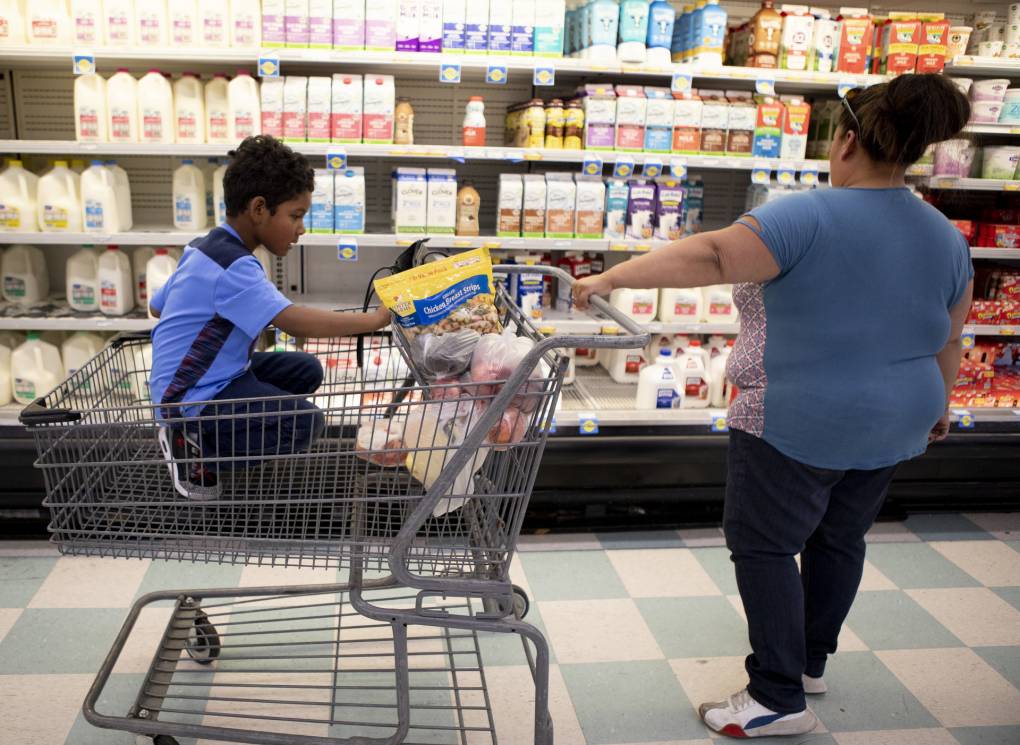
"caption": "Antionette Martinez and her son Caden, 5, who receive CalFresh, do their weekly grocery shopping at FoodMaxx on July 26, 2019. ",
"description": null,
"title": "RS43261_FOOD photo-qut",
"credit": "Anne Wernikoff/CalMatters",
"status": "inherit",
"isLoading": false,
"fetchFailed": false
},
"news_11945611": {
"type": "attachments",
"id": "news_11945611",
"meta": {
"index": "attachments_1716263798",
"site": "news",
"id": "11945611",
"found": true
},
"parent": 11945610,
"imgSizes": {
"twentyfourteen-full-width": {
"file": "https://ww2.kqed.org/app/uploads/sites/10/2023/03/gettyimages-1342295960-49aa524663c3162e1f111e9e99559270fdce48b5-1038x576.jpg",
"width": 1038,
"mimeType": "image/jpeg",
"height": 576
},
"thumbnail": {
"file": "https://ww2.kqed.org/app/uploads/sites/10/2023/03/gettyimages-1342295960-49aa524663c3162e1f111e9e99559270fdce48b5-160x120.jpg",
"width": 160,
"mimeType": "image/jpeg",
"height": 120
},
"post-thumbnail": {
"file": "https://ww2.kqed.org/app/uploads/sites/10/2023/03/gettyimages-1342295960-49aa524663c3162e1f111e9e99559270fdce48b5-672x372.jpg",
"width": 672,
"mimeType": "image/jpeg",
"height": 372
},
"kqedFullSize": {
"file": "https://ww2.kqed.org/app/uploads/sites/10/2023/03/gettyimages-1342295960-49aa524663c3162e1f111e9e99559270fdce48b5-scaled.jpg",
"width": 2560,
"height": 1918
},
"2048x2048": {
"file": "https://ww2.kqed.org/app/uploads/sites/10/2023/03/gettyimages-1342295960-49aa524663c3162e1f111e9e99559270fdce48b5-2048x1534.jpg",
"width": 2048,
"mimeType": "image/jpeg",
"height": 1534
},
"large": {
"file": "https://ww2.kqed.org/app/uploads/sites/10/2023/03/gettyimages-1342295960-49aa524663c3162e1f111e9e99559270fdce48b5-1020x764.jpg",
"width": 1020,
"mimeType": "image/jpeg",
"height": 764
},
"1536x1536": {
"file": "https://ww2.kqed.org/app/uploads/sites/10/2023/03/gettyimages-1342295960-49aa524663c3162e1f111e9e99559270fdce48b5-1536x1151.jpg",
"width": 1536,
"mimeType": "image/jpeg",
"height": 1151
},
"full-width": {
"file": "https://ww2.kqed.org/app/uploads/sites/10/2023/03/gettyimages-1342295960-49aa524663c3162e1f111e9e99559270fdce48b5-1920x1438.jpg",
"width": 1920,
"mimeType": "image/jpeg",
"height": 1438
},
"medium": {
"file": "https://ww2.kqed.org/app/uploads/sites/10/2023/03/gettyimages-1342295960-49aa524663c3162e1f111e9e99559270fdce48b5-800x599.jpg",
"width": 800,
"mimeType": "image/jpeg",
"height": 599
}
},
"publishDate": 1680628085,
"modified": 1680639680,
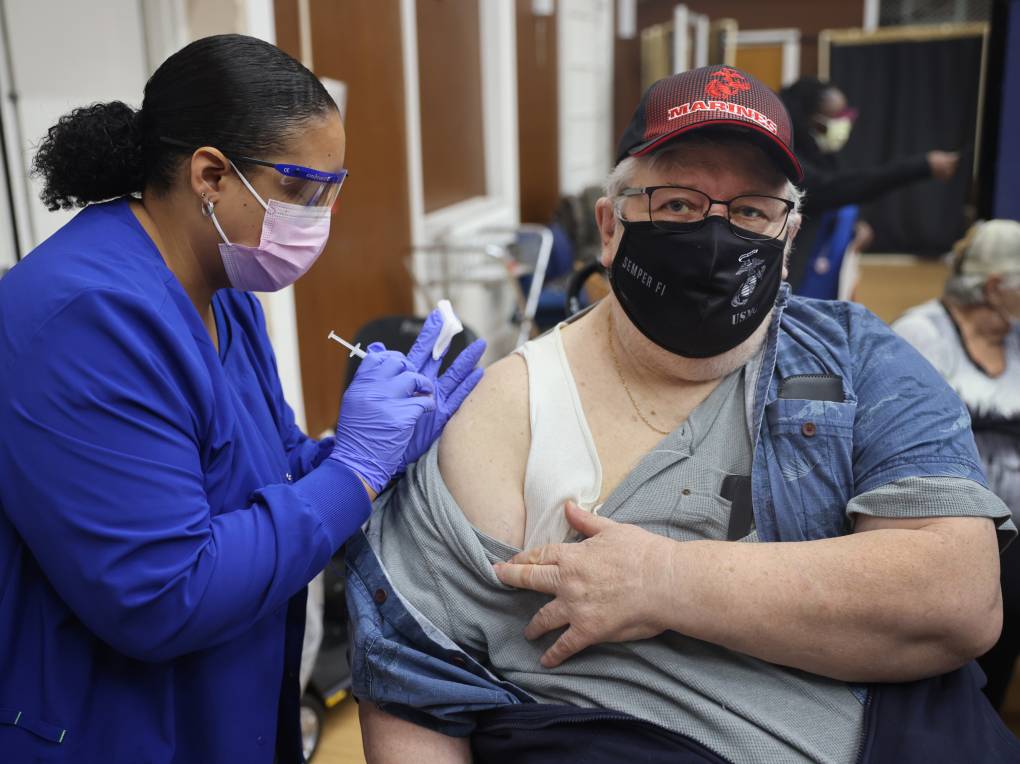
"caption": "Shana Alesi administers a COVID-19 booster vaccine to Marine Corps veteran Bill Fatz at the Edward Hines Jr. VA Hospital on Sept. 24, 2021 in Hines, Illinois. ",
"description": "Today, CDC Director Rochelle Walensky endorsed a booster shot of the Pfizer-BioNTech COVID-19 vaccine for people 65 years and older, those with underlying medical conditions or those who work in high-risk situations.",
"title": "Even though the uptake of the omicron booster has been lackluster, federal officials have decided they will soon let some adults get a second shot.",
"credit": "Scott Olson/Getty Images",
"status": "inherit",
"altTag": "A nurse in blue scrubs and purple latex gloves wears a mask and goggles as she administers a needle into the arm of a patient who moves his denim shirt off of his shoulder for her. He wears a black mask and his gray hair is seen from under his black baseball cap. More patients and nurses are seen in the background from inside a clinic setting.",
"isLoading": false,
"fetchFailed": false
},
"news_11943867": {
"type": "attachments",
"id": "news_11943867",
"meta": {
"index": "attachments_1716263798",
"site": "news",
"id": "11943867",
"found": true
},
"parent": 11943845,
"imgSizes": {
"twentyfourteen-full-width": {
"file": "https://ww2.kqed.org/app/uploads/sites/10/2023/03/GettyImages-1248040257-1024x576.jpg",
"width": 1024,
"mimeType": "image/jpeg",
"height": 576
},
"thumbnail": {
"file": "https://ww2.kqed.org/app/uploads/sites/10/2023/03/GettyImages-1248040257-160x92.jpg",
"width": 160,
"mimeType": "image/jpeg",
"height": 92
},
"post-thumbnail": {
"file": "https://ww2.kqed.org/app/uploads/sites/10/2023/03/GettyImages-1248040257-672x372.jpg",
"width": 672,
"mimeType": "image/jpeg",
"height": 372
},
"kqedFullSize": {
"file": "https://ww2.kqed.org/app/uploads/sites/10/2023/03/GettyImages-1248040257.jpg",
"width": 1024,
"height": 588
},
"large": {
"file": "https://ww2.kqed.org/app/uploads/sites/10/2023/03/GettyImages-1248040257-1020x586.jpg",
"width": 1020,
"mimeType": "image/jpeg",
"height": 586
},
"medium": {
"file": "https://ww2.kqed.org/app/uploads/sites/10/2023/03/GettyImages-1248040257-800x459.jpg",
"width": 800,
"mimeType": "image/jpeg",
"height": 459
}
},
"publishDate": 1679013326,
"modified": 1679015391,
"caption": "An aerial view shows a flooded neighborhood in the unincorporated community of Pajaro in Watsonville, on March 11, 2023. Residents were forced to evacuate in the middle of the night after an atmospheric river surge broke the Pajaro levee and sent floodwaters flowing into the community.",
"description": null,
"title": "US-WEATHER-CALIFORNIA-FLOOD",
"credit": "Josh Edelson/AFP via Getty Images",
"status": "inherit",
"altTag": "An aerial image of a flooded town with partially submerged houses and cars in brown flood waters.",
"isLoading": false,
"fetchFailed": false
},
"news_11942722": {
"type": "attachments",
"id": "news_11942722",
"meta": {
"index": "attachments_1716263798",
"site": "news",
"id": "11942722",
"found": true
},
"parent": 11942172,
"imgSizes": {
"twentyfourteen-full-width": {
"file": "https://ww2.kqed.org/app/uploads/sites/10/2023/03/RS63490_GettyImages-1407371840-qut-1038x576.jpg",
"width": 1038,
"mimeType": "image/jpeg",
"height": 576
},
"thumbnail": {
"file": "https://ww2.kqed.org/app/uploads/sites/10/2023/03/RS63490_GettyImages-1407371840-qut-160x107.jpg",
"width": 160,
"mimeType": "image/jpeg",
"height": 107
},
"post-thumbnail": {
"file": "https://ww2.kqed.org/app/uploads/sites/10/2023/03/RS63490_GettyImages-1407371840-qut-672x372.jpg",
"width": 672,
"mimeType": "image/jpeg",
"height": 372
},
"kqedFullSize": {
"file": "https://ww2.kqed.org/app/uploads/sites/10/2023/03/RS63490_GettyImages-1407371840-qut.jpg",
"width": 1920,
"height": 1280
},
"large": {
"file": "https://ww2.kqed.org/app/uploads/sites/10/2023/03/RS63490_GettyImages-1407371840-qut-1020x680.jpg",
"width": 1020,
"mimeType": "image/jpeg",
"height": 680
},
"1536x1536": {
"file": "https://ww2.kqed.org/app/uploads/sites/10/2023/03/RS63490_GettyImages-1407371840-qut-1536x1024.jpg",
"width": 1536,
"mimeType": "image/jpeg",
"height": 1024
},
"medium": {
"file": "https://ww2.kqed.org/app/uploads/sites/10/2023/03/RS63490_GettyImages-1407371840-qut-800x533.jpg",
"width": 800,
"mimeType": "image/jpeg",
"height": 533
}
},
"publishDate": 1678147499,
"modified": 1678222918,
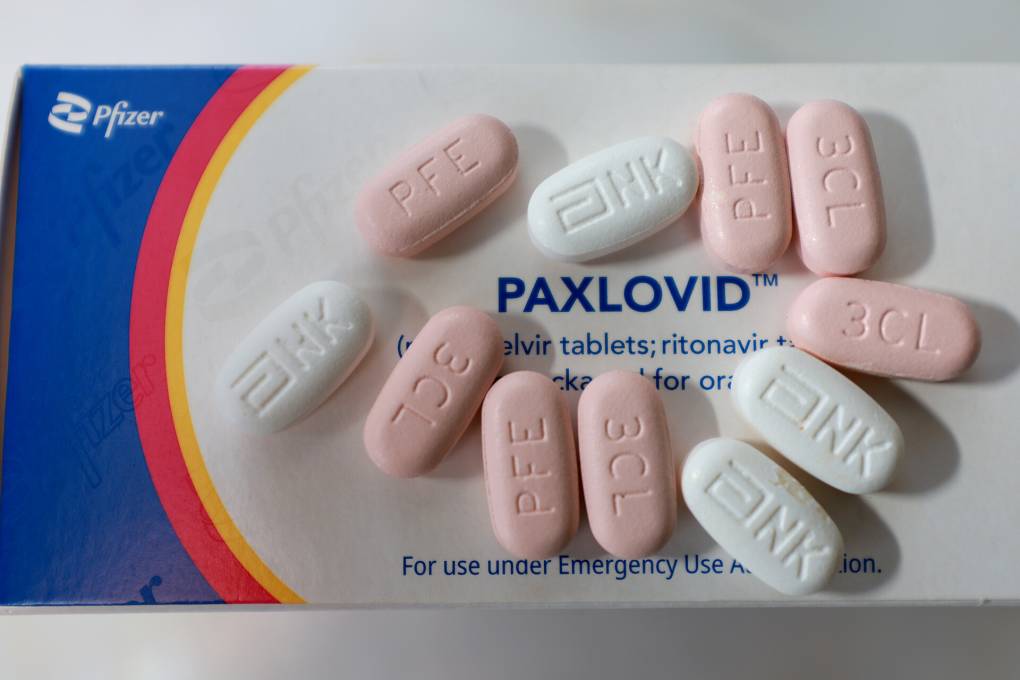
"caption": "Paxlovid is a highly effective antiviral treatment for COVID, available free by prescription in California. The treatment is fairly simple, and entails taking a pill orally twice a day, for five days.",
"description": null,
"title": "paxlovid-free",
"credit": "Joe Raedle/Getty Images",
"status": "inherit",
"altTag": "A box of the COVID antiviral treatment Paxlovid photographed from above, with several pink and white pills scattered on the box.",
"isLoading": false,
"fetchFailed": false
},
"news_11942407": {
"type": "attachments",
"id": "news_11942407",
"meta": {
"index": "attachments_1716263798",
"site": "news",
"id": "11942407",
"found": true
},
"parent": 11942406,
"imgSizes": {
"twentyfourteen-full-width": {
"file": "https://ww2.kqed.org/app/uploads/sites/10/2023/03/RS63307_GettyImages-1236483668-qut-1038x576.jpg",
"width": 1038,
"mimeType": "image/jpeg",
"height": 576
},
"thumbnail": {
"file": "https://ww2.kqed.org/app/uploads/sites/10/2023/03/RS63307_GettyImages-1236483668-qut-160x107.jpg",
"width": 160,
"mimeType": "image/jpeg",
"height": 107
},
"post-thumbnail": {
"file": "https://ww2.kqed.org/app/uploads/sites/10/2023/03/RS63307_GettyImages-1236483668-qut-672x372.jpg",
"width": 672,
"mimeType": "image/jpeg",
"height": 372
},
"kqedFullSize": {
"file": "https://ww2.kqed.org/app/uploads/sites/10/2023/03/RS63307_GettyImages-1236483668-qut.jpg",
"width": 1920,
"height": 1280
},
"large": {
"file": "https://ww2.kqed.org/app/uploads/sites/10/2023/03/RS63307_GettyImages-1236483668-qut-1020x680.jpg",
"width": 1020,
"mimeType": "image/jpeg",
"height": 680
},
"1536x1536": {
"file": "https://ww2.kqed.org/app/uploads/sites/10/2023/03/RS63307_GettyImages-1236483668-qut-1536x1024.jpg",
"width": 1536,
"mimeType": "image/jpeg",
"height": 1024
},
"medium": {
"file": "https://ww2.kqed.org/app/uploads/sites/10/2023/03/RS63307_GettyImages-1236483668-qut-800x533.jpg",
"width": 800,
"mimeType": "image/jpeg",
"height": 533
}
},
"publishDate": 1677809265,
"modified": 1677809306,
"caption": "California Health and Human Services Secretary Dr. Mark Ghaly speaks during a press conference about Covid-19 vaccinations and housing for homeless veterans on November 10, 2021 in Los Angeles, California.",
"description": null,
"title": "US-HEALTH-VIRUS-VACCINES",
"credit": "Patrick T. Fallon/AFP via Getty Images",
"status": "inherit",
"altTag": null,
"isLoading": false,
"fetchFailed": false
},
"news_11938586": {
"type": "attachments",
"id": "news_11938586",
"meta": {
"index": "attachments_1716263798",
"site": "news",
"id": "11938586",
"found": true
},
"parent": 11938585,
"imgSizes": {
"twentyfourteen-full-width": {
"file": "https://ww2.kqed.org/app/uploads/sites/10/2023/01/ap22024441331032-1-f0986da3291d51e624d36cef1b107c4e420bb075-1038x576.jpg",
"width": 1038,
"mimeType": "image/jpeg",
"height": 576
},
"thumbnail": {
"file": "https://ww2.kqed.org/app/uploads/sites/10/2023/01/ap22024441331032-1-f0986da3291d51e624d36cef1b107c4e420bb075-160x120.jpg",
"width": 160,
"mimeType": "image/jpeg",
"height": 120
},
"post-thumbnail": {
"file": "https://ww2.kqed.org/app/uploads/sites/10/2023/01/ap22024441331032-1-f0986da3291d51e624d36cef1b107c4e420bb075-672x372.jpg",
"width": 672,
"mimeType": "image/jpeg",
"height": 372
},
"kqedFullSize": {
"file": "https://ww2.kqed.org/app/uploads/sites/10/2023/01/ap22024441331032-1-f0986da3291d51e624d36cef1b107c4e420bb075-scaled.jpg",
"width": 2560,
"height": 1920
},
"2048x2048": {
"file": "https://ww2.kqed.org/app/uploads/sites/10/2023/01/ap22024441331032-1-f0986da3291d51e624d36cef1b107c4e420bb075-2048x1536.jpg",
"width": 2048,
"mimeType": "image/jpeg",
"height": 1536
},
"large": {
"file": "https://ww2.kqed.org/app/uploads/sites/10/2023/01/ap22024441331032-1-f0986da3291d51e624d36cef1b107c4e420bb075-1020x765.jpg",
"width": 1020,
"mimeType": "image/jpeg",
"height": 765
},
"1536x1536": {
"file": "https://ww2.kqed.org/app/uploads/sites/10/2023/01/ap22024441331032-1-f0986da3291d51e624d36cef1b107c4e420bb075-1536x1152.jpg",
"width": 1536,
"mimeType": "image/jpeg",
"height": 1152
},
"full-width": {
"file": "https://ww2.kqed.org/app/uploads/sites/10/2023/01/ap22024441331032-1-f0986da3291d51e624d36cef1b107c4e420bb075-1920x1440.jpg",
"width": 1920,
"mimeType": "image/jpeg",
"height": 1440
},
"medium": {
"file": "https://ww2.kqed.org/app/uploads/sites/10/2023/01/ap22024441331032-1-f0986da3291d51e624d36cef1b107c4e420bb075-800x600.jpg",
"width": 800,
"mimeType": "image/jpeg",
"height": 600
}
},
"publishDate": 1674158762,
"modified": 1674163416,
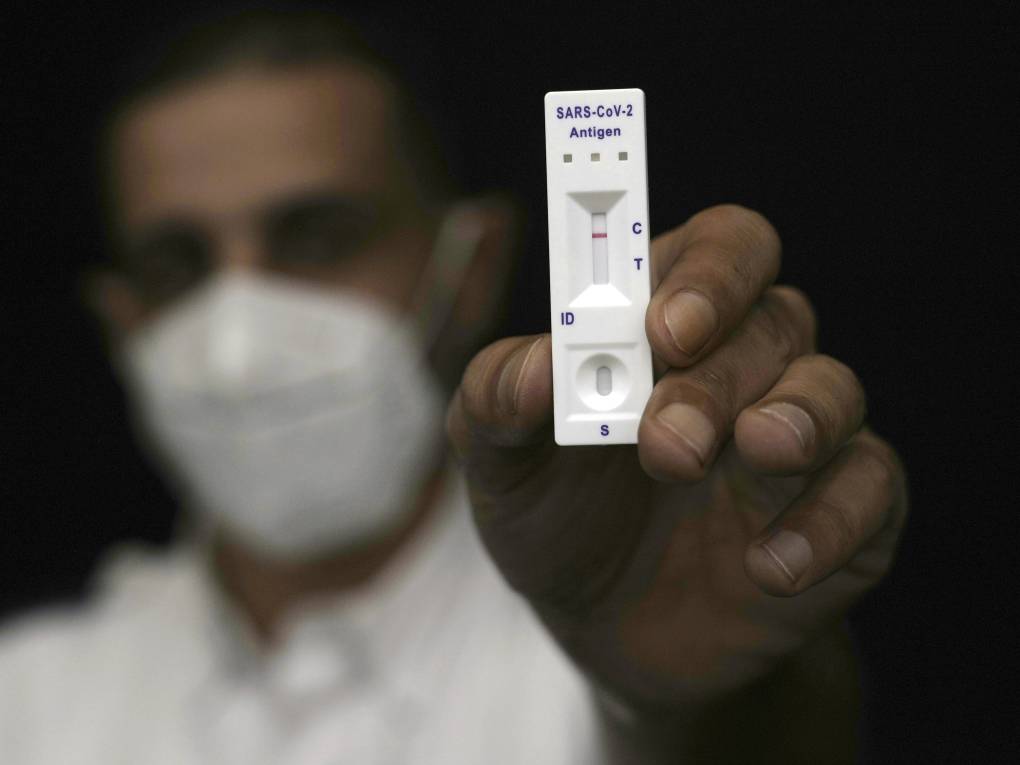
"caption": "A man holds a negative rapid antigen coronavirus test at a makeshift testing center in East Jerusalem on Jan. 24, 2022.",
"description": null,
"title": "Rapid antigen tests are ubiquitous, but some Americans have learned the hard way that a negative test result isn't necessarily the final word.",
"credit": "Mahmoud Illean/AP",
"status": "inherit",
"altTag": "A masked-person holding a COVID rapid test showing a negative result.",
"isLoading": false,
"fetchFailed": false
},
"news_11935944": {
"type": "attachments",
"id": "news_11935944",
"meta": {
"index": "attachments_1716263798",
"site": "news",
"id": "11935944",
"found": true
},
"parent": 11935942,
"imgSizes": {
"thumbnail": {
"file": "https://ww2.kqed.org/app/uploads/sites/10/2022/12/sick-girl-in-bed-160x93.png",
"width": 160,
"mimeType": "image/png",
"height": 93
},
"post-thumbnail": {
"file": "https://ww2.kqed.org/app/uploads/sites/10/2022/12/sick-girl-in-bed-672x372.png",
"width": 672,
"mimeType": "image/png",
"height": 372
},
"kqedFullSize": {
"file": "https://ww2.kqed.org/app/uploads/sites/10/2022/12/sick-girl-in-bed.png",
"width": 901,
"height": 526
},
"medium": {
"file": "https://ww2.kqed.org/app/uploads/sites/10/2022/12/sick-girl-in-bed-800x467.png",
"width": 800,
"mimeType": "image/png",
"height": 467
}
},
"publishDate": 1671511783,
"modified": 1671511809,
"caption": "La prestación de enfermedad por COVID-19 expira el 31 de diciembre para los trabajadores de California que cumplan los requisitos.",
"description": null,
"title": "sick girl in bed",
"credit": "Andrea Piacquadio/ Pexels",
"status": "inherit",
"altTag": null,
"isLoading": false,
"fetchFailed": false
},
"news_11935441": {
"type": "attachments",
"id": "news_11935441",
"meta": {
"index": "attachments_1716263798",
"site": "news",
"id": "11935441",
"found": true
},
"parent": 11897177,
"imgSizes": {
"twentyfourteen-full-width": {
"file": "https://ww2.kqed.org/app/uploads/sites/10/2021/11/RS61678_GettyImages-1241546546-qut-1038x576.jpg",
"width": 1038,
"mimeType": "image/jpeg",
"height": 576
},
"thumbnail": {
"file": "https://ww2.kqed.org/app/uploads/sites/10/2021/11/RS61678_GettyImages-1241546546-qut-160x110.jpg",
"width": 160,
"mimeType": "image/jpeg",
"height": 110
},
"post-thumbnail": {
"file": "https://ww2.kqed.org/app/uploads/sites/10/2021/11/RS61678_GettyImages-1241546546-qut-672x372.jpg",
"width": 672,
"mimeType": "image/jpeg",
"height": 372
},
"kqedFullSize": {
"file": "https://ww2.kqed.org/app/uploads/sites/10/2021/11/RS61678_GettyImages-1241546546-qut.jpg",
"width": 1920,
"height": 1324
},
"large": {
"file": "https://ww2.kqed.org/app/uploads/sites/10/2021/11/RS61678_GettyImages-1241546546-qut-1020x703.jpg",
"width": 1020,
"mimeType": "image/jpeg",
"height": 703
},
"1536x1536": {
"file": "https://ww2.kqed.org/app/uploads/sites/10/2021/11/RS61678_GettyImages-1241546546-qut-1536x1059.jpg",
"width": 1536,
"mimeType": "image/jpeg",
"height": 1059
},
"medium": {
"file": "https://ww2.kqed.org/app/uploads/sites/10/2021/11/RS61678_GettyImages-1241546546-qut-800x552.jpg",
"width": 800,
"mimeType": "image/jpeg",
"height": 552
}
},
"publishDate": 1671146899,
"modified": 1671150120,
"caption": "Volunteers place onions and potatoes into small bags at a food distribution event sponsored by the Second Harvest Food Bank of Central Florida and Orange County at St. John Vianney Catholic Church in Orlando, Florida. High food and gas prices are squeezing working families, sending some to food pantries for the first time, but providers are struggling with inflation costs as demand spikes.",
"description": null,
"title": "food-bank-near-me",
"credit": "Paul Hennessy/SOPA Images/LightRocket via Getty Images",
"status": "inherit",
"altTag": "A group of three volunteers wearing bright yellow jackets photographed from above, sorting large white bags of onions and potatoes.",
"isLoading": false,
"fetchFailed": false
},
"news_11926460": {
"type": "attachments",
"id": "news_11926460",
"meta": {
"index": "attachments_1716263798",
"site": "news",
"id": "11926460",
"found": true
},
"parent": 11904834,
"imgSizes": {
"twentyfourteen-full-width": {
"file": "https://cdn.kqed.org/wp-content/uploads/sites/10/2022/09/RS58805_GettyImages-1242499563-qut-1038x576.jpg",
"width": 1038,
"mimeType": "image/jpeg",
"height": 576
},
"thumbnail": {
"file": "https://cdn.kqed.org/wp-content/uploads/sites/10/2022/09/RS58805_GettyImages-1242499563-qut-160x107.jpg",
"width": 160,
"mimeType": "image/jpeg",
"height": 107
},
"post-thumbnail": {
"file": "https://cdn.kqed.org/wp-content/uploads/sites/10/2022/09/RS58805_GettyImages-1242499563-qut-672x372.jpg",
"width": 672,
"mimeType": "image/jpeg",
"height": 372
},
"kqedFullSize": {
"file": "https://cdn.kqed.org/wp-content/uploads/sites/10/2022/09/RS58805_GettyImages-1242499563-qut.jpg",
"width": 1920,
"height": 1280
},
"large": {
"file": "https://cdn.kqed.org/wp-content/uploads/sites/10/2022/09/RS58805_GettyImages-1242499563-qut-1020x680.jpg",
"width": 1020,
"mimeType": "image/jpeg",
"height": 680
},
"1536x1536": {
"file": "https://cdn.kqed.org/wp-content/uploads/sites/10/2022/09/RS58805_GettyImages-1242499563-qut-1536x1024.jpg",
"width": 1536,
"mimeType": "image/jpeg",
"height": 1024
},
"medium": {
"file": "https://cdn.kqed.org/wp-content/uploads/sites/10/2022/09/RS58805_GettyImages-1242499563-qut-800x533.jpg",
"width": 800,
"mimeType": "image/jpeg",
"height": 533
}
},
"publishDate": 1663861008,
"modified": 1701993524,
"caption": "A stack of BinaxNow COVID-19 at-home test kits.",
"description": null,
"title": "free-covid-tests-usps",
"credit": "Nathan Howard/Getty Images",
"status": "inherit",
"altTag": "A stack of boxes sits on a table.",
"isLoading": false,
"fetchFailed": false
},
"news_11933866": {
"type": "attachments",
"id": "news_11933866",
"meta": {
"index": "attachments_1716263798",
"site": "news",
"id": "11933866",
"found": true
},
"parent": 11933750,
"imgSizes": {
"twentyfourteen-full-width": {
"file": "https://ww2.kqed.org/app/uploads/sites/10/2023/12/GettyImages-1445026400-1024x576.jpg",
"width": 1024,
"mimeType": "image/jpeg",
"height": 576
},
"thumbnail": {
"file": "https://ww2.kqed.org/app/uploads/sites/10/2023/12/GettyImages-1445026400-160x103.jpg",
"width": 160,
"mimeType": "image/jpeg",
"height": 103
},
"post-thumbnail": {
"file": "https://ww2.kqed.org/app/uploads/sites/10/2023/12/GettyImages-1445026400-672x372.jpg",
"width": 672,
"mimeType": "image/jpeg",
"height": 372
},
"kqedFullSize": {
"file": "https://ww2.kqed.org/app/uploads/sites/10/2023/12/GettyImages-1445026400.jpg",
"width": 1024,
"height": 662
},
"large": {
"file": "https://ww2.kqed.org/app/uploads/sites/10/2023/12/GettyImages-1445026400-1020x659.jpg",
"width": 1020,
"mimeType": "image/jpeg",
"height": 659
},
"medium": {
"file": "https://ww2.kqed.org/app/uploads/sites/10/2023/12/GettyImages-1445026400-800x517.jpg",
"width": 800,
"mimeType": "image/jpeg",
"height": 517
}
},
"publishDate": 1670009643,
"modified": 1670265185,
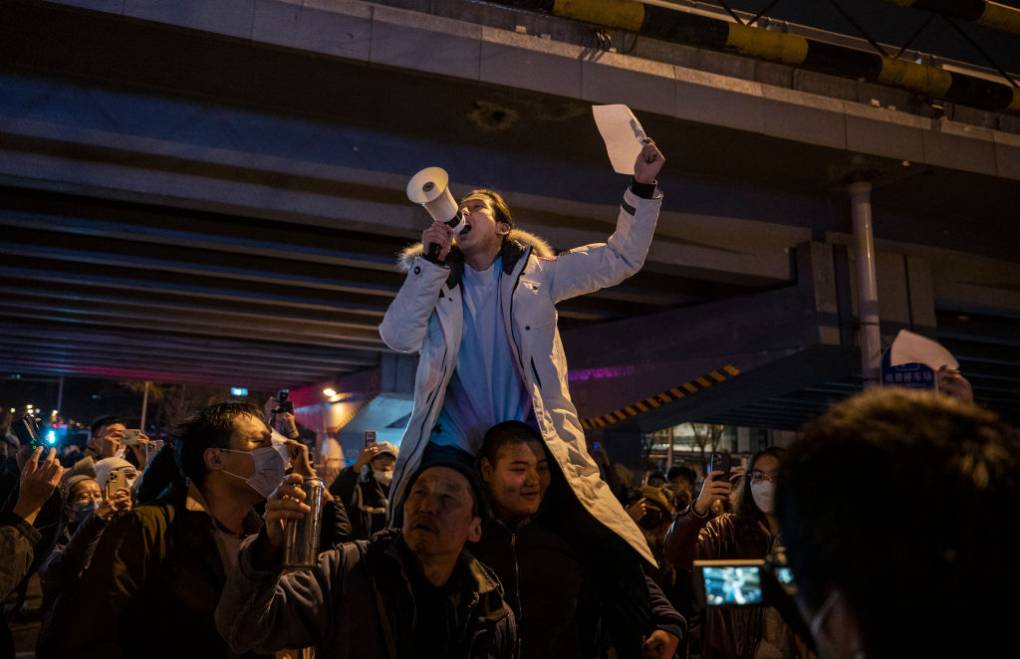
"caption": "Demonstrators in Beijing protest against China's strict zero-COVID measures, on Nov. 28, 2022. Protesters took to the streets in multiple Chinese cities after a deadly apartment fire in Xinjiang province sparked a national outcry.",
"description": null,
"title": "Protest in Beijing Against China Covid Measures",
"credit": "Kevin Frayer/Getty Images",
"status": "inherit",
"altTag": "A protester sitting on someone's shoulders, yells into a bullhorn.",
"isLoading": false,
"fetchFailed": false
},
"news_11933663": {
"type": "attachments",
"id": "news_11933663",
"meta": {
"index": "attachments_1716263798",
"site": "news",
"id": "11933663",
"found": true
},
"parent": 11933614,
"imgSizes": {
"twentyfourteen-full-width": {
"file": "https://ww2.kqed.org/app/uploads/sites/10/2022/11/4F154C5C-22C8-4DB1-A259-D48F3ED86DBE-1038x576.jpg",
"width": 1038,
"mimeType": "image/jpeg",
"height": 576
},
"thumbnail": {
"file": "https://ww2.kqed.org/app/uploads/sites/10/2022/11/4F154C5C-22C8-4DB1-A259-D48F3ED86DBE-160x120.jpg",
"width": 160,
"mimeType": "image/jpeg",
"height": 120
},
"post-thumbnail": {
"file": "https://ww2.kqed.org/app/uploads/sites/10/2022/11/4F154C5C-22C8-4DB1-A259-D48F3ED86DBE-672x372.jpg",
"width": 672,
"mimeType": "image/jpeg",
"height": 372
},
"kqedFullSize": {
"file": "https://ww2.kqed.org/app/uploads/sites/10/2022/11/4F154C5C-22C8-4DB1-A259-D48F3ED86DBE-scaled.jpg",
"width": 2560,
"height": 1928
},
"2048x2048": {
"file": "https://ww2.kqed.org/app/uploads/sites/10/2022/11/4F154C5C-22C8-4DB1-A259-D48F3ED86DBE-2048x1542.jpg",
"width": 2048,
"mimeType": "image/jpeg",
"height": 1542
},
"large": {
"file": "https://ww2.kqed.org/app/uploads/sites/10/2022/11/4F154C5C-22C8-4DB1-A259-D48F3ED86DBE-1020x768.jpg",
"width": 1020,
"mimeType": "image/jpeg",
"height": 768
},
"1536x1536": {
"file": "https://ww2.kqed.org/app/uploads/sites/10/2022/11/4F154C5C-22C8-4DB1-A259-D48F3ED86DBE-1536x1157.jpg",
"width": 1536,
"mimeType": "image/jpeg",
"height": 1157
},
"full-width": {
"file": "https://ww2.kqed.org/app/uploads/sites/10/2022/11/4F154C5C-22C8-4DB1-A259-D48F3ED86DBE-1920x1446.jpg",
"width": 1920,
"mimeType": "image/jpeg",
"height": 1446
},
"medium": {
"file": "https://ww2.kqed.org/app/uploads/sites/10/2022/11/4F154C5C-22C8-4DB1-A259-D48F3ED86DBE-800x602.jpg",
"width": 800,
"mimeType": "image/jpeg",
"height": 602
}
},
"publishDate": 1669854504,
"modified": 1669857778,
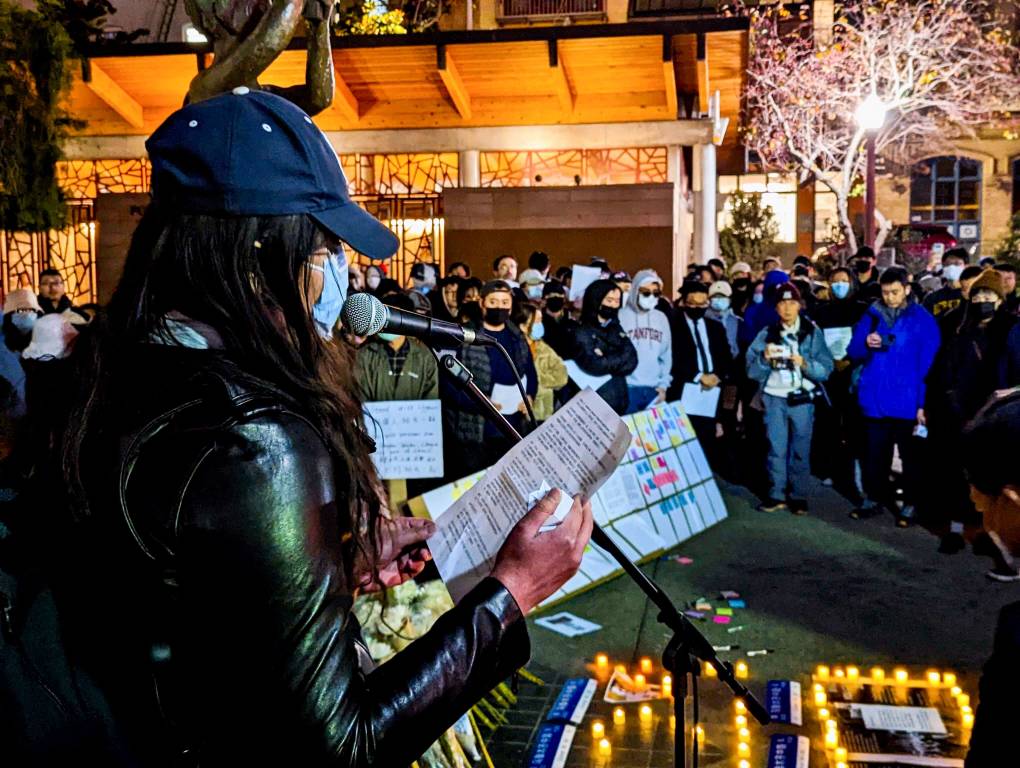
"caption": "A protester reads a personal testimonial at Portsmouth Square, a public space in San Francisco's Chinatown, stand at a vigil on November 29, 2022, for 10 people killed in Xinjiang, China earlier in the month.",
"description": null,
"title": "4F154C5C-22C8-4DB1-A259-D48F3ED86DBE",
"credit": "Joe Fitzgerald Rodriguez/KQED",
"status": "inherit",
"altTag": "A woman wearing a mask, hat and jacket holds a piece of paper in near a microphone outside surrounded by a crowd of people.",
"isLoading": false,
"fetchFailed": false
},
"news_11927665": {
"type": "attachments",
"id": "news_11927665",
"meta": {
"index": "attachments_1716263798",
"site": "news",
"id": "11927665",
"found": true
},
"parent": 11927664,
"imgSizes": {
"twentyfourteen-full-width": {
"file": "https://ww2.kqed.org/app/uploads/sites/10/2022/10/gettyimages-1240649087-562ad186ebb4d575d473dd82897a4303ec164f7f-1038x576.jpg",
"width": 1038,
"mimeType": "image/jpeg",
"height": 576
},
"thumbnail": {
"file": "https://ww2.kqed.org/app/uploads/sites/10/2022/10/gettyimages-1240649087-562ad186ebb4d575d473dd82897a4303ec164f7f-160x120.jpg",
"width": 160,
"mimeType": "image/jpeg",
"height": 120
},
"post-thumbnail": {
"file": "https://ww2.kqed.org/app/uploads/sites/10/2022/10/gettyimages-1240649087-562ad186ebb4d575d473dd82897a4303ec164f7f-672x372.jpg",
"width": 672,
"mimeType": "image/jpeg",
"height": 372
},
"kqedFullSize": {
"file": "https://ww2.kqed.org/app/uploads/sites/10/2022/10/gettyimages-1240649087-562ad186ebb4d575d473dd82897a4303ec164f7f-scaled.jpg",
"width": 2560,
"height": 1919
},
"2048x2048": {
"file": "https://ww2.kqed.org/app/uploads/sites/10/2022/10/gettyimages-1240649087-562ad186ebb4d575d473dd82897a4303ec164f7f-2048x1535.jpg",
"width": 2048,
"mimeType": "image/jpeg",
"height": 1535
},
"large": {
"file": "https://ww2.kqed.org/app/uploads/sites/10/2022/10/gettyimages-1240649087-562ad186ebb4d575d473dd82897a4303ec164f7f-1020x764.jpg",
"width": 1020,
"mimeType": "image/jpeg",
"height": 764
},
"1536x1536": {
"file": "https://ww2.kqed.org/app/uploads/sites/10/2022/10/gettyimages-1240649087-562ad186ebb4d575d473dd82897a4303ec164f7f-1536x1151.jpg",
"width": 1536,
"mimeType": "image/jpeg",
"height": 1151
},
"full-width": {
"file": "https://ww2.kqed.org/app/uploads/sites/10/2022/10/gettyimages-1240649087-562ad186ebb4d575d473dd82897a4303ec164f7f-1920x1439.jpg",
"width": 1920,
"mimeType": "image/jpeg",
"height": 1439
},
"medium": {
"file": "https://ww2.kqed.org/app/uploads/sites/10/2022/10/gettyimages-1240649087-562ad186ebb4d575d473dd82897a4303ec164f7f-800x600.jpg",
"width": 800,
"mimeType": "image/jpeg",
"height": 600
}
},
"publishDate": 1664910032,
"modified": 1669767607,
"caption": "Under Twitter's new owner, Elon Musk — who himself has spread COVID misinformation — the platform has rolled back its policy banning the spread of misinformation related to the pandemic.",
"description": "This illustration photo taken May 13, 2022, displays Elon Musks Twitter account with a Twitter logo in the background. Under new owner Musk — who has spread COVID misinformation — the platform has rolled back its policy banning the spread of misinformation related to the pandemic.",
"title": "Billionaire Elon Musk has told Twitter he's willing to buy the company after all, and at the originally agreed upon price of $54.20 per share.",
"credit": "Chris Delmas/AFP via Getty Images",
"status": "inherit",
"altTag": "A hand holding a smartphone showing Elon Musks Twitter account.",
"isLoading": false,
"fetchFailed": false
}
},
"audioPlayerReducer": {
"postId": "stream_live",
"isPaused": true,
"isPlaying": false,
"pfsActive": false,
"pledgeModalIsOpen": true,
"playerDrawerIsOpen": false,
"liveAudioPlayStartedAt": 0,
"liveAudioPlayContext": ""
},
"authorsReducer": {
"byline_news_11945610": {
"type": "authors",
"id": "byline_news_11945610",
"meta": {
"override": true
},
"slug": "byline_news_11945610",
"name": " \u003ca href=\"https://www.npr.org/people/146944972/rob-stein\">Rob Stein\u003c/a>",
"isLoading": false
},
"byline_news_11943845": {
"type": "authors",
"id": "byline_news_11943845",
"meta": {
"override": true
},
"slug": "byline_news_11943845",
"name": "\u003ca href=\"https://www.kazu.org/people/jerimiah-oetting\">Jerimiah Oetting\u003c/a>, \u003ca href=\"https://www.kazu.org/\">KAZU\u003c/a>",
"isLoading": false
},
"byline_news_11938585": {
"type": "authors",
"id": "byline_news_11938585",
"meta": {
"override": true
},
"slug": "byline_news_11938585",
"name": "Sydney Lupkin",
"isLoading": false
},
"byline_news_11933482": {
"type": "authors",
"id": "byline_news_11933482",
"meta": {
"override": true
},
"slug": "byline_news_11933482",
"name": "David Klepper\u003cbr>The Associated Press",
"isLoading": false
},
"scottshafer": {
"type": "authors",
"id": "255",
"meta": {
"index": "authors_1716337520",
"id": "255",
"found": true
},
"name": "Scott Shafer",
"firstName": "Scott",
"lastName": "Shafer",
"slug": "scottshafer",
"email": "sshafer@kqed.org",
"display_author_email": false,
"staff_mastheads": [
"news"
],
"title": "KQED Contributor",
"bio": "Scott Shafer is a senior editor with the KQED Politics and Government desk. He is co-host of Political Breakdown, the award-winning radio show and podcast with a personal take on the world of politics. Scott came to KQED in 1998 to host the statewide\u003cem> California Report\u003c/em>. Prior to that he had extended stints in politics and government\u003cem>.\u003c/em> He uses that inside experience at KQED in his, reporting, hosting and analysis for the politics desk. Scott collaborated \u003cem>Political Breakdown a\u003c/em>nd on \u003cem>The Political Mind of Jerry Brown, \u003c/em>an eight-part series about the life and extraordinary political career of the former governor. For fun, he plays water polo with the San Francisco Tsunami.",
"avatar": "https://secure.gravatar.com/avatar/a62ebae45b79d7aed1a39a0e3bf68104?s=600&d=blank&r=g",
"twitter": "scottshafer",
"bluesky": null,
"facebook": null,
"instagram": null,
"linkedin": null,
"sites": [
{
"site": "news",
"roles": [
"editor"
]
},
{
"site": "stateofhealth",
"roles": [
"author"
]
},
{
"site": "science",
"roles": [
"author"
]
},
{
"site": "forum",
"roles": [
"subscriber"
]
},
{
"site": "liveblog",
"roles": [
"author"
]
}
],
"headData": {
"title": "Scott Shafer | KQED",
"description": "KQED Contributor",
"ogImgSrc": "https://secure.gravatar.com/avatar/a62ebae45b79d7aed1a39a0e3bf68104?s=600&d=blank&r=g",
"twImgSrc": "https://secure.gravatar.com/avatar/a62ebae45b79d7aed1a39a0e3bf68104?s=600&d=blank&r=g"
},
"isLoading": false,
"link": "/author/scottshafer"
},
"mlagos": {
"type": "authors",
"id": "3239",
"meta": {
"index": "authors_1716337520",
"id": "3239",
"found": true
},
"name": "Marisa Lagos",
"firstName": "Marisa",
"lastName": "Lagos",
"slug": "mlagos",
"email": "mlagos@kqed.org",
"display_author_email": false,
"staff_mastheads": [
"news"
],
"title": "KQED Contributor",
"bio": "Marisa Lagos is a correspondent for KQED’s California Politics and Government Desk and co-hosts the award-winning show and podcast, Political Breakdown. At KQED, Lagos also conducts reporting, analysis and investigations into state, local and national politics for radio, TV, online and onstage. In 2022, she and co-host, Scott Shafer, moderated the only gubernatorial debate in California. In 2020, the \u003ci>Washington Post\u003c/i> named her one of the top political journalists in California; she was nominated for a Peabody and won several other awards for her work investigating the 2017 California wildfires. She has worked at the \u003ci>San Francisco Chronicle\u003c/i>, \u003ci>San Francisco Examiner\u003c/i> and \u003ci>Los Angeles Times\u003c/i>. A UC Santa Barbara graduate, she lives in San Francisco with her two sons and husband.",
"avatar": "https://secure.gravatar.com/avatar/a261a0d3696fc066871ef96b85b5e7d2?s=600&d=blank&r=g",
"twitter": "@mlagos",
"facebook": null,
"instagram": null,
"linkedin": null,
"sites": [
{
"site": "arts",
"roles": [
"author"
]
},
{
"site": "news",
"roles": [
"editor"
]
},
{
"site": "science",
"roles": [
"editor"
]
},
{
"site": "forum",
"roles": [
"author"
]
},
{
"site": "liveblog",
"roles": [
"author"
]
}
],
"headData": {
"title": "Marisa Lagos | KQED",
"description": "KQED Contributor",
"ogImgSrc": "https://secure.gravatar.com/avatar/a261a0d3696fc066871ef96b85b5e7d2?s=600&d=blank&r=g",
"twImgSrc": "https://secure.gravatar.com/avatar/a261a0d3696fc066871ef96b85b5e7d2?s=600&d=blank&r=g"
},
"isLoading": false,
"link": "/author/mlagos"
},
"carlysevern": {
"type": "authors",
"id": "3243",
"meta": {
"index": "authors_1716337520",
"id": "3243",
"found": true
},
"name": "Carly Severn",
"firstName": "Carly",
"lastName": "Severn",
"slug": "carlysevern",
"email": "csevern@kqed.org",
"display_author_email": false,
"staff_mastheads": [
"news"
],
"title": "Senior Editor, Audience News ",
"bio": "Carly is KQED's Senior Editor of Audience News on the Digital News team, and has reported for the California Report Magazine, Bay Curious and KQED Arts. She's formerly the host of \u003ca href=\"http://ww2.kqed.org/pop/category/the-cooler/\" rel=\"noopener noreferrer\">The Cooler\u003c/a> podcast.",
"avatar": "https://secure.gravatar.com/avatar/54037bf5c128fe678f0ef26cec97a93f2e7f220a22d7285703328f12c42c1b1d?s=600&d=blank&r=g",
"twitter": "teacupinthebay",
"bluesky": null,
"facebook": null,
"instagram": null,
"linkedin": null,
"sites": [
{
"site": "",
"roles": [
"editor"
]
},
{
"site": "arts",
"roles": [
"editor"
]
},
{
"site": "news",
"roles": [
"administrator"
]
},
{
"site": "pop",
"roles": [
"editor"
]
},
{
"site": "futureofyou",
"roles": [
"editor"
]
},
{
"site": "about",
"roles": [
"administrator"
]
},
{
"site": "mindshift",
"roles": [
"editor"
]
},
{
"site": "bayareabites",
"roles": [
"editor"
]
},
{
"site": "stateofhealth",
"roles": [
"editor"
]
},
{
"site": "science",
"roles": [
"editor"
]
},
{
"site": "food",
"roles": [
"contributor"
]
},
{
"site": "forum",
"roles": [
"editor"
]
},
{
"site": "perspectives",
"roles": [
"administrator"
]
},
{
"site": "liveblog",
"roles": [
"editor"
]
}
],
"headData": {
"title": "Carly Severn | KQED",
"description": "Senior Editor, Audience News ",
"ogImgSrc": "https://secure.gravatar.com/avatar/54037bf5c128fe678f0ef26cec97a93f2e7f220a22d7285703328f12c42c1b1d?s=600&d=blank&r=g",
"twImgSrc": "https://secure.gravatar.com/avatar/54037bf5c128fe678f0ef26cec97a93f2e7f220a22d7285703328f12c42c1b1d?s=600&d=blank&r=g"
},
"isLoading": false,
"link": "/author/carlysevern"
},
"ecruzguevarra": {
"type": "authors",
"id": "8654",
"meta": {
"index": "authors_1716337520",
"id": "8654",
"found": true
},
"name": "Ericka Cruz Guevarra",
"firstName": "Ericka",
"lastName": "Cruz Guevarra",
"slug": "ecruzguevarra",
"email": "ecruzguevarra@kqed.org",
"display_author_email": true,
"staff_mastheads": [
"news"
],
"title": "Producer, The Bay Podcast",
"bio": "Ericka Cruz Guevarra is host of \u003ca href=\"https://www.kqed.org/podcasts/thebay\">\u003cem>The Bay\u003c/em>\u003c/a> podcast at KQED. Before host, she was the show’s producer. Her work in that capacity includes a three-part reported series on policing in Vallejo, which won a 2020 excellence in journalism award from the Society of Professional Journalists. Ericka has worked as a breaking news reporter at Oregon Public Broadcasting, helped produce the Code Switch podcast, and was KQED’s inaugural Raul Ramirez Diversity Fund intern. She’s also an alumna of NPR’s Next Generation Radio program. Send her an email if you have strong feelings about whether Fairfield and Suisun City are the Bay. Ericka is represented by SAG-AFTRA.",
"avatar": "https://secure.gravatar.com/avatar/accefc1de4bafc7e234b69bcb9b6f6536c130fd84709bc3069ef11a78787e1bb?s=600&d=blank&r=g",
"twitter": "NotoriousECG",
"bluesky": null,
"facebook": null,
"instagram": null,
"linkedin": null,
"sites": [
{
"site": "arts",
"roles": [
"subscriber"
]
},
{
"site": "news",
"roles": [
"editor",
"manage_categories"
]
},
{
"site": "futureofyou",
"roles": [
"subscriber"
]
},
{
"site": "stateofhealth",
"roles": [
"subscriber"
]
},
{
"site": "science",
"roles": [
"editor"
]
},
{
"site": "forum",
"roles": [
"subscriber"
]
}
],
"headData": {
"title": "Ericka Cruz Guevarra | KQED",
"description": "Producer, The Bay Podcast",
"ogImgSrc": "https://secure.gravatar.com/avatar/accefc1de4bafc7e234b69bcb9b6f6536c130fd84709bc3069ef11a78787e1bb?s=600&d=blank&r=g",
"twImgSrc": "https://secure.gravatar.com/avatar/accefc1de4bafc7e234b69bcb9b6f6536c130fd84709bc3069ef11a78787e1bb?s=600&d=blank&r=g"
},
"isLoading": false,
"link": "/author/ecruzguevarra"
},
"jasminegarnett": {
"type": "authors",
"id": "11530",
"meta": {
"index": "authors_1716337520",
"id": "11530",
"found": true
},
"name": "Jasmine Garnett",
"firstName": "Jasmine",
"lastName": "Garnett",
"slug": "jasminegarnett",
"email": "JGarnett@KQED.org",
"display_author_email": false,
"staff_mastheads": [
"news"
],
"title": "Senior Engagement Platforms Producer",
"bio": "Jasmine is a Senior Engagement Platforms Producer on the KQED News team. She is also a freelance writer, with work appearing in KQED, Bitch Media, and Kotaku among others. Jasmine graduated from UC Berkeley with a degree in Media Studies, where she was also an Arts and Entertainment reporter at the Daily Californian.",
"avatar": "https://secure.gravatar.com/avatar/a6ea8b0641874311533b7401bee15c8e?s=600&d=blank&r=g",
"twitter": "JFLGarnett",
"facebook": null,
"instagram": null,
"linkedin": null,
"sites": [
{
"site": "arts",
"roles": [
"author"
]
},
{
"site": "news",
"roles": [
"editor"
]
},
{
"site": "about",
"roles": [
"editor"
]
},
{
"site": "science",
"roles": [
"editor"
]
},
{
"site": "forum",
"roles": [
"editor"
]
},
{
"site": "pressroom",
"roles": [
"editor"
]
}
],
"headData": {
"title": "Jasmine Garnett | KQED",
"description": "Senior Engagement Platforms Producer",
"ogImgSrc": "https://secure.gravatar.com/avatar/a6ea8b0641874311533b7401bee15c8e?s=600&d=blank&r=g",
"twImgSrc": "https://secure.gravatar.com/avatar/a6ea8b0641874311533b7401bee15c8e?s=600&d=blank&r=g"
},
"isLoading": false,
"link": "/author/jasminegarnett"
},
"amontecillo": {
"type": "authors",
"id": "11649",
"meta": {
"index": "authors_1716337520",
"id": "11649",
"found": true
},
"name": "Alan Montecillo",
"firstName": "Alan",
"lastName": "Montecillo",
"slug": "amontecillo",
"email": "amontecillo@kqed.org",
"display_author_email": false,
"staff_mastheads": [
"news"
],
"title": "KQED Contributor",
"bio": "Alan Montecillo is the senior editor of \u003cem>\u003ca href=\"http://kqed.org/thebay\">The Bay\u003c/a>, \u003c/em> KQED's local news podcast. Before moving to the Bay Area, he worked as a senior talk show producer for WILL in Champaign-Urbana, Illinois and at Oregon Public Broadcasting in Portland, Oregon. He has won journalism awards from the Society of Professional Journalists Northern California, the Public Media Journalists Association, The Signal Awards, and has also received a regional Edward R. Murrow award. Alan is a Filipino American from Hong Kong and a graduate of Reed College.",
"avatar": "https://secure.gravatar.com/avatar/268f53a2066899ea9efdd8a5900218b17c822d9862cbc9326cccec53ef41d349?s=600&d=blank&r=g",
"twitter": "alanmontecillo",
"bluesky": null,
"facebook": null,
"instagram": null,
"linkedin": null,
"sites": [
{
"site": "",
"roles": [
"editor"
]
},
{
"site": "news",
"roles": [
"editor",
"manage_categories"
]
}
],
"headData": {
"title": "Alan Montecillo | KQED",
"description": "KQED Contributor",
"ogImgSrc": "https://secure.gravatar.com/avatar/268f53a2066899ea9efdd8a5900218b17c822d9862cbc9326cccec53ef41d349?s=600&d=blank&r=g",
"twImgSrc": "https://secure.gravatar.com/avatar/268f53a2066899ea9efdd8a5900218b17c822d9862cbc9326cccec53ef41d349?s=600&d=blank&r=g"
},
"isLoading": false,
"link": "/author/amontecillo"
},
"jrodriguez": {
"type": "authors",
"id": "11690",
"meta": {
"index": "authors_1716337520",
"id": "11690",
"found": true
},
"name": "Joe Fitzgerald Rodriguez",
"firstName": "Joe",
"lastName": "Fitzgerald Rodriguez",
"slug": "jrodriguez",
"email": "jrodriguez@kqed.org",
"display_author_email": true,
"staff_mastheads": [
"news"
],
"title": "Reporter and Producer",
"bio": "Joe Fitzgerald Rodriguez is a reporter and digital producer for KQED covering politics. Joe most recently wrote for the \u003cem>San Francisco Examiner\u003c/em> as a political columnist covering The City. He was raised in San Francisco and has spent his reporting career in his beloved, foggy, city by the bay. Joe was 12-years-old when he conducted his first interview in journalism, grilling former San Francisco Mayor Willie Brown for the Marina Middle School newspaper, \u003cem>The Penguin Press, \u003c/em>and he continues to report on the San Francisco Bay Area to this day.",
"avatar": "https://secure.gravatar.com/avatar/2247beb0564c1e9c62228d5649d2edac?s=600&d=blank&r=g",
"twitter": "FitztheReporter",
"facebook": null,
"instagram": "https://www.instagram.com/fitzthereporter/",
"linkedin": null,
"sites": [
{
"site": "",
"roles": [
"editor"
]
},
{
"site": "arts",
"roles": [
"editor"
]
},
{
"site": "news",
"roles": [
"editor"
]
},
{
"site": "science",
"roles": [
"editor"
]
},
{
"site": "elections",
"roles": [
"editor"
]
},
{
"site": "liveblog",
"roles": [
"editor"
]
}
],
"headData": {
"title": "Joe Fitzgerald Rodriguez | KQED",
"description": "Reporter and Producer",
"ogImgSrc": "https://secure.gravatar.com/avatar/2247beb0564c1e9c62228d5649d2edac?s=600&d=blank&r=g",
"twImgSrc": "https://secure.gravatar.com/avatar/2247beb0564c1e9c62228d5649d2edac?s=600&d=blank&r=g"
},
"isLoading": false,
"link": "/author/jrodriguez"
},
"ccabreralomeli": {
"type": "authors",
"id": "11708",
"meta": {
"index": "authors_1716337520",
"id": "11708",
"found": true
},
"name": "Carlos Cabrera-Lomelí",
"firstName": "Carlos",
"lastName": "Cabrera-Lomelí",
"slug": "ccabreralomeli",
"email": "ccabreralomeli@KQED.org",
"display_author_email": true,
"staff_mastheads": [
"news"
],
"title": "Community Reporter",
"bio": "Carlos Cabrera-Lomelí is a community reporter with KQED's digital engagement team. He also reports and co-produces for KQED's bilingual news hub KQED en Español. He grew up in San Francisco's Mission District and has previously worked with Univision, 48 Hills and REFORMA in Mexico City.",
"avatar": "https://secure.gravatar.com/avatar/c309be9665e484f887b818c89e273ecc673004f426f36b24d00a4d813a2e0518?s=600&d=blank&r=g",
"twitter": "@LomeliCabrera",
"bluesky": null,
"facebook": null,
"instagram": null,
"linkedin": null,
"sites": [
{
"site": "arts",
"roles": [
"editor"
]
},
{
"site": "news",
"roles": [
"editor"
]
},
{
"site": "about",
"roles": [
"editor"
]
},
{
"site": "science",
"roles": [
"editor"
]
},
{
"site": "perspectives",
"roles": [
"editor"
]
},
{
"site": "elections",
"roles": [
"editor"
]
},
{
"site": "liveblog",
"roles": [
"contributor"
]
}
],
"headData": {
"title": "Carlos Cabrera-Lomelí | KQED",
"description": "Community Reporter",
"ogImgSrc": "https://secure.gravatar.com/avatar/c309be9665e484f887b818c89e273ecc673004f426f36b24d00a4d813a2e0518?s=600&d=blank&r=g",
"twImgSrc": "https://secure.gravatar.com/avatar/c309be9665e484f887b818c89e273ecc673004f426f36b24d00a4d813a2e0518?s=600&d=blank&r=g"
},
"isLoading": false,
"link": "/author/ccabreralomeli"
},
"amadrigal": {
"type": "authors",
"id": "11757",
"meta": {
"index": "authors_1716337520",
"id": "11757",
"found": true
},
"name": "Alexis Madrigal",
"firstName": "Alexis",
"lastName": "Madrigal",
"slug": "amadrigal",
"email": "amadrigal@kqed.org",
"display_author_email": true,
"staff_mastheads": [],
"title": "Co-Host Forum",
"bio": "Alexis Madrigal is the co-host of Forum. He is also a contributing writer at \u003cem>The Atlantic \u003c/em>and the co-founder of the COVID Tracking Project. He's the creator of the podcast, \u003cem>Containers\u003c/em>, and has been a staff writer at \u003cem>Wired. \u003c/em>He was a visiting scholar at UC Berkeley's Information School, and is working on a book about Oakland and the Bay Area's revolutionary ideas.",
"avatar": "https://secure.gravatar.com/avatar/ffeee1fe99a3e31957381f377ca63502bdcc0c3dbccaaa701e579a10aa0c5e1f?s=600&d=blank&r=g",
"twitter": "alexismadrigal",
"bluesky": null,
"facebook": null,
"instagram": null,
"linkedin": null,
"sites": [
{
"site": "arts",
"roles": [
"editor"
]
},
{
"site": "news",
"roles": [
"editor"
]
},
{
"site": "forum",
"roles": [
"editor"
]
}
],
"headData": {
"title": "Alexis Madrigal | KQED",
"description": "Co-Host Forum",
"ogImgSrc": "https://secure.gravatar.com/avatar/ffeee1fe99a3e31957381f377ca63502bdcc0c3dbccaaa701e579a10aa0c5e1f?s=600&d=blank&r=g",
"twImgSrc": "https://secure.gravatar.com/avatar/ffeee1fe99a3e31957381f377ca63502bdcc0c3dbccaaa701e579a10aa0c5e1f?s=600&d=blank&r=g"
},
"isLoading": false,
"link": "/author/amadrigal"
},
"mesquinca": {
"type": "authors",
"id": "11802",
"meta": {
"index": "authors_1716337520",
"id": "11802",
"found": true
},
"name": "Maria Esquinca",
"firstName": "Maria",
"lastName": "Esquinca",
"slug": "mesquinca",
"email": "mesquinca@kqed.org",
"display_author_email": false,
"staff_mastheads": [],
"title": "Producer, The Bay",
"bio": "María Esquinca is a producer of The Bay. Before that, she was a New York Women’s Foundation IGNITE Fellow at Latino USA. She worked at Radio Bilingue where she covered the San Joaquin Valley. Maria has interned at WLRN, News 21, The New York Times Student Journalism Institute and at Crain’s Detroit Business as a Dow Jones News Fund Business Reporting Intern. She is an MFA graduate from the University of Miami. In 2017, she graduated from the Walter Cronkite School of Journalism and Mass Communication with a Master of Mass Communication. A fronteriza, she was born in Ciudad Juárez, Chihuahua, Mexico and grew up in El Paso, Texas.",
"avatar": "https://secure.gravatar.com/avatar/77cedba18aae91da775038ba06dcd8d0?s=600&d=blank&r=g",
"twitter": "@m_esquinca",
"facebook": null,
"instagram": null,
"linkedin": null,
"sites": [
{
"site": "news",
"roles": []
}
],
"headData": {
"title": "Maria Esquinca | KQED",
"description": "Producer, The Bay",
"ogImgSrc": "https://secure.gravatar.com/avatar/77cedba18aae91da775038ba06dcd8d0?s=600&d=blank&r=g",
"twImgSrc": "https://secure.gravatar.com/avatar/77cedba18aae91da775038ba06dcd8d0?s=600&d=blank&r=g"
},
"isLoading": false,
"link": "/author/mesquinca"
},
"apelit": {
"type": "authors",
"id": "11812",
"meta": {
"index": "authors_1716337520",
"id": "11812",
"found": true
},
"name": "Attila Pelit",
"firstName": "Attila",
"lastName": "Pelit",
"slug": "apelit",
"email": "apelit@kqed.org",
"display_author_email": false,
"staff_mastheads": [],
"title": "KQED Contributor",
"bio": null,
"avatar": "https://secure.gravatar.com/avatar/9b7b8a9e595d58a1f4d853f8608ae584?s=600&d=mm&r=g",
"twitter": null,
"facebook": null,
"instagram": null,
"linkedin": null,
"sites": [
{
"site": "news",
"roles": [
"editor"
]
},
{
"site": "science",
"roles": [
"editor"
]
},
{
"site": "elections",
"roles": [
"editor"
]
},
{
"site": "liveblog",
"roles": [
"editor"
]
}
],
"headData": {
"title": "Attila Pelit | KQED",
"description": "KQED Contributor",
"ogImgSrc": "https://secure.gravatar.com/avatar/9b7b8a9e595d58a1f4d853f8608ae584?s=600&d=mm&r=g",
"twImgSrc": "https://secure.gravatar.com/avatar/9b7b8a9e595d58a1f4d853f8608ae584?s=600&d=mm&r=g"
},
"isLoading": false,
"link": "/author/apelit"
}
},
"pagesReducer": {
"news_tag_covid-19": {
"type": "terms",
"id": "news_27504",
"meta": {
"index": "terms_1716263798",
"site": "news",
"id": "27504",
"score": 8.558234
},
"featImg": null,
"name": "covid-19",
"description": null,
"taxonomy": "tag",
"headData": {
"twImgId": null,
"twTitle": null,
"ogTitle": null,
"ogImgId": null,
"twDescription": null,
"description": null,
"title": "covid-19 Archives | KQED News",
"ogDescription": null
},
"ttid": 27521,
"slug": "covid-19",
"isLoading": false,
"title": "covid-19",
"pageMeta": {
"site": "news",
"WpPageTemplate": "page-topic-editorial",
"currentPage": 3
},
"blocks": [
{
"blockName": "kqed/post-list",
"attrs": {
"layout": "cardArticle2",
"query": "posts/news?tag=covid-19",
"seeMore": false,
"paginated": true,
"page": 3
}
},
{
"blockName": "kqed/ad"
}
]
}
},
"pfsSessionReducer": {},
"postsReducer": {
"stream_live": {
"type": "live",
"id": "stream_live",
"audioUrl": "https://streams.kqed.org/kqedradio",
"title": "Live Stream",
"excerpt": "Live Stream information currently unavailable.",
"link": "/radio",
"featImg": "",
"label": {
"name": "KQED Live",
"link": "/"
}
},
"stream_kqedNewscast": {
"type": "posts",
"id": "stream_kqedNewscast",
"audioUrl": "https://www.kqed.org/.stream/anon/radio/RDnews/newscast.mp3?_=1",
"title": "KQED Newscast",
"featImg": "",
"label": {
"name": "88.5 FM",
"link": "/"
}
},
"news_11946035": {
"type": "posts",
"id": "news_11946035",
"meta": {
"index": "posts_1716263798",
"site": "news",
"id": "11946035",
"score": null,
"sort": [
1681120815000
]
},
"guestAuthors": [],
"slug": "calfreshs-pandemic-benefits-expire-this-month",
"title": "CalFresh’s Pandemic Benefits Expire This Month",
"publishDate": 1681120815,
"format": "audio",
"headTitle": "CalFresh’s Pandemic Benefits Expire This Month | KQED",
"labelTerm": {},
"content": "\u003cp>\u003cspan style=\"font-weight: 400;\">From extra unemployment assistance to free COVID testing and eviction moratoriums, pandemic-era assistance is fading away. \u003c/span>\u003c/p>\n\u003cp>\u003cspan style=\"font-weight: 400;\">The latest to fall are extra payments for recipients of CalFresh, \u003c/span>\u003cspan style=\"font-weight: 400;\">the state’s version of the federal Supplemental Nutrition Assistance Program (SNAP), also known as food stamps.\u003c/span>\u003c/p>\n\u003cp>\u003ca href=\"https://www.cdss.ca.gov/inforesources/data-portal/research-and-data/calfresh-data-dashboard\">\u003cspan style=\"font-weight: 400;\">Over 3 million households around California use CalFresh\u003c/span>\u003c/a>\u003cspan style=\"font-weight: 400;\">, \u003c/span>\u003cspan style=\"font-weight: 400;\">ranging from families to seniors and students. Data shows these extra payments lifted 1 million people out of poverty. So why are the extra payments going away? And can anything be done about it?\u003c/span>\u003c/p>\n\u003cp>\u003ca href=\"https://drive.google.com/file/d/1933QwgPljdqS2vzPgHAPJu3tRkYxg_rP/view?usp=share_link\">\u003cem>Episode transcript\u003c/em>\u003c/a>\u003c/p>\n\u003cp>\u003cb>Guest: \u003c/b>\u003cb>\u003ca href=\"https://twitter.com/TeacupInTheBay\" target=\"_blank\" rel=\"noopener\">Carly Severn\u003c/a>,\u003c/b>\u003cspan style=\"font-weight: 400;\"> senior editor of audience news for KQED.\u003c/span>\u003c/p>\n\u003cp>[ad fullwidth]\u003c/p>\n\u003cp id=\"embed-code\" class=\"inconsolata\">\n\u003c!-- iframe plugin v.4.3 wordpress.org/plugins/iframe/ -->\u003cbr>\n\u003ciframe loading=\"lazy\" frameborder=\"0\" height=\"200\" scrolling=\"no\" src=\"https://playlist.megaphone.fm/?e=KQINC9370561488\" width=\"100%\" class=\"iframe-class\">\u003c/iframe>\n\u003c/p>\n\u003cp>\u003ci>\u003cspan style=\"font-weight: 400;\">CalFresh Info Line: 1-877-847-3663\u003c/span>\u003c/i>\u003c/p>\n\u003cp>\u003c/p>\n\u003cp>\u003cspan style=\"font-weight: 400;\">LINKS:\u003c/span>\u003c/p>\n\u003cul>\n\u003cli style=\"font-weight: 400;\">\u003ca href=\"https://www.kqed.org/about/17653/help-make-the-bay-even-better\" target=\"_blank\" rel=\"noopener\">\u003cspan style=\"font-weight: 400;\">The Bay Survey\u003c/span>\u003c/a>\u003c/li>\n\u003cli style=\"font-weight: 400;\">\u003ca href=\"https://www.kqed.org/news/11943420/your-calfresh-benefits-will-drop-in-april-heres-what-you-can-do\">\u003cspan style=\"font-weight: 400;\">Your CalFresh Benefits Will Drop in April. Here’s What You Can Do\u003c/span>\u003c/a>\u003c/li>\n\u003c/ul>\n\n",
"blocks": [],
"excerpt": "Extra payments added to CalFresh, the state’s version of the federal Supplemental Nutrition Assistance Program (SNAP), also known as food stamps, are slated to end. Over 3 million households around California who use CalFresh will be affected.\r\n",
"status": "publish",
"parent": 0,
"modified": 1721129674,
"stats": {
"hasAudio": true,
"hasVideo": false,
"hasChartOrMap": false,
"iframeSrcs": [],
"hasGoogleForm": false,
"hasGallery": false,
"hasHearkenModule": false,
"hasPolis": false,
"paragraphCount": 9,
"wordCount": 128
},
"headData": {
"title": "CalFresh’s Pandemic Benefits Expire This Month | KQED",
"description": "Extra payments added to CalFresh, the state’s version of the federal Supplemental Nutrition Assistance Program (SNAP), also known as food stamps, are slated to end. Over 3 million households around California who use CalFresh will be affected.\r\n",
"ogTitle": "",
"ogDescription": "",
"ogImgId": "",
"twTitle": "",
"twDescription": "",
"twImgId": "",
"schema": {
"@context": "https://schema.org",
"@type": "NewsArticle",
"headline": "CalFresh’s Pandemic Benefits Expire This Month",
"datePublished": "2023-04-10T03:00:15-07:00",
"dateModified": "2024-07-16T04:34:34-07:00",
"image": "https://cdn.kqed.org/wp-content/uploads/2020/02/KQED-OG-Image@1x.png",
"isAccessibleForFree": "True",
"publisher": {
"@type": "NewsMediaOrganization",
"@id": "https://www.kqed.org/#organization",
"name": "KQED",
"logo": "https://cdn.kqed.org/wp-content/uploads/2020/02/KQED-OG-Image@1x.png",
"url": "https://www.kqed.org",
"sameAs": [
"https://www.facebook.com/KQED",
"https://twitter.com/KQED",
"https://www.instagram.com/kqed/",
"https://www.tiktok.com/@kqedofficial",
"https://www.linkedin.com/company/kqed",
"https://www.youtube.com/channel/UCeC0IOo7i1P_61zVUWbJ4nw"
]
}
}
},
"source": "The Bay",
"sourceUrl": "https://www.kqed.org/podcasts/thebay",
"audioUrl": "https://www.podtrac.com/pts/redirect.mp3/chrt.fm/track/A511B8/traffic.megaphone.fm/KQINC9370561488.mp3?updated=1680906617",
"sticky": false,
"excludeFromSiteSearch": "Include",
"articleAge": "0",
"path": "/news/11946035/calfreshs-pandemic-benefits-expire-this-month",
"audioTrackLength": null,
"parsedContent": [
{
"type": "contentString",
"content": "\u003cdiv class=\"post-body\">\u003cp>\u003cp>\u003cspan style=\"font-weight: 400;\">From extra unemployment assistance to free COVID testing and eviction moratoriums, pandemic-era assistance is fading away. \u003c/span>\u003c/p>\n\u003cp>\u003cspan style=\"font-weight: 400;\">The latest to fall are extra payments for recipients of CalFresh, \u003c/span>\u003cspan style=\"font-weight: 400;\">the state’s version of the federal Supplemental Nutrition Assistance Program (SNAP), also known as food stamps.\u003c/span>\u003c/p>\n\u003cp>\u003ca href=\"https://www.cdss.ca.gov/inforesources/data-portal/research-and-data/calfresh-data-dashboard\">\u003cspan style=\"font-weight: 400;\">Over 3 million households around California use CalFresh\u003c/span>\u003c/a>\u003cspan style=\"font-weight: 400;\">, \u003c/span>\u003cspan style=\"font-weight: 400;\">ranging from families to seniors and students. Data shows these extra payments lifted 1 million people out of poverty. So why are the extra payments going away? And can anything be done about it?\u003c/span>\u003c/p>\n\u003cp>\u003ca href=\"https://drive.google.com/file/d/1933QwgPljdqS2vzPgHAPJu3tRkYxg_rP/view?usp=share_link\">\u003cem>Episode transcript\u003c/em>\u003c/a>\u003c/p>\n\u003cp>\u003cb>Guest: \u003c/b>\u003cb>\u003ca href=\"https://twitter.com/TeacupInTheBay\" target=\"_blank\" rel=\"noopener\">Carly Severn\u003c/a>,\u003c/b>\u003cspan style=\"font-weight: 400;\"> senior editor of audience news for KQED.\u003c/span>\u003c/p>\n\u003cp>\u003c/p>\u003c/div>",
"attributes": {
"named": {},
"numeric": []
}
},
{
"type": "component",
"content": "",
"name": "ad",
"attributes": {
"named": {
"label": "fullwidth"
},
"numeric": [
"fullwidth"
]
}
},
{
"type": "contentString",
"content": "\u003cdiv class=\"post-body\">\u003cp>\u003c/p>\n\u003cp id=\"embed-code\" class=\"inconsolata\">\n\u003c!-- iframe plugin v.4.3 wordpress.org/plugins/iframe/ -->\u003cbr>\n\u003ciframe loading=\"lazy\" frameborder=\"0\" height=\"200\" scrolling=\"no\" src=\"https://playlist.megaphone.fm/?e=KQINC9370561488\" width=\"100%\" class=\"iframe-class\">\u003c/iframe>\n\u003c/p>\n\u003cp>\u003ci>\u003cspan style=\"font-weight: 400;\">CalFresh Info Line: 1-877-847-3663\u003c/span>\u003c/i>\u003c/p>\n\u003cp>\u003c/p>\n\u003cp>\u003cspan style=\"font-weight: 400;\">LINKS:\u003c/span>\u003c/p>\n\u003cul>\n\u003cli style=\"font-weight: 400;\">\u003ca href=\"https://www.kqed.org/about/17653/help-make-the-bay-even-better\" target=\"_blank\" rel=\"noopener\">\u003cspan style=\"font-weight: 400;\">The Bay Survey\u003c/span>\u003c/a>\u003c/li>\n\u003cli style=\"font-weight: 400;\">\u003ca href=\"https://www.kqed.org/news/11943420/your-calfresh-benefits-will-drop-in-april-heres-what-you-can-do\">\u003cspan style=\"font-weight: 400;\">Your CalFresh Benefits Will Drop in April. Here’s What You Can Do\u003c/span>\u003c/a>\u003c/li>\n\u003c/ul>\n\n\u003c/div>\u003c/p>",
"attributes": {
"named": {},
"numeric": []
}
}
],
"link": "/news/11946035/calfreshs-pandemic-benefits-expire-this-month",
"authors": [
"8654",
"11649",
"11802",
"3243"
],
"programs": [
"news_28779"
],
"categories": [
"news_8",
"news_33520"
],
"tags": [
"news_32707",
"news_22578",
"news_27504",
"news_21602",
"news_22598"
],
"featImg": "news_11819564",
"label": "source_news_11946035"
},
"news_11945610": {
"type": "posts",
"id": "news_11945610",
"meta": {
"index": "posts_1716263798",
"site": "news",
"id": "11945610",
"score": null,
"sort": [
1680639724000
]
},
"guestAuthors": [],
"slug": "fda-approves-second-bivalent-covid-booster-shots-for-some-people",
"title": "FDA Will Approve Second Bivalent COVID Booster Shots For Some People",
"publishDate": 1680639724,
"format": "standard",
"headTitle": "FDA Will Approve Second Bivalent COVID Booster Shots For Some People | KQED",
"labelTerm": {},
"content": "\u003cp>The Food and Drug Administration has decided to allow some people to get \u003ca href=\"https://www.kqed.org/news/11941531/when-can-i-get-a-second-bivalent-covid-booster-heres-what-we-know-right-now\">a second booster\u003c/a> with one of the COVID-19 vaccines that have been updated to target the omicron variant, NPR has learned.\u003c/p>\n\u003cp>The second shots will be limited to those age 65 and older who got their first shot of the \u003ca href=\"https://www.fda.gov/emergency-preparedness-and-response/coronavirus-disease-2019-covid-19/covid-19-bivalent-vaccine-boosters\">bivalent vaccine\u003c/a> made by Moderna or Pfizer-BioNTech at least four months ago, and to those with weakened immune systems who got one of those shots at least two months ago, according to a federal official who was not authorized to speak publicly.\u003c/p>\n\u003cp>The decision to authorize a second booster is expected to be officially announced within the next two weeks.\u003c/p>\n\u003cp>While demand for another shot may not be high, the opportunity for extra protection will be welcomed by some people who got their first shot with one of the bivalent boosters last year.\u003c/p>\n\u003cfigure id=\"attachment_11945640\" class=\"wp-caption aligncenter\" style=\"max-width: 1920px\">\u003cimg loading=\"lazy\" decoding=\"async\" class=\"size-full wp-image-11945640\" src=\"https://ww2.kqed.org/app/uploads/sites/10/2023/04/RS52115_GettyImages-1344323369-qut.jpg\" alt=\"A woman with long blond hair, wearing a white face mask, fills a syringe from a small, clear vile that contains a Pfizer booster.\" width=\"1920\" height=\"1311\" srcset=\"https://cdn.kqed.org/wp-content/uploads/sites/10/2023/04/RS52115_GettyImages-1344323369-qut.jpg 1920w, https://cdn.kqed.org/wp-content/uploads/sites/10/2023/04/RS52115_GettyImages-1344323369-qut-800x546.jpg 800w, https://cdn.kqed.org/wp-content/uploads/sites/10/2023/04/RS52115_GettyImages-1344323369-qut-1020x696.jpg 1020w, https://cdn.kqed.org/wp-content/uploads/sites/10/2023/04/RS52115_GettyImages-1344323369-qut-160x109.jpg 160w, https://cdn.kqed.org/wp-content/uploads/sites/10/2023/04/RS52115_GettyImages-1344323369-qut-1536x1049.jpg 1536w\" sizes=\"auto, (max-width: 1920px) 100vw, 1920px\">\u003cfigcaption class=\"wp-caption-text\">Safeway pharmacist Ashley McGee fills a syringe with the Pfizer COVID-19 booster vaccination at a vaccination booster shot clinic on October 01, 2021 in San Rafael, California. Now, the FDA has decided to allow some people to get a second booster with one of the COVID-19 vaccines that have been updated to target the omicron variant. \u003ccite>(Justin Sullivan/Getty Images)\u003c/cite>\u003c/figcaption>\u003c/figure>\n\u003cp>The FDA has only authorized one booster dose of the newest formulations of the COVID vaccines. The agency was instead focusing on planning for an \u003ca href=\"https://www.npr.org/sections/health-shots/2023/01/23/1150032238/fda-considers-major-shift-in-covid-vaccine-strategy\">annual COVID booster campaign \u003c/a>starting in the fall of 2023 — with vaccines that will have been updated to target whichever variant is expected to be circulating next winter.\u003c/p>\n\u003cp>[pullquote size=\"medium\" align=\"right\" citation=\"Dr. Peter Hotez, co-director, Texas Children's Hospital Center for Vaccine Development\"]‘Those doses are going to be expiring and will be thrown out. So it makes sense to have those shots in arms instead of being tossed in the waste basket.’[/pullquote]\u003c/p>\n\u003cp>But the FDA has now reconsidered the situation. This change will bring the U.S. more in line with the approach taken by \u003ca href=\"https://commonslibrary.parliament.uk/research-briefings/cbp-9332/\">Britain\u003c/a> and \u003ca href=\"https://www.canada.ca/content/dam/phac-aspc/documents/services/publications/vaccines-immunization/national-advisory-committee-immunization-summary-guidance-additional-covid-19-booster-dose-spring-2023-individuals-high-risk-severe-illness-due-covid-19-march-3-2023/summary.pdf\">Canada (PDF)\u003c/a>, which is what some vaccine specialists have been urging — especially with the ample of supply of vaccines available.\u003c/p>\n\u003cp>“Those doses are going to be expiring and will be thrown out. So it makes sense to have those shots in arms instead of being tossed in the waste basket,” says Dr. \u003ca href=\"https://www.bcm.edu/people-search/peter-hotez-23229\">Peter Hotez\u003c/a>, co-director of the Texas Children’s Hospital Center for Vaccine Development and dean of the National School of Tropical Medicine at Baylor College of Medicine.\u003c/p>\n\u003cp>The main concern is that the protection people got from their last shot has been fading, not just against getting infected but also possibly against getting seriously ill. So Hotez says people as young as 50 should be able to get a second bivalent booster if they want one.\u003c/p>\n\u003cp>“It’s better than nothing,” Hotez wrote in an email to NPR about the FDA’s decision. “I think 65 could be lowered to 50 or 55 unless they have specific data that only supports that age cutoff.”\u003c/p>\n\u003cp>[ad fullwidth]\u003c/p>\n\u003cp>He added: “Historically, when you look at the monovalent vaccines, the protection starts to wane after four or five months. We don’t know if that’s the case with bivalent boosters. But you don’t want to find out the hard way.”\u003c/p>\n\u003cp>But others scientists aren’t so sure. They say there just isn’t any good evidence showing protection against serious illness has faded significantly or that getting another shot would help that much.[aside postID=news_11945498 hero='https://ww2.kqed.org/app/uploads/sites/10/2023/04/RS64178_GettyImages-1322494493-qut-1020x681.jpg']“I have no data to show me that a second bivalent is safe and effective. I have every reason to think it might be. But I don’t actually have data,” says Dr. \u003ca href=\"https://www.mayo.edu/research/faculty/poland-gregory-a-m-d/bio-00078220\">Gregory Poland\u003c/a>, director of the Mayo Clinic’s Vaccine Research Group.\u003c/p>\n\u003cp>In addition, there’s a theoretical possibility that it could kind of backfire — because the bivalent boosters target a strain that’s already been replaced by a new one called XBB.1.5.\u003c/p>\n\u003cp>“The concern is that if we continue to give boosters against a virus that’s not circulating when we do see the next variant you may not develop a vigorous immune response to that new viral variant,” Poland says.\u003c/p>\n\u003cp>Since it was authorized in late August, less than \u003ca href=\"https://covid.cdc.gov/covid-data-tracker/#vaccinations_vacc-people-booster-percent-total\">17% of those eligible for the bivalent shot have opted for one\u003c/a>, and so the demand for another right now would probably be even lower. But some people would rush to get one if they could, including Katen Moore, 63, a nurse practitioner from North Plainfield, N.J.[pullquote size=\"medium\" align=\"right\" citation=\"Katen Moore, nurse practitioner\"]‘I just don’t want to get COVID again. I don’t really know what the long-term risks are. And I don’t really want to find out.’[/pullquote]“I just don’t want to get COVID again,” says Moore. “I don’t really know what the long-term risks are. And I don’t really want to find out. I don’t want the risk of long COVID. I don’t want the breathing problems. I don’t want the fatigue. I don’t want those things.”\u003c/p>\n\u003cp>Moore is frustrated that she’s just missing the age cutoff. “The lack of clear information for those of us at the edges is difficult to understand,” she wrote in an email to NPR.\u003c/p>\n\u003cp>Copyright 2023 NPR. To see more, visit \u003ca href=\"https://www.npr.org\">NPR.org\u003c/a>.\u003cimg decoding=\"async\" src=\"https://www.google-analytics.com/__utm.gif?utmac=UA-5828686-4&utmdt=FDA+will+let+some+adults+get+a+second+boost+of+the+bivalent+COVID-19+shot&utme=8(APIKey)9(MDAxOTAwOTE4MDEyMTkxMDAzNjczZDljZA004)\">\u003c/p>\n\u003cp>\u003c/p>\n",
"blocks": [],
"excerpt": "The Food and Drug Administration decided to allow a certain group of people to receive a second booster with one of the COVID-19 vaccines that have been updated to target the omicron variant.",
"status": "publish",
"parent": 0,
"modified": 1740614689,
"stats": {
"hasAudio": false,
"hasVideo": false,
"hasChartOrMap": false,
"iframeSrcs": [],
"hasGoogleForm": false,
"hasGallery": false,
"hasHearkenModule": false,
"hasPolis": false,
"paragraphCount": 19,
"wordCount": 966
},
"headData": {
"title": "FDA Will Approve Second Bivalent COVID Booster Shots For Some People | KQED",
"description": "The Food and Drug Administration decided to allow a certain group of people to receive a second booster with one of the COVID-19 vaccines that have been updated to target the omicron variant.",
"ogTitle": "",
"ogDescription": "",
"ogImgId": "",
"twTitle": "",
"twDescription": "",
"twImgId": "",
"schema": {
"@context": "https://schema.org",
"@type": "NewsArticle",
"headline": "FDA Will Approve Second Bivalent COVID Booster Shots For Some People",
"datePublished": "2023-04-04T13:22:04-07:00",
"dateModified": "2025-02-26T16:04:49-08:00",
"image": "https://cdn.kqed.org/wp-content/uploads/2020/02/KQED-OG-Image@1x.png",
"isAccessibleForFree": "True",
"publisher": {
"@type": "NewsMediaOrganization",
"@id": "https://www.kqed.org/#organization",
"name": "KQED",
"logo": "https://cdn.kqed.org/wp-content/uploads/2020/02/KQED-OG-Image@1x.png",
"url": "https://www.kqed.org",
"sameAs": [
"https://www.facebook.com/KQED",
"https://twitter.com/KQED",
"https://www.instagram.com/kqed/",
"https://www.tiktok.com/@kqedofficial",
"https://www.linkedin.com/company/kqed",
"https://www.youtube.com/channel/UCeC0IOo7i1P_61zVUWbJ4nw"
]
}
}
},
"source": "NPR",
"sourceUrl": "https://www.npr.org/",
"sticky": false,
"nprImageCredit": "Scott Olson",
"nprByline": " \u003ca href=\"https://www.npr.org/people/146944972/rob-stein\">Rob Stein\u003c/a>",
"nprImageAgency": "Getty Images",
"nprStoryId": "1166629853",
"nprApiLink": "http://api.npr.org/query?id=1166629853&apiKey=MDAxOTAwOTE4MDEyMTkxMDAzNjczZDljZA004",
"nprHtmlLink": "https://www.npr.org/sections/health-shots/2023/03/29/1166629853/the-fda-may-soon-authorize-a-spring-round-of-covid-19-boosters-for-some-people?ft=nprml&f=1166629853",
"nprRetrievedStory": "1",
"nprPubDate": "Tue, 04 Apr 2023 12:03:00 -0400",
"nprStoryDate": "Wed, 29 Mar 2023 12:16:00 -0400",
"nprLastModifiedDate": "Tue, 04 Apr 2023 12:03:04 -0400",
"nprAudio": "https://ondemand.npr.org/anon.npr-mp3/npr/me/2023/03/20230329_me_spring_boosters.mp3?orgId=1&topicId=1128&d=238&story=1166629853&ft=nprml&f=1166629853",
"nprAudioM3u": "http://api.npr.org/m3u/11166788630-96fc6c.m3u?orgId=1&topicId=1128&d=238&story=1166629853&ft=nprml&f=1166629853",
"excludeFromSiteSearch": "Include",
"showOnAuthorArchivePages": "No",
"articleAge": "0",
"path": "/news/11945610/fda-approves-second-bivalent-covid-booster-shots-for-some-people",
"audioUrl": "https://ondemand.npr.org/anon.npr-mp3/npr/me/2023/03/20230329_me_spring_boosters.mp3?orgId=1&topicId=1128&d=238&story=1166629853&ft=nprml&f=1166629853",
"audioTrackLength": null,
"parsedContent": [
{
"type": "contentString",
"content": "\u003cdiv class=\"post-body\">\u003cp>\u003cp>The Food and Drug Administration has decided to allow some people to get \u003ca href=\"https://www.kqed.org/news/11941531/when-can-i-get-a-second-bivalent-covid-booster-heres-what-we-know-right-now\">a second booster\u003c/a> with one of the COVID-19 vaccines that have been updated to target the omicron variant, NPR has learned.\u003c/p>\n\u003cp>The second shots will be limited to those age 65 and older who got their first shot of the \u003ca href=\"https://www.fda.gov/emergency-preparedness-and-response/coronavirus-disease-2019-covid-19/covid-19-bivalent-vaccine-boosters\">bivalent vaccine\u003c/a> made by Moderna or Pfizer-BioNTech at least four months ago, and to those with weakened immune systems who got one of those shots at least two months ago, according to a federal official who was not authorized to speak publicly.\u003c/p>\n\u003cp>The decision to authorize a second booster is expected to be officially announced within the next two weeks.\u003c/p>\n\u003cp>While demand for another shot may not be high, the opportunity for extra protection will be welcomed by some people who got their first shot with one of the bivalent boosters last year.\u003c/p>\n\u003cfigure id=\"attachment_11945640\" class=\"wp-caption aligncenter\" style=\"max-width: 1920px\">\u003cimg loading=\"lazy\" decoding=\"async\" class=\"size-full wp-image-11945640\" src=\"https://ww2.kqed.org/app/uploads/sites/10/2023/04/RS52115_GettyImages-1344323369-qut.jpg\" alt=\"A woman with long blond hair, wearing a white face mask, fills a syringe from a small, clear vile that contains a Pfizer booster.\" width=\"1920\" height=\"1311\" srcset=\"https://cdn.kqed.org/wp-content/uploads/sites/10/2023/04/RS52115_GettyImages-1344323369-qut.jpg 1920w, https://cdn.kqed.org/wp-content/uploads/sites/10/2023/04/RS52115_GettyImages-1344323369-qut-800x546.jpg 800w, https://cdn.kqed.org/wp-content/uploads/sites/10/2023/04/RS52115_GettyImages-1344323369-qut-1020x696.jpg 1020w, https://cdn.kqed.org/wp-content/uploads/sites/10/2023/04/RS52115_GettyImages-1344323369-qut-160x109.jpg 160w, https://cdn.kqed.org/wp-content/uploads/sites/10/2023/04/RS52115_GettyImages-1344323369-qut-1536x1049.jpg 1536w\" sizes=\"auto, (max-width: 1920px) 100vw, 1920px\">\u003cfigcaption class=\"wp-caption-text\">Safeway pharmacist Ashley McGee fills a syringe with the Pfizer COVID-19 booster vaccination at a vaccination booster shot clinic on October 01, 2021 in San Rafael, California. Now, the FDA has decided to allow some people to get a second booster with one of the COVID-19 vaccines that have been updated to target the omicron variant. \u003ccite>(Justin Sullivan/Getty Images)\u003c/cite>\u003c/figcaption>\u003c/figure>\n\u003cp>The FDA has only authorized one booster dose of the newest formulations of the COVID vaccines. The agency was instead focusing on planning for an \u003ca href=\"https://www.npr.org/sections/health-shots/2023/01/23/1150032238/fda-considers-major-shift-in-covid-vaccine-strategy\">annual COVID booster campaign \u003c/a>starting in the fall of 2023 — with vaccines that will have been updated to target whichever variant is expected to be circulating next winter.\u003c/p>\n\u003cp>\u003c/p>\u003c/div>",
"attributes": {
"named": {},
"numeric": []
}
},
{
"type": "component",
"content": "‘Those doses are going to be expiring and will be thrown out. So it makes sense to have those shots in arms instead of being tossed in the waste basket.’",
"name": "pullquote",
"attributes": {
"named": {
"size": "medium",
"align": "right",
"citation": "Dr. Peter Hotez, co-director, Texas Children's Hospital Center for Vaccine Development",
"label": ""
},
"numeric": []
}
},
{
"type": "contentString",
"content": "\u003cdiv class=\"post-body\">\u003cp>\u003c/p>\n\u003cp>But the FDA has now reconsidered the situation. This change will bring the U.S. more in line with the approach taken by \u003ca href=\"https://commonslibrary.parliament.uk/research-briefings/cbp-9332/\">Britain\u003c/a> and \u003ca href=\"https://www.canada.ca/content/dam/phac-aspc/documents/services/publications/vaccines-immunization/national-advisory-committee-immunization-summary-guidance-additional-covid-19-booster-dose-spring-2023-individuals-high-risk-severe-illness-due-covid-19-march-3-2023/summary.pdf\">Canada (PDF)\u003c/a>, which is what some vaccine specialists have been urging — especially with the ample of supply of vaccines available.\u003c/p>\n\u003cp>“Those doses are going to be expiring and will be thrown out. So it makes sense to have those shots in arms instead of being tossed in the waste basket,” says Dr. \u003ca href=\"https://www.bcm.edu/people-search/peter-hotez-23229\">Peter Hotez\u003c/a>, co-director of the Texas Children’s Hospital Center for Vaccine Development and dean of the National School of Tropical Medicine at Baylor College of Medicine.\u003c/p>\n\u003cp>The main concern is that the protection people got from their last shot has been fading, not just against getting infected but also possibly against getting seriously ill. So Hotez says people as young as 50 should be able to get a second bivalent booster if they want one.\u003c/p>\n\u003cp>“It’s better than nothing,” Hotez wrote in an email to NPR about the FDA’s decision. “I think 65 could be lowered to 50 or 55 unless they have specific data that only supports that age cutoff.”\u003c/p>\n\u003cp>\u003c/p>\u003c/div>",
"attributes": {
"named": {},
"numeric": []
}
},
{
"type": "component",
"content": "",
"name": "ad",
"attributes": {
"named": {
"label": "fullwidth"
},
"numeric": [
"fullwidth"
]
}
},
{
"type": "contentString",
"content": "\u003cdiv class=\"post-body\">\u003cp>\u003c/p>\n\u003cp>He added: “Historically, when you look at the monovalent vaccines, the protection starts to wane after four or five months. We don’t know if that’s the case with bivalent boosters. But you don’t want to find out the hard way.”\u003c/p>\n\u003cp>But others scientists aren’t so sure. They say there just isn’t any good evidence showing protection against serious illness has faded significantly or that getting another shot would help that much.\u003c/p>\u003c/div>",
"attributes": {
"named": {},
"numeric": []
}
},
{
"type": "component",
"content": "",
"name": "aside",
"attributes": {
"named": {
"postid": "news_11945498",
"hero": "https://ww2.kqed.org/app/uploads/sites/10/2023/04/RS64178_GettyImages-1322494493-qut-1020x681.jpg",
"label": ""
},
"numeric": []
}
},
{
"type": "contentString",
"content": "\u003cdiv class=\"post-body\">\u003cp>“I have no data to show me that a second bivalent is safe and effective. I have every reason to think it might be. But I don’t actually have data,” says Dr. \u003ca href=\"https://www.mayo.edu/research/faculty/poland-gregory-a-m-d/bio-00078220\">Gregory Poland\u003c/a>, director of the Mayo Clinic’s Vaccine Research Group.\u003c/p>\n\u003cp>In addition, there’s a theoretical possibility that it could kind of backfire — because the bivalent boosters target a strain that’s already been replaced by a new one called XBB.1.5.\u003c/p>\n\u003cp>“The concern is that if we continue to give boosters against a virus that’s not circulating when we do see the next variant you may not develop a vigorous immune response to that new viral variant,” Poland says.\u003c/p>\n\u003cp>Since it was authorized in late August, less than \u003ca href=\"https://covid.cdc.gov/covid-data-tracker/#vaccinations_vacc-people-booster-percent-total\">17% of those eligible for the bivalent shot have opted for one\u003c/a>, and so the demand for another right now would probably be even lower. But some people would rush to get one if they could, including Katen Moore, 63, a nurse practitioner from North Plainfield, N.J.\u003c/p>\u003c/div>",
"attributes": {
"named": {},
"numeric": []
}
},
{
"type": "component",
"content": "‘I just don’t want to get COVID again. I don’t really know what the long-term risks are. And I don’t really want to find out.’",
"name": "pullquote",
"attributes": {
"named": {
"size": "medium",
"align": "right",
"citation": "Katen Moore, nurse practitioner",
"label": ""
},
"numeric": []
}
},
{
"type": "contentString",
"content": "\u003cdiv class=\"post-body\">\u003cp>“I just don’t want to get COVID again,” says Moore. “I don’t really know what the long-term risks are. And I don’t really want to find out. I don’t want the risk of long COVID. I don’t want the breathing problems. I don’t want the fatigue. I don’t want those things.”\u003c/p>\n\u003cp>Moore is frustrated that she’s just missing the age cutoff. “The lack of clear information for those of us at the edges is difficult to understand,” she wrote in an email to NPR.\u003c/p>\n\u003cp>Copyright 2023 NPR. To see more, visit \u003ca href=\"https://www.npr.org\">NPR.org\u003c/a>.\u003cimg decoding=\"async\" src=\"https://www.google-analytics.com/__utm.gif?utmac=UA-5828686-4&utmdt=FDA+will+let+some+adults+get+a+second+boost+of+the+bivalent+COVID-19+shot&utme=8(APIKey)9(MDAxOTAwOTE4MDEyMTkxMDAzNjczZDljZA004)\">\u003c/p>\n\u003cp>\u003c/p>\n\u003c/div>\u003c/p>",
"attributes": {
"named": {},
"numeric": []
}
}
],
"link": "/news/11945610/fda-approves-second-bivalent-covid-booster-shots-for-some-people",
"authors": [
"byline_news_11945610"
],
"categories": [
"news_457",
"news_8"
],
"tags": [
"news_29546",
"news_28801",
"news_27504",
"news_20402",
"news_18543"
],
"featImg": "news_11945611",
"label": "source_news_11945610"
},
"news_11943845": {
"type": "posts",
"id": "news_11943845",
"meta": {
"index": "posts_1716263798",
"site": "news",
"id": "11943845",
"score": null,
"sort": [
1679015463000
]
},
"guestAuthors": [],
"slug": "gov-newsom-touts-42-million-in-aid-for-flooded-farmworkers-turns-out-its-months-old-covid-funding",
"title": "Newsom's $42 Million in Aid for Flooded Farmworkers Is Actually Old COVID Funding",
"publishDate": 1679015463,
"format": "standard",
"headTitle": "Newsom’s $42 Million in Aid for Flooded Farmworkers Is Actually Old COVID Funding | KQED",
"labelTerm": {
"site": "news"
},
"content": "\u003cp>At a press conference in the flood-stricken Monterey County town of Pajaro on Wednesday, Gov. Gavin Newsom talked up a plan, paid for by the U.S. Department of Agriculture and managed by United Way, to provide financial aid to farmworkers affected by floods and recent winter storms.\u003c/p>\n\u003cp>“There’s not a state in America, not one state, no other state that does more for farmworkers than the state of California,” Newsom said. “I want folks to know … it’s important to reinforce today, March 15th, the United Way was able to get $42 million from USDA, and they’re starting to send out $600 checks for farmworkers, regardless of their immigration status.”\u003c/p>\n\u003cp>Newsom was not referring to a new program for farmworkers who are in financial straits due to recent flooding and severe weather. Rather, as KAZU, KQED and The California Newsroom have learned, Newsom was referring to a $42 million farmworker grant managed by United Way that was announced in October of 2022, and has nothing to do with economic hardships due to recent storms.\u003c/p>\n\u003cfigure id=\"attachment_11943858\" class=\"wp-caption alignright\" style=\"max-width: 800px\">\u003cimg loading=\"lazy\" decoding=\"async\" class=\"size-medium wp-image-11943858\" src=\"https://ww2.kqed.org/app/uploads/sites/10/2023/03/GettyImages-1248353374-800x534.jpg\" alt=\"A white middle-aged man stands in front of press microphones with various uniformed officials standing behind him and a river in the background, with the far banks of the river visible in the distance.\" width=\"800\" height=\"534\" srcset=\"https://cdn.kqed.org/wp-content/uploads/sites/10/2023/03/GettyImages-1248353374-800x534.jpg 800w, https://cdn.kqed.org/wp-content/uploads/sites/10/2023/03/GettyImages-1248353374-1020x680.jpg 1020w, https://cdn.kqed.org/wp-content/uploads/sites/10/2023/03/GettyImages-1248353374-160x107.jpg 160w, https://cdn.kqed.org/wp-content/uploads/sites/10/2023/03/GettyImages-1248353374.jpg 1024w\" sizes=\"(max-width: 800px) 100vw, 800px\">\u003cfigcaption class=\"wp-caption-text\">Gov. Gavin Newsom holds a press conference near Pajaro flooding after he toured damaged areas in Pajaro of Monterey County, on March 15, 2023, as atmospheric river storms hit California. \u003ccite>(Tayfun Coskun/Anadolu Agency via Getty Images)\u003c/cite>\u003c/figcaption>\u003c/figure>\n\u003cp>The existing $42 million grant was created to provide “a one-time direct relief payment of $600 … to qualifying frontline farm, grocery, and meatpacking workers for expenses incurred due to the COVID-19 pandemic,” according to the USDA’s website.\u003c/p>\n\u003cp>Newsom’s office confirmed the $42 million he referred to in the press conference was in fact from the Farm and Food Workers Relief Grant Program, which is funded under the \u003ca href=\"https://www.congress.gov/bill/116th-congress/house-bill/133/text\">Consolidated Appropriations Act of 2021\u003c/a>.\u003c/p>\n\u003cp>When asked whether waivers would be granted to flood-stricken farmworkers who do not meet the pandemic hardship requirements, USDA spokesperson Marissa Perry reiterated that the FFWR program was specific to those suffering COVID-related economic hardship.\u003c/p>\n\u003cp>At the press conference yesterday, Newsom also said money from the $42 million in aid would be available immediately. “Those dollars start going out today,” he said.\u003c/p>\n\u003cp>According to Katy Castagna, president of United Way Monterey County, the application is not yet open in Monterey. And, of the $42 million, $300,000 has been allocated to Monterey County, which would amount to 500 cash cards worth $600 each.[aside label=\"Related Stories\" postID=\"news_11943590,news_11943316,news_11943713\"]In a Zoom meeting on Thursday, Castagna addressed questions about Newsom’s reference to FFWR funds being available to storm victims. The $42 million grant, she confirmed, “completely predated the current winter storm situation.”\u003c/p>\n\u003cp>However, she acknowledged that there is likely significant overlap between flood-stricken farmworkers and those experiencing pandemic-related hardships. “The good news about this really is I think it’s a pretty broad qualification for COVID impact,” she said.\u003c/p>\n\u003cp>When asked for comment, a spokesperson for Newsom said, “The administration is also pursuing additional supports for individuals recovering from January storms who are ineligible for FEMA assistance due to immigration status.”\u003c/p>\n\u003cp>Monterey County Supervisor Luis Alejo described the community of Pajaro as “mostly Latino, low-income farmworkers and immigrants.”\u003c/p>\n\u003cp>Nearly a week after the county issued evacuation notices due to the failing Pajaro levee, residents are still unable to return home.\u003c/p>\n\u003cp>“We still have a packed shelter full of Pajaro evacuees,” Alejo said.[pullquote align=\"right\" size=\"medium\" citation=\"Katy Castagna, president, United Way Monterey County\"]‘The good news about this really is I think it’s a pretty broad qualification for COVID impact.’[/pullquote]The displaced residents weren’t just forced out of their homes — they may be out of work, too: Tens of thousands of acres of farmland have been flooded in the Salinas and Pajaro valleys. Alejo says the fields will need to remain fallow for at least 60 days due to potential contamination from floodwaters.\u003c/p>\n\u003cp>“It’s going to take months to regrow harvests on these fields,” Alejo said. “So we also need to get resources for those who don’t have any other means to pay the rent, put food on the table and provide for their families.”\u003c/p>\n\u003cp>The town of Pajaro has a population of under 3,000 and is mostly Hispanic, according to 2020 census figures.\u003c/p>\n\u003cp>Alejo described area residents as “people who are salt of the earth, but the people who have the most to lose here. They have so little but have lost so much,” he said.\u003c/p>\n\u003cp>\u003cem>This story includes additional reporting by KQED’s Farida Jhabvala Romero.\u003c/em>\u003c/p>\n\u003cp>[ad fullwidth]\u003c/p>\n\u003cp>\u003c/p>\n",
"blocks": [],
"excerpt": "Newsom's announcement raised questions as to whether — and how — farmworkers affected by recent storms and flooding would be eligible for the USDA funds that have been explicitly set aside for 'expenses incurred due to the COVID-19 pandemic.'",
"status": "publish",
"parent": 0,
"modified": 1721146369,
"stats": {
"hasAudio": false,
"hasVideo": false,
"hasChartOrMap": false,
"iframeSrcs": [],
"hasGoogleForm": false,
"hasGallery": false,
"hasHearkenModule": false,
"hasPolis": false,
"paragraphCount": 19,
"wordCount": 798
},
"headData": {
"title": "Newsom's $42 Million in Aid for Flooded Farmworkers Is Actually Old COVID Funding | KQED",
"description": "Newsom's announcement raised questions as to whether — and how — farmworkers affected by recent storms and flooding would be eligible for the USDA funds that have been explicitly set aside for 'expenses incurred due to the COVID-19 pandemic.'",
"ogTitle": "",
"ogDescription": "",
"ogImgId": "",
"twTitle": "",
"twDescription": "",
"twImgId": "",
"schema": {
"@context": "https://schema.org",
"@type": "NewsArticle",
"headline": "Newsom's $42 Million in Aid for Flooded Farmworkers Is Actually Old COVID Funding",
"datePublished": "2023-03-16T18:11:03-07:00",
"dateModified": "2024-07-16T09:12:49-07:00",
"image": "https://cdn.kqed.org/wp-content/uploads/2020/02/KQED-OG-Image@1x.png",
"isAccessibleForFree": "True",
"publisher": {
"@type": "NewsMediaOrganization",
"@id": "https://www.kqed.org/#organization",
"name": "KQED",
"logo": "https://cdn.kqed.org/wp-content/uploads/2020/02/KQED-OG-Image@1x.png",
"url": "https://www.kqed.org",
"sameAs": [
"https://www.facebook.com/KQED",
"https://twitter.com/KQED",
"https://www.instagram.com/kqed/",
"https://www.tiktok.com/@kqedofficial",
"https://www.linkedin.com/company/kqed",
"https://www.youtube.com/channel/UCeC0IOo7i1P_61zVUWbJ4nw"
]
}
}
},
"sticky": false,
"nprByline": "\u003ca href=\"https://www.kazu.org/people/jerimiah-oetting\">Jerimiah Oetting\u003c/a>, \u003ca href=\"https://www.kazu.org/\">KAZU\u003c/a>",
"excludeFromSiteSearch": "Include",
"showOnAuthorArchivePages": "No",
"articleAge": "0",
"path": "/news/11943845/gov-newsom-touts-42-million-in-aid-for-flooded-farmworkers-turns-out-its-months-old-covid-funding",
"audioTrackLength": null,
"parsedContent": [
{
"type": "contentString",
"content": "\u003cdiv class=\"post-body\">\u003cp>\u003cp>At a press conference in the flood-stricken Monterey County town of Pajaro on Wednesday, Gov. Gavin Newsom talked up a plan, paid for by the U.S. Department of Agriculture and managed by United Way, to provide financial aid to farmworkers affected by floods and recent winter storms.\u003c/p>\n\u003cp>“There’s not a state in America, not one state, no other state that does more for farmworkers than the state of California,” Newsom said. “I want folks to know … it’s important to reinforce today, March 15th, the United Way was able to get $42 million from USDA, and they’re starting to send out $600 checks for farmworkers, regardless of their immigration status.”\u003c/p>\n\u003cp>Newsom was not referring to a new program for farmworkers who are in financial straits due to recent flooding and severe weather. Rather, as KAZU, KQED and The California Newsroom have learned, Newsom was referring to a $42 million farmworker grant managed by United Way that was announced in October of 2022, and has nothing to do with economic hardships due to recent storms.\u003c/p>\n\u003cfigure id=\"attachment_11943858\" class=\"wp-caption alignright\" style=\"max-width: 800px\">\u003cimg loading=\"lazy\" decoding=\"async\" class=\"size-medium wp-image-11943858\" src=\"https://ww2.kqed.org/app/uploads/sites/10/2023/03/GettyImages-1248353374-800x534.jpg\" alt=\"A white middle-aged man stands in front of press microphones with various uniformed officials standing behind him and a river in the background, with the far banks of the river visible in the distance.\" width=\"800\" height=\"534\" srcset=\"https://cdn.kqed.org/wp-content/uploads/sites/10/2023/03/GettyImages-1248353374-800x534.jpg 800w, https://cdn.kqed.org/wp-content/uploads/sites/10/2023/03/GettyImages-1248353374-1020x680.jpg 1020w, https://cdn.kqed.org/wp-content/uploads/sites/10/2023/03/GettyImages-1248353374-160x107.jpg 160w, https://cdn.kqed.org/wp-content/uploads/sites/10/2023/03/GettyImages-1248353374.jpg 1024w\" sizes=\"(max-width: 800px) 100vw, 800px\">\u003cfigcaption class=\"wp-caption-text\">Gov. Gavin Newsom holds a press conference near Pajaro flooding after he toured damaged areas in Pajaro of Monterey County, on March 15, 2023, as atmospheric river storms hit California. \u003ccite>(Tayfun Coskun/Anadolu Agency via Getty Images)\u003c/cite>\u003c/figcaption>\u003c/figure>\n\u003cp>The existing $42 million grant was created to provide “a one-time direct relief payment of $600 … to qualifying frontline farm, grocery, and meatpacking workers for expenses incurred due to the COVID-19 pandemic,” according to the USDA’s website.\u003c/p>\n\u003cp>Newsom’s office confirmed the $42 million he referred to in the press conference was in fact from the Farm and Food Workers Relief Grant Program, which is funded under the \u003ca href=\"https://www.congress.gov/bill/116th-congress/house-bill/133/text\">Consolidated Appropriations Act of 2021\u003c/a>.\u003c/p>\n\u003cp>When asked whether waivers would be granted to flood-stricken farmworkers who do not meet the pandemic hardship requirements, USDA spokesperson Marissa Perry reiterated that the FFWR program was specific to those suffering COVID-related economic hardship.\u003c/p>\n\u003cp>At the press conference yesterday, Newsom also said money from the $42 million in aid would be available immediately. “Those dollars start going out today,” he said.\u003c/p>\n\u003cp>According to Katy Castagna, president of United Way Monterey County, the application is not yet open in Monterey. And, of the $42 million, $300,000 has been allocated to Monterey County, which would amount to 500 cash cards worth $600 each.\u003c/p>\u003c/div>",
"attributes": {
"named": {},
"numeric": []
}
},
{
"type": "component",
"content": "",
"name": "aside",
"attributes": {
"named": {
"label": "Related Stories ",
"postid": "news_11943590,news_11943316,news_11943713"
},
"numeric": []
}
},
{
"type": "contentString",
"content": "\u003cdiv class=\"post-body\">\u003cp>In a Zoom meeting on Thursday, Castagna addressed questions about Newsom’s reference to FFWR funds being available to storm victims. The $42 million grant, she confirmed, “completely predated the current winter storm situation.”\u003c/p>\n\u003cp>However, she acknowledged that there is likely significant overlap between flood-stricken farmworkers and those experiencing pandemic-related hardships. “The good news about this really is I think it’s a pretty broad qualification for COVID impact,” she said.\u003c/p>\n\u003cp>When asked for comment, a spokesperson for Newsom said, “The administration is also pursuing additional supports for individuals recovering from January storms who are ineligible for FEMA assistance due to immigration status.”\u003c/p>\n\u003cp>Monterey County Supervisor Luis Alejo described the community of Pajaro as “mostly Latino, low-income farmworkers and immigrants.”\u003c/p>\n\u003cp>Nearly a week after the county issued evacuation notices due to the failing Pajaro levee, residents are still unable to return home.\u003c/p>\n\u003cp>“We still have a packed shelter full of Pajaro evacuees,” Alejo said.\u003c/p>\u003c/div>",
"attributes": {
"named": {},
"numeric": []
}
},
{
"type": "component",
"content": "‘The good news about this really is I think it’s a pretty broad qualification for COVID impact.’",
"name": "pullquote",
"attributes": {
"named": {
"align": "right",
"size": "medium",
"citation": "Katy Castagna, president, United Way Monterey County",
"label": ""
},
"numeric": []
}
},
{
"type": "contentString",
"content": "\u003cdiv class=\"post-body\">\u003cp>The displaced residents weren’t just forced out of their homes — they may be out of work, too: Tens of thousands of acres of farmland have been flooded in the Salinas and Pajaro valleys. Alejo says the fields will need to remain fallow for at least 60 days due to potential contamination from floodwaters.\u003c/p>\n\u003cp>“It’s going to take months to regrow harvests on these fields,” Alejo said. “So we also need to get resources for those who don’t have any other means to pay the rent, put food on the table and provide for their families.”\u003c/p>\n\u003cp>The town of Pajaro has a population of under 3,000 and is mostly Hispanic, according to 2020 census figures.\u003c/p>\n\u003cp>Alejo described area residents as “people who are salt of the earth, but the people who have the most to lose here. They have so little but have lost so much,” he said.\u003c/p>\n\u003cp>\u003cem>This story includes additional reporting by KQED’s Farida Jhabvala Romero.\u003c/em>\u003c/p>\n\u003cp>\u003c/p>\u003c/div>",
"attributes": {
"named": {},
"numeric": []
}
},
{
"type": "component",
"content": "",
"name": "ad",
"attributes": {
"named": {
"label": "fullwidth"
},
"numeric": [
"fullwidth"
]
}
},
{
"type": "contentString",
"content": "\u003cdiv class=\"post-body\">\u003cp>\u003c/p>\n\u003cp>\u003c/p>\n\u003c/div>\u003c/p>",
"attributes": {
"named": {},
"numeric": []
}
}
],
"link": "/news/11943845/gov-newsom-touts-42-million-in-aid-for-flooded-farmworkers-turns-out-its-months-old-covid-funding",
"authors": [
"byline_news_11943845"
],
"categories": [
"news_31795",
"news_19906",
"news_1169",
"news_8",
"news_13"
],
"tags": [
"news_18538",
"news_27504",
"news_18269",
"news_333",
"news_16",
"news_4084",
"news_32519"
],
"featImg": "news_11943867",
"label": "news"
},
"news_11942172": {
"type": "posts",
"id": "news_11942172",
"meta": {
"index": "posts_1716263798",
"site": "news",
"id": "11942172",
"score": null,
"sort": [
1678232222000
]
},
"guestAuthors": [],
"slug": "should-everyone-be-trying-to-get-paxlovid-for-covid-now-yes-basically",
"title": "Have COVID? Request Paxlovid Even if You're 'Not High Risk.' Here's Why",
"publishDate": 1678232222,
"format": "image",
"headTitle": "Have COVID? Request Paxlovid Even if You’re ‘Not High Risk.’ Here’s Why | KQED",
"labelTerm": {
"site": "news"
},
"content": "\u003cp>If you’ve had COVID in the last year, did you try to find Paxlovid to treat your symptoms?\u003c/p>\n\u003cp>If the answer is no, you may want to reconsider if you get COVID again.\u003c/p>\n\u003cp>\u003ca href=\"https://www.kqed.org/news/11914514/if-you-get-covid-should-you-try-to-get-paxlovid-heres-how-with-or-without-health-insurance\">Paxlovid (pronounced “pax-LOH-vid” or sometimes “PAX-loh-vid”) is a highly effective antiviral treatment\u003c/a> for COVID, available free by prescription in California. The treatment is fairly simple, and entails taking a pill orally twice a day, for five days.\u003c/p>\n\u003cp>\u003cstrong>Jump straight to:\u003c/strong>\u003c/p>\n\u003cul>\n\u003cli>\u003cstrong>\u003ca href=\"#eligiblepaxlovid\">Yes, you’re probably eligible for Paxlovid now\u003c/a>\u003c/strong>\u003c/li>\n\u003cli>\u003cstrong>\u003ca href=\"#paxlovidlongcovid\">How Paxlovid could cut your risks of long COVID\u003c/a>\u003c/strong>\u003c/li>\n\u003cli>\u003cstrong>\u003ca href=\"#paxlovidfree\">Getting Paxlovid won’t always be this simple, or free\u003c/a>\u003c/strong>\u003c/li>\n\u003cli>\u003cstrong>\u003ca href=\"#paxlovidrebound\">Don’t be put off by “Paxlovid rebound”\u003c/a>\u003c/strong>\u003c/li>\n\u003c/ul>\n\u003cp>Back in December 2021, \u003ca href=\"https://www.fda.gov/news-events/press-announcements/coronavirus-covid-19-update-fda-authorizes-first-oral-antiviral-treatment-covid-19\">Paxlovid was the first oral antiviral treatment for COVID\u003c/a> authorized by the Food and Drug Administration (FDA). But due to limited supply, \u003ca href=\"https://health.ucdavis.edu/news/headlines/pfizers-new-covid-antiviral-pill-paxlovid-now-available-for-limited-use/2022/01\">Paxlovid was initially only used to treat the patients deemed most at risk\u003c/a> from severe illness from COVID. Later in 2022, it was expanded to more pharmacies across the United States as part of\u003ca href=\"https://www.npr.org/2022/04/26/1094735822/biden-will-make-paxlovid-a-highly-effective-covid-drug-available-to-more-pharmac\"> a nationwide push to get Paxlovid to more COVID patients\u003c/a> who could benefit from it due to existing health factors.\u003c/p>\n\u003cp>Because of how we all first learned about Paxlovid, many of us might still think of it as a treatment still reserved for only the most high-risk patients. But what you think you know about Paxlovid might well have changed in the last year. Keep reading for everything you need to know about taking Paxlovid in 2023.\u003c/p>\n\u003cp>Tested positive for COVID and want to try to get Paxlovid? \u003ca href=\"https://www.kqed.org/news/11914514/if-you-get-covid-should-you-try-to-get-paxlovid-heres-how-with-or-without-health-insurance\">Read our guide to finding a Paxlovid prescription.\u003c/a>\u003c/p>\n\u003ch2>\u003ca id=\"eligiblepaxlovid\">\u003c/a>Officials say: Go ahead and seek out Paxlovid\u003c/h2>\n\u003cp>According to the FDA, \u003ca href=\"https://www.fda.gov/consumers/consumer-updates/know-your-treatment-options-covid-19\">all patients with “mild to moderate COVID-19 who are at high risk of disease progression”\u003c/a> should be eligible for Paxlovid. And in the last few months, California has gone further to urge providers to consider prescribing the COVID treatment to even more people — not just the most at risk for severe illness.\u003c/p>\n\u003cp>In December, \u003ca href=\"https://www.cdph.ca.gov/Programs/OPA/Pages/CAHAN/Reminder-to-Prescribe-COVID-19-Therapeutics-to-Mitigate-Impact-of-Winter-Respiratory-Surge.aspx\">the state’s Public Health Officer Dr. Tomás J. Aragón sent a message to California health providers\u003c/a> reminding them of “ample supply” of Paxlovid, and urging that “all symptomatic patients with a positive COVID-19 test of any type should be evaluated for treatments.”[aside postID=news_11914514 hero='https://ww2.kqed.org/app/uploads/sites/10/2022/06/RS56314_GettyImages-1387450683-qut-1020x680.jpg']\u003c/p>\n\u003cp>A provider should only refuse to prescribe Paxlovid, said the state, in “situations in which the risk of prescribing clearly outweighs the benefits of treatment in preventing hospitalization, death, and the potential for reduced risk of long COVID.”\u003c/p>\n\u003cp>All of this means that as a patient, when it comes to Paxlovid, assume you could be eligible until you’re told otherwise, and seek out that prescription, urges Dr. Peter Chin-Hong, infectious disease expert at UCSF.\u003c/p>\n\u003cp>“People aren’t great about determining whether or not they’re the highest risk or not,” says Chin-Hong. “I think the assumption [should be]: You qualify.” You may also not be familiar with all the conditions that put a person at higher risk for COVID: For example, \u003ca href=\"https://www.cdc.gov/coronavirus/2019-ncov/need-extra-precautions/people-with-medical-conditions.html\">the Centers for Disease Control and Prevention’s list of possible risk factors includes mental health conditions and mood disorders\u003c/a> like depression, and also lists being a current or former smoker.\u003c/p>\n\u003cp>https://twitter.com/TeacupInTheBay/status/1633262542960361474\u003c/p>\n\u003ch2>\u003ca id=\"paxlovidlongcovid\">\u003c/a>Paxlovid could reduce your risks of long COVID and other long-term health impacts\u003c/h2>\n\u003cp>In late 2022, the United States Department of Veterans Affairs released the results of \u003ca href=\"https://www.va.gov/opa/pressrel/pressrelease.cfm?id=5837\">a study that showed that COVID patients within the VA population who took Paxlovid within five days of their positive test had “a 25% decreased risk of developing 10 of 12 different Long COVID conditions studied”\u003c/a> — which include fatigue, neurocognitive impairment, muscle pain, shortness of breath and liver, heart and kidney disease.\u003c/p>\n\u003cp>Chin-Hong says that he thinks the possible benefit of Paxlovid on long COVID could even exceed the findings of the VA study. The “biologic reason” for that, he says, is rooted in why people get long COVID in the first place.[aside postID=news_11941531 hero='https://ww2.kqed.org/app/uploads/sites/10/2023/02/RS63121_GettyImages-1240474358-qut-1020x642.jpg']In the simplest terms, “it’s when the virus gets in the bloodstream, and your immune system gets super angry and whacked out,” Chin-Hong explains. “So things that kick the virus \u003cem>out\u003c/em> of the bloodstream earlier would therefore potentially lead to a lower probability of long COVID,” he says — because your body has less time for the immune system to react badly.\u003c/p>\n\u003cp>Keeping COVID out of your bloodstream, says Chin-Hong, is also the reason why vaccination is so effective: “Because your T cells and B cells are super active [after the vaccine], even if your antibodies are waning, they would just kick the virus out.”\u003c/p>\n\u003cp>This is \u003cem>also\u003c/em> the reason why having a newer COVID variant, like omicron, can have an effect on how sick you get from COVID, and reduce your risks of long COVID. The original strain of COVID and the delta variant are “worse than omicron,” says Chin-Hong, “because omicron preferentially sticks around in the throat, and doesn’t seem to enter the body as efficiently as the other variants.”\u003c/p>\n\u003cp>“So that’s why Paxlovid, vaccination status and having a newer variant like omicron are generally protective against long COVID,” he sums up.\u003c/p>\n\u003cp>Dr. Bob Wachter, professor and chair of the department of medicine at UCSF, echoed Chin-Hong’s sentiments recently, telling \u003cem>The San Francisco Chronicle\u003c/em> that \u003ca href=\"https://www.sfchronicle.com/health/article/pfizer-paxlovid-long-covid-17816217.php\">while the VA study isn’t huge, it still shows Paxlovid can make “a meaningful difference” in the fight against long COVID\u003c/a>. That’s one of the reasons he himself would take Paxlovid if he had COVID, said Wachter.\u003c/p>\n\u003ch2>You no longer need a positive PCR test to get a Paxlovid prescription\u003c/h2>\n\u003cp>Previously, if you wanted to get a prescription for Paxlovid, you’d need to provide proof of a positive COVID test.\u003c/p>\n\u003cp>But as of Feb. 1, \u003ca href=\"https://www.fda.gov/media/155049/download\">you no longer need to provide this positive test to get a Paxlovid prescription\u003c/a>, removing another obstacle between you and a potential course of this antiviral treatment.\u003c/p>\n\u003cp>Just because you don’t \u003cem>need\u003c/em> to submit proof of a positive test to your provider doesn’t necessarily mean that you should forget about testing altogether, says Chin-Hong. While it’s great that “people don’t feel encumbered by hoops they have to jump through,” he says having a positive diagnosis is still a good thing “to know what you’re dealing with,” so that you’re not, for example, assuming you have COVID when you actually have the flu.\u003c/p>\n\u003cp>Knowing you’re COVID-positive is also important for being aware of the infection risk you’re posing to others, especially those who are more vulnerable for severe disease.\u003c/p>\n\u003ch2>\u003ca id=\"paxlovidfree\">\u003c/a>It won’t always be this (comparatively) easy to get Paxlovid\u003c/h2>\n\u003cp>California’s COVID state of emergency ended on Feb. 28, and the White House has announced that \u003ca href=\"https://www.npr.org/2023/01/30/1152702709/covid-emergency-declarations-end-white-house\">the federal state of emergency for COVID will end on May 11\u003c/a> — something that will have big effects upon nationwide funding for COVID vaccines, testing and treatment.[aside postID=news_11940562 hero='https://ww2.kqed.org/app/uploads/sites/10/2023/02/RS62644_GettyImages-1237599780-qut-1020x680.jpg']California has recently enacted several laws that force insurers to keep covering COVID care even after the state and federal states of emergency wind down, including \u003ca href=\"https://leginfo.legislature.ca.gov/faces/billTextClient.xhtml?bill_id=202120220SB1473\">State Bill 1473\u003c/a>, which specifically requires insurers to keep covering the costs of COVID therapeutic treatments like Paxlovid. But this law only keeps the current situation in place until six months after the \u003ca href=\"https://www.latimes.com/california/story/2023-02-07/with-covid-emergency-ending-will-i-have-to-pay-for-tests\">end of the federal emergency on Nov. 11\u003c/a>. Which means that after that date, if you want Paxlovid and you’re insured, you’ll have to make sure you are obtaining these services “in network” — and you could get stung by out-of-pocket costs if you don’t.\u003c/p>\n\u003cp>As for those without insurance, \u003ca href=\"https://sesamecare.com/covidca\">free Paxlovid consultations and prescriptions are still available in California via the state’s telehealth service, Sesame\u003c/a>. But nationally, the White House’s COVID-19 Response Coordinator Dr. Ashish K. Jha has promised that in the longer term, “likely over the summer or early fall,” the country will “transition from US government distributed vaccines and treatments to those purchased through the regular healthcare system,” and that the White House is “committed to ensuring that vaccines and treatments are accessible and not prohibitively expensive for uninsured Americans.” Which does not necessarily mean they will be free.\u003c/p>\n\u003cp>“Seriously, it’s going to be very complicated,” warns Chin-Hong. The last few years, he says, now feel like “we were living in a fantasy land, where — at least around COVID — it doesn’t matter who you are and what you are: Everything was free.”\u003c/p>\n\u003cp>But come Nov. 11, as a state “we’re kind of going back to stratified land where the rules are complicated and people have to have different decisions based on how much cost sharing they’re going to have,” he says.\u003c/p>\n\u003cfigure id=\"attachment_11915707\" class=\"wp-caption alignnone\" style=\"max-width: 1920px\">\u003cimg loading=\"lazy\" decoding=\"async\" class=\"size-full wp-image-11915707\" src=\"https://ww2.kqed.org/app/uploads/sites/10/2022/06/RS56314_GettyImages-1387450683-qut.jpg\" alt=\"A box of the COVID antiviral drug Paxlovid, held up by two hands presumably belonging to a health care worker, because they're wearing blue scrubs. The box says "PAXLOVID 150 mg + 100 mg film-coated tablets".\" width=\"1920\" height=\"1280\" srcset=\"https://cdn.kqed.org/wp-content/uploads/sites/10/2022/06/RS56314_GettyImages-1387450683-qut.jpg 1920w, https://cdn.kqed.org/wp-content/uploads/sites/10/2022/06/RS56314_GettyImages-1387450683-qut-800x533.jpg 800w, https://cdn.kqed.org/wp-content/uploads/sites/10/2022/06/RS56314_GettyImages-1387450683-qut-1020x680.jpg 1020w, https://cdn.kqed.org/wp-content/uploads/sites/10/2022/06/RS56314_GettyImages-1387450683-qut-160x107.jpg 160w, https://cdn.kqed.org/wp-content/uploads/sites/10/2022/06/RS56314_GettyImages-1387450683-qut-1536x1024.jpg 1536w\" sizes=\"(max-width: 1920px) 100vw, 1920px\">\u003cfigcaption class=\"wp-caption-text\">A box of the COVID antiviral drug Paxlovid. \u003ccite>(Europa Press/C.Lujan.POOL via Getty Images)\u003c/cite>\u003c/figcaption>\u003c/figure>\n\u003ch2>\u003ca id=\"paxlovidrebound\">\u003c/a>Don’t be put off by ‘Paxlovid rebound’\u003c/h2>\n\u003cp>In a nutshell, \u003ca href=\"https://emergency.cdc.gov/han/2022/han00467.asp\">the “Paxlovid rebound”\u003c/a> is when someone tests positive for COVID and takes Paxlovid, and tests negative on an antigen test for COVID after several days — but then redevelops their COVID symptoms and tests positive \u003cem>again\u003c/em> on an antigen test after that.\u003c/p>\n\u003cp>In 2022, Dr. Bob Wachter told KQED that, in these cases, \u003ca href=\"https://www.kqed.org/news/11914514/if-you-get-covid-should-you-try-to-get-paxlovid-heres-how-with-or-without-health-insurance\">the negative test comes on average on Day 7 or 8 of a COVID infection\u003c/a>, and that the positive “rebound” test and return of symptoms happens around Day 11 or 12. Rebound infections, he said, “tend to be mild,” even though they last roughly another five to seven days — and you should assume you’re infectious again if you test positive that second time.\u003c/p>\n\u003cp>A lot of folks hear about the “Paxlovid rebound” and get discouraged from seeking out Paxlovid, says Chin-Hong. But he also says that what a lot of people don’t know is that people can sometimes “rebound” with COVID anyway — even \u003cem>without\u003c/em> taking Paxlovid.\u003c/p>\n\u003cp>Chin-Hong says he’s “seen so many studies now” at this stage of the pandemic that show swabs of COVID patients both with and without Paxlovid with “very similar rates of the virus coming back, with and without symptoms.” In short, “we don’t have any evidence at this point that Paxlovid causes more rebound than natural infection, when you study people systematically,” says Chin-Hong.\u003c/p>\n\u003cp>“Nobody really knows why” COVID rebounds happen, says Chin-Hong. But he says that there’s a good chance that some folks are already \u003cem>getting\u003c/em> a COVID rebound, without Paxlovid, and just aren’t realizing it. After a COVID infection, “you’re probably not paying attention beyond the first negative that you got,” he suggests, and “you just dismiss that sniffling nose or whatever … you’re out of the five days and you’re celebrating.”\u003c/p>\n\u003cp>Ultimately, says Chin-Hong, there’s “this probably biphasic aspect of COVID” that just hasn’t been studied much yet. But all this is to say: Don’t let the idea of a “Paxlovid rebound” dissuade you from taking Paxlovid when you might greatly benefit from it — because a rebound infection could hit you anyway even \u003cem>without\u003c/em> the Paxlovid.\u003c/p>\n\u003cp>[ad fullwidth]\u003c/p>\n\u003ch2>And finally: Paxlovid remains highly effective for treating COVID\u003c/h2>\n\u003cp>\u003ca href=\"https://www.cdc.gov/coronavirus/2019-ncov/your-health/treatments-for-severe-illness.html\">Antiviral medications like Paxlovid work by stopping viruses from multiplying in the body.\u003c/a> Studies by Paxlovid’s manufacturer, Pfizer, show that in unvaccinated people at serious risk of COVID complications, \u003ca href=\"https://www.npr.org/sections/health-shots/2022/05/11/1097698090/3-ways-to-get-covid-pills-if-youve-just-tested-positive\">Paxlovid was nearly 90% effective at reducing the risk of hospitalization or death from COVID\u003c/a>.\u003c/p>\n\u003cp>Paxlovid “attacks the virus in a mechanism that’s different than your immune system,” Wachter explained to KQED in 2022, when the treatment first became more widely available. The way Paxlovid works is particularly beneficial for immunosuppressed people whose immune systems didn’t produce a good response after getting their COVID vaccine — because “the Paxlovid should still work fine,” said Wachter.\u003c/p>\n\u003cp>While Pfizer’s Paxlovid has become the more well-known COVID antiviral drug recently, a provider may still suggest the other major COVID antiviral: molnupiravir. While the FDA’s data has shown that \u003ca href=\"https://www.npr.org/sections/health-shots/2022/02/22/1081898013/doctors-find-limited-use-for-less-effective-covid-pill\">molnupiravir is a much less effective drug than Paxlovid\u003c/a>, doctors may still prescribe it instead for several reasons, including the risk of Paxlovid’s interactions with other medications you’re taking.\u003c/p>\n\u003cp>[ad floatright]\u003c/p>\n",
"blocks": [],
"excerpt": "Not only is the powerful COVID antiviral drug Paxlovid now available for more people in California, there's growing evidence it also reduces long COVID risks.",
"status": "publish",
"parent": 0,
"modified": 1721133497,
"stats": {
"hasAudio": false,
"hasVideo": false,
"hasChartOrMap": false,
"iframeSrcs": [],
"hasGoogleForm": false,
"hasGallery": false,
"hasHearkenModule": false,
"hasPolis": false,
"paragraphCount": 37,
"wordCount": 2246
},
"headData": {
"title": "Have COVID? Request Paxlovid Even if You're 'Not High Risk.' Here's Why | KQED",
"description": "Not only is the powerful COVID antiviral drug Paxlovid now available for more people in California, there's growing evidence it also reduces long COVID risks.",
"ogTitle": "",
"ogDescription": "",
"ogImgId": "",
"twTitle": "",
"twDescription": "",
"twImgId": "",
"schema": {
"@context": "https://schema.org",
"@type": "NewsArticle",
"headline": "Have COVID? Request Paxlovid Even if You're 'Not High Risk.' Here's Why",
"datePublished": "2023-03-07T15:37:02-08:00",
"dateModified": "2024-07-16T05:38:17-07:00",
"image": "https://cdn.kqed.org/wp-content/uploads/2020/02/KQED-OG-Image@1x.png",
"isAccessibleForFree": "True",
"publisher": {
"@type": "NewsMediaOrganization",
"@id": "https://www.kqed.org/#organization",
"name": "KQED",
"logo": "https://cdn.kqed.org/wp-content/uploads/2020/02/KQED-OG-Image@1x.png",
"url": "https://www.kqed.org",
"sameAs": [
"https://www.facebook.com/KQED",
"https://twitter.com/KQED",
"https://www.instagram.com/kqed/",
"https://www.tiktok.com/@kqedofficial",
"https://www.linkedin.com/company/kqed",
"https://www.youtube.com/channel/UCeC0IOo7i1P_61zVUWbJ4nw"
]
}
}
},
"sticky": false,
"excludeFromSiteSearch": "Include",
"articleAge": "0",
"path": "/news/11942172/should-everyone-be-trying-to-get-paxlovid-for-covid-now-yes-basically",
"audioTrackLength": null,
"parsedContent": [
{
"type": "contentString",
"content": "\u003cdiv class=\"post-body\">\u003cp>\u003cp>If you’ve had COVID in the last year, did you try to find Paxlovid to treat your symptoms?\u003c/p>\n\u003cp>If the answer is no, you may want to reconsider if you get COVID again.\u003c/p>\n\u003cp>\u003ca href=\"https://www.kqed.org/news/11914514/if-you-get-covid-should-you-try-to-get-paxlovid-heres-how-with-or-without-health-insurance\">Paxlovid (pronounced “pax-LOH-vid” or sometimes “PAX-loh-vid”) is a highly effective antiviral treatment\u003c/a> for COVID, available free by prescription in California. The treatment is fairly simple, and entails taking a pill orally twice a day, for five days.\u003c/p>\n\u003cp>\u003cstrong>Jump straight to:\u003c/strong>\u003c/p>\n\u003cul>\n\u003cli>\u003cstrong>\u003ca href=\"#eligiblepaxlovid\">Yes, you’re probably eligible for Paxlovid now\u003c/a>\u003c/strong>\u003c/li>\n\u003cli>\u003cstrong>\u003ca href=\"#paxlovidlongcovid\">How Paxlovid could cut your risks of long COVID\u003c/a>\u003c/strong>\u003c/li>\n\u003cli>\u003cstrong>\u003ca href=\"#paxlovidfree\">Getting Paxlovid won’t always be this simple, or free\u003c/a>\u003c/strong>\u003c/li>\n\u003cli>\u003cstrong>\u003ca href=\"#paxlovidrebound\">Don’t be put off by “Paxlovid rebound”\u003c/a>\u003c/strong>\u003c/li>\n\u003c/ul>\n\u003cp>Back in December 2021, \u003ca href=\"https://www.fda.gov/news-events/press-announcements/coronavirus-covid-19-update-fda-authorizes-first-oral-antiviral-treatment-covid-19\">Paxlovid was the first oral antiviral treatment for COVID\u003c/a> authorized by the Food and Drug Administration (FDA). But due to limited supply, \u003ca href=\"https://health.ucdavis.edu/news/headlines/pfizers-new-covid-antiviral-pill-paxlovid-now-available-for-limited-use/2022/01\">Paxlovid was initially only used to treat the patients deemed most at risk\u003c/a> from severe illness from COVID. Later in 2022, it was expanded to more pharmacies across the United States as part of\u003ca href=\"https://www.npr.org/2022/04/26/1094735822/biden-will-make-paxlovid-a-highly-effective-covid-drug-available-to-more-pharmac\"> a nationwide push to get Paxlovid to more COVID patients\u003c/a> who could benefit from it due to existing health factors.\u003c/p>\n\u003cp>Because of how we all first learned about Paxlovid, many of us might still think of it as a treatment still reserved for only the most high-risk patients. But what you think you know about Paxlovid might well have changed in the last year. Keep reading for everything you need to know about taking Paxlovid in 2023.\u003c/p>\n\u003cp>Tested positive for COVID and want to try to get Paxlovid? \u003ca href=\"https://www.kqed.org/news/11914514/if-you-get-covid-should-you-try-to-get-paxlovid-heres-how-with-or-without-health-insurance\">Read our guide to finding a Paxlovid prescription.\u003c/a>\u003c/p>\n\u003ch2>\u003ca id=\"eligiblepaxlovid\">\u003c/a>Officials say: Go ahead and seek out Paxlovid\u003c/h2>\n\u003cp>According to the FDA, \u003ca href=\"https://www.fda.gov/consumers/consumer-updates/know-your-treatment-options-covid-19\">all patients with “mild to moderate COVID-19 who are at high risk of disease progression”\u003c/a> should be eligible for Paxlovid. And in the last few months, California has gone further to urge providers to consider prescribing the COVID treatment to even more people — not just the most at risk for severe illness.\u003c/p>\n\u003cp>In December, \u003ca href=\"https://www.cdph.ca.gov/Programs/OPA/Pages/CAHAN/Reminder-to-Prescribe-COVID-19-Therapeutics-to-Mitigate-Impact-of-Winter-Respiratory-Surge.aspx\">the state’s Public Health Officer Dr. Tomás J. Aragón sent a message to California health providers\u003c/a> reminding them of “ample supply” of Paxlovid, and urging that “all symptomatic patients with a positive COVID-19 test of any type should be evaluated for treatments.”\u003c/p>\u003c/div>",
"attributes": {
"named": {},
"numeric": []
}
},
{
"type": "component",
"content": "",
"name": "aside",
"attributes": {
"named": {
"postid": "news_11914514",
"hero": "https://ww2.kqed.org/app/uploads/sites/10/2022/06/RS56314_GettyImages-1387450683-qut-1020x680.jpg",
"label": ""
},
"numeric": []
}
},
{
"type": "contentString",
"content": "\u003cdiv class=\"post-body\">\u003cp>\u003c/p>\n\u003cp>A provider should only refuse to prescribe Paxlovid, said the state, in “situations in which the risk of prescribing clearly outweighs the benefits of treatment in preventing hospitalization, death, and the potential for reduced risk of long COVID.”\u003c/p>\n\u003cp>All of this means that as a patient, when it comes to Paxlovid, assume you could be eligible until you’re told otherwise, and seek out that prescription, urges Dr. Peter Chin-Hong, infectious disease expert at UCSF.\u003c/p>\n\u003cp>“People aren’t great about determining whether or not they’re the highest risk or not,” says Chin-Hong. “I think the assumption [should be]: You qualify.” You may also not be familiar with all the conditions that put a person at higher risk for COVID: For example, \u003ca href=\"https://www.cdc.gov/coronavirus/2019-ncov/need-extra-precautions/people-with-medical-conditions.html\">the Centers for Disease Control and Prevention’s list of possible risk factors includes mental health conditions and mood disorders\u003c/a> like depression, and also lists being a current or former smoker.\u003c/p>\u003c/p>\u003c/div>",
"attributes": {
"named": {},
"numeric": []
}
},
{
"type": "component",
"content": "",
"name": "singleTwitterStatus",
"attributes": {
"named": {
"id": "1633262542960361474"
},
"numeric": []
}
},
{
"type": "contentString",
"content": "\u003cdiv class=\"post-body\">\u003cp>\n\u003ch2>\u003ca id=\"paxlovidlongcovid\">\u003c/a>Paxlovid could reduce your risks of long COVID and other long-term health impacts\u003c/h2>\n\u003cp>In late 2022, the United States Department of Veterans Affairs released the results of \u003ca href=\"https://www.va.gov/opa/pressrel/pressrelease.cfm?id=5837\">a study that showed that COVID patients within the VA population who took Paxlovid within five days of their positive test had “a 25% decreased risk of developing 10 of 12 different Long COVID conditions studied”\u003c/a> — which include fatigue, neurocognitive impairment, muscle pain, shortness of breath and liver, heart and kidney disease.\u003c/p>\n\u003cp>Chin-Hong says that he thinks the possible benefit of Paxlovid on long COVID could even exceed the findings of the VA study. The “biologic reason” for that, he says, is rooted in why people get long COVID in the first place.\u003c/p>\u003c/div>",
"attributes": {
"named": {},
"numeric": []
}
},
{
"type": "component",
"content": "",
"name": "aside",
"attributes": {
"named": {
"postid": "news_11941531",
"hero": "https://ww2.kqed.org/app/uploads/sites/10/2023/02/RS63121_GettyImages-1240474358-qut-1020x642.jpg",
"label": ""
},
"numeric": []
}
},
{
"type": "contentString",
"content": "\u003cdiv class=\"post-body\">\u003cp>In the simplest terms, “it’s when the virus gets in the bloodstream, and your immune system gets super angry and whacked out,” Chin-Hong explains. “So things that kick the virus \u003cem>out\u003c/em> of the bloodstream earlier would therefore potentially lead to a lower probability of long COVID,” he says — because your body has less time for the immune system to react badly.\u003c/p>\n\u003cp>Keeping COVID out of your bloodstream, says Chin-Hong, is also the reason why vaccination is so effective: “Because your T cells and B cells are super active [after the vaccine], even if your antibodies are waning, they would just kick the virus out.”\u003c/p>\n\u003cp>This is \u003cem>also\u003c/em> the reason why having a newer COVID variant, like omicron, can have an effect on how sick you get from COVID, and reduce your risks of long COVID. The original strain of COVID and the delta variant are “worse than omicron,” says Chin-Hong, “because omicron preferentially sticks around in the throat, and doesn’t seem to enter the body as efficiently as the other variants.”\u003c/p>\n\u003cp>“So that’s why Paxlovid, vaccination status and having a newer variant like omicron are generally protective against long COVID,” he sums up.\u003c/p>\n\u003cp>Dr. Bob Wachter, professor and chair of the department of medicine at UCSF, echoed Chin-Hong’s sentiments recently, telling \u003cem>The San Francisco Chronicle\u003c/em> that \u003ca href=\"https://www.sfchronicle.com/health/article/pfizer-paxlovid-long-covid-17816217.php\">while the VA study isn’t huge, it still shows Paxlovid can make “a meaningful difference” in the fight against long COVID\u003c/a>. That’s one of the reasons he himself would take Paxlovid if he had COVID, said Wachter.\u003c/p>\n\u003ch2>You no longer need a positive PCR test to get a Paxlovid prescription\u003c/h2>\n\u003cp>Previously, if you wanted to get a prescription for Paxlovid, you’d need to provide proof of a positive COVID test.\u003c/p>\n\u003cp>But as of Feb. 1, \u003ca href=\"https://www.fda.gov/media/155049/download\">you no longer need to provide this positive test to get a Paxlovid prescription\u003c/a>, removing another obstacle between you and a potential course of this antiviral treatment.\u003c/p>\n\u003cp>Just because you don’t \u003cem>need\u003c/em> to submit proof of a positive test to your provider doesn’t necessarily mean that you should forget about testing altogether, says Chin-Hong. While it’s great that “people don’t feel encumbered by hoops they have to jump through,” he says having a positive diagnosis is still a good thing “to know what you’re dealing with,” so that you’re not, for example, assuming you have COVID when you actually have the flu.\u003c/p>\n\u003cp>Knowing you’re COVID-positive is also important for being aware of the infection risk you’re posing to others, especially those who are more vulnerable for severe disease.\u003c/p>\n\u003ch2>\u003ca id=\"paxlovidfree\">\u003c/a>It won’t always be this (comparatively) easy to get Paxlovid\u003c/h2>\n\u003cp>California’s COVID state of emergency ended on Feb. 28, and the White House has announced that \u003ca href=\"https://www.npr.org/2023/01/30/1152702709/covid-emergency-declarations-end-white-house\">the federal state of emergency for COVID will end on May 11\u003c/a> — something that will have big effects upon nationwide funding for COVID vaccines, testing and treatment.\u003c/p>\u003c/div>",
"attributes": {
"named": {},
"numeric": []
}
},
{
"type": "component",
"content": "",
"name": "aside",
"attributes": {
"named": {
"postid": "news_11940562",
"hero": "https://ww2.kqed.org/app/uploads/sites/10/2023/02/RS62644_GettyImages-1237599780-qut-1020x680.jpg",
"label": ""
},
"numeric": []
}
},
{
"type": "contentString",
"content": "\u003cdiv class=\"post-body\">\u003cp>California has recently enacted several laws that force insurers to keep covering COVID care even after the state and federal states of emergency wind down, including \u003ca href=\"https://leginfo.legislature.ca.gov/faces/billTextClient.xhtml?bill_id=202120220SB1473\">State Bill 1473\u003c/a>, which specifically requires insurers to keep covering the costs of COVID therapeutic treatments like Paxlovid. But this law only keeps the current situation in place until six months after the \u003ca href=\"https://www.latimes.com/california/story/2023-02-07/with-covid-emergency-ending-will-i-have-to-pay-for-tests\">end of the federal emergency on Nov. 11\u003c/a>. Which means that after that date, if you want Paxlovid and you’re insured, you’ll have to make sure you are obtaining these services “in network” — and you could get stung by out-of-pocket costs if you don’t.\u003c/p>\n\u003cp>As for those without insurance, \u003ca href=\"https://sesamecare.com/covidca\">free Paxlovid consultations and prescriptions are still available in California via the state’s telehealth service, Sesame\u003c/a>. But nationally, the White House’s COVID-19 Response Coordinator Dr. Ashish K. Jha has promised that in the longer term, “likely over the summer or early fall,” the country will “transition from US government distributed vaccines and treatments to those purchased through the regular healthcare system,” and that the White House is “committed to ensuring that vaccines and treatments are accessible and not prohibitively expensive for uninsured Americans.” Which does not necessarily mean they will be free.\u003c/p>\n\u003cp>“Seriously, it’s going to be very complicated,” warns Chin-Hong. The last few years, he says, now feel like “we were living in a fantasy land, where — at least around COVID — it doesn’t matter who you are and what you are: Everything was free.”\u003c/p>\n\u003cp>But come Nov. 11, as a state “we’re kind of going back to stratified land where the rules are complicated and people have to have different decisions based on how much cost sharing they’re going to have,” he says.\u003c/p>\n\u003cfigure id=\"attachment_11915707\" class=\"wp-caption alignnone\" style=\"max-width: 1920px\">\u003cimg loading=\"lazy\" decoding=\"async\" class=\"size-full wp-image-11915707\" src=\"https://ww2.kqed.org/app/uploads/sites/10/2022/06/RS56314_GettyImages-1387450683-qut.jpg\" alt=\"A box of the COVID antiviral drug Paxlovid, held up by two hands presumably belonging to a health care worker, because they're wearing blue scrubs. The box says "PAXLOVID 150 mg + 100 mg film-coated tablets".\" width=\"1920\" height=\"1280\" srcset=\"https://cdn.kqed.org/wp-content/uploads/sites/10/2022/06/RS56314_GettyImages-1387450683-qut.jpg 1920w, https://cdn.kqed.org/wp-content/uploads/sites/10/2022/06/RS56314_GettyImages-1387450683-qut-800x533.jpg 800w, https://cdn.kqed.org/wp-content/uploads/sites/10/2022/06/RS56314_GettyImages-1387450683-qut-1020x680.jpg 1020w, https://cdn.kqed.org/wp-content/uploads/sites/10/2022/06/RS56314_GettyImages-1387450683-qut-160x107.jpg 160w, https://cdn.kqed.org/wp-content/uploads/sites/10/2022/06/RS56314_GettyImages-1387450683-qut-1536x1024.jpg 1536w\" sizes=\"(max-width: 1920px) 100vw, 1920px\">\u003cfigcaption class=\"wp-caption-text\">A box of the COVID antiviral drug Paxlovid. \u003ccite>(Europa Press/C.Lujan.POOL via Getty Images)\u003c/cite>\u003c/figcaption>\u003c/figure>\n\u003ch2>\u003ca id=\"paxlovidrebound\">\u003c/a>Don’t be put off by ‘Paxlovid rebound’\u003c/h2>\n\u003cp>In a nutshell, \u003ca href=\"https://emergency.cdc.gov/han/2022/han00467.asp\">the “Paxlovid rebound”\u003c/a> is when someone tests positive for COVID and takes Paxlovid, and tests negative on an antigen test for COVID after several days — but then redevelops their COVID symptoms and tests positive \u003cem>again\u003c/em> on an antigen test after that.\u003c/p>\n\u003cp>In 2022, Dr. Bob Wachter told KQED that, in these cases, \u003ca href=\"https://www.kqed.org/news/11914514/if-you-get-covid-should-you-try-to-get-paxlovid-heres-how-with-or-without-health-insurance\">the negative test comes on average on Day 7 or 8 of a COVID infection\u003c/a>, and that the positive “rebound” test and return of symptoms happens around Day 11 or 12. Rebound infections, he said, “tend to be mild,” even though they last roughly another five to seven days — and you should assume you’re infectious again if you test positive that second time.\u003c/p>\n\u003cp>A lot of folks hear about the “Paxlovid rebound” and get discouraged from seeking out Paxlovid, says Chin-Hong. But he also says that what a lot of people don’t know is that people can sometimes “rebound” with COVID anyway — even \u003cem>without\u003c/em> taking Paxlovid.\u003c/p>\n\u003cp>Chin-Hong says he’s “seen so many studies now” at this stage of the pandemic that show swabs of COVID patients both with and without Paxlovid with “very similar rates of the virus coming back, with and without symptoms.” In short, “we don’t have any evidence at this point that Paxlovid causes more rebound than natural infection, when you study people systematically,” says Chin-Hong.\u003c/p>\n\u003cp>“Nobody really knows why” COVID rebounds happen, says Chin-Hong. But he says that there’s a good chance that some folks are already \u003cem>getting\u003c/em> a COVID rebound, without Paxlovid, and just aren’t realizing it. After a COVID infection, “you’re probably not paying attention beyond the first negative that you got,” he suggests, and “you just dismiss that sniffling nose or whatever … you’re out of the five days and you’re celebrating.”\u003c/p>\n\u003cp>Ultimately, says Chin-Hong, there’s “this probably biphasic aspect of COVID” that just hasn’t been studied much yet. But all this is to say: Don’t let the idea of a “Paxlovid rebound” dissuade you from taking Paxlovid when you might greatly benefit from it — because a rebound infection could hit you anyway even \u003cem>without\u003c/em> the Paxlovid.\u003c/p>\n\u003cp>\u003c/p>\u003c/div>",
"attributes": {
"named": {},
"numeric": []
}
},
{
"type": "component",
"content": "",
"name": "ad",
"attributes": {
"named": {
"label": "fullwidth"
},
"numeric": [
"fullwidth"
]
}
},
{
"type": "contentString",
"content": "\u003cdiv class=\"post-body\">\u003cp>\u003c/p>\n\u003ch2>And finally: Paxlovid remains highly effective for treating COVID\u003c/h2>\n\u003cp>\u003ca href=\"https://www.cdc.gov/coronavirus/2019-ncov/your-health/treatments-for-severe-illness.html\">Antiviral medications like Paxlovid work by stopping viruses from multiplying in the body.\u003c/a> Studies by Paxlovid’s manufacturer, Pfizer, show that in unvaccinated people at serious risk of COVID complications, \u003ca href=\"https://www.npr.org/sections/health-shots/2022/05/11/1097698090/3-ways-to-get-covid-pills-if-youve-just-tested-positive\">Paxlovid was nearly 90% effective at reducing the risk of hospitalization or death from COVID\u003c/a>.\u003c/p>\n\u003cp>Paxlovid “attacks the virus in a mechanism that’s different than your immune system,” Wachter explained to KQED in 2022, when the treatment first became more widely available. The way Paxlovid works is particularly beneficial for immunosuppressed people whose immune systems didn’t produce a good response after getting their COVID vaccine — because “the Paxlovid should still work fine,” said Wachter.\u003c/p>\n\u003cp>While Pfizer’s Paxlovid has become the more well-known COVID antiviral drug recently, a provider may still suggest the other major COVID antiviral: molnupiravir. While the FDA’s data has shown that \u003ca href=\"https://www.npr.org/sections/health-shots/2022/02/22/1081898013/doctors-find-limited-use-for-less-effective-covid-pill\">molnupiravir is a much less effective drug than Paxlovid\u003c/a>, doctors may still prescribe it instead for several reasons, including the risk of Paxlovid’s interactions with other medications you’re taking.\u003c/p>\n\u003cp>\u003c/p>\u003c/div>",
"attributes": {
"named": {},
"numeric": []
}
},
{
"type": "component",
"content": "",
"name": "ad",
"attributes": {
"named": {
"label": "floatright"
},
"numeric": [
"floatright"
]
}
},
{
"type": "contentString",
"content": "\u003cdiv class=\"post-body\">\u003cp>\u003c/p>\n\u003c/div>\u003c/p>",
"attributes": {
"named": {},
"numeric": []
}
}
],
"link": "/news/11942172/should-everyone-be-trying-to-get-paxlovid-for-covid-now-yes-basically",
"authors": [
"3243"
],
"categories": [
"news_457",
"news_8"
],
"tags": [
"news_29029",
"news_27989",
"news_27504"
],
"featImg": "news_11942722",
"label": "news"
},
"news_11942406": {
"type": "posts",
"id": "news_11942406",
"meta": {
"index": "posts_1716263798",
"site": "news",
"id": "11942406",
"score": null,
"sort": [
1677810560000
]
},
"parent": 0,
"labelTerm": {},
"blocks": [],
"publishDate": 1677810560,
"format": "audio",
"title": "Mark Ghaly on the End of California's COVID-19 Emergency",
"headTitle": "Mark Ghaly on the End of California’s COVID-19 Emergency | KQED",
"content": "\u003cp>Scott and Marisa discuss new polling on Californians views of gun violence and how the 2024 Senate race is shaping the state’s congressional playing field. Then, Dr. Mark Ghaly, Secretary of the California Health & Human Services Agency, joins to share his thoughts on the end of the COVID emergency, what drew him to medicine, reflections on the state’s response to the pandemic and the implementation of CARE Court reforms to mental health care.\u003c/p>\n\u003cp>[ad fullwidth]\u003c/p>\u003cp>\u003c/p>\n",
"stats": {
"hasVideo": false,
"hasChartOrMap": false,
"hasAudio": false,
"hasPolis": false,
"wordCount": 80,
"hasGoogleForm": false,
"hasGallery": false,
"hasHearkenModule": false,
"iframeSrcs": [],
"paragraphCount": 3
},
"modified": 1700874688,
"excerpt": "Plus, how the 2024 Senate race is shaping the state's congressional playing field.",
"headData": {
"twImgId": "",
"twTitle": "",
"ogTitle": "",
"ogImgId": "",
"twDescription": "",
"description": "Plus, how the 2024 Senate race is shaping the state's congressional playing field.",
"title": "Mark Ghaly on the End of California's COVID-19 Emergency | KQED",
"ogDescription": "",
"schema": {
"@context": "https://schema.org",
"@type": "NewsArticle",
"headline": "Mark Ghaly on the End of California's COVID-19 Emergency",
"datePublished": "2023-03-02T18:29:20-08:00",
"dateModified": "2023-11-24T17:11:28-08:00",
"image": "https://cdn.kqed.org/wp-content/uploads/2020/02/KQED-OG-Image@1x.png",
"isAccessibleForFree": "True",
"publisher": {
"@type": "NewsMediaOrganization",
"@id": "https://www.kqed.org/#organization",
"name": "KQED",
"logo": "https://cdn.kqed.org/wp-content/uploads/2020/02/KQED-OG-Image@1x.png",
"url": "https://www.kqed.org",
"sameAs": [
"https://www.facebook.com/KQED",
"https://twitter.com/KQED",
"https://www.instagram.com/kqed/",
"https://www.tiktok.com/@kqedofficial",
"https://www.linkedin.com/company/kqed",
"https://www.youtube.com/channel/UCeC0IOo7i1P_61zVUWbJ4nw"
]
}
}
},
"guestAuthors": [],
"slug": "mark-ghaly-on-the-end-of-californias-covid-19-emergency",
"status": "publish",
"audioUrl": "https://www.podtrac.com/pts/redirect.mp3/traffic.megaphone.fm/KQINC8567809187.mp3",
"excludeFromSiteSearch": "Include",
"source": "Political Breakdown",
"articleAge": "0",
"path": "/news/11942406/mark-ghaly-on-the-end-of-californias-covid-19-emergency",
"audioDuration": 1748000,
"audioTrackLength": null,
"parsedContent": [
{
"type": "contentString",
"content": "\u003cdiv class=\"post-body\">\u003cp>\u003cp>Scott and Marisa discuss new polling on Californians views of gun violence and how the 2024 Senate race is shaping the state’s congressional playing field. Then, Dr. Mark Ghaly, Secretary of the California Health & Human Services Agency, joins to share his thoughts on the end of the COVID emergency, what drew him to medicine, reflections on the state’s response to the pandemic and the implementation of CARE Court reforms to mental health care.\u003c/p>\n\u003cp>\u003c/p>\u003c/div>",
"attributes": {
"named": {},
"numeric": []
}
},
{
"type": "component",
"content": "",
"name": "ad",
"attributes": {
"named": {
"label": "fullwidth"
},
"numeric": [
"fullwidth"
]
}
},
{
"type": "contentString",
"content": "\u003cdiv class=\"post-body\">\u003cp>\u003c/p>\u003cp>\u003c/p>\n\u003c/div>\u003c/p>",
"attributes": {
"named": {},
"numeric": []
}
}
],
"link": "/news/11942406/mark-ghaly-on-the-end-of-californias-covid-19-emergency",
"authors": [
"255",
"3239"
],
"programs": [
"news_33544"
],
"categories": [
"news_8",
"news_33520"
],
"tags": [
"news_27504",
"news_28352",
"news_22235"
],
"featImg": "news_11942407",
"label": "source_news_11942406"
},
"news_11938585": {
"type": "posts",
"id": "news_11938585",
"meta": {
"index": "posts_1716263798",
"site": "news",
"id": "11938585",
"score": null,
"sort": [
1674163265000
]
},
"guestAuthors": [],
"slug": "are-at-home-rapid-covid-tests-still-reliable-heres-what-you-need-to-know",
"title": "Are At-Home Rapid COVID Tests Still Reliable? What You Need to Know",
"publishDate": 1674163265,
"format": "standard",
"headTitle": "Are At-Home Rapid COVID Tests Still Reliable? What You Need to Know | KQED",
"labelTerm": {
"term": 253,
"site": "news"
},
"content": "\u003cp>As the COVID-19 pandemic enters its fourth year, a negative result on a little plastic at-home test feels a bit less comforting than it once did.\u003c/p>\n\u003cp>Still, you dutifully swab your nostrils before dinner parties, wait 15 minutes for the all-clear and then text the host “negative!” before leaving your KN95 mask at home.\u003c/p>\n\u003cp>It feels like the right thing to do, right?\u003c/p>\n\u003cp>The virus has mutated and \u003ca href=\"https://www.npr.org/sections/health-shots/2023/01/06/1147372029/new-covid-omicron-subvariant-spreading-fast-data\">then mutated again\u003c/a>, with the tests offering at least some sense of control as the Greek letters pile up. But some experts caution against putting too much faith in a negative result.\u003c/p>\n\u003cp>So it’s only fitting to do a reality check on what those rapid COVID-19 tests, also called antigen tests, can do — and what they can’t.\u003c/p>\n\u003ch2>Is the latest omicron variant tripping up at-home tests?\u003c/h2>\n\u003cp>For the most part, the answer is no.\u003c/p>\n\u003cp>That’s because as the virus evolves, scientists are mainly seeing changes in its spike protein, which is what the virus uses to attack and enter healthy cells. But the rapid antigen tests aren’t actually looking for that spike protein.\u003c/p>\n\u003cp>“[The tests] rely on detection of the nucleocapsid protein, which is the protein that is directly encapsulating the viral RNA,” says \u003ca href=\"https://connects.catalyst.harvard.edu/Profiles/display/Person/32693\">Dr. Robin Colgrove\u003c/a>, a professor at Harvard Medical School and chair of the Diagnostics Committee of the Infectious Diseases Society of America.\u003c/p>\n\u003cp>He says this interior protein really hasn’t changed much as the virus has mutated over the years. So, at least for now, the rapid tests can detect it.\u003c/p>\n\u003cp>Federal health agencies are monitoring the situation in case that changes. The Food and Drug Administration is working with the National Institutes of Health to study just how well the at-home tests work as the virus continues to evolve.\u003c/p>\n\u003cp>So far, the agencies have identified only one test — the \u003ca href=\"https://www.fda.gov/medical-devices/coronavirus-covid-19-and-medical-devices/sars-cov-2-viral-mutations-impact-covid-19-tests#63c123b8800ae\">Luminostics Inc. Clip COVID Rapid Antigen Test\u003c/a> — that has been rendered less reliable in the face of new variants. And even then, the FDA says “the impact does not appear to be significant.”\u003c/p>\n\u003ch2>Are antigen tests taking longer to show a positive?\u003c/h2>\n\u003cp>Some people report having negative antigen test results for days, despite having a known COVID-19 exposure and the telltale symptoms. Eventually, they test positive, but it can sometimes take as long as a week.\u003c/p>\n\u003cp>The phenomenon is somewhat mysterious, says Colgrove. He acknowledges that doctors are seeing it, but so far, it’s only anecdotal.\u003c/p>\n\u003cp>“What kind of an experiment would you have to do to answer that question?” he says, explaining that it would be difficult to study.\u003c/p>\n\u003cp>[aside label=\"related coverage\" tag=\"covid\"]Many factors could make it seem as though home tests are taking longer to register a positive result, such as the virus multiplying faster somewhere other than the nostrils in some patients, says \u003ca href=\"https://dlmp.uw.edu/faculty/baird\">Dr. Geoffrey Baird\u003c/a>, chair of the Department of Laboratory Medicine and Pathology at the University of Washington School of Medicine.\u003c/p>\n\u003cp>But Baird says perhaps the biggest factor is human error. After all, people doing these tests at home make mistakes and aren’t trained like those who are doing COVID-19 tests in a lab.\u003c/p>\n\u003cp>“There’s going to be some people who stick it in their mouth,” he says, explaining that not everyone follows the testing instructions as written. Some people even get mucus on the swab, mistakenly thinking mucus will have plenty of virus in it. “Actually you don’t want snot on the thing.”\u003c/p>\n\u003cp>And while, on average, people will get a positive antigen test result around the time they become infectious, Baird says it’s important to remember that there will always be plenty of people on either side of that average: those who test positive much earlier than most and those who test positive much later.\u003c/p>\n\u003ch2>How well do these tests really work?\u003c/h2>\n\u003cp>Antigen tests can be useful in certain situations (more on that in a minute), but Baird stresses that they have their limits. That was true even before the pandemic.\u003c/p>\n\u003cp>“Similar technology has existed for influenza for years and the recommendation was not to use them,” he says.\u003c/p>\n\u003cp>Antigen tests look for specific proteins inside the virus. Users typically swab their nostrils, and the tests take about 15 minutes to render a positive or negative result. But these at-home tests need much more virus to generate a positive result than a PCR test, which is done in a lab and involves letting trace amounts of viral genetic material “amplify” over time — usually a day or so. So even if very little virus is present, there should be enough to trigger a positive result (PCR tests may also keep turning up positive long after someone has cleared the infection).\u003c/p>\n\u003cp>Both kinds of tests have their advantages and disadvantages. And there are two measures of test performance to know about: \u003ca href=\"https://www.npr.org/sections/health-shots/2020/04/15/834497497/antibody-tests-for-coronavirus-can-miss-the-mark\">specificity and sensitivity\u003c/a>.\u003c/p>\n\u003cp>Specificity is how good the test is at avoiding false positives. And sensitivity is how good the test is at finding the virus.\u003c/p>\n\u003cp>\u003ca href=\"https://www.cdc.gov/coronavirus/2019-ncov/lab/resources/antigen-tests-guidelines.html#table1\">According to the CDC\u003c/a>, antigen and PCR tests are both good at avoiding false positives, but PCR tests are generally more sensitive than home tests. That means antigen tests aren’t all that useful for ruling \u003cem>out \u003c/em>COVID-19, but they can be valuable for confirming that cold really \u003cem>is \u003c/em>COVID-19.\u003c/p>\n\u003cp>If you don’t have any symptoms though, don’t count on antigen tests to give you a definitive answer on whether or not you’re in the clear. This is also what researchers found when they took a look at more than 100 studies of antigen tests and \u003ca href=\"https://www.cochranelibrary.com/cdsr/doi/10.1002/14651858.CD013705.pub3/full\">published their findings\u003c/a> in the Cochrane Database of Systematic Reviews this past July.\u003c/p>\n\u003cp>“Rapid antigen tests are considerably less accurate when they are used in people with no signs or symptoms of infection, but do perform better in people who have been in contact with someone who has confirmed COVID‐19,” they wrote.\u003c/p>\n\u003cp>The same researchers also found that not all home tests were equally accurate. Their review included 49 different kinds of tests.\u003c/p>\n\u003cp>“We saw a lot of variation in the sensitivity of different brands of tests and our overall results combine findings from different studies that evaluated the same tests,” lead author Jacqueline Dinnes from the University of Birmingham \u003ca href=\"https://www.cochrane.org/podcasts/10.1002/14651858.CD013705.pub3\">said in a podcast\u003c/a> about the report.\u003c/p>\n\u003ch2>So what are these tests actually good for?\u003c/h2>\n\u003cp>Even though it seems like a good idea to have everyone take a rapid COVID-19 test the day of a gathering to make sure they’re negative, experts say that’s not how the tests were meant to be used.\u003c/p>\n\u003cp>“A positive test is almost always true,” Colgrove says. “So in a person with an exposure or a person with suggestive symptoms, if they do a test and it’s positive, you’re done. You have your diagnosis.”\u003c/p>\n\u003cp>It’s a \u003ca href=\"https://www.npr.org/sections/health-shots/2022/06/30/1108615724/positive-test-isolation\">slightly different story\u003c/a> if you are getting over COVID-19 and are testing to see whether you’re still positive.\u003c/p>\n\u003cp>But a negative “does not rule out” a COVID-19 infection, \u003ca href=\"https://www.cdc.gov/coronavirus/2019-ncov/symptoms-testing/testing.html\">according to the Centers for Disease Control and Prevention\u003c/a>. If someone tests negative, they’re supposed to take another antigen test 48 hours later to see if it turns positive. And if that person has a \u003ca href=\"https://www.fda.gov/medical-devices/safety-communications/home-covid-19-antigen-tests-take-steps-reduce-your-risk-false-negative-results-fda-safety\">known COVID exposure or symptoms\u003c/a>, the FDA \u003ca href=\"https://www.npr.org/2022/08/11/1117060962/covid-19-home-tests-fda\">recommends a third test \u003c/a>48 hours after that.\u003c/p>\n\u003cp>The best way to use the tests is to know their limits and follow instructions for retesting when you get a negative result.\u003c/p>\n\u003cp>“In a person who had suggestive symptoms now, in the middle of the epidemic where the prevalence of the infection is high, a single negative test is not enough to rule out infection,” Colgrove says.\u003c/p>\n\u003cp>If you have COVID-19 symptoms, even if your test is negative, it’s a good idea to be cautious and just stay home.\u003c/p>\n\u003cdiv class=\"fullattribution\">\u003cem>Copyright 2023 NPR. To see more, visit https://www.npr.org.\u003cimg decoding=\"async\" src=\"https://www.google-analytics.com/__utm.gif?utmac=UA-5828686-4&utmdt=Is+it+time+for+a+reality+check+on+rapid+COVID+tests%3F&utme=8(APIKey)9(MDAxOTAwOTE4MDEyMTkxMDAzNjczZDljZA004)\">\u003c/em>\u003c/div>\n\u003cp>[ad fullwidth]\u003c/p>\n\u003cp>[ad floatright]\u003c/p>\n",
"blocks": [],
"excerpt": "At-home rapid tests have become a staple of COVID-19 precautions, but some experts worry that people are relying too much on these tests and that's creating a false sense of security.",
"status": "publish",
"parent": 0,
"modified": 1726005069,
"stats": {
"hasAudio": false,
"hasVideo": false,
"hasChartOrMap": false,
"iframeSrcs": [],
"hasGoogleForm": false,
"hasGallery": false,
"hasHearkenModule": false,
"hasPolis": false,
"paragraphCount": 37,
"wordCount": 1378
},
"headData": {
"title": "Are At-Home Rapid COVID Tests Still Reliable? What You Need to Know | KQED",
"description": "At-home rapid tests have become a staple of COVID-19 precautions, but some experts worry that people are relying too much on these tests and that's creating a false sense of security.",
"ogTitle": "",
"ogDescription": "",
"ogImgId": "",
"twTitle": "",
"twDescription": "",
"twImgId": "",
"schema": {
"@context": "https://schema.org",
"@type": "NewsArticle",
"headline": "Are At-Home Rapid COVID Tests Still Reliable? What You Need to Know",
"datePublished": "2023-01-19T13:21:05-08:00",
"dateModified": "2024-09-10T14:51:09-07:00",
"image": "https://cdn.kqed.org/wp-content/uploads/2020/02/KQED-OG-Image@1x.png",
"isAccessibleForFree": "True",
"publisher": {
"@type": "NewsMediaOrganization",
"@id": "https://www.kqed.org/#organization",
"name": "KQED",
"logo": "https://cdn.kqed.org/wp-content/uploads/2020/02/KQED-OG-Image@1x.png",
"url": "https://www.kqed.org",
"sameAs": [
"https://www.facebook.com/KQED",
"https://twitter.com/KQED",
"https://www.instagram.com/kqed/",
"https://www.tiktok.com/@kqedofficial",
"https://www.linkedin.com/company/kqed",
"https://www.youtube.com/channel/UCeC0IOo7i1P_61zVUWbJ4nw"
]
}
}
},
"sticky": false,
"nprImageCredit": "Mahmoud Illean",
"nprByline": "Sydney Lupkin",
"nprImageAgency": "AP",
"nprStoryId": "1149672577",
"nprApiLink": "http://api.npr.org/query?id=1149672577&apiKey=MDAxOTAwOTE4MDEyMTkxMDAzNjczZDljZA004",
"nprHtmlLink": "https://www.npr.org/sections/health-shots/2023/01/19/1149672577/is-it-time-for-a-reality-check-on-rapid-covid-tests?ft=nprml&f=1149672577",
"nprRetrievedStory": "1",
"nprPubDate": "Thu, 19 Jan 2023 12:02:00 -0500",
"nprStoryDate": "Thu, 19 Jan 2023 12:02:31 -0500",
"nprLastModifiedDate": "Thu, 19 Jan 2023 12:02:32 -0500",
"excludeFromSiteSearch": "Include",
"showOnAuthorArchivePages": "No",
"articleAge": "0",
"path": "/news/11938585/are-at-home-rapid-covid-tests-still-reliable-heres-what-you-need-to-know",
"audioTrackLength": null,
"parsedContent": [
{
"type": "contentString",
"content": "\u003cdiv class=\"post-body\">\u003cp>\u003cp>As the COVID-19 pandemic enters its fourth year, a negative result on a little plastic at-home test feels a bit less comforting than it once did.\u003c/p>\n\u003cp>Still, you dutifully swab your nostrils before dinner parties, wait 15 minutes for the all-clear and then text the host “negative!” before leaving your KN95 mask at home.\u003c/p>\n\u003cp>It feels like the right thing to do, right?\u003c/p>\n\u003cp>The virus has mutated and \u003ca href=\"https://www.npr.org/sections/health-shots/2023/01/06/1147372029/new-covid-omicron-subvariant-spreading-fast-data\">then mutated again\u003c/a>, with the tests offering at least some sense of control as the Greek letters pile up. But some experts caution against putting too much faith in a negative result.\u003c/p>\n\u003cp>So it’s only fitting to do a reality check on what those rapid COVID-19 tests, also called antigen tests, can do — and what they can’t.\u003c/p>\n\u003ch2>Is the latest omicron variant tripping up at-home tests?\u003c/h2>\n\u003cp>For the most part, the answer is no.\u003c/p>\n\u003cp>That’s because as the virus evolves, scientists are mainly seeing changes in its spike protein, which is what the virus uses to attack and enter healthy cells. But the rapid antigen tests aren’t actually looking for that spike protein.\u003c/p>\n\u003cp>“[The tests] rely on detection of the nucleocapsid protein, which is the protein that is directly encapsulating the viral RNA,” says \u003ca href=\"https://connects.catalyst.harvard.edu/Profiles/display/Person/32693\">Dr. Robin Colgrove\u003c/a>, a professor at Harvard Medical School and chair of the Diagnostics Committee of the Infectious Diseases Society of America.\u003c/p>\n\u003cp>He says this interior protein really hasn’t changed much as the virus has mutated over the years. So, at least for now, the rapid tests can detect it.\u003c/p>\n\u003cp>Federal health agencies are monitoring the situation in case that changes. The Food and Drug Administration is working with the National Institutes of Health to study just how well the at-home tests work as the virus continues to evolve.\u003c/p>\n\u003cp>So far, the agencies have identified only one test — the \u003ca href=\"https://www.fda.gov/medical-devices/coronavirus-covid-19-and-medical-devices/sars-cov-2-viral-mutations-impact-covid-19-tests#63c123b8800ae\">Luminostics Inc. Clip COVID Rapid Antigen Test\u003c/a> — that has been rendered less reliable in the face of new variants. And even then, the FDA says “the impact does not appear to be significant.”\u003c/p>\n\u003ch2>Are antigen tests taking longer to show a positive?\u003c/h2>\n\u003cp>Some people report having negative antigen test results for days, despite having a known COVID-19 exposure and the telltale symptoms. Eventually, they test positive, but it can sometimes take as long as a week.\u003c/p>\n\u003cp>The phenomenon is somewhat mysterious, says Colgrove. He acknowledges that doctors are seeing it, but so far, it’s only anecdotal.\u003c/p>\n\u003cp>“What kind of an experiment would you have to do to answer that question?” he says, explaining that it would be difficult to study.\u003c/p>\n\u003cp>\u003c/p>\u003c/div>",
"attributes": {
"named": {},
"numeric": []
}
},
{
"type": "component",
"content": "",
"name": "aside",
"attributes": {
"named": {
"label": "related coverage ",
"tag": "covid"
},
"numeric": []
}
},
{
"type": "contentString",
"content": "\u003cdiv class=\"post-body\">\u003cp>Many factors could make it seem as though home tests are taking longer to register a positive result, such as the virus multiplying faster somewhere other than the nostrils in some patients, says \u003ca href=\"https://dlmp.uw.edu/faculty/baird\">Dr. Geoffrey Baird\u003c/a>, chair of the Department of Laboratory Medicine and Pathology at the University of Washington School of Medicine.\u003c/p>\n\u003cp>But Baird says perhaps the biggest factor is human error. After all, people doing these tests at home make mistakes and aren’t trained like those who are doing COVID-19 tests in a lab.\u003c/p>\n\u003cp>“There’s going to be some people who stick it in their mouth,” he says, explaining that not everyone follows the testing instructions as written. Some people even get mucus on the swab, mistakenly thinking mucus will have plenty of virus in it. “Actually you don’t want snot on the thing.”\u003c/p>\n\u003cp>And while, on average, people will get a positive antigen test result around the time they become infectious, Baird says it’s important to remember that there will always be plenty of people on either side of that average: those who test positive much earlier than most and those who test positive much later.\u003c/p>\n\u003ch2>How well do these tests really work?\u003c/h2>\n\u003cp>Antigen tests can be useful in certain situations (more on that in a minute), but Baird stresses that they have their limits. That was true even before the pandemic.\u003c/p>\n\u003cp>“Similar technology has existed for influenza for years and the recommendation was not to use them,” he says.\u003c/p>\n\u003cp>Antigen tests look for specific proteins inside the virus. Users typically swab their nostrils, and the tests take about 15 minutes to render a positive or negative result. But these at-home tests need much more virus to generate a positive result than a PCR test, which is done in a lab and involves letting trace amounts of viral genetic material “amplify” over time — usually a day or so. So even if very little virus is present, there should be enough to trigger a positive result (PCR tests may also keep turning up positive long after someone has cleared the infection).\u003c/p>\n\u003cp>Both kinds of tests have their advantages and disadvantages. And there are two measures of test performance to know about: \u003ca href=\"https://www.npr.org/sections/health-shots/2020/04/15/834497497/antibody-tests-for-coronavirus-can-miss-the-mark\">specificity and sensitivity\u003c/a>.\u003c/p>\n\u003cp>Specificity is how good the test is at avoiding false positives. And sensitivity is how good the test is at finding the virus.\u003c/p>\n\u003cp>\u003ca href=\"https://www.cdc.gov/coronavirus/2019-ncov/lab/resources/antigen-tests-guidelines.html#table1\">According to the CDC\u003c/a>, antigen and PCR tests are both good at avoiding false positives, but PCR tests are generally more sensitive than home tests. That means antigen tests aren’t all that useful for ruling \u003cem>out \u003c/em>COVID-19, but they can be valuable for confirming that cold really \u003cem>is \u003c/em>COVID-19.\u003c/p>\n\u003cp>If you don’t have any symptoms though, don’t count on antigen tests to give you a definitive answer on whether or not you’re in the clear. This is also what researchers found when they took a look at more than 100 studies of antigen tests and \u003ca href=\"https://www.cochranelibrary.com/cdsr/doi/10.1002/14651858.CD013705.pub3/full\">published their findings\u003c/a> in the Cochrane Database of Systematic Reviews this past July.\u003c/p>\n\u003cp>“Rapid antigen tests are considerably less accurate when they are used in people with no signs or symptoms of infection, but do perform better in people who have been in contact with someone who has confirmed COVID‐19,” they wrote.\u003c/p>\n\u003cp>The same researchers also found that not all home tests were equally accurate. Their review included 49 different kinds of tests.\u003c/p>\n\u003cp>“We saw a lot of variation in the sensitivity of different brands of tests and our overall results combine findings from different studies that evaluated the same tests,” lead author Jacqueline Dinnes from the University of Birmingham \u003ca href=\"https://www.cochrane.org/podcasts/10.1002/14651858.CD013705.pub3\">said in a podcast\u003c/a> about the report.\u003c/p>\n\u003ch2>So what are these tests actually good for?\u003c/h2>\n\u003cp>Even though it seems like a good idea to have everyone take a rapid COVID-19 test the day of a gathering to make sure they’re negative, experts say that’s not how the tests were meant to be used.\u003c/p>\n\u003cp>“A positive test is almost always true,” Colgrove says. “So in a person with an exposure or a person with suggestive symptoms, if they do a test and it’s positive, you’re done. You have your diagnosis.”\u003c/p>\n\u003cp>It’s a \u003ca href=\"https://www.npr.org/sections/health-shots/2022/06/30/1108615724/positive-test-isolation\">slightly different story\u003c/a> if you are getting over COVID-19 and are testing to see whether you’re still positive.\u003c/p>\n\u003cp>But a negative “does not rule out” a COVID-19 infection, \u003ca href=\"https://www.cdc.gov/coronavirus/2019-ncov/symptoms-testing/testing.html\">according to the Centers for Disease Control and Prevention\u003c/a>. If someone tests negative, they’re supposed to take another antigen test 48 hours later to see if it turns positive. And if that person has a \u003ca href=\"https://www.fda.gov/medical-devices/safety-communications/home-covid-19-antigen-tests-take-steps-reduce-your-risk-false-negative-results-fda-safety\">known COVID exposure or symptoms\u003c/a>, the FDA \u003ca href=\"https://www.npr.org/2022/08/11/1117060962/covid-19-home-tests-fda\">recommends a third test \u003c/a>48 hours after that.\u003c/p>\n\u003cp>The best way to use the tests is to know their limits and follow instructions for retesting when you get a negative result.\u003c/p>\n\u003cp>“In a person who had suggestive symptoms now, in the middle of the epidemic where the prevalence of the infection is high, a single negative test is not enough to rule out infection,” Colgrove says.\u003c/p>\n\u003cp>If you have COVID-19 symptoms, even if your test is negative, it’s a good idea to be cautious and just stay home.\u003c/p>\n\u003cdiv class=\"fullattribution\">\u003cem>Copyright 2023 NPR. To see more, visit https://www.npr.org.\u003cimg decoding=\"async\" src=\"https://www.google-analytics.com/__utm.gif?utmac=UA-5828686-4&utmdt=Is+it+time+for+a+reality+check+on+rapid+COVID+tests%3F&utme=8(APIKey)9(MDAxOTAwOTE4MDEyMTkxMDAzNjczZDljZA004)\">\u003c/em>\u003c/div>\n\u003cp>\u003c/p>\u003c/div>",
"attributes": {
"named": {},
"numeric": []
}
},
{
"type": "component",
"content": "",
"name": "ad",
"attributes": {
"named": {
"label": "fullwidth"
},
"numeric": [
"fullwidth"
]
}
},
{
"type": "contentString",
"content": "\u003cdiv class=\"post-body\">\u003cp>\u003c/p>\n\u003cp>\u003c/p>\u003c/div>",
"attributes": {
"named": {},
"numeric": []
}
},
{
"type": "component",
"content": "",
"name": "ad",
"attributes": {
"named": {
"label": "floatright"
},
"numeric": [
"floatright"
]
}
},
{
"type": "contentString",
"content": "\u003cdiv class=\"post-body\">\u003cp>\u003c/p>\n\u003c/div>\u003c/p>",
"attributes": {
"named": {},
"numeric": []
}
}
],
"link": "/news/11938585/are-at-home-rapid-covid-tests-still-reliable-heres-what-you-need-to-know",
"authors": [
"byline_news_11938585"
],
"categories": [
"news_457",
"news_8"
],
"tags": [
"news_27350",
"news_27989",
"news_27504",
"news_18543"
],
"affiliates": [
"news_253"
],
"featImg": "news_11938586",
"label": "news_253"
},
"news_11935942": {
"type": "posts",
"id": "news_11935942",
"meta": {
"index": "posts_1716263798",
"site": "news",
"id": "11935942",
"score": null,
"sort": [
1671714036000
]
},
"guestAuthors": [],
"slug": "horas-de-enfermedad-por-covid-19-este-beneficio-termina-el-1-de-enero-en-california",
"title": "Horas de enfermedad por COVID-19: Este beneficio termina el 1 de enero en California",
"publishDate": 1671714036,
"format": "image",
"headTitle": "Horas de enfermedad por COVID-19: Este beneficio termina el 1 de enero en California | KQED",
"labelTerm": {},
"content": "\u003cp>\u003ca href=\"https://www.kqed.org/news/11904834/covid-sick-pay-in-california-how-to-claim-this-new-paid-leave\">\u003cem>Read in English\u003c/em>\u003c/a>\u003c/p>\n\u003cp>Primero le compartimos el anuncio del Comisionado de Trabajo de California que explica las horas de enfermedad por COVID-19, en caso que tenga que presentárselo a su empleador.\u003c/p>\n\u003cul>\n\u003cli>\u003cstrong>\u003ca href=\"https://www.dir.ca.gov/dlse/COVID19resources/2022-COVID-19-SPSL-Poster.pdf\">Anuncio de horas pagadas de enfermedad suplementarias de COVID-19 (inglés, PDF)\u003c/a>\u003c/strong>\u003c/li>\n\u003cli>\u003cstrong>\u003ca href=\"https://www.dir.ca.gov/dlse/COVID19resources/Spanish/2022-COVID-19-SPSL-Poster.pdf\">Anuncio de horas pagadas de enfermedad suplementarias de COVID-19 (español, PDF)\u003c/a>\u003c/strong>\u003c/li>\n\u003c/ul>\n\u003cp>Si trabaja en California y se infecta por COVID-19, \u003cstrong>es posible que pueda solicitar hasta 80 horas pagadas de enfermedad, pero sólo hasta el 31 de diciembre de 2022\u003c/strong>.\u003c/p>\n\u003cp>Gracias a un \u003ca href=\"https://www.gov.ca.gov/2022/09/29/governor-newsom-issues-legislative-update-9-29-22/\">programa estatal que fue ampliado en septiembre hasta finales de año por el gobernador Gavin Newsom\u003c/a>, la baja remunerada sigue disponible por muchas razones relacionadas con una infección de COVID-19.\u003c/p>\n\u003cp>Siga leyendo para saber quién puede solicitar estas horas de enfermedad por COVID-19 antes de que expire el 31 de diciembre, para qué puede utilizarlas, cómo funcionan y cómo hacer frente a un empleador que le niega este beneficio.\u003c/p>\n\u003cp>\u003cstrong>Ir directamente a:\u003c/strong>\u003c/p>\n\u003cul>\n\u003cli>\u003ca href=\"#quien\">\u003cstrong>¿Quién tiene derecho a las horas por enfermedad de COVID-19?\u003c/strong>\u003c/a>\u003c/li>\n\u003cli>\u003ca href=\"#otras\">\u003cstrong>¿En qué otras situaciones (que no sea que yo me haya infectado) puedo usar esta baja por enfermedad?\u003c/strong>\u003c/a>\u003c/li>\n\u003cli>\u003ca href=\"#casa\">\u003cstrong>¿Puedo solicitar la baja por enfermedad de COVID-19 si trabajo desde casa?\u003c/strong>\u003c/a>\u003c/li>\n\u003cli>\u003ca href=\"#retro\">\u003cstrong>¿Puedo reclamar estas horas si ya me recuperé de una infección de COVID-19?\u003c/strong>\u003c/a>\u003c/li>\n\u003cli>\u003ca href=\"#jefe\">\u003cstrong>¿Cómo debo hablar con mi jefe sobre las horas por enfermedad de COVID-19?\u003c/strong>\u003c/a>\u003c/li>\n\u003cli>\u003ca href=\"#batallar\">\u003cstrong>Estoy batallando con mi jefe para que me otorgue las horas por enfermedad de COVID-19. ¿Qué puedo hacer?\u003c/strong>\u003c/a>\u003c/li>\n\u003c/ul>\n\u003ch2>En primer lugar: ¿Puedo reclamar las horas por enfermedad de COVID-19 después de la fecha límite oficial del 31 de diciembre?\u003c/h2>\n\u003cp>Sí puede hacerlo, siempre y cuando haya solicitado la baja por enfermedad en la fecha límite o antes.\u003c/p>\n\u003cp>El programa de \u003ca href=\"https://www.dir.ca.gov/dlse/COVID19Resources/Spanish/FAQ-for-SPSL-2021.html\">Licencia por Enfermedad Pagada Suplementaria por COVID-19 se extendió oficialmente\u003c/a> hasta el 31 de diciembre de 2022, más allá de su fecha de vencimiento original del 30 de septiembre. Entonces, ¿qué pasa si usted está en el proceso de reclamar estas horas cuando este benficio termine el 31 de diciembre? Por ejemplo, si da positivo por COVID-19 el 30 de diciembre, ¿todavía puede reclamar el pago por enfermedad?\u003c/p>\n\u003cp>En ese caso, la política de California es clara: “\u003ca href=\"https://www.dir.ca.gov/dlse/COVID19Resources/Spanish/2022-SPSL-FAQs.html\">Si la ley expira mientras que un empleado cubierto está tomando esta licencia\u003c/a>, el empleado puede terminar de tomar la cantidad de la Licencia de Enfermedad Pagada Suplementaria por COVID-19 de 2022 que tienen derecho a recibir.”\u003c/p>\n\u003cp>Esto significa que, siempre y cuando haya solicitado esta baja el 31 de diciembre o antes, puede seguir recibiendo las horas a las que tiene derecho. Si nunca ha solicitado horas por COVID-19, podría recibir hasta 80 horas en enero. Pero si intenta reclamar la baja por enfermedad por COVID-19 el 1 de enero o después, su solicitud será negada.\u003c/p>\n\u003cp>Prácticamente, esto significa que si está a finales de diciembre y sospecha que pudo haberse contagiado de COVID-19 durante las fiestas (o ha estado expuesto a alguien que lo tiene), es importante que se haga la prueba del virus tan pronto como pueda y empezar a solicitar la baja por COVID-19 hasta el 31 de diciembre. Asegúrese de contar con las suficientes pruebas rápidas de antígenos en su casa para que pueda acceder a una prueba a tiempo.\u003c/p>\n\u003cp>Este año, el 31 de diciembre cae en sábado, así que si se encuentra justo en la fecha límite y su organización no trabaja los fines de semana, asegúrese especialmente de documentar por escrito su solicitud para reclamar las horas de enfermedad por COVID-19. Esto lo puede hacer a través de un correo electrónico o un mensaje de texto a su empleador, que demostrará que efectivamente usted inició su solicitud de baja por COVID-19 antes de la fecha límite.[pullquote align=\"right\" size=\"medium\"]‘Este año, el 31 de diciembre cae en sábado, así que asegúrese de documentar por escrito su solicitud para reclamar las horas de enfermedad por COVID-19.’[/pullquote]¿Qué pasa si tenía programado tomar vacaciones durante las fiestas decembrinas pero da positivo en la prueba del coronavirus justo antes de sus vacaciones? Todavía puede pedir las horas de enfermedad por COVID-19, pero tendrá que informar a su empleador que está cancelando sus vacaciones y que en su lugar va a reclamar la licencia por enfermedad de COVID-19. De esta manera, podrá tomar tiempo para cuidar de su salud sin tener que usar sus días de vacaciones.\u003c/p>\n\u003cp>Y recuerde, hay varias otras razones relacionadas con COVID-19 que permiten utilizar las horas de enfermedad por COVID-19. Por ejemplo, si necesita tiempo para hacerse una prueba o tiene que cuidar a su hijo que ha dado positivo. Siga leyendo para obtener más información.\u003cbr>\n[ad fullwidth]\u003c/p>\n\u003ch2>\u003ca id=\"quien\">\u003c/a>¿Quién tiene derecho a la baja por enfermedad por COVID-19?\u003c/h2>\n\u003cp>Hasta el 31 de diciembre, usted puede solicitar horas de enfermedad por COVID-19 si trabaja en California para una empresa de 26 o más personas y por uno o varios de los siguientes motivos:\u003c/p>\n\u003cul>\n\u003cli>Usted tiene COVID-19.\u003c/li>\n\u003cli>Un familiar tiene COVID-19 y necesita cuidarlo.\u003c/li>\n\u003cli>Tiene que acudir a una cita para vacunarse (incluidas las dosis de refuerzo).\u003c/li>\n\u003cli>Tiene que recuperarse de una vacunación (incluye las dosis de refuerzo).\u003c/li>\n\u003cli>Tiene que cuidar a un familiar que necesita vacunarse o recuperarse de una vacuna o dosis de refuerzo.\u003c/li>\n\u003cli>Tiene que ocuparse de un niño que no puede ir a la escuela debido a cierres o cuarentenas relacionados con el virus.\u003c/li>\n\u003c/ul>\n\u003cp>Usted puede acceder a esta baja por enfermedad por COVID-19 independientemente de su estatus migratorio. Si prevé entrar en algún proceso de inmigración en el futuro, como solicitar la tarjeta verde, solicitar la baja por enfermedad por COVID-19 no le convierte en una carga pública.\u003c/p>\n\u003cfigure id=\"attachment_11935945\" class=\"wp-caption aligncenter\" style=\"max-width: 1020px\">\u003cimg loading=\"lazy\" decoding=\"async\" class=\"size-full wp-image-11935945\" src=\"https://ww2.kqed.org/app/uploads/sites/10/2022/12/at-home-antigen-tests-pic-1.jpg\" alt=\"\" width=\"1020\" height=\"680\" srcset=\"https://cdn.kqed.org/wp-content/uploads/sites/10/2022/12/at-home-antigen-tests-pic-1.jpg 1020w, https://cdn.kqed.org/wp-content/uploads/sites/10/2022/12/at-home-antigen-tests-pic-1-800x533.jpg 800w, https://cdn.kqed.org/wp-content/uploads/sites/10/2022/12/at-home-antigen-tests-pic-1-160x107.jpg 160w\" sizes=\"(max-width: 1020px) 100vw, 1020px\">\u003cfigcaption class=\"wp-caption-text\">Una pila de kits de pruebas caseras BinaxNow COVID-19. \u003ccite>(Nathan Howard/Getty Images)\u003c/cite>\u003c/figcaption>\u003c/figure>\n\u003ch2>¿Es esto lo mismo que “exclusion pay” o la “paga por exclusión” de California?\u003c/h2>\n\u003cp>No, esto se trata de otro tipo de permiso renumerado. La paga de exclusión de California es obligatoria por Cal/OSHA, y se refiere específicamente a los trabajadores contagiados por COVID-19 que presentan un riesgo de infectar directamente a sus colegas.\u003c/p>\n\u003cp>La normativa estatal obliga a las empresas a “excluir” a los empleados que hayan dado positivo a COVID-19 y a otros que hayan estado en estrecho contacto con casos positivos en el trabajo hasta que dejen de representar un riesgo de infección.\u003c/p>\n\u003cp>Si su empresa le pide que tome días libres debido a una posible exposición al COVID-19 en el lugar de trabajo, tiene que pagarle los días que no trabaje. Sin embargo, estos días no cuentan como días de enfermedad por COVID-19.\u003c/p>\n\u003cp>¿En qué se diferencia la indemnización por exclusión? A diferencia del pago por enfermedad de COVID-19, el pago por exclusión sólo se aplica cuando la exposición potencial por COVID-19 ocurre en su lugar de trabajo. Además, la regla de Cal/OSHA se aplica en casi todos los lugares de trabajo en el estado, incluyendo oficinas, fábricas y negocios al por menor, pero el pago por enfermedad por COVID-19 sólo se aplica a las empresas que emplean a 26 o más personas. \u003ca href=\"https://www.dir.ca.gov/Multilingual/Spanish/index.html\">Más información sobre la indemnización por exclusión\u003c/a>.\u003c/p>\n\u003cp>Si cree que ha contraído COVID-19 en su lugar de trabajo, puede solicitar una indemnización por accidente laboral que puede cubrir los costos de la atención médica, la pérdida de ingresos mientras esté de baja por enfermedad, e incluso los gastos de transporte. \u003ca href=\"https://www.kqed.org/news/11894053/got-covid-19-at-your-job-and-applying-for-workers-comp-in-california-heres-how-it-works\">Aprenda cómo funciona el proceso de indemnización laboral\u003c/a> (enlace sólo en inglés).\u003c/p>\n\u003cp>El pasado mes de abril, los \u003ca href=\"https://www.kqed.org/news/11911991/covid-pay-rules-for-workers-in-california-extended-through-end-of-year\">funcionarios ampliaron la ley estatal de pago por exclusión hasta finales de 2022\u003c/a> (enlace sólo en inglés), y \u003ca href=\"https://apnews.com/article/health-california-covid-b3bf719c7e8c099b99cc321f9af2a1f6\">expirará el 31 de diciembre junto con la política estatal de horas de enfermedad por COVID-19\u003c/a>.\u003c/p>\n\u003ch2>\u003ca id=\"casa\">\u003c/a>¿Puedo solicitar las horas de enfermedad por COVID-19 si trabajo desde casa?\u003c/h2>\n\u003cp>Sí. La baja por COVID-19 se aplica a todas las personas que den positivo al virus y trabajan para una empresa que emplee a 26 o más personas, independientemente de si trabajan desde casa o en un entorno presencial.\u003c/p>\n\u003cp>Recuerde que el subsidio de enfermedad por COVID-19 también cubre una serie de otras situaciones que no tienen que ver con la infección por COVID-19, como la necesidad de tiempo libre para vacunarse contra el coronavirus, o el cuidado de un familiar con COVID-19. Todas estas situaciones dan derecho a una baja por enfermedad, independientemente de si trabaja en un entorno presencial o trabaja desde casa.\u003c/p>\n\u003ch2>\u003ca id=\"otras\">\u003c/a>¿Cómo puedo usar las horas de enfermedad por COVID-19?\u003c/h2>\n\u003cp>Según las pautas estatales, un empleado de tiempo completo que trabaja en una empresa con 26 o más personas puede reclamar hasta 80 horas pagadas de enfermedad por razones relacionadas con COVID-19.\u003c/p>\n\u003cp>Sin embargo, el estado divide las 80 horas en dos tipos (o “fondos”) de hasta 40 horas cada uno, y la horas que puede utilizar depende del motivo por el que usted está reclamando estas horas.\u003c/p>\n\u003cp>\u003cstrong>Fondo A: La opción más flexible, que ofrece hasta 40 horas\u003c/strong>\u003c/p>\n\u003cp>Este fondo es más flexible, porque usted puede utilizar estas 40 horas para una amplia gama de razones relacionadas con COVID-19, por ejemplo, si es que:\u003c/p>\n\u003cul>\n\u003cli>Usted tiene COVID-19.\u003c/li>\n\u003cli>Un familiar tiene COVID-19 y necesita cuidarlo.\u003c/li>\n\u003cli>Tiene que acudir a una cita para vacunarse (incluidas las dosis de refuerzo, como las nuevas dosis de refuerzo bivalentes actualizadas).\u003c/li>\n\u003cli>Tiene que recuperarse de una vacunación (incluye las dosis de refuerzo).\u003c/li>\n\u003cli>Tiene que cuidar a un familiar que necesita vacunarse o recuperarse de una vacuna o dosis de refuerzo.\u003c/li>\n\u003cli>Tiene que ocuparse de un niño que no puede ir a la escuela debido a cierres o cuarentenas relacionados con el virus.\u003c/li>\n\u003c/ul>\n\u003cp>Steve Smith, director de comunicaciones de la Federación de Trabajadores de California, dijo que el fondo A se puede aplicar ampliamente para varias situaciones que harían que los trabajadores faltaran al trabajo como resultado de COVID-19.\u003c/p>\n\u003cp>Algo importante que hay que tener en cuenta sobre este fondo: si pide horas para recuperarse luego de ser vacunado, su empresa puede limitar el número de horas que puede solicitar. En algunos casos, su empresa puede imponer un límite de 24 horas de trabajo (o tres días).\u003c/p>\n\u003cp>Si necesita más horas, tendrá que presentar una nota de un médico que verifique que usted o el miembro de su familia siguen experimentando síntomas relacionados con la vacuna.\u003c/p>\n\u003cp>\u003cstrong>Fondo B: La opción menos flexible, que también ofrece hasta 40 horas.\u003c/strong>\u003c/p>\n\u003cp>El otro tipo de baja remunerada por COVID-19, el fondo B, es más restrictivo ya que sólo se puede acceder a estas horas cuando usted o un ser querido tenga el virus.\u003c/p>\n\u003cp>Para poder disponer de las horas del fondo B, tendrá que demostrar a su empresa que usted o alguien de su familia ha dado positivo, presentando una prueba de ese resultado positivo. Es posible que su empresa le pida más de un resultado, en función de la cantidad de horas de enfermedad que solicite.\u003c/p>\n\u003cfigure id=\"attachment_11935949\" class=\"wp-caption aligncenter\" style=\"max-width: 1020px\">\u003cimg loading=\"lazy\" decoding=\"async\" class=\"size-full wp-image-11935949\" src=\"https://ww2.kqed.org/app/uploads/sites/10/2022/12/COVID-19-AT-HOME-TEST.jpg\" alt=\"\" width=\"1020\" height=\"680\" srcset=\"https://cdn.kqed.org/wp-content/uploads/sites/10/2022/12/COVID-19-AT-HOME-TEST.jpg 1020w, https://cdn.kqed.org/wp-content/uploads/sites/10/2022/12/COVID-19-AT-HOME-TEST-800x533.jpg 800w, https://cdn.kqed.org/wp-content/uploads/sites/10/2022/12/COVID-19-AT-HOME-TEST-160x107.jpg 160w\" sizes=\"(max-width: 1020px) 100vw, 1020px\">\u003cfigcaption class=\"wp-caption-text\">Una prueba de COVID-19 casera que puede utilizarse como prueba de elegibilidad para la baja por enfermedad por COVID-19 de California. \u003ccite>(Beth LaBerge/KQED)\u003c/cite>\u003c/figcaption>\u003c/figure>\n\u003ch2>\u003ca id=\"jefe\">\u003c/a>¿Cómo puedo hablar con mi jefe si necesito pedir horas de enfermedad por COVID-19?\u003c/h2>\n\u003cp>Antes de hablar con su jefe sobre la baja por enfermedad por COVID-19, debe saber de qué fondo de horas va a utilizar, y asegurarse de que está eligiendo el adecuado para su situación. Recuerde que sólo puede acceder las horas de cada banco en determinadas circunstancias.\u003c/p>\n\u003cp>Verónica Chávez, abogada y directora interina de los derechos de los trabajadores en el Centro Legal de la Raza, una organización sin ánimo de lucro de servicios legales en Oakland, ofrece algunos consejos a trabajadores que buscan solictar horas de enfermedad por COVID-19.\u003c/p>\n\u003cp>Si está de baja porque ha dado positivo en una prueba de COVID-19, es posible (y legal) que su empleador le pida una prueba de su resultado positivo. Debería decidir de antemano cómo puede mostrar a su empleador los resultados, incluso si ha utilizado un kit de prueba casero. “Sea consciente del tipo de solicitud que está haciendo”, dice Chávez. “¿Qué información podría necesitar mi empleador para que pueda aprobar mi solicitud con mayor facilidad?”.[aside label='Más en español' tag='kqed-en-espanol']Recuerde que no necesita agotar un fondo de horas antes de retirarlas del otro. Si previamente usó algunas horas del fondo A, puede acceder al fondo B si lo necesita, aunque aún le queden horas en el fondo A. “No hay un orden para estos fondos”, explicó Chávez. “Una persona dispone de los dos”.\u003c/p>\n\u003cp>Si tiene pensado solicitar horas de ambos fondos, digamos que va a vacunarse y necesita dedicar algo de tiempo a cuidar a un ser querido que ha dado positivo, debe llevar un registro claro de cuántas horas va a necesitar y en qué días las va a utilizar.\u003c/p>\n\u003cp>Chávez recomienda “hacer la solicitud por escrito”, lo que podría ser un correo electrónico o un mensaje de texto. También puede pedir esas horas mediante una conversación verbal con su jefe, pero tenga cuidado: hacer eso podría dificultar que le aprueben su solicitud si su empleador luego dice que no recuerda haber aprobado esas horas, o que usted no cumple con los requisitos.\u003c/p>\n\u003cp>Además, si se acerca la fecha límite del 31 de diciembre para solicitar la baja por enfermedad por COVID-19, tenga pruebas de que inició esa solicitud antes o el mismo 31 de diciembre para que el empresario no pueda rechazar la solicitud alegando que le llegó demasiado tarde.\u003c/p>\n\u003ch2>\u003ca id=\"retro\">\u003c/a>¿Puedo reclamar estas horas de enfermedad por COVID-19 después de que me haya recuperado de una infección?\u003c/h2>\n\u003cp>En algunos casos. Si usó sus horas de enfermedad regulares (las que su empresa le otorgó cuando comenzó su empleo) por mótivos relacionados con el COVID-19 entre el 1 de enero de 2022 al 19 de febrero, usted puede reclamar esas horas a su empleador. Si tuviste que tomar licencia por enfermedad en ese mismo periodo y no fueron horas pagadas, también puedes pedir a tu empleador que te reembolse por las horas que no trabajaste, esto según Steve Smith, de la Federación de Trabajadores de California.\u003c/p>\n\u003cp>Las horas que reclame con carácter retroactivo pued en tomarse de cualquiera de los dos fondos. Sin embargo, tenga en cuenta que si decide tomar horas del fondo B, es posible que todavía tenga que verificar con su empleador que usted o un ser querido estaba enfermo con COVID-19 cuando tomó licencia por enfermedad no remunerada, y proporcionar una prueba positiva de ese período. Es posible que su empleador le exija más de una prueba positiva, en función del número de horas de permiso retribuido que solicite.\u003c/p>\n\u003ch2>¿Y si no trabajo a tiempo completo?\u003c/h2>\n\u003cp>Estos dos bancos de baja por enfermedad COVID ofrecen 40 horas cada uno (80 horas en total) si trabajas a tiempo completo. Si no trabajas a tiempo completo, explica Smith, “la cantidad de horas se calcula en función del número de horas semanales que trabajas”, para lo cual se tiene en cuenta el número de horas semanales que has trabajado en los últimos seis meses.\u003c/p>\n\u003cp>“Si ha trabajado por menos de seis meses, la ecuación es un poco diferente”, dice Smith, que añade que el Departamento de Relaciones Laborales ha hecho disponible \u003ca href=\"https://www.dir.ca.gov/dlse/COVID19Resources/Spanish/FAQ-for-SPSL-2021.html\">unas directrices para los trabajadores de medio tiempo sobre cómo calcular cuántas horas pueden recibir\u003c/a>.\u003c/p>\n\u003ch2>Ya que puedo utilizar estas horas de enfermedad si necesito cuidar a un miembro de mi familia que se enfermó de COVID-19, ¿quién cuenta como “mi familia”?\u003c/h2>\n\u003cp>“Creo que este es uno de los aspectos de la ley que puede resultar un poco complicado”, explica Smith.\u003c/p>\n\u003cp>Dice que un miembro de la familia “se puede considerar como alguien que vive en su casa”, pero reconoce que este tipo de definiciones se han vuelto más fluidas durante la pandemia, ya que personas no emparentadas se ponen en cuarentena o se aíslan juntas en la misma casa. Smith también da el ejemplo de adultos mayores que no viven con sus hijos adultos casa a tiempo completo, pero que requieren de sus cuidados, ya sea en su casa o en la suya porque tienen COVID-19.\u003c/p>\n\u003ch2>¿Qué tipo de prueba de COVID-19 debo de presentar si quiere acceder a las horas del fondo B?\u003c/h2>\n\u003cp>Smith dice que, en este momento, parece que los empleadores aceptarán una prueba PCR o una prueba de antígenos, y que las pruebas de antígenos realizadas en casa también son aceptables.\u003c/p>\n\u003cp>Dado que puede utilizar tanto el fondo A como el fondo B de la baja por enfermedad si usted o un miembro de su familia contrae COVID-19, Smith señala que es posible que tenga que proporcionar un segundo resultado positivo para poder acceder a sus horas.\u003cbr>\n“Por tanto, creemos que es una buena regla general que los trabajadores se hagan la prueba en cuanto presenten síntomas y que vuelvan a hacérsela si siguen sintiéndose mal al entrar en la segunda semana”, agregó.\u003c/p>\n\u003cfigure id=\"attachment_11928332\" class=\"wp-caption aligncenter\" style=\"max-width: 1536px\">\u003cimg loading=\"lazy\" decoding=\"async\" class=\"size-full wp-image-11928332\" src=\"https://ww2.kqed.org/app/uploads/sites/10/2022/10/nurse-prepares-booster-shot.jpg\" alt=\"Una persona con cubrebocas prepara una vacuna, lleva puesto guantes. Cerca de ella se encuentra una persona mayor, esperando recibir su vacuna.\" width=\"1536\" height=\"1022\" srcset=\"https://cdn.kqed.org/wp-content/uploads/sites/10/2022/10/nurse-prepares-booster-shot.jpg 1536w, https://cdn.kqed.org/wp-content/uploads/sites/10/2022/10/nurse-prepares-booster-shot-800x532.jpg 800w, https://cdn.kqed.org/wp-content/uploads/sites/10/2022/10/nurse-prepares-booster-shot-1020x679.jpg 1020w, https://cdn.kqed.org/wp-content/uploads/sites/10/2022/10/nurse-prepares-booster-shot-160x106.jpg 160w\" sizes=\"(max-width: 1536px) 100vw, 1536px\">\u003cfigcaption class=\"wp-caption-text\">Una enfermera prepara una primera dosis de la vacuna contra el coronavirus de Pfizer para José Luis Sánchez en una clínica de Pasadena, el 19 de agosto de 2021. \u003ccite>(Robyn Beck/AFP vía Getty Images)\u003c/cite>\u003c/figcaption>\u003c/figure>\n\u003ch2>¿Quién no puede solicitar las horas de enfermedad por COVID-19?\u003c/h2>\n\u003cp>Si trabaja para una empresa que tiene menos de 26 empleados, no puede reclamar esta nueva baja por enfermedad por COVID-19. Según el portal CalMatters, \u003ca href=\"https://calmatters.org/calmatters-en-espanol/2022/02/la-nueva-licencia-por-enfermedad-de-covid-dejaria-fuera-al-menos-a-1-de-cada-4-trabajadores-de-california/\">esto significa que aproximadamente 1 de cada 4 trabajadores de California están excluidos\u003c/a>.\u003c/p>\n\u003cp>Sin acceso a esta baja por enfermedad de COVID-19, \u003ca href=\"https://www.dir.ca.gov/dlse/Spanish/paid_sick_leave.htm\">la mayoría de los trabajadores de California sólo tienen derecho legalmente a un máximo de tres días de baja por enfermedad al año\u003c/a>.\u003c/p>\n\u003cp>Smith también señala que las pautas estatales dejan fuera a los trabajadores que son “clasificados como contratistas independientes”, como quienes trabajan para empresas como Uber, Lyft y DoorDash.\u003c/p>\n\u003cp>Si no califica para la baja por enfermedad por COVID-19, averigue si su ciudad o condado cuenta con un programa propio que ofrezca ayudas económicas a las personas que pierden su trabajo a causa de COVID-19. Desafortunadamente, muchos de estos programas establecidos durante la pandemia ya no están en vigor. El \u003ca href=\"https://sf.gov/es/node/6102\">programa Right to Recover\u003c/a> de San Francisco, por ejemplo, ofrecía fondos a los residentes que daban positivo a COVID-19 y no podían trabajar durante su recuperación, pero ya no está disponible.\u003c/p>\n\u003cp>También puede utilizar la \u003ca href=\"https://saferatwork.covid19.ca.gov/covid19-worker-benefits-and-leave-navigator/\">herramienta en línea de COVID-19 Worker Benefits and Leave de California\u003c/a> para explorar sus opciones de licencia durante la pandemia.\u003c/p>\n\u003ch2>\u003ca id=\"batallar\">\u003c/a>Estoy batallando con mi jefe para que me apruebe las horas de enfermedad ¿Qué debo hacer?\u003c/h2>\n\u003cp>\u003cstrong>Si su empleador dice que su empresa es demasiado pequeña para solicite la baja por enfermedad por COVID-19 …\u003c/strong>\u003c/p>\n\u003cp>Aunque la baja por enfermedad por COVID-19 sólo está disponible para las personas en California que trabajan para un empleador de 26 o más personas, Chávez señala que la ley no requiere que estos 26 o más trabajadores estén todos ubicados en California.\u003c/p>\n\u003cp>“La ley sólo cubre a los empleadores que tienen 26 o más empleados en todo el país”, dijo. “No se trata sólo de una oficina (en California)”. Así que si su empresa emplea a personas en varios estados, probablemente sea una buena idea comprobar el tamaño total de su fuerza laboral en todo el país, porque ese número total podría ser 26 o más.\u003c/p>\n\u003cp>\u003cstrong>Si su jefe dice que no tiene que proporcionar licencia por enfermedad por COVID-19 más allá del 30 de septiembre … \u003c/strong>\u003c/p>\n\u003cp>Eso no es cierto. \u003ca href=\"https://www.dir.ca.gov/dlse/COVID19Resources/Spanish/FAQ-for-SPSL-2021.html\">La Licencia por Enfermedad Pagada Suplementaria por COVID-19 fue oficialmente extendida\u003c/a> bajo la ley estatal hasta el 31 de diciembre de 2022, más allá de su fecha de expiración original del 30 de septiembre. Y si usted está reclamando esta licencia en o antes del 31 de diciembre, puede tomar la cantidad que le corresponde, hasta 80 horas en enero.\u003c/p>\n\u003cp>\u003ca href=\"https://www.gov.ca.gov/2022/09/29/governor-newsom-issues-legislative-update-9-29-22/\">Esta prórroga fue promulgada por el gobernador Newsom el 30 de septiembre\u003c/a> y todas las empresas de California con 26 o más empleados están ahora automáticamente sujetas a la prórroga.\u003c/p>\n\u003cp>\u003cstrong>Si su jefe le dice que no cumple con los requisitos para solicitar horas de enfermedad por COVID-19 …\u003c/strong>\u003c/p>\n\u003cp>Si su jefe rechaza su solicitud alegando que no sabe de qué está hablando usted, o que no cumple con los requisitos cuando usted cree lo contrario, Chávez recomienda volver a hacer la solicitud, pero esta vez incluya en su mensaje el recado de la Oficina del Comisionado de Trabajo que explica quién está cubierto por esta ley.\u003c/p>\n\u003cp>El recado está disponible en formato \u003ca href=\"https://www.dir.ca.gov/dlse/COVID19resources/2022-COVID-19-SPSL-Poster.pdf\">PDF en inglés\u003c/a> y también como \u003ca href=\"https://www.dir.ca.gov/dlse/COVID19resources/Spanish/2022-COVID-19-SPSL-Poster.pdf\">PDF en español\u003c/a>.\u003c/p>\n\u003cp>“Si siguen oponiéndose incluso después de ver algo bastante oficial de una agencia estatal, yo recomendaría ponerse en contacto con un abogado”, dijo Chávez. Ella señala que varias clínicas de ayuda legal en el Área de la Bahía ofrecen asistencia gratuita y pueden \u003ca href=\"https://www.dir.ca.gov/dlse/rci_osha_complaint.htm\">ayudarle a presentar una queja ante la Oficina del Comisionado Laboral\u003c/a>.\u003c/p>\n\u003cp>\u003cstrong>Si le preocupa tomar medidas en contra de su empleador … \u003c/strong>\u003c/p>\n\u003cp>Chávez entiende que algunos trabajadores se sientan nerviosos ante estas conversaciones difíciles, sobre todo si temen que su empleador tome represalias contra ellos reduciéndoles el salario o las horas de trabajo, o hasta despidiéndoles.\u003c/p>\n\u003cp>“Hay leyes que protegen a los trabajadores contra las represalias”, afirma. “Así que si eso ocurriera, ya sea una persona indocumentada, un ciudadano estadounidense o cualquier otra cosa, una persona puede presentar una queja por represalias”. \u003ca href=\"https://www.dir.ca.gov/dlse/rci_osha_complaint.htm\">Puede presentar una queja ante la Oficina del Comisionado Laboral en línea\u003c/a>, llamando al (714) 558-4913 o enviando un correo electrónico a \u003ca href=\"mailto:osharetaliation@dir.ca.gov\">osharetaliation@dir.ca.gov\u003c/a>.\u003c/p>\n\u003cp>Si sigue dudando en presentar una queja formal cuando su empleador se niega a atender su solicitud de baja por enfermedad o si no ha recibido respuesta de la Oficina del Comisionado Laboral, usted tiene otras opciones.\u003c/p>\n\u003cp>Existen algunos casos en los que Chávez y su oficina han ayudado a los trabajadores a asegurar la licencia por enfermedad por COVID-19 escribiendo una carta al empleador. “Acudan a abogados o a alguien que esté dispuesto a ayudarles con una carta en la que se exprese claramente lo que el empleador está obligado a hacer”, dijo.\u003c/p>\n\u003cp>He aquí algunas organizaciones que ofrecen asistencia jurídica gratuita a los trabajadores del Área de la Bahía:\u003c/p>\n\u003cul>\n\u003cli>\u003ca href=\"https://legalaidatwork.org/clinics-and-helplines/?lang=es\">Legal Aid at Work\u003c/a>: (415) 864-8208\u003c/li>\n\u003cli>\u003ca href=\"https://www.advancingjustice-alc.org/get-help\">Asian Americans Advancing Justice/Asian Law Caucus\u003c/a>: (415) 896-1701\u003c/li>\n\u003cli>\u003ca href=\"https://www.centrolegal.org/?lang=es\">Centro Legal de la Raza\u003c/a>: (510) 437-1554\u003c/li>\n\u003c/ul>\n\u003chr>\n\u003cp>\u003cem>Este artículo fue traducido por la periodista \u003ca href=\"https://www.kqed.org/author/mpena/\">María Peña\u003c/a> y editado por el periodista \u003ca href=\"https://www.kqed.org/author/ccabreralomeli\">Carlos Cabrera-Lomelí\u003c/a>.\u003c/em>\u003cbr>\n[ad fullwidth]\u003c/p>\n\u003cp>[ad floatright]\u003c/p>\n",
"blocks": [],
"excerpt": "Si se enferma de COVID-19 en California, puede recibir hasta 80 horas pagadas de enfermedad, pero sólo hasta el 31 de diciembre de 2022. Le explicamos cómo acceder a este beneficio.",
"status": "publish",
"parent": 0,
"modified": 1721158776,
"stats": {
"hasAudio": false,
"hasVideo": false,
"hasChartOrMap": false,
"iframeSrcs": [],
"hasGoogleForm": false,
"hasGallery": false,
"hasHearkenModule": false,
"hasPolis": false,
"paragraphCount": 70,
"wordCount": 4385
},
"headData": {
"title": "Horas de enfermedad por COVID-19: Este beneficio termina el 1 de enero en California | KQED",
"description": "Si se enferma de COVID-19 en California, puede recibir hasta 80 horas pagadas de enfermedad, pero sólo hasta el 31 de diciembre de 2022. Le explicamos cómo acceder a este beneficio.",
"ogTitle": "",
"ogDescription": "",
"ogImgId": "",
"twTitle": "",
"twDescription": "",
"twImgId": "",
"schema": {
"@context": "https://schema.org",
"@type": "NewsArticle",
"headline": "Horas de enfermedad por COVID-19: Este beneficio termina el 1 de enero en California",
"datePublished": "2022-12-22T05:00:36-08:00",
"dateModified": "2024-07-16T12:39:36-07:00",
"image": "https://cdn.kqed.org/wp-content/uploads/2020/02/KQED-OG-Image@1x.png",
"isAccessibleForFree": "True",
"publisher": {
"@type": "NewsMediaOrganization",
"@id": "https://www.kqed.org/#organization",
"name": "KQED",
"logo": "https://cdn.kqed.org/wp-content/uploads/2020/02/KQED-OG-Image@1x.png",
"url": "https://www.kqed.org",
"sameAs": [
"https://www.facebook.com/KQED",
"https://twitter.com/KQED",
"https://www.instagram.com/kqed/",
"https://www.tiktok.com/@kqedofficial",
"https://www.linkedin.com/company/kqed",
"https://www.youtube.com/channel/UCeC0IOo7i1P_61zVUWbJ4nw"
]
}
}
},
"source": "KQED en Español",
"sourceUrl": "https://www.kqed.org/kqedenespanol",
"sticky": false,
"excludeFromSiteSearch": "Include",
"articleAge": "0",
"path": "/news/11935942/horas-de-enfermedad-por-covid-19-este-beneficio-termina-el-1-de-enero-en-california",
"audioTrackLength": null,
"parsedContent": [
{
"type": "contentString",
"content": "\u003cdiv class=\"post-body\">\u003cp>\u003cp>\u003ca href=\"https://www.kqed.org/news/11904834/covid-sick-pay-in-california-how-to-claim-this-new-paid-leave\">\u003cem>Read in English\u003c/em>\u003c/a>\u003c/p>\n\u003cp>Primero le compartimos el anuncio del Comisionado de Trabajo de California que explica las horas de enfermedad por COVID-19, en caso que tenga que presentárselo a su empleador.\u003c/p>\n\u003cul>\n\u003cli>\u003cstrong>\u003ca href=\"https://www.dir.ca.gov/dlse/COVID19resources/2022-COVID-19-SPSL-Poster.pdf\">Anuncio de horas pagadas de enfermedad suplementarias de COVID-19 (inglés, PDF)\u003c/a>\u003c/strong>\u003c/li>\n\u003cli>\u003cstrong>\u003ca href=\"https://www.dir.ca.gov/dlse/COVID19resources/Spanish/2022-COVID-19-SPSL-Poster.pdf\">Anuncio de horas pagadas de enfermedad suplementarias de COVID-19 (español, PDF)\u003c/a>\u003c/strong>\u003c/li>\n\u003c/ul>\n\u003cp>Si trabaja en California y se infecta por COVID-19, \u003cstrong>es posible que pueda solicitar hasta 80 horas pagadas de enfermedad, pero sólo hasta el 31 de diciembre de 2022\u003c/strong>.\u003c/p>\n\u003cp>Gracias a un \u003ca href=\"https://www.gov.ca.gov/2022/09/29/governor-newsom-issues-legislative-update-9-29-22/\">programa estatal que fue ampliado en septiembre hasta finales de año por el gobernador Gavin Newsom\u003c/a>, la baja remunerada sigue disponible por muchas razones relacionadas con una infección de COVID-19.\u003c/p>\n\u003cp>Siga leyendo para saber quién puede solicitar estas horas de enfermedad por COVID-19 antes de que expire el 31 de diciembre, para qué puede utilizarlas, cómo funcionan y cómo hacer frente a un empleador que le niega este beneficio.\u003c/p>\n\u003cp>\u003cstrong>Ir directamente a:\u003c/strong>\u003c/p>\n\u003cul>\n\u003cli>\u003ca href=\"#quien\">\u003cstrong>¿Quién tiene derecho a las horas por enfermedad de COVID-19?\u003c/strong>\u003c/a>\u003c/li>\n\u003cli>\u003ca href=\"#otras\">\u003cstrong>¿En qué otras situaciones (que no sea que yo me haya infectado) puedo usar esta baja por enfermedad?\u003c/strong>\u003c/a>\u003c/li>\n\u003cli>\u003ca href=\"#casa\">\u003cstrong>¿Puedo solicitar la baja por enfermedad de COVID-19 si trabajo desde casa?\u003c/strong>\u003c/a>\u003c/li>\n\u003cli>\u003ca href=\"#retro\">\u003cstrong>¿Puedo reclamar estas horas si ya me recuperé de una infección de COVID-19?\u003c/strong>\u003c/a>\u003c/li>\n\u003cli>\u003ca href=\"#jefe\">\u003cstrong>¿Cómo debo hablar con mi jefe sobre las horas por enfermedad de COVID-19?\u003c/strong>\u003c/a>\u003c/li>\n\u003cli>\u003ca href=\"#batallar\">\u003cstrong>Estoy batallando con mi jefe para que me otorgue las horas por enfermedad de COVID-19. ¿Qué puedo hacer?\u003c/strong>\u003c/a>\u003c/li>\n\u003c/ul>\n\u003ch2>En primer lugar: ¿Puedo reclamar las horas por enfermedad de COVID-19 después de la fecha límite oficial del 31 de diciembre?\u003c/h2>\n\u003cp>Sí puede hacerlo, siempre y cuando haya solicitado la baja por enfermedad en la fecha límite o antes.\u003c/p>\n\u003cp>El programa de \u003ca href=\"https://www.dir.ca.gov/dlse/COVID19Resources/Spanish/FAQ-for-SPSL-2021.html\">Licencia por Enfermedad Pagada Suplementaria por COVID-19 se extendió oficialmente\u003c/a> hasta el 31 de diciembre de 2022, más allá de su fecha de vencimiento original del 30 de septiembre. Entonces, ¿qué pasa si usted está en el proceso de reclamar estas horas cuando este benficio termine el 31 de diciembre? Por ejemplo, si da positivo por COVID-19 el 30 de diciembre, ¿todavía puede reclamar el pago por enfermedad?\u003c/p>\n\u003cp>En ese caso, la política de California es clara: “\u003ca href=\"https://www.dir.ca.gov/dlse/COVID19Resources/Spanish/2022-SPSL-FAQs.html\">Si la ley expira mientras que un empleado cubierto está tomando esta licencia\u003c/a>, el empleado puede terminar de tomar la cantidad de la Licencia de Enfermedad Pagada Suplementaria por COVID-19 de 2022 que tienen derecho a recibir.”\u003c/p>\n\u003cp>Esto significa que, siempre y cuando haya solicitado esta baja el 31 de diciembre o antes, puede seguir recibiendo las horas a las que tiene derecho. Si nunca ha solicitado horas por COVID-19, podría recibir hasta 80 horas en enero. Pero si intenta reclamar la baja por enfermedad por COVID-19 el 1 de enero o después, su solicitud será negada.\u003c/p>\n\u003cp>Prácticamente, esto significa que si está a finales de diciembre y sospecha que pudo haberse contagiado de COVID-19 durante las fiestas (o ha estado expuesto a alguien que lo tiene), es importante que se haga la prueba del virus tan pronto como pueda y empezar a solicitar la baja por COVID-19 hasta el 31 de diciembre. Asegúrese de contar con las suficientes pruebas rápidas de antígenos en su casa para que pueda acceder a una prueba a tiempo.\u003c/p>\n\u003cp>Este año, el 31 de diciembre cae en sábado, así que si se encuentra justo en la fecha límite y su organización no trabaja los fines de semana, asegúrese especialmente de documentar por escrito su solicitud para reclamar las horas de enfermedad por COVID-19. Esto lo puede hacer a través de un correo electrónico o un mensaje de texto a su empleador, que demostrará que efectivamente usted inició su solicitud de baja por COVID-19 antes de la fecha límite.\u003c/p>\u003c/div>",
"attributes": {
"named": {},
"numeric": []
}
},
{
"type": "component",
"content": "‘Este año, el 31 de diciembre cae en sábado, así que asegúrese de documentar por escrito su solicitud para reclamar las horas de enfermedad por COVID-19.’",
"name": "pullquote",
"attributes": {
"named": {
"align": "right",
"size": "medium",
"label": ""
},
"numeric": []
}
},
{
"type": "contentString",
"content": "\u003cdiv class=\"post-body\">\u003cp>¿Qué pasa si tenía programado tomar vacaciones durante las fiestas decembrinas pero da positivo en la prueba del coronavirus justo antes de sus vacaciones? Todavía puede pedir las horas de enfermedad por COVID-19, pero tendrá que informar a su empleador que está cancelando sus vacaciones y que en su lugar va a reclamar la licencia por enfermedad de COVID-19. De esta manera, podrá tomar tiempo para cuidar de su salud sin tener que usar sus días de vacaciones.\u003c/p>\n\u003cp>Y recuerde, hay varias otras razones relacionadas con COVID-19 que permiten utilizar las horas de enfermedad por COVID-19. Por ejemplo, si necesita tiempo para hacerse una prueba o tiene que cuidar a su hijo que ha dado positivo. Siga leyendo para obtener más información.\u003cbr>\n\u003c/p>\u003c/div>",
"attributes": {
"named": {},
"numeric": []
}
},
{
"type": "component",
"content": "",
"name": "ad",
"attributes": {
"named": {
"label": "fullwidth"
},
"numeric": [
"fullwidth"
]
}
},
{
"type": "contentString",
"content": "\u003cdiv class=\"post-body\">\u003cp>\u003c/p>\n\u003ch2>\u003ca id=\"quien\">\u003c/a>¿Quién tiene derecho a la baja por enfermedad por COVID-19?\u003c/h2>\n\u003cp>Hasta el 31 de diciembre, usted puede solicitar horas de enfermedad por COVID-19 si trabaja en California para una empresa de 26 o más personas y por uno o varios de los siguientes motivos:\u003c/p>\n\u003cul>\n\u003cli>Usted tiene COVID-19.\u003c/li>\n\u003cli>Un familiar tiene COVID-19 y necesita cuidarlo.\u003c/li>\n\u003cli>Tiene que acudir a una cita para vacunarse (incluidas las dosis de refuerzo).\u003c/li>\n\u003cli>Tiene que recuperarse de una vacunación (incluye las dosis de refuerzo).\u003c/li>\n\u003cli>Tiene que cuidar a un familiar que necesita vacunarse o recuperarse de una vacuna o dosis de refuerzo.\u003c/li>\n\u003cli>Tiene que ocuparse de un niño que no puede ir a la escuela debido a cierres o cuarentenas relacionados con el virus.\u003c/li>\n\u003c/ul>\n\u003cp>Usted puede acceder a esta baja por enfermedad por COVID-19 independientemente de su estatus migratorio. Si prevé entrar en algún proceso de inmigración en el futuro, como solicitar la tarjeta verde, solicitar la baja por enfermedad por COVID-19 no le convierte en una carga pública.\u003c/p>\n\u003cfigure id=\"attachment_11935945\" class=\"wp-caption aligncenter\" style=\"max-width: 1020px\">\u003cimg loading=\"lazy\" decoding=\"async\" class=\"size-full wp-image-11935945\" src=\"https://ww2.kqed.org/app/uploads/sites/10/2022/12/at-home-antigen-tests-pic-1.jpg\" alt=\"\" width=\"1020\" height=\"680\" srcset=\"https://cdn.kqed.org/wp-content/uploads/sites/10/2022/12/at-home-antigen-tests-pic-1.jpg 1020w, https://cdn.kqed.org/wp-content/uploads/sites/10/2022/12/at-home-antigen-tests-pic-1-800x533.jpg 800w, https://cdn.kqed.org/wp-content/uploads/sites/10/2022/12/at-home-antigen-tests-pic-1-160x107.jpg 160w\" sizes=\"(max-width: 1020px) 100vw, 1020px\">\u003cfigcaption class=\"wp-caption-text\">Una pila de kits de pruebas caseras BinaxNow COVID-19. \u003ccite>(Nathan Howard/Getty Images)\u003c/cite>\u003c/figcaption>\u003c/figure>\n\u003ch2>¿Es esto lo mismo que “exclusion pay” o la “paga por exclusión” de California?\u003c/h2>\n\u003cp>No, esto se trata de otro tipo de permiso renumerado. La paga de exclusión de California es obligatoria por Cal/OSHA, y se refiere específicamente a los trabajadores contagiados por COVID-19 que presentan un riesgo de infectar directamente a sus colegas.\u003c/p>\n\u003cp>La normativa estatal obliga a las empresas a “excluir” a los empleados que hayan dado positivo a COVID-19 y a otros que hayan estado en estrecho contacto con casos positivos en el trabajo hasta que dejen de representar un riesgo de infección.\u003c/p>\n\u003cp>Si su empresa le pide que tome días libres debido a una posible exposición al COVID-19 en el lugar de trabajo, tiene que pagarle los días que no trabaje. Sin embargo, estos días no cuentan como días de enfermedad por COVID-19.\u003c/p>\n\u003cp>¿En qué se diferencia la indemnización por exclusión? A diferencia del pago por enfermedad de COVID-19, el pago por exclusión sólo se aplica cuando la exposición potencial por COVID-19 ocurre en su lugar de trabajo. Además, la regla de Cal/OSHA se aplica en casi todos los lugares de trabajo en el estado, incluyendo oficinas, fábricas y negocios al por menor, pero el pago por enfermedad por COVID-19 sólo se aplica a las empresas que emplean a 26 o más personas. \u003ca href=\"https://www.dir.ca.gov/Multilingual/Spanish/index.html\">Más información sobre la indemnización por exclusión\u003c/a>.\u003c/p>\n\u003cp>Si cree que ha contraído COVID-19 en su lugar de trabajo, puede solicitar una indemnización por accidente laboral que puede cubrir los costos de la atención médica, la pérdida de ingresos mientras esté de baja por enfermedad, e incluso los gastos de transporte. \u003ca href=\"https://www.kqed.org/news/11894053/got-covid-19-at-your-job-and-applying-for-workers-comp-in-california-heres-how-it-works\">Aprenda cómo funciona el proceso de indemnización laboral\u003c/a> (enlace sólo en inglés).\u003c/p>\n\u003cp>El pasado mes de abril, los \u003ca href=\"https://www.kqed.org/news/11911991/covid-pay-rules-for-workers-in-california-extended-through-end-of-year\">funcionarios ampliaron la ley estatal de pago por exclusión hasta finales de 2022\u003c/a> (enlace sólo en inglés), y \u003ca href=\"https://apnews.com/article/health-california-covid-b3bf719c7e8c099b99cc321f9af2a1f6\">expirará el 31 de diciembre junto con la política estatal de horas de enfermedad por COVID-19\u003c/a>.\u003c/p>\n\u003ch2>\u003ca id=\"casa\">\u003c/a>¿Puedo solicitar las horas de enfermedad por COVID-19 si trabajo desde casa?\u003c/h2>\n\u003cp>Sí. La baja por COVID-19 se aplica a todas las personas que den positivo al virus y trabajan para una empresa que emplee a 26 o más personas, independientemente de si trabajan desde casa o en un entorno presencial.\u003c/p>\n\u003cp>Recuerde que el subsidio de enfermedad por COVID-19 también cubre una serie de otras situaciones que no tienen que ver con la infección por COVID-19, como la necesidad de tiempo libre para vacunarse contra el coronavirus, o el cuidado de un familiar con COVID-19. Todas estas situaciones dan derecho a una baja por enfermedad, independientemente de si trabaja en un entorno presencial o trabaja desde casa.\u003c/p>\n\u003ch2>\u003ca id=\"otras\">\u003c/a>¿Cómo puedo usar las horas de enfermedad por COVID-19?\u003c/h2>\n\u003cp>Según las pautas estatales, un empleado de tiempo completo que trabaja en una empresa con 26 o más personas puede reclamar hasta 80 horas pagadas de enfermedad por razones relacionadas con COVID-19.\u003c/p>\n\u003cp>Sin embargo, el estado divide las 80 horas en dos tipos (o “fondos”) de hasta 40 horas cada uno, y la horas que puede utilizar depende del motivo por el que usted está reclamando estas horas.\u003c/p>\n\u003cp>\u003cstrong>Fondo A: La opción más flexible, que ofrece hasta 40 horas\u003c/strong>\u003c/p>\n\u003cp>Este fondo es más flexible, porque usted puede utilizar estas 40 horas para una amplia gama de razones relacionadas con COVID-19, por ejemplo, si es que:\u003c/p>\n\u003cul>\n\u003cli>Usted tiene COVID-19.\u003c/li>\n\u003cli>Un familiar tiene COVID-19 y necesita cuidarlo.\u003c/li>\n\u003cli>Tiene que acudir a una cita para vacunarse (incluidas las dosis de refuerzo, como las nuevas dosis de refuerzo bivalentes actualizadas).\u003c/li>\n\u003cli>Tiene que recuperarse de una vacunación (incluye las dosis de refuerzo).\u003c/li>\n\u003cli>Tiene que cuidar a un familiar que necesita vacunarse o recuperarse de una vacuna o dosis de refuerzo.\u003c/li>\n\u003cli>Tiene que ocuparse de un niño que no puede ir a la escuela debido a cierres o cuarentenas relacionados con el virus.\u003c/li>\n\u003c/ul>\n\u003cp>Steve Smith, director de comunicaciones de la Federación de Trabajadores de California, dijo que el fondo A se puede aplicar ampliamente para varias situaciones que harían que los trabajadores faltaran al trabajo como resultado de COVID-19.\u003c/p>\n\u003cp>Algo importante que hay que tener en cuenta sobre este fondo: si pide horas para recuperarse luego de ser vacunado, su empresa puede limitar el número de horas que puede solicitar. En algunos casos, su empresa puede imponer un límite de 24 horas de trabajo (o tres días).\u003c/p>\n\u003cp>Si necesita más horas, tendrá que presentar una nota de un médico que verifique que usted o el miembro de su familia siguen experimentando síntomas relacionados con la vacuna.\u003c/p>\n\u003cp>\u003cstrong>Fondo B: La opción menos flexible, que también ofrece hasta 40 horas.\u003c/strong>\u003c/p>\n\u003cp>El otro tipo de baja remunerada por COVID-19, el fondo B, es más restrictivo ya que sólo se puede acceder a estas horas cuando usted o un ser querido tenga el virus.\u003c/p>\n\u003cp>Para poder disponer de las horas del fondo B, tendrá que demostrar a su empresa que usted o alguien de su familia ha dado positivo, presentando una prueba de ese resultado positivo. Es posible que su empresa le pida más de un resultado, en función de la cantidad de horas de enfermedad que solicite.\u003c/p>\n\u003cfigure id=\"attachment_11935949\" class=\"wp-caption aligncenter\" style=\"max-width: 1020px\">\u003cimg loading=\"lazy\" decoding=\"async\" class=\"size-full wp-image-11935949\" src=\"https://ww2.kqed.org/app/uploads/sites/10/2022/12/COVID-19-AT-HOME-TEST.jpg\" alt=\"\" width=\"1020\" height=\"680\" srcset=\"https://cdn.kqed.org/wp-content/uploads/sites/10/2022/12/COVID-19-AT-HOME-TEST.jpg 1020w, https://cdn.kqed.org/wp-content/uploads/sites/10/2022/12/COVID-19-AT-HOME-TEST-800x533.jpg 800w, https://cdn.kqed.org/wp-content/uploads/sites/10/2022/12/COVID-19-AT-HOME-TEST-160x107.jpg 160w\" sizes=\"(max-width: 1020px) 100vw, 1020px\">\u003cfigcaption class=\"wp-caption-text\">Una prueba de COVID-19 casera que puede utilizarse como prueba de elegibilidad para la baja por enfermedad por COVID-19 de California. \u003ccite>(Beth LaBerge/KQED)\u003c/cite>\u003c/figcaption>\u003c/figure>\n\u003ch2>\u003ca id=\"jefe\">\u003c/a>¿Cómo puedo hablar con mi jefe si necesito pedir horas de enfermedad por COVID-19?\u003c/h2>\n\u003cp>Antes de hablar con su jefe sobre la baja por enfermedad por COVID-19, debe saber de qué fondo de horas va a utilizar, y asegurarse de que está eligiendo el adecuado para su situación. Recuerde que sólo puede acceder las horas de cada banco en determinadas circunstancias.\u003c/p>\n\u003cp>Verónica Chávez, abogada y directora interina de los derechos de los trabajadores en el Centro Legal de la Raza, una organización sin ánimo de lucro de servicios legales en Oakland, ofrece algunos consejos a trabajadores que buscan solictar horas de enfermedad por COVID-19.\u003c/p>\n\u003cp>Si está de baja porque ha dado positivo en una prueba de COVID-19, es posible (y legal) que su empleador le pida una prueba de su resultado positivo. Debería decidir de antemano cómo puede mostrar a su empleador los resultados, incluso si ha utilizado un kit de prueba casero. “Sea consciente del tipo de solicitud que está haciendo”, dice Chávez. “¿Qué información podría necesitar mi empleador para que pueda aprobar mi solicitud con mayor facilidad?”.\u003c/p>\u003c/div>",
"attributes": {
"named": {},
"numeric": []
}
},
{
"type": "component",
"content": "",
"name": "aside",
"attributes": {
"named": {
"label": "Más en español ",
"tag": "kqed-en-espanol"
},
"numeric": []
}
},
{
"type": "contentString",
"content": "\u003cdiv class=\"post-body\">\u003cp>Recuerde que no necesita agotar un fondo de horas antes de retirarlas del otro. Si previamente usó algunas horas del fondo A, puede acceder al fondo B si lo necesita, aunque aún le queden horas en el fondo A. “No hay un orden para estos fondos”, explicó Chávez. “Una persona dispone de los dos”.\u003c/p>\n\u003cp>Si tiene pensado solicitar horas de ambos fondos, digamos que va a vacunarse y necesita dedicar algo de tiempo a cuidar a un ser querido que ha dado positivo, debe llevar un registro claro de cuántas horas va a necesitar y en qué días las va a utilizar.\u003c/p>\n\u003cp>Chávez recomienda “hacer la solicitud por escrito”, lo que podría ser un correo electrónico o un mensaje de texto. También puede pedir esas horas mediante una conversación verbal con su jefe, pero tenga cuidado: hacer eso podría dificultar que le aprueben su solicitud si su empleador luego dice que no recuerda haber aprobado esas horas, o que usted no cumple con los requisitos.\u003c/p>\n\u003cp>Además, si se acerca la fecha límite del 31 de diciembre para solicitar la baja por enfermedad por COVID-19, tenga pruebas de que inició esa solicitud antes o el mismo 31 de diciembre para que el empresario no pueda rechazar la solicitud alegando que le llegó demasiado tarde.\u003c/p>\n\u003ch2>\u003ca id=\"retro\">\u003c/a>¿Puedo reclamar estas horas de enfermedad por COVID-19 después de que me haya recuperado de una infección?\u003c/h2>\n\u003cp>En algunos casos. Si usó sus horas de enfermedad regulares (las que su empresa le otorgó cuando comenzó su empleo) por mótivos relacionados con el COVID-19 entre el 1 de enero de 2022 al 19 de febrero, usted puede reclamar esas horas a su empleador. Si tuviste que tomar licencia por enfermedad en ese mismo periodo y no fueron horas pagadas, también puedes pedir a tu empleador que te reembolse por las horas que no trabajaste, esto según Steve Smith, de la Federación de Trabajadores de California.\u003c/p>\n\u003cp>Las horas que reclame con carácter retroactivo pued en tomarse de cualquiera de los dos fondos. Sin embargo, tenga en cuenta que si decide tomar horas del fondo B, es posible que todavía tenga que verificar con su empleador que usted o un ser querido estaba enfermo con COVID-19 cuando tomó licencia por enfermedad no remunerada, y proporcionar una prueba positiva de ese período. Es posible que su empleador le exija más de una prueba positiva, en función del número de horas de permiso retribuido que solicite.\u003c/p>\n\u003ch2>¿Y si no trabajo a tiempo completo?\u003c/h2>\n\u003cp>Estos dos bancos de baja por enfermedad COVID ofrecen 40 horas cada uno (80 horas en total) si trabajas a tiempo completo. Si no trabajas a tiempo completo, explica Smith, “la cantidad de horas se calcula en función del número de horas semanales que trabajas”, para lo cual se tiene en cuenta el número de horas semanales que has trabajado en los últimos seis meses.\u003c/p>\n\u003cp>“Si ha trabajado por menos de seis meses, la ecuación es un poco diferente”, dice Smith, que añade que el Departamento de Relaciones Laborales ha hecho disponible \u003ca href=\"https://www.dir.ca.gov/dlse/COVID19Resources/Spanish/FAQ-for-SPSL-2021.html\">unas directrices para los trabajadores de medio tiempo sobre cómo calcular cuántas horas pueden recibir\u003c/a>.\u003c/p>\n\u003ch2>Ya que puedo utilizar estas horas de enfermedad si necesito cuidar a un miembro de mi familia que se enfermó de COVID-19, ¿quién cuenta como “mi familia”?\u003c/h2>\n\u003cp>“Creo que este es uno de los aspectos de la ley que puede resultar un poco complicado”, explica Smith.\u003c/p>\n\u003cp>Dice que un miembro de la familia “se puede considerar como alguien que vive en su casa”, pero reconoce que este tipo de definiciones se han vuelto más fluidas durante la pandemia, ya que personas no emparentadas se ponen en cuarentena o se aíslan juntas en la misma casa. Smith también da el ejemplo de adultos mayores que no viven con sus hijos adultos casa a tiempo completo, pero que requieren de sus cuidados, ya sea en su casa o en la suya porque tienen COVID-19.\u003c/p>\n\u003ch2>¿Qué tipo de prueba de COVID-19 debo de presentar si quiere acceder a las horas del fondo B?\u003c/h2>\n\u003cp>Smith dice que, en este momento, parece que los empleadores aceptarán una prueba PCR o una prueba de antígenos, y que las pruebas de antígenos realizadas en casa también son aceptables.\u003c/p>\n\u003cp>Dado que puede utilizar tanto el fondo A como el fondo B de la baja por enfermedad si usted o un miembro de su familia contrae COVID-19, Smith señala que es posible que tenga que proporcionar un segundo resultado positivo para poder acceder a sus horas.\u003cbr>\n“Por tanto, creemos que es una buena regla general que los trabajadores se hagan la prueba en cuanto presenten síntomas y que vuelvan a hacérsela si siguen sintiéndose mal al entrar en la segunda semana”, agregó.\u003c/p>\n\u003cfigure id=\"attachment_11928332\" class=\"wp-caption aligncenter\" style=\"max-width: 1536px\">\u003cimg loading=\"lazy\" decoding=\"async\" class=\"size-full wp-image-11928332\" src=\"https://ww2.kqed.org/app/uploads/sites/10/2022/10/nurse-prepares-booster-shot.jpg\" alt=\"Una persona con cubrebocas prepara una vacuna, lleva puesto guantes. Cerca de ella se encuentra una persona mayor, esperando recibir su vacuna.\" width=\"1536\" height=\"1022\" srcset=\"https://cdn.kqed.org/wp-content/uploads/sites/10/2022/10/nurse-prepares-booster-shot.jpg 1536w, https://cdn.kqed.org/wp-content/uploads/sites/10/2022/10/nurse-prepares-booster-shot-800x532.jpg 800w, https://cdn.kqed.org/wp-content/uploads/sites/10/2022/10/nurse-prepares-booster-shot-1020x679.jpg 1020w, https://cdn.kqed.org/wp-content/uploads/sites/10/2022/10/nurse-prepares-booster-shot-160x106.jpg 160w\" sizes=\"(max-width: 1536px) 100vw, 1536px\">\u003cfigcaption class=\"wp-caption-text\">Una enfermera prepara una primera dosis de la vacuna contra el coronavirus de Pfizer para José Luis Sánchez en una clínica de Pasadena, el 19 de agosto de 2021. \u003ccite>(Robyn Beck/AFP vía Getty Images)\u003c/cite>\u003c/figcaption>\u003c/figure>\n\u003ch2>¿Quién no puede solicitar las horas de enfermedad por COVID-19?\u003c/h2>\n\u003cp>Si trabaja para una empresa que tiene menos de 26 empleados, no puede reclamar esta nueva baja por enfermedad por COVID-19. Según el portal CalMatters, \u003ca href=\"https://calmatters.org/calmatters-en-espanol/2022/02/la-nueva-licencia-por-enfermedad-de-covid-dejaria-fuera-al-menos-a-1-de-cada-4-trabajadores-de-california/\">esto significa que aproximadamente 1 de cada 4 trabajadores de California están excluidos\u003c/a>.\u003c/p>\n\u003cp>Sin acceso a esta baja por enfermedad de COVID-19, \u003ca href=\"https://www.dir.ca.gov/dlse/Spanish/paid_sick_leave.htm\">la mayoría de los trabajadores de California sólo tienen derecho legalmente a un máximo de tres días de baja por enfermedad al año\u003c/a>.\u003c/p>\n\u003cp>Smith también señala que las pautas estatales dejan fuera a los trabajadores que son “clasificados como contratistas independientes”, como quienes trabajan para empresas como Uber, Lyft y DoorDash.\u003c/p>\n\u003cp>Si no califica para la baja por enfermedad por COVID-19, averigue si su ciudad o condado cuenta con un programa propio que ofrezca ayudas económicas a las personas que pierden su trabajo a causa de COVID-19. Desafortunadamente, muchos de estos programas establecidos durante la pandemia ya no están en vigor. El \u003ca href=\"https://sf.gov/es/node/6102\">programa Right to Recover\u003c/a> de San Francisco, por ejemplo, ofrecía fondos a los residentes que daban positivo a COVID-19 y no podían trabajar durante su recuperación, pero ya no está disponible.\u003c/p>\n\u003cp>También puede utilizar la \u003ca href=\"https://saferatwork.covid19.ca.gov/covid19-worker-benefits-and-leave-navigator/\">herramienta en línea de COVID-19 Worker Benefits and Leave de California\u003c/a> para explorar sus opciones de licencia durante la pandemia.\u003c/p>\n\u003ch2>\u003ca id=\"batallar\">\u003c/a>Estoy batallando con mi jefe para que me apruebe las horas de enfermedad ¿Qué debo hacer?\u003c/h2>\n\u003cp>\u003cstrong>Si su empleador dice que su empresa es demasiado pequeña para solicite la baja por enfermedad por COVID-19 …\u003c/strong>\u003c/p>\n\u003cp>Aunque la baja por enfermedad por COVID-19 sólo está disponible para las personas en California que trabajan para un empleador de 26 o más personas, Chávez señala que la ley no requiere que estos 26 o más trabajadores estén todos ubicados en California.\u003c/p>\n\u003cp>“La ley sólo cubre a los empleadores que tienen 26 o más empleados en todo el país”, dijo. “No se trata sólo de una oficina (en California)”. Así que si su empresa emplea a personas en varios estados, probablemente sea una buena idea comprobar el tamaño total de su fuerza laboral en todo el país, porque ese número total podría ser 26 o más.\u003c/p>\n\u003cp>\u003cstrong>Si su jefe dice que no tiene que proporcionar licencia por enfermedad por COVID-19 más allá del 30 de septiembre … \u003c/strong>\u003c/p>\n\u003cp>Eso no es cierto. \u003ca href=\"https://www.dir.ca.gov/dlse/COVID19Resources/Spanish/FAQ-for-SPSL-2021.html\">La Licencia por Enfermedad Pagada Suplementaria por COVID-19 fue oficialmente extendida\u003c/a> bajo la ley estatal hasta el 31 de diciembre de 2022, más allá de su fecha de expiración original del 30 de septiembre. Y si usted está reclamando esta licencia en o antes del 31 de diciembre, puede tomar la cantidad que le corresponde, hasta 80 horas en enero.\u003c/p>\n\u003cp>\u003ca href=\"https://www.gov.ca.gov/2022/09/29/governor-newsom-issues-legislative-update-9-29-22/\">Esta prórroga fue promulgada por el gobernador Newsom el 30 de septiembre\u003c/a> y todas las empresas de California con 26 o más empleados están ahora automáticamente sujetas a la prórroga.\u003c/p>\n\u003cp>\u003cstrong>Si su jefe le dice que no cumple con los requisitos para solicitar horas de enfermedad por COVID-19 …\u003c/strong>\u003c/p>\n\u003cp>Si su jefe rechaza su solicitud alegando que no sabe de qué está hablando usted, o que no cumple con los requisitos cuando usted cree lo contrario, Chávez recomienda volver a hacer la solicitud, pero esta vez incluya en su mensaje el recado de la Oficina del Comisionado de Trabajo que explica quién está cubierto por esta ley.\u003c/p>\n\u003cp>El recado está disponible en formato \u003ca href=\"https://www.dir.ca.gov/dlse/COVID19resources/2022-COVID-19-SPSL-Poster.pdf\">PDF en inglés\u003c/a> y también como \u003ca href=\"https://www.dir.ca.gov/dlse/COVID19resources/Spanish/2022-COVID-19-SPSL-Poster.pdf\">PDF en español\u003c/a>.\u003c/p>\n\u003cp>“Si siguen oponiéndose incluso después de ver algo bastante oficial de una agencia estatal, yo recomendaría ponerse en contacto con un abogado”, dijo Chávez. Ella señala que varias clínicas de ayuda legal en el Área de la Bahía ofrecen asistencia gratuita y pueden \u003ca href=\"https://www.dir.ca.gov/dlse/rci_osha_complaint.htm\">ayudarle a presentar una queja ante la Oficina del Comisionado Laboral\u003c/a>.\u003c/p>\n\u003cp>\u003cstrong>Si le preocupa tomar medidas en contra de su empleador … \u003c/strong>\u003c/p>\n\u003cp>Chávez entiende que algunos trabajadores se sientan nerviosos ante estas conversaciones difíciles, sobre todo si temen que su empleador tome represalias contra ellos reduciéndoles el salario o las horas de trabajo, o hasta despidiéndoles.\u003c/p>\n\u003cp>“Hay leyes que protegen a los trabajadores contra las represalias”, afirma. “Así que si eso ocurriera, ya sea una persona indocumentada, un ciudadano estadounidense o cualquier otra cosa, una persona puede presentar una queja por represalias”. \u003ca href=\"https://www.dir.ca.gov/dlse/rci_osha_complaint.htm\">Puede presentar una queja ante la Oficina del Comisionado Laboral en línea\u003c/a>, llamando al (714) 558-4913 o enviando un correo electrónico a \u003ca href=\"mailto:osharetaliation@dir.ca.gov\">osharetaliation@dir.ca.gov\u003c/a>.\u003c/p>\n\u003cp>Si sigue dudando en presentar una queja formal cuando su empleador se niega a atender su solicitud de baja por enfermedad o si no ha recibido respuesta de la Oficina del Comisionado Laboral, usted tiene otras opciones.\u003c/p>\n\u003cp>Existen algunos casos en los que Chávez y su oficina han ayudado a los trabajadores a asegurar la licencia por enfermedad por COVID-19 escribiendo una carta al empleador. “Acudan a abogados o a alguien que esté dispuesto a ayudarles con una carta en la que se exprese claramente lo que el empleador está obligado a hacer”, dijo.\u003c/p>\n\u003cp>He aquí algunas organizaciones que ofrecen asistencia jurídica gratuita a los trabajadores del Área de la Bahía:\u003c/p>\n\u003cul>\n\u003cli>\u003ca href=\"https://legalaidatwork.org/clinics-and-helplines/?lang=es\">Legal Aid at Work\u003c/a>: (415) 864-8208\u003c/li>\n\u003cli>\u003ca href=\"https://www.advancingjustice-alc.org/get-help\">Asian Americans Advancing Justice/Asian Law Caucus\u003c/a>: (415) 896-1701\u003c/li>\n\u003cli>\u003ca href=\"https://www.centrolegal.org/?lang=es\">Centro Legal de la Raza\u003c/a>: (510) 437-1554\u003c/li>\n\u003c/ul>\n\u003chr>\n\u003cp>\u003cem>Este artículo fue traducido por la periodista \u003ca href=\"https://www.kqed.org/author/mpena/\">María Peña\u003c/a> y editado por el periodista \u003ca href=\"https://www.kqed.org/author/ccabreralomeli\">Carlos Cabrera-Lomelí\u003c/a>.\u003c/em>\u003cbr>\n\u003c/p>\u003c/div>",
"attributes": {
"named": {},
"numeric": []
}
},
{
"type": "component",
"content": "",
"name": "ad",
"attributes": {
"named": {
"label": "fullwidth"
},
"numeric": [
"fullwidth"
]
}
},
{
"type": "contentString",
"content": "\u003cdiv class=\"post-body\">\u003cp>\u003c/p>\n\u003cp>\u003c/p>\u003c/div>",
"attributes": {
"named": {},
"numeric": []
}
},
{
"type": "component",
"content": "",
"name": "ad",
"attributes": {
"named": {
"label": "floatright"
},
"numeric": [
"floatright"
]
}
},
{
"type": "contentString",
"content": "\u003cdiv class=\"post-body\">\u003cp>\u003c/p>\n\u003c/div>\u003c/p>",
"attributes": {
"named": {},
"numeric": []
}
}
],
"link": "/news/11935942/horas-de-enfermedad-por-covid-19-este-beneficio-termina-el-1-de-enero-en-california",
"authors": [
"3243",
"11708"
],
"categories": [
"news_457",
"news_28523",
"news_8"
],
"tags": [
"news_27350",
"news_30561",
"news_27504",
"news_28056",
"news_28586",
"news_29517",
"news_30152",
"news_27775",
"news_28444",
"news_19904",
"news_6703"
],
"featImg": "news_11935944",
"label": "source_news_11935942"
},
"news_11897177": {
"type": "posts",
"id": "news_11897177",
"meta": {
"index": "posts_1716263798",
"site": "news",
"id": "11897177",
"score": null,
"sort": [
1671149752000
]
},
"guestAuthors": [],
"slug": "nearly-2-years-into-pandemic-food-banks-still-need-support-how-to-help-and-find-one",
"title": "How Can I Find (or Support) a Food Bank Near Me This Holiday Season?",
"publishDate": 1671149752,
"format": "standard",
"headTitle": "How Can I Find (or Support) a Food Bank Near Me This Holiday Season? | KQED",
"labelTerm": {},
"content": "\u003cp>Around the holidays, many folks’ thoughts turn to food banks.\u003c/p>\n\u003cp>This can be because people particularly need the services that food banks provide at this time of year. It can also stem from a personal desire to donate money or time to these organizations. For some people, it’s about both.\u003c/p>\n\u003cp>When people can’t buy the food they need, that’s known as food insecurity. And for many individuals and families, food banks offer a crucial lifeline, offering free food.\u003c/p>\n\u003cp>Keep reading for where to find your local food bank, how demand for these organizations has persisted through the COVID pandemic, and how best to support a food bank near you.\u003c/p>\n\u003cp>\u003cstrong>Jump to: \u003c/strong>\u003c/p>\n\u003cul>\n\u003cli>\u003cstrong>\u003ca href=\"#find\">Where can I find a food bank near me?\u003c/a>\u003c/strong>\u003c/li>\n\u003cli>\u003cstrong>\u003ca href=\"#support\">How can I best support my local food bank?\u003c/a>\u003c/strong>\u003c/li>\n\u003c/ul>\n\u003ch2>Demand for food banks rose during the pandemic — and has stayed that way\u003c/h2>\n\u003cp>In 2020, San José’s Second Harvest of Silicon Valley had “literally doubled the amount of food we’re distributing” from before the COVID outbreak, \u003ca href=\"https://www.kqed.org/forum/2010101880355/food-banks-struggle-to-meet-pandemic-fueled-demand\">CEO Leslie Bacho told KQED Forum in 2020\u003c/a> — and demand was already high.\u003c/p>\n\u003cp>“We are seeing so many people who are already just living on the edge, having to then burn through their savings,” Bacho said in that 2020 interview. “More than half the people we’re serving now have never sought food assistance before.”\u003c/p>\n\u003cp>An ongoing housing crisis, continuing gentrification, high cost of living and inflation hitting food prices means Bay Area residents continue to be particularly vulnerable to food insecurity as 2022 draws to a close. But what’s happening here continues to be felt nationwide: According to the most recent numbers from the Department of Agriculture’s Economic Research Service, in 2021 \u003ca href=\"https://www.ers.usda.gov/topics/food-nutrition-assistance/food-security-in-the-u-s/key-statistics-graphics/\">more than 33 million people across the United States were food insecure\u003c/a>. And \u003ca href=\"https://www.npr.org/2022/10/02/1125571699/hunger-poverty-us-dc-food-pantry\">as NPR has reported, “No community is spared\u003c/a>, with rural areas, families with children and communities of color disproportionately affected.”\u003c/p>\n\u003cp>“Coming out of the height of the pandemic with inflation being as sustained and high as it is, \u003ca href=\"https://www.npr.org/2022/10/02/1125571699/hunger-poverty-us-dc-food-pantry\">it’s a hard time for many families\u003c/a>,” Radha Muthiah, CEO of Washington, D.C.’s Capital Area Food Bank, told NPR recently.\u003c/p>\n\u003cp>Michael Altfest, community engagement and marketing director at the Alameda County Community Food Bank, said that the need for his organization’s services has only risen in 2023. Thirty percent of the calls made to the Alameda County Community Food Bank emergency food line are still coming from first-time callers, he said.\u003c/p>\n\u003cp>“Since 2021, it’s been a pretty sustained need,” said Altfest. “We’re serving far more people now than we were in 2020, and we continue to see new people regularly.”\u003c/p>\n\u003cfigure id=\"attachment_11847434\" class=\"wp-caption alignnone\" style=\"max-width: 1920px\">\u003cimg loading=\"lazy\" decoding=\"async\" class=\"wp-image-11847434 size-full\" src=\"https://ww2.kqed.org/app/uploads/sites/10/2020/11/drive-thru-fb.png\" alt=\"Two volunteers load food into a dark red car. One volunteer with long brown hair, a baseball cap, a green shirt and a yellow jacket is holding the door of the car. The other volunteer, wearing a blue shirt with short brown hair, is crouched to lift a heavy-looking box into the car.\" width=\"1920\" height=\"1280\" srcset=\"https://cdn.kqed.org/wp-content/uploads/sites/10/2020/11/drive-thru-fb.png 1920w, https://cdn.kqed.org/wp-content/uploads/sites/10/2020/11/drive-thru-fb-800x533.png 800w, https://cdn.kqed.org/wp-content/uploads/sites/10/2020/11/drive-thru-fb-1020x680.png 1020w, https://cdn.kqed.org/wp-content/uploads/sites/10/2020/11/drive-thru-fb-160x107.png 160w, https://cdn.kqed.org/wp-content/uploads/sites/10/2020/11/drive-thru-fb-1536x1024.png 1536w\" sizes=\"(max-width: 1920px) 100vw, 1920px\">\u003cfigcaption class=\"wp-caption-text\">As demand for food banks soars, drive-thru facilities like this have proved effective at getting people what they need during the pandemic. \u003ccite>(Frederic J. Brown/Getty)\u003c/cite>\u003c/figcaption>\u003c/figure>\n\u003ch2>\u003ca id=\"support\">\u003c/a>How can you help your local food bank?\u003c/h2>\n\u003cp>\u003cstrong>Donating money might be better than donating food\u003c/strong>\u003c/p>\n\u003cp>Altfest said that “the best thing anybody can do to support our food bank or any food bank right now is financial donations.” The same inflation that’s making it harder for people to afford food is also \u003ca href=\"https://www.usatoday.com/story/news/nation/2022/11/23/us-food-banks-pantries-struggle/10671432002/\">affecting the ability of food banks to purchase supplies to serve their clients\u003c/a>.\u003c/p>\n\u003cp>Around 60% of the Alameda County Community Food Bank’s funding comes just from the holiday season, said Altfest. But the need for food banks isn’t confined to the holidays. He explains that “hunger is a 365-day-a-year problem,” and that food banks still need support all throughout the year.\u003c/p>\n\u003cp>Donating money might also be more effective than donating food in helping your local food bank acquire and bring food to those it serves: When the pandemic hit in 2020, it changed the way many food banks solicit and accept food donations due to the risks of spreading COVID — and you still might not see as many food drive collection barrels in stores these days.\u003c/p>\n\u003cp>Donating money rather than food gives food banks far more flexibility. Second Harvest in San José, for example, is able to negotiate special deals for the food it buys “by the truckload” — at a “much better value than you could get if you went to Costco or Safeway,” \u003ca href=\"https://www.kqed.org/forum/2010101880355/food-banks-struggle-to-meet-pandemic-fueled-demand\">as Second Harvest’s Leslie Bacho told KQED in 2020\u003c/a>.\u003c/p>\n\u003cp>Put simply, food banks know how to make your cash go a long way when it comes to buying food — almost certainly further than if you donated food yourself.\u003c/p>\n\u003cp>\u003cstrong>Donate your time\u003c/strong>\u003c/p>\n\u003cp>If you don’t need the services of a food bank right now, and you have time to spare, you might consider volunteering at a local food bank.\u003c/p>\n\u003cp>Altfest said that while volunteers are critical, it’s common that their shifts are mostly filled over the holidays. But after January 1, it’s a different story.\u003c/p>\n\u003cp>If you’re considering taking on a volunteer shift, Altfest said that January and February are important times to consider — and maybe even more impactful — because a lot of support peters out after the holidays end. That’s when you could be needed most.\u003c/p>\n\u003cp>If you’re planning on volunteering at a food bank this holiday season or beyond, check for any COVID vaccination requirements but also still expect potential rules including wearing face coverings and gloves, and maintaining social distance. If you’re nervous about volunteering in person during the ongoing pandemic, speak with someone at the food bank you’re thinking of supporting and ask them about their COVID safety procedures.\u003c/p>\n\u003cp>\u003cstrong>Give back in a way that connects with you\u003c/strong>\u003c/p>\n\u003cp>Altfest said that it’s also crucial that volunteers support food banks in a way that fosters community.\u003c/p>\n\u003cp>“We are always encouraging people to support us in the ways that are most meaningful to them,” he said. “Added to that individual direct support — like making a donation, putting food in a food drive barrel, coming in — volunteering is sharing what you’re doing, and what the impact is with other people.”\u003c/p>\n\u003cp>“It’s our intent to get as many people in this community involved in our work in as many ways,” said Altfest.\u003c/p>\n\u003cp>\u003cstrong>How to sign up to help\u003c/strong>\u003c/p>\n\u003cp>The quickest way to offer your support is by visiting your local food bank’s website and signing up there to volunteer or make a donation.\u003c/p>\n\u003cp>[ad fullwidth]\u003c/p>\n\u003ch2>\u003ca id=\"find\">\u003c/a>Find a food bank near you\u003c/h2>\n\u003cp>\u003cem>San Francisco:\u003c/em>\u003c/p>\n\u003cul>\n\u003cli>\u003ca href=\"https://www.sfmfoodbank.org/\">SF-Marin Food Bank\u003c/a>\u003c/li>\n\u003cli>\u003ca href=\"https://www.stanthonysf.org/\">St. Anthony Foundation\u003c/a>\u003c/li>\n\u003cli>\u003ca href=\"http://www.glide.org/\">Glide Memorial Church\u003c/a>\u003c/li>\n\u003cli>\u003ca href=\"https://www.sfcityimpact.com/programs/#hunger\">San Francisco City Impact\u003c/a>\u003c/li>\n\u003cli>\u003ca href=\"https://www.foodrunners.org/\">Food Runners\u003c/a>\u003c/li>\n\u003cli>\u003ca href=\"https://www.oldfirst.org/volunteer.html\">Old First Presbyterian Church Inter-Faith Food Pantry\u003c/a>\u003c/li>\n\u003c/ul>\n\u003cp>\u003cem>East Bay:\u003c/em>\u003c/p>\n\u003cul>\n\u003cli>\u003ca href=\"http://www.accfb.org/\">Alameda County Community Food Bank\u003c/a> (and \u003ca href=\"https://www.accfb.org/get-involved/volunteer-community/\">ACCFB’s partner organizations\u003c/a>)\u003c/li>\n\u003cli>\u003ca href=\"http://www.loavesfishescc.org/\">Loaves and Fishes of Contra Costa\u003c/a>\u003c/li>\n\u003cli>\u003ca href=\"https://www.berkeleyfoodpantry.org/\">Berkeley Food Pantry\u003c/a>\u003c/li>\n\u003cli>\u003ca href=\"https://www.edfufoundation.org/bay-area-street-pantry.html\">Bay Area Street Pantry\u003c/a>\u003c/li>\n\u003cli>\u003ca href=\"https://unitycouncil.org/program/food-distribution/\">Unity Council’s Food Security Project\u003c/a>\u003c/li>\n\u003cli>\u003ca href=\"https://trivalleyhaven.org/homeless-and-family-support/food-pantry/\">Tri-Valley Haven Food Pantry\u003c/a>\u003c/li>\n\u003cli>\u003ca href=\"http://www.refp.org/\">Richmond Emergency Food Pantry\u003c/a>\u003c/li>\n\u003cli>\u003ca href=\"https://tmcoakland.org/\">Telegraph Community Ministry Center\u003c/a>\u003c/li>\n\u003c/ul>\n\u003cp>\u003cem>North Bay:\u003c/em>\u003c/p>\n\u003cul>\n\u003cli>\u003ca href=\"http://www.vinnies.org/\">St. Vincent de Paul Society of Marin County\u003c/a>\u003c/li>\n\u003cli>\u003ca href=\"https://www.sfmfoodbank.org/\">SF-Marin Food Bank\u003c/a>\u003c/li>\n\u003cli>\u003ca href=\"http://canv.org/\">Community Action of Napa County Food Bank\u003c/a>\u003c/li>\n\u003cli>\u003ca href=\"http://www.refb.org/\">Redwood Empire Food Bank\u003c/a>\u003c/li>\n\u003c/ul>\n\u003cp>\u003cem>South Bay:\u003c/em>\u003c/p>\n\u003cul>\n\u003cli>\u003ca href=\"https://www.shfb.org/\">Second Harvest of Silicon Valley\u003c/a>\u003c/li>\n\u003cli>\u003ca href=\"http://www.marthas-kitchen.org/\">Martha’s Kitchen\u003c/a>\u003c/li>\n\u003cli>\u003ca href=\"https://www.sacredheartcs.org/holidays\">Sacred Heart Community Service\u003c/a>\u003c/li>\n\u003cli>\u003ca href=\"https://www.theriverflows.org/food-pantry\">River of Life Foundation Food Pantry\u003c/a>\u003c/li>\n\u003c/ul>\n\u003cp>Other smaller food banks and community fridges may be operating in your area. Some food banks also can offer advice and assistance with applying for food benefits such as \u003ca href=\"https://www.getcalfresh.org/\">CalFresh\u003c/a> (also known as food stamps).\u003c/p>\n\u003cp>\u003cem>A version of this story first published on November 23, 2021.\u003c/em>\u003c/p>\n\u003cp>[ad floatright]\u003c/p>\n",
"blocks": [],
"excerpt": "Find a food bank near you, discover how to offer them your support and learn why demand is still high in 2023.",
"status": "publish",
"parent": 0,
"modified": 1721127692,
"stats": {
"hasAudio": false,
"hasVideo": false,
"hasChartOrMap": false,
"iframeSrcs": [],
"hasGoogleForm": false,
"hasGallery": false,
"hasHearkenModule": false,
"hasPolis": false,
"paragraphCount": 36,
"wordCount": 1292
},
"headData": {
"title": "How Can I Find (or Support) a Food Bank Near Me This Holiday Season? | KQED",
"description": "Find a food bank near you, discover how to offer them your support and learn why demand is still high in 2023.",
"ogTitle": "",
"ogDescription": "",
"ogImgId": "",
"twTitle": "",
"twDescription": "",
"twImgId": "",
"schema": {
"@context": "https://schema.org",
"@type": "NewsArticle",
"headline": "How Can I Find (or Support) a Food Bank Near Me This Holiday Season?",
"datePublished": "2022-12-15T16:15:52-08:00",
"dateModified": "2024-07-16T04:01:32-07:00",
"image": "https://cdn.kqed.org/wp-content/uploads/2020/02/KQED-OG-Image@1x.png",
"isAccessibleForFree": "True",
"publisher": {
"@type": "NewsMediaOrganization",
"@id": "https://www.kqed.org/#organization",
"name": "KQED",
"logo": "https://cdn.kqed.org/wp-content/uploads/2020/02/KQED-OG-Image@1x.png",
"url": "https://www.kqed.org",
"sameAs": [
"https://www.facebook.com/KQED",
"https://twitter.com/KQED",
"https://www.instagram.com/kqed/",
"https://www.tiktok.com/@kqedofficial",
"https://www.linkedin.com/company/kqed",
"https://www.youtube.com/channel/UCeC0IOo7i1P_61zVUWbJ4nw"
]
}
}
},
"source": "Food",
"sourceUrl": "/food/",
"sticky": false,
"excludeFromSiteSearch": "Include",
"articleAge": "0",
"path": "/news/11897177/nearly-2-years-into-pandemic-food-banks-still-need-support-how-to-help-and-find-one",
"audioTrackLength": null,
"parsedContent": [
{
"type": "contentString",
"content": "\u003cdiv class=\"post-body\">\u003cp>\u003cp>Around the holidays, many folks’ thoughts turn to food banks.\u003c/p>\n\u003cp>This can be because people particularly need the services that food banks provide at this time of year. It can also stem from a personal desire to donate money or time to these organizations. For some people, it’s about both.\u003c/p>\n\u003cp>When people can’t buy the food they need, that’s known as food insecurity. And for many individuals and families, food banks offer a crucial lifeline, offering free food.\u003c/p>\n\u003cp>Keep reading for where to find your local food bank, how demand for these organizations has persisted through the COVID pandemic, and how best to support a food bank near you.\u003c/p>\n\u003cp>\u003cstrong>Jump to: \u003c/strong>\u003c/p>\n\u003cul>\n\u003cli>\u003cstrong>\u003ca href=\"#find\">Where can I find a food bank near me?\u003c/a>\u003c/strong>\u003c/li>\n\u003cli>\u003cstrong>\u003ca href=\"#support\">How can I best support my local food bank?\u003c/a>\u003c/strong>\u003c/li>\n\u003c/ul>\n\u003ch2>Demand for food banks rose during the pandemic — and has stayed that way\u003c/h2>\n\u003cp>In 2020, San José’s Second Harvest of Silicon Valley had “literally doubled the amount of food we’re distributing” from before the COVID outbreak, \u003ca href=\"https://www.kqed.org/forum/2010101880355/food-banks-struggle-to-meet-pandemic-fueled-demand\">CEO Leslie Bacho told KQED Forum in 2020\u003c/a> — and demand was already high.\u003c/p>\n\u003cp>“We are seeing so many people who are already just living on the edge, having to then burn through their savings,” Bacho said in that 2020 interview. “More than half the people we’re serving now have never sought food assistance before.”\u003c/p>\n\u003cp>An ongoing housing crisis, continuing gentrification, high cost of living and inflation hitting food prices means Bay Area residents continue to be particularly vulnerable to food insecurity as 2022 draws to a close. But what’s happening here continues to be felt nationwide: According to the most recent numbers from the Department of Agriculture’s Economic Research Service, in 2021 \u003ca href=\"https://www.ers.usda.gov/topics/food-nutrition-assistance/food-security-in-the-u-s/key-statistics-graphics/\">more than 33 million people across the United States were food insecure\u003c/a>. And \u003ca href=\"https://www.npr.org/2022/10/02/1125571699/hunger-poverty-us-dc-food-pantry\">as NPR has reported, “No community is spared\u003c/a>, with rural areas, families with children and communities of color disproportionately affected.”\u003c/p>\n\u003cp>“Coming out of the height of the pandemic with inflation being as sustained and high as it is, \u003ca href=\"https://www.npr.org/2022/10/02/1125571699/hunger-poverty-us-dc-food-pantry\">it’s a hard time for many families\u003c/a>,” Radha Muthiah, CEO of Washington, D.C.’s Capital Area Food Bank, told NPR recently.\u003c/p>\n\u003cp>Michael Altfest, community engagement and marketing director at the Alameda County Community Food Bank, said that the need for his organization’s services has only risen in 2023. Thirty percent of the calls made to the Alameda County Community Food Bank emergency food line are still coming from first-time callers, he said.\u003c/p>\n\u003cp>“Since 2021, it’s been a pretty sustained need,” said Altfest. “We’re serving far more people now than we were in 2020, and we continue to see new people regularly.”\u003c/p>\n\u003cfigure id=\"attachment_11847434\" class=\"wp-caption alignnone\" style=\"max-width: 1920px\">\u003cimg loading=\"lazy\" decoding=\"async\" class=\"wp-image-11847434 size-full\" src=\"https://ww2.kqed.org/app/uploads/sites/10/2020/11/drive-thru-fb.png\" alt=\"Two volunteers load food into a dark red car. One volunteer with long brown hair, a baseball cap, a green shirt and a yellow jacket is holding the door of the car. The other volunteer, wearing a blue shirt with short brown hair, is crouched to lift a heavy-looking box into the car.\" width=\"1920\" height=\"1280\" srcset=\"https://cdn.kqed.org/wp-content/uploads/sites/10/2020/11/drive-thru-fb.png 1920w, https://cdn.kqed.org/wp-content/uploads/sites/10/2020/11/drive-thru-fb-800x533.png 800w, https://cdn.kqed.org/wp-content/uploads/sites/10/2020/11/drive-thru-fb-1020x680.png 1020w, https://cdn.kqed.org/wp-content/uploads/sites/10/2020/11/drive-thru-fb-160x107.png 160w, https://cdn.kqed.org/wp-content/uploads/sites/10/2020/11/drive-thru-fb-1536x1024.png 1536w\" sizes=\"(max-width: 1920px) 100vw, 1920px\">\u003cfigcaption class=\"wp-caption-text\">As demand for food banks soars, drive-thru facilities like this have proved effective at getting people what they need during the pandemic. \u003ccite>(Frederic J. Brown/Getty)\u003c/cite>\u003c/figcaption>\u003c/figure>\n\u003ch2>\u003ca id=\"support\">\u003c/a>How can you help your local food bank?\u003c/h2>\n\u003cp>\u003cstrong>Donating money might be better than donating food\u003c/strong>\u003c/p>\n\u003cp>Altfest said that “the best thing anybody can do to support our food bank or any food bank right now is financial donations.” The same inflation that’s making it harder for people to afford food is also \u003ca href=\"https://www.usatoday.com/story/news/nation/2022/11/23/us-food-banks-pantries-struggle/10671432002/\">affecting the ability of food banks to purchase supplies to serve their clients\u003c/a>.\u003c/p>\n\u003cp>Around 60% of the Alameda County Community Food Bank’s funding comes just from the holiday season, said Altfest. But the need for food banks isn’t confined to the holidays. He explains that “hunger is a 365-day-a-year problem,” and that food banks still need support all throughout the year.\u003c/p>\n\u003cp>Donating money might also be more effective than donating food in helping your local food bank acquire and bring food to those it serves: When the pandemic hit in 2020, it changed the way many food banks solicit and accept food donations due to the risks of spreading COVID — and you still might not see as many food drive collection barrels in stores these days.\u003c/p>\n\u003cp>Donating money rather than food gives food banks far more flexibility. Second Harvest in San José, for example, is able to negotiate special deals for the food it buys “by the truckload” — at a “much better value than you could get if you went to Costco or Safeway,” \u003ca href=\"https://www.kqed.org/forum/2010101880355/food-banks-struggle-to-meet-pandemic-fueled-demand\">as Second Harvest’s Leslie Bacho told KQED in 2020\u003c/a>.\u003c/p>\n\u003cp>Put simply, food banks know how to make your cash go a long way when it comes to buying food — almost certainly further than if you donated food yourself.\u003c/p>\n\u003cp>\u003cstrong>Donate your time\u003c/strong>\u003c/p>\n\u003cp>If you don’t need the services of a food bank right now, and you have time to spare, you might consider volunteering at a local food bank.\u003c/p>\n\u003cp>Altfest said that while volunteers are critical, it’s common that their shifts are mostly filled over the holidays. But after January 1, it’s a different story.\u003c/p>\n\u003cp>If you’re considering taking on a volunteer shift, Altfest said that January and February are important times to consider — and maybe even more impactful — because a lot of support peters out after the holidays end. That’s when you could be needed most.\u003c/p>\n\u003cp>If you’re planning on volunteering at a food bank this holiday season or beyond, check for any COVID vaccination requirements but also still expect potential rules including wearing face coverings and gloves, and maintaining social distance. If you’re nervous about volunteering in person during the ongoing pandemic, speak with someone at the food bank you’re thinking of supporting and ask them about their COVID safety procedures.\u003c/p>\n\u003cp>\u003cstrong>Give back in a way that connects with you\u003c/strong>\u003c/p>\n\u003cp>Altfest said that it’s also crucial that volunteers support food banks in a way that fosters community.\u003c/p>\n\u003cp>“We are always encouraging people to support us in the ways that are most meaningful to them,” he said. “Added to that individual direct support — like making a donation, putting food in a food drive barrel, coming in — volunteering is sharing what you’re doing, and what the impact is with other people.”\u003c/p>\n\u003cp>“It’s our intent to get as many people in this community involved in our work in as many ways,” said Altfest.\u003c/p>\n\u003cp>\u003cstrong>How to sign up to help\u003c/strong>\u003c/p>\n\u003cp>The quickest way to offer your support is by visiting your local food bank’s website and signing up there to volunteer or make a donation.\u003c/p>\n\u003cp>\u003c/p>\u003c/div>",
"attributes": {
"named": {},
"numeric": []
}
},
{
"type": "component",
"content": "",
"name": "ad",
"attributes": {
"named": {
"label": "fullwidth"
},
"numeric": [
"fullwidth"
]
}
},
{
"type": "contentString",
"content": "\u003cdiv class=\"post-body\">\u003cp>\u003c/p>\n\u003ch2>\u003ca id=\"find\">\u003c/a>Find a food bank near you\u003c/h2>\n\u003cp>\u003cem>San Francisco:\u003c/em>\u003c/p>\n\u003cul>\n\u003cli>\u003ca href=\"https://www.sfmfoodbank.org/\">SF-Marin Food Bank\u003c/a>\u003c/li>\n\u003cli>\u003ca href=\"https://www.stanthonysf.org/\">St. Anthony Foundation\u003c/a>\u003c/li>\n\u003cli>\u003ca href=\"http://www.glide.org/\">Glide Memorial Church\u003c/a>\u003c/li>\n\u003cli>\u003ca href=\"https://www.sfcityimpact.com/programs/#hunger\">San Francisco City Impact\u003c/a>\u003c/li>\n\u003cli>\u003ca href=\"https://www.foodrunners.org/\">Food Runners\u003c/a>\u003c/li>\n\u003cli>\u003ca href=\"https://www.oldfirst.org/volunteer.html\">Old First Presbyterian Church Inter-Faith Food Pantry\u003c/a>\u003c/li>\n\u003c/ul>\n\u003cp>\u003cem>East Bay:\u003c/em>\u003c/p>\n\u003cul>\n\u003cli>\u003ca href=\"http://www.accfb.org/\">Alameda County Community Food Bank\u003c/a> (and \u003ca href=\"https://www.accfb.org/get-involved/volunteer-community/\">ACCFB’s partner organizations\u003c/a>)\u003c/li>\n\u003cli>\u003ca href=\"http://www.loavesfishescc.org/\">Loaves and Fishes of Contra Costa\u003c/a>\u003c/li>\n\u003cli>\u003ca href=\"https://www.berkeleyfoodpantry.org/\">Berkeley Food Pantry\u003c/a>\u003c/li>\n\u003cli>\u003ca href=\"https://www.edfufoundation.org/bay-area-street-pantry.html\">Bay Area Street Pantry\u003c/a>\u003c/li>\n\u003cli>\u003ca href=\"https://unitycouncil.org/program/food-distribution/\">Unity Council’s Food Security Project\u003c/a>\u003c/li>\n\u003cli>\u003ca href=\"https://trivalleyhaven.org/homeless-and-family-support/food-pantry/\">Tri-Valley Haven Food Pantry\u003c/a>\u003c/li>\n\u003cli>\u003ca href=\"http://www.refp.org/\">Richmond Emergency Food Pantry\u003c/a>\u003c/li>\n\u003cli>\u003ca href=\"https://tmcoakland.org/\">Telegraph Community Ministry Center\u003c/a>\u003c/li>\n\u003c/ul>\n\u003cp>\u003cem>North Bay:\u003c/em>\u003c/p>\n\u003cul>\n\u003cli>\u003ca href=\"http://www.vinnies.org/\">St. Vincent de Paul Society of Marin County\u003c/a>\u003c/li>\n\u003cli>\u003ca href=\"https://www.sfmfoodbank.org/\">SF-Marin Food Bank\u003c/a>\u003c/li>\n\u003cli>\u003ca href=\"http://canv.org/\">Community Action of Napa County Food Bank\u003c/a>\u003c/li>\n\u003cli>\u003ca href=\"http://www.refb.org/\">Redwood Empire Food Bank\u003c/a>\u003c/li>\n\u003c/ul>\n\u003cp>\u003cem>South Bay:\u003c/em>\u003c/p>\n\u003cul>\n\u003cli>\u003ca href=\"https://www.shfb.org/\">Second Harvest of Silicon Valley\u003c/a>\u003c/li>\n\u003cli>\u003ca href=\"http://www.marthas-kitchen.org/\">Martha’s Kitchen\u003c/a>\u003c/li>\n\u003cli>\u003ca href=\"https://www.sacredheartcs.org/holidays\">Sacred Heart Community Service\u003c/a>\u003c/li>\n\u003cli>\u003ca href=\"https://www.theriverflows.org/food-pantry\">River of Life Foundation Food Pantry\u003c/a>\u003c/li>\n\u003c/ul>\n\u003cp>Other smaller food banks and community fridges may be operating in your area. Some food banks also can offer advice and assistance with applying for food benefits such as \u003ca href=\"https://www.getcalfresh.org/\">CalFresh\u003c/a> (also known as food stamps).\u003c/p>\n\u003cp>\u003cem>A version of this story first published on November 23, 2021.\u003c/em>\u003c/p>\n\u003cp>\u003c/p>\u003c/div>",
"attributes": {
"named": {},
"numeric": []
}
},
{
"type": "component",
"content": "",
"name": "ad",
"attributes": {
"named": {
"label": "floatright"
},
"numeric": [
"floatright"
]
}
},
{
"type": "contentString",
"content": "\u003cdiv class=\"post-body\">\u003cp>\u003c/p>\n\u003c/div>\u003c/p>",
"attributes": {
"named": {},
"numeric": []
}
}
],
"link": "/news/11897177/nearly-2-years-into-pandemic-food-banks-still-need-support-how-to-help-and-find-one",
"authors": [
"3243",
"11530"
],
"categories": [
"news_24114",
"news_8"
],
"tags": [
"news_22578",
"news_27350",
"news_29029",
"news_27504",
"news_333",
"news_20337",
"news_21602"
],
"featImg": "news_11935441",
"label": "source_news_11897177"
},
"news_11901928": {
"type": "posts",
"id": "news_11901928",
"meta": {
"index": "posts_1716263798",
"site": "news",
"id": "11901928",
"score": null,
"sort": [
1671123944000
]
},
"guestAuthors": [],
"slug": "you-can-now-order-free-covid-at-home-tests-via-usps",
"title": "You Can Now Order More Free COVID At-Home Tests via USPS",
"publishDate": 1671123944,
"format": "image",
"headTitle": "You Can Now Order More Free COVID At-Home Tests via USPS | KQED",
"labelTerm": {
"site": "news"
},
"content": "\u003cp>\u003cstrong>Update September 26, 2024: Looking for how to order free COVID-19 tests through USPS? You can now read \u003ca href=\"https://www.kqed.org/news/12006600/free-covid-tests-antigen-usps-order-2024-september\">our latest September 2024 guide to ordering your four free antigen kits from the federal government\u003c/a>, as this 2022 story below is out of date.\u003c/strong>\u003c/p>\n\u003cp>\u003cstrong>Update Thursday, March 7: \u003c/strong>Friday — March 8, 2024 — is now your last chance to \u003ca href=\"https://www.kqed.org/news/11901928/you-can-now-order-free-covid-at-home-tests-via-usps\">order four free at-home COVID-19 tests \u003c/a>from the federal government through the United States Postal Service (USPS).\u003c/p>\n\u003cp>A message on the \u003ca href=\"https://covidtests.gov/\">covidtests.gov\u003c/a> site states, “Ordering four free COVID-19 tests via this website will be suspended after Friday, March 8, 2024,” and that “All orders placed on or before March 8 will be delivered.”\u003c/p>\n\u003cp>To be extra safe you don’t miss this deadline, place an order for your free COVID-19 tests (if you’re eligible) before midnight Eastern time on Friday, which is 9 p.m. Pacific time. \u003ca href=\"https://www.kqed.org/news/11940562/how-to-find-a-free-covid-test-near-you-in-2023-because-its-getting-harder\">Read more about the closure of the White House’s free COVID-19 test program.\u003c/a>\u003c/p>\n\u003cp>\u003cstrong>Update Friday, Sept. 22:\u003c/strong> Starting Monday, Sept. 25, you’ll be able to \u003ca href=\"https://www.kqed.org/news/11940562/how-to-find-a-free-covid-test-near-you-in-2023-because-its-getting-harder\">order another four free COVID tests from the federal government through USPS\u003c/a>.\u003c/p>\n\u003cp>Back on June 1, the federal government closed the program that allowed you to \u003ca href=\"https://covidtests.gov/\">order these free COVID tests in the mail\u003c/a>. But in a statement on Sept. 20, the U.S. Department of Health and Human Services (HSS) said that the \u003ca href=\"https://covidtests.gov/\">covidtests.gov \u003c/a>program is restarting on Sept. 25.\u003c/p>\n\u003cp>These tests, said HSS, “will detect the currently circulating COVID-19 variants, are intended for use through the end of 2023, and will include clear instructions on how to verify extended expiration dates.” Each household is eligible to receive four tests.\u003c/p>\n\u003cp>Read more about \u003ca href=\"https://www.kqed.org/news/11940562/how-to-find-a-free-covid-test-near-you-in-2023-because-its-getting-harder\">how to order this latest round of free COVID tests, and other ways to find a free COVID test near you while you wait\u003c/a>.\u003c/p>\n\u003cp>\u003cstrong>Original story:\u003c/strong> Starting Thursday, Dec. 15, you can once again \u003ca href=\"https://www.covidtests.gov/\">order more free at-home COVID-19 tests online\u003c/a> from the federal government and the U.S. Postal Service.\u003c/p>\n\u003cp>Since January, this White House program has offered free at-home COVID tests to every household in the United States, to be shipped by USPS. The tests and shipping are completely free of charge, and NPR reports that \u003ca href=\"https://www.npr.org/2022/12/15/1142926180/free-covid-tests-mail-order\">this latest round of four free tests will start to ship the week of Dec. 19\u003c/a>.\u003c/p>\n\u003cp>The program ended back in September, but has now been revived amid rising COVID infection rates ahead of the holidays. The White House originally cited a lack of funding from Congress as the reason for ending the program. But \u003ca href=\"https://apnews.com/article/white-house-reveals-winter-covid-plans-test-kits-2b015ef4e3c97520a3981c47d00467c3\">the administration has now apparently reallocated funds from other virus programs to purchase more tests\u003c/a> while the Biden administration pursues congressional buy-in for additional COVID emergency funding, according to a senior administration official who spoke on the condition of anonymity.\u003c/p>\n\u003cp>Keep reading for what you need to know about these at-home tests.\u003c/p>\n\u003cp>\u003cstrong>Skip straight to:\u003c/strong>\u003c/p>\n\u003cul>\n\u003cli>\u003cstrong>\u003ca href=\"#problems\">Why am I having problems ordering my at-home COVID tests?\u003c/a>\u003c/strong>\u003c/li>\n\u003cli>\u003cstrong>\u003ca href=\"#reimburse\">I want to get reimbursed by my health insurer for tests instead.\u003c/a>\u003c/strong>\u003c/li>\n\u003c/ul>\n\u003ch2>How many free COVID tests can my family and I get through USPS?\u003c/h2>\n\u003cp>For this new version of the free COVID test program, you can \u003ca href=\"https://special.usps.com/testkits\">place an online order for four free COVID tests\u003c/a> for your household today.\u003c/p>\n\u003cp>(You might remember that when the program was running earlier this year, you were able to order multiple rounds of tests, and receive four tests per household each time. That’s no longer the case, and the White House is offering you just one order of four tests this time.)\u003c/p>\n\u003cp>You can \u003ca href=\"https://special.usps.com/testkits\">place your order for these four free COVID tests online at USPS.com\u003c/a>. According to NPR, \u003ca href=\"https://www.npr.org/2022/12/15/1142926180/free-covid-tests-mail-order\">this latest round of free tests will start to ship the week of Dec. 19\u003c/a>, meaning that if you order your tests as soon as possible, you could have them in good time for use during the holidays.\u003c/p>\n\u003cp>This program is separate from the one that allows folks with private health insurance to get reimbursed for the cost of at-home COVID tests. \u003ca href=\"#reimburse\">Read more about getting reimbursed by your health insurer for at-home tests.\u003c/a>\u003c/p>\n\u003cp>No payment or credit card details are required to place an order. You also don’t need to provide any ID or health insurance information. You can, however, supply an email address if you’d like to receive shipping notifications from the Postal Service via email.\u003c/p>\n\u003cp>You also will not be asked for proof of citizenship or about your immigration status. U.S. Citizenship and Immigration Services says that \u003ca href=\"https://www.uscis.gov/green-card/green-card-processes-and-procedures/public-charge/public-charge-resources\">accessing free COVID testing (or getting a COVID vaccine) does not make you a public charge\u003c/a> and won’t affect any current or future green card applications.\u003cspan style=\"font-weight: 400;\">[aside postID=news_11902122 hero='https://ww2.kqed.org/app/uploads/sites/10/2022/01/RS53229_GettyImages-1237664205-qut-1020x707.jpg']\u003c/span>\u003c/p>\n\u003cp>If you or someone in your community doesn’t have access to the internet to order online, the Postal Service says you can contact the \u003ca href=\"https://faq.usps.com/s/article/At-Home-COVID-19-Test-Kits#online_ordering\">CovidTests.gov test kit order-fulfillment help line\u003c/a> by calling (800) 232-0233 (TTY 1-888-720-7489). Please note that an earlier version of this number given on \u003ca href=\"https://faq.usps.com/s/article/At-Home-COVID-19-Test-Kits#online_ordering\">the Postal Service’s FAQ page\u003c/a> appears to have been the wrong one. You also should be prepared for potentially long wait times at this help line.\u003c/p>\n\u003cp>The Postal Service also offers a Disability Information and Access Line (DIAL) specifically to assist disabled people in placing their orders. You can call (888) 677-1199, Monday-Friday from 9 a.m. to 8 p.m. ET, or email dial@usaginganddisability.org.\u003c/p>\n\u003cp>Something very important to note: Every residential address (and \u003ca href=\"https://faq.usps.com/s/article/At-Home-COVID-19-Test-Kits\">residential P.O. box\u003c/a>) in the United States is eligible to receive one order of four at-home COVID tests — not every person or every family. This means multiple orders to the same address under different names won’t be processed.\u003c/p>\n\u003cp>For example, if you live with several roommates, or in a large multigenerational household, only one person can place an order for that address. Realistically, this might mean that the tests you receive are not enough to cover everyone in your household.\u003c/p>\n\u003cp>On its website, the Postal Service states that it will “limit [the number of orders to three] per residential address.” Each order includes four tests.\u003c/p>\n\u003cp>Tests are also available for residential addresses in U.S. territories and overseas military and diplomatic addresses (\u003ca href=\"https://www.usps.com/ship/apo-fpo-dpo.htm\">APO/FPO/DPO\u003c/a>).\u003c/p>\n\u003ch2>Can I pick up my tests instead of getting them delivered?\u003c/h2>\n\u003cp>The federal government’s FAQ for the free at-home COVID tests available via the Postal Service states that \u003ca href=\"https://www.covidtests.gov/faq/\">you cannot pick up your tests somewhere else\u003c/a>.\u003c/p>\n\u003cp>However, your county may be operating its own free at-home COVID test delivery/pickup program, or considering starting one. Check your county’s public health website.\u003c/p>\n\u003ch2>When will my free COVID at-home tests arrive?\u003c/h2>\n\u003cp>According to NPR, \u003ca href=\"https://www.npr.org/2022/12/15/1142926180/free-covid-tests-mail-order\">this latest round of free tests will start to ship the week of Dec. 19\u003c/a>. Previously, \u003ca href=\"https://www.covidtests.gov/\">the White House’s free COVID test home page\u003c/a> said that your order would “usually ship in 7-12 days,” but this information is no longer present on the site.\u003c/p>\n\u003cfigure id=\"attachment_11901954\" class=\"wp-caption aligncenter\" style=\"max-width: 1920px\">\u003cimg loading=\"lazy\" decoding=\"async\" class=\"size-full wp-image-11901954\" src=\"https://ww2.kqed.org/app/uploads/sites/10/2022/01/RS53139_GettyImages-1228962296-qut.jpg\" alt=\"A uniformed postal service worker stands inside her mail van, with USPS logo visible on side of van\" width=\"1920\" height=\"1280\" srcset=\"https://cdn.kqed.org/wp-content/uploads/sites/10/2022/01/RS53139_GettyImages-1228962296-qut.jpg 1920w, https://cdn.kqed.org/wp-content/uploads/sites/10/2022/01/RS53139_GettyImages-1228962296-qut-800x533.jpg 800w, https://cdn.kqed.org/wp-content/uploads/sites/10/2022/01/RS53139_GettyImages-1228962296-qut-1020x680.jpg 1020w, https://cdn.kqed.org/wp-content/uploads/sites/10/2022/01/RS53139_GettyImages-1228962296-qut-160x107.jpg 160w, https://cdn.kqed.org/wp-content/uploads/sites/10/2022/01/RS53139_GettyImages-1228962296-qut-1536x1024.jpg 1536w\" sizes=\"(max-width: 1920px) 100vw, 1920px\">\u003cfigcaption class=\"wp-caption-text\">A White House program offers free at-home COVID tests to every household in the United States, to be shipped by the Postal Service. Tests and shipping are free of charge. \u003ccite>(Nathan Howard/Getty Images)\u003c/cite>\u003c/figcaption>\u003c/figure>\n\u003ch2>What kind of tests are these at-home COVID tests?\u003c/h2>\n\u003cp>These at-home COVID tests are antigen tests that you can use whenever and wherever you prefer, without requiring the assistance of a clinic. Your test results are usually available within 30 minutes, and these types of tests are good for telling you whether you’re actively infectious.\u003c/p>\n\u003cp>The Centers for Disease Control and Prevention recommends that you use an at-home test if:\u003c/p>\n\u003cul>\n\u003cli>You begin to have COVID symptoms.\u003c/li>\n\u003cli>It’s been at least five days since you came in close contact with someone who has COVID.\u003c/li>\n\u003cli>You’re gathering indoors with a group of people who are at risk of severe disease, or who are unvaccinated.\u003c/li>\n\u003c/ul>\n\u003cp>\u003ca href=\"https://www.kqed.org/news/11901008/covid-tests-from-rapid-home-tests-to-pcr-heres-what-to-know-right-now#types\">Read more about the difference between at-home antigen tests and PCR tests.\u003c/a>\u003c/p>\n\u003cp>[aside postID=news_11901008 hero='https://ww2.kqed.org/app/uploads/sites/10/2022/01/GettyImages-1237588762-1020x680.jpg']\u003c/p>\n\u003ch2>So I can order these free COVID tests for my household even if I don’t currently need to get tested?\u003c/h2>\n\u003cp>That’s right.\u003c/p>\n\u003cp>The White House has explicitly said that \u003ca href=\"https://www.whitehouse.gov/briefing-room/statements-releases/2022/01/14/fact-sheet-the-biden-administration-to-begin-distributing-at-home-rapid-covid-19-tests-to-americans-for-free/\">the goal of these at-home test deliveries\u003c/a> is “to help ensure Americans have tests on hand if a need arises.” Go ahead and order yours.\u003c/p>\n\u003ch2>\u003ca id=\"problems\">\u003c/a>I’m having problems ordering my home COVID tests. What’s up?\u003c/h2>\n\u003cp>The Postal Service says it will send three sets of free tests to “valid residential addresses” (and \u003ca href=\"https://faq.usps.com/s/article/At-Home-COVID-19-Test-Kits\">residential P.O. boxes\u003c/a>). But this obviously creates problems for people who live in spaces that don’t fit the Postal Service’s definition of a valid residential address, from folks with less common mailing addresses (like half street numbers) to our unhoused neighbors.\u003c/p>\n\u003cp>The federal government’s FAQ states that, currently, \u003ca href=\"https://www.covidtests.gov/faq/\">you cannot pick up your tests somewhere\u003c/a> or have them held at your local post office instead of getting them shipped to your home. (\u003ca href=\"https://faq.usps.com/s/article/At-Home-COVID-19-Test-Kits\">Residential P.O. boxes \u003cem>are\u003c/em> acceptable, however.\u003c/a>)\u003c/p>\n\u003cp>\u003ca href=\"https://faq.usps.com/s/article/At-Home-COVID-19-Test-Kits\">The Postal Service’s FAQ on ordering free at-home COVID tests \u003c/a>note that “some residents of multi-unit buildings may have difficulty placing orders” because the Postal Service’s system “does not recognize the address being entered as a single residence within a multi-unit building.” If that’s you, the Postal Service advises you to \u003ca href=\"https://emailus.usps.com/s/the-postal-store-inquiry\">file a service request\u003c/a> with them.\u003c/p>\n\u003cp>When the program launched, there were isolated reports of issues relating to the website’s address-verification tool erroneously enforcing the four-per-household cap on apartment buildings and other multiunit dwellings, but it was not immediately clear how widespread the issue was.\u003c/p>\n\u003cp>If you’re experiencing issues with ordering your at-home COVID tests, try refreshing the page and then attempting to order again — especially if your residential address includes an apartment number. You might also consider that someone in your household has already ordered all the orders set aside for your residential address.\u003c/p>\n\u003cp>If the system isn’t recognizing your address as valid, the \u003ca href=\"https://faq.usps.com/s/article/At-Home-COVID-19-Test-Kits\">Postal Service recommends that you confirm the proper formatting\u003c/a> of your address by using the \u003ca href=\"https://tools.usps.com/zip-code-lookup.htm\" target=\"_blank\" rel=\"noopener noreferrer\">USPS.com Look Up a ZIP Code\u003c/a> tool. “Once you validate your address, you may attempt ordering your tests again,” says the Postal Service.\u003c/p>\n\u003cp>When the program launched, there were initially \u003ca href=\"https://twitter.com/jachristian/status/1483490855361024003\">complaints that people with a home address that was actually a commercial address\u003c/a>, or connected to a commercial building, could not place an order for their tests. USPS’s FAQs now say that\u003ca href=\"https://faq.usps.com/s/article/At-Home-COVID-19-Test-Kits#online_ordering\"> “Ordering eligibility has been expanded to include Commercial Mail Receiving Agencies.”\u003c/a>\u003c/p>\n\u003cp>If you’re still having problems, the Postal Service says \u003ca href=\"https://emailus.usps.com/s/the-postal-store-inquiry\">you can file a service request\u003c/a>.\u003c/p>\n\u003cp>If your problem is something else, try consulting these links to see whether your problem or error message is listed:\u003c/p>\n\u003cul>\n\u003cli style=\"list-style-type: none;\">\n\u003cul>\n\u003cli>\u003ca href=\"https://faq.usps.com/s/article/At-Home-COVID-19-Test-Kits\">U.S. Postal Service: FAQ on ordering free at-home COVID tests\u003c/a>\u003c/li>\n\u003cli>\u003ca href=\"https://www.covidtests.gov/faq/\">White House: FAQ on ordering free at-home COVID tests\u003c/a>\u003c/li>\n\u003c/ul>\n\u003c/li>\n\u003c/ul>\n\u003cp>The Postal Service says that people with questions about eligibility, the online ordering form, shipping or delivery can contact the Postal Service Help Desk at (800) ASK-USPS, or (800) 275-8777.\u003c/p>\n\u003cp>Remember, if you or someone in your community doesn’t have access to the internet to order online, the Postal Service says you can contact the \u003ca href=\"https://faq.usps.com/s/article/At-Home-COVID-19-Test-Kits#online_ordering\">covidtests.gov test kit order fulfillment help line\u003c/a> by calling (800) 232-0233 (TTY 1-888-720-7489). Please note that an earlier version of this number given on \u003ca href=\"https://faq.usps.com/s/article/At-Home-COVID-19-Test-Kits#online_ordering\">the Postal Service’s FAQ page\u003c/a> appears to have been the wrong one. You should also be prepared for potentially long wait times using this help line.\u003c/p>\n\u003cp>We’ll be monitoring for updates on these issues, and looking for answers for folks who have been experiencing problems ordering their free at-home COVID tests. In the meantime, \u003ca href=\"https://www.kqed.org/news/11898455/where-to-find-a-covid-test-near-you-in-the-bay-area\">get our advice on finding a free or low-cost COVID test near you\u003c/a>.\u003c/p>\n\u003cp>[ad fullwidth]\u003c/p>\n\u003ch2>How do I know which COVID at-home test order site is legit?\u003c/h2>\n\u003cp>The Federal Trade Commission has already warned that \u003ca href=\"https://www.consumer.ftc.gov/blog/2022/01/how-avoid-buying-fake-covid-tests-online\">scammers are popping up online to sell fake COVID tests\u003c/a>, so it’s especially important to know which websites are the right ones to request free at-home tests.\u003c/p>\n\u003cp>There are only two authorized websites for requesting tests:\u003c/p>\n\u003cul>\n\u003cli>\u003ca href=\"https://www.covidtests.gov/\">Covidtests.gov\u003c/a> and its Spanish-language equivalent, \u003ca href=\"https://www.covidtests.gov/es\">covidtests.gov/es\u003c/a>.\u003c/li>\n\u003cli>The Postal Service ordering portal that the above page links to, \u003ca href=\"https://special.usps.com/testkits\">special.usps.com/covidtest\u003c/a>, which is also available in \u003ca href=\"https://special.usps.com/testkits-zh\">Simplified Chinese\u003c/a> and \u003ca href=\"https://special.usps.com/testkits-es\">Spanish\u003c/a>.\u003c/li>\n\u003c/ul>\n\u003cp>Remember: These tests are free, so you will \u003cem>never\u003c/em> be prompted to share your financial information, health insurance details, Social Security number or immigration status.\u003c/p>\n\u003cp>You are required to share only your full name and address to order your free COVID tests. So remember: If a site is asking you to give more information than that, it’s very likely that you are on the wrong website.\u003c/p>\n\u003cfigure id=\"attachment_11890084\" class=\"wp-caption alignnone\" style=\"max-width: 1452px\">\u003cimg loading=\"lazy\" decoding=\"async\" class=\"wp-image-11890084 size-full\" src=\"https://ww2.kqed.org/app/uploads/sites/10/2021/09/092521_RapdiCovidTest_PG_sized_05.jpeg\" alt=\"An open COVID test card. The card is white and indicates through black-and-white graphic illustrations how the swab should be used to collect the sample. A pair of blue-gloved hands inserts the swab into the card.\" width=\"1452\" height=\"2000\" srcset=\"https://cdn.kqed.org/wp-content/uploads/sites/10/2021/09/092521_RapdiCovidTest_PG_sized_05.jpeg 1452w, https://cdn.kqed.org/wp-content/uploads/sites/10/2021/09/092521_RapdiCovidTest_PG_sized_05-800x1102.jpeg 800w, https://cdn.kqed.org/wp-content/uploads/sites/10/2021/09/092521_RapdiCovidTest_PG_sized_05-1020x1405.jpeg 1020w, https://cdn.kqed.org/wp-content/uploads/sites/10/2021/09/092521_RapdiCovidTest_PG_sized_05-160x220.jpeg 160w, https://cdn.kqed.org/wp-content/uploads/sites/10/2021/09/092521_RapdiCovidTest_PG_sized_05-1115x1536.jpeg 1115w\" sizes=\"(max-width: 1452px) 100vw, 1452px\">\u003cfigcaption class=\"wp-caption-text\">A rapid antigen test at the Canal Alliance COVID-19 testing site in San Rafael, on Sept. 25, 2021. \u003ccite>(Penni Gladstone/CalMatters)\u003c/cite>\u003c/figcaption>\u003c/figure>\n\u003ch2>\u003ca id=\"reimburse\">\u003c/a>Is this different from getting my insurer to reimburse me for tests?\u003c/h2>\n\u003cp>Yes. As of January 15, \u003ca href=\"https://www.kqed.org/news/11902122/at-home-covid-test-reimbursement-from-blue-shield-to-kaiser-how-to-get-your-health-insurance-to-pay-you-back\">people with private health insurance can get reimbursed by their insurer\u003c/a> for the cost of up to eight at-home COVID tests per month.\u003c/p>\n\u003cp>This program applies only to at-home tests purchased on or after January 15, and covers eight free tests \u003cem>per covered individual\u003c/em> per month. “That means \u003ca href=\"https://www.whitehouse.gov/briefing-room/statements-releases/2022/01/14/fact-sheet-the-biden-administration-to-begin-distributing-at-home-rapid-covid-19-tests-to-americans-for-free/\">a family of four, all on the same plan, would be able to get 32 of these tests\u003c/a> covered by their health plan per month,” confirmed the White House.\u003c/p>\n\u003cp>If you have private health insurance, how you get your reimbursement and your tests, and whether you get reimbursed after purchase or have costs covered up front, totally depends on which insurer you have. Each insurance company is doing this differently, so make sure you know what’s available for you according to your plan \u003cem>before\u003c/em> you buy a test.\u003c/p>\n\u003cp>People covered by Medicare are not eligible to get reimbursed for at-home COVID-19 tests. However, Medicaid and Children’s Health Insurance Program (CHIP) plans \u003cem>are\u003c/em> required to cover the costs of at-home tests.\u003c/p>\n\u003cp>\u003ca href=\"https://www.kqed.org/news/11902122/at-home-covid-test-reimbursement-from-blue-shield-to-kaiser-how-to-get-your-health-insurance-to-pay-you-back\">Read our full guide to getting reimbursed by your health care provider for the cost of at-home COVID tests.\u003c/a>\u003c/p>\n\u003cp>\u003ci>This story includes reporting from The Associated Press and NPR. An earlier version of this story originally published on August 31.\u003c/i>\u003c/p>\n\u003cp>[ad floatright]\u003c/p>\n",
"blocks": [],
"excerpt": "Starting Dec. 15, you can once again order four more free at-home COVID-19 tests online from the federal government and the US Postal Service. Here's how.",
"status": "publish",
"parent": 0,
"modified": 1727390275,
"stats": {
"hasAudio": false,
"hasVideo": false,
"hasChartOrMap": false,
"iframeSrcs": [],
"hasGoogleForm": false,
"hasGallery": false,
"hasHearkenModule": false,
"hasPolis": false,
"paragraphCount": 58,
"wordCount": 2511
},
"headData": {
"title": "You Can Now Order More Free COVID At-Home Tests via USPS | KQED",
"description": "Starting Dec. 15, you can once again order four more free at-home COVID-19 tests online from the federal government and the US Postal Service. Here's how.",
"ogTitle": "",
"ogDescription": "",
"ogImgId": "",
"twTitle": "",
"twDescription": "",
"twImgId": "",
"schema": {
"@context": "https://schema.org",
"@type": "NewsArticle",
"headline": "You Can Now Order More Free COVID At-Home Tests via USPS",
"datePublished": "2022-12-15T09:05:44-08:00",
"dateModified": "2024-09-26T15:37:55-07:00",
"image": "https://cdn.kqed.org/wp-content/uploads/2020/02/KQED-OG-Image@1x.png",
"isAccessibleForFree": "True",
"publisher": {
"@type": "NewsMediaOrganization",
"@id": "https://www.kqed.org/#organization",
"name": "KQED",
"logo": "https://cdn.kqed.org/wp-content/uploads/2020/02/KQED-OG-Image@1x.png",
"url": "https://www.kqed.org",
"sameAs": [
"https://www.facebook.com/KQED",
"https://twitter.com/KQED",
"https://www.instagram.com/kqed/",
"https://www.tiktok.com/@kqedofficial",
"https://www.linkedin.com/company/kqed",
"https://www.youtube.com/channel/UCeC0IOo7i1P_61zVUWbJ4nw"
]
}
}
},
"sticky": false,
"excludeFromSiteSearch": "Include",
"articleAge": "0",
"path": "/news/11901928/you-can-now-order-free-covid-at-home-tests-via-usps",
"audioTrackLength": null,
"parsedContent": [
{
"type": "contentString",
"content": "\u003cdiv class=\"post-body\">\u003cp>\u003cp>\u003cstrong>Update September 26, 2024: Looking for how to order free COVID-19 tests through USPS? You can now read \u003ca href=\"https://www.kqed.org/news/12006600/free-covid-tests-antigen-usps-order-2024-september\">our latest September 2024 guide to ordering your four free antigen kits from the federal government\u003c/a>, as this 2022 story below is out of date.\u003c/strong>\u003c/p>\n\u003cp>\u003cstrong>Update Thursday, March 7: \u003c/strong>Friday — March 8, 2024 — is now your last chance to \u003ca href=\"https://www.kqed.org/news/11901928/you-can-now-order-free-covid-at-home-tests-via-usps\">order four free at-home COVID-19 tests \u003c/a>from the federal government through the United States Postal Service (USPS).\u003c/p>\n\u003cp>A message on the \u003ca href=\"https://covidtests.gov/\">covidtests.gov\u003c/a> site states, “Ordering four free COVID-19 tests via this website will be suspended after Friday, March 8, 2024,” and that “All orders placed on or before March 8 will be delivered.”\u003c/p>\n\u003cp>To be extra safe you don’t miss this deadline, place an order for your free COVID-19 tests (if you’re eligible) before midnight Eastern time on Friday, which is 9 p.m. Pacific time. \u003ca href=\"https://www.kqed.org/news/11940562/how-to-find-a-free-covid-test-near-you-in-2023-because-its-getting-harder\">Read more about the closure of the White House’s free COVID-19 test program.\u003c/a>\u003c/p>\n\u003cp>\u003cstrong>Update Friday, Sept. 22:\u003c/strong> Starting Monday, Sept. 25, you’ll be able to \u003ca href=\"https://www.kqed.org/news/11940562/how-to-find-a-free-covid-test-near-you-in-2023-because-its-getting-harder\">order another four free COVID tests from the federal government through USPS\u003c/a>.\u003c/p>\n\u003cp>Back on June 1, the federal government closed the program that allowed you to \u003ca href=\"https://covidtests.gov/\">order these free COVID tests in the mail\u003c/a>. But in a statement on Sept. 20, the U.S. Department of Health and Human Services (HSS) said that the \u003ca href=\"https://covidtests.gov/\">covidtests.gov \u003c/a>program is restarting on Sept. 25.\u003c/p>\n\u003cp>These tests, said HSS, “will detect the currently circulating COVID-19 variants, are intended for use through the end of 2023, and will include clear instructions on how to verify extended expiration dates.” Each household is eligible to receive four tests.\u003c/p>\n\u003cp>Read more about \u003ca href=\"https://www.kqed.org/news/11940562/how-to-find-a-free-covid-test-near-you-in-2023-because-its-getting-harder\">how to order this latest round of free COVID tests, and other ways to find a free COVID test near you while you wait\u003c/a>.\u003c/p>\n\u003cp>\u003cstrong>Original story:\u003c/strong> Starting Thursday, Dec. 15, you can once again \u003ca href=\"https://www.covidtests.gov/\">order more free at-home COVID-19 tests online\u003c/a> from the federal government and the U.S. Postal Service.\u003c/p>\n\u003cp>Since January, this White House program has offered free at-home COVID tests to every household in the United States, to be shipped by USPS. The tests and shipping are completely free of charge, and NPR reports that \u003ca href=\"https://www.npr.org/2022/12/15/1142926180/free-covid-tests-mail-order\">this latest round of four free tests will start to ship the week of Dec. 19\u003c/a>.\u003c/p>\n\u003cp>The program ended back in September, but has now been revived amid rising COVID infection rates ahead of the holidays. The White House originally cited a lack of funding from Congress as the reason for ending the program. But \u003ca href=\"https://apnews.com/article/white-house-reveals-winter-covid-plans-test-kits-2b015ef4e3c97520a3981c47d00467c3\">the administration has now apparently reallocated funds from other virus programs to purchase more tests\u003c/a> while the Biden administration pursues congressional buy-in for additional COVID emergency funding, according to a senior administration official who spoke on the condition of anonymity.\u003c/p>\n\u003cp>Keep reading for what you need to know about these at-home tests.\u003c/p>\n\u003cp>\u003cstrong>Skip straight to:\u003c/strong>\u003c/p>\n\u003cul>\n\u003cli>\u003cstrong>\u003ca href=\"#problems\">Why am I having problems ordering my at-home COVID tests?\u003c/a>\u003c/strong>\u003c/li>\n\u003cli>\u003cstrong>\u003ca href=\"#reimburse\">I want to get reimbursed by my health insurer for tests instead.\u003c/a>\u003c/strong>\u003c/li>\n\u003c/ul>\n\u003ch2>How many free COVID tests can my family and I get through USPS?\u003c/h2>\n\u003cp>For this new version of the free COVID test program, you can \u003ca href=\"https://special.usps.com/testkits\">place an online order for four free COVID tests\u003c/a> for your household today.\u003c/p>\n\u003cp>(You might remember that when the program was running earlier this year, you were able to order multiple rounds of tests, and receive four tests per household each time. That’s no longer the case, and the White House is offering you just one order of four tests this time.)\u003c/p>\n\u003cp>You can \u003ca href=\"https://special.usps.com/testkits\">place your order for these four free COVID tests online at USPS.com\u003c/a>. According to NPR, \u003ca href=\"https://www.npr.org/2022/12/15/1142926180/free-covid-tests-mail-order\">this latest round of free tests will start to ship the week of Dec. 19\u003c/a>, meaning that if you order your tests as soon as possible, you could have them in good time for use during the holidays.\u003c/p>\n\u003cp>This program is separate from the one that allows folks with private health insurance to get reimbursed for the cost of at-home COVID tests. \u003ca href=\"#reimburse\">Read more about getting reimbursed by your health insurer for at-home tests.\u003c/a>\u003c/p>\n\u003cp>No payment or credit card details are required to place an order. You also don’t need to provide any ID or health insurance information. You can, however, supply an email address if you’d like to receive shipping notifications from the Postal Service via email.\u003c/p>\n\u003cp>You also will not be asked for proof of citizenship or about your immigration status. U.S. Citizenship and Immigration Services says that \u003ca href=\"https://www.uscis.gov/green-card/green-card-processes-and-procedures/public-charge/public-charge-resources\">accessing free COVID testing (or getting a COVID vaccine) does not make you a public charge\u003c/a> and won’t affect any current or future green card applications.\u003cspan style=\"font-weight: 400;\">\u003c/p>\u003c/div>",
"attributes": {
"named": {},
"numeric": []
}
},
{
"type": "component",
"content": "",
"name": "aside",
"attributes": {
"named": {
"postid": "news_11902122",
"hero": "https://ww2.kqed.org/app/uploads/sites/10/2022/01/RS53229_GettyImages-1237664205-qut-1020x707.jpg",
"label": ""
},
"numeric": []
}
},
{
"type": "contentString",
"content": "\u003cdiv class=\"post-body\">\u003cp>\u003c/span>\u003c/p>\n\u003cp>If you or someone in your community doesn’t have access to the internet to order online, the Postal Service says you can contact the \u003ca href=\"https://faq.usps.com/s/article/At-Home-COVID-19-Test-Kits#online_ordering\">CovidTests.gov test kit order-fulfillment help line\u003c/a> by calling (800) 232-0233 (TTY 1-888-720-7489). Please note that an earlier version of this number given on \u003ca href=\"https://faq.usps.com/s/article/At-Home-COVID-19-Test-Kits#online_ordering\">the Postal Service’s FAQ page\u003c/a> appears to have been the wrong one. You also should be prepared for potentially long wait times at this help line.\u003c/p>\n\u003cp>The Postal Service also offers a Disability Information and Access Line (DIAL) specifically to assist disabled people in placing their orders. You can call (888) 677-1199, Monday-Friday from 9 a.m. to 8 p.m. ET, or email dial@usaginganddisability.org.\u003c/p>\n\u003cp>Something very important to note: Every residential address (and \u003ca href=\"https://faq.usps.com/s/article/At-Home-COVID-19-Test-Kits\">residential P.O. box\u003c/a>) in the United States is eligible to receive one order of four at-home COVID tests — not every person or every family. This means multiple orders to the same address under different names won’t be processed.\u003c/p>\n\u003cp>For example, if you live with several roommates, or in a large multigenerational household, only one person can place an order for that address. Realistically, this might mean that the tests you receive are not enough to cover everyone in your household.\u003c/p>\n\u003cp>On its website, the Postal Service states that it will “limit [the number of orders to three] per residential address.” Each order includes four tests.\u003c/p>\n\u003cp>Tests are also available for residential addresses in U.S. territories and overseas military and diplomatic addresses (\u003ca href=\"https://www.usps.com/ship/apo-fpo-dpo.htm\">APO/FPO/DPO\u003c/a>).\u003c/p>\n\u003ch2>Can I pick up my tests instead of getting them delivered?\u003c/h2>\n\u003cp>The federal government’s FAQ for the free at-home COVID tests available via the Postal Service states that \u003ca href=\"https://www.covidtests.gov/faq/\">you cannot pick up your tests somewhere else\u003c/a>.\u003c/p>\n\u003cp>However, your county may be operating its own free at-home COVID test delivery/pickup program, or considering starting one. Check your county’s public health website.\u003c/p>\n\u003ch2>When will my free COVID at-home tests arrive?\u003c/h2>\n\u003cp>According to NPR, \u003ca href=\"https://www.npr.org/2022/12/15/1142926180/free-covid-tests-mail-order\">this latest round of free tests will start to ship the week of Dec. 19\u003c/a>. Previously, \u003ca href=\"https://www.covidtests.gov/\">the White House’s free COVID test home page\u003c/a> said that your order would “usually ship in 7-12 days,” but this information is no longer present on the site.\u003c/p>\n\u003cfigure id=\"attachment_11901954\" class=\"wp-caption aligncenter\" style=\"max-width: 1920px\">\u003cimg loading=\"lazy\" decoding=\"async\" class=\"size-full wp-image-11901954\" src=\"https://ww2.kqed.org/app/uploads/sites/10/2022/01/RS53139_GettyImages-1228962296-qut.jpg\" alt=\"A uniformed postal service worker stands inside her mail van, with USPS logo visible on side of van\" width=\"1920\" height=\"1280\" srcset=\"https://cdn.kqed.org/wp-content/uploads/sites/10/2022/01/RS53139_GettyImages-1228962296-qut.jpg 1920w, https://cdn.kqed.org/wp-content/uploads/sites/10/2022/01/RS53139_GettyImages-1228962296-qut-800x533.jpg 800w, https://cdn.kqed.org/wp-content/uploads/sites/10/2022/01/RS53139_GettyImages-1228962296-qut-1020x680.jpg 1020w, https://cdn.kqed.org/wp-content/uploads/sites/10/2022/01/RS53139_GettyImages-1228962296-qut-160x107.jpg 160w, https://cdn.kqed.org/wp-content/uploads/sites/10/2022/01/RS53139_GettyImages-1228962296-qut-1536x1024.jpg 1536w\" sizes=\"(max-width: 1920px) 100vw, 1920px\">\u003cfigcaption class=\"wp-caption-text\">A White House program offers free at-home COVID tests to every household in the United States, to be shipped by the Postal Service. Tests and shipping are free of charge. \u003ccite>(Nathan Howard/Getty Images)\u003c/cite>\u003c/figcaption>\u003c/figure>\n\u003ch2>What kind of tests are these at-home COVID tests?\u003c/h2>\n\u003cp>These at-home COVID tests are antigen tests that you can use whenever and wherever you prefer, without requiring the assistance of a clinic. Your test results are usually available within 30 minutes, and these types of tests are good for telling you whether you’re actively infectious.\u003c/p>\n\u003cp>The Centers for Disease Control and Prevention recommends that you use an at-home test if:\u003c/p>\n\u003cul>\n\u003cli>You begin to have COVID symptoms.\u003c/li>\n\u003cli>It’s been at least five days since you came in close contact with someone who has COVID.\u003c/li>\n\u003cli>You’re gathering indoors with a group of people who are at risk of severe disease, or who are unvaccinated.\u003c/li>\n\u003c/ul>\n\u003cp>\u003ca href=\"https://www.kqed.org/news/11901008/covid-tests-from-rapid-home-tests-to-pcr-heres-what-to-know-right-now#types\">Read more about the difference between at-home antigen tests and PCR tests.\u003c/a>\u003c/p>\n\u003cp>\u003c/p>\u003c/div>",
"attributes": {
"named": {},
"numeric": []
}
},
{
"type": "component",
"content": "",
"name": "aside",
"attributes": {
"named": {
"postid": "news_11901008",
"hero": "https://ww2.kqed.org/app/uploads/sites/10/2022/01/GettyImages-1237588762-1020x680.jpg",
"label": ""
},
"numeric": []
}
},
{
"type": "contentString",
"content": "\u003cdiv class=\"post-body\">\u003cp>\u003c/p>\n\u003ch2>So I can order these free COVID tests for my household even if I don’t currently need to get tested?\u003c/h2>\n\u003cp>That’s right.\u003c/p>\n\u003cp>The White House has explicitly said that \u003ca href=\"https://www.whitehouse.gov/briefing-room/statements-releases/2022/01/14/fact-sheet-the-biden-administration-to-begin-distributing-at-home-rapid-covid-19-tests-to-americans-for-free/\">the goal of these at-home test deliveries\u003c/a> is “to help ensure Americans have tests on hand if a need arises.” Go ahead and order yours.\u003c/p>\n\u003ch2>\u003ca id=\"problems\">\u003c/a>I’m having problems ordering my home COVID tests. What’s up?\u003c/h2>\n\u003cp>The Postal Service says it will send three sets of free tests to “valid residential addresses” (and \u003ca href=\"https://faq.usps.com/s/article/At-Home-COVID-19-Test-Kits\">residential P.O. boxes\u003c/a>). But this obviously creates problems for people who live in spaces that don’t fit the Postal Service’s definition of a valid residential address, from folks with less common mailing addresses (like half street numbers) to our unhoused neighbors.\u003c/p>\n\u003cp>The federal government’s FAQ states that, currently, \u003ca href=\"https://www.covidtests.gov/faq/\">you cannot pick up your tests somewhere\u003c/a> or have them held at your local post office instead of getting them shipped to your home. (\u003ca href=\"https://faq.usps.com/s/article/At-Home-COVID-19-Test-Kits\">Residential P.O. boxes \u003cem>are\u003c/em> acceptable, however.\u003c/a>)\u003c/p>\n\u003cp>\u003ca href=\"https://faq.usps.com/s/article/At-Home-COVID-19-Test-Kits\">The Postal Service’s FAQ on ordering free at-home COVID tests \u003c/a>note that “some residents of multi-unit buildings may have difficulty placing orders” because the Postal Service’s system “does not recognize the address being entered as a single residence within a multi-unit building.” If that’s you, the Postal Service advises you to \u003ca href=\"https://emailus.usps.com/s/the-postal-store-inquiry\">file a service request\u003c/a> with them.\u003c/p>\n\u003cp>When the program launched, there were isolated reports of issues relating to the website’s address-verification tool erroneously enforcing the four-per-household cap on apartment buildings and other multiunit dwellings, but it was not immediately clear how widespread the issue was.\u003c/p>\n\u003cp>If you’re experiencing issues with ordering your at-home COVID tests, try refreshing the page and then attempting to order again — especially if your residential address includes an apartment number. You might also consider that someone in your household has already ordered all the orders set aside for your residential address.\u003c/p>\n\u003cp>If the system isn’t recognizing your address as valid, the \u003ca href=\"https://faq.usps.com/s/article/At-Home-COVID-19-Test-Kits\">Postal Service recommends that you confirm the proper formatting\u003c/a> of your address by using the \u003ca href=\"https://tools.usps.com/zip-code-lookup.htm\" target=\"_blank\" rel=\"noopener noreferrer\">USPS.com Look Up a ZIP Code\u003c/a> tool. “Once you validate your address, you may attempt ordering your tests again,” says the Postal Service.\u003c/p>\n\u003cp>When the program launched, there were initially \u003ca href=\"https://twitter.com/jachristian/status/1483490855361024003\">complaints that people with a home address that was actually a commercial address\u003c/a>, or connected to a commercial building, could not place an order for their tests. USPS’s FAQs now say that\u003ca href=\"https://faq.usps.com/s/article/At-Home-COVID-19-Test-Kits#online_ordering\"> “Ordering eligibility has been expanded to include Commercial Mail Receiving Agencies.”\u003c/a>\u003c/p>\n\u003cp>If you’re still having problems, the Postal Service says \u003ca href=\"https://emailus.usps.com/s/the-postal-store-inquiry\">you can file a service request\u003c/a>.\u003c/p>\n\u003cp>If your problem is something else, try consulting these links to see whether your problem or error message is listed:\u003c/p>\n\u003cul>\n\u003cli style=\"list-style-type: none;\">\n\u003cul>\n\u003cli>\u003ca href=\"https://faq.usps.com/s/article/At-Home-COVID-19-Test-Kits\">U.S. Postal Service: FAQ on ordering free at-home COVID tests\u003c/a>\u003c/li>\n\u003cli>\u003ca href=\"https://www.covidtests.gov/faq/\">White House: FAQ on ordering free at-home COVID tests\u003c/a>\u003c/li>\n\u003c/ul>\n\u003c/li>\n\u003c/ul>\n\u003cp>The Postal Service says that people with questions about eligibility, the online ordering form, shipping or delivery can contact the Postal Service Help Desk at (800) ASK-USPS, or (800) 275-8777.\u003c/p>\n\u003cp>Remember, if you or someone in your community doesn’t have access to the internet to order online, the Postal Service says you can contact the \u003ca href=\"https://faq.usps.com/s/article/At-Home-COVID-19-Test-Kits#online_ordering\">covidtests.gov test kit order fulfillment help line\u003c/a> by calling (800) 232-0233 (TTY 1-888-720-7489). Please note that an earlier version of this number given on \u003ca href=\"https://faq.usps.com/s/article/At-Home-COVID-19-Test-Kits#online_ordering\">the Postal Service’s FAQ page\u003c/a> appears to have been the wrong one. You should also be prepared for potentially long wait times using this help line.\u003c/p>\n\u003cp>We’ll be monitoring for updates on these issues, and looking for answers for folks who have been experiencing problems ordering their free at-home COVID tests. In the meantime, \u003ca href=\"https://www.kqed.org/news/11898455/where-to-find-a-covid-test-near-you-in-the-bay-area\">get our advice on finding a free or low-cost COVID test near you\u003c/a>.\u003c/p>\n\u003cp>\u003c/p>\u003c/div>",
"attributes": {
"named": {},
"numeric": []
}
},
{
"type": "component",
"content": "",
"name": "ad",
"attributes": {
"named": {
"label": "fullwidth"
},
"numeric": [
"fullwidth"
]
}
},
{
"type": "contentString",
"content": "\u003cdiv class=\"post-body\">\u003cp>\u003c/p>\n\u003ch2>How do I know which COVID at-home test order site is legit?\u003c/h2>\n\u003cp>The Federal Trade Commission has already warned that \u003ca href=\"https://www.consumer.ftc.gov/blog/2022/01/how-avoid-buying-fake-covid-tests-online\">scammers are popping up online to sell fake COVID tests\u003c/a>, so it’s especially important to know which websites are the right ones to request free at-home tests.\u003c/p>\n\u003cp>There are only two authorized websites for requesting tests:\u003c/p>\n\u003cul>\n\u003cli>\u003ca href=\"https://www.covidtests.gov/\">Covidtests.gov\u003c/a> and its Spanish-language equivalent, \u003ca href=\"https://www.covidtests.gov/es\">covidtests.gov/es\u003c/a>.\u003c/li>\n\u003cli>The Postal Service ordering portal that the above page links to, \u003ca href=\"https://special.usps.com/testkits\">special.usps.com/covidtest\u003c/a>, which is also available in \u003ca href=\"https://special.usps.com/testkits-zh\">Simplified Chinese\u003c/a> and \u003ca href=\"https://special.usps.com/testkits-es\">Spanish\u003c/a>.\u003c/li>\n\u003c/ul>\n\u003cp>Remember: These tests are free, so you will \u003cem>never\u003c/em> be prompted to share your financial information, health insurance details, Social Security number or immigration status.\u003c/p>\n\u003cp>You are required to share only your full name and address to order your free COVID tests. So remember: If a site is asking you to give more information than that, it’s very likely that you are on the wrong website.\u003c/p>\n\u003cfigure id=\"attachment_11890084\" class=\"wp-caption alignnone\" style=\"max-width: 1452px\">\u003cimg loading=\"lazy\" decoding=\"async\" class=\"wp-image-11890084 size-full\" src=\"https://ww2.kqed.org/app/uploads/sites/10/2021/09/092521_RapdiCovidTest_PG_sized_05.jpeg\" alt=\"An open COVID test card. The card is white and indicates through black-and-white graphic illustrations how the swab should be used to collect the sample. A pair of blue-gloved hands inserts the swab into the card.\" width=\"1452\" height=\"2000\" srcset=\"https://cdn.kqed.org/wp-content/uploads/sites/10/2021/09/092521_RapdiCovidTest_PG_sized_05.jpeg 1452w, https://cdn.kqed.org/wp-content/uploads/sites/10/2021/09/092521_RapdiCovidTest_PG_sized_05-800x1102.jpeg 800w, https://cdn.kqed.org/wp-content/uploads/sites/10/2021/09/092521_RapdiCovidTest_PG_sized_05-1020x1405.jpeg 1020w, https://cdn.kqed.org/wp-content/uploads/sites/10/2021/09/092521_RapdiCovidTest_PG_sized_05-160x220.jpeg 160w, https://cdn.kqed.org/wp-content/uploads/sites/10/2021/09/092521_RapdiCovidTest_PG_sized_05-1115x1536.jpeg 1115w\" sizes=\"(max-width: 1452px) 100vw, 1452px\">\u003cfigcaption class=\"wp-caption-text\">A rapid antigen test at the Canal Alliance COVID-19 testing site in San Rafael, on Sept. 25, 2021. \u003ccite>(Penni Gladstone/CalMatters)\u003c/cite>\u003c/figcaption>\u003c/figure>\n\u003ch2>\u003ca id=\"reimburse\">\u003c/a>Is this different from getting my insurer to reimburse me for tests?\u003c/h2>\n\u003cp>Yes. As of January 15, \u003ca href=\"https://www.kqed.org/news/11902122/at-home-covid-test-reimbursement-from-blue-shield-to-kaiser-how-to-get-your-health-insurance-to-pay-you-back\">people with private health insurance can get reimbursed by their insurer\u003c/a> for the cost of up to eight at-home COVID tests per month.\u003c/p>\n\u003cp>This program applies only to at-home tests purchased on or after January 15, and covers eight free tests \u003cem>per covered individual\u003c/em> per month. “That means \u003ca href=\"https://www.whitehouse.gov/briefing-room/statements-releases/2022/01/14/fact-sheet-the-biden-administration-to-begin-distributing-at-home-rapid-covid-19-tests-to-americans-for-free/\">a family of four, all on the same plan, would be able to get 32 of these tests\u003c/a> covered by their health plan per month,” confirmed the White House.\u003c/p>\n\u003cp>If you have private health insurance, how you get your reimbursement and your tests, and whether you get reimbursed after purchase or have costs covered up front, totally depends on which insurer you have. Each insurance company is doing this differently, so make sure you know what’s available for you according to your plan \u003cem>before\u003c/em> you buy a test.\u003c/p>\n\u003cp>People covered by Medicare are not eligible to get reimbursed for at-home COVID-19 tests. However, Medicaid and Children’s Health Insurance Program (CHIP) plans \u003cem>are\u003c/em> required to cover the costs of at-home tests.\u003c/p>\n\u003cp>\u003ca href=\"https://www.kqed.org/news/11902122/at-home-covid-test-reimbursement-from-blue-shield-to-kaiser-how-to-get-your-health-insurance-to-pay-you-back\">Read our full guide to getting reimbursed by your health care provider for the cost of at-home COVID tests.\u003c/a>\u003c/p>\n\u003cp>\u003ci>This story includes reporting from The Associated Press and NPR. An earlier version of this story originally published on August 31.\u003c/i>\u003c/p>\n\u003cp>\u003c/p>\u003c/div>",
"attributes": {
"named": {},
"numeric": []
}
},
{
"type": "component",
"content": "",
"name": "ad",
"attributes": {
"named": {
"label": "floatright"
},
"numeric": [
"floatright"
]
}
},
{
"type": "contentString",
"content": "\u003cdiv class=\"post-body\">\u003cp>\u003c/p>\n\u003c/div>\u003c/p>",
"attributes": {
"named": {},
"numeric": []
}
}
],
"link": "/news/11901928/you-can-now-order-free-covid-at-home-tests-via-usps",
"authors": [
"3243",
"11708"
],
"categories": [
"news_457",
"news_8"
],
"tags": [
"news_29029",
"news_29123",
"news_27504",
"news_27626",
"news_831"
],
"featImg": "news_11926460",
"label": "news"
},
"news_11933750": {
"type": "posts",
"id": "news_11933750",
"meta": {
"index": "posts_1716263798",
"site": "news",
"id": "11933750",
"score": null,
"sort": [
1670086855000
]
},
"parent": 0,
"labelTerm": {
"site": "news"
},
"blocks": [],
"publishDate": 1670086855,
"format": "standard",
"title": "China's Mass Protest Movement: Why It Began and Where It Might Lead",
"headTitle": "KQED News",
"content": "\u003cp>In a remarkable display of public discontent not seen since the \u003ca href=\"https://www.bbc.com/news/world-asia-48445934\">1989 Tiananmen Square demonstrations\u003c/a>, protesters across China have taken to the streets, demanding an end to the country’s stringent zero-COVID policy.\u003c/p>\n\u003cp>At the outset of the pandemic, China adopted a strategy of quarantining and locking down large numbers of citizens to prevent the spread of the virus — an approach that undoubtedly saved a huge number of lives. But while most of the world has moved on to treating COVID as an endemic disease, much like the seasonal flu, and has generally allowed pre-pandemic life to resume, China has continued strict enforcement of its policy.\u003c/p>\n\u003cp>Long-simmering resentment over the policy reached a boiling point last week, when \u003ca href=\"https://apnews.com/article/china-fires-6a1b6902e6ccf87e064f1232045a2848\">a fire in an apartment building in Urumqi, in northwestern China’s Xinjiang region, killed 10 people\u003c/a>, amid stringent lockdowns that have confined many residents in the area to their homes for more than three months.[aside label=\"Related Stories\" postID=\"news_11933805,news_11933614,forum_2010101891432\"]Spurred by news of the fire, demonstrators across the country — and in Chinese communities around the world — took to the streets, calling for an end to the restrictions, which they argue have placed an extraordinary burden on citizens. Many protesters are also demanding the resignation of China’s President Xi Jinping, who was confirmed in October for an unprecedented third term.\u003c/p>\n\u003cp>KQED Forum host Alexis Madrigal on Thursday spoke to three China observers about the protests, the government's response and what impact the unrest might have in amending China’s COVID policy and its future. Guests included:\u003c/p>\n\u003cp>\u003cstrong>Kerry\u003c/strong> \u003cstrong>Allen\u003c/strong>, a BBC Chinese media analyst\u003cbr>\n\u003cstrong>\u003cbr>\nVictor Shih\u003c/strong>, chair of China and pacific relations at UC San Diego\u003c/p>\n\u003cp>\u003cstrong>Nancy Qian\u003c/strong>, economics professor at Northwestern University's Kellogg School of Management and founder of the school's China Econ Lab\u003c/p>\n\u003cp>\u003cem>This interview has been edited for brevity and clarity.\u003c/em>\u003c/p>\n\u003cp>\u003cstrong>ALEXIS MADRIGAL: How has the zero-COVID policy been implemented exactly and how has it affected life in China?\u003c/strong>\u003c/p>\n\u003cp>\u003cstrong>KERRY ALLEN:\u003c/strong> You get tested roughly every two to three days, and this test is entered into your phone and you get a QR code. It's either green, yellow or red, and you need to show a green code in order to be able to access most public buildings, most public transport. If you get a yellow or a red, it can literally stop you from entering buildings, stop you from getting on public transport. If you test positive for COVID-19, everybody on your entire street or in your apartment complex will be locked down. That hasn't changed for the last three years, and this is what's really fueled people's anger, the idea that they can't get back to life as normal, that if they just go to the supermarket and somebody in the same supermarket tests positive, they might not go home. They might be taken to a quarantine center.\u003c/p>\n\u003cp>\u003cstrong>VICTOR SHIH:\u003c/strong> And it has been mandatory. China has had the state capacity to do so because of residential committees — quasi-government workers who enforce lockdowns in every single neighborhood and prevent outsiders, even delivery people. People have been unable to get food and medicine, which has been the source of a lot of tragedies.\u003c/p>\n\u003cp>\u003cstrong>What are the quarantine centers like?\u003c/strong>\u003c/p>\n\u003cp>\u003cstrong>VICTOR SHIH:\u003c/strong> For foreigners, the so-called centralized quarantine facilities are basically like a three-star hotel. But for people in China who receive a red code, they go to a giant kind of warehouse that is not meant for people to live in and where sometimes hundreds of cots are just put on the ground and they're sleeping next to each other. Oftentimes they would only have one or two bathrooms shared by hundreds of people. The plumbing overflows, etcetera.\u003c/p>\n\u003cp>\u003cstrong>How has this affected the basic functioning of the economy? What's it like to own a business in this kind of environment?\u003c/strong>\u003c/p>\n\u003cp>\u003cstrong>NANCY QIAN:\u003c/strong> It's been incredibly difficult for economic functions to continue as normal during lockdowns. Factories can't get their product to stores, stores can't get their products to customers. It's just a complete breakdown of the supply chain. Based on data from much milder lockdowns, economists estimate that a month-long lockdown of a city like Beijing or Shanghai would reduce total Chinese GDP by 4%. And Shanghai was in lockdown for two months. As far as we know, 45 cities were in lockdown in April. In September, there were 70 cities that were on some type of a lockdown. And these are just the official ones.\u003c/p>\n\u003cp>\u003cstrong>What's the explanation for why China's GDP continued to increase throughout 2020 and 2021, while the U.S. GDP declined? That difference would seem strange since China had this lockdown policy.\u003c/strong>\u003c/p>\n\u003cp>\u003cstrong>NANCY QIAN:\u003c/strong> Part of that is because during the earlier days of COVID, infection rates were very low in China. There was a complete lockdown, not just in China, but also most other parts of the world. So there just wasn't much disease in China. Because of that, and because of their ability to do rapid lockdowns when there were low infection breakouts, they were able to keep producing, keep manufacturing, and Chinese exports actually increased during this time. During COVID, there was a lot of consumer demand from overseas for manufactured goods and that explains a lot of the Chinese growth during those years.\u003c/p>\n\u003cp>\u003cstrong>What do we know about the protests? What's exceptional about them?\u003c/strong>\u003c/p>\n\u003cp>\u003cstrong>VICTOR SHIH:\u003c/strong> The scale in terms of the number of people participating is not especially large, but in terms of the geographical spread and also the demands that were voiced by the protesters, really it is something that we have not seen since 1989. These are protests taking place over a dozen cities, and while they mostly call for less COVID restrictions, there are quite a few instances of protesters asking for fundamental political reform. Even at an elite institution like Shanghai University, which has produced half the top leaders of China — including Xi Jinping himself — there were calls for rule of law and freedom. That's really striking and is something that we have not seen for several decades.\u003c/p>\n\u003cp>\u003cstrong>KERRY ALLEN:\u003c/strong> You've also got workers protesting in places like Urumqi and you've got Han Chinese protesting in other parts of the country. It shows that it's not just about COVID anymore. It's about the inability to speak out about what's happening in your area. So, yes, I expect that we could see more protests and there's definitely tension and there's definitely anger about not just COVID-19, but also not being able to speak openly over the last three years.\u003c/p>\n\u003cp>So, yeah, it will be a case of what happens next, especially with the winter months coming. It's going to get a lot colder. There have been warnings that there will be more COVID-19 cases. So there are expected to be a lot of lockdowns. And there's a lot of emphasis on local governments to try and manage the economy as well as the virus spreading. But people online are still very much talking about their anger and their frustrations. The censors might try to silence this, but the anger is still there.\u003c/p>\n\u003cp>\u003cstrong>And what has the government response been?\u003c/strong>\u003c/p>\n\u003cp>\u003cstrong>KERRY ALLEN:\u003c/strong> They haven't acknowledged the protesters whatsoever in state media. There's just no mention of them. What there's been in newspapers and broadcasters is this emphasis that China is constantly changing its guidelines in line with scientific and technical guidelines for what works best with COVID-19. So they're really doubling down and saying, \"Our policies are the correct ones.\" And yeah, censors will remove mention of protest pictures, of protest videos, of protests online. So there's the idea that dissent just doesn't exist in the country. So it's a major operation involving thousands of people to literally scrub social media posts and make sure that people don't see these.\u003c/p>\n\u003cp>\u003cstrong>It seems like this zero-COVID approach is causing the Chinese Communist Party and Xi Jinping a lot of trouble. So why not do something else?\u003c/strong>\u003c/p>\n\u003cp>\u003cstrong>VICTOR SHIH:\u003c/strong> You have to remember that China spent pretty much the past three years trumpeting the successful approach in controlling COVID up until recent months. After the initial wave of very tragic infections and deaths in Wuhan, the Chinese government was able to control the spread of COVID at a time when, in most countries in the world, COVID spread pretty much uncontrollably, leading to millions of deaths.[pullquote align=\"right\" size=\"medium\" citation=\"Victor Shih, chair of China and pacific relations, UCSD\"]'Even at an elite institution like Shanghai University, which has produced half the top leaders of China — including Xi Jinping himself — there were calls for rule of law and freedom. That's really striking and is something that we have not seen for several decades.'[/pullquote]Up until the end of 2021, there has been a very low spread of COVID and a very low number of deaths in China. And so the Chinese government made a lot of that fact. For them to suddenly change course and to open up and to allow the sort of rampant spread of COVID, I think that will create another wave of crisis, maybe among a different population, among older people, among people who work for the Chinese government and who were at the forefront of trying to enforce the COVID lockdown policies. So I think either way that they go, they will create some kind of problem with some segment of the population.\u003c/p>\n\u003cp>Xi Jinping's grip on power in the party is pretty absolute at this point, because he has inserted very trusted followers in the People's Liberation Army and also in the internal security services. Once you control those two parts of the Chinese government, you pretty much have all the levers of power. So I don't think that will change. But we have seen some softening of COVID policies because of the protests. And of course, that could be tactical. But the economic costs of COVID lockdown is quite substantial. I think a lot of people around Xi probably are beginning to suggest to him that COVID policies need to change or the Chinese economy is really not going to be in a good place.\u003c/p>\n\u003cp>\u003cstrong>Aside from zero-COVID, what other public health policies have been at play in China? Could the government have, for example, run a more intense vaccination campaign?\u003c/strong>\u003c/p>\n\u003cp>\u003cstrong>NANCY QIAN:\u003c/strong> Before we had vaccines, all we really had were lockdowns to keep people safe. But then as vaccines were innovated, that gave policymakers a second tool. China differed from the rest of the world, or I should say the West and other high-income countries, in a couple of ways. One is that they decided to use only the domestically produced vaccine, which is effective, although it's not as effective as the one that Pfizer has produced. And the second thing that's differed is that the vaccination rates have been very low for the elderly, and that's a big difference with, say, the U.S. or European countries.\u003c/p>\n\u003cp>The young have almost perfect compliance, but the elderly population, those over 65, even those over 80, have very low vaccination rates. And part of that is that they're just really afraid of side effects and suffering problems from that. And the way they see it is that if they don't get vaccinated, the probability of getting ill is very low, a belief driven in part by the country's initially very low COVID rates. And I think that's just a result of poor messaging from public health officials in China.\u003c/p>\n\u003cp>\u003cstrong>How has China's zero-COVID policy affected school-aged kids in the country?\u003c/strong>\u003c/p>\n\u003cp>\u003cstrong>KERRY ALLEN:\u003c/strong> Well, one thing that's been really interesting to me is there was a period of time in China when you would see daily reports on U.S. kids and how it affected them. China very much wanted to stress that this was a big problem in the U.S., that the children were facing physical and mental health problems as a result of COVID-19 and, as state media saw it, the lax government rules that were applied in the U.S.\u003c/p>\n\u003cp>But in China, I've seen similar struggles. There's been this whole campaign of \"tang ping\" culture, this \"lying flat,\" that particularly young people now are so burnt out, so frustrated, being told that they constantly need to be embracing the government's message, doing more, helping out with the economy. They feel stressed out.\u003c/p>\n\u003cp>I remember when lockdowns were first lifted in some communities. Children were still going back to school wearing masks, and they were crying because they couldn't recognize their teachers and their friends anymore. So you could see that this had a big impact on children, the lockdowns in particular, because for a long period of time, they had been studying from home and felt isolated.\u003c/p>\n\u003cp>\u003cstrong>How important is it to have protests of solidarity outside of China, like the \u003ca href=\"https://www.kqed.org/news/11933614/sf-chinatown-vigil-pushes-back-against-chinas-anti-covid-lockdowns\">recent vigil that was held in Chinatown in San Francisco\u003c/a>? Does it have any impact on what's happening in China?\u003c/strong>\u003c/p>\n\u003cp>\u003cstrong>VICTOR SHIH:\u003c/strong> I think the protests both in China and also overseas are having a very enormous medium-term impact. In the literature on protests, one of the deepest insights, I think, is from \u003ca href=\"https://sites.duke.edu/timurkuran/\">Professor Timur Kuran\u003c/a>, who's at Duke University. \u003ca href=\"https://sites.duke.edu/timurkuran/2019/07/17/podcast-the-good-fight-with-yacha-mounk/\">His insight\u003c/a> is that with protests, especially in authoritarian regimes, people who previously have been very isolated from each other, who didn't know that other people felt the same way, when they showed up on the streets, they all realized that actually there are quite a number of people who feel the same as them.\u003c/p>\n\u003cp>This is especially true in China, but also true outside of China, where, of course, a lot of people who have been unhappy with the Chinese government have left China and have come especially to the United States. But they didn't know that there were so many others like them.\u003c/p>\n\u003cp>So with these protests, they suddenly realized that there's actually quite a large community of people who are just like them. This \"information revelation,\" which is what we call it in the literature, will encourage them to participate in further protests.\u003c/p>\n\u003cp>And, of course, this mechanism will be especially strong overseas where there is not the threat of arrest when you participate in anti-Chinese government protests. So I think this will have a long-lasting impact.\u003c/p>\n\u003cp>[ad fullwidth]\u003c/p>\n\u003cp>[ad floatright]\u003c/p>\n",
"stats": {
"hasVideo": false,
"hasChartOrMap": false,
"hasAudio": false,
"hasPolis": false,
"wordCount": 2478,
"hasGoogleForm": false,
"hasGallery": false,
"hasHearkenModule": false,
"iframeSrcs": [],
"paragraphCount": 39
},
"modified": 1670265904,
"excerpt": "KQED Forum examines the many factors fueling the recent widespread protests in China over the government's zero-COVID policy, and what may come from this rare outpouring of public dissent. ",
"headData": {
"twImgId": "",
"twTitle": "",
"ogTitle": "",
"ogImgId": "",
"twDescription": "",
"description": "KQED Forum examines the many factors fueling the recent widespread protests in China over the government's zero-COVID policy, and what may come from this rare outpouring of public dissent. ",
"title": "China's Mass Protest Movement: Why It Began and Where It Might Lead | KQED",
"ogDescription": "",
"schema": {
"@context": "https://schema.org",
"@type": "NewsArticle",
"headline": "China's Mass Protest Movement: Why It Began and Where It Might Lead",
"datePublished": "2022-12-03T09:00:55-08:00",
"dateModified": "2022-12-05T10:45:04-08:00",
"image": "https://cdn.kqed.org/wp-content/uploads/2020/02/KQED-OG-Image@1x.png",
"isAccessibleForFree": "True",
"publisher": {
"@type": "NewsMediaOrganization",
"@id": "https://www.kqed.org/#organization",
"name": "KQED",
"logo": "https://cdn.kqed.org/wp-content/uploads/2020/02/KQED-OG-Image@1x.png",
"url": "https://www.kqed.org",
"sameAs": [
"https://www.facebook.com/KQED",
"https://twitter.com/KQED",
"https://www.instagram.com/kqed/",
"https://www.tiktok.com/@kqedofficial",
"https://www.linkedin.com/company/kqed",
"https://www.youtube.com/channel/UCeC0IOo7i1P_61zVUWbJ4nw"
]
}
}
},
"guestAuthors": [],
"slug": "china-protests-explained-why-are-they-happening-where-are-they-going",
"status": "publish",
"audioUrl": "https://www.podtrac.com/pts/redirect.mp3/traffic.megaphone.fm/KQINC9540563564.mp3?updated=1669930491",
"excludeFromSiteSearch": "Include",
"path": "/news/11933750/china-protests-explained-why-are-they-happening-where-are-they-going",
"audioTrackLength": null,
"parsedContent": [
{
"type": "contentString",
"content": "\u003cdiv class=\"post-body\">\u003cp>\u003cp>In a remarkable display of public discontent not seen since the \u003ca href=\"https://www.bbc.com/news/world-asia-48445934\">1989 Tiananmen Square demonstrations\u003c/a>, protesters across China have taken to the streets, demanding an end to the country’s stringent zero-COVID policy.\u003c/p>\n\u003cp>At the outset of the pandemic, China adopted a strategy of quarantining and locking down large numbers of citizens to prevent the spread of the virus — an approach that undoubtedly saved a huge number of lives. But while most of the world has moved on to treating COVID as an endemic disease, much like the seasonal flu, and has generally allowed pre-pandemic life to resume, China has continued strict enforcement of its policy.\u003c/p>\n\u003cp>Long-simmering resentment over the policy reached a boiling point last week, when \u003ca href=\"https://apnews.com/article/china-fires-6a1b6902e6ccf87e064f1232045a2848\">a fire in an apartment building in Urumqi, in northwestern China’s Xinjiang region, killed 10 people\u003c/a>, amid stringent lockdowns that have confined many residents in the area to their homes for more than three months.\u003c/p>\u003c/div>",
"attributes": {
"named": {},
"numeric": []
}
},
{
"type": "component",
"content": "",
"name": "aside",
"attributes": {
"named": {
"label": "Related Stories ",
"postid": "news_11933805,news_11933614,forum_2010101891432"
},
"numeric": []
}
},
{
"type": "contentString",
"content": "\u003cdiv class=\"post-body\">\u003cp>Spurred by news of the fire, demonstrators across the country — and in Chinese communities around the world — took to the streets, calling for an end to the restrictions, which they argue have placed an extraordinary burden on citizens. Many protesters are also demanding the resignation of China’s President Xi Jinping, who was confirmed in October for an unprecedented third term.\u003c/p>\n\u003cp>KQED Forum host Alexis Madrigal on Thursday spoke to three China observers about the protests, the government's response and what impact the unrest might have in amending China’s COVID policy and its future. Guests included:\u003c/p>\n\u003cp>\u003cstrong>Kerry\u003c/strong> \u003cstrong>Allen\u003c/strong>, a BBC Chinese media analyst\u003cbr>\n\u003cstrong>\u003cbr>\nVictor Shih\u003c/strong>, chair of China and pacific relations at UC San Diego\u003c/p>\n\u003cp>\u003cstrong>Nancy Qian\u003c/strong>, economics professor at Northwestern University's Kellogg School of Management and founder of the school's China Econ Lab\u003c/p>\n\u003cp>\u003cem>This interview has been edited for brevity and clarity.\u003c/em>\u003c/p>\n\u003cp>\u003cstrong>ALEXIS MADRIGAL: How has the zero-COVID policy been implemented exactly and how has it affected life in China?\u003c/strong>\u003c/p>\n\u003cp>\u003cstrong>KERRY ALLEN:\u003c/strong> You get tested roughly every two to three days, and this test is entered into your phone and you get a QR code. It's either green, yellow or red, and you need to show a green code in order to be able to access most public buildings, most public transport. If you get a yellow or a red, it can literally stop you from entering buildings, stop you from getting on public transport. If you test positive for COVID-19, everybody on your entire street or in your apartment complex will be locked down. That hasn't changed for the last three years, and this is what's really fueled people's anger, the idea that they can't get back to life as normal, that if they just go to the supermarket and somebody in the same supermarket tests positive, they might not go home. They might be taken to a quarantine center.\u003c/p>\n\u003cp>\u003cstrong>VICTOR SHIH:\u003c/strong> And it has been mandatory. China has had the state capacity to do so because of residential committees — quasi-government workers who enforce lockdowns in every single neighborhood and prevent outsiders, even delivery people. People have been unable to get food and medicine, which has been the source of a lot of tragedies.\u003c/p>\n\u003cp>\u003cstrong>What are the quarantine centers like?\u003c/strong>\u003c/p>\n\u003cp>\u003cstrong>VICTOR SHIH:\u003c/strong> For foreigners, the so-called centralized quarantine facilities are basically like a three-star hotel. But for people in China who receive a red code, they go to a giant kind of warehouse that is not meant for people to live in and where sometimes hundreds of cots are just put on the ground and they're sleeping next to each other. Oftentimes they would only have one or two bathrooms shared by hundreds of people. The plumbing overflows, etcetera.\u003c/p>\n\u003cp>\u003cstrong>How has this affected the basic functioning of the economy? What's it like to own a business in this kind of environment?\u003c/strong>\u003c/p>\n\u003cp>\u003cstrong>NANCY QIAN:\u003c/strong> It's been incredibly difficult for economic functions to continue as normal during lockdowns. Factories can't get their product to stores, stores can't get their products to customers. It's just a complete breakdown of the supply chain. Based on data from much milder lockdowns, economists estimate that a month-long lockdown of a city like Beijing or Shanghai would reduce total Chinese GDP by 4%. And Shanghai was in lockdown for two months. As far as we know, 45 cities were in lockdown in April. In September, there were 70 cities that were on some type of a lockdown. And these are just the official ones.\u003c/p>\n\u003cp>\u003cstrong>What's the explanation for why China's GDP continued to increase throughout 2020 and 2021, while the U.S. GDP declined? That difference would seem strange since China had this lockdown policy.\u003c/strong>\u003c/p>\n\u003cp>\u003cstrong>NANCY QIAN:\u003c/strong> Part of that is because during the earlier days of COVID, infection rates were very low in China. There was a complete lockdown, not just in China, but also most other parts of the world. So there just wasn't much disease in China. Because of that, and because of their ability to do rapid lockdowns when there were low infection breakouts, they were able to keep producing, keep manufacturing, and Chinese exports actually increased during this time. During COVID, there was a lot of consumer demand from overseas for manufactured goods and that explains a lot of the Chinese growth during those years.\u003c/p>\n\u003cp>\u003cstrong>What do we know about the protests? What's exceptional about them?\u003c/strong>\u003c/p>\n\u003cp>\u003cstrong>VICTOR SHIH:\u003c/strong> The scale in terms of the number of people participating is not especially large, but in terms of the geographical spread and also the demands that were voiced by the protesters, really it is something that we have not seen since 1989. These are protests taking place over a dozen cities, and while they mostly call for less COVID restrictions, there are quite a few instances of protesters asking for fundamental political reform. Even at an elite institution like Shanghai University, which has produced half the top leaders of China — including Xi Jinping himself — there were calls for rule of law and freedom. That's really striking and is something that we have not seen for several decades.\u003c/p>\n\u003cp>\u003cstrong>KERRY ALLEN:\u003c/strong> You've also got workers protesting in places like Urumqi and you've got Han Chinese protesting in other parts of the country. It shows that it's not just about COVID anymore. It's about the inability to speak out about what's happening in your area. So, yes, I expect that we could see more protests and there's definitely tension and there's definitely anger about not just COVID-19, but also not being able to speak openly over the last three years.\u003c/p>\n\u003cp>So, yeah, it will be a case of what happens next, especially with the winter months coming. It's going to get a lot colder. There have been warnings that there will be more COVID-19 cases. So there are expected to be a lot of lockdowns. And there's a lot of emphasis on local governments to try and manage the economy as well as the virus spreading. But people online are still very much talking about their anger and their frustrations. The censors might try to silence this, but the anger is still there.\u003c/p>\n\u003cp>\u003cstrong>And what has the government response been?\u003c/strong>\u003c/p>\n\u003cp>\u003cstrong>KERRY ALLEN:\u003c/strong> They haven't acknowledged the protesters whatsoever in state media. There's just no mention of them. What there's been in newspapers and broadcasters is this emphasis that China is constantly changing its guidelines in line with scientific and technical guidelines for what works best with COVID-19. So they're really doubling down and saying, \"Our policies are the correct ones.\" And yeah, censors will remove mention of protest pictures, of protest videos, of protests online. So there's the idea that dissent just doesn't exist in the country. So it's a major operation involving thousands of people to literally scrub social media posts and make sure that people don't see these.\u003c/p>\n\u003cp>\u003cstrong>It seems like this zero-COVID approach is causing the Chinese Communist Party and Xi Jinping a lot of trouble. So why not do something else?\u003c/strong>\u003c/p>\n\u003cp>\u003cstrong>VICTOR SHIH:\u003c/strong> You have to remember that China spent pretty much the past three years trumpeting the successful approach in controlling COVID up until recent months. After the initial wave of very tragic infections and deaths in Wuhan, the Chinese government was able to control the spread of COVID at a time when, in most countries in the world, COVID spread pretty much uncontrollably, leading to millions of deaths.\u003c/p>\u003c/div>",
"attributes": {
"named": {},
"numeric": []
}
},
{
"type": "component",
"content": "'Even at an elite institution like Shanghai University, which has produced half the top leaders of China — including Xi Jinping himself — there were calls for rule of law and freedom. That's really striking and is something that we have not seen for several decades.'",
"name": "pullquote",
"attributes": {
"named": {
"align": "right",
"size": "medium",
"citation": "Victor Shih, chair of China and pacific relations, UCSD",
"label": ""
},
"numeric": []
}
},
{
"type": "contentString",
"content": "\u003cdiv class=\"post-body\">\u003cp>Up until the end of 2021, there has been a very low spread of COVID and a very low number of deaths in China. And so the Chinese government made a lot of that fact. For them to suddenly change course and to open up and to allow the sort of rampant spread of COVID, I think that will create another wave of crisis, maybe among a different population, among older people, among people who work for the Chinese government and who were at the forefront of trying to enforce the COVID lockdown policies. So I think either way that they go, they will create some kind of problem with some segment of the population.\u003c/p>\n\u003cp>Xi Jinping's grip on power in the party is pretty absolute at this point, because he has inserted very trusted followers in the People's Liberation Army and also in the internal security services. Once you control those two parts of the Chinese government, you pretty much have all the levers of power. So I don't think that will change. But we have seen some softening of COVID policies because of the protests. And of course, that could be tactical. But the economic costs of COVID lockdown is quite substantial. I think a lot of people around Xi probably are beginning to suggest to him that COVID policies need to change or the Chinese economy is really not going to be in a good place.\u003c/p>\n\u003cp>\u003cstrong>Aside from zero-COVID, what other public health policies have been at play in China? Could the government have, for example, run a more intense vaccination campaign?\u003c/strong>\u003c/p>\n\u003cp>\u003cstrong>NANCY QIAN:\u003c/strong> Before we had vaccines, all we really had were lockdowns to keep people safe. But then as vaccines were innovated, that gave policymakers a second tool. China differed from the rest of the world, or I should say the West and other high-income countries, in a couple of ways. One is that they decided to use only the domestically produced vaccine, which is effective, although it's not as effective as the one that Pfizer has produced. And the second thing that's differed is that the vaccination rates have been very low for the elderly, and that's a big difference with, say, the U.S. or European countries.\u003c/p>\n\u003cp>The young have almost perfect compliance, but the elderly population, those over 65, even those over 80, have very low vaccination rates. And part of that is that they're just really afraid of side effects and suffering problems from that. And the way they see it is that if they don't get vaccinated, the probability of getting ill is very low, a belief driven in part by the country's initially very low COVID rates. And I think that's just a result of poor messaging from public health officials in China.\u003c/p>\n\u003cp>\u003cstrong>How has China's zero-COVID policy affected school-aged kids in the country?\u003c/strong>\u003c/p>\n\u003cp>\u003cstrong>KERRY ALLEN:\u003c/strong> Well, one thing that's been really interesting to me is there was a period of time in China when you would see daily reports on U.S. kids and how it affected them. China very much wanted to stress that this was a big problem in the U.S., that the children were facing physical and mental health problems as a result of COVID-19 and, as state media saw it, the lax government rules that were applied in the U.S.\u003c/p>\n\u003cp>But in China, I've seen similar struggles. There's been this whole campaign of \"tang ping\" culture, this \"lying flat,\" that particularly young people now are so burnt out, so frustrated, being told that they constantly need to be embracing the government's message, doing more, helping out with the economy. They feel stressed out.\u003c/p>\n\u003cp>I remember when lockdowns were first lifted in some communities. Children were still going back to school wearing masks, and they were crying because they couldn't recognize their teachers and their friends anymore. So you could see that this had a big impact on children, the lockdowns in particular, because for a long period of time, they had been studying from home and felt isolated.\u003c/p>\n\u003cp>\u003cstrong>How important is it to have protests of solidarity outside of China, like the \u003ca href=\"https://www.kqed.org/news/11933614/sf-chinatown-vigil-pushes-back-against-chinas-anti-covid-lockdowns\">recent vigil that was held in Chinatown in San Francisco\u003c/a>? Does it have any impact on what's happening in China?\u003c/strong>\u003c/p>\n\u003cp>\u003cstrong>VICTOR SHIH:\u003c/strong> I think the protests both in China and also overseas are having a very enormous medium-term impact. In the literature on protests, one of the deepest insights, I think, is from \u003ca href=\"https://sites.duke.edu/timurkuran/\">Professor Timur Kuran\u003c/a>, who's at Duke University. \u003ca href=\"https://sites.duke.edu/timurkuran/2019/07/17/podcast-the-good-fight-with-yacha-mounk/\">His insight\u003c/a> is that with protests, especially in authoritarian regimes, people who previously have been very isolated from each other, who didn't know that other people felt the same way, when they showed up on the streets, they all realized that actually there are quite a number of people who feel the same as them.\u003c/p>\n\u003cp>This is especially true in China, but also true outside of China, where, of course, a lot of people who have been unhappy with the Chinese government have left China and have come especially to the United States. But they didn't know that there were so many others like them.\u003c/p>\n\u003cp>So with these protests, they suddenly realized that there's actually quite a large community of people who are just like them. This \"information revelation,\" which is what we call it in the literature, will encourage them to participate in further protests.\u003c/p>\n\u003cp>And, of course, this mechanism will be especially strong overseas where there is not the threat of arrest when you participate in anti-Chinese government protests. So I think this will have a long-lasting impact.\u003c/p>\n\u003cp>\u003c/p>\u003c/div>",
"attributes": {
"named": {},
"numeric": []
}
},
{
"type": "component",
"content": "",
"name": "ad",
"attributes": {
"named": {
"label": "fullwidth"
},
"numeric": [
"fullwidth"
]
}
},
{
"type": "contentString",
"content": "\u003cdiv class=\"post-body\">\u003cp>\u003c/p>\n\u003cp>\u003c/p>\u003c/div>",
"attributes": {
"named": {},
"numeric": []
}
},
{
"type": "component",
"content": "",
"name": "ad",
"attributes": {
"named": {
"label": "floatright"
},
"numeric": [
"floatright"
]
}
},
{
"type": "contentString",
"content": "\u003cdiv class=\"post-body\">\u003cp>\u003c/p>\n\u003c/div>\u003c/p>",
"attributes": {
"named": {},
"numeric": []
}
}
],
"link": "/news/11933750/china-protests-explained-why-are-they-happening-where-are-they-going",
"authors": [
"11757",
"11812"
],
"categories": [
"news_457",
"news_8",
"news_13"
],
"tags": [
"news_18378",
"news_32073",
"news_27504",
"news_15",
"news_32074"
],
"featImg": "news_11933866",
"label": "news"
},
"news_11933614": {
"type": "posts",
"id": "news_11933614",
"meta": {
"index": "posts_1716263798",
"site": "news",
"id": "11933614",
"score": null,
"sort": [
1669858692000
]
},
"guestAuthors": [],
"slug": "sf-chinatown-vigil-pushes-back-against-chinas-anti-covid-lockdowns",
"title": "SF Chinatown Vigil Pushes Back Against China's Anti-COVID Lockdowns",
"publishDate": 1669858692,
"format": "standard",
"headTitle": "SF Chinatown Vigil Pushes Back Against China’s Anti-COVID Lockdowns | KQED",
"labelTerm": {
"site": "news"
},
"content": "\u003cp>A chorus of voices sang out at a vigil in San Francisco’s Chinatown on Tuesday night. Holding electric candles to the sky, mourners turned out by the hundreds to honor \u003ca href=\"https://www.nytimes.com/2022/11/27/world/asia/china-covid-protest.html\">10 who died in an apartment fire in Xinjiang, China\u003c/a>, last week.[pullquote size=\"medium\" align=\"right\" citation=\"John, protester\"]‘A lot of people that I know, or I don’t know, are still in jail for the time being for dissatisfaction with the current regime.’[/pullquote]\u003c/p>\n\u003cp>“I know in life’s sorrow you are on the verge of drowning. May your tears flee with yesterday, blown away with the wind,” the Chinatown crowd sang, in Mandarin.\u003c/p>\n\u003cp>The song, “Tomorrow Will Be Better,” is a 1980s pop song similar in tone to John Lennon’s “Imagine,” which has been widely used by pro-democracy Chinese movements — appropriate then, as this vigil also pushed for political change.\u003c/p>\n\u003cp>https://twitter.com/FitzTheReporter/status/1597814829539958784\u003c/p>\n\u003cp>The deaths of 10 ethnic Uyghurs in that apartment fire needn’t have happened, protesters in San Francisco and across the world claim. Reportedly, China’s\u003ca href=\"https://www.npr.org/sections/goatsandsoda/2022/11/30/1139848234/is-chinas-zero-covid-policy-even-possible-with-omicron-and-its-subvariants\"> zero-COVID policies\u003c/a> were so strict that barriers meant to keep people quarantined inside barred emergency crews from quelling the deadly fire.\u003c/p>\n\u003cp>“It was horrifying. We’ve seen people scream, screaming people from the buildings. And there’s no, basically no way for them to escape,” said one protester in San Francisco, who spoke under condition of anonymity.\u003c/p>\n\u003cp>The protester is a student from China living in the Bay Area and said she joined the Portsmouth Square vigil because people “need to do something, as a human with sanity, to not just spread the truth, but also penetrate the lies the government has been telling everybody.”\u003c/p>\n\u003cp>She also feared for her own family, who remain in China and could be swept up not only in the government’s strict COVID quarantine methods, but in the Chinese government’s backlash against protesters, should she use her name publicly.\u003c/p>\n\u003cp>“It could be anyone. It could be my parents. It could be my uncle. It could be my friend’s parents. If I don’t feel for them now, that could be me. It’s just horrifying,” she said.\u003c/p>\n\u003cp>More than a dozen of the people KQED reporters spoke to declined to be interviewed, for fear of family, friends and loved ones who might face punishment from government actors back home in China. Even those who did agree to an interview did not wish to be identified by name, and will be quoted anonymously in keeping with KQED’s policy on granting anonymity.\u003c/p>\n\u003cfigure id=\"attachment_11933665\" class=\"wp-caption aligncenter\" style=\"max-width: 800px\">\u003ca href=\"https://ww2.kqed.org/app/uploads/sites/10/2022/11/FFCC0C2F-169F-4585-9052-3281CAF47D95-scaled.jpg\">\u003cimg loading=\"lazy\" decoding=\"async\" class=\"size-medium wp-image-11933665\" src=\"https://ww2.kqed.org/app/uploads/sites/10/2022/11/FFCC0C2F-169F-4585-9052-3281CAF47D95-800x602.jpg\" alt='A person wearing a mask holds a sign reading \"China lies, people die\" in a crowd of people.' width=\"800\" height=\"602\" srcset=\"https://cdn.kqed.org/wp-content/uploads/sites/10/2022/11/FFCC0C2F-169F-4585-9052-3281CAF47D95-800x602.jpg 800w, https://cdn.kqed.org/wp-content/uploads/sites/10/2022/11/FFCC0C2F-169F-4585-9052-3281CAF47D95-1020x768.jpg 1020w, https://cdn.kqed.org/wp-content/uploads/sites/10/2022/11/FFCC0C2F-169F-4585-9052-3281CAF47D95-160x120.jpg 160w, https://cdn.kqed.org/wp-content/uploads/sites/10/2022/11/FFCC0C2F-169F-4585-9052-3281CAF47D95-1536x1157.jpg 1536w, https://cdn.kqed.org/wp-content/uploads/sites/10/2022/11/FFCC0C2F-169F-4585-9052-3281CAF47D95-2048x1542.jpg 2048w, https://cdn.kqed.org/wp-content/uploads/sites/10/2022/11/FFCC0C2F-169F-4585-9052-3281CAF47D95-1920x1446.jpg 1920w\" sizes=\"(max-width: 800px) 100vw, 800px\">\u003c/a>\u003cfigcaption class=\"wp-caption-text\">A protester holds a sign reading ‘China Lies, People Die’ at a vigil for 10 people killed in Xinjiang, China, earlier in the month, in San Francisco’s Chinatown on Nov. 29, 2022. \u003ccite>(Joe Fitzgerald Rodriguez/KQED)\u003c/cite>\u003c/figcaption>\u003c/figure>\n\u003cp>“A lot of people that I know, or I don’t know, are still in jail for the time being for dissatisfaction with the current regime,” said John, a protester who would identify himself only by his first name when speaking to KQED.\u003c/p>\n\u003cp>Despite the risk, protesters in the Bay Area rallied in solidarity vigils from \u003ca href=\"https://mobile.twitter.com/Katherineli_/status/1597499901231136768\">Berkeley\u003c/a> to \u003ca href=\"https://mobile.twitter.com/YifanYuNews/status/1597800507451445248\">San José\u003c/a> and San Francisco, joining \u003ca href=\"https://www.voanews.com/a/chinese-students-take-aim-at-beijing-during-seoul-solidarity-protest/6856522.html\">a global call for China to ease its zero-COVID policy\u003c/a> that has placed millions under lockdown and quarantine, limiting their access to food and medicine while ravaging the nation’s economy and severely restricting travel.\u003c/p>\n\u003cp>Those lockdowns have affected people in the Bay Area as well.\u003c/p>\n\u003cp>Edward Siu, who has owned a travel agency in Chinatown since 1981, said he lost 80% of his business giving tours in China amid the lockdowns. Federal and local funding has helped him keep the business open, but he’s burned through his savings, too.\u003c/p>\n\u003cp>“They have been hurting a lot of business for us, for the travel business, on the airline business, too,” Siu said.\u003c/p>\n\u003cp>Joyce Lam is an organizer with the Chinese Progressive Association. The organization’s members have said they’ve had trouble seeing family for three years in the face of strict quarantine lockdowns in China.\u003c/p>\n\u003cfigure id=\"attachment_11933664\" class=\"wp-caption aligncenter\" style=\"max-width: 800px\">\u003ca href=\"https://ww2.kqed.org/app/uploads/sites/10/2022/11/8BCCCAF5-D5A7-461F-AAE5-EFB672E8F83B-scaled.jpg\">\u003cimg loading=\"lazy\" decoding=\"async\" class=\"size-medium wp-image-11933664\" src=\"https://ww2.kqed.org/app/uploads/sites/10/2022/11/8BCCCAF5-D5A7-461F-AAE5-EFB672E8F83B-800x602.jpg\" alt=\"A woman and man hold a piece of paper in front of their faces next to a crowd outdoors.\" width=\"800\" height=\"602\" srcset=\"https://cdn.kqed.org/wp-content/uploads/sites/10/2022/11/8BCCCAF5-D5A7-461F-AAE5-EFB672E8F83B-800x602.jpg 800w, https://cdn.kqed.org/wp-content/uploads/sites/10/2022/11/8BCCCAF5-D5A7-461F-AAE5-EFB672E8F83B-1020x768.jpg 1020w, https://cdn.kqed.org/wp-content/uploads/sites/10/2022/11/8BCCCAF5-D5A7-461F-AAE5-EFB672E8F83B-160x120.jpg 160w, https://cdn.kqed.org/wp-content/uploads/sites/10/2022/11/8BCCCAF5-D5A7-461F-AAE5-EFB672E8F83B-1536x1157.jpg 1536w, https://cdn.kqed.org/wp-content/uploads/sites/10/2022/11/8BCCCAF5-D5A7-461F-AAE5-EFB672E8F83B-2048x1542.jpg 2048w, https://cdn.kqed.org/wp-content/uploads/sites/10/2022/11/8BCCCAF5-D5A7-461F-AAE5-EFB672E8F83B-1920x1446.jpg 1920w\" sizes=\"(max-width: 800px) 100vw, 800px\">\u003c/a>\u003cfigcaption class=\"wp-caption-text\">A protester holds a blank white piece of paper symbolizing the ‘white paper revolution’ in Portsmouth Square, a public space in San Francisco’s Chinatown, on Nov. 29, 2022, during a vigil for 10 people killed in Xinjiang, China, earlier in the month. \u003ccite>(Joe Fitzgerald Rodriguez/KQED)\u003c/cite>\u003c/figcaption>\u003c/figure>\n\u003cp>And they worry for their families back home for other reasons, too.\u003c/p>\n\u003cp>“We’ve had members share stories about their family who don’t even want to leave the house for fear of not just infection, but really what comes with infection,” Lam said. “In China, you would get a red code (in a COVID-monitoring phone app) and you would get quarantined for a long period of time. Your family, your entire building, essentially the community that you live in might be in quarantine when one person gets infected.”\u003c/p>\n\u003cp>The protests in China are notable for even existing in \u003ca href=\"https://www.hrw.org/world-report/2022/country-chapters/china-and-tibet\">a country that arrests those practicing civil disobedience\u003c/a>. Those China-based rallies have vocally mocked the government’s ever-changing line of reasoning, as well as claims that “hostile outside foreign forces” were stirring the wave of anger.\u003c/p>\n\u003cp>That was echoed in signage seen in the San Francisco protests. Some read, “China Lies, People Die,” and others featured splashes of red smeared across photos of Chinese President Xi Jinping.\u003c/p>\n\u003cp>Some change has already come in the days following the first protests: Two large cities in China, Guangzhou and Chongqing, \u003ca href=\"https://www.reuters.com/world/china/covid-protests-escalate-guangzhou-china-lockdown-anger-boils-2022-11-30/\">announced Wednesday they would ease some COVID restrictions\u003c/a>.\u003c/p>\n\u003cp>Following the largest street demonstrations in decades, by citizens fed up with strict anti-virus restrictions, China’s ruling Communist Party vowed to “resolutely crack down on infiltration.” A massive show of force by the security services Wednesday sought to deter further protests.\u003c/p>\n\u003cp>Advocates call it the “white paper revolution,” with protesters across the world, including at Portsmouth Square in Chinatown Tuesday night, holding up blank pieces of paper by candlelight to highlight the Chinese government’s restriction of any news about those protests, as well as its reported retaliation against those in China who even speak in support of the mass movement.\u003c/p>\n\u003cp>That fear of retaliation can hold back organizers in the Bay Area, said another anonymous protester, a tech-industry worker at the Chinatown vigil who feared reprisal against her family should she be identified.\u003c/p>\n\u003cp>“I hold all this fear in myself, and hope something happens. I hope the wave could be stronger, stronger, stronger, and some change actually happens,” she said. Being unable to speak out, she said, “my whole body is paralyzed. Like I couldn’t do anything. I feel like I was shocked and numb, and I was so angry, but I couldn’t speak.”\u003c/p>\n\u003cp>https://twitter.com/FitzTheReporter/status/1597794939521290240\u003c/p>\n\u003cp>But perhaps even more frightening to her is that her family back in China believes what she believes to be government falsehoods. WeChat, a dominant social media app in China, is heavily monitored, the protester said, so she sees a lot of information about China’s COVID policies that her parents do not.\u003c/p>\n\u003cp>Media reports and video of the protests flourished online in China before being scrubbed by government censors. The rallies have been ignored entirely by the strictly controlled state media.\u003c/p>\n\u003cp>“I’m definitely worried about them. But the thing is, like, they won’t share bad news to me, and I’m not there,” she said. “It’s a ‘God bless us’ situation. The physical distance, there’s nothing I can do.”\u003c/p>\n\u003cp>As she spoke, the crowd began to sing behind her.\u003c/p>\n\u003cp>Being around her fellow protesters, she said, “I feel not lonely. Maybe me alone, I’m scared. But with them, I can feel more brave.”\u003c/p>\n\u003cp>\u003cem>The Associated Press contributed to this report.\u003c/em>\u003c/p>\n\u003cp>[ad fullwidth]\u003c/p>\n\u003cp>[ad floatright]\u003c/p>\n",
"blocks": [],
"excerpt": "Protesters rallied at Portsmouth Square despite stated fears that their families back in China may face retaliation for any civil disobedience.",
"status": "publish",
"parent": 0,
"modified": 1721159042,
"stats": {
"hasAudio": false,
"hasVideo": false,
"hasChartOrMap": false,
"iframeSrcs": [],
"hasGoogleForm": false,
"hasGallery": false,
"hasHearkenModule": false,
"hasPolis": false,
"paragraphCount": 32,
"wordCount": 1382
},
"headData": {
"title": "SF Chinatown Vigil Pushes Back Against China's Anti-COVID Lockdowns | KQED",
"description": "Protesters rallied at Portsmouth Square despite stated fears that their families back in China may face retaliation for any civil disobedience.",
"ogTitle": "",
"ogDescription": "",
"ogImgId": "",
"twTitle": "",
"twDescription": "",
"twImgId": "",
"schema": {
"@context": "https://schema.org",
"@type": "NewsArticle",
"headline": "SF Chinatown Vigil Pushes Back Against China's Anti-COVID Lockdowns",
"datePublished": "2022-11-30T17:38:12-08:00",
"dateModified": "2024-07-16T12:44:02-07:00",
"image": "https://cdn.kqed.org/wp-content/uploads/2020/02/KQED-OG-Image@1x.png",
"isAccessibleForFree": "True",
"publisher": {
"@type": "NewsMediaOrganization",
"@id": "https://www.kqed.org/#organization",
"name": "KQED",
"logo": "https://cdn.kqed.org/wp-content/uploads/2020/02/KQED-OG-Image@1x.png",
"url": "https://www.kqed.org",
"sameAs": [
"https://www.facebook.com/KQED",
"https://twitter.com/KQED",
"https://www.instagram.com/kqed/",
"https://www.tiktok.com/@kqedofficial",
"https://www.linkedin.com/company/kqed",
"https://www.youtube.com/channel/UCeC0IOo7i1P_61zVUWbJ4nw"
]
}
}
},
"sticky": false,
"excludeFromSiteSearch": "Include",
"path": "/news/11933614/sf-chinatown-vigil-pushes-back-against-chinas-anti-covid-lockdowns",
"audioTrackLength": null,
"parsedContent": [
{
"type": "contentString",
"content": "\u003cdiv class=\"post-body\">\u003cp>\u003cp>A chorus of voices sang out at a vigil in San Francisco’s Chinatown on Tuesday night. Holding electric candles to the sky, mourners turned out by the hundreds to honor \u003ca href=\"https://www.nytimes.com/2022/11/27/world/asia/china-covid-protest.html\">10 who died in an apartment fire in Xinjiang, China\u003c/a>, last week.\u003c/p>\u003c/div>",
"attributes": {
"named": {},
"numeric": []
}
},
{
"type": "component",
"content": "‘A lot of people that I know, or I don’t know, are still in jail for the time being for dissatisfaction with the current regime.’",
"name": "pullquote",
"attributes": {
"named": {
"size": "medium",
"align": "right",
"citation": "John, protester",
"label": ""
},
"numeric": []
}
},
{
"type": "contentString",
"content": "\u003cdiv class=\"post-body\">\u003cp>\u003c/p>\n\u003cp>“I know in life’s sorrow you are on the verge of drowning. May your tears flee with yesterday, blown away with the wind,” the Chinatown crowd sang, in Mandarin.\u003c/p>\n\u003cp>The song, “Tomorrow Will Be Better,” is a 1980s pop song similar in tone to John Lennon’s “Imagine,” which has been widely used by pro-democracy Chinese movements — appropriate then, as this vigil also pushed for political change.\u003c/p>\u003c/p>\u003c/div>",
"attributes": {
"named": {},
"numeric": []
}
},
{
"type": "component",
"content": "",
"name": "singleTwitterStatus",
"attributes": {
"named": {
"id": "1597814829539958784"
},
"numeric": []
}
},
{
"type": "contentString",
"content": "\u003cdiv class=\"post-body\">\u003cp>\n\u003cp>The deaths of 10 ethnic Uyghurs in that apartment fire needn’t have happened, protesters in San Francisco and across the world claim. Reportedly, China’s\u003ca href=\"https://www.npr.org/sections/goatsandsoda/2022/11/30/1139848234/is-chinas-zero-covid-policy-even-possible-with-omicron-and-its-subvariants\"> zero-COVID policies\u003c/a> were so strict that barriers meant to keep people quarantined inside barred emergency crews from quelling the deadly fire.\u003c/p>\n\u003cp>“It was horrifying. We’ve seen people scream, screaming people from the buildings. And there’s no, basically no way for them to escape,” said one protester in San Francisco, who spoke under condition of anonymity.\u003c/p>\n\u003cp>The protester is a student from China living in the Bay Area and said she joined the Portsmouth Square vigil because people “need to do something, as a human with sanity, to not just spread the truth, but also penetrate the lies the government has been telling everybody.”\u003c/p>\n\u003cp>She also feared for her own family, who remain in China and could be swept up not only in the government’s strict COVID quarantine methods, but in the Chinese government’s backlash against protesters, should she use her name publicly.\u003c/p>\n\u003cp>“It could be anyone. It could be my parents. It could be my uncle. It could be my friend’s parents. If I don’t feel for them now, that could be me. It’s just horrifying,” she said.\u003c/p>\n\u003cp>More than a dozen of the people KQED reporters spoke to declined to be interviewed, for fear of family, friends and loved ones who might face punishment from government actors back home in China. Even those who did agree to an interview did not wish to be identified by name, and will be quoted anonymously in keeping with KQED’s policy on granting anonymity.\u003c/p>\n\u003cfigure id=\"attachment_11933665\" class=\"wp-caption aligncenter\" style=\"max-width: 800px\">\u003ca href=\"https://ww2.kqed.org/app/uploads/sites/10/2022/11/FFCC0C2F-169F-4585-9052-3281CAF47D95-scaled.jpg\">\u003cimg loading=\"lazy\" decoding=\"async\" class=\"size-medium wp-image-11933665\" src=\"https://ww2.kqed.org/app/uploads/sites/10/2022/11/FFCC0C2F-169F-4585-9052-3281CAF47D95-800x602.jpg\" alt='A person wearing a mask holds a sign reading \"China lies, people die\" in a crowd of people.' width=\"800\" height=\"602\" srcset=\"https://cdn.kqed.org/wp-content/uploads/sites/10/2022/11/FFCC0C2F-169F-4585-9052-3281CAF47D95-800x602.jpg 800w, https://cdn.kqed.org/wp-content/uploads/sites/10/2022/11/FFCC0C2F-169F-4585-9052-3281CAF47D95-1020x768.jpg 1020w, https://cdn.kqed.org/wp-content/uploads/sites/10/2022/11/FFCC0C2F-169F-4585-9052-3281CAF47D95-160x120.jpg 160w, https://cdn.kqed.org/wp-content/uploads/sites/10/2022/11/FFCC0C2F-169F-4585-9052-3281CAF47D95-1536x1157.jpg 1536w, https://cdn.kqed.org/wp-content/uploads/sites/10/2022/11/FFCC0C2F-169F-4585-9052-3281CAF47D95-2048x1542.jpg 2048w, https://cdn.kqed.org/wp-content/uploads/sites/10/2022/11/FFCC0C2F-169F-4585-9052-3281CAF47D95-1920x1446.jpg 1920w\" sizes=\"(max-width: 800px) 100vw, 800px\">\u003c/a>\u003cfigcaption class=\"wp-caption-text\">A protester holds a sign reading ‘China Lies, People Die’ at a vigil for 10 people killed in Xinjiang, China, earlier in the month, in San Francisco’s Chinatown on Nov. 29, 2022. \u003ccite>(Joe Fitzgerald Rodriguez/KQED)\u003c/cite>\u003c/figcaption>\u003c/figure>\n\u003cp>“A lot of people that I know, or I don’t know, are still in jail for the time being for dissatisfaction with the current regime,” said John, a protester who would identify himself only by his first name when speaking to KQED.\u003c/p>\n\u003cp>Despite the risk, protesters in the Bay Area rallied in solidarity vigils from \u003ca href=\"https://mobile.twitter.com/Katherineli_/status/1597499901231136768\">Berkeley\u003c/a> to \u003ca href=\"https://mobile.twitter.com/YifanYuNews/status/1597800507451445248\">San José\u003c/a> and San Francisco, joining \u003ca href=\"https://www.voanews.com/a/chinese-students-take-aim-at-beijing-during-seoul-solidarity-protest/6856522.html\">a global call for China to ease its zero-COVID policy\u003c/a> that has placed millions under lockdown and quarantine, limiting their access to food and medicine while ravaging the nation’s economy and severely restricting travel.\u003c/p>\n\u003cp>Those lockdowns have affected people in the Bay Area as well.\u003c/p>\n\u003cp>Edward Siu, who has owned a travel agency in Chinatown since 1981, said he lost 80% of his business giving tours in China amid the lockdowns. Federal and local funding has helped him keep the business open, but he’s burned through his savings, too.\u003c/p>\n\u003cp>“They have been hurting a lot of business for us, for the travel business, on the airline business, too,” Siu said.\u003c/p>\n\u003cp>Joyce Lam is an organizer with the Chinese Progressive Association. The organization’s members have said they’ve had trouble seeing family for three years in the face of strict quarantine lockdowns in China.\u003c/p>\n\u003cfigure id=\"attachment_11933664\" class=\"wp-caption aligncenter\" style=\"max-width: 800px\">\u003ca href=\"https://ww2.kqed.org/app/uploads/sites/10/2022/11/8BCCCAF5-D5A7-461F-AAE5-EFB672E8F83B-scaled.jpg\">\u003cimg loading=\"lazy\" decoding=\"async\" class=\"size-medium wp-image-11933664\" src=\"https://ww2.kqed.org/app/uploads/sites/10/2022/11/8BCCCAF5-D5A7-461F-AAE5-EFB672E8F83B-800x602.jpg\" alt=\"A woman and man hold a piece of paper in front of their faces next to a crowd outdoors.\" width=\"800\" height=\"602\" srcset=\"https://cdn.kqed.org/wp-content/uploads/sites/10/2022/11/8BCCCAF5-D5A7-461F-AAE5-EFB672E8F83B-800x602.jpg 800w, https://cdn.kqed.org/wp-content/uploads/sites/10/2022/11/8BCCCAF5-D5A7-461F-AAE5-EFB672E8F83B-1020x768.jpg 1020w, https://cdn.kqed.org/wp-content/uploads/sites/10/2022/11/8BCCCAF5-D5A7-461F-AAE5-EFB672E8F83B-160x120.jpg 160w, https://cdn.kqed.org/wp-content/uploads/sites/10/2022/11/8BCCCAF5-D5A7-461F-AAE5-EFB672E8F83B-1536x1157.jpg 1536w, https://cdn.kqed.org/wp-content/uploads/sites/10/2022/11/8BCCCAF5-D5A7-461F-AAE5-EFB672E8F83B-2048x1542.jpg 2048w, https://cdn.kqed.org/wp-content/uploads/sites/10/2022/11/8BCCCAF5-D5A7-461F-AAE5-EFB672E8F83B-1920x1446.jpg 1920w\" sizes=\"(max-width: 800px) 100vw, 800px\">\u003c/a>\u003cfigcaption class=\"wp-caption-text\">A protester holds a blank white piece of paper symbolizing the ‘white paper revolution’ in Portsmouth Square, a public space in San Francisco’s Chinatown, on Nov. 29, 2022, during a vigil for 10 people killed in Xinjiang, China, earlier in the month. \u003ccite>(Joe Fitzgerald Rodriguez/KQED)\u003c/cite>\u003c/figcaption>\u003c/figure>\n\u003cp>And they worry for their families back home for other reasons, too.\u003c/p>\n\u003cp>“We’ve had members share stories about their family who don’t even want to leave the house for fear of not just infection, but really what comes with infection,” Lam said. “In China, you would get a red code (in a COVID-monitoring phone app) and you would get quarantined for a long period of time. Your family, your entire building, essentially the community that you live in might be in quarantine when one person gets infected.”\u003c/p>\n\u003cp>The protests in China are notable for even existing in \u003ca href=\"https://www.hrw.org/world-report/2022/country-chapters/china-and-tibet\">a country that arrests those practicing civil disobedience\u003c/a>. Those China-based rallies have vocally mocked the government’s ever-changing line of reasoning, as well as claims that “hostile outside foreign forces” were stirring the wave of anger.\u003c/p>\n\u003cp>That was echoed in signage seen in the San Francisco protests. Some read, “China Lies, People Die,” and others featured splashes of red smeared across photos of Chinese President Xi Jinping.\u003c/p>\n\u003cp>Some change has already come in the days following the first protests: Two large cities in China, Guangzhou and Chongqing, \u003ca href=\"https://www.reuters.com/world/china/covid-protests-escalate-guangzhou-china-lockdown-anger-boils-2022-11-30/\">announced Wednesday they would ease some COVID restrictions\u003c/a>.\u003c/p>\n\u003cp>Following the largest street demonstrations in decades, by citizens fed up with strict anti-virus restrictions, China’s ruling Communist Party vowed to “resolutely crack down on infiltration.” A massive show of force by the security services Wednesday sought to deter further protests.\u003c/p>\n\u003cp>Advocates call it the “white paper revolution,” with protesters across the world, including at Portsmouth Square in Chinatown Tuesday night, holding up blank pieces of paper by candlelight to highlight the Chinese government’s restriction of any news about those protests, as well as its reported retaliation against those in China who even speak in support of the mass movement.\u003c/p>\n\u003cp>That fear of retaliation can hold back organizers in the Bay Area, said another anonymous protester, a tech-industry worker at the Chinatown vigil who feared reprisal against her family should she be identified.\u003c/p>\n\u003cp>“I hold all this fear in myself, and hope something happens. I hope the wave could be stronger, stronger, stronger, and some change actually happens,” she said. Being unable to speak out, she said, “my whole body is paralyzed. Like I couldn’t do anything. I feel like I was shocked and numb, and I was so angry, but I couldn’t speak.”\u003c/p>\u003c/p>\u003c/div>",
"attributes": {
"named": {},
"numeric": []
}
},
{
"type": "component",
"content": "",
"name": "singleTwitterStatus",
"attributes": {
"named": {
"id": "1597794939521290240"
},
"numeric": []
}
},
{
"type": "contentString",
"content": "\u003cdiv class=\"post-body\">\u003cp>\n\u003cp>But perhaps even more frightening to her is that her family back in China believes what she believes to be government falsehoods. WeChat, a dominant social media app in China, is heavily monitored, the protester said, so she sees a lot of information about China’s COVID policies that her parents do not.\u003c/p>\n\u003cp>Media reports and video of the protests flourished online in China before being scrubbed by government censors. The rallies have been ignored entirely by the strictly controlled state media.\u003c/p>\n\u003cp>“I’m definitely worried about them. But the thing is, like, they won’t share bad news to me, and I’m not there,” she said. “It’s a ‘God bless us’ situation. The physical distance, there’s nothing I can do.”\u003c/p>\n\u003cp>As she spoke, the crowd began to sing behind her.\u003c/p>\n\u003cp>Being around her fellow protesters, she said, “I feel not lonely. Maybe me alone, I’m scared. But with them, I can feel more brave.”\u003c/p>\n\u003cp>\u003cem>The Associated Press contributed to this report.\u003c/em>\u003c/p>\n\u003cp>\u003c/p>\u003c/div>",
"attributes": {
"named": {},
"numeric": []
}
},
{
"type": "component",
"content": "",
"name": "ad",
"attributes": {
"named": {
"label": "fullwidth"
},
"numeric": [
"fullwidth"
]
}
},
{
"type": "contentString",
"content": "\u003cdiv class=\"post-body\">\u003cp>\u003c/p>\n\u003cp>\u003c/p>\u003c/div>",
"attributes": {
"named": {},
"numeric": []
}
},
{
"type": "component",
"content": "",
"name": "ad",
"attributes": {
"named": {
"label": "floatright"
},
"numeric": [
"floatright"
]
}
},
{
"type": "contentString",
"content": "\u003cdiv class=\"post-body\">\u003cp>\u003c/p>\n\u003c/div>\u003c/p>",
"attributes": {
"named": {},
"numeric": []
}
}
],
"link": "/news/11933614/sf-chinatown-vigil-pushes-back-against-chinas-anti-covid-lockdowns",
"authors": [
"11690"
],
"categories": [
"news_8"
],
"tags": [
"news_393",
"news_27504",
"news_745"
],
"featImg": "news_11933663",
"label": "news"
},
"news_11933482": {
"type": "posts",
"id": "news_11933482",
"meta": {
"index": "posts_1716263798",
"site": "news",
"id": "11933482",
"score": null,
"sort": [
1669766428000
]
},
"parent": 0,
"labelTerm": {
"site": "news"
},
"blocks": [],
"publishDate": 1669766428,
"format": "standard",
"disqusTitle": "Twitter Ends Policy Banning COVID Misinformation as Health Officials Warn of Potentially Deadly Consequences",
"title": "Twitter Ends Policy Banning COVID Misinformation as Health Officials Warn of Potentially Deadly Consequences",
"headTitle": "KQED News",
"content": "\u003cp>Twitter will no longer enforce its policy against \u003ca href=\"https://www.kqed.org/education/533749/fact-or-fiction-how-to-spot-covid-19-misinformation\">COVID-19 misinformation\u003c/a>, raising concerns among public health experts that the change could have serious consequences if it discourages vaccination and other efforts to combat the still-spreading virus.\u003c/p>\n\u003cp>Eagle-eyed users spotted the change Monday night, noting that a one-sentence update had been made to Twitter's online rules: \"Effective November 23, 2022, Twitter is no longer enforcing the \u003ca href=\"https://apnews.com/article/twitter-vaccine-misinformation-crackdown-3190793914e7d6aded43c19521954cde\">COVID-19 misleading information policy\u003c/a>.”\u003c/p>\n\u003cp>By Tuesday, some Twitter accounts were testing the new boundaries and celebrating the platform's hands-off approach, which comes after Twitter was purchased by billionaire Elon Musk.\u003c/p>\n\u003cp>[aside label=\"Related Stories\" postID=\"news_11930570,forum_2010101891137,education_533749\"]“This policy was used to silence people across the world who questioned the media narrative surrounding the virus and treatment options,” tweeted \u003ca href=\"https://apnews.com/article/coronavirus-pandemic-health-misinformation-8407e477767045a428664194aebabbe3\">Dr. Simone Gold\u003c/a>, a physician and leading purveyor of COVID-19 misinformation. “A win for free speech and medical freedom!”\u003c/p>\n\u003cp>But Twitter's decision to no longer remove false claims about the safety of COVID-19 vaccines disappointed many public health officials, who said it could lead to more false claims about the virus, or the safety and effectiveness of vaccines.\u003c/p>\n\u003cp>“Bad news,” tweeted epidemiologist Eric Feigl-Ding, who urged people not to flee Twitter but to stay and stand up for accurate information about the virus. “Stay folks — do NOT cede the town square to them!”\u003c/p>\n\u003cp>https://twitter.com/DrEricDing/status/1597567134825345025\u003c/p>\n\u003cp>The virus, meanwhile, continues to spread. Nationally, new COVID cases averaged nearly 38,800 a day as of Monday, according to data from Johns Hopkins University — far lower than last winter but a vast undercount because of reduced testing and reporting. About 28,100 people with COVID were hospitalized daily and about 313 died, according to the most recent federal daily averages.\u003c/p>\n\u003cp>Cases and deaths were up from two weeks earlier. Yet a fifth of the U.S. population hasn’t been vaccinated, most Americans haven’t gotten \u003ca href=\"https://www.kqed.org/news/11924327/where-can-i-find-a-new-omicron-covid-booster-shot-near-me\">the latest boosters\u003c/a>, and many have stopped wearing masks.\u003c/p>\n\u003cp>Musk, who has himself spread COVID misinformation on Twitter, has signaled an interest in rolling back many of the platform's previous rules meant to combat misinformation.\u003c/p>\n\u003cp>Last week, Musk said he would grant “amnesty” to account holders who had been kicked off Twitter. He's also reinstated the accounts of several people who spread COVID misinformation, \u003ca href=\"https://www.pbs.org/newshour/politics/elon-musks-twitter-reinstates-rep-marjorie-taylor-greene\">including that of U.S. Rep. Marjorie Taylor Greene\u003c/a>, whose personal account was suspended this year for repeatedly violating Twitter's COVID rules.\u003c/p>\n\u003cp>Greene's most recent tweets include ones questioning the effectiveness of masks and making baseless claims about the safety of COVID vaccines.\u003c/p>\n\u003cp>Since the pandemic began, platforms like Twitter and Facebook have \u003ca href=\"https://www.kqed.org/news/11866331/tech-giants-urged-to-clamp-down-on-misinformation-in-spanish-and-other-languages\">struggled to respond to a torrent of misinformation\u003c/a> about the virus, its origins and the response to it.\u003c/p>\n\u003cp>Under the policy enacted in January 2020, Twitter prohibited false claims about COVID-19 that the platform determined could lead to real-world harms. More than 11,000 accounts were suspended for violating the rules, and nearly 100,000 pieces of content were removed from the platform, according to Twitter's latest numbers.\u003c/p>\n\u003cp>Despite its rules prohibiting COVID misinformation, Twitter has struggled with enforcement. Posts making bogus claims about home remedies or vaccines could still be found, and it was difficult on Tuesday to identify exactly how the platform's rules may have changed.\u003c/p>\n\u003cp>Messages left with San Francisco-based Twitter seeking more information about its policy on COVID-19 misinformation were not immediately returned Tuesday.\u003c/p>\n\u003cp>A search for common terms associated with COVID misinformation yielded lots of misleading content, but also automatic links to helpful resources about the virus as well as authoritative sources like the Centers for Disease Control and Prevention.\u003c/p>\n\u003cp>Dr. Ashish Jha, the White House COVID-19 coordinator, said Tuesday that the problem of COVID-19 misinformation is far larger than one platform, and that policies prohibiting COVID misinformation weren't the best solution anyway.\u003c/p>\n\u003cp>Speaking at a Knight Foundation forum Tuesday, Jha said misinformation about the virus spread for a number of reasons, including legitimate uncertainty about a deadly illness. Simply prohibiting certain kinds of content isn't going to help people find good information, or make them feel more confident about what they're hearing from their medical providers, he said.\u003c/p>\n\u003cp>“I think we all have a collective responsibility,” Jha said of combating misinformation about COVID. “The consequences of not getting this right — of spreading that misinformation — is literally tens of thousands of people dying unnecessarily.”\u003c/p>\n\u003cp>[ad fullwidth]\u003c/p>\n\u003cp>\u003c/p>\n",
"disqusIdentifier": "11933482 https://ww2.kqed.org/news/?p=11933482",
"disqusUrl": "https://ww2.kqed.org/news/2022/11/29/twitter-ends-policy-banning-covid-misinformation-as-health-officials-warn-of-potentially-deadly-consequences/",
"stats": {
"hasVideo": false,
"hasChartOrMap": false,
"hasAudio": false,
"hasPolis": false,
"wordCount": 767,
"hasGoogleForm": false,
"hasGallery": false,
"hasHearkenModule": false,
"iframeSrcs": [],
"paragraphCount": 21
},
"modified": 1669767830,
"excerpt": "The change in policy, announced in a quiet update to Twitter's rules, comes just weeks after the company was purchased by Elon Musk, who himself has spread misleading COVID claims on the platform.",
"headData": {
"twImgId": "",
"twTitle": "",
"ogTitle": "",
"ogImgId": "",
"twDescription": "",
"description": "The change in policy, announced in a quiet update to Twitter's rules, comes just weeks after the company was purchased by Elon Musk, who himself has spread misleading COVID claims on the platform.",
"title": "Twitter Ends Policy Banning COVID Misinformation as Health Officials Warn of Potentially Deadly Consequences | KQED",
"ogDescription": "",
"schema": {
"@context": "https://schema.org",
"@type": "NewsArticle",
"headline": "Twitter Ends Policy Banning COVID Misinformation as Health Officials Warn of Potentially Deadly Consequences",
"datePublished": "2022-11-29T16:00:28-08:00",
"dateModified": "2022-11-29T16:23:50-08:00",
"image": "https://cdn.kqed.org/wp-content/uploads/2020/02/KQED-OG-Image@1x.png",
"isAccessibleForFree": "True",
"publisher": {
"@type": "NewsMediaOrganization",
"@id": "https://www.kqed.org/#organization",
"name": "KQED",
"logo": "https://cdn.kqed.org/wp-content/uploads/2020/02/KQED-OG-Image@1x.png",
"url": "https://www.kqed.org",
"sameAs": [
"https://www.facebook.com/KQED",
"https://twitter.com/KQED",
"https://www.instagram.com/kqed/",
"https://www.tiktok.com/@kqedofficial",
"https://www.linkedin.com/company/kqed",
"https://www.youtube.com/channel/UCeC0IOo7i1P_61zVUWbJ4nw"
]
}
}
},
"guestAuthors": [],
"slug": "twitter-ends-policy-banning-covid-misinformation-as-health-officials-warn-of-potentially-deadly-consequences",
"status": "publish",
"nprByline": "David Klepper\u003cbr>The Associated Press",
"excludeFromSiteSearch": "Include",
"showOnAuthorArchivePages": "No",
"path": "/news/11933482/twitter-ends-policy-banning-covid-misinformation-as-health-officials-warn-of-potentially-deadly-consequences",
"audioTrackLength": null,
"parsedContent": [
{
"type": "contentString",
"content": "\u003cdiv class=\"post-body\">\u003cp>\u003cp>Twitter will no longer enforce its policy against \u003ca href=\"https://www.kqed.org/education/533749/fact-or-fiction-how-to-spot-covid-19-misinformation\">COVID-19 misinformation\u003c/a>, raising concerns among public health experts that the change could have serious consequences if it discourages vaccination and other efforts to combat the still-spreading virus.\u003c/p>\n\u003cp>Eagle-eyed users spotted the change Monday night, noting that a one-sentence update had been made to Twitter's online rules: \"Effective November 23, 2022, Twitter is no longer enforcing the \u003ca href=\"https://apnews.com/article/twitter-vaccine-misinformation-crackdown-3190793914e7d6aded43c19521954cde\">COVID-19 misleading information policy\u003c/a>.”\u003c/p>\n\u003cp>By Tuesday, some Twitter accounts were testing the new boundaries and celebrating the platform's hands-off approach, which comes after Twitter was purchased by billionaire Elon Musk.\u003c/p>\n\u003cp>\u003c/p>\u003c/div>",
"attributes": {
"named": {},
"numeric": []
}
},
{
"type": "component",
"content": "",
"name": "aside",
"attributes": {
"named": {
"label": "Related Stories ",
"postid": "news_11930570,forum_2010101891137,education_533749"
},
"numeric": []
}
},
{
"type": "contentString",
"content": "\u003cdiv class=\"post-body\">\u003cp>“This policy was used to silence people across the world who questioned the media narrative surrounding the virus and treatment options,” tweeted \u003ca href=\"https://apnews.com/article/coronavirus-pandemic-health-misinformation-8407e477767045a428664194aebabbe3\">Dr. Simone Gold\u003c/a>, a physician and leading purveyor of COVID-19 misinformation. “A win for free speech and medical freedom!”\u003c/p>\n\u003cp>But Twitter's decision to no longer remove false claims about the safety of COVID-19 vaccines disappointed many public health officials, who said it could lead to more false claims about the virus, or the safety and effectiveness of vaccines.\u003c/p>\n\u003cp>“Bad news,” tweeted epidemiologist Eric Feigl-Ding, who urged people not to flee Twitter but to stay and stand up for accurate information about the virus. “Stay folks — do NOT cede the town square to them!”\u003c/p>\u003c/p>\u003c/div>",
"attributes": {
"named": {},
"numeric": []
}
},
{
"type": "component",
"content": "",
"name": "singleTwitterStatus",
"attributes": {
"named": {
"id": "1597567134825345025"
},
"numeric": []
}
},
{
"type": "contentString",
"content": "\u003cdiv class=\"post-body\">\u003cp>\n\u003cp>The virus, meanwhile, continues to spread. Nationally, new COVID cases averaged nearly 38,800 a day as of Monday, according to data from Johns Hopkins University — far lower than last winter but a vast undercount because of reduced testing and reporting. About 28,100 people with COVID were hospitalized daily and about 313 died, according to the most recent federal daily averages.\u003c/p>\n\u003cp>Cases and deaths were up from two weeks earlier. Yet a fifth of the U.S. population hasn’t been vaccinated, most Americans haven’t gotten \u003ca href=\"https://www.kqed.org/news/11924327/where-can-i-find-a-new-omicron-covid-booster-shot-near-me\">the latest boosters\u003c/a>, and many have stopped wearing masks.\u003c/p>\n\u003cp>Musk, who has himself spread COVID misinformation on Twitter, has signaled an interest in rolling back many of the platform's previous rules meant to combat misinformation.\u003c/p>\n\u003cp>Last week, Musk said he would grant “amnesty” to account holders who had been kicked off Twitter. He's also reinstated the accounts of several people who spread COVID misinformation, \u003ca href=\"https://www.pbs.org/newshour/politics/elon-musks-twitter-reinstates-rep-marjorie-taylor-greene\">including that of U.S. Rep. Marjorie Taylor Greene\u003c/a>, whose personal account was suspended this year for repeatedly violating Twitter's COVID rules.\u003c/p>\n\u003cp>Greene's most recent tweets include ones questioning the effectiveness of masks and making baseless claims about the safety of COVID vaccines.\u003c/p>\n\u003cp>Since the pandemic began, platforms like Twitter and Facebook have \u003ca href=\"https://www.kqed.org/news/11866331/tech-giants-urged-to-clamp-down-on-misinformation-in-spanish-and-other-languages\">struggled to respond to a torrent of misinformation\u003c/a> about the virus, its origins and the response to it.\u003c/p>\n\u003cp>Under the policy enacted in January 2020, Twitter prohibited false claims about COVID-19 that the platform determined could lead to real-world harms. More than 11,000 accounts were suspended for violating the rules, and nearly 100,000 pieces of content were removed from the platform, according to Twitter's latest numbers.\u003c/p>\n\u003cp>Despite its rules prohibiting COVID misinformation, Twitter has struggled with enforcement. Posts making bogus claims about home remedies or vaccines could still be found, and it was difficult on Tuesday to identify exactly how the platform's rules may have changed.\u003c/p>\n\u003cp>Messages left with San Francisco-based Twitter seeking more information about its policy on COVID-19 misinformation were not immediately returned Tuesday.\u003c/p>\n\u003cp>A search for common terms associated with COVID misinformation yielded lots of misleading content, but also automatic links to helpful resources about the virus as well as authoritative sources like the Centers for Disease Control and Prevention.\u003c/p>\n\u003cp>Dr. Ashish Jha, the White House COVID-19 coordinator, said Tuesday that the problem of COVID-19 misinformation is far larger than one platform, and that policies prohibiting COVID misinformation weren't the best solution anyway.\u003c/p>\n\u003cp>Speaking at a Knight Foundation forum Tuesday, Jha said misinformation about the virus spread for a number of reasons, including legitimate uncertainty about a deadly illness. Simply prohibiting certain kinds of content isn't going to help people find good information, or make them feel more confident about what they're hearing from their medical providers, he said.\u003c/p>\n\u003cp>“I think we all have a collective responsibility,” Jha said of combating misinformation about COVID. “The consequences of not getting this right — of spreading that misinformation — is literally tens of thousands of people dying unnecessarily.”\u003c/p>\n\u003cp>\u003c/p>\u003c/div>",
"attributes": {
"named": {},
"numeric": []
}
},
{
"type": "component",
"content": "",
"name": "ad",
"attributes": {
"named": {
"label": "fullwidth"
},
"numeric": [
"fullwidth"
]
}
},
{
"type": "contentString",
"content": "\u003cdiv class=\"post-body\">\u003cp>\u003c/p>\n\u003cp>\u003c/p>\n\u003c/div>\u003c/p>",
"attributes": {
"named": {},
"numeric": []
}
}
],
"link": "/news/11933482/twitter-ends-policy-banning-covid-misinformation-as-health-officials-warn-of-potentially-deadly-consequences",
"authors": [
"byline_news_11933482"
],
"categories": [
"news_8"
],
"tags": [
"news_27989",
"news_27504",
"news_3897",
"news_26264",
"news_346"
],
"featImg": "news_11927665",
"label": "news"
}
},
"podcastsReducer": {
"isFetching": false,
"fetchFailed": false,
"hasFetched": false,
"podcasts": {}
},
"radioProgramsReducer": {
"isFetching": false,
"fetchFailed": false,
"hasFetched": false,
"radioPrograms": {}
},
"radioSearchSegmentsReducer": {},
"programsReducer": {
"all-things-considered": {
"id": "all-things-considered",
"title": "All Things Considered",
"info": "Every weekday, \u003cem>All Things Considered\u003c/em> hosts Robert Siegel, Audie Cornish, Ari Shapiro, and Kelly McEvers present the program's trademark mix of news, interviews, commentaries, reviews, and offbeat features. Michel Martin hosts on the weekends.",
"airtime": "MON-FRI 1pm-2pm, 4:30pm-6:30pm\u003cbr />SAT-SUN 5pm-6pm",
"imageSrc": "https://cdn.kqed.org/wp-content/uploads/2024/04/All-Things-Considered-Podcast-Tile-360x360-1.jpg",
"officialWebsiteLink": "https://www.npr.org/programs/all-things-considered/",
"meta": {
"site": "news",
"source": "npr"
},
"link": "/radio/program/all-things-considered"
},
"american-suburb-podcast": {
"id": "american-suburb-podcast",
"title": "American Suburb: The Podcast",
"tagline": "The flip side of gentrification, told through one town",
"info": "Gentrification is changing cities across America, forcing people from neighborhoods they have long called home. Call them the displaced. Now those priced out of the Bay Area are looking for a better life in an unlikely place. American Suburb follows this migration to one California town along the Delta, 45 miles from San Francisco. But is this once sleepy suburb ready for them?",
"imageSrc": "https://cdn.kqed.org/wp-content/uploads/2024/04/American-Suburb-Podcast-Tile-703x703-1.jpg",
"officialWebsiteLink": "/news/series/american-suburb-podcast",
"meta": {
"site": "news",
"source": "kqed",
"order": 19
},
"link": "/news/series/american-suburb-podcast/",
"subscribe": {
"npr": "https://rpb3r.app.goo.gl/RBrW",
"apple": "https://itunes.apple.com/WebObjects/MZStore.woa/wa/viewPodcast?mt=2&id=1287748328",
"tuneIn": "https://tunein.com/radio/American-Suburb-p1086805/",
"rss": "https://ww2.kqed.org/news/series/american-suburb-podcast/feed/podcast",
"google": "https://podcasts.google.com/feed/aHR0cHM6Ly9mZWVkcy5tZWdhcGhvbmUuZm0vS1FJTkMzMDExODgxNjA5"
}
},
"baycurious": {
"id": "baycurious",
"title": "Bay Curious",
"tagline": "Exploring the Bay Area, one question at a time",
"info": "KQED’s new podcast, Bay Curious, gets to the bottom of the mysteries — both profound and peculiar — that give the Bay Area its unique identity. And we’ll do it with your help! You ask the questions. You decide what Bay Curious investigates. And you join us on the journey to find the answers.",
"imageSrc": "https://cdn.kqed.org/wp-content/uploads/2024/04/Bay-Curious-Podcast-Tile-703x703-1.jpg",
"imageAlt": "KQED Bay Curious",
"officialWebsiteLink": "/news/series/baycurious",
"meta": {
"site": "news",
"source": "kqed",
"order": 3
},
"link": "/podcasts/baycurious",
"subscribe": {
"apple": "https://podcasts.apple.com/us/podcast/bay-curious/id1172473406",
"npr": "https://www.npr.org/podcasts/500557090/bay-curious",
"rss": "https://ww2.kqed.org/news/category/bay-curious-podcast/feed/podcast",
"amazon": "https://music.amazon.com/podcasts/9a90d476-aa04-455d-9a4c-0871ed6216d4/bay-curious",
"stitcher": "https://www.stitcher.com/podcast/kqed/bay-curious",
"spotify": "https://open.spotify.com/show/6O76IdmhixfijmhTZLIJ8k"
}
},
"bbc-world-service": {
"id": "bbc-world-service",
"title": "BBC World Service",
"info": "The day's top stories from BBC News compiled twice daily in the week, once at weekends.",
"airtime": "MON-FRI 9pm-10pm, TUE-FRI 1am-2am",
"imageSrc": "https://cdn.kqed.org/wp-content/uploads/2024/04/BBC-World-Service-Podcast-Tile-360x360-1.jpg",
"officialWebsiteLink": "https://www.bbc.co.uk/sounds/play/live:bbc_world_service",
"meta": {
"site": "news",
"source": "BBC World Service"
},
"link": "/radio/program/bbc-world-service",
"subscribe": {
"apple": "https://itunes.apple.com/us/podcast/global-news-podcast/id135067274?mt=2",
"tuneIn": "https://tunein.com/radio/BBC-World-Service-p455581/",
"rss": "https://podcasts.files.bbci.co.uk/p02nq0gn.rss"
}
},
"californiareport": {
"id": "californiareport",
"title": "The California Report",
"tagline": "California, day by day",
"info": "KQED’s statewide radio news program providing daily coverage of issues, trends and public policy decisions.",
"imageSrc": "https://cdn.kqed.org/wp-content/uploads/2024/04/The-California-Report-Podcast-Tile-703x703-1.jpg",
"imageAlt": "KQED The California Report",
"officialWebsiteLink": "/californiareport",
"meta": {
"site": "news",
"source": "kqed",
"order": 8
},
"link": "/californiareport",
"subscribe": {
"apple": "https://podcasts.apple.com/us/podcast/kqeds-the-california-report/id79681292",
"amazon": "https://music.amazon.com/podcasts/26099305-72af-4542-9dde-ac1807fe36d5/kqed-s-the-california-report",
"npr": "https://www.npr.org/podcasts/432285393/the-california-report",
"stitcher": "https://www.stitcher.com/podcast/kqedfm-kqeds-the-california-report-podcast-8838",
"rss": "https://ww2.kqed.org/news/tag/tcram/feed/podcast"
}
},
"californiareportmagazine": {
"id": "californiareportmagazine",
"title": "The California Report Magazine",
"tagline": "Your state, your stories",
"info": "Every week, The California Report Magazine takes you on a road trip for the ears: to visit the places and meet the people who make California unique. The in-depth storytelling podcast from the California Report.",
"airtime": "FRI 4:30pm-5pm, 6:30pm-7pm, 11pm-11:30pm",
"imageSrc": "https://cdn.kqed.org/wp-content/uploads/2024/04/The-California-Report-Magazine-Podcast-Tile-703x703-1.jpg",
"imageAlt": "KQED The California Report Magazine",
"officialWebsiteLink": "/californiareportmagazine",
"meta": {
"site": "news",
"source": "kqed",
"order": 10
},
"link": "/californiareportmagazine",
"subscribe": {
"apple": "https://podcasts.apple.com/us/podcast/the-california-report-magazine/id1314750545",
"google": "https://podcasts.google.com/feed/aHR0cHM6Ly9mZWVkcy5tZWdhcGhvbmUuZm0vS1FJTkM3NjkwNjk1OTAz",
"npr": "https://www.npr.org/podcasts/564733126/the-california-report-magazine",
"stitcher": "https://www.stitcher.com/podcast/kqed/the-california-report-magazine",
"rss": "https://ww2.kqed.org/news/tag/tcrmag/feed/podcast"
}
},
"city-arts": {
"id": "city-arts",
"title": "City Arts & Lectures",
"info": "A one-hour radio program to hear celebrated writers, artists and thinkers address contemporary ideas and values, often discussing the creative process. Please note: tapes or transcripts are not available",
"imageSrc": "https://ww2.kqed.org/radio/wp-content/uploads/sites/50/2018/05/cityartsandlecture-300x300.jpg",
"officialWebsiteLink": "https://www.cityarts.net/",
"airtime": "SUN 1pm-2pm, TUE 10pm, WED 1am",
"meta": {
"site": "news",
"source": "City Arts & Lectures"
},
"link": "https://www.cityarts.net",
"subscribe": {
"tuneIn": "https://tunein.com/radio/City-Arts-and-Lectures-p692/",
"rss": "https://www.cityarts.net/feed/"
}
},
"closealltabs": {
"id": "closealltabs",
"title": "Close All Tabs",
"tagline": "Your irreverent guide to the trends redefining our world",
"info": "Close All Tabs breaks down how digital culture shapes our world through thoughtful insights and irreverent humor.",
"imageSrc": "https://cdn.kqed.org/wp-content/uploads/2025/02/CAT_2_Tile-scaled.jpg",
"imageAlt": "KQED Close All Tabs",
"officialWebsiteLink": "/podcasts/closealltabs",
"meta": {
"site": "news",
"source": "kqed",
"order": 1
},
"link": "/podcasts/closealltabs",
"subscribe": {
"apple": "https://podcasts.apple.com/us/podcast/close-all-tabs/id214663465",
"rss": "https://feeds.megaphone.fm/KQINC6993880386",
"amazon": "https://music.amazon.com/podcasts/92d9d4ac-67a3-4eed-b10a-fb45d45b1ef2/close-all-tabs",
"spotify": "https://open.spotify.com/show/6LAJFHnGK1pYXYzv6SIol6?si=deb0cae19813417c"
}
},
"code-switch-life-kit": {
"id": "code-switch-life-kit",
"title": "Code Switch / Life Kit",
"info": "\u003cem>Code Switch\u003c/em>, which listeners will hear in the first part of the hour, has fearless and much-needed conversations about race. Hosted by journalists of color, the show tackles the subject of race head-on, exploring how it impacts every part of society — from politics and pop culture to history, sports and more.\u003cbr />\u003cbr />\u003cem>Life Kit\u003c/em>, which will be in the second part of the hour, guides you through spaces and feelings no one prepares you for — from finances to mental health, from workplace microaggressions to imposter syndrome, from relationships to parenting. The show features experts with real world experience and shares their knowledge. Because everyone needs a little help being human.\u003cbr />\u003cbr />\u003ca href=\"https://www.npr.org/podcasts/510312/codeswitch\">\u003cem>Code Switch\u003c/em> offical site and podcast\u003c/a>\u003cbr />\u003ca href=\"https://www.npr.org/lifekit\">\u003cem>Life Kit\u003c/em> offical site and podcast\u003c/a>\u003cbr />",
"airtime": "SUN 9pm-10pm",
"imageSrc": "https://cdn.kqed.org/wp-content/uploads/2024/04/Code-Switch-Life-Kit-Podcast-Tile-360x360-1.jpg",
"meta": {
"site": "radio",
"source": "npr"
},
"link": "/radio/program/code-switch-life-kit",
"subscribe": {
"apple": "https://podcasts.apple.com/podcast/1112190608?mt=2&at=11l79Y&ct=nprdirectory",
"google": "https://podcasts.google.com/feed/aHR0cHM6Ly93d3cubnByLm9yZy9yc3MvcG9kY2FzdC5waHA_aWQ9NTEwMzEy",
"spotify": "https://open.spotify.com/show/3bExJ9JQpkwNhoHvaIIuyV",
"rss": "https://feeds.npr.org/510312/podcast.xml"
}
},
"commonwealth-club": {
"id": "commonwealth-club",
"title": "Commonwealth Club of California Podcast",
"info": "The Commonwealth Club of California is the nation's oldest and largest public affairs forum. As a non-partisan forum, The Club brings to the public airwaves diverse viewpoints on important topics. The Club's weekly radio broadcast - the oldest in the U.S., dating back to 1924 - is carried across the nation on public radio stations and is now podcasting. Our website archive features audio of our recent programs, as well as selected speeches from our long and distinguished history. This podcast feed is usually updated twice a week and is always un-edited.",
"airtime": "THU 10pm, FRI 1am",
"imageSrc": "https://cdn.kqed.org/wp-content/uploads/2024/04/Commonwealth-Club-Podcast-Tile-360x360-1.jpg",
"officialWebsiteLink": "https://www.commonwealthclub.org/podcasts",
"meta": {
"site": "news",
"source": "Commonwealth Club of California"
},
"link": "/radio/program/commonwealth-club",
"subscribe": {
"apple": "https://itunes.apple.com/us/podcast/commonwealth-club-of-california-podcast/id976334034?mt=2",
"google": "https://podcasts.google.com/feed/aHR0cDovL3d3dy5jb21tb253ZWFsdGhjbHViLm9yZy9hdWRpby9wb2RjYXN0L3dlZWtseS54bWw",
"tuneIn": "https://tunein.com/radio/Commonwealth-Club-of-California-p1060/"
}
},
"forum": {
"id": "forum",
"title": "Forum",
"tagline": "The conversation starts here",
"info": "KQED’s live call-in program discussing local, state, national and international issues, as well as in-depth interviews.",
"airtime": "MON-FRI 9am-11am, 10pm-11pm",
"imageSrc": "https://cdn.kqed.org/wp-content/uploads/2024/04/Forum-Podcast-Tile-703x703-1.jpg",
"imageAlt": "KQED Forum with Mina Kim and Alexis Madrigal",
"officialWebsiteLink": "/forum",
"meta": {
"site": "news",
"source": "kqed",
"order": 9
},
"link": "/forum",
"subscribe": {
"apple": "https://podcasts.apple.com/us/podcast/kqeds-forum/id73329719",
"google": "https://podcasts.google.com/feed/aHR0cHM6Ly9mZWVkcy5tZWdhcGhvbmUuZm0vS1FJTkM5NTU3MzgxNjMz",
"npr": "https://www.npr.org/podcasts/432307980/forum",
"stitcher": "https://www.stitcher.com/podcast/kqedfm-kqeds-forum-podcast",
"rss": "https://feeds.megaphone.fm/KQINC9557381633"
}
},
"freakonomics-radio": {
"id": "freakonomics-radio",
"title": "Freakonomics Radio",
"info": "Freakonomics Radio is a one-hour award-winning podcast and public-radio project hosted by Stephen Dubner, with co-author Steve Levitt as a regular guest. It is produced in partnership with WNYC.",
"imageSrc": "https://ww2.kqed.org/news/wp-content/uploads/sites/10/2018/05/freakonomicsRadio.png",
"officialWebsiteLink": "http://freakonomics.com/",
"airtime": "SUN 1am-2am, SAT 3pm-4pm",
"meta": {
"site": "radio",
"source": "WNYC"
},
"link": "/radio/program/freakonomics-radio",
"subscribe": {
"npr": "https://rpb3r.app.goo.gl/4s8b",
"apple": "https://itunes.apple.com/us/podcast/freakonomics-radio/id354668519",
"tuneIn": "https://tunein.com/podcasts/WNYC-Podcasts/Freakonomics-Radio-p272293/",
"rss": "https://feeds.feedburner.com/freakonomicsradio"
}
},
"fresh-air": {
"id": "fresh-air",
"title": "Fresh Air",
"info": "Hosted by Terry Gross, \u003cem>Fresh Air from WHYY\u003c/em> is the Peabody Award-winning weekday magazine of contemporary arts and issues. One of public radio's most popular programs, Fresh Air features intimate conversations with today's biggest luminaries.",
"airtime": "MON-FRI 7pm-8pm",
"imageSrc": "https://cdn.kqed.org/wp-content/uploads/2024/04/Fresh-Air-Podcast-Tile-360x360-1.jpg",
"officialWebsiteLink": "https://www.npr.org/programs/fresh-air/",
"meta": {
"site": "radio",
"source": "npr"
},
"link": "/radio/program/fresh-air",
"subscribe": {
"npr": "https://rpb3r.app.goo.gl/4s8b",
"apple": "https://itunes.apple.com/WebObjects/MZStore.woa/wa/viewPodcast?s=143441&mt=2&id=214089682&at=11l79Y&ct=nprdirectory",
"tuneIn": "https://tunein.com/radio/Fresh-Air-p17/",
"rss": "https://feeds.npr.org/381444908/podcast.xml"
}
},
"here-and-now": {
"id": "here-and-now",
"title": "Here & Now",
"info": "A live production of NPR and WBUR Boston, in collaboration with stations across the country, Here & Now reflects the fluid world of news as it's happening in the middle of the day, with timely, in-depth news, interviews and conversation. Hosted by Robin Young, Jeremy Hobson and Tonya Mosley.",
"airtime": "MON-THU 11am-12pm",
"imageSrc": "https://cdn.kqed.org/wp-content/uploads/2024/04/Here-And-Now-Podcast-Tile-360x360-1.jpg",
"officialWebsiteLink": "http://www.wbur.org/hereandnow",
"meta": {
"site": "news",
"source": "npr"
},
"link": "/radio/program/here-and-now",
"subsdcribe": {
"apple": "https://itunes.apple.com/WebObjects/MZStore.woa/wa/viewPodcast?mt=2&id=426698661",
"tuneIn": "https://tunein.com/radio/Here--Now-p211/",
"rss": "https://feeds.npr.org/510051/podcast.xml"
}
},
"hidden-brain": {
"id": "hidden-brain",
"title": "Hidden Brain",
"info": "Shankar Vedantam uses science and storytelling to reveal the unconscious patterns that drive human behavior, shape our choices and direct our relationships.",
"imageSrc": "https://ww2.kqed.org/radio/wp-content/uploads/sites/50/2018/05/hiddenbrain.jpg",
"officialWebsiteLink": "https://www.npr.org/series/423302056/hidden-brain",
"airtime": "SUN 7pm-8pm",
"meta": {
"site": "news",
"source": "NPR"
},
"link": "/radio/program/hidden-brain",
"subscribe": {
"apple": "https://itunes.apple.com/us/podcast/hidden-brain/id1028908750?mt=2",
"tuneIn": "https://tunein.com/podcasts/Science-Podcasts/Hidden-Brain-p787503/",
"rss": "https://feeds.npr.org/510308/podcast.xml"
}
},
"how-i-built-this": {
"id": "how-i-built-this",
"title": "How I Built This with Guy Raz",
"info": "Guy Raz dives into the stories behind some of the world's best known companies. How I Built This weaves a narrative journey about innovators, entrepreneurs and idealists—and the movements they built.",
"imageSrc": "https://ww2.kqed.org/news/wp-content/uploads/sites/10/2018/05/howIBuiltThis.png",
"officialWebsiteLink": "https://www.npr.org/podcasts/510313/how-i-built-this",
"airtime": "SUN 7:30pm-8pm",
"meta": {
"site": "news",
"source": "npr"
},
"link": "/radio/program/how-i-built-this",
"subscribe": {
"npr": "https://rpb3r.app.goo.gl/3zxy",
"apple": "https://itunes.apple.com/us/podcast/how-i-built-this-with-guy-raz/id1150510297?mt=2",
"tuneIn": "https://tunein.com/podcasts/Arts--Culture-Podcasts/How-I-Built-This-p910896/",
"rss": "https://feeds.npr.org/510313/podcast.xml"
}
},
"hyphenacion": {
"id": "hyphenacion",
"title": "Hyphenación",
"tagline": "Where conversation and cultura meet",
"info": "What kind of no sabo word is Hyphenación? For us, it’s about living within a hyphenation. Like being a third-gen Mexican-American from the Texas border now living that Bay Area Chicano life. Like Xorje! Each week we bring together a couple of hyphenated Latinos to talk all about personal life choices: family, careers, relationships, belonging … everything is on the table. ",
"imageSrc": "https://cdn.kqed.org/wp-content/uploads/2025/03/Hyphenacion_FinalAssets_PodcastTile.png",
"imageAlt": "KQED Hyphenación",
"officialWebsiteLink": "/podcasts/hyphenacion",
"meta": {
"site": "news",
"source": "kqed",
"order": 15
},
"link": "/podcasts/hyphenacion",
"subscribe": {
"apple": "https://podcasts.apple.com/us/podcast/hyphenaci%C3%B3n/id1191591838",
"spotify": "https://open.spotify.com/show/2p3Fifq96nw9BPcmFdIq0o?si=39209f7b25774f38",
"youtube": "https://www.youtube.com/c/kqedarts",
"amazon": "https://music.amazon.com/podcasts/6c3dd23c-93fb-4aab-97ba-1725fa6315f1/hyphenaci%C3%B3n",
"rss": "https://feeds.megaphone.fm/KQINC2275451163"
}
},
"jerrybrown": {
"id": "jerrybrown",
"title": "The Political Mind of Jerry Brown",
"tagline": "Lessons from a lifetime in politics",
"info": "The Political Mind of Jerry Brown brings listeners the wisdom of the former Governor, Mayor, and presidential candidate. Scott Shafer interviewed Brown for more than 40 hours, covering the former governor's life and half-century in the political game – and Brown has some lessons he'd like to share. ",
"imageSrc": "https://cdn.kqed.org/wp-content/uploads/2024/04/The-Political-Mind-of-Jerry-Brown-Podcast-Tile-703x703-1.jpg",
"imageAlt": "KQED The Political Mind of Jerry Brown",
"officialWebsiteLink": "/podcasts/jerrybrown",
"meta": {
"site": "news",
"source": "kqed",
"order": 18
},
"link": "/podcasts/jerrybrown",
"subscribe": {
"npr": "https://www.npr.org/podcasts/790253322/the-political-mind-of-jerry-brown",
"apple": "https://itunes.apple.com/us/podcast/id1492194549",
"rss": "https://ww2.kqed.org/news/series/jerrybrown/feed/podcast/",
"tuneIn": "http://tun.in/pjGcK",
"stitcher": "https://www.stitcher.com/podcast/kqed/the-political-mind-of-jerry-brown",
"spotify": "https://open.spotify.com/show/54C1dmuyFyKMFttY6X2j6r?si=K8SgRCoISNK6ZbjpXrX5-w",
"amazon": "https://music.amazon.com/podcasts/44420f75-3b0e-4301-ab3b-16da6b09e543/the-political-mind-of-jerry-brown"
}
},
"latino-usa": {
"id": "latino-usa",
"title": "Latino USA",
"airtime": "MON 1am-2am, SUN 6pm-7pm",
"info": "Latino USA, the radio journal of news and culture, is the only national, English-language radio program produced from a Latino perspective.",
"imageSrc": "https://ww2.kqed.org/radio/wp-content/uploads/sites/50/2018/04/latinoUsa.jpg",
"officialWebsiteLink": "http://latinousa.org/",
"meta": {
"site": "news",
"source": "npr"
},
"link": "/radio/program/latino-usa",
"subscribe": {
"npr": "https://rpb3r.app.goo.gl/xtTd",
"apple": "https://itunes.apple.com/WebObjects/MZStore.woa/wa/viewPodcast?s=143441&mt=2&id=79681317&at=11l79Y&ct=nprdirectory",
"tuneIn": "https://tunein.com/radio/Latino-USA-p621/",
"rss": "https://feeds.npr.org/510016/podcast.xml"
}
},
"marketplace": {
"id": "marketplace",
"title": "Marketplace",
"info": "Our flagship program, helmed by Kai Ryssdal, examines what the day in money delivered, through stories, conversations, newsworthy numbers and more. Updated Monday through Friday at about 3:30 p.m. PT.",
"airtime": "MON-FRI 4pm-4:30pm, MON-WED 6:30pm-7pm",
"imageSrc": "https://cdn.kqed.org/wp-content/uploads/2024/04/Marketplace-Podcast-Tile-360x360-1.jpg",
"officialWebsiteLink": "https://www.marketplace.org/",
"meta": {
"site": "news",
"source": "American Public Media"
},
"link": "/radio/program/marketplace",
"subscribe": {
"apple": "https://itunes.apple.com/WebObjects/MZStore.woa/wa/viewPodcast?s=143441&mt=2&id=201853034&at=11l79Y&ct=nprdirectory",
"tuneIn": "https://tunein.com/radio/APM-Marketplace-p88/",
"rss": "https://feeds.publicradio.org/public_feeds/marketplace-pm/rss/rss"
}
},
"masters-of-scale": {
"id": "masters-of-scale",
"title": "Masters of Scale",
"info": "Masters of Scale is an original podcast in which LinkedIn co-founder and Greylock Partner Reid Hoffman sets out to describe and prove theories that explain how great entrepreneurs take their companies from zero to a gazillion in ingenious fashion.",
"airtime": "Every other Wednesday June 12 through October 16 at 8pm (repeats Thursdays at 2am)",
"imageSrc": "https://cdn.kqed.org/wp-content/uploads/2024/04/Masters-of-Scale-Podcast-Tile-360x360-1.jpg",
"officialWebsiteLink": "https://mastersofscale.com/",
"meta": {
"site": "radio",
"source": "WaitWhat"
},
"link": "/radio/program/masters-of-scale",
"subscribe": {
"apple": "http://mastersofscale.app.link/",
"rss": "https://rss.art19.com/masters-of-scale"
}
},
"mindshift": {
"id": "mindshift",
"title": "MindShift",
"tagline": "A podcast about the future of learning and how we raise our kids",
"info": "The MindShift podcast explores the innovations in education that are shaping how kids learn. Hosts Ki Sung and Katrina Schwartz introduce listeners to educators, researchers, parents and students who are developing effective ways to improve how kids learn. We cover topics like how fed-up administrators are developing surprising tactics to deal with classroom disruptions; how listening to podcasts are helping kids develop reading skills; the consequences of overparenting; and why interdisciplinary learning can engage students on all ends of the traditional achievement spectrum. This podcast is part of the MindShift education site, a division of KQED News. KQED is an NPR/PBS member station based in San Francisco. You can also visit the MindShift website for episodes and supplemental blog posts or tweet us \u003ca href=\"https://twitter.com/MindShiftKQED\">@MindShiftKQED\u003c/a> or visit us at \u003ca href=\"/mindshift\">MindShift.KQED.org\u003c/a>",
"imageSrc": "https://cdn.kqed.org/wp-content/uploads/2024/04/Mindshift-Podcast-Tile-703x703-1.jpg",
"imageAlt": "KQED MindShift: How We Will Learn",
"officialWebsiteLink": "/mindshift/",
"meta": {
"site": "news",
"source": "kqed",
"order": 12
},
"link": "/podcasts/mindshift",
"subscribe": {
"apple": "https://podcasts.apple.com/us/podcast/mindshift-podcast/id1078765985",
"google": "https://podcasts.google.com/feed/aHR0cHM6Ly9mZWVkcy5tZWdhcGhvbmUuZm0vS1FJTkM1NzY0NjAwNDI5",
"npr": "https://www.npr.org/podcasts/464615685/mind-shift-podcast",
"stitcher": "https://www.stitcher.com/podcast/kqed/stories-teachers-share",
"spotify": "https://open.spotify.com/show/0MxSpNYZKNprFLCl7eEtyx"
}
},
"morning-edition": {
"id": "morning-edition",
"title": "Morning Edition",
"info": "\u003cem>Morning Edition\u003c/em> takes listeners around the country and the world with multi-faceted stories and commentaries every weekday. Hosts Steve Inskeep, David Greene and Rachel Martin bring you the latest breaking news and features to prepare you for the day.",
"airtime": "MON-FRI 3am-9am",
"imageSrc": "https://cdn.kqed.org/wp-content/uploads/2024/04/Morning-Edition-Podcast-Tile-360x360-1.jpg",
"officialWebsiteLink": "https://www.npr.org/programs/morning-edition/",
"meta": {
"site": "news",
"source": "npr"
},
"link": "/radio/program/morning-edition"
},
"onourwatch": {
"id": "onourwatch",
"title": "On Our Watch",
"tagline": "Deeply-reported investigative journalism",
"info": "For decades, the process for how police police themselves has been inconsistent – if not opaque. In some states, like California, these proceedings were completely hidden. After a new police transparency law unsealed scores of internal affairs files, our reporters set out to examine these cases and the shadow world of police discipline. On Our Watch brings listeners into the rooms where officers are questioned and witnesses are interrogated to find out who this system is really protecting. Is it the officers, or the public they've sworn to serve?",
"imageSrc": "https://cdn.kqed.org/wp-content/uploads/2024/04/On-Our-Watch-Podcast-Tile-703x703-1.jpg",
"imageAlt": "On Our Watch from NPR and KQED",
"officialWebsiteLink": "/podcasts/onourwatch",
"meta": {
"site": "news",
"source": "kqed",
"order": 11
},
"link": "/podcasts/onourwatch",
"subscribe": {
"apple": "https://podcasts.apple.com/podcast/id1567098962",
"google": "https://podcasts.google.com/feed/aHR0cHM6Ly9mZWVkcy5ucHIub3JnLzUxMDM2MC9wb2RjYXN0LnhtbD9zYz1nb29nbGVwb2RjYXN0cw",
"npr": "https://rpb3r.app.goo.gl/onourwatch",
"spotify": "https://open.spotify.com/show/0OLWoyizopu6tY1XiuX70x",
"tuneIn": "https://tunein.com/radio/On-Our-Watch-p1436229/",
"stitcher": "https://www.stitcher.com/show/on-our-watch",
"rss": "https://feeds.npr.org/510360/podcast.xml"
}
},
"on-the-media": {
"id": "on-the-media",
"title": "On The Media",
"info": "Our weekly podcast explores how the media 'sausage' is made, casts an incisive eye on fluctuations in the marketplace of ideas, and examines threats to the freedom of information and expression in America and abroad. For one hour a week, the show tries to lift the veil from the process of \"making media,\" especially news media, because it's through that lens that we see the world and the world sees us",
"airtime": "SUN 2pm-3pm, MON 12am-1am",
"imageSrc": "https://ww2.kqed.org/radio/wp-content/uploads/sites/50/2018/04/onTheMedia.png",
"officialWebsiteLink": "https://www.wnycstudios.org/shows/otm",
"meta": {
"site": "news",
"source": "wnyc"
},
"link": "/radio/program/on-the-media",
"subscribe": {
"apple": "https://itunes.apple.com/us/podcast/on-the-media/id73330715?mt=2",
"tuneIn": "https://tunein.com/radio/On-the-Media-p69/",
"rss": "http://feeds.wnyc.org/onthemedia"
}
},
"pbs-newshour": {
"id": "pbs-newshour",
"title": "PBS NewsHour",
"info": "Analysis, background reports and updates from the PBS NewsHour putting today's news in context.",
"airtime": "MON-FRI 3pm-4pm",
"imageSrc": "https://cdn.kqed.org/wp-content/uploads/2024/04/PBS-News-Hour-Podcast-Tile-360x360-1.jpg",
"officialWebsiteLink": "https://www.pbs.org/newshour/",
"meta": {
"site": "news",
"source": "pbs"
},
"link": "/radio/program/pbs-newshour",
"subscribe": {
"apple": "https://itunes.apple.com/us/podcast/pbs-newshour-full-show/id394432287?mt=2",
"tuneIn": "https://tunein.com/radio/PBS-NewsHour---Full-Show-p425698/",
"rss": "https://www.pbs.org/newshour/feeds/rss/podcasts/show"
}
},
"perspectives": {
"id": "perspectives",
"title": "Perspectives",
"tagline": "KQED's series of daily listener commentaries since 1991",
"info": "KQED's series of daily listener commentaries since 1991.",
"imageSrc": "https://cdn.kqed.org/wp-content/uploads/2025/01/Perspectives_Tile_Final.jpg",
"imageAlt": "KQED Perspectives",
"officialWebsiteLink": "/perspectives/",
"meta": {
"site": "radio",
"source": "kqed",
"order": 14
},
"link": "/perspectives",
"subscribe": {
"apple": "https://podcasts.apple.com/us/podcast/id73801135",
"npr": "https://www.npr.org/podcasts/432309616/perspectives",
"rss": "https://ww2.kqed.org/perspectives/category/perspectives/feed/",
"google": "https://podcasts.google.com/feed/aHR0cHM6Ly93dzIua3FlZC5vcmcvcGVyc3BlY3RpdmVzL2NhdGVnb3J5L3BlcnNwZWN0aXZlcy9mZWVkLw"
}
},
"planet-money": {
"id": "planet-money",
"title": "Planet Money",
"info": "The economy explained. Imagine you could call up a friend and say, Meet me at the bar and tell me what's going on with the economy. Now imagine that's actually a fun evening.",
"airtime": "SUN 3pm-4pm",
"imageSrc": "https://ww2.kqed.org/radio/wp-content/uploads/sites/50/2018/04/planetmoney.jpg",
"officialWebsiteLink": "https://www.npr.org/sections/money/",
"meta": {
"site": "news",
"source": "npr"
},
"link": "/radio/program/planet-money",
"subscribe": {
"npr": "https://rpb3r.app.goo.gl/M4f5",
"apple": "https://itunes.apple.com/us/podcast/planet-money/id290783428?mt=2",
"tuneIn": "https://tunein.com/podcasts/Business--Economics-Podcasts/Planet-Money-p164680/",
"rss": "https://feeds.npr.org/510289/podcast.xml"
}
},
"politicalbreakdown": {
"id": "politicalbreakdown",
"title": "Political Breakdown",
"tagline": "Politics from a personal perspective",
"info": "Political Breakdown is a new series that explores the political intersection of California and the nation. Each week hosts Scott Shafer and Marisa Lagos are joined with a new special guest to unpack politics -- with personality — and offer an insider’s glimpse at how politics happens.",
"airtime": "THU 6:30pm-7pm",
"imageSrc": "https://cdn.kqed.org/wp-content/uploads/2024/04/Political-Breakdown-2024-Podcast-Tile-703x703-1.jpg",
"imageAlt": "KQED Political Breakdown",
"officialWebsiteLink": "/podcasts/politicalbreakdown",
"meta": {
"site": "radio",
"source": "kqed",
"order": 5
},
"link": "/podcasts/politicalbreakdown",
"subscribe": {
"apple": "https://podcasts.apple.com/us/podcast/political-breakdown/id1327641087",
"amazon": "https://music.amazon.com/podcasts/e0c2d153-ad36-4c8d-901d-f1da6a724824/political-breakdown",
"npr": "https://www.npr.org/podcasts/572155894/political-breakdown",
"stitcher": "https://www.stitcher.com/podcast/kqed/political-breakdown",
"spotify": "https://open.spotify.com/show/07RVyIjIdk2WDuVehvBMoN",
"rss": "https://ww2.kqed.org/news/tag/political-breakdown/feed/podcast"
}
},
"possible": {
"id": "possible",
"title": "Possible",
"info": "Possible is hosted by entrepreneur Reid Hoffman and writer Aria Finger. Together in Possible, Hoffman and Finger lead enlightening discussions about building a brighter collective future. The show features interviews with visionary guests like Trevor Noah, Sam Altman and Janette Sadik-Khan. Possible paints an optimistic portrait of the world we can create through science, policy, business, art and our shared humanity. It asks: What if everything goes right for once? How can we get there? Each episode also includes a short fiction story generated by advanced AI GPT-4, serving as a thought-provoking springboard to speculate how humanity could leverage technology for good.",
"airtime": "SUN 2pm",
"imageSrc": "https://cdn.kqed.org/wp-content/uploads/2024/04/Possible-Podcast-Tile-360x360-1.jpg",
"officialWebsiteLink": "https://www.possible.fm/",
"meta": {
"site": "news",
"source": "Possible"
},
"link": "/radio/program/possible",
"subscribe": {
"apple": "https://podcasts.apple.com/us/podcast/possible/id1677184070",
"spotify": "https://open.spotify.com/show/730YpdUSNlMyPQwNnyjp4k"
}
},
"pri-the-world": {
"id": "pri-the-world",
"title": "PRI's The World: Latest Edition",
"info": "Each weekday, host Marco Werman and his team of producers bring you the world's most interesting stories in an hour of radio that reminds us just how small our planet really is.",
"airtime": "MON-FRI 2pm-3pm",
"imageSrc": "https://cdn.kqed.org/wp-content/uploads/2024/04/The-World-Podcast-Tile-360x360-1.jpg",
"officialWebsiteLink": "https://www.pri.org/programs/the-world",
"meta": {
"site": "news",
"source": "PRI"
},
"link": "/radio/program/pri-the-world",
"subscribe": {
"apple": "https://itunes.apple.com/us/podcast/pris-the-world-latest-edition/id278196007?mt=2",
"tuneIn": "https://tunein.com/podcasts/News--Politics-Podcasts/PRIs-The-World-p24/",
"rss": "http://feeds.feedburner.com/pri/theworld"
}
},
"radiolab": {
"id": "radiolab",
"title": "Radiolab",
"info": "A two-time Peabody Award-winner, Radiolab is an investigation told through sounds and stories, and centered around one big idea. In the Radiolab world, information sounds like music and science and culture collide. Hosted by Jad Abumrad and Robert Krulwich, the show is designed for listeners who demand skepticism, but appreciate wonder. WNYC Studios is the producer of other leading podcasts including Freakonomics Radio, Death, Sex & Money, On the Media and many more.",
"airtime": "SUN 12am-1am, SAT 2pm-3pm",
"imageSrc": "https://ww2.kqed.org/radio/wp-content/uploads/sites/50/2018/04/radiolab1400.png",
"officialWebsiteLink": "https://www.wnycstudios.org/shows/radiolab/",
"meta": {
"site": "science",
"source": "WNYC"
},
"link": "/radio/program/radiolab",
"subscribe": {
"apple": "https://itunes.apple.com/us/podcast/radiolab/id152249110?mt=2",
"tuneIn": "https://tunein.com/radio/RadioLab-p68032/",
"rss": "https://feeds.wnyc.org/radiolab"
}
},
"reveal": {
"id": "reveal",
"title": "Reveal",
"info": "Created by The Center for Investigative Reporting and PRX, Reveal is public radios first one-hour weekly radio show and podcast dedicated to investigative reporting. Credible, fact based and without a partisan agenda, Reveal combines the power and artistry of driveway moment storytelling with data-rich reporting on critically important issues. The result is stories that inform and inspire, arming our listeners with information to right injustices, hold the powerful accountable and improve lives.Reveal is hosted by Al Letson and showcases the award-winning work of CIR and newsrooms large and small across the nation. In a radio and podcast market crowded with choices, Reveal focuses on important and often surprising stories that illuminate the world for our listeners.",
"airtime": "SAT 4pm-5pm",
"imageSrc": "https://ww2.kqed.org/radio/wp-content/uploads/sites/50/2018/04/reveal300px.png",
"officialWebsiteLink": "https://www.revealnews.org/episodes/",
"meta": {
"site": "news",
"source": "npr"
},
"link": "/radio/program/reveal",
"subscribe": {
"apple": "https://itunes.apple.com/us/podcast/reveal/id886009669",
"tuneIn": "https://tunein.com/radio/Reveal-p679597/",
"rss": "http://feeds.revealradio.org/revealpodcast"
}
},
"rightnowish": {
"id": "rightnowish",
"title": "Rightnowish",
"tagline": "Art is where you find it",
"info": "Rightnowish digs into life in the Bay Area right now… ish. Journalist Pendarvis Harshaw takes us to galleries painted on the sides of liquor stores in West Oakland. We'll dance in warehouses in the Bayview, make smoothies with kids in South Berkeley, and listen to classical music in a 1984 Cutlass Supreme in Richmond. Every week, Pen talks to movers and shakers about how the Bay Area shapes what they create, and how they shape the place we call home.",
"imageSrc": "https://cdn.kqed.org/wp-content/uploads/2024/04/Rightnowish-Podcast-Tile-500x500-1.jpg",
"imageAlt": "KQED Rightnowish with Pendarvis Harshaw",
"officialWebsiteLink": "/podcasts/rightnowish",
"meta": {
"site": "arts",
"source": "kqed",
"order": 16
},
"link": "/podcasts/rightnowish",
"subscribe": {
"npr": "https://www.npr.org/podcasts/721590300/rightnowish",
"rss": "https://ww2.kqed.org/arts/programs/rightnowish/feed/podcast",
"apple": "https://podcasts.apple.com/us/podcast/rightnowish/id1482187648",
"stitcher": "https://www.stitcher.com/podcast/kqed/rightnowish",
"google": "https://podcasts.google.com/feed/aHR0cHM6Ly9mZWVkcy5tZWdhcGhvbmUuZm0vS1FJTkMxMjU5MTY3NDc4",
"spotify": "https://open.spotify.com/show/7kEJuafTzTVan7B78ttz1I"
}
},
"science-friday": {
"id": "science-friday",
"title": "Science Friday",
"info": "Science Friday is a weekly science talk show, broadcast live over public radio stations nationwide. Each week, the show focuses on science topics that are in the news and tries to bring an educated, balanced discussion to bear on the scientific issues at hand. Panels of expert guests join host Ira Flatow, a veteran science journalist, to discuss science and to take questions from listeners during the call-in portion of the program.",
"airtime": "FRI 11am-1pm",
"imageSrc": "https://cdn.kqed.org/wp-content/uploads/2024/04/Science-Friday-Podcast-Tile-360x360-1.jpg",
"officialWebsiteLink": "https://www.wnycstudios.org/shows/science-friday",
"meta": {
"site": "news",
"source": "npr"
},
"link": "/radio/program/science-friday",
"subscribe": {
"apple": "https://itunes.apple.com/WebObjects/MZStore.woa/wa/viewPodcast?s=143441&mt=2&id=73329284&at=11l79Y&ct=nprdirectory",
"tuneIn": "https://tunein.com/radio/Science-Friday-p394/",
"rss": "http://feeds.wnyc.org/science-friday"
}
},
"snap-judgment": {
"id": "snap-judgment",
"title": "Snap Judgment",
"tagline": "Real stories with killer beats",
"info": "The Snap Judgment radio show and podcast mixes real stories with killer beats to produce cinematic, dramatic radio. Snap's musical brand of storytelling dares listeners to see the world through the eyes of another. This is storytelling... with a BEAT!! Snap first aired on public radio stations nationwide in July 2010. Today, Snap Judgment airs on over 450 public radio stations and is brought to the airwaves by KQED & PRX.",
"airtime": "SAT 1pm-2pm, 9pm-10pm",
"imageSrc": "https://cdn.kqed.org/wp-content/uploads/2024/05/Snap-Judgment-Podcast-Tile-703x703-1.jpg",
"imageAlt": "KQED Snap Judgment",
"officialWebsiteLink": "https://snapjudgment.org",
"meta": {
"site": "arts",
"source": "kqed",
"order": 4
},
"link": "https://snapjudgment.org",
"subscribe": {
"apple": "https://podcasts.apple.com/us/podcast/snap-judgment/id283657561",
"npr": "https://www.npr.org/podcasts/449018144/snap-judgment",
"stitcher": "https://www.pandora.com/podcast/snap-judgment/PC:241?source=stitcher-sunset",
"spotify": "https://open.spotify.com/show/3Cct7ZWmxHNAtLgBTqjC5v",
"rss": "https://snap.feed.snapjudgment.org/"
}
},
"soldout": {
"id": "soldout",
"title": "SOLD OUT: Rethinking Housing in America",
"tagline": "A new future for housing",
"info": "Sold Out: Rethinking Housing in America",
"imageSrc": "https://cdn.kqed.org/wp-content/uploads/2024/04/Sold-Out-Podcast-Tile-703x703-1.jpg",
"imageAlt": "KQED Sold Out: Rethinking Housing in America",
"officialWebsiteLink": "/podcasts/soldout",
"meta": {
"site": "news",
"source": "kqed",
"order": 13
},
"link": "/podcasts/soldout",
"subscribe": {
"npr": "https://www.npr.org/podcasts/911586047/s-o-l-d-o-u-t-a-new-future-for-housing",
"apple": "https://podcasts.apple.com/us/podcast/introducing-sold-out-rethinking-housing-in-america/id1531354937",
"rss": "https://feeds.megaphone.fm/soldout",
"spotify": "https://open.spotify.com/show/38dTBSk2ISFoPiyYNoKn1X",
"stitcher": "https://www.stitcher.com/podcast/kqed/sold-out-rethinking-housing-in-america",
"tunein": "https://tunein.com/radio/SOLD-OUT-Rethinking-Housing-in-America-p1365871/"
}
},
"spooked": {
"id": "spooked",
"title": "Spooked",
"tagline": "True-life supernatural stories",
"info": "",
"imageSrc": "https://cdn.kqed.org/wp-content/uploads/2024/10/Spooked-Podcast-Tile-703x703-1.jpg",
"imageAlt": "KQED Spooked",
"officialWebsiteLink": "https://spookedpodcast.org/",
"meta": {
"site": "news",
"source": "kqed",
"order": 7
},
"link": "https://spookedpodcast.org/",
"subscribe": {
"apple": "https://podcasts.apple.com/us/podcast/spooked/id1279361017",
"npr": "https://www.npr.org/podcasts/549547848/snap-judgment-presents-spooked",
"spotify": "https://open.spotify.com/show/76571Rfl3m7PLJQZKQIGCT",
"rss": "https://feeds.simplecast.com/TBotaapn"
}
},
"tech-nation": {
"id": "tech-nation",
"title": "Tech Nation Radio Podcast",
"info": "Tech Nation is a weekly public radio program, hosted by Dr. Moira Gunn. Founded in 1993, it has grown from a simple interview show to a multi-faceted production, featuring conversations with noted technology and science leaders, and a weekly science and technology-related commentary.",
"airtime": "FRI 10pm",
"imageSrc": "https://cdn.kqed.org/wp-content/uploads/2024/04/Tech-Nation-Radio-Podcast-Tile-360x360-1.jpg",
"officialWebsiteLink": "http://technation.podomatic.com/",
"meta": {
"site": "science",
"source": "Tech Nation Media"
},
"link": "/radio/program/tech-nation",
"subscribe": {
"rss": "https://technation.podomatic.com/rss2.xml"
}
},
"ted-radio-hour": {
"id": "ted-radio-hour",
"title": "TED Radio Hour",
"info": "The TED Radio Hour is a journey through fascinating ideas, astonishing inventions, fresh approaches to old problems, and new ways to think and create.",
"airtime": "SUN 3pm-4pm, SAT 10pm-11pm",
"imageSrc": "https://ww2.kqed.org/radio/wp-content/uploads/sites/50/2018/04/tedRadioHour.jpg",
"officialWebsiteLink": "https://www.npr.org/programs/ted-radio-hour/?showDate=2018-06-22",
"meta": {
"site": "news",
"source": "npr"
},
"link": "/radio/program/ted-radio-hour",
"subscribe": {
"npr": "https://rpb3r.app.goo.gl/8vsS",
"apple": "https://itunes.apple.com/WebObjects/MZStore.woa/wa/viewPodcast?s=143441&mt=2&id=523121474&at=11l79Y&ct=nprdirectory",
"tuneIn": "https://tunein.com/radio/TED-Radio-Hour-p418021/",
"rss": "https://feeds.npr.org/510298/podcast.xml"
}
},
"thebay": {
"id": "thebay",
"title": "The Bay",
"tagline": "Local news to keep you rooted",
"info": "Host Devin Katayama walks you through the biggest story of the day with reporters and newsmakers.",
"imageSrc": "https://cdn.kqed.org/wp-content/uploads/2024/04/The-Bay-Podcast-Tile-703x703-1.jpg",
"imageAlt": "KQED The Bay",
"officialWebsiteLink": "/podcasts/thebay",
"meta": {
"site": "radio",
"source": "kqed",
"order": 2
},
"link": "/podcasts/thebay",
"subscribe": {
"apple": "https://podcasts.apple.com/us/podcast/the-bay/id1350043452",
"amazon": "https://music.amazon.com/podcasts/d800ea4c-7a2c-42f2-b861-edaf78a5db0b/the-bay",
"npr": "https://www.npr.org/podcasts/586725995/the-bay",
"stitcher": "https://www.stitcher.com/podcast/kqed/the-bay",
"spotify": "https://open.spotify.com/show/4BIKBKIujizLHlIlBNaAqQ",
"rss": "https://feeds.megaphone.fm/KQINC8259786327"
}
},
"thelatest": {
"id": "thelatest",
"title": "The Latest",
"tagline": "Trusted local news in real time",
"info": "",
"imageSrc": "https://cdn.kqed.org/wp-content/uploads/2025/05/The-Latest-2025-Podcast-Tile-703x703-1.jpg",
"imageAlt": "KQED The Latest",
"officialWebsiteLink": "/thelatest",
"meta": {
"site": "news",
"source": "kqed",
"order": 6
},
"link": "/thelatest",
"subscribe": {
"apple": "https://podcasts.apple.com/us/podcast/the-latest-from-kqed/id1197721799",
"npr": "https://www.npr.org/podcasts/1257949365/the-latest-from-k-q-e-d",
"spotify": "https://open.spotify.com/show/5KIIXMgM9GTi5AepwOYvIZ?si=bd3053fec7244dba",
"rss": "https://feeds.megaphone.fm/KQINC9137121918"
}
},
"theleap": {
"id": "theleap",
"title": "The Leap",
"tagline": "What if you closed your eyes, and jumped?",
"info": "Stories about people making dramatic, risky changes, told by award-winning public radio reporter Judy Campbell.",
"imageSrc": "https://cdn.kqed.org/wp-content/uploads/2024/04/The-Leap-Podcast-Tile-703x703-1.jpg",
"imageAlt": "KQED The Leap",
"officialWebsiteLink": "/podcasts/theleap",
"meta": {
"site": "news",
"source": "kqed",
"order": 17
},
"link": "/podcasts/theleap",
"subscribe": {
"apple": "https://podcasts.apple.com/us/podcast/the-leap/id1046668171",
"npr": "https://www.npr.org/podcasts/447248267/the-leap",
"stitcher": "https://www.stitcher.com/podcast/kqed/the-leap",
"spotify": "https://open.spotify.com/show/3sSlVHHzU0ytLwuGs1SD1U",
"rss": "https://ww2.kqed.org/news/programs/the-leap/feed/podcast"
}
},
"the-moth-radio-hour": {
"id": "the-moth-radio-hour",
"title": "The Moth Radio Hour",
"info": "Since its launch in 1997, The Moth has presented thousands of true stories, told live and without notes, to standing-room-only crowds worldwide. Moth storytellers stand alone, under a spotlight, with only a microphone and a roomful of strangers. The storyteller and the audience embark on a high-wire act of shared experience which is both terrifying and exhilarating. Since 2008, The Moth podcast has featured many of our favorite stories told live on Moth stages around the country. For information on all of our programs and live events, visit themoth.org.",
"airtime": "SAT 8pm-9pm and SUN 11am-12pm",
"imageSrc": "https://ww2.kqed.org/radio/wp-content/uploads/sites/50/2018/04/theMoth.jpg",
"officialWebsiteLink": "https://themoth.org/",
"meta": {
"site": "arts",
"source": "prx"
},
"link": "/radio/program/the-moth-radio-hour",
"subscribe": {
"apple": "https://itunes.apple.com/us/podcast/the-moth-podcast/id275699983?mt=2",
"tuneIn": "https://tunein.com/radio/The-Moth-p273888/",
"rss": "http://feeds.themoth.org/themothpodcast"
}
},
"the-new-yorker-radio-hour": {
"id": "the-new-yorker-radio-hour",
"title": "The New Yorker Radio Hour",
"info": "The New Yorker Radio Hour is a weekly program presented by the magazine's editor, David Remnick, and produced by WNYC Studios and The New Yorker. Each episode features a diverse mix of interviews, profiles, storytelling, and an occasional burst of humor inspired by the magazine, and shaped by its writers, artists, and editors. This isn't a radio version of a magazine, but something all its own, reflecting the rich possibilities of audio storytelling and conversation. Theme music for the show was composed and performed by Merrill Garbus of tUnE-YArDs.",
"airtime": "SAT 10am-11am",
"imageSrc": "https://cdn.kqed.org/wp-content/uploads/2024/04/The-New-Yorker-Podcast-Tile-360x360-1.jpg",
"officialWebsiteLink": "https://www.wnycstudios.org/shows/tnyradiohour",
"meta": {
"site": "arts",
"source": "WNYC"
},
"link": "/radio/program/the-new-yorker-radio-hour",
"subscribe": {
"apple": "https://itunes.apple.com/us/podcast/id1050430296",
"tuneIn": "https://tunein.com/podcasts/WNYC-Podcasts/New-Yorker-Radio-Hour-p803804/",
"rss": "https://feeds.feedburner.com/newyorkerradiohour"
}
},
"the-sam-sanders-show": {
"id": "the-sam-sanders-show",
"title": "The Sam Sanders Show",
"info": "One of public radio's most dynamic voices, Sam Sanders helped launch The NPR Politics Podcast and hosted NPR's hit show It's Been A Minute. Now, the award-winning host returns with something brand new, The Sam Sanders Show. Every week, Sam Sanders and friends dig into the culture that shapes our lives: what's driving the biggest trends, how artists really think, and even the memes you can't stop scrolling past. Sam is beloved for his way of unpacking the world and bringing you up close to fresh currents and engaging conversations. The Sam Sanders Show is smart, funny and always a good time.",
"airtime": "FRI 12-1pm AND SAT 11am-12pm",
"imageSrc": "https://cdn.kqed.org/wp-content/uploads/2025/11/The-Sam-Sanders-Show-Podcast-Tile-400x400-1.jpg",
"officialWebsiteLink": "https://www.kcrw.com/shows/the-sam-sanders-show/latest",
"meta": {
"site": "arts",
"source": "KCRW"
},
"link": "https://www.kcrw.com/shows/the-sam-sanders-show/latest",
"subscribe": {
"rss": "https://feed.cdnstream1.com/zjb/feed/download/ac/28/59/ac28594c-e1d0-4231-8728-61865cdc80e8.xml"
}
},
"the-splendid-table": {
"id": "the-splendid-table",
"title": "The Splendid Table",
"info": "\u003cem>The Splendid Table\u003c/em> hosts our nation's conversations about cooking, sustainability and food culture.",
"imageSrc": "https://cdn.kqed.org/wp-content/uploads/2024/04/The-Splendid-Table-Podcast-Tile-360x360-1.jpg",
"officialWebsiteLink": "https://www.splendidtable.org/",
"airtime": "SUN 10-11 pm",
"meta": {
"site": "radio",
"source": "npr"
},
"link": "/radio/program/the-splendid-table"
},
"this-american-life": {
"id": "this-american-life",
"title": "This American Life",
"info": "This American Life is a weekly public radio show, heard by 2.2 million people on more than 500 stations. Another 2.5 million people download the weekly podcast. It is hosted by Ira Glass, produced in collaboration with Chicago Public Media, delivered to stations by PRX The Public Radio Exchange, and has won all of the major broadcasting awards.",
"airtime": "SAT 12pm-1pm, 7pm-8pm",
"imageSrc": "https://ww2.kqed.org/radio/wp-content/uploads/sites/50/2018/04/thisAmericanLife.png",
"officialWebsiteLink": "https://www.thisamericanlife.org/",
"meta": {
"site": "news",
"source": "wbez"
},
"link": "/radio/program/this-american-life",
"subscribe": {
"apple": "https://itunes.apple.com/WebObjects/MZStore.woa/wa/viewPodcast?s=143441&mt=2&id=201671138&at=11l79Y&ct=nprdirectory",
"rss": "https://www.thisamericanlife.org/podcast/rss.xml"
}
},
"tinydeskradio": {
"id": "tinydeskradio",
"title": "Tiny Desk Radio",
"info": "We're bringing the best of Tiny Desk to the airwaves, only on public radio.",
"airtime": "SUN 8pm and SAT 9pm",
"imageSrc": "https://cdn.kqed.org/wp-content/uploads/2025/04/300x300-For-Member-Station-Logo-Tiny-Desk-Radio-@2x.png",
"officialWebsiteLink": "https://www.npr.org/series/g-s1-52030/tiny-desk-radio",
"meta": {
"site": "news",
"source": "npr"
},
"link": "/radio/program/tinydeskradio",
"subscribe": {
"rss": "https://feeds.npr.org/g-s1-52030/rss.xml"
}
},
"wait-wait-dont-tell-me": {
"id": "wait-wait-dont-tell-me",
"title": "Wait Wait... Don't Tell Me!",
"info": "Peter Sagal and Bill Kurtis host the weekly NPR News quiz show alongside some of the best and brightest news and entertainment personalities.",
"airtime": "SUN 10am-11am, SAT 11am-12pm, SAT 6pm-7pm",
"imageSrc": "https://cdn.kqed.org/wp-content/uploads/2024/04/Wait-Wait-Podcast-Tile-300x300-1.jpg",
"officialWebsiteLink": "https://www.npr.org/programs/wait-wait-dont-tell-me/",
"meta": {
"site": "news",
"source": "npr"
},
"link": "/radio/program/wait-wait-dont-tell-me",
"subscribe": {
"npr": "https://rpb3r.app.goo.gl/Xogv",
"apple": "https://itunes.apple.com/WebObjects/MZStore.woa/wa/viewPodcast?s=143441&mt=2&id=121493804&at=11l79Y&ct=nprdirectory",
"tuneIn": "https://tunein.com/radio/Wait-Wait-Dont-Tell-Me-p46/",
"rss": "https://feeds.npr.org/344098539/podcast.xml"
}
},
"weekend-edition-saturday": {
"id": "weekend-edition-saturday",
"title": "Weekend Edition Saturday",
"info": "Weekend Edition Saturday wraps up the week's news and offers a mix of analysis and features on a wide range of topics, including arts, sports, entertainment, and human interest stories. The two-hour program is hosted by NPR's Peabody Award-winning Scott Simon.",
"airtime": "SAT 5am-10am",
"imageSrc": "https://cdn.kqed.org/wp-content/uploads/2024/04/Weekend-Edition-Podcast-Tile-360x360-1.jpg",
"officialWebsiteLink": "https://www.npr.org/programs/weekend-edition-saturday/",
"meta": {
"site": "news",
"source": "npr"
},
"link": "/radio/program/weekend-edition-saturday"
},
"weekend-edition-sunday": {
"id": "weekend-edition-sunday",
"title": "Weekend Edition Sunday",
"info": "Weekend Edition Sunday features interviews with newsmakers, artists, scientists, politicians, musicians, writers, theologians and historians. The program has covered news events from Nelson Mandela's 1990 release from a South African prison to the capture of Saddam Hussein.",
"airtime": "SUN 5am-10am",
"imageSrc": "https://cdn.kqed.org/wp-content/uploads/2024/04/Weekend-Edition-Podcast-Tile-360x360-1.jpg",
"officialWebsiteLink": "https://www.npr.org/programs/weekend-edition-sunday/",
"meta": {
"site": "news",
"source": "npr"
},
"link": "/radio/program/weekend-edition-sunday"
}
},
"racesReducer": {},
"racesGenElectionReducer": {},
"racesGenElection2026Reducer": {},
"radioSchedulesReducer": {},
"listsReducer": {
"posts/news?tag=covid-19": {
"isFetching": false,
"latestQuery": {
"from": 24,
"size": 12
},
"vitalsOnly": false,
"totalRequested": 12,
"isLoading": false,
"isLoadingMore": true,
"total": {
"value": 1100,
"relation": "eq"
},
"items": [
"news_11946035",
"news_11945610",
"news_11943845",
"news_11942172",
"news_11942406",
"news_11938585",
"news_11935942",
"news_11897177",
"news_11901928",
"news_11933750",
"news_11933614",
"news_11933482"
],
"complete": true
}
},
"recallGuideReducer": {
"intros": {},
"policy": {},
"candidates": {}
},
"savedArticleReducer": {
"articles": [],
"status": {}
},
"newslettersReducer": {
"isFetching": false,
"fetchFailed": false,
"hasFetched": false,
"newsletters": {},
"isSubscribing": false,
"isUnsubscribing": false,
"subscribedNewsletters": {}
},
"termsReducer": {
"about": {
"name": "About",
"type": "terms",
"id": "about",
"slug": "about",
"link": "/about",
"taxonomy": "site"
},
"arts": {
"name": "Arts & Culture",
"grouping": [
"arts",
"pop",
"trulyca"
],
"description": "KQED Arts provides daily in-depth coverage of the Bay Area's music, art, film, performing arts, literature and arts news, as well as cultural commentary and criticism.",
"type": "terms",
"id": "arts",
"slug": "arts",
"link": "/arts",
"taxonomy": "site"
},
"artschool": {
"name": "Art School",
"parent": "arts",
"type": "terms",
"id": "artschool",
"slug": "artschool",
"link": "/artschool",
"taxonomy": "site"
},
"bayareabites": {
"name": "KQED food",
"grouping": [
"food",
"bayareabites",
"checkplease"
],
"parent": "food",
"type": "terms",
"id": "bayareabites",
"slug": "bayareabites",
"link": "/food",
"taxonomy": "site"
},
"bayareahiphop": {
"name": "Bay Area Hiphop",
"type": "terms",
"id": "bayareahiphop",
"slug": "bayareahiphop",
"link": "/bayareahiphop",
"taxonomy": "site"
},
"campaign21": {
"name": "Campaign 21",
"type": "terms",
"id": "campaign21",
"slug": "campaign21",
"link": "/campaign21",
"taxonomy": "site"
},
"careers": {
"name": "Careers",
"type": "terms",
"id": "careers",
"slug": "careers",
"link": "/careers",
"taxonomy": "site"
},
"checkplease": {
"name": "KQED food",
"grouping": [
"food",
"bayareabites",
"checkplease"
],
"parent": "food",
"type": "terms",
"id": "checkplease",
"slug": "checkplease",
"link": "/food",
"taxonomy": "site"
},
"education": {
"name": "Education",
"grouping": [
"education"
],
"type": "terms",
"id": "education",
"slug": "education",
"link": "/education",
"taxonomy": "site"
},
"elections": {
"name": "Elections",
"type": "terms",
"id": "elections",
"slug": "elections",
"link": "/elections",
"taxonomy": "site"
},
"events": {
"name": "Events",
"type": "terms",
"id": "events",
"slug": "events",
"link": "/events",
"taxonomy": "site"
},
"event": {
"name": "Event",
"alias": "events",
"type": "terms",
"id": "event",
"slug": "event",
"link": "/event",
"taxonomy": "site"
},
"filmschoolshorts": {
"name": "Film School Shorts",
"type": "terms",
"id": "filmschoolshorts",
"slug": "filmschoolshorts",
"link": "/filmschoolshorts",
"taxonomy": "site"
},
"food": {
"name": "KQED food",
"grouping": [
"food",
"bayareabites",
"checkplease"
],
"type": "terms",
"id": "food",
"slug": "food",
"link": "/food",
"taxonomy": "site"
},
"forum": {
"name": "Forum",
"relatedContentQuery": "posts/forum?",
"parent": "news",
"type": "terms",
"id": "forum",
"slug": "forum",
"link": "/forum",
"taxonomy": "site"
},
"futureofyou": {
"name": "Future of You",
"grouping": [
"science",
"futureofyou"
],
"parent": "science",
"type": "terms",
"id": "futureofyou",
"slug": "futureofyou",
"link": "/futureofyou",
"taxonomy": "site"
},
"jpepinheart": {
"name": "KQED food",
"relatedContentQuery": "posts/food,bayareabites,checkplease",
"parent": "food",
"type": "terms",
"id": "jpepinheart",
"slug": "jpepinheart",
"link": "/food",
"taxonomy": "site"
},
"liveblog": {
"name": "Live Blog",
"type": "terms",
"id": "liveblog",
"slug": "liveblog",
"link": "/liveblog",
"taxonomy": "site"
},
"livetv": {
"name": "Live TV",
"parent": "tv",
"type": "terms",
"id": "livetv",
"slug": "livetv",
"link": "/livetv",
"taxonomy": "site"
},
"lowdown": {
"name": "The Lowdown",
"relatedContentQuery": "posts/lowdown?",
"parent": "news",
"type": "terms",
"id": "lowdown",
"slug": "lowdown",
"link": "/lowdown",
"taxonomy": "site"
},
"mindshift": {
"name": "Mindshift",
"parent": "news",
"description": "MindShift explores the future of education by highlighting the innovative – and sometimes counterintuitive – ways educators and parents are helping all children succeed.",
"type": "terms",
"id": "mindshift",
"slug": "mindshift",
"link": "/mindshift",
"taxonomy": "site"
},
"news": {
"name": "News",
"grouping": [
"news",
"forum"
],
"type": "terms",
"id": "news",
"slug": "news",
"link": "/news",
"taxonomy": "site"
},
"newsletters": {
"name": "newsletters",
"type": "terms",
"id": "newsletters",
"slug": "newsletters",
"link": "/newsletters",
"taxonomy": "site"
},
"perspectives": {
"name": "Perspectives",
"parent": "radio",
"type": "terms",
"id": "perspectives",
"slug": "perspectives",
"link": "/perspectives",
"taxonomy": "site"
},
"podcasts": {
"name": "Podcasts",
"type": "terms",
"id": "podcasts",
"slug": "podcasts",
"link": "/podcasts",
"taxonomy": "site"
},
"pop": {
"name": "Pop",
"parent": "arts",
"type": "terms",
"id": "pop",
"slug": "pop",
"link": "/pop",
"taxonomy": "site"
},
"pressroom": {
"name": "Pressroom",
"type": "terms",
"id": "pressroom",
"slug": "pressroom",
"link": "/pressroom",
"taxonomy": "site"
},
"quest": {
"name": "Quest",
"parent": "science",
"type": "terms",
"id": "quest",
"slug": "quest",
"link": "/quest",
"taxonomy": "site"
},
"radio": {
"name": "Radio",
"grouping": [
"forum",
"perspectives"
],
"description": "Listen to KQED Public Radio – home of Forum and The California Report – on 88.5 FM in San Francisco, 89.3 FM in Sacramento, 88.3 FM in Santa Rosa and 88.1 FM in Martinez.",
"type": "terms",
"id": "radio",
"slug": "radio",
"link": "/radio",
"taxonomy": "site"
},
"root": {
"name": "KQED",
"image": "https://ww2.kqed.org/app/uploads/2020/02/KQED-OG-Image@1x.png",
"imageWidth": 1200,
"imageHeight": 630,
"headData": {
"title": "KQED | News, Radio, Podcasts, TV | Public Media for Northern California",
"description": "KQED provides public radio, television, and independent reporting on issues that matter to the Bay Area. We’re the NPR and PBS member station for Northern California."
},
"type": "terms",
"id": "root",
"slug": "root",
"link": "/root",
"taxonomy": "site"
},
"science": {
"name": "Science",
"grouping": [
"science",
"futureofyou"
],
"description": "KQED Science brings you award-winning science and environment coverage from the Bay Area and beyond.",
"type": "terms",
"id": "science",
"slug": "science",
"link": "/science",
"taxonomy": "site"
},
"stateofhealth": {
"name": "State of Health",
"parent": "science",
"type": "terms",
"id": "stateofhealth",
"slug": "stateofhealth",
"link": "/stateofhealth",
"taxonomy": "site"
},
"support": {
"name": "Support",
"type": "terms",
"id": "support",
"slug": "support",
"link": "/support",
"taxonomy": "site"
},
"thedolist": {
"name": "The Do List",
"parent": "arts",
"type": "terms",
"id": "thedolist",
"slug": "thedolist",
"link": "/thedolist",
"taxonomy": "site"
},
"trulyca": {
"name": "Truly CA",
"grouping": [
"arts",
"pop",
"trulyca"
],
"parent": "arts",
"type": "terms",
"id": "trulyca",
"slug": "trulyca",
"link": "/trulyca",
"taxonomy": "site"
},
"tv": {
"name": "TV",
"type": "terms",
"id": "tv",
"slug": "tv",
"link": "/tv",
"taxonomy": "site"
},
"voterguide": {
"name": "Voter Guide",
"parent": "elections",
"alias": "elections",
"type": "terms",
"id": "voterguide",
"slug": "voterguide",
"link": "/voterguide",
"taxonomy": "site"
},
"guiaelectoral": {
"name": "Guia Electoral",
"parent": "elections",
"alias": "elections",
"type": "terms",
"id": "guiaelectoral",
"slug": "guiaelectoral",
"link": "/guiaelectoral",
"taxonomy": "site"
},
"news_tag_covid-19": {
"isLoading": true
},
"news_27504": {
"type": "terms",
"id": "news_27504",
"meta": {
"index": "terms_1716263798",
"site": "news",
"id": "27504",
"found": true
},
"relationships": {},
"featImg": null,
"name": "covid-19",
"description": null,
"taxonomy": "tag",
"headData": {
"twImgId": null,
"twTitle": null,
"ogTitle": null,
"ogImgId": null,
"twDescription": null,
"description": null,
"title": "covid-19 Archives | KQED News",
"ogDescription": null
},
"ttid": 27521,
"slug": "covid-19",
"isLoading": false,
"link": "/news/tag/covid-19"
},
"source_news_11946035": {
"type": "terms",
"id": "source_news_11946035",
"meta": {
"override": true
},
"name": "The Bay",
"link": "https://www.kqed.org/podcasts/thebay",
"isLoading": false
},
"source_news_11945610": {
"type": "terms",
"id": "source_news_11945610",
"meta": {
"override": true
},
"name": "NPR",
"link": "https://www.npr.org/",
"isLoading": false
},
"source_news_11942406": {
"type": "terms",
"id": "source_news_11942406",
"meta": {
"override": true
},
"name": "Political Breakdown",
"isLoading": false
},
"source_news_11935942": {
"type": "terms",
"id": "source_news_11935942",
"meta": {
"override": true
},
"name": "KQED en Español",
"link": "https://www.kqed.org/kqedenespanol",
"isLoading": false
},
"source_news_11897177": {
"type": "terms",
"id": "source_news_11897177",
"meta": {
"override": true
},
"name": "Food",
"link": "/food/",
"isLoading": false
},
"news_28779": {
"type": "terms",
"id": "news_28779",
"meta": {
"index": "terms_1716263798",
"site": "news",
"id": "28779",
"found": true
},
"relationships": {},
"featImg": null,
"name": "The Bay",
"description": null,
"taxonomy": "program",
"headData": {
"twImgId": null,
"twTitle": null,
"ogTitle": null,
"ogImgId": null,
"twDescription": null,
"description": "The Bay is a daily news and culture program from KQED that covers the latest headlines, trends, and stories that matter to the Bay Area.",
"title": "The Bay Area Archives | KQED",
"ogDescription": null
},
"ttid": 28796,
"slug": "the-bay",
"isLoading": false,
"link": "/news/program/the-bay"
},
"news_8": {
"type": "terms",
"id": "news_8",
"meta": {
"index": "terms_1716263798",
"site": "news",
"id": "8",
"found": true
},
"relationships": {},
"featImg": null,
"name": "News",
"description": null,
"taxonomy": "category",
"headData": {
"twImgId": null,
"twTitle": null,
"ogTitle": null,
"ogImgId": null,
"twDescription": null,
"description": null,
"title": "News Archives | KQED News",
"ogDescription": null
},
"ttid": 8,
"slug": "news",
"isLoading": false,
"link": "/news/category/news"
},
"news_33520": {
"type": "terms",
"id": "news_33520",
"meta": {
"index": "terms_1716263798",
"site": "news",
"id": "33520",
"found": true
},
"relationships": {},
"featImg": null,
"name": "Podcast",
"description": null,
"taxonomy": "category",
"headData": {
"twImgId": null,
"twTitle": null,
"ogTitle": null,
"ogImgId": null,
"twDescription": null,
"description": null,
"title": "Podcast Archives | KQED News",
"ogDescription": null
},
"ttid": 33537,
"slug": "podcast",
"isLoading": false,
"link": "/news/category/podcast"
},
"news_32707": {
"type": "terms",
"id": "news_32707",
"meta": {
"index": "terms_1716263798",
"site": "news",
"id": "32707",
"found": true
},
"relationships": {},
"featImg": null,
"name": "audience-news",
"description": null,
"taxonomy": "tag",
"headData": {
"twImgId": null,
"twTitle": null,
"ogTitle": null,
"ogImgId": null,
"twDescription": null,
"description": null,
"title": "audience-news Archives | KQED News",
"ogDescription": null
},
"ttid": 32724,
"slug": "audience-news",
"isLoading": false,
"link": "/news/tag/audience-news"
},
"news_22578": {
"type": "terms",
"id": "news_22578",
"meta": {
"index": "terms_1716263798",
"site": "news",
"id": "22578",
"found": true
},
"relationships": {},
"featImg": null,
"name": "CalFresh",
"description": null,
"taxonomy": "tag",
"headData": {
"twImgId": null,
"twTitle": null,
"ogTitle": null,
"ogImgId": null,
"twDescription": null,
"description": null,
"title": "CalFresh Archives | KQED News",
"ogDescription": null
},
"ttid": 22595,
"slug": "calfresh",
"isLoading": false,
"link": "/news/tag/calfresh"
},
"news_21602": {
"type": "terms",
"id": "news_21602",
"meta": {
"index": "terms_1716263798",
"site": "news",
"id": "21602",
"found": true
},
"relationships": {},
"featImg": null,
"name": "food insecurity",
"description": null,
"taxonomy": "tag",
"headData": {
"twImgId": null,
"twTitle": null,
"ogTitle": null,
"ogImgId": null,
"twDescription": null,
"description": null,
"title": "food insecurity Archives | KQED News",
"ogDescription": null
},
"ttid": 21619,
"slug": "food-insecurity",
"isLoading": false,
"link": "/news/tag/food-insecurity"
},
"news_22598": {
"type": "terms",
"id": "news_22598",
"meta": {
"index": "terms_1716263798",
"site": "news",
"id": "22598",
"found": true
},
"relationships": {},
"featImg": null,
"name": "The Bay",
"description": "\u003cimg class=\"alignnone size-medium wp-image-11638190\" src=\"https://ww2.kqed.org/news/wp-content/uploads/sites/10/2018/02/TheBay_1200x6301.png\" alt=\"\" />\r\n\u003cbr/>\r\n\r\nEvery good story starts local. So that’s where we start. \u003ci>The Bay\u003c/i> is storytelling for daily news. KQED host Devin Katayama talks with reporters to help us make sense of what’s happening in the Bay Area. One story. One conversation. One idea.\r\n\r\n\u003cstrong>Subscribe to The Bay:\u003c/strong>\r\n\r\n\u003ca href=\"https://itunes.apple.com/us/podcast/the-bay/id1350043452?mt=2\">\u003cimg src=\"https://ww2.kqed.org/news/wp-content/uploads/sites/10/2018/01/Listen_on_Apple_Podcasts_sRGB_US-e1515635079510.png\" />\u003c/a>",
"taxonomy": "tag",
"headData": {
"twImgId": null,
"twTitle": null,
"ogTitle": null,
"ogImgId": null,
"twDescription": null,
"description": "Every good story starts local. So that’s where we start. The Bay is storytelling for daily news. KQED host Devin Katayama talks with reporters to help us make sense of what’s happening in the Bay Area. One story. One conversation. One idea. Subscribe to The Bay:",
"title": "The Bay Archives | KQED News",
"ogDescription": null
},
"ttid": 22615,
"slug": "the-bay",
"isLoading": false,
"link": "/news/tag/the-bay"
},
"news_457": {
"type": "terms",
"id": "news_457",
"meta": {
"index": "terms_1716263798",
"site": "news",
"id": "457",
"found": true
},
"relationships": {},
"featImg": null,
"name": "Health",
"description": null,
"taxonomy": "category",
"headData": {
"twImgId": null,
"twTitle": null,
"ogTitle": null,
"ogImgId": null,
"twDescription": null,
"description": null,
"title": "Health Archives | KQED News",
"ogDescription": null
},
"ttid": 16998,
"slug": "health",
"isLoading": false,
"link": "/news/category/health"
},
"news_29546": {
"type": "terms",
"id": "news_29546",
"meta": {
"index": "terms_1716263798",
"site": "news",
"id": "29546",
"found": true
},
"relationships": {},
"featImg": null,
"name": "Covid 19 Pandemic",
"description": null,
"taxonomy": "tag",
"headData": {
"twImgId": null,
"twTitle": null,
"ogTitle": null,
"ogImgId": null,
"twDescription": null,
"description": null,
"title": "Covid 19 Pandemic Archives | KQED News",
"ogDescription": null
},
"ttid": 29563,
"slug": "covid-19-pandemic",
"isLoading": false,
"link": "/news/tag/covid-19-pandemic"
},
"news_28801": {
"type": "terms",
"id": "news_28801",
"meta": {
"index": "terms_1716263798",
"site": "news",
"id": "28801",
"found": true
},
"relationships": {},
"name": "COVID vaccines",
"slug": "covid-vaccines",
"taxonomy": "tag",
"description": null,
"featImg": null,
"headData": {
"title": "COVID vaccines | KQED News",
"description": null,
"ogTitle": null,
"ogDescription": null,
"ogImgId": null,
"twTitle": null,
"twDescription": null,
"twImgId": null
},
"ttid": 28818,
"isLoading": false,
"link": "/news/tag/covid-vaccines"
},
"news_20402": {
"type": "terms",
"id": "news_20402",
"meta": {
"index": "terms_1716263798",
"site": "news",
"id": "20402",
"found": true
},
"relationships": {},
"featImg": null,
"name": "FDA",
"description": null,
"taxonomy": "tag",
"headData": {
"twImgId": null,
"twTitle": null,
"ogTitle": null,
"ogImgId": null,
"twDescription": null,
"description": null,
"title": "FDA Archives | KQED News",
"ogDescription": null
},
"ttid": 20419,
"slug": "fda",
"isLoading": false,
"link": "/news/tag/fda"
},
"news_18543": {
"type": "terms",
"id": "news_18543",
"meta": {
"index": "terms_1716263798",
"site": "news",
"id": "18543",
"found": true
},
"relationships": {},
"featImg": null,
"name": "Health",
"description": null,
"taxonomy": "tag",
"headData": {
"twImgId": null,
"twTitle": null,
"ogTitle": null,
"ogImgId": null,
"twDescription": null,
"description": null,
"title": "Health Archives | KQED News",
"ogDescription": null
},
"ttid": 466,
"slug": "health",
"isLoading": false,
"link": "/news/tag/health"
},
"news_31795": {
"type": "terms",
"id": "news_31795",
"meta": {
"index": "terms_1716263798",
"site": "news",
"id": "31795",
"found": true
},
"relationships": {},
"featImg": null,
"name": "California",
"description": null,
"taxonomy": "category",
"headData": {
"twImgId": null,
"twTitle": null,
"ogTitle": null,
"ogImgId": null,
"twDescription": null,
"description": null,
"title": "California Archives | KQED News",
"ogDescription": null
},
"ttid": 31812,
"slug": "california",
"isLoading": false,
"link": "/news/category/california"
},
"news_19906": {
"type": "terms",
"id": "news_19906",
"meta": {
"index": "terms_1716263798",
"site": "news",
"id": "19906",
"found": true
},
"relationships": {},
"featImg": null,
"name": "Environment",
"description": null,
"taxonomy": "category",
"headData": {
"twImgId": null,
"twTitle": null,
"ogTitle": null,
"ogImgId": null,
"twDescription": null,
"description": null,
"title": "Environment Archives | KQED News",
"ogDescription": null
},
"ttid": 19923,
"slug": "environment",
"isLoading": false,
"link": "/news/category/environment"
},
"news_1169": {
"type": "terms",
"id": "news_1169",
"meta": {
"index": "terms_1716263798",
"site": "news",
"id": "1169",
"found": true
},
"relationships": {},
"featImg": null,
"name": "Immigration",
"description": null,
"taxonomy": "category",
"headData": {
"twImgId": null,
"twTitle": null,
"ogTitle": null,
"ogImgId": null,
"twDescription": null,
"description": null,
"title": "Immigration Archives | KQED News",
"ogDescription": null
},
"ttid": 1180,
"slug": "immigration",
"isLoading": false,
"link": "/news/category/immigration"
},
"news_13": {
"type": "terms",
"id": "news_13",
"meta": {
"index": "terms_1716263798",
"site": "news",
"id": "13",
"found": true
},
"relationships": {},
"name": "Politics",
"slug": "politics",
"taxonomy": "category",
"description": null,
"featImg": null,
"headData": {
"title": "Politics | KQED News",
"description": null,
"ogTitle": null,
"ogDescription": null,
"ogImgId": null,
"twTitle": null,
"twDescription": null,
"twImgId": null
},
"ttid": 13,
"isLoading": false,
"link": "/news/category/politics"
},
"news_18538": {
"type": "terms",
"id": "news_18538",
"meta": {
"index": "terms_1716263798",
"site": "news",
"id": "18538",
"found": true
},
"relationships": {},
"featImg": null,
"name": "California",
"description": null,
"taxonomy": "tag",
"headData": {
"twImgId": null,
"twTitle": null,
"ogTitle": null,
"ogImgId": null,
"twDescription": null,
"description": null,
"title": "California Archives | KQED News",
"ogDescription": null
},
"ttid": 31,
"slug": "california",
"isLoading": false,
"link": "/news/tag/california"
},
"news_18269": {
"type": "terms",
"id": "news_18269",
"meta": {
"index": "terms_1716263798",
"site": "news",
"id": "18269",
"found": true
},
"relationships": {},
"featImg": null,
"name": "farmworkers",
"description": null,
"taxonomy": "tag",
"headData": {
"twImgId": null,
"twTitle": null,
"ogTitle": null,
"ogImgId": null,
"twDescription": null,
"description": null,
"title": "farmworkers Archives | KQED News",
"ogDescription": null
},
"ttid": 18303,
"slug": "farmworkers",
"isLoading": false,
"link": "/news/tag/farmworkers"
},
"news_333": {
"type": "terms",
"id": "news_333",
"meta": {
"index": "terms_1716263798",
"site": "news",
"id": "333",
"found": true
},
"relationships": {},
"featImg": null,
"name": "Food",
"description": null,
"taxonomy": "tag",
"headData": {
"twImgId": null,
"twTitle": null,
"ogTitle": null,
"ogImgId": null,
"twDescription": null,
"description": null,
"title": "Food Archives | KQED News",
"ogDescription": null
},
"ttid": 341,
"slug": "food",
"isLoading": false,
"link": "/news/tag/food"
},
"news_16": {
"type": "terms",
"id": "news_16",
"meta": {
"index": "terms_1716263798",
"site": "news",
"id": "16",
"found": true
},
"relationships": {},
"featImg": null,
"name": "Gavin Newsom",
"description": null,
"taxonomy": "tag",
"headData": {
"twImgId": null,
"twTitle": null,
"ogTitle": null,
"ogImgId": null,
"twDescription": null,
"description": null,
"title": "Gavin Newsom Archives | KQED News",
"ogDescription": null
},
"ttid": 16,
"slug": "gavin-newsom",
"isLoading": false,
"link": "/news/tag/gavin-newsom"
},
"news_4084": {
"type": "terms",
"id": "news_4084",
"meta": {
"index": "terms_1716263798",
"site": "news",
"id": "4084",
"found": true
},
"relationships": {},
"featImg": null,
"name": "Monterey County",
"description": null,
"taxonomy": "tag",
"headData": {
"twImgId": null,
"twTitle": null,
"ogTitle": null,
"ogImgId": null,
"twDescription": null,
"description": null,
"title": "Monterey County Archives | KQED News",
"ogDescription": null
},
"ttid": 4103,
"slug": "monterey-county",
"isLoading": false,
"link": "/news/tag/monterey-county"
},
"news_32519": {
"type": "terms",
"id": "news_32519",
"meta": {
"index": "terms_1716263798",
"site": "news",
"id": "32519",
"found": true
},
"relationships": {},
"featImg": null,
"name": "pajaro",
"description": null,
"taxonomy": "tag",
"headData": {
"twImgId": null,
"twTitle": null,
"ogTitle": null,
"ogImgId": null,
"twDescription": null,
"description": null,
"title": "pajaro Archives | KQED News",
"ogDescription": null
},
"ttid": 32536,
"slug": "pajaro",
"isLoading": false,
"link": "/news/tag/pajaro"
},
"news_29029": {
"type": "terms",
"id": "news_29029",
"meta": {
"index": "terms_1716263798",
"site": "news",
"id": "29029",
"found": true
},
"relationships": {},
"featImg": null,
"name": "Coronavirus Resources and Explainers",
"description": null,
"taxonomy": "tag",
"headData": {
"twImgId": null,
"twTitle": null,
"ogTitle": null,
"ogImgId": null,
"twDescription": null,
"description": null,
"title": "Coronavirus Resources and Explainers Archives | KQED News",
"ogDescription": null
},
"ttid": 29046,
"slug": "coronavirus-resources-and-explainers",
"isLoading": false,
"link": "/news/tag/coronavirus-resources-and-explainers"
},
"news_27989": {
"type": "terms",
"id": "news_27989",
"meta": {
"index": "terms_1716263798",
"site": "news",
"id": "27989",
"found": true
},
"relationships": {},
"featImg": null,
"name": "covid",
"description": null,
"taxonomy": "tag",
"headData": {
"twImgId": null,
"twTitle": null,
"ogTitle": null,
"ogImgId": null,
"twDescription": null,
"description": null,
"title": "covid Archives | KQED News",
"ogDescription": null
},
"ttid": 28006,
"slug": "covid",
"isLoading": false,
"link": "/news/tag/covid"
},
"news_33544": {
"type": "terms",
"id": "news_33544",
"meta": {
"index": "terms_1716263798",
"site": "news",
"id": "33544",
"found": true
},
"relationships": {},
"featImg": null,
"name": "Political Breakdown",
"description": null,
"taxonomy": "program",
"headData": {
"twImgId": null,
"twTitle": null,
"ogTitle": null,
"ogImgId": null,
"twDescription": null,
"description": null,
"title": "Political Breakdown Archives | KQED News",
"ogDescription": null
},
"ttid": 33561,
"slug": "political-breakdown",
"isLoading": false,
"link": "/news/program/political-breakdown"
},
"news_28352": {
"type": "terms",
"id": "news_28352",
"meta": {
"index": "terms_1716263798",
"site": "news",
"id": "28352",
"found": true
},
"relationships": {},
"featImg": null,
"name": "mark ghaly",
"description": null,
"taxonomy": "tag",
"headData": {
"twImgId": null,
"twTitle": null,
"ogTitle": null,
"ogImgId": null,
"twDescription": null,
"description": null,
"title": "mark ghaly Archives | KQED News",
"ogDescription": null
},
"ttid": 28369,
"slug": "mark-ghaly",
"isLoading": false,
"link": "/news/tag/mark-ghaly"
},
"news_22235": {
"type": "terms",
"id": "news_22235",
"meta": {
"index": "terms_1716263798",
"site": "news",
"id": "22235",
"found": true
},
"relationships": {},
"featImg": null,
"name": "Political Breakdown",
"description": "\u003cimg class=\"alignnone size-medium wp-image-11638190\" src=\"https://ww2.kqed.org/news/wp-content/uploads/sites/10/2018/01/PB-for-FB-links.png\" alt=\"\" />\r\n\r\nJoin hosts\u003cstrong> Scott Shafer\u003c/strong> and \u003cstrong>Marisa Lagos\u003c/strong> as they unpack the week in politics with a California perspective. Featuring interviews with reporters and other insiders involved in the craft of politics—including elected officials, candidates, pollsters, campaign managers, fundraisers, and other political players—\u003ci>Political Breakdown \u003c/i>pulls back the curtain to offer an insider’s glimpse at how politics works today.\r\n\r\n\u003ca href=\"https://itunes.apple.com/us/podcast/political-breakdown/id1327641087?mt=2\">\u003cimg src=\"https://ww2.kqed.org/news/wp-content/uploads/sites/10/2018/01/Listen_on_Apple_Podcasts_sRGB_US-e1515635079510.png\" />\u003c/a>",
"taxonomy": "tag",
"headData": {
"twImgId": null,
"twTitle": null,
"ogTitle": null,
"ogImgId": null,
"twDescription": null,
"description": "Join hosts Scott Shafer and Marisa Lagos as they unpack the week in politics with a California perspective. Featuring interviews with reporters and other insiders involved in the craft of politics—including elected officials, candidates, pollsters, campaign managers, fundraisers, and other political players—Political Breakdown pulls back the curtain to offer an insider’s glimpse at how politics works today.",
"title": "Political Breakdown Archives | KQED News",
"ogDescription": null
},
"ttid": 22252,
"slug": "political-breakdown",
"isLoading": false,
"link": "/news/tag/political-breakdown"
},
"news_27350": {
"type": "terms",
"id": "news_27350",
"meta": {
"index": "terms_1716263798",
"site": "news",
"id": "27350",
"found": true
},
"relationships": {},
"featImg": null,
"name": "coronavirus",
"description": null,
"taxonomy": "tag",
"headData": {
"twImgId": null,
"twTitle": null,
"ogTitle": null,
"ogImgId": null,
"twDescription": null,
"description": null,
"title": "coronavirus Archives | KQED News",
"ogDescription": null
},
"ttid": 27367,
"slug": "coronavirus",
"isLoading": false,
"link": "/news/tag/coronavirus"
},
"news_253": {
"type": "terms",
"id": "news_253",
"meta": {
"index": "terms_1716263798",
"site": "news",
"id": "253",
"found": true
},
"relationships": {},
"featImg": null,
"name": "NPR",
"description": null,
"taxonomy": "affiliate",
"headData": {
"twImgId": null,
"twTitle": null,
"ogTitle": null,
"ogImgId": null,
"twDescription": null,
"description": "KQED is the NPR station for the Bay Area, providing award-winning news, programming, and community engagement.",
"title": "NPR Archives - Get the Latest News and Reports from California | KQED",
"ogDescription": null
},
"ttid": 7083,
"slug": "npr",
"isLoading": false,
"link": "/news/affiliate/npr"
},
"news_28523": {
"type": "terms",
"id": "news_28523",
"meta": {
"index": "terms_1716263798",
"site": "news",
"id": "28523",
"found": true
},
"relationships": {},
"featImg": null,
"name": "KQED en Español",
"description": null,
"taxonomy": "category",
"headData": {
"twImgId": null,
"twTitle": null,
"ogTitle": null,
"ogImgId": null,
"twDescription": null,
"description": null,
"title": "KQED en Español Archives | KQED News",
"ogDescription": null
},
"ttid": 28540,
"slug": "kqed-en-espanol",
"isLoading": false,
"link": "/news/category/kqed-en-espanol"
},
"news_30561": {
"type": "terms",
"id": "news_30561",
"meta": {
"index": "terms_1716263798",
"site": "news",
"id": "30561",
"found": true
},
"relationships": {},
"name": "COVID sick leave",
"slug": "covid-sick-leave",
"taxonomy": "tag",
"description": null,
"featImg": null,
"headData": {
"title": "COVID sick leave | KQED News",
"description": null,
"ogTitle": null,
"ogDescription": null,
"ogImgId": null,
"twTitle": null,
"twDescription": null,
"twImgId": null,
"metaRobotsNoIndex": "noindex"
},
"ttid": 30578,
"isLoading": false,
"link": "/news/tag/covid-sick-leave"
},
"news_28056": {
"type": "terms",
"id": "news_28056",
"meta": {
"index": "terms_1716263798",
"site": "news",
"id": "28056",
"found": true
},
"relationships": {},
"featImg": null,
"name": "el coronavirus",
"description": null,
"taxonomy": "tag",
"headData": {
"twImgId": null,
"twTitle": null,
"ogTitle": null,
"ogImgId": null,
"twDescription": null,
"description": null,
"title": "el coronavirus Archives | KQED News",
"ogDescription": null
},
"ttid": 28073,
"slug": "el-coronavirus",
"isLoading": false,
"link": "/news/tag/el-coronavirus"
},
"news_28586": {
"type": "terms",
"id": "news_28586",
"meta": {
"index": "terms_1716263798",
"site": "news",
"id": "28586",
"found": true
},
"relationships": {},
"featImg": null,
"name": "en español",
"description": null,
"taxonomy": "tag",
"headData": {
"twImgId": null,
"twTitle": null,
"ogTitle": null,
"ogImgId": null,
"twDescription": null,
"description": null,
"title": "en español Archives | KQED News",
"ogDescription": null
},
"ttid": 28603,
"slug": "en-espanol",
"isLoading": false,
"link": "/news/tag/en-espanol"
},
"news_29517": {
"type": "terms",
"id": "news_29517",
"meta": {
"index": "terms_1716263798",
"site": "news",
"id": "29517",
"found": true
},
"relationships": {},
"featImg": null,
"name": "guías",
"description": null,
"taxonomy": "tag",
"headData": {
"twImgId": null,
"twTitle": null,
"ogTitle": null,
"ogImgId": null,
"twDescription": null,
"description": null,
"title": "guías Archives | KQED News",
"ogDescription": null
},
"ttid": 29534,
"slug": "guias",
"isLoading": false,
"link": "/news/tag/guias"
},
"news_30152": {
"type": "terms",
"id": "news_30152",
"meta": {
"index": "terms_1716263798",
"site": "news",
"id": "30152",
"found": true
},
"relationships": {},
"featImg": null,
"name": "guías de KQED",
"description": null,
"taxonomy": "tag",
"headData": {
"twImgId": null,
"twTitle": null,
"ogTitle": null,
"ogImgId": null,
"twDescription": null,
"description": null,
"title": "guías de KQED Archives | KQED News",
"ogDescription": null
},
"ttid": 30169,
"slug": "guias-de-kqed",
"isLoading": false,
"link": "/news/tag/guias-de-kqed"
},
"news_27775": {
"type": "terms",
"id": "news_27775",
"meta": {
"index": "terms_1716263798",
"site": "news",
"id": "27775",
"found": true
},
"relationships": {},
"featImg": null,
"name": "kqed en español",
"description": null,
"taxonomy": "tag",
"headData": {
"twImgId": null,
"twTitle": null,
"ogTitle": null,
"ogImgId": null,
"twDescription": null,
"description": null,
"title": "kqed en español Archives | KQED News",
"ogDescription": null
},
"ttid": 27792,
"slug": "kqed-en-espanol",
"isLoading": false,
"link": "/news/tag/kqed-en-espanol"
},
"news_28444": {
"type": "terms",
"id": "news_28444",
"meta": {
"index": "terms_1716263798",
"site": "news",
"id": "28444",
"found": true
},
"relationships": {},
"featImg": null,
"name": "kqedenespanol",
"description": null,
"taxonomy": "tag",
"headData": {
"twImgId": null,
"twTitle": null,
"ogTitle": null,
"ogImgId": null,
"twDescription": null,
"description": null,
"title": "kqedenespanol Archives | KQED News",
"ogDescription": null
},
"ttid": 28461,
"slug": "kqedenespanol",
"isLoading": false,
"link": "/news/tag/kqedenespanol"
},
"news_19904": {
"type": "terms",
"id": "news_19904",
"meta": {
"index": "terms_1716263798",
"site": "news",
"id": "19904",
"found": true
},
"relationships": {},
"name": "Labor",
"slug": "labor",
"taxonomy": "tag",
"description": null,
"featImg": null,
"headData": {
"title": "Labor | KQED News",
"description": null,
"ogTitle": null,
"ogDescription": null,
"ogImgId": null,
"twTitle": null,
"twDescription": null,
"twImgId": null
},
"ttid": 19921,
"isLoading": false,
"link": "/news/tag/labor"
},
"news_6703": {
"type": "terms",
"id": "news_6703",
"meta": {
"index": "terms_1716263798",
"site": "news",
"id": "6703",
"found": true
},
"relationships": {},
"featImg": null,
"name": "Paid Sick Leave",
"description": null,
"taxonomy": "tag",
"headData": {
"twImgId": null,
"twTitle": null,
"ogTitle": null,
"ogImgId": null,
"twDescription": null,
"description": null,
"title": "Paid Sick Leave Archives | KQED News",
"ogDescription": null
},
"ttid": 6727,
"slug": "paid-sick-leave",
"isLoading": false,
"link": "/news/tag/paid-sick-leave"
},
"news_24114": {
"type": "terms",
"id": "news_24114",
"meta": {
"index": "terms_1716263798",
"site": "news",
"id": "24114",
"found": true
},
"relationships": {},
"featImg": null,
"name": "Food",
"description": null,
"taxonomy": "category",
"headData": {
"twImgId": null,
"twTitle": null,
"ogTitle": null,
"ogImgId": null,
"twDescription": null,
"description": null,
"title": "Food Archives | KQED News",
"ogDescription": null
},
"ttid": 24131,
"slug": "food",
"isLoading": false,
"link": "/news/category/food"
},
"news_20337": {
"type": "terms",
"id": "news_20337",
"meta": {
"index": "terms_1716263798",
"site": "news",
"id": "20337",
"found": true
},
"relationships": {},
"featImg": null,
"name": "food banks",
"description": null,
"taxonomy": "tag",
"headData": {
"twImgId": null,
"twTitle": null,
"ogTitle": null,
"ogImgId": null,
"twDescription": null,
"description": null,
"title": "food banks Archives | KQED News",
"ogDescription": null
},
"ttid": 20354,
"slug": "food-banks",
"isLoading": false,
"link": "/news/tag/food-banks"
},
"news_29123": {
"type": "terms",
"id": "news_29123",
"meta": {
"index": "terms_1716263798",
"site": "news",
"id": "29123",
"found": true
},
"relationships": {},
"featImg": null,
"name": "covid testing",
"description": null,
"taxonomy": "tag",
"headData": {
"twImgId": null,
"twTitle": null,
"ogTitle": null,
"ogImgId": null,
"twDescription": null,
"description": null,
"title": "covid testing Archives | KQED News",
"ogDescription": null
},
"ttid": 29140,
"slug": "covid-testing",
"isLoading": false,
"link": "/news/tag/covid-testing"
},
"news_27626": {
"type": "terms",
"id": "news_27626",
"meta": {
"index": "terms_1716263798",
"site": "news",
"id": "27626",
"found": true
},
"relationships": {},
"featImg": null,
"name": "featured-news",
"description": null,
"taxonomy": "tag",
"headData": {
"twImgId": null,
"twTitle": null,
"ogTitle": null,
"ogImgId": null,
"twDescription": null,
"description": null,
"title": "featured-news Archives | KQED News",
"ogDescription": null
},
"ttid": 27643,
"slug": "featured-news",
"isLoading": false,
"link": "/news/tag/featured-news"
},
"news_831": {
"type": "terms",
"id": "news_831",
"meta": {
"index": "terms_1716263798",
"site": "news",
"id": "831",
"found": true
},
"relationships": {},
"featImg": null,
"name": "usps",
"description": null,
"taxonomy": "tag",
"headData": {
"twImgId": null,
"twTitle": null,
"ogTitle": null,
"ogImgId": null,
"twDescription": null,
"description": null,
"title": "usps Archives | KQED News",
"ogDescription": null
},
"ttid": 841,
"slug": "usps",
"isLoading": false,
"link": "/news/tag/usps"
},
"news_18378": {
"type": "terms",
"id": "news_18378",
"meta": {
"index": "terms_1716263798",
"site": "news",
"id": "18378",
"found": true
},
"relationships": {},
"featImg": null,
"name": "China",
"description": null,
"taxonomy": "tag",
"headData": {
"twImgId": null,
"twTitle": null,
"ogTitle": null,
"ogImgId": null,
"twDescription": null,
"description": null,
"title": "China Archives | KQED News",
"ogDescription": null
},
"ttid": 18412,
"slug": "china",
"isLoading": false,
"link": "/news/tag/china"
},
"news_15": {
"type": "terms",
"id": "news_15",
"meta": {
"index": "terms_1716263798",
"site": "news",
"id": "15",
"found": true
},
"relationships": {},
"featImg": null,
"name": "Forum",
"description": null,
"taxonomy": "tag",
"headData": {
"twImgId": null,
"twTitle": null,
"ogTitle": null,
"ogImgId": null,
"twDescription": null,
"description": null,
"title": "Forum Archives | KQED News",
"ogDescription": null
},
"ttid": 15,
"slug": "forum",
"isLoading": false,
"link": "/news/tag/forum"
},
"news_393": {
"type": "terms",
"id": "news_393",
"meta": {
"index": "terms_1716263798",
"site": "news",
"id": "393",
"found": true
},
"relationships": {},
"featImg": null,
"name": "Chinatown",
"description": null,
"taxonomy": "tag",
"headData": {
"twImgId": null,
"twTitle": null,
"ogTitle": null,
"ogImgId": null,
"twDescription": null,
"description": null,
"title": "Chinatown Archives | KQED News",
"ogDescription": null
},
"ttid": 401,
"slug": "chinatown",
"isLoading": false,
"link": "/news/tag/chinatown"
},
"news_745": {
"type": "terms",
"id": "news_745",
"meta": {
"index": "terms_1716263798",
"site": "news",
"id": "745",
"found": true
},
"relationships": {},
"featImg": null,
"name": "protests",
"description": null,
"taxonomy": "tag",
"headData": {
"twImgId": null,
"twTitle": null,
"ogTitle": null,
"ogImgId": null,
"twDescription": null,
"description": null,
"title": "protests Archives | KQED News",
"ogDescription": null
},
"ttid": 754,
"slug": "protests",
"isLoading": false,
"link": "/news/tag/protests"
},
"news_3897": {
"type": "terms",
"id": "news_3897",
"meta": {
"index": "terms_1716263798",
"site": "news",
"id": "3897",
"found": true
},
"relationships": {},
"featImg": null,
"name": "Elon Musk",
"description": null,
"taxonomy": "tag",
"headData": {
"twImgId": null,
"twTitle": null,
"ogTitle": null,
"ogImgId": null,
"twDescription": null,
"description": null,
"title": "Elon Musk Archives | KQED News",
"ogDescription": null
},
"ttid": 3916,
"slug": "elon-musk",
"isLoading": false,
"link": "/news/tag/elon-musk"
},
"news_26264": {
"type": "terms",
"id": "news_26264",
"meta": {
"index": "terms_1716263798",
"site": "news",
"id": "26264",
"found": true
},
"relationships": {},
"featImg": null,
"name": "misinformation",
"description": null,
"taxonomy": "tag",
"headData": {
"twImgId": null,
"twTitle": null,
"ogTitle": null,
"ogImgId": null,
"twDescription": null,
"description": null,
"title": "misinformation Archives | KQED News",
"ogDescription": null
},
"ttid": 26281,
"slug": "misinformation",
"isLoading": false,
"link": "/news/tag/misinformation"
},
"news_346": {
"type": "terms",
"id": "news_346",
"meta": {
"index": "terms_1716263798",
"site": "news",
"id": "346",
"found": true
},
"relationships": {},
"featImg": null,
"name": "Twitter",
"description": null,
"taxonomy": "tag",
"headData": {
"twImgId": null,
"twTitle": null,
"ogTitle": null,
"ogImgId": null,
"twDescription": null,
"description": null,
"title": "Twitter Archives | KQED News",
"ogDescription": null
},
"ttid": 354,
"slug": "twitter",
"isLoading": false,
"link": "/news/tag/twitter"
}
},
"userPermissionsReducer": {
"wpLoggedIn": false
},
"eventsReducer": {},
"fssReducer": {},
"tvDailyScheduleReducer": {},
"tvWeeklyScheduleReducer": {},
"tvPrimetimeScheduleReducer": {},
"tvMonthlyScheduleReducer": {},
"userAccountReducer": {
"user": {
"email": null,
"emailStatus": "EMAIL_UNVALIDATED",
"loggedStatus": "LOGGED_OUT",
"loggingChecked": false,
"articles": [],
"firstName": null,
"lastName": null,
"phoneNumber": null,
"fetchingMembership": false,
"membershipError": false,
"memberships": [
{
"id": null,
"startDate": null,
"firstName": null,
"lastName": null,
"familyNumber": null,
"memberNumber": null,
"memberSince": null,
"expirationDate": null,
"pfsEligible": false,
"isSustaining": false,
"membershipLevel": "Prospect",
"membershipStatus": "Non Member",
"lastGiftDate": null,
"renewalDate": null,
"lastDonationAmount": null
}
]
},
"authModal": {
"isOpen": false,
"view": "LANDING_VIEW"
},
"error": null
},
"youthMediaReducer": {},
"checkPleaseReducer": {
"filterData": {
"region": {
"key": "Restaurant Region",
"filters": [
"Any Region"
]
},
"cuisine": {
"key": "Restaurant Cuisine",
"filters": [
"Any Cuisine"
]
}
},
"restaurantDataById": {},
"restaurantIdsSorted": [],
"error": null
},
"userAgentReducer": {
"userAgent": "Mozilla/5.0 AppleWebKit/537.36 (KHTML, like Gecko; compatible; ClaudeBot/1.0; +claudebot@anthropic.com)",
"isBot": true
},
"requestOutcomesReducer": {
"notFound": []
}
}