window.__IS_SSR__=true
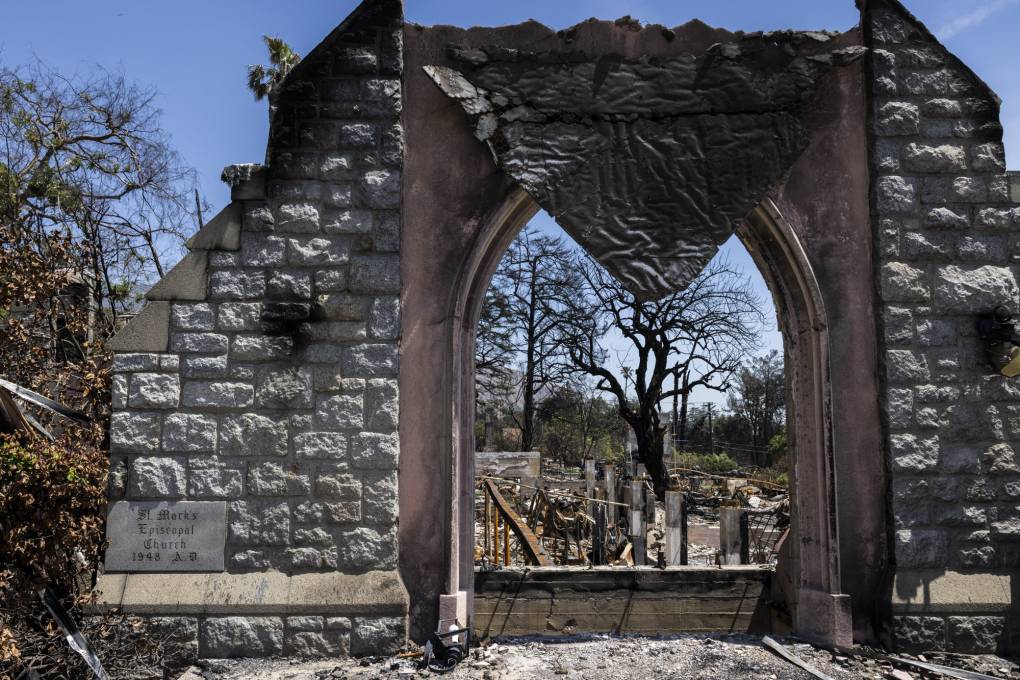
window.__INITIAL_STATE__={
"attachmentsReducer": {
"audio_0": {
"type": "attachments",
"id": "audio_0",
"imgSizes": {
"kqedFullSize": {
"file": "https://ww2.kqed.org/news/wp-content/themes/KQED-unified/img/audio_bgs/background0.jpg"
}
}
},
"audio_1": {
"type": "attachments",
"id": "audio_1",
"imgSizes": {
"kqedFullSize": {
"file": "https://ww2.kqed.org/news/wp-content/themes/KQED-unified/img/audio_bgs/background1.jpg"
}
}
},
"audio_2": {
"type": "attachments",
"id": "audio_2",
"imgSizes": {
"kqedFullSize": {
"file": "https://ww2.kqed.org/news/wp-content/themes/KQED-unified/img/audio_bgs/background2.jpg"
}
}
},
"audio_3": {
"type": "attachments",
"id": "audio_3",
"imgSizes": {
"kqedFullSize": {
"file": "https://ww2.kqed.org/news/wp-content/themes/KQED-unified/img/audio_bgs/background3.jpg"
}
}
},
"audio_4": {
"type": "attachments",
"id": "audio_4",
"imgSizes": {
"kqedFullSize": {
"file": "https://ww2.kqed.org/news/wp-content/themes/KQED-unified/img/audio_bgs/background4.jpg"
}
}
},
"placeholder": {
"type": "attachments",
"id": "placeholder",
"imgSizes": {
"thumbnail": {
"file": "https://cdn.kqed.org/wp-content/uploads/2024/12/KQED-Default-Image-816638274-2000x1333-1-160x107.jpg",
"width": 160,
"height": 107,
"mimeType": "image/jpeg"
},
"medium": {
"file": "https://cdn.kqed.org/wp-content/uploads/2024/12/KQED-Default-Image-816638274-2000x1333-1-800x533.jpg",
"width": 800,
"height": 533,
"mimeType": "image/jpeg"
},
"medium_large": {
"file": "https://cdn.kqed.org/wp-content/uploads/2024/12/KQED-Default-Image-816638274-2000x1333-1-768x512.jpg",
"width": 768,
"height": 512,
"mimeType": "image/jpeg"
},
"large": {
"file": "https://cdn.kqed.org/wp-content/uploads/2024/12/KQED-Default-Image-816638274-2000x1333-1-1020x680.jpg",
"width": 1020,
"height": 680,
"mimeType": "image/jpeg"
},
"1536x1536": {
"file": "https://cdn.kqed.org/wp-content/uploads/2024/12/KQED-Default-Image-816638274-2000x1333-1-1536x1024.jpg",
"width": 1536,
"height": 1024,
"mimeType": "image/jpeg"
},
"fd-lrg": {
"file": "https://cdn.kqed.org/wp-content/uploads/2024/12/KQED-Default-Image-816638274-2000x1333-1-1536x1024.jpg",
"width": 1536,
"height": 1024,
"mimeType": "image/jpeg"
},
"fd-med": {
"file": "https://cdn.kqed.org/wp-content/uploads/2024/12/KQED-Default-Image-816638274-2000x1333-1-1020x680.jpg",
"width": 1020,
"height": 680,
"mimeType": "image/jpeg"
},
"fd-sm": {
"file": "https://cdn.kqed.org/wp-content/uploads/2024/12/KQED-Default-Image-816638274-2000x1333-1-800x533.jpg",
"width": 800,
"height": 533,
"mimeType": "image/jpeg"
},
"post-thumbnail": {
"file": "https://cdn.kqed.org/wp-content/uploads/2024/12/KQED-Default-Image-816638274-2000x1333-1-672x372.jpg",
"width": 672,
"height": 372,
"mimeType": "image/jpeg"
},
"twentyfourteen-full-width": {
"file": "https://cdn.kqed.org/wp-content/uploads/2024/12/KQED-Default-Image-816638274-2000x1333-1-1038x576.jpg",
"width": 1038,
"height": 576,
"mimeType": "image/jpeg"
},
"xxsmall": {
"file": "https://cdn.kqed.org/wp-content/uploads/2024/12/KQED-Default-Image-816638274-2000x1333-1-160x107.jpg",
"width": 160,
"height": 107,
"mimeType": "image/jpeg"
},
"xsmall": {
"file": "https://cdn.kqed.org/wp-content/uploads/2024/12/KQED-Default-Image-816638274-2000x1333-1-672x372.jpg",
"width": 672,
"height": 372,
"mimeType": "image/jpeg"
},
"small": {
"file": "https://cdn.kqed.org/wp-content/uploads/2024/12/KQED-Default-Image-816638274-2000x1333-1-672x372.jpg",
"width": 672,
"height": 372,
"mimeType": "image/jpeg"
},
"xlarge": {
"file": "https://cdn.kqed.org/wp-content/uploads/2024/12/KQED-Default-Image-816638274-2000x1333-1-1020x680.jpg",
"width": 1020,
"height": 680,
"mimeType": "image/jpeg"
},
"full-width": {
"file": "https://cdn.kqed.org/wp-content/uploads/2024/12/KQED-Default-Image-816638274-2000x1333-1-1920x1280.jpg",
"width": 1920,
"height": 1280,
"mimeType": "image/jpeg"
},
"guest-author-32": {
"file": "https://cdn.kqed.org/wp-content/uploads/2025/01/KQED-Default-Image-816638274-1333x1333-1-160x160.jpg",
"width": 32,
"height": 32,
"mimeType": "image/jpeg"
},
"guest-author-50": {
"file": "https://cdn.kqed.org/wp-content/uploads/2025/01/KQED-Default-Image-816638274-1333x1333-1-160x160.jpg",
"width": 50,
"height": 50,
"mimeType": "image/jpeg"
},
"guest-author-64": {
"file": "https://cdn.kqed.org/wp-content/uploads/2025/01/KQED-Default-Image-816638274-1333x1333-1-160x160.jpg",
"width": 64,
"height": 64,
"mimeType": "image/jpeg"
},
"guest-author-96": {
"file": "https://cdn.kqed.org/wp-content/uploads/2025/01/KQED-Default-Image-816638274-1333x1333-1-160x160.jpg",
"width": 96,
"height": 96,
"mimeType": "image/jpeg"
},
"guest-author-128": {
"file": "https://cdn.kqed.org/wp-content/uploads/2025/01/KQED-Default-Image-816638274-1333x1333-1-160x160.jpg",
"width": 128,
"height": 128,
"mimeType": "image/jpeg"
},
"detail": {
"file": "https://cdn.kqed.org/wp-content/uploads/2025/01/KQED-Default-Image-816638274-1333x1333-1-160x160.jpg",
"width": 160,
"height": 160,
"mimeType": "image/jpeg"
},
"kqedFullSize": {
"file": "https://cdn.kqed.org/wp-content/uploads/2024/12/KQED-Default-Image-816638274-2000x1333-1.jpg",
"width": 2000,
"height": 1333
}
}
},
"news_12037126": {
"type": "attachments",
"id": "news_12037126",
"meta": {
"index": "attachments_1716263798",
"site": "news",
"id": "12037126",
"found": true
},
"title": "The burnt remains of St. Marks Church.Altadena.CA",
"publishDate": 1745350823,
"status": "inherit",
"parent": 0,
"modified": 1745351316,
"caption": "The burnt remains of St. Marks Church.\nAltadena on April 20, 2025.",
"credit": "Mette Lampcov for KQED",
"altTag": null,
"description": null,
"imgSizes": {
"medium": {
"file": "https://cdn.kqed.org/wp-content/uploads/sites/10/2025/04/METTE.LAMPCOV.CHURCH.BELL-22-KQED-800x534.jpg",
"width": 800,
"height": 534,
"mimeType": "image/jpeg"
},
"large": {
"file": "https://cdn.kqed.org/wp-content/uploads/sites/10/2025/04/METTE.LAMPCOV.CHURCH.BELL-22-KQED-1020x680.jpg",
"width": 1020,
"height": 680,
"mimeType": "image/jpeg"
},
"thumbnail": {
"file": "https://cdn.kqed.org/wp-content/uploads/sites/10/2025/04/METTE.LAMPCOV.CHURCH.BELL-22-KQED-160x107.jpg",
"width": 160,
"height": 107,
"mimeType": "image/jpeg"
},
"1536x1536": {
"file": "https://cdn.kqed.org/wp-content/uploads/sites/10/2025/04/METTE.LAMPCOV.CHURCH.BELL-22-KQED-1536x1025.jpg",
"width": 1536,
"height": 1025,
"mimeType": "image/jpeg"
},
"post-thumbnail": {
"file": "https://cdn.kqed.org/wp-content/uploads/sites/10/2025/04/METTE.LAMPCOV.CHURCH.BELL-22-KQED-672x372.jpg",
"width": 672,
"height": 372,
"mimeType": "image/jpeg"
},
"twentyfourteen-full-width": {
"file": "https://cdn.kqed.org/wp-content/uploads/sites/10/2025/04/METTE.LAMPCOV.CHURCH.BELL-22-KQED-1038x576.jpg",
"width": 1038,
"height": 576,
"mimeType": "image/jpeg"
},
"full-width": {
"file": "https://cdn.kqed.org/wp-content/uploads/sites/10/2025/04/METTE.LAMPCOV.CHURCH.BELL-22-KQED-1920x1281.jpg",
"width": 1920,
"height": 1281,
"mimeType": "image/jpeg"
},
"kqedFullSize": {
"file": "https://cdn.kqed.org/wp-content/uploads/sites/10/2025/04/METTE.LAMPCOV.CHURCH.BELL-22-KQED.jpg",
"width": 2000,
"height": 1334
}
},
"isLoading": false,
"fetchFailed": false
},
"news_12038710": {
"type": "attachments",
"id": "news_12038710",
"meta": {
"index": "attachments_1716263798",
"site": "news",
"id": "12038710",
"found": true
},
"title": "Air District Valero Benicia",
"publishDate": 1746466964,
"status": "inherit",
"parent": 12038707,
"modified": 1747853652,
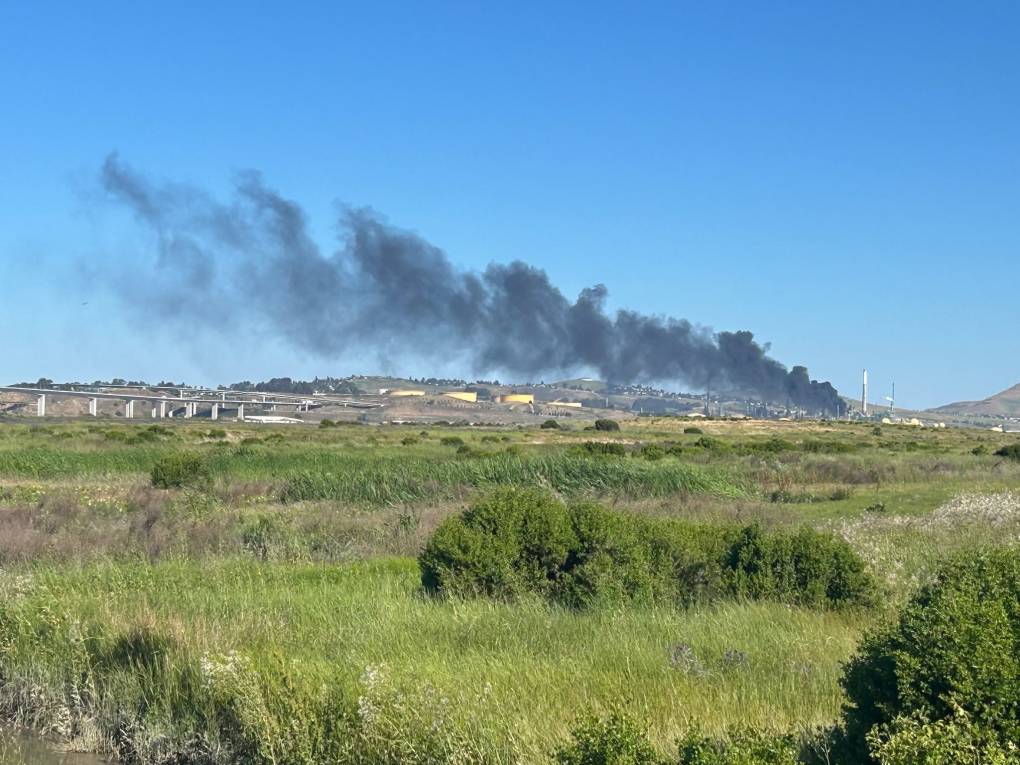
"caption": "A fire at the Valero Oil Refinery in Benicia, California. The fire comes just weeks after Valero executives announced they were considering closing the sprawling refinery by next April. ",
"credit": "Courtesy of Bay Area Air District",
"altTag": null,
"description": null,
"imgSizes": {
"medium": {
"file": "https://cdn.kqed.org/wp-content/uploads/sites/10/2025/05/Air-District-Valero-Benicia-800x600.jpg",
"width": 800,
"height": 600,
"mimeType": "image/jpeg"
},
"large": {
"file": "https://cdn.kqed.org/wp-content/uploads/sites/10/2025/05/Air-District-Valero-Benicia-1020x765.jpg",
"width": 1020,
"height": 765,
"mimeType": "image/jpeg"
},
"thumbnail": {
"file": "https://cdn.kqed.org/wp-content/uploads/sites/10/2025/05/Air-District-Valero-Benicia-160x120.jpg",
"width": 160,
"height": 120,
"mimeType": "image/jpeg"
},
"1536x1536": {
"file": "https://cdn.kqed.org/wp-content/uploads/sites/10/2025/05/Air-District-Valero-Benicia-1536x1152.jpg",
"width": 1536,
"height": 1152,
"mimeType": "image/jpeg"
},
"post-thumbnail": {
"file": "https://cdn.kqed.org/wp-content/uploads/sites/10/2025/05/Air-District-Valero-Benicia-672x372.jpg",
"width": 672,
"height": 372,
"mimeType": "image/jpeg"
},
"twentyfourteen-full-width": {
"file": "https://cdn.kqed.org/wp-content/uploads/sites/10/2025/05/Air-District-Valero-Benicia-1038x576.jpg",
"width": 1038,
"height": 576,
"mimeType": "image/jpeg"
},
"full-width": {
"file": "https://cdn.kqed.org/wp-content/uploads/sites/10/2025/05/Air-District-Valero-Benicia-1920x1440.jpg",
"width": 1920,
"height": 1440,
"mimeType": "image/jpeg"
},
"kqedFullSize": {
"file": "https://cdn.kqed.org/wp-content/uploads/sites/10/2025/05/Air-District-Valero-Benicia-e1746467055636.jpg",
"width": 2000,
"height": 1500
}
},
"isLoading": false,
"fetchFailed": false
},
"news_12038612": {
"type": "attachments",
"id": "news_12038612",
"meta": {
"index": "attachments_1716263798",
"site": "news",
"id": "12038612",
"found": true
},
"title": "20250423_MarineLab_GC-16_qed",
"publishDate": 1746220170,
"status": "inherit",
"parent": 12038610,
"modified": 1746231821,
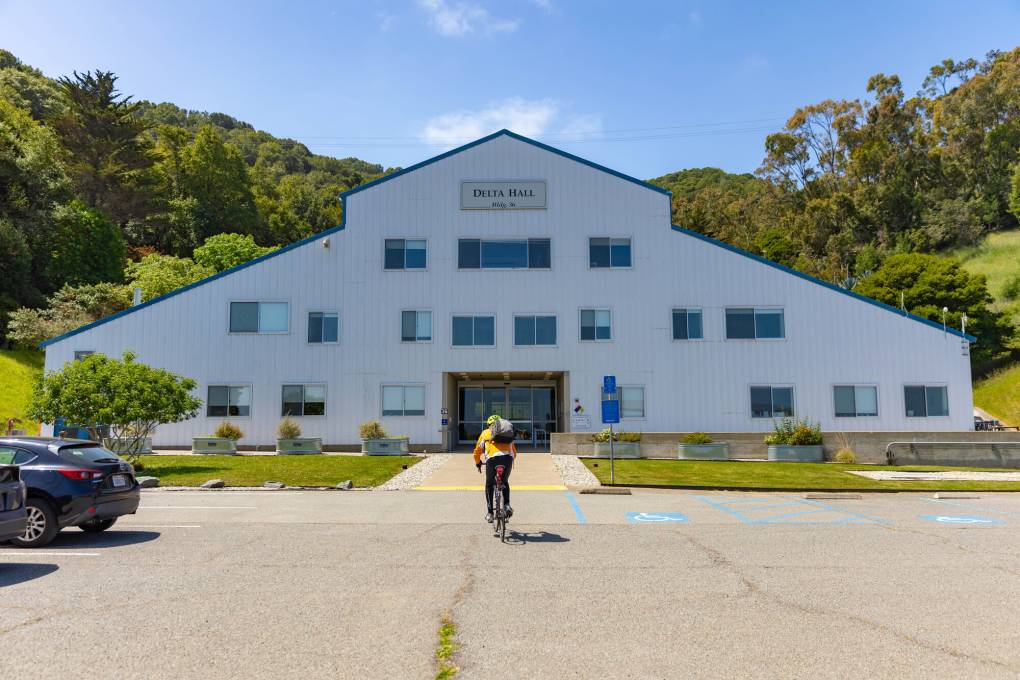
"caption": "A cyclist heads into Delta Hall, where the marine labs are, at San Francisco State’s Estuary and Ocean Science Center, in Tiburon on April 23, 2025.",
"credit": "Gina Castro/KQED",
"altTag": null,
"description": null,
"imgSizes": {
"medium": {
"file": "https://cdn.kqed.org/wp-content/uploads/sites/10/2025/05/20250423_MarineLab_GC-16_qed-800x533.jpg",
"width": 800,
"height": 533,
"mimeType": "image/jpeg"
},
"large": {
"file": "https://cdn.kqed.org/wp-content/uploads/sites/10/2025/05/20250423_MarineLab_GC-16_qed-1020x680.jpg",
"width": 1020,
"height": 680,
"mimeType": "image/jpeg"
},
"thumbnail": {
"file": "https://cdn.kqed.org/wp-content/uploads/sites/10/2025/05/20250423_MarineLab_GC-16_qed-160x107.jpg",
"width": 160,
"height": 107,
"mimeType": "image/jpeg"
},
"1536x1536": {
"file": "https://cdn.kqed.org/wp-content/uploads/sites/10/2025/05/20250423_MarineLab_GC-16_qed-1536x1024.jpg",
"width": 1536,
"height": 1024,
"mimeType": "image/jpeg"
},
"post-thumbnail": {
"file": "https://cdn.kqed.org/wp-content/uploads/sites/10/2025/05/20250423_MarineLab_GC-16_qed-672x372.jpg",
"width": 672,
"height": 372,
"mimeType": "image/jpeg"
},
"twentyfourteen-full-width": {
"file": "https://cdn.kqed.org/wp-content/uploads/sites/10/2025/05/20250423_MarineLab_GC-16_qed-1038x576.jpg",
"width": 1038,
"height": 576,
"mimeType": "image/jpeg"
},
"full-width": {
"file": "https://cdn.kqed.org/wp-content/uploads/sites/10/2025/05/20250423_MarineLab_GC-16_qed-1920x1280.jpg",
"width": 1920,
"height": 1280,
"mimeType": "image/jpeg"
},
"kqedFullSize": {
"file": "https://cdn.kqed.org/wp-content/uploads/sites/10/2025/05/20250423_MarineLab_GC-16_qed.jpg",
"width": 2000,
"height": 1333
}
},
"isLoading": false,
"fetchFailed": false
},
"news_12037309": {
"type": "attachments",
"id": "news_12037309",
"meta": {
"index": "attachments_1716263798",
"site": "news",
"id": "12037309",
"found": true
},
"title": "240204-Storm-19-BL_qed",
"publishDate": 1745437127,
"status": "inherit",
"parent": 12037304,
"modified": 1745439383,
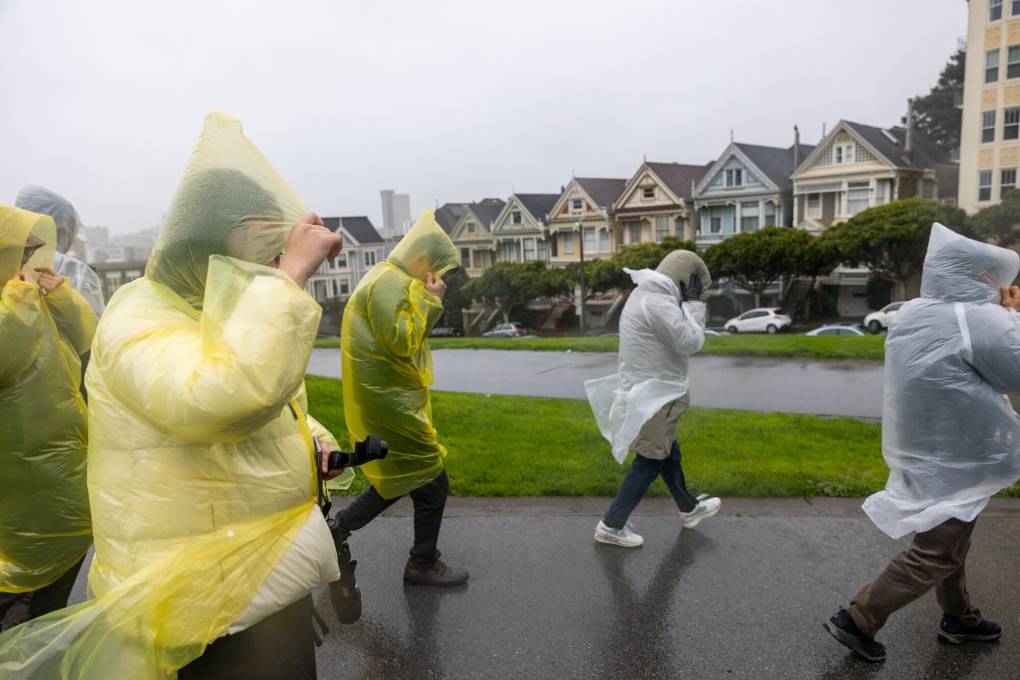
"caption": "A group of tourists walks through Alamo Square Park during a storm in San Francisco on Feb. 4, 2024.",
"credit": "Beth LaBerge/KQED",
"altTag": null,
"description": null,
"imgSizes": {
"medium": {
"file": "https://cdn.kqed.org/wp-content/uploads/sites/10/2025/04/240204-Storm-19-BL_qed-800x533.jpg",
"width": 800,
"height": 533,
"mimeType": "image/jpeg"
},
"large": {
"file": "https://cdn.kqed.org/wp-content/uploads/sites/10/2025/04/240204-Storm-19-BL_qed-1020x680.jpg",
"width": 1020,
"height": 680,
"mimeType": "image/jpeg"
},
"thumbnail": {
"file": "https://cdn.kqed.org/wp-content/uploads/sites/10/2025/04/240204-Storm-19-BL_qed-160x107.jpg",
"width": 160,
"height": 107,
"mimeType": "image/jpeg"
},
"1536x1536": {
"file": "https://cdn.kqed.org/wp-content/uploads/sites/10/2025/04/240204-Storm-19-BL_qed-1536x1024.jpg",
"width": 1536,
"height": 1024,
"mimeType": "image/jpeg"
},
"post-thumbnail": {
"file": "https://cdn.kqed.org/wp-content/uploads/sites/10/2025/04/240204-Storm-19-BL_qed-672x372.jpg",
"width": 672,
"height": 372,
"mimeType": "image/jpeg"
},
"twentyfourteen-full-width": {
"file": "https://cdn.kqed.org/wp-content/uploads/sites/10/2025/04/240204-Storm-19-BL_qed-1038x576.jpg",
"width": 1038,
"height": 576,
"mimeType": "image/jpeg"
},
"full-width": {
"file": "https://cdn.kqed.org/wp-content/uploads/sites/10/2025/04/240204-Storm-19-BL_qed-1920x1280.jpg",
"width": 1920,
"height": 1280,
"mimeType": "image/jpeg"
},
"kqedFullSize": {
"file": "https://cdn.kqed.org/wp-content/uploads/sites/10/2025/04/240204-Storm-19-BL_qed.jpg",
"width": 2000,
"height": 1333
}
},
"isLoading": false,
"fetchFailed": false
},
"news_12029925": {
"type": "attachments",
"id": "news_12029925",
"meta": {
"index": "attachments_1716263798",
"site": "news",
"id": "12029925",
"found": true
},
"title": "The Valero refinery in Benicia on Sept. 21, 2023.",
"publishDate": 1741218259,
"status": "inherit",
"parent": 12038707,
"modified": 1746471356,
"caption": "The Valero refinery in Benicia on Sept. 21, 2023.",
"credit": "Martin do Nascimento/KQED",
"altTag": null,
"description": null,
"imgSizes": {
"medium": {
"file": "https://cdn.kqed.org/wp-content/uploads/sites/10/2025/03/230921-VALERO-BENICIA-REFINERY-MD-01_qed-800x533.jpg",
"width": 800,
"height": 533,
"mimeType": "image/jpeg"
},
"large": {
"file": "https://cdn.kqed.org/wp-content/uploads/sites/10/2025/03/230921-VALERO-BENICIA-REFINERY-MD-01_qed-1020x680.jpg",
"width": 1020,
"height": 680,
"mimeType": "image/jpeg"
},
"thumbnail": {
"file": "https://cdn.kqed.org/wp-content/uploads/sites/10/2025/03/230921-VALERO-BENICIA-REFINERY-MD-01_qed-160x107.jpg",
"width": 160,
"height": 107,
"mimeType": "image/jpeg"
},
"1536x1536": {
"file": "https://cdn.kqed.org/wp-content/uploads/sites/10/2025/03/230921-VALERO-BENICIA-REFINERY-MD-01_qed-1536x1024.jpg",
"width": 1536,
"height": 1024,
"mimeType": "image/jpeg"
},
"post-thumbnail": {
"file": "https://cdn.kqed.org/wp-content/uploads/sites/10/2025/03/230921-VALERO-BENICIA-REFINERY-MD-01_qed-672x372.jpg",
"width": 672,
"height": 372,
"mimeType": "image/jpeg"
},
"twentyfourteen-full-width": {
"file": "https://cdn.kqed.org/wp-content/uploads/sites/10/2025/03/230921-VALERO-BENICIA-REFINERY-MD-01_qed-1038x576.jpg",
"width": 1038,
"height": 576,
"mimeType": "image/jpeg"
},
"full-width": {
"file": "https://cdn.kqed.org/wp-content/uploads/sites/10/2025/03/230921-VALERO-BENICIA-REFINERY-MD-01_qed-1920x1280.jpg",
"width": 1920,
"height": 1280,
"mimeType": "image/jpeg"
},
"kqedFullSize": {
"file": "https://cdn.kqed.org/wp-content/uploads/sites/10/2025/03/230921-VALERO-BENICIA-REFINERY-MD-01_qed.jpg",
"width": 1999,
"height": 1333
}
},
"isLoading": false,
"fetchFailed": false
},
"news_12036564": {
"type": "attachments",
"id": "news_12036564",
"meta": {
"index": "attachments_1716263798",
"site": "news",
"id": "12036564",
"found": true
},
"title": "250126-EcoBlock-32-BL_qed",
"publishDate": 1744994493,
"status": "inherit",
"parent": 12036557,
"modified": 1745020023,
"caption": "Solar panels fill the roofs of two homes in Oakland on Jan. 26, 2025. These houses are a part of EcoBlock, a collaborative project bringing together academics, professionals, government agencies, utilities, private donors, and residents. The initiative aims to help an entire city block reduce emissions through insulation upgrades, electric appliances, and solar panels.",
"credit": "Beth LaBerge/KQED",
"altTag": null,
"description": null,
"imgSizes": {
"medium": {
"file": "https://cdn.kqed.org/wp-content/uploads/sites/10/2025/04/250126-EcoBlock-32-BL_qed-800x533.jpg",
"width": 800,
"height": 533,
"mimeType": "image/jpeg"
},
"large": {
"file": "https://cdn.kqed.org/wp-content/uploads/sites/10/2025/04/250126-EcoBlock-32-BL_qed-1020x680.jpg",
"width": 1020,
"height": 680,
"mimeType": "image/jpeg"
},
"thumbnail": {
"file": "https://cdn.kqed.org/wp-content/uploads/sites/10/2025/04/250126-EcoBlock-32-BL_qed-160x107.jpg",
"width": 160,
"height": 107,
"mimeType": "image/jpeg"
},
"1536x1536": {
"file": "https://cdn.kqed.org/wp-content/uploads/sites/10/2025/04/250126-EcoBlock-32-BL_qed-1536x1024.jpg",
"width": 1536,
"height": 1024,
"mimeType": "image/jpeg"
},
"post-thumbnail": {
"file": "https://cdn.kqed.org/wp-content/uploads/sites/10/2025/04/250126-EcoBlock-32-BL_qed-672x372.jpg",
"width": 672,
"height": 372,
"mimeType": "image/jpeg"
},
"twentyfourteen-full-width": {
"file": "https://cdn.kqed.org/wp-content/uploads/sites/10/2025/04/250126-EcoBlock-32-BL_qed-1038x576.jpg",
"width": 1038,
"height": 576,
"mimeType": "image/jpeg"
},
"full-width": {
"file": "https://cdn.kqed.org/wp-content/uploads/sites/10/2025/04/250126-EcoBlock-32-BL_qed-1920x1280.jpg",
"width": 1920,
"height": 1280,
"mimeType": "image/jpeg"
},
"kqedFullSize": {
"file": "https://cdn.kqed.org/wp-content/uploads/sites/10/2025/04/250126-EcoBlock-32-BL_qed.jpg",
"width": 2000,
"height": 1333
}
},
"isLoading": false,
"fetchFailed": false
},
"news_12036246": {
"type": "attachments",
"id": "news_12036246",
"meta": {
"index": "attachments_1716263798",
"site": "news",
"id": "12036246",
"found": true
},
"title": "Jupiter and Galilean moons, illustration",
"publishDate": 1744821301,
"status": "inherit",
"parent": 12036237,
"modified": 1744919277,
"caption": "Illustration of Jupiter and its Galilean moons, Ganymede, Callisto, Europa and Io.",
"credit": "Nemes Laszlo/Science Photography Library via Getty Images",
"altTag": null,
"description": null,
"imgSizes": {
"medium": {
"file": "https://cdn.kqed.org/wp-content/uploads/sites/10/2025/04/JupiterGetty-800x528.jpg",
"width": 800,
"height": 528,
"mimeType": "image/jpeg"
},
"large": {
"file": "https://cdn.kqed.org/wp-content/uploads/sites/10/2025/04/JupiterGetty-1020x673.jpg",
"width": 1020,
"height": 673,
"mimeType": "image/jpeg"
},
"thumbnail": {
"file": "https://cdn.kqed.org/wp-content/uploads/sites/10/2025/04/JupiterGetty-160x106.jpg",
"width": 160,
"height": 106,
"mimeType": "image/jpeg"
},
"1536x1536": {
"file": "https://cdn.kqed.org/wp-content/uploads/sites/10/2025/04/JupiterGetty-1536x1014.jpg",
"width": 1536,
"height": 1014,
"mimeType": "image/jpeg"
},
"post-thumbnail": {
"file": "https://cdn.kqed.org/wp-content/uploads/sites/10/2025/04/JupiterGetty-672x372.jpg",
"width": 672,
"height": 372,
"mimeType": "image/jpeg"
},
"twentyfourteen-full-width": {
"file": "https://cdn.kqed.org/wp-content/uploads/sites/10/2025/04/JupiterGetty-1038x576.jpg",
"width": 1038,
"height": 576,
"mimeType": "image/jpeg"
},
"full-width": {
"file": "https://cdn.kqed.org/wp-content/uploads/sites/10/2025/04/JupiterGetty-1920x1267.jpg",
"width": 1920,
"height": 1267,
"mimeType": "image/jpeg"
},
"kqedFullSize": {
"file": "https://cdn.kqed.org/wp-content/uploads/sites/10/2025/04/JupiterGetty.jpg",
"width": 2000,
"height": 1320
}
},
"isLoading": false,
"fetchFailed": false
},
"news_12035600": {
"type": "attachments",
"id": "news_12035600",
"meta": {
"index": "attachments_1716263798",
"site": "news",
"id": "12035600",
"found": true
},
"title": "250321-VIRTUALPOWERPLANT-20-BL-KQED",
"publishDate": 1744381309,
"status": "inherit",
"parent": 12035455,
"modified": 1744381941,
"caption": "An aerial view of Ramon Heredia and Ivan Israel Amezcua's home in Richmond on March 21, 2025.",
"credit": "Beth LaBerge/KQED",
"altTag": null,
"description": null,
"imgSizes": {
"medium": {
"file": "https://cdn.kqed.org/wp-content/uploads/sites/10/2025/04/250321-VIRTUALPOWERPLANT-20-BL-KQED-800x533.jpg",
"width": 800,
"height": 533,
"mimeType": "image/jpeg"
},
"large": {
"file": "https://cdn.kqed.org/wp-content/uploads/sites/10/2025/04/250321-VIRTUALPOWERPLANT-20-BL-KQED-1020x680.jpg",
"width": 1020,
"height": 680,
"mimeType": "image/jpeg"
},
"thumbnail": {
"file": "https://cdn.kqed.org/wp-content/uploads/sites/10/2025/04/250321-VIRTUALPOWERPLANT-20-BL-KQED-160x107.jpg",
"width": 160,
"height": 107,
"mimeType": "image/jpeg"
},
"1536x1536": {
"file": "https://cdn.kqed.org/wp-content/uploads/sites/10/2025/04/250321-VIRTUALPOWERPLANT-20-BL-KQED-1536x1024.jpg",
"width": 1536,
"height": 1024,
"mimeType": "image/jpeg"
},
"post-thumbnail": {
"file": "https://cdn.kqed.org/wp-content/uploads/sites/10/2025/04/250321-VIRTUALPOWERPLANT-20-BL-KQED-672x372.jpg",
"width": 672,
"height": 372,
"mimeType": "image/jpeg"
},
"twentyfourteen-full-width": {
"file": "https://cdn.kqed.org/wp-content/uploads/sites/10/2025/04/250321-VIRTUALPOWERPLANT-20-BL-KQED-1038x576.jpg",
"width": 1038,
"height": 576,
"mimeType": "image/jpeg"
},
"full-width": {
"file": "https://cdn.kqed.org/wp-content/uploads/sites/10/2025/04/250321-VIRTUALPOWERPLANT-20-BL-KQED-1920x1280.jpg",
"width": 1920,
"height": 1280,
"mimeType": "image/jpeg"
},
"kqedFullSize": {
"file": "https://cdn.kqed.org/wp-content/uploads/sites/10/2025/04/250321-VIRTUALPOWERPLANT-20-BL-KQED.jpg",
"width": 2000,
"height": 1333
}
},
"isLoading": false,
"fetchFailed": false
},
"news_12036066": {
"type": "attachments",
"id": "news_12036066",
"meta": {
"index": "attachments_1716263798",
"site": "news",
"id": "12036066",
"found": true
},
"title": "California Medicaid",
"publishDate": 1744746796,
"status": "inherit",
"parent": 12036063,
"modified": 1749663522,
"caption": "Gov. Gavin Newsom discusses his revised 2024-25 state budget during a news conference in Sacramento, California, on May 10, 2024. ",
"credit": "Rich Pedroncelli/AP Photo",
"altTag": null,
"description": null,
"imgSizes": {
"medium": {
"file": "https://cdn.kqed.org/wp-content/uploads/sites/10/2025/04/GavinNewsom1AP-800x533.jpg",
"width": 800,
"height": 533,
"mimeType": "image/jpeg"
},
"large": {
"file": "https://cdn.kqed.org/wp-content/uploads/sites/10/2025/04/GavinNewsom1AP-1020x680.jpg",
"width": 1020,
"height": 680,
"mimeType": "image/jpeg"
},
"thumbnail": {
"file": "https://cdn.kqed.org/wp-content/uploads/sites/10/2025/04/GavinNewsom1AP-160x107.jpg",
"width": 160,
"height": 107,
"mimeType": "image/jpeg"
},
"1536x1536": {
"file": "https://cdn.kqed.org/wp-content/uploads/sites/10/2025/04/GavinNewsom1AP-1536x1024.jpg",
"width": 1536,
"height": 1024,
"mimeType": "image/jpeg"
},
"post-thumbnail": {
"file": "https://cdn.kqed.org/wp-content/uploads/sites/10/2025/04/GavinNewsom1AP-672x372.jpg",
"width": 672,
"height": 372,
"mimeType": "image/jpeg"
},
"twentyfourteen-full-width": {
"file": "https://cdn.kqed.org/wp-content/uploads/sites/10/2025/04/GavinNewsom1AP-1038x576.jpg",
"width": 1038,
"height": 576,
"mimeType": "image/jpeg"
},
"full-width": {
"file": "https://cdn.kqed.org/wp-content/uploads/sites/10/2025/04/GavinNewsom1AP-1920x1280.jpg",
"width": 1920,
"height": 1280,
"mimeType": "image/jpeg"
},
"kqedFullSize": {
"file": "https://cdn.kqed.org/wp-content/uploads/sites/10/2025/04/GavinNewsom1AP.jpg",
"width": 2000,
"height": 1333
}
},
"isLoading": false,
"fetchFailed": false
},
"news_12035965": {
"type": "attachments",
"id": "news_12035965",
"meta": {
"index": "attachments_1716263798",
"site": "news",
"id": "12035965",
"found": true
},
"title": "241122-StormHitsBayArea-27-BL_qed",
"publishDate": 1744672439,
"status": "inherit",
"parent": 12035963,
"modified": 1744672453,
"caption": "A person walks on Haight Street in the rain in San Francisco on Nov. 22, 2024, during a storm bringing heavy rain and strong winds to the Bay Area.",
"credit": "Beth LaBerge/KQED",
"altTag": null,
"description": null,
"imgSizes": {
"medium": {
"file": "https://cdn.kqed.org/wp-content/uploads/sites/10/2025/04/241122-StormHitsBayArea-27-BL_qed-800x533.jpg",
"width": 800,
"height": 533,
"mimeType": "image/jpeg"
},
"large": {
"file": "https://cdn.kqed.org/wp-content/uploads/sites/10/2025/04/241122-StormHitsBayArea-27-BL_qed-1020x680.jpg",
"width": 1020,
"height": 680,
"mimeType": "image/jpeg"
},
"thumbnail": {
"file": "https://cdn.kqed.org/wp-content/uploads/sites/10/2025/04/241122-StormHitsBayArea-27-BL_qed-160x107.jpg",
"width": 160,
"height": 107,
"mimeType": "image/jpeg"
},
"1536x1536": {
"file": "https://cdn.kqed.org/wp-content/uploads/sites/10/2025/04/241122-StormHitsBayArea-27-BL_qed-1536x1024.jpg",
"width": 1536,
"height": 1024,
"mimeType": "image/jpeg"
},
"post-thumbnail": {
"file": "https://cdn.kqed.org/wp-content/uploads/sites/10/2025/04/241122-StormHitsBayArea-27-BL_qed-672x372.jpg",
"width": 672,
"height": 372,
"mimeType": "image/jpeg"
},
"twentyfourteen-full-width": {
"file": "https://cdn.kqed.org/wp-content/uploads/sites/10/2025/04/241122-StormHitsBayArea-27-BL_qed-1038x576.jpg",
"width": 1038,
"height": 576,
"mimeType": "image/jpeg"
},
"full-width": {
"file": "https://cdn.kqed.org/wp-content/uploads/sites/10/2025/04/241122-StormHitsBayArea-27-BL_qed-1920x1280.jpg",
"width": 1920,
"height": 1280,
"mimeType": "image/jpeg"
},
"kqedFullSize": {
"file": "https://cdn.kqed.org/wp-content/uploads/sites/10/2025/04/241122-StormHitsBayArea-27-BL_qed.jpg",
"width": 1999,
"height": 1333
}
},
"isLoading": false,
"fetchFailed": false
},
"news_12035557": {
"type": "attachments",
"id": "news_12035557",
"meta": {
"index": "attachments_1716263798",
"site": "news",
"id": "12035557",
"found": true
},
"title": "SantaBarbaraOilPlatform",
"publishDate": 1744328578,
"status": "inherit",
"parent": 12035274,
"modified": 1744328616,
"caption": "An oil platform near Santa Barbara on March 11, 2010.",
"credit": "Molly Samuel/KQED",
"altTag": null,
"description": null,
"imgSizes": {
"medium": {
"file": "https://cdn.kqed.org/wp-content/uploads/sites/10/2025/04/SantaBarbaraOilPlatform-800x600.jpg",
"width": 800,
"height": 600,
"mimeType": "image/jpeg"
},
"large": {
"file": "https://cdn.kqed.org/wp-content/uploads/sites/10/2025/04/SantaBarbaraOilPlatform-1020x765.jpg",
"width": 1020,
"height": 765,
"mimeType": "image/jpeg"
},
"thumbnail": {
"file": "https://cdn.kqed.org/wp-content/uploads/sites/10/2025/04/SantaBarbaraOilPlatform-160x120.jpg",
"width": 160,
"height": 120,
"mimeType": "image/jpeg"
},
"1536x1536": {
"file": "https://cdn.kqed.org/wp-content/uploads/sites/10/2025/04/SantaBarbaraOilPlatform-1536x1152.jpg",
"width": 1536,
"height": 1152,
"mimeType": "image/jpeg"
},
"post-thumbnail": {
"file": "https://cdn.kqed.org/wp-content/uploads/sites/10/2025/04/SantaBarbaraOilPlatform-672x372.jpg",
"width": 672,
"height": 372,
"mimeType": "image/jpeg"
},
"twentyfourteen-full-width": {
"file": "https://cdn.kqed.org/wp-content/uploads/sites/10/2025/04/SantaBarbaraOilPlatform-1038x576.jpg",
"width": 1038,
"height": 576,
"mimeType": "image/jpeg"
},
"full-width": {
"file": "https://cdn.kqed.org/wp-content/uploads/sites/10/2025/04/SantaBarbaraOilPlatform-1920x1440.jpg",
"width": 1920,
"height": 1440,
"mimeType": "image/jpeg"
},
"kqedFullSize": {
"file": "https://cdn.kqed.org/wp-content/uploads/sites/10/2025/04/SantaBarbaraOilPlatform.jpg",
"width": 2000,
"height": 1500
}
},
"isLoading": false,
"fetchFailed": false
},
"news_12034871": {
"type": "attachments",
"id": "news_12034871",
"meta": {
"index": "attachments_1716263798",
"site": "news",
"id": "12034871",
"found": true
},
"title": "250408-CAL TECH TESTING-113-ZS-KQED",
"publishDate": 1744131826,
"status": "inherit",
"parent": 0,
"modified": 1744306420,
"caption": "Professor François Tissot has collected dozens of samples from the Eaton Fire in Altadena for his research on understanding the potential harms of living amid environmental contamination.",
"credit": "Zaydee Sanchez for KQED",
"altTag": null,
"description": null,
"imgSizes": {
"medium": {
"file": "https://cdn.kqed.org/wp-content/uploads/sites/10/2025/04/250408-CAL-TECH-TESTING-113-ZS-KQED-800x533.jpg",
"width": 800,
"height": 533,
"mimeType": "image/jpeg"
},
"large": {
"file": "https://cdn.kqed.org/wp-content/uploads/sites/10/2025/04/250408-CAL-TECH-TESTING-113-ZS-KQED-1020x680.jpg",
"width": 1020,
"height": 680,
"mimeType": "image/jpeg"
},
"thumbnail": {
"file": "https://cdn.kqed.org/wp-content/uploads/sites/10/2025/04/250408-CAL-TECH-TESTING-113-ZS-KQED-160x107.jpg",
"width": 160,
"height": 107,
"mimeType": "image/jpeg"
},
"1536x1536": {
"file": "https://cdn.kqed.org/wp-content/uploads/sites/10/2025/04/250408-CAL-TECH-TESTING-113-ZS-KQED-1536x1024.jpg",
"width": 1536,
"height": 1024,
"mimeType": "image/jpeg"
},
"post-thumbnail": {
"file": "https://cdn.kqed.org/wp-content/uploads/sites/10/2025/04/250408-CAL-TECH-TESTING-113-ZS-KQED-672x372.jpg",
"width": 672,
"height": 372,
"mimeType": "image/jpeg"
},
"twentyfourteen-full-width": {
"file": "https://cdn.kqed.org/wp-content/uploads/sites/10/2025/04/250408-CAL-TECH-TESTING-113-ZS-KQED-1038x576.jpg",
"width": 1038,
"height": 576,
"mimeType": "image/jpeg"
},
"full-width": {
"file": "https://cdn.kqed.org/wp-content/uploads/sites/10/2025/04/250408-CAL-TECH-TESTING-113-ZS-KQED-1920x1280.jpg",
"width": 1920,
"height": 1280,
"mimeType": "image/jpeg"
},
"kqedFullSize": {
"file": "https://cdn.kqed.org/wp-content/uploads/sites/10/2025/04/250408-CAL-TECH-TESTING-113-ZS-KQED.jpg",
"width": 2000,
"height": 1333
}
},
"isLoading": false,
"fetchFailed": false
}
},
"audioPlayerReducer": {
"postId": "stream_live",
"isPaused": true,
"isPlaying": false,
"pfsActive": false,
"pledgeModalIsOpen": true,
"playerDrawerIsOpen": false,
"liveAudioPlayStartedAt": 0,
"liveAudioPlayContext": ""
},
"authorsReducer": {
"byline_news_12038756": {
"type": "authors",
"id": "byline_news_12038756",
"meta": {
"override": true
},
"slug": "byline_news_12038756",
"name": "Steven Cuevas, Sonya Geiss",
"isLoading": false
},
"byline_news_12038610": {
"type": "authors",
"id": "byline_news_12038610",
"meta": {
"override": true
},
"slug": "byline_news_12038610",
"name": "\u003ca href=\"https://www.kqed.org/author/matthewgreen\">Matthew Green\u003c/a> and Anna FitzGerald Guth",
"isLoading": false
},
"matthewgreen": {
"type": "authors",
"id": "1263",
"meta": {
"index": "authors_1716337520",
"id": "1263",
"found": true
},
"name": "Matthew Green",
"firstName": "Matthew",
"lastName": "Green",
"slug": "matthewgreen",
"email": "mgreen@kqed.org",
"display_author_email": false,
"staff_mastheads": [],
"title": "KQED Editor/Reporter",
"bio": "Matthew Green is a digital media producer for KQED News. He previously produced \u003ca href=\"http://www.kqed.org/lowdown\">The Lowdown\u003c/a>, KQED’s multimedia news education blog. Matthew's written for numerous Bay Area publications, including the Oakland Tribune and San Francisco Chronicle. He also taught journalism classes at Fremont High School in East Oakland.\r\n\r\nEmail: mgreen@kqed.org; Twitter: @MGreenKQED",
"avatar": "https://secure.gravatar.com/avatar/3bf498d1267ca02c8494f33d8cfc575e?s=600&d=blank&r=g",
"twitter": "MGreenKQED",
"facebook": null,
"instagram": null,
"linkedin": null,
"sites": [
{
"site": "news",
"roles": []
},
{
"site": "lowdown",
"roles": []
},
{
"site": "science",
"roles": []
},
{
"site": "education",
"roles": []
},
{
"site": "quest",
"roles": []
},
{
"site": "liveblog",
"roles": []
}
],
"headData": {
"title": "Matthew Green | KQED",
"description": "KQED Editor/Reporter",
"ogImgSrc": "https://secure.gravatar.com/avatar/3bf498d1267ca02c8494f33d8cfc575e?s=600&d=blank&r=g",
"twImgSrc": "https://secure.gravatar.com/avatar/3bf498d1267ca02c8494f33d8cfc575e?s=600&d=blank&r=g"
},
"isLoading": false,
"link": "/author/matthewgreen"
},
"jsmall": {
"type": "authors",
"id": "6625",
"meta": {
"index": "authors_1716337520",
"id": "6625",
"found": true
},
"name": "Julie Small",
"firstName": "Julie",
"lastName": "Small",
"slug": "jsmall",
"email": "jsmall@kqed.org",
"display_author_email": true,
"staff_mastheads": [
"news"
],
"title": "KQED Contributor",
"bio": "Julie Small reports on criminal justice and immigration.\r\n\r\nShe was part of a team at KQED awarded a regional 2019 Edward R. Murrow award for continuing coverage of the Trump Administration's family separation policy.\r\n\r\nThe Society for Professional Journalists recognized Julie's 2018 \u003ca href=\"https://www.kqed.org/news/11636262/the-officer-tased-him-31-times-the-sheriff-called-his-death-an-accident\">reporting\u003c/a> on the San Joaquin County Sheriff's \u003ca href=\"https://www.kqed.org/news/11634689/autopsy-doctors-sheriff-overrode-death-findings-to-protect-law-enforcement\">interference\u003c/a> in death investigations with an Excellence in Journalism Award for Ongoing Coverage.\r\n\r\nJulie's\u003ca href=\"https://www.kqed.org/news/11039666/two-mentally-ill-inmates-died-one-month-in-santa-clara\"> reporting\u003c/a> with Lisa Pickoff-White on the treatment of mentally ill offenders in California jails earned a 2017 regional Edward R. Murrow Award for news reporting and an investigative reporting award from the SPJ of Northern California.\r\n\r\nBefore joining KQED, Julie covered government and politics in Sacramento for Southern California Public Radio (SCPR). Her 2010 \u003ca href=\"https://www.scpr.org/specials/prisonmedical/\">series\u003c/a> on lapses in California’s prison medical care also won a regional Edward R. Murrow Award for investigative reporting and a Golden Mic Award from the RTNDA of Southern California.\r\n\r\nJulie began her career in journalism in 2000 as the deputy foreign editor for public radio's \u003cem>Marketplace, \u003c/em>while earning her master's degree in journalism from USC’s Annenberg School of Communication.",
"avatar": "https://secure.gravatar.com/avatar/4baedf201468df97be97c2a9dd7585d0?s=600&d=blank&r=g",
"twitter": "@SmallRadio2",
"facebook": null,
"instagram": null,
"linkedin": null,
"sites": [
{
"site": "news",
"roles": [
"editor"
]
},
{
"site": "stateofhealth",
"roles": [
"author"
]
},
{
"site": "science",
"roles": [
"author"
]
}
],
"headData": {
"title": "Julie Small | KQED",
"description": "KQED Contributor",
"ogImgSrc": "https://secure.gravatar.com/avatar/4baedf201468df97be97c2a9dd7585d0?s=600&d=blank&r=g",
"twImgSrc": "https://secure.gravatar.com/avatar/4baedf201468df97be97c2a9dd7585d0?s=600&d=blank&r=g"
},
"isLoading": false,
"link": "/author/jsmall"
},
"lklivans": {
"type": "authors",
"id": "8648",
"meta": {
"index": "authors_1716337520",
"id": "8648",
"found": true
},
"name": "Laura Klivans",
"firstName": "Laura",
"lastName": "Klivans",
"slug": "lklivans",
"email": "lklivans@kqed.org",
"display_author_email": true,
"staff_mastheads": [
"news",
"science"
],
"title": "Reporter",
"bio": "Laura Klivans is an award-winning science reporter for KQED News, where she covers climate change with an eye on both groundbreaking progress and gaps in action. She is the former host of KQED's blockbuster video series about tiny, amazing animals, \u003cem>Deep Look\u003c/em>. Her work reaches national audiences through NPR, \u003cem>Here & Now, \u003c/em>PRI, and other major outlets. \r\n\r\nLaura’s won five Northern California Area Emmy Awards for Deep Look and First Place in the Greater Bay Area Journalism Awards for a podcast exploring how one Oakland neighborhood teamed up to reduce planet-heating pollution.\r\n\r\nBeyond her reporting, she hosts and moderates events. In the past, she taught audio storytelling at the UC Berkeley Graduate School of Journalism, led international education programs, worked with immigrants and refugees along the Thai-Burmese border, taught high schoolers sex ed, and was an actress. \r\n\r\nShe's a former UC Berkeley Human Rights Fellow, USC Center for Health Journalism's California Fellow and Coro Fellow in Public Affairs. Laura has a master’s in journalism from UC Berkeley, a master’s in education from Harvard, and an undergraduate degree from Northwestern University.\r\n\r\nShe loves trying to riddle the meaning out of vanity license plates.",
"avatar": "https://secure.gravatar.com/avatar/2d2ecd1550a494cc10ad4a503406965585902124739e775a9b3817eebf1d88be?s=600&d=blank&r=g",
"twitter": "lauraklivans",
"bluesky": null,
"facebook": null,
"instagram": null,
"linkedin": null,
"sites": [
{
"site": "news",
"roles": [
"editor"
]
},
{
"site": "stateofhealth",
"roles": [
"contributor",
"editor"
]
},
{
"site": "science",
"roles": [
"editor"
]
},
{
"site": "forum",
"roles": [
"editor"
]
}
],
"headData": {
"title": "Laura Klivans | KQED",
"description": "Reporter",
"ogImgSrc": "https://secure.gravatar.com/avatar/2d2ecd1550a494cc10ad4a503406965585902124739e775a9b3817eebf1d88be?s=600&d=blank&r=g",
"twImgSrc": "https://secure.gravatar.com/avatar/2d2ecd1550a494cc10ad4a503406965585902124739e775a9b3817eebf1d88be?s=600&d=blank&r=g"
},
"isLoading": false,
"link": "/author/lklivans"
},
"ecruzguevarra": {
"type": "authors",
"id": "8654",
"meta": {
"index": "authors_1716337520",
"id": "8654",
"found": true
},
"name": "Ericka Cruz Guevarra",
"firstName": "Ericka",
"lastName": "Cruz Guevarra",
"slug": "ecruzguevarra",
"email": "ecruzguevarra@kqed.org",
"display_author_email": true,
"staff_mastheads": [
"news"
],
"title": "Producer, The Bay Podcast",
"bio": "Ericka Cruz Guevarra is host of \u003ca href=\"https://www.kqed.org/podcasts/thebay\">\u003cem>The Bay\u003c/em>\u003c/a> podcast at KQED. Before host, she was the show’s producer. Her work in that capacity includes a three-part reported series on policing in Vallejo, which won a 2020 excellence in journalism award from the Society of Professional Journalists. Ericka has worked as a breaking news reporter at Oregon Public Broadcasting, helped produce the Code Switch podcast, and was KQED’s inaugural Raul Ramirez Diversity Fund intern. She’s also an alumna of NPR’s Next Generation Radio program. Send her an email if you have strong feelings about whether Fairfield and Suisun City are the Bay. Ericka is represented by SAG-AFTRA.",
"avatar": "https://secure.gravatar.com/avatar/accefc1de4bafc7e234b69bcb9b6f6536c130fd84709bc3069ef11a78787e1bb?s=600&d=blank&r=g",
"twitter": "NotoriousECG",
"bluesky": null,
"facebook": null,
"instagram": null,
"linkedin": null,
"sites": [
{
"site": "arts",
"roles": [
"subscriber"
]
},
{
"site": "news",
"roles": [
"editor",
"manage_categories"
]
},
{
"site": "futureofyou",
"roles": [
"subscriber"
]
},
{
"site": "stateofhealth",
"roles": [
"subscriber"
]
},
{
"site": "science",
"roles": [
"editor"
]
},
{
"site": "forum",
"roles": [
"subscriber"
]
}
],
"headData": {
"title": "Ericka Cruz Guevarra | KQED",
"description": "Producer, The Bay Podcast",
"ogImgSrc": "https://secure.gravatar.com/avatar/accefc1de4bafc7e234b69bcb9b6f6536c130fd84709bc3069ef11a78787e1bb?s=600&d=blank&r=g",
"twImgSrc": "https://secure.gravatar.com/avatar/accefc1de4bafc7e234b69bcb9b6f6536c130fd84709bc3069ef11a78787e1bb?s=600&d=blank&r=g"
},
"isLoading": false,
"link": "/author/ecruzguevarra"
},
"dventon": {
"type": "authors",
"id": "11088",
"meta": {
"index": "authors_1716337520",
"id": "11088",
"found": true
},
"name": "Danielle Venton",
"firstName": "Danielle",
"lastName": "Venton",
"slug": "dventon",
"email": "dventon@kqed.org",
"display_author_email": true,
"staff_mastheads": [
"science"
],
"title": "Science reporter",
"bio": "Danielle Venton is a reporter for KQED Science. She covers wildfires, space and oceans (though she is prone to sea sickness).\r\n\r\nBefore joining KQED in 2015, Danielle was a staff reporter at KRCB in Sonoma County and a freelancer. She studied science communication at UC Santa Cruz and formerly worked at CERN in Geneva, Switzerland where she wrote about computing. She lives in Sonoma County and enjoys backpacking.",
"avatar": "https://secure.gravatar.com/avatar/37b292b5c40c8d93959c4f48d73b5286f41b7abd8588277e941905a3ed4c801c?s=600&d=blank&r=g",
"twitter": "DanielleVenton",
"bluesky": null,
"facebook": null,
"instagram": null,
"linkedin": null,
"sites": [
{
"site": "arts",
"roles": [
"contributor"
]
},
{
"site": "news",
"roles": [
"editor"
]
},
{
"site": "futureofyou",
"roles": [
"editor"
]
},
{
"site": "science",
"roles": [
"editor"
]
},
{
"site": "liveblog",
"roles": [
"contributor"
]
}
],
"headData": {
"title": "Danielle Venton | KQED",
"description": "Science reporter",
"ogImgSrc": "https://secure.gravatar.com/avatar/37b292b5c40c8d93959c4f48d73b5286f41b7abd8588277e941905a3ed4c801c?s=600&d=blank&r=g",
"twImgSrc": "https://secure.gravatar.com/avatar/37b292b5c40c8d93959c4f48d73b5286f41b7abd8588277e941905a3ed4c801c?s=600&d=blank&r=g"
},
"isLoading": false,
"link": "/author/dventon"
},
"cchamplin": {
"type": "authors",
"id": "11408",
"meta": {
"index": "authors_1716337520",
"id": "11408",
"found": true
},
"name": "Caroline Champlin",
"firstName": null,
"lastName": null,
"slug": "cchamplin",
"email": "cchamplin@kqed.org",
"display_author_email": false,
"staff_mastheads": [],
"title": null,
"bio": null,
"avatar": "https://secure.gravatar.com/avatar/78d8654d3fedda8393a51d63c1042215?s=600&d=blank&r=g",
"twitter": null,
"facebook": null,
"instagram": null,
"linkedin": null,
"sites": [
{
"site": "news",
"roles": [
"author",
"edit_others_posts"
]
}
],
"headData": {
"title": "Caroline Champlin | KQED",
"description": null,
"ogImgSrc": "https://secure.gravatar.com/avatar/78d8654d3fedda8393a51d63c1042215?s=600&d=blank&r=g",
"twImgSrc": "https://secure.gravatar.com/avatar/78d8654d3fedda8393a51d63c1042215?s=600&d=blank&r=g"
},
"isLoading": false,
"link": "/author/cchamplin"
},
"amontecillo": {
"type": "authors",
"id": "11649",
"meta": {
"index": "authors_1716337520",
"id": "11649",
"found": true
},
"name": "Alan Montecillo",
"firstName": "Alan",
"lastName": "Montecillo",
"slug": "amontecillo",
"email": "amontecillo@kqed.org",
"display_author_email": false,
"staff_mastheads": [
"news"
],
"title": "KQED Contributor",
"bio": "Alan Montecillo is the senior editor of \u003cem>\u003ca href=\"http://kqed.org/thebay\">The Bay\u003c/a>, \u003c/em> KQED's local news podcast. Before moving to the Bay Area, he worked as a senior talk show producer for WILL in Champaign-Urbana, Illinois and at Oregon Public Broadcasting in Portland, Oregon. He has won journalism awards from the Society of Professional Journalists Northern California, the Public Media Journalists Association, The Signal Awards, and has also received a regional Edward R. Murrow award. Alan is a Filipino American from Hong Kong and a graduate of Reed College.",
"avatar": "https://secure.gravatar.com/avatar/268f53a2066899ea9efdd8a5900218b17c822d9862cbc9326cccec53ef41d349?s=600&d=blank&r=g",
"twitter": "alanmontecillo",
"bluesky": null,
"facebook": null,
"instagram": null,
"linkedin": null,
"sites": [
{
"site": "",
"roles": [
"editor"
]
},
{
"site": "news",
"roles": [
"editor",
"manage_categories"
]
}
],
"headData": {
"title": "Alan Montecillo | KQED",
"description": "KQED Contributor",
"ogImgSrc": "https://secure.gravatar.com/avatar/268f53a2066899ea9efdd8a5900218b17c822d9862cbc9326cccec53ef41d349?s=600&d=blank&r=g",
"twImgSrc": "https://secure.gravatar.com/avatar/268f53a2066899ea9efdd8a5900218b17c822d9862cbc9326cccec53ef41d349?s=600&d=blank&r=g"
},
"isLoading": false,
"link": "/author/amontecillo"
},
"eromero": {
"type": "authors",
"id": "11746",
"meta": {
"index": "authors_1716337520",
"id": "11746",
"found": true
},
"name": "Ezra David Romero",
"firstName": "Ezra David",
"lastName": "Romero",
"slug": "eromero",
"email": "eromero@kqed.org",
"display_author_email": true,
"staff_mastheads": [
"news",
"science"
],
"title": "Climate Reporter",
"bio": "Ezra David Romero is a climate reporter for KQED News. He covers the absence and excess of water in the Bay Area — think sea level rise, flooding and drought. For nearly a decade he’s covered how warming temperatures are altering the lives of Californians. He’s reported on farmers worried their pistachio trees aren’t getting enough sleep, families desperate for water, scientists studying dying giant sequoias, and alongside firefighters containing wildfires. His work has appeared on local stations across California and nationally on public radio shows like Morning Edition, Here and Now, All Things Considered and Science Friday. ",
"avatar": "https://secure.gravatar.com/avatar/c76404d287c10ed40224227551ac36e24352c7306f106632caf6fead76f8801f?s=600&d=blank&r=g",
"twitter": "ezraromero",
"bluesky": null,
"facebook": null,
"instagram": null,
"linkedin": null,
"sites": [
{
"site": "arts",
"roles": [
"editor"
]
},
{
"site": "news",
"roles": [
"editor"
]
},
{
"site": "science",
"roles": [
"editor"
]
},
{
"site": "liveblog",
"roles": [
"author"
]
}
],
"headData": {
"title": "Ezra David Romero | KQED",
"description": "Climate Reporter",
"ogImgSrc": "https://secure.gravatar.com/avatar/c76404d287c10ed40224227551ac36e24352c7306f106632caf6fead76f8801f?s=600&d=blank&r=g",
"twImgSrc": "https://secure.gravatar.com/avatar/c76404d287c10ed40224227551ac36e24352c7306f106632caf6fead76f8801f?s=600&d=blank&r=g"
},
"isLoading": false,
"link": "/author/eromero"
},
"jessicakariisa": {
"type": "authors",
"id": "11831",
"meta": {
"index": "authors_1716337520",
"id": "11831",
"found": true
},
"name": "Jessica Kariisa",
"firstName": "Jessica",
"lastName": "Kariisa",
"slug": "jessicakariisa",
"email": "jkariisa@kqed.org",
"display_author_email": false,
"staff_mastheads": [],
"title": "Producer, The Bay",
"bio": "Jessica Kariisa is the producer of The Bay. She first joined KQED as an intern for The California Report Magazine, after which she became an on-call producer. She reported a Bay Curious episode on the use of rap lyrics in criminal trials which won a Society of Professional Journalists award in 2023 for Excellence in Features Journalism and the 2023 Signal Award for Best Conversation Starter. She’s worked on podcasts for Snap Judgment and American Public Media. Before embarking on her audio career, she was a music journalist.\r\n\r\nJessica Kariisa is represented by SAG-AFTRA.",
"avatar": "https://secure.gravatar.com/avatar/522e97b28ac0b3d411621c0fde8f3419c7b71ea2c5c262c57c4bb600963f328c?s=600&d=blank&r=g",
"twitter": null,
"bluesky": null,
"facebook": null,
"instagram": null,
"linkedin": null,
"sites": [
{
"site": "arts",
"roles": [
"author"
]
},
{
"site": "news",
"roles": [
"editor",
"manage_categories"
]
}
],
"headData": {
"title": "Jessica Kariisa | KQED",
"description": "Producer, The Bay",
"ogImgSrc": "https://secure.gravatar.com/avatar/522e97b28ac0b3d411621c0fde8f3419c7b71ea2c5c262c57c4bb600963f328c?s=600&d=blank&r=g",
"twImgSrc": "https://secure.gravatar.com/avatar/522e97b28ac0b3d411621c0fde8f3419c7b71ea2c5c262c57c4bb600963f328c?s=600&d=blank&r=g"
},
"isLoading": false,
"link": "/author/jessicakariisa"
},
"kdebenedetti": {
"type": "authors",
"id": "11913",
"meta": {
"index": "authors_1716337520",
"id": "11913",
"found": true
},
"name": "Katie DeBenedetti",
"firstName": "Katie",
"lastName": "DeBenedetti",
"slug": "kdebenedetti",
"email": "kdebenedetti@kqed.org",
"display_author_email": false,
"staff_mastheads": [
"news",
"science"
],
"title": "KQED Contributor",
"bio": "Katie DeBenedetti is a digital reporter covering daily news for the Express Desk. Prior to joining KQED as a culture reporting intern in January 2024, she covered education and city government for the Napa Valley Register.",
"avatar": "https://secure.gravatar.com/avatar/6e31073cb8f7e4214ab03f42771d0f45?s=600&d=blank&r=g",
"twitter": null,
"facebook": null,
"instagram": null,
"linkedin": null,
"sites": [
{
"site": "news",
"roles": [
"author"
]
},
{
"site": "science",
"roles": [
"author"
]
},
{
"site": "liveblog",
"roles": [
"author"
]
}
],
"headData": {
"title": "Katie DeBenedetti | KQED",
"description": "KQED Contributor",
"ogImgSrc": "https://secure.gravatar.com/avatar/6e31073cb8f7e4214ab03f42771d0f45?s=600&d=blank&r=g",
"twImgSrc": "https://secure.gravatar.com/avatar/6e31073cb8f7e4214ab03f42771d0f45?s=600&d=blank&r=g"
},
"isLoading": false,
"link": "/author/kdebenedetti"
},
"mvelasquez": {
"type": "authors",
"id": "11939",
"meta": {
"index": "authors_1716337520",
"id": "11939",
"found": true
},
"name": "Mel Velasquez",
"firstName": "Mel",
"lastName": "Velasquez",
"slug": "mvelasquez",
"email": "mvelasquez@kqed.org",
"display_author_email": false,
"staff_mastheads": [],
"title": "KQED Contributor",
"bio": null,
"avatar": "https://secure.gravatar.com/avatar/409094312d56fab09fef4251e949ffa6?s=600&d=blank&r=g",
"twitter": null,
"facebook": null,
"instagram": null,
"linkedin": "www.linkedin.com/in/melanievelasquezz",
"sites": [
{
"site": "news",
"roles": [
"editor"
]
}
],
"headData": {
"title": "Mel Velasquez | KQED",
"description": "KQED Contributor",
"ogImgSrc": "https://secure.gravatar.com/avatar/409094312d56fab09fef4251e949ffa6?s=600&d=blank&r=g",
"twImgSrc": "https://secure.gravatar.com/avatar/409094312d56fab09fef4251e949ffa6?s=600&d=blank&r=g"
},
"isLoading": false,
"link": "/author/mvelasquez"
}
},
"pagesReducer": {
"news_tag_climate": {
"type": "terms",
"id": "news_19204",
"meta": {
"index": "terms_1716263798",
"site": "news",
"id": "19204",
"score": 7.059354
},
"featImg": null,
"name": "climate",
"description": null,
"taxonomy": "tag",
"headData": {
"twImgId": null,
"twTitle": null,
"ogTitle": null,
"ogImgId": null,
"twDescription": null,
"description": null,
"title": "climate Archives | KQED News",
"ogDescription": null
},
"ttid": 19221,
"slug": "climate",
"isLoading": false,
"title": "climate",
"pageMeta": {
"site": "news",
"WpPageTemplate": "page-topic-editorial",
"currentPage": 13
},
"blocks": [
{
"blockName": "kqed/post-list",
"attrs": {
"layout": "cardArticle2",
"query": "posts/news?tag=climate",
"seeMore": false,
"paginated": true,
"page": 13
}
},
{
"blockName": "kqed/ad"
}
]
}
},
"pfsSessionReducer": {},
"postsReducer": {
"stream_live": {
"type": "live",
"id": "stream_live",
"audioUrl": "https://streams.kqed.org/kqedradio",
"title": "Live Stream",
"excerpt": "Live Stream information currently unavailable.",
"link": "/radio",
"featImg": "",
"label": {
"name": "KQED Live",
"link": "/"
}
},
"stream_kqedNewscast": {
"type": "posts",
"id": "stream_kqedNewscast",
"audioUrl": "https://www.kqed.org/.stream/anon/radio/RDnews/newscast.mp3?_=1",
"title": "KQED Newscast",
"featImg": "",
"label": {
"name": "88.5 FM",
"link": "/"
}
},
"news_12038756": {
"type": "posts",
"id": "news_12038756",
"meta": {
"index": "posts_1716263798",
"site": "news",
"id": "12038756",
"score": null,
"sort": [
1746720050000
]
},
"guestAuthors": [],
"slug": "an-historic-altadena-church-lost-to-the-eaton-fire-begins-the-long-journey-to-resurrection",
"title": "An Historic Altadena Church, Lost to the Eaton Fire, Begins the Long Journey to Resurrection",
"publishDate": 1746720050,
"format": "standard",
"headTitle": "An Historic Altadena Church, Lost to the Eaton Fire, Begins the Long Journey to Resurrection | KQED",
"labelTerm": {
"term": 26731,
"site": "news"
},
"content": "\u003cp>Parishioner Bob Schaper knew what he was looking for had to be there somewhere in Saint Mark’s Episcopal Church in \u003ca href=\"https://www.kqed.org/news/12033286/in-fire-scarred-altadena-these-residents-refused-to-leave\">Altadena \u003c/a>— although there wasn’t much that remained.\u003c/p>\n\u003cp>“That is what’s left,” Schaper said, as he pointed to a blackened entryway that, since the devastating \u003ca href=\"https://www.kqed.org/news/tag/eaton-fire\">Eaton Fire\u003c/a>, now opened to a charred field of destruction. “The church burned down through the floors to the subsequent [kindergarten] school rooms below. Organ, pews, the beams, roof — everything is just gone, simply gone.”\u003c/p>\n\u003cp>An elementary school serving some 300 students, renovated just a few years ago, was also immolated, along with a two-story suite of parish offices and a day care center. But none of the destruction deterred Schaper from his mission. Without telling a soul, he zipped up a hazmat suit, slipped on a mask, laced up some heavy boots and got to work.\u003c/p>\n\u003cp>[ad fullwidth]\u003c/p>\n\u003cp>“I was in there with full gear, a sledgehammer and saws, cutting away pipe and chicken wire and finally through a hole about as big as a dinner plate. I look [through it] and there’s the words: ‘To the Glory of God,’” he said.\u003c/p>\n\u003cp>“And it’s just like, oh! There’s the bell!”\u003c/p>\n\u003cp>The church’s brass bell was a gift from the family of Dean Howe, a young parishioner who died from cancer at age 15. For nearly 60 years, it rang out at the start of Sunday services.\u003c/p>\n\u003cfigure id=\"attachment_12037127\" class=\"wp-caption aligncenter\" style=\"max-width: 2000px\">\u003ca href=\"https://cdn.kqed.org/wp-content/uploads/sites/10/2025/04/METTE.LAMPCOV.CHURCH.BELL-24-KQED.jpg\">\u003cimg loading=\"lazy\" decoding=\"async\" class=\"size-full wp-image-12037127\" src=\"https://cdn.kqed.org/wp-content/uploads/sites/10/2025/04/METTE.LAMPCOV.CHURCH.BELL-24-KQED.jpg\" alt=\"\" width=\"2000\" height=\"1334\" srcset=\"https://cdn.kqed.org/wp-content/uploads/sites/10/2025/04/METTE.LAMPCOV.CHURCH.BELL-24-KQED.jpg 2000w, https://cdn.kqed.org/wp-content/uploads/sites/10/2025/04/METTE.LAMPCOV.CHURCH.BELL-24-KQED-800x534.jpg 800w, https://cdn.kqed.org/wp-content/uploads/sites/10/2025/04/METTE.LAMPCOV.CHURCH.BELL-24-KQED-1020x680.jpg 1020w, https://cdn.kqed.org/wp-content/uploads/sites/10/2025/04/METTE.LAMPCOV.CHURCH.BELL-24-KQED-160x107.jpg 160w, https://cdn.kqed.org/wp-content/uploads/sites/10/2025/04/METTE.LAMPCOV.CHURCH.BELL-24-KQED-1536x1025.jpg 1536w, https://cdn.kqed.org/wp-content/uploads/sites/10/2025/04/METTE.LAMPCOV.CHURCH.BELL-24-KQED-1920x1281.jpg 1920w\" sizes=\"auto, (max-width: 2000px) 100vw, 2000px\">\u003c/a>\u003cfigcaption class=\"wp-caption-text\">The burnt remains of Saint Mark’s Church, in Altadena, on April 20, 2025. \u003ccite>(Mette Lampcov for KQED)\u003c/cite>\u003c/figcaption>\u003c/figure>\n\u003cp>For Matt Wright, another parishioner who helped lift the bell from the ashes, its discovery signaled hope for the church’s uncertain future.\u003c/p>\n\u003cp>“The bell will make its return when Saint Mark’s makes its return to Altadena Drive,” Wright said. “The bell will be a centerpiece of the new church sanctuary.”\u003c/p>\n\u003cp>By the second Sunday after the fire, Pastor Carri Grindon was leading the Saint Mark’s congregation at its new temporary home at Saint Barnabas Episcopal Church in the Eagle Rock neighborhood of Los Angeles — a roughly 20-minute drive from the Altadena campus.\u003c/p>\n\u003cp>She’s still processing the loss while making sure that everyone in the church community, many if not most of whom either lost homes or were temporarily displaced, is OK.\u003c/p>\n\u003cp>[aside postID=news_12033286 hero='https://cdn.kqed.org/wp-content/uploads/sites/10/2025/03/20250312_Stay-Behinds_JB_00010-1020x680.jpg']\u003c/p>\n\u003cp>“I’ve just been in this mode of, do the next thing, just take care of the next person, just plan the next gathering,” she said, speaking on the porch of the Saint Barnabas parish house.\u003c/p>\n\u003cp>A parishioner shared a video of the church engulfed in flames, while the Eaton Fire continued its furious march across the expanse of this tight-knit foothill community. Altadena is known for its hardiness and a wild, feral spirit. But this was too much. Grindon refused to believe her eyes until she arrived on site.\u003c/p>\n\u003cp>“There was something about standing on the site,” she said. “A church is a particular kind of loss because it [represents] all of these big moments in people’s lives. It’s unimaginable to not be able to be there again.”\u003c/p>\n\u003cp>Altadena lost more than a dozen places of worship in the Eaton Fire, including large campuses like Saint Mark’s and Altadena United Methodist, and storefront churches like Abounding Faith Ministries. Most have publicly expressed determination to rebuild.\u003c/p>\n\u003cp>But if rebuilding a home is challenging, rebuilding a faith community and its sanctuary is even harder, involving shared commitment, fundraising and a re-evaluation of priorities — all while maintaining a community that’s been scattered like embers blown by Santa Ana winds.\u003c/p>\n\u003cfigure id=\"attachment_12037122\" class=\"wp-caption aligncenter\" style=\"max-width: 2000px\">\u003ca href=\"https://cdn.kqed.org/wp-content/uploads/sites/10/2025/04/METTE.LAMPCOV.CHURCH.BELL-14-KQED.jpg\">\u003cimg loading=\"lazy\" decoding=\"async\" class=\"size-full wp-image-12037122\" src=\"https://cdn.kqed.org/wp-content/uploads/sites/10/2025/04/METTE.LAMPCOV.CHURCH.BELL-14-KQED.jpg\" alt=\"\" width=\"2000\" height=\"1334\" srcset=\"https://cdn.kqed.org/wp-content/uploads/sites/10/2025/04/METTE.LAMPCOV.CHURCH.BELL-14-KQED.jpg 2000w, https://cdn.kqed.org/wp-content/uploads/sites/10/2025/04/METTE.LAMPCOV.CHURCH.BELL-14-KQED-800x534.jpg 800w, https://cdn.kqed.org/wp-content/uploads/sites/10/2025/04/METTE.LAMPCOV.CHURCH.BELL-14-KQED-1020x680.jpg 1020w, https://cdn.kqed.org/wp-content/uploads/sites/10/2025/04/METTE.LAMPCOV.CHURCH.BELL-14-KQED-160x107.jpg 160w, https://cdn.kqed.org/wp-content/uploads/sites/10/2025/04/METTE.LAMPCOV.CHURCH.BELL-14-KQED-1536x1025.jpg 1536w, https://cdn.kqed.org/wp-content/uploads/sites/10/2025/04/METTE.LAMPCOV.CHURCH.BELL-14-KQED-1920x1281.jpg 1920w\" sizes=\"auto, (max-width: 2000px) 100vw, 2000px\">\u003c/a>\u003cfigcaption class=\"wp-caption-text\">The Saint Mark’s Episcopal Church of Altadena prepares to hold Easter services in their temporary home at Saint Barnabas Episcopal Church in Los Angeles on April 20, 2025. \u003ccite>(Mette Lampcov for KQED)\u003c/cite>\u003c/figcaption>\u003c/figure>\n\u003cp>Charlie Cutler has seen it before, as president of ChurchWest, which provides property and other insurance to ministries across California, Nevada and Arizona, including two other churches destroyed in the Eaton Fire. One of those churches — the Altadena Community Church, another historic sanctuary and school — was directly across the street from Saint Mark’s.\u003c/p>\n\u003cp>“We work with over 4,000 ministries in California, and we have at least one church that is a total loss every year,” he said. “And every single time the church says we want to rebuild.”\u003c/p>\n\u003cp>One of the Altadena churches that ChurchWest covered\u003c/p>\n\u003cp>But wanting to rebuild and actually doing it are very different things, he cautioned. Cutler said that before any blueprints are drawn up or any concrete is poured, each church community should ask itself some difficult questions. Is rebuilding really the best idea? Or even possible?\u003c/p>\n\u003cp>[aside postID=news_12035344 hero='https://cdn.kqed.org/wp-content/uploads/sites/10/2025/04/250408-CAL-TECH-TESTING-113-ZS-KQED-1020x680.jpg']\u003c/p>\n\u003cp>He pointed to a ChurchWest client that lost its sanctuary in the 2018 Camp Fire, which largely destroyed the Northern California town of Paradise. For that church, survival meant not rebuilding at all.\u003c/p>\n\u003cp>“Because there’s no people, because all the people have been displaced, and the members of the congregation had gone to Chico or moved out of the area completely, they saw a decline in attendance,” Cutler said.\u003c/p>\n\u003cp>“Meanwhile, there was a church down the street with similar beliefs and (the churches) consolidated,” he continued. “I think they created a very healthy church — they are now one congregation that’s come together.”\u003c/p>\n\u003cp>The congregation of Saint Mark’s Episcopal is a vibrant mix of ages, income levels and ethnicities. That’s helped by having an elementary school and kindergarten, which attracts young families and new parents.\u003c/p>\n\u003cp>On April 4, some 300 Saint Mark’s Elementary school kids sang the R&B classic “Stand by Me” for hundreds of parents, school officials and elected leaders at a ribbon-cutting ceremony for its new, temporary teaching space at EF Academy private school in Pasadena.\u003c/p>\n\u003cfigure id=\"attachment_12037119\" class=\"wp-caption aligncenter\" style=\"max-width: 2000px\">\u003cimg loading=\"lazy\" decoding=\"async\" class=\"size-full wp-image-12037119\" src=\"https://cdn.kqed.org/wp-content/uploads/sites/10/2025/04/METTE.LAMPCOV.CHURCH.BELL-6-KQED.jpg\" alt=\"\" width=\"2000\" height=\"1334\" srcset=\"https://cdn.kqed.org/wp-content/uploads/sites/10/2025/04/METTE.LAMPCOV.CHURCH.BELL-6-KQED.jpg 2000w, https://cdn.kqed.org/wp-content/uploads/sites/10/2025/04/METTE.LAMPCOV.CHURCH.BELL-6-KQED-800x534.jpg 800w, https://cdn.kqed.org/wp-content/uploads/sites/10/2025/04/METTE.LAMPCOV.CHURCH.BELL-6-KQED-1020x680.jpg 1020w, https://cdn.kqed.org/wp-content/uploads/sites/10/2025/04/METTE.LAMPCOV.CHURCH.BELL-6-KQED-160x107.jpg 160w, https://cdn.kqed.org/wp-content/uploads/sites/10/2025/04/METTE.LAMPCOV.CHURCH.BELL-6-KQED-1536x1025.jpg 1536w, https://cdn.kqed.org/wp-content/uploads/sites/10/2025/04/METTE.LAMPCOV.CHURCH.BELL-6-KQED-1920x1281.jpg 1920w\" sizes=\"auto, (max-width: 2000px) 100vw, 2000px\">\u003cfigcaption class=\"wp-caption-text\">Pastor Grindon holds Easter services for the congregation of St. Marks Episcopal Church of Altadena in their temporary home at St. Barnabas Episcopal Church in Los Angeles on April 20, 2025. \u003ccite>(Mette Lampcov for KQED)\u003c/cite>\u003c/figcaption>\u003c/figure>\n\u003cp>The new, “Saint Mark’s Village” offers over 2-dozen classrooms, administrative offices, and plenty of outdoor space on the Academy’s 16 acres — all at no cost to Saint Mark’s.\u003c/p>\n\u003cp>Even with such generosity, Pastor Grindon recognizes the immense challenges that lie ahead. Yes, the insurance money is in the bank. But even with that, she estimates a roughly $20 million shortfall and a rebuilding master plan that could span over two decades.\u003c/p>\n\u003cp>“We didn’t have the perfect campus,” Grindon said. “It’s beloved, but now that it’s gone, what would we do differently? We know that it’ll cost a lot to rebuild the church and school, and those costs are only going to go up. But we want to get back there.”\u003c/p>\n\u003cp>Grindon envisions a 20-year reconstruction and a roughly $20 million shortfall. She imagines fundraising over time, in phases. “There’s no way that we, just in a straight capital campaign within the community, are we going to get there,” she said, “unless some major angels show up.”\u003c/p>\n\u003cp>[aside postID=news_12034277 hero='https://cdn.kqed.org/wp-content/uploads/sites/10/2025/04/20250328_Zorthian-Ranch_SK_17-1020x680.jpg']\u003c/p>\n\u003cp>Schaper, who located Saint Mark’s church bell, said that the arduous process of rebuilding should not consume the spirit of the people who still fill the pews every Sunday at its temporary location in Los Angeles.\u003c/p>\n\u003cp>“We’re at church now, we’re doing church now,” Schaper said. “Saint Mark’s is going to continue to be a church.”\u003c/p>\n\u003cp>Now, in his retirement years, Schaper doesn’t know if he’ll be around when the new Saint Mark’s rises again. But it’s not something he’s given much thought to, choosing instead to focus on the hard work of keeping his church family’s head up, day by day.\u003c/p>\n\u003cp>“We must protect and keep our arms around the people themselves. We must maintain that as number one and then put a building around that,” he said. “We have to keep going because this is going to take longer than anyone thinks.”\u003c/p>\n\u003cfigure id=\"attachment_12039470\" class=\"wp-caption aligncenter\" style=\"max-width: 2000px\">\u003cimg loading=\"lazy\" decoding=\"async\" class=\"wp-image-12039470 size-full\" src=\"https://cdn.kqed.org/wp-content/uploads/sites/10/2025/05/METTE.LAMPCOV.CHURCH.BELL-DIPTYCH-KQED.jpg\" alt=\"\" width=\"2000\" height=\"672\" srcset=\"https://cdn.kqed.org/wp-content/uploads/sites/10/2025/05/METTE.LAMPCOV.CHURCH.BELL-DIPTYCH-KQED.jpg 2000w, https://cdn.kqed.org/wp-content/uploads/sites/10/2025/05/METTE.LAMPCOV.CHURCH.BELL-DIPTYCH-KQED-800x269.jpg 800w, https://cdn.kqed.org/wp-content/uploads/sites/10/2025/05/METTE.LAMPCOV.CHURCH.BELL-DIPTYCH-KQED-1020x343.jpg 1020w, https://cdn.kqed.org/wp-content/uploads/sites/10/2025/05/METTE.LAMPCOV.CHURCH.BELL-DIPTYCH-KQED-160x54.jpg 160w, https://cdn.kqed.org/wp-content/uploads/sites/10/2025/05/METTE.LAMPCOV.CHURCH.BELL-DIPTYCH-KQED-1536x516.jpg 1536w, https://cdn.kqed.org/wp-content/uploads/sites/10/2025/05/METTE.LAMPCOV.CHURCH.BELL-DIPTYCH-KQED-1920x645.jpg 1920w\" sizes=\"auto, (max-width: 2000px) 100vw, 2000px\">\u003cfigcaption class=\"wp-caption-text\">Children from the St. Marks Episcopal Church of Altadena congregation hunt for Easter eggs at their temporary home at St. Barnabas Episcopal Church in Los Angeles on April 20, 2025.\u003c/figcaption>\u003c/figure>\n\u003cp>When Schaper uncovered the church’s bronze bell, three other parishioners helped him dislodge it. Once free, they attached it to a pair of iron bars to carefully carry it from the ruins, “like Cleopatra” in her chair, parishioner Tom Horner said.\u003c/p>\n\u003cp>After the bell was carefully washed, the crew lifted it once more. Then, they rang it, for the first time since January 5, the Sunday before the Eaton Fire took almost everything.\u003c/p>\n\u003cp>[ad floatright]\u003c/p>\n",
"blocks": [],
"excerpt": "A church community in Los Angeles County discovers what it means to rebuild after this year’s wildfires. ",
"status": "publish",
"parent": 0,
"modified": 1746792820,
"stats": {
"hasAudio": false,
"hasVideo": false,
"hasChartOrMap": false,
"iframeSrcs": [],
"hasGoogleForm": false,
"hasGallery": false,
"hasHearkenModule": false,
"hasPolis": false,
"paragraphCount": 39,
"wordCount": 1595
},
"headData": {
"title": "An Historic Altadena Church, Lost to the Eaton Fire, Begins the Long Journey to Resurrection | KQED",
"description": "A church community in Los Angeles County discovers what it means to rebuild after this year’s wildfires. ",
"ogTitle": "",
"ogDescription": "",
"ogImgId": "",
"twTitle": "",
"twDescription": "",
"twImgId": "",
"schema": {
"@context": "https://schema.org",
"@type": "NewsArticle",
"headline": "An Historic Altadena Church, Lost to the Eaton Fire, Begins the Long Journey to Resurrection",
"datePublished": "2025-05-08T09:00:50-07:00",
"dateModified": "2025-05-09T05:13:40-07:00",
"image": "https://cdn.kqed.org/wp-content/uploads/2020/02/KQED-OG-Image@1x.png",
"isAccessibleForFree": "True",
"publisher": {
"@type": "NewsMediaOrganization",
"@id": "https://www.kqed.org/#organization",
"name": "KQED",
"logo": "https://cdn.kqed.org/wp-content/uploads/2020/02/KQED-OG-Image@1x.png",
"url": "https://www.kqed.org",
"sameAs": [
"https://www.facebook.com/KQED",
"https://twitter.com/KQED",
"https://www.instagram.com/kqed/",
"https://www.tiktok.com/@kqedofficial",
"https://www.linkedin.com/company/kqed",
"https://www.youtube.com/channel/UCeC0IOo7i1P_61zVUWbJ4nw"
]
}
}
},
"audioUrl": "https://traffic.omny.fm/d/clips/0af137ef-751e-4b19-a055-aaef00d2d578/ffca7e9f-6831-41c5-bcaf-aaef00f5a073/292f79ab-a434-4b90-b625-b2d501653f04/audio.mp3",
"sticky": false,
"nprByline": "Steven Cuevas, Sonya Geiss",
"nprStoryId": "kqed-12038756",
"templateType": "standard",
"featuredImageType": "standard",
"excludeFromSiteSearch": "Include",
"showOnAuthorArchivePages": "No",
"articleAge": "0",
"path": "/news/12038756/an-historic-altadena-church-lost-to-the-eaton-fire-begins-the-long-journey-to-resurrection",
"audioTrackLength": null,
"parsedContent": [
{
"type": "contentString",
"content": "\u003cdiv class=\"post-body\">\u003cp>\u003cp>Parishioner Bob Schaper knew what he was looking for had to be there somewhere in Saint Mark’s Episcopal Church in \u003ca href=\"https://www.kqed.org/news/12033286/in-fire-scarred-altadena-these-residents-refused-to-leave\">Altadena \u003c/a>— although there wasn’t much that remained.\u003c/p>\n\u003cp>“That is what’s left,” Schaper said, as he pointed to a blackened entryway that, since the devastating \u003ca href=\"https://www.kqed.org/news/tag/eaton-fire\">Eaton Fire\u003c/a>, now opened to a charred field of destruction. “The church burned down through the floors to the subsequent [kindergarten] school rooms below. Organ, pews, the beams, roof — everything is just gone, simply gone.”\u003c/p>\n\u003cp>An elementary school serving some 300 students, renovated just a few years ago, was also immolated, along with a two-story suite of parish offices and a day care center. But none of the destruction deterred Schaper from his mission. Without telling a soul, he zipped up a hazmat suit, slipped on a mask, laced up some heavy boots and got to work.\u003c/p>\n\u003cp>\u003c/p>\u003c/div>",
"attributes": {
"named": {},
"numeric": []
}
},
{
"type": "component",
"content": "",
"name": "ad",
"attributes": {
"named": {
"label": "fullwidth"
},
"numeric": [
"fullwidth"
]
}
},
{
"type": "contentString",
"content": "\u003cdiv class=\"post-body\">\u003cp>\u003c/p>\n\u003cp>“I was in there with full gear, a sledgehammer and saws, cutting away pipe and chicken wire and finally through a hole about as big as a dinner plate. I look [through it] and there’s the words: ‘To the Glory of God,’” he said.\u003c/p>\n\u003cp>“And it’s just like, oh! There’s the bell!”\u003c/p>\n\u003cp>The church’s brass bell was a gift from the family of Dean Howe, a young parishioner who died from cancer at age 15. For nearly 60 years, it rang out at the start of Sunday services.\u003c/p>\n\u003cfigure id=\"attachment_12037127\" class=\"wp-caption aligncenter\" style=\"max-width: 2000px\">\u003ca href=\"https://cdn.kqed.org/wp-content/uploads/sites/10/2025/04/METTE.LAMPCOV.CHURCH.BELL-24-KQED.jpg\">\u003cimg loading=\"lazy\" decoding=\"async\" class=\"size-full wp-image-12037127\" src=\"https://cdn.kqed.org/wp-content/uploads/sites/10/2025/04/METTE.LAMPCOV.CHURCH.BELL-24-KQED.jpg\" alt=\"\" width=\"2000\" height=\"1334\" srcset=\"https://cdn.kqed.org/wp-content/uploads/sites/10/2025/04/METTE.LAMPCOV.CHURCH.BELL-24-KQED.jpg 2000w, https://cdn.kqed.org/wp-content/uploads/sites/10/2025/04/METTE.LAMPCOV.CHURCH.BELL-24-KQED-800x534.jpg 800w, https://cdn.kqed.org/wp-content/uploads/sites/10/2025/04/METTE.LAMPCOV.CHURCH.BELL-24-KQED-1020x680.jpg 1020w, https://cdn.kqed.org/wp-content/uploads/sites/10/2025/04/METTE.LAMPCOV.CHURCH.BELL-24-KQED-160x107.jpg 160w, https://cdn.kqed.org/wp-content/uploads/sites/10/2025/04/METTE.LAMPCOV.CHURCH.BELL-24-KQED-1536x1025.jpg 1536w, https://cdn.kqed.org/wp-content/uploads/sites/10/2025/04/METTE.LAMPCOV.CHURCH.BELL-24-KQED-1920x1281.jpg 1920w\" sizes=\"auto, (max-width: 2000px) 100vw, 2000px\">\u003c/a>\u003cfigcaption class=\"wp-caption-text\">The burnt remains of Saint Mark’s Church, in Altadena, on April 20, 2025. \u003ccite>(Mette Lampcov for KQED)\u003c/cite>\u003c/figcaption>\u003c/figure>\n\u003cp>For Matt Wright, another parishioner who helped lift the bell from the ashes, its discovery signaled hope for the church’s uncertain future.\u003c/p>\n\u003cp>“The bell will make its return when Saint Mark’s makes its return to Altadena Drive,” Wright said. “The bell will be a centerpiece of the new church sanctuary.”\u003c/p>\n\u003cp>By the second Sunday after the fire, Pastor Carri Grindon was leading the Saint Mark’s congregation at its new temporary home at Saint Barnabas Episcopal Church in the Eagle Rock neighborhood of Los Angeles — a roughly 20-minute drive from the Altadena campus.\u003c/p>\n\u003cp>She’s still processing the loss while making sure that everyone in the church community, many if not most of whom either lost homes or were temporarily displaced, is OK.\u003c/p>\n\u003cp>\u003c/p>\u003c/div>",
"attributes": {
"named": {},
"numeric": []
}
},
{
"type": "component",
"content": "",
"name": "aside",
"attributes": {
"named": {
"postid": "news_12033286",
"hero": "https://cdn.kqed.org/wp-content/uploads/sites/10/2025/03/20250312_Stay-Behinds_JB_00010-1020x680.jpg",
"label": ""
},
"numeric": []
}
},
{
"type": "contentString",
"content": "\u003cdiv class=\"post-body\">\u003cp>\u003c/p>\n\u003cp>“I’ve just been in this mode of, do the next thing, just take care of the next person, just plan the next gathering,” she said, speaking on the porch of the Saint Barnabas parish house.\u003c/p>\n\u003cp>A parishioner shared a video of the church engulfed in flames, while the Eaton Fire continued its furious march across the expanse of this tight-knit foothill community. Altadena is known for its hardiness and a wild, feral spirit. But this was too much. Grindon refused to believe her eyes until she arrived on site.\u003c/p>\n\u003cp>“There was something about standing on the site,” she said. “A church is a particular kind of loss because it [represents] all of these big moments in people’s lives. It’s unimaginable to not be able to be there again.”\u003c/p>\n\u003cp>Altadena lost more than a dozen places of worship in the Eaton Fire, including large campuses like Saint Mark’s and Altadena United Methodist, and storefront churches like Abounding Faith Ministries. Most have publicly expressed determination to rebuild.\u003c/p>\n\u003cp>But if rebuilding a home is challenging, rebuilding a faith community and its sanctuary is even harder, involving shared commitment, fundraising and a re-evaluation of priorities — all while maintaining a community that’s been scattered like embers blown by Santa Ana winds.\u003c/p>\n\u003cfigure id=\"attachment_12037122\" class=\"wp-caption aligncenter\" style=\"max-width: 2000px\">\u003ca href=\"https://cdn.kqed.org/wp-content/uploads/sites/10/2025/04/METTE.LAMPCOV.CHURCH.BELL-14-KQED.jpg\">\u003cimg loading=\"lazy\" decoding=\"async\" class=\"size-full wp-image-12037122\" src=\"https://cdn.kqed.org/wp-content/uploads/sites/10/2025/04/METTE.LAMPCOV.CHURCH.BELL-14-KQED.jpg\" alt=\"\" width=\"2000\" height=\"1334\" srcset=\"https://cdn.kqed.org/wp-content/uploads/sites/10/2025/04/METTE.LAMPCOV.CHURCH.BELL-14-KQED.jpg 2000w, https://cdn.kqed.org/wp-content/uploads/sites/10/2025/04/METTE.LAMPCOV.CHURCH.BELL-14-KQED-800x534.jpg 800w, https://cdn.kqed.org/wp-content/uploads/sites/10/2025/04/METTE.LAMPCOV.CHURCH.BELL-14-KQED-1020x680.jpg 1020w, https://cdn.kqed.org/wp-content/uploads/sites/10/2025/04/METTE.LAMPCOV.CHURCH.BELL-14-KQED-160x107.jpg 160w, https://cdn.kqed.org/wp-content/uploads/sites/10/2025/04/METTE.LAMPCOV.CHURCH.BELL-14-KQED-1536x1025.jpg 1536w, https://cdn.kqed.org/wp-content/uploads/sites/10/2025/04/METTE.LAMPCOV.CHURCH.BELL-14-KQED-1920x1281.jpg 1920w\" sizes=\"auto, (max-width: 2000px) 100vw, 2000px\">\u003c/a>\u003cfigcaption class=\"wp-caption-text\">The Saint Mark’s Episcopal Church of Altadena prepares to hold Easter services in their temporary home at Saint Barnabas Episcopal Church in Los Angeles on April 20, 2025. \u003ccite>(Mette Lampcov for KQED)\u003c/cite>\u003c/figcaption>\u003c/figure>\n\u003cp>Charlie Cutler has seen it before, as president of ChurchWest, which provides property and other insurance to ministries across California, Nevada and Arizona, including two other churches destroyed in the Eaton Fire. One of those churches — the Altadena Community Church, another historic sanctuary and school — was directly across the street from Saint Mark’s.\u003c/p>\n\u003cp>“We work with over 4,000 ministries in California, and we have at least one church that is a total loss every year,” he said. “And every single time the church says we want to rebuild.”\u003c/p>\n\u003cp>One of the Altadena churches that ChurchWest covered\u003c/p>\n\u003cp>But wanting to rebuild and actually doing it are very different things, he cautioned. Cutler said that before any blueprints are drawn up or any concrete is poured, each church community should ask itself some difficult questions. Is rebuilding really the best idea? Or even possible?\u003c/p>\n\u003cp>\u003c/p>\u003c/div>",
"attributes": {
"named": {},
"numeric": []
}
},
{
"type": "component",
"content": "",
"name": "aside",
"attributes": {
"named": {
"postid": "news_12035344",
"hero": "https://cdn.kqed.org/wp-content/uploads/sites/10/2025/04/250408-CAL-TECH-TESTING-113-ZS-KQED-1020x680.jpg",
"label": ""
},
"numeric": []
}
},
{
"type": "contentString",
"content": "\u003cdiv class=\"post-body\">\u003cp>\u003c/p>\n\u003cp>He pointed to a ChurchWest client that lost its sanctuary in the 2018 Camp Fire, which largely destroyed the Northern California town of Paradise. For that church, survival meant not rebuilding at all.\u003c/p>\n\u003cp>“Because there’s no people, because all the people have been displaced, and the members of the congregation had gone to Chico or moved out of the area completely, they saw a decline in attendance,” Cutler said.\u003c/p>\n\u003cp>“Meanwhile, there was a church down the street with similar beliefs and (the churches) consolidated,” he continued. “I think they created a very healthy church — they are now one congregation that’s come together.”\u003c/p>\n\u003cp>The congregation of Saint Mark’s Episcopal is a vibrant mix of ages, income levels and ethnicities. That’s helped by having an elementary school and kindergarten, which attracts young families and new parents.\u003c/p>\n\u003cp>On April 4, some 300 Saint Mark’s Elementary school kids sang the R&B classic “Stand by Me” for hundreds of parents, school officials and elected leaders at a ribbon-cutting ceremony for its new, temporary teaching space at EF Academy private school in Pasadena.\u003c/p>\n\u003cfigure id=\"attachment_12037119\" class=\"wp-caption aligncenter\" style=\"max-width: 2000px\">\u003cimg loading=\"lazy\" decoding=\"async\" class=\"size-full wp-image-12037119\" src=\"https://cdn.kqed.org/wp-content/uploads/sites/10/2025/04/METTE.LAMPCOV.CHURCH.BELL-6-KQED.jpg\" alt=\"\" width=\"2000\" height=\"1334\" srcset=\"https://cdn.kqed.org/wp-content/uploads/sites/10/2025/04/METTE.LAMPCOV.CHURCH.BELL-6-KQED.jpg 2000w, https://cdn.kqed.org/wp-content/uploads/sites/10/2025/04/METTE.LAMPCOV.CHURCH.BELL-6-KQED-800x534.jpg 800w, https://cdn.kqed.org/wp-content/uploads/sites/10/2025/04/METTE.LAMPCOV.CHURCH.BELL-6-KQED-1020x680.jpg 1020w, https://cdn.kqed.org/wp-content/uploads/sites/10/2025/04/METTE.LAMPCOV.CHURCH.BELL-6-KQED-160x107.jpg 160w, https://cdn.kqed.org/wp-content/uploads/sites/10/2025/04/METTE.LAMPCOV.CHURCH.BELL-6-KQED-1536x1025.jpg 1536w, https://cdn.kqed.org/wp-content/uploads/sites/10/2025/04/METTE.LAMPCOV.CHURCH.BELL-6-KQED-1920x1281.jpg 1920w\" sizes=\"auto, (max-width: 2000px) 100vw, 2000px\">\u003cfigcaption class=\"wp-caption-text\">Pastor Grindon holds Easter services for the congregation of St. Marks Episcopal Church of Altadena in their temporary home at St. Barnabas Episcopal Church in Los Angeles on April 20, 2025. \u003ccite>(Mette Lampcov for KQED)\u003c/cite>\u003c/figcaption>\u003c/figure>\n\u003cp>The new, “Saint Mark’s Village” offers over 2-dozen classrooms, administrative offices, and plenty of outdoor space on the Academy’s 16 acres — all at no cost to Saint Mark’s.\u003c/p>\n\u003cp>Even with such generosity, Pastor Grindon recognizes the immense challenges that lie ahead. Yes, the insurance money is in the bank. But even with that, she estimates a roughly $20 million shortfall and a rebuilding master plan that could span over two decades.\u003c/p>\n\u003cp>“We didn’t have the perfect campus,” Grindon said. “It’s beloved, but now that it’s gone, what would we do differently? We know that it’ll cost a lot to rebuild the church and school, and those costs are only going to go up. But we want to get back there.”\u003c/p>\n\u003cp>Grindon envisions a 20-year reconstruction and a roughly $20 million shortfall. She imagines fundraising over time, in phases. “There’s no way that we, just in a straight capital campaign within the community, are we going to get there,” she said, “unless some major angels show up.”\u003c/p>\n\u003cp>\u003c/p>\u003c/div>",
"attributes": {
"named": {},
"numeric": []
}
},
{
"type": "component",
"content": "",
"name": "aside",
"attributes": {
"named": {
"postid": "news_12034277",
"hero": "https://cdn.kqed.org/wp-content/uploads/sites/10/2025/04/20250328_Zorthian-Ranch_SK_17-1020x680.jpg",
"label": ""
},
"numeric": []
}
},
{
"type": "contentString",
"content": "\u003cdiv class=\"post-body\">\u003cp>\u003c/p>\n\u003cp>Schaper, who located Saint Mark’s church bell, said that the arduous process of rebuilding should not consume the spirit of the people who still fill the pews every Sunday at its temporary location in Los Angeles.\u003c/p>\n\u003cp>“We’re at church now, we’re doing church now,” Schaper said. “Saint Mark’s is going to continue to be a church.”\u003c/p>\n\u003cp>Now, in his retirement years, Schaper doesn’t know if he’ll be around when the new Saint Mark’s rises again. But it’s not something he’s given much thought to, choosing instead to focus on the hard work of keeping his church family’s head up, day by day.\u003c/p>\n\u003cp>“We must protect and keep our arms around the people themselves. We must maintain that as number one and then put a building around that,” he said. “We have to keep going because this is going to take longer than anyone thinks.”\u003c/p>\n\u003cfigure id=\"attachment_12039470\" class=\"wp-caption aligncenter\" style=\"max-width: 2000px\">\u003cimg loading=\"lazy\" decoding=\"async\" class=\"wp-image-12039470 size-full\" src=\"https://cdn.kqed.org/wp-content/uploads/sites/10/2025/05/METTE.LAMPCOV.CHURCH.BELL-DIPTYCH-KQED.jpg\" alt=\"\" width=\"2000\" height=\"672\" srcset=\"https://cdn.kqed.org/wp-content/uploads/sites/10/2025/05/METTE.LAMPCOV.CHURCH.BELL-DIPTYCH-KQED.jpg 2000w, https://cdn.kqed.org/wp-content/uploads/sites/10/2025/05/METTE.LAMPCOV.CHURCH.BELL-DIPTYCH-KQED-800x269.jpg 800w, https://cdn.kqed.org/wp-content/uploads/sites/10/2025/05/METTE.LAMPCOV.CHURCH.BELL-DIPTYCH-KQED-1020x343.jpg 1020w, https://cdn.kqed.org/wp-content/uploads/sites/10/2025/05/METTE.LAMPCOV.CHURCH.BELL-DIPTYCH-KQED-160x54.jpg 160w, https://cdn.kqed.org/wp-content/uploads/sites/10/2025/05/METTE.LAMPCOV.CHURCH.BELL-DIPTYCH-KQED-1536x516.jpg 1536w, https://cdn.kqed.org/wp-content/uploads/sites/10/2025/05/METTE.LAMPCOV.CHURCH.BELL-DIPTYCH-KQED-1920x645.jpg 1920w\" sizes=\"auto, (max-width: 2000px) 100vw, 2000px\">\u003cfigcaption class=\"wp-caption-text\">Children from the St. Marks Episcopal Church of Altadena congregation hunt for Easter eggs at their temporary home at St. Barnabas Episcopal Church in Los Angeles on April 20, 2025.\u003c/figcaption>\u003c/figure>\n\u003cp>When Schaper uncovered the church’s bronze bell, three other parishioners helped him dislodge it. Once free, they attached it to a pair of iron bars to carefully carry it from the ruins, “like Cleopatra” in her chair, parishioner Tom Horner said.\u003c/p>\n\u003cp>After the bell was carefully washed, the crew lifted it once more. Then, they rang it, for the first time since January 5, the Sunday before the Eaton Fire took almost everything.\u003c/p>\n\u003cp>\u003c/p>\u003c/div>",
"attributes": {
"named": {},
"numeric": []
}
},
{
"type": "component",
"content": "",
"name": "ad",
"attributes": {
"named": {
"label": "floatright"
},
"numeric": [
"floatright"
]
}
},
{
"type": "contentString",
"content": "\u003cdiv class=\"post-body\">\u003cp>\u003c/p>\n\u003c/div>\u003c/p>",
"attributes": {
"named": {},
"numeric": []
}
}
],
"link": "/news/12038756/an-historic-altadena-church-lost-to-the-eaton-fire-begins-the-long-journey-to-resurrection",
"authors": [
"byline_news_12038756"
],
"programs": [
"news_72",
"news_26731"
],
"categories": [
"news_31795",
"news_19906",
"news_8"
],
"tags": [
"news_18538",
"news_21641",
"news_19204",
"news_255",
"news_34878",
"news_20023",
"news_27626",
"news_4",
"news_21238",
"news_17996",
"news_2672",
"news_856",
"news_4463"
],
"featImg": "news_12037126",
"label": "news_26731"
},
"news_12038707": {
"type": "posts",
"id": "news_12038707",
"meta": {
"index": "posts_1716263798",
"site": "news",
"id": "12038707",
"score": null,
"sort": [
1746467507000
]
},
"guestAuthors": [],
"slug": "valero-refinery-fire-in-benicia-spurs-warnings-to-stay-indoors",
"title": "Valero Refinery Fire in Benicia Is Under Control After Warnings to Stay Indoors",
"publishDate": 1746467507,
"format": "standard",
"headTitle": "Valero Refinery Fire in Benicia Is Under Control After Warnings to Stay Indoors | KQED",
"labelTerm": {
"site": "news"
},
"content": "\u003cp>\u003cem>Updated 4:23 p.m.\u003c/em>\u003c/p>\n\u003cp>A blaze that ignited Monday morning at Valero’s Benicia refinery was brought under control after \u003ca href=\"https://cameras.alertcalifornia.org/?pos=38.0188_-122.2059_12&id=Axis-CummingsSkyway\">sending large plumes of black smoke\u003c/a> into the air for over an hour.\u003c/p>\n\u003cp>The fire, which firefighters responded to around 8:45 a.m., had been “placed under control” at 10:38 a.m., and shelter-in-place orders for nearby residents and Robert Semple Elementary School were lifted, the Benicia Fire Department said.\u003c/p>\n\u003cp>“Emergency personnel will remain on scene for clean up,” the department said in a Facebook post. “While there is particulate matter present, all other air monitoring is below health hazard levels.”\u003c/p>\n\u003cp>[ad fullwidth]\u003c/p>\n\u003cp>Fairfield, Vallejo and Contra Costa County firefighters also responded to the fire, which was mainly confined to a single structure in the refinery, the department said.\u003c/p>\n\u003cp>No injuries had been reported, it said. The cause of the blaze were still unclear.\u003c/p>\n\u003cfigure id=\"attachment_12036334\" class=\"wp-caption aligncenter\" style=\"max-width: 1777px\">\u003ca href=\"https://cdn.kqed.org/wp-content/uploads/sites/10/2025/04/IMG_1979_qed.jpg\">\u003cimg loading=\"lazy\" decoding=\"async\" class=\"size-full wp-image-12036334\" src=\"https://cdn.kqed.org/wp-content/uploads/sites/10/2025/04/IMG_1979_qed.jpg\" alt=\"\" width=\"1777\" height=\"1333\" srcset=\"https://cdn.kqed.org/wp-content/uploads/sites/10/2025/04/IMG_1979_qed.jpg 1777w, https://cdn.kqed.org/wp-content/uploads/sites/10/2025/04/IMG_1979_qed-800x600.jpg 800w, https://cdn.kqed.org/wp-content/uploads/sites/10/2025/04/IMG_1979_qed-1020x765.jpg 1020w, https://cdn.kqed.org/wp-content/uploads/sites/10/2025/04/IMG_1979_qed-160x120.jpg 160w, https://cdn.kqed.org/wp-content/uploads/sites/10/2025/04/IMG_1979_qed-1536x1152.jpg 1536w\" sizes=\"auto, (max-width: 1777px) 100vw, 1777px\">\u003c/a>\u003cfigcaption class=\"wp-caption-text\">A Valero refinery worker at the site in Benicia on July 25, 2013. \u003ccite>(Craig Miller/KQED)\u003c/cite>\u003c/figcaption>\u003c/figure>\n\u003cp>Benicia Mayor Steve Young, \u003ca href=\"https://www.kqed.org/forum/2010101909783/benicia-contends-with-valero-refinery-closure\">speaking on KQED’s Forum on Monday\u003c/a> about Valero’s recently announced plans to close the refinery, said safety officials had instructed people who live nearby to stay indoors.\u003c/p>\n\u003cp>Larnie Fox, who lives in Benicia about 3 miles from the refinery, said he was taking a walk around 9:15 a.m. when he first saw smoke “in the wrong place.” The wind was blowing a large black cloud directly toward town, he said.\u003c/p>\n\u003cp>“That’s about when we got the shelter-in-place order,” he said. “And that’s about when we decided to go have breakfast in Vallejo.”\u003c/p>\n\u003cp>Fox said some neighbors with allergies or asthma told him their symptoms were kicking up.\u003c/p>\n\u003cp>“We know that stuff’s dangerous,” he said. “I had skin cancer, my wife had breast cancer, so we don’t want to breathe any of that stuff.”\u003c/p>\n\u003cp>Air regulators and health officials are investigating the incident and using portable air monitors in the surrounding community to test for air pollution.\u003c/p>\n\u003cp>[aside postID=news_12037668 hero='https://cdn.kqed.org/wp-content/uploads/sites/10/2025/04/230921-VALERO-BENICIA-REFINERY-MD-01_qed-1020x680.jpg']\u003c/p>\n\u003cp>The Bay Area Air District issued an air quality advisory for smoke in southern Solano, northern Contra Costa, and northwestern Alameda counties, “specifically communities between I-80 and I-680 bridges (Martinez, Pacheco, Concord and Port Chicago),” the agency said, noting that communities as far south as Oakland could potentially feel the impact.\u003c/p>\n\u003cp>“Smoke from the fire contains fine particulate matter and other harmful pollutants. Exposure to smoke is unhealthy, even for short periods of time,” the agency said.\u003c/p>\n\u003cp>Although firefighters responded to the blaze within minutes, and the Benicia Fire Department posted a shelter-in-place alert soon thereafter, the county warning system didn’t alert residents until well after the fire had started because of a technical glitch, city officials told KQED.\u003c/p>\n\u003cp>Pat Toth, a Benicia resident who lives miles away from the refinery, said she didn’t receive any official text communications about the fire until about 10:30 a.m., more than 90 minutes after it started, even though she subscribes to various emergency alerts.\u003c/p>\n\u003cp>“We need much better notifications and information, and especially when it’s happening,” said Toth, who’s lived in the city for 25 years. “Even when I was driving away, I saw people walking outside and I thought, ‘Wow, should I open my window and tell people to run home?’”\u003c/p>\n\u003cp>County officials have not responded to a request for comment.\u003c/p>\n\u003cp>In January, residents were similarly impacted by a \u003ca href=\"https://www.kqed.org/news/12025377/huge-martinez-refinery-fire-renews-neighbors-fear-frustration\">major refinery fire in Martinez\u003c/a>, just across the Carquinez Strait.\u003c/p>\n\u003cp>Contra Costa health officials said Monday that they were sending a hazardous materials team to Martinez to monitor for any potential impacts from the Benicia fire.\u003c/p>\n\u003cp>The Benicia Fire Department said it had also requested drone air monitoring from the Solano County Hazardous Materials Response Team.\u003c/p>\n\u003cp>Valero said in a statement that emergency crews responded and are monitoring for air quality issues.\u003c/p>\n\u003cp>“The safety of our workers and community is our priority, and we are coordinating with state and local authorities,” the company said.\u003c/p>\n\u003cp>The fire comes just weeks after Valero executives announced they were considering \u003ca href=\"https://www.kqed.org/news/12037668/potential-valero-refinery-closure-leaves-benicia-state-officials-scrambling-to-pick-up-pieces\">closing the sprawling refinery\u003c/a> by next April.\u003c/p>\n\u003cp>The refinery, which produces up to 145,000 barrels of crude oil a day, is the sixth largest in California, accounting for \u003ca href=\"https://www.energy.ca.gov/data-reports/energy-almanac/californias-petroleum-market/californias-oil-refineries\">about 9%\u003c/a> of the state’s total capacity.\u003c/p>\n\u003cp>Last year, regional and state air regulators fined the company a \u003ca href=\"https://www.kqed.org/news/12011785/bay-area-air-district-hits-valeros-benicia-refinery-with-historic-82-million-fine\">record $82 million\u003c/a> for secretly exceeding toxic emissions standards for at least 15 years. And in March, Benicia officials voted unanimously to impose moderate \u003ca href=\"https://www.kqed.org/news/12029845/benicia-moves-toward-tougher-oversight-of-valero-refinery\">new safety regulations\u003c/a> on the facility.\u003c/p>\n\u003cp>For Fox, the fire is another reason to be concerned about Valero’s safety record.\u003c/p>\n\u003cp>“I don’t think it’s acceptable,” Fox said. “I think Valero has tried to portray themselves as being safe, and they’ve proven time and time again that they’re not safe…. They don’t care about our safety. They’re just trying to make money and cut corners.”\u003c/p>\n\u003cp>KQED’s \u003ca href=\"https://www.kqed.org/author/jsmall\">Julie Small\u003c/a> contributed to this report.\u003c/p>\n\u003cp>\u003c/p>\n",
"blocks": [],
"excerpt": "The fire comes just weeks after Valero executives announced they were considering closing the sprawling refinery by next April. ",
"status": "publish",
"parent": 0,
"modified": 1746848480,
"stats": {
"hasAudio": false,
"hasVideo": false,
"hasChartOrMap": false,
"iframeSrcs": [],
"hasGoogleForm": false,
"hasGallery": false,
"hasHearkenModule": false,
"hasPolis": false,
"paragraphCount": 32,
"wordCount": 905
},
"headData": {
"title": "Valero Refinery Fire in Benicia Is Under Control After Warnings to Stay Indoors | KQED",
"description": "The fire comes just weeks after Valero executives announced they were considering closing the sprawling refinery by next April. ",
"ogTitle": "",
"ogDescription": "",
"ogImgId": "",
"twTitle": "",
"twDescription": "",
"twImgId": "",
"schema": {
"@context": "https://schema.org",
"@type": "NewsArticle",
"headline": "Valero Refinery Fire in Benicia Is Under Control After Warnings to Stay Indoors",
"datePublished": "2025-05-05T10:51:47-07:00",
"dateModified": "2025-05-09T20:41:20-07:00",
"image": "https://cdn.kqed.org/wp-content/uploads/2020/02/KQED-OG-Image@1x.png",
"isAccessibleForFree": "True",
"publisher": {
"@type": "NewsMediaOrganization",
"@id": "https://www.kqed.org/#organization",
"name": "KQED",
"logo": "https://cdn.kqed.org/wp-content/uploads/2020/02/KQED-OG-Image@1x.png",
"url": "https://www.kqed.org",
"sameAs": [
"https://www.facebook.com/KQED",
"https://twitter.com/KQED",
"https://www.instagram.com/kqed/",
"https://www.tiktok.com/@kqedofficial",
"https://www.linkedin.com/company/kqed",
"https://www.youtube.com/channel/UCeC0IOo7i1P_61zVUWbJ4nw"
]
}
}
},
"sticky": false,
"nprStoryId": "kqed-12038707",
"templateType": "standard",
"featuredImageType": "standard",
"excludeFromSiteSearch": "Include",
"articleAge": "0",
"path": "/news/12038707/valero-refinery-fire-in-benicia-spurs-warnings-to-stay-indoors",
"audioTrackLength": null,
"parsedContent": [
{
"type": "contentString",
"content": "\u003cdiv class=\"post-body\">\u003cp>\u003cp>\u003cem>Updated 4:23 p.m.\u003c/em>\u003c/p>\n\u003cp>A blaze that ignited Monday morning at Valero’s Benicia refinery was brought under control after \u003ca href=\"https://cameras.alertcalifornia.org/?pos=38.0188_-122.2059_12&id=Axis-CummingsSkyway\">sending large plumes of black smoke\u003c/a> into the air for over an hour.\u003c/p>\n\u003cp>The fire, which firefighters responded to around 8:45 a.m., had been “placed under control” at 10:38 a.m., and shelter-in-place orders for nearby residents and Robert Semple Elementary School were lifted, the Benicia Fire Department said.\u003c/p>\n\u003cp>“Emergency personnel will remain on scene for clean up,” the department said in a Facebook post. “While there is particulate matter present, all other air monitoring is below health hazard levels.”\u003c/p>\n\u003cp>\u003c/p>\u003c/div>",
"attributes": {
"named": {},
"numeric": []
}
},
{
"type": "component",
"content": "",
"name": "ad",
"attributes": {
"named": {
"label": "fullwidth"
},
"numeric": [
"fullwidth"
]
}
},
{
"type": "contentString",
"content": "\u003cdiv class=\"post-body\">\u003cp>\u003c/p>\n\u003cp>Fairfield, Vallejo and Contra Costa County firefighters also responded to the fire, which was mainly confined to a single structure in the refinery, the department said.\u003c/p>\n\u003cp>No injuries had been reported, it said. The cause of the blaze were still unclear.\u003c/p>\n\u003cfigure id=\"attachment_12036334\" class=\"wp-caption aligncenter\" style=\"max-width: 1777px\">\u003ca href=\"https://cdn.kqed.org/wp-content/uploads/sites/10/2025/04/IMG_1979_qed.jpg\">\u003cimg loading=\"lazy\" decoding=\"async\" class=\"size-full wp-image-12036334\" src=\"https://cdn.kqed.org/wp-content/uploads/sites/10/2025/04/IMG_1979_qed.jpg\" alt=\"\" width=\"1777\" height=\"1333\" srcset=\"https://cdn.kqed.org/wp-content/uploads/sites/10/2025/04/IMG_1979_qed.jpg 1777w, https://cdn.kqed.org/wp-content/uploads/sites/10/2025/04/IMG_1979_qed-800x600.jpg 800w, https://cdn.kqed.org/wp-content/uploads/sites/10/2025/04/IMG_1979_qed-1020x765.jpg 1020w, https://cdn.kqed.org/wp-content/uploads/sites/10/2025/04/IMG_1979_qed-160x120.jpg 160w, https://cdn.kqed.org/wp-content/uploads/sites/10/2025/04/IMG_1979_qed-1536x1152.jpg 1536w\" sizes=\"auto, (max-width: 1777px) 100vw, 1777px\">\u003c/a>\u003cfigcaption class=\"wp-caption-text\">A Valero refinery worker at the site in Benicia on July 25, 2013. \u003ccite>(Craig Miller/KQED)\u003c/cite>\u003c/figcaption>\u003c/figure>\n\u003cp>Benicia Mayor Steve Young, \u003ca href=\"https://www.kqed.org/forum/2010101909783/benicia-contends-with-valero-refinery-closure\">speaking on KQED’s Forum on Monday\u003c/a> about Valero’s recently announced plans to close the refinery, said safety officials had instructed people who live nearby to stay indoors.\u003c/p>\n\u003cp>Larnie Fox, who lives in Benicia about 3 miles from the refinery, said he was taking a walk around 9:15 a.m. when he first saw smoke “in the wrong place.” The wind was blowing a large black cloud directly toward town, he said.\u003c/p>\n\u003cp>“That’s about when we got the shelter-in-place order,” he said. “And that’s about when we decided to go have breakfast in Vallejo.”\u003c/p>\n\u003cp>Fox said some neighbors with allergies or asthma told him their symptoms were kicking up.\u003c/p>\n\u003cp>“We know that stuff’s dangerous,” he said. “I had skin cancer, my wife had breast cancer, so we don’t want to breathe any of that stuff.”\u003c/p>\n\u003cp>Air regulators and health officials are investigating the incident and using portable air monitors in the surrounding community to test for air pollution.\u003c/p>\n\u003cp>\u003c/p>\u003c/div>",
"attributes": {
"named": {},
"numeric": []
}
},
{
"type": "component",
"content": "",
"name": "aside",
"attributes": {
"named": {
"postid": "news_12037668",
"hero": "https://cdn.kqed.org/wp-content/uploads/sites/10/2025/04/230921-VALERO-BENICIA-REFINERY-MD-01_qed-1020x680.jpg",
"label": ""
},
"numeric": []
}
},
{
"type": "contentString",
"content": "\u003cdiv class=\"post-body\">\u003cp>\u003c/p>\n\u003cp>The Bay Area Air District issued an air quality advisory for smoke in southern Solano, northern Contra Costa, and northwestern Alameda counties, “specifically communities between I-80 and I-680 bridges (Martinez, Pacheco, Concord and Port Chicago),” the agency said, noting that communities as far south as Oakland could potentially feel the impact.\u003c/p>\n\u003cp>“Smoke from the fire contains fine particulate matter and other harmful pollutants. Exposure to smoke is unhealthy, even for short periods of time,” the agency said.\u003c/p>\n\u003cp>Although firefighters responded to the blaze within minutes, and the Benicia Fire Department posted a shelter-in-place alert soon thereafter, the county warning system didn’t alert residents until well after the fire had started because of a technical glitch, city officials told KQED.\u003c/p>\n\u003cp>Pat Toth, a Benicia resident who lives miles away from the refinery, said she didn’t receive any official text communications about the fire until about 10:30 a.m., more than 90 minutes after it started, even though she subscribes to various emergency alerts.\u003c/p>\n\u003cp>“We need much better notifications and information, and especially when it’s happening,” said Toth, who’s lived in the city for 25 years. “Even when I was driving away, I saw people walking outside and I thought, ‘Wow, should I open my window and tell people to run home?’”\u003c/p>\n\u003cp>County officials have not responded to a request for comment.\u003c/p>\n\u003cp>In January, residents were similarly impacted by a \u003ca href=\"https://www.kqed.org/news/12025377/huge-martinez-refinery-fire-renews-neighbors-fear-frustration\">major refinery fire in Martinez\u003c/a>, just across the Carquinez Strait.\u003c/p>\n\u003cp>Contra Costa health officials said Monday that they were sending a hazardous materials team to Martinez to monitor for any potential impacts from the Benicia fire.\u003c/p>\n\u003cp>The Benicia Fire Department said it had also requested drone air monitoring from the Solano County Hazardous Materials Response Team.\u003c/p>\n\u003cp>Valero said in a statement that emergency crews responded and are monitoring for air quality issues.\u003c/p>\n\u003cp>“The safety of our workers and community is our priority, and we are coordinating with state and local authorities,” the company said.\u003c/p>\n\u003cp>The fire comes just weeks after Valero executives announced they were considering \u003ca href=\"https://www.kqed.org/news/12037668/potential-valero-refinery-closure-leaves-benicia-state-officials-scrambling-to-pick-up-pieces\">closing the sprawling refinery\u003c/a> by next April.\u003c/p>\n\u003cp>The refinery, which produces up to 145,000 barrels of crude oil a day, is the sixth largest in California, accounting for \u003ca href=\"https://www.energy.ca.gov/data-reports/energy-almanac/californias-petroleum-market/californias-oil-refineries\">about 9%\u003c/a> of the state’s total capacity.\u003c/p>\n\u003cp>Last year, regional and state air regulators fined the company a \u003ca href=\"https://www.kqed.org/news/12011785/bay-area-air-district-hits-valeros-benicia-refinery-with-historic-82-million-fine\">record $82 million\u003c/a> for secretly exceeding toxic emissions standards for at least 15 years. And in March, Benicia officials voted unanimously to impose moderate \u003ca href=\"https://www.kqed.org/news/12029845/benicia-moves-toward-tougher-oversight-of-valero-refinery\">new safety regulations\u003c/a> on the facility.\u003c/p>\n\u003cp>For Fox, the fire is another reason to be concerned about Valero’s safety record.\u003c/p>\n\u003cp>“I don’t think it’s acceptable,” Fox said. “I think Valero has tried to portray themselves as being safe, and they’ve proven time and time again that they’re not safe…. They don’t care about our safety. They’re just trying to make money and cut corners.”\u003c/p>\n\u003cp>KQED’s \u003ca href=\"https://www.kqed.org/author/jsmall\">Julie Small\u003c/a> contributed to this report.\u003c/p>\n\u003cp>\u003c/p>\n\u003c/div>\u003c/p>",
"attributes": {
"named": {},
"numeric": []
}
}
],
"link": "/news/12038707/valero-refinery-fire-in-benicia-spurs-warnings-to-stay-indoors",
"authors": [
"1263"
],
"categories": [
"news_34165",
"news_19906",
"news_8"
],
"tags": [
"news_2036",
"news_20389",
"news_20902",
"news_18538",
"news_19204",
"news_18543",
"news_19960",
"news_22456",
"news_21030"
],
"featImg": "news_12038710",
"label": "news"
},
"news_12038610": {
"type": "posts",
"id": "news_12038610",
"meta": {
"index": "posts_1716263798",
"site": "news",
"id": "12038610",
"score": null,
"sort": [
1746282639000
]
},
"guestAuthors": [],
"slug": "san-francisco-bays-only-marine-lab-on-verge-of-closing-threatening-decades-of-coastal-research",
"title": "San Francisco Bay’s Only Marine Lab on Verge of Closing, Threatening Decades of Coastal Research",
"publishDate": 1746282639,
"format": "standard",
"headTitle": "San Francisco Bay’s Only Marine Lab on Verge of Closing, Threatening Decades of Coastal Research | KQED",
"labelTerm": {
"site": "news"
},
"content": "\u003cp>The only marine lab on the San Francisco Bay is \u003ca href=\"https://www.kqed.org/news/12036970/unique-san-francisco-bay-marine-lab-faces-closure-has-days-raise-millions\">on the brink of shuttering\u003c/a>, after failing to secure the funds necessary to cover its operating and maintenance costs.\u003c/p>\n\u003cp>San Francisco State University’s \u003ca href=\"https://eoscenter.sfsu.edu/\">Estuary and Ocean Science Center\u003c/a>, which has conducted critical marine research in Tiburon for nearly half a century, failed to raise the $10 million the cash-strapped university said was needed by the end of April to keep the lab open, at least in the short term.\u003c/p>\n\u003cp>“My deadline was yesterday,” said Katharyn Boyer, an SF State ecology professor, who is the interim director of the center.\u003c/p>\n\u003cp>[ad fullwidth]\u003c/p>\n\u003cp>Boyer said she recently found out her last-ditch grant proposal had been rejected.\u003c/p>\n\u003cp>Without that funding, the school is likely to begin phasing out the center’s operations over the next six months. Boyer, two other tenured faculty and their graduate students will move back to the university’s main campus.\u003c/p>\n\u003cp>About 12 adjunct faculty and employees who are not funded through the university could lose their jobs, Boyer said.\u003c/p>\n\u003cp>Scientists, conservationists and community members have \u003ca href=\"https://www.friendsofeosc.org/\">rallied\u003c/a> to save the center since the university announced in February that it could \u003ca href=\"https://www.kqed.org/news/12025961/sonoma-state-1st-csu-slash-programs-likely-wont-be-last\">no longer afford\u003c/a> to keep the doors open on its 53-acre Tiburon campus.\u003c/p>\n\u003cp>[aside postID=news_12036970 hero='https://cdn.kqed.org/wp-content/uploads/sites/10/2025/04/20250423_MARINELAB_GC-2-KQED-1020x680.jpg']\u003c/p>\n\u003cp>The center’s turmoil is a result of San Francisco State’s \u003ca href=\"https://www.kqed.org/news/12016316/sf-state-lecturers-rattled-by-looming-job-cuts-enrollment-slides\">deep financial troubles\u003c/a>. With dropping enrollment and new \u003ca href=\"https://www.kqed.org/news/12020389/newsom-projects-slight-budget-surplus-with-focus-on-saving-accountability\">reductions\u003c/a> to state university funding, \u003ca href=\"https://www.kqed.org/news/12030322/sf-state-joins-wave-of-csu-campuses-making-deep-spending-cuts\">the school announced\u003c/a> it would need to slash spending by some $25 million next year.\u003c/p>\n\u003cp>Boyer said her frenzied fundraising efforts over the last few months have brought in about $3.2 million, just shy of the $3.5 million she said is needed to keep the center operating for the next three years. However, that alone is unlikely to sway university administrators, who note that aside from the operating budget, the center also needs millions of dollars in maintenance and repairs to continue functioning properly.\u003c/p>\n\u003cp>“I presented a plan to the university leadership for how we would cover our costs so that there would be no cost to the general fund for the next three years,” Boyer said, a day after meeting with administrators. “They don’t pay for anything then. We cover our costs entirely.”\u003c/p>\n\u003cp>Boyer said that the school was also deterred by her “bake-sale” fundraising approach, which involved collecting multiple smaller donations, rather than securing a large — and potentially sustaining — grant from a single source.\u003c/p>\n\u003cp>“So even though it was I think by all accounts a heroic effort to fundraise that amount in a couple of months time, it still might not be considered a successful campaign,” she said.\u003c/p>\n\u003cp>That said, she noted that if someone donated an additional $300,000 or so, “like today, it wouldn’t hurt.”\u003c/p>\n\u003cp>“But I don’t know if it’s going to change anybody’s mind at this point,” she said. “I mean, if we had a bigger donor who could step up, that to me is what would change their minds.”\u003c/p>\n\u003cfigure id=\"attachment_12038613\" class=\"wp-caption aligncenter\" style=\"max-width: 2000px\">\u003cimg loading=\"lazy\" decoding=\"async\" class=\"size-full wp-image-12038613\" src=\"https://cdn.kqed.org/wp-content/uploads/sites/10/2025/05/20250423_MarineLab_GC-7_qed.jpg\" alt=\"\" width=\"2000\" height=\"1333\" srcset=\"https://cdn.kqed.org/wp-content/uploads/sites/10/2025/05/20250423_MarineLab_GC-7_qed.jpg 2000w, https://cdn.kqed.org/wp-content/uploads/sites/10/2025/05/20250423_MarineLab_GC-7_qed-800x533.jpg 800w, https://cdn.kqed.org/wp-content/uploads/sites/10/2025/05/20250423_MarineLab_GC-7_qed-1020x680.jpg 1020w, https://cdn.kqed.org/wp-content/uploads/sites/10/2025/05/20250423_MarineLab_GC-7_qed-160x107.jpg 160w, https://cdn.kqed.org/wp-content/uploads/sites/10/2025/05/20250423_MarineLab_GC-7_qed-1536x1024.jpg 1536w, https://cdn.kqed.org/wp-content/uploads/sites/10/2025/05/20250423_MarineLab_GC-7_qed-1920x1280.jpg 1920w\" sizes=\"auto, (max-width: 2000px) 100vw, 2000px\">\u003cfigcaption class=\"wp-caption-text\">Katharyn Boyer, interim EOS executive director and professor of biology, talks about tanks used for ocean acidification projects, at San Francisco State’s Estuary and Ocean Science center, in Tiburon on April 23, 2025. \u003ccite>(Gina Castro/KQED)\u003c/cite>\u003c/figcaption>\u003c/figure>\n\u003cp>Robert King, a spokesperson for SF State, said the amount Boyer has raised “wouldn’t address the long-term issues with the site.”\u003c/p>\n\u003cp>He emphasized that, absent a funding miracle, the site will close, but the center’s work would continue at the school’s main campus.\u003c/p>\n\u003cp>“The effort to find additional funding sources or a partner to help shoulder the burden of the location dates back several years and includes SF State administrators, EOS staff and even assistance from the CSU Chancellor’s Office,” he said in an email. “In addition to the operating fund shortfall, the [university] estimated $3.97 million needed funds just for safety repairs if we found a partner to continue operations.”\u003c/p>\n\u003cp>The university began research at the Romberg Tiburon Campus, once a U.S. Navy base, in 1978. Although many of the defunct military structures are in disrepair, the university’s main lab buildings serve as a regional science hub. The site is also home to the \u003ca href=\"https://coast.noaa.gov/nerrs/reserves/san-francisco-bay.html\">San Francisco Bay National Estuarine Research Reserve\u003c/a> and the \u003ca href=\"https://serc.si.edu/\">Smithsonian Environmental Research Center\u003c/a>.\u003c/p>\n\u003cp>“It’s the only marine biology center in San Francisco Bay, and it’s leading the innovation of how to use nature for sea-level rise resilience,” said Evyan Borgnis Sloane, deputy executive officer of the California State Coastal Conservancy and a San Francisco State alum who studied at the center. “If you don’t want to see the bay shoreline where you kayak, walk and swim be transformed over time to concrete sea walls, then you should care about this center closing.”[aside postID=news_12038576 hero='https://cdn.kqed.org/wp-content/uploads/sites/10/2025/05/GettyImages-2206434879-1020x680.jpg']Ironically, if the center closes, Boyer might have to return millions of dollars in research funding, including out of a recent \u003ca href=\"https://news.sfsu.edu/news/eos-center-aims-expand-workforce-empowerment-increase-local-coastal-resiliency\">$4.3 million grant\u003c/a> from the California State Coastal Conservancy for climate change adaptation and education projects. Boyer said she would also have to give back $5.8 million awarded by the National Oceanic and Atmospheric Administration for a new aquatic research facility.\u003c/p>\n\u003cp>If the site shuts down, Boyer said, the university would likely fence it off and hire security guards to monitor it, at a cost of about $500,000 a year, while they tried to sell it.\u003c/p>\n\u003cp>Stakeholders from across California have joined the Friends of the Estuary and Ocean Science Center, reaching out to their representatives and the university to voice their strong support for the center.\u003c/p>\n\u003cp>“All the agencies responsible for managing California’s coasts and oceans owe a lot to the studies, education and leadership of the Estuary and Ocean Science Center,” said Rebecca Schwartz Lesberg, the president of consulting firm \u003ca href=\"https://www.coastalpolicysolutions.com/about\">Coastal Policy Solutions\u003c/a>, who organized the coalition.\u003c/p>\n\u003cp>“We provide a service and we do it well, and we’re valued for it, but somehow we just can’t seem to convince the outside community that has the means to make a difference that they should,” Boyer said.\u003c/p>\n\u003cp>While San Francisco State values the work of the center, she added, they just can’t afford to fund it anymore.\u003c/p>\n\u003cp>“There are so many people who are like, ‘I can’t believe the only marine lab on San Francisco Bay could close,’” Boyer said. “We should be outraged, right? It’s unbelievable to me, anyway, to be in this kind of dire situation and to have had so much press and to have people not step up.\u003c/p>\n\u003cp>“I just have to think that our region has different priorities than what I would have expected.”\u003c/p>\n\u003cp>[ad floatright]\u003c/p>\n",
"blocks": [],
"excerpt": "San Francisco State University’s Estuary and Ocean Science Center will soon phase out operations after failing to secure funding.",
"status": "publish",
"parent": 0,
"modified": 1746233231,
"stats": {
"hasAudio": false,
"hasVideo": false,
"hasChartOrMap": false,
"iframeSrcs": [],
"hasGoogleForm": false,
"hasGallery": false,
"hasHearkenModule": false,
"hasPolis": false,
"paragraphCount": 29,
"wordCount": 1209
},
"headData": {
"title": "San Francisco Bay’s Only Marine Lab on Verge of Closing, Threatening Decades of Coastal Research | KQED",
"description": "San Francisco State University’s Estuary and Ocean Science Center will soon phase out operations after failing to secure funding.",
"ogTitle": "",
"ogDescription": "",
"ogImgId": "",
"twTitle": "",
"twDescription": "",
"twImgId": "",
"schema": {
"@context": "https://schema.org",
"@type": "NewsArticle",
"headline": "San Francisco Bay’s Only Marine Lab on Verge of Closing, Threatening Decades of Coastal Research",
"datePublished": "2025-05-03T07:30:39-07:00",
"dateModified": "2025-05-02T17:47:11-07:00",
"image": "https://cdn.kqed.org/wp-content/uploads/2020/02/KQED-OG-Image@1x.png",
"isAccessibleForFree": "True",
"publisher": {
"@type": "NewsMediaOrganization",
"@id": "https://www.kqed.org/#organization",
"name": "KQED",
"logo": "https://cdn.kqed.org/wp-content/uploads/2020/02/KQED-OG-Image@1x.png",
"url": "https://www.kqed.org",
"sameAs": [
"https://www.facebook.com/KQED",
"https://twitter.com/KQED",
"https://www.instagram.com/kqed/",
"https://www.tiktok.com/@kqedofficial",
"https://www.linkedin.com/company/kqed",
"https://www.youtube.com/channel/UCeC0IOo7i1P_61zVUWbJ4nw"
]
}
}
},
"sticky": false,
"nprByline": "\u003ca href=\"https://www.kqed.org/author/matthewgreen\">Matthew Green\u003c/a> and Anna FitzGerald Guth",
"templateType": "standard",
"featuredImageType": "standard",
"excludeFromSiteSearch": "Include",
"showOnAuthorArchivePages": "No",
"articleAge": "0",
"path": "/news/12038610/san-francisco-bays-only-marine-lab-on-verge-of-closing-threatening-decades-of-coastal-research",
"audioTrackLength": null,
"parsedContent": [
{
"type": "contentString",
"content": "\u003cdiv class=\"post-body\">\u003cp>\u003cp>The only marine lab on the San Francisco Bay is \u003ca href=\"https://www.kqed.org/news/12036970/unique-san-francisco-bay-marine-lab-faces-closure-has-days-raise-millions\">on the brink of shuttering\u003c/a>, after failing to secure the funds necessary to cover its operating and maintenance costs.\u003c/p>\n\u003cp>San Francisco State University’s \u003ca href=\"https://eoscenter.sfsu.edu/\">Estuary and Ocean Science Center\u003c/a>, which has conducted critical marine research in Tiburon for nearly half a century, failed to raise the $10 million the cash-strapped university said was needed by the end of April to keep the lab open, at least in the short term.\u003c/p>\n\u003cp>“My deadline was yesterday,” said Katharyn Boyer, an SF State ecology professor, who is the interim director of the center.\u003c/p>\n\u003cp>\u003c/p>\u003c/div>",
"attributes": {
"named": {},
"numeric": []
}
},
{
"type": "component",
"content": "",
"name": "ad",
"attributes": {
"named": {
"label": "fullwidth"
},
"numeric": [
"fullwidth"
]
}
},
{
"type": "contentString",
"content": "\u003cdiv class=\"post-body\">\u003cp>\u003c/p>\n\u003cp>Boyer said she recently found out her last-ditch grant proposal had been rejected.\u003c/p>\n\u003cp>Without that funding, the school is likely to begin phasing out the center’s operations over the next six months. Boyer, two other tenured faculty and their graduate students will move back to the university’s main campus.\u003c/p>\n\u003cp>About 12 adjunct faculty and employees who are not funded through the university could lose their jobs, Boyer said.\u003c/p>\n\u003cp>Scientists, conservationists and community members have \u003ca href=\"https://www.friendsofeosc.org/\">rallied\u003c/a> to save the center since the university announced in February that it could \u003ca href=\"https://www.kqed.org/news/12025961/sonoma-state-1st-csu-slash-programs-likely-wont-be-last\">no longer afford\u003c/a> to keep the doors open on its 53-acre Tiburon campus.\u003c/p>\n\u003cp>\u003c/p>\u003c/div>",
"attributes": {
"named": {},
"numeric": []
}
},
{
"type": "component",
"content": "",
"name": "aside",
"attributes": {
"named": {
"postid": "news_12036970",
"hero": "https://cdn.kqed.org/wp-content/uploads/sites/10/2025/04/20250423_MARINELAB_GC-2-KQED-1020x680.jpg",
"label": ""
},
"numeric": []
}
},
{
"type": "contentString",
"content": "\u003cdiv class=\"post-body\">\u003cp>\u003c/p>\n\u003cp>The center’s turmoil is a result of San Francisco State’s \u003ca href=\"https://www.kqed.org/news/12016316/sf-state-lecturers-rattled-by-looming-job-cuts-enrollment-slides\">deep financial troubles\u003c/a>. With dropping enrollment and new \u003ca href=\"https://www.kqed.org/news/12020389/newsom-projects-slight-budget-surplus-with-focus-on-saving-accountability\">reductions\u003c/a> to state university funding, \u003ca href=\"https://www.kqed.org/news/12030322/sf-state-joins-wave-of-csu-campuses-making-deep-spending-cuts\">the school announced\u003c/a> it would need to slash spending by some $25 million next year.\u003c/p>\n\u003cp>Boyer said her frenzied fundraising efforts over the last few months have brought in about $3.2 million, just shy of the $3.5 million she said is needed to keep the center operating for the next three years. However, that alone is unlikely to sway university administrators, who note that aside from the operating budget, the center also needs millions of dollars in maintenance and repairs to continue functioning properly.\u003c/p>\n\u003cp>“I presented a plan to the university leadership for how we would cover our costs so that there would be no cost to the general fund for the next three years,” Boyer said, a day after meeting with administrators. “They don’t pay for anything then. We cover our costs entirely.”\u003c/p>\n\u003cp>Boyer said that the school was also deterred by her “bake-sale” fundraising approach, which involved collecting multiple smaller donations, rather than securing a large — and potentially sustaining — grant from a single source.\u003c/p>\n\u003cp>“So even though it was I think by all accounts a heroic effort to fundraise that amount in a couple of months time, it still might not be considered a successful campaign,” she said.\u003c/p>\n\u003cp>That said, she noted that if someone donated an additional $300,000 or so, “like today, it wouldn’t hurt.”\u003c/p>\n\u003cp>“But I don’t know if it’s going to change anybody’s mind at this point,” she said. “I mean, if we had a bigger donor who could step up, that to me is what would change their minds.”\u003c/p>\n\u003cfigure id=\"attachment_12038613\" class=\"wp-caption aligncenter\" style=\"max-width: 2000px\">\u003cimg loading=\"lazy\" decoding=\"async\" class=\"size-full wp-image-12038613\" src=\"https://cdn.kqed.org/wp-content/uploads/sites/10/2025/05/20250423_MarineLab_GC-7_qed.jpg\" alt=\"\" width=\"2000\" height=\"1333\" srcset=\"https://cdn.kqed.org/wp-content/uploads/sites/10/2025/05/20250423_MarineLab_GC-7_qed.jpg 2000w, https://cdn.kqed.org/wp-content/uploads/sites/10/2025/05/20250423_MarineLab_GC-7_qed-800x533.jpg 800w, https://cdn.kqed.org/wp-content/uploads/sites/10/2025/05/20250423_MarineLab_GC-7_qed-1020x680.jpg 1020w, https://cdn.kqed.org/wp-content/uploads/sites/10/2025/05/20250423_MarineLab_GC-7_qed-160x107.jpg 160w, https://cdn.kqed.org/wp-content/uploads/sites/10/2025/05/20250423_MarineLab_GC-7_qed-1536x1024.jpg 1536w, https://cdn.kqed.org/wp-content/uploads/sites/10/2025/05/20250423_MarineLab_GC-7_qed-1920x1280.jpg 1920w\" sizes=\"auto, (max-width: 2000px) 100vw, 2000px\">\u003cfigcaption class=\"wp-caption-text\">Katharyn Boyer, interim EOS executive director and professor of biology, talks about tanks used for ocean acidification projects, at San Francisco State’s Estuary and Ocean Science center, in Tiburon on April 23, 2025. \u003ccite>(Gina Castro/KQED)\u003c/cite>\u003c/figcaption>\u003c/figure>\n\u003cp>Robert King, a spokesperson for SF State, said the amount Boyer has raised “wouldn’t address the long-term issues with the site.”\u003c/p>\n\u003cp>He emphasized that, absent a funding miracle, the site will close, but the center’s work would continue at the school’s main campus.\u003c/p>\n\u003cp>“The effort to find additional funding sources or a partner to help shoulder the burden of the location dates back several years and includes SF State administrators, EOS staff and even assistance from the CSU Chancellor’s Office,” he said in an email. “In addition to the operating fund shortfall, the [university] estimated $3.97 million needed funds just for safety repairs if we found a partner to continue operations.”\u003c/p>\n\u003cp>The university began research at the Romberg Tiburon Campus, once a U.S. Navy base, in 1978. Although many of the defunct military structures are in disrepair, the university’s main lab buildings serve as a regional science hub. The site is also home to the \u003ca href=\"https://coast.noaa.gov/nerrs/reserves/san-francisco-bay.html\">San Francisco Bay National Estuarine Research Reserve\u003c/a> and the \u003ca href=\"https://serc.si.edu/\">Smithsonian Environmental Research Center\u003c/a>.\u003c/p>\n\u003cp>“It’s the only marine biology center in San Francisco Bay, and it’s leading the innovation of how to use nature for sea-level rise resilience,” said Evyan Borgnis Sloane, deputy executive officer of the California State Coastal Conservancy and a San Francisco State alum who studied at the center. “If you don’t want to see the bay shoreline where you kayak, walk and swim be transformed over time to concrete sea walls, then you should care about this center closing.”\u003c/p>\u003c/div>",
"attributes": {
"named": {},
"numeric": []
}
},
{
"type": "component",
"content": "",
"name": "aside",
"attributes": {
"named": {
"postid": "news_12038576",
"hero": "https://cdn.kqed.org/wp-content/uploads/sites/10/2025/05/GettyImages-2206434879-1020x680.jpg",
"label": ""
},
"numeric": []
}
},
{
"type": "contentString",
"content": "\u003cdiv class=\"post-body\">\u003cp>Ironically, if the center closes, Boyer might have to return millions of dollars in research funding, including out of a recent \u003ca href=\"https://news.sfsu.edu/news/eos-center-aims-expand-workforce-empowerment-increase-local-coastal-resiliency\">$4.3 million grant\u003c/a> from the California State Coastal Conservancy for climate change adaptation and education projects. Boyer said she would also have to give back $5.8 million awarded by the National Oceanic and Atmospheric Administration for a new aquatic research facility.\u003c/p>\n\u003cp>If the site shuts down, Boyer said, the university would likely fence it off and hire security guards to monitor it, at a cost of about $500,000 a year, while they tried to sell it.\u003c/p>\n\u003cp>Stakeholders from across California have joined the Friends of the Estuary and Ocean Science Center, reaching out to their representatives and the university to voice their strong support for the center.\u003c/p>\n\u003cp>“All the agencies responsible for managing California’s coasts and oceans owe a lot to the studies, education and leadership of the Estuary and Ocean Science Center,” said Rebecca Schwartz Lesberg, the president of consulting firm \u003ca href=\"https://www.coastalpolicysolutions.com/about\">Coastal Policy Solutions\u003c/a>, who organized the coalition.\u003c/p>\n\u003cp>“We provide a service and we do it well, and we’re valued for it, but somehow we just can’t seem to convince the outside community that has the means to make a difference that they should,” Boyer said.\u003c/p>\n\u003cp>While San Francisco State values the work of the center, she added, they just can’t afford to fund it anymore.\u003c/p>\n\u003cp>“There are so many people who are like, ‘I can’t believe the only marine lab on San Francisco Bay could close,’” Boyer said. “We should be outraged, right? It’s unbelievable to me, anyway, to be in this kind of dire situation and to have had so much press and to have people not step up.\u003c/p>\n\u003cp>“I just have to think that our region has different priorities than what I would have expected.”\u003c/p>\n\u003cp>\u003c/p>\u003c/div>",
"attributes": {
"named": {},
"numeric": []
}
},
{
"type": "component",
"content": "",
"name": "ad",
"attributes": {
"named": {
"label": "floatright"
},
"numeric": [
"floatright"
]
}
},
{
"type": "contentString",
"content": "\u003cdiv class=\"post-body\">\u003cp>\u003c/p>\n\u003c/div>\u003c/p>",
"attributes": {
"named": {},
"numeric": []
}
}
],
"link": "/news/12038610/san-francisco-bays-only-marine-lab-on-verge-of-closing-threatening-decades-of-coastal-research",
"authors": [
"byline_news_12038610"
],
"categories": [
"news_31795",
"news_34165",
"news_8",
"news_13",
"news_356"
],
"tags": [
"news_1386",
"news_18538",
"news_19204",
"news_1323",
"news_27626",
"news_34377",
"news_28199",
"news_3613",
"news_17968",
"news_3187"
],
"featImg": "news_12038612",
"label": "news"
},
"news_12037304": {
"type": "posts",
"id": "news_12037304",
"meta": {
"index": "posts_1716263798",
"site": "news",
"id": "12037304",
"score": null,
"sort": [
1745437393000
]
},
"guestAuthors": [],
"slug": "rain-bay-areas-dry-april-storms-back-forecast",
"title": "Where’s the Rain? After Bay Area’s Dry April, Storms Are Back in the Forecast",
"publishDate": 1745437393,
"format": "standard",
"headTitle": "Where’s the Rain? After Bay Area’s Dry April, Storms Are Back in the Forecast | KQED",
"labelTerm": {
"site": "news"
},
"content": "\u003cp>After an unusually \u003ca href=\"https://www.kqed.org/news/12033807/bay-area-forecast-changes-2-days-rain-beautiful-weekend\">dry April\u003c/a>, Northern California could get its first significant rainfall of the month — and last of the season — this weekend.\u003c/p>\n\u003cp>The National Weather Service is forecasting cool temperatures and light showers late this week, after much of the month has teased summertime temperatures.\u003c/p>\n\u003cp>“This will bring a bit of moisture to the area,” said Rachel Kennedy, a meteorologist with the weather service’s Bay Area office. “Not a whole lot of rain, but a little bit of rain as we’re starting to move into the end of our rainy season.”\u003c/p>\n\u003cp>[ad fullwidth]\u003c/p>\n\u003cp>The Bay Area has seen \u003ca href=\"https://www.kqed.org/news/12035963/april-showers-drop-rain-snow-possible-thunderstorms-bay-area\">only three days of rainfall\u003c/a>, totaling less than half an inch, in most places so far this month. Rainfall on Friday and Saturday could add up to a quarter-inch to April’s total, especially around the Santa Lucia and Santa Cruz mountains in the South Bay, Kennedy said.\u003c/p>\n\u003cp>Temperatures will start to slide down to the mid-60s inland and the high 50s closer to the coast on Tuesday, thanks to low cloud cover developing over Point Reyes and moving south through the Bay Area.\u003c/p>\n\u003cfigure id=\"attachment_12035965\" class=\"wp-caption aligncenter\" style=\"max-width: 1999px\">\u003cimg loading=\"lazy\" decoding=\"async\" class=\"size-full wp-image-12035965\" src=\"https://cdn.kqed.org/wp-content/uploads/sites/10/2025/04/241122-StormHitsBayArea-27-BL_qed.jpg\" alt=\"\" width=\"1999\" height=\"1333\" srcset=\"https://cdn.kqed.org/wp-content/uploads/sites/10/2025/04/241122-StormHitsBayArea-27-BL_qed.jpg 1999w, https://cdn.kqed.org/wp-content/uploads/sites/10/2025/04/241122-StormHitsBayArea-27-BL_qed-800x533.jpg 800w, https://cdn.kqed.org/wp-content/uploads/sites/10/2025/04/241122-StormHitsBayArea-27-BL_qed-1020x680.jpg 1020w, https://cdn.kqed.org/wp-content/uploads/sites/10/2025/04/241122-StormHitsBayArea-27-BL_qed-160x107.jpg 160w, https://cdn.kqed.org/wp-content/uploads/sites/10/2025/04/241122-StormHitsBayArea-27-BL_qed-1536x1024.jpg 1536w, https://cdn.kqed.org/wp-content/uploads/sites/10/2025/04/241122-StormHitsBayArea-27-BL_qed-1920x1280.jpg 1920w\" sizes=\"auto, (max-width: 1999px) 100vw, 1999px\">\u003cfigcaption class=\"wp-caption-text\">A person walks on Haight Street in the rain in San Francisco on Nov. 22, 2024, during a storm bringing heavy rain and strong winds to the Bay Area. \u003ccite>(Beth LaBerge/KQED)\u003c/cite>\u003c/figcaption>\u003c/figure>\n\u003cp>On Friday, chances for rain begin, with the weather service forecasting about a 45% likelihood of precipitation. Beginning Friday evening and extending through the end of rainfall on Saturday, there will be slim chances for thunderstorms.\u003c/p>\n\u003cp>After a dreary weekend, the clouds could part on the Bay Area’s \u003ca href=\"https://www.kqed.org/news/12033983/late-storms-boost-californias-snowpack-hitting-a-3-year-streak-not-seen-in-decades\">rainy season\u003c/a> for good, according to Kennedy, who said the region is headed for a big shift in the weather pattern at the start of next week.\u003c/p>\n\u003cp>“If this isn’t our full-on last hurrah, it’s going to be one of the last ones,” Kennedy said. “We may see a storm or two in early May, but we are not currently expecting that.”[aside postID=news_12036237 hero='https://cdn.kqed.org/wp-content/uploads/sites/10/2025/04/JupiterGetty-1020x673.jpg']The weather service expects a prolonged ridge to develop over the West Coast next Monday and Tuesday and extend through much of May, reducing the chance of any more rainfall this spring, Kennedy said.\u003c/p>\n\u003cp>The relatively dry April topped off a mixed bag of a rainy season across the region, she said.\u003c/p>\n\u003cp>“We were in a La Niña winter, and in a La Niña winter, we do tend to see a very north and south split between areas that are above normal precipitation and areas that are below,” she said. “That’s pretty well represented in our area since we fall pretty much on the border of that split.”\u003c/p>\n\u003cp>The North Bay saw rainfall totals up to 130% of their annual average, while San Francisco and the East Bay fell slightly short of their typical amounts. Some outliers in the South Bay hills, including the Santa Lucias and Santa Cruz mountains, got significant rainfall, but Kennedy said there’s a drop-off moving south into inland Monterey and San Benito counties.\u003c/p>\n\u003cp>“Our precipitation totals are much, much lower. We have sites that are 43% of normal, 50%, 57%,” she told KQED.\u003c/p>\n\u003cp>With the return of summer weather comes an increased risk, since California’s traditional fire season is around the corner.\u003c/p>\n\u003cp>“The long-term forecasts in the Climate Prediction Center do show us trending warmer and then drier throughout our summer months, which generally is just something that we’re a little concerned with and keeping an eye on for fire season,” Kennedy said. “Especially in those areas in the interior of the Central Coast, which did not see a lot of rain this winter.”\u003c/p>\n\u003cp>\u003c/p>\n",
"blocks": [],
"excerpt": "Northern California is forecast to get its first significant rainfall of the month — and last of the season — this weekend.",
"status": "publish",
"parent": 0,
"modified": 1745440560,
"stats": {
"hasAudio": false,
"hasVideo": false,
"hasChartOrMap": false,
"iframeSrcs": [],
"hasGoogleForm": false,
"hasGallery": false,
"hasHearkenModule": false,
"hasPolis": false,
"paragraphCount": 16,
"wordCount": 660
},
"headData": {
"title": "Where’s the Rain? After Bay Area’s Dry April, Storms Are Back in the Forecast | KQED",
"description": "Northern California is forecast to get its first significant rainfall of the month — and last of the season — this weekend.",
"ogTitle": "",
"ogDescription": "",
"ogImgId": "",
"twTitle": "",
"twDescription": "",
"twImgId": "",
"schema": {
"@context": "https://schema.org",
"@type": "NewsArticle",
"headline": "Where’s the Rain? After Bay Area’s Dry April, Storms Are Back in the Forecast",
"datePublished": "2025-04-23T12:43:13-07:00",
"dateModified": "2025-04-23T13:36:00-07:00",
"image": "https://cdn.kqed.org/wp-content/uploads/2020/02/KQED-OG-Image@1x.png",
"isAccessibleForFree": "True",
"publisher": {
"@type": "NewsMediaOrganization",
"@id": "https://www.kqed.org/#organization",
"name": "KQED",
"logo": "https://cdn.kqed.org/wp-content/uploads/2020/02/KQED-OG-Image@1x.png",
"url": "https://www.kqed.org",
"sameAs": [
"https://www.facebook.com/KQED",
"https://twitter.com/KQED",
"https://www.instagram.com/kqed/",
"https://www.tiktok.com/@kqedofficial",
"https://www.linkedin.com/company/kqed",
"https://www.youtube.com/channel/UCeC0IOo7i1P_61zVUWbJ4nw"
]
}
}
},
"sticky": false,
"nprStoryId": "kqed-12037304",
"templateType": "standard",
"featuredImageType": "standard",
"excludeFromSiteSearch": "Include",
"articleAge": "0",
"path": "/news/12037304/rain-bay-areas-dry-april-storms-back-forecast",
"audioTrackLength": null,
"parsedContent": [
{
"type": "contentString",
"content": "\u003cdiv class=\"post-body\">\u003cp>\u003cp>After an unusually \u003ca href=\"https://www.kqed.org/news/12033807/bay-area-forecast-changes-2-days-rain-beautiful-weekend\">dry April\u003c/a>, Northern California could get its first significant rainfall of the month — and last of the season — this weekend.\u003c/p>\n\u003cp>The National Weather Service is forecasting cool temperatures and light showers late this week, after much of the month has teased summertime temperatures.\u003c/p>\n\u003cp>“This will bring a bit of moisture to the area,” said Rachel Kennedy, a meteorologist with the weather service’s Bay Area office. “Not a whole lot of rain, but a little bit of rain as we’re starting to move into the end of our rainy season.”\u003c/p>\n\u003cp>\u003c/p>\u003c/div>",
"attributes": {
"named": {},
"numeric": []
}
},
{
"type": "component",
"content": "",
"name": "ad",
"attributes": {
"named": {
"label": "fullwidth"
},
"numeric": [
"fullwidth"
]
}
},
{
"type": "contentString",
"content": "\u003cdiv class=\"post-body\">\u003cp>\u003c/p>\n\u003cp>The Bay Area has seen \u003ca href=\"https://www.kqed.org/news/12035963/april-showers-drop-rain-snow-possible-thunderstorms-bay-area\">only three days of rainfall\u003c/a>, totaling less than half an inch, in most places so far this month. Rainfall on Friday and Saturday could add up to a quarter-inch to April’s total, especially around the Santa Lucia and Santa Cruz mountains in the South Bay, Kennedy said.\u003c/p>\n\u003cp>Temperatures will start to slide down to the mid-60s inland and the high 50s closer to the coast on Tuesday, thanks to low cloud cover developing over Point Reyes and moving south through the Bay Area.\u003c/p>\n\u003cfigure id=\"attachment_12035965\" class=\"wp-caption aligncenter\" style=\"max-width: 1999px\">\u003cimg loading=\"lazy\" decoding=\"async\" class=\"size-full wp-image-12035965\" src=\"https://cdn.kqed.org/wp-content/uploads/sites/10/2025/04/241122-StormHitsBayArea-27-BL_qed.jpg\" alt=\"\" width=\"1999\" height=\"1333\" srcset=\"https://cdn.kqed.org/wp-content/uploads/sites/10/2025/04/241122-StormHitsBayArea-27-BL_qed.jpg 1999w, https://cdn.kqed.org/wp-content/uploads/sites/10/2025/04/241122-StormHitsBayArea-27-BL_qed-800x533.jpg 800w, https://cdn.kqed.org/wp-content/uploads/sites/10/2025/04/241122-StormHitsBayArea-27-BL_qed-1020x680.jpg 1020w, https://cdn.kqed.org/wp-content/uploads/sites/10/2025/04/241122-StormHitsBayArea-27-BL_qed-160x107.jpg 160w, https://cdn.kqed.org/wp-content/uploads/sites/10/2025/04/241122-StormHitsBayArea-27-BL_qed-1536x1024.jpg 1536w, https://cdn.kqed.org/wp-content/uploads/sites/10/2025/04/241122-StormHitsBayArea-27-BL_qed-1920x1280.jpg 1920w\" sizes=\"auto, (max-width: 1999px) 100vw, 1999px\">\u003cfigcaption class=\"wp-caption-text\">A person walks on Haight Street in the rain in San Francisco on Nov. 22, 2024, during a storm bringing heavy rain and strong winds to the Bay Area. \u003ccite>(Beth LaBerge/KQED)\u003c/cite>\u003c/figcaption>\u003c/figure>\n\u003cp>On Friday, chances for rain begin, with the weather service forecasting about a 45% likelihood of precipitation. Beginning Friday evening and extending through the end of rainfall on Saturday, there will be slim chances for thunderstorms.\u003c/p>\n\u003cp>After a dreary weekend, the clouds could part on the Bay Area’s \u003ca href=\"https://www.kqed.org/news/12033983/late-storms-boost-californias-snowpack-hitting-a-3-year-streak-not-seen-in-decades\">rainy season\u003c/a> for good, according to Kennedy, who said the region is headed for a big shift in the weather pattern at the start of next week.\u003c/p>\n\u003cp>“If this isn’t our full-on last hurrah, it’s going to be one of the last ones,” Kennedy said. “We may see a storm or two in early May, but we are not currently expecting that.”\u003c/p>\u003c/div>",
"attributes": {
"named": {},
"numeric": []
}
},
{
"type": "component",
"content": "",
"name": "aside",
"attributes": {
"named": {
"postid": "news_12036237",
"hero": "https://cdn.kqed.org/wp-content/uploads/sites/10/2025/04/JupiterGetty-1020x673.jpg",
"label": ""
},
"numeric": []
}
},
{
"type": "contentString",
"content": "\u003cdiv class=\"post-body\">\u003cp>The weather service expects a prolonged ridge to develop over the West Coast next Monday and Tuesday and extend through much of May, reducing the chance of any more rainfall this spring, Kennedy said.\u003c/p>\n\u003cp>The relatively dry April topped off a mixed bag of a rainy season across the region, she said.\u003c/p>\n\u003cp>“We were in a La Niña winter, and in a La Niña winter, we do tend to see a very north and south split between areas that are above normal precipitation and areas that are below,” she said. “That’s pretty well represented in our area since we fall pretty much on the border of that split.”\u003c/p>\n\u003cp>The North Bay saw rainfall totals up to 130% of their annual average, while San Francisco and the East Bay fell slightly short of their typical amounts. Some outliers in the South Bay hills, including the Santa Lucias and Santa Cruz mountains, got significant rainfall, but Kennedy said there’s a drop-off moving south into inland Monterey and San Benito counties.\u003c/p>\n\u003cp>“Our precipitation totals are much, much lower. We have sites that are 43% of normal, 50%, 57%,” she told KQED.\u003c/p>\n\u003cp>With the return of summer weather comes an increased risk, since California’s traditional fire season is around the corner.\u003c/p>\n\u003cp>“The long-term forecasts in the Climate Prediction Center do show us trending warmer and then drier throughout our summer months, which generally is just something that we’re a little concerned with and keeping an eye on for fire season,” Kennedy said. “Especially in those areas in the interior of the Central Coast, which did not see a lot of rain this winter.”\u003c/p>\n\u003cp>\u003c/p>\n\u003c/div>\u003c/p>",
"attributes": {
"named": {},
"numeric": []
}
}
],
"link": "/news/12037304/rain-bay-areas-dry-april-storms-back-forecast",
"authors": [
"11913"
],
"categories": [
"news_34165",
"news_28250",
"news_8"
],
"tags": [
"news_1386",
"news_34945",
"news_18538",
"news_29278",
"news_19204",
"news_18352",
"news_6615",
"news_5930",
"news_3286",
"news_465",
"news_3958",
"news_38",
"news_721",
"news_21285",
"news_3"
],
"featImg": "news_12037309",
"label": "news"
},
"news_12036695": {
"type": "posts",
"id": "news_12036695",
"meta": {
"index": "posts_1716263798",
"site": "news",
"id": "12036695",
"score": null,
"sort": [
1745229657000
]
},
"guestAuthors": [],
"slug": "shocking-news-valero-announces-plans-to-end-operations-at-benicia-refinery",
"title": "'Shocking News': Valero Announces Plans to End Operations at Benicia Refinery",
"publishDate": 1745229657,
"format": "audio",
"headTitle": "‘Shocking News’: Valero Announces Plans to End Operations at Benicia Refinery | KQED",
"labelTerm": {},
"content": "\u003cp>\u003cspan style=\"font-weight: 400\">Last week, the oil giant Valero announced that it will “idle, restructure, or cease operations” at its Benicia refinery that employs more than 400 workers. KQED’s Julie Small tells us how officials are reacting, and why many view this decision as a response to state and local regulations.\u003c/span>\u003c/p>\n\u003cp>\u003c!-- iframe plugin v.4.3 wordpress.org/plugins/iframe/ -->\u003cbr>\n\u003ciframe loading=\"lazy\" frameborder=\"0\" height=\"200\" scrolling=\"no\" src=\"https://playlist.megaphone.fm?e=KQINC5832771063&light=true\" width=\"100%\" class=\"iframe-class\">\u003c/iframe>\u003c/p>\n\u003cp>\u003cb>Links:\u003c/b>\u003c/p>\n\u003cul>\n\u003cli style=\"font-weight: 400\">\u003ca href=\"https://www.kqed.org/news/12036242/oil-giant-valero-announces-plans-to-shutter-troubled-benicia-refinery\">\u003cspan style=\"font-weight: 400\">Oil Giant Valero Looks to Shutter Troubled Bay Area Refinery. It’s ‘a Big Surprise’\u003c/span>\u003c/a>\u003c/li>\n\u003cli style=\"font-weight: 400\">\u003ca href=\"https://www.kqed.org/news/12011785/bay-area-air-district-hits-valeros-benicia-refinery-with-historic-82-million-fine\">\u003cspan style=\"font-weight: 400\">Bay Area Air District Hits Valero’s Benicia Refinery With ‘Historic’ $82 Million Fine\u003c/span>\u003c/a>\u003c/li>\n\u003cli style=\"font-weight: 400\">\u003ca href=\"https://www.kqed.org/news/12029845/benicia-moves-toward-tougher-oversight-of-valero-refinery\">\u003cspan style=\"font-weight: 400\">Benicia Moves Toward Tougher Oversight of Valero Refinery\u003c/span>\u003c/a>\u003c/li>\n\u003c/ul>\n\u003cp>\u003ci>Some members of the KQED podcast team are represented by The Screen Actors Guild, American Federation of Television and Radio Artists. San Francisco Northern California Local.\u003c/i>\u003c/p>\n\u003cp>\u003cem>This is a computer-generated program. While our team has reviewed it, there may be errors.\u003c/em>\u003c/p>\n\u003cp>[ad fullwidth]\u003c/p>\n\u003cp style=\"font-weight: 400\">\u003cstrong>Ericka Cruz Guevarra \u003c/strong>[00:01:24] Before we get into the latest news here, remind folks about the Valero refinery in Benicia. Where is it exactly and what goes on there?\u003c/p>\n\u003cp style=\"font-weight: 400\">\u003cstrong>Julie Small \u003c/strong>[00:01:36] Well, it’s right on the Carquinez Strait in Benicia.Built in 1968 for Humble Oil, which later became Exxon, and it was sold to Valero in 2000. I got to tour the facility about 10 years ago, and it’s like a town within a town. They even have their own fire brigade, made up of refinery operators who, like during an incident, will respond. They refine crude oil into gasoline, and they refine a lot of it, about 145,000 barrels per day. They also employ 400 workers and lots of contractors, people who come in to help with specific operations like ironworks, steam fitters, boil makers, painters. Suffice it to say, it’s a major employer in the San Francisco Bay Area.\u003c/p>\n\u003cp style=\"font-weight: 400\">\u003cstrong>Ericka Cruz Guevarra \u003c/strong>[00:02:34] And what can you tell us about Valero, the company which bought this refinery, as you said, in 2000? What do we know about them?\u003c/p>\n\u003cp style=\"font-weight: 400\">\u003cstrong>Julie Small \u003c/strong>[00:02:43] Well, they are the second largest U.S. Refiner in the United States. They have headquarters in Texas, but they have refineries all over the country. They also operate a second refinery in Southern California. It’s the Wilmington refinery, and it produces a little less than the one up here.\u003c/p>\n\u003cp style=\"font-weight: 400\">\u003cstrong>Ericka Cruz Guevarra \u003c/strong>[00:03:03] And I imagine plays a big role in the city of Benicia, which is a pretty small city. I mean, what role does Valero as a company play in the City?\u003c/p>\n\u003cp style=\"font-weight: 400\">\u003cstrong>Julie Small \u003c/strong>[00:03:18] It’s the major economic engine of the city of Benicia. They pay taxes that make up about 10 to 12% of the City budget. It’s also a big client for a lot of local businesses that supply services, goods, or labor, and, you know, restaurants in the area. They donate to nonprofits, and they lend financial support for Benicia’s school district. So they’re very, very deeply involved in the community in all those good ways and some not so great ways.\u003c/p>\n\u003cp style=\"font-weight: 400\">\u003cstrong>Ericka Cruz Guevarra \u003c/strong>[00:03:48] How would you describe the relationship between Valero and the city of Benicia, especially over the last couple of years?\u003c/p>\n\u003cp style=\"font-weight: 400\">\u003cstrong>Julie Small \u003c/strong>[00:03:56] Well, it’s complicated. It’s interesting how people are very quick to praise the company, but also quick to criticize the company and the refinery specifically and the operations there. Air regulators just last year fined the company a record $82 million for exceeding toxic emissions standards, not for an hour or a day, but for over a decade. And that has really blown the trust. For a lot of people. They are even those people in Benicia who were always supportive of the refinery.\u003c/p>\n\u003cp style=\"font-weight: 400\">\u003cstrong>Ericka Cruz Guevarra \u003c/strong>[00:04:36] Yeah, sort of this love-hate relationship that I feel like you kind of see in refinery towns all over the Bay Area that rely on the jobs, but that also bear the brunt of the environmental impact.\u003c/p>\n\u003cp style=\"font-weight: 400\">\u003cstrong>Julie Small \u003c/strong>[00:04:49] That’s right. There was one woman who spoke at a city council meeting and she said, yeah, it’s great that Valero is helping the school district, but what good does it do if all of our kids have asthma? And asthma has been a big issue in Benicia. And according to state health data from 2020, nearly 15% of the people in the county of Solano, which includes Benicia, have asthma, which is about 70% higher than the statewide average.\u003c/p>\n\u003cp style=\"font-weight: 400\">\u003cstrong>Ericka Cruz Guevarra \u003c/strong>[00:05:22] Okay Julie, so I mean we’re talking because Valero actually made a really surprising announcement last week. What did the company announce?\u003c/p>\n\u003cp style=\"font-weight: 400\">\u003cstrong>Julie Small \u003c/strong>[00:05:33] That the company is going to idle, restructure, or cease operations at its Benicia refinery by the end of April, 2026. And in a press release, the CEO and president of Valero said that they understand the impact that it may have on employees, business partners, and the community as a whole, and they’ll continue to work with them through this period.\u003c/p>\n\u003cp style=\"font-weight: 400\">\u003cstrong>Ericka Cruz Guevarra \u003c/strong>[00:06:00] Okay, “idle, restructure, or cease operations, those are three very different things. And it sounds like no clear decision has necessarily been made quite yet, but it sounds something is going to change.\u003c/p>\n\u003cp style=\"font-weight: 400\">\u003cstrong>Julie Small \u003c/strong>[00:06:20] They could pause their operations and wait to see if the Trump administration takes action against some of our environmental standards, or they could try to sell the facility. Something’s gotta give, either California is gonna make life easier for refineries or deal with the sudden loss of them.\u003c/p>\n\u003cp style=\"font-weight: 400\">\u003cstrong>Ericka Cruz Guevarra \u003c/strong>[00:06:38] I mean, has Valero said anything about why they are doing this, either in the announcement or in interviews with the media?\u003c/p>\n\u003cp style=\"font-weight: 400\">\u003cstrong>Julie Small \u003c/strong>[00:06:47] Valero didn’t say this in their press release, but Valero has been signaling that they’re pretty unhappy with California as an environment to do business. As everybody knows, California is committed to reducing our use of fossil fuels and we are passing laws and creating a climate where we’re moving towards that goal and refineries don’t like it. That got particularly worse in the last year because California regulators accused Valero of price gouging. There were some words exchanged with the California Energy Commission that basically said, we’re not price gouging. Your gas in California is more expensive because of all the regulations you’ve put on it. And there have been some other laws passed very recently that really get into the nitty gritty of how the, you know, the refinery operates. They described it as a hostile environment that California has created towards refineries.\u003c/p>\n\u003cp style=\"font-weight: 400\">\u003cstrong>Severin Borenstein \u003c/strong>[00:07:57] It is a harbinger of the larger issues that California faces.\u003c/p>\n\u003cp style=\"font-weight: 400\">\u003cstrong>Julie Small \u003c/strong>[00:08:02] I talked with Severin Borenstein, he’s with the Haas School of Business at UC Berkeley and an economics and energy expert.\u003c/p>\n\u003cp style=\"font-weight: 400\">\u003cstrong>Severin Borenstein \u003c/strong>[00:08:11] California is phasing out its gasoline consumption and refiner see that coming.\u003c/p>\n\u003cp style=\"font-weight: 400\">\u003cstrong>Julie Small \u003c/strong>[00:08:17] In California, you have the market for that fuel, for what you’re refining, the very product you’re making is actually shrinking, you know, and the idea is that we will not be reliant on that fuel anymore in the future.\u003c/p>\n\u003cp style=\"font-weight: 400\">\u003cstrong>Severin Borenstein \u003c/strong>[00:08:30] This refinery in Benicia has had a lot of production problems and emissions problems that make it look like they’re going to have to make some significant investments in order to maintain production and still obey environmental rules. So I think they looked at that and said, is it worth making that investment?\u003c/p>\n\u003cp style=\"font-weight: 400\">\u003cstrong>Julie Small \u003c/strong>[00:08:58] I mean, you’re seeing this, like we saw it, Phillips 66 decided to close their refinery in Southern California. That’s gonna close at the end of this year. They said, poor profits, we’re not making profits.\u003c/p>\n\u003cp style=\"font-weight: 400\">\u003cstrong>Ericka Cruz Guevarra \u003c/strong>[00:09:16] Coming up, how locals are reacting to Valero’s announcement. Stay with us.\u003c/p>\n\u003cp style=\"font-weight: 400\">\u003cstrong>Ericka Cruz Guevarra \u003c/strong>[00:09:29] Whatever happens, it sounds like, is going to have a big impact, especially on the city of Benicia. What have you heard locally from people in the city? I mean, was this a big surprise?\u003c/p>\n\u003cp style=\"font-weight: 400\">\u003cstrong>Julie Small \u003c/strong>[00:09:41] Yeah, it was. I think they felt like they were still in dialogue with Valero about how to make things better, how to work better together, and they wake up to this news. And for them, it’s like the nuclear option they were most afraid of.\u003c/p>\n\u003cp style=\"font-weight: 400\">\u003cstrong>Kari Birdseye \u003c/strong>[00:09:56] Well, we woke up to a big surprise this morning. It is some shocking news.\u003c/p>\n\u003cp style=\"font-weight: 400\">\u003cstrong>Julie Small \u003c/strong>[00:10:03] I talked to city council member, Kari Birdseye. She is one of the people who was really pushed for increased oversight and accountability at Valero. And she called it shocking.\u003c/p>\n\u003cp style=\"font-weight: 400\">\u003cstrong>Kari Birdseye \u003c/strong>[00:10:14] First of all, my thoughts go to our local workers and other small businesses that will be impacted by this news.\u003c/p>\n\u003cp style=\"font-weight: 400\">\u003cstrong>Julie Small \u003c/strong>[00:10:26] I think the big concern in Benicia is how do you replace an economic powerhouse like a refinery? I mean, and Birdseye talked about possibilities of like getting involved in some offshore wind projects, ship building, but it’s really clear they don’t have a plan in place. They’re not ready for this to happen so quickly.\u003c/p>\n\u003cp style=\"font-weight: 400\">\u003cstrong>Kari Birdseye \u003c/strong>[00:10:46] We will be resilient and we will figure out, you know, who we want to bring to our town and you know make sure that whoever comes to town isn’t going to increase our asthma rates.\u003c/p>\n\u003cp style=\"font-weight: 400\">\u003cstrong>Ericka Cruz Guevarra \u003c/strong>[00:11:00] I feel like she really kind of captures this tension of this just transition in California away from oil refineries, but also the reality, which is that a lot of people rely on these refinerys for work. I mean, what have you heard from workers? There’s a lot people who could possibly lose their job if Valero ceases operation in Benicia.\u003c/p>\n\u003cp style=\"font-weight: 400\">\u003cstrong>Julie Small \u003c/strong>[00:11:24] That’s right, 400 employees at the refinery itself and then hundreds of union contract workers who cycle through the refineries every year, different times of the year.\u003c/p>\n\u003cp style=\"font-weight: 400\">\u003cstrong>Danny Bernardini \u003c/strong>[00:11:35] You’re hopeful, but you’re also realistic that it’s California.\u003c/p>\n\u003cp style=\"font-weight: 400\">\u003cstrong>Julie Small \u003c/strong>[00:11:39] Danny Bernardini with the Napa-Solano Building and Construction Trade Council. He wasn’t surprised. He says anyone who’s been paying attention knows that the future of refining in California is dim. He’d just been talking to Valero about renewing contracts for his members. He was excited and then he wakes up to the news that there may be no contracts.\u003c/p>\n\u003cp style=\"font-weight: 400\">\u003cstrong>Danny Bernardini \u003c/strong>[00:12:00] We have state and local governments that are not fond of refinery those people drive cars and they have reliance on oil but they also you know there’s a lot of laws and ordinances that have a path that make it hard to do business and so this is the other side of that coin.\u003c/p>\n\u003cp style=\"font-weight: 400\">\u003cstrong>Ericka Cruz Guevarra \u003c/strong>[00:12:26] Well, Julie, this announcement last week was a pretty big shock, it sounds like, but April 2026, that’s still a year away from now, so I guess what happens in between now and then?\u003c/p>\n\u003cp style=\"font-weight: 400\">\u003cstrong>Julie Small \u003c/strong>[00:12:40] Well, you know, local officials, you know, are saying they’re going to be looking for new industry partners and trying to develop a plan. They expect they’ll be losing $8 million a year if Valero closes. They’re going turn to the state to ask for help. They’re gonna ask other cities that were refinery towns how they’ve made the transition.\u003c/p>\n\u003cp style=\"font-weight: 400\">\u003cstrong>Gavin Newsom \u003c/strong>[00:13:04] Just briefly on that, respecting the importance of that question.\u003c/p>\n\u003cp style=\"font-weight: 400\">\u003cstrong>Julie Small \u003c/strong>[00:13:08] Gavin Newsom, our governor, was asked about the closure. You know, I guess he was contacted the night before the news came out and the morning after. And he made a comment and he said, you know, we’re all hands on deck dealing with this and we’re gonna make sure that this doesn’t disrupt the markets and, you know doesn’t hurt anything and we are on it.\u003c/p>\n\u003cp style=\"font-weight: 400\">\u003cstrong>Gavin Newsom \u003c/strong>[00:13:28] Beginning last night, we had all hands and we’re in the process of addressing any anxiety that may be created or any market disruption that may be created by that announcement.\u003c/p>\n\u003cp style=\"font-weight: 400\">\u003cstrong>Julie Small \u003c/strong>[00:13:39] The other thing that could happen is that the Trump administration could roll back some of the environmental regulations and standards that California has fought so hard to get. And if that happens, that might change the equation for Valero, at least in the short\u003c/p>\n\u003cp style=\"font-weight: 400\">\u003cstrong>Ericka Cruz Guevarra \u003c/strong>[00:14:04] Julie, we’ve talked on this show about the various refineries around the Bay Area in cities like Benicia and Richmond and Martinez and Rodeo. And I know each one of these cities is very different, but do you think this story tells us anything about the future of oil refinerys here in the Bay area?\u003c/p>\n\u003cp>[ad floatright]\u003c/p>\n\u003cp style=\"font-weight: 400\">\u003cstrong>Julie Small \u003c/strong>[00:14:24] I do. You know, when I heard the news, I thought immediately of the fact that Phillips 66 had announced that they were closing in Southern California. And I thought, oh, here we go. To me, it’s kind of like the writing on the wall. Refineries are having to convert or close their operations, and that is our goal in California. It just may be happening faster than places like Venetia are prepared for, or even faster than the states prepared for. I was thinking about, it’s kind of like a breakup. You’re planning to break up with someone, but before you get a chance, they break up with you, or you get fired from a job while you’re still looking for a new one. California’s decided we want to head in this other direction. Refineries aren’t waiting for that day to arrive. They’re just pulling up stakes. They’re making their decisions based on a bottom line.\u003c/p>\n\n",
"blocks": [],
"excerpt": "Last week, the oil giant Valero announced that it will “idle, restructure, or cease operations” at its Benicia refinery that employs more than 400 workers.",
"status": "publish",
"parent": 0,
"modified": 1745346927,
"stats": {
"hasAudio": true,
"hasVideo": false,
"hasChartOrMap": false,
"iframeSrcs": [],
"hasGoogleForm": false,
"hasGallery": false,
"hasHearkenModule": false,
"hasPolis": false,
"paragraphCount": 7,
"wordCount": 2481
},
"headData": {
"title": "'Shocking News': Valero Announces Plans to End Operations at Benicia Refinery | KQED",
"description": "Last week, the oil giant Valero announced that it will “idle, restructure, or cease operations” at its Benicia refinery that employs more than 400 workers.",
"ogTitle": "",
"ogDescription": "",
"ogImgId": "",
"twTitle": "",
"twDescription": "",
"twImgId": "",
"schema": {
"@context": "https://schema.org",
"@type": "NewsArticle",
"headline": "'Shocking News': Valero Announces Plans to End Operations at Benicia Refinery",
"datePublished": "2025-04-21T03:00:57-07:00",
"dateModified": "2025-04-22T11:35:27-07:00",
"image": "https://cdn.kqed.org/wp-content/uploads/2020/02/KQED-OG-Image@1x.png",
"isAccessibleForFree": "True",
"publisher": {
"@type": "NewsMediaOrganization",
"@id": "https://www.kqed.org/#organization",
"name": "KQED",
"logo": "https://cdn.kqed.org/wp-content/uploads/2020/02/KQED-OG-Image@1x.png",
"url": "https://www.kqed.org",
"sameAs": [
"https://www.facebook.com/KQED",
"https://twitter.com/KQED",
"https://www.instagram.com/kqed/",
"https://www.tiktok.com/@kqedofficial",
"https://www.linkedin.com/company/kqed",
"https://www.youtube.com/channel/UCeC0IOo7i1P_61zVUWbJ4nw"
]
}
}
},
"source": "The Bay",
"sourceUrl": "https://www.kqed.org/podcasts/thebay",
"audioUrl": "https://www.podtrac.com/pts/redirect.mp3/chrt.fm/track/G6C7C3/traffic.megaphone.fm/KQINC5832771063.mp3?updated=1745010709",
"sticky": false,
"nprStoryId": "kqed-12036695",
"templateType": "standard",
"featuredImageType": "standard",
"excludeFromSiteSearch": "Include",
"articleAge": "0",
"path": "/news/12036695/shocking-news-valero-announces-plans-to-end-operations-at-benicia-refinery",
"audioTrackLength": null,
"parsedContent": [
{
"type": "contentString",
"content": "\u003cdiv class=\"post-body\">\u003cp>\u003cp>\u003cspan style=\"font-weight: 400\">Last week, the oil giant Valero announced that it will “idle, restructure, or cease operations” at its Benicia refinery that employs more than 400 workers. KQED’s Julie Small tells us how officials are reacting, and why many view this decision as a response to state and local regulations.\u003c/span>\u003c/p>\n\u003cp>\u003c!-- iframe plugin v.4.3 wordpress.org/plugins/iframe/ -->\u003cbr>\n\u003ciframe loading=\"lazy\" frameborder=\"0\" height=\"200\" scrolling=\"no\" src=\"https://playlist.megaphone.fm?e=KQINC5832771063&light=true\" width=\"100%\" class=\"iframe-class\">\u003c/iframe>\u003c/p>\n\u003cp>\u003cb>Links:\u003c/b>\u003c/p>\n\u003cul>\n\u003cli style=\"font-weight: 400\">\u003ca href=\"https://www.kqed.org/news/12036242/oil-giant-valero-announces-plans-to-shutter-troubled-benicia-refinery\">\u003cspan style=\"font-weight: 400\">Oil Giant Valero Looks to Shutter Troubled Bay Area Refinery. It’s ‘a Big Surprise’\u003c/span>\u003c/a>\u003c/li>\n\u003cli style=\"font-weight: 400\">\u003ca href=\"https://www.kqed.org/news/12011785/bay-area-air-district-hits-valeros-benicia-refinery-with-historic-82-million-fine\">\u003cspan style=\"font-weight: 400\">Bay Area Air District Hits Valero’s Benicia Refinery With ‘Historic’ $82 Million Fine\u003c/span>\u003c/a>\u003c/li>\n\u003cli style=\"font-weight: 400\">\u003ca href=\"https://www.kqed.org/news/12029845/benicia-moves-toward-tougher-oversight-of-valero-refinery\">\u003cspan style=\"font-weight: 400\">Benicia Moves Toward Tougher Oversight of Valero Refinery\u003c/span>\u003c/a>\u003c/li>\n\u003c/ul>\n\u003cp>\u003ci>Some members of the KQED podcast team are represented by The Screen Actors Guild, American Federation of Television and Radio Artists. San Francisco Northern California Local.\u003c/i>\u003c/p>\n\u003cp>\u003cem>This is a computer-generated program. While our team has reviewed it, there may be errors.\u003c/em>\u003c/p>\n\u003cp>\u003c/p>\u003c/div>",
"attributes": {
"named": {},
"numeric": []
}
},
{
"type": "component",
"content": "",
"name": "ad",
"attributes": {
"named": {
"label": "fullwidth"
},
"numeric": [
"fullwidth"
]
}
},
{
"type": "contentString",
"content": "\u003cdiv class=\"post-body\">\u003cp>\u003c/p>\n\u003cp style=\"font-weight: 400\">\u003cstrong>Ericka Cruz Guevarra \u003c/strong>[00:01:24] Before we get into the latest news here, remind folks about the Valero refinery in Benicia. Where is it exactly and what goes on there?\u003c/p>\n\u003cp style=\"font-weight: 400\">\u003cstrong>Julie Small \u003c/strong>[00:01:36] Well, it’s right on the Carquinez Strait in Benicia.Built in 1968 for Humble Oil, which later became Exxon, and it was sold to Valero in 2000. I got to tour the facility about 10 years ago, and it’s like a town within a town. They even have their own fire brigade, made up of refinery operators who, like during an incident, will respond. They refine crude oil into gasoline, and they refine a lot of it, about 145,000 barrels per day. They also employ 400 workers and lots of contractors, people who come in to help with specific operations like ironworks, steam fitters, boil makers, painters. Suffice it to say, it’s a major employer in the San Francisco Bay Area.\u003c/p>\n\u003cp style=\"font-weight: 400\">\u003cstrong>Ericka Cruz Guevarra \u003c/strong>[00:02:34] And what can you tell us about Valero, the company which bought this refinery, as you said, in 2000? What do we know about them?\u003c/p>\n\u003cp style=\"font-weight: 400\">\u003cstrong>Julie Small \u003c/strong>[00:02:43] Well, they are the second largest U.S. Refiner in the United States. They have headquarters in Texas, but they have refineries all over the country. They also operate a second refinery in Southern California. It’s the Wilmington refinery, and it produces a little less than the one up here.\u003c/p>\n\u003cp style=\"font-weight: 400\">\u003cstrong>Ericka Cruz Guevarra \u003c/strong>[00:03:03] And I imagine plays a big role in the city of Benicia, which is a pretty small city. I mean, what role does Valero as a company play in the City?\u003c/p>\n\u003cp style=\"font-weight: 400\">\u003cstrong>Julie Small \u003c/strong>[00:03:18] It’s the major economic engine of the city of Benicia. They pay taxes that make up about 10 to 12% of the City budget. It’s also a big client for a lot of local businesses that supply services, goods, or labor, and, you know, restaurants in the area. They donate to nonprofits, and they lend financial support for Benicia’s school district. So they’re very, very deeply involved in the community in all those good ways and some not so great ways.\u003c/p>\n\u003cp style=\"font-weight: 400\">\u003cstrong>Ericka Cruz Guevarra \u003c/strong>[00:03:48] How would you describe the relationship between Valero and the city of Benicia, especially over the last couple of years?\u003c/p>\n\u003cp style=\"font-weight: 400\">\u003cstrong>Julie Small \u003c/strong>[00:03:56] Well, it’s complicated. It’s interesting how people are very quick to praise the company, but also quick to criticize the company and the refinery specifically and the operations there. Air regulators just last year fined the company a record $82 million for exceeding toxic emissions standards, not for an hour or a day, but for over a decade. And that has really blown the trust. For a lot of people. They are even those people in Benicia who were always supportive of the refinery.\u003c/p>\n\u003cp style=\"font-weight: 400\">\u003cstrong>Ericka Cruz Guevarra \u003c/strong>[00:04:36] Yeah, sort of this love-hate relationship that I feel like you kind of see in refinery towns all over the Bay Area that rely on the jobs, but that also bear the brunt of the environmental impact.\u003c/p>\n\u003cp style=\"font-weight: 400\">\u003cstrong>Julie Small \u003c/strong>[00:04:49] That’s right. There was one woman who spoke at a city council meeting and she said, yeah, it’s great that Valero is helping the school district, but what good does it do if all of our kids have asthma? And asthma has been a big issue in Benicia. And according to state health data from 2020, nearly 15% of the people in the county of Solano, which includes Benicia, have asthma, which is about 70% higher than the statewide average.\u003c/p>\n\u003cp style=\"font-weight: 400\">\u003cstrong>Ericka Cruz Guevarra \u003c/strong>[00:05:22] Okay Julie, so I mean we’re talking because Valero actually made a really surprising announcement last week. What did the company announce?\u003c/p>\n\u003cp style=\"font-weight: 400\">\u003cstrong>Julie Small \u003c/strong>[00:05:33] That the company is going to idle, restructure, or cease operations at its Benicia refinery by the end of April, 2026. And in a press release, the CEO and president of Valero said that they understand the impact that it may have on employees, business partners, and the community as a whole, and they’ll continue to work with them through this period.\u003c/p>\n\u003cp style=\"font-weight: 400\">\u003cstrong>Ericka Cruz Guevarra \u003c/strong>[00:06:00] Okay, “idle, restructure, or cease operations, those are three very different things. And it sounds like no clear decision has necessarily been made quite yet, but it sounds something is going to change.\u003c/p>\n\u003cp style=\"font-weight: 400\">\u003cstrong>Julie Small \u003c/strong>[00:06:20] They could pause their operations and wait to see if the Trump administration takes action against some of our environmental standards, or they could try to sell the facility. Something’s gotta give, either California is gonna make life easier for refineries or deal with the sudden loss of them.\u003c/p>\n\u003cp style=\"font-weight: 400\">\u003cstrong>Ericka Cruz Guevarra \u003c/strong>[00:06:38] I mean, has Valero said anything about why they are doing this, either in the announcement or in interviews with the media?\u003c/p>\n\u003cp style=\"font-weight: 400\">\u003cstrong>Julie Small \u003c/strong>[00:06:47] Valero didn’t say this in their press release, but Valero has been signaling that they’re pretty unhappy with California as an environment to do business. As everybody knows, California is committed to reducing our use of fossil fuels and we are passing laws and creating a climate where we’re moving towards that goal and refineries don’t like it. That got particularly worse in the last year because California regulators accused Valero of price gouging. There were some words exchanged with the California Energy Commission that basically said, we’re not price gouging. Your gas in California is more expensive because of all the regulations you’ve put on it. And there have been some other laws passed very recently that really get into the nitty gritty of how the, you know, the refinery operates. They described it as a hostile environment that California has created towards refineries.\u003c/p>\n\u003cp style=\"font-weight: 400\">\u003cstrong>Severin Borenstein \u003c/strong>[00:07:57] It is a harbinger of the larger issues that California faces.\u003c/p>\n\u003cp style=\"font-weight: 400\">\u003cstrong>Julie Small \u003c/strong>[00:08:02] I talked with Severin Borenstein, he’s with the Haas School of Business at UC Berkeley and an economics and energy expert.\u003c/p>\n\u003cp style=\"font-weight: 400\">\u003cstrong>Severin Borenstein \u003c/strong>[00:08:11] California is phasing out its gasoline consumption and refiner see that coming.\u003c/p>\n\u003cp style=\"font-weight: 400\">\u003cstrong>Julie Small \u003c/strong>[00:08:17] In California, you have the market for that fuel, for what you’re refining, the very product you’re making is actually shrinking, you know, and the idea is that we will not be reliant on that fuel anymore in the future.\u003c/p>\n\u003cp style=\"font-weight: 400\">\u003cstrong>Severin Borenstein \u003c/strong>[00:08:30] This refinery in Benicia has had a lot of production problems and emissions problems that make it look like they’re going to have to make some significant investments in order to maintain production and still obey environmental rules. So I think they looked at that and said, is it worth making that investment?\u003c/p>\n\u003cp style=\"font-weight: 400\">\u003cstrong>Julie Small \u003c/strong>[00:08:58] I mean, you’re seeing this, like we saw it, Phillips 66 decided to close their refinery in Southern California. That’s gonna close at the end of this year. They said, poor profits, we’re not making profits.\u003c/p>\n\u003cp style=\"font-weight: 400\">\u003cstrong>Ericka Cruz Guevarra \u003c/strong>[00:09:16] Coming up, how locals are reacting to Valero’s announcement. Stay with us.\u003c/p>\n\u003cp style=\"font-weight: 400\">\u003cstrong>Ericka Cruz Guevarra \u003c/strong>[00:09:29] Whatever happens, it sounds like, is going to have a big impact, especially on the city of Benicia. What have you heard locally from people in the city? I mean, was this a big surprise?\u003c/p>\n\u003cp style=\"font-weight: 400\">\u003cstrong>Julie Small \u003c/strong>[00:09:41] Yeah, it was. I think they felt like they were still in dialogue with Valero about how to make things better, how to work better together, and they wake up to this news. And for them, it’s like the nuclear option they were most afraid of.\u003c/p>\n\u003cp style=\"font-weight: 400\">\u003cstrong>Kari Birdseye \u003c/strong>[00:09:56] Well, we woke up to a big surprise this morning. It is some shocking news.\u003c/p>\n\u003cp style=\"font-weight: 400\">\u003cstrong>Julie Small \u003c/strong>[00:10:03] I talked to city council member, Kari Birdseye. She is one of the people who was really pushed for increased oversight and accountability at Valero. And she called it shocking.\u003c/p>\n\u003cp style=\"font-weight: 400\">\u003cstrong>Kari Birdseye \u003c/strong>[00:10:14] First of all, my thoughts go to our local workers and other small businesses that will be impacted by this news.\u003c/p>\n\u003cp style=\"font-weight: 400\">\u003cstrong>Julie Small \u003c/strong>[00:10:26] I think the big concern in Benicia is how do you replace an economic powerhouse like a refinery? I mean, and Birdseye talked about possibilities of like getting involved in some offshore wind projects, ship building, but it’s really clear they don’t have a plan in place. They’re not ready for this to happen so quickly.\u003c/p>\n\u003cp style=\"font-weight: 400\">\u003cstrong>Kari Birdseye \u003c/strong>[00:10:46] We will be resilient and we will figure out, you know, who we want to bring to our town and you know make sure that whoever comes to town isn’t going to increase our asthma rates.\u003c/p>\n\u003cp style=\"font-weight: 400\">\u003cstrong>Ericka Cruz Guevarra \u003c/strong>[00:11:00] I feel like she really kind of captures this tension of this just transition in California away from oil refineries, but also the reality, which is that a lot of people rely on these refinerys for work. I mean, what have you heard from workers? There’s a lot people who could possibly lose their job if Valero ceases operation in Benicia.\u003c/p>\n\u003cp style=\"font-weight: 400\">\u003cstrong>Julie Small \u003c/strong>[00:11:24] That’s right, 400 employees at the refinery itself and then hundreds of union contract workers who cycle through the refineries every year, different times of the year.\u003c/p>\n\u003cp style=\"font-weight: 400\">\u003cstrong>Danny Bernardini \u003c/strong>[00:11:35] You’re hopeful, but you’re also realistic that it’s California.\u003c/p>\n\u003cp style=\"font-weight: 400\">\u003cstrong>Julie Small \u003c/strong>[00:11:39] Danny Bernardini with the Napa-Solano Building and Construction Trade Council. He wasn’t surprised. He says anyone who’s been paying attention knows that the future of refining in California is dim. He’d just been talking to Valero about renewing contracts for his members. He was excited and then he wakes up to the news that there may be no contracts.\u003c/p>\n\u003cp style=\"font-weight: 400\">\u003cstrong>Danny Bernardini \u003c/strong>[00:12:00] We have state and local governments that are not fond of refinery those people drive cars and they have reliance on oil but they also you know there’s a lot of laws and ordinances that have a path that make it hard to do business and so this is the other side of that coin.\u003c/p>\n\u003cp style=\"font-weight: 400\">\u003cstrong>Ericka Cruz Guevarra \u003c/strong>[00:12:26] Well, Julie, this announcement last week was a pretty big shock, it sounds like, but April 2026, that’s still a year away from now, so I guess what happens in between now and then?\u003c/p>\n\u003cp style=\"font-weight: 400\">\u003cstrong>Julie Small \u003c/strong>[00:12:40] Well, you know, local officials, you know, are saying they’re going to be looking for new industry partners and trying to develop a plan. They expect they’ll be losing $8 million a year if Valero closes. They’re going turn to the state to ask for help. They’re gonna ask other cities that were refinery towns how they’ve made the transition.\u003c/p>\n\u003cp style=\"font-weight: 400\">\u003cstrong>Gavin Newsom \u003c/strong>[00:13:04] Just briefly on that, respecting the importance of that question.\u003c/p>\n\u003cp style=\"font-weight: 400\">\u003cstrong>Julie Small \u003c/strong>[00:13:08] Gavin Newsom, our governor, was asked about the closure. You know, I guess he was contacted the night before the news came out and the morning after. And he made a comment and he said, you know, we’re all hands on deck dealing with this and we’re gonna make sure that this doesn’t disrupt the markets and, you know doesn’t hurt anything and we are on it.\u003c/p>\n\u003cp style=\"font-weight: 400\">\u003cstrong>Gavin Newsom \u003c/strong>[00:13:28] Beginning last night, we had all hands and we’re in the process of addressing any anxiety that may be created or any market disruption that may be created by that announcement.\u003c/p>\n\u003cp style=\"font-weight: 400\">\u003cstrong>Julie Small \u003c/strong>[00:13:39] The other thing that could happen is that the Trump administration could roll back some of the environmental regulations and standards that California has fought so hard to get. And if that happens, that might change the equation for Valero, at least in the short\u003c/p>\n\u003cp style=\"font-weight: 400\">\u003cstrong>Ericka Cruz Guevarra \u003c/strong>[00:14:04] Julie, we’ve talked on this show about the various refineries around the Bay Area in cities like Benicia and Richmond and Martinez and Rodeo. And I know each one of these cities is very different, but do you think this story tells us anything about the future of oil refinerys here in the Bay area?\u003c/p>\n\u003cp>\u003c/p>\u003c/div>",
"attributes": {
"named": {},
"numeric": []
}
},
{
"type": "component",
"content": "",
"name": "ad",
"attributes": {
"named": {
"label": "floatright"
},
"numeric": [
"floatright"
]
}
},
{
"type": "contentString",
"content": "\u003cdiv class=\"post-body\">\u003cp>\u003c/p>\n\u003cp style=\"font-weight: 400\">\u003cstrong>Julie Small \u003c/strong>[00:14:24] I do. You know, when I heard the news, I thought immediately of the fact that Phillips 66 had announced that they were closing in Southern California. And I thought, oh, here we go. To me, it’s kind of like the writing on the wall. Refineries are having to convert or close their operations, and that is our goal in California. It just may be happening faster than places like Venetia are prepared for, or even faster than the states prepared for. I was thinking about, it’s kind of like a breakup. You’re planning to break up with someone, but before you get a chance, they break up with you, or you get fired from a job while you’re still looking for a new one. California’s decided we want to head in this other direction. Refineries aren’t waiting for that day to arrive. They’re just pulling up stakes. They’re making their decisions based on a bottom line.\u003c/p>\n\n\u003c/div>\u003c/p>",
"attributes": {
"named": {},
"numeric": []
}
}
],
"link": "/news/12036695/shocking-news-valero-announces-plans-to-end-operations-at-benicia-refinery",
"authors": [
"8654",
"6625",
"11649"
],
"categories": [
"news_8"
],
"tags": [
"news_20902",
"news_21826",
"news_19204",
"news_21973",
"news_33812",
"news_22598",
"news_20022"
],
"featImg": "news_12029925",
"label": "source_news_12036695"
},
"news_12036557": {
"type": "posts",
"id": "news_12036557",
"meta": {
"index": "posts_1716263798",
"site": "news",
"id": "12036557",
"score": null,
"sort": [
1745071238000
]
},
"guestAuthors": [],
"slug": "berkeley-policy-aims-to-cut-pollution-from-homes-and-targets-the-moment-you-sell-or-buy",
"title": "Berkeley Policy Aims to Cut Pollution From Homes, and Targets the Moment You Sell (or Buy)",
"publishDate": 1745071238,
"format": "audio",
"headTitle": "Berkeley Policy Aims to Cut Pollution From Homes, and Targets the Moment You Sell (or Buy) | KQED",
"labelTerm": {
"site": "news"
},
"content": "\u003cp>Berkeley’s City Council approved updates to a policy this week intended to slash planet-warming pollution that comes from buildings.\u003c/p>\n\u003cp>If homes do not meet certain efficiency requirements at the time of sale, outgoing and incoming homeowners put money toward upgrades like swapping out a gas furnace for an electric heat pump, adding insulation, or installing solar panels. The buyer is then tasked with completing upgrades and will be reimbursed for those funds once complete.\u003c/p>\n\u003cp>“I’m just really proud of our city council for being able to make this decision,” Berkeley Mayor Adena Ishii said. “The goal at the end of the day is that people are able to make the changes to their homes that will make them more climate-friendly.”\u003c/p>\n\u003cp>[ad fullwidth]\u003c/p>\n\u003cp>The ordinance is intended not only to reduce gases that heat the climate, but also those that pollute indoor spaces. A move toward greater efficiency can also reduce energy bills.\u003c/p>\n\u003cp>The policy will apply to one- to four-unit homes, of which there are roughly 29,000 in Berkeley, according to the city. City representatives said about 700 are sold each year.\u003c/p>\n\u003cp>“No one’s done something quite like this before,” said Ammon Reagan, sustainability program coordinator for the city of Berkeley. Reagan, along with others in the building efficiency space, called the policy a “first-of-its-kind.”\u003c/p>\n\u003cp>“The time of sale is a great trigger point because many homes complete upgrades when a home sells,” Reagan, who manages the building emission savings ordinance, said. “And we want to ensure that those renovations include resilience measures and electric systems because those systems will be in their home for another 15–20 years.”\u003c/p>\n\u003cp>“We’ve seen the effects of climate change, and our homes need to be more resilient in order to weather future climate events,” Reagan said.\u003c/p>\n\u003cp>The policy amends the current Building Emissions Saving \u003ca href=\"https://berkeleyca.gov/construction-development/green-building/building-emissions-saving-ordinance-beso\">Ordinance\u003c/a>, which asked homeowners to make energy-efficiency upgrades on a voluntary basis.\u003c/p>\n\u003cp>[aside postID=news_12035866 hero='https://cdn.kqed.org/wp-content/uploads/sites/10/2025/04/250415-BERKELEY-PLANTS-MD-04-KQED-1020x680.jpg']\u003c/p>\n\u003cp>The \u003ca href=\"https://berkeleyca.gov/sites/default/files/documents/2025-04-15%20Item%2001%20Proposed%20Amendments%20to%20the%20Building%20Emissions.pdf\" target=\"_blank\" rel=\"noopener\">new code (PDF)\u003c/a> requires upgrades, which can be done up to five years prior to a sale. Homeowners can choose from a variety of upgrades to a home, or instead make a $2,500 deposit that will be held in escrow. If that happens, the buyer must match that $2,500 deposit and then use those funds to improve their building’s efficiency. If they fail to do so within two years, the money will be used by the city for low-income electrification programs.\u003c/p>\n\u003cp>The cheapest, simplest way to comply would be to install a heat pump water heater, according to the city, which estimated the average cost to do so in Alameda County is $6,700–$7,900. There are also tax credits and rebates to bring down this price.\u003c/p>\n\u003cp>There are exemptions for first-time homebuyers that meet certain income qualifications, condominiums and accessory dwelling units, and homes that already show high energy efficiency, like if the home already has a heat pump system.\u003c/p>\n\u003cp>City representatives said the measure is intended to help Berkeley homeowners prepare for new requirements from the Bay Area Air District, which will prohibit the sale and installation of gas-powered water heaters and furnaces starting in 2027.\u003c/p>\n\u003cp>The new rules will begin on Jan. 1, 2026, for one- and two-unit residential buildings and in 2028 for three- and four-unit buildings.\u003c/p>\n\u003cp>\u003c/p>\n",
"blocks": [],
"excerpt": "The new policy requires that one- to four-unit buildings undergo upgrades that reduce planet-warming emissions around the time a structure is sold.",
"status": "publish",
"parent": 0,
"modified": 1745431174,
"stats": {
"hasAudio": false,
"hasVideo": false,
"hasChartOrMap": false,
"iframeSrcs": [],
"hasGoogleForm": false,
"hasGallery": false,
"hasHearkenModule": false,
"hasPolis": false,
"paragraphCount": 17,
"wordCount": 600
},
"headData": {
"title": "Berkeley Policy Aims to Cut Pollution From Homes, and Targets the Moment You Sell (or Buy) | KQED",
"description": "The new policy requires that one- to four-unit buildings undergo upgrades that reduce planet-warming emissions around the time a structure is sold.",
"ogTitle": "",
"ogDescription": "",
"ogImgId": "",
"twTitle": "",
"twDescription": "",
"twImgId": "",
"schema": {
"@context": "https://schema.org",
"@type": "NewsArticle",
"headline": "Berkeley Policy Aims to Cut Pollution From Homes, and Targets the Moment You Sell (or Buy)",
"datePublished": "2025-04-19T07:00:38-07:00",
"dateModified": "2025-04-23T10:59:34-07:00",
"image": "https://cdn.kqed.org/wp-content/uploads/2020/02/KQED-OG-Image@1x.png",
"isAccessibleForFree": "True",
"publisher": {
"@type": "NewsMediaOrganization",
"@id": "https://www.kqed.org/#organization",
"name": "KQED",
"logo": "https://cdn.kqed.org/wp-content/uploads/2020/02/KQED-OG-Image@1x.png",
"url": "https://www.kqed.org",
"sameAs": [
"https://www.facebook.com/KQED",
"https://twitter.com/KQED",
"https://www.instagram.com/kqed/",
"https://www.tiktok.com/@kqedofficial",
"https://www.linkedin.com/company/kqed",
"https://www.youtube.com/channel/UCeC0IOo7i1P_61zVUWbJ4nw"
]
}
}
},
"audioUrl": "https://traffic.omny.fm/d/clips/0af137ef-751e-4b19-a055-aaef00d2d578/ffca7e9f-6831-4[…]f-aaef00f5a073/f5da7f11-ec7d-493d-8f3a-b2c8010941fa/audio.mp3",
"sticky": false,
"nprStoryId": "kqed-12036557",
"templateType": "standard",
"featuredImageType": "standard",
"excludeFromSiteSearch": "Include",
"articleAge": "0",
"path": "/news/12036557/berkeley-policy-aims-to-cut-pollution-from-homes-and-targets-the-moment-you-sell-or-buy",
"audioTrackLength": null,
"parsedContent": [
{
"type": "contentString",
"content": "\u003cdiv class=\"post-body\">\u003cp>\u003cp>Berkeley’s City Council approved updates to a policy this week intended to slash planet-warming pollution that comes from buildings.\u003c/p>\n\u003cp>If homes do not meet certain efficiency requirements at the time of sale, outgoing and incoming homeowners put money toward upgrades like swapping out a gas furnace for an electric heat pump, adding insulation, or installing solar panels. The buyer is then tasked with completing upgrades and will be reimbursed for those funds once complete.\u003c/p>\n\u003cp>“I’m just really proud of our city council for being able to make this decision,” Berkeley Mayor Adena Ishii said. “The goal at the end of the day is that people are able to make the changes to their homes that will make them more climate-friendly.”\u003c/p>\n\u003cp>\u003c/p>\u003c/div>",
"attributes": {
"named": {},
"numeric": []
}
},
{
"type": "component",
"content": "",
"name": "ad",
"attributes": {
"named": {
"label": "fullwidth"
},
"numeric": [
"fullwidth"
]
}
},
{
"type": "contentString",
"content": "\u003cdiv class=\"post-body\">\u003cp>\u003c/p>\n\u003cp>The ordinance is intended not only to reduce gases that heat the climate, but also those that pollute indoor spaces. A move toward greater efficiency can also reduce energy bills.\u003c/p>\n\u003cp>The policy will apply to one- to four-unit homes, of which there are roughly 29,000 in Berkeley, according to the city. City representatives said about 700 are sold each year.\u003c/p>\n\u003cp>“No one’s done something quite like this before,” said Ammon Reagan, sustainability program coordinator for the city of Berkeley. Reagan, along with others in the building efficiency space, called the policy a “first-of-its-kind.”\u003c/p>\n\u003cp>“The time of sale is a great trigger point because many homes complete upgrades when a home sells,” Reagan, who manages the building emission savings ordinance, said. “And we want to ensure that those renovations include resilience measures and electric systems because those systems will be in their home for another 15–20 years.”\u003c/p>\n\u003cp>“We’ve seen the effects of climate change, and our homes need to be more resilient in order to weather future climate events,” Reagan said.\u003c/p>\n\u003cp>The policy amends the current Building Emissions Saving \u003ca href=\"https://berkeleyca.gov/construction-development/green-building/building-emissions-saving-ordinance-beso\">Ordinance\u003c/a>, which asked homeowners to make energy-efficiency upgrades on a voluntary basis.\u003c/p>\n\u003cp>\u003c/p>\u003c/div>",
"attributes": {
"named": {},
"numeric": []
}
},
{
"type": "component",
"content": "",
"name": "aside",
"attributes": {
"named": {
"postid": "news_12035866",
"hero": "https://cdn.kqed.org/wp-content/uploads/sites/10/2025/04/250415-BERKELEY-PLANTS-MD-04-KQED-1020x680.jpg",
"label": ""
},
"numeric": []
}
},
{
"type": "contentString",
"content": "\u003cdiv class=\"post-body\">\u003cp>\u003c/p>\n\u003cp>The \u003ca href=\"https://berkeleyca.gov/sites/default/files/documents/2025-04-15%20Item%2001%20Proposed%20Amendments%20to%20the%20Building%20Emissions.pdf\" target=\"_blank\" rel=\"noopener\">new code (PDF)\u003c/a> requires upgrades, which can be done up to five years prior to a sale. Homeowners can choose from a variety of upgrades to a home, or instead make a $2,500 deposit that will be held in escrow. If that happens, the buyer must match that $2,500 deposit and then use those funds to improve their building’s efficiency. If they fail to do so within two years, the money will be used by the city for low-income electrification programs.\u003c/p>\n\u003cp>The cheapest, simplest way to comply would be to install a heat pump water heater, according to the city, which estimated the average cost to do so in Alameda County is $6,700–$7,900. There are also tax credits and rebates to bring down this price.\u003c/p>\n\u003cp>There are exemptions for first-time homebuyers that meet certain income qualifications, condominiums and accessory dwelling units, and homes that already show high energy efficiency, like if the home already has a heat pump system.\u003c/p>\n\u003cp>City representatives said the measure is intended to help Berkeley homeowners prepare for new requirements from the Bay Area Air District, which will prohibit the sale and installation of gas-powered water heaters and furnaces starting in 2027.\u003c/p>\n\u003cp>The new rules will begin on Jan. 1, 2026, for one- and two-unit residential buildings and in 2028 for three- and four-unit buildings.\u003c/p>\n\u003cp>\u003c/p>\n\u003c/div>\u003c/p>",
"attributes": {
"named": {},
"numeric": []
}
}
],
"link": "/news/12036557/berkeley-policy-aims-to-cut-pollution-from-homes-and-targets-the-moment-you-sell-or-buy",
"authors": [
"8648"
],
"categories": [
"news_34165",
"news_6266",
"news_8",
"news_356"
],
"tags": [
"news_1386",
"news_129",
"news_19204",
"news_18352",
"news_35070",
"news_21973",
"news_1775",
"news_31571",
"news_19960",
"news_22456"
],
"featImg": "news_12036564",
"label": "news"
},
"news_12036237": {
"type": "posts",
"id": "news_12036237",
"meta": {
"index": "posts_1716263798",
"site": "news",
"id": "12036237",
"score": null,
"sort": [
1744984832000
]
},
"guestAuthors": [],
"slug": "uc-berkeley-scientists-confirm-jupiter-mushballs-form-lightning-storms",
"title": "UC Berkeley Scientists Confirm Jupiter ‘Mushballs’ Form in Lightning Storms",
"publishDate": 1744984832,
"format": "standard",
"headTitle": "UC Berkeley Scientists Confirm Jupiter ‘Mushballs’ Form in Lightning Storms | KQED",
"labelTerm": {
"site": "news"
},
"content": "\u003cp>Large balls of slush and ice rain down on Jupiter during the gaseous planet’s lightning storms, planetary scientists at UC Berkeley \u003ca href=\"https://news.berkeley.edu/2025/04/15/on-jupiter-its-mushballs-all-the-way-down/\">said this week\u003c/a>.\u003c/p>\n\u003cp>The mushball theory — initially proposed in 2020 to explain the lack of mixing in Jupiter’s atmosphere — struck UC Berkeley graduate student Chris Moeckel and his advisor, Imke de Pater, professor emerita of astronomy and Earth and planetary science, as outlandish, bizarre and unlikely.\u003c/p>\n\u003cp>“I like Occam’s razor. I like simple explanations, even if they’re complex problems. My initial gut reaction was, there’s no way this can be possible,” Moeckel said.\u003c/p>\n\u003cp>[ad fullwidth]\u003c/p>\n\u003cp>These mushballs can be the size of a human head and the consistency of a gas station slushie. For them to form, a variety of parameters have to align in a precise way that would make Goldilocks seem easy to please.\u003c/p>\n\u003cp>“I thought it can’t be true, it’s just too exotic,” Moeckel said. “Then I spent the next four years trying to disprove the theory and didn’t quite manage.”\u003c/p>\n\u003cfigure id=\"attachment_12036398\" class=\"wp-caption aligncenter\" style=\"max-width: 2000px\">\u003cimg loading=\"lazy\" decoding=\"async\" class=\"size-full wp-image-12036398\" src=\"https://cdn.kqed.org/wp-content/uploads/sites/10/2025/04/Jupiter1.jpg\" alt=\"\" width=\"2000\" height=\"1142\" srcset=\"https://cdn.kqed.org/wp-content/uploads/sites/10/2025/04/Jupiter1.jpg 2000w, https://cdn.kqed.org/wp-content/uploads/sites/10/2025/04/Jupiter1-800x457.jpg 800w, https://cdn.kqed.org/wp-content/uploads/sites/10/2025/04/Jupiter1-1020x582.jpg 1020w, https://cdn.kqed.org/wp-content/uploads/sites/10/2025/04/Jupiter1-160x91.jpg 160w, https://cdn.kqed.org/wp-content/uploads/sites/10/2025/04/Jupiter1-1536x877.jpg 1536w, https://cdn.kqed.org/wp-content/uploads/sites/10/2025/04/Jupiter1-1920x1096.jpg 1920w\" sizes=\"auto, (max-width: 2000px) 100vw, 2000px\">\u003cfigcaption class=\"wp-caption-text\">A cross-section of Jupiter’s upper atmosphere. Blue and red represent, respectively, higher and lower than normal abundances of ammonia gas. \u003ccite>(Courtesy of Chris Moeckel, UC Berkeley)\u003c/cite>\u003c/figcaption>\u003c/figure>\n\u003cp>Indeed, further inquiry only cemented the likelihood that mushball hailstones of ammonia and water ice formed during intense lightning storms were the most likely explanation. His response to the discovery? “I was a bit annoyed.”\u003c/p>\n\u003cp>Moeckel received his Ph.D. as part of this investigation and is now a researcher at UC Berkeley’s Space Sciences Laboratory. He and colleagues \u003ca href=\"https://www.science.org/doi/10.1126/sciadv.ado9779\">described their findings\u003c/a> in a recent issue of the journal Science Advances\u003cem>.\u003c/em>\u003c/p>\n\u003cp>Here’s why the mushball theory seemed so preposterous. Prior to the launch of the\u003ca href=\"https://www.jpl.nasa.gov/missions/juno/\"> Juno mission\u003c/a>, a NASA space probe launched in 2011, now in orbit around Jupiter, scientists generally thought that other planets would be similar to Earth, where the incoming sunlight generally drives weather and climate.\u003c/p>\n\u003cp>https://youtu.be/CC7OJ7gFLvE?t=105\u003c/p>\n\u003cp>“We went to Jupiter and thought, well, probably it’s gonna look very similar to Earth. And then one of the big things that the Juno mission had found was that our Earth-based approach could not explain what we’re finding,” Moeckel said.\u003c/p>\n\u003cp>Scientists discovered that some ingredients of the atmosphere were not acting as they expected.\u003c/p>\n\u003cp>Picture Jupiter, a storm-rich gas planet bubbling and swirling like tie-dye in motion.\u003c/p>\n\u003cp>“You’re seeing all of these different storms, all of these different colors. So, you expect everything is well-mixed, right? It looks like a boiling pot,” Moeckel said.\u003c/p>\n\u003cfigure id=\"attachment_12036399\" class=\"wp-caption aligncenter\" style=\"max-width: 1041px\">\u003cimg loading=\"lazy\" decoding=\"async\" class=\"wp-image-12036399 size-full\" src=\"https://cdn.kqed.org/wp-content/uploads/sites/10/2025/04/mushball-image-3b.jpg\" alt=\"\" width=\"1041\" height=\"886\" srcset=\"https://cdn.kqed.org/wp-content/uploads/sites/10/2025/04/mushball-image-3b.jpg 1041w, https://cdn.kqed.org/wp-content/uploads/sites/10/2025/04/mushball-image-3b-800x681.jpg 800w, https://cdn.kqed.org/wp-content/uploads/sites/10/2025/04/mushball-image-3b-1020x868.jpg 1020w, https://cdn.kqed.org/wp-content/uploads/sites/10/2025/04/mushball-image-3b-160x136.jpg 160w\" sizes=\"auto, (max-width: 1041px) 100vw, 1041px\">\u003cfigcaption class=\"wp-caption-text\">An illustration depicting how violent storms on Jupiter — and likely other gas giants — generate mushballs and shallow lightning. \u003ccite>(Courtesy of NASA/JPL-Caltech/SwRI/CNRS)\u003c/cite>\u003c/figcaption>\u003c/figure>\n\u003cp>However, Juno found that ammonia gas, which they thought should be everywhere in the atmosphere as it would be around Earth, was effectively missing from the outside of the planet hundreds of kilometers deep. They could not explain it — hence the development of the mushball theory.\u003c/p>\n\u003cp>Moeckel now believes this phenomenon is likely present on other gas planets, such as Saturn, Neptune and Uranus, as well. But this complicates our picture of those planets.[aside postID=science_1996552 hero='https://cdn.kqed.org/wp-content/uploads/sites/35/2025/04/250403-BLUEJELLIES-02-BL-KQED-1020x680.jpg']Scientists wielding the powerful James Webb Space Telescope discovered many new planets beyond the bounds of our solar system, most of which appear to be gas planets where mushballs may also rain down.\u003c/p>\n\u003cp>This shift towards complexity, not assuming other planets work like Earth, is most interesting to Moeckel.\u003c/p>\n\u003cp>“When we look at these planets, we normally think, OK, what’s the climate doing? And now we’re starting to understand that it is a little bit more complex than that. We cannot just make a back-of-the-envelope calculation about the climate [based on the nearest star]. We also have to take into account the weather dynamics and how those dynamics affect our observations.”\u003c/p>\n\u003cp>In an added bit of poetry, Moeckel pointed out that the Roman god Jupiter — Zeus in the Greek pantheon — is the divine wielder of lightning bolts. These mushballs also appear to play well with lightning.\u003c/p>\n\u003cp>\u003c/p>\n",
"blocks": [],
"excerpt": "UC Berkeley scientists spent four years challenging an out-of-the-box theory that ammonia and water form slushy hailstones on the gaseous planet. Looks like it’s true.",
"status": "publish",
"parent": 0,
"modified": 1744998512,
"stats": {
"hasAudio": false,
"hasVideo": false,
"hasChartOrMap": false,
"iframeSrcs": [],
"hasGoogleForm": false,
"hasGallery": false,
"hasHearkenModule": false,
"hasPolis": false,
"paragraphCount": 19,
"wordCount": 740
},
"headData": {
"title": "UC Berkeley Scientists Confirm Jupiter ‘Mushballs’ Form in Lightning Storms | KQED",
"description": "UC Berkeley scientists spent four years challenging an out-of-the-box theory that ammonia and water form slushy hailstones on the gaseous planet. Looks like it’s true.",
"ogTitle": "",
"ogDescription": "",
"ogImgId": "",
"twTitle": "",
"twDescription": "",
"twImgId": "",
"schema": {
"@context": "https://schema.org",
"@type": "NewsArticle",
"headline": "UC Berkeley Scientists Confirm Jupiter ‘Mushballs’ Form in Lightning Storms",
"datePublished": "2025-04-18T07:00:32-07:00",
"dateModified": "2025-04-18T10:48:32-07:00",
"image": "https://cdn.kqed.org/wp-content/uploads/2020/02/KQED-OG-Image@1x.png",
"isAccessibleForFree": "True",
"publisher": {
"@type": "NewsMediaOrganization",
"@id": "https://www.kqed.org/#organization",
"name": "KQED",
"logo": "https://cdn.kqed.org/wp-content/uploads/2020/02/KQED-OG-Image@1x.png",
"url": "https://www.kqed.org",
"sameAs": [
"https://www.facebook.com/KQED",
"https://twitter.com/KQED",
"https://www.instagram.com/kqed/",
"https://www.tiktok.com/@kqedofficial",
"https://www.linkedin.com/company/kqed",
"https://www.youtube.com/channel/UCeC0IOo7i1P_61zVUWbJ4nw"
]
}
}
},
"sticky": false,
"nprStoryId": "kqed-12036237",
"templateType": "standard",
"featuredImageType": "standard",
"excludeFromSiteSearch": "Include",
"articleAge": "0",
"path": "/news/12036237/uc-berkeley-scientists-confirm-jupiter-mushballs-form-lightning-storms",
"audioTrackLength": null,
"parsedContent": [
{
"type": "contentString",
"content": "\u003cdiv class=\"post-body\">\u003cp>\u003cp>Large balls of slush and ice rain down on Jupiter during the gaseous planet’s lightning storms, planetary scientists at UC Berkeley \u003ca href=\"https://news.berkeley.edu/2025/04/15/on-jupiter-its-mushballs-all-the-way-down/\">said this week\u003c/a>.\u003c/p>\n\u003cp>The mushball theory — initially proposed in 2020 to explain the lack of mixing in Jupiter’s atmosphere — struck UC Berkeley graduate student Chris Moeckel and his advisor, Imke de Pater, professor emerita of astronomy and Earth and planetary science, as outlandish, bizarre and unlikely.\u003c/p>\n\u003cp>“I like Occam’s razor. I like simple explanations, even if they’re complex problems. My initial gut reaction was, there’s no way this can be possible,” Moeckel said.\u003c/p>\n\u003cp>\u003c/p>\u003c/div>",
"attributes": {
"named": {},
"numeric": []
}
},
{
"type": "component",
"content": "",
"name": "ad",
"attributes": {
"named": {
"label": "fullwidth"
},
"numeric": [
"fullwidth"
]
}
},
{
"type": "contentString",
"content": "\u003cdiv class=\"post-body\">\u003cp>\u003c/p>\n\u003cp>These mushballs can be the size of a human head and the consistency of a gas station slushie. For them to form, a variety of parameters have to align in a precise way that would make Goldilocks seem easy to please.\u003c/p>\n\u003cp>“I thought it can’t be true, it’s just too exotic,” Moeckel said. “Then I spent the next four years trying to disprove the theory and didn’t quite manage.”\u003c/p>\n\u003cfigure id=\"attachment_12036398\" class=\"wp-caption aligncenter\" style=\"max-width: 2000px\">\u003cimg loading=\"lazy\" decoding=\"async\" class=\"size-full wp-image-12036398\" src=\"https://cdn.kqed.org/wp-content/uploads/sites/10/2025/04/Jupiter1.jpg\" alt=\"\" width=\"2000\" height=\"1142\" srcset=\"https://cdn.kqed.org/wp-content/uploads/sites/10/2025/04/Jupiter1.jpg 2000w, https://cdn.kqed.org/wp-content/uploads/sites/10/2025/04/Jupiter1-800x457.jpg 800w, https://cdn.kqed.org/wp-content/uploads/sites/10/2025/04/Jupiter1-1020x582.jpg 1020w, https://cdn.kqed.org/wp-content/uploads/sites/10/2025/04/Jupiter1-160x91.jpg 160w, https://cdn.kqed.org/wp-content/uploads/sites/10/2025/04/Jupiter1-1536x877.jpg 1536w, https://cdn.kqed.org/wp-content/uploads/sites/10/2025/04/Jupiter1-1920x1096.jpg 1920w\" sizes=\"auto, (max-width: 2000px) 100vw, 2000px\">\u003cfigcaption class=\"wp-caption-text\">A cross-section of Jupiter’s upper atmosphere. Blue and red represent, respectively, higher and lower than normal abundances of ammonia gas. \u003ccite>(Courtesy of Chris Moeckel, UC Berkeley)\u003c/cite>\u003c/figcaption>\u003c/figure>\n\u003cp>Indeed, further inquiry only cemented the likelihood that mushball hailstones of ammonia and water ice formed during intense lightning storms were the most likely explanation. His response to the discovery? “I was a bit annoyed.”\u003c/p>\n\u003cp>Moeckel received his Ph.D. as part of this investigation and is now a researcher at UC Berkeley’s Space Sciences Laboratory. He and colleagues \u003ca href=\"https://www.science.org/doi/10.1126/sciadv.ado9779\">described their findings\u003c/a> in a recent issue of the journal Science Advances\u003cem>.\u003c/em>\u003c/p>\n\u003cp>Here’s why the mushball theory seemed so preposterous. Prior to the launch of the\u003ca href=\"https://www.jpl.nasa.gov/missions/juno/\"> Juno mission\u003c/a>, a NASA space probe launched in 2011, now in orbit around Jupiter, scientists generally thought that other planets would be similar to Earth, where the incoming sunlight generally drives weather and climate.\u003c/p>\u003c/p>\u003cp>\u003cspan class='utils-parseShortcode-shortcodes-__youtubeShortcode__embedYoutube'>\n \u003cspan class='utils-parseShortcode-shortcodes-__youtubeShortcode__embedYoutubeInside'>\n \u003ciframe\n loading='lazy'\n class='utils-parseShortcode-shortcodes-__youtubeShortcode__youtubePlayer'\n type='text/html'\n src='//www.youtube.com/embed/CC7OJ7gFLvE'\n title='//www.youtube.com/embed/CC7OJ7gFLvE'\n allowfullscreen='true'\n style='border:0;'>\u003c/iframe>\n \u003c/span>\n \u003c/span>\u003c/p>\u003cp>\u003cp>“We went to Jupiter and thought, well, probably it’s gonna look very similar to Earth. And then one of the big things that the Juno mission had found was that our Earth-based approach could not explain what we’re finding,” Moeckel said.\u003c/p>\n\u003cp>Scientists discovered that some ingredients of the atmosphere were not acting as they expected.\u003c/p>\n\u003cp>Picture Jupiter, a storm-rich gas planet bubbling and swirling like tie-dye in motion.\u003c/p>\n\u003cp>“You’re seeing all of these different storms, all of these different colors. So, you expect everything is well-mixed, right? It looks like a boiling pot,” Moeckel said.\u003c/p>\n\u003cfigure id=\"attachment_12036399\" class=\"wp-caption aligncenter\" style=\"max-width: 1041px\">\u003cimg loading=\"lazy\" decoding=\"async\" class=\"wp-image-12036399 size-full\" src=\"https://cdn.kqed.org/wp-content/uploads/sites/10/2025/04/mushball-image-3b.jpg\" alt=\"\" width=\"1041\" height=\"886\" srcset=\"https://cdn.kqed.org/wp-content/uploads/sites/10/2025/04/mushball-image-3b.jpg 1041w, https://cdn.kqed.org/wp-content/uploads/sites/10/2025/04/mushball-image-3b-800x681.jpg 800w, https://cdn.kqed.org/wp-content/uploads/sites/10/2025/04/mushball-image-3b-1020x868.jpg 1020w, https://cdn.kqed.org/wp-content/uploads/sites/10/2025/04/mushball-image-3b-160x136.jpg 160w\" sizes=\"auto, (max-width: 1041px) 100vw, 1041px\">\u003cfigcaption class=\"wp-caption-text\">An illustration depicting how violent storms on Jupiter — and likely other gas giants — generate mushballs and shallow lightning. \u003ccite>(Courtesy of NASA/JPL-Caltech/SwRI/CNRS)\u003c/cite>\u003c/figcaption>\u003c/figure>\n\u003cp>However, Juno found that ammonia gas, which they thought should be everywhere in the atmosphere as it would be around Earth, was effectively missing from the outside of the planet hundreds of kilometers deep. They could not explain it — hence the development of the mushball theory.\u003c/p>\n\u003cp>Moeckel now believes this phenomenon is likely present on other gas planets, such as Saturn, Neptune and Uranus, as well. But this complicates our picture of those planets.\u003c/p>\u003c/div>",
"attributes": {
"named": {},
"numeric": []
}
},
{
"type": "component",
"content": "",
"name": "aside",
"attributes": {
"named": {
"postid": "science_1996552",
"hero": "https://cdn.kqed.org/wp-content/uploads/sites/35/2025/04/250403-BLUEJELLIES-02-BL-KQED-1020x680.jpg",
"label": ""
},
"numeric": []
}
},
{
"type": "contentString",
"content": "\u003cdiv class=\"post-body\">\u003cp>Scientists wielding the powerful James Webb Space Telescope discovered many new planets beyond the bounds of our solar system, most of which appear to be gas planets where mushballs may also rain down.\u003c/p>\n\u003cp>This shift towards complexity, not assuming other planets work like Earth, is most interesting to Moeckel.\u003c/p>\n\u003cp>“When we look at these planets, we normally think, OK, what’s the climate doing? And now we’re starting to understand that it is a little bit more complex than that. We cannot just make a back-of-the-envelope calculation about the climate [based on the nearest star]. We also have to take into account the weather dynamics and how those dynamics affect our observations.”\u003c/p>\n\u003cp>In an added bit of poetry, Moeckel pointed out that the Roman god Jupiter — Zeus in the Greek pantheon — is the divine wielder of lightning bolts. These mushballs also appear to play well with lightning.\u003c/p>\n\u003cp>\u003c/p>\n\u003c/div>\u003c/p>",
"attributes": {
"named": {},
"numeric": []
}
}
],
"link": "/news/12036237/uc-berkeley-scientists-confirm-jupiter-mushballs-form-lightning-storms",
"authors": [
"11088"
],
"categories": [
"news_34165",
"news_8",
"news_356"
],
"tags": [
"news_19204",
"news_28199",
"news_355",
"news_3187",
"news_1770",
"news_1083",
"news_17597",
"news_3"
],
"featImg": "news_12036246",
"label": "news"
},
"news_12036465": {
"type": "posts",
"id": "news_12036465",
"meta": {
"index": "posts_1716263798",
"site": "news",
"id": "12036465",
"score": null,
"sort": [
1744970417000
]
},
"guestAuthors": [],
"slug": "this-virtual-power-plant-is-tucked-inside-a-house",
"title": "Can 'Virtual Power Plant' Technology Help Our Power Grid?",
"publishDate": 1744970417,
"format": "audio",
"headTitle": "Can ‘Virtual Power Plant’ Technology Help Our Power Grid? | KQED",
"labelTerm": {},
"content": "\u003cp>\u003cspan style=\"font-weight: 400\">Picture an all-electric home with smart appliances that talk to each other via WiFi to figure out when to pull power from the grid. That’s the idea behind something called ‘virtual power plant’ technology. While it’s not new, the technology’s advocates hope it will power many more homes in the coming years. KQED’s Laura Klivans takes us inside one such home in north Richmond.\u003c/span>\u003c/p>\n\u003cp>\u003c!-- iframe plugin v.4.3 wordpress.org/plugins/iframe/ -->\u003cbr>\n\u003ciframe loading=\"lazy\" frameborder=\"0\" height=\"200\" scrolling=\"no\" src=\"https://playlist.megaphone.fm?e=KQINC5481436409\" width=\"100%\" class=\"iframe-class\">\u003c/iframe>\u003c/p>\n\u003cp>\u003ci>Some members of the KQED podcast team are represented by The Screen Actors Guild, American Federation of Television and Radio Artists. San Francisco Northern California Local.\u003c/i>\u003c/p>\n\u003cp>\u003cem>This is a computer-generated transcript. While our team has reviewed it, there may be errors.\u003c/em>\u003c/p>\n\u003cp style=\"font-weight: 400\">\u003cstrong>Ericka Cruz Guevarra \u003c/strong>[00:01:15] Well, Laura, I wonder if you can just start by painting a picture of the home that you visited in North Richmond. Where was it and what did it look like?\u003c/p>\n\u003cp>[ad fullwidth]\u003c/p>\n\u003cp style=\"font-weight: 400\">\u003cstrong>Laura Klivans \u003c/strong>[00:01:24] Yeah, it’s in this neighborhood with a bunch of one-story homes. Actually, when you drive there, you drive by a big field with solar panels on it, which is cool. So I met a couple, Ivan Israel Amezcua, and Ramon Heredia, and they live in this neighborhood. Ramon and Ivan’s home is also very similar to the other homes that you see. One story, it’s a three bedroom home. It’s got maybe two bathrooms.\u003c/p>\n\u003cp style=\"font-weight: 400\">\u003cstrong>Ramon Heredia \u003c/strong>[00:02:03] This is one of our guest rooms. I love that the closet has light.\u003c/p>\n\u003cp style=\"font-weight: 400\">\u003cstrong>Laura Klivans \u003c/strong>[00:02:07] First of all, there’s these like lovely plants, hanging plants on their front porch. Then you walk into their home and they have incense burning, they have these two cute little kitties running around and then they have like all this cool stuff on the wall. They have, they’re really into moving quotes, inspirational quotes, like I think the kitchen one is, you know, the most important ingredient is love.\u003c/p>\n\u003cp style=\"font-weight: 400\">\u003cstrong>Ramon Heredia \u003c/strong>[00:02:28] I got the best cook at home. He’s a master chef for cooking and everything.\u003c/p>\n\u003cp style=\"font-weight: 400\">\u003cstrong>Laura Klivans \u003c/strong>[00:02:36] And they have moved into this house, maybe like six months ago, they purchased and moved into the home.\u003c/p>\n\u003cp style=\"font-weight: 400\">\u003cstrong>Ericka Cruz Guevarra \u003c/strong>[00:02:44] What do they tell you about what they loved about the home or what about it sort of spoke to them as they were looking for a home to buy?\u003c/p>\n\u003cp style=\"font-weight: 400\">\u003cstrong>Ericka Cruz Guevarra \u003c/strong>[00:02:52] Ramon was emphatic that he just walked through the home and he was like “this will be my home.”\u003c/p>\n\u003cp style=\"font-weight: 400\">\u003cstrong>Ramon Heredia \u003c/strong>[00:02:57] So I put my offer on Sunday and they got them on Monday. They took it on Monday and they took it out of the market on Monday.\u003c/p>\n\u003cp style=\"font-weight: 400\">\u003cstrong>Laura Klivans \u003c/strong>[00:03:05] But what he really liked about it was like the air conditioning, because here in the Bay Area, a lot of homes do not have air conditioning. And as we experience the heating of the climate, we see that that is more and more important.\u003c/p>\n\u003cp style=\"font-weight: 400\">\u003cstrong>Ramon Heredia \u003c/strong>[00:03:18] I didn’t know that we had solar panels. I didn’ know this was a carbon-free home. All I know it was air-conditioned house and then I was gonna sleep so comfortable because that’s what I love.\u003c/p>\n\u003cp style=\"font-weight: 400\">\u003cstrong>Laura Klivans \u003c/strong>[00:03:31] And what he did was he like toward the home and he saw this unit on the outside and he was like, okay, it’s an air conditioner, great. What that unit he saw is actually called a heat pump, which is like an electric version of a furnace that doubles as an air conditioners. So it’s like this appliance that’s really helpful because it can both cool and heat a home and do it very efficiently.\u003c/p>\n\u003cp style=\"font-weight: 400\">\u003cstrong>Ericka Cruz Guevarra \u003c/strong>[00:03:54] What about this home is unique? Because as you say, it looks like every other home in the neighborhood, but it is different, right?\u003c/p>\n\u003cp style=\"font-weight: 400\">\u003cstrong>Laura Klivans \u003c/strong>[00:04:03] So on the outside, it looks a lot like other homes. I mean, it’s like very nice. Like it’s been repainted recently. It’s been sort of redone.\u003c/p>\n\u003cp style=\"font-weight: 400\">\u003cstrong>Ramon Heredia \u003c/strong>[00:04:09] The roof is covered in solar panels. And you know, the solar panels are in the right up. It is like pretty much like 32 solar panels, there’s like a lot, yeah. They’re huge.\u003c/p>\n\u003cp style=\"font-weight: 400\">\u003cstrong>Laura Klivans \u003c/strong>[00:04:20] They feed into this big box, which is a backup battery. But on the inside, you won’t notice too much that’s different until you start looking at the appliances.\u003c/p>\n\u003cp style=\"font-weight: 400\">\u003cstrong>Ramon Heredia \u003c/strong>[00:04:32] The water heater is electric. That was one of the things that we had to get used to, to everything electric. Nothing in this house is gas.\u003c/p>\n\u003cp style=\"font-weight: 400\">\u003cstrong>Laura Klivans \u003c/strong>[00:04:42] This stove is not a gas stove, and it’s not even an electric stove, it’s an induction stove. So it uses the magic of magnets to heat up your food. It’s also super fast. Other things in people’s homes that use gas are like our clothes dryer, which people don’t really know or think about, but so there’s this electric. And then they also have other cool gadgets like a smart thermostat. And so like, When they adjust stuff in their home, it’s just all through their iPhone. What’s unique about this home is that all these special electric appliances are connected and they’re connected to a virtual power plant.\u003c/p>\n\u003cp style=\"font-weight: 400\">\u003cstrong>Ericka Cruz Guevarra \u003c/strong>[00:05:27] And it is a very unique technology that all of this stuff is connected to, right? This idea of a virtual power plant in their home. I mean, can you break that down for me a little bit, Laura? Like, what is a virtual power plant?\u003c/p>\n\u003cp style=\"font-weight: 400\">\u003cstrong>Laura Klivans \u003c/strong>[00:05:46] So let’s think of a normal power plant that we think of, like smokestacks, or maybe we’re thinking more green and we’re like a huge display of solar panels out somewhere, connected to the grid. So it’s like this one place feeding power to homes, businesses, whatever. What changes with the virtual power plant is that it’s like… Basically imagine like a little device stuck on all of these smart appliances in everybody’s homes, the backup batteries, the water heaters, whatever. And they are all talking to a central source that’s like directing them. Let’s compare it to an orchestra. Let’s say this orchestra has 100 instruments. And importantly, there’s a conductor who’s telling people when to go and play and whatever. Same thing with a virtual power plant. So for these 100 homes, this conductor, the virtual power-plant technology, is telling these homes when to change in real time. And what’s cool and new about this is it can respond based on a weather report for tomorrow. You know, see that there’s gonna be a big heat wave, people are gonna probably be blasting their AC, there’s going to be strain on the grid. What it can do is it can tell your water heater, hey, heat up the water in the middle of the day, as opposed to later in the day when people will be using their ACs a lot. And hopefully the person who lives in that home is not gonna notice anything and their shower’s just still gonna be warm at night.\u003c/p>\n\u003cp style=\"font-weight: 400\">\u003cstrong>Ericka Cruz Guevarra \u003c/strong>[00:07:23] Who exactly is running these virtual power plants and is this a Bay Area thing?\u003c/p>\n\u003cp style=\"font-weight: 400\">\u003cstrong>Laura Klivans \u003c/strong>[00:07:28] It’s Bay Area and it’s beyond. We’re seeing these all around California. The group that’s running Ivan and Ramon’s virtual power plant is called MCE. They’re one of several of these smaller power nonprofits. They serve four different counties in the Bay Area.\u003c/p>\n\u003cp style=\"font-weight: 400\">\u003cstrong>Alexandra McGee \u003c/strong>[00:07:49] Of course it matters what you consume. We’re trying to increase more clean energy, but it’s also important when you consume…\u003c/p>\n\u003cp style=\"font-weight: 400\">\u003cstrong>Laura Klivans \u003c/strong>[00:07:57] Alexandra McGee is a vice president at MCE. They’re a nonprofit energy provider. Alexandra McGhee says that virtual power plants have the opportunity to give us cheaper and greener energy.\u003c/p>\n\u003cp style=\"font-weight: 400\">\u003cstrong>Alexandra McGee \u003c/strong>[00:08:08] So if collectively we’re shifting everyone out of the more expensive times and our contracts get cheaper and we can pass along those bill savings so that for the customers as well.\u003c/p>\n\u003cp style=\"font-weight: 400\">\u003cstrong>Laura Klivans \u003c/strong>[00:08:18] Rates for energy change throughout the day based on when there’s an abundance of energy on the grid versus not as much. If we pull energy from the grid in the middle of the day, it’s most likely gonna be closer to zero emission than if you are using all your appliances at night.\u003c/p>\n\u003cp style=\"font-weight: 400\">\u003cstrong>Alexandra McGee \u003c/strong>[00:08:36] If we can be more smart about how we use power and when we use the power, we can displace the need for otherwise building a large centralized location that is much more industrial, heavier, has a much larger environmental impact.\u003c/p>\n\u003cp style=\"font-weight: 400\">\u003cstrong>Laura Klivans \u003c/strong>[00:08:52] The other huge benefit that people who love virtual power plants talk about is that as our demand for energy expands, we have data centers, we have a push towards electric vehicles and electrification of all sorts of things in California, we’re going to see a demand increase on electricity. Virtual power plants give us the opportunity to avoid building a new polluting power plant.\u003c/p>\n\u003cp style=\"font-weight: 400\">\u003cstrong>Ericka Cruz Guevarra \u003c/strong>[00:09:23] Coming up, what it’s gonna take to get more homes connected to virtual power plants. Stay with us.\u003c/p>\n\u003cp style=\"font-weight: 400\">\u003cstrong>Ericka Cruz Guevarra \u003c/strong>[00:09:36] I mean, Laura, in theory, this sounds all really nice. You get a cheaper monthly bill. You’re opting in for a more sustainable and environmentally conscious lifestyle. But how commonplace are these virtual power plants right now?\u003c/p>\n\u003cp style=\"font-weight: 400\">\u003cstrong>Laura Klivans \u003c/strong>[00:09:52] Some of the numbers that I have looked at lead me to believe, after talking to experts, that we have the capacity to power a million homes in California during peak energy demand time using what is available from virtual power plants right now. A lot of scientists and academics are predicting growth of virtual power plans. And then we also have skeptics.\u003c/p>\n\u003cp style=\"font-weight: 400\">\u003cstrong>Duncan Calloway \u003c/strong>[00:10:15] I have yet to be convinced that this is a new idea.\u003c/p>\n\u003cp style=\"font-weight: 400\">\u003cstrong>Laura Klivans \u003c/strong>[00:10:21] So Duncan Calloway is a researcher at UC Berkeley, and he studied this stuff for a long time, and he thinks these technologies are good and have potential. And this kind of moving around when you can, like when people are demanding power, is a thing that’s been around for a longtime. He cautions people that, you know, there’ve been some roadblocks before with this kind adoption. I think the one that prevailed is behavioral. Human challenges.\u003c/p>\n\u003cp style=\"font-weight: 400\">\u003cstrong>Duncan Calloway \u003c/strong>[00:10:53] The problem all along with demand response has been that folks are very reluctant to have somebody else adjusting, controlling how much electricity they consume. And so that’s a very difficult problem to get around. Can the enthusiasm around the idea of a virtual power plant make it so that we can scale these solutions to have even more impact? And that’s not clear.\u003c/p>\n\u003cp style=\"font-weight: 400\">\u003cstrong>Laura Klivans \u003c/strong>[00:11:23] I think for Ramon and Ivan, their experience has been really positive. They haven’t felt like, oh my gosh, this is so frustrating, we don’t have control over our own stuff. Like the goal of the virtual power plant is you don’t even notice it’s happening. But in order to be part of it, you have to like, let’s say I hear this podcast, I wanna be part a virtual power plan, I call up my energy provider. There might be several hoops to jump through to join one, your energy provider might not even know what we’re talking about, or they might not have a program like this. At the moment, it can require perseverance. Very few people are gonna follow through with that if it’s not easy.\u003c/p>\n\u003cp style=\"font-weight: 400\">\u003cstrong>Ericka Cruz Guevarra \u003c/strong>[00:12:06] But it sounds like there’s a huge potential for this technology to help with, I feel like this problem that we deal with increasingly year after year of, you know, the threat of everyone’s power going off because it’s gonna be really hot in the summer and we’re all just kind of like preparing for our blackout in the middle of the day. But I think what’s interesting about this story, Laura, is that Ivan and Ramon weren’t necessarily looking for a home with this technology, right? They kind of just stumbled upon it.\u003c/p>\n\u003cp>[ad floatright]\u003c/p>\n\u003cp style=\"font-weight: 400\">\u003cstrong>Laura Klivans \u003c/strong>[00:12:39] Yeah, that’s what I think is cool about this story. Like when I went to talk to them, they were like, I was like, hey, I just wanna talk to you and I wanna talk about this and this and your VPP. And they were, like, what’s a VPP? And I was, like oh, right, I’m like so in it, I’m using this weird slang. But also, it’s like that’s kind of what you want is for somebody to not totally know that this is happening. You want people to have an understanding of their home and their life. They loved learning all about it, but if this can be integrated so seamlessly that you don’t notice that it’s happening, that sounds like a recipe that could be more successful to me. The backdrop for this story is that our electricity bills are so, so high. So one of the ways to bring down those bills could be technology like this. Ivan and Ramon pay $11 a month for their electricity, right? And they are using fully electric appliances. They also get a discount because they’re part of the virtual power plant. And their gas bill is zero because they don’t have gas in their home.\u003c/p>\n\n",
"blocks": [],
"excerpt": "While \"virtual power plants\" aren't new, the technology’s advocates hope it will power many more homes in the coming years.",
"status": "publish",
"parent": 0,
"modified": 1745255994,
"stats": {
"hasAudio": true,
"hasVideo": false,
"hasChartOrMap": false,
"iframeSrcs": [],
"hasGoogleForm": false,
"hasGallery": false,
"hasHearkenModule": false,
"hasPolis": false,
"paragraphCount": 6,
"wordCount": 2506
},
"headData": {
"title": "Can 'Virtual Power Plant' Technology Help Our Power Grid? | KQED",
"description": "While "virtual power plants" aren't new, the technology’s advocates hope it will power many more homes in the coming years.",
"ogTitle": "",
"ogDescription": "",
"ogImgId": "",
"twTitle": "",
"twDescription": "",
"twImgId": "",
"schema": {
"@context": "https://schema.org",
"@type": "NewsArticle",
"headline": "Can 'Virtual Power Plant' Technology Help Our Power Grid?",
"datePublished": "2025-04-18T03:00:17-07:00",
"dateModified": "2025-04-21T10:19:54-07:00",
"image": "https://cdn.kqed.org/wp-content/uploads/2020/02/KQED-OG-Image@1x.png",
"isAccessibleForFree": "True",
"publisher": {
"@type": "NewsMediaOrganization",
"@id": "https://www.kqed.org/#organization",
"name": "KQED",
"logo": "https://cdn.kqed.org/wp-content/uploads/2020/02/KQED-OG-Image@1x.png",
"url": "https://www.kqed.org",
"sameAs": [
"https://www.facebook.com/KQED",
"https://twitter.com/KQED",
"https://www.instagram.com/kqed/",
"https://www.tiktok.com/@kqedofficial",
"https://www.linkedin.com/company/kqed",
"https://www.youtube.com/channel/UCeC0IOo7i1P_61zVUWbJ4nw"
]
}
}
},
"source": "The Bay",
"sourceUrl": "https://www.kqed.org/podcasts/thebay",
"audioUrl": "https://www.podtrac.com/pts/redirect.mp3/chrt.fm/track/G6C7C3/traffic.megaphone.fm/KQINC5481436409.mp3?updated=1744924847",
"sticky": false,
"nprStoryId": "kqed-12036465",
"templateType": "standard",
"featuredImageType": "standard",
"excludeFromSiteSearch": "Include",
"articleAge": "0",
"path": "/news/12036465/this-virtual-power-plant-is-tucked-inside-a-house",
"audioTrackLength": null,
"parsedContent": [
{
"type": "contentString",
"content": "\u003cdiv class=\"post-body\">\u003cp>\u003cp>\u003cspan style=\"font-weight: 400\">Picture an all-electric home with smart appliances that talk to each other via WiFi to figure out when to pull power from the grid. That’s the idea behind something called ‘virtual power plant’ technology. While it’s not new, the technology’s advocates hope it will power many more homes in the coming years. KQED’s Laura Klivans takes us inside one such home in north Richmond.\u003c/span>\u003c/p>\n\u003cp>\u003c!-- iframe plugin v.4.3 wordpress.org/plugins/iframe/ -->\u003cbr>\n\u003ciframe loading=\"lazy\" frameborder=\"0\" height=\"200\" scrolling=\"no\" src=\"https://playlist.megaphone.fm?e=KQINC5481436409\" width=\"100%\" class=\"iframe-class\">\u003c/iframe>\u003c/p>\n\u003cp>\u003ci>Some members of the KQED podcast team are represented by The Screen Actors Guild, American Federation of Television and Radio Artists. San Francisco Northern California Local.\u003c/i>\u003c/p>\n\u003cp>\u003cem>This is a computer-generated transcript. While our team has reviewed it, there may be errors.\u003c/em>\u003c/p>\n\u003cp style=\"font-weight: 400\">\u003cstrong>Ericka Cruz Guevarra \u003c/strong>[00:01:15] Well, Laura, I wonder if you can just start by painting a picture of the home that you visited in North Richmond. Where was it and what did it look like?\u003c/p>\n\u003cp>\u003c/p>\u003c/div>",
"attributes": {
"named": {},
"numeric": []
}
},
{
"type": "component",
"content": "",
"name": "ad",
"attributes": {
"named": {
"label": "fullwidth"
},
"numeric": [
"fullwidth"
]
}
},
{
"type": "contentString",
"content": "\u003cdiv class=\"post-body\">\u003cp>\u003c/p>\n\u003cp style=\"font-weight: 400\">\u003cstrong>Laura Klivans \u003c/strong>[00:01:24] Yeah, it’s in this neighborhood with a bunch of one-story homes. Actually, when you drive there, you drive by a big field with solar panels on it, which is cool. So I met a couple, Ivan Israel Amezcua, and Ramon Heredia, and they live in this neighborhood. Ramon and Ivan’s home is also very similar to the other homes that you see. One story, it’s a three bedroom home. It’s got maybe two bathrooms.\u003c/p>\n\u003cp style=\"font-weight: 400\">\u003cstrong>Ramon Heredia \u003c/strong>[00:02:03] This is one of our guest rooms. I love that the closet has light.\u003c/p>\n\u003cp style=\"font-weight: 400\">\u003cstrong>Laura Klivans \u003c/strong>[00:02:07] First of all, there’s these like lovely plants, hanging plants on their front porch. Then you walk into their home and they have incense burning, they have these two cute little kitties running around and then they have like all this cool stuff on the wall. They have, they’re really into moving quotes, inspirational quotes, like I think the kitchen one is, you know, the most important ingredient is love.\u003c/p>\n\u003cp style=\"font-weight: 400\">\u003cstrong>Ramon Heredia \u003c/strong>[00:02:28] I got the best cook at home. He’s a master chef for cooking and everything.\u003c/p>\n\u003cp style=\"font-weight: 400\">\u003cstrong>Laura Klivans \u003c/strong>[00:02:36] And they have moved into this house, maybe like six months ago, they purchased and moved into the home.\u003c/p>\n\u003cp style=\"font-weight: 400\">\u003cstrong>Ericka Cruz Guevarra \u003c/strong>[00:02:44] What do they tell you about what they loved about the home or what about it sort of spoke to them as they were looking for a home to buy?\u003c/p>\n\u003cp style=\"font-weight: 400\">\u003cstrong>Ericka Cruz Guevarra \u003c/strong>[00:02:52] Ramon was emphatic that he just walked through the home and he was like “this will be my home.”\u003c/p>\n\u003cp style=\"font-weight: 400\">\u003cstrong>Ramon Heredia \u003c/strong>[00:02:57] So I put my offer on Sunday and they got them on Monday. They took it on Monday and they took it out of the market on Monday.\u003c/p>\n\u003cp style=\"font-weight: 400\">\u003cstrong>Laura Klivans \u003c/strong>[00:03:05] But what he really liked about it was like the air conditioning, because here in the Bay Area, a lot of homes do not have air conditioning. And as we experience the heating of the climate, we see that that is more and more important.\u003c/p>\n\u003cp style=\"font-weight: 400\">\u003cstrong>Ramon Heredia \u003c/strong>[00:03:18] I didn’t know that we had solar panels. I didn’ know this was a carbon-free home. All I know it was air-conditioned house and then I was gonna sleep so comfortable because that’s what I love.\u003c/p>\n\u003cp style=\"font-weight: 400\">\u003cstrong>Laura Klivans \u003c/strong>[00:03:31] And what he did was he like toward the home and he saw this unit on the outside and he was like, okay, it’s an air conditioner, great. What that unit he saw is actually called a heat pump, which is like an electric version of a furnace that doubles as an air conditioners. So it’s like this appliance that’s really helpful because it can both cool and heat a home and do it very efficiently.\u003c/p>\n\u003cp style=\"font-weight: 400\">\u003cstrong>Ericka Cruz Guevarra \u003c/strong>[00:03:54] What about this home is unique? Because as you say, it looks like every other home in the neighborhood, but it is different, right?\u003c/p>\n\u003cp style=\"font-weight: 400\">\u003cstrong>Laura Klivans \u003c/strong>[00:04:03] So on the outside, it looks a lot like other homes. I mean, it’s like very nice. Like it’s been repainted recently. It’s been sort of redone.\u003c/p>\n\u003cp style=\"font-weight: 400\">\u003cstrong>Ramon Heredia \u003c/strong>[00:04:09] The roof is covered in solar panels. And you know, the solar panels are in the right up. It is like pretty much like 32 solar panels, there’s like a lot, yeah. They’re huge.\u003c/p>\n\u003cp style=\"font-weight: 400\">\u003cstrong>Laura Klivans \u003c/strong>[00:04:20] They feed into this big box, which is a backup battery. But on the inside, you won’t notice too much that’s different until you start looking at the appliances.\u003c/p>\n\u003cp style=\"font-weight: 400\">\u003cstrong>Ramon Heredia \u003c/strong>[00:04:32] The water heater is electric. That was one of the things that we had to get used to, to everything electric. Nothing in this house is gas.\u003c/p>\n\u003cp style=\"font-weight: 400\">\u003cstrong>Laura Klivans \u003c/strong>[00:04:42] This stove is not a gas stove, and it’s not even an electric stove, it’s an induction stove. So it uses the magic of magnets to heat up your food. It’s also super fast. Other things in people’s homes that use gas are like our clothes dryer, which people don’t really know or think about, but so there’s this electric. And then they also have other cool gadgets like a smart thermostat. And so like, When they adjust stuff in their home, it’s just all through their iPhone. What’s unique about this home is that all these special electric appliances are connected and they’re connected to a virtual power plant.\u003c/p>\n\u003cp style=\"font-weight: 400\">\u003cstrong>Ericka Cruz Guevarra \u003c/strong>[00:05:27] And it is a very unique technology that all of this stuff is connected to, right? This idea of a virtual power plant in their home. I mean, can you break that down for me a little bit, Laura? Like, what is a virtual power plant?\u003c/p>\n\u003cp style=\"font-weight: 400\">\u003cstrong>Laura Klivans \u003c/strong>[00:05:46] So let’s think of a normal power plant that we think of, like smokestacks, or maybe we’re thinking more green and we’re like a huge display of solar panels out somewhere, connected to the grid. So it’s like this one place feeding power to homes, businesses, whatever. What changes with the virtual power plant is that it’s like… Basically imagine like a little device stuck on all of these smart appliances in everybody’s homes, the backup batteries, the water heaters, whatever. And they are all talking to a central source that’s like directing them. Let’s compare it to an orchestra. Let’s say this orchestra has 100 instruments. And importantly, there’s a conductor who’s telling people when to go and play and whatever. Same thing with a virtual power plant. So for these 100 homes, this conductor, the virtual power-plant technology, is telling these homes when to change in real time. And what’s cool and new about this is it can respond based on a weather report for tomorrow. You know, see that there’s gonna be a big heat wave, people are gonna probably be blasting their AC, there’s going to be strain on the grid. What it can do is it can tell your water heater, hey, heat up the water in the middle of the day, as opposed to later in the day when people will be using their ACs a lot. And hopefully the person who lives in that home is not gonna notice anything and their shower’s just still gonna be warm at night.\u003c/p>\n\u003cp style=\"font-weight: 400\">\u003cstrong>Ericka Cruz Guevarra \u003c/strong>[00:07:23] Who exactly is running these virtual power plants and is this a Bay Area thing?\u003c/p>\n\u003cp style=\"font-weight: 400\">\u003cstrong>Laura Klivans \u003c/strong>[00:07:28] It’s Bay Area and it’s beyond. We’re seeing these all around California. The group that’s running Ivan and Ramon’s virtual power plant is called MCE. They’re one of several of these smaller power nonprofits. They serve four different counties in the Bay Area.\u003c/p>\n\u003cp style=\"font-weight: 400\">\u003cstrong>Alexandra McGee \u003c/strong>[00:07:49] Of course it matters what you consume. We’re trying to increase more clean energy, but it’s also important when you consume…\u003c/p>\n\u003cp style=\"font-weight: 400\">\u003cstrong>Laura Klivans \u003c/strong>[00:07:57] Alexandra McGee is a vice president at MCE. They’re a nonprofit energy provider. Alexandra McGhee says that virtual power plants have the opportunity to give us cheaper and greener energy.\u003c/p>\n\u003cp style=\"font-weight: 400\">\u003cstrong>Alexandra McGee \u003c/strong>[00:08:08] So if collectively we’re shifting everyone out of the more expensive times and our contracts get cheaper and we can pass along those bill savings so that for the customers as well.\u003c/p>\n\u003cp style=\"font-weight: 400\">\u003cstrong>Laura Klivans \u003c/strong>[00:08:18] Rates for energy change throughout the day based on when there’s an abundance of energy on the grid versus not as much. If we pull energy from the grid in the middle of the day, it’s most likely gonna be closer to zero emission than if you are using all your appliances at night.\u003c/p>\n\u003cp style=\"font-weight: 400\">\u003cstrong>Alexandra McGee \u003c/strong>[00:08:36] If we can be more smart about how we use power and when we use the power, we can displace the need for otherwise building a large centralized location that is much more industrial, heavier, has a much larger environmental impact.\u003c/p>\n\u003cp style=\"font-weight: 400\">\u003cstrong>Laura Klivans \u003c/strong>[00:08:52] The other huge benefit that people who love virtual power plants talk about is that as our demand for energy expands, we have data centers, we have a push towards electric vehicles and electrification of all sorts of things in California, we’re going to see a demand increase on electricity. Virtual power plants give us the opportunity to avoid building a new polluting power plant.\u003c/p>\n\u003cp style=\"font-weight: 400\">\u003cstrong>Ericka Cruz Guevarra \u003c/strong>[00:09:23] Coming up, what it’s gonna take to get more homes connected to virtual power plants. Stay with us.\u003c/p>\n\u003cp style=\"font-weight: 400\">\u003cstrong>Ericka Cruz Guevarra \u003c/strong>[00:09:36] I mean, Laura, in theory, this sounds all really nice. You get a cheaper monthly bill. You’re opting in for a more sustainable and environmentally conscious lifestyle. But how commonplace are these virtual power plants right now?\u003c/p>\n\u003cp style=\"font-weight: 400\">\u003cstrong>Laura Klivans \u003c/strong>[00:09:52] Some of the numbers that I have looked at lead me to believe, after talking to experts, that we have the capacity to power a million homes in California during peak energy demand time using what is available from virtual power plants right now. A lot of scientists and academics are predicting growth of virtual power plans. And then we also have skeptics.\u003c/p>\n\u003cp style=\"font-weight: 400\">\u003cstrong>Duncan Calloway \u003c/strong>[00:10:15] I have yet to be convinced that this is a new idea.\u003c/p>\n\u003cp style=\"font-weight: 400\">\u003cstrong>Laura Klivans \u003c/strong>[00:10:21] So Duncan Calloway is a researcher at UC Berkeley, and he studied this stuff for a long time, and he thinks these technologies are good and have potential. And this kind of moving around when you can, like when people are demanding power, is a thing that’s been around for a longtime. He cautions people that, you know, there’ve been some roadblocks before with this kind adoption. I think the one that prevailed is behavioral. Human challenges.\u003c/p>\n\u003cp style=\"font-weight: 400\">\u003cstrong>Duncan Calloway \u003c/strong>[00:10:53] The problem all along with demand response has been that folks are very reluctant to have somebody else adjusting, controlling how much electricity they consume. And so that’s a very difficult problem to get around. Can the enthusiasm around the idea of a virtual power plant make it so that we can scale these solutions to have even more impact? And that’s not clear.\u003c/p>\n\u003cp style=\"font-weight: 400\">\u003cstrong>Laura Klivans \u003c/strong>[00:11:23] I think for Ramon and Ivan, their experience has been really positive. They haven’t felt like, oh my gosh, this is so frustrating, we don’t have control over our own stuff. Like the goal of the virtual power plant is you don’t even notice it’s happening. But in order to be part of it, you have to like, let’s say I hear this podcast, I wanna be part a virtual power plan, I call up my energy provider. There might be several hoops to jump through to join one, your energy provider might not even know what we’re talking about, or they might not have a program like this. At the moment, it can require perseverance. Very few people are gonna follow through with that if it’s not easy.\u003c/p>\n\u003cp style=\"font-weight: 400\">\u003cstrong>Ericka Cruz Guevarra \u003c/strong>[00:12:06] But it sounds like there’s a huge potential for this technology to help with, I feel like this problem that we deal with increasingly year after year of, you know, the threat of everyone’s power going off because it’s gonna be really hot in the summer and we’re all just kind of like preparing for our blackout in the middle of the day. But I think what’s interesting about this story, Laura, is that Ivan and Ramon weren’t necessarily looking for a home with this technology, right? They kind of just stumbled upon it.\u003c/p>\n\u003cp>\u003c/p>\u003c/div>",
"attributes": {
"named": {},
"numeric": []
}
},
{
"type": "component",
"content": "",
"name": "ad",
"attributes": {
"named": {
"label": "floatright"
},
"numeric": [
"floatright"
]
}
},
{
"type": "contentString",
"content": "\u003cdiv class=\"post-body\">\u003cp>\u003c/p>\n\u003cp style=\"font-weight: 400\">\u003cstrong>Laura Klivans \u003c/strong>[00:12:39] Yeah, that’s what I think is cool about this story. Like when I went to talk to them, they were like, I was like, hey, I just wanna talk to you and I wanna talk about this and this and your VPP. And they were, like, what’s a VPP? And I was, like oh, right, I’m like so in it, I’m using this weird slang. But also, it’s like that’s kind of what you want is for somebody to not totally know that this is happening. You want people to have an understanding of their home and their life. They loved learning all about it, but if this can be integrated so seamlessly that you don’t notice that it’s happening, that sounds like a recipe that could be more successful to me. The backdrop for this story is that our electricity bills are so, so high. So one of the ways to bring down those bills could be technology like this. Ivan and Ramon pay $11 a month for their electricity, right? And they are using fully electric appliances. They also get a discount because they’re part of the virtual power plant. And their gas bill is zero because they don’t have gas in their home.\u003c/p>\n\n\u003c/div>\u003c/p>",
"attributes": {
"named": {},
"numeric": []
}
}
],
"link": "/news/12036465/this-virtual-power-plant-is-tucked-inside-a-house",
"authors": [
"8654",
"8648",
"11939",
"11831",
"11649"
],
"categories": [
"news_8"
],
"tags": [
"news_21349",
"news_19204",
"news_33812",
"news_579",
"news_22598"
],
"featImg": "news_12035600",
"label": "source_news_12036465"
},
"news_12036063": {
"type": "posts",
"id": "news_12036063",
"meta": {
"index": "posts_1716263798",
"site": "news",
"id": "12036063",
"score": null,
"sort": [
1744840834000
]
},
"guestAuthors": [],
"slug": "california-doubles-down-key-emissions-program-after-trump-calls-radical",
"title": "California Doubles Down on Key Emissions Program After Trump Calls It ‘Radical’",
"publishDate": 1744840834,
"format": "standard",
"headTitle": "California Doubles Down on Key Emissions Program After Trump Calls It ‘Radical’ | KQED",
"labelTerm": {
"site": "news"
},
"content": "\u003cp>Gov. Gavin Newsom and state legislators are seeking to extend California’s cap-and-trade program, a \u003ca href=\"https://www.kqed.org/news/12023129/how-climate-change-complicating-california-democrats-affordability-agenda\">landmark policy for reducing planet-warming pollution\u003c/a> that has found itself in President Trump’s sights.\u003c/p>\n\u003cp>Cap-and-trade sets limits on emissions from high polluters such as power plants, oil refineries and large factories. Those that exceed the limits must buy an allowance, like a permit to emit more carbon dioxide, or an offset, which is a greenhouse-gas reducing project.\u003c/p>\n\u003cp>Under the program administered by the California Air Resources Board, the total emissions cap declines each year along with the number of allowances. It is currently set to expire in 2030.\u003c/p>\n\u003cp>[ad fullwidth]\u003c/p>\n\u003cp>Newsom, State Senate President Pro Tem Mike McGuire, D-Healdsburg, and Assembly Speaker Robert Rivas, D-Salinas, said Tuesday that they would work to extend cap-and-trade \u003ca href=\"https://www.kqed.org/news/12020419/5-big-priorities-california-lawmakers-aim-to-tackle-in-2025\">this legislative year\u003c/a>.\u003c/p>\n\u003cp>“It’s generated significant results \u003ca href=\"https://www.kqed.org/news/11573588/california-lawmakers-approve-plan-to-extend-cap-and-trade-system\">over the last decade\u003c/a>,” McGuire said. “$14 billion has been invested, reducing energy bills for Californians.”\u003c/p>\n\u003cp>McGuire also said the program has added hundreds of thousands of jobs in clean energy and energy efficiency, and funded wildfire mitigation projects, housing near transit, and investments in energy solutions like battery storage.\u003c/p>\n\u003cfigure id=\"attachment_11987416\" class=\"wp-caption aligncenter\" style=\"max-width: 2000px\">\u003cimg loading=\"lazy\" decoding=\"async\" class=\"size-full wp-image-11987416\" src=\"https://cdn.kqed.org/wp-content/uploads/sites/10/2024/05/AP24143737390177-scaled-e1744840511309.jpg\" alt=\"\" width=\"2000\" height=\"1418\">\u003cfigcaption class=\"wp-caption-text\">California state Senator Mike McGuire (D-Healdsburg, right) talks to reporters at the Capitol in Sacramento on Aug. 28, 2023. \u003ccite>(Rich Pedroncelli/AP Photo)\u003c/cite>\u003c/figcaption>\u003c/figure>\n\u003cp>Last week, Trump issued \u003ca href=\"https://www.whitehouse.gov/presidential-actions/2025/04/protecting-american-energy-from-state-overreach/\">an executive order\u003c/a> specifically calling out the program as one that “punishes carbon use.” It directs Attorney General Pam Bondi to evaluate whether state and local climate laws violate the Constitution or federal authority.\u003c/p>\n\u003cp>In the order, he wrote that California’s caps on carbon dioxide pollution are “impossible … all but forcing businesses to pay large sums to ‘trade’ carbon credits to meet California’s radical requirements.”\u003c/p>\n\u003cp>Barbara Haya, director of the Berkeley Carbon Trading Project at UC Berkeley, views Newsom’s announcement as a signal he’s boldly defending \u003ca href=\"https://www.kqed.org/news/12017635/californias-emissions-cuts-accelerating-report-finds\">state climate efforts\u003c/a>.[aside postID=news_12036242 hero='https://cdn.kqed.org/wp-content/uploads/sites/10/2025/03/ValeroBenicia-1020x765.jpg']“I was thrilled to hear Governor Newsom double down on California’s climate policy,” said Haya, who focuses on carbon trading and offsets and has followed the state’s cap-and-trade program for years. “California leadership couldn’t be more important given what’s going on in D.C.”\u003c/p>\n\u003cp>“We have this narrow window of time to rein in emissions globally, and it’s simply unconscionable for the federal government to give away our future to short-term profits of the fossil fuel industry,” Haya said.\u003c/p>\n\u003cp>Haya hopes that the new iteration of cap-and-trade puts a price on carbon and reforms the offset program.\u003c/p>\n\u003cp>Stakeholders in the cap-and-trade program had hoped it would get extended, said Meredith Fowlie, an economist and professor at UC Berkeley who studies energy markets and climate change.\u003c/p>\n\u003cp>“The uncertainty around the future of the cap and trade program past 2030 has been causing uncertainty in the market,” Fowlie said. For years, “we have been trying to underscore the importance of having this reauthorization conversation because there’s lots of market participants holding on to permits, making investment decisions that depend on the future of the cap and trade program.”\u003c/p>\n\u003cp>Newsom and his colleagues said they will release details of their proposal in the coming weeks.\u003c/p>\n\u003cp>\u003c/p>\n",
"blocks": [],
"excerpt": "Gov. Gavin Newsom and state lawmakers want to extend California’s cap-and-trade program, they said after President Trump took aim at it in an executive order.",
"status": "publish",
"parent": 0,
"modified": 1744841567,
"stats": {
"hasAudio": false,
"hasVideo": false,
"hasChartOrMap": false,
"iframeSrcs": [],
"hasGoogleForm": false,
"hasGallery": false,
"hasHearkenModule": false,
"hasPolis": false,
"paragraphCount": 16,
"wordCount": 586
},
"headData": {
"title": "California Doubles Down on Key Emissions Program After Trump Calls It ‘Radical’ | KQED",
"description": "Gov. Gavin Newsom and state lawmakers want to extend California’s cap-and-trade program, they said after President Trump took aim at it in an executive order.",
"ogTitle": "",
"ogDescription": "",
"ogImgId": "",
"twTitle": "",
"twDescription": "",
"twImgId": "",
"schema": {
"@context": "https://schema.org",
"@type": "NewsArticle",
"headline": "California Doubles Down on Key Emissions Program After Trump Calls It ‘Radical’",
"datePublished": "2025-04-16T15:00:34-07:00",
"dateModified": "2025-04-16T15:12:47-07:00",
"image": "https://cdn.kqed.org/wp-content/uploads/2020/02/KQED-OG-Image@1x.png",
"isAccessibleForFree": "True",
"publisher": {
"@type": "NewsMediaOrganization",
"@id": "https://www.kqed.org/#organization",
"name": "KQED",
"logo": "https://cdn.kqed.org/wp-content/uploads/2020/02/KQED-OG-Image@1x.png",
"url": "https://www.kqed.org",
"sameAs": [
"https://www.facebook.com/KQED",
"https://twitter.com/KQED",
"https://www.instagram.com/kqed/",
"https://www.tiktok.com/@kqedofficial",
"https://www.linkedin.com/company/kqed",
"https://www.youtube.com/channel/UCeC0IOo7i1P_61zVUWbJ4nw"
]
}
}
},
"sticky": false,
"nprStoryId": "kqed-12036063",
"templateType": "standard",
"featuredImageType": "standard",
"excludeFromSiteSearch": "Include",
"articleAge": "0",
"path": "/news/12036063/california-doubles-down-key-emissions-program-after-trump-calls-radical",
"audioTrackLength": null,
"parsedContent": [
{
"type": "contentString",
"content": "\u003cdiv class=\"post-body\">\u003cp>\u003cp>Gov. Gavin Newsom and state legislators are seeking to extend California’s cap-and-trade program, a \u003ca href=\"https://www.kqed.org/news/12023129/how-climate-change-complicating-california-democrats-affordability-agenda\">landmark policy for reducing planet-warming pollution\u003c/a> that has found itself in President Trump’s sights.\u003c/p>\n\u003cp>Cap-and-trade sets limits on emissions from high polluters such as power plants, oil refineries and large factories. Those that exceed the limits must buy an allowance, like a permit to emit more carbon dioxide, or an offset, which is a greenhouse-gas reducing project.\u003c/p>\n\u003cp>Under the program administered by the California Air Resources Board, the total emissions cap declines each year along with the number of allowances. It is currently set to expire in 2030.\u003c/p>\n\u003cp>\u003c/p>\u003c/div>",
"attributes": {
"named": {},
"numeric": []
}
},
{
"type": "component",
"content": "",
"name": "ad",
"attributes": {
"named": {
"label": "fullwidth"
},
"numeric": [
"fullwidth"
]
}
},
{
"type": "contentString",
"content": "\u003cdiv class=\"post-body\">\u003cp>\u003c/p>\n\u003cp>Newsom, State Senate President Pro Tem Mike McGuire, D-Healdsburg, and Assembly Speaker Robert Rivas, D-Salinas, said Tuesday that they would work to extend cap-and-trade \u003ca href=\"https://www.kqed.org/news/12020419/5-big-priorities-california-lawmakers-aim-to-tackle-in-2025\">this legislative year\u003c/a>.\u003c/p>\n\u003cp>“It’s generated significant results \u003ca href=\"https://www.kqed.org/news/11573588/california-lawmakers-approve-plan-to-extend-cap-and-trade-system\">over the last decade\u003c/a>,” McGuire said. “$14 billion has been invested, reducing energy bills for Californians.”\u003c/p>\n\u003cp>McGuire also said the program has added hundreds of thousands of jobs in clean energy and energy efficiency, and funded wildfire mitigation projects, housing near transit, and investments in energy solutions like battery storage.\u003c/p>\n\u003cfigure id=\"attachment_11987416\" class=\"wp-caption aligncenter\" style=\"max-width: 2000px\">\u003cimg loading=\"lazy\" decoding=\"async\" class=\"size-full wp-image-11987416\" src=\"https://cdn.kqed.org/wp-content/uploads/sites/10/2024/05/AP24143737390177-scaled-e1744840511309.jpg\" alt=\"\" width=\"2000\" height=\"1418\">\u003cfigcaption class=\"wp-caption-text\">California state Senator Mike McGuire (D-Healdsburg, right) talks to reporters at the Capitol in Sacramento on Aug. 28, 2023. \u003ccite>(Rich Pedroncelli/AP Photo)\u003c/cite>\u003c/figcaption>\u003c/figure>\n\u003cp>Last week, Trump issued \u003ca href=\"https://www.whitehouse.gov/presidential-actions/2025/04/protecting-american-energy-from-state-overreach/\">an executive order\u003c/a> specifically calling out the program as one that “punishes carbon use.” It directs Attorney General Pam Bondi to evaluate whether state and local climate laws violate the Constitution or federal authority.\u003c/p>\n\u003cp>In the order, he wrote that California’s caps on carbon dioxide pollution are “impossible … all but forcing businesses to pay large sums to ‘trade’ carbon credits to meet California’s radical requirements.”\u003c/p>\n\u003cp>Barbara Haya, director of the Berkeley Carbon Trading Project at UC Berkeley, views Newsom’s announcement as a signal he’s boldly defending \u003ca href=\"https://www.kqed.org/news/12017635/californias-emissions-cuts-accelerating-report-finds\">state climate efforts\u003c/a>.\u003c/p>\u003c/div>",
"attributes": {
"named": {},
"numeric": []
}
},
{
"type": "component",
"content": "",
"name": "aside",
"attributes": {
"named": {
"postid": "news_12036242",
"hero": "https://cdn.kqed.org/wp-content/uploads/sites/10/2025/03/ValeroBenicia-1020x765.jpg",
"label": ""
},
"numeric": []
}
},
{
"type": "contentString",
"content": "\u003cdiv class=\"post-body\">\u003cp>“I was thrilled to hear Governor Newsom double down on California’s climate policy,” said Haya, who focuses on carbon trading and offsets and has followed the state’s cap-and-trade program for years. “California leadership couldn’t be more important given what’s going on in D.C.”\u003c/p>\n\u003cp>“We have this narrow window of time to rein in emissions globally, and it’s simply unconscionable for the federal government to give away our future to short-term profits of the fossil fuel industry,” Haya said.\u003c/p>\n\u003cp>Haya hopes that the new iteration of cap-and-trade puts a price on carbon and reforms the offset program.\u003c/p>\n\u003cp>Stakeholders in the cap-and-trade program had hoped it would get extended, said Meredith Fowlie, an economist and professor at UC Berkeley who studies energy markets and climate change.\u003c/p>\n\u003cp>“The uncertainty around the future of the cap and trade program past 2030 has been causing uncertainty in the market,” Fowlie said. For years, “we have been trying to underscore the importance of having this reauthorization conversation because there’s lots of market participants holding on to permits, making investment decisions that depend on the future of the cap and trade program.”\u003c/p>\n\u003cp>Newsom and his colleagues said they will release details of their proposal in the coming weeks.\u003c/p>\n\u003cp>\u003c/p>\n\u003c/div>\u003c/p>",
"attributes": {
"named": {},
"numeric": []
}
}
],
"link": "/news/12036063/california-doubles-down-key-emissions-program-after-trump-calls-radical",
"authors": [
"8648"
],
"categories": [
"news_31795",
"news_8",
"news_13"
],
"tags": [
"news_2036",
"news_18538",
"news_782",
"news_23716",
"news_19204",
"news_255",
"news_1323",
"news_21973",
"news_31830",
"news_20466",
"news_34377",
"news_28199",
"news_16",
"news_21107",
"news_17968"
],
"featImg": "news_12036066",
"label": "news"
},
"news_12035963": {
"type": "posts",
"id": "news_12035963",
"meta": {
"index": "posts_1716263798",
"site": "news",
"id": "12035963",
"score": null,
"sort": [
1744714820000
]
},
"guestAuthors": [],
"slug": "april-showers-drop-rain-snow-possible-thunderstorms-bay-area",
"title": "April Showers Drop Rain, Snow and Possible Thunderstorms on the Bay Area",
"publishDate": 1744714820,
"format": "standard",
"headTitle": "April Showers Drop Rain, Snow and Possible Thunderstorms on the Bay Area | KQED",
"labelTerm": {
"site": "news"
},
"content": "\u003cp>The \u003ca href=\"https://www.kqed.org/news/tag/bay-area-weather\">Bay Area\u003c/a>’s weekend sun has disappeared as quickly as it arrived, leaving a cloud of cooler weather — and potential for spring showers — behind.\u003c/p>\n\u003cp>Daily highs are set to drop sharply for the rest of the week after hitting the 70s and low 80s on Sunday and Monday. Temperatures will hover around the seasonal averages in San José, San Francisco, Oakland and the North Bay, in the mid-60s inland and dipping as low as the 50s along the coast.\u003c/p>\n\u003cp>“We’re in the midst of a cool down,” Brayden Murdock, a meteorologist with the National Weather Service’s Bay Area office, said. “We’ll see some stronger coastal cloud cover as well as some chances for fog and drizzle in the mornings.”\u003c/p>\n\u003cp>[ad fullwidth]\u003c/p>\n\u003cp>Murdock said areas further inland could retain some of the weekend’s heat through most of Tuesday before moisture-rich winds blowing onshore reach them. By Wednesday, though, the whole region is expected to feel the weather system shift, which could even bring chances for light rain and thunderstorms.\u003c/p>\n\u003cp>Two wind patterns look set to cross midweek, according to Murdock, to create the unstable atmosphere that allows for springtime showers. The greatest possibility will be Wednesday afternoon into evening, when there’s about a 20% chance of rain around Monterey Bay.[aside postID=news_12035182 hero='https://cdn.kqed.org/wp-content/uploads/sites/10/2025/04/EmeryvilleWhaleDeathGetty-1020x680.jpg']After the rain passes through, it will head up to Sacramento Valley and the Sierra Nevadas, creating one of the last possibilities for a few inches of snow this season — a welcome gift for spring skiers.\u003c/p>\n\u003cp>Early in the week, the Tahoe area will see snowmelt thanks to the statewide warming trend, but colder weather coming down from the Pacific Northwest mixed with showers from the Bay Area could lower the snow level to 6,500 feet, giving the region a chance to make up a few extra inches of snowpack.\u003c/p>\n\u003cp>Most ski resorts have closing dates on the calendar as early as next weekend, but the flurries will carry Palisades resort on the North Shore through to Memorial Day.\u003c/p>\n\u003cp>Back in the Bay Area, the coming weekend is expected to warm up, though forecasts aren’t as high as they were this past Sunday and Monday.\u003c/p>\n\u003cp>Murdock said that fluctuating temperatures are to be expected for the next few weeks — April showers have a reputation for a reason.\u003c/p>\n\u003cp>“That’s how things usually set up this time of year,” he said. “It’s looking very spring-like for the Bay Area.”\u003c/p>\n\u003cp>\u003c/p>\n",
"blocks": [],
"excerpt": "After a warm spring weekend in Northern California, temperatures are expected to swing, with rain and possible thunderstorms mid-week. ",
"status": "publish",
"parent": 0,
"modified": 1744679975,
"stats": {
"hasAudio": false,
"hasVideo": false,
"hasChartOrMap": false,
"iframeSrcs": [],
"hasGoogleForm": false,
"hasGallery": false,
"hasHearkenModule": false,
"hasPolis": false,
"paragraphCount": 12,
"wordCount": 449
},
"headData": {
"title": "April Showers Drop Rain, Snow and Possible Thunderstorms on the Bay Area | KQED",
"description": "After a warm spring weekend in Northern California, temperatures are expected to swing, with rain and possible thunderstorms mid-week. ",
"ogTitle": "",
"ogDescription": "",
"ogImgId": "",
"twTitle": "",
"twDescription": "",
"twImgId": "",
"schema": {
"@context": "https://schema.org",
"@type": "NewsArticle",
"headline": "April Showers Drop Rain, Snow and Possible Thunderstorms on the Bay Area",
"datePublished": "2025-04-15T04:00:20-07:00",
"dateModified": "2025-04-14T18:19:35-07:00",
"image": "https://cdn.kqed.org/wp-content/uploads/2020/02/KQED-OG-Image@1x.png",
"isAccessibleForFree": "True",
"publisher": {
"@type": "NewsMediaOrganization",
"@id": "https://www.kqed.org/#organization",
"name": "KQED",
"logo": "https://cdn.kqed.org/wp-content/uploads/2020/02/KQED-OG-Image@1x.png",
"url": "https://www.kqed.org",
"sameAs": [
"https://www.facebook.com/KQED",
"https://twitter.com/KQED",
"https://www.instagram.com/kqed/",
"https://www.tiktok.com/@kqedofficial",
"https://www.linkedin.com/company/kqed",
"https://www.youtube.com/channel/UCeC0IOo7i1P_61zVUWbJ4nw"
]
}
}
},
"sticky": false,
"templateType": "standard",
"featuredImageType": "standard",
"excludeFromSiteSearch": "Include",
"articleAge": "0",
"path": "/news/12035963/april-showers-drop-rain-snow-possible-thunderstorms-bay-area",
"audioTrackLength": null,
"parsedContent": [
{
"type": "contentString",
"content": "\u003cdiv class=\"post-body\">\u003cp>\u003cp>The \u003ca href=\"https://www.kqed.org/news/tag/bay-area-weather\">Bay Area\u003c/a>’s weekend sun has disappeared as quickly as it arrived, leaving a cloud of cooler weather — and potential for spring showers — behind.\u003c/p>\n\u003cp>Daily highs are set to drop sharply for the rest of the week after hitting the 70s and low 80s on Sunday and Monday. Temperatures will hover around the seasonal averages in San José, San Francisco, Oakland and the North Bay, in the mid-60s inland and dipping as low as the 50s along the coast.\u003c/p>\n\u003cp>“We’re in the midst of a cool down,” Brayden Murdock, a meteorologist with the National Weather Service’s Bay Area office, said. “We’ll see some stronger coastal cloud cover as well as some chances for fog and drizzle in the mornings.”\u003c/p>\n\u003cp>\u003c/p>\u003c/div>",
"attributes": {
"named": {},
"numeric": []
}
},
{
"type": "component",
"content": "",
"name": "ad",
"attributes": {
"named": {
"label": "fullwidth"
},
"numeric": [
"fullwidth"
]
}
},
{
"type": "contentString",
"content": "\u003cdiv class=\"post-body\">\u003cp>\u003c/p>\n\u003cp>Murdock said areas further inland could retain some of the weekend’s heat through most of Tuesday before moisture-rich winds blowing onshore reach them. By Wednesday, though, the whole region is expected to feel the weather system shift, which could even bring chances for light rain and thunderstorms.\u003c/p>\n\u003cp>Two wind patterns look set to cross midweek, according to Murdock, to create the unstable atmosphere that allows for springtime showers. The greatest possibility will be Wednesday afternoon into evening, when there’s about a 20% chance of rain around Monterey Bay.\u003c/p>\u003c/div>",
"attributes": {
"named": {},
"numeric": []
}
},
{
"type": "component",
"content": "",
"name": "aside",
"attributes": {
"named": {
"postid": "news_12035182",
"hero": "https://cdn.kqed.org/wp-content/uploads/sites/10/2025/04/EmeryvilleWhaleDeathGetty-1020x680.jpg",
"label": ""
},
"numeric": []
}
},
{
"type": "contentString",
"content": "\u003cdiv class=\"post-body\">\u003cp>After the rain passes through, it will head up to Sacramento Valley and the Sierra Nevadas, creating one of the last possibilities for a few inches of snow this season — a welcome gift for spring skiers.\u003c/p>\n\u003cp>Early in the week, the Tahoe area will see snowmelt thanks to the statewide warming trend, but colder weather coming down from the Pacific Northwest mixed with showers from the Bay Area could lower the snow level to 6,500 feet, giving the region a chance to make up a few extra inches of snowpack.\u003c/p>\n\u003cp>Most ski resorts have closing dates on the calendar as early as next weekend, but the flurries will carry Palisades resort on the North Shore through to Memorial Day.\u003c/p>\n\u003cp>Back in the Bay Area, the coming weekend is expected to warm up, though forecasts aren’t as high as they were this past Sunday and Monday.\u003c/p>\n\u003cp>Murdock said that fluctuating temperatures are to be expected for the next few weeks — April showers have a reputation for a reason.\u003c/p>\n\u003cp>“That’s how things usually set up this time of year,” he said. “It’s looking very spring-like for the Bay Area.”\u003c/p>\n\u003cp>\u003c/p>\n\u003c/div>\u003c/p>",
"attributes": {
"named": {},
"numeric": []
}
}
],
"link": "/news/12035963/april-showers-drop-rain-snow-possible-thunderstorms-bay-area",
"authors": [
"11913"
],
"categories": [
"news_31795",
"news_34165",
"news_8"
],
"tags": [
"news_1386",
"news_34945",
"news_19204",
"news_27626",
"news_28199",
"news_5930",
"news_465",
"news_4747",
"news_1083",
"news_3"
],
"featImg": "news_12035965",
"label": "news"
},
"news_12035274": {
"type": "posts",
"id": "news_12035274",
"meta": {
"index": "posts_1716263798",
"site": "news",
"id": "12035274",
"score": null,
"sort": [
1744384814000
]
},
"guestAuthors": [],
"slug": "the-future-of-oil-drilling-off-californias-coast-could-be-at-stake-in-a-hearing-today",
"title": "California Just Protected Its Coast by Fining a Texas Oil Company $18 Million",
"publishDate": 1744384814,
"format": "standard",
"headTitle": "California Just Protected Its Coast by Fining a Texas Oil Company $18 Million | KQED",
"labelTerm": {
"site": "news"
},
"content": "\u003cp>\u003cem>Updated 4:28 p.m. Thursday\u003c/em>\u003c/p>\n\u003cp>The \u003ca href=\"https://www.kqed.org/news/12000709/push-to-build-more-homes-on-california-coast-stifled-after-lawmakers-derail-housing-bills\">California Coastal Commission\u003c/a> voted Thursday to fine a Texas-based oil company $18.2 million for what officials say is unpermitted construction on a dormant offshore drilling operation, a landmark decision that could affect future coastal oil projects in the state.\u003c/p>\n\u003cp>“If you want to go out and try to supersede the people of the state of California, we’re going to stand up for ourselves,” said Justin Cummings, chair of the commission. “I believe this action will demonstrate to folks that we take these matters extremely seriously.”\u003c/p>\n\u003cp>At issue is oil company Sable Offshore’s intent to resurrect oil production off the Gaviota Coast on the so-called Santa Ynez Unit, nearly a decade after \u003ca href=\"https://www.kqed.org/news/10532669/crews-struggle-to-clean-up-oil-spill-near-santa-barbara\">a section of corroded pipe ruptured\u003c/a> there, spilling more than 100,000 gallons of oil in the waters off Santa Barbara County.\u003c/p>\n\u003cp>[ad fullwidth]\u003c/p>\n\u003cp>Over the past year, Sable began restoring the pipelines responsible for the 2015 spill — which occurred under different ownership — over demands from the Coastal Commission to halt construction.\u003c/p>\n\u003cp>The area where the company would eventually pump oil once again is within federal waters. However, to get the oil back onshore, the company must send it through a pipeline jutting through state waters and onto land, which is why the commission is involved.\u003c/p>\n\u003cp>In \u003ca href=\"https://documents.coastal.ca.gov/reports/2025/4/Th8.1-Th8.3/Th8.1-Th8.3-4-2025-report.pdf\">a report\u003c/a> issued ahead of Thursday’s hearing in Santa Barbara, the commission staff recommended a $14.9 million administrative penalty against Sable, a cease and desist order to halt construction activity until the company complies with permitting laws and a restoration order to remedy negative environmental impacts from the work.\u003c/p>\n\u003cfigure id=\"attachment_10536991\" class=\"wp-caption aligncenter\" style=\"max-width: 1920px\">\u003cimg loading=\"lazy\" decoding=\"async\" class=\"size-full wp-image-10536991\" src=\"https://cdn.kqed.org/wp-content/uploads/sites/10/2015/05/4740295661-e1432675744436.jpg\" alt=\"Oil surrounds the feet of local resident Morgan Miller as he patrols the beach for oiled wildlife on May 19, 2015. north of Goleta, California.\" width=\"1920\" height=\"1281\">\u003cfigcaption class=\"wp-caption-text\">Oil surrounds the feet of a resident as he patrols the beach for oiled wildlife on May 19, 2015, north of Goleta, California. \u003ccite>(David McNew/Getty Images)\u003c/cite>\u003c/figcaption>\u003c/figure>\n\u003cp>At the hearing, the commission passed all staff recommendations but raised the fine to the maximum amount. If the company aligns itself with its permitting process, it will reduce the fine back to the original amount.\u003c/p>\n\u003cp>“Sable’s refusal to comply is a refusal to follow the law; their refusal, in a very real sense, is a subversion of the will of the people of the state of California,” said Commissioner Meagan Harmon, who represents the south central coast.\u003c/p>\n\u003cp>“I don’t think anyone wants to stop repairs that are going to keep us safe, but they have to be done in the right way,” she added.\u003c/p>\n\u003cp>At Thursday’s hearing in Santa Barbara, opponents to the staff findings were given the first opportunity to address the commission. A number of people and Sable staff defended the company’s reputation, bringing “well-paying jobs” to the region and described the commission’s decision as unnecessary jurisdictional overreach.\u003c/p>\n\u003cp>“How much of our taxpayer dollars are going to be continued to be wasted by the commission staff fighting the very local agencies that they delegated jurisdiction to?” said Trent Fontenot with Sable. “This continuing power grab must stop and stop wasting taxpayer money.”\u003c/p>\n\u003cfigure id=\"attachment_10543893\" class=\"wp-caption aligncenter\" style=\"max-width: 1920px\">\u003cimg loading=\"lazy\" decoding=\"async\" class=\"size-full wp-image-10543893\" src=\"https://cdn.kqed.org/wp-content/uploads/sites/10/2015/05/refugio-clean-up-2-boats.jpg\" alt=\"\" width=\"1920\" height=\"1281\" srcset=\"https://cdn.kqed.org/wp-content/uploads/sites/10/2015/05/refugio-clean-up-2-boats.jpg 1920w, https://cdn.kqed.org/wp-content/uploads/sites/10/2015/05/refugio-clean-up-2-boats-400x267.jpg 400w, https://cdn.kqed.org/wp-content/uploads/sites/10/2015/05/refugio-clean-up-2-boats-800x534.jpg 800w, https://cdn.kqed.org/wp-content/uploads/sites/10/2015/05/refugio-clean-up-2-boats-1440x961.jpg 1440w, https://cdn.kqed.org/wp-content/uploads/sites/10/2015/05/refugio-clean-up-2-boats-1180x787.jpg 1180w, https://cdn.kqed.org/wp-content/uploads/sites/10/2015/05/refugio-clean-up-2-boats-960x641.jpg 960w\" sizes=\"auto, (max-width: 1920px) 100vw, 1920px\">\u003cfigcaption class=\"wp-caption-text\">Coast Guard crews working on Santa Barbara oil spill near Refugio State Beach on May 19, 2015. \u003ccite>(Courtesy of U.S. Coast Guard Chief Petty Officer David Mosely)\u003c/cite>\u003c/figcaption>\u003c/figure>\n\u003cp>Hannah Beth-Jackson, former state senator for the Santa Barbara area who witnessed the 2015 oil spill, urged the commission to punish Sable for its “arrogance” to continue work without commission permission.\u003c/p>\n\u003cp>“This pipeline is significantly corroded,” she said. “All of these efforts that we’ve heard about remind me of the expression that you can’t put lipstick on a pig. This pipeline is a problem.”\u003c/p>\n\u003cp>Dozens of supporters of the commission’s decision packed the hearing, including students from Santa Barbara Middle School. Ninth grader Gus Larsen called Sable’s willingness to “gamble another huge oil spill disgusting.”\u003c/p>\n\u003cp>“Don’t just think about the money,” he said. “Think about the fish, the animals and think about the children, who might never get to see the beauty of Santa Barbara. Think about us.”\u003c/p>\n\u003cp>Sable officials said in a statement that the company is “dedicated to restarting project operations in a safe and efficient manner.” They added that “no California business should be forced to go through a protracted and arbitrary permitting process when it already has valid permits for the work it performed.”\u003c/p>\n\u003ch2>\u003cstrong>‘They’ll only stop if a court makes them’\u003c/strong>\u003c/h2>\n\u003cp>During an overflowing town hall to discuss the pipeline construction in mid-March, Cassidy Teufel, deputy director of the Coastal Commission, said the work is “very problematic” and occurred during bird nesting season as well as the breeding season for federally endangered species like steelhead salmon.\u003c/p>\n\u003cp>The commission alleged Sable started the work without its approval, refused to apply for a coastal development permit and ignored demands to stop its work — including two cease and desist orders in November and February.\u003c/p>\n\u003cp>“This is the first time in the agency’s history that we have had a party blatantly ignore a cease and desist order like this and refuse to submit a permanent application,” Teufel said. “Sable’s representatives have told us they’ll only stop if a court makes them.”\u003c/p>\n\u003cp>[aside postID=news_12014622 hero='https://cdn.kqed.org/wp-content/uploads/sites/10/2024/11/TrumpOilGasRegulationsAP-1020x680.jpg']\u003c/p>\n\u003cp>Teufel said the commission is working with the California attorney general’s office “to move in that direction.” He said the situation is complicated because the Santa Barbara County Planning Department’s position is that the “work is covered by a permit issued nearly 40 years ago,” though the commission disputes that claim.\u003c/p>\n\u003cp>Hundreds of people crowded the town hall, including at least one celebrity.\u003c/p>\n\u003cp>“I can smell a rat, and this project is a rat,” Santa Barbara resident and actor Julia Louis-Dreyfus said at the town hall. “If I violated a stop-work order on my own property, I would get arrested. But these guys from Texas get a pass?”\u003c/p>\n\u003cp>In its March 28 report, the \u003ca href=\"https://documents.coastal.ca.gov/reports/2025/4/Th8.1-Th8.3/Th8.1-Th8.3-4-2025-report.pdf\" target=\"_blank\" rel=\"noopener\">commission staff alleges (PDF)\u003c/a> that the company’s onshore and offshore activities violate the California Coastal Act and “have adversely impacted, and continue to adversely impact, coastal resources.”\u003c/p>\n\u003cp>In a letter sent Friday to the commission and posted on the company’s \u003ca href=\"https://sablecaliforniaenergy.com/coastalcommission/\">website,\u003c/a> Sable officials said they “vehemently” disagree with the commission’s report.\u003c/p>\n\u003cp>“Work on these existing facilities is substantially identical to work that has taken place here for the past 30 years, without a need for new Coastal Act authorizations,” Steve Rusch, vice president of environmental and governmental affairs, said in a \u003ca href=\"https://sableoffshore.com/news/news-details/2025/Sable-Offshore-Corp--Statement-on-Response-to-California-Coastal-Commission-/default.aspx\">statement\u003c/a>. “Commission staff continues to exaggerate the project’s impacts.”\u003c/p>\n\u003ch2>\u003cstrong>‘No one is above the law’\u003c/strong>\u003c/h2>\n\u003cp>For many along the Central Coast, the 2015 spill had worrying parallels to another offshore oil disaster nearly five decades earlier. That 1969 \u003ca href=\"https://www.kqed.org/news/11721584/how-californias-worst-oil-spill-turned-beaches-black-and-the-nation-green\">Santa Barbara oil spill\u003c/a> helped to ignite the modern environmental movement — leading to the first Earth Day — and create the \u003ca href=\"https://www.coastal.ca.gov/coastalvoices/IntroductionToCoastalAct.pdf\" target=\"_blank\" rel=\"noopener\">California Coastal Act (PDF)\u003c/a>.\u003c/p>\n\u003cp>Scientists and environmentalists say they worry that resurrecting oil production could result in another spill that harms life and livelihoods on the coast.\u003c/p>\n\u003cfigure id=\"attachment_10551819\" class=\"wp-caption aligncenter\" style=\"max-width: 1920px\">\u003cimg loading=\"lazy\" decoding=\"async\" class=\"size-full wp-image-10551819\" src=\"https://cdn.kqed.org/wp-content/uploads/sites/10/2015/06/GettyImages-475023982-e1433514086177.jpg\" alt=\"A surfer ignored a warning to stay out of the water in Manhattan Beach last week as much of coastline near Los Angeles was closed amid continuing cleanup efforts to remove an unidentified tarlike substance that began washing ashore after an oil spill near Santa Barbara.\" width=\"1920\" height=\"1186\">\u003cfigcaption class=\"wp-caption-text\">A surfer ignored a warning to stay out of the water in Manhattan Beach on June 5, 2015, as much of the coastline near Los Angeles was closed amid continuing cleanup efforts to remove an unidentified tarlike substance that began washing ashore after an oil spill near Santa Barbara. \u003ccite>(Frederic J. Brown/AFP-Getty Images)\u003c/cite>\u003c/figcaption>\u003c/figure>\n\u003cp>Linda Krop, chief counsel for the Environmental Defense Center, would like the state to take swift enforcement action against Sable to send a message that “no one is above the law.” She insists any movement on the project must include environmental review and formal public input.\u003c/p>\n\u003cp>“If Sable is allowed to violate the law and these orders, what message does that send to every other business in California?” Krop said. “If restarted, this would be the largest oil project in California and the biggest threat to the California coast.”\u003c/p>\n\u003cp>Dave Valentine, professor of microbiology and geochemistry at UC Santa Barbara\u003cem>, \u003c/em>said there have been four significant oil spills in the region over the last seven decades and that renewing the oil wells could establish production for nearly a century near critical habitats and beloved beaches.\u003c/p>\n\u003cp>“It’s not an ideal situation, especially if something goes wrong,” Valentine said. “The idea that production is going to resume and suddenly there’s going to be large volumes of oil flowing through this pipeline again is very concerning.”\u003c/p>\n\u003cp>Thursday’s vote could also have implications for the Coastal Commission’s authority over the state’s coastline at a time when the Trump administration is planning to \u003ca href=\"https://www.whitehouse.gov/presidential-actions/2025/01/unleashing-american-energy/\">open federal waters to more oil and gas production\u003c/a>.\u003c/p>\n\u003cp>“How well the Coastal Commission is able to push back and control the coastline in the interest of California is going to be important,” said Ronald Tjeerdema, an environmental toxicologist at UC Davis who has studied oil spills for more than three decades.\u003c/p>\n\u003cp>“If the commission can’t and the feds just sort of run over them, then that’s going to set a precedent that will impact California in the future and probably other coastal states where they’re looking to drill.”\u003c/p>\n\u003cp>[ad floatright]\u003c/p>\n",
"blocks": [],
"excerpt": "The California Coastal Commission on Thursday voted to fine a Texas-based oil company $18 million for allegedly restarting oil production off the Santa Barbara coast after a catastrophic 2015 spill. ",
"status": "publish",
"parent": 0,
"modified": 1744391320,
"stats": {
"hasAudio": false,
"hasVideo": false,
"hasChartOrMap": false,
"iframeSrcs": [],
"hasGoogleForm": false,
"hasGallery": false,
"hasHearkenModule": false,
"hasPolis": false,
"paragraphCount": 38,
"wordCount": 1624
},
"headData": {
"title": "California Just Protected Its Coast by Fining a Texas Oil Company $18 Million | KQED",
"description": "The California Coastal Commission on Thursday voted to fine a Texas-based oil company $18 million for allegedly restarting oil production off the Santa Barbara coast after a catastrophic 2015 spill. ",
"ogTitle": "",
"ogDescription": "",
"ogImgId": "",
"twTitle": "",
"twDescription": "",
"twImgId": "",
"schema": {
"@context": "https://schema.org",
"@type": "NewsArticle",
"headline": "California Just Protected Its Coast by Fining a Texas Oil Company $18 Million",
"datePublished": "2025-04-11T08:20:14-07:00",
"dateModified": "2025-04-11T10:08:40-07:00",
"image": "https://cdn.kqed.org/wp-content/uploads/2020/02/KQED-OG-Image@1x.png",
"isAccessibleForFree": "True",
"publisher": {
"@type": "NewsMediaOrganization",
"@id": "https://www.kqed.org/#organization",
"name": "KQED",
"logo": "https://cdn.kqed.org/wp-content/uploads/2020/02/KQED-OG-Image@1x.png",
"url": "https://www.kqed.org",
"sameAs": [
"https://www.facebook.com/KQED",
"https://twitter.com/KQED",
"https://www.instagram.com/kqed/",
"https://www.tiktok.com/@kqedofficial",
"https://www.linkedin.com/company/kqed",
"https://www.youtube.com/channel/UCeC0IOo7i1P_61zVUWbJ4nw"
]
}
}
},
"sticky": false,
"nprStoryId": "kqed-12035274",
"templateType": "standard",
"featuredImageType": "standard",
"excludeFromSiteSearch": "Include",
"articleAge": "0",
"path": "/news/12035274/the-future-of-oil-drilling-off-californias-coast-could-be-at-stake-in-a-hearing-today",
"audioTrackLength": null,
"parsedContent": [
{
"type": "contentString",
"content": "\u003cdiv class=\"post-body\">\u003cp>\u003cp>\u003cem>Updated 4:28 p.m. Thursday\u003c/em>\u003c/p>\n\u003cp>The \u003ca href=\"https://www.kqed.org/news/12000709/push-to-build-more-homes-on-california-coast-stifled-after-lawmakers-derail-housing-bills\">California Coastal Commission\u003c/a> voted Thursday to fine a Texas-based oil company $18.2 million for what officials say is unpermitted construction on a dormant offshore drilling operation, a landmark decision that could affect future coastal oil projects in the state.\u003c/p>\n\u003cp>“If you want to go out and try to supersede the people of the state of California, we’re going to stand up for ourselves,” said Justin Cummings, chair of the commission. “I believe this action will demonstrate to folks that we take these matters extremely seriously.”\u003c/p>\n\u003cp>At issue is oil company Sable Offshore’s intent to resurrect oil production off the Gaviota Coast on the so-called Santa Ynez Unit, nearly a decade after \u003ca href=\"https://www.kqed.org/news/10532669/crews-struggle-to-clean-up-oil-spill-near-santa-barbara\">a section of corroded pipe ruptured\u003c/a> there, spilling more than 100,000 gallons of oil in the waters off Santa Barbara County.\u003c/p>\n\u003cp>\u003c/p>\u003c/div>",
"attributes": {
"named": {},
"numeric": []
}
},
{
"type": "component",
"content": "",
"name": "ad",
"attributes": {
"named": {
"label": "fullwidth"
},
"numeric": [
"fullwidth"
]
}
},
{
"type": "contentString",
"content": "\u003cdiv class=\"post-body\">\u003cp>\u003c/p>\n\u003cp>Over the past year, Sable began restoring the pipelines responsible for the 2015 spill — which occurred under different ownership — over demands from the Coastal Commission to halt construction.\u003c/p>\n\u003cp>The area where the company would eventually pump oil once again is within federal waters. However, to get the oil back onshore, the company must send it through a pipeline jutting through state waters and onto land, which is why the commission is involved.\u003c/p>\n\u003cp>In \u003ca href=\"https://documents.coastal.ca.gov/reports/2025/4/Th8.1-Th8.3/Th8.1-Th8.3-4-2025-report.pdf\">a report\u003c/a> issued ahead of Thursday’s hearing in Santa Barbara, the commission staff recommended a $14.9 million administrative penalty against Sable, a cease and desist order to halt construction activity until the company complies with permitting laws and a restoration order to remedy negative environmental impacts from the work.\u003c/p>\n\u003cfigure id=\"attachment_10536991\" class=\"wp-caption aligncenter\" style=\"max-width: 1920px\">\u003cimg loading=\"lazy\" decoding=\"async\" class=\"size-full wp-image-10536991\" src=\"https://cdn.kqed.org/wp-content/uploads/sites/10/2015/05/4740295661-e1432675744436.jpg\" alt=\"Oil surrounds the feet of local resident Morgan Miller as he patrols the beach for oiled wildlife on May 19, 2015. north of Goleta, California.\" width=\"1920\" height=\"1281\">\u003cfigcaption class=\"wp-caption-text\">Oil surrounds the feet of a resident as he patrols the beach for oiled wildlife on May 19, 2015, north of Goleta, California. \u003ccite>(David McNew/Getty Images)\u003c/cite>\u003c/figcaption>\u003c/figure>\n\u003cp>At the hearing, the commission passed all staff recommendations but raised the fine to the maximum amount. If the company aligns itself with its permitting process, it will reduce the fine back to the original amount.\u003c/p>\n\u003cp>“Sable’s refusal to comply is a refusal to follow the law; their refusal, in a very real sense, is a subversion of the will of the people of the state of California,” said Commissioner Meagan Harmon, who represents the south central coast.\u003c/p>\n\u003cp>“I don’t think anyone wants to stop repairs that are going to keep us safe, but they have to be done in the right way,” she added.\u003c/p>\n\u003cp>At Thursday’s hearing in Santa Barbara, opponents to the staff findings were given the first opportunity to address the commission. A number of people and Sable staff defended the company’s reputation, bringing “well-paying jobs” to the region and described the commission’s decision as unnecessary jurisdictional overreach.\u003c/p>\n\u003cp>“How much of our taxpayer dollars are going to be continued to be wasted by the commission staff fighting the very local agencies that they delegated jurisdiction to?” said Trent Fontenot with Sable. “This continuing power grab must stop and stop wasting taxpayer money.”\u003c/p>\n\u003cfigure id=\"attachment_10543893\" class=\"wp-caption aligncenter\" style=\"max-width: 1920px\">\u003cimg loading=\"lazy\" decoding=\"async\" class=\"size-full wp-image-10543893\" src=\"https://cdn.kqed.org/wp-content/uploads/sites/10/2015/05/refugio-clean-up-2-boats.jpg\" alt=\"\" width=\"1920\" height=\"1281\" srcset=\"https://cdn.kqed.org/wp-content/uploads/sites/10/2015/05/refugio-clean-up-2-boats.jpg 1920w, https://cdn.kqed.org/wp-content/uploads/sites/10/2015/05/refugio-clean-up-2-boats-400x267.jpg 400w, https://cdn.kqed.org/wp-content/uploads/sites/10/2015/05/refugio-clean-up-2-boats-800x534.jpg 800w, https://cdn.kqed.org/wp-content/uploads/sites/10/2015/05/refugio-clean-up-2-boats-1440x961.jpg 1440w, https://cdn.kqed.org/wp-content/uploads/sites/10/2015/05/refugio-clean-up-2-boats-1180x787.jpg 1180w, https://cdn.kqed.org/wp-content/uploads/sites/10/2015/05/refugio-clean-up-2-boats-960x641.jpg 960w\" sizes=\"auto, (max-width: 1920px) 100vw, 1920px\">\u003cfigcaption class=\"wp-caption-text\">Coast Guard crews working on Santa Barbara oil spill near Refugio State Beach on May 19, 2015. \u003ccite>(Courtesy of U.S. Coast Guard Chief Petty Officer David Mosely)\u003c/cite>\u003c/figcaption>\u003c/figure>\n\u003cp>Hannah Beth-Jackson, former state senator for the Santa Barbara area who witnessed the 2015 oil spill, urged the commission to punish Sable for its “arrogance” to continue work without commission permission.\u003c/p>\n\u003cp>“This pipeline is significantly corroded,” she said. “All of these efforts that we’ve heard about remind me of the expression that you can’t put lipstick on a pig. This pipeline is a problem.”\u003c/p>\n\u003cp>Dozens of supporters of the commission’s decision packed the hearing, including students from Santa Barbara Middle School. Ninth grader Gus Larsen called Sable’s willingness to “gamble another huge oil spill disgusting.”\u003c/p>\n\u003cp>“Don’t just think about the money,” he said. “Think about the fish, the animals and think about the children, who might never get to see the beauty of Santa Barbara. Think about us.”\u003c/p>\n\u003cp>Sable officials said in a statement that the company is “dedicated to restarting project operations in a safe and efficient manner.” They added that “no California business should be forced to go through a protracted and arbitrary permitting process when it already has valid permits for the work it performed.”\u003c/p>\n\u003ch2>\u003cstrong>‘They’ll only stop if a court makes them’\u003c/strong>\u003c/h2>\n\u003cp>During an overflowing town hall to discuss the pipeline construction in mid-March, Cassidy Teufel, deputy director of the Coastal Commission, said the work is “very problematic” and occurred during bird nesting season as well as the breeding season for federally endangered species like steelhead salmon.\u003c/p>\n\u003cp>The commission alleged Sable started the work without its approval, refused to apply for a coastal development permit and ignored demands to stop its work — including two cease and desist orders in November and February.\u003c/p>\n\u003cp>“This is the first time in the agency’s history that we have had a party blatantly ignore a cease and desist order like this and refuse to submit a permanent application,” Teufel said. “Sable’s representatives have told us they’ll only stop if a court makes them.”\u003c/p>\n\u003cp>\u003c/p>\u003c/div>",
"attributes": {
"named": {},
"numeric": []
}
},
{
"type": "component",
"content": "",
"name": "aside",
"attributes": {
"named": {
"postid": "news_12014622",
"hero": "https://cdn.kqed.org/wp-content/uploads/sites/10/2024/11/TrumpOilGasRegulationsAP-1020x680.jpg",
"label": ""
},
"numeric": []
}
},
{
"type": "contentString",
"content": "\u003cdiv class=\"post-body\">\u003cp>\u003c/p>\n\u003cp>Teufel said the commission is working with the California attorney general’s office “to move in that direction.” He said the situation is complicated because the Santa Barbara County Planning Department’s position is that the “work is covered by a permit issued nearly 40 years ago,” though the commission disputes that claim.\u003c/p>\n\u003cp>Hundreds of people crowded the town hall, including at least one celebrity.\u003c/p>\n\u003cp>“I can smell a rat, and this project is a rat,” Santa Barbara resident and actor Julia Louis-Dreyfus said at the town hall. “If I violated a stop-work order on my own property, I would get arrested. But these guys from Texas get a pass?”\u003c/p>\n\u003cp>In its March 28 report, the \u003ca href=\"https://documents.coastal.ca.gov/reports/2025/4/Th8.1-Th8.3/Th8.1-Th8.3-4-2025-report.pdf\" target=\"_blank\" rel=\"noopener\">commission staff alleges (PDF)\u003c/a> that the company’s onshore and offshore activities violate the California Coastal Act and “have adversely impacted, and continue to adversely impact, coastal resources.”\u003c/p>\n\u003cp>In a letter sent Friday to the commission and posted on the company’s \u003ca href=\"https://sablecaliforniaenergy.com/coastalcommission/\">website,\u003c/a> Sable officials said they “vehemently” disagree with the commission’s report.\u003c/p>\n\u003cp>“Work on these existing facilities is substantially identical to work that has taken place here for the past 30 years, without a need for new Coastal Act authorizations,” Steve Rusch, vice president of environmental and governmental affairs, said in a \u003ca href=\"https://sableoffshore.com/news/news-details/2025/Sable-Offshore-Corp--Statement-on-Response-to-California-Coastal-Commission-/default.aspx\">statement\u003c/a>. “Commission staff continues to exaggerate the project’s impacts.”\u003c/p>\n\u003ch2>\u003cstrong>‘No one is above the law’\u003c/strong>\u003c/h2>\n\u003cp>For many along the Central Coast, the 2015 spill had worrying parallels to another offshore oil disaster nearly five decades earlier. That 1969 \u003ca href=\"https://www.kqed.org/news/11721584/how-californias-worst-oil-spill-turned-beaches-black-and-the-nation-green\">Santa Barbara oil spill\u003c/a> helped to ignite the modern environmental movement — leading to the first Earth Day — and create the \u003ca href=\"https://www.coastal.ca.gov/coastalvoices/IntroductionToCoastalAct.pdf\" target=\"_blank\" rel=\"noopener\">California Coastal Act (PDF)\u003c/a>.\u003c/p>\n\u003cp>Scientists and environmentalists say they worry that resurrecting oil production could result in another spill that harms life and livelihoods on the coast.\u003c/p>\n\u003cfigure id=\"attachment_10551819\" class=\"wp-caption aligncenter\" style=\"max-width: 1920px\">\u003cimg loading=\"lazy\" decoding=\"async\" class=\"size-full wp-image-10551819\" src=\"https://cdn.kqed.org/wp-content/uploads/sites/10/2015/06/GettyImages-475023982-e1433514086177.jpg\" alt=\"A surfer ignored a warning to stay out of the water in Manhattan Beach last week as much of coastline near Los Angeles was closed amid continuing cleanup efforts to remove an unidentified tarlike substance that began washing ashore after an oil spill near Santa Barbara.\" width=\"1920\" height=\"1186\">\u003cfigcaption class=\"wp-caption-text\">A surfer ignored a warning to stay out of the water in Manhattan Beach on June 5, 2015, as much of the coastline near Los Angeles was closed amid continuing cleanup efforts to remove an unidentified tarlike substance that began washing ashore after an oil spill near Santa Barbara. \u003ccite>(Frederic J. Brown/AFP-Getty Images)\u003c/cite>\u003c/figcaption>\u003c/figure>\n\u003cp>Linda Krop, chief counsel for the Environmental Defense Center, would like the state to take swift enforcement action against Sable to send a message that “no one is above the law.” She insists any movement on the project must include environmental review and formal public input.\u003c/p>\n\u003cp>“If Sable is allowed to violate the law and these orders, what message does that send to every other business in California?” Krop said. “If restarted, this would be the largest oil project in California and the biggest threat to the California coast.”\u003c/p>\n\u003cp>Dave Valentine, professor of microbiology and geochemistry at UC Santa Barbara\u003cem>, \u003c/em>said there have been four significant oil spills in the region over the last seven decades and that renewing the oil wells could establish production for nearly a century near critical habitats and beloved beaches.\u003c/p>\n\u003cp>“It’s not an ideal situation, especially if something goes wrong,” Valentine said. “The idea that production is going to resume and suddenly there’s going to be large volumes of oil flowing through this pipeline again is very concerning.”\u003c/p>\n\u003cp>Thursday’s vote could also have implications for the Coastal Commission’s authority over the state’s coastline at a time when the Trump administration is planning to \u003ca href=\"https://www.whitehouse.gov/presidential-actions/2025/01/unleashing-american-energy/\">open federal waters to more oil and gas production\u003c/a>.\u003c/p>\n\u003cp>“How well the Coastal Commission is able to push back and control the coastline in the interest of California is going to be important,” said Ronald Tjeerdema, an environmental toxicologist at UC Davis who has studied oil spills for more than three decades.\u003c/p>\n\u003cp>“If the commission can’t and the feds just sort of run over them, then that’s going to set a precedent that will impact California in the future and probably other coastal states where they’re looking to drill.”\u003c/p>\n\u003cp>\u003c/p>\u003c/div>",
"attributes": {
"named": {},
"numeric": []
}
},
{
"type": "component",
"content": "",
"name": "ad",
"attributes": {
"named": {
"label": "floatright"
},
"numeric": [
"floatright"
]
}
},
{
"type": "contentString",
"content": "\u003cdiv class=\"post-body\">\u003cp>\u003c/p>\n\u003c/div>\u003c/p>",
"attributes": {
"named": {},
"numeric": []
}
}
],
"link": "/news/12035274/the-future-of-oil-drilling-off-californias-coast-could-be-at-stake-in-a-hearing-today",
"authors": [
"11746"
],
"categories": [
"news_31795",
"news_34165",
"news_8",
"news_356"
],
"tags": [
"news_18538",
"news_28708",
"news_19204",
"news_255",
"news_28199",
"news_22317",
"news_17781"
],
"featImg": "news_12035557",
"label": "news"
},
"news_12035344": {
"type": "posts",
"id": "news_12035344",
"meta": {
"index": "posts_1716263798",
"site": "news",
"id": "12035344",
"score": null,
"sort": [
1744369230000
]
},
"guestAuthors": [],
"slug": "the-eaton-fire-hit-caltech-scientists-close-to-home-now-theyre-studying-the-toxic-aftermath",
"title": "The Eaton Fire Hit Caltech Scientists Close to Home. Now, They’re Studying the Toxic Aftermath",
"publishDate": 1744369230,
"format": "standard",
"headTitle": "The Eaton Fire Hit Caltech Scientists Close to Home. Now, They’re Studying the Toxic Aftermath | KQED",
"labelTerm": {
"term": 26731,
"site": "news"
},
"content": "\u003cp>As a geochemistry professor at Caltech in \u003ca href=\"https://www.kqed.org/news/12021777/reporters-notebook\">Pasadena\u003c/a>, Francois Tissot normally spends his time studying rocks formed at the beginning of the universe. But ever since \u003ca href=\"https://www.kqed.org/wildfires\">wildfires \u003c/a>tore through \u003ca href=\"https://www.kqed.org/news/tag/los-angeles-county\">Los Angeles\u003c/a> in January, burning thousands of homes, the Big Bang has taken a back seat in the professor’s life.\u003c/p>\n\u003cp>Tissot, an \u003ca href=\"https://www.kqed.org/news/12033286/in-fire-scarred-altadena-these-residents-refused-to-leave\">Altadena \u003c/a>resident, has dedicated much of his lab’s resources to studying the toxic aftermath of the Eaton fire. He’s spent the last few months testing the ash that blanketed surviving homes for harmful contaminants like lead, cadmium, and arsenic.\u003c/p>\n\u003cp>“We have all the equipment. We have all the expertise. We’re right there,” Tissot said. “If we didn’t do it, it would be criminal.”\u003c/p>\n\u003cp>[ad fullwidth]\u003c/p>\n\u003cp>A team of graduate students, led by Tissot, has visited the homes of over 50 people who volunteered to have their properties tested. The scientists swab surfaces with wet wipes and bring samples back to the lab for analysis. All the work is done in an ultra-clean room to ensure accuracy. It even requires a uniform: lab coat, hairnet and Crocs.\u003c/p>\n\u003cp>Dust from each sample gets dissolved in a vial and sucked up through a machine called a mass spectrometer, which spits out data on a spreadsheet. \u003ca href=\"https://scienceexchange.caltech.edu/topics/sustainability/ask-expert-sustainability/ask-expert-fires/francois-tissot-lead-water-soil-ash-eaton-fire/lead-dust-ash-water-eaton-fire-francois-tissot\">The results are a wake-up call.\u003c/a>\u003c/p>\n\u003cfigure id=\"attachment_12034870\" class=\"wp-caption aligncenter\" style=\"max-width: 2000px\">\u003ca href=\"https://cdn.kqed.org/wp-content/uploads/sites/10/2025/04/250408-CAL-TECH-TESTING-104-ZS-KQED.jpg\">\u003cimg loading=\"lazy\" decoding=\"async\" class=\"size-full wp-image-12034870\" src=\"https://cdn.kqed.org/wp-content/uploads/sites/10/2025/04/250408-CAL-TECH-TESTING-104-ZS-KQED.jpg\" alt=\"\" width=\"2000\" height=\"1333\" srcset=\"https://cdn.kqed.org/wp-content/uploads/sites/10/2025/04/250408-CAL-TECH-TESTING-104-ZS-KQED.jpg 2000w, https://cdn.kqed.org/wp-content/uploads/sites/10/2025/04/250408-CAL-TECH-TESTING-104-ZS-KQED-800x533.jpg 800w, https://cdn.kqed.org/wp-content/uploads/sites/10/2025/04/250408-CAL-TECH-TESTING-104-ZS-KQED-1020x680.jpg 1020w, https://cdn.kqed.org/wp-content/uploads/sites/10/2025/04/250408-CAL-TECH-TESTING-104-ZS-KQED-160x107.jpg 160w, https://cdn.kqed.org/wp-content/uploads/sites/10/2025/04/250408-CAL-TECH-TESTING-104-ZS-KQED-1536x1024.jpg 1536w, https://cdn.kqed.org/wp-content/uploads/sites/10/2025/04/250408-CAL-TECH-TESTING-104-ZS-KQED-1920x1280.jpg 1920w\" sizes=\"auto, (max-width: 2000px) 100vw, 2000px\">\u003c/a>\u003cfigcaption class=\"wp-caption-text\">Professor Francois Tissot holds samples taken from debris left by the Eaton Fire in Altadena, Calif., which are now being studied for the potential risks of living amid environmental contamination. Zaydee Sanchez for KQED \u003ccite>(Zaydee Sanchez for KQED)\u003c/cite>\u003c/figcaption>\u003c/figure>\n\u003cp>“The answer is there’s a lot of lead everywhere,” Tissot said.\u003c/p>\n\u003cp>Inside more than half of the homes tested, lead was detected at levels over the limits set by the Environmental Protection Agency. One home even had 30 times the limit. According to the Centers for Disease Control, there’s no safe level of lead exposure for children, and even small amounts can directly hinder children’s brain development.\u003c/p>\n\u003cp>The results from Caltech’s study are personally disturbing for Tissot—his own home was one of the first tested by the lab. It survived the fire, while the rest of his block was leveled. Since January, Francois has thrown himself into this project and is treating his house like any other testing site.\u003c/p>\n\u003cp>“Being in the house without having to do anything is so depressing,” Tissot said. “This project gives a sense of purpose.”\u003c/p>\n\u003ch2>Contamination close to home\u003c/h2>\n\u003cp>Tissot and his family have lived in faculty housing near campus since they evacuated during the Eaton fire in January. Outside his house in Altadena, Christmas lights are still up, and there’s a rotting box of subscription produce on the doorstep. It was eerily quiet as we drove down his empty street in March.\u003c/p>\n\u003cp>[aside postID=news_12034277 hero='https://cdn.kqed.org/wp-content/uploads/sites/10/2025/04/20250328_Zorthian-Ranch_SK_17-1020x680.jpg']\u003c/p>\n\u003cp>“It’s like two parallel worlds,” Tissots said, taking in the sight of his mid-century home. “I can remember exactly how it used to look and everything. Every time I visit, it’s like overprinting a nice memory with an image of devastation.”\u003c/p>\n\u003cp>At first glance, the house seemed okay, but closer inspection revealed the extent of the damage. What used to be astroturf is now a bubbly black puddle of plastic. The walls of the house cracked, plastic window frames melted, and the roof got so hot it dripped molten tar into the attic.\u003c/p>\n\u003cp>“So clearly the house has sustained a very intense thermal event. It went through hell,” Tissot said.\u003c/p>\n\u003cp>To add insult to injury, the place has been looted. But that’s actually the least of Tissot’s problems because, based on the tests conducted in his lab, the house is chemically compromised. Every room contains lead that is over the EPA limit. His youngest daughter’s room is especially bad.\u003c/p>\n\u003cp>“There is no cleaning her stuffed animals. There is no getting her clothes back,” Tissot said. “That room is completely contaminated.”\u003c/p>\n\u003cp>On top of the lead testing project and his usual geochemistry research, Francois is spending almost every day on the phone with his home insurance, struggling to get professional remediation services and follow-up lead testing covered. He’s been told that once cleaning is complete, it means the house is clean—no follow-up testing necessary.\u003c/p>\n\u003cfigure id=\"attachment_12034874\" class=\"wp-caption aligncenter\" style=\"max-width: 2000px\">\u003ca href=\"https://cdn.kqed.org/wp-content/uploads/sites/10/2025/04/250408-CAL-TECH-TESTING-144-ZS-KQED.jpg\">\u003cimg loading=\"lazy\" decoding=\"async\" class=\"size-full wp-image-12034874\" src=\"https://cdn.kqed.org/wp-content/uploads/sites/10/2025/04/250408-CAL-TECH-TESTING-144-ZS-KQED.jpg\" alt=\"\" width=\"2000\" height=\"1333\" srcset=\"https://cdn.kqed.org/wp-content/uploads/sites/10/2025/04/250408-CAL-TECH-TESTING-144-ZS-KQED.jpg 2000w, https://cdn.kqed.org/wp-content/uploads/sites/10/2025/04/250408-CAL-TECH-TESTING-144-ZS-KQED-800x533.jpg 800w, https://cdn.kqed.org/wp-content/uploads/sites/10/2025/04/250408-CAL-TECH-TESTING-144-ZS-KQED-1020x680.jpg 1020w, https://cdn.kqed.org/wp-content/uploads/sites/10/2025/04/250408-CAL-TECH-TESTING-144-ZS-KQED-160x107.jpg 160w, https://cdn.kqed.org/wp-content/uploads/sites/10/2025/04/250408-CAL-TECH-TESTING-144-ZS-KQED-1536x1024.jpg 1536w, https://cdn.kqed.org/wp-content/uploads/sites/10/2025/04/250408-CAL-TECH-TESTING-144-ZS-KQED-1920x1280.jpg 1920w\" sizes=\"auto, (max-width: 2000px) 100vw, 2000px\">\u003c/a>\u003cfigcaption class=\"wp-caption-text\">A board outlining the research project led by Professor Francois Tissot, in collaboration with graduate student Merrit McDowell, is displayed inside Tissot’s office at the California Institute of Technology in Pasadena, California, on April 4, 2025. Zaydee Sanchez for KQED \u003ccite>(Zaydee Sanchez for KQED)\u003c/cite>\u003c/figcaption>\u003c/figure>\n\u003cp>“As a scientist, that’s not sufficient,” Tissot said. “I’m not going to put my kids back in a house that they haven’t demonstrated is fully clean.”\u003c/p>\n\u003cp>Despite the ongoing frustration with his insurance, Tissot is committed to staying in Altadena, the place he’s called home for the last six years. He was drawn to the area because it reminded him of the French countryside where he grew up.\u003c/p>\n\u003cp>“You get bobcats and coyotes. There’s something very primal to being connected to nature that way, which I greatly enjoy,” he said.\u003c/p>\n\u003cp>If his home isn’t proven to be lead-free, Tissot said he is willing to demolish and rebuild.\u003c/p>\n\u003ch2>The results are in\u003c/h2>\n\u003cp>The map of homes tested by Caltech is a collection of red, orange, and yellow squares, representing homes with elevated levels of lead, and green squares, with minimal levels of the element.\u003c/p>\n\u003cp>Stephanie Chan’s house in Glendale — a 20-minute drive from the burn scar in Altadena — is an orange square. She has a four-year-old daughter and isn’t thrilled by the results, which indicated high levels of lead are present all over the house.\u003c/p>\n\u003cfigure id=\"attachment_12035420\" class=\"wp-caption aligncenter\" style=\"max-width: 2000px\">\u003ca href=\"https://cdn.kqed.org/wp-content/uploads/sites/10/2025/04/Lead-concentration-1-scaled-e1744312755484.jpg\">\u003cimg loading=\"lazy\" decoding=\"async\" class=\"size-full wp-image-12035420\" src=\"https://cdn.kqed.org/wp-content/uploads/sites/10/2025/04/Lead-concentration-1-scaled-e1744312755484.jpg\" alt=\"\" width=\"2000\" height=\"1430\">\u003c/a>\u003cfigcaption class=\"wp-caption-text\">In Altadena and Pasadena, Caltech scientists found a dangerous blanket of lead on most indoor surfaces that had been left undisturbed since the Eaton Fire in January. \u003ccite>(Courtesy of Caltech)\u003c/cite>\u003c/figcaption>\u003c/figure>\n\u003cp>“I’m more worried because I thought everything was okay,” Chan said. “But there hasn’t been any kind of guidance.”\u003c/p>\n\u003cp>Tissot met up with Chan to talk through the best course of action. According to the professor, because the extent of lead detected inside is less than in some other houses — and, under the EPA limit — Chan may be able to clean surfaces with a wet wipe rather than pay for professional remediation. \u003c/p>\n\u003cfigure id=\"attachment_12035423\" class=\"wp-caption aligncenter\" style=\"max-width: 2000px\">\u003ca href=\"https://cdn.kqed.org/wp-content/uploads/sites/10/2025/04/Lead-concentration-2-e1744312836350.png\">\u003cimg loading=\"lazy\" decoding=\"async\" class=\"size-full wp-image-12035423\" src=\"https://cdn.kqed.org/wp-content/uploads/sites/10/2025/04/Lead-concentration-2-e1744312836350.png\" alt=\"\" width=\"2000\" height=\"1389\">\u003c/a>\u003cfigcaption class=\"wp-caption-text\">Caltech scientists swabbed patio furniture, kid’s toys and tool sheds to determine the amount of lead coating outdoor surfaces in the Los Angeles area after the Eaton Fire. \u003ccite>(Courtesy of Caltech)\u003c/cite>\u003c/figcaption>\u003c/figure>\n\u003cp>But, Tissot admits, administering this kind of advice is outside of his expertise. So, he’s sharing his testing with Pasadena and L.A. County Departments of Public Health so they can issue official recommendations for addressing this invisible chemical danger.\u003c/p>\n\u003cp>In response to Caltech’s results, a spokesperson for the City of Pasadena shared a statement:\u003c/p>\n\u003cp>“These independent data collection efforts offer important pieces of the puzzle, valuable to the overall assessment of environmental conditions in Pasadena and throughout the region. We are tracking these studies closely and issuing relevant public health guidance when needed.”\u003c/p>\n\u003cp>They linked to a guide on “\u003ca href=\"https://www.cityofpasadena.net/eaton-fire/#returning-home-faqs\">Returning Home After a Fire\u003c/a>” and recommend that homeowners consult a remediation professional to determine individualized guidance. The L.A. County Department of Public Health directs residents to \u003ca href=\"http://publichealth.lacounty.gov/media/Wildfire/\">their own post-wildfire safety guide.\u003c/a>\u003c/p>\n\u003ch2>Altadena residents are mapping a “Toxic Soup”\u003c/h2>\n\u003cp>Scientists aren’t the only ones keeping tabs on lead in the community. A coalition of Altadena residents called Eaton Fire Residents United (EFRU) has published their own map visualizing the results of commercially conducted contaminant tests, some paid for by people’s insurance.\u003c/p>\n\u003cp>Altadena resident and data scientist Nicole Maccalla developed the map. She’s collaborating with Tissot to incorporate Caltech’s data and highlight the common theme between their findings.\u003c/p>\n\u003cp>“The story is there is widespread contamination, and it goes well beyond the burn zone, way further than just Pasadena,” Maccalla said. “I don’t think the public knows that.”\u003c/p>\n\u003cp>\u003c!-- iframe plugin v.4.3 wordpress.org/plugins/iframe/ -->\u003cbr>\n\u003ciframe loading=\"lazy\" src=\"https://www.google.com/maps/d/embed?mid=16rCPm17KBRKnxRTX37hf5DBeY7yy9Vw&ehbc=2E312F\" width=\"640\" height=\"480\" scrolling=\"yes\" class=\"iframe-class\" frameborder=\"0\">\u003c/iframe>\u003c/p>\n\u003cp>Every day, new residents are emailing EFRU to share their own testing results for the map. That’s keeping Maccalla busy, on top of dealing with her own house in Altadena, which is currently unliveable, a situation shared by many members of the group.\u003c/p>\n\u003cp>“I’m behind on everything in life right now,” Maccalla said. “We’re all juggling multiple things, plus trying to take care of our displaced families.”\u003c/p>\n\u003cp>[aside postID=news_12033286 hero='https://cdn.kqed.org/wp-content/uploads/sites/10/2025/03/20250312_Stay-Behinds_JB_00010-1020x680.jpg']\u003c/p>\n\u003cp>She’s proud of the community engagement represented by the project but is disappointed in what she feels is a lack of government response.\u003c/p>\n\u003cp>“This is not our day job,” Maccalla said. “I think it’s ridiculous that it’s not the public health department or the county or the state or insurance companies sharing information.”\u003c/p>\n\u003cp>Maccalla would like to see public health officials going door-to-door to ensure everyone is safe from toxic chemicals, including lead as well as other hazards, like asbestos. According to Maccalla, elders and non-English speakers are particularly vulnerable.\u003c/p>\n\u003cp>“Not everybody even knows you need to clean or what cleaning entails. We won’t know if cleaning works unless we test,” Maccalla said. “Why is this on individual residents? Why are we going to let our community sit under a toxic soup?”\u003c/p>\n\u003cp>The EFRU map is set to be updated on a weekly basis as more results come in.\u003c/p>\n\u003cfigure id=\"attachment_12034875\" class=\"wp-caption aligncenter\" style=\"max-width: 2000px\">\u003ca href=\"https://cdn.kqed.org/wp-content/uploads/sites/10/2025/04/250408-CAL-TECH-TESTING-149-ZS-KQED.jpg\">\u003cimg loading=\"lazy\" decoding=\"async\" class=\"size-full wp-image-12034875\" src=\"https://cdn.kqed.org/wp-content/uploads/sites/10/2025/04/250408-CAL-TECH-TESTING-149-ZS-KQED.jpg\" alt=\"\" width=\"2000\" height=\"1333\" srcset=\"https://cdn.kqed.org/wp-content/uploads/sites/10/2025/04/250408-CAL-TECH-TESTING-149-ZS-KQED.jpg 2000w, https://cdn.kqed.org/wp-content/uploads/sites/10/2025/04/250408-CAL-TECH-TESTING-149-ZS-KQED-800x533.jpg 800w, https://cdn.kqed.org/wp-content/uploads/sites/10/2025/04/250408-CAL-TECH-TESTING-149-ZS-KQED-1020x680.jpg 1020w, https://cdn.kqed.org/wp-content/uploads/sites/10/2025/04/250408-CAL-TECH-TESTING-149-ZS-KQED-160x107.jpg 160w, https://cdn.kqed.org/wp-content/uploads/sites/10/2025/04/250408-CAL-TECH-TESTING-149-ZS-KQED-1536x1024.jpg 1536w, https://cdn.kqed.org/wp-content/uploads/sites/10/2025/04/250408-CAL-TECH-TESTING-149-ZS-KQED-1920x1280.jpg 1920w\" sizes=\"auto, (max-width: 2000px) 100vw, 2000px\">\u003c/a>\u003cfigcaption class=\"wp-caption-text\">Postdoctoral researcher Theo Tacali works inside the Mass Spec Room, analyzing data from the project he leads at the California Institute of Technology in Pasadena, California, on April 4, 2025. Zaydee Sanchez for KQED \u003ccite>(Zaydee Sanchez for KQED)\u003c/cite>\u003c/figcaption>\u003c/figure>\n\u003cp>Caltech received over 400 requests from volunteers hoping to have their properties tested by the school. Tissot is still fielding regular emails from people asking for his help. While the Caltech study is at capacity, other universities, \u003ca href=\"https://publicexchange.usc.edu/la-wildfire-soil-testing/\">including USC\u003c/a>, are also collecting contamination samples. The L.A. County Department of Public Health is publishing the \u003ca href=\"http://publichealth.lacounty.gov/media/wildfire/post_fire_assessment_plan.htm\">results from these institutions’ efforts\u003c/a>.\u003c/p>\n\u003cp>At some point, Tissot’s team plans to retest the same 50 homes included in his study – once debris removal is complete – to track the extent of contamination over time. He’s prepared to spend the next several years studying and publicizing the results, no matter how uncomfortable they may be.\u003c/p>\n\u003cp>“Science is forcing yourself to always reevaluate what you think you know,” Tissot said. “I hope the data that we produce will be looked at very closely by the city, the state, and the appropriate response will be built from that.”\u003c/p>\n\u003cp>[ad floatright]\u003c/p>\n",
"blocks": [],
"excerpt": "In the aftermath of the Eaton Fire that raged across Los Angeles County in January, Caltech scientists came together as a community to support their colleagues and ask critical environmental research questions.",
"status": "publish",
"parent": 0,
"modified": 1744398341,
"stats": {
"hasAudio": false,
"hasVideo": false,
"hasChartOrMap": true,
"iframeSrcs": [
"https://www.google.com/maps/d/embed"
],
"hasGoogleForm": false,
"hasGallery": false,
"hasHearkenModule": false,
"hasPolis": false,
"paragraphCount": 46,
"wordCount": 1888
},
"headData": {
"title": "The Eaton Fire Hit Caltech Scientists Close to Home. Now, They’re Studying the Toxic Aftermath | KQED",
"description": "In the aftermath of the Eaton Fire that raged across Los Angeles County in January, Caltech scientists came together as a community to support their colleagues and ask critical environmental research questions.",
"ogTitle": "",
"ogDescription": "",
"ogImgId": "",
"twTitle": "",
"twDescription": "",
"twImgId": "",
"schema": {
"@context": "https://schema.org",
"@type": "NewsArticle",
"headline": "The Eaton Fire Hit Caltech Scientists Close to Home. Now, They’re Studying the Toxic Aftermath",
"datePublished": "2025-04-11T04:00:30-07:00",
"dateModified": "2025-04-11T12:05:41-07:00",
"image": "https://cdn.kqed.org/wp-content/uploads/2020/02/KQED-OG-Image@1x.png",
"isAccessibleForFree": "True",
"publisher": {
"@type": "NewsMediaOrganization",
"@id": "https://www.kqed.org/#organization",
"name": "KQED",
"logo": "https://cdn.kqed.org/wp-content/uploads/2020/02/KQED-OG-Image@1x.png",
"url": "https://www.kqed.org",
"sameAs": [
"https://www.facebook.com/KQED",
"https://twitter.com/KQED",
"https://www.instagram.com/kqed/",
"https://www.tiktok.com/@kqedofficial",
"https://www.linkedin.com/company/kqed",
"https://www.youtube.com/channel/UCeC0IOo7i1P_61zVUWbJ4nw"
]
}
}
},
"audioUrl": "https://traffic.omny.fm/d/clips/0af137ef-751e-4b19-a055-aaef00d2d578/ffca7e9f-6831-41c5-bcaf-aaef00f5a073/86283e23-5b80-4198-9bb1-b2b901735c4a/audio.mp3",
"sticky": false,
"nprStoryId": "kqed-12035344",
"templateType": "standard",
"featuredImageType": "standard",
"excludeFromSiteSearch": "Include",
"showOnAuthorArchivePages": "No",
"articleAge": "0",
"path": "/news/12035344/the-eaton-fire-hit-caltech-scientists-close-to-home-now-theyre-studying-the-toxic-aftermath",
"audioTrackLength": null,
"parsedContent": [
{
"type": "contentString",
"content": "\u003cdiv class=\"post-body\">\u003cp>\u003cp>As a geochemistry professor at Caltech in \u003ca href=\"https://www.kqed.org/news/12021777/reporters-notebook\">Pasadena\u003c/a>, Francois Tissot normally spends his time studying rocks formed at the beginning of the universe. But ever since \u003ca href=\"https://www.kqed.org/wildfires\">wildfires \u003c/a>tore through \u003ca href=\"https://www.kqed.org/news/tag/los-angeles-county\">Los Angeles\u003c/a> in January, burning thousands of homes, the Big Bang has taken a back seat in the professor’s life.\u003c/p>\n\u003cp>Tissot, an \u003ca href=\"https://www.kqed.org/news/12033286/in-fire-scarred-altadena-these-residents-refused-to-leave\">Altadena \u003c/a>resident, has dedicated much of his lab’s resources to studying the toxic aftermath of the Eaton fire. He’s spent the last few months testing the ash that blanketed surviving homes for harmful contaminants like lead, cadmium, and arsenic.\u003c/p>\n\u003cp>“We have all the equipment. We have all the expertise. We’re right there,” Tissot said. “If we didn’t do it, it would be criminal.”\u003c/p>\n\u003cp>\u003c/p>\u003c/div>",
"attributes": {
"named": {},
"numeric": []
}
},
{
"type": "component",
"content": "",
"name": "ad",
"attributes": {
"named": {
"label": "fullwidth"
},
"numeric": [
"fullwidth"
]
}
},
{
"type": "contentString",
"content": "\u003cdiv class=\"post-body\">\u003cp>\u003c/p>\n\u003cp>A team of graduate students, led by Tissot, has visited the homes of over 50 people who volunteered to have their properties tested. The scientists swab surfaces with wet wipes and bring samples back to the lab for analysis. All the work is done in an ultra-clean room to ensure accuracy. It even requires a uniform: lab coat, hairnet and Crocs.\u003c/p>\n\u003cp>Dust from each sample gets dissolved in a vial and sucked up through a machine called a mass spectrometer, which spits out data on a spreadsheet. \u003ca href=\"https://scienceexchange.caltech.edu/topics/sustainability/ask-expert-sustainability/ask-expert-fires/francois-tissot-lead-water-soil-ash-eaton-fire/lead-dust-ash-water-eaton-fire-francois-tissot\">The results are a wake-up call.\u003c/a>\u003c/p>\n\u003cfigure id=\"attachment_12034870\" class=\"wp-caption aligncenter\" style=\"max-width: 2000px\">\u003ca href=\"https://cdn.kqed.org/wp-content/uploads/sites/10/2025/04/250408-CAL-TECH-TESTING-104-ZS-KQED.jpg\">\u003cimg loading=\"lazy\" decoding=\"async\" class=\"size-full wp-image-12034870\" src=\"https://cdn.kqed.org/wp-content/uploads/sites/10/2025/04/250408-CAL-TECH-TESTING-104-ZS-KQED.jpg\" alt=\"\" width=\"2000\" height=\"1333\" srcset=\"https://cdn.kqed.org/wp-content/uploads/sites/10/2025/04/250408-CAL-TECH-TESTING-104-ZS-KQED.jpg 2000w, https://cdn.kqed.org/wp-content/uploads/sites/10/2025/04/250408-CAL-TECH-TESTING-104-ZS-KQED-800x533.jpg 800w, https://cdn.kqed.org/wp-content/uploads/sites/10/2025/04/250408-CAL-TECH-TESTING-104-ZS-KQED-1020x680.jpg 1020w, https://cdn.kqed.org/wp-content/uploads/sites/10/2025/04/250408-CAL-TECH-TESTING-104-ZS-KQED-160x107.jpg 160w, https://cdn.kqed.org/wp-content/uploads/sites/10/2025/04/250408-CAL-TECH-TESTING-104-ZS-KQED-1536x1024.jpg 1536w, https://cdn.kqed.org/wp-content/uploads/sites/10/2025/04/250408-CAL-TECH-TESTING-104-ZS-KQED-1920x1280.jpg 1920w\" sizes=\"auto, (max-width: 2000px) 100vw, 2000px\">\u003c/a>\u003cfigcaption class=\"wp-caption-text\">Professor Francois Tissot holds samples taken from debris left by the Eaton Fire in Altadena, Calif., which are now being studied for the potential risks of living amid environmental contamination. Zaydee Sanchez for KQED \u003ccite>(Zaydee Sanchez for KQED)\u003c/cite>\u003c/figcaption>\u003c/figure>\n\u003cp>“The answer is there’s a lot of lead everywhere,” Tissot said.\u003c/p>\n\u003cp>Inside more than half of the homes tested, lead was detected at levels over the limits set by the Environmental Protection Agency. One home even had 30 times the limit. According to the Centers for Disease Control, there’s no safe level of lead exposure for children, and even small amounts can directly hinder children’s brain development.\u003c/p>\n\u003cp>The results from Caltech’s study are personally disturbing for Tissot—his own home was one of the first tested by the lab. It survived the fire, while the rest of his block was leveled. Since January, Francois has thrown himself into this project and is treating his house like any other testing site.\u003c/p>\n\u003cp>“Being in the house without having to do anything is so depressing,” Tissot said. “This project gives a sense of purpose.”\u003c/p>\n\u003ch2>Contamination close to home\u003c/h2>\n\u003cp>Tissot and his family have lived in faculty housing near campus since they evacuated during the Eaton fire in January. Outside his house in Altadena, Christmas lights are still up, and there’s a rotting box of subscription produce on the doorstep. It was eerily quiet as we drove down his empty street in March.\u003c/p>\n\u003cp>\u003c/p>\u003c/div>",
"attributes": {
"named": {},
"numeric": []
}
},
{
"type": "component",
"content": "",
"name": "aside",
"attributes": {
"named": {
"postid": "news_12034277",
"hero": "https://cdn.kqed.org/wp-content/uploads/sites/10/2025/04/20250328_Zorthian-Ranch_SK_17-1020x680.jpg",
"label": ""
},
"numeric": []
}
},
{
"type": "contentString",
"content": "\u003cdiv class=\"post-body\">\u003cp>\u003c/p>\n\u003cp>“It’s like two parallel worlds,” Tissots said, taking in the sight of his mid-century home. “I can remember exactly how it used to look and everything. Every time I visit, it’s like overprinting a nice memory with an image of devastation.”\u003c/p>\n\u003cp>At first glance, the house seemed okay, but closer inspection revealed the extent of the damage. What used to be astroturf is now a bubbly black puddle of plastic. The walls of the house cracked, plastic window frames melted, and the roof got so hot it dripped molten tar into the attic.\u003c/p>\n\u003cp>“So clearly the house has sustained a very intense thermal event. It went through hell,” Tissot said.\u003c/p>\n\u003cp>To add insult to injury, the place has been looted. But that’s actually the least of Tissot’s problems because, based on the tests conducted in his lab, the house is chemically compromised. Every room contains lead that is over the EPA limit. His youngest daughter’s room is especially bad.\u003c/p>\n\u003cp>“There is no cleaning her stuffed animals. There is no getting her clothes back,” Tissot said. “That room is completely contaminated.”\u003c/p>\n\u003cp>On top of the lead testing project and his usual geochemistry research, Francois is spending almost every day on the phone with his home insurance, struggling to get professional remediation services and follow-up lead testing covered. He’s been told that once cleaning is complete, it means the house is clean—no follow-up testing necessary.\u003c/p>\n\u003cfigure id=\"attachment_12034874\" class=\"wp-caption aligncenter\" style=\"max-width: 2000px\">\u003ca href=\"https://cdn.kqed.org/wp-content/uploads/sites/10/2025/04/250408-CAL-TECH-TESTING-144-ZS-KQED.jpg\">\u003cimg loading=\"lazy\" decoding=\"async\" class=\"size-full wp-image-12034874\" src=\"https://cdn.kqed.org/wp-content/uploads/sites/10/2025/04/250408-CAL-TECH-TESTING-144-ZS-KQED.jpg\" alt=\"\" width=\"2000\" height=\"1333\" srcset=\"https://cdn.kqed.org/wp-content/uploads/sites/10/2025/04/250408-CAL-TECH-TESTING-144-ZS-KQED.jpg 2000w, https://cdn.kqed.org/wp-content/uploads/sites/10/2025/04/250408-CAL-TECH-TESTING-144-ZS-KQED-800x533.jpg 800w, https://cdn.kqed.org/wp-content/uploads/sites/10/2025/04/250408-CAL-TECH-TESTING-144-ZS-KQED-1020x680.jpg 1020w, https://cdn.kqed.org/wp-content/uploads/sites/10/2025/04/250408-CAL-TECH-TESTING-144-ZS-KQED-160x107.jpg 160w, https://cdn.kqed.org/wp-content/uploads/sites/10/2025/04/250408-CAL-TECH-TESTING-144-ZS-KQED-1536x1024.jpg 1536w, https://cdn.kqed.org/wp-content/uploads/sites/10/2025/04/250408-CAL-TECH-TESTING-144-ZS-KQED-1920x1280.jpg 1920w\" sizes=\"auto, (max-width: 2000px) 100vw, 2000px\">\u003c/a>\u003cfigcaption class=\"wp-caption-text\">A board outlining the research project led by Professor Francois Tissot, in collaboration with graduate student Merrit McDowell, is displayed inside Tissot’s office at the California Institute of Technology in Pasadena, California, on April 4, 2025. Zaydee Sanchez for KQED \u003ccite>(Zaydee Sanchez for KQED)\u003c/cite>\u003c/figcaption>\u003c/figure>\n\u003cp>“As a scientist, that’s not sufficient,” Tissot said. “I’m not going to put my kids back in a house that they haven’t demonstrated is fully clean.”\u003c/p>\n\u003cp>Despite the ongoing frustration with his insurance, Tissot is committed to staying in Altadena, the place he’s called home for the last six years. He was drawn to the area because it reminded him of the French countryside where he grew up.\u003c/p>\n\u003cp>“You get bobcats and coyotes. There’s something very primal to being connected to nature that way, which I greatly enjoy,” he said.\u003c/p>\n\u003cp>If his home isn’t proven to be lead-free, Tissot said he is willing to demolish and rebuild.\u003c/p>\n\u003ch2>The results are in\u003c/h2>\n\u003cp>The map of homes tested by Caltech is a collection of red, orange, and yellow squares, representing homes with elevated levels of lead, and green squares, with minimal levels of the element.\u003c/p>\n\u003cp>Stephanie Chan’s house in Glendale — a 20-minute drive from the burn scar in Altadena — is an orange square. She has a four-year-old daughter and isn’t thrilled by the results, which indicated high levels of lead are present all over the house.\u003c/p>\n\u003cfigure id=\"attachment_12035420\" class=\"wp-caption aligncenter\" style=\"max-width: 2000px\">\u003ca href=\"https://cdn.kqed.org/wp-content/uploads/sites/10/2025/04/Lead-concentration-1-scaled-e1744312755484.jpg\">\u003cimg loading=\"lazy\" decoding=\"async\" class=\"size-full wp-image-12035420\" src=\"https://cdn.kqed.org/wp-content/uploads/sites/10/2025/04/Lead-concentration-1-scaled-e1744312755484.jpg\" alt=\"\" width=\"2000\" height=\"1430\">\u003c/a>\u003cfigcaption class=\"wp-caption-text\">In Altadena and Pasadena, Caltech scientists found a dangerous blanket of lead on most indoor surfaces that had been left undisturbed since the Eaton Fire in January. \u003ccite>(Courtesy of Caltech)\u003c/cite>\u003c/figcaption>\u003c/figure>\n\u003cp>“I’m more worried because I thought everything was okay,” Chan said. “But there hasn’t been any kind of guidance.”\u003c/p>\n\u003cp>Tissot met up with Chan to talk through the best course of action. According to the professor, because the extent of lead detected inside is less than in some other houses — and, under the EPA limit — Chan may be able to clean surfaces with a wet wipe rather than pay for professional remediation. \u003c/p>\n\u003cfigure id=\"attachment_12035423\" class=\"wp-caption aligncenter\" style=\"max-width: 2000px\">\u003ca href=\"https://cdn.kqed.org/wp-content/uploads/sites/10/2025/04/Lead-concentration-2-e1744312836350.png\">\u003cimg loading=\"lazy\" decoding=\"async\" class=\"size-full wp-image-12035423\" src=\"https://cdn.kqed.org/wp-content/uploads/sites/10/2025/04/Lead-concentration-2-e1744312836350.png\" alt=\"\" width=\"2000\" height=\"1389\">\u003c/a>\u003cfigcaption class=\"wp-caption-text\">Caltech scientists swabbed patio furniture, kid’s toys and tool sheds to determine the amount of lead coating outdoor surfaces in the Los Angeles area after the Eaton Fire. \u003ccite>(Courtesy of Caltech)\u003c/cite>\u003c/figcaption>\u003c/figure>\n\u003cp>But, Tissot admits, administering this kind of advice is outside of his expertise. So, he’s sharing his testing with Pasadena and L.A. County Departments of Public Health so they can issue official recommendations for addressing this invisible chemical danger.\u003c/p>\n\u003cp>In response to Caltech’s results, a spokesperson for the City of Pasadena shared a statement:\u003c/p>\n\u003cp>“These independent data collection efforts offer important pieces of the puzzle, valuable to the overall assessment of environmental conditions in Pasadena and throughout the region. We are tracking these studies closely and issuing relevant public health guidance when needed.”\u003c/p>\n\u003cp>They linked to a guide on “\u003ca href=\"https://www.cityofpasadena.net/eaton-fire/#returning-home-faqs\">Returning Home After a Fire\u003c/a>” and recommend that homeowners consult a remediation professional to determine individualized guidance. The L.A. County Department of Public Health directs residents to \u003ca href=\"http://publichealth.lacounty.gov/media/Wildfire/\">their own post-wildfire safety guide.\u003c/a>\u003c/p>\n\u003ch2>Altadena residents are mapping a “Toxic Soup”\u003c/h2>\n\u003cp>Scientists aren’t the only ones keeping tabs on lead in the community. A coalition of Altadena residents called Eaton Fire Residents United (EFRU) has published their own map visualizing the results of commercially conducted contaminant tests, some paid for by people’s insurance.\u003c/p>\n\u003cp>Altadena resident and data scientist Nicole Maccalla developed the map. She’s collaborating with Tissot to incorporate Caltech’s data and highlight the common theme between their findings.\u003c/p>\n\u003cp>“The story is there is widespread contamination, and it goes well beyond the burn zone, way further than just Pasadena,” Maccalla said. “I don’t think the public knows that.”\u003c/p>\n\u003cp>\u003c!-- iframe plugin v.4.3 wordpress.org/plugins/iframe/ -->\u003cbr>\n\u003ciframe loading=\"lazy\" src=\"https://www.google.com/maps/d/embed?mid=16rCPm17KBRKnxRTX37hf5DBeY7yy9Vw&ehbc=2E312F\" width=\"640\" height=\"480\" scrolling=\"yes\" class=\"iframe-class\" frameborder=\"0\">\u003c/iframe>\u003c/p>\n\u003cp>Every day, new residents are emailing EFRU to share their own testing results for the map. That’s keeping Maccalla busy, on top of dealing with her own house in Altadena, which is currently unliveable, a situation shared by many members of the group.\u003c/p>\n\u003cp>“I’m behind on everything in life right now,” Maccalla said. “We’re all juggling multiple things, plus trying to take care of our displaced families.”\u003c/p>\n\u003cp>\u003c/p>\u003c/div>",
"attributes": {
"named": {},
"numeric": []
}
},
{
"type": "component",
"content": "",
"name": "aside",
"attributes": {
"named": {
"postid": "news_12033286",
"hero": "https://cdn.kqed.org/wp-content/uploads/sites/10/2025/03/20250312_Stay-Behinds_JB_00010-1020x680.jpg",
"label": ""
},
"numeric": []
}
},
{
"type": "contentString",
"content": "\u003cdiv class=\"post-body\">\u003cp>\u003c/p>\n\u003cp>She’s proud of the community engagement represented by the project but is disappointed in what she feels is a lack of government response.\u003c/p>\n\u003cp>“This is not our day job,” Maccalla said. “I think it’s ridiculous that it’s not the public health department or the county or the state or insurance companies sharing information.”\u003c/p>\n\u003cp>Maccalla would like to see public health officials going door-to-door to ensure everyone is safe from toxic chemicals, including lead as well as other hazards, like asbestos. According to Maccalla, elders and non-English speakers are particularly vulnerable.\u003c/p>\n\u003cp>“Not everybody even knows you need to clean or what cleaning entails. We won’t know if cleaning works unless we test,” Maccalla said. “Why is this on individual residents? Why are we going to let our community sit under a toxic soup?”\u003c/p>\n\u003cp>The EFRU map is set to be updated on a weekly basis as more results come in.\u003c/p>\n\u003cfigure id=\"attachment_12034875\" class=\"wp-caption aligncenter\" style=\"max-width: 2000px\">\u003ca href=\"https://cdn.kqed.org/wp-content/uploads/sites/10/2025/04/250408-CAL-TECH-TESTING-149-ZS-KQED.jpg\">\u003cimg loading=\"lazy\" decoding=\"async\" class=\"size-full wp-image-12034875\" src=\"https://cdn.kqed.org/wp-content/uploads/sites/10/2025/04/250408-CAL-TECH-TESTING-149-ZS-KQED.jpg\" alt=\"\" width=\"2000\" height=\"1333\" srcset=\"https://cdn.kqed.org/wp-content/uploads/sites/10/2025/04/250408-CAL-TECH-TESTING-149-ZS-KQED.jpg 2000w, https://cdn.kqed.org/wp-content/uploads/sites/10/2025/04/250408-CAL-TECH-TESTING-149-ZS-KQED-800x533.jpg 800w, https://cdn.kqed.org/wp-content/uploads/sites/10/2025/04/250408-CAL-TECH-TESTING-149-ZS-KQED-1020x680.jpg 1020w, https://cdn.kqed.org/wp-content/uploads/sites/10/2025/04/250408-CAL-TECH-TESTING-149-ZS-KQED-160x107.jpg 160w, https://cdn.kqed.org/wp-content/uploads/sites/10/2025/04/250408-CAL-TECH-TESTING-149-ZS-KQED-1536x1024.jpg 1536w, https://cdn.kqed.org/wp-content/uploads/sites/10/2025/04/250408-CAL-TECH-TESTING-149-ZS-KQED-1920x1280.jpg 1920w\" sizes=\"auto, (max-width: 2000px) 100vw, 2000px\">\u003c/a>\u003cfigcaption class=\"wp-caption-text\">Postdoctoral researcher Theo Tacali works inside the Mass Spec Room, analyzing data from the project he leads at the California Institute of Technology in Pasadena, California, on April 4, 2025. Zaydee Sanchez for KQED \u003ccite>(Zaydee Sanchez for KQED)\u003c/cite>\u003c/figcaption>\u003c/figure>\n\u003cp>Caltech received over 400 requests from volunteers hoping to have their properties tested by the school. Tissot is still fielding regular emails from people asking for his help. While the Caltech study is at capacity, other universities, \u003ca href=\"https://publicexchange.usc.edu/la-wildfire-soil-testing/\">including USC\u003c/a>, are also collecting contamination samples. The L.A. County Department of Public Health is publishing the \u003ca href=\"http://publichealth.lacounty.gov/media/wildfire/post_fire_assessment_plan.htm\">results from these institutions’ efforts\u003c/a>.\u003c/p>\n\u003cp>At some point, Tissot’s team plans to retest the same 50 homes included in his study – once debris removal is complete – to track the extent of contamination over time. He’s prepared to spend the next several years studying and publicizing the results, no matter how uncomfortable they may be.\u003c/p>\n\u003cp>“Science is forcing yourself to always reevaluate what you think you know,” Tissot said. “I hope the data that we produce will be looked at very closely by the city, the state, and the appropriate response will be built from that.”\u003c/p>\n\u003cp>\u003c/p>\u003c/div>",
"attributes": {
"named": {},
"numeric": []
}
},
{
"type": "component",
"content": "",
"name": "ad",
"attributes": {
"named": {
"label": "floatright"
},
"numeric": [
"floatright"
]
}
},
{
"type": "contentString",
"content": "\u003cdiv class=\"post-body\">\u003cp>\u003c/p>\n\u003c/div>\u003c/p>",
"attributes": {
"named": {},
"numeric": []
}
}
],
"link": "/news/12035344/the-eaton-fire-hit-caltech-scientists-close-to-home-now-theyre-studying-the-toxic-aftermath",
"authors": [
"11408"
],
"programs": [
"news_72",
"news_26731"
],
"categories": [
"news_8",
"news_356",
"news_34018"
],
"tags": [
"news_18538",
"news_19204",
"news_255",
"news_34878",
"news_27626",
"news_4",
"news_17996",
"news_2672",
"news_3187",
"news_20851",
"news_30162",
"news_4463"
],
"featImg": "news_12034871",
"label": "news_26731"
}
},
"podcastsReducer": {
"isFetching": false,
"fetchFailed": false,
"hasFetched": false,
"podcasts": {}
},
"radioProgramsReducer": {
"isFetching": false,
"fetchFailed": false,
"hasFetched": false,
"radioPrograms": {}
},
"radioSearchSegmentsReducer": {},
"programsReducer": {
"all-things-considered": {
"id": "all-things-considered",
"title": "All Things Considered",
"info": "Every weekday, \u003cem>All Things Considered\u003c/em> hosts Robert Siegel, Audie Cornish, Ari Shapiro, and Kelly McEvers present the program's trademark mix of news, interviews, commentaries, reviews, and offbeat features. Michel Martin hosts on the weekends.",
"airtime": "MON-FRI 1pm-2pm, 4:30pm-6:30pm\u003cbr />SAT-SUN 5pm-6pm",
"imageSrc": "https://cdn.kqed.org/wp-content/uploads/2024/04/All-Things-Considered-Podcast-Tile-360x360-1.jpg",
"officialWebsiteLink": "https://www.npr.org/programs/all-things-considered/",
"meta": {
"site": "news",
"source": "npr"
},
"link": "/radio/program/all-things-considered"
},
"american-suburb-podcast": {
"id": "american-suburb-podcast",
"title": "American Suburb: The Podcast",
"tagline": "The flip side of gentrification, told through one town",
"info": "Gentrification is changing cities across America, forcing people from neighborhoods they have long called home. Call them the displaced. Now those priced out of the Bay Area are looking for a better life in an unlikely place. American Suburb follows this migration to one California town along the Delta, 45 miles from San Francisco. But is this once sleepy suburb ready for them?",
"imageSrc": "https://cdn.kqed.org/wp-content/uploads/2024/04/American-Suburb-Podcast-Tile-703x703-1.jpg",
"officialWebsiteLink": "/news/series/american-suburb-podcast",
"meta": {
"site": "news",
"source": "kqed",
"order": 19
},
"link": "/news/series/american-suburb-podcast/",
"subscribe": {
"npr": "https://rpb3r.app.goo.gl/RBrW",
"apple": "https://itunes.apple.com/WebObjects/MZStore.woa/wa/viewPodcast?mt=2&id=1287748328",
"tuneIn": "https://tunein.com/radio/American-Suburb-p1086805/",
"rss": "https://ww2.kqed.org/news/series/american-suburb-podcast/feed/podcast",
"google": "https://podcasts.google.com/feed/aHR0cHM6Ly9mZWVkcy5tZWdhcGhvbmUuZm0vS1FJTkMzMDExODgxNjA5"
}
},
"baycurious": {
"id": "baycurious",
"title": "Bay Curious",
"tagline": "Exploring the Bay Area, one question at a time",
"info": "KQED’s new podcast, Bay Curious, gets to the bottom of the mysteries — both profound and peculiar — that give the Bay Area its unique identity. And we’ll do it with your help! You ask the questions. You decide what Bay Curious investigates. And you join us on the journey to find the answers.",
"imageSrc": "https://cdn.kqed.org/wp-content/uploads/2024/04/Bay-Curious-Podcast-Tile-703x703-1.jpg",
"imageAlt": "KQED Bay Curious",
"officialWebsiteLink": "/news/series/baycurious",
"meta": {
"site": "news",
"source": "kqed",
"order": 3
},
"link": "/podcasts/baycurious",
"subscribe": {
"apple": "https://podcasts.apple.com/us/podcast/bay-curious/id1172473406",
"npr": "https://www.npr.org/podcasts/500557090/bay-curious",
"rss": "https://ww2.kqed.org/news/category/bay-curious-podcast/feed/podcast",
"amazon": "https://music.amazon.com/podcasts/9a90d476-aa04-455d-9a4c-0871ed6216d4/bay-curious",
"stitcher": "https://www.stitcher.com/podcast/kqed/bay-curious",
"spotify": "https://open.spotify.com/show/6O76IdmhixfijmhTZLIJ8k"
}
},
"bbc-world-service": {
"id": "bbc-world-service",
"title": "BBC World Service",
"info": "The day's top stories from BBC News compiled twice daily in the week, once at weekends.",
"airtime": "MON-FRI 9pm-10pm, TUE-FRI 1am-2am",
"imageSrc": "https://cdn.kqed.org/wp-content/uploads/2024/04/BBC-World-Service-Podcast-Tile-360x360-1.jpg",
"officialWebsiteLink": "https://www.bbc.co.uk/sounds/play/live:bbc_world_service",
"meta": {
"site": "news",
"source": "BBC World Service"
},
"link": "/radio/program/bbc-world-service",
"subscribe": {
"apple": "https://itunes.apple.com/us/podcast/global-news-podcast/id135067274?mt=2",
"tuneIn": "https://tunein.com/radio/BBC-World-Service-p455581/",
"rss": "https://podcasts.files.bbci.co.uk/p02nq0gn.rss"
}
},
"californiareport": {
"id": "californiareport",
"title": "The California Report",
"tagline": "California, day by day",
"info": "KQED’s statewide radio news program providing daily coverage of issues, trends and public policy decisions.",
"imageSrc": "https://cdn.kqed.org/wp-content/uploads/2024/04/The-California-Report-Podcast-Tile-703x703-1.jpg",
"imageAlt": "KQED The California Report",
"officialWebsiteLink": "/californiareport",
"meta": {
"site": "news",
"source": "kqed",
"order": 8
},
"link": "/californiareport",
"subscribe": {
"apple": "https://podcasts.apple.com/us/podcast/kqeds-the-california-report/id79681292",
"amazon": "https://music.amazon.com/podcasts/26099305-72af-4542-9dde-ac1807fe36d5/kqed-s-the-california-report",
"npr": "https://www.npr.org/podcasts/432285393/the-california-report",
"stitcher": "https://www.stitcher.com/podcast/kqedfm-kqeds-the-california-report-podcast-8838",
"rss": "https://ww2.kqed.org/news/tag/tcram/feed/podcast"
}
},
"californiareportmagazine": {
"id": "californiareportmagazine",
"title": "The California Report Magazine",
"tagline": "Your state, your stories",
"info": "Every week, The California Report Magazine takes you on a road trip for the ears: to visit the places and meet the people who make California unique. The in-depth storytelling podcast from the California Report.",
"airtime": "FRI 4:30pm-5pm, 6:30pm-7pm, 11pm-11:30pm",
"imageSrc": "https://cdn.kqed.org/wp-content/uploads/2024/04/The-California-Report-Magazine-Podcast-Tile-703x703-1.jpg",
"imageAlt": "KQED The California Report Magazine",
"officialWebsiteLink": "/californiareportmagazine",
"meta": {
"site": "news",
"source": "kqed",
"order": 10
},
"link": "/californiareportmagazine",
"subscribe": {
"apple": "https://podcasts.apple.com/us/podcast/the-california-report-magazine/id1314750545",
"google": "https://podcasts.google.com/feed/aHR0cHM6Ly9mZWVkcy5tZWdhcGhvbmUuZm0vS1FJTkM3NjkwNjk1OTAz",
"npr": "https://www.npr.org/podcasts/564733126/the-california-report-magazine",
"stitcher": "https://www.stitcher.com/podcast/kqed/the-california-report-magazine",
"rss": "https://ww2.kqed.org/news/tag/tcrmag/feed/podcast"
}
},
"city-arts": {
"id": "city-arts",
"title": "City Arts & Lectures",
"info": "A one-hour radio program to hear celebrated writers, artists and thinkers address contemporary ideas and values, often discussing the creative process. Please note: tapes or transcripts are not available",
"imageSrc": "https://ww2.kqed.org/radio/wp-content/uploads/sites/50/2018/05/cityartsandlecture-300x300.jpg",
"officialWebsiteLink": "https://www.cityarts.net/",
"airtime": "SUN 1pm-2pm, TUE 10pm, WED 1am",
"meta": {
"site": "news",
"source": "City Arts & Lectures"
},
"link": "https://www.cityarts.net",
"subscribe": {
"tuneIn": "https://tunein.com/radio/City-Arts-and-Lectures-p692/",
"rss": "https://www.cityarts.net/feed/"
}
},
"closealltabs": {
"id": "closealltabs",
"title": "Close All Tabs",
"tagline": "Your irreverent guide to the trends redefining our world",
"info": "Close All Tabs breaks down how digital culture shapes our world through thoughtful insights and irreverent humor.",
"imageSrc": "https://cdn.kqed.org/wp-content/uploads/2025/02/CAT_2_Tile-scaled.jpg",
"imageAlt": "KQED Close All Tabs",
"officialWebsiteLink": "/podcasts/closealltabs",
"meta": {
"site": "news",
"source": "kqed",
"order": 1
},
"link": "/podcasts/closealltabs",
"subscribe": {
"apple": "https://podcasts.apple.com/us/podcast/close-all-tabs/id214663465",
"rss": "https://feeds.megaphone.fm/KQINC6993880386",
"amazon": "https://music.amazon.com/podcasts/92d9d4ac-67a3-4eed-b10a-fb45d45b1ef2/close-all-tabs",
"spotify": "https://open.spotify.com/show/6LAJFHnGK1pYXYzv6SIol6?si=deb0cae19813417c"
}
},
"code-switch-life-kit": {
"id": "code-switch-life-kit",
"title": "Code Switch / Life Kit",
"info": "\u003cem>Code Switch\u003c/em>, which listeners will hear in the first part of the hour, has fearless and much-needed conversations about race. Hosted by journalists of color, the show tackles the subject of race head-on, exploring how it impacts every part of society — from politics and pop culture to history, sports and more.\u003cbr />\u003cbr />\u003cem>Life Kit\u003c/em>, which will be in the second part of the hour, guides you through spaces and feelings no one prepares you for — from finances to mental health, from workplace microaggressions to imposter syndrome, from relationships to parenting. The show features experts with real world experience and shares their knowledge. Because everyone needs a little help being human.\u003cbr />\u003cbr />\u003ca href=\"https://www.npr.org/podcasts/510312/codeswitch\">\u003cem>Code Switch\u003c/em> offical site and podcast\u003c/a>\u003cbr />\u003ca href=\"https://www.npr.org/lifekit\">\u003cem>Life Kit\u003c/em> offical site and podcast\u003c/a>\u003cbr />",
"airtime": "SUN 9pm-10pm",
"imageSrc": "https://cdn.kqed.org/wp-content/uploads/2024/04/Code-Switch-Life-Kit-Podcast-Tile-360x360-1.jpg",
"meta": {
"site": "radio",
"source": "npr"
},
"link": "/radio/program/code-switch-life-kit",
"subscribe": {
"apple": "https://podcasts.apple.com/podcast/1112190608?mt=2&at=11l79Y&ct=nprdirectory",
"google": "https://podcasts.google.com/feed/aHR0cHM6Ly93d3cubnByLm9yZy9yc3MvcG9kY2FzdC5waHA_aWQ9NTEwMzEy",
"spotify": "https://open.spotify.com/show/3bExJ9JQpkwNhoHvaIIuyV",
"rss": "https://feeds.npr.org/510312/podcast.xml"
}
},
"commonwealth-club": {
"id": "commonwealth-club",
"title": "Commonwealth Club of California Podcast",
"info": "The Commonwealth Club of California is the nation's oldest and largest public affairs forum. As a non-partisan forum, The Club brings to the public airwaves diverse viewpoints on important topics. The Club's weekly radio broadcast - the oldest in the U.S., dating back to 1924 - is carried across the nation on public radio stations and is now podcasting. Our website archive features audio of our recent programs, as well as selected speeches from our long and distinguished history. This podcast feed is usually updated twice a week and is always un-edited.",
"airtime": "THU 10pm, FRI 1am",
"imageSrc": "https://cdn.kqed.org/wp-content/uploads/2024/04/Commonwealth-Club-Podcast-Tile-360x360-1.jpg",
"officialWebsiteLink": "https://www.commonwealthclub.org/podcasts",
"meta": {
"site": "news",
"source": "Commonwealth Club of California"
},
"link": "/radio/program/commonwealth-club",
"subscribe": {
"apple": "https://itunes.apple.com/us/podcast/commonwealth-club-of-california-podcast/id976334034?mt=2",
"google": "https://podcasts.google.com/feed/aHR0cDovL3d3dy5jb21tb253ZWFsdGhjbHViLm9yZy9hdWRpby9wb2RjYXN0L3dlZWtseS54bWw",
"tuneIn": "https://tunein.com/radio/Commonwealth-Club-of-California-p1060/"
}
},
"forum": {
"id": "forum",
"title": "Forum",
"tagline": "The conversation starts here",
"info": "KQED’s live call-in program discussing local, state, national and international issues, as well as in-depth interviews.",
"airtime": "MON-FRI 9am-11am, 10pm-11pm",
"imageSrc": "https://cdn.kqed.org/wp-content/uploads/2024/04/Forum-Podcast-Tile-703x703-1.jpg",
"imageAlt": "KQED Forum with Mina Kim and Alexis Madrigal",
"officialWebsiteLink": "/forum",
"meta": {
"site": "news",
"source": "kqed",
"order": 9
},
"link": "/forum",
"subscribe": {
"apple": "https://podcasts.apple.com/us/podcast/kqeds-forum/id73329719",
"google": "https://podcasts.google.com/feed/aHR0cHM6Ly9mZWVkcy5tZWdhcGhvbmUuZm0vS1FJTkM5NTU3MzgxNjMz",
"npr": "https://www.npr.org/podcasts/432307980/forum",
"stitcher": "https://www.stitcher.com/podcast/kqedfm-kqeds-forum-podcast",
"rss": "https://feeds.megaphone.fm/KQINC9557381633"
}
},
"freakonomics-radio": {
"id": "freakonomics-radio",
"title": "Freakonomics Radio",
"info": "Freakonomics Radio is a one-hour award-winning podcast and public-radio project hosted by Stephen Dubner, with co-author Steve Levitt as a regular guest. It is produced in partnership with WNYC.",
"imageSrc": "https://ww2.kqed.org/news/wp-content/uploads/sites/10/2018/05/freakonomicsRadio.png",
"officialWebsiteLink": "http://freakonomics.com/",
"airtime": "SUN 1am-2am, SAT 3pm-4pm",
"meta": {
"site": "radio",
"source": "WNYC"
},
"link": "/radio/program/freakonomics-radio",
"subscribe": {
"npr": "https://rpb3r.app.goo.gl/4s8b",
"apple": "https://itunes.apple.com/us/podcast/freakonomics-radio/id354668519",
"tuneIn": "https://tunein.com/podcasts/WNYC-Podcasts/Freakonomics-Radio-p272293/",
"rss": "https://feeds.feedburner.com/freakonomicsradio"
}
},
"fresh-air": {
"id": "fresh-air",
"title": "Fresh Air",
"info": "Hosted by Terry Gross, \u003cem>Fresh Air from WHYY\u003c/em> is the Peabody Award-winning weekday magazine of contemporary arts and issues. One of public radio's most popular programs, Fresh Air features intimate conversations with today's biggest luminaries.",
"airtime": "MON-FRI 7pm-8pm",
"imageSrc": "https://cdn.kqed.org/wp-content/uploads/2024/04/Fresh-Air-Podcast-Tile-360x360-1.jpg",
"officialWebsiteLink": "https://www.npr.org/programs/fresh-air/",
"meta": {
"site": "radio",
"source": "npr"
},
"link": "/radio/program/fresh-air",
"subscribe": {
"npr": "https://rpb3r.app.goo.gl/4s8b",
"apple": "https://itunes.apple.com/WebObjects/MZStore.woa/wa/viewPodcast?s=143441&mt=2&id=214089682&at=11l79Y&ct=nprdirectory",
"tuneIn": "https://tunein.com/radio/Fresh-Air-p17/",
"rss": "https://feeds.npr.org/381444908/podcast.xml"
}
},
"here-and-now": {
"id": "here-and-now",
"title": "Here & Now",
"info": "A live production of NPR and WBUR Boston, in collaboration with stations across the country, Here & Now reflects the fluid world of news as it's happening in the middle of the day, with timely, in-depth news, interviews and conversation. Hosted by Robin Young, Jeremy Hobson and Tonya Mosley.",
"airtime": "MON-THU 11am-12pm",
"imageSrc": "https://cdn.kqed.org/wp-content/uploads/2024/04/Here-And-Now-Podcast-Tile-360x360-1.jpg",
"officialWebsiteLink": "http://www.wbur.org/hereandnow",
"meta": {
"site": "news",
"source": "npr"
},
"link": "/radio/program/here-and-now",
"subsdcribe": {
"apple": "https://itunes.apple.com/WebObjects/MZStore.woa/wa/viewPodcast?mt=2&id=426698661",
"tuneIn": "https://tunein.com/radio/Here--Now-p211/",
"rss": "https://feeds.npr.org/510051/podcast.xml"
}
},
"hidden-brain": {
"id": "hidden-brain",
"title": "Hidden Brain",
"info": "Shankar Vedantam uses science and storytelling to reveal the unconscious patterns that drive human behavior, shape our choices and direct our relationships.",
"imageSrc": "https://ww2.kqed.org/radio/wp-content/uploads/sites/50/2018/05/hiddenbrain.jpg",
"officialWebsiteLink": "https://www.npr.org/series/423302056/hidden-brain",
"airtime": "SUN 7pm-8pm",
"meta": {
"site": "news",
"source": "NPR"
},
"link": "/radio/program/hidden-brain",
"subscribe": {
"apple": "https://itunes.apple.com/us/podcast/hidden-brain/id1028908750?mt=2",
"tuneIn": "https://tunein.com/podcasts/Science-Podcasts/Hidden-Brain-p787503/",
"rss": "https://feeds.npr.org/510308/podcast.xml"
}
},
"how-i-built-this": {
"id": "how-i-built-this",
"title": "How I Built This with Guy Raz",
"info": "Guy Raz dives into the stories behind some of the world's best known companies. How I Built This weaves a narrative journey about innovators, entrepreneurs and idealists—and the movements they built.",
"imageSrc": "https://ww2.kqed.org/news/wp-content/uploads/sites/10/2018/05/howIBuiltThis.png",
"officialWebsiteLink": "https://www.npr.org/podcasts/510313/how-i-built-this",
"airtime": "SUN 7:30pm-8pm",
"meta": {
"site": "news",
"source": "npr"
},
"link": "/radio/program/how-i-built-this",
"subscribe": {
"npr": "https://rpb3r.app.goo.gl/3zxy",
"apple": "https://itunes.apple.com/us/podcast/how-i-built-this-with-guy-raz/id1150510297?mt=2",
"tuneIn": "https://tunein.com/podcasts/Arts--Culture-Podcasts/How-I-Built-This-p910896/",
"rss": "https://feeds.npr.org/510313/podcast.xml"
}
},
"hyphenacion": {
"id": "hyphenacion",
"title": "Hyphenación",
"tagline": "Where conversation and cultura meet",
"info": "What kind of no sabo word is Hyphenación? For us, it’s about living within a hyphenation. Like being a third-gen Mexican-American from the Texas border now living that Bay Area Chicano life. Like Xorje! Each week we bring together a couple of hyphenated Latinos to talk all about personal life choices: family, careers, relationships, belonging … everything is on the table. ",
"imageSrc": "https://cdn.kqed.org/wp-content/uploads/2025/03/Hyphenacion_FinalAssets_PodcastTile.png",
"imageAlt": "KQED Hyphenación",
"officialWebsiteLink": "/podcasts/hyphenacion",
"meta": {
"site": "news",
"source": "kqed",
"order": 15
},
"link": "/podcasts/hyphenacion",
"subscribe": {
"apple": "https://podcasts.apple.com/us/podcast/hyphenaci%C3%B3n/id1191591838",
"spotify": "https://open.spotify.com/show/2p3Fifq96nw9BPcmFdIq0o?si=39209f7b25774f38",
"youtube": "https://www.youtube.com/c/kqedarts",
"amazon": "https://music.amazon.com/podcasts/6c3dd23c-93fb-4aab-97ba-1725fa6315f1/hyphenaci%C3%B3n",
"rss": "https://feeds.megaphone.fm/KQINC2275451163"
}
},
"jerrybrown": {
"id": "jerrybrown",
"title": "The Political Mind of Jerry Brown",
"tagline": "Lessons from a lifetime in politics",
"info": "The Political Mind of Jerry Brown brings listeners the wisdom of the former Governor, Mayor, and presidential candidate. Scott Shafer interviewed Brown for more than 40 hours, covering the former governor's life and half-century in the political game – and Brown has some lessons he'd like to share. ",
"imageSrc": "https://cdn.kqed.org/wp-content/uploads/2024/04/The-Political-Mind-of-Jerry-Brown-Podcast-Tile-703x703-1.jpg",
"imageAlt": "KQED The Political Mind of Jerry Brown",
"officialWebsiteLink": "/podcasts/jerrybrown",
"meta": {
"site": "news",
"source": "kqed",
"order": 18
},
"link": "/podcasts/jerrybrown",
"subscribe": {
"npr": "https://www.npr.org/podcasts/790253322/the-political-mind-of-jerry-brown",
"apple": "https://itunes.apple.com/us/podcast/id1492194549",
"rss": "https://ww2.kqed.org/news/series/jerrybrown/feed/podcast/",
"tuneIn": "http://tun.in/pjGcK",
"stitcher": "https://www.stitcher.com/podcast/kqed/the-political-mind-of-jerry-brown",
"spotify": "https://open.spotify.com/show/54C1dmuyFyKMFttY6X2j6r?si=K8SgRCoISNK6ZbjpXrX5-w",
"amazon": "https://music.amazon.com/podcasts/44420f75-3b0e-4301-ab3b-16da6b09e543/the-political-mind-of-jerry-brown"
}
},
"latino-usa": {
"id": "latino-usa",
"title": "Latino USA",
"airtime": "MON 1am-2am, SUN 6pm-7pm",
"info": "Latino USA, the radio journal of news and culture, is the only national, English-language radio program produced from a Latino perspective.",
"imageSrc": "https://ww2.kqed.org/radio/wp-content/uploads/sites/50/2018/04/latinoUsa.jpg",
"officialWebsiteLink": "http://latinousa.org/",
"meta": {
"site": "news",
"source": "npr"
},
"link": "/radio/program/latino-usa",
"subscribe": {
"npr": "https://rpb3r.app.goo.gl/xtTd",
"apple": "https://itunes.apple.com/WebObjects/MZStore.woa/wa/viewPodcast?s=143441&mt=2&id=79681317&at=11l79Y&ct=nprdirectory",
"tuneIn": "https://tunein.com/radio/Latino-USA-p621/",
"rss": "https://feeds.npr.org/510016/podcast.xml"
}
},
"marketplace": {
"id": "marketplace",
"title": "Marketplace",
"info": "Our flagship program, helmed by Kai Ryssdal, examines what the day in money delivered, through stories, conversations, newsworthy numbers and more. Updated Monday through Friday at about 3:30 p.m. PT.",
"airtime": "MON-FRI 4pm-4:30pm, MON-WED 6:30pm-7pm",
"imageSrc": "https://cdn.kqed.org/wp-content/uploads/2024/04/Marketplace-Podcast-Tile-360x360-1.jpg",
"officialWebsiteLink": "https://www.marketplace.org/",
"meta": {
"site": "news",
"source": "American Public Media"
},
"link": "/radio/program/marketplace",
"subscribe": {
"apple": "https://itunes.apple.com/WebObjects/MZStore.woa/wa/viewPodcast?s=143441&mt=2&id=201853034&at=11l79Y&ct=nprdirectory",
"tuneIn": "https://tunein.com/radio/APM-Marketplace-p88/",
"rss": "https://feeds.publicradio.org/public_feeds/marketplace-pm/rss/rss"
}
},
"masters-of-scale": {
"id": "masters-of-scale",
"title": "Masters of Scale",
"info": "Masters of Scale is an original podcast in which LinkedIn co-founder and Greylock Partner Reid Hoffman sets out to describe and prove theories that explain how great entrepreneurs take their companies from zero to a gazillion in ingenious fashion.",
"airtime": "Every other Wednesday June 12 through October 16 at 8pm (repeats Thursdays at 2am)",
"imageSrc": "https://cdn.kqed.org/wp-content/uploads/2024/04/Masters-of-Scale-Podcast-Tile-360x360-1.jpg",
"officialWebsiteLink": "https://mastersofscale.com/",
"meta": {
"site": "radio",
"source": "WaitWhat"
},
"link": "/radio/program/masters-of-scale",
"subscribe": {
"apple": "http://mastersofscale.app.link/",
"rss": "https://rss.art19.com/masters-of-scale"
}
},
"mindshift": {
"id": "mindshift",
"title": "MindShift",
"tagline": "A podcast about the future of learning and how we raise our kids",
"info": "The MindShift podcast explores the innovations in education that are shaping how kids learn. Hosts Ki Sung and Katrina Schwartz introduce listeners to educators, researchers, parents and students who are developing effective ways to improve how kids learn. We cover topics like how fed-up administrators are developing surprising tactics to deal with classroom disruptions; how listening to podcasts are helping kids develop reading skills; the consequences of overparenting; and why interdisciplinary learning can engage students on all ends of the traditional achievement spectrum. This podcast is part of the MindShift education site, a division of KQED News. KQED is an NPR/PBS member station based in San Francisco. You can also visit the MindShift website for episodes and supplemental blog posts or tweet us \u003ca href=\"https://twitter.com/MindShiftKQED\">@MindShiftKQED\u003c/a> or visit us at \u003ca href=\"/mindshift\">MindShift.KQED.org\u003c/a>",
"imageSrc": "https://cdn.kqed.org/wp-content/uploads/2024/04/Mindshift-Podcast-Tile-703x703-1.jpg",
"imageAlt": "KQED MindShift: How We Will Learn",
"officialWebsiteLink": "/mindshift/",
"meta": {
"site": "news",
"source": "kqed",
"order": 12
},
"link": "/podcasts/mindshift",
"subscribe": {
"apple": "https://podcasts.apple.com/us/podcast/mindshift-podcast/id1078765985",
"google": "https://podcasts.google.com/feed/aHR0cHM6Ly9mZWVkcy5tZWdhcGhvbmUuZm0vS1FJTkM1NzY0NjAwNDI5",
"npr": "https://www.npr.org/podcasts/464615685/mind-shift-podcast",
"stitcher": "https://www.stitcher.com/podcast/kqed/stories-teachers-share",
"spotify": "https://open.spotify.com/show/0MxSpNYZKNprFLCl7eEtyx"
}
},
"morning-edition": {
"id": "morning-edition",
"title": "Morning Edition",
"info": "\u003cem>Morning Edition\u003c/em> takes listeners around the country and the world with multi-faceted stories and commentaries every weekday. Hosts Steve Inskeep, David Greene and Rachel Martin bring you the latest breaking news and features to prepare you for the day.",
"airtime": "MON-FRI 3am-9am",
"imageSrc": "https://cdn.kqed.org/wp-content/uploads/2024/04/Morning-Edition-Podcast-Tile-360x360-1.jpg",
"officialWebsiteLink": "https://www.npr.org/programs/morning-edition/",
"meta": {
"site": "news",
"source": "npr"
},
"link": "/radio/program/morning-edition"
},
"onourwatch": {
"id": "onourwatch",
"title": "On Our Watch",
"tagline": "Deeply-reported investigative journalism",
"info": "For decades, the process for how police police themselves has been inconsistent – if not opaque. In some states, like California, these proceedings were completely hidden. After a new police transparency law unsealed scores of internal affairs files, our reporters set out to examine these cases and the shadow world of police discipline. On Our Watch brings listeners into the rooms where officers are questioned and witnesses are interrogated to find out who this system is really protecting. Is it the officers, or the public they've sworn to serve?",
"imageSrc": "https://cdn.kqed.org/wp-content/uploads/2024/04/On-Our-Watch-Podcast-Tile-703x703-1.jpg",
"imageAlt": "On Our Watch from NPR and KQED",
"officialWebsiteLink": "/podcasts/onourwatch",
"meta": {
"site": "news",
"source": "kqed",
"order": 11
},
"link": "/podcasts/onourwatch",
"subscribe": {
"apple": "https://podcasts.apple.com/podcast/id1567098962",
"google": "https://podcasts.google.com/feed/aHR0cHM6Ly9mZWVkcy5ucHIub3JnLzUxMDM2MC9wb2RjYXN0LnhtbD9zYz1nb29nbGVwb2RjYXN0cw",
"npr": "https://rpb3r.app.goo.gl/onourwatch",
"spotify": "https://open.spotify.com/show/0OLWoyizopu6tY1XiuX70x",
"tuneIn": "https://tunein.com/radio/On-Our-Watch-p1436229/",
"stitcher": "https://www.stitcher.com/show/on-our-watch",
"rss": "https://feeds.npr.org/510360/podcast.xml"
}
},
"on-the-media": {
"id": "on-the-media",
"title": "On The Media",
"info": "Our weekly podcast explores how the media 'sausage' is made, casts an incisive eye on fluctuations in the marketplace of ideas, and examines threats to the freedom of information and expression in America and abroad. For one hour a week, the show tries to lift the veil from the process of \"making media,\" especially news media, because it's through that lens that we see the world and the world sees us",
"airtime": "SUN 2pm-3pm, MON 12am-1am",
"imageSrc": "https://ww2.kqed.org/radio/wp-content/uploads/sites/50/2018/04/onTheMedia.png",
"officialWebsiteLink": "https://www.wnycstudios.org/shows/otm",
"meta": {
"site": "news",
"source": "wnyc"
},
"link": "/radio/program/on-the-media",
"subscribe": {
"apple": "https://itunes.apple.com/us/podcast/on-the-media/id73330715?mt=2",
"tuneIn": "https://tunein.com/radio/On-the-Media-p69/",
"rss": "http://feeds.wnyc.org/onthemedia"
}
},
"pbs-newshour": {
"id": "pbs-newshour",
"title": "PBS NewsHour",
"info": "Analysis, background reports and updates from the PBS NewsHour putting today's news in context.",
"airtime": "MON-FRI 3pm-4pm",
"imageSrc": "https://cdn.kqed.org/wp-content/uploads/2024/04/PBS-News-Hour-Podcast-Tile-360x360-1.jpg",
"officialWebsiteLink": "https://www.pbs.org/newshour/",
"meta": {
"site": "news",
"source": "pbs"
},
"link": "/radio/program/pbs-newshour",
"subscribe": {
"apple": "https://itunes.apple.com/us/podcast/pbs-newshour-full-show/id394432287?mt=2",
"tuneIn": "https://tunein.com/radio/PBS-NewsHour---Full-Show-p425698/",
"rss": "https://www.pbs.org/newshour/feeds/rss/podcasts/show"
}
},
"perspectives": {
"id": "perspectives",
"title": "Perspectives",
"tagline": "KQED's series of daily listener commentaries since 1991",
"info": "KQED's series of daily listener commentaries since 1991.",
"imageSrc": "https://cdn.kqed.org/wp-content/uploads/2025/01/Perspectives_Tile_Final.jpg",
"imageAlt": "KQED Perspectives",
"officialWebsiteLink": "/perspectives/",
"meta": {
"site": "radio",
"source": "kqed",
"order": 14
},
"link": "/perspectives",
"subscribe": {
"apple": "https://podcasts.apple.com/us/podcast/id73801135",
"npr": "https://www.npr.org/podcasts/432309616/perspectives",
"rss": "https://ww2.kqed.org/perspectives/category/perspectives/feed/",
"google": "https://podcasts.google.com/feed/aHR0cHM6Ly93dzIua3FlZC5vcmcvcGVyc3BlY3RpdmVzL2NhdGVnb3J5L3BlcnNwZWN0aXZlcy9mZWVkLw"
}
},
"planet-money": {
"id": "planet-money",
"title": "Planet Money",
"info": "The economy explained. Imagine you could call up a friend and say, Meet me at the bar and tell me what's going on with the economy. Now imagine that's actually a fun evening.",
"airtime": "SUN 3pm-4pm",
"imageSrc": "https://ww2.kqed.org/radio/wp-content/uploads/sites/50/2018/04/planetmoney.jpg",
"officialWebsiteLink": "https://www.npr.org/sections/money/",
"meta": {
"site": "news",
"source": "npr"
},
"link": "/radio/program/planet-money",
"subscribe": {
"npr": "https://rpb3r.app.goo.gl/M4f5",
"apple": "https://itunes.apple.com/us/podcast/planet-money/id290783428?mt=2",
"tuneIn": "https://tunein.com/podcasts/Business--Economics-Podcasts/Planet-Money-p164680/",
"rss": "https://feeds.npr.org/510289/podcast.xml"
}
},
"politicalbreakdown": {
"id": "politicalbreakdown",
"title": "Political Breakdown",
"tagline": "Politics from a personal perspective",
"info": "Political Breakdown is a new series that explores the political intersection of California and the nation. Each week hosts Scott Shafer and Marisa Lagos are joined with a new special guest to unpack politics -- with personality — and offer an insider’s glimpse at how politics happens.",
"airtime": "THU 6:30pm-7pm",
"imageSrc": "https://cdn.kqed.org/wp-content/uploads/2024/04/Political-Breakdown-2024-Podcast-Tile-703x703-1.jpg",
"imageAlt": "KQED Political Breakdown",
"officialWebsiteLink": "/podcasts/politicalbreakdown",
"meta": {
"site": "radio",
"source": "kqed",
"order": 5
},
"link": "/podcasts/politicalbreakdown",
"subscribe": {
"apple": "https://podcasts.apple.com/us/podcast/political-breakdown/id1327641087",
"amazon": "https://music.amazon.com/podcasts/e0c2d153-ad36-4c8d-901d-f1da6a724824/political-breakdown",
"npr": "https://www.npr.org/podcasts/572155894/political-breakdown",
"stitcher": "https://www.stitcher.com/podcast/kqed/political-breakdown",
"spotify": "https://open.spotify.com/show/07RVyIjIdk2WDuVehvBMoN",
"rss": "https://ww2.kqed.org/news/tag/political-breakdown/feed/podcast"
}
},
"possible": {
"id": "possible",
"title": "Possible",
"info": "Possible is hosted by entrepreneur Reid Hoffman and writer Aria Finger. Together in Possible, Hoffman and Finger lead enlightening discussions about building a brighter collective future. The show features interviews with visionary guests like Trevor Noah, Sam Altman and Janette Sadik-Khan. Possible paints an optimistic portrait of the world we can create through science, policy, business, art and our shared humanity. It asks: What if everything goes right for once? How can we get there? Each episode also includes a short fiction story generated by advanced AI GPT-4, serving as a thought-provoking springboard to speculate how humanity could leverage technology for good.",
"airtime": "SUN 2pm",
"imageSrc": "https://cdn.kqed.org/wp-content/uploads/2024/04/Possible-Podcast-Tile-360x360-1.jpg",
"officialWebsiteLink": "https://www.possible.fm/",
"meta": {
"site": "news",
"source": "Possible"
},
"link": "/radio/program/possible",
"subscribe": {
"apple": "https://podcasts.apple.com/us/podcast/possible/id1677184070",
"spotify": "https://open.spotify.com/show/730YpdUSNlMyPQwNnyjp4k"
}
},
"pri-the-world": {
"id": "pri-the-world",
"title": "PRI's The World: Latest Edition",
"info": "Each weekday, host Marco Werman and his team of producers bring you the world's most interesting stories in an hour of radio that reminds us just how small our planet really is.",
"airtime": "MON-FRI 2pm-3pm",
"imageSrc": "https://cdn.kqed.org/wp-content/uploads/2024/04/The-World-Podcast-Tile-360x360-1.jpg",
"officialWebsiteLink": "https://www.pri.org/programs/the-world",
"meta": {
"site": "news",
"source": "PRI"
},
"link": "/radio/program/pri-the-world",
"subscribe": {
"apple": "https://itunes.apple.com/us/podcast/pris-the-world-latest-edition/id278196007?mt=2",
"tuneIn": "https://tunein.com/podcasts/News--Politics-Podcasts/PRIs-The-World-p24/",
"rss": "http://feeds.feedburner.com/pri/theworld"
}
},
"radiolab": {
"id": "radiolab",
"title": "Radiolab",
"info": "A two-time Peabody Award-winner, Radiolab is an investigation told through sounds and stories, and centered around one big idea. In the Radiolab world, information sounds like music and science and culture collide. Hosted by Jad Abumrad and Robert Krulwich, the show is designed for listeners who demand skepticism, but appreciate wonder. WNYC Studios is the producer of other leading podcasts including Freakonomics Radio, Death, Sex & Money, On the Media and many more.",
"airtime": "SUN 12am-1am, SAT 2pm-3pm",
"imageSrc": "https://ww2.kqed.org/radio/wp-content/uploads/sites/50/2018/04/radiolab1400.png",
"officialWebsiteLink": "https://www.wnycstudios.org/shows/radiolab/",
"meta": {
"site": "science",
"source": "WNYC"
},
"link": "/radio/program/radiolab",
"subscribe": {
"apple": "https://itunes.apple.com/us/podcast/radiolab/id152249110?mt=2",
"tuneIn": "https://tunein.com/radio/RadioLab-p68032/",
"rss": "https://feeds.wnyc.org/radiolab"
}
},
"reveal": {
"id": "reveal",
"title": "Reveal",
"info": "Created by The Center for Investigative Reporting and PRX, Reveal is public radios first one-hour weekly radio show and podcast dedicated to investigative reporting. Credible, fact based and without a partisan agenda, Reveal combines the power and artistry of driveway moment storytelling with data-rich reporting on critically important issues. The result is stories that inform and inspire, arming our listeners with information to right injustices, hold the powerful accountable and improve lives.Reveal is hosted by Al Letson and showcases the award-winning work of CIR and newsrooms large and small across the nation. In a radio and podcast market crowded with choices, Reveal focuses on important and often surprising stories that illuminate the world for our listeners.",
"airtime": "SAT 4pm-5pm",
"imageSrc": "https://ww2.kqed.org/radio/wp-content/uploads/sites/50/2018/04/reveal300px.png",
"officialWebsiteLink": "https://www.revealnews.org/episodes/",
"meta": {
"site": "news",
"source": "npr"
},
"link": "/radio/program/reveal",
"subscribe": {
"apple": "https://itunes.apple.com/us/podcast/reveal/id886009669",
"tuneIn": "https://tunein.com/radio/Reveal-p679597/",
"rss": "http://feeds.revealradio.org/revealpodcast"
}
},
"rightnowish": {
"id": "rightnowish",
"title": "Rightnowish",
"tagline": "Art is where you find it",
"info": "Rightnowish digs into life in the Bay Area right now… ish. Journalist Pendarvis Harshaw takes us to galleries painted on the sides of liquor stores in West Oakland. We'll dance in warehouses in the Bayview, make smoothies with kids in South Berkeley, and listen to classical music in a 1984 Cutlass Supreme in Richmond. Every week, Pen talks to movers and shakers about how the Bay Area shapes what they create, and how they shape the place we call home.",
"imageSrc": "https://cdn.kqed.org/wp-content/uploads/2024/04/Rightnowish-Podcast-Tile-500x500-1.jpg",
"imageAlt": "KQED Rightnowish with Pendarvis Harshaw",
"officialWebsiteLink": "/podcasts/rightnowish",
"meta": {
"site": "arts",
"source": "kqed",
"order": 16
},
"link": "/podcasts/rightnowish",
"subscribe": {
"npr": "https://www.npr.org/podcasts/721590300/rightnowish",
"rss": "https://ww2.kqed.org/arts/programs/rightnowish/feed/podcast",
"apple": "https://podcasts.apple.com/us/podcast/rightnowish/id1482187648",
"stitcher": "https://www.stitcher.com/podcast/kqed/rightnowish",
"google": "https://podcasts.google.com/feed/aHR0cHM6Ly9mZWVkcy5tZWdhcGhvbmUuZm0vS1FJTkMxMjU5MTY3NDc4",
"spotify": "https://open.spotify.com/show/7kEJuafTzTVan7B78ttz1I"
}
},
"science-friday": {
"id": "science-friday",
"title": "Science Friday",
"info": "Science Friday is a weekly science talk show, broadcast live over public radio stations nationwide. Each week, the show focuses on science topics that are in the news and tries to bring an educated, balanced discussion to bear on the scientific issues at hand. Panels of expert guests join host Ira Flatow, a veteran science journalist, to discuss science and to take questions from listeners during the call-in portion of the program.",
"airtime": "FRI 11am-1pm",
"imageSrc": "https://cdn.kqed.org/wp-content/uploads/2024/04/Science-Friday-Podcast-Tile-360x360-1.jpg",
"officialWebsiteLink": "https://www.wnycstudios.org/shows/science-friday",
"meta": {
"site": "news",
"source": "npr"
},
"link": "/radio/program/science-friday",
"subscribe": {
"apple": "https://itunes.apple.com/WebObjects/MZStore.woa/wa/viewPodcast?s=143441&mt=2&id=73329284&at=11l79Y&ct=nprdirectory",
"tuneIn": "https://tunein.com/radio/Science-Friday-p394/",
"rss": "http://feeds.wnyc.org/science-friday"
}
},
"snap-judgment": {
"id": "snap-judgment",
"title": "Snap Judgment",
"tagline": "Real stories with killer beats",
"info": "The Snap Judgment radio show and podcast mixes real stories with killer beats to produce cinematic, dramatic radio. Snap's musical brand of storytelling dares listeners to see the world through the eyes of another. This is storytelling... with a BEAT!! Snap first aired on public radio stations nationwide in July 2010. Today, Snap Judgment airs on over 450 public radio stations and is brought to the airwaves by KQED & PRX.",
"airtime": "SAT 1pm-2pm, 9pm-10pm",
"imageSrc": "https://cdn.kqed.org/wp-content/uploads/2024/05/Snap-Judgment-Podcast-Tile-703x703-1.jpg",
"imageAlt": "KQED Snap Judgment",
"officialWebsiteLink": "https://snapjudgment.org",
"meta": {
"site": "arts",
"source": "kqed",
"order": 4
},
"link": "https://snapjudgment.org",
"subscribe": {
"apple": "https://podcasts.apple.com/us/podcast/snap-judgment/id283657561",
"npr": "https://www.npr.org/podcasts/449018144/snap-judgment",
"stitcher": "https://www.pandora.com/podcast/snap-judgment/PC:241?source=stitcher-sunset",
"spotify": "https://open.spotify.com/show/3Cct7ZWmxHNAtLgBTqjC5v",
"rss": "https://snap.feed.snapjudgment.org/"
}
},
"soldout": {
"id": "soldout",
"title": "SOLD OUT: Rethinking Housing in America",
"tagline": "A new future for housing",
"info": "Sold Out: Rethinking Housing in America",
"imageSrc": "https://cdn.kqed.org/wp-content/uploads/2024/04/Sold-Out-Podcast-Tile-703x703-1.jpg",
"imageAlt": "KQED Sold Out: Rethinking Housing in America",
"officialWebsiteLink": "/podcasts/soldout",
"meta": {
"site": "news",
"source": "kqed",
"order": 13
},
"link": "/podcasts/soldout",
"subscribe": {
"npr": "https://www.npr.org/podcasts/911586047/s-o-l-d-o-u-t-a-new-future-for-housing",
"apple": "https://podcasts.apple.com/us/podcast/introducing-sold-out-rethinking-housing-in-america/id1531354937",
"rss": "https://feeds.megaphone.fm/soldout",
"spotify": "https://open.spotify.com/show/38dTBSk2ISFoPiyYNoKn1X",
"stitcher": "https://www.stitcher.com/podcast/kqed/sold-out-rethinking-housing-in-america",
"tunein": "https://tunein.com/radio/SOLD-OUT-Rethinking-Housing-in-America-p1365871/"
}
},
"spooked": {
"id": "spooked",
"title": "Spooked",
"tagline": "True-life supernatural stories",
"info": "",
"imageSrc": "https://cdn.kqed.org/wp-content/uploads/2024/10/Spooked-Podcast-Tile-703x703-1.jpg",
"imageAlt": "KQED Spooked",
"officialWebsiteLink": "https://spookedpodcast.org/",
"meta": {
"site": "news",
"source": "kqed",
"order": 7
},
"link": "https://spookedpodcast.org/",
"subscribe": {
"apple": "https://podcasts.apple.com/us/podcast/spooked/id1279361017",
"npr": "https://www.npr.org/podcasts/549547848/snap-judgment-presents-spooked",
"spotify": "https://open.spotify.com/show/76571Rfl3m7PLJQZKQIGCT",
"rss": "https://feeds.simplecast.com/TBotaapn"
}
},
"tech-nation": {
"id": "tech-nation",
"title": "Tech Nation Radio Podcast",
"info": "Tech Nation is a weekly public radio program, hosted by Dr. Moira Gunn. Founded in 1993, it has grown from a simple interview show to a multi-faceted production, featuring conversations with noted technology and science leaders, and a weekly science and technology-related commentary.",
"airtime": "FRI 10pm",
"imageSrc": "https://cdn.kqed.org/wp-content/uploads/2024/04/Tech-Nation-Radio-Podcast-Tile-360x360-1.jpg",
"officialWebsiteLink": "http://technation.podomatic.com/",
"meta": {
"site": "science",
"source": "Tech Nation Media"
},
"link": "/radio/program/tech-nation",
"subscribe": {
"rss": "https://technation.podomatic.com/rss2.xml"
}
},
"ted-radio-hour": {
"id": "ted-radio-hour",
"title": "TED Radio Hour",
"info": "The TED Radio Hour is a journey through fascinating ideas, astonishing inventions, fresh approaches to old problems, and new ways to think and create.",
"airtime": "SUN 3pm-4pm, SAT 10pm-11pm",
"imageSrc": "https://ww2.kqed.org/radio/wp-content/uploads/sites/50/2018/04/tedRadioHour.jpg",
"officialWebsiteLink": "https://www.npr.org/programs/ted-radio-hour/?showDate=2018-06-22",
"meta": {
"site": "news",
"source": "npr"
},
"link": "/radio/program/ted-radio-hour",
"subscribe": {
"npr": "https://rpb3r.app.goo.gl/8vsS",
"apple": "https://itunes.apple.com/WebObjects/MZStore.woa/wa/viewPodcast?s=143441&mt=2&id=523121474&at=11l79Y&ct=nprdirectory",
"tuneIn": "https://tunein.com/radio/TED-Radio-Hour-p418021/",
"rss": "https://feeds.npr.org/510298/podcast.xml"
}
},
"thebay": {
"id": "thebay",
"title": "The Bay",
"tagline": "Local news to keep you rooted",
"info": "Host Devin Katayama walks you through the biggest story of the day with reporters and newsmakers.",
"imageSrc": "https://cdn.kqed.org/wp-content/uploads/2024/04/The-Bay-Podcast-Tile-703x703-1.jpg",
"imageAlt": "KQED The Bay",
"officialWebsiteLink": "/podcasts/thebay",
"meta": {
"site": "radio",
"source": "kqed",
"order": 2
},
"link": "/podcasts/thebay",
"subscribe": {
"apple": "https://podcasts.apple.com/us/podcast/the-bay/id1350043452",
"amazon": "https://music.amazon.com/podcasts/d800ea4c-7a2c-42f2-b861-edaf78a5db0b/the-bay",
"npr": "https://www.npr.org/podcasts/586725995/the-bay",
"stitcher": "https://www.stitcher.com/podcast/kqed/the-bay",
"spotify": "https://open.spotify.com/show/4BIKBKIujizLHlIlBNaAqQ",
"rss": "https://feeds.megaphone.fm/KQINC8259786327"
}
},
"thelatest": {
"id": "thelatest",
"title": "The Latest",
"tagline": "Trusted local news in real time",
"info": "",
"imageSrc": "https://cdn.kqed.org/wp-content/uploads/2025/05/The-Latest-2025-Podcast-Tile-703x703-1.jpg",
"imageAlt": "KQED The Latest",
"officialWebsiteLink": "/thelatest",
"meta": {
"site": "news",
"source": "kqed",
"order": 6
},
"link": "/thelatest",
"subscribe": {
"apple": "https://podcasts.apple.com/us/podcast/the-latest-from-kqed/id1197721799",
"npr": "https://www.npr.org/podcasts/1257949365/the-latest-from-k-q-e-d",
"spotify": "https://open.spotify.com/show/5KIIXMgM9GTi5AepwOYvIZ?si=bd3053fec7244dba",
"rss": "https://feeds.megaphone.fm/KQINC9137121918"
}
},
"theleap": {
"id": "theleap",
"title": "The Leap",
"tagline": "What if you closed your eyes, and jumped?",
"info": "Stories about people making dramatic, risky changes, told by award-winning public radio reporter Judy Campbell.",
"imageSrc": "https://cdn.kqed.org/wp-content/uploads/2024/04/The-Leap-Podcast-Tile-703x703-1.jpg",
"imageAlt": "KQED The Leap",
"officialWebsiteLink": "/podcasts/theleap",
"meta": {
"site": "news",
"source": "kqed",
"order": 17
},
"link": "/podcasts/theleap",
"subscribe": {
"apple": "https://podcasts.apple.com/us/podcast/the-leap/id1046668171",
"npr": "https://www.npr.org/podcasts/447248267/the-leap",
"stitcher": "https://www.stitcher.com/podcast/kqed/the-leap",
"spotify": "https://open.spotify.com/show/3sSlVHHzU0ytLwuGs1SD1U",
"rss": "https://ww2.kqed.org/news/programs/the-leap/feed/podcast"
}
},
"the-moth-radio-hour": {
"id": "the-moth-radio-hour",
"title": "The Moth Radio Hour",
"info": "Since its launch in 1997, The Moth has presented thousands of true stories, told live and without notes, to standing-room-only crowds worldwide. Moth storytellers stand alone, under a spotlight, with only a microphone and a roomful of strangers. The storyteller and the audience embark on a high-wire act of shared experience which is both terrifying and exhilarating. Since 2008, The Moth podcast has featured many of our favorite stories told live on Moth stages around the country. For information on all of our programs and live events, visit themoth.org.",
"airtime": "SAT 8pm-9pm and SUN 11am-12pm",
"imageSrc": "https://ww2.kqed.org/radio/wp-content/uploads/sites/50/2018/04/theMoth.jpg",
"officialWebsiteLink": "https://themoth.org/",
"meta": {
"site": "arts",
"source": "prx"
},
"link": "/radio/program/the-moth-radio-hour",
"subscribe": {
"apple": "https://itunes.apple.com/us/podcast/the-moth-podcast/id275699983?mt=2",
"tuneIn": "https://tunein.com/radio/The-Moth-p273888/",
"rss": "http://feeds.themoth.org/themothpodcast"
}
},
"the-new-yorker-radio-hour": {
"id": "the-new-yorker-radio-hour",
"title": "The New Yorker Radio Hour",
"info": "The New Yorker Radio Hour is a weekly program presented by the magazine's editor, David Remnick, and produced by WNYC Studios and The New Yorker. Each episode features a diverse mix of interviews, profiles, storytelling, and an occasional burst of humor inspired by the magazine, and shaped by its writers, artists, and editors. This isn't a radio version of a magazine, but something all its own, reflecting the rich possibilities of audio storytelling and conversation. Theme music for the show was composed and performed by Merrill Garbus of tUnE-YArDs.",
"airtime": "SAT 10am-11am",
"imageSrc": "https://cdn.kqed.org/wp-content/uploads/2024/04/The-New-Yorker-Podcast-Tile-360x360-1.jpg",
"officialWebsiteLink": "https://www.wnycstudios.org/shows/tnyradiohour",
"meta": {
"site": "arts",
"source": "WNYC"
},
"link": "/radio/program/the-new-yorker-radio-hour",
"subscribe": {
"apple": "https://itunes.apple.com/us/podcast/id1050430296",
"tuneIn": "https://tunein.com/podcasts/WNYC-Podcasts/New-Yorker-Radio-Hour-p803804/",
"rss": "https://feeds.feedburner.com/newyorkerradiohour"
}
},
"the-sam-sanders-show": {
"id": "the-sam-sanders-show",
"title": "The Sam Sanders Show",
"info": "One of public radio's most dynamic voices, Sam Sanders helped launch The NPR Politics Podcast and hosted NPR's hit show It's Been A Minute. Now, the award-winning host returns with something brand new, The Sam Sanders Show. Every week, Sam Sanders and friends dig into the culture that shapes our lives: what's driving the biggest trends, how artists really think, and even the memes you can't stop scrolling past. Sam is beloved for his way of unpacking the world and bringing you up close to fresh currents and engaging conversations. The Sam Sanders Show is smart, funny and always a good time.",
"airtime": "FRI 12-1pm AND SAT 11am-12pm",
"imageSrc": "https://cdn.kqed.org/wp-content/uploads/2025/11/The-Sam-Sanders-Show-Podcast-Tile-400x400-1.jpg",
"officialWebsiteLink": "https://www.kcrw.com/shows/the-sam-sanders-show/latest",
"meta": {
"site": "arts",
"source": "KCRW"
},
"link": "https://www.kcrw.com/shows/the-sam-sanders-show/latest",
"subscribe": {
"rss": "https://feed.cdnstream1.com/zjb/feed/download/ac/28/59/ac28594c-e1d0-4231-8728-61865cdc80e8.xml"
}
},
"the-splendid-table": {
"id": "the-splendid-table",
"title": "The Splendid Table",
"info": "\u003cem>The Splendid Table\u003c/em> hosts our nation's conversations about cooking, sustainability and food culture.",
"imageSrc": "https://cdn.kqed.org/wp-content/uploads/2024/04/The-Splendid-Table-Podcast-Tile-360x360-1.jpg",
"officialWebsiteLink": "https://www.splendidtable.org/",
"airtime": "SUN 10-11 pm",
"meta": {
"site": "radio",
"source": "npr"
},
"link": "/radio/program/the-splendid-table"
},
"this-american-life": {
"id": "this-american-life",
"title": "This American Life",
"info": "This American Life is a weekly public radio show, heard by 2.2 million people on more than 500 stations. Another 2.5 million people download the weekly podcast. It is hosted by Ira Glass, produced in collaboration with Chicago Public Media, delivered to stations by PRX The Public Radio Exchange, and has won all of the major broadcasting awards.",
"airtime": "SAT 12pm-1pm, 7pm-8pm",
"imageSrc": "https://ww2.kqed.org/radio/wp-content/uploads/sites/50/2018/04/thisAmericanLife.png",
"officialWebsiteLink": "https://www.thisamericanlife.org/",
"meta": {
"site": "news",
"source": "wbez"
},
"link": "/radio/program/this-american-life",
"subscribe": {
"apple": "https://itunes.apple.com/WebObjects/MZStore.woa/wa/viewPodcast?s=143441&mt=2&id=201671138&at=11l79Y&ct=nprdirectory",
"rss": "https://www.thisamericanlife.org/podcast/rss.xml"
}
},
"tinydeskradio": {
"id": "tinydeskradio",
"title": "Tiny Desk Radio",
"info": "We're bringing the best of Tiny Desk to the airwaves, only on public radio.",
"airtime": "SUN 8pm and SAT 9pm",
"imageSrc": "https://cdn.kqed.org/wp-content/uploads/2025/04/300x300-For-Member-Station-Logo-Tiny-Desk-Radio-@2x.png",
"officialWebsiteLink": "https://www.npr.org/series/g-s1-52030/tiny-desk-radio",
"meta": {
"site": "news",
"source": "npr"
},
"link": "/radio/program/tinydeskradio",
"subscribe": {
"rss": "https://feeds.npr.org/g-s1-52030/rss.xml"
}
},
"wait-wait-dont-tell-me": {
"id": "wait-wait-dont-tell-me",
"title": "Wait Wait... Don't Tell Me!",
"info": "Peter Sagal and Bill Kurtis host the weekly NPR News quiz show alongside some of the best and brightest news and entertainment personalities.",
"airtime": "SUN 10am-11am, SAT 11am-12pm, SAT 6pm-7pm",
"imageSrc": "https://cdn.kqed.org/wp-content/uploads/2024/04/Wait-Wait-Podcast-Tile-300x300-1.jpg",
"officialWebsiteLink": "https://www.npr.org/programs/wait-wait-dont-tell-me/",
"meta": {
"site": "news",
"source": "npr"
},
"link": "/radio/program/wait-wait-dont-tell-me",
"subscribe": {
"npr": "https://rpb3r.app.goo.gl/Xogv",
"apple": "https://itunes.apple.com/WebObjects/MZStore.woa/wa/viewPodcast?s=143441&mt=2&id=121493804&at=11l79Y&ct=nprdirectory",
"tuneIn": "https://tunein.com/radio/Wait-Wait-Dont-Tell-Me-p46/",
"rss": "https://feeds.npr.org/344098539/podcast.xml"
}
},
"weekend-edition-saturday": {
"id": "weekend-edition-saturday",
"title": "Weekend Edition Saturday",
"info": "Weekend Edition Saturday wraps up the week's news and offers a mix of analysis and features on a wide range of topics, including arts, sports, entertainment, and human interest stories. The two-hour program is hosted by NPR's Peabody Award-winning Scott Simon.",
"airtime": "SAT 5am-10am",
"imageSrc": "https://cdn.kqed.org/wp-content/uploads/2024/04/Weekend-Edition-Podcast-Tile-360x360-1.jpg",
"officialWebsiteLink": "https://www.npr.org/programs/weekend-edition-saturday/",
"meta": {
"site": "news",
"source": "npr"
},
"link": "/radio/program/weekend-edition-saturday"
},
"weekend-edition-sunday": {
"id": "weekend-edition-sunday",
"title": "Weekend Edition Sunday",
"info": "Weekend Edition Sunday features interviews with newsmakers, artists, scientists, politicians, musicians, writers, theologians and historians. The program has covered news events from Nelson Mandela's 1990 release from a South African prison to the capture of Saddam Hussein.",
"airtime": "SUN 5am-10am",
"imageSrc": "https://cdn.kqed.org/wp-content/uploads/2024/04/Weekend-Edition-Podcast-Tile-360x360-1.jpg",
"officialWebsiteLink": "https://www.npr.org/programs/weekend-edition-sunday/",
"meta": {
"site": "news",
"source": "npr"
},
"link": "/radio/program/weekend-edition-sunday"
}
},
"racesReducer": {},
"racesGenElectionReducer": {},
"racesGenElection2026Reducer": {},
"radioSchedulesReducer": {},
"listsReducer": {
"posts/news?tag=climate": {
"isFetching": false,
"latestQuery": {
"from": 144,
"size": 12
},
"vitalsOnly": false,
"totalRequested": 12,
"isLoading": false,
"isLoadingMore": true,
"total": {
"value": 362,
"relation": "eq"
},
"items": [
"news_12038756",
"news_12038707",
"news_12038610",
"news_12037304",
"news_12036695",
"news_12036557",
"news_12036237",
"news_12036465",
"news_12036063",
"news_12035963",
"news_12035274",
"news_12035344"
],
"complete": true
}
},
"recallGuideReducer": {
"intros": {},
"policy": {},
"candidates": {}
},
"savedArticleReducer": {
"articles": [],
"status": {}
},
"newslettersReducer": {
"isFetching": false,
"fetchFailed": false,
"hasFetched": false,
"newsletters": {},
"isSubscribing": false,
"isUnsubscribing": false,
"subscribedNewsletters": {}
},
"termsReducer": {
"about": {
"name": "About",
"type": "terms",
"id": "about",
"slug": "about",
"link": "/about",
"taxonomy": "site"
},
"arts": {
"name": "Arts & Culture",
"grouping": [
"arts",
"pop",
"trulyca"
],
"description": "KQED Arts provides daily in-depth coverage of the Bay Area's music, art, film, performing arts, literature and arts news, as well as cultural commentary and criticism.",
"type": "terms",
"id": "arts",
"slug": "arts",
"link": "/arts",
"taxonomy": "site"
},
"artschool": {
"name": "Art School",
"parent": "arts",
"type": "terms",
"id": "artschool",
"slug": "artschool",
"link": "/artschool",
"taxonomy": "site"
},
"bayareabites": {
"name": "KQED food",
"grouping": [
"food",
"bayareabites",
"checkplease"
],
"parent": "food",
"type": "terms",
"id": "bayareabites",
"slug": "bayareabites",
"link": "/food",
"taxonomy": "site"
},
"bayareahiphop": {
"name": "Bay Area Hiphop",
"type": "terms",
"id": "bayareahiphop",
"slug": "bayareahiphop",
"link": "/bayareahiphop",
"taxonomy": "site"
},
"campaign21": {
"name": "Campaign 21",
"type": "terms",
"id": "campaign21",
"slug": "campaign21",
"link": "/campaign21",
"taxonomy": "site"
},
"careers": {
"name": "Careers",
"type": "terms",
"id": "careers",
"slug": "careers",
"link": "/careers",
"taxonomy": "site"
},
"checkplease": {
"name": "KQED food",
"grouping": [
"food",
"bayareabites",
"checkplease"
],
"parent": "food",
"type": "terms",
"id": "checkplease",
"slug": "checkplease",
"link": "/food",
"taxonomy": "site"
},
"education": {
"name": "Education",
"grouping": [
"education"
],
"type": "terms",
"id": "education",
"slug": "education",
"link": "/education",
"taxonomy": "site"
},
"elections": {
"name": "Elections",
"type": "terms",
"id": "elections",
"slug": "elections",
"link": "/elections",
"taxonomy": "site"
},
"events": {
"name": "Events",
"type": "terms",
"id": "events",
"slug": "events",
"link": "/events",
"taxonomy": "site"
},
"event": {
"name": "Event",
"alias": "events",
"type": "terms",
"id": "event",
"slug": "event",
"link": "/event",
"taxonomy": "site"
},
"filmschoolshorts": {
"name": "Film School Shorts",
"type": "terms",
"id": "filmschoolshorts",
"slug": "filmschoolshorts",
"link": "/filmschoolshorts",
"taxonomy": "site"
},
"food": {
"name": "KQED food",
"grouping": [
"food",
"bayareabites",
"checkplease"
],
"type": "terms",
"id": "food",
"slug": "food",
"link": "/food",
"taxonomy": "site"
},
"forum": {
"name": "Forum",
"relatedContentQuery": "posts/forum?",
"parent": "news",
"type": "terms",
"id": "forum",
"slug": "forum",
"link": "/forum",
"taxonomy": "site"
},
"futureofyou": {
"name": "Future of You",
"grouping": [
"science",
"futureofyou"
],
"parent": "science",
"type": "terms",
"id": "futureofyou",
"slug": "futureofyou",
"link": "/futureofyou",
"taxonomy": "site"
},
"jpepinheart": {
"name": "KQED food",
"relatedContentQuery": "posts/food,bayareabites,checkplease",
"parent": "food",
"type": "terms",
"id": "jpepinheart",
"slug": "jpepinheart",
"link": "/food",
"taxonomy": "site"
},
"liveblog": {
"name": "Live Blog",
"type": "terms",
"id": "liveblog",
"slug": "liveblog",
"link": "/liveblog",
"taxonomy": "site"
},
"livetv": {
"name": "Live TV",
"parent": "tv",
"type": "terms",
"id": "livetv",
"slug": "livetv",
"link": "/livetv",
"taxonomy": "site"
},
"lowdown": {
"name": "The Lowdown",
"relatedContentQuery": "posts/lowdown?",
"parent": "news",
"type": "terms",
"id": "lowdown",
"slug": "lowdown",
"link": "/lowdown",
"taxonomy": "site"
},
"mindshift": {
"name": "Mindshift",
"parent": "news",
"description": "MindShift explores the future of education by highlighting the innovative – and sometimes counterintuitive – ways educators and parents are helping all children succeed.",
"type": "terms",
"id": "mindshift",
"slug": "mindshift",
"link": "/mindshift",
"taxonomy": "site"
},
"news": {
"name": "News",
"grouping": [
"news",
"forum"
],
"type": "terms",
"id": "news",
"slug": "news",
"link": "/news",
"taxonomy": "site"
},
"newsletters": {
"name": "newsletters",
"type": "terms",
"id": "newsletters",
"slug": "newsletters",
"link": "/newsletters",
"taxonomy": "site"
},
"perspectives": {
"name": "Perspectives",
"parent": "radio",
"type": "terms",
"id": "perspectives",
"slug": "perspectives",
"link": "/perspectives",
"taxonomy": "site"
},
"podcasts": {
"name": "Podcasts",
"type": "terms",
"id": "podcasts",
"slug": "podcasts",
"link": "/podcasts",
"taxonomy": "site"
},
"pop": {
"name": "Pop",
"parent": "arts",
"type": "terms",
"id": "pop",
"slug": "pop",
"link": "/pop",
"taxonomy": "site"
},
"pressroom": {
"name": "Pressroom",
"type": "terms",
"id": "pressroom",
"slug": "pressroom",
"link": "/pressroom",
"taxonomy": "site"
},
"quest": {
"name": "Quest",
"parent": "science",
"type": "terms",
"id": "quest",
"slug": "quest",
"link": "/quest",
"taxonomy": "site"
},
"radio": {
"name": "Radio",
"grouping": [
"forum",
"perspectives"
],
"description": "Listen to KQED Public Radio – home of Forum and The California Report – on 88.5 FM in San Francisco, 89.3 FM in Sacramento, 88.3 FM in Santa Rosa and 88.1 FM in Martinez.",
"type": "terms",
"id": "radio",
"slug": "radio",
"link": "/radio",
"taxonomy": "site"
},
"root": {
"name": "KQED",
"image": "https://ww2.kqed.org/app/uploads/2020/02/KQED-OG-Image@1x.png",
"imageWidth": 1200,
"imageHeight": 630,
"headData": {
"title": "KQED | News, Radio, Podcasts, TV | Public Media for Northern California",
"description": "KQED provides public radio, television, and independent reporting on issues that matter to the Bay Area. We’re the NPR and PBS member station for Northern California."
},
"type": "terms",
"id": "root",
"slug": "root",
"link": "/root",
"taxonomy": "site"
},
"science": {
"name": "Science",
"grouping": [
"science",
"futureofyou"
],
"description": "KQED Science brings you award-winning science and environment coverage from the Bay Area and beyond.",
"type": "terms",
"id": "science",
"slug": "science",
"link": "/science",
"taxonomy": "site"
},
"stateofhealth": {
"name": "State of Health",
"parent": "science",
"type": "terms",
"id": "stateofhealth",
"slug": "stateofhealth",
"link": "/stateofhealth",
"taxonomy": "site"
},
"support": {
"name": "Support",
"type": "terms",
"id": "support",
"slug": "support",
"link": "/support",
"taxonomy": "site"
},
"thedolist": {
"name": "The Do List",
"parent": "arts",
"type": "terms",
"id": "thedolist",
"slug": "thedolist",
"link": "/thedolist",
"taxonomy": "site"
},
"trulyca": {
"name": "Truly CA",
"grouping": [
"arts",
"pop",
"trulyca"
],
"parent": "arts",
"type": "terms",
"id": "trulyca",
"slug": "trulyca",
"link": "/trulyca",
"taxonomy": "site"
},
"tv": {
"name": "TV",
"type": "terms",
"id": "tv",
"slug": "tv",
"link": "/tv",
"taxonomy": "site"
},
"voterguide": {
"name": "Voter Guide",
"parent": "elections",
"alias": "elections",
"type": "terms",
"id": "voterguide",
"slug": "voterguide",
"link": "/voterguide",
"taxonomy": "site"
},
"guiaelectoral": {
"name": "Guia Electoral",
"parent": "elections",
"alias": "elections",
"type": "terms",
"id": "guiaelectoral",
"slug": "guiaelectoral",
"link": "/guiaelectoral",
"taxonomy": "site"
},
"news_tag_climate": {
"isLoading": true
},
"news_19204": {
"type": "terms",
"id": "news_19204",
"meta": {
"index": "terms_1716263798",
"site": "news",
"id": "19204",
"found": true
},
"relationships": {},
"featImg": null,
"name": "climate",
"description": null,
"taxonomy": "tag",
"headData": {
"twImgId": null,
"twTitle": null,
"ogTitle": null,
"ogImgId": null,
"twDescription": null,
"description": null,
"title": "climate Archives | KQED News",
"ogDescription": null
},
"ttid": 19221,
"slug": "climate",
"isLoading": false,
"link": "/news/tag/climate"
},
"source_news_12036695": {
"type": "terms",
"id": "source_news_12036695",
"meta": {
"override": true
},
"name": "The Bay",
"link": "https://www.kqed.org/podcasts/thebay",
"isLoading": false
},
"source_news_12036465": {
"type": "terms",
"id": "source_news_12036465",
"meta": {
"override": true
},
"name": "The Bay",
"link": "https://www.kqed.org/podcasts/thebay",
"isLoading": false
},
"news_72": {
"type": "terms",
"id": "news_72",
"meta": {
"index": "terms_1716263798",
"site": "news",
"id": "72",
"found": true
},
"relationships": {},
"featImg": "https://ww2.kqed.org/app/uploads/sites/10/2014/10/TCR-2-Logo-Web-Banners-03.png",
"name": "The California Report",
"description": null,
"taxonomy": "program",
"headData": {
"twImgId": null,
"twTitle": null,
"ogTitle": null,
"ogImgId": null,
"twDescription": null,
"description": null,
"title": "The California Report Archives | KQED News",
"ogDescription": null
},
"ttid": 6969,
"slug": "the-california-report",
"isLoading": false,
"link": "/news/program/the-california-report"
},
"news_26731": {
"type": "terms",
"id": "news_26731",
"meta": {
"index": "terms_1716263798",
"site": "news",
"id": "26731",
"found": true
},
"relationships": {},
"featImg": null,
"name": "The California Report Magazine",
"description": null,
"taxonomy": "program",
"headData": {
"twImgId": null,
"twTitle": null,
"ogTitle": null,
"ogImgId": null,
"twDescription": null,
"description": null,
"title": "The California Report Magazine Archives | KQED News",
"ogDescription": null
},
"ttid": 26748,
"slug": "the-california-report-magazine",
"isLoading": false,
"link": "/news/program/the-california-report-magazine"
},
"news_31795": {
"type": "terms",
"id": "news_31795",
"meta": {
"index": "terms_1716263798",
"site": "news",
"id": "31795",
"found": true
},
"relationships": {},
"featImg": null,
"name": "California",
"description": null,
"taxonomy": "category",
"headData": {
"twImgId": null,
"twTitle": null,
"ogTitle": null,
"ogImgId": null,
"twDescription": null,
"description": null,
"title": "California Archives | KQED News",
"ogDescription": null
},
"ttid": 31812,
"slug": "california",
"isLoading": false,
"link": "/news/category/california"
},
"news_19906": {
"type": "terms",
"id": "news_19906",
"meta": {
"index": "terms_1716263798",
"site": "news",
"id": "19906",
"found": true
},
"relationships": {},
"featImg": null,
"name": "Environment",
"description": null,
"taxonomy": "category",
"headData": {
"twImgId": null,
"twTitle": null,
"ogTitle": null,
"ogImgId": null,
"twDescription": null,
"description": null,
"title": "Environment Archives | KQED News",
"ogDescription": null
},
"ttid": 19923,
"slug": "environment",
"isLoading": false,
"link": "/news/category/environment"
},
"news_8": {
"type": "terms",
"id": "news_8",
"meta": {
"index": "terms_1716263798",
"site": "news",
"id": "8",
"found": true
},
"relationships": {},
"featImg": null,
"name": "News",
"description": null,
"taxonomy": "category",
"headData": {
"twImgId": null,
"twTitle": null,
"ogTitle": null,
"ogImgId": null,
"twDescription": null,
"description": null,
"title": "News Archives | KQED News",
"ogDescription": null
},
"ttid": 8,
"slug": "news",
"isLoading": false,
"link": "/news/category/news"
},
"news_18538": {
"type": "terms",
"id": "news_18538",
"meta": {
"index": "terms_1716263798",
"site": "news",
"id": "18538",
"found": true
},
"relationships": {},
"featImg": null,
"name": "California",
"description": null,
"taxonomy": "tag",
"headData": {
"twImgId": null,
"twTitle": null,
"ogTitle": null,
"ogImgId": null,
"twDescription": null,
"description": null,
"title": "California Archives | KQED News",
"ogDescription": null
},
"ttid": 31,
"slug": "california",
"isLoading": false,
"link": "/news/tag/california"
},
"news_21641": {
"type": "terms",
"id": "news_21641",
"meta": {
"index": "terms_1716263798",
"site": "news",
"id": "21641",
"found": true
},
"relationships": {},
"featImg": null,
"name": "churches",
"description": null,
"taxonomy": "tag",
"headData": {
"twImgId": null,
"twTitle": null,
"ogTitle": null,
"ogImgId": null,
"twDescription": null,
"description": null,
"title": "churches Archives | KQED News",
"ogDescription": null
},
"ttid": 21658,
"slug": "churches",
"isLoading": false,
"link": "/news/tag/churches"
},
"news_255": {
"type": "terms",
"id": "news_255",
"meta": {
"index": "terms_1716263798",
"site": "news",
"id": "255",
"found": true
},
"relationships": {},
"featImg": null,
"name": "climate change",
"description": null,
"taxonomy": "tag",
"headData": {
"twImgId": null,
"twTitle": null,
"ogTitle": null,
"ogImgId": null,
"twDescription": null,
"description": null,
"title": "climate change Archives | KQED News",
"ogDescription": null
},
"ttid": 263,
"slug": "climate-change",
"isLoading": false,
"link": "/news/tag/climate-change"
},
"news_34878": {
"type": "terms",
"id": "news_34878",
"meta": {
"index": "terms_1716263798",
"site": "news",
"id": "34878",
"found": true
},
"relationships": {},
"name": "Eaton Fire",
"slug": "eaton-fire",
"taxonomy": "tag",
"description": null,
"featImg": null,
"headData": {
"title": "Eaton Fire | KQED News",
"description": null,
"ogTitle": null,
"ogDescription": null,
"ogImgId": null,
"twTitle": null,
"twDescription": null,
"twImgId": null
},
"ttid": 34895,
"isLoading": false,
"link": "/news/tag/eaton-fire"
},
"news_20023": {
"type": "terms",
"id": "news_20023",
"meta": {
"index": "terms_1716263798",
"site": "news",
"id": "20023",
"found": true
},
"relationships": {},
"featImg": null,
"name": "environment",
"description": null,
"taxonomy": "tag",
"headData": {
"twImgId": null,
"twTitle": null,
"ogTitle": null,
"ogImgId": null,
"twDescription": null,
"description": null,
"title": "environment Archives | KQED News",
"ogDescription": null
},
"ttid": 20040,
"slug": "environment",
"isLoading": false,
"link": "/news/tag/environment"
},
"news_27626": {
"type": "terms",
"id": "news_27626",
"meta": {
"index": "terms_1716263798",
"site": "news",
"id": "27626",
"found": true
},
"relationships": {},
"featImg": null,
"name": "featured-news",
"description": null,
"taxonomy": "tag",
"headData": {
"twImgId": null,
"twTitle": null,
"ogTitle": null,
"ogImgId": null,
"twDescription": null,
"description": null,
"title": "featured-news Archives | KQED News",
"ogDescription": null
},
"ttid": 27643,
"slug": "featured-news",
"isLoading": false,
"link": "/news/tag/featured-news"
},
"news_4": {
"type": "terms",
"id": "news_4",
"meta": {
"index": "terms_1716263798",
"site": "news",
"id": "4",
"found": true
},
"relationships": {},
"featImg": null,
"name": "los angeles",
"description": null,
"taxonomy": "tag",
"headData": {
"twImgId": null,
"twTitle": null,
"ogTitle": null,
"ogImgId": null,
"twDescription": null,
"description": null,
"title": "los angeles Archives | KQED News",
"ogDescription": null
},
"ttid": 4,
"slug": "los-angeles",
"isLoading": false,
"link": "/news/tag/los-angeles"
},
"news_21238": {
"type": "terms",
"id": "news_21238",
"meta": {
"index": "terms_1716263798",
"site": "news",
"id": "21238",
"found": true
},
"relationships": {},
"featImg": null,
"name": "Los Angeles County",
"description": null,
"taxonomy": "tag",
"headData": {
"twImgId": null,
"twTitle": null,
"ogTitle": null,
"ogImgId": null,
"twDescription": null,
"description": null,
"title": "Los Angeles County Archives | KQED News",
"ogDescription": null
},
"ttid": 21255,
"slug": "los-angeles-county",
"isLoading": false,
"link": "/news/tag/los-angeles-county"
},
"news_17996": {
"type": "terms",
"id": "news_17996",
"meta": {
"index": "terms_1716263798",
"site": "news",
"id": "17996",
"found": true
},
"relationships": {},
"featImg": null,
"name": "News",
"description": null,
"taxonomy": "tag",
"headData": {
"twImgId": null,
"twTitle": null,
"ogTitle": null,
"ogImgId": null,
"twDescription": null,
"description": null,
"title": "News Archives | KQED News",
"ogDescription": null
},
"ttid": 18030,
"slug": "news",
"isLoading": false,
"link": "/news/tag/news"
},
"news_2672": {
"type": "terms",
"id": "news_2672",
"meta": {
"index": "terms_1716263798",
"site": "news",
"id": "2672",
"found": true
},
"relationships": {},
"featImg": null,
"name": "Photography",
"description": "Witness the Bay Area through captivating images and compelling narratives. Explore the latest visually-driven storytelling by KQED and immerse yourself in the heart of our community.",
"taxonomy": "tag",
"headData": {
"twImgId": null,
"twTitle": null,
"ogTitle": null,
"ogImgId": null,
"twDescription": null,
"description": "Witness the Bay Area through captivating images and compelling narratives. Explore the latest visually-driven storytelling by KQED and immerse yourself in the heart of our community.",
"title": "Photography Archives | KQED News",
"ogDescription": null
},
"ttid": 2689,
"slug": "photography",
"isLoading": false,
"link": "/news/tag/photography"
},
"news_856": {
"type": "terms",
"id": "news_856",
"meta": {
"index": "terms_1716263798",
"site": "news",
"id": "856",
"found": true
},
"relationships": {},
"featImg": null,
"name": "Religion",
"description": null,
"taxonomy": "tag",
"headData": {
"twImgId": null,
"twTitle": null,
"ogTitle": null,
"ogImgId": null,
"twDescription": null,
"description": null,
"title": "Religion Archives | KQED News",
"ogDescription": null
},
"ttid": 866,
"slug": "religion",
"isLoading": false,
"link": "/news/tag/religion"
},
"news_4463": {
"type": "terms",
"id": "news_4463",
"meta": {
"index": "terms_1716263798",
"site": "news",
"id": "4463",
"found": true
},
"relationships": {},
"featImg": null,
"name": "wildfires",
"description": null,
"taxonomy": "tag",
"headData": {
"twImgId": null,
"twTitle": null,
"ogTitle": null,
"ogImgId": null,
"twDescription": null,
"description": null,
"title": "wildfires Archives | KQED News",
"ogDescription": null
},
"ttid": 4482,
"slug": "wildfires",
"isLoading": false,
"link": "/news/tag/wildfires"
},
"news_33738": {
"type": "terms",
"id": "news_33738",
"meta": {
"index": "terms_1716263798",
"site": "news",
"id": "33738",
"found": true
},
"relationships": {},
"featImg": null,
"name": "California",
"description": null,
"taxonomy": "interest",
"headData": {
"twImgId": null,
"twTitle": null,
"ogTitle": null,
"ogImgId": null,
"twDescription": null,
"description": null,
"title": "California Archives | KQED News",
"ogDescription": null
},
"ttid": 33755,
"slug": "california",
"isLoading": false,
"link": "/news/interest/california"
},
"news_33750": {
"type": "terms",
"id": "news_33750",
"meta": {
"index": "terms_1716263798",
"site": "news",
"id": "33750",
"found": true
},
"relationships": {},
"featImg": null,
"name": "Climate",
"description": null,
"taxonomy": "interest",
"headData": {
"twImgId": null,
"twTitle": null,
"ogTitle": null,
"ogImgId": null,
"twDescription": null,
"description": null,
"title": "Climate Archives | KQED News",
"ogDescription": null
},
"ttid": 33767,
"slug": "climate",
"isLoading": false,
"link": "/news/interest/climate"
},
"news_33733": {
"type": "terms",
"id": "news_33733",
"meta": {
"index": "terms_1716263798",
"site": "news",
"id": "33733",
"found": true
},
"relationships": {},
"featImg": null,
"name": "News",
"description": null,
"taxonomy": "interest",
"headData": {
"twImgId": null,
"twTitle": null,
"ogTitle": null,
"ogImgId": null,
"twDescription": null,
"description": null,
"title": "News Archives | KQED News",
"ogDescription": null
},
"ttid": 33750,
"slug": "news",
"isLoading": false,
"link": "/news/interest/news"
},
"news_34165": {
"type": "terms",
"id": "news_34165",
"meta": {
"index": "terms_1716263798",
"site": "news",
"id": "34165",
"found": true
},
"relationships": {},
"name": "Climate",
"slug": "climate",
"taxonomy": "category",
"description": null,
"featImg": null,
"headData": {
"title": "Climate Archives | KQED News",
"description": null,
"ogTitle": null,
"ogDescription": null,
"ogImgId": null,
"twTitle": null,
"twDescription": null,
"twImgId": null
},
"ttid": 34182,
"isLoading": false,
"link": "/news/category/climate"
},
"news_2036": {
"type": "terms",
"id": "news_2036",
"meta": {
"index": "terms_1716263798",
"site": "news",
"id": "2036",
"found": true
},
"relationships": {},
"featImg": null,
"name": "air pollution",
"description": null,
"taxonomy": "tag",
"headData": {
"twImgId": null,
"twTitle": null,
"ogTitle": null,
"ogImgId": null,
"twDescription": null,
"description": null,
"title": "air pollution Archives | KQED News",
"ogDescription": null
},
"ttid": 2051,
"slug": "air-pollution",
"isLoading": false,
"link": "/news/tag/air-pollution"
},
"news_20389": {
"type": "terms",
"id": "news_20389",
"meta": {
"index": "terms_1716263798",
"site": "news",
"id": "20389",
"found": true
},
"relationships": {},
"featImg": null,
"name": "Bay Area refineries",
"description": null,
"taxonomy": "tag",
"headData": {
"twImgId": null,
"twTitle": null,
"ogTitle": null,
"ogImgId": null,
"twDescription": null,
"description": null,
"title": "Bay Area refineries Archives | KQED News",
"ogDescription": null
},
"ttid": 20406,
"slug": "bay-area-refineries",
"isLoading": false,
"link": "/news/tag/bay-area-refineries"
},
"news_20902": {
"type": "terms",
"id": "news_20902",
"meta": {
"index": "terms_1716263798",
"site": "news",
"id": "20902",
"found": true
},
"relationships": {},
"featImg": null,
"name": "Benicia",
"description": null,
"taxonomy": "tag",
"headData": {
"twImgId": null,
"twTitle": null,
"ogTitle": null,
"ogImgId": null,
"twDescription": null,
"description": null,
"title": "Benicia Archives | KQED News",
"ogDescription": null
},
"ttid": 20919,
"slug": "benicia",
"isLoading": false,
"link": "/news/tag/benicia"
},
"news_18543": {
"type": "terms",
"id": "news_18543",
"meta": {
"index": "terms_1716263798",
"site": "news",
"id": "18543",
"found": true
},
"relationships": {},
"featImg": null,
"name": "Health",
"description": null,
"taxonomy": "tag",
"headData": {
"twImgId": null,
"twTitle": null,
"ogTitle": null,
"ogImgId": null,
"twDescription": null,
"description": null,
"title": "Health Archives | KQED News",
"ogDescription": null
},
"ttid": 466,
"slug": "health",
"isLoading": false,
"link": "/news/tag/health"
},
"news_19960": {
"type": "terms",
"id": "news_19960",
"meta": {
"index": "terms_1716263798",
"site": "news",
"id": "19960",
"found": true
},
"relationships": {},
"featImg": null,
"name": "public health",
"description": null,
"taxonomy": "tag",
"headData": {
"twImgId": null,
"twTitle": null,
"ogTitle": null,
"ogImgId": null,
"twDescription": null,
"description": null,
"title": "public health Archives | KQED News",
"ogDescription": null
},
"ttid": 19977,
"slug": "public-health",
"isLoading": false,
"link": "/news/tag/public-health"
},
"news_22456": {
"type": "terms",
"id": "news_22456",
"meta": {
"index": "terms_1716263798",
"site": "news",
"id": "22456",
"found": true
},
"relationships": {},
"featImg": null,
"name": "public safety",
"description": null,
"taxonomy": "tag",
"headData": {
"twImgId": null,
"twTitle": null,
"ogTitle": null,
"ogImgId": null,
"twDescription": null,
"description": null,
"title": "public safety Archives | KQED News",
"ogDescription": null
},
"ttid": 22473,
"slug": "public-safety",
"isLoading": false,
"link": "/news/tag/public-safety"
},
"news_21030": {
"type": "terms",
"id": "news_21030",
"meta": {
"index": "terms_1716263798",
"site": "news",
"id": "21030",
"found": true
},
"relationships": {},
"featImg": null,
"name": "Valero Refinery",
"description": null,
"taxonomy": "tag",
"headData": {
"twImgId": null,
"twTitle": null,
"ogTitle": null,
"ogImgId": null,
"twDescription": null,
"description": null,
"title": "Valero Refinery Archives | KQED News",
"ogDescription": null
},
"ttid": 21047,
"slug": "valero-refinery",
"isLoading": false,
"link": "/news/tag/valero-refinery"
},
"news_13": {
"type": "terms",
"id": "news_13",
"meta": {
"index": "terms_1716263798",
"site": "news",
"id": "13",
"found": true
},
"relationships": {},
"name": "Politics",
"slug": "politics",
"taxonomy": "category",
"description": null,
"featImg": null,
"headData": {
"title": "Politics | KQED News",
"description": null,
"ogTitle": null,
"ogDescription": null,
"ogImgId": null,
"twTitle": null,
"twDescription": null,
"twImgId": null
},
"ttid": 13,
"isLoading": false,
"link": "/news/category/politics"
},
"news_356": {
"type": "terms",
"id": "news_356",
"meta": {
"index": "terms_1716263798",
"site": "news",
"id": "356",
"found": true
},
"relationships": {},
"featImg": null,
"name": "Science",
"description": null,
"taxonomy": "category",
"headData": {
"twImgId": null,
"twTitle": null,
"ogTitle": null,
"ogImgId": null,
"twDescription": null,
"description": null,
"title": "Science Archives | KQED News",
"ogDescription": null
},
"ttid": 364,
"slug": "science",
"isLoading": false,
"link": "/news/category/science"
},
"news_1386": {
"type": "terms",
"id": "news_1386",
"meta": {
"index": "terms_1716263798",
"site": "news",
"id": "1386",
"found": true
},
"relationships": {},
"featImg": null,
"name": "Bay Area",
"description": null,
"taxonomy": "tag",
"headData": {
"twImgId": null,
"twTitle": null,
"ogTitle": null,
"ogImgId": null,
"twDescription": null,
"description": null,
"title": "Bay Area Archives | KQED News",
"ogDescription": null
},
"ttid": 1398,
"slug": "bay-area",
"isLoading": false,
"link": "/news/tag/bay-area"
},
"news_1323": {
"type": "terms",
"id": "news_1323",
"meta": {
"index": "terms_1716263798",
"site": "news",
"id": "1323",
"found": true
},
"relationships": {},
"featImg": null,
"name": "Donald Trump",
"description": null,
"taxonomy": "tag",
"headData": {
"twImgId": null,
"twTitle": null,
"ogTitle": null,
"ogImgId": null,
"twDescription": null,
"description": null,
"title": "Donald Trump Archives | KQED News",
"ogDescription": null
},
"ttid": 1335,
"slug": "donald-trump",
"isLoading": false,
"link": "/news/tag/donald-trump"
},
"news_34377": {
"type": "terms",
"id": "news_34377",
"meta": {
"index": "terms_1716263798",
"site": "news",
"id": "34377",
"found": true
},
"relationships": {},
"name": "featured-politics",
"slug": "featured-politics",
"taxonomy": "tag",
"description": null,
"featImg": null,
"headData": {
"title": "featured-politics Archives | KQED News",
"description": null,
"ogTitle": null,
"ogDescription": null,
"ogImgId": null,
"twTitle": null,
"twDescription": null,
"twImgId": null
},
"ttid": 34394,
"isLoading": false,
"link": "/news/tag/featured-politics"
},
"news_28199": {
"type": "terms",
"id": "news_28199",
"meta": {
"index": "terms_1716263798",
"site": "news",
"id": "28199",
"found": true
},
"relationships": {},
"featImg": null,
"name": "featured-science",
"description": null,
"taxonomy": "tag",
"headData": {
"twImgId": null,
"twTitle": null,
"ogTitle": null,
"ogImgId": null,
"twDescription": null,
"description": null,
"title": "featured-science Archives | KQED News",
"ogDescription": null
},
"ttid": 28216,
"slug": "featured-science",
"isLoading": false,
"link": "/news/tag/featured-science"
},
"news_3613": {
"type": "terms",
"id": "news_3613",
"meta": {
"index": "terms_1716263798",
"site": "news",
"id": "3613",
"found": true
},
"relationships": {},
"featImg": null,
"name": "marine sanctuary",
"description": null,
"taxonomy": "tag",
"headData": {
"twImgId": null,
"twTitle": null,
"ogTitle": null,
"ogImgId": null,
"twDescription": null,
"description": null,
"title": "marine sanctuary Archives | KQED News",
"ogDescription": null
},
"ttid": 3631,
"slug": "marine-sanctuary",
"isLoading": false,
"link": "/news/tag/marine-sanctuary"
},
"news_17968": {
"type": "terms",
"id": "news_17968",
"meta": {
"index": "terms_1716263798",
"site": "news",
"id": "17968",
"found": true
},
"relationships": {},
"name": "Politics",
"slug": "politics",
"taxonomy": "tag",
"description": null,
"featImg": null,
"headData": {
"title": "Politics | KQED News",
"description": null,
"ogTitle": null,
"ogDescription": null,
"ogImgId": null,
"twTitle": null,
"twDescription": null,
"twImgId": null
},
"ttid": 18002,
"isLoading": false,
"link": "/news/tag/politics"
},
"news_3187": {
"type": "terms",
"id": "news_3187",
"meta": {
"index": "terms_1716263798",
"site": "news",
"id": "3187",
"found": true
},
"relationships": {},
"featImg": null,
"name": "science",
"description": null,
"taxonomy": "tag",
"headData": {
"twImgId": null,
"twTitle": null,
"ogTitle": null,
"ogImgId": null,
"twDescription": null,
"description": null,
"title": "science Archives | KQED News",
"ogDescription": null
},
"ttid": 3205,
"slug": "science-2",
"isLoading": false,
"link": "/news/tag/science-2"
},
"news_33737": {
"type": "terms",
"id": "news_33737",
"meta": {
"index": "terms_1716263798",
"site": "news",
"id": "33737",
"found": true
},
"relationships": {},
"featImg": null,
"name": "Science",
"description": null,
"taxonomy": "interest",
"headData": {
"twImgId": null,
"twTitle": null,
"ogTitle": null,
"ogImgId": null,
"twDescription": null,
"description": null,
"title": "Science Archives | KQED News",
"ogDescription": null
},
"ttid": 33754,
"slug": "science",
"isLoading": false,
"link": "/news/interest/science"
},
"news_28250": {
"type": "terms",
"id": "news_28250",
"meta": {
"index": "terms_1716263798",
"site": "news",
"id": "28250",
"found": true
},
"relationships": {},
"featImg": null,
"name": "Local",
"description": null,
"taxonomy": "category",
"headData": {
"twImgId": null,
"twTitle": null,
"ogTitle": null,
"ogImgId": null,
"twDescription": null,
"description": null,
"title": "Local Archives | KQED News",
"ogDescription": null
},
"ttid": 28267,
"slug": "local",
"isLoading": false,
"link": "/news/category/local"
},
"news_34945": {
"type": "terms",
"id": "news_34945",
"meta": {
"index": "terms_1716263798",
"site": "news",
"id": "34945",
"found": true
},
"relationships": {},
"name": "bay area weather",
"slug": "bay-area-weather",
"taxonomy": "tag",
"description": null,
"featImg": null,
"headData": {
"title": "bay area weather | KQED News",
"description": null,
"ogTitle": null,
"ogDescription": null,
"ogImgId": null,
"twTitle": null,
"twDescription": null,
"twImgId": null
},
"ttid": 34962,
"isLoading": false,
"link": "/news/tag/bay-area-weather"
},
"news_29278": {
"type": "terms",
"id": "news_29278",
"meta": {
"index": "terms_1716263798",
"site": "news",
"id": "29278",
"found": true
},
"relationships": {},
"featImg": null,
"name": "Central Coast",
"description": null,
"taxonomy": "tag",
"headData": {
"twImgId": null,
"twTitle": null,
"ogTitle": null,
"ogImgId": null,
"twDescription": null,
"description": null,
"title": "Central Coast Archives | KQED News",
"ogDescription": null
},
"ttid": 29295,
"slug": "central-coast",
"isLoading": false,
"link": "/news/tag/central-coast"
},
"news_18352": {
"type": "terms",
"id": "news_18352",
"meta": {
"index": "terms_1716263798",
"site": "news",
"id": "18352",
"found": true
},
"relationships": {},
"featImg": null,
"name": "East Bay",
"description": null,
"taxonomy": "tag",
"headData": {
"twImgId": null,
"twTitle": null,
"ogTitle": null,
"ogImgId": null,
"twDescription": null,
"description": null,
"title": "East Bay Archives | KQED News",
"ogDescription": null
},
"ttid": 18386,
"slug": "east-bay",
"isLoading": false,
"link": "/news/tag/east-bay"
},
"news_6615": {
"type": "terms",
"id": "news_6615",
"meta": {
"index": "terms_1716263798",
"site": "news",
"id": "6615",
"found": true
},
"relationships": {},
"featImg": null,
"name": "North Bay",
"description": null,
"taxonomy": "tag",
"headData": {
"twImgId": null,
"twTitle": null,
"ogTitle": null,
"ogImgId": null,
"twDescription": null,
"description": null,
"title": "North Bay Archives | KQED News",
"ogDescription": null
},
"ttid": 6639,
"slug": "north-bay",
"isLoading": false,
"link": "/news/tag/north-bay"
},
"news_5930": {
"type": "terms",
"id": "news_5930",
"meta": {
"index": "terms_1716263798",
"site": "news",
"id": "5930",
"found": true
},
"relationships": {},
"featImg": null,
"name": "Northern California",
"description": null,
"taxonomy": "tag",
"headData": {
"twImgId": null,
"twTitle": null,
"ogTitle": null,
"ogImgId": null,
"twDescription": null,
"description": null,
"title": "Northern California Archives | KQED News",
"ogDescription": null
},
"ttid": 5954,
"slug": "northern-california",
"isLoading": false,
"link": "/news/tag/northern-california"
},
"news_3286": {
"type": "terms",
"id": "news_3286",
"meta": {
"index": "terms_1716263798",
"site": "news",
"id": "3286",
"found": true
},
"relationships": {},
"featImg": null,
"name": "Point Reyes",
"description": null,
"taxonomy": "tag",
"headData": {
"twImgId": null,
"twTitle": null,
"ogTitle": null,
"ogImgId": null,
"twDescription": null,
"description": null,
"title": "Point Reyes Archives | KQED News",
"ogDescription": null
},
"ttid": 3304,
"slug": "point-reyes",
"isLoading": false,
"link": "/news/tag/point-reyes"
},
"news_465": {
"type": "terms",
"id": "news_465",
"meta": {
"index": "terms_1716263798",
"site": "news",
"id": "465",
"found": true
},
"relationships": {},
"featImg": null,
"name": "rain",
"description": null,
"taxonomy": "tag",
"headData": {
"twImgId": null,
"twTitle": null,
"ogTitle": null,
"ogImgId": null,
"twDescription": null,
"description": null,
"title": "rain Archives | KQED News",
"ogDescription": null
},
"ttid": 474,
"slug": "rain",
"isLoading": false,
"link": "/news/tag/rain"
},
"news_3958": {
"type": "terms",
"id": "news_3958",
"meta": {
"index": "terms_1716263798",
"site": "news",
"id": "3958",
"found": true
},
"relationships": {},
"featImg": null,
"name": "rainfall",
"description": null,
"taxonomy": "tag",
"headData": {
"twImgId": null,
"twTitle": null,
"ogTitle": null,
"ogImgId": null,
"twDescription": null,
"description": null,
"title": "rainfall Archives | KQED News",
"ogDescription": null
},
"ttid": 3977,
"slug": "rainfall",
"isLoading": false,
"link": "/news/tag/rainfall"
},
"news_38": {
"type": "terms",
"id": "news_38",
"meta": {
"index": "terms_1716263798",
"site": "news",
"id": "38",
"found": true
},
"relationships": {},
"featImg": null,
"name": "San Francisco",
"description": null,
"taxonomy": "tag",
"headData": {
"twImgId": null,
"twTitle": null,
"ogTitle": null,
"ogImgId": null,
"twDescription": null,
"description": null,
"title": "San Francisco Archives | KQED News",
"ogDescription": null
},
"ttid": 58,
"slug": "san-francisco",
"isLoading": false,
"link": "/news/tag/san-francisco"
},
"news_721": {
"type": "terms",
"id": "news_721",
"meta": {
"index": "terms_1716263798",
"site": "news",
"id": "721",
"found": true
},
"relationships": {},
"featImg": null,
"name": "Santa Cruz",
"description": null,
"taxonomy": "tag",
"headData": {
"twImgId": null,
"twTitle": null,
"ogTitle": null,
"ogImgId": null,
"twDescription": null,
"description": null,
"title": "Santa Cruz Archives | KQED News",
"ogDescription": null
},
"ttid": 730,
"slug": "santa-cruz",
"isLoading": false,
"link": "/news/tag/santa-cruz"
},
"news_21285": {
"type": "terms",
"id": "news_21285",
"meta": {
"index": "terms_1716263798",
"site": "news",
"id": "21285",
"found": true
},
"relationships": {},
"featImg": null,
"name": "South Bay",
"description": null,
"taxonomy": "tag",
"headData": {
"twImgId": null,
"twTitle": null,
"ogTitle": null,
"ogImgId": null,
"twDescription": null,
"description": null,
"title": "South Bay Archives | KQED News",
"ogDescription": null
},
"ttid": 21302,
"slug": "south-bay",
"isLoading": false,
"link": "/news/tag/south-bay"
},
"news_3": {
"type": "terms",
"id": "news_3",
"meta": {
"index": "terms_1716263798",
"site": "news",
"id": "3",
"found": true
},
"relationships": {},
"featImg": null,
"name": "weather",
"description": null,
"taxonomy": "tag",
"headData": {
"twImgId": null,
"twTitle": null,
"ogTitle": null,
"ogImgId": null,
"twDescription": null,
"description": null,
"title": "weather Archives | KQED News",
"ogDescription": null
},
"ttid": 3,
"slug": "weather",
"isLoading": false,
"link": "/news/tag/weather"
},
"news_21826": {
"type": "terms",
"id": "news_21826",
"meta": {
"index": "terms_1716263798",
"site": "news",
"id": "21826",
"found": true
},
"relationships": {},
"featImg": null,
"name": "Benicia Refinery",
"description": null,
"taxonomy": "tag",
"headData": {
"twImgId": null,
"twTitle": null,
"ogTitle": null,
"ogImgId": null,
"twDescription": null,
"description": null,
"title": "Benicia Refinery Archives | KQED News",
"ogDescription": null
},
"ttid": 21843,
"slug": "benicia-refinery",
"isLoading": false,
"link": "/news/tag/benicia-refinery"
},
"news_21973": {
"type": "terms",
"id": "news_21973",
"meta": {
"index": "terms_1716263798",
"site": "news",
"id": "21973",
"found": true
},
"relationships": {},
"featImg": null,
"name": "energy",
"description": null,
"taxonomy": "tag",
"headData": {
"twImgId": null,
"twTitle": null,
"ogTitle": null,
"ogImgId": null,
"twDescription": null,
"description": null,
"title": "energy Archives | KQED News",
"ogDescription": null
},
"ttid": 21990,
"slug": "energy",
"isLoading": false,
"link": "/news/tag/energy"
},
"news_33812": {
"type": "terms",
"id": "news_33812",
"meta": {
"index": "terms_1716263798",
"site": "news",
"id": "33812",
"found": true
},
"relationships": {},
"featImg": null,
"name": "Interests",
"description": null,
"taxonomy": "tag",
"headData": {
"twImgId": null,
"twTitle": null,
"ogTitle": null,
"ogImgId": null,
"twDescription": null,
"description": null,
"title": "Interests Archives | KQED News",
"ogDescription": null
},
"ttid": 33829,
"slug": "interests",
"isLoading": false,
"link": "/news/tag/interests"
},
"news_22598": {
"type": "terms",
"id": "news_22598",
"meta": {
"index": "terms_1716263798",
"site": "news",
"id": "22598",
"found": true
},
"relationships": {},
"featImg": null,
"name": "The Bay",
"description": "\u003cimg class=\"alignnone size-medium wp-image-11638190\" src=\"https://ww2.kqed.org/news/wp-content/uploads/sites/10/2018/02/TheBay_1200x6301.png\" alt=\"\" />\r\n\u003cbr/>\r\n\r\nEvery good story starts local. So that’s where we start. \u003ci>The Bay\u003c/i> is storytelling for daily news. KQED host Devin Katayama talks with reporters to help us make sense of what’s happening in the Bay Area. One story. One conversation. One idea.\r\n\r\n\u003cstrong>Subscribe to The Bay:\u003c/strong>\r\n\r\n\u003ca href=\"https://itunes.apple.com/us/podcast/the-bay/id1350043452?mt=2\">\u003cimg src=\"https://ww2.kqed.org/news/wp-content/uploads/sites/10/2018/01/Listen_on_Apple_Podcasts_sRGB_US-e1515635079510.png\" />\u003c/a>",
"taxonomy": "tag",
"headData": {
"twImgId": null,
"twTitle": null,
"ogTitle": null,
"ogImgId": null,
"twDescription": null,
"description": "Every good story starts local. So that’s where we start. The Bay is storytelling for daily news. KQED host Devin Katayama talks with reporters to help us make sense of what’s happening in the Bay Area. One story. One conversation. One idea. Subscribe to The Bay:",
"title": "The Bay Archives | KQED News",
"ogDescription": null
},
"ttid": 22615,
"slug": "the-bay",
"isLoading": false,
"link": "/news/tag/the-bay"
},
"news_20022": {
"type": "terms",
"id": "news_20022",
"meta": {
"index": "terms_1716263798",
"site": "news",
"id": "20022",
"found": true
},
"relationships": {},
"featImg": null,
"name": "Valero",
"description": null,
"taxonomy": "tag",
"headData": {
"twImgId": null,
"twTitle": null,
"ogTitle": null,
"ogImgId": null,
"twDescription": null,
"description": null,
"title": "Valero Archives | KQED News",
"ogDescription": null
},
"ttid": 20039,
"slug": "valero",
"isLoading": false,
"link": "/news/tag/valero"
},
"news_6266": {
"type": "terms",
"id": "news_6266",
"meta": {
"index": "terms_1716263798",
"site": "news",
"id": "6266",
"found": true
},
"relationships": {},
"featImg": null,
"name": "Housing",
"description": null,
"taxonomy": "category",
"headData": {
"twImgId": null,
"twTitle": null,
"ogTitle": null,
"ogImgId": null,
"twDescription": null,
"description": null,
"title": "Housing Archives | KQED News",
"ogDescription": null
},
"ttid": 6290,
"slug": "housing",
"isLoading": false,
"link": "/news/category/housing"
},
"news_129": {
"type": "terms",
"id": "news_129",
"meta": {
"index": "terms_1716263798",
"site": "news",
"id": "129",
"found": true
},
"relationships": {},
"featImg": null,
"name": "Berkeley",
"description": null,
"taxonomy": "tag",
"headData": {
"twImgId": null,
"twTitle": null,
"ogTitle": null,
"ogImgId": null,
"twDescription": null,
"description": null,
"title": "Berkeley Archives | KQED News",
"ogDescription": null
},
"ttid": 133,
"slug": "berkeley",
"isLoading": false,
"link": "/news/tag/berkeley"
},
"news_35070": {
"type": "terms",
"id": "news_35070",
"meta": {
"index": "terms_1716263798",
"site": "news",
"id": "35070",
"found": true
},
"relationships": {},
"name": "electricity bills",
"slug": "electricity-bills",
"taxonomy": "tag",
"description": null,
"featImg": null,
"headData": {
"title": "electricity bills | KQED News",
"description": null,
"ogTitle": null,
"ogDescription": null,
"ogImgId": null,
"twTitle": null,
"twDescription": null,
"twImgId": null
},
"ttid": 35087,
"isLoading": false,
"link": "/news/tag/electricity-bills"
},
"news_1775": {
"type": "terms",
"id": "news_1775",
"meta": {
"index": "terms_1716263798",
"site": "news",
"id": "1775",
"found": true
},
"relationships": {},
"featImg": null,
"name": "housing",
"description": null,
"taxonomy": "tag",
"headData": {
"twImgId": null,
"twTitle": null,
"ogTitle": null,
"ogImgId": null,
"twDescription": null,
"description": null,
"title": "housing Archives | KQED News",
"ogDescription": null
},
"ttid": 1790,
"slug": "housing",
"isLoading": false,
"link": "/news/tag/housing"
},
"news_31571": {
"type": "terms",
"id": "news_31571",
"meta": {
"index": "terms_1716263798",
"site": "news",
"id": "31571",
"found": true
},
"relationships": {},
"featImg": null,
"name": "power electricity",
"description": null,
"taxonomy": "tag",
"headData": {
"twImgId": null,
"twTitle": null,
"ogTitle": null,
"ogImgId": null,
"twDescription": null,
"description": null,
"title": "power electricity Archives | KQED News",
"ogDescription": null
},
"ttid": 31588,
"slug": "power-electricity",
"isLoading": false,
"link": "/news/tag/power-electricity"
},
"news_33742": {
"type": "terms",
"id": "news_33742",
"meta": {
"index": "terms_1716263798",
"site": "news",
"id": "33742",
"found": true
},
"relationships": {},
"featImg": null,
"name": "Berkeley",
"description": null,
"taxonomy": "interest",
"headData": {
"twImgId": null,
"twTitle": null,
"ogTitle": null,
"ogImgId": null,
"twDescription": null,
"description": null,
"title": "Berkeley Archives | KQED News",
"ogDescription": null
},
"ttid": 33759,
"slug": "berkeley",
"isLoading": false,
"link": "/news/interest/berkeley"
},
"news_33739": {
"type": "terms",
"id": "news_33739",
"meta": {
"index": "terms_1716263798",
"site": "news",
"id": "33739",
"found": true
},
"relationships": {},
"featImg": null,
"name": "Housing",
"description": null,
"taxonomy": "interest",
"headData": {
"twImgId": null,
"twTitle": null,
"ogTitle": null,
"ogImgId": null,
"twDescription": null,
"description": null,
"title": "Housing Archives | KQED News",
"ogDescription": null
},
"ttid": 33756,
"slug": "housing",
"isLoading": false,
"link": "/news/interest/housing"
},
"news_355": {
"type": "terms",
"id": "news_355",
"meta": {
"index": "terms_1716263798",
"site": "news",
"id": "355",
"found": true
},
"relationships": {},
"featImg": null,
"name": "NASA",
"description": null,
"taxonomy": "tag",
"headData": {
"twImgId": null,
"twTitle": null,
"ogTitle": null,
"ogImgId": null,
"twDescription": null,
"description": null,
"title": "NASA Archives | KQED News",
"ogDescription": null
},
"ttid": 363,
"slug": "nasa",
"isLoading": false,
"link": "/news/tag/nasa"
},
"news_1770": {
"type": "terms",
"id": "news_1770",
"meta": {
"index": "terms_1716263798",
"site": "news",
"id": "1770",
"found": true
},
"relationships": {},
"featImg": null,
"name": "space",
"description": null,
"taxonomy": "tag",
"headData": {
"twImgId": null,
"twTitle": null,
"ogTitle": null,
"ogImgId": null,
"twDescription": null,
"description": null,
"title": "space Archives | KQED News",
"ogDescription": null
},
"ttid": 1785,
"slug": "space",
"isLoading": false,
"link": "/news/tag/space"
},
"news_1083": {
"type": "terms",
"id": "news_1083",
"meta": {
"index": "terms_1716263798",
"site": "news",
"id": "1083",
"found": true
},
"relationships": {},
"featImg": null,
"name": "storm",
"description": null,
"taxonomy": "tag",
"headData": {
"twImgId": null,
"twTitle": null,
"ogTitle": null,
"ogImgId": null,
"twDescription": null,
"description": null,
"title": "storm Archives | KQED News",
"ogDescription": null
},
"ttid": 1094,
"slug": "storm",
"isLoading": false,
"link": "/news/tag/storm"
},
"news_17597": {
"type": "terms",
"id": "news_17597",
"meta": {
"index": "terms_1716263798",
"site": "news",
"id": "17597",
"found": true
},
"relationships": {},
"featImg": null,
"name": "UC Berkeley",
"description": null,
"taxonomy": "tag",
"headData": {
"twImgId": null,
"twTitle": null,
"ogTitle": null,
"ogImgId": null,
"twDescription": null,
"description": null,
"title": "UC Berkeley Archives | KQED News",
"ogDescription": null
},
"ttid": 17631,
"slug": "uc-berkeley",
"isLoading": false,
"link": "/news/tag/uc-berkeley"
},
"news_21349": {
"type": "terms",
"id": "news_21349",
"meta": {
"index": "terms_1716263798",
"site": "news",
"id": "21349",
"found": true
},
"relationships": {},
"featImg": null,
"name": "clean energy",
"description": null,
"taxonomy": "tag",
"headData": {
"twImgId": null,
"twTitle": null,
"ogTitle": null,
"ogImgId": null,
"twDescription": null,
"description": null,
"title": "clean energy Archives | KQED News",
"ogDescription": null
},
"ttid": 21366,
"slug": "clean-energy",
"isLoading": false,
"link": "/news/tag/clean-energy"
},
"news_579": {
"type": "terms",
"id": "news_579",
"meta": {
"index": "terms_1716263798",
"site": "news",
"id": "579",
"found": true
},
"relationships": {},
"featImg": null,
"name": "Richmond",
"description": null,
"taxonomy": "tag",
"headData": {
"twImgId": null,
"twTitle": null,
"ogTitle": null,
"ogImgId": null,
"twDescription": null,
"description": null,
"title": "Richmond Archives | KQED News",
"ogDescription": null
},
"ttid": 2717,
"slug": "richmond",
"isLoading": false,
"link": "/news/tag/richmond"
},
"news_782": {
"type": "terms",
"id": "news_782",
"meta": {
"index": "terms_1716263798",
"site": "news",
"id": "782",
"found": true
},
"relationships": {},
"featImg": null,
"name": "cap and trade",
"description": null,
"taxonomy": "tag",
"headData": {
"twImgId": null,
"twTitle": null,
"ogTitle": null,
"ogImgId": null,
"twDescription": null,
"description": null,
"title": "cap and trade Archives | KQED News",
"ogDescription": null
},
"ttid": 791,
"slug": "cap-and-trade",
"isLoading": false,
"link": "/news/tag/cap-and-trade"
},
"news_23716": {
"type": "terms",
"id": "news_23716",
"meta": {
"index": "terms_1716263798",
"site": "news",
"id": "23716",
"found": true
},
"relationships": {},
"featImg": null,
"name": "carbon emissions",
"description": null,
"taxonomy": "tag",
"headData": {
"twImgId": null,
"twTitle": null,
"ogTitle": null,
"ogImgId": null,
"twDescription": null,
"description": null,
"title": "carbon emissions Archives | KQED News",
"ogDescription": null
},
"ttid": 23733,
"slug": "carbon-emissions",
"isLoading": false,
"link": "/news/tag/carbon-emissions"
},
"news_31830": {
"type": "terms",
"id": "news_31830",
"meta": {
"index": "terms_1716263798",
"site": "news",
"id": "31830",
"found": true
},
"relationships": {},
"featImg": null,
"name": "environmental pollution",
"description": null,
"taxonomy": "tag",
"headData": {
"twImgId": null,
"twTitle": null,
"ogTitle": null,
"ogImgId": null,
"twDescription": null,
"description": null,
"title": "environmental pollution Archives | KQED News",
"ogDescription": null
},
"ttid": 31847,
"slug": "environmental-pollution",
"isLoading": false,
"link": "/news/tag/environmental-pollution"
},
"news_20466": {
"type": "terms",
"id": "news_20466",
"meta": {
"index": "terms_1716263798",
"site": "news",
"id": "20466",
"found": true
},
"relationships": {},
"featImg": null,
"name": "Executive Order",
"description": null,
"taxonomy": "tag",
"headData": {
"twImgId": null,
"twTitle": null,
"ogTitle": null,
"ogImgId": null,
"twDescription": null,
"description": null,
"title": "Executive Order Archives | KQED News",
"ogDescription": null
},
"ttid": 20483,
"slug": "executive-order",
"isLoading": false,
"link": "/news/tag/executive-order"
},
"news_16": {
"type": "terms",
"id": "news_16",
"meta": {
"index": "terms_1716263798",
"site": "news",
"id": "16",
"found": true
},
"relationships": {},
"featImg": null,
"name": "Gavin Newsom",
"description": null,
"taxonomy": "tag",
"headData": {
"twImgId": null,
"twTitle": null,
"ogTitle": null,
"ogImgId": null,
"twDescription": null,
"description": null,
"title": "Gavin Newsom Archives | KQED News",
"ogDescription": null
},
"ttid": 16,
"slug": "gavin-newsom",
"isLoading": false,
"link": "/news/tag/gavin-newsom"
},
"news_21107": {
"type": "terms",
"id": "news_21107",
"meta": {
"index": "terms_1716263798",
"site": "news",
"id": "21107",
"found": true
},
"relationships": {},
"featImg": null,
"name": "oil refineries",
"description": null,
"taxonomy": "tag",
"headData": {
"twImgId": null,
"twTitle": null,
"ogTitle": null,
"ogImgId": null,
"twDescription": null,
"description": null,
"title": "oil refineries Archives | KQED News",
"ogDescription": null
},
"ttid": 21124,
"slug": "oil-refineries",
"isLoading": false,
"link": "/news/tag/oil-refineries"
},
"news_33734": {
"type": "terms",
"id": "news_33734",
"meta": {
"index": "terms_1716263798",
"site": "news",
"id": "33734",
"found": true
},
"relationships": {},
"featImg": null,
"name": "Local Politics",
"description": null,
"taxonomy": "interest",
"headData": {
"twImgId": null,
"twTitle": null,
"ogTitle": null,
"ogImgId": null,
"twDescription": null,
"description": null,
"title": "Local Politics Archives | KQED News",
"ogDescription": null
},
"ttid": 33751,
"slug": "local-politics",
"isLoading": false,
"link": "/news/interest/local-politics"
},
"news_4747": {
"type": "terms",
"id": "news_4747",
"meta": {
"index": "terms_1716263798",
"site": "news",
"id": "4747",
"found": true
},
"relationships": {},
"featImg": null,
"name": "Sierra Nevada",
"description": null,
"taxonomy": "tag",
"headData": {
"twImgId": null,
"twTitle": null,
"ogTitle": null,
"ogImgId": null,
"twDescription": null,
"description": null,
"title": "Sierra Nevada Archives | KQED News",
"ogDescription": null
},
"ttid": 4766,
"slug": "sierra-nevada",
"isLoading": false,
"link": "/news/tag/sierra-nevada"
},
"news_28708": {
"type": "terms",
"id": "news_28708",
"meta": {
"index": "terms_1716263798",
"site": "news",
"id": "28708",
"found": true
},
"relationships": {},
"featImg": null,
"name": "california oil",
"description": null,
"taxonomy": "tag",
"headData": {
"twImgId": null,
"twTitle": null,
"ogTitle": null,
"ogImgId": null,
"twDescription": null,
"description": null,
"title": "california oil Archives | KQED News",
"ogDescription": null
},
"ttid": 28725,
"slug": "california-oil",
"isLoading": false,
"link": "/news/tag/california-oil"
},
"news_22317": {
"type": "terms",
"id": "news_22317",
"meta": {
"index": "terms_1716263798",
"site": "news",
"id": "22317",
"found": true
},
"relationships": {},
"featImg": null,
"name": "offshore oil",
"description": null,
"taxonomy": "tag",
"headData": {
"twImgId": null,
"twTitle": null,
"ogTitle": null,
"ogImgId": null,
"twDescription": null,
"description": null,
"title": "offshore oil Archives | KQED News",
"ogDescription": null
},
"ttid": 22334,
"slug": "offshore-oil",
"isLoading": false,
"link": "/news/tag/offshore-oil"
},
"news_17781": {
"type": "terms",
"id": "news_17781",
"meta": {
"index": "terms_1716263798",
"site": "news",
"id": "17781",
"found": true
},
"relationships": {},
"featImg": null,
"name": "oil drilling",
"description": null,
"taxonomy": "tag",
"headData": {
"twImgId": null,
"twTitle": null,
"ogTitle": null,
"ogImgId": null,
"twDescription": null,
"description": null,
"title": "oil drilling Archives | KQED News",
"ogDescription": null
},
"ttid": 17815,
"slug": "oil-drilling",
"isLoading": false,
"link": "/news/tag/oil-drilling"
},
"news_34018": {
"type": "terms",
"id": "news_34018",
"meta": {
"index": "terms_1716263798",
"site": "news",
"id": "34018",
"found": true
},
"relationships": {},
"featImg": null,
"name": "tcr",
"description": null,
"taxonomy": "category",
"headData": {
"twImgId": null,
"twTitle": null,
"ogTitle": null,
"ogImgId": null,
"twDescription": null,
"description": null,
"title": "tcr Archives | KQED News",
"ogDescription": null
},
"ttid": 34035,
"slug": "tcr",
"isLoading": false,
"link": "/news/category/tcr"
},
"news_20851": {
"type": "terms",
"id": "news_20851",
"meta": {
"index": "terms_1716263798",
"site": "news",
"id": "20851",
"found": true
},
"relationships": {},
"featImg": null,
"name": "The California Report",
"description": null,
"taxonomy": "tag",
"headData": {
"twImgId": null,
"twTitle": null,
"ogTitle": null,
"ogImgId": null,
"twDescription": null,
"description": null,
"title": "The California Report Archives | KQED News",
"ogDescription": null
},
"ttid": 20868,
"slug": "the-california-report",
"isLoading": false,
"link": "/news/tag/the-california-report"
},
"news_30162": {
"type": "terms",
"id": "news_30162",
"meta": {
"index": "terms_1716263798",
"site": "news",
"id": "30162",
"found": true
},
"relationships": {},
"featImg": null,
"name": "The California Report Magazine",
"description": null,
"taxonomy": "tag",
"headData": {
"twImgId": null,
"twTitle": null,
"ogTitle": null,
"ogImgId": null,
"twDescription": null,
"description": null,
"title": "The California Report Magazine Archives | KQED News",
"ogDescription": null
},
"ttid": 30179,
"slug": "the-california-report-magazine",
"isLoading": false,
"link": "/news/tag/the-california-report-magazine"
}
},
"userPermissionsReducer": {
"wpLoggedIn": false
},
"eventsReducer": {},
"fssReducer": {},
"tvDailyScheduleReducer": {},
"tvWeeklyScheduleReducer": {},
"tvPrimetimeScheduleReducer": {},
"tvMonthlyScheduleReducer": {},
"userAccountReducer": {
"user": {
"email": null,
"emailStatus": "EMAIL_UNVALIDATED",
"loggedStatus": "LOGGED_OUT",
"loggingChecked": false,
"articles": [],
"firstName": null,
"lastName": null,
"phoneNumber": null,
"fetchingMembership": false,
"membershipError": false,
"memberships": [
{
"id": null,
"startDate": null,
"firstName": null,
"lastName": null,
"familyNumber": null,
"memberNumber": null,
"memberSince": null,
"expirationDate": null,
"pfsEligible": false,
"isSustaining": false,
"membershipLevel": "Prospect",
"membershipStatus": "Non Member",
"lastGiftDate": null,
"renewalDate": null,
"lastDonationAmount": null
}
]
},
"authModal": {
"isOpen": false,
"view": "LANDING_VIEW"
},
"error": null
},
"youthMediaReducer": {},
"checkPleaseReducer": {
"filterData": {
"region": {
"key": "Restaurant Region",
"filters": [
"Any Region"
]
},
"cuisine": {
"key": "Restaurant Cuisine",
"filters": [
"Any Cuisine"
]
}
},
"restaurantDataById": {},
"restaurantIdsSorted": [],
"error": null
},
"userAgentReducer": {
"userAgent": "Mozilla/5.0 AppleWebKit/537.36 (KHTML, like Gecko; compatible; ClaudeBot/1.0; +claudebot@anthropic.com)",
"isBot": true
},
"requestOutcomesReducer": {
"notFound": []
}
}