window.__IS_SSR__=true
window.__INITIAL_STATE__={
"attachmentsReducer": {
"audio_0": {
"type": "attachments",
"id": "audio_0",
"imgSizes": {
"kqedFullSize": {
"file": "https://ww2.kqed.org/news/wp-content/themes/KQED-unified/img/audio_bgs/background0.jpg"
}
}
},
"audio_1": {
"type": "attachments",
"id": "audio_1",
"imgSizes": {
"kqedFullSize": {
"file": "https://ww2.kqed.org/news/wp-content/themes/KQED-unified/img/audio_bgs/background1.jpg"
}
}
},
"audio_2": {
"type": "attachments",
"id": "audio_2",
"imgSizes": {
"kqedFullSize": {
"file": "https://ww2.kqed.org/news/wp-content/themes/KQED-unified/img/audio_bgs/background2.jpg"
}
}
},
"audio_3": {
"type": "attachments",
"id": "audio_3",
"imgSizes": {
"kqedFullSize": {
"file": "https://ww2.kqed.org/news/wp-content/themes/KQED-unified/img/audio_bgs/background3.jpg"
}
}
},
"audio_4": {
"type": "attachments",
"id": "audio_4",
"imgSizes": {
"kqedFullSize": {
"file": "https://ww2.kqed.org/news/wp-content/themes/KQED-unified/img/audio_bgs/background4.jpg"
}
}
},
"placeholder": {
"type": "attachments",
"id": "placeholder",
"imgSizes": {
"thumbnail": {
"file": "https://cdn.kqed.org/wp-content/uploads/2024/12/KQED-Default-Image-816638274-2000x1333-1-160x107.jpg",
"width": 160,
"height": 107,
"mimeType": "image/jpeg"
},
"medium": {
"file": "https://cdn.kqed.org/wp-content/uploads/2024/12/KQED-Default-Image-816638274-2000x1333-1-800x533.jpg",
"width": 800,
"height": 533,
"mimeType": "image/jpeg"
},
"medium_large": {
"file": "https://cdn.kqed.org/wp-content/uploads/2024/12/KQED-Default-Image-816638274-2000x1333-1-768x512.jpg",
"width": 768,
"height": 512,
"mimeType": "image/jpeg"
},
"large": {
"file": "https://cdn.kqed.org/wp-content/uploads/2024/12/KQED-Default-Image-816638274-2000x1333-1-1020x680.jpg",
"width": 1020,
"height": 680,
"mimeType": "image/jpeg"
},
"1536x1536": {
"file": "https://cdn.kqed.org/wp-content/uploads/2024/12/KQED-Default-Image-816638274-2000x1333-1-1536x1024.jpg",
"width": 1536,
"height": 1024,
"mimeType": "image/jpeg"
},
"fd-lrg": {
"file": "https://cdn.kqed.org/wp-content/uploads/2024/12/KQED-Default-Image-816638274-2000x1333-1-1536x1024.jpg",
"width": 1536,
"height": 1024,
"mimeType": "image/jpeg"
},
"fd-med": {
"file": "https://cdn.kqed.org/wp-content/uploads/2024/12/KQED-Default-Image-816638274-2000x1333-1-1020x680.jpg",
"width": 1020,
"height": 680,
"mimeType": "image/jpeg"
},
"fd-sm": {
"file": "https://cdn.kqed.org/wp-content/uploads/2024/12/KQED-Default-Image-816638274-2000x1333-1-800x533.jpg",
"width": 800,
"height": 533,
"mimeType": "image/jpeg"
},
"post-thumbnail": {
"file": "https://cdn.kqed.org/wp-content/uploads/2024/12/KQED-Default-Image-816638274-2000x1333-1-672x372.jpg",
"width": 672,
"height": 372,
"mimeType": "image/jpeg"
},
"twentyfourteen-full-width": {
"file": "https://cdn.kqed.org/wp-content/uploads/2024/12/KQED-Default-Image-816638274-2000x1333-1-1038x576.jpg",
"width": 1038,
"height": 576,
"mimeType": "image/jpeg"
},
"xxsmall": {
"file": "https://cdn.kqed.org/wp-content/uploads/2024/12/KQED-Default-Image-816638274-2000x1333-1-160x107.jpg",
"width": 160,
"height": 107,
"mimeType": "image/jpeg"
},
"xsmall": {
"file": "https://cdn.kqed.org/wp-content/uploads/2024/12/KQED-Default-Image-816638274-2000x1333-1-672x372.jpg",
"width": 672,
"height": 372,
"mimeType": "image/jpeg"
},
"small": {
"file": "https://cdn.kqed.org/wp-content/uploads/2024/12/KQED-Default-Image-816638274-2000x1333-1-672x372.jpg",
"width": 672,
"height": 372,
"mimeType": "image/jpeg"
},
"xlarge": {
"file": "https://cdn.kqed.org/wp-content/uploads/2024/12/KQED-Default-Image-816638274-2000x1333-1-1020x680.jpg",
"width": 1020,
"height": 680,
"mimeType": "image/jpeg"
},
"full-width": {
"file": "https://cdn.kqed.org/wp-content/uploads/2024/12/KQED-Default-Image-816638274-2000x1333-1-1920x1280.jpg",
"width": 1920,
"height": 1280,
"mimeType": "image/jpeg"
},
"guest-author-32": {
"file": "https://cdn.kqed.org/wp-content/uploads/2025/01/KQED-Default-Image-816638274-1333x1333-1-160x160.jpg",
"width": 32,
"height": 32,
"mimeType": "image/jpeg"
},
"guest-author-50": {
"file": "https://cdn.kqed.org/wp-content/uploads/2025/01/KQED-Default-Image-816638274-1333x1333-1-160x160.jpg",
"width": 50,
"height": 50,
"mimeType": "image/jpeg"
},
"guest-author-64": {
"file": "https://cdn.kqed.org/wp-content/uploads/2025/01/KQED-Default-Image-816638274-1333x1333-1-160x160.jpg",
"width": 64,
"height": 64,
"mimeType": "image/jpeg"
},
"guest-author-96": {
"file": "https://cdn.kqed.org/wp-content/uploads/2025/01/KQED-Default-Image-816638274-1333x1333-1-160x160.jpg",
"width": 96,
"height": 96,
"mimeType": "image/jpeg"
},
"guest-author-128": {
"file": "https://cdn.kqed.org/wp-content/uploads/2025/01/KQED-Default-Image-816638274-1333x1333-1-160x160.jpg",
"width": 128,
"height": 128,
"mimeType": "image/jpeg"
},
"detail": {
"file": "https://cdn.kqed.org/wp-content/uploads/2025/01/KQED-Default-Image-816638274-1333x1333-1-160x160.jpg",
"width": 160,
"height": 160,
"mimeType": "image/jpeg"
},
"kqedFullSize": {
"file": "https://cdn.kqed.org/wp-content/uploads/2024/12/KQED-Default-Image-816638274-2000x1333-1.jpg",
"width": 2000,
"height": 1333
}
}
},
"news_11662940": {
"type": "attachments",
"id": "news_11662940",
"meta": {
"index": "attachments_1716263798",
"site": "news",
"id": "11662940",
"found": true
},
"parent": 11662914,
"imgSizes": {
"small": {
"file": "https://ww2.kqed.org/app/uploads/sites/10/2018/04/Villaraigosa-520x357.jpg",
"width": 520,
"mimeType": "image/jpeg",
"height": 357
},
"twentyfourteen-full-width": {
"file": "https://ww2.kqed.org/app/uploads/sites/10/2018/04/Villaraigosa-1038x576.jpg",
"width": 1038,
"mimeType": "image/jpeg",
"height": 576
},
"thumbnail": {
"file": "https://ww2.kqed.org/app/uploads/sites/10/2018/04/Villaraigosa-160x110.jpg",
"width": 160,
"mimeType": "image/jpeg",
"height": 110
},
"fd-sm": {
"file": "https://ww2.kqed.org/app/uploads/sites/10/2018/04/Villaraigosa-960x659.jpg",
"width": 960,
"mimeType": "image/jpeg",
"height": 659
},
"post-thumbnail": {
"file": "https://ww2.kqed.org/app/uploads/sites/10/2018/04/Villaraigosa-672x372.jpg",
"width": 672,
"mimeType": "image/jpeg",
"height": 372
},
"xsmall": {
"file": "https://ww2.kqed.org/app/uploads/sites/10/2018/04/Villaraigosa-375x257.jpg",
"width": 375,
"mimeType": "image/jpeg",
"height": 257
},
"kqedFullSize": {
"file": "https://ww2.kqed.org/app/uploads/sites/10/2018/04/Villaraigosa.jpg",
"width": 1920,
"height": 1317
},
"large": {
"file": "https://ww2.kqed.org/app/uploads/sites/10/2018/04/Villaraigosa-1020x700.jpg",
"width": 1020,
"mimeType": "image/jpeg",
"height": 700
},
"xlarge": {
"file": "https://ww2.kqed.org/app/uploads/sites/10/2018/04/Villaraigosa-1180x809.jpg",
"width": 1180,
"mimeType": "image/jpeg",
"height": 809
},
"complete_open_graph": {
"file": "https://ww2.kqed.org/app/uploads/sites/10/2018/04/Villaraigosa-1200x823.jpg",
"width": 1200,
"mimeType": "image/jpeg",
"height": 823
},
"guest-author-50": {
"file": "https://ww2.kqed.org/app/uploads/sites/10/2018/04/Villaraigosa-50x50.jpg",
"width": 50,
"mimeType": "image/jpeg",
"height": 50
},
"guest-author-96": {
"file": "https://ww2.kqed.org/app/uploads/sites/10/2018/04/Villaraigosa-96x96.jpg",
"width": 96,
"mimeType": "image/jpeg",
"height": 96
},
"medium": {
"file": "https://ww2.kqed.org/app/uploads/sites/10/2018/04/Villaraigosa-800x549.jpg",
"width": 800,
"mimeType": "image/jpeg",
"height": 549
},
"guest-author-64": {
"file": "https://ww2.kqed.org/app/uploads/sites/10/2018/04/Villaraigosa-64x64.jpg",
"width": 64,
"mimeType": "image/jpeg",
"height": 64
},
"guest-author-32": {
"file": "https://ww2.kqed.org/app/uploads/sites/10/2018/04/Villaraigosa-32x32.jpg",
"width": 32,
"mimeType": "image/jpeg",
"height": 32
},
"fd-lrg": {
"file": "https://ww2.kqed.org/app/uploads/sites/10/2018/04/Villaraigosa-1920x1317.jpg",
"width": 1920,
"mimeType": "image/jpeg",
"height": 1317
},
"fd-med": {
"file": "https://ww2.kqed.org/app/uploads/sites/10/2018/04/Villaraigosa-1180x809.jpg",
"width": 1180,
"mimeType": "image/jpeg",
"height": 809
},
"full-width": {
"file": "https://ww2.kqed.org/app/uploads/sites/10/2018/04/Villaraigosa-1920x1317.jpg",
"width": 1920,
"mimeType": "image/jpeg",
"height": 1317
},
"detail": {
"file": "https://ww2.kqed.org/app/uploads/sites/10/2018/04/Villaraigosa-150x150.jpg",
"width": 150,
"mimeType": "image/jpeg",
"height": 150
},
"guest-author-128": {
"file": "https://ww2.kqed.org/app/uploads/sites/10/2018/04/Villaraigosa-128x128.jpg",
"width": 128,
"mimeType": "image/jpeg",
"height": 128
},
"xxsmall": {
"file": "https://ww2.kqed.org/app/uploads/sites/10/2018/04/Villaraigosa-240x165.jpg",
"width": 240,
"mimeType": "image/jpeg",
"height": 165
}
},
"publishDate": 1524004415,
"modified": 1524004459,
"caption": "Democratic gubernatorial candidate and former Los Angeles mayor Antonio Villaraigosa.",
"description": "Democratic gubernatorial candidate and former Los Angeles mayor Antonio Villaraigosa.",
"title": "Villaraigosa",
"credit": "Justin Sullivan/Getty Images",
"status": "inherit",
"isLoading": false,
"fetchFailed": false
},
"news_11660301": {
"type": "attachments",
"id": "news_11660301",
"meta": {
"index": "attachments_1716263798",
"site": "news",
"id": "11660301",
"found": true
},
"parent": 11660293,
"imgSizes": {
"small": {
"file": "https://ww2.kqed.org/app/uploads/sites/10/2018/04/RS30316_Training-qut-520x293.jpg",
"width": 520,
"mimeType": "image/jpeg",
"height": 293
},
"twentyfourteen-full-width": {
"file": "https://ww2.kqed.org/app/uploads/sites/10/2018/04/RS30316_Training-qut-1038x576.jpg",
"width": 1038,
"mimeType": "image/jpeg",
"height": 576
},
"thumbnail": {
"file": "https://ww2.kqed.org/app/uploads/sites/10/2018/04/RS30316_Training-qut-160x90.jpg",
"width": 160,
"mimeType": "image/jpeg",
"height": 90
},
"fd-sm": {
"file": "https://ww2.kqed.org/app/uploads/sites/10/2018/04/RS30316_Training-qut-960x540.jpg",
"width": 960,
"mimeType": "image/jpeg",
"height": 540
},
"post-thumbnail": {
"file": "https://ww2.kqed.org/app/uploads/sites/10/2018/04/RS30316_Training-qut-672x372.jpg",
"width": 672,
"mimeType": "image/jpeg",
"height": 372
},
"xsmall": {
"file": "https://ww2.kqed.org/app/uploads/sites/10/2018/04/RS30316_Training-qut-375x211.jpg",
"width": 375,
"mimeType": "image/jpeg",
"height": 211
},
"kqedFullSize": {
"file": "https://ww2.kqed.org/app/uploads/sites/10/2018/04/RS30316_Training-qut.jpg",
"width": 1920,
"height": 1080
},
"large": {
"file": "https://ww2.kqed.org/app/uploads/sites/10/2018/04/RS30316_Training-qut-1020x574.jpg",
"width": 1020,
"mimeType": "image/jpeg",
"height": 574
},
"xlarge": {
"file": "https://ww2.kqed.org/app/uploads/sites/10/2018/04/RS30316_Training-qut-1180x664.jpg",
"width": 1180,
"mimeType": "image/jpeg",
"height": 664
},
"guest-author-50": {
"file": "https://ww2.kqed.org/app/uploads/sites/10/2018/04/RS30316_Training-qut-50x50.jpg",
"width": 50,
"mimeType": "image/jpeg",
"height": 50
},
"guest-author-96": {
"file": "https://ww2.kqed.org/app/uploads/sites/10/2018/04/RS30316_Training-qut-96x96.jpg",
"width": 96,
"mimeType": "image/jpeg",
"height": 96
},
"medium": {
"file": "https://ww2.kqed.org/app/uploads/sites/10/2018/04/RS30316_Training-qut-800x450.jpg",
"width": 800,
"mimeType": "image/jpeg",
"height": 450
},
"guest-author-64": {
"file": "https://ww2.kqed.org/app/uploads/sites/10/2018/04/RS30316_Training-qut-64x64.jpg",
"width": 64,
"mimeType": "image/jpeg",
"height": 64
},
"guest-author-32": {
"file": "https://ww2.kqed.org/app/uploads/sites/10/2018/04/RS30316_Training-qut-32x32.jpg",
"width": 32,
"mimeType": "image/jpeg",
"height": 32
},
"fd-lrg": {
"file": "https://ww2.kqed.org/app/uploads/sites/10/2018/04/RS30316_Training-qut-1920x1080.jpg",
"width": 1920,
"mimeType": "image/jpeg",
"height": 1080
},
"fd-med": {
"file": "https://ww2.kqed.org/app/uploads/sites/10/2018/04/RS30316_Training-qut-1180x664.jpg",
"width": 1180,
"mimeType": "image/jpeg",
"height": 664
},
"full-width": {
"file": "https://ww2.kqed.org/app/uploads/sites/10/2018/04/RS30316_Training-qut-1920x1080.jpg",
"width": 1920,
"mimeType": "image/jpeg",
"height": 1080
},
"detail": {
"file": "https://ww2.kqed.org/app/uploads/sites/10/2018/04/RS30316_Training-qut-150x150.jpg",
"width": 150,
"mimeType": "image/jpeg",
"height": 150
},
"guest-author-128": {
"file": "https://ww2.kqed.org/app/uploads/sites/10/2018/04/RS30316_Training-qut-128x128.jpg",
"width": 128,
"mimeType": "image/jpeg",
"height": 128
},
"xxsmall": {
"file": "https://ww2.kqed.org/app/uploads/sites/10/2018/04/RS30316_Training-qut-240x135.jpg",
"width": 240,
"mimeType": "image/jpeg",
"height": 135
}
},
"publishDate": 1523038827,
"modified": 1523320143,
"caption": "Democratic women attend an Emerge training session in Stockton to learn how to run for office.",
"description": "Democratic women attend an Emerge training session in Stockton, CA to learn how to run for office.",
"title": "RS30316_Training-qut",
"credit": "Katie Orr/KQED",
"status": "inherit",
"isLoading": false,
"fetchFailed": false
},
"news_11658303": {
"type": "attachments",
"id": "news_11658303",
"meta": {
"index": "attachments_1716263798",
"site": "news",
"id": "11658303",
"found": true
},
"parent": 11658284,
"imgSizes": {
"small": {
"file": "https://ww2.kqed.org/app/uploads/sites/10/2018/03/VineyardTractor-520x347.jpg",
"width": 520,
"mimeType": "image/jpeg",
"height": 347
},
"twentyfourteen-full-width": {
"file": "https://ww2.kqed.org/app/uploads/sites/10/2018/03/VineyardTractor-1038x576.jpg",
"width": 1038,
"mimeType": "image/jpeg",
"height": 576
},
"thumbnail": {
"file": "https://ww2.kqed.org/app/uploads/sites/10/2018/03/VineyardTractor-160x107.jpg",
"width": 160,
"mimeType": "image/jpeg",
"height": 107
},
"fd-sm": {
"file": "https://ww2.kqed.org/app/uploads/sites/10/2018/03/VineyardTractor-960x640.jpg",
"width": 960,
"mimeType": "image/jpeg",
"height": 640
},
"post-thumbnail": {
"file": "https://ww2.kqed.org/app/uploads/sites/10/2018/03/VineyardTractor-672x372.jpg",
"width": 672,
"mimeType": "image/jpeg",
"height": 372
},
"xsmall": {
"file": "https://ww2.kqed.org/app/uploads/sites/10/2018/03/VineyardTractor-375x250.jpg",
"width": 375,
"mimeType": "image/jpeg",
"height": 250
},
"kqedFullSize": {
"file": "https://ww2.kqed.org/app/uploads/sites/10/2018/03/VineyardTractor.jpg",
"width": 1920,
"height": 1280
},
"large": {
"file": "https://ww2.kqed.org/app/uploads/sites/10/2018/03/VineyardTractor-1020x680.jpg",
"width": 1020,
"mimeType": "image/jpeg",
"height": 680
},
"xlarge": {
"file": "https://ww2.kqed.org/app/uploads/sites/10/2018/03/VineyardTractor-1180x787.jpg",
"width": 1180,
"mimeType": "image/jpeg",
"height": 787
},
"guest-author-50": {
"file": "https://ww2.kqed.org/app/uploads/sites/10/2018/03/VineyardTractor-50x50.jpg",
"width": 50,
"mimeType": "image/jpeg",
"height": 50
},
"guest-author-96": {
"file": "https://ww2.kqed.org/app/uploads/sites/10/2018/03/VineyardTractor-96x96.jpg",
"width": 96,
"mimeType": "image/jpeg",
"height": 96
},
"medium": {
"file": "https://ww2.kqed.org/app/uploads/sites/10/2018/03/VineyardTractor-800x533.jpg",
"width": 800,
"mimeType": "image/jpeg",
"height": 533
},
"guest-author-64": {
"file": "https://ww2.kqed.org/app/uploads/sites/10/2018/03/VineyardTractor-64x64.jpg",
"width": 64,
"mimeType": "image/jpeg",
"height": 64
},
"guest-author-32": {
"file": "https://ww2.kqed.org/app/uploads/sites/10/2018/03/VineyardTractor-32x32.jpg",
"width": 32,
"mimeType": "image/jpeg",
"height": 32
},
"fd-lrg": {
"file": "https://ww2.kqed.org/app/uploads/sites/10/2018/03/VineyardTractor-1920x1280.jpg",
"width": 1920,
"mimeType": "image/jpeg",
"height": 1280
},
"fd-med": {
"file": "https://ww2.kqed.org/app/uploads/sites/10/2018/03/VineyardTractor-1180x787.jpg",
"width": 1180,
"mimeType": "image/jpeg",
"height": 787
},
"full-width": {
"file": "https://ww2.kqed.org/app/uploads/sites/10/2018/03/VineyardTractor-1920x1280.jpg",
"width": 1920,
"mimeType": "image/jpeg",
"height": 1280
},
"detail": {
"file": "https://ww2.kqed.org/app/uploads/sites/10/2018/03/VineyardTractor-150x150.jpg",
"width": 150,
"mimeType": "image/jpeg",
"height": 150
},
"guest-author-128": {
"file": "https://ww2.kqed.org/app/uploads/sites/10/2018/03/VineyardTractor-128x128.jpg",
"width": 128,
"mimeType": "image/jpeg",
"height": 128
},
"xxsmall": {
"file": "https://ww2.kqed.org/app/uploads/sites/10/2018/03/VineyardTractor-240x160.jpg",
"width": 240,
"mimeType": "image/jpeg",
"height": 160
}
},
"publishDate": 1522191520,
"modified": 1522191774,
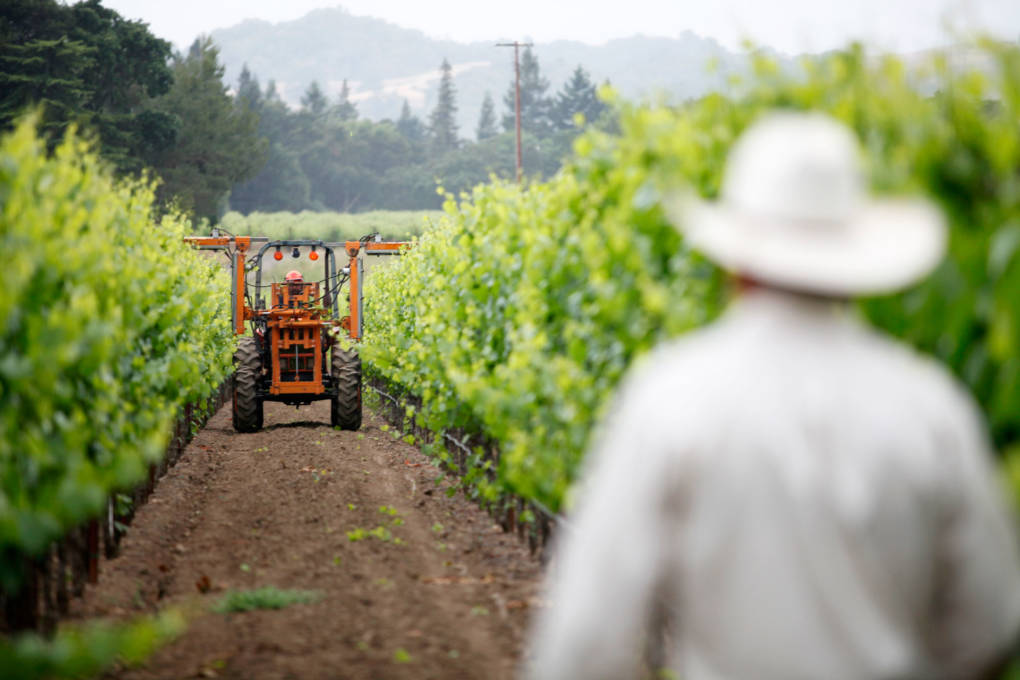
"caption": "A vineyard worker watches as a tractor trims grapevine branches in the Napa Valley.",
"description": "A vineyard worker watches as a tractor trims grapevine branches in the Napa Valley.",
"title": "VineyardTractor",
"credit": "KIMIHIRO HOSHINO/AFP/Getty Images",
"status": "inherit",
"isLoading": false,
"fetchFailed": false
},
"news_11655312": {
"type": "attachments",
"id": "news_11655312",
"meta": {
"index": "attachments_1716263798",
"site": "news",
"id": "11655312",
"found": true
},
"parent": 11654965,
"imgSizes": {
"small": {
"file": "https://ww2.kqed.org/app/uploads/sites/10/2018/03/PoindexterOrchardMain-520x308.jpg",
"width": 520,
"mimeType": "image/jpeg",
"height": 308
},
"twentyfourteen-full-width": {
"file": "https://ww2.kqed.org/app/uploads/sites/10/2018/03/PoindexterOrchardMain-1038x576.jpg",
"width": 1038,
"mimeType": "image/jpeg",
"height": 576
},
"thumbnail": {
"file": "https://ww2.kqed.org/app/uploads/sites/10/2018/03/PoindexterOrchardMain-160x95.jpg",
"width": 160,
"mimeType": "image/jpeg",
"height": 95
},
"fd-sm": {
"file": "https://ww2.kqed.org/app/uploads/sites/10/2018/03/PoindexterOrchardMain-960x569.jpg",
"width": 960,
"mimeType": "image/jpeg",
"height": 569
},
"post-thumbnail": {
"file": "https://ww2.kqed.org/app/uploads/sites/10/2018/03/PoindexterOrchardMain-672x372.jpg",
"width": 672,
"mimeType": "image/jpeg",
"height": 372
},
"xsmall": {
"file": "https://ww2.kqed.org/app/uploads/sites/10/2018/03/PoindexterOrchardMain-375x222.jpg",
"width": 375,
"mimeType": "image/jpeg",
"height": 222
},
"kqedFullSize": {
"file": "https://ww2.kqed.org/app/uploads/sites/10/2018/03/PoindexterOrchardMain.jpg",
"width": 1920,
"height": 1138
},
"large": {
"file": "https://ww2.kqed.org/app/uploads/sites/10/2018/03/PoindexterOrchardMain-1020x605.jpg",
"width": 1020,
"mimeType": "image/jpeg",
"height": 605
},
"xlarge": {
"file": "https://ww2.kqed.org/app/uploads/sites/10/2018/03/PoindexterOrchardMain-1180x699.jpg",
"width": 1180,
"mimeType": "image/jpeg",
"height": 699
},
"guest-author-50": {
"file": "https://ww2.kqed.org/app/uploads/sites/10/2018/03/PoindexterOrchardMain-50x50.jpg",
"width": 50,
"mimeType": "image/jpeg",
"height": 50
},
"guest-author-96": {
"file": "https://ww2.kqed.org/app/uploads/sites/10/2018/03/PoindexterOrchardMain-96x96.jpg",
"width": 96,
"mimeType": "image/jpeg",
"height": 96
},
"medium": {
"file": "https://ww2.kqed.org/app/uploads/sites/10/2018/03/PoindexterOrchardMain-800x474.jpg",
"width": 800,
"mimeType": "image/jpeg",
"height": 474
},
"guest-author-64": {
"file": "https://ww2.kqed.org/app/uploads/sites/10/2018/03/PoindexterOrchardMain-64x64.jpg",
"width": 64,
"mimeType": "image/jpeg",
"height": 64
},
"guest-author-32": {
"file": "https://ww2.kqed.org/app/uploads/sites/10/2018/03/PoindexterOrchardMain-32x32.jpg",
"width": 32,
"mimeType": "image/jpeg",
"height": 32
},
"fd-lrg": {
"file": "https://ww2.kqed.org/app/uploads/sites/10/2018/03/PoindexterOrchardMain-1920x1138.jpg",
"width": 1920,
"mimeType": "image/jpeg",
"height": 1138
},
"fd-med": {
"file": "https://ww2.kqed.org/app/uploads/sites/10/2018/03/PoindexterOrchardMain-1180x699.jpg",
"width": 1180,
"mimeType": "image/jpeg",
"height": 699
},
"full-width": {
"file": "https://ww2.kqed.org/app/uploads/sites/10/2018/03/PoindexterOrchardMain-1920x1138.jpg",
"width": 1920,
"mimeType": "image/jpeg",
"height": 1138
},
"detail": {
"file": "https://ww2.kqed.org/app/uploads/sites/10/2018/03/PoindexterOrchardMain-150x150.jpg",
"width": 150,
"mimeType": "image/jpeg",
"height": 150
},
"guest-author-128": {
"file": "https://ww2.kqed.org/app/uploads/sites/10/2018/03/PoindexterOrchardMain-128x128.jpg",
"width": 128,
"mimeType": "image/jpeg",
"height": 128
},
"xxsmall": {
"file": "https://ww2.kqed.org/app/uploads/sites/10/2018/03/PoindexterOrchardMain-240x142.jpg",
"width": 240,
"mimeType": "image/jpeg",
"height": 142
}
},
"publishDate": 1520894612,
"modified": 1520899100,
"caption": "Mike Poindexter, CEO of Poindexter Nut Company and a third-generation walnut grower, stands in a walnut orchard in Selma, just outside Fresno. Poindexter says he feels caught in the middle over California’s fight with the Department of Justice over immigration.",
"description": "Mike Poindexter, CEO of Poindexter Nut Company and a third-generation walnut grower, stands in a walnut orchard in Selma, just outside of Fresno. Poindexter says he feels caught in the middle over California’s fight with the Department of Justice over immigration.",
"title": "PoindexterOrchardMain",
"credit": "Alexandra Hall/KQED",
"status": "inherit",
"isLoading": false,
"fetchFailed": false
},
"news_11647151": {
"type": "attachments",
"id": "news_11647151",
"meta": {
"index": "attachments_1716263798",
"site": "news",
"id": "11647151",
"found": true
},
"parent": 11647031,
"imgSizes": {
"small": {
"file": "https://ww2.kqed.org/app/uploads/sites/10/2018/01/GettyImages-453973366-520x354.jpg",
"width": 520,
"mimeType": "image/jpeg",
"height": 354
},
"twentyfourteen-full-width": {
"file": "https://ww2.kqed.org/app/uploads/sites/10/2018/01/GettyImages-453973366-1038x576.jpg",
"width": 1038,
"mimeType": "image/jpeg",
"height": 576
},
"thumbnail": {
"file": "https://ww2.kqed.org/app/uploads/sites/10/2018/01/GettyImages-453973366-160x109.jpg",
"width": 160,
"mimeType": "image/jpeg",
"height": 109
},
"fd-sm": {
"file": "https://ww2.kqed.org/app/uploads/sites/10/2018/01/GettyImages-453973366-960x654.jpg",
"width": 960,
"mimeType": "image/jpeg",
"height": 654
},
"post-thumbnail": {
"file": "https://ww2.kqed.org/app/uploads/sites/10/2018/01/GettyImages-453973366-672x372.jpg",
"width": 672,
"mimeType": "image/jpeg",
"height": 372
},
"xsmall": {
"file": "https://ww2.kqed.org/app/uploads/sites/10/2018/01/GettyImages-453973366-375x255.jpg",
"width": 375,
"mimeType": "image/jpeg",
"height": 255
},
"kqedFullSize": {
"file": "https://ww2.kqed.org/app/uploads/sites/10/2018/01/GettyImages-453973366-e1517354307802.jpg",
"width": 1920,
"height": 1308
},
"large": {
"file": "https://ww2.kqed.org/app/uploads/sites/10/2018/01/GettyImages-453973366-1020x695.jpg",
"width": 1020,
"mimeType": "image/jpeg",
"height": 695
},
"xlarge": {
"file": "https://ww2.kqed.org/app/uploads/sites/10/2018/01/GettyImages-453973366-1180x804.jpg",
"width": 1180,
"mimeType": "image/jpeg",
"height": 804
},
"guest-author-50": {
"file": "https://ww2.kqed.org/app/uploads/sites/10/2018/01/GettyImages-453973366-50x50.jpg",
"width": 50,
"mimeType": "image/jpeg",
"height": 50
},
"guest-author-96": {
"file": "https://ww2.kqed.org/app/uploads/sites/10/2018/01/GettyImages-453973366-96x96.jpg",
"width": 96,
"mimeType": "image/jpeg",
"height": 96
},
"medium": {
"file": "https://ww2.kqed.org/app/uploads/sites/10/2018/01/GettyImages-453973366-800x545.jpg",
"width": 800,
"mimeType": "image/jpeg",
"height": 545
},
"guest-author-64": {
"file": "https://ww2.kqed.org/app/uploads/sites/10/2018/01/GettyImages-453973366-64x64.jpg",
"width": 64,
"mimeType": "image/jpeg",
"height": 64
},
"guest-author-32": {
"file": "https://ww2.kqed.org/app/uploads/sites/10/2018/01/GettyImages-453973366-32x32.jpg",
"width": 32,
"mimeType": "image/jpeg",
"height": 32
},
"fd-lrg": {
"file": "https://ww2.kqed.org/app/uploads/sites/10/2018/01/GettyImages-453973366-1920x1308.jpg",
"width": 1920,
"mimeType": "image/jpeg",
"height": 1308
},
"fd-med": {
"file": "https://ww2.kqed.org/app/uploads/sites/10/2018/01/GettyImages-453973366-1180x804.jpg",
"width": 1180,
"mimeType": "image/jpeg",
"height": 804
},
"full-width": {
"file": "https://ww2.kqed.org/app/uploads/sites/10/2018/01/GettyImages-453973366-1920x1308.jpg",
"width": 1920,
"mimeType": "image/jpeg",
"height": 1308
},
"detail": {
"file": "https://ww2.kqed.org/app/uploads/sites/10/2018/01/GettyImages-453973366-150x150.jpg",
"width": 150,
"mimeType": "image/jpeg",
"height": 150
},
"guest-author-128": {
"file": "https://ww2.kqed.org/app/uploads/sites/10/2018/01/GettyImages-453973366-128x128.jpg",
"width": 128,
"mimeType": "image/jpeg",
"height": 128
},
"xxsmall": {
"file": "https://ww2.kqed.org/app/uploads/sites/10/2018/01/GettyImages-453973366-240x163.jpg",
"width": 240,
"mimeType": "image/jpeg",
"height": 163
}
},
"publishDate": 1517354257,
"modified": 1517354918,
"caption": "Workers harvest cantaloupes on a farm on Aug. 22, 2014, in Firebaugh, California.",
"description": null,
"title": "California Central Valley Farming Communities Struggle With Drought",
"credit": "John Moore/Getty Images",
"status": "inherit",
"isLoading": false,
"fetchFailed": false
},
"news_11643735": {
"type": "attachments",
"id": "news_11643735",
"meta": {
"index": "attachments_1716263798",
"site": "news",
"id": "11643735",
"found": true
},
"parent": 11643734,
"imgSizes": {
"small": {
"file": "https://ww2.kqed.org/app/uploads/sites/10/2018/01/strawberries-growing-520x390.jpeg",
"width": 520,
"mimeType": "image/jpeg",
"height": 390
},
"twentyfourteen-full-width": {
"file": "https://ww2.kqed.org/app/uploads/sites/10/2018/01/strawberries-growing-1038x576.jpeg",
"width": 1038,
"mimeType": "image/jpeg",
"height": 576
},
"thumbnail": {
"file": "https://ww2.kqed.org/app/uploads/sites/10/2018/01/strawberries-growing-160x120.jpeg",
"width": 160,
"mimeType": "image/jpeg",
"height": 120
},
"fd-sm": {
"file": "https://ww2.kqed.org/app/uploads/sites/10/2018/01/strawberries-growing-960x720.jpeg",
"width": 960,
"mimeType": "image/jpeg",
"height": 720
},
"post-thumbnail": {
"file": "https://ww2.kqed.org/app/uploads/sites/10/2018/01/strawberries-growing-672x372.jpeg",
"width": 672,
"mimeType": "image/jpeg",
"height": 372
},
"xsmall": {
"file": "https://ww2.kqed.org/app/uploads/sites/10/2018/01/strawberries-growing-375x281.jpeg",
"width": 375,
"mimeType": "image/jpeg",
"height": 281
},
"kqedFullSize": {
"file": "https://ww2.kqed.org/app/uploads/sites/10/2018/01/strawberries-growing.jpeg",
"width": 1600,
"height": 1200
},
"large": {
"file": "https://ww2.kqed.org/app/uploads/sites/10/2018/01/strawberries-growing-1020x765.jpeg",
"width": 1020,
"mimeType": "image/jpeg",
"height": 765
},
"xlarge": {
"file": "https://ww2.kqed.org/app/uploads/sites/10/2018/01/strawberries-growing-1180x885.jpeg",
"width": 1180,
"mimeType": "image/jpeg",
"height": 885
},
"guest-author-50": {
"file": "https://ww2.kqed.org/app/uploads/sites/10/2018/01/strawberries-growing-50x50.jpeg",
"width": 50,
"mimeType": "image/jpeg",
"height": 50
},
"guest-author-96": {
"file": "https://ww2.kqed.org/app/uploads/sites/10/2018/01/strawberries-growing-96x96.jpeg",
"width": 96,
"mimeType": "image/jpeg",
"height": 96
},
"medium": {
"file": "https://ww2.kqed.org/app/uploads/sites/10/2018/01/strawberries-growing-800x600.jpeg",
"width": 800,
"mimeType": "image/jpeg",
"height": 600
},
"guest-author-64": {
"file": "https://ww2.kqed.org/app/uploads/sites/10/2018/01/strawberries-growing-64x64.jpeg",
"width": 64,
"mimeType": "image/jpeg",
"height": 64
},
"guest-author-32": {
"file": "https://ww2.kqed.org/app/uploads/sites/10/2018/01/strawberries-growing-32x32.jpeg",
"width": 32,
"mimeType": "image/jpeg",
"height": 32
},
"fd-med": {
"file": "https://ww2.kqed.org/app/uploads/sites/10/2018/01/strawberries-growing-1180x885.jpeg",
"width": 1180,
"mimeType": "image/jpeg",
"height": 885
},
"detail": {
"file": "https://ww2.kqed.org/app/uploads/sites/10/2018/01/strawberries-growing-150x150.jpeg",
"width": 150,
"mimeType": "image/jpeg",
"height": 150
},
"guest-author-128": {
"file": "https://ww2.kqed.org/app/uploads/sites/10/2018/01/strawberries-growing-128x128.jpeg",
"width": 128,
"mimeType": "image/jpeg",
"height": 128
},
"xxsmall": {
"file": "https://ww2.kqed.org/app/uploads/sites/10/2018/01/strawberries-growing-240x180.jpeg",
"width": 240,
"mimeType": "image/jpeg",
"height": 180
}
},
"publishDate": 1516734281,
"modified": 1516745508,
"caption": "Suspected infestation of Macrophomina phaseolina, a “novel” soil pathogen, in the non-fumigated buffer zone of a strawberry field.",
"description": null,
"title": "strawberries-growing",
"credit": "Julie Guthman/UC Santa Cruz",
"status": "inherit",
"isLoading": false,
"fetchFailed": false
},
"news_11642510": {
"type": "attachments",
"id": "news_11642510",
"meta": {
"index": "attachments_1716263798",
"site": "news",
"id": "11642510",
"found": true
},
"parent": 11642508,
"imgSizes": {
"small": {
"file": "https://ww2.kqed.org/app/uploads/sites/10/2018/01/dreamers1-520x390.jpg",
"width": 520,
"mimeType": "image/jpeg",
"height": 390
},
"twentyfourteen-full-width": {
"file": "https://ww2.kqed.org/app/uploads/sites/10/2018/01/dreamers1-1038x576.jpg",
"width": 1038,
"mimeType": "image/jpeg",
"height": 576
},
"thumbnail": {
"file": "https://ww2.kqed.org/app/uploads/sites/10/2018/01/dreamers1-160x120.jpg",
"width": 160,
"mimeType": "image/jpeg",
"height": 120
},
"fd-sm": {
"file": "https://ww2.kqed.org/app/uploads/sites/10/2018/01/dreamers1-960x720.jpg",
"width": 960,
"mimeType": "image/jpeg",
"height": 720
},
"post-thumbnail": {
"file": "https://ww2.kqed.org/app/uploads/sites/10/2018/01/dreamers1-672x372.jpg",
"width": 672,
"mimeType": "image/jpeg",
"height": 372
},
"xsmall": {
"file": "https://ww2.kqed.org/app/uploads/sites/10/2018/01/dreamers1-375x281.jpg",
"width": 375,
"mimeType": "image/jpeg",
"height": 281
},
"kqedFullSize": {
"file": "https://ww2.kqed.org/app/uploads/sites/10/2018/01/dreamers1.jpg",
"width": 1260,
"height": 945
},
"large": {
"file": "https://ww2.kqed.org/app/uploads/sites/10/2018/01/dreamers1-1020x765.jpg",
"width": 1020,
"mimeType": "image/jpeg",
"height": 765
},
"xlarge": {
"file": "https://ww2.kqed.org/app/uploads/sites/10/2018/01/dreamers1-1180x885.jpg",
"width": 1180,
"mimeType": "image/jpeg",
"height": 885
},
"guest-author-50": {
"file": "https://ww2.kqed.org/app/uploads/sites/10/2018/01/dreamers1-50x50.jpg",
"width": 50,
"mimeType": "image/jpeg",
"height": 50
},
"guest-author-96": {
"file": "https://ww2.kqed.org/app/uploads/sites/10/2018/01/dreamers1-96x96.jpg",
"width": 96,
"mimeType": "image/jpeg",
"height": 96
},
"medium": {
"file": "https://ww2.kqed.org/app/uploads/sites/10/2018/01/dreamers1-800x600.jpg",
"width": 800,
"mimeType": "image/jpeg",
"height": 600
},
"guest-author-64": {
"file": "https://ww2.kqed.org/app/uploads/sites/10/2018/01/dreamers1-64x64.jpg",
"width": 64,
"mimeType": "image/jpeg",
"height": 64
},
"guest-author-32": {
"file": "https://ww2.kqed.org/app/uploads/sites/10/2018/01/dreamers1-32x32.jpg",
"width": 32,
"mimeType": "image/jpeg",
"height": 32
},
"fd-med": {
"file": "https://ww2.kqed.org/app/uploads/sites/10/2018/01/dreamers1-1180x885.jpg",
"width": 1180,
"mimeType": "image/jpeg",
"height": 885
},
"detail": {
"file": "https://ww2.kqed.org/app/uploads/sites/10/2018/01/dreamers1-150x150.jpg",
"width": 150,
"mimeType": "image/jpeg",
"height": 150
},
"guest-author-128": {
"file": "https://ww2.kqed.org/app/uploads/sites/10/2018/01/dreamers1-128x128.jpg",
"width": 128,
"mimeType": "image/jpeg",
"height": 128
},
"xxsmall": {
"file": "https://ww2.kqed.org/app/uploads/sites/10/2018/01/dreamers1-240x180.jpg",
"width": 240,
"mimeType": "image/jpeg",
"height": 180
}
},
"publishDate": 1516228947,
"modified": 1516228983,
"caption": "California State University, Fresno, student Rosa Salmeron rallies Dreamers and supporters outside the office of Rep. Kevin McCarthy, R-Bakersfield, House of Representative majority leader. ",
"description": "California State University, Fresno, student Rosa Salmeron rallies Dreamers and supporters outside the office of Rep. Kevin McCarthy, R-Bakersfield, House of Representative majority leader. ",
"title": "dreamers1",
"credit": "Susan Ferriss/Center for Public Integrity",
"status": "inherit",
"isLoading": false,
"fetchFailed": false
},
"news_11640076": {
"type": "attachments",
"id": "news_11640076",
"meta": {
"index": "attachments_1716263798",
"site": "news",
"id": "11640076",
"found": true
},
"parent": 11640071,
"imgSizes": {
"small": {
"file": "https://ww2.kqed.org/app/uploads/sites/10/2018/01/RS24548_GettyImages-621788290-qut-520x370.jpg",
"width": 520,
"mimeType": "image/jpeg",
"height": 370
},
"twentyfourteen-full-width": {
"file": "https://ww2.kqed.org/app/uploads/sites/10/2018/01/RS24548_GettyImages-621788290-qut-1038x576.jpg",
"width": 1038,
"mimeType": "image/jpeg",
"height": 576
},
"thumbnail": {
"file": "https://ww2.kqed.org/app/uploads/sites/10/2018/01/RS24548_GettyImages-621788290-qut-160x114.jpg",
"width": 160,
"mimeType": "image/jpeg",
"height": 114
},
"fd-sm": {
"file": "https://ww2.kqed.org/app/uploads/sites/10/2018/01/RS24548_GettyImages-621788290-qut-960x683.jpg",
"width": 960,
"mimeType": "image/jpeg",
"height": 683
},
"post-thumbnail": {
"file": "https://ww2.kqed.org/app/uploads/sites/10/2018/01/RS24548_GettyImages-621788290-qut-672x372.jpg",
"width": 672,
"mimeType": "image/jpeg",
"height": 372
},
"xsmall": {
"file": "https://ww2.kqed.org/app/uploads/sites/10/2018/01/RS24548_GettyImages-621788290-qut-375x267.jpg",
"width": 375,
"mimeType": "image/jpeg",
"height": 267
},
"kqedFullSize": {
"file": "https://ww2.kqed.org/app/uploads/sites/10/2018/01/RS24548_GettyImages-621788290-qut.jpg",
"width": 1920,
"height": 1366
},
"large": {
"file": "https://ww2.kqed.org/app/uploads/sites/10/2018/01/RS24548_GettyImages-621788290-qut-1020x726.jpg",
"width": 1020,
"mimeType": "image/jpeg",
"height": 726
},
"xlarge": {
"file": "https://ww2.kqed.org/app/uploads/sites/10/2018/01/RS24548_GettyImages-621788290-qut-1180x840.jpg",
"width": 1180,
"mimeType": "image/jpeg",
"height": 840
},
"guest-author-50": {
"file": "https://ww2.kqed.org/app/uploads/sites/10/2018/01/RS24548_GettyImages-621788290-qut-50x50.jpg",
"width": 50,
"mimeType": "image/jpeg",
"height": 50
},
"guest-author-96": {
"file": "https://ww2.kqed.org/app/uploads/sites/10/2018/01/RS24548_GettyImages-621788290-qut-96x96.jpg",
"width": 96,
"mimeType": "image/jpeg",
"height": 96
},
"medium": {
"file": "https://ww2.kqed.org/app/uploads/sites/10/2018/01/RS24548_GettyImages-621788290-qut-800x569.jpg",
"width": 800,
"mimeType": "image/jpeg",
"height": 569
},
"guest-author-64": {
"file": "https://ww2.kqed.org/app/uploads/sites/10/2018/01/RS24548_GettyImages-621788290-qut-64x64.jpg",
"width": 64,
"mimeType": "image/jpeg",
"height": 64
},
"guest-author-32": {
"file": "https://ww2.kqed.org/app/uploads/sites/10/2018/01/RS24548_GettyImages-621788290-qut-32x32.jpg",
"width": 32,
"mimeType": "image/jpeg",
"height": 32
},
"fd-lrg": {
"file": "https://ww2.kqed.org/app/uploads/sites/10/2018/01/RS24548_GettyImages-621788290-qut-1920x1366.jpg",
"width": 1920,
"mimeType": "image/jpeg",
"height": 1366
},
"fd-med": {
"file": "https://ww2.kqed.org/app/uploads/sites/10/2018/01/RS24548_GettyImages-621788290-qut-1180x840.jpg",
"width": 1180,
"mimeType": "image/jpeg",
"height": 840
},
"full-width": {
"file": "https://ww2.kqed.org/app/uploads/sites/10/2018/01/RS24548_GettyImages-621788290-qut-1920x1366.jpg",
"width": 1920,
"mimeType": "image/jpeg",
"height": 1366
},
"detail": {
"file": "https://ww2.kqed.org/app/uploads/sites/10/2018/01/RS24548_GettyImages-621788290-qut-150x150.jpg",
"width": 150,
"mimeType": "image/jpeg",
"height": 150
},
"guest-author-128": {
"file": "https://ww2.kqed.org/app/uploads/sites/10/2018/01/RS24548_GettyImages-621788290-qut-128x128.jpg",
"width": 128,
"mimeType": "image/jpeg",
"height": 128
},
"xxsmall": {
"file": "https://ww2.kqed.org/app/uploads/sites/10/2018/01/RS24548_GettyImages-621788290-qut-240x171.jpg",
"width": 240,
"mimeType": "image/jpeg",
"height": 171
}
},
"publishDate": 1515032618,
"modified": 1515111308,
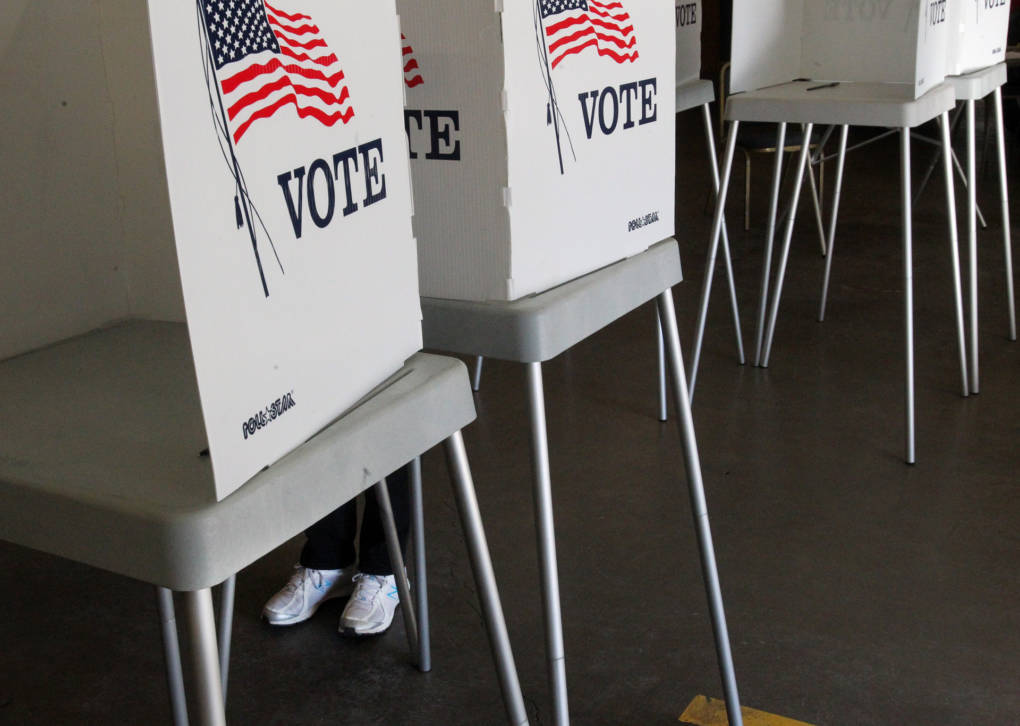
"caption": "A voter casts a ballot on Election Day.",
"description": "A voter casts their ballot.",
"title": "RS24548_GettyImages-621788290-qut",
"credit": "BILL WECHTER/AFP/Getty Images",
"status": "inherit",
"isLoading": false,
"fetchFailed": false
},
"news_11637177": {
"type": "attachments",
"id": "news_11637177",
"meta": {
"index": "attachments_1716263798",
"site": "news",
"id": "11637177",
"found": true
},
"parent": 11636617,
"imgSizes": {
"small": {
"file": "https://ww2.kqed.org/app/uploads/sites/10/2017/12/RS28375_Fred.Rosie-Mother-qut-1-520x376.jpg",
"width": 520,
"mimeType": "image/jpeg",
"height": 376
},
"twentyfourteen-full-width": {
"file": "https://ww2.kqed.org/app/uploads/sites/10/2017/12/RS28375_Fred.Rosie-Mother-qut-1-1038x576.jpg",
"width": 1038,
"mimeType": "image/jpeg",
"height": 576
},
"thumbnail": {
"file": "https://ww2.kqed.org/app/uploads/sites/10/2017/12/RS28375_Fred.Rosie-Mother-qut-1-160x116.jpg",
"width": 160,
"mimeType": "image/jpeg",
"height": 116
},
"fd-sm": {
"file": "https://ww2.kqed.org/app/uploads/sites/10/2017/12/RS28375_Fred.Rosie-Mother-qut-1-960x695.jpg",
"width": 960,
"mimeType": "image/jpeg",
"height": 695
},
"post-thumbnail": {
"file": "https://ww2.kqed.org/app/uploads/sites/10/2017/12/RS28375_Fred.Rosie-Mother-qut-1-672x372.jpg",
"width": 672,
"mimeType": "image/jpeg",
"height": 372
},
"xsmall": {
"file": "https://ww2.kqed.org/app/uploads/sites/10/2017/12/RS28375_Fred.Rosie-Mother-qut-1-375x271.jpg",
"width": 375,
"mimeType": "image/jpeg",
"height": 271
},
"kqedFullSize": {
"file": "https://ww2.kqed.org/app/uploads/sites/10/2017/12/RS28375_Fred.Rosie-Mother-qut-1.jpg",
"width": 1920,
"height": 1389
},
"large": {
"file": "https://ww2.kqed.org/app/uploads/sites/10/2017/12/RS28375_Fred.Rosie-Mother-qut-1-1020x738.jpg",
"width": 1020,
"mimeType": "image/jpeg",
"height": 738
},
"xlarge": {
"file": "https://ww2.kqed.org/app/uploads/sites/10/2017/12/RS28375_Fred.Rosie-Mother-qut-1-1180x854.jpg",
"width": 1180,
"mimeType": "image/jpeg",
"height": 854
},
"guest-author-50": {
"file": "https://ww2.kqed.org/app/uploads/sites/10/2017/12/RS28375_Fred.Rosie-Mother-qut-1-50x50.jpg",
"width": 50,
"mimeType": "image/jpeg",
"height": 50
},
"guest-author-96": {
"file": "https://ww2.kqed.org/app/uploads/sites/10/2017/12/RS28375_Fred.Rosie-Mother-qut-1-96x96.jpg",
"width": 96,
"mimeType": "image/jpeg",
"height": 96
},
"medium": {
"file": "https://ww2.kqed.org/app/uploads/sites/10/2017/12/RS28375_Fred.Rosie-Mother-qut-1-800x579.jpg",
"width": 800,
"mimeType": "image/jpeg",
"height": 579
},
"guest-author-64": {
"file": "https://ww2.kqed.org/app/uploads/sites/10/2017/12/RS28375_Fred.Rosie-Mother-qut-1-64x64.jpg",
"width": 64,
"mimeType": "image/jpeg",
"height": 64
},
"guest-author-32": {
"file": "https://ww2.kqed.org/app/uploads/sites/10/2017/12/RS28375_Fred.Rosie-Mother-qut-1-32x32.jpg",
"width": 32,
"mimeType": "image/jpeg",
"height": 32
},
"fd-lrg": {
"file": "https://ww2.kqed.org/app/uploads/sites/10/2017/12/RS28375_Fred.Rosie-Mother-qut-1-1920x1389.jpg",
"width": 1920,
"mimeType": "image/jpeg",
"height": 1389
},
"fd-med": {
"file": "https://ww2.kqed.org/app/uploads/sites/10/2017/12/RS28375_Fred.Rosie-Mother-qut-1-1180x854.jpg",
"width": 1180,
"mimeType": "image/jpeg",
"height": 854
},
"full-width": {
"file": "https://ww2.kqed.org/app/uploads/sites/10/2017/12/RS28375_Fred.Rosie-Mother-qut-1-1920x1389.jpg",
"width": 1920,
"mimeType": "image/jpeg",
"height": 1389
},
"detail": {
"file": "https://ww2.kqed.org/app/uploads/sites/10/2017/12/RS28375_Fred.Rosie-Mother-qut-1-150x150.jpg",
"width": 150,
"mimeType": "image/jpeg",
"height": 150
},
"guest-author-128": {
"file": "https://ww2.kqed.org/app/uploads/sites/10/2017/12/RS28375_Fred.Rosie-Mother-qut-1-128x128.jpg",
"width": 128,
"mimeType": "image/jpeg",
"height": 128
},
"xxsmall": {
"file": "https://ww2.kqed.org/app/uploads/sites/10/2017/12/RS28375_Fred.Rosie-Mother-qut-1-240x174.jpg",
"width": 240,
"mimeType": "image/jpeg",
"height": 174
}
},
"publishDate": 1513297070,
"modified": 1513455152,
"caption": "Fred Ruiz and his mother Rosie in an early publicity still.",
"description": "Fred Ruiz and his mother Rosie in an early publicity still.",
"title": "RS28375_Fred.Rosie-Mother-qut (1)",
"credit": "Courtesy of Ruiz Foods",
"status": "inherit",
"isLoading": false,
"fetchFailed": false
},
"news_11629217": {
"type": "attachments",
"id": "news_11629217",
"meta": {
"index": "attachments_1716263798",
"site": "news",
"id": "11629217",
"found": true
},
"parent": 11628872,
"imgSizes": {
"small": {
"file": "https://ww2.kqed.org/app/uploads/sites/10/2017/11/SonnyP-520x334.jpg",
"width": 520,
"mimeType": "image/jpeg",
"height": 334
},
"twentyfourteen-full-width": {
"file": "https://ww2.kqed.org/app/uploads/sites/10/2017/11/SonnyP-1038x576.jpg",
"width": 1038,
"mimeType": "image/jpeg",
"height": 576
},
"thumbnail": {
"file": "https://ww2.kqed.org/app/uploads/sites/10/2017/11/SonnyP-160x103.jpg",
"width": 160,
"mimeType": "image/jpeg",
"height": 103
},
"fd-sm": {
"file": "https://ww2.kqed.org/app/uploads/sites/10/2017/11/SonnyP-960x617.jpg",
"width": 960,
"mimeType": "image/jpeg",
"height": 617
},
"post-thumbnail": {
"file": "https://ww2.kqed.org/app/uploads/sites/10/2017/11/SonnyP-672x372.jpg",
"width": 672,
"mimeType": "image/jpeg",
"height": 372
},
"xsmall": {
"file": "https://ww2.kqed.org/app/uploads/sites/10/2017/11/SonnyP-375x241.jpg",
"width": 375,
"mimeType": "image/jpeg",
"height": 241
},
"kqedFullSize": {
"file": "https://ww2.kqed.org/app/uploads/sites/10/2017/11/SonnyP.jpg",
"width": 1920,
"height": 1233
},
"large": {
"file": "https://ww2.kqed.org/app/uploads/sites/10/2017/11/SonnyP-1020x655.jpg",
"width": 1020,
"mimeType": "image/jpeg",
"height": 655
},
"xlarge": {
"file": "https://ww2.kqed.org/app/uploads/sites/10/2017/11/SonnyP-1180x758.jpg",
"width": 1180,
"mimeType": "image/jpeg",
"height": 758
},
"guest-author-50": {
"file": "https://ww2.kqed.org/app/uploads/sites/10/2017/11/SonnyP-50x50.jpg",
"width": 50,
"mimeType": "image/jpeg",
"height": 50
},
"guest-author-96": {
"file": "https://ww2.kqed.org/app/uploads/sites/10/2017/11/SonnyP-96x96.jpg",
"width": 96,
"mimeType": "image/jpeg",
"height": 96
},
"medium": {
"file": "https://ww2.kqed.org/app/uploads/sites/10/2017/11/SonnyP-800x514.jpg",
"width": 800,
"mimeType": "image/jpeg",
"height": 514
},
"guest-author-64": {
"file": "https://ww2.kqed.org/app/uploads/sites/10/2017/11/SonnyP-64x64.jpg",
"width": 64,
"mimeType": "image/jpeg",
"height": 64
},
"guest-author-32": {
"file": "https://ww2.kqed.org/app/uploads/sites/10/2017/11/SonnyP-32x32.jpg",
"width": 32,
"mimeType": "image/jpeg",
"height": 32
},
"fd-lrg": {
"file": "https://ww2.kqed.org/app/uploads/sites/10/2017/11/SonnyP-1920x1233.jpg",
"width": 1920,
"mimeType": "image/jpeg",
"height": 1233
},
"fd-med": {
"file": "https://ww2.kqed.org/app/uploads/sites/10/2017/11/SonnyP-1180x758.jpg",
"width": 1180,
"mimeType": "image/jpeg",
"height": 758
},
"full-width": {
"file": "https://ww2.kqed.org/app/uploads/sites/10/2017/11/SonnyP-1920x1233.jpg",
"width": 1920,
"mimeType": "image/jpeg",
"height": 1233
},
"detail": {
"file": "https://ww2.kqed.org/app/uploads/sites/10/2017/11/SonnyP-150x150.jpg",
"width": 150,
"mimeType": "image/jpeg",
"height": 150
},
"guest-author-128": {
"file": "https://ww2.kqed.org/app/uploads/sites/10/2017/11/SonnyP-128x128.jpg",
"width": 128,
"mimeType": "image/jpeg",
"height": 128
},
"xxsmall": {
"file": "https://ww2.kqed.org/app/uploads/sites/10/2017/11/SonnyP-240x154.jpg",
"width": 240,
"mimeType": "image/jpeg",
"height": 154
}
},
"publishDate": 1510178210,
"modified": 1510178277,
"caption": "Agriculture Secretary Sonny Perdue listens as President Trump speaks during a roundtable with farmers on April 25, 2017.",
"description": "Agriculture Secretary Sonny Perdue listens as President Trump speaks during a roundtable with farmers on April 25, 2017.",
"title": "SonnyP",
"credit": "Olivier Douliery-Pool/Getty Images",
"status": "inherit",
"isLoading": false,
"fetchFailed": false
},
"news_11626504": {
"type": "attachments",
"id": "news_11626504",
"meta": {
"index": "attachments_1716263798",
"site": "news",
"id": "11626504",
"found": true
},
"parent": 11626474,
"imgSizes": {
"small": {
"file": "https://ww2.kqed.org/app/uploads/sites/10/2017/10/Antonio-4-e1509139212405-520x382.jpg",
"width": 520,
"mimeType": "image/jpeg",
"height": 382
},
"twentyfourteen-full-width": {
"file": "https://ww2.kqed.org/app/uploads/sites/10/2017/10/Antonio-4-e1509139212405-1038x576.jpg",
"width": 1038,
"mimeType": "image/jpeg",
"height": 576
},
"thumbnail": {
"file": "https://ww2.kqed.org/app/uploads/sites/10/2017/10/Antonio-4-e1509139212405-160x118.jpg",
"width": 160,
"mimeType": "image/jpeg",
"height": 118
},
"fd-sm": {
"file": "https://ww2.kqed.org/app/uploads/sites/10/2017/10/Antonio-4-e1509139212405-960x705.jpg",
"width": 960,
"mimeType": "image/jpeg",
"height": 705
},
"post-thumbnail": {
"file": "https://ww2.kqed.org/app/uploads/sites/10/2017/10/Antonio-4-e1509139212405-672x372.jpg",
"width": 672,
"mimeType": "image/jpeg",
"height": 372
},
"xsmall": {
"file": "https://ww2.kqed.org/app/uploads/sites/10/2017/10/Antonio-4-e1509139212405-375x275.jpg",
"width": 375,
"mimeType": "image/jpeg",
"height": 275
},
"kqedFullSize": {
"file": "https://ww2.kqed.org/app/uploads/sites/10/2017/10/Antonio-4-e1509139212405.jpg",
"width": 1536,
"height": 1128
},
"large": {
"file": "https://ww2.kqed.org/app/uploads/sites/10/2017/10/Antonio-4-e1509139212405-1020x749.jpg",
"width": 1020,
"mimeType": "image/jpeg",
"height": 749
},
"xlarge": {
"file": "https://ww2.kqed.org/app/uploads/sites/10/2017/10/Antonio-4-e1509139212405-1180x867.jpg",
"width": 1180,
"mimeType": "image/jpeg",
"height": 867
},
"guest-author-50": {
"file": "https://ww2.kqed.org/app/uploads/sites/10/2017/10/Antonio-4-e1509139212405-50x50.jpg",
"width": 50,
"mimeType": "image/jpeg",
"height": 50
},
"guest-author-96": {
"file": "https://ww2.kqed.org/app/uploads/sites/10/2017/10/Antonio-4-e1509139212405-96x96.jpg",
"width": 96,
"mimeType": "image/jpeg",
"height": 96
},
"medium": {
"file": "https://ww2.kqed.org/app/uploads/sites/10/2017/10/Antonio-4-e1509139212405-800x588.jpg",
"width": 800,
"mimeType": "image/jpeg",
"height": 588
},
"guest-author-64": {
"file": "https://ww2.kqed.org/app/uploads/sites/10/2017/10/Antonio-4-e1509139212405-64x64.jpg",
"width": 64,
"mimeType": "image/jpeg",
"height": 64
},
"guest-author-32": {
"file": "https://ww2.kqed.org/app/uploads/sites/10/2017/10/Antonio-4-e1509139212405-32x32.jpg",
"width": 32,
"mimeType": "image/jpeg",
"height": 32
},
"fd-lrg": {
"file": "https://ww2.kqed.org/app/uploads/sites/10/2017/10/Antonio-4-1920x1280.jpg",
"width": 1920,
"mimeType": "image/jpeg",
"height": 1280
},
"fd-med": {
"file": "https://ww2.kqed.org/app/uploads/sites/10/2017/10/Antonio-4-e1509139212405-1180x867.jpg",
"width": 1180,
"mimeType": "image/jpeg",
"height": 867
},
"full-width": {
"file": "https://ww2.kqed.org/app/uploads/sites/10/2017/10/Antonio-4-1920x1280.jpg",
"width": 1920,
"mimeType": "image/jpeg",
"height": 1280
},
"detail": {
"file": "https://ww2.kqed.org/app/uploads/sites/10/2017/10/Antonio-4-e1509139212405-150x150.jpg",
"width": 150,
"mimeType": "image/jpeg",
"height": 150
},
"guest-author-128": {
"file": "https://ww2.kqed.org/app/uploads/sites/10/2017/10/Antonio-4-e1509139212405-128x128.jpg",
"width": 128,
"mimeType": "image/jpeg",
"height": 128
},
"xxsmall": {
"file": "https://ww2.kqed.org/app/uploads/sites/10/2017/10/Antonio-4-e1509139212405-240x176.jpg",
"width": 240,
"mimeType": "image/jpeg",
"height": 176
}
},
"publishDate": 1509137171,
"modified": 1509666400,
"caption": "Antonio Chavez leases a 7-acre farm from a family friend to grow what he grew in Oaxaca: squash, chilies and marigolds. ",
"description": "Antionio Chavez leases a 7-acre farm from a family friend to grow what he grew in Oaxaca: squash, chilies and marigolds. ",
"title": "Antonio 4",
"credit": "Vanessa Rancano/KQED",
"status": "inherit",
"isLoading": false,
"fetchFailed": false
},
"news_11626127": {
"type": "attachments",
"id": "news_11626127",
"meta": {
"index": "attachments_1716263798",
"site": "news",
"id": "11626127",
"found": true
},
"parent": 11626020,
"imgSizes": {
"small": {
"file": "https://ww2.kqed.org/app/uploads/sites/10/2017/10/Vuich-520x530.jpg",
"width": 520,
"mimeType": "image/jpeg",
"height": 530
},
"twentyfourteen-full-width": {
"file": "https://ww2.kqed.org/app/uploads/sites/10/2017/10/Vuich-1038x576.jpg",
"width": 1038,
"mimeType": "image/jpeg",
"height": 576
},
"thumbnail": {
"file": "https://ww2.kqed.org/app/uploads/sites/10/2017/10/Vuich-160x163.jpg",
"width": 160,
"mimeType": "image/jpeg",
"height": 163
},
"fd-sm": {
"file": "https://ww2.kqed.org/app/uploads/sites/10/2017/10/Vuich-960x979.jpg",
"width": 960,
"mimeType": "image/jpeg",
"height": 979
},
"post-thumbnail": {
"file": "https://ww2.kqed.org/app/uploads/sites/10/2017/10/Vuich-672x372.jpg",
"width": 672,
"mimeType": "image/jpeg",
"height": 372
},
"xsmall": {
"file": "https://ww2.kqed.org/app/uploads/sites/10/2017/10/Vuich-375x382.jpg",
"width": 375,
"mimeType": "image/jpeg",
"height": 382
},
"kqedFullSize": {
"file": "https://ww2.kqed.org/app/uploads/sites/10/2017/10/Vuich.jpg",
"width": 1920,
"height": 1957
},
"large": {
"file": "https://ww2.kqed.org/app/uploads/sites/10/2017/10/Vuich-1020x1040.jpg",
"width": 1020,
"mimeType": "image/jpeg",
"height": 1040
},
"xlarge": {
"file": "https://ww2.kqed.org/app/uploads/sites/10/2017/10/Vuich-1180x1203.jpg",
"width": 1180,
"mimeType": "image/jpeg",
"height": 1203
},
"guest-author-50": {
"file": "https://ww2.kqed.org/app/uploads/sites/10/2017/10/Vuich-50x50.jpg",
"width": 50,
"mimeType": "image/jpeg",
"height": 50
},
"guest-author-96": {
"file": "https://ww2.kqed.org/app/uploads/sites/10/2017/10/Vuich-96x96.jpg",
"width": 96,
"mimeType": "image/jpeg",
"height": 96
},
"medium": {
"file": "https://ww2.kqed.org/app/uploads/sites/10/2017/10/Vuich-800x815.jpg",
"width": 800,
"mimeType": "image/jpeg",
"height": 815
},
"guest-author-64": {
"file": "https://ww2.kqed.org/app/uploads/sites/10/2017/10/Vuich-64x64.jpg",
"width": 64,
"mimeType": "image/jpeg",
"height": 64
},
"guest-author-32": {
"file": "https://ww2.kqed.org/app/uploads/sites/10/2017/10/Vuich-32x32.jpg",
"width": 32,
"mimeType": "image/jpeg",
"height": 32
},
"fd-lrg": {
"file": "https://ww2.kqed.org/app/uploads/sites/10/2017/10/Vuich-1920x1957.jpg",
"width": 1920,
"mimeType": "image/jpeg",
"height": 1957
},
"fd-med": {
"file": "https://ww2.kqed.org/app/uploads/sites/10/2017/10/Vuich-1180x1203.jpg",
"width": 1180,
"mimeType": "image/jpeg",
"height": 1203
},
"full-width": {
"file": "https://ww2.kqed.org/app/uploads/sites/10/2017/10/Vuich-1920x1957.jpg",
"width": 1920,
"mimeType": "image/jpeg",
"height": 1957
},
"detail": {
"file": "https://ww2.kqed.org/app/uploads/sites/10/2017/10/Vuich-150x150.jpg",
"width": 150,
"mimeType": "image/jpeg",
"height": 150
},
"guest-author-128": {
"file": "https://ww2.kqed.org/app/uploads/sites/10/2017/10/Vuich-128x128.jpg",
"width": 128,
"mimeType": "image/jpeg",
"height": 128
},
"xxsmall": {
"file": "https://ww2.kqed.org/app/uploads/sites/10/2017/10/Vuich-240x245.jpg",
"width": 240,
"mimeType": "image/jpeg",
"height": 245
}
},
"publishDate": 1508981407,
"modified": 1508981456,
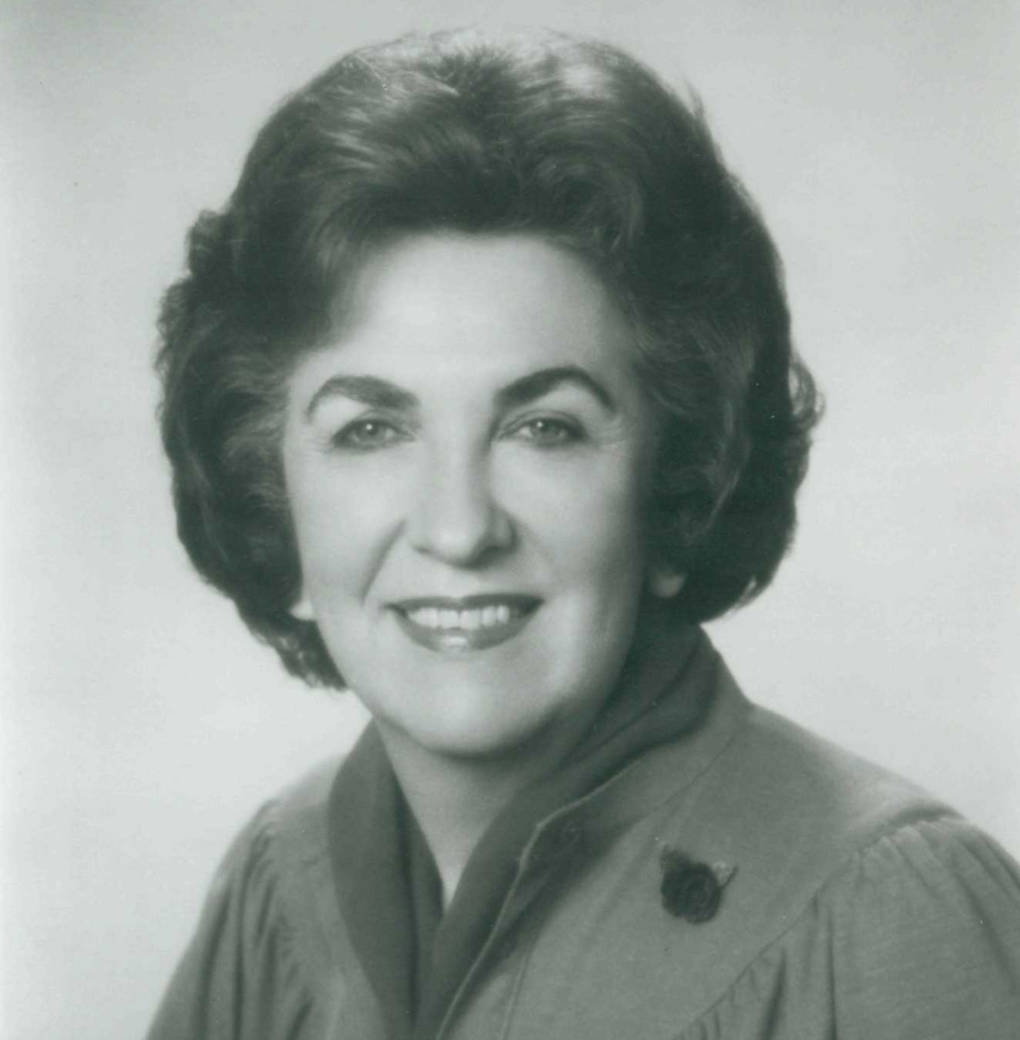
"caption": "Sen. Rose Ann Vuich",
"description": "Sen. Rose Ann Vuich",
"title": "Vuich",
"credit": "California State Library",
"status": "inherit",
"isLoading": false,
"fetchFailed": false
}
},
"audioPlayerReducer": {
"postId": "stream_live",
"isPaused": true,
"isPlaying": false,
"pfsActive": false,
"pledgeModalIsOpen": true,
"playerDrawerIsOpen": false,
"liveAudioPlayStartedAt": 0,
"liveAudioPlayContext": ""
},
"authorsReducer": {
"byline_news_11662914": {
"type": "authors",
"id": "byline_news_11662914",
"meta": {
"override": true
},
"slug": "byline_news_11662914",
"name": "\u003cstrong>\u003ca href=\"https://calmatters.org/articles/author/dan-morain/\">Dan Morain\u003c/a>\u003c/strong>",
"isLoading": false
},
"byline_news_11643734": {
"type": "authors",
"id": "byline_news_11643734",
"meta": {
"override": true
},
"slug": "byline_news_11643734",
"name": "\u003cstrong>\u003ca href=\"https://theconversation.com/profiles/julie-guthman-420662\">Julie Guthman\u003c/a>\u003c/strong>\u003cbr />\u003cem>UC Santa Cruz, for \u003ca href=\"https://theconversation.com\">The Conversation\u003c/a>\u003c/em>",
"isLoading": false
},
"byline_news_11642508": {
"type": "authors",
"id": "byline_news_11642508",
"meta": {
"override": true
},
"slug": "byline_news_11642508",
"name": "\u003cstrong>\u003ca href=\"https://www.publicintegrity.org/authors/susan-ferriss\">Susan Ferriss\u003c/a>\u003c/strong>",
"isLoading": false
},
"katrinaschwartz": {
"type": "authors",
"id": "234",
"meta": {
"index": "authors_1716337520",
"id": "234",
"found": true
},
"name": "Katrina Schwartz",
"firstName": "Katrina",
"lastName": "Schwartz",
"slug": "katrinaschwartz",
"email": "kschwartz@kqed.org",
"display_author_email": false,
"staff_mastheads": [
"news"
],
"title": "Producer",
"bio": "Katrina Schwartz is a journalist based in San Francisco. She's worked at KPCC public radio in LA and has reported on air and online for KQED since 2010. She covered how teaching and learning is changing for MindShift between 2012 and 2020. She is the co-host of the MindShift podcast and now produces KQED's Bay Curious podcast.",
"avatar": "https://secure.gravatar.com/avatar/edb4ee79070447a018538c9aae6eeecf28786515b8a0c30e43b6b7dce5aa44c8?s=600&d=blank&r=g",
"twitter": "kschwart",
"bluesky": null,
"facebook": null,
"instagram": null,
"linkedin": null,
"sites": [
{
"site": "",
"roles": [
"editor"
]
},
{
"site": "news",
"roles": [
"editor"
]
},
{
"site": "mindshift",
"roles": [
"administrator"
]
},
{
"site": "stateofhealth",
"roles": [
"author"
]
},
{
"site": "science",
"roles": [
"editor"
]
}
],
"headData": {
"title": "Katrina Schwartz | KQED",
"description": "Producer",
"ogImgSrc": "https://secure.gravatar.com/avatar/edb4ee79070447a018538c9aae6eeecf28786515b8a0c30e43b6b7dce5aa44c8?s=600&d=blank&r=g",
"twImgSrc": "https://secure.gravatar.com/avatar/edb4ee79070447a018538c9aae6eeecf28786515b8a0c30e43b6b7dce5aa44c8?s=600&d=blank&r=g"
},
"isLoading": false,
"link": "/author/katrinaschwartz"
},
"tgoldberg": {
"type": "authors",
"id": "258",
"meta": {
"index": "authors_1716337520",
"id": "258",
"found": true
},
"name": "Ted Goldberg",
"firstName": "Ted",
"lastName": "Goldberg",
"slug": "tgoldberg",
"email": "tgoldberg@kqed.org",
"display_author_email": true,
"staff_mastheads": [
"news"
],
"title": "KQED Managing Editor, News and Newscasts",
"bio": "Ted Goldberg is Managing Editor of News and Newscasts at KQED. His main reporting beat is the Bay Area's oil refining industry.\r\n\r\nPrior to joining KQED in 2014, Ted worked at CBS News and WCBS AM in New York and Bay City News and KCBS Radio in San Francisco. He graduated from Oberlin College in Ohio in 1998.",
"avatar": "https://secure.gravatar.com/avatar/30ce2e4fe89135e104f89be2394d16225b9d36c121b5b3cb7651ce642978b96f?s=600&d=blank&r=g",
"twitter": "TedrickG",
"bluesky": null,
"facebook": null,
"instagram": null,
"linkedin": null,
"sites": [
{
"site": "news",
"roles": [
"editor"
]
},
{
"site": "science",
"roles": [
"editor"
]
}
],
"headData": {
"title": "Ted Goldberg | KQED",
"description": "KQED Managing Editor, News and Newscasts",
"ogImgSrc": "https://secure.gravatar.com/avatar/30ce2e4fe89135e104f89be2394d16225b9d36c121b5b3cb7651ce642978b96f?s=600&d=blank&r=g",
"twImgSrc": "https://secure.gravatar.com/avatar/30ce2e4fe89135e104f89be2394d16225b9d36c121b5b3cb7651ce642978b96f?s=600&d=blank&r=g"
},
"isLoading": false,
"link": "/author/tgoldberg"
},
"lmorehouse": {
"type": "authors",
"id": "3229",
"meta": {
"index": "authors_1716337520",
"id": "3229",
"found": true
},
"name": "Lisa Morehouse",
"firstName": "Lisa",
"lastName": "Morehouse",
"slug": "lmorehouse",
"email": "morehouse.lisa@gmail.com",
"display_author_email": false,
"staff_mastheads": [],
"title": "KQED Contributor",
"bio": "Lisa Morehouse is an award-winning public radio and print journalist, who has filed for National Public Radio, American Public Media, KQED Public Radio, Edutopia, and McSweeney’s. Her reporting has taken her from Samoan traveling circuses to Mississippi Delta classrooms to the homes of Lao refugees in rural Iowa. In addition to reporting, she teaches radio production to at-risk youth in the Bay Area. Her series \u003ca href=\"http://afterthegoldrushradio.com/\">After the Gold Rush\u003c/a> featured the changing industries, populations and identities of rural towns throughout California. She’s now producing \u003ca href=\"http://www.californiafoodways.com/\">California Foodways\u003c/a>, a series exploring the intersections of food, culture, economics, history and labor. Follow along on the \u003ca href=\"https://www.facebook.com/californiafoodways?ref=hl\">Facebook page\u003c/a> or on Twitter @cafoodways.",
"avatar": "https://secure.gravatar.com/avatar/dae74b002a6e256f39abb19d6f5acaea?s=600&d=blank&r=g",
"twitter": null,
"facebook": null,
"instagram": null,
"linkedin": null,
"sites": [
{
"site": "",
"roles": [
"editor"
]
},
{
"site": "news",
"roles": [
"author"
]
}
],
"headData": {
"title": "Lisa Morehouse | KQED",
"description": "KQED Contributor",
"ogImgSrc": "https://secure.gravatar.com/avatar/dae74b002a6e256f39abb19d6f5acaea?s=600&d=blank&r=g",
"twImgSrc": "https://secure.gravatar.com/avatar/dae74b002a6e256f39abb19d6f5acaea?s=600&d=blank&r=g"
},
"isLoading": false,
"link": "/author/lmorehouse"
},
"korr": {
"type": "authors",
"id": "11200",
"meta": {
"index": "authors_1716337520",
"id": "11200",
"found": true
},
"name": "Katie Orr",
"firstName": "Katie",
"lastName": "Orr",
"slug": "korr",
"email": "korr@kqed.org",
"display_author_email": false,
"staff_mastheads": [],
"title": "KQED Contributor",
"bio": "Katie Orr was a Sacramento-based reporter for KQED's Politics and Government Desk, covering the state Capitol and a variety of issues including women in politics, voting and elections and legislation. Prior to joining KQED in 2016, Katie was state government reporter for Capital Public Radio in Sacramento. She's also worked for KPBS in San Diego, where she covered City Hall.\r\n\r\nKatie received her masters degree in political science from San Diego State University and holds a Bachelors degree in broadcast journalism from Arizona State University.\r\n\r\nIn 2015 Katie won a national Clarion Award for a series of stories she did on women in California politics. She's been honored by the Society for Professional Journalists and, in 2013, was named by \u003cem>The Washington Post\u003c/em> as one of the country's top state Capitol reporters. She's also reported for the award-winning documentary series \u003cem>The View from Here \u003c/em>and was part of the team that won national PRNDI and Gabriel Awards in 2015. She lives in Sacramento with her husband. Twitter: @1KatieOrr",
"avatar": "https://secure.gravatar.com/avatar/41a40b25845adc78f50808670860449e?s=600&d=blank&r=g",
"twitter": "1katieorr",
"facebook": null,
"instagram": null,
"linkedin": null,
"sites": [
{
"site": "news",
"roles": [
"subscriber"
]
},
{
"site": "stateofhealth",
"roles": [
"author"
]
},
{
"site": "forum",
"roles": [
"author"
]
}
],
"headData": {
"title": "Katie Orr | KQED",
"description": "KQED Contributor",
"ogImgSrc": "https://secure.gravatar.com/avatar/41a40b25845adc78f50808670860449e?s=600&d=blank&r=g",
"twImgSrc": "https://secure.gravatar.com/avatar/41a40b25845adc78f50808670860449e?s=600&d=blank&r=g"
},
"isLoading": false,
"link": "/author/korr"
},
"vrancano": {
"type": "authors",
"id": "11276",
"meta": {
"index": "authors_1716337520",
"id": "11276",
"found": true
},
"name": "Vanessa Rancaño",
"firstName": "Vanessa",
"lastName": "Rancaño",
"slug": "vrancano",
"email": "vrancano@kqed.org",
"display_author_email": false,
"staff_mastheads": [
"news"
],
"title": "Reporter",
"bio": "Vanessa Rancaño is a features reporter for KQED. She’s also covered homelessness and education for the station and reported from the Central Valley. Her work has aired across public radio, from flagship national news shows to longform narrative podcasts. Before taking up a mic, she worked as a freelance print journalist. She’s been recognized with a number of national and regional awards. Vanessa grew up in California's Central Valley. She's a former NPR Kroc Fellow, and a graduate of the UC Berkeley Graduate School of Journalism.",
"avatar": "https://secure.gravatar.com/avatar/b3a383dfb0e7ee1c17568f2cf067904ab654d6e3de9743fc661f3c788ade1bed?s=600&d=blank&r=g",
"twitter": "vanessarancano",
"bluesky": null,
"facebook": null,
"instagram": null,
"linkedin": null,
"sites": [
{
"site": "arts",
"roles": [
"editor"
]
},
{
"site": "news",
"roles": [
"editor"
]
},
{
"site": "liveblog",
"roles": [
"contributor"
]
}
],
"headData": {
"title": "Vanessa Rancaño | KQED",
"description": "Reporter",
"ogImgSrc": "https://secure.gravatar.com/avatar/b3a383dfb0e7ee1c17568f2cf067904ab654d6e3de9743fc661f3c788ade1bed?s=600&d=blank&r=g",
"twImgSrc": "https://secure.gravatar.com/avatar/b3a383dfb0e7ee1c17568f2cf067904ab654d6e3de9743fc661f3c788ade1bed?s=600&d=blank&r=g"
},
"isLoading": false,
"link": "/author/vrancano"
},
"ahall": {
"type": "authors",
"id": "11490",
"meta": {
"index": "authors_1716337520",
"id": "11490",
"found": true
},
"name": "Alex Hall",
"firstName": "Alex",
"lastName": "Hall",
"slug": "ahall",
"email": "ahall@kqed.org",
"display_author_email": false,
"staff_mastheads": [
"news"
],
"title": "KQED Enterprise & Accountability Reporter",
"bio": "Alex Hall is KQED's Enterprise and Accountability Reporter. She previously covered the Central Valley for five years from KQED's bureau in Fresno. Before joining KQED, Alex was an investigative reporting fellow at Wisconsin Public Radio and the Wisconsin Center for Investigative Journalism. She has also worked as a bilingual producer for NPR's investigative unit and freelance video producer for Reuters TV on the Latin America desk. She got her start in journalism in South America, where she worked as a radio producer and Spanish-English translator for CNN Chile. Her documentary and investigation into the series of deadly COVID-19 outbreaks at Foster Farms won a national Edward R. Murrow award and was named an Investigative Reporters & Editors award finalist. Alex's reporting for Reveal on the Wisconsin dairy industry's reliance on undocumented immigrant labor was made into a film, Los Lecheros, which won a regional Edward R. Murrow award for best news documentary.",
"avatar": "https://secure.gravatar.com/avatar/04c28ad4a7caa7ac2ef39c655c4030c993a3f331481d1da4799bb76ea85b9afa?s=600&d=blank&r=g",
"twitter": "@chalexhall",
"bluesky": null,
"facebook": null,
"instagram": null,
"linkedin": null,
"sites": [
{
"site": "news",
"roles": [
"editor"
]
},
{
"site": "liveblog",
"roles": [
"author"
]
}
],
"headData": {
"title": "Alex Hall | KQED",
"description": "KQED Enterprise & Accountability Reporter",
"ogImgSrc": "https://secure.gravatar.com/avatar/04c28ad4a7caa7ac2ef39c655c4030c993a3f331481d1da4799bb76ea85b9afa?s=600&d=blank&r=g",
"twImgSrc": "https://secure.gravatar.com/avatar/04c28ad4a7caa7ac2ef39c655c4030c993a3f331481d1da4799bb76ea85b9afa?s=600&d=blank&r=g"
},
"isLoading": false,
"link": "/author/ahall"
}
},
"pagesReducer": {
"news_tag_central-valley": {
"type": "terms",
"id": "news_311",
"meta": {
"index": "terms_1716263798",
"site": "news",
"id": "311",
"score": 8.669906
},
"featImg": null,
"name": "Central Valley",
"description": null,
"taxonomy": "tag",
"headData": {
"twImgId": null,
"twTitle": null,
"ogTitle": null,
"ogImgId": null,
"twDescription": null,
"description": null,
"title": "Central Valley Archives | KQED News",
"ogDescription": null
},
"ttid": 319,
"slug": "central-valley",
"isLoading": false,
"title": "Central Valley",
"pageMeta": {
"site": "news",
"WpPageTemplate": "page-topic-editorial",
"currentPage": 9
},
"blocks": [
{
"blockName": "kqed/post-list",
"attrs": {
"layout": "cardArticle2",
"query": "posts/news?tag=central-valley",
"seeMore": false,
"paginated": true,
"page": 9
}
},
{
"blockName": "kqed/ad"
}
]
}
},
"pfsSessionReducer": {},
"postsReducer": {
"stream_live": {
"type": "live",
"id": "stream_live",
"audioUrl": "https://streams.kqed.org/kqedradio",
"title": "Live Stream",
"excerpt": "Live Stream information currently unavailable.",
"link": "/radio",
"featImg": "",
"label": {
"name": "KQED Live",
"link": "/"
}
},
"stream_kqedNewscast": {
"type": "posts",
"id": "stream_kqedNewscast",
"audioUrl": "https://www.kqed.org/.stream/anon/radio/RDnews/newscast.mp3?_=1",
"title": "KQED Newscast",
"featImg": "",
"label": {
"name": "88.5 FM",
"link": "/"
}
},
"news_11662914": {
"type": "posts",
"id": "news_11662914",
"meta": {
"index": "posts_1716263798",
"site": "news",
"id": "11662914",
"score": null,
"sort": [
1524005226000
]
},
"parent": 0,
"labelTerm": {},
"blocks": [],
"publishDate": 1524005226,
"format": "standard",
"title": "News Analysis: Why Big-City Politician Villaraigosa Is Spending So Much Time in Farm Country",
"headTitle": "News Analysis: Why Big-City Politician Villaraigosa Is Spending So Much Time in Farm Country | KQED",
"content": "\u003cp>Antonio Villaraigosa is not the sort of politician who would scuff his well-shined shoes with the dust from San Joaquin Valley farms, or so you might think.\u003c/p>\n\u003cp>And yet the natty former Los Angeles mayor and Assembly speaker is going beyond traditional Democratic sources of money in Hollywood, San Francisco and the Silicon Valley to the Central Valley, as \u003ca href=\"https://calmatters.org/articles/blog/antonio-villaraigosa-says-hes-not-a-partisan-warrior-but-hes-ready-to-fight/\">he fights for his political life\u003c/a> in the race for governor.\u003c/p>\n\u003cp>The onetime union organizer and Southern California ACLU board member has tapped farmers, many of them Republicans, for more than $640,000, nearly 10 percent of the \u003ca href=\"https://calmatters.org/articles/blog/villaraigosa-raised-a-bundle-in-april-but-then-theres-the-bad-news/\">money\u003c/a> he has raised since the start of 2017, a CALmatters analysis of his campaign contributions shows.\u003c/p>\n\u003cp>This unlikely pairing of the big-city Democrat and farmers suggests that Villaraigosa sees Central California as a path to one of the top two slots in the June primary election so he can compete in the November run-off—presumably against the front-runner, Democratic Lt. Gov. Gavin Newsom.\u003c/p>\n\u003cp>Villaraigosa will be in Modesto later this month for a fundraiser hosted by almond growers, one of dozens of trips he has made as a candidate to the Other California.\u003c/p>\n\u003cp>[ad fullwidth]\u003c/p>\n\u003cp>It’s paying off. Political action committees representing pistachio growers, berry farmers and dairy operators have given him $20,000 or more each.\u003c/p>\n\u003cp>J.G. Boswell Co., one the state’s largest farmland owners, has given him $50,000. Fresno almond farmer Donald Peracchi chipped in $25,000. Peracchi is president of the Westlands Water District, which supplies water to farms in Fresno and Kings counties, and no issue is more important to farmers than water.\u003c/p>\n\u003cp>Sarah Woolf said Villaraigosa spent “two full days” with her Fresno-based farming operation last year, “learning about water and agriculture,” and has returned multiple times since.\u003c/p>\n\u003cp>“He wasn’t coming with answers. He was coming to listen,” said Woolf, a Republican. Woolf Farming donated $15,000 to his campaign.\u003c/p>\n\u003cp>Villaraigosa supports the proposed \u003ca href=\"http://www.fresnobee.com/latest-news/article202823509.html\">Temperance Flat\u003c/a> reservoir east of Fresno and \u003ca href=\"http://www.sacbee.com/opinion/editorials/article51406055.html\">Sites Reservoir\u003c/a> north of Sacramento, projects embraced by farmers. He opposes the \u003ca href=\"http://www.latimes.com/local/lanow/la-me-delta-tunnel-mwd-20180410-story.html\">Delta tunnel project\u003c/a>, intended to deliver water from the Sacramento River to the San Joaquin Valley and Southern California, as too divisive. And he calls for a “grand bargain” to end water wars. Governors, including Jerry Brown, have tried that.\u003c/p>\n\u003cp>In the Fresno County town of Reedley, Dan Gerawan and his family lay claim to being the nation’s largest growers of peaches, plums and nectarines.\u003c/p>\n\u003cp>Gerawan also has the distinction of being the target of Cesar Chavez’s last organizing drive, in 1990, before the iconic founder of the United Farm Workers died in 1993. Ever since, Gerawan and the union have been enmeshed in an \u003ca href=\"http://www.latimes.com/business/la-fi-gerawan-ufw-20150731-story.html\">epic struggle\u003c/a> that has spread from the fields to the California Agriculture Labor Relations Board, the Legislature and the \u003ca href=\"http://www.latimes.com/local/lanow/la-me-ln-farmworker-court-20171127-story.html\">courts\u003c/a>. It continues to this day.\u003c/p>\n\u003cp>On Feb. 9, Gerawan gave $5,000 to Villaraigosa’s run for governor, one of the few times Gerawan has donated to a Democrat. Two weeks later, UFW President Arturo Rodriguez delivered the union’s endorsement of Villaraigosa: “Antonio has consistently stood with and worked with farm workers in good times and tough times over the course of many years.”\u003c/p>\n\u003cp>“Farmers and workers share a lot of the same goals,” Villaraigosa told CALmatters. “They want a healthy economy and they want the Central Valley to get its fair share.”\u003c/p>\n\u003cfigure id=\"attachment_11662948\" class=\"wp-caption aligncenter\" style=\"max-width: 800px\">\u003cimg loading=\"lazy\" decoding=\"async\" class=\"size-medium wp-image-11662948\" src=\"https://ww2.kqed.org/news/wp-content/uploads/sites/10/2018/04/Newsom-800x533.jpg\" alt=\"Former San Francisco mayor and Lt. Gov. Gavin Newsom, another Democratic candidate for governor and the race's current frontrunner.\" width=\"800\" height=\"533\" srcset=\"https://cdn.kqed.org/wp-content/uploads/sites/10/2018/04/Newsom-800x533.jpg 800w, https://cdn.kqed.org/wp-content/uploads/sites/10/2018/04/Newsom-160x107.jpg 160w, https://cdn.kqed.org/wp-content/uploads/sites/10/2018/04/Newsom-1020x680.jpg 1020w, https://cdn.kqed.org/wp-content/uploads/sites/10/2018/04/Newsom-1200x800.jpg 1200w, https://cdn.kqed.org/wp-content/uploads/sites/10/2018/04/Newsom.jpg 1920w, https://cdn.kqed.org/wp-content/uploads/sites/10/2018/04/Newsom-1180x787.jpg 1180w, https://cdn.kqed.org/wp-content/uploads/sites/10/2018/04/Newsom-960x640.jpg 960w, https://cdn.kqed.org/wp-content/uploads/sites/10/2018/04/Newsom-240x160.jpg 240w, https://cdn.kqed.org/wp-content/uploads/sites/10/2018/04/Newsom-375x250.jpg 375w, https://cdn.kqed.org/wp-content/uploads/sites/10/2018/04/Newsom-520x347.jpg 520w\" sizes=\"(max-width: 800px) 100vw, 800px\">\u003cfigcaption class=\"wp-caption-text\">Former San Francisco mayor and Lt. Gov. Gavin Newsom, another Democratic candidate for governor and the race’s current front-runner. \u003ccite>(Jessica Kourkounis/Getty Images)\u003c/cite>\u003c/figcaption>\u003c/figure>\n\u003cp>Villaraigosa \u003ca href=\"http://articles.latimes.com/1998/aug/02/magazine/tm-9282\">arrived in Sacramento\u003c/a> as a liberal, hardly a go-to legislator for farmers. The first bill he introduced as a freshman assemblyman in 1995 would have raised income taxes on rich people. In another early bill, he aimed to tax bullets. Republicans still had clout in Sacramento then, so neither bill got far. Later, as Assembly speaker, he helped make Chavez’s birthdate a paid holiday for state workers, with votes from several Republicans.\u003c/p>\n\u003cp>Farmers might prefer a Republican as governor. But they can count. With Republicans only a fourth of California’s voters, a Democrat almost surely will succeed Brown, who is leaving because of term limits.\u003c/p>\n\u003cp>They are wary of Newsom, the former San Francisco mayor, seeing him as too liberal.\u003c/p>\n\u003cp>In March, Newsom and Villaraigosa raised \u003ca href=\"https://calmatters.org/articles/blog/villaraigosa-raised-a-bundle-in-april-but-then-theres-the-bad-news/\">more than $3 million\u003c/a> between them, their biggest fund-raising month of the campaign. But they are limited by caps on contributions. Not so wealthy individuals beyond the candidates’ control. That became evident recently when Netflix Chief Executive Officer Reed Hastings and Los Angeles billionaire Eli Broad infused an independent, pro-charter-school campaign fund with $8.5 million to benefit Villaraigosa, a supporter of the cause. Expect more in the days ahead.\u003c/p>\n\u003cfigure id=\"attachment_11662952\" class=\"wp-caption aligncenter\" style=\"max-width: 800px\">\u003cimg loading=\"lazy\" decoding=\"async\" class=\"size-medium wp-image-11662952\" src=\"https://ww2.kqed.org/news/wp-content/uploads/sites/10/2018/04/Cox800-800x594.jpg\" alt=\"Republican venture capitalist John Cox is running for California governor in 2018.\" width=\"800\" height=\"594\" srcset=\"https://cdn.kqed.org/wp-content/uploads/sites/10/2018/04/Cox800.jpg 800w, https://cdn.kqed.org/wp-content/uploads/sites/10/2018/04/Cox800-160x119.jpg 160w, https://cdn.kqed.org/wp-content/uploads/sites/10/2018/04/Cox800-240x178.jpg 240w, https://cdn.kqed.org/wp-content/uploads/sites/10/2018/04/Cox800-375x278.jpg 375w, https://cdn.kqed.org/wp-content/uploads/sites/10/2018/04/Cox800-520x386.jpg 520w\" sizes=\"(max-width: 800px) 100vw, 800px\">\u003cfigcaption class=\"wp-caption-text\">Republican venture capitalist John Cox is running for California governor in 2018. \u003ccite>(Courtesy John Cox Campaign)\u003c/cite>\u003c/figcaption>\u003c/figure>\n\u003cp>For now, Newsom has a significant lead, followed by Republican businessman John Cox and Villaraigosa, according to the latest poll by the \u003ca href=\"http://www.latimes.com/politics/la-pol-ca-california-governor-senate-poll-20180321-story.html\">Public Policy Institute of California\u003c/a>. But many voters are undecided. That’s especially true in the San Joaquin Valley, where 29 percent of the likely voters have not made up their minds.\u003c/p>\n\u003cp>No wonder, then, that Villaraigosa, Cox and other leading candidates for governor will appear at a debate later this month in Fresno, though Newsom is skipping it. The race in June is one for second place.\u003c/p>\n\u003cp>Nor is it surprising that Cox, who lives in the San Diego area, is airing a radio ad in the Central Valley deriding “L.A. Democrat Antonio Villaraigosa.” The ad singles out Villaraigosa’s support for spending “billions on the bullet train.” Cox knows the high-speed rail project being built in the Fresno area is \u003ca href=\"http://www.ppic.org/content/pubs/survey/S_316MBS.pdf\">unpopular in the valley\u003c/a>, particularly among Republicans who might be tempted to vote for Villaraigosa.\u003c/p>\n\u003cp>“For the political elites, the Central Valley is just another whistle stop,” Cox’s ad says.\u003c/p>\n\u003cp>Yes, it is a whistle stop for out-of-town politicians. But for Villaraigosa, it’s also an ATM and, he hopes, a well of votes.\u003c/p>\n\u003cp>\u003c/p>\n\u003cp>\u003cem> CALmatters.org is a nonprofit, nonpartisan media venture explaining California policies and politics.\u003c/em>\u003c/p>\n\n",
"stats": {
"hasVideo": false,
"hasChartOrMap": false,
"hasAudio": false,
"hasPolis": false,
"wordCount": 1069,
"hasGoogleForm": false,
"hasGallery": false,
"hasHearkenModule": false,
"iframeSrcs": [],
"paragraphCount": 25
},
"modified": 1701974984,
"excerpt": "The former L.A. mayor is going beyond traditional Democratic sources of money as he fights for his political life in the race for governor.",
"headData": {
"twImgId": "",
"twTitle": "",
"ogTitle": "",
"ogImgId": "",
"twDescription": "",
"description": "The former L.A. mayor is going beyond traditional Democratic sources of money as he fights for his political life in the race for governor.",
"title": "News Analysis: Why Big-City Politician Villaraigosa Is Spending So Much Time in Farm Country | KQED",
"ogDescription": "",
"schema": {
"@context": "https://schema.org",
"@type": "NewsArticle",
"headline": "News Analysis: Why Big-City Politician Villaraigosa Is Spending So Much Time in Farm Country",
"datePublished": "2018-04-17T15:47:06-07:00",
"dateModified": "2023-12-07T10:49:44-08:00",
"image": "https://cdn.kqed.org/wp-content/uploads/2020/02/KQED-OG-Image@1x.png",
"isAccessibleForFree": "True",
"publisher": {
"@type": "NewsMediaOrganization",
"@id": "https://www.kqed.org/#organization",
"name": "KQED",
"logo": "https://cdn.kqed.org/wp-content/uploads/2020/02/KQED-OG-Image@1x.png",
"url": "https://www.kqed.org",
"sameAs": [
"https://www.facebook.com/KQED",
"https://twitter.com/KQED",
"https://www.instagram.com/kqed/",
"https://www.tiktok.com/@kqedofficial",
"https://www.linkedin.com/company/kqed",
"https://www.youtube.com/channel/UCeC0IOo7i1P_61zVUWbJ4nw"
]
}
}
},
"guestAuthors": [],
"slug": "news-analysis-why-big-city-politician-villaraigosa-is-spending-so-much-time-in-farm-country",
"status": "publish",
"sourceUrl": "https://calmatters.org/",
"nprByline": "\u003cstrong>\u003ca href=\"https://calmatters.org/articles/author/dan-morain/\">Dan Morain\u003c/a>\u003c/strong>",
"sticky": false,
"source": "CALmatters",
"path": "/news/11662914/news-analysis-why-big-city-politician-villaraigosa-is-spending-so-much-time-in-farm-country",
"audioTrackLength": null,
"parsedContent": [
{
"type": "contentString",
"content": "\u003cdiv class=\"post-body\">\u003cp>\u003cp>Antonio Villaraigosa is not the sort of politician who would scuff his well-shined shoes with the dust from San Joaquin Valley farms, or so you might think.\u003c/p>\n\u003cp>And yet the natty former Los Angeles mayor and Assembly speaker is going beyond traditional Democratic sources of money in Hollywood, San Francisco and the Silicon Valley to the Central Valley, as \u003ca href=\"https://calmatters.org/articles/blog/antonio-villaraigosa-says-hes-not-a-partisan-warrior-but-hes-ready-to-fight/\">he fights for his political life\u003c/a> in the race for governor.\u003c/p>\n\u003cp>The onetime union organizer and Southern California ACLU board member has tapped farmers, many of them Republicans, for more than $640,000, nearly 10 percent of the \u003ca href=\"https://calmatters.org/articles/blog/villaraigosa-raised-a-bundle-in-april-but-then-theres-the-bad-news/\">money\u003c/a> he has raised since the start of 2017, a CALmatters analysis of his campaign contributions shows.\u003c/p>\n\u003cp>This unlikely pairing of the big-city Democrat and farmers suggests that Villaraigosa sees Central California as a path to one of the top two slots in the June primary election so he can compete in the November run-off—presumably against the front-runner, Democratic Lt. Gov. Gavin Newsom.\u003c/p>\n\u003cp>Villaraigosa will be in Modesto later this month for a fundraiser hosted by almond growers, one of dozens of trips he has made as a candidate to the Other California.\u003c/p>\n\u003cp>\u003c/p>\u003c/div>",
"attributes": {
"named": {},
"numeric": []
}
},
{
"type": "component",
"content": "",
"name": "ad",
"attributes": {
"named": {
"label": "fullwidth"
},
"numeric": [
"fullwidth"
]
}
},
{
"type": "contentString",
"content": "\u003cdiv class=\"post-body\">\u003cp>\u003c/p>\n\u003cp>It’s paying off. Political action committees representing pistachio growers, berry farmers and dairy operators have given him $20,000 or more each.\u003c/p>\n\u003cp>J.G. Boswell Co., one the state’s largest farmland owners, has given him $50,000. Fresno almond farmer Donald Peracchi chipped in $25,000. Peracchi is president of the Westlands Water District, which supplies water to farms in Fresno and Kings counties, and no issue is more important to farmers than water.\u003c/p>\n\u003cp>Sarah Woolf said Villaraigosa spent “two full days” with her Fresno-based farming operation last year, “learning about water and agriculture,” and has returned multiple times since.\u003c/p>\n\u003cp>“He wasn’t coming with answers. He was coming to listen,” said Woolf, a Republican. Woolf Farming donated $15,000 to his campaign.\u003c/p>\n\u003cp>Villaraigosa supports the proposed \u003ca href=\"http://www.fresnobee.com/latest-news/article202823509.html\">Temperance Flat\u003c/a> reservoir east of Fresno and \u003ca href=\"http://www.sacbee.com/opinion/editorials/article51406055.html\">Sites Reservoir\u003c/a> north of Sacramento, projects embraced by farmers. He opposes the \u003ca href=\"http://www.latimes.com/local/lanow/la-me-delta-tunnel-mwd-20180410-story.html\">Delta tunnel project\u003c/a>, intended to deliver water from the Sacramento River to the San Joaquin Valley and Southern California, as too divisive. And he calls for a “grand bargain” to end water wars. Governors, including Jerry Brown, have tried that.\u003c/p>\n\u003cp>In the Fresno County town of Reedley, Dan Gerawan and his family lay claim to being the nation’s largest growers of peaches, plums and nectarines.\u003c/p>\n\u003cp>Gerawan also has the distinction of being the target of Cesar Chavez’s last organizing drive, in 1990, before the iconic founder of the United Farm Workers died in 1993. Ever since, Gerawan and the union have been enmeshed in an \u003ca href=\"http://www.latimes.com/business/la-fi-gerawan-ufw-20150731-story.html\">epic struggle\u003c/a> that has spread from the fields to the California Agriculture Labor Relations Board, the Legislature and the \u003ca href=\"http://www.latimes.com/local/lanow/la-me-ln-farmworker-court-20171127-story.html\">courts\u003c/a>. It continues to this day.\u003c/p>\n\u003cp>On Feb. 9, Gerawan gave $5,000 to Villaraigosa’s run for governor, one of the few times Gerawan has donated to a Democrat. Two weeks later, UFW President Arturo Rodriguez delivered the union’s endorsement of Villaraigosa: “Antonio has consistently stood with and worked with farm workers in good times and tough times over the course of many years.”\u003c/p>\n\u003cp>“Farmers and workers share a lot of the same goals,” Villaraigosa told CALmatters. “They want a healthy economy and they want the Central Valley to get its fair share.”\u003c/p>\n\u003cfigure id=\"attachment_11662948\" class=\"wp-caption aligncenter\" style=\"max-width: 800px\">\u003cimg loading=\"lazy\" decoding=\"async\" class=\"size-medium wp-image-11662948\" src=\"https://ww2.kqed.org/news/wp-content/uploads/sites/10/2018/04/Newsom-800x533.jpg\" alt=\"Former San Francisco mayor and Lt. Gov. Gavin Newsom, another Democratic candidate for governor and the race's current frontrunner.\" width=\"800\" height=\"533\" srcset=\"https://cdn.kqed.org/wp-content/uploads/sites/10/2018/04/Newsom-800x533.jpg 800w, https://cdn.kqed.org/wp-content/uploads/sites/10/2018/04/Newsom-160x107.jpg 160w, https://cdn.kqed.org/wp-content/uploads/sites/10/2018/04/Newsom-1020x680.jpg 1020w, https://cdn.kqed.org/wp-content/uploads/sites/10/2018/04/Newsom-1200x800.jpg 1200w, https://cdn.kqed.org/wp-content/uploads/sites/10/2018/04/Newsom.jpg 1920w, https://cdn.kqed.org/wp-content/uploads/sites/10/2018/04/Newsom-1180x787.jpg 1180w, https://cdn.kqed.org/wp-content/uploads/sites/10/2018/04/Newsom-960x640.jpg 960w, https://cdn.kqed.org/wp-content/uploads/sites/10/2018/04/Newsom-240x160.jpg 240w, https://cdn.kqed.org/wp-content/uploads/sites/10/2018/04/Newsom-375x250.jpg 375w, https://cdn.kqed.org/wp-content/uploads/sites/10/2018/04/Newsom-520x347.jpg 520w\" sizes=\"(max-width: 800px) 100vw, 800px\">\u003cfigcaption class=\"wp-caption-text\">Former San Francisco mayor and Lt. Gov. Gavin Newsom, another Democratic candidate for governor and the race’s current front-runner. \u003ccite>(Jessica Kourkounis/Getty Images)\u003c/cite>\u003c/figcaption>\u003c/figure>\n\u003cp>Villaraigosa \u003ca href=\"http://articles.latimes.com/1998/aug/02/magazine/tm-9282\">arrived in Sacramento\u003c/a> as a liberal, hardly a go-to legislator for farmers. The first bill he introduced as a freshman assemblyman in 1995 would have raised income taxes on rich people. In another early bill, he aimed to tax bullets. Republicans still had clout in Sacramento then, so neither bill got far. Later, as Assembly speaker, he helped make Chavez’s birthdate a paid holiday for state workers, with votes from several Republicans.\u003c/p>\n\u003cp>Farmers might prefer a Republican as governor. But they can count. With Republicans only a fourth of California’s voters, a Democrat almost surely will succeed Brown, who is leaving because of term limits.\u003c/p>\n\u003cp>They are wary of Newsom, the former San Francisco mayor, seeing him as too liberal.\u003c/p>\n\u003cp>In March, Newsom and Villaraigosa raised \u003ca href=\"https://calmatters.org/articles/blog/villaraigosa-raised-a-bundle-in-april-but-then-theres-the-bad-news/\">more than $3 million\u003c/a> between them, their biggest fund-raising month of the campaign. But they are limited by caps on contributions. Not so wealthy individuals beyond the candidates’ control. That became evident recently when Netflix Chief Executive Officer Reed Hastings and Los Angeles billionaire Eli Broad infused an independent, pro-charter-school campaign fund with $8.5 million to benefit Villaraigosa, a supporter of the cause. Expect more in the days ahead.\u003c/p>\n\u003cfigure id=\"attachment_11662952\" class=\"wp-caption aligncenter\" style=\"max-width: 800px\">\u003cimg loading=\"lazy\" decoding=\"async\" class=\"size-medium wp-image-11662952\" src=\"https://ww2.kqed.org/news/wp-content/uploads/sites/10/2018/04/Cox800-800x594.jpg\" alt=\"Republican venture capitalist John Cox is running for California governor in 2018.\" width=\"800\" height=\"594\" srcset=\"https://cdn.kqed.org/wp-content/uploads/sites/10/2018/04/Cox800.jpg 800w, https://cdn.kqed.org/wp-content/uploads/sites/10/2018/04/Cox800-160x119.jpg 160w, https://cdn.kqed.org/wp-content/uploads/sites/10/2018/04/Cox800-240x178.jpg 240w, https://cdn.kqed.org/wp-content/uploads/sites/10/2018/04/Cox800-375x278.jpg 375w, https://cdn.kqed.org/wp-content/uploads/sites/10/2018/04/Cox800-520x386.jpg 520w\" sizes=\"(max-width: 800px) 100vw, 800px\">\u003cfigcaption class=\"wp-caption-text\">Republican venture capitalist John Cox is running for California governor in 2018. \u003ccite>(Courtesy John Cox Campaign)\u003c/cite>\u003c/figcaption>\u003c/figure>\n\u003cp>For now, Newsom has a significant lead, followed by Republican businessman John Cox and Villaraigosa, according to the latest poll by the \u003ca href=\"http://www.latimes.com/politics/la-pol-ca-california-governor-senate-poll-20180321-story.html\">Public Policy Institute of California\u003c/a>. But many voters are undecided. That’s especially true in the San Joaquin Valley, where 29 percent of the likely voters have not made up their minds.\u003c/p>\n\u003cp>No wonder, then, that Villaraigosa, Cox and other leading candidates for governor will appear at a debate later this month in Fresno, though Newsom is skipping it. The race in June is one for second place.\u003c/p>\n\u003cp>Nor is it surprising that Cox, who lives in the San Diego area, is airing a radio ad in the Central Valley deriding “L.A. Democrat Antonio Villaraigosa.” The ad singles out Villaraigosa’s support for spending “billions on the bullet train.” Cox knows the high-speed rail project being built in the Fresno area is \u003ca href=\"http://www.ppic.org/content/pubs/survey/S_316MBS.pdf\">unpopular in the valley\u003c/a>, particularly among Republicans who might be tempted to vote for Villaraigosa.\u003c/p>\n\u003cp>“For the political elites, the Central Valley is just another whistle stop,” Cox’s ad says.\u003c/p>\n\u003cp>Yes, it is a whistle stop for out-of-town politicians. But for Villaraigosa, it’s also an ATM and, he hopes, a well of votes.\u003c/p>\n\u003cp>\u003c/p>\n\u003cp>\u003cem> CALmatters.org is a nonprofit, nonpartisan media venture explaining California policies and politics.\u003c/em>\u003c/p>\n\n\u003c/div>\u003c/p>",
"attributes": {
"named": {},
"numeric": []
}
}
],
"link": "/news/11662914/news-analysis-why-big-city-politician-villaraigosa-is-spending-so-much-time-in-farm-country",
"authors": [
"byline_news_11662914"
],
"programs": [
"news_72"
],
"categories": [
"news_1758",
"news_8",
"news_13"
],
"tags": [
"news_4092",
"news_17627",
"news_311",
"news_20191",
"news_18269",
"news_16",
"news_23202",
"news_312"
],
"affiliates": [
"news_18481"
],
"featImg": "news_11662940",
"label": "source_news_11662914"
},
"news_11660293": {
"type": "posts",
"id": "news_11660293",
"meta": {
"index": "posts_1716263798",
"site": "news",
"id": "11660293",
"score": null,
"sort": [
1523286037000
]
},
"parent": 0,
"labelTerm": {
"site": "news",
"term": 72
},
"blocks": [],
"publishDate": 1523286037,
"format": "audio",
"disqusTitle": "Democratic Women Seek Political Inroads in California's Conservative Central Valley",
"title": "Democratic Women Seek Political Inroads in California's Conservative Central Valley",
"headTitle": "The California Report | KQED News",
"content": "\u003cp>Long a Republican stronghold, California’s Central Valley is often at odds with the state’s more liberal coastal communities. But Democrats believe that demographic changes and the reaction to Donald Trump’s election have created some opportunities for them in the valley.\u003c/p>\n\u003cp>On a recent Saturday morning a group of women gathered in a community room in downtown Stockton. They were a diverse group made up of different races, ages and experiences. But they had a couple of things in common -- they’re Democrats and they all plan on running for office in the near future.\u003c/p>\n\u003cp>That’s why they were taking part in a training session by \u003ca href=\"https://emergeca.ngpvanhost.com/\" target=\"_blank\" rel=\"noopener\">Emerge California,\u003c/a> which helps Democratic women seeking public office. Today’s lesson? Fundraising. Finding enough money is often a barrier to women candidates, and Emerge trainer Jamie Maniscalco wanted to make something clear.\u003c/p>\n\u003cp>“You have to remember that, when you are raising money for your own campaign, you’re not asking for personal gifts,\" she told the women. \"They are investing in you because they know that you’re going to have issues and values and vision that they can align with and support.”\u003c/p>\n\u003cp>Emerge trainings have been happening for more than a decade, but this is the first year California’s program has expanded into the Central Valley. As more people from the Bay Area move in and more Latinos register to vote, the valley’s becoming friendlier to Democrats. Emerge California Executive Director Maimuna Syed says that, since the 2016 election of Donald Trump, applications have increased about 87 percent statewide.\u003c/p>\n\u003cp>[ad fullwidth]\u003c/p>\n\u003cp>\"Women from Fresno, from Bakersfield, from Sacramento, from Nevada County, from right here in Stockton and Modesto, started to apply to the program at a significantly higher number,\" she said.\u003c/p>\n\u003cp>Data from the \u003ca href=\"https://www.opensecrets.org/news/reports/women-candidates\" target=\"_blank\" rel=\"noopener\">Center for Responsive Politics\u003c/a> bear that out. The center found more than 400 Democratic women have filed to run for federal office this year, up from about 230 in 2016. Women are also donating at higher levels, mainly to female Democratic candidates.\u003c/p>\n\u003cfigure id=\"attachment_11660297\" class=\"wp-caption aligncenter\" style=\"max-width: 714px\">\u003cimg class=\"size-full wp-image-11660297\" src=\"https://ww2.kqed.org/news/wp-content/uploads/sites/10/2018/04/Graph.jpg\" alt=\"This graph shows the number of women who've filed to run for federal office.\" width=\"714\" height=\"483\" srcset=\"https://ww2.kqed.org/app/uploads/sites/10/2018/04/Graph.jpg 714w, https://ww2.kqed.org/app/uploads/sites/10/2018/04/Graph-160x108.jpg 160w, https://ww2.kqed.org/app/uploads/sites/10/2018/04/Graph-240x162.jpg 240w, https://ww2.kqed.org/app/uploads/sites/10/2018/04/Graph-375x254.jpg 375w, https://ww2.kqed.org/app/uploads/sites/10/2018/04/Graph-520x352.jpg 520w\" sizes=\"(max-width: 714px) 100vw, 714px\">\u003cfigcaption class=\"wp-caption-text\">This graph shows the number of women who've filed to run for federal office. \u003ccite>(Center for Responsive Politics)\u003c/cite>\u003c/figcaption>\u003c/figure>\n\u003cp>Still, even with the increased interest, it will take time to get more women elected. Many female candidates will face incumbents, who with all their advantages can be hard to beat. Data compiled by the firm GrassrootsLab show that, of the 92 candidates running for Central Valley city council or county seats in June, just 20 are women. Syed says women are under-represented at many levels.\u003c/p>\n\u003cp>“When we dig deep into some of the counties here,\" she said, \"into some of these school boards, the water boards, there (is) no women representation on some of these smaller boards.”\u003c/p>\n\u003cfigure id=\"attachment_11660302\" class=\"wp-caption aligncenter\" style=\"max-width: 800px\">\u003cimg class=\"size-medium wp-image-11660302\" src=\"https://ww2.kqed.org/news/wp-content/uploads/sites/10/2018/04/RS30317_Myel-qut-800x450.jpg\" alt=\"Emerge class member Myel Jenkins is running for San Juan Unified School Board in Sacramento.\" width=\"800\" height=\"450\" srcset=\"https://ww2.kqed.org/app/uploads/sites/10/2018/04/RS30317_Myel-qut-800x450.jpg 800w, https://ww2.kqed.org/app/uploads/sites/10/2018/04/RS30317_Myel-qut-160x90.jpg 160w, https://ww2.kqed.org/app/uploads/sites/10/2018/04/RS30317_Myel-qut-1020x574.jpg 1020w, https://ww2.kqed.org/app/uploads/sites/10/2018/04/RS30317_Myel-qut.jpg 1920w, https://ww2.kqed.org/app/uploads/sites/10/2018/04/RS30317_Myel-qut-1180x664.jpg 1180w, https://ww2.kqed.org/app/uploads/sites/10/2018/04/RS30317_Myel-qut-960x540.jpg 960w, https://ww2.kqed.org/app/uploads/sites/10/2018/04/RS30317_Myel-qut-240x135.jpg 240w, https://ww2.kqed.org/app/uploads/sites/10/2018/04/RS30317_Myel-qut-375x211.jpg 375w, https://ww2.kqed.org/app/uploads/sites/10/2018/04/RS30317_Myel-qut-520x293.jpg 520w\" sizes=\"(max-width: 800px) 100vw, 800px\">\u003cfigcaption class=\"wp-caption-text\">Emerge class member Myel Jenkins is running for San Juan Unified School Board in Sacramento. \u003ccite>(Katie Orr/KQED)\u003c/cite>\u003c/figcaption>\u003c/figure>\n\u003cp>Of the women who complete the Emerge training, more than half go on to actually run for office or get appointed to local boards or commissions. Of those who run, the organization says nearly 70 percent have won.\u003c/p>\n\u003cp>Myel Jenkins is hoping she’s among them. She’s running for San Juan Unified School Board in Sacramento County. Jenkins says she has always had a little thought in her head about running for office, but the 2016 election spurred her to finally act on it.\u003c/p>\n\u003cp>“As many Democratic women, I experienced moments of grief after the election,\" Jenkins said. \"And really felt propelled to make a difference and in a way that I haven't been making a difference before.”\u003c/p>\n\u003cp>\u003c/p>\n\u003cp>Studies show the difference comes from women’s unique leadership style -- more consensus, less need to take credit for success and a female take on issues like child care, education and health. But first, they have to get elected.\u003c/p>\n\n",
"disqusIdentifier": "11660293 https://ww2.kqed.org/news/?p=11660293",
"disqusUrl": "https://ww2.kqed.org/news/2018/04/09/democratic-women-seek-political-inroads-in-californias-conservative-central-valley/",
"stats": {
"hasVideo": false,
"hasChartOrMap": false,
"hasAudio": false,
"hasPolis": false,
"wordCount": 655,
"hasGoogleForm": false,
"hasGallery": false,
"hasHearkenModule": false,
"iframeSrcs": [],
"paragraphCount": 15
},
"modified": 1526150943,
"excerpt": "An organization that trains Democratic women to run for office has expanded its program to include California's Central Valley.",
"headData": {
"twImgId": "",
"twTitle": "",
"ogTitle": "",
"ogImgId": "",
"twDescription": "",
"description": "An organization that trains Democratic women to run for office has expanded its program to include California's Central Valley.",
"title": "Democratic Women Seek Political Inroads in California's Conservative Central Valley | KQED",
"ogDescription": "",
"schema": {
"@context": "https://schema.org",
"@type": "NewsArticle",
"headline": "Democratic Women Seek Political Inroads in California's Conservative Central Valley",
"datePublished": "2018-04-09T08:00:37-07:00",
"dateModified": "2018-05-12T11:49:03-07:00",
"image": "https://cdn.kqed.org/wp-content/uploads/2020/02/KQED-OG-Image@1x.png",
"isAccessibleForFree": "True",
"publisher": {
"@type": "NewsMediaOrganization",
"@id": "https://www.kqed.org/#organization",
"name": "KQED",
"logo": "https://cdn.kqed.org/wp-content/uploads/2020/02/KQED-OG-Image@1x.png",
"url": "https://www.kqed.org",
"sameAs": [
"https://www.facebook.com/KQED",
"https://twitter.com/KQED",
"https://www.instagram.com/kqed/",
"https://www.tiktok.com/@kqedofficial",
"https://www.linkedin.com/company/kqed",
"https://www.youtube.com/channel/UCeC0IOo7i1P_61zVUWbJ4nw"
]
}
}
},
"guestAuthors": [],
"slug": "democratic-women-seek-political-inroads-in-californias-conservative-central-valley",
"status": "publish",
"audioUrl": "https://www.kqed.org/.stream/anon/radio/tcr/2018/04/CVWomenOrrTCRAM180409.mp3",
"path": "/news/11660293/democratic-women-seek-political-inroads-in-californias-conservative-central-valley",
"audioDuration": 211000,
"audioTrackLength": null,
"parsedContent": [
{
"type": "contentString",
"content": "\u003cdiv class=\"post-body\">\u003cp>\u003cp>Long a Republican stronghold, California’s Central Valley is often at odds with the state’s more liberal coastal communities. But Democrats believe that demographic changes and the reaction to Donald Trump’s election have created some opportunities for them in the valley.\u003c/p>\n\u003cp>On a recent Saturday morning a group of women gathered in a community room in downtown Stockton. They were a diverse group made up of different races, ages and experiences. But they had a couple of things in common -- they’re Democrats and they all plan on running for office in the near future.\u003c/p>\n\u003cp>That’s why they were taking part in a training session by \u003ca href=\"https://emergeca.ngpvanhost.com/\" target=\"_blank\" rel=\"noopener\">Emerge California,\u003c/a> which helps Democratic women seeking public office. Today’s lesson? Fundraising. Finding enough money is often a barrier to women candidates, and Emerge trainer Jamie Maniscalco wanted to make something clear.\u003c/p>\n\u003cp>“You have to remember that, when you are raising money for your own campaign, you’re not asking for personal gifts,\" she told the women. \"They are investing in you because they know that you’re going to have issues and values and vision that they can align with and support.”\u003c/p>\n\u003cp>Emerge trainings have been happening for more than a decade, but this is the first year California’s program has expanded into the Central Valley. As more people from the Bay Area move in and more Latinos register to vote, the valley’s becoming friendlier to Democrats. Emerge California Executive Director Maimuna Syed says that, since the 2016 election of Donald Trump, applications have increased about 87 percent statewide.\u003c/p>\n\u003cp>\u003c/p>\u003c/div>",
"attributes": {
"named": {},
"numeric": []
}
},
{
"type": "component",
"content": "",
"name": "ad",
"attributes": {
"named": {
"label": "fullwidth"
},
"numeric": [
"fullwidth"
]
}
},
{
"type": "contentString",
"content": "\u003cdiv class=\"post-body\">\u003cp>\u003c/p>\n\u003cp>\"Women from Fresno, from Bakersfield, from Sacramento, from Nevada County, from right here in Stockton and Modesto, started to apply to the program at a significantly higher number,\" she said.\u003c/p>\n\u003cp>Data from the \u003ca href=\"https://www.opensecrets.org/news/reports/women-candidates\" target=\"_blank\" rel=\"noopener\">Center for Responsive Politics\u003c/a> bear that out. The center found more than 400 Democratic women have filed to run for federal office this year, up from about 230 in 2016. Women are also donating at higher levels, mainly to female Democratic candidates.\u003c/p>\n\u003cfigure id=\"attachment_11660297\" class=\"wp-caption aligncenter\" style=\"max-width: 714px\">\u003cimg class=\"size-full wp-image-11660297\" src=\"https://ww2.kqed.org/news/wp-content/uploads/sites/10/2018/04/Graph.jpg\" alt=\"This graph shows the number of women who've filed to run for federal office.\" width=\"714\" height=\"483\" srcset=\"https://ww2.kqed.org/app/uploads/sites/10/2018/04/Graph.jpg 714w, https://ww2.kqed.org/app/uploads/sites/10/2018/04/Graph-160x108.jpg 160w, https://ww2.kqed.org/app/uploads/sites/10/2018/04/Graph-240x162.jpg 240w, https://ww2.kqed.org/app/uploads/sites/10/2018/04/Graph-375x254.jpg 375w, https://ww2.kqed.org/app/uploads/sites/10/2018/04/Graph-520x352.jpg 520w\" sizes=\"(max-width: 714px) 100vw, 714px\">\u003cfigcaption class=\"wp-caption-text\">This graph shows the number of women who've filed to run for federal office. \u003ccite>(Center for Responsive Politics)\u003c/cite>\u003c/figcaption>\u003c/figure>\n\u003cp>Still, even with the increased interest, it will take time to get more women elected. Many female candidates will face incumbents, who with all their advantages can be hard to beat. Data compiled by the firm GrassrootsLab show that, of the 92 candidates running for Central Valley city council or county seats in June, just 20 are women. Syed says women are under-represented at many levels.\u003c/p>\n\u003cp>“When we dig deep into some of the counties here,\" she said, \"into some of these school boards, the water boards, there (is) no women representation on some of these smaller boards.”\u003c/p>\n\u003cfigure id=\"attachment_11660302\" class=\"wp-caption aligncenter\" style=\"max-width: 800px\">\u003cimg class=\"size-medium wp-image-11660302\" src=\"https://ww2.kqed.org/news/wp-content/uploads/sites/10/2018/04/RS30317_Myel-qut-800x450.jpg\" alt=\"Emerge class member Myel Jenkins is running for San Juan Unified School Board in Sacramento.\" width=\"800\" height=\"450\" srcset=\"https://ww2.kqed.org/app/uploads/sites/10/2018/04/RS30317_Myel-qut-800x450.jpg 800w, https://ww2.kqed.org/app/uploads/sites/10/2018/04/RS30317_Myel-qut-160x90.jpg 160w, https://ww2.kqed.org/app/uploads/sites/10/2018/04/RS30317_Myel-qut-1020x574.jpg 1020w, https://ww2.kqed.org/app/uploads/sites/10/2018/04/RS30317_Myel-qut.jpg 1920w, https://ww2.kqed.org/app/uploads/sites/10/2018/04/RS30317_Myel-qut-1180x664.jpg 1180w, https://ww2.kqed.org/app/uploads/sites/10/2018/04/RS30317_Myel-qut-960x540.jpg 960w, https://ww2.kqed.org/app/uploads/sites/10/2018/04/RS30317_Myel-qut-240x135.jpg 240w, https://ww2.kqed.org/app/uploads/sites/10/2018/04/RS30317_Myel-qut-375x211.jpg 375w, https://ww2.kqed.org/app/uploads/sites/10/2018/04/RS30317_Myel-qut-520x293.jpg 520w\" sizes=\"(max-width: 800px) 100vw, 800px\">\u003cfigcaption class=\"wp-caption-text\">Emerge class member Myel Jenkins is running for San Juan Unified School Board in Sacramento. \u003ccite>(Katie Orr/KQED)\u003c/cite>\u003c/figcaption>\u003c/figure>\n\u003cp>Of the women who complete the Emerge training, more than half go on to actually run for office or get appointed to local boards or commissions. Of those who run, the organization says nearly 70 percent have won.\u003c/p>\n\u003cp>Myel Jenkins is hoping she’s among them. She’s running for San Juan Unified School Board in Sacramento County. Jenkins says she has always had a little thought in her head about running for office, but the 2016 election spurred her to finally act on it.\u003c/p>\n\u003cp>“As many Democratic women, I experienced moments of grief after the election,\" Jenkins said. \"And really felt propelled to make a difference and in a way that I haven't been making a difference before.”\u003c/p>\n\u003cp>\u003c/p>\n\u003cp>Studies show the difference comes from women’s unique leadership style -- more consensus, less need to take credit for success and a female take on issues like child care, education and health. But first, they have to get elected.\u003c/p>\n\n\u003c/div>\u003c/p>",
"attributes": {
"named": {},
"numeric": []
}
}
],
"link": "/news/11660293/democratic-women-seek-political-inroads-in-californias-conservative-central-valley",
"authors": [
"11200"
],
"programs": [
"news_72"
],
"categories": [
"news_8",
"news_13"
],
"tags": [
"news_311",
"news_1323",
"news_20191",
"news_19542",
"news_17041",
"news_1932"
],
"featImg": "news_11660301",
"label": "news_72"
},
"news_11658284": {
"type": "posts",
"id": "news_11658284",
"meta": {
"index": "posts_1716263798",
"site": "news",
"id": "11658284",
"score": null,
"sort": [
1522192839000
]
},
"parent": 0,
"labelTerm": {
"site": "news",
"term": 72
},
"blocks": [],
"publishDate": 1522192839,
"format": "audio",
"disqusTitle": "California Wine, Nuts and Fruit Stand to Lose in a Trump Trade War With China",
"title": "California Wine, Nuts and Fruit Stand to Lose in a Trump Trade War With China",
"headTitle": "The California Report | KQED News",
"content": "\u003cp>On Friday, China’s Commerce Ministry \u003ca href=\"http://www.mofcom.gov.cn/article/ae/ag/201803/20180302722664.shtml\">announced plans\u003c/a> to impose a 15 percent tariff on U.S. exports of wine, nut products and dried and fresh fruit in retaliation for U.S. tariffs on Chinese steel and aluminum, which the Trump administration \u003ca href=\"https://www.npr.org/2018/03/22/596058282/president-trump-orders-50-billion-tariffs-on-china\" target=\"_blank\" rel=\"noopener\">formally began the process of initiating\u003c/a> last week.\u003c/p>\n\u003cp>According to the California Farm Bureau Federation, China is the third-highest-valued destination for California agricultural products after the European Union and Canada.\u003c/p>\n\u003cp>One industry that stands to lose the most: California’s wineries and wine grape growers.\u003c/p>\n\u003cp>The U.S. sold over \u003ca href=\"https://www.wineinstitute.org/resources/pressroom/02142017\">$180 million\u003c/a> in wine products to China and Hong Kong in 2016, with the vast majority coming from California. If California wine becomes more expensive for Chinese consumers, the industry could be edged out of a market it worked for years to cultivate.\u003c/p>\n\u003cp>“Growers are very anxious about losing market share in what has been the fastest-growing market for U.S. wine exports,” said John Aguirre, president of the \u003ca href=\"https://www.cawg.org/\">California Association of Winegrape Growers\u003c/a>.\u003c/p>\n\u003cp>[ad fullwidth]\u003c/p>\n\u003cp>“Once Chinese buyers replace U.S. wine, California wine, with other wine products, it’s very difficult to claw back that market share,” said Aguirre.\u003c/p>\n\u003cp>With the U.S. and California out of the ring, other countries would have the opportunity to move in. California’s wineries and wine grape growers would also have to identify new markets in which to sell their products.\u003c/p>\n\u003cp>Another player that could stand to lose: California nut growers and processors. In 2016 alone, the state exported over \u003ca href=\"https://www.cdfa.ca.gov/statistics/PDFs/AgExports2015-2016.pdf\">$1 billion\u003c/a> in pistachios and almonds to China.\u003c/p>\n\u003cp>Richard Matoian, executive director of \u003ca href=\"http://www.americanpistachios.org/\">American Pistachio Growers\u003c/a>, said it’s too soon to know whether China’s tariffs will hurt California’s nut industry, and that some are waiting to see if the U.S. backtracks in the face of retaliation.\u003c/p>\n\u003cp>“There seems to be some suggestion from the administration that they may rescind or greatly reduce the tariffs that are proposed on aluminum and steel if the Chinese government were to have some sort of concessions,” Matoian said.\u003c/p>\n\u003cp>On Tuesday, the U.S. stock market rose as \u003ca href=\"https://www.npr.org/2018/03/27/597222003/talks-ease-concerns-over-potential-trade-war-with-china\" target=\"_blank\" rel=\"noopener\">fears of a possible trade war with China eased\u003c/a>. The two countries have begun talks aimed at avoiding tit-for-tat sanctions that could damage both sides.\u003c/p>\n\u003cp>In a statement, the Almond Board of California said that it is “monitoring for developments” and hopes “this issue may be resolved swiftly.”\u003c/p>\n\u003cp>\u003c/p>\n\u003cp>“Nothing is perhaps predictable, as it has been in the past, with the Trump administration,” said Aguirre. “There may still be opportunity perhaps to back away or mitigate some of the worst consequences.”\u003c/p>\n\n",
"disqusIdentifier": "11658284 https://ww2.kqed.org/news/?p=11658284",
"disqusUrl": "https://ww2.kqed.org/news/2018/03/27/california-wine-nuts-and-fruit-stand-to-lose-in-a-trump-trade-war-with-china/",
"stats": {
"hasVideo": false,
"hasChartOrMap": false,
"hasAudio": false,
"hasPolis": false,
"wordCount": 455,
"hasGoogleForm": false,
"hasGallery": false,
"hasHearkenModule": false,
"iframeSrcs": [],
"paragraphCount": 15
},
"modified": 1522194627,
"excerpt": "Some of California’s key agricultural industries could take a hit if the Trump administration’s ongoing trade dispute with China worsens.",
"headData": {
"twImgId": "",
"twTitle": "",
"ogTitle": "",
"ogImgId": "",
"twDescription": "",
"description": "Some of California’s key agricultural industries could take a hit if the Trump administration’s ongoing trade dispute with China worsens.",
"title": "California Wine, Nuts and Fruit Stand to Lose in a Trump Trade War With China | KQED",
"ogDescription": "",
"schema": {
"@context": "https://schema.org",
"@type": "NewsArticle",
"headline": "California Wine, Nuts and Fruit Stand to Lose in a Trump Trade War With China",
"datePublished": "2018-03-27T16:20:39-07:00",
"dateModified": "2018-03-27T16:50:27-07:00",
"image": "https://cdn.kqed.org/wp-content/uploads/2020/02/KQED-OG-Image@1x.png",
"isAccessibleForFree": "True",
"publisher": {
"@type": "NewsMediaOrganization",
"@id": "https://www.kqed.org/#organization",
"name": "KQED",
"logo": "https://cdn.kqed.org/wp-content/uploads/2020/02/KQED-OG-Image@1x.png",
"url": "https://www.kqed.org",
"sameAs": [
"https://www.facebook.com/KQED",
"https://twitter.com/KQED",
"https://www.instagram.com/kqed/",
"https://www.tiktok.com/@kqedofficial",
"https://www.linkedin.com/company/kqed",
"https://www.youtube.com/channel/UCeC0IOo7i1P_61zVUWbJ4nw"
]
}
}
},
"guestAuthors": [],
"slug": "california-wine-nuts-and-fruit-stand-to-lose-in-a-trump-trade-war-with-china",
"status": "publish",
"audioUrl": "https://www.kqed.org/.stream/anon/radio/tcr/2018/03/CUTHallAgTariffs.mp3",
"path": "/news/11658284/california-wine-nuts-and-fruit-stand-to-lose-in-a-trump-trade-war-with-china",
"audioDuration": 109000,
"audioTrackLength": null,
"parsedContent": [
{
"type": "contentString",
"content": "\u003cdiv class=\"post-body\">\u003cp>\u003cp>On Friday, China’s Commerce Ministry \u003ca href=\"http://www.mofcom.gov.cn/article/ae/ag/201803/20180302722664.shtml\">announced plans\u003c/a> to impose a 15 percent tariff on U.S. exports of wine, nut products and dried and fresh fruit in retaliation for U.S. tariffs on Chinese steel and aluminum, which the Trump administration \u003ca href=\"https://www.npr.org/2018/03/22/596058282/president-trump-orders-50-billion-tariffs-on-china\" target=\"_blank\" rel=\"noopener\">formally began the process of initiating\u003c/a> last week.\u003c/p>\n\u003cp>According to the California Farm Bureau Federation, China is the third-highest-valued destination for California agricultural products after the European Union and Canada.\u003c/p>\n\u003cp>One industry that stands to lose the most: California’s wineries and wine grape growers.\u003c/p>\n\u003cp>The U.S. sold over \u003ca href=\"https://www.wineinstitute.org/resources/pressroom/02142017\">$180 million\u003c/a> in wine products to China and Hong Kong in 2016, with the vast majority coming from California. If California wine becomes more expensive for Chinese consumers, the industry could be edged out of a market it worked for years to cultivate.\u003c/p>\n\u003cp>“Growers are very anxious about losing market share in what has been the fastest-growing market for U.S. wine exports,” said John Aguirre, president of the \u003ca href=\"https://www.cawg.org/\">California Association of Winegrape Growers\u003c/a>.\u003c/p>\n\u003cp>\u003c/p>\u003c/div>",
"attributes": {
"named": {},
"numeric": []
}
},
{
"type": "component",
"content": "",
"name": "ad",
"attributes": {
"named": {
"label": "fullwidth"
},
"numeric": [
"fullwidth"
]
}
},
{
"type": "contentString",
"content": "\u003cdiv class=\"post-body\">\u003cp>\u003c/p>\n\u003cp>“Once Chinese buyers replace U.S. wine, California wine, with other wine products, it’s very difficult to claw back that market share,” said Aguirre.\u003c/p>\n\u003cp>With the U.S. and California out of the ring, other countries would have the opportunity to move in. California’s wineries and wine grape growers would also have to identify new markets in which to sell their products.\u003c/p>\n\u003cp>Another player that could stand to lose: California nut growers and processors. In 2016 alone, the state exported over \u003ca href=\"https://www.cdfa.ca.gov/statistics/PDFs/AgExports2015-2016.pdf\">$1 billion\u003c/a> in pistachios and almonds to China.\u003c/p>\n\u003cp>Richard Matoian, executive director of \u003ca href=\"http://www.americanpistachios.org/\">American Pistachio Growers\u003c/a>, said it’s too soon to know whether China’s tariffs will hurt California’s nut industry, and that some are waiting to see if the U.S. backtracks in the face of retaliation.\u003c/p>\n\u003cp>“There seems to be some suggestion from the administration that they may rescind or greatly reduce the tariffs that are proposed on aluminum and steel if the Chinese government were to have some sort of concessions,” Matoian said.\u003c/p>\n\u003cp>On Tuesday, the U.S. stock market rose as \u003ca href=\"https://www.npr.org/2018/03/27/597222003/talks-ease-concerns-over-potential-trade-war-with-china\" target=\"_blank\" rel=\"noopener\">fears of a possible trade war with China eased\u003c/a>. The two countries have begun talks aimed at avoiding tit-for-tat sanctions that could damage both sides.\u003c/p>\n\u003cp>In a statement, the Almond Board of California said that it is “monitoring for developments” and hopes “this issue may be resolved swiftly.”\u003c/p>\n\u003cp>\u003c/p>\n\u003cp>“Nothing is perhaps predictable, as it has been in the past, with the Trump administration,” said Aguirre. “There may still be opportunity perhaps to back away or mitigate some of the worst consequences.”\u003c/p>\n\n\u003c/div>\u003c/p>",
"attributes": {
"named": {},
"numeric": []
}
}
],
"link": "/news/11658284/california-wine-nuts-and-fruit-stand-to-lose-in-a-trump-trade-war-with-china",
"authors": [
"11490"
],
"programs": [
"news_72"
],
"categories": [
"news_1758",
"news_8",
"news_13"
],
"tags": [
"news_4092",
"news_311",
"news_18378",
"news_1323",
"news_333",
"news_18696",
"news_1275"
],
"featImg": "news_11658303",
"label": "news_72"
},
"news_11654965": {
"type": "posts",
"id": "news_11654965",
"meta": {
"index": "posts_1716263798",
"site": "news",
"id": "11654965",
"score": null,
"sort": [
1520897786000
]
},
"parent": 0,
"labelTerm": {
"site": "news",
"term": 72
},
"blocks": [],
"publishDate": 1520897786,
"format": "audio",
"disqusTitle": "ICE Is Auditing This Central Valley Grower, Again - And He Blames California Lawmakers",
"title": "ICE Is Auditing This Central Valley Grower, Again - And He Blames California Lawmakers",
"headTitle": "The California Report | KQED News",
"content": "\u003cp>In late January, Mike Poindexter, a third-generation walnut grower in the Central Valley town of Selma, received some bad news. It came in the form of a letter from U.S. Immigration and Customs Enforcement (ICE). It said federal agents would be auditing his business.\u003c/p>\n\u003cp>Soon after receiving the letter, Poindexter hung \u003ca href=\"https://www.dir.ca.gov/DLSE/LC_90.2_EE_Notice.pdf\">a notice to workers\u003c/a> about the I-9 audit above the time clock where staff punch in before their shifts. Within two days, 18 people had quit, likely out of fear authorities would discover they lacked permission to work.\u003c/p>\n\u003cp>\"You get attached to people,\" said Poindexter, the CEO of Poindexter Nut Company. \"I understand there are a lot of people who say, 'Hey, these people are illegal, they have to go.' I understand what they're saying. But they're saying that about people they don't know. They're saying that about some nameless, faceless thing out there.\"\u003c/p>\n\u003cp>Back in the spring of 2008, Poindexter was audited by ICE for the first time. So he turned in a stack of paperwork and waited for months. He didn’t hear back from officers until August. When the agents got back to him, they said 70 percent of his staff would have to go that same day. He says the turnover cost his company $2 million and it took three years to bounce back from the losses.\u003c/p>\n\u003cp>He now uses \u003ca href=\"https://www.uscis.gov/e-verify\">E-Verify\u003c/a>, the federal website used to verify work authorization, and he thought that would ensure he was hiring a legal workforce. But Poindexter still compares the most recent audit to a sword hanging over his head.\u003c/p>\n\u003cp>[ad fullwidth]\u003c/p>\n\u003cp>“ 'Cause you've been hurt, bad. And you don't want it to happen again,” he said. “You've done everything right you can. And you think, I'll be OK this time. I probably will, but you don't know. And until we get that all clear, it's hanging over you. That stress. What's gonna happen?”\u003c/p>\n\u003cfigure id=\"attachment_11655325\" class=\"wp-caption aligncenter\" style=\"max-width: 800px\">\u003cimg class=\"size-medium wp-image-11655325\" src=\"https://ww2.kqed.org/news/wp-content/uploads/sites/10/2018/03/SortingWalnuts-800x522.jpg\" alt=\"Workers at Poindexter Nut Company sort walnuts. The company is undergoing an ICE audit for the second time.\" width=\"800\" height=\"522\" srcset=\"https://ww2.kqed.org/app/uploads/sites/10/2018/03/SortingWalnuts-800x522.jpg 800w, https://ww2.kqed.org/app/uploads/sites/10/2018/03/SortingWalnuts-160x104.jpg 160w, https://ww2.kqed.org/app/uploads/sites/10/2018/03/SortingWalnuts-1020x666.jpg 1020w, https://ww2.kqed.org/app/uploads/sites/10/2018/03/SortingWalnuts.jpg 1920w, https://ww2.kqed.org/app/uploads/sites/10/2018/03/SortingWalnuts-1180x770.jpg 1180w, https://ww2.kqed.org/app/uploads/sites/10/2018/03/SortingWalnuts-960x627.jpg 960w, https://ww2.kqed.org/app/uploads/sites/10/2018/03/SortingWalnuts-240x157.jpg 240w, https://ww2.kqed.org/app/uploads/sites/10/2018/03/SortingWalnuts-375x245.jpg 375w, https://ww2.kqed.org/app/uploads/sites/10/2018/03/SortingWalnuts-520x339.jpg 520w\" sizes=\"(max-width: 800px) 100vw, 800px\">\u003cfigcaption class=\"wp-caption-text\">Workers at Poindexter Nut Company sort walnuts. The company is undergoing an ICE audit for the second time. \u003ccite>(Alexandra Hall/KQED)\u003c/cite>\u003c/figcaption>\u003c/figure>\n\u003cp>Despite the ongoing stress of the audits, Poindexter’s frustration is not directed toward ICE. Instead, he blames California lawmakers for provoking the federal government by enacting statewide sanctuary policies.\u003c/p>\n\u003cp>\"You have a bear and you have a person throwing rocks at a bear. And then when the bear lashes out and you get slashed by it, you want me to be mad at the bear?” Poindexter said.\u003c/p>\n\u003cp>The notice Poindexter posted, informing workers of the audit, is now required by \u003ca href=\"https://leginfo.legislature.ca.gov/faces/billNavClient.xhtml?bill_id=201720180AB450\">state law\u003c/a> in California. It’s just one of the rules recently put in place to protect immigrant workers in the state, regardless of their immigration status. Starting this year, employers can also be fined up to $10,000 for voluntarily handing over certain employee records to ICE, or allowing federal agents into private areas of a workplace without a warrant.\u003c/p>\n\u003caside class=\"pullquote alignright\">'You're saying you're protecting people from being hauled off. Well, you may stop that part of it. But you're not gonna stop the business audits. And you've done more damage than anything ever now. ‘Cause now I have to let go of all these people.’\u003ccite>Manuel Cunha, Nisei Farmers League\u003c/cite>\u003c/aside>\n\u003cp>Last week, the U.S. Department of Justice \u003ca href=\"https://www.kqed.org/news/11654314\">filed a lawsuit\u003c/a> against California, arguing that the state’s so-called sanctuary laws are unconstitutional and block ICE from doing its job. The news came just days after \u003ca href=\"https://www.kqed.org/news/11652479/advocates-confirm-23-immigrants-arrested-in-northern-california-operation\">232 people were arrested\u003c/a> in an ICE operation throughout Northern and Central California. The Bakersfield Californian reported at least 24 farmworkers were detained on their way to the fields.\u003c/p>\n\u003cp>In \u003ca href=\"https://www.ice.gov/news/releases/232-illegal-aliens-arrested-during-ice-operation-northern-california\">a statement\u003c/a>, ICE pointed to new legal barriers to working with local jails and police departments in the state, and said that situation had “forced” the agency to conduct raids in neighborhoods and at workplaces.\u003c/p>\n\u003cp>The majority of workers keeping agricultural businesses running in California are unauthorized immigrants, according to Philip Martin, a professor of agricultural economics at UC Davis. California growers, through their business associations, have long supported a path to citizenship for undocumented farmworkers who agree to keep working in agriculture for several years.\u003c/p>\n\u003cp>But Poindexter is not alone in his frustration with state lawmakers, according to Manuel Cunha, president of the Nisei Farmers League -- a nonprofit that represents the interests of Central Valley growers. Many agricultural businesses are concerned that the standoff over sanctuary policies between California and the federal government is triggering retaliation in the form of more audits. And the attention is unwanted.\u003c/p>\n\u003cfigure id=\"attachment_11655329\" class=\"wp-caption aligncenter\" style=\"max-width: 800px\">\u003cimg class=\"size-medium wp-image-11655329\" src=\"https://ww2.kqed.org/news/wp-content/uploads/sites/10/2018/03/MikeLetter-800x483.jpg\" alt=\"Poindexter Nut Company CEO Mike Poindexter reads a letter he recently received from ICE, notifying him that his business is being audited.\" width=\"800\" height=\"483\" srcset=\"https://ww2.kqed.org/app/uploads/sites/10/2018/03/MikeLetter-800x483.jpg 800w, https://ww2.kqed.org/app/uploads/sites/10/2018/03/MikeLetter-160x97.jpg 160w, https://ww2.kqed.org/app/uploads/sites/10/2018/03/MikeLetter-1020x615.jpg 1020w, https://ww2.kqed.org/app/uploads/sites/10/2018/03/MikeLetter.jpg 1920w, https://ww2.kqed.org/app/uploads/sites/10/2018/03/MikeLetter-1180x712.jpg 1180w, https://ww2.kqed.org/app/uploads/sites/10/2018/03/MikeLetter-960x579.jpg 960w, https://ww2.kqed.org/app/uploads/sites/10/2018/03/MikeLetter-240x145.jpg 240w, https://ww2.kqed.org/app/uploads/sites/10/2018/03/MikeLetter-375x226.jpg 375w, https://ww2.kqed.org/app/uploads/sites/10/2018/03/MikeLetter-520x314.jpg 520w\" sizes=\"(max-width: 800px) 100vw, 800px\">\u003cfigcaption class=\"wp-caption-text\">Poindexter Nut Company CEO Mike Poindexter reads a letter he recently received from ICE, notifying him that his business is being audited. \u003ccite>(Alexandra Hall/KQED)\u003c/cite>\u003c/figcaption>\u003c/figure>\n\u003cp>“I'm gonna say the largest percentage of our farmers and businesses do not support the sanctuary state. At all,” Cunha said.\u003c/p>\n\u003cp>“You're saying you're protecting people from being hauled off. Well, you may stop that part of it. But you're not gonna stop the business audits. And you've done more damage than anything ever now. ‘Cause now I have to let go of all these people,” added Cunha.\u003c/p>\n\u003cp>[contextly_sidebar id=\"z2buvssPQDFcAYlnCkqwsB99NP0pxnQr\"]\u003c/p>\n\u003cp>In 2017, ICE conducted over 1,300 workplace audits nationwide, resulting in 311 arrests of workers. ICE spokeswoman Lori Haley would not confirm whether the agency is now increasing I-9 audits in California, but she did say that across the country, “ICE is stepping up efforts to enforce the laws that prohibit businesses from hiring illegal workers.”\u003c/p>\n\u003cp>Poindexter believes California lawmakers should expect a backlash if they’re going to snub the federal government’s authority to enforce immigration laws.\u003c/p>\n\u003cp>\"Why is ICE cracking down on California? Why aren't they cracking down on Texas?” he asked.\u003c/p>\n\u003cp>\u003c/p>\n\u003cp>“We have the state of California actively obstructing the federal government from enforcing these laws. It doesn't surprise me that the bear's tired of the rocks getting thrown.”\u003c/p>\n\n",
"disqusIdentifier": "11654965 https://ww2.kqed.org/news/?p=11654965",
"disqusUrl": "https://ww2.kqed.org/news/2018/03/12/ice-is-auditing-this-central-valley-grower-again-and-he-blames-california-lawmakers/",
"stats": {
"hasVideo": false,
"hasChartOrMap": false,
"hasAudio": false,
"hasPolis": false,
"wordCount": 1018,
"hasGoogleForm": false,
"hasGallery": false,
"hasHearkenModule": false,
"iframeSrcs": [],
"paragraphCount": 22
},
"modified": 1520900197,
"excerpt": "Growers are worried ICE may be ramping up audits of their businesses in response to California’s standoff with feds over immigration.",
"headData": {
"twImgId": "",
"twTitle": "",
"ogTitle": "",
"ogImgId": "",
"twDescription": "",
"description": "Growers are worried ICE may be ramping up audits of their businesses in response to California’s standoff with feds over immigration.",
"title": "ICE Is Auditing This Central Valley Grower, Again - And He Blames California Lawmakers | KQED",
"ogDescription": "",
"schema": {
"@context": "https://schema.org",
"@type": "NewsArticle",
"headline": "ICE Is Auditing This Central Valley Grower, Again - And He Blames California Lawmakers",
"datePublished": "2018-03-12T16:36:26-07:00",
"dateModified": "2018-03-12T17:16:37-07:00",
"image": "https://cdn.kqed.org/wp-content/uploads/2020/02/KQED-OG-Image@1x.png",
"isAccessibleForFree": "True",
"publisher": {
"@type": "NewsMediaOrganization",
"@id": "https://www.kqed.org/#organization",
"name": "KQED",
"logo": "https://cdn.kqed.org/wp-content/uploads/2020/02/KQED-OG-Image@1x.png",
"url": "https://www.kqed.org",
"sameAs": [
"https://www.facebook.com/KQED",
"https://twitter.com/KQED",
"https://www.instagram.com/kqed/",
"https://www.tiktok.com/@kqedofficial",
"https://www.linkedin.com/company/kqed",
"https://www.youtube.com/channel/UCeC0IOo7i1P_61zVUWbJ4nw"
]
}
}
},
"guestAuthors": [],
"slug": "ice-is-auditing-this-central-valley-grower-again-and-he-blames-california-lawmakers",
"status": "publish",
"audioUrl": "https://www.kqed.org/.stream/anon/radio/tcr/2018/03/ICEAuditsHallTCRAM180312.mp3",
"path": "/news/11654965/ice-is-auditing-this-central-valley-grower-again-and-he-blames-california-lawmakers",
"audioDuration": 246000,
"audioTrackLength": null,
"parsedContent": [
{
"type": "contentString",
"content": "\u003cdiv class=\"post-body\">\u003cp>\u003cp>In late January, Mike Poindexter, a third-generation walnut grower in the Central Valley town of Selma, received some bad news. It came in the form of a letter from U.S. Immigration and Customs Enforcement (ICE). It said federal agents would be auditing his business.\u003c/p>\n\u003cp>Soon after receiving the letter, Poindexter hung \u003ca href=\"https://www.dir.ca.gov/DLSE/LC_90.2_EE_Notice.pdf\">a notice to workers\u003c/a> about the I-9 audit above the time clock where staff punch in before their shifts. Within two days, 18 people had quit, likely out of fear authorities would discover they lacked permission to work.\u003c/p>\n\u003cp>\"You get attached to people,\" said Poindexter, the CEO of Poindexter Nut Company. \"I understand there are a lot of people who say, 'Hey, these people are illegal, they have to go.' I understand what they're saying. But they're saying that about people they don't know. They're saying that about some nameless, faceless thing out there.\"\u003c/p>\n\u003cp>Back in the spring of 2008, Poindexter was audited by ICE for the first time. So he turned in a stack of paperwork and waited for months. He didn’t hear back from officers until August. When the agents got back to him, they said 70 percent of his staff would have to go that same day. He says the turnover cost his company $2 million and it took three years to bounce back from the losses.\u003c/p>\n\u003cp>He now uses \u003ca href=\"https://www.uscis.gov/e-verify\">E-Verify\u003c/a>, the federal website used to verify work authorization, and he thought that would ensure he was hiring a legal workforce. But Poindexter still compares the most recent audit to a sword hanging over his head.\u003c/p>\n\u003cp>\u003c/p>\u003c/div>",
"attributes": {
"named": {},
"numeric": []
}
},
{
"type": "component",
"content": "",
"name": "ad",
"attributes": {
"named": {
"label": "fullwidth"
},
"numeric": [
"fullwidth"
]
}
},
{
"type": "contentString",
"content": "\u003cdiv class=\"post-body\">\u003cp>\u003c/p>\n\u003cp>“ 'Cause you've been hurt, bad. And you don't want it to happen again,” he said. “You've done everything right you can. And you think, I'll be OK this time. I probably will, but you don't know. And until we get that all clear, it's hanging over you. That stress. What's gonna happen?”\u003c/p>\n\u003cfigure id=\"attachment_11655325\" class=\"wp-caption aligncenter\" style=\"max-width: 800px\">\u003cimg class=\"size-medium wp-image-11655325\" src=\"https://ww2.kqed.org/news/wp-content/uploads/sites/10/2018/03/SortingWalnuts-800x522.jpg\" alt=\"Workers at Poindexter Nut Company sort walnuts. The company is undergoing an ICE audit for the second time.\" width=\"800\" height=\"522\" srcset=\"https://ww2.kqed.org/app/uploads/sites/10/2018/03/SortingWalnuts-800x522.jpg 800w, https://ww2.kqed.org/app/uploads/sites/10/2018/03/SortingWalnuts-160x104.jpg 160w, https://ww2.kqed.org/app/uploads/sites/10/2018/03/SortingWalnuts-1020x666.jpg 1020w, https://ww2.kqed.org/app/uploads/sites/10/2018/03/SortingWalnuts.jpg 1920w, https://ww2.kqed.org/app/uploads/sites/10/2018/03/SortingWalnuts-1180x770.jpg 1180w, https://ww2.kqed.org/app/uploads/sites/10/2018/03/SortingWalnuts-960x627.jpg 960w, https://ww2.kqed.org/app/uploads/sites/10/2018/03/SortingWalnuts-240x157.jpg 240w, https://ww2.kqed.org/app/uploads/sites/10/2018/03/SortingWalnuts-375x245.jpg 375w, https://ww2.kqed.org/app/uploads/sites/10/2018/03/SortingWalnuts-520x339.jpg 520w\" sizes=\"(max-width: 800px) 100vw, 800px\">\u003cfigcaption class=\"wp-caption-text\">Workers at Poindexter Nut Company sort walnuts. The company is undergoing an ICE audit for the second time. \u003ccite>(Alexandra Hall/KQED)\u003c/cite>\u003c/figcaption>\u003c/figure>\n\u003cp>Despite the ongoing stress of the audits, Poindexter’s frustration is not directed toward ICE. Instead, he blames California lawmakers for provoking the federal government by enacting statewide sanctuary policies.\u003c/p>\n\u003cp>\"You have a bear and you have a person throwing rocks at a bear. And then when the bear lashes out and you get slashed by it, you want me to be mad at the bear?” Poindexter said.\u003c/p>\n\u003cp>The notice Poindexter posted, informing workers of the audit, is now required by \u003ca href=\"https://leginfo.legislature.ca.gov/faces/billNavClient.xhtml?bill_id=201720180AB450\">state law\u003c/a> in California. It’s just one of the rules recently put in place to protect immigrant workers in the state, regardless of their immigration status. Starting this year, employers can also be fined up to $10,000 for voluntarily handing over certain employee records to ICE, or allowing federal agents into private areas of a workplace without a warrant.\u003c/p>\n\u003caside class=\"pullquote alignright\">'You're saying you're protecting people from being hauled off. Well, you may stop that part of it. But you're not gonna stop the business audits. And you've done more damage than anything ever now. ‘Cause now I have to let go of all these people.’\u003ccite>Manuel Cunha, Nisei Farmers League\u003c/cite>\u003c/aside>\n\u003cp>Last week, the U.S. Department of Justice \u003ca href=\"https://www.kqed.org/news/11654314\">filed a lawsuit\u003c/a> against California, arguing that the state’s so-called sanctuary laws are unconstitutional and block ICE from doing its job. The news came just days after \u003ca href=\"https://www.kqed.org/news/11652479/advocates-confirm-23-immigrants-arrested-in-northern-california-operation\">232 people were arrested\u003c/a> in an ICE operation throughout Northern and Central California. The Bakersfield Californian reported at least 24 farmworkers were detained on their way to the fields.\u003c/p>\n\u003cp>In \u003ca href=\"https://www.ice.gov/news/releases/232-illegal-aliens-arrested-during-ice-operation-northern-california\">a statement\u003c/a>, ICE pointed to new legal barriers to working with local jails and police departments in the state, and said that situation had “forced” the agency to conduct raids in neighborhoods and at workplaces.\u003c/p>\n\u003cp>The majority of workers keeping agricultural businesses running in California are unauthorized immigrants, according to Philip Martin, a professor of agricultural economics at UC Davis. California growers, through their business associations, have long supported a path to citizenship for undocumented farmworkers who agree to keep working in agriculture for several years.\u003c/p>\n\u003cp>But Poindexter is not alone in his frustration with state lawmakers, according to Manuel Cunha, president of the Nisei Farmers League -- a nonprofit that represents the interests of Central Valley growers. Many agricultural businesses are concerned that the standoff over sanctuary policies between California and the federal government is triggering retaliation in the form of more audits. And the attention is unwanted.\u003c/p>\n\u003cfigure id=\"attachment_11655329\" class=\"wp-caption aligncenter\" style=\"max-width: 800px\">\u003cimg class=\"size-medium wp-image-11655329\" src=\"https://ww2.kqed.org/news/wp-content/uploads/sites/10/2018/03/MikeLetter-800x483.jpg\" alt=\"Poindexter Nut Company CEO Mike Poindexter reads a letter he recently received from ICE, notifying him that his business is being audited.\" width=\"800\" height=\"483\" srcset=\"https://ww2.kqed.org/app/uploads/sites/10/2018/03/MikeLetter-800x483.jpg 800w, https://ww2.kqed.org/app/uploads/sites/10/2018/03/MikeLetter-160x97.jpg 160w, https://ww2.kqed.org/app/uploads/sites/10/2018/03/MikeLetter-1020x615.jpg 1020w, https://ww2.kqed.org/app/uploads/sites/10/2018/03/MikeLetter.jpg 1920w, https://ww2.kqed.org/app/uploads/sites/10/2018/03/MikeLetter-1180x712.jpg 1180w, https://ww2.kqed.org/app/uploads/sites/10/2018/03/MikeLetter-960x579.jpg 960w, https://ww2.kqed.org/app/uploads/sites/10/2018/03/MikeLetter-240x145.jpg 240w, https://ww2.kqed.org/app/uploads/sites/10/2018/03/MikeLetter-375x226.jpg 375w, https://ww2.kqed.org/app/uploads/sites/10/2018/03/MikeLetter-520x314.jpg 520w\" sizes=\"(max-width: 800px) 100vw, 800px\">\u003cfigcaption class=\"wp-caption-text\">Poindexter Nut Company CEO Mike Poindexter reads a letter he recently received from ICE, notifying him that his business is being audited. \u003ccite>(Alexandra Hall/KQED)\u003c/cite>\u003c/figcaption>\u003c/figure>\n\u003cp>“I'm gonna say the largest percentage of our farmers and businesses do not support the sanctuary state. At all,” Cunha said.\u003c/p>\n\u003cp>“You're saying you're protecting people from being hauled off. Well, you may stop that part of it. But you're not gonna stop the business audits. And you've done more damage than anything ever now. ‘Cause now I have to let go of all these people,” added Cunha.\u003c/p>\n\u003cp>\u003c/p>\u003cp>\u003c/p>\u003cp>\u003c/p>\n\u003cp>In 2017, ICE conducted over 1,300 workplace audits nationwide, resulting in 311 arrests of workers. ICE spokeswoman Lori Haley would not confirm whether the agency is now increasing I-9 audits in California, but she did say that across the country, “ICE is stepping up efforts to enforce the laws that prohibit businesses from hiring illegal workers.”\u003c/p>\n\u003cp>Poindexter believes California lawmakers should expect a backlash if they’re going to snub the federal government’s authority to enforce immigration laws.\u003c/p>\n\u003cp>\"Why is ICE cracking down on California? Why aren't they cracking down on Texas?” he asked.\u003c/p>\n\u003cp>\u003c/p>\n\u003cp>“We have the state of California actively obstructing the federal government from enforcing these laws. It doesn't surprise me that the bear's tired of the rocks getting thrown.”\u003c/p>\n\n\u003c/div>\u003c/p>",
"attributes": {
"named": {},
"numeric": []
}
}
],
"link": "/news/11654965/ice-is-auditing-this-central-valley-grower-again-and-he-blames-california-lawmakers",
"authors": [
"11490"
],
"programs": [
"news_6944",
"news_72"
],
"categories": [
"news_1758",
"news_1169",
"news_8",
"news_13"
],
"tags": [
"news_4092",
"news_311",
"news_18269",
"news_20445",
"news_17286",
"news_17041",
"news_20529",
"news_244"
],
"featImg": "news_11655312",
"label": "news_72"
},
"news_11647031": {
"type": "posts",
"id": "news_11647031",
"meta": {
"index": "posts_1716263798",
"site": "news",
"id": "11647031",
"score": null,
"sort": [
1517355328000
]
},
"parent": 0,
"labelTerm": {
"site": "news",
"term": 72
},
"blocks": [],
"publishDate": 1517355328,
"format": "standard",
"disqusTitle": "State Assembly Rejects Bill to Increase Pesticide Fines",
"title": "State Assembly Rejects Bill to Increase Pesticide Fines",
"headTitle": "The California Report | KQED News",
"content": "\u003cp>Legislation that would expand the enforcement power of California's pesticide regulator and increase penalties for farming companies that violate the state's agricultural chemical laws failed in the state Assembly late Monday.\u003c/p>\n\u003cp>Assembly Bill 1419, authored by Assemblyman Bill Quirk, D-Hayward, would have given the California Department of Pesticide Regulation (DPR) the authority to issue $25,000 fines for serious violations of the laws. Currently, county agricultural commissioners can levy fines up to $5,000.\u003c/p>\n\u003cp>[contextly_sidebar id=\"MaShqjaCM44soE5c39TxikNTqZ8VHTah\"]\u003c/p>\n\u003cp>The legislation needed 41 votes to pass but got only 35. The bill garnered significant support from Democrats in committee, but 18 members of the party voted against it or declined to vote when it got to the Assembly floor.\u003c/p>\n\u003cp>\"I was surprised by the number of colleagues who did not vote for this bill that is meant to protect farmworkers,\" said Quirk in an emailed statement Tuesday.\u003c/p>\n\u003cp>[ad fullwidth]\u003c/p>\n\u003cp>The assemblyman's office had worked with state regulators and opponents of the legislation for more than a year.\u003c/p>\n\u003cp>Quirk was joined by advocates for agricultural employees in expressing concern that the bill was killed.\u003c/p>\n\u003cp>\"It's disappointing that the California Legislature has failed to stand up for some of our most vulnerable populations, particularly farmworkers and children in agricultural communities that are affected by pesticide drift,\" said Paul Towers, organizing director at Pesticide Action Network North America, in an interview.\u003c/p>\n\u003cp>\"As California looks to stand up to the Trump administration and show that it is the shining beacon of protecting immigrants and vulnerable communities ... this is a disappointing end for a bill that would have meant better protections for farmworkers from hazardous pesticides,\" Towers said.\u003c/p>\n\u003cp>[contextly_sidebar id=\"zADc6DK1jXz7hVE7deHbcXZePder7gYc\"]\u003c/p>\n\u003cp>Towers and other farmworker advocates had hoped recent attention placed on four separate chemical drift incidents in the Central Valley and Central Coast, which are believed to have sickened more than 150 agricultural employees, \u003ca href=\"https://ww2.kqed.org/news/2017/12/27/after-pesticide-incidents-sicken-farmworkers-advocates-push-to-make-penalties-stronger/\" target=\"_blank\" rel=\"noopener\">would push lawmakers\u003c/a> to approve the legislation.\u003c/p>\n\u003cp>But the bill faced \u003ca href=\"https://ww2.kqed.org/news/2018/01/22/ag-industry-fights-pesticide-penalties-and-state-efforts-to-increase-future-fines/\" target=\"_blank\" rel=\"noopener\">opposition from some of California's agricultural industry groups\u003c/a>, including the California Farm Bureau Federation, which questioned whether the fine increases would have been effective.\u003c/p>\n\u003cp>\"We believe current policies give county agricultural commissioners and DPR the authority they need to take appropriate action to enforce pesticide safety rules,\" said Cynthia Cory, the federation's director of environmental affairs, in a statement.\u003c/p>\n\u003cp>\"We remain committed to assuring the safety and health of farmers, their employees and neighbors,\" Cory said.\u003c/p>\n\u003cp>The timing of the vote seemed to catch Quirk's office by surprise.\u003c/p>\n\u003cp>\"We thought we had one more day to confirm votes,\" said Quirk's aide, Tomasa Dueñas, in an email. The office was told late Monday afternoon that the legislation would come up for a vote.\u003c/p>\n\u003cp>[contextly_sidebar id=\"mQgXENGNkyF6qAcVQlLDfs87evZIdhsT\"]\u003c/p>\n\u003cp>\"Unfortunately the bill didn't get enough votes to pass off the floor. AB 1419 is dead for the year,\" Dueñas said.\u003c/p>\n\u003cp>The vote took place earlier than expected and legislators did not have enough time to review the measure, according to Towers.\u003c/p>\n\u003cp>The bill sailed through two committee hearings but garnered 26 \"no\" votes, and 16 members of the Assembly -- all Democrats, some of whom represent more rural parts of the state -- declined to vote yes or no on the bill when it came to a floor vote.\u003c/p>\n\u003cp>\"Frankly, we did not have enough time to educate them on the issue,\" Towers said. \"Bills were moved more quickly than maybe they should have been and weren't given the proper discourse.\"\u003c/p>\n\u003cp>Most members who voted for the legislation were Democrats. However, Assemblyman Brian Maienschein (R-San Diego) voted for the measure, and two Democrats, Elk Grove Assemblyman Jim Cooper and Brentwood Assemblyman Jim Frazier, voted against it.\u003c/p>\n\u003cp>The Department of Pesticide Regulation was the bill's sponsor.\u003c/p>\n\u003cp>\u003c/p>\n\u003cp>\"DPR is still very much committed to this issue, and we will explore other options to make this a reality,\" agency spokeswoman Charlotte Fadipe said in an email.\u003c/p>\n\n",
"disqusIdentifier": "11647031 https://ww2.kqed.org/news/?p=11647031",
"disqusUrl": "https://ww2.kqed.org/news/2018/01/30/state-assembly-rejects-bill-to-increase-pesticide-fines/",
"stats": {
"hasVideo": false,
"hasChartOrMap": false,
"hasAudio": false,
"hasPolis": false,
"wordCount": 658,
"hasGoogleForm": false,
"hasGallery": false,
"hasHearkenModule": false,
"iframeSrcs": [],
"paragraphCount": 26
},
"modified": 1517358456,
"excerpt": "'The California Legislature has failed to stand up for some of our most vulnerable populations,' said farmworker advocate Paul Towers.",
"headData": {
"twImgId": "",
"twTitle": "",
"ogTitle": "",
"ogImgId": "",
"twDescription": "",
"description": "'The California Legislature has failed to stand up for some of our most vulnerable populations,' said farmworker advocate Paul Towers.",
"title": "State Assembly Rejects Bill to Increase Pesticide Fines | KQED",
"ogDescription": "",
"schema": {
"@context": "https://schema.org",
"@type": "NewsArticle",
"headline": "State Assembly Rejects Bill to Increase Pesticide Fines",
"datePublished": "2018-01-30T15:35:28-08:00",
"dateModified": "2018-01-30T16:27:36-08:00",
"image": "https://cdn.kqed.org/wp-content/uploads/2020/02/KQED-OG-Image@1x.png",
"isAccessibleForFree": "True",
"publisher": {
"@type": "NewsMediaOrganization",
"@id": "https://www.kqed.org/#organization",
"name": "KQED",
"logo": "https://cdn.kqed.org/wp-content/uploads/2020/02/KQED-OG-Image@1x.png",
"url": "https://www.kqed.org",
"sameAs": [
"https://www.facebook.com/KQED",
"https://twitter.com/KQED",
"https://www.instagram.com/kqed/",
"https://www.tiktok.com/@kqedofficial",
"https://www.linkedin.com/company/kqed",
"https://www.youtube.com/channel/UCeC0IOo7i1P_61zVUWbJ4nw"
]
}
}
},
"guestAuthors": [],
"slug": "state-assembly-rejects-bill-to-increase-pesticide-fines",
"status": "publish",
"path": "/news/11647031/state-assembly-rejects-bill-to-increase-pesticide-fines",
"audioTrackLength": null,
"parsedContent": [
{
"type": "contentString",
"content": "\u003cdiv class=\"post-body\">\u003cp>\u003cp>Legislation that would expand the enforcement power of California's pesticide regulator and increase penalties for farming companies that violate the state's agricultural chemical laws failed in the state Assembly late Monday.\u003c/p>\n\u003cp>Assembly Bill 1419, authored by Assemblyman Bill Quirk, D-Hayward, would have given the California Department of Pesticide Regulation (DPR) the authority to issue $25,000 fines for serious violations of the laws. Currently, county agricultural commissioners can levy fines up to $5,000.\u003c/p>\n\u003cp>\u003c/p>\u003cp>\u003c/p>\u003cp>\u003c/p>\n\u003cp>The legislation needed 41 votes to pass but got only 35. The bill garnered significant support from Democrats in committee, but 18 members of the party voted against it or declined to vote when it got to the Assembly floor.\u003c/p>\n\u003cp>\"I was surprised by the number of colleagues who did not vote for this bill that is meant to protect farmworkers,\" said Quirk in an emailed statement Tuesday.\u003c/p>\n\u003cp>\u003c/p>\u003c/div>",
"attributes": {
"named": {},
"numeric": []
}
},
{
"type": "component",
"content": "",
"name": "ad",
"attributes": {
"named": {
"label": "fullwidth"
},
"numeric": [
"fullwidth"
]
}
},
{
"type": "contentString",
"content": "\u003cdiv class=\"post-body\">\u003cp>\u003c/p>\n\u003cp>The assemblyman's office had worked with state regulators and opponents of the legislation for more than a year.\u003c/p>\n\u003cp>Quirk was joined by advocates for agricultural employees in expressing concern that the bill was killed.\u003c/p>\n\u003cp>\"It's disappointing that the California Legislature has failed to stand up for some of our most vulnerable populations, particularly farmworkers and children in agricultural communities that are affected by pesticide drift,\" said Paul Towers, organizing director at Pesticide Action Network North America, in an interview.\u003c/p>\n\u003cp>\"As California looks to stand up to the Trump administration and show that it is the shining beacon of protecting immigrants and vulnerable communities ... this is a disappointing end for a bill that would have meant better protections for farmworkers from hazardous pesticides,\" Towers said.\u003c/p>\n\u003cp>\u003c/p>\u003cp>\u003c/p>\u003cp>\u003c/p>\n\u003cp>Towers and other farmworker advocates had hoped recent attention placed on four separate chemical drift incidents in the Central Valley and Central Coast, which are believed to have sickened more than 150 agricultural employees, \u003ca href=\"https://ww2.kqed.org/news/2017/12/27/after-pesticide-incidents-sicken-farmworkers-advocates-push-to-make-penalties-stronger/\" target=\"_blank\" rel=\"noopener\">would push lawmakers\u003c/a> to approve the legislation.\u003c/p>\n\u003cp>But the bill faced \u003ca href=\"https://ww2.kqed.org/news/2018/01/22/ag-industry-fights-pesticide-penalties-and-state-efforts-to-increase-future-fines/\" target=\"_blank\" rel=\"noopener\">opposition from some of California's agricultural industry groups\u003c/a>, including the California Farm Bureau Federation, which questioned whether the fine increases would have been effective.\u003c/p>\n\u003cp>\"We believe current policies give county agricultural commissioners and DPR the authority they need to take appropriate action to enforce pesticide safety rules,\" said Cynthia Cory, the federation's director of environmental affairs, in a statement.\u003c/p>\n\u003cp>\"We remain committed to assuring the safety and health of farmers, their employees and neighbors,\" Cory said.\u003c/p>\n\u003cp>The timing of the vote seemed to catch Quirk's office by surprise.\u003c/p>\n\u003cp>\"We thought we had one more day to confirm votes,\" said Quirk's aide, Tomasa Dueñas, in an email. The office was told late Monday afternoon that the legislation would come up for a vote.\u003c/p>\n\u003cp>\u003c/p>\u003cp>\u003c/p>\u003cp>\u003c/p>\n\u003cp>\"Unfortunately the bill didn't get enough votes to pass off the floor. AB 1419 is dead for the year,\" Dueñas said.\u003c/p>\n\u003cp>The vote took place earlier than expected and legislators did not have enough time to review the measure, according to Towers.\u003c/p>\n\u003cp>The bill sailed through two committee hearings but garnered 26 \"no\" votes, and 16 members of the Assembly -- all Democrats, some of whom represent more rural parts of the state -- declined to vote yes or no on the bill when it came to a floor vote.\u003c/p>\n\u003cp>\"Frankly, we did not have enough time to educate them on the issue,\" Towers said. \"Bills were moved more quickly than maybe they should have been and weren't given the proper discourse.\"\u003c/p>\n\u003cp>Most members who voted for the legislation were Democrats. However, Assemblyman Brian Maienschein (R-San Diego) voted for the measure, and two Democrats, Elk Grove Assemblyman Jim Cooper and Brentwood Assemblyman Jim Frazier, voted against it.\u003c/p>\n\u003cp>The Department of Pesticide Regulation was the bill's sponsor.\u003c/p>\n\u003cp>\u003c/p>\n\u003cp>\"DPR is still very much committed to this issue, and we will explore other options to make this a reality,\" agency spokeswoman Charlotte Fadipe said in an email.\u003c/p>\n\n\u003c/div>\u003c/p>",
"attributes": {
"named": {},
"numeric": []
}
}
],
"link": "/news/11647031/state-assembly-rejects-bill-to-increase-pesticide-fines",
"authors": [
"258"
],
"programs": [
"news_6944",
"news_72"
],
"categories": [
"news_19906",
"news_457",
"news_8"
],
"tags": [
"news_311",
"news_22225"
],
"featImg": "news_11647151",
"label": "news_72"
},
"news_11643734": {
"type": "posts",
"id": "news_11643734",
"meta": {
"index": "posts_1716263798",
"site": "news",
"id": "11643734",
"score": null,
"sort": [
1516896051000
]
},
"parent": 0,
"labelTerm": {
"site": "news",
"term": 72
},
"blocks": [],
"publishDate": 1516896051,
"format": "standard",
"disqusTitle": "Healthy to Eat, Unhealthy to Grow: Strawberries Embody the Contradictions of California Agriculture",
"title": "Healthy to Eat, Unhealthy to Grow: Strawberries Embody the Contradictions of California Agriculture",
"headTitle": "The California Dream | The California Report | KQED News",
"content": "\u003cp>\u003cem>\u003ca href=\"https://theconversation.com/profiles/julie-guthman-420662\" target=\"_blank\" rel=\"noopener\">Julie Guthman\u003c/a> is professor of social sciences at \u003ca href=\"http://theconversation.com/institutions/university-of-california-santa-cruz-1451\" target=\"_blank\" rel=\"noopener\">UC Santa Cruz.\u003c/a>\u003c/em>\u003c/p>\n\u003cp>Agricultural abundance is a pillar of the California Dream. In 2016, the state turned out \u003ca href=\"https://www.cdfa.ca.gov/statistics/\" target=\"_blank\" rel=\"noopener\">more than $45 billion worth\u003c/a> of meat, milk and crops. Long before nutritionists agreed that fresh fruits and vegetables should be the center of American diets, California farmers had planted much of their land with these products, and today they produce \u003ca href=\"https://www.cdfa.ca.gov/farm_bill/\" target=\"_blank\" rel=\"noopener\">half of the nation’s fruits, vegetables and nuts\u003c/a>.\u003c/p>\n\u003cp>But although fruits and vegetables are vaunted as healthy foods, their impact as crops is quite different. On many California produce farms, wages are low, working conditions are poor and farmers use enormous quantities of pesticides and precious water. This is the central contradiction of California agriculture.\u003c/p>\n\u003cp>For the past five years I have been studying California’s strawberry industry, which currently is the state’s \u003ca href=\"https://www.cdfa.ca.gov/statistics/\" target=\"_blank\" rel=\"noopener\">sixth-\u003c/a>most-important commodity in terms of the value of crops sold. Strawberries are attractive, reasonably nutritious and occasionally tasty fruits, and can be grown and eaten within California nearly year-round. But the industry’s growth has relied on the heavy use of toxic chemicals, and now growers face heightened restrictions on some of their most favored chemicals: soil fumigants. Unfortunately, less toxic or non-chemical strategies that would allow strawberries to be grown for a mass market, maintaining affordable prices, are elusive and likely to remain so.\u003c/p>\n\u003cfigure id=\"attachment_11643736\" class=\"wp-caption aligncenter\" style=\"max-width: 800px\">\u003cimg class=\"size-medium wp-image-11643736\" src=\"https://ww2.kqed.org/news/wp-content/uploads/sites/10/2018/01/strawberry-pickers-800x518.jpg\" alt=\"Line of strawberry pickers in a field\" width=\"800\" height=\"518\" srcset=\"https://ww2.kqed.org/app/uploads/sites/10/2018/01/strawberry-pickers-800x518.jpg 800w, https://ww2.kqed.org/app/uploads/sites/10/2018/01/strawberry-pickers-160x104.jpg 160w, https://ww2.kqed.org/app/uploads/sites/10/2018/01/strawberry-pickers-960x621.jpg 960w, https://ww2.kqed.org/app/uploads/sites/10/2018/01/strawberry-pickers-240x155.jpg 240w, https://ww2.kqed.org/app/uploads/sites/10/2018/01/strawberry-pickers-375x243.jpg 375w, https://ww2.kqed.org/app/uploads/sites/10/2018/01/strawberry-pickers-520x336.jpg 520w, https://ww2.kqed.org/app/uploads/sites/10/2018/01/strawberry-pickers.jpg 1000w\" sizes=\"(max-width: 800px) 100vw, 800px\">\u003cfigcaption class=\"wp-caption-text\">Strawberry pickers in Salinas, California, photographed April 27, 2009. \u003ccite>(\u003ca href=\"https://upload.wikimedia.org/wikipedia/commons/1/10/Xp3-dot-us_DSC8991.jpg\">Holgerhubbs\u003c/a>, \u003ca href=\"http://creativecommons.org/licenses/by/4.0/\">Wikimedia Commons\u003c/a>)\u003c/cite>\u003c/figcaption>\u003c/figure>\n\u003ch2>Chemical Dependence\u003c/h2>\n\u003cp>Although strawberry production once was scattered throughout the state, by the 1960s it had concentrated in coastal zones to take advantage of sandy soils and mild temperatures. Thereafter, the industry saw tremendous growth in productivity. In Monterey and Santa Cruz counties alone, \u003ca href=\"https://doi.org/10.3733/ca.2016a0001\" target=\"_blank\" rel=\"noopener\">acreage more than tripled and production increased tenfold\u003c/a> from 1960 to 2014. Much of this growth was enabled by advances in plant breeding and use of plastic tarps to absorb heat, allowing growers to increase the length of strawberry seasons.\u003c/p>\n\u003cp>[ad fullwidth]\u003c/p>\n\u003cp>But the main driver of growth has been the use of pre-plant chemical fumigants. Growers hire pest control companies to fumigate soils before planting strawberries in order to kill soil-borne pests -- most importantly, plant pathogens such as \u003cem>Verticillium dahliae\u003c/em> and \u003cem>Macrophomina phaseolina\u003c/em>. Without such treatment, these pathogens cause strawberry plants to wilt and die.\u003c/p>\n\u003cp>Now, however, the industry’s fumigant of choice -- methyl bromide -- can no longer be used in strawberry fruit production. In 1991, methyl bromide was banned under the \u003ca href=\"http://ozone.unep.org/en/treaties-and-decisions/montreal-protocol-substances-deplete-ozone-layer\" target=\"_blank\" rel=\"noopener\">Montreal Protocol on Substances that Deplete the Ozone Layer\u003c/a>. The United States was supposed to phase out use by 2005, a deadline that was extended to 2015 and didn’t really take effect until two years later. Even so, this toxic chemical can still be used in nursery production to ensure that starter plants are virus- and pathogen-free.\u003c/p>\n\u003cfigure id=\"attachment_11643737\" class=\"wp-caption aligncenter\" style=\"max-width: 800px\">\u003cimg class=\"size-medium wp-image-11643737\" src=\"https://ww2.kqed.org/news/wp-content/uploads/sites/10/2018/01/strawberry-danger-file-20180119-110103-1x1y52i-800x534.jpg\" alt=\"Danger sign in front of strawberry field\" width=\"800\" height=\"534\" srcset=\"https://ww2.kqed.org/app/uploads/sites/10/2018/01/strawberry-danger-file-20180119-110103-1x1y52i-800x534.jpg 800w, https://ww2.kqed.org/app/uploads/sites/10/2018/01/strawberry-danger-file-20180119-110103-1x1y52i-160x107.jpg 160w, https://ww2.kqed.org/app/uploads/sites/10/2018/01/strawberry-danger-file-20180119-110103-1x1y52i-960x640.jpg 960w, https://ww2.kqed.org/app/uploads/sites/10/2018/01/strawberry-danger-file-20180119-110103-1x1y52i-240x160.jpg 240w, https://ww2.kqed.org/app/uploads/sites/10/2018/01/strawberry-danger-file-20180119-110103-1x1y52i-375x250.jpg 375w, https://ww2.kqed.org/app/uploads/sites/10/2018/01/strawberry-danger-file-20180119-110103-1x1y52i-520x347.jpg 520w, https://ww2.kqed.org/app/uploads/sites/10/2018/01/strawberry-danger-file-20180119-110103-1x1y52i.jpg 1000w\" sizes=\"(max-width: 800px) 100vw, 800px\">\u003cfigcaption class=\"wp-caption-text\">Recently fumigated field in Watsonville, California, on Oct. 11, 2009. \u003ccite>(\u003ca class=\"source\" href=\"https://flic.kr/p/791REj\">Benketaro\u003c/a>, \u003ca class=\"license\" href=\"http://creativecommons.org/licenses/by/4.0/\">CC BY\u003c/a>)\u003c/cite>\u003c/figcaption>\u003c/figure>\n\u003cp>One potential replacement, methyl iodide, was approved for use in late 2010. But it was \u003ca href=\"http://calag.ucanr.edu/Archive/?article=ca.2016a0003\" target=\"_blank\" rel=\"noopener\">withdrawn from the market in 2012\u003c/a> following an activist campaign and lawsuit that accused California regulators of performing an inadequate review of potential health risks to workers and the general public. Among other things, the chemical is a known \u003ca href=\"http://www.stpp.ucla.edu/sites/default/files/Final%20Report%20SRC.pdf\" target=\"_blank\" rel=\"noopener\">neurotoxin and carcinogen\u003c/a>.\u003c/p>\n\u003cp>Other fumigants are still allowed, but their use is increasingly restricted by buffer zones and township quotas. Consequently, growers are contending with \u003ca href=\"https://doi.org/10.1080/15538362.2012.697000\" target=\"_blank\" rel=\"noopener\">heightened levels of plant disease\u003c/a>, some from pathogens that had never before been evident in California strawberry fields.\u003c/p>\n\u003ch2>An Embedded System\u003c/h2>\n\u003cp>Can California find a less toxic way to raise \u003ca href=\"http://edis.ifas.ufl.edu/LyraEDISServlet?command=getImageDetail&image_soid=FIGURE%207&document_soid=FE971&document_version=1\" target=\"_blank\" rel=\"noopener\">90 percent of the nation’s fresh strawberries\u003c/a>? Although the strawberry industry is \u003ca href=\"http://www.calstrawberry.com/Portals/0/images/2013-CSC_enviroreport_web.pdf\" target=\"_blank\" rel=\"noopener\">investing significant resources into non-chemical alternatives to manage soil-borne disease\u003c/a>, the obstacles are formidable. The entire production system, including reliance on fumigants, is \u003ca href=\"https://doi.org/10.3733/ca.2017a0017\" target=\"_blank\" rel=\"noopener\">embedded into the cost of land\u003c/a>.\u003c/p>\n\u003cp>Fumigation has allowed growers to plant on the same blocks of land, year after year, and not worry about soil disease. With fumigation available to control pathogens, strawberry breeders have emphasized productivity, beauty and durability rather than pathogen resistance. Meanwhile, nursery production has shifted away from prime fruit-growing regions along the coast to take advantage of different environments for plant propagation, enabling coastal land to be used solely for growing fruit.\u003c/p>\n\u003cp>Together these innovations have allowed growers to keep prime strawberry land in production every year for much of the year, yielding exceptional amounts of fruit. High land prices reflect these expectations and make it unprofitable to grow strawberries using less intensive methods. The Pacific Ocean’s natural summer air conditioning is attractive to suburbanites as well as strawberries, so coastal development is putting additional pressure on the cost of strawberry land while at the same time increasing public pressure to control use of fumigants.\u003c/p>\n\u003cfigure id=\"attachment_11643738\" class=\"wp-caption alignleft\" style=\"max-width: 160px\">\u003cimg class=\"size-thumbnail wp-image-11643738\" src=\"https://ww2.kqed.org/news/wp-content/uploads/sites/10/2018/01/strawberry4-file-20180119-110106-1rcwmmh-160x84.jpg\" alt=\"\" width=\"160\" height=\"84\" srcset=\"https://ww2.kqed.org/app/uploads/sites/10/2018/01/strawberry4-file-20180119-110106-1rcwmmh-160x84.jpg 160w, https://ww2.kqed.org/app/uploads/sites/10/2018/01/strawberry4-file-20180119-110106-1rcwmmh-800x421.jpg 800w, https://ww2.kqed.org/app/uploads/sites/10/2018/01/strawberry4-file-20180119-110106-1rcwmmh-960x505.jpg 960w, https://ww2.kqed.org/app/uploads/sites/10/2018/01/strawberry4-file-20180119-110106-1rcwmmh-240x126.jpg 240w, https://ww2.kqed.org/app/uploads/sites/10/2018/01/strawberry4-file-20180119-110106-1rcwmmh-375x197.jpg 375w, https://ww2.kqed.org/app/uploads/sites/10/2018/01/strawberry4-file-20180119-110106-1rcwmmh-520x274.jpg 520w, https://ww2.kqed.org/app/uploads/sites/10/2018/01/strawberry4-file-20180119-110106-1rcwmmh.jpg 1000w\" sizes=\"(max-width: 160px) 100vw, 160px\">\u003cfigcaption class=\"wp-caption-text\">Official logo of the California Strawberry Commission \u003ccite>(\u003ca class=\"source\" href=\"https://upload.wikimedia.org/wikipedia/commons/f/fe/California_Strawberry_Commission_Logo_-_Color.jpg\">CA Strawberry Commission\u003c/a>, \u003ca class=\"license\" href=\"http://creativecommons.org/licenses/by-sa/4.0/\">CC BY-SA\u003c/a>)\u003c/cite>\u003c/figcaption>\u003c/figure>\n\u003ch2>Chemical-free Strawberries For the Few\u003c/h2>\n\u003cp>Informed and concerned consumers ingrained with California’s deep culture of environmentalism have turned to organic strawberries, which they see as a more sustainable option. As conventional growers took note of this vibrant market, \u003ca href=\"https://doi.org/10.3733/ca.2016a0001\" target=\"_blank\" rel=\"noopener\">organic strawberry production rose fivefold between 2000 and 2012\u003c/a>, to reach about \u003ca href=\"http://www.organicproducenetwork.com/article/351/organic-strawberries-in-short-supply\" target=\"_blank\" rel=\"noopener\">3,300 acres planted in 2017\u003c/a>, which represents 12 percent of all strawberry acreage.\u003c/p>\n\u003cp>But although organic growers use non-chemical soil fumigation methods or rotate strawberries with crops that have a mild disease-suppressing effect, such as broccoli, few of them fundamentally alter the production system in other ways. In my research, I have observed that some growers are finding land away from prime areas that can be quickly certified for organic production, but have no long-term plans to manage soil diseases when they inevitably arise -- a practice that is not in the spirit of organic production.\u003c/p>\n\u003cp>A small but dedicated set of growers have learned how to raise strawberries for the long haul without fumigants. However, even they use starter plants produced on fumigated soil, since no nurseries produce organic plants. Crucially, for these growers strawberries are a minor crop in what are otherwise highly diversified systems. And most of these producers are located outside of prime strawberry-growing regions, where land is cheaper. Their approach therefore is not nearly replicable for growers producing for the mass market.\u003c/p>\n\u003cp>\u003cimg src=\"https://counter.theconversation.com/content/86907/count.gif?distributor=republish-lightbox-basic\" alt=\"The Conversation\" width=\"1\" height=\"1\">These exceptions tell us as much about the limits of California strawberry production as does mainstream production. Consumers who want organic strawberries must be willing to live with compromises, pay premium prices -- and eat their broccoli. For others, the dream of affordable year-round strawberries grown without toxic chemicals is already an impossible one.\u003c/p>\n\u003cp>\u003cem>This article originally appeared in \u003ca href=\"http://theconversation.com\" target=\"_blank\" rel=\"noopener\">The Conversation\u003c/a>, an online publication that features academics writing about their research and ideas for the public. KQED and The Conversation are partners in the \u003ca href=\"https://ww2.kqed.org/news/series/californiadream/\" target=\"_blank\" rel=\"noopener\">California Dream\u003c/a> project, a collaboration looking at the Golden State's promise, whether we are achieving it, and the future of California.\u003c/em>\u003c/p>\n\u003cp>\u003cem>\u003ca href=\"https://www.kqed.org/news/series/californiadream/\" target=\"_blank\" rel=\"noopener\">The California Dream series\u003c/a> is a statewide media collaboration of CALmatters, KPBS, KPCC, KQED and Capital Public Radio with support from the Corporation for Public Broadcasting, the James Irvine Foundation and the College Futures Foundation.\u003c/em>\u003c/p>\n\u003cp>[ad floatright]\u003c/p>\n\u003cp>\u003cimg class=\"aligncenter size-medium wp-image-11660142\" src=\"https://ww2.kqed.org/news/wp-content/uploads/sites/10/2018/04/CADreamBanner-800x219.jpg\" alt=\"\" width=\"800\" height=\"219\" srcset=\"https://ww2.kqed.org/app/uploads/sites/10/2018/04/CADreamBanner-800x219.jpg 800w, https://ww2.kqed.org/app/uploads/sites/10/2018/04/CADreamBanner-160x44.jpg 160w, https://ww2.kqed.org/app/uploads/sites/10/2018/04/CADreamBanner-1020x280.jpg 1020w, https://ww2.kqed.org/app/uploads/sites/10/2018/04/CADreamBanner-1180x324.jpg 1180w, https://ww2.kqed.org/app/uploads/sites/10/2018/04/CADreamBanner-960x263.jpg 960w, https://ww2.kqed.org/app/uploads/sites/10/2018/04/CADreamBanner-240x66.jpg 240w, https://ww2.kqed.org/app/uploads/sites/10/2018/04/CADreamBanner-375x103.jpg 375w, https://ww2.kqed.org/app/uploads/sites/10/2018/04/CADreamBanner-520x143.jpg 520w, https://ww2.kqed.org/app/uploads/sites/10/2018/04/CADreamBanner.jpg 1867w\" sizes=\"(max-width: 800px) 100vw, 800px\">\u003c/p>\n\n",
"disqusIdentifier": "11643734 https://ww2.kqed.org/news/?p=11643734",
"disqusUrl": "https://ww2.kqed.org/news/2018/01/25/healthy-to-eat-unhealthy-to-grow-strawberries-embody-the-contradictions-of-california-agriculture/",
"stats": {
"hasVideo": false,
"hasChartOrMap": false,
"hasAudio": false,
"hasPolis": false,
"wordCount": 1191,
"hasGoogleForm": false,
"hasGallery": false,
"hasHearkenModule": false,
"iframeSrcs": [],
"paragraphCount": 21
},
"modified": 1523646883,
"excerpt": "In Monterey and Santa Cruz counties alone, strawberry acreage more than tripled and production increased tenfold from 1960 to 2014.",
"headData": {
"twImgId": "",
"twTitle": "",
"ogTitle": "",
"ogImgId": "",
"twDescription": "",
"description": "In Monterey and Santa Cruz counties alone, strawberry acreage more than tripled and production increased tenfold from 1960 to 2014.",
"title": "Healthy to Eat, Unhealthy to Grow: Strawberries Embody the Contradictions of California Agriculture | KQED",
"ogDescription": "",
"schema": {
"@context": "https://schema.org",
"@type": "NewsArticle",
"headline": "Healthy to Eat, Unhealthy to Grow: Strawberries Embody the Contradictions of California Agriculture",
"datePublished": "2018-01-25T08:00:51-08:00",
"dateModified": "2018-04-13T12:14:43-07:00",
"image": "https://cdn.kqed.org/wp-content/uploads/2020/02/KQED-OG-Image@1x.png",
"isAccessibleForFree": "True",
"publisher": {
"@type": "NewsMediaOrganization",
"@id": "https://www.kqed.org/#organization",
"name": "KQED",
"logo": "https://cdn.kqed.org/wp-content/uploads/2020/02/KQED-OG-Image@1x.png",
"url": "https://www.kqed.org",
"sameAs": [
"https://www.facebook.com/KQED",
"https://twitter.com/KQED",
"https://www.instagram.com/kqed/",
"https://www.tiktok.com/@kqedofficial",
"https://www.linkedin.com/company/kqed",
"https://www.youtube.com/channel/UCeC0IOo7i1P_61zVUWbJ4nw"
]
}
}
},
"guestAuthors": [],
"slug": "healthy-to-eat-unhealthy-to-grow-strawberries-embody-the-contradictions-of-california-agriculture",
"status": "publish",
"nprByline": "\u003cstrong>\u003ca href=\"https://theconversation.com/profiles/julie-guthman-420662\">Julie Guthman\u003c/a>\u003c/strong>\u003cbr />\u003cem>UC Santa Cruz, for \u003ca href=\"https://theconversation.com\">The Conversation\u003c/a>\u003c/em>",
"path": "/news/11643734/healthy-to-eat-unhealthy-to-grow-strawberries-embody-the-contradictions-of-california-agriculture",
"audioTrackLength": null,
"parsedContent": [
{
"type": "contentString",
"content": "\u003cdiv class=\"post-body\">\u003cp>\u003cp>\u003cem>\u003ca href=\"https://theconversation.com/profiles/julie-guthman-420662\" target=\"_blank\" rel=\"noopener\">Julie Guthman\u003c/a> is professor of social sciences at \u003ca href=\"http://theconversation.com/institutions/university-of-california-santa-cruz-1451\" target=\"_blank\" rel=\"noopener\">UC Santa Cruz.\u003c/a>\u003c/em>\u003c/p>\n\u003cp>Agricultural abundance is a pillar of the California Dream. In 2016, the state turned out \u003ca href=\"https://www.cdfa.ca.gov/statistics/\" target=\"_blank\" rel=\"noopener\">more than $45 billion worth\u003c/a> of meat, milk and crops. Long before nutritionists agreed that fresh fruits and vegetables should be the center of American diets, California farmers had planted much of their land with these products, and today they produce \u003ca href=\"https://www.cdfa.ca.gov/farm_bill/\" target=\"_blank\" rel=\"noopener\">half of the nation’s fruits, vegetables and nuts\u003c/a>.\u003c/p>\n\u003cp>But although fruits and vegetables are vaunted as healthy foods, their impact as crops is quite different. On many California produce farms, wages are low, working conditions are poor and farmers use enormous quantities of pesticides and precious water. This is the central contradiction of California agriculture.\u003c/p>\n\u003cp>For the past five years I have been studying California’s strawberry industry, which currently is the state’s \u003ca href=\"https://www.cdfa.ca.gov/statistics/\" target=\"_blank\" rel=\"noopener\">sixth-\u003c/a>most-important commodity in terms of the value of crops sold. Strawberries are attractive, reasonably nutritious and occasionally tasty fruits, and can be grown and eaten within California nearly year-round. But the industry’s growth has relied on the heavy use of toxic chemicals, and now growers face heightened restrictions on some of their most favored chemicals: soil fumigants. Unfortunately, less toxic or non-chemical strategies that would allow strawberries to be grown for a mass market, maintaining affordable prices, are elusive and likely to remain so.\u003c/p>\n\u003cfigure id=\"attachment_11643736\" class=\"wp-caption aligncenter\" style=\"max-width: 800px\">\u003cimg class=\"size-medium wp-image-11643736\" src=\"https://ww2.kqed.org/news/wp-content/uploads/sites/10/2018/01/strawberry-pickers-800x518.jpg\" alt=\"Line of strawberry pickers in a field\" width=\"800\" height=\"518\" srcset=\"https://ww2.kqed.org/app/uploads/sites/10/2018/01/strawberry-pickers-800x518.jpg 800w, https://ww2.kqed.org/app/uploads/sites/10/2018/01/strawberry-pickers-160x104.jpg 160w, https://ww2.kqed.org/app/uploads/sites/10/2018/01/strawberry-pickers-960x621.jpg 960w, https://ww2.kqed.org/app/uploads/sites/10/2018/01/strawberry-pickers-240x155.jpg 240w, https://ww2.kqed.org/app/uploads/sites/10/2018/01/strawberry-pickers-375x243.jpg 375w, https://ww2.kqed.org/app/uploads/sites/10/2018/01/strawberry-pickers-520x336.jpg 520w, https://ww2.kqed.org/app/uploads/sites/10/2018/01/strawberry-pickers.jpg 1000w\" sizes=\"(max-width: 800px) 100vw, 800px\">\u003cfigcaption class=\"wp-caption-text\">Strawberry pickers in Salinas, California, photographed April 27, 2009. \u003ccite>(\u003ca href=\"https://upload.wikimedia.org/wikipedia/commons/1/10/Xp3-dot-us_DSC8991.jpg\">Holgerhubbs\u003c/a>, \u003ca href=\"http://creativecommons.org/licenses/by/4.0/\">Wikimedia Commons\u003c/a>)\u003c/cite>\u003c/figcaption>\u003c/figure>\n\u003ch2>Chemical Dependence\u003c/h2>\n\u003cp>Although strawberry production once was scattered throughout the state, by the 1960s it had concentrated in coastal zones to take advantage of sandy soils and mild temperatures. Thereafter, the industry saw tremendous growth in productivity. In Monterey and Santa Cruz counties alone, \u003ca href=\"https://doi.org/10.3733/ca.2016a0001\" target=\"_blank\" rel=\"noopener\">acreage more than tripled and production increased tenfold\u003c/a> from 1960 to 2014. Much of this growth was enabled by advances in plant breeding and use of plastic tarps to absorb heat, allowing growers to increase the length of strawberry seasons.\u003c/p>\n\u003cp>\u003c/p>\u003c/div>",
"attributes": {
"named": {},
"numeric": []
}
},
{
"type": "component",
"content": "",
"name": "ad",
"attributes": {
"named": {
"label": "fullwidth"
},
"numeric": [
"fullwidth"
]
}
},
{
"type": "contentString",
"content": "\u003cdiv class=\"post-body\">\u003cp>\u003c/p>\n\u003cp>But the main driver of growth has been the use of pre-plant chemical fumigants. Growers hire pest control companies to fumigate soils before planting strawberries in order to kill soil-borne pests -- most importantly, plant pathogens such as \u003cem>Verticillium dahliae\u003c/em> and \u003cem>Macrophomina phaseolina\u003c/em>. Without such treatment, these pathogens cause strawberry plants to wilt and die.\u003c/p>\n\u003cp>Now, however, the industry’s fumigant of choice -- methyl bromide -- can no longer be used in strawberry fruit production. In 1991, methyl bromide was banned under the \u003ca href=\"http://ozone.unep.org/en/treaties-and-decisions/montreal-protocol-substances-deplete-ozone-layer\" target=\"_blank\" rel=\"noopener\">Montreal Protocol on Substances that Deplete the Ozone Layer\u003c/a>. The United States was supposed to phase out use by 2005, a deadline that was extended to 2015 and didn’t really take effect until two years later. Even so, this toxic chemical can still be used in nursery production to ensure that starter plants are virus- and pathogen-free.\u003c/p>\n\u003cfigure id=\"attachment_11643737\" class=\"wp-caption aligncenter\" style=\"max-width: 800px\">\u003cimg class=\"size-medium wp-image-11643737\" src=\"https://ww2.kqed.org/news/wp-content/uploads/sites/10/2018/01/strawberry-danger-file-20180119-110103-1x1y52i-800x534.jpg\" alt=\"Danger sign in front of strawberry field\" width=\"800\" height=\"534\" srcset=\"https://ww2.kqed.org/app/uploads/sites/10/2018/01/strawberry-danger-file-20180119-110103-1x1y52i-800x534.jpg 800w, https://ww2.kqed.org/app/uploads/sites/10/2018/01/strawberry-danger-file-20180119-110103-1x1y52i-160x107.jpg 160w, https://ww2.kqed.org/app/uploads/sites/10/2018/01/strawberry-danger-file-20180119-110103-1x1y52i-960x640.jpg 960w, https://ww2.kqed.org/app/uploads/sites/10/2018/01/strawberry-danger-file-20180119-110103-1x1y52i-240x160.jpg 240w, https://ww2.kqed.org/app/uploads/sites/10/2018/01/strawberry-danger-file-20180119-110103-1x1y52i-375x250.jpg 375w, https://ww2.kqed.org/app/uploads/sites/10/2018/01/strawberry-danger-file-20180119-110103-1x1y52i-520x347.jpg 520w, https://ww2.kqed.org/app/uploads/sites/10/2018/01/strawberry-danger-file-20180119-110103-1x1y52i.jpg 1000w\" sizes=\"(max-width: 800px) 100vw, 800px\">\u003cfigcaption class=\"wp-caption-text\">Recently fumigated field in Watsonville, California, on Oct. 11, 2009. \u003ccite>(\u003ca class=\"source\" href=\"https://flic.kr/p/791REj\">Benketaro\u003c/a>, \u003ca class=\"license\" href=\"http://creativecommons.org/licenses/by/4.0/\">CC BY\u003c/a>)\u003c/cite>\u003c/figcaption>\u003c/figure>\n\u003cp>One potential replacement, methyl iodide, was approved for use in late 2010. But it was \u003ca href=\"http://calag.ucanr.edu/Archive/?article=ca.2016a0003\" target=\"_blank\" rel=\"noopener\">withdrawn from the market in 2012\u003c/a> following an activist campaign and lawsuit that accused California regulators of performing an inadequate review of potential health risks to workers and the general public. Among other things, the chemical is a known \u003ca href=\"http://www.stpp.ucla.edu/sites/default/files/Final%20Report%20SRC.pdf\" target=\"_blank\" rel=\"noopener\">neurotoxin and carcinogen\u003c/a>.\u003c/p>\n\u003cp>Other fumigants are still allowed, but their use is increasingly restricted by buffer zones and township quotas. Consequently, growers are contending with \u003ca href=\"https://doi.org/10.1080/15538362.2012.697000\" target=\"_blank\" rel=\"noopener\">heightened levels of plant disease\u003c/a>, some from pathogens that had never before been evident in California strawberry fields.\u003c/p>\n\u003ch2>An Embedded System\u003c/h2>\n\u003cp>Can California find a less toxic way to raise \u003ca href=\"http://edis.ifas.ufl.edu/LyraEDISServlet?command=getImageDetail&image_soid=FIGURE%207&document_soid=FE971&document_version=1\" target=\"_blank\" rel=\"noopener\">90 percent of the nation’s fresh strawberries\u003c/a>? Although the strawberry industry is \u003ca href=\"http://www.calstrawberry.com/Portals/0/images/2013-CSC_enviroreport_web.pdf\" target=\"_blank\" rel=\"noopener\">investing significant resources into non-chemical alternatives to manage soil-borne disease\u003c/a>, the obstacles are formidable. The entire production system, including reliance on fumigants, is \u003ca href=\"https://doi.org/10.3733/ca.2017a0017\" target=\"_blank\" rel=\"noopener\">embedded into the cost of land\u003c/a>.\u003c/p>\n\u003cp>Fumigation has allowed growers to plant on the same blocks of land, year after year, and not worry about soil disease. With fumigation available to control pathogens, strawberry breeders have emphasized productivity, beauty and durability rather than pathogen resistance. Meanwhile, nursery production has shifted away from prime fruit-growing regions along the coast to take advantage of different environments for plant propagation, enabling coastal land to be used solely for growing fruit.\u003c/p>\n\u003cp>Together these innovations have allowed growers to keep prime strawberry land in production every year for much of the year, yielding exceptional amounts of fruit. High land prices reflect these expectations and make it unprofitable to grow strawberries using less intensive methods. The Pacific Ocean’s natural summer air conditioning is attractive to suburbanites as well as strawberries, so coastal development is putting additional pressure on the cost of strawberry land while at the same time increasing public pressure to control use of fumigants.\u003c/p>\n\u003cfigure id=\"attachment_11643738\" class=\"wp-caption alignleft\" style=\"max-width: 160px\">\u003cimg class=\"size-thumbnail wp-image-11643738\" src=\"https://ww2.kqed.org/news/wp-content/uploads/sites/10/2018/01/strawberry4-file-20180119-110106-1rcwmmh-160x84.jpg\" alt=\"\" width=\"160\" height=\"84\" srcset=\"https://ww2.kqed.org/app/uploads/sites/10/2018/01/strawberry4-file-20180119-110106-1rcwmmh-160x84.jpg 160w, https://ww2.kqed.org/app/uploads/sites/10/2018/01/strawberry4-file-20180119-110106-1rcwmmh-800x421.jpg 800w, https://ww2.kqed.org/app/uploads/sites/10/2018/01/strawberry4-file-20180119-110106-1rcwmmh-960x505.jpg 960w, https://ww2.kqed.org/app/uploads/sites/10/2018/01/strawberry4-file-20180119-110106-1rcwmmh-240x126.jpg 240w, https://ww2.kqed.org/app/uploads/sites/10/2018/01/strawberry4-file-20180119-110106-1rcwmmh-375x197.jpg 375w, https://ww2.kqed.org/app/uploads/sites/10/2018/01/strawberry4-file-20180119-110106-1rcwmmh-520x274.jpg 520w, https://ww2.kqed.org/app/uploads/sites/10/2018/01/strawberry4-file-20180119-110106-1rcwmmh.jpg 1000w\" sizes=\"(max-width: 160px) 100vw, 160px\">\u003cfigcaption class=\"wp-caption-text\">Official logo of the California Strawberry Commission \u003ccite>(\u003ca class=\"source\" href=\"https://upload.wikimedia.org/wikipedia/commons/f/fe/California_Strawberry_Commission_Logo_-_Color.jpg\">CA Strawberry Commission\u003c/a>, \u003ca class=\"license\" href=\"http://creativecommons.org/licenses/by-sa/4.0/\">CC BY-SA\u003c/a>)\u003c/cite>\u003c/figcaption>\u003c/figure>\n\u003ch2>Chemical-free Strawberries For the Few\u003c/h2>\n\u003cp>Informed and concerned consumers ingrained with California’s deep culture of environmentalism have turned to organic strawberries, which they see as a more sustainable option. As conventional growers took note of this vibrant market, \u003ca href=\"https://doi.org/10.3733/ca.2016a0001\" target=\"_blank\" rel=\"noopener\">organic strawberry production rose fivefold between 2000 and 2012\u003c/a>, to reach about \u003ca href=\"http://www.organicproducenetwork.com/article/351/organic-strawberries-in-short-supply\" target=\"_blank\" rel=\"noopener\">3,300 acres planted in 2017\u003c/a>, which represents 12 percent of all strawberry acreage.\u003c/p>\n\u003cp>But although organic growers use non-chemical soil fumigation methods or rotate strawberries with crops that have a mild disease-suppressing effect, such as broccoli, few of them fundamentally alter the production system in other ways. In my research, I have observed that some growers are finding land away from prime areas that can be quickly certified for organic production, but have no long-term plans to manage soil diseases when they inevitably arise -- a practice that is not in the spirit of organic production.\u003c/p>\n\u003cp>A small but dedicated set of growers have learned how to raise strawberries for the long haul without fumigants. However, even they use starter plants produced on fumigated soil, since no nurseries produce organic plants. Crucially, for these growers strawberries are a minor crop in what are otherwise highly diversified systems. And most of these producers are located outside of prime strawberry-growing regions, where land is cheaper. Their approach therefore is not nearly replicable for growers producing for the mass market.\u003c/p>\n\u003cp>\u003cimg src=\"https://counter.theconversation.com/content/86907/count.gif?distributor=republish-lightbox-basic\" alt=\"The Conversation\" width=\"1\" height=\"1\">These exceptions tell us as much about the limits of California strawberry production as does mainstream production. Consumers who want organic strawberries must be willing to live with compromises, pay premium prices -- and eat their broccoli. For others, the dream of affordable year-round strawberries grown without toxic chemicals is already an impossible one.\u003c/p>\n\u003cp>\u003cem>This article originally appeared in \u003ca href=\"http://theconversation.com\" target=\"_blank\" rel=\"noopener\">The Conversation\u003c/a>, an online publication that features academics writing about their research and ideas for the public. KQED and The Conversation are partners in the \u003ca href=\"https://ww2.kqed.org/news/series/californiadream/\" target=\"_blank\" rel=\"noopener\">California Dream\u003c/a> project, a collaboration looking at the Golden State's promise, whether we are achieving it, and the future of California.\u003c/em>\u003c/p>\n\u003cp>\u003cem>\u003ca href=\"https://www.kqed.org/news/series/californiadream/\" target=\"_blank\" rel=\"noopener\">The California Dream series\u003c/a> is a statewide media collaboration of CALmatters, KPBS, KPCC, KQED and Capital Public Radio with support from the Corporation for Public Broadcasting, the James Irvine Foundation and the College Futures Foundation.\u003c/em>\u003c/p>\n\u003cp>\u003c/p>\u003c/div>",
"attributes": {
"named": {},
"numeric": []
}
},
{
"type": "component",
"content": "",
"name": "ad",
"attributes": {
"named": {
"label": "floatright"
},
"numeric": [
"floatright"
]
}
},
{
"type": "contentString",
"content": "\u003cdiv class=\"post-body\">\u003cp>\u003c/p>\n\u003cp>\u003cimg class=\"aligncenter size-medium wp-image-11660142\" src=\"https://ww2.kqed.org/news/wp-content/uploads/sites/10/2018/04/CADreamBanner-800x219.jpg\" alt=\"\" width=\"800\" height=\"219\" srcset=\"https://ww2.kqed.org/app/uploads/sites/10/2018/04/CADreamBanner-800x219.jpg 800w, https://ww2.kqed.org/app/uploads/sites/10/2018/04/CADreamBanner-160x44.jpg 160w, https://ww2.kqed.org/app/uploads/sites/10/2018/04/CADreamBanner-1020x280.jpg 1020w, https://ww2.kqed.org/app/uploads/sites/10/2018/04/CADreamBanner-1180x324.jpg 1180w, https://ww2.kqed.org/app/uploads/sites/10/2018/04/CADreamBanner-960x263.jpg 960w, https://ww2.kqed.org/app/uploads/sites/10/2018/04/CADreamBanner-240x66.jpg 240w, https://ww2.kqed.org/app/uploads/sites/10/2018/04/CADreamBanner-375x103.jpg 375w, https://ww2.kqed.org/app/uploads/sites/10/2018/04/CADreamBanner-520x143.jpg 520w, https://ww2.kqed.org/app/uploads/sites/10/2018/04/CADreamBanner.jpg 1867w\" sizes=\"(max-width: 800px) 100vw, 800px\">\u003c/p>\n\n\u003c/div>\u003c/p>",
"attributes": {
"named": {},
"numeric": []
}
}
],
"link": "/news/11643734/healthy-to-eat-unhealthy-to-grow-strawberries-embody-the-contradictions-of-california-agriculture",
"authors": [
"byline_news_11643734"
],
"programs": [
"news_6944",
"news_72"
],
"series": [
"news_21879"
],
"categories": [
"news_19906",
"news_8"
],
"tags": [
"news_4092",
"news_311",
"news_22225",
"news_17286"
],
"featImg": "news_11643735",
"label": "news_72"
},
"news_11642508": {
"type": "posts",
"id": "news_11642508",
"meta": {
"index": "posts_1716263798",
"site": "news",
"id": "11642508",
"score": null,
"sort": [
1516233260000
]
},
"parent": 0,
"labelTerm": {},
"blocks": [],
"publishDate": 1516233260,
"format": "standard",
"disqusTitle": "Dreamers From Rep. Kevin McCarthy's District Call On the GOP To Step Up",
"title": "Dreamers From Rep. Kevin McCarthy's District Call On the GOP To Step Up",
"headTitle": "The California Report | KQED News",
"content": "\u003cp>\u003cem>\u003cstrong>Update, Jan 18, 2018, 1:30 p.m.:\u003c/strong> \u003c/em>According to the Coalition for Humane Immigrant Rights (CHIRLA), seven members of the immigrant rights group were arrested on Thursday while pressing Rep. Kevin McCarthy to support the DREAM Act in his office at the Capitol in Sacramento.\u003c/p>\n\u003cp>Five of the members arrested were immigrant youth. They were representing more than 200,000 undocumented immigrant youth living in California who risk losing their DACA protection from arrest, detention, and deportation. The two other members arrested were CHIRLA's Executive Director Angelica Salas and Civic Engagement Director, Diana Colin.\u003c/p>\n\u003cp>\u003cem>\u003cstrong>Update, Jan 17, 2018, 3:45 p.m.: \u003c/strong>\u003c/em>The Department of Justice is appealing a \u003ca href=\"https://ww2.kqed.org/news/2018/01/10/federal-judge-temporarily-blocks-trumps-decision-to-end-daca/\" target=\"_blank\" rel=\"noopener\">court ruling that blocked\u003c/a> the Trump administration from ending the Deferred Action for Childhood Arrivals program.\u003c/p>\n\u003cp>The department says it will take “the rare step” later this week of filing a petition asking the Supreme Court to intervene.\u003c/p>\n\u003cp>They have also filed a notice of appeal to the 9th U.S. Court of Appeals.\u003c/p>\n\u003cp>[ad fullwidth]\u003c/p>\n\u003cp>\u003cem>\u003cstrong>Update, Jan. 10, 2018, 4:42 p.m.: \u003c/strong>\u003c/em>A federal judge with the \u003ca href=\"https://assets.documentcloud.org/documents/4345906/1-9-18-DACA-Opinion.pdf\" target=\"_blank\" rel=\"noopener noreferrer\">U.S. District Court for the Northern District of California\u003c/a> blocked President Trump’s phased-in termination of the Deferred Action for Childhood Arrivals program, DACA, pending the outcome of legal challenges. Judge William Alsup wrote that DACA recipients would suffer “irreparable harm” as they lose DACA protections. It’s unclear how federal officials will handle DACA renewal applications they rejected for failing to meet an Oct. 5 deadline. A Department of Justice statement said the department will defend the termination, calling DACA an “unlawful circumvention of Congress,” and a White House statement called on Congress to find a solution.\u003c/p>\n\u003cp>\u003cem>\u003cstrong>Original Post:\u003c/strong>\u003c/em> Luis Galvan, 20, enjoyed a moment of triumph in late October when he boarded a plane for the first time and flew to Indianapolis to receive his Future Farmers of America degree, a prestigious certificate of achievement in the world of agriculture. Galvan was proud that all his grueling work with livestock and crops had paid off.\u003c/p>\n\u003cp>But his euphoria was short-lived.\u003c/p>\n\u003cp>When Galvan got home he tore open an envelope waiting for him from the Department of Homeland Security. It was crushing news. He had submitted his application to renew a vital work permit for young immigrants known as “Dreamers” in plenty of time, along with a renewal fee. He received a notice back that there was a snafu over a $495 scholarship check he had submitted to pay the fee, and he promptly followed instructions to correct that. But now, this second, final notice told him his application was rejected for being late.\u003c/p>\n\u003cp>If Galvan can’t appeal the rejection, his work permit is set to expire Jan. 15. That would jeopardize his job tutoring junior high kids. It would affect his studies at college. It could even lead to him being deported.\u003c/p>\n\u003cp>“What a bucket of cold water,” Galvan said, during a late-night interview in Porterville, the small California farm city where he grew up.\u003c/p>\n\u003cp>Surrounded by a sea of orchards—including oranges now flooding U.S. markets—Porterville sits in California’s vast Central Valley. Considered one of the world’s most productive agribusiness regions, the valley depends on immigrant labor. And among those who represent the region in Congress are multiple Republican lawmakers, not least of them Rep. Kevin McCarthy, the powerful GOP majority leader whose district includes Porterville.\u003c/p>\n\u003cp>The work permit Galvan holds stems from his status as a recipient of \u003ca href=\"http://www.nytimes.com/2012/06/16/us/us-to-stop-deporting-some-illegal-immigrants.html\" target=\"_blank\" rel=\"noopener\">DACA\u003c/a>, the Deferred Action for Childhood Arrivals program whose fate rests, in no small part, in McCarthy’s hands.\u003c/p>\n\u003cp>Former President Barack Obama created DACA in 2012 to allow undocumented young people brought to the United States as children to stay legally, conditionally, until, Obama said he hoped, Congress came up with a solution to help them. Nicknamed Dreamers, this population has no sure path to legal residency, no matter how long they’ve been here or how much they accomplish. DACA has temporarily protected them from deportation and allowed them to obtain work permits. On Sept. 5 though, President Donald Trump announced that he was pulling the plug on DACA, arguing in a statement that Obama lacked authority to create the program and that policy should be “fair to American families, students, taxpayers and jobseekers.” Spokeswoman Sarah Huckabee Sanders added that unemployed Americans could possibly assume DACA recipients’ jobs.\u003c/p>\n\u003cfigure id=\"attachment_11642514\" class=\"wp-caption alignright\" style=\"max-width: 380px\">\u003cimg class=\"size-full wp-image-11642514\" src=\"https://ww2.kqed.org/news/wp-content/uploads/sites/10/2018/01/dreamers2.jpeg\" alt=\"Leydy Rangel, 22, and Eloisa Torres, 18, undocumented DACA recipients from Bakersfield, work up enthusiasm before trying to speak to House members in Washington, D.C. about a proposal to let them earn permanent legal status. \" width=\"380\" height=\"253\" srcset=\"https://ww2.kqed.org/app/uploads/sites/10/2018/01/dreamers2.jpeg 380w, https://ww2.kqed.org/app/uploads/sites/10/2018/01/dreamers2-160x107.jpeg 160w, https://ww2.kqed.org/app/uploads/sites/10/2018/01/dreamers2-240x160.jpeg 240w, https://ww2.kqed.org/app/uploads/sites/10/2018/01/dreamers2-375x250.jpeg 375w\" sizes=\"(max-width: 380px) 100vw, 380px\">\u003cfigcaption class=\"wp-caption-text\">Leydy Rangel, 22, and Eloisa Torres, 18, undocumented DACA recipients from Bakersfield, work up enthusiasm before trying to speak to House members in Washington, D.C. about a proposal to let them earn permanent legal status. \u003ccite>(Susan Ferriss/Center for Public Integrity)\u003c/cite>\u003c/figcaption>\u003c/figure>\n\u003cp>Nearly 800,000 DACA recipients were suddenly plunged into uncertainty. Dreamers whose work permits were soon to expire were given a chance to apply, one last time, for two-year renewals by Oct. 5. Many missed the tight deadline or had applications they say were denied unfairly. If nothing changes, after March, all DACA recipients will begin to lose permits in waves as each card expires.\u003c/p>\n\u003cp>The situation remains up in the air. Despite his harsh rhetoric claiming Dreamers occupy Americans’ jobs, Trump too challenged Congress to come up with a legislative fix with “heart” to help Dreamers before the March deadline. A flurry of negotiations to pass such a bill collapsed just prior to the holiday break. GOP leaders now say Congress will take up DACA again this month, as part of broader debate over Trump’s demands for more border wall investments and cuts in family-based immigration.\u003c/p>\n\u003cp>But the politics are complicated, and they’re especially complicated here in California, home to at least a quarter of Dreamers. Most polling, from ABC to Fox News, shows that 60 to upwards of 80 percent of Americans think Dreamers should get a chance to stay and become legalized. In and around Porterville, Dreamers and their backers angrily question why McCarthy and fellow congressmen from California’s Central Valley aren’t vigorously pushing for a legislative fix — pronto — because so many Dreamers’ lives hang in the balance.\u003c/p>\n\u003cp>McCarthy declined an interview but in careful language has backed crafting a DACA fix as long as it’s coupled with more investments in border security measures. He said in a statement that he supported Trump’s position and that Congress is working on a “lawful solution to this problem.” It’s clear to everyone that McCarthy is not publicly leading a passionate charge to defend Dreamers. But the raw politics of both Washington and his district are hardly demanding that he do so — at least not right now. McCarthy won his last two elections with 75 percent and 69 percent of the vote.\u003c/p>\n\u003ch4>\u003cstrong>Differing perspectives\u003c/strong>\u003c/h4>\n\u003cp>On the ground in McCarthy’s district, however, where Latinos are 41 percent of the total population and 27 percent of those eligible to vote, feelings can also get more than a little raw. The 52-year-old congressman, a lifelong Bakersfield resident, represents most of Tulare County, where Porterville is located, and the majority of California’s sprawling Kern County. Kern is peppered with oil rigs that produce more oil than Oklahoma. The county is also home to military-industrial-complex interests. Kern’s formidable agribusiness production, consisting of grapes, fruit trees, scores of other crops and milk, made it the number one farm county in the nation in 2016 at $7.19 billion in value. Tulare’s farm production value was $6.37 billion. The state, as a whole, is by far the nation’s biggest dairy-producing state, while also producing almost half the nation’s fruits, nuts and vegetables.\u003c/p>\n\u003cp>\u003cimg class=\"alignleft size-full wp-image-11642517\" src=\"https://ww2.kqed.org/news/wp-content/uploads/sites/10/2018/01/Screen-Shot-2018-01-17-at-2.48.45-PM.png\" alt=\"\" width=\"897\" height=\"1100\" srcset=\"https://ww2.kqed.org/app/uploads/sites/10/2018/01/Screen-Shot-2018-01-17-at-2.48.45-PM.png 897w, https://ww2.kqed.org/app/uploads/sites/10/2018/01/Screen-Shot-2018-01-17-at-2.48.45-PM-160x196.png 160w, https://ww2.kqed.org/app/uploads/sites/10/2018/01/Screen-Shot-2018-01-17-at-2.48.45-PM-800x981.png 800w, https://ww2.kqed.org/app/uploads/sites/10/2018/01/Screen-Shot-2018-01-17-at-2.48.45-PM-240x294.png 240w, https://ww2.kqed.org/app/uploads/sites/10/2018/01/Screen-Shot-2018-01-17-at-2.48.45-PM-375x460.png 375w, https://ww2.kqed.org/app/uploads/sites/10/2018/01/Screen-Shot-2018-01-17-at-2.48.45-PM-520x638.png 520w\" sizes=\"(max-width: 897px) 100vw, 897px\">\u003c/p>\n\u003cp>Those stats form the basis for part of the passion here. After all, advocates for Dreamers argue California supplies a massive quantity of the food Americans consume. And agribusiness has acknowledged for a long time that immigrants, many of them undocumented and the parents of Dreamers, are essential to creating this bounty.\u003c/p>\n\u003cp>“I’ve complained to McCarthy’s office: What about the Dreamers?” said John Duran, 67, a Republican in Porterville who is of Mexican descent but not an immigrant. “He needs to be doing more. But because he’s Republican he’s got to follow their agenda.”\u003c/p>\n\u003cp>There are no exact numbers, but McCarthy’s 23rd Congressional District is home to an estimated 7,900 young people who fit the profile of those eligible to have signed up for DACA, according to analysis of Census Bureau data by the University of Southern California. Adjacent GOP districts have as many or even more of these young people, who were eligible to sign up for DACA once they reached 16, if they had lived here since at least June 15, 2007.\u003c/p>\n\u003cp>Duran, a former correctional officer who’s active in local politics, said he’s generally pro-Trump and is strongly opposed to government “giveaways.” But he winces at some of the rhetoric around immigrants that’s voiced by the president and his supporters.\u003c/p>\n\u003cp>Even here, where it’s plain to the eye who does a lot of hard labor, Duran said, “some people seem to have the idea that illegal immigrants don’t do anything but crime.”\u003c/p>\n\u003cp>Duran says he was stunned not long ago when a non-Hispanic woman spoke out at a public forum about allowing Dreamers to serve in the military to earn legal status and citizenship. “She came up to me and said if they want to get citizenship, they should serve for 20 years,” he said. “That just doesn’t make sense to me.”\u003c/p>\n\u003cp>Only Congress can change immigration law to open up a path that doesn’t exist now, a reality that runs contrary to misconceptions that there’s a line anyone wishing to immigrate can get into and just patiently wait a turn. A bipartisan bill introduced this past July, the \u003ca href=\"https://www.congress.gov/bill/115th-congress/senate-bill/1615\" target=\"_blank\" rel=\"noopener\">Dream Act of 2017\u003c/a>, would create a years-long path to permanent residency and citizenship for eligible young people who’ve been here at least four years prior to enactment of such legislation. But that bill did not advance. Versions of the Dream Act in Congress go back to 2001.\u003c/p>\n\u003cp>Beyond the details, though, some DACA recipients here say they’d just like to hear McCarthy defend them more vigorously — and act with speed.\u003c/p>\n\u003cp>Porterville Dreamer Marco Reyes, 20, who works as a cashier and studies at Porterville College, a community college, said: “If I talked to McCarthy I’d ask him what he’s doing behind the scenes that nobody else is doing. He must be doing something. Are you going to surprise us later, hopefully with something that’s not bad? Because with politicians you never know.”\u003c/p>\n\u003ch4>American Dream at Stake\u003c/h4>\n\u003cp>As Republicans bore down on passing tax reform, GOP Senate Majority Leader Mitch McConnell of Kentucky told Fox News shortly before the holiday break that “we have plenty of time” to act on DACA to meet Trump’s March deadline.\u003c/p>\n\u003cp>But Galvan said: “I can’t wait.”\u003c/p>\n\u003cp>Even with nerves on edge, he’s got to attend classes at the local College of the Sequoias — in preparation for transfer to a four-year university — and report for as long as he can to his job tutoring 7th and 8th graders. The kids remind him of himself, when he was growing up poor but struggling to hold onto dreams.\u003c/p>\n\u003cp>“After I got DACA, I went crazy,” Galvan said, explaining the sense of liberation it gave him. “I joined every club I could. I’ve really tried to do my best.”\u003c/p>\n\u003cp>It’s been a long road. Galvan arrived from Mexico at five, and now he’s 20. As he was growing up, employers continued to hire people with little fear of getting penalized for “knowingly,” as the law says, hiring undocumented workers. Farm groups have long admitted that authentic-looking fake documents immigrants buy are part and parcel of how California’s factories in the fields stay open. Galvan’s dad has worked for the same agricultural employer for 15 years.\u003c/p>\n\u003cp>At an early December pro-DACA rally in Porterville, population 60,000, agitated locals channeled their anger about the treatment of undocumented workers.\u003c/p>\n\u003cp>“These people live in the shadows and break their backs so that the people of America can eat!” Rosa Salmeron, a California State University, Fresno, student of social work shouted through a bullhorn. “We’re not shadows. We are people!”\u003c/p>\n\u003cp>Salmeron, 37, patted Galvan’s shoulder as he took the bullhorn at a rally in Veteran’s Park to tell the crowd about his dilemma.\u003c/p>\n\u003cp>Salmeron, whose parents fled El Salvador during its civil war, is a naturalized U.S. citizen and grateful, she said, for the 1986 amnesty that Congress and President Ronald Reagan crafted that allowed her and her parents a chance to legalize and then go on to become citizens. Her family members live and have businesses in McCarthy’s district, in Bakersfield.\u003c/p>\n\u003cp>“These people are not representing us,” she told the crowd of several dozen. She urged people to register to vote and oust local Republicans from Congress if they don’t do more for Dreamers. “The American Dream is at stake!”\u003c/p>\n\u003cp>“Kevin McCarthy is my representative and it upsets me that he won’t meet to talk about this,” added Daniel Peñaloza, 24, who runs an office in Porterville set up by the Coalition for Humane Immigrant Rights based in Los Angeles.\u003c/p>\n\u003cp>Peñaloza has organized pro-DACA rallies not only outside McCarthy’s offices, but also at the offices of neighboring congressmen \u003ca href=\"https://valadao.house.gov/\" target=\"_blank\" rel=\"noopener\">Rep. David Valadao\u003c/a>, R-Hanford, of the 21st District, and \u003ca href=\"https://nunes.house.gov/\" target=\"_blank\" rel=\"noopener\">Rep. Devin Nunes\u003c/a>, R-Tulare, of the 22nd District.\u003c/p>\n\u003cp>Valadao, the son of Portuguese immigrants, is a dairy farmer. He doesn’t have the clout that McCarthy wields, but he’s ventured where many other Republicans won’t go. He was one of three Republicans in the House who co-sponsored a failed 2013 comprehensive immigration reform package that would put undocumented workers on an earned path to legal status, a green card.\u003c/p>\n\u003cp>Valadao is also one of two GOP congressmen from California who signed up to co-sponsor the Dream Act of 2017. The other co-sponsor is \u003ca href=\"https://denham.house.gov/\" target=\"_blank\" rel=\"noopener\">Rep. Jeff Denham\u003c/a>, R-Turlock, whose 10th Congressional District also includes farm country to the north of Fresno. Both also signed a Dec. 5 letter with \u003ca href=\"https://newhouse.house.gov/media-center/press-releases/34-house-republicans-urge-daca-fix-end-year\" target=\"_blank\" rel=\"noopener\">32 other GOP legislators\u003c/a> urging Speaker of the House Paul Ryan, R-Wisc., to put the Dream Act of 2017 on the floor for a vote. Ryan declined.\u003c/p>\n\u003cp>“As we approach the March deadline,” Valadao said in a statement, “it is more critical than ever that Congress immediately act to repair our broken immigration system and provide DACA recipients with the certainty they deserve.”\u003c/p>\n\u003cp>According to the \u003ca href=\"http://www.pewhispanic.org/interactives/mapping-the-latino-electorate-by-congressional-district/\" target=\"_blank\" rel=\"noopener\">Pew Research Center\u003c/a>, almost 76 percent of Valadao’s district is Latino, and more than 39 percent of the population eligible to vote is Latino — the highest percentage among California’s 14 Republican districts in the House. Democrats hold the rest of California’s 53 House seats. Despite his pro-immigrant record, Democrats consider Valadao vulnerable in the next election.\u003c/p>\n\u003cp>Back in Washington, D.C., McCarthy’s communications director, Matt Sparks, addressed complaints that his boss seemed indifferent to Dreamers and would not meet with constituents unhappy that he isn’t publicly elevating their cause.\u003c/p>\n\u003cp>Sparks said pro-DACA rallies have been disruptive at district offices, and interrupted other constituents’ business. He said field staff in California attend town meetings regularly, and listen respectfully to complaints aired in that setting.\u003c/p>\n\u003cp>He provided a statement from McCarthy: “President Trump was right to correct President Obama’s executive overreach by calling on Congress to find a solution for the children of illegal immigrants who came to this country through no fault of their own.”\u003c/p>\n\u003cp>McCarthy had previously told CNBC that “I don’t think this country is going to move these individuals out.” In the same interview, he acknowledged, to a point, his district’s dependence on immigrant workers. “I come from an agricultural community and I know you need a guest-worker program,” he said.\u003c/p>\n\u003cp>Sparks said DACA isn’t the only immigration-related issue that constituents bring up.\u003c/p>\n\u003cp>Some district residents want to know about possible reforms Congress might initiate to broaden an existing guest-worker program for agriculture. Some want to talk about “chain migration,” a pejorative word coined by immigration-restriction activists to describe how immigrants, once citizens, can petition to sponsor certain relatives, including siblings and parents, to immigrate.\u003c/p>\n\u003cp>“When there’s consensus around an immigration reform plan,” Sparks said, “then I think something will happen.”\u003c/p>\n\u003cp>Sparks also said that McCarthy’s office was open to learning more about Luis Galvan’s work permit snafu to see if staff could help.\u003c/p>\n\u003ch4>Agribusiness view\u003c/h4>\n\u003cp>Grimmway Farms in Kern County is the world’s largest grower of carrots. Its owners, prominent local donors to McCarthy, declined to comment on DACA.\u003c/p>\n\u003cp>But Beatris Sanders, the executive director of the \u003ca href=\"https://kerncfb.com/\" target=\"_blank\" rel=\"noopener\">Kern County Farm Bureau\u003c/a>, said that immigration issues “hit us really hard here in Kern. It’s a priority for us to have a working system.”\u003c/p>\n\u003cfigure id=\"attachment_11642532\" class=\"wp-caption alignleft\" style=\"max-width: 380px\">\u003cimg class=\"size-full wp-image-11642532\" src=\"https://ww2.kqed.org/news/wp-content/uploads/sites/10/2018/01/dreamers3.jpeg\" alt=\"Workers harvest oranges in groves that fill the congressional district of Republican Majority Leader Kevin McCarthy of Bakersfield.\" width=\"380\" height=\"253\" srcset=\"https://ww2.kqed.org/app/uploads/sites/10/2018/01/dreamers3.jpeg 380w, https://ww2.kqed.org/app/uploads/sites/10/2018/01/dreamers3-160x107.jpeg 160w, https://ww2.kqed.org/app/uploads/sites/10/2018/01/dreamers3-240x160.jpeg 240w, https://ww2.kqed.org/app/uploads/sites/10/2018/01/dreamers3-375x250.jpeg 375w\" sizes=\"(max-width: 380px) 100vw, 380px\">\u003cfigcaption class=\"wp-caption-text\">Workers harvest oranges in groves that fill the congressional district of Republican Majority Leader Kevin McCarthy of Bakersfield. \u003ccite>( Susan Feriss/Center for Public Integrity)\u003c/cite>\u003c/figcaption>\u003c/figure>\n\u003cp>She said the bureau maintains “open dialogue” with McCarthy but has no official position on DACA.\u003c/p>\n\u003cp>“I don’t think anyone should penalize anyone because of something beyond their control,” she added.\u003c/p>\n\u003cp>She also expressed sympathy for Luis Galvan when she heard his story: “I know there are many, many stories like this out there,” Sanders said.\u003c/p>\n\u003cp>The Kern County Republican Party declined to comment on DACA.\u003c/p>\n\u003cp>In Porterville, Republican activist Susan Queen, who is a “100 percent Trump fan,” said she doesn’t think the DACA recipients, or Dreamers, should be removed from the country, and she doesn’t think Trump does either.\u003c/p>\n\u003cp>“Obviously I have sympathy for the kids,” said Queen, 68, a member of the California Federation of Republican Women of Southeastern Tulare County. “I think there should be some sort of way to make them legal here,” she said, “but I don’t know about citizens.”\u003c/p>\n\u003cp>“My dad was a judge,” Queen explained, “and I don’t like rewarding anything illegal.”\u003c/p>\n\u003cp>If the Dreamers are allowed to gain legal status, she said, perhaps they shouldn’t be allowed to bring in other family members later. It makes her mad, she said, to think about an old friend in Germany who wanted to live and work in the United States and couldn’t seem to ever get a visa.\u003c/p>\n\u003cp>Queen’s family raised animals and had groves she picked oranges from as a kid, but she’s not in the farm business and her children didn’t work in the fields.\u003c/p>\n\u003cp>Central Valley citrus grower Manuel Cunha, who is no liberal when it comes to business regulations he considers excessive, is a longtime proponent of legalizing undocumented farmworkers who have been here for years. The director of the \u003ca href=\"http://www.niseifarmersleague.com/\" target=\"_blank\" rel=\"noopener\">Nisei Farmers League\u003c/a> in Fresno, north of Bakersfield, he knows McCarthy well and has raised money for McCarthy and other prominent Republicans. “I’ve fundraised so much that we probably could have paid for immigration reform many times over,” he said.\u003c/p>\n\u003cfigure id=\"attachment_11642534\" class=\"wp-caption alignright\" style=\"max-width: 380px\">\u003cimg class=\"size-full wp-image-11642534\" src=\"https://ww2.kqed.org/news/wp-content/uploads/sites/10/2018/01/dreamers4.jpeg\" alt=\"Workers earn $21 for each orange bin they fill in a grove that sits in Kern County.\" width=\"380\" height=\"253\" srcset=\"https://ww2.kqed.org/app/uploads/sites/10/2018/01/dreamers4.jpeg 380w, https://ww2.kqed.org/app/uploads/sites/10/2018/01/dreamers4-160x107.jpeg 160w, https://ww2.kqed.org/app/uploads/sites/10/2018/01/dreamers4-240x160.jpeg 240w, https://ww2.kqed.org/app/uploads/sites/10/2018/01/dreamers4-375x250.jpeg 375w\" sizes=\"(max-width: 380px) 100vw, 380px\">\u003cfigcaption class=\"wp-caption-text\">Workers earn $21 for each orange bin they fill in a grove that sits in Kern County. \u003ccite>(Susan Ferriss/Center for Public Integrity)\u003c/cite>\u003c/figcaption>\u003c/figure>\n\u003cp>“We’ve given up on some of our political people,” he said in exasperation. “The people who say the climate is not right for immigration, or it’s not the right time. Oh, but come to our fundraiser.”\u003c/p>\n\u003cp>Still, he was in Washington, D.C., recently to visit with members of Congress and staff and talk about undocumented immigrant workers, DACA and the future.\u003c/p>\n\u003cp>“Our rural communities are made up of thousands of these folks,” Cunha said. “They’re in school or working, and they have one parent in the fields, or in the packing houses,” Cunha said, “and maybe another is in construction.”\u003c/p>\n\u003cp>“How simple it would be to do a DACA reform,” Cunha said. “You’ve vetted all of them already.” The current crop of young DACA recipients have already been checked for criminal records, fingerprinted, and paid into getting work permits.\u003c/p>\n\u003cp>“Come on, Kevin, let’s get it done,” Cunha said.\u003c/p>\n\u003cp>Because of the uncertainty, kids have come into his office sobbing, he said, because they couldn’t renew their permits, or they’re terrified about what’s next.\u003c/p>\n\u003cp>In Bakersfield, the characterization of their parents as lawbreakers, or invaders, upsets Dreamers Eloisa Torres, 18, and Leydy Rangel, 22. Both traveled to Washington, D.C, this fall twice on trips sponsored by the \u003ca href=\"http://ufw.org/\">United Farm Workers\u003c/a> union so they could tell their stories to staff and members of Congress who’d listen.\u003c/p>\n\u003cp>“Your parents struggle,” said Torres, who wasn’t even two years old when she arrived. “They’ve told me, ‘Become something.’ ”\u003c/p>\n\u003cp>She said her father was often away to accept work he was offered in construction, or in agricultural fields. She didn’t ask her parents for money to start college this year at California State University, Bakersfield. She collected cans to recycle to make initial payments, and was relieved when tuition fees dropped because of state aid. She’s thinking about becoming a lawyer.\u003c/p>\n\u003cp>Rangel, who grew up migrating from the Coachella Valley up through Bakersfield and beyond, picked grapes and pruned vines in the state’s vast vineyards as a child. In high school she convinced her parents to leave her alone in Coachella so she could stay and finish high school there and apply to college. She recently graduated from California State Polytechnic University, Pomona.\u003c/p>\n\u003cp>Every night, she worries about her parents getting deported.\u003c/p>\n\u003cfigure id=\"attachment_11642537\" class=\"wp-caption alignright\" style=\"max-width: 380px\">\u003cimg class=\"size-full wp-image-11642537\" src=\"https://ww2.kqed.org/news/wp-content/uploads/sites/10/2018/01/dreamers5.jpg\" alt=\"Undocumented DACA recipient Ivan Gonzalez, 22, an 800 meters state high school champion, attended the University of California, Berkeley.\" width=\"380\" height=\"566\" srcset=\"https://ww2.kqed.org/app/uploads/sites/10/2018/01/dreamers5.jpg 380w, https://ww2.kqed.org/app/uploads/sites/10/2018/01/dreamers5-160x238.jpg 160w, https://ww2.kqed.org/app/uploads/sites/10/2018/01/dreamers5-240x357.jpg 240w, https://ww2.kqed.org/app/uploads/sites/10/2018/01/dreamers5-375x559.jpg 375w\" sizes=\"(max-width: 380px) 100vw, 380px\">\u003cfigcaption class=\"wp-caption-text\">Undocumented DACA recipient Ivan Gonzalez, 22, an 800 meters state high school champion, attended the University of California, Berkeley. \u003ccite>(Photo Courtesy of Ivan Gonzalez)\u003c/cite>\u003c/figcaption>\u003c/figure>\n\u003cp>Another DACA recipient in Bakersfield, Ivan Gonzalez, now 22, managed to cap off his undocumented childhood by running his way to becoming the 800 meters state champion in high school. He won a full scholarship to the University of California at Berkeley. “People didn’t care about my citizenship status when I was running track,” said Gonzalez, whose choice to attend Berkeley was featured in local news.\u003c/p>\n\u003cp>He’s back in Bakersfield after graduation and is working at Youth 2 Leaders Education Foundation.\u003c/p>\n\u003cp>He counsels parents and kids on available options for college scholarships. California legislators, over the years, have gradually passed legislation to first allow undocumented students to attend state colleges and pay in-state tuition rather than out-of-state fees. Later legislation was passed to allow students to receive state aid, not federal, to help pay for tuition. Private scholarships are out there as well. “There are people who think we don’t belong here while eating what my people are picking,” he said. He tells families to keep kids in school, no matter what happens to DACA.\u003c/p>\n\u003cp>Ironically, Gonzalez also participates in citizenship workshops to help immigrants with legal permanent residency prepare for testing. “You don’t know how much I wish I were in your position,” he jokes with aspiring citizens he helps.\u003c/p>\n\u003cp>For Luis Galvan, there’s no time to waste. He’s in a race to avoid having his DACA work permit expire. He’s talked to a lawyer, and to \u003ca href=\"https://missionassetfund.org/daca-renewal-scholarships/\" target=\"_blank\" rel=\"noopener\">Mission Asset Fund\u003c/a>, a nonprofit group in San Francisco that provided him the scholarship to pay his renewal fee. Tara Robinson, the fund’s chief development officer, said the fund issued more than 5,000 checks to DACA recipients and the majority were cashed by Homeland Security. A small number weren’t accepted, which Robinson said could have been due to a Homeland Security error. When Galvan received word from the department to resubmit his application and a new payment, he bought a money order and Mission Asset Fund later reimbursed him. Then the rejection notice arrived.\u003c/p>\n\u003cp>[ad floatright]\u003c/p>\n\u003cp>“Honestly, the first few days after that I couldn’t sleep,” he said. “My mom was crying most of the time. It’s hard. I just try holding it in.”\u003c/p>\n\n",
"disqusIdentifier": "11642508 https://ww2.kqed.org/news/?p=11642508",
"disqusUrl": "https://ww2.kqed.org/news/2018/01/17/dreamers-from-rep-kevin-mccarthys-district-call-on-the-gop-to-step-up/",
"stats": {
"hasVideo": false,
"hasChartOrMap": false,
"hasAudio": false,
"hasPolis": false,
"wordCount": 4289,
"hasGoogleForm": false,
"hasGallery": false,
"hasHearkenModule": false,
"iframeSrcs": [],
"paragraphCount": 84
},
"modified": 1516310945,
"excerpt": "In and around Porterville, Dreamers angrily question why McCarthy and fellow congressmen from California’s Central Valley aren’t pushing for a legislative fix.",
"headData": {
"twImgId": "",
"twTitle": "",
"ogTitle": "",
"ogImgId": "",
"twDescription": "",
"description": "In and around Porterville, Dreamers angrily question why McCarthy and fellow congressmen from California’s Central Valley aren’t pushing for a legislative fix.",
"title": "Dreamers From Rep. Kevin McCarthy's District Call On the GOP To Step Up | KQED",
"ogDescription": "",
"schema": {
"@context": "https://schema.org",
"@type": "NewsArticle",
"headline": "Dreamers From Rep. Kevin McCarthy's District Call On the GOP To Step Up",
"datePublished": "2018-01-17T15:54:20-08:00",
"dateModified": "2018-01-18T13:29:05-08:00",
"image": "https://cdn.kqed.org/wp-content/uploads/2020/02/KQED-OG-Image@1x.png",
"isAccessibleForFree": "True",
"publisher": {
"@type": "NewsMediaOrganization",
"@id": "https://www.kqed.org/#organization",
"name": "KQED",
"logo": "https://cdn.kqed.org/wp-content/uploads/2020/02/KQED-OG-Image@1x.png",
"url": "https://www.kqed.org",
"sameAs": [
"https://www.facebook.com/KQED",
"https://twitter.com/KQED",
"https://www.instagram.com/kqed/",
"https://www.tiktok.com/@kqedofficial",
"https://www.linkedin.com/company/kqed",
"https://www.youtube.com/channel/UCeC0IOo7i1P_61zVUWbJ4nw"
]
}
}
},
"guestAuthors": [],
"slug": "dreamers-from-rep-kevin-mccarthys-district-call-on-the-gop-to-step-up",
"status": "publish",
"sourceUrl": "https://www.publicintegrity.org",
"nprByline": "\u003cstrong>\u003ca href=\"https://www.publicintegrity.org/authors/susan-ferriss\">Susan Ferriss\u003c/a>\u003c/strong>",
"source": "The Center for Public Integrity",
"path": "/news/11642508/dreamers-from-rep-kevin-mccarthys-district-call-on-the-gop-to-step-up",
"audioTrackLength": null,
"parsedContent": [
{
"type": "contentString",
"content": "\u003cdiv class=\"post-body\">\u003cp>\u003cp>\u003cem>\u003cstrong>Update, Jan 18, 2018, 1:30 p.m.:\u003c/strong> \u003c/em>According to the Coalition for Humane Immigrant Rights (CHIRLA), seven members of the immigrant rights group were arrested on Thursday while pressing Rep. Kevin McCarthy to support the DREAM Act in his office at the Capitol in Sacramento.\u003c/p>\n\u003cp>Five of the members arrested were immigrant youth. They were representing more than 200,000 undocumented immigrant youth living in California who risk losing their DACA protection from arrest, detention, and deportation. The two other members arrested were CHIRLA's Executive Director Angelica Salas and Civic Engagement Director, Diana Colin.\u003c/p>\n\u003cp>\u003cem>\u003cstrong>Update, Jan 17, 2018, 3:45 p.m.: \u003c/strong>\u003c/em>The Department of Justice is appealing a \u003ca href=\"https://ww2.kqed.org/news/2018/01/10/federal-judge-temporarily-blocks-trumps-decision-to-end-daca/\" target=\"_blank\" rel=\"noopener\">court ruling that blocked\u003c/a> the Trump administration from ending the Deferred Action for Childhood Arrivals program.\u003c/p>\n\u003cp>The department says it will take “the rare step” later this week of filing a petition asking the Supreme Court to intervene.\u003c/p>\n\u003cp>They have also filed a notice of appeal to the 9th U.S. Court of Appeals.\u003c/p>\n\u003cp>\u003c/p>\u003c/div>",
"attributes": {
"named": {},
"numeric": []
}
},
{
"type": "component",
"content": "",
"name": "ad",
"attributes": {
"named": {
"label": "fullwidth"
},
"numeric": [
"fullwidth"
]
}
},
{
"type": "contentString",
"content": "\u003cdiv class=\"post-body\">\u003cp>\u003c/p>\n\u003cp>\u003cem>\u003cstrong>Update, Jan. 10, 2018, 4:42 p.m.: \u003c/strong>\u003c/em>A federal judge with the \u003ca href=\"https://assets.documentcloud.org/documents/4345906/1-9-18-DACA-Opinion.pdf\" target=\"_blank\" rel=\"noopener noreferrer\">U.S. District Court for the Northern District of California\u003c/a> blocked President Trump’s phased-in termination of the Deferred Action for Childhood Arrivals program, DACA, pending the outcome of legal challenges. Judge William Alsup wrote that DACA recipients would suffer “irreparable harm” as they lose DACA protections. It’s unclear how federal officials will handle DACA renewal applications they rejected for failing to meet an Oct. 5 deadline. A Department of Justice statement said the department will defend the termination, calling DACA an “unlawful circumvention of Congress,” and a White House statement called on Congress to find a solution.\u003c/p>\n\u003cp>\u003cem>\u003cstrong>Original Post:\u003c/strong>\u003c/em> Luis Galvan, 20, enjoyed a moment of triumph in late October when he boarded a plane for the first time and flew to Indianapolis to receive his Future Farmers of America degree, a prestigious certificate of achievement in the world of agriculture. Galvan was proud that all his grueling work with livestock and crops had paid off.\u003c/p>\n\u003cp>But his euphoria was short-lived.\u003c/p>\n\u003cp>When Galvan got home he tore open an envelope waiting for him from the Department of Homeland Security. It was crushing news. He had submitted his application to renew a vital work permit for young immigrants known as “Dreamers” in plenty of time, along with a renewal fee. He received a notice back that there was a snafu over a $495 scholarship check he had submitted to pay the fee, and he promptly followed instructions to correct that. But now, this second, final notice told him his application was rejected for being late.\u003c/p>\n\u003cp>If Galvan can’t appeal the rejection, his work permit is set to expire Jan. 15. That would jeopardize his job tutoring junior high kids. It would affect his studies at college. It could even lead to him being deported.\u003c/p>\n\u003cp>“What a bucket of cold water,” Galvan said, during a late-night interview in Porterville, the small California farm city where he grew up.\u003c/p>\n\u003cp>Surrounded by a sea of orchards—including oranges now flooding U.S. markets—Porterville sits in California’s vast Central Valley. Considered one of the world’s most productive agribusiness regions, the valley depends on immigrant labor. And among those who represent the region in Congress are multiple Republican lawmakers, not least of them Rep. Kevin McCarthy, the powerful GOP majority leader whose district includes Porterville.\u003c/p>\n\u003cp>The work permit Galvan holds stems from his status as a recipient of \u003ca href=\"http://www.nytimes.com/2012/06/16/us/us-to-stop-deporting-some-illegal-immigrants.html\" target=\"_blank\" rel=\"noopener\">DACA\u003c/a>, the Deferred Action for Childhood Arrivals program whose fate rests, in no small part, in McCarthy’s hands.\u003c/p>\n\u003cp>Former President Barack Obama created DACA in 2012 to allow undocumented young people brought to the United States as children to stay legally, conditionally, until, Obama said he hoped, Congress came up with a solution to help them. Nicknamed Dreamers, this population has no sure path to legal residency, no matter how long they’ve been here or how much they accomplish. DACA has temporarily protected them from deportation and allowed them to obtain work permits. On Sept. 5 though, President Donald Trump announced that he was pulling the plug on DACA, arguing in a statement that Obama lacked authority to create the program and that policy should be “fair to American families, students, taxpayers and jobseekers.” Spokeswoman Sarah Huckabee Sanders added that unemployed Americans could possibly assume DACA recipients’ jobs.\u003c/p>\n\u003cfigure id=\"attachment_11642514\" class=\"wp-caption alignright\" style=\"max-width: 380px\">\u003cimg class=\"size-full wp-image-11642514\" src=\"https://ww2.kqed.org/news/wp-content/uploads/sites/10/2018/01/dreamers2.jpeg\" alt=\"Leydy Rangel, 22, and Eloisa Torres, 18, undocumented DACA recipients from Bakersfield, work up enthusiasm before trying to speak to House members in Washington, D.C. about a proposal to let them earn permanent legal status. \" width=\"380\" height=\"253\" srcset=\"https://ww2.kqed.org/app/uploads/sites/10/2018/01/dreamers2.jpeg 380w, https://ww2.kqed.org/app/uploads/sites/10/2018/01/dreamers2-160x107.jpeg 160w, https://ww2.kqed.org/app/uploads/sites/10/2018/01/dreamers2-240x160.jpeg 240w, https://ww2.kqed.org/app/uploads/sites/10/2018/01/dreamers2-375x250.jpeg 375w\" sizes=\"(max-width: 380px) 100vw, 380px\">\u003cfigcaption class=\"wp-caption-text\">Leydy Rangel, 22, and Eloisa Torres, 18, undocumented DACA recipients from Bakersfield, work up enthusiasm before trying to speak to House members in Washington, D.C. about a proposal to let them earn permanent legal status. \u003ccite>(Susan Ferriss/Center for Public Integrity)\u003c/cite>\u003c/figcaption>\u003c/figure>\n\u003cp>Nearly 800,000 DACA recipients were suddenly plunged into uncertainty. Dreamers whose work permits were soon to expire were given a chance to apply, one last time, for two-year renewals by Oct. 5. Many missed the tight deadline or had applications they say were denied unfairly. If nothing changes, after March, all DACA recipients will begin to lose permits in waves as each card expires.\u003c/p>\n\u003cp>The situation remains up in the air. Despite his harsh rhetoric claiming Dreamers occupy Americans’ jobs, Trump too challenged Congress to come up with a legislative fix with “heart” to help Dreamers before the March deadline. A flurry of negotiations to pass such a bill collapsed just prior to the holiday break. GOP leaders now say Congress will take up DACA again this month, as part of broader debate over Trump’s demands for more border wall investments and cuts in family-based immigration.\u003c/p>\n\u003cp>But the politics are complicated, and they’re especially complicated here in California, home to at least a quarter of Dreamers. Most polling, from ABC to Fox News, shows that 60 to upwards of 80 percent of Americans think Dreamers should get a chance to stay and become legalized. In and around Porterville, Dreamers and their backers angrily question why McCarthy and fellow congressmen from California’s Central Valley aren’t vigorously pushing for a legislative fix — pronto — because so many Dreamers’ lives hang in the balance.\u003c/p>\n\u003cp>McCarthy declined an interview but in careful language has backed crafting a DACA fix as long as it’s coupled with more investments in border security measures. He said in a statement that he supported Trump’s position and that Congress is working on a “lawful solution to this problem.” It’s clear to everyone that McCarthy is not publicly leading a passionate charge to defend Dreamers. But the raw politics of both Washington and his district are hardly demanding that he do so — at least not right now. McCarthy won his last two elections with 75 percent and 69 percent of the vote.\u003c/p>\n\u003ch4>\u003cstrong>Differing perspectives\u003c/strong>\u003c/h4>\n\u003cp>On the ground in McCarthy’s district, however, where Latinos are 41 percent of the total population and 27 percent of those eligible to vote, feelings can also get more than a little raw. The 52-year-old congressman, a lifelong Bakersfield resident, represents most of Tulare County, where Porterville is located, and the majority of California’s sprawling Kern County. Kern is peppered with oil rigs that produce more oil than Oklahoma. The county is also home to military-industrial-complex interests. Kern’s formidable agribusiness production, consisting of grapes, fruit trees, scores of other crops and milk, made it the number one farm county in the nation in 2016 at $7.19 billion in value. Tulare’s farm production value was $6.37 billion. The state, as a whole, is by far the nation’s biggest dairy-producing state, while also producing almost half the nation’s fruits, nuts and vegetables.\u003c/p>\n\u003cp>\u003cimg class=\"alignleft size-full wp-image-11642517\" src=\"https://ww2.kqed.org/news/wp-content/uploads/sites/10/2018/01/Screen-Shot-2018-01-17-at-2.48.45-PM.png\" alt=\"\" width=\"897\" height=\"1100\" srcset=\"https://ww2.kqed.org/app/uploads/sites/10/2018/01/Screen-Shot-2018-01-17-at-2.48.45-PM.png 897w, https://ww2.kqed.org/app/uploads/sites/10/2018/01/Screen-Shot-2018-01-17-at-2.48.45-PM-160x196.png 160w, https://ww2.kqed.org/app/uploads/sites/10/2018/01/Screen-Shot-2018-01-17-at-2.48.45-PM-800x981.png 800w, https://ww2.kqed.org/app/uploads/sites/10/2018/01/Screen-Shot-2018-01-17-at-2.48.45-PM-240x294.png 240w, https://ww2.kqed.org/app/uploads/sites/10/2018/01/Screen-Shot-2018-01-17-at-2.48.45-PM-375x460.png 375w, https://ww2.kqed.org/app/uploads/sites/10/2018/01/Screen-Shot-2018-01-17-at-2.48.45-PM-520x638.png 520w\" sizes=\"(max-width: 897px) 100vw, 897px\">\u003c/p>\n\u003cp>Those stats form the basis for part of the passion here. After all, advocates for Dreamers argue California supplies a massive quantity of the food Americans consume. And agribusiness has acknowledged for a long time that immigrants, many of them undocumented and the parents of Dreamers, are essential to creating this bounty.\u003c/p>\n\u003cp>“I’ve complained to McCarthy’s office: What about the Dreamers?” said John Duran, 67, a Republican in Porterville who is of Mexican descent but not an immigrant. “He needs to be doing more. But because he’s Republican he’s got to follow their agenda.”\u003c/p>\n\u003cp>There are no exact numbers, but McCarthy’s 23rd Congressional District is home to an estimated 7,900 young people who fit the profile of those eligible to have signed up for DACA, according to analysis of Census Bureau data by the University of Southern California. Adjacent GOP districts have as many or even more of these young people, who were eligible to sign up for DACA once they reached 16, if they had lived here since at least June 15, 2007.\u003c/p>\n\u003cp>Duran, a former correctional officer who’s active in local politics, said he’s generally pro-Trump and is strongly opposed to government “giveaways.” But he winces at some of the rhetoric around immigrants that’s voiced by the president and his supporters.\u003c/p>\n\u003cp>Even here, where it’s plain to the eye who does a lot of hard labor, Duran said, “some people seem to have the idea that illegal immigrants don’t do anything but crime.”\u003c/p>\n\u003cp>Duran says he was stunned not long ago when a non-Hispanic woman spoke out at a public forum about allowing Dreamers to serve in the military to earn legal status and citizenship. “She came up to me and said if they want to get citizenship, they should serve for 20 years,” he said. “That just doesn’t make sense to me.”\u003c/p>\n\u003cp>Only Congress can change immigration law to open up a path that doesn’t exist now, a reality that runs contrary to misconceptions that there’s a line anyone wishing to immigrate can get into and just patiently wait a turn. A bipartisan bill introduced this past July, the \u003ca href=\"https://www.congress.gov/bill/115th-congress/senate-bill/1615\" target=\"_blank\" rel=\"noopener\">Dream Act of 2017\u003c/a>, would create a years-long path to permanent residency and citizenship for eligible young people who’ve been here at least four years prior to enactment of such legislation. But that bill did not advance. Versions of the Dream Act in Congress go back to 2001.\u003c/p>\n\u003cp>Beyond the details, though, some DACA recipients here say they’d just like to hear McCarthy defend them more vigorously — and act with speed.\u003c/p>\n\u003cp>Porterville Dreamer Marco Reyes, 20, who works as a cashier and studies at Porterville College, a community college, said: “If I talked to McCarthy I’d ask him what he’s doing behind the scenes that nobody else is doing. He must be doing something. Are you going to surprise us later, hopefully with something that’s not bad? Because with politicians you never know.”\u003c/p>\n\u003ch4>American Dream at Stake\u003c/h4>\n\u003cp>As Republicans bore down on passing tax reform, GOP Senate Majority Leader Mitch McConnell of Kentucky told Fox News shortly before the holiday break that “we have plenty of time” to act on DACA to meet Trump’s March deadline.\u003c/p>\n\u003cp>But Galvan said: “I can’t wait.”\u003c/p>\n\u003cp>Even with nerves on edge, he’s got to attend classes at the local College of the Sequoias — in preparation for transfer to a four-year university — and report for as long as he can to his job tutoring 7th and 8th graders. The kids remind him of himself, when he was growing up poor but struggling to hold onto dreams.\u003c/p>\n\u003cp>“After I got DACA, I went crazy,” Galvan said, explaining the sense of liberation it gave him. “I joined every club I could. I’ve really tried to do my best.”\u003c/p>\n\u003cp>It’s been a long road. Galvan arrived from Mexico at five, and now he’s 20. As he was growing up, employers continued to hire people with little fear of getting penalized for “knowingly,” as the law says, hiring undocumented workers. Farm groups have long admitted that authentic-looking fake documents immigrants buy are part and parcel of how California’s factories in the fields stay open. Galvan’s dad has worked for the same agricultural employer for 15 years.\u003c/p>\n\u003cp>At an early December pro-DACA rally in Porterville, population 60,000, agitated locals channeled their anger about the treatment of undocumented workers.\u003c/p>\n\u003cp>“These people live in the shadows and break their backs so that the people of America can eat!” Rosa Salmeron, a California State University, Fresno, student of social work shouted through a bullhorn. “We’re not shadows. We are people!”\u003c/p>\n\u003cp>Salmeron, 37, patted Galvan’s shoulder as he took the bullhorn at a rally in Veteran’s Park to tell the crowd about his dilemma.\u003c/p>\n\u003cp>Salmeron, whose parents fled El Salvador during its civil war, is a naturalized U.S. citizen and grateful, she said, for the 1986 amnesty that Congress and President Ronald Reagan crafted that allowed her and her parents a chance to legalize and then go on to become citizens. Her family members live and have businesses in McCarthy’s district, in Bakersfield.\u003c/p>\n\u003cp>“These people are not representing us,” she told the crowd of several dozen. She urged people to register to vote and oust local Republicans from Congress if they don’t do more for Dreamers. “The American Dream is at stake!”\u003c/p>\n\u003cp>“Kevin McCarthy is my representative and it upsets me that he won’t meet to talk about this,” added Daniel Peñaloza, 24, who runs an office in Porterville set up by the Coalition for Humane Immigrant Rights based in Los Angeles.\u003c/p>\n\u003cp>Peñaloza has organized pro-DACA rallies not only outside McCarthy’s offices, but also at the offices of neighboring congressmen \u003ca href=\"https://valadao.house.gov/\" target=\"_blank\" rel=\"noopener\">Rep. David Valadao\u003c/a>, R-Hanford, of the 21st District, and \u003ca href=\"https://nunes.house.gov/\" target=\"_blank\" rel=\"noopener\">Rep. Devin Nunes\u003c/a>, R-Tulare, of the 22nd District.\u003c/p>\n\u003cp>Valadao, the son of Portuguese immigrants, is a dairy farmer. He doesn’t have the clout that McCarthy wields, but he’s ventured where many other Republicans won’t go. He was one of three Republicans in the House who co-sponsored a failed 2013 comprehensive immigration reform package that would put undocumented workers on an earned path to legal status, a green card.\u003c/p>\n\u003cp>Valadao is also one of two GOP congressmen from California who signed up to co-sponsor the Dream Act of 2017. The other co-sponsor is \u003ca href=\"https://denham.house.gov/\" target=\"_blank\" rel=\"noopener\">Rep. Jeff Denham\u003c/a>, R-Turlock, whose 10th Congressional District also includes farm country to the north of Fresno. Both also signed a Dec. 5 letter with \u003ca href=\"https://newhouse.house.gov/media-center/press-releases/34-house-republicans-urge-daca-fix-end-year\" target=\"_blank\" rel=\"noopener\">32 other GOP legislators\u003c/a> urging Speaker of the House Paul Ryan, R-Wisc., to put the Dream Act of 2017 on the floor for a vote. Ryan declined.\u003c/p>\n\u003cp>“As we approach the March deadline,” Valadao said in a statement, “it is more critical than ever that Congress immediately act to repair our broken immigration system and provide DACA recipients with the certainty they deserve.”\u003c/p>\n\u003cp>According to the \u003ca href=\"http://www.pewhispanic.org/interactives/mapping-the-latino-electorate-by-congressional-district/\" target=\"_blank\" rel=\"noopener\">Pew Research Center\u003c/a>, almost 76 percent of Valadao’s district is Latino, and more than 39 percent of the population eligible to vote is Latino — the highest percentage among California’s 14 Republican districts in the House. Democrats hold the rest of California’s 53 House seats. Despite his pro-immigrant record, Democrats consider Valadao vulnerable in the next election.\u003c/p>\n\u003cp>Back in Washington, D.C., McCarthy’s communications director, Matt Sparks, addressed complaints that his boss seemed indifferent to Dreamers and would not meet with constituents unhappy that he isn’t publicly elevating their cause.\u003c/p>\n\u003cp>Sparks said pro-DACA rallies have been disruptive at district offices, and interrupted other constituents’ business. He said field staff in California attend town meetings regularly, and listen respectfully to complaints aired in that setting.\u003c/p>\n\u003cp>He provided a statement from McCarthy: “President Trump was right to correct President Obama’s executive overreach by calling on Congress to find a solution for the children of illegal immigrants who came to this country through no fault of their own.”\u003c/p>\n\u003cp>McCarthy had previously told CNBC that “I don’t think this country is going to move these individuals out.” In the same interview, he acknowledged, to a point, his district’s dependence on immigrant workers. “I come from an agricultural community and I know you need a guest-worker program,” he said.\u003c/p>\n\u003cp>Sparks said DACA isn’t the only immigration-related issue that constituents bring up.\u003c/p>\n\u003cp>Some district residents want to know about possible reforms Congress might initiate to broaden an existing guest-worker program for agriculture. Some want to talk about “chain migration,” a pejorative word coined by immigration-restriction activists to describe how immigrants, once citizens, can petition to sponsor certain relatives, including siblings and parents, to immigrate.\u003c/p>\n\u003cp>“When there’s consensus around an immigration reform plan,” Sparks said, “then I think something will happen.”\u003c/p>\n\u003cp>Sparks also said that McCarthy’s office was open to learning more about Luis Galvan’s work permit snafu to see if staff could help.\u003c/p>\n\u003ch4>Agribusiness view\u003c/h4>\n\u003cp>Grimmway Farms in Kern County is the world’s largest grower of carrots. Its owners, prominent local donors to McCarthy, declined to comment on DACA.\u003c/p>\n\u003cp>But Beatris Sanders, the executive director of the \u003ca href=\"https://kerncfb.com/\" target=\"_blank\" rel=\"noopener\">Kern County Farm Bureau\u003c/a>, said that immigration issues “hit us really hard here in Kern. It’s a priority for us to have a working system.”\u003c/p>\n\u003cfigure id=\"attachment_11642532\" class=\"wp-caption alignleft\" style=\"max-width: 380px\">\u003cimg class=\"size-full wp-image-11642532\" src=\"https://ww2.kqed.org/news/wp-content/uploads/sites/10/2018/01/dreamers3.jpeg\" alt=\"Workers harvest oranges in groves that fill the congressional district of Republican Majority Leader Kevin McCarthy of Bakersfield.\" width=\"380\" height=\"253\" srcset=\"https://ww2.kqed.org/app/uploads/sites/10/2018/01/dreamers3.jpeg 380w, https://ww2.kqed.org/app/uploads/sites/10/2018/01/dreamers3-160x107.jpeg 160w, https://ww2.kqed.org/app/uploads/sites/10/2018/01/dreamers3-240x160.jpeg 240w, https://ww2.kqed.org/app/uploads/sites/10/2018/01/dreamers3-375x250.jpeg 375w\" sizes=\"(max-width: 380px) 100vw, 380px\">\u003cfigcaption class=\"wp-caption-text\">Workers harvest oranges in groves that fill the congressional district of Republican Majority Leader Kevin McCarthy of Bakersfield. \u003ccite>( Susan Feriss/Center for Public Integrity)\u003c/cite>\u003c/figcaption>\u003c/figure>\n\u003cp>She said the bureau maintains “open dialogue” with McCarthy but has no official position on DACA.\u003c/p>\n\u003cp>“I don’t think anyone should penalize anyone because of something beyond their control,” she added.\u003c/p>\n\u003cp>She also expressed sympathy for Luis Galvan when she heard his story: “I know there are many, many stories like this out there,” Sanders said.\u003c/p>\n\u003cp>The Kern County Republican Party declined to comment on DACA.\u003c/p>\n\u003cp>In Porterville, Republican activist Susan Queen, who is a “100 percent Trump fan,” said she doesn’t think the DACA recipients, or Dreamers, should be removed from the country, and she doesn’t think Trump does either.\u003c/p>\n\u003cp>“Obviously I have sympathy for the kids,” said Queen, 68, a member of the California Federation of Republican Women of Southeastern Tulare County. “I think there should be some sort of way to make them legal here,” she said, “but I don’t know about citizens.”\u003c/p>\n\u003cp>“My dad was a judge,” Queen explained, “and I don’t like rewarding anything illegal.”\u003c/p>\n\u003cp>If the Dreamers are allowed to gain legal status, she said, perhaps they shouldn’t be allowed to bring in other family members later. It makes her mad, she said, to think about an old friend in Germany who wanted to live and work in the United States and couldn’t seem to ever get a visa.\u003c/p>\n\u003cp>Queen’s family raised animals and had groves she picked oranges from as a kid, but she’s not in the farm business and her children didn’t work in the fields.\u003c/p>\n\u003cp>Central Valley citrus grower Manuel Cunha, who is no liberal when it comes to business regulations he considers excessive, is a longtime proponent of legalizing undocumented farmworkers who have been here for years. The director of the \u003ca href=\"http://www.niseifarmersleague.com/\" target=\"_blank\" rel=\"noopener\">Nisei Farmers League\u003c/a> in Fresno, north of Bakersfield, he knows McCarthy well and has raised money for McCarthy and other prominent Republicans. “I’ve fundraised so much that we probably could have paid for immigration reform many times over,” he said.\u003c/p>\n\u003cfigure id=\"attachment_11642534\" class=\"wp-caption alignright\" style=\"max-width: 380px\">\u003cimg class=\"size-full wp-image-11642534\" src=\"https://ww2.kqed.org/news/wp-content/uploads/sites/10/2018/01/dreamers4.jpeg\" alt=\"Workers earn $21 for each orange bin they fill in a grove that sits in Kern County.\" width=\"380\" height=\"253\" srcset=\"https://ww2.kqed.org/app/uploads/sites/10/2018/01/dreamers4.jpeg 380w, https://ww2.kqed.org/app/uploads/sites/10/2018/01/dreamers4-160x107.jpeg 160w, https://ww2.kqed.org/app/uploads/sites/10/2018/01/dreamers4-240x160.jpeg 240w, https://ww2.kqed.org/app/uploads/sites/10/2018/01/dreamers4-375x250.jpeg 375w\" sizes=\"(max-width: 380px) 100vw, 380px\">\u003cfigcaption class=\"wp-caption-text\">Workers earn $21 for each orange bin they fill in a grove that sits in Kern County. \u003ccite>(Susan Ferriss/Center for Public Integrity)\u003c/cite>\u003c/figcaption>\u003c/figure>\n\u003cp>“We’ve given up on some of our political people,” he said in exasperation. “The people who say the climate is not right for immigration, or it’s not the right time. Oh, but come to our fundraiser.”\u003c/p>\n\u003cp>Still, he was in Washington, D.C., recently to visit with members of Congress and staff and talk about undocumented immigrant workers, DACA and the future.\u003c/p>\n\u003cp>“Our rural communities are made up of thousands of these folks,” Cunha said. “They’re in school or working, and they have one parent in the fields, or in the packing houses,” Cunha said, “and maybe another is in construction.”\u003c/p>\n\u003cp>“How simple it would be to do a DACA reform,” Cunha said. “You’ve vetted all of them already.” The current crop of young DACA recipients have already been checked for criminal records, fingerprinted, and paid into getting work permits.\u003c/p>\n\u003cp>“Come on, Kevin, let’s get it done,” Cunha said.\u003c/p>\n\u003cp>Because of the uncertainty, kids have come into his office sobbing, he said, because they couldn’t renew their permits, or they’re terrified about what’s next.\u003c/p>\n\u003cp>In Bakersfield, the characterization of their parents as lawbreakers, or invaders, upsets Dreamers Eloisa Torres, 18, and Leydy Rangel, 22. Both traveled to Washington, D.C, this fall twice on trips sponsored by the \u003ca href=\"http://ufw.org/\">United Farm Workers\u003c/a> union so they could tell their stories to staff and members of Congress who’d listen.\u003c/p>\n\u003cp>“Your parents struggle,” said Torres, who wasn’t even two years old when she arrived. “They’ve told me, ‘Become something.’ ”\u003c/p>\n\u003cp>She said her father was often away to accept work he was offered in construction, or in agricultural fields. She didn’t ask her parents for money to start college this year at California State University, Bakersfield. She collected cans to recycle to make initial payments, and was relieved when tuition fees dropped because of state aid. She’s thinking about becoming a lawyer.\u003c/p>\n\u003cp>Rangel, who grew up migrating from the Coachella Valley up through Bakersfield and beyond, picked grapes and pruned vines in the state’s vast vineyards as a child. In high school she convinced her parents to leave her alone in Coachella so she could stay and finish high school there and apply to college. She recently graduated from California State Polytechnic University, Pomona.\u003c/p>\n\u003cp>Every night, she worries about her parents getting deported.\u003c/p>\n\u003cfigure id=\"attachment_11642537\" class=\"wp-caption alignright\" style=\"max-width: 380px\">\u003cimg class=\"size-full wp-image-11642537\" src=\"https://ww2.kqed.org/news/wp-content/uploads/sites/10/2018/01/dreamers5.jpg\" alt=\"Undocumented DACA recipient Ivan Gonzalez, 22, an 800 meters state high school champion, attended the University of California, Berkeley.\" width=\"380\" height=\"566\" srcset=\"https://ww2.kqed.org/app/uploads/sites/10/2018/01/dreamers5.jpg 380w, https://ww2.kqed.org/app/uploads/sites/10/2018/01/dreamers5-160x238.jpg 160w, https://ww2.kqed.org/app/uploads/sites/10/2018/01/dreamers5-240x357.jpg 240w, https://ww2.kqed.org/app/uploads/sites/10/2018/01/dreamers5-375x559.jpg 375w\" sizes=\"(max-width: 380px) 100vw, 380px\">\u003cfigcaption class=\"wp-caption-text\">Undocumented DACA recipient Ivan Gonzalez, 22, an 800 meters state high school champion, attended the University of California, Berkeley. \u003ccite>(Photo Courtesy of Ivan Gonzalez)\u003c/cite>\u003c/figcaption>\u003c/figure>\n\u003cp>Another DACA recipient in Bakersfield, Ivan Gonzalez, now 22, managed to cap off his undocumented childhood by running his way to becoming the 800 meters state champion in high school. He won a full scholarship to the University of California at Berkeley. “People didn’t care about my citizenship status when I was running track,” said Gonzalez, whose choice to attend Berkeley was featured in local news.\u003c/p>\n\u003cp>He’s back in Bakersfield after graduation and is working at Youth 2 Leaders Education Foundation.\u003c/p>\n\u003cp>He counsels parents and kids on available options for college scholarships. California legislators, over the years, have gradually passed legislation to first allow undocumented students to attend state colleges and pay in-state tuition rather than out-of-state fees. Later legislation was passed to allow students to receive state aid, not federal, to help pay for tuition. Private scholarships are out there as well. “There are people who think we don’t belong here while eating what my people are picking,” he said. He tells families to keep kids in school, no matter what happens to DACA.\u003c/p>\n\u003cp>Ironically, Gonzalez also participates in citizenship workshops to help immigrants with legal permanent residency prepare for testing. “You don’t know how much I wish I were in your position,” he jokes with aspiring citizens he helps.\u003c/p>\n\u003cp>For Luis Galvan, there’s no time to waste. He’s in a race to avoid having his DACA work permit expire. He’s talked to a lawyer, and to \u003ca href=\"https://missionassetfund.org/daca-renewal-scholarships/\" target=\"_blank\" rel=\"noopener\">Mission Asset Fund\u003c/a>, a nonprofit group in San Francisco that provided him the scholarship to pay his renewal fee. Tara Robinson, the fund’s chief development officer, said the fund issued more than 5,000 checks to DACA recipients and the majority were cashed by Homeland Security. A small number weren’t accepted, which Robinson said could have been due to a Homeland Security error. When Galvan received word from the department to resubmit his application and a new payment, he bought a money order and Mission Asset Fund later reimbursed him. Then the rejection notice arrived.\u003c/p>\n\u003cp>\u003c/p>\u003c/div>",
"attributes": {
"named": {},
"numeric": []
}
},
{
"type": "component",
"content": "",
"name": "ad",
"attributes": {
"named": {
"label": "floatright"
},
"numeric": [
"floatright"
]
}
},
{
"type": "contentString",
"content": "\u003cdiv class=\"post-body\">\u003cp>\u003c/p>\n\u003cp>“Honestly, the first few days after that I couldn’t sleep,” he said. “My mom was crying most of the time. It’s hard. I just try holding it in.”\u003c/p>\n\n\u003c/div>\u003c/p>",
"attributes": {
"named": {},
"numeric": []
}
}
],
"link": "/news/11642508/dreamers-from-rep-kevin-mccarthys-district-call-on-the-gop-to-step-up",
"authors": [
"byline_news_11642508"
],
"programs": [
"news_6944",
"news_72"
],
"categories": [
"news_1169",
"news_6188",
"news_8"
],
"tags": [
"news_311",
"news_20226",
"news_21021",
"news_20415",
"news_1891"
],
"featImg": "news_11642510",
"label": "source_news_11642508"
},
"news_11640071": {
"type": "posts",
"id": "news_11640071",
"meta": {
"index": "posts_1716263798",
"site": "news",
"id": "11640071",
"score": null,
"sort": [
1515105260000
]
},
"guestAuthors": [],
"slug": "central-valley-punjabi-and-hmong-communities-excited-by-new-ballot-rules",
"title": "Central Valley Punjabi and Hmong Communities Excited by New Ballot Rules",
"publishDate": 1515105260,
"format": "standard",
"headTitle": "Central Valley Punjabi and Hmong Communities Excited by New Ballot Rules | KQED",
"labelTerm": {
"term": 72,
"site": "news"
},
"content": "\u003cp>Californians who speak Punjabi, Hmong, Syriac, Armenian, Persian and Arabic will now have the option of requesting a facsimile ballot in their language when they go to vote. A facsimile ballot is a laminated copy that voters can refer to as they fill out an English ballot.\u003c/p>\n\u003cp>\u003ca href=\"http://elections.cdn.sos.ca.gov/ccrov/pdf/2017/december/17148sr.pdf\" target=\"_blank\" rel=\"noopener\">The change\u003c/a> is the result of new, more detailed data that California Secretary of State Alex Padilla requested from the U.S. Census Bureau.\u003c/p>\n\u003cp>Under state law, if there are precincts where more than 3 percent of voting-age adults speak a minority language, the secretary of state can require facsimile ballots in those languages.\u003c/p>\n\u003caside class=\"pullquote alignright\">‘Punjabi is the most unknown language in the state.’ \u003ccite>Deep Singh, executive director, Jakara Movement\u003c/cite>\u003c/aside>\n\u003cp>Punjabi Sikh and Hmong communities in the Central Valley are delighted with the change.\u003c/p>\n\u003cp>“We have over 40,000 Hmong people that live here,” said \u003ca href=\"http://www.fresnocenter.com/\" target=\"_blank\" rel=\"noopener\">Fresno Center for New Americans\u003c/a> Executive Director Pao Yang. “So to us, it’s a big win. It’s an acknowledgment that we exist.”\u003c/p>\n\u003cp>[ad fullwidth]\u003c/p>\n\u003cp>Yang says Hmong people have always found ways to vote, asking their children for help, but they’ve also had questions.\u003c/p>\n\u003cp>“’Does our vote count because they don’t have it in our language? Does it matter?’ So now to have a ballot in Hmong, it solidifies what we’ve been saying and what we’ve been educating them on about their voices, and why they should vote, and how important it is for them to vote,” Yang says.\u003c/p>\n\u003cp>Punjabi, the native language of many in the Sikh community, is another new language available this year. Punjabi used to be lumped into a category with “other Indic languages,” making it hard for advocates to point out geographic regions where Punjabi speakers meet the state’s threshold.\u003c/p>\n\u003cp>“Punjabi is the most unknown language in the state,” said Deep Singh, executive director of \u003ca href=\"http://www.jakara.org/about\" target=\"_blank\" rel=\"noopener\">Jakara Movement\u003c/a>, a Sikh community organization. “I think one of the reasons is because most of the communities live in Central California. So I think it was just off the radar because these are more rural counties.”\u003c/p>\n\u003cp>Singh says many Punjabi speakers came from agricultural backgrounds in India and found it natural to settle in rural areas where farming is prevalent. Now, many Sikhs work in the transportation industry, trucking goods up and down the state.\u003c/p>\n\u003cp>“Punjabi Sikhs tend to be almost political beasts in their nature,” Singh said. \u003ca href=\"http://kvpr.org/post/punjabi-californians-say-voting-materials-needed-their-own-language?nopop=1\" target=\"_blank\" rel=\"noopener\">They want to vote\u003c/a>, but often have lower rates of English proficiency compared with other Asian-American communities. That made it hard for them to access the ballot before this change.\u003c/p>\n\u003cp>\u003c/p>\n\u003cp>While both Singh and Yang agree the new announcement is a step in the right direction, their organizations will now be working diligently to educate their communities about the new rules and ensure that precincts comply.\u003c/p>\n\n",
"blocks": [],
"excerpt": "Voting for speakers of six minority languages just got a little bit easier in California.",
"status": "publish",
"parent": 0,
"modified": 1721153431,
"stats": {
"hasAudio": false,
"hasVideo": false,
"hasChartOrMap": false,
"iframeSrcs": [],
"hasGoogleForm": false,
"hasGallery": false,
"hasHearkenModule": false,
"hasPolis": false,
"paragraphCount": 14,
"wordCount": 490
},
"headData": {
"title": "Central Valley Punjabi and Hmong Communities Excited by New Ballot Rules | KQED",
"description": "Voting for speakers of six minority languages just got a little bit easier in California.",
"ogTitle": "",
"ogDescription": "",
"ogImgId": "",
"twTitle": "",
"twDescription": "",
"twImgId": "",
"schema": {
"@context": "https://schema.org",
"@type": "NewsArticle",
"headline": "Central Valley Punjabi and Hmong Communities Excited by New Ballot Rules",
"datePublished": "2018-01-04T14:34:20-08:00",
"dateModified": "2024-07-16T11:10:31-07:00",
"image": "https://cdn.kqed.org/wp-content/uploads/2020/02/KQED-OG-Image@1x.png",
"isAccessibleForFree": "True",
"publisher": {
"@type": "NewsMediaOrganization",
"@id": "https://www.kqed.org/#organization",
"name": "KQED",
"logo": "https://cdn.kqed.org/wp-content/uploads/2020/02/KQED-OG-Image@1x.png",
"url": "https://www.kqed.org",
"sameAs": [
"https://www.facebook.com/KQED",
"https://twitter.com/KQED",
"https://www.instagram.com/kqed/",
"https://www.tiktok.com/@kqedofficial",
"https://www.linkedin.com/company/kqed",
"https://www.youtube.com/channel/UCeC0IOo7i1P_61zVUWbJ4nw"
]
}
}
},
"sticky": false,
"path": "/news/11640071/central-valley-punjabi-and-hmong-communities-excited-by-new-ballot-rules",
"audioUrl": "https://www.kqed.org/.stream/anon/radio/tcr/2018/01/HmongVetsSchwartz180108.mp3",
"audioDuration": 87000,
"audioTrackLength": null,
"parsedContent": [
{
"type": "contentString",
"content": "\u003cdiv class=\"post-body\">\u003cp>\u003cp>Californians who speak Punjabi, Hmong, Syriac, Armenian, Persian and Arabic will now have the option of requesting a facsimile ballot in their language when they go to vote. A facsimile ballot is a laminated copy that voters can refer to as they fill out an English ballot.\u003c/p>\n\u003cp>\u003ca href=\"http://elections.cdn.sos.ca.gov/ccrov/pdf/2017/december/17148sr.pdf\" target=\"_blank\" rel=\"noopener\">The change\u003c/a> is the result of new, more detailed data that California Secretary of State Alex Padilla requested from the U.S. Census Bureau.\u003c/p>\n\u003cp>Under state law, if there are precincts where more than 3 percent of voting-age adults speak a minority language, the secretary of state can require facsimile ballots in those languages.\u003c/p>\n\u003caside class=\"pullquote alignright\">‘Punjabi is the most unknown language in the state.’ \u003ccite>Deep Singh, executive director, Jakara Movement\u003c/cite>\u003c/aside>\n\u003cp>Punjabi Sikh and Hmong communities in the Central Valley are delighted with the change.\u003c/p>\n\u003cp>“We have over 40,000 Hmong people that live here,” said \u003ca href=\"http://www.fresnocenter.com/\" target=\"_blank\" rel=\"noopener\">Fresno Center for New Americans\u003c/a> Executive Director Pao Yang. “So to us, it’s a big win. It’s an acknowledgment that we exist.”\u003c/p>\n\u003cp>\u003c/p>\u003c/div>",
"attributes": {
"named": {},
"numeric": []
}
},
{
"type": "component",
"content": "",
"name": "ad",
"attributes": {
"named": {
"label": "fullwidth"
},
"numeric": [
"fullwidth"
]
}
},
{
"type": "contentString",
"content": "\u003cdiv class=\"post-body\">\u003cp>\u003c/p>\n\u003cp>Yang says Hmong people have always found ways to vote, asking their children for help, but they’ve also had questions.\u003c/p>\n\u003cp>“’Does our vote count because they don’t have it in our language? Does it matter?’ So now to have a ballot in Hmong, it solidifies what we’ve been saying and what we’ve been educating them on about their voices, and why they should vote, and how important it is for them to vote,” Yang says.\u003c/p>\n\u003cp>Punjabi, the native language of many in the Sikh community, is another new language available this year. Punjabi used to be lumped into a category with “other Indic languages,” making it hard for advocates to point out geographic regions where Punjabi speakers meet the state’s threshold.\u003c/p>\n\u003cp>“Punjabi is the most unknown language in the state,” said Deep Singh, executive director of \u003ca href=\"http://www.jakara.org/about\" target=\"_blank\" rel=\"noopener\">Jakara Movement\u003c/a>, a Sikh community organization. “I think one of the reasons is because most of the communities live in Central California. So I think it was just off the radar because these are more rural counties.”\u003c/p>\n\u003cp>Singh says many Punjabi speakers came from agricultural backgrounds in India and found it natural to settle in rural areas where farming is prevalent. Now, many Sikhs work in the transportation industry, trucking goods up and down the state.\u003c/p>\n\u003cp>“Punjabi Sikhs tend to be almost political beasts in their nature,” Singh said. \u003ca href=\"http://kvpr.org/post/punjabi-californians-say-voting-materials-needed-their-own-language?nopop=1\" target=\"_blank\" rel=\"noopener\">They want to vote\u003c/a>, but often have lower rates of English proficiency compared with other Asian-American communities. That made it hard for them to access the ballot before this change.\u003c/p>\n\u003cp>\u003c/p>\n\u003cp>While both Singh and Yang agree the new announcement is a step in the right direction, their organizations will now be working diligently to educate their communities about the new rules and ensure that precincts comply.\u003c/p>\n\n\u003c/div>\u003c/p>",
"attributes": {
"named": {},
"numeric": []
}
}
],
"link": "/news/11640071/central-valley-punjabi-and-hmong-communities-excited-by-new-ballot-rules",
"authors": [
"234"
],
"programs": [
"news_72"
],
"categories": [
"news_8",
"news_13"
],
"tags": [
"news_311",
"news_20632",
"news_17286",
"news_2027"
],
"featImg": "news_11640076",
"label": "news_72"
},
"news_11636617": {
"type": "posts",
"id": "news_11636617",
"meta": {
"index": "posts_1716263798",
"site": "news",
"id": "11636617",
"score": null,
"sort": [
1513530008000
]
},
"parent": 0,
"labelTerm": {
"site": "news",
"term": 72
},
"blocks": [],
"publishDate": 1513530008,
"format": "audio",
"disqusTitle": "Central Valley Family Creates Legacy Through Frozen Food Factory",
"title": "Central Valley Family Creates Legacy Through Frozen Food Factory",
"headTitle": "California Foodways | The California Report | KQED News",
"content": "\u003cp>Recently I visited the Central Valley town of Dinuba and went into a factory, a kind of factory I’d never seen. Before the big wigs let me in, they suited me up in safety gear. I was with company chair Kim Ruiz Beck.\u003c/p>\n\u003cp>“We are putting gloves on because we have fingernail polish on our nails, and I have a wedding ring I can’t get off my finger,” she explained.\u003c/p>\n\u003cp>There was more.\u003c/p>\n\u003cp>“That’s a hair net to cover your hair. Everything has to be totally tucked in.”\u003c/p>\n\u003cp>They’re so strict about the hair net that even George W. Bush wasn’t let into the factory without one. Ruiz Beck said her father, company co-founder Fred Ruiz, told her the president would be making a visit to the plant.\u003c/p>\n\u003cp>[ad fullwidth]\u003c/p>\n\u003cp>“But he won’t wear a hairnet. We’re like, ‘Are you kidding? All our customers will watch the president on TV at our plant!’”\u003c/p>\n\u003cp>So, what happened?\u003c/p>\n\u003cp>“He didn’t tour the plant, because we couldn’t make an exception,” said Ruiz Beck. Instead, the company built a glass wall, so the president could see the factory in operation, but not risk the bad optics.\u003c/p>\n\u003cp>All these measures are to protect the product the factory turns out: frozen burritos, the product you see in every convenience store, college dorms, hundreds of school cafeterias, and thousands of family freezers around the country.\u003c/p>\n\u003cfigure id=\"attachment_11637159\" class=\"wp-caption aligncenter\" style=\"max-width: 800px\">\u003cimg class=\"size-medium wp-image-11637159\" src=\"https://ww2.kqed.org/news/wp-content/uploads/sites/10/2017/12/RS28376_label-machine-65_CC-qut-800x531.jpg\" alt=\"\" width=\"800\" height=\"531\" srcset=\"https://ww2.kqed.org/app/uploads/sites/10/2017/12/RS28376_label-machine-65_CC-qut-800x531.jpg 800w, https://ww2.kqed.org/app/uploads/sites/10/2017/12/RS28376_label-machine-65_CC-qut-160x106.jpg 160w, https://ww2.kqed.org/app/uploads/sites/10/2017/12/RS28376_label-machine-65_CC-qut-1020x677.jpg 1020w, https://ww2.kqed.org/app/uploads/sites/10/2017/12/RS28376_label-machine-65_CC-qut.jpg 1920w, https://ww2.kqed.org/app/uploads/sites/10/2017/12/RS28376_label-machine-65_CC-qut-1180x784.jpg 1180w, https://ww2.kqed.org/app/uploads/sites/10/2017/12/RS28376_label-machine-65_CC-qut-960x638.jpg 960w, https://ww2.kqed.org/app/uploads/sites/10/2017/12/RS28376_label-machine-65_CC-qut-240x159.jpg 240w, https://ww2.kqed.org/app/uploads/sites/10/2017/12/RS28376_label-machine-65_CC-qut-375x249.jpg 375w, https://ww2.kqed.org/app/uploads/sites/10/2017/12/RS28376_label-machine-65_CC-qut-520x345.jpg 520w\" sizes=\"(max-width: 800px) 100vw, 800px\">\u003cfigcaption class=\"wp-caption-text\">A label machine in the Ruiz Foods factory. \u003ccite>(Courtesy of Ruiz Foods)\u003c/cite>\u003c/figcaption>\u003c/figure>\n\u003cp>The Dinuba facility I visited is just one of the plants owned by \u003ca href=\"http://www.ruizfoodservice.com/\">Ruiz Foods\u003c/a>, the largest manufacturers of frozen burritos -- in fact all frozen Mexican food -- in the country. And this factory, it’s like the Willy Wonka of Mexican food.\u003c/p>\n\u003cp>The company won’t let me say much about what goes on in the factory -- it’s all a proprietary process -- but what I can say is that I saw thousands of burritos, quesadillas, and taquitos, most of which will be sold under the El Monterey brand. \u003c/p>\n\u003cp>Over 1,600 people work here, and many fold or roll products by hand. Still other products are folded, incredibly, by machine before heading obediently down what look like miles of conveyor belts moving toward a spiral freezer.\u003c/p>\n\u003cfigure id=\"attachment_11637157\" class=\"wp-caption aligncenter\" style=\"max-width: 800px\">\u003cimg class=\"size-medium wp-image-11637157\" src=\"https://ww2.kqed.org/news/wp-content/uploads/sites/10/2017/12/RS28370_breakfast-burritos-exiting-chiller-49_CC-qut-800x531.jpg\" alt=\"\" width=\"800\" height=\"531\" srcset=\"https://ww2.kqed.org/app/uploads/sites/10/2017/12/RS28370_breakfast-burritos-exiting-chiller-49_CC-qut-800x531.jpg 800w, https://ww2.kqed.org/app/uploads/sites/10/2017/12/RS28370_breakfast-burritos-exiting-chiller-49_CC-qut-160x106.jpg 160w, https://ww2.kqed.org/app/uploads/sites/10/2017/12/RS28370_breakfast-burritos-exiting-chiller-49_CC-qut-1020x677.jpg 1020w, https://ww2.kqed.org/app/uploads/sites/10/2017/12/RS28370_breakfast-burritos-exiting-chiller-49_CC-qut.jpg 1920w, https://ww2.kqed.org/app/uploads/sites/10/2017/12/RS28370_breakfast-burritos-exiting-chiller-49_CC-qut-1180x784.jpg 1180w, https://ww2.kqed.org/app/uploads/sites/10/2017/12/RS28370_breakfast-burritos-exiting-chiller-49_CC-qut-960x638.jpg 960w, https://ww2.kqed.org/app/uploads/sites/10/2017/12/RS28370_breakfast-burritos-exiting-chiller-49_CC-qut-240x159.jpg 240w, https://ww2.kqed.org/app/uploads/sites/10/2017/12/RS28370_breakfast-burritos-exiting-chiller-49_CC-qut-375x249.jpg 375w, https://ww2.kqed.org/app/uploads/sites/10/2017/12/RS28370_breakfast-burritos-exiting-chiller-49_CC-qut-520x345.jpg 520w\" sizes=\"(max-width: 800px) 100vw, 800px\">\u003cfigcaption class=\"wp-caption-text\">Breakfast burritos exit a chiller. \u003ccite>(Courtesy of Ruiz Foods)\u003c/cite>\u003c/figcaption>\u003c/figure>\n\u003cp>After lunch with a handful of family members, company co-founder Fred Ruiz told me that the family is originally from Chihuahua, Mexico, but fled during the Mexican Revolution, when his father was just a boy.\u003c/p>\n\u003cp>“Pancho Villa was basically taking over farms and businesses,” and the Ruiz family had land. “It wasn’t safe to live,” he said. “My dad remembers everybody being piled into this car in the middle of the night and there was lots of guns and bombs going off.”\u003c/p>\n\u003cp>They settled in Los Angeles. Fred Ruiz says his dad Louis was a born entrepreneur, selling feather dusters, then clothing door to door. In the 1950s, the family moved to Tulare County, where Louis Ruiz and his brothers started a tortilla business.\u003c/p>\n\u003cp>“And I think what my Dad realized at the time is there were opportunities to sell Mexican food in the San Joaquin Valley.”\u003c/p>\n\u003cfigure id=\"attachment_11637156\" class=\"wp-caption alignnone\" style=\"max-width: 800px\">\u003cimg class=\"size-medium wp-image-11637156\" src=\"https://ww2.kqed.org/news/wp-content/uploads/sites/10/2017/12/RS28372_Louis.Fred-Ruiz-qut-800x711.jpg\" alt=\"\" width=\"800\" height=\"711\" srcset=\"https://ww2.kqed.org/app/uploads/sites/10/2017/12/RS28372_Louis.Fred-Ruiz-qut-800x711.jpg 800w, https://ww2.kqed.org/app/uploads/sites/10/2017/12/RS28372_Louis.Fred-Ruiz-qut-160x142.jpg 160w, https://ww2.kqed.org/app/uploads/sites/10/2017/12/RS28372_Louis.Fred-Ruiz-qut-240x213.jpg 240w, https://ww2.kqed.org/app/uploads/sites/10/2017/12/RS28372_Louis.Fred-Ruiz-qut-375x333.jpg 375w, https://ww2.kqed.org/app/uploads/sites/10/2017/12/RS28372_Louis.Fred-Ruiz-qut-520x462.jpg 520w, https://ww2.kqed.org/app/uploads/sites/10/2017/12/RS28372_Louis.Fred-Ruiz-qut.jpg 864w\" sizes=\"(max-width: 800px) 100vw, 800px\">\u003cfigcaption class=\"wp-caption-text\">Louis and Fred Ruiz with some early products. \u003ccite>(Courtesy of Ruiz Foods)\u003c/cite>\u003c/figcaption>\u003c/figure>\n\u003cp>To get some historical context, I decided to talk to author Gustavo Arellano who wrote the book Taco USA: How Mexican Food Conquered America.\u003c/p>\n\u003cp>He said, the flour tortilla that defines a burrito is a northern Mexican staple.\u003c/p>\n\u003cp>“The urban legend is that the first people who created the dish that we now called 'burritos' were miners,” he explained, people who worked in copper mines between Sonora, Mexico and Arizona.\u003c/p>\n\u003cp>They would would wrap all their food in big flour tortillas, and ride donkeys or burros down into the mines.\u003c/p>\n\u003cp>“So they called these ‘burritos,’ little burros,” said Arellano.\u003c/p>\n\u003cp>Arellano explained, burritos really entered the U.S. in the 1940s during the bracero program, when the U.S. and Mexico agreed to bring tens of thousands of Mexican agricultural workers into the country.\u003c/p>\n\u003cp>“As part of the agreement, the American farmers who participated in this program had to give workers Mexican food. Of course they weren’t going to give them moles and complicated dishes,” he said.\u003c/p>\n\u003cp>U.S. farmers knew beans, rice, and the northern Mexican flour tortillas, but most of the braceros came from central and southern Mexico, where they ate corn tortillas.\u003c/p>\n\u003cp>[contextly_sidebar id=\"uYebybR7gfc02szvtAnglwdaBbUChBux\"]\u003c/p>\n\u003cp>“You see some of these oral histories, these braceros said they hated burritos,\" said Arellano. \"They’re already far from home, and now they get this approximation of Mexican food?”\u003c/p>\n\u003cp>Eventually, the burrito entered the mainstream, starting with Taco Bell and Del Taco in the 60s, and Chipotle in the 90s. But Mexican food has been in American grocery stores much longer.\u003c/p>\n\u003cp>“You started getting canned tamales in the late 1890s,” Arellano said, followed by canned rice, beans, and chili sauce.\u003c/p>\n\u003cp>Arellano continues, “Starting in the 1930s you have a man named George Ashley who starts putting tortillas in a can.”\u003c/p>\n\u003cp>Not all, but most of these food producers were white, and most of their customers were white people who lived near Mexican Americans, and their food.\u003c/p>\n\u003cp>“Once Americans taste Mexican food they need it, and it becomes a part of their life and they’re going to try to replicate it at home one way or another,” said Arellano.\u003c/p>\n\u003cp>That’s the environment in which Louis and Fred Ruiz started their business in the 1960s. They had a primed customer base in the racially diverse Central Valley, and the perfect muse: mom.\u003c/p>\n\u003cp>“I loved her cheese enchiladas,” said Fred Ruiz. “I loved her tostadas, her tamales. Our flavor profiles are modeled after the way my Mom made Mexican food at home when I was growing up.”\u003c/p>\n\u003cp>[contextly_sidebar id=\"Hu1PEukUDEy3ismfpxSZ552bn9UvzW6P\"]\u003c/p>\n\u003cp>While Fred and his dad developed recipes for their first products, his mom worked at a shoe store in downtown Tulare.\u003c/p>\n\u003cp>“I would be working on some sauce and it just didn’t taste right,” remembered Ruiz. “So I would put it in a little dish, and I’d drive over to the store. I’m there, I’ve got sauce all over my t-shirt, I smelled like an enchilada, and I’d say, ‘Mom, taste this.’ And then she would tell me, it just needed a little more oregano, a little more garlic.”\u003c/p>\n\u003cp>In fact, the test kitchen is still called Rosie’s Culinary Center.\u003c/p>\n\u003cp>Kim Ruiz Beck explained that her grandfather Louis served as both delivery man and sales guy.\u003c/p>\n\u003cp>“He’d drive the truck, pull in, deliver all the product in the back of the grocery store. And then he would drive around the front, and he would change into a suit,” she said, and meet with the manager to try to make more sales.\u003c/p>\n\u003cp>Ruiz Foods grew to be a top Latino-owned business, but Fred Ruiz and his dad started in 1964, before major advances in civil rights.\u003c/p>\n\u003cp>“There were some challenges, just growing up as a kid being Mexican,” Ruiz remembered. “I asked this girl if she’d go on a date one time and she said no she couldn’t, her Dad wouldn’t let her date Mexicans.”\u003c/p>\n\u003cp>And in business? Ruiz didn’t want to belabor the point, but he admitted, “There were some challenges we had to overcome. Some people didn’t believe that we were going to grow our business.”\u003c/p>\n\u003cp>But Kim Ruiz Beck said by the 1980s, a new piece of technology transformed the business: the microwave.\u003c/p>\n\u003cp>“Every home has a microwave. That really is the key to our product success,” she said.\u003c/p>\n\u003cp>Ruiz Foods started growing into the multi-million-dollar-a-year business it is today. The company, and the family, have a lot of influence. Fred Ruiz showed me a photograph taken at the White House Rose Garden, when he and his father received the United States Small Business Persons of the Year Award, presented by President Ronald Reagan.\u003c/p>\n\u003cp>[contextly_sidebar id=\"f0H0kM7W7hIePOsoQglhLgX2qK62bvuJ\"]\u003c/p>\n\u003cp>Fred served a 12-year stint on the UC Board of Regents. Among other philanthropy, the company recently pledged $1 million to the Fresno State Craig School of Business.\u003c/p>\n\u003cp>For the company to stay on top, the family told me they’ve had to innovate, adding breakfast items, fusion foods, and something called Tornados. They’re like flautas or taquitos, developed specifically to fit on convenience store roller grills, the ones that usually hold hot dogs. Despite all those new products, the company told me their top retail product is still a bag of eight frozen burritos.\u003c/p>\n\u003cp>Kim Ruiz Beck started working at her family’s company 40 years ago.\u003c/p>\n\u003cp>“My whole life, this is all I know,” she joked. “All I know is burritos!”\u003c/p>\n\u003cp>When I asked why she joined the family business, she got emotional.\u003c/p>\n\u003cp>“This is all I ever wanted. I’m so proud of my Dad and my grandpa. I just wanted to be a part of this business,” she said, choking back tears. “I love this business. I love what they’ve created, I love what we created in the community.”\u003c/p>\n\u003cp>And, she said, she loves knowing the company’s reaching so many people through food.\u003c/p>\n\u003cp>At a town park a mile away, I asked a group of teenagers on skateboards about Ruiz Foods. They’ve got friends and family who work at the factory, and said, though they prefer homemade Mexican food, they eat El Monterey burritos for convenience and the low price tag. An eight-pack of bean and cheese burritos costs under $4. Compare that to other convenience store fare, they said.\u003c/p>\n\u003cp>“A bag of chips is $1.69 and a soda’s a dollar, so it’s like $3.”\u003c/p>\n\u003cp>One boy said, “I never ate Ruiz Foods,” but his friend quickly corrected him.\u003c/p>\n\u003cp>“Yes you have, bro, they package the blue burritos, El Monte burritos.” They all agree their favorite is the chile verde.\u003c/p>\n\u003cp>[ad floatright]\u003c/p>\n\u003cp>What was clear, talking to these guys basically in the shadow of the Ruiz Foods factory, is that their products are in a lot of our lives, whether we know it or not.\u003c/p>\n\n",
"disqusIdentifier": "11636617 https://ww2.kqed.org/news/?p=11636617",
"disqusUrl": "https://ww2.kqed.org/news/2017/12/17/central-valley-family-creates-legacy-through-frozen-food-factory/",
"stats": {
"hasVideo": false,
"hasChartOrMap": false,
"hasAudio": false,
"hasPolis": false,
"wordCount": 1806,
"hasGoogleForm": false,
"hasGallery": false,
"hasHearkenModule": false,
"iframeSrcs": [],
"paragraphCount": 60
},
"modified": 1513637214,
"excerpt": "Their products are in convenience stores, school cafeterias, and family freezers across the country.",
"headData": {
"twImgId": "",
"twTitle": "",
"ogTitle": "",
"ogImgId": "",
"twDescription": "",
"description": "Their products are in convenience stores, school cafeterias, and family freezers across the country.",
"title": "Central Valley Family Creates Legacy Through Frozen Food Factory | KQED",
"ogDescription": "",
"schema": {
"@context": "https://schema.org",
"@type": "NewsArticle",
"headline": "Central Valley Family Creates Legacy Through Frozen Food Factory",
"datePublished": "2017-12-17T09:00:08-08:00",
"dateModified": "2017-12-18T14:46:54-08:00",
"image": "https://cdn.kqed.org/wp-content/uploads/2020/02/KQED-OG-Image@1x.png",
"isAccessibleForFree": "True",
"publisher": {
"@type": "NewsMediaOrganization",
"@id": "https://www.kqed.org/#organization",
"name": "KQED",
"logo": "https://cdn.kqed.org/wp-content/uploads/2020/02/KQED-OG-Image@1x.png",
"url": "https://www.kqed.org",
"sameAs": [
"https://www.facebook.com/KQED",
"https://twitter.com/KQED",
"https://www.instagram.com/kqed/",
"https://www.tiktok.com/@kqedofficial",
"https://www.linkedin.com/company/kqed",
"https://www.youtube.com/channel/UCeC0IOo7i1P_61zVUWbJ4nw"
]
}
}
},
"guestAuthors": [],
"slug": "central-valley-family-creates-legacy-through-frozen-food-factory",
"status": "publish",
"audioUrl": "https://www.kqed.org/.stream/anon/radio/tcrmag/2017/12/FamilyBizBurrito.mp3",
"path": "/news/11636617/central-valley-family-creates-legacy-through-frozen-food-factory",
"audioTrackLength": null,
"parsedContent": [
{
"type": "contentString",
"content": "\u003cdiv class=\"post-body\">\u003cp>\u003cp>Recently I visited the Central Valley town of Dinuba and went into a factory, a kind of factory I’d never seen. Before the big wigs let me in, they suited me up in safety gear. I was with company chair Kim Ruiz Beck.\u003c/p>\n\u003cp>“We are putting gloves on because we have fingernail polish on our nails, and I have a wedding ring I can’t get off my finger,” she explained.\u003c/p>\n\u003cp>There was more.\u003c/p>\n\u003cp>“That’s a hair net to cover your hair. Everything has to be totally tucked in.”\u003c/p>\n\u003cp>They’re so strict about the hair net that even George W. Bush wasn’t let into the factory without one. Ruiz Beck said her father, company co-founder Fred Ruiz, told her the president would be making a visit to the plant.\u003c/p>\n\u003cp>\u003c/p>\u003c/div>",
"attributes": {
"named": {},
"numeric": []
}
},
{
"type": "component",
"content": "",
"name": "ad",
"attributes": {
"named": {
"label": "fullwidth"
},
"numeric": [
"fullwidth"
]
}
},
{
"type": "contentString",
"content": "\u003cdiv class=\"post-body\">\u003cp>\u003c/p>\n\u003cp>“But he won’t wear a hairnet. We’re like, ‘Are you kidding? All our customers will watch the president on TV at our plant!’”\u003c/p>\n\u003cp>So, what happened?\u003c/p>\n\u003cp>“He didn’t tour the plant, because we couldn’t make an exception,” said Ruiz Beck. Instead, the company built a glass wall, so the president could see the factory in operation, but not risk the bad optics.\u003c/p>\n\u003cp>All these measures are to protect the product the factory turns out: frozen burritos, the product you see in every convenience store, college dorms, hundreds of school cafeterias, and thousands of family freezers around the country.\u003c/p>\n\u003cfigure id=\"attachment_11637159\" class=\"wp-caption aligncenter\" style=\"max-width: 800px\">\u003cimg class=\"size-medium wp-image-11637159\" src=\"https://ww2.kqed.org/news/wp-content/uploads/sites/10/2017/12/RS28376_label-machine-65_CC-qut-800x531.jpg\" alt=\"\" width=\"800\" height=\"531\" srcset=\"https://ww2.kqed.org/app/uploads/sites/10/2017/12/RS28376_label-machine-65_CC-qut-800x531.jpg 800w, https://ww2.kqed.org/app/uploads/sites/10/2017/12/RS28376_label-machine-65_CC-qut-160x106.jpg 160w, https://ww2.kqed.org/app/uploads/sites/10/2017/12/RS28376_label-machine-65_CC-qut-1020x677.jpg 1020w, https://ww2.kqed.org/app/uploads/sites/10/2017/12/RS28376_label-machine-65_CC-qut.jpg 1920w, https://ww2.kqed.org/app/uploads/sites/10/2017/12/RS28376_label-machine-65_CC-qut-1180x784.jpg 1180w, https://ww2.kqed.org/app/uploads/sites/10/2017/12/RS28376_label-machine-65_CC-qut-960x638.jpg 960w, https://ww2.kqed.org/app/uploads/sites/10/2017/12/RS28376_label-machine-65_CC-qut-240x159.jpg 240w, https://ww2.kqed.org/app/uploads/sites/10/2017/12/RS28376_label-machine-65_CC-qut-375x249.jpg 375w, https://ww2.kqed.org/app/uploads/sites/10/2017/12/RS28376_label-machine-65_CC-qut-520x345.jpg 520w\" sizes=\"(max-width: 800px) 100vw, 800px\">\u003cfigcaption class=\"wp-caption-text\">A label machine in the Ruiz Foods factory. \u003ccite>(Courtesy of Ruiz Foods)\u003c/cite>\u003c/figcaption>\u003c/figure>\n\u003cp>The Dinuba facility I visited is just one of the plants owned by \u003ca href=\"http://www.ruizfoodservice.com/\">Ruiz Foods\u003c/a>, the largest manufacturers of frozen burritos -- in fact all frozen Mexican food -- in the country. And this factory, it’s like the Willy Wonka of Mexican food.\u003c/p>\n\u003cp>The company won’t let me say much about what goes on in the factory -- it’s all a proprietary process -- but what I can say is that I saw thousands of burritos, quesadillas, and taquitos, most of which will be sold under the El Monterey brand. \u003c/p>\n\u003cp>Over 1,600 people work here, and many fold or roll products by hand. Still other products are folded, incredibly, by machine before heading obediently down what look like miles of conveyor belts moving toward a spiral freezer.\u003c/p>\n\u003cfigure id=\"attachment_11637157\" class=\"wp-caption aligncenter\" style=\"max-width: 800px\">\u003cimg class=\"size-medium wp-image-11637157\" src=\"https://ww2.kqed.org/news/wp-content/uploads/sites/10/2017/12/RS28370_breakfast-burritos-exiting-chiller-49_CC-qut-800x531.jpg\" alt=\"\" width=\"800\" height=\"531\" srcset=\"https://ww2.kqed.org/app/uploads/sites/10/2017/12/RS28370_breakfast-burritos-exiting-chiller-49_CC-qut-800x531.jpg 800w, https://ww2.kqed.org/app/uploads/sites/10/2017/12/RS28370_breakfast-burritos-exiting-chiller-49_CC-qut-160x106.jpg 160w, https://ww2.kqed.org/app/uploads/sites/10/2017/12/RS28370_breakfast-burritos-exiting-chiller-49_CC-qut-1020x677.jpg 1020w, https://ww2.kqed.org/app/uploads/sites/10/2017/12/RS28370_breakfast-burritos-exiting-chiller-49_CC-qut.jpg 1920w, https://ww2.kqed.org/app/uploads/sites/10/2017/12/RS28370_breakfast-burritos-exiting-chiller-49_CC-qut-1180x784.jpg 1180w, https://ww2.kqed.org/app/uploads/sites/10/2017/12/RS28370_breakfast-burritos-exiting-chiller-49_CC-qut-960x638.jpg 960w, https://ww2.kqed.org/app/uploads/sites/10/2017/12/RS28370_breakfast-burritos-exiting-chiller-49_CC-qut-240x159.jpg 240w, https://ww2.kqed.org/app/uploads/sites/10/2017/12/RS28370_breakfast-burritos-exiting-chiller-49_CC-qut-375x249.jpg 375w, https://ww2.kqed.org/app/uploads/sites/10/2017/12/RS28370_breakfast-burritos-exiting-chiller-49_CC-qut-520x345.jpg 520w\" sizes=\"(max-width: 800px) 100vw, 800px\">\u003cfigcaption class=\"wp-caption-text\">Breakfast burritos exit a chiller. \u003ccite>(Courtesy of Ruiz Foods)\u003c/cite>\u003c/figcaption>\u003c/figure>\n\u003cp>After lunch with a handful of family members, company co-founder Fred Ruiz told me that the family is originally from Chihuahua, Mexico, but fled during the Mexican Revolution, when his father was just a boy.\u003c/p>\n\u003cp>“Pancho Villa was basically taking over farms and businesses,” and the Ruiz family had land. “It wasn’t safe to live,” he said. “My dad remembers everybody being piled into this car in the middle of the night and there was lots of guns and bombs going off.”\u003c/p>\n\u003cp>They settled in Los Angeles. Fred Ruiz says his dad Louis was a born entrepreneur, selling feather dusters, then clothing door to door. In the 1950s, the family moved to Tulare County, where Louis Ruiz and his brothers started a tortilla business.\u003c/p>\n\u003cp>“And I think what my Dad realized at the time is there were opportunities to sell Mexican food in the San Joaquin Valley.”\u003c/p>\n\u003cfigure id=\"attachment_11637156\" class=\"wp-caption alignnone\" style=\"max-width: 800px\">\u003cimg class=\"size-medium wp-image-11637156\" src=\"https://ww2.kqed.org/news/wp-content/uploads/sites/10/2017/12/RS28372_Louis.Fred-Ruiz-qut-800x711.jpg\" alt=\"\" width=\"800\" height=\"711\" srcset=\"https://ww2.kqed.org/app/uploads/sites/10/2017/12/RS28372_Louis.Fred-Ruiz-qut-800x711.jpg 800w, https://ww2.kqed.org/app/uploads/sites/10/2017/12/RS28372_Louis.Fred-Ruiz-qut-160x142.jpg 160w, https://ww2.kqed.org/app/uploads/sites/10/2017/12/RS28372_Louis.Fred-Ruiz-qut-240x213.jpg 240w, https://ww2.kqed.org/app/uploads/sites/10/2017/12/RS28372_Louis.Fred-Ruiz-qut-375x333.jpg 375w, https://ww2.kqed.org/app/uploads/sites/10/2017/12/RS28372_Louis.Fred-Ruiz-qut-520x462.jpg 520w, https://ww2.kqed.org/app/uploads/sites/10/2017/12/RS28372_Louis.Fred-Ruiz-qut.jpg 864w\" sizes=\"(max-width: 800px) 100vw, 800px\">\u003cfigcaption class=\"wp-caption-text\">Louis and Fred Ruiz with some early products. \u003ccite>(Courtesy of Ruiz Foods)\u003c/cite>\u003c/figcaption>\u003c/figure>\n\u003cp>To get some historical context, I decided to talk to author Gustavo Arellano who wrote the book Taco USA: How Mexican Food Conquered America.\u003c/p>\n\u003cp>He said, the flour tortilla that defines a burrito is a northern Mexican staple.\u003c/p>\n\u003cp>“The urban legend is that the first people who created the dish that we now called 'burritos' were miners,” he explained, people who worked in copper mines between Sonora, Mexico and Arizona.\u003c/p>\n\u003cp>They would would wrap all their food in big flour tortillas, and ride donkeys or burros down into the mines.\u003c/p>\n\u003cp>“So they called these ‘burritos,’ little burros,” said Arellano.\u003c/p>\n\u003cp>Arellano explained, burritos really entered the U.S. in the 1940s during the bracero program, when the U.S. and Mexico agreed to bring tens of thousands of Mexican agricultural workers into the country.\u003c/p>\n\u003cp>“As part of the agreement, the American farmers who participated in this program had to give workers Mexican food. Of course they weren’t going to give them moles and complicated dishes,” he said.\u003c/p>\n\u003cp>U.S. farmers knew beans, rice, and the northern Mexican flour tortillas, but most of the braceros came from central and southern Mexico, where they ate corn tortillas.\u003c/p>\n\u003cp>\u003c/p>\u003cp>\u003c/p>\u003cp>\u003c/p>\n\u003cp>“You see some of these oral histories, these braceros said they hated burritos,\" said Arellano. \"They’re already far from home, and now they get this approximation of Mexican food?”\u003c/p>\n\u003cp>Eventually, the burrito entered the mainstream, starting with Taco Bell and Del Taco in the 60s, and Chipotle in the 90s. But Mexican food has been in American grocery stores much longer.\u003c/p>\n\u003cp>“You started getting canned tamales in the late 1890s,” Arellano said, followed by canned rice, beans, and chili sauce.\u003c/p>\n\u003cp>Arellano continues, “Starting in the 1930s you have a man named George Ashley who starts putting tortillas in a can.”\u003c/p>\n\u003cp>Not all, but most of these food producers were white, and most of their customers were white people who lived near Mexican Americans, and their food.\u003c/p>\n\u003cp>“Once Americans taste Mexican food they need it, and it becomes a part of their life and they’re going to try to replicate it at home one way or another,” said Arellano.\u003c/p>\n\u003cp>That’s the environment in which Louis and Fred Ruiz started their business in the 1960s. They had a primed customer base in the racially diverse Central Valley, and the perfect muse: mom.\u003c/p>\n\u003cp>“I loved her cheese enchiladas,” said Fred Ruiz. “I loved her tostadas, her tamales. Our flavor profiles are modeled after the way my Mom made Mexican food at home when I was growing up.”\u003c/p>\n\u003cp>\u003c/p>\u003cp>\u003c/p>\u003cp>\u003c/p>\n\u003cp>While Fred and his dad developed recipes for their first products, his mom worked at a shoe store in downtown Tulare.\u003c/p>\n\u003cp>“I would be working on some sauce and it just didn’t taste right,” remembered Ruiz. “So I would put it in a little dish, and I’d drive over to the store. I’m there, I’ve got sauce all over my t-shirt, I smelled like an enchilada, and I’d say, ‘Mom, taste this.’ And then she would tell me, it just needed a little more oregano, a little more garlic.”\u003c/p>\n\u003cp>In fact, the test kitchen is still called Rosie’s Culinary Center.\u003c/p>\n\u003cp>Kim Ruiz Beck explained that her grandfather Louis served as both delivery man and sales guy.\u003c/p>\n\u003cp>“He’d drive the truck, pull in, deliver all the product in the back of the grocery store. And then he would drive around the front, and he would change into a suit,” she said, and meet with the manager to try to make more sales.\u003c/p>\n\u003cp>Ruiz Foods grew to be a top Latino-owned business, but Fred Ruiz and his dad started in 1964, before major advances in civil rights.\u003c/p>\n\u003cp>“There were some challenges, just growing up as a kid being Mexican,” Ruiz remembered. “I asked this girl if she’d go on a date one time and she said no she couldn’t, her Dad wouldn’t let her date Mexicans.”\u003c/p>\n\u003cp>And in business? Ruiz didn’t want to belabor the point, but he admitted, “There were some challenges we had to overcome. Some people didn’t believe that we were going to grow our business.”\u003c/p>\n\u003cp>But Kim Ruiz Beck said by the 1980s, a new piece of technology transformed the business: the microwave.\u003c/p>\n\u003cp>“Every home has a microwave. That really is the key to our product success,” she said.\u003c/p>\n\u003cp>Ruiz Foods started growing into the multi-million-dollar-a-year business it is today. The company, and the family, have a lot of influence. Fred Ruiz showed me a photograph taken at the White House Rose Garden, when he and his father received the United States Small Business Persons of the Year Award, presented by President Ronald Reagan.\u003c/p>\n\u003cp>\u003c/p>\u003cp>\u003c/p>\u003cp>\u003c/p>\n\u003cp>Fred served a 12-year stint on the UC Board of Regents. Among other philanthropy, the company recently pledged $1 million to the Fresno State Craig School of Business.\u003c/p>\n\u003cp>For the company to stay on top, the family told me they’ve had to innovate, adding breakfast items, fusion foods, and something called Tornados. They’re like flautas or taquitos, developed specifically to fit on convenience store roller grills, the ones that usually hold hot dogs. Despite all those new products, the company told me their top retail product is still a bag of eight frozen burritos.\u003c/p>\n\u003cp>Kim Ruiz Beck started working at her family’s company 40 years ago.\u003c/p>\n\u003cp>“My whole life, this is all I know,” she joked. “All I know is burritos!”\u003c/p>\n\u003cp>When I asked why she joined the family business, she got emotional.\u003c/p>\n\u003cp>“This is all I ever wanted. I’m so proud of my Dad and my grandpa. I just wanted to be a part of this business,” she said, choking back tears. “I love this business. I love what they’ve created, I love what we created in the community.”\u003c/p>\n\u003cp>And, she said, she loves knowing the company’s reaching so many people through food.\u003c/p>\n\u003cp>At a town park a mile away, I asked a group of teenagers on skateboards about Ruiz Foods. They’ve got friends and family who work at the factory, and said, though they prefer homemade Mexican food, they eat El Monterey burritos for convenience and the low price tag. An eight-pack of bean and cheese burritos costs under $4. Compare that to other convenience store fare, they said.\u003c/p>\n\u003cp>“A bag of chips is $1.69 and a soda’s a dollar, so it’s like $3.”\u003c/p>\n\u003cp>One boy said, “I never ate Ruiz Foods,” but his friend quickly corrected him.\u003c/p>\n\u003cp>“Yes you have, bro, they package the blue burritos, El Monte burritos.” They all agree their favorite is the chile verde.\u003c/p>\n\u003cp>\u003c/p>\u003c/div>",
"attributes": {
"named": {},
"numeric": []
}
},
{
"type": "component",
"content": "",
"name": "ad",
"attributes": {
"named": {
"label": "floatright"
},
"numeric": [
"floatright"
]
}
},
{
"type": "contentString",
"content": "\u003cdiv class=\"post-body\">\u003cp>\u003c/p>\n\u003cp>What was clear, talking to these guys basically in the shadow of the Ruiz Foods factory, is that their products are in a lot of our lives, whether we know it or not.\u003c/p>\n\n\u003c/div>\u003c/p>",
"attributes": {
"named": {},
"numeric": []
}
}
],
"link": "/news/11636617/central-valley-family-creates-legacy-through-frozen-food-factory",
"authors": [
"3229"
],
"programs": [
"news_72"
],
"series": [
"news_17045"
],
"categories": [
"news_223",
"news_1758",
"news_8"
],
"tags": [
"news_311",
"news_17286",
"news_18699"
],
"featImg": "news_11637177",
"label": "news_72"
},
"news_11628872": {
"type": "posts",
"id": "news_11628872",
"meta": {
"index": "posts_1716263798",
"site": "news",
"id": "11628872",
"score": null,
"sort": [
1510179605000
]
},
"guestAuthors": [],
"slug": "ag-secretary-shows-a-softer-side-on-immigration-in-talks-with-california-farmers",
"title": "Ag Secretary Shows a Softer Side on Immigration in Talks With California Farmers",
"publishDate": 1510179605,
"format": "audio",
"headTitle": "Ag Secretary Shows a Softer Side on Immigration in Talks With California Farmers | KQED",
"labelTerm": {
"term": 72,
"site": "news"
},
"content": "\u003cp>When Agriculture Secretary Sonny Perdue was governor of Georgia, he \u003ca href=\"http://www.nytimes.com/2006/04/18/us/18georgia.html\" target=\"_blank\" rel=\"noopener\">enacted one of the harshest immigration laws in the nation\u003c/a>.\u003c/p>\n\u003cp>The crackdown on undocumented immigrants worked so well to drive them from the state that Georgia farmers had nobody to pick their crops come harvest. Fruits and vegetables \u003ca href=\"https://www.theatlantic.com/business/archive/2011/06/georgias-harsh-immigration-law-costs-millions-in-unharvested-crops/240774/\" target=\"_blank\" rel=\"noopener\">rotted in fields and farmers lost millions\u003c/a>.\u003c/p>\n\u003cp>But on his first visit to California since joining the Trump administration, Perdue indicated a different approach to immigration.\u003c/p>\n\u003cp>In meetings with Central Valley congressmen and farmers, Perdue heard about growing difficulties finding enough workers to harvest crops. He said part of the answer is a new guestworker program, but that’s not enough.\u003c/p>\n\u003cp>[contextly_sidebar id=”IIdmkvLVjnK6wMuDr1XsCuQeKS4EACHW”]\u003c/p>\n\u003cp>Perdue pointed to Rep. Bob Goodlatte’s (R-Va.) \u003ca href=\"https://judiciary.house.gov/wp-content/uploads/2017/10/Ag-Act-Bill-text.pdf\" target=\"_blank\" rel=\"noopener\">Agricultural Guestworker Act\u003c/a>, saying, “It really doesn’t address the real needs of California farmers because many of these undocumented workers have been here for years and they’ve become part of the operation, sometimes farm managers, and they don’t really have a home to go back to right now.”\u003c/p>\n\u003cp>[ad fullwidth]\u003c/p>\n\u003cp>Under Perdue’s leadership, the U.S. Department of Agriculture \u003ca href=\"https://www.usda.gov/media/press-releases/2017/06/15/secretary-perdue-hosts-inaugural-rural-prosperity-task-force\" target=\"_blank\" rel=\"noopener\">is taking part in a task force working on rural issues\u003c/a>, including immigration policies that affect agriculture.\u003c/p>\n\u003cp>“We have to address this transition area at some point,” he said. “Not that they want citizenship necessarily; they want legal status.”\u003c/p>\n\u003cp>Perdue also had some words of comfort for farmers worried about \u003ca href=\"https://www.bloomberg.com/news/articles/2017-10-11/u-s-partners-ponder-life-after-nafta-as-talks-hail-chapter-deal\" target=\"_blank\" rel=\"noopener\">President Trump’s threats to pull the U.S. out of NAFTA\u003c/a>.\u003c/p>\n\u003cp>“I think there may be some bumpy anxious moments in between, but I believe the president is absolutely committed to getting the best NAFTA deal for the United States as well as our other trade partners.”\u003c/p>\n\u003cp>\u003c/p>\n\u003cp>Perdue held a town hall in Modesto on Sunday and met with Democratic Reps. Jimmy Panetta and Jim Costa. On Monday, he sat down with Republican Rep. David Valadao and a small group of farmers in the town of Arvin, south of Bakersfield.\u003c/p>\n\n",
"blocks": [],
"excerpt": "'[Undocumented farmworkers] have become part of the operation, sometimes farm managers, and they don’t really have a home to go back to right now,' says Sonny Perdue.",
"status": "publish",
"parent": 0,
"modified": 1721152529,
"stats": {
"hasAudio": false,
"hasVideo": false,
"hasChartOrMap": false,
"iframeSrcs": [],
"hasGoogleForm": false,
"hasGallery": false,
"hasHearkenModule": false,
"hasPolis": false,
"paragraphCount": 13,
"wordCount": 346
},
"headData": {
"title": "Ag Secretary Shows a Softer Side on Immigration in Talks With California Farmers | KQED",
"description": "' have become part of the operation, sometimes farm managers, and they don’t really have a home to go back to right now,' says Sonny Perdue.",
"ogTitle": "",
"ogDescription": "",
"ogImgId": "",
"twTitle": "",
"twDescription": "",
"twImgId": "",
"schema": {
"@context": "https://schema.org",
"@type": "NewsArticle",
"headline": "Ag Secretary Shows a Softer Side on Immigration in Talks With California Farmers",
"datePublished": "2017-11-08T14:20:05-08:00",
"dateModified": "2024-07-16T10:55:29-07:00",
"image": "https://cdn.kqed.org/wp-content/uploads/2020/02/KQED-OG-Image@1x.png",
"isAccessibleForFree": "True",
"publisher": {
"@type": "NewsMediaOrganization",
"@id": "https://www.kqed.org/#organization",
"name": "KQED",
"logo": "https://cdn.kqed.org/wp-content/uploads/2020/02/KQED-OG-Image@1x.png",
"url": "https://www.kqed.org",
"sameAs": [
"https://www.facebook.com/KQED",
"https://twitter.com/KQED",
"https://www.instagram.com/kqed/",
"https://www.tiktok.com/@kqedofficial",
"https://www.linkedin.com/company/kqed",
"https://www.youtube.com/channel/UCeC0IOo7i1P_61zVUWbJ4nw"
]
}
}
},
"audioUrl": "https://www.kqed.org/.stream/anon/radio/tcr/2017/11/PerdueinCARancano.mp3",
"sticky": false,
"path": "/news/11628872/ag-secretary-shows-a-softer-side-on-immigration-in-talks-with-california-farmers",
"audioDuration": 100000,
"audioTrackLength": null,
"parsedContent": [
{
"type": "contentString",
"content": "\u003cdiv class=\"post-body\">\u003cp>\u003cp>When Agriculture Secretary Sonny Perdue was governor of Georgia, he \u003ca href=\"http://www.nytimes.com/2006/04/18/us/18georgia.html\" target=\"_blank\" rel=\"noopener\">enacted one of the harshest immigration laws in the nation\u003c/a>.\u003c/p>\n\u003cp>The crackdown on undocumented immigrants worked so well to drive them from the state that Georgia farmers had nobody to pick their crops come harvest. Fruits and vegetables \u003ca href=\"https://www.theatlantic.com/business/archive/2011/06/georgias-harsh-immigration-law-costs-millions-in-unharvested-crops/240774/\" target=\"_blank\" rel=\"noopener\">rotted in fields and farmers lost millions\u003c/a>.\u003c/p>\n\u003cp>But on his first visit to California since joining the Trump administration, Perdue indicated a different approach to immigration.\u003c/p>\n\u003cp>In meetings with Central Valley congressmen and farmers, Perdue heard about growing difficulties finding enough workers to harvest crops. He said part of the answer is a new guestworker program, but that’s not enough.\u003c/p>\n\u003cp>\u003c/p>\u003cp>\u003c/p>\u003cp>\u003c/p>\n\u003cp>Perdue pointed to Rep. Bob Goodlatte’s (R-Va.) \u003ca href=\"https://judiciary.house.gov/wp-content/uploads/2017/10/Ag-Act-Bill-text.pdf\" target=\"_blank\" rel=\"noopener\">Agricultural Guestworker Act\u003c/a>, saying, “It really doesn’t address the real needs of California farmers because many of these undocumented workers have been here for years and they’ve become part of the operation, sometimes farm managers, and they don’t really have a home to go back to right now.”\u003c/p>\n\u003cp>\u003c/p>\u003c/div>",
"attributes": {
"named": {},
"numeric": []
}
},
{
"type": "component",
"content": "",
"name": "ad",
"attributes": {
"named": {
"label": "fullwidth"
},
"numeric": [
"fullwidth"
]
}
},
{
"type": "contentString",
"content": "\u003cdiv class=\"post-body\">\u003cp>\u003c/p>\n\u003cp>Under Perdue’s leadership, the U.S. Department of Agriculture \u003ca href=\"https://www.usda.gov/media/press-releases/2017/06/15/secretary-perdue-hosts-inaugural-rural-prosperity-task-force\" target=\"_blank\" rel=\"noopener\">is taking part in a task force working on rural issues\u003c/a>, including immigration policies that affect agriculture.\u003c/p>\n\u003cp>“We have to address this transition area at some point,” he said. “Not that they want citizenship necessarily; they want legal status.”\u003c/p>\n\u003cp>Perdue also had some words of comfort for farmers worried about \u003ca href=\"https://www.bloomberg.com/news/articles/2017-10-11/u-s-partners-ponder-life-after-nafta-as-talks-hail-chapter-deal\" target=\"_blank\" rel=\"noopener\">President Trump’s threats to pull the U.S. out of NAFTA\u003c/a>.\u003c/p>\n\u003cp>“I think there may be some bumpy anxious moments in between, but I believe the president is absolutely committed to getting the best NAFTA deal for the United States as well as our other trade partners.”\u003c/p>\n\u003cp>\u003c/p>\n\u003cp>Perdue held a town hall in Modesto on Sunday and met with Democratic Reps. Jimmy Panetta and Jim Costa. On Monday, he sat down with Republican Rep. David Valadao and a small group of farmers in the town of Arvin, south of Bakersfield.\u003c/p>\n\n\u003c/div>\u003c/p>",
"attributes": {
"named": {},
"numeric": []
}
}
],
"link": "/news/11628872/ag-secretary-shows-a-softer-side-on-immigration-in-talks-with-california-farmers",
"authors": [
"11276"
],
"programs": [
"news_72"
],
"categories": [
"news_1169",
"news_8",
"news_13"
],
"tags": [
"news_4092",
"news_311",
"news_18269",
"news_17286",
"news_244"
],
"featImg": "news_11629217",
"label": "news_72"
},
"news_11626474": {
"type": "posts",
"id": "news_11626474",
"meta": {
"index": "posts_1716263798",
"site": "news",
"id": "11626474",
"score": null,
"sort": [
1509147655000
]
},
"parent": 0,
"labelTerm": {
"site": "news",
"term": 72
},
"blocks": [],
"publishDate": 1509147655,
"format": "standard",
"disqusTitle": "A Day of the Dead Tradition Blooms in the Central Valley",
"title": "A Day of the Dead Tradition Blooms in the Central Valley",
"headTitle": "The California Report | KQED News",
"content": "\u003cp>In some California communities with roots in Latin America, especially Mexico, the last days of October are spent getting ready for \u003ca href=\"https://www.nationalgeographic.org/media/dia-de-los-muertos/\" target=\"_blank\" rel=\"noopener\">Day of the Dead\u003c/a>. That means making altars for loved ones and covering them with marigolds.\u003c/p>\n\u003cp>With their flashy color and strong perfume, marigolds help spirits find their way back to their families. At least that’s one theory about why they’re the \u003cem>flor de muerto\u003c/em> -- the flower of the dead.\u003c/p>\n\u003cp>[audio src=\"https://www.kqed.org/.stream/anon/radio/tcrmag/2017/10/Marigolds.mp3\" Image=\"https://ww2.kqed.org/news/wp-content/uploads/sites/10/2017/10/Antonio-2-1180x787.jpg\" Title=\"A Day of the Dead Tradition Blooms in the Central Valley\" program=\"The California Report\"]\u003c/p>\n\u003cp>These bright orange blooms aren’t always easy to find, and Central Valley farmer Antonio Chavez is trying to change that. He's growing them for people like him, who are longing for a piece of home.\u003c/p>\n\u003cp>For Chavez these aren't marigolds, they're \u003ca href=\"http://www.gdn.unam.mx/termino/search?queryCreiterio=cempohualxochitl&modulo=termino&action=search&queryEnDiccionarios%5B%5D=15&queryPartePalabra=inic\" target=\"_blank\" rel=\"noopener\">\u003cem>cempasuchils\u003c/em>, a word with Nahuatl origins. \u003c/a> He never thought much about why cempasuchils are so important, he just knew they were. \"It’s the tradition our grandparents handed down,\" he says. \"The flowers are sacred. They’re essential for Day of the Dead.\"\u003c/p>\n\u003cp>[ad fullwidth]\u003c/p>\n\u003cp>Chavez and his parents left Oaxaca, Mexico, a decade ago, and missed celebrating like they did back home. So a couple of years ago they started growing marigolds in Kerman, a small town outside Fresno.\u003c/p>\n\u003cp>They farm a few acres along a country road; mostly squash and chilies with a few rows of fiery flowers mixed in.\u003c/p>\n\u003cp>\"The first year we just planted a small amount for ourselves,\" Chavez says, \"but then people started coming by saying 'Sell us some.' \"\u003c/p>\n\u003cp>So many people bought flowers that the family ran out. This year Chavez planted more. His family still gets first dibs.\u003c/p>\n\u003cfigure id=\"attachment_11626500\" class=\"wp-caption aligncenter\" style=\"max-width: 800px\">\u003cimg class=\"size-medium wp-image-11626500\" src=\"https://ww2.kqed.org/news/wp-content/uploads/sites/10/2017/10/Antonio-1-800x533.jpg\" alt=\"\" width=\"800\" height=\"533\" srcset=\"https://ww2.kqed.org/app/uploads/sites/10/2017/10/Antonio-1-800x533.jpg 800w, https://ww2.kqed.org/app/uploads/sites/10/2017/10/Antonio-1-160x107.jpg 160w, https://ww2.kqed.org/app/uploads/sites/10/2017/10/Antonio-1-1020x680.jpg 1020w, https://ww2.kqed.org/app/uploads/sites/10/2017/10/Antonio-1.jpg 1920w, https://ww2.kqed.org/app/uploads/sites/10/2017/10/Antonio-1-1180x787.jpg 1180w, https://ww2.kqed.org/app/uploads/sites/10/2017/10/Antonio-1-960x640.jpg 960w, https://ww2.kqed.org/app/uploads/sites/10/2017/10/Antonio-1-240x160.jpg 240w, https://ww2.kqed.org/app/uploads/sites/10/2017/10/Antonio-1-375x250.jpg 375w, https://ww2.kqed.org/app/uploads/sites/10/2017/10/Antonio-1-520x347.jpg 520w\" sizes=\"(max-width: 800px) 100vw, 800px\">\u003cfigcaption class=\"wp-caption-text\">Antonio Chavez picks out a few especially beautiful flowers, like the ones he'll use for his family's Day of the Dead altar. \u003ccite>(Vanessa Rancano/KQED)\u003c/cite>\u003c/figcaption>\u003c/figure>\n\u003cp>On the last day of October they’ll pick the flowers and make big arches out of them to place over the altar. They'll arrange others in the shape of a cross. Then they’ll set out fruits and sweets for Chavez's sister, who died as a child, and tamales and mole for the grandparents who once taught him these traditions.\u003c/p>\n\u003cp>For Chavez these rituals are especially important now that his hometown in Oaxaca has been abandoned.\u003c/p>\n\u003cp>Life was hard there, he says: no TV, no phones, no money. But he describes it as a beautiful place tucked into a green mountain valley.\u003c/p>\n\u003cp>When he was young there was a school there, and lots of kids. Now, he says, \"there's nothing.\"\u003c/p>\n\u003cp>Only the elderly are left, because they couldn’t make the trip across the border to the U.S. \"Sometimes it makes me sad to know that in a few years there won't be anyone left in the town.\"\u003c/p>\n\u003cp>But Chavez says growing these marigolds makes him feel like at least he’s sharing the spirit of the place with his fellow immigrants.\u003c/p>\n\u003cp>\u003c/p>\n\u003cp>\"Everything has changed,\" he says, \"but we haven’t. We haven’t changed who we are.\"\u003c/p>\n\n",
"disqusIdentifier": "11626474 https://ww2.kqed.org/news/?p=11626474",
"disqusUrl": "https://ww2.kqed.org/news/2017/10/27/a-day-of-the-dead-tradition-blooms-in-the-central-valley/",
"stats": {
"hasVideo": false,
"hasChartOrMap": false,
"hasAudio": true,
"hasPolis": false,
"wordCount": 558,
"hasGoogleForm": false,
"hasGallery": false,
"hasHearkenModule": false,
"iframeSrcs": [],
"paragraphCount": 17
},
"modified": 1509666406,
"excerpt": "This farmer is growing marigolds in the Central Valley for people like him, who long for a piece of home.",
"headData": {
"twImgId": "",
"twTitle": "",
"ogTitle": "",
"ogImgId": "",
"twDescription": "",
"description": "This farmer is growing marigolds in the Central Valley for people like him, who long for a piece of home.",
"title": "A Day of the Dead Tradition Blooms in the Central Valley | KQED",
"ogDescription": "",
"schema": {
"@context": "https://schema.org",
"@type": "NewsArticle",
"headline": "A Day of the Dead Tradition Blooms in the Central Valley",
"datePublished": "2017-10-27T16:40:55-07:00",
"dateModified": "2017-11-02T16:46:46-07:00",
"image": "https://cdn.kqed.org/wp-content/uploads/2020/02/KQED-OG-Image@1x.png",
"isAccessibleForFree": "True",
"publisher": {
"@type": "NewsMediaOrganization",
"@id": "https://www.kqed.org/#organization",
"name": "KQED",
"logo": "https://cdn.kqed.org/wp-content/uploads/2020/02/KQED-OG-Image@1x.png",
"url": "https://www.kqed.org",
"sameAs": [
"https://www.facebook.com/KQED",
"https://twitter.com/KQED",
"https://www.instagram.com/kqed/",
"https://www.tiktok.com/@kqedofficial",
"https://www.linkedin.com/company/kqed",
"https://www.youtube.com/channel/UCeC0IOo7i1P_61zVUWbJ4nw"
]
}
}
},
"guestAuthors": [],
"slug": "a-day-of-the-dead-tradition-blooms-in-the-central-valley",
"status": "publish",
"path": "/news/11626474/a-day-of-the-dead-tradition-blooms-in-the-central-valley",
"audioUrl": "https://www.kqed.org/.stream/anon/radio/tcrmag/2017/10/Marigolds.mp3",
"audioDuration": 199000,
"audioTrackLength": null,
"parsedContent": [
{
"type": "contentString",
"content": "\u003cdiv class=\"post-body\">\u003cp>\u003cp>In some California communities with roots in Latin America, especially Mexico, the last days of October are spent getting ready for \u003ca href=\"https://www.nationalgeographic.org/media/dia-de-los-muertos/\" target=\"_blank\" rel=\"noopener\">Day of the Dead\u003c/a>. That means making altars for loved ones and covering them with marigolds.\u003c/p>\n\u003cp>With their flashy color and strong perfume, marigolds help spirits find their way back to their families. At least that’s one theory about why they’re the \u003cem>flor de muerto\u003c/em> -- the flower of the dead.\u003c/p>\n\u003cp>\u003c/p>\u003c/div>",
"attributes": {
"named": {},
"numeric": []
}
},
{
"type": "component",
"content": "",
"name": "audio",
"attributes": {
"named": {
"src": "https://www.kqed.org/.stream/anon/radio/tcrmag/2017/10/Marigolds.mp3",
"image": "https://ww2.kqed.org/news/wp-content/uploads/sites/10/2017/10/Antonio-2-1180x787.jpg",
"title": "A Day of the Dead Tradition Blooms in the Central Valley",
"program": "The California Report",
"label": ""
},
"numeric": []
}
},
{
"type": "contentString",
"content": "\u003cdiv class=\"post-body\">\u003cp>\u003c/p>\n\u003cp>These bright orange blooms aren’t always easy to find, and Central Valley farmer Antonio Chavez is trying to change that. He's growing them for people like him, who are longing for a piece of home.\u003c/p>\n\u003cp>For Chavez these aren't marigolds, they're \u003ca href=\"http://www.gdn.unam.mx/termino/search?queryCreiterio=cempohualxochitl&modulo=termino&action=search&queryEnDiccionarios%5B%5D=15&queryPartePalabra=inic\" target=\"_blank\" rel=\"noopener\">\u003cem>cempasuchils\u003c/em>, a word with Nahuatl origins. \u003c/a> He never thought much about why cempasuchils are so important, he just knew they were. \"It’s the tradition our grandparents handed down,\" he says. \"The flowers are sacred. They’re essential for Day of the Dead.\"\u003c/p>\n\u003cp>\u003c/p>\u003c/div>",
"attributes": {
"named": {},
"numeric": []
}
},
{
"type": "component",
"content": "",
"name": "ad",
"attributes": {
"named": {
"label": "fullwidth"
},
"numeric": [
"fullwidth"
]
}
},
{
"type": "contentString",
"content": "\u003cdiv class=\"post-body\">\u003cp>\u003c/p>\n\u003cp>Chavez and his parents left Oaxaca, Mexico, a decade ago, and missed celebrating like they did back home. So a couple of years ago they started growing marigolds in Kerman, a small town outside Fresno.\u003c/p>\n\u003cp>They farm a few acres along a country road; mostly squash and chilies with a few rows of fiery flowers mixed in.\u003c/p>\n\u003cp>\"The first year we just planted a small amount for ourselves,\" Chavez says, \"but then people started coming by saying 'Sell us some.' \"\u003c/p>\n\u003cp>So many people bought flowers that the family ran out. This year Chavez planted more. His family still gets first dibs.\u003c/p>\n\u003cfigure id=\"attachment_11626500\" class=\"wp-caption aligncenter\" style=\"max-width: 800px\">\u003cimg class=\"size-medium wp-image-11626500\" src=\"https://ww2.kqed.org/news/wp-content/uploads/sites/10/2017/10/Antonio-1-800x533.jpg\" alt=\"\" width=\"800\" height=\"533\" srcset=\"https://ww2.kqed.org/app/uploads/sites/10/2017/10/Antonio-1-800x533.jpg 800w, https://ww2.kqed.org/app/uploads/sites/10/2017/10/Antonio-1-160x107.jpg 160w, https://ww2.kqed.org/app/uploads/sites/10/2017/10/Antonio-1-1020x680.jpg 1020w, https://ww2.kqed.org/app/uploads/sites/10/2017/10/Antonio-1.jpg 1920w, https://ww2.kqed.org/app/uploads/sites/10/2017/10/Antonio-1-1180x787.jpg 1180w, https://ww2.kqed.org/app/uploads/sites/10/2017/10/Antonio-1-960x640.jpg 960w, https://ww2.kqed.org/app/uploads/sites/10/2017/10/Antonio-1-240x160.jpg 240w, https://ww2.kqed.org/app/uploads/sites/10/2017/10/Antonio-1-375x250.jpg 375w, https://ww2.kqed.org/app/uploads/sites/10/2017/10/Antonio-1-520x347.jpg 520w\" sizes=\"(max-width: 800px) 100vw, 800px\">\u003cfigcaption class=\"wp-caption-text\">Antonio Chavez picks out a few especially beautiful flowers, like the ones he'll use for his family's Day of the Dead altar. \u003ccite>(Vanessa Rancano/KQED)\u003c/cite>\u003c/figcaption>\u003c/figure>\n\u003cp>On the last day of October they’ll pick the flowers and make big arches out of them to place over the altar. They'll arrange others in the shape of a cross. Then they’ll set out fruits and sweets for Chavez's sister, who died as a child, and tamales and mole for the grandparents who once taught him these traditions.\u003c/p>\n\u003cp>For Chavez these rituals are especially important now that his hometown in Oaxaca has been abandoned.\u003c/p>\n\u003cp>Life was hard there, he says: no TV, no phones, no money. But he describes it as a beautiful place tucked into a green mountain valley.\u003c/p>\n\u003cp>When he was young there was a school there, and lots of kids. Now, he says, \"there's nothing.\"\u003c/p>\n\u003cp>Only the elderly are left, because they couldn’t make the trip across the border to the U.S. \"Sometimes it makes me sad to know that in a few years there won't be anyone left in the town.\"\u003c/p>\n\u003cp>But Chavez says growing these marigolds makes him feel like at least he’s sharing the spirit of the place with his fellow immigrants.\u003c/p>\n\u003cp>\u003c/p>\n\u003cp>\"Everything has changed,\" he says, \"but we haven’t. We haven’t changed who we are.\"\u003c/p>\n\n\u003c/div>\u003c/p>",
"attributes": {
"named": {},
"numeric": []
}
}
],
"link": "/news/11626474/a-day-of-the-dead-tradition-blooms-in-the-central-valley",
"authors": [
"11276"
],
"programs": [
"news_6944",
"news_72"
],
"categories": [
"news_223",
"news_1169",
"news_8"
],
"tags": [
"news_311",
"news_20131",
"news_20132",
"news_17286"
],
"featImg": "news_11626504",
"label": "news_72"
},
"news_11626020": {
"type": "posts",
"id": "news_11626020",
"meta": {
"index": "posts_1716263798",
"site": "news",
"id": "11626020",
"score": null,
"sort": [
1509024649000
]
},
"guestAuthors": [],
"slug": "californias-first-female-state-senator-refused-to-be-ignored",
"title": "California's First Female State Senator Refused to Be Ignored",
"publishDate": 1509024649,
"format": "audio",
"headTitle": "California’s First Female State Senator Refused to Be Ignored | KQED",
"labelTerm": {
"term": 72,
"site": "news"
},
"content": "\u003cp>Women in the California Capitol have been \u003ca href=\"https://ww2.kqed.org/news/2017/10/17/enough-californias-women-in-politics-call-out-sexual-harassment/\" target=\"_blank\" rel=\"noopener\">speaking up\u003c/a> recently, calling out an \u003ca href=\"https://ww2.kqed.org/news/2017/10/23/state-senate-hires-outside-firms-to-investigate-sexual-harassment/\" target=\"_blank\" rel=\"noopener\">atmosphere\u003c/a> of \u003ca href=\"https://ww2.kqed.org/news/2017/10/24/state-assembly-hearings-will-address-sexual-harassment/\">sexual harassment\u003c/a>.\u003c/p>\n\u003cp>They’re part of a long line of women in Sacramento who refuse to be ignored, including \u003ca href=\"http://articles.latimes.com/2001/sep/01/local/me-41007\" target=\"_blank\" rel=\"noopener\">Rose Ann Vuich\u003c/a>, California’s first female state senator.\u003c/p>\n\u003cp>[contextly_sidebar id=”WR0pVGF0omhfDs7qjUZTwR1SJ8hHkoIx”]\u003c/p>\n\u003cp>The Central Valley Democrat was elected in 1976 and was known for ringing a bell whenever the presiding officer referred to the “gentlemen” of the Senate. Congressman John Garamendi served with Vuich in the Legislature and remained friends with her for years.\u003c/p>\n\u003cp>“She would ring her bell, reminding all of us that there was a woman senator seated in the California State Senate,” he said.\u003c/p>\n\u003cp>[ad fullwidth]\u003c/p>\n\u003cp>There were fast learners and slow learners, Garamendi said. And sometimes, Vuich took extra measures to make sure she was acknowledged.\u003c/p>\n\u003cp>“Occasionally, getting out of her chair, walking over and saying, ‘Do you know who I am? I am Senator Vuich. Rose Ann Vuich,’ ” Garamendi recalled.\u003c/p>\n\u003cfigure id=\"attachment_11626037\" class=\"wp-caption aligncenter\" style=\"max-width: 800px\">\u003cimg loading=\"lazy\" decoding=\"async\" class=\"size-medium wp-image-11626037\" src=\"https://ww2.kqed.org/news/wp-content/uploads/sites/10/2017/10/RS27714_Vuitch-hutch-qut-800x600.jpg\" alt=\"A display in the California State Senate honors the first female state senator, Rose Ann Vuich. The display includes the rose-shaped bell Sen. Vuich used to ring on the Senate floor.\" width=\"800\" height=\"600\" srcset=\"https://cdn.kqed.org/wp-content/uploads/sites/10/2017/10/RS27714_Vuitch-hutch-qut-800x600.jpg 800w, https://cdn.kqed.org/wp-content/uploads/sites/10/2017/10/RS27714_Vuitch-hutch-qut-160x120.jpg 160w, https://cdn.kqed.org/wp-content/uploads/sites/10/2017/10/RS27714_Vuitch-hutch-qut-1020x765.jpg 1020w, https://cdn.kqed.org/wp-content/uploads/sites/10/2017/10/RS27714_Vuitch-hutch-qut-960x720.jpg 960w, https://cdn.kqed.org/wp-content/uploads/sites/10/2017/10/RS27714_Vuitch-hutch-qut-240x180.jpg 240w, https://cdn.kqed.org/wp-content/uploads/sites/10/2017/10/RS27714_Vuitch-hutch-qut-375x281.jpg 375w, https://cdn.kqed.org/wp-content/uploads/sites/10/2017/10/RS27714_Vuitch-hutch-qut-520x390.jpg 520w, https://cdn.kqed.org/wp-content/uploads/sites/10/2017/10/RS27714_Vuitch-hutch-qut.jpg 1024w\" sizes=\"(max-width: 800px) 100vw, 800px\">\u003cfigcaption class=\"wp-caption-text\">A display in the California State Senate honors the first female state senator, Rose Ann Vuich. The display includes the rose-topped bell Sen. Vuich used to ring on the Senate floor. \u003ccite>(Katie Orr/KQED)\u003c/cite>\u003c/figcaption>\u003c/figure>\n\u003cp>Several women had served in the state Assembly before Vuich, but she was the first to serve in the Senate. She was a conservative Democrat and won her first race in an upset against a better-known Republican assemblyman. Her father was an immigrant from Serbia who settled in Tulare County to farm. Garamendi said she was a champion for agriculture.\u003c/p>\n\u003cp>“She was a very, very strong advocate for the family farmers,” he said, “and carried a series of bills over the years to really make it possible for the farmers, particularly in the southern valley, to prosper.”\u003c/p>\n\u003cp>\u003c/p>\n\u003cp>Vuich served in the Senate for 16 years. She died in 2001, but her presence lives on in the Capitol. There is a rose on the door of the female senators’ restroom, which was first built to accommodate Vuich. Her portrait hangs in a hearing room that bears her name. And every chairwoman of the Legislative Women’s Caucus is given a bell at the end of her tenure to commemorate her time as caucus leader.\u003c/p>\n\n",
"blocks": [],
"excerpt": "Central Valley Sen. Rose Ann Vuich used to ring a bell to make sure male colleagues acknowledged her.",
"status": "publish",
"parent": 0,
"modified": 1721152637,
"stats": {
"hasAudio": false,
"hasVideo": false,
"hasChartOrMap": false,
"iframeSrcs": [],
"hasGoogleForm": false,
"hasGallery": false,
"hasHearkenModule": false,
"hasPolis": false,
"paragraphCount": 12,
"wordCount": 387
},
"headData": {
"title": "California's First Female State Senator Refused to Be Ignored | KQED",
"description": "Central Valley Sen. Rose Ann Vuich used to ring a bell to make sure male colleagues acknowledged her.",
"ogTitle": "",
"ogDescription": "",
"ogImgId": "",
"twTitle": "",
"twDescription": "",
"twImgId": "",
"schema": {
"@context": "https://schema.org",
"@type": "NewsArticle",
"headline": "California's First Female State Senator Refused to Be Ignored",
"datePublished": "2017-10-26T06:30:49-07:00",
"dateModified": "2024-07-16T10:57:17-07:00",
"image": "https://cdn.kqed.org/wp-content/uploads/2020/02/KQED-OG-Image@1x.png",
"isAccessibleForFree": "True",
"publisher": {
"@type": "NewsMediaOrganization",
"@id": "https://www.kqed.org/#organization",
"name": "KQED",
"logo": "https://cdn.kqed.org/wp-content/uploads/2020/02/KQED-OG-Image@1x.png",
"url": "https://www.kqed.org",
"sameAs": [
"https://www.facebook.com/KQED",
"https://twitter.com/KQED",
"https://www.instagram.com/kqed/",
"https://www.tiktok.com/@kqedofficial",
"https://www.linkedin.com/company/kqed",
"https://www.youtube.com/channel/UCeC0IOo7i1P_61zVUWbJ4nw"
]
}
}
},
"audioUrl": "https://www.kqed.org/.stream/anon/radio/tcr/2017/10/RoseAnnOrr171026.mp3",
"sticky": false,
"path": "/news/11626020/californias-first-female-state-senator-refused-to-be-ignored",
"audioDuration": 147000,
"audioTrackLength": null,
"parsedContent": [
{
"type": "contentString",
"content": "\u003cdiv class=\"post-body\">\u003cp>\u003cp>Women in the California Capitol have been \u003ca href=\"https://ww2.kqed.org/news/2017/10/17/enough-californias-women-in-politics-call-out-sexual-harassment/\" target=\"_blank\" rel=\"noopener\">speaking up\u003c/a> recently, calling out an \u003ca href=\"https://ww2.kqed.org/news/2017/10/23/state-senate-hires-outside-firms-to-investigate-sexual-harassment/\" target=\"_blank\" rel=\"noopener\">atmosphere\u003c/a> of \u003ca href=\"https://ww2.kqed.org/news/2017/10/24/state-assembly-hearings-will-address-sexual-harassment/\">sexual harassment\u003c/a>.\u003c/p>\n\u003cp>They’re part of a long line of women in Sacramento who refuse to be ignored, including \u003ca href=\"http://articles.latimes.com/2001/sep/01/local/me-41007\" target=\"_blank\" rel=\"noopener\">Rose Ann Vuich\u003c/a>, California’s first female state senator.\u003c/p>\n\u003cp>\u003c/p>\u003cp>\u003c/p>\u003cp>\u003c/p>\n\u003cp>The Central Valley Democrat was elected in 1976 and was known for ringing a bell whenever the presiding officer referred to the “gentlemen” of the Senate. Congressman John Garamendi served with Vuich in the Legislature and remained friends with her for years.\u003c/p>\n\u003cp>“She would ring her bell, reminding all of us that there was a woman senator seated in the California State Senate,” he said.\u003c/p>\n\u003cp>\u003c/p>\u003c/div>",
"attributes": {
"named": {},
"numeric": []
}
},
{
"type": "component",
"content": "",
"name": "ad",
"attributes": {
"named": {
"label": "fullwidth"
},
"numeric": [
"fullwidth"
]
}
},
{
"type": "contentString",
"content": "\u003cdiv class=\"post-body\">\u003cp>\u003c/p>\n\u003cp>There were fast learners and slow learners, Garamendi said. And sometimes, Vuich took extra measures to make sure she was acknowledged.\u003c/p>\n\u003cp>“Occasionally, getting out of her chair, walking over and saying, ‘Do you know who I am? I am Senator Vuich. Rose Ann Vuich,’ ” Garamendi recalled.\u003c/p>\n\u003cfigure id=\"attachment_11626037\" class=\"wp-caption aligncenter\" style=\"max-width: 800px\">\u003cimg loading=\"lazy\" decoding=\"async\" class=\"size-medium wp-image-11626037\" src=\"https://ww2.kqed.org/news/wp-content/uploads/sites/10/2017/10/RS27714_Vuitch-hutch-qut-800x600.jpg\" alt=\"A display in the California State Senate honors the first female state senator, Rose Ann Vuich. The display includes the rose-shaped bell Sen. Vuich used to ring on the Senate floor.\" width=\"800\" height=\"600\" srcset=\"https://cdn.kqed.org/wp-content/uploads/sites/10/2017/10/RS27714_Vuitch-hutch-qut-800x600.jpg 800w, https://cdn.kqed.org/wp-content/uploads/sites/10/2017/10/RS27714_Vuitch-hutch-qut-160x120.jpg 160w, https://cdn.kqed.org/wp-content/uploads/sites/10/2017/10/RS27714_Vuitch-hutch-qut-1020x765.jpg 1020w, https://cdn.kqed.org/wp-content/uploads/sites/10/2017/10/RS27714_Vuitch-hutch-qut-960x720.jpg 960w, https://cdn.kqed.org/wp-content/uploads/sites/10/2017/10/RS27714_Vuitch-hutch-qut-240x180.jpg 240w, https://cdn.kqed.org/wp-content/uploads/sites/10/2017/10/RS27714_Vuitch-hutch-qut-375x281.jpg 375w, https://cdn.kqed.org/wp-content/uploads/sites/10/2017/10/RS27714_Vuitch-hutch-qut-520x390.jpg 520w, https://cdn.kqed.org/wp-content/uploads/sites/10/2017/10/RS27714_Vuitch-hutch-qut.jpg 1024w\" sizes=\"(max-width: 800px) 100vw, 800px\">\u003cfigcaption class=\"wp-caption-text\">A display in the California State Senate honors the first female state senator, Rose Ann Vuich. The display includes the rose-topped bell Sen. Vuich used to ring on the Senate floor. \u003ccite>(Katie Orr/KQED)\u003c/cite>\u003c/figcaption>\u003c/figure>\n\u003cp>Several women had served in the state Assembly before Vuich, but she was the first to serve in the Senate. She was a conservative Democrat and won her first race in an upset against a better-known Republican assemblyman. Her father was an immigrant from Serbia who settled in Tulare County to farm. Garamendi said she was a champion for agriculture.\u003c/p>\n\u003cp>“She was a very, very strong advocate for the family farmers,” he said, “and carried a series of bills over the years to really make it possible for the farmers, particularly in the southern valley, to prosper.”\u003c/p>\n\u003cp>\u003c/p>\n\u003cp>Vuich served in the Senate for 16 years. She died in 2001, but her presence lives on in the Capitol. There is a rose on the door of the female senators’ restroom, which was first built to accommodate Vuich. Her portrait hangs in a hearing room that bears her name. And every chairwoman of the Legislative Women’s Caucus is given a bell at the end of her tenure to commemorate her time as caucus leader.\u003c/p>\n\n\u003c/div>\u003c/p>",
"attributes": {
"named": {},
"numeric": []
}
}
],
"link": "/news/11626020/californias-first-female-state-senator-refused-to-be-ignored",
"authors": [
"11200"
],
"programs": [
"news_6944",
"news_72"
],
"categories": [
"news_8",
"news_13"
],
"tags": [
"news_4092",
"news_914",
"news_311",
"news_1537",
"news_95",
"news_2838",
"news_17286",
"news_1932"
],
"featImg": "news_11626127",
"label": "news_72"
}
},
"podcastsReducer": {
"isFetching": false,
"fetchFailed": false,
"hasFetched": false,
"podcasts": {}
},
"radioProgramsReducer": {
"isFetching": false,
"fetchFailed": false,
"hasFetched": false,
"radioPrograms": {}
},
"radioSearchSegmentsReducer": {},
"programsReducer": {
"all-things-considered": {
"id": "all-things-considered",
"title": "All Things Considered",
"info": "Every weekday, \u003cem>All Things Considered\u003c/em> hosts Robert Siegel, Audie Cornish, Ari Shapiro, and Kelly McEvers present the program's trademark mix of news, interviews, commentaries, reviews, and offbeat features. Michel Martin hosts on the weekends.",
"airtime": "MON-FRI 1pm-2pm, 4:30pm-6:30pm\u003cbr />SAT-SUN 5pm-6pm",
"imageSrc": "https://cdn.kqed.org/wp-content/uploads/2024/04/All-Things-Considered-Podcast-Tile-360x360-1.jpg",
"officialWebsiteLink": "https://www.npr.org/programs/all-things-considered/",
"meta": {
"site": "news",
"source": "npr"
},
"link": "/radio/program/all-things-considered"
},
"american-suburb-podcast": {
"id": "american-suburb-podcast",
"title": "American Suburb: The Podcast",
"tagline": "The flip side of gentrification, told through one town",
"info": "Gentrification is changing cities across America, forcing people from neighborhoods they have long called home. Call them the displaced. Now those priced out of the Bay Area are looking for a better life in an unlikely place. American Suburb follows this migration to one California town along the Delta, 45 miles from San Francisco. But is this once sleepy suburb ready for them?",
"imageSrc": "https://cdn.kqed.org/wp-content/uploads/2024/04/American-Suburb-Podcast-Tile-703x703-1.jpg",
"officialWebsiteLink": "/news/series/american-suburb-podcast",
"meta": {
"site": "news",
"source": "kqed",
"order": 19
},
"link": "/news/series/american-suburb-podcast/",
"subscribe": {
"npr": "https://rpb3r.app.goo.gl/RBrW",
"apple": "https://itunes.apple.com/WebObjects/MZStore.woa/wa/viewPodcast?mt=2&id=1287748328",
"tuneIn": "https://tunein.com/radio/American-Suburb-p1086805/",
"rss": "https://ww2.kqed.org/news/series/american-suburb-podcast/feed/podcast",
"google": "https://podcasts.google.com/feed/aHR0cHM6Ly9mZWVkcy5tZWdhcGhvbmUuZm0vS1FJTkMzMDExODgxNjA5"
}
},
"baycurious": {
"id": "baycurious",
"title": "Bay Curious",
"tagline": "Exploring the Bay Area, one question at a time",
"info": "KQED’s new podcast, Bay Curious, gets to the bottom of the mysteries — both profound and peculiar — that give the Bay Area its unique identity. And we’ll do it with your help! You ask the questions. You decide what Bay Curious investigates. And you join us on the journey to find the answers.",
"imageSrc": "https://cdn.kqed.org/wp-content/uploads/2024/04/Bay-Curious-Podcast-Tile-703x703-1.jpg",
"imageAlt": "KQED Bay Curious",
"officialWebsiteLink": "/news/series/baycurious",
"meta": {
"site": "news",
"source": "kqed",
"order": 3
},
"link": "/podcasts/baycurious",
"subscribe": {
"apple": "https://podcasts.apple.com/us/podcast/bay-curious/id1172473406",
"npr": "https://www.npr.org/podcasts/500557090/bay-curious",
"rss": "https://ww2.kqed.org/news/category/bay-curious-podcast/feed/podcast",
"amazon": "https://music.amazon.com/podcasts/9a90d476-aa04-455d-9a4c-0871ed6216d4/bay-curious",
"stitcher": "https://www.stitcher.com/podcast/kqed/bay-curious",
"spotify": "https://open.spotify.com/show/6O76IdmhixfijmhTZLIJ8k"
}
},
"bbc-world-service": {
"id": "bbc-world-service",
"title": "BBC World Service",
"info": "The day's top stories from BBC News compiled twice daily in the week, once at weekends.",
"airtime": "MON-FRI 9pm-10pm, TUE-FRI 1am-2am",
"imageSrc": "https://cdn.kqed.org/wp-content/uploads/2024/04/BBC-World-Service-Podcast-Tile-360x360-1.jpg",
"officialWebsiteLink": "https://www.bbc.co.uk/sounds/play/live:bbc_world_service",
"meta": {
"site": "news",
"source": "BBC World Service"
},
"link": "/radio/program/bbc-world-service",
"subscribe": {
"apple": "https://itunes.apple.com/us/podcast/global-news-podcast/id135067274?mt=2",
"tuneIn": "https://tunein.com/radio/BBC-World-Service-p455581/",
"rss": "https://podcasts.files.bbci.co.uk/p02nq0gn.rss"
}
},
"californiareport": {
"id": "californiareport",
"title": "The California Report",
"tagline": "California, day by day",
"info": "KQED’s statewide radio news program providing daily coverage of issues, trends and public policy decisions.",
"imageSrc": "https://cdn.kqed.org/wp-content/uploads/2024/04/The-California-Report-Podcast-Tile-703x703-1.jpg",
"imageAlt": "KQED The California Report",
"officialWebsiteLink": "/californiareport",
"meta": {
"site": "news",
"source": "kqed",
"order": 8
},
"link": "/californiareport",
"subscribe": {
"apple": "https://podcasts.apple.com/us/podcast/kqeds-the-california-report/id79681292",
"amazon": "https://music.amazon.com/podcasts/26099305-72af-4542-9dde-ac1807fe36d5/kqed-s-the-california-report",
"npr": "https://www.npr.org/podcasts/432285393/the-california-report",
"stitcher": "https://www.stitcher.com/podcast/kqedfm-kqeds-the-california-report-podcast-8838",
"rss": "https://ww2.kqed.org/news/tag/tcram/feed/podcast"
}
},
"californiareportmagazine": {
"id": "californiareportmagazine",
"title": "The California Report Magazine",
"tagline": "Your state, your stories",
"info": "Every week, The California Report Magazine takes you on a road trip for the ears: to visit the places and meet the people who make California unique. The in-depth storytelling podcast from the California Report.",
"airtime": "FRI 4:30pm-5pm, 6:30pm-7pm, 11pm-11:30pm",
"imageSrc": "https://cdn.kqed.org/wp-content/uploads/2024/04/The-California-Report-Magazine-Podcast-Tile-703x703-1.jpg",
"imageAlt": "KQED The California Report Magazine",
"officialWebsiteLink": "/californiareportmagazine",
"meta": {
"site": "news",
"source": "kqed",
"order": 10
},
"link": "/californiareportmagazine",
"subscribe": {
"apple": "https://podcasts.apple.com/us/podcast/the-california-report-magazine/id1314750545",
"google": "https://podcasts.google.com/feed/aHR0cHM6Ly9mZWVkcy5tZWdhcGhvbmUuZm0vS1FJTkM3NjkwNjk1OTAz",
"npr": "https://www.npr.org/podcasts/564733126/the-california-report-magazine",
"stitcher": "https://www.stitcher.com/podcast/kqed/the-california-report-magazine",
"rss": "https://ww2.kqed.org/news/tag/tcrmag/feed/podcast"
}
},
"city-arts": {
"id": "city-arts",
"title": "City Arts & Lectures",
"info": "A one-hour radio program to hear celebrated writers, artists and thinkers address contemporary ideas and values, often discussing the creative process. Please note: tapes or transcripts are not available",
"imageSrc": "https://ww2.kqed.org/radio/wp-content/uploads/sites/50/2018/05/cityartsandlecture-300x300.jpg",
"officialWebsiteLink": "https://www.cityarts.net/",
"airtime": "SUN 1pm-2pm, TUE 10pm, WED 1am",
"meta": {
"site": "news",
"source": "City Arts & Lectures"
},
"link": "https://www.cityarts.net",
"subscribe": {
"tuneIn": "https://tunein.com/radio/City-Arts-and-Lectures-p692/",
"rss": "https://www.cityarts.net/feed/"
}
},
"closealltabs": {
"id": "closealltabs",
"title": "Close All Tabs",
"tagline": "Your irreverent guide to the trends redefining our world",
"info": "Close All Tabs breaks down how digital culture shapes our world through thoughtful insights and irreverent humor.",
"imageSrc": "https://cdn.kqed.org/wp-content/uploads/2025/02/CAT_2_Tile-scaled.jpg",
"imageAlt": "KQED Close All Tabs",
"officialWebsiteLink": "/podcasts/closealltabs",
"meta": {
"site": "news",
"source": "kqed",
"order": 1
},
"link": "/podcasts/closealltabs",
"subscribe": {
"apple": "https://podcasts.apple.com/us/podcast/close-all-tabs/id214663465",
"rss": "https://feeds.megaphone.fm/KQINC6993880386",
"amazon": "https://music.amazon.com/podcasts/92d9d4ac-67a3-4eed-b10a-fb45d45b1ef2/close-all-tabs",
"spotify": "https://open.spotify.com/show/6LAJFHnGK1pYXYzv6SIol6?si=deb0cae19813417c"
}
},
"code-switch-life-kit": {
"id": "code-switch-life-kit",
"title": "Code Switch / Life Kit",
"info": "\u003cem>Code Switch\u003c/em>, which listeners will hear in the first part of the hour, has fearless and much-needed conversations about race. Hosted by journalists of color, the show tackles the subject of race head-on, exploring how it impacts every part of society — from politics and pop culture to history, sports and more.\u003cbr />\u003cbr />\u003cem>Life Kit\u003c/em>, which will be in the second part of the hour, guides you through spaces and feelings no one prepares you for — from finances to mental health, from workplace microaggressions to imposter syndrome, from relationships to parenting. The show features experts with real world experience and shares their knowledge. Because everyone needs a little help being human.\u003cbr />\u003cbr />\u003ca href=\"https://www.npr.org/podcasts/510312/codeswitch\">\u003cem>Code Switch\u003c/em> offical site and podcast\u003c/a>\u003cbr />\u003ca href=\"https://www.npr.org/lifekit\">\u003cem>Life Kit\u003c/em> offical site and podcast\u003c/a>\u003cbr />",
"airtime": "SUN 9pm-10pm",
"imageSrc": "https://cdn.kqed.org/wp-content/uploads/2024/04/Code-Switch-Life-Kit-Podcast-Tile-360x360-1.jpg",
"meta": {
"site": "radio",
"source": "npr"
},
"link": "/radio/program/code-switch-life-kit",
"subscribe": {
"apple": "https://podcasts.apple.com/podcast/1112190608?mt=2&at=11l79Y&ct=nprdirectory",
"google": "https://podcasts.google.com/feed/aHR0cHM6Ly93d3cubnByLm9yZy9yc3MvcG9kY2FzdC5waHA_aWQ9NTEwMzEy",
"spotify": "https://open.spotify.com/show/3bExJ9JQpkwNhoHvaIIuyV",
"rss": "https://feeds.npr.org/510312/podcast.xml"
}
},
"commonwealth-club": {
"id": "commonwealth-club",
"title": "Commonwealth Club of California Podcast",
"info": "The Commonwealth Club of California is the nation's oldest and largest public affairs forum. As a non-partisan forum, The Club brings to the public airwaves diverse viewpoints on important topics. The Club's weekly radio broadcast - the oldest in the U.S., dating back to 1924 - is carried across the nation on public radio stations and is now podcasting. Our website archive features audio of our recent programs, as well as selected speeches from our long and distinguished history. This podcast feed is usually updated twice a week and is always un-edited.",
"airtime": "THU 10pm, FRI 1am",
"imageSrc": "https://cdn.kqed.org/wp-content/uploads/2024/04/Commonwealth-Club-Podcast-Tile-360x360-1.jpg",
"officialWebsiteLink": "https://www.commonwealthclub.org/podcasts",
"meta": {
"site": "news",
"source": "Commonwealth Club of California"
},
"link": "/radio/program/commonwealth-club",
"subscribe": {
"apple": "https://itunes.apple.com/us/podcast/commonwealth-club-of-california-podcast/id976334034?mt=2",
"google": "https://podcasts.google.com/feed/aHR0cDovL3d3dy5jb21tb253ZWFsdGhjbHViLm9yZy9hdWRpby9wb2RjYXN0L3dlZWtseS54bWw",
"tuneIn": "https://tunein.com/radio/Commonwealth-Club-of-California-p1060/"
}
},
"forum": {
"id": "forum",
"title": "Forum",
"tagline": "The conversation starts here",
"info": "KQED’s live call-in program discussing local, state, national and international issues, as well as in-depth interviews.",
"airtime": "MON-FRI 9am-11am, 10pm-11pm",
"imageSrc": "https://cdn.kqed.org/wp-content/uploads/2024/04/Forum-Podcast-Tile-703x703-1.jpg",
"imageAlt": "KQED Forum with Mina Kim and Alexis Madrigal",
"officialWebsiteLink": "/forum",
"meta": {
"site": "news",
"source": "kqed",
"order": 9
},
"link": "/forum",
"subscribe": {
"apple": "https://podcasts.apple.com/us/podcast/kqeds-forum/id73329719",
"google": "https://podcasts.google.com/feed/aHR0cHM6Ly9mZWVkcy5tZWdhcGhvbmUuZm0vS1FJTkM5NTU3MzgxNjMz",
"npr": "https://www.npr.org/podcasts/432307980/forum",
"stitcher": "https://www.stitcher.com/podcast/kqedfm-kqeds-forum-podcast",
"rss": "https://feeds.megaphone.fm/KQINC9557381633"
}
},
"freakonomics-radio": {
"id": "freakonomics-radio",
"title": "Freakonomics Radio",
"info": "Freakonomics Radio is a one-hour award-winning podcast and public-radio project hosted by Stephen Dubner, with co-author Steve Levitt as a regular guest. It is produced in partnership with WNYC.",
"imageSrc": "https://ww2.kqed.org/news/wp-content/uploads/sites/10/2018/05/freakonomicsRadio.png",
"officialWebsiteLink": "http://freakonomics.com/",
"airtime": "SUN 1am-2am, SAT 3pm-4pm",
"meta": {
"site": "radio",
"source": "WNYC"
},
"link": "/radio/program/freakonomics-radio",
"subscribe": {
"npr": "https://rpb3r.app.goo.gl/4s8b",
"apple": "https://itunes.apple.com/us/podcast/freakonomics-radio/id354668519",
"tuneIn": "https://tunein.com/podcasts/WNYC-Podcasts/Freakonomics-Radio-p272293/",
"rss": "https://feeds.feedburner.com/freakonomicsradio"
}
},
"fresh-air": {
"id": "fresh-air",
"title": "Fresh Air",
"info": "Hosted by Terry Gross, \u003cem>Fresh Air from WHYY\u003c/em> is the Peabody Award-winning weekday magazine of contemporary arts and issues. One of public radio's most popular programs, Fresh Air features intimate conversations with today's biggest luminaries.",
"airtime": "MON-FRI 7pm-8pm",
"imageSrc": "https://cdn.kqed.org/wp-content/uploads/2024/04/Fresh-Air-Podcast-Tile-360x360-1.jpg",
"officialWebsiteLink": "https://www.npr.org/programs/fresh-air/",
"meta": {
"site": "radio",
"source": "npr"
},
"link": "/radio/program/fresh-air",
"subscribe": {
"npr": "https://rpb3r.app.goo.gl/4s8b",
"apple": "https://itunes.apple.com/WebObjects/MZStore.woa/wa/viewPodcast?s=143441&mt=2&id=214089682&at=11l79Y&ct=nprdirectory",
"tuneIn": "https://tunein.com/radio/Fresh-Air-p17/",
"rss": "https://feeds.npr.org/381444908/podcast.xml"
}
},
"here-and-now": {
"id": "here-and-now",
"title": "Here & Now",
"info": "A live production of NPR and WBUR Boston, in collaboration with stations across the country, Here & Now reflects the fluid world of news as it's happening in the middle of the day, with timely, in-depth news, interviews and conversation. Hosted by Robin Young, Jeremy Hobson and Tonya Mosley.",
"airtime": "MON-THU 11am-12pm",
"imageSrc": "https://cdn.kqed.org/wp-content/uploads/2024/04/Here-And-Now-Podcast-Tile-360x360-1.jpg",
"officialWebsiteLink": "http://www.wbur.org/hereandnow",
"meta": {
"site": "news",
"source": "npr"
},
"link": "/radio/program/here-and-now",
"subsdcribe": {
"apple": "https://itunes.apple.com/WebObjects/MZStore.woa/wa/viewPodcast?mt=2&id=426698661",
"tuneIn": "https://tunein.com/radio/Here--Now-p211/",
"rss": "https://feeds.npr.org/510051/podcast.xml"
}
},
"hidden-brain": {
"id": "hidden-brain",
"title": "Hidden Brain",
"info": "Shankar Vedantam uses science and storytelling to reveal the unconscious patterns that drive human behavior, shape our choices and direct our relationships.",
"imageSrc": "https://ww2.kqed.org/radio/wp-content/uploads/sites/50/2018/05/hiddenbrain.jpg",
"officialWebsiteLink": "https://www.npr.org/series/423302056/hidden-brain",
"airtime": "SUN 7pm-8pm",
"meta": {
"site": "news",
"source": "NPR"
},
"link": "/radio/program/hidden-brain",
"subscribe": {
"apple": "https://itunes.apple.com/us/podcast/hidden-brain/id1028908750?mt=2",
"tuneIn": "https://tunein.com/podcasts/Science-Podcasts/Hidden-Brain-p787503/",
"rss": "https://feeds.npr.org/510308/podcast.xml"
}
},
"how-i-built-this": {
"id": "how-i-built-this",
"title": "How I Built This with Guy Raz",
"info": "Guy Raz dives into the stories behind some of the world's best known companies. How I Built This weaves a narrative journey about innovators, entrepreneurs and idealists—and the movements they built.",
"imageSrc": "https://ww2.kqed.org/news/wp-content/uploads/sites/10/2018/05/howIBuiltThis.png",
"officialWebsiteLink": "https://www.npr.org/podcasts/510313/how-i-built-this",
"airtime": "SUN 7:30pm-8pm",
"meta": {
"site": "news",
"source": "npr"
},
"link": "/radio/program/how-i-built-this",
"subscribe": {
"npr": "https://rpb3r.app.goo.gl/3zxy",
"apple": "https://itunes.apple.com/us/podcast/how-i-built-this-with-guy-raz/id1150510297?mt=2",
"tuneIn": "https://tunein.com/podcasts/Arts--Culture-Podcasts/How-I-Built-This-p910896/",
"rss": "https://feeds.npr.org/510313/podcast.xml"
}
},
"hyphenacion": {
"id": "hyphenacion",
"title": "Hyphenación",
"tagline": "Where conversation and cultura meet",
"info": "What kind of no sabo word is Hyphenación? For us, it’s about living within a hyphenation. Like being a third-gen Mexican-American from the Texas border now living that Bay Area Chicano life. Like Xorje! Each week we bring together a couple of hyphenated Latinos to talk all about personal life choices: family, careers, relationships, belonging … everything is on the table. ",
"imageSrc": "https://cdn.kqed.org/wp-content/uploads/2025/03/Hyphenacion_FinalAssets_PodcastTile.png",
"imageAlt": "KQED Hyphenación",
"officialWebsiteLink": "/podcasts/hyphenacion",
"meta": {
"site": "news",
"source": "kqed",
"order": 15
},
"link": "/podcasts/hyphenacion",
"subscribe": {
"apple": "https://podcasts.apple.com/us/podcast/hyphenaci%C3%B3n/id1191591838",
"spotify": "https://open.spotify.com/show/2p3Fifq96nw9BPcmFdIq0o?si=39209f7b25774f38",
"youtube": "https://www.youtube.com/c/kqedarts",
"amazon": "https://music.amazon.com/podcasts/6c3dd23c-93fb-4aab-97ba-1725fa6315f1/hyphenaci%C3%B3n",
"rss": "https://feeds.megaphone.fm/KQINC2275451163"
}
},
"jerrybrown": {
"id": "jerrybrown",
"title": "The Political Mind of Jerry Brown",
"tagline": "Lessons from a lifetime in politics",
"info": "The Political Mind of Jerry Brown brings listeners the wisdom of the former Governor, Mayor, and presidential candidate. Scott Shafer interviewed Brown for more than 40 hours, covering the former governor's life and half-century in the political game – and Brown has some lessons he'd like to share. ",
"imageSrc": "https://cdn.kqed.org/wp-content/uploads/2024/04/The-Political-Mind-of-Jerry-Brown-Podcast-Tile-703x703-1.jpg",
"imageAlt": "KQED The Political Mind of Jerry Brown",
"officialWebsiteLink": "/podcasts/jerrybrown",
"meta": {
"site": "news",
"source": "kqed",
"order": 18
},
"link": "/podcasts/jerrybrown",
"subscribe": {
"npr": "https://www.npr.org/podcasts/790253322/the-political-mind-of-jerry-brown",
"apple": "https://itunes.apple.com/us/podcast/id1492194549",
"rss": "https://ww2.kqed.org/news/series/jerrybrown/feed/podcast/",
"tuneIn": "http://tun.in/pjGcK",
"stitcher": "https://www.stitcher.com/podcast/kqed/the-political-mind-of-jerry-brown",
"spotify": "https://open.spotify.com/show/54C1dmuyFyKMFttY6X2j6r?si=K8SgRCoISNK6ZbjpXrX5-w",
"amazon": "https://music.amazon.com/podcasts/44420f75-3b0e-4301-ab3b-16da6b09e543/the-political-mind-of-jerry-brown"
}
},
"latino-usa": {
"id": "latino-usa",
"title": "Latino USA",
"airtime": "MON 1am-2am, SUN 6pm-7pm",
"info": "Latino USA, the radio journal of news and culture, is the only national, English-language radio program produced from a Latino perspective.",
"imageSrc": "https://ww2.kqed.org/radio/wp-content/uploads/sites/50/2018/04/latinoUsa.jpg",
"officialWebsiteLink": "http://latinousa.org/",
"meta": {
"site": "news",
"source": "npr"
},
"link": "/radio/program/latino-usa",
"subscribe": {
"npr": "https://rpb3r.app.goo.gl/xtTd",
"apple": "https://itunes.apple.com/WebObjects/MZStore.woa/wa/viewPodcast?s=143441&mt=2&id=79681317&at=11l79Y&ct=nprdirectory",
"tuneIn": "https://tunein.com/radio/Latino-USA-p621/",
"rss": "https://feeds.npr.org/510016/podcast.xml"
}
},
"marketplace": {
"id": "marketplace",
"title": "Marketplace",
"info": "Our flagship program, helmed by Kai Ryssdal, examines what the day in money delivered, through stories, conversations, newsworthy numbers and more. Updated Monday through Friday at about 3:30 p.m. PT.",
"airtime": "MON-FRI 4pm-4:30pm, MON-WED 6:30pm-7pm",
"imageSrc": "https://cdn.kqed.org/wp-content/uploads/2024/04/Marketplace-Podcast-Tile-360x360-1.jpg",
"officialWebsiteLink": "https://www.marketplace.org/",
"meta": {
"site": "news",
"source": "American Public Media"
},
"link": "/radio/program/marketplace",
"subscribe": {
"apple": "https://itunes.apple.com/WebObjects/MZStore.woa/wa/viewPodcast?s=143441&mt=2&id=201853034&at=11l79Y&ct=nprdirectory",
"tuneIn": "https://tunein.com/radio/APM-Marketplace-p88/",
"rss": "https://feeds.publicradio.org/public_feeds/marketplace-pm/rss/rss"
}
},
"masters-of-scale": {
"id": "masters-of-scale",
"title": "Masters of Scale",
"info": "Masters of Scale is an original podcast in which LinkedIn co-founder and Greylock Partner Reid Hoffman sets out to describe and prove theories that explain how great entrepreneurs take their companies from zero to a gazillion in ingenious fashion.",
"airtime": "Every other Wednesday June 12 through October 16 at 8pm (repeats Thursdays at 2am)",
"imageSrc": "https://cdn.kqed.org/wp-content/uploads/2024/04/Masters-of-Scale-Podcast-Tile-360x360-1.jpg",
"officialWebsiteLink": "https://mastersofscale.com/",
"meta": {
"site": "radio",
"source": "WaitWhat"
},
"link": "/radio/program/masters-of-scale",
"subscribe": {
"apple": "http://mastersofscale.app.link/",
"rss": "https://rss.art19.com/masters-of-scale"
}
},
"mindshift": {
"id": "mindshift",
"title": "MindShift",
"tagline": "A podcast about the future of learning and how we raise our kids",
"info": "The MindShift podcast explores the innovations in education that are shaping how kids learn. Hosts Ki Sung and Katrina Schwartz introduce listeners to educators, researchers, parents and students who are developing effective ways to improve how kids learn. We cover topics like how fed-up administrators are developing surprising tactics to deal with classroom disruptions; how listening to podcasts are helping kids develop reading skills; the consequences of overparenting; and why interdisciplinary learning can engage students on all ends of the traditional achievement spectrum. This podcast is part of the MindShift education site, a division of KQED News. KQED is an NPR/PBS member station based in San Francisco. You can also visit the MindShift website for episodes and supplemental blog posts or tweet us \u003ca href=\"https://twitter.com/MindShiftKQED\">@MindShiftKQED\u003c/a> or visit us at \u003ca href=\"/mindshift\">MindShift.KQED.org\u003c/a>",
"imageSrc": "https://cdn.kqed.org/wp-content/uploads/2024/04/Mindshift-Podcast-Tile-703x703-1.jpg",
"imageAlt": "KQED MindShift: How We Will Learn",
"officialWebsiteLink": "/mindshift/",
"meta": {
"site": "news",
"source": "kqed",
"order": 12
},
"link": "/podcasts/mindshift",
"subscribe": {
"apple": "https://podcasts.apple.com/us/podcast/mindshift-podcast/id1078765985",
"google": "https://podcasts.google.com/feed/aHR0cHM6Ly9mZWVkcy5tZWdhcGhvbmUuZm0vS1FJTkM1NzY0NjAwNDI5",
"npr": "https://www.npr.org/podcasts/464615685/mind-shift-podcast",
"stitcher": "https://www.stitcher.com/podcast/kqed/stories-teachers-share",
"spotify": "https://open.spotify.com/show/0MxSpNYZKNprFLCl7eEtyx"
}
},
"morning-edition": {
"id": "morning-edition",
"title": "Morning Edition",
"info": "\u003cem>Morning Edition\u003c/em> takes listeners around the country and the world with multi-faceted stories and commentaries every weekday. Hosts Steve Inskeep, David Greene and Rachel Martin bring you the latest breaking news and features to prepare you for the day.",
"airtime": "MON-FRI 3am-9am",
"imageSrc": "https://cdn.kqed.org/wp-content/uploads/2024/04/Morning-Edition-Podcast-Tile-360x360-1.jpg",
"officialWebsiteLink": "https://www.npr.org/programs/morning-edition/",
"meta": {
"site": "news",
"source": "npr"
},
"link": "/radio/program/morning-edition"
},
"onourwatch": {
"id": "onourwatch",
"title": "On Our Watch",
"tagline": "Deeply-reported investigative journalism",
"info": "For decades, the process for how police police themselves has been inconsistent – if not opaque. In some states, like California, these proceedings were completely hidden. After a new police transparency law unsealed scores of internal affairs files, our reporters set out to examine these cases and the shadow world of police discipline. On Our Watch brings listeners into the rooms where officers are questioned and witnesses are interrogated to find out who this system is really protecting. Is it the officers, or the public they've sworn to serve?",
"imageSrc": "https://cdn.kqed.org/wp-content/uploads/2024/04/On-Our-Watch-Podcast-Tile-703x703-1.jpg",
"imageAlt": "On Our Watch from NPR and KQED",
"officialWebsiteLink": "/podcasts/onourwatch",
"meta": {
"site": "news",
"source": "kqed",
"order": 11
},
"link": "/podcasts/onourwatch",
"subscribe": {
"apple": "https://podcasts.apple.com/podcast/id1567098962",
"google": "https://podcasts.google.com/feed/aHR0cHM6Ly9mZWVkcy5ucHIub3JnLzUxMDM2MC9wb2RjYXN0LnhtbD9zYz1nb29nbGVwb2RjYXN0cw",
"npr": "https://rpb3r.app.goo.gl/onourwatch",
"spotify": "https://open.spotify.com/show/0OLWoyizopu6tY1XiuX70x",
"tuneIn": "https://tunein.com/radio/On-Our-Watch-p1436229/",
"stitcher": "https://www.stitcher.com/show/on-our-watch",
"rss": "https://feeds.npr.org/510360/podcast.xml"
}
},
"on-the-media": {
"id": "on-the-media",
"title": "On The Media",
"info": "Our weekly podcast explores how the media 'sausage' is made, casts an incisive eye on fluctuations in the marketplace of ideas, and examines threats to the freedom of information and expression in America and abroad. For one hour a week, the show tries to lift the veil from the process of \"making media,\" especially news media, because it's through that lens that we see the world and the world sees us",
"airtime": "SUN 2pm-3pm, MON 12am-1am",
"imageSrc": "https://ww2.kqed.org/radio/wp-content/uploads/sites/50/2018/04/onTheMedia.png",
"officialWebsiteLink": "https://www.wnycstudios.org/shows/otm",
"meta": {
"site": "news",
"source": "wnyc"
},
"link": "/radio/program/on-the-media",
"subscribe": {
"apple": "https://itunes.apple.com/us/podcast/on-the-media/id73330715?mt=2",
"tuneIn": "https://tunein.com/radio/On-the-Media-p69/",
"rss": "http://feeds.wnyc.org/onthemedia"
}
},
"pbs-newshour": {
"id": "pbs-newshour",
"title": "PBS NewsHour",
"info": "Analysis, background reports and updates from the PBS NewsHour putting today's news in context.",
"airtime": "MON-FRI 3pm-4pm",
"imageSrc": "https://cdn.kqed.org/wp-content/uploads/2024/04/PBS-News-Hour-Podcast-Tile-360x360-1.jpg",
"officialWebsiteLink": "https://www.pbs.org/newshour/",
"meta": {
"site": "news",
"source": "pbs"
},
"link": "/radio/program/pbs-newshour",
"subscribe": {
"apple": "https://itunes.apple.com/us/podcast/pbs-newshour-full-show/id394432287?mt=2",
"tuneIn": "https://tunein.com/radio/PBS-NewsHour---Full-Show-p425698/",
"rss": "https://www.pbs.org/newshour/feeds/rss/podcasts/show"
}
},
"perspectives": {
"id": "perspectives",
"title": "Perspectives",
"tagline": "KQED's series of daily listener commentaries since 1991",
"info": "KQED's series of daily listener commentaries since 1991.",
"imageSrc": "https://cdn.kqed.org/wp-content/uploads/2025/01/Perspectives_Tile_Final.jpg",
"imageAlt": "KQED Perspectives",
"officialWebsiteLink": "/perspectives/",
"meta": {
"site": "radio",
"source": "kqed",
"order": 14
},
"link": "/perspectives",
"subscribe": {
"apple": "https://podcasts.apple.com/us/podcast/id73801135",
"npr": "https://www.npr.org/podcasts/432309616/perspectives",
"rss": "https://ww2.kqed.org/perspectives/category/perspectives/feed/",
"google": "https://podcasts.google.com/feed/aHR0cHM6Ly93dzIua3FlZC5vcmcvcGVyc3BlY3RpdmVzL2NhdGVnb3J5L3BlcnNwZWN0aXZlcy9mZWVkLw"
}
},
"planet-money": {
"id": "planet-money",
"title": "Planet Money",
"info": "The economy explained. Imagine you could call up a friend and say, Meet me at the bar and tell me what's going on with the economy. Now imagine that's actually a fun evening.",
"airtime": "SUN 3pm-4pm",
"imageSrc": "https://ww2.kqed.org/radio/wp-content/uploads/sites/50/2018/04/planetmoney.jpg",
"officialWebsiteLink": "https://www.npr.org/sections/money/",
"meta": {
"site": "news",
"source": "npr"
},
"link": "/radio/program/planet-money",
"subscribe": {
"npr": "https://rpb3r.app.goo.gl/M4f5",
"apple": "https://itunes.apple.com/us/podcast/planet-money/id290783428?mt=2",
"tuneIn": "https://tunein.com/podcasts/Business--Economics-Podcasts/Planet-Money-p164680/",
"rss": "https://feeds.npr.org/510289/podcast.xml"
}
},
"politicalbreakdown": {
"id": "politicalbreakdown",
"title": "Political Breakdown",
"tagline": "Politics from a personal perspective",
"info": "Political Breakdown is a new series that explores the political intersection of California and the nation. Each week hosts Scott Shafer and Marisa Lagos are joined with a new special guest to unpack politics -- with personality — and offer an insider’s glimpse at how politics happens.",
"airtime": "THU 6:30pm-7pm",
"imageSrc": "https://cdn.kqed.org/wp-content/uploads/2024/04/Political-Breakdown-2024-Podcast-Tile-703x703-1.jpg",
"imageAlt": "KQED Political Breakdown",
"officialWebsiteLink": "/podcasts/politicalbreakdown",
"meta": {
"site": "radio",
"source": "kqed",
"order": 5
},
"link": "/podcasts/politicalbreakdown",
"subscribe": {
"apple": "https://podcasts.apple.com/us/podcast/political-breakdown/id1327641087",
"amazon": "https://music.amazon.com/podcasts/e0c2d153-ad36-4c8d-901d-f1da6a724824/political-breakdown",
"npr": "https://www.npr.org/podcasts/572155894/political-breakdown",
"stitcher": "https://www.stitcher.com/podcast/kqed/political-breakdown",
"spotify": "https://open.spotify.com/show/07RVyIjIdk2WDuVehvBMoN",
"rss": "https://ww2.kqed.org/news/tag/political-breakdown/feed/podcast"
}
},
"possible": {
"id": "possible",
"title": "Possible",
"info": "Possible is hosted by entrepreneur Reid Hoffman and writer Aria Finger. Together in Possible, Hoffman and Finger lead enlightening discussions about building a brighter collective future. The show features interviews with visionary guests like Trevor Noah, Sam Altman and Janette Sadik-Khan. Possible paints an optimistic portrait of the world we can create through science, policy, business, art and our shared humanity. It asks: What if everything goes right for once? How can we get there? Each episode also includes a short fiction story generated by advanced AI GPT-4, serving as a thought-provoking springboard to speculate how humanity could leverage technology for good.",
"airtime": "SUN 2pm",
"imageSrc": "https://cdn.kqed.org/wp-content/uploads/2024/04/Possible-Podcast-Tile-360x360-1.jpg",
"officialWebsiteLink": "https://www.possible.fm/",
"meta": {
"site": "news",
"source": "Possible"
},
"link": "/radio/program/possible",
"subscribe": {
"apple": "https://podcasts.apple.com/us/podcast/possible/id1677184070",
"spotify": "https://open.spotify.com/show/730YpdUSNlMyPQwNnyjp4k"
}
},
"pri-the-world": {
"id": "pri-the-world",
"title": "PRI's The World: Latest Edition",
"info": "Each weekday, host Marco Werman and his team of producers bring you the world's most interesting stories in an hour of radio that reminds us just how small our planet really is.",
"airtime": "MON-FRI 2pm-3pm",
"imageSrc": "https://cdn.kqed.org/wp-content/uploads/2024/04/The-World-Podcast-Tile-360x360-1.jpg",
"officialWebsiteLink": "https://www.pri.org/programs/the-world",
"meta": {
"site": "news",
"source": "PRI"
},
"link": "/radio/program/pri-the-world",
"subscribe": {
"apple": "https://itunes.apple.com/us/podcast/pris-the-world-latest-edition/id278196007?mt=2",
"tuneIn": "https://tunein.com/podcasts/News--Politics-Podcasts/PRIs-The-World-p24/",
"rss": "http://feeds.feedburner.com/pri/theworld"
}
},
"radiolab": {
"id": "radiolab",
"title": "Radiolab",
"info": "A two-time Peabody Award-winner, Radiolab is an investigation told through sounds and stories, and centered around one big idea. In the Radiolab world, information sounds like music and science and culture collide. Hosted by Jad Abumrad and Robert Krulwich, the show is designed for listeners who demand skepticism, but appreciate wonder. WNYC Studios is the producer of other leading podcasts including Freakonomics Radio, Death, Sex & Money, On the Media and many more.",
"airtime": "SUN 12am-1am, SAT 2pm-3pm",
"imageSrc": "https://ww2.kqed.org/radio/wp-content/uploads/sites/50/2018/04/radiolab1400.png",
"officialWebsiteLink": "https://www.wnycstudios.org/shows/radiolab/",
"meta": {
"site": "science",
"source": "WNYC"
},
"link": "/radio/program/radiolab",
"subscribe": {
"apple": "https://itunes.apple.com/us/podcast/radiolab/id152249110?mt=2",
"tuneIn": "https://tunein.com/radio/RadioLab-p68032/",
"rss": "https://feeds.wnyc.org/radiolab"
}
},
"reveal": {
"id": "reveal",
"title": "Reveal",
"info": "Created by The Center for Investigative Reporting and PRX, Reveal is public radios first one-hour weekly radio show and podcast dedicated to investigative reporting. Credible, fact based and without a partisan agenda, Reveal combines the power and artistry of driveway moment storytelling with data-rich reporting on critically important issues. The result is stories that inform and inspire, arming our listeners with information to right injustices, hold the powerful accountable and improve lives.Reveal is hosted by Al Letson and showcases the award-winning work of CIR and newsrooms large and small across the nation. In a radio and podcast market crowded with choices, Reveal focuses on important and often surprising stories that illuminate the world for our listeners.",
"airtime": "SAT 4pm-5pm",
"imageSrc": "https://ww2.kqed.org/radio/wp-content/uploads/sites/50/2018/04/reveal300px.png",
"officialWebsiteLink": "https://www.revealnews.org/episodes/",
"meta": {
"site": "news",
"source": "npr"
},
"link": "/radio/program/reveal",
"subscribe": {
"apple": "https://itunes.apple.com/us/podcast/reveal/id886009669",
"tuneIn": "https://tunein.com/radio/Reveal-p679597/",
"rss": "http://feeds.revealradio.org/revealpodcast"
}
},
"rightnowish": {
"id": "rightnowish",
"title": "Rightnowish",
"tagline": "Art is where you find it",
"info": "Rightnowish digs into life in the Bay Area right now… ish. Journalist Pendarvis Harshaw takes us to galleries painted on the sides of liquor stores in West Oakland. We'll dance in warehouses in the Bayview, make smoothies with kids in South Berkeley, and listen to classical music in a 1984 Cutlass Supreme in Richmond. Every week, Pen talks to movers and shakers about how the Bay Area shapes what they create, and how they shape the place we call home.",
"imageSrc": "https://cdn.kqed.org/wp-content/uploads/2024/04/Rightnowish-Podcast-Tile-500x500-1.jpg",
"imageAlt": "KQED Rightnowish with Pendarvis Harshaw",
"officialWebsiteLink": "/podcasts/rightnowish",
"meta": {
"site": "arts",
"source": "kqed",
"order": 16
},
"link": "/podcasts/rightnowish",
"subscribe": {
"npr": "https://www.npr.org/podcasts/721590300/rightnowish",
"rss": "https://ww2.kqed.org/arts/programs/rightnowish/feed/podcast",
"apple": "https://podcasts.apple.com/us/podcast/rightnowish/id1482187648",
"stitcher": "https://www.stitcher.com/podcast/kqed/rightnowish",
"google": "https://podcasts.google.com/feed/aHR0cHM6Ly9mZWVkcy5tZWdhcGhvbmUuZm0vS1FJTkMxMjU5MTY3NDc4",
"spotify": "https://open.spotify.com/show/7kEJuafTzTVan7B78ttz1I"
}
},
"science-friday": {
"id": "science-friday",
"title": "Science Friday",
"info": "Science Friday is a weekly science talk show, broadcast live over public radio stations nationwide. Each week, the show focuses on science topics that are in the news and tries to bring an educated, balanced discussion to bear on the scientific issues at hand. Panels of expert guests join host Ira Flatow, a veteran science journalist, to discuss science and to take questions from listeners during the call-in portion of the program.",
"airtime": "FRI 11am-1pm",
"imageSrc": "https://cdn.kqed.org/wp-content/uploads/2024/04/Science-Friday-Podcast-Tile-360x360-1.jpg",
"officialWebsiteLink": "https://www.wnycstudios.org/shows/science-friday",
"meta": {
"site": "news",
"source": "npr"
},
"link": "/radio/program/science-friday",
"subscribe": {
"apple": "https://itunes.apple.com/WebObjects/MZStore.woa/wa/viewPodcast?s=143441&mt=2&id=73329284&at=11l79Y&ct=nprdirectory",
"tuneIn": "https://tunein.com/radio/Science-Friday-p394/",
"rss": "http://feeds.wnyc.org/science-friday"
}
},
"snap-judgment": {
"id": "snap-judgment",
"title": "Snap Judgment",
"tagline": "Real stories with killer beats",
"info": "The Snap Judgment radio show and podcast mixes real stories with killer beats to produce cinematic, dramatic radio. Snap's musical brand of storytelling dares listeners to see the world through the eyes of another. This is storytelling... with a BEAT!! Snap first aired on public radio stations nationwide in July 2010. Today, Snap Judgment airs on over 450 public radio stations and is brought to the airwaves by KQED & PRX.",
"airtime": "SAT 1pm-2pm, 9pm-10pm",
"imageSrc": "https://cdn.kqed.org/wp-content/uploads/2024/05/Snap-Judgment-Podcast-Tile-703x703-1.jpg",
"imageAlt": "KQED Snap Judgment",
"officialWebsiteLink": "https://snapjudgment.org",
"meta": {
"site": "arts",
"source": "kqed",
"order": 4
},
"link": "https://snapjudgment.org",
"subscribe": {
"apple": "https://podcasts.apple.com/us/podcast/snap-judgment/id283657561",
"npr": "https://www.npr.org/podcasts/449018144/snap-judgment",
"stitcher": "https://www.pandora.com/podcast/snap-judgment/PC:241?source=stitcher-sunset",
"spotify": "https://open.spotify.com/show/3Cct7ZWmxHNAtLgBTqjC5v",
"rss": "https://snap.feed.snapjudgment.org/"
}
},
"soldout": {
"id": "soldout",
"title": "SOLD OUT: Rethinking Housing in America",
"tagline": "A new future for housing",
"info": "Sold Out: Rethinking Housing in America",
"imageSrc": "https://cdn.kqed.org/wp-content/uploads/2024/04/Sold-Out-Podcast-Tile-703x703-1.jpg",
"imageAlt": "KQED Sold Out: Rethinking Housing in America",
"officialWebsiteLink": "/podcasts/soldout",
"meta": {
"site": "news",
"source": "kqed",
"order": 13
},
"link": "/podcasts/soldout",
"subscribe": {
"npr": "https://www.npr.org/podcasts/911586047/s-o-l-d-o-u-t-a-new-future-for-housing",
"apple": "https://podcasts.apple.com/us/podcast/introducing-sold-out-rethinking-housing-in-america/id1531354937",
"rss": "https://feeds.megaphone.fm/soldout",
"spotify": "https://open.spotify.com/show/38dTBSk2ISFoPiyYNoKn1X",
"stitcher": "https://www.stitcher.com/podcast/kqed/sold-out-rethinking-housing-in-america",
"tunein": "https://tunein.com/radio/SOLD-OUT-Rethinking-Housing-in-America-p1365871/"
}
},
"spooked": {
"id": "spooked",
"title": "Spooked",
"tagline": "True-life supernatural stories",
"info": "",
"imageSrc": "https://cdn.kqed.org/wp-content/uploads/2024/10/Spooked-Podcast-Tile-703x703-1.jpg",
"imageAlt": "KQED Spooked",
"officialWebsiteLink": "https://spookedpodcast.org/",
"meta": {
"site": "news",
"source": "kqed",
"order": 7
},
"link": "https://spookedpodcast.org/",
"subscribe": {
"apple": "https://podcasts.apple.com/us/podcast/spooked/id1279361017",
"npr": "https://www.npr.org/podcasts/549547848/snap-judgment-presents-spooked",
"spotify": "https://open.spotify.com/show/76571Rfl3m7PLJQZKQIGCT",
"rss": "https://feeds.simplecast.com/TBotaapn"
}
},
"tech-nation": {
"id": "tech-nation",
"title": "Tech Nation Radio Podcast",
"info": "Tech Nation is a weekly public radio program, hosted by Dr. Moira Gunn. Founded in 1993, it has grown from a simple interview show to a multi-faceted production, featuring conversations with noted technology and science leaders, and a weekly science and technology-related commentary.",
"airtime": "FRI 10pm",
"imageSrc": "https://cdn.kqed.org/wp-content/uploads/2024/04/Tech-Nation-Radio-Podcast-Tile-360x360-1.jpg",
"officialWebsiteLink": "http://technation.podomatic.com/",
"meta": {
"site": "science",
"source": "Tech Nation Media"
},
"link": "/radio/program/tech-nation",
"subscribe": {
"rss": "https://technation.podomatic.com/rss2.xml"
}
},
"ted-radio-hour": {
"id": "ted-radio-hour",
"title": "TED Radio Hour",
"info": "The TED Radio Hour is a journey through fascinating ideas, astonishing inventions, fresh approaches to old problems, and new ways to think and create.",
"airtime": "SUN 3pm-4pm, SAT 10pm-11pm",
"imageSrc": "https://ww2.kqed.org/radio/wp-content/uploads/sites/50/2018/04/tedRadioHour.jpg",
"officialWebsiteLink": "https://www.npr.org/programs/ted-radio-hour/?showDate=2018-06-22",
"meta": {
"site": "news",
"source": "npr"
},
"link": "/radio/program/ted-radio-hour",
"subscribe": {
"npr": "https://rpb3r.app.goo.gl/8vsS",
"apple": "https://itunes.apple.com/WebObjects/MZStore.woa/wa/viewPodcast?s=143441&mt=2&id=523121474&at=11l79Y&ct=nprdirectory",
"tuneIn": "https://tunein.com/radio/TED-Radio-Hour-p418021/",
"rss": "https://feeds.npr.org/510298/podcast.xml"
}
},
"thebay": {
"id": "thebay",
"title": "The Bay",
"tagline": "Local news to keep you rooted",
"info": "Host Devin Katayama walks you through the biggest story of the day with reporters and newsmakers.",
"imageSrc": "https://cdn.kqed.org/wp-content/uploads/2024/04/The-Bay-Podcast-Tile-703x703-1.jpg",
"imageAlt": "KQED The Bay",
"officialWebsiteLink": "/podcasts/thebay",
"meta": {
"site": "radio",
"source": "kqed",
"order": 2
},
"link": "/podcasts/thebay",
"subscribe": {
"apple": "https://podcasts.apple.com/us/podcast/the-bay/id1350043452",
"amazon": "https://music.amazon.com/podcasts/d800ea4c-7a2c-42f2-b861-edaf78a5db0b/the-bay",
"npr": "https://www.npr.org/podcasts/586725995/the-bay",
"stitcher": "https://www.stitcher.com/podcast/kqed/the-bay",
"spotify": "https://open.spotify.com/show/4BIKBKIujizLHlIlBNaAqQ",
"rss": "https://feeds.megaphone.fm/KQINC8259786327"
}
},
"thelatest": {
"id": "thelatest",
"title": "The Latest",
"tagline": "Trusted local news in real time",
"info": "",
"imageSrc": "https://cdn.kqed.org/wp-content/uploads/2025/05/The-Latest-2025-Podcast-Tile-703x703-1.jpg",
"imageAlt": "KQED The Latest",
"officialWebsiteLink": "/thelatest",
"meta": {
"site": "news",
"source": "kqed",
"order": 6
},
"link": "/thelatest",
"subscribe": {
"apple": "https://podcasts.apple.com/us/podcast/the-latest-from-kqed/id1197721799",
"npr": "https://www.npr.org/podcasts/1257949365/the-latest-from-k-q-e-d",
"spotify": "https://open.spotify.com/show/5KIIXMgM9GTi5AepwOYvIZ?si=bd3053fec7244dba",
"rss": "https://feeds.megaphone.fm/KQINC9137121918"
}
},
"theleap": {
"id": "theleap",
"title": "The Leap",
"tagline": "What if you closed your eyes, and jumped?",
"info": "Stories about people making dramatic, risky changes, told by award-winning public radio reporter Judy Campbell.",
"imageSrc": "https://cdn.kqed.org/wp-content/uploads/2024/04/The-Leap-Podcast-Tile-703x703-1.jpg",
"imageAlt": "KQED The Leap",
"officialWebsiteLink": "/podcasts/theleap",
"meta": {
"site": "news",
"source": "kqed",
"order": 17
},
"link": "/podcasts/theleap",
"subscribe": {
"apple": "https://podcasts.apple.com/us/podcast/the-leap/id1046668171",
"npr": "https://www.npr.org/podcasts/447248267/the-leap",
"stitcher": "https://www.stitcher.com/podcast/kqed/the-leap",
"spotify": "https://open.spotify.com/show/3sSlVHHzU0ytLwuGs1SD1U",
"rss": "https://ww2.kqed.org/news/programs/the-leap/feed/podcast"
}
},
"the-moth-radio-hour": {
"id": "the-moth-radio-hour",
"title": "The Moth Radio Hour",
"info": "Since its launch in 1997, The Moth has presented thousands of true stories, told live and without notes, to standing-room-only crowds worldwide. Moth storytellers stand alone, under a spotlight, with only a microphone and a roomful of strangers. The storyteller and the audience embark on a high-wire act of shared experience which is both terrifying and exhilarating. Since 2008, The Moth podcast has featured many of our favorite stories told live on Moth stages around the country. For information on all of our programs and live events, visit themoth.org.",
"airtime": "SAT 8pm-9pm and SUN 11am-12pm",
"imageSrc": "https://ww2.kqed.org/radio/wp-content/uploads/sites/50/2018/04/theMoth.jpg",
"officialWebsiteLink": "https://themoth.org/",
"meta": {
"site": "arts",
"source": "prx"
},
"link": "/radio/program/the-moth-radio-hour",
"subscribe": {
"apple": "https://itunes.apple.com/us/podcast/the-moth-podcast/id275699983?mt=2",
"tuneIn": "https://tunein.com/radio/The-Moth-p273888/",
"rss": "http://feeds.themoth.org/themothpodcast"
}
},
"the-new-yorker-radio-hour": {
"id": "the-new-yorker-radio-hour",
"title": "The New Yorker Radio Hour",
"info": "The New Yorker Radio Hour is a weekly program presented by the magazine's editor, David Remnick, and produced by WNYC Studios and The New Yorker. Each episode features a diverse mix of interviews, profiles, storytelling, and an occasional burst of humor inspired by the magazine, and shaped by its writers, artists, and editors. This isn't a radio version of a magazine, but something all its own, reflecting the rich possibilities of audio storytelling and conversation. Theme music for the show was composed and performed by Merrill Garbus of tUnE-YArDs.",
"airtime": "SAT 10am-11am",
"imageSrc": "https://cdn.kqed.org/wp-content/uploads/2024/04/The-New-Yorker-Podcast-Tile-360x360-1.jpg",
"officialWebsiteLink": "https://www.wnycstudios.org/shows/tnyradiohour",
"meta": {
"site": "arts",
"source": "WNYC"
},
"link": "/radio/program/the-new-yorker-radio-hour",
"subscribe": {
"apple": "https://itunes.apple.com/us/podcast/id1050430296",
"tuneIn": "https://tunein.com/podcasts/WNYC-Podcasts/New-Yorker-Radio-Hour-p803804/",
"rss": "https://feeds.feedburner.com/newyorkerradiohour"
}
},
"the-sam-sanders-show": {
"id": "the-sam-sanders-show",
"title": "The Sam Sanders Show",
"info": "One of public radio's most dynamic voices, Sam Sanders helped launch The NPR Politics Podcast and hosted NPR's hit show It's Been A Minute. Now, the award-winning host returns with something brand new, The Sam Sanders Show. Every week, Sam Sanders and friends dig into the culture that shapes our lives: what's driving the biggest trends, how artists really think, and even the memes you can't stop scrolling past. Sam is beloved for his way of unpacking the world and bringing you up close to fresh currents and engaging conversations. The Sam Sanders Show is smart, funny and always a good time.",
"airtime": "FRI 12-1pm AND SAT 11am-12pm",
"imageSrc": "https://cdn.kqed.org/wp-content/uploads/2025/11/The-Sam-Sanders-Show-Podcast-Tile-400x400-1.jpg",
"officialWebsiteLink": "https://www.kcrw.com/shows/the-sam-sanders-show/latest",
"meta": {
"site": "arts",
"source": "KCRW"
},
"link": "https://www.kcrw.com/shows/the-sam-sanders-show/latest",
"subscribe": {
"rss": "https://feed.cdnstream1.com/zjb/feed/download/ac/28/59/ac28594c-e1d0-4231-8728-61865cdc80e8.xml"
}
},
"the-splendid-table": {
"id": "the-splendid-table",
"title": "The Splendid Table",
"info": "\u003cem>The Splendid Table\u003c/em> hosts our nation's conversations about cooking, sustainability and food culture.",
"imageSrc": "https://cdn.kqed.org/wp-content/uploads/2024/04/The-Splendid-Table-Podcast-Tile-360x360-1.jpg",
"officialWebsiteLink": "https://www.splendidtable.org/",
"airtime": "SUN 10-11 pm",
"meta": {
"site": "radio",
"source": "npr"
},
"link": "/radio/program/the-splendid-table"
},
"this-american-life": {
"id": "this-american-life",
"title": "This American Life",
"info": "This American Life is a weekly public radio show, heard by 2.2 million people on more than 500 stations. Another 2.5 million people download the weekly podcast. It is hosted by Ira Glass, produced in collaboration with Chicago Public Media, delivered to stations by PRX The Public Radio Exchange, and has won all of the major broadcasting awards.",
"airtime": "SAT 12pm-1pm, 7pm-8pm",
"imageSrc": "https://ww2.kqed.org/radio/wp-content/uploads/sites/50/2018/04/thisAmericanLife.png",
"officialWebsiteLink": "https://www.thisamericanlife.org/",
"meta": {
"site": "news",
"source": "wbez"
},
"link": "/radio/program/this-american-life",
"subscribe": {
"apple": "https://itunes.apple.com/WebObjects/MZStore.woa/wa/viewPodcast?s=143441&mt=2&id=201671138&at=11l79Y&ct=nprdirectory",
"rss": "https://www.thisamericanlife.org/podcast/rss.xml"
}
},
"tinydeskradio": {
"id": "tinydeskradio",
"title": "Tiny Desk Radio",
"info": "We're bringing the best of Tiny Desk to the airwaves, only on public radio.",
"airtime": "SUN 8pm and SAT 9pm",
"imageSrc": "https://cdn.kqed.org/wp-content/uploads/2025/04/300x300-For-Member-Station-Logo-Tiny-Desk-Radio-@2x.png",
"officialWebsiteLink": "https://www.npr.org/series/g-s1-52030/tiny-desk-radio",
"meta": {
"site": "news",
"source": "npr"
},
"link": "/radio/program/tinydeskradio",
"subscribe": {
"rss": "https://feeds.npr.org/g-s1-52030/rss.xml"
}
},
"wait-wait-dont-tell-me": {
"id": "wait-wait-dont-tell-me",
"title": "Wait Wait... Don't Tell Me!",
"info": "Peter Sagal and Bill Kurtis host the weekly NPR News quiz show alongside some of the best and brightest news and entertainment personalities.",
"airtime": "SUN 10am-11am, SAT 11am-12pm, SAT 6pm-7pm",
"imageSrc": "https://cdn.kqed.org/wp-content/uploads/2024/04/Wait-Wait-Podcast-Tile-300x300-1.jpg",
"officialWebsiteLink": "https://www.npr.org/programs/wait-wait-dont-tell-me/",
"meta": {
"site": "news",
"source": "npr"
},
"link": "/radio/program/wait-wait-dont-tell-me",
"subscribe": {
"npr": "https://rpb3r.app.goo.gl/Xogv",
"apple": "https://itunes.apple.com/WebObjects/MZStore.woa/wa/viewPodcast?s=143441&mt=2&id=121493804&at=11l79Y&ct=nprdirectory",
"tuneIn": "https://tunein.com/radio/Wait-Wait-Dont-Tell-Me-p46/",
"rss": "https://feeds.npr.org/344098539/podcast.xml"
}
},
"weekend-edition-saturday": {
"id": "weekend-edition-saturday",
"title": "Weekend Edition Saturday",
"info": "Weekend Edition Saturday wraps up the week's news and offers a mix of analysis and features on a wide range of topics, including arts, sports, entertainment, and human interest stories. The two-hour program is hosted by NPR's Peabody Award-winning Scott Simon.",
"airtime": "SAT 5am-10am",
"imageSrc": "https://cdn.kqed.org/wp-content/uploads/2024/04/Weekend-Edition-Podcast-Tile-360x360-1.jpg",
"officialWebsiteLink": "https://www.npr.org/programs/weekend-edition-saturday/",
"meta": {
"site": "news",
"source": "npr"
},
"link": "/radio/program/weekend-edition-saturday"
},
"weekend-edition-sunday": {
"id": "weekend-edition-sunday",
"title": "Weekend Edition Sunday",
"info": "Weekend Edition Sunday features interviews with newsmakers, artists, scientists, politicians, musicians, writers, theologians and historians. The program has covered news events from Nelson Mandela's 1990 release from a South African prison to the capture of Saddam Hussein.",
"airtime": "SUN 5am-10am",
"imageSrc": "https://cdn.kqed.org/wp-content/uploads/2024/04/Weekend-Edition-Podcast-Tile-360x360-1.jpg",
"officialWebsiteLink": "https://www.npr.org/programs/weekend-edition-sunday/",
"meta": {
"site": "news",
"source": "npr"
},
"link": "/radio/program/weekend-edition-sunday"
}
},
"racesReducer": {},
"racesGenElectionReducer": {},
"racesGenElection2026Reducer": {},
"racesGenElection2026PresidentialReducer": {},
"radioSchedulesReducer": {},
"listsReducer": {
"posts/news?tag=central-valley": {
"isFetching": false,
"latestQuery": {
"from": 96,
"size": 12
},
"vitalsOnly": false,
"totalRequested": 12,
"isLoading": false,
"isLoadingMore": true,
"total": {
"value": 167,
"relation": "eq"
},
"items": [
"news_11662914",
"news_11660293",
"news_11658284",
"news_11654965",
"news_11647031",
"news_11643734",
"news_11642508",
"news_11640071",
"news_11636617",
"news_11628872",
"news_11626474",
"news_11626020"
],
"complete": true
}
},
"recallGuideReducer": {
"intros": {},
"policy": {},
"candidates": {}
},
"savedArticleReducer": {
"articles": [],
"status": {}
},
"newslettersReducer": {
"isFetching": false,
"fetchFailed": false,
"hasFetched": false,
"newsletters": {},
"isSubscribing": false,
"isUnsubscribing": false,
"subscribedNewsletters": {}
},
"termsReducer": {
"about": {
"name": "About",
"type": "terms",
"id": "about",
"slug": "about",
"link": "/about",
"taxonomy": "site"
},
"arts": {
"name": "Arts & Culture",
"grouping": [
"arts",
"pop",
"trulyca"
],
"description": "KQED Arts provides daily in-depth coverage of the Bay Area's music, art, film, performing arts, literature and arts news, as well as cultural commentary and criticism.",
"type": "terms",
"id": "arts",
"slug": "arts",
"link": "/arts",
"taxonomy": "site"
},
"artschool": {
"name": "Art School",
"parent": "arts",
"type": "terms",
"id": "artschool",
"slug": "artschool",
"link": "/artschool",
"taxonomy": "site"
},
"bayareabites": {
"name": "KQED food",
"grouping": [
"food",
"bayareabites",
"checkplease"
],
"parent": "food",
"type": "terms",
"id": "bayareabites",
"slug": "bayareabites",
"link": "/food",
"taxonomy": "site"
},
"bayareahiphop": {
"name": "Bay Area Hiphop",
"type": "terms",
"id": "bayareahiphop",
"slug": "bayareahiphop",
"link": "/bayareahiphop",
"taxonomy": "site"
},
"campaign21": {
"name": "Campaign 21",
"type": "terms",
"id": "campaign21",
"slug": "campaign21",
"link": "/campaign21",
"taxonomy": "site"
},
"careers": {
"name": "Careers",
"type": "terms",
"id": "careers",
"slug": "careers",
"link": "/careers",
"taxonomy": "site"
},
"checkplease": {
"name": "KQED food",
"grouping": [
"food",
"bayareabites",
"checkplease"
],
"parent": "food",
"type": "terms",
"id": "checkplease",
"slug": "checkplease",
"link": "/food",
"taxonomy": "site"
},
"education": {
"name": "Education",
"grouping": [
"education"
],
"type": "terms",
"id": "education",
"slug": "education",
"link": "/education",
"taxonomy": "site"
},
"elections": {
"name": "Elections",
"type": "terms",
"id": "elections",
"slug": "elections",
"link": "/elections",
"taxonomy": "site"
},
"events": {
"name": "Events",
"type": "terms",
"id": "events",
"slug": "events",
"link": "/events",
"taxonomy": "site"
},
"event": {
"name": "Event",
"alias": "events",
"type": "terms",
"id": "event",
"slug": "event",
"link": "/event",
"taxonomy": "site"
},
"filmschoolshorts": {
"name": "Film School Shorts",
"type": "terms",
"id": "filmschoolshorts",
"slug": "filmschoolshorts",
"link": "/filmschoolshorts",
"taxonomy": "site"
},
"food": {
"name": "KQED food",
"grouping": [
"food",
"bayareabites",
"checkplease"
],
"type": "terms",
"id": "food",
"slug": "food",
"link": "/food",
"taxonomy": "site"
},
"forum": {
"name": "Forum",
"relatedContentQuery": "posts/forum?",
"parent": "news",
"type": "terms",
"id": "forum",
"slug": "forum",
"link": "/forum",
"taxonomy": "site"
},
"futureofyou": {
"name": "Future of You",
"grouping": [
"science",
"futureofyou"
],
"parent": "science",
"type": "terms",
"id": "futureofyou",
"slug": "futureofyou",
"link": "/futureofyou",
"taxonomy": "site"
},
"jpepinheart": {
"name": "KQED food",
"relatedContentQuery": "posts/food,bayareabites,checkplease",
"parent": "food",
"type": "terms",
"id": "jpepinheart",
"slug": "jpepinheart",
"link": "/food",
"taxonomy": "site"
},
"liveblog": {
"name": "Live Blog",
"type": "terms",
"id": "liveblog",
"slug": "liveblog",
"link": "/liveblog",
"taxonomy": "site"
},
"livetv": {
"name": "Live TV",
"parent": "tv",
"type": "terms",
"id": "livetv",
"slug": "livetv",
"link": "/livetv",
"taxonomy": "site"
},
"lowdown": {
"name": "The Lowdown",
"relatedContentQuery": "posts/lowdown?",
"parent": "news",
"type": "terms",
"id": "lowdown",
"slug": "lowdown",
"link": "/lowdown",
"taxonomy": "site"
},
"mindshift": {
"name": "Mindshift",
"parent": "news",
"description": "MindShift explores the future of education by highlighting the innovative – and sometimes counterintuitive – ways educators and parents are helping all children succeed.",
"type": "terms",
"id": "mindshift",
"slug": "mindshift",
"link": "/mindshift",
"taxonomy": "site"
},
"news": {
"name": "News",
"grouping": [
"news",
"forum"
],
"type": "terms",
"id": "news",
"slug": "news",
"link": "/news",
"taxonomy": "site"
},
"newsletters": {
"name": "newsletters",
"type": "terms",
"id": "newsletters",
"slug": "newsletters",
"link": "/newsletters",
"taxonomy": "site"
},
"perspectives": {
"name": "Perspectives",
"parent": "radio",
"type": "terms",
"id": "perspectives",
"slug": "perspectives",
"link": "/perspectives",
"taxonomy": "site"
},
"podcasts": {
"name": "Podcasts",
"type": "terms",
"id": "podcasts",
"slug": "podcasts",
"link": "/podcasts",
"taxonomy": "site"
},
"pop": {
"name": "Pop",
"parent": "arts",
"type": "terms",
"id": "pop",
"slug": "pop",
"link": "/pop",
"taxonomy": "site"
},
"pressroom": {
"name": "Pressroom",
"type": "terms",
"id": "pressroom",
"slug": "pressroom",
"link": "/pressroom",
"taxonomy": "site"
},
"quest": {
"name": "Quest",
"parent": "science",
"type": "terms",
"id": "quest",
"slug": "quest",
"link": "/quest",
"taxonomy": "site"
},
"radio": {
"name": "Radio",
"grouping": [
"forum",
"perspectives"
],
"description": "Listen to KQED Public Radio – home of Forum and The California Report – on 88.5 FM in San Francisco, 89.3 FM in Sacramento, 88.3 FM in Santa Rosa and 88.1 FM in Martinez.",
"type": "terms",
"id": "radio",
"slug": "radio",
"link": "/radio",
"taxonomy": "site"
},
"root": {
"name": "KQED",
"image": "https://ww2.kqed.org/app/uploads/2020/02/KQED-OG-Image@1x.png",
"imageWidth": 1200,
"imageHeight": 630,
"headData": {
"title": "KQED | News, Radio, Podcasts, TV | Public Media for Northern California",
"description": "KQED provides public radio, television, and independent reporting on issues that matter to the Bay Area. We’re the NPR and PBS member station for Northern California."
},
"type": "terms",
"id": "root",
"slug": "root",
"link": "/root",
"taxonomy": "site"
},
"science": {
"name": "Science",
"grouping": [
"science",
"futureofyou"
],
"description": "KQED Science brings you award-winning science and environment coverage from the Bay Area and beyond.",
"type": "terms",
"id": "science",
"slug": "science",
"link": "/science",
"taxonomy": "site"
},
"stateofhealth": {
"name": "State of Health",
"parent": "science",
"type": "terms",
"id": "stateofhealth",
"slug": "stateofhealth",
"link": "/stateofhealth",
"taxonomy": "site"
},
"support": {
"name": "Support",
"type": "terms",
"id": "support",
"slug": "support",
"link": "/support",
"taxonomy": "site"
},
"thedolist": {
"name": "The Do List",
"parent": "arts",
"type": "terms",
"id": "thedolist",
"slug": "thedolist",
"link": "/thedolist",
"taxonomy": "site"
},
"trulyca": {
"name": "Truly CA",
"grouping": [
"arts",
"pop",
"trulyca"
],
"parent": "arts",
"type": "terms",
"id": "trulyca",
"slug": "trulyca",
"link": "/trulyca",
"taxonomy": "site"
},
"tv": {
"name": "TV",
"type": "terms",
"id": "tv",
"slug": "tv",
"link": "/tv",
"taxonomy": "site"
},
"voterguide": {
"name": "Voter Guide",
"parent": "elections",
"alias": "elections",
"type": "terms",
"id": "voterguide",
"slug": "voterguide",
"link": "/voterguide",
"taxonomy": "site"
},
"guiaelectoral": {
"name": "Guia Electoral",
"parent": "elections",
"alias": "elections",
"type": "terms",
"id": "guiaelectoral",
"slug": "guiaelectoral",
"link": "/guiaelectoral",
"taxonomy": "site"
},
"news_tag_central-valley": {
"isLoading": true
},
"news_311": {
"type": "terms",
"id": "news_311",
"meta": {
"index": "terms_1716263798",
"site": "news",
"id": "311",
"found": true
},
"relationships": {},
"featImg": null,
"name": "Central Valley",
"description": null,
"taxonomy": "tag",
"headData": {
"twImgId": null,
"twTitle": null,
"ogTitle": null,
"ogImgId": null,
"twDescription": null,
"description": null,
"title": "Central Valley Archives | KQED News",
"ogDescription": null
},
"ttid": 319,
"slug": "central-valley",
"isLoading": false,
"link": "/news/tag/central-valley"
},
"source_news_11662914": {
"type": "terms",
"id": "source_news_11662914",
"meta": {
"override": true
},
"name": "CALmatters",
"link": "https://calmatters.org/",
"isLoading": false
},
"source_news_11642508": {
"type": "terms",
"id": "source_news_11642508",
"meta": {
"override": true
},
"name": "The Center for Public Integrity",
"link": "https://www.publicintegrity.org",
"isLoading": false
},
"news_72": {
"type": "terms",
"id": "news_72",
"meta": {
"index": "terms_1716263798",
"site": "news",
"id": "72",
"found": true
},
"relationships": {},
"featImg": "https://ww2.kqed.org/app/uploads/sites/10/2014/10/TCR-2-Logo-Web-Banners-03.png",
"name": "The California Report",
"description": null,
"taxonomy": "program",
"headData": {
"twImgId": null,
"twTitle": null,
"ogTitle": null,
"ogImgId": null,
"twDescription": null,
"description": null,
"title": "The California Report Archives | KQED News",
"ogDescription": null
},
"ttid": 6969,
"slug": "the-california-report",
"isLoading": false,
"link": "/news/program/the-california-report"
},
"news_1758": {
"type": "terms",
"id": "news_1758",
"meta": {
"index": "terms_1716263798",
"site": "news",
"id": "1758",
"found": true
},
"relationships": {},
"featImg": null,
"name": "Economy",
"description": null,
"taxonomy": "category",
"headData": {
"twImgId": null,
"twTitle": null,
"ogTitle": null,
"ogImgId": null,
"twDescription": null,
"description": "Full coverage of the economy",
"title": "Economy Archives | KQED News",
"ogDescription": null
},
"ttid": 2648,
"slug": "economy",
"isLoading": false,
"link": "/news/category/economy"
},
"news_8": {
"type": "terms",
"id": "news_8",
"meta": {
"index": "terms_1716263798",
"site": "news",
"id": "8",
"found": true
},
"relationships": {},
"featImg": null,
"name": "News",
"description": null,
"taxonomy": "category",
"headData": {
"twImgId": null,
"twTitle": null,
"ogTitle": null,
"ogImgId": null,
"twDescription": null,
"description": null,
"title": "News Archives | KQED News",
"ogDescription": null
},
"ttid": 8,
"slug": "news",
"isLoading": false,
"link": "/news/category/news"
},
"news_13": {
"type": "terms",
"id": "news_13",
"meta": {
"index": "terms_1716263798",
"site": "news",
"id": "13",
"found": true
},
"relationships": {},
"name": "Politics",
"slug": "politics",
"taxonomy": "category",
"description": null,
"featImg": null,
"headData": {
"title": "Politics | KQED News",
"description": null,
"ogTitle": null,
"ogDescription": null,
"ogImgId": null,
"twTitle": null,
"twDescription": null,
"twImgId": null
},
"ttid": 13,
"isLoading": false,
"link": "/news/category/politics"
},
"news_4092": {
"type": "terms",
"id": "news_4092",
"meta": {
"index": "terms_1716263798",
"site": "news",
"id": "4092",
"found": true
},
"relationships": {},
"featImg": null,
"name": "agriculture",
"description": null,
"taxonomy": "tag",
"headData": {
"twImgId": null,
"twTitle": null,
"ogTitle": null,
"ogImgId": null,
"twDescription": null,
"description": null,
"title": "agriculture Archives | KQED News",
"ogDescription": null
},
"ttid": 4111,
"slug": "agriculture-2",
"isLoading": false,
"link": "/news/tag/agriculture-2"
},
"news_17627": {
"type": "terms",
"id": "news_17627",
"meta": {
"index": "terms_1716263798",
"site": "news",
"id": "17627",
"found": true
},
"relationships": {},
"featImg": null,
"name": "Antonio Villaraigosa",
"description": null,
"taxonomy": "tag",
"headData": {
"twImgId": null,
"twTitle": null,
"ogTitle": null,
"ogImgId": null,
"twDescription": null,
"description": null,
"title": "Antonio Villaraigosa Archives | KQED News",
"ogDescription": null
},
"ttid": 17661,
"slug": "antonio-villaraigosa",
"isLoading": false,
"link": "/news/tag/antonio-villaraigosa"
},
"news_20191": {
"type": "terms",
"id": "news_20191",
"meta": {
"index": "terms_1716263798",
"site": "news",
"id": "20191",
"found": true
},
"relationships": {},
"featImg": null,
"name": "election 2018",
"description": null,
"taxonomy": "tag",
"headData": {
"twImgId": null,
"twTitle": null,
"ogTitle": null,
"ogImgId": null,
"twDescription": null,
"description": null,
"title": "election 2018 Archives | KQED News",
"ogDescription": null
},
"ttid": 20208,
"slug": "election-2018",
"isLoading": false,
"link": "/news/tag/election-2018"
},
"news_18269": {
"type": "terms",
"id": "news_18269",
"meta": {
"index": "terms_1716263798",
"site": "news",
"id": "18269",
"found": true
},
"relationships": {},
"featImg": null,
"name": "farmworkers",
"description": null,
"taxonomy": "tag",
"headData": {
"twImgId": null,
"twTitle": null,
"ogTitle": null,
"ogImgId": null,
"twDescription": null,
"description": null,
"title": "farmworkers Archives | KQED News",
"ogDescription": null
},
"ttid": 18303,
"slug": "farmworkers",
"isLoading": false,
"link": "/news/tag/farmworkers"
},
"news_16": {
"type": "terms",
"id": "news_16",
"meta": {
"index": "terms_1716263798",
"site": "news",
"id": "16",
"found": true
},
"relationships": {},
"featImg": null,
"name": "Gavin Newsom",
"description": null,
"taxonomy": "tag",
"headData": {
"twImgId": null,
"twTitle": null,
"ogTitle": null,
"ogImgId": null,
"twDescription": null,
"description": null,
"title": "Gavin Newsom Archives | KQED News",
"ogDescription": null
},
"ttid": 16,
"slug": "gavin-newsom",
"isLoading": false,
"link": "/news/tag/gavin-newsom"
},
"news_23202": {
"type": "terms",
"id": "news_23202",
"meta": {
"index": "terms_1716263798",
"site": "news",
"id": "23202",
"found": true
},
"relationships": {},
"featImg": null,
"name": "Governor 2018",
"description": null,
"taxonomy": "tag",
"headData": {
"twImgId": null,
"twTitle": null,
"ogTitle": null,
"ogImgId": null,
"twDescription": null,
"description": null,
"title": "Governor 2018 Archives | KQED News",
"ogDescription": null
},
"ttid": 23219,
"slug": "governor-2018",
"isLoading": false,
"link": "/news/tag/governor-2018"
},
"news_312": {
"type": "terms",
"id": "news_312",
"meta": {
"index": "terms_1716263798",
"site": "news",
"id": "312",
"found": true
},
"relationships": {},
"featImg": null,
"name": "San Joaquin Valley",
"description": null,
"taxonomy": "tag",
"headData": {
"twImgId": null,
"twTitle": null,
"ogTitle": null,
"ogImgId": null,
"twDescription": null,
"description": null,
"title": "San Joaquin Valley Archives | KQED News",
"ogDescription": null
},
"ttid": 320,
"slug": "san-joaquin-valley",
"isLoading": false,
"link": "/news/tag/san-joaquin-valley"
},
"news_18481": {
"type": "terms",
"id": "news_18481",
"meta": {
"index": "terms_1716263798",
"site": "news",
"id": "18481",
"found": true
},
"relationships": {},
"featImg": null,
"name": "CALmatters",
"description": null,
"taxonomy": "affiliate",
"headData": {
"twImgId": null,
"twTitle": null,
"ogTitle": null,
"ogImgId": null,
"twDescription": null,
"description": null,
"title": "CALmatters Archives | KQED Arts",
"ogDescription": null
},
"ttid": 18515,
"slug": "calmatters",
"isLoading": false,
"link": "/news/affiliate/calmatters"
},
"news_1323": {
"type": "terms",
"id": "news_1323",
"meta": {
"index": "terms_1716263798",
"site": "news",
"id": "1323",
"found": true
},
"relationships": {},
"featImg": null,
"name": "Donald Trump",
"description": null,
"taxonomy": "tag",
"headData": {
"twImgId": null,
"twTitle": null,
"ogTitle": null,
"ogImgId": null,
"twDescription": null,
"description": null,
"title": "Donald Trump Archives | KQED News",
"ogDescription": null
},
"ttid": 1335,
"slug": "donald-trump",
"isLoading": false,
"link": "/news/tag/donald-trump"
},
"news_19542": {
"type": "terms",
"id": "news_19542",
"meta": {
"index": "terms_1716263798",
"site": "news",
"id": "19542",
"found": true
},
"relationships": {},
"featImg": null,
"name": "featured",
"description": null,
"taxonomy": "tag",
"headData": {
"twImgId": null,
"twTitle": null,
"ogTitle": null,
"ogImgId": null,
"twDescription": null,
"description": null,
"title": "featured Archives | KQED News",
"ogDescription": null
},
"ttid": 19559,
"slug": "featured",
"isLoading": false,
"link": "/news/tag/featured"
},
"news_17041": {
"type": "terms",
"id": "news_17041",
"meta": {
"index": "terms_1716263798",
"site": "news",
"id": "17041",
"found": true
},
"relationships": {},
"featImg": null,
"name": "the-california-report-featured",
"description": null,
"taxonomy": "tag",
"headData": {
"twImgId": null,
"twTitle": null,
"ogTitle": null,
"ogImgId": null,
"twDescription": null,
"description": null,
"title": "the-california-report-featured Archives | KQED News",
"ogDescription": null
},
"ttid": 17067,
"slug": "the-california-report-featured",
"isLoading": false,
"link": "/news/tag/the-california-report-featured"
},
"news_1932": {
"type": "terms",
"id": "news_1932",
"meta": {
"index": "terms_1716263798",
"site": "news",
"id": "1932",
"found": true
},
"relationships": {},
"featImg": null,
"name": "women in politics",
"description": null,
"taxonomy": "tag",
"headData": {
"twImgId": null,
"twTitle": null,
"ogTitle": null,
"ogImgId": null,
"twDescription": null,
"description": null,
"title": "women in politics Archives | KQED News",
"ogDescription": null
},
"ttid": 1947,
"slug": "women-in-politics",
"isLoading": false,
"link": "/news/tag/women-in-politics"
},
"news_18378": {
"type": "terms",
"id": "news_18378",
"meta": {
"index": "terms_1716263798",
"site": "news",
"id": "18378",
"found": true
},
"relationships": {},
"featImg": null,
"name": "China",
"description": null,
"taxonomy": "tag",
"headData": {
"twImgId": null,
"twTitle": null,
"ogTitle": null,
"ogImgId": null,
"twDescription": null,
"description": null,
"title": "China Archives | KQED News",
"ogDescription": null
},
"ttid": 18412,
"slug": "china",
"isLoading": false,
"link": "/news/tag/china"
},
"news_333": {
"type": "terms",
"id": "news_333",
"meta": {
"index": "terms_1716263798",
"site": "news",
"id": "333",
"found": true
},
"relationships": {},
"featImg": null,
"name": "Food",
"description": null,
"taxonomy": "tag",
"headData": {
"twImgId": null,
"twTitle": null,
"ogTitle": null,
"ogImgId": null,
"twDescription": null,
"description": null,
"title": "Food Archives | KQED News",
"ogDescription": null
},
"ttid": 341,
"slug": "food",
"isLoading": false,
"link": "/news/tag/food"
},
"news_18696": {
"type": "terms",
"id": "news_18696",
"meta": {
"index": "terms_1716263798",
"site": "news",
"id": "18696",
"found": true
},
"relationships": {},
"featImg": null,
"name": "trade",
"description": null,
"taxonomy": "tag",
"headData": {
"twImgId": null,
"twTitle": null,
"ogTitle": null,
"ogImgId": null,
"twDescription": null,
"description": null,
"title": "trade Archives | KQED News",
"ogDescription": null
},
"ttid": 18713,
"slug": "trade",
"isLoading": false,
"link": "/news/tag/trade"
},
"news_1275": {
"type": "terms",
"id": "news_1275",
"meta": {
"index": "terms_1716263798",
"site": "news",
"id": "1275",
"found": true
},
"relationships": {},
"featImg": null,
"name": "wine",
"description": null,
"taxonomy": "tag",
"headData": {
"twImgId": null,
"twTitle": null,
"ogTitle": null,
"ogImgId": null,
"twDescription": null,
"description": null,
"title": "wine Archives | KQED News",
"ogDescription": null
},
"ttid": 1287,
"slug": "wine",
"isLoading": false,
"link": "/news/tag/wine"
},
"news_6944": {
"type": "terms",
"id": "news_6944",
"meta": {
"index": "terms_1716263798",
"site": "news",
"id": "6944",
"found": true
},
"relationships": {},
"featImg": "https://ww2.kqed.org/app/uploads/sites/10/2014/10/News-Fix-Logo-Web-Banners-04.png",
"name": "News Fix",
"description": null,
"taxonomy": "program",
"headData": {
"twImgId": null,
"twTitle": null,
"ogTitle": null,
"ogImgId": null,
"twDescription": null,
"description": "The News Fix is a daily news podcast from KQED that breaks down the latest headlines and provides in-depth analysis of the stories that matter to the Bay Area.",
"title": "News Fix - Daily Dose of Bay Area News | KQED",
"ogDescription": null
},
"ttid": 6968,
"slug": "news-fix",
"isLoading": false,
"link": "/news/program/news-fix"
},
"news_1169": {
"type": "terms",
"id": "news_1169",
"meta": {
"index": "terms_1716263798",
"site": "news",
"id": "1169",
"found": true
},
"relationships": {},
"featImg": null,
"name": "Immigration",
"description": null,
"taxonomy": "category",
"headData": {
"twImgId": null,
"twTitle": null,
"ogTitle": null,
"ogImgId": null,
"twDescription": null,
"description": null,
"title": "Immigration Archives | KQED News",
"ogDescription": null
},
"ttid": 1180,
"slug": "immigration",
"isLoading": false,
"link": "/news/category/immigration"
},
"news_20445": {
"type": "terms",
"id": "news_20445",
"meta": {
"index": "terms_1716263798",
"site": "news",
"id": "20445",
"found": true
},
"relationships": {},
"featImg": null,
"name": "Sanctuary Cities",
"description": null,
"taxonomy": "tag",
"headData": {
"twImgId": null,
"twTitle": null,
"ogTitle": null,
"ogImgId": null,
"twDescription": null,
"description": null,
"title": "Sanctuary Cities Archives | KQED News",
"ogDescription": null
},
"ttid": 20462,
"slug": "sanctuary-cities",
"isLoading": false,
"link": "/news/tag/sanctuary-cities"
},
"news_17286": {
"type": "terms",
"id": "news_17286",
"meta": {
"index": "terms_1716263798",
"site": "news",
"id": "17286",
"found": true
},
"relationships": {},
"featImg": null,
"name": "tcr",
"description": null,
"taxonomy": "tag",
"headData": {
"twImgId": null,
"twTitle": null,
"ogTitle": null,
"ogImgId": null,
"twDescription": null,
"description": null,
"title": "tcr Archives | KQED News",
"ogDescription": null
},
"ttid": 17318,
"slug": "tcr",
"isLoading": false,
"link": "/news/tag/tcr"
},
"news_20529": {
"type": "terms",
"id": "news_20529",
"meta": {
"index": "terms_1716263798",
"site": "news",
"id": "20529",
"found": true
},
"relationships": {},
"featImg": null,
"name": "U.S. Immigration and Customs Enforcement",
"description": null,
"taxonomy": "tag",
"headData": {
"twImgId": null,
"twTitle": null,
"ogTitle": null,
"ogImgId": null,
"twDescription": null,
"description": null,
"title": "U.S. Immigration and Customs Enforcement Archives | KQED News",
"ogDescription": null
},
"ttid": 20546,
"slug": "u-s-immigration-and-customs-enforcement",
"isLoading": false,
"link": "/news/tag/u-s-immigration-and-customs-enforcement"
},
"news_244": {
"type": "terms",
"id": "news_244",
"meta": {
"index": "terms_1716263798",
"site": "news",
"id": "244",
"found": true
},
"relationships": {},
"featImg": null,
"name": "undocumented immigrants",
"description": null,
"taxonomy": "tag",
"headData": {
"twImgId": null,
"twTitle": null,
"ogTitle": null,
"ogImgId": null,
"twDescription": null,
"description": null,
"title": "undocumented immigrants Archives | KQED News",
"ogDescription": null
},
"ttid": 252,
"slug": "undocumented-immigrants",
"isLoading": false,
"link": "/news/tag/undocumented-immigrants"
},
"news_19906": {
"type": "terms",
"id": "news_19906",
"meta": {
"index": "terms_1716263798",
"site": "news",
"id": "19906",
"found": true
},
"relationships": {},
"featImg": null,
"name": "Environment",
"description": null,
"taxonomy": "category",
"headData": {
"twImgId": null,
"twTitle": null,
"ogTitle": null,
"ogImgId": null,
"twDescription": null,
"description": null,
"title": "Environment Archives | KQED News",
"ogDescription": null
},
"ttid": 19923,
"slug": "environment",
"isLoading": false,
"link": "/news/category/environment"
},
"news_457": {
"type": "terms",
"id": "news_457",
"meta": {
"index": "terms_1716263798",
"site": "news",
"id": "457",
"found": true
},
"relationships": {},
"featImg": null,
"name": "Health",
"description": null,
"taxonomy": "category",
"headData": {
"twImgId": null,
"twTitle": null,
"ogTitle": null,
"ogImgId": null,
"twDescription": null,
"description": null,
"title": "Health Archives | KQED News",
"ogDescription": null
},
"ttid": 16998,
"slug": "health",
"isLoading": false,
"link": "/news/category/health"
},
"news_22225": {
"type": "terms",
"id": "news_22225",
"meta": {
"index": "terms_1716263798",
"site": "news",
"id": "22225",
"found": true
},
"relationships": {},
"featImg": null,
"name": "pesticides",
"description": null,
"taxonomy": "tag",
"headData": {
"twImgId": null,
"twTitle": null,
"ogTitle": null,
"ogImgId": null,
"twDescription": null,
"description": null,
"title": "pesticides Archives | KQED News",
"ogDescription": null
},
"ttid": 22242,
"slug": "pesticides",
"isLoading": false,
"link": "/news/tag/pesticides"
},
"news_21879": {
"type": "terms",
"id": "news_21879",
"meta": {
"index": "terms_1716263798",
"site": "news",
"id": "21879",
"found": true
},
"relationships": {},
"featImg": "https://ww2.kqed.org/app/uploads/sites/10/2017/10/interstate-1920x1080-tight-crop.jpg",
"name": "The California Dream",
"description": "\u003ch1>The California Dream\u003c/h1>\r\nYou became a Californian because someone in your family believed in a dream. A strong public education. The promise of a job. The weather. (Ahhh, the weather.) In its long history, the California Dream has meant different things to different people. Today, the state’s identity is in marked contrast to the rest of the country. The dream may still be alive, but it’s challenged at every corner.\r\n\r\nWhat does it mean today?\r\n\r\nKQED and mission-driven media organizations around the state will explore the California Dream starting this year. Reporters and producers will tell the personal stories and discuss the ideas that make up the history, future and current state of the California Dream.\r\n\r\nIs the dream still attainable for most people who live here? \u003ca href=\"https://www.kqed.org/news/11671006/what-was-your-familys-california-dream\">\u003cstrong>Tell us your California Dream story\u003c/strong>\u003c/a>.\r\n\r\n\u003ca href=\"https://www.kqed.org/news/11671006/what-was-your-familys-california-dream\">\u003cimg class=\"aligncenter size-medium wp-image-11660152\" src=\"https://ww2.kqed.org/news/wp-content/uploads/sites/10/2018/04/CADreamBanner-1-800x219.jpg\" alt=\"\" width=\"800\" height=\"219\" />\u003c/a>",
"taxonomy": "series",
"headData": {
"twImgId": null,
"twTitle": null,
"ogTitle": null,
"ogImgId": null,
"twDescription": null,
"description": "The California Dream You became a Californian because someone in your family believed in a dream. A strong public education. The promise of a job. The weather. (Ahhh, the weather.) In its long history, the California Dream has meant different things to different people. Today, the state’s identity is in marked contrast to the rest of the country. The dream may still be alive, but it’s challenged at every corner. What does it mean today? KQED and mission-driven media organizations around the state will explore the California Dream starting this year. Reporters and producers will tell the personal stories and discuss the ideas that make up the history, future and current state of the California Dream. Is the dream still attainable for most people who live here? Tell us your California Dream story.",
"title": "The California Dream Archives | KQED News",
"ogDescription": null
},
"ttid": 21896,
"slug": "californiadream",
"isLoading": false,
"link": "/news/series/californiadream"
},
"news_6188": {
"type": "terms",
"id": "news_6188",
"meta": {
"index": "terms_1716263798",
"site": "news",
"id": "6188",
"found": true
},
"relationships": {},
"featImg": null,
"name": "Law and Justice",
"description": null,
"taxonomy": "category",
"headData": {
"twImgId": null,
"twTitle": null,
"ogTitle": null,
"ogImgId": null,
"twDescription": null,
"description": null,
"title": "Law and Justice Archives | KQED News",
"ogDescription": null
},
"ttid": 6212,
"slug": "law-and-justice",
"isLoading": false,
"link": "/news/category/law-and-justice"
},
"news_20226": {
"type": "terms",
"id": "news_20226",
"meta": {
"index": "terms_1716263798",
"site": "news",
"id": "20226",
"found": true
},
"relationships": {},
"featImg": null,
"name": "DACA",
"description": null,
"taxonomy": "tag",
"headData": {
"twImgId": null,
"twTitle": null,
"ogTitle": null,
"ogImgId": null,
"twDescription": null,
"description": null,
"title": "DACA Archives | KQED News",
"ogDescription": null
},
"ttid": 20243,
"slug": "daca",
"isLoading": false,
"link": "/news/tag/daca"
},
"news_21021": {
"type": "terms",
"id": "news_21021",
"meta": {
"index": "terms_1716263798",
"site": "news",
"id": "21021",
"found": true
},
"relationships": {},
"featImg": null,
"name": "Deferred Action for Childhood Arrivals",
"description": null,
"taxonomy": "tag",
"headData": {
"twImgId": null,
"twTitle": null,
"ogTitle": null,
"ogImgId": null,
"twDescription": null,
"description": null,
"title": "Deferred Action for Childhood Arrivals Archives | KQED News",
"ogDescription": null
},
"ttid": 21038,
"slug": "deferred-action-for-childhood-arrivals",
"isLoading": false,
"link": "/news/tag/deferred-action-for-childhood-arrivals"
},
"news_20415": {
"type": "terms",
"id": "news_20415",
"meta": {
"index": "terms_1716263798",
"site": "news",
"id": "20415",
"found": true
},
"relationships": {},
"featImg": null,
"name": "dreamers",
"description": null,
"taxonomy": "tag",
"headData": {
"twImgId": null,
"twTitle": null,
"ogTitle": null,
"ogImgId": null,
"twDescription": null,
"description": null,
"title": "dreamers Archives | KQED News",
"ogDescription": null
},
"ttid": 20432,
"slug": "dreamers",
"isLoading": false,
"link": "/news/tag/dreamers"
},
"news_1891": {
"type": "terms",
"id": "news_1891",
"meta": {
"index": "terms_1716263798",
"site": "news",
"id": "1891",
"found": true
},
"relationships": {},
"featImg": null,
"name": "Kevin McCarthy",
"description": null,
"taxonomy": "tag",
"headData": {
"twImgId": null,
"twTitle": null,
"ogTitle": null,
"ogImgId": null,
"twDescription": null,
"description": null,
"title": "Kevin McCarthy Archives | KQED News",
"ogDescription": null
},
"ttid": 1906,
"slug": "kevin-mccarthy",
"isLoading": false,
"link": "/news/tag/kevin-mccarthy"
},
"news_20632": {
"type": "terms",
"id": "news_20632",
"meta": {
"index": "terms_1716263798",
"site": "news",
"id": "20632",
"found": true
},
"relationships": {},
"featImg": null,
"name": "Hmong",
"description": null,
"taxonomy": "tag",
"headData": {
"twImgId": null,
"twTitle": null,
"ogTitle": null,
"ogImgId": null,
"twDescription": null,
"description": null,
"title": "Hmong Archives | KQED News",
"ogDescription": null
},
"ttid": 20649,
"slug": "hmong",
"isLoading": false,
"link": "/news/tag/hmong"
},
"news_2027": {
"type": "terms",
"id": "news_2027",
"meta": {
"index": "terms_1716263798",
"site": "news",
"id": "2027",
"found": true
},
"relationships": {},
"featImg": null,
"name": "voting",
"description": null,
"taxonomy": "tag",
"headData": {
"twImgId": null,
"twTitle": null,
"ogTitle": null,
"ogImgId": null,
"twDescription": null,
"description": null,
"title": "voting Archives | KQED News",
"ogDescription": null
},
"ttid": 2042,
"slug": "voting",
"isLoading": false,
"link": "/news/tag/voting"
},
"news_17045": {
"type": "terms",
"id": "news_17045",
"meta": {
"index": "terms_1716263798",
"site": "news",
"id": "17045",
"found": true
},
"relationships": {},
"featImg": null,
"name": "California Foodways",
"description": "\u003ca href=\"http://www.californiafoodways.com/\" target=\"_blank\">California Foodways\u003c/a> is a series by independent producer Lisa Morehouse. She's traveling county by county reporting on people and places at the intersection of food, culture, history and economy.\r\n\r\nFollow the series on \u003ca href=\"https://www.facebook.com/californiafoodways\">Facebook\u003c/a> and Twitter \u003ca href=\"https://twitter.com/cafoodways\">@cafoodways.\r\n\u003c/a>\r\n\u003cem>Funded in part by \u003ca href=\"http://www.calhum.org/\">Cal Humanities\u003c/a>.\u003c/em>",
"taxonomy": "series",
"headData": {
"twImgId": null,
"twTitle": null,
"ogTitle": null,
"ogImgId": null,
"twDescription": null,
"description": "California Foodways is a series by independent producer Lisa Morehouse. She's traveling county by county reporting on people and places at the intersection of food, culture, history and economy. Follow the series on Facebook and Twitter @cafoodways. Funded in part by Cal Humanities.",
"title": "California Foodways Archives | KQED News",
"ogDescription": null
},
"ttid": 17073,
"slug": "california-foodways",
"isLoading": false,
"link": "/news/series/california-foodways"
},
"news_223": {
"type": "terms",
"id": "news_223",
"meta": {
"index": "terms_1716263798",
"site": "news",
"id": "223",
"found": true
},
"relationships": {},
"featImg": null,
"name": "Arts and Culture",
"description": null,
"taxonomy": "category",
"headData": {
"twImgId": null,
"twTitle": null,
"ogTitle": null,
"ogImgId": null,
"twDescription": null,
"description": null,
"title": "Arts and Culture Archives | KQED News",
"ogDescription": null
},
"ttid": 231,
"slug": "arts-and-culture",
"isLoading": false,
"link": "/news/category/arts-and-culture"
},
"news_18699": {
"type": "terms",
"id": "news_18699",
"meta": {
"index": "terms_1716263798",
"site": "news",
"id": "18699",
"found": true
},
"relationships": {},
"featImg": null,
"name": "Tulare",
"description": null,
"taxonomy": "tag",
"headData": {
"twImgId": null,
"twTitle": null,
"ogTitle": null,
"ogImgId": null,
"twDescription": null,
"description": null,
"title": "Tulare Archives | KQED News",
"ogDescription": null
},
"ttid": 18716,
"slug": "tulare",
"isLoading": false,
"link": "/news/tag/tulare"
},
"news_20131": {
"type": "terms",
"id": "news_20131",
"meta": {
"index": "terms_1716263798",
"site": "news",
"id": "20131",
"found": true
},
"relationships": {},
"featImg": null,
"name": "Day of the Dead",
"description": null,
"taxonomy": "tag",
"headData": {
"twImgId": null,
"twTitle": null,
"ogTitle": null,
"ogImgId": null,
"twDescription": null,
"description": null,
"title": "Day of the Dead Archives | KQED News",
"ogDescription": null
},
"ttid": 20148,
"slug": "day-of-the-dead",
"isLoading": false,
"link": "/news/tag/day-of-the-dead"
},
"news_20132": {
"type": "terms",
"id": "news_20132",
"meta": {
"index": "terms_1716263798",
"site": "news",
"id": "20132",
"found": true
},
"relationships": {},
"featImg": null,
"name": "Dia de Los Muertos",
"description": null,
"taxonomy": "tag",
"headData": {
"twImgId": null,
"twTitle": null,
"ogTitle": null,
"ogImgId": null,
"twDescription": null,
"description": null,
"title": "Dia de Los Muertos Archives | KQED News",
"ogDescription": null
},
"ttid": 20149,
"slug": "dia-de-los-muertos",
"isLoading": false,
"link": "/news/tag/dia-de-los-muertos"
},
"news_914": {
"type": "terms",
"id": "news_914",
"meta": {
"index": "terms_1716263798",
"site": "news",
"id": "914",
"found": true
},
"relationships": {},
"featImg": null,
"name": "California Senate",
"description": null,
"taxonomy": "tag",
"headData": {
"twImgId": null,
"twTitle": null,
"ogTitle": null,
"ogImgId": null,
"twDescription": null,
"description": null,
"title": "California Senate Archives | KQED News",
"ogDescription": null
},
"ttid": 924,
"slug": "california-senate",
"isLoading": false,
"link": "/news/tag/california-senate"
},
"news_1537": {
"type": "terms",
"id": "news_1537",
"meta": {
"index": "terms_1716263798",
"site": "news",
"id": "1537",
"found": true
},
"relationships": {},
"featImg": null,
"name": "John Garamendi",
"description": null,
"taxonomy": "tag",
"headData": {
"twImgId": null,
"twTitle": null,
"ogTitle": null,
"ogImgId": null,
"twDescription": null,
"description": null,
"title": "John Garamendi Archives | KQED News",
"ogDescription": null
},
"ttid": 1549,
"slug": "john-garamendi",
"isLoading": false,
"link": "/news/tag/john-garamendi"
},
"news_95": {
"type": "terms",
"id": "news_95",
"meta": {
"index": "terms_1716263798",
"site": "news",
"id": "95",
"found": true
},
"relationships": {},
"featImg": null,
"name": "Sacramento",
"description": null,
"taxonomy": "tag",
"headData": {
"twImgId": null,
"twTitle": null,
"ogTitle": null,
"ogImgId": null,
"twDescription": null,
"description": null,
"title": "Sacramento Archives | KQED News",
"ogDescription": null
},
"ttid": 411,
"slug": "sacramento",
"isLoading": false,
"link": "/news/tag/sacramento"
},
"news_2838": {
"type": "terms",
"id": "news_2838",
"meta": {
"index": "terms_1716263798",
"site": "news",
"id": "2838",
"found": true
},
"relationships": {},
"featImg": null,
"name": "sexual harassment",
"description": null,
"taxonomy": "tag",
"headData": {
"twImgId": null,
"twTitle": null,
"ogTitle": null,
"ogImgId": null,
"twDescription": null,
"description": null,
"title": "sexual harassment Archives | KQED News",
"ogDescription": null
},
"ttid": 2856,
"slug": "sexual-harassment",
"isLoading": false,
"link": "/news/tag/sexual-harassment"
}
},
"userPermissionsReducer": {
"wpLoggedIn": false
},
"eventsReducer": {},
"fssReducer": {},
"tvDailyScheduleReducer": {},
"tvWeeklyScheduleReducer": {},
"tvPrimetimeScheduleReducer": {},
"tvMonthlyScheduleReducer": {},
"userAccountReducer": {
"user": {
"email": null,
"emailStatus": "EMAIL_UNVALIDATED",
"loggedStatus": "LOGGED_OUT",
"loggingChecked": false,
"articles": [],
"firstName": null,
"lastName": null,
"phoneNumber": null,
"fetchingMembership": false,
"membershipError": false,
"memberships": [
{
"id": null,
"startDate": null,
"firstName": null,
"lastName": null,
"familyNumber": null,
"memberNumber": null,
"memberSince": null,
"expirationDate": null,
"pfsEligible": false,
"isSustaining": false,
"membershipLevel": "Prospect",
"membershipStatus": "Non Member",
"lastGiftDate": null,
"renewalDate": null,
"lastDonationAmount": null
}
]
},
"authModal": {
"isOpen": false,
"view": "LANDING_VIEW"
},
"error": null
},
"youthMediaReducer": {},
"checkPleaseReducer": {
"filterData": {
"region": {
"key": "Restaurant Region",
"filters": [
"Any Region"
]
},
"cuisine": {
"key": "Restaurant Cuisine",
"filters": [
"Any Cuisine"
]
}
},
"restaurantDataById": {},
"restaurantIdsSorted": [],
"error": null
},
"userAgentReducer": {
"userAgent": "Mozilla/5.0 AppleWebKit/537.36 (KHTML, like Gecko; compatible; ClaudeBot/1.0; +claudebot@anthropic.com)",
"isBot": true
},
"requestOutcomesReducer": {
"notFound": []
}
}