window.__IS_SSR__=true
window.__INITIAL_STATE__={
"attachmentsReducer": {
"audio_0": {
"type": "attachments",
"id": "audio_0",
"imgSizes": {
"kqedFullSize": {
"file": "https://ww2.kqed.org/news/wp-content/themes/KQED-unified/img/audio_bgs/background0.jpg"
}
}
},
"audio_1": {
"type": "attachments",
"id": "audio_1",
"imgSizes": {
"kqedFullSize": {
"file": "https://ww2.kqed.org/news/wp-content/themes/KQED-unified/img/audio_bgs/background1.jpg"
}
}
},
"audio_2": {
"type": "attachments",
"id": "audio_2",
"imgSizes": {
"kqedFullSize": {
"file": "https://ww2.kqed.org/news/wp-content/themes/KQED-unified/img/audio_bgs/background2.jpg"
}
}
},
"audio_3": {
"type": "attachments",
"id": "audio_3",
"imgSizes": {
"kqedFullSize": {
"file": "https://ww2.kqed.org/news/wp-content/themes/KQED-unified/img/audio_bgs/background3.jpg"
}
}
},
"audio_4": {
"type": "attachments",
"id": "audio_4",
"imgSizes": {
"kqedFullSize": {
"file": "https://ww2.kqed.org/news/wp-content/themes/KQED-unified/img/audio_bgs/background4.jpg"
}
}
},
"placeholder": {
"type": "attachments",
"id": "placeholder",
"imgSizes": {
"thumbnail": {
"file": "https://cdn.kqed.org/wp-content/uploads/2024/12/KQED-Default-Image-816638274-2000x1333-1-160x107.jpg",
"width": 160,
"height": 107,
"mimeType": "image/jpeg"
},
"medium": {
"file": "https://cdn.kqed.org/wp-content/uploads/2024/12/KQED-Default-Image-816638274-2000x1333-1-800x533.jpg",
"width": 800,
"height": 533,
"mimeType": "image/jpeg"
},
"medium_large": {
"file": "https://cdn.kqed.org/wp-content/uploads/2024/12/KQED-Default-Image-816638274-2000x1333-1-768x512.jpg",
"width": 768,
"height": 512,
"mimeType": "image/jpeg"
},
"large": {
"file": "https://cdn.kqed.org/wp-content/uploads/2024/12/KQED-Default-Image-816638274-2000x1333-1-1020x680.jpg",
"width": 1020,
"height": 680,
"mimeType": "image/jpeg"
},
"1536x1536": {
"file": "https://cdn.kqed.org/wp-content/uploads/2024/12/KQED-Default-Image-816638274-2000x1333-1-1536x1024.jpg",
"width": 1536,
"height": 1024,
"mimeType": "image/jpeg"
},
"fd-lrg": {
"file": "https://cdn.kqed.org/wp-content/uploads/2024/12/KQED-Default-Image-816638274-2000x1333-1-1536x1024.jpg",
"width": 1536,
"height": 1024,
"mimeType": "image/jpeg"
},
"fd-med": {
"file": "https://cdn.kqed.org/wp-content/uploads/2024/12/KQED-Default-Image-816638274-2000x1333-1-1020x680.jpg",
"width": 1020,
"height": 680,
"mimeType": "image/jpeg"
},
"fd-sm": {
"file": "https://cdn.kqed.org/wp-content/uploads/2024/12/KQED-Default-Image-816638274-2000x1333-1-800x533.jpg",
"width": 800,
"height": 533,
"mimeType": "image/jpeg"
},
"post-thumbnail": {
"file": "https://cdn.kqed.org/wp-content/uploads/2024/12/KQED-Default-Image-816638274-2000x1333-1-672x372.jpg",
"width": 672,
"height": 372,
"mimeType": "image/jpeg"
},
"twentyfourteen-full-width": {
"file": "https://cdn.kqed.org/wp-content/uploads/2024/12/KQED-Default-Image-816638274-2000x1333-1-1038x576.jpg",
"width": 1038,
"height": 576,
"mimeType": "image/jpeg"
},
"xxsmall": {
"file": "https://cdn.kqed.org/wp-content/uploads/2024/12/KQED-Default-Image-816638274-2000x1333-1-160x107.jpg",
"width": 160,
"height": 107,
"mimeType": "image/jpeg"
},
"xsmall": {
"file": "https://cdn.kqed.org/wp-content/uploads/2024/12/KQED-Default-Image-816638274-2000x1333-1-672x372.jpg",
"width": 672,
"height": 372,
"mimeType": "image/jpeg"
},
"small": {
"file": "https://cdn.kqed.org/wp-content/uploads/2024/12/KQED-Default-Image-816638274-2000x1333-1-672x372.jpg",
"width": 672,
"height": 372,
"mimeType": "image/jpeg"
},
"xlarge": {
"file": "https://cdn.kqed.org/wp-content/uploads/2024/12/KQED-Default-Image-816638274-2000x1333-1-1020x680.jpg",
"width": 1020,
"height": 680,
"mimeType": "image/jpeg"
},
"full-width": {
"file": "https://cdn.kqed.org/wp-content/uploads/2024/12/KQED-Default-Image-816638274-2000x1333-1-1920x1280.jpg",
"width": 1920,
"height": 1280,
"mimeType": "image/jpeg"
},
"guest-author-32": {
"file": "https://cdn.kqed.org/wp-content/uploads/2025/01/KQED-Default-Image-816638274-1333x1333-1-160x160.jpg",
"width": 32,
"height": 32,
"mimeType": "image/jpeg"
},
"guest-author-50": {
"file": "https://cdn.kqed.org/wp-content/uploads/2025/01/KQED-Default-Image-816638274-1333x1333-1-160x160.jpg",
"width": 50,
"height": 50,
"mimeType": "image/jpeg"
},
"guest-author-64": {
"file": "https://cdn.kqed.org/wp-content/uploads/2025/01/KQED-Default-Image-816638274-1333x1333-1-160x160.jpg",
"width": 64,
"height": 64,
"mimeType": "image/jpeg"
},
"guest-author-96": {
"file": "https://cdn.kqed.org/wp-content/uploads/2025/01/KQED-Default-Image-816638274-1333x1333-1-160x160.jpg",
"width": 96,
"height": 96,
"mimeType": "image/jpeg"
},
"guest-author-128": {
"file": "https://cdn.kqed.org/wp-content/uploads/2025/01/KQED-Default-Image-816638274-1333x1333-1-160x160.jpg",
"width": 128,
"height": 128,
"mimeType": "image/jpeg"
},
"detail": {
"file": "https://cdn.kqed.org/wp-content/uploads/2025/01/KQED-Default-Image-816638274-1333x1333-1-160x160.jpg",
"width": 160,
"height": 160,
"mimeType": "image/jpeg"
},
"kqedFullSize": {
"file": "https://cdn.kqed.org/wp-content/uploads/2024/12/KQED-Default-Image-816638274-2000x1333-1.jpg",
"width": 2000,
"height": 1333
}
}
},
"news_12080006": {
"type": "attachments",
"id": "news_12080006",
"meta": {
"index": "attachments_1716263798",
"site": "news",
"id": "12080006",
"found": true
},
"title": "CDCRChowchilla1",
"publishDate": 1776272685,
"status": "inherit",
"parent": 12079668,
"modified": 1776277140,
"caption": "A woman lies on a stretcher outside the facility after a 2024 use-of-force incident at the Central California Women’s Facility, where 13 women were injured. CDCR later settled a $1.9 million lawsuit, and a separate class-action alleges denial of medical care and excessive force. KQED obtained surveillance footage showing correctional officers using pepper spray, OC grenades and batons on incarcerated women during the incident. \r\n",
"credit": "Courtesy of California Department of Corrections and Rehabilitation",
"altTag": null,
"description": null,
"imgSizes": {
"thumbnail": {
"file": "https://cdn.kqed.org/wp-content/uploads/sites/10/2026/04/CDCRChowchilla1-160x120.jpg",
"width": 160,
"height": 120,
"mimeType": "image/jpeg"
},
"1536x1536": {
"file": "https://cdn.kqed.org/wp-content/uploads/sites/10/2026/04/CDCRChowchilla1-1536x1152.jpg",
"width": 1536,
"height": 1152,
"mimeType": "image/jpeg"
},
"post-thumbnail": {
"file": "https://cdn.kqed.org/wp-content/uploads/sites/10/2026/04/CDCRChowchilla1-672x372.jpg",
"width": 672,
"height": 372,
"mimeType": "image/jpeg"
},
"twentyfourteen-full-width": {
"file": "https://cdn.kqed.org/wp-content/uploads/sites/10/2026/04/CDCRChowchilla1-1038x576.jpg",
"width": 1038,
"height": 576,
"mimeType": "image/jpeg"
},
"npr-cds-wide": {
"file": "https://cdn.kqed.org/wp-content/uploads/sites/10/2026/04/CDCRChowchilla1-1200x675.jpg",
"width": 1200,
"height": 675,
"mimeType": "image/jpeg"
},
"npr-cds-square": {
"file": "https://cdn.kqed.org/wp-content/uploads/sites/10/2026/04/CDCRChowchilla1-600x600.jpg",
"width": 600,
"height": 600,
"mimeType": "image/jpeg"
},
"kqedFullSize": {
"file": "https://cdn.kqed.org/wp-content/uploads/sites/10/2026/04/CDCRChowchilla1.jpg",
"width": 2000,
"height": 1500
}
},
"isLoading": false,
"fetchFailed": false
},
"news_12079812": {
"type": "attachments",
"id": "news_12079812",
"meta": {
"index": "attachments_1716263798",
"site": "news",
"id": "12079812",
"found": true
},
"title": "Election 2026 California Governor",
"publishDate": 1776124564,
"status": "inherit",
"parent": 12079800,
"modified": 1776125295,
"caption": "Rep. Eric Swalwell, D-California, appears at a town hall meeting in Sacramento, California, on Tuesday, April 7, 2026. ",
"credit": "Rich Pedroncelli/AP Photo",
"altTag": null,
"description": null,
"imgSizes": {
"thumbnail": {
"file": "https://cdn.kqed.org/wp-content/uploads/sites/10/2026/04/EricSwalwellAP1-160x108.jpg",
"width": 160,
"height": 108,
"mimeType": "image/jpeg"
},
"1536x1536": {
"file": "https://cdn.kqed.org/wp-content/uploads/sites/10/2026/04/EricSwalwellAP1-1536x1040.jpg",
"width": 1536,
"height": 1040,
"mimeType": "image/jpeg"
},
"post-thumbnail": {
"file": "https://cdn.kqed.org/wp-content/uploads/sites/10/2026/04/EricSwalwellAP1-672x372.jpg",
"width": 672,
"height": 372,
"mimeType": "image/jpeg"
},
"twentyfourteen-full-width": {
"file": "https://cdn.kqed.org/wp-content/uploads/sites/10/2026/04/EricSwalwellAP1-1038x576.jpg",
"width": 1038,
"height": 576,
"mimeType": "image/jpeg"
},
"npr-cds-wide": {
"file": "https://cdn.kqed.org/wp-content/uploads/sites/10/2026/04/EricSwalwellAP1-1200x675.jpg",
"width": 1200,
"height": 675,
"mimeType": "image/jpeg"
},
"npr-cds-square": {
"file": "https://cdn.kqed.org/wp-content/uploads/sites/10/2026/04/EricSwalwellAP1-600x600.jpg",
"width": 600,
"height": 600,
"mimeType": "image/jpeg"
},
"kqedFullSize": {
"file": "https://cdn.kqed.org/wp-content/uploads/sites/10/2026/04/EricSwalwellAP1.jpg",
"width": 2000,
"height": 1354
}
},
"isLoading": false,
"fetchFailed": false
},
"news_12060605": {
"type": "attachments",
"id": "news_12060605",
"meta": {
"index": "attachments_1716263798",
"site": "news",
"id": "12060605",
"found": true
},
"title": "20251018_NoKingsOakland_Hernandez-26_qed",
"publishDate": 1760830068,
"status": "inherit",
"parent": 12060511,
"modified": 1760830080,
"caption": "A demonstrator’s silhouette is cast beneath an American flag during the No Kings National Day of Action in Oakland on Oct. 18, 2025.",
"credit": "Gustavo Hernandez/KQED",
"altTag": null,
"description": null,
"imgSizes": {
"thumbnail": {
"file": "https://cdn.kqed.org/wp-content/uploads/sites/10/2025/10/20251018_NoKingsOakland_Hernandez-26_qed-160x107.jpg",
"width": 160,
"height": 107,
"mimeType": "image/jpeg"
},
"1536x1536": {
"file": "https://cdn.kqed.org/wp-content/uploads/sites/10/2025/10/20251018_NoKingsOakland_Hernandez-26_qed-1536x1024.jpg",
"width": 1536,
"height": 1024,
"mimeType": "image/jpeg"
},
"post-thumbnail": {
"file": "https://cdn.kqed.org/wp-content/uploads/sites/10/2025/10/20251018_NoKingsOakland_Hernandez-26_qed-672x372.jpg",
"width": 672,
"height": 372,
"mimeType": "image/jpeg"
},
"twentyfourteen-full-width": {
"file": "https://cdn.kqed.org/wp-content/uploads/sites/10/2025/10/20251018_NoKingsOakland_Hernandez-26_qed-1038x576.jpg",
"width": 1038,
"height": 576,
"mimeType": "image/jpeg"
},
"kqedFullSize": {
"file": "https://cdn.kqed.org/wp-content/uploads/sites/10/2025/10/20251018_NoKingsOakland_Hernandez-26_qed.jpg",
"width": 2000,
"height": 1333
}
},
"isLoading": false,
"fetchFailed": false
},
"news_12079860": {
"type": "attachments",
"id": "news_12079860",
"meta": {
"index": "attachments_1716263798",
"site": "news",
"id": "12079860",
"found": true
},
"title": "US-POLITICS-CONGRESS-SWALWELL",
"publishDate": 1776188754,
"status": "inherit",
"parent": 12079856,
"modified": 1776188835,
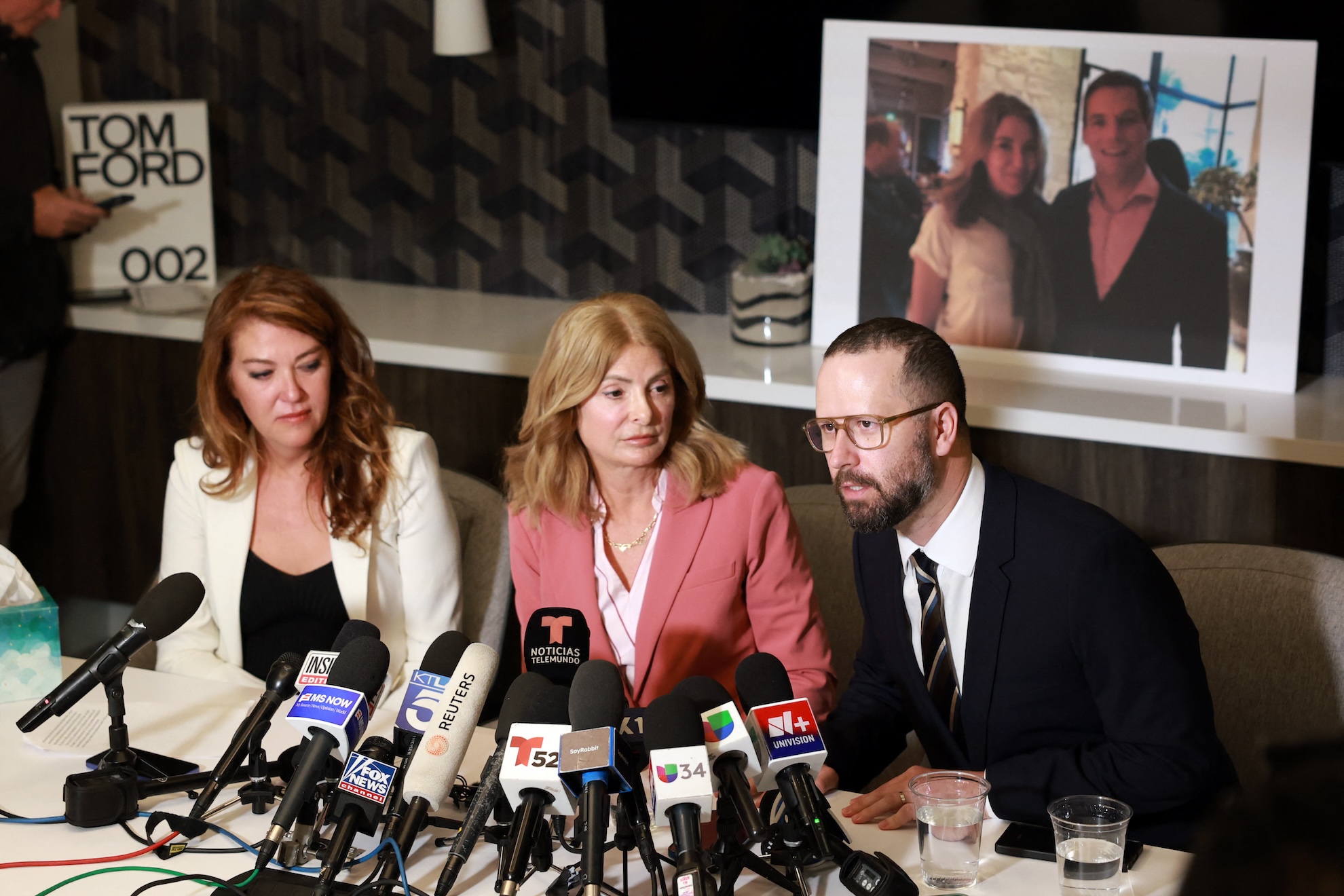
"caption": "Lonna Drewes, left, listens to her lawyers Arick Fudali and Lisa Bloom, during a press conference where she described her claims about sexual misconduct by former US Rep. Eric Swalwell in Beverly Hills, California, on April 14, 2026. ",
"credit": "Patrick T. Fallon/AFP",
"altTag": null,
"description": null,
"imgSizes": {
"thumbnail": {
"file": "https://cdn.kqed.org/wp-content/uploads/sites/10/2026/04/GettyImages-2270844476-160x107.jpg",
"width": 160,
"height": 107,
"mimeType": "image/jpeg"
},
"1536x1536": {
"file": "https://cdn.kqed.org/wp-content/uploads/sites/10/2026/04/GettyImages-2270844476-1536x1024.jpg",
"width": 1536,
"height": 1024,
"mimeType": "image/jpeg"
},
"post-thumbnail": {
"file": "https://cdn.kqed.org/wp-content/uploads/sites/10/2026/04/GettyImages-2270844476-672x372.jpg",
"width": 672,
"height": 372,
"mimeType": "image/jpeg"
},
"twentyfourteen-full-width": {
"file": "https://cdn.kqed.org/wp-content/uploads/sites/10/2026/04/GettyImages-2270844476-1038x576.jpg",
"width": 1038,
"height": 576,
"mimeType": "image/jpeg"
},
"npr-cds-wide": {
"file": "https://cdn.kqed.org/wp-content/uploads/sites/10/2026/04/GettyImages-2270844476-1200x675.jpg",
"width": 1200,
"height": 675,
"mimeType": "image/jpeg"
},
"npr-cds-square": {
"file": "https://cdn.kqed.org/wp-content/uploads/sites/10/2026/04/GettyImages-2270844476-600x600.jpg",
"width": 600,
"height": 600,
"mimeType": "image/jpeg"
},
"kqedFullSize": {
"file": "https://cdn.kqed.org/wp-content/uploads/sites/10/2026/04/GettyImages-2270844476.jpg",
"width": 1980,
"height": 1320
}
},
"isLoading": false,
"fetchFailed": false
},
"news_12078376": {
"type": "attachments",
"id": "news_12078376",
"meta": {
"index": "attachments_1716263798",
"site": "news",
"id": "12078376",
"found": true
},
"title": "260331-PETITION TO BAN ENGINEERED STONE USE-MD-03-KQED-1",
"publishDate": 1775069964,
"status": "inherit",
"parent": 0,
"modified": 1775069987,
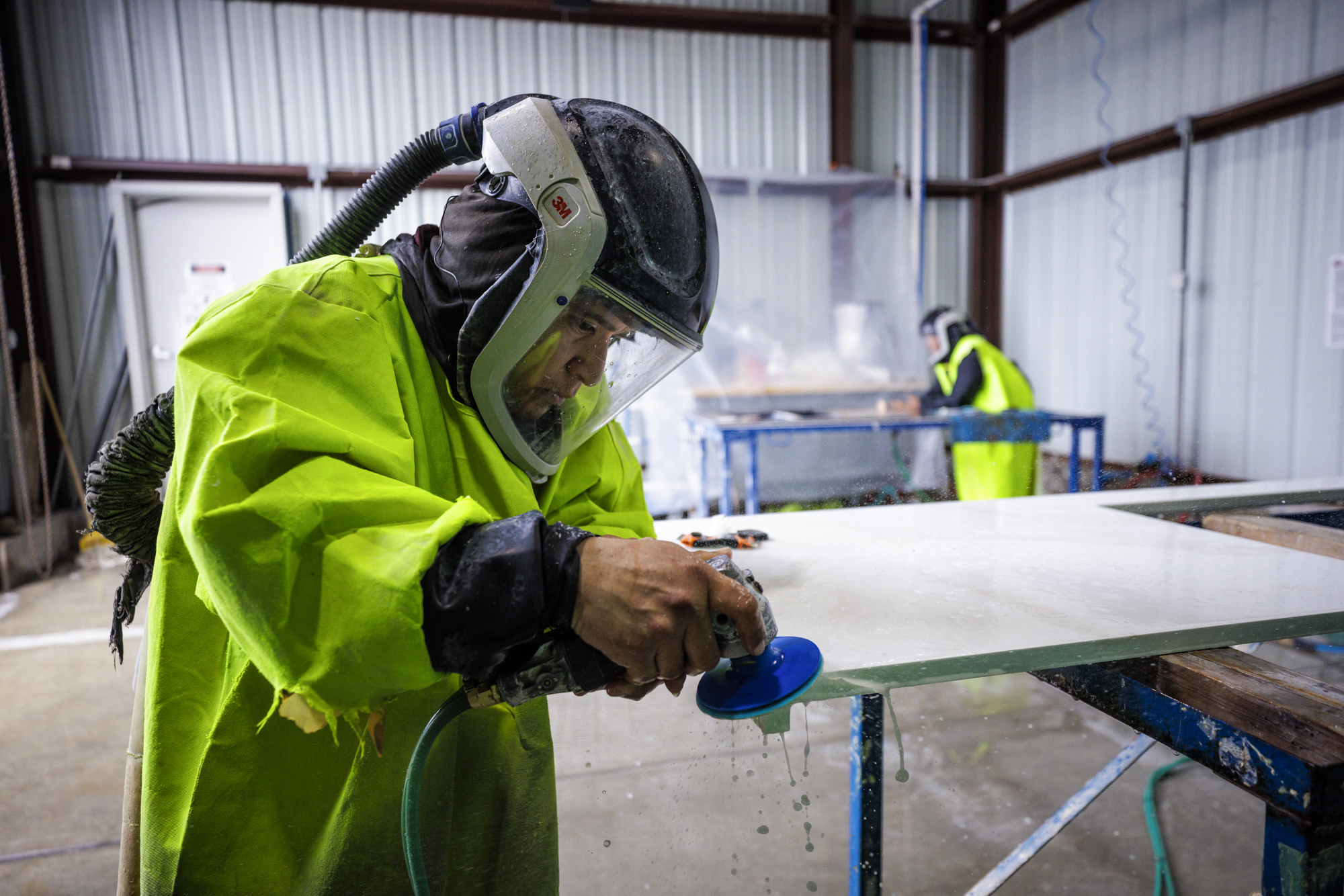
"caption": "Javier Suares polishes a countertop while wearing a powered air purifying respirator at Scolari Marble & Granite in Vallejo on March 31, 2026.",
"credit": "Martin do Nascimento/KQED",
"altTag": null,
"description": null,
"imgSizes": {
"thumbnail": {
"file": "https://cdn.kqed.org/wp-content/uploads/sites/10/2026/04/260331-PETITION-TO-BAN-ENGINEERED-STONE-USE-MD-03-KQED-1-160x107.jpg",
"width": 160,
"height": 107,
"mimeType": "image/jpeg"
},
"1536x1536": {
"file": "https://cdn.kqed.org/wp-content/uploads/sites/10/2026/04/260331-PETITION-TO-BAN-ENGINEERED-STONE-USE-MD-03-KQED-1-1536x1025.jpg",
"width": 1536,
"height": 1025,
"mimeType": "image/jpeg"
},
"post-thumbnail": {
"file": "https://cdn.kqed.org/wp-content/uploads/sites/10/2026/04/260331-PETITION-TO-BAN-ENGINEERED-STONE-USE-MD-03-KQED-1-672x372.jpg",
"width": 672,
"height": 372,
"mimeType": "image/jpeg"
},
"twentyfourteen-full-width": {
"file": "https://cdn.kqed.org/wp-content/uploads/sites/10/2026/04/260331-PETITION-TO-BAN-ENGINEERED-STONE-USE-MD-03-KQED-1-1038x576.jpg",
"width": 1038,
"height": 576,
"mimeType": "image/jpeg"
},
"npr-cds-wide": {
"file": "https://cdn.kqed.org/wp-content/uploads/sites/10/2026/04/260331-PETITION-TO-BAN-ENGINEERED-STONE-USE-MD-03-KQED-1-1200x675.jpg",
"width": 1200,
"height": 675,
"mimeType": "image/jpeg"
},
"npr-cds-square": {
"file": "https://cdn.kqed.org/wp-content/uploads/sites/10/2026/04/260331-PETITION-TO-BAN-ENGINEERED-STONE-USE-MD-03-KQED-1-600x600.jpg",
"width": 600,
"height": 600,
"mimeType": "image/jpeg"
},
"kqedFullSize": {
"file": "https://cdn.kqed.org/wp-content/uploads/sites/10/2026/04/260331-PETITION-TO-BAN-ENGINEERED-STONE-USE-MD-03-KQED-1.jpg",
"width": 2000,
"height": 1334
}
},
"isLoading": false,
"fetchFailed": false
},
"news_12079476": {
"type": "attachments",
"id": "news_12079476",
"meta": {
"index": "attachments_1716263798",
"site": "news",
"id": "12079476",
"found": true
},
"title": "260226-GovRaceForum-49-BL_qed",
"publishDate": 1775850353,
"status": "inherit",
"parent": 12079441,
"modified": 1775850371,
"caption": "A state gubernatorial candidate forum at the UCSF Mission Bay campus in San Francisco on Jan. 26, 2026. The forum was hosted by the Urban League of the Bay Area.",
"credit": "Beth LaBerge/KQED",
"altTag": null,
"description": null,
"imgSizes": {
"thumbnail": {
"file": "https://cdn.kqed.org/wp-content/uploads/sites/10/2026/04/260226-GovRaceForum-49-BL_qed-160x107.jpg",
"width": 160,
"height": 107,
"mimeType": "image/jpeg"
},
"1536x1536": {
"file": "https://cdn.kqed.org/wp-content/uploads/sites/10/2026/04/260226-GovRaceForum-49-BL_qed-1536x1024.jpg",
"width": 1536,
"height": 1024,
"mimeType": "image/jpeg"
},
"post-thumbnail": {
"file": "https://cdn.kqed.org/wp-content/uploads/sites/10/2026/04/260226-GovRaceForum-49-BL_qed-672x372.jpg",
"width": 672,
"height": 372,
"mimeType": "image/jpeg"
},
"twentyfourteen-full-width": {
"file": "https://cdn.kqed.org/wp-content/uploads/sites/10/2026/04/260226-GovRaceForum-49-BL_qed-1038x576.jpg",
"width": 1038,
"height": 576,
"mimeType": "image/jpeg"
},
"npr-cds-wide": {
"file": "https://cdn.kqed.org/wp-content/uploads/sites/10/2026/04/260226-GovRaceForum-49-BL_qed-1200x675.jpg",
"width": 1200,
"height": 675,
"mimeType": "image/jpeg"
},
"npr-cds-square": {
"file": "https://cdn.kqed.org/wp-content/uploads/sites/10/2026/04/260226-GovRaceForum-49-BL_qed-600x600.jpg",
"width": 600,
"height": 600,
"mimeType": "image/jpeg"
},
"kqedFullSize": {
"file": "https://cdn.kqed.org/wp-content/uploads/sites/10/2026/04/260226-GovRaceForum-49-BL_qed.jpg",
"width": 2000,
"height": 1333
}
},
"isLoading": false,
"fetchFailed": false
},
"news_12079739": {
"type": "attachments",
"id": "news_12079739",
"meta": {
"index": "attachments_1716263798",
"site": "news",
"id": "12079739",
"found": true
},
"title": "Trump Administration Seeks To Shrink Funding For The Presidio In San Francisco",
"publishDate": 1776116209,
"status": "inherit",
"parent": 12079734,
"modified": 1776122216,
"caption": "A Presidio Trust vehicle sits parked at Presidio of San Francisco on Feb. 20, 2025, in San Francisco, California. President Donald Trump signed an executive order on Wednesday to eliminate the Presidio Trust, the federal agency that runs and protects the Presidio of San Francisco, a national historic landmark since 1962.",
"credit": "Justin Sullivan/Getty Images",
"altTag": null,
"description": null,
"imgSizes": {
"thumbnail": {
"file": "https://cdn.kqed.org/wp-content/uploads/sites/10/2026/04/PresidioTrustGetty-160x107.jpg",
"width": 160,
"height": 107,
"mimeType": "image/jpeg"
},
"1536x1536": {
"file": "https://cdn.kqed.org/wp-content/uploads/sites/10/2026/04/PresidioTrustGetty-1536x1031.jpg",
"width": 1536,
"height": 1031,
"mimeType": "image/jpeg"
},
"post-thumbnail": {
"file": "https://cdn.kqed.org/wp-content/uploads/sites/10/2026/04/PresidioTrustGetty-672x372.jpg",
"width": 672,
"height": 372,
"mimeType": "image/jpeg"
},
"twentyfourteen-full-width": {
"file": "https://cdn.kqed.org/wp-content/uploads/sites/10/2026/04/PresidioTrustGetty-1038x576.jpg",
"width": 1038,
"height": 576,
"mimeType": "image/jpeg"
},
"npr-cds-wide": {
"file": "https://cdn.kqed.org/wp-content/uploads/sites/10/2026/04/PresidioTrustGetty-1200x675.jpg",
"width": 1200,
"height": 675,
"mimeType": "image/jpeg"
},
"npr-cds-square": {
"file": "https://cdn.kqed.org/wp-content/uploads/sites/10/2026/04/PresidioTrustGetty-600x600.jpg",
"width": 600,
"height": 600,
"mimeType": "image/jpeg"
},
"kqedFullSize": {
"file": "https://cdn.kqed.org/wp-content/uploads/sites/10/2026/04/PresidioTrustGetty.jpg",
"width": 2000,
"height": 1342
}
},
"isLoading": false,
"fetchFailed": false
},
"news_12079748": {
"type": "attachments",
"id": "news_12079748",
"meta": {
"index": "attachments_1716263798",
"site": "news",
"id": "12079748",
"found": true
},
"title": "Election 2026 California Governor",
"publishDate": 1776117572,
"status": "inherit",
"parent": 12079746,
"modified": 1776120247,
"caption": "Rep. Eric Swalwell, D-California, appears at a town hall meeting in Sacramento, California, on Tuesday, April 7, 2026. ",
"credit": "Rich Pedroncelli/AP Photo",
"altTag": null,
"description": null,
"imgSizes": {
"thumbnail": {
"file": "https://cdn.kqed.org/wp-content/uploads/sites/10/2026/04/EricSwalwellGetty-160x110.jpg",
"width": 160,
"height": 110,
"mimeType": "image/jpeg"
},
"1536x1536": {
"file": "https://cdn.kqed.org/wp-content/uploads/sites/10/2026/04/EricSwalwellGetty-1536x1056.jpg",
"width": 1536,
"height": 1056,
"mimeType": "image/jpeg"
},
"post-thumbnail": {
"file": "https://cdn.kqed.org/wp-content/uploads/sites/10/2026/04/EricSwalwellGetty-672x372.jpg",
"width": 672,
"height": 372,
"mimeType": "image/jpeg"
},
"twentyfourteen-full-width": {
"file": "https://cdn.kqed.org/wp-content/uploads/sites/10/2026/04/EricSwalwellGetty-1038x576.jpg",
"width": 1038,
"height": 576,
"mimeType": "image/jpeg"
},
"npr-cds-wide": {
"file": "https://cdn.kqed.org/wp-content/uploads/sites/10/2026/04/EricSwalwellGetty-1200x675.jpg",
"width": 1200,
"height": 675,
"mimeType": "image/jpeg"
},
"npr-cds-square": {
"file": "https://cdn.kqed.org/wp-content/uploads/sites/10/2026/04/EricSwalwellGetty-600x600.jpg",
"width": 600,
"height": 600,
"mimeType": "image/jpeg"
},
"kqedFullSize": {
"file": "https://cdn.kqed.org/wp-content/uploads/sites/10/2026/04/EricSwalwellGetty.jpg",
"width": 2000,
"height": 1375
}
},
"isLoading": false,
"fetchFailed": false
},
"news_12007621": {
"type": "attachments",
"id": "news_12007621",
"meta": {
"index": "attachments_1716263798",
"site": "news",
"id": "12007621",
"found": true
},
"title": "241002-SWALWELL PRICE RECALL-BL-02-KQED",
"publishDate": 1727910466,
"status": "inherit",
"parent": 12079856,
"modified": 1776188669,
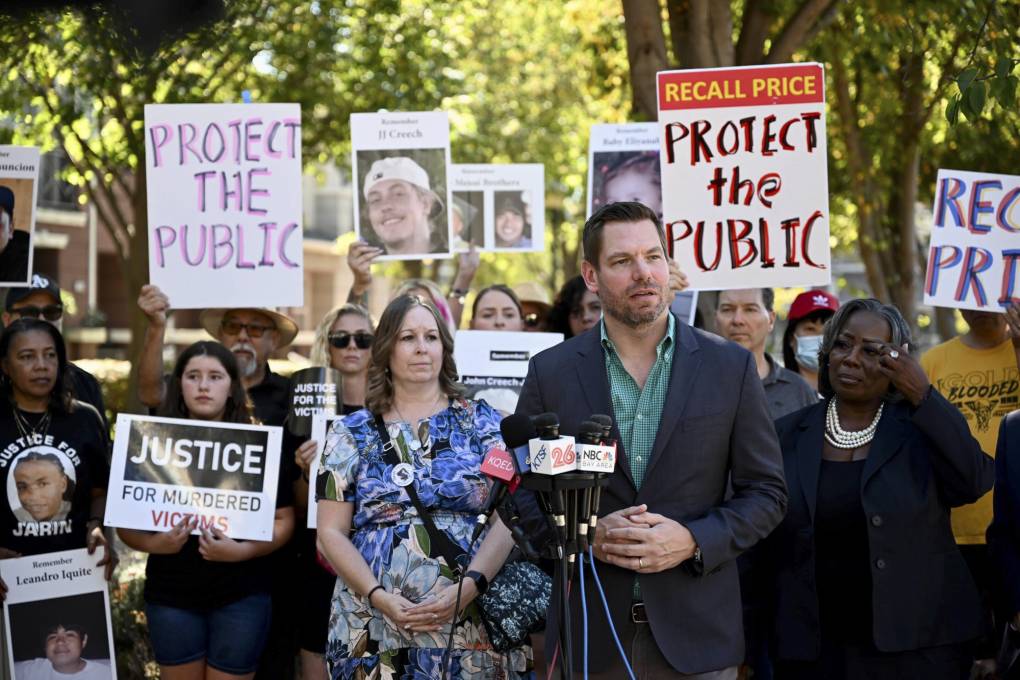
"caption": "Rep. Eric Swalwell speaks during a press conference outside of Hayward City Hall in Hayward on Oct. 2, 2024, announcing support for the recall of Alameda County District Attorney Pamela Price.",
"credit": "Beth LaBerge/KQED",
"altTag": null,
"description": null,
"imgSizes": {
"medium": {
"file": "https://cdn.kqed.org/wp-content/uploads/sites/10/2024/10/241002-SWALWELL-PRICE-RECALL-BL-02-KQED-800x533.jpg",
"width": 800,
"height": 533,
"mimeType": "image/jpeg"
},
"large": {
"file": "https://cdn.kqed.org/wp-content/uploads/sites/10/2024/10/241002-SWALWELL-PRICE-RECALL-BL-02-KQED-1020x680.jpg",
"width": 1020,
"height": 680,
"mimeType": "image/jpeg"
},
"thumbnail": {
"file": "https://cdn.kqed.org/wp-content/uploads/sites/10/2024/10/241002-SWALWELL-PRICE-RECALL-BL-02-KQED-160x107.jpg",
"width": 160,
"height": 107,
"mimeType": "image/jpeg"
},
"1536x1536": {
"file": "https://cdn.kqed.org/wp-content/uploads/sites/10/2024/10/241002-SWALWELL-PRICE-RECALL-BL-02-KQED-1536x1024.jpg",
"width": 1536,
"height": 1024,
"mimeType": "image/jpeg"
},
"post-thumbnail": {
"file": "https://cdn.kqed.org/wp-content/uploads/sites/10/2024/10/241002-SWALWELL-PRICE-RECALL-BL-02-KQED-672x372.jpg",
"width": 672,
"height": 372,
"mimeType": "image/jpeg"
},
"twentyfourteen-full-width": {
"file": "https://cdn.kqed.org/wp-content/uploads/sites/10/2024/10/241002-SWALWELL-PRICE-RECALL-BL-02-KQED-1038x576.jpg",
"width": 1038,
"height": 576,
"mimeType": "image/jpeg"
},
"full-width": {
"file": "https://cdn.kqed.org/wp-content/uploads/sites/10/2024/10/241002-SWALWELL-PRICE-RECALL-BL-02-KQED-1920x1280.jpg",
"width": 1920,
"height": 1280,
"mimeType": "image/jpeg"
},
"kqedFullSize": {
"file": "https://cdn.kqed.org/wp-content/uploads/sites/10/2024/10/241002-SWALWELL-PRICE-RECALL-BL-02-KQED.jpg",
"width": 2000,
"height": 1333
}
},
"isLoading": false,
"fetchFailed": false
},
"news_12079586": {
"type": "attachments",
"id": "news_12079586",
"meta": {
"index": "attachments_1716263798",
"site": "news",
"id": "12079586",
"found": true
},
"title": "041226Affordability series teacher housing_GH_002_qed",
"publishDate": 1776032850,
"status": "inherit",
"parent": 0,
"modified": 1776101928,
"caption": "Shayla Putnam, a ceramics teacher at George Washington High School, in her apartment at Shirley Chisholm Village on April 12, 2026, in San Francisco.",
"credit": "Gustavo Hernandez/KQED",
"altTag": null,
"description": null,
"imgSizes": {
"thumbnail": {
"file": "https://cdn.kqed.org/wp-content/uploads/sites/10/2026/04/041226Affordability-series-teacher-housing_GH_002_qed-160x107.jpg",
"width": 160,
"height": 107,
"mimeType": "image/jpeg"
},
"1536x1536": {
"file": "https://cdn.kqed.org/wp-content/uploads/sites/10/2026/04/041226Affordability-series-teacher-housing_GH_002_qed-1536x1024.jpg",
"width": 1536,
"height": 1024,
"mimeType": "image/jpeg"
},
"post-thumbnail": {
"file": "https://cdn.kqed.org/wp-content/uploads/sites/10/2026/04/041226Affordability-series-teacher-housing_GH_002_qed-672x372.jpg",
"width": 672,
"height": 372,
"mimeType": "image/jpeg"
},
"twentyfourteen-full-width": {
"file": "https://cdn.kqed.org/wp-content/uploads/sites/10/2026/04/041226Affordability-series-teacher-housing_GH_002_qed-1038x576.jpg",
"width": 1038,
"height": 576,
"mimeType": "image/jpeg"
},
"npr-cds-wide": {
"file": "https://cdn.kqed.org/wp-content/uploads/sites/10/2026/04/041226Affordability-series-teacher-housing_GH_002_qed-1200x675.jpg",
"width": 1200,
"height": 675,
"mimeType": "image/jpeg"
},
"npr-cds-square": {
"file": "https://cdn.kqed.org/wp-content/uploads/sites/10/2026/04/041226Affordability-series-teacher-housing_GH_002_qed-600x600.jpg",
"width": 600,
"height": 600,
"mimeType": "image/jpeg"
},
"kqedFullSize": {
"file": "https://cdn.kqed.org/wp-content/uploads/sites/10/2026/04/041226Affordability-series-teacher-housing_GH_002_qed.jpg",
"width": 2000,
"height": 1333
}
},
"isLoading": false,
"fetchFailed": false
},
"news_12038122": {
"type": "attachments",
"id": "news_12038122",
"meta": {
"index": "attachments_1716263798",
"site": "news",
"id": "12038122",
"found": true
},
"title": "Hands Off! National Day of Action",
"publishDate": 1745961487,
"status": "inherit",
"parent": 12038107,
"modified": 1776103823,
"caption": "Rep. Eric Swalwell, D-California, speaks during the Hands Off! day of action against the Trump administration and Elon Musk on April 5, 2025, in Washington, D.C. ",
"credit": "Paul Morigi/Getty Images for Community Change Action",
"altTag": null,
"description": null,
"imgSizes": {
"medium": {
"file": "https://cdn.kqed.org/wp-content/uploads/sites/10/2025/04/GettyImages-2208703970-800x533.jpg",
"width": 800,
"height": 533,
"mimeType": "image/jpeg"
},
"large": {
"file": "https://cdn.kqed.org/wp-content/uploads/sites/10/2025/04/GettyImages-2208703970-1020x680.jpg",
"width": 1020,
"height": 680,
"mimeType": "image/jpeg"
},
"thumbnail": {
"file": "https://cdn.kqed.org/wp-content/uploads/sites/10/2025/04/GettyImages-2208703970-160x107.jpg",
"width": 160,
"height": 107,
"mimeType": "image/jpeg"
},
"1536x1536": {
"file": "https://cdn.kqed.org/wp-content/uploads/sites/10/2025/04/GettyImages-2208703970-1536x1024.jpg",
"width": 1536,
"height": 1024,
"mimeType": "image/jpeg"
},
"2048x2048": {
"file": "https://cdn.kqed.org/wp-content/uploads/sites/10/2025/04/GettyImages-2208703970-2048x1365.jpg",
"width": 2048,
"height": 1365,
"mimeType": "image/jpeg"
},
"post-thumbnail": {
"file": "https://cdn.kqed.org/wp-content/uploads/sites/10/2025/04/GettyImages-2208703970-672x372.jpg",
"width": 672,
"height": 372,
"mimeType": "image/jpeg"
},
"twentyfourteen-full-width": {
"file": "https://cdn.kqed.org/wp-content/uploads/sites/10/2025/04/GettyImages-2208703970-1038x576.jpg",
"width": 1038,
"height": 576,
"mimeType": "image/jpeg"
},
"full-width": {
"file": "https://cdn.kqed.org/wp-content/uploads/sites/10/2025/04/GettyImages-2208703970-1920x1280.jpg",
"width": 1920,
"height": 1280,
"mimeType": "image/jpeg"
},
"kqedFullSize": {
"file": "https://cdn.kqed.org/wp-content/uploads/sites/10/2025/04/GettyImages-2208703970-scaled-e1763745715708.jpg",
"width": 2000,
"height": 1334
}
},
"isLoading": false,
"fetchFailed": false
},
"news_12075783": {
"type": "attachments",
"id": "news_12075783",
"meta": {
"index": "attachments_1716263798",
"site": "news",
"id": "12075783",
"found": true
},
"title": "260309-DEAF DEPORTEE-MD-02-KQED",
"publishDate": 1773078595,
"status": "inherit",
"parent": 12075826,
"modified": 1773178878,
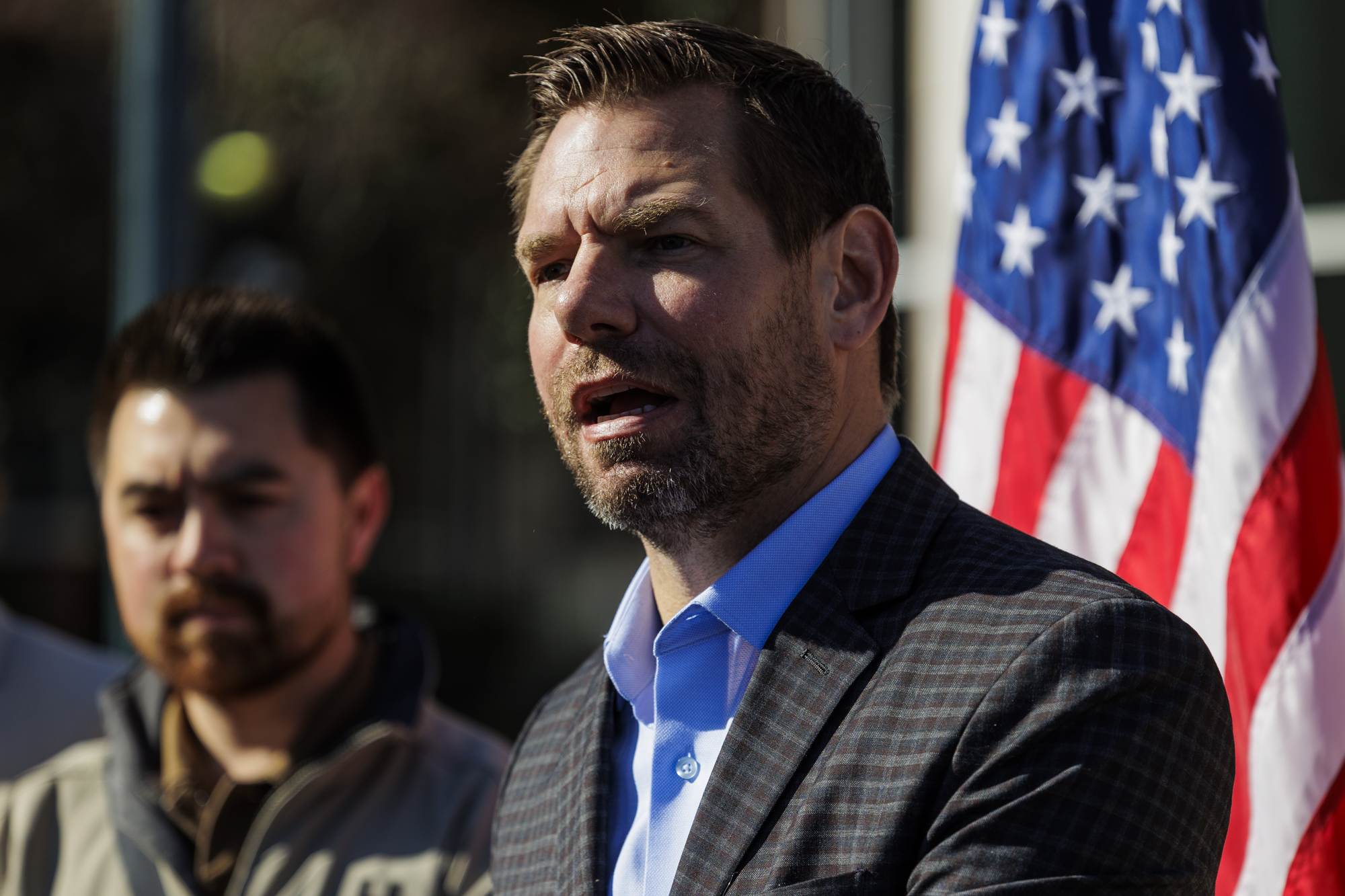
"caption": "Rep. Eric Swalwell addresses the press in Hayward on Mar. 9, 2026.",
"credit": "Martin do Nascimento/KQED",
"altTag": null,
"description": null,
"imgSizes": {
"thumbnail": {
"file": "https://cdn.kqed.org/wp-content/uploads/sites/10/2026/03/260309-DEAF-DEPORTEE-MD-02-KQED-160x107.jpg",
"width": 160,
"height": 107,
"mimeType": "image/jpeg"
},
"1536x1536": {
"file": "https://cdn.kqed.org/wp-content/uploads/sites/10/2026/03/260309-DEAF-DEPORTEE-MD-02-KQED-1536x1024.jpg",
"width": 1536,
"height": 1024,
"mimeType": "image/jpeg"
},
"post-thumbnail": {
"file": "https://cdn.kqed.org/wp-content/uploads/sites/10/2026/03/260309-DEAF-DEPORTEE-MD-02-KQED-672x372.jpg",
"width": 672,
"height": 372,
"mimeType": "image/jpeg"
},
"twentyfourteen-full-width": {
"file": "https://cdn.kqed.org/wp-content/uploads/sites/10/2026/03/260309-DEAF-DEPORTEE-MD-02-KQED-1038x576.jpg",
"width": 1038,
"height": 576,
"mimeType": "image/jpeg"
},
"npr-cds-wide": {
"file": "https://cdn.kqed.org/wp-content/uploads/sites/10/2026/03/260309-DEAF-DEPORTEE-MD-02-KQED-1200x675.jpg",
"width": 1200,
"height": 675,
"mimeType": "image/jpeg"
},
"kqedFullSize": {
"file": "https://cdn.kqed.org/wp-content/uploads/sites/10/2026/03/260309-DEAF-DEPORTEE-MD-02-KQED.jpg",
"width": 2000,
"height": 1333
}
},
"isLoading": false,
"fetchFailed": false
}
},
"audioPlayerReducer": {
"postId": "stream_live",
"isPaused": true,
"isPlaying": false,
"pfsActive": false,
"pledgeModalIsOpen": true,
"playerDrawerIsOpen": false,
"liveAudioPlayStartedAt": 0,
"liveAudioPlayContext": ""
},
"authorsReducer": {
"byline_news_12079946": {
"type": "authors",
"id": "byline_news_12079946",
"meta": {
"override": true
},
"slug": "byline_news_12079946",
"name": "Shandra Back, Northern California Public Media",
"isLoading": false
},
"byline_news_12079856": {
"type": "authors",
"id": "byline_news_12079856",
"meta": {
"override": true
},
"slug": "byline_news_12079856",
"name": "Jeanne Kuang, CalMatters",
"isLoading": false
},
"gmarzorati": {
"type": "authors",
"id": "227",
"meta": {
"index": "authors_1716337520",
"id": "227",
"found": true
},
"name": "Guy Marzorati",
"firstName": "Guy",
"lastName": "Marzorati",
"slug": "gmarzorati",
"email": "gmarzorati@KQED.org",
"display_author_email": true,
"staff_mastheads": [
"news"
],
"title": "Correspondent",
"bio": "Guy Marzorati is a correspondent on KQED's California Politics and Government Desk, based in San Jose. A graduate of Santa Clara University, Guy joined KQED in 2013. He reports on state and local politics and produces KQED's digital voter guide.",
"avatar": "https://secure.gravatar.com/avatar/e7038b8dbfd55b104369b76b1cd0b9de?s=600&d=blank&r=g",
"twitter": "guymarzorati",
"facebook": null,
"instagram": null,
"linkedin": null,
"sites": [
{
"site": "",
"roles": [
"editor"
]
},
{
"site": "news",
"roles": [
"editor"
]
},
{
"site": "science",
"roles": [
"editor"
]
},
{
"site": "forum",
"roles": [
"editor"
]
},
{
"site": "elections",
"roles": [
"editor"
]
},
{
"site": "liveblog",
"roles": [
"editor"
]
}
],
"headData": {
"title": "Guy Marzorati | KQED",
"description": "Correspondent",
"ogImgSrc": "https://secure.gravatar.com/avatar/e7038b8dbfd55b104369b76b1cd0b9de?s=600&d=blank&r=g",
"twImgSrc": "https://secure.gravatar.com/avatar/e7038b8dbfd55b104369b76b1cd0b9de?s=600&d=blank&r=g"
},
"isLoading": false,
"link": "/author/gmarzorati"
},
"mlagos": {
"type": "authors",
"id": "3239",
"meta": {
"index": "authors_1716337520",
"id": "3239",
"found": true
},
"name": "Marisa Lagos",
"firstName": "Marisa",
"lastName": "Lagos",
"slug": "mlagos",
"email": "mlagos@kqed.org",
"display_author_email": false,
"staff_mastheads": [
"news"
],
"title": "KQED Contributor",
"bio": "Marisa Lagos is a correspondent for KQED’s California Politics and Government Desk and co-hosts the award-winning show and podcast, Political Breakdown. At KQED, Lagos also conducts reporting, analysis and investigations into state, local and national politics for radio, TV, online and onstage. In 2022, she and co-host, Scott Shafer, moderated the only gubernatorial debate in California. In 2020, the \u003ci>Washington Post\u003c/i> named her one of the top political journalists in California; she was nominated for a Peabody and won several other awards for her work investigating the 2017 California wildfires. She has worked at the \u003ci>San Francisco Chronicle\u003c/i>, \u003ci>San Francisco Examiner\u003c/i> and \u003ci>Los Angeles Times\u003c/i>. A UC Santa Barbara graduate, she lives in San Francisco with her two sons and husband.",
"avatar": "https://secure.gravatar.com/avatar/a261a0d3696fc066871ef96b85b5e7d2?s=600&d=blank&r=g",
"twitter": "@mlagos",
"facebook": null,
"instagram": null,
"linkedin": null,
"sites": [
{
"site": "arts",
"roles": [
"author"
]
},
{
"site": "news",
"roles": [
"editor"
]
},
{
"site": "science",
"roles": [
"editor"
]
},
{
"site": "forum",
"roles": [
"author"
]
},
{
"site": "liveblog",
"roles": [
"author"
]
}
],
"headData": {
"title": "Marisa Lagos | KQED",
"description": "KQED Contributor",
"ogImgSrc": "https://secure.gravatar.com/avatar/a261a0d3696fc066871ef96b85b5e7d2?s=600&d=blank&r=g",
"twImgSrc": "https://secure.gravatar.com/avatar/a261a0d3696fc066871ef96b85b5e7d2?s=600&d=blank&r=g"
},
"isLoading": false,
"link": "/author/mlagos"
},
"lakshmi": {
"type": "authors",
"id": "3245",
"meta": {
"index": "authors_1716337520",
"id": "3245",
"found": true
},
"name": "Lakshmi Sarah",
"firstName": "Lakshmi",
"lastName": "Sarah",
"slug": "lakshmi",
"email": "lakisarah@gmail.com",
"display_author_email": false,
"staff_mastheads": [],
"title": null,
"bio": "Born and raised in California, Lakshmi is an educator and journalist with a focus on South Asia, gender, race and the arts. Over the past few years, she has worked with newspapers, radio and magazines from Botswana to Los Angeles. She has written and produced for various audiences, including Mic, Global Voices, Al Jazeera Online, AJ+ and KQED Arts. Lakshmi is a graduate of Pitzer College where she studied Global Communications and Studio Arts.",
"avatar": "https://secure.gravatar.com/avatar/30f520a9238d29ba9187c2a405e0f85d?s=600&d=blank&r=g",
"twitter": "lakitalki",
"facebook": null,
"instagram": null,
"linkedin": null,
"sites": [
{
"site": "arts",
"roles": [
"editor"
]
},
{
"site": "pop",
"roles": [
"contributor"
]
},
{
"site": "science",
"roles": [
"editor"
]
}
],
"headData": {
"title": "Lakshmi Sarah | KQED",
"description": null,
"ogImgSrc": "https://secure.gravatar.com/avatar/30f520a9238d29ba9187c2a405e0f85d?s=600&d=blank&r=g",
"twImgSrc": "https://secure.gravatar.com/avatar/30f520a9238d29ba9187c2a405e0f85d?s=600&d=blank&r=g"
},
"isLoading": false,
"link": "/author/lakshmi"
},
"fjhabvala": {
"type": "authors",
"id": "8659",
"meta": {
"index": "authors_1716337520",
"id": "8659",
"found": true
},
"name": "Farida Jhabvala Romero",
"firstName": "Farida",
"lastName": "Jhabvala Romero",
"slug": "fjhabvala",
"email": "fjhabvala@kqed.org",
"display_author_email": true,
"staff_mastheads": [
"news"
],
"title": "KQED Contributor",
"bio": "Farida Jhabvala Romero is a Labor Correspondent for KQED. She previously covered immigration. Farida was \u003ca href=\"https://www.ccnma.org/2022-most-influential-latina-journalists\">named\u003c/a> one of the 10 Most Influential Latina Journalists in California in 2022 by the California Chicano News Media Association. Her work has won awards from the Society of Professional Journalists (Northern California), as well as a national and regional Edward M. Murrow Award for the collaborative reporting projects “Dangerous Air” and “Graying California.” Before joining KQED, Farida worked as a producer at Radio Bilingüe, a national public radio network. Farida earned her master’s degree in journalism from Stanford University.",
"avatar": "https://secure.gravatar.com/avatar/f9f022d4e2609741874222a1e9d41f48fea74011aa7c615eef91d9a50c944ebe?s=600&d=blank&r=g",
"twitter": "FaridaJhabvala",
"bluesky": null,
"facebook": null,
"instagram": null,
"linkedin": "https://www.linkedin.com/in/faridajhabvala/",
"sites": [
{
"site": "news",
"roles": [
"editor"
]
},
{
"site": "stateofhealth",
"roles": [
"author"
]
},
{
"site": "liveblog",
"roles": [
"author"
]
}
],
"headData": {
"title": "Farida Jhabvala Romero | KQED",
"description": "KQED Contributor",
"ogImgSrc": "https://secure.gravatar.com/avatar/f9f022d4e2609741874222a1e9d41f48fea74011aa7c615eef91d9a50c944ebe?s=600&d=blank&r=g",
"twImgSrc": "https://secure.gravatar.com/avatar/f9f022d4e2609741874222a1e9d41f48fea74011aa7c615eef91d9a50c944ebe?s=600&d=blank&r=g"
},
"isLoading": false,
"link": "/author/fjhabvala"
},
"mbolanos": {
"type": "authors",
"id": "11895",
"meta": {
"index": "authors_1716337520",
"id": "11895",
"found": true
},
"name": "Madi Bolaños",
"firstName": "Madi",
"lastName": "Bolaños",
"slug": "mbolanos",
"email": "mbolanos@kqed.org",
"display_author_email": false,
"staff_mastheads": [],
"title": "KQED Contributor",
"bio": null,
"avatar": "https://secure.gravatar.com/avatar/e6df5601c1f2d951e46a3fb42764330f?s=600&d=blank&r=g",
"twitter": null,
"bluesky": null,
"facebook": null,
"instagram": null,
"linkedin": null,
"sites": [
{
"site": "news",
"roles": [
"author"
]
}
],
"headData": {
"title": "Madi Bolaños | KQED",
"description": "KQED Contributor",
"ogImgSrc": "https://secure.gravatar.com/avatar/e6df5601c1f2d951e46a3fb42764330f?s=600&d=blank&r=g",
"twImgSrc": "https://secure.gravatar.com/avatar/e6df5601c1f2d951e46a3fb42764330f?s=600&d=blank&r=g"
},
"isLoading": false,
"link": "/author/mbolanos"
},
"kdebenedetti": {
"type": "authors",
"id": "11913",
"meta": {
"index": "authors_1716337520",
"id": "11913",
"found": true
},
"name": "Katie DeBenedetti",
"firstName": "Katie",
"lastName": "DeBenedetti",
"slug": "kdebenedetti",
"email": "kdebenedetti@kqed.org",
"display_author_email": false,
"staff_mastheads": [
"news",
"science"
],
"title": "KQED Contributor",
"bio": "Katie DeBenedetti is a digital reporter covering daily news for the Express Desk. Prior to joining KQED as a culture reporting intern in January 2024, she covered education and city government for the Napa Valley Register.",
"avatar": "https://secure.gravatar.com/avatar/6e31073cb8f7e4214ab03f42771d0f45?s=600&d=blank&r=g",
"twitter": null,
"facebook": null,
"instagram": null,
"linkedin": null,
"sites": [
{
"site": "news",
"roles": [
"author"
]
},
{
"site": "science",
"roles": [
"author"
]
},
{
"site": "liveblog",
"roles": [
"author"
]
}
],
"headData": {
"title": "Katie DeBenedetti | KQED",
"description": "KQED Contributor",
"ogImgSrc": "https://secure.gravatar.com/avatar/6e31073cb8f7e4214ab03f42771d0f45?s=600&d=blank&r=g",
"twImgSrc": "https://secure.gravatar.com/avatar/6e31073cb8f7e4214ab03f42771d0f45?s=600&d=blank&r=g"
},
"isLoading": false,
"link": "/author/kdebenedetti"
},
"sarahwright": {
"type": "authors",
"id": "11956",
"meta": {
"index": "authors_1716337520",
"id": "11956",
"found": true
},
"name": "Sarah Wright",
"firstName": "Sarah",
"lastName": "Wright",
"slug": "sarahwright",
"email": "swright@kqed.org",
"display_author_email": true,
"staff_mastheads": [],
"title": "Outdoors Engagement Reporter",
"bio": "Sarah Wright is KQED's Outdoors Engagement Reporter. Originally from Lake Tahoe, she completed a thru-hike of the Pacific Crest Trail in 2019 and was a U.S. Fulbright Program grantee to Argentina in 2023. Her journalism has appeared in The Guardian, The San Francisco Standard, The Palo Alto Weekly and the Half Moon Bay Review.",
"avatar": "https://secure.gravatar.com/avatar/c161a3d6441865cba25e6db4fa561099ad665799e9432e34da2b84d7e371524c?s=600&d=blank&r=g",
"twitter": null,
"bluesky": null,
"facebook": null,
"instagram": null,
"linkedin": null,
"sites": [
{
"site": "arts",
"roles": [
"editor"
]
},
{
"site": "news",
"roles": [
"editor"
]
},
{
"site": "science",
"roles": [
"contributor",
"author"
]
},
{
"site": "forum",
"roles": [
"editor"
]
}
],
"headData": {
"title": "Sarah Wright | KQED",
"description": "Outdoors Engagement Reporter",
"ogImgSrc": "https://secure.gravatar.com/avatar/c161a3d6441865cba25e6db4fa561099ad665799e9432e34da2b84d7e371524c?s=600&d=blank&r=g",
"twImgSrc": "https://secure.gravatar.com/avatar/c161a3d6441865cba25e6db4fa561099ad665799e9432e34da2b84d7e371524c?s=600&d=blank&r=g"
},
"isLoading": false,
"link": "/author/sarahwright"
}
},
"pagesReducer": {
"news_tag_california": {
"type": "terms",
"id": "news_18538",
"meta": {
"index": "terms_1716263798",
"site": "news",
"id": "18538",
"score": 6.847839
},
"featImg": null,
"name": "California",
"description": null,
"taxonomy": "tag",
"headData": {
"twImgId": null,
"twTitle": null,
"ogTitle": null,
"ogImgId": null,
"twDescription": null,
"description": null,
"title": "California Archives | KQED News",
"ogDescription": null
},
"ttid": 31,
"slug": "california",
"isLoading": false,
"title": "California",
"pageMeta": {
"site": "news",
"WpPageTemplate": "page-topic-editorial",
"currentPage": 27
},
"blocks": [
{
"blockName": "kqed/post-list",
"attrs": {
"layout": "cardArticle2",
"query": "posts/news?tag=california",
"seeMore": false,
"paginated": true,
"page": 27
}
},
{
"blockName": "kqed/ad"
}
]
}
},
"pfsSessionReducer": {},
"postsReducer": {
"stream_live": {
"type": "live",
"id": "stream_live",
"audioUrl": "https://streams.kqed.org/kqedradio",
"title": "Live Stream",
"excerpt": "Live Stream information currently unavailable.",
"link": "/radio",
"featImg": "",
"label": {
"name": "KQED Live",
"link": "/"
}
},
"stream_kqedNewscast": {
"type": "posts",
"id": "stream_kqedNewscast",
"audioUrl": "https://www.kqed.org/.stream/anon/radio/RDnews/newscast.mp3?_=1",
"title": "KQED Newscast",
"featImg": "",
"label": {
"name": "88.5 FM",
"link": "/"
}
},
"news_12079668": {
"type": "posts",
"id": "news_12079668",
"meta": {
"index": "posts_1716263798",
"site": "news",
"id": "12079668",
"score": null,
"sort": [
1776279629000
]
},
"guestAuthors": [],
"slug": "i-thought-i-was-going-to-die-video-shows-mass-force-at-california-womens-prison",
"title": "‘I Thought I Was Going to Die’: Video Shows Mass Force at California Women’s Prison",
"publishDate": 1776279629,
"format": "standard",
"headTitle": "‘I Thought I Was Going to Die’: Video Shows Mass Force at California Women’s Prison | KQED",
"labelTerm": {
"site": "news"
},
"content": "\u003cp>Surveillance footage newly obtained by KQED sheds light on a \u003ca href=\"https://www.kqed.org/news/12004368/like-a-war-zone-prison-officers-used-unprecedented-force-in-august-attack-incarcerated-women-say\">mass use-of-force incident\u003c/a> at the \u003ca href=\"https://www.cdcr.ca.gov/facility-locator/ccwf/\">Central California Women’s Facility\u003c/a> in 2024. The incident resulted in discipline for more than 40 staff members, according to the California Department of Corrections and Rehabilitation, and $1.9 million in payouts to some of the women injured during the incident.\u003c/p>\n\u003cp>On the morning of Aug. 2, 2024, officers relocated more than 150 women to the dining hall in order to conduct a large-scale search of their cells. The women were held there for hours without access to food or medication, as tensions built and temperatures rose above 100 degrees, according to court filings. Officers deployed chemical agents, batons and physical force on dozens of incarcerated people.\u003c/p>\n\u003cp>The surveillance footage, obtained through a public records request to\u003ca href=\"https://www.kqed.org/news/tag/california-department-of-corrections-and-rehabilitation\"> CDCR\u003c/a>, provides the first detailed view of how the incident unfolded. CDCR has not released officers’ body-camera video or disciplinary records requested by KQED. Previously leaked footage edited and made public by a \u003ca href=\"https://hectorbravoshow.com/\">former correctional lieutenant turned YouTuber\u003c/a> provided only limited insight into the incident.\u003c/p>\n\u003cp>[ad fullwidth]\u003c/p>\n\u003cp>Angelina Hernandez, who was inside the dining hall at the time and has since been released, said watching the footage again was emotional.\u003c/p>\n\u003cp>“I really thought I was going to die that day,” Hernandez said. “These officers are supposed to protect us, not attack us.”\u003c/p>\n\u003cp>Dozens of officers file into the chow hall around 12:30 p.m. and form what appears to be a skirmish line, many holding pepper spray canisters at the ready, the footage shows. Over several minutes, more officers join the formation, growing to what appears to be 40 to 50 officers positioned across the room.\u003c/p>\n\u003cp>While there is no audio captured on the surveillance footage, things appear tense with some of the incarcerated women gesticulating and shouting at the line of officers.\u003c/p>\n\u003cp>https://youtu.be/-a8Fb2UwB1c\u003c/p>\n\u003cp>An officer appears to yell and gesture for the women to step back. As they begin to move, multiple officers start deploying pepper spray and throwing grenades filled with mace, also known as OC (oleoresin capsicum). The women crouch down and run to the wall on the other side of the room as officers advance and continue to spray them repeatedly.\u003c/p>\n\u003cp>Kenneth Jimenez, a retired lieutenant who reviewed the footage, said officers must be facing an imminent threat in order to justify deploying force. Jimenez is familiar with use of force policy, which he taught to both peace officers and civilians across the state.\u003c/p>\n\u003cp>“I don’t see anybody approaching in a threatening manner,” he said as he watched the video. “I don’t see anything that’s imminent,” Jimenez added that instead of using force officers could have instead restrained a small number of individuals and removed them from the scene.\u003c/p>\n\u003cp>CDCR did not answer specific questions about whether the force used was excessive, but said policies were violated that day and that “corrective action” was taken.[aside postID=news_12004368 hero='https://cdn.kqed.org/wp-content/uploads/sites/10/2024/09/CentralCaliforniaWomensFacility-1020x816.jpg']About five minutes after officers began to deploy pepper spray and OC grenades, a woman appears to be struggling with some kind of physical impairment as another woman holds her up from behind. As they move forward, an officer sprays them at close range.\u003c/p>\n\u003cp>That moment could be interpreted differently depending on what officers perceived, according to Jimenez.\u003c/p>\n\u003cp>“If it’s articulated that they thought she was attacking them, then they wouldn’t be outside of policy because she was moving towards them,” he said.\u003c/p>\n\u003cp>Both incarcerated women are then taken to the ground and surrounded by multiple officers. It is a chaotic moment that is difficult to make out because CDCR has blurred the faces of the incarcerated women.\u003c/p>\n\u003cp>While several officers appear to be restraining the women on the ground, officers also punch and use batons on them.\u003c/p>\n\u003cp>Hernandez recalled her confusion as officers gave them loud and contradictory orders. And she said that, no matter what they did, the officers continued to spray them and throw OC grenades.\u003c/p>\n\u003cp>“They threw so many bombs at us that day,” she said. “It was even funny.”\u003c/p>\n\u003cp>After the officers cornered the women against the wall, they zip-tied their hands behind their backs and walked them outside. Surveillance cameras overlooking the outdoor yard captured officers again using chemical agents around 12:40 p.m.\u003c/p>\n\u003cfigure id=\"attachment_12079991\" class=\"wp-caption aligncenter\" style=\"max-width: 2000px\">\u003cimg loading=\"lazy\" decoding=\"async\" class=\"size-full wp-image-12079991\" src=\"https://cdn.kqed.org/wp-content/uploads/sites/10/2026/04/Screenshot-2026-04-14-at-4.13.17-PM-scaled-e1776274108111.jpeg\" alt=\"\" width=\"2000\" height=\"1120\">\u003cfigcaption class=\"wp-caption-text\">Incarcerated women crouch while others run for safety after officers deployed pepper spray and OC grenades during a 2024 use-of-force incident at the Central California Women’s Facility. \u003ccite>(Courtesy of California Department of Corrections and Rehabilitation )\u003c/cite>\u003c/figcaption>\u003c/figure>\n\u003cp>The footage appears to show a woman starting to cough and another woman getting up to walk over to her. Officers throw multiple OC grenades toward the group, prompting the women to run in the opposite direction, where they get hit again by a different set of officers.\u003c/p>\n\u003cp>“I just didn’t see the necessity for a grenade,” Jimenez said. “Everyone just joined the party.”\u003c/p>\n\u003cp>Several women are later seen being carried or transported on stretchers to medical staff.\u003c/p>\n\u003cp>\u003ca href=\"https://www.kqed.org/news/12077737/california-agrees-to-1-9m-settlement-in-prison-use-of-force-case\">CDCR settled a $1.9 million lawsuit in March\u003c/a> filed by 13 women who were hurt that day. Another class-action lawsuit tied to the incident alleges that officers denied incarcerated women medical treatment and used excessive force.\u003c/p>\n\u003cp>CDCR did not respond to a detailed list of questions about specific moments in the video. The agency said that the 41 staff members who were disciplined received punishments ranging from transfers to termination.\u003c/p>\n\u003cp>In a statement, California Correctional Peace Officers Association President Neil Flood said large-scale responses are common in prison emergencies, which he described as “chaotic, fast-moving and dangerous.” He added that while the union supports accountability when policy violations are found, it also expects disciplinary actions to follow due process protections for officers.\u003c/p>\n\u003cp>At least five officers have filed a legal action arguing that the agency unfairly disciplined and transferred them following the incident. They allege that CDCR reassigned them to other prisons without due process and without being given the opportunity to challenge those actions before the State Personnel Board. CDCR has denied their claims.\u003c/p>\n\u003cp>That petition is still pending.\u003c/p>\n\u003cp>\u003cem>This reporting was made possible in part by funding from the Poynter Institute.\u003c/em>\u003c/p>\n\u003cp>[ad floatright]\u003c/p>\n",
"blocks": [],
"excerpt": "KQED obtained surveillance footage showing correctional officers using pepper spray, OC grenades and batons on incarcerated women during a 2024 incident at California’s Central California Women’s Facility. ",
"status": "publish",
"parent": 0,
"modified": 1776347657,
"stats": {
"hasAudio": false,
"hasVideo": false,
"hasChartOrMap": false,
"iframeSrcs": [],
"hasGoogleForm": false,
"hasGallery": false,
"hasHearkenModule": false,
"hasPolis": false,
"paragraphCount": 29,
"wordCount": 1083
},
"headData": {
"title": "‘I Thought I Was Going to Die’: Video Shows Mass Force at California Women’s Prison | KQED",
"description": "KQED obtained surveillance footage showing correctional officers using pepper spray, OC grenades and batons on incarcerated women during a 2024 incident at California’s Central California Women’s Facility. ",
"ogTitle": "",
"ogDescription": "",
"ogImgId": "",
"twTitle": "",
"twDescription": "",
"twImgId": "",
"schema": {
"@context": "https://schema.org",
"@type": "NewsArticle",
"headline": "‘I Thought I Was Going to Die’: Video Shows Mass Force at California Women’s Prison",
"datePublished": "2026-04-15T12:00:29-07:00",
"dateModified": "2026-04-16T06:54:17-07:00",
"image": "https://cdn.kqed.org/wp-content/uploads/2020/02/KQED-OG-Image@1x.png",
"isAccessibleForFree": "True",
"publisher": {
"@type": "NewsMediaOrganization",
"@id": "https://www.kqed.org/#organization",
"name": "KQED",
"logo": "https://cdn.kqed.org/wp-content/uploads/2020/02/KQED-OG-Image@1x.png",
"url": "https://www.kqed.org",
"sameAs": [
"https://www.facebook.com/KQED",
"https://twitter.com/KQED",
"https://www.instagram.com/kqed/",
"https://www.tiktok.com/@kqedofficial",
"https://www.linkedin.com/company/kqed",
"https://www.youtube.com/channel/UCeC0IOo7i1P_61zVUWbJ4nw"
]
}
}
},
"primaryCategory": {
"termId": 34167,
"slug": "criminal-justice",
"name": "Criminal Justice"
},
"sticky": false,
"nprStoryId": "kqed-12079668",
"templateType": "standard",
"featuredImageType": "standard",
"excludeFromSiteSearch": "Include",
"articleAge": "0",
"path": "/news/12079668/i-thought-i-was-going-to-die-video-shows-mass-force-at-california-womens-prison",
"audioTrackLength": null,
"parsedContent": [
{
"type": "contentString",
"content": "\u003cdiv class=\"post-body\">\u003cp>\u003cp>Surveillance footage newly obtained by KQED sheds light on a \u003ca href=\"https://www.kqed.org/news/12004368/like-a-war-zone-prison-officers-used-unprecedented-force-in-august-attack-incarcerated-women-say\">mass use-of-force incident\u003c/a> at the \u003ca href=\"https://www.cdcr.ca.gov/facility-locator/ccwf/\">Central California Women’s Facility\u003c/a> in 2024. The incident resulted in discipline for more than 40 staff members, according to the California Department of Corrections and Rehabilitation, and $1.9 million in payouts to some of the women injured during the incident.\u003c/p>\n\u003cp>On the morning of Aug. 2, 2024, officers relocated more than 150 women to the dining hall in order to conduct a large-scale search of their cells. The women were held there for hours without access to food or medication, as tensions built and temperatures rose above 100 degrees, according to court filings. Officers deployed chemical agents, batons and physical force on dozens of incarcerated people.\u003c/p>\n\u003cp>The surveillance footage, obtained through a public records request to\u003ca href=\"https://www.kqed.org/news/tag/california-department-of-corrections-and-rehabilitation\"> CDCR\u003c/a>, provides the first detailed view of how the incident unfolded. CDCR has not released officers’ body-camera video or disciplinary records requested by KQED. Previously leaked footage edited and made public by a \u003ca href=\"https://hectorbravoshow.com/\">former correctional lieutenant turned YouTuber\u003c/a> provided only limited insight into the incident.\u003c/p>\n\u003cp>\u003c/p>\u003c/div>",
"attributes": {
"named": {},
"numeric": []
}
},
{
"type": "component",
"content": "",
"name": "ad",
"attributes": {
"named": {
"label": "fullwidth"
},
"numeric": [
"fullwidth"
]
}
},
{
"type": "contentString",
"content": "\u003cdiv class=\"post-body\">\u003cp>\u003c/p>\n\u003cp>Angelina Hernandez, who was inside the dining hall at the time and has since been released, said watching the footage again was emotional.\u003c/p>\n\u003cp>“I really thought I was going to die that day,” Hernandez said. “These officers are supposed to protect us, not attack us.”\u003c/p>\n\u003cp>Dozens of officers file into the chow hall around 12:30 p.m. and form what appears to be a skirmish line, many holding pepper spray canisters at the ready, the footage shows. Over several minutes, more officers join the formation, growing to what appears to be 40 to 50 officers positioned across the room.\u003c/p>\n\u003cp>While there is no audio captured on the surveillance footage, things appear tense with some of the incarcerated women gesticulating and shouting at the line of officers.\u003c/p>\u003c/p>\u003cp>\u003cspan class='utils-parseShortcode-shortcodes-__youtubeShortcode__embedYoutube'>\n \u003cspan class='utils-parseShortcode-shortcodes-__youtubeShortcode__embedYoutubeInside'>\n \u003ciframe\n loading='lazy'\n class='utils-parseShortcode-shortcodes-__youtubeShortcode__youtubePlayer'\n type='text/html'\n src='//www.youtube.com/embed/-a8Fb2UwB1c'\n title='//www.youtube.com/embed/-a8Fb2UwB1c'\n allowfullscreen='true'\n style='border:0;'>\u003c/iframe>\n \u003c/span>\n \u003c/span>\u003c/p>\u003cp>\u003cp>An officer appears to yell and gesture for the women to step back. As they begin to move, multiple officers start deploying pepper spray and throwing grenades filled with mace, also known as OC (oleoresin capsicum). The women crouch down and run to the wall on the other side of the room as officers advance and continue to spray them repeatedly.\u003c/p>\n\u003cp>Kenneth Jimenez, a retired lieutenant who reviewed the footage, said officers must be facing an imminent threat in order to justify deploying force. Jimenez is familiar with use of force policy, which he taught to both peace officers and civilians across the state.\u003c/p>\n\u003cp>“I don’t see anybody approaching in a threatening manner,” he said as he watched the video. “I don’t see anything that’s imminent,” Jimenez added that instead of using force officers could have instead restrained a small number of individuals and removed them from the scene.\u003c/p>\n\u003cp>CDCR did not answer specific questions about whether the force used was excessive, but said policies were violated that day and that “corrective action” was taken.\u003c/p>\u003c/div>",
"attributes": {
"named": {},
"numeric": []
}
},
{
"type": "component",
"content": "",
"name": "aside",
"attributes": {
"named": {
"postid": "news_12004368",
"hero": "https://cdn.kqed.org/wp-content/uploads/sites/10/2024/09/CentralCaliforniaWomensFacility-1020x816.jpg",
"label": ""
},
"numeric": []
}
},
{
"type": "contentString",
"content": "\u003cdiv class=\"post-body\">\u003cp>About five minutes after officers began to deploy pepper spray and OC grenades, a woman appears to be struggling with some kind of physical impairment as another woman holds her up from behind. As they move forward, an officer sprays them at close range.\u003c/p>\n\u003cp>That moment could be interpreted differently depending on what officers perceived, according to Jimenez.\u003c/p>\n\u003cp>“If it’s articulated that they thought she was attacking them, then they wouldn’t be outside of policy because she was moving towards them,” he said.\u003c/p>\n\u003cp>Both incarcerated women are then taken to the ground and surrounded by multiple officers. It is a chaotic moment that is difficult to make out because CDCR has blurred the faces of the incarcerated women.\u003c/p>\n\u003cp>While several officers appear to be restraining the women on the ground, officers also punch and use batons on them.\u003c/p>\n\u003cp>Hernandez recalled her confusion as officers gave them loud and contradictory orders. And she said that, no matter what they did, the officers continued to spray them and throw OC grenades.\u003c/p>\n\u003cp>“They threw so many bombs at us that day,” she said. “It was even funny.”\u003c/p>\n\u003cp>After the officers cornered the women against the wall, they zip-tied their hands behind their backs and walked them outside. Surveillance cameras overlooking the outdoor yard captured officers again using chemical agents around 12:40 p.m.\u003c/p>\n\u003cfigure id=\"attachment_12079991\" class=\"wp-caption aligncenter\" style=\"max-width: 2000px\">\u003cimg loading=\"lazy\" decoding=\"async\" class=\"size-full wp-image-12079991\" src=\"https://cdn.kqed.org/wp-content/uploads/sites/10/2026/04/Screenshot-2026-04-14-at-4.13.17-PM-scaled-e1776274108111.jpeg\" alt=\"\" width=\"2000\" height=\"1120\">\u003cfigcaption class=\"wp-caption-text\">Incarcerated women crouch while others run for safety after officers deployed pepper spray and OC grenades during a 2024 use-of-force incident at the Central California Women’s Facility. \u003ccite>(Courtesy of California Department of Corrections and Rehabilitation )\u003c/cite>\u003c/figcaption>\u003c/figure>\n\u003cp>The footage appears to show a woman starting to cough and another woman getting up to walk over to her. Officers throw multiple OC grenades toward the group, prompting the women to run in the opposite direction, where they get hit again by a different set of officers.\u003c/p>\n\u003cp>“I just didn’t see the necessity for a grenade,” Jimenez said. “Everyone just joined the party.”\u003c/p>\n\u003cp>Several women are later seen being carried or transported on stretchers to medical staff.\u003c/p>\n\u003cp>\u003ca href=\"https://www.kqed.org/news/12077737/california-agrees-to-1-9m-settlement-in-prison-use-of-force-case\">CDCR settled a $1.9 million lawsuit in March\u003c/a> filed by 13 women who were hurt that day. Another class-action lawsuit tied to the incident alleges that officers denied incarcerated women medical treatment and used excessive force.\u003c/p>\n\u003cp>CDCR did not respond to a detailed list of questions about specific moments in the video. The agency said that the 41 staff members who were disciplined received punishments ranging from transfers to termination.\u003c/p>\n\u003cp>In a statement, California Correctional Peace Officers Association President Neil Flood said large-scale responses are common in prison emergencies, which he described as “chaotic, fast-moving and dangerous.” He added that while the union supports accountability when policy violations are found, it also expects disciplinary actions to follow due process protections for officers.\u003c/p>\n\u003cp>At least five officers have filed a legal action arguing that the agency unfairly disciplined and transferred them following the incident. They allege that CDCR reassigned them to other prisons without due process and without being given the opportunity to challenge those actions before the State Personnel Board. CDCR has denied their claims.\u003c/p>\n\u003cp>That petition is still pending.\u003c/p>\n\u003cp>\u003cem>This reporting was made possible in part by funding from the Poynter Institute.\u003c/em>\u003c/p>\n\u003cp>\u003c/p>\u003c/div>",
"attributes": {
"named": {},
"numeric": []
}
},
{
"type": "component",
"content": "",
"name": "ad",
"attributes": {
"named": {
"label": "floatright"
},
"numeric": [
"floatright"
]
}
},
{
"type": "contentString",
"content": "\u003cdiv class=\"post-body\">\u003cp>\u003c/p>\n\u003c/div>\u003c/p>",
"attributes": {
"named": {},
"numeric": []
}
}
],
"link": "/news/12079668/i-thought-i-was-going-to-die-video-shows-mass-force-at-california-womens-prison",
"authors": [
"11895"
],
"categories": [
"news_31795",
"news_34167",
"news_8"
],
"tags": [
"news_18538",
"news_616",
"news_1629",
"news_17626",
"news_17725",
"news_27626",
"news_1471",
"news_32043",
"news_1917"
],
"featImg": "news_12080006",
"label": "news"
},
"news_12079800": {
"type": "posts",
"id": "news_12079800",
"meta": {
"index": "posts_1716263798",
"site": "news",
"id": "12079800",
"score": null,
"sort": [
1776277014000
]
},
"guestAuthors": [],
"slug": "eric-swalwell-allegations-resign-congress-california-governor-race-who-is-running-primary",
"title": "Eric Swalwell Resigns: What to Know About the Special Election and the Governor’s Race",
"publishDate": 1776277014,
"format": "standard",
"headTitle": "Eric Swalwell Resigns: What to Know About the Special Election and the Governor’s Race | KQED",
"labelTerm": {
"site": "news"
},
"content": "\u003cp>East Bay Rep. Eric Swalwell resigned from Congress on Tuesday, days after \u003ca href=\"https://www.kqed.org/news/12079502/rep-eric-swalwell-candidate-for-california-governor-is-accused-of-sexual-assault\">sexual assault and misconduct allegations\u003c/a> against the Democratic front-runner upended California’s wide-open governor’s race.\u003c/p>\n\u003cp>Swalwell \u003ca href=\"https://www.kqed.org/news/12079583\">dropped out of the race\u003c/a> on Sunday and \u003ca href=\"https://www.kqed.org/news/12079746/rep-eric-swalwell-says-he-is-resigning-from-congress-amid-sexual-assault-allegations\">resigned\u003c/a> from Congress on Tuesday. His exit comes as \u003ca href=\"https://www.kqed.org/news/12079856/woman-alleges-violent-sexual-assault-by-eric-swalwell-he-raped-me\">a new accuser\u003c/a> came forward Tuesday, alleging that Swalwell drugged and raped her in 2018. Gov. Gavin Newsom quickly set Aug. 18 as the date for a special election to fill Swalwell’s seat.\u003c/p>\n\u003cp>Here’s what happened and what it means for the June 2 statewide primary and the future of Swalwell’s congressional seat.\u003c/p>\n\u003cp>[ad fullwidth]\u003c/p>\n\u003cul>\n\u003cli>\u003cstrong>Jump straight to: \u003ca href=\"#HowdoesSwalwelldroppingoutimpacttheCaliforniagovernorsrace\">How does Swalwell dropping out impact the California governor’s race?\u003c/a>\u003c/strong>\u003c/li>\n\u003c/ul>\n\u003ch2>Why did Eric Swalwell resign from Congress and drop out of the governor’s race?\u003c/h2>\n\u003cp>Swalwell, 45, is accused of sexually assaulting two women and harassing others.\u003c/p>\n\u003cp>On Friday, he was accused of raping a former staff member twice, when she was too intoxicated to consent, and of harassing three other women, including by sending nude photos and making unwanted physical advances.\u003c/p>\n\u003cp>Those allegations were detailed in a \u003cem>San Francisco Chronicle\u003c/em> \u003ca href=\"https://www.sfchronicle.com/politics/article/eric-swalwell-allegations-22198271.php\">investigation\u003c/a> and \u003ca href=\"https://www.cnn.com/2026/04/10/us/eric-swalwell-sexual-misconduct-allegations-invs\">a subsequent report by CNN.\u003c/a> The latest allegation was made by another woman, Lonna Drewes, who told reporters at a press conference on Tuesday that Swalwell drugged and raped \u003ca href=\"https://www.kqed.org/news/12079856/woman-alleges-violent-sexual-assault-by-eric-swalwell-he-raped-me\">her in 2018 in a West Hollywood hotel.\u003c/a>\u003c/p>\n\u003cfigure id=\"attachment_12079944\" class=\"wp-caption aligncenter\" style=\"max-width: 2000px\">\u003cimg loading=\"lazy\" decoding=\"async\" class=\"size-full wp-image-12079944\" src=\"https://cdn.kqed.org/wp-content/uploads/sites/10/2026/04/GettyImages-2271341028-scaled-e1776276443587.jpg\" alt=\"\" width=\"2000\" height=\"1327\">\u003cfigcaption class=\"wp-caption-text\">Attorney Lisa Bloom (R) comforts Lonna Drewes during a press conference in which Drewes accused U.S. Rep. Eric Swalwell of sexual assault, on April 14, 2026, in Beverly Hills, California. \u003ccite>(Justin Sullivan/Getty Images)\u003c/cite>\u003c/figcaption>\u003c/figure>\n\u003cp>Swalwell has denied the allegations since they broke on April 10, and his lawyers sent the women accusing him cease-and-desist letters demanding they retract their claims. In a \u003ca href=\"https://www.instagram.com/p/DW-a13lkjXx/?hl=en\">video message\u003c/a> Swalwell posted late Friday, he seemed to acknowledge he’d been unfaithful to his wife.\u003c/p>\n\u003cp>On Tuesday, after the second allegation of rape, Swalwell issued a \u003ca href=\"https://x.com/azarilaw/status/2044144837113344170\">statement\u003c/a> through an attorney, which the lawyer posted on social media. It said that Swalwell “categorically and unequivocally denies each and every allegation of sexual misconduct and assault” and calls them a “calculated and transparent political hit job. His lawyer, Sara Azari, also went on \u003ca href=\"https://www.facebook.com/NewsNationNow/videos/eric-swalwells-attorney-speaks-out-after-sexual-assault-allegations-cuomo/1435286471144143/\">News Nation on Tuesday night\u003c/a> and said that “regret is not rape.”\u003c/p>\n\u003cp>The most serious allegations involve a woman who worked for Swalwell’s presidential campaign and in his congressional office, a job she began at age 21. She told the \u003cem>Chronicle \u003c/em>that Swalwell, who is 17 years older than her, began pursuing her within weeks of joining his office in 2019, sending her explicit pictures on Snapchat and asking for nude photos in return.\u003c/p>\n\u003cfigure id=\"attachment_12079927\" class=\"wp-caption aligncenter\" style=\"max-width: 2000px\">\u003cimg loading=\"lazy\" decoding=\"async\" class=\"size-full wp-image-12079927\" src=\"https://cdn.kqed.org/wp-content/uploads/sites/10/2026/04/260309-DEAF-DEPORTEE-MD-01_qed.jpg\" alt=\"\" width=\"2000\" height=\"1333\" srcset=\"https://cdn.kqed.org/wp-content/uploads/sites/10/2026/04/260309-DEAF-DEPORTEE-MD-01_qed.jpg 2000w, https://cdn.kqed.org/wp-content/uploads/sites/10/2026/04/260309-DEAF-DEPORTEE-MD-01_qed-160x107.jpg 160w, https://cdn.kqed.org/wp-content/uploads/sites/10/2026/04/260309-DEAF-DEPORTEE-MD-01_qed-1536x1024.jpg 1536w\" sizes=\"auto, (max-width: 2000px) 100vw, 2000px\">\u003cfigcaption class=\"wp-caption-text\">Rep. Eric Swalwell in Hayward on March 9, 2026. \u003ccite>(Martin do Nascimento/KQED)\u003c/cite>\u003c/figcaption>\u003c/figure>\n\u003cp>She alleged that in September 2019, she went out drinking with a group, including Swalwell, in Pleasanton and woke up the next day naked in his hotel room, feeling the effects of vaginal intercourse.\u003c/p>\n\u003cp>The woman also described a similar alleged assault in 2024 in New York City after a night of drinking, recalling portions of the night, including being in Swalwell’s hotel room, pushing him off of her and telling him no. She said she woke up alone in his hotel room with vaginal bleeding and bruising.\u003c/p>\n\u003cp>Swalwell is also facing possible criminal investigations in both New York and California. The Manhattan district attorney’s office said Saturday that it is looking into the alleged 2024 assault, and the Alameda County district attorney’s office said over the weekend that prosecutors there are \u003cem>“\u003c/em>evaluating whether any alleged criminal conduct occurred within Alameda County.” And on Tuesday, the Los Angeles County Sheriff’s Department \u003ca href=\"https://www.latimes.com/california/story/2026-04-14/eric-swalwell-rape-drugged-drink-beverly-hills-allegations\">said it is investigating Drewe’s allegations.\u003c/a>\u003c/p>\n\u003ch2>What happens to Eric Swalwell’s seat now?\u003c/h2>\n\u003cp>Swalwell represented \u003ca href=\"https://swalwell.house.gov/14th-district/about-district\">California’s 14th Congressional District,\u003c/a> which includes the East Bay cities of Dublin, Pleasanton, Livermore and Hayward. He submitted his resignation on Tuesday. The seat is now vacant.\u003c/p>\n\u003cp>Gov. Gavin Newsom quickly called \u003ca href=\"https://www.gov.ca.gov/2026/04/14/governor-newsom-issues-proclamation-setting-special-election-for-california-congressional-district-14/\">a special election\u003c/a> this summer to replace him. Whoever wins will fill the seat for the remaining months of Swalwell’s term, which ends in January. In the meantime, the district has no voting representation in Congress, only the staff who have remained to assist constituents.\u003c/p>\n\u003cp>Meanwhile, the election cycle for the next term, beginning in January, continues on its regular schedule, with the June 2 primary and a potential runoff in the November general election.\u003c/p>\n\u003cp>Swalwell is not on the ballot for his congressional seat because he was running for governor. However, his name will still appear on the June ballot for governor, since it’s too late to legally remove it.\u003c/p>\n\u003ch2>When is the special election for Swalwell’s seat and who might run?\u003c/h2>\n\u003cp>Newsom has scheduled a special election to fill the remainder of Swalwell’s term. First, a special primary election will be held June 16. If a candidate receives more than 50% of the vote, they would win outright and immediately take his seat in Congress.[aside postID=news_12079911 hero='https://cdn.kqed.org/wp-content/uploads/sites/10/2024/10/EricSwalwellGetty1-1020x680.jpg']If no candidate clears that threshold, the top two finishers will advance to a runoff election on Aug. 18. Whoever wins will serve only the remainder of Swalwell’s term, until January.\u003c/p>\n\u003cp>That means that if no candidate receives more than 50% of the vote in both the statewide primary and the special primary, voters in Swalwell’s East Bay district could potentially cast four separate ballots for their congressional representative this year.\u003c/p>\n\u003cp>Nine candidates were already running to succeed Swalwell in the 14th District in the June 2 primary for the full term set to begin in January. State Sen. Aisha Wahab is the only one with statewide elected experience. Former Dublin Mayor Melissa Hernandez, who serves as president of the BART Board of Directors, is also running.\u003c/p>\n\u003cp>Those candidates may also run in the special primary election.\u003c/p>\n\u003ch2>Who is running for governor of California now?\u003c/h2>\n\u003cp>The \u003ca href=\"https://escholarship.org/uc/item/2h95684f\">top-polling candidates\u003c/a> in the crowded field include two Republicans: businessman \u003ca href=\"https://www.youtube.com/watch?v=XdP6OxD9flY&t=804s\">Steve Hilton\u003c/a> and Riverside County Sheriff Chad Bianco. Two Democrats other than Swalwell have also been enjoying double-digit support in most polls: \u003ca href=\"https://www.youtube.com/watch?v=lJyo64Jv6qM&t=1s\">former Orange County Rep. Katie Porter\u003c/a> and \u003ca href=\"https://www.youtube.com/watch?v=QjXvKfldFlI&t=5s\">billionaire Democratic activist Tom Steyer.\u003c/a>\u003c/p>\n\u003cp>Other Democratic candidates include \u003ca href=\"https://www.youtube.com/watch?v=0-bhl_OtmWY&list=PLCxtKFQXBuRhEPWmS6AkZdGzEvN1qdcB7&index=6&t=2s\">Xavier Becerra,\u003c/a> who previously served as U.S. Health and Human Services secretary and California attorney general; San José Mayor \u003ca href=\"https://www.youtube.com/watch?v=h0fvZsBWqxM\">Matt Mahan\u003c/a>; former Los Angeles Mayor \u003ca href=\"https://www.youtube.com/watch?v=l2g8T2bT8ec\">Antonio Villaraigosa\u003c/a>; California Superintendent for Public Instruction \u003ca href=\"https://www.youtube.com/watch?v=os2IfgCqMEI\">Tony Thurmond\u003c/a>; and former state Controller \u003ca href=\"https://www.youtube.com/watch?v=qKYq2riTwYk&t=37s\">Betty Yee\u003c/a>.\u003c/p>\n\u003ch2>\u003ca id=\"HowdoesSwalwelldroppingoutimpacttheCaliforniagovernorsrace\">\u003c/a>How does Swalwell dropping out affect the California governor’s race?\u003c/h2>\n\u003cp>Swalwell’s departure stands to further \u003ca href=\"https://www.kqed.org/news/12079505/sexual-assault-allegations-against-rep-eric-swalwell-could-upend-california-governors-race\">shake up\u003c/a> what has long been an unsettled race — and California’s first wide-open campaign for governor in two decades.\u003c/p>\n\u003cp>Prior to Swalwell dropping out, he, Porter and Steyer were the top-polling Democrats. It seems likely that Porter and Steyer could now attract some of his supporters.\u003c/p>\n\u003cfigure id=\"attachment_12013319\" class=\"wp-caption aligncenter\" style=\"max-width: 2000px\">\u003cimg loading=\"lazy\" decoding=\"async\" class=\"size-full wp-image-12013319\" src=\"https://cdn.kqed.org/wp-content/uploads/sites/10/2024/11/02052019_capitol_qed.jpg\" alt=\"\" width=\"2000\" height=\"1333\" srcset=\"https://cdn.kqed.org/wp-content/uploads/sites/10/2024/11/02052019_capitol_qed.jpg 2000w, https://cdn.kqed.org/wp-content/uploads/sites/10/2024/11/02052019_capitol_qed-800x533.jpg 800w, https://cdn.kqed.org/wp-content/uploads/sites/10/2024/11/02052019_capitol_qed-1020x680.jpg 1020w, https://cdn.kqed.org/wp-content/uploads/sites/10/2024/11/02052019_capitol_qed-160x107.jpg 160w, https://cdn.kqed.org/wp-content/uploads/sites/10/2024/11/02052019_capitol_qed-1536x1024.jpg 1536w, https://cdn.kqed.org/wp-content/uploads/sites/10/2024/11/02052019_capitol_qed-1920x1280.jpg 1920w\" sizes=\"auto, (max-width: 2000px) 100vw, 2000px\">\u003cfigcaption class=\"wp-caption-text\">The U.S. Capitol Building on Feb. 5, 2019, in Washington, D.C. \u003ccite>(Zach Gibson/Getty Images)\u003c/cite>\u003c/figcaption>\u003c/figure>\n\u003cp>California has a “top-two” primary system, meaning the two candidates who receive the most votes in June, regardless of party, will move on to a November runoff. That means two Republicans or two Democrats could face each other in a runoff election.\u003c/p>\n\u003cp>There’s been concern among Democrats that because no Democratic candidate has consolidated support, Hilton and Bianco could make it into the runoff, shutting out Democrats and resulting in a Republican governor. That seems less likely now, especially since Hilton recently received \u003ca href=\"https://www.kqed.org/news/12078793/trump-endorses-steve-hilton-for-california-governor-giving-gop-a-front-runner\">President Donald Trump’s endorsement,\u003c/a> which is likely to play well among Republican voters. The state GOP failed to endorse either candidate at their convention this weekend, though Bianco did get more votes than Hilton from party insiders.\u003c/p>\n\u003cp>If Hilton surges ahead of Bianco, the race could come down to a contest between Porter and Steyer for a second spot in the runoff.\u003c/p>\n\u003ch2>When is the primary for California governor, and who will I be able to vote for?\u003c/h2>\n\u003cp>\u003ca href=\"https://www.sos.ca.gov/elections/upcoming-elections/primary-election-june-2-2026\">Election Day is June 2\u003c/a>. The last day to register to vote is May 18.\u003c/p>\n\u003cp>Counties will begin sending out mail-in ballots on May 4, and in-person early voting starts May 23.\u003c/p>\n\u003cp>To register to vote, \u003ca href=\"https://www.sos.ca.gov/elections/voting-resources/county-elections-offices\">contact your county elections office\u003c/a>. The official state information guide is available \u003ca href=\"https://voterguide.sos.ca.gov/\">here.\u003c/a>\u003c/p>\n\u003cp>[ad floatright]\u003c/p>\n",
"blocks": [],
"excerpt": "With a special election set for Aug. 18 and new allegations surfacing, here’s a breakdown of what happens to Swalwell’s seat and the race for California governor.",
"status": "publish",
"parent": 0,
"modified": 1776288287,
"stats": {
"hasAudio": false,
"hasVideo": false,
"hasChartOrMap": false,
"iframeSrcs": [],
"hasGoogleForm": false,
"hasGallery": false,
"hasHearkenModule": false,
"hasPolis": false,
"paragraphCount": 32,
"wordCount": 1427
},
"headData": {
"title": "Eric Swalwell Resigns: What to Know About the Special Election and the Governor’s Race | KQED",
"description": "With a special election set for Aug. 18 and new allegations surfacing, here’s a breakdown of what happens to Swalwell’s seat and the race for California governor.",
"ogTitle": "",
"ogDescription": "",
"ogImgId": "",
"twTitle": "",
"twDescription": "",
"twImgId": "",
"schema": {
"@context": "https://schema.org",
"@type": "NewsArticle",
"headline": "Eric Swalwell Resigns: What to Know About the Special Election and the Governor’s Race",
"datePublished": "2026-04-15T11:16:54-07:00",
"dateModified": "2026-04-15T14:24:47-07:00",
"image": "https://cdn.kqed.org/wp-content/uploads/2020/02/KQED-OG-Image@1x.png",
"isAccessibleForFree": "True",
"publisher": {
"@type": "NewsMediaOrganization",
"@id": "https://www.kqed.org/#organization",
"name": "KQED",
"logo": "https://cdn.kqed.org/wp-content/uploads/2020/02/KQED-OG-Image@1x.png",
"url": "https://www.kqed.org",
"sameAs": [
"https://www.facebook.com/KQED",
"https://twitter.com/KQED",
"https://www.instagram.com/kqed/",
"https://www.tiktok.com/@kqedofficial",
"https://www.linkedin.com/company/kqed",
"https://www.youtube.com/channel/UCeC0IOo7i1P_61zVUWbJ4nw"
]
}
}
},
"primaryCategory": {
"termId": 34168,
"slug": "guides-and-explainers",
"name": "Guides and Explainers"
},
"sticky": false,
"nprStoryId": "kqed-12079800",
"templateType": "standard",
"featuredImageType": "standard",
"excludeFromSiteSearch": "Include",
"articleAge": "0",
"path": "/news/12079800/eric-swalwell-allegations-resign-congress-california-governor-race-who-is-running-primary",
"audioTrackLength": null,
"parsedContent": [
{
"type": "contentString",
"content": "\u003cdiv class=\"post-body\">\u003cp>\u003cp>East Bay Rep. Eric Swalwell resigned from Congress on Tuesday, days after \u003ca href=\"https://www.kqed.org/news/12079502/rep-eric-swalwell-candidate-for-california-governor-is-accused-of-sexual-assault\">sexual assault and misconduct allegations\u003c/a> against the Democratic front-runner upended California’s wide-open governor’s race.\u003c/p>\n\u003cp>Swalwell \u003ca href=\"https://www.kqed.org/news/12079583\">dropped out of the race\u003c/a> on Sunday and \u003ca href=\"https://www.kqed.org/news/12079746/rep-eric-swalwell-says-he-is-resigning-from-congress-amid-sexual-assault-allegations\">resigned\u003c/a> from Congress on Tuesday. His exit comes as \u003ca href=\"https://www.kqed.org/news/12079856/woman-alleges-violent-sexual-assault-by-eric-swalwell-he-raped-me\">a new accuser\u003c/a> came forward Tuesday, alleging that Swalwell drugged and raped her in 2018. Gov. Gavin Newsom quickly set Aug. 18 as the date for a special election to fill Swalwell’s seat.\u003c/p>\n\u003cp>Here’s what happened and what it means for the June 2 statewide primary and the future of Swalwell’s congressional seat.\u003c/p>\n\u003cp>\u003c/p>\u003c/div>",
"attributes": {
"named": {},
"numeric": []
}
},
{
"type": "component",
"content": "",
"name": "ad",
"attributes": {
"named": {
"label": "fullwidth"
},
"numeric": [
"fullwidth"
]
}
},
{
"type": "contentString",
"content": "\u003cdiv class=\"post-body\">\u003cp>\u003c/p>\n\u003cul>\n\u003cli>\u003cstrong>Jump straight to: \u003ca href=\"#HowdoesSwalwelldroppingoutimpacttheCaliforniagovernorsrace\">How does Swalwell dropping out impact the California governor’s race?\u003c/a>\u003c/strong>\u003c/li>\n\u003c/ul>\n\u003ch2>Why did Eric Swalwell resign from Congress and drop out of the governor’s race?\u003c/h2>\n\u003cp>Swalwell, 45, is accused of sexually assaulting two women and harassing others.\u003c/p>\n\u003cp>On Friday, he was accused of raping a former staff member twice, when she was too intoxicated to consent, and of harassing three other women, including by sending nude photos and making unwanted physical advances.\u003c/p>\n\u003cp>Those allegations were detailed in a \u003cem>San Francisco Chronicle\u003c/em> \u003ca href=\"https://www.sfchronicle.com/politics/article/eric-swalwell-allegations-22198271.php\">investigation\u003c/a> and \u003ca href=\"https://www.cnn.com/2026/04/10/us/eric-swalwell-sexual-misconduct-allegations-invs\">a subsequent report by CNN.\u003c/a> The latest allegation was made by another woman, Lonna Drewes, who told reporters at a press conference on Tuesday that Swalwell drugged and raped \u003ca href=\"https://www.kqed.org/news/12079856/woman-alleges-violent-sexual-assault-by-eric-swalwell-he-raped-me\">her in 2018 in a West Hollywood hotel.\u003c/a>\u003c/p>\n\u003cfigure id=\"attachment_12079944\" class=\"wp-caption aligncenter\" style=\"max-width: 2000px\">\u003cimg loading=\"lazy\" decoding=\"async\" class=\"size-full wp-image-12079944\" src=\"https://cdn.kqed.org/wp-content/uploads/sites/10/2026/04/GettyImages-2271341028-scaled-e1776276443587.jpg\" alt=\"\" width=\"2000\" height=\"1327\">\u003cfigcaption class=\"wp-caption-text\">Attorney Lisa Bloom (R) comforts Lonna Drewes during a press conference in which Drewes accused U.S. Rep. Eric Swalwell of sexual assault, on April 14, 2026, in Beverly Hills, California. \u003ccite>(Justin Sullivan/Getty Images)\u003c/cite>\u003c/figcaption>\u003c/figure>\n\u003cp>Swalwell has denied the allegations since they broke on April 10, and his lawyers sent the women accusing him cease-and-desist letters demanding they retract their claims. In a \u003ca href=\"https://www.instagram.com/p/DW-a13lkjXx/?hl=en\">video message\u003c/a> Swalwell posted late Friday, he seemed to acknowledge he’d been unfaithful to his wife.\u003c/p>\n\u003cp>On Tuesday, after the second allegation of rape, Swalwell issued a \u003ca href=\"https://x.com/azarilaw/status/2044144837113344170\">statement\u003c/a> through an attorney, which the lawyer posted on social media. It said that Swalwell “categorically and unequivocally denies each and every allegation of sexual misconduct and assault” and calls them a “calculated and transparent political hit job. His lawyer, Sara Azari, also went on \u003ca href=\"https://www.facebook.com/NewsNationNow/videos/eric-swalwells-attorney-speaks-out-after-sexual-assault-allegations-cuomo/1435286471144143/\">News Nation on Tuesday night\u003c/a> and said that “regret is not rape.”\u003c/p>\n\u003cp>The most serious allegations involve a woman who worked for Swalwell’s presidential campaign and in his congressional office, a job she began at age 21. She told the \u003cem>Chronicle \u003c/em>that Swalwell, who is 17 years older than her, began pursuing her within weeks of joining his office in 2019, sending her explicit pictures on Snapchat and asking for nude photos in return.\u003c/p>\n\u003cfigure id=\"attachment_12079927\" class=\"wp-caption aligncenter\" style=\"max-width: 2000px\">\u003cimg loading=\"lazy\" decoding=\"async\" class=\"size-full wp-image-12079927\" src=\"https://cdn.kqed.org/wp-content/uploads/sites/10/2026/04/260309-DEAF-DEPORTEE-MD-01_qed.jpg\" alt=\"\" width=\"2000\" height=\"1333\" srcset=\"https://cdn.kqed.org/wp-content/uploads/sites/10/2026/04/260309-DEAF-DEPORTEE-MD-01_qed.jpg 2000w, https://cdn.kqed.org/wp-content/uploads/sites/10/2026/04/260309-DEAF-DEPORTEE-MD-01_qed-160x107.jpg 160w, https://cdn.kqed.org/wp-content/uploads/sites/10/2026/04/260309-DEAF-DEPORTEE-MD-01_qed-1536x1024.jpg 1536w\" sizes=\"auto, (max-width: 2000px) 100vw, 2000px\">\u003cfigcaption class=\"wp-caption-text\">Rep. Eric Swalwell in Hayward on March 9, 2026. \u003ccite>(Martin do Nascimento/KQED)\u003c/cite>\u003c/figcaption>\u003c/figure>\n\u003cp>She alleged that in September 2019, she went out drinking with a group, including Swalwell, in Pleasanton and woke up the next day naked in his hotel room, feeling the effects of vaginal intercourse.\u003c/p>\n\u003cp>The woman also described a similar alleged assault in 2024 in New York City after a night of drinking, recalling portions of the night, including being in Swalwell’s hotel room, pushing him off of her and telling him no. She said she woke up alone in his hotel room with vaginal bleeding and bruising.\u003c/p>\n\u003cp>Swalwell is also facing possible criminal investigations in both New York and California. The Manhattan district attorney’s office said Saturday that it is looking into the alleged 2024 assault, and the Alameda County district attorney’s office said over the weekend that prosecutors there are \u003cem>“\u003c/em>evaluating whether any alleged criminal conduct occurred within Alameda County.” And on Tuesday, the Los Angeles County Sheriff’s Department \u003ca href=\"https://www.latimes.com/california/story/2026-04-14/eric-swalwell-rape-drugged-drink-beverly-hills-allegations\">said it is investigating Drewe’s allegations.\u003c/a>\u003c/p>\n\u003ch2>What happens to Eric Swalwell’s seat now?\u003c/h2>\n\u003cp>Swalwell represented \u003ca href=\"https://swalwell.house.gov/14th-district/about-district\">California’s 14th Congressional District,\u003c/a> which includes the East Bay cities of Dublin, Pleasanton, Livermore and Hayward. He submitted his resignation on Tuesday. The seat is now vacant.\u003c/p>\n\u003cp>Gov. Gavin Newsom quickly called \u003ca href=\"https://www.gov.ca.gov/2026/04/14/governor-newsom-issues-proclamation-setting-special-election-for-california-congressional-district-14/\">a special election\u003c/a> this summer to replace him. Whoever wins will fill the seat for the remaining months of Swalwell’s term, which ends in January. In the meantime, the district has no voting representation in Congress, only the staff who have remained to assist constituents.\u003c/p>\n\u003cp>Meanwhile, the election cycle for the next term, beginning in January, continues on its regular schedule, with the June 2 primary and a potential runoff in the November general election.\u003c/p>\n\u003cp>Swalwell is not on the ballot for his congressional seat because he was running for governor. However, his name will still appear on the June ballot for governor, since it’s too late to legally remove it.\u003c/p>\n\u003ch2>When is the special election for Swalwell’s seat and who might run?\u003c/h2>\n\u003cp>Newsom has scheduled a special election to fill the remainder of Swalwell’s term. First, a special primary election will be held June 16. If a candidate receives more than 50% of the vote, they would win outright and immediately take his seat in Congress.\u003c/p>\u003c/div>",
"attributes": {
"named": {},
"numeric": []
}
},
{
"type": "component",
"content": "",
"name": "aside",
"attributes": {
"named": {
"postid": "news_12079911",
"hero": "https://cdn.kqed.org/wp-content/uploads/sites/10/2024/10/EricSwalwellGetty1-1020x680.jpg",
"label": ""
},
"numeric": []
}
},
{
"type": "contentString",
"content": "\u003cdiv class=\"post-body\">\u003cp>If no candidate clears that threshold, the top two finishers will advance to a runoff election on Aug. 18. Whoever wins will serve only the remainder of Swalwell’s term, until January.\u003c/p>\n\u003cp>That means that if no candidate receives more than 50% of the vote in both the statewide primary and the special primary, voters in Swalwell’s East Bay district could potentially cast four separate ballots for their congressional representative this year.\u003c/p>\n\u003cp>Nine candidates were already running to succeed Swalwell in the 14th District in the June 2 primary for the full term set to begin in January. State Sen. Aisha Wahab is the only one with statewide elected experience. Former Dublin Mayor Melissa Hernandez, who serves as president of the BART Board of Directors, is also running.\u003c/p>\n\u003cp>Those candidates may also run in the special primary election.\u003c/p>\n\u003ch2>Who is running for governor of California now?\u003c/h2>\n\u003cp>The \u003ca href=\"https://escholarship.org/uc/item/2h95684f\">top-polling candidates\u003c/a> in the crowded field include two Republicans: businessman \u003ca href=\"https://www.youtube.com/watch?v=XdP6OxD9flY&t=804s\">Steve Hilton\u003c/a> and Riverside County Sheriff Chad Bianco. Two Democrats other than Swalwell have also been enjoying double-digit support in most polls: \u003ca href=\"https://www.youtube.com/watch?v=lJyo64Jv6qM&t=1s\">former Orange County Rep. Katie Porter\u003c/a> and \u003ca href=\"https://www.youtube.com/watch?v=QjXvKfldFlI&t=5s\">billionaire Democratic activist Tom Steyer.\u003c/a>\u003c/p>\n\u003cp>Other Democratic candidates include \u003ca href=\"https://www.youtube.com/watch?v=0-bhl_OtmWY&list=PLCxtKFQXBuRhEPWmS6AkZdGzEvN1qdcB7&index=6&t=2s\">Xavier Becerra,\u003c/a> who previously served as U.S. Health and Human Services secretary and California attorney general; San José Mayor \u003ca href=\"https://www.youtube.com/watch?v=h0fvZsBWqxM\">Matt Mahan\u003c/a>; former Los Angeles Mayor \u003ca href=\"https://www.youtube.com/watch?v=l2g8T2bT8ec\">Antonio Villaraigosa\u003c/a>; California Superintendent for Public Instruction \u003ca href=\"https://www.youtube.com/watch?v=os2IfgCqMEI\">Tony Thurmond\u003c/a>; and former state Controller \u003ca href=\"https://www.youtube.com/watch?v=qKYq2riTwYk&t=37s\">Betty Yee\u003c/a>.\u003c/p>\n\u003ch2>\u003ca id=\"HowdoesSwalwelldroppingoutimpacttheCaliforniagovernorsrace\">\u003c/a>How does Swalwell dropping out affect the California governor’s race?\u003c/h2>\n\u003cp>Swalwell’s departure stands to further \u003ca href=\"https://www.kqed.org/news/12079505/sexual-assault-allegations-against-rep-eric-swalwell-could-upend-california-governors-race\">shake up\u003c/a> what has long been an unsettled race — and California’s first wide-open campaign for governor in two decades.\u003c/p>\n\u003cp>Prior to Swalwell dropping out, he, Porter and Steyer were the top-polling Democrats. It seems likely that Porter and Steyer could now attract some of his supporters.\u003c/p>\n\u003cfigure id=\"attachment_12013319\" class=\"wp-caption aligncenter\" style=\"max-width: 2000px\">\u003cimg loading=\"lazy\" decoding=\"async\" class=\"size-full wp-image-12013319\" src=\"https://cdn.kqed.org/wp-content/uploads/sites/10/2024/11/02052019_capitol_qed.jpg\" alt=\"\" width=\"2000\" height=\"1333\" srcset=\"https://cdn.kqed.org/wp-content/uploads/sites/10/2024/11/02052019_capitol_qed.jpg 2000w, https://cdn.kqed.org/wp-content/uploads/sites/10/2024/11/02052019_capitol_qed-800x533.jpg 800w, https://cdn.kqed.org/wp-content/uploads/sites/10/2024/11/02052019_capitol_qed-1020x680.jpg 1020w, https://cdn.kqed.org/wp-content/uploads/sites/10/2024/11/02052019_capitol_qed-160x107.jpg 160w, https://cdn.kqed.org/wp-content/uploads/sites/10/2024/11/02052019_capitol_qed-1536x1024.jpg 1536w, https://cdn.kqed.org/wp-content/uploads/sites/10/2024/11/02052019_capitol_qed-1920x1280.jpg 1920w\" sizes=\"auto, (max-width: 2000px) 100vw, 2000px\">\u003cfigcaption class=\"wp-caption-text\">The U.S. Capitol Building on Feb. 5, 2019, in Washington, D.C. \u003ccite>(Zach Gibson/Getty Images)\u003c/cite>\u003c/figcaption>\u003c/figure>\n\u003cp>California has a “top-two” primary system, meaning the two candidates who receive the most votes in June, regardless of party, will move on to a November runoff. That means two Republicans or two Democrats could face each other in a runoff election.\u003c/p>\n\u003cp>There’s been concern among Democrats that because no Democratic candidate has consolidated support, Hilton and Bianco could make it into the runoff, shutting out Democrats and resulting in a Republican governor. That seems less likely now, especially since Hilton recently received \u003ca href=\"https://www.kqed.org/news/12078793/trump-endorses-steve-hilton-for-california-governor-giving-gop-a-front-runner\">President Donald Trump’s endorsement,\u003c/a> which is likely to play well among Republican voters. The state GOP failed to endorse either candidate at their convention this weekend, though Bianco did get more votes than Hilton from party insiders.\u003c/p>\n\u003cp>If Hilton surges ahead of Bianco, the race could come down to a contest between Porter and Steyer for a second spot in the runoff.\u003c/p>\n\u003ch2>When is the primary for California governor, and who will I be able to vote for?\u003c/h2>\n\u003cp>\u003ca href=\"https://www.sos.ca.gov/elections/upcoming-elections/primary-election-june-2-2026\">Election Day is June 2\u003c/a>. The last day to register to vote is May 18.\u003c/p>\n\u003cp>Counties will begin sending out mail-in ballots on May 4, and in-person early voting starts May 23.\u003c/p>\n\u003cp>To register to vote, \u003ca href=\"https://www.sos.ca.gov/elections/voting-resources/county-elections-offices\">contact your county elections office\u003c/a>. The official state information guide is available \u003ca href=\"https://voterguide.sos.ca.gov/\">here.\u003c/a>\u003c/p>\n\u003cp>\u003c/p>\u003c/div>",
"attributes": {
"named": {},
"numeric": []
}
},
{
"type": "component",
"content": "",
"name": "ad",
"attributes": {
"named": {
"label": "floatright"
},
"numeric": [
"floatright"
]
}
},
{
"type": "contentString",
"content": "\u003cdiv class=\"post-body\">\u003cp>\u003c/p>\n\u003c/div>\u003c/p>",
"attributes": {
"named": {},
"numeric": []
}
}
],
"link": "/news/12079800/eric-swalwell-allegations-resign-congress-california-governor-race-who-is-running-primary",
"authors": [
"3239"
],
"categories": [
"news_31795",
"news_34168",
"news_28250",
"news_8",
"news_13"
],
"tags": [
"news_35700",
"news_32707",
"news_18538",
"news_29125",
"news_35699",
"news_20149",
"news_20910",
"news_35888",
"news_36335",
"news_17968"
],
"featImg": "news_12079812",
"label": "news"
},
"news_12079946": {
"type": "posts",
"id": "news_12079946",
"meta": {
"index": "posts_1716263798",
"site": "news",
"id": "12079946",
"score": null,
"sort": [
1776271491000
]
},
"guestAuthors": [],
"slug": "no-hope-for-someone-like-me-immigrants-in-california-pull-back-from-filing-taxes",
"title": "‘No Hope for Someone Like Me’: Immigrants in California Pull Back From Filing Taxes",
"publishDate": 1776271491,
"format": "standard",
"headTitle": "‘No Hope for Someone Like Me’: Immigrants in California Pull Back From Filing Taxes | KQED",
"labelTerm": {
"site": "news"
},
"content": "\u003cp>A bell chimes every time a new customer enters Martha Valencia’s tax shop in \u003ca href=\"https://www.kqed.org/news/tag/sonoma-county\">Sonoma County.\u003c/a> The space is filled with knickknacks, gifts from customers and photos of family. During tax season, it’s usually filled with customers too.\u003c/p>\n\u003cp>But this year has been slower than normal.\u003c/p>\n\u003cp>The bell used to be ringing off the hook, says Valencia, with lines out the door. She and her son would fit walk-ins between appointments, trying to keep wait times under an hour. But today, “it’s empty,” Valencia says. “They have to wait nothing.”\u003c/p>\n\u003cp>Valencia, who has been doing immigration and tax services for over 20 years, says around 80% of her clients file with an Individual Taxpayer Identification Number, the tax number used by people — like undocumented immigrants — who don’t qualify for a Social Security number.\u003c/p>\n\u003cp>[ad fullwidth]\u003c/p>\n\u003cp>This year, business isn’t just slow; it’s the worst she’s ever seen. Valencia says she’s seeing a 60% drop in clients.\u003c/p>\n\u003cp>“Not even in the pandemic I had a drop like this,” she says.\u003c/p>\n\u003cp>Valencia believes the drop is linked to larger governmental changes and fear in the current political climate. This year, H.R. 1, also known as the One Big Beautiful Bill Act, \u003ca href=\"https://lulac.org/impact_of_hr_1_one_big_beautiful_bill_act_on_immigrants_and_children_of_immigrants_who_are_us_citizens/\">tightened restrictions\u003c/a> on ITIN filers.\u003c/p>\n\u003cp>One of the biggest changes for undocumented taxpayers as a result of H.R. 1’s passage includes restrictions on the \u003ca href=\"https://www.irs.gov/credits-deductions/individuals/child-tax-credit\">Additional Child Tax Credit\u003c/a>, which previously allowed many mixed‑status families to receive thousands of dollars back. That means ITIN filers can expect much smaller refunds, Valencia says.\u003c/p>\n\u003cfigure id=\"attachment_12074131\" class=\"wp-caption aligncenter\" style=\"max-width: 2000px\">\u003cimg loading=\"lazy\" decoding=\"async\" class=\"wp-image-12074131 size-full\" src=\"https://cdn.kqed.org/wp-content/uploads/sites/10/2026/02/OneBigBeautifulBillGetty.jpg\" alt=\"\" width=\"2000\" height=\"1251\" srcset=\"https://cdn.kqed.org/wp-content/uploads/sites/10/2026/02/OneBigBeautifulBillGetty.jpg 2000w, https://cdn.kqed.org/wp-content/uploads/sites/10/2026/02/OneBigBeautifulBillGetty-160x100.jpg 160w, https://cdn.kqed.org/wp-content/uploads/sites/10/2026/02/OneBigBeautifulBillGetty-1536x961.jpg 1536w\" sizes=\"auto, (max-width: 2000px) 100vw, 2000px\">\u003cfigcaption class=\"wp-caption-text\">H.R. 1, the One Big Beautiful Bill Act, is seen during an enrollment ceremony at the U.S. Capitol on July 3, 2025, in Washington, D.C. The House passed the sweeping tax and spending bill after winning over fiscal hawks and moderate Republicans. The bill makes permanent President Donald Trump’s 2017 tax cuts, increases spending on defense and immigration enforcement and temporarily cuts taxes on tips, while at the same time, cutting funding for Medicaid, food assistance for the poor, clean energy and raises the nation’s debt limit by $5 trillion. \u003ccite>(Kevin Dietsch/Getty Images)\u003c/cite>\u003c/figcaption>\u003c/figure>\n\u003cp>Many of Valencia’s clients are long-term customers. The tax business is built on trust, she says. This year, before accepting any work, Valencia feels an ethical obligation to tell clients the bad news that their refunds will be smaller, and maybe nonexistent.\u003c/p>\n\u003cp>A mixed-status household could, in a normal year, expect to receive around $2,000 in the Additional Child Tax Credit. But this year, they’re lucky to get $500, she says.\u003c/p>\n\u003cp>Valencia says the reaction to this information has been immediate. Prospective customers tell her: “You know what? I’m not going to file because I’m not getting any refund. So what’s the point of doing taxes?”\u003c/p>\n\u003cp>As an undocumented immigrant, having proof of taxes is important. It builds a paper trail, so if the day comes to receive legal status, it shows work history, engagement with the system and U.S. presence.[aside postID=news_12079829 hero='https://cdn.kqed.org/wp-content/uploads/sites/10/2026/04/ImmigrantTaxes-GilsTaxServices.jpg']But Valencia says customers are coming in worn-down, without a vision for future immigration relief. They tell her their faith in the system is dropping.\u003c/p>\n\u003cp>In the Southern California city of Pomona, tax preparer Hayde Vigil says her business is also seeing about half its usual filings this year.\u003c/p>\n\u003cp>Yet the steep drop looks different in Southern California, she explains. Most of her clients are documented, Vigil says in Spanish, but status doesn’t seem to be the issue.\u003c/p>\n\u003cp>“They’re afraid to leave their homes because there are so many raids, and they’re scared they’ll be detained and deported,” she says.\u003c/p>\n\u003cp>Immigration enforcement agents have been active in that region, and her customers are afraid they’ll be picked up because they’re Latino, even if they are here legally.\u003c/p>\n\u003cp>“They weren’t going out at all before, and now they only go out for the bare minimum,” says Vigil, which doesn’t seem to include leaving the house to file taxes this year.\u003c/p>\n\u003ch2>‘There’s nothing for you’\u003c/h2>\n\u003cp>Claudia, an undocumented immigrant from Mexico, sits wringing her hands in her lap. As names are called out in the Northern California day labor hall where she sits in, she waits for the sound of her own, hoping to pick up some work for the day.\u003c/p>\n\u003cp>Claudia, who did not want her full name to be used because her immigration status puts her at risk of deportation, has been living in California for over 20 years. In these decades, her work has ebbed and flowed, sometimes working multiple jobs at once. These days, Claudia is lucky to have her name called a few times a week. Regardless of workflow, she files her taxes every year.\u003c/p>\n\u003cp>Yet it’s not just around tax season that she pays, Claudia explains in Spanish. “You pay taxes on what you earn, on what you buy, on everything you consume in this country,” Claudia says. “But you can’t get anything back from it.”\u003c/p>\n\u003cfigure id=\"attachment_12030566\" class=\"wp-caption aligncenter\" style=\"max-width: 1993px\">\u003cimg loading=\"lazy\" decoding=\"async\" class=\"size-full wp-image-12030566\" src=\"https://cdn.kqed.org/wp-content/uploads/sites/10/2025/03/taxes041511_qed.jpg\" alt=\"\" width=\"1993\" height=\"1333\" srcset=\"https://cdn.kqed.org/wp-content/uploads/sites/10/2025/03/taxes041511_qed.jpg 1993w, https://cdn.kqed.org/wp-content/uploads/sites/10/2025/03/taxes041511_qed-800x535.jpg 800w, https://cdn.kqed.org/wp-content/uploads/sites/10/2025/03/taxes041511_qed-1020x682.jpg 1020w, https://cdn.kqed.org/wp-content/uploads/sites/10/2025/03/taxes041511_qed-160x107.jpg 160w, https://cdn.kqed.org/wp-content/uploads/sites/10/2025/03/taxes041511_qed-1536x1027.jpg 1536w, https://cdn.kqed.org/wp-content/uploads/sites/10/2025/03/taxes041511_qed-1920x1284.jpg 1920w\" sizes=\"auto, (max-width: 1993px) 100vw, 1993px\">\u003cfigcaption class=\"wp-caption-text\">Current federal tax forms are distributed at the offices of the Internal Revenue Service on Nov. 1, 2005, in Chicago, Illinois. \u003ccite>(Scott Olson/Getty Images)\u003c/cite>\u003c/figcaption>\u003c/figure>\n\u003cp>Claudia keeps filing year after year in the hope that one day she’ll have a pathway to documentation that would let her visit her family in Mexico, find work more easily and live with no fear about status.\u003c/p>\n\u003cp>“You hold onto the hope that, in the future, you’ll be able to do things the right way,” she says.\u003c/p>\n\u003cp>But after over 20 years of filing, her hope toward legalization only seems to be dwindling. “In the end, there’s nothing there for you, is there?” she asks.\u003c/p>\n\u003cp>Claudia still sees no pathway to legal status and receives no Social Security benefits, no MediCal — and this year, for the first time, she was told she’ll receive no credits back for her son, who is a U.S. citizen.\u003c/p>\n\u003cp>Her voice grows soft. “So, what’s the point in paying?” she asks. “There’s no hope for someone like me.”\u003c/p>\n\u003cp>Claudia says she went back and forth in her head, deciding if this would be the year she broke her commitment to a stable future here. In the end, she filed, but her doubt continues to grow, both in the system and her future in the United States.[aside postID=news_12079441 hero='https://cdn.kqed.org/wp-content/uploads/sites/10/2026/04/260226-GovRaceForum-49-BL_qed.jpg']Yet for others, the doubt has already reached a tipping point.\u003c/p>\n\u003cp>At the Northern California day labor facility, Velasco waits to hear his own name called.\u003c/p>\n\u003cp>“Why should I pay taxes?” he asks in Spanish. “When you realize you’re paying in but not receiving anything in return, there’s no point anymore.”\u003c/p>\n\u003cp>Velasco, who also asked for his full name not to be shared out of fear of deportation, has lived in Northern California for 24 years. For the majority of that time, he worked at a lumber company and filed his taxes consistently. Filing always felt like a no‑brainer, he says — part of his civic responsibility, even without legal status.\u003c/p>\n\u003cp>He always considered himself a rule follower. “After all, that’s how the country keeps running,” he says. “But lately, I’ve changed my tune.”\u003c/p>\n\u003cp>Like many undocumented immigrants across the state, Velasco fears being seen in public, afraid he’ll be picked up and deported. He says he feels at odds with the federal government and has begun questioning why he should contribute to a system he believes wants him gone.\u003c/p>\n\u003cp>“It doesn’t exactly give you the desire to comply,” he says. “Yet when it comes to collecting taxes, [the government] certainly want to do that, don’t they?”\u003c/p>\n\u003cp>Velasco no longer files. Now, he picks up odd jobs doing house maintenance and gets paid in cash, under the table.\u003c/p>\n\u003ch2>Undocumented taxpayers are ‘extremely important’ to economy\u003c/h2>\n\u003cp>It’s a common belief that immigrants don’t pay taxes, says Abby Raisz, vice president of research at the Bay Area Council Economic Institute. But it’s not true. “Undocumented immigrants maintain very high effective tax rates,” Raisz says — \u003ca href=\"https://itep.org/undocumented-immigrants-state-local-tax-contributions-2017/\">averaging 7.1% in state and local taxes\u003c/a>, higher than the rate paid by the top 1% of earners nationally, according to the nonpartisan Institute on Taxation and Economic Policy.\u003c/p>\n\u003cp>\u003ca href=\"https://www.bayareaeconomy.org/\">Raisz’s team estimates\u003c/a> undocumented Californians contribute about \u003ca href=\"https://healthpolicy.ucla.edu/our-work/publications/economic-impact-mass-deportation-california\">9% of the state’s GDP\u003c/a>, or roughly $278 billion, a figure on the order of the entire GDP of Nevada or Oregon.\u003c/p>\n\u003cp>They also \u003ca href=\"https://taxpolicycenter.org/briefing-book/do-immigrants-pay-taxes\">pay more\u003c/a> than $10.6 billion in state and local taxes and $13 billion in federal taxes, despite being excluded from most federal benefits.\u003c/p>\n\u003cfigure id=\"attachment_11863601\" class=\"wp-caption aligncenter\" style=\"max-width: 1920px\">\u003cimg loading=\"lazy\" decoding=\"async\" class=\"wp-image-11863601 size-full\" src=\"https://cdn.kqed.org/wp-content/uploads/sites/10/2021/03/RS47577_iStock-915488206-qut.jpg\" alt=\"woman doing taxes with calculator\" width=\"1920\" height=\"1012\" srcset=\"https://cdn.kqed.org/wp-content/uploads/sites/10/2021/03/RS47577_iStock-915488206-qut.jpg 1920w, https://cdn.kqed.org/wp-content/uploads/sites/10/2021/03/RS47577_iStock-915488206-qut-800x422.jpg 800w, https://cdn.kqed.org/wp-content/uploads/sites/10/2021/03/RS47577_iStock-915488206-qut-1020x538.jpg 1020w, https://cdn.kqed.org/wp-content/uploads/sites/10/2021/03/RS47577_iStock-915488206-qut-160x84.jpg 160w, https://cdn.kqed.org/wp-content/uploads/sites/10/2021/03/RS47577_iStock-915488206-qut-1536x810.jpg 1536w\" sizes=\"auto, (max-width: 1920px) 100vw, 1920px\">\u003cfigcaption class=\"wp-caption-text\">Undocumented Californians generate about 9% of the state’s GDP — roughly $278 billion — and pay more than $10.6 billion in state and local taxes and $13 billion in federal taxes, despite being excluded from most federal benefits. \u003ccite>(Getty Images)\u003c/cite>\u003c/figcaption>\u003c/figure>\n\u003cp>Josh Stehlik, policy director for the California Immigrant Policy Center, says those contributions are essential to the state’s fiscal health.\u003c/p>\n\u003cp>“Undocumented taxpayers are extremely important to the national economy and to California’s economy,” Stehlik says.\u003c/p>\n\u003cp>But both Raisz and Stehlik say trust in the tax system is quickly eroding.\u003c/p>\n\u003cp>Last year, the IRS was directed by the Trump administration to \u003ca href=\"https://www.epi.org/policywatch/ice-and-irs-reach-agreement-to-share-taxpayer-information-of-suspected-undocumented-immigrants/\">share taxpayer information\u003c/a> with the Department of Homeland Security, a move that immigrant rights groups called unprecedented.\u003c/p>\n\u003cp>Federal courts \u003ca href=\"https://www.epi.org/policywatch/ice-and-irs-reach-agreement-to-share-taxpayer-information-of-suspected-undocumented-immigrants/\">have since blocked\u003c/a> the IRS‑DHS data‑sharing agreement, but the episode has already shaken confidence in the system.\u003c/p>\n\u003cp>Raisz says, after speaking with tax providers throughout the state, the implications for an already fragile trust could be \u003ca href=\"https://www.bayareaeconomy.org/report/economic-impact-of-immigration-enforcement-bayarea/\">long‑lasting\u003c/a>.[aside postID=news_12077664 hero='https://cdn.kqed.org/wp-content/uploads/sites/10/2026/03/IRSGetty.jpg']“If this taxpayer information does in fact get related to other departments, ITIN is going to lose all of the trust that it currently has,” she says, and warned it probably won’t ever gain it back.\u003c/p>\n\u003cp>Stehlik says new federal policy changes have only deepened the fear.\u003c/p>\n\u003cp>“Immigrant taxpayers are afraid to file because of the Trump administration’s repeated attacks on immigrant taxpayer confidentiality,” he says.\u003c/p>\n\u003cp>Experts warn that if undocumented immigrants disengage from the tax system, the consequences would be severe.\u003c/p>\n\u003cp>“We could be looking at an $8.5 billion loss in revenue,” Stehlik says, referencing the amount that ITEP says undocumented Californians paid in state and local tax contributions in 2022.\u003c/p>\n\u003cp>Raisz agrees that the long‑term implications would be enormous.\u003c/p>\n\u003cp>Undocumented immigrants contribute billions in sales tax revenue, and their consumer spending powers local businesses already struggling with post‑pandemic declines.\u003c/p>\n\u003cp>“The larger concern seems to be the loss of trust and disengagement from the tax system,” Raisz says.\u003c/p>\n\u003cp>She adds that undocumented taxpayers are often economically engaged, starting businesses, buying homes, and supporting local economies. If they continue to disengage, she says, the \u003ca href=\"https://calbudgetcenter.org/resources/californias-undocumented-residents-make-significant-tax-contributions/\">economic fallout\u003c/a> “would be massive.”\u003c/p>\n\u003cp>\u003cem>Shandra Back covers immigration for Northern California Public Media through the \u003ca href=\"https://fellowships.journalism.berkeley.edu/cafellows/\">California Local News Fellowship\u003c/a>. This story was edited with help from \u003ca href=\"https://www.kqed.org/californianewsroom\">The California Newsroom\u003c/a>.\u003c/em>\u003c/p>\n\u003cp>[ad floatright]\u003c/p>\n",
"blocks": [],
"excerpt": "Tax preparers across California report record drops among immigrant communities as they face shrinking refunds, an unclear future and shaken trust in the IRS.",
"status": "publish",
"parent": 0,
"modified": 1782158209,
"stats": {
"hasAudio": false,
"hasVideo": false,
"hasChartOrMap": false,
"iframeSrcs": [],
"hasGoogleForm": false,
"hasGallery": false,
"hasHearkenModule": false,
"hasPolis": false,
"paragraphCount": 53,
"wordCount": 1992
},
"headData": {
"title": "‘No Hope for Someone Like Me’: Immigrants in California Pull Back From Filing Taxes | KQED",
"description": "Tax preparers across California report record drops among immigrant communities as they face shrinking refunds, an unclear future and shaken trust in the IRS.",
"ogTitle": "",
"ogDescription": "",
"ogImgId": "",
"twTitle": "",
"twDescription": "",
"twImgId": "",
"schema": {
"@context": "https://schema.org",
"@type": "NewsArticle",
"headline": "‘No Hope for Someone Like Me’: Immigrants in California Pull Back From Filing Taxes",
"datePublished": "2026-04-15T09:44:51-07:00",
"dateModified": "2026-06-22T12:56:49-07:00",
"image": "https://cdn.kqed.org/wp-content/uploads/2020/02/KQED-OG-Image@1x.png",
"isAccessibleForFree": "True",
"publisher": {
"@type": "NewsMediaOrganization",
"@id": "https://www.kqed.org/#organization",
"name": "KQED",
"logo": "https://cdn.kqed.org/wp-content/uploads/2020/02/KQED-OG-Image@1x.png",
"url": "https://www.kqed.org",
"sameAs": [
"https://www.facebook.com/KQED",
"https://twitter.com/KQED",
"https://www.instagram.com/kqed/",
"https://www.tiktok.com/@kqedofficial",
"https://www.linkedin.com/company/kqed",
"https://www.youtube.com/channel/UCeC0IOo7i1P_61zVUWbJ4nw"
]
}
}
},
"primaryCategory": {
"termId": 1169,
"slug": "immigration",
"name": "Immigration"
},
"sticky": false,
"nprByline": "Shandra Back, Northern California Public Media",
"nprStoryId": "kqed-12079946",
"templateType": "standard",
"featuredImageType": "standard",
"excludeFromSiteSearch": "Include",
"showOnAuthorArchivePages": "No",
"articleAge": "0",
"path": "/news/12079946/no-hope-for-someone-like-me-immigrants-in-california-pull-back-from-filing-taxes",
"audioTrackLength": null,
"parsedContent": [
{
"type": "contentString",
"content": "\u003cdiv class=\"post-body\">\u003cp>\u003cp>A bell chimes every time a new customer enters Martha Valencia’s tax shop in \u003ca href=\"https://www.kqed.org/news/tag/sonoma-county\">Sonoma County.\u003c/a> The space is filled with knickknacks, gifts from customers and photos of family. During tax season, it’s usually filled with customers too.\u003c/p>\n\u003cp>But this year has been slower than normal.\u003c/p>\n\u003cp>The bell used to be ringing off the hook, says Valencia, with lines out the door. She and her son would fit walk-ins between appointments, trying to keep wait times under an hour. But today, “it’s empty,” Valencia says. “They have to wait nothing.”\u003c/p>\n\u003cp>Valencia, who has been doing immigration and tax services for over 20 years, says around 80% of her clients file with an Individual Taxpayer Identification Number, the tax number used by people — like undocumented immigrants — who don’t qualify for a Social Security number.\u003c/p>\n\u003cp>\u003c/p>\u003c/div>",
"attributes": {
"named": {},
"numeric": []
}
},
{
"type": "component",
"content": "",
"name": "ad",
"attributes": {
"named": {
"label": "fullwidth"
},
"numeric": [
"fullwidth"
]
}
},
{
"type": "contentString",
"content": "\u003cdiv class=\"post-body\">\u003cp>\u003c/p>\n\u003cp>This year, business isn’t just slow; it’s the worst she’s ever seen. Valencia says she’s seeing a 60% drop in clients.\u003c/p>\n\u003cp>“Not even in the pandemic I had a drop like this,” she says.\u003c/p>\n\u003cp>Valencia believes the drop is linked to larger governmental changes and fear in the current political climate. This year, H.R. 1, also known as the One Big Beautiful Bill Act, \u003ca href=\"https://lulac.org/impact_of_hr_1_one_big_beautiful_bill_act_on_immigrants_and_children_of_immigrants_who_are_us_citizens/\">tightened restrictions\u003c/a> on ITIN filers.\u003c/p>\n\u003cp>One of the biggest changes for undocumented taxpayers as a result of H.R. 1’s passage includes restrictions on the \u003ca href=\"https://www.irs.gov/credits-deductions/individuals/child-tax-credit\">Additional Child Tax Credit\u003c/a>, which previously allowed many mixed‑status families to receive thousands of dollars back. That means ITIN filers can expect much smaller refunds, Valencia says.\u003c/p>\n\u003cfigure id=\"attachment_12074131\" class=\"wp-caption aligncenter\" style=\"max-width: 2000px\">\u003cimg loading=\"lazy\" decoding=\"async\" class=\"wp-image-12074131 size-full\" src=\"https://cdn.kqed.org/wp-content/uploads/sites/10/2026/02/OneBigBeautifulBillGetty.jpg\" alt=\"\" width=\"2000\" height=\"1251\" srcset=\"https://cdn.kqed.org/wp-content/uploads/sites/10/2026/02/OneBigBeautifulBillGetty.jpg 2000w, https://cdn.kqed.org/wp-content/uploads/sites/10/2026/02/OneBigBeautifulBillGetty-160x100.jpg 160w, https://cdn.kqed.org/wp-content/uploads/sites/10/2026/02/OneBigBeautifulBillGetty-1536x961.jpg 1536w\" sizes=\"auto, (max-width: 2000px) 100vw, 2000px\">\u003cfigcaption class=\"wp-caption-text\">H.R. 1, the One Big Beautiful Bill Act, is seen during an enrollment ceremony at the U.S. Capitol on July 3, 2025, in Washington, D.C. The House passed the sweeping tax and spending bill after winning over fiscal hawks and moderate Republicans. The bill makes permanent President Donald Trump’s 2017 tax cuts, increases spending on defense and immigration enforcement and temporarily cuts taxes on tips, while at the same time, cutting funding for Medicaid, food assistance for the poor, clean energy and raises the nation’s debt limit by $5 trillion. \u003ccite>(Kevin Dietsch/Getty Images)\u003c/cite>\u003c/figcaption>\u003c/figure>\n\u003cp>Many of Valencia’s clients are long-term customers. The tax business is built on trust, she says. This year, before accepting any work, Valencia feels an ethical obligation to tell clients the bad news that their refunds will be smaller, and maybe nonexistent.\u003c/p>\n\u003cp>A mixed-status household could, in a normal year, expect to receive around $2,000 in the Additional Child Tax Credit. But this year, they’re lucky to get $500, she says.\u003c/p>\n\u003cp>Valencia says the reaction to this information has been immediate. Prospective customers tell her: “You know what? I’m not going to file because I’m not getting any refund. So what’s the point of doing taxes?”\u003c/p>\n\u003cp>As an undocumented immigrant, having proof of taxes is important. It builds a paper trail, so if the day comes to receive legal status, it shows work history, engagement with the system and U.S. presence.\u003c/p>\u003c/div>",
"attributes": {
"named": {},
"numeric": []
}
},
{
"type": "component",
"content": "",
"name": "aside",
"attributes": {
"named": {
"postid": "news_12079829",
"hero": "https://cdn.kqed.org/wp-content/uploads/sites/10/2026/04/ImmigrantTaxes-GilsTaxServices.jpg",
"label": ""
},
"numeric": []
}
},
{
"type": "contentString",
"content": "\u003cdiv class=\"post-body\">\u003cp>But Valencia says customers are coming in worn-down, without a vision for future immigration relief. They tell her their faith in the system is dropping.\u003c/p>\n\u003cp>In the Southern California city of Pomona, tax preparer Hayde Vigil says her business is also seeing about half its usual filings this year.\u003c/p>\n\u003cp>Yet the steep drop looks different in Southern California, she explains. Most of her clients are documented, Vigil says in Spanish, but status doesn’t seem to be the issue.\u003c/p>\n\u003cp>“They’re afraid to leave their homes because there are so many raids, and they’re scared they’ll be detained and deported,” she says.\u003c/p>\n\u003cp>Immigration enforcement agents have been active in that region, and her customers are afraid they’ll be picked up because they’re Latino, even if they are here legally.\u003c/p>\n\u003cp>“They weren’t going out at all before, and now they only go out for the bare minimum,” says Vigil, which doesn’t seem to include leaving the house to file taxes this year.\u003c/p>\n\u003ch2>‘There’s nothing for you’\u003c/h2>\n\u003cp>Claudia, an undocumented immigrant from Mexico, sits wringing her hands in her lap. As names are called out in the Northern California day labor hall where she sits in, she waits for the sound of her own, hoping to pick up some work for the day.\u003c/p>\n\u003cp>Claudia, who did not want her full name to be used because her immigration status puts her at risk of deportation, has been living in California for over 20 years. In these decades, her work has ebbed and flowed, sometimes working multiple jobs at once. These days, Claudia is lucky to have her name called a few times a week. Regardless of workflow, she files her taxes every year.\u003c/p>\n\u003cp>Yet it’s not just around tax season that she pays, Claudia explains in Spanish. “You pay taxes on what you earn, on what you buy, on everything you consume in this country,” Claudia says. “But you can’t get anything back from it.”\u003c/p>\n\u003cfigure id=\"attachment_12030566\" class=\"wp-caption aligncenter\" style=\"max-width: 1993px\">\u003cimg loading=\"lazy\" decoding=\"async\" class=\"size-full wp-image-12030566\" src=\"https://cdn.kqed.org/wp-content/uploads/sites/10/2025/03/taxes041511_qed.jpg\" alt=\"\" width=\"1993\" height=\"1333\" srcset=\"https://cdn.kqed.org/wp-content/uploads/sites/10/2025/03/taxes041511_qed.jpg 1993w, https://cdn.kqed.org/wp-content/uploads/sites/10/2025/03/taxes041511_qed-800x535.jpg 800w, https://cdn.kqed.org/wp-content/uploads/sites/10/2025/03/taxes041511_qed-1020x682.jpg 1020w, https://cdn.kqed.org/wp-content/uploads/sites/10/2025/03/taxes041511_qed-160x107.jpg 160w, https://cdn.kqed.org/wp-content/uploads/sites/10/2025/03/taxes041511_qed-1536x1027.jpg 1536w, https://cdn.kqed.org/wp-content/uploads/sites/10/2025/03/taxes041511_qed-1920x1284.jpg 1920w\" sizes=\"auto, (max-width: 1993px) 100vw, 1993px\">\u003cfigcaption class=\"wp-caption-text\">Current federal tax forms are distributed at the offices of the Internal Revenue Service on Nov. 1, 2005, in Chicago, Illinois. \u003ccite>(Scott Olson/Getty Images)\u003c/cite>\u003c/figcaption>\u003c/figure>\n\u003cp>Claudia keeps filing year after year in the hope that one day she’ll have a pathway to documentation that would let her visit her family in Mexico, find work more easily and live with no fear about status.\u003c/p>\n\u003cp>“You hold onto the hope that, in the future, you’ll be able to do things the right way,” she says.\u003c/p>\n\u003cp>But after over 20 years of filing, her hope toward legalization only seems to be dwindling. “In the end, there’s nothing there for you, is there?” she asks.\u003c/p>\n\u003cp>Claudia still sees no pathway to legal status and receives no Social Security benefits, no MediCal — and this year, for the first time, she was told she’ll receive no credits back for her son, who is a U.S. citizen.\u003c/p>\n\u003cp>Her voice grows soft. “So, what’s the point in paying?” she asks. “There’s no hope for someone like me.”\u003c/p>\n\u003cp>Claudia says she went back and forth in her head, deciding if this would be the year she broke her commitment to a stable future here. In the end, she filed, but her doubt continues to grow, both in the system and her future in the United States.\u003c/p>\u003c/div>",
"attributes": {
"named": {},
"numeric": []
}
},
{
"type": "component",
"content": "",
"name": "aside",
"attributes": {
"named": {
"postid": "news_12079441",
"hero": "https://cdn.kqed.org/wp-content/uploads/sites/10/2026/04/260226-GovRaceForum-49-BL_qed.jpg",
"label": ""
},
"numeric": []
}
},
{
"type": "contentString",
"content": "\u003cdiv class=\"post-body\">\u003cp>Yet for others, the doubt has already reached a tipping point.\u003c/p>\n\u003cp>At the Northern California day labor facility, Velasco waits to hear his own name called.\u003c/p>\n\u003cp>“Why should I pay taxes?” he asks in Spanish. “When you realize you’re paying in but not receiving anything in return, there’s no point anymore.”\u003c/p>\n\u003cp>Velasco, who also asked for his full name not to be shared out of fear of deportation, has lived in Northern California for 24 years. For the majority of that time, he worked at a lumber company and filed his taxes consistently. Filing always felt like a no‑brainer, he says — part of his civic responsibility, even without legal status.\u003c/p>\n\u003cp>He always considered himself a rule follower. “After all, that’s how the country keeps running,” he says. “But lately, I’ve changed my tune.”\u003c/p>\n\u003cp>Like many undocumented immigrants across the state, Velasco fears being seen in public, afraid he’ll be picked up and deported. He says he feels at odds with the federal government and has begun questioning why he should contribute to a system he believes wants him gone.\u003c/p>\n\u003cp>“It doesn’t exactly give you the desire to comply,” he says. “Yet when it comes to collecting taxes, [the government] certainly want to do that, don’t they?”\u003c/p>\n\u003cp>Velasco no longer files. Now, he picks up odd jobs doing house maintenance and gets paid in cash, under the table.\u003c/p>\n\u003ch2>Undocumented taxpayers are ‘extremely important’ to economy\u003c/h2>\n\u003cp>It’s a common belief that immigrants don’t pay taxes, says Abby Raisz, vice president of research at the Bay Area Council Economic Institute. But it’s not true. “Undocumented immigrants maintain very high effective tax rates,” Raisz says — \u003ca href=\"https://itep.org/undocumented-immigrants-state-local-tax-contributions-2017/\">averaging 7.1% in state and local taxes\u003c/a>, higher than the rate paid by the top 1% of earners nationally, according to the nonpartisan Institute on Taxation and Economic Policy.\u003c/p>\n\u003cp>\u003ca href=\"https://www.bayareaeconomy.org/\">Raisz’s team estimates\u003c/a> undocumented Californians contribute about \u003ca href=\"https://healthpolicy.ucla.edu/our-work/publications/economic-impact-mass-deportation-california\">9% of the state’s GDP\u003c/a>, or roughly $278 billion, a figure on the order of the entire GDP of Nevada or Oregon.\u003c/p>\n\u003cp>They also \u003ca href=\"https://taxpolicycenter.org/briefing-book/do-immigrants-pay-taxes\">pay more\u003c/a> than $10.6 billion in state and local taxes and $13 billion in federal taxes, despite being excluded from most federal benefits.\u003c/p>\n\u003cfigure id=\"attachment_11863601\" class=\"wp-caption aligncenter\" style=\"max-width: 1920px\">\u003cimg loading=\"lazy\" decoding=\"async\" class=\"wp-image-11863601 size-full\" src=\"https://cdn.kqed.org/wp-content/uploads/sites/10/2021/03/RS47577_iStock-915488206-qut.jpg\" alt=\"woman doing taxes with calculator\" width=\"1920\" height=\"1012\" srcset=\"https://cdn.kqed.org/wp-content/uploads/sites/10/2021/03/RS47577_iStock-915488206-qut.jpg 1920w, https://cdn.kqed.org/wp-content/uploads/sites/10/2021/03/RS47577_iStock-915488206-qut-800x422.jpg 800w, https://cdn.kqed.org/wp-content/uploads/sites/10/2021/03/RS47577_iStock-915488206-qut-1020x538.jpg 1020w, https://cdn.kqed.org/wp-content/uploads/sites/10/2021/03/RS47577_iStock-915488206-qut-160x84.jpg 160w, https://cdn.kqed.org/wp-content/uploads/sites/10/2021/03/RS47577_iStock-915488206-qut-1536x810.jpg 1536w\" sizes=\"auto, (max-width: 1920px) 100vw, 1920px\">\u003cfigcaption class=\"wp-caption-text\">Undocumented Californians generate about 9% of the state’s GDP — roughly $278 billion — and pay more than $10.6 billion in state and local taxes and $13 billion in federal taxes, despite being excluded from most federal benefits. \u003ccite>(Getty Images)\u003c/cite>\u003c/figcaption>\u003c/figure>\n\u003cp>Josh Stehlik, policy director for the California Immigrant Policy Center, says those contributions are essential to the state’s fiscal health.\u003c/p>\n\u003cp>“Undocumented taxpayers are extremely important to the national economy and to California’s economy,” Stehlik says.\u003c/p>\n\u003cp>But both Raisz and Stehlik say trust in the tax system is quickly eroding.\u003c/p>\n\u003cp>Last year, the IRS was directed by the Trump administration to \u003ca href=\"https://www.epi.org/policywatch/ice-and-irs-reach-agreement-to-share-taxpayer-information-of-suspected-undocumented-immigrants/\">share taxpayer information\u003c/a> with the Department of Homeland Security, a move that immigrant rights groups called unprecedented.\u003c/p>\n\u003cp>Federal courts \u003ca href=\"https://www.epi.org/policywatch/ice-and-irs-reach-agreement-to-share-taxpayer-information-of-suspected-undocumented-immigrants/\">have since blocked\u003c/a> the IRS‑DHS data‑sharing agreement, but the episode has already shaken confidence in the system.\u003c/p>\n\u003cp>Raisz says, after speaking with tax providers throughout the state, the implications for an already fragile trust could be \u003ca href=\"https://www.bayareaeconomy.org/report/economic-impact-of-immigration-enforcement-bayarea/\">long‑lasting\u003c/a>.\u003c/p>\u003c/div>",
"attributes": {
"named": {},
"numeric": []
}
},
{
"type": "component",
"content": "",
"name": "aside",
"attributes": {
"named": {
"postid": "news_12077664",
"hero": "https://cdn.kqed.org/wp-content/uploads/sites/10/2026/03/IRSGetty.jpg",
"label": ""
},
"numeric": []
}
},
{
"type": "contentString",
"content": "\u003cdiv class=\"post-body\">\u003cp>“If this taxpayer information does in fact get related to other departments, ITIN is going to lose all of the trust that it currently has,” she says, and warned it probably won’t ever gain it back.\u003c/p>\n\u003cp>Stehlik says new federal policy changes have only deepened the fear.\u003c/p>\n\u003cp>“Immigrant taxpayers are afraid to file because of the Trump administration’s repeated attacks on immigrant taxpayer confidentiality,” he says.\u003c/p>\n\u003cp>Experts warn that if undocumented immigrants disengage from the tax system, the consequences would be severe.\u003c/p>\n\u003cp>“We could be looking at an $8.5 billion loss in revenue,” Stehlik says, referencing the amount that ITEP says undocumented Californians paid in state and local tax contributions in 2022.\u003c/p>\n\u003cp>Raisz agrees that the long‑term implications would be enormous.\u003c/p>\n\u003cp>Undocumented immigrants contribute billions in sales tax revenue, and their consumer spending powers local businesses already struggling with post‑pandemic declines.\u003c/p>\n\u003cp>“The larger concern seems to be the loss of trust and disengagement from the tax system,” Raisz says.\u003c/p>\n\u003cp>She adds that undocumented taxpayers are often economically engaged, starting businesses, buying homes, and supporting local economies. If they continue to disengage, she says, the \u003ca href=\"https://calbudgetcenter.org/resources/californias-undocumented-residents-make-significant-tax-contributions/\">economic fallout\u003c/a> “would be massive.”\u003c/p>\n\u003cp>\u003cem>Shandra Back covers immigration for Northern California Public Media through the \u003ca href=\"https://fellowships.journalism.berkeley.edu/cafellows/\">California Local News Fellowship\u003c/a>. This story was edited with help from \u003ca href=\"https://www.kqed.org/californianewsroom\">The California Newsroom\u003c/a>.\u003c/em>\u003c/p>\n\u003cp>\u003c/p>\u003c/div>",
"attributes": {
"named": {},
"numeric": []
}
},
{
"type": "component",
"content": "",
"name": "ad",
"attributes": {
"named": {
"label": "floatright"
},
"numeric": [
"floatright"
]
}
},
{
"type": "contentString",
"content": "\u003cdiv class=\"post-body\">\u003cp>\u003c/p>\n\u003c/div>\u003c/p>",
"attributes": {
"named": {},
"numeric": []
}
}
],
"link": "/news/12079946/no-hope-for-someone-like-me-immigrants-in-california-pull-back-from-filing-taxes",
"authors": [
"byline_news_12079946"
],
"categories": [
"news_31795",
"news_1758",
"news_1169",
"news_8"
],
"tags": [
"news_18538",
"news_3651",
"news_36765",
"news_18545",
"news_37077",
"news_17708",
"news_20202",
"news_25464",
"news_423",
"news_244"
],
"featImg": "news_12060605",
"label": "news"
},
"news_12079856": {
"type": "posts",
"id": "news_12079856",
"meta": {
"index": "posts_1716263798",
"site": "news",
"id": "12079856",
"score": null,
"sort": [
1776189097000
]
},
"guestAuthors": [],
"slug": "woman-alleges-violent-sexual-assault-by-eric-swalwell-he-raped-me",
"title": "Woman Alleges Violent Sexual Assault by Eric Swalwell: ‘He Raped Me’",
"publishDate": 1776189097,
"format": "standard",
"headTitle": "Woman Alleges Violent Sexual Assault by Eric Swalwell: ‘He Raped Me’ | KQED",
"labelTerm": {},
"content": "\u003cp>\u003c!-- Creative Commons Attribution-NonCommercial-NoDerivatives https://creativecommons.org/licenses/by-nc-nd/4.0/ -->\u003c/p>\n\u003cp>\u003cem>This story was originally published by \u003ca href=\"https://calmatters.org/\">CalMatters\u003c/a>. \u003ca href=\"https://calmatters.org/subscribe-to-calmatters/\">Sign up\u003c/a> for their newsletters.\u003c/em>\u003c/p>\n\u003cp>A Beverly Hills woman alleged Tuesday that Democratic \u003ca href=\"https://www.kqed.org/news/tag/eric-swalwell\">Rep. Eric Swalwell\u003c/a> sexually assaulted her at a hotel room in 2018, saying she believed she was drugged.\u003c/p>\n\u003cp>“He raped me, and he choked me. And while he was choking me, I lost consciousness. And I thought I died. I did not consent to any sexual activity,” Lonna Drewes told reporters at a press conference at the office of her lawyers in Beverly Hills.\u003c/p>\n\u003cp>[ad fullwidth]\u003c/p>\n\u003cp>Drewes said Swalwell, whom she met through mutual friends, “spoke repeatedly about his ability to make connections” to help with her software company. Drewes said she was also considering a run for Beverly Hills City Council at the time.\u003c/p>\n\u003cp>In a statement posted online, an attorney for Swalwell said he “categorically and unequivocally denies each and every allegation of sexual misconduct and assault that has been leveled against him.”\u003c/p>\n\u003cp>“These accusations are false, fabricated and deeply offensive — a calculated and transparent political hit job designed to destroy the reputation of a man who has spent nearly twenty years in public service,” attorney Sara Azari wrote.\u003c/p>\n\u003cfigure id=\"attachment_12007621\" class=\"wp-caption aligncenter\" style=\"max-width: 2000px\">\u003cimg loading=\"lazy\" decoding=\"async\" class=\"size-full wp-image-12007621\" src=\"https://cdn.kqed.org/wp-content/uploads/sites/10/2024/10/241002-SWALWELL-PRICE-RECALL-BL-02-KQED.jpg\" alt=\"\" width=\"2000\" height=\"1333\" srcset=\"https://cdn.kqed.org/wp-content/uploads/sites/10/2024/10/241002-SWALWELL-PRICE-RECALL-BL-02-KQED.jpg 2000w, https://cdn.kqed.org/wp-content/uploads/sites/10/2024/10/241002-SWALWELL-PRICE-RECALL-BL-02-KQED-800x533.jpg 800w, https://cdn.kqed.org/wp-content/uploads/sites/10/2024/10/241002-SWALWELL-PRICE-RECALL-BL-02-KQED-1020x680.jpg 1020w, https://cdn.kqed.org/wp-content/uploads/sites/10/2024/10/241002-SWALWELL-PRICE-RECALL-BL-02-KQED-160x107.jpg 160w, https://cdn.kqed.org/wp-content/uploads/sites/10/2024/10/241002-SWALWELL-PRICE-RECALL-BL-02-KQED-1536x1024.jpg 1536w, https://cdn.kqed.org/wp-content/uploads/sites/10/2024/10/241002-SWALWELL-PRICE-RECALL-BL-02-KQED-1920x1280.jpg 1920w\" sizes=\"auto, (max-width: 2000px) 100vw, 2000px\">\u003cfigcaption class=\"wp-caption-text\">Rep. Eric Swalwell speaks during a press conference outside of Hayward City Hall in Hayward on Oct. 2, 2024, announcing support for the recall of Alameda County District Attorney Pamela Price. \u003ccite>(Beth LaBerge/KQED)\u003c/cite>\u003c/figcaption>\u003c/figure>\n\u003cp>A week ago, Swalwell was one of three leading Democratic contenders for governor, but his support quickly collapsed soon after \u003ca href=\"https://www.sfchronicle.com/politics/article/eric-swalwell-allegations-22198271.php\">the San Francisco Chronicle\u003c/a> reported last Friday that an unnamed former staff member said Swalwell solicited oral sex from her while she was working for him and twice sexually assaulted her when she was too drunk to consent.\u003c/p>\n\u003cp>CNN \u003ca href=\"https://www.cnn.com/2026/04/10/us/eric-swalwell-sexual-misconduct-allegations-invs\">later Friday\u003c/a> published the same woman’s account, as well as those of three other women, one of whom said he kissed and touched her inappropriately and two of whom alleged he sent unsolicited messages.[aside postID=news_12079795 hero='https://cdn.kqed.org/wp-content/uploads/sites/10/2026/04/GettyImages-2255023262-2000x1334.jpg']Swalwell \u003ca href=\"https://www.kqed.org/news/12079624/eric-swalwell-suspends-ca-gubernatorial-campaign\">suspended\u003c/a> his gubernatorial campaign Sunday night and said Monday that he would resign from Congress.\u003c/p>\n\u003cp>Drewes said she met Swalwell three times in total in 2018 and did not see him again after the third time, when the alleged assault took place.\u003c/p>\n\u003cp>She provided reporters a photo that her attorneys said showed one of their meetings, during an opening of a Beverly Hills restaurant. The restaurant opened in late April 2018, according to news reports.\u003c/p>\n\u003cp>One of her attorneys, Lisa Bloom, said she would be filing a complaint with the Los Angeles County Sheriff’s Office later Tuesday, which will include text messages between the two, journal entries in which Drews said she recorded the incident at the time and information of people whom she told about the alleged assault.\u003c/p>\n\u003cp>Drewes also told reporters she sought therapy afterward at a center for assault survivors in Connecticut.\u003c/p>\n\u003cp>\u003cem>This has been updated with a statement from Swalwell’s attorney.\u003c/em>\u003c/p>\n\u003cp>\u003cem>This article was \u003ca href=\"https://calmatters.org/politics/2026/04/eric-swalwell-sex-assault-allegation/\">originally published on CalMatters\u003c/a> and was republished under the \u003ca href=\"https://creativecommons.org/licenses/by-nc-nd/4.0/\">Creative Commons Attribution-NonCommercial-NoDerivatives\u003c/a> license.\u003c/em>\u003c/p>\n\u003cp>\u003c/p>\n",
"blocks": [],
"excerpt": "A day after Rep. Eric Swallwell said he would resign from Congress, a Beverly Hills woman detailed what she described as a violent sexual encounter with the Democratic lawmaker.",
"status": "publish",
"parent": 0,
"modified": 1776201941,
"stats": {
"hasAudio": false,
"hasVideo": false,
"hasChartOrMap": false,
"iframeSrcs": [],
"hasGoogleForm": false,
"hasGallery": false,
"hasHearkenModule": false,
"hasPolis": false,
"paragraphCount": 17,
"wordCount": 526
},
"headData": {
"title": "Woman Alleges Violent Sexual Assault by Eric Swalwell: ‘He Raped Me’ | KQED",
"description": "A day after Rep. Eric Swallwell said he would resign from Congress, a Beverly Hills woman detailed what she described as a violent sexual encounter with the Democratic lawmaker.",
"ogTitle": "",
"ogDescription": "",
"ogImgId": "",
"twTitle": "",
"twDescription": "",
"twImgId": "",
"schema": {
"@context": "https://schema.org",
"@type": "NewsArticle",
"headline": "Woman Alleges Violent Sexual Assault by Eric Swalwell: ‘He Raped Me’",
"datePublished": "2026-04-14T10:51:37-07:00",
"dateModified": "2026-04-14T14:25:41-07:00",
"image": "https://cdn.kqed.org/wp-content/uploads/2020/02/KQED-OG-Image@1x.png",
"isAccessibleForFree": "True",
"publisher": {
"@type": "NewsMediaOrganization",
"@id": "https://www.kqed.org/#organization",
"name": "KQED",
"logo": "https://cdn.kqed.org/wp-content/uploads/2020/02/KQED-OG-Image@1x.png",
"url": "https://www.kqed.org",
"sameAs": [
"https://www.facebook.com/KQED",
"https://twitter.com/KQED",
"https://www.instagram.com/kqed/",
"https://www.tiktok.com/@kqedofficial",
"https://www.linkedin.com/company/kqed",
"https://www.youtube.com/channel/UCeC0IOo7i1P_61zVUWbJ4nw"
]
}
}
},
"primaryCategory": {
"termId": 13,
"slug": "politics",
"name": "Politics"
},
"source": "CalMatters",
"sourceUrl": "https://calmatters.org/",
"sticky": false,
"nprByline": "Jeanne Kuang, CalMatters",
"nprStoryId": "kqed-12079856",
"templateType": "standard",
"featuredImageType": "standard",
"excludeFromSiteSearch": "Include",
"showOnAuthorArchivePages": "No",
"articleAge": "0",
"path": "/news/12079856/woman-alleges-violent-sexual-assault-by-eric-swalwell-he-raped-me",
"audioTrackLength": null,
"parsedContent": [
{
"type": "contentString",
"content": "\u003cdiv class=\"post-body\">\u003cp>\u003cp>\u003c!-- Creative Commons Attribution-NonCommercial-NoDerivatives https://creativecommons.org/licenses/by-nc-nd/4.0/ -->\u003c/p>\n\u003cp>\u003cem>This story was originally published by \u003ca href=\"https://calmatters.org/\">CalMatters\u003c/a>. \u003ca href=\"https://calmatters.org/subscribe-to-calmatters/\">Sign up\u003c/a> for their newsletters.\u003c/em>\u003c/p>\n\u003cp>A Beverly Hills woman alleged Tuesday that Democratic \u003ca href=\"https://www.kqed.org/news/tag/eric-swalwell\">Rep. Eric Swalwell\u003c/a> sexually assaulted her at a hotel room in 2018, saying she believed she was drugged.\u003c/p>\n\u003cp>“He raped me, and he choked me. And while he was choking me, I lost consciousness. And I thought I died. I did not consent to any sexual activity,” Lonna Drewes told reporters at a press conference at the office of her lawyers in Beverly Hills.\u003c/p>\n\u003cp>\u003c/p>\u003c/div>",
"attributes": {
"named": {},
"numeric": []
}
},
{
"type": "component",
"content": "",
"name": "ad",
"attributes": {
"named": {
"label": "fullwidth"
},
"numeric": [
"fullwidth"
]
}
},
{
"type": "contentString",
"content": "\u003cdiv class=\"post-body\">\u003cp>\u003c/p>\n\u003cp>Drewes said Swalwell, whom she met through mutual friends, “spoke repeatedly about his ability to make connections” to help with her software company. Drewes said she was also considering a run for Beverly Hills City Council at the time.\u003c/p>\n\u003cp>In a statement posted online, an attorney for Swalwell said he “categorically and unequivocally denies each and every allegation of sexual misconduct and assault that has been leveled against him.”\u003c/p>\n\u003cp>“These accusations are false, fabricated and deeply offensive — a calculated and transparent political hit job designed to destroy the reputation of a man who has spent nearly twenty years in public service,” attorney Sara Azari wrote.\u003c/p>\n\u003cfigure id=\"attachment_12007621\" class=\"wp-caption aligncenter\" style=\"max-width: 2000px\">\u003cimg loading=\"lazy\" decoding=\"async\" class=\"size-full wp-image-12007621\" src=\"https://cdn.kqed.org/wp-content/uploads/sites/10/2024/10/241002-SWALWELL-PRICE-RECALL-BL-02-KQED.jpg\" alt=\"\" width=\"2000\" height=\"1333\" srcset=\"https://cdn.kqed.org/wp-content/uploads/sites/10/2024/10/241002-SWALWELL-PRICE-RECALL-BL-02-KQED.jpg 2000w, https://cdn.kqed.org/wp-content/uploads/sites/10/2024/10/241002-SWALWELL-PRICE-RECALL-BL-02-KQED-800x533.jpg 800w, https://cdn.kqed.org/wp-content/uploads/sites/10/2024/10/241002-SWALWELL-PRICE-RECALL-BL-02-KQED-1020x680.jpg 1020w, https://cdn.kqed.org/wp-content/uploads/sites/10/2024/10/241002-SWALWELL-PRICE-RECALL-BL-02-KQED-160x107.jpg 160w, https://cdn.kqed.org/wp-content/uploads/sites/10/2024/10/241002-SWALWELL-PRICE-RECALL-BL-02-KQED-1536x1024.jpg 1536w, https://cdn.kqed.org/wp-content/uploads/sites/10/2024/10/241002-SWALWELL-PRICE-RECALL-BL-02-KQED-1920x1280.jpg 1920w\" sizes=\"auto, (max-width: 2000px) 100vw, 2000px\">\u003cfigcaption class=\"wp-caption-text\">Rep. Eric Swalwell speaks during a press conference outside of Hayward City Hall in Hayward on Oct. 2, 2024, announcing support for the recall of Alameda County District Attorney Pamela Price. \u003ccite>(Beth LaBerge/KQED)\u003c/cite>\u003c/figcaption>\u003c/figure>\n\u003cp>A week ago, Swalwell was one of three leading Democratic contenders for governor, but his support quickly collapsed soon after \u003ca href=\"https://www.sfchronicle.com/politics/article/eric-swalwell-allegations-22198271.php\">the San Francisco Chronicle\u003c/a> reported last Friday that an unnamed former staff member said Swalwell solicited oral sex from her while she was working for him and twice sexually assaulted her when she was too drunk to consent.\u003c/p>\n\u003cp>CNN \u003ca href=\"https://www.cnn.com/2026/04/10/us/eric-swalwell-sexual-misconduct-allegations-invs\">later Friday\u003c/a> published the same woman’s account, as well as those of three other women, one of whom said he kissed and touched her inappropriately and two of whom alleged he sent unsolicited messages.\u003c/p>\u003c/div>",
"attributes": {
"named": {},
"numeric": []
}
},
{
"type": "component",
"content": "",
"name": "aside",
"attributes": {
"named": {
"postid": "news_12079795",
"hero": "https://cdn.kqed.org/wp-content/uploads/sites/10/2026/04/GettyImages-2255023262-2000x1334.jpg",
"label": ""
},
"numeric": []
}
},
{
"type": "contentString",
"content": "\u003cdiv class=\"post-body\">\u003cp>Swalwell \u003ca href=\"https://www.kqed.org/news/12079624/eric-swalwell-suspends-ca-gubernatorial-campaign\">suspended\u003c/a> his gubernatorial campaign Sunday night and said Monday that he would resign from Congress.\u003c/p>\n\u003cp>Drewes said she met Swalwell three times in total in 2018 and did not see him again after the third time, when the alleged assault took place.\u003c/p>\n\u003cp>She provided reporters a photo that her attorneys said showed one of their meetings, during an opening of a Beverly Hills restaurant. The restaurant opened in late April 2018, according to news reports.\u003c/p>\n\u003cp>One of her attorneys, Lisa Bloom, said she would be filing a complaint with the Los Angeles County Sheriff’s Office later Tuesday, which will include text messages between the two, journal entries in which Drews said she recorded the incident at the time and information of people whom she told about the alleged assault.\u003c/p>\n\u003cp>Drewes also told reporters she sought therapy afterward at a center for assault survivors in Connecticut.\u003c/p>\n\u003cp>\u003cem>This has been updated with a statement from Swalwell’s attorney.\u003c/em>\u003c/p>\n\u003cp>\u003cem>This article was \u003ca href=\"https://calmatters.org/politics/2026/04/eric-swalwell-sex-assault-allegation/\">originally published on CalMatters\u003c/a> and was republished under the \u003ca href=\"https://creativecommons.org/licenses/by-nc-nd/4.0/\">Creative Commons Attribution-NonCommercial-NoDerivatives\u003c/a> license.\u003c/em>\u003c/p>\n\u003cp>\u003c/p>\n\u003c/div>\u003c/p>",
"attributes": {
"named": {},
"numeric": []
}
}
],
"link": "/news/12079856/woman-alleges-violent-sexual-assault-by-eric-swalwell-he-raped-me",
"authors": [
"byline_news_12079856"
],
"categories": [
"news_31795",
"news_8",
"news_13"
],
"tags": [
"news_35700",
"news_18538",
"news_20910",
"news_17968",
"news_1527"
],
"affiliates": [
"news_18481"
],
"featImg": "news_12079860",
"label": "source_news_12079856"
},
"news_12079653": {
"type": "posts",
"id": "news_12079653",
"meta": {
"index": "posts_1716263798",
"site": "news",
"id": "12079653",
"score": null,
"sort": [
1776185659000
]
},
"guestAuthors": [],
"slug": "california-fabricators-face-artificial-stone-ban-as-silicosis-cases-mount",
"title": "California Fabricators Face Possible Artificial Stone Ban as Silicosis Cases Mount",
"publishDate": 1776185659,
"format": "standard",
"headTitle": "California Fabricators Face Possible Artificial Stone Ban as Silicosis Cases Mount | KQED",
"labelTerm": {
"site": "news"
},
"content": "\u003cp>As artificial stone became the top countertop material in the U.S. over the last decade, fabricator Gino Scolari told KQED he’s spent hundreds of thousands of dollars to protect his employees from \u003ca href=\"https://www.kqed.org/news/12064693/california-doctors-urge-ban-on-engineered-stone-as-silicosis-cases-surge\">an incurable lung disease\u003c/a> linked to the factory-made product.\u003c/p>\n\u003cp>Artificial stone, also known as quartz or engineered stone, now makes up most of the business at Scolari Marble and Granite, after overtaking natural stones in popularity. To keep workers from inhaling toxic silica dust generated when cutting quartz, Scolari invested in automated machines that slice stone slabs under a layer of water, sophisticated personal protective equipment, strict clean-up practices, silica air monitoring and other measures.\u003c/p>\n\u003cp>“I don’t think you can get any more stringent on our protocols right now,” said Scolari, 64, observing workers at his Vallejo facility polish quartz countertop edges while wearing powered-air purifying respirators. “We’re on the guys constantly. That is probably 80% of the fight is making sure the guys follow through with all their protection and standards and just following the protocols.”\u003c/p>\n\u003cp>[ad fullwidth]\u003c/p>\n\u003cp>Even as companies invest heavily to comply with California’s strict silica rules, a looming regulatory decision could upend the industry.\u003c/p>\n\u003cp>California regulators are weighing whether to effectively ban the fabrication of artificial stone amid mounting evidence that even rigorous safety measures may not protect workers from silicosis, an aggressive and often fatal lung disease. The decision could reshape a multibillion-dollar industry while determining whether thousands of workers remain at risk.\u003c/p>\n\u003cp>As silicosis disables hundreds of stonecutters statewide, the Occupational Safety and Health Standards Board is considering a medical association’s \u003ca href=\"https://www.dir.ca.gov/oshsb/petition-609.html\">petition\u003c/a> to prohibit the fabrication of artificial stone containing more than 1% crystalline silica at its meeting on Thursday.\u003c/p>\n\u003cfigure id=\"attachment_12078364\" class=\"wp-caption aligncenter\" style=\"max-width: 2000px\">\u003cimg loading=\"lazy\" decoding=\"async\" class=\"size-full wp-image-12078364\" src=\"https://cdn.kqed.org/wp-content/uploads/sites/10/2026/04/260331-PETITION-TO-BAN-ENGINEERED-STONE-USE-MD-04-KQED.jpg\" alt=\"\" width=\"2000\" height=\"1333\" srcset=\"https://cdn.kqed.org/wp-content/uploads/sites/10/2026/04/260331-PETITION-TO-BAN-ENGINEERED-STONE-USE-MD-04-KQED.jpg 2000w, https://cdn.kqed.org/wp-content/uploads/sites/10/2026/04/260331-PETITION-TO-BAN-ENGINEERED-STONE-USE-MD-04-KQED-160x107.jpg 160w, https://cdn.kqed.org/wp-content/uploads/sites/10/2026/04/260331-PETITION-TO-BAN-ENGINEERED-STONE-USE-MD-04-KQED-1536x1024.jpg 1536w\" sizes=\"auto, (max-width: 2000px) 100vw, 2000px\">\u003cfigcaption class=\"wp-caption-text\">Carlos Orellana polishes a countertop at Scolari Marble & Granite in Vallejo on March 31, 2026. \u003ccite>(Martin do Nascimento/KQED)\u003c/cite>\u003c/figcaption>\u003c/figure>\n\u003cp>A final decision on whether to advance the proposal is expected next month \u003ca href=\"https://www.kqed.org/news/12069714/as-california-silicosis-cases-rise-engineered-stone-industry-seeks-immunity-in-dc\">amid fierce industry opposition\u003c/a>. A yes vote would kickstart a rulemaking process, meaning it could be months or years before any ban is fully approved.\u003c/p>\n\u003cp>Opponents argue that the problem lies with unlicensed fabricators violating safety requirements, not the material itself. A major U.S. manufacturer and industry representatives are pushing instead to restrict quartz’s supply to only certified fabrication businesses. But worker advocates say research now shows that crystalline silica particles released by artificial stone are more dangerous than previously known, and that even people at compliant shops risk contracting silicosis.\u003c/p>\n\u003cp>“The fabricators are in a very difficult position because they’re dealing with what I would characterize as an inherently hazardous product. And yet this is what has evolved into the majority of their business,” said David Harrington, a retired Cal/OSHA officer who worked with Scolari and other motivated fabrication business owners to help them comply with the silica regulations.[aside postID=news_12064693 hero='https://cdn.kqed.org/wp-content/uploads/sites/10/2025/11/251115-DEADLY-LUNG-DISEASE-MD-01-KQED-1.jpg']Artificial stone can contain more than 90% silica, which researchers deem uniquely toxic. Keeping exposures low enough at all times is extremely difficult, according to Harrington. Wet routers and saws may temporarily allow dust to become airborne, workers may not always wear the right respirators, and forklift drivers can carry silica residue in their tracks to unsuspecting workers.\u003c/p>\n\u003cp>Implementing the current Cal/OSHA rules, which require the wet cutting of artificial stone to limit dust exposure and other steps, significantly reduces airborne silica particles, according to Harrington. But even if all operations complied, it wouldn’t be enough to prevent some stoneworkers from being overexposed to the hazard, he said.\u003c/p>\n\u003cp>“Maybe you slow down the rate of disease, but you’re still going to have people working in this industry who are going to develop silicosis,” said Harrington, who spoke before regulators in support of a ban in February.\u003c/p>\n\u003cp>California, the only state \u003ca href=\"https://www.cdph.ca.gov/Programs/CCDPHP/DEODC/OHB/Pages/essdashboard.aspx\">actively tracking\u003c/a> silicosis cases in the industry, confirmed more than 540 stoneworkers have contracted the incurable disease since 2019, most of them Latino immigrants. Dozens have undergone lung transplants, and 29 died. Some of the sick workers, who now need oxygen machines to breathe, are only \u003ca href=\"https://www.kqed.org/news/11956246/california-fast-tracks-rules-to-protect-stonecutters-from-horrible-deaths\">in their 20s\u003c/a>.\u003c/p>\n\u003cp>Cases have also been reported in Colorado, Florida, Illinois, Massachusetts, Utah \u003ca href=\"https://www.kqed.org/news/12067166/health-emergency-california-doctors-urge-ban-of-countertop-material-linked-to-deadly-disease\">and other states\u003c/a>.\u003c/p>\n\u003cfigure id=\"attachment_12078365\" class=\"wp-caption aligncenter\" style=\"max-width: 2000px\">\u003cimg loading=\"lazy\" decoding=\"async\" class=\"size-full wp-image-12078365\" src=\"https://cdn.kqed.org/wp-content/uploads/sites/10/2026/04/260331-PETITION-TO-BAN-ENGINEERED-STONE-USE-MD-06-KQED.jpg\" alt=\"\" width=\"2000\" height=\"1334\" srcset=\"https://cdn.kqed.org/wp-content/uploads/sites/10/2026/04/260331-PETITION-TO-BAN-ENGINEERED-STONE-USE-MD-06-KQED.jpg 2000w, https://cdn.kqed.org/wp-content/uploads/sites/10/2026/04/260331-PETITION-TO-BAN-ENGINEERED-STONE-USE-MD-06-KQED-160x107.jpg 160w, https://cdn.kqed.org/wp-content/uploads/sites/10/2026/04/260331-PETITION-TO-BAN-ENGINEERED-STONE-USE-MD-06-KQED-1536x1025.jpg 1536w\" sizes=\"auto, (max-width: 2000px) 100vw, 2000px\">\u003cfigcaption class=\"wp-caption-text\">Carlos Orellana wears a monitor that measures his silica exposure while working polishing countertops at Scolari Marble & Granite in Vallejo on March 31, 2026. \u003ccite>(Martin do Nascimento/KQED)\u003c/cite>\u003c/figcaption>\u003c/figure>\n\u003cp>Occupational doctors proposing that California prohibit the fabrication of artificial stone believe it would encourage consumers and builders to use safer substitutes. Some quartz manufacturers have started selling products with low or no crystalline silica in the U.S. and Australia, the first country to ban high-silica artificial stone in 2024.\u003c/p>\n\u003cp>For Scolari, phasing out the dominant material in the countertop industry would be a “huge shock,” but fabricators like himself would simply adapt, he said. He agrees that reducing the level of toxic silica in all quartz countertop products would help.\u003c/p>\n\u003cp>“If one company can do it, make a zero silica content quartz or whatever they’re gonna call it, then yeah, I think they should all go to that. Why not? It just makes sense,” said Scolari, who has worked in the slab fabrication business for about 40 years, when customers preferred granite and marble, which are generally considered safer.\u003c/p>\n\u003cfigure id=\"attachment_12078375\" class=\"wp-caption aligncenter\" style=\"max-width: 2000px\">\u003cimg loading=\"lazy\" decoding=\"async\" class=\"wp-image-12078375 size-full\" src=\"https://cdn.kqed.org/wp-content/uploads/sites/10/2026/04/260331-PETITION-TO-BAN-ENGINEERED-STONE-USE-MD-27-KQED.jpg\" alt=\"\" width=\"2000\" height=\"1334\" srcset=\"https://cdn.kqed.org/wp-content/uploads/sites/10/2026/04/260331-PETITION-TO-BAN-ENGINEERED-STONE-USE-MD-27-KQED.jpg 2000w, https://cdn.kqed.org/wp-content/uploads/sites/10/2026/04/260331-PETITION-TO-BAN-ENGINEERED-STONE-USE-MD-27-KQED-160x107.jpg 160w, https://cdn.kqed.org/wp-content/uploads/sites/10/2026/04/260331-PETITION-TO-BAN-ENGINEERED-STONE-USE-MD-27-KQED-1536x1025.jpg 1536w\" sizes=\"auto, (max-width: 2000px) 100vw, 2000px\">\u003cfigcaption class=\"wp-caption-text\">Gino Scolari at Scolari Marble & Granite in Vallejo on March 31, 2026. \u003ccite>(Martin do Nascimento/KQED)\u003c/cite>\u003c/figcaption>\u003c/figure>\n\u003cp>As things stand now, Cal/OSHA inspectors say they don’t have the capacity to visit roughly \u003ca href=\"https://www.cdph.ca.gov/Programs/CCDPHP/DEODC/OHB/Pages/fabops.aspx\">1,300 fabrication operations\u003c/a> statewide, but evidence suggests many shops are not following the rules. Out of the more than 130 shops the division has inspected, 94% had violations, according to Eric Berg, a top Cal/OSHA official.\u003c/p>\n\u003cp>Unlicensed fabricators have a financial incentive to work on artificial stone without purchasing tools to implement the required protections, Scolari said. People can earn $2,000 or more per day while cutting slabs dry, in front of someone’s house or backyard, he said.\u003c/p>\n\u003cp>“That’s a lot of money. It’s very tempting. So I think the only thing that I think we could do industry-wide … controlling access to it. Or just banning it outright. Just get rid of it,” said Scolari, adding that workers’ compensation insurance costs have increased due to the silicosis crisis. “Personally, I think regulating it is the correct way. But if you’re gonna ban it, then let’s ban it and move on.”\u003c/p>\n\u003cfigure id=\"attachment_12078371\" class=\"wp-caption aligncenter\" style=\"max-width: 2000px\">\u003cimg loading=\"lazy\" decoding=\"async\" class=\"size-full wp-image-12078371\" src=\"https://cdn.kqed.org/wp-content/uploads/sites/10/2026/04/260331-PETITION-TO-BAN-ENGINEERED-STONE-USE-MD-19-KQED.jpg\" alt=\"\" width=\"2000\" height=\"1334\" srcset=\"https://cdn.kqed.org/wp-content/uploads/sites/10/2026/04/260331-PETITION-TO-BAN-ENGINEERED-STONE-USE-MD-19-KQED.jpg 2000w, https://cdn.kqed.org/wp-content/uploads/sites/10/2026/04/260331-PETITION-TO-BAN-ENGINEERED-STONE-USE-MD-19-KQED-160x107.jpg 160w, https://cdn.kqed.org/wp-content/uploads/sites/10/2026/04/260331-PETITION-TO-BAN-ENGINEERED-STONE-USE-MD-19-KQED-1536x1025.jpg 1536w\" sizes=\"auto, (max-width: 2000px) 100vw, 2000px\">\u003cfigcaption class=\"wp-caption-text\">Signs warn of the risk of silica dust exposure at Scolari Marble & Granite in Vallejo on March 31, 2026. \u003ccite>(Martin do Nascimento/KQED)\u003c/cite>\u003c/figcaption>\u003c/figure>\n\u003cp>Silicosis, an ancient occupational disease among miners and stonemasons, resurfaced in an accelerated form in the U.S., coinciding with the explosion in popularity of artificial stone. Quartz, which is stain-resistant and cheaper than natural stones, can be produced in attractive designs and colors. Once installed, it’s safe for consumers.\u003c/p>\n\u003cp>But the combination of crystalline silica powder with resins, dyes and other quartz ingredients is powerfully toxic, said Dr. Robert Blink, a former president of the Western Occupational and Environmental Medicine Association, which petitioned for the ban.\u003c/p>\n\u003cp>The silica particles generated during fabrication and installation processes are so tiny that they lodge deep into the lungs and cause progressive scarring. To handle artificial stone safely, workers would need to wear a Level A hazmat suit, or “spacesuit,” which is generally unworkable, he said.\u003c/p>\n\u003cfigure id=\"attachment_12078367\" class=\"wp-caption aligncenter\" style=\"max-width: 2000px\">\u003cimg loading=\"lazy\" decoding=\"async\" class=\"size-full wp-image-12078367\" src=\"https://cdn.kqed.org/wp-content/uploads/sites/10/2026/04/260331-PETITION-TO-BAN-ENGINEERED-STONE-USE-MD-09-KQED.jpg\" alt=\"\" width=\"2000\" height=\"1334\" srcset=\"https://cdn.kqed.org/wp-content/uploads/sites/10/2026/04/260331-PETITION-TO-BAN-ENGINEERED-STONE-USE-MD-09-KQED.jpg 2000w, https://cdn.kqed.org/wp-content/uploads/sites/10/2026/04/260331-PETITION-TO-BAN-ENGINEERED-STONE-USE-MD-09-KQED-160x107.jpg 160w, https://cdn.kqed.org/wp-content/uploads/sites/10/2026/04/260331-PETITION-TO-BAN-ENGINEERED-STONE-USE-MD-09-KQED-1536x1025.jpg 1536w\" sizes=\"auto, (max-width: 2000px) 100vw, 2000px\">\u003cfigcaption class=\"wp-caption-text\">Workers at Scolari Marble & Granite select a slab for cutting in Vallejo on March 31, 2026. \u003ccite>(Martin do Nascimento/KQED)\u003c/cite>\u003c/figcaption>\u003c/figure>\n\u003cp>“Humans really can’t work this material safely. You need a robot,” Blink told regulators at a recent meeting. “There may be problems with other materials, there always have been, but it’s nothing as dangerous as this.”\u003c/p>\n\u003cp>A vocal opponent of the petition is Cambria, the largest U.S. manufacturer of artificial stone. Other large quartz manufacturers facing hundreds of lawsuits by sick workers, like Israel-based Caesarstone or Cosentino, which is headquartered in Spain, have developed alternative products with lower or no crystalline silica. But Cambria has not.\u003c/p>\n\u003cp>The Minnesota-based company, which also runs its own fabrication shops, supports establishing an industry-led \u003ca href=\"https://www.kqed.org/news/12070138/stone-industry-proposes-self-policing-as-california-weighs-artificial-stone-ban\">certification program\u003c/a>. State Assemblymember Phillip Chen, who represents parts of Orange and San Bernardino counties, introduced \u003ca href=\"https://leginfo.legislature.ca.gov/faces/billTextClient.xhtml?bill_id=202520260AB2137\">a bill\u003c/a> that would require Cal/OSHA to develop a certification process by Jan. 2028.[aside postID=news_12070138 hero='https://cdn.kqed.org/wp-content/uploads/sites/10/2026/01/StoneWorkerGetty2.jpg']“We know compliant stone fabrication is happening in good shops. It’s possible. It’s feasible. Because we do it,” Rebecca Schult, chief legal counsel at Cambria, told regulators at a meeting last month. “There are no spacesuits, I assure you. There are real human workers, hundreds of them, working with us for over 20 years.”\u003c/p>\n\u003cp>In January, Schult testified at a congressional hearing in support of a \u003ca href=\"https://www.kqed.org/news/12069714/as-california-silicosis-cases-rise-engineered-stone-industry-seeks-immunity-in-dc\">federal bill\u003c/a> that would immunize artificial stone manufacturers and suppliers from liability, by prohibiting civil lawsuits against stone slab manufacturers or sellers for harm resulting from the alteration of their products. The bill, by Rep. Tom McClintock, R-Calif., would also dismiss pending lawsuits.\u003c/p>\n\u003cp>At a recent event attended by a law firm representing about 400 stonecutters claiming silica-related injuries in California and 15 other states, a former large-scale fabricator doubted a certification program would stop the rise of silicosis in the industry.\u003c/p>\n\u003cp>Aki Vourakis, who ran one of the largest stone fabrication companies in the U.S., said Aegean Stoneworks was repeatedly recognized by major quartz manufacturers and suppliers, yet at least eight of his workers developed silicosis. One died in 2025, he said.\u003c/p>\n\u003cp>“When I tell you that even one of the best-run, best-capitalized, award-winning shop in the country cannot keep its workers safe, you should understand what that means for the thousands of smaller, less sophisticated operations across the country,” said Vourakis, now a \u003ca href=\"https://www.thealphaconsultinggroup.com/about\">consultant to attorneys \u003c/a>specializing in silica exposure and engineered stone fabrication and installation.\u003c/p>\n\u003cp>[ad floatright]\u003c/p>\n",
"blocks": [],
"excerpt": "California artificial stone fabricators face a potential ban as regulators weigh action amid rising silicosis cases, even as shops spend heavily on compliance that doctors say may not prevent the deadly lung disease.",
"status": "publish",
"parent": 0,
"modified": 1776193218,
"stats": {
"hasAudio": false,
"hasVideo": false,
"hasChartOrMap": false,
"iframeSrcs": [],
"hasGoogleForm": false,
"hasGallery": false,
"hasHearkenModule": false,
"hasPolis": false,
"paragraphCount": 31,
"wordCount": 1731
},
"headData": {
"title": "California Fabricators Face Possible Artificial Stone Ban as Silicosis Cases Mount | KQED",
"description": "California artificial stone fabricators face a potential ban as regulators weigh action amid rising silicosis cases, even as shops spend heavily on compliance that doctors say may not prevent the deadly lung disease.",
"ogTitle": "",
"ogDescription": "",
"ogImgId": "",
"twTitle": "",
"twDescription": "",
"twImgId": "",
"schema": {
"@context": "https://schema.org",
"@type": "NewsArticle",
"headline": "California Fabricators Face Possible Artificial Stone Ban as Silicosis Cases Mount",
"datePublished": "2026-04-14T09:54:19-07:00",
"dateModified": "2026-04-14T12:00:18-07:00",
"image": "https://cdn.kqed.org/wp-content/uploads/2020/02/KQED-OG-Image@1x.png",
"isAccessibleForFree": "True",
"publisher": {
"@type": "NewsMediaOrganization",
"@id": "https://www.kqed.org/#organization",
"name": "KQED",
"logo": "https://cdn.kqed.org/wp-content/uploads/2020/02/KQED-OG-Image@1x.png",
"url": "https://www.kqed.org",
"sameAs": [
"https://www.facebook.com/KQED",
"https://twitter.com/KQED",
"https://www.instagram.com/kqed/",
"https://www.tiktok.com/@kqedofficial",
"https://www.linkedin.com/company/kqed",
"https://www.youtube.com/channel/UCeC0IOo7i1P_61zVUWbJ4nw"
]
}
}
},
"primaryCategory": {
"termId": 34551,
"slug": "labor",
"name": "Labor"
},
"audioUrl": "https://traffic.omny.fm/d/clips/0af137ef-751e-4b19-a055-aaef00d2d578/ffca7e9f-6831-4[…]f-aaef00f5a073/860ee14c-e6cf-4503-85ac-b425010da613/audio.mp3",
"sticky": false,
"nprStoryId": "kqed-12079653",
"templateType": "standard",
"featuredImageType": "standard",
"excludeFromSiteSearch": "Include",
"articleAge": "0",
"path": "/news/12079653/california-fabricators-face-artificial-stone-ban-as-silicosis-cases-mount",
"audioTrackLength": null,
"parsedContent": [
{
"type": "contentString",
"content": "\u003cdiv class=\"post-body\">\u003cp>\u003cp>As artificial stone became the top countertop material in the U.S. over the last decade, fabricator Gino Scolari told KQED he’s spent hundreds of thousands of dollars to protect his employees from \u003ca href=\"https://www.kqed.org/news/12064693/california-doctors-urge-ban-on-engineered-stone-as-silicosis-cases-surge\">an incurable lung disease\u003c/a> linked to the factory-made product.\u003c/p>\n\u003cp>Artificial stone, also known as quartz or engineered stone, now makes up most of the business at Scolari Marble and Granite, after overtaking natural stones in popularity. To keep workers from inhaling toxic silica dust generated when cutting quartz, Scolari invested in automated machines that slice stone slabs under a layer of water, sophisticated personal protective equipment, strict clean-up practices, silica air monitoring and other measures.\u003c/p>\n\u003cp>“I don’t think you can get any more stringent on our protocols right now,” said Scolari, 64, observing workers at his Vallejo facility polish quartz countertop edges while wearing powered-air purifying respirators. “We’re on the guys constantly. That is probably 80% of the fight is making sure the guys follow through with all their protection and standards and just following the protocols.”\u003c/p>\n\u003cp>\u003c/p>\u003c/div>",
"attributes": {
"named": {},
"numeric": []
}
},
{
"type": "component",
"content": "",
"name": "ad",
"attributes": {
"named": {
"label": "fullwidth"
},
"numeric": [
"fullwidth"
]
}
},
{
"type": "contentString",
"content": "\u003cdiv class=\"post-body\">\u003cp>\u003c/p>\n\u003cp>Even as companies invest heavily to comply with California’s strict silica rules, a looming regulatory decision could upend the industry.\u003c/p>\n\u003cp>California regulators are weighing whether to effectively ban the fabrication of artificial stone amid mounting evidence that even rigorous safety measures may not protect workers from silicosis, an aggressive and often fatal lung disease. The decision could reshape a multibillion-dollar industry while determining whether thousands of workers remain at risk.\u003c/p>\n\u003cp>As silicosis disables hundreds of stonecutters statewide, the Occupational Safety and Health Standards Board is considering a medical association’s \u003ca href=\"https://www.dir.ca.gov/oshsb/petition-609.html\">petition\u003c/a> to prohibit the fabrication of artificial stone containing more than 1% crystalline silica at its meeting on Thursday.\u003c/p>\n\u003cfigure id=\"attachment_12078364\" class=\"wp-caption aligncenter\" style=\"max-width: 2000px\">\u003cimg loading=\"lazy\" decoding=\"async\" class=\"size-full wp-image-12078364\" src=\"https://cdn.kqed.org/wp-content/uploads/sites/10/2026/04/260331-PETITION-TO-BAN-ENGINEERED-STONE-USE-MD-04-KQED.jpg\" alt=\"\" width=\"2000\" height=\"1333\" srcset=\"https://cdn.kqed.org/wp-content/uploads/sites/10/2026/04/260331-PETITION-TO-BAN-ENGINEERED-STONE-USE-MD-04-KQED.jpg 2000w, https://cdn.kqed.org/wp-content/uploads/sites/10/2026/04/260331-PETITION-TO-BAN-ENGINEERED-STONE-USE-MD-04-KQED-160x107.jpg 160w, https://cdn.kqed.org/wp-content/uploads/sites/10/2026/04/260331-PETITION-TO-BAN-ENGINEERED-STONE-USE-MD-04-KQED-1536x1024.jpg 1536w\" sizes=\"auto, (max-width: 2000px) 100vw, 2000px\">\u003cfigcaption class=\"wp-caption-text\">Carlos Orellana polishes a countertop at Scolari Marble & Granite in Vallejo on March 31, 2026. \u003ccite>(Martin do Nascimento/KQED)\u003c/cite>\u003c/figcaption>\u003c/figure>\n\u003cp>A final decision on whether to advance the proposal is expected next month \u003ca href=\"https://www.kqed.org/news/12069714/as-california-silicosis-cases-rise-engineered-stone-industry-seeks-immunity-in-dc\">amid fierce industry opposition\u003c/a>. A yes vote would kickstart a rulemaking process, meaning it could be months or years before any ban is fully approved.\u003c/p>\n\u003cp>Opponents argue that the problem lies with unlicensed fabricators violating safety requirements, not the material itself. A major U.S. manufacturer and industry representatives are pushing instead to restrict quartz’s supply to only certified fabrication businesses. But worker advocates say research now shows that crystalline silica particles released by artificial stone are more dangerous than previously known, and that even people at compliant shops risk contracting silicosis.\u003c/p>\n\u003cp>“The fabricators are in a very difficult position because they’re dealing with what I would characterize as an inherently hazardous product. And yet this is what has evolved into the majority of their business,” said David Harrington, a retired Cal/OSHA officer who worked with Scolari and other motivated fabrication business owners to help them comply with the silica regulations.\u003c/p>\u003c/div>",
"attributes": {
"named": {},
"numeric": []
}
},
{
"type": "component",
"content": "",
"name": "aside",
"attributes": {
"named": {
"postid": "news_12064693",
"hero": "https://cdn.kqed.org/wp-content/uploads/sites/10/2025/11/251115-DEADLY-LUNG-DISEASE-MD-01-KQED-1.jpg",
"label": ""
},
"numeric": []
}
},
{
"type": "contentString",
"content": "\u003cdiv class=\"post-body\">\u003cp>Artificial stone can contain more than 90% silica, which researchers deem uniquely toxic. Keeping exposures low enough at all times is extremely difficult, according to Harrington. Wet routers and saws may temporarily allow dust to become airborne, workers may not always wear the right respirators, and forklift drivers can carry silica residue in their tracks to unsuspecting workers.\u003c/p>\n\u003cp>Implementing the current Cal/OSHA rules, which require the wet cutting of artificial stone to limit dust exposure and other steps, significantly reduces airborne silica particles, according to Harrington. But even if all operations complied, it wouldn’t be enough to prevent some stoneworkers from being overexposed to the hazard, he said.\u003c/p>\n\u003cp>“Maybe you slow down the rate of disease, but you’re still going to have people working in this industry who are going to develop silicosis,” said Harrington, who spoke before regulators in support of a ban in February.\u003c/p>\n\u003cp>California, the only state \u003ca href=\"https://www.cdph.ca.gov/Programs/CCDPHP/DEODC/OHB/Pages/essdashboard.aspx\">actively tracking\u003c/a> silicosis cases in the industry, confirmed more than 540 stoneworkers have contracted the incurable disease since 2019, most of them Latino immigrants. Dozens have undergone lung transplants, and 29 died. Some of the sick workers, who now need oxygen machines to breathe, are only \u003ca href=\"https://www.kqed.org/news/11956246/california-fast-tracks-rules-to-protect-stonecutters-from-horrible-deaths\">in their 20s\u003c/a>.\u003c/p>\n\u003cp>Cases have also been reported in Colorado, Florida, Illinois, Massachusetts, Utah \u003ca href=\"https://www.kqed.org/news/12067166/health-emergency-california-doctors-urge-ban-of-countertop-material-linked-to-deadly-disease\">and other states\u003c/a>.\u003c/p>\n\u003cfigure id=\"attachment_12078365\" class=\"wp-caption aligncenter\" style=\"max-width: 2000px\">\u003cimg loading=\"lazy\" decoding=\"async\" class=\"size-full wp-image-12078365\" src=\"https://cdn.kqed.org/wp-content/uploads/sites/10/2026/04/260331-PETITION-TO-BAN-ENGINEERED-STONE-USE-MD-06-KQED.jpg\" alt=\"\" width=\"2000\" height=\"1334\" srcset=\"https://cdn.kqed.org/wp-content/uploads/sites/10/2026/04/260331-PETITION-TO-BAN-ENGINEERED-STONE-USE-MD-06-KQED.jpg 2000w, https://cdn.kqed.org/wp-content/uploads/sites/10/2026/04/260331-PETITION-TO-BAN-ENGINEERED-STONE-USE-MD-06-KQED-160x107.jpg 160w, https://cdn.kqed.org/wp-content/uploads/sites/10/2026/04/260331-PETITION-TO-BAN-ENGINEERED-STONE-USE-MD-06-KQED-1536x1025.jpg 1536w\" sizes=\"auto, (max-width: 2000px) 100vw, 2000px\">\u003cfigcaption class=\"wp-caption-text\">Carlos Orellana wears a monitor that measures his silica exposure while working polishing countertops at Scolari Marble & Granite in Vallejo on March 31, 2026. \u003ccite>(Martin do Nascimento/KQED)\u003c/cite>\u003c/figcaption>\u003c/figure>\n\u003cp>Occupational doctors proposing that California prohibit the fabrication of artificial stone believe it would encourage consumers and builders to use safer substitutes. Some quartz manufacturers have started selling products with low or no crystalline silica in the U.S. and Australia, the first country to ban high-silica artificial stone in 2024.\u003c/p>\n\u003cp>For Scolari, phasing out the dominant material in the countertop industry would be a “huge shock,” but fabricators like himself would simply adapt, he said. He agrees that reducing the level of toxic silica in all quartz countertop products would help.\u003c/p>\n\u003cp>“If one company can do it, make a zero silica content quartz or whatever they’re gonna call it, then yeah, I think they should all go to that. Why not? It just makes sense,” said Scolari, who has worked in the slab fabrication business for about 40 years, when customers preferred granite and marble, which are generally considered safer.\u003c/p>\n\u003cfigure id=\"attachment_12078375\" class=\"wp-caption aligncenter\" style=\"max-width: 2000px\">\u003cimg loading=\"lazy\" decoding=\"async\" class=\"wp-image-12078375 size-full\" src=\"https://cdn.kqed.org/wp-content/uploads/sites/10/2026/04/260331-PETITION-TO-BAN-ENGINEERED-STONE-USE-MD-27-KQED.jpg\" alt=\"\" width=\"2000\" height=\"1334\" srcset=\"https://cdn.kqed.org/wp-content/uploads/sites/10/2026/04/260331-PETITION-TO-BAN-ENGINEERED-STONE-USE-MD-27-KQED.jpg 2000w, https://cdn.kqed.org/wp-content/uploads/sites/10/2026/04/260331-PETITION-TO-BAN-ENGINEERED-STONE-USE-MD-27-KQED-160x107.jpg 160w, https://cdn.kqed.org/wp-content/uploads/sites/10/2026/04/260331-PETITION-TO-BAN-ENGINEERED-STONE-USE-MD-27-KQED-1536x1025.jpg 1536w\" sizes=\"auto, (max-width: 2000px) 100vw, 2000px\">\u003cfigcaption class=\"wp-caption-text\">Gino Scolari at Scolari Marble & Granite in Vallejo on March 31, 2026. \u003ccite>(Martin do Nascimento/KQED)\u003c/cite>\u003c/figcaption>\u003c/figure>\n\u003cp>As things stand now, Cal/OSHA inspectors say they don’t have the capacity to visit roughly \u003ca href=\"https://www.cdph.ca.gov/Programs/CCDPHP/DEODC/OHB/Pages/fabops.aspx\">1,300 fabrication operations\u003c/a> statewide, but evidence suggests many shops are not following the rules. Out of the more than 130 shops the division has inspected, 94% had violations, according to Eric Berg, a top Cal/OSHA official.\u003c/p>\n\u003cp>Unlicensed fabricators have a financial incentive to work on artificial stone without purchasing tools to implement the required protections, Scolari said. People can earn $2,000 or more per day while cutting slabs dry, in front of someone’s house or backyard, he said.\u003c/p>\n\u003cp>“That’s a lot of money. It’s very tempting. So I think the only thing that I think we could do industry-wide … controlling access to it. Or just banning it outright. Just get rid of it,” said Scolari, adding that workers’ compensation insurance costs have increased due to the silicosis crisis. “Personally, I think regulating it is the correct way. But if you’re gonna ban it, then let’s ban it and move on.”\u003c/p>\n\u003cfigure id=\"attachment_12078371\" class=\"wp-caption aligncenter\" style=\"max-width: 2000px\">\u003cimg loading=\"lazy\" decoding=\"async\" class=\"size-full wp-image-12078371\" src=\"https://cdn.kqed.org/wp-content/uploads/sites/10/2026/04/260331-PETITION-TO-BAN-ENGINEERED-STONE-USE-MD-19-KQED.jpg\" alt=\"\" width=\"2000\" height=\"1334\" srcset=\"https://cdn.kqed.org/wp-content/uploads/sites/10/2026/04/260331-PETITION-TO-BAN-ENGINEERED-STONE-USE-MD-19-KQED.jpg 2000w, https://cdn.kqed.org/wp-content/uploads/sites/10/2026/04/260331-PETITION-TO-BAN-ENGINEERED-STONE-USE-MD-19-KQED-160x107.jpg 160w, https://cdn.kqed.org/wp-content/uploads/sites/10/2026/04/260331-PETITION-TO-BAN-ENGINEERED-STONE-USE-MD-19-KQED-1536x1025.jpg 1536w\" sizes=\"auto, (max-width: 2000px) 100vw, 2000px\">\u003cfigcaption class=\"wp-caption-text\">Signs warn of the risk of silica dust exposure at Scolari Marble & Granite in Vallejo on March 31, 2026. \u003ccite>(Martin do Nascimento/KQED)\u003c/cite>\u003c/figcaption>\u003c/figure>\n\u003cp>Silicosis, an ancient occupational disease among miners and stonemasons, resurfaced in an accelerated form in the U.S., coinciding with the explosion in popularity of artificial stone. Quartz, which is stain-resistant and cheaper than natural stones, can be produced in attractive designs and colors. Once installed, it’s safe for consumers.\u003c/p>\n\u003cp>But the combination of crystalline silica powder with resins, dyes and other quartz ingredients is powerfully toxic, said Dr. Robert Blink, a former president of the Western Occupational and Environmental Medicine Association, which petitioned for the ban.\u003c/p>\n\u003cp>The silica particles generated during fabrication and installation processes are so tiny that they lodge deep into the lungs and cause progressive scarring. To handle artificial stone safely, workers would need to wear a Level A hazmat suit, or “spacesuit,” which is generally unworkable, he said.\u003c/p>\n\u003cfigure id=\"attachment_12078367\" class=\"wp-caption aligncenter\" style=\"max-width: 2000px\">\u003cimg loading=\"lazy\" decoding=\"async\" class=\"size-full wp-image-12078367\" src=\"https://cdn.kqed.org/wp-content/uploads/sites/10/2026/04/260331-PETITION-TO-BAN-ENGINEERED-STONE-USE-MD-09-KQED.jpg\" alt=\"\" width=\"2000\" height=\"1334\" srcset=\"https://cdn.kqed.org/wp-content/uploads/sites/10/2026/04/260331-PETITION-TO-BAN-ENGINEERED-STONE-USE-MD-09-KQED.jpg 2000w, https://cdn.kqed.org/wp-content/uploads/sites/10/2026/04/260331-PETITION-TO-BAN-ENGINEERED-STONE-USE-MD-09-KQED-160x107.jpg 160w, https://cdn.kqed.org/wp-content/uploads/sites/10/2026/04/260331-PETITION-TO-BAN-ENGINEERED-STONE-USE-MD-09-KQED-1536x1025.jpg 1536w\" sizes=\"auto, (max-width: 2000px) 100vw, 2000px\">\u003cfigcaption class=\"wp-caption-text\">Workers at Scolari Marble & Granite select a slab for cutting in Vallejo on March 31, 2026. \u003ccite>(Martin do Nascimento/KQED)\u003c/cite>\u003c/figcaption>\u003c/figure>\n\u003cp>“Humans really can’t work this material safely. You need a robot,” Blink told regulators at a recent meeting. “There may be problems with other materials, there always have been, but it’s nothing as dangerous as this.”\u003c/p>\n\u003cp>A vocal opponent of the petition is Cambria, the largest U.S. manufacturer of artificial stone. Other large quartz manufacturers facing hundreds of lawsuits by sick workers, like Israel-based Caesarstone or Cosentino, which is headquartered in Spain, have developed alternative products with lower or no crystalline silica. But Cambria has not.\u003c/p>\n\u003cp>The Minnesota-based company, which also runs its own fabrication shops, supports establishing an industry-led \u003ca href=\"https://www.kqed.org/news/12070138/stone-industry-proposes-self-policing-as-california-weighs-artificial-stone-ban\">certification program\u003c/a>. State Assemblymember Phillip Chen, who represents parts of Orange and San Bernardino counties, introduced \u003ca href=\"https://leginfo.legislature.ca.gov/faces/billTextClient.xhtml?bill_id=202520260AB2137\">a bill\u003c/a> that would require Cal/OSHA to develop a certification process by Jan. 2028.\u003c/p>\u003c/div>",
"attributes": {
"named": {},
"numeric": []
}
},
{
"type": "component",
"content": "",
"name": "aside",
"attributes": {
"named": {
"postid": "news_12070138",
"hero": "https://cdn.kqed.org/wp-content/uploads/sites/10/2026/01/StoneWorkerGetty2.jpg",
"label": ""
},
"numeric": []
}
},
{
"type": "contentString",
"content": "\u003cdiv class=\"post-body\">\u003cp>“We know compliant stone fabrication is happening in good shops. It’s possible. It’s feasible. Because we do it,” Rebecca Schult, chief legal counsel at Cambria, told regulators at a meeting last month. “There are no spacesuits, I assure you. There are real human workers, hundreds of them, working with us for over 20 years.”\u003c/p>\n\u003cp>In January, Schult testified at a congressional hearing in support of a \u003ca href=\"https://www.kqed.org/news/12069714/as-california-silicosis-cases-rise-engineered-stone-industry-seeks-immunity-in-dc\">federal bill\u003c/a> that would immunize artificial stone manufacturers and suppliers from liability, by prohibiting civil lawsuits against stone slab manufacturers or sellers for harm resulting from the alteration of their products. The bill, by Rep. Tom McClintock, R-Calif., would also dismiss pending lawsuits.\u003c/p>\n\u003cp>At a recent event attended by a law firm representing about 400 stonecutters claiming silica-related injuries in California and 15 other states, a former large-scale fabricator doubted a certification program would stop the rise of silicosis in the industry.\u003c/p>\n\u003cp>Aki Vourakis, who ran one of the largest stone fabrication companies in the U.S., said Aegean Stoneworks was repeatedly recognized by major quartz manufacturers and suppliers, yet at least eight of his workers developed silicosis. One died in 2025, he said.\u003c/p>\n\u003cp>“When I tell you that even one of the best-run, best-capitalized, award-winning shop in the country cannot keep its workers safe, you should understand what that means for the thousands of smaller, less sophisticated operations across the country,” said Vourakis, now a \u003ca href=\"https://www.thealphaconsultinggroup.com/about\">consultant to attorneys \u003c/a>specializing in silica exposure and engineered stone fabrication and installation.\u003c/p>\n\u003cp>\u003c/p>\u003c/div>",
"attributes": {
"named": {},
"numeric": []
}
},
{
"type": "component",
"content": "",
"name": "ad",
"attributes": {
"named": {
"label": "floatright"
},
"numeric": [
"floatright"
]
}
},
{
"type": "contentString",
"content": "\u003cdiv class=\"post-body\">\u003cp>\u003c/p>\n\u003c/div>\u003c/p>",
"attributes": {
"named": {},
"numeric": []
}
}
],
"link": "/news/12079653/california-fabricators-face-artificial-stone-ban-as-silicosis-cases-mount",
"authors": [
"8659"
],
"categories": [
"news_31795",
"news_457",
"news_34551",
"news_8"
],
"tags": [
"news_18538",
"news_18543",
"news_20202",
"news_19904",
"news_36127",
"news_32943",
"news_36128"
],
"featImg": "news_12078376",
"label": "news"
},
"news_12079441": {
"type": "posts",
"id": "news_12079441",
"meta": {
"index": "posts_1716263798",
"site": "news",
"id": "12079441",
"score": null,
"sort": [
1776175215000
]
},
"guestAuthors": [],
"slug": "heres-how-californias-next-governor-will-change-your-taxes",
"title": "Here’s How California’s Next Governor Will Change Your Taxes",
"publishDate": 1776175215,
"format": "standard",
"headTitle": "Here’s How California’s Next Governor Will Change Your Taxes | KQED",
"labelTerm": {
"site": "news"
},
"content": "\u003cp>As Californians rush to file their taxes before the April 15 deadline, the candidates vying to be \u003ca href=\"https://www.kqed.org/news/tag/california\">California\u003c/a>’s next governor have laid out competing visions for the future of taxation in the nation’s largest state.\u003c/p>\n\u003cp>Leading candidates have proposed eliminating income taxes, cutting taxes for businesses, increasing taxes on corporations and raising taxes on commercial properties.\u003c/p>\n\u003cp>Not on that list: taxing billionaires.\u003c/p>\n\u003cp>None of the candidates polling in double digits has embraced the tax proposal, sending shockwaves through California politics: a one-time tax on the wealth of billionaires that a health care union is trying to qualify for the November ballot. But while Gov. Gavin Newsom has spent his final year in office arguing that the state has a spending problem, not a revenue problem, the Democrats most likely to succeed him are eyeing ways to bring new money into the state’s coffers.\u003c/p>\n\u003cp>[ad fullwidth]\u003c/p>\n\u003cp>Democrats Katie Porter and Tom Steyer have proposed new taxes on large corporations — albeit in different forms — to offset federal health care cuts, boost education funding and help fill structural budget deficits \u003ca href=\"https://lao.ca.gov/reports/2025/5091/2026-27_Fiscal_Outlook_111925.pdf\">projected\u003c/a> to reach $35 billion in the coming years. Porter has also aligned with Republicans Steve Hilton and Chad Bianco in promising to cut taxes for working families and businesses, though the Republicans’ plans would go much further.\u003c/p>\n\u003cp>None of the leading candidates has indicated which state programs they would cut to make up for lost tax revenue. But in a year when affordability is the \u003ca href=\"https://escholarship.org/uc/item/8dj134w8\">dominant voter concern\u003c/a>, taxes are top of mind.\u003c/p>\n\u003cp>“If you’re gonna talk about affordability — and affordability is the main kind of buzzword of the campaign — well, you gotta start with taxes,” said Tim Anaya of the Sacramento-based Pacific Research Institute, a libertarian, free-market think tank.\u003c/p>\n\u003ch2>A tax code ‘frozen in amber’\u003c/h2>\n\u003cp>California’s tax code has been largely frozen in amber for the past century. When voters limited property tax increases through Proposition 13 in 1978, they made the state more dependent on a progressive income tax that relies disproportionately on the high incomes and capital gains of a relatively small number of residents. As a result, California tax revenues fluctuate wildly based on how tech and other large companies perform in the stock market.\u003c/p>\n\u003cp>Over the past 40 years, \u003ca href=\"https://sco.ca.gov/Files-EO/Appendices_cea.pdf\">efforts\u003c/a> to change California’s tax law have largely nibbled around the edges. No one has proposed a wholesale reform of the system, Anaya said.\u003c/p>\n\u003cfigure id=\"attachment_12069108\" class=\"wp-caption aligncenter\" style=\"max-width: 2000px\">\u003cimg loading=\"lazy\" decoding=\"async\" class=\"size-full wp-image-12069108\" src=\"https://cdn.kqed.org/wp-content/uploads/sites/10/2026/01/GavinNewsomStateoftheState2026AP.jpg\" alt=\"\" width=\"2000\" height=\"1337\" srcset=\"https://cdn.kqed.org/wp-content/uploads/sites/10/2026/01/GavinNewsomStateoftheState2026AP.jpg 2000w, https://cdn.kqed.org/wp-content/uploads/sites/10/2026/01/GavinNewsomStateoftheState2026AP-160x107.jpg 160w, https://cdn.kqed.org/wp-content/uploads/sites/10/2026/01/GavinNewsomStateoftheState2026AP-1536x1027.jpg 1536w\" sizes=\"auto, (max-width: 2000px) 100vw, 2000px\">\u003cfigcaption class=\"wp-caption-text\">California Gov. Gavin Newsom speaks during his State of the State address on Jan. 8, 2026, in Sacramento, California. \u003ccite>(Godofredo A. Vásquez/AP Photo)\u003c/cite>\u003c/figcaption>\u003c/figure>\n\u003cp>The governor’s race is playing out against the backdrop of negotiations to shave billions of dollars off state spending next year to close the state’s growing structural deficit. In budget hearings this spring, finance officials in Newsom’s administration have made clear that the governor is not interested in pursuing any new taxes.\u003c/p>\n\u003cp>Like his predecessor, Jerry Brown, Newsom has bemoaned the annual swings between surpluses and deficits driven by gyrations in personal income tax and capital gains revenue. But he has done little to either broaden the tax base or bring in new forms of revenue, said Chris Hoene, executive director of the left-leaning California Budget & Policy Center.\u003c/p>\n\u003cp>“He has not done very much on the tax front,” Hoene said. “He’s been more inclined to actually give away new or expanded tax credits — like he became a big proponent of expanding the film tax credit.”\u003c/p>\n\u003cp>The top Democratic candidates for governor — Porter and Steyer — are vowing to boost state revenues, primarily by honing in on big business.[aside postID=news_12072234 hero='https://cdn.kqed.org/wp-content/uploads/sites/10/2026/02/CAGovDebateAP1.jpg']Hoene said it’s no surprise that their proposals lean into familiar ideas such as raising taxes on corporate profits or property, rather than the relatively novel approach of taxing overall wealth.\u003c/p>\n\u003cp>“Some of these newer ideas, like taxing wealth … those are things that need to be cooked a bit longer,” Hoene said. “If I were a gubernatorial candidate, I’d be saying, ‘hey, there’s some low-hanging fruit we should be going after first.’”\u003c/p>\n\u003cp>There’s also some unlikely overlap. Porter and Hilton both propose eliminating state income tax on earnings less than $100,000, a change that would affect \u003ca href=\"https://lab.data.ca.gov/dataset/pit-annual-report-2024\">more than 70% of California residents who file tax returns\u003c/a>. (Porter’s proposal focuses on \u003ca href=\"https://x.com/katieporterca/status/2032495138384322988\">families\u003c/a>, while \u003ca href=\"https://www.youtube.com/watch?v=XdP6OxD9flY&t=3s\">Hilton said\u003c/a> he would extend the exemption to all filers.)\u003c/p>\n\u003cp>Hilton also proposed reducing the \u003ca href=\"https://www.ftb.ca.gov/file/business/types/corporations/index.html\">$800 minimum franchise tax\u003c/a> that businesses have to pay, regardless of their profits.\u003c/p>\n\u003cp>Among the lower-polling candidates, San José Mayor Matt Mahan and Superintendent of Public Instruction Tony Thurmond — both Democrats — have offered tax plans on opposite ends of the party’s ideological spectrum.\u003c/p>\n\u003cp>Thurmond supports the one-time 5% tax on the wealth of billionaires, which could raise up to $100 billion for health care and food assistance. Mahan vows to oppose all tax increases until oversight measures are in place.\u003c/p>\n\u003cp>The other candidates have not released detailed tax proposals.\u003c/p>\n\u003ch2>Here’s what we know about the leading candidate’s tax plans so far:\u003c/h2>\n\u003ch2>Tom Steyer\u003c/h2>\n\u003cp>Steyer argued that while the richest Californians should pay more, the state should focus on taxing corporations. He supports a proposal to close the so-called “water’s edge” loophole that allows \u003ca href=\"https://leginfo.legislature.ca.gov/faces/billNavClient.xhtml?bill_id=202520260AB1790\">multinational corporations\u003c/a> to shelter their profits in countries with low tax rates to shield their international profits from state taxes. The proposal would require these corporations to pay taxes based on a share of their global income.\u003c/p>\n\u003cp>It’s an idea that progressives have floated for years but never managed to pass. This year, ahead of the November governor’s race, \u003ca href=\"https://www.politico.com/newsletters/california-playbook-pm/2026/02/10/waters-edge-tax-loophole-00774699\">Sacramento legislators will debate\u003c/a> closing the loophole again.\u003c/p>\n\u003cfigure id=\"attachment_12072288\" class=\"wp-caption aligncenter\" style=\"max-width: 2000px\">\u003cimg loading=\"lazy\" decoding=\"async\" class=\"size-full wp-image-12072288\" src=\"https://cdn.kqed.org/wp-content/uploads/sites/10/2026/02/CAGovDebateAP3.jpg\" alt=\"\" width=\"2000\" height=\"1333\" srcset=\"https://cdn.kqed.org/wp-content/uploads/sites/10/2026/02/CAGovDebateAP3.jpg 2000w, https://cdn.kqed.org/wp-content/uploads/sites/10/2026/02/CAGovDebateAP3-160x107.jpg 160w, https://cdn.kqed.org/wp-content/uploads/sites/10/2026/02/CAGovDebateAP3-1536x1024.jpg 1536w\" sizes=\"auto, (max-width: 2000px) 100vw, 2000px\">\u003cfigcaption class=\"wp-caption-text\">From left to right, Matt Mahan, Tom Steyer and Tony Thurmond participate in the California gubernatorial candidate debate on Feb. 3, 2026, in San Francisco. \u003ccite>(Laure Andrillon/AP Photo)\u003c/cite>\u003c/figcaption>\u003c/figure>\n\u003cp>Steyer also \u003ca href=\"https://www.politico.com/news/2026/02/18/tom-steyer-wants-a-special-election-to-hike-corporate-taxes-in-2027-00786876\">floated a special election in 2027\u003c/a> to pass an increase on commercial property taxes, which were capped by Proposition 13.\u003c/p>\n\u003cp>Steyer and other progressives have long wanted to split off commercial properties from Proposition 13 protections, an idea known as “split roll.” In 2020, state voters \u003ca href=\"https://www.kqed.org/news/11844592/voters-reject-proposition-15-a-ballot-question-to-partially-dismantle-a-cap-on-property-taxes\">rejected\u003c/a> a measure to do just that.\u003c/p>\n\u003cp>“I am proposing closing a corporate real estate tax loophole that’s existed for over 40 years,” Steyer \u003ca href=\"https://www.youtube.com/watch?v=QjXvKfldFlI&t=1s\">told KQED’s \u003cem>Political Breakdown\u003c/em>\u003c/a>. “That brings in more money to the state, that is permanent, that is completely fair.”\u003c/p>\n\u003ch2>Steve Hilton\u003c/h2>\n\u003cp>Hilton argued California’s budget problems are due to overspending, noting that the state budget has nearly doubled since 2017. He also said the state’s affordability problem is tied to how expensive it is to do business in California.\u003c/p>\n\u003cp>Hilton noted that California, the nation’s most populous state, has more people in poverty than any other state, \u003ca href=\"https://hdpulse.nimhd.nih.gov/data-portal/social/table?age=001&age_options=ageall_1&demo=00007&demo_options=poverty_3&race=00&race_options=race_7&sex=0&sex_options=sexboth_1&socialtopic=080&socialtopic_options=social_6&statefips=00&statefips_options=area_states\">according to federal government statistics\u003c/a>.\u003c/p>\n\u003cfigure id=\"attachment_12071399\" class=\"wp-caption aligncenter\" style=\"max-width: 2000px\">\u003cimg loading=\"lazy\" decoding=\"async\" class=\"size-full wp-image-12071399\" src=\"https://cdn.kqed.org/wp-content/uploads/sites/10/2026/01/260122-STEVE-HILTON-ON-PB-MD-04-KQED-1.jpg\" alt=\"\" width=\"2000\" height=\"1334\" srcset=\"https://cdn.kqed.org/wp-content/uploads/sites/10/2026/01/260122-STEVE-HILTON-ON-PB-MD-04-KQED-1.jpg 2000w, https://cdn.kqed.org/wp-content/uploads/sites/10/2026/01/260122-STEVE-HILTON-ON-PB-MD-04-KQED-1-160x107.jpg 160w, https://cdn.kqed.org/wp-content/uploads/sites/10/2026/01/260122-STEVE-HILTON-ON-PB-MD-04-KQED-1-1536x1025.jpg 1536w\" sizes=\"auto, (max-width: 2000px) 100vw, 2000px\">\u003cfigcaption class=\"wp-caption-text\">Steve Hilton at KQED in San Francisco on Jan. 22, 2026. \u003ccite>(Martin do Nascimento/KQED)\u003c/cite>\u003c/figcaption>\u003c/figure>\n\u003cp>“Why?” he \u003ca href=\"https://www.youtube.com/watch?v=XdP6OxD9flY&t=3s\">said on \u003cem>Political Breakdown\u003c/em>\u003c/a>. “Because of all these combinations of the spending and the policies that are making it so difficult to start and grow businesses. As a result of that, costs go up. As a result of that, we increase welfare payments because people are struggling. That means taxes go higher. That means it becomes even more expensive. And we’ve got to get out of that cycle.”\u003c/p>\n\u003cp>Hilton said he will make the state more affordable by eliminating state income tax for Californians earning less than $100,000 and imposing a flat 7.5% tax on earnings over $100,000. Currently, the income tax tops out at 12.3% for individuals making more than $722,000 a year.\u003c/p>\n\u003cp>He opposed any changes to Proposition 13 and wants to eliminate the minimum franchise tax, which is about $800 annually for all businesses.\u003c/p>\n\u003cp>Hilton believes the tax cuts will grow California’s economy, which could result in more tax revenue.\u003c/p>\n\u003ch2>Katie Porter\u003c/h2>\n\u003cp>Porter framed her tax plan as key to tackling affordability. At its center: eliminating state income taxes for families who make under $100,000.\u003c/p>\n\u003cp>“The state takes a chunk of many people’s paychecks,” she \u003ca href=\"https://www.kqed.org/news/12078450/katie-porters-run-for-governor-centers-tax-cuts-corporate-accountability\">said on \u003cem>Political Breakdown\u003c/em>\u003c/a>. “$100,000 allows people to make ends meet, but also to do the things we need them to do: To save for retirement. To be able to get a house, to be able to put a little money away for college.”\u003c/p>\n\u003cfigure id=\"attachment_12074712\" class=\"wp-caption aligncenter\" style=\"max-width: 1999px\">\u003cimg loading=\"lazy\" decoding=\"async\" class=\"size-full wp-image-12074712\" src=\"https://cdn.kqed.org/wp-content/uploads/sites/10/2026/02/260226-GovRaceForum-56-BL_qed-1.jpg\" alt=\"\" width=\"1999\" height=\"1333\" srcset=\"https://cdn.kqed.org/wp-content/uploads/sites/10/2026/02/260226-GovRaceForum-56-BL_qed-1.jpg 1999w, https://cdn.kqed.org/wp-content/uploads/sites/10/2026/02/260226-GovRaceForum-56-BL_qed-1-160x107.jpg 160w, https://cdn.kqed.org/wp-content/uploads/sites/10/2026/02/260226-GovRaceForum-56-BL_qed-1-1536x1024.jpg 1536w\" sizes=\"auto, (max-width: 1999px) 100vw, 1999px\">\u003cfigcaption class=\"wp-caption-text\">Former U.S. Rep. Katie Porter speaks during a gubernatorial candidate forum at the UCSF Mission Bay campus in San Francisco on Jan. 26, 2026. \u003ccite>(Beth LaBerge/KQED)\u003c/cite>\u003c/figcaption>\u003c/figure>\n\u003cp>Porter said she would pay for that tax cut by changing California’s corporate tax, which is currently a flat 8.84%, no matter how much a company makes. She wants to increase it gradually, with the highest-earning corporations paying up to 9.75%.\u003c/p>\n\u003cp>“That would generate enough revenue … to deliver on my promise of free college tuition,” Porter said.\u003c/p>\n\u003cp>Her free college tuition plan would allow Californians to attend two years of community college for free, then transfer to a University of California or California State University campus, where the state would cover their tuition.\u003c/p>\n\u003ch2>Chad Bianco\u003c/h2>\n\u003cp>Bianco’s campaign said his tax priorities are “straightforward”: he wants to cut them and make up for lost revenue with undefined “wasteful spending” cuts.\u003c/p>\n\u003cp>Bianco proposed eliminating the state income tax entirely, opposing any new taxes and reducing “cost drivers like the gas tax,” according to a campaign spokesperson.\u003c/p>\n\u003cp>In a recent interview with KVCR, Bianco accused Democratic leaders of “bilking” the state for billions of dollars, pointing toward state contracts with nonprofits. He estimated annual waste and fraud at up to $50 billion — without providing specifics.\u003c/p>\n\u003cfigure id=\"attachment_12077855\" class=\"wp-caption aligncenter\" style=\"max-width: 2000px\">\u003cimg loading=\"lazy\" decoding=\"async\" class=\"size-full wp-image-12077855\" src=\"https://cdn.kqed.org/wp-content/uploads/sites/10/2026/03/GettyImages-2267789591-scaled-e1775847167430.jpg\" alt=\"\" width=\"2000\" height=\"1334\">\u003cfigcaption class=\"wp-caption-text\">Gubernatorial Candidate Riverside County Sheriff Chad Bianco speaks at an event in downtown Los Angeles on March 24, 2026. \u003ccite>(Eric Thayer/Los Angeles Times via Getty Images)\u003c/cite>\u003c/figcaption>\u003c/figure>\n\u003cp>“California government is broken,” he said. “Number one, we absolutely have to stop the waste, the fraud, and the abuse going on in our government … So you eliminate all of the fraud, you become oil independent and use that to fund government, and now we don’t have to pay income taxes.”\u003c/p>\n\u003cp>He also would “provide targeted relief, including reducing or eliminating state taxes on tips.”\u003c/p>\n\u003cp>But in a debate with Hilton April 4 at the Lincoln Club of Coachella Valley, Bianco suggested that upending the state’s tax system would be more difficult than repealing regulations enacted by previous governors.\u003c/p>\n\u003cp>“Regulations are easy, we sign all of those away…all of those boards and commissions can be suspended, the regulations can be suspended,” Bianco said. “The taxes are going to be a different story.”\u003c/p>\n\u003cp>\u003cem>KVCR’s Madison Aument contributed reporting to this story.\u003c/em>\u003c/p>\n\u003cp>[ad floatright]\u003c/p>\n",
"blocks": [],
"excerpt": "Leading gubernatorial candidates Chad Bianco, Steve Hilton, Katie Porter and Tom Steyer can’t agree on who should pay more or less. Here’s where they stand. ",
"status": "publish",
"parent": 0,
"modified": 1776189287,
"stats": {
"hasAudio": false,
"hasVideo": false,
"hasChartOrMap": false,
"iframeSrcs": [],
"hasGoogleForm": false,
"hasGallery": false,
"hasHearkenModule": false,
"hasPolis": false,
"paragraphCount": 45,
"wordCount": 1899
},
"headData": {
"title": "Here’s How California’s Next Governor Will Change Your Taxes | KQED",
"description": "Leading gubernatorial candidates Chad Bianco, Steve Hilton, Katie Porter and Tom Steyer can’t agree on who should pay more or less. Here’s where they stand. ",
"ogTitle": "",
"ogDescription": "",
"ogImgId": "",
"twTitle": "",
"twDescription": "",
"twImgId": "",
"schema": {
"@context": "https://schema.org",
"@type": "NewsArticle",
"headline": "Here’s How California’s Next Governor Will Change Your Taxes",
"datePublished": "2026-04-14T07:00:15-07:00",
"dateModified": "2026-04-14T10:54:47-07:00",
"image": "https://cdn.kqed.org/wp-content/uploads/2020/02/KQED-OG-Image@1x.png",
"isAccessibleForFree": "True",
"publisher": {
"@type": "NewsMediaOrganization",
"@id": "https://www.kqed.org/#organization",
"name": "KQED",
"logo": "https://cdn.kqed.org/wp-content/uploads/2020/02/KQED-OG-Image@1x.png",
"url": "https://www.kqed.org",
"sameAs": [
"https://www.facebook.com/KQED",
"https://twitter.com/KQED",
"https://www.instagram.com/kqed/",
"https://www.tiktok.com/@kqedofficial",
"https://www.linkedin.com/company/kqed",
"https://www.youtube.com/channel/UCeC0IOo7i1P_61zVUWbJ4nw"
]
}
}
},
"primaryCategory": {
"termId": 13,
"slug": "politics",
"name": "Politics"
},
"sticky": false,
"nprStoryId": "kqed-12079441",
"templateType": "standard",
"featuredImageType": "standard",
"excludeFromSiteSearch": "Include",
"articleAge": "0",
"path": "/news/12079441/heres-how-californias-next-governor-will-change-your-taxes",
"audioTrackLength": null,
"parsedContent": [
{
"type": "contentString",
"content": "\u003cdiv class=\"post-body\">\u003cp>\u003cp>As Californians rush to file their taxes before the April 15 deadline, the candidates vying to be \u003ca href=\"https://www.kqed.org/news/tag/california\">California\u003c/a>’s next governor have laid out competing visions for the future of taxation in the nation’s largest state.\u003c/p>\n\u003cp>Leading candidates have proposed eliminating income taxes, cutting taxes for businesses, increasing taxes on corporations and raising taxes on commercial properties.\u003c/p>\n\u003cp>Not on that list: taxing billionaires.\u003c/p>\n\u003cp>None of the candidates polling in double digits has embraced the tax proposal, sending shockwaves through California politics: a one-time tax on the wealth of billionaires that a health care union is trying to qualify for the November ballot. But while Gov. Gavin Newsom has spent his final year in office arguing that the state has a spending problem, not a revenue problem, the Democrats most likely to succeed him are eyeing ways to bring new money into the state’s coffers.\u003c/p>\n\u003cp>\u003c/p>\u003c/div>",
"attributes": {
"named": {},
"numeric": []
}
},
{
"type": "component",
"content": "",
"name": "ad",
"attributes": {
"named": {
"label": "fullwidth"
},
"numeric": [
"fullwidth"
]
}
},
{
"type": "contentString",
"content": "\u003cdiv class=\"post-body\">\u003cp>\u003c/p>\n\u003cp>Democrats Katie Porter and Tom Steyer have proposed new taxes on large corporations — albeit in different forms — to offset federal health care cuts, boost education funding and help fill structural budget deficits \u003ca href=\"https://lao.ca.gov/reports/2025/5091/2026-27_Fiscal_Outlook_111925.pdf\">projected\u003c/a> to reach $35 billion in the coming years. Porter has also aligned with Republicans Steve Hilton and Chad Bianco in promising to cut taxes for working families and businesses, though the Republicans’ plans would go much further.\u003c/p>\n\u003cp>None of the leading candidates has indicated which state programs they would cut to make up for lost tax revenue. But in a year when affordability is the \u003ca href=\"https://escholarship.org/uc/item/8dj134w8\">dominant voter concern\u003c/a>, taxes are top of mind.\u003c/p>\n\u003cp>“If you’re gonna talk about affordability — and affordability is the main kind of buzzword of the campaign — well, you gotta start with taxes,” said Tim Anaya of the Sacramento-based Pacific Research Institute, a libertarian, free-market think tank.\u003c/p>\n\u003ch2>A tax code ‘frozen in amber’\u003c/h2>\n\u003cp>California’s tax code has been largely frozen in amber for the past century. When voters limited property tax increases through Proposition 13 in 1978, they made the state more dependent on a progressive income tax that relies disproportionately on the high incomes and capital gains of a relatively small number of residents. As a result, California tax revenues fluctuate wildly based on how tech and other large companies perform in the stock market.\u003c/p>\n\u003cp>Over the past 40 years, \u003ca href=\"https://sco.ca.gov/Files-EO/Appendices_cea.pdf\">efforts\u003c/a> to change California’s tax law have largely nibbled around the edges. No one has proposed a wholesale reform of the system, Anaya said.\u003c/p>\n\u003cfigure id=\"attachment_12069108\" class=\"wp-caption aligncenter\" style=\"max-width: 2000px\">\u003cimg loading=\"lazy\" decoding=\"async\" class=\"size-full wp-image-12069108\" src=\"https://cdn.kqed.org/wp-content/uploads/sites/10/2026/01/GavinNewsomStateoftheState2026AP.jpg\" alt=\"\" width=\"2000\" height=\"1337\" srcset=\"https://cdn.kqed.org/wp-content/uploads/sites/10/2026/01/GavinNewsomStateoftheState2026AP.jpg 2000w, https://cdn.kqed.org/wp-content/uploads/sites/10/2026/01/GavinNewsomStateoftheState2026AP-160x107.jpg 160w, https://cdn.kqed.org/wp-content/uploads/sites/10/2026/01/GavinNewsomStateoftheState2026AP-1536x1027.jpg 1536w\" sizes=\"auto, (max-width: 2000px) 100vw, 2000px\">\u003cfigcaption class=\"wp-caption-text\">California Gov. Gavin Newsom speaks during his State of the State address on Jan. 8, 2026, in Sacramento, California. \u003ccite>(Godofredo A. Vásquez/AP Photo)\u003c/cite>\u003c/figcaption>\u003c/figure>\n\u003cp>The governor’s race is playing out against the backdrop of negotiations to shave billions of dollars off state spending next year to close the state’s growing structural deficit. In budget hearings this spring, finance officials in Newsom’s administration have made clear that the governor is not interested in pursuing any new taxes.\u003c/p>\n\u003cp>Like his predecessor, Jerry Brown, Newsom has bemoaned the annual swings between surpluses and deficits driven by gyrations in personal income tax and capital gains revenue. But he has done little to either broaden the tax base or bring in new forms of revenue, said Chris Hoene, executive director of the left-leaning California Budget & Policy Center.\u003c/p>\n\u003cp>“He has not done very much on the tax front,” Hoene said. “He’s been more inclined to actually give away new or expanded tax credits — like he became a big proponent of expanding the film tax credit.”\u003c/p>\n\u003cp>The top Democratic candidates for governor — Porter and Steyer — are vowing to boost state revenues, primarily by honing in on big business.\u003c/p>\u003c/div>",
"attributes": {
"named": {},
"numeric": []
}
},
{
"type": "component",
"content": "",
"name": "aside",
"attributes": {
"named": {
"postid": "news_12072234",
"hero": "https://cdn.kqed.org/wp-content/uploads/sites/10/2026/02/CAGovDebateAP1.jpg",
"label": ""
},
"numeric": []
}
},
{
"type": "contentString",
"content": "\u003cdiv class=\"post-body\">\u003cp>Hoene said it’s no surprise that their proposals lean into familiar ideas such as raising taxes on corporate profits or property, rather than the relatively novel approach of taxing overall wealth.\u003c/p>\n\u003cp>“Some of these newer ideas, like taxing wealth … those are things that need to be cooked a bit longer,” Hoene said. “If I were a gubernatorial candidate, I’d be saying, ‘hey, there’s some low-hanging fruit we should be going after first.’”\u003c/p>\n\u003cp>There’s also some unlikely overlap. Porter and Hilton both propose eliminating state income tax on earnings less than $100,000, a change that would affect \u003ca href=\"https://lab.data.ca.gov/dataset/pit-annual-report-2024\">more than 70% of California residents who file tax returns\u003c/a>. (Porter’s proposal focuses on \u003ca href=\"https://x.com/katieporterca/status/2032495138384322988\">families\u003c/a>, while \u003ca href=\"https://www.youtube.com/watch?v=XdP6OxD9flY&t=3s\">Hilton said\u003c/a> he would extend the exemption to all filers.)\u003c/p>\n\u003cp>Hilton also proposed reducing the \u003ca href=\"https://www.ftb.ca.gov/file/business/types/corporations/index.html\">$800 minimum franchise tax\u003c/a> that businesses have to pay, regardless of their profits.\u003c/p>\n\u003cp>Among the lower-polling candidates, San José Mayor Matt Mahan and Superintendent of Public Instruction Tony Thurmond — both Democrats — have offered tax plans on opposite ends of the party’s ideological spectrum.\u003c/p>\n\u003cp>Thurmond supports the one-time 5% tax on the wealth of billionaires, which could raise up to $100 billion for health care and food assistance. Mahan vows to oppose all tax increases until oversight measures are in place.\u003c/p>\n\u003cp>The other candidates have not released detailed tax proposals.\u003c/p>\n\u003ch2>Here’s what we know about the leading candidate’s tax plans so far:\u003c/h2>\n\u003ch2>Tom Steyer\u003c/h2>\n\u003cp>Steyer argued that while the richest Californians should pay more, the state should focus on taxing corporations. He supports a proposal to close the so-called “water’s edge” loophole that allows \u003ca href=\"https://leginfo.legislature.ca.gov/faces/billNavClient.xhtml?bill_id=202520260AB1790\">multinational corporations\u003c/a> to shelter their profits in countries with low tax rates to shield their international profits from state taxes. The proposal would require these corporations to pay taxes based on a share of their global income.\u003c/p>\n\u003cp>It’s an idea that progressives have floated for years but never managed to pass. This year, ahead of the November governor’s race, \u003ca href=\"https://www.politico.com/newsletters/california-playbook-pm/2026/02/10/waters-edge-tax-loophole-00774699\">Sacramento legislators will debate\u003c/a> closing the loophole again.\u003c/p>\n\u003cfigure id=\"attachment_12072288\" class=\"wp-caption aligncenter\" style=\"max-width: 2000px\">\u003cimg loading=\"lazy\" decoding=\"async\" class=\"size-full wp-image-12072288\" src=\"https://cdn.kqed.org/wp-content/uploads/sites/10/2026/02/CAGovDebateAP3.jpg\" alt=\"\" width=\"2000\" height=\"1333\" srcset=\"https://cdn.kqed.org/wp-content/uploads/sites/10/2026/02/CAGovDebateAP3.jpg 2000w, https://cdn.kqed.org/wp-content/uploads/sites/10/2026/02/CAGovDebateAP3-160x107.jpg 160w, https://cdn.kqed.org/wp-content/uploads/sites/10/2026/02/CAGovDebateAP3-1536x1024.jpg 1536w\" sizes=\"auto, (max-width: 2000px) 100vw, 2000px\">\u003cfigcaption class=\"wp-caption-text\">From left to right, Matt Mahan, Tom Steyer and Tony Thurmond participate in the California gubernatorial candidate debate on Feb. 3, 2026, in San Francisco. \u003ccite>(Laure Andrillon/AP Photo)\u003c/cite>\u003c/figcaption>\u003c/figure>\n\u003cp>Steyer also \u003ca href=\"https://www.politico.com/news/2026/02/18/tom-steyer-wants-a-special-election-to-hike-corporate-taxes-in-2027-00786876\">floated a special election in 2027\u003c/a> to pass an increase on commercial property taxes, which were capped by Proposition 13.\u003c/p>\n\u003cp>Steyer and other progressives have long wanted to split off commercial properties from Proposition 13 protections, an idea known as “split roll.” In 2020, state voters \u003ca href=\"https://www.kqed.org/news/11844592/voters-reject-proposition-15-a-ballot-question-to-partially-dismantle-a-cap-on-property-taxes\">rejected\u003c/a> a measure to do just that.\u003c/p>\n\u003cp>“I am proposing closing a corporate real estate tax loophole that’s existed for over 40 years,” Steyer \u003ca href=\"https://www.youtube.com/watch?v=QjXvKfldFlI&t=1s\">told KQED’s \u003cem>Political Breakdown\u003c/em>\u003c/a>. “That brings in more money to the state, that is permanent, that is completely fair.”\u003c/p>\n\u003ch2>Steve Hilton\u003c/h2>\n\u003cp>Hilton argued California’s budget problems are due to overspending, noting that the state budget has nearly doubled since 2017. He also said the state’s affordability problem is tied to how expensive it is to do business in California.\u003c/p>\n\u003cp>Hilton noted that California, the nation’s most populous state, has more people in poverty than any other state, \u003ca href=\"https://hdpulse.nimhd.nih.gov/data-portal/social/table?age=001&age_options=ageall_1&demo=00007&demo_options=poverty_3&race=00&race_options=race_7&sex=0&sex_options=sexboth_1&socialtopic=080&socialtopic_options=social_6&statefips=00&statefips_options=area_states\">according to federal government statistics\u003c/a>.\u003c/p>\n\u003cfigure id=\"attachment_12071399\" class=\"wp-caption aligncenter\" style=\"max-width: 2000px\">\u003cimg loading=\"lazy\" decoding=\"async\" class=\"size-full wp-image-12071399\" src=\"https://cdn.kqed.org/wp-content/uploads/sites/10/2026/01/260122-STEVE-HILTON-ON-PB-MD-04-KQED-1.jpg\" alt=\"\" width=\"2000\" height=\"1334\" srcset=\"https://cdn.kqed.org/wp-content/uploads/sites/10/2026/01/260122-STEVE-HILTON-ON-PB-MD-04-KQED-1.jpg 2000w, https://cdn.kqed.org/wp-content/uploads/sites/10/2026/01/260122-STEVE-HILTON-ON-PB-MD-04-KQED-1-160x107.jpg 160w, https://cdn.kqed.org/wp-content/uploads/sites/10/2026/01/260122-STEVE-HILTON-ON-PB-MD-04-KQED-1-1536x1025.jpg 1536w\" sizes=\"auto, (max-width: 2000px) 100vw, 2000px\">\u003cfigcaption class=\"wp-caption-text\">Steve Hilton at KQED in San Francisco on Jan. 22, 2026. \u003ccite>(Martin do Nascimento/KQED)\u003c/cite>\u003c/figcaption>\u003c/figure>\n\u003cp>“Why?” he \u003ca href=\"https://www.youtube.com/watch?v=XdP6OxD9flY&t=3s\">said on \u003cem>Political Breakdown\u003c/em>\u003c/a>. “Because of all these combinations of the spending and the policies that are making it so difficult to start and grow businesses. As a result of that, costs go up. As a result of that, we increase welfare payments because people are struggling. That means taxes go higher. That means it becomes even more expensive. And we’ve got to get out of that cycle.”\u003c/p>\n\u003cp>Hilton said he will make the state more affordable by eliminating state income tax for Californians earning less than $100,000 and imposing a flat 7.5% tax on earnings over $100,000. Currently, the income tax tops out at 12.3% for individuals making more than $722,000 a year.\u003c/p>\n\u003cp>He opposed any changes to Proposition 13 and wants to eliminate the minimum franchise tax, which is about $800 annually for all businesses.\u003c/p>\n\u003cp>Hilton believes the tax cuts will grow California’s economy, which could result in more tax revenue.\u003c/p>\n\u003ch2>Katie Porter\u003c/h2>\n\u003cp>Porter framed her tax plan as key to tackling affordability. At its center: eliminating state income taxes for families who make under $100,000.\u003c/p>\n\u003cp>“The state takes a chunk of many people’s paychecks,” she \u003ca href=\"https://www.kqed.org/news/12078450/katie-porters-run-for-governor-centers-tax-cuts-corporate-accountability\">said on \u003cem>Political Breakdown\u003c/em>\u003c/a>. “$100,000 allows people to make ends meet, but also to do the things we need them to do: To save for retirement. To be able to get a house, to be able to put a little money away for college.”\u003c/p>\n\u003cfigure id=\"attachment_12074712\" class=\"wp-caption aligncenter\" style=\"max-width: 1999px\">\u003cimg loading=\"lazy\" decoding=\"async\" class=\"size-full wp-image-12074712\" src=\"https://cdn.kqed.org/wp-content/uploads/sites/10/2026/02/260226-GovRaceForum-56-BL_qed-1.jpg\" alt=\"\" width=\"1999\" height=\"1333\" srcset=\"https://cdn.kqed.org/wp-content/uploads/sites/10/2026/02/260226-GovRaceForum-56-BL_qed-1.jpg 1999w, https://cdn.kqed.org/wp-content/uploads/sites/10/2026/02/260226-GovRaceForum-56-BL_qed-1-160x107.jpg 160w, https://cdn.kqed.org/wp-content/uploads/sites/10/2026/02/260226-GovRaceForum-56-BL_qed-1-1536x1024.jpg 1536w\" sizes=\"auto, (max-width: 1999px) 100vw, 1999px\">\u003cfigcaption class=\"wp-caption-text\">Former U.S. Rep. Katie Porter speaks during a gubernatorial candidate forum at the UCSF Mission Bay campus in San Francisco on Jan. 26, 2026. \u003ccite>(Beth LaBerge/KQED)\u003c/cite>\u003c/figcaption>\u003c/figure>\n\u003cp>Porter said she would pay for that tax cut by changing California’s corporate tax, which is currently a flat 8.84%, no matter how much a company makes. She wants to increase it gradually, with the highest-earning corporations paying up to 9.75%.\u003c/p>\n\u003cp>“That would generate enough revenue … to deliver on my promise of free college tuition,” Porter said.\u003c/p>\n\u003cp>Her free college tuition plan would allow Californians to attend two years of community college for free, then transfer to a University of California or California State University campus, where the state would cover their tuition.\u003c/p>\n\u003ch2>Chad Bianco\u003c/h2>\n\u003cp>Bianco’s campaign said his tax priorities are “straightforward”: he wants to cut them and make up for lost revenue with undefined “wasteful spending” cuts.\u003c/p>\n\u003cp>Bianco proposed eliminating the state income tax entirely, opposing any new taxes and reducing “cost drivers like the gas tax,” according to a campaign spokesperson.\u003c/p>\n\u003cp>In a recent interview with KVCR, Bianco accused Democratic leaders of “bilking” the state for billions of dollars, pointing toward state contracts with nonprofits. He estimated annual waste and fraud at up to $50 billion — without providing specifics.\u003c/p>\n\u003cfigure id=\"attachment_12077855\" class=\"wp-caption aligncenter\" style=\"max-width: 2000px\">\u003cimg loading=\"lazy\" decoding=\"async\" class=\"size-full wp-image-12077855\" src=\"https://cdn.kqed.org/wp-content/uploads/sites/10/2026/03/GettyImages-2267789591-scaled-e1775847167430.jpg\" alt=\"\" width=\"2000\" height=\"1334\">\u003cfigcaption class=\"wp-caption-text\">Gubernatorial Candidate Riverside County Sheriff Chad Bianco speaks at an event in downtown Los Angeles on March 24, 2026. \u003ccite>(Eric Thayer/Los Angeles Times via Getty Images)\u003c/cite>\u003c/figcaption>\u003c/figure>\n\u003cp>“California government is broken,” he said. “Number one, we absolutely have to stop the waste, the fraud, and the abuse going on in our government … So you eliminate all of the fraud, you become oil independent and use that to fund government, and now we don’t have to pay income taxes.”\u003c/p>\n\u003cp>He also would “provide targeted relief, including reducing or eliminating state taxes on tips.”\u003c/p>\n\u003cp>But in a debate with Hilton April 4 at the Lincoln Club of Coachella Valley, Bianco suggested that upending the state’s tax system would be more difficult than repealing regulations enacted by previous governors.\u003c/p>\n\u003cp>“Regulations are easy, we sign all of those away…all of those boards and commissions can be suspended, the regulations can be suspended,” Bianco said. “The taxes are going to be a different story.”\u003c/p>\n\u003cp>\u003cem>KVCR’s Madison Aument contributed reporting to this story.\u003c/em>\u003c/p>\n\u003cp>\u003c/p>\u003c/div>",
"attributes": {
"named": {},
"numeric": []
}
},
{
"type": "component",
"content": "",
"name": "ad",
"attributes": {
"named": {
"label": "floatright"
},
"numeric": [
"floatright"
]
}
},
{
"type": "contentString",
"content": "\u003cdiv class=\"post-body\">\u003cp>\u003c/p>\n\u003c/div>\u003c/p>",
"attributes": {
"named": {},
"numeric": []
}
}
],
"link": "/news/12079441/heres-how-californias-next-governor-will-change-your-taxes",
"authors": [
"3239",
"227"
],
"categories": [
"news_31795",
"news_1758",
"news_8",
"news_13"
],
"tags": [
"news_35700",
"news_18538",
"news_29125",
"news_35699",
"news_27166",
"news_35040",
"news_36336",
"news_20910",
"news_27626",
"news_34377",
"news_25694",
"news_24206",
"news_17968",
"news_35821",
"news_423",
"news_19930"
],
"featImg": "news_12079476",
"label": "news"
},
"news_12079734": {
"type": "posts",
"id": "news_12079734",
"meta": {
"index": "posts_1716263798",
"site": "news",
"id": "12079734",
"score": null,
"sort": [
1776121764000
]
},
"guestAuthors": [],
"slug": "sfs-presidio-will-continue-to-run-normally-after-trump-fires-board-officials-say",
"title": "SF’s Presidio ‘Will Continue to Run Normally’ After Trump Fires Board, Officials Say",
"publishDate": 1776121764,
"format": "standard",
"headTitle": "SF’s Presidio ‘Will Continue to Run Normally’ After Trump Fires Board, Officials Say | KQED",
"labelTerm": {
"site": "news"
},
"content": "\u003cp>San Francisco officials and representatives of the \u003ca href=\"https://www.kqed.org/news/tag/presidio\">Presidio\u003c/a> Trust are hopeful that little will change for the famous national park site after President Donald Trump fired the entire board that oversees it last week.\u003c/p>\n\u003cp>President Joe Biden appointed all six members of the Presidio Trust board. A seventh seat, which is supposed to be filled by a Department of the Interior appointee, was already vacant.\u003c/p>\n\u003cp>The board members’ firing was “expected,” said Lisa Petrie, a spokesperson for the trust — as is their coming replacement by Trump appointees.\u003c/p>\n\u003cp>[ad fullwidth]\u003c/p>\n\u003cp>“We’ve expected a board transition for a year, as the board is appointed by the President,” Petrie wrote in a statement. “The terms of three of our board members had expired nearly a year ago, and we fully anticipated a change in the board around this time.”\u003c/p>\n\u003cp>Following their firing, several former board members expressed appreciation for their time with the Presidio Trust.\u003c/p>\n\u003cp>“It has been a passion and a pleasure to serve on the board of the Presidio Trust,” former Chair Mark Buell wrote. “The Presidio is the most successful example of a Post to Park conversion in the country and should serve as a model for others.”\u003c/p>\n\u003cfigure id=\"attachment_12028302\" class=\"wp-caption aligncenter\" style=\"max-width: 2000px\">\u003cimg loading=\"lazy\" decoding=\"async\" class=\"wp-image-12028302 size-full\" src=\"https://cdn.kqed.org/wp-content/uploads/sites/10/2025/02/PresidioSFGetty.jpg\" alt=\"\" width=\"2000\" height=\"1359\" srcset=\"https://cdn.kqed.org/wp-content/uploads/sites/10/2025/02/PresidioSFGetty.jpg 2000w, https://cdn.kqed.org/wp-content/uploads/sites/10/2025/02/PresidioSFGetty-800x544.jpg 800w, https://cdn.kqed.org/wp-content/uploads/sites/10/2025/02/PresidioSFGetty-1020x693.jpg 1020w, https://cdn.kqed.org/wp-content/uploads/sites/10/2025/02/PresidioSFGetty-160x109.jpg 160w, https://cdn.kqed.org/wp-content/uploads/sites/10/2025/02/PresidioSFGetty-1536x1044.jpg 1536w, https://cdn.kqed.org/wp-content/uploads/sites/10/2025/02/PresidioSFGetty-1920x1305.jpg 1920w\" sizes=\"auto, (max-width: 2000px) 100vw, 2000px\">\u003cfigcaption class=\"wp-caption-text\">A jogger runs on Crissy Field at Presidio of San Francisco on Feb. 20, 2025, in San Francisco, California. \u003ccite>(Justin Sullivan/Getty Images)\u003c/cite>\u003c/figcaption>\u003c/figure>\n\u003cp>The Presidio Trust, which Congress formed in 1996 to manage and protect the \u003ca href=\"https://www.kqed.org/news/11972756/the-hidden-history-of-fort-scott-in-san-franciscos-presidio\">historic 1,500-acre park\u003c/a> on the site of a former Army base that looks out on the Golden Gate Bridge, has been a target of Trump’s since he took office last year.\u003c/p>\n\u003cp>It was one of four agencies named in \u003ca href=\"https://www.kqed.org/news/12027864/trump-moves-slash-presidio-trust-agency-runs-historic-sf-park\">Trump’s February 2025 “Reduction of the Federal Bureaucracy” executive order\u003c/a>, which calls for shrinking agencies that the administration deems unnecessary to “minimize government waste and abuse.” They were ordered to eliminate their non-statutory operations “to the maximum extent consistent with applicable law” and reduce their statutory function to the minimum required by law.\u003c/p>\n\u003cp>But the Presidio doesn’t rely on federal funding for its operations. It was created by the Presidio Trust Act, which gives it power to manage properties — and, therefore, the ability to sustain itself using the revenue from its rents.\u003c/p>\n\u003cp>In fact, the Presidio hasn’t received regular appropriations from Congress since 2013. \u003ca href=\"https://www.kqed.org/news/12029839/san-franciscos-presidio-trust-defends-existence-response-trump-order\">A report filed last year in response\u003c/a> to Trump’s executive order defended the trust’s work and explained its financial independence.[aside postID=news_12027864 hero='https://cdn.kqed.org/wp-content/uploads/sites/10/2025/02/DSC_1576_qed-1-1020x676.jpg']“So I think that understanding will make all the difference,” said Christine Lehnertz, CEO of the Golden Gate National Parks Conservancy, which works closely with the Presidio Trust. “There’s not a budget to cut.”\u003c/p>\n\u003cp>In fact, San Francisco Supervisor Stephen Sherrill, whose district includes the Presidio, said he is surprised the president didn’t fire the board sooner, as half of their terms were set to expire nearly a year ago.\u003c/p>\n\u003cp>He said it’s thanks to work by Speaker Emerita Nancy Pelosi, who helped create the Presidio Trust, that the organization can survive Trump’s budget attacks.\u003c/p>\n\u003cp>Pelosi wrote in a statement to KQED that she is disappointed by the firings but said “previous Republican appointees to the Board have respected the Presidio,” and she hopes Trump’s will do the same.\u003c/p>\n\u003cp>“Regardless of any new Board’s composition, I have every confidence that the Presidio Trust will continue to be protected by the strength of the legislation which created it,” Pelosi wrote.\u003c/p>\n\u003cp>The new members of the board have yet to be appointed, but according to Petrie, the park’s operations will not be affected by being without a board temporarily.\u003c/p>\n\u003cp>“The park and the agency will continue to run normally,” Petrie wrote. “The board provides overall governance and major policy decisions, but staff manage daily park operations.”\u003c/p>\n\u003cp>Sherrill said he plans to hold the new board members accountable, whoever they may be.\u003c/p>\n\u003cp>“We want to see people who love the Presidio, who believe in conservation, who have strong fiscal management, and who really love San Francisco and understand the importance of the Presidio to not only San Franciscans, but to the 7 million visitors nationwide who come through the gates,” he said.\u003c/p>\n\u003cp>The White House did not commit to a timeline for the appointment of new board members.\u003c/p>\n\u003cp>\u003cem>KQED’s \u003c/em>\u003ca href=\"https://www.kqed.org/author/kdebenedetti\">\u003cem>Katie DeBenedetti \u003c/em>\u003c/a>\u003cem>contributed to this report.\u003c/em>\u003c/p>\n\u003cp>\u003c/p>\n",
"blocks": [],
"excerpt": "The firings of all six Presidio Trust board members should change little for the famous national park site, officials said, though the White House has not yet announced new appointees.",
"status": "publish",
"parent": 0,
"modified": 1776122719,
"stats": {
"hasAudio": false,
"hasVideo": false,
"hasChartOrMap": false,
"iframeSrcs": [],
"hasGoogleForm": false,
"hasGallery": false,
"hasHearkenModule": false,
"hasPolis": false,
"paragraphCount": 22,
"wordCount": 784
},
"headData": {
"title": "SF’s Presidio ‘Will Continue to Run Normally’ After Trump Fires Board, Officials Say | KQED",
"description": "The firings of all six Presidio Trust board members should change little for the famous national park site, officials said, though the White House has not yet announced new appointees.",
"ogTitle": "",
"ogDescription": "",
"ogImgId": "",
"twTitle": "",
"twDescription": "",
"twImgId": "",
"schema": {
"@context": "https://schema.org",
"@type": "NewsArticle",
"headline": "SF’s Presidio ‘Will Continue to Run Normally’ After Trump Fires Board, Officials Say",
"datePublished": "2026-04-13T16:09:24-07:00",
"dateModified": "2026-04-13T16:25:19-07:00",
"image": "https://cdn.kqed.org/wp-content/uploads/2020/02/KQED-OG-Image@1x.png",
"isAccessibleForFree": "True",
"publisher": {
"@type": "NewsMediaOrganization",
"@id": "https://www.kqed.org/#organization",
"name": "KQED",
"logo": "https://cdn.kqed.org/wp-content/uploads/2020/02/KQED-OG-Image@1x.png",
"url": "https://www.kqed.org",
"sameAs": [
"https://www.facebook.com/KQED",
"https://twitter.com/KQED",
"https://www.instagram.com/kqed/",
"https://www.tiktok.com/@kqedofficial",
"https://www.linkedin.com/company/kqed",
"https://www.youtube.com/channel/UCeC0IOo7i1P_61zVUWbJ4nw"
]
}
}
},
"primaryCategory": {
"termId": 13,
"slug": "politics",
"name": "Politics"
},
"sticky": false,
"nprStoryId": "kqed-12079734",
"templateType": "standard",
"featuredImageType": "standard",
"excludeFromSiteSearch": "Include",
"articleAge": "0",
"path": "/news/12079734/sfs-presidio-will-continue-to-run-normally-after-trump-fires-board-officials-say",
"audioTrackLength": null,
"parsedContent": [
{
"type": "contentString",
"content": "\u003cdiv class=\"post-body\">\u003cp>\u003cp>San Francisco officials and representatives of the \u003ca href=\"https://www.kqed.org/news/tag/presidio\">Presidio\u003c/a> Trust are hopeful that little will change for the famous national park site after President Donald Trump fired the entire board that oversees it last week.\u003c/p>\n\u003cp>President Joe Biden appointed all six members of the Presidio Trust board. A seventh seat, which is supposed to be filled by a Department of the Interior appointee, was already vacant.\u003c/p>\n\u003cp>The board members’ firing was “expected,” said Lisa Petrie, a spokesperson for the trust — as is their coming replacement by Trump appointees.\u003c/p>\n\u003cp>\u003c/p>\u003c/div>",
"attributes": {
"named": {},
"numeric": []
}
},
{
"type": "component",
"content": "",
"name": "ad",
"attributes": {
"named": {
"label": "fullwidth"
},
"numeric": [
"fullwidth"
]
}
},
{
"type": "contentString",
"content": "\u003cdiv class=\"post-body\">\u003cp>\u003c/p>\n\u003cp>“We’ve expected a board transition for a year, as the board is appointed by the President,” Petrie wrote in a statement. “The terms of three of our board members had expired nearly a year ago, and we fully anticipated a change in the board around this time.”\u003c/p>\n\u003cp>Following their firing, several former board members expressed appreciation for their time with the Presidio Trust.\u003c/p>\n\u003cp>“It has been a passion and a pleasure to serve on the board of the Presidio Trust,” former Chair Mark Buell wrote. “The Presidio is the most successful example of a Post to Park conversion in the country and should serve as a model for others.”\u003c/p>\n\u003cfigure id=\"attachment_12028302\" class=\"wp-caption aligncenter\" style=\"max-width: 2000px\">\u003cimg loading=\"lazy\" decoding=\"async\" class=\"wp-image-12028302 size-full\" src=\"https://cdn.kqed.org/wp-content/uploads/sites/10/2025/02/PresidioSFGetty.jpg\" alt=\"\" width=\"2000\" height=\"1359\" srcset=\"https://cdn.kqed.org/wp-content/uploads/sites/10/2025/02/PresidioSFGetty.jpg 2000w, https://cdn.kqed.org/wp-content/uploads/sites/10/2025/02/PresidioSFGetty-800x544.jpg 800w, https://cdn.kqed.org/wp-content/uploads/sites/10/2025/02/PresidioSFGetty-1020x693.jpg 1020w, https://cdn.kqed.org/wp-content/uploads/sites/10/2025/02/PresidioSFGetty-160x109.jpg 160w, https://cdn.kqed.org/wp-content/uploads/sites/10/2025/02/PresidioSFGetty-1536x1044.jpg 1536w, https://cdn.kqed.org/wp-content/uploads/sites/10/2025/02/PresidioSFGetty-1920x1305.jpg 1920w\" sizes=\"auto, (max-width: 2000px) 100vw, 2000px\">\u003cfigcaption class=\"wp-caption-text\">A jogger runs on Crissy Field at Presidio of San Francisco on Feb. 20, 2025, in San Francisco, California. \u003ccite>(Justin Sullivan/Getty Images)\u003c/cite>\u003c/figcaption>\u003c/figure>\n\u003cp>The Presidio Trust, which Congress formed in 1996 to manage and protect the \u003ca href=\"https://www.kqed.org/news/11972756/the-hidden-history-of-fort-scott-in-san-franciscos-presidio\">historic 1,500-acre park\u003c/a> on the site of a former Army base that looks out on the Golden Gate Bridge, has been a target of Trump’s since he took office last year.\u003c/p>\n\u003cp>It was one of four agencies named in \u003ca href=\"https://www.kqed.org/news/12027864/trump-moves-slash-presidio-trust-agency-runs-historic-sf-park\">Trump’s February 2025 “Reduction of the Federal Bureaucracy” executive order\u003c/a>, which calls for shrinking agencies that the administration deems unnecessary to “minimize government waste and abuse.” They were ordered to eliminate their non-statutory operations “to the maximum extent consistent with applicable law” and reduce their statutory function to the minimum required by law.\u003c/p>\n\u003cp>But the Presidio doesn’t rely on federal funding for its operations. It was created by the Presidio Trust Act, which gives it power to manage properties — and, therefore, the ability to sustain itself using the revenue from its rents.\u003c/p>\n\u003cp>In fact, the Presidio hasn’t received regular appropriations from Congress since 2013. \u003ca href=\"https://www.kqed.org/news/12029839/san-franciscos-presidio-trust-defends-existence-response-trump-order\">A report filed last year in response\u003c/a> to Trump’s executive order defended the trust’s work and explained its financial independence.\u003c/p>\u003c/div>",
"attributes": {
"named": {},
"numeric": []
}
},
{
"type": "component",
"content": "",
"name": "aside",
"attributes": {
"named": {
"postid": "news_12027864",
"hero": "https://cdn.kqed.org/wp-content/uploads/sites/10/2025/02/DSC_1576_qed-1-1020x676.jpg",
"label": ""
},
"numeric": []
}
},
{
"type": "contentString",
"content": "\u003cdiv class=\"post-body\">\u003cp>“So I think that understanding will make all the difference,” said Christine Lehnertz, CEO of the Golden Gate National Parks Conservancy, which works closely with the Presidio Trust. “There’s not a budget to cut.”\u003c/p>\n\u003cp>In fact, San Francisco Supervisor Stephen Sherrill, whose district includes the Presidio, said he is surprised the president didn’t fire the board sooner, as half of their terms were set to expire nearly a year ago.\u003c/p>\n\u003cp>He said it’s thanks to work by Speaker Emerita Nancy Pelosi, who helped create the Presidio Trust, that the organization can survive Trump’s budget attacks.\u003c/p>\n\u003cp>Pelosi wrote in a statement to KQED that she is disappointed by the firings but said “previous Republican appointees to the Board have respected the Presidio,” and she hopes Trump’s will do the same.\u003c/p>\n\u003cp>“Regardless of any new Board’s composition, I have every confidence that the Presidio Trust will continue to be protected by the strength of the legislation which created it,” Pelosi wrote.\u003c/p>\n\u003cp>The new members of the board have yet to be appointed, but according to Petrie, the park’s operations will not be affected by being without a board temporarily.\u003c/p>\n\u003cp>“The park and the agency will continue to run normally,” Petrie wrote. “The board provides overall governance and major policy decisions, but staff manage daily park operations.”\u003c/p>\n\u003cp>Sherrill said he plans to hold the new board members accountable, whoever they may be.\u003c/p>\n\u003cp>“We want to see people who love the Presidio, who believe in conservation, who have strong fiscal management, and who really love San Francisco and understand the importance of the Presidio to not only San Franciscans, but to the 7 million visitors nationwide who come through the gates,” he said.\u003c/p>\n\u003cp>The White House did not commit to a timeline for the appointment of new board members.\u003c/p>\n\u003cp>\u003cem>KQED’s \u003c/em>\u003ca href=\"https://www.kqed.org/author/kdebenedetti\">\u003cem>Katie DeBenedetti \u003c/em>\u003c/a>\u003cem>contributed to this report.\u003c/em>\u003c/p>\n\u003cp>\u003c/p>\n\u003c/div>\u003c/p>",
"attributes": {
"named": {},
"numeric": []
}
}
],
"link": "/news/12079734/sfs-presidio-will-continue-to-run-normally-after-trump-fires-board-officials-say",
"authors": [
"11956"
],
"categories": [
"news_31795",
"news_34551",
"news_28250",
"news_8",
"news_13"
],
"tags": [
"news_18538",
"news_1323",
"news_19904",
"news_17968",
"news_5663",
"news_38",
"news_4170"
],
"featImg": "news_12079739",
"label": "news"
},
"news_12079746": {
"type": "posts",
"id": "news_12079746",
"meta": {
"index": "posts_1716263798",
"site": "news",
"id": "12079746",
"score": null,
"sort": [
1776119293000
]
},
"guestAuthors": [],
"slug": "rep-eric-swalwell-says-he-is-resigning-from-congress-amid-sexual-assault-allegations",
"title": "Rep. Eric Swalwell Says He Is Resigning From Congress Amid Sexual Assault Allegations",
"publishDate": 1776119293,
"format": "standard",
"headTitle": "Rep. Eric Swalwell Says He Is Resigning From Congress Amid Sexual Assault Allegations | KQED",
"labelTerm": {
"site": "news"
},
"content": "\u003cp>Rep. \u003ca href=\"https://www.kqed.org/news/tag/eric-swalwell\">Eric Swalwell\u003c/a> said Monday that he will resign from Congress, days after a former staff member \u003ca href=\"https://www.kqed.org/news/12079502/rep-eric-swalwell-candidate-for-california-governor-is-accused-of-sexual-assault\">accused\u003c/a> him of sexually assaulting her and three other women alleged sexual misconduct against him, including sending unsolicited nude photos.\u003c/p>\n\u003cp>Swalwell, who has represented his East Bay district since 2013, \u003ca href=\"https://www.kqed.org/news/12079583\">ended his campaign for California governor\u003c/a> on Sunday, two days after the \u003ca href=\"https://www.sfchronicle.com/politics/article/eric-swalwell-allegations-22198271.php\">\u003cem>San Francisco Chronicle\u003c/em>\u003c/a> and \u003ca href=\"https://www.cnn.com/2026/04/10/politics/video/swalwell-new-allegation-sexual-assault-digvid\">CNN \u003c/a>first reported the accusations. But he didn’t announce his \u003ca href=\"https://x.com/RepSwalwell/status/2043802702971359521\">intent to resign\u003c/a> from Congress until Monday afternoon, amid an expected expulsion vote, a House Ethics Committee \u003ca href=\"https://ethics.house.gov/press-releases/statement-of-the-chairman-and-ranking-member-of-the-committee-on-ethics-regarding-representative-eric-swalwell/\">investigation\u003c/a> and two possible criminal probes.\u003c/p>\n\u003cp>Even as he said he would step down, Swalwell maintained his innocence but apologized for “mistakes in judgment.”\u003c/p>\n\u003cp>[ad fullwidth]\u003c/p>\n\u003cp>“I will fight the serious, false allegation made against me,” he said. “However, I must take responsibility and ownership for the mistakes I did make.”\u003c/p>\n\u003cp>“I am aware of efforts to bring an immediate expulsion vote against me and other members,” he continued. “Expelling anyone in Congress without due process, within days of an allegation being made, is wrong. But it’s also wrong for my constituents to have me distracted from my duties. Therefore, I plan to resign my seat in Congress.”\u003c/p>\n\u003cp>Swalwell did not say when he will resign, pledging to work with his staff “in the coming days to ensure they are able, in my absence, to serve the needs of the good people of the 14th congressional district.”\u003c/p>\n\u003cfigure id=\"attachment_12057927\" class=\"wp-caption aligncenter\" style=\"max-width: 2000px\">\u003cimg loading=\"lazy\" decoding=\"async\" class=\"size-full wp-image-12057927\" src=\"https://cdn.kqed.org/wp-content/uploads/sites/10/2025/09/GETTYIMAGES-2236770685-KQED_1.jpg\" alt=\"\" width=\"2000\" height=\"1333\" srcset=\"https://cdn.kqed.org/wp-content/uploads/sites/10/2025/09/GETTYIMAGES-2236770685-KQED_1.jpg 2000w, https://cdn.kqed.org/wp-content/uploads/sites/10/2025/09/GETTYIMAGES-2236770685-KQED_1-160x107.jpg 160w, https://cdn.kqed.org/wp-content/uploads/sites/10/2025/09/GETTYIMAGES-2236770685-KQED_1-1536x1024.jpg 1536w\" sizes=\"auto, (max-width: 2000px) 100vw, 2000px\">\u003cfigcaption class=\"wp-caption-text\">The United States Capitol building in Washington, D.C., on Sept. 24, 2025. \u003ccite>(Yasin Ozturk/Anadolu via Getty Images)\u003c/cite>\u003c/figcaption>\u003c/figure>\n\u003cp>His colleagues in the House were planning to \u003ca href=\"https://www.nytimes.com/2026/04/13/us/politics/eric-swalwell-tony-gonzales-luna-house-expel.html\">vote as soon as Wednesday\u003c/a> to expel Swalwell and Rep. Tony Gonzalez, R–Texas, who has also been accused of sexual misconduct. Neither man has been criminally charged with wrongdoing, though local prosecutors in both California and New York announced this weekend that they are looking into the allegations that Swalwell raped a former staff member twice — in 2019 in Pleasanton and in 2024 in New York City, when she was too inebriated to consent.\u003c/p>\n\u003cp>A campaign to replace Swalwell in Congress next year was already underway, since he was running for governor and not seeking reelection. But the resignation could leave his seat open for the remainder of this year.\u003c/p>\n\u003cp>It will be up to Gov. Gavin Newsom to decide whether to hold a special election to replace Swalwell. If he does call for a vote, it would likely occur in August or September, with a potential runoff in November. The winner would serve the final weeks or months of Swalwell’s term.\u003c/p>\n\u003cp>\u003c/p>\n",
"blocks": [],
"excerpt": "The East Bay Democrat, who ended his campaign for California governor on Sunday, was facing an expected expulsion vote, a House investigation and two possible criminal probes.",
"status": "publish",
"parent": 0,
"modified": 1776143641,
"stats": {
"hasAudio": false,
"hasVideo": false,
"hasChartOrMap": false,
"iframeSrcs": [],
"hasGoogleForm": false,
"hasGallery": false,
"hasHearkenModule": false,
"hasPolis": false,
"paragraphCount": 11,
"wordCount": 447
},
"headData": {
"title": "Rep. Eric Swalwell Says He Is Resigning From Congress Amid Sexual Assault Allegations | KQED",
"description": "The East Bay Democrat, who ended his campaign for California governor on Sunday, was facing an expected expulsion vote, a House investigation and two possible criminal probes.",
"ogTitle": "",
"ogDescription": "",
"ogImgId": "",
"twTitle": "",
"twDescription": "",
"twImgId": "",
"schema": {
"@context": "https://schema.org",
"@type": "NewsArticle",
"headline": "Rep. Eric Swalwell Says He Is Resigning From Congress Amid Sexual Assault Allegations",
"datePublished": "2026-04-13T15:28:13-07:00",
"dateModified": "2026-04-13T22:14:01-07:00",
"image": "https://cdn.kqed.org/wp-content/uploads/2020/02/KQED-OG-Image@1x.png",
"isAccessibleForFree": "True",
"publisher": {
"@type": "NewsMediaOrganization",
"@id": "https://www.kqed.org/#organization",
"name": "KQED",
"logo": "https://cdn.kqed.org/wp-content/uploads/2020/02/KQED-OG-Image@1x.png",
"url": "https://www.kqed.org",
"sameAs": [
"https://www.facebook.com/KQED",
"https://twitter.com/KQED",
"https://www.instagram.com/kqed/",
"https://www.tiktok.com/@kqedofficial",
"https://www.linkedin.com/company/kqed",
"https://www.youtube.com/channel/UCeC0IOo7i1P_61zVUWbJ4nw"
]
}
}
},
"primaryCategory": {
"termId": 13,
"slug": "politics",
"name": "Politics"
},
"sticky": false,
"nprStoryId": "kqed-12079746",
"templateType": "standard",
"featuredImageType": "standard",
"excludeFromSiteSearch": "Include",
"articleAge": "0",
"path": "/news/12079746/rep-eric-swalwell-says-he-is-resigning-from-congress-amid-sexual-assault-allegations",
"audioTrackLength": null,
"parsedContent": [
{
"type": "contentString",
"content": "\u003cdiv class=\"post-body\">\u003cp>\u003cp>Rep. \u003ca href=\"https://www.kqed.org/news/tag/eric-swalwell\">Eric Swalwell\u003c/a> said Monday that he will resign from Congress, days after a former staff member \u003ca href=\"https://www.kqed.org/news/12079502/rep-eric-swalwell-candidate-for-california-governor-is-accused-of-sexual-assault\">accused\u003c/a> him of sexually assaulting her and three other women alleged sexual misconduct against him, including sending unsolicited nude photos.\u003c/p>\n\u003cp>Swalwell, who has represented his East Bay district since 2013, \u003ca href=\"https://www.kqed.org/news/12079583\">ended his campaign for California governor\u003c/a> on Sunday, two days after the \u003ca href=\"https://www.sfchronicle.com/politics/article/eric-swalwell-allegations-22198271.php\">\u003cem>San Francisco Chronicle\u003c/em>\u003c/a> and \u003ca href=\"https://www.cnn.com/2026/04/10/politics/video/swalwell-new-allegation-sexual-assault-digvid\">CNN \u003c/a>first reported the accusations. But he didn’t announce his \u003ca href=\"https://x.com/RepSwalwell/status/2043802702971359521\">intent to resign\u003c/a> from Congress until Monday afternoon, amid an expected expulsion vote, a House Ethics Committee \u003ca href=\"https://ethics.house.gov/press-releases/statement-of-the-chairman-and-ranking-member-of-the-committee-on-ethics-regarding-representative-eric-swalwell/\">investigation\u003c/a> and two possible criminal probes.\u003c/p>\n\u003cp>Even as he said he would step down, Swalwell maintained his innocence but apologized for “mistakes in judgment.”\u003c/p>\n\u003cp>\u003c/p>\u003c/div>",
"attributes": {
"named": {},
"numeric": []
}
},
{
"type": "component",
"content": "",
"name": "ad",
"attributes": {
"named": {
"label": "fullwidth"
},
"numeric": [
"fullwidth"
]
}
},
{
"type": "contentString",
"content": "\u003cdiv class=\"post-body\">\u003cp>\u003c/p>\n\u003cp>“I will fight the serious, false allegation made against me,” he said. “However, I must take responsibility and ownership for the mistakes I did make.”\u003c/p>\n\u003cp>“I am aware of efforts to bring an immediate expulsion vote against me and other members,” he continued. “Expelling anyone in Congress without due process, within days of an allegation being made, is wrong. But it’s also wrong for my constituents to have me distracted from my duties. Therefore, I plan to resign my seat in Congress.”\u003c/p>\n\u003cp>Swalwell did not say when he will resign, pledging to work with his staff “in the coming days to ensure they are able, in my absence, to serve the needs of the good people of the 14th congressional district.”\u003c/p>\n\u003cfigure id=\"attachment_12057927\" class=\"wp-caption aligncenter\" style=\"max-width: 2000px\">\u003cimg loading=\"lazy\" decoding=\"async\" class=\"size-full wp-image-12057927\" src=\"https://cdn.kqed.org/wp-content/uploads/sites/10/2025/09/GETTYIMAGES-2236770685-KQED_1.jpg\" alt=\"\" width=\"2000\" height=\"1333\" srcset=\"https://cdn.kqed.org/wp-content/uploads/sites/10/2025/09/GETTYIMAGES-2236770685-KQED_1.jpg 2000w, https://cdn.kqed.org/wp-content/uploads/sites/10/2025/09/GETTYIMAGES-2236770685-KQED_1-160x107.jpg 160w, https://cdn.kqed.org/wp-content/uploads/sites/10/2025/09/GETTYIMAGES-2236770685-KQED_1-1536x1024.jpg 1536w\" sizes=\"auto, (max-width: 2000px) 100vw, 2000px\">\u003cfigcaption class=\"wp-caption-text\">The United States Capitol building in Washington, D.C., on Sept. 24, 2025. \u003ccite>(Yasin Ozturk/Anadolu via Getty Images)\u003c/cite>\u003c/figcaption>\u003c/figure>\n\u003cp>His colleagues in the House were planning to \u003ca href=\"https://www.nytimes.com/2026/04/13/us/politics/eric-swalwell-tony-gonzales-luna-house-expel.html\">vote as soon as Wednesday\u003c/a> to expel Swalwell and Rep. Tony Gonzalez, R–Texas, who has also been accused of sexual misconduct. Neither man has been criminally charged with wrongdoing, though local prosecutors in both California and New York announced this weekend that they are looking into the allegations that Swalwell raped a former staff member twice — in 2019 in Pleasanton and in 2024 in New York City, when she was too inebriated to consent.\u003c/p>\n\u003cp>A campaign to replace Swalwell in Congress next year was already underway, since he was running for governor and not seeking reelection. But the resignation could leave his seat open for the remainder of this year.\u003c/p>\n\u003cp>It will be up to Gov. Gavin Newsom to decide whether to hold a special election to replace Swalwell. If he does call for a vote, it would likely occur in August or September, with a potential runoff in November. The winner would serve the final weeks or months of Swalwell’s term.\u003c/p>\n\u003cp>\u003c/p>\n\u003c/div>\u003c/p>",
"attributes": {
"named": {},
"numeric": []
}
}
],
"link": "/news/12079746/rep-eric-swalwell-says-he-is-resigning-from-congress-amid-sexual-assault-allegations",
"authors": [
"3239"
],
"categories": [
"news_31795",
"news_34167",
"news_6188",
"news_8",
"news_13"
],
"tags": [
"news_35700",
"news_18538",
"news_35699",
"news_20149",
"news_20910",
"news_27626",
"news_17968",
"news_1527"
],
"featImg": "news_12079748",
"label": "news"
},
"news_12079673": {
"type": "posts",
"id": "news_12079673",
"meta": {
"index": "posts_1716263798",
"site": "news",
"id": "12079673",
"score": null,
"sort": [
1776107780000
]
},
"guestAuthors": [],
"slug": "swalwell-faces-mounting-probes-ethics-inquiry-after-leaving-governors-race",
"title": "Voters Weigh Allegations as Ethics Inquiry, Criminal Probes Grow for Swalwell",
"publishDate": 1776107780,
"format": "standard",
"headTitle": "Voters Weigh Allegations as Ethics Inquiry, Criminal Probes Grow for Swalwell | KQED",
"labelTerm": {
"site": "news"
},
"content": "\u003cp>After sexual assault allegations against Rep. \u003ca href=\"https://www.kqed.org/news/tag/eric-swalwell\">Eric Swalwell\u003c/a> surfaced late last week, constituents in his East Bay district expressed a mix of skepticism and disappointment, even before the congressman moved to \u003ca href=\"https://www.kqed.org/news/12079583/eric-swalwell-ends-california-governor-campaign-after-sexual-assault-allegations\">end his campaign for California governor\u003c/a>.\u003c/p>\n\u003cp>Speaking at Stoneridge Shopping Center in Pleasanton on Sunday, hours before Swalwell dropped out, Julie Valentine of Livermore questioned the timing of the allegations.\u003c/p>\n\u003cp>“It just seems a little too opportunistic that it happens at this moment,” she said. “I think that this kind of thing destroys careers, so it’s probably over, but who knows if it’s true or not, we’ll find out.”\u003c/p>\n\u003cp>[ad fullwidth]\u003c/p>\n\u003cp>At the same location, Melissa Estepa of Hayward said she felt let down by a candidate she had once viewed as a rising political figure.\u003c/p>\n\u003cp>“I was really excited about him and thought he would be the prime candidate,” she said. “It’s just another man in power abusing women. So it’s not surprising, but it’s still very disappointing.”\u003c/p>\n\u003cp>Swalwell announced Sunday that he was dropping out of the governor’s race as pressure mounted from fellow Democrats and former aides. He resigned from Congress on Monday.\u003c/p>\n\u003cfigure id=\"attachment_12075788\" class=\"wp-caption aligncenter\" style=\"max-width: 2000px\">\u003cimg loading=\"lazy\" decoding=\"async\" class=\"size-full wp-image-12075788\" src=\"https://cdn.kqed.org/wp-content/uploads/sites/10/2026/03/260309-DEAF-DEPORTEE-MD-04-KQED.jpg\" alt=\"\" width=\"2000\" height=\"1334\" srcset=\"https://cdn.kqed.org/wp-content/uploads/sites/10/2026/03/260309-DEAF-DEPORTEE-MD-04-KQED.jpg 2000w, https://cdn.kqed.org/wp-content/uploads/sites/10/2026/03/260309-DEAF-DEPORTEE-MD-04-KQED-160x107.jpg 160w, https://cdn.kqed.org/wp-content/uploads/sites/10/2026/03/260309-DEAF-DEPORTEE-MD-04-KQED-1536x1025.jpg 1536w\" sizes=\"auto, (max-width: 2000px) 100vw, 2000px\">\u003cfigcaption class=\"wp-caption-text\">Rep. Eric Swalwell addresses the press in Hayward on Mar. 9, 2026. \u003ccite>(Martin do Nascimento/KQED)\u003c/cite>\u003c/figcaption>\u003c/figure>\n\u003cp>The swift political downfall accelerated Friday after the \u003ca href=\"https://www.sfchronicle.com/politics/article/eric-swalwell-allegations-22198271.php\">\u003cem>San Francisco Chronicle\u003c/em> published interviews\u003c/a> in which an unnamed former staff member alleged that Swalwell sexually assaulted her in both 2019 and 2024 when she was too intoxicated to consent. She said the encounters followed repeated advances from the East Bay congressman, both on Snapchat and in person.\u003c/p>\n\u003cp>Later Friday, \u003ca href=\"https://www.cnn.com/2026/04/10/us/eric-swalwell-sexual-misconduct-allegations-invs\">CNN aired an interview\u003c/a> with the same woman and reported that three additional women also made sexual misconduct allegations against the congressman, including allegations that he sent unsolicited nude photos and explicit text messages.\u003c/p>\n\u003cp>Swalwell has denied the allegations, calling them “flat false,” and said in a \u003ca href=\"https://x.com/ericswalwell/status/2043488502327972096?s=20\">video posted Friday\u003c/a> that the encounters “did not happen.”\u003c/p>\n\u003cp>“I will fight them with everything that I have,” he said.[aside postID=news_12079502 hero='https://cdn.kqed.org/wp-content/uploads/sites/10/2026/03/260309-DEAF-DEPORTEE-MD-02-KQED.jpg']The Alameda County District Attorney’s Office said it is evaluating whether any alleged criminal conduct occurred within the county and described the accusations as “deeply concerning and disturbing.”\u003c/p>\n\u003cp>The Manhattan District Attorney’s Office has also reportedly \u003ca href=\"https://www.cnn.com/2026/04/11/politics/manhattan-da-investigation-eric-swalwell\">opened an investigation\u003c/a> into the 2024 allegation, which the accuser said occurred in New York.\u003c/p>\n\u003cp>Swalwell has not been charged with a crime. A representative for Swalwell did not immediately respond to a request for comment following his decision to end his campaign.\u003c/p>\n\u003cp>Swalwell is under investigation by the House Committee on Ethics over allegations of sexual misconduct.\u003c/p>\n\u003cp>“The committee has begun an investigation and will gather additional information regarding whether Rep. Eric Swalwell violated the Code of Official Conduct or any law,” the panel said Monday.\u003c/p>\n\u003cp>The political fallout widened over the weekend.\u003c/p>\n\u003cp>Rep. Ro Khanna, D-Santa Clara, said he supports ethics and law enforcement investigations, telling Fox News: “This shouldn’t be about politics … anyone who abuses, uh, young girls and staffers should not be in the United States Congress.”\u003c/p>\n\u003cfigure id=\"attachment_12075441\" class=\"wp-caption aligncenter\" style=\"max-width: 2000px\">\u003cimg loading=\"lazy\" decoding=\"async\" class=\"wp-image-12075441 size-full\" src=\"https://cdn.kqed.org/wp-content/uploads/sites/10/2026/03/RoKhannaGetty1.jpg\" alt=\"\" width=\"2000\" height=\"1334\" srcset=\"https://cdn.kqed.org/wp-content/uploads/sites/10/2026/03/RoKhannaGetty1.jpg 2000w, https://cdn.kqed.org/wp-content/uploads/sites/10/2026/03/RoKhannaGetty1-160x107.jpg 160w, https://cdn.kqed.org/wp-content/uploads/sites/10/2026/03/RoKhannaGetty1-1536x1025.jpg 1536w\" sizes=\"auto, (max-width: 2000px) 100vw, 2000px\">\u003cfigcaption class=\"wp-caption-text\">U.S. Rep. Ro Khanna, D-California, speaks during a press conference with (L-R) committee ranking member Rep. Robert Garcia, D-California, Rep. Suhas Subramanyam, D-Virginia, and Rep. Wesley Bell, D-Missouri, as former U.S. President Bill Clinton testifies in a closed-door deposition with the House Oversight Committee, at the Chappaqua Performing Arts Center on Feb. 27, 2026, in Chappaqua, New York. \u003ccite>(David Dee Delgado/Getty Images)\u003c/cite>\u003c/figcaption>\u003c/figure>\n\u003cp>Rep. Sam Liccardo, D-San José, said credible claims require a full investigation and that Swalwell should resign if the allegations are substantiated.\u003c/p>\n\u003cp>Rep. Jared Huffman, D-California, said he would support \u003ca href=\"https://x.com/JaredHuffman/status/2043129042862526859?s=20\">expelling Swalwell from Congress\u003c/a> if he does not resign, saying he has seen enough to back such a vote.\u003c/p>\n\u003cp>More than 50 former staffers of Swalwell issued a public letter calling the allegations “serious” and “credible,” urging him to resign from Congress and withdraw from the governor’s race.\u003c/p>\n\u003cp>“We believe her,” the letter said, adding that the allegations “cannot be dismissed or deflected” and calling for a full law enforcement investigation.\u003c/p>\n\u003cp>\u003cem>KQED’s \u003ca href=\"https://www.kqed.org/author/otaylor\">Otis R. Taylor Jr.\u003c/a> contributed to this story.\u003c/em>\u003c/p>\n\u003cp>\u003c/p>\n",
"blocks": [],
"excerpt": "Rep. Eric Swalwell resigns from Congress after a House ethics investigation was launched and amid multiple criminal inquiries and calls for his resignation following sexual assault allegations that surfaced as he ended his California governor campaign.",
"status": "publish",
"parent": 0,
"modified": 1776120171,
"stats": {
"hasAudio": false,
"hasVideo": false,
"hasChartOrMap": false,
"iframeSrcs": [],
"hasGoogleForm": false,
"hasGallery": false,
"hasHearkenModule": false,
"hasPolis": false,
"paragraphCount": 23,
"wordCount": 755
},
"headData": {
"title": "Voters Weigh Allegations as Ethics Inquiry, Criminal Probes Grow for Swalwell | KQED",
"description": "Rep. Eric Swalwell resigns from Congress after a House ethics investigation was launched and amid multiple criminal inquiries and calls for his resignation following sexual assault allegations that surfaced as he ended his California governor campaign.",
"ogTitle": "",
"ogDescription": "",
"ogImgId": "",
"twTitle": "",
"twDescription": "",
"twImgId": "",
"schema": {
"@context": "https://schema.org",
"@type": "NewsArticle",
"headline": "Voters Weigh Allegations as Ethics Inquiry, Criminal Probes Grow for Swalwell",
"datePublished": "2026-04-13T12:16:20-07:00",
"dateModified": "2026-04-13T15:42:51-07:00",
"image": "https://cdn.kqed.org/wp-content/uploads/2020/02/KQED-OG-Image@1x.png",
"isAccessibleForFree": "True",
"publisher": {
"@type": "NewsMediaOrganization",
"@id": "https://www.kqed.org/#organization",
"name": "KQED",
"logo": "https://cdn.kqed.org/wp-content/uploads/2020/02/KQED-OG-Image@1x.png",
"url": "https://www.kqed.org",
"sameAs": [
"https://www.facebook.com/KQED",
"https://twitter.com/KQED",
"https://www.instagram.com/kqed/",
"https://www.tiktok.com/@kqedofficial",
"https://www.linkedin.com/company/kqed",
"https://www.youtube.com/channel/UCeC0IOo7i1P_61zVUWbJ4nw"
]
}
}
},
"primaryCategory": {
"termId": 13,
"slug": "politics",
"name": "Politics"
},
"sticky": false,
"nprStoryId": "kqed-12079673",
"templateType": "standard",
"featuredImageType": "standard",
"excludeFromSiteSearch": "Include",
"articleAge": "0",
"path": "/news/12079673/swalwell-faces-mounting-probes-ethics-inquiry-after-leaving-governors-race",
"audioTrackLength": null,
"parsedContent": [
{
"type": "contentString",
"content": "\u003cdiv class=\"post-body\">\u003cp>\u003cp>After sexual assault allegations against Rep. \u003ca href=\"https://www.kqed.org/news/tag/eric-swalwell\">Eric Swalwell\u003c/a> surfaced late last week, constituents in his East Bay district expressed a mix of skepticism and disappointment, even before the congressman moved to \u003ca href=\"https://www.kqed.org/news/12079583/eric-swalwell-ends-california-governor-campaign-after-sexual-assault-allegations\">end his campaign for California governor\u003c/a>.\u003c/p>\n\u003cp>Speaking at Stoneridge Shopping Center in Pleasanton on Sunday, hours before Swalwell dropped out, Julie Valentine of Livermore questioned the timing of the allegations.\u003c/p>\n\u003cp>“It just seems a little too opportunistic that it happens at this moment,” she said. “I think that this kind of thing destroys careers, so it’s probably over, but who knows if it’s true or not, we’ll find out.”\u003c/p>\n\u003cp>\u003c/p>\u003c/div>",
"attributes": {
"named": {},
"numeric": []
}
},
{
"type": "component",
"content": "",
"name": "ad",
"attributes": {
"named": {
"label": "fullwidth"
},
"numeric": [
"fullwidth"
]
}
},
{
"type": "contentString",
"content": "\u003cdiv class=\"post-body\">\u003cp>\u003c/p>\n\u003cp>At the same location, Melissa Estepa of Hayward said she felt let down by a candidate she had once viewed as a rising political figure.\u003c/p>\n\u003cp>“I was really excited about him and thought he would be the prime candidate,” she said. “It’s just another man in power abusing women. So it’s not surprising, but it’s still very disappointing.”\u003c/p>\n\u003cp>Swalwell announced Sunday that he was dropping out of the governor’s race as pressure mounted from fellow Democrats and former aides. He resigned from Congress on Monday.\u003c/p>\n\u003cfigure id=\"attachment_12075788\" class=\"wp-caption aligncenter\" style=\"max-width: 2000px\">\u003cimg loading=\"lazy\" decoding=\"async\" class=\"size-full wp-image-12075788\" src=\"https://cdn.kqed.org/wp-content/uploads/sites/10/2026/03/260309-DEAF-DEPORTEE-MD-04-KQED.jpg\" alt=\"\" width=\"2000\" height=\"1334\" srcset=\"https://cdn.kqed.org/wp-content/uploads/sites/10/2026/03/260309-DEAF-DEPORTEE-MD-04-KQED.jpg 2000w, https://cdn.kqed.org/wp-content/uploads/sites/10/2026/03/260309-DEAF-DEPORTEE-MD-04-KQED-160x107.jpg 160w, https://cdn.kqed.org/wp-content/uploads/sites/10/2026/03/260309-DEAF-DEPORTEE-MD-04-KQED-1536x1025.jpg 1536w\" sizes=\"auto, (max-width: 2000px) 100vw, 2000px\">\u003cfigcaption class=\"wp-caption-text\">Rep. Eric Swalwell addresses the press in Hayward on Mar. 9, 2026. \u003ccite>(Martin do Nascimento/KQED)\u003c/cite>\u003c/figcaption>\u003c/figure>\n\u003cp>The swift political downfall accelerated Friday after the \u003ca href=\"https://www.sfchronicle.com/politics/article/eric-swalwell-allegations-22198271.php\">\u003cem>San Francisco Chronicle\u003c/em> published interviews\u003c/a> in which an unnamed former staff member alleged that Swalwell sexually assaulted her in both 2019 and 2024 when she was too intoxicated to consent. She said the encounters followed repeated advances from the East Bay congressman, both on Snapchat and in person.\u003c/p>\n\u003cp>Later Friday, \u003ca href=\"https://www.cnn.com/2026/04/10/us/eric-swalwell-sexual-misconduct-allegations-invs\">CNN aired an interview\u003c/a> with the same woman and reported that three additional women also made sexual misconduct allegations against the congressman, including allegations that he sent unsolicited nude photos and explicit text messages.\u003c/p>\n\u003cp>Swalwell has denied the allegations, calling them “flat false,” and said in a \u003ca href=\"https://x.com/ericswalwell/status/2043488502327972096?s=20\">video posted Friday\u003c/a> that the encounters “did not happen.”\u003c/p>\n\u003cp>“I will fight them with everything that I have,” he said.\u003c/p>\u003c/div>",
"attributes": {
"named": {},
"numeric": []
}
},
{
"type": "component",
"content": "",
"name": "aside",
"attributes": {
"named": {
"postid": "news_12079502",
"hero": "https://cdn.kqed.org/wp-content/uploads/sites/10/2026/03/260309-DEAF-DEPORTEE-MD-02-KQED.jpg",
"label": ""
},
"numeric": []
}
},
{
"type": "contentString",
"content": "\u003cdiv class=\"post-body\">\u003cp>The Alameda County District Attorney’s Office said it is evaluating whether any alleged criminal conduct occurred within the county and described the accusations as “deeply concerning and disturbing.”\u003c/p>\n\u003cp>The Manhattan District Attorney’s Office has also reportedly \u003ca href=\"https://www.cnn.com/2026/04/11/politics/manhattan-da-investigation-eric-swalwell\">opened an investigation\u003c/a> into the 2024 allegation, which the accuser said occurred in New York.\u003c/p>\n\u003cp>Swalwell has not been charged with a crime. A representative for Swalwell did not immediately respond to a request for comment following his decision to end his campaign.\u003c/p>\n\u003cp>Swalwell is under investigation by the House Committee on Ethics over allegations of sexual misconduct.\u003c/p>\n\u003cp>“The committee has begun an investigation and will gather additional information regarding whether Rep. Eric Swalwell violated the Code of Official Conduct or any law,” the panel said Monday.\u003c/p>\n\u003cp>The political fallout widened over the weekend.\u003c/p>\n\u003cp>Rep. Ro Khanna, D-Santa Clara, said he supports ethics and law enforcement investigations, telling Fox News: “This shouldn’t be about politics … anyone who abuses, uh, young girls and staffers should not be in the United States Congress.”\u003c/p>\n\u003cfigure id=\"attachment_12075441\" class=\"wp-caption aligncenter\" style=\"max-width: 2000px\">\u003cimg loading=\"lazy\" decoding=\"async\" class=\"wp-image-12075441 size-full\" src=\"https://cdn.kqed.org/wp-content/uploads/sites/10/2026/03/RoKhannaGetty1.jpg\" alt=\"\" width=\"2000\" height=\"1334\" srcset=\"https://cdn.kqed.org/wp-content/uploads/sites/10/2026/03/RoKhannaGetty1.jpg 2000w, https://cdn.kqed.org/wp-content/uploads/sites/10/2026/03/RoKhannaGetty1-160x107.jpg 160w, https://cdn.kqed.org/wp-content/uploads/sites/10/2026/03/RoKhannaGetty1-1536x1025.jpg 1536w\" sizes=\"auto, (max-width: 2000px) 100vw, 2000px\">\u003cfigcaption class=\"wp-caption-text\">U.S. Rep. Ro Khanna, D-California, speaks during a press conference with (L-R) committee ranking member Rep. Robert Garcia, D-California, Rep. Suhas Subramanyam, D-Virginia, and Rep. Wesley Bell, D-Missouri, as former U.S. President Bill Clinton testifies in a closed-door deposition with the House Oversight Committee, at the Chappaqua Performing Arts Center on Feb. 27, 2026, in Chappaqua, New York. \u003ccite>(David Dee Delgado/Getty Images)\u003c/cite>\u003c/figcaption>\u003c/figure>\n\u003cp>Rep. Sam Liccardo, D-San José, said credible claims require a full investigation and that Swalwell should resign if the allegations are substantiated.\u003c/p>\n\u003cp>Rep. Jared Huffman, D-California, said he would support \u003ca href=\"https://x.com/JaredHuffman/status/2043129042862526859?s=20\">expelling Swalwell from Congress\u003c/a> if he does not resign, saying he has seen enough to back such a vote.\u003c/p>\n\u003cp>More than 50 former staffers of Swalwell issued a public letter calling the allegations “serious” and “credible,” urging him to resign from Congress and withdraw from the governor’s race.\u003c/p>\n\u003cp>“We believe her,” the letter said, adding that the allegations “cannot be dismissed or deflected” and calling for a full law enforcement investigation.\u003c/p>\n\u003cp>\u003cem>KQED’s \u003ca href=\"https://www.kqed.org/author/otaylor\">Otis R. Taylor Jr.\u003c/a> contributed to this story.\u003c/em>\u003c/p>\n\u003cp>\u003c/p>\n\u003c/div>\u003c/p>",
"attributes": {
"named": {},
"numeric": []
}
}
],
"link": "/news/12079673/swalwell-faces-mounting-probes-ethics-inquiry-after-leaving-governors-race",
"authors": [
"3245"
],
"categories": [
"news_31795",
"news_28250",
"news_8",
"news_13"
],
"tags": [
"news_35700",
"news_18538",
"news_29125",
"news_35699",
"news_36336",
"news_20910",
"news_34377",
"news_2601",
"news_36335",
"news_17968"
],
"featImg": "news_12007621",
"label": "news"
},
"news_12079098": {
"type": "posts",
"id": "news_12079098",
"meta": {
"index": "posts_1716263798",
"site": "news",
"id": "12079098",
"score": null,
"sort": [
1776088840000
]
},
"guestAuthors": [],
"slug": "when-teachers-cant-afford-to-live-in-the-bay-area-districts-get-into-the-housing-game",
"title": "When Teachers Can’t Afford to Live in the Bay Area, Districts Get Into the Housing Game",
"publishDate": 1776088840,
"format": "standard",
"headTitle": "When Teachers Can’t Afford to Live in the Bay Area, Districts Get Into the Housing Game | KQED",
"labelTerm": {
"site": "news"
},
"content": "\u003cp>\u003cem>This story is part of \u003c/em>\u003ca href=\"https://www.kqed.org/affordability\">\u003cstrong>\u003cem>How We Get By\u003c/em>\u003c/strong>\u003c/a>\u003cem>, a KQED series exploring how people are coping with rising costs in the Bay Area and California. Find the \u003c/em>\u003ca href=\"https://www.kqed.org/affordability\">\u003cem>full series here\u003c/em>\u003c/a>\u003cem>.\u003c/em>\u003c/p>\n\u003cp>Last year, Ms. Hernandez’s son began to ask her where he would attend high school.\u003c/p>\n\u003cp>His curiosity brought forward a bigger question looming in her mind: Was their family going to be able to stay in San Francisco at all?\u003c/p>\n\u003cp>“I’m sorry, baby, but I don’t know,” she told her middle-schooler. “I don’t know if we’re going to continue to be living in the city; things are going to be too expensive here.”\u003c/p>\n\u003cp>At the time, the \u003ca href=\"https://www.kqed.org/news/tag/san-francisco-unified-school-district\">San Francisco Unified School District\u003c/a> paraeducator and her husband had lived in the Bay Area for two decades, mostly in the city. For the last 10 years, they’d shared a two-bedroom apartment in the Outer Mission, paying about $3,000 a month in rent.\u003c/p>\n\u003cp>[ad fullwidth]\u003c/p>\n\u003cp>The building was aging, the family was growing tired of struggles with their landlord, and they wanted to be in a neighborhood that felt safer. For years, though, finding another apartment in their price range seemed impossible.\u003c/p>\n\u003cp>“At one point we even wondered if we wanted to stay here or move even across the country,” Hernandez, who asked to be identified by only her last name because of ongoing litigation with a previous landlord, told KQED.\u003c/p>\n\u003cp>Multiple affordable housing applications had gotten her no further than long waiting lists and only a few calls back to apply. Then, in May, MidPen Housing called to say her family had been selected for a unit in a new affordable housing development that gives priority to school district staff.\u003c/p>\n\u003cfigure id=\"attachment_12079592\" class=\"wp-caption aligncenter\" style=\"max-width: 2000px\">\u003cimg loading=\"lazy\" decoding=\"async\" class=\"wp-image-12079592 size-full\" src=\"https://cdn.kqed.org/wp-content/uploads/sites/10/2026/04/041226Affordability-series-teacher-housing_GH_016_qed.jpg\" alt=\"\" width=\"2000\" height=\"1333\" srcset=\"https://cdn.kqed.org/wp-content/uploads/sites/10/2026/04/041226Affordability-series-teacher-housing_GH_016_qed.jpg 2000w, https://cdn.kqed.org/wp-content/uploads/sites/10/2026/04/041226Affordability-series-teacher-housing_GH_016_qed-160x107.jpg 160w, https://cdn.kqed.org/wp-content/uploads/sites/10/2026/04/041226Affordability-series-teacher-housing_GH_016_qed-1536x1024.jpg 1536w\" sizes=\"auto, (max-width: 2000px) 100vw, 2000px\">\u003cfigcaption class=\"wp-caption-text\">Shirley Chisholm Village, an affordable housing development that gives priority to San Francisco Unified School District educators, on April 12, 2026, in San Francisco. \u003ccite>(Gustavo Hernandez/KQED)\u003c/cite>\u003c/figcaption>\u003c/figure>\n\u003cp>“I felt like I was dreaming,” she said.\u003c/p>\n\u003cp>Hernandez remembers picking her son up from school after they got the keys, ordering pizza and bringing him to the building near Ocean Beach as a surprise. “This is going to be your new house,” she told him, hopeful that he’d attend high school in their new neighborhood.\u003c/p>\n\u003cp>The new, five-story apartment building, nestled between the Sunset District’s signature two-story single-family homes and a burgeoning number of neighborhood restaurants, bookstores and coffee shops, is now home to more than 100 SFUSD employees.\u003c/p>\n\u003cp>The \u003ca href=\"https://www.midpen-housing.org/shirley-chisholm-village/\">Shirley Chisholm Village development\u003c/a> sprang from a partnership between the school district and the city’s affordable housing program that was announced in 2015. It’s part of a growing number of teacher housing projects cropping up throughout the Bay Area as the \u003ca href=\"https://www.kqed.org/affordability\">cost of living in the region continues to climb\u003c/a>, often outpacing the salaries of essential education workers.\u003c/p>\n\u003cp>According to Sarah Karlinsky, the director of research and policy at UC Berkeley’s Terner Center for Housing Innovation, the trend follows many universities and public sector employers, who have provided housing options for decades — both because of sky-high costs and a shortage of units in urban areas.[aside postID=news_12075761 hero='https://cdn.kqed.org/wp-content/uploads/sites/10/2026/04/260401-AFFORDABILITYCHILDCARE00263_TV-KQED.jpg']“Many of us are familiar with this idea of the ‘company town,’” she said. “When there’s a large-scale employer and they want to make sure they can attract talent and workers … they need to ensure their workers have housing. Even if you think about building the railroads, large infrastructure projects involve thinking about where workers might live.”\u003c/p>\n\u003cp>In recent years, even companies in higher-paying sectors like tech have sought to help house their employees because of the lack of housing stock.\u003c/p>\n\u003cp>School districts are among the latest to pursue the model as they find themselves with vacant properties and employees who say they can’t afford to live near work or, in some cases, stay in the profession.\u003c/p>\n\u003cp>Sarita Lavin, an ethnic studies teacher at George Washington High School, has worked in SFUSD for five years and lived in San Francisco for more than 10, but she said that before she moved into Shirley Chisholm Village, she was considering leaving both.\u003c/p>\n\u003cp>She’d lived with roommates for a decade, navigating the usual cohabitating strifes like dirty dishes in the sink and uninvited guests, as well as some less common circumstances — like a pet reptile on the loose.\u003c/p>\n\u003cp>“There’s nothing like opening a cabinet and having a six-foot African king snake looking at you,” Lavin said. “That was the big moment where I was like, ‘Maybe it’s time for me to really start thinking about independent living.’”\u003c/p>\n\u003cp>Lavin said the Sunset District apartment, which is considered affordable, still costs more than half of her monthly take-home income at about $2,500 a month. But it’s a far cry from the rates she saw on Craigslist and Zillow when she started looking at studios and one-bedrooms. Those, which she said could top $3,000, are “totally out of the price range for teachers.”\u003c/p>\n\u003cfigure id=\"attachment_12079591\" class=\"wp-caption aligncenter\" style=\"max-width: 2000px\">\u003cimg loading=\"lazy\" decoding=\"async\" class=\"wp-image-12079591 size-full\" src=\"https://cdn.kqed.org/wp-content/uploads/sites/10/2026/04/041226Affordability-series-teacher-housing_GH_015_qed.jpg\" alt=\"\" width=\"2000\" height=\"1333\" srcset=\"https://cdn.kqed.org/wp-content/uploads/sites/10/2026/04/041226Affordability-series-teacher-housing_GH_015_qed.jpg 2000w, https://cdn.kqed.org/wp-content/uploads/sites/10/2026/04/041226Affordability-series-teacher-housing_GH_015_qed-160x107.jpg 160w, https://cdn.kqed.org/wp-content/uploads/sites/10/2026/04/041226Affordability-series-teacher-housing_GH_015_qed-1536x1024.jpg 1536w\" sizes=\"auto, (max-width: 2000px) 100vw, 2000px\">\u003cfigcaption class=\"wp-caption-text\">Shirley Chisholm Village has units designated for various income levels between 40% to 120% of the area median income, with priority to San Francisco Unified School District educators. \u003ccite>(Gustavo Hernandez/KQED)\u003c/cite>\u003c/figcaption>\u003c/figure>\n\u003cp>She makes the cost work in part because it was important to her to stay in the city.\u003c/p>\n\u003cp>“It just felt like a place where my family had roots in the U.S.,” said Lavin, whose mother immigrated from Guatemala to Pacifica.\u003c/p>\n\u003cp>Lavin grew up in Oakland but moved to the Inland Empire at 11, after her family was priced out. She said they spent a lot of their time in San Francisco, though, so she felt drawn to move here more than a decade ago to attend college.\u003c/p>\n\u003cp>In her last apartment, Lavin paid $1,100 a month, plus about $200 to $300 in utilities, for a room with two roommates — a low outlier among city rents, because the three tenants split the cost of their space equitably based on their salaries.\u003c/p>\n\u003cp>But as she got older, it became increasingly important to have her own space.\u003c/p>\n\u003cp>“I was really thinking, if I can’t get this place, then I might want to start looking outside of San Francisco, move maybe out to the East Bay and leave SFUSD, because it’s just too unaffordable to live here,” Lavin said.\u003c/p>\n\u003cp>“Now I kind of feel like maybe I don’t need an exit strategy,” she said.\u003c/p>\n\u003ch2>Seeing results, but challenges remain\u003c/h2>\n\u003cp>Throughout the 2010s, Jefferson Union High School District was losing and replacing about 25% of its employees every year across its five campuses in Daly City and Pacifica.\u003c/p>\n\u003cp>“When we surveyed our staff, we found that the number one reason that they were leaving our district was long commutes and housing affordability,” said Denise Shreve, the district’s director of housing.\u003c/p>\n\u003cp>Jefferson Union, the lowest-funded high school district in San Mateo County, “had to be creative” to retain teachers and recruit new ones, Shreve said. That led to a plan to build affordable housing.\u003c/p>\n\u003cp>In 2018, the district was one of the first in the nation to pass a bond measure to fund affordable teacher housing, generating about $33 million. Shreve said it borrowed an additional $40 million or so through certificates of participation, a \u003ca href=\"https://www.investopedia.com/terms/c/certificateofparticipation.asp\">form of municipal financing\u003c/a> often used as an alternative to traditional voter-approved bonds.\u003c/p>\n\u003cp>The district broke ground in 2020 on a 122-unit development at its Serramonte Del Rey campus in Daly City, which opened in 2022 with all of its one- to three-bedroom units filled.\u003c/p>\n\u003cp>Just two years later, the district began the school year without any job openings. “We were completely, fully staffed. Before we had staff housing, that was unheard of,” Shreve said.\u003c/p>\n\u003cp>Other districts across the Bay Area have also pursued similar projects in recent years. Neighboring Jefferson Elementary School District opened 56 apartments for staff in 2024. Santa Clara Unified School District was one of the first in the state to provide housing for teachers, constructing 40 units in 2001 and 30 more in 2008.\u003c/p>\n\u003cp>Earlier this month, an Oakland nonprofit announced it had purchased an apartment complex that it would turn into housing for \u003ca href=\"https://www.kqed.org/news/12078453/one-way-to-help-oakland-teachers-salaries-go-further-affordable-housing\">Oakland Unified School District employees\u003c/a>, pricing units at 30% of their household income. The 33-unit building in the Temescal District is the first that the Oakland Fund for Public Innovation’s Rooted program has acquired as part of its effort to purchase 150 residential units in the next three years.\u003c/p>\n\u003cp>When SFUSD began work on the Shirley Chisholm development, it cited many of the same challenges.\u003c/p>\n\u003cp>At the time, more than 64% of district teachers surveyed said they spent more than 30% of their income on rent, and about 15% spent 50% or more.\u003c/p>\n\u003cfigure id=\"attachment_12079588\" class=\"wp-caption aligncenter\" style=\"max-width: 1999px\">\u003cimg loading=\"lazy\" decoding=\"async\" class=\"size-full wp-image-12079588\" src=\"https://cdn.kqed.org/wp-content/uploads/sites/10/2026/04/041226Affordability-series-teacher-housing_GH_009_qed.jpg\" alt=\"\" width=\"1999\" height=\"1333\" srcset=\"https://cdn.kqed.org/wp-content/uploads/sites/10/2026/04/041226Affordability-series-teacher-housing_GH_009_qed.jpg 1999w, https://cdn.kqed.org/wp-content/uploads/sites/10/2026/04/041226Affordability-series-teacher-housing_GH_009_qed-160x107.jpg 160w, https://cdn.kqed.org/wp-content/uploads/sites/10/2026/04/041226Affordability-series-teacher-housing_GH_009_qed-1536x1024.jpg 1536w\" sizes=\"auto, (max-width: 1999px) 100vw, 1999px\">\u003cfigcaption class=\"wp-caption-text\">Teacher Shayla Putnam walks through a courtyard at Shirley Chisholm Village on April 12, 2026, in San Francisco. \u003ccite>(Gustavo Hernandez/KQED)\u003c/cite>\u003c/figcaption>\u003c/figure>\n\u003cp>In a resolution committing to pursue workforce housing that was passed the previous year, the San Francisco school board said, “High housing costs are a significant contributing factor to SFUSD educators’ ability to remain in San Francisco and remain employed with SFUSD, risking dire and unpredictable negative effects on the quality of SFUSD education when educators can no longer afford to live here.”\u003c/p>\n\u003cp>Still, workforce housing has not completely solved the problem for teachers in areas with a high cost of living. For those like Lavin, even an affordable housing unit can take up a large chunk of their take-home salary. And in San Francisco, many teachers, especially those with more experience, make too much to qualify for some of the units in Shirley Chisholm Village.\u003c/p>\n\u003cp>The building has units designated for various income levels between 40% to 120% of the area median income. For a single person, that equates to an annual salary between $41,130 and $130,900.\u003c/p>\n\u003cp>This year, fully credentialed \u003ca href=\"https://www.sfusd.edu/information-employees/labor-relations/labor-partners/uesf-certificated#78271\">teacher salaries\u003c/a> ranged from $81,350 to $134,762, meaning that even entry-level teachers are ineligible for 34 of the affordable apartments. And as educators — especially those with more post-college credits — gain seniority, they surpass the income threshold for more units.\u003c/p>\n\u003cp>While SFUSD educators have priority for the building, about 10% of its units are occupied by non-SFUSD renters, most of whom have priority for specially designed ADA units. Of the 115 units that house SFUSD employees, many are occupied by support staffers who make lower salaries, such as paraeducators.\u003c/p>\n\u003cp>Because the district’s housing is operated in partnership with the city, residents have to go through San Francisco’s affordable housing lottery to apply for a unit.\u003c/p>\n\u003cp>Lavin and Hernandez said that the process took months, and they had to provide a lot of information that the district already knows, like income.\u003c/p>\n\u003cp>Some of these issues are less pervasive in districts like Jefferson Union, which operates its housing independently, with the help of a property manager. It designates about two-thirds of its units for certificated teachers, while the rest are available to paraeducators and other staff.\u003c/p>\n\u003cp>As a smaller district, it’s also able to have a bigger impact. While about a quarter of the staff lives in Jefferson Union’s workforce housing, only about 115 of more than 6,000 SFUSD employees live in its apartment complex.\u003c/p>\n\u003cp>In 2018, SFUSD set a goal of developing more than 500 housing units by 2030, and the district said it is exploring additional sites and partnerships to expand. It’s already broken ground on a second subsidized housing development in the Western Addition, which will add 75 more apartment units. And it’s identified \u003ca href=\"https://www.sfusd.edu/about-sfusd/sfusd-news/press-releases/2024-04-04-sfusd-identifies-additional-sites-educator-housing#:~:text=In%20October%202023%2C%20SFUSD%20formed,enable%20the%20development%20of%20housing.\">multiple other district-owned properties\u003c/a> throughout the city for future projects.\u003c/p>\n\u003cp>Before pursuing future projects, the district said it will conduct a “thorough analysis — including surveying staff — to understand the needs and preferences” of educators.\u003c/p>\n\u003cp>But the demand is clear. Nearly 15% of SFUSD’s workforce applied for the Shirley Chisholm Village complex, and about 395 district employees are on the waitlist.\u003c/p>\n\u003cfigure id=\"attachment_12079589\" class=\"wp-caption aligncenter\" style=\"max-width: 1999px\">\u003cimg loading=\"lazy\" decoding=\"async\" class=\"size-full wp-image-12079589\" src=\"https://cdn.kqed.org/wp-content/uploads/sites/10/2026/04/041226Affordability-series-teacher-housing_GH_010_qed.jpg\" alt=\"\" width=\"1999\" height=\"1333\" srcset=\"https://cdn.kqed.org/wp-content/uploads/sites/10/2026/04/041226Affordability-series-teacher-housing_GH_010_qed.jpg 1999w, https://cdn.kqed.org/wp-content/uploads/sites/10/2026/04/041226Affordability-series-teacher-housing_GH_010_qed-160x107.jpg 160w, https://cdn.kqed.org/wp-content/uploads/sites/10/2026/04/041226Affordability-series-teacher-housing_GH_010_qed-1536x1024.jpg 1536w\" sizes=\"auto, (max-width: 1999px) 100vw, 1999px\">\u003cfigcaption class=\"wp-caption-text\">Teacher Shayla Putnam stands outside Shirley Chisholm Village on April 12, 2026, in San Francisco. \u003ccite>(Gustavo Hernandez/KQED)\u003c/cite>\u003c/figcaption>\u003c/figure>\n\u003cp>Shayla Putnam, who teaches ceramics at George Washington High School, said securing a spot there felt like “hard work paid off.”\u003c/p>\n\u003cp>Putnam is the main earner for her and her partner, who have bounced around to one-bedroom apartments in the city for five years. Even at the below-market rates at Shirley Chisholm Village, they could only afford a one-bedroom unit, but she said amenities like a dishwasher and in-building laundry, as well as a measurably larger living space, have made a huge difference.\u003c/p>\n\u003cp>“Having the extra space does bring a quality of life that I haven’t necessarily experienced in the city,” she said.\u003c/p>\n\u003cp>Her partner, who is an artist, has a dedicated workspace, and they were able to get a kitchen table for the first time. The bathroom is also big enough to move around comfortably — “you could spin in here with your arms out,” Putnam said.\u003c/p>\n\u003cp>Plus, they save about $300 a month compared to their last apartment, which was also in the Sunset.\u003c/p>\n\u003cp>“I have a little more leeway,” Putnam said. “It’s the difference [between] literally cooking food every night versus being like, ‘We can eat out at this locally-owned business, we can have this coffee shop’ — those little things that make life worth living rather than scraping by.”\u003c/p>\n\u003cp>[ad floatright]\u003c/p>\n",
"blocks": [],
"excerpt": "A growing number of affordable housing developments meant for school staffers are cropping up around the Bay Area as the region’s cost of living continues to soar.",
"status": "publish",
"parent": 0,
"modified": 1776126315,
"stats": {
"hasAudio": false,
"hasVideo": false,
"hasChartOrMap": false,
"iframeSrcs": [],
"hasGoogleForm": false,
"hasGallery": false,
"hasHearkenModule": false,
"hasPolis": false,
"paragraphCount": 56,
"wordCount": 2341
},
"headData": {
"title": "When Teachers Can’t Afford to Live in the Bay Area, Districts Get Into the Housing Game | KQED",
"description": "A growing number of affordable housing developments meant for school staffers are cropping up around the Bay Area as the region’s cost of living continues to soar.",
"ogTitle": "",
"ogDescription": "",
"ogImgId": "",
"twTitle": "",
"twDescription": "",
"twImgId": "",
"schema": {
"@context": "https://schema.org",
"@type": "NewsArticle",
"headline": "When Teachers Can’t Afford to Live in the Bay Area, Districts Get Into the Housing Game",
"datePublished": "2026-04-13T07:00:40-07:00",
"dateModified": "2026-04-13T17:25:15-07:00",
"image": "https://cdn.kqed.org/wp-content/uploads/2020/02/KQED-OG-Image@1x.png",
"isAccessibleForFree": "True",
"publisher": {
"@type": "NewsMediaOrganization",
"@id": "https://www.kqed.org/#organization",
"name": "KQED",
"logo": "https://cdn.kqed.org/wp-content/uploads/2020/02/KQED-OG-Image@1x.png",
"url": "https://www.kqed.org",
"sameAs": [
"https://www.facebook.com/KQED",
"https://twitter.com/KQED",
"https://www.instagram.com/kqed/",
"https://www.tiktok.com/@kqedofficial",
"https://www.linkedin.com/company/kqed",
"https://www.youtube.com/channel/UCeC0IOo7i1P_61zVUWbJ4nw"
]
}
}
},
"primaryCategory": {
"termId": 6266,
"slug": "housing",
"name": "Housing"
},
"audioUrl": "https://traffic.omny.fm/d/clips/0af137ef-751e-4b19-a055-aaef00d2d578/ffca7e9f-6831-41c5-bcaf-aaef00f5a073/c8c2a58f-3692-457f-b6ef-b42c0004966f/audio.mp3",
"sticky": false,
"nprStoryId": "kqed-12079098",
"templateType": "standard",
"featuredImageType": "standard",
"excludeFromSiteSearch": "Include",
"articleAge": "0",
"path": "/news/12079098/when-teachers-cant-afford-to-live-in-the-bay-area-districts-get-into-the-housing-game",
"audioTrackLength": null,
"parsedContent": [
{
"type": "contentString",
"content": "\u003cdiv class=\"post-body\">\u003cp>\u003cp>\u003cem>This story is part of \u003c/em>\u003ca href=\"https://www.kqed.org/affordability\">\u003cstrong>\u003cem>How We Get By\u003c/em>\u003c/strong>\u003c/a>\u003cem>, a KQED series exploring how people are coping with rising costs in the Bay Area and California. Find the \u003c/em>\u003ca href=\"https://www.kqed.org/affordability\">\u003cem>full series here\u003c/em>\u003c/a>\u003cem>.\u003c/em>\u003c/p>\n\u003cp>Last year, Ms. Hernandez’s son began to ask her where he would attend high school.\u003c/p>\n\u003cp>His curiosity brought forward a bigger question looming in her mind: Was their family going to be able to stay in San Francisco at all?\u003c/p>\n\u003cp>“I’m sorry, baby, but I don’t know,” she told her middle-schooler. “I don’t know if we’re going to continue to be living in the city; things are going to be too expensive here.”\u003c/p>\n\u003cp>At the time, the \u003ca href=\"https://www.kqed.org/news/tag/san-francisco-unified-school-district\">San Francisco Unified School District\u003c/a> paraeducator and her husband had lived in the Bay Area for two decades, mostly in the city. For the last 10 years, they’d shared a two-bedroom apartment in the Outer Mission, paying about $3,000 a month in rent.\u003c/p>\n\u003cp>\u003c/p>\u003c/div>",
"attributes": {
"named": {},
"numeric": []
}
},
{
"type": "component",
"content": "",
"name": "ad",
"attributes": {
"named": {
"label": "fullwidth"
},
"numeric": [
"fullwidth"
]
}
},
{
"type": "contentString",
"content": "\u003cdiv class=\"post-body\">\u003cp>\u003c/p>\n\u003cp>The building was aging, the family was growing tired of struggles with their landlord, and they wanted to be in a neighborhood that felt safer. For years, though, finding another apartment in their price range seemed impossible.\u003c/p>\n\u003cp>“At one point we even wondered if we wanted to stay here or move even across the country,” Hernandez, who asked to be identified by only her last name because of ongoing litigation with a previous landlord, told KQED.\u003c/p>\n\u003cp>Multiple affordable housing applications had gotten her no further than long waiting lists and only a few calls back to apply. Then, in May, MidPen Housing called to say her family had been selected for a unit in a new affordable housing development that gives priority to school district staff.\u003c/p>\n\u003cfigure id=\"attachment_12079592\" class=\"wp-caption aligncenter\" style=\"max-width: 2000px\">\u003cimg loading=\"lazy\" decoding=\"async\" class=\"wp-image-12079592 size-full\" src=\"https://cdn.kqed.org/wp-content/uploads/sites/10/2026/04/041226Affordability-series-teacher-housing_GH_016_qed.jpg\" alt=\"\" width=\"2000\" height=\"1333\" srcset=\"https://cdn.kqed.org/wp-content/uploads/sites/10/2026/04/041226Affordability-series-teacher-housing_GH_016_qed.jpg 2000w, https://cdn.kqed.org/wp-content/uploads/sites/10/2026/04/041226Affordability-series-teacher-housing_GH_016_qed-160x107.jpg 160w, https://cdn.kqed.org/wp-content/uploads/sites/10/2026/04/041226Affordability-series-teacher-housing_GH_016_qed-1536x1024.jpg 1536w\" sizes=\"auto, (max-width: 2000px) 100vw, 2000px\">\u003cfigcaption class=\"wp-caption-text\">Shirley Chisholm Village, an affordable housing development that gives priority to San Francisco Unified School District educators, on April 12, 2026, in San Francisco. \u003ccite>(Gustavo Hernandez/KQED)\u003c/cite>\u003c/figcaption>\u003c/figure>\n\u003cp>“I felt like I was dreaming,” she said.\u003c/p>\n\u003cp>Hernandez remembers picking her son up from school after they got the keys, ordering pizza and bringing him to the building near Ocean Beach as a surprise. “This is going to be your new house,” she told him, hopeful that he’d attend high school in their new neighborhood.\u003c/p>\n\u003cp>The new, five-story apartment building, nestled between the Sunset District’s signature two-story single-family homes and a burgeoning number of neighborhood restaurants, bookstores and coffee shops, is now home to more than 100 SFUSD employees.\u003c/p>\n\u003cp>The \u003ca href=\"https://www.midpen-housing.org/shirley-chisholm-village/\">Shirley Chisholm Village development\u003c/a> sprang from a partnership between the school district and the city’s affordable housing program that was announced in 2015. It’s part of a growing number of teacher housing projects cropping up throughout the Bay Area as the \u003ca href=\"https://www.kqed.org/affordability\">cost of living in the region continues to climb\u003c/a>, often outpacing the salaries of essential education workers.\u003c/p>\n\u003cp>According to Sarah Karlinsky, the director of research and policy at UC Berkeley’s Terner Center for Housing Innovation, the trend follows many universities and public sector employers, who have provided housing options for decades — both because of sky-high costs and a shortage of units in urban areas.\u003c/p>\u003c/div>",
"attributes": {
"named": {},
"numeric": []
}
},
{
"type": "component",
"content": "",
"name": "aside",
"attributes": {
"named": {
"postid": "news_12075761",
"hero": "https://cdn.kqed.org/wp-content/uploads/sites/10/2026/04/260401-AFFORDABILITYCHILDCARE00263_TV-KQED.jpg",
"label": ""
},
"numeric": []
}
},
{
"type": "contentString",
"content": "\u003cdiv class=\"post-body\">\u003cp>“Many of us are familiar with this idea of the ‘company town,’” she said. “When there’s a large-scale employer and they want to make sure they can attract talent and workers … they need to ensure their workers have housing. Even if you think about building the railroads, large infrastructure projects involve thinking about where workers might live.”\u003c/p>\n\u003cp>In recent years, even companies in higher-paying sectors like tech have sought to help house their employees because of the lack of housing stock.\u003c/p>\n\u003cp>School districts are among the latest to pursue the model as they find themselves with vacant properties and employees who say they can’t afford to live near work or, in some cases, stay in the profession.\u003c/p>\n\u003cp>Sarita Lavin, an ethnic studies teacher at George Washington High School, has worked in SFUSD for five years and lived in San Francisco for more than 10, but she said that before she moved into Shirley Chisholm Village, she was considering leaving both.\u003c/p>\n\u003cp>She’d lived with roommates for a decade, navigating the usual cohabitating strifes like dirty dishes in the sink and uninvited guests, as well as some less common circumstances — like a pet reptile on the loose.\u003c/p>\n\u003cp>“There’s nothing like opening a cabinet and having a six-foot African king snake looking at you,” Lavin said. “That was the big moment where I was like, ‘Maybe it’s time for me to really start thinking about independent living.’”\u003c/p>\n\u003cp>Lavin said the Sunset District apartment, which is considered affordable, still costs more than half of her monthly take-home income at about $2,500 a month. But it’s a far cry from the rates she saw on Craigslist and Zillow when she started looking at studios and one-bedrooms. Those, which she said could top $3,000, are “totally out of the price range for teachers.”\u003c/p>\n\u003cfigure id=\"attachment_12079591\" class=\"wp-caption aligncenter\" style=\"max-width: 2000px\">\u003cimg loading=\"lazy\" decoding=\"async\" class=\"wp-image-12079591 size-full\" src=\"https://cdn.kqed.org/wp-content/uploads/sites/10/2026/04/041226Affordability-series-teacher-housing_GH_015_qed.jpg\" alt=\"\" width=\"2000\" height=\"1333\" srcset=\"https://cdn.kqed.org/wp-content/uploads/sites/10/2026/04/041226Affordability-series-teacher-housing_GH_015_qed.jpg 2000w, https://cdn.kqed.org/wp-content/uploads/sites/10/2026/04/041226Affordability-series-teacher-housing_GH_015_qed-160x107.jpg 160w, https://cdn.kqed.org/wp-content/uploads/sites/10/2026/04/041226Affordability-series-teacher-housing_GH_015_qed-1536x1024.jpg 1536w\" sizes=\"auto, (max-width: 2000px) 100vw, 2000px\">\u003cfigcaption class=\"wp-caption-text\">Shirley Chisholm Village has units designated for various income levels between 40% to 120% of the area median income, with priority to San Francisco Unified School District educators. \u003ccite>(Gustavo Hernandez/KQED)\u003c/cite>\u003c/figcaption>\u003c/figure>\n\u003cp>She makes the cost work in part because it was important to her to stay in the city.\u003c/p>\n\u003cp>“It just felt like a place where my family had roots in the U.S.,” said Lavin, whose mother immigrated from Guatemala to Pacifica.\u003c/p>\n\u003cp>Lavin grew up in Oakland but moved to the Inland Empire at 11, after her family was priced out. She said they spent a lot of their time in San Francisco, though, so she felt drawn to move here more than a decade ago to attend college.\u003c/p>\n\u003cp>In her last apartment, Lavin paid $1,100 a month, plus about $200 to $300 in utilities, for a room with two roommates — a low outlier among city rents, because the three tenants split the cost of their space equitably based on their salaries.\u003c/p>\n\u003cp>But as she got older, it became increasingly important to have her own space.\u003c/p>\n\u003cp>“I was really thinking, if I can’t get this place, then I might want to start looking outside of San Francisco, move maybe out to the East Bay and leave SFUSD, because it’s just too unaffordable to live here,” Lavin said.\u003c/p>\n\u003cp>“Now I kind of feel like maybe I don’t need an exit strategy,” she said.\u003c/p>\n\u003ch2>Seeing results, but challenges remain\u003c/h2>\n\u003cp>Throughout the 2010s, Jefferson Union High School District was losing and replacing about 25% of its employees every year across its five campuses in Daly City and Pacifica.\u003c/p>\n\u003cp>“When we surveyed our staff, we found that the number one reason that they were leaving our district was long commutes and housing affordability,” said Denise Shreve, the district’s director of housing.\u003c/p>\n\u003cp>Jefferson Union, the lowest-funded high school district in San Mateo County, “had to be creative” to retain teachers and recruit new ones, Shreve said. That led to a plan to build affordable housing.\u003c/p>\n\u003cp>In 2018, the district was one of the first in the nation to pass a bond measure to fund affordable teacher housing, generating about $33 million. Shreve said it borrowed an additional $40 million or so through certificates of participation, a \u003ca href=\"https://www.investopedia.com/terms/c/certificateofparticipation.asp\">form of municipal financing\u003c/a> often used as an alternative to traditional voter-approved bonds.\u003c/p>\n\u003cp>The district broke ground in 2020 on a 122-unit development at its Serramonte Del Rey campus in Daly City, which opened in 2022 with all of its one- to three-bedroom units filled.\u003c/p>\n\u003cp>Just two years later, the district began the school year without any job openings. “We were completely, fully staffed. Before we had staff housing, that was unheard of,” Shreve said.\u003c/p>\n\u003cp>Other districts across the Bay Area have also pursued similar projects in recent years. Neighboring Jefferson Elementary School District opened 56 apartments for staff in 2024. Santa Clara Unified School District was one of the first in the state to provide housing for teachers, constructing 40 units in 2001 and 30 more in 2008.\u003c/p>\n\u003cp>Earlier this month, an Oakland nonprofit announced it had purchased an apartment complex that it would turn into housing for \u003ca href=\"https://www.kqed.org/news/12078453/one-way-to-help-oakland-teachers-salaries-go-further-affordable-housing\">Oakland Unified School District employees\u003c/a>, pricing units at 30% of their household income. The 33-unit building in the Temescal District is the first that the Oakland Fund for Public Innovation’s Rooted program has acquired as part of its effort to purchase 150 residential units in the next three years.\u003c/p>\n\u003cp>When SFUSD began work on the Shirley Chisholm development, it cited many of the same challenges.\u003c/p>\n\u003cp>At the time, more than 64% of district teachers surveyed said they spent more than 30% of their income on rent, and about 15% spent 50% or more.\u003c/p>\n\u003cfigure id=\"attachment_12079588\" class=\"wp-caption aligncenter\" style=\"max-width: 1999px\">\u003cimg loading=\"lazy\" decoding=\"async\" class=\"size-full wp-image-12079588\" src=\"https://cdn.kqed.org/wp-content/uploads/sites/10/2026/04/041226Affordability-series-teacher-housing_GH_009_qed.jpg\" alt=\"\" width=\"1999\" height=\"1333\" srcset=\"https://cdn.kqed.org/wp-content/uploads/sites/10/2026/04/041226Affordability-series-teacher-housing_GH_009_qed.jpg 1999w, https://cdn.kqed.org/wp-content/uploads/sites/10/2026/04/041226Affordability-series-teacher-housing_GH_009_qed-160x107.jpg 160w, https://cdn.kqed.org/wp-content/uploads/sites/10/2026/04/041226Affordability-series-teacher-housing_GH_009_qed-1536x1024.jpg 1536w\" sizes=\"auto, (max-width: 1999px) 100vw, 1999px\">\u003cfigcaption class=\"wp-caption-text\">Teacher Shayla Putnam walks through a courtyard at Shirley Chisholm Village on April 12, 2026, in San Francisco. \u003ccite>(Gustavo Hernandez/KQED)\u003c/cite>\u003c/figcaption>\u003c/figure>\n\u003cp>In a resolution committing to pursue workforce housing that was passed the previous year, the San Francisco school board said, “High housing costs are a significant contributing factor to SFUSD educators’ ability to remain in San Francisco and remain employed with SFUSD, risking dire and unpredictable negative effects on the quality of SFUSD education when educators can no longer afford to live here.”\u003c/p>\n\u003cp>Still, workforce housing has not completely solved the problem for teachers in areas with a high cost of living. For those like Lavin, even an affordable housing unit can take up a large chunk of their take-home salary. And in San Francisco, many teachers, especially those with more experience, make too much to qualify for some of the units in Shirley Chisholm Village.\u003c/p>\n\u003cp>The building has units designated for various income levels between 40% to 120% of the area median income. For a single person, that equates to an annual salary between $41,130 and $130,900.\u003c/p>\n\u003cp>This year, fully credentialed \u003ca href=\"https://www.sfusd.edu/information-employees/labor-relations/labor-partners/uesf-certificated#78271\">teacher salaries\u003c/a> ranged from $81,350 to $134,762, meaning that even entry-level teachers are ineligible for 34 of the affordable apartments. And as educators — especially those with more post-college credits — gain seniority, they surpass the income threshold for more units.\u003c/p>\n\u003cp>While SFUSD educators have priority for the building, about 10% of its units are occupied by non-SFUSD renters, most of whom have priority for specially designed ADA units. Of the 115 units that house SFUSD employees, many are occupied by support staffers who make lower salaries, such as paraeducators.\u003c/p>\n\u003cp>Because the district’s housing is operated in partnership with the city, residents have to go through San Francisco’s affordable housing lottery to apply for a unit.\u003c/p>\n\u003cp>Lavin and Hernandez said that the process took months, and they had to provide a lot of information that the district already knows, like income.\u003c/p>\n\u003cp>Some of these issues are less pervasive in districts like Jefferson Union, which operates its housing independently, with the help of a property manager. It designates about two-thirds of its units for certificated teachers, while the rest are available to paraeducators and other staff.\u003c/p>\n\u003cp>As a smaller district, it’s also able to have a bigger impact. While about a quarter of the staff lives in Jefferson Union’s workforce housing, only about 115 of more than 6,000 SFUSD employees live in its apartment complex.\u003c/p>\n\u003cp>In 2018, SFUSD set a goal of developing more than 500 housing units by 2030, and the district said it is exploring additional sites and partnerships to expand. It’s already broken ground on a second subsidized housing development in the Western Addition, which will add 75 more apartment units. And it’s identified \u003ca href=\"https://www.sfusd.edu/about-sfusd/sfusd-news/press-releases/2024-04-04-sfusd-identifies-additional-sites-educator-housing#:~:text=In%20October%202023%2C%20SFUSD%20formed,enable%20the%20development%20of%20housing.\">multiple other district-owned properties\u003c/a> throughout the city for future projects.\u003c/p>\n\u003cp>Before pursuing future projects, the district said it will conduct a “thorough analysis — including surveying staff — to understand the needs and preferences” of educators.\u003c/p>\n\u003cp>But the demand is clear. Nearly 15% of SFUSD’s workforce applied for the Shirley Chisholm Village complex, and about 395 district employees are on the waitlist.\u003c/p>\n\u003cfigure id=\"attachment_12079589\" class=\"wp-caption aligncenter\" style=\"max-width: 1999px\">\u003cimg loading=\"lazy\" decoding=\"async\" class=\"size-full wp-image-12079589\" src=\"https://cdn.kqed.org/wp-content/uploads/sites/10/2026/04/041226Affordability-series-teacher-housing_GH_010_qed.jpg\" alt=\"\" width=\"1999\" height=\"1333\" srcset=\"https://cdn.kqed.org/wp-content/uploads/sites/10/2026/04/041226Affordability-series-teacher-housing_GH_010_qed.jpg 1999w, https://cdn.kqed.org/wp-content/uploads/sites/10/2026/04/041226Affordability-series-teacher-housing_GH_010_qed-160x107.jpg 160w, https://cdn.kqed.org/wp-content/uploads/sites/10/2026/04/041226Affordability-series-teacher-housing_GH_010_qed-1536x1024.jpg 1536w\" sizes=\"auto, (max-width: 1999px) 100vw, 1999px\">\u003cfigcaption class=\"wp-caption-text\">Teacher Shayla Putnam stands outside Shirley Chisholm Village on April 12, 2026, in San Francisco. \u003ccite>(Gustavo Hernandez/KQED)\u003c/cite>\u003c/figcaption>\u003c/figure>\n\u003cp>Shayla Putnam, who teaches ceramics at George Washington High School, said securing a spot there felt like “hard work paid off.”\u003c/p>\n\u003cp>Putnam is the main earner for her and her partner, who have bounced around to one-bedroom apartments in the city for five years. Even at the below-market rates at Shirley Chisholm Village, they could only afford a one-bedroom unit, but she said amenities like a dishwasher and in-building laundry, as well as a measurably larger living space, have made a huge difference.\u003c/p>\n\u003cp>“Having the extra space does bring a quality of life that I haven’t necessarily experienced in the city,” she said.\u003c/p>\n\u003cp>Her partner, who is an artist, has a dedicated workspace, and they were able to get a kitchen table for the first time. The bathroom is also big enough to move around comfortably — “you could spin in here with your arms out,” Putnam said.\u003c/p>\n\u003cp>Plus, they save about $300 a month compared to their last apartment, which was also in the Sunset.\u003c/p>\n\u003cp>“I have a little more leeway,” Putnam said. “It’s the difference [between] literally cooking food every night versus being like, ‘We can eat out at this locally-owned business, we can have this coffee shop’ — those little things that make life worth living rather than scraping by.”\u003c/p>\n\u003cp>\u003c/p>\u003c/div>",
"attributes": {
"named": {},
"numeric": []
}
},
{
"type": "component",
"content": "",
"name": "ad",
"attributes": {
"named": {
"label": "floatright"
},
"numeric": [
"floatright"
]
}
},
{
"type": "contentString",
"content": "\u003cdiv class=\"post-body\">\u003cp>\u003c/p>\n\u003c/div>\u003c/p>",
"attributes": {
"named": {},
"numeric": []
}
}
],
"link": "/news/12079098/when-teachers-cant-afford-to-live-in-the-bay-area-districts-get-into-the-housing-game",
"authors": [
"11913"
],
"categories": [
"news_6266",
"news_34551",
"news_28250",
"news_8"
],
"tags": [
"news_26598",
"news_3921",
"news_1386",
"news_18538",
"news_20013",
"news_36350",
"news_27626",
"news_1775",
"news_19904",
"news_3946",
"news_1290",
"news_2044",
"news_3733"
],
"featImg": "news_12079586",
"label": "news"
},
"news_12079583": {
"type": "posts",
"id": "news_12079583",
"meta": {
"index": "posts_1716263798",
"site": "news",
"id": "12079583",
"score": null,
"sort": [
1776042390000
]
},
"guestAuthors": [],
"slug": "eric-swalwell-ends-california-governor-campaign-after-sexual-assault-allegations",
"title": "Eric Swalwell Ends California Governor Campaign After Sexual Assault Allegations",
"publishDate": 1776042390,
"format": "standard",
"headTitle": "Eric Swalwell Ends California Governor Campaign After Sexual Assault Allegations | KQED",
"labelTerm": {
"site": "news"
},
"content": "\u003cp>\u003ca href=\"https://www.kqed.org/news/tag/eric-swalwell\">East Bay Rep. Eric Swalwell\u003c/a>, who had emerged as one of the top candidates in California’s crowded governor’s race, suspended his campaign on Sunday evening after a series of women accused him of sexual assault and harassment, including allegations that he raped a former staff member twice.\u003c/p>\n\u003cp>In the short statement posted on social media, he did not address whether he will remain in Congress.\u003c/p>\n\u003cp>Swalwell, a married father of three, faced swift calls to resign from his House seat and leave the governor’s race after \u003ca href=\"https://www.sfchronicle.com/politics/article/eric-swalwell-allegations-22198271.php\">the \u003cem>San Francisco Chronicle\u003c/em>\u003c/a> and \u003ca href=\"https://www.cnn.com/2026/04/10/us/eric-swalwell-sexual-misconduct-allegations-invs\">CNN\u003c/a> published the allegations on April 10. In addition to the political fallout, he’s now facing a \u003ca href=\"https://www.cnn.com/2026/04/11/politics/manhattan-da-investigation-eric-swalwell\">criminal inquiry\u003c/a> from the Manhattan District Attorney’s Office in New York and possibly Alameda County, where the 2024 and 2019 alleged assaults each took place.\u003c/p>\n\u003cp>“To my family, staff, friends, and supporters, I am deeply sorry for mistakes in judgment I’ve made in my past,” \u003ca href=\"https://x.com/ericswalwell/status/2043488502327972096?s=20\">Swalwell said on the social media platform X\u003c/a>. “I will fight the serious, false allegations that have been made — but that’s my fight, not a campaign’s.\u003c/p>\n\u003cp>[ad fullwidth]\u003c/p>\n\u003cp>The reports by the \u003cem>Chronicle\u003c/em> and CNN included allegations by an unnamed former staffer who said Swalwell sexually assaulted her when she was too intoxicated to consent in both 2019 and 2024. CNN also reported allegations of misconduct from three other women involved in Democratic politics, including one who said Swalwell kissed her without consent and two others who said that he sent them unsolicited nude photos and explicit text messages.\u003c/p>\n\u003cp>Swalwell flatly denied the allegations of sexual assault in a video he posted on social media on Friday, and vowed to fight them. But he seemed to acknowledge at least some infidelity, adding that any mistakes are between him and his wife, and apologizing for “putting her in this position.”\u003c/p>\n\u003cp>But within hours of the stories publishing, Swalwell was \u003ca href=\"https://www.politico.com/news/2026/04/10/swalwell-campaign-imploding-amid-sexual-assault-allegation-00867619?utm_medium=twitter&utm_source=dlvr.it\">abandoned by nearly all his supporters\u003c/a>. Top House Democrats, including Minority Leader Hakeem Jeffries and Speaker Emerita Nancy Pelosi, called for his exit, and he lost 21 endorsements from fellow Democratic members of Congress.[aside postID=news_12079502 hero='https://cdn.kqed.org/wp-content/uploads/sites/10/2026/03/260309-DEAF-DEPORTEE-MD-02-KQED.jpg']Over the weekend, senior staffers from both his congressional office and campaign resigned, and major labor groups like the California Teachers Association and SEIU California pulled their support. His campaign website no longer contains links to donate or a page listing his donations.\u003c/p>\n\u003cp>In a joint statement on Sunday, 55 of Swalwell’s former staff members called the allegations “serious” and “credible” and urged law enforcement to investigate. They also called on Swalwell to resign from Congress and withdraw from the governor’s race, and apologized to their former colleague “for not knowing what you were enduring.”\u003c/p>\n\u003cp>“We believe her,” \u003ca href=\"https://www.documentcloud.org/documents/28037289-former-swalwell-staffers-denounce-alleged-misconduct-in-new-letter/\">the letter states\u003c/a>. “What has been described is not a political attack. It is the account of a young woman who trusted her employer, who was targeted and exploited by someone in a position of power over her, and who has carried this burden for years.”\u003cbr>\nSwalwell, 45, had a meteoric rise in politics — and a fall that came just as fast. A former Alameda County prosecutor, \u003ca href=\"https://www.eastbaytimes.com/2011/09/21/county-prosecutor-dublin-councilman-to-challenge-pete-stark/\">he first ran for Congress\u003c/a> in 2011, as a 30-year-old Dublin city council member who unseated a 20-term incumbent nearly 50 years his senior.\u003c/p>\n\u003cp>He rose to national prominence during President Donald Trump’s first term when he was tapped to help investigate Trump during both impeachment inquiries. The roles — as an impeachment manager during the first impeachment, and again as a House manager during the second — led to frequent appearances on cable news and made him one of the Democratic Party’s most high-profile Trump critics.\u003c/p>\n\u003cp>He briefly ran for president in 2019, but dropped out within months after failing to gain traction. Swalwell \u003ca href=\"https://www.kqed.org/news/12064922/eric-swalwell-california-governor-race\">announced a run for governor in November\u003c/a>, joining a crowded field to replace the termed-out Gov. Gavin Newsom. Other leading Democrats include former Rep. Katie Porter and billionaire Tom Steyer, though the race had remained wide-open and a clear Democratic favorite had yet to emerge.\u003c/p>\n\u003cp>Over the past five months, Swalwell quickly amassed endorsements from most of his congressional colleagues, state lawmakers and some of California’s largest labor unions. They all abandoned him after the allegations were made public.\u003c/p>\n\u003cp>\u003c/p>\n",
"blocks": [],
"excerpt": "The East Bay Democrat dropped out Sunday evening as party leaders, former staff and labor allies withdrew support and authorities began reviewing the claims.",
"status": "publish",
"parent": 0,
"modified": 1776126773,
"stats": {
"hasAudio": false,
"hasVideo": false,
"hasChartOrMap": false,
"iframeSrcs": [],
"hasGoogleForm": false,
"hasGallery": false,
"hasHearkenModule": false,
"hasPolis": false,
"paragraphCount": 14,
"wordCount": 766
},
"headData": {
"title": "Eric Swalwell Ends California Governor Campaign After Sexual Assault Allegations | KQED",
"description": "The East Bay Democrat dropped out Sunday evening as party leaders, former staff and labor allies withdrew support and authorities began reviewing the claims.",
"ogTitle": "",
"ogDescription": "",
"ogImgId": "",
"twTitle": "",
"twDescription": "",
"twImgId": "",
"schema": {
"@context": "https://schema.org",
"@type": "NewsArticle",
"headline": "Eric Swalwell Ends California Governor Campaign After Sexual Assault Allegations",
"datePublished": "2026-04-12T18:06:30-07:00",
"dateModified": "2026-04-13T17:32:53-07:00",
"image": "https://cdn.kqed.org/wp-content/uploads/2020/02/KQED-OG-Image@1x.png",
"isAccessibleForFree": "True",
"publisher": {
"@type": "NewsMediaOrganization",
"@id": "https://www.kqed.org/#organization",
"name": "KQED",
"logo": "https://cdn.kqed.org/wp-content/uploads/2020/02/KQED-OG-Image@1x.png",
"url": "https://www.kqed.org",
"sameAs": [
"https://www.facebook.com/KQED",
"https://twitter.com/KQED",
"https://www.instagram.com/kqed/",
"https://www.tiktok.com/@kqedofficial",
"https://www.linkedin.com/company/kqed",
"https://www.youtube.com/channel/UCeC0IOo7i1P_61zVUWbJ4nw"
]
}
}
},
"primaryCategory": {
"termId": 13,
"slug": "politics",
"name": "Politics"
},
"audioUrl": "https://traffic.omny.fm/d/clips/0af137ef-751e-4b19-a055-aaef00d2d578/ffca7e9f-6831-4[…]f-aaef00f5a073/f1b330e6-973b-4609-a5bc-b42c00049670/audio.mp3",
"sticky": false,
"nprStoryId": "kqed-12079583",
"templateType": "standard",
"featuredImageType": "standard",
"excludeFromSiteSearch": "Include",
"articleAge": "0",
"path": "/news/12079583/eric-swalwell-ends-california-governor-campaign-after-sexual-assault-allegations",
"audioTrackLength": null,
"parsedContent": [
{
"type": "contentString",
"content": "\u003cdiv class=\"post-body\">\u003cp>\u003cp>\u003ca href=\"https://www.kqed.org/news/tag/eric-swalwell\">East Bay Rep. Eric Swalwell\u003c/a>, who had emerged as one of the top candidates in California’s crowded governor’s race, suspended his campaign on Sunday evening after a series of women accused him of sexual assault and harassment, including allegations that he raped a former staff member twice.\u003c/p>\n\u003cp>In the short statement posted on social media, he did not address whether he will remain in Congress.\u003c/p>\n\u003cp>Swalwell, a married father of three, faced swift calls to resign from his House seat and leave the governor’s race after \u003ca href=\"https://www.sfchronicle.com/politics/article/eric-swalwell-allegations-22198271.php\">the \u003cem>San Francisco Chronicle\u003c/em>\u003c/a> and \u003ca href=\"https://www.cnn.com/2026/04/10/us/eric-swalwell-sexual-misconduct-allegations-invs\">CNN\u003c/a> published the allegations on April 10. In addition to the political fallout, he’s now facing a \u003ca href=\"https://www.cnn.com/2026/04/11/politics/manhattan-da-investigation-eric-swalwell\">criminal inquiry\u003c/a> from the Manhattan District Attorney’s Office in New York and possibly Alameda County, where the 2024 and 2019 alleged assaults each took place.\u003c/p>\n\u003cp>“To my family, staff, friends, and supporters, I am deeply sorry for mistakes in judgment I’ve made in my past,” \u003ca href=\"https://x.com/ericswalwell/status/2043488502327972096?s=20\">Swalwell said on the social media platform X\u003c/a>. “I will fight the serious, false allegations that have been made — but that’s my fight, not a campaign’s.\u003c/p>\n\u003cp>\u003c/p>\u003c/div>",
"attributes": {
"named": {},
"numeric": []
}
},
{
"type": "component",
"content": "",
"name": "ad",
"attributes": {
"named": {
"label": "fullwidth"
},
"numeric": [
"fullwidth"
]
}
},
{
"type": "contentString",
"content": "\u003cdiv class=\"post-body\">\u003cp>\u003c/p>\n\u003cp>The reports by the \u003cem>Chronicle\u003c/em> and CNN included allegations by an unnamed former staffer who said Swalwell sexually assaulted her when she was too intoxicated to consent in both 2019 and 2024. CNN also reported allegations of misconduct from three other women involved in Democratic politics, including one who said Swalwell kissed her without consent and two others who said that he sent them unsolicited nude photos and explicit text messages.\u003c/p>\n\u003cp>Swalwell flatly denied the allegations of sexual assault in a video he posted on social media on Friday, and vowed to fight them. But he seemed to acknowledge at least some infidelity, adding that any mistakes are between him and his wife, and apologizing for “putting her in this position.”\u003c/p>\n\u003cp>But within hours of the stories publishing, Swalwell was \u003ca href=\"https://www.politico.com/news/2026/04/10/swalwell-campaign-imploding-amid-sexual-assault-allegation-00867619?utm_medium=twitter&utm_source=dlvr.it\">abandoned by nearly all his supporters\u003c/a>. Top House Democrats, including Minority Leader Hakeem Jeffries and Speaker Emerita Nancy Pelosi, called for his exit, and he lost 21 endorsements from fellow Democratic members of Congress.\u003c/p>\u003c/div>",
"attributes": {
"named": {},
"numeric": []
}
},
{
"type": "component",
"content": "",
"name": "aside",
"attributes": {
"named": {
"postid": "news_12079502",
"hero": "https://cdn.kqed.org/wp-content/uploads/sites/10/2026/03/260309-DEAF-DEPORTEE-MD-02-KQED.jpg",
"label": ""
},
"numeric": []
}
},
{
"type": "contentString",
"content": "\u003cdiv class=\"post-body\">\u003cp>Over the weekend, senior staffers from both his congressional office and campaign resigned, and major labor groups like the California Teachers Association and SEIU California pulled their support. His campaign website no longer contains links to donate or a page listing his donations.\u003c/p>\n\u003cp>In a joint statement on Sunday, 55 of Swalwell’s former staff members called the allegations “serious” and “credible” and urged law enforcement to investigate. They also called on Swalwell to resign from Congress and withdraw from the governor’s race, and apologized to their former colleague “for not knowing what you were enduring.”\u003c/p>\n\u003cp>“We believe her,” \u003ca href=\"https://www.documentcloud.org/documents/28037289-former-swalwell-staffers-denounce-alleged-misconduct-in-new-letter/\">the letter states\u003c/a>. “What has been described is not a political attack. It is the account of a young woman who trusted her employer, who was targeted and exploited by someone in a position of power over her, and who has carried this burden for years.”\u003cbr>\nSwalwell, 45, had a meteoric rise in politics — and a fall that came just as fast. A former Alameda County prosecutor, \u003ca href=\"https://www.eastbaytimes.com/2011/09/21/county-prosecutor-dublin-councilman-to-challenge-pete-stark/\">he first ran for Congress\u003c/a> in 2011, as a 30-year-old Dublin city council member who unseated a 20-term incumbent nearly 50 years his senior.\u003c/p>\n\u003cp>He rose to national prominence during President Donald Trump’s first term when he was tapped to help investigate Trump during both impeachment inquiries. The roles — as an impeachment manager during the first impeachment, and again as a House manager during the second — led to frequent appearances on cable news and made him one of the Democratic Party’s most high-profile Trump critics.\u003c/p>\n\u003cp>He briefly ran for president in 2019, but dropped out within months after failing to gain traction. Swalwell \u003ca href=\"https://www.kqed.org/news/12064922/eric-swalwell-california-governor-race\">announced a run for governor in November\u003c/a>, joining a crowded field to replace the termed-out Gov. Gavin Newsom. Other leading Democrats include former Rep. Katie Porter and billionaire Tom Steyer, though the race had remained wide-open and a clear Democratic favorite had yet to emerge.\u003c/p>\n\u003cp>Over the past five months, Swalwell quickly amassed endorsements from most of his congressional colleagues, state lawmakers and some of California’s largest labor unions. They all abandoned him after the allegations were made public.\u003c/p>\n\u003cp>\u003c/p>\n\u003c/div>\u003c/p>",
"attributes": {
"named": {},
"numeric": []
}
}
],
"link": "/news/12079583/eric-swalwell-ends-california-governor-campaign-after-sexual-assault-allegations",
"authors": [
"3239"
],
"categories": [
"news_31795",
"news_8",
"news_13"
],
"tags": [
"news_18538",
"news_20910",
"news_27626",
"news_34377",
"news_17968"
],
"featImg": "news_12038122",
"label": "news"
},
"news_12079502": {
"type": "posts",
"id": "news_12079502",
"meta": {
"index": "posts_1716263798",
"site": "news",
"id": "12079502",
"score": null,
"sort": [
1775867561000
]
},
"guestAuthors": [],
"slug": "rep-eric-swalwell-candidate-for-california-governor-is-accused-of-sexual-assault",
"title": "Rep. Eric Swalwell, Candidate for California Governor, Is Accused of Sexual Assault",
"publishDate": 1775867561,
"format": "standard",
"headTitle": "Rep. Eric Swalwell, Candidate for California Governor, Is Accused of Sexual Assault | KQED",
"labelTerm": {
"site": "news"
},
"content": "\u003cp>Rep. \u003ca href=\"https://www.kqed.org/news/tag/eric-swalwell\">Eric Swalwell\u003c/a>, a leading Democratic candidate for California governor, is facing calls to resign from Congress and drop out of the race after a former staffer accused him of sexual assault.\u003c/p>\n\u003cp>\u003ca href=\"https://www.sfchronicle.com/politics/article/eric-swalwell-allegations-22198271.php\">In interviews with the \u003cem>San Francisco Chronicle\u003c/em>\u003c/a>, which published its story on Friday afternoon, the unnamed former staff member said Swalwell sexually assaulted her when she was too intoxicated to consent in both 2019 and 2024. The two encounters followed multiple advances from the East Bay Congress member, she said, both on Snapchat and in person.\u003c/p>\n\u003cp>Later Friday, CNN aired an \u003ca href=\"https://www.cnn.com/2026/04/10/politics/video/swalwell-new-allegation-sexual-assault-digvid\">interview\u003c/a> with the same woman and reported that three additional women also made sexual misconduct allegations against the congressman, including allegations that he sent unsolicited nude photos and explicit text messages.\u003c/p>\n\u003cp>Swalwell called the allegations of sexual assault false in a written statement Friday afternoon and later that evening in a video he posted on social media.\u003c/p>\n\u003cp>“These allegations of sexual assault are flat false, they’re absolutely false. They did not happen. They have never happened. And I will fight them with everything that I have,” he said in the video.\u003c/p>\n\u003cp>[ad fullwidth]\u003c/p>\n\u003cp>While denying the sexual assault allegations, Swalwell also said he is not “perfect” or “a saint.”\u003c/p>\n\u003cp>“But those mistakes are between me and my wife, and to her I apologize deeply for putting her in this position,” he said. “This weekend I’m going to spend time with my family and friends, and I appreciate those who have reached out to me to show support and I look forward to updating you very soon.”\u003c/p>\n\u003cp>Swalwell did not say whether he intends to drop out of the race.\u003c/p>\n\u003cp>The woman who accused Swalwell told the \u003cem>Chronicle\u003c/em> that she had not spoken about the incidents until now because she was fearful of what would happen to her, both personally and professionally.\u003c/p>\n\u003cp>“He was the foundation of my career. I had nothing to fall back on or anyone to vouch for my skills outside of my colleagues in that office and Eric himself,” she told the \u003cem>Chronicle\u003c/em>. “I knew if I came forward, it would define me and undermine my credibility.”\u003c/p>\n\u003cp>The allegations could shake up a \u003ca href=\"https://www.kqed.org/forum/2010101913484/inside-californias-crowded-governors-race\">wide-open race for governor\u003c/a> ahead of California’s June 2 primary election. Swalwell has sat near the top of the polls since his entry into the race in November, and he recently garnered support from powerful labor unions and business groups.\u003c/p>\n\u003cp>By Friday evening, most of his high-profile Democratic supporters in Congress and back in California were calling for him to step down from both the race and his seat in the House, and major labor organizations had pulled their endorsements.\u003c/p>\n\u003cp>House Democratic leadership — Reps. Hakeem Jeffries, Whip Katherine Clark and Pete Aguilar — called Friday for a “swift investigation” and for Swalwell to “immediately end his campaign.”\u003c/p>\n\u003cp>“This is unacceptable of anyone — certainly not an elected official — and must be taken seriously,” they said in a joint statement.\u003c/p>\n\u003cp>The \u003cem>Chronicle \u003c/em>reported the former staffer first worked on Swalwell’s brief 2019 campaign for president, when she was 21 and just out of college, and is 17 years younger than Swalwell, who is married with three children.\u003c/p>\n\u003cp>She told the outlet that Swalwell “began pursuing her within weeks” after she joined his congressional district office and eventually sent her naked photos over Snapchat.\u003c/p>\n\u003cfigure id=\"attachment_12074215\" class=\"wp-caption aligncenter\" style=\"max-width: 2000px\">\u003cimg loading=\"lazy\" decoding=\"async\" class=\"size-full wp-image-12074215\" src=\"https://cdn.kqed.org/wp-content/uploads/sites/10/2026/02/260223-GAZA-DEMS-GH-09-KQED.jpg\" alt=\"\" width=\"2000\" height=\"1333\" srcset=\"https://cdn.kqed.org/wp-content/uploads/sites/10/2026/02/260223-GAZA-DEMS-GH-09-KQED.jpg 2000w, https://cdn.kqed.org/wp-content/uploads/sites/10/2026/02/260223-GAZA-DEMS-GH-09-KQED-160x107.jpg 160w, https://cdn.kqed.org/wp-content/uploads/sites/10/2026/02/260223-GAZA-DEMS-GH-09-KQED-1536x1024.jpg 1536w\" sizes=\"auto, (max-width: 2000px) 100vw, 2000px\">\u003cfigcaption class=\"wp-caption-text\">Rep. Eric Swalwell speaks during the California Democratic Party 2026 State Convention on Feb. 21, 2026, in San Francisco. Swalwell led the gubernatorial endorsement vote with 24% of delegates, though no candidate secured the 60% required for endorsement. \u003ccite>(Gustavo Hernandez/KQED)\u003c/cite>\u003c/figcaption>\u003c/figure>\n\u003cp>In September 2019, the woman told the \u003cem>Chronicle\u003c/em> that she went out drinking with a group of friends and Swalwell in downtown Pleasanton. She said she became so intoxicated that she did not remember much of the evening, but told the \u003cem>Chronicle\u003c/em> that “she could feel the effect of vaginal intercourse.”\u003c/p>\n\u003cp>Five years later, the woman said she met up with Swalwell in New York to discuss her career and later went out for drinks with him. She told the \u003cem>Chronicle \u003c/em>that her last clear memory of the evening was going to the bathroom at the bar, but that she remembers snippets of being in Swalwell’s hotel room, pushing him off of her and telling him no. She said she woke up alone in his hotel room with vaginal bleeding and bruising, and told her then-boyfriend about the encounter when she got home.[aside postID=news_12079331 hero='https://cdn.kqed.org/wp-content/uploads/sites/10/2026/04/260406-ERIC-SWALWELL-ON-PB-MD-03-KQED.jpg']According to the \u003cem>Chronicle\u003c/em> story, the reporters reviewed text messages between the woman and a friend she told about the alleged 2024 assault three days later, as well as medical records detailing a doctor’s visit a week later, where she took STD tests and a pregnancy test. The story also quotes the woman’s then-boyfriend, who confirmed she told him about the alleged assault and encouraged her to go to the police.\u003c/p>\n\u003cp>For weeks, progressive content creators on TikTok and X had discussed vague claims of sexual misconduct against Swalwell. After a town hall in Sacramento on Tuesday, Swalwell was asked by KCRA whether he ever behaved inappropriately with female staffers. He said “no.”\u003c/p>\n\u003cp>After the \u003cem>Chronicle \u003c/em>story was published Friday, multiple candidates in the governor’s race, including former Rep. Katie Porter, investor Tom Steyer, former State Controller Betty Yee, San José Mayor Matt Mahan and State Superintendent of Public Instruction Tony Thurmond, called on Swalwell to end his campaign.\u003c/p>\n\u003cp>Rep. Jimmy Gomez, who was co-chair of Swalwell’s gubernatorial campaign, said he was stepping away immediately and urged Swalwell to “leave the race now so there can be full accountability without doubt, distraction, or delay.”\u003c/p>\n\u003cp>Rep. Nancy Pelosi, a longtime ally of Swalwell’s, indicated she had spoken with him and urged him to leave the governor’s race. She characterized the allegations as serious and called for the woman to be “respected and heard.”\u003c/p>\n\u003cfigure id=\"attachment_12022604\" class=\"wp-caption aligncenter\" style=\"max-width: 2000px\">\u003cimg loading=\"lazy\" decoding=\"async\" class=\"size-full wp-image-12022604\" src=\"https://cdn.kqed.org/wp-content/uploads/sites/10/2025/01/NancyPelosiGetty.jpg\" alt=\"\" width=\"2000\" height=\"1335\" srcset=\"https://cdn.kqed.org/wp-content/uploads/sites/10/2025/01/NancyPelosiGetty.jpg 2000w, https://cdn.kqed.org/wp-content/uploads/sites/10/2025/01/NancyPelosiGetty-800x534.jpg 800w, https://cdn.kqed.org/wp-content/uploads/sites/10/2025/01/NancyPelosiGetty-1020x681.jpg 1020w, https://cdn.kqed.org/wp-content/uploads/sites/10/2025/01/NancyPelosiGetty-160x107.jpg 160w, https://cdn.kqed.org/wp-content/uploads/sites/10/2025/01/NancyPelosiGetty-1536x1025.jpg 1536w, https://cdn.kqed.org/wp-content/uploads/sites/10/2025/01/NancyPelosiGetty-1920x1282.jpg 1920w\" sizes=\"auto, (max-width: 2000px) 100vw, 2000px\">\u003cfigcaption class=\"wp-caption-text\">Former U.S. House Speaker Nancy Pelosi speaks during a news conference at the U.S. Capitol in Washington, D.C., on Nov. 19, 2024. \u003ccite>(Bastien Inzaurralde/AFP via Getty Images)\u003c/cite>\u003c/figcaption>\u003c/figure>\n\u003cp>“This extremely sensitive matter must be appropriately investigated with full transparency and accountability,” she said. “As I discussed with Congressman Swalwell, it is clear that is best done outside of a gubernatorial campaign.”\u003c/p>\n\u003cp>And Gov. Gavin Newsom, who’s so far stayed out of the governor’s race, said through a spokesperson: “As we continue to learn more, these allegations from multiple sources are deeply troubling and must be taken seriously.”\u003c/p>\n\u003cp>Recent \u003ca href=\"https://www.kqed.org/news/12074679/new-poll-finds-race-for-california-governor-remains-deadlocked\">public polling\u003c/a> has put Swalwell in the top tier of candidates, along with fellow Democrats Porter and Steyer, as well as two Republicans — \u003ca href=\"https://www.kqed.org/news/12078793/trump-endorses-steve-hilton-for-california-governor-giving-gop-a-front-runner\">commentator Steve Hilton\u003c/a> and Riverside County Sheriff Chad Bianco.\u003c/p>\n\u003cp>In recent weeks, a wide range of powerful players at the state Capitol threw their endorsements and money behind Swalwell, including the California Teachers Association, SEIU, the California Medical Association and Uber.\u003c/p>\n\u003cp>On Friday afternoon, after the \u003cem>Chronicle\u003c/em> published its story, \u003ca href=\"https://x.com/WeAreCTA/status/2042719677848158550\">the CTA said\u003c/a> it was immediately suspending its support while its board prepared to meet to discuss next steps. \u003ca href=\"https://x.com/seiucalifornia/status/2042736627077017840?s=20\">SEIU California said\u003c/a> it had “suspended campaign activities and expenditures” ahead of a meeting of its leaders.\u003c/p>\n\u003cp>[ad floatright]\u003c/p>\n",
"blocks": [],
"excerpt": "The East Bay Democrat, who has sat near the top of polls since entering the race, denied the allegations by a former staffer.",
"status": "publish",
"parent": 0,
"modified": 1775885568,
"stats": {
"hasAudio": false,
"hasVideo": false,
"hasChartOrMap": false,
"iframeSrcs": [],
"hasGoogleForm": false,
"hasGallery": false,
"hasHearkenModule": false,
"hasPolis": false,
"paragraphCount": 29,
"wordCount": 1276
},
"headData": {
"title": "Rep. Eric Swalwell, Candidate for California Governor, Is Accused of Sexual Assault | KQED",
"description": "The East Bay Democrat, who has sat near the top of polls since entering the race, denied the allegations by a former staffer.",
"ogTitle": "",
"ogDescription": "",
"ogImgId": "",
"twTitle": "",
"twDescription": "",
"twImgId": "",
"schema": {
"@context": "https://schema.org",
"@type": "NewsArticle",
"headline": "Rep. Eric Swalwell, Candidate for California Governor, Is Accused of Sexual Assault",
"datePublished": "2026-04-10T17:32:41-07:00",
"dateModified": "2026-04-10T22:32:48-07:00",
"image": "https://cdn.kqed.org/wp-content/uploads/2020/02/KQED-OG-Image@1x.png",
"isAccessibleForFree": "True",
"publisher": {
"@type": "NewsMediaOrganization",
"@id": "https://www.kqed.org/#organization",
"name": "KQED",
"logo": "https://cdn.kqed.org/wp-content/uploads/2020/02/KQED-OG-Image@1x.png",
"url": "https://www.kqed.org",
"sameAs": [
"https://www.facebook.com/KQED",
"https://twitter.com/KQED",
"https://www.instagram.com/kqed/",
"https://www.tiktok.com/@kqedofficial",
"https://www.linkedin.com/company/kqed",
"https://www.youtube.com/channel/UCeC0IOo7i1P_61zVUWbJ4nw"
]
}
}
},
"primaryCategory": {
"termId": 13,
"slug": "politics",
"name": "Politics"
},
"sticky": false,
"nprStoryId": "kqed-12079502",
"templateType": "standard",
"featuredImageType": "standard",
"excludeFromSiteSearch": "Include",
"articleAge": "0",
"path": "/news/12079502/rep-eric-swalwell-candidate-for-california-governor-is-accused-of-sexual-assault",
"audioTrackLength": null,
"parsedContent": [
{
"type": "contentString",
"content": "\u003cdiv class=\"post-body\">\u003cp>\u003cp>Rep. \u003ca href=\"https://www.kqed.org/news/tag/eric-swalwell\">Eric Swalwell\u003c/a>, a leading Democratic candidate for California governor, is facing calls to resign from Congress and drop out of the race after a former staffer accused him of sexual assault.\u003c/p>\n\u003cp>\u003ca href=\"https://www.sfchronicle.com/politics/article/eric-swalwell-allegations-22198271.php\">In interviews with the \u003cem>San Francisco Chronicle\u003c/em>\u003c/a>, which published its story on Friday afternoon, the unnamed former staff member said Swalwell sexually assaulted her when she was too intoxicated to consent in both 2019 and 2024. The two encounters followed multiple advances from the East Bay Congress member, she said, both on Snapchat and in person.\u003c/p>\n\u003cp>Later Friday, CNN aired an \u003ca href=\"https://www.cnn.com/2026/04/10/politics/video/swalwell-new-allegation-sexual-assault-digvid\">interview\u003c/a> with the same woman and reported that three additional women also made sexual misconduct allegations against the congressman, including allegations that he sent unsolicited nude photos and explicit text messages.\u003c/p>\n\u003cp>Swalwell called the allegations of sexual assault false in a written statement Friday afternoon and later that evening in a video he posted on social media.\u003c/p>\n\u003cp>“These allegations of sexual assault are flat false, they’re absolutely false. They did not happen. They have never happened. And I will fight them with everything that I have,” he said in the video.\u003c/p>\n\u003cp>\u003c/p>\u003c/div>",
"attributes": {
"named": {},
"numeric": []
}
},
{
"type": "component",
"content": "",
"name": "ad",
"attributes": {
"named": {
"label": "fullwidth"
},
"numeric": [
"fullwidth"
]
}
},
{
"type": "contentString",
"content": "\u003cdiv class=\"post-body\">\u003cp>\u003c/p>\n\u003cp>While denying the sexual assault allegations, Swalwell also said he is not “perfect” or “a saint.”\u003c/p>\n\u003cp>“But those mistakes are between me and my wife, and to her I apologize deeply for putting her in this position,” he said. “This weekend I’m going to spend time with my family and friends, and I appreciate those who have reached out to me to show support and I look forward to updating you very soon.”\u003c/p>\n\u003cp>Swalwell did not say whether he intends to drop out of the race.\u003c/p>\n\u003cp>The woman who accused Swalwell told the \u003cem>Chronicle\u003c/em> that she had not spoken about the incidents until now because she was fearful of what would happen to her, both personally and professionally.\u003c/p>\n\u003cp>“He was the foundation of my career. I had nothing to fall back on or anyone to vouch for my skills outside of my colleagues in that office and Eric himself,” she told the \u003cem>Chronicle\u003c/em>. “I knew if I came forward, it would define me and undermine my credibility.”\u003c/p>\n\u003cp>The allegations could shake up a \u003ca href=\"https://www.kqed.org/forum/2010101913484/inside-californias-crowded-governors-race\">wide-open race for governor\u003c/a> ahead of California’s June 2 primary election. Swalwell has sat near the top of the polls since his entry into the race in November, and he recently garnered support from powerful labor unions and business groups.\u003c/p>\n\u003cp>By Friday evening, most of his high-profile Democratic supporters in Congress and back in California were calling for him to step down from both the race and his seat in the House, and major labor organizations had pulled their endorsements.\u003c/p>\n\u003cp>House Democratic leadership — Reps. Hakeem Jeffries, Whip Katherine Clark and Pete Aguilar — called Friday for a “swift investigation” and for Swalwell to “immediately end his campaign.”\u003c/p>\n\u003cp>“This is unacceptable of anyone — certainly not an elected official — and must be taken seriously,” they said in a joint statement.\u003c/p>\n\u003cp>The \u003cem>Chronicle \u003c/em>reported the former staffer first worked on Swalwell’s brief 2019 campaign for president, when she was 21 and just out of college, and is 17 years younger than Swalwell, who is married with three children.\u003c/p>\n\u003cp>She told the outlet that Swalwell “began pursuing her within weeks” after she joined his congressional district office and eventually sent her naked photos over Snapchat.\u003c/p>\n\u003cfigure id=\"attachment_12074215\" class=\"wp-caption aligncenter\" style=\"max-width: 2000px\">\u003cimg loading=\"lazy\" decoding=\"async\" class=\"size-full wp-image-12074215\" src=\"https://cdn.kqed.org/wp-content/uploads/sites/10/2026/02/260223-GAZA-DEMS-GH-09-KQED.jpg\" alt=\"\" width=\"2000\" height=\"1333\" srcset=\"https://cdn.kqed.org/wp-content/uploads/sites/10/2026/02/260223-GAZA-DEMS-GH-09-KQED.jpg 2000w, https://cdn.kqed.org/wp-content/uploads/sites/10/2026/02/260223-GAZA-DEMS-GH-09-KQED-160x107.jpg 160w, https://cdn.kqed.org/wp-content/uploads/sites/10/2026/02/260223-GAZA-DEMS-GH-09-KQED-1536x1024.jpg 1536w\" sizes=\"auto, (max-width: 2000px) 100vw, 2000px\">\u003cfigcaption class=\"wp-caption-text\">Rep. Eric Swalwell speaks during the California Democratic Party 2026 State Convention on Feb. 21, 2026, in San Francisco. Swalwell led the gubernatorial endorsement vote with 24% of delegates, though no candidate secured the 60% required for endorsement. \u003ccite>(Gustavo Hernandez/KQED)\u003c/cite>\u003c/figcaption>\u003c/figure>\n\u003cp>In September 2019, the woman told the \u003cem>Chronicle\u003c/em> that she went out drinking with a group of friends and Swalwell in downtown Pleasanton. She said she became so intoxicated that she did not remember much of the evening, but told the \u003cem>Chronicle\u003c/em> that “she could feel the effect of vaginal intercourse.”\u003c/p>\n\u003cp>Five years later, the woman said she met up with Swalwell in New York to discuss her career and later went out for drinks with him. She told the \u003cem>Chronicle \u003c/em>that her last clear memory of the evening was going to the bathroom at the bar, but that she remembers snippets of being in Swalwell’s hotel room, pushing him off of her and telling him no. She said she woke up alone in his hotel room with vaginal bleeding and bruising, and told her then-boyfriend about the encounter when she got home.\u003c/p>\u003c/div>",
"attributes": {
"named": {},
"numeric": []
}
},
{
"type": "component",
"content": "",
"name": "aside",
"attributes": {
"named": {
"postid": "news_12079331",
"hero": "https://cdn.kqed.org/wp-content/uploads/sites/10/2026/04/260406-ERIC-SWALWELL-ON-PB-MD-03-KQED.jpg",
"label": ""
},
"numeric": []
}
},
{
"type": "contentString",
"content": "\u003cdiv class=\"post-body\">\u003cp>According to the \u003cem>Chronicle\u003c/em> story, the reporters reviewed text messages between the woman and a friend she told about the alleged 2024 assault three days later, as well as medical records detailing a doctor’s visit a week later, where she took STD tests and a pregnancy test. The story also quotes the woman’s then-boyfriend, who confirmed she told him about the alleged assault and encouraged her to go to the police.\u003c/p>\n\u003cp>For weeks, progressive content creators on TikTok and X had discussed vague claims of sexual misconduct against Swalwell. After a town hall in Sacramento on Tuesday, Swalwell was asked by KCRA whether he ever behaved inappropriately with female staffers. He said “no.”\u003c/p>\n\u003cp>After the \u003cem>Chronicle \u003c/em>story was published Friday, multiple candidates in the governor’s race, including former Rep. Katie Porter, investor Tom Steyer, former State Controller Betty Yee, San José Mayor Matt Mahan and State Superintendent of Public Instruction Tony Thurmond, called on Swalwell to end his campaign.\u003c/p>\n\u003cp>Rep. Jimmy Gomez, who was co-chair of Swalwell’s gubernatorial campaign, said he was stepping away immediately and urged Swalwell to “leave the race now so there can be full accountability without doubt, distraction, or delay.”\u003c/p>\n\u003cp>Rep. Nancy Pelosi, a longtime ally of Swalwell’s, indicated she had spoken with him and urged him to leave the governor’s race. She characterized the allegations as serious and called for the woman to be “respected and heard.”\u003c/p>\n\u003cfigure id=\"attachment_12022604\" class=\"wp-caption aligncenter\" style=\"max-width: 2000px\">\u003cimg loading=\"lazy\" decoding=\"async\" class=\"size-full wp-image-12022604\" src=\"https://cdn.kqed.org/wp-content/uploads/sites/10/2025/01/NancyPelosiGetty.jpg\" alt=\"\" width=\"2000\" height=\"1335\" srcset=\"https://cdn.kqed.org/wp-content/uploads/sites/10/2025/01/NancyPelosiGetty.jpg 2000w, https://cdn.kqed.org/wp-content/uploads/sites/10/2025/01/NancyPelosiGetty-800x534.jpg 800w, https://cdn.kqed.org/wp-content/uploads/sites/10/2025/01/NancyPelosiGetty-1020x681.jpg 1020w, https://cdn.kqed.org/wp-content/uploads/sites/10/2025/01/NancyPelosiGetty-160x107.jpg 160w, https://cdn.kqed.org/wp-content/uploads/sites/10/2025/01/NancyPelosiGetty-1536x1025.jpg 1536w, https://cdn.kqed.org/wp-content/uploads/sites/10/2025/01/NancyPelosiGetty-1920x1282.jpg 1920w\" sizes=\"auto, (max-width: 2000px) 100vw, 2000px\">\u003cfigcaption class=\"wp-caption-text\">Former U.S. House Speaker Nancy Pelosi speaks during a news conference at the U.S. Capitol in Washington, D.C., on Nov. 19, 2024. \u003ccite>(Bastien Inzaurralde/AFP via Getty Images)\u003c/cite>\u003c/figcaption>\u003c/figure>\n\u003cp>“This extremely sensitive matter must be appropriately investigated with full transparency and accountability,” she said. “As I discussed with Congressman Swalwell, it is clear that is best done outside of a gubernatorial campaign.”\u003c/p>\n\u003cp>And Gov. Gavin Newsom, who’s so far stayed out of the governor’s race, said through a spokesperson: “As we continue to learn more, these allegations from multiple sources are deeply troubling and must be taken seriously.”\u003c/p>\n\u003cp>Recent \u003ca href=\"https://www.kqed.org/news/12074679/new-poll-finds-race-for-california-governor-remains-deadlocked\">public polling\u003c/a> has put Swalwell in the top tier of candidates, along with fellow Democrats Porter and Steyer, as well as two Republicans — \u003ca href=\"https://www.kqed.org/news/12078793/trump-endorses-steve-hilton-for-california-governor-giving-gop-a-front-runner\">commentator Steve Hilton\u003c/a> and Riverside County Sheriff Chad Bianco.\u003c/p>\n\u003cp>In recent weeks, a wide range of powerful players at the state Capitol threw their endorsements and money behind Swalwell, including the California Teachers Association, SEIU, the California Medical Association and Uber.\u003c/p>\n\u003cp>On Friday afternoon, after the \u003cem>Chronicle\u003c/em> published its story, \u003ca href=\"https://x.com/WeAreCTA/status/2042719677848158550\">the CTA said\u003c/a> it was immediately suspending its support while its board prepared to meet to discuss next steps. \u003ca href=\"https://x.com/seiucalifornia/status/2042736627077017840?s=20\">SEIU California said\u003c/a> it had “suspended campaign activities and expenditures” ahead of a meeting of its leaders.\u003c/p>\n\u003cp>\u003c/p>\u003c/div>",
"attributes": {
"named": {},
"numeric": []
}
},
{
"type": "component",
"content": "",
"name": "ad",
"attributes": {
"named": {
"label": "floatright"
},
"numeric": [
"floatright"
]
}
},
{
"type": "contentString",
"content": "\u003cdiv class=\"post-body\">\u003cp>\u003c/p>\n\u003c/div>\u003c/p>",
"attributes": {
"named": {},
"numeric": []
}
}
],
"link": "/news/12079502/rep-eric-swalwell-candidate-for-california-governor-is-accused-of-sexual-assault",
"authors": [
"227",
"3239"
],
"categories": [
"news_28250",
"news_8",
"news_13"
],
"tags": [
"news_35700",
"news_18538",
"news_35699",
"news_36336",
"news_20910",
"news_27626",
"news_34377",
"news_17968",
"news_1527"
],
"featImg": "news_12075783",
"label": "news"
}
},
"podcastsReducer": {
"isFetching": false,
"fetchFailed": false,
"hasFetched": false,
"podcasts": {}
},
"radioProgramsReducer": {
"isFetching": false,
"fetchFailed": false,
"hasFetched": false,
"radioPrograms": {}
},
"radioSearchSegmentsReducer": {},
"programsReducer": {
"all-things-considered": {
"id": "all-things-considered",
"title": "All Things Considered",
"info": "Every weekday, \u003cem>All Things Considered\u003c/em> hosts Robert Siegel, Audie Cornish, Ari Shapiro, and Kelly McEvers present the program's trademark mix of news, interviews, commentaries, reviews, and offbeat features. Michel Martin hosts on the weekends.",
"airtime": "MON-FRI 1pm-2pm, 4:30pm-6:30pm\u003cbr />SAT-SUN 5pm-6pm",
"imageSrc": "https://cdn.kqed.org/wp-content/uploads/2024/04/All-Things-Considered-Podcast-Tile-360x360-1.jpg",
"officialWebsiteLink": "https://www.npr.org/programs/all-things-considered/",
"meta": {
"site": "news",
"source": "npr"
},
"link": "/radio/program/all-things-considered"
},
"american-suburb-podcast": {
"id": "american-suburb-podcast",
"title": "American Suburb: The Podcast",
"tagline": "The flip side of gentrification, told through one town",
"info": "Gentrification is changing cities across America, forcing people from neighborhoods they have long called home. Call them the displaced. Now those priced out of the Bay Area are looking for a better life in an unlikely place. American Suburb follows this migration to one California town along the Delta, 45 miles from San Francisco. But is this once sleepy suburb ready for them?",
"imageSrc": "https://cdn.kqed.org/wp-content/uploads/2024/04/American-Suburb-Podcast-Tile-703x703-1.jpg",
"officialWebsiteLink": "/news/series/american-suburb-podcast",
"meta": {
"site": "news",
"source": "kqed",
"order": 19
},
"link": "/news/series/american-suburb-podcast/",
"subscribe": {
"npr": "https://rpb3r.app.goo.gl/RBrW",
"apple": "https://itunes.apple.com/WebObjects/MZStore.woa/wa/viewPodcast?mt=2&id=1287748328",
"tuneIn": "https://tunein.com/radio/American-Suburb-p1086805/",
"rss": "https://ww2.kqed.org/news/series/american-suburb-podcast/feed/podcast",
"google": "https://podcasts.google.com/feed/aHR0cHM6Ly9mZWVkcy5tZWdhcGhvbmUuZm0vS1FJTkMzMDExODgxNjA5"
}
},
"baycurious": {
"id": "baycurious",
"title": "Bay Curious",
"tagline": "Exploring the Bay Area, one question at a time",
"info": "KQED’s new podcast, Bay Curious, gets to the bottom of the mysteries — both profound and peculiar — that give the Bay Area its unique identity. And we’ll do it with your help! You ask the questions. You decide what Bay Curious investigates. And you join us on the journey to find the answers.",
"imageSrc": "https://cdn.kqed.org/wp-content/uploads/2024/04/Bay-Curious-Podcast-Tile-703x703-1.jpg",
"imageAlt": "KQED Bay Curious",
"officialWebsiteLink": "/news/series/baycurious",
"meta": {
"site": "news",
"source": "kqed",
"order": 3
},
"link": "/podcasts/baycurious",
"subscribe": {
"apple": "https://podcasts.apple.com/us/podcast/bay-curious/id1172473406",
"npr": "https://www.npr.org/podcasts/500557090/bay-curious",
"rss": "https://ww2.kqed.org/news/category/bay-curious-podcast/feed/podcast",
"amazon": "https://music.amazon.com/podcasts/9a90d476-aa04-455d-9a4c-0871ed6216d4/bay-curious",
"stitcher": "https://www.stitcher.com/podcast/kqed/bay-curious",
"spotify": "https://open.spotify.com/show/6O76IdmhixfijmhTZLIJ8k"
}
},
"bbc-world-service": {
"id": "bbc-world-service",
"title": "BBC World Service",
"info": "The day's top stories from BBC News compiled twice daily in the week, once at weekends.",
"airtime": "MON-FRI 9pm-10pm, TUE-FRI 1am-2am",
"imageSrc": "https://cdn.kqed.org/wp-content/uploads/2024/04/BBC-World-Service-Podcast-Tile-360x360-1.jpg",
"officialWebsiteLink": "https://www.bbc.co.uk/sounds/play/live:bbc_world_service",
"meta": {
"site": "news",
"source": "BBC World Service"
},
"link": "/radio/program/bbc-world-service",
"subscribe": {
"apple": "https://itunes.apple.com/us/podcast/global-news-podcast/id135067274?mt=2",
"tuneIn": "https://tunein.com/radio/BBC-World-Service-p455581/",
"rss": "https://podcasts.files.bbci.co.uk/p02nq0gn.rss"
}
},
"californiareport": {
"id": "californiareport",
"title": "The California Report",
"tagline": "California, day by day",
"info": "KQED’s statewide radio news program providing daily coverage of issues, trends and public policy decisions.",
"imageSrc": "https://cdn.kqed.org/wp-content/uploads/2024/04/The-California-Report-Podcast-Tile-703x703-1.jpg",
"imageAlt": "KQED The California Report",
"officialWebsiteLink": "/californiareport",
"meta": {
"site": "news",
"source": "kqed",
"order": 8
},
"link": "/californiareport",
"subscribe": {
"apple": "https://podcasts.apple.com/us/podcast/kqeds-the-california-report/id79681292",
"amazon": "https://music.amazon.com/podcasts/26099305-72af-4542-9dde-ac1807fe36d5/kqed-s-the-california-report",
"npr": "https://www.npr.org/podcasts/432285393/the-california-report",
"stitcher": "https://www.stitcher.com/podcast/kqedfm-kqeds-the-california-report-podcast-8838",
"rss": "https://ww2.kqed.org/news/tag/tcram/feed/podcast"
}
},
"californiareportmagazine": {
"id": "californiareportmagazine",
"title": "The California Report Magazine",
"tagline": "Your state, your stories",
"info": "Every week, The California Report Magazine takes you on a road trip for the ears: to visit the places and meet the people who make California unique. The in-depth storytelling podcast from the California Report.",
"airtime": "FRI 4:30pm-5pm, 6:30pm-7pm, 11pm-11:30pm",
"imageSrc": "https://cdn.kqed.org/wp-content/uploads/2024/04/The-California-Report-Magazine-Podcast-Tile-703x703-1.jpg",
"imageAlt": "KQED The California Report Magazine",
"officialWebsiteLink": "/californiareportmagazine",
"meta": {
"site": "news",
"source": "kqed",
"order": 10
},
"link": "/californiareportmagazine",
"subscribe": {
"apple": "https://podcasts.apple.com/us/podcast/the-california-report-magazine/id1314750545",
"google": "https://podcasts.google.com/feed/aHR0cHM6Ly9mZWVkcy5tZWdhcGhvbmUuZm0vS1FJTkM3NjkwNjk1OTAz",
"npr": "https://www.npr.org/podcasts/564733126/the-california-report-magazine",
"stitcher": "https://www.stitcher.com/podcast/kqed/the-california-report-magazine",
"rss": "https://ww2.kqed.org/news/tag/tcrmag/feed/podcast"
}
},
"city-arts": {
"id": "city-arts",
"title": "City Arts & Lectures",
"info": "A one-hour radio program to hear celebrated writers, artists and thinkers address contemporary ideas and values, often discussing the creative process. Please note: tapes or transcripts are not available",
"imageSrc": "https://ww2.kqed.org/radio/wp-content/uploads/sites/50/2018/05/cityartsandlecture-300x300.jpg",
"officialWebsiteLink": "https://www.cityarts.net/",
"airtime": "SUN 1pm-2pm, TUE 10pm, WED 1am",
"meta": {
"site": "news",
"source": "City Arts & Lectures"
},
"link": "https://www.cityarts.net",
"subscribe": {
"tuneIn": "https://tunein.com/radio/City-Arts-and-Lectures-p692/",
"rss": "https://www.cityarts.net/feed/"
}
},
"closealltabs": {
"id": "closealltabs",
"title": "Close All Tabs",
"tagline": "Your irreverent guide to the trends redefining our world",
"info": "Close All Tabs breaks down how digital culture shapes our world through thoughtful insights and irreverent humor.",
"imageSrc": "https://cdn.kqed.org/wp-content/uploads/2025/02/CAT_2_Tile-scaled.jpg",
"imageAlt": "KQED Close All Tabs",
"officialWebsiteLink": "/podcasts/closealltabs",
"meta": {
"site": "news",
"source": "kqed",
"order": 1
},
"link": "/podcasts/closealltabs",
"subscribe": {
"apple": "https://podcasts.apple.com/us/podcast/close-all-tabs/id214663465",
"rss": "https://feeds.megaphone.fm/KQINC6993880386",
"amazon": "https://music.amazon.com/podcasts/92d9d4ac-67a3-4eed-b10a-fb45d45b1ef2/close-all-tabs",
"spotify": "https://open.spotify.com/show/6LAJFHnGK1pYXYzv6SIol6?si=deb0cae19813417c"
}
},
"code-switch-life-kit": {
"id": "code-switch-life-kit",
"title": "Code Switch / Life Kit",
"info": "\u003cem>Code Switch\u003c/em>, which listeners will hear in the first part of the hour, has fearless and much-needed conversations about race. Hosted by journalists of color, the show tackles the subject of race head-on, exploring how it impacts every part of society — from politics and pop culture to history, sports and more.\u003cbr />\u003cbr />\u003cem>Life Kit\u003c/em>, which will be in the second part of the hour, guides you through spaces and feelings no one prepares you for — from finances to mental health, from workplace microaggressions to imposter syndrome, from relationships to parenting. The show features experts with real world experience and shares their knowledge. Because everyone needs a little help being human.\u003cbr />\u003cbr />\u003ca href=\"https://www.npr.org/podcasts/510312/codeswitch\">\u003cem>Code Switch\u003c/em> offical site and podcast\u003c/a>\u003cbr />\u003ca href=\"https://www.npr.org/lifekit\">\u003cem>Life Kit\u003c/em> offical site and podcast\u003c/a>\u003cbr />",
"airtime": "SUN 9pm-10pm",
"imageSrc": "https://cdn.kqed.org/wp-content/uploads/2024/04/Code-Switch-Life-Kit-Podcast-Tile-360x360-1.jpg",
"meta": {
"site": "radio",
"source": "npr"
},
"link": "/radio/program/code-switch-life-kit",
"subscribe": {
"apple": "https://podcasts.apple.com/podcast/1112190608?mt=2&at=11l79Y&ct=nprdirectory",
"google": "https://podcasts.google.com/feed/aHR0cHM6Ly93d3cubnByLm9yZy9yc3MvcG9kY2FzdC5waHA_aWQ9NTEwMzEy",
"spotify": "https://open.spotify.com/show/3bExJ9JQpkwNhoHvaIIuyV",
"rss": "https://feeds.npr.org/510312/podcast.xml"
}
},
"commonwealth-club": {
"id": "commonwealth-club",
"title": "Commonwealth Club of California Podcast",
"info": "The Commonwealth Club of California is the nation's oldest and largest public affairs forum. As a non-partisan forum, The Club brings to the public airwaves diverse viewpoints on important topics. The Club's weekly radio broadcast - the oldest in the U.S., dating back to 1924 - is carried across the nation on public radio stations and is now podcasting. Our website archive features audio of our recent programs, as well as selected speeches from our long and distinguished history. This podcast feed is usually updated twice a week and is always un-edited.",
"airtime": "THU 10pm, FRI 1am",
"imageSrc": "https://cdn.kqed.org/wp-content/uploads/2024/04/Commonwealth-Club-Podcast-Tile-360x360-1.jpg",
"officialWebsiteLink": "https://www.commonwealthclub.org/podcasts",
"meta": {
"site": "news",
"source": "Commonwealth Club of California"
},
"link": "/radio/program/commonwealth-club",
"subscribe": {
"apple": "https://itunes.apple.com/us/podcast/commonwealth-club-of-california-podcast/id976334034?mt=2",
"google": "https://podcasts.google.com/feed/aHR0cDovL3d3dy5jb21tb253ZWFsdGhjbHViLm9yZy9hdWRpby9wb2RjYXN0L3dlZWtseS54bWw",
"tuneIn": "https://tunein.com/radio/Commonwealth-Club-of-California-p1060/"
}
},
"forum": {
"id": "forum",
"title": "Forum",
"tagline": "The conversation starts here",
"info": "KQED’s live call-in program discussing local, state, national and international issues, as well as in-depth interviews.",
"airtime": "MON-FRI 9am-11am, 10pm-11pm",
"imageSrc": "https://cdn.kqed.org/wp-content/uploads/2024/04/Forum-Podcast-Tile-703x703-1.jpg",
"imageAlt": "KQED Forum with Mina Kim and Alexis Madrigal",
"officialWebsiteLink": "/forum",
"meta": {
"site": "news",
"source": "kqed",
"order": 9
},
"link": "/forum",
"subscribe": {
"apple": "https://podcasts.apple.com/us/podcast/kqeds-forum/id73329719",
"google": "https://podcasts.google.com/feed/aHR0cHM6Ly9mZWVkcy5tZWdhcGhvbmUuZm0vS1FJTkM5NTU3MzgxNjMz",
"npr": "https://www.npr.org/podcasts/432307980/forum",
"stitcher": "https://www.stitcher.com/podcast/kqedfm-kqeds-forum-podcast",
"rss": "https://feeds.megaphone.fm/KQINC9557381633"
}
},
"freakonomics-radio": {
"id": "freakonomics-radio",
"title": "Freakonomics Radio",
"info": "Freakonomics Radio is a one-hour award-winning podcast and public-radio project hosted by Stephen Dubner, with co-author Steve Levitt as a regular guest. It is produced in partnership with WNYC.",
"imageSrc": "https://ww2.kqed.org/news/wp-content/uploads/sites/10/2018/05/freakonomicsRadio.png",
"officialWebsiteLink": "http://freakonomics.com/",
"airtime": "SUN 1am-2am, SAT 3pm-4pm",
"meta": {
"site": "radio",
"source": "WNYC"
},
"link": "/radio/program/freakonomics-radio",
"subscribe": {
"npr": "https://rpb3r.app.goo.gl/4s8b",
"apple": "https://itunes.apple.com/us/podcast/freakonomics-radio/id354668519",
"tuneIn": "https://tunein.com/podcasts/WNYC-Podcasts/Freakonomics-Radio-p272293/",
"rss": "https://feeds.feedburner.com/freakonomicsradio"
}
},
"fresh-air": {
"id": "fresh-air",
"title": "Fresh Air",
"info": "Hosted by Terry Gross, \u003cem>Fresh Air from WHYY\u003c/em> is the Peabody Award-winning weekday magazine of contemporary arts and issues. One of public radio's most popular programs, Fresh Air features intimate conversations with today's biggest luminaries.",
"airtime": "MON-FRI 7pm-8pm",
"imageSrc": "https://cdn.kqed.org/wp-content/uploads/2024/04/Fresh-Air-Podcast-Tile-360x360-1.jpg",
"officialWebsiteLink": "https://www.npr.org/programs/fresh-air/",
"meta": {
"site": "radio",
"source": "npr"
},
"link": "/radio/program/fresh-air",
"subscribe": {
"npr": "https://rpb3r.app.goo.gl/4s8b",
"apple": "https://itunes.apple.com/WebObjects/MZStore.woa/wa/viewPodcast?s=143441&mt=2&id=214089682&at=11l79Y&ct=nprdirectory",
"tuneIn": "https://tunein.com/radio/Fresh-Air-p17/",
"rss": "https://feeds.npr.org/381444908/podcast.xml"
}
},
"here-and-now": {
"id": "here-and-now",
"title": "Here & Now",
"info": "A live production of NPR and WBUR Boston, in collaboration with stations across the country, Here & Now reflects the fluid world of news as it's happening in the middle of the day, with timely, in-depth news, interviews and conversation. Hosted by Robin Young, Jeremy Hobson and Tonya Mosley.",
"airtime": "MON-THU 11am-12pm",
"imageSrc": "https://cdn.kqed.org/wp-content/uploads/2024/04/Here-And-Now-Podcast-Tile-360x360-1.jpg",
"officialWebsiteLink": "http://www.wbur.org/hereandnow",
"meta": {
"site": "news",
"source": "npr"
},
"link": "/radio/program/here-and-now",
"subsdcribe": {
"apple": "https://itunes.apple.com/WebObjects/MZStore.woa/wa/viewPodcast?mt=2&id=426698661",
"tuneIn": "https://tunein.com/radio/Here--Now-p211/",
"rss": "https://feeds.npr.org/510051/podcast.xml"
}
},
"hidden-brain": {
"id": "hidden-brain",
"title": "Hidden Brain",
"info": "Shankar Vedantam uses science and storytelling to reveal the unconscious patterns that drive human behavior, shape our choices and direct our relationships.",
"imageSrc": "https://ww2.kqed.org/radio/wp-content/uploads/sites/50/2018/05/hiddenbrain.jpg",
"officialWebsiteLink": "https://www.npr.org/series/423302056/hidden-brain",
"airtime": "SUN 7pm-8pm",
"meta": {
"site": "news",
"source": "NPR"
},
"link": "/radio/program/hidden-brain",
"subscribe": {
"apple": "https://itunes.apple.com/us/podcast/hidden-brain/id1028908750?mt=2",
"tuneIn": "https://tunein.com/podcasts/Science-Podcasts/Hidden-Brain-p787503/",
"rss": "https://feeds.npr.org/510308/podcast.xml"
}
},
"how-i-built-this": {
"id": "how-i-built-this",
"title": "How I Built This with Guy Raz",
"info": "Guy Raz dives into the stories behind some of the world's best known companies. How I Built This weaves a narrative journey about innovators, entrepreneurs and idealists—and the movements they built.",
"imageSrc": "https://ww2.kqed.org/news/wp-content/uploads/sites/10/2018/05/howIBuiltThis.png",
"officialWebsiteLink": "https://www.npr.org/podcasts/510313/how-i-built-this",
"airtime": "SUN 7:30pm-8pm",
"meta": {
"site": "news",
"source": "npr"
},
"link": "/radio/program/how-i-built-this",
"subscribe": {
"npr": "https://rpb3r.app.goo.gl/3zxy",
"apple": "https://itunes.apple.com/us/podcast/how-i-built-this-with-guy-raz/id1150510297?mt=2",
"tuneIn": "https://tunein.com/podcasts/Arts--Culture-Podcasts/How-I-Built-This-p910896/",
"rss": "https://feeds.npr.org/510313/podcast.xml"
}
},
"hyphenacion": {
"id": "hyphenacion",
"title": "Hyphenación",
"tagline": "Where conversation and cultura meet",
"info": "What kind of no sabo word is Hyphenación? For us, it’s about living within a hyphenation. Like being a third-gen Mexican-American from the Texas border now living that Bay Area Chicano life. Like Xorje! Each week we bring together a couple of hyphenated Latinos to talk all about personal life choices: family, careers, relationships, belonging … everything is on the table. ",
"imageSrc": "https://cdn.kqed.org/wp-content/uploads/2025/03/Hyphenacion_FinalAssets_PodcastTile.png",
"imageAlt": "KQED Hyphenación",
"officialWebsiteLink": "/podcasts/hyphenacion",
"meta": {
"site": "news",
"source": "kqed",
"order": 15
},
"link": "/podcasts/hyphenacion",
"subscribe": {
"apple": "https://podcasts.apple.com/us/podcast/hyphenaci%C3%B3n/id1191591838",
"spotify": "https://open.spotify.com/show/2p3Fifq96nw9BPcmFdIq0o?si=39209f7b25774f38",
"youtube": "https://www.youtube.com/c/kqedarts",
"amazon": "https://music.amazon.com/podcasts/6c3dd23c-93fb-4aab-97ba-1725fa6315f1/hyphenaci%C3%B3n",
"rss": "https://feeds.megaphone.fm/KQINC2275451163"
}
},
"jerrybrown": {
"id": "jerrybrown",
"title": "The Political Mind of Jerry Brown",
"tagline": "Lessons from a lifetime in politics",
"info": "The Political Mind of Jerry Brown brings listeners the wisdom of the former Governor, Mayor, and presidential candidate. Scott Shafer interviewed Brown for more than 40 hours, covering the former governor's life and half-century in the political game – and Brown has some lessons he'd like to share. ",
"imageSrc": "https://cdn.kqed.org/wp-content/uploads/2024/04/The-Political-Mind-of-Jerry-Brown-Podcast-Tile-703x703-1.jpg",
"imageAlt": "KQED The Political Mind of Jerry Brown",
"officialWebsiteLink": "/podcasts/jerrybrown",
"meta": {
"site": "news",
"source": "kqed",
"order": 18
},
"link": "/podcasts/jerrybrown",
"subscribe": {
"npr": "https://www.npr.org/podcasts/790253322/the-political-mind-of-jerry-brown",
"apple": "https://itunes.apple.com/us/podcast/id1492194549",
"rss": "https://ww2.kqed.org/news/series/jerrybrown/feed/podcast/",
"tuneIn": "http://tun.in/pjGcK",
"stitcher": "https://www.stitcher.com/podcast/kqed/the-political-mind-of-jerry-brown",
"spotify": "https://open.spotify.com/show/54C1dmuyFyKMFttY6X2j6r?si=K8SgRCoISNK6ZbjpXrX5-w",
"amazon": "https://music.amazon.com/podcasts/44420f75-3b0e-4301-ab3b-16da6b09e543/the-political-mind-of-jerry-brown"
}
},
"latino-usa": {
"id": "latino-usa",
"title": "Latino USA",
"airtime": "MON 1am-2am, SUN 6pm-7pm",
"info": "Latino USA, the radio journal of news and culture, is the only national, English-language radio program produced from a Latino perspective.",
"imageSrc": "https://ww2.kqed.org/radio/wp-content/uploads/sites/50/2018/04/latinoUsa.jpg",
"officialWebsiteLink": "http://latinousa.org/",
"meta": {
"site": "news",
"source": "npr"
},
"link": "/radio/program/latino-usa",
"subscribe": {
"npr": "https://rpb3r.app.goo.gl/xtTd",
"apple": "https://itunes.apple.com/WebObjects/MZStore.woa/wa/viewPodcast?s=143441&mt=2&id=79681317&at=11l79Y&ct=nprdirectory",
"tuneIn": "https://tunein.com/radio/Latino-USA-p621/",
"rss": "https://feeds.npr.org/510016/podcast.xml"
}
},
"marketplace": {
"id": "marketplace",
"title": "Marketplace",
"info": "Our flagship program, helmed by Kai Ryssdal, examines what the day in money delivered, through stories, conversations, newsworthy numbers and more. Updated Monday through Friday at about 3:30 p.m. PT.",
"airtime": "MON-FRI 4pm-4:30pm, MON-WED 6:30pm-7pm",
"imageSrc": "https://cdn.kqed.org/wp-content/uploads/2024/04/Marketplace-Podcast-Tile-360x360-1.jpg",
"officialWebsiteLink": "https://www.marketplace.org/",
"meta": {
"site": "news",
"source": "American Public Media"
},
"link": "/radio/program/marketplace",
"subscribe": {
"apple": "https://itunes.apple.com/WebObjects/MZStore.woa/wa/viewPodcast?s=143441&mt=2&id=201853034&at=11l79Y&ct=nprdirectory",
"tuneIn": "https://tunein.com/radio/APM-Marketplace-p88/",
"rss": "https://feeds.publicradio.org/public_feeds/marketplace-pm/rss/rss"
}
},
"masters-of-scale": {
"id": "masters-of-scale",
"title": "Masters of Scale",
"info": "Masters of Scale is an original podcast in which LinkedIn co-founder and Greylock Partner Reid Hoffman sets out to describe and prove theories that explain how great entrepreneurs take their companies from zero to a gazillion in ingenious fashion.",
"airtime": "Every other Wednesday June 12 through October 16 at 8pm (repeats Thursdays at 2am)",
"imageSrc": "https://cdn.kqed.org/wp-content/uploads/2024/04/Masters-of-Scale-Podcast-Tile-360x360-1.jpg",
"officialWebsiteLink": "https://mastersofscale.com/",
"meta": {
"site": "radio",
"source": "WaitWhat"
},
"link": "/radio/program/masters-of-scale",
"subscribe": {
"apple": "http://mastersofscale.app.link/",
"rss": "https://rss.art19.com/masters-of-scale"
}
},
"mindshift": {
"id": "mindshift",
"title": "MindShift",
"tagline": "A podcast about the future of learning and how we raise our kids",
"info": "The MindShift podcast explores the innovations in education that are shaping how kids learn. Hosts Ki Sung and Katrina Schwartz introduce listeners to educators, researchers, parents and students who are developing effective ways to improve how kids learn. We cover topics like how fed-up administrators are developing surprising tactics to deal with classroom disruptions; how listening to podcasts are helping kids develop reading skills; the consequences of overparenting; and why interdisciplinary learning can engage students on all ends of the traditional achievement spectrum. This podcast is part of the MindShift education site, a division of KQED News. KQED is an NPR/PBS member station based in San Francisco. You can also visit the MindShift website for episodes and supplemental blog posts or tweet us \u003ca href=\"https://twitter.com/MindShiftKQED\">@MindShiftKQED\u003c/a> or visit us at \u003ca href=\"/mindshift\">MindShift.KQED.org\u003c/a>",
"imageSrc": "https://cdn.kqed.org/wp-content/uploads/2024/04/Mindshift-Podcast-Tile-703x703-1.jpg",
"imageAlt": "KQED MindShift: How We Will Learn",
"officialWebsiteLink": "/mindshift/",
"meta": {
"site": "news",
"source": "kqed",
"order": 12
},
"link": "/podcasts/mindshift",
"subscribe": {
"apple": "https://podcasts.apple.com/us/podcast/mindshift-podcast/id1078765985",
"google": "https://podcasts.google.com/feed/aHR0cHM6Ly9mZWVkcy5tZWdhcGhvbmUuZm0vS1FJTkM1NzY0NjAwNDI5",
"npr": "https://www.npr.org/podcasts/464615685/mind-shift-podcast",
"stitcher": "https://www.stitcher.com/podcast/kqed/stories-teachers-share",
"spotify": "https://open.spotify.com/show/0MxSpNYZKNprFLCl7eEtyx"
}
},
"morning-edition": {
"id": "morning-edition",
"title": "Morning Edition",
"info": "\u003cem>Morning Edition\u003c/em> takes listeners around the country and the world with multi-faceted stories and commentaries every weekday. Hosts Steve Inskeep, David Greene and Rachel Martin bring you the latest breaking news and features to prepare you for the day.",
"airtime": "MON-FRI 3am-9am",
"imageSrc": "https://cdn.kqed.org/wp-content/uploads/2024/04/Morning-Edition-Podcast-Tile-360x360-1.jpg",
"officialWebsiteLink": "https://www.npr.org/programs/morning-edition/",
"meta": {
"site": "news",
"source": "npr"
},
"link": "/radio/program/morning-edition"
},
"onourwatch": {
"id": "onourwatch",
"title": "On Our Watch",
"tagline": "Deeply-reported investigative journalism",
"info": "For decades, the process for how police police themselves has been inconsistent – if not opaque. In some states, like California, these proceedings were completely hidden. After a new police transparency law unsealed scores of internal affairs files, our reporters set out to examine these cases and the shadow world of police discipline. On Our Watch brings listeners into the rooms where officers are questioned and witnesses are interrogated to find out who this system is really protecting. Is it the officers, or the public they've sworn to serve?",
"imageSrc": "https://cdn.kqed.org/wp-content/uploads/2024/04/On-Our-Watch-Podcast-Tile-703x703-1.jpg",
"imageAlt": "On Our Watch from NPR and KQED",
"officialWebsiteLink": "/podcasts/onourwatch",
"meta": {
"site": "news",
"source": "kqed",
"order": 11
},
"link": "/podcasts/onourwatch",
"subscribe": {
"apple": "https://podcasts.apple.com/podcast/id1567098962",
"google": "https://podcasts.google.com/feed/aHR0cHM6Ly9mZWVkcy5ucHIub3JnLzUxMDM2MC9wb2RjYXN0LnhtbD9zYz1nb29nbGVwb2RjYXN0cw",
"npr": "https://rpb3r.app.goo.gl/onourwatch",
"spotify": "https://open.spotify.com/show/0OLWoyizopu6tY1XiuX70x",
"tuneIn": "https://tunein.com/radio/On-Our-Watch-p1436229/",
"stitcher": "https://www.stitcher.com/show/on-our-watch",
"rss": "https://feeds.npr.org/510360/podcast.xml"
}
},
"on-the-media": {
"id": "on-the-media",
"title": "On The Media",
"info": "Our weekly podcast explores how the media 'sausage' is made, casts an incisive eye on fluctuations in the marketplace of ideas, and examines threats to the freedom of information and expression in America and abroad. For one hour a week, the show tries to lift the veil from the process of \"making media,\" especially news media, because it's through that lens that we see the world and the world sees us",
"airtime": "SUN 2pm-3pm, MON 12am-1am",
"imageSrc": "https://ww2.kqed.org/radio/wp-content/uploads/sites/50/2018/04/onTheMedia.png",
"officialWebsiteLink": "https://www.wnycstudios.org/shows/otm",
"meta": {
"site": "news",
"source": "wnyc"
},
"link": "/radio/program/on-the-media",
"subscribe": {
"apple": "https://itunes.apple.com/us/podcast/on-the-media/id73330715?mt=2",
"tuneIn": "https://tunein.com/radio/On-the-Media-p69/",
"rss": "http://feeds.wnyc.org/onthemedia"
}
},
"pbs-newshour": {
"id": "pbs-newshour",
"title": "PBS NewsHour",
"info": "Analysis, background reports and updates from the PBS NewsHour putting today's news in context.",
"airtime": "MON-FRI 3pm-4pm",
"imageSrc": "https://cdn.kqed.org/wp-content/uploads/2024/04/PBS-News-Hour-Podcast-Tile-360x360-1.jpg",
"officialWebsiteLink": "https://www.pbs.org/newshour/",
"meta": {
"site": "news",
"source": "pbs"
},
"link": "/radio/program/pbs-newshour",
"subscribe": {
"apple": "https://itunes.apple.com/us/podcast/pbs-newshour-full-show/id394432287?mt=2",
"tuneIn": "https://tunein.com/radio/PBS-NewsHour---Full-Show-p425698/",
"rss": "https://www.pbs.org/newshour/feeds/rss/podcasts/show"
}
},
"perspectives": {
"id": "perspectives",
"title": "Perspectives",
"tagline": "KQED's series of daily listener commentaries since 1991",
"info": "KQED's series of daily listener commentaries since 1991.",
"imageSrc": "https://cdn.kqed.org/wp-content/uploads/2025/01/Perspectives_Tile_Final.jpg",
"imageAlt": "KQED Perspectives",
"officialWebsiteLink": "/perspectives/",
"meta": {
"site": "radio",
"source": "kqed",
"order": 14
},
"link": "/perspectives",
"subscribe": {
"apple": "https://podcasts.apple.com/us/podcast/id73801135",
"npr": "https://www.npr.org/podcasts/432309616/perspectives",
"rss": "https://ww2.kqed.org/perspectives/category/perspectives/feed/",
"google": "https://podcasts.google.com/feed/aHR0cHM6Ly93dzIua3FlZC5vcmcvcGVyc3BlY3RpdmVzL2NhdGVnb3J5L3BlcnNwZWN0aXZlcy9mZWVkLw"
}
},
"planet-money": {
"id": "planet-money",
"title": "Planet Money",
"info": "The economy explained. Imagine you could call up a friend and say, Meet me at the bar and tell me what's going on with the economy. Now imagine that's actually a fun evening.",
"airtime": "SUN 3pm-4pm",
"imageSrc": "https://ww2.kqed.org/radio/wp-content/uploads/sites/50/2018/04/planetmoney.jpg",
"officialWebsiteLink": "https://www.npr.org/sections/money/",
"meta": {
"site": "news",
"source": "npr"
},
"link": "/radio/program/planet-money",
"subscribe": {
"npr": "https://rpb3r.app.goo.gl/M4f5",
"apple": "https://itunes.apple.com/us/podcast/planet-money/id290783428?mt=2",
"tuneIn": "https://tunein.com/podcasts/Business--Economics-Podcasts/Planet-Money-p164680/",
"rss": "https://feeds.npr.org/510289/podcast.xml"
}
},
"politicalbreakdown": {
"id": "politicalbreakdown",
"title": "Political Breakdown",
"tagline": "Politics from a personal perspective",
"info": "Political Breakdown is a new series that explores the political intersection of California and the nation. Each week hosts Scott Shafer and Marisa Lagos are joined with a new special guest to unpack politics -- with personality — and offer an insider’s glimpse at how politics happens.",
"airtime": "THU 6:30pm-7pm",
"imageSrc": "https://cdn.kqed.org/wp-content/uploads/2024/04/Political-Breakdown-2024-Podcast-Tile-703x703-1.jpg",
"imageAlt": "KQED Political Breakdown",
"officialWebsiteLink": "/podcasts/politicalbreakdown",
"meta": {
"site": "radio",
"source": "kqed",
"order": 5
},
"link": "/podcasts/politicalbreakdown",
"subscribe": {
"apple": "https://podcasts.apple.com/us/podcast/political-breakdown/id1327641087",
"amazon": "https://music.amazon.com/podcasts/e0c2d153-ad36-4c8d-901d-f1da6a724824/political-breakdown",
"npr": "https://www.npr.org/podcasts/572155894/political-breakdown",
"stitcher": "https://www.stitcher.com/podcast/kqed/political-breakdown",
"spotify": "https://open.spotify.com/show/07RVyIjIdk2WDuVehvBMoN",
"rss": "https://ww2.kqed.org/news/tag/political-breakdown/feed/podcast"
}
},
"possible": {
"id": "possible",
"title": "Possible",
"info": "Possible is hosted by entrepreneur Reid Hoffman and writer Aria Finger. Together in Possible, Hoffman and Finger lead enlightening discussions about building a brighter collective future. The show features interviews with visionary guests like Trevor Noah, Sam Altman and Janette Sadik-Khan. Possible paints an optimistic portrait of the world we can create through science, policy, business, art and our shared humanity. It asks: What if everything goes right for once? How can we get there? Each episode also includes a short fiction story generated by advanced AI GPT-4, serving as a thought-provoking springboard to speculate how humanity could leverage technology for good.",
"airtime": "SUN 2pm",
"imageSrc": "https://cdn.kqed.org/wp-content/uploads/2024/04/Possible-Podcast-Tile-360x360-1.jpg",
"officialWebsiteLink": "https://www.possible.fm/",
"meta": {
"site": "news",
"source": "Possible"
},
"link": "/radio/program/possible",
"subscribe": {
"apple": "https://podcasts.apple.com/us/podcast/possible/id1677184070",
"spotify": "https://open.spotify.com/show/730YpdUSNlMyPQwNnyjp4k"
}
},
"pri-the-world": {
"id": "pri-the-world",
"title": "PRI's The World: Latest Edition",
"info": "Each weekday, host Marco Werman and his team of producers bring you the world's most interesting stories in an hour of radio that reminds us just how small our planet really is.",
"airtime": "MON-FRI 2pm-3pm",
"imageSrc": "https://cdn.kqed.org/wp-content/uploads/2024/04/The-World-Podcast-Tile-360x360-1.jpg",
"officialWebsiteLink": "https://www.pri.org/programs/the-world",
"meta": {
"site": "news",
"source": "PRI"
},
"link": "/radio/program/pri-the-world",
"subscribe": {
"apple": "https://itunes.apple.com/us/podcast/pris-the-world-latest-edition/id278196007?mt=2",
"tuneIn": "https://tunein.com/podcasts/News--Politics-Podcasts/PRIs-The-World-p24/",
"rss": "http://feeds.feedburner.com/pri/theworld"
}
},
"radiolab": {
"id": "radiolab",
"title": "Radiolab",
"info": "A two-time Peabody Award-winner, Radiolab is an investigation told through sounds and stories, and centered around one big idea. In the Radiolab world, information sounds like music and science and culture collide. Hosted by Jad Abumrad and Robert Krulwich, the show is designed for listeners who demand skepticism, but appreciate wonder. WNYC Studios is the producer of other leading podcasts including Freakonomics Radio, Death, Sex & Money, On the Media and many more.",
"airtime": "SUN 12am-1am, SAT 2pm-3pm",
"imageSrc": "https://ww2.kqed.org/radio/wp-content/uploads/sites/50/2018/04/radiolab1400.png",
"officialWebsiteLink": "https://www.wnycstudios.org/shows/radiolab/",
"meta": {
"site": "science",
"source": "WNYC"
},
"link": "/radio/program/radiolab",
"subscribe": {
"apple": "https://itunes.apple.com/us/podcast/radiolab/id152249110?mt=2",
"tuneIn": "https://tunein.com/radio/RadioLab-p68032/",
"rss": "https://feeds.wnyc.org/radiolab"
}
},
"reveal": {
"id": "reveal",
"title": "Reveal",
"info": "Created by The Center for Investigative Reporting and PRX, Reveal is public radios first one-hour weekly radio show and podcast dedicated to investigative reporting. Credible, fact based and without a partisan agenda, Reveal combines the power and artistry of driveway moment storytelling with data-rich reporting on critically important issues. The result is stories that inform and inspire, arming our listeners with information to right injustices, hold the powerful accountable and improve lives.Reveal is hosted by Al Letson and showcases the award-winning work of CIR and newsrooms large and small across the nation. In a radio and podcast market crowded with choices, Reveal focuses on important and often surprising stories that illuminate the world for our listeners.",
"airtime": "SAT 4pm-5pm",
"imageSrc": "https://ww2.kqed.org/radio/wp-content/uploads/sites/50/2018/04/reveal300px.png",
"officialWebsiteLink": "https://www.revealnews.org/episodes/",
"meta": {
"site": "news",
"source": "npr"
},
"link": "/radio/program/reveal",
"subscribe": {
"apple": "https://itunes.apple.com/us/podcast/reveal/id886009669",
"tuneIn": "https://tunein.com/radio/Reveal-p679597/",
"rss": "http://feeds.revealradio.org/revealpodcast"
}
},
"rightnowish": {
"id": "rightnowish",
"title": "Rightnowish",
"tagline": "Art is where you find it",
"info": "Rightnowish digs into life in the Bay Area right now… ish. Journalist Pendarvis Harshaw takes us to galleries painted on the sides of liquor stores in West Oakland. We'll dance in warehouses in the Bayview, make smoothies with kids in South Berkeley, and listen to classical music in a 1984 Cutlass Supreme in Richmond. Every week, Pen talks to movers and shakers about how the Bay Area shapes what they create, and how they shape the place we call home.",
"imageSrc": "https://cdn.kqed.org/wp-content/uploads/2024/04/Rightnowish-Podcast-Tile-500x500-1.jpg",
"imageAlt": "KQED Rightnowish with Pendarvis Harshaw",
"officialWebsiteLink": "/podcasts/rightnowish",
"meta": {
"site": "arts",
"source": "kqed",
"order": 16
},
"link": "/podcasts/rightnowish",
"subscribe": {
"npr": "https://www.npr.org/podcasts/721590300/rightnowish",
"rss": "https://ww2.kqed.org/arts/programs/rightnowish/feed/podcast",
"apple": "https://podcasts.apple.com/us/podcast/rightnowish/id1482187648",
"stitcher": "https://www.stitcher.com/podcast/kqed/rightnowish",
"google": "https://podcasts.google.com/feed/aHR0cHM6Ly9mZWVkcy5tZWdhcGhvbmUuZm0vS1FJTkMxMjU5MTY3NDc4",
"spotify": "https://open.spotify.com/show/7kEJuafTzTVan7B78ttz1I"
}
},
"science-friday": {
"id": "science-friday",
"title": "Science Friday",
"info": "Science Friday is a weekly science talk show, broadcast live over public radio stations nationwide. Each week, the show focuses on science topics that are in the news and tries to bring an educated, balanced discussion to bear on the scientific issues at hand. Panels of expert guests join host Ira Flatow, a veteran science journalist, to discuss science and to take questions from listeners during the call-in portion of the program.",
"airtime": "FRI 11am-1pm",
"imageSrc": "https://cdn.kqed.org/wp-content/uploads/2024/04/Science-Friday-Podcast-Tile-360x360-1.jpg",
"officialWebsiteLink": "https://www.wnycstudios.org/shows/science-friday",
"meta": {
"site": "news",
"source": "npr"
},
"link": "/radio/program/science-friday",
"subscribe": {
"apple": "https://itunes.apple.com/WebObjects/MZStore.woa/wa/viewPodcast?s=143441&mt=2&id=73329284&at=11l79Y&ct=nprdirectory",
"tuneIn": "https://tunein.com/radio/Science-Friday-p394/",
"rss": "http://feeds.wnyc.org/science-friday"
}
},
"snap-judgment": {
"id": "snap-judgment",
"title": "Snap Judgment",
"tagline": "Real stories with killer beats",
"info": "The Snap Judgment radio show and podcast mixes real stories with killer beats to produce cinematic, dramatic radio. Snap's musical brand of storytelling dares listeners to see the world through the eyes of another. This is storytelling... with a BEAT!! Snap first aired on public radio stations nationwide in July 2010. Today, Snap Judgment airs on over 450 public radio stations and is brought to the airwaves by KQED & PRX.",
"airtime": "SAT 1pm-2pm, 9pm-10pm",
"imageSrc": "https://cdn.kqed.org/wp-content/uploads/2024/05/Snap-Judgment-Podcast-Tile-703x703-1.jpg",
"imageAlt": "KQED Snap Judgment",
"officialWebsiteLink": "https://snapjudgment.org",
"meta": {
"site": "arts",
"source": "kqed",
"order": 4
},
"link": "https://snapjudgment.org",
"subscribe": {
"apple": "https://podcasts.apple.com/us/podcast/snap-judgment/id283657561",
"npr": "https://www.npr.org/podcasts/449018144/snap-judgment",
"stitcher": "https://www.pandora.com/podcast/snap-judgment/PC:241?source=stitcher-sunset",
"spotify": "https://open.spotify.com/show/3Cct7ZWmxHNAtLgBTqjC5v",
"rss": "https://snap.feed.snapjudgment.org/"
}
},
"soldout": {
"id": "soldout",
"title": "SOLD OUT: Rethinking Housing in America",
"tagline": "A new future for housing",
"info": "Sold Out: Rethinking Housing in America",
"imageSrc": "https://cdn.kqed.org/wp-content/uploads/2024/04/Sold-Out-Podcast-Tile-703x703-1.jpg",
"imageAlt": "KQED Sold Out: Rethinking Housing in America",
"officialWebsiteLink": "/podcasts/soldout",
"meta": {
"site": "news",
"source": "kqed",
"order": 13
},
"link": "/podcasts/soldout",
"subscribe": {
"npr": "https://www.npr.org/podcasts/911586047/s-o-l-d-o-u-t-a-new-future-for-housing",
"apple": "https://podcasts.apple.com/us/podcast/introducing-sold-out-rethinking-housing-in-america/id1531354937",
"rss": "https://feeds.megaphone.fm/soldout",
"spotify": "https://open.spotify.com/show/38dTBSk2ISFoPiyYNoKn1X",
"stitcher": "https://www.stitcher.com/podcast/kqed/sold-out-rethinking-housing-in-america",
"tunein": "https://tunein.com/radio/SOLD-OUT-Rethinking-Housing-in-America-p1365871/"
}
},
"spooked": {
"id": "spooked",
"title": "Spooked",
"tagline": "True-life supernatural stories",
"info": "",
"imageSrc": "https://cdn.kqed.org/wp-content/uploads/2024/10/Spooked-Podcast-Tile-703x703-1.jpg",
"imageAlt": "KQED Spooked",
"officialWebsiteLink": "https://spookedpodcast.org/",
"meta": {
"site": "news",
"source": "kqed",
"order": 7
},
"link": "https://spookedpodcast.org/",
"subscribe": {
"apple": "https://podcasts.apple.com/us/podcast/spooked/id1279361017",
"npr": "https://www.npr.org/podcasts/549547848/snap-judgment-presents-spooked",
"spotify": "https://open.spotify.com/show/76571Rfl3m7PLJQZKQIGCT",
"rss": "https://feeds.simplecast.com/TBotaapn"
}
},
"tech-nation": {
"id": "tech-nation",
"title": "Tech Nation Radio Podcast",
"info": "Tech Nation is a weekly public radio program, hosted by Dr. Moira Gunn. Founded in 1993, it has grown from a simple interview show to a multi-faceted production, featuring conversations with noted technology and science leaders, and a weekly science and technology-related commentary.",
"airtime": "FRI 10pm",
"imageSrc": "https://cdn.kqed.org/wp-content/uploads/2024/04/Tech-Nation-Radio-Podcast-Tile-360x360-1.jpg",
"officialWebsiteLink": "http://technation.podomatic.com/",
"meta": {
"site": "science",
"source": "Tech Nation Media"
},
"link": "/radio/program/tech-nation",
"subscribe": {
"rss": "https://technation.podomatic.com/rss2.xml"
}
},
"ted-radio-hour": {
"id": "ted-radio-hour",
"title": "TED Radio Hour",
"info": "The TED Radio Hour is a journey through fascinating ideas, astonishing inventions, fresh approaches to old problems, and new ways to think and create.",
"airtime": "SUN 3pm-4pm, SAT 10pm-11pm",
"imageSrc": "https://ww2.kqed.org/radio/wp-content/uploads/sites/50/2018/04/tedRadioHour.jpg",
"officialWebsiteLink": "https://www.npr.org/programs/ted-radio-hour/?showDate=2018-06-22",
"meta": {
"site": "news",
"source": "npr"
},
"link": "/radio/program/ted-radio-hour",
"subscribe": {
"npr": "https://rpb3r.app.goo.gl/8vsS",
"apple": "https://itunes.apple.com/WebObjects/MZStore.woa/wa/viewPodcast?s=143441&mt=2&id=523121474&at=11l79Y&ct=nprdirectory",
"tuneIn": "https://tunein.com/radio/TED-Radio-Hour-p418021/",
"rss": "https://feeds.npr.org/510298/podcast.xml"
}
},
"thebay": {
"id": "thebay",
"title": "The Bay",
"tagline": "Local news to keep you rooted",
"info": "Host Devin Katayama walks you through the biggest story of the day with reporters and newsmakers.",
"imageSrc": "https://cdn.kqed.org/wp-content/uploads/2024/04/The-Bay-Podcast-Tile-703x703-1.jpg",
"imageAlt": "KQED The Bay",
"officialWebsiteLink": "/podcasts/thebay",
"meta": {
"site": "radio",
"source": "kqed",
"order": 2
},
"link": "/podcasts/thebay",
"subscribe": {
"apple": "https://podcasts.apple.com/us/podcast/the-bay/id1350043452",
"amazon": "https://music.amazon.com/podcasts/d800ea4c-7a2c-42f2-b861-edaf78a5db0b/the-bay",
"npr": "https://www.npr.org/podcasts/586725995/the-bay",
"stitcher": "https://www.stitcher.com/podcast/kqed/the-bay",
"spotify": "https://open.spotify.com/show/4BIKBKIujizLHlIlBNaAqQ",
"rss": "https://feeds.megaphone.fm/KQINC8259786327"
}
},
"thelatest": {
"id": "thelatest",
"title": "The Latest",
"tagline": "Trusted local news in real time",
"info": "",
"imageSrc": "https://cdn.kqed.org/wp-content/uploads/2025/05/The-Latest-2025-Podcast-Tile-703x703-1.jpg",
"imageAlt": "KQED The Latest",
"officialWebsiteLink": "/thelatest",
"meta": {
"site": "news",
"source": "kqed",
"order": 6
},
"link": "/thelatest",
"subscribe": {
"apple": "https://podcasts.apple.com/us/podcast/the-latest-from-kqed/id1197721799",
"npr": "https://www.npr.org/podcasts/1257949365/the-latest-from-k-q-e-d",
"spotify": "https://open.spotify.com/show/5KIIXMgM9GTi5AepwOYvIZ?si=bd3053fec7244dba",
"rss": "https://feeds.megaphone.fm/KQINC9137121918"
}
},
"theleap": {
"id": "theleap",
"title": "The Leap",
"tagline": "What if you closed your eyes, and jumped?",
"info": "Stories about people making dramatic, risky changes, told by award-winning public radio reporter Judy Campbell.",
"imageSrc": "https://cdn.kqed.org/wp-content/uploads/2024/04/The-Leap-Podcast-Tile-703x703-1.jpg",
"imageAlt": "KQED The Leap",
"officialWebsiteLink": "/podcasts/theleap",
"meta": {
"site": "news",
"source": "kqed",
"order": 17
},
"link": "/podcasts/theleap",
"subscribe": {
"apple": "https://podcasts.apple.com/us/podcast/the-leap/id1046668171",
"npr": "https://www.npr.org/podcasts/447248267/the-leap",
"stitcher": "https://www.stitcher.com/podcast/kqed/the-leap",
"spotify": "https://open.spotify.com/show/3sSlVHHzU0ytLwuGs1SD1U",
"rss": "https://ww2.kqed.org/news/programs/the-leap/feed/podcast"
}
},
"the-moth-radio-hour": {
"id": "the-moth-radio-hour",
"title": "The Moth Radio Hour",
"info": "Since its launch in 1997, The Moth has presented thousands of true stories, told live and without notes, to standing-room-only crowds worldwide. Moth storytellers stand alone, under a spotlight, with only a microphone and a roomful of strangers. The storyteller and the audience embark on a high-wire act of shared experience which is both terrifying and exhilarating. Since 2008, The Moth podcast has featured many of our favorite stories told live on Moth stages around the country. For information on all of our programs and live events, visit themoth.org.",
"airtime": "SAT 8pm-9pm and SUN 11am-12pm",
"imageSrc": "https://ww2.kqed.org/radio/wp-content/uploads/sites/50/2018/04/theMoth.jpg",
"officialWebsiteLink": "https://themoth.org/",
"meta": {
"site": "arts",
"source": "prx"
},
"link": "/radio/program/the-moth-radio-hour",
"subscribe": {
"apple": "https://itunes.apple.com/us/podcast/the-moth-podcast/id275699983?mt=2",
"tuneIn": "https://tunein.com/radio/The-Moth-p273888/",
"rss": "http://feeds.themoth.org/themothpodcast"
}
},
"the-new-yorker-radio-hour": {
"id": "the-new-yorker-radio-hour",
"title": "The New Yorker Radio Hour",
"info": "The New Yorker Radio Hour is a weekly program presented by the magazine's editor, David Remnick, and produced by WNYC Studios and The New Yorker. Each episode features a diverse mix of interviews, profiles, storytelling, and an occasional burst of humor inspired by the magazine, and shaped by its writers, artists, and editors. This isn't a radio version of a magazine, but something all its own, reflecting the rich possibilities of audio storytelling and conversation. Theme music for the show was composed and performed by Merrill Garbus of tUnE-YArDs.",
"airtime": "SAT 10am-11am",
"imageSrc": "https://cdn.kqed.org/wp-content/uploads/2024/04/The-New-Yorker-Podcast-Tile-360x360-1.jpg",
"officialWebsiteLink": "https://www.wnycstudios.org/shows/tnyradiohour",
"meta": {
"site": "arts",
"source": "WNYC"
},
"link": "/radio/program/the-new-yorker-radio-hour",
"subscribe": {
"apple": "https://itunes.apple.com/us/podcast/id1050430296",
"tuneIn": "https://tunein.com/podcasts/WNYC-Podcasts/New-Yorker-Radio-Hour-p803804/",
"rss": "https://feeds.feedburner.com/newyorkerradiohour"
}
},
"the-sam-sanders-show": {
"id": "the-sam-sanders-show",
"title": "The Sam Sanders Show",
"info": "One of public radio's most dynamic voices, Sam Sanders helped launch The NPR Politics Podcast and hosted NPR's hit show It's Been A Minute. Now, the award-winning host returns with something brand new, The Sam Sanders Show. Every week, Sam Sanders and friends dig into the culture that shapes our lives: what's driving the biggest trends, how artists really think, and even the memes you can't stop scrolling past. Sam is beloved for his way of unpacking the world and bringing you up close to fresh currents and engaging conversations. The Sam Sanders Show is smart, funny and always a good time.",
"airtime": "FRI 12-1pm AND SAT 11am-12pm",
"imageSrc": "https://cdn.kqed.org/wp-content/uploads/2025/11/The-Sam-Sanders-Show-Podcast-Tile-400x400-1.jpg",
"officialWebsiteLink": "https://www.kcrw.com/shows/the-sam-sanders-show/latest",
"meta": {
"site": "arts",
"source": "KCRW"
},
"link": "https://www.kcrw.com/shows/the-sam-sanders-show/latest",
"subscribe": {
"rss": "https://feed.cdnstream1.com/zjb/feed/download/ac/28/59/ac28594c-e1d0-4231-8728-61865cdc80e8.xml"
}
},
"the-splendid-table": {
"id": "the-splendid-table",
"title": "The Splendid Table",
"info": "\u003cem>The Splendid Table\u003c/em> hosts our nation's conversations about cooking, sustainability and food culture.",
"imageSrc": "https://cdn.kqed.org/wp-content/uploads/2024/04/The-Splendid-Table-Podcast-Tile-360x360-1.jpg",
"officialWebsiteLink": "https://www.splendidtable.org/",
"airtime": "SUN 10-11 pm",
"meta": {
"site": "radio",
"source": "npr"
},
"link": "/radio/program/the-splendid-table"
},
"this-american-life": {
"id": "this-american-life",
"title": "This American Life",
"info": "This American Life is a weekly public radio show, heard by 2.2 million people on more than 500 stations. Another 2.5 million people download the weekly podcast. It is hosted by Ira Glass, produced in collaboration with Chicago Public Media, delivered to stations by PRX The Public Radio Exchange, and has won all of the major broadcasting awards.",
"airtime": "SAT 12pm-1pm, 7pm-8pm",
"imageSrc": "https://ww2.kqed.org/radio/wp-content/uploads/sites/50/2018/04/thisAmericanLife.png",
"officialWebsiteLink": "https://www.thisamericanlife.org/",
"meta": {
"site": "news",
"source": "wbez"
},
"link": "/radio/program/this-american-life",
"subscribe": {
"apple": "https://itunes.apple.com/WebObjects/MZStore.woa/wa/viewPodcast?s=143441&mt=2&id=201671138&at=11l79Y&ct=nprdirectory",
"rss": "https://www.thisamericanlife.org/podcast/rss.xml"
}
},
"tinydeskradio": {
"id": "tinydeskradio",
"title": "Tiny Desk Radio",
"info": "We're bringing the best of Tiny Desk to the airwaves, only on public radio.",
"airtime": "SUN 8pm and SAT 9pm",
"imageSrc": "https://cdn.kqed.org/wp-content/uploads/2025/04/300x300-For-Member-Station-Logo-Tiny-Desk-Radio-@2x.png",
"officialWebsiteLink": "https://www.npr.org/series/g-s1-52030/tiny-desk-radio",
"meta": {
"site": "news",
"source": "npr"
},
"link": "/radio/program/tinydeskradio",
"subscribe": {
"rss": "https://feeds.npr.org/g-s1-52030/rss.xml"
}
},
"wait-wait-dont-tell-me": {
"id": "wait-wait-dont-tell-me",
"title": "Wait Wait... Don't Tell Me!",
"info": "Peter Sagal and Bill Kurtis host the weekly NPR News quiz show alongside some of the best and brightest news and entertainment personalities.",
"airtime": "SUN 10am-11am, SAT 11am-12pm, SAT 6pm-7pm",
"imageSrc": "https://cdn.kqed.org/wp-content/uploads/2024/04/Wait-Wait-Podcast-Tile-300x300-1.jpg",
"officialWebsiteLink": "https://www.npr.org/programs/wait-wait-dont-tell-me/",
"meta": {
"site": "news",
"source": "npr"
},
"link": "/radio/program/wait-wait-dont-tell-me",
"subscribe": {
"npr": "https://rpb3r.app.goo.gl/Xogv",
"apple": "https://itunes.apple.com/WebObjects/MZStore.woa/wa/viewPodcast?s=143441&mt=2&id=121493804&at=11l79Y&ct=nprdirectory",
"tuneIn": "https://tunein.com/radio/Wait-Wait-Dont-Tell-Me-p46/",
"rss": "https://feeds.npr.org/344098539/podcast.xml"
}
},
"weekend-edition-saturday": {
"id": "weekend-edition-saturday",
"title": "Weekend Edition Saturday",
"info": "Weekend Edition Saturday wraps up the week's news and offers a mix of analysis and features on a wide range of topics, including arts, sports, entertainment, and human interest stories. The two-hour program is hosted by NPR's Peabody Award-winning Scott Simon.",
"airtime": "SAT 5am-10am",
"imageSrc": "https://cdn.kqed.org/wp-content/uploads/2024/04/Weekend-Edition-Podcast-Tile-360x360-1.jpg",
"officialWebsiteLink": "https://www.npr.org/programs/weekend-edition-saturday/",
"meta": {
"site": "news",
"source": "npr"
},
"link": "/radio/program/weekend-edition-saturday"
},
"weekend-edition-sunday": {
"id": "weekend-edition-sunday",
"title": "Weekend Edition Sunday",
"info": "Weekend Edition Sunday features interviews with newsmakers, artists, scientists, politicians, musicians, writers, theologians and historians. The program has covered news events from Nelson Mandela's 1990 release from a South African prison to the capture of Saddam Hussein.",
"airtime": "SUN 5am-10am",
"imageSrc": "https://cdn.kqed.org/wp-content/uploads/2024/04/Weekend-Edition-Podcast-Tile-360x360-1.jpg",
"officialWebsiteLink": "https://www.npr.org/programs/weekend-edition-sunday/",
"meta": {
"site": "news",
"source": "npr"
},
"link": "/radio/program/weekend-edition-sunday"
}
},
"racesReducer": {},
"racesGenElectionReducer": {},
"racesGenElection2026Reducer": {},
"radioSchedulesReducer": {},
"listsReducer": {
"posts/news?tag=california": {
"isFetching": false,
"latestQuery": {
"from": 312,
"size": 12
},
"vitalsOnly": false,
"totalRequested": 12,
"isLoading": false,
"isLoadingMore": true,
"total": {
"value": 2892,
"relation": "eq"
},
"items": [
"news_12079668",
"news_12079800",
"news_12079946",
"news_12079856",
"news_12079653",
"news_12079441",
"news_12079734",
"news_12079746",
"news_12079673",
"news_12079098",
"news_12079583",
"news_12079502"
],
"complete": true
}
},
"recallGuideReducer": {
"intros": {},
"policy": {},
"candidates": {}
},
"savedArticleReducer": {
"articles": [],
"status": {}
},
"newslettersReducer": {
"isFetching": false,
"fetchFailed": false,
"hasFetched": false,
"newsletters": {},
"isSubscribing": false,
"isUnsubscribing": false,
"subscribedNewsletters": {}
},
"termsReducer": {
"about": {
"name": "About",
"type": "terms",
"id": "about",
"slug": "about",
"link": "/about",
"taxonomy": "site"
},
"arts": {
"name": "Arts & Culture",
"grouping": [
"arts",
"pop",
"trulyca"
],
"description": "KQED Arts provides daily in-depth coverage of the Bay Area's music, art, film, performing arts, literature and arts news, as well as cultural commentary and criticism.",
"type": "terms",
"id": "arts",
"slug": "arts",
"link": "/arts",
"taxonomy": "site"
},
"artschool": {
"name": "Art School",
"parent": "arts",
"type": "terms",
"id": "artschool",
"slug": "artschool",
"link": "/artschool",
"taxonomy": "site"
},
"bayareabites": {
"name": "KQED food",
"grouping": [
"food",
"bayareabites",
"checkplease"
],
"parent": "food",
"type": "terms",
"id": "bayareabites",
"slug": "bayareabites",
"link": "/food",
"taxonomy": "site"
},
"bayareahiphop": {
"name": "Bay Area Hiphop",
"type": "terms",
"id": "bayareahiphop",
"slug": "bayareahiphop",
"link": "/bayareahiphop",
"taxonomy": "site"
},
"campaign21": {
"name": "Campaign 21",
"type": "terms",
"id": "campaign21",
"slug": "campaign21",
"link": "/campaign21",
"taxonomy": "site"
},
"careers": {
"name": "Careers",
"type": "terms",
"id": "careers",
"slug": "careers",
"link": "/careers",
"taxonomy": "site"
},
"checkplease": {
"name": "KQED food",
"grouping": [
"food",
"bayareabites",
"checkplease"
],
"parent": "food",
"type": "terms",
"id": "checkplease",
"slug": "checkplease",
"link": "/food",
"taxonomy": "site"
},
"education": {
"name": "Education",
"grouping": [
"education"
],
"type": "terms",
"id": "education",
"slug": "education",
"link": "/education",
"taxonomy": "site"
},
"elections": {
"name": "Elections",
"type": "terms",
"id": "elections",
"slug": "elections",
"link": "/elections",
"taxonomy": "site"
},
"events": {
"name": "Events",
"type": "terms",
"id": "events",
"slug": "events",
"link": "/events",
"taxonomy": "site"
},
"event": {
"name": "Event",
"alias": "events",
"type": "terms",
"id": "event",
"slug": "event",
"link": "/event",
"taxonomy": "site"
},
"filmschoolshorts": {
"name": "Film School Shorts",
"type": "terms",
"id": "filmschoolshorts",
"slug": "filmschoolshorts",
"link": "/filmschoolshorts",
"taxonomy": "site"
},
"food": {
"name": "KQED food",
"grouping": [
"food",
"bayareabites",
"checkplease"
],
"type": "terms",
"id": "food",
"slug": "food",
"link": "/food",
"taxonomy": "site"
},
"forum": {
"name": "Forum",
"relatedContentQuery": "posts/forum?",
"parent": "news",
"type": "terms",
"id": "forum",
"slug": "forum",
"link": "/forum",
"taxonomy": "site"
},
"futureofyou": {
"name": "Future of You",
"grouping": [
"science",
"futureofyou"
],
"parent": "science",
"type": "terms",
"id": "futureofyou",
"slug": "futureofyou",
"link": "/futureofyou",
"taxonomy": "site"
},
"jpepinheart": {
"name": "KQED food",
"relatedContentQuery": "posts/food,bayareabites,checkplease",
"parent": "food",
"type": "terms",
"id": "jpepinheart",
"slug": "jpepinheart",
"link": "/food",
"taxonomy": "site"
},
"liveblog": {
"name": "Live Blog",
"type": "terms",
"id": "liveblog",
"slug": "liveblog",
"link": "/liveblog",
"taxonomy": "site"
},
"livetv": {
"name": "Live TV",
"parent": "tv",
"type": "terms",
"id": "livetv",
"slug": "livetv",
"link": "/livetv",
"taxonomy": "site"
},
"lowdown": {
"name": "The Lowdown",
"relatedContentQuery": "posts/lowdown?",
"parent": "news",
"type": "terms",
"id": "lowdown",
"slug": "lowdown",
"link": "/lowdown",
"taxonomy": "site"
},
"mindshift": {
"name": "Mindshift",
"parent": "news",
"description": "MindShift explores the future of education by highlighting the innovative – and sometimes counterintuitive – ways educators and parents are helping all children succeed.",
"type": "terms",
"id": "mindshift",
"slug": "mindshift",
"link": "/mindshift",
"taxonomy": "site"
},
"news": {
"name": "News",
"grouping": [
"news",
"forum"
],
"type": "terms",
"id": "news",
"slug": "news",
"link": "/news",
"taxonomy": "site"
},
"newsletters": {
"name": "newsletters",
"type": "terms",
"id": "newsletters",
"slug": "newsletters",
"link": "/newsletters",
"taxonomy": "site"
},
"perspectives": {
"name": "Perspectives",
"parent": "radio",
"type": "terms",
"id": "perspectives",
"slug": "perspectives",
"link": "/perspectives",
"taxonomy": "site"
},
"podcasts": {
"name": "Podcasts",
"type": "terms",
"id": "podcasts",
"slug": "podcasts",
"link": "/podcasts",
"taxonomy": "site"
},
"pop": {
"name": "Pop",
"parent": "arts",
"type": "terms",
"id": "pop",
"slug": "pop",
"link": "/pop",
"taxonomy": "site"
},
"pressroom": {
"name": "Pressroom",
"type": "terms",
"id": "pressroom",
"slug": "pressroom",
"link": "/pressroom",
"taxonomy": "site"
},
"quest": {
"name": "Quest",
"parent": "science",
"type": "terms",
"id": "quest",
"slug": "quest",
"link": "/quest",
"taxonomy": "site"
},
"radio": {
"name": "Radio",
"grouping": [
"forum",
"perspectives"
],
"description": "Listen to KQED Public Radio – home of Forum and The California Report – on 88.5 FM in San Francisco, 89.3 FM in Sacramento, 88.3 FM in Santa Rosa and 88.1 FM in Martinez.",
"type": "terms",
"id": "radio",
"slug": "radio",
"link": "/radio",
"taxonomy": "site"
},
"root": {
"name": "KQED",
"image": "https://ww2.kqed.org/app/uploads/2020/02/KQED-OG-Image@1x.png",
"imageWidth": 1200,
"imageHeight": 630,
"headData": {
"title": "KQED | News, Radio, Podcasts, TV | Public Media for Northern California",
"description": "KQED provides public radio, television, and independent reporting on issues that matter to the Bay Area. We’re the NPR and PBS member station for Northern California."
},
"type": "terms",
"id": "root",
"slug": "root",
"link": "/root",
"taxonomy": "site"
},
"science": {
"name": "Science",
"grouping": [
"science",
"futureofyou"
],
"description": "KQED Science brings you award-winning science and environment coverage from the Bay Area and beyond.",
"type": "terms",
"id": "science",
"slug": "science",
"link": "/science",
"taxonomy": "site"
},
"stateofhealth": {
"name": "State of Health",
"parent": "science",
"type": "terms",
"id": "stateofhealth",
"slug": "stateofhealth",
"link": "/stateofhealth",
"taxonomy": "site"
},
"support": {
"name": "Support",
"type": "terms",
"id": "support",
"slug": "support",
"link": "/support",
"taxonomy": "site"
},
"thedolist": {
"name": "The Do List",
"parent": "arts",
"type": "terms",
"id": "thedolist",
"slug": "thedolist",
"link": "/thedolist",
"taxonomy": "site"
},
"trulyca": {
"name": "Truly CA",
"grouping": [
"arts",
"pop",
"trulyca"
],
"parent": "arts",
"type": "terms",
"id": "trulyca",
"slug": "trulyca",
"link": "/trulyca",
"taxonomy": "site"
},
"tv": {
"name": "TV",
"type": "terms",
"id": "tv",
"slug": "tv",
"link": "/tv",
"taxonomy": "site"
},
"voterguide": {
"name": "Voter Guide",
"parent": "elections",
"alias": "elections",
"type": "terms",
"id": "voterguide",
"slug": "voterguide",
"link": "/voterguide",
"taxonomy": "site"
},
"guiaelectoral": {
"name": "Guia Electoral",
"parent": "elections",
"alias": "elections",
"type": "terms",
"id": "guiaelectoral",
"slug": "guiaelectoral",
"link": "/guiaelectoral",
"taxonomy": "site"
},
"news_tag_california": {
"isLoading": true
},
"news_18538": {
"type": "terms",
"id": "news_18538",
"meta": {
"index": "terms_1716263798",
"site": "news",
"id": "18538",
"found": true
},
"relationships": {},
"featImg": null,
"name": "California",
"description": null,
"taxonomy": "tag",
"headData": {
"twImgId": null,
"twTitle": null,
"ogTitle": null,
"ogImgId": null,
"twDescription": null,
"description": null,
"title": "California Archives | KQED News",
"ogDescription": null
},
"ttid": 31,
"slug": "california",
"isLoading": false,
"link": "/news/tag/california"
},
"source_news_12079856": {
"type": "terms",
"id": "source_news_12079856",
"meta": {
"override": true
},
"name": "CalMatters",
"link": "https://calmatters.org/",
"isLoading": false
},
"news_31795": {
"type": "terms",
"id": "news_31795",
"meta": {
"index": "terms_1716263798",
"site": "news",
"id": "31795",
"found": true
},
"relationships": {},
"featImg": null,
"name": "California",
"description": null,
"taxonomy": "category",
"headData": {
"twImgId": null,
"twTitle": null,
"ogTitle": null,
"ogImgId": null,
"twDescription": null,
"description": null,
"title": "California Archives | KQED News",
"ogDescription": null
},
"ttid": 31812,
"slug": "california",
"isLoading": false,
"link": "/news/category/california"
},
"news_34167": {
"type": "terms",
"id": "news_34167",
"meta": {
"index": "terms_1716263798",
"site": "news",
"id": "34167",
"found": true
},
"relationships": {},
"name": "Criminal Justice",
"slug": "criminal-justice",
"taxonomy": "category",
"description": null,
"featImg": null,
"headData": {
"title": "Criminal Justice Archives | KQED News",
"description": null,
"ogTitle": null,
"ogDescription": null,
"ogImgId": null,
"twTitle": null,
"twDescription": null,
"twImgId": null
},
"ttid": 34184,
"isLoading": false,
"link": "/news/category/criminal-justice"
},
"news_8": {
"type": "terms",
"id": "news_8",
"meta": {
"index": "terms_1716263798",
"site": "news",
"id": "8",
"found": true
},
"relationships": {},
"featImg": null,
"name": "News",
"description": null,
"taxonomy": "category",
"headData": {
"twImgId": null,
"twTitle": null,
"ogTitle": null,
"ogImgId": null,
"twDescription": null,
"description": null,
"title": "News Archives | KQED News",
"ogDescription": null
},
"ttid": 8,
"slug": "news",
"isLoading": false,
"link": "/news/category/news"
},
"news_616": {
"type": "terms",
"id": "news_616",
"meta": {
"index": "terms_1716263798",
"site": "news",
"id": "616",
"found": true
},
"relationships": {},
"featImg": null,
"name": "California prisons",
"description": null,
"taxonomy": "tag",
"headData": {
"twImgId": null,
"twTitle": null,
"ogTitle": null,
"ogImgId": null,
"twDescription": null,
"description": null,
"title": "California prisons Archives | KQED News",
"ogDescription": null
},
"ttid": 625,
"slug": "california-prisons",
"isLoading": false,
"link": "/news/tag/california-prisons"
},
"news_1629": {
"type": "terms",
"id": "news_1629",
"meta": {
"index": "terms_1716263798",
"site": "news",
"id": "1629",
"found": true
},
"relationships": {},
"featImg": null,
"name": "CDCR",
"description": null,
"taxonomy": "tag",
"headData": {
"twImgId": null,
"twTitle": null,
"ogTitle": null,
"ogImgId": null,
"twDescription": null,
"description": null,
"title": "CDCR Archives | KQED News",
"ogDescription": null
},
"ttid": 1641,
"slug": "cdcr",
"isLoading": false,
"link": "/news/tag/cdcr"
},
"news_17626": {
"type": "terms",
"id": "news_17626",
"meta": {
"index": "terms_1716263798",
"site": "news",
"id": "17626",
"found": true
},
"relationships": {},
"featImg": null,
"name": "crime",
"description": null,
"taxonomy": "tag",
"headData": {
"twImgId": null,
"twTitle": null,
"ogTitle": null,
"ogImgId": null,
"twDescription": null,
"description": null,
"title": "crime Archives | KQED News",
"ogDescription": null
},
"ttid": 17660,
"slug": "crime",
"isLoading": false,
"link": "/news/tag/crime"
},
"news_17725": {
"type": "terms",
"id": "news_17725",
"meta": {
"index": "terms_1716263798",
"site": "news",
"id": "17725",
"found": true
},
"relationships": {},
"featImg": null,
"name": "criminal justice",
"description": null,
"taxonomy": "tag",
"headData": {
"twImgId": null,
"twTitle": null,
"ogTitle": null,
"ogImgId": null,
"twDescription": null,
"description": null,
"title": "criminal justice Archives | KQED News",
"ogDescription": null
},
"ttid": 17759,
"slug": "criminal-justice",
"isLoading": false,
"link": "/news/tag/criminal-justice"
},
"news_27626": {
"type": "terms",
"id": "news_27626",
"meta": {
"index": "terms_1716263798",
"site": "news",
"id": "27626",
"found": true
},
"relationships": {},
"featImg": null,
"name": "featured-news",
"description": null,
"taxonomy": "tag",
"headData": {
"twImgId": null,
"twTitle": null,
"ogTitle": null,
"ogImgId": null,
"twDescription": null,
"description": null,
"title": "featured-news Archives | KQED News",
"ogDescription": null
},
"ttid": 27643,
"slug": "featured-news",
"isLoading": false,
"link": "/news/tag/featured-news"
},
"news_1471": {
"type": "terms",
"id": "news_1471",
"meta": {
"index": "terms_1716263798",
"site": "news",
"id": "1471",
"found": true
},
"relationships": {},
"featImg": null,
"name": "prisons",
"description": null,
"taxonomy": "tag",
"headData": {
"twImgId": null,
"twTitle": null,
"ogTitle": null,
"ogImgId": null,
"twDescription": null,
"description": null,
"title": "prisons Archives | KQED News",
"ogDescription": null
},
"ttid": 1483,
"slug": "prisons",
"isLoading": false,
"link": "/news/tag/prisons"
},
"news_32043": {
"type": "terms",
"id": "news_32043",
"meta": {
"index": "terms_1716263798",
"site": "news",
"id": "32043",
"found": true
},
"relationships": {},
"featImg": null,
"name": "women's prison",
"description": null,
"taxonomy": "tag",
"headData": {
"twImgId": null,
"twTitle": null,
"ogTitle": null,
"ogImgId": null,
"twDescription": null,
"description": null,
"title": "women's prison Archives | KQED News",
"ogDescription": null
},
"ttid": 32060,
"slug": "womens-prison",
"isLoading": false,
"link": "/news/tag/womens-prison"
},
"news_1917": {
"type": "terms",
"id": "news_1917",
"meta": {
"index": "terms_1716263798",
"site": "news",
"id": "1917",
"found": true
},
"relationships": {},
"featImg": null,
"name": "women's rights",
"description": null,
"taxonomy": "tag",
"headData": {
"twImgId": null,
"twTitle": null,
"ogTitle": null,
"ogImgId": null,
"twDescription": null,
"description": null,
"title": "women's rights Archives | KQED News",
"ogDescription": null
},
"ttid": 1932,
"slug": "womens-rights",
"isLoading": false,
"link": "/news/tag/womens-rights"
},
"news_33738": {
"type": "terms",
"id": "news_33738",
"meta": {
"index": "terms_1716263798",
"site": "news",
"id": "33738",
"found": true
},
"relationships": {},
"featImg": null,
"name": "California",
"description": null,
"taxonomy": "interest",
"headData": {
"twImgId": null,
"twTitle": null,
"ogTitle": null,
"ogImgId": null,
"twDescription": null,
"description": null,
"title": "California Archives | KQED News",
"ogDescription": null
},
"ttid": 33755,
"slug": "california",
"isLoading": false,
"link": "/news/interest/california"
},
"news_33745": {
"type": "terms",
"id": "news_33745",
"meta": {
"index": "terms_1716263798",
"site": "news",
"id": "33745",
"found": true
},
"relationships": {},
"featImg": null,
"name": "Criminal Justice",
"description": null,
"taxonomy": "interest",
"headData": {
"twImgId": null,
"twTitle": null,
"ogTitle": null,
"ogImgId": null,
"twDescription": null,
"description": null,
"title": "Criminal Justice Archives | KQED News",
"ogDescription": null
},
"ttid": 33762,
"slug": "criminal-justice",
"isLoading": false,
"link": "/news/interest/criminal-justice"
},
"news_33733": {
"type": "terms",
"id": "news_33733",
"meta": {
"index": "terms_1716263798",
"site": "news",
"id": "33733",
"found": true
},
"relationships": {},
"featImg": null,
"name": "News",
"description": null,
"taxonomy": "interest",
"headData": {
"twImgId": null,
"twTitle": null,
"ogTitle": null,
"ogImgId": null,
"twDescription": null,
"description": null,
"title": "News Archives | KQED News",
"ogDescription": null
},
"ttid": 33750,
"slug": "news",
"isLoading": false,
"link": "/news/interest/news"
},
"news_34168": {
"type": "terms",
"id": "news_34168",
"meta": {
"index": "terms_1716263798",
"site": "news",
"id": "34168",
"found": true
},
"relationships": {},
"name": "Guides and Explainers",
"slug": "guides-and-explainers",
"taxonomy": "category",
"description": null,
"featImg": null,
"headData": {
"title": "Guides and Explainers Archives | KQED News",
"description": null,
"ogTitle": null,
"ogDescription": null,
"ogImgId": null,
"twTitle": null,
"twDescription": null,
"twImgId": null
},
"ttid": 34185,
"isLoading": false,
"link": "/news/category/guides-and-explainers"
},
"news_28250": {
"type": "terms",
"id": "news_28250",
"meta": {
"index": "terms_1716263798",
"site": "news",
"id": "28250",
"found": true
},
"relationships": {},
"featImg": null,
"name": "Local",
"description": null,
"taxonomy": "category",
"headData": {
"twImgId": null,
"twTitle": null,
"ogTitle": null,
"ogImgId": null,
"twDescription": null,
"description": null,
"title": "Local Archives | KQED News",
"ogDescription": null
},
"ttid": 28267,
"slug": "local",
"isLoading": false,
"link": "/news/category/local"
},
"news_13": {
"type": "terms",
"id": "news_13",
"meta": {
"index": "terms_1716263798",
"site": "news",
"id": "13",
"found": true
},
"relationships": {},
"name": "Politics",
"slug": "politics",
"taxonomy": "category",
"description": null,
"featImg": null,
"headData": {
"title": "Politics | KQED News",
"description": null,
"ogTitle": null,
"ogDescription": null,
"ogImgId": null,
"twTitle": null,
"twDescription": null,
"twImgId": null
},
"ttid": 13,
"isLoading": false,
"link": "/news/category/politics"
},
"news_35700": {
"type": "terms",
"id": "news_35700",
"meta": {
"index": "terms_1716263798",
"site": "news",
"id": "35700",
"found": true
},
"relationships": {},
"name": "2026 governor's race",
"slug": "2026-governors-race",
"taxonomy": "tag",
"description": null,
"featImg": null,
"headData": {
"title": "2026 governor's race | KQED News",
"description": null,
"ogTitle": null,
"ogDescription": null,
"ogImgId": null,
"twTitle": null,
"twDescription": null,
"twImgId": null
},
"ttid": 35717,
"isLoading": false,
"link": "/news/tag/2026-governors-race"
},
"news_32707": {
"type": "terms",
"id": "news_32707",
"meta": {
"index": "terms_1716263798",
"site": "news",
"id": "32707",
"found": true
},
"relationships": {},
"featImg": null,
"name": "audience-news",
"description": null,
"taxonomy": "tag",
"headData": {
"twImgId": null,
"twTitle": null,
"ogTitle": null,
"ogImgId": null,
"twDescription": null,
"description": null,
"title": "audience-news Archives | KQED News",
"ogDescription": null
},
"ttid": 32724,
"slug": "audience-news",
"isLoading": false,
"link": "/news/tag/audience-news"
},
"news_29125": {
"type": "terms",
"id": "news_29125",
"meta": {
"index": "terms_1716263798",
"site": "news",
"id": "29125",
"found": true
},
"relationships": {},
"featImg": null,
"name": "california governor",
"description": null,
"taxonomy": "tag",
"headData": {
"twImgId": null,
"twTitle": null,
"ogTitle": null,
"ogImgId": null,
"twDescription": null,
"description": null,
"title": "california governor Archives | KQED News",
"ogDescription": null
},
"ttid": 29142,
"slug": "california-governor",
"isLoading": false,
"link": "/news/tag/california-governor"
},
"news_35699": {
"type": "terms",
"id": "news_35699",
"meta": {
"index": "terms_1716263798",
"site": "news",
"id": "35699",
"found": true
},
"relationships": {},
"name": "california governor's race",
"slug": "california-governors-race",
"taxonomy": "tag",
"description": null,
"featImg": null,
"headData": {
"title": "california governor's race | KQED News",
"description": null,
"ogTitle": null,
"ogDescription": null,
"ogImgId": null,
"twTitle": null,
"twDescription": null,
"twImgId": null
},
"ttid": 35716,
"isLoading": false,
"link": "/news/tag/california-governors-race"
},
"news_20149": {
"type": "terms",
"id": "news_20149",
"meta": {
"index": "terms_1716263798",
"site": "news",
"id": "20149",
"found": true
},
"relationships": {},
"featImg": null,
"name": "Congress",
"description": null,
"taxonomy": "tag",
"headData": {
"twImgId": null,
"twTitle": null,
"ogTitle": null,
"ogImgId": null,
"twDescription": null,
"description": null,
"title": "Congress Archives | KQED News",
"ogDescription": null
},
"ttid": 20166,
"slug": "congress",
"isLoading": false,
"link": "/news/tag/congress"
},
"news_20910": {
"type": "terms",
"id": "news_20910",
"meta": {
"index": "terms_1716263798",
"site": "news",
"id": "20910",
"found": true
},
"relationships": {},
"featImg": null,
"name": "Eric Swalwell",
"description": null,
"taxonomy": "tag",
"headData": {
"twImgId": null,
"twTitle": null,
"ogTitle": null,
"ogImgId": null,
"twDescription": null,
"description": null,
"title": "Eric Swalwell Archives | KQED News",
"ogDescription": null
},
"ttid": 20927,
"slug": "eric-swalwell",
"isLoading": false,
"link": "/news/tag/eric-swalwell"
},
"news_35888": {
"type": "terms",
"id": "news_35888",
"meta": {
"index": "terms_1716263798",
"site": "news",
"id": "35888",
"found": true
},
"relationships": {},
"name": "featured-audience-news",
"slug": "featured-audience-news",
"taxonomy": "tag",
"description": null,
"featImg": null,
"headData": {
"title": "featured-audience-news | KQED News",
"description": null,
"ogTitle": null,
"ogDescription": null,
"ogImgId": null,
"twTitle": null,
"twDescription": null,
"twImgId": null
},
"ttid": 35905,
"isLoading": false,
"link": "/news/tag/featured-audience-news"
},
"news_36335": {
"type": "terms",
"id": "news_36335",
"meta": {
"index": "terms_1716263798",
"site": "news",
"id": "36335",
"found": true
},
"relationships": {},
"name": "Governor 2026",
"slug": "governor-2026",
"taxonomy": "tag",
"description": null,
"featImg": null,
"headData": {
"title": "Governor 2026 | KQED News",
"description": null,
"ogTitle": null,
"ogDescription": null,
"ogImgId": null,
"twTitle": null,
"twDescription": null,
"twImgId": null
},
"ttid": 36352,
"isLoading": false,
"link": "/news/tag/governor-2026"
},
"news_17968": {
"type": "terms",
"id": "news_17968",
"meta": {
"index": "terms_1716263798",
"site": "news",
"id": "17968",
"found": true
},
"relationships": {},
"name": "Politics",
"slug": "politics",
"taxonomy": "tag",
"description": null,
"featImg": null,
"headData": {
"title": "Politics | KQED News",
"description": null,
"ogTitle": null,
"ogDescription": null,
"ogImgId": null,
"twTitle": null,
"twDescription": null,
"twImgId": null
},
"ttid": 18002,
"isLoading": false,
"link": "/news/tag/politics"
},
"news_33734": {
"type": "terms",
"id": "news_33734",
"meta": {
"index": "terms_1716263798",
"site": "news",
"id": "33734",
"found": true
},
"relationships": {},
"featImg": null,
"name": "Local Politics",
"description": null,
"taxonomy": "interest",
"headData": {
"twImgId": null,
"twTitle": null,
"ogTitle": null,
"ogImgId": null,
"twDescription": null,
"description": null,
"title": "Local Politics Archives | KQED News",
"ogDescription": null
},
"ttid": 33751,
"slug": "local-politics",
"isLoading": false,
"link": "/news/interest/local-politics"
},
"news_1758": {
"type": "terms",
"id": "news_1758",
"meta": {
"index": "terms_1716263798",
"site": "news",
"id": "1758",
"found": true
},
"relationships": {},
"featImg": null,
"name": "Economy",
"description": null,
"taxonomy": "category",
"headData": {
"twImgId": null,
"twTitle": null,
"ogTitle": null,
"ogImgId": null,
"twDescription": null,
"description": "Full coverage of the economy",
"title": "Economy Archives | KQED News",
"ogDescription": null
},
"ttid": 2648,
"slug": "economy",
"isLoading": false,
"link": "/news/category/economy"
},
"news_1169": {
"type": "terms",
"id": "news_1169",
"meta": {
"index": "terms_1716263798",
"site": "news",
"id": "1169",
"found": true
},
"relationships": {},
"featImg": null,
"name": "Immigration",
"description": null,
"taxonomy": "category",
"headData": {
"twImgId": null,
"twTitle": null,
"ogTitle": null,
"ogImgId": null,
"twDescription": null,
"description": null,
"title": "Immigration Archives | KQED News",
"ogDescription": null
},
"ttid": 1180,
"slug": "immigration",
"isLoading": false,
"link": "/news/category/immigration"
},
"news_3651": {
"type": "terms",
"id": "news_3651",
"meta": {
"index": "terms_1716263798",
"site": "news",
"id": "3651",
"found": true
},
"relationships": {},
"featImg": null,
"name": "California economy",
"description": null,
"taxonomy": "tag",
"headData": {
"twImgId": null,
"twTitle": null,
"ogTitle": null,
"ogImgId": null,
"twDescription": null,
"description": null,
"title": "California economy Archives | KQED News",
"ogDescription": null
},
"ttid": 3669,
"slug": "california-economy",
"isLoading": false,
"link": "/news/tag/california-economy"
},
"news_36765": {
"type": "terms",
"id": "news_36765",
"meta": {
"index": "terms_1716263798",
"site": "news",
"id": "36765",
"found": true
},
"relationships": {},
"name": "California Newsroom",
"slug": "california-newsroom",
"taxonomy": "tag",
"description": "Tag that will file all California Newsroom-related stories to the California Newsroom landing page.",
"featImg": null,
"headData": {
"title": "California Newsroom | KQED News",
"description": "Tag that will file all California Newsroom-related stories to the California Newsroom landing page.",
"ogTitle": null,
"ogDescription": null,
"ogImgId": null,
"twTitle": null,
"twDescription": null,
"twImgId": null
},
"ttid": 36782,
"isLoading": false,
"link": "/news/tag/california-newsroom"
},
"news_18545": {
"type": "terms",
"id": "news_18545",
"meta": {
"index": "terms_1716263798",
"site": "news",
"id": "18545",
"found": true
},
"relationships": {},
"featImg": null,
"name": "Economy",
"description": null,
"taxonomy": "tag",
"headData": {
"twImgId": null,
"twTitle": null,
"ogTitle": null,
"ogImgId": null,
"twDescription": null,
"description": null,
"title": "Economy Archives | KQED News",
"ogDescription": null
},
"ttid": 1771,
"slug": "economy",
"isLoading": false,
"link": "/news/tag/economy"
},
"news_37077": {
"type": "terms",
"id": "news_37077",
"meta": {
"index": "terms_1716263798",
"site": "news",
"id": "37077",
"found": true
},
"relationships": {},
"name": "featured-california-newsroom",
"slug": "featured-california-newsroom",
"taxonomy": "tag",
"description": null,
"featImg": null,
"headData": {
"title": "featured-california-newsroom | KQED News",
"description": null,
"ogTitle": null,
"ogDescription": null,
"ogImgId": null,
"twTitle": null,
"twDescription": null,
"twImgId": null
},
"ttid": 37094,
"isLoading": false,
"link": "/news/tag/featured-california-newsroom"
},
"news_17708": {
"type": "terms",
"id": "news_17708",
"meta": {
"index": "terms_1716263798",
"site": "news",
"id": "17708",
"found": true
},
"relationships": {},
"featImg": null,
"name": "immigrants",
"description": null,
"taxonomy": "tag",
"headData": {
"twImgId": null,
"twTitle": null,
"ogTitle": null,
"ogImgId": null,
"twDescription": null,
"description": null,
"title": "immigrants Archives | KQED News",
"ogDescription": null
},
"ttid": 17742,
"slug": "immigrants",
"isLoading": false,
"link": "/news/tag/immigrants"
},
"news_20202": {
"type": "terms",
"id": "news_20202",
"meta": {
"index": "terms_1716263798",
"site": "news",
"id": "20202",
"found": true
},
"relationships": {},
"featImg": null,
"name": "immigration",
"description": null,
"taxonomy": "tag",
"headData": {
"twImgId": null,
"twTitle": null,
"ogTitle": null,
"ogImgId": null,
"twDescription": null,
"description": null,
"title": "immigration Archives | KQED News",
"ogDescription": null
},
"ttid": 20219,
"slug": "immigration",
"isLoading": false,
"link": "/news/tag/immigration"
},
"news_25464": {
"type": "terms",
"id": "news_25464",
"meta": {
"index": "terms_1716263798",
"site": "news",
"id": "25464",
"found": true
},
"relationships": {},
"featImg": null,
"name": "IRS",
"description": null,
"taxonomy": "tag",
"headData": {
"twImgId": null,
"twTitle": null,
"ogTitle": null,
"ogImgId": null,
"twDescription": null,
"description": null,
"title": "IRS Archives | KQED News",
"ogDescription": null
},
"ttid": 25481,
"slug": "irs",
"isLoading": false,
"link": "/news/tag/irs"
},
"news_423": {
"type": "terms",
"id": "news_423",
"meta": {
"index": "terms_1716263798",
"site": "news",
"id": "423",
"found": true
},
"relationships": {},
"featImg": null,
"name": "taxes",
"description": null,
"taxonomy": "tag",
"headData": {
"twImgId": null,
"twTitle": null,
"ogTitle": null,
"ogImgId": null,
"twDescription": null,
"description": null,
"title": "taxes Archives | KQED News",
"ogDescription": null
},
"ttid": 432,
"slug": "taxes",
"isLoading": false,
"link": "/news/tag/taxes"
},
"news_244": {
"type": "terms",
"id": "news_244",
"meta": {
"index": "terms_1716263798",
"site": "news",
"id": "244",
"found": true
},
"relationships": {},
"featImg": null,
"name": "undocumented immigrants",
"description": null,
"taxonomy": "tag",
"headData": {
"twImgId": null,
"twTitle": null,
"ogTitle": null,
"ogImgId": null,
"twDescription": null,
"description": null,
"title": "undocumented immigrants Archives | KQED News",
"ogDescription": null
},
"ttid": 252,
"slug": "undocumented-immigrants",
"isLoading": false,
"link": "/news/tag/undocumented-immigrants"
},
"news_33748": {
"type": "terms",
"id": "news_33748",
"meta": {
"index": "terms_1716263798",
"site": "news",
"id": "33748",
"found": true
},
"relationships": {},
"featImg": null,
"name": "Immigration",
"description": null,
"taxonomy": "interest",
"headData": {
"twImgId": null,
"twTitle": null,
"ogTitle": null,
"ogImgId": null,
"twDescription": null,
"description": null,
"title": "Immigration Archives | KQED News",
"ogDescription": null
},
"ttid": 33765,
"slug": "immigration",
"isLoading": false,
"link": "/news/interest/immigration"
},
"news_1527": {
"type": "terms",
"id": "news_1527",
"meta": {
"index": "terms_1716263798",
"site": "news",
"id": "1527",
"found": true
},
"relationships": {},
"featImg": null,
"name": "sexual assault",
"description": null,
"taxonomy": "tag",
"headData": {
"twImgId": null,
"twTitle": null,
"ogTitle": null,
"ogImgId": null,
"twDescription": null,
"description": null,
"title": "sexual assault Archives | KQED News",
"ogDescription": null
},
"ttid": 1539,
"slug": "sexual-assault",
"isLoading": false,
"link": "/news/tag/sexual-assault"
},
"news_18481": {
"type": "terms",
"id": "news_18481",
"meta": {
"index": "terms_1716263798",
"site": "news",
"id": "18481",
"found": true
},
"relationships": {},
"featImg": null,
"name": "CALmatters",
"description": null,
"taxonomy": "affiliate",
"headData": {
"twImgId": null,
"twTitle": null,
"ogTitle": null,
"ogImgId": null,
"twDescription": null,
"description": null,
"title": "CALmatters Archives | KQED Arts",
"ogDescription": null
},
"ttid": 18515,
"slug": "calmatters",
"isLoading": false,
"link": "/news/affiliate/calmatters"
},
"news_457": {
"type": "terms",
"id": "news_457",
"meta": {
"index": "terms_1716263798",
"site": "news",
"id": "457",
"found": true
},
"relationships": {},
"featImg": null,
"name": "Health",
"description": null,
"taxonomy": "category",
"headData": {
"twImgId": null,
"twTitle": null,
"ogTitle": null,
"ogImgId": null,
"twDescription": null,
"description": null,
"title": "Health Archives | KQED News",
"ogDescription": null
},
"ttid": 16998,
"slug": "health",
"isLoading": false,
"link": "/news/category/health"
},
"news_34551": {
"type": "terms",
"id": "news_34551",
"meta": {
"index": "terms_1716263798",
"site": "news",
"id": "34551",
"found": true
},
"relationships": {},
"name": "Labor",
"slug": "labor",
"taxonomy": "category",
"description": "We examine worker safety, workplace regulation, employment trends and union organizing.",
"featImg": null,
"headData": {
"title": "Labor | KQED News",
"description": "We examine worker safety, workplace regulation, employment trends and union organizing.",
"ogTitle": null,
"ogDescription": null,
"ogImgId": null,
"twTitle": null,
"twDescription": null,
"twImgId": null
},
"ttid": 34568,
"isLoading": false,
"link": "/news/category/labor"
},
"news_18543": {
"type": "terms",
"id": "news_18543",
"meta": {
"index": "terms_1716263798",
"site": "news",
"id": "18543",
"found": true
},
"relationships": {},
"featImg": null,
"name": "Health",
"description": null,
"taxonomy": "tag",
"headData": {
"twImgId": null,
"twTitle": null,
"ogTitle": null,
"ogImgId": null,
"twDescription": null,
"description": null,
"title": "Health Archives | KQED News",
"ogDescription": null
},
"ttid": 466,
"slug": "health",
"isLoading": false,
"link": "/news/tag/health"
},
"news_19904": {
"type": "terms",
"id": "news_19904",
"meta": {
"index": "terms_1716263798",
"site": "news",
"id": "19904",
"found": true
},
"relationships": {},
"name": "Labor",
"slug": "labor",
"taxonomy": "tag",
"description": null,
"featImg": null,
"headData": {
"title": "Labor | KQED News",
"description": null,
"ogTitle": null,
"ogDescription": null,
"ogImgId": null,
"twTitle": null,
"twDescription": null,
"twImgId": null
},
"ttid": 19921,
"isLoading": false,
"link": "/news/tag/labor"
},
"news_36127": {
"type": "terms",
"id": "news_36127",
"meta": {
"index": "terms_1716263798",
"site": "news",
"id": "36127",
"found": true
},
"relationships": {},
"name": "lung disease",
"slug": "lung-disease",
"taxonomy": "tag",
"description": null,
"featImg": null,
"headData": {
"title": "lung disease | KQED News",
"description": null,
"ogTitle": null,
"ogDescription": null,
"ogImgId": null,
"twTitle": null,
"twDescription": null,
"twImgId": null
},
"ttid": 36144,
"isLoading": false,
"link": "/news/tag/lung-disease"
},
"news_32943": {
"type": "terms",
"id": "news_32943",
"meta": {
"index": "terms_1716263798",
"site": "news",
"id": "32943",
"found": true
},
"relationships": {},
"featImg": null,
"name": "silicosis",
"description": null,
"taxonomy": "tag",
"headData": {
"twImgId": null,
"twTitle": null,
"ogTitle": null,
"ogImgId": null,
"twDescription": null,
"description": null,
"title": "silicosis Archives | KQED News",
"ogDescription": null
},
"ttid": 32960,
"slug": "silicosis",
"isLoading": false,
"link": "/news/tag/silicosis"
},
"news_36128": {
"type": "terms",
"id": "news_36128",
"meta": {
"index": "terms_1716263798",
"site": "news",
"id": "36128",
"found": true
},
"relationships": {},
"name": "stoneworkers",
"slug": "stoneworkers",
"taxonomy": "tag",
"description": null,
"featImg": null,
"headData": {
"title": "stoneworkers | KQED News",
"description": null,
"ogTitle": null,
"ogDescription": null,
"ogImgId": null,
"twTitle": null,
"twDescription": null,
"twImgId": null
},
"ttid": 36145,
"isLoading": false,
"link": "/news/tag/stoneworkers"
},
"news_33747": {
"type": "terms",
"id": "news_33747",
"meta": {
"index": "terms_1716263798",
"site": "news",
"id": "33747",
"found": true
},
"relationships": {},
"featImg": null,
"name": "Health",
"description": null,
"taxonomy": "interest",
"headData": {
"twImgId": null,
"twTitle": null,
"ogTitle": null,
"ogImgId": null,
"twDescription": null,
"description": null,
"title": "Health Archives | KQED News",
"ogDescription": null
},
"ttid": 33764,
"slug": "health",
"isLoading": false,
"link": "/news/interest/health"
},
"news_27166": {
"type": "terms",
"id": "news_27166",
"meta": {
"index": "terms_1716263798",
"site": "news",
"id": "27166",
"found": true
},
"relationships": {},
"featImg": null,
"name": "california voters",
"description": null,
"taxonomy": "tag",
"headData": {
"twImgId": null,
"twTitle": null,
"ogTitle": null,
"ogImgId": null,
"twDescription": null,
"description": null,
"title": "california voters Archives | KQED News",
"ogDescription": null
},
"ttid": 27183,
"slug": "california-voters",
"isLoading": false,
"link": "/news/tag/california-voters"
},
"news_35040": {
"type": "terms",
"id": "news_35040",
"meta": {
"index": "terms_1716263798",
"site": "news",
"id": "35040",
"found": true
},
"relationships": {},
"name": "chad bianco",
"slug": "chad-bianco",
"taxonomy": "tag",
"description": null,
"featImg": null,
"headData": {
"title": "chad bianco | KQED News",
"description": null,
"ogTitle": null,
"ogDescription": null,
"ogImgId": null,
"twTitle": null,
"twDescription": null,
"twImgId": null
},
"ttid": 35057,
"isLoading": false,
"link": "/news/tag/chad-bianco"
},
"news_36336": {
"type": "terms",
"id": "news_36336",
"meta": {
"index": "terms_1716263798",
"site": "news",
"id": "36336",
"found": true
},
"relationships": {},
"name": "Election 2026",
"slug": "election-2026",
"taxonomy": "tag",
"description": null,
"featImg": null,
"headData": {
"title": "Election 2026 | KQED News",
"description": null,
"ogTitle": null,
"ogDescription": null,
"ogImgId": null,
"twTitle": null,
"twDescription": null,
"twImgId": null
},
"ttid": 36353,
"isLoading": false,
"link": "/news/tag/election-2026"
},
"news_34377": {
"type": "terms",
"id": "news_34377",
"meta": {
"index": "terms_1716263798",
"site": "news",
"id": "34377",
"found": true
},
"relationships": {},
"name": "featured-politics",
"slug": "featured-politics",
"taxonomy": "tag",
"description": null,
"featImg": null,
"headData": {
"title": "featured-politics Archives | KQED News",
"description": null,
"ogTitle": null,
"ogDescription": null,
"ogImgId": null,
"twTitle": null,
"twDescription": null,
"twImgId": null
},
"ttid": 34394,
"isLoading": false,
"link": "/news/tag/featured-politics"
},
"news_25694": {
"type": "terms",
"id": "news_25694",
"meta": {
"index": "terms_1716263798",
"site": "news",
"id": "25694",
"found": true
},
"relationships": {},
"featImg": null,
"name": "income taxes",
"description": null,
"taxonomy": "tag",
"headData": {
"twImgId": null,
"twTitle": null,
"ogTitle": null,
"ogImgId": null,
"twDescription": null,
"description": null,
"title": "income taxes Archives | KQED News",
"ogDescription": null
},
"ttid": 25711,
"slug": "income-taxes",
"isLoading": false,
"link": "/news/tag/income-taxes"
},
"news_24206": {
"type": "terms",
"id": "news_24206",
"meta": {
"index": "terms_1716263798",
"site": "news",
"id": "24206",
"found": true
},
"relationships": {},
"featImg": null,
"name": "Katie Porter",
"description": null,
"taxonomy": "tag",
"headData": {
"twImgId": null,
"twTitle": null,
"ogTitle": null,
"ogImgId": null,
"twDescription": null,
"description": null,
"title": "Katie Porter Archives | KQED News",
"ogDescription": null
},
"ttid": 24223,
"slug": "katie-porter",
"isLoading": false,
"link": "/news/tag/katie-porter"
},
"news_35821": {
"type": "terms",
"id": "news_35821",
"meta": {
"index": "terms_1716263798",
"site": "news",
"id": "35821",
"found": true
},
"relationships": {},
"name": "Steve Hilton",
"slug": "steve-hilton",
"taxonomy": "tag",
"description": null,
"featImg": null,
"headData": {
"title": "Steve Hilton | KQED News",
"description": null,
"ogTitle": null,
"ogDescription": null,
"ogImgId": null,
"twTitle": null,
"twDescription": null,
"twImgId": null
},
"ttid": 35838,
"isLoading": false,
"link": "/news/tag/steve-hilton"
},
"news_19930": {
"type": "terms",
"id": "news_19930",
"meta": {
"index": "terms_1716263798",
"site": "news",
"id": "19930",
"found": true
},
"relationships": {},
"featImg": null,
"name": "Tom Steyer",
"description": null,
"taxonomy": "tag",
"headData": {
"twImgId": null,
"twTitle": null,
"ogTitle": null,
"ogImgId": null,
"twDescription": null,
"description": null,
"title": "Tom Steyer Archives | KQED News",
"ogDescription": null
},
"ttid": 19947,
"slug": "tom-steyer",
"isLoading": false,
"link": "/news/tag/tom-steyer"
},
"news_1323": {
"type": "terms",
"id": "news_1323",
"meta": {
"index": "terms_1716263798",
"site": "news",
"id": "1323",
"found": true
},
"relationships": {},
"featImg": null,
"name": "Donald Trump",
"description": null,
"taxonomy": "tag",
"headData": {
"twImgId": null,
"twTitle": null,
"ogTitle": null,
"ogImgId": null,
"twDescription": null,
"description": null,
"title": "Donald Trump Archives | KQED News",
"ogDescription": null
},
"ttid": 1335,
"slug": "donald-trump",
"isLoading": false,
"link": "/news/tag/donald-trump"
},
"news_5663": {
"type": "terms",
"id": "news_5663",
"meta": {
"index": "terms_1716263798",
"site": "news",
"id": "5663",
"found": true
},
"relationships": {},
"featImg": null,
"name": "Presidio",
"description": null,
"taxonomy": "tag",
"headData": {
"twImgId": null,
"twTitle": null,
"ogTitle": null,
"ogImgId": null,
"twDescription": null,
"description": null,
"title": "Presidio Archives | KQED News",
"ogDescription": null
},
"ttid": 5687,
"slug": "presidio",
"isLoading": false,
"link": "/news/tag/presidio"
},
"news_38": {
"type": "terms",
"id": "news_38",
"meta": {
"index": "terms_1716263798",
"site": "news",
"id": "38",
"found": true
},
"relationships": {},
"featImg": null,
"name": "San Francisco",
"description": null,
"taxonomy": "tag",
"headData": {
"twImgId": null,
"twTitle": null,
"ogTitle": null,
"ogImgId": null,
"twDescription": null,
"description": null,
"title": "San Francisco Archives | KQED News",
"ogDescription": null
},
"ttid": 58,
"slug": "san-francisco",
"isLoading": false,
"link": "/news/tag/san-francisco"
},
"news_4170": {
"type": "terms",
"id": "news_4170",
"meta": {
"index": "terms_1716263798",
"site": "news",
"id": "4170",
"found": true
},
"relationships": {},
"featImg": null,
"name": "the Presidio",
"description": null,
"taxonomy": "tag",
"headData": {
"twImgId": null,
"twTitle": null,
"ogTitle": null,
"ogImgId": null,
"twDescription": null,
"description": null,
"title": "the Presidio Archives | KQED News",
"ogDescription": null
},
"ttid": 4189,
"slug": "the-presidio",
"isLoading": false,
"link": "/news/tag/the-presidio"
},
"news_33729": {
"type": "terms",
"id": "news_33729",
"meta": {
"index": "terms_1716263798",
"site": "news",
"id": "33729",
"found": true
},
"relationships": {},
"featImg": null,
"name": "San Francisco",
"description": null,
"taxonomy": "interest",
"headData": {
"twImgId": null,
"twTitle": null,
"ogTitle": null,
"ogImgId": null,
"twDescription": null,
"description": null,
"title": "San Francisco Archives | KQED News",
"ogDescription": null
},
"ttid": 33746,
"slug": "san-francisco",
"isLoading": false,
"link": "/news/interest/san-francisco"
},
"news_6188": {
"type": "terms",
"id": "news_6188",
"meta": {
"index": "terms_1716263798",
"site": "news",
"id": "6188",
"found": true
},
"relationships": {},
"featImg": null,
"name": "Law and Justice",
"description": null,
"taxonomy": "category",
"headData": {
"twImgId": null,
"twTitle": null,
"ogTitle": null,
"ogImgId": null,
"twDescription": null,
"description": null,
"title": "Law and Justice Archives | KQED News",
"ogDescription": null
},
"ttid": 6212,
"slug": "law-and-justice",
"isLoading": false,
"link": "/news/category/law-and-justice"
},
"news_2601": {
"type": "terms",
"id": "news_2601",
"meta": {
"index": "terms_1716263798",
"site": "news",
"id": "2601",
"found": true
},
"relationships": {},
"name": "Governor",
"slug": "governor",
"taxonomy": "tag",
"description": null,
"featImg": null,
"headData": {
"title": "Governor | KQED News",
"description": null,
"ogTitle": null,
"ogDescription": null,
"ogImgId": null,
"twTitle": null,
"twDescription": null,
"twImgId": null
},
"ttid": 2617,
"isLoading": false,
"link": "/news/tag/governor"
},
"news_6266": {
"type": "terms",
"id": "news_6266",
"meta": {
"index": "terms_1716263798",
"site": "news",
"id": "6266",
"found": true
},
"relationships": {},
"featImg": null,
"name": "Housing",
"description": null,
"taxonomy": "category",
"headData": {
"twImgId": null,
"twTitle": null,
"ogTitle": null,
"ogImgId": null,
"twDescription": null,
"description": null,
"title": "Housing Archives | KQED News",
"ogDescription": null
},
"ttid": 6290,
"slug": "housing",
"isLoading": false,
"link": "/news/category/housing"
},
"news_26598": {
"type": "terms",
"id": "news_26598",
"meta": {
"index": "terms_1716263798",
"site": "news",
"id": "26598",
"found": true
},
"relationships": {},
"name": "affordability",
"slug": "affordability",
"taxonomy": "tag",
"description": null,
"featImg": null,
"headData": {
"title": "affordability | KQED News",
"description": null,
"ogTitle": null,
"ogDescription": null,
"ogImgId": null,
"twTitle": null,
"twDescription": null,
"twImgId": null,
"metaRobotsNoIndex": "noindex"
},
"ttid": 26615,
"isLoading": false,
"link": "/news/tag/affordability"
},
"news_3921": {
"type": "terms",
"id": "news_3921",
"meta": {
"index": "terms_1716263798",
"site": "news",
"id": "3921",
"found": true
},
"relationships": {},
"featImg": null,
"name": "affordable housing",
"description": null,
"taxonomy": "tag",
"headData": {
"twImgId": null,
"twTitle": null,
"ogTitle": null,
"ogImgId": null,
"twDescription": null,
"description": null,
"title": "affordable housing Archives | KQED News",
"ogDescription": null
},
"ttid": 3940,
"slug": "affordable-housing",
"isLoading": false,
"link": "/news/tag/affordable-housing"
},
"news_1386": {
"type": "terms",
"id": "news_1386",
"meta": {
"index": "terms_1716263798",
"site": "news",
"id": "1386",
"found": true
},
"relationships": {},
"featImg": null,
"name": "Bay Area",
"description": null,
"taxonomy": "tag",
"headData": {
"twImgId": null,
"twTitle": null,
"ogTitle": null,
"ogImgId": null,
"twDescription": null,
"description": null,
"title": "Bay Area Archives | KQED News",
"ogDescription": null
},
"ttid": 1398,
"slug": "bay-area",
"isLoading": false,
"link": "/news/tag/bay-area"
},
"news_20013": {
"type": "terms",
"id": "news_20013",
"meta": {
"index": "terms_1716263798",
"site": "news",
"id": "20013",
"found": true
},
"relationships": {},
"featImg": null,
"name": "education",
"description": null,
"taxonomy": "tag",
"headData": {
"twImgId": null,
"twTitle": null,
"ogTitle": null,
"ogImgId": null,
"twDescription": null,
"description": null,
"title": "education Archives | KQED News",
"ogDescription": null
},
"ttid": 20030,
"slug": "education",
"isLoading": false,
"link": "/news/tag/education"
},
"news_36350": {
"type": "terms",
"id": "news_36350",
"meta": {
"index": "terms_1716263798",
"site": "news",
"id": "36350",
"found": true
},
"relationships": {},
"name": "featured-affordability",
"slug": "featured-affordability",
"taxonomy": "tag",
"description": null,
"featImg": null,
"headData": {
"title": "featured-affordability | KQED News",
"description": null,
"ogTitle": null,
"ogDescription": null,
"ogImgId": null,
"twTitle": null,
"twDescription": null,
"twImgId": null
},
"ttid": 36367,
"isLoading": false,
"link": "/news/tag/featured-affordability"
},
"news_1775": {
"type": "terms",
"id": "news_1775",
"meta": {
"index": "terms_1716263798",
"site": "news",
"id": "1775",
"found": true
},
"relationships": {},
"featImg": null,
"name": "housing",
"description": null,
"taxonomy": "tag",
"headData": {
"twImgId": null,
"twTitle": null,
"ogTitle": null,
"ogImgId": null,
"twDescription": null,
"description": null,
"title": "housing Archives | KQED News",
"ogDescription": null
},
"ttid": 1790,
"slug": "housing",
"isLoading": false,
"link": "/news/tag/housing"
},
"news_3946": {
"type": "terms",
"id": "news_3946",
"meta": {
"index": "terms_1716263798",
"site": "news",
"id": "3946",
"found": true
},
"relationships": {},
"featImg": null,
"name": "San Francisco Unified School District",
"description": null,
"taxonomy": "tag",
"headData": {
"twImgId": null,
"twTitle": null,
"ogTitle": null,
"ogImgId": null,
"twDescription": null,
"description": null,
"title": "San Francisco Unified School District Archives | KQED News",
"ogDescription": null
},
"ttid": 3965,
"slug": "san-francisco-unified-school-district",
"isLoading": false,
"link": "/news/tag/san-francisco-unified-school-district"
},
"news_1290": {
"type": "terms",
"id": "news_1290",
"meta": {
"index": "terms_1716263798",
"site": "news",
"id": "1290",
"found": true
},
"relationships": {},
"featImg": null,
"name": "SFUSD",
"description": null,
"taxonomy": "tag",
"headData": {
"twImgId": null,
"twTitle": null,
"ogTitle": null,
"ogImgId": null,
"twDescription": null,
"description": null,
"title": "SFUSD Archives | KQED News",
"ogDescription": null
},
"ttid": 1302,
"slug": "sfusd",
"isLoading": false,
"link": "/news/tag/sfusd"
},
"news_2044": {
"type": "terms",
"id": "news_2044",
"meta": {
"index": "terms_1716263798",
"site": "news",
"id": "2044",
"found": true
},
"relationships": {},
"featImg": null,
"name": "teachers",
"description": null,
"taxonomy": "tag",
"headData": {
"twImgId": null,
"twTitle": null,
"ogTitle": null,
"ogImgId": null,
"twDescription": null,
"description": null,
"title": "teachers Archives | KQED News",
"ogDescription": null
},
"ttid": 2059,
"slug": "teachers",
"isLoading": false,
"link": "/news/tag/teachers"
},
"news_3733": {
"type": "terms",
"id": "news_3733",
"meta": {
"index": "terms_1716263798",
"site": "news",
"id": "3733",
"found": true
},
"relationships": {},
"featImg": null,
"name": "wages",
"description": null,
"taxonomy": "tag",
"headData": {
"twImgId": null,
"twTitle": null,
"ogTitle": null,
"ogImgId": null,
"twDescription": null,
"description": null,
"title": "wages Archives | KQED News",
"ogDescription": null
},
"ttid": 3751,
"slug": "wages",
"isLoading": false,
"link": "/news/tag/wages"
},
"news_33739": {
"type": "terms",
"id": "news_33739",
"meta": {
"index": "terms_1716263798",
"site": "news",
"id": "33739",
"found": true
},
"relationships": {},
"featImg": null,
"name": "Housing",
"description": null,
"taxonomy": "interest",
"headData": {
"twImgId": null,
"twTitle": null,
"ogTitle": null,
"ogImgId": null,
"twDescription": null,
"description": null,
"title": "Housing Archives | KQED News",
"ogDescription": null
},
"ttid": 33756,
"slug": "housing",
"isLoading": false,
"link": "/news/interest/housing"
},
"news_33741": {
"type": "terms",
"id": "news_33741",
"meta": {
"index": "terms_1716263798",
"site": "news",
"id": "33741",
"found": true
},
"relationships": {},
"featImg": null,
"name": "East Bay",
"description": null,
"taxonomy": "interest",
"headData": {
"twImgId": null,
"twTitle": null,
"ogTitle": null,
"ogImgId": null,
"twDescription": null,
"description": null,
"title": "East Bay Archives | KQED News",
"ogDescription": null
},
"ttid": 33758,
"slug": "east-bay",
"isLoading": false,
"link": "/news/interest/east-bay"
}
},
"userPermissionsReducer": {
"wpLoggedIn": false
},
"eventsReducer": {},
"fssReducer": {},
"tvDailyScheduleReducer": {},
"tvWeeklyScheduleReducer": {},
"tvPrimetimeScheduleReducer": {},
"tvMonthlyScheduleReducer": {},
"userAccountReducer": {
"user": {
"email": null,
"emailStatus": "EMAIL_UNVALIDATED",
"loggedStatus": "LOGGED_OUT",
"loggingChecked": false,
"articles": [],
"firstName": null,
"lastName": null,
"phoneNumber": null,
"fetchingMembership": false,
"membershipError": false,
"memberships": [
{
"id": null,
"startDate": null,
"firstName": null,
"lastName": null,
"familyNumber": null,
"memberNumber": null,
"memberSince": null,
"expirationDate": null,
"pfsEligible": false,
"isSustaining": false,
"membershipLevel": "Prospect",
"membershipStatus": "Non Member",
"lastGiftDate": null,
"renewalDate": null,
"lastDonationAmount": null
}
]
},
"authModal": {
"isOpen": false,
"view": "LANDING_VIEW"
},
"error": null
},
"youthMediaReducer": {},
"checkPleaseReducer": {
"filterData": {
"region": {
"key": "Restaurant Region",
"filters": [
"Any Region"
]
},
"cuisine": {
"key": "Restaurant Cuisine",
"filters": [
"Any Cuisine"
]
}
},
"restaurantDataById": {},
"restaurantIdsSorted": [],
"error": null
},
"userAgentReducer": {
"userAgent": "Mozilla/5.0 AppleWebKit/537.36 (KHTML, like Gecko; compatible; ClaudeBot/1.0; +claudebot@anthropic.com)",
"isBot": true
},
"requestOutcomesReducer": {
"notFound": []
}
}