Why Do These UC Professors Want College Standardized Testing Back?
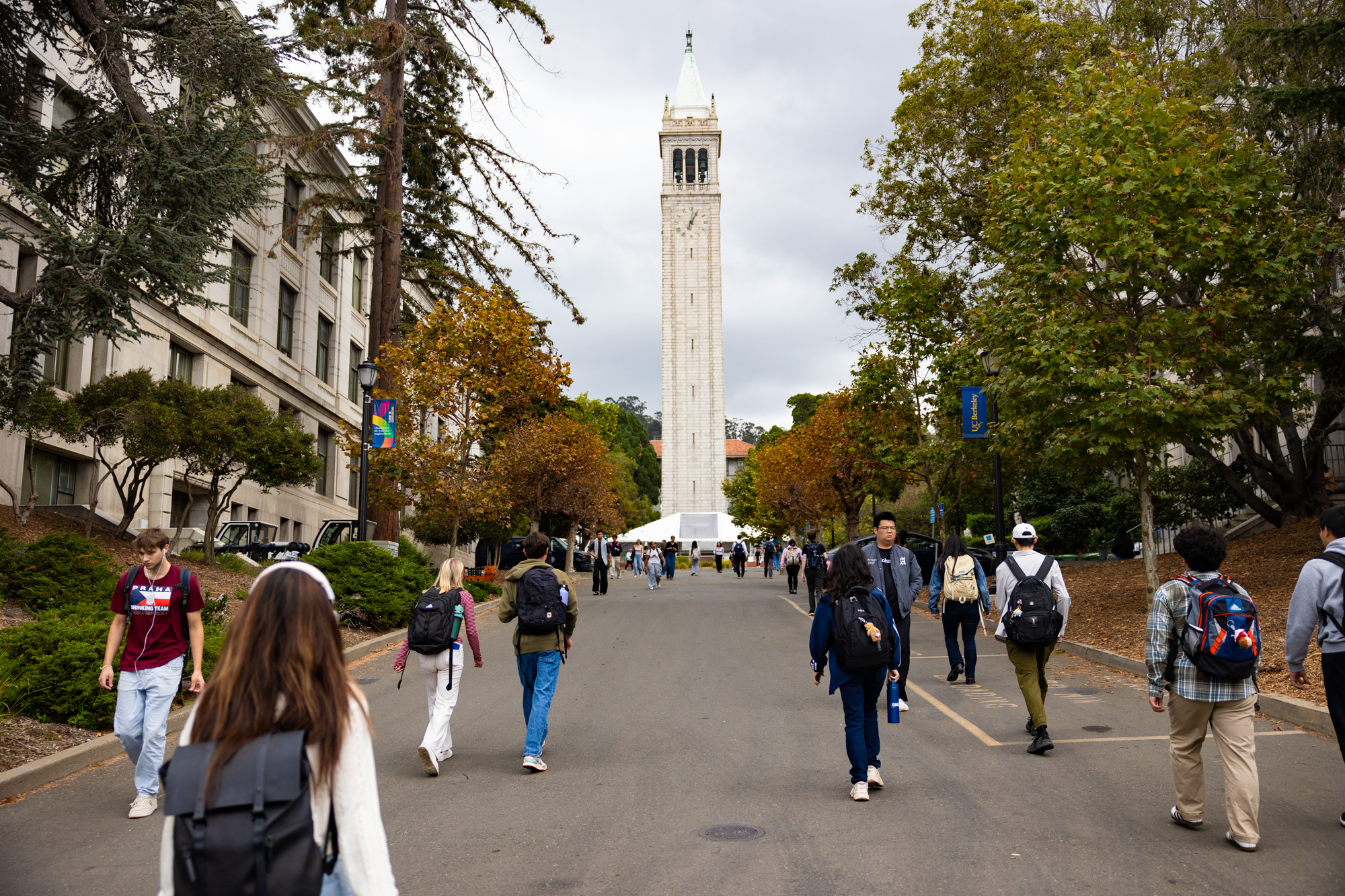
In May 2020, the University of California regents voted unanimously to phase out the SAT and ACT as admission requirements.
Considered a rite of passage in high school since the 1940s for students planning to continue their education, the standardized tests were also long criticized as insufficient predictors of college performance and discriminatory to low-income students who didn’t have the same access to test-prep materials and classes.
The UC system wasn’t alone. At the end of 2021, Harvard University announced it would waive the testing requirement through 2026. Institutions like New York University, the University of Chicago, Notre Dame University and Northwestern University are all currently test-optional for this application cycle.

But tides are shifting for these schools — and possibly for the UCs, too. Over the summer, more than 3,000 faculty members at University of California schools have signed a pair of open letters supporting admissions testing. One letter — signed by more than 2,300 people — called for the return of the mathematics test for STEM majors, saying that testing is a “critical baseline” and “a common external check that students have the core mathematical fluency required for university-level STEM coursework.”
“The SAT/ACT mathematics requirement is not an obstacle to equity; rather, it is a prerequisite for it,” the letter reads. “Failing to measure preparation gaps does not remove barriers; it moves them into the classroom, where they become harder to overcome.”
What fairness looks like
2020 was also a year when the country was in the middle of a “racial justice reckoning” after the killing of George Floyd by police officers, explained Berkeleyside higher education reporter Felicia Mello on KQED’s Forum.
“There was a lot of discussion about equity happening,” Mello said.
She also added that a year prior, the infamous Varsity Blues college admissions scandal took place, in which federal authorities cracked down on wealthy parents who had been cheating the application process through bribes and rigged standardized test scores.
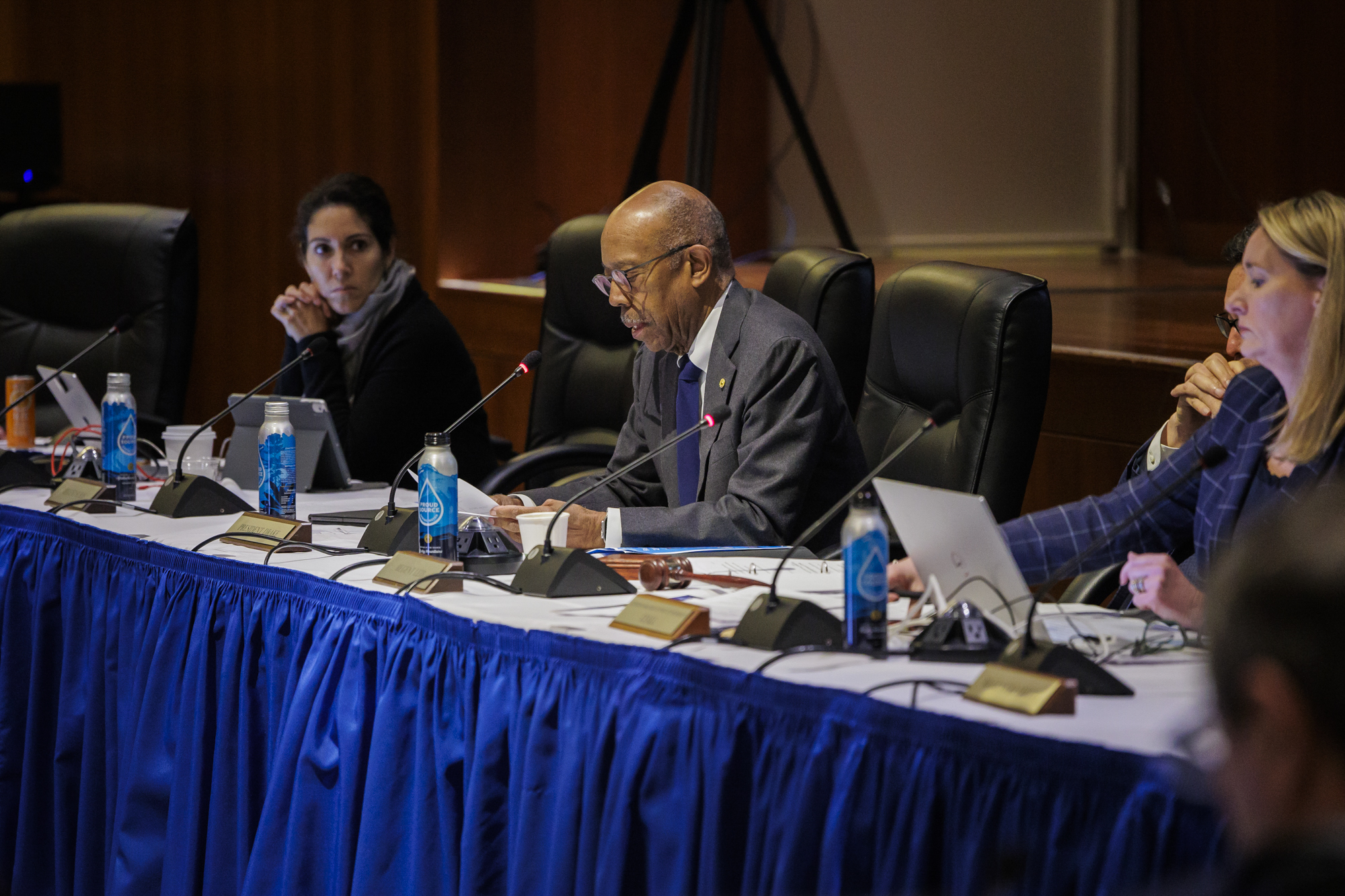
“The Board of Regents then took the decision first to go test-optional and eventually ended up going completely test-blind, and that’s the situation that we’ve been in since then,” Mello said.
However, after the UCs went test-optional in 2020, “we saw students thoroughly unprepared to take math in college,” said co-author of the STEM faculty letter, Mina Aganagic — a professor of mathematics and physics at UC Berkeley.
“We’re not saying that these kids didn’t take pre-calc or calc or they haven’t mastered that,” she argued. “The issue is at a much, much earlier level. Students who struggle with material that’s taught in elementary and middle school.”
“And for those students, helping them learn calculus is really literally an impossible task,” she said. “So it was heartbreaking seeing so many students struggle.”

The other letter — signed by more than 900 people — argued for bringing back the reading and writing portion of the SAT and ACT, echoing similar sentiments from STEM faculty members. The humanities faculty members also remarked on the rise of AI use among students.
“As artificial intelligence becomes more capable, it is arguably more important than ever for students to be able to think through and compose sound arguments on their own, to comprehend the texts they read and to recognize weaknesses in the arguments of those texts,” the social sciences letter reads. “The growing use of AI also makes essays a less reliable indicator of these abilities.”
However, critics of the SAT and ACT requirements emphasize the disadvantage under-resourced students face and note that the letter’s signatories are a small portion of the large UC faculty.
“The problem was that the SAT itself was basically a test that was really about assessing someone’s socioeconomic status,” said Lisa Holder, an Equal Justice Society civil rights attorney who helped file a lawsuit to end the use of SAT and ACT in UC admissions, which ended in a settlement.
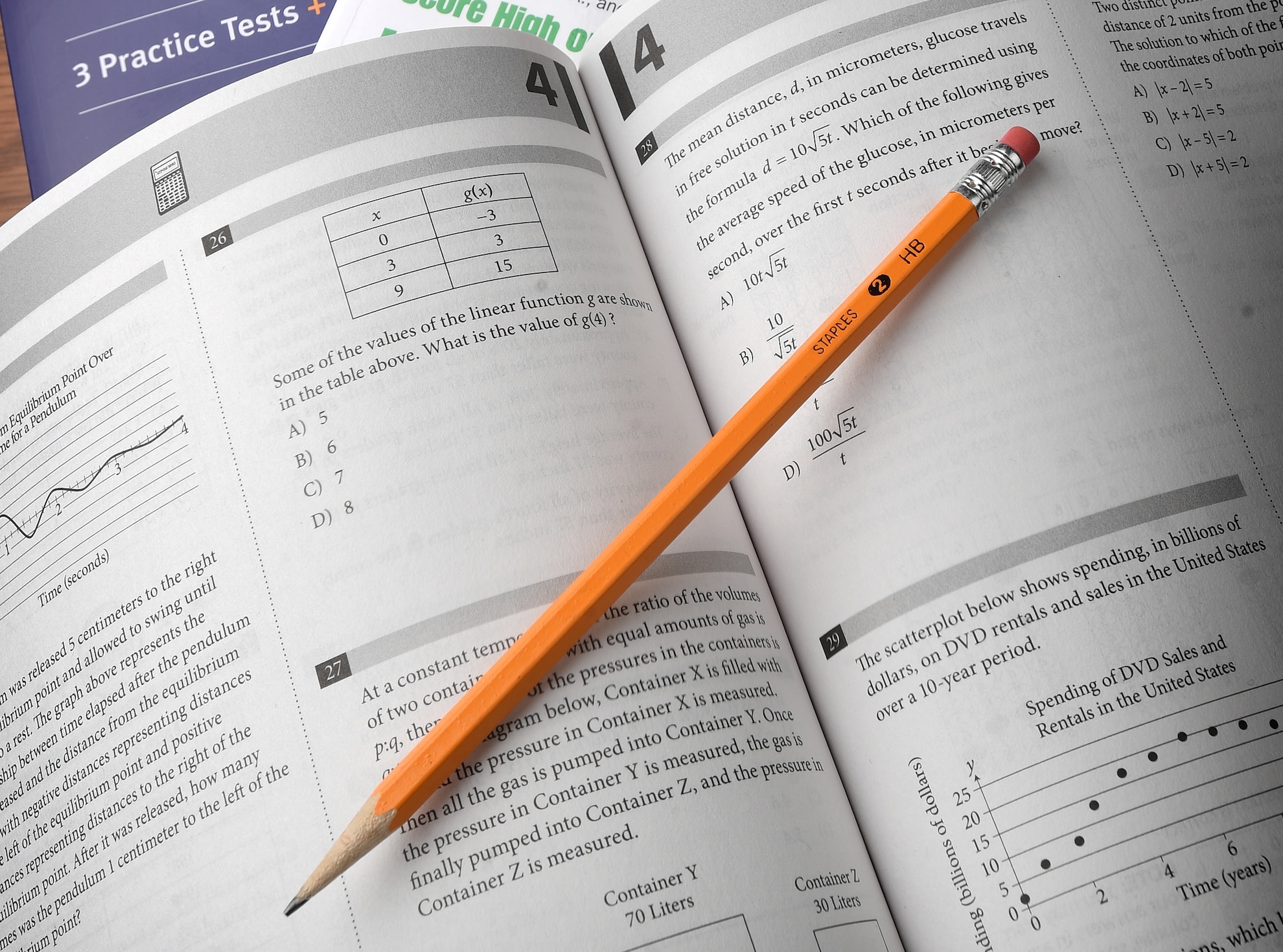
“The metric that that test actually excelled at measuring was your access to test prep. And that is correlated to wealth,” she said. “This is one snapshot, a day in the life of an individual, as opposed to four years of a high-performing, high-achieving student who is striving.”
Stephanie, a high school teacher at a college prep school, wrote into Forum saying she was against reinstating the SAT.
“I see how much time and money the wealthy students at my school spend on test prep, and it’s egregious,” she said. “The test prep courses and private tutors don’t teach students the material. They teach them how to game the system.”
Another listener, who said they are a UC Merced professor, wrote on Forum’s Discord channel that many of the signatures came from “faculty at the three most selective campuses like Berkeley, UCLA and San Diego.”
“We educate a much higher share of students who need remedial math or writing,” they wrote. “Instead of trying to weed those students out, our approach has been to provide them with additional support and help them catch up.”
However, an audience member who said they were a math tutor for two decades also pointed out that “kids trying to learn calculus couldn’t add two fractions efficiently, so I stopped tutoring calculus altogether. It was too much hassle.
If you wish to compete in the world, boost standards. Universities are not designed for remedial education.” Another told Forum that as a Northern California teacher who worked in a standards-based grading school, “All of my co-teachers agreed that this made grades very inflated. Students graduated shockingly ill-prepared for college, but their grades looked great.”
Read on to learn more about Forum’s conversation with experts and reporters on the debate around standardized testing in California’s public higher education system.
This interview has been edited for brevity and clarity.
The Arguments for Standardized Testing
Mina Kim: What are professors who signed the letter seeing in classrooms?
Mina Aganagic: You’d see enormous amounts of stress on the students. You’d see students who try to take the class three times, and they’re failing again. And they say, “I’ve done everything,” and they have done everything. But the task put in front of them is to cover a multi-year gap in one college calculus class together with 400 to 700 other students. It is simply impossible. It’s sort of like I asked you to climb a wall with no footholds at all. A mathematical genius could not do that.
Why is standardized testing the best way to measure that readiness for college-level work?
First, most of the SAT actually focuses on the kind of math that’s taught in middle school. I don’t mean acing it, but you will be able to do all right.
The other absolutely crucial thing to understand is how UC uses the SAT. UC was never providing a linear ranking of students and then saying, “We’ll take those with top SAT scores.”
What we will do is the following: Let’s say you take two students from a poor Black neighborhood. They’re going to the same high school. We have grade inflation. Both of these kids ace their math class. And we have to pick one. How are you going to pick? Right now, if we have to pick one, it’s going to be a random choice. In fact, Berkeley doesn’t even take teachers’ recommendations into account. What we are asking for is, “Give us the SAT score.” It will allow us to make an informed choice.

There’s also the Smarter Balanced Test that all California public high school juniors have to take. Would that be a reliable measure?
Certainly having something would be better than having nothing at all. But one problem is purely technical — test problems leaking.
And right now, Smarter Balanced is intended to assess how schools are doing. It’s not designed as a high-stakes test. And converting it to one would require huge resources just to achieve the same thing the SAT is already doing.
What do you say to critics of standardized testing, who say scores track closely with income and racial disparities?
Every measure we have, including Smarter Balanced, already has in it, baked, these inequities. There’s just simply no way around it. The SAT is no better, no worse than any other measure we had.
But the crucial thing is what washes them out is how we use the SAT. We are not comparing a kid from an affluent background to a low-income student and saying, “Compare their SAT scores.” No, we compare students who are alike in every other respect. In other words, the SAT becomes one part of a student’s file. And when we cannot decide between two students who are completely alike in every other respect, it’s a much more informed choice than throwing a die, which is deeply unfair.
Didn’t the pandemic — and remote schooling — also have a hand in dropping performances?
The overall level of math preparedness has been declining. Nobody’s questioning that. But what we are seeing here is a population of students at the very lowest level of preparedness.
Usually what you see is kind of a bell curve. And when you’re talking about overall level shifting, you’re talking about this bell curve kind of shifting. But what we are seeing is the bell curve — it becomes kind of a U-shape. You see students who are acing our classes and students who’re hopelessly failing, and there’s nothing in the middle.

Couldn’t the UCs support these students through remedial college courses?
We’re pouring a lot into remediation. However, there are certain sizes of gaps that you simply cannot fill. They just become too large. If you are asking to fill a gap from elementary and middle school, it’s just hopeless. For those students, it would take years of work in college to catch up.
And California has this beautiful master plan for higher education: of community colleges, the CSUs and the UCs and pathways between them. So a student who is not as well-prepared could have a real path upward: you could go to a community college, take remedial classes and then transfer to UC. You’re not placed into this classroom where you simply have no way of succeeding because your task was impossible. It is not your failure. It’s the failure of a whole system, and we should not propagate this. We should use the SAT as a placement to put kids in the right places, to give them ladders they can climb up.
The Arguments Against Standardized Testing
Mina Kim: What was the lawsuit filed against the UCs?
Lisa Holder: In 2019, Equal Justice Society — along with several private and public firms in a case called Smith v. UC Regents — sued the University of California for continuing to use the SAT and the ACT as a principal criteria for UC admissions when, in fact, the social science showed that the standardized tests, particularly the SAT and the ACT, were not the best metric for assessing a student’s college readiness, even though they purported to be that.
The best metric, according to social scientists and psychometricians, was a student’s high school performance. Basically the classes that they took for four years. What did their teachers say about them, their student evaluations, their extracurriculars, their sports, their community involvement?
What was heartbreaking was seeing the clients we had in the Smith case who were incredible students. Many of them were students of color, disabled students and students that did not have a lot of money. And so they had no access to test prep, but they were straight A students. We had a student who had been living in his car for four years, yet he was a straight A student.
Some would argue that accessibility to test-prep has improved thanks to online resources like Khan Academy.
That’s completely speculative. We haven’t had the test for five years, and there’s no requirement under any settlement to bring that test back.
What we should be doing is looking at the data that is right in front of us. And the data is what tells us that the UC’s own studies conducted by the board established that students admitted in the last five years under the test-free policy are equally — if not more — qualified and prepared than the previous students. And that this test-free policy is much more aligned with the UC’s mission, which is to offer high-quality, publicly funded education to California’s best students, not its wealthiest students.
This is a publicly funded university system, and everyone, regardless of income, is paying taxes to fund it. All high-performing California students should be able to access this school without obstruction from a gatekeeper test calibrated to measure for wealth rather than excellence.
What do you say in response to concerns being raised by professors like Aganagic?
The achievement lapses that folks may be seeing are much more likely attributable to this generation’s addiction to mobile phones and their scattered focus, their literacy deficits and sort of shrinking attention spans caused by mobile phone usage and AI addiction.
That’s a much larger systemic problem that we have to start to think about pedagogically in all of our schools. Also, what we’re seeing in this cohort of students is also largely impacted by the missed learning opportunities that they experienced during COVID. Some students were out of school for a year and a half, and so I’m sure that their math preparation may have suffered.
And frankly, we have a lot of really lackluster curricula around STEM in our high schools. And so, students may not be excelling as much as they could be if we were to modernize our systems and sort of keep up with what’s going on globally around STEM.

Behind the Testing Debate
Mina Kim: What have some of the effects been of waiving the test requirement?
Felicia Mello: UC’s data actually showed that they saw a big bump in applications right after going test-optional. In the first year, applications went up about 19%. And you also start to see a slight increase in diversity of both the people who are applying and the people who are getting in. In terms of performance, the official UC stats don’t show a huge difference. They show that persistence — meaning students who remained in college from the first year to the second year — was largely flat during that time. First-year GPAs ticked down very slightly.
I am really just speaking to kind of what we saw right after the change went into effect in 2021. But the picture painted by the overall UC data is not as grim as the one that is being put forward by faculty on some campuses.
How would you characterize the support for the faculty letters?
We have about 3,000 UC faculty out of roughly 26,000 who have signed on to one of these letters, either the letter from STEM faculty or the letter from social sciences and humanities faculty. We have seen the STEM faculty be much more out front on this.
The social sciences and humanities faculty who have come out in favor of this mentioned that having a good quantitative background is also important for social science classes like economics. There also is clearly some concern around students’ writing skills — that the rise of AI has made it harder to tell, even from students’ applications, whether they’re writing them themselves, and it also just has the potential to constrain what students are learning in terms of writing and communication in general.
The UC Berkeley math faculty — who had really been pushing via this open letter for the return of the SAT — had done their own analysis of numbers in introductory calculus classes. And they found that between 2021 and 2023, after UC got rid of the SAT and admissions, there was a big jump in students who were severely underprepared for that introductory calculus course. But unfortunately, because we only have those three years of data, they weren’t giving the same test prior to or after that. It is a bit hard to put that data in context.
Supporters of reinstating the requirement say that the tests would be used in a holistic approach. How true is that?
The UC actually does consider 13 different factors in admissions currently, even separate from test scores.
Not just your high school GPA, but how you’re doing relative to other students in your class. It looks at the types of life circumstances you’ve had, your geographic location. Have you had a recent improvement in your performance? What kinds of rigorous courses have you taken? Have you taken AP courses?
There’s another factor here, which is the broader political environment, and I think there’s a concern that even if the UC brings back the test, there will be pressure then on the UC to focus more narrowly on the task and abandon some of the more holistic aspects of its review.
The Trump administration has certainly been pressuring universities to not pay much attention to the diversity of their classes and not intentionally try to enroll a diverse student body. There’s a concern that this could be seized on by outside actors to try and do an analysis of the university’s admission policies that would focus really narrowly on those test scores. Now, whether that actually happens would remain to be seen.
Equity advocates have also said in the past that, for different reasons, even if you go test-optional, it’s still sending a signal whether those students choose to submit their scores or not, and that could still affect their application.
The Next Steps
Mina Kim: The UC is saying that they will study and make a decision on whether to bring back the testing requirement a year from now. How likely is it that they will bring it back?
Mello: This is something that was actually in the works even before these open letters. We’ve seen a number of factors that have changed since 2020: We have seen shifts in AI and how it affects the application process. Some of those concerns related to the pandemic are no longer there in the same way.
There’s a lot of pressure to make this decision more quickly. The Faculty Senate had laid out this process of coming to a recommendation by fall 2027. The faculty had originally laid out a plan: They said, we’re going to study this, and the earliest that we could make a decision under this very detailed road map would be for people who are applying in fall of 2028.
They have since rescinded that detailed timeline. All we know at this point is that they’re going to make their recommendation by June. That creates some potential anxiety for this year’s incoming high school juniors.
Who decides to bring back standardized testing?
The regents will really make the ultimate call on this.
The most interesting part of the regents meeting was the chair of the Board of Regents saying that she really felt like the public discussion around this has been too narrowly focused on standardized testing and that the university really needs to take a broader look at what it means to be ready for college in 2026. So this will include things like looking at the high school courses that UC requires people to have when they’re applying. Right now, there’s not a requirement for computer science or any other technology-related course.
There’s really an appetite for looking at these things more broadly. The regents are looking at, “How do we both maintain that reputation for excellence?” But also do what they are intending to do as a state university and make sure that access to the university is based on hard work and aptitude as opposed to just how much wealth your family has.
Is there a middle ground option for standardized testing?
There are some universities and colleges that are using the SAT more for placement purposes after people get in. So they’re essentially saying, “We don’t require this for admissions, but we either require or strongly encourage you to share scores after you get in so that we can help figure out if you’re going to be in the right math class for you.”
One of the things that I observe during the course of this reporting is that placement practices for math classes really vary across UC. It’s an extremely diverse system. I spoke with the math chair at UC Santa Barbara who did not sign on to this open letter in support of bringing back the SAT, and he was saying that when we identify students who may not be prepared for our introductory calculus classes, we make sure we flag that early on. We make sure that they are going to community college, and getting the kind of remedial preparation that they need, and then coming back, and those students tend to succeed in our classes.
Wouldn’t the effects of the pandemic also be a major factor in student performance?
Essentially, there’s nobody I interviewed on either side that said, “Oh, we’re not dealing with any pandemic-related learning deficiencies.” There’s broad acknowledgment that our students are struggling in various ways since the pandemic, and something needs to be done. And the question is, what is the best response?
We know it’s not just all about the pandemic, because instead of seeing everybody equally struggling, we’re seeing this concentration on both ends where some people are doing really well, some people are really struggling, and that middle category of student is dropping out.
Some researchers I talked to said that that’s really what you would expect from the impact of the pandemic because the pandemic impacted students differently. Some of them have the peace and quiet they need to study and a reliable Wi-Fi connection, and others do not.