window.__IS_SSR__=true
window.__INITIAL_STATE__={
"attachmentsReducer": {
"audio_0": {
"type": "attachments",
"id": "audio_0",
"imgSizes": {
"kqedFullSize": {
"file": "https://ww2.kqed.org/news/wp-content/themes/KQED-unified/img/audio_bgs/background0.jpg"
}
}
},
"audio_1": {
"type": "attachments",
"id": "audio_1",
"imgSizes": {
"kqedFullSize": {
"file": "https://ww2.kqed.org/news/wp-content/themes/KQED-unified/img/audio_bgs/background1.jpg"
}
}
},
"audio_2": {
"type": "attachments",
"id": "audio_2",
"imgSizes": {
"kqedFullSize": {
"file": "https://ww2.kqed.org/news/wp-content/themes/KQED-unified/img/audio_bgs/background2.jpg"
}
}
},
"audio_3": {
"type": "attachments",
"id": "audio_3",
"imgSizes": {
"kqedFullSize": {
"file": "https://ww2.kqed.org/news/wp-content/themes/KQED-unified/img/audio_bgs/background3.jpg"
}
}
},
"audio_4": {
"type": "attachments",
"id": "audio_4",
"imgSizes": {
"kqedFullSize": {
"file": "https://ww2.kqed.org/news/wp-content/themes/KQED-unified/img/audio_bgs/background4.jpg"
}
}
},
"placeholder": {
"type": "attachments",
"id": "placeholder",
"imgSizes": {
"thumbnail": {
"file": "https://cdn.kqed.org/wp-content/uploads/2024/12/KQED-Default-Image-816638274-2000x1333-1-160x107.jpg",
"width": 160,
"height": 107,
"mimeType": "image/jpeg"
},
"medium": {
"file": "https://cdn.kqed.org/wp-content/uploads/2024/12/KQED-Default-Image-816638274-2000x1333-1-800x533.jpg",
"width": 800,
"height": 533,
"mimeType": "image/jpeg"
},
"medium_large": {
"file": "https://cdn.kqed.org/wp-content/uploads/2024/12/KQED-Default-Image-816638274-2000x1333-1-768x512.jpg",
"width": 768,
"height": 512,
"mimeType": "image/jpeg"
},
"large": {
"file": "https://cdn.kqed.org/wp-content/uploads/2024/12/KQED-Default-Image-816638274-2000x1333-1-1020x680.jpg",
"width": 1020,
"height": 680,
"mimeType": "image/jpeg"
},
"1536x1536": {
"file": "https://cdn.kqed.org/wp-content/uploads/2024/12/KQED-Default-Image-816638274-2000x1333-1-1536x1024.jpg",
"width": 1536,
"height": 1024,
"mimeType": "image/jpeg"
},
"fd-lrg": {
"file": "https://cdn.kqed.org/wp-content/uploads/2024/12/KQED-Default-Image-816638274-2000x1333-1-1536x1024.jpg",
"width": 1536,
"height": 1024,
"mimeType": "image/jpeg"
},
"fd-med": {
"file": "https://cdn.kqed.org/wp-content/uploads/2024/12/KQED-Default-Image-816638274-2000x1333-1-1020x680.jpg",
"width": 1020,
"height": 680,
"mimeType": "image/jpeg"
},
"fd-sm": {
"file": "https://cdn.kqed.org/wp-content/uploads/2024/12/KQED-Default-Image-816638274-2000x1333-1-800x533.jpg",
"width": 800,
"height": 533,
"mimeType": "image/jpeg"
},
"post-thumbnail": {
"file": "https://cdn.kqed.org/wp-content/uploads/2024/12/KQED-Default-Image-816638274-2000x1333-1-672x372.jpg",
"width": 672,
"height": 372,
"mimeType": "image/jpeg"
},
"twentyfourteen-full-width": {
"file": "https://cdn.kqed.org/wp-content/uploads/2024/12/KQED-Default-Image-816638274-2000x1333-1-1038x576.jpg",
"width": 1038,
"height": 576,
"mimeType": "image/jpeg"
},
"xxsmall": {
"file": "https://cdn.kqed.org/wp-content/uploads/2024/12/KQED-Default-Image-816638274-2000x1333-1-160x107.jpg",
"width": 160,
"height": 107,
"mimeType": "image/jpeg"
},
"xsmall": {
"file": "https://cdn.kqed.org/wp-content/uploads/2024/12/KQED-Default-Image-816638274-2000x1333-1-672x372.jpg",
"width": 672,
"height": 372,
"mimeType": "image/jpeg"
},
"small": {
"file": "https://cdn.kqed.org/wp-content/uploads/2024/12/KQED-Default-Image-816638274-2000x1333-1-672x372.jpg",
"width": 672,
"height": 372,
"mimeType": "image/jpeg"
},
"xlarge": {
"file": "https://cdn.kqed.org/wp-content/uploads/2024/12/KQED-Default-Image-816638274-2000x1333-1-1020x680.jpg",
"width": 1020,
"height": 680,
"mimeType": "image/jpeg"
},
"full-width": {
"file": "https://cdn.kqed.org/wp-content/uploads/2024/12/KQED-Default-Image-816638274-2000x1333-1-1920x1280.jpg",
"width": 1920,
"height": 1280,
"mimeType": "image/jpeg"
},
"guest-author-32": {
"file": "https://cdn.kqed.org/wp-content/uploads/2025/01/KQED-Default-Image-816638274-1333x1333-1-160x160.jpg",
"width": 32,
"height": 32,
"mimeType": "image/jpeg"
},
"guest-author-50": {
"file": "https://cdn.kqed.org/wp-content/uploads/2025/01/KQED-Default-Image-816638274-1333x1333-1-160x160.jpg",
"width": 50,
"height": 50,
"mimeType": "image/jpeg"
},
"guest-author-64": {
"file": "https://cdn.kqed.org/wp-content/uploads/2025/01/KQED-Default-Image-816638274-1333x1333-1-160x160.jpg",
"width": 64,
"height": 64,
"mimeType": "image/jpeg"
},
"guest-author-96": {
"file": "https://cdn.kqed.org/wp-content/uploads/2025/01/KQED-Default-Image-816638274-1333x1333-1-160x160.jpg",
"width": 96,
"height": 96,
"mimeType": "image/jpeg"
},
"guest-author-128": {
"file": "https://cdn.kqed.org/wp-content/uploads/2025/01/KQED-Default-Image-816638274-1333x1333-1-160x160.jpg",
"width": 128,
"height": 128,
"mimeType": "image/jpeg"
},
"detail": {
"file": "https://cdn.kqed.org/wp-content/uploads/2025/01/KQED-Default-Image-816638274-1333x1333-1-160x160.jpg",
"width": 160,
"height": 160,
"mimeType": "image/jpeg"
},
"kqedFullSize": {
"file": "https://cdn.kqed.org/wp-content/uploads/2024/12/KQED-Default-Image-816638274-2000x1333-1.jpg",
"width": 2000,
"height": 1333
}
}
},
"news_12088768": {
"type": "attachments",
"id": "news_12088768",
"meta": {
"index": "attachments_1716263798",
"site": "news",
"id": "12088768",
"found": true
},
"title": "IMG_1565",
"publishDate": 1782334002,
"status": "inherit",
"parent": 12084912,
"modified": 1782334167,
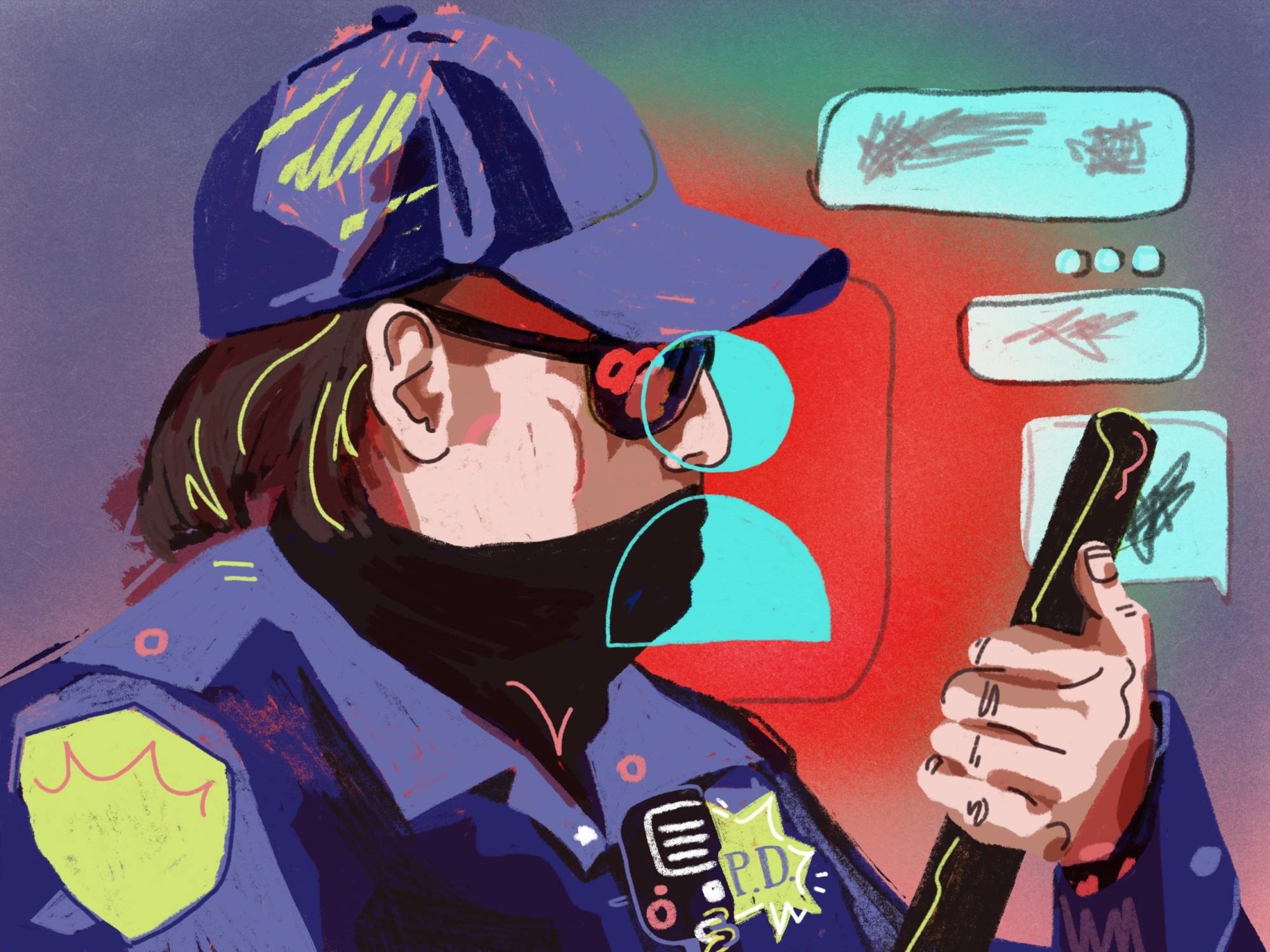
"caption": "A law enforcement officer scrolls through messages on a mobile phone. An investigation by The California Newsroom and UC Berkeley’s Investigative Reporting Program found that many California officers disciplined for biased conduct remained employed in law enforcement. ",
"credit": "Anna Vignet/KQED",
"altTag": null,
"description": null,
"imgSizes": {
"medium": {
"file": "https://cdn.kqed.org/wp-content/uploads/sites/10/2026/05/IMG_1565-2000x1500.jpg",
"width": 2000,
"height": 1500,
"mimeType": "image/jpeg"
},
"large": {
"file": "https://cdn.kqed.org/wp-content/uploads/sites/10/2026/05/IMG_1565-2000x1500.jpg",
"width": 2000,
"height": 1500,
"mimeType": "image/jpeg"
},
"thumbnail": {
"file": "https://cdn.kqed.org/wp-content/uploads/sites/10/2026/05/IMG_1565-160x120.jpg",
"width": 160,
"height": 120,
"mimeType": "image/jpeg"
},
"1536x1536": {
"file": "https://cdn.kqed.org/wp-content/uploads/sites/10/2026/05/IMG_1565-1536x1152.jpg",
"width": 1536,
"height": 1152,
"mimeType": "image/jpeg"
},
"2048x2048": {
"file": "https://cdn.kqed.org/wp-content/uploads/sites/10/2026/05/IMG_1565-2048x1536.jpg",
"width": 2048,
"height": 1536,
"mimeType": "image/jpeg"
},
"post-thumbnail": {
"file": "https://cdn.kqed.org/wp-content/uploads/sites/10/2026/05/IMG_1565-672x372.jpg",
"width": 672,
"height": 372,
"mimeType": "image/jpeg"
},
"twentyfourteen-full-width": {
"file": "https://cdn.kqed.org/wp-content/uploads/sites/10/2026/05/IMG_1565-1038x576.jpg",
"width": 1038,
"height": 576,
"mimeType": "image/jpeg"
},
"full-width": {
"file": "https://cdn.kqed.org/wp-content/uploads/sites/10/2026/05/IMG_1565-2000x1500.jpg",
"width": 2000,
"height": 1500,
"mimeType": "image/jpeg"
},
"npr-cds-wide": {
"file": "https://cdn.kqed.org/wp-content/uploads/sites/10/2026/05/IMG_1565-1200x675.jpg",
"width": 1200,
"height": 675,
"mimeType": "image/jpeg"
},
"npr-cds-square": {
"file": "https://cdn.kqed.org/wp-content/uploads/sites/10/2026/05/IMG_1565-600x600.jpg",
"width": 600,
"height": 600,
"mimeType": "image/jpeg"
},
"kqedFullSize": {
"file": "https://cdn.kqed.org/wp-content/uploads/sites/10/2026/05/IMG_1565.jpg",
"width": 2560,
"height": 1920
}
},
"isLoading": false,
"fetchFailed": false
},
"news_12082559": {
"type": "attachments",
"id": "news_12082559",
"meta": {
"index": "attachments_1716263798",
"site": "news",
"id": "12082559",
"found": true
},
"title": "Cooking",
"publishDate": 1778094904,
"status": "inherit",
"parent": 12082396,
"modified": 1782157220,
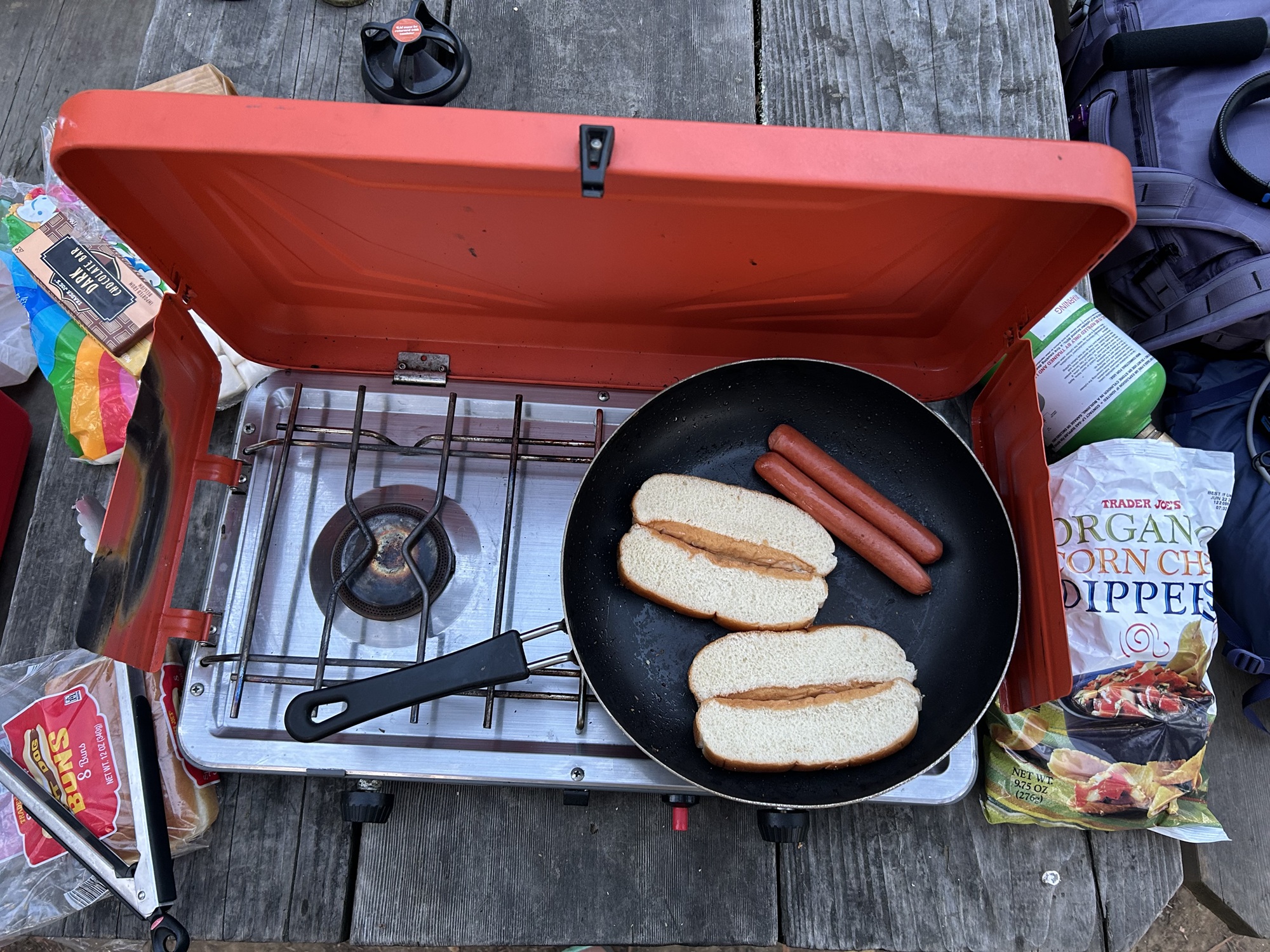
"caption": "Campers at Anthony Chabot Regional Park cook hot dogs on a two-burner camping stove rented at Sports Basement on April 5, 2026.",
"credit": "Sarah Wright/KQED",
"altTag": null,
"description": null,
"imgSizes": {
"thumbnail": {
"file": "https://cdn.kqed.org/wp-content/uploads/sites/10/2026/05/Cooking-160x120.jpeg",
"width": 160,
"height": 120,
"mimeType": "image/jpeg"
},
"1536x1536": {
"file": "https://cdn.kqed.org/wp-content/uploads/sites/10/2026/05/Cooking-1536x1152.jpeg",
"width": 1536,
"height": 1152,
"mimeType": "image/jpeg"
},
"post-thumbnail": {
"file": "https://cdn.kqed.org/wp-content/uploads/sites/10/2026/05/Cooking-672x372.jpeg",
"width": 672,
"height": 372,
"mimeType": "image/jpeg"
},
"twentyfourteen-full-width": {
"file": "https://cdn.kqed.org/wp-content/uploads/sites/10/2026/05/Cooking-1038x576.jpeg",
"width": 1038,
"height": 576,
"mimeType": "image/jpeg"
},
"npr-cds-wide": {
"file": "https://cdn.kqed.org/wp-content/uploads/sites/10/2026/05/Cooking-1200x675.jpeg",
"width": 1200,
"height": 675,
"mimeType": "image/jpeg"
},
"npr-cds-square": {
"file": "https://cdn.kqed.org/wp-content/uploads/sites/10/2026/05/Cooking-600x600.jpeg",
"width": 600,
"height": 600,
"mimeType": "image/jpeg"
},
"kqedFullSize": {
"file": "https://cdn.kqed.org/wp-content/uploads/sites/10/2026/05/Cooking.jpeg",
"width": 2000,
"height": 1500
}
},
"isLoading": false,
"fetchFailed": false
},
"news_12088759": {
"type": "attachments",
"id": "news_12088759",
"meta": {
"index": "attachments_1716263798",
"site": "news",
"id": "12088759",
"found": true
},
"title": "WCup Qatari's Courage",
"publishDate": 1782332951,
"status": "inherit",
"parent": 12088756,
"modified": 1782333000,
"caption": "Dr. Nasser Mohamed, of Qatar, is photographed, Wednesday, June 17, 2026, in San Francisco. ",
"credit": "AP Photo/Jeff Chiu",
"altTag": null,
"description": null,
"imgSizes": {
"medium": {
"file": "https://cdn.kqed.org/wp-content/uploads/sites/10/2026/06/AP26172718931183-2000x1333.jpg",
"width": 2000,
"height": 1333,
"mimeType": "image/jpeg"
},
"large": {
"file": "https://cdn.kqed.org/wp-content/uploads/sites/10/2026/06/AP26172718931183-2000x1333.jpg",
"width": 2000,
"height": 1333,
"mimeType": "image/jpeg"
},
"thumbnail": {
"file": "https://cdn.kqed.org/wp-content/uploads/sites/10/2026/06/AP26172718931183-160x107.jpg",
"width": 160,
"height": 107,
"mimeType": "image/jpeg"
},
"1536x1536": {
"file": "https://cdn.kqed.org/wp-content/uploads/sites/10/2026/06/AP26172718931183-1536x1024.jpg",
"width": 1536,
"height": 1024,
"mimeType": "image/jpeg"
},
"2048x2048": {
"file": "https://cdn.kqed.org/wp-content/uploads/sites/10/2026/06/AP26172718931183-2048x1365.jpg",
"width": 2048,
"height": 1365,
"mimeType": "image/jpeg"
},
"post-thumbnail": {
"file": "https://cdn.kqed.org/wp-content/uploads/sites/10/2026/06/AP26172718931183-672x372.jpg",
"width": 672,
"height": 372,
"mimeType": "image/jpeg"
},
"twentyfourteen-full-width": {
"file": "https://cdn.kqed.org/wp-content/uploads/sites/10/2026/06/AP26172718931183-1038x576.jpg",
"width": 1038,
"height": 576,
"mimeType": "image/jpeg"
},
"full-width": {
"file": "https://cdn.kqed.org/wp-content/uploads/sites/10/2026/06/AP26172718931183-2000x1333.jpg",
"width": 2000,
"height": 1333,
"mimeType": "image/jpeg"
},
"npr-cds-wide": {
"file": "https://cdn.kqed.org/wp-content/uploads/sites/10/2026/06/AP26172718931183-1200x675.jpg",
"width": 1200,
"height": 675,
"mimeType": "image/jpeg"
},
"npr-cds-square": {
"file": "https://cdn.kqed.org/wp-content/uploads/sites/10/2026/06/AP26172718931183-600x600.jpg",
"width": 600,
"height": 600,
"mimeType": "image/jpeg"
},
"kqedFullSize": {
"file": "https://cdn.kqed.org/wp-content/uploads/sites/10/2026/06/AP26172718931183-scaled-e1782333009320.jpg",
"width": 2000,
"height": 1333
}
},
"isLoading": false,
"fetchFailed": false
},
"news_12088667": {
"type": "attachments",
"id": "news_12088667",
"meta": {
"index": "attachments_1716263798",
"site": "news",
"id": "12088667",
"found": true
},
"title": "DOG.EXHUMING.MIRADNDAS.RESCUE.DSC_9055-KQED",
"publishDate": 1782318305,
"status": "inherit",
"parent": 0,
"modified": 1782318584,
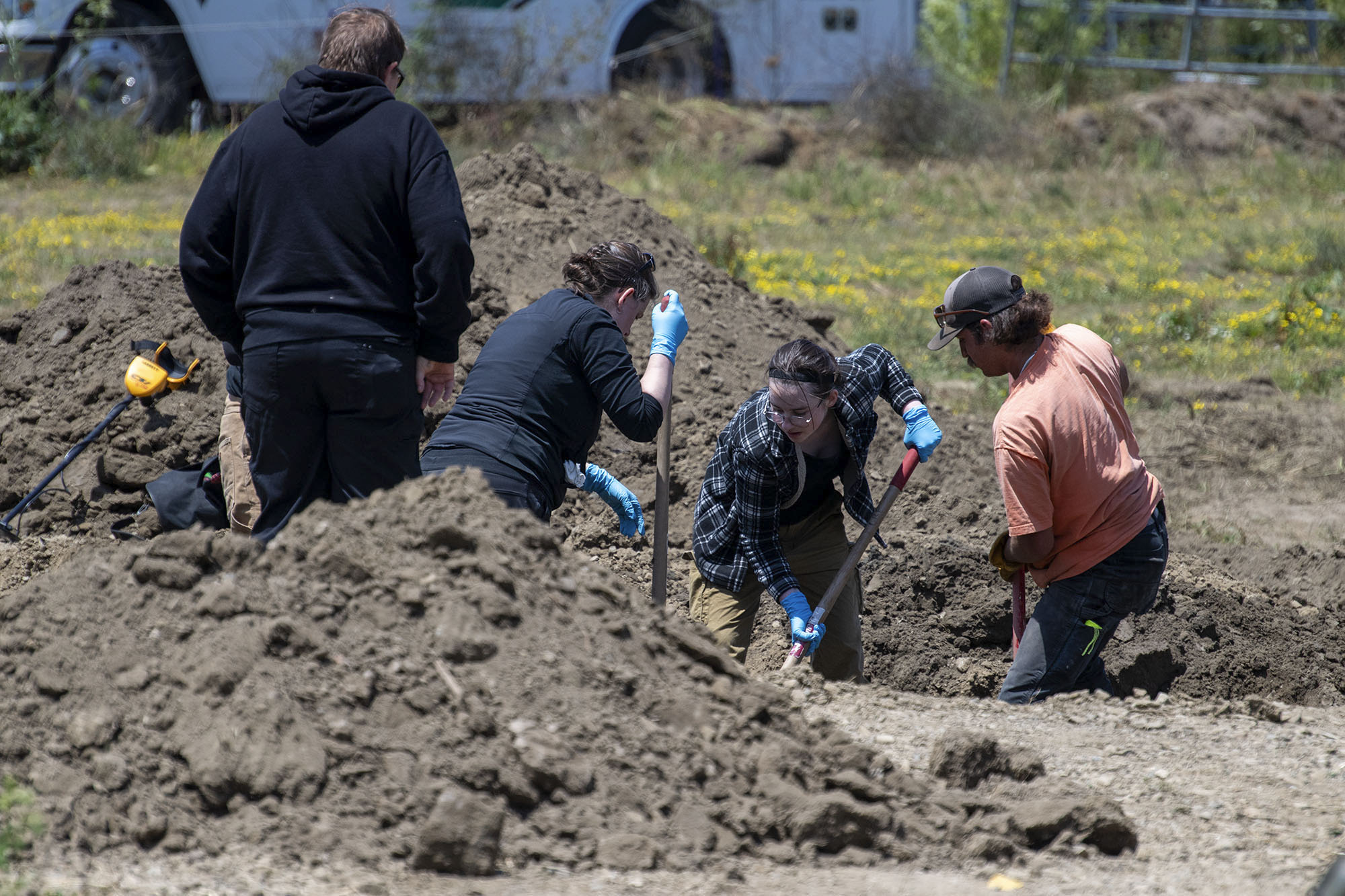
"caption": "Crews dig at the suspected site of animal remains at Miranda’s Rescue in Fortuna on June 23, 2026.",
"credit": "Mark McKenna for KQED",
"altTag": null,
"description": null,
"imgSizes": {
"thumbnail": {
"file": "https://cdn.kqed.org/wp-content/uploads/sites/10/2026/06/DOG.EXHUMING.MIRADNDAS.RESCUE.DSC_9055-KQED-160x107.jpg",
"width": 160,
"height": 107,
"mimeType": "image/jpeg"
},
"1536x1536": {
"file": "https://cdn.kqed.org/wp-content/uploads/sites/10/2026/06/DOG.EXHUMING.MIRADNDAS.RESCUE.DSC_9055-KQED-1536x1024.jpg",
"width": 1536,
"height": 1024,
"mimeType": "image/jpeg"
},
"post-thumbnail": {
"file": "https://cdn.kqed.org/wp-content/uploads/sites/10/2026/06/DOG.EXHUMING.MIRADNDAS.RESCUE.DSC_9055-KQED-672x372.jpg",
"width": 672,
"height": 372,
"mimeType": "image/jpeg"
},
"twentyfourteen-full-width": {
"file": "https://cdn.kqed.org/wp-content/uploads/sites/10/2026/06/DOG.EXHUMING.MIRADNDAS.RESCUE.DSC_9055-KQED-1038x576.jpg",
"width": 1038,
"height": 576,
"mimeType": "image/jpeg"
},
"npr-cds-wide": {
"file": "https://cdn.kqed.org/wp-content/uploads/sites/10/2026/06/DOG.EXHUMING.MIRADNDAS.RESCUE.DSC_9055-KQED-1200x675.jpg",
"width": 1200,
"height": 675,
"mimeType": "image/jpeg"
},
"npr-cds-square": {
"file": "https://cdn.kqed.org/wp-content/uploads/sites/10/2026/06/DOG.EXHUMING.MIRADNDAS.RESCUE.DSC_9055-KQED-600x600.jpg",
"width": 600,
"height": 600,
"mimeType": "image/jpeg"
},
"kqedFullSize": {
"file": "https://cdn.kqed.org/wp-content/uploads/sites/10/2026/06/DOG.EXHUMING.MIRADNDAS.RESCUE.DSC_9055-KQED.jpg",
"width": 2000,
"height": 1333
}
},
"isLoading": false,
"fetchFailed": false
},
"news_12088700": {
"type": "attachments",
"id": "news_12088700",
"meta": {
"index": "attachments_1716263798",
"site": "news",
"id": "12088700",
"found": true
},
"title": "Local Weather U.S.",
"publishDate": 1782321300,
"status": "inherit",
"parent": 12088673,
"modified": 1782322647,
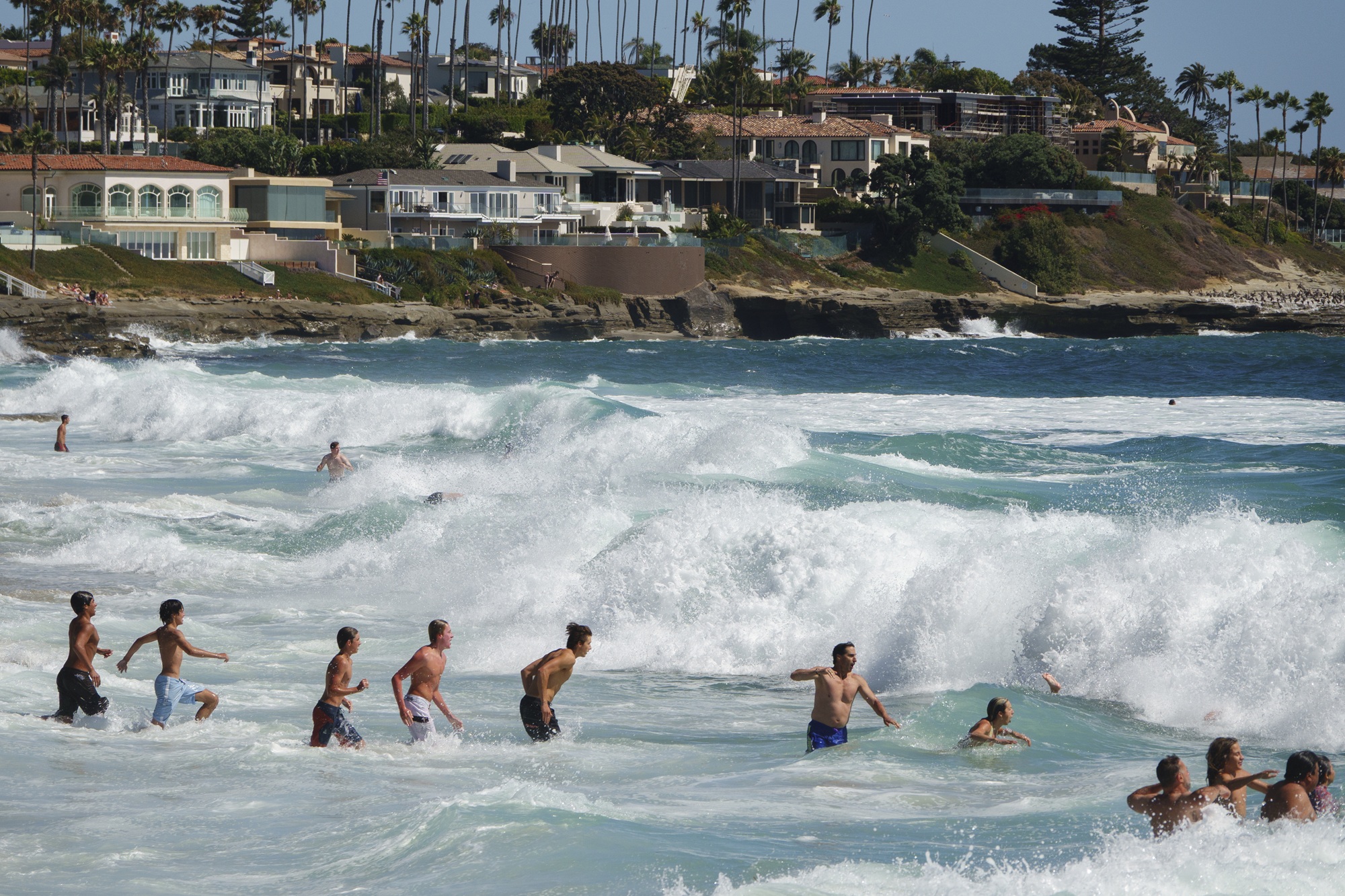
"caption": "Visitors navigate breaking waves along the coastline of Windansea Beach in La Jolla on June 20, 2026, in San Diego, California. The National Weather Service issued a beach hazard statement for elevated surf and high risk for rip currents. ",
"credit": "Kevin Carter/Getty Images",
"altTag": null,
"description": null,
"imgSizes": {
"thumbnail": {
"file": "https://cdn.kqed.org/wp-content/uploads/sites/10/2026/06/CaliforniaRipCurrentsGetty-160x107.jpg",
"width": 160,
"height": 107,
"mimeType": "image/jpeg"
},
"1536x1536": {
"file": "https://cdn.kqed.org/wp-content/uploads/sites/10/2026/06/CaliforniaRipCurrentsGetty-1536x1024.jpg",
"width": 1536,
"height": 1024,
"mimeType": "image/jpeg"
},
"post-thumbnail": {
"file": "https://cdn.kqed.org/wp-content/uploads/sites/10/2026/06/CaliforniaRipCurrentsGetty-672x372.jpg",
"width": 672,
"height": 372,
"mimeType": "image/jpeg"
},
"twentyfourteen-full-width": {
"file": "https://cdn.kqed.org/wp-content/uploads/sites/10/2026/06/CaliforniaRipCurrentsGetty-1038x576.jpg",
"width": 1038,
"height": 576,
"mimeType": "image/jpeg"
},
"npr-cds-wide": {
"file": "https://cdn.kqed.org/wp-content/uploads/sites/10/2026/06/CaliforniaRipCurrentsGetty-1200x675.jpg",
"width": 1200,
"height": 675,
"mimeType": "image/jpeg"
},
"npr-cds-square": {
"file": "https://cdn.kqed.org/wp-content/uploads/sites/10/2026/06/CaliforniaRipCurrentsGetty-600x600.jpg",
"width": 600,
"height": 600,
"mimeType": "image/jpeg"
},
"kqedFullSize": {
"file": "https://cdn.kqed.org/wp-content/uploads/sites/10/2026/06/CaliforniaRipCurrentsGetty.jpg",
"width": 2000,
"height": 1333
}
},
"isLoading": false,
"fetchFailed": false
},
"news_12088637": {
"type": "attachments",
"id": "news_12088637",
"meta": {
"index": "attachments_1716263798",
"site": "news",
"id": "12088637",
"found": true
},
"title": "20260623_ChicoShootingPress-KQED",
"publishDate": 1782261258,
"status": "inherit",
"parent": 0,
"modified": 1782261489,
"caption": "Chico Police Chief Billy Aldridge at a press conference on June 23, 2026. ",
"credit": "Courtesy of Butte County Sheriffs",
"altTag": null,
"description": null,
"imgSizes": {
"thumbnail": {
"file": "https://cdn.kqed.org/wp-content/uploads/sites/10/2026/06/20260623_ChicoShootingPress-KQED-160x107.jpg",
"width": 160,
"height": 107,
"mimeType": "image/jpeg"
},
"1536x1536": {
"file": "https://cdn.kqed.org/wp-content/uploads/sites/10/2026/06/20260623_ChicoShootingPress-KQED-1536x1025.jpg",
"width": 1536,
"height": 1025,
"mimeType": "image/jpeg"
},
"post-thumbnail": {
"file": "https://cdn.kqed.org/wp-content/uploads/sites/10/2026/06/20260623_ChicoShootingPress-KQED-672x372.jpg",
"width": 672,
"height": 372,
"mimeType": "image/jpeg"
},
"twentyfourteen-full-width": {
"file": "https://cdn.kqed.org/wp-content/uploads/sites/10/2026/06/20260623_ChicoShootingPress-KQED-1038x576.jpg",
"width": 1038,
"height": 576,
"mimeType": "image/jpeg"
},
"npr-cds-wide": {
"file": "https://cdn.kqed.org/wp-content/uploads/sites/10/2026/06/20260623_ChicoShootingPress-KQED-1200x675.jpg",
"width": 1200,
"height": 675,
"mimeType": "image/jpeg"
},
"npr-cds-square": {
"file": "https://cdn.kqed.org/wp-content/uploads/sites/10/2026/06/20260623_ChicoShootingPress-KQED-600x600.jpg",
"width": 600,
"height": 600,
"mimeType": "image/jpeg"
},
"kqedFullSize": {
"file": "https://cdn.kqed.org/wp-content/uploads/sites/10/2026/06/20260623_ChicoShootingPress-KQED.jpg",
"width": 2000,
"height": 1334
}
},
"isLoading": false,
"fetchFailed": false
},
"news_12046507": {
"type": "attachments",
"id": "news_12046507",
"meta": {
"index": "attachments_1716263798",
"site": "news",
"id": "12046507",
"found": true
},
"title": "250629-SFPrideParade-30-BL",
"publishDate": 1751233937,
"status": "inherit",
"parent": 0,
"modified": 1781131428,
"caption": "A member of the San Francisco Pride Band, founded in 1978, performs in the San Francisco Pride Parade on June 29, 2025.",
"credit": "Beth LaBerge/KQED",
"altTag": "A person wearing a band outfit plays a saxophone with a sign that says Pride.",
"description": null,
"imgSizes": {
"thumbnail": {
"file": "https://cdn.kqed.org/wp-content/uploads/sites/10/2025/06/250629-SFPrideParade-30-BL-160x107.jpg",
"width": 160,
"height": 107,
"mimeType": "image/jpeg"
},
"1536x1536": {
"file": "https://cdn.kqed.org/wp-content/uploads/sites/10/2025/06/250629-SFPrideParade-30-BL-1536x1024.jpg",
"width": 1536,
"height": 1024,
"mimeType": "image/jpeg"
},
"post-thumbnail": {
"file": "https://cdn.kqed.org/wp-content/uploads/sites/10/2025/06/250629-SFPrideParade-30-BL-672x372.jpg",
"width": 672,
"height": 372,
"mimeType": "image/jpeg"
},
"twentyfourteen-full-width": {
"file": "https://cdn.kqed.org/wp-content/uploads/sites/10/2025/06/250629-SFPrideParade-30-BL-1038x576.jpg",
"width": 1038,
"height": 576,
"mimeType": "image/jpeg"
},
"kqedFullSize": {
"file": "https://cdn.kqed.org/wp-content/uploads/sites/10/2025/06/250629-SFPrideParade-30-BL.jpg",
"width": 2000,
"height": 1333
}
},
"isLoading": false,
"fetchFailed": false
},
"news_12041339": {
"type": "attachments",
"id": "news_12041339",
"meta": {
"index": "attachments_1716263798",
"site": "news",
"id": "12041339",
"found": true
},
"title": "250522-RADIO RADIO-RM-01-KQED",
"publishDate": 1747950041,
"status": "inherit",
"parent": 0,
"modified": 1752000851,
"caption": "Rachael Myrow and her father, Fred Myrow, in a photo taken in the 1990s in Los Angeles. He died a few years later, leaving her to sort through a personal museum of audio technologies in his home music studio. ",
"credit": "Rachael Myrow/KQED",
"altTag": "A middle-aged man smiles at the camera with his arm draped around a smiling young woman, his daughter.",
"description": "Rachael Myrow and her father Fred Myrow in a photo taken in the 1990s in Los Angeles. ",
"imgSizes": {
"medium": {
"file": "https://cdn.kqed.org/wp-content/uploads/sites/10/2025/05/250522-RADIO-RADIO-RM-01-KQED-800x644.jpg",
"width": 800,
"height": 644,
"mimeType": "image/jpeg"
},
"large": {
"file": "https://cdn.kqed.org/wp-content/uploads/sites/10/2025/05/250522-RADIO-RADIO-RM-01-KQED-1020x821.jpg",
"width": 1020,
"height": 821,
"mimeType": "image/jpeg"
},
"thumbnail": {
"file": "https://cdn.kqed.org/wp-content/uploads/sites/10/2025/05/250522-RADIO-RADIO-RM-01-KQED-160x129.jpg",
"width": 160,
"height": 129,
"mimeType": "image/jpeg"
},
"1536x1536": {
"file": "https://cdn.kqed.org/wp-content/uploads/sites/10/2025/05/250522-RADIO-RADIO-RM-01-KQED-1536x1236.jpg",
"width": 1536,
"height": 1236,
"mimeType": "image/jpeg"
},
"post-thumbnail": {
"file": "https://cdn.kqed.org/wp-content/uploads/sites/10/2025/05/250522-RADIO-RADIO-RM-01-KQED-672x372.jpg",
"width": 672,
"height": 372,
"mimeType": "image/jpeg"
},
"twentyfourteen-full-width": {
"file": "https://cdn.kqed.org/wp-content/uploads/sites/10/2025/05/250522-RADIO-RADIO-RM-01-KQED-1038x576.jpg",
"width": 1038,
"height": 576,
"mimeType": "image/jpeg"
},
"full-width": {
"file": "https://cdn.kqed.org/wp-content/uploads/sites/10/2025/05/250522-RADIO-RADIO-RM-01-KQED-1920x1546.jpg",
"width": 1920,
"height": 1546,
"mimeType": "image/jpeg"
},
"kqedFullSize": {
"file": "https://cdn.kqed.org/wp-content/uploads/sites/10/2025/05/250522-RADIO-RADIO-RM-01-KQED.jpg",
"width": 2000,
"height": 1610
}
},
"isLoading": false,
"fetchFailed": false
},
"news_12088274": {
"type": "attachments",
"id": "news_12088274",
"meta": {
"index": "attachments_1716263798",
"site": "news",
"id": "12088274",
"found": true
},
"title": "20260619_Juneteenth_GC-13",
"publishDate": 1781912517,
"status": "inherit",
"parent": 0,
"modified": 1781912616,
"caption": null,
"credit": "Gina Castro for KQED",
"altTag": null,
"description": null,
"imgSizes": {
"thumbnail": {
"file": "https://cdn.kqed.org/wp-content/uploads/sites/10/2026/06/20260619_Juneteenth_GC-13-160x107.jpg",
"width": 160,
"height": 107,
"mimeType": "image/jpeg"
},
"1536x1536": {
"file": "https://cdn.kqed.org/wp-content/uploads/sites/10/2026/06/20260619_Juneteenth_GC-13-1536x1024.jpg",
"width": 1536,
"height": 1024,
"mimeType": "image/jpeg"
},
"post-thumbnail": {
"file": "https://cdn.kqed.org/wp-content/uploads/sites/10/2026/06/20260619_Juneteenth_GC-13-672x372.jpg",
"width": 672,
"height": 372,
"mimeType": "image/jpeg"
},
"twentyfourteen-full-width": {
"file": "https://cdn.kqed.org/wp-content/uploads/sites/10/2026/06/20260619_Juneteenth_GC-13-1038x576.jpg",
"width": 1038,
"height": 576,
"mimeType": "image/jpeg"
},
"npr-cds-wide": {
"file": "https://cdn.kqed.org/wp-content/uploads/sites/10/2026/06/20260619_Juneteenth_GC-13-1200x675.jpg",
"width": 1200,
"height": 675,
"mimeType": "image/jpeg"
},
"npr-cds-square": {
"file": "https://cdn.kqed.org/wp-content/uploads/sites/10/2026/06/20260619_Juneteenth_GC-13-600x600.jpg",
"width": 600,
"height": 600,
"mimeType": "image/jpeg"
},
"kqedFullSize": {
"file": "https://cdn.kqed.org/wp-content/uploads/sites/10/2026/06/20260619_Juneteenth_GC-13.jpg",
"width": 2000,
"height": 1333
}
},
"isLoading": false,
"fetchFailed": false
},
"news_12086583": {
"type": "attachments",
"id": "news_12086583",
"meta": {
"index": "attachments_1716263798",
"site": "news",
"id": "12086583",
"found": true
},
"title": "260605-FathersDay-13-BL_qed",
"publishDate": 1780948296,
"status": "inherit",
"parent": 12087945,
"modified": 1781717948,
"caption": "Anna Zou holds a photo of her grandparents at her home in Berkeley on June 5, 2026.",
"credit": "Beth LaBerge/KQED",
"altTag": null,
"description": null,
"imgSizes": {
"thumbnail": {
"file": "https://cdn.kqed.org/wp-content/uploads/sites/10/2026/06/260605-FathersDay-13-BL_qed-160x107.jpg",
"width": 160,
"height": 107,
"mimeType": "image/jpeg"
},
"1536x1536": {
"file": "https://cdn.kqed.org/wp-content/uploads/sites/10/2026/06/260605-FathersDay-13-BL_qed-1536x1024.jpg",
"width": 1536,
"height": 1024,
"mimeType": "image/jpeg"
},
"post-thumbnail": {
"file": "https://cdn.kqed.org/wp-content/uploads/sites/10/2026/06/260605-FathersDay-13-BL_qed-672x372.jpg",
"width": 672,
"height": 372,
"mimeType": "image/jpeg"
},
"twentyfourteen-full-width": {
"file": "https://cdn.kqed.org/wp-content/uploads/sites/10/2026/06/260605-FathersDay-13-BL_qed-1038x576.jpg",
"width": 1038,
"height": 576,
"mimeType": "image/jpeg"
},
"npr-cds-wide": {
"file": "https://cdn.kqed.org/wp-content/uploads/sites/10/2026/06/260605-FathersDay-13-BL_qed-1200x675.jpg",
"width": 1200,
"height": 675,
"mimeType": "image/jpeg"
},
"npr-cds-square": {
"file": "https://cdn.kqed.org/wp-content/uploads/sites/10/2026/06/260605-FathersDay-13-BL_qed-600x600.jpg",
"width": 600,
"height": 600,
"mimeType": "image/jpeg"
},
"kqedFullSize": {
"file": "https://cdn.kqed.org/wp-content/uploads/sites/10/2026/06/260605-FathersDay-13-BL_qed.jpg",
"width": 2000,
"height": 1333
}
},
"isLoading": false,
"fetchFailed": false
},
"news_12086585": {
"type": "attachments",
"id": "news_12086585",
"meta": {
"index": "attachments_1716263798",
"site": "news",
"id": "12086585",
"found": true
},
"title": "Untitled-1",
"publishDate": 1780948307,
"status": "inherit",
"parent": 0,
"modified": 1781722935,
"caption": "Anna Zou speaks with her father in Mandarin on a FaceTime call from her home in Berkeley on June 5, 2026.",
"credit": "Beth LaBerge/KQED",
"altTag": null,
"description": "Anna Zou speaks with her father in Mandarin on a FaceTime call from her home in Berkeley on June 5, 2026.",
"imgSizes": {
"thumbnail": {
"file": "https://cdn.kqed.org/wp-content/uploads/sites/10/2026/06/Untitled-1-160x120.jpg",
"width": 160,
"height": 120,
"mimeType": "image/jpeg"
},
"1536x1536": {
"file": "https://cdn.kqed.org/wp-content/uploads/sites/10/2026/06/Untitled-1-1536x1156.jpg",
"width": 1536,
"height": 1156,
"mimeType": "image/jpeg"
},
"post-thumbnail": {
"file": "https://cdn.kqed.org/wp-content/uploads/sites/10/2026/06/Untitled-1-672x372.jpg",
"width": 672,
"height": 372,
"mimeType": "image/jpeg"
},
"twentyfourteen-full-width": {
"file": "https://cdn.kqed.org/wp-content/uploads/sites/10/2026/06/Untitled-1-1038x576.jpg",
"width": 1038,
"height": 576,
"mimeType": "image/jpeg"
},
"npr-cds-wide": {
"file": "https://cdn.kqed.org/wp-content/uploads/sites/10/2026/06/Untitled-1-1200x675.jpg",
"width": 1200,
"height": 675,
"mimeType": "image/jpeg"
},
"npr-cds-square": {
"file": "https://cdn.kqed.org/wp-content/uploads/sites/10/2026/06/Untitled-1-600x600.jpg",
"width": 600,
"height": 600,
"mimeType": "image/jpeg"
},
"kqedFullSize": {
"file": "https://cdn.kqed.org/wp-content/uploads/sites/10/2026/06/Untitled-1.jpg",
"width": 2000,
"height": 1505
}
},
"isLoading": false,
"fetchFailed": false
},
"news_12088168": {
"type": "attachments",
"id": "news_12088168",
"meta": {
"index": "attachments_1716263798",
"site": "news",
"id": "12088168",
"found": true
},
"title": "010826_SOTS-Newsom_MG_CM_33",
"publishDate": 1781816002,
"status": "inherit",
"parent": 12088165,
"modified": 1781816022,
"caption": "Assemblymember Nick Schultz at his desk before the start of the State of the State address in the Assembly chamber at the state Capitol in Sacramento on Jan. 8, 2026. ",
"credit": "Miguel Gutierrez Jr., CalMatters",
"altTag": null,
"description": null,
"imgSizes": {
"thumbnail": {
"file": "https://cdn.kqed.org/wp-content/uploads/sites/10/2026/06/010826_SOTS-Newsom_MG_CM_33-160x107.jpeg",
"width": 160,
"height": 107,
"mimeType": "image/jpeg"
},
"1536x1536": {
"file": "https://cdn.kqed.org/wp-content/uploads/sites/10/2026/06/010826_SOTS-Newsom_MG_CM_33-1536x1024.jpeg",
"width": 1536,
"height": 1024,
"mimeType": "image/jpeg"
},
"post-thumbnail": {
"file": "https://cdn.kqed.org/wp-content/uploads/sites/10/2026/06/010826_SOTS-Newsom_MG_CM_33-672x372.jpeg",
"width": 672,
"height": 372,
"mimeType": "image/jpeg"
},
"twentyfourteen-full-width": {
"file": "https://cdn.kqed.org/wp-content/uploads/sites/10/2026/06/010826_SOTS-Newsom_MG_CM_33-1038x576.jpeg",
"width": 1038,
"height": 576,
"mimeType": "image/jpeg"
},
"npr-cds-wide": {
"file": "https://cdn.kqed.org/wp-content/uploads/sites/10/2026/06/010826_SOTS-Newsom_MG_CM_33-1200x675.jpeg",
"width": 1200,
"height": 675,
"mimeType": "image/jpeg"
},
"npr-cds-square": {
"file": "https://cdn.kqed.org/wp-content/uploads/sites/10/2026/06/010826_SOTS-Newsom_MG_CM_33-600x600.jpeg",
"width": 600,
"height": 600,
"mimeType": "image/jpeg"
},
"kqedFullSize": {
"file": "https://cdn.kqed.org/wp-content/uploads/sites/10/2026/06/010826_SOTS-Newsom_MG_CM_33.jpeg",
"width": 2000,
"height": 1333
}
},
"isLoading": false,
"fetchFailed": false
}
},
"audioPlayerReducer": {
"postId": "stream_live",
"isPaused": true,
"isPlaying": false,
"pfsActive": false,
"pledgeModalIsOpen": true,
"playerDrawerIsOpen": false,
"liveAudioPlayStartedAt": 0,
"liveAudioPlayContext": ""
},
"authorsReducer": {
"byline_news_12084912": {
"type": "authors",
"id": "byline_news_12084912",
"meta": {
"override": true
},
"slug": "byline_news_12084912",
"name": "Emily Zentner, Lisa Pickoff-White and Marnette Federis",
"isLoading": false
},
"byline_news_12088756": {
"type": "authors",
"id": "byline_news_12088756",
"meta": {
"override": true
},
"slug": "byline_news_12088756",
"name": "Janie McCauley",
"isLoading": false
},
"byline_news_12088544": {
"type": "authors",
"id": "byline_news_12088544",
"meta": {
"override": true
},
"slug": "byline_news_12088544",
"name": "Zoë Ferrigno and Sukey Lewis",
"isLoading": false
},
"byline_news_12088596": {
"type": "authors",
"id": "byline_news_12088596",
"meta": {
"override": true
},
"slug": "byline_news_12088596",
"name": "Christopher Weber and Olga R. Rodriguez",
"isLoading": false
},
"byline_news_12087945": {
"type": "authors",
"id": "byline_news_12087945",
"meta": {
"override": true
},
"slug": "byline_news_12087945",
"name": "Anna Zou",
"isLoading": false
},
"byline_news_12088165": {
"type": "authors",
"id": "byline_news_12088165",
"meta": {
"override": true
},
"slug": "byline_news_12088165",
"name": "Anat Rubin, CalMatters",
"isLoading": false
},
"kqed": {
"type": "authors",
"id": "236",
"meta": {
"index": "authors_1716337520",
"id": "236",
"found": true
},
"name": "KQED News Staff",
"firstName": "KQED News Staff",
"lastName": null,
"slug": "kqed",
"email": "faq@kqed.org",
"display_author_email": false,
"staff_mastheads": [],
"title": null,
"bio": null,
"avatar": "https://secure.gravatar.com/avatar/ef0e801a68c4c54afa9180db14084167?s=600&d=blank&r=g",
"twitter": null,
"facebook": null,
"instagram": null,
"linkedin": null,
"sites": [
{
"site": "arts",
"roles": [
"contributor"
]
},
{
"site": "news",
"roles": [
"editor"
]
},
{
"site": "futureofyou",
"roles": [
"author"
]
}
],
"headData": {
"title": "KQED News Staff | KQED",
"description": null,
"ogImgSrc": "https://secure.gravatar.com/avatar/ef0e801a68c4c54afa9180db14084167?s=600&d=blank&r=g",
"twImgSrc": "https://secure.gravatar.com/avatar/ef0e801a68c4c54afa9180db14084167?s=600&d=blank&r=g"
},
"isLoading": false,
"link": "/author/kqed"
},
"rachael-myrow": {
"type": "authors",
"id": "251",
"meta": {
"index": "authors_1716337520",
"id": "251",
"found": true
},
"name": "Rachael Myrow",
"firstName": "Rachael",
"lastName": "Myrow",
"slug": "rachael-myrow",
"email": "rmyrow@kqed.org",
"display_author_email": true,
"staff_mastheads": [
"news"
],
"title": "Senior Editor of KQED's Silicon Valley News Desk",
"bio": "• I write and edit stories about how Silicon Valley power and policies shape everyday life in California. I’m also passionate about making Bay Area history and culture more accessible to a broad public. • I’ve been a journalist for most of my life, starting in high school with The Franklin Press in Los Angeles, where I grew up. While earning my first degree in English at UC Berkeley, I got my start in public radio at KALX-FM. After completing a second degree in journalism at Cal, I landed my first professional job at Marketplace, then moved on to KPCC (now LAist), and then KQED, where I hosted The California Report for more than seven years. • My reporting has appeared on NPR, The World, WBUR’s \u003ci>Here & Now\u003c/i>, and the BBC. I also guest host for KQED’s \u003ci>Forum\u003c/i>, as well as the Commonwealth Club in San Francisco. • I speak periodically on media, democracy and technology issues, and do voiceover work for documentaries and educational video projects. • Outside of the studio, you'll find me hiking Bay Area trails and whipping up Insta-ready meals in my kitchen. • I do not accept gifts, money, or favors from anyone connected to my reporting, I don't pay people for information, and I do not support or donate to political causes. • I strive to treat the people I report on with fairness, honesty, and respect. I also recognize there are often multiple sides to a story and work to verify information through multiple sources and documentation. If I get something wrong, I correct it.",
"avatar": "https://secure.gravatar.com/avatar/3ed8a3c5f26025e4a805ba634cda8cd764906b97438a6d9ce216b044e340da4e?s=600&d=blank&r=g",
"twitter": "rachaelmyrow",
"bluesky": null,
"facebook": null,
"instagram": null,
"linkedin": "https://www.linkedin.com/in/rachaelmyrow/",
"sites": [
{
"site": "arts",
"roles": [
"administrator"
]
},
{
"site": "news",
"roles": [
"edit_others_posts",
"editor"
]
},
{
"site": "futureofyou",
"roles": [
"editor"
]
},
{
"site": "bayareabites",
"roles": [
"editor"
]
},
{
"site": "stateofhealth",
"roles": [
"editor"
]
},
{
"site": "science",
"roles": [
"editor"
]
},
{
"site": "food",
"roles": [
"editor"
]
},
{
"site": "forum",
"roles": [
"editor"
]
},
{
"site": "liveblog",
"roles": [
"author"
]
}
],
"headData": {
"title": "Rachael Myrow | KQED",
"description": "Senior Editor of KQED's Silicon Valley News Desk",
"ogImgSrc": "https://secure.gravatar.com/avatar/3ed8a3c5f26025e4a805ba634cda8cd764906b97438a6d9ce216b044e340da4e?s=600&d=blank&r=g",
"twImgSrc": "https://secure.gravatar.com/avatar/3ed8a3c5f26025e4a805ba634cda8cd764906b97438a6d9ce216b044e340da4e?s=600&d=blank&r=g"
},
"isLoading": false,
"link": "/author/rachael-myrow"
},
"carlysevern": {
"type": "authors",
"id": "3243",
"meta": {
"index": "authors_1716337520",
"id": "3243",
"found": true
},
"name": "Carly Severn",
"firstName": "Carly",
"lastName": "Severn",
"slug": "carlysevern",
"email": "csevern@kqed.org",
"display_author_email": false,
"staff_mastheads": [
"news"
],
"title": "Senior Editor, Audience News ",
"bio": "Carly is KQED's Senior Editor of Audience News on the Digital News team, and has reported for the California Report Magazine, Bay Curious and KQED Arts. She's formerly the host of \u003ca href=\"http://ww2.kqed.org/pop/category/the-cooler/\" rel=\"noopener noreferrer\">The Cooler\u003c/a> podcast.",
"avatar": "https://secure.gravatar.com/avatar/54037bf5c128fe678f0ef26cec97a93f2e7f220a22d7285703328f12c42c1b1d?s=600&d=blank&r=g",
"twitter": "teacupinthebay",
"bluesky": null,
"facebook": null,
"instagram": null,
"linkedin": null,
"sites": [
{
"site": "",
"roles": [
"editor"
]
},
{
"site": "arts",
"roles": [
"editor"
]
},
{
"site": "news",
"roles": [
"administrator"
]
},
{
"site": "pop",
"roles": [
"editor"
]
},
{
"site": "futureofyou",
"roles": [
"editor"
]
},
{
"site": "about",
"roles": [
"administrator"
]
},
{
"site": "mindshift",
"roles": [
"editor"
]
},
{
"site": "bayareabites",
"roles": [
"editor"
]
},
{
"site": "stateofhealth",
"roles": [
"editor"
]
},
{
"site": "science",
"roles": [
"editor"
]
},
{
"site": "food",
"roles": [
"contributor"
]
},
{
"site": "forum",
"roles": [
"editor"
]
},
{
"site": "perspectives",
"roles": [
"administrator"
]
},
{
"site": "liveblog",
"roles": [
"editor"
]
}
],
"headData": {
"title": "Carly Severn | KQED",
"description": "Senior Editor, Audience News ",
"ogImgSrc": "https://secure.gravatar.com/avatar/54037bf5c128fe678f0ef26cec97a93f2e7f220a22d7285703328f12c42c1b1d?s=600&d=blank&r=g",
"twImgSrc": "https://secure.gravatar.com/avatar/54037bf5c128fe678f0ef26cec97a93f2e7f220a22d7285703328f12c42c1b1d?s=600&d=blank&r=g"
},
"isLoading": false,
"link": "/author/carlysevern"
},
"ccabreralomeli": {
"type": "authors",
"id": "11708",
"meta": {
"index": "authors_1716337520",
"id": "11708",
"found": true
},
"name": "Carlos Cabrera-Lomelí",
"firstName": "Carlos",
"lastName": "Cabrera-Lomelí",
"slug": "ccabreralomeli",
"email": "ccabreralomeli@KQED.org",
"display_author_email": true,
"staff_mastheads": [
"news"
],
"title": "Community Reporter",
"bio": "Carlos Cabrera-Lomelí is a community reporter with KQED's digital engagement team. He also reports and co-produces for KQED's bilingual news hub KQED en Español. He grew up in San Francisco's Mission District and has previously worked with Univision, 48 Hills and REFORMA in Mexico City.",
"avatar": "https://secure.gravatar.com/avatar/c309be9665e484f887b818c89e273ecc673004f426f36b24d00a4d813a2e0518?s=600&d=blank&r=g",
"twitter": "@LomeliCabrera",
"bluesky": null,
"facebook": null,
"instagram": null,
"linkedin": null,
"sites": [
{
"site": "arts",
"roles": [
"editor"
]
},
{
"site": "news",
"roles": [
"editor"
]
},
{
"site": "about",
"roles": [
"editor"
]
},
{
"site": "science",
"roles": [
"editor"
]
},
{
"site": "perspectives",
"roles": [
"editor"
]
},
{
"site": "elections",
"roles": [
"editor"
]
},
{
"site": "liveblog",
"roles": [
"contributor"
]
}
],
"headData": {
"title": "Carlos Cabrera-Lomelí | KQED",
"description": "Community Reporter",
"ogImgSrc": "https://secure.gravatar.com/avatar/c309be9665e484f887b818c89e273ecc673004f426f36b24d00a4d813a2e0518?s=600&d=blank&r=g",
"twImgSrc": "https://secure.gravatar.com/avatar/c309be9665e484f887b818c89e273ecc673004f426f36b24d00a4d813a2e0518?s=600&d=blank&r=g"
},
"isLoading": false,
"link": "/author/ccabreralomeli"
},
"nkhan": {
"type": "authors",
"id": "11867",
"meta": {
"index": "authors_1716337520",
"id": "11867",
"found": true
},
"name": "Nisa Khan",
"firstName": "Nisa",
"lastName": "Khan",
"slug": "nkhan",
"email": "nkhan@kqed.org",
"display_author_email": false,
"staff_mastheads": [],
"title": "KQED Contributor",
"bio": "Nisa Khan is a reporter for KQED's Audience News Desk. She was formerly a data reporter at Michigan Radio. She earned a Bachelor of Science in Information from the University of Michigan and a Master of Arts in Communication from Stanford University.",
"avatar": "https://secure.gravatar.com/avatar/8720459eef081ff64582b3506b124d58523e80e120704a0cbd9892533c914991?s=600&d=blank&r=g",
"twitter": "mnisakhan",
"bluesky": null,
"facebook": null,
"instagram": null,
"linkedin": null,
"sites": [
{
"site": "arts",
"roles": [
"editor"
]
},
{
"site": "news",
"roles": [
"editor"
]
},
{
"site": "science",
"roles": [
"editor",
"author"
]
},
{
"site": "forum",
"roles": [
"editor"
]
},
{
"site": "liveblog",
"roles": [
"contributor"
]
}
],
"headData": {
"title": "Nisa Khan | KQED",
"description": "KQED Contributor",
"ogImgSrc": "https://secure.gravatar.com/avatar/8720459eef081ff64582b3506b124d58523e80e120704a0cbd9892533c914991?s=600&d=blank&r=g",
"twImgSrc": "https://secure.gravatar.com/avatar/8720459eef081ff64582b3506b124d58523e80e120704a0cbd9892533c914991?s=600&d=blank&r=g"
},
"isLoading": false,
"link": "/author/nkhan"
},
"gcastro": {
"type": "authors",
"id": "11908",
"meta": {
"index": "authors_1716337520",
"id": "11908",
"found": true
},
"name": "Gina Castro",
"firstName": "Gina",
"lastName": "Castro",
"slug": "gcastro",
"email": "gcastro@kqed.org",
"display_author_email": false,
"staff_mastheads": [
"news"
],
"title": "KQED Contributor",
"bio": null,
"avatar": "https://secure.gravatar.com/avatar/27b36c9ac0b86aced91deb0fc63fc510307488fa6761ac6062ac2eb798ed123f?s=600&d=blank&r=g",
"twitter": null,
"bluesky": null,
"facebook": null,
"instagram": null,
"linkedin": null,
"sites": [
{
"site": "arts",
"roles": [
"editor"
]
},
{
"site": "news",
"roles": [
"editor"
]
},
{
"site": "science",
"roles": [
"editor"
]
}
],
"headData": {
"title": "Gina Castro | KQED",
"description": "KQED Contributor",
"ogImgSrc": "https://secure.gravatar.com/avatar/27b36c9ac0b86aced91deb0fc63fc510307488fa6761ac6062ac2eb798ed123f?s=600&d=blank&r=g",
"twImgSrc": "https://secure.gravatar.com/avatar/27b36c9ac0b86aced91deb0fc63fc510307488fa6761ac6062ac2eb798ed123f?s=600&d=blank&r=g"
},
"isLoading": false,
"link": "/author/gcastro"
},
"sarahwright": {
"type": "authors",
"id": "11956",
"meta": {
"index": "authors_1716337520",
"id": "11956",
"found": true
},
"name": "Sarah Wright",
"firstName": "Sarah",
"lastName": "Wright",
"slug": "sarahwright",
"email": "swright@kqed.org",
"display_author_email": true,
"staff_mastheads": [],
"title": "Outdoors Engagement Reporter",
"bio": "Sarah Wright is KQED's Outdoors Engagement Reporter. Originally from Lake Tahoe, she completed a thru-hike of the Pacific Crest Trail in 2019 and was a U.S. Fulbright Program grantee to Argentina in 2023. Her journalism has appeared in The Guardian, The San Francisco Standard, The Palo Alto Weekly and the Half Moon Bay Review.",
"avatar": "https://secure.gravatar.com/avatar/c161a3d6441865cba25e6db4fa561099ad665799e9432e34da2b84d7e371524c?s=600&d=blank&r=g",
"twitter": null,
"bluesky": null,
"facebook": null,
"instagram": null,
"linkedin": null,
"sites": [
{
"site": "arts",
"roles": [
"editor"
]
},
{
"site": "news",
"roles": [
"editor"
]
},
{
"site": "science",
"roles": [
"contributor",
"author"
]
},
{
"site": "forum",
"roles": [
"editor"
]
}
],
"headData": {
"title": "Sarah Wright | KQED",
"description": "Outdoors Engagement Reporter",
"ogImgSrc": "https://secure.gravatar.com/avatar/c161a3d6441865cba25e6db4fa561099ad665799e9432e34da2b84d7e371524c?s=600&d=blank&r=g",
"twImgSrc": "https://secure.gravatar.com/avatar/c161a3d6441865cba25e6db4fa561099ad665799e9432e34da2b84d7e371524c?s=600&d=blank&r=g"
},
"isLoading": false,
"link": "/author/sarahwright"
}
},
"pagesReducer": {
"news_tag_california": {
"type": "terms",
"id": "news_18538",
"meta": {
"index": "terms_1716263798",
"site": "news",
"id": "18538",
"score": 6.847819
},
"featImg": null,
"name": "California",
"description": null,
"taxonomy": "tag",
"headData": {
"twImgId": null,
"twTitle": null,
"ogTitle": null,
"ogImgId": null,
"twDescription": null,
"description": null,
"title": "California Archives | KQED News",
"ogDescription": null
},
"ttid": 31,
"slug": "california",
"isLoading": false,
"title": "California",
"pageMeta": {
"site": "news",
"WpPageTemplate": "page-topic-editorial",
"currentPage": 15
},
"blocks": [
{
"blockName": "kqed/post-list",
"attrs": {
"layout": "cardArticle2",
"query": "posts/news?tag=california",
"seeMore": false,
"paginated": true,
"page": 15
}
},
{
"blockName": "kqed/ad"
}
]
}
},
"pfsSessionReducer": {},
"postsReducer": {
"stream_live": {
"type": "live",
"id": "stream_live",
"audioUrl": "https://streams.kqed.org/kqedradio",
"title": "Live Stream",
"excerpt": "Live Stream information currently unavailable.",
"link": "/radio",
"featImg": "",
"label": {
"name": "KQED Live",
"link": "/"
}
},
"stream_kqedNewscast": {
"type": "posts",
"id": "stream_kqedNewscast",
"audioUrl": "https://www.kqed.org/.stream/anon/radio/RDnews/newscast.mp3?_=1",
"title": "KQED Newscast",
"featImg": "",
"label": {
"name": "88.5 FM",
"link": "/"
}
},
"news_12084912": {
"type": "posts",
"id": "news_12084912",
"meta": {
"index": "posts_1716263798",
"site": "news",
"id": "12084912",
"score": null,
"sort": [
1782392448000
]
},
"guestAuthors": [],
"slug": "california-agencies-disciplined-officers-for-biased-conduct-but-they-rarely-lost-their-jobs",
"title": "California Agencies Disciplined Officers for Biased Conduct, but They Rarely Lost Their Jobs",
"publishDate": 1782392448,
"format": "standard",
"headTitle": "California Agencies Disciplined Officers for Biased Conduct, but They Rarely Lost Their Jobs | KQED",
"labelTerm": {},
"content": "\u003cp>In April 2023, the FBI discovered that Rafael Silva, an officer with the Delano Police Department in \u003ca href=\"https://www.kqed.org/news/tag/california\">California\u003c/a>’s Central Valley, had made violent threats against transgender people on TikTok.\u003c/p>\n\u003cp>Under a pseudonym, Silva posted several comments that the FBI found imminently dangerous. One read, “You ain’t safe. We finna change your pronouns soon. Was/were.” Another said that Silva’s “AR will track y’all down.” And yet another read, “The only power you’ll see is the one from a barrel and a 9mm,” according to investigative documents.\u003c/p>\n\u003cp>Silva is one of the 148 California law enforcement officers who engaged in explicitly biased conduct between 2014 and 2024, according to an investigation by The California Newsroom and UC Berkeley’s Investigative Reporting Program. Records show the officers used racist, sexist and homophobic slurs; mocked transgender people; made violent comments about Black people; and demeaned members of the public, co-workers and incarcerated people, records show.\u003c/p>\n\u003cp>[ad fullwidth]\u003c/p>\n\u003cp>Yet only about 12% were fired because of their conduct. Silva was not one of them. After leaving Delano, he went on to work for police departments in Avenal and Wasco.\u003c/p>\n\u003cp>The news organizations reviewed thousands of pages of internal affairs investigations, disciplinary records and court filings obtained from nearly 500 law enforcement and oversight agencies. The records show that some officers accused of overtly biased behavior often faced limited consequences, such as a letter of reprimand or training.\u003c/p>\n\u003cp>The California Commission on Peace Officer Standards and Training, or POST, \u003ca href=\"https://post.ca.gov/Decertification-Process\">determines whether to decertify officers\u003c/a>, barring them from working in law enforcement in the state. However, the responsibility to investigate misconduct and impose discipline generally falls to individual agencies and local oversight boards, according to POST.\u003c/p>\n\u003cfigure id=\"attachment_10813890\" class=\"wp-caption aligncenter\" style=\"max-width: 1920px\">\u003cimg loading=\"lazy\" decoding=\"async\" class=\"wp-image-10813890 size-full\" src=\"https://cdn.kqed.org/wp-content/uploads/sites/10/2015/12/RS8295_IMG_8679.JPG-alt_379.jpg\" alt=\"California consistently ranks first among U.S. states in the number of civilians killed by law enforcement.\" width=\"1920\" height=\"1280\" srcset=\"https://cdn.kqed.org/wp-content/uploads/sites/10/2015/12/RS8295_IMG_8679.JPG-alt_379.jpg 1920w, https://cdn.kqed.org/wp-content/uploads/sites/10/2015/12/RS8295_IMG_8679.JPG-alt_379-400x267.jpg 400w, https://cdn.kqed.org/wp-content/uploads/sites/10/2015/12/RS8295_IMG_8679.JPG-alt_379-800x533.jpg 800w, https://cdn.kqed.org/wp-content/uploads/sites/10/2015/12/RS8295_IMG_8679.JPG-alt_379-768x512.jpg 768w, https://cdn.kqed.org/wp-content/uploads/sites/10/2015/12/RS8295_IMG_8679.JPG-alt_379-1440x960.jpg 1440w, https://cdn.kqed.org/wp-content/uploads/sites/10/2015/12/RS8295_IMG_8679.JPG-alt_379-1180x787.jpg 1180w, https://cdn.kqed.org/wp-content/uploads/sites/10/2015/12/RS8295_IMG_8679.JPG-alt_379-960x640.jpg 960w\" sizes=\"auto, (max-width: 1920px) 100vw, 1920px\">\u003cfigcaption class=\"wp-caption-text\">An investigation of California law enforcement records found officers accused of racist, sexist and anti-LGBTQ conduct often remained employed. \u003ccite>(Alex Emslie/KQED)\u003c/cite>\u003c/figcaption>\u003c/figure>\n\u003cp>Despite that system, more than 40% of officers identified by the news organizations still work in California law enforcement, excluding corrections officers.\u003c/p>\n\u003cp>Silva did not respond to requests for comment. The Delano Police Department confirmed that Silva worked there until 2023, but declined further comment.\u003c/p>\n\u003cp>Attorneys, law enforcement officials and academics said the behavior erodes public trust, raises questions about officers’ credibility in court and undermines efforts to recruit and retain diverse police forces.\u003c/p>\n\u003cfigure id=\"attachment_12072944\" class=\"wp-caption aligncenter\" style=\"max-width: 2000px\">\u003cimg loading=\"lazy\" decoding=\"async\" class=\"size-full wp-image-12072944\" src=\"https://cdn.kqed.org/wp-content/uploads/sites/10/2026/02/FederalOfficersMasksAP.jpg\" alt=\"\" width=\"2000\" height=\"1333\" srcset=\"https://cdn.kqed.org/wp-content/uploads/sites/10/2026/02/FederalOfficersMasksAP.jpg 2000w, https://cdn.kqed.org/wp-content/uploads/sites/10/2026/02/FederalOfficersMasksAP-160x107.jpg 160w, https://cdn.kqed.org/wp-content/uploads/sites/10/2026/02/FederalOfficersMasksAP-1536x1024.jpg 1536w\" sizes=\"auto, (max-width: 2000px) 100vw, 2000px\">\u003cfigcaption class=\"wp-caption-text\">Law enforcement officers stand guard during a protest on June 14, 2025, in Los Angeles. \u003ccite>(Ethan Swope/AP Photo)\u003c/cite>\u003c/figcaption>\u003c/figure>\n\u003cp>Law enforcement officers should be held to a high standard, said Vida Johnson, a Georgetown University law professor who has testified before Congress on white supremacy and policing.\u003c/p>\n\u003cp>Johnson said people who express explicit bias have no place in law enforcement.\u003c/p>\n\u003cp>“With such an important job, if someone is exhibiting any type of bias against a member of their community, I just don’t think they should have that job,” she said.\u003c/p>\n\u003ch2>How biased conduct can undermine public trust and the courts\u003c/h2>\n\u003cp>When officers exhibit explicit bias, it erodes trust between law enforcement and the communities they are sworn to protect.\u003c/p>\n\u003cp>“It undermines our cohesion as a country when you have different perceptions of who our institutions work on behalf of,” Johnson said.\u003c/p>\n\u003cp>Experts said bias against protected groups — including Black people, LGBTQ people and immigrants — sends a clear message to those communities: We are not here to serve you.\u003c/p>\n\u003cfigure id=\"attachment_12088608\" class=\"wp-caption aligncenter\" style=\"max-width: 2000px\">\u003cimg loading=\"lazy\" decoding=\"async\" class=\"wp-image-12088608 size-full\" src=\"https://cdn.kqed.org/wp-content/uploads/sites/10/2026/05/OrangeCountyDASignGetty.jpg\" alt=\"\" width=\"2000\" height=\"1498\" srcset=\"https://cdn.kqed.org/wp-content/uploads/sites/10/2026/05/OrangeCountyDASignGetty.jpg 2000w, https://cdn.kqed.org/wp-content/uploads/sites/10/2026/05/OrangeCountyDASignGetty-160x120.jpg 160w, https://cdn.kqed.org/wp-content/uploads/sites/10/2026/05/OrangeCountyDASignGetty-1536x1150.jpg 1536w\" sizes=\"auto, (max-width: 2000px) 100vw, 2000px\">\u003cfigcaption class=\"wp-caption-text\">A billboard put up by the Orange County District Attorney’s office that reads, “crime doesn’t pay in Orange County. If you steal, we prosecute,” stands on the southbound 710 Freeway near Del Amo Boulevard in Long Beach, California, on March 11, 2024. \u003ccite>(Jeff Gritchen/MediaNews Group/Orange County Register via Getty Images)\u003c/cite>\u003c/figcaption>\u003c/figure>\n\u003cp>In a 2022 case, Orange County District Attorney’s Office investigator Eric Franke called a security guard who had asked him to leave a building an “angry Black lady.” In a separate incident, he remarked that Mexican people drink excessively. He received a letter of reprimand and still works for the DA’s office.\u003c/p>\n\u003cp>In separate cases in 2015 and 2018, Los Angeles Police Officer Armando Magana and San Diego Police Officer Alan Dyemartin ridiculed people for not speaking English. Both received letters of reprimand and kept their jobs.\u003c/p>\n\u003cp>The LAPD declined to comment on the incident for this story. Spokespersons for the Orange County DA’s office and the San Diego Police Department said the agencies take prejudiced behavior seriously and noted that both employees were disciplined. Franke did not comment. Magana declined to comment, and Dyemartin did not respond to multiple requests for comment.\u003c/p>\n\u003cp>The distrust created by explicitly biased behavior can have real-world consequences, experts said.\u003c/p>\n\u003cp>When people believe police are prejudiced against them, they are less likely to call 911 or seek help from law enforcement, according to Stefan Vogler, an assistant professor of sociology at the University of Illinois Urbana-Champaign.[aside postID=news_12050100 hero='https://cdn.kqed.org/wp-content/uploads/sites/10/2020/06/Image-from-iOS-672x372.jpg']Vogler and other experts refer to this as the “overpolicing, underprotection paradox,” a phenomenon they say is common in communities of color and LGBTQ communities.\u003c/p>\n\u003cp>“They’re not getting the services that they’re promised by the state,” Vogler said.\u003c/p>\n\u003cp>Explicit bias can also undermine trust in the courtroom.\u003c/p>\n\u003cp>“You become concerned about using their testimony without corroboration,” said Richard Drooyan, former Los Angeles police commissioner. Drooyan recalled the O.J. Simpson case, when defense attorneys used audio recordings and witnesses to discredit \u003ca href=\"https://www.nytimes.com/2026/05/18/us/mark-fuhrman-dead.html\">an officer\u003c/a> who had been a key witness.\u003c/p>\n\u003cp>Under the Supreme Court decision in \u003ca href=\"https://supreme.justia.com/cases/federal/us/373/83/\">\u003cem>Brady v. Maryland\u003c/em>\u003c/a>, defense attorneys have a right to any information that impacts the credibility of officers who are called to testify.\u003c/p>\n\u003cp>For justice to be served, it’s imperative that information affecting an officer’s credibility makes its way before the court, said Joseph Trigilio, a Loyola Marymount University law professor and executive director of the Loyola Project for the Innocent.\u003c/p>\n\u003cp>“A fact finder should look at all that and consider it,” he said. “A jury should hear all of that and ask that question.”\u003c/p>\n\u003cp>Reporters requested lists of officers whose records must be disclosed to the defense if they’re called to testify, commonly called Brady lists, from every district attorney’s office in counties where the investigation found cases of biased behavior. One office — the Madera County District Attorney’s Office — said it does not maintain such a list. Several district attorneys said they could not locate Brady material on the officers in question, while most declined to say whether the officers appeared on their lists.\u003c/p>\n\u003ch2>Bias extended beyond the public to incarcerated people and fellow officers\u003c/h2>\n\u003cp>The investigation also revealed dozens of instances of biased behavior against Black people, including 23 officers who were disciplined for using the n-word.\u003c/p>\n\u003cp>“In our profession, there’s no room for us to be able to do that,” said Sheryl Victorian, the chief of police in Waco, Texas, who advocates for strong relationships between police and the communities they serve.\u003c/p>\n\u003cp>The cases include a number of officers who made comments or shared images mocking George Floyd in the wake of his murder by Minneapolis Police Officer Derek Chauvin. Two weeks after Floyd’s death, an officer shared a meme congratulating Floyd on being “2 weeks drug free.” Another shared a photo of Floyd being held on his stomach with a photoshopped image of a naked man sitting on him.\u003c/p>\n\u003cfigure id=\"attachment_11879375\" class=\"wp-caption aligncenter\" style=\"max-width: 1920px\">\u003cimg loading=\"lazy\" decoding=\"async\" class=\"size-full wp-image-11879375\" src=\"https://cdn.kqed.org/wp-content/uploads/sites/10/2021/06/gettyimages-1325462782-11cedddb24505af92a60e86c49c305934cf5ab34-scaled-e1624651309323.jpg\" alt=\"\" width=\"1920\" height=\"1440\">\u003cfigcaption class=\"wp-caption-text\">Two children view a mural of George Floyd in Minneapolis on Friday, as a Hennepin County court weighed the sentence to impose on former police officer Derek Chauvin. \u003ccite>(Brandon Bell/Getty Images)\u003c/cite>\u003c/figcaption>\u003c/figure>\n\u003cp>Ben Grunwald, a law professor at Duke University, said negative bias is especially troubling because of the vast power given to police officers. He described officers as “street-level bureaucrats” with the capacity to use force, arrest people and put them in jail.\u003c/p>\n\u003cp>“The idea that these decisions that are really high stakes might be influenced by things like racism, sexism, homophobia — those should raise really serious concerns for everyone,” he said.\u003c/p>\n\u003cp>More than half of the 61 correctional officers identified by the investigation were still employed at the end of 2024, according to state controller data. CDCR, which employs more law enforcement officers than any other state agency, did not confirm whether the officers remain employed after requiring dates of birth that had been redacted from the records it provided.\u003c/p>\n\u003cp>In two cases at Pelican Bay State Prison, officers made casual comments about killing or shooting at Black people, and both received reprimands. At the California Men’s Colony, an officer taunted a transgender inmate to put lipstick on before going out to the yard, and the officer’s salary was temporarily reduced.\u003c/p>\n\u003cfigure id=\"attachment_11848665\" class=\"wp-caption aligncenter\" style=\"max-width: 1920px\">\u003cimg loading=\"lazy\" decoding=\"async\" class=\"wp-image-11848665 size-full\" src=\"https://cdn.kqed.org/wp-content/uploads/sites/10/2020/11/CDCR-guard.jpg\" alt=\"CDCR guard holds clipboard\" width=\"1920\" height=\"1162\" srcset=\"https://cdn.kqed.org/wp-content/uploads/sites/10/2020/11/CDCR-guard.jpg 1920w, https://cdn.kqed.org/wp-content/uploads/sites/10/2020/11/CDCR-guard-800x484.jpg 800w, https://cdn.kqed.org/wp-content/uploads/sites/10/2020/11/CDCR-guard-1020x617.jpg 1020w, https://cdn.kqed.org/wp-content/uploads/sites/10/2020/11/CDCR-guard-160x97.jpg 160w, https://cdn.kqed.org/wp-content/uploads/sites/10/2020/11/CDCR-guard-1536x930.jpg 1536w\" sizes=\"auto, (max-width: 1920px) 100vw, 1920px\">\u003cfigcaption class=\"wp-caption-text\">A California Department of Corrections and Rehabilitation officer works at San Quentin in 2016. \u003ccite>(Justin Sullivan/Getty Images)\u003c/cite>\u003c/figcaption>\u003c/figure>\n\u003cp>In response to questions from The California Newsroom and UC Berkeley’s Investigative Reporting Program, a CDCR spokesperson said the agency takes corrective and disciplinary action when appropriate and that it has “implemented new staff misconduct regulations, designed with the goals of eliminating bias, increasing transparency and improving staff accountability.”\u003c/p>\n\u003cp>Correctional officers wield immense power over incarcerated people, who depend on them for their basic needs and access to programs that can help them successfully reenter society, said James King, program director for the Ella Baker Center for Human Rights, a criminal justice reform organization.\u003c/p>\n\u003cp>“It becomes much deeper than mere words because there’s so much power and authority behind those words,” King said.\u003c/p>\n\u003cp>Witnessing prejudiced behavior, even when it happens between officers, undermines rehabilitation, he said.\u003c/p>\n\u003cfigure id=\"attachment_12088625\" class=\"wp-caption aligncenter\" style=\"max-width: 2000px\">\u003cimg loading=\"lazy\" decoding=\"async\" class=\"size-full wp-image-12088625\" src=\"https://cdn.kqed.org/wp-content/uploads/sites/10/2026/05/20260609-PolicePrejudice-JY-09_qed.jpg\" alt=\"\" width=\"2000\" height=\"1333\" srcset=\"https://cdn.kqed.org/wp-content/uploads/sites/10/2026/05/20260609-PolicePrejudice-JY-09_qed.jpg 2000w, https://cdn.kqed.org/wp-content/uploads/sites/10/2026/05/20260609-PolicePrejudice-JY-09_qed-160x107.jpg 160w, https://cdn.kqed.org/wp-content/uploads/sites/10/2026/05/20260609-PolicePrejudice-JY-09_qed-1536x1024.jpg 1536w\" sizes=\"auto, (max-width: 2000px) 100vw, 2000px\">\u003cfigcaption class=\"wp-caption-text\">James King stands for a portrait outside the Ella Baker Center for Human Rights in Oakland, California, on June 9, 2026. King, who is formerly incarcerated, is now Director of Programs at the Ella Baker Center, where he oversees and works on legislation that provides opportunity for communities that have historically been left out of policy considerations. \u003ccite>(Juliana Yamada for KQED)\u003c/cite>\u003c/figcaption>\u003c/figure>\n\u003cp>“If we are really committed to creating a safer world for all of us, then it starts with how we treat people, even as they are incarcerated and preparing to return to society,” he said.\u003c/p>\n\u003cp>Most of the cases we analyzed — 79% — involved comments or actions between police officers and other members of the criminal justice system, including fellow officers, court clerks, civilian employees and even a judge while court was in session.\u003c/p>\n\u003cp>In the case files, officers described how explicit bias in the workplace impacted them.\u003c/p>\n\u003cp>In the Southern California city of Orange, a Black officer reported applying to a different law enforcement agency due to Orange Police Sgt. Darrin Hall’s use of racist jokes and homophobic slurs in the workplace between 2020 and 2022. Hall received a letter stating that he would be demoted and retired later that month.\u003c/p>\n\u003cp>The Orange Police Department declined to comment on the incident, as it was a personnel matter.\u003c/p>\n\u003cfigure id=\"attachment_11753790\" class=\"wp-caption aligncenter\" style=\"max-width: 1920px\">\u003cimg loading=\"lazy\" decoding=\"async\" class=\"size-full wp-image-11753790\" src=\"https://cdn.kqed.org/wp-content/uploads/sites/10/2019/06/RS24374_GettyImages-642765652-qut.jpg\" alt=\"\" width=\"1920\" height=\"1280\" srcset=\"https://cdn.kqed.org/wp-content/uploads/sites/10/2019/06/RS24374_GettyImages-642765652-qut.jpg 1920w, https://cdn.kqed.org/wp-content/uploads/sites/10/2019/06/RS24374_GettyImages-642765652-qut-160x107.jpg 160w, https://cdn.kqed.org/wp-content/uploads/sites/10/2019/06/RS24374_GettyImages-642765652-qut-800x533.jpg 800w, https://cdn.kqed.org/wp-content/uploads/sites/10/2019/06/RS24374_GettyImages-642765652-qut-1020x680.jpg 1020w, https://cdn.kqed.org/wp-content/uploads/sites/10/2019/06/RS24374_GettyImages-642765652-qut-1200x800.jpg 1200w\" sizes=\"auto, (max-width: 1920px) 100vw, 1920px\">\u003cfigcaption class=\"wp-caption-text\">A Los Angeles police officer wears an AXON body camera. \u003ccite>(David McNew/Getty Images)\u003c/cite>\u003c/figcaption>\u003c/figure>\n\u003cp>Drooyan, the former L.A. police commissioner, said prejudiced behavior can create difficult working relationships between officers, leading to a morale problem, and even physical danger in high-risk or volatile environments.\u003c/p>\n\u003cp>“When they get into a tough situation, if they can’t trust each other, I think it becomes problematic,” he said.\u003c/p>\n\u003cp>Grunwald said fraught relations among law enforcement officers pose an existential problem as law enforcement leaders are trying to diversify their ranks.\u003c/p>\n\u003cp>“At a time when police departments are really struggling to retain good officers, and especially at a time when [departments] are struggling to attain officers of color, you’d think that this could be an important area of policy,” he said.\u003c/p>\n\u003ch2>Uneven discipline allowed many officers to remain on the job\u003c/h2>\n\u003cp>Despite the seriousness of explicitly biased behavior — and the fact that it can get an officer decertified — discipline varied across the 148 officers in the investigation.\u003c/p>\n\u003cp>Of these officers, 39% were demoted, suspended or had their pay reduced. About 20% received a letter of reprimand or were ordered to undergo training — discipline that may not permanently remain in their personnel files.\u003c/p>\n\u003cp>\u003c!-- iframe plugin v.4.3 wordpress.org/plugins/iframe/ -->\u003cbr>\n\u003ciframe loading=\"lazy\" title=\"Only 12% of officers were fired following their prejudiced behavior\" aria-label=\"Column Chart\" id=\"datawrapper-chart-bPwA8\" src=\"https://datawrapper.dwcdn.net/bPwA8/1/\" scrolling=\"no\" frameborder=\"0\" style=\"width: 0; min-width: 100% !important; border: none;\" height=\"522\" data-external=\"1\" width=\"100%\" class=\"iframe-class\">\u003c/iframe>\u003c/p>\n\u003cp>Experts said the cases uncovered by the investigation likely represent only a fraction of incidents involving explicit bias.\u003c/p>\n\u003cp>“We have every reason to believe that most of these types of incidents go unreported,” Johnson, the Georgetown law professor, said. “The Blue Wall of Silence. The fact that people are fearful of police. Making a police complaint isn’t easy.”\u003c/p>\n\u003cp>Even with those barriers, people filed more than 19,600 complaints alleging prejudiced behavior by California law enforcement officers between 2016 and 2024, according to data submitted to the state. Agencies sustained just 349 of those complaints. The figures do not include racially biased traffic stops.[aside postID=news_11977145 hero='https://cdn.kqed.org/wp-content/uploads/sites/10/2024/02/240224-TOXICRESTRAINT-36-BL-KQED-1.jpg']Reporters were only able to examine cases that fell within a narrow band of misconduct dictated by California’s public records laws.\u003c/p>\n\u003cp>King said officers like Silva, the Delano police officer who threatened to shoot and kill transgender people, are not simply just “a few bad apples.”\u003c/p>\n\u003cp>“Law enforcement [officers] develop deep-seated cultures that you cannot train away, you cannot address through the hiring process or through the selection process,” he said.\u003c/p>\n\u003cp>Swift, appropriate action — via verbal reprimand, retraining or more severe discipline — is key to creating a culture of service to the community, according to Victorian, the Waco police chief.\u003c/p>\n\u003cp>“If nobody actually addresses the behavior when it occurs, then they continue to talk that way, and that behavior becomes acceptable,” she said.\u003c/p>\n\u003cp>Some officers appealed discipline and succeeded in having penalties reduced at least 38 times. Others resigned before agencies completed disciplinary proceedings.\u003c/p>\n\u003cp>Silva was allowed to resign rather than be terminated. The California Commission on Peace Officer Standards and Training declined to decertify him.\u003c/p>\n\u003cp>The city of Wasco confirmed that Silva was still one of its police officers as of June 24, 2026.\u003c/p>\n\u003cp>\u003cem>Nicole Nguyen of Stanford’s Big Local News and Marquis Mahone-Chambers, Katey Rusch, Elizabeth Santos and Julian Wray of UC Berkeley Journalism’s Investigative Reporting Program contributed to this story. A grant from the Google News Initiative supported the project.\u003c/em>\u003c/p>\n\u003cp>\u003cstrong>About the Data Analysis\u003c/strong>\u003c/p>\n\u003cp>The \u003ca href=\"https://policerecords.kqed.org/\">Police Records Access Project\u003c/a> obtains records from law enforcement and oversight agencies across California involving cases in which agencies determined that officers violated certain policies, including policies prohibiting prejudice against members of protected groups. Project staff compile those files and use algorithms to identify cases in which agencies found policy violations. Staff then review the records to confirm that an agency sustained the allegation.\u003c/p>\n\u003cp>Reporters from The California Newsroom and UC Berkeley Journalism’s Investigative Reporting Program searched the text of the files and AI-generated summaries of misconduct cases using slurs and terms such as “racist” and “prejudice” to identify cases for further review. Reporters consulted academics, attorneys and law enforcement officials to develop a definition of explicit bias. Three journalists analyzed the cases to determine whether officers exhibited explicit bias against members of a protected group. Experts also reviewed a subset of cases.\u003c/p>\n\u003cp>To determine whether officers challenged discipline or sought to seal misconduct records, reporters searched local courts for civil lawsuits. Staff also obtained certification and employment records from POST and the state controller’s office to determine whether officers remained employed in law enforcement, including those working for CDCR.\u003c/p>\n\u003cp>Reporters reached out to district attorneys in the counties where we identified officers who were disciplined for biased conduct to determine if they were on Brady lists. While a few offices confirmed that the officers did not appear in their Brady materials, most said those records are exempt from public disclosure and declined to provide the information.\u003c/p>\n\u003cp>[ad floatright]\u003c/p>\n",
"blocks": [],
"excerpt": "California disciplinary records show officers who used racist, sexist and anti-LGBTQ language often kept their jobs after agencies sustained misconduct findings.",
"status": "publish",
"parent": 0,
"modified": 1782751689,
"stats": {
"hasAudio": false,
"hasVideo": false,
"hasChartOrMap": true,
"iframeSrcs": [
"https://datawrapper.dwcdn.net/bPwA8/1/"
],
"hasGoogleForm": false,
"hasGallery": false,
"hasHearkenModule": false,
"hasPolis": false,
"paragraphCount": 68,
"wordCount": 2727
},
"headData": {
"title": "California Agencies Disciplined Officers for Biased Conduct, but They Rarely Lost Their Jobs | KQED",
"description": "California disciplinary records show officers who used racist, sexist and anti-LGBTQ language often kept their jobs after agencies sustained misconduct findings.",
"ogTitle": "",
"ogDescription": "",
"ogImgId": "",
"twTitle": "",
"twDescription": "",
"twImgId": "",
"schema": {
"@context": "https://schema.org",
"@type": "NewsArticle",
"headline": "California Agencies Disciplined Officers for Biased Conduct, but They Rarely Lost Their Jobs",
"datePublished": "2026-06-25T06:00:48-07:00",
"dateModified": "2026-06-29T09:48:09-07:00",
"image": "https://cdn.kqed.org/wp-content/uploads/2020/02/KQED-OG-Image@1x.png",
"isAccessibleForFree": "True",
"publisher": {
"@type": "NewsMediaOrganization",
"@id": "https://www.kqed.org/#organization",
"name": "KQED",
"logo": "https://cdn.kqed.org/wp-content/uploads/2020/02/KQED-OG-Image@1x.png",
"url": "https://www.kqed.org",
"sameAs": [
"https://www.facebook.com/KQED",
"https://twitter.com/KQED",
"https://www.instagram.com/kqed/",
"https://www.tiktok.com/@kqedofficial",
"https://www.linkedin.com/company/kqed",
"https://www.youtube.com/channel/UCeC0IOo7i1P_61zVUWbJ4nw"
]
}
}
},
"primaryCategory": {
"termId": 34167,
"slug": "criminal-justice",
"name": "Criminal Justice"
},
"source": "The California Newsroom",
"sourceUrl": "https://california-newsroom.beehiiv.com/",
"audioUrl": "https://traffic.omny.fm/d/clips/0af137ef-751e-4b19-a055-aaef00d2d578/ffca7e9f-6831-41c5-bcaf-aaef00f5a073/915cc52a-cd00-4a7c-9975-b474011013b4/audio.mp3",
"sticky": false,
"nprByline": "Emily Zentner, Lisa Pickoff-White and Marnette Federis",
"nprStoryId": "kqed-12084912",
"templateType": "standard",
"featuredImageType": "standard",
"excludeFromSiteSearch": "Include",
"showOnAuthorArchivePages": "No",
"articleAge": "0",
"path": "/news/12084912/california-agencies-disciplined-officers-for-biased-conduct-but-they-rarely-lost-their-jobs",
"audioTrackLength": null,
"parsedContent": [
{
"type": "contentString",
"content": "\u003cdiv class=\"post-body\">\u003cp>\u003cp>In April 2023, the FBI discovered that Rafael Silva, an officer with the Delano Police Department in \u003ca href=\"https://www.kqed.org/news/tag/california\">California\u003c/a>’s Central Valley, had made violent threats against transgender people on TikTok.\u003c/p>\n\u003cp>Under a pseudonym, Silva posted several comments that the FBI found imminently dangerous. One read, “You ain’t safe. We finna change your pronouns soon. Was/were.” Another said that Silva’s “AR will track y’all down.” And yet another read, “The only power you’ll see is the one from a barrel and a 9mm,” according to investigative documents.\u003c/p>\n\u003cp>Silva is one of the 148 California law enforcement officers who engaged in explicitly biased conduct between 2014 and 2024, according to an investigation by The California Newsroom and UC Berkeley’s Investigative Reporting Program. Records show the officers used racist, sexist and homophobic slurs; mocked transgender people; made violent comments about Black people; and demeaned members of the public, co-workers and incarcerated people, records show.\u003c/p>\n\u003cp>\u003c/p>\u003c/div>",
"attributes": {
"named": {},
"numeric": []
}
},
{
"type": "component",
"content": "",
"name": "ad",
"attributes": {
"named": {
"label": "fullwidth"
},
"numeric": [
"fullwidth"
]
}
},
{
"type": "contentString",
"content": "\u003cdiv class=\"post-body\">\u003cp>\u003c/p>\n\u003cp>Yet only about 12% were fired because of their conduct. Silva was not one of them. After leaving Delano, he went on to work for police departments in Avenal and Wasco.\u003c/p>\n\u003cp>The news organizations reviewed thousands of pages of internal affairs investigations, disciplinary records and court filings obtained from nearly 500 law enforcement and oversight agencies. The records show that some officers accused of overtly biased behavior often faced limited consequences, such as a letter of reprimand or training.\u003c/p>\n\u003cp>The California Commission on Peace Officer Standards and Training, or POST, \u003ca href=\"https://post.ca.gov/Decertification-Process\">determines whether to decertify officers\u003c/a>, barring them from working in law enforcement in the state. However, the responsibility to investigate misconduct and impose discipline generally falls to individual agencies and local oversight boards, according to POST.\u003c/p>\n\u003cfigure id=\"attachment_10813890\" class=\"wp-caption aligncenter\" style=\"max-width: 1920px\">\u003cimg loading=\"lazy\" decoding=\"async\" class=\"wp-image-10813890 size-full\" src=\"https://cdn.kqed.org/wp-content/uploads/sites/10/2015/12/RS8295_IMG_8679.JPG-alt_379.jpg\" alt=\"California consistently ranks first among U.S. states in the number of civilians killed by law enforcement.\" width=\"1920\" height=\"1280\" srcset=\"https://cdn.kqed.org/wp-content/uploads/sites/10/2015/12/RS8295_IMG_8679.JPG-alt_379.jpg 1920w, https://cdn.kqed.org/wp-content/uploads/sites/10/2015/12/RS8295_IMG_8679.JPG-alt_379-400x267.jpg 400w, https://cdn.kqed.org/wp-content/uploads/sites/10/2015/12/RS8295_IMG_8679.JPG-alt_379-800x533.jpg 800w, https://cdn.kqed.org/wp-content/uploads/sites/10/2015/12/RS8295_IMG_8679.JPG-alt_379-768x512.jpg 768w, https://cdn.kqed.org/wp-content/uploads/sites/10/2015/12/RS8295_IMG_8679.JPG-alt_379-1440x960.jpg 1440w, https://cdn.kqed.org/wp-content/uploads/sites/10/2015/12/RS8295_IMG_8679.JPG-alt_379-1180x787.jpg 1180w, https://cdn.kqed.org/wp-content/uploads/sites/10/2015/12/RS8295_IMG_8679.JPG-alt_379-960x640.jpg 960w\" sizes=\"auto, (max-width: 1920px) 100vw, 1920px\">\u003cfigcaption class=\"wp-caption-text\">An investigation of California law enforcement records found officers accused of racist, sexist and anti-LGBTQ conduct often remained employed. \u003ccite>(Alex Emslie/KQED)\u003c/cite>\u003c/figcaption>\u003c/figure>\n\u003cp>Despite that system, more than 40% of officers identified by the news organizations still work in California law enforcement, excluding corrections officers.\u003c/p>\n\u003cp>Silva did not respond to requests for comment. The Delano Police Department confirmed that Silva worked there until 2023, but declined further comment.\u003c/p>\n\u003cp>Attorneys, law enforcement officials and academics said the behavior erodes public trust, raises questions about officers’ credibility in court and undermines efforts to recruit and retain diverse police forces.\u003c/p>\n\u003cfigure id=\"attachment_12072944\" class=\"wp-caption aligncenter\" style=\"max-width: 2000px\">\u003cimg loading=\"lazy\" decoding=\"async\" class=\"size-full wp-image-12072944\" src=\"https://cdn.kqed.org/wp-content/uploads/sites/10/2026/02/FederalOfficersMasksAP.jpg\" alt=\"\" width=\"2000\" height=\"1333\" srcset=\"https://cdn.kqed.org/wp-content/uploads/sites/10/2026/02/FederalOfficersMasksAP.jpg 2000w, https://cdn.kqed.org/wp-content/uploads/sites/10/2026/02/FederalOfficersMasksAP-160x107.jpg 160w, https://cdn.kqed.org/wp-content/uploads/sites/10/2026/02/FederalOfficersMasksAP-1536x1024.jpg 1536w\" sizes=\"auto, (max-width: 2000px) 100vw, 2000px\">\u003cfigcaption class=\"wp-caption-text\">Law enforcement officers stand guard during a protest on June 14, 2025, in Los Angeles. \u003ccite>(Ethan Swope/AP Photo)\u003c/cite>\u003c/figcaption>\u003c/figure>\n\u003cp>Law enforcement officers should be held to a high standard, said Vida Johnson, a Georgetown University law professor who has testified before Congress on white supremacy and policing.\u003c/p>\n\u003cp>Johnson said people who express explicit bias have no place in law enforcement.\u003c/p>\n\u003cp>“With such an important job, if someone is exhibiting any type of bias against a member of their community, I just don’t think they should have that job,” she said.\u003c/p>\n\u003ch2>How biased conduct can undermine public trust and the courts\u003c/h2>\n\u003cp>When officers exhibit explicit bias, it erodes trust between law enforcement and the communities they are sworn to protect.\u003c/p>\n\u003cp>“It undermines our cohesion as a country when you have different perceptions of who our institutions work on behalf of,” Johnson said.\u003c/p>\n\u003cp>Experts said bias against protected groups — including Black people, LGBTQ people and immigrants — sends a clear message to those communities: We are not here to serve you.\u003c/p>\n\u003cfigure id=\"attachment_12088608\" class=\"wp-caption aligncenter\" style=\"max-width: 2000px\">\u003cimg loading=\"lazy\" decoding=\"async\" class=\"wp-image-12088608 size-full\" src=\"https://cdn.kqed.org/wp-content/uploads/sites/10/2026/05/OrangeCountyDASignGetty.jpg\" alt=\"\" width=\"2000\" height=\"1498\" srcset=\"https://cdn.kqed.org/wp-content/uploads/sites/10/2026/05/OrangeCountyDASignGetty.jpg 2000w, https://cdn.kqed.org/wp-content/uploads/sites/10/2026/05/OrangeCountyDASignGetty-160x120.jpg 160w, https://cdn.kqed.org/wp-content/uploads/sites/10/2026/05/OrangeCountyDASignGetty-1536x1150.jpg 1536w\" sizes=\"auto, (max-width: 2000px) 100vw, 2000px\">\u003cfigcaption class=\"wp-caption-text\">A billboard put up by the Orange County District Attorney’s office that reads, “crime doesn’t pay in Orange County. If you steal, we prosecute,” stands on the southbound 710 Freeway near Del Amo Boulevard in Long Beach, California, on March 11, 2024. \u003ccite>(Jeff Gritchen/MediaNews Group/Orange County Register via Getty Images)\u003c/cite>\u003c/figcaption>\u003c/figure>\n\u003cp>In a 2022 case, Orange County District Attorney’s Office investigator Eric Franke called a security guard who had asked him to leave a building an “angry Black lady.” In a separate incident, he remarked that Mexican people drink excessively. He received a letter of reprimand and still works for the DA’s office.\u003c/p>\n\u003cp>In separate cases in 2015 and 2018, Los Angeles Police Officer Armando Magana and San Diego Police Officer Alan Dyemartin ridiculed people for not speaking English. Both received letters of reprimand and kept their jobs.\u003c/p>\n\u003cp>The LAPD declined to comment on the incident for this story. Spokespersons for the Orange County DA’s office and the San Diego Police Department said the agencies take prejudiced behavior seriously and noted that both employees were disciplined. Franke did not comment. Magana declined to comment, and Dyemartin did not respond to multiple requests for comment.\u003c/p>\n\u003cp>The distrust created by explicitly biased behavior can have real-world consequences, experts said.\u003c/p>\n\u003cp>When people believe police are prejudiced against them, they are less likely to call 911 or seek help from law enforcement, according to Stefan Vogler, an assistant professor of sociology at the University of Illinois Urbana-Champaign.\u003c/p>\u003c/div>",
"attributes": {
"named": {},
"numeric": []
}
},
{
"type": "component",
"content": "",
"name": "aside",
"attributes": {
"named": {
"postid": "news_12050100",
"hero": "https://cdn.kqed.org/wp-content/uploads/sites/10/2020/06/Image-from-iOS-672x372.jpg",
"label": ""
},
"numeric": []
}
},
{
"type": "contentString",
"content": "\u003cdiv class=\"post-body\">\u003cp>Vogler and other experts refer to this as the “overpolicing, underprotection paradox,” a phenomenon they say is common in communities of color and LGBTQ communities.\u003c/p>\n\u003cp>“They’re not getting the services that they’re promised by the state,” Vogler said.\u003c/p>\n\u003cp>Explicit bias can also undermine trust in the courtroom.\u003c/p>\n\u003cp>“You become concerned about using their testimony without corroboration,” said Richard Drooyan, former Los Angeles police commissioner. Drooyan recalled the O.J. Simpson case, when defense attorneys used audio recordings and witnesses to discredit \u003ca href=\"https://www.nytimes.com/2026/05/18/us/mark-fuhrman-dead.html\">an officer\u003c/a> who had been a key witness.\u003c/p>\n\u003cp>Under the Supreme Court decision in \u003ca href=\"https://supreme.justia.com/cases/federal/us/373/83/\">\u003cem>Brady v. Maryland\u003c/em>\u003c/a>, defense attorneys have a right to any information that impacts the credibility of officers who are called to testify.\u003c/p>\n\u003cp>For justice to be served, it’s imperative that information affecting an officer’s credibility makes its way before the court, said Joseph Trigilio, a Loyola Marymount University law professor and executive director of the Loyola Project for the Innocent.\u003c/p>\n\u003cp>“A fact finder should look at all that and consider it,” he said. “A jury should hear all of that and ask that question.”\u003c/p>\n\u003cp>Reporters requested lists of officers whose records must be disclosed to the defense if they’re called to testify, commonly called Brady lists, from every district attorney’s office in counties where the investigation found cases of biased behavior. One office — the Madera County District Attorney’s Office — said it does not maintain such a list. Several district attorneys said they could not locate Brady material on the officers in question, while most declined to say whether the officers appeared on their lists.\u003c/p>\n\u003ch2>Bias extended beyond the public to incarcerated people and fellow officers\u003c/h2>\n\u003cp>The investigation also revealed dozens of instances of biased behavior against Black people, including 23 officers who were disciplined for using the n-word.\u003c/p>\n\u003cp>“In our profession, there’s no room for us to be able to do that,” said Sheryl Victorian, the chief of police in Waco, Texas, who advocates for strong relationships between police and the communities they serve.\u003c/p>\n\u003cp>The cases include a number of officers who made comments or shared images mocking George Floyd in the wake of his murder by Minneapolis Police Officer Derek Chauvin. Two weeks after Floyd’s death, an officer shared a meme congratulating Floyd on being “2 weeks drug free.” Another shared a photo of Floyd being held on his stomach with a photoshopped image of a naked man sitting on him.\u003c/p>\n\u003cfigure id=\"attachment_11879375\" class=\"wp-caption aligncenter\" style=\"max-width: 1920px\">\u003cimg loading=\"lazy\" decoding=\"async\" class=\"size-full wp-image-11879375\" src=\"https://cdn.kqed.org/wp-content/uploads/sites/10/2021/06/gettyimages-1325462782-11cedddb24505af92a60e86c49c305934cf5ab34-scaled-e1624651309323.jpg\" alt=\"\" width=\"1920\" height=\"1440\">\u003cfigcaption class=\"wp-caption-text\">Two children view a mural of George Floyd in Minneapolis on Friday, as a Hennepin County court weighed the sentence to impose on former police officer Derek Chauvin. \u003ccite>(Brandon Bell/Getty Images)\u003c/cite>\u003c/figcaption>\u003c/figure>\n\u003cp>Ben Grunwald, a law professor at Duke University, said negative bias is especially troubling because of the vast power given to police officers. He described officers as “street-level bureaucrats” with the capacity to use force, arrest people and put them in jail.\u003c/p>\n\u003cp>“The idea that these decisions that are really high stakes might be influenced by things like racism, sexism, homophobia — those should raise really serious concerns for everyone,” he said.\u003c/p>\n\u003cp>More than half of the 61 correctional officers identified by the investigation were still employed at the end of 2024, according to state controller data. CDCR, which employs more law enforcement officers than any other state agency, did not confirm whether the officers remain employed after requiring dates of birth that had been redacted from the records it provided.\u003c/p>\n\u003cp>In two cases at Pelican Bay State Prison, officers made casual comments about killing or shooting at Black people, and both received reprimands. At the California Men’s Colony, an officer taunted a transgender inmate to put lipstick on before going out to the yard, and the officer’s salary was temporarily reduced.\u003c/p>\n\u003cfigure id=\"attachment_11848665\" class=\"wp-caption aligncenter\" style=\"max-width: 1920px\">\u003cimg loading=\"lazy\" decoding=\"async\" class=\"wp-image-11848665 size-full\" src=\"https://cdn.kqed.org/wp-content/uploads/sites/10/2020/11/CDCR-guard.jpg\" alt=\"CDCR guard holds clipboard\" width=\"1920\" height=\"1162\" srcset=\"https://cdn.kqed.org/wp-content/uploads/sites/10/2020/11/CDCR-guard.jpg 1920w, https://cdn.kqed.org/wp-content/uploads/sites/10/2020/11/CDCR-guard-800x484.jpg 800w, https://cdn.kqed.org/wp-content/uploads/sites/10/2020/11/CDCR-guard-1020x617.jpg 1020w, https://cdn.kqed.org/wp-content/uploads/sites/10/2020/11/CDCR-guard-160x97.jpg 160w, https://cdn.kqed.org/wp-content/uploads/sites/10/2020/11/CDCR-guard-1536x930.jpg 1536w\" sizes=\"auto, (max-width: 1920px) 100vw, 1920px\">\u003cfigcaption class=\"wp-caption-text\">A California Department of Corrections and Rehabilitation officer works at San Quentin in 2016. \u003ccite>(Justin Sullivan/Getty Images)\u003c/cite>\u003c/figcaption>\u003c/figure>\n\u003cp>In response to questions from The California Newsroom and UC Berkeley’s Investigative Reporting Program, a CDCR spokesperson said the agency takes corrective and disciplinary action when appropriate and that it has “implemented new staff misconduct regulations, designed with the goals of eliminating bias, increasing transparency and improving staff accountability.”\u003c/p>\n\u003cp>Correctional officers wield immense power over incarcerated people, who depend on them for their basic needs and access to programs that can help them successfully reenter society, said James King, program director for the Ella Baker Center for Human Rights, a criminal justice reform organization.\u003c/p>\n\u003cp>“It becomes much deeper than mere words because there’s so much power and authority behind those words,” King said.\u003c/p>\n\u003cp>Witnessing prejudiced behavior, even when it happens between officers, undermines rehabilitation, he said.\u003c/p>\n\u003cfigure id=\"attachment_12088625\" class=\"wp-caption aligncenter\" style=\"max-width: 2000px\">\u003cimg loading=\"lazy\" decoding=\"async\" class=\"size-full wp-image-12088625\" src=\"https://cdn.kqed.org/wp-content/uploads/sites/10/2026/05/20260609-PolicePrejudice-JY-09_qed.jpg\" alt=\"\" width=\"2000\" height=\"1333\" srcset=\"https://cdn.kqed.org/wp-content/uploads/sites/10/2026/05/20260609-PolicePrejudice-JY-09_qed.jpg 2000w, https://cdn.kqed.org/wp-content/uploads/sites/10/2026/05/20260609-PolicePrejudice-JY-09_qed-160x107.jpg 160w, https://cdn.kqed.org/wp-content/uploads/sites/10/2026/05/20260609-PolicePrejudice-JY-09_qed-1536x1024.jpg 1536w\" sizes=\"auto, (max-width: 2000px) 100vw, 2000px\">\u003cfigcaption class=\"wp-caption-text\">James King stands for a portrait outside the Ella Baker Center for Human Rights in Oakland, California, on June 9, 2026. King, who is formerly incarcerated, is now Director of Programs at the Ella Baker Center, where he oversees and works on legislation that provides opportunity for communities that have historically been left out of policy considerations. \u003ccite>(Juliana Yamada for KQED)\u003c/cite>\u003c/figcaption>\u003c/figure>\n\u003cp>“If we are really committed to creating a safer world for all of us, then it starts with how we treat people, even as they are incarcerated and preparing to return to society,” he said.\u003c/p>\n\u003cp>Most of the cases we analyzed — 79% — involved comments or actions between police officers and other members of the criminal justice system, including fellow officers, court clerks, civilian employees and even a judge while court was in session.\u003c/p>\n\u003cp>In the case files, officers described how explicit bias in the workplace impacted them.\u003c/p>\n\u003cp>In the Southern California city of Orange, a Black officer reported applying to a different law enforcement agency due to Orange Police Sgt. Darrin Hall’s use of racist jokes and homophobic slurs in the workplace between 2020 and 2022. Hall received a letter stating that he would be demoted and retired later that month.\u003c/p>\n\u003cp>The Orange Police Department declined to comment on the incident, as it was a personnel matter.\u003c/p>\n\u003cfigure id=\"attachment_11753790\" class=\"wp-caption aligncenter\" style=\"max-width: 1920px\">\u003cimg loading=\"lazy\" decoding=\"async\" class=\"size-full wp-image-11753790\" src=\"https://cdn.kqed.org/wp-content/uploads/sites/10/2019/06/RS24374_GettyImages-642765652-qut.jpg\" alt=\"\" width=\"1920\" height=\"1280\" srcset=\"https://cdn.kqed.org/wp-content/uploads/sites/10/2019/06/RS24374_GettyImages-642765652-qut.jpg 1920w, https://cdn.kqed.org/wp-content/uploads/sites/10/2019/06/RS24374_GettyImages-642765652-qut-160x107.jpg 160w, https://cdn.kqed.org/wp-content/uploads/sites/10/2019/06/RS24374_GettyImages-642765652-qut-800x533.jpg 800w, https://cdn.kqed.org/wp-content/uploads/sites/10/2019/06/RS24374_GettyImages-642765652-qut-1020x680.jpg 1020w, https://cdn.kqed.org/wp-content/uploads/sites/10/2019/06/RS24374_GettyImages-642765652-qut-1200x800.jpg 1200w\" sizes=\"auto, (max-width: 1920px) 100vw, 1920px\">\u003cfigcaption class=\"wp-caption-text\">A Los Angeles police officer wears an AXON body camera. \u003ccite>(David McNew/Getty Images)\u003c/cite>\u003c/figcaption>\u003c/figure>\n\u003cp>Drooyan, the former L.A. police commissioner, said prejudiced behavior can create difficult working relationships between officers, leading to a morale problem, and even physical danger in high-risk or volatile environments.\u003c/p>\n\u003cp>“When they get into a tough situation, if they can’t trust each other, I think it becomes problematic,” he said.\u003c/p>\n\u003cp>Grunwald said fraught relations among law enforcement officers pose an existential problem as law enforcement leaders are trying to diversify their ranks.\u003c/p>\n\u003cp>“At a time when police departments are really struggling to retain good officers, and especially at a time when [departments] are struggling to attain officers of color, you’d think that this could be an important area of policy,” he said.\u003c/p>\n\u003ch2>Uneven discipline allowed many officers to remain on the job\u003c/h2>\n\u003cp>Despite the seriousness of explicitly biased behavior — and the fact that it can get an officer decertified — discipline varied across the 148 officers in the investigation.\u003c/p>\n\u003cp>Of these officers, 39% were demoted, suspended or had their pay reduced. About 20% received a letter of reprimand or were ordered to undergo training — discipline that may not permanently remain in their personnel files.\u003c/p>\n\u003cp>\u003c!-- iframe plugin v.4.3 wordpress.org/plugins/iframe/ -->\u003cbr>\n\u003ciframe loading=\"lazy\" title=\"Only 12% of officers were fired following their prejudiced behavior\" aria-label=\"Column Chart\" id=\"datawrapper-chart-bPwA8\" src=\"https://datawrapper.dwcdn.net/bPwA8/1/\" scrolling=\"no\" frameborder=\"0\" style=\"width: 0; min-width: 100% !important; border: none;\" height=\"522\" data-external=\"1\" width=\"100%\" class=\"iframe-class\">\u003c/iframe>\u003c/p>\n\u003cp>Experts said the cases uncovered by the investigation likely represent only a fraction of incidents involving explicit bias.\u003c/p>\n\u003cp>“We have every reason to believe that most of these types of incidents go unreported,” Johnson, the Georgetown law professor, said. “The Blue Wall of Silence. The fact that people are fearful of police. Making a police complaint isn’t easy.”\u003c/p>\n\u003cp>Even with those barriers, people filed more than 19,600 complaints alleging prejudiced behavior by California law enforcement officers between 2016 and 2024, according to data submitted to the state. Agencies sustained just 349 of those complaints. The figures do not include racially biased traffic stops.\u003c/p>\u003c/div>",
"attributes": {
"named": {},
"numeric": []
}
},
{
"type": "component",
"content": "",
"name": "aside",
"attributes": {
"named": {
"postid": "news_11977145",
"hero": "https://cdn.kqed.org/wp-content/uploads/sites/10/2024/02/240224-TOXICRESTRAINT-36-BL-KQED-1.jpg",
"label": ""
},
"numeric": []
}
},
{
"type": "contentString",
"content": "\u003cdiv class=\"post-body\">\u003cp>Reporters were only able to examine cases that fell within a narrow band of misconduct dictated by California’s public records laws.\u003c/p>\n\u003cp>King said officers like Silva, the Delano police officer who threatened to shoot and kill transgender people, are not simply just “a few bad apples.”\u003c/p>\n\u003cp>“Law enforcement [officers] develop deep-seated cultures that you cannot train away, you cannot address through the hiring process or through the selection process,” he said.\u003c/p>\n\u003cp>Swift, appropriate action — via verbal reprimand, retraining or more severe discipline — is key to creating a culture of service to the community, according to Victorian, the Waco police chief.\u003c/p>\n\u003cp>“If nobody actually addresses the behavior when it occurs, then they continue to talk that way, and that behavior becomes acceptable,” she said.\u003c/p>\n\u003cp>Some officers appealed discipline and succeeded in having penalties reduced at least 38 times. Others resigned before agencies completed disciplinary proceedings.\u003c/p>\n\u003cp>Silva was allowed to resign rather than be terminated. The California Commission on Peace Officer Standards and Training declined to decertify him.\u003c/p>\n\u003cp>The city of Wasco confirmed that Silva was still one of its police officers as of June 24, 2026.\u003c/p>\n\u003cp>\u003cem>Nicole Nguyen of Stanford’s Big Local News and Marquis Mahone-Chambers, Katey Rusch, Elizabeth Santos and Julian Wray of UC Berkeley Journalism’s Investigative Reporting Program contributed to this story. A grant from the Google News Initiative supported the project.\u003c/em>\u003c/p>\n\u003cp>\u003cstrong>About the Data Analysis\u003c/strong>\u003c/p>\n\u003cp>The \u003ca href=\"https://policerecords.kqed.org/\">Police Records Access Project\u003c/a> obtains records from law enforcement and oversight agencies across California involving cases in which agencies determined that officers violated certain policies, including policies prohibiting prejudice against members of protected groups. Project staff compile those files and use algorithms to identify cases in which agencies found policy violations. Staff then review the records to confirm that an agency sustained the allegation.\u003c/p>\n\u003cp>Reporters from The California Newsroom and UC Berkeley Journalism’s Investigative Reporting Program searched the text of the files and AI-generated summaries of misconduct cases using slurs and terms such as “racist” and “prejudice” to identify cases for further review. Reporters consulted academics, attorneys and law enforcement officials to develop a definition of explicit bias. Three journalists analyzed the cases to determine whether officers exhibited explicit bias against members of a protected group. Experts also reviewed a subset of cases.\u003c/p>\n\u003cp>To determine whether officers challenged discipline or sought to seal misconduct records, reporters searched local courts for civil lawsuits. Staff also obtained certification and employment records from POST and the state controller’s office to determine whether officers remained employed in law enforcement, including those working for CDCR.\u003c/p>\n\u003cp>Reporters reached out to district attorneys in the counties where we identified officers who were disciplined for biased conduct to determine if they were on Brady lists. While a few offices confirmed that the officers did not appear in their Brady materials, most said those records are exempt from public disclosure and declined to provide the information.\u003c/p>\n\u003cp>\u003c/p>\u003c/div>",
"attributes": {
"named": {},
"numeric": []
}
},
{
"type": "component",
"content": "",
"name": "ad",
"attributes": {
"named": {
"label": "floatright"
},
"numeric": [
"floatright"
]
}
},
{
"type": "contentString",
"content": "\u003cdiv class=\"post-body\">\u003cp>\u003c/p>\n\u003c/div>\u003c/p>",
"attributes": {
"named": {},
"numeric": []
}
}
],
"link": "/news/12084912/california-agencies-disciplined-officers-for-biased-conduct-but-they-rarely-lost-their-jobs",
"authors": [
"byline_news_12084912"
],
"categories": [
"news_31795",
"news_34167",
"news_8"
],
"tags": [
"news_18538",
"news_36765",
"news_4750",
"news_17725",
"news_37077",
"news_27626",
"news_4273",
"news_19954",
"news_21891",
"news_19345",
"news_28780",
"news_24958",
"news_19216",
"news_28497"
],
"featImg": "news_12088768",
"label": "source_news_12084912"
},
"news_12086426": {
"type": "posts",
"id": "news_12086426",
"meta": {
"index": "posts_1716263798",
"site": "news",
"id": "12086426",
"score": null,
"sort": [
1782385229000
]
},
"guestAuthors": [],
"slug": "the-ultimate-annotated-california-camping-checklist",
"title": "The Ultimate Annotated California Camping Checklist",
"publishDate": 1782385229,
"format": "standard",
"headTitle": "The Ultimate Annotated California Camping Checklist | KQED",
"labelTerm": {
"site": "news"
},
"content": "\u003cp>Living in the Bay Area means access to a wealth of scenic campgrounds on your doorstep \u003ca href=\"https://www.kqed.org/news/11973183/want-to-go-camping-near-the-bay-area-this-summer-make-your-reservations-now\">(if you can snag a reservation, that is)\u003c/a>.\u003c/p>\n\u003cp>But if you’re someone who wants to start camping a little more regularly — and investing in your own gear — it can be a real challenge to know exactly what you should pack for a successful trip, and identify the differences between “must-have” items versus little luxuries.\u003c/p>\n\u003cp>Or how to make sure you strike a balance between overloading your car and packing so minimally that you have to buy a ton of stuff you realize you should have brought along.\u003c/p>\n\u003cp>[ad fullwidth]\u003c/p>\n\u003cp>This is where I’d like to offer you my own ultimate camping checklist, based on my own experience as a thruhiker-turned-camper.\u003c/p>\n\u003cp>In 2019, I hiked all 2,650 miles of the Pacific Crest Trail, where I had quite a bit of time to think about what I \u003cem>really \u003c/em>needed while in the wilderness.\u003c/p>\n\u003cp>Now, I’ve adapted to the weekend warrior lifestyle, slowly adding back more and more comfort items the more trips I do. And for me, the bottom line is this: Bring what keeps you safe and makes you happy.\u003c/p>\n\u003cfigure id=\"attachment_12079258\" class=\"wp-caption aligncenter\" style=\"max-width: 1999px\">\u003cimg loading=\"lazy\" decoding=\"async\" class=\"size-full wp-image-12079258\" src=\"https://cdn.kqed.org/wp-content/uploads/sites/10/2026/04/040526CheapCamping_GH_005_qed.jpg\" alt=\"\" width=\"1999\" height=\"1333\" srcset=\"https://cdn.kqed.org/wp-content/uploads/sites/10/2026/04/040526CheapCamping_GH_005_qed.jpg 1999w, https://cdn.kqed.org/wp-content/uploads/sites/10/2026/04/040526CheapCamping_GH_005_qed-160x107.jpg 160w, https://cdn.kqed.org/wp-content/uploads/sites/10/2026/04/040526CheapCamping_GH_005_qed-1536x1024.jpg 1536w\" sizes=\"auto, (max-width: 1999px) 100vw, 1999px\">\u003cfigcaption class=\"wp-caption-text\">A view of Lake Chabot is seen from Anthony Chabot Family Campground, which sits about 1.5 miles above the lake, on April 5, 2026, in Castro Valley, California. \u003ccite>(Gustavo Hernandez/KQED)\u003c/cite>\u003c/figcaption>\u003c/figure>\n\u003cp>Don’t be put off by the sheer amount of stuff on this list: Most of it is optional, and camping \u003cem>can \u003c/em>be done on the cheap (plus we have a whole article about \u003ca href=\"https://www.kqed.org/news/12082396/cheap-camping-near-bay-area-checklist-gear-cookware-tent-rental-sleeping-bag-pad\">how to make camping as economical as possible\u003c/a>). To help sort through the noise, we’ve bolded any item that’s a must-bring.\u003c/p>\n\u003cp>As for where to store everything, heed this advice: Keep everything that will fit into one large storage bin,\u003ca href=\"https://www.homedepot.com/b/Storage-Organization-Storage-Containers-Storage-Bins/N-5yc1vZcl3z\"> like this\u003c/a>, so that you can “shop” it before each camping trip, checklist in hand, to decide what to bring.\u003c/p>\n\u003cp>Sometimes just seeing the item in the bin means I will remember to bring it — and you can always toss the entire bin into your car if that method is easier for you.\u003c/p>\n\u003ch2>Quick version: Your camping checklist, visualized\u003c/h2>\n\u003cp>You can either save the image below to your phone’s camera roll or \u003ca href=\"https://cdn.kqed.org/wp-content/uploads/sites/10/2026/06/IMG_1556-1.pdf\">print a PDF version\u003c/a> of our camping checklist.\u003c/p>\n\u003cp>Keep reading for more information and specific suggestions about your camping checklist, or jump straight to what to bring for:\u003c/p>\n\u003cul>\n\u003cli>\u003cstrong>\u003ca href=\"#Sleeping\">Sleeping\u003c/a>\u003c/strong>\u003c/li>\n\u003cli>\u003cstrong>\u003ca href=\"#Cooking\">Cooking\u003c/a>\u003c/strong>\u003c/li>\n\u003cli>\u003cstrong>\u003ca href=\"#Clothing\">Clothing\u003c/a>\u003c/strong>\u003c/li>\n\u003cli>\u003cstrong>\u003ca href=\"#Safety\">Safety\u003c/a>\u003c/strong>\u003c/li>\n\u003cli>\u003cstrong>\u003ca href=\"#Thefunstuff\">The fun stuff\u003c/a>\u003c/strong>\u003c/li>\n\u003c/ul>\n\u003ch2>\u003ca id=\"Sleeping\">\u003c/a>The essentials: Sleeping\u003c/h2>\n\u003cp>\u003cstrong>Your tent \u003c/strong>\u003c/p>\n\u003cp>\u003ca href=\"https://www.rei.com/learn/expert-advice/family-base-camping-tent.html\">Which tent you choose\u003c/a> to buy (or rent) is ultimately going to depend on the types of trips you do — or that you’re hoping to do.\u003c/p>\n\u003cfigure id=\"attachment_12088347\" class=\"wp-caption aligncenter\" style=\"max-width: 1978px\">\u003cimg loading=\"lazy\" decoding=\"async\" class=\"wp-image-12088347 size-full\" src=\"https://cdn.kqed.org/wp-content/uploads/sites/10/2026/06/IMG_1556-scaled.jpg\" alt=\"\" width=\"1978\" height=\"2560\" srcset=\"https://cdn.kqed.org/wp-content/uploads/sites/10/2026/06/IMG_1556-scaled.jpg 1978w, https://cdn.kqed.org/wp-content/uploads/sites/10/2026/06/IMG_1556-2000x2588.jpg 2000w, https://cdn.kqed.org/wp-content/uploads/sites/10/2026/06/IMG_1556-160x207.jpg 160w, https://cdn.kqed.org/wp-content/uploads/sites/10/2026/06/IMG_1556-1187x1536.jpg 1187w, https://cdn.kqed.org/wp-content/uploads/sites/10/2026/06/IMG_1556-1583x2048.jpg 1583w\" sizes=\"auto, (max-width: 1978px) 100vw, 1978px\">\u003cfigcaption class=\"wp-caption-text\">Your ultimate “camping in California” checklist, visualized. \u003ccite>(Anna Vignet/KQED)\u003c/cite>\u003c/figcaption>\u003c/figure>\n\u003cp>There are \u003ca href=\"https://www.outsideonline.com/outdoor-gear/hiking-gear/four-season-tent-information-recommendations/\">three-season and four-season tents\u003c/a>, \u003ca href=\"https://www.switchbacktravel.com/info/freestanding-vs-non-freestanding-backpacking-tents\">freestanding and trekking pole-supported\u003c/a>, tents for one to many people.\u003c/p>\n\u003cp>So be sure to think about how often, when and with whom you can see yourself typically camping with: Are you really going to be out \u003ca href=\"https://www.kqed.org/news/12064291/winter-camping-reservations-where-to-go-campsites-near-san-francisco-bay-area\">camping in the winter in the snow?\u003c/a>\u003c/p>\n\u003cp>If not, you probably only need a three-season tent. Most campers will use freestanding tents, but if you’re planning to backpack a lot, consider buying a trekking pole tent, which uses the poles you’re already carrying to hike as your tent poles.\u003c/p>\n\u003cp>If you’re car camping only, there’s no need to worry about weight, so get the comfiest, roomiest tent you want. The important thing, regardless of which tent you choose, is that you know how to use it properly \u003cem>before \u003c/em>heading out.\u003c/p>\n\u003cp>\u003cstrong>Your sleeping bag\u003c/strong>\u003c/p>\n\u003cp>Another place you don’t want to skimp is on your sleeping bag. Sleeping bags have \u003ca href=\"https://www.rei.com/learn/expert-advice/understanding-sleeping-bag-temperature-ratings.html\">ratings\u003c/a> that you’ll want to pay attention to, but not all rating systems are done the same way, and you keep a few things in mind:\u003c/p>\n\u003cul>\n\u003cli>They’re not always reliable\u003c/li>\n\u003cli>They’re often rounded to the nearest 5 degrees\u003c/li>\n\u003cli>They aren’t always tested on both women and men\u003c/li>\n\u003cli>You should assume the low-end number is the temperature at which the bag will keep you \u003cem>alive, not comfortable\u003c/em>\u003c/li>\n\u003c/ul>\n\u003cp>And if you want to make sure you’ll be extra warm (or keep the inside of your bag clean), you can always \u003ca href=\"https://www.sixmoondesigns.com/blogs/newsletter/why-you-should-consider-using-a-sleeping-bag-liner?srsltid=AfmBOoo4F7lK40bqbqOkSyNhw5QOnoNH8rMWOnXyPYJ6P0Ikhgwa9DUc\">bring a sleeping bag liner\u003c/a> or \u003ca href=\"https://www.homedepot.com/p/Ready-America-Emergency-Survival-Blanket-3100/202218041?g_store=1092&source=shoppingads&locale=en-US&fp=ggl\">emergency blanke\u003c/a>t which can up the temperature rating of your bag significantly. Pro tip: For down sleeping bags in particular, when you’re not heading out to camp, be sure to store them uncompressed, so they maintain their loft and warmth.\u003c/p>\n\u003cp>\u003cstrong>Your sleeping pad\u003c/strong>\u003c/p>\n\u003cp>Trust me:\u003ca href=\"https://www.rei.com/learn/expert-advice/sleeping-pads.html\"> Even the smallest, thinnest of pads creates a warm, insulated layer\u003c/a> between you and the cold ground. At the very least, you need a foldable foam pad to go under your sleeping bag in your tent.\u003c/p>\n\u003cp>At the most, you can even bring your own inflatable mattress or cot — \u003ca href=\"https://www.treelinereview.com/gearreviews/best-camping-cots\">they even make lightweight backpacking cots these days\u003c/a>, to raise you off the ground.\u003c/p>\n\u003cfigure id=\"attachment_12064294\" class=\"wp-caption aligncenter\" style=\"max-width: 2000px\">\u003cimg loading=\"lazy\" decoding=\"async\" class=\"size-full wp-image-12064294\" src=\"https://cdn.kqed.org/wp-content/uploads/sites/10/2025/11/SnowCampingGetty1.jpg\" alt=\"\" width=\"2000\" height=\"1330\" srcset=\"https://cdn.kqed.org/wp-content/uploads/sites/10/2025/11/SnowCampingGetty1.jpg 2000w, https://cdn.kqed.org/wp-content/uploads/sites/10/2025/11/SnowCampingGetty1-160x106.jpg 160w, https://cdn.kqed.org/wp-content/uploads/sites/10/2025/11/SnowCampingGetty1-1536x1021.jpg 1536w\" sizes=\"auto, (max-width: 2000px) 100vw, 2000px\">\u003cfigcaption class=\"wp-caption-text\">A tent under Ponderosa Pine during winter in Yosemite, California. \u003ccite>(Good is Love/Getty Images)\u003c/cite>\u003c/figcaption>\u003c/figure>\n\u003cp>And there’s \u003ca href=\"https://www.publiclands.com/blog/a/how-to-choose-the-best-sleeping-pad?srsltid=AfmBOopRe3BVyazTSDSUSptR9mBPPoyeDc4vHq1EtMTIBB4L9W6eZrAn\">a whole world of products in between\u003c/a> — slim, inflatable sleeping pads — sold by tons of outdoors companies.\u003c/p>\n\u003cp>The major factor to pay attention to is called the \u003ca href=\"https://www.switchbacktravel.com/info/sleeping-pad-r-value?utm_source=google&utm_medium=h5d&utm_campaign=h_sb_00042&gad_source=1&gad_campaignid=22476616982&gbraid=0AAAAA9zBTKW1vQiyuUyXPKZn0dDYSUqZK&gclid=Cj0KCQjw_IXQBhCkARIsADqELbLNFEtKLd_5XPvOS6w3747NCAPPz7Is7OGPGPjNPhVakYU4k5I6SEkaAtw6EALw_wcB\">R value\u003c/a>, which essentially tells you how warm it will keep you at night.\u003c/p>\n\u003cp>And if you do choose an inflatable kind of pad, don’t forget to clear the ground of sharp objects like sticks as best as you can before setting up your tent and always carry your patch kit with you.\u003c/p>\n\u003cp>The last thing you want is for your pad to pop and sadly deflate in the middle of the night.\u003c/p>\n\u003cp>In addition to these three essentials, the following accessories typically come with these items — but you’ll want to double-check you indeed have them with you before you head out:\u003c/p>\n\u003cul>\n\u003cli>\u003cstrong>Tent stakes: \u003c/strong>While you may not need them on calm nights, always bring at least six tent stakes so you can stake out your tent on windy nights. They are included with most tents\u003c/li>\n\u003cli>\u003cstrong>Ground sheet: \u003c/strong>This will protect the bottom of your tent from being ripped open by sharp items on the ground. Many tents come with this, typically called a “footprint,” or you can buy it separately. A tarp, piece of \u003cstrong>\u003ca href=\"https://www.walmart.com/ip/Campcovers-3-by-7-Foot-Tyvek-Homewrap-Sheet/5425511558?wmlspartner=wlpa&selectedSellerId=101110967&selectedOfferId=203F320D563D3B60A211D15F2D74AE49&conditionGroupCode=1\">Tyvek\u003c/a>\u003c/strong> or \u003cstrong>\u003ca href=\"https://www.garagegrowngear.com/products/footprint-polycro-by-six-moon-designs?variant=39885774127291&country=US¤cy=USD&utm_medium=product_sync&utm_source=google&utm_content=sag_organic&utm_campaign=sag_organic&gad_source=1&gad_campaignid=23631688771&gbraid=0AAAAADGkhm5O3jaz8c4wDPTBKSzQkJkCE&gclid=Cj0KCQjw_vnQBhCxARIsADcZyxL270ov4yFQhww5pm08ifinj4ktwTUncd3OvxOzPXkLKdcIPzaPnZIaAgp0EALw_wcB\">polycro\u003c/a>\u003c/strong> sheet work just as well\u003c/li>\n\u003cli>\u003cstrong>Rain fly: \u003c/strong>This should also come included with your tent — just don’t forget it, even if there’s no rain in the forecast\u003c/li>\n\u003cli>\u003cstrong>Poles: \u003c/strong>Your tent will either come with poles to set it up or, if you have a trekking pole tent, you’ll have to bring your own\u003c/li>\n\u003cli>\u003cstrong>Patch kit (for inflatable sleeping pad): \u003c/strong>This should come with your inflatable sleeping pad in case it pops. You can also try to use gear tape (below) in a pinch\u003c/li>\n\u003c/ul>\n\u003cfigure id=\"attachment_11920961\" class=\"wp-caption aligncenter\" style=\"max-width: 1920px\">\u003cimg loading=\"lazy\" decoding=\"async\" class=\"size-full wp-image-11920961\" src=\"https://cdn.kqed.org/wp-content/uploads/sites/10/2022/07/RS57479_pexels-anastassiya-golovko-8659561-qut.jpg\" alt=\"A forest scene with thin trees reaching into the sky, photographed from inside a yellow-orange tent.\" width=\"1920\" height=\"1280\" srcset=\"https://cdn.kqed.org/wp-content/uploads/sites/10/2022/07/RS57479_pexels-anastassiya-golovko-8659561-qut.jpg 1920w, https://cdn.kqed.org/wp-content/uploads/sites/10/2022/07/RS57479_pexels-anastassiya-golovko-8659561-qut-800x533.jpg 800w, https://cdn.kqed.org/wp-content/uploads/sites/10/2022/07/RS57479_pexels-anastassiya-golovko-8659561-qut-1020x680.jpg 1020w, https://cdn.kqed.org/wp-content/uploads/sites/10/2022/07/RS57479_pexels-anastassiya-golovko-8659561-qut-160x107.jpg 160w, https://cdn.kqed.org/wp-content/uploads/sites/10/2022/07/RS57479_pexels-anastassiya-golovko-8659561-qut-1536x1024.jpg 1536w\" sizes=\"auto, (max-width: 1920px) 100vw, 1920px\">\u003cfigcaption class=\"wp-caption-text\">Dispersed camping is a great way to stay in California’s national forests, and it’s free. \u003ccite>(Anastassiya Golovko/Pexels)\u003c/cite>\u003c/figcaption>\u003c/figure>\n\u003cp>Other non-essential sleep-related items to consider bringing:\u003c/p>\n\u003cul>\n\u003cli>Earplugs and/or eye mask for getting your snoozing in\u003c/li>\n\u003cli>Sleeping bag liner or emergency blanket if you’re worried about being cold at night\u003c/li>\n\u003cli>Pillow, either one from your home or bed, or you can get a specific \u003ca href=\"https://www.rei.com/c/camp-pillows\">camping-style pillow\u003c/a>\u003c/li>\n\u003cli>Electric pump for inflating your sleeping pad\u003c/li>\n\u003cli>Door mat and/or tent rug for making your tent feel more like home\u003c/li>\n\u003cli>Mallet for pounding tent stakes (a large rock also works well for this)\u003c/li>\n\u003cli>Gear repair tape (Duct tape works great; I have also used \u003ca href=\"https://www.gearaid.com/collections/tenacious-tape?srsltid=AfmBOoonXOHErV8kWwB0rbRP1YE1Jf-Tv7Aby4z1znFwD-xk6THEzgl5\">this brand\u003c/a> for a hole chewed through my tent by a mouse — it worked like a charm!)\u003c/li>\n\u003cli>Tent slippers or sleep socks\u003c/li>\n\u003cli>Battery-powered fan for hot nights\u003c/li>\n\u003c/ul>\n\u003ch2>\u003ca id=\"Cooking\">\u003c/a>The essentials: Cooking\u003c/h2>\n\u003cp>Now you’ve sorted your sleep setup; now let’s get to food. Here’s what I would recommend for a weekend in the woods:\u003c/p>\n\u003cul>\n\u003cli>\u003cstrong>Stove: \u003c/strong>If you mostly car camp, you may want to pick up \u003cstrong>\u003ca href=\"https://www.coleman.com/grills-stoves/camping-stoves/cascade-classic-camping-stove/SAP_2223509.html?utm_source=google&utm_medium=cpc&utm_campaign=oe_col_DTCSearch_2024&utm_term=conversion&gad_source=1&gad_campaignid=17603302210&gbraid=0AAAAAD0GYNqGNlRpDqnoi9TGnBozoAxYa&gclid=CjwKCAjwn4vQBhBsEiwAq3hhN3eMv1Lnrd4ejY96H-C_KXa5ODKxrIWuH88KfrNiv9qqyVRcrcG_WBoCzwYQAvD_BwE&actionPoint=Show\">one of these two-burner camping stoves\u003c/a>\u003c/strong> — but before you buy new, check if you can pick one up secondhand instead, as there are lots of these floating around on resale markets like Facebook Marketplace. If you’re more of a backpacker, \u003cstrong>\u003ca href=\"https://stepmassive.com/best-backpacking-stove-weekend-trips/\">a more compact stove\u003c/a>\u003c/strong> will heat up your meals just fine. And don’t forget: If you camp where campfires are allowed, you can always heat up some hot dogs on a fire\u003c/li>\n\u003cli>\u003cstrong>Fuel: \u003c/strong>If you’ve got a stove, you’ll need fuel — usually propane gas. Just be sure to double-check you’re bringing the right type for your stove and that you have enough for your trip\u003c/li>\n\u003cli>\u003cstrong>Pots and/or pans: \u003c/strong>You can bring these from home or use specialized camping pans\u003c/li>\n\u003cli>\u003cstrong>Lighter: \u003c/strong>Even if your stove is self-starting — usually with a switch that ignites the fuel — always bring a backup way to get it started\u003c/li>\n\u003cli>\u003cstrong>Bear and critter proof food storage: \u003c/strong>Be sure to check the local regulations of where you’re camping. Sometimes, leaving your food in your car is just fine — but other campgrounds will require you to use provided bear lockers or even bring your own bear-proof food storage\u003c/li>\n\u003cli>\u003cstrong>Bowl, plate and/or cup: \u003c/strong>Whatever you’ll need to enjoy your food — Tupperware also works great for this!\u003c/li>\n\u003cli>\u003cstrong>Eating utensils: \u003c/strong>Some people love a spork. Personally, I’d rather bring multiple \u003cem>useful \u003c/em>utensils instead of one subpar (to me) utensil\u003c/li>\n\u003cli>\u003cstrong>Trash bag: \u003c/strong>Don’t assume you’ll be able to toss your trash at the campground — you might need to collect it and take it with you\u003c/li>\n\u003cli>\u003cstrong>Firestarter:\u003c/strong> At the very least, have some newspaper or a paper grocery bag to help get the campfire started\u003c/li>\n\u003cli>\u003cstrong>Firewood: \u003c/strong>Again, double-check if campfires are allowed, and if you’re allowed to bring your own firewood or can purchase or collect it onsite. It’s also important to \u003cstrong>\u003ca href=\"https://smokeybear.com/campfire-safety\">know how to properly extinguish your fire\u003c/a>\u003c/strong>\u003c/li>\n\u003cli>\u003cstrong>Cooler and ice: \u003c/strong>Unless you have a very powerful cooler, any ice you bring with you will melt after a day. So check ahead of time to see if your campground sells ice if you’re going out for more than 24 hours\u003c/li>\n\u003cli>\u003cstrong>Can/bottle opener: \u003c/strong>Make sure you have a way to open every food item you’re bringing with you\u003c/li>\n\u003cli>\u003cstrong>Dish soap: \u003c/strong>Biodegradable soap is advised if you won’t have a sink/drain to wash dishes with\u003c/li>\n\u003cli>\u003cstrong>Sponge or rag: \u003c/strong>for doing the dishes\u003c/li>\n\u003cli>\u003cstrong>Cutting board and cooking utensils\u003c/strong>: The most important among which might be a knife, spatula and tongs\u003c/li>\n\u003c/ul>\n\u003cfigure id=\"attachment_12079262\" class=\"wp-caption aligncenter\" style=\"max-width: 2000px\">\u003cimg loading=\"lazy\" decoding=\"async\" class=\"size-full wp-image-12079262\" src=\"https://cdn.kqed.org/wp-content/uploads/sites/10/2026/04/040526CheapCamping_GH_018_qed.jpg\" alt=\"\" width=\"2000\" height=\"1333\" srcset=\"https://cdn.kqed.org/wp-content/uploads/sites/10/2026/04/040526CheapCamping_GH_018_qed.jpg 2000w, https://cdn.kqed.org/wp-content/uploads/sites/10/2026/04/040526CheapCamping_GH_018_qed-160x107.jpg 160w, https://cdn.kqed.org/wp-content/uploads/sites/10/2026/04/040526CheapCamping_GH_018_qed-1536x1024.jpg 1536w\" sizes=\"auto, (max-width: 2000px) 100vw, 2000px\">\u003cfigcaption class=\"wp-caption-text\">Used and borrowed coolers hold food at a campsite at Anthony Chabot Family Campground on April 5, 2026, in Castro Valley, California. Camper Ernesto Carmona said reusing gear is a key way to keep camping affordable. \u003ccite>(Gustavo Hernandez/KQED)\u003c/cite>\u003c/figcaption>\u003c/figure>\n\u003cp>Extras that you may not need but might find come in handy:\u003c/p>\n\u003cul>\n\u003cli>Tablecloth and clamps to keep it from flying away\u003c/li>\n\u003cli>Tin foil for cooking on the campfire\u003c/li>\n\u003cli>Ziplocks for food storage\u003c/li>\n\u003cli>Paper towels for cleanup\u003c/li>\n\u003cli>Your favorite mug\u003c/li>\n\u003cli>Extra fold-out table for meal prepping\u003c/li>\n\u003cli>Marshmallow roasting sticks\u003c/li>\n\u003cli>Dutch oven for cooking\u003c/li>\n\u003cli>Charcoal for grilling\u003c/li>\n\u003cli>Coffee maker: A French press, pour-over equipment or whatever strikes your fancy\u003c/li>\n\u003c/ul>\n\u003ch2>\u003ca id=\"Safety\">\u003c/a>The essentials: Safety\u003c/h2>\n\u003cp>Camping is, in general, very safe, but bringing these items will help you feel more secure if something does go awry.\u003c/p>\n\u003cul>\n\u003cli>\u003cstrong>Flashlight or headlamp: \u003c/strong>You’ll want to have some way to see at night\u003c/li>\n\u003cli>\u003cstrong>Bug spray and sunscreen: \u003c/strong>To stop your skin getting bitten or burned\u003c/li>\n\u003cli>\u003cstrong>Hand sanitizer, toilet paper and a trowel: \u003c/strong>Double-check your campsite has bathrooms; otherwise, you’ll need these items (although hand sanitizer can be good to have around camp regardless of the bathroom situation)\u003c/li>\n\u003cli>\u003cstrong>First aid kit and toiletries: \u003c/strong>This should include any prescription and nonprescription medications you might need. \u003cstrong>\u003ca href=\"https://www.redcross.org/take-a-class/resources/articles/camping-first-aid-kit-checklist?srsltid=AfmBOopF3UJNoxJi2XmRXqyO6js9suPv6KsNiPPbYxIgA8Qfa4DdV7d8\">These first-aid \u003c/a>\u003ca href=\"https://www.rei.com/learn/expert-advice/first-aid-checklist.html\">checklists\u003c/a>\u003c/strong> might be helpful, but remember: You should really know how to properly use everything in there, or it’s not worth bringing at all\u003c/li>\n\u003cli>\u003cstrong>Cash: \u003c/strong>For any camping fees or campground stores selling ice, firewood and other essentials\u003c/li>\n\u003cli>\u003cstrong>Water jugs and/or water filter:\u003c/strong> You may not need these, but be sure to double-check your campsite has potable water before heading out\u003c/li>\n\u003cli>\u003cstrong>Backup device charger and/or extra batteries: \u003c/strong>Especially if you’re relying on your phone for GPS navigation (or entertainment)\u003c/li>\n\u003cli>\u003cstrong>Backup maps: \u003c/strong>Make sure you know where you’re going and that you have at least two forms of digital or paper maps\u003c/li>\n\u003c/ul>\n\u003cfigure id=\"attachment_12079261\" class=\"wp-caption aligncenter\" style=\"max-width: 2000px\">\u003cimg loading=\"lazy\" decoding=\"async\" class=\"size-full wp-image-12079261\" src=\"https://cdn.kqed.org/wp-content/uploads/sites/10/2026/04/040526CheapCamping_GH_017_qed.jpg\" alt=\"\" width=\"2000\" height=\"1333\" srcset=\"https://cdn.kqed.org/wp-content/uploads/sites/10/2026/04/040526CheapCamping_GH_017_qed.jpg 2000w, https://cdn.kqed.org/wp-content/uploads/sites/10/2026/04/040526CheapCamping_GH_017_qed-160x107.jpg 160w, https://cdn.kqed.org/wp-content/uploads/sites/10/2026/04/040526CheapCamping_GH_017_qed-1536x1024.jpg 1536w\" sizes=\"auto, (max-width: 2000px) 100vw, 2000px\">\u003cfigcaption class=\"wp-caption-text\">Josh Dillen and reporter Sarah Wright begin setting up a tent at a campsite at Anthony Chabot Family Campground on April 5, 2026, in Castro Valley, California. \u003ccite>(Gustavo Hernandez/KQED)\u003c/cite>\u003c/figcaption>\u003c/figure>\n\u003cp>Extra safety/preparedness items that might help you sleep at night:\u003c/p>\n\u003cul>\n\u003cli>Cables to jump your car: Yes, my car has died while camping.\u003c/li>\n\u003cli>Multitool: These often have helpful items like scissors, knives, tweezers, corkscrews, etc.\u003c/li>\n\u003cli>Bungee cords, \u003ca href=\"https://theparacordstore.com/?srsltid=AfmBOortkjAceqMXbg-2X695_bhCMOcI1dt1PklSO5EgCuTRI_fGSARw\">paracord\u003c/a> and/or \u003ca href=\"https://ripstopbytheroll.com/products/shock-cord?srsltid=AfmBOoqLv_71evQMhtyvvCcpwRbgW858MJ98UBAoAtlY05TVgYqiEAlj\">shock cord\u003c/a>: Having a length of some kind of cord is great to have, both in case of major emergencies (some paracord is \u003ca href=\"https://www.paracordplanet.com/blog/paracord-what-is-it/\">strong enough\u003c/a> to haul a person up a cliffside) minor emergencies (it’s windy out, and you need to strap something down), and for convenience (like a DIY clothesline)\u003c/li>\n\u003c/ul>\n\u003ch2>\u003ca id=\"Clothing\">\u003c/a>The essentials: Clothing\u003c/h2>\n\u003cp>When it comes to clothing, bring whatever is most comfortable, but remember to bring enough layers to keep you warm around camp at night. Layers that are made of materials like wool, fleece and down will help with insulation.[aside postID=news_12086272 hero='https://cdn.kqed.org/wp-content/uploads/sites/10/2026/06/GettyImages-2276243121.jpg']\u003c/p>\n\u003cul>\n\u003cli>\u003cstrong>Walking/hiking shoes: \u003c/strong>for exploring during the day\u003c/li>\n\u003cli>\u003cstrong>Hat and/or sunglasses: \u003c/strong>for sun protection\u003c/li>\n\u003cli>\u003cstrong>Raincoat: \u003c/strong>Yes, even if there’s no rain in the forecast\u003c/li>\n\u003cli>\u003cstrong>Warm jacket: \u003c/strong>A ski jacket or puffer works great here\u003c/li>\n\u003cli>\u003cstrong>Warm sleep layers\u003c/strong>: Consider long-sleeved base layers made of wool or fleece\u003c/li>\n\u003c/ul>\n\u003cp>Extra clothing items you may not need but might enjoy:\u003c/p>\n\u003cul>\n\u003cli>Camp shoes: Having comfy shoes to change into after a hike or long day exploring makes camp feel more like home\u003c/li>\n\u003cli>Sandals: for river or lake exploration\u003c/li>\n\u003cli>Gloves: to make cold mornings not so painful\u003c/li>\n\u003cli>Warm beanie: for campfire hangouts\u003c/li>\n\u003cli>Balaclava or buff: This multipurpose item can act as a neckie for wind protection, a sweat guard for hiking, and even a bathing suit top in a pinch\u003c/li>\n\u003cli>Swimsuit: for taking a dip if you’re camping near swimmable water\u003c/li>\n\u003c/ul>\n\u003ch2>\u003ca id=\"Thefunstuff\">\u003c/a>The fun additions\u003c/h2>\n\u003cul>\n\u003cli>Beach or camp towel: Bring \u003ca href=\"https://www.rei.com/c/camp-towels/f/bu-travel?s_kwcid=PS_Google%7C21700000001699351_555158996306%7C154796288115%7Cbrand_flag%7C20594235815&gclsrc=aw.ds&gad_source=1&gad_campaignid=20594235815&gbraid=0AAAAAD_DTlwRibA8i2HkivRzWrPvzf5iU&gclid=CjwKCAjwn4vQBhBsEiwAq3hhN0uNrFtUgoMjQHb7ibHpZIQW06X1FpumxkAUOaVYgGiJHo7lnk6oVxoCqwAQAvD_BwE\">something like this\u003c/a> that’s quick-drying if you’re planning to shower, or a regular beach towel you’re not afraid to get dirty\u003c/li>\n\u003cli>Clothesline and pins: For hanging out any wet or sweaty clothes to dry\u003c/li>\n\u003cli>Camp chair: Most campsites have picnic tables, but bring these for sitting by a beach or around a campfire\u003c/li>\n\u003cli>Hammock for lounging around\u003c/li>\n\u003cli>Twinkle lights for atmosphere\u003c/li>\n\u003cli>Dustpan/broom for keeping your tent clean\u003c/li>\n\u003cli>Day pack for hiking\u003c/li>\n\u003cli>Portable speaker for daytime tunes\u003c/li>\n\u003cli>Board and card games for entertainment\u003c/li>\n\u003cli>Field games/sports equipment: Consider a frisbee, football, croquet set, or spikeball set\u003c/li>\n\u003cli>Binoculars for wildlife viewing\u003c/li>\n\u003cli>Field guide for flora and fauna identification\u003c/li>\n\u003cli>Book for relaxation\u003c/li>\n\u003cli>Art supplies like a sketchbook or watercolor paints\u003c/li>\n\u003c/ul>\n\u003cp>[ad floatright]\u003c/p>\n",
"blocks": [],
"excerpt": "Everything you need to bring, plus the little luxuries — so you’ll never forget something at home again.",
"status": "publish",
"parent": 0,
"modified": 1787592981,
"stats": {
"hasAudio": false,
"hasVideo": false,
"hasChartOrMap": false,
"iframeSrcs": [],
"hasGoogleForm": false,
"hasGallery": false,
"hasHearkenModule": false,
"hasPolis": false,
"paragraphCount": 37,
"wordCount": 2607
},
"headData": {
"title": "The Ultimate Annotated California Camping Checklist | KQED",
"description": "Everything you need to bring, plus the little luxuries — so you’ll never forget something at home again.",
"ogTitle": "",
"ogDescription": "",
"ogImgId": "",
"twTitle": "",
"twDescription": "",
"twImgId": "",
"schema": {
"@context": "https://schema.org",
"@type": "NewsArticle",
"headline": "The Ultimate Annotated California Camping Checklist",
"datePublished": "2026-06-25T04:00:29-07:00",
"dateModified": "2026-08-24T10:36:21-07:00",
"image": "https://cdn.kqed.org/wp-content/uploads/2020/02/KQED-OG-Image@1x.png",
"isAccessibleForFree": "True",
"publisher": {
"@type": "NewsMediaOrganization",
"@id": "https://www.kqed.org/#organization",
"name": "KQED",
"logo": "https://cdn.kqed.org/wp-content/uploads/2020/02/KQED-OG-Image@1x.png",
"url": "https://www.kqed.org",
"sameAs": [
"https://www.facebook.com/KQED",
"https://twitter.com/KQED",
"https://www.instagram.com/kqed/",
"https://www.tiktok.com/@kqedofficial",
"https://www.linkedin.com/company/kqed",
"https://www.youtube.com/channel/UCeC0IOo7i1P_61zVUWbJ4nw"
]
}
}
},
"primaryCategory": {
"termId": 34168,
"slug": "guides-and-explainers",
"name": "Guides and Explainers"
},
"sticky": false,
"nprStoryId": "kqed-12086426",
"templateType": "standard",
"featuredImageType": "standard",
"excludeFromSiteSearch": "Include",
"articleAge": "0",
"path": "/news/12086426/the-ultimate-annotated-california-camping-checklist",
"audioTrackLength": null,
"parsedContent": [
{
"type": "contentString",
"content": "\u003cdiv class=\"post-body\">\u003cp>\u003cp>Living in the Bay Area means access to a wealth of scenic campgrounds on your doorstep \u003ca href=\"https://www.kqed.org/news/11973183/want-to-go-camping-near-the-bay-area-this-summer-make-your-reservations-now\">(if you can snag a reservation, that is)\u003c/a>.\u003c/p>\n\u003cp>But if you’re someone who wants to start camping a little more regularly — and investing in your own gear — it can be a real challenge to know exactly what you should pack for a successful trip, and identify the differences between “must-have” items versus little luxuries.\u003c/p>\n\u003cp>Or how to make sure you strike a balance between overloading your car and packing so minimally that you have to buy a ton of stuff you realize you should have brought along.\u003c/p>\n\u003cp>\u003c/p>\u003c/div>",
"attributes": {
"named": {},
"numeric": []
}
},
{
"type": "component",
"content": "",
"name": "ad",
"attributes": {
"named": {
"label": "fullwidth"
},
"numeric": [
"fullwidth"
]
}
},
{
"type": "contentString",
"content": "\u003cdiv class=\"post-body\">\u003cp>\u003c/p>\n\u003cp>This is where I’d like to offer you my own ultimate camping checklist, based on my own experience as a thruhiker-turned-camper.\u003c/p>\n\u003cp>In 2019, I hiked all 2,650 miles of the Pacific Crest Trail, where I had quite a bit of time to think about what I \u003cem>really \u003c/em>needed while in the wilderness.\u003c/p>\n\u003cp>Now, I’ve adapted to the weekend warrior lifestyle, slowly adding back more and more comfort items the more trips I do. And for me, the bottom line is this: Bring what keeps you safe and makes you happy.\u003c/p>\n\u003cfigure id=\"attachment_12079258\" class=\"wp-caption aligncenter\" style=\"max-width: 1999px\">\u003cimg loading=\"lazy\" decoding=\"async\" class=\"size-full wp-image-12079258\" src=\"https://cdn.kqed.org/wp-content/uploads/sites/10/2026/04/040526CheapCamping_GH_005_qed.jpg\" alt=\"\" width=\"1999\" height=\"1333\" srcset=\"https://cdn.kqed.org/wp-content/uploads/sites/10/2026/04/040526CheapCamping_GH_005_qed.jpg 1999w, https://cdn.kqed.org/wp-content/uploads/sites/10/2026/04/040526CheapCamping_GH_005_qed-160x107.jpg 160w, https://cdn.kqed.org/wp-content/uploads/sites/10/2026/04/040526CheapCamping_GH_005_qed-1536x1024.jpg 1536w\" sizes=\"auto, (max-width: 1999px) 100vw, 1999px\">\u003cfigcaption class=\"wp-caption-text\">A view of Lake Chabot is seen from Anthony Chabot Family Campground, which sits about 1.5 miles above the lake, on April 5, 2026, in Castro Valley, California. \u003ccite>(Gustavo Hernandez/KQED)\u003c/cite>\u003c/figcaption>\u003c/figure>\n\u003cp>Don’t be put off by the sheer amount of stuff on this list: Most of it is optional, and camping \u003cem>can \u003c/em>be done on the cheap (plus we have a whole article about \u003ca href=\"https://www.kqed.org/news/12082396/cheap-camping-near-bay-area-checklist-gear-cookware-tent-rental-sleeping-bag-pad\">how to make camping as economical as possible\u003c/a>). To help sort through the noise, we’ve bolded any item that’s a must-bring.\u003c/p>\n\u003cp>As for where to store everything, heed this advice: Keep everything that will fit into one large storage bin,\u003ca href=\"https://www.homedepot.com/b/Storage-Organization-Storage-Containers-Storage-Bins/N-5yc1vZcl3z\"> like this\u003c/a>, so that you can “shop” it before each camping trip, checklist in hand, to decide what to bring.\u003c/p>\n\u003cp>Sometimes just seeing the item in the bin means I will remember to bring it — and you can always toss the entire bin into your car if that method is easier for you.\u003c/p>\n\u003ch2>Quick version: Your camping checklist, visualized\u003c/h2>\n\u003cp>You can either save the image below to your phone’s camera roll or \u003ca href=\"https://cdn.kqed.org/wp-content/uploads/sites/10/2026/06/IMG_1556-1.pdf\">print a PDF version\u003c/a> of our camping checklist.\u003c/p>\n\u003cp>Keep reading for more information and specific suggestions about your camping checklist, or jump straight to what to bring for:\u003c/p>\n\u003cul>\n\u003cli>\u003cstrong>\u003ca href=\"#Sleeping\">Sleeping\u003c/a>\u003c/strong>\u003c/li>\n\u003cli>\u003cstrong>\u003ca href=\"#Cooking\">Cooking\u003c/a>\u003c/strong>\u003c/li>\n\u003cli>\u003cstrong>\u003ca href=\"#Clothing\">Clothing\u003c/a>\u003c/strong>\u003c/li>\n\u003cli>\u003cstrong>\u003ca href=\"#Safety\">Safety\u003c/a>\u003c/strong>\u003c/li>\n\u003cli>\u003cstrong>\u003ca href=\"#Thefunstuff\">The fun stuff\u003c/a>\u003c/strong>\u003c/li>\n\u003c/ul>\n\u003ch2>\u003ca id=\"Sleeping\">\u003c/a>The essentials: Sleeping\u003c/h2>\n\u003cp>\u003cstrong>Your tent \u003c/strong>\u003c/p>\n\u003cp>\u003ca href=\"https://www.rei.com/learn/expert-advice/family-base-camping-tent.html\">Which tent you choose\u003c/a> to buy (or rent) is ultimately going to depend on the types of trips you do — or that you’re hoping to do.\u003c/p>\n\u003cfigure id=\"attachment_12088347\" class=\"wp-caption aligncenter\" style=\"max-width: 1978px\">\u003cimg loading=\"lazy\" decoding=\"async\" class=\"wp-image-12088347 size-full\" src=\"https://cdn.kqed.org/wp-content/uploads/sites/10/2026/06/IMG_1556-scaled.jpg\" alt=\"\" width=\"1978\" height=\"2560\" srcset=\"https://cdn.kqed.org/wp-content/uploads/sites/10/2026/06/IMG_1556-scaled.jpg 1978w, https://cdn.kqed.org/wp-content/uploads/sites/10/2026/06/IMG_1556-2000x2588.jpg 2000w, https://cdn.kqed.org/wp-content/uploads/sites/10/2026/06/IMG_1556-160x207.jpg 160w, https://cdn.kqed.org/wp-content/uploads/sites/10/2026/06/IMG_1556-1187x1536.jpg 1187w, https://cdn.kqed.org/wp-content/uploads/sites/10/2026/06/IMG_1556-1583x2048.jpg 1583w\" sizes=\"auto, (max-width: 1978px) 100vw, 1978px\">\u003cfigcaption class=\"wp-caption-text\">Your ultimate “camping in California” checklist, visualized. \u003ccite>(Anna Vignet/KQED)\u003c/cite>\u003c/figcaption>\u003c/figure>\n\u003cp>There are \u003ca href=\"https://www.outsideonline.com/outdoor-gear/hiking-gear/four-season-tent-information-recommendations/\">three-season and four-season tents\u003c/a>, \u003ca href=\"https://www.switchbacktravel.com/info/freestanding-vs-non-freestanding-backpacking-tents\">freestanding and trekking pole-supported\u003c/a>, tents for one to many people.\u003c/p>\n\u003cp>So be sure to think about how often, when and with whom you can see yourself typically camping with: Are you really going to be out \u003ca href=\"https://www.kqed.org/news/12064291/winter-camping-reservations-where-to-go-campsites-near-san-francisco-bay-area\">camping in the winter in the snow?\u003c/a>\u003c/p>\n\u003cp>If not, you probably only need a three-season tent. Most campers will use freestanding tents, but if you’re planning to backpack a lot, consider buying a trekking pole tent, which uses the poles you’re already carrying to hike as your tent poles.\u003c/p>\n\u003cp>If you’re car camping only, there’s no need to worry about weight, so get the comfiest, roomiest tent you want. The important thing, regardless of which tent you choose, is that you know how to use it properly \u003cem>before \u003c/em>heading out.\u003c/p>\n\u003cp>\u003cstrong>Your sleeping bag\u003c/strong>\u003c/p>\n\u003cp>Another place you don’t want to skimp is on your sleeping bag. Sleeping bags have \u003ca href=\"https://www.rei.com/learn/expert-advice/understanding-sleeping-bag-temperature-ratings.html\">ratings\u003c/a> that you’ll want to pay attention to, but not all rating systems are done the same way, and you keep a few things in mind:\u003c/p>\n\u003cul>\n\u003cli>They’re not always reliable\u003c/li>\n\u003cli>They’re often rounded to the nearest 5 degrees\u003c/li>\n\u003cli>They aren’t always tested on both women and men\u003c/li>\n\u003cli>You should assume the low-end number is the temperature at which the bag will keep you \u003cem>alive, not comfortable\u003c/em>\u003c/li>\n\u003c/ul>\n\u003cp>And if you want to make sure you’ll be extra warm (or keep the inside of your bag clean), you can always \u003ca href=\"https://www.sixmoondesigns.com/blogs/newsletter/why-you-should-consider-using-a-sleeping-bag-liner?srsltid=AfmBOoo4F7lK40bqbqOkSyNhw5QOnoNH8rMWOnXyPYJ6P0Ikhgwa9DUc\">bring a sleeping bag liner\u003c/a> or \u003ca href=\"https://www.homedepot.com/p/Ready-America-Emergency-Survival-Blanket-3100/202218041?g_store=1092&source=shoppingads&locale=en-US&fp=ggl\">emergency blanke\u003c/a>t which can up the temperature rating of your bag significantly. Pro tip: For down sleeping bags in particular, when you’re not heading out to camp, be sure to store them uncompressed, so they maintain their loft and warmth.\u003c/p>\n\u003cp>\u003cstrong>Your sleeping pad\u003c/strong>\u003c/p>\n\u003cp>Trust me:\u003ca href=\"https://www.rei.com/learn/expert-advice/sleeping-pads.html\"> Even the smallest, thinnest of pads creates a warm, insulated layer\u003c/a> between you and the cold ground. At the very least, you need a foldable foam pad to go under your sleeping bag in your tent.\u003c/p>\n\u003cp>At the most, you can even bring your own inflatable mattress or cot — \u003ca href=\"https://www.treelinereview.com/gearreviews/best-camping-cots\">they even make lightweight backpacking cots these days\u003c/a>, to raise you off the ground.\u003c/p>\n\u003cfigure id=\"attachment_12064294\" class=\"wp-caption aligncenter\" style=\"max-width: 2000px\">\u003cimg loading=\"lazy\" decoding=\"async\" class=\"size-full wp-image-12064294\" src=\"https://cdn.kqed.org/wp-content/uploads/sites/10/2025/11/SnowCampingGetty1.jpg\" alt=\"\" width=\"2000\" height=\"1330\" srcset=\"https://cdn.kqed.org/wp-content/uploads/sites/10/2025/11/SnowCampingGetty1.jpg 2000w, https://cdn.kqed.org/wp-content/uploads/sites/10/2025/11/SnowCampingGetty1-160x106.jpg 160w, https://cdn.kqed.org/wp-content/uploads/sites/10/2025/11/SnowCampingGetty1-1536x1021.jpg 1536w\" sizes=\"auto, (max-width: 2000px) 100vw, 2000px\">\u003cfigcaption class=\"wp-caption-text\">A tent under Ponderosa Pine during winter in Yosemite, California. \u003ccite>(Good is Love/Getty Images)\u003c/cite>\u003c/figcaption>\u003c/figure>\n\u003cp>And there’s \u003ca href=\"https://www.publiclands.com/blog/a/how-to-choose-the-best-sleeping-pad?srsltid=AfmBOopRe3BVyazTSDSUSptR9mBPPoyeDc4vHq1EtMTIBB4L9W6eZrAn\">a whole world of products in between\u003c/a> — slim, inflatable sleeping pads — sold by tons of outdoors companies.\u003c/p>\n\u003cp>The major factor to pay attention to is called the \u003ca href=\"https://www.switchbacktravel.com/info/sleeping-pad-r-value?utm_source=google&utm_medium=h5d&utm_campaign=h_sb_00042&gad_source=1&gad_campaignid=22476616982&gbraid=0AAAAA9zBTKW1vQiyuUyXPKZn0dDYSUqZK&gclid=Cj0KCQjw_IXQBhCkARIsADqELbLNFEtKLd_5XPvOS6w3747NCAPPz7Is7OGPGPjNPhVakYU4k5I6SEkaAtw6EALw_wcB\">R value\u003c/a>, which essentially tells you how warm it will keep you at night.\u003c/p>\n\u003cp>And if you do choose an inflatable kind of pad, don’t forget to clear the ground of sharp objects like sticks as best as you can before setting up your tent and always carry your patch kit with you.\u003c/p>\n\u003cp>The last thing you want is for your pad to pop and sadly deflate in the middle of the night.\u003c/p>\n\u003cp>In addition to these three essentials, the following accessories typically come with these items — but you’ll want to double-check you indeed have them with you before you head out:\u003c/p>\n\u003cul>\n\u003cli>\u003cstrong>Tent stakes: \u003c/strong>While you may not need them on calm nights, always bring at least six tent stakes so you can stake out your tent on windy nights. They are included with most tents\u003c/li>\n\u003cli>\u003cstrong>Ground sheet: \u003c/strong>This will protect the bottom of your tent from being ripped open by sharp items on the ground. Many tents come with this, typically called a “footprint,” or you can buy it separately. A tarp, piece of \u003cstrong>\u003ca href=\"https://www.walmart.com/ip/Campcovers-3-by-7-Foot-Tyvek-Homewrap-Sheet/5425511558?wmlspartner=wlpa&selectedSellerId=101110967&selectedOfferId=203F320D563D3B60A211D15F2D74AE49&conditionGroupCode=1\">Tyvek\u003c/a>\u003c/strong> or \u003cstrong>\u003ca href=\"https://www.garagegrowngear.com/products/footprint-polycro-by-six-moon-designs?variant=39885774127291&country=US¤cy=USD&utm_medium=product_sync&utm_source=google&utm_content=sag_organic&utm_campaign=sag_organic&gad_source=1&gad_campaignid=23631688771&gbraid=0AAAAADGkhm5O3jaz8c4wDPTBKSzQkJkCE&gclid=Cj0KCQjw_vnQBhCxARIsADcZyxL270ov4yFQhww5pm08ifinj4ktwTUncd3OvxOzPXkLKdcIPzaPnZIaAgp0EALw_wcB\">polycro\u003c/a>\u003c/strong> sheet work just as well\u003c/li>\n\u003cli>\u003cstrong>Rain fly: \u003c/strong>This should also come included with your tent — just don’t forget it, even if there’s no rain in the forecast\u003c/li>\n\u003cli>\u003cstrong>Poles: \u003c/strong>Your tent will either come with poles to set it up or, if you have a trekking pole tent, you’ll have to bring your own\u003c/li>\n\u003cli>\u003cstrong>Patch kit (for inflatable sleeping pad): \u003c/strong>This should come with your inflatable sleeping pad in case it pops. You can also try to use gear tape (below) in a pinch\u003c/li>\n\u003c/ul>\n\u003cfigure id=\"attachment_11920961\" class=\"wp-caption aligncenter\" style=\"max-width: 1920px\">\u003cimg loading=\"lazy\" decoding=\"async\" class=\"size-full wp-image-11920961\" src=\"https://cdn.kqed.org/wp-content/uploads/sites/10/2022/07/RS57479_pexels-anastassiya-golovko-8659561-qut.jpg\" alt=\"A forest scene with thin trees reaching into the sky, photographed from inside a yellow-orange tent.\" width=\"1920\" height=\"1280\" srcset=\"https://cdn.kqed.org/wp-content/uploads/sites/10/2022/07/RS57479_pexels-anastassiya-golovko-8659561-qut.jpg 1920w, https://cdn.kqed.org/wp-content/uploads/sites/10/2022/07/RS57479_pexels-anastassiya-golovko-8659561-qut-800x533.jpg 800w, https://cdn.kqed.org/wp-content/uploads/sites/10/2022/07/RS57479_pexels-anastassiya-golovko-8659561-qut-1020x680.jpg 1020w, https://cdn.kqed.org/wp-content/uploads/sites/10/2022/07/RS57479_pexels-anastassiya-golovko-8659561-qut-160x107.jpg 160w, https://cdn.kqed.org/wp-content/uploads/sites/10/2022/07/RS57479_pexels-anastassiya-golovko-8659561-qut-1536x1024.jpg 1536w\" sizes=\"auto, (max-width: 1920px) 100vw, 1920px\">\u003cfigcaption class=\"wp-caption-text\">Dispersed camping is a great way to stay in California’s national forests, and it’s free. \u003ccite>(Anastassiya Golovko/Pexels)\u003c/cite>\u003c/figcaption>\u003c/figure>\n\u003cp>Other non-essential sleep-related items to consider bringing:\u003c/p>\n\u003cul>\n\u003cli>Earplugs and/or eye mask for getting your snoozing in\u003c/li>\n\u003cli>Sleeping bag liner or emergency blanket if you’re worried about being cold at night\u003c/li>\n\u003cli>Pillow, either one from your home or bed, or you can get a specific \u003ca href=\"https://www.rei.com/c/camp-pillows\">camping-style pillow\u003c/a>\u003c/li>\n\u003cli>Electric pump for inflating your sleeping pad\u003c/li>\n\u003cli>Door mat and/or tent rug for making your tent feel more like home\u003c/li>\n\u003cli>Mallet for pounding tent stakes (a large rock also works well for this)\u003c/li>\n\u003cli>Gear repair tape (Duct tape works great; I have also used \u003ca href=\"https://www.gearaid.com/collections/tenacious-tape?srsltid=AfmBOoonXOHErV8kWwB0rbRP1YE1Jf-Tv7Aby4z1znFwD-xk6THEzgl5\">this brand\u003c/a> for a hole chewed through my tent by a mouse — it worked like a charm!)\u003c/li>\n\u003cli>Tent slippers or sleep socks\u003c/li>\n\u003cli>Battery-powered fan for hot nights\u003c/li>\n\u003c/ul>\n\u003ch2>\u003ca id=\"Cooking\">\u003c/a>The essentials: Cooking\u003c/h2>\n\u003cp>Now you’ve sorted your sleep setup; now let’s get to food. Here’s what I would recommend for a weekend in the woods:\u003c/p>\n\u003cul>\n\u003cli>\u003cstrong>Stove: \u003c/strong>If you mostly car camp, you may want to pick up \u003cstrong>\u003ca href=\"https://www.coleman.com/grills-stoves/camping-stoves/cascade-classic-camping-stove/SAP_2223509.html?utm_source=google&utm_medium=cpc&utm_campaign=oe_col_DTCSearch_2024&utm_term=conversion&gad_source=1&gad_campaignid=17603302210&gbraid=0AAAAAD0GYNqGNlRpDqnoi9TGnBozoAxYa&gclid=CjwKCAjwn4vQBhBsEiwAq3hhN3eMv1Lnrd4ejY96H-C_KXa5ODKxrIWuH88KfrNiv9qqyVRcrcG_WBoCzwYQAvD_BwE&actionPoint=Show\">one of these two-burner camping stoves\u003c/a>\u003c/strong> — but before you buy new, check if you can pick one up secondhand instead, as there are lots of these floating around on resale markets like Facebook Marketplace. If you’re more of a backpacker, \u003cstrong>\u003ca href=\"https://stepmassive.com/best-backpacking-stove-weekend-trips/\">a more compact stove\u003c/a>\u003c/strong> will heat up your meals just fine. And don’t forget: If you camp where campfires are allowed, you can always heat up some hot dogs on a fire\u003c/li>\n\u003cli>\u003cstrong>Fuel: \u003c/strong>If you’ve got a stove, you’ll need fuel — usually propane gas. Just be sure to double-check you’re bringing the right type for your stove and that you have enough for your trip\u003c/li>\n\u003cli>\u003cstrong>Pots and/or pans: \u003c/strong>You can bring these from home or use specialized camping pans\u003c/li>\n\u003cli>\u003cstrong>Lighter: \u003c/strong>Even if your stove is self-starting — usually with a switch that ignites the fuel — always bring a backup way to get it started\u003c/li>\n\u003cli>\u003cstrong>Bear and critter proof food storage: \u003c/strong>Be sure to check the local regulations of where you’re camping. Sometimes, leaving your food in your car is just fine — but other campgrounds will require you to use provided bear lockers or even bring your own bear-proof food storage\u003c/li>\n\u003cli>\u003cstrong>Bowl, plate and/or cup: \u003c/strong>Whatever you’ll need to enjoy your food — Tupperware also works great for this!\u003c/li>\n\u003cli>\u003cstrong>Eating utensils: \u003c/strong>Some people love a spork. Personally, I’d rather bring multiple \u003cem>useful \u003c/em>utensils instead of one subpar (to me) utensil\u003c/li>\n\u003cli>\u003cstrong>Trash bag: \u003c/strong>Don’t assume you’ll be able to toss your trash at the campground — you might need to collect it and take it with you\u003c/li>\n\u003cli>\u003cstrong>Firestarter:\u003c/strong> At the very least, have some newspaper or a paper grocery bag to help get the campfire started\u003c/li>\n\u003cli>\u003cstrong>Firewood: \u003c/strong>Again, double-check if campfires are allowed, and if you’re allowed to bring your own firewood or can purchase or collect it onsite. It’s also important to \u003cstrong>\u003ca href=\"https://smokeybear.com/campfire-safety\">know how to properly extinguish your fire\u003c/a>\u003c/strong>\u003c/li>\n\u003cli>\u003cstrong>Cooler and ice: \u003c/strong>Unless you have a very powerful cooler, any ice you bring with you will melt after a day. So check ahead of time to see if your campground sells ice if you’re going out for more than 24 hours\u003c/li>\n\u003cli>\u003cstrong>Can/bottle opener: \u003c/strong>Make sure you have a way to open every food item you’re bringing with you\u003c/li>\n\u003cli>\u003cstrong>Dish soap: \u003c/strong>Biodegradable soap is advised if you won’t have a sink/drain to wash dishes with\u003c/li>\n\u003cli>\u003cstrong>Sponge or rag: \u003c/strong>for doing the dishes\u003c/li>\n\u003cli>\u003cstrong>Cutting board and cooking utensils\u003c/strong>: The most important among which might be a knife, spatula and tongs\u003c/li>\n\u003c/ul>\n\u003cfigure id=\"attachment_12079262\" class=\"wp-caption aligncenter\" style=\"max-width: 2000px\">\u003cimg loading=\"lazy\" decoding=\"async\" class=\"size-full wp-image-12079262\" src=\"https://cdn.kqed.org/wp-content/uploads/sites/10/2026/04/040526CheapCamping_GH_018_qed.jpg\" alt=\"\" width=\"2000\" height=\"1333\" srcset=\"https://cdn.kqed.org/wp-content/uploads/sites/10/2026/04/040526CheapCamping_GH_018_qed.jpg 2000w, https://cdn.kqed.org/wp-content/uploads/sites/10/2026/04/040526CheapCamping_GH_018_qed-160x107.jpg 160w, https://cdn.kqed.org/wp-content/uploads/sites/10/2026/04/040526CheapCamping_GH_018_qed-1536x1024.jpg 1536w\" sizes=\"auto, (max-width: 2000px) 100vw, 2000px\">\u003cfigcaption class=\"wp-caption-text\">Used and borrowed coolers hold food at a campsite at Anthony Chabot Family Campground on April 5, 2026, in Castro Valley, California. Camper Ernesto Carmona said reusing gear is a key way to keep camping affordable. \u003ccite>(Gustavo Hernandez/KQED)\u003c/cite>\u003c/figcaption>\u003c/figure>\n\u003cp>Extras that you may not need but might find come in handy:\u003c/p>\n\u003cul>\n\u003cli>Tablecloth and clamps to keep it from flying away\u003c/li>\n\u003cli>Tin foil for cooking on the campfire\u003c/li>\n\u003cli>Ziplocks for food storage\u003c/li>\n\u003cli>Paper towels for cleanup\u003c/li>\n\u003cli>Your favorite mug\u003c/li>\n\u003cli>Extra fold-out table for meal prepping\u003c/li>\n\u003cli>Marshmallow roasting sticks\u003c/li>\n\u003cli>Dutch oven for cooking\u003c/li>\n\u003cli>Charcoal for grilling\u003c/li>\n\u003cli>Coffee maker: A French press, pour-over equipment or whatever strikes your fancy\u003c/li>\n\u003c/ul>\n\u003ch2>\u003ca id=\"Safety\">\u003c/a>The essentials: Safety\u003c/h2>\n\u003cp>Camping is, in general, very safe, but bringing these items will help you feel more secure if something does go awry.\u003c/p>\n\u003cul>\n\u003cli>\u003cstrong>Flashlight or headlamp: \u003c/strong>You’ll want to have some way to see at night\u003c/li>\n\u003cli>\u003cstrong>Bug spray and sunscreen: \u003c/strong>To stop your skin getting bitten or burned\u003c/li>\n\u003cli>\u003cstrong>Hand sanitizer, toilet paper and a trowel: \u003c/strong>Double-check your campsite has bathrooms; otherwise, you’ll need these items (although hand sanitizer can be good to have around camp regardless of the bathroom situation)\u003c/li>\n\u003cli>\u003cstrong>First aid kit and toiletries: \u003c/strong>This should include any prescription and nonprescription medications you might need. \u003cstrong>\u003ca href=\"https://www.redcross.org/take-a-class/resources/articles/camping-first-aid-kit-checklist?srsltid=AfmBOopF3UJNoxJi2XmRXqyO6js9suPv6KsNiPPbYxIgA8Qfa4DdV7d8\">These first-aid \u003c/a>\u003ca href=\"https://www.rei.com/learn/expert-advice/first-aid-checklist.html\">checklists\u003c/a>\u003c/strong> might be helpful, but remember: You should really know how to properly use everything in there, or it’s not worth bringing at all\u003c/li>\n\u003cli>\u003cstrong>Cash: \u003c/strong>For any camping fees or campground stores selling ice, firewood and other essentials\u003c/li>\n\u003cli>\u003cstrong>Water jugs and/or water filter:\u003c/strong> You may not need these, but be sure to double-check your campsite has potable water before heading out\u003c/li>\n\u003cli>\u003cstrong>Backup device charger and/or extra batteries: \u003c/strong>Especially if you’re relying on your phone for GPS navigation (or entertainment)\u003c/li>\n\u003cli>\u003cstrong>Backup maps: \u003c/strong>Make sure you know where you’re going and that you have at least two forms of digital or paper maps\u003c/li>\n\u003c/ul>\n\u003cfigure id=\"attachment_12079261\" class=\"wp-caption aligncenter\" style=\"max-width: 2000px\">\u003cimg loading=\"lazy\" decoding=\"async\" class=\"size-full wp-image-12079261\" src=\"https://cdn.kqed.org/wp-content/uploads/sites/10/2026/04/040526CheapCamping_GH_017_qed.jpg\" alt=\"\" width=\"2000\" height=\"1333\" srcset=\"https://cdn.kqed.org/wp-content/uploads/sites/10/2026/04/040526CheapCamping_GH_017_qed.jpg 2000w, https://cdn.kqed.org/wp-content/uploads/sites/10/2026/04/040526CheapCamping_GH_017_qed-160x107.jpg 160w, https://cdn.kqed.org/wp-content/uploads/sites/10/2026/04/040526CheapCamping_GH_017_qed-1536x1024.jpg 1536w\" sizes=\"auto, (max-width: 2000px) 100vw, 2000px\">\u003cfigcaption class=\"wp-caption-text\">Josh Dillen and reporter Sarah Wright begin setting up a tent at a campsite at Anthony Chabot Family Campground on April 5, 2026, in Castro Valley, California. \u003ccite>(Gustavo Hernandez/KQED)\u003c/cite>\u003c/figcaption>\u003c/figure>\n\u003cp>Extra safety/preparedness items that might help you sleep at night:\u003c/p>\n\u003cul>\n\u003cli>Cables to jump your car: Yes, my car has died while camping.\u003c/li>\n\u003cli>Multitool: These often have helpful items like scissors, knives, tweezers, corkscrews, etc.\u003c/li>\n\u003cli>Bungee cords, \u003ca href=\"https://theparacordstore.com/?srsltid=AfmBOortkjAceqMXbg-2X695_bhCMOcI1dt1PklSO5EgCuTRI_fGSARw\">paracord\u003c/a> and/or \u003ca href=\"https://ripstopbytheroll.com/products/shock-cord?srsltid=AfmBOoqLv_71evQMhtyvvCcpwRbgW858MJ98UBAoAtlY05TVgYqiEAlj\">shock cord\u003c/a>: Having a length of some kind of cord is great to have, both in case of major emergencies (some paracord is \u003ca href=\"https://www.paracordplanet.com/blog/paracord-what-is-it/\">strong enough\u003c/a> to haul a person up a cliffside) minor emergencies (it’s windy out, and you need to strap something down), and for convenience (like a DIY clothesline)\u003c/li>\n\u003c/ul>\n\u003ch2>\u003ca id=\"Clothing\">\u003c/a>The essentials: Clothing\u003c/h2>\n\u003cp>When it comes to clothing, bring whatever is most comfortable, but remember to bring enough layers to keep you warm around camp at night. Layers that are made of materials like wool, fleece and down will help with insulation.\u003c/p>\u003c/div>",
"attributes": {
"named": {},
"numeric": []
}
},
{
"type": "component",
"content": "",
"name": "aside",
"attributes": {
"named": {
"postid": "news_12086272",
"hero": "https://cdn.kqed.org/wp-content/uploads/sites/10/2026/06/GettyImages-2276243121.jpg",
"label": ""
},
"numeric": []
}
},
{
"type": "contentString",
"content": "\u003cdiv class=\"post-body\">\u003cp>\u003c/p>\n\u003cul>\n\u003cli>\u003cstrong>Walking/hiking shoes: \u003c/strong>for exploring during the day\u003c/li>\n\u003cli>\u003cstrong>Hat and/or sunglasses: \u003c/strong>for sun protection\u003c/li>\n\u003cli>\u003cstrong>Raincoat: \u003c/strong>Yes, even if there’s no rain in the forecast\u003c/li>\n\u003cli>\u003cstrong>Warm jacket: \u003c/strong>A ski jacket or puffer works great here\u003c/li>\n\u003cli>\u003cstrong>Warm sleep layers\u003c/strong>: Consider long-sleeved base layers made of wool or fleece\u003c/li>\n\u003c/ul>\n\u003cp>Extra clothing items you may not need but might enjoy:\u003c/p>\n\u003cul>\n\u003cli>Camp shoes: Having comfy shoes to change into after a hike or long day exploring makes camp feel more like home\u003c/li>\n\u003cli>Sandals: for river or lake exploration\u003c/li>\n\u003cli>Gloves: to make cold mornings not so painful\u003c/li>\n\u003cli>Warm beanie: for campfire hangouts\u003c/li>\n\u003cli>Balaclava or buff: This multipurpose item can act as a neckie for wind protection, a sweat guard for hiking, and even a bathing suit top in a pinch\u003c/li>\n\u003cli>Swimsuit: for taking a dip if you’re camping near swimmable water\u003c/li>\n\u003c/ul>\n\u003ch2>\u003ca id=\"Thefunstuff\">\u003c/a>The fun additions\u003c/h2>\n\u003cul>\n\u003cli>Beach or camp towel: Bring \u003ca href=\"https://www.rei.com/c/camp-towels/f/bu-travel?s_kwcid=PS_Google%7C21700000001699351_555158996306%7C154796288115%7Cbrand_flag%7C20594235815&gclsrc=aw.ds&gad_source=1&gad_campaignid=20594235815&gbraid=0AAAAAD_DTlwRibA8i2HkivRzWrPvzf5iU&gclid=CjwKCAjwn4vQBhBsEiwAq3hhN0uNrFtUgoMjQHb7ibHpZIQW06X1FpumxkAUOaVYgGiJHo7lnk6oVxoCqwAQAvD_BwE\">something like this\u003c/a> that’s quick-drying if you’re planning to shower, or a regular beach towel you’re not afraid to get dirty\u003c/li>\n\u003cli>Clothesline and pins: For hanging out any wet or sweaty clothes to dry\u003c/li>\n\u003cli>Camp chair: Most campsites have picnic tables, but bring these for sitting by a beach or around a campfire\u003c/li>\n\u003cli>Hammock for lounging around\u003c/li>\n\u003cli>Twinkle lights for atmosphere\u003c/li>\n\u003cli>Dustpan/broom for keeping your tent clean\u003c/li>\n\u003cli>Day pack for hiking\u003c/li>\n\u003cli>Portable speaker for daytime tunes\u003c/li>\n\u003cli>Board and card games for entertainment\u003c/li>\n\u003cli>Field games/sports equipment: Consider a frisbee, football, croquet set, or spikeball set\u003c/li>\n\u003cli>Binoculars for wildlife viewing\u003c/li>\n\u003cli>Field guide for flora and fauna identification\u003c/li>\n\u003cli>Book for relaxation\u003c/li>\n\u003cli>Art supplies like a sketchbook or watercolor paints\u003c/li>\n\u003c/ul>\n\u003cp>\u003c/p>\u003c/div>",
"attributes": {
"named": {},
"numeric": []
}
},
{
"type": "component",
"content": "",
"name": "ad",
"attributes": {
"named": {
"label": "floatright"
},
"numeric": [
"floatright"
]
}
},
{
"type": "contentString",
"content": "\u003cdiv class=\"post-body\">\u003cp>\u003c/p>\n\u003c/div>\u003c/p>",
"attributes": {
"named": {},
"numeric": []
}
}
],
"link": "/news/12086426/the-ultimate-annotated-california-camping-checklist",
"authors": [
"11956"
],
"categories": [
"news_31795",
"news_34168",
"news_8"
],
"tags": [
"news_32707",
"news_18538",
"news_35888",
"news_27626",
"news_36379"
],
"featImg": "news_12082559",
"label": "news"
},
"news_12088756": {
"type": "posts",
"id": "news_12088756",
"meta": {
"index": "posts_1716263798",
"site": "news",
"id": "12088756",
"score": null,
"sort": [
1782334823000
]
},
"guestAuthors": [],
"slug": "in-a-rainbow-trimmed-robe-at-the-world-cup-a-gay-qatari-doctor-advocates-for-equal-rights",
"title": "In a Rainbow-Trimmed Robe at the World Cup, a Gay Qatari Doctor Advocates for Equal Rights",
"publishDate": 1782334823,
"format": "standard",
"headTitle": "In a Rainbow-Trimmed Robe at the World Cup, a Gay Qatari Doctor Advocates for Equal Rights | KQED",
"labelTerm": {},
"content": "\u003cp>Formally dressed in a traditional Qatari bisht, Dr. Nasser Mohamed strolled past a crowd of several hundred people \u003ca href=\"https://www.kqed.org/news/12086953/the-world-cup-has-arrived-in-the-san-francisco-bay-area-is-anyone-else-coming\">outside Chase Center\u003c/a> as the England-Croatia \u003ca href=\"https://www.kqed.org/news/tag/world-cup\">World Cup \u003c/a>match was shown high above on the big screen. His gold-and-black robe featured a flourish: rainbow piping down each sleeve and the words “love” and “freedom” written in Arabic.\u003c/p>\n\u003cp>“That’s why the World Cup is really powerful, because people don’t need to hear about who I am — I can just walk, be seen, and that’s it,” he said. “We don’t have to say a word.”\u003c/p>\n\u003cp>Four years ago, when the World Cup was \u003ca href=\"https://apnews.com/article/world-cup-sports-soccer-international-gay-rights-54e5b2a4f51e471ca3a8f10816af201b\">played in his home country\u003c/a> and Mohamed was already living across the world in San Francisco, he came out and became an exceptionally rare openly gay man from Qatar, where gay sex is prohibited and he can’t dress how he’d like.\u003c/p>\n\u003cp>[ad fullwidth]\u003c/p>\n\u003cp>Mohamed is speaking up again for those without a voice. The 39-year-old now feels secure enough to walk around with confidence, and without fear of harm, while wearing chunky heeled boots, mascara and 2-inch dangly earrings. He still gets regular backlash and hate, but he has also found support and kindness from around the globe that helps drown out the death threats and divisiveness.\u003c/p>\n\u003cp>“I am so loved in San Francisco, really, truly,” Mohamed said of the city he moved to more than a decade ago. “I have not worn this since I was a kid in Qatar, and San Francisco put it back on my shoulders, with rainbows.”\u003c/p>\n\u003cp>For him, donning the bisht for everyone to see is important: “The emir of Qatar put it on (Lionel) Messi at the last World Cup to celebrate Messi. We should be celebrated too.”\u003c/p>\n\u003ch2>\u003cstrong>Mohamed campaigns for love at the World Cup\u003c/strong>\u003c/h2>\n\u003cp>An LGBTQ+ activist and family doctor who treats HIV, “Dr. Nas” — as he is known — launched his “Love is the Goal” campaign ahead of the World Cup and Pride Month, hoping to humanize all people taking part. For a video, he combined soccer lingo with references to love, such as him reading “love is kickoff, the very first touch,” and someone else offering “love is the assist, finding you exactly where you are.”\u003c/p>\n\u003cp>“Saving a life like mine is very expensive, and I know that, and this is the hard truth,” Mohamed said. “So that’s why I had to pave my own path and get out. I lost everything. I’m disowned completely. I had to build myself from scratch, the ground up, all of it.”\u003c/p>\n\u003cfigure id=\"attachment_12088758\" class=\"wp-caption aligncenter\" style=\"max-width: 2560px\">\u003ca href=\"https://cdn.kqed.org/wp-content/uploads/sites/10/2026/06/AP26172718919179-scaled.jpg\">\u003cimg loading=\"lazy\" decoding=\"async\" class=\"size-full wp-image-12088758\" src=\"https://cdn.kqed.org/wp-content/uploads/sites/10/2026/06/AP26172718919179-scaled.jpg\" alt=\"\" width=\"2560\" height=\"1707\" srcset=\"https://cdn.kqed.org/wp-content/uploads/sites/10/2026/06/AP26172718919179-scaled.jpg 2560w, https://cdn.kqed.org/wp-content/uploads/sites/10/2026/06/AP26172718919179-2000x1333.jpg 2000w, https://cdn.kqed.org/wp-content/uploads/sites/10/2026/06/AP26172718919179-160x107.jpg 160w, https://cdn.kqed.org/wp-content/uploads/sites/10/2026/06/AP26172718919179-1536x1024.jpg 1536w, https://cdn.kqed.org/wp-content/uploads/sites/10/2026/06/AP26172718919179-2048x1365.jpg 2048w\" sizes=\"auto, (max-width: 2560px) 100vw, 2560px\">\u003c/a>\u003cfigcaption class=\"wp-caption-text\">Dr. Nasser Mohamed, of Qatar, is photographed, Wednesday, June 17, 2026, in San Francisco. \u003ccite>(AP Photo/Jeff Chiu)\u003c/cite>\u003c/figcaption>\u003c/figure>\n\u003cp>On Wednesday, Qatar plays its final group-stage match, against Bosnia-Herzegovina in Seattle. Mohamed won’t be there, but he was at the team’s first game, on June 13 in Santa Clara, California. He had clear and visible security, and was escorted by California state Sen. Scott Wiener to \u003ca href=\"https://apnews.com/article/qatar-switzerland-world-cup-score-c1232e9fc7bcde023a14db26e767e90e\">the 1-1 draw with Switzerland.\u003c/a> A photo from the day has more than 12 million views on social media.\u003c/p>\n\u003cp>“As I was passing, everybody was taking pictures of me with the senator,” he recalled. “It was so dramatic.”\u003c/p>\n\u003cp>And emotional.\u003c/p>\n\u003cp>“In the stadium I couldn’t speak because if I started talking I’m not going to stop crying, because when am I going to see Qatar again in my life?” Mohamed said through tears. “When is it ever going to happen again? I don’t know. When am I going to see home? I can’t see Mom and Dad, even when they were getting hit by missiles.”\u003c/p>\n\u003ch2>\u003cstrong>Even in exile, Mohamed still cheers for Qatar\u003c/strong>\u003c/h2>\n\u003cp>After the game, he hosted a dance party at the San Francisco Mint highlighted by a performance \u003ca href=\"https://www.youtube.com/watch?v=G_zOTqlMJ9w\">“Let Your Love Shine,”\u003c/a> written by close friend Simon Tam and sung by Debby Holiday.\u003c/p>\n\u003cp>“Nas’ journey moves me because it is rooted in extraordinary courage and an enormous heart,” Tam said. “He’s taken his own truth and turned it into a way to help others feel seen, worthy, and less alone.” [aside postID=news_12088198 hero='https://cdn.kqed.org/wp-content/uploads/sites/10/2026/06/260622-WCJORALG-KQED-05-KQED.jpg'] Tam believes Mohamed can change the world — and that’s the doctor’s hope, too.\u003c/p>\n\u003cp>“The first step to heal is to witness things the way they are,” Mohamed said. “My endgame is for every child to belong with their own family and their own society.”\u003c/p>\n\u003cp>Still, it breaks his heart knowing he can’t go back to Qatar, he says. Mohamed says he has been ostracized by his own family because of his sexuality and for standing up to power to help others.\u003c/p>\n\u003cp>He has aided moves out of Qatar for others, including a transgender woman who told The Associated Press she had been imprisoned and tortured because of her identity. The woman spoke on condition of anonymity, citing fear for her safety. The AP could not independently confirm the woman’s account.\u003c/p>\n\u003cp>The AP did not contact Qatar’s government prior to publication of the story, and the government did not respond to subsequent later requests seeking comment.\u003c/p>\n\u003cp>Mohamed is thankful for this new existence, embracing the obstacles that come with his work, even as he believes his safety could be at stake.\u003c/p>\n\u003cp>“We all fled persecution and took political asylum in the U.S., and now we invited all of them to come here to play soccer,” he said. “I didn’t feel safe leaving my apartment.”\u003c/p>\n\u003cp>Still, after everything, he roots for Qatar — and the Americans. He plans to watch the U.S. during the round of 32 next week in Santa Clara.\u003c/p>\n\u003cp>“I am cheering for both the United States and for Qatar with love,” he said. “They both had homes for me and, when I challenge either of them, it is out of love, and I mean it.”\u003c/p>\n\u003cp>\u003c/p>\n",
"blocks": [],
"excerpt": "Four years after coming out as a gay Qatari man with the World Cup playing in his home country, Nasser Mohamed is speaking up again by sharing his journey that brought him across the world to the Bay Area. ",
"status": "publish",
"parent": 0,
"modified": 1782345000,
"stats": {
"hasAudio": false,
"hasVideo": false,
"hasChartOrMap": false,
"iframeSrcs": [],
"hasGoogleForm": false,
"hasGallery": false,
"hasHearkenModule": false,
"hasPolis": false,
"paragraphCount": 24,
"wordCount": 1082
},
"headData": {
"title": "In a Rainbow-Trimmed Robe at the World Cup, a Gay Qatari Doctor Advocates for Equal Rights | KQED",
"description": "Four years after coming out as a gay Qatari man with the World Cup playing in his home country, Nasser Mohamed is speaking up again by sharing his journey that brought him across the world to the Bay Area. ",
"ogTitle": "",
"ogDescription": "",
"ogImgId": "",
"twTitle": "",
"twDescription": "",
"twImgId": "",
"schema": {
"@context": "https://schema.org",
"@type": "NewsArticle",
"headline": "In a Rainbow-Trimmed Robe at the World Cup, a Gay Qatari Doctor Advocates for Equal Rights",
"datePublished": "2026-06-24T14:00:23-07:00",
"dateModified": "2026-06-24T16:50:00-07:00",
"image": "https://cdn.kqed.org/wp-content/uploads/2020/02/KQED-OG-Image@1x.png",
"isAccessibleForFree": "True",
"publisher": {
"@type": "NewsMediaOrganization",
"@id": "https://www.kqed.org/#organization",
"name": "KQED",
"logo": "https://cdn.kqed.org/wp-content/uploads/2020/02/KQED-OG-Image@1x.png",
"url": "https://www.kqed.org",
"sameAs": [
"https://www.facebook.com/KQED",
"https://twitter.com/KQED",
"https://www.instagram.com/kqed/",
"https://www.tiktok.com/@kqedofficial",
"https://www.linkedin.com/company/kqed",
"https://www.youtube.com/channel/UCeC0IOo7i1P_61zVUWbJ4nw"
]
}
}
},
"primaryCategory": {
"termId": 10,
"slug": "sports",
"name": "Sports"
},
"source": "AP News",
"sticky": false,
"nprByline": "Janie McCauley",
"nprStoryId": "kqed-12088756",
"templateType": "standard",
"featuredImageType": "standard",
"excludeFromSiteSearch": "Include",
"showOnAuthorArchivePages": "No",
"articleAge": "0",
"path": "/news/12088756/in-a-rainbow-trimmed-robe-at-the-world-cup-a-gay-qatari-doctor-advocates-for-equal-rights",
"audioTrackLength": null,
"parsedContent": [
{
"type": "contentString",
"content": "\u003cdiv class=\"post-body\">\u003cp>\u003cp>Formally dressed in a traditional Qatari bisht, Dr. Nasser Mohamed strolled past a crowd of several hundred people \u003ca href=\"https://www.kqed.org/news/12086953/the-world-cup-has-arrived-in-the-san-francisco-bay-area-is-anyone-else-coming\">outside Chase Center\u003c/a> as the England-Croatia \u003ca href=\"https://www.kqed.org/news/tag/world-cup\">World Cup \u003c/a>match was shown high above on the big screen. His gold-and-black robe featured a flourish: rainbow piping down each sleeve and the words “love” and “freedom” written in Arabic.\u003c/p>\n\u003cp>“That’s why the World Cup is really powerful, because people don’t need to hear about who I am — I can just walk, be seen, and that’s it,” he said. “We don’t have to say a word.”\u003c/p>\n\u003cp>Four years ago, when the World Cup was \u003ca href=\"https://apnews.com/article/world-cup-sports-soccer-international-gay-rights-54e5b2a4f51e471ca3a8f10816af201b\">played in his home country\u003c/a> and Mohamed was already living across the world in San Francisco, he came out and became an exceptionally rare openly gay man from Qatar, where gay sex is prohibited and he can’t dress how he’d like.\u003c/p>\n\u003cp>\u003c/p>\u003c/div>",
"attributes": {
"named": {},
"numeric": []
}
},
{
"type": "component",
"content": "",
"name": "ad",
"attributes": {
"named": {
"label": "fullwidth"
},
"numeric": [
"fullwidth"
]
}
},
{
"type": "contentString",
"content": "\u003cdiv class=\"post-body\">\u003cp>\u003c/p>\n\u003cp>Mohamed is speaking up again for those without a voice. The 39-year-old now feels secure enough to walk around with confidence, and without fear of harm, while wearing chunky heeled boots, mascara and 2-inch dangly earrings. He still gets regular backlash and hate, but he has also found support and kindness from around the globe that helps drown out the death threats and divisiveness.\u003c/p>\n\u003cp>“I am so loved in San Francisco, really, truly,” Mohamed said of the city he moved to more than a decade ago. “I have not worn this since I was a kid in Qatar, and San Francisco put it back on my shoulders, with rainbows.”\u003c/p>\n\u003cp>For him, donning the bisht for everyone to see is important: “The emir of Qatar put it on (Lionel) Messi at the last World Cup to celebrate Messi. We should be celebrated too.”\u003c/p>\n\u003ch2>\u003cstrong>Mohamed campaigns for love at the World Cup\u003c/strong>\u003c/h2>\n\u003cp>An LGBTQ+ activist and family doctor who treats HIV, “Dr. Nas” — as he is known — launched his “Love is the Goal” campaign ahead of the World Cup and Pride Month, hoping to humanize all people taking part. For a video, he combined soccer lingo with references to love, such as him reading “love is kickoff, the very first touch,” and someone else offering “love is the assist, finding you exactly where you are.”\u003c/p>\n\u003cp>“Saving a life like mine is very expensive, and I know that, and this is the hard truth,” Mohamed said. “So that’s why I had to pave my own path and get out. I lost everything. I’m disowned completely. I had to build myself from scratch, the ground up, all of it.”\u003c/p>\n\u003cfigure id=\"attachment_12088758\" class=\"wp-caption aligncenter\" style=\"max-width: 2560px\">\u003ca href=\"https://cdn.kqed.org/wp-content/uploads/sites/10/2026/06/AP26172718919179-scaled.jpg\">\u003cimg loading=\"lazy\" decoding=\"async\" class=\"size-full wp-image-12088758\" src=\"https://cdn.kqed.org/wp-content/uploads/sites/10/2026/06/AP26172718919179-scaled.jpg\" alt=\"\" width=\"2560\" height=\"1707\" srcset=\"https://cdn.kqed.org/wp-content/uploads/sites/10/2026/06/AP26172718919179-scaled.jpg 2560w, https://cdn.kqed.org/wp-content/uploads/sites/10/2026/06/AP26172718919179-2000x1333.jpg 2000w, https://cdn.kqed.org/wp-content/uploads/sites/10/2026/06/AP26172718919179-160x107.jpg 160w, https://cdn.kqed.org/wp-content/uploads/sites/10/2026/06/AP26172718919179-1536x1024.jpg 1536w, https://cdn.kqed.org/wp-content/uploads/sites/10/2026/06/AP26172718919179-2048x1365.jpg 2048w\" sizes=\"auto, (max-width: 2560px) 100vw, 2560px\">\u003c/a>\u003cfigcaption class=\"wp-caption-text\">Dr. Nasser Mohamed, of Qatar, is photographed, Wednesday, June 17, 2026, in San Francisco. \u003ccite>(AP Photo/Jeff Chiu)\u003c/cite>\u003c/figcaption>\u003c/figure>\n\u003cp>On Wednesday, Qatar plays its final group-stage match, against Bosnia-Herzegovina in Seattle. Mohamed won’t be there, but he was at the team’s first game, on June 13 in Santa Clara, California. He had clear and visible security, and was escorted by California state Sen. Scott Wiener to \u003ca href=\"https://apnews.com/article/qatar-switzerland-world-cup-score-c1232e9fc7bcde023a14db26e767e90e\">the 1-1 draw with Switzerland.\u003c/a> A photo from the day has more than 12 million views on social media.\u003c/p>\n\u003cp>“As I was passing, everybody was taking pictures of me with the senator,” he recalled. “It was so dramatic.”\u003c/p>\n\u003cp>And emotional.\u003c/p>\n\u003cp>“In the stadium I couldn’t speak because if I started talking I’m not going to stop crying, because when am I going to see Qatar again in my life?” Mohamed said through tears. “When is it ever going to happen again? I don’t know. When am I going to see home? I can’t see Mom and Dad, even when they were getting hit by missiles.”\u003c/p>\n\u003ch2>\u003cstrong>Even in exile, Mohamed still cheers for Qatar\u003c/strong>\u003c/h2>\n\u003cp>After the game, he hosted a dance party at the San Francisco Mint highlighted by a performance \u003ca href=\"https://www.youtube.com/watch?v=G_zOTqlMJ9w\">“Let Your Love Shine,”\u003c/a> written by close friend Simon Tam and sung by Debby Holiday.\u003c/p>\n\u003cp>“Nas’ journey moves me because it is rooted in extraordinary courage and an enormous heart,” Tam said. “He’s taken his own truth and turned it into a way to help others feel seen, worthy, and less alone.” \u003c/p>\u003c/div>",
"attributes": {
"named": {},
"numeric": []
}
},
{
"type": "component",
"content": "",
"name": "aside",
"attributes": {
"named": {
"postid": "news_12088198",
"hero": "https://cdn.kqed.org/wp-content/uploads/sites/10/2026/06/260622-WCJORALG-KQED-05-KQED.jpg",
"label": ""
},
"numeric": []
}
},
{
"type": "contentString",
"content": "\u003cdiv class=\"post-body\">\u003cp> Tam believes Mohamed can change the world — and that’s the doctor’s hope, too.\u003c/p>\n\u003cp>“The first step to heal is to witness things the way they are,” Mohamed said. “My endgame is for every child to belong with their own family and their own society.”\u003c/p>\n\u003cp>Still, it breaks his heart knowing he can’t go back to Qatar, he says. Mohamed says he has been ostracized by his own family because of his sexuality and for standing up to power to help others.\u003c/p>\n\u003cp>He has aided moves out of Qatar for others, including a transgender woman who told The Associated Press she had been imprisoned and tortured because of her identity. The woman spoke on condition of anonymity, citing fear for her safety. The AP could not independently confirm the woman’s account.\u003c/p>\n\u003cp>The AP did not contact Qatar’s government prior to publication of the story, and the government did not respond to subsequent later requests seeking comment.\u003c/p>\n\u003cp>Mohamed is thankful for this new existence, embracing the obstacles that come with his work, even as he believes his safety could be at stake.\u003c/p>\n\u003cp>“We all fled persecution and took political asylum in the U.S., and now we invited all of them to come here to play soccer,” he said. “I didn’t feel safe leaving my apartment.”\u003c/p>\n\u003cp>Still, after everything, he roots for Qatar — and the Americans. He plans to watch the U.S. during the round of 32 next week in Santa Clara.\u003c/p>\n\u003cp>“I am cheering for both the United States and for Qatar with love,” he said. “They both had homes for me and, when I challenge either of them, it is out of love, and I mean it.”\u003c/p>\n\u003cp>\u003c/p>\n\u003c/div>\u003c/p>",
"attributes": {
"named": {},
"numeric": []
}
}
],
"link": "/news/12088756/in-a-rainbow-trimmed-robe-at-the-world-cup-a-gay-qatari-doctor-advocates-for-equal-rights",
"authors": [
"byline_news_12088756"
],
"categories": [
"news_31795",
"news_10"
],
"tags": [
"news_23087",
"news_18538",
"news_138",
"news_20202",
"news_3123",
"news_38",
"news_1579",
"news_21285",
"news_34078",
"news_6464"
],
"featImg": "news_12088759",
"label": "source_news_12088756"
},
"news_12088544": {
"type": "posts",
"id": "news_12088544",
"meta": {
"index": "posts_1716263798",
"site": "news",
"id": "12088544",
"score": null,
"sort": [
1782324034000
]
},
"guestAuthors": [],
"slug": "hundreds-of-dogs-remain-missing-as-search-resumes-at-mirandas-rescue",
"title": "Hundreds of Dogs Remain Missing as Search Resumes at Miranda’s Rescue",
"publishDate": 1782324034,
"format": "standard",
"headTitle": "Hundreds of Dogs Remain Missing as Search Resumes at Miranda’s Rescue | KQED",
"labelTerm": {
"site": "news"
},
"content": "\u003cp>Humboldt County investigators served a second search warrant on Tuesday morning at Miranda’s Rescue, a 50-acre animal rescue facility in Fortuna whose owner, Shannon Miranda, is \u003ca href=\"https://www.kqed.org/news/12085374/over-600-dogs-posted-as-possible-victims-of-alleged-humboldt-county-nightmare-shelter\">suspected of killing dogs for profit\u003c/a> and burying them on his property.\u003c/p>\n\u003cp>At a 2 p.m. press conference at the scene, Sheriff William Honsal said investigators used ground-penetrating radar to search for anomalies in the soil and confirmed that they had recovered the body of one horse and one smaller animal that could not yet be identified but which was “the size of a dog.”\u003c/p>\n\u003cp>The search was carried out by members of the sheriff’s office and animal control, as well as representatives from several other state and federal agencies, including the California Department of Justice, the FBI and the U.S. Department of Agriculture.\u003c/p>\n\u003cp>[ad fullwidth]\u003c/p>\n\u003cp>Honsal said the operation will continue for the next few days.\u003c/p>\n\u003cp>“We’ll be done when we believe that all evidence is seized from this location,” he said. In addition to searching for the bodies of animals on the property, Honsal said they were also looking for records and “other proofs to the crime of fraud and animal cruelty.”\u003c/p>\n\u003cp>The sheriff’s office first launched an investigation into Miranda’s Rescue on May 1 after two Humboldt County residents, Jennifer Raymond and Jenna Moore, entered Miranda’s property at night and dug up the bodies of eight dogs.\u003c/p>\n\u003cfigure id=\"attachment_12088668\" class=\"wp-caption aligncenter\" style=\"max-width: 2000px\">\u003cimg loading=\"lazy\" decoding=\"async\" class=\"size-full wp-image-12088668\" src=\"https://cdn.kqed.org/wp-content/uploads/sites/10/2026/06/DOG.EXHUMING.MIRADNDAS.RESCUE.DSC_9122-KQED.jpg\" alt=\"\" width=\"2000\" height=\"1333\" srcset=\"https://cdn.kqed.org/wp-content/uploads/sites/10/2026/06/DOG.EXHUMING.MIRADNDAS.RESCUE.DSC_9122-KQED.jpg 2000w, https://cdn.kqed.org/wp-content/uploads/sites/10/2026/06/DOG.EXHUMING.MIRADNDAS.RESCUE.DSC_9122-KQED-160x107.jpg 160w, https://cdn.kqed.org/wp-content/uploads/sites/10/2026/06/DOG.EXHUMING.MIRADNDAS.RESCUE.DSC_9122-KQED-1536x1024.jpg 1536w\" sizes=\"auto, (max-width: 2000px) 100vw, 2000px\">\u003cfigcaption class=\"wp-caption-text\">Miranda’s Rescue in Fortuna on June 23, 2026, where the Humboldt County Sheriff’s Office served a search warrant in connection with an ongoing animal cruelty and fraud case involving the animal rescue. \u003ccite>(Mark McKenna for KQED)\u003c/cite>\u003c/figcaption>\u003c/figure>\n\u003cp>Though an official cause of death has not been declared for those animals, many of the dogs appeared to have gunshot wounds. In their first search of Miranda’s Rescue on May 1, sheriff’s deputies seized firearms and ammunition, as well as a laptop, phone, hard drive and physical files from the property.\u003c/p>\n\u003cp>Miranda’s Rescue, which claimed to be a “no-kill” sanctuary, has contracts with municipal shelters throughout California. Honsal said that after conducting interviews with many of those shelters, the office determined that between January 2025 and the spring of 2026, more than 900 dogs were sent to the rescue, including one from Hawaii.\u003c/p>\n\u003cp>Miranda often told shelters that the dogs they’d sent had been adopted out, but there is evidence that at least some of those adoptions were faked. Honsal said that of the more than 900 dogs, investigators have been able to confirm only about 100 adoptions.[aside postID=news_12084725 hero='https://cdn.kqed.org/wp-content/uploads/sites/10/2026/05/260521-Dogs-Euthanized-01-KQED.jpg']“We have 730 animals that are unaccounted for,” Honsal said. “And that’s part of the reason why we are here today.”\u003c/p>\n\u003cp>He said a team of forensic veterinarians was on site and prepared to perform necropsies and scan microchips in an effort to identify the animals and determine the cause of death as quickly as possible.\u003c/p>\n\u003cp>Once sufficient evidence has been gathered, Honsal said it will be turned over to the district attorney, the attorney general and the U.S. attorney, who will decide whether or not to file charges against Miranda. Until then, “ he’s allowed to have animals on his ranch… and operate his business at this time. He has not been criminally charged.”\u003c/p>\n\u003cp>Raymond said she was glad to see the investigation progressing.\u003c/p>\n\u003cp>“This is a great day for us,” she said. “We’ve waited for this for a long time.”\u003c/p>\n\u003cp>\u003c/p>\n",
"blocks": [],
"excerpt": "More than 700 dogs remain unaccounted for as Humboldt County investigators use ground-penetrating radar in a fraud and animal cruelty probe at Miranda’s Rescue in Fortuna.",
"status": "publish",
"parent": 0,
"modified": 1782324852,
"stats": {
"hasAudio": false,
"hasVideo": false,
"hasChartOrMap": false,
"iframeSrcs": [],
"hasGoogleForm": false,
"hasGallery": false,
"hasHearkenModule": false,
"hasPolis": false,
"paragraphCount": 15,
"wordCount": 629
},
"headData": {
"title": "Hundreds of Dogs Remain Missing as Search Resumes at Miranda’s Rescue | KQED",
"description": "More than 700 dogs remain unaccounted for as Humboldt County investigators use ground-penetrating radar in a fraud and animal cruelty probe at Miranda’s Rescue in Fortuna.",
"ogTitle": "",
"ogDescription": "",
"ogImgId": "",
"twTitle": "",
"twDescription": "",
"twImgId": "",
"schema": {
"@context": "https://schema.org",
"@type": "NewsArticle",
"headline": "Hundreds of Dogs Remain Missing as Search Resumes at Miranda’s Rescue",
"datePublished": "2026-06-24T11:00:34-07:00",
"dateModified": "2026-06-24T11:14:12-07:00",
"image": "https://cdn.kqed.org/wp-content/uploads/2020/02/KQED-OG-Image@1x.png",
"isAccessibleForFree": "True",
"publisher": {
"@type": "NewsMediaOrganization",
"@id": "https://www.kqed.org/#organization",
"name": "KQED",
"logo": "https://cdn.kqed.org/wp-content/uploads/2020/02/KQED-OG-Image@1x.png",
"url": "https://www.kqed.org",
"sameAs": [
"https://www.facebook.com/KQED",
"https://twitter.com/KQED",
"https://www.instagram.com/kqed/",
"https://www.tiktok.com/@kqedofficial",
"https://www.linkedin.com/company/kqed",
"https://www.youtube.com/channel/UCeC0IOo7i1P_61zVUWbJ4nw"
]
}
}
},
"primaryCategory": {
"termId": 34167,
"slug": "criminal-justice",
"name": "Criminal Justice"
},
"sticky": false,
"nprByline": "Zoë Ferrigno and Sukey Lewis",
"nprStoryId": "kqed-12088544",
"templateType": "standard",
"featuredImageType": "standard",
"excludeFromSiteSearch": "Include",
"showOnAuthorArchivePages": "Yes",
"articleAge": "0",
"path": "/news/12088544/hundreds-of-dogs-remain-missing-as-search-resumes-at-mirandas-rescue",
"audioTrackLength": null,
"parsedContent": [
{
"type": "contentString",
"content": "\u003cdiv class=\"post-body\">\u003cp>\u003cp>Humboldt County investigators served a second search warrant on Tuesday morning at Miranda’s Rescue, a 50-acre animal rescue facility in Fortuna whose owner, Shannon Miranda, is \u003ca href=\"https://www.kqed.org/news/12085374/over-600-dogs-posted-as-possible-victims-of-alleged-humboldt-county-nightmare-shelter\">suspected of killing dogs for profit\u003c/a> and burying them on his property.\u003c/p>\n\u003cp>At a 2 p.m. press conference at the scene, Sheriff William Honsal said investigators used ground-penetrating radar to search for anomalies in the soil and confirmed that they had recovered the body of one horse and one smaller animal that could not yet be identified but which was “the size of a dog.”\u003c/p>\n\u003cp>The search was carried out by members of the sheriff’s office and animal control, as well as representatives from several other state and federal agencies, including the California Department of Justice, the FBI and the U.S. Department of Agriculture.\u003c/p>\n\u003cp>\u003c/p>\u003c/div>",
"attributes": {
"named": {},
"numeric": []
}
},
{
"type": "component",
"content": "",
"name": "ad",
"attributes": {
"named": {
"label": "fullwidth"
},
"numeric": [
"fullwidth"
]
}
},
{
"type": "contentString",
"content": "\u003cdiv class=\"post-body\">\u003cp>\u003c/p>\n\u003cp>Honsal said the operation will continue for the next few days.\u003c/p>\n\u003cp>“We’ll be done when we believe that all evidence is seized from this location,” he said. In addition to searching for the bodies of animals on the property, Honsal said they were also looking for records and “other proofs to the crime of fraud and animal cruelty.”\u003c/p>\n\u003cp>The sheriff’s office first launched an investigation into Miranda’s Rescue on May 1 after two Humboldt County residents, Jennifer Raymond and Jenna Moore, entered Miranda’s property at night and dug up the bodies of eight dogs.\u003c/p>\n\u003cfigure id=\"attachment_12088668\" class=\"wp-caption aligncenter\" style=\"max-width: 2000px\">\u003cimg loading=\"lazy\" decoding=\"async\" class=\"size-full wp-image-12088668\" src=\"https://cdn.kqed.org/wp-content/uploads/sites/10/2026/06/DOG.EXHUMING.MIRADNDAS.RESCUE.DSC_9122-KQED.jpg\" alt=\"\" width=\"2000\" height=\"1333\" srcset=\"https://cdn.kqed.org/wp-content/uploads/sites/10/2026/06/DOG.EXHUMING.MIRADNDAS.RESCUE.DSC_9122-KQED.jpg 2000w, https://cdn.kqed.org/wp-content/uploads/sites/10/2026/06/DOG.EXHUMING.MIRADNDAS.RESCUE.DSC_9122-KQED-160x107.jpg 160w, https://cdn.kqed.org/wp-content/uploads/sites/10/2026/06/DOG.EXHUMING.MIRADNDAS.RESCUE.DSC_9122-KQED-1536x1024.jpg 1536w\" sizes=\"auto, (max-width: 2000px) 100vw, 2000px\">\u003cfigcaption class=\"wp-caption-text\">Miranda’s Rescue in Fortuna on June 23, 2026, where the Humboldt County Sheriff’s Office served a search warrant in connection with an ongoing animal cruelty and fraud case involving the animal rescue. \u003ccite>(Mark McKenna for KQED)\u003c/cite>\u003c/figcaption>\u003c/figure>\n\u003cp>Though an official cause of death has not been declared for those animals, many of the dogs appeared to have gunshot wounds. In their first search of Miranda’s Rescue on May 1, sheriff’s deputies seized firearms and ammunition, as well as a laptop, phone, hard drive and physical files from the property.\u003c/p>\n\u003cp>Miranda’s Rescue, which claimed to be a “no-kill” sanctuary, has contracts with municipal shelters throughout California. Honsal said that after conducting interviews with many of those shelters, the office determined that between January 2025 and the spring of 2026, more than 900 dogs were sent to the rescue, including one from Hawaii.\u003c/p>\n\u003cp>Miranda often told shelters that the dogs they’d sent had been adopted out, but there is evidence that at least some of those adoptions were faked. Honsal said that of the more than 900 dogs, investigators have been able to confirm only about 100 adoptions.\u003c/p>\u003c/div>",
"attributes": {
"named": {},
"numeric": []
}
},
{
"type": "component",
"content": "",
"name": "aside",
"attributes": {
"named": {
"postid": "news_12084725",
"hero": "https://cdn.kqed.org/wp-content/uploads/sites/10/2026/05/260521-Dogs-Euthanized-01-KQED.jpg",
"label": ""
},
"numeric": []
}
},
{
"type": "contentString",
"content": "\u003cdiv class=\"post-body\">\u003cp>“We have 730 animals that are unaccounted for,” Honsal said. “And that’s part of the reason why we are here today.”\u003c/p>\n\u003cp>He said a team of forensic veterinarians was on site and prepared to perform necropsies and scan microchips in an effort to identify the animals and determine the cause of death as quickly as possible.\u003c/p>\n\u003cp>Once sufficient evidence has been gathered, Honsal said it will be turned over to the district attorney, the attorney general and the U.S. attorney, who will decide whether or not to file charges against Miranda. Until then, “ he’s allowed to have animals on his ranch… and operate his business at this time. He has not been criminally charged.”\u003c/p>\n\u003cp>Raymond said she was glad to see the investigation progressing.\u003c/p>\n\u003cp>“This is a great day for us,” she said. “We’ve waited for this for a long time.”\u003c/p>\n\u003cp>\u003c/p>\n\u003c/div>\u003c/p>",
"attributes": {
"named": {},
"numeric": []
}
}
],
"link": "/news/12088544/hundreds-of-dogs-remain-missing-as-search-resumes-at-mirandas-rescue",
"authors": [
"byline_news_12088544"
],
"categories": [
"news_31795",
"news_34167",
"news_8"
],
"tags": [
"news_18132",
"news_18538",
"news_17725",
"news_19201",
"news_5923"
],
"featImg": "news_12088667",
"label": "news"
},
"news_12088673": {
"type": "posts",
"id": "news_12088673",
"meta": {
"index": "posts_1716263798",
"site": "news",
"id": "12088673",
"score": null,
"sort": [
1782321960000
]
},
"guestAuthors": [],
"slug": "what-is-a-sneaker-wave-how-to-avoid-bay-area-beaches-hidden-deadly-hazards",
"title": "What Is a Sneaker Wave? How to Avoid Bay Area Beaches’ Hidden, Deadly Hazards",
"publishDate": 1782321960,
"format": "standard",
"headTitle": "What Is a Sneaker Wave? How to Avoid Bay Area Beaches’ Hidden, Deadly Hazards | KQED",
"labelTerm": {
"site": "news"
},
"content": "\u003cp>One of the longest-running \u003ca href=\"https://forecast.weather.gov/showsigwx.php?warnzone=CAZ006&warncounty=CAC075&firewxzone=CAZ006&local_place1=San%20Francisco%20CA&product1=Beach+Hazards+Statement&lat=37.7771&lon=-122.4197\">danger advisories\u003c/a> for Northern California’s beaches is still in effect this week, warning of life-threatening conditions on Bay Area beaches.\u003c/p>\n\u003cp>This month, a sneaker wave — a sudden, far-reaching kind of wave that’s notorious for catching beachgoers unawares — could have contributed to the deaths of \u003ca href=\"https://abc7news.com/post/2-bay-area-college-students-fremont-attended-uc-berkeley-sjsu-die-being-swept-santa-cruz-surf/19306719/\">two women who were swept into the water in Santa Cruz\u003c/a>, according to officials.\u003c/p>\n\u003cp>Dylan Flynn, meteorologist at the National Weather Service’s Bay Area office, said the increased risk of sneaker waves and strong rip currents along the coast from Sonoma County all the way down to Big Sur has been ongoing for the past month.\u003c/p>\n\u003cp>[ad fullwidth]\u003c/p>\n\u003cp>And while “the worst of it looks like it’s behind us,” Flynn said he “wouldn’t be surprised at all if we end up extending this at least to the end of this week.”\u003c/p>\n\u003cp>“Typically, a beach hazard statement goes out for like two, three days,” he said. “So this is out of the ordinary.”\u003c/p>\n\u003cp>https://youtu.be/cHul5XbkjxY?si=pvtVWt-Nv_48evk7\u003c/p>\n\u003cp>Flynn said sneaker waves are especially common at Bay Area beaches, so read on for his top tips on staying safe by the water this week and through the summer.\u003c/p>\n\u003cp>Or jump straight to:\u003c/p>\n\u003cul>\n\u003cli>\u003cstrong>\u003ca href=\"#BeachesintheBayAreawithsneakerwaverisks\">Beaches in the Bay Area with sneaker wave risks\u003c/a>\u003c/strong>\u003c/li>\n\u003cli>\u003cstrong>\u003ca href=\"#Howtostaysafefromsneakerwaves\">How to stay safe from sneaker waves\u003c/a>\u003c/strong>\u003c/li>\n\u003cli>\u003cstrong>\u003ca href=\"#Whattodoifyouorsomeoneyouseegetssweptout\">What to do if you or someone you see gets swept out\u003c/a>\u003c/strong>\u003c/li>\n\u003c/ul>\n\u003ch2>What causes sneaker waves, and how can they be predicted?\u003c/h2>\n\u003cp>Flynn explained that sneaker waves come from ocean swells that are spaced far apart from one another, called “long period swells.” Over time and distance as they head from the middle of the ocean toward a beach, these swells build up speed and power, which creates bigger waves and stronger currents, and increases the risk of sneaker waves.\u003c/p>\n\u003cp>In this case, the long-period swells are being caused by strong trade winds in the tropics, near the equator, Flynn said. “So these waves were generated days ago, and it’s just been really persistent,” he said.\u003c/p>\n\u003cp>The National Weather Service monitors these conditions with buoys in the ocean and satellites that measure wind speed and wave height. They also look at weather models to predict average wave heights.\u003c/p>\n\u003cp>https://youtu.be/rNY7EJJafPA?si=FaogHdxRQYhH3j2i\u003c/p>\n\u003cp>But despite this technology, individual sneaker waves can’t be forecasted and might “look like every other wave” to someone on the beach, Flynn explained. So their power and distance — sometimes traveling twice as far upshore as the rest of the waves — often take people by surprise.\u003c/p>\n\u003cp>“If you’re in a boat, you might not even notice them, but when they hit the beach, they have a long time to build up and then they take a long time to go back out,” he said — “and that can create hazardous conditions on the beach.”\u003c/p>\n\u003cp>Eventually, Flynn said, the winds should stop or change direction, but the risk of sneaker waves won’t immediately be reduced because of the delay in the time between when the waves are generated and when they hit the coast.\u003c/p>\n\u003cp>“We just have to wait for the ones that are still out there in the ocean to hit the coast, and we’ll go back to normal conditions,” he said.\u003c/p>\n\u003ch2>\u003ca id=\"BeachesintheBayAreawithsneakerwaverisks\">\u003c/a>What types of beaches have sneaker waves?\u003c/h2>\n\u003cp>This depends on the direction the swell is coming from, Flynn said. Right now, as is common during the summer months, the swell is coming from the south and southwest from strong trade winds in the tropics, so it’s likely to affect south- or southwest-facing beaches the most. Around the Bay Area, that would include beaches like:\u003c/p>\n\u003cul>\n\u003cli>Limantour Beach in Point Reyes\u003c/li>\n\u003cli>Surfers Beach in Half Moon Bay\u003c/li>\n\u003cli>Several beaches in the Santa Cruz area.\u003c/li>\n\u003c/ul>\n\u003cp>Conversely, in winter, north-facing beaches are a bigger risk, Flynn said. But this can change, and the unpredictability of these waves means that they “can come from any direction — and then that would change where the highest threat level is,” he said.\u003c/p>\n\u003cp>The slope of the beach itself matters, too, Flynn said: A flatter beach gives the swell a runway to travel extra high up the beach, but may be less of a risk of dangerous breaking waves. A steeper beach, on the other hand, can cause breaking waves to build higher and higher — “so the hazards shift,” he said.\u003c/p>\n\u003ch2>\u003ca id=\"Howtostaysafefromsneakerwaves\">\u003c/a>What should you do to avoid sneaker waves?\u003c/h2>\n\u003cp>First, don’t ever turn your back to the ocean, Flynn said.\u003c/p>\n\u003cp>“If you’re going to be close to the water line, make sure you at least have one eye on the water to see if one of these things is coming,” he said.\u003c/p>\n\u003cp>You can also be prepared by keeping an eye on \u003ca href=\"https://tidesandcurrents.noaa.gov/noaatidepredictions.html?id=9414290&legacy=1\">the tide tables\u003c/a>, he recommended — and know that low tide is more dangerous than high tide because it catches people off guard.\u003c/p>\n\u003cfigure id=\"attachment_12088701\" class=\"wp-caption aligncenter\" style=\"max-width: 2000px\">\u003cimg loading=\"lazy\" decoding=\"async\" class=\"size-full wp-image-12088701\" src=\"https://cdn.kqed.org/wp-content/uploads/sites/10/2026/06/CaliforniaRipCurrentsGetty2.jpg\" alt=\"\" width=\"2000\" height=\"1420\" srcset=\"https://cdn.kqed.org/wp-content/uploads/sites/10/2026/06/CaliforniaRipCurrentsGetty2.jpg 2000w, https://cdn.kqed.org/wp-content/uploads/sites/10/2026/06/CaliforniaRipCurrentsGetty2-160x114.jpg 160w, https://cdn.kqed.org/wp-content/uploads/sites/10/2026/06/CaliforniaRipCurrentsGetty2-1536x1091.jpg 1536w\" sizes=\"auto, (max-width: 2000px) 100vw, 2000px\">\u003cfigcaption class=\"wp-caption-text\">Waves crash on the rocks at Christmas Cove Beach in Laguna on Wednesday, June 10, 2026, as lifeguards were kept busy warning people that they could not go into the dangerous surf. \u003ccite>(Mindy Schauer/MediaNewsGroup/Orange County Register via Getty Images)\u003c/cite>\u003c/figcaption>\u003c/figure>\n\u003cp>“High tide is more hazardous in terms of total water; the water will push further up, but it’s usually not as much of a surprise at high tide as it is at low tide,” he said.\u003c/p>\n\u003cp>So, at low tide, “be extra cautious if you’re going to set up your blanket or your chairs,” he said. “Even if you seem well set back currently, the tide could rise six or seven feet over a couple of hours.”\u003c/p>\n\u003cp>When you first get to the beach, Flynn advises standing and watching the water for around five minutes before picking a spot to post up. But remember: “Even if you do that, just know you can always get a sneaker wave that goes twice as high up the beach as everything else was,” he said. “So always keep that threat in mind.”\u003c/p>\n\u003ch2>\u003ca id=\"Whattodoifyouorsomeoneyouseegetssweptout\">\u003c/a>What happens if you get caught in a sneaker wave or if someone near you does?\u003c/h2>\n\u003cp>Most of the time, Flynn said, a sneaker wave will wash ashore higher than expected, flow up and over your knees and soak your things — maybe even knocking you over.\u003c/p>\n\u003cp>But there is the occasional wave that will pull people fully into the water.[aside postID=news_12086933 hero='https://cdn.kqed.org/wp-content/uploads/sites/10/2026/06/260610-RISKYWX00337_TV-KQED.jpg']It’s easier said than done, Flynn said, but the most important thing to do if this happens is to “remain calm.”\u003c/p>\n\u003cp>That’s because the real danger lies in the rip current that keeps people out in the water and away from shore, “that drags you deeper and deeper, and that rip current is stronger than you can swim,” he said.\u003c/p>\n\u003cp>“The only way to safely navigate it is not to fight it,” he said.\u003c/p>\n\u003cp>So here’s what you should do if a sneaker wave pulls you into the ocean:\u003c/p>\n\u003col>\n\u003cli>Relax your body\u003c/li>\n\u003cli>Just try to float\u003c/li>\n\u003cli>When you’re calm, don’t swim against the current and instead\u003ca href=\"https://www.nesdis.noaa.gov/about/k-12-education/oceans-coasts/how-do-i-escape-rip-currents\"> try swimming parallel to the shore\u003c/a> to get out of the current\u003c/li>\n\u003cli>Once you stop feeling the pull of the water, make your way back to the beach.\u003c/li>\n\u003c/ol>\n\u003cp>If you are on the shore and see someone else get pulled out into the water, “stay on the shore,” Flynn said. Too often, people will try to swim out to save a dog or person and get caught in the current, too, creating an even more risky situation.\u003c/p>\n\u003cp>What you \u003cem>can \u003c/em>do to help is shout out to the person the instructions above, get the help of a lifeguard or call 911.\u003c/p>\n\u003cp>\u003cem>This story has been updated to clarify the direction you should swim if you’re caught by a sneaker wave or in a rip current. You should always swim parallel to the shore.\u003c/em>\u003c/p>\n\u003cp>[ad floatright]\u003c/p>\n",
"blocks": [],
"excerpt": "Don’t turn your back to the ocean — and don’t ever go in after someone who has gotten swept out.",
"status": "publish",
"parent": 0,
"modified": 1782404790,
"stats": {
"hasAudio": false,
"hasVideo": false,
"hasChartOrMap": false,
"iframeSrcs": [],
"hasGoogleForm": false,
"hasGallery": false,
"hasHearkenModule": false,
"hasPolis": false,
"paragraphCount": 33,
"wordCount": 1399
},
"headData": {
"title": "What Is a Sneaker Wave? How to Avoid Bay Area Beaches’ Hidden, Deadly Hazards | KQED",
"description": "Don’t turn your back to the ocean — and don’t ever go in after someone who has gotten swept out.",
"ogTitle": "",
"ogDescription": "",
"ogImgId": "",
"twTitle": "",
"twDescription": "",
"twImgId": "",
"schema": {
"@context": "https://schema.org",
"@type": "NewsArticle",
"headline": "What Is a Sneaker Wave? How to Avoid Bay Area Beaches’ Hidden, Deadly Hazards",
"datePublished": "2026-06-24T10:26:00-07:00",
"dateModified": "2026-06-25T09:26:30-07:00",
"image": "https://cdn.kqed.org/wp-content/uploads/2020/02/KQED-OG-Image@1x.png",
"isAccessibleForFree": "True",
"publisher": {
"@type": "NewsMediaOrganization",
"@id": "https://www.kqed.org/#organization",
"name": "KQED",
"logo": "https://cdn.kqed.org/wp-content/uploads/2020/02/KQED-OG-Image@1x.png",
"url": "https://www.kqed.org",
"sameAs": [
"https://www.facebook.com/KQED",
"https://twitter.com/KQED",
"https://www.instagram.com/kqed/",
"https://www.tiktok.com/@kqedofficial",
"https://www.linkedin.com/company/kqed",
"https://www.youtube.com/channel/UCeC0IOo7i1P_61zVUWbJ4nw"
]
}
}
},
"primaryCategory": {
"termId": 34168,
"slug": "guides-and-explainers",
"name": "Guides and Explainers"
},
"sticky": false,
"nprStoryId": "kqed-12088673",
"templateType": "standard",
"featuredImageType": "standard",
"excludeFromSiteSearch": "Include",
"articleAge": "0",
"path": "/news/12088673/what-is-a-sneaker-wave-how-to-avoid-bay-area-beaches-hidden-deadly-hazards",
"audioTrackLength": null,
"parsedContent": [
{
"type": "contentString",
"content": "\u003cdiv class=\"post-body\">\u003cp>\u003cp>One of the longest-running \u003ca href=\"https://forecast.weather.gov/showsigwx.php?warnzone=CAZ006&warncounty=CAC075&firewxzone=CAZ006&local_place1=San%20Francisco%20CA&product1=Beach+Hazards+Statement&lat=37.7771&lon=-122.4197\">danger advisories\u003c/a> for Northern California’s beaches is still in effect this week, warning of life-threatening conditions on Bay Area beaches.\u003c/p>\n\u003cp>This month, a sneaker wave — a sudden, far-reaching kind of wave that’s notorious for catching beachgoers unawares — could have contributed to the deaths of \u003ca href=\"https://abc7news.com/post/2-bay-area-college-students-fremont-attended-uc-berkeley-sjsu-die-being-swept-santa-cruz-surf/19306719/\">two women who were swept into the water in Santa Cruz\u003c/a>, according to officials.\u003c/p>\n\u003cp>Dylan Flynn, meteorologist at the National Weather Service’s Bay Area office, said the increased risk of sneaker waves and strong rip currents along the coast from Sonoma County all the way down to Big Sur has been ongoing for the past month.\u003c/p>\n\u003cp>\u003c/p>\u003c/div>",
"attributes": {
"named": {},
"numeric": []
}
},
{
"type": "component",
"content": "",
"name": "ad",
"attributes": {
"named": {
"label": "fullwidth"
},
"numeric": [
"fullwidth"
]
}
},
{
"type": "contentString",
"content": "\u003cdiv class=\"post-body\">\u003cp>\u003c/p>\n\u003cp>And while “the worst of it looks like it’s behind us,” Flynn said he “wouldn’t be surprised at all if we end up extending this at least to the end of this week.”\u003c/p>\n\u003cp>“Typically, a beach hazard statement goes out for like two, three days,” he said. “So this is out of the ordinary.”\u003c/p>\u003c/p>\u003cp>\u003cspan class='utils-parseShortcode-shortcodes-__youtubeShortcode__embedYoutube'>\n \u003cspan class='utils-parseShortcode-shortcodes-__youtubeShortcode__embedYoutubeInside'>\n \u003ciframe\n loading='lazy'\n class='utils-parseShortcode-shortcodes-__youtubeShortcode__youtubePlayer'\n type='text/html'\n src='//www.youtube.com/embed/cHul5XbkjxY'\n title='//www.youtube.com/embed/cHul5XbkjxY'\n allowfullscreen='true'\n style='border:0;'>\u003c/iframe>\n \u003c/span>\n \u003c/span>\u003c/p>\u003cp>\u003cp>Flynn said sneaker waves are especially common at Bay Area beaches, so read on for his top tips on staying safe by the water this week and through the summer.\u003c/p>\n\u003cp>Or jump straight to:\u003c/p>\n\u003cul>\n\u003cli>\u003cstrong>\u003ca href=\"#BeachesintheBayAreawithsneakerwaverisks\">Beaches in the Bay Area with sneaker wave risks\u003c/a>\u003c/strong>\u003c/li>\n\u003cli>\u003cstrong>\u003ca href=\"#Howtostaysafefromsneakerwaves\">How to stay safe from sneaker waves\u003c/a>\u003c/strong>\u003c/li>\n\u003cli>\u003cstrong>\u003ca href=\"#Whattodoifyouorsomeoneyouseegetssweptout\">What to do if you or someone you see gets swept out\u003c/a>\u003c/strong>\u003c/li>\n\u003c/ul>\n\u003ch2>What causes sneaker waves, and how can they be predicted?\u003c/h2>\n\u003cp>Flynn explained that sneaker waves come from ocean swells that are spaced far apart from one another, called “long period swells.” Over time and distance as they head from the middle of the ocean toward a beach, these swells build up speed and power, which creates bigger waves and stronger currents, and increases the risk of sneaker waves.\u003c/p>\n\u003cp>In this case, the long-period swells are being caused by strong trade winds in the tropics, near the equator, Flynn said. “So these waves were generated days ago, and it’s just been really persistent,” he said.\u003c/p>\n\u003cp>The National Weather Service monitors these conditions with buoys in the ocean and satellites that measure wind speed and wave height. They also look at weather models to predict average wave heights.\u003c/p>\u003c/p>\u003cp>\u003cspan class='utils-parseShortcode-shortcodes-__youtubeShortcode__embedYoutube'>\n \u003cspan class='utils-parseShortcode-shortcodes-__youtubeShortcode__embedYoutubeInside'>\n \u003ciframe\n loading='lazy'\n class='utils-parseShortcode-shortcodes-__youtubeShortcode__youtubePlayer'\n type='text/html'\n src='//www.youtube.com/embed/rNY7EJJafPA'\n title='//www.youtube.com/embed/rNY7EJJafPA'\n allowfullscreen='true'\n style='border:0;'>\u003c/iframe>\n \u003c/span>\n \u003c/span>\u003c/p>\u003cp>\u003cp>But despite this technology, individual sneaker waves can’t be forecasted and might “look like every other wave” to someone on the beach, Flynn explained. So their power and distance — sometimes traveling twice as far upshore as the rest of the waves — often take people by surprise.\u003c/p>\n\u003cp>“If you’re in a boat, you might not even notice them, but when they hit the beach, they have a long time to build up and then they take a long time to go back out,” he said — “and that can create hazardous conditions on the beach.”\u003c/p>\n\u003cp>Eventually, Flynn said, the winds should stop or change direction, but the risk of sneaker waves won’t immediately be reduced because of the delay in the time between when the waves are generated and when they hit the coast.\u003c/p>\n\u003cp>“We just have to wait for the ones that are still out there in the ocean to hit the coast, and we’ll go back to normal conditions,” he said.\u003c/p>\n\u003ch2>\u003ca id=\"BeachesintheBayAreawithsneakerwaverisks\">\u003c/a>What types of beaches have sneaker waves?\u003c/h2>\n\u003cp>This depends on the direction the swell is coming from, Flynn said. Right now, as is common during the summer months, the swell is coming from the south and southwest from strong trade winds in the tropics, so it’s likely to affect south- or southwest-facing beaches the most. Around the Bay Area, that would include beaches like:\u003c/p>\n\u003cul>\n\u003cli>Limantour Beach in Point Reyes\u003c/li>\n\u003cli>Surfers Beach in Half Moon Bay\u003c/li>\n\u003cli>Several beaches in the Santa Cruz area.\u003c/li>\n\u003c/ul>\n\u003cp>Conversely, in winter, north-facing beaches are a bigger risk, Flynn said. But this can change, and the unpredictability of these waves means that they “can come from any direction — and then that would change where the highest threat level is,” he said.\u003c/p>\n\u003cp>The slope of the beach itself matters, too, Flynn said: A flatter beach gives the swell a runway to travel extra high up the beach, but may be less of a risk of dangerous breaking waves. A steeper beach, on the other hand, can cause breaking waves to build higher and higher — “so the hazards shift,” he said.\u003c/p>\n\u003ch2>\u003ca id=\"Howtostaysafefromsneakerwaves\">\u003c/a>What should you do to avoid sneaker waves?\u003c/h2>\n\u003cp>First, don’t ever turn your back to the ocean, Flynn said.\u003c/p>\n\u003cp>“If you’re going to be close to the water line, make sure you at least have one eye on the water to see if one of these things is coming,” he said.\u003c/p>\n\u003cp>You can also be prepared by keeping an eye on \u003ca href=\"https://tidesandcurrents.noaa.gov/noaatidepredictions.html?id=9414290&legacy=1\">the tide tables\u003c/a>, he recommended — and know that low tide is more dangerous than high tide because it catches people off guard.\u003c/p>\n\u003cfigure id=\"attachment_12088701\" class=\"wp-caption aligncenter\" style=\"max-width: 2000px\">\u003cimg loading=\"lazy\" decoding=\"async\" class=\"size-full wp-image-12088701\" src=\"https://cdn.kqed.org/wp-content/uploads/sites/10/2026/06/CaliforniaRipCurrentsGetty2.jpg\" alt=\"\" width=\"2000\" height=\"1420\" srcset=\"https://cdn.kqed.org/wp-content/uploads/sites/10/2026/06/CaliforniaRipCurrentsGetty2.jpg 2000w, https://cdn.kqed.org/wp-content/uploads/sites/10/2026/06/CaliforniaRipCurrentsGetty2-160x114.jpg 160w, https://cdn.kqed.org/wp-content/uploads/sites/10/2026/06/CaliforniaRipCurrentsGetty2-1536x1091.jpg 1536w\" sizes=\"auto, (max-width: 2000px) 100vw, 2000px\">\u003cfigcaption class=\"wp-caption-text\">Waves crash on the rocks at Christmas Cove Beach in Laguna on Wednesday, June 10, 2026, as lifeguards were kept busy warning people that they could not go into the dangerous surf. \u003ccite>(Mindy Schauer/MediaNewsGroup/Orange County Register via Getty Images)\u003c/cite>\u003c/figcaption>\u003c/figure>\n\u003cp>“High tide is more hazardous in terms of total water; the water will push further up, but it’s usually not as much of a surprise at high tide as it is at low tide,” he said.\u003c/p>\n\u003cp>So, at low tide, “be extra cautious if you’re going to set up your blanket or your chairs,” he said. “Even if you seem well set back currently, the tide could rise six or seven feet over a couple of hours.”\u003c/p>\n\u003cp>When you first get to the beach, Flynn advises standing and watching the water for around five minutes before picking a spot to post up. But remember: “Even if you do that, just know you can always get a sneaker wave that goes twice as high up the beach as everything else was,” he said. “So always keep that threat in mind.”\u003c/p>\n\u003ch2>\u003ca id=\"Whattodoifyouorsomeoneyouseegetssweptout\">\u003c/a>What happens if you get caught in a sneaker wave or if someone near you does?\u003c/h2>\n\u003cp>Most of the time, Flynn said, a sneaker wave will wash ashore higher than expected, flow up and over your knees and soak your things — maybe even knocking you over.\u003c/p>\n\u003cp>But there is the occasional wave that will pull people fully into the water.\u003c/p>\u003c/div>",
"attributes": {
"named": {},
"numeric": []
}
},
{
"type": "component",
"content": "",
"name": "aside",
"attributes": {
"named": {
"postid": "news_12086933",
"hero": "https://cdn.kqed.org/wp-content/uploads/sites/10/2026/06/260610-RISKYWX00337_TV-KQED.jpg",
"label": ""
},
"numeric": []
}
},
{
"type": "contentString",
"content": "\u003cdiv class=\"post-body\">\u003cp>It’s easier said than done, Flynn said, but the most important thing to do if this happens is to “remain calm.”\u003c/p>\n\u003cp>That’s because the real danger lies in the rip current that keeps people out in the water and away from shore, “that drags you deeper and deeper, and that rip current is stronger than you can swim,” he said.\u003c/p>\n\u003cp>“The only way to safely navigate it is not to fight it,” he said.\u003c/p>\n\u003cp>So here’s what you should do if a sneaker wave pulls you into the ocean:\u003c/p>\n\u003col>\n\u003cli>Relax your body\u003c/li>\n\u003cli>Just try to float\u003c/li>\n\u003cli>When you’re calm, don’t swim against the current and instead\u003ca href=\"https://www.nesdis.noaa.gov/about/k-12-education/oceans-coasts/how-do-i-escape-rip-currents\"> try swimming parallel to the shore\u003c/a> to get out of the current\u003c/li>\n\u003cli>Once you stop feeling the pull of the water, make your way back to the beach.\u003c/li>\n\u003c/ol>\n\u003cp>If you are on the shore and see someone else get pulled out into the water, “stay on the shore,” Flynn said. Too often, people will try to swim out to save a dog or person and get caught in the current, too, creating an even more risky situation.\u003c/p>\n\u003cp>What you \u003cem>can \u003c/em>do to help is shout out to the person the instructions above, get the help of a lifeguard or call 911.\u003c/p>\n\u003cp>\u003cem>This story has been updated to clarify the direction you should swim if you’re caught by a sneaker wave or in a rip current. You should always swim parallel to the shore.\u003c/em>\u003c/p>\n\u003cp>\u003c/p>\u003c/div>",
"attributes": {
"named": {},
"numeric": []
}
},
{
"type": "component",
"content": "",
"name": "ad",
"attributes": {
"named": {
"label": "floatright"
},
"numeric": [
"floatright"
]
}
},
{
"type": "contentString",
"content": "\u003cdiv class=\"post-body\">\u003cp>\u003c/p>\n\u003c/div>\u003c/p>",
"attributes": {
"named": {},
"numeric": []
}
}
],
"link": "/news/12088673/what-is-a-sneaker-wave-how-to-avoid-bay-area-beaches-hidden-deadly-hazards",
"authors": [
"11956"
],
"categories": [
"news_31795",
"news_34165",
"news_34168",
"news_28250",
"news_8"
],
"tags": [
"news_32707",
"news_1386",
"news_3242",
"news_18538",
"news_34076",
"news_19204",
"news_22434",
"news_35888",
"news_28199",
"news_22531",
"news_36379",
"news_22456",
"news_3187",
"news_566",
"news_35698"
],
"featImg": "news_12088700",
"label": "news"
},
"news_12088596": {
"type": "posts",
"id": "news_12088596",
"meta": {
"index": "posts_1716263798",
"site": "news",
"id": "12088596",
"score": null,
"sort": [
1782255627000
]
},
"guestAuthors": [],
"slug": "chico-shooting-suspect-scoped-out-library-before-returning-with-a-shotgun-killing-2-police-say",
"title": "Chico Shooting Suspect Scoped Out Library Before Returning With a Shotgun, Killing 2, Police Say",
"publishDate": 1782255627,
"format": "standard",
"headTitle": "Chico Shooting Suspect Scoped Out Library Before Returning With a Shotgun, Killing 2, Police Say | KQED",
"labelTerm": {},
"content": "\u003cp>The 18-year-old suspect in a shooting at a library in \u003ca href=\"https://www.kqed.org/news/tag/chico\">Chico\u003c/a> did a walkthrough of the building, then went to his vehicle, got a shotgun and fatally shot a man at the main door and a woman inside, law enforcement said Tuesday.\u003c/p>\n\u003cp>Chico Police Chief Billy Aldridge said gunshots and screams could be heard on a 911 call on Monday evening from the local branch of the Butte County Library. Officers arrived within two minutes of the call, he said.\u003c/p>\n\u003cp>“From the first 911 call to having him in custody was less than 4 minutes,” Aldridge said, praising officers for stemming the loss of life.\u003c/p>\n\u003cp>[ad fullwidth]\u003c/p>\n\u003cp>The suspect shot a man at the entrance of the library in the leg and then shot him in the head before firing multiple shots inside and shooting another man in the head, said Sid Patel, special agent in charge in the FBI’s Sacramento office.\u003c/p>\n\u003cp>“Yesterday’s violent attack was horrific,” Patel said. “The full force of the FBI is assisting this investigation.”\u003c/p>\n\u003ch2>Details emerge on the victims and the arrest\u003c/h2>\n\u003cp>Authorities identified the men who died as 46-year-old Jacob Hull and 74-year-old Robert Johnson.\u003c/p>\n\u003cp>A child was taken to a hospital with a minor injury, Aldridge said. Her name was not released.\u003c/p>\n\u003cp>The suspect fled out the back of the library as officers entered, but additional law enforcement personnel behind the building took the man into custody, Aldridge said during a news conference after the arrest.\u003c/p>\n\u003cp>https://www.youtube.com/watch?v=Mje3lW9h9yE\u003c/p>\n\u003cp>“The incident this evening was obviously very sad, traumatic for a lot of people. Very traumatic for our community,” Aldridge said.\u003c/p>\n\u003cp>Officers recovered a shotgun from the floor of the library and two other guns from the suspect’s car. The weapons were registered to the suspect’s family, the police chief said, without providing any other information.\u003c/p>\n\u003cp>The shooting in Chico — a city of about 100,000 people, 90 miles north of Sacramento and home to California State University, Chico — shocked the community in the foothills of the Sierra Nevada and led authorities to say they will add security personnel at each library location.\u003c/p>\n\u003cp>There have been at least three fatal attacks at libraries in the last nine years.\u003c/p>\n\u003cp>A man in Tulsa, Oklahoma, was sentenced to life in prison after pleading guilty to fatally shooting a man in a library and another man in a convenience store in 2023. In 2020, a suspect was sent to a mental health facility after he pleaded guilty to fatally stabbing a library security guard in Spring Valley, New York. A teenager who pleaded guilty to fatally shooting two public library employees in Clovis, New Mexico, in 2017 was also sentenced to life in prison.\u003c/p>\n\u003cp>“A library should be a place of joy,” said Misty Wright, director of public libraries in Butte County. “Most of all it should be a place that feels safe. Yesterday that safety was shattered.”[aside postID=news_12088488 hero='https://cdn.kqed.org/wp-content/uploads/sites/10/2024/08/240801-ENCAMPMENT-SWEEPS-MD-02-KQED.jpg?ver=1722631109'] Wright said that before the shooting, the libraries were visited by “mobile patrols” and that she wasn’t sure if they are armed.\u003c/p>\n\u003cp>A video from the scene shows police patrol cars surrounding the one-story, brick building and officers pointing their rifles at the building. Another video shows a man face down on the ground being handcuffed by a police officer who then picks him up and hands him to another officer who walks him away from the building.\u003c/p>\n\u003cp>The streets around the library were closed temporarily, and a family reunification center was set up for the people who were inside the building.\u003c/p>\n\u003cp>Police later determined the suspect acted alone and identified him as Bradley Scott Sayer of Chico. Sayer graduated from Chico High School on June 5, Patel said.\u003c/p>\n\u003cp>He was booked into the Butte County Jail on suspicion of two counts of murder. There was no indication he had any prior relationship with or connection to the victims, police said.\u003c/p>\n\u003cp>Officials said Tuesday that Sayer’s family has retained an attorney, but didn’t release the lawyer’s name. A search on Tuesday of Butte County court records did not show Sayer’s name.\u003c/p>\n\u003ch2>Suspect demonstrated an affinity for Columbine shootings\u003c/h2>\n\u003cp>At the time of the shooting, Sayer was wearing a white T-shirt inscribed with the words “natural selection,” mimicking a T-shirt with the same slogan worn by Eric Harris, one of two shooters in the 1999 Columbine massacre in Colorado, Patel said.\u003c/p>\n\u003cp>“He had been a fan, and a fan for a long time,” of the Columbine shootings on social media, Butte County District Attorney Michael Ramsey said.\u003c/p>\n\u003cfigure id=\"attachment_12088622\" class=\"wp-caption aligncenter\" style=\"max-width: 2000px\">\u003ca href=\"https://cdn.kqed.org/wp-content/uploads/sites/10/2026/06/20260623_ChicoShooting-KQED.jpg\">\u003cimg loading=\"lazy\" decoding=\"async\" class=\"size-full wp-image-12088622\" src=\"https://cdn.kqed.org/wp-content/uploads/sites/10/2026/06/20260623_ChicoShooting-KQED.jpg\" alt=\"\" width=\"2000\" height=\"1334\" srcset=\"https://cdn.kqed.org/wp-content/uploads/sites/10/2026/06/20260623_ChicoShooting-KQED.jpg 2000w, https://cdn.kqed.org/wp-content/uploads/sites/10/2026/06/20260623_ChicoShooting-KQED-160x107.jpg 160w, https://cdn.kqed.org/wp-content/uploads/sites/10/2026/06/20260623_ChicoShooting-KQED-1536x1025.jpg 1536w\" sizes=\"auto, (max-width: 2000px) 100vw, 2000px\">\u003c/a>\u003cfigcaption class=\"wp-caption-text\">This undated booking photo provided by Butte County Sheriff’s Office on Tuesday, June 23, 2026, shows Bradley Scott Sayer. \u003ccite>(Courtesy of Butte County Sheriff's Office via AP)\u003c/cite>\u003c/figcaption>\u003c/figure>\n\u003cp>Sayer is scheduled to be arraigned Thursday, he said.\u003c/p>\n\u003cp>Jeannie Lee Schroeder was on a city bus that stopped near the library when she noticed the large police presence. As officers carrying guns marched toward the street, the bus driver started driving away. Schroeder began recording video on her phone.\u003c/p>\n\u003cp>“And as we were driving, and I’m filming, I see a person in a light-colored shirt running toward the street, toward where the bus was at,” Schroeder said Tuesday. “And then there was an officer behind him, and another officer coming at the side of him, and that’s when they tackled him down. And then they apprehended him.”\u003c/p>\n\u003cp>Police said the Butte County Sheriff’s Office and the FBI are assisting in the investigation.\u003c/p>\n\u003cp>All Butte County library branches were to be closed Tuesday, officials said.\u003c/p>\n\u003cp>\u003c/p>\n",
"blocks": [],
"excerpt": "An 18-year-old suspect has been arrested in a shooting at a Northern California library that left two people dead. ",
"status": "publish",
"parent": 0,
"modified": 1782261521,
"stats": {
"hasAudio": false,
"hasVideo": true,
"hasChartOrMap": false,
"iframeSrcs": [],
"hasGoogleForm": false,
"hasGallery": false,
"hasHearkenModule": false,
"hasPolis": false,
"paragraphCount": 28,
"wordCount": 998
},
"headData": {
"title": "Chico Shooting Suspect Scoped Out Library Before Returning With a Shotgun, Killing 2, Police Say | KQED",
"description": "An 18-year-old suspect has been arrested in a shooting at a Northern California library that left two people dead. ",
"ogTitle": "",
"ogDescription": "",
"ogImgId": "",
"twTitle": "",
"twDescription": "",
"twImgId": "",
"schema": {
"@context": "https://schema.org",
"@type": "NewsArticle",
"headline": "Chico Shooting Suspect Scoped Out Library Before Returning With a Shotgun, Killing 2, Police Say",
"datePublished": "2026-06-23T16:00:27-07:00",
"dateModified": "2026-06-23T17:38:41-07:00",
"image": "https://cdn.kqed.org/wp-content/uploads/2020/02/KQED-OG-Image@1x.png",
"isAccessibleForFree": "True",
"publisher": {
"@type": "NewsMediaOrganization",
"@id": "https://www.kqed.org/#organization",
"name": "KQED",
"logo": "https://cdn.kqed.org/wp-content/uploads/2020/02/KQED-OG-Image@1x.png",
"url": "https://www.kqed.org",
"sameAs": [
"https://www.facebook.com/KQED",
"https://twitter.com/KQED",
"https://www.instagram.com/kqed/",
"https://www.tiktok.com/@kqedofficial",
"https://www.linkedin.com/company/kqed",
"https://www.youtube.com/channel/UCeC0IOo7i1P_61zVUWbJ4nw"
]
}
}
},
"primaryCategory": {
"termId": 31795,
"slug": "california",
"name": "California"
},
"source": "AP News",
"sticky": false,
"nprByline": "Christopher Weber and Olga R. Rodriguez",
"nprStoryId": "kqed-12088596",
"templateType": "standard",
"featuredImageType": "standard",
"excludeFromSiteSearch": "Include",
"showOnAuthorArchivePages": "No",
"articleAge": "0",
"path": "/news/12088596/chico-shooting-suspect-scoped-out-library-before-returning-with-a-shotgun-killing-2-police-say",
"audioTrackLength": null,
"parsedContent": [
{
"type": "contentString",
"content": "\u003cdiv class=\"post-body\">\u003cp>\u003cp>The 18-year-old suspect in a shooting at a library in \u003ca href=\"https://www.kqed.org/news/tag/chico\">Chico\u003c/a> did a walkthrough of the building, then went to his vehicle, got a shotgun and fatally shot a man at the main door and a woman inside, law enforcement said Tuesday.\u003c/p>\n\u003cp>Chico Police Chief Billy Aldridge said gunshots and screams could be heard on a 911 call on Monday evening from the local branch of the Butte County Library. Officers arrived within two minutes of the call, he said.\u003c/p>\n\u003cp>“From the first 911 call to having him in custody was less than 4 minutes,” Aldridge said, praising officers for stemming the loss of life.\u003c/p>\n\u003cp>\u003c/p>\u003c/div>",
"attributes": {
"named": {},
"numeric": []
}
},
{
"type": "component",
"content": "",
"name": "ad",
"attributes": {
"named": {
"label": "fullwidth"
},
"numeric": [
"fullwidth"
]
}
},
{
"type": "contentString",
"content": "\u003cdiv class=\"post-body\">\u003cp>\u003c/p>\n\u003cp>The suspect shot a man at the entrance of the library in the leg and then shot him in the head before firing multiple shots inside and shooting another man in the head, said Sid Patel, special agent in charge in the FBI’s Sacramento office.\u003c/p>\n\u003cp>“Yesterday’s violent attack was horrific,” Patel said. “The full force of the FBI is assisting this investigation.”\u003c/p>\n\u003ch2>Details emerge on the victims and the arrest\u003c/h2>\n\u003cp>Authorities identified the men who died as 46-year-old Jacob Hull and 74-year-old Robert Johnson.\u003c/p>\n\u003cp>A child was taken to a hospital with a minor injury, Aldridge said. Her name was not released.\u003c/p>\n\u003cp>The suspect fled out the back of the library as officers entered, but additional law enforcement personnel behind the building took the man into custody, Aldridge said during a news conference after the arrest.\u003c/p>\u003c/p>\u003cp>\u003cspan class='utils-parseShortcode-shortcodes-__youtubeShortcode__embedYoutube'>\n \u003cspan class='utils-parseShortcode-shortcodes-__youtubeShortcode__embedYoutubeInside'>\n \u003ciframe\n loading='lazy'\n class='utils-parseShortcode-shortcodes-__youtubeShortcode__youtubePlayer'\n type='text/html'\n src='//www.youtube.com/embed/Mje3lW9h9yE'\n title='//www.youtube.com/embed/Mje3lW9h9yE'\n allowfullscreen='true'\n style='border:0;'>\u003c/iframe>\n \u003c/span>\n \u003c/span>\u003c/p>\u003cp>\u003cp>“The incident this evening was obviously very sad, traumatic for a lot of people. Very traumatic for our community,” Aldridge said.\u003c/p>\n\u003cp>Officers recovered a shotgun from the floor of the library and two other guns from the suspect’s car. The weapons were registered to the suspect’s family, the police chief said, without providing any other information.\u003c/p>\n\u003cp>The shooting in Chico — a city of about 100,000 people, 90 miles north of Sacramento and home to California State University, Chico — shocked the community in the foothills of the Sierra Nevada and led authorities to say they will add security personnel at each library location.\u003c/p>\n\u003cp>There have been at least three fatal attacks at libraries in the last nine years.\u003c/p>\n\u003cp>A man in Tulsa, Oklahoma, was sentenced to life in prison after pleading guilty to fatally shooting a man in a library and another man in a convenience store in 2023. In 2020, a suspect was sent to a mental health facility after he pleaded guilty to fatally stabbing a library security guard in Spring Valley, New York. A teenager who pleaded guilty to fatally shooting two public library employees in Clovis, New Mexico, in 2017 was also sentenced to life in prison.\u003c/p>\n\u003cp>“A library should be a place of joy,” said Misty Wright, director of public libraries in Butte County. “Most of all it should be a place that feels safe. Yesterday that safety was shattered.”\u003c/p>\u003c/div>",
"attributes": {
"named": {},
"numeric": []
}
},
{
"type": "component",
"content": "",
"name": "aside",
"attributes": {
"named": {
"postid": "news_12088488",
"hero": "https://cdn.kqed.org/wp-content/uploads/sites/10/2024/08/240801-ENCAMPMENT-SWEEPS-MD-02-KQED.jpg?ver=1722631109",
"label": ""
},
"numeric": []
}
},
{
"type": "contentString",
"content": "\u003cdiv class=\"post-body\">\u003cp> Wright said that before the shooting, the libraries were visited by “mobile patrols” and that she wasn’t sure if they are armed.\u003c/p>\n\u003cp>A video from the scene shows police patrol cars surrounding the one-story, brick building and officers pointing their rifles at the building. Another video shows a man face down on the ground being handcuffed by a police officer who then picks him up and hands him to another officer who walks him away from the building.\u003c/p>\n\u003cp>The streets around the library were closed temporarily, and a family reunification center was set up for the people who were inside the building.\u003c/p>\n\u003cp>Police later determined the suspect acted alone and identified him as Bradley Scott Sayer of Chico. Sayer graduated from Chico High School on June 5, Patel said.\u003c/p>\n\u003cp>He was booked into the Butte County Jail on suspicion of two counts of murder. There was no indication he had any prior relationship with or connection to the victims, police said.\u003c/p>\n\u003cp>Officials said Tuesday that Sayer’s family has retained an attorney, but didn’t release the lawyer’s name. A search on Tuesday of Butte County court records did not show Sayer’s name.\u003c/p>\n\u003ch2>Suspect demonstrated an affinity for Columbine shootings\u003c/h2>\n\u003cp>At the time of the shooting, Sayer was wearing a white T-shirt inscribed with the words “natural selection,” mimicking a T-shirt with the same slogan worn by Eric Harris, one of two shooters in the 1999 Columbine massacre in Colorado, Patel said.\u003c/p>\n\u003cp>“He had been a fan, and a fan for a long time,” of the Columbine shootings on social media, Butte County District Attorney Michael Ramsey said.\u003c/p>\n\u003cfigure id=\"attachment_12088622\" class=\"wp-caption aligncenter\" style=\"max-width: 2000px\">\u003ca href=\"https://cdn.kqed.org/wp-content/uploads/sites/10/2026/06/20260623_ChicoShooting-KQED.jpg\">\u003cimg loading=\"lazy\" decoding=\"async\" class=\"size-full wp-image-12088622\" src=\"https://cdn.kqed.org/wp-content/uploads/sites/10/2026/06/20260623_ChicoShooting-KQED.jpg\" alt=\"\" width=\"2000\" height=\"1334\" srcset=\"https://cdn.kqed.org/wp-content/uploads/sites/10/2026/06/20260623_ChicoShooting-KQED.jpg 2000w, https://cdn.kqed.org/wp-content/uploads/sites/10/2026/06/20260623_ChicoShooting-KQED-160x107.jpg 160w, https://cdn.kqed.org/wp-content/uploads/sites/10/2026/06/20260623_ChicoShooting-KQED-1536x1025.jpg 1536w\" sizes=\"auto, (max-width: 2000px) 100vw, 2000px\">\u003c/a>\u003cfigcaption class=\"wp-caption-text\">This undated booking photo provided by Butte County Sheriff’s Office on Tuesday, June 23, 2026, shows Bradley Scott Sayer. \u003ccite>(Courtesy of Butte County Sheriff's Office via AP)\u003c/cite>\u003c/figcaption>\u003c/figure>\n\u003cp>Sayer is scheduled to be arraigned Thursday, he said.\u003c/p>\n\u003cp>Jeannie Lee Schroeder was on a city bus that stopped near the library when she noticed the large police presence. As officers carrying guns marched toward the street, the bus driver started driving away. Schroeder began recording video on her phone.\u003c/p>\n\u003cp>“And as we were driving, and I’m filming, I see a person in a light-colored shirt running toward the street, toward where the bus was at,” Schroeder said Tuesday. “And then there was an officer behind him, and another officer coming at the side of him, and that’s when they tackled him down. And then they apprehended him.”\u003c/p>\n\u003cp>Police said the Butte County Sheriff’s Office and the FBI are assisting in the investigation.\u003c/p>\n\u003cp>All Butte County library branches were to be closed Tuesday, officials said.\u003c/p>\n\u003cp>\u003c/p>\n\u003c/div>\u003c/p>",
"attributes": {
"named": {},
"numeric": []
}
}
],
"link": "/news/12088596/chico-shooting-suspect-scoped-out-library-before-returning-with-a-shotgun-killing-2-police-say",
"authors": [
"byline_news_12088596"
],
"categories": [
"news_31795",
"news_6188",
"news_8"
],
"tags": [
"news_22754",
"news_18538",
"news_24512",
"news_5930"
],
"featImg": "news_12088637",
"label": "source_news_12088596"
},
"news_12086888": {
"type": "posts",
"id": "news_12086888",
"meta": {
"index": "posts_1716263798",
"site": "news",
"id": "12086888",
"score": null,
"sort": [
1782236226000
]
},
"guestAuthors": [],
"slug": "sf-pride-2026-parade-route-times-street-closures-parking-safety-lgbtq",
"title": "Going to San Francisco Pride 2026 This Weekend? Parade Times, Maps, Street Closures and Safety Advice",
"publishDate": 1782236226,
"format": "standard",
"headTitle": "Going to San Francisco Pride 2026 This Weekend? Parade Times, Maps, Street Closures and Safety Advice | KQED",
"labelTerm": {
"site": "news"
},
"content": "\u003cp>\u003ca href=\"https://www.kqed.org/news/tag/san-francisco-pride\">San Francisco Pride 2026\u003c/a> — one of the biggest LGBTQ+ celebrations in the world — is just a few days away.\u003c/p>\n\u003cp>Organizers say that the event returns this year stronger than ever after facing some \u003ca href=\"https://www.kqed.org/news/12031588/san-francisco-pride-struggles-secure-sponsorships-ahead-2025-parade\">financial challenges\u003c/a> last year. “San Francisco Pride \u003cem>is \u003c/em>going to happen,” said executive director Suzanne Ford. “Come to San Francisco’s Civic Center for the street fair, the celebration, all the music — and it’s all free.”\u003c/p>\n\u003cp>Ford added that this year’s theme, “Resistance in Action,” will be on display in both the \u003ca href=\"https://sfpride.org/celebration/\">Pride celebration at Civic Center\u003c/a> — which takes place on both Saturday and Sunday — and \u003ca href=\"https://sfpride.org/parade/\">Sunday’s Pride parade\u003c/a> down Market Street.\u003c/p>\n\u003cp>SF Pride has also partnered with the progressive grassroots group \u003ca href=\"https://indivisiblesf.org/\">Indivisible SF\u003c/a>, the organizers behind \u003ca href=\"https://www.thedykemarch.org/\">SF Dyke March\u003c/a> and the \u003ca href=\"https://juanitamore.com/about-peoples-march-rally\">People’s March\u003c/a>, and the motorcycle group \u003ca href=\"https://www.dykesonbikes.org/\">Dykes on Bikes\u003c/a> to host a \u003ca href=\"https://indivisiblesf.org/events/2026/06/27/trans-ally-rally\">Trans Ally Rally\u003c/a> on Saturday morning that will start at Embarcadero Plaza and end at Civic Center.\u003c/p>\n\u003cp>[ad fullwidth]\u003c/p>\n\u003cul>\n\u003cli>\u003cstrong>Jump straight to: \u003ca href=\"#WhendoesSFPride2026start\">When does SF Pride 2026 start?\u003c/a>\u003c/strong>\u003c/li>\n\u003c/ul>\n\u003cp>Pride weekend comes at a time when LGBTQ+ organizations nationwide are continuing to push back against \u003ca href=\"https://www.whitehouse.gov/releases/2026/03/president-trump-ended-democrats-transgender-for-everybody-insanity/\">policies\u003c/a> from President Donald Trump’s administration \u003ca href=\"https://www.kff.org/lgbtq/overview-of-president-trumps-executive-actions-impacting-lgbtq-health/\">targeting\u003c/a> transgender and nonbinary people.\u003c/p>\n\u003cp>Earlier this month, White House officials proposed \u003ca href=\"https://www.regulations.gov/document/OMB-2026-0034-0001\">new rules\u003c/a> that would block federal agencies from funding anything related to transgender people — a move the administration has called “ending government sponsorship of gender ideology.”\u003c/p>\n\u003cfigure id=\"attachment_11992644\" class=\"wp-caption aligncenter\" style=\"max-width: 2000px\">\u003cimg loading=\"lazy\" decoding=\"async\" class=\"size-full wp-image-11992644\" src=\"https://cdn.kqed.org/wp-content/uploads/sites/10/2024/06/20240630_Pride_GC-35-KQED.jpg\" alt='A white person kisses another person on the cheek while holding a smartphone with other people holding signs that say \"Haney\" in rainbow lettering.' width=\"2000\" height=\"1333\" srcset=\"https://cdn.kqed.org/wp-content/uploads/sites/10/2024/06/20240630_Pride_GC-35-KQED.jpg 2000w, https://cdn.kqed.org/wp-content/uploads/sites/10/2024/06/20240630_Pride_GC-35-KQED-800x533.jpg 800w, https://cdn.kqed.org/wp-content/uploads/sites/10/2024/06/20240630_Pride_GC-35-KQED-1020x680.jpg 1020w, https://cdn.kqed.org/wp-content/uploads/sites/10/2024/06/20240630_Pride_GC-35-KQED-160x107.jpg 160w, https://cdn.kqed.org/wp-content/uploads/sites/10/2024/06/20240630_Pride_GC-35-KQED-1536x1024.jpg 1536w, https://cdn.kqed.org/wp-content/uploads/sites/10/2024/06/20240630_Pride_GC-35-KQED-1920x1280.jpg 1920w\" sizes=\"auto, (max-width: 2000px) 100vw, 2000px\">\u003cfigcaption class=\"wp-caption-text\">Two individuals rejoice during the Pride Parade in San Francisco on June 30, 2024. \u003ccite>(Gina Castro/KQED)\u003c/cite>\u003c/figcaption>\u003c/figure>\n\u003cp>“We want allies to come out in the street and show their support for trans people,” Ford said of SF Pride.\u003c/p>\n\u003cp>And all over the Bay Area, there are protests, parties and workshops scheduled throughout the weekend. As you make your Pride plans, keep this guide handy to know what’s happening in downtown San Francisco and elsewhere — and see what public health officials are recommending to stay safe while having fun this weekend.\u003c/p>\n\u003ch2>\u003ca id=\"WhendoesSFPride2026start\">\u003c/a>When is SF Pride 2026?\u003c/h2>\n\u003cp>This year, SF Pride falls on Saturday, June 27 and Sunday, June 28.\u003c/p>\n\u003cp>What’s happening when? The SF Pride Celebration is a free two-day event in the city’s Civic Center that includes several block parties and musical performances from noon–6 p.m. on both days. On Sunday, the main stage will be hosted by political activist and drag performer Honey Mahogany and Sister Roma of the Sisters of Perpetual Indulgence, and will feature performances by Oakland rapper Kamaiyah, the pop duo Aly & AJ and the ballroom collective \u003ca href=\"https://www.kqed.org/arts/13968489/bay-area-ballroom-vogueing-oakland-to-all-ball\">Oakland to All\u003c/a>.\u003c/p>\n\u003cfigure id=\"attachment_12087035\" class=\"wp-caption aligncenter\" style=\"max-width: 2000px\">\u003cimg loading=\"lazy\" decoding=\"async\" class=\"size-full wp-image-12087035\" src=\"https://cdn.kqed.org/wp-content/uploads/sites/10/2026/06/PRIDE-MAP-2026.jpg\" alt=\"\" width=\"2000\" height=\"2182\" srcset=\"https://cdn.kqed.org/wp-content/uploads/sites/10/2026/06/PRIDE-MAP-2026.jpg 2000w, https://cdn.kqed.org/wp-content/uploads/sites/10/2026/06/PRIDE-MAP-2026-160x175.jpg 160w, https://cdn.kqed.org/wp-content/uploads/sites/10/2026/06/PRIDE-MAP-2026-1408x1536.jpg 1408w, https://cdn.kqed.org/wp-content/uploads/sites/10/2026/06/PRIDE-MAP-2026-1877x2048.jpg 1877w\" sizes=\"auto, (max-width: 2000px) 100vw, 2000px\">\u003cfigcaption class=\"wp-caption-text\">A map showing the SF Pride parade route for Sunday, June 28, 2026. \u003ccite>(Courtesy of SF Pride)\u003c/cite>\u003c/figcaption>\u003c/figure>\n\u003cp>SF Pride’s legendary Pride Parade takes place at 10:30 a.m. on Sunday and will move through Market Street. The parade starts at the intersection of Beale and Market streets and ends at Civic Center Plaza. Community members can also be part of the parade by \u003ca href=\"http://docs.google.com/forms/d/e/1FAIpQLSdajgPcR3VBDAqPArT2uHfjc06nkVDus95Ilf_4QZbEhDB8mw/viewform\">joining SF Pride’s “Resistance in Action!” contingent\u003c/a>.\u003c/p>\n\u003cp>Organizers have also planned a \u003ca href=\"https://www.eventbrite.com/e/vip-party-at-asian-art-museum-tickets-1987280776298?aff=oddtdtcreator\">“VIP Party” on Sunday\u003c/a> inside the Asian Art Museum, right in front of Civic Center.\u003c/p>\n\u003cp>Two additional major events taking place in SF Pride week, which aren’t produced by SF Pride: The Trans March \u003ca href=\"https://transmarch.org/\">will take place\u003c/a> on Friday at Dolores Park, and the Dyke March is \u003ca href=\"https://www.thedykemarch.org/\">scheduled for Saturday\u003c/a> and will also start at Dolores Park.\u003c/p>\n\u003ch2>What streets will be closed for the SF Pride parade and celebration?\u003c/h2>\n\u003cp>Multiple street closures will begin even before the celebrations start. On Thursday at 7 p.m., Grove Street will be closed between Polk and Larkin streets, and reopen on Monday at 6 a.m.\u003c/p>\n\u003cp>On Friday, the following streets will be closed and reopen on Monday morning:\u003c/p>\n\u003cul>\n\u003cli>Fulton between Hyde and Larkin\u003c/li>\n\u003cli>Grove between Van Ness and Hyde\u003c/li>\n\u003cli>Starting at 12:01 a.m., Polk between McAllister and Grove, and at 8 p.m., Polk between Golden Gate and Hayes\u003c/li>\n\u003cli>Starting at 12:01 a.m., Larkin between McAllister and Market, and at 8 p.m., Larkin between Golden Gate and Grove\u003c/li>\n\u003cli>Starting at 8 p.m., McAllister between Van Ness and Leavenworth\u003c/li>\n\u003cli>Starting at 8 p.m., Hyde between Golden Gate and Market\u003c/li>\n\u003c/ul>\n\u003cp>The 5 Fulton, 6 Hayes/Parnassus, 19 Polk and 27 Bryant Muni bus lines will also be partially rerouted around the Civic Center area. SFMTA has provided \u003ca href=\"https://www.sfmta.com/travel-updates/san-francisco-pride-festival-weekend-saturday-sunday-june-27-28-2026\">a full list\u003c/a> of which stops will be skipped and where passengers can board their bus instead.\u003c/p>\n\u003ch2>Will I be able to find parking at SF Pride?\u003c/h2>\n\u003cp>If you plan to park near Market Street on Sunday for the SF Pride Parade, you may want to rethink that strategy.\u003c/p>\n\u003cp>Finding\u003ca href=\"https://www.kqed.org/news/12086537/paying-for-parking-in-san-francisco-make-sure-youre-using-the-right-apps\"> a public parking spot in downtown San Francisco\u003c/a> is already difficult on any other day of the year and nearly impossible during Pride. If you’re determined to drive into the city that weekend, there are private parking lots downtown, but bear in mind that they can be pricey, usually charging at least $30-$40 per hour, and likely more during big events.\u003c/p>\n\u003cfigure id=\"attachment_12046509\" class=\"wp-caption aligncenter\" style=\"max-width: 2000px\">\u003cimg loading=\"lazy\" decoding=\"async\" class=\"size-full wp-image-12046509\" src=\"https://cdn.kqed.org/wp-content/uploads/sites/10/2025/06/250629-SFPrideParade-21-BL.jpg\" alt=\"Several people wearing colorful clothing stand next to each other behind a barricade.\" width=\"2000\" height=\"1333\" srcset=\"https://cdn.kqed.org/wp-content/uploads/sites/10/2025/06/250629-SFPrideParade-21-BL.jpg 2000w, https://cdn.kqed.org/wp-content/uploads/sites/10/2025/06/250629-SFPrideParade-21-BL-160x107.jpg 160w, https://cdn.kqed.org/wp-content/uploads/sites/10/2025/06/250629-SFPrideParade-21-BL-1536x1024.jpg 1536w\" sizes=\"auto, (max-width: 2000px) 100vw, 2000px\">\u003cfigcaption class=\"wp-caption-text\">A crowd watches the San Francisco Pride Parade on June 29, 2025. \u003ccite>(Beth LaBerge/KQED)\u003c/cite>\u003c/figcaption>\u003c/figure>\n\u003cp>Alternatively, you may need to drive to pretty far-off neighborhoods to find a spot. Or you can reserve a parking spot ahead of time \u003ca href=\"https://spothero.com/search?kind=address&latitude=37.793301236424945&longitude=-122.39645940189274&%243p=a_hasoffers&%24affiliate_json=http%3A%2F%2Ftracking.spothero.com%2Faff_c%3Foffer_id%3D1%26aff_id%3D1433%26file_id%3D28%26source%3Dsfpridestartline%26aff_sub2%3Dparkingpage%26format%3Djson&_branch_match_id=1326649323374618505&utm_source=Partnerships&utm_campaign=Tune_Platform&utm_medium=paid+advertising&_branch_referrer=H4sIAAAAAAAAA32SwU7EIBCGn6bc7LZA260JMSbq0Yvx3MxSusVlCwI18e0dtnWzrsaEy%2FzDzPzzwRijC7ebTXA2jsrbHJzLjZ4OmxhKR5%2FfX1R5d9BTL6DvvQqBGIg6zr0SrMmblrGipKzmlLe8IsZO%2ByV5U1Kas7bmVcuLctvShpOMcuYEdCMEOwzKh6TAMGijIaruLdhJjOgnY%2FcZfcITPUicvc%2FP7qQ9oo41nczY06lLp%2FuMPZQZrZO8BJwxjLGxWgS6xTDY2UuFURic170KEXzEVdVaGuYdxawDn2Y62KfEYP0RIsrJHZm9OTkMZ4u%2FuCXbZ3LoMaNVWhs7XCyOja%2B8Z82jNFoeVqWgTVNx4JzSpq4L2FY71ZYVg%2B1OFut1G2InZ%2B%2FVJD%2Bx5vXl4SLxAWZOu66Xg5J26sF%2Fdm7eGR3QMiYTlBG68xOs0j%2Bc9hZMgkRJkKM6qoUGGXGk%2BIWCOIij%2BAHkjz9waiko%2BQYiSrI4ENfzyQUk8T8icg1IIB7yA44ovgD2DmjT%2FAIAAA%3D%3D&view=dl\">using SpotHero\u003c/a>.\u003c/p>\n\u003cp>Another option is to drive to a BART station outside the city, park there, and take BART to any of the downtown San Francisco stations on Market Street (Civic Center, Powell, Montgomery and Embarcadero). That way, you’ll avoid the weekend traffic coming into the city on the Bay Bridge or Highway 101.\u003c/p>\n\u003ch2>Are there things I can’t bring to San Francisco Pride?\u003c/h2>\n\u003cp>There are usually security checkpoints to get into both the Pride parade and the celebrations at the Civic Center. Event organizers \u003ca href=\"https://sfpride.org/safety/\">strongly recommend\u003c/a> people travel light and bring their ID, cell phone, sunscreen, and an empty reusable water bottle.\u003c/p>\n\u003cp>SF Pride is discouraging attendees from bringing any kind of bag to speed up entry into the event, but will allow some bags to pass through, including:\u003c/p>\n\u003cul>\n\u003cli>Clear plastic, vinyl, or PVC bags that do not exceed 12″ x 6″ x 12″\u003c/li>\n\u003cli>Small clutch bags or purses no larger than 4.5″ x 6.5″\u003c/li>\n\u003cli>Fanny packs or crossbody bags smaller than 12″ × 6″ × 4″\u003c/li>\n\u003c/ul>\n\u003cp>The following items will not be allowed during Pride weekend:\u003c/p>\n\u003cul>\n\u003cli>Weapons of any kind (regardless of permit)\u003c/li>\n\u003cli>Alcoholic beverages or outside food\u003c/li>\n\u003cli>Drones or remote-control aircraft\u003c/li>\n\u003cli>Bikes or hoverboards\u003c/li>\n\u003cli>Chairs of any kind\u003c/li>\n\u003cli>Selfie sticks or professional camera equipment without media credentials\u003c/li>\n\u003cli>Pets (service animals welcome)\u003c/li>\n\u003c/ul>\n\u003cp>\u003ca href=\"https://sfpride.org/safety/\">Check out the full list of banned items at SF Pride.\u003c/a>\u003c/p>\n\u003ch2>What’s the weather like in San Francisco during Pride weekend?\u003c/h2>\n\u003cp>The National Weather Service has an optimistic forecast for Pride weekend: mostly sunny and temperatures in the high 60s on both Friday and Saturday, and a sunny Sunday in the low 70s.\u003c/p>\n\u003cp>But remember that this is San Francisco, where the weather can change very quickly. Even on a sunny day, it’s normal for the weather to still feel chilly, thanks to the strong winds pushing in from the bay. And nighttime temperatures throughout this week are predicted to be in the 50s — so it’s a good idea to bring a warm jacket along if you’re staying after the celebrations to party some more in the city.\u003c/p>\n\u003ch2>What to know about accessibility at SF Pride\u003c/h2>\n\u003cp>The Pride parade has a free accessible viewing area, which organizers say provides an “unobstructed parade viewing at no cost for you and one guest.”\u003c/p>\n\u003cp>In order to request a spot, you’ll need to \u003ca href=\"https://docs.google.com/forms/d/e/1FAIpQLSfsSAMJ_jH4mwg3hMMClLSsVuwqPqqTEn4kYIA1RIBA11igEQ/viewform\">complete an online form\u003c/a>, but organizers add that space is limited and spots will be assigned on a first-come, first-served basis.\u003c/p>\n\u003cfigure id=\"attachment_12046511\" class=\"wp-caption aligncenter\" style=\"max-width: 2000px\">\u003cimg loading=\"lazy\" decoding=\"async\" class=\"size-full wp-image-12046511\" src=\"https://cdn.kqed.org/wp-content/uploads/sites/10/2025/06/250629-SFPrideParade-22-BL.jpg\" alt=\"A person wearing an elaborate dress walks in the street.\" width=\"2000\" height=\"1333\" srcset=\"https://cdn.kqed.org/wp-content/uploads/sites/10/2025/06/250629-SFPrideParade-22-BL.jpg 2000w, https://cdn.kqed.org/wp-content/uploads/sites/10/2025/06/250629-SFPrideParade-22-BL-160x107.jpg 160w, https://cdn.kqed.org/wp-content/uploads/sites/10/2025/06/250629-SFPrideParade-22-BL-1536x1024.jpg 1536w\" sizes=\"auto, (max-width: 2000px) 100vw, 2000px\">\u003cfigcaption class=\"wp-caption-text\">Siam Phusri, a Thai drag performer, marches in the San Francisco Pride Parade on June 29, 2025. \u003ccite>(Beth LaBerge/KQED)\u003c/cite>\u003c/figcaption>\u003c/figure>\n\u003cp>SF Pride also offers American Sign Language (ASL) interpretation and a special seating platform at the Civic Center celebration on both days. To access this service, you’ll need to pick up a wristband at the SF Pride information booth at Fulton and Larkin streets.\u003c/p>\n\u003cp>And if you’re taking BART to Pride, all BART stations have accessible elevators, but keep in mind that technical issues with these elevators are unfortunately common. You can sign up for BART alerts to be notified if the elevator at your station breaks down, or you can also call 510-834-LIFT to check the status of the elevator at any station.\u003c/p>\n\u003ch2>Keeping each other safe at SF Pride\u003c/h2>\n\u003cp>For decades, Pride in San Francisco has been a time when LGBTQ+ people have come together to \u003ca href=\"https://www.sfaf.org/resource-library/sfaf-history/\">advocate\u003c/a> for the health needs of their community. Part of celebrating Pride is honoring that legacy and protecting our own sexual health and that of our partners.\u003c/p>\n\u003cp>“Talk with your partners and provider about when you last tested for an STI (sexually transmitted infection) and make testing part of your regular health routine,” a spokesperson for the San Francisco Department of Public Health told KQED.[aside postID=news_12061805 hero='https://cdn.kqed.org/wp-content/uploads/sites/10/2025/10/1.png']If you have insurance, call your health care provider and share that you need to know your status ahead of Pride weekend. And if you are uninsured, \u003ca href=\"https://www.kqed.org/news/12082251/after-the-one-big-beautiful-bill-free-clinics-are-stepping-up\">multiple clinics\u003c/a> and LGBTQ+ community centers around the Bay Area offer free or low-cost STI testing, including:\u003c/p>\n\u003cul>\n\u003cli>\u003ca href=\"https://www.sf.gov/cityclinic\">San Francisco City Clinic\u003c/a>\u003c/li>\n\u003cli>\u003ca href=\"https://sffc.org/\">San Francisco Free Clinic\u003c/a>\u003c/li>\n\u003cli>\u003ca href=\"https://www.clinicbythebay.org/\">Clinic by the Bay\u003c/a> (San Francisco)\u003c/li>\n\u003cli>\u003ca href=\"https://www.berkeleyfreeclinic.org/sti-testing\">Berkeley Free Clinic\u003c/a>\u003c/li>\n\u003cli>\u003ca href=\"https://www.defrankcenter.org/hiv-testing\">Billy DeFrank LGBTQ+ Community Center\u003c/a> (San José)\u003c/li>\n\u003cli>\u003ca href=\"https://www.jewishfreeclinic.org/scheduling-hours\">Jewish Community Free Clinic\u003c/a> (Santa Rosa)\u003c/li>\n\u003c/ul>\n\u003cp>Residents of Alameda and Contra Costa counties can also request \u003ca href=\"https://www.ebgtz.org/get-tested-treated/\">at-home HIV tests\u003c/a> mailed to the address of their choice for free.\u003c/p>\n\u003cp>Public health officials also advise that folks learn about doxycycline post-exposure prophylaxis — or \u003ca href=\"https://www.sf.gov/cityclinic-get-doxypep\">doxy-PEP\u003c/a> — an antibiotic taken after sex that research has shown to be highly effective at preventing syphilis and chlamydia. As for HIV prevention, pre-exposure prophylaxis — or PrEP — can help protect folks from an HIV infection and can be taken as a pill or an injection. Vaccines are also available to help prevent hepatitis A, hepatitis B, human papillomavirus (HPV), meningitis, and \u003ca href=\"https://www.kqed.org/news/12080320/mpox-clade-i-san-francisco-2026-symptoms-rash-where-to-find-monkeypox-vaccine\">mpox (formerly known as monkeypox) infections\u003c/a>.\u003c/p>\n\u003cp>\u003cstrong>Preventing a dangerous overdose\u003c/strong>\u003c/p>\n\u003cp>Taking party drugs (molly, cocaine, ketamine or 2C-B, also known as tusi or pink cocaine ) has become more dangerous in recent years, as these drugs are now being laced with fentanyl \u003ca href=\"https://www.npr.org/sections/health-shots/2023/09/14/1199396794/fentanyl-mixed-with-cocaine-or-meth-is-driving-the-4th-wave-of-the-overdose-cris\">more frequently\u003c/a>.\u003c/p>\n\u003cp>Public health advocates recommend that anyone who plans to consume drugs should test them ahead of time for fentanyl. The nonprofit FentCheck provides \u003ca href=\"https://fentcheck.org/check-your-drugs-1\">a list of bars and other community spaces\u003c/a> that offer fentanyl test strips.\u003c/p>\n\u003cp>Something else to consider bringing with you when going out: Narcan, the brand name for a naloxone nasal spray that is administered to someone when they are experiencing an opioid overdose (including from fentanyl).\u003c/p>\n\u003cp>Anyone can buy Narcan at a pharmacy without needing a prescription, and you can also get it \u003ca href=\"https://www.sf.gov/location/behavioral-health-access-center-bhac\">free of charge\u003c/a> at the San Francisco Department of Public Health’s Community Behavioral Health Services pharmacy at 1380 Howard St. The pharmacy is open Monday to Friday from 9 a.m. to 6:30 p.m. and on weekdays from 9 a.m. to 4 p.m.\u003c/p>\n\u003cp>[ad floatright]\u003c/p>\n",
"blocks": [],
"excerpt": "When is SF Pride 2026? Where can I watch the parade? And what parties and events are taking place for SF Pride? Your questions, answered.",
"status": "publish",
"parent": 0,
"modified": 1782236274,
"stats": {
"hasAudio": false,
"hasVideo": false,
"hasChartOrMap": false,
"iframeSrcs": [],
"hasGoogleForm": false,
"hasGallery": false,
"hasHearkenModule": false,
"hasPolis": false,
"paragraphCount": 41,
"wordCount": 1943
},
"headData": {
"title": "Going to San Francisco Pride 2026 This Weekend? Parade Times, Maps, Street Closures and Safety Advice | KQED",
"description": "When is SF Pride 2026? Where can I watch the parade? And what parties and events are taking place for SF Pride? Your questions, answered.",
"ogTitle": "",
"ogDescription": "",
"ogImgId": "",
"twTitle": "",
"twDescription": "",
"twImgId": "",
"schema": {
"@context": "https://schema.org",
"@type": "NewsArticle",
"headline": "Going to San Francisco Pride 2026 This Weekend? Parade Times, Maps, Street Closures and Safety Advice",
"datePublished": "2026-06-23T10:37:06-07:00",
"dateModified": "2026-06-23T10:37:54-07:00",
"image": "https://cdn.kqed.org/wp-content/uploads/2020/02/KQED-OG-Image@1x.png",
"isAccessibleForFree": "True",
"publisher": {
"@type": "NewsMediaOrganization",
"@id": "https://www.kqed.org/#organization",
"name": "KQED",
"logo": "https://cdn.kqed.org/wp-content/uploads/2020/02/KQED-OG-Image@1x.png",
"url": "https://www.kqed.org",
"sameAs": [
"https://www.facebook.com/KQED",
"https://twitter.com/KQED",
"https://www.instagram.com/kqed/",
"https://www.tiktok.com/@kqedofficial",
"https://www.linkedin.com/company/kqed",
"https://www.youtube.com/channel/UCeC0IOo7i1P_61zVUWbJ4nw"
]
}
}
},
"primaryCategory": {
"termId": 34168,
"slug": "guides-and-explainers",
"name": "Guides and Explainers"
},
"sticky": false,
"nprStoryId": "kqed-12086888",
"templateType": "standard",
"featuredImageType": "standard",
"excludeFromSiteSearch": "Include",
"articleAge": "0",
"path": "/news/12086888/sf-pride-2026-parade-route-times-street-closures-parking-safety-lgbtq",
"audioTrackLength": null,
"parsedContent": [
{
"type": "contentString",
"content": "\u003cdiv class=\"post-body\">\u003cp>\u003cp>\u003ca href=\"https://www.kqed.org/news/tag/san-francisco-pride\">San Francisco Pride 2026\u003c/a> — one of the biggest LGBTQ+ celebrations in the world — is just a few days away.\u003c/p>\n\u003cp>Organizers say that the event returns this year stronger than ever after facing some \u003ca href=\"https://www.kqed.org/news/12031588/san-francisco-pride-struggles-secure-sponsorships-ahead-2025-parade\">financial challenges\u003c/a> last year. “San Francisco Pride \u003cem>is \u003c/em>going to happen,” said executive director Suzanne Ford. “Come to San Francisco’s Civic Center for the street fair, the celebration, all the music — and it’s all free.”\u003c/p>\n\u003cp>Ford added that this year’s theme, “Resistance in Action,” will be on display in both the \u003ca href=\"https://sfpride.org/celebration/\">Pride celebration at Civic Center\u003c/a> — which takes place on both Saturday and Sunday — and \u003ca href=\"https://sfpride.org/parade/\">Sunday’s Pride parade\u003c/a> down Market Street.\u003c/p>\n\u003cp>SF Pride has also partnered with the progressive grassroots group \u003ca href=\"https://indivisiblesf.org/\">Indivisible SF\u003c/a>, the organizers behind \u003ca href=\"https://www.thedykemarch.org/\">SF Dyke March\u003c/a> and the \u003ca href=\"https://juanitamore.com/about-peoples-march-rally\">People’s March\u003c/a>, and the motorcycle group \u003ca href=\"https://www.dykesonbikes.org/\">Dykes on Bikes\u003c/a> to host a \u003ca href=\"https://indivisiblesf.org/events/2026/06/27/trans-ally-rally\">Trans Ally Rally\u003c/a> on Saturday morning that will start at Embarcadero Plaza and end at Civic Center.\u003c/p>\n\u003cp>\u003c/p>\u003c/div>",
"attributes": {
"named": {},
"numeric": []
}
},
{
"type": "component",
"content": "",
"name": "ad",
"attributes": {
"named": {
"label": "fullwidth"
},
"numeric": [
"fullwidth"
]
}
},
{
"type": "contentString",
"content": "\u003cdiv class=\"post-body\">\u003cp>\u003c/p>\n\u003cul>\n\u003cli>\u003cstrong>Jump straight to: \u003ca href=\"#WhendoesSFPride2026start\">When does SF Pride 2026 start?\u003c/a>\u003c/strong>\u003c/li>\n\u003c/ul>\n\u003cp>Pride weekend comes at a time when LGBTQ+ organizations nationwide are continuing to push back against \u003ca href=\"https://www.whitehouse.gov/releases/2026/03/president-trump-ended-democrats-transgender-for-everybody-insanity/\">policies\u003c/a> from President Donald Trump’s administration \u003ca href=\"https://www.kff.org/lgbtq/overview-of-president-trumps-executive-actions-impacting-lgbtq-health/\">targeting\u003c/a> transgender and nonbinary people.\u003c/p>\n\u003cp>Earlier this month, White House officials proposed \u003ca href=\"https://www.regulations.gov/document/OMB-2026-0034-0001\">new rules\u003c/a> that would block federal agencies from funding anything related to transgender people — a move the administration has called “ending government sponsorship of gender ideology.”\u003c/p>\n\u003cfigure id=\"attachment_11992644\" class=\"wp-caption aligncenter\" style=\"max-width: 2000px\">\u003cimg loading=\"lazy\" decoding=\"async\" class=\"size-full wp-image-11992644\" src=\"https://cdn.kqed.org/wp-content/uploads/sites/10/2024/06/20240630_Pride_GC-35-KQED.jpg\" alt='A white person kisses another person on the cheek while holding a smartphone with other people holding signs that say \"Haney\" in rainbow lettering.' width=\"2000\" height=\"1333\" srcset=\"https://cdn.kqed.org/wp-content/uploads/sites/10/2024/06/20240630_Pride_GC-35-KQED.jpg 2000w, https://cdn.kqed.org/wp-content/uploads/sites/10/2024/06/20240630_Pride_GC-35-KQED-800x533.jpg 800w, https://cdn.kqed.org/wp-content/uploads/sites/10/2024/06/20240630_Pride_GC-35-KQED-1020x680.jpg 1020w, https://cdn.kqed.org/wp-content/uploads/sites/10/2024/06/20240630_Pride_GC-35-KQED-160x107.jpg 160w, https://cdn.kqed.org/wp-content/uploads/sites/10/2024/06/20240630_Pride_GC-35-KQED-1536x1024.jpg 1536w, https://cdn.kqed.org/wp-content/uploads/sites/10/2024/06/20240630_Pride_GC-35-KQED-1920x1280.jpg 1920w\" sizes=\"auto, (max-width: 2000px) 100vw, 2000px\">\u003cfigcaption class=\"wp-caption-text\">Two individuals rejoice during the Pride Parade in San Francisco on June 30, 2024. \u003ccite>(Gina Castro/KQED)\u003c/cite>\u003c/figcaption>\u003c/figure>\n\u003cp>“We want allies to come out in the street and show their support for trans people,” Ford said of SF Pride.\u003c/p>\n\u003cp>And all over the Bay Area, there are protests, parties and workshops scheduled throughout the weekend. As you make your Pride plans, keep this guide handy to know what’s happening in downtown San Francisco and elsewhere — and see what public health officials are recommending to stay safe while having fun this weekend.\u003c/p>\n\u003ch2>\u003ca id=\"WhendoesSFPride2026start\">\u003c/a>When is SF Pride 2026?\u003c/h2>\n\u003cp>This year, SF Pride falls on Saturday, June 27 and Sunday, June 28.\u003c/p>\n\u003cp>What’s happening when? The SF Pride Celebration is a free two-day event in the city’s Civic Center that includes several block parties and musical performances from noon–6 p.m. on both days. On Sunday, the main stage will be hosted by political activist and drag performer Honey Mahogany and Sister Roma of the Sisters of Perpetual Indulgence, and will feature performances by Oakland rapper Kamaiyah, the pop duo Aly & AJ and the ballroom collective \u003ca href=\"https://www.kqed.org/arts/13968489/bay-area-ballroom-vogueing-oakland-to-all-ball\">Oakland to All\u003c/a>.\u003c/p>\n\u003cfigure id=\"attachment_12087035\" class=\"wp-caption aligncenter\" style=\"max-width: 2000px\">\u003cimg loading=\"lazy\" decoding=\"async\" class=\"size-full wp-image-12087035\" src=\"https://cdn.kqed.org/wp-content/uploads/sites/10/2026/06/PRIDE-MAP-2026.jpg\" alt=\"\" width=\"2000\" height=\"2182\" srcset=\"https://cdn.kqed.org/wp-content/uploads/sites/10/2026/06/PRIDE-MAP-2026.jpg 2000w, https://cdn.kqed.org/wp-content/uploads/sites/10/2026/06/PRIDE-MAP-2026-160x175.jpg 160w, https://cdn.kqed.org/wp-content/uploads/sites/10/2026/06/PRIDE-MAP-2026-1408x1536.jpg 1408w, https://cdn.kqed.org/wp-content/uploads/sites/10/2026/06/PRIDE-MAP-2026-1877x2048.jpg 1877w\" sizes=\"auto, (max-width: 2000px) 100vw, 2000px\">\u003cfigcaption class=\"wp-caption-text\">A map showing the SF Pride parade route for Sunday, June 28, 2026. \u003ccite>(Courtesy of SF Pride)\u003c/cite>\u003c/figcaption>\u003c/figure>\n\u003cp>SF Pride’s legendary Pride Parade takes place at 10:30 a.m. on Sunday and will move through Market Street. The parade starts at the intersection of Beale and Market streets and ends at Civic Center Plaza. Community members can also be part of the parade by \u003ca href=\"http://docs.google.com/forms/d/e/1FAIpQLSdajgPcR3VBDAqPArT2uHfjc06nkVDus95Ilf_4QZbEhDB8mw/viewform\">joining SF Pride’s “Resistance in Action!” contingent\u003c/a>.\u003c/p>\n\u003cp>Organizers have also planned a \u003ca href=\"https://www.eventbrite.com/e/vip-party-at-asian-art-museum-tickets-1987280776298?aff=oddtdtcreator\">“VIP Party” on Sunday\u003c/a> inside the Asian Art Museum, right in front of Civic Center.\u003c/p>\n\u003cp>Two additional major events taking place in SF Pride week, which aren’t produced by SF Pride: The Trans March \u003ca href=\"https://transmarch.org/\">will take place\u003c/a> on Friday at Dolores Park, and the Dyke March is \u003ca href=\"https://www.thedykemarch.org/\">scheduled for Saturday\u003c/a> and will also start at Dolores Park.\u003c/p>\n\u003ch2>What streets will be closed for the SF Pride parade and celebration?\u003c/h2>\n\u003cp>Multiple street closures will begin even before the celebrations start. On Thursday at 7 p.m., Grove Street will be closed between Polk and Larkin streets, and reopen on Monday at 6 a.m.\u003c/p>\n\u003cp>On Friday, the following streets will be closed and reopen on Monday morning:\u003c/p>\n\u003cul>\n\u003cli>Fulton between Hyde and Larkin\u003c/li>\n\u003cli>Grove between Van Ness and Hyde\u003c/li>\n\u003cli>Starting at 12:01 a.m., Polk between McAllister and Grove, and at 8 p.m., Polk between Golden Gate and Hayes\u003c/li>\n\u003cli>Starting at 12:01 a.m., Larkin between McAllister and Market, and at 8 p.m., Larkin between Golden Gate and Grove\u003c/li>\n\u003cli>Starting at 8 p.m., McAllister between Van Ness and Leavenworth\u003c/li>\n\u003cli>Starting at 8 p.m., Hyde between Golden Gate and Market\u003c/li>\n\u003c/ul>\n\u003cp>The 5 Fulton, 6 Hayes/Parnassus, 19 Polk and 27 Bryant Muni bus lines will also be partially rerouted around the Civic Center area. SFMTA has provided \u003ca href=\"https://www.sfmta.com/travel-updates/san-francisco-pride-festival-weekend-saturday-sunday-june-27-28-2026\">a full list\u003c/a> of which stops will be skipped and where passengers can board their bus instead.\u003c/p>\n\u003ch2>Will I be able to find parking at SF Pride?\u003c/h2>\n\u003cp>If you plan to park near Market Street on Sunday for the SF Pride Parade, you may want to rethink that strategy.\u003c/p>\n\u003cp>Finding\u003ca href=\"https://www.kqed.org/news/12086537/paying-for-parking-in-san-francisco-make-sure-youre-using-the-right-apps\"> a public parking spot in downtown San Francisco\u003c/a> is already difficult on any other day of the year and nearly impossible during Pride. If you’re determined to drive into the city that weekend, there are private parking lots downtown, but bear in mind that they can be pricey, usually charging at least $30-$40 per hour, and likely more during big events.\u003c/p>\n\u003cfigure id=\"attachment_12046509\" class=\"wp-caption aligncenter\" style=\"max-width: 2000px\">\u003cimg loading=\"lazy\" decoding=\"async\" class=\"size-full wp-image-12046509\" src=\"https://cdn.kqed.org/wp-content/uploads/sites/10/2025/06/250629-SFPrideParade-21-BL.jpg\" alt=\"Several people wearing colorful clothing stand next to each other behind a barricade.\" width=\"2000\" height=\"1333\" srcset=\"https://cdn.kqed.org/wp-content/uploads/sites/10/2025/06/250629-SFPrideParade-21-BL.jpg 2000w, https://cdn.kqed.org/wp-content/uploads/sites/10/2025/06/250629-SFPrideParade-21-BL-160x107.jpg 160w, https://cdn.kqed.org/wp-content/uploads/sites/10/2025/06/250629-SFPrideParade-21-BL-1536x1024.jpg 1536w\" sizes=\"auto, (max-width: 2000px) 100vw, 2000px\">\u003cfigcaption class=\"wp-caption-text\">A crowd watches the San Francisco Pride Parade on June 29, 2025. \u003ccite>(Beth LaBerge/KQED)\u003c/cite>\u003c/figcaption>\u003c/figure>\n\u003cp>Alternatively, you may need to drive to pretty far-off neighborhoods to find a spot. Or you can reserve a parking spot ahead of time \u003ca href=\"https://spothero.com/search?kind=address&latitude=37.793301236424945&longitude=-122.39645940189274&%243p=a_hasoffers&%24affiliate_json=http%3A%2F%2Ftracking.spothero.com%2Faff_c%3Foffer_id%3D1%26aff_id%3D1433%26file_id%3D28%26source%3Dsfpridestartline%26aff_sub2%3Dparkingpage%26format%3Djson&_branch_match_id=1326649323374618505&utm_source=Partnerships&utm_campaign=Tune_Platform&utm_medium=paid+advertising&_branch_referrer=H4sIAAAAAAAAA32SwU7EIBCGn6bc7LZA260JMSbq0Yvx3MxSusVlCwI18e0dtnWzrsaEy%2FzDzPzzwRijC7ebTXA2jsrbHJzLjZ4OmxhKR5%2FfX1R5d9BTL6DvvQqBGIg6zr0SrMmblrGipKzmlLe8IsZO%2ByV5U1Kas7bmVcuLctvShpOMcuYEdCMEOwzKh6TAMGijIaruLdhJjOgnY%2FcZfcITPUicvc%2FP7qQ9oo41nczY06lLp%2FuMPZQZrZO8BJwxjLGxWgS6xTDY2UuFURic170KEXzEVdVaGuYdxawDn2Y62KfEYP0RIsrJHZm9OTkMZ4u%2FuCXbZ3LoMaNVWhs7XCyOja%2B8Z82jNFoeVqWgTVNx4JzSpq4L2FY71ZYVg%2B1OFut1G2InZ%2B%2FVJD%2Bx5vXl4SLxAWZOu66Xg5J26sF%2Fdm7eGR3QMiYTlBG68xOs0j%2Bc9hZMgkRJkKM6qoUGGXGk%2BIWCOIij%2BAHkjz9waiko%2BQYiSrI4ENfzyQUk8T8icg1IIB7yA44ovgD2DmjT%2FAIAAA%3D%3D&view=dl\">using SpotHero\u003c/a>.\u003c/p>\n\u003cp>Another option is to drive to a BART station outside the city, park there, and take BART to any of the downtown San Francisco stations on Market Street (Civic Center, Powell, Montgomery and Embarcadero). That way, you’ll avoid the weekend traffic coming into the city on the Bay Bridge or Highway 101.\u003c/p>\n\u003ch2>Are there things I can’t bring to San Francisco Pride?\u003c/h2>\n\u003cp>There are usually security checkpoints to get into both the Pride parade and the celebrations at the Civic Center. Event organizers \u003ca href=\"https://sfpride.org/safety/\">strongly recommend\u003c/a> people travel light and bring their ID, cell phone, sunscreen, and an empty reusable water bottle.\u003c/p>\n\u003cp>SF Pride is discouraging attendees from bringing any kind of bag to speed up entry into the event, but will allow some bags to pass through, including:\u003c/p>\n\u003cul>\n\u003cli>Clear plastic, vinyl, or PVC bags that do not exceed 12″ x 6″ x 12″\u003c/li>\n\u003cli>Small clutch bags or purses no larger than 4.5″ x 6.5″\u003c/li>\n\u003cli>Fanny packs or crossbody bags smaller than 12″ × 6″ × 4″\u003c/li>\n\u003c/ul>\n\u003cp>The following items will not be allowed during Pride weekend:\u003c/p>\n\u003cul>\n\u003cli>Weapons of any kind (regardless of permit)\u003c/li>\n\u003cli>Alcoholic beverages or outside food\u003c/li>\n\u003cli>Drones or remote-control aircraft\u003c/li>\n\u003cli>Bikes or hoverboards\u003c/li>\n\u003cli>Chairs of any kind\u003c/li>\n\u003cli>Selfie sticks or professional camera equipment without media credentials\u003c/li>\n\u003cli>Pets (service animals welcome)\u003c/li>\n\u003c/ul>\n\u003cp>\u003ca href=\"https://sfpride.org/safety/\">Check out the full list of banned items at SF Pride.\u003c/a>\u003c/p>\n\u003ch2>What’s the weather like in San Francisco during Pride weekend?\u003c/h2>\n\u003cp>The National Weather Service has an optimistic forecast for Pride weekend: mostly sunny and temperatures in the high 60s on both Friday and Saturday, and a sunny Sunday in the low 70s.\u003c/p>\n\u003cp>But remember that this is San Francisco, where the weather can change very quickly. Even on a sunny day, it’s normal for the weather to still feel chilly, thanks to the strong winds pushing in from the bay. And nighttime temperatures throughout this week are predicted to be in the 50s — so it’s a good idea to bring a warm jacket along if you’re staying after the celebrations to party some more in the city.\u003c/p>\n\u003ch2>What to know about accessibility at SF Pride\u003c/h2>\n\u003cp>The Pride parade has a free accessible viewing area, which organizers say provides an “unobstructed parade viewing at no cost for you and one guest.”\u003c/p>\n\u003cp>In order to request a spot, you’ll need to \u003ca href=\"https://docs.google.com/forms/d/e/1FAIpQLSfsSAMJ_jH4mwg3hMMClLSsVuwqPqqTEn4kYIA1RIBA11igEQ/viewform\">complete an online form\u003c/a>, but organizers add that space is limited and spots will be assigned on a first-come, first-served basis.\u003c/p>\n\u003cfigure id=\"attachment_12046511\" class=\"wp-caption aligncenter\" style=\"max-width: 2000px\">\u003cimg loading=\"lazy\" decoding=\"async\" class=\"size-full wp-image-12046511\" src=\"https://cdn.kqed.org/wp-content/uploads/sites/10/2025/06/250629-SFPrideParade-22-BL.jpg\" alt=\"A person wearing an elaborate dress walks in the street.\" width=\"2000\" height=\"1333\" srcset=\"https://cdn.kqed.org/wp-content/uploads/sites/10/2025/06/250629-SFPrideParade-22-BL.jpg 2000w, https://cdn.kqed.org/wp-content/uploads/sites/10/2025/06/250629-SFPrideParade-22-BL-160x107.jpg 160w, https://cdn.kqed.org/wp-content/uploads/sites/10/2025/06/250629-SFPrideParade-22-BL-1536x1024.jpg 1536w\" sizes=\"auto, (max-width: 2000px) 100vw, 2000px\">\u003cfigcaption class=\"wp-caption-text\">Siam Phusri, a Thai drag performer, marches in the San Francisco Pride Parade on June 29, 2025. \u003ccite>(Beth LaBerge/KQED)\u003c/cite>\u003c/figcaption>\u003c/figure>\n\u003cp>SF Pride also offers American Sign Language (ASL) interpretation and a special seating platform at the Civic Center celebration on both days. To access this service, you’ll need to pick up a wristband at the SF Pride information booth at Fulton and Larkin streets.\u003c/p>\n\u003cp>And if you’re taking BART to Pride, all BART stations have accessible elevators, but keep in mind that technical issues with these elevators are unfortunately common. You can sign up for BART alerts to be notified if the elevator at your station breaks down, or you can also call 510-834-LIFT to check the status of the elevator at any station.\u003c/p>\n\u003ch2>Keeping each other safe at SF Pride\u003c/h2>\n\u003cp>For decades, Pride in San Francisco has been a time when LGBTQ+ people have come together to \u003ca href=\"https://www.sfaf.org/resource-library/sfaf-history/\">advocate\u003c/a> for the health needs of their community. Part of celebrating Pride is honoring that legacy and protecting our own sexual health and that of our partners.\u003c/p>\n\u003cp>“Talk with your partners and provider about when you last tested for an STI (sexually transmitted infection) and make testing part of your regular health routine,” a spokesperson for the San Francisco Department of Public Health told KQED.\u003c/p>\u003c/div>",
"attributes": {
"named": {},
"numeric": []
}
},
{
"type": "component",
"content": "",
"name": "aside",
"attributes": {
"named": {
"postid": "news_12061805",
"hero": "https://cdn.kqed.org/wp-content/uploads/sites/10/2025/10/1.png",
"label": ""
},
"numeric": []
}
},
{
"type": "contentString",
"content": "\u003cdiv class=\"post-body\">\u003cp>If you have insurance, call your health care provider and share that you need to know your status ahead of Pride weekend. And if you are uninsured, \u003ca href=\"https://www.kqed.org/news/12082251/after-the-one-big-beautiful-bill-free-clinics-are-stepping-up\">multiple clinics\u003c/a> and LGBTQ+ community centers around the Bay Area offer free or low-cost STI testing, including:\u003c/p>\n\u003cul>\n\u003cli>\u003ca href=\"https://www.sf.gov/cityclinic\">San Francisco City Clinic\u003c/a>\u003c/li>\n\u003cli>\u003ca href=\"https://sffc.org/\">San Francisco Free Clinic\u003c/a>\u003c/li>\n\u003cli>\u003ca href=\"https://www.clinicbythebay.org/\">Clinic by the Bay\u003c/a> (San Francisco)\u003c/li>\n\u003cli>\u003ca href=\"https://www.berkeleyfreeclinic.org/sti-testing\">Berkeley Free Clinic\u003c/a>\u003c/li>\n\u003cli>\u003ca href=\"https://www.defrankcenter.org/hiv-testing\">Billy DeFrank LGBTQ+ Community Center\u003c/a> (San José)\u003c/li>\n\u003cli>\u003ca href=\"https://www.jewishfreeclinic.org/scheduling-hours\">Jewish Community Free Clinic\u003c/a> (Santa Rosa)\u003c/li>\n\u003c/ul>\n\u003cp>Residents of Alameda and Contra Costa counties can also request \u003ca href=\"https://www.ebgtz.org/get-tested-treated/\">at-home HIV tests\u003c/a> mailed to the address of their choice for free.\u003c/p>\n\u003cp>Public health officials also advise that folks learn about doxycycline post-exposure prophylaxis — or \u003ca href=\"https://www.sf.gov/cityclinic-get-doxypep\">doxy-PEP\u003c/a> — an antibiotic taken after sex that research has shown to be highly effective at preventing syphilis and chlamydia. As for HIV prevention, pre-exposure prophylaxis — or PrEP — can help protect folks from an HIV infection and can be taken as a pill or an injection. Vaccines are also available to help prevent hepatitis A, hepatitis B, human papillomavirus (HPV), meningitis, and \u003ca href=\"https://www.kqed.org/news/12080320/mpox-clade-i-san-francisco-2026-symptoms-rash-where-to-find-monkeypox-vaccine\">mpox (formerly known as monkeypox) infections\u003c/a>.\u003c/p>\n\u003cp>\u003cstrong>Preventing a dangerous overdose\u003c/strong>\u003c/p>\n\u003cp>Taking party drugs (molly, cocaine, ketamine or 2C-B, also known as tusi or pink cocaine ) has become more dangerous in recent years, as these drugs are now being laced with fentanyl \u003ca href=\"https://www.npr.org/sections/health-shots/2023/09/14/1199396794/fentanyl-mixed-with-cocaine-or-meth-is-driving-the-4th-wave-of-the-overdose-cris\">more frequently\u003c/a>.\u003c/p>\n\u003cp>Public health advocates recommend that anyone who plans to consume drugs should test them ahead of time for fentanyl. The nonprofit FentCheck provides \u003ca href=\"https://fentcheck.org/check-your-drugs-1\">a list of bars and other community spaces\u003c/a> that offer fentanyl test strips.\u003c/p>\n\u003cp>Something else to consider bringing with you when going out: Narcan, the brand name for a naloxone nasal spray that is administered to someone when they are experiencing an opioid overdose (including from fentanyl).\u003c/p>\n\u003cp>Anyone can buy Narcan at a pharmacy without needing a prescription, and you can also get it \u003ca href=\"https://www.sf.gov/location/behavioral-health-access-center-bhac\">free of charge\u003c/a> at the San Francisco Department of Public Health’s Community Behavioral Health Services pharmacy at 1380 Howard St. The pharmacy is open Monday to Friday from 9 a.m. to 6:30 p.m. and on weekdays from 9 a.m. to 4 p.m.\u003c/p>\n\u003cp>\u003c/p>\u003c/div>",
"attributes": {
"named": {},
"numeric": []
}
},
{
"type": "component",
"content": "",
"name": "ad",
"attributes": {
"named": {
"label": "floatright"
},
"numeric": [
"floatright"
]
}
},
{
"type": "contentString",
"content": "\u003cdiv class=\"post-body\">\u003cp>\u003c/p>\n\u003c/div>\u003c/p>",
"attributes": {
"named": {},
"numeric": []
}
}
],
"link": "/news/12086888/sf-pride-2026-parade-route-times-street-closures-parking-safety-lgbtq",
"authors": [
"11708",
"11867",
"3243"
],
"categories": [
"news_29992",
"news_223",
"news_31795",
"news_34168",
"news_28250",
"news_8"
],
"tags": [
"news_19133",
"news_32662",
"news_32707",
"news_1386",
"news_18538",
"news_35888",
"news_138",
"news_20004",
"news_20003",
"news_19345",
"news_38",
"news_1579",
"news_1345"
],
"featImg": "news_12046507",
"label": "news"
},
"news_12047317": {
"type": "posts",
"id": "news_12047317",
"meta": {
"index": "posts_1716263798",
"site": "news",
"id": "12047317",
"score": null,
"sort": [
1781972231000
]
},
"guestAuthors": [],
"slug": "how-a-1957-vintage-radio-rekindled-a-daughters-bond-with-her-dad",
"title": "A Daughter’s 25-Year Journey to Heal a Broken Radio—and Grieve Her Father",
"publishDate": 1781972231,
"format": "standard",
"headTitle": "A Daughter’s 25-Year Journey to Heal a Broken Radio—and Grieve Her Father | KQED",
"labelTerm": {},
"content": "\u003cp>Not long after my dad’s death in January of 1999, I was tasked with the inventorying and selling of his vast and varied collection of \u003ca href=\"https://www.kqed.org/news/10559298/at-cupertinos-electronics-flea-market-yesterdays-high-tech-is-todays-treasure\">audio equipment\u003c/a>. While in a state of shock — he was only 59, I was only 29 — I surveyed his former audio domain: a garage studio that still smelled of his cigars.\u003c/p>\n\u003cp>It was the age of synthesizers, and a huge mixing board dominated the room. Below it, an array of equipment racks blinked at me. Above, two black speakers the size of file drawers perched like sentinels of the advancing era of digital music production.\u003c/p>\n\u003cp>My father, Fred Myrow, was a talented composer following in the footsteps of multiple generations of talented musicians. He wrote avant-garde music. He was briefly the composer-in-residence at the New York Philharmonic (\u003ca href=\"https://medium.com/@rmyrow20/ashes-ashes-we-all-fall-down-ddf305a74003\">until he met my mom\u003c/a> and blew a deadline by failing to finish a composition for which posters had already been put up around the city).\u003c/p>\n\u003cp>[ad fullwidth]\u003c/p>\n\u003cp>Later, he wrote\u003ca href=\"https://www.youtube.com/watch?v=sdVb9jC_El0\"> soundtracks\u003c/a> for movies like\u003ca href=\"https://www.imdb.com/title/tt0079714/\"> \u003cem>Phantasm\u003c/em>\u003c/a> and\u003ca href=\"https://www.imdb.com/title/tt0070723/?ref_=fn_al_tt_1\"> \u003cem>Soylent Green\u003c/em>\u003c/a>. (I know, I know: “Soylent Green is people!”) He also wrote music for the theater; my favorites were his collaborations with the adventurous — and also gone-from-us-too-soon —\u003ca href=\"https://en.wikipedia.org/wiki/Reza_Abdoh\"> Reza Abdoh\u003c/a>.\u003c/p>\n\u003cp>My father’s four-decade career spanned multiple technologies. Some he borrowed, like the foot-pedal-powered\u003ca href=\"blank\"> Movieolas\u003c/a> that Hollywood studios lent him to support his soundtrack writing. When I was a small girl in the early 1970s, he would call me over to watch a silent scene with him on a Movieola’s tiny screen, singing out a melody in falsetto before marking the notes on score paper with colored pencils.\u003c/p>\n\u003cfigure id=\"attachment_12041340\" class=\"wp-caption aligncenter\" style=\"max-width: 2000px\">\u003cimg loading=\"lazy\" decoding=\"async\" class=\"size-full wp-image-12041340\" src=\"https://cdn.kqed.org/wp-content/uploads/sites/10/2025/05/250522-RADIO-RADIO-RM-02-KQED.jpg\" alt=\"A 1950s era West German radio features a wood cabinet and grille.\" width=\"2000\" height=\"1500\" srcset=\"https://cdn.kqed.org/wp-content/uploads/sites/10/2025/05/250522-RADIO-RADIO-RM-02-KQED.jpg 2000w, https://cdn.kqed.org/wp-content/uploads/sites/10/2025/05/250522-RADIO-RADIO-RM-02-KQED-800x600.jpg 800w, https://cdn.kqed.org/wp-content/uploads/sites/10/2025/05/250522-RADIO-RADIO-RM-02-KQED-1020x765.jpg 1020w, https://cdn.kqed.org/wp-content/uploads/sites/10/2025/05/250522-RADIO-RADIO-RM-02-KQED-160x120.jpg 160w, https://cdn.kqed.org/wp-content/uploads/sites/10/2025/05/250522-RADIO-RADIO-RM-02-KQED-1536x1152.jpg 1536w, https://cdn.kqed.org/wp-content/uploads/sites/10/2025/05/250522-RADIO-RADIO-RM-02-KQED-1920x1440.jpg 1920w\" sizes=\"auto, (max-width: 2000px) 100vw, 2000px\">\u003cfigcaption class=\"wp-caption-text\">In 1999, KQED’s Rachael Myrow discovered her father’s Telefunken Opus 7. She wiped off decades of dust and plugged it in. After a slight delay, an orchestra filled the room with a warm, rich sound that took her breath away. Seconds later, the radio died and the air filled with the smell of burning dust. \u003ccite>(Rachael Myrow/KQED)\u003c/cite>\u003c/figcaption>\u003c/figure>\n\u003cp>As the years passed, he bought other machines — and inevitably stored them as they became obsolete, including three \u003ca href=\"https://www.kqed.org/arts/12198994/how-bing-crosby-and-silicon-valley-revolutionized-radio-and-tv\">reel-to-reel tape machines\u003c/a> widely used for high-fidelity audio work from the 1940s through the end of the 20th century.\u003c/p>\n\u003cp>I used them myself at the beginning of my career in public radio at \u003cem>Marketplace\u003c/em>. Why he needed three of them, I’ll never know. Obviously, he had a hoarding problem.\u003c/p>\n\u003cp>But of all the machines I found in that overstuffed garage, the most marvelous was a 1957 tabletop Telefunken Opus 7, a vintage radio covered in thick dust and buried in the back of a loft.\u003c/p>\n\u003cp>Like so many radios in the mid-20th century, it was housed in a handsomely crafted wooden cabinet, with a gorgeous grille above a glass panel featuring gold-painted tuning options — AM and FM, of course, but also shortwave, with helpful markers for Munich, Stuttgart, New York, Paris, Rome, even\u003ca href=\"https://www.vaticannews.va/en.html\"> Vatican Radio\u003c/a>.[aside postID=news_12043312 hero='https://cdn.kqed.org/wp-content/uploads/sites/10/2025/06/CLAIRE-SCHWARTZ-L-AND-NINA-RAJ-WITH-A-CHILD_S-DRAWING-RECOVERED-BY-RAJ-AFTER-THE-EATON-FIRE-KQED-1020x765.jpg']I hauled the Opus 7 down, wiped off the surface dust and plugged it in. The lights behind its panel glowed softly and yellow. After a slight delay, an orchestra filled the room with a warm, rich sound. It took my breath away. Seconds later, the sound faded, followed by a crackle — and then the air filled with the smell of burning dust.\u003c/p>\n\u003cp>Whoops.\u003c/p>\n\u003cp>I opened the back of the Opus 7 and stared at the dust-covered metallic innards. I was a radio reporter, but I’d never seen the inside of a radio. To my untrained eye, the vacuum tubes looked burned out. So I’d need to replace them? I put them in a little box, but I didn’t have the vaguest idea where to find new tubes — nor the money or time.\u003c/p>\n\u003cp>That is to say, I had a lot to deal with after my dad died. Each time I moved in the years that followed — and I moved many times — I’d haul the radio with me, thinking, “I really should get this thing fixed.” The radio became a psychologically fraught loose end, one of many gathering dust in the recesses of my subconscious.\u003c/p>\n\u003cp>Seven years after his death, my career brought me from Los Angeles, where I grew up, to the San Francisco Bay Area. The radio sat in storage until I moved into a home with more space. So much time had passed — 16 years! — I’d forgotten all about it. Perched silently on top of a bureau, the radio seemed to rebuke me: “When will you fix me? When will my sound fill a room again?”\u003c/p>\n\u003cfigure id=\"attachment_12041347\" class=\"wp-caption aligncenter\" style=\"max-width: 2000px\">\u003cimg loading=\"lazy\" decoding=\"async\" class=\"size-full wp-image-12041347\" src=\"https://cdn.kqed.org/wp-content/uploads/sites/10/2025/05/250522-RADIO-RADIO-RM-09-KQED.jpg\" alt=\"A museum display of vacuum tubes from the 20th century.\" width=\"2000\" height=\"1500\" srcset=\"https://cdn.kqed.org/wp-content/uploads/sites/10/2025/05/250522-RADIO-RADIO-RM-09-KQED.jpg 2000w, https://cdn.kqed.org/wp-content/uploads/sites/10/2025/05/250522-RADIO-RADIO-RM-09-KQED-800x600.jpg 800w, https://cdn.kqed.org/wp-content/uploads/sites/10/2025/05/250522-RADIO-RADIO-RM-09-KQED-1020x765.jpg 1020w, https://cdn.kqed.org/wp-content/uploads/sites/10/2025/05/250522-RADIO-RADIO-RM-09-KQED-160x120.jpg 160w, https://cdn.kqed.org/wp-content/uploads/sites/10/2025/05/250522-RADIO-RADIO-RM-09-KQED-1536x1152.jpg 1536w, https://cdn.kqed.org/wp-content/uploads/sites/10/2025/05/250522-RADIO-RADIO-RM-09-KQED-1920x1440.jpg 1920w\" sizes=\"auto, (max-width: 2000px) 100vw, 2000px\">\u003cfigcaption class=\"wp-caption-text\">In the early days of radio, vacuum tubes, like these on display at the California Historical Radio Society in Alameda, California, amplified weak electromagnetic signals picked up by the antenna. \u003ccite>(Rachael Myrow/KQED)\u003c/cite>\u003c/figcaption>\u003c/figure>\n\u003cp>On the recommendation of colleagues at KQED, I found the repair directory for the\u003ca href=\"https://californiahistoricalradio.com/repair-directory/\"> California Historical Radio Society\u003c/a> and got in touch with\u003ca href=\"https://www.simonsvintagerepair.com\"> Simon Favre\u003c/a>. I visited the retired Silicon Valley engineer in his Milpitas living room, which was filled with cabinet radios in various stages of repair.\u003c/p>\n\u003cp>“I like the style of the early-to-mid-20th-century radios,” he told me. “I guess it’s kind of nostalgia. There was a certain style to that era, you know, the 20s up to the 50s. It’s kind of my sweet spot for fixing things.”\u003c/p>\n\u003cp>The 72-year-old Favre, who worked in various roles for Silicon Valley companies, has been a “hardware guy” and a “tinkerer” since childhood. He diagnosed the problems with my Opus 7 and, for $200, replaced some capacitors, mended a plastic tuning wheel with super glue and baking soda, and yes, replaced the vacuum tubes.\u003c/p>\n\u003cp>When I plugged the radio in at home, there was a pause, then a rush of static. I turned the dial slightly, and orchestral strings once again filled the air. I jumped up and down with delight. If only Dad could see it — and hear it.\u003c/p>\n\u003cfigure id=\"attachment_12041341\" class=\"wp-caption aligncenter\" style=\"max-width: 2000px\">\u003cimg loading=\"lazy\" decoding=\"async\" class=\"size-full wp-image-12041341\" src=\"https://cdn.kqed.org/wp-content/uploads/sites/10/2025/05/250522-RADIO-RADIO-RM-03-KQED.jpg\" alt=\"A framed photograph of a young, smiling man.\" width=\"2000\" height=\"1500\" srcset=\"https://cdn.kqed.org/wp-content/uploads/sites/10/2025/05/250522-RADIO-RADIO-RM-03-KQED.jpg 2000w, https://cdn.kqed.org/wp-content/uploads/sites/10/2025/05/250522-RADIO-RADIO-RM-03-KQED-800x600.jpg 800w, https://cdn.kqed.org/wp-content/uploads/sites/10/2025/05/250522-RADIO-RADIO-RM-03-KQED-1020x765.jpg 1020w, https://cdn.kqed.org/wp-content/uploads/sites/10/2025/05/250522-RADIO-RADIO-RM-03-KQED-160x120.jpg 160w, https://cdn.kqed.org/wp-content/uploads/sites/10/2025/05/250522-RADIO-RADIO-RM-03-KQED-1536x1152.jpg 1536w, https://cdn.kqed.org/wp-content/uploads/sites/10/2025/05/250522-RADIO-RADIO-RM-03-KQED-1920x1440.jpg 1920w\" sizes=\"auto, (max-width: 2000px) 100vw, 2000px\">\u003cfigcaption class=\"wp-caption-text\">Fred Myrow as a young man, full of hope and confidence for his life and career. \u003ccite>(Rachael Myrow/KQED)\u003c/cite>\u003c/figcaption>\u003c/figure>\n\u003cp>It was surprisingly easy to restore the physical radio. But the radio’s backstory remained a mystery. Did my father purchase it when he studied in the early 1960s at the\u003ca href=\"http://www.santacecilia.it/en/chi_siamo/accademia/storia.html\"> Santa Cecilia Academy of Music\u003c/a> in Rome? Was it a gift to him from my grandparents? A nostalgic find bought from a secondhand store?\u003c/p>\n\u003cp>Time tears at the wiring that connects us to the people who fix us in space and time. As we age and those around us die, the connections and the stories burn out, one by one. Just a handful of people who knew my dad are still around — people, I thought, who just might know.\u003c/p>\n\u003cp>I texted a photo of the radio to my godfather, the magnificent composer and arranger\u003ca href=\"https://flypaper.soundfly.com/discover/inimitable-legacy-van-dyke-parks-journey-song/\"> Van Dyke Parks\u003c/a>. He and my dad were like two peas in a pod, similar in talent and outlook. Van Dyke texted back to remind me that he didn’t meet my dad until 1967 or ’68. But remarkably, Van Dyke had bought that exact radio model in 1957 when he was a boy, while acting in a \u003cem>Heidi\u003c/em> film for RKO in Munich.\u003c/p>\n\u003cp>Van Dyke rang me on the phone, his mind racing with memories. “You hit the heartstrings with that particular picture. So beautiful to behold,” he said. While he didn’t know the particulars of my dad’s radio or how he acquired it, Van Dyke recalled what the Opus 7 meant in a time before satellites and the internet accustomed us to tinny, compressed music on demand.\u003c/p>\n\u003cfigure id=\"attachment_12041346\" class=\"wp-caption aligncenter\" style=\"max-width: 2000px\">\u003cimg loading=\"lazy\" decoding=\"async\" class=\"size-full wp-image-12041346\" src=\"https://cdn.kqed.org/wp-content/uploads/sites/10/2025/05/250522-RADIO-RADIO-RM-08-KQED.jpg\" alt=\"The insides of a 1957 radio feature dust covered speakers above a dust covered chassis of other radio parts.\" width=\"2000\" height=\"1500\" srcset=\"https://cdn.kqed.org/wp-content/uploads/sites/10/2025/05/250522-RADIO-RADIO-RM-08-KQED.jpg 2000w, https://cdn.kqed.org/wp-content/uploads/sites/10/2025/05/250522-RADIO-RADIO-RM-08-KQED-800x600.jpg 800w, https://cdn.kqed.org/wp-content/uploads/sites/10/2025/05/250522-RADIO-RADIO-RM-08-KQED-1020x765.jpg 1020w, https://cdn.kqed.org/wp-content/uploads/sites/10/2025/05/250522-RADIO-RADIO-RM-08-KQED-160x120.jpg 160w, https://cdn.kqed.org/wp-content/uploads/sites/10/2025/05/250522-RADIO-RADIO-RM-08-KQED-1536x1152.jpg 1536w, https://cdn.kqed.org/wp-content/uploads/sites/10/2025/05/250522-RADIO-RADIO-RM-08-KQED-1920x1440.jpg 1920w\" sizes=\"auto, (max-width: 2000px) 100vw, 2000px\">\u003cfigcaption class=\"wp-caption-text\">A view inside the unrepaired Telefunken Opus 7. \u003ccite>(Rachael Myrow/KQED)\u003c/cite>\u003c/figcaption>\u003c/figure>\n\u003cp>“This was a big deal, shortwave,” he sighed, thinking back to happy hours spent listening to great European conductors like\u003ca href=\"https://www.nytimes.com/2023/11/03/arts/music/otto-klemperer-conductor.html\"> Otto Klemperer\u003c/a>. Then, being the strings specialist he is, Van Dyke praised the way tube amps make partials (higher-frequency vibrations) that you get from a rosin bow “really available.”\u003c/p>\n\u003cp>I know what he means, even without having his classical training. In that brief moment back in 1999, when my dad’s radio surged to life, I responded most to the harmonic thrum of the string instruments. A quarter-century later, the memory of that sound rushed back, twinned with grief and nostalgia for my father and his music.\u003c/p>\n\u003cp>The internet has afforded my father some posthumous appreciation, especially in the comments sections on YouTube clips of his soundtracks. I wish he were alive to read them, given how much he struggled when alive for his music to be heard.\u003c/p>\n\u003cp>Many of the people we love die before we do, leaving us \u003ca href=\"https://www.kqed.org/arts/13824126/the-dead-will-talk-to-you-now-or-at-least-listen-in-santa-cruz\">helplessly nostalgic\u003c/a>. My own nostalgia comes attached to the music my father left as his legacy, along with the equipment that fostered his creativity.\u003c/p>\n\u003cp>I still have a number of microcassette tapes on which my dad recorded many notes to himself. A quarter-century later, it’s still too painful for me to listen to the sound of his voice, especially from the last years of his life. The white-hot grief I felt in 1999 comes rushing up, and I have to hit the stop button. The tapes sit in a box on a high shelf in my own home studio now, gathering their own dust.\u003c/p>\n\u003cp>But when I turn on that Telefunken Opus 7, with the dial set to the Bay Area’s classical station, KDFC, the panel glows with that warm, yellow light, the vacuum tubes engage, and an orchestra fills my room.\u003c/p>\n\u003cp>My heart grows full as the music swells, and I can feel my dad wink at me from across an otherwise unbreachable expanse of space and time.\u003c/p>\n\u003cp>[ad floatright]\u003c/p>\n",
"blocks": [],
"excerpt": "A 1957 Telefunken Opus 7 radio traveled with a daughter from Los Angeles to the Bay Area — sitting in silence and collecting dust — until she finally had it restored, rekindling her connection to her late father’s musical legacy.",
"status": "publish",
"parent": 0,
"modified": 1781972177,
"stats": {
"hasAudio": false,
"hasVideo": false,
"hasChartOrMap": false,
"iframeSrcs": [],
"hasGoogleForm": false,
"hasGallery": false,
"hasHearkenModule": false,
"hasPolis": false,
"paragraphCount": 30,
"wordCount": 1716
},
"headData": {
"title": "A Daughter’s 25-Year Journey to Heal a Broken Radio—and Grieve Her Father | KQED",
"description": "A 1957 Telefunken Opus 7 radio traveled with a daughter from Los Angeles to the Bay Area — sitting in silence and collecting dust — until she finally had it restored, rekindling her connection to her late father’s musical legacy.",
"ogTitle": "",
"ogDescription": "",
"ogImgId": "",
"twTitle": "",
"twDescription": "",
"twImgId": "",
"schema": {
"@context": "https://schema.org",
"@type": "NewsArticle",
"headline": "A Daughter’s 25-Year Journey to Heal a Broken Radio—and Grieve Her Father",
"datePublished": "2026-06-20T09:17:11-07:00",
"dateModified": "2026-06-20T09:16:17-07:00",
"image": "https://cdn.kqed.org/wp-content/uploads/2020/02/KQED-OG-Image@1x.png",
"isAccessibleForFree": "True",
"publisher": {
"@type": "NewsMediaOrganization",
"@id": "https://www.kqed.org/#organization",
"name": "KQED",
"logo": "https://cdn.kqed.org/wp-content/uploads/2020/02/KQED-OG-Image@1x.png",
"url": "https://www.kqed.org",
"sameAs": [
"https://www.facebook.com/KQED",
"https://twitter.com/KQED",
"https://www.instagram.com/kqed/",
"https://www.tiktok.com/@kqedofficial",
"https://www.linkedin.com/company/kqed",
"https://www.youtube.com/channel/UCeC0IOo7i1P_61zVUWbJ4nw"
]
}
}
},
"primaryCategory": {
"termId": 8,
"slug": "news",
"name": "News"
},
"source": "Commentary",
"audioUrl": "https://traffic.omny.fm/d/clips/0af137ef-751e-4b19-a055-aaef00d2d578/ffca7e9f-6831-41c5-bcaf-aaef00f5a073/630692e8-4e97-4b4a-8711-b3150115e833/audio.mp3",
"sticky": false,
"nprStoryId": "kqed-12047317",
"templateType": "standard",
"featuredImageType": "standard",
"excludeFromSiteSearch": "Include",
"articleAge": "0",
"path": "/news/12047317/how-a-1957-vintage-radio-rekindled-a-daughters-bond-with-her-dad",
"audioTrackLength": null,
"parsedContent": [
{
"type": "contentString",
"content": "\u003cdiv class=\"post-body\">\u003cp>\u003cp>Not long after my dad’s death in January of 1999, I was tasked with the inventorying and selling of his vast and varied collection of \u003ca href=\"https://www.kqed.org/news/10559298/at-cupertinos-electronics-flea-market-yesterdays-high-tech-is-todays-treasure\">audio equipment\u003c/a>. While in a state of shock — he was only 59, I was only 29 — I surveyed his former audio domain: a garage studio that still smelled of his cigars.\u003c/p>\n\u003cp>It was the age of synthesizers, and a huge mixing board dominated the room. Below it, an array of equipment racks blinked at me. Above, two black speakers the size of file drawers perched like sentinels of the advancing era of digital music production.\u003c/p>\n\u003cp>My father, Fred Myrow, was a talented composer following in the footsteps of multiple generations of talented musicians. He wrote avant-garde music. He was briefly the composer-in-residence at the New York Philharmonic (\u003ca href=\"https://medium.com/@rmyrow20/ashes-ashes-we-all-fall-down-ddf305a74003\">until he met my mom\u003c/a> and blew a deadline by failing to finish a composition for which posters had already been put up around the city).\u003c/p>\n\u003cp>\u003c/p>\u003c/div>",
"attributes": {
"named": {},
"numeric": []
}
},
{
"type": "component",
"content": "",
"name": "ad",
"attributes": {
"named": {
"label": "fullwidth"
},
"numeric": [
"fullwidth"
]
}
},
{
"type": "contentString",
"content": "\u003cdiv class=\"post-body\">\u003cp>\u003c/p>\n\u003cp>Later, he wrote\u003ca href=\"https://www.youtube.com/watch?v=sdVb9jC_El0\"> soundtracks\u003c/a> for movies like\u003ca href=\"https://www.imdb.com/title/tt0079714/\"> \u003cem>Phantasm\u003c/em>\u003c/a> and\u003ca href=\"https://www.imdb.com/title/tt0070723/?ref_=fn_al_tt_1\"> \u003cem>Soylent Green\u003c/em>\u003c/a>. (I know, I know: “Soylent Green is people!”) He also wrote music for the theater; my favorites were his collaborations with the adventurous — and also gone-from-us-too-soon —\u003ca href=\"https://en.wikipedia.org/wiki/Reza_Abdoh\"> Reza Abdoh\u003c/a>.\u003c/p>\n\u003cp>My father’s four-decade career spanned multiple technologies. Some he borrowed, like the foot-pedal-powered\u003ca href=\"blank\"> Movieolas\u003c/a> that Hollywood studios lent him to support his soundtrack writing. When I was a small girl in the early 1970s, he would call me over to watch a silent scene with him on a Movieola’s tiny screen, singing out a melody in falsetto before marking the notes on score paper with colored pencils.\u003c/p>\n\u003cfigure id=\"attachment_12041340\" class=\"wp-caption aligncenter\" style=\"max-width: 2000px\">\u003cimg loading=\"lazy\" decoding=\"async\" class=\"size-full wp-image-12041340\" src=\"https://cdn.kqed.org/wp-content/uploads/sites/10/2025/05/250522-RADIO-RADIO-RM-02-KQED.jpg\" alt=\"A 1950s era West German radio features a wood cabinet and grille.\" width=\"2000\" height=\"1500\" srcset=\"https://cdn.kqed.org/wp-content/uploads/sites/10/2025/05/250522-RADIO-RADIO-RM-02-KQED.jpg 2000w, https://cdn.kqed.org/wp-content/uploads/sites/10/2025/05/250522-RADIO-RADIO-RM-02-KQED-800x600.jpg 800w, https://cdn.kqed.org/wp-content/uploads/sites/10/2025/05/250522-RADIO-RADIO-RM-02-KQED-1020x765.jpg 1020w, https://cdn.kqed.org/wp-content/uploads/sites/10/2025/05/250522-RADIO-RADIO-RM-02-KQED-160x120.jpg 160w, https://cdn.kqed.org/wp-content/uploads/sites/10/2025/05/250522-RADIO-RADIO-RM-02-KQED-1536x1152.jpg 1536w, https://cdn.kqed.org/wp-content/uploads/sites/10/2025/05/250522-RADIO-RADIO-RM-02-KQED-1920x1440.jpg 1920w\" sizes=\"auto, (max-width: 2000px) 100vw, 2000px\">\u003cfigcaption class=\"wp-caption-text\">In 1999, KQED’s Rachael Myrow discovered her father’s Telefunken Opus 7. She wiped off decades of dust and plugged it in. After a slight delay, an orchestra filled the room with a warm, rich sound that took her breath away. Seconds later, the radio died and the air filled with the smell of burning dust. \u003ccite>(Rachael Myrow/KQED)\u003c/cite>\u003c/figcaption>\u003c/figure>\n\u003cp>As the years passed, he bought other machines — and inevitably stored them as they became obsolete, including three \u003ca href=\"https://www.kqed.org/arts/12198994/how-bing-crosby-and-silicon-valley-revolutionized-radio-and-tv\">reel-to-reel tape machines\u003c/a> widely used for high-fidelity audio work from the 1940s through the end of the 20th century.\u003c/p>\n\u003cp>I used them myself at the beginning of my career in public radio at \u003cem>Marketplace\u003c/em>. Why he needed three of them, I’ll never know. Obviously, he had a hoarding problem.\u003c/p>\n\u003cp>But of all the machines I found in that overstuffed garage, the most marvelous was a 1957 tabletop Telefunken Opus 7, a vintage radio covered in thick dust and buried in the back of a loft.\u003c/p>\n\u003cp>Like so many radios in the mid-20th century, it was housed in a handsomely crafted wooden cabinet, with a gorgeous grille above a glass panel featuring gold-painted tuning options — AM and FM, of course, but also shortwave, with helpful markers for Munich, Stuttgart, New York, Paris, Rome, even\u003ca href=\"https://www.vaticannews.va/en.html\"> Vatican Radio\u003c/a>.\u003c/p>\u003c/div>",
"attributes": {
"named": {},
"numeric": []
}
},
{
"type": "component",
"content": "",
"name": "aside",
"attributes": {
"named": {
"postid": "news_12043312",
"hero": "https://cdn.kqed.org/wp-content/uploads/sites/10/2025/06/CLAIRE-SCHWARTZ-L-AND-NINA-RAJ-WITH-A-CHILD_S-DRAWING-RECOVERED-BY-RAJ-AFTER-THE-EATON-FIRE-KQED-1020x765.jpg",
"label": ""
},
"numeric": []
}
},
{
"type": "contentString",
"content": "\u003cdiv class=\"post-body\">\u003cp>I hauled the Opus 7 down, wiped off the surface dust and plugged it in. The lights behind its panel glowed softly and yellow. After a slight delay, an orchestra filled the room with a warm, rich sound. It took my breath away. Seconds later, the sound faded, followed by a crackle — and then the air filled with the smell of burning dust.\u003c/p>\n\u003cp>Whoops.\u003c/p>\n\u003cp>I opened the back of the Opus 7 and stared at the dust-covered metallic innards. I was a radio reporter, but I’d never seen the inside of a radio. To my untrained eye, the vacuum tubes looked burned out. So I’d need to replace them? I put them in a little box, but I didn’t have the vaguest idea where to find new tubes — nor the money or time.\u003c/p>\n\u003cp>That is to say, I had a lot to deal with after my dad died. Each time I moved in the years that followed — and I moved many times — I’d haul the radio with me, thinking, “I really should get this thing fixed.” The radio became a psychologically fraught loose end, one of many gathering dust in the recesses of my subconscious.\u003c/p>\n\u003cp>Seven years after his death, my career brought me from Los Angeles, where I grew up, to the San Francisco Bay Area. The radio sat in storage until I moved into a home with more space. So much time had passed — 16 years! — I’d forgotten all about it. Perched silently on top of a bureau, the radio seemed to rebuke me: “When will you fix me? When will my sound fill a room again?”\u003c/p>\n\u003cfigure id=\"attachment_12041347\" class=\"wp-caption aligncenter\" style=\"max-width: 2000px\">\u003cimg loading=\"lazy\" decoding=\"async\" class=\"size-full wp-image-12041347\" src=\"https://cdn.kqed.org/wp-content/uploads/sites/10/2025/05/250522-RADIO-RADIO-RM-09-KQED.jpg\" alt=\"A museum display of vacuum tubes from the 20th century.\" width=\"2000\" height=\"1500\" srcset=\"https://cdn.kqed.org/wp-content/uploads/sites/10/2025/05/250522-RADIO-RADIO-RM-09-KQED.jpg 2000w, https://cdn.kqed.org/wp-content/uploads/sites/10/2025/05/250522-RADIO-RADIO-RM-09-KQED-800x600.jpg 800w, https://cdn.kqed.org/wp-content/uploads/sites/10/2025/05/250522-RADIO-RADIO-RM-09-KQED-1020x765.jpg 1020w, https://cdn.kqed.org/wp-content/uploads/sites/10/2025/05/250522-RADIO-RADIO-RM-09-KQED-160x120.jpg 160w, https://cdn.kqed.org/wp-content/uploads/sites/10/2025/05/250522-RADIO-RADIO-RM-09-KQED-1536x1152.jpg 1536w, https://cdn.kqed.org/wp-content/uploads/sites/10/2025/05/250522-RADIO-RADIO-RM-09-KQED-1920x1440.jpg 1920w\" sizes=\"auto, (max-width: 2000px) 100vw, 2000px\">\u003cfigcaption class=\"wp-caption-text\">In the early days of radio, vacuum tubes, like these on display at the California Historical Radio Society in Alameda, California, amplified weak electromagnetic signals picked up by the antenna. \u003ccite>(Rachael Myrow/KQED)\u003c/cite>\u003c/figcaption>\u003c/figure>\n\u003cp>On the recommendation of colleagues at KQED, I found the repair directory for the\u003ca href=\"https://californiahistoricalradio.com/repair-directory/\"> California Historical Radio Society\u003c/a> and got in touch with\u003ca href=\"https://www.simonsvintagerepair.com\"> Simon Favre\u003c/a>. I visited the retired Silicon Valley engineer in his Milpitas living room, which was filled with cabinet radios in various stages of repair.\u003c/p>\n\u003cp>“I like the style of the early-to-mid-20th-century radios,” he told me. “I guess it’s kind of nostalgia. There was a certain style to that era, you know, the 20s up to the 50s. It’s kind of my sweet spot for fixing things.”\u003c/p>\n\u003cp>The 72-year-old Favre, who worked in various roles for Silicon Valley companies, has been a “hardware guy” and a “tinkerer” since childhood. He diagnosed the problems with my Opus 7 and, for $200, replaced some capacitors, mended a plastic tuning wheel with super glue and baking soda, and yes, replaced the vacuum tubes.\u003c/p>\n\u003cp>When I plugged the radio in at home, there was a pause, then a rush of static. I turned the dial slightly, and orchestral strings once again filled the air. I jumped up and down with delight. If only Dad could see it — and hear it.\u003c/p>\n\u003cfigure id=\"attachment_12041341\" class=\"wp-caption aligncenter\" style=\"max-width: 2000px\">\u003cimg loading=\"lazy\" decoding=\"async\" class=\"size-full wp-image-12041341\" src=\"https://cdn.kqed.org/wp-content/uploads/sites/10/2025/05/250522-RADIO-RADIO-RM-03-KQED.jpg\" alt=\"A framed photograph of a young, smiling man.\" width=\"2000\" height=\"1500\" srcset=\"https://cdn.kqed.org/wp-content/uploads/sites/10/2025/05/250522-RADIO-RADIO-RM-03-KQED.jpg 2000w, https://cdn.kqed.org/wp-content/uploads/sites/10/2025/05/250522-RADIO-RADIO-RM-03-KQED-800x600.jpg 800w, https://cdn.kqed.org/wp-content/uploads/sites/10/2025/05/250522-RADIO-RADIO-RM-03-KQED-1020x765.jpg 1020w, https://cdn.kqed.org/wp-content/uploads/sites/10/2025/05/250522-RADIO-RADIO-RM-03-KQED-160x120.jpg 160w, https://cdn.kqed.org/wp-content/uploads/sites/10/2025/05/250522-RADIO-RADIO-RM-03-KQED-1536x1152.jpg 1536w, https://cdn.kqed.org/wp-content/uploads/sites/10/2025/05/250522-RADIO-RADIO-RM-03-KQED-1920x1440.jpg 1920w\" sizes=\"auto, (max-width: 2000px) 100vw, 2000px\">\u003cfigcaption class=\"wp-caption-text\">Fred Myrow as a young man, full of hope and confidence for his life and career. \u003ccite>(Rachael Myrow/KQED)\u003c/cite>\u003c/figcaption>\u003c/figure>\n\u003cp>It was surprisingly easy to restore the physical radio. But the radio’s backstory remained a mystery. Did my father purchase it when he studied in the early 1960s at the\u003ca href=\"http://www.santacecilia.it/en/chi_siamo/accademia/storia.html\"> Santa Cecilia Academy of Music\u003c/a> in Rome? Was it a gift to him from my grandparents? A nostalgic find bought from a secondhand store?\u003c/p>\n\u003cp>Time tears at the wiring that connects us to the people who fix us in space and time. As we age and those around us die, the connections and the stories burn out, one by one. Just a handful of people who knew my dad are still around — people, I thought, who just might know.\u003c/p>\n\u003cp>I texted a photo of the radio to my godfather, the magnificent composer and arranger\u003ca href=\"https://flypaper.soundfly.com/discover/inimitable-legacy-van-dyke-parks-journey-song/\"> Van Dyke Parks\u003c/a>. He and my dad were like two peas in a pod, similar in talent and outlook. Van Dyke texted back to remind me that he didn’t meet my dad until 1967 or ’68. But remarkably, Van Dyke had bought that exact radio model in 1957 when he was a boy, while acting in a \u003cem>Heidi\u003c/em> film for RKO in Munich.\u003c/p>\n\u003cp>Van Dyke rang me on the phone, his mind racing with memories. “You hit the heartstrings with that particular picture. So beautiful to behold,” he said. While he didn’t know the particulars of my dad’s radio or how he acquired it, Van Dyke recalled what the Opus 7 meant in a time before satellites and the internet accustomed us to tinny, compressed music on demand.\u003c/p>\n\u003cfigure id=\"attachment_12041346\" class=\"wp-caption aligncenter\" style=\"max-width: 2000px\">\u003cimg loading=\"lazy\" decoding=\"async\" class=\"size-full wp-image-12041346\" src=\"https://cdn.kqed.org/wp-content/uploads/sites/10/2025/05/250522-RADIO-RADIO-RM-08-KQED.jpg\" alt=\"The insides of a 1957 radio feature dust covered speakers above a dust covered chassis of other radio parts.\" width=\"2000\" height=\"1500\" srcset=\"https://cdn.kqed.org/wp-content/uploads/sites/10/2025/05/250522-RADIO-RADIO-RM-08-KQED.jpg 2000w, https://cdn.kqed.org/wp-content/uploads/sites/10/2025/05/250522-RADIO-RADIO-RM-08-KQED-800x600.jpg 800w, https://cdn.kqed.org/wp-content/uploads/sites/10/2025/05/250522-RADIO-RADIO-RM-08-KQED-1020x765.jpg 1020w, https://cdn.kqed.org/wp-content/uploads/sites/10/2025/05/250522-RADIO-RADIO-RM-08-KQED-160x120.jpg 160w, https://cdn.kqed.org/wp-content/uploads/sites/10/2025/05/250522-RADIO-RADIO-RM-08-KQED-1536x1152.jpg 1536w, https://cdn.kqed.org/wp-content/uploads/sites/10/2025/05/250522-RADIO-RADIO-RM-08-KQED-1920x1440.jpg 1920w\" sizes=\"auto, (max-width: 2000px) 100vw, 2000px\">\u003cfigcaption class=\"wp-caption-text\">A view inside the unrepaired Telefunken Opus 7. \u003ccite>(Rachael Myrow/KQED)\u003c/cite>\u003c/figcaption>\u003c/figure>\n\u003cp>“This was a big deal, shortwave,” he sighed, thinking back to happy hours spent listening to great European conductors like\u003ca href=\"https://www.nytimes.com/2023/11/03/arts/music/otto-klemperer-conductor.html\"> Otto Klemperer\u003c/a>. Then, being the strings specialist he is, Van Dyke praised the way tube amps make partials (higher-frequency vibrations) that you get from a rosin bow “really available.”\u003c/p>\n\u003cp>I know what he means, even without having his classical training. In that brief moment back in 1999, when my dad’s radio surged to life, I responded most to the harmonic thrum of the string instruments. A quarter-century later, the memory of that sound rushed back, twinned with grief and nostalgia for my father and his music.\u003c/p>\n\u003cp>The internet has afforded my father some posthumous appreciation, especially in the comments sections on YouTube clips of his soundtracks. I wish he were alive to read them, given how much he struggled when alive for his music to be heard.\u003c/p>\n\u003cp>Many of the people we love die before we do, leaving us \u003ca href=\"https://www.kqed.org/arts/13824126/the-dead-will-talk-to-you-now-or-at-least-listen-in-santa-cruz\">helplessly nostalgic\u003c/a>. My own nostalgia comes attached to the music my father left as his legacy, along with the equipment that fostered his creativity.\u003c/p>\n\u003cp>I still have a number of microcassette tapes on which my dad recorded many notes to himself. A quarter-century later, it’s still too painful for me to listen to the sound of his voice, especially from the last years of his life. The white-hot grief I felt in 1999 comes rushing up, and I have to hit the stop button. The tapes sit in a box on a high shelf in my own home studio now, gathering their own dust.\u003c/p>\n\u003cp>But when I turn on that Telefunken Opus 7, with the dial set to the Bay Area’s classical station, KDFC, the panel glows with that warm, yellow light, the vacuum tubes engage, and an orchestra fills my room.\u003c/p>\n\u003cp>My heart grows full as the music swells, and I can feel my dad wink at me from across an otherwise unbreachable expanse of space and time.\u003c/p>\n\u003cp>\u003c/p>\u003c/div>",
"attributes": {
"named": {},
"numeric": []
}
},
{
"type": "component",
"content": "",
"name": "ad",
"attributes": {
"named": {
"label": "floatright"
},
"numeric": [
"floatright"
]
}
},
{
"type": "contentString",
"content": "\u003cdiv class=\"post-body\">\u003cp>\u003c/p>\n\u003c/div>\u003c/p>",
"attributes": {
"named": {},
"numeric": []
}
}
],
"link": "/news/12047317/how-a-1957-vintage-radio-rekindled-a-daughters-bond-with-her-dad",
"authors": [
"251"
],
"categories": [
"news_29992",
"news_223",
"news_31795",
"news_34169",
"news_28250",
"news_8"
],
"tags": [
"news_19133",
"news_32662",
"news_1386",
"news_18538",
"news_31116",
"news_27626",
"news_4",
"news_21795",
"news_38",
"news_34586"
],
"featImg": "news_12041339",
"label": "source_news_12047317"
},
"news_12087644": {
"type": "posts",
"id": "news_12087644",
"meta": {
"index": "posts_1716263798",
"site": "news",
"id": "12087644",
"score": null,
"sort": [
1781917093000
]
},
"guestAuthors": [],
"slug": "what-does-repair-look-like-today-voices-from-an-oakland-juneteenth-celebration",
"title": "What Does Repair Look Like Today? Voices From an Oakland Juneteenth Celebration",
"publishDate": 1781917093,
"format": "standard",
"headTitle": "What Does Repair Look Like Today? Voices From an Oakland Juneteenth Celebration | KQED",
"labelTerm": {},
"content": "\u003cp>\u003ca href=\"https://www.kqed.org/news/tag/juneteenth\">Juneteenth\u003c/a> commemorates the day in 1865 when enslaved Black Americans in Texas finally learned they were free — more than two years after the Emancipation Proclamation. It is a celebration of freedom, but also a reminder that freedom delayed is freedom denied, and that the legacy of slavery did not end with emancipation.\u003c/p>\n\u003cp>At a time when some political leaders and institutions are \u003ca href=\"https://www.kqed.org/news/12034699/racial-justice-advocates-stay-course-dei-faces-mounting-attacks\">seeking to narrow\u003c/a> how slavery, racism and the contributions of Black Americans are discussed in public life, Juneteenth stands as a reminder that \u003ca href=\"https://www.kqed.org/news/11941469/the-reasons-for-reparations-and-why-theyre-necessary-to-achieve-equity\">understanding history\u003c/a> is essential to understanding the present.\u003c/p>\n\u003cp>[ad fullwidth]\u003c/p>\n\u003cp>For the past four years, \u003ca href=\"https://www.kqed.org/reparations\">KQED’s Reparations Desk\u003c/a> has reported on the people, policies and communities grappling with that legacy. Our journalism has explored how \u003ca href=\"https://www.kqed.org/news/12049197/alameda-county-moves-ahead-with-reparations-plan-for-displaced-russell-city-residents\">historic injustices\u003c/a> continue to shape \u003ca href=\"https://www.kqed.org/news/12036599/wall-war-vet-fight-land-one-familys-50-year-battle-livermore\">housing\u003c/a>, \u003ca href=\"https://www.kqed.org/news/12044638/california-reparations-bills-definition-12-million-explainer\">wealth\u003c/a>, \u003ca href=\"https://www.kqed.org/news/12050844/where-past-meets-possible-black-futures-ball-illuminates-dreams-in-oakland\">education and opportunity\u003c/a>, while documenting the \u003ca href=\"https://www.kqed.org/news/12060403/reparations-bills-establish-foundation-to-turn-californias-vision-into-reality\">growing movement\u003c/a> to \u003ca href=\"https://www.kqed.org/news/12008246/i-would-have-been-a-great-mom-california-finally-pays-reparations-to-woman-it-sterilized\">address those harms\u003c/a> through reparations and other forms of redress.\u003c/p>\n\u003cp>But this work is about more than policy. It is about repair. What does it mean to repair damage that accumulated across generations? What does accountability look like when the effects of discrimination remain visible in neighborhoods, schools and family histories? \u003ca href=\"https://www.kqed.org/news/12021914/rise-east-unlocks-100-million-to-reimagine-east-oakland\">And how are communities already working to rebuild what was taken\u003c/a>?\u003c/p>\n\u003cp>As part of Juneteenth celebrations at the Oakland Museum of California, we asked attendees a simple question: Juneteenth marks the end of slavery. What does repair look like today? Their answers reflect a range of perspectives, experiences and hopes for the future. Together, they offer a snapshot of how people are thinking about freedom, justice and the unfinished work of freedom.\u003c/p>\n\u003ch2>Raylene Ezike and son, Chinua Ezike\u003c/h2>\n\u003cfigure id=\"attachment_12088268\" class=\"wp-caption aligncenter\" style=\"max-width: 2000px\">\u003cimg loading=\"lazy\" decoding=\"async\" class=\"wp-image-12088268 size-full\" src=\"https://cdn.kqed.org/wp-content/uploads/sites/10/2026/06/20260619_Juneteenth_GC-3.jpg\" alt=\"\" width=\"2000\" height=\"1538\" srcset=\"https://cdn.kqed.org/wp-content/uploads/sites/10/2026/06/20260619_Juneteenth_GC-3.jpg 2000w, https://cdn.kqed.org/wp-content/uploads/sites/10/2026/06/20260619_Juneteenth_GC-3-160x123.jpg 160w, https://cdn.kqed.org/wp-content/uploads/sites/10/2026/06/20260619_Juneteenth_GC-3-1536x1181.jpg 1536w\" sizes=\"auto, (max-width: 2000px) 100vw, 2000px\">\u003cfigcaption class=\"wp-caption-text\">Raylene Ezike and son, Chinua Ezike. \u003ccite>(Gina Castro for KQED)\u003c/cite>\u003c/figcaption>\u003c/figure>\n\u003cp class=\"p1\">“Repair means honoring the history and taking the time to learn the history and making a commitment not to repeat the mistakes of the past,” Raylene said.\u003c/p>\n\u003cp class=\"p1\">Chinua added: “Removing the barriers that were previously in people’s places to succeed in life particularly for younger people because they don’t have the same history and outlook on life and providing them with the same opportunities as everyone else so that they don’t have to have the same history of struggle.”\u003c/p>\n\u003ch2>Maxwell Drati\u003c/h2>\n\u003cfigure id=\"attachment_12088275\" class=\"wp-caption aligncenter\" style=\"max-width: 2000px\">\u003cimg loading=\"lazy\" decoding=\"async\" class=\"size-full wp-image-12088275\" src=\"https://cdn.kqed.org/wp-content/uploads/sites/10/2026/06/20260619_Juneteenth_GC-15.jpg\" alt=\"\" width=\"2000\" height=\"1333\" srcset=\"https://cdn.kqed.org/wp-content/uploads/sites/10/2026/06/20260619_Juneteenth_GC-15.jpg 2000w, https://cdn.kqed.org/wp-content/uploads/sites/10/2026/06/20260619_Juneteenth_GC-15-160x107.jpg 160w, https://cdn.kqed.org/wp-content/uploads/sites/10/2026/06/20260619_Juneteenth_GC-15-1536x1024.jpg 1536w\" sizes=\"auto, (max-width: 2000px) 100vw, 2000px\">\u003cfigcaption class=\"wp-caption-text\">Maxwell Drati. \u003ccite>(Gina Castro for KQED)\u003c/cite>\u003c/figcaption>\u003c/figure>\n\u003cp>“Going beyond the money I want to see concentrated efforts by the government to repair the damage they’ve systemically done to our communities. I want to see pipeline being built for students who graduate from HBCU’s and colleges to full-time jobs. I want to see Black banks, businesses, hospitals, law offices. To me, reparations means giving us the ability to stand not just on one leg, but on two legs, to be able to compete in the race because it’s not fair that we were set back.”\u003c/p>\n\u003ch2> Jess Bailey\u003c/h2>\n\u003cfigure id=\"attachment_12088272\" class=\"wp-caption aligncenter\" style=\"max-width: 2000px\">\u003cimg loading=\"lazy\" decoding=\"async\" class=\"wp-image-12088272 size-full\" src=\"https://cdn.kqed.org/wp-content/uploads/sites/10/2026/06/20260619_Juneteenth_GC-9.jpg\" alt=\"\" width=\"2000\" height=\"1360\" srcset=\"https://cdn.kqed.org/wp-content/uploads/sites/10/2026/06/20260619_Juneteenth_GC-9.jpg 2000w, https://cdn.kqed.org/wp-content/uploads/sites/10/2026/06/20260619_Juneteenth_GC-9-160x109.jpg 160w, https://cdn.kqed.org/wp-content/uploads/sites/10/2026/06/20260619_Juneteenth_GC-9-1536x1044.jpg 1536w\" sizes=\"auto, (max-width: 2000px) 100vw, 2000px\">\u003cfigcaption class=\"wp-caption-text\">Jess Bailey. \u003ccite>(Gina Castro for KQED)\u003c/cite>\u003c/figcaption>\u003c/figure>\n\u003cp>“I think some of what it means is taking responsibility for the economic conditions today that are directly responsible coming from slavery. I also would love for white people to get really clear about the ways that racism has been created on this land to disenfranchise everyone and the micro interactions that they have, even walking down the street, like when is your body tense around somebody who is Black, Latino, queer. To dig in and do the excavation of that work would be an excellent start.”\u003c/p>\n\u003ch2>Jimi Ray and Asa Jean\u003c/h2>\n\u003cfigure id=\"attachment_12088269\" class=\"wp-caption aligncenter\" style=\"max-width: 2000px\">\u003cimg loading=\"lazy\" decoding=\"async\" class=\"wp-image-12088269 size-full\" src=\"https://cdn.kqed.org/wp-content/uploads/sites/10/2026/06/20260619_Juneteenth_GC-5.jpg\" alt=\"\" width=\"2000\" height=\"1352\" srcset=\"https://cdn.kqed.org/wp-content/uploads/sites/10/2026/06/20260619_Juneteenth_GC-5.jpg 2000w, https://cdn.kqed.org/wp-content/uploads/sites/10/2026/06/20260619_Juneteenth_GC-5-160x108.jpg 160w, https://cdn.kqed.org/wp-content/uploads/sites/10/2026/06/20260619_Juneteenth_GC-5-1536x1038.jpg 1536w\" sizes=\"auto, (max-width: 2000px) 100vw, 2000px\">\u003cfigcaption class=\"wp-caption-text\">Jimi Ray and Asa Jean. \u003ccite>(Gina Castro for KQED)\u003c/cite>\u003c/figcaption>\u003c/figure>\n\u003cp>“To sum it up, there’s a saying that my grandmother said, ‘Don’t be surprised when you start tripping over the stuff that you keep sweeping under the rug,’ and I feel like we keep sweeping all of the sins of this country under the rug and getting shocked and surprised when it constantly comes back to biting us,” said Ray, Asa Jean’s nanny. “I think the first thing we need to do is actually start to address the problems instead of pretending that there aren’t any and that’s all I gotta say.”\u003c/p>\n\u003ch2>Azayza Jimenez\u003c/h2>\n\u003cfigure id=\"attachment_12088270\" class=\"wp-caption aligncenter\" style=\"max-width: 2000px\">\u003cimg loading=\"lazy\" decoding=\"async\" class=\"wp-image-12088270 size-full\" src=\"https://cdn.kqed.org/wp-content/uploads/sites/10/2026/06/20260619_Juneteenth_GC-6.jpg\" alt=\"\" width=\"2000\" height=\"1305\" srcset=\"https://cdn.kqed.org/wp-content/uploads/sites/10/2026/06/20260619_Juneteenth_GC-6.jpg 2000w, https://cdn.kqed.org/wp-content/uploads/sites/10/2026/06/20260619_Juneteenth_GC-6-160x104.jpg 160w, https://cdn.kqed.org/wp-content/uploads/sites/10/2026/06/20260619_Juneteenth_GC-6-1536x1002.jpg 1536w\" sizes=\"auto, (max-width: 2000px) 100vw, 2000px\">\u003cfigcaption class=\"wp-caption-text\">Azayza Jimenez. \u003ccite>(Gina Castro for KQED)\u003c/cite>\u003c/figcaption>\u003c/figure>\n\u003cp>“Repair is taking every opportunity we can to be in joyous relationships with one another, especially in 2026. And just given the history of the United States, it is political to live in that good feeling and it is political to say that life is good. And for us to come together and to honor good life, it’s pushing against all of the forces that we don’t f— with right now. And it matters to be in community.”\u003c/p>\n\u003ch2>Cameron Joy\u003c/h2>\n\u003cfigure id=\"attachment_12088273\" class=\"wp-caption aligncenter\" style=\"max-width: 1867px\">\u003cimg loading=\"lazy\" decoding=\"async\" class=\"wp-image-12088273 size-full\" src=\"https://cdn.kqed.org/wp-content/uploads/sites/10/2026/06/20260619_Juneteenth_GC-12.jpg\" alt=\"\" width=\"1867\" height=\"2000\" srcset=\"https://cdn.kqed.org/wp-content/uploads/sites/10/2026/06/20260619_Juneteenth_GC-12.jpg 1867w, https://cdn.kqed.org/wp-content/uploads/sites/10/2026/06/20260619_Juneteenth_GC-12-160x171.jpg 160w, https://cdn.kqed.org/wp-content/uploads/sites/10/2026/06/20260619_Juneteenth_GC-12-1434x1536.jpg 1434w\" sizes=\"auto, (max-width: 1867px) 100vw, 1867px\">\u003cfigcaption class=\"wp-caption-text\">Cameron Joy. \u003ccite>(Gina Castro for KQED)\u003c/cite>\u003c/figcaption>\u003c/figure>\n\u003cp>“I feel like just everybody coming together no matter what race, just coming together and having a good time.”\u003c/p>\n\u003ch2>Marc Philpart\u003c/h2>\n\u003cfigure id=\"attachment_12088276\" class=\"wp-caption aligncenter\" style=\"max-width: 2000px\">\u003cimg loading=\"lazy\" decoding=\"async\" class=\"wp-image-12088276 size-full\" src=\"https://cdn.kqed.org/wp-content/uploads/sites/10/2026/06/20260619_Juneteenth_GC-21.jpg\" alt=\"\" width=\"2000\" height=\"1333\" srcset=\"https://cdn.kqed.org/wp-content/uploads/sites/10/2026/06/20260619_Juneteenth_GC-21.jpg 2000w, https://cdn.kqed.org/wp-content/uploads/sites/10/2026/06/20260619_Juneteenth_GC-21-160x107.jpg 160w, https://cdn.kqed.org/wp-content/uploads/sites/10/2026/06/20260619_Juneteenth_GC-21-1536x1024.jpg 1536w\" sizes=\"auto, (max-width: 2000px) 100vw, 2000px\">\u003cfigcaption class=\"wp-caption-text\">Marc Philpart. \u003ccite>(Gina Castro for KQED)\u003c/cite>\u003c/figcaption>\u003c/figure>\n\u003cp>“Repair is justice. It is a freedom from poverty, brutality, violence and freedom from all of the injustices that continue to enshackle people to this day.”\u003c/p>\n\u003ch2>Kendi Only and Maya Barnes\u003c/h2>\n\u003cfigure id=\"attachment_12088267\" class=\"wp-caption aligncenter\" style=\"max-width: 2000px\">\u003cimg loading=\"lazy\" decoding=\"async\" class=\"wp-image-12088267 size-full\" src=\"https://cdn.kqed.org/wp-content/uploads/sites/10/2026/06/20260619_Juneteenth_GC-2.jpg\" alt=\"\" width=\"2000\" height=\"1547\" srcset=\"https://cdn.kqed.org/wp-content/uploads/sites/10/2026/06/20260619_Juneteenth_GC-2.jpg 2000w, https://cdn.kqed.org/wp-content/uploads/sites/10/2026/06/20260619_Juneteenth_GC-2-160x124.jpg 160w, https://cdn.kqed.org/wp-content/uploads/sites/10/2026/06/20260619_Juneteenth_GC-2-1536x1188.jpg 1536w\" sizes=\"auto, (max-width: 2000px) 100vw, 2000px\">\u003cfigcaption class=\"wp-caption-text\">Maya Barnes and Kendi Only. \u003ccite>(Gina Castro for KQED)\u003c/cite>\u003c/figcaption>\u003c/figure>\n\u003cp>“Paying Black people what they deserve. You say you support it, —pay us,” Barnes said. “We suffered for so long and so many other people have gotten reparations, but we’ve never gotten anything and we’re still fighting just to be recognized in a lot of different places so I think just more of that all over every city.”\u003c/p>\n\u003cp>“Demolish the highway. Connect West Oakland to the rest of Oakland,” Only said.\u003c/p>\n\u003cp>\u003cem>KQED’s \u003ca href=\"https://www.kqed.org/author/otaylor\">Otis R. Taylor Jr.\u003c/a> and Gustavo Hernandez contributed to this story\u003c/em>.\u003c/p>\n\u003ch2>What Does Repair Look Like? Start Here.\u003c/h2>\n\u003cp>What does reparations actually mean? Who is pursuing it? What policies are moving forward, and which remain symbolic? As conversations about repair grow across the country, understanding the facts has never been more important.\u003c/p>\n\u003cp>Subscribe to \u003ca href=\"https://airtable.com/appYRab8nOv1F5DoN/pag8qdExQMOokhv5S/form\">\u003cem>A Declaration of Repair\u003c/em>\u003c/a>, a weekly newsletter from KQED that follows the people, policies and ideas shaping the reparations movement. Through reporting, accountability tracking and analysis, we help readers understand how past harms continue to shape the present — and explore what efforts to repair them look like today.\u003c/p>\n\u003cp>\u003ca href=\"https://airtable.com/appYRab8nOv1F5DoN/pag8qdExQMOokhv5S/form\">SUBSCRIBE HERE\u003c/a>\u003c/p>\n\u003cp>[ad floatright]\u003c/p>\n",
"blocks": [],
"excerpt": "Attendees at the Oakland Museum of California’s Juneteenth festival reflect on freedom, accountability and the legacy of slavery in America.",
"status": "publish",
"parent": 0,
"modified": 1782064107,
"stats": {
"hasAudio": false,
"hasVideo": false,
"hasChartOrMap": false,
"iframeSrcs": [],
"hasGoogleForm": false,
"hasGallery": false,
"hasHearkenModule": false,
"hasPolis": false,
"paragraphCount": 19,
"wordCount": 1057
},
"headData": {
"title": "What Does Repair Look Like Today? Voices From an Oakland Juneteenth Celebration | KQED",
"description": "Attendees at the Oakland Museum of California’s Juneteenth festival reflect on freedom, accountability and the legacy of slavery in America.",
"ogTitle": "",
"ogDescription": "",
"ogImgId": "",
"twTitle": "",
"twDescription": "",
"twImgId": "",
"schema": {
"@context": "https://schema.org",
"@type": "NewsArticle",
"headline": "What Does Repair Look Like Today? Voices From an Oakland Juneteenth Celebration",
"datePublished": "2026-06-19T17:58:13-07:00",
"dateModified": "2026-06-21T10:48:27-07:00",
"image": "https://cdn.kqed.org/wp-content/uploads/2020/02/KQED-OG-Image@1x.png",
"isAccessibleForFree": "True",
"publisher": {
"@type": "NewsMediaOrganization",
"@id": "https://www.kqed.org/#organization",
"name": "KQED",
"logo": "https://cdn.kqed.org/wp-content/uploads/2020/02/KQED-OG-Image@1x.png",
"url": "https://www.kqed.org",
"sameAs": [
"https://www.facebook.com/KQED",
"https://twitter.com/KQED",
"https://www.instagram.com/kqed/",
"https://www.tiktok.com/@kqedofficial",
"https://www.linkedin.com/company/kqed",
"https://www.youtube.com/channel/UCeC0IOo7i1P_61zVUWbJ4nw"
]
}
}
},
"primaryCategory": {
"termId": 34199,
"slug": "reparations",
"name": "Reparations"
},
"source": "Reparations in California",
"sourceUrl": "https://www.kqed.org/reparations",
"sticky": false,
"nprStoryId": "kqed-12087644",
"templateType": "standard",
"featuredImageType": "standard",
"excludeFromSiteSearch": "Include",
"articleAge": "0",
"path": "/news/12087644/what-does-repair-look-like-today-voices-from-an-oakland-juneteenth-celebration",
"audioTrackLength": null,
"parsedContent": [
{
"type": "contentString",
"content": "\u003cdiv class=\"post-body\">\u003cp>\u003cp>\u003ca href=\"https://www.kqed.org/news/tag/juneteenth\">Juneteenth\u003c/a> commemorates the day in 1865 when enslaved Black Americans in Texas finally learned they were free — more than two years after the Emancipation Proclamation. It is a celebration of freedom, but also a reminder that freedom delayed is freedom denied, and that the legacy of slavery did not end with emancipation.\u003c/p>\n\u003cp>At a time when some political leaders and institutions are \u003ca href=\"https://www.kqed.org/news/12034699/racial-justice-advocates-stay-course-dei-faces-mounting-attacks\">seeking to narrow\u003c/a> how slavery, racism and the contributions of Black Americans are discussed in public life, Juneteenth stands as a reminder that \u003ca href=\"https://www.kqed.org/news/11941469/the-reasons-for-reparations-and-why-theyre-necessary-to-achieve-equity\">understanding history\u003c/a> is essential to understanding the present.\u003c/p>\n\u003cp>\u003c/p>\u003c/div>",
"attributes": {
"named": {},
"numeric": []
}
},
{
"type": "component",
"content": "",
"name": "ad",
"attributes": {
"named": {
"label": "fullwidth"
},
"numeric": [
"fullwidth"
]
}
},
{
"type": "contentString",
"content": "\u003cdiv class=\"post-body\">\u003cp>\u003c/p>\n\u003cp>For the past four years, \u003ca href=\"https://www.kqed.org/reparations\">KQED’s Reparations Desk\u003c/a> has reported on the people, policies and communities grappling with that legacy. Our journalism has explored how \u003ca href=\"https://www.kqed.org/news/12049197/alameda-county-moves-ahead-with-reparations-plan-for-displaced-russell-city-residents\">historic injustices\u003c/a> continue to shape \u003ca href=\"https://www.kqed.org/news/12036599/wall-war-vet-fight-land-one-familys-50-year-battle-livermore\">housing\u003c/a>, \u003ca href=\"https://www.kqed.org/news/12044638/california-reparations-bills-definition-12-million-explainer\">wealth\u003c/a>, \u003ca href=\"https://www.kqed.org/news/12050844/where-past-meets-possible-black-futures-ball-illuminates-dreams-in-oakland\">education and opportunity\u003c/a>, while documenting the \u003ca href=\"https://www.kqed.org/news/12060403/reparations-bills-establish-foundation-to-turn-californias-vision-into-reality\">growing movement\u003c/a> to \u003ca href=\"https://www.kqed.org/news/12008246/i-would-have-been-a-great-mom-california-finally-pays-reparations-to-woman-it-sterilized\">address those harms\u003c/a> through reparations and other forms of redress.\u003c/p>\n\u003cp>But this work is about more than policy. It is about repair. What does it mean to repair damage that accumulated across generations? What does accountability look like when the effects of discrimination remain visible in neighborhoods, schools and family histories? \u003ca href=\"https://www.kqed.org/news/12021914/rise-east-unlocks-100-million-to-reimagine-east-oakland\">And how are communities already working to rebuild what was taken\u003c/a>?\u003c/p>\n\u003cp>As part of Juneteenth celebrations at the Oakland Museum of California, we asked attendees a simple question: Juneteenth marks the end of slavery. What does repair look like today? Their answers reflect a range of perspectives, experiences and hopes for the future. Together, they offer a snapshot of how people are thinking about freedom, justice and the unfinished work of freedom.\u003c/p>\n\u003ch2>Raylene Ezike and son, Chinua Ezike\u003c/h2>\n\u003cfigure id=\"attachment_12088268\" class=\"wp-caption aligncenter\" style=\"max-width: 2000px\">\u003cimg loading=\"lazy\" decoding=\"async\" class=\"wp-image-12088268 size-full\" src=\"https://cdn.kqed.org/wp-content/uploads/sites/10/2026/06/20260619_Juneteenth_GC-3.jpg\" alt=\"\" width=\"2000\" height=\"1538\" srcset=\"https://cdn.kqed.org/wp-content/uploads/sites/10/2026/06/20260619_Juneteenth_GC-3.jpg 2000w, https://cdn.kqed.org/wp-content/uploads/sites/10/2026/06/20260619_Juneteenth_GC-3-160x123.jpg 160w, https://cdn.kqed.org/wp-content/uploads/sites/10/2026/06/20260619_Juneteenth_GC-3-1536x1181.jpg 1536w\" sizes=\"auto, (max-width: 2000px) 100vw, 2000px\">\u003cfigcaption class=\"wp-caption-text\">Raylene Ezike and son, Chinua Ezike. \u003ccite>(Gina Castro for KQED)\u003c/cite>\u003c/figcaption>\u003c/figure>\n\u003cp class=\"p1\">“Repair means honoring the history and taking the time to learn the history and making a commitment not to repeat the mistakes of the past,” Raylene said.\u003c/p>\n\u003cp class=\"p1\">Chinua added: “Removing the barriers that were previously in people’s places to succeed in life particularly for younger people because they don’t have the same history and outlook on life and providing them with the same opportunities as everyone else so that they don’t have to have the same history of struggle.”\u003c/p>\n\u003ch2>Maxwell Drati\u003c/h2>\n\u003cfigure id=\"attachment_12088275\" class=\"wp-caption aligncenter\" style=\"max-width: 2000px\">\u003cimg loading=\"lazy\" decoding=\"async\" class=\"size-full wp-image-12088275\" src=\"https://cdn.kqed.org/wp-content/uploads/sites/10/2026/06/20260619_Juneteenth_GC-15.jpg\" alt=\"\" width=\"2000\" height=\"1333\" srcset=\"https://cdn.kqed.org/wp-content/uploads/sites/10/2026/06/20260619_Juneteenth_GC-15.jpg 2000w, https://cdn.kqed.org/wp-content/uploads/sites/10/2026/06/20260619_Juneteenth_GC-15-160x107.jpg 160w, https://cdn.kqed.org/wp-content/uploads/sites/10/2026/06/20260619_Juneteenth_GC-15-1536x1024.jpg 1536w\" sizes=\"auto, (max-width: 2000px) 100vw, 2000px\">\u003cfigcaption class=\"wp-caption-text\">Maxwell Drati. \u003ccite>(Gina Castro for KQED)\u003c/cite>\u003c/figcaption>\u003c/figure>\n\u003cp>“Going beyond the money I want to see concentrated efforts by the government to repair the damage they’ve systemically done to our communities. I want to see pipeline being built for students who graduate from HBCU’s and colleges to full-time jobs. I want to see Black banks, businesses, hospitals, law offices. To me, reparations means giving us the ability to stand not just on one leg, but on two legs, to be able to compete in the race because it’s not fair that we were set back.”\u003c/p>\n\u003ch2> Jess Bailey\u003c/h2>\n\u003cfigure id=\"attachment_12088272\" class=\"wp-caption aligncenter\" style=\"max-width: 2000px\">\u003cimg loading=\"lazy\" decoding=\"async\" class=\"wp-image-12088272 size-full\" src=\"https://cdn.kqed.org/wp-content/uploads/sites/10/2026/06/20260619_Juneteenth_GC-9.jpg\" alt=\"\" width=\"2000\" height=\"1360\" srcset=\"https://cdn.kqed.org/wp-content/uploads/sites/10/2026/06/20260619_Juneteenth_GC-9.jpg 2000w, https://cdn.kqed.org/wp-content/uploads/sites/10/2026/06/20260619_Juneteenth_GC-9-160x109.jpg 160w, https://cdn.kqed.org/wp-content/uploads/sites/10/2026/06/20260619_Juneteenth_GC-9-1536x1044.jpg 1536w\" sizes=\"auto, (max-width: 2000px) 100vw, 2000px\">\u003cfigcaption class=\"wp-caption-text\">Jess Bailey. \u003ccite>(Gina Castro for KQED)\u003c/cite>\u003c/figcaption>\u003c/figure>\n\u003cp>“I think some of what it means is taking responsibility for the economic conditions today that are directly responsible coming from slavery. I also would love for white people to get really clear about the ways that racism has been created on this land to disenfranchise everyone and the micro interactions that they have, even walking down the street, like when is your body tense around somebody who is Black, Latino, queer. To dig in and do the excavation of that work would be an excellent start.”\u003c/p>\n\u003ch2>Jimi Ray and Asa Jean\u003c/h2>\n\u003cfigure id=\"attachment_12088269\" class=\"wp-caption aligncenter\" style=\"max-width: 2000px\">\u003cimg loading=\"lazy\" decoding=\"async\" class=\"wp-image-12088269 size-full\" src=\"https://cdn.kqed.org/wp-content/uploads/sites/10/2026/06/20260619_Juneteenth_GC-5.jpg\" alt=\"\" width=\"2000\" height=\"1352\" srcset=\"https://cdn.kqed.org/wp-content/uploads/sites/10/2026/06/20260619_Juneteenth_GC-5.jpg 2000w, https://cdn.kqed.org/wp-content/uploads/sites/10/2026/06/20260619_Juneteenth_GC-5-160x108.jpg 160w, https://cdn.kqed.org/wp-content/uploads/sites/10/2026/06/20260619_Juneteenth_GC-5-1536x1038.jpg 1536w\" sizes=\"auto, (max-width: 2000px) 100vw, 2000px\">\u003cfigcaption class=\"wp-caption-text\">Jimi Ray and Asa Jean. \u003ccite>(Gina Castro for KQED)\u003c/cite>\u003c/figcaption>\u003c/figure>\n\u003cp>“To sum it up, there’s a saying that my grandmother said, ‘Don’t be surprised when you start tripping over the stuff that you keep sweeping under the rug,’ and I feel like we keep sweeping all of the sins of this country under the rug and getting shocked and surprised when it constantly comes back to biting us,” said Ray, Asa Jean’s nanny. “I think the first thing we need to do is actually start to address the problems instead of pretending that there aren’t any and that’s all I gotta say.”\u003c/p>\n\u003ch2>Azayza Jimenez\u003c/h2>\n\u003cfigure id=\"attachment_12088270\" class=\"wp-caption aligncenter\" style=\"max-width: 2000px\">\u003cimg loading=\"lazy\" decoding=\"async\" class=\"wp-image-12088270 size-full\" src=\"https://cdn.kqed.org/wp-content/uploads/sites/10/2026/06/20260619_Juneteenth_GC-6.jpg\" alt=\"\" width=\"2000\" height=\"1305\" srcset=\"https://cdn.kqed.org/wp-content/uploads/sites/10/2026/06/20260619_Juneteenth_GC-6.jpg 2000w, https://cdn.kqed.org/wp-content/uploads/sites/10/2026/06/20260619_Juneteenth_GC-6-160x104.jpg 160w, https://cdn.kqed.org/wp-content/uploads/sites/10/2026/06/20260619_Juneteenth_GC-6-1536x1002.jpg 1536w\" sizes=\"auto, (max-width: 2000px) 100vw, 2000px\">\u003cfigcaption class=\"wp-caption-text\">Azayza Jimenez. \u003ccite>(Gina Castro for KQED)\u003c/cite>\u003c/figcaption>\u003c/figure>\n\u003cp>“Repair is taking every opportunity we can to be in joyous relationships with one another, especially in 2026. And just given the history of the United States, it is political to live in that good feeling and it is political to say that life is good. And for us to come together and to honor good life, it’s pushing against all of the forces that we don’t f— with right now. And it matters to be in community.”\u003c/p>\n\u003ch2>Cameron Joy\u003c/h2>\n\u003cfigure id=\"attachment_12088273\" class=\"wp-caption aligncenter\" style=\"max-width: 1867px\">\u003cimg loading=\"lazy\" decoding=\"async\" class=\"wp-image-12088273 size-full\" src=\"https://cdn.kqed.org/wp-content/uploads/sites/10/2026/06/20260619_Juneteenth_GC-12.jpg\" alt=\"\" width=\"1867\" height=\"2000\" srcset=\"https://cdn.kqed.org/wp-content/uploads/sites/10/2026/06/20260619_Juneteenth_GC-12.jpg 1867w, https://cdn.kqed.org/wp-content/uploads/sites/10/2026/06/20260619_Juneteenth_GC-12-160x171.jpg 160w, https://cdn.kqed.org/wp-content/uploads/sites/10/2026/06/20260619_Juneteenth_GC-12-1434x1536.jpg 1434w\" sizes=\"auto, (max-width: 1867px) 100vw, 1867px\">\u003cfigcaption class=\"wp-caption-text\">Cameron Joy. \u003ccite>(Gina Castro for KQED)\u003c/cite>\u003c/figcaption>\u003c/figure>\n\u003cp>“I feel like just everybody coming together no matter what race, just coming together and having a good time.”\u003c/p>\n\u003ch2>Marc Philpart\u003c/h2>\n\u003cfigure id=\"attachment_12088276\" class=\"wp-caption aligncenter\" style=\"max-width: 2000px\">\u003cimg loading=\"lazy\" decoding=\"async\" class=\"wp-image-12088276 size-full\" src=\"https://cdn.kqed.org/wp-content/uploads/sites/10/2026/06/20260619_Juneteenth_GC-21.jpg\" alt=\"\" width=\"2000\" height=\"1333\" srcset=\"https://cdn.kqed.org/wp-content/uploads/sites/10/2026/06/20260619_Juneteenth_GC-21.jpg 2000w, https://cdn.kqed.org/wp-content/uploads/sites/10/2026/06/20260619_Juneteenth_GC-21-160x107.jpg 160w, https://cdn.kqed.org/wp-content/uploads/sites/10/2026/06/20260619_Juneteenth_GC-21-1536x1024.jpg 1536w\" sizes=\"auto, (max-width: 2000px) 100vw, 2000px\">\u003cfigcaption class=\"wp-caption-text\">Marc Philpart. \u003ccite>(Gina Castro for KQED)\u003c/cite>\u003c/figcaption>\u003c/figure>\n\u003cp>“Repair is justice. It is a freedom from poverty, brutality, violence and freedom from all of the injustices that continue to enshackle people to this day.”\u003c/p>\n\u003ch2>Kendi Only and Maya Barnes\u003c/h2>\n\u003cfigure id=\"attachment_12088267\" class=\"wp-caption aligncenter\" style=\"max-width: 2000px\">\u003cimg loading=\"lazy\" decoding=\"async\" class=\"wp-image-12088267 size-full\" src=\"https://cdn.kqed.org/wp-content/uploads/sites/10/2026/06/20260619_Juneteenth_GC-2.jpg\" alt=\"\" width=\"2000\" height=\"1547\" srcset=\"https://cdn.kqed.org/wp-content/uploads/sites/10/2026/06/20260619_Juneteenth_GC-2.jpg 2000w, https://cdn.kqed.org/wp-content/uploads/sites/10/2026/06/20260619_Juneteenth_GC-2-160x124.jpg 160w, https://cdn.kqed.org/wp-content/uploads/sites/10/2026/06/20260619_Juneteenth_GC-2-1536x1188.jpg 1536w\" sizes=\"auto, (max-width: 2000px) 100vw, 2000px\">\u003cfigcaption class=\"wp-caption-text\">Maya Barnes and Kendi Only. \u003ccite>(Gina Castro for KQED)\u003c/cite>\u003c/figcaption>\u003c/figure>\n\u003cp>“Paying Black people what they deserve. You say you support it, —pay us,” Barnes said. “We suffered for so long and so many other people have gotten reparations, but we’ve never gotten anything and we’re still fighting just to be recognized in a lot of different places so I think just more of that all over every city.”\u003c/p>\n\u003cp>“Demolish the highway. Connect West Oakland to the rest of Oakland,” Only said.\u003c/p>\n\u003cp>\u003cem>KQED’s \u003ca href=\"https://www.kqed.org/author/otaylor\">Otis R. Taylor Jr.\u003c/a> and Gustavo Hernandez contributed to this story\u003c/em>.\u003c/p>\n\u003ch2>What Does Repair Look Like? Start Here.\u003c/h2>\n\u003cp>What does reparations actually mean? Who is pursuing it? What policies are moving forward, and which remain symbolic? As conversations about repair grow across the country, understanding the facts has never been more important.\u003c/p>\n\u003cp>Subscribe to \u003ca href=\"https://airtable.com/appYRab8nOv1F5DoN/pag8qdExQMOokhv5S/form\">\u003cem>A Declaration of Repair\u003c/em>\u003c/a>, a weekly newsletter from KQED that follows the people, policies and ideas shaping the reparations movement. Through reporting, accountability tracking and analysis, we help readers understand how past harms continue to shape the present — and explore what efforts to repair them look like today.\u003c/p>\n\u003cp>\u003ca href=\"https://airtable.com/appYRab8nOv1F5DoN/pag8qdExQMOokhv5S/form\">SUBSCRIBE HERE\u003c/a>\u003c/p>\n\u003cp>\u003c/p>\u003c/div>",
"attributes": {
"named": {},
"numeric": []
}
},
{
"type": "component",
"content": "",
"name": "ad",
"attributes": {
"named": {
"label": "floatright"
},
"numeric": [
"floatright"
]
}
},
{
"type": "contentString",
"content": "\u003cdiv class=\"post-body\">\u003cp>\u003c/p>\n\u003c/div>\u003c/p>",
"attributes": {
"named": {},
"numeric": []
}
}
],
"link": "/news/12087644/what-does-repair-look-like-today-voices-from-an-oakland-juneteenth-celebration",
"authors": [
"11908"
],
"categories": [
"news_31795",
"news_34169",
"news_8",
"news_34199"
],
"tags": [
"news_18538",
"news_33935",
"news_27626",
"news_23528",
"news_2501",
"news_2672",
"news_2923"
],
"featImg": "news_12088274",
"label": "source_news_12087644"
},
"news_12087795": {
"type": "posts",
"id": "news_12087795",
"meta": {
"index": "posts_1716263798",
"site": "news",
"id": "12087795",
"score": null,
"sort": [
1781892000000
]
},
"guestAuthors": [],
"slug": "celebrating-fathers-day-from-a-boxing-gym-to-a-prison-prom",
"title": "Celebrating Father's Day, From a Boxing Gym to a Prison Prom",
"publishDate": 1781892000,
"format": "standard",
"headTitle": "Celebrating Father’s Day, From a Boxing Gym to a Prison Prom | KQED",
"labelTerm": {},
"content": "\u003cp>\u003cem>\u003ca href=\"http://itunes.apple.com/us/podcast/the-california-report-magazine/id1314750545?mt=2\" target=\"_blank\" rel=\"noopener noreferrer\">Listen to this and more in-depth storytelling by subscribing to The California Report Magazine podcast.\u003c/a>\u003c/em>\u003ci> \u003c/i>\u003ci>\u003c/i>\u003cb>\u003c/b>\u003c/p>\n\u003ch2>\u003cb>\u003c/b>\u003ca href=\"https://www.kqed.org/news/12087945/connecting-with-my-father-and-my-heritage-in-mandarin\">\u003cb>Connecting With My Father, and My Heritage, in Mandarin\u003c/b>\u003c/a>\u003cb>\u003c/b>\u003c/h2>\n\u003cp>\u003cspan style=\"font-weight: 400\">Many children of immigrants grow up hearing a language at home that they never fully learn to speak. For second generation kids in the US, the top three heritage languages are Spanish, Chinese and Tagalog. Mandarin Chinese is the native language of reporter Anna Zou. But up until a few months ago, she could barely speak it.\u003cbr>\n\u003c/span>\u003c/p>\n\u003ch2>\u003ca href=\"https://www.kvpr.org/community/2026-05-14/a-california-boxer-represents-her-town-in-national-championship-her-family-helped-her-get-there\">\u003cb>Central Valley Father and Daughter Train Together For National Boxing Championship\u003c/b>\u003c/a>\u003c/h2>\n\u003cp>\u003cspan style=\"font-weight: 400\">In the rural Central Valley of Avenal, Shavana Trejo is getting national attention for her amateur boxing. It’s a sport she learned from her father, a single dad of eight children, who’s also her coach. As Alice Daniel reports, boxing has helped both father and daughter navigate tough times outside the ring.\u003c/span>\u003c/p>\n\u003ch2>\u003ca href=\"https://www.kalw.org/2026-02-24/dancing-with-my-daughter-at-the-prison-parenting-prom\">\u003cb>Dancing With My Daughter at the Prison Parenting Prom\u003c/b>\u003c/a>\u003c/h2>\n\u003cp>\u003cspan style=\"font-weight: 400\">Derrell “Sadiq” Davis doesn’t get to see his daughter that often. He’s incarcerated at San Quentin Rehabilitation Center,where visits and phone calls are monitored and brief. But last year, the prison held a prom for fathers and their daughters, and Sadiq got to spend a day with his daughter, Anaya. As part of the podcast \u003ca href=\"https://www.uncuffed.org/\">Uncuffed\u003c/a>, made by radio producers who are incarcerated, Sadiq wrote a letter to Anaya reflecting on that special day. \u003c/span>\u003cbr>\n\u003cb>\u003c/b>\u003c/p>\n\u003cp>\u003cspan style=\"font-size: 16px;font-weight: 400\">[ad fullwidth]\u003c/span>\u003c/p>\n\u003cp>\u003c/p>\n",
"blocks": [],
"excerpt": "Overcoming barriers strengthened the bond between these dads and their kids. ",
"status": "publish",
"parent": 0,
"modified": 1782776132,
"stats": {
"hasAudio": false,
"hasVideo": false,
"hasChartOrMap": false,
"iframeSrcs": [],
"hasGoogleForm": false,
"hasGallery": false,
"hasHearkenModule": false,
"hasPolis": false,
"paragraphCount": 6,
"wordCount": 244
},
"headData": {
"title": "Celebrating Father's Day, From a Boxing Gym to a Prison Prom | KQED",
"description": "Overcoming barriers strengthened the bond between these dads and their kids. ",
"ogTitle": "",
"ogDescription": "",
"ogImgId": "",
"twTitle": "",
"twDescription": "",
"twImgId": "",
"schema": {
"@context": "https://schema.org",
"@type": "NewsArticle",
"headline": "Celebrating Father's Day, From a Boxing Gym to a Prison Prom",
"datePublished": "2026-06-19T11:00:00-07:00",
"dateModified": "2026-06-29T16:35:32-07:00",
"image": "https://cdn.kqed.org/wp-content/uploads/2020/02/KQED-OG-Image@1x.png",
"isAccessibleForFree": "True",
"publisher": {
"@type": "NewsMediaOrganization",
"@id": "https://www.kqed.org/#organization",
"name": "KQED",
"logo": "https://cdn.kqed.org/wp-content/uploads/2020/02/KQED-OG-Image@1x.png",
"url": "https://www.kqed.org",
"sameAs": [
"https://www.facebook.com/KQED",
"https://twitter.com/KQED",
"https://www.instagram.com/kqed/",
"https://www.tiktok.com/@kqedofficial",
"https://www.linkedin.com/company/kqed",
"https://www.youtube.com/channel/UCeC0IOo7i1P_61zVUWbJ4nw"
]
}
}
},
"primaryCategory": {
"termId": 31795,
"slug": "california",
"name": "California"
},
"source": "The California Report Magazine",
"sourceUrl": "https://www.kqed.org/news/tag/tcrmag/ ",
"audioUrl": "https://www.podtrac.com/pts/redirect.mp3/traffic.megaphone.fm/KQINC7661261732.mp3",
"sticky": false,
"templateType": "standard",
"featuredImageType": "standard",
"excludeFromSiteSearch": "Include",
"articleAge": "0",
"path": "/news/12087795/celebrating-fathers-day-from-a-boxing-gym-to-a-prison-prom",
"audioTrackLength": null,
"parsedContent": [
{
"type": "contentString",
"content": "\u003cdiv class=\"post-body\">\u003cp>\u003cp>\u003cem>\u003ca href=\"http://itunes.apple.com/us/podcast/the-california-report-magazine/id1314750545?mt=2\" target=\"_blank\" rel=\"noopener noreferrer\">Listen to this and more in-depth storytelling by subscribing to The California Report Magazine podcast.\u003c/a>\u003c/em>\u003ci> \u003c/i>\u003ci>\u003c/i>\u003cb>\u003c/b>\u003c/p>\n\u003ch2>\u003cb>\u003c/b>\u003ca href=\"https://www.kqed.org/news/12087945/connecting-with-my-father-and-my-heritage-in-mandarin\">\u003cb>Connecting With My Father, and My Heritage, in Mandarin\u003c/b>\u003c/a>\u003cb>\u003c/b>\u003c/h2>\n\u003cp>\u003cspan style=\"font-weight: 400\">Many children of immigrants grow up hearing a language at home that they never fully learn to speak. For second generation kids in the US, the top three heritage languages are Spanish, Chinese and Tagalog. Mandarin Chinese is the native language of reporter Anna Zou. But up until a few months ago, she could barely speak it.\u003cbr>\n\u003c/span>\u003c/p>\n\u003ch2>\u003ca href=\"https://www.kvpr.org/community/2026-05-14/a-california-boxer-represents-her-town-in-national-championship-her-family-helped-her-get-there\">\u003cb>Central Valley Father and Daughter Train Together For National Boxing Championship\u003c/b>\u003c/a>\u003c/h2>\n\u003cp>\u003cspan style=\"font-weight: 400\">In the rural Central Valley of Avenal, Shavana Trejo is getting national attention for her amateur boxing. It’s a sport she learned from her father, a single dad of eight children, who’s also her coach. As Alice Daniel reports, boxing has helped both father and daughter navigate tough times outside the ring.\u003c/span>\u003c/p>\n\u003ch2>\u003ca href=\"https://www.kalw.org/2026-02-24/dancing-with-my-daughter-at-the-prison-parenting-prom\">\u003cb>Dancing With My Daughter at the Prison Parenting Prom\u003c/b>\u003c/a>\u003c/h2>\n\u003cp>\u003cspan style=\"font-weight: 400\">Derrell “Sadiq” Davis doesn’t get to see his daughter that often. He’s incarcerated at San Quentin Rehabilitation Center,where visits and phone calls are monitored and brief. But last year, the prison held a prom for fathers and their daughters, and Sadiq got to spend a day with his daughter, Anaya. As part of the podcast \u003ca href=\"https://www.uncuffed.org/\">Uncuffed\u003c/a>, made by radio producers who are incarcerated, Sadiq wrote a letter to Anaya reflecting on that special day. \u003c/span>\u003cbr>\n\u003cb>\u003c/b>\u003c/p>\n\u003cp>\u003cspan style=\"font-size: 16px;font-weight: 400\">\u003c/p>\u003c/div>",
"attributes": {
"named": {},
"numeric": []
}
},
{
"type": "component",
"content": "",
"name": "ad",
"attributes": {
"named": {
"label": "fullwidth"
},
"numeric": [
"fullwidth"
]
}
},
{
"type": "contentString",
"content": "\u003cdiv class=\"post-body\">\u003cp>\u003c/span>\u003c/p>\n\u003cp>\u003c/p>\n\u003c/div>\u003c/p>",
"attributes": {
"named": {},
"numeric": []
}
}
],
"link": "/news/12087795/celebrating-fathers-day-from-a-boxing-gym-to-a-prison-prom",
"authors": [
"236"
],
"programs": [
"news_72",
"news_26731"
],
"categories": [
"news_31795",
"news_33520"
],
"tags": [
"news_18538"
],
"featImg": "news_12086583",
"label": "source_news_12087795"
},
"news_12087945": {
"type": "posts",
"id": "news_12087945",
"meta": {
"index": "posts_1716263798",
"site": "news",
"id": "12087945",
"score": null,
"sort": [
1781884856000
]
},
"guestAuthors": [],
"slug": "connecting-with-my-father-and-my-heritage-in-mandarin",
"title": "Connecting With My Father, and My Heritage, in Mandarin",
"publishDate": 1781884856,
"format": "standard",
"headTitle": "Connecting With My Father, and My Heritage, in Mandarin | KQED",
"labelTerm": {},
"content": "\u003cp>A few times a week, I FaceTime my dad to check in. He’s in Boston; I’m in \u003ca href=\"https://www.kqed.org/news/tag/berkeley\">Berkeley\u003c/a>.\u003c/p>\n\u003cp>Lately, I’ve been trying to speak to him in his native language, Mandarin Chinese.\u003c/p>\n\u003cp>“Wǎn shàng hǎo,” I say. \u003cem>Good evening\u003c/em>.\u003c/p>\n\u003cp>He answers quickly.\u003c/p>\n\u003cp>“Nǐ zài gàn shénme?” he asks. \u003cem>What are you doing?\u003c/em>\u003c/p>\n\u003cp>I know what I want to say: “I’m doing homework.”\u003c/p>\n\u003cp>[ad fullwidth]\u003c/p>\n\u003cp>I’ve learned that word before, but it disappears the moment I need it. I can feel him waiting while I rack my brain.\u003c/p>\n\u003cp>Eventually, I stumble through the sentence in a mixture of Chinese and English: Chinglish.\u003c/p>\n\u003cp>I’ve been wondering for a long time why I never learned to speak my heritage language fluently. I’m trying my best, but I can’t help but feel like I’m a failure.\u003c/p>\n\u003cp>Speaking complete sentences in Mandarin is new for me. Until a few months ago, I could barely do it.\u003c/p>\n\u003cfigure id=\"attachment_12087638\" class=\"wp-caption aligncenter\" style=\"max-width: 2000px\">\u003cimg loading=\"lazy\" decoding=\"async\" class=\"size-full wp-image-12087638\" src=\"https://cdn.kqed.org/wp-content/uploads/sites/10/2026/06/me-and-dad-tiananmen-square-KQED.jpg\" alt=\"\" width=\"2000\" height=\"1500\" srcset=\"https://cdn.kqed.org/wp-content/uploads/sites/10/2026/06/me-and-dad-tiananmen-square-KQED.jpg 2000w, https://cdn.kqed.org/wp-content/uploads/sites/10/2026/06/me-and-dad-tiananmen-square-KQED-160x120.jpg 160w, https://cdn.kqed.org/wp-content/uploads/sites/10/2026/06/me-and-dad-tiananmen-square-KQED-1536x1152.jpg 1536w\" sizes=\"auto, (max-width: 2000px) 100vw, 2000px\">\u003cfigcaption class=\"wp-caption-text\">Anna Zou and her dad, Zou Yongan, in Beijing’s Tiananmen Square during their first visit to China in 2003. \u003ccite>(Courtesy of Anna Zou)\u003c/cite>\u003c/figcaption>\u003c/figure>\n\u003cp>My mom is a white American. My dad is from a small town in Hubei Province, China. After meeting my mom while they were both teaching English at Yangtze University, he moved to the U.S. in 1995.\u003c/p>\n\u003cp>When they were expecting me, my dad imagined raising a bilingual child.\u003c/p>\n\u003cp>“You have the roots in Chinese culture,” he would say. “Ideally, I expect you to be in both cultures.”\u003c/p>\n\u003cp>For the first few years of my life, my dad spoke to me exclusively in Mandarin. However, like many other American-born children of immigrants, my dad said we ran into one roadblock.[aside postID=news_12086123 hero='https://cdn.kqed.org/wp-content/uploads/sites/10/2026/06/1.png']“When I would speak Chinese to you, even when you understood, you were always responding in English.”\u003c/p>\n\u003cp>He assumed I would become bilingual naturally. Instead, I resisted.\u003c/p>\n\u003cp>As a kid, I obviously didn’t understand what I was rejecting. I felt out of place at weekend Chinese school as the only biracial kid in class. The other students’ parents were both native Mandarin speakers.\u003c/p>\n\u003cp>Simultaneously, I wanted to fit in with the kids from my elementary school, whose parents were both native English speakers. They spent their weekends playing instead of memorizing characters. To me, learning Chinese was an onerous obligation.\u003c/p>\n\u003cp>One of my earliest memories is sitting on my dad’s lap in the back of a Chinese school classroom, crying over a textbook I couldn’t understand.\u003c/p>\n\u003cp>I remember feeling embarrassed, like I was already failing at something I was supposed to inherit.\u003c/p>\n\u003cp>As I got older, my dad stopped speaking Mandarin to me altogether.\u003c/p>\n\u003cp>We then communicated mostly in English, talking about practical things like rides or schedules. But now that I’m in my twenties and my dad is getting older, I’ve started wanting something more: a closer relationship with him.\u003c/p>\n\u003cfigure id=\"attachment_12086580\" class=\"wp-caption aligncenter\" style=\"max-width: 2000px\">\u003cimg loading=\"lazy\" decoding=\"async\" class=\"size-full wp-image-12086580\" src=\"https://cdn.kqed.org/wp-content/uploads/sites/10/2026/06/260605-FathersDay-06-BL_qed.jpg\" alt=\"\" width=\"2000\" height=\"1333\" srcset=\"https://cdn.kqed.org/wp-content/uploads/sites/10/2026/06/260605-FathersDay-06-BL_qed.jpg 2000w, https://cdn.kqed.org/wp-content/uploads/sites/10/2026/06/260605-FathersDay-06-BL_qed-160x107.jpg 160w, https://cdn.kqed.org/wp-content/uploads/sites/10/2026/06/260605-FathersDay-06-BL_qed-1536x1024.jpg 1536w\" sizes=\"auto, (max-width: 2000px) 100vw, 2000px\">\u003cfigcaption class=\"wp-caption-text\">Anna Zou speaks in Mandarin with her father on a FaceTime call from her home in Berkeley on June 5, 2026. \u003ccite>(Beth LaBerge/KQED)\u003c/cite>\u003c/figcaption>\u003c/figure>\n\u003cp>Sometimes I wondered if my rejection of his language felt, to him, like a rejection.\u003c/p>\n\u003cp>Last semester, while attending graduate school at UC Berkeley, I enrolled in a Chinese for Heritage Speakers course. The class was designed for students who grew up hearing Mandarin at home but never fully learned to read or write it. For some students, it’s an easy A. For me, it was anything but.\u003c/p>\n\u003cp>One assignment required us to record two-minute video blogs in Mandarin. For the first vlog, I did more than 30 takes — I kept mixing up shū, meaning “book,” and shù, meaning “tree.” Every mistake felt like proof that I was light-years behind everyone else in the class.\u003c/p>\n\u003cp>But my professor, Cai Weisi, known to her students as Cai Laoshi — “Teacher Cai” — said many of her heritage speaker students share similar feelings.\u003c/p>\n\u003cfigure id=\"attachment_12086578\" class=\"wp-caption aligncenter\" style=\"max-width: 2000px\">\u003cimg loading=\"lazy\" decoding=\"async\" class=\"size-full wp-image-12086578\" src=\"https://cdn.kqed.org/wp-content/uploads/sites/10/2026/06/260605-FathersDay-01-BL_qed.jpg\" alt=\"\" width=\"2000\" height=\"1333\" srcset=\"https://cdn.kqed.org/wp-content/uploads/sites/10/2026/06/260605-FathersDay-01-BL_qed.jpg 2000w, https://cdn.kqed.org/wp-content/uploads/sites/10/2026/06/260605-FathersDay-01-BL_qed-160x107.jpg 160w, https://cdn.kqed.org/wp-content/uploads/sites/10/2026/06/260605-FathersDay-01-BL_qed-1536x1024.jpg 1536w\" sizes=\"auto, (max-width: 2000px) 100vw, 2000px\">\u003cfigcaption class=\"wp-caption-text\">Anna Zou sits at her home in Berkeley on June 5, 2026. \u003ccite>(Beth LaBerge/KQED)\u003c/cite>\u003c/figcaption>\u003c/figure>\n\u003cp>After more than 15 years of teaching the course, she’s heard countless stories from students who grew up resenting weekend language schools or feeling ashamed of not speaking fluently. They’ve shaped how she’s raising her own daughter to learn Mandarin.\u003c/p>\n\u003cp>“From the very beginning, I already decided to not send her to any Chinese school,” she told me.\u003c/p>\n\u003cp>Pushing children too hard, she said, can sometimes drive them away from their heritage languages altogether.\u003c/p>\n\u003cp>Hearing that felt validating.\u003c/p>\n\u003cfigure id=\"attachment_12086583\" class=\"wp-caption aligncenter\" style=\"max-width: 2000px\">\u003cimg loading=\"lazy\" decoding=\"async\" class=\"size-full wp-image-12086583\" src=\"https://cdn.kqed.org/wp-content/uploads/sites/10/2026/06/260605-FathersDay-13-BL_qed.jpg\" alt=\"\" width=\"2000\" height=\"1333\" srcset=\"https://cdn.kqed.org/wp-content/uploads/sites/10/2026/06/260605-FathersDay-13-BL_qed.jpg 2000w, https://cdn.kqed.org/wp-content/uploads/sites/10/2026/06/260605-FathersDay-13-BL_qed-160x107.jpg 160w, https://cdn.kqed.org/wp-content/uploads/sites/10/2026/06/260605-FathersDay-13-BL_qed-1536x1024.jpg 1536w\" sizes=\"auto, (max-width: 2000px) 100vw, 2000px\">\u003cfigcaption class=\"wp-caption-text\">Anna Zou holds a photo of her grandparents at her home in Berkeley on June 5, 2026. \u003ccite>(Beth LaBerge/KQED)\u003c/cite>\u003c/figcaption>\u003c/figure>\n\u003cp>I wasn’t the only one struggling. One of Cai Laoshi’s past students, Sofia Guo, told me her first Mandarin vlogs mortified her. But as her language skills improved, she said her relationship with her parents did too.\u003c/p>\n\u003cp>“I can see my parents as people, adults who have their own personalities and they express themselves better in Chinese than in English. Of course, they could say all those same things in English … but you can see it on their faces. They light up.”\u003c/p>\n\u003cp>Listening to her, I realized I wasn’t just missing a connection with my dad. I was missing a connection with an entire side of my family.\u003c/p>\n\u003cp>For years, whenever my dad called relatives in China, I was too ashamed of my Mandarin to chat. Three months into my class, I decided to try.\u003c/p>\n\u003cfigure id=\"attachment_12087639\" class=\"wp-caption aligncenter\" style=\"max-width: 2000px\">\u003cimg loading=\"lazy\" decoding=\"async\" class=\"size-full wp-image-12087639\" src=\"https://cdn.kqed.org/wp-content/uploads/sites/10/2026/06/me-and-gugu-KQED.jpg\" alt=\"\" width=\"2000\" height=\"1500\" srcset=\"https://cdn.kqed.org/wp-content/uploads/sites/10/2026/06/me-and-gugu-KQED.jpg 2000w, https://cdn.kqed.org/wp-content/uploads/sites/10/2026/06/me-and-gugu-KQED-160x120.jpg 160w, https://cdn.kqed.org/wp-content/uploads/sites/10/2026/06/me-and-gugu-KQED-1536x1152.jpg 1536w\" sizes=\"auto, (max-width: 2000px) 100vw, 2000px\">\u003cfigcaption class=\"wp-caption-text\">Anna Zou (right) with her dad’s older sister, or Gugu, at her house in their hometown of Songzi, China during the summer of 2007. \u003ccite>(Courtesy of Anna Zou)\u003c/cite>\u003c/figcaption>\u003c/figure>\n\u003cp>My dad called his older sister, my gūgu, who still lives in our family’s hometown of Songzi. Her internet connection was spotty, and her accent is different from the Mandarin I learned in school. But for the first time in a while, I could understand enough to keep up.\u003c/p>\n\u003cp>I told her I wanted to visit China.\u003c/p>\n\u003cp>“Huānyíng nǐ huí jiā,” she said. We will welcome you back home.\u003c/p>\n\u003cp>I always knew Songzi was where my family came from. What surprised me was realizing that my relatives there considered it my home, too.\u003c/p>\n\u003cp>Before we hung up, my aunt told me my Chinese sounded good, and my dad agreed.\u003c/p>\n\u003cfigure id=\"attachment_12087637\" class=\"wp-caption aligncenter\" style=\"max-width: 2000px\">\u003cimg loading=\"lazy\" decoding=\"async\" class=\"size-full wp-image-12087637\" src=\"https://cdn.kqed.org/wp-content/uploads/sites/10/2026/06/me-and-dad-in-beijing2-KQED.jpg\" alt=\"\" width=\"2000\" height=\"1360\" srcset=\"https://cdn.kqed.org/wp-content/uploads/sites/10/2026/06/me-and-dad-in-beijing2-KQED.jpg 2000w, https://cdn.kqed.org/wp-content/uploads/sites/10/2026/06/me-and-dad-in-beijing2-KQED-160x109.jpg 160w, https://cdn.kqed.org/wp-content/uploads/sites/10/2026/06/me-and-dad-in-beijing2-KQED-1536x1044.jpg 1536w\" sizes=\"auto, (max-width: 2000px) 100vw, 2000px\">\u003cfigcaption class=\"wp-caption-text\">Anna Zou on her dad’s shoulders at a traditional Chinese courtyard hotel in Beijing, 2007. \u003ccite>(Courtesy of Anna Zou)\u003c/cite>\u003c/figcaption>\u003c/figure>\n\u003cp>My dad and I are far from having deep philosophical conversations in Mandarin. I’m still a beginner — I forget words and mispronounce tones.\u003c/p>\n\u003cp>But my dad said something has changed.\u003c/p>\n\u003cp>“For a while, I felt like we were a little distant,” he told me. “Now I feel like you’re getting closer to me.”\u003c/p>\n\u003cp>This Father’s Day, I’ll tell my dad something I’ve never been able to tell him before in his native language.\u003c/p>\n\u003cp>爸爸,父亲节快乐。bābā, fùqīn jié kuàilè\u003c/p>\n\u003cp>Happy Father’s Day.\u003c/p>\n\u003cp>[ad floatright]\u003c/p>\n",
"blocks": [],
"excerpt": "“Sometimes I wondered if my rejection of his language felt, to him, like a rejection.”",
"status": "publish",
"parent": 0,
"modified": 1781729644,
"stats": {
"hasAudio": false,
"hasVideo": false,
"hasChartOrMap": false,
"iframeSrcs": [],
"hasGoogleForm": false,
"hasGallery": false,
"hasHearkenModule": false,
"hasPolis": false,
"paragraphCount": 46,
"wordCount": 1275
},
"headData": {
"title": "Connecting With My Father, and My Heritage, in Mandarin | KQED",
"description": "“Sometimes I wondered if my rejection of his language felt, to him, like a rejection.”",
"ogTitle": "",
"ogDescription": "",
"ogImgId": "",
"twTitle": "",
"twDescription": "",
"twImgId": "",
"schema": {
"@context": "https://schema.org",
"@type": "NewsArticle",
"headline": "Connecting With My Father, and My Heritage, in Mandarin",
"datePublished": "2026-06-19T09:00:56-07:00",
"dateModified": "2026-06-17T13:54:04-07:00",
"image": "https://cdn.kqed.org/wp-content/uploads/2020/02/KQED-OG-Image@1x.png",
"isAccessibleForFree": "True",
"publisher": {
"@type": "NewsMediaOrganization",
"@id": "https://www.kqed.org/#organization",
"name": "KQED",
"logo": "https://cdn.kqed.org/wp-content/uploads/2020/02/KQED-OG-Image@1x.png",
"url": "https://www.kqed.org",
"sameAs": [
"https://www.facebook.com/KQED",
"https://twitter.com/KQED",
"https://www.instagram.com/kqed/",
"https://www.tiktok.com/@kqedofficial",
"https://www.linkedin.com/company/kqed",
"https://www.youtube.com/channel/UCeC0IOo7i1P_61zVUWbJ4nw"
]
}
}
},
"primaryCategory": {
"termId": 28250,
"slug": "local",
"name": "Local"
},
"source": "The California Report Magazine",
"sourceUrl": "https://www.kqed.org/californiareportmagazine",
"audioUrl": "https://traffic.omny.fm/d/clips/0af137ef-751e-4b19-a055-aaef00d2d578/ffca7e9f-6831-41c5-bcaf-aaef00f5a073/7c100a30-9bfb-4512-b3cc-b46c014f6503/audio.mp3?accessToken=eyJhbGciOiJIUzI1NiIsImtpZCI6IjlzYTZ6N20wdUVtT0VhcnZBUGdxVHciLCJ0eXAiOiJKV1QifQ.eyJjbGlwIjoiN2MxMDBhMzAtOWJmYi00NTEyLWIzY2MtYjQ2YzAxNGY2NTAzIiwiYWRzIjowfQ.rXDR1aXe-wMD35yse_T42EI1ds4AT3MjWMH3pp68BBI",
"sticky": false,
"nprByline": "Anna Zou",
"templateType": "standard",
"featuredImageType": "standard",
"excludeFromSiteSearch": "Include",
"showOnAuthorArchivePages": "No",
"articleAge": "0",
"path": "/news/12087945/connecting-with-my-father-and-my-heritage-in-mandarin",
"audioTrackLength": null,
"parsedContent": [
{
"type": "contentString",
"content": "\u003cdiv class=\"post-body\">\u003cp>\u003cp>A few times a week, I FaceTime my dad to check in. He’s in Boston; I’m in \u003ca href=\"https://www.kqed.org/news/tag/berkeley\">Berkeley\u003c/a>.\u003c/p>\n\u003cp>Lately, I’ve been trying to speak to him in his native language, Mandarin Chinese.\u003c/p>\n\u003cp>“Wǎn shàng hǎo,” I say. \u003cem>Good evening\u003c/em>.\u003c/p>\n\u003cp>He answers quickly.\u003c/p>\n\u003cp>“Nǐ zài gàn shénme?” he asks. \u003cem>What are you doing?\u003c/em>\u003c/p>\n\u003cp>I know what I want to say: “I’m doing homework.”\u003c/p>\n\u003cp>\u003c/p>\u003c/div>",
"attributes": {
"named": {},
"numeric": []
}
},
{
"type": "component",
"content": "",
"name": "ad",
"attributes": {
"named": {
"label": "fullwidth"
},
"numeric": [
"fullwidth"
]
}
},
{
"type": "contentString",
"content": "\u003cdiv class=\"post-body\">\u003cp>\u003c/p>\n\u003cp>I’ve learned that word before, but it disappears the moment I need it. I can feel him waiting while I rack my brain.\u003c/p>\n\u003cp>Eventually, I stumble through the sentence in a mixture of Chinese and English: Chinglish.\u003c/p>\n\u003cp>I’ve been wondering for a long time why I never learned to speak my heritage language fluently. I’m trying my best, but I can’t help but feel like I’m a failure.\u003c/p>\n\u003cp>Speaking complete sentences in Mandarin is new for me. Until a few months ago, I could barely do it.\u003c/p>\n\u003cfigure id=\"attachment_12087638\" class=\"wp-caption aligncenter\" style=\"max-width: 2000px\">\u003cimg loading=\"lazy\" decoding=\"async\" class=\"size-full wp-image-12087638\" src=\"https://cdn.kqed.org/wp-content/uploads/sites/10/2026/06/me-and-dad-tiananmen-square-KQED.jpg\" alt=\"\" width=\"2000\" height=\"1500\" srcset=\"https://cdn.kqed.org/wp-content/uploads/sites/10/2026/06/me-and-dad-tiananmen-square-KQED.jpg 2000w, https://cdn.kqed.org/wp-content/uploads/sites/10/2026/06/me-and-dad-tiananmen-square-KQED-160x120.jpg 160w, https://cdn.kqed.org/wp-content/uploads/sites/10/2026/06/me-and-dad-tiananmen-square-KQED-1536x1152.jpg 1536w\" sizes=\"auto, (max-width: 2000px) 100vw, 2000px\">\u003cfigcaption class=\"wp-caption-text\">Anna Zou and her dad, Zou Yongan, in Beijing’s Tiananmen Square during their first visit to China in 2003. \u003ccite>(Courtesy of Anna Zou)\u003c/cite>\u003c/figcaption>\u003c/figure>\n\u003cp>My mom is a white American. My dad is from a small town in Hubei Province, China. After meeting my mom while they were both teaching English at Yangtze University, he moved to the U.S. in 1995.\u003c/p>\n\u003cp>When they were expecting me, my dad imagined raising a bilingual child.\u003c/p>\n\u003cp>“You have the roots in Chinese culture,” he would say. “Ideally, I expect you to be in both cultures.”\u003c/p>\n\u003cp>For the first few years of my life, my dad spoke to me exclusively in Mandarin. However, like many other American-born children of immigrants, my dad said we ran into one roadblock.\u003c/p>\u003c/div>",
"attributes": {
"named": {},
"numeric": []
}
},
{
"type": "component",
"content": "",
"name": "aside",
"attributes": {
"named": {
"postid": "news_12086123",
"hero": "https://cdn.kqed.org/wp-content/uploads/sites/10/2026/06/1.png",
"label": ""
},
"numeric": []
}
},
{
"type": "contentString",
"content": "\u003cdiv class=\"post-body\">\u003cp>“When I would speak Chinese to you, even when you understood, you were always responding in English.”\u003c/p>\n\u003cp>He assumed I would become bilingual naturally. Instead, I resisted.\u003c/p>\n\u003cp>As a kid, I obviously didn’t understand what I was rejecting. I felt out of place at weekend Chinese school as the only biracial kid in class. The other students’ parents were both native Mandarin speakers.\u003c/p>\n\u003cp>Simultaneously, I wanted to fit in with the kids from my elementary school, whose parents were both native English speakers. They spent their weekends playing instead of memorizing characters. To me, learning Chinese was an onerous obligation.\u003c/p>\n\u003cp>One of my earliest memories is sitting on my dad’s lap in the back of a Chinese school classroom, crying over a textbook I couldn’t understand.\u003c/p>\n\u003cp>I remember feeling embarrassed, like I was already failing at something I was supposed to inherit.\u003c/p>\n\u003cp>As I got older, my dad stopped speaking Mandarin to me altogether.\u003c/p>\n\u003cp>We then communicated mostly in English, talking about practical things like rides or schedules. But now that I’m in my twenties and my dad is getting older, I’ve started wanting something more: a closer relationship with him.\u003c/p>\n\u003cfigure id=\"attachment_12086580\" class=\"wp-caption aligncenter\" style=\"max-width: 2000px\">\u003cimg loading=\"lazy\" decoding=\"async\" class=\"size-full wp-image-12086580\" src=\"https://cdn.kqed.org/wp-content/uploads/sites/10/2026/06/260605-FathersDay-06-BL_qed.jpg\" alt=\"\" width=\"2000\" height=\"1333\" srcset=\"https://cdn.kqed.org/wp-content/uploads/sites/10/2026/06/260605-FathersDay-06-BL_qed.jpg 2000w, https://cdn.kqed.org/wp-content/uploads/sites/10/2026/06/260605-FathersDay-06-BL_qed-160x107.jpg 160w, https://cdn.kqed.org/wp-content/uploads/sites/10/2026/06/260605-FathersDay-06-BL_qed-1536x1024.jpg 1536w\" sizes=\"auto, (max-width: 2000px) 100vw, 2000px\">\u003cfigcaption class=\"wp-caption-text\">Anna Zou speaks in Mandarin with her father on a FaceTime call from her home in Berkeley on June 5, 2026. \u003ccite>(Beth LaBerge/KQED)\u003c/cite>\u003c/figcaption>\u003c/figure>\n\u003cp>Sometimes I wondered if my rejection of his language felt, to him, like a rejection.\u003c/p>\n\u003cp>Last semester, while attending graduate school at UC Berkeley, I enrolled in a Chinese for Heritage Speakers course. The class was designed for students who grew up hearing Mandarin at home but never fully learned to read or write it. For some students, it’s an easy A. For me, it was anything but.\u003c/p>\n\u003cp>One assignment required us to record two-minute video blogs in Mandarin. For the first vlog, I did more than 30 takes — I kept mixing up shū, meaning “book,” and shù, meaning “tree.” Every mistake felt like proof that I was light-years behind everyone else in the class.\u003c/p>\n\u003cp>But my professor, Cai Weisi, known to her students as Cai Laoshi — “Teacher Cai” — said many of her heritage speaker students share similar feelings.\u003c/p>\n\u003cfigure id=\"attachment_12086578\" class=\"wp-caption aligncenter\" style=\"max-width: 2000px\">\u003cimg loading=\"lazy\" decoding=\"async\" class=\"size-full wp-image-12086578\" src=\"https://cdn.kqed.org/wp-content/uploads/sites/10/2026/06/260605-FathersDay-01-BL_qed.jpg\" alt=\"\" width=\"2000\" height=\"1333\" srcset=\"https://cdn.kqed.org/wp-content/uploads/sites/10/2026/06/260605-FathersDay-01-BL_qed.jpg 2000w, https://cdn.kqed.org/wp-content/uploads/sites/10/2026/06/260605-FathersDay-01-BL_qed-160x107.jpg 160w, https://cdn.kqed.org/wp-content/uploads/sites/10/2026/06/260605-FathersDay-01-BL_qed-1536x1024.jpg 1536w\" sizes=\"auto, (max-width: 2000px) 100vw, 2000px\">\u003cfigcaption class=\"wp-caption-text\">Anna Zou sits at her home in Berkeley on June 5, 2026. \u003ccite>(Beth LaBerge/KQED)\u003c/cite>\u003c/figcaption>\u003c/figure>\n\u003cp>After more than 15 years of teaching the course, she’s heard countless stories from students who grew up resenting weekend language schools or feeling ashamed of not speaking fluently. They’ve shaped how she’s raising her own daughter to learn Mandarin.\u003c/p>\n\u003cp>“From the very beginning, I already decided to not send her to any Chinese school,” she told me.\u003c/p>\n\u003cp>Pushing children too hard, she said, can sometimes drive them away from their heritage languages altogether.\u003c/p>\n\u003cp>Hearing that felt validating.\u003c/p>\n\u003cfigure id=\"attachment_12086583\" class=\"wp-caption aligncenter\" style=\"max-width: 2000px\">\u003cimg loading=\"lazy\" decoding=\"async\" class=\"size-full wp-image-12086583\" src=\"https://cdn.kqed.org/wp-content/uploads/sites/10/2026/06/260605-FathersDay-13-BL_qed.jpg\" alt=\"\" width=\"2000\" height=\"1333\" srcset=\"https://cdn.kqed.org/wp-content/uploads/sites/10/2026/06/260605-FathersDay-13-BL_qed.jpg 2000w, https://cdn.kqed.org/wp-content/uploads/sites/10/2026/06/260605-FathersDay-13-BL_qed-160x107.jpg 160w, https://cdn.kqed.org/wp-content/uploads/sites/10/2026/06/260605-FathersDay-13-BL_qed-1536x1024.jpg 1536w\" sizes=\"auto, (max-width: 2000px) 100vw, 2000px\">\u003cfigcaption class=\"wp-caption-text\">Anna Zou holds a photo of her grandparents at her home in Berkeley on June 5, 2026. \u003ccite>(Beth LaBerge/KQED)\u003c/cite>\u003c/figcaption>\u003c/figure>\n\u003cp>I wasn’t the only one struggling. One of Cai Laoshi’s past students, Sofia Guo, told me her first Mandarin vlogs mortified her. But as her language skills improved, she said her relationship with her parents did too.\u003c/p>\n\u003cp>“I can see my parents as people, adults who have their own personalities and they express themselves better in Chinese than in English. Of course, they could say all those same things in English … but you can see it on their faces. They light up.”\u003c/p>\n\u003cp>Listening to her, I realized I wasn’t just missing a connection with my dad. I was missing a connection with an entire side of my family.\u003c/p>\n\u003cp>For years, whenever my dad called relatives in China, I was too ashamed of my Mandarin to chat. Three months into my class, I decided to try.\u003c/p>\n\u003cfigure id=\"attachment_12087639\" class=\"wp-caption aligncenter\" style=\"max-width: 2000px\">\u003cimg loading=\"lazy\" decoding=\"async\" class=\"size-full wp-image-12087639\" src=\"https://cdn.kqed.org/wp-content/uploads/sites/10/2026/06/me-and-gugu-KQED.jpg\" alt=\"\" width=\"2000\" height=\"1500\" srcset=\"https://cdn.kqed.org/wp-content/uploads/sites/10/2026/06/me-and-gugu-KQED.jpg 2000w, https://cdn.kqed.org/wp-content/uploads/sites/10/2026/06/me-and-gugu-KQED-160x120.jpg 160w, https://cdn.kqed.org/wp-content/uploads/sites/10/2026/06/me-and-gugu-KQED-1536x1152.jpg 1536w\" sizes=\"auto, (max-width: 2000px) 100vw, 2000px\">\u003cfigcaption class=\"wp-caption-text\">Anna Zou (right) with her dad’s older sister, or Gugu, at her house in their hometown of Songzi, China during the summer of 2007. \u003ccite>(Courtesy of Anna Zou)\u003c/cite>\u003c/figcaption>\u003c/figure>\n\u003cp>My dad called his older sister, my gūgu, who still lives in our family’s hometown of Songzi. Her internet connection was spotty, and her accent is different from the Mandarin I learned in school. But for the first time in a while, I could understand enough to keep up.\u003c/p>\n\u003cp>I told her I wanted to visit China.\u003c/p>\n\u003cp>“Huānyíng nǐ huí jiā,” she said. We will welcome you back home.\u003c/p>\n\u003cp>I always knew Songzi was where my family came from. What surprised me was realizing that my relatives there considered it my home, too.\u003c/p>\n\u003cp>Before we hung up, my aunt told me my Chinese sounded good, and my dad agreed.\u003c/p>\n\u003cfigure id=\"attachment_12087637\" class=\"wp-caption aligncenter\" style=\"max-width: 2000px\">\u003cimg loading=\"lazy\" decoding=\"async\" class=\"size-full wp-image-12087637\" src=\"https://cdn.kqed.org/wp-content/uploads/sites/10/2026/06/me-and-dad-in-beijing2-KQED.jpg\" alt=\"\" width=\"2000\" height=\"1360\" srcset=\"https://cdn.kqed.org/wp-content/uploads/sites/10/2026/06/me-and-dad-in-beijing2-KQED.jpg 2000w, https://cdn.kqed.org/wp-content/uploads/sites/10/2026/06/me-and-dad-in-beijing2-KQED-160x109.jpg 160w, https://cdn.kqed.org/wp-content/uploads/sites/10/2026/06/me-and-dad-in-beijing2-KQED-1536x1044.jpg 1536w\" sizes=\"auto, (max-width: 2000px) 100vw, 2000px\">\u003cfigcaption class=\"wp-caption-text\">Anna Zou on her dad’s shoulders at a traditional Chinese courtyard hotel in Beijing, 2007. \u003ccite>(Courtesy of Anna Zou)\u003c/cite>\u003c/figcaption>\u003c/figure>\n\u003cp>My dad and I are far from having deep philosophical conversations in Mandarin. I’m still a beginner — I forget words and mispronounce tones.\u003c/p>\n\u003cp>But my dad said something has changed.\u003c/p>\n\u003cp>“For a while, I felt like we were a little distant,” he told me. “Now I feel like you’re getting closer to me.”\u003c/p>\n\u003cp>This Father’s Day, I’ll tell my dad something I’ve never been able to tell him before in his native language.\u003c/p>\n\u003cp>爸爸,父亲节快乐。bābā, fùqīn jié kuàilè\u003c/p>\n\u003cp>Happy Father’s Day.\u003c/p>\n\u003cp>\u003c/p>\u003c/div>",
"attributes": {
"named": {},
"numeric": []
}
},
{
"type": "component",
"content": "",
"name": "ad",
"attributes": {
"named": {
"label": "floatright"
},
"numeric": [
"floatright"
]
}
},
{
"type": "contentString",
"content": "\u003cdiv class=\"post-body\">\u003cp>\u003c/p>\n\u003c/div>\u003c/p>",
"attributes": {
"named": {},
"numeric": []
}
}
],
"link": "/news/12087945/connecting-with-my-father-and-my-heritage-in-mandarin",
"authors": [
"byline_news_12087945"
],
"programs": [
"news_26731"
],
"categories": [
"news_31795",
"news_28250",
"news_8"
],
"tags": [
"news_1386",
"news_129",
"news_18538",
"news_28519",
"news_23078",
"news_29814",
"news_23152",
"news_22973",
"news_6463",
"news_35627",
"news_27626",
"news_22018",
"news_30162"
],
"featImg": "news_12086585",
"label": "source_news_12087945"
},
"news_12088165": {
"type": "posts",
"id": "news_12088165",
"meta": {
"index": "posts_1716263798",
"site": "news",
"id": "12088165",
"score": null,
"sort": [
1781818230000
]
},
"guestAuthors": [],
"slug": "new-commission-takes-aim-at-californias-broken-public-defense-system",
"title": "New Commission Takes Aim at California’s Broken Public Defense System",
"publishDate": 1781818230,
"format": "standard",
"headTitle": "New Commission Takes Aim at California’s Broken Public Defense System | KQED",
"labelTerm": {},
"content": "\u003cp>\u003c!-- Creative Commons Attribution-NonCommercial-NoDerivatives https://creativecommons.org/licenses/by-nc-nd/4.0/ -->\u003c/p>\n\u003cp>\u003cem>This story was originally published by \u003ca href=\"https://calmatters.org/\">CalMatters\u003c/a>. \u003ca href=\"https://calmatters.org/subscribe-to-calmatters/\">Sign up\u003c/a> for their newsletters.\u003c/em>\u003c/p>\n\u003cp>A new commission made up of legislators, public defenders, academics and advocates seeks to push \u003ca href=\"https://www.kqed.org/news/tag/california\">California\u003c/a> — one of just two states that don’t pay for basic public defense — to begin providing resources and enforcing minimum standards for county public defender systems.\u003c/p>\n\u003cp>The California Independent Commission on Public Defense includes three assemblymembers and two senators — among them Jesse Arreguín and Nick Schultz, chairs of the Senate and Assembly Public Safety Committees — as well as chief public defenders from several counties, retired judges, the directors of criminal justice nonprofits, and the heads of organizations representing thousands of defense attorneys in the state.\u003c/p>\n\u003cp>[ad fullwidth]\u003c/p>\n\u003cp>“We have discussed the problem of our public defense system for years,” said Schultz, a Democrat from Burbank and former prosecutor who has sponsored legislation to improve public defense.\u003c/p>\n\u003cp>The goal is to “move past discussion and study, and come up with an actionable road map of what we need to do to really build out the robust public defense infrastructure that Californians are rightfully entitled to,” he said.\u003c/p>\n\u003cp>The commissioners plan to develop a five-year plan to phase in state funding, along with enforceable standards like caseload limits and access to defense investigators.\u003c/p>\n\u003cfigure id=\"attachment_12023544\" class=\"wp-caption aligncenter\" style=\"max-width: 2000px\">\u003cimg loading=\"lazy\" decoding=\"async\" class=\"size-full wp-image-12023544\" src=\"https://cdn.kqed.org/wp-content/uploads/sites/10/2025/01/250122-OaklandImmigrants-22-BL.jpg\" alt=\"\" width=\"2000\" height=\"1333\" srcset=\"https://cdn.kqed.org/wp-content/uploads/sites/10/2025/01/250122-OaklandImmigrants-22-BL.jpg 2000w, https://cdn.kqed.org/wp-content/uploads/sites/10/2025/01/250122-OaklandImmigrants-22-BL-800x533.jpg 800w, https://cdn.kqed.org/wp-content/uploads/sites/10/2025/01/250122-OaklandImmigrants-22-BL-1020x680.jpg 1020w, https://cdn.kqed.org/wp-content/uploads/sites/10/2025/01/250122-OaklandImmigrants-22-BL-160x107.jpg 160w, https://cdn.kqed.org/wp-content/uploads/sites/10/2025/01/250122-OaklandImmigrants-22-BL-1536x1024.jpg 1536w, https://cdn.kqed.org/wp-content/uploads/sites/10/2025/01/250122-OaklandImmigrants-22-BL-1920x1280.jpg 1920w\" sizes=\"auto, (max-width: 2000px) 100vw, 2000px\">\u003cfigcaption class=\"wp-caption-text\">Sen. Jesse Arreguín speaks during a press conference with leaders from community groups throughout Alameda County in the Fruitvale neighborhood of Oakland on Jan. 22, 2025, to discuss support for immigrant families in the Bay Area after President Donald Trump promised mass deportations. \u003ccite>(Beth LaBerge/KQED)\u003c/cite>\u003c/figcaption>\u003c/figure>\n\u003cp>A \u003ca href=\"https://calmatters.org/investigation/2025/06/public-defense-investigators/\">CalMatters investigation last year\u003c/a> found that criminal defendants across the state are routinely convicted without anyone investigating the charges against them, significantly increasing the likelihood of wrongful convictions.\u003c/p>\n\u003cp>Many California counties \u003ca href=\"https://calmatters.org/investigation/2025/06/public-defense-investigators-takeaways/\">do not employ a single defense investigator\u003c/a> who can interview witnesses, review police reports, visit crime scenes and retrieve video surveillance footage.\u003c/p>\n\u003cp>CalMatters \u003ca href=\"https://calmatters.org/investigation/2025/12/the-walmart-of-public-defense/\">also found\u003c/a> that lawyers in some rural counties are handling caseloads that far exceed even the most permissive standards, making them less likely than other defense attorneys to challenge the prosecution’s evidence in legal motions and take their cases to trial.\u003c/p>\n\u003cp>But the state has resisted stepping in. After a proposed bill that would have created an official state commission to address the issue was abandoned, two advocacy groups, the Wren Collective and UC Berkeley’s Criminal Law and Justice Center, decided to form an independent commission and began assembling participants who could develop and act on reforms.[aside postID=news_12088076 hero='https://cdn.kqed.org/wp-content/uploads/sites/10/2026/06/250418-SFPDFile-01-BL_qed.jpg']These types of commissions, which have facilitated significant improvements in other states’ public defender systems, are usually established by the governor.\u003c/p>\n\u003cp>“It became clear that this was an issue that was not a high priority for Sacramento, especially during a budget crisis,” said Chesa Boudin, the Berkeley center’s founding director and a former San Francisco district attorney. It also became clear, Boudin said, that “there was a tremendous gap between what experts understood to be the crisis and the public perception of California government as a kind of progressive leader in the country.”\u003c/p>\n\u003cp>In the decades since the U.S. Supreme Court established the right to an attorney in state court criminal proceedings, California has saddled its counties with the responsibility of providing lawyers to poor people accused of crimes. Many of those counties have opted for the cheapest path: paying private lawyers and firms a flat fee to represent indigent defendants, regardless of how many cases they handle or how much time they spend on each case.\u003c/p>\n\u003cp>“You’ve got some offices that have an incredibly high caliber of representation that they can provide, and you have other offices that are doing these flat-fee contracts where the quality has been documented to be pretty bad,” said Eve Brensike Primus, a law professor at the University of Michigan. Primus is the only member of the new commission from outside of California. She was asked to join because of her extensive research and writing about the structure of indigent defense.\u003c/p>\n\u003cp>An indigent defense commission in Michigan, which was formed by the legislature in 2013, has led to significant reforms and a substantial influx in state funding.\u003c/p>\n\u003cfigure id=\"attachment_11930102\" class=\"wp-caption aligncenter\" style=\"max-width: 1024px\">\u003cimg loading=\"lazy\" decoding=\"async\" class=\"size-full wp-image-11930102\" src=\"https://cdn.kqed.org/wp-content/uploads/sites/10/2022/10/GettyImages-1408774696.jpg\" alt=\"A young white man with a beard stands in a blue suit outside a gray building\" width=\"1024\" height=\"705\" srcset=\"https://cdn.kqed.org/wp-content/uploads/sites/10/2022/10/GettyImages-1408774696.jpg 1024w, https://cdn.kqed.org/wp-content/uploads/sites/10/2022/10/GettyImages-1408774696-800x551.jpg 800w, https://cdn.kqed.org/wp-content/uploads/sites/10/2022/10/GettyImages-1408774696-1020x702.jpg 1020w, https://cdn.kqed.org/wp-content/uploads/sites/10/2022/10/GettyImages-1408774696-160x110.jpg 160w\" sizes=\"auto, (max-width: 1024px) 100vw, 1024px\">\u003cfigcaption class=\"wp-caption-text\">Former District Attorney Chesa Boudin is seen outside the Hall of Justice in San Francisco on Dec. 30, 2020. \u003ccite>(Paul Chinn/The San Francisco Chronicle via Getty Images)\u003c/cite>\u003c/figcaption>\u003c/figure>\n\u003cp>The California commission’s work, Primus said, can serve “as a catalyst for political actors to do the right thing and start to fund and improve indigent defense delivery, or as fodder for lawsuits that then can try to get the judiciary to push the political actors to do what is necessary to provide for effective representation.”\u003c/p>\n\u003cp>The commission is scheduled to hold its first in-person meeting, which will be open to the public, in Berkeley in October, with additional meetings planned for Los Angeles, the Central Valley and Northern California over the next 12 months.\u003c/p>\n\u003cp>Commissioners say they will work in subcommittees in-between these quarterly sessions to develop a concrete fiscal plan for the state, draft legislative language, and establish minimum standards for how counties should structure their public defender offices, compensate their attorneys, provide access to experts, and report on their work. Any recommendations would then need to be approved by the Legislature.\u003c/p>\n\u003cp>\u003cem>This article was \u003ca href=\"https://calmatters.org/investigation/2026/06/california-public-defense-commission/\">originally published on CalMatters\u003c/a> and was republished under the \u003ca href=\"https://creativecommons.org/licenses/by-nc-nd/4.0/\">Creative Commons Attribution-NonCommercial-NoDerivatives\u003c/a> license.\u003c/em>\u003c/p>\n\u003cp>\u003c/p>\n",
"blocks": [],
"excerpt": "California is one of just two states that provides no money for the basic defense of poor people accused of crimes.",
"status": "publish",
"parent": 0,
"modified": 1781816310,
"stats": {
"hasAudio": false,
"hasVideo": false,
"hasChartOrMap": false,
"iframeSrcs": [],
"hasGoogleForm": false,
"hasGallery": false,
"hasHearkenModule": false,
"hasPolis": false,
"paragraphCount": 21,
"wordCount": 937
},
"headData": {
"title": "New Commission Takes Aim at California’s Broken Public Defense System | KQED",
"description": "California is one of just two states that provides no money for the basic defense of poor people accused of crimes.",
"ogTitle": "",
"ogDescription": "",
"ogImgId": "",
"twTitle": "",
"twDescription": "",
"twImgId": "",
"schema": {
"@context": "https://schema.org",
"@type": "NewsArticle",
"headline": "New Commission Takes Aim at California’s Broken Public Defense System",
"datePublished": "2026-06-18T14:30:30-07:00",
"dateModified": "2026-06-18T13:58:30-07:00",
"image": "https://cdn.kqed.org/wp-content/uploads/2020/02/KQED-OG-Image@1x.png",
"isAccessibleForFree": "True",
"publisher": {
"@type": "NewsMediaOrganization",
"@id": "https://www.kqed.org/#organization",
"name": "KQED",
"logo": "https://cdn.kqed.org/wp-content/uploads/2020/02/KQED-OG-Image@1x.png",
"url": "https://www.kqed.org",
"sameAs": [
"https://www.facebook.com/KQED",
"https://twitter.com/KQED",
"https://www.instagram.com/kqed/",
"https://www.tiktok.com/@kqedofficial",
"https://www.linkedin.com/company/kqed",
"https://www.youtube.com/channel/UCeC0IOo7i1P_61zVUWbJ4nw"
]
}
}
},
"primaryCategory": {
"termId": 6188,
"slug": "law-and-justice",
"name": "Law and Justice"
},
"source": "CalMatters",
"sourceUrl": "https://calmatters.org/",
"sticky": false,
"nprByline": "Anat Rubin, CalMatters",
"templateType": "standard",
"featuredImageType": "standard",
"excludeFromSiteSearch": "Include",
"showOnAuthorArchivePages": "No",
"articleAge": "0",
"path": "/news/12088165/new-commission-takes-aim-at-californias-broken-public-defense-system",
"audioTrackLength": null,
"parsedContent": [
{
"type": "contentString",
"content": "\u003cdiv class=\"post-body\">\u003cp>\u003cp>\u003c!-- Creative Commons Attribution-NonCommercial-NoDerivatives https://creativecommons.org/licenses/by-nc-nd/4.0/ -->\u003c/p>\n\u003cp>\u003cem>This story was originally published by \u003ca href=\"https://calmatters.org/\">CalMatters\u003c/a>. \u003ca href=\"https://calmatters.org/subscribe-to-calmatters/\">Sign up\u003c/a> for their newsletters.\u003c/em>\u003c/p>\n\u003cp>A new commission made up of legislators, public defenders, academics and advocates seeks to push \u003ca href=\"https://www.kqed.org/news/tag/california\">California\u003c/a> — one of just two states that don’t pay for basic public defense — to begin providing resources and enforcing minimum standards for county public defender systems.\u003c/p>\n\u003cp>The California Independent Commission on Public Defense includes three assemblymembers and two senators — among them Jesse Arreguín and Nick Schultz, chairs of the Senate and Assembly Public Safety Committees — as well as chief public defenders from several counties, retired judges, the directors of criminal justice nonprofits, and the heads of organizations representing thousands of defense attorneys in the state.\u003c/p>\n\u003cp>\u003c/p>\u003c/div>",
"attributes": {
"named": {},
"numeric": []
}
},
{
"type": "component",
"content": "",
"name": "ad",
"attributes": {
"named": {
"label": "fullwidth"
},
"numeric": [
"fullwidth"
]
}
},
{
"type": "contentString",
"content": "\u003cdiv class=\"post-body\">\u003cp>\u003c/p>\n\u003cp>“We have discussed the problem of our public defense system for years,” said Schultz, a Democrat from Burbank and former prosecutor who has sponsored legislation to improve public defense.\u003c/p>\n\u003cp>The goal is to “move past discussion and study, and come up with an actionable road map of what we need to do to really build out the robust public defense infrastructure that Californians are rightfully entitled to,” he said.\u003c/p>\n\u003cp>The commissioners plan to develop a five-year plan to phase in state funding, along with enforceable standards like caseload limits and access to defense investigators.\u003c/p>\n\u003cfigure id=\"attachment_12023544\" class=\"wp-caption aligncenter\" style=\"max-width: 2000px\">\u003cimg loading=\"lazy\" decoding=\"async\" class=\"size-full wp-image-12023544\" src=\"https://cdn.kqed.org/wp-content/uploads/sites/10/2025/01/250122-OaklandImmigrants-22-BL.jpg\" alt=\"\" width=\"2000\" height=\"1333\" srcset=\"https://cdn.kqed.org/wp-content/uploads/sites/10/2025/01/250122-OaklandImmigrants-22-BL.jpg 2000w, https://cdn.kqed.org/wp-content/uploads/sites/10/2025/01/250122-OaklandImmigrants-22-BL-800x533.jpg 800w, https://cdn.kqed.org/wp-content/uploads/sites/10/2025/01/250122-OaklandImmigrants-22-BL-1020x680.jpg 1020w, https://cdn.kqed.org/wp-content/uploads/sites/10/2025/01/250122-OaklandImmigrants-22-BL-160x107.jpg 160w, https://cdn.kqed.org/wp-content/uploads/sites/10/2025/01/250122-OaklandImmigrants-22-BL-1536x1024.jpg 1536w, https://cdn.kqed.org/wp-content/uploads/sites/10/2025/01/250122-OaklandImmigrants-22-BL-1920x1280.jpg 1920w\" sizes=\"auto, (max-width: 2000px) 100vw, 2000px\">\u003cfigcaption class=\"wp-caption-text\">Sen. Jesse Arreguín speaks during a press conference with leaders from community groups throughout Alameda County in the Fruitvale neighborhood of Oakland on Jan. 22, 2025, to discuss support for immigrant families in the Bay Area after President Donald Trump promised mass deportations. \u003ccite>(Beth LaBerge/KQED)\u003c/cite>\u003c/figcaption>\u003c/figure>\n\u003cp>A \u003ca href=\"https://calmatters.org/investigation/2025/06/public-defense-investigators/\">CalMatters investigation last year\u003c/a> found that criminal defendants across the state are routinely convicted without anyone investigating the charges against them, significantly increasing the likelihood of wrongful convictions.\u003c/p>\n\u003cp>Many California counties \u003ca href=\"https://calmatters.org/investigation/2025/06/public-defense-investigators-takeaways/\">do not employ a single defense investigator\u003c/a> who can interview witnesses, review police reports, visit crime scenes and retrieve video surveillance footage.\u003c/p>\n\u003cp>CalMatters \u003ca href=\"https://calmatters.org/investigation/2025/12/the-walmart-of-public-defense/\">also found\u003c/a> that lawyers in some rural counties are handling caseloads that far exceed even the most permissive standards, making them less likely than other defense attorneys to challenge the prosecution’s evidence in legal motions and take their cases to trial.\u003c/p>\n\u003cp>But the state has resisted stepping in. After a proposed bill that would have created an official state commission to address the issue was abandoned, two advocacy groups, the Wren Collective and UC Berkeley’s Criminal Law and Justice Center, decided to form an independent commission and began assembling participants who could develop and act on reforms.\u003c/p>\u003c/div>",
"attributes": {
"named": {},
"numeric": []
}
},
{
"type": "component",
"content": "",
"name": "aside",
"attributes": {
"named": {
"postid": "news_12088076",
"hero": "https://cdn.kqed.org/wp-content/uploads/sites/10/2026/06/250418-SFPDFile-01-BL_qed.jpg",
"label": ""
},
"numeric": []
}
},
{
"type": "contentString",
"content": "\u003cdiv class=\"post-body\">\u003cp>These types of commissions, which have facilitated significant improvements in other states’ public defender systems, are usually established by the governor.\u003c/p>\n\u003cp>“It became clear that this was an issue that was not a high priority for Sacramento, especially during a budget crisis,” said Chesa Boudin, the Berkeley center’s founding director and a former San Francisco district attorney. It also became clear, Boudin said, that “there was a tremendous gap between what experts understood to be the crisis and the public perception of California government as a kind of progressive leader in the country.”\u003c/p>\n\u003cp>In the decades since the U.S. Supreme Court established the right to an attorney in state court criminal proceedings, California has saddled its counties with the responsibility of providing lawyers to poor people accused of crimes. Many of those counties have opted for the cheapest path: paying private lawyers and firms a flat fee to represent indigent defendants, regardless of how many cases they handle or how much time they spend on each case.\u003c/p>\n\u003cp>“You’ve got some offices that have an incredibly high caliber of representation that they can provide, and you have other offices that are doing these flat-fee contracts where the quality has been documented to be pretty bad,” said Eve Brensike Primus, a law professor at the University of Michigan. Primus is the only member of the new commission from outside of California. She was asked to join because of her extensive research and writing about the structure of indigent defense.\u003c/p>\n\u003cp>An indigent defense commission in Michigan, which was formed by the legislature in 2013, has led to significant reforms and a substantial influx in state funding.\u003c/p>\n\u003cfigure id=\"attachment_11930102\" class=\"wp-caption aligncenter\" style=\"max-width: 1024px\">\u003cimg loading=\"lazy\" decoding=\"async\" class=\"size-full wp-image-11930102\" src=\"https://cdn.kqed.org/wp-content/uploads/sites/10/2022/10/GettyImages-1408774696.jpg\" alt=\"A young white man with a beard stands in a blue suit outside a gray building\" width=\"1024\" height=\"705\" srcset=\"https://cdn.kqed.org/wp-content/uploads/sites/10/2022/10/GettyImages-1408774696.jpg 1024w, https://cdn.kqed.org/wp-content/uploads/sites/10/2022/10/GettyImages-1408774696-800x551.jpg 800w, https://cdn.kqed.org/wp-content/uploads/sites/10/2022/10/GettyImages-1408774696-1020x702.jpg 1020w, https://cdn.kqed.org/wp-content/uploads/sites/10/2022/10/GettyImages-1408774696-160x110.jpg 160w\" sizes=\"auto, (max-width: 1024px) 100vw, 1024px\">\u003cfigcaption class=\"wp-caption-text\">Former District Attorney Chesa Boudin is seen outside the Hall of Justice in San Francisco on Dec. 30, 2020. \u003ccite>(Paul Chinn/The San Francisco Chronicle via Getty Images)\u003c/cite>\u003c/figcaption>\u003c/figure>\n\u003cp>The California commission’s work, Primus said, can serve “as a catalyst for political actors to do the right thing and start to fund and improve indigent defense delivery, or as fodder for lawsuits that then can try to get the judiciary to push the political actors to do what is necessary to provide for effective representation.”\u003c/p>\n\u003cp>The commission is scheduled to hold its first in-person meeting, which will be open to the public, in Berkeley in October, with additional meetings planned for Los Angeles, the Central Valley and Northern California over the next 12 months.\u003c/p>\n\u003cp>Commissioners say they will work in subcommittees in-between these quarterly sessions to develop a concrete fiscal plan for the state, draft legislative language, and establish minimum standards for how counties should structure their public defender offices, compensate their attorneys, provide access to experts, and report on their work. Any recommendations would then need to be approved by the Legislature.\u003c/p>\n\u003cp>\u003cem>This article was \u003ca href=\"https://calmatters.org/investigation/2026/06/california-public-defense-commission/\">originally published on CalMatters\u003c/a> and was republished under the \u003ca href=\"https://creativecommons.org/licenses/by-nc-nd/4.0/\">Creative Commons Attribution-NonCommercial-NoDerivatives\u003c/a> license.\u003c/em>\u003c/p>\n\u003cp>\u003c/p>\n\u003c/div>\u003c/p>",
"attributes": {
"named": {},
"numeric": []
}
}
],
"link": "/news/12088165/new-commission-takes-aim-at-californias-broken-public-defense-system",
"authors": [
"byline_news_12088165"
],
"categories": [
"news_34167",
"news_6188",
"news_8"
],
"tags": [
"news_18538",
"news_24162",
"news_17725",
"news_6243",
"news_34992"
],
"affiliates": [
"news_18481"
],
"featImg": "news_12088168",
"label": "source_news_12088165"
}
},
"podcastsReducer": {
"isFetching": false,
"fetchFailed": false,
"hasFetched": false,
"podcasts": {}
},
"radioProgramsReducer": {
"isFetching": false,
"fetchFailed": false,
"hasFetched": false,
"radioPrograms": {}
},
"radioSearchSegmentsReducer": {},
"programsReducer": {
"all-things-considered": {
"id": "all-things-considered",
"title": "All Things Considered",
"info": "Every weekday, \u003cem>All Things Considered\u003c/em> hosts Robert Siegel, Audie Cornish, Ari Shapiro, and Kelly McEvers present the program's trademark mix of news, interviews, commentaries, reviews, and offbeat features. Michel Martin hosts on the weekends.",
"airtime": "MON-FRI 1pm-2pm, 4:30pm-6:30pm\u003cbr />SAT-SUN 5pm-6pm",
"imageSrc": "https://cdn.kqed.org/wp-content/uploads/2024/04/All-Things-Considered-Podcast-Tile-360x360-1.jpg",
"officialWebsiteLink": "https://www.npr.org/programs/all-things-considered/",
"meta": {
"site": "news",
"source": "npr"
},
"link": "/radio/program/all-things-considered"
},
"american-suburb-podcast": {
"id": "american-suburb-podcast",
"title": "American Suburb: The Podcast",
"tagline": "The flip side of gentrification, told through one town",
"info": "Gentrification is changing cities across America, forcing people from neighborhoods they have long called home. Call them the displaced. Now those priced out of the Bay Area are looking for a better life in an unlikely place. American Suburb follows this migration to one California town along the Delta, 45 miles from San Francisco. But is this once sleepy suburb ready for them?",
"imageSrc": "https://cdn.kqed.org/wp-content/uploads/2024/04/American-Suburb-Podcast-Tile-703x703-1.jpg",
"officialWebsiteLink": "/news/series/american-suburb-podcast",
"meta": {
"site": "news",
"source": "kqed",
"order": 19
},
"link": "/news/series/american-suburb-podcast/",
"subscribe": {
"npr": "https://rpb3r.app.goo.gl/RBrW",
"apple": "https://itunes.apple.com/WebObjects/MZStore.woa/wa/viewPodcast?mt=2&id=1287748328",
"tuneIn": "https://tunein.com/radio/American-Suburb-p1086805/",
"rss": "https://ww2.kqed.org/news/series/american-suburb-podcast/feed/podcast",
"google": "https://podcasts.google.com/feed/aHR0cHM6Ly9mZWVkcy5tZWdhcGhvbmUuZm0vS1FJTkMzMDExODgxNjA5"
}
},
"baycurious": {
"id": "baycurious",
"title": "Bay Curious",
"tagline": "Exploring the Bay Area, one question at a time",
"info": "KQED’s new podcast, Bay Curious, gets to the bottom of the mysteries — both profound and peculiar — that give the Bay Area its unique identity. And we’ll do it with your help! You ask the questions. You decide what Bay Curious investigates. And you join us on the journey to find the answers.",
"imageSrc": "https://cdn.kqed.org/wp-content/uploads/2024/04/Bay-Curious-Podcast-Tile-703x703-1.jpg",
"imageAlt": "KQED Bay Curious",
"officialWebsiteLink": "/news/series/baycurious",
"meta": {
"site": "news",
"source": "kqed",
"order": 3
},
"link": "/podcasts/baycurious",
"subscribe": {
"apple": "https://podcasts.apple.com/us/podcast/bay-curious/id1172473406",
"npr": "https://www.npr.org/podcasts/500557090/bay-curious",
"rss": "https://ww2.kqed.org/news/category/bay-curious-podcast/feed/podcast",
"amazon": "https://music.amazon.com/podcasts/9a90d476-aa04-455d-9a4c-0871ed6216d4/bay-curious",
"stitcher": "https://www.stitcher.com/podcast/kqed/bay-curious",
"spotify": "https://open.spotify.com/show/6O76IdmhixfijmhTZLIJ8k"
}
},
"bbc-world-service": {
"id": "bbc-world-service",
"title": "BBC World Service",
"info": "The day's top stories from BBC News compiled twice daily in the week, once at weekends.",
"airtime": "MON-FRI 9pm-10pm, TUE-FRI 1am-2am",
"imageSrc": "https://cdn.kqed.org/wp-content/uploads/2024/04/BBC-World-Service-Podcast-Tile-360x360-1.jpg",
"officialWebsiteLink": "https://www.bbc.co.uk/sounds/play/live:bbc_world_service",
"meta": {
"site": "news",
"source": "BBC World Service"
},
"link": "/radio/program/bbc-world-service",
"subscribe": {
"apple": "https://itunes.apple.com/us/podcast/global-news-podcast/id135067274?mt=2",
"tuneIn": "https://tunein.com/radio/BBC-World-Service-p455581/",
"rss": "https://podcasts.files.bbci.co.uk/p02nq0gn.rss"
}
},
"californiareport": {
"id": "californiareport",
"title": "The California Report",
"tagline": "California, day by day",
"info": "KQED’s statewide radio news program providing daily coverage of issues, trends and public policy decisions.",
"imageSrc": "https://cdn.kqed.org/wp-content/uploads/2024/04/The-California-Report-Podcast-Tile-703x703-1.jpg",
"imageAlt": "KQED The California Report",
"officialWebsiteLink": "/californiareport",
"meta": {
"site": "news",
"source": "kqed",
"order": 8
},
"link": "/californiareport",
"subscribe": {
"apple": "https://podcasts.apple.com/us/podcast/kqeds-the-california-report/id79681292",
"amazon": "https://music.amazon.com/podcasts/26099305-72af-4542-9dde-ac1807fe36d5/kqed-s-the-california-report",
"npr": "https://www.npr.org/podcasts/432285393/the-california-report",
"stitcher": "https://www.stitcher.com/podcast/kqedfm-kqeds-the-california-report-podcast-8838",
"rss": "https://ww2.kqed.org/news/tag/tcram/feed/podcast"
}
},
"californiareportmagazine": {
"id": "californiareportmagazine",
"title": "The California Report Magazine",
"tagline": "Your state, your stories",
"info": "Every week, The California Report Magazine takes you on a road trip for the ears: to visit the places and meet the people who make California unique. The in-depth storytelling podcast from the California Report.",
"airtime": "FRI 4:30pm-5pm, 6:30pm-7pm, 11pm-11:30pm",
"imageSrc": "https://cdn.kqed.org/wp-content/uploads/2024/04/The-California-Report-Magazine-Podcast-Tile-703x703-1.jpg",
"imageAlt": "KQED The California Report Magazine",
"officialWebsiteLink": "/californiareportmagazine",
"meta": {
"site": "news",
"source": "kqed",
"order": 10
},
"link": "/californiareportmagazine",
"subscribe": {
"apple": "https://podcasts.apple.com/us/podcast/the-california-report-magazine/id1314750545",
"google": "https://podcasts.google.com/feed/aHR0cHM6Ly9mZWVkcy5tZWdhcGhvbmUuZm0vS1FJTkM3NjkwNjk1OTAz",
"npr": "https://www.npr.org/podcasts/564733126/the-california-report-magazine",
"stitcher": "https://www.stitcher.com/podcast/kqed/the-california-report-magazine",
"rss": "https://ww2.kqed.org/news/tag/tcrmag/feed/podcast"
}
},
"city-arts": {
"id": "city-arts",
"title": "City Arts & Lectures",
"info": "A one-hour radio program to hear celebrated writers, artists and thinkers address contemporary ideas and values, often discussing the creative process. Please note: tapes or transcripts are not available",
"imageSrc": "https://ww2.kqed.org/radio/wp-content/uploads/sites/50/2018/05/cityartsandlecture-300x300.jpg",
"officialWebsiteLink": "https://www.cityarts.net/",
"airtime": "SUN 1pm-2pm, TUE 10pm, WED 1am",
"meta": {
"site": "news",
"source": "City Arts & Lectures"
},
"link": "https://www.cityarts.net",
"subscribe": {
"tuneIn": "https://tunein.com/radio/City-Arts-and-Lectures-p692/",
"rss": "https://www.cityarts.net/feed/"
}
},
"closealltabs": {
"id": "closealltabs",
"title": "Close All Tabs",
"tagline": "Your irreverent guide to the trends redefining our world",
"info": "Close All Tabs breaks down how digital culture shapes our world through thoughtful insights and irreverent humor.",
"imageSrc": "https://cdn.kqed.org/wp-content/uploads/2025/02/CAT_2_Tile-scaled.jpg",
"imageAlt": "KQED Close All Tabs",
"officialWebsiteLink": "/podcasts/closealltabs",
"meta": {
"site": "news",
"source": "kqed",
"order": 1
},
"link": "/podcasts/closealltabs",
"subscribe": {
"apple": "https://podcasts.apple.com/us/podcast/close-all-tabs/id214663465",
"rss": "https://feeds.megaphone.fm/KQINC6993880386",
"amazon": "https://music.amazon.com/podcasts/92d9d4ac-67a3-4eed-b10a-fb45d45b1ef2/close-all-tabs",
"spotify": "https://open.spotify.com/show/6LAJFHnGK1pYXYzv6SIol6?si=deb0cae19813417c"
}
},
"code-switch-life-kit": {
"id": "code-switch-life-kit",
"title": "Code Switch / Life Kit",
"info": "\u003cem>Code Switch\u003c/em>, which listeners will hear in the first part of the hour, has fearless and much-needed conversations about race. Hosted by journalists of color, the show tackles the subject of race head-on, exploring how it impacts every part of society — from politics and pop culture to history, sports and more.\u003cbr />\u003cbr />\u003cem>Life Kit\u003c/em>, which will be in the second part of the hour, guides you through spaces and feelings no one prepares you for — from finances to mental health, from workplace microaggressions to imposter syndrome, from relationships to parenting. The show features experts with real world experience and shares their knowledge. Because everyone needs a little help being human.\u003cbr />\u003cbr />\u003ca href=\"https://www.npr.org/podcasts/510312/codeswitch\">\u003cem>Code Switch\u003c/em> offical site and podcast\u003c/a>\u003cbr />\u003ca href=\"https://www.npr.org/lifekit\">\u003cem>Life Kit\u003c/em> offical site and podcast\u003c/a>\u003cbr />",
"airtime": "SUN 9pm-10pm",
"imageSrc": "https://cdn.kqed.org/wp-content/uploads/2024/04/Code-Switch-Life-Kit-Podcast-Tile-360x360-1.jpg",
"meta": {
"site": "radio",
"source": "npr"
},
"link": "/radio/program/code-switch-life-kit",
"subscribe": {
"apple": "https://podcasts.apple.com/podcast/1112190608?mt=2&at=11l79Y&ct=nprdirectory",
"google": "https://podcasts.google.com/feed/aHR0cHM6Ly93d3cubnByLm9yZy9yc3MvcG9kY2FzdC5waHA_aWQ9NTEwMzEy",
"spotify": "https://open.spotify.com/show/3bExJ9JQpkwNhoHvaIIuyV",
"rss": "https://feeds.npr.org/510312/podcast.xml"
}
},
"commonwealth-club": {
"id": "commonwealth-club",
"title": "Commonwealth Club of California Podcast",
"info": "The Commonwealth Club of California is the nation's oldest and largest public affairs forum. As a non-partisan forum, The Club brings to the public airwaves diverse viewpoints on important topics. The Club's weekly radio broadcast - the oldest in the U.S., dating back to 1924 - is carried across the nation on public radio stations and is now podcasting. Our website archive features audio of our recent programs, as well as selected speeches from our long and distinguished history. This podcast feed is usually updated twice a week and is always un-edited.",
"airtime": "THU 10pm, FRI 1am",
"imageSrc": "https://cdn.kqed.org/wp-content/uploads/2024/04/Commonwealth-Club-Podcast-Tile-360x360-1.jpg",
"officialWebsiteLink": "https://www.commonwealthclub.org/podcasts",
"meta": {
"site": "news",
"source": "Commonwealth Club of California"
},
"link": "/radio/program/commonwealth-club",
"subscribe": {
"apple": "https://itunes.apple.com/us/podcast/commonwealth-club-of-california-podcast/id976334034?mt=2",
"google": "https://podcasts.google.com/feed/aHR0cDovL3d3dy5jb21tb253ZWFsdGhjbHViLm9yZy9hdWRpby9wb2RjYXN0L3dlZWtseS54bWw",
"tuneIn": "https://tunein.com/radio/Commonwealth-Club-of-California-p1060/"
}
},
"forum": {
"id": "forum",
"title": "Forum",
"tagline": "The conversation starts here",
"info": "KQED’s live call-in program discussing local, state, national and international issues, as well as in-depth interviews.",
"airtime": "MON-FRI 9am-11am, 10pm-11pm",
"imageSrc": "https://cdn.kqed.org/wp-content/uploads/2024/04/Forum-Podcast-Tile-703x703-1.jpg",
"imageAlt": "KQED Forum with Mina Kim and Alexis Madrigal",
"officialWebsiteLink": "/forum",
"meta": {
"site": "news",
"source": "kqed",
"order": 9
},
"link": "/forum",
"subscribe": {
"apple": "https://podcasts.apple.com/us/podcast/kqeds-forum/id73329719",
"google": "https://podcasts.google.com/feed/aHR0cHM6Ly9mZWVkcy5tZWdhcGhvbmUuZm0vS1FJTkM5NTU3MzgxNjMz",
"npr": "https://www.npr.org/podcasts/432307980/forum",
"stitcher": "https://www.stitcher.com/podcast/kqedfm-kqeds-forum-podcast",
"rss": "https://feeds.megaphone.fm/KQINC9557381633"
}
},
"freakonomics-radio": {
"id": "freakonomics-radio",
"title": "Freakonomics Radio",
"info": "Freakonomics Radio is a one-hour award-winning podcast and public-radio project hosted by Stephen Dubner, with co-author Steve Levitt as a regular guest. It is produced in partnership with WNYC.",
"imageSrc": "https://ww2.kqed.org/news/wp-content/uploads/sites/10/2018/05/freakonomicsRadio.png",
"officialWebsiteLink": "http://freakonomics.com/",
"airtime": "SUN 1am-2am, SAT 3pm-4pm",
"meta": {
"site": "radio",
"source": "WNYC"
},
"link": "/radio/program/freakonomics-radio",
"subscribe": {
"npr": "https://rpb3r.app.goo.gl/4s8b",
"apple": "https://itunes.apple.com/us/podcast/freakonomics-radio/id354668519",
"tuneIn": "https://tunein.com/podcasts/WNYC-Podcasts/Freakonomics-Radio-p272293/",
"rss": "https://feeds.feedburner.com/freakonomicsradio"
}
},
"fresh-air": {
"id": "fresh-air",
"title": "Fresh Air",
"info": "Hosted by Terry Gross, \u003cem>Fresh Air from WHYY\u003c/em> is the Peabody Award-winning weekday magazine of contemporary arts and issues. One of public radio's most popular programs, Fresh Air features intimate conversations with today's biggest luminaries.",
"airtime": "MON-FRI 7pm-8pm",
"imageSrc": "https://cdn.kqed.org/wp-content/uploads/2024/04/Fresh-Air-Podcast-Tile-360x360-1.jpg",
"officialWebsiteLink": "https://www.npr.org/programs/fresh-air/",
"meta": {
"site": "radio",
"source": "npr"
},
"link": "/radio/program/fresh-air",
"subscribe": {
"npr": "https://rpb3r.app.goo.gl/4s8b",
"apple": "https://itunes.apple.com/WebObjects/MZStore.woa/wa/viewPodcast?s=143441&mt=2&id=214089682&at=11l79Y&ct=nprdirectory",
"tuneIn": "https://tunein.com/radio/Fresh-Air-p17/",
"rss": "https://feeds.npr.org/381444908/podcast.xml"
}
},
"here-and-now": {
"id": "here-and-now",
"title": "Here & Now",
"info": "A live production of NPR and WBUR Boston, in collaboration with stations across the country, Here & Now reflects the fluid world of news as it's happening in the middle of the day, with timely, in-depth news, interviews and conversation. Hosted by Robin Young, Jeremy Hobson and Tonya Mosley.",
"airtime": "MON-THU 11am-12pm",
"imageSrc": "https://cdn.kqed.org/wp-content/uploads/2024/04/Here-And-Now-Podcast-Tile-360x360-1.jpg",
"officialWebsiteLink": "http://www.wbur.org/hereandnow",
"meta": {
"site": "news",
"source": "npr"
},
"link": "/radio/program/here-and-now",
"subsdcribe": {
"apple": "https://itunes.apple.com/WebObjects/MZStore.woa/wa/viewPodcast?mt=2&id=426698661",
"tuneIn": "https://tunein.com/radio/Here--Now-p211/",
"rss": "https://feeds.npr.org/510051/podcast.xml"
}
},
"hidden-brain": {
"id": "hidden-brain",
"title": "Hidden Brain",
"info": "Shankar Vedantam uses science and storytelling to reveal the unconscious patterns that drive human behavior, shape our choices and direct our relationships.",
"imageSrc": "https://ww2.kqed.org/radio/wp-content/uploads/sites/50/2018/05/hiddenbrain.jpg",
"officialWebsiteLink": "https://www.npr.org/series/423302056/hidden-brain",
"airtime": "SUN 7pm-8pm",
"meta": {
"site": "news",
"source": "NPR"
},
"link": "/radio/program/hidden-brain",
"subscribe": {
"apple": "https://itunes.apple.com/us/podcast/hidden-brain/id1028908750?mt=2",
"tuneIn": "https://tunein.com/podcasts/Science-Podcasts/Hidden-Brain-p787503/",
"rss": "https://feeds.npr.org/510308/podcast.xml"
}
},
"how-i-built-this": {
"id": "how-i-built-this",
"title": "How I Built This with Guy Raz",
"info": "Guy Raz dives into the stories behind some of the world's best known companies. How I Built This weaves a narrative journey about innovators, entrepreneurs and idealists—and the movements they built.",
"imageSrc": "https://ww2.kqed.org/news/wp-content/uploads/sites/10/2018/05/howIBuiltThis.png",
"officialWebsiteLink": "https://www.npr.org/podcasts/510313/how-i-built-this",
"airtime": "SUN 7:30pm-8pm",
"meta": {
"site": "news",
"source": "npr"
},
"link": "/radio/program/how-i-built-this",
"subscribe": {
"npr": "https://rpb3r.app.goo.gl/3zxy",
"apple": "https://itunes.apple.com/us/podcast/how-i-built-this-with-guy-raz/id1150510297?mt=2",
"tuneIn": "https://tunein.com/podcasts/Arts--Culture-Podcasts/How-I-Built-This-p910896/",
"rss": "https://feeds.npr.org/510313/podcast.xml"
}
},
"hyphenacion": {
"id": "hyphenacion",
"title": "Hyphenación",
"tagline": "Where conversation and cultura meet",
"info": "What kind of no sabo word is Hyphenación? For us, it’s about living within a hyphenation. Like being a third-gen Mexican-American from the Texas border now living that Bay Area Chicano life. Like Xorje! Each week we bring together a couple of hyphenated Latinos to talk all about personal life choices: family, careers, relationships, belonging … everything is on the table. ",
"imageSrc": "https://cdn.kqed.org/wp-content/uploads/2025/03/Hyphenacion_FinalAssets_PodcastTile.png",
"imageAlt": "KQED Hyphenación",
"officialWebsiteLink": "/podcasts/hyphenacion",
"meta": {
"site": "news",
"source": "kqed",
"order": 15
},
"link": "/podcasts/hyphenacion",
"subscribe": {
"apple": "https://podcasts.apple.com/us/podcast/hyphenaci%C3%B3n/id1191591838",
"spotify": "https://open.spotify.com/show/2p3Fifq96nw9BPcmFdIq0o?si=39209f7b25774f38",
"youtube": "https://www.youtube.com/c/kqedarts",
"amazon": "https://music.amazon.com/podcasts/6c3dd23c-93fb-4aab-97ba-1725fa6315f1/hyphenaci%C3%B3n",
"rss": "https://feeds.megaphone.fm/KQINC2275451163"
}
},
"jerrybrown": {
"id": "jerrybrown",
"title": "The Political Mind of Jerry Brown",
"tagline": "Lessons from a lifetime in politics",
"info": "The Political Mind of Jerry Brown brings listeners the wisdom of the former Governor, Mayor, and presidential candidate. Scott Shafer interviewed Brown for more than 40 hours, covering the former governor's life and half-century in the political game – and Brown has some lessons he'd like to share. ",
"imageSrc": "https://cdn.kqed.org/wp-content/uploads/2024/04/The-Political-Mind-of-Jerry-Brown-Podcast-Tile-703x703-1.jpg",
"imageAlt": "KQED The Political Mind of Jerry Brown",
"officialWebsiteLink": "/podcasts/jerrybrown",
"meta": {
"site": "news",
"source": "kqed",
"order": 18
},
"link": "/podcasts/jerrybrown",
"subscribe": {
"npr": "https://www.npr.org/podcasts/790253322/the-political-mind-of-jerry-brown",
"apple": "https://itunes.apple.com/us/podcast/id1492194549",
"rss": "https://ww2.kqed.org/news/series/jerrybrown/feed/podcast/",
"tuneIn": "http://tun.in/pjGcK",
"stitcher": "https://www.stitcher.com/podcast/kqed/the-political-mind-of-jerry-brown",
"spotify": "https://open.spotify.com/show/54C1dmuyFyKMFttY6X2j6r?si=K8SgRCoISNK6ZbjpXrX5-w",
"amazon": "https://music.amazon.com/podcasts/44420f75-3b0e-4301-ab3b-16da6b09e543/the-political-mind-of-jerry-brown"
}
},
"latino-usa": {
"id": "latino-usa",
"title": "Latino USA",
"airtime": "MON 1am-2am, SUN 6pm-7pm",
"info": "Latino USA, the radio journal of news and culture, is the only national, English-language radio program produced from a Latino perspective.",
"imageSrc": "https://ww2.kqed.org/radio/wp-content/uploads/sites/50/2018/04/latinoUsa.jpg",
"officialWebsiteLink": "http://latinousa.org/",
"meta": {
"site": "news",
"source": "npr"
},
"link": "/radio/program/latino-usa",
"subscribe": {
"npr": "https://rpb3r.app.goo.gl/xtTd",
"apple": "https://itunes.apple.com/WebObjects/MZStore.woa/wa/viewPodcast?s=143441&mt=2&id=79681317&at=11l79Y&ct=nprdirectory",
"tuneIn": "https://tunein.com/radio/Latino-USA-p621/",
"rss": "https://feeds.npr.org/510016/podcast.xml"
}
},
"marketplace": {
"id": "marketplace",
"title": "Marketplace",
"info": "Our flagship program, helmed by Kai Ryssdal, examines what the day in money delivered, through stories, conversations, newsworthy numbers and more. Updated Monday through Friday at about 3:30 p.m. PT.",
"airtime": "MON-FRI 4pm-4:30pm, MON-WED 6:30pm-7pm",
"imageSrc": "https://cdn.kqed.org/wp-content/uploads/2024/04/Marketplace-Podcast-Tile-360x360-1.jpg",
"officialWebsiteLink": "https://www.marketplace.org/",
"meta": {
"site": "news",
"source": "American Public Media"
},
"link": "/radio/program/marketplace",
"subscribe": {
"apple": "https://itunes.apple.com/WebObjects/MZStore.woa/wa/viewPodcast?s=143441&mt=2&id=201853034&at=11l79Y&ct=nprdirectory",
"tuneIn": "https://tunein.com/radio/APM-Marketplace-p88/",
"rss": "https://feeds.publicradio.org/public_feeds/marketplace-pm/rss/rss"
}
},
"masters-of-scale": {
"id": "masters-of-scale",
"title": "Masters of Scale",
"info": "Masters of Scale is an original podcast in which LinkedIn co-founder and Greylock Partner Reid Hoffman sets out to describe and prove theories that explain how great entrepreneurs take their companies from zero to a gazillion in ingenious fashion.",
"airtime": "Every other Wednesday June 12 through October 16 at 8pm (repeats Thursdays at 2am)",
"imageSrc": "https://cdn.kqed.org/wp-content/uploads/2024/04/Masters-of-Scale-Podcast-Tile-360x360-1.jpg",
"officialWebsiteLink": "https://mastersofscale.com/",
"meta": {
"site": "radio",
"source": "WaitWhat"
},
"link": "/radio/program/masters-of-scale",
"subscribe": {
"apple": "http://mastersofscale.app.link/",
"rss": "https://rss.art19.com/masters-of-scale"
}
},
"mindshift": {
"id": "mindshift",
"title": "MindShift",
"tagline": "A podcast about the future of learning and how we raise our kids",
"info": "The MindShift podcast explores the innovations in education that are shaping how kids learn. Hosts Ki Sung and Katrina Schwartz introduce listeners to educators, researchers, parents and students who are developing effective ways to improve how kids learn. We cover topics like how fed-up administrators are developing surprising tactics to deal with classroom disruptions; how listening to podcasts are helping kids develop reading skills; the consequences of overparenting; and why interdisciplinary learning can engage students on all ends of the traditional achievement spectrum. This podcast is part of the MindShift education site, a division of KQED News. KQED is an NPR/PBS member station based in San Francisco. You can also visit the MindShift website for episodes and supplemental blog posts or tweet us \u003ca href=\"https://twitter.com/MindShiftKQED\">@MindShiftKQED\u003c/a> or visit us at \u003ca href=\"/mindshift\">MindShift.KQED.org\u003c/a>",
"imageSrc": "https://cdn.kqed.org/wp-content/uploads/2024/04/Mindshift-Podcast-Tile-703x703-1.jpg",
"imageAlt": "KQED MindShift: How We Will Learn",
"officialWebsiteLink": "/mindshift/",
"meta": {
"site": "news",
"source": "kqed",
"order": 12
},
"link": "/podcasts/mindshift",
"subscribe": {
"apple": "https://podcasts.apple.com/us/podcast/mindshift-podcast/id1078765985",
"google": "https://podcasts.google.com/feed/aHR0cHM6Ly9mZWVkcy5tZWdhcGhvbmUuZm0vS1FJTkM1NzY0NjAwNDI5",
"npr": "https://www.npr.org/podcasts/464615685/mind-shift-podcast",
"stitcher": "https://www.stitcher.com/podcast/kqed/stories-teachers-share",
"spotify": "https://open.spotify.com/show/0MxSpNYZKNprFLCl7eEtyx"
}
},
"morning-edition": {
"id": "morning-edition",
"title": "Morning Edition",
"info": "\u003cem>Morning Edition\u003c/em> takes listeners around the country and the world with multi-faceted stories and commentaries every weekday. Hosts Steve Inskeep, David Greene and Rachel Martin bring you the latest breaking news and features to prepare you for the day.",
"airtime": "MON-FRI 3am-9am",
"imageSrc": "https://cdn.kqed.org/wp-content/uploads/2024/04/Morning-Edition-Podcast-Tile-360x360-1.jpg",
"officialWebsiteLink": "https://www.npr.org/programs/morning-edition/",
"meta": {
"site": "news",
"source": "npr"
},
"link": "/radio/program/morning-edition"
},
"onourwatch": {
"id": "onourwatch",
"title": "On Our Watch",
"tagline": "Deeply-reported investigative journalism",
"info": "For decades, the process for how police police themselves has been inconsistent – if not opaque. In some states, like California, these proceedings were completely hidden. After a new police transparency law unsealed scores of internal affairs files, our reporters set out to examine these cases and the shadow world of police discipline. On Our Watch brings listeners into the rooms where officers are questioned and witnesses are interrogated to find out who this system is really protecting. Is it the officers, or the public they've sworn to serve?",
"imageSrc": "https://cdn.kqed.org/wp-content/uploads/2024/04/On-Our-Watch-Podcast-Tile-703x703-1.jpg",
"imageAlt": "On Our Watch from NPR and KQED",
"officialWebsiteLink": "/podcasts/onourwatch",
"meta": {
"site": "news",
"source": "kqed",
"order": 11
},
"link": "/podcasts/onourwatch",
"subscribe": {
"apple": "https://podcasts.apple.com/podcast/id1567098962",
"google": "https://podcasts.google.com/feed/aHR0cHM6Ly9mZWVkcy5ucHIub3JnLzUxMDM2MC9wb2RjYXN0LnhtbD9zYz1nb29nbGVwb2RjYXN0cw",
"npr": "https://rpb3r.app.goo.gl/onourwatch",
"spotify": "https://open.spotify.com/show/0OLWoyizopu6tY1XiuX70x",
"tuneIn": "https://tunein.com/radio/On-Our-Watch-p1436229/",
"stitcher": "https://www.stitcher.com/show/on-our-watch",
"rss": "https://feeds.npr.org/510360/podcast.xml"
}
},
"on-the-media": {
"id": "on-the-media",
"title": "On The Media",
"info": "Our weekly podcast explores how the media 'sausage' is made, casts an incisive eye on fluctuations in the marketplace of ideas, and examines threats to the freedom of information and expression in America and abroad. For one hour a week, the show tries to lift the veil from the process of \"making media,\" especially news media, because it's through that lens that we see the world and the world sees us",
"airtime": "SUN 2pm-3pm, MON 12am-1am",
"imageSrc": "https://ww2.kqed.org/radio/wp-content/uploads/sites/50/2018/04/onTheMedia.png",
"officialWebsiteLink": "https://www.wnycstudios.org/shows/otm",
"meta": {
"site": "news",
"source": "wnyc"
},
"link": "/radio/program/on-the-media",
"subscribe": {
"apple": "https://itunes.apple.com/us/podcast/on-the-media/id73330715?mt=2",
"tuneIn": "https://tunein.com/radio/On-the-Media-p69/",
"rss": "http://feeds.wnyc.org/onthemedia"
}
},
"pbs-newshour": {
"id": "pbs-newshour",
"title": "PBS NewsHour",
"info": "Analysis, background reports and updates from the PBS NewsHour putting today's news in context.",
"airtime": "MON-FRI 3pm-4pm",
"imageSrc": "https://cdn.kqed.org/wp-content/uploads/2024/04/PBS-News-Hour-Podcast-Tile-360x360-1.jpg",
"officialWebsiteLink": "https://www.pbs.org/newshour/",
"meta": {
"site": "news",
"source": "pbs"
},
"link": "/radio/program/pbs-newshour",
"subscribe": {
"apple": "https://itunes.apple.com/us/podcast/pbs-newshour-full-show/id394432287?mt=2",
"tuneIn": "https://tunein.com/radio/PBS-NewsHour---Full-Show-p425698/",
"rss": "https://www.pbs.org/newshour/feeds/rss/podcasts/show"
}
},
"perspectives": {
"id": "perspectives",
"title": "Perspectives",
"tagline": "KQED's series of daily listener commentaries since 1991",
"info": "KQED's series of daily listener commentaries since 1991.",
"imageSrc": "https://cdn.kqed.org/wp-content/uploads/2025/01/Perspectives_Tile_Final.jpg",
"imageAlt": "KQED Perspectives",
"officialWebsiteLink": "/perspectives/",
"meta": {
"site": "radio",
"source": "kqed",
"order": 14
},
"link": "/perspectives",
"subscribe": {
"apple": "https://podcasts.apple.com/us/podcast/id73801135",
"npr": "https://www.npr.org/podcasts/432309616/perspectives",
"rss": "https://ww2.kqed.org/perspectives/category/perspectives/feed/",
"google": "https://podcasts.google.com/feed/aHR0cHM6Ly93dzIua3FlZC5vcmcvcGVyc3BlY3RpdmVzL2NhdGVnb3J5L3BlcnNwZWN0aXZlcy9mZWVkLw"
}
},
"planet-money": {
"id": "planet-money",
"title": "Planet Money",
"info": "The economy explained. Imagine you could call up a friend and say, Meet me at the bar and tell me what's going on with the economy. Now imagine that's actually a fun evening.",
"airtime": "SUN 3pm-4pm",
"imageSrc": "https://ww2.kqed.org/radio/wp-content/uploads/sites/50/2018/04/planetmoney.jpg",
"officialWebsiteLink": "https://www.npr.org/sections/money/",
"meta": {
"site": "news",
"source": "npr"
},
"link": "/radio/program/planet-money",
"subscribe": {
"npr": "https://rpb3r.app.goo.gl/M4f5",
"apple": "https://itunes.apple.com/us/podcast/planet-money/id290783428?mt=2",
"tuneIn": "https://tunein.com/podcasts/Business--Economics-Podcasts/Planet-Money-p164680/",
"rss": "https://feeds.npr.org/510289/podcast.xml"
}
},
"politicalbreakdown": {
"id": "politicalbreakdown",
"title": "Political Breakdown",
"tagline": "Politics from a personal perspective",
"info": "Political Breakdown is a new series that explores the political intersection of California and the nation. Each week hosts Scott Shafer and Marisa Lagos are joined with a new special guest to unpack politics -- with personality — and offer an insider’s glimpse at how politics happens.",
"airtime": "THU 6:30pm-7pm",
"imageSrc": "https://cdn.kqed.org/wp-content/uploads/2024/04/Political-Breakdown-2024-Podcast-Tile-703x703-1.jpg",
"imageAlt": "KQED Political Breakdown",
"officialWebsiteLink": "/podcasts/politicalbreakdown",
"meta": {
"site": "radio",
"source": "kqed",
"order": 5
},
"link": "/podcasts/politicalbreakdown",
"subscribe": {
"apple": "https://podcasts.apple.com/us/podcast/political-breakdown/id1327641087",
"amazon": "https://music.amazon.com/podcasts/e0c2d153-ad36-4c8d-901d-f1da6a724824/political-breakdown",
"npr": "https://www.npr.org/podcasts/572155894/political-breakdown",
"stitcher": "https://www.stitcher.com/podcast/kqed/political-breakdown",
"spotify": "https://open.spotify.com/show/07RVyIjIdk2WDuVehvBMoN",
"rss": "https://ww2.kqed.org/news/tag/political-breakdown/feed/podcast"
}
},
"possible": {
"id": "possible",
"title": "Possible",
"info": "Possible is hosted by entrepreneur Reid Hoffman and writer Aria Finger. Together in Possible, Hoffman and Finger lead enlightening discussions about building a brighter collective future. The show features interviews with visionary guests like Trevor Noah, Sam Altman and Janette Sadik-Khan. Possible paints an optimistic portrait of the world we can create through science, policy, business, art and our shared humanity. It asks: What if everything goes right for once? How can we get there? Each episode also includes a short fiction story generated by advanced AI GPT-4, serving as a thought-provoking springboard to speculate how humanity could leverage technology for good.",
"airtime": "SUN 2pm",
"imageSrc": "https://cdn.kqed.org/wp-content/uploads/2024/04/Possible-Podcast-Tile-360x360-1.jpg",
"officialWebsiteLink": "https://www.possible.fm/",
"meta": {
"site": "news",
"source": "Possible"
},
"link": "/radio/program/possible",
"subscribe": {
"apple": "https://podcasts.apple.com/us/podcast/possible/id1677184070",
"spotify": "https://open.spotify.com/show/730YpdUSNlMyPQwNnyjp4k"
}
},
"pri-the-world": {
"id": "pri-the-world",
"title": "PRI's The World: Latest Edition",
"info": "Each weekday, host Marco Werman and his team of producers bring you the world's most interesting stories in an hour of radio that reminds us just how small our planet really is.",
"airtime": "MON-FRI 2pm-3pm",
"imageSrc": "https://cdn.kqed.org/wp-content/uploads/2024/04/The-World-Podcast-Tile-360x360-1.jpg",
"officialWebsiteLink": "https://www.pri.org/programs/the-world",
"meta": {
"site": "news",
"source": "PRI"
},
"link": "/radio/program/pri-the-world",
"subscribe": {
"apple": "https://itunes.apple.com/us/podcast/pris-the-world-latest-edition/id278196007?mt=2",
"tuneIn": "https://tunein.com/podcasts/News--Politics-Podcasts/PRIs-The-World-p24/",
"rss": "http://feeds.feedburner.com/pri/theworld"
}
},
"radiolab": {
"id": "radiolab",
"title": "Radiolab",
"info": "A two-time Peabody Award-winner, Radiolab is an investigation told through sounds and stories, and centered around one big idea. In the Radiolab world, information sounds like music and science and culture collide. Hosted by Jad Abumrad and Robert Krulwich, the show is designed for listeners who demand skepticism, but appreciate wonder. WNYC Studios is the producer of other leading podcasts including Freakonomics Radio, Death, Sex & Money, On the Media and many more.",
"airtime": "SUN 12am-1am, SAT 2pm-3pm",
"imageSrc": "https://ww2.kqed.org/radio/wp-content/uploads/sites/50/2018/04/radiolab1400.png",
"officialWebsiteLink": "https://www.wnycstudios.org/shows/radiolab/",
"meta": {
"site": "science",
"source": "WNYC"
},
"link": "/radio/program/radiolab",
"subscribe": {
"apple": "https://itunes.apple.com/us/podcast/radiolab/id152249110?mt=2",
"tuneIn": "https://tunein.com/radio/RadioLab-p68032/",
"rss": "https://feeds.wnyc.org/radiolab"
}
},
"reveal": {
"id": "reveal",
"title": "Reveal",
"info": "Created by The Center for Investigative Reporting and PRX, Reveal is public radios first one-hour weekly radio show and podcast dedicated to investigative reporting. Credible, fact based and without a partisan agenda, Reveal combines the power and artistry of driveway moment storytelling with data-rich reporting on critically important issues. The result is stories that inform and inspire, arming our listeners with information to right injustices, hold the powerful accountable and improve lives.Reveal is hosted by Al Letson and showcases the award-winning work of CIR and newsrooms large and small across the nation. In a radio and podcast market crowded with choices, Reveal focuses on important and often surprising stories that illuminate the world for our listeners.",
"airtime": "SAT 4pm-5pm",
"imageSrc": "https://ww2.kqed.org/radio/wp-content/uploads/sites/50/2018/04/reveal300px.png",
"officialWebsiteLink": "https://www.revealnews.org/episodes/",
"meta": {
"site": "news",
"source": "npr"
},
"link": "/radio/program/reveal",
"subscribe": {
"apple": "https://itunes.apple.com/us/podcast/reveal/id886009669",
"tuneIn": "https://tunein.com/radio/Reveal-p679597/",
"rss": "http://feeds.revealradio.org/revealpodcast"
}
},
"rightnowish": {
"id": "rightnowish",
"title": "Rightnowish",
"tagline": "Art is where you find it",
"info": "Rightnowish digs into life in the Bay Area right now… ish. Journalist Pendarvis Harshaw takes us to galleries painted on the sides of liquor stores in West Oakland. We'll dance in warehouses in the Bayview, make smoothies with kids in South Berkeley, and listen to classical music in a 1984 Cutlass Supreme in Richmond. Every week, Pen talks to movers and shakers about how the Bay Area shapes what they create, and how they shape the place we call home.",
"imageSrc": "https://cdn.kqed.org/wp-content/uploads/2024/04/Rightnowish-Podcast-Tile-500x500-1.jpg",
"imageAlt": "KQED Rightnowish with Pendarvis Harshaw",
"officialWebsiteLink": "/podcasts/rightnowish",
"meta": {
"site": "arts",
"source": "kqed",
"order": 16
},
"link": "/podcasts/rightnowish",
"subscribe": {
"npr": "https://www.npr.org/podcasts/721590300/rightnowish",
"rss": "https://ww2.kqed.org/arts/programs/rightnowish/feed/podcast",
"apple": "https://podcasts.apple.com/us/podcast/rightnowish/id1482187648",
"stitcher": "https://www.stitcher.com/podcast/kqed/rightnowish",
"google": "https://podcasts.google.com/feed/aHR0cHM6Ly9mZWVkcy5tZWdhcGhvbmUuZm0vS1FJTkMxMjU5MTY3NDc4",
"spotify": "https://open.spotify.com/show/7kEJuafTzTVan7B78ttz1I"
}
},
"science-friday": {
"id": "science-friday",
"title": "Science Friday",
"info": "Science Friday is a weekly science talk show, broadcast live over public radio stations nationwide. Each week, the show focuses on science topics that are in the news and tries to bring an educated, balanced discussion to bear on the scientific issues at hand. Panels of expert guests join host Ira Flatow, a veteran science journalist, to discuss science and to take questions from listeners during the call-in portion of the program.",
"airtime": "FRI 11am-1pm",
"imageSrc": "https://cdn.kqed.org/wp-content/uploads/2024/04/Science-Friday-Podcast-Tile-360x360-1.jpg",
"officialWebsiteLink": "https://www.wnycstudios.org/shows/science-friday",
"meta": {
"site": "news",
"source": "npr"
},
"link": "/radio/program/science-friday",
"subscribe": {
"apple": "https://itunes.apple.com/WebObjects/MZStore.woa/wa/viewPodcast?s=143441&mt=2&id=73329284&at=11l79Y&ct=nprdirectory",
"tuneIn": "https://tunein.com/radio/Science-Friday-p394/",
"rss": "http://feeds.wnyc.org/science-friday"
}
},
"snap-judgment": {
"id": "snap-judgment",
"title": "Snap Judgment",
"tagline": "Real stories with killer beats",
"info": "The Snap Judgment radio show and podcast mixes real stories with killer beats to produce cinematic, dramatic radio. Snap's musical brand of storytelling dares listeners to see the world through the eyes of another. This is storytelling... with a BEAT!! Snap first aired on public radio stations nationwide in July 2010. Today, Snap Judgment airs on over 450 public radio stations and is brought to the airwaves by KQED & PRX.",
"airtime": "SAT 1pm-2pm, 9pm-10pm",
"imageSrc": "https://cdn.kqed.org/wp-content/uploads/2024/05/Snap-Judgment-Podcast-Tile-703x703-1.jpg",
"imageAlt": "KQED Snap Judgment",
"officialWebsiteLink": "https://snapjudgment.org",
"meta": {
"site": "arts",
"source": "kqed",
"order": 4
},
"link": "https://snapjudgment.org",
"subscribe": {
"apple": "https://podcasts.apple.com/us/podcast/snap-judgment/id283657561",
"npr": "https://www.npr.org/podcasts/449018144/snap-judgment",
"stitcher": "https://www.pandora.com/podcast/snap-judgment/PC:241?source=stitcher-sunset",
"spotify": "https://open.spotify.com/show/3Cct7ZWmxHNAtLgBTqjC5v",
"rss": "https://snap.feed.snapjudgment.org/"
}
},
"soldout": {
"id": "soldout",
"title": "SOLD OUT: Rethinking Housing in America",
"tagline": "A new future for housing",
"info": "Sold Out: Rethinking Housing in America",
"imageSrc": "https://cdn.kqed.org/wp-content/uploads/2024/04/Sold-Out-Podcast-Tile-703x703-1.jpg",
"imageAlt": "KQED Sold Out: Rethinking Housing in America",
"officialWebsiteLink": "/podcasts/soldout",
"meta": {
"site": "news",
"source": "kqed",
"order": 13
},
"link": "/podcasts/soldout",
"subscribe": {
"npr": "https://www.npr.org/podcasts/911586047/s-o-l-d-o-u-t-a-new-future-for-housing",
"apple": "https://podcasts.apple.com/us/podcast/introducing-sold-out-rethinking-housing-in-america/id1531354937",
"rss": "https://feeds.megaphone.fm/soldout",
"spotify": "https://open.spotify.com/show/38dTBSk2ISFoPiyYNoKn1X",
"stitcher": "https://www.stitcher.com/podcast/kqed/sold-out-rethinking-housing-in-america",
"tunein": "https://tunein.com/radio/SOLD-OUT-Rethinking-Housing-in-America-p1365871/"
}
},
"spooked": {
"id": "spooked",
"title": "Spooked",
"tagline": "True-life supernatural stories",
"info": "",
"imageSrc": "https://cdn.kqed.org/wp-content/uploads/2024/10/Spooked-Podcast-Tile-703x703-1.jpg",
"imageAlt": "KQED Spooked",
"officialWebsiteLink": "https://spookedpodcast.org/",
"meta": {
"site": "news",
"source": "kqed",
"order": 7
},
"link": "https://spookedpodcast.org/",
"subscribe": {
"apple": "https://podcasts.apple.com/us/podcast/spooked/id1279361017",
"npr": "https://www.npr.org/podcasts/549547848/snap-judgment-presents-spooked",
"spotify": "https://open.spotify.com/show/76571Rfl3m7PLJQZKQIGCT",
"rss": "https://feeds.simplecast.com/TBotaapn"
}
},
"tech-nation": {
"id": "tech-nation",
"title": "Tech Nation Radio Podcast",
"info": "Tech Nation is a weekly public radio program, hosted by Dr. Moira Gunn. Founded in 1993, it has grown from a simple interview show to a multi-faceted production, featuring conversations with noted technology and science leaders, and a weekly science and technology-related commentary.",
"airtime": "FRI 10pm",
"imageSrc": "https://cdn.kqed.org/wp-content/uploads/2024/04/Tech-Nation-Radio-Podcast-Tile-360x360-1.jpg",
"officialWebsiteLink": "http://technation.podomatic.com/",
"meta": {
"site": "science",
"source": "Tech Nation Media"
},
"link": "/radio/program/tech-nation",
"subscribe": {
"rss": "https://technation.podomatic.com/rss2.xml"
}
},
"ted-radio-hour": {
"id": "ted-radio-hour",
"title": "TED Radio Hour",
"info": "The TED Radio Hour is a journey through fascinating ideas, astonishing inventions, fresh approaches to old problems, and new ways to think and create.",
"airtime": "SUN 3pm-4pm, SAT 10pm-11pm",
"imageSrc": "https://ww2.kqed.org/radio/wp-content/uploads/sites/50/2018/04/tedRadioHour.jpg",
"officialWebsiteLink": "https://www.npr.org/programs/ted-radio-hour/?showDate=2018-06-22",
"meta": {
"site": "news",
"source": "npr"
},
"link": "/radio/program/ted-radio-hour",
"subscribe": {
"npr": "https://rpb3r.app.goo.gl/8vsS",
"apple": "https://itunes.apple.com/WebObjects/MZStore.woa/wa/viewPodcast?s=143441&mt=2&id=523121474&at=11l79Y&ct=nprdirectory",
"tuneIn": "https://tunein.com/radio/TED-Radio-Hour-p418021/",
"rss": "https://feeds.npr.org/510298/podcast.xml"
}
},
"thebay": {
"id": "thebay",
"title": "The Bay",
"tagline": "Local news to keep you rooted",
"info": "Host Devin Katayama walks you through the biggest story of the day with reporters and newsmakers.",
"imageSrc": "https://cdn.kqed.org/wp-content/uploads/2024/04/The-Bay-Podcast-Tile-703x703-1.jpg",
"imageAlt": "KQED The Bay",
"officialWebsiteLink": "/podcasts/thebay",
"meta": {
"site": "radio",
"source": "kqed",
"order": 2
},
"link": "/podcasts/thebay",
"subscribe": {
"apple": "https://podcasts.apple.com/us/podcast/the-bay/id1350043452",
"amazon": "https://music.amazon.com/podcasts/d800ea4c-7a2c-42f2-b861-edaf78a5db0b/the-bay",
"npr": "https://www.npr.org/podcasts/586725995/the-bay",
"stitcher": "https://www.stitcher.com/podcast/kqed/the-bay",
"spotify": "https://open.spotify.com/show/4BIKBKIujizLHlIlBNaAqQ",
"rss": "https://feeds.megaphone.fm/KQINC8259786327"
}
},
"thelatest": {
"id": "thelatest",
"title": "The Latest",
"tagline": "Trusted local news in real time",
"info": "",
"imageSrc": "https://cdn.kqed.org/wp-content/uploads/2025/05/The-Latest-2025-Podcast-Tile-703x703-1.jpg",
"imageAlt": "KQED The Latest",
"officialWebsiteLink": "/thelatest",
"meta": {
"site": "news",
"source": "kqed",
"order": 6
},
"link": "/thelatest",
"subscribe": {
"apple": "https://podcasts.apple.com/us/podcast/the-latest-from-kqed/id1197721799",
"npr": "https://www.npr.org/podcasts/1257949365/the-latest-from-k-q-e-d",
"spotify": "https://open.spotify.com/show/5KIIXMgM9GTi5AepwOYvIZ?si=bd3053fec7244dba",
"rss": "https://feeds.megaphone.fm/KQINC9137121918"
}
},
"theleap": {
"id": "theleap",
"title": "The Leap",
"tagline": "What if you closed your eyes, and jumped?",
"info": "Stories about people making dramatic, risky changes, told by award-winning public radio reporter Judy Campbell.",
"imageSrc": "https://cdn.kqed.org/wp-content/uploads/2024/04/The-Leap-Podcast-Tile-703x703-1.jpg",
"imageAlt": "KQED The Leap",
"officialWebsiteLink": "/podcasts/theleap",
"meta": {
"site": "news",
"source": "kqed",
"order": 17
},
"link": "/podcasts/theleap",
"subscribe": {
"apple": "https://podcasts.apple.com/us/podcast/the-leap/id1046668171",
"npr": "https://www.npr.org/podcasts/447248267/the-leap",
"stitcher": "https://www.stitcher.com/podcast/kqed/the-leap",
"spotify": "https://open.spotify.com/show/3sSlVHHzU0ytLwuGs1SD1U",
"rss": "https://ww2.kqed.org/news/programs/the-leap/feed/podcast"
}
},
"the-moth-radio-hour": {
"id": "the-moth-radio-hour",
"title": "The Moth Radio Hour",
"info": "Since its launch in 1997, The Moth has presented thousands of true stories, told live and without notes, to standing-room-only crowds worldwide. Moth storytellers stand alone, under a spotlight, with only a microphone and a roomful of strangers. The storyteller and the audience embark on a high-wire act of shared experience which is both terrifying and exhilarating. Since 2008, The Moth podcast has featured many of our favorite stories told live on Moth stages around the country. For information on all of our programs and live events, visit themoth.org.",
"airtime": "SAT 8pm-9pm and SUN 11am-12pm",
"imageSrc": "https://ww2.kqed.org/radio/wp-content/uploads/sites/50/2018/04/theMoth.jpg",
"officialWebsiteLink": "https://themoth.org/",
"meta": {
"site": "arts",
"source": "prx"
},
"link": "/radio/program/the-moth-radio-hour",
"subscribe": {
"apple": "https://itunes.apple.com/us/podcast/the-moth-podcast/id275699983?mt=2",
"tuneIn": "https://tunein.com/radio/The-Moth-p273888/",
"rss": "http://feeds.themoth.org/themothpodcast"
}
},
"the-new-yorker-radio-hour": {
"id": "the-new-yorker-radio-hour",
"title": "The New Yorker Radio Hour",
"info": "The New Yorker Radio Hour is a weekly program presented by the magazine's editor, David Remnick, and produced by WNYC Studios and The New Yorker. Each episode features a diverse mix of interviews, profiles, storytelling, and an occasional burst of humor inspired by the magazine, and shaped by its writers, artists, and editors. This isn't a radio version of a magazine, but something all its own, reflecting the rich possibilities of audio storytelling and conversation. Theme music for the show was composed and performed by Merrill Garbus of tUnE-YArDs.",
"airtime": "SAT 10am-11am",
"imageSrc": "https://cdn.kqed.org/wp-content/uploads/2024/04/The-New-Yorker-Podcast-Tile-360x360-1.jpg",
"officialWebsiteLink": "https://www.wnycstudios.org/shows/tnyradiohour",
"meta": {
"site": "arts",
"source": "WNYC"
},
"link": "/radio/program/the-new-yorker-radio-hour",
"subscribe": {
"apple": "https://itunes.apple.com/us/podcast/id1050430296",
"tuneIn": "https://tunein.com/podcasts/WNYC-Podcasts/New-Yorker-Radio-Hour-p803804/",
"rss": "https://feeds.feedburner.com/newyorkerradiohour"
}
},
"the-sam-sanders-show": {
"id": "the-sam-sanders-show",
"title": "The Sam Sanders Show",
"info": "One of public radio's most dynamic voices, Sam Sanders helped launch The NPR Politics Podcast and hosted NPR's hit show It's Been A Minute. Now, the award-winning host returns with something brand new, The Sam Sanders Show. Every week, Sam Sanders and friends dig into the culture that shapes our lives: what's driving the biggest trends, how artists really think, and even the memes you can't stop scrolling past. Sam is beloved for his way of unpacking the world and bringing you up close to fresh currents and engaging conversations. The Sam Sanders Show is smart, funny and always a good time.",
"airtime": "FRI 12-1pm AND SAT 11am-12pm",
"imageSrc": "https://cdn.kqed.org/wp-content/uploads/2025/11/The-Sam-Sanders-Show-Podcast-Tile-400x400-1.jpg",
"officialWebsiteLink": "https://www.kcrw.com/shows/the-sam-sanders-show/latest",
"meta": {
"site": "arts",
"source": "KCRW"
},
"link": "https://www.kcrw.com/shows/the-sam-sanders-show/latest",
"subscribe": {
"rss": "https://feed.cdnstream1.com/zjb/feed/download/ac/28/59/ac28594c-e1d0-4231-8728-61865cdc80e8.xml"
}
},
"the-splendid-table": {
"id": "the-splendid-table",
"title": "The Splendid Table",
"info": "\u003cem>The Splendid Table\u003c/em> hosts our nation's conversations about cooking, sustainability and food culture.",
"imageSrc": "https://cdn.kqed.org/wp-content/uploads/2024/04/The-Splendid-Table-Podcast-Tile-360x360-1.jpg",
"officialWebsiteLink": "https://www.splendidtable.org/",
"airtime": "SUN 10-11 pm",
"meta": {
"site": "radio",
"source": "npr"
},
"link": "/radio/program/the-splendid-table"
},
"this-american-life": {
"id": "this-american-life",
"title": "This American Life",
"info": "This American Life is a weekly public radio show, heard by 2.2 million people on more than 500 stations. Another 2.5 million people download the weekly podcast. It is hosted by Ira Glass, produced in collaboration with Chicago Public Media, delivered to stations by PRX The Public Radio Exchange, and has won all of the major broadcasting awards.",
"airtime": "SAT 12pm-1pm, 7pm-8pm",
"imageSrc": "https://ww2.kqed.org/radio/wp-content/uploads/sites/50/2018/04/thisAmericanLife.png",
"officialWebsiteLink": "https://www.thisamericanlife.org/",
"meta": {
"site": "news",
"source": "wbez"
},
"link": "/radio/program/this-american-life",
"subscribe": {
"apple": "https://itunes.apple.com/WebObjects/MZStore.woa/wa/viewPodcast?s=143441&mt=2&id=201671138&at=11l79Y&ct=nprdirectory",
"rss": "https://www.thisamericanlife.org/podcast/rss.xml"
}
},
"tinydeskradio": {
"id": "tinydeskradio",
"title": "Tiny Desk Radio",
"info": "We're bringing the best of Tiny Desk to the airwaves, only on public radio.",
"airtime": "SUN 8pm and SAT 9pm",
"imageSrc": "https://cdn.kqed.org/wp-content/uploads/2025/04/300x300-For-Member-Station-Logo-Tiny-Desk-Radio-@2x.png",
"officialWebsiteLink": "https://www.npr.org/series/g-s1-52030/tiny-desk-radio",
"meta": {
"site": "news",
"source": "npr"
},
"link": "/radio/program/tinydeskradio",
"subscribe": {
"rss": "https://feeds.npr.org/g-s1-52030/rss.xml"
}
},
"wait-wait-dont-tell-me": {
"id": "wait-wait-dont-tell-me",
"title": "Wait Wait... Don't Tell Me!",
"info": "Peter Sagal and Bill Kurtis host the weekly NPR News quiz show alongside some of the best and brightest news and entertainment personalities.",
"airtime": "SUN 10am-11am, SAT 11am-12pm, SAT 6pm-7pm",
"imageSrc": "https://cdn.kqed.org/wp-content/uploads/2024/04/Wait-Wait-Podcast-Tile-300x300-1.jpg",
"officialWebsiteLink": "https://www.npr.org/programs/wait-wait-dont-tell-me/",
"meta": {
"site": "news",
"source": "npr"
},
"link": "/radio/program/wait-wait-dont-tell-me",
"subscribe": {
"npr": "https://rpb3r.app.goo.gl/Xogv",
"apple": "https://itunes.apple.com/WebObjects/MZStore.woa/wa/viewPodcast?s=143441&mt=2&id=121493804&at=11l79Y&ct=nprdirectory",
"tuneIn": "https://tunein.com/radio/Wait-Wait-Dont-Tell-Me-p46/",
"rss": "https://feeds.npr.org/344098539/podcast.xml"
}
},
"weekend-edition-saturday": {
"id": "weekend-edition-saturday",
"title": "Weekend Edition Saturday",
"info": "Weekend Edition Saturday wraps up the week's news and offers a mix of analysis and features on a wide range of topics, including arts, sports, entertainment, and human interest stories. The two-hour program is hosted by NPR's Peabody Award-winning Scott Simon.",
"airtime": "SAT 5am-10am",
"imageSrc": "https://cdn.kqed.org/wp-content/uploads/2024/04/Weekend-Edition-Podcast-Tile-360x360-1.jpg",
"officialWebsiteLink": "https://www.npr.org/programs/weekend-edition-saturday/",
"meta": {
"site": "news",
"source": "npr"
},
"link": "/radio/program/weekend-edition-saturday"
},
"weekend-edition-sunday": {
"id": "weekend-edition-sunday",
"title": "Weekend Edition Sunday",
"info": "Weekend Edition Sunday features interviews with newsmakers, artists, scientists, politicians, musicians, writers, theologians and historians. The program has covered news events from Nelson Mandela's 1990 release from a South African prison to the capture of Saddam Hussein.",
"airtime": "SUN 5am-10am",
"imageSrc": "https://cdn.kqed.org/wp-content/uploads/2024/04/Weekend-Edition-Podcast-Tile-360x360-1.jpg",
"officialWebsiteLink": "https://www.npr.org/programs/weekend-edition-sunday/",
"meta": {
"site": "news",
"source": "npr"
},
"link": "/radio/program/weekend-edition-sunday"
}
},
"racesReducer": {},
"racesGenElectionReducer": {},
"racesGenElection2026Reducer": {},
"radioSchedulesReducer": {},
"listsReducer": {
"posts/news?tag=california": {
"isFetching": false,
"latestQuery": {
"from": 168,
"size": 12
},
"vitalsOnly": false,
"totalRequested": 12,
"isLoading": false,
"isLoadingMore": true,
"total": {
"value": 2891,
"relation": "eq"
},
"items": [
"news_12084912",
"news_12086426",
"news_12088756",
"news_12088544",
"news_12088673",
"news_12088596",
"news_12086888",
"news_12047317",
"news_12087644",
"news_12087795",
"news_12087945",
"news_12088165"
],
"complete": true
}
},
"recallGuideReducer": {
"intros": {},
"policy": {},
"candidates": {}
},
"savedArticleReducer": {
"articles": [],
"status": {}
},
"newslettersReducer": {
"isFetching": false,
"fetchFailed": false,
"hasFetched": false,
"newsletters": {},
"isSubscribing": false,
"isUnsubscribing": false,
"subscribedNewsletters": {}
},
"termsReducer": {
"about": {
"name": "About",
"type": "terms",
"id": "about",
"slug": "about",
"link": "/about",
"taxonomy": "site"
},
"arts": {
"name": "Arts & Culture",
"grouping": [
"arts",
"pop",
"trulyca"
],
"description": "KQED Arts provides daily in-depth coverage of the Bay Area's music, art, film, performing arts, literature and arts news, as well as cultural commentary and criticism.",
"type": "terms",
"id": "arts",
"slug": "arts",
"link": "/arts",
"taxonomy": "site"
},
"artschool": {
"name": "Art School",
"parent": "arts",
"type": "terms",
"id": "artschool",
"slug": "artschool",
"link": "/artschool",
"taxonomy": "site"
},
"bayareabites": {
"name": "KQED food",
"grouping": [
"food",
"bayareabites",
"checkplease"
],
"parent": "food",
"type": "terms",
"id": "bayareabites",
"slug": "bayareabites",
"link": "/food",
"taxonomy": "site"
},
"bayareahiphop": {
"name": "Bay Area Hiphop",
"type": "terms",
"id": "bayareahiphop",
"slug": "bayareahiphop",
"link": "/bayareahiphop",
"taxonomy": "site"
},
"campaign21": {
"name": "Campaign 21",
"type": "terms",
"id": "campaign21",
"slug": "campaign21",
"link": "/campaign21",
"taxonomy": "site"
},
"careers": {
"name": "Careers",
"type": "terms",
"id": "careers",
"slug": "careers",
"link": "/careers",
"taxonomy": "site"
},
"checkplease": {
"name": "KQED food",
"grouping": [
"food",
"bayareabites",
"checkplease"
],
"parent": "food",
"type": "terms",
"id": "checkplease",
"slug": "checkplease",
"link": "/food",
"taxonomy": "site"
},
"education": {
"name": "Education",
"grouping": [
"education"
],
"type": "terms",
"id": "education",
"slug": "education",
"link": "/education",
"taxonomy": "site"
},
"elections": {
"name": "Elections",
"type": "terms",
"id": "elections",
"slug": "elections",
"link": "/elections",
"taxonomy": "site"
},
"events": {
"name": "Events",
"type": "terms",
"id": "events",
"slug": "events",
"link": "/events",
"taxonomy": "site"
},
"event": {
"name": "Event",
"alias": "events",
"type": "terms",
"id": "event",
"slug": "event",
"link": "/event",
"taxonomy": "site"
},
"filmschoolshorts": {
"name": "Film School Shorts",
"type": "terms",
"id": "filmschoolshorts",
"slug": "filmschoolshorts",
"link": "/filmschoolshorts",
"taxonomy": "site"
},
"food": {
"name": "KQED food",
"grouping": [
"food",
"bayareabites",
"checkplease"
],
"type": "terms",
"id": "food",
"slug": "food",
"link": "/food",
"taxonomy": "site"
},
"forum": {
"name": "Forum",
"relatedContentQuery": "posts/forum?",
"parent": "news",
"type": "terms",
"id": "forum",
"slug": "forum",
"link": "/forum",
"taxonomy": "site"
},
"futureofyou": {
"name": "Future of You",
"grouping": [
"science",
"futureofyou"
],
"parent": "science",
"type": "terms",
"id": "futureofyou",
"slug": "futureofyou",
"link": "/futureofyou",
"taxonomy": "site"
},
"jpepinheart": {
"name": "KQED food",
"relatedContentQuery": "posts/food,bayareabites,checkplease",
"parent": "food",
"type": "terms",
"id": "jpepinheart",
"slug": "jpepinheart",
"link": "/food",
"taxonomy": "site"
},
"liveblog": {
"name": "Live Blog",
"type": "terms",
"id": "liveblog",
"slug": "liveblog",
"link": "/liveblog",
"taxonomy": "site"
},
"livetv": {
"name": "Live TV",
"parent": "tv",
"type": "terms",
"id": "livetv",
"slug": "livetv",
"link": "/livetv",
"taxonomy": "site"
},
"lowdown": {
"name": "The Lowdown",
"relatedContentQuery": "posts/lowdown?",
"parent": "news",
"type": "terms",
"id": "lowdown",
"slug": "lowdown",
"link": "/lowdown",
"taxonomy": "site"
},
"mindshift": {
"name": "Mindshift",
"parent": "news",
"description": "MindShift explores the future of education by highlighting the innovative – and sometimes counterintuitive – ways educators and parents are helping all children succeed.",
"type": "terms",
"id": "mindshift",
"slug": "mindshift",
"link": "/mindshift",
"taxonomy": "site"
},
"news": {
"name": "News",
"grouping": [
"news",
"forum"
],
"type": "terms",
"id": "news",
"slug": "news",
"link": "/news",
"taxonomy": "site"
},
"newsletters": {
"name": "newsletters",
"type": "terms",
"id": "newsletters",
"slug": "newsletters",
"link": "/newsletters",
"taxonomy": "site"
},
"perspectives": {
"name": "Perspectives",
"parent": "radio",
"type": "terms",
"id": "perspectives",
"slug": "perspectives",
"link": "/perspectives",
"taxonomy": "site"
},
"podcasts": {
"name": "Podcasts",
"type": "terms",
"id": "podcasts",
"slug": "podcasts",
"link": "/podcasts",
"taxonomy": "site"
},
"pop": {
"name": "Pop",
"parent": "arts",
"type": "terms",
"id": "pop",
"slug": "pop",
"link": "/pop",
"taxonomy": "site"
},
"pressroom": {
"name": "Pressroom",
"type": "terms",
"id": "pressroom",
"slug": "pressroom",
"link": "/pressroom",
"taxonomy": "site"
},
"quest": {
"name": "Quest",
"parent": "science",
"type": "terms",
"id": "quest",
"slug": "quest",
"link": "/quest",
"taxonomy": "site"
},
"radio": {
"name": "Radio",
"grouping": [
"forum",
"perspectives"
],
"description": "Listen to KQED Public Radio – home of Forum and The California Report – on 88.5 FM in San Francisco, 89.3 FM in Sacramento, 88.3 FM in Santa Rosa and 88.1 FM in Martinez.",
"type": "terms",
"id": "radio",
"slug": "radio",
"link": "/radio",
"taxonomy": "site"
},
"root": {
"name": "KQED",
"image": "https://ww2.kqed.org/app/uploads/2020/02/KQED-OG-Image@1x.png",
"imageWidth": 1200,
"imageHeight": 630,
"headData": {
"title": "KQED | News, Radio, Podcasts, TV | Public Media for Northern California",
"description": "KQED provides public radio, television, and independent reporting on issues that matter to the Bay Area. We’re the NPR and PBS member station for Northern California."
},
"type": "terms",
"id": "root",
"slug": "root",
"link": "/root",
"taxonomy": "site"
},
"science": {
"name": "Science",
"grouping": [
"science",
"futureofyou"
],
"description": "KQED Science brings you award-winning science and environment coverage from the Bay Area and beyond.",
"type": "terms",
"id": "science",
"slug": "science",
"link": "/science",
"taxonomy": "site"
},
"stateofhealth": {
"name": "State of Health",
"parent": "science",
"type": "terms",
"id": "stateofhealth",
"slug": "stateofhealth",
"link": "/stateofhealth",
"taxonomy": "site"
},
"support": {
"name": "Support",
"type": "terms",
"id": "support",
"slug": "support",
"link": "/support",
"taxonomy": "site"
},
"thedolist": {
"name": "The Do List",
"parent": "arts",
"type": "terms",
"id": "thedolist",
"slug": "thedolist",
"link": "/thedolist",
"taxonomy": "site"
},
"trulyca": {
"name": "Truly CA",
"grouping": [
"arts",
"pop",
"trulyca"
],
"parent": "arts",
"type": "terms",
"id": "trulyca",
"slug": "trulyca",
"link": "/trulyca",
"taxonomy": "site"
},
"tv": {
"name": "TV",
"type": "terms",
"id": "tv",
"slug": "tv",
"link": "/tv",
"taxonomy": "site"
},
"voterguide": {
"name": "Voter Guide",
"parent": "elections",
"alias": "elections",
"type": "terms",
"id": "voterguide",
"slug": "voterguide",
"link": "/voterguide",
"taxonomy": "site"
},
"guiaelectoral": {
"name": "Guia Electoral",
"parent": "elections",
"alias": "elections",
"type": "terms",
"id": "guiaelectoral",
"slug": "guiaelectoral",
"link": "/guiaelectoral",
"taxonomy": "site"
},
"news_tag_california": {
"isLoading": true
},
"news_18538": {
"type": "terms",
"id": "news_18538",
"meta": {
"index": "terms_1716263798",
"site": "news",
"id": "18538",
"found": true
},
"relationships": {},
"featImg": null,
"name": "California",
"description": null,
"taxonomy": "tag",
"headData": {
"twImgId": null,
"twTitle": null,
"ogTitle": null,
"ogImgId": null,
"twDescription": null,
"description": null,
"title": "California Archives | KQED News",
"ogDescription": null
},
"ttid": 31,
"slug": "california",
"isLoading": false,
"link": "/news/tag/california"
},
"source_news_12084912": {
"type": "terms",
"id": "source_news_12084912",
"meta": {
"override": true
},
"name": "The California Newsroom",
"link": "https://california-newsroom.beehiiv.com/",
"isLoading": false
},
"source_news_12088756": {
"type": "terms",
"id": "source_news_12088756",
"meta": {
"override": true
},
"name": "AP News",
"isLoading": false
},
"source_news_12088596": {
"type": "terms",
"id": "source_news_12088596",
"meta": {
"override": true
},
"name": "AP News",
"isLoading": false
},
"source_news_12047317": {
"type": "terms",
"id": "source_news_12047317",
"meta": {
"override": true
},
"name": "Commentary",
"isLoading": false
},
"source_news_12087644": {
"type": "terms",
"id": "source_news_12087644",
"meta": {
"override": true
},
"name": "Reparations in California",
"link": "https://www.kqed.org/reparations",
"isLoading": false
},
"source_news_12087795": {
"type": "terms",
"id": "source_news_12087795",
"meta": {
"override": true
},
"name": "The California Report Magazine",
"link": "https://www.kqed.org/news/tag/tcrmag/ ",
"isLoading": false
},
"source_news_12087945": {
"type": "terms",
"id": "source_news_12087945",
"meta": {
"override": true
},
"name": "The California Report Magazine",
"link": "https://www.kqed.org/californiareportmagazine",
"isLoading": false
},
"source_news_12088165": {
"type": "terms",
"id": "source_news_12088165",
"meta": {
"override": true
},
"name": "CalMatters",
"link": "https://calmatters.org/",
"isLoading": false
},
"news_31795": {
"type": "terms",
"id": "news_31795",
"meta": {
"index": "terms_1716263798",
"site": "news",
"id": "31795",
"found": true
},
"relationships": {},
"featImg": null,
"name": "California",
"description": null,
"taxonomy": "category",
"headData": {
"twImgId": null,
"twTitle": null,
"ogTitle": null,
"ogImgId": null,
"twDescription": null,
"description": null,
"title": "California Archives | KQED News",
"ogDescription": null
},
"ttid": 31812,
"slug": "california",
"isLoading": false,
"link": "/news/category/california"
},
"news_34167": {
"type": "terms",
"id": "news_34167",
"meta": {
"index": "terms_1716263798",
"site": "news",
"id": "34167",
"found": true
},
"relationships": {},
"name": "Criminal Justice",
"slug": "criminal-justice",
"taxonomy": "category",
"description": null,
"featImg": null,
"headData": {
"title": "Criminal Justice Archives | KQED News",
"description": null,
"ogTitle": null,
"ogDescription": null,
"ogImgId": null,
"twTitle": null,
"twDescription": null,
"twImgId": null
},
"ttid": 34184,
"isLoading": false,
"link": "/news/category/criminal-justice"
},
"news_8": {
"type": "terms",
"id": "news_8",
"meta": {
"index": "terms_1716263798",
"site": "news",
"id": "8",
"found": true
},
"relationships": {},
"featImg": null,
"name": "News",
"description": null,
"taxonomy": "category",
"headData": {
"twImgId": null,
"twTitle": null,
"ogTitle": null,
"ogImgId": null,
"twDescription": null,
"description": null,
"title": "News Archives | KQED News",
"ogDescription": null
},
"ttid": 8,
"slug": "news",
"isLoading": false,
"link": "/news/category/news"
},
"news_36765": {
"type": "terms",
"id": "news_36765",
"meta": {
"index": "terms_1716263798",
"site": "news",
"id": "36765",
"found": true
},
"relationships": {},
"name": "California Newsroom",
"slug": "california-newsroom",
"taxonomy": "tag",
"description": "Tag that will file all California Newsroom-related stories to the California Newsroom landing page.",
"featImg": null,
"headData": {
"title": "California Newsroom | KQED News",
"description": "Tag that will file all California Newsroom-related stories to the California Newsroom landing page.",
"ogTitle": null,
"ogDescription": null,
"ogImgId": null,
"twTitle": null,
"twDescription": null,
"twImgId": null
},
"ttid": 36782,
"isLoading": false,
"link": "/news/tag/california-newsroom"
},
"news_4750": {
"type": "terms",
"id": "news_4750",
"meta": {
"index": "terms_1716263798",
"site": "news",
"id": "4750",
"found": true
},
"relationships": {},
"featImg": null,
"name": "civil rights",
"description": null,
"taxonomy": "tag",
"headData": {
"twImgId": null,
"twTitle": null,
"ogTitle": null,
"ogImgId": null,
"twDescription": null,
"description": null,
"title": "civil rights Archives | KQED News",
"ogDescription": null
},
"ttid": 4769,
"slug": "civil-rights",
"isLoading": false,
"link": "/news/tag/civil-rights"
},
"news_17725": {
"type": "terms",
"id": "news_17725",
"meta": {
"index": "terms_1716263798",
"site": "news",
"id": "17725",
"found": true
},
"relationships": {},
"featImg": null,
"name": "criminal justice",
"description": null,
"taxonomy": "tag",
"headData": {
"twImgId": null,
"twTitle": null,
"ogTitle": null,
"ogImgId": null,
"twDescription": null,
"description": null,
"title": "criminal justice Archives | KQED News",
"ogDescription": null
},
"ttid": 17759,
"slug": "criminal-justice",
"isLoading": false,
"link": "/news/tag/criminal-justice"
},
"news_37077": {
"type": "terms",
"id": "news_37077",
"meta": {
"index": "terms_1716263798",
"site": "news",
"id": "37077",
"found": true
},
"relationships": {},
"name": "featured-california-newsroom",
"slug": "featured-california-newsroom",
"taxonomy": "tag",
"description": null,
"featImg": null,
"headData": {
"title": "featured-california-newsroom | KQED News",
"description": null,
"ogTitle": null,
"ogDescription": null,
"ogImgId": null,
"twTitle": null,
"twDescription": null,
"twImgId": null
},
"ttid": 37094,
"isLoading": false,
"link": "/news/tag/featured-california-newsroom"
},
"news_27626": {
"type": "terms",
"id": "news_27626",
"meta": {
"index": "terms_1716263798",
"site": "news",
"id": "27626",
"found": true
},
"relationships": {},
"featImg": null,
"name": "featured-news",
"description": null,
"taxonomy": "tag",
"headData": {
"twImgId": null,
"twTitle": null,
"ogTitle": null,
"ogImgId": null,
"twDescription": null,
"description": null,
"title": "featured-news Archives | KQED News",
"ogDescription": null
},
"ttid": 27643,
"slug": "featured-news",
"isLoading": false,
"link": "/news/tag/featured-news"
},
"news_4273": {
"type": "terms",
"id": "news_4273",
"meta": {
"index": "terms_1716263798",
"site": "news",
"id": "4273",
"found": true
},
"relationships": {},
"featImg": null,
"name": "hate crimes",
"description": null,
"taxonomy": "tag",
"headData": {
"twImgId": null,
"twTitle": null,
"ogTitle": null,
"ogImgId": null,
"twDescription": null,
"description": null,
"title": "hate crimes Archives | KQED News",
"ogDescription": null
},
"ttid": 4292,
"slug": "hate-crimes",
"isLoading": false,
"link": "/news/tag/hate-crimes"
},
"news_19954": {
"type": "terms",
"id": "news_19954",
"meta": {
"index": "terms_1716263798",
"site": "news",
"id": "19954",
"found": true
},
"relationships": {},
"featImg": null,
"name": "Law and Justice",
"description": null,
"taxonomy": "tag",
"headData": {
"twImgId": null,
"twTitle": null,
"ogTitle": null,
"ogImgId": null,
"twDescription": null,
"description": null,
"title": "Law and Justice Archives | KQED News",
"ogDescription": null
},
"ttid": 19971,
"slug": "law-and-justice",
"isLoading": false,
"link": "/news/tag/law-and-justice"
},
"news_21891": {
"type": "terms",
"id": "news_21891",
"meta": {
"index": "terms_1716263798",
"site": "news",
"id": "21891",
"found": true
},
"relationships": {},
"featImg": null,
"name": "lawsuits",
"description": null,
"taxonomy": "tag",
"headData": {
"twImgId": null,
"twTitle": null,
"ogTitle": null,
"ogImgId": null,
"twDescription": null,
"description": null,
"title": "lawsuits Archives | KQED News",
"ogDescription": null
},
"ttid": 21908,
"slug": "lawsuits",
"isLoading": false,
"link": "/news/tag/lawsuits"
},
"news_19345": {
"type": "terms",
"id": "news_19345",
"meta": {
"index": "terms_1716263798",
"site": "news",
"id": "19345",
"found": true
},
"relationships": {},
"featImg": null,
"name": "LGBTQ rights",
"description": null,
"taxonomy": "tag",
"headData": {
"twImgId": null,
"twTitle": null,
"ogTitle": null,
"ogImgId": null,
"twDescription": null,
"description": null,
"title": "LGBTQ rights Archives | KQED News",
"ogDescription": null
},
"ttid": 19362,
"slug": "lgbtq-rights",
"isLoading": false,
"link": "/news/tag/lgbtq-rights"
},
"news_28780": {
"type": "terms",
"id": "news_28780",
"meta": {
"index": "terms_1716263798",
"site": "news",
"id": "28780",
"found": true
},
"relationships": {},
"featImg": null,
"name": "police accountability",
"description": null,
"taxonomy": "tag",
"headData": {
"twImgId": null,
"twTitle": null,
"ogTitle": null,
"ogImgId": null,
"twDescription": null,
"description": null,
"title": "police accountability Archives | KQED News",
"ogDescription": null
},
"ttid": 28797,
"slug": "police-accountability",
"isLoading": false,
"link": "/news/tag/police-accountability"
},
"news_24958": {
"type": "terms",
"id": "news_24958",
"meta": {
"index": "terms_1716263798",
"site": "news",
"id": "24958",
"found": true
},
"relationships": {},
"featImg": null,
"name": "police misconduct",
"description": null,
"taxonomy": "tag",
"headData": {
"twImgId": null,
"twTitle": null,
"ogTitle": null,
"ogImgId": null,
"twDescription": null,
"description": null,
"title": "police misconduct Archives | KQED News",
"ogDescription": null
},
"ttid": 24975,
"slug": "police-misconduct",
"isLoading": false,
"link": "/news/tag/police-misconduct"
},
"news_19216": {
"type": "terms",
"id": "news_19216",
"meta": {
"index": "terms_1716263798",
"site": "news",
"id": "19216",
"found": true
},
"relationships": {},
"featImg": null,
"name": "racism",
"description": null,
"taxonomy": "tag",
"headData": {
"twImgId": null,
"twTitle": null,
"ogTitle": null,
"ogImgId": null,
"twDescription": null,
"description": null,
"title": "racism Archives | KQED News",
"ogDescription": null
},
"ttid": 19233,
"slug": "racism",
"isLoading": false,
"link": "/news/tag/racism"
},
"news_28497": {
"type": "terms",
"id": "news_28497",
"meta": {
"index": "terms_1716263798",
"site": "news",
"id": "28497",
"found": true
},
"relationships": {},
"featImg": null,
"name": "systemic racism",
"description": null,
"taxonomy": "tag",
"headData": {
"twImgId": null,
"twTitle": null,
"ogTitle": null,
"ogImgId": null,
"twDescription": null,
"description": null,
"title": "systemic racism Archives | KQED News",
"ogDescription": null
},
"ttid": 28514,
"slug": "systemic-racism",
"isLoading": false,
"link": "/news/tag/systemic-racism"
},
"news_33738": {
"type": "terms",
"id": "news_33738",
"meta": {
"index": "terms_1716263798",
"site": "news",
"id": "33738",
"found": true
},
"relationships": {},
"featImg": null,
"name": "California",
"description": null,
"taxonomy": "interest",
"headData": {
"twImgId": null,
"twTitle": null,
"ogTitle": null,
"ogImgId": null,
"twDescription": null,
"description": null,
"title": "California Archives | KQED News",
"ogDescription": null
},
"ttid": 33755,
"slug": "california",
"isLoading": false,
"link": "/news/interest/california"
},
"news_33745": {
"type": "terms",
"id": "news_33745",
"meta": {
"index": "terms_1716263798",
"site": "news",
"id": "33745",
"found": true
},
"relationships": {},
"featImg": null,
"name": "Criminal Justice",
"description": null,
"taxonomy": "interest",
"headData": {
"twImgId": null,
"twTitle": null,
"ogTitle": null,
"ogImgId": null,
"twDescription": null,
"description": null,
"title": "Criminal Justice Archives | KQED News",
"ogDescription": null
},
"ttid": 33762,
"slug": "criminal-justice",
"isLoading": false,
"link": "/news/interest/criminal-justice"
},
"news_33733": {
"type": "terms",
"id": "news_33733",
"meta": {
"index": "terms_1716263798",
"site": "news",
"id": "33733",
"found": true
},
"relationships": {},
"featImg": null,
"name": "News",
"description": null,
"taxonomy": "interest",
"headData": {
"twImgId": null,
"twTitle": null,
"ogTitle": null,
"ogImgId": null,
"twDescription": null,
"description": null,
"title": "News Archives | KQED News",
"ogDescription": null
},
"ttid": 33750,
"slug": "news",
"isLoading": false,
"link": "/news/interest/news"
},
"news_34168": {
"type": "terms",
"id": "news_34168",
"meta": {
"index": "terms_1716263798",
"site": "news",
"id": "34168",
"found": true
},
"relationships": {},
"name": "Guides and Explainers",
"slug": "guides-and-explainers",
"taxonomy": "category",
"description": null,
"featImg": null,
"headData": {
"title": "Guides and Explainers Archives | KQED News",
"description": null,
"ogTitle": null,
"ogDescription": null,
"ogImgId": null,
"twTitle": null,
"twDescription": null,
"twImgId": null
},
"ttid": 34185,
"isLoading": false,
"link": "/news/category/guides-and-explainers"
},
"news_32707": {
"type": "terms",
"id": "news_32707",
"meta": {
"index": "terms_1716263798",
"site": "news",
"id": "32707",
"found": true
},
"relationships": {},
"featImg": null,
"name": "audience-news",
"description": null,
"taxonomy": "tag",
"headData": {
"twImgId": null,
"twTitle": null,
"ogTitle": null,
"ogImgId": null,
"twDescription": null,
"description": null,
"title": "audience-news Archives | KQED News",
"ogDescription": null
},
"ttid": 32724,
"slug": "audience-news",
"isLoading": false,
"link": "/news/tag/audience-news"
},
"news_35888": {
"type": "terms",
"id": "news_35888",
"meta": {
"index": "terms_1716263798",
"site": "news",
"id": "35888",
"found": true
},
"relationships": {},
"name": "featured-audience-news",
"slug": "featured-audience-news",
"taxonomy": "tag",
"description": null,
"featImg": null,
"headData": {
"title": "featured-audience-news | KQED News",
"description": null,
"ogTitle": null,
"ogDescription": null,
"ogImgId": null,
"twTitle": null,
"twDescription": null,
"twImgId": null
},
"ttid": 35905,
"isLoading": false,
"link": "/news/tag/featured-audience-news"
},
"news_36379": {
"type": "terms",
"id": "news_36379",
"meta": {
"index": "terms_1716263798",
"site": "news",
"id": "36379",
"found": true
},
"relationships": {},
"name": "outdoors",
"slug": "outdoors",
"taxonomy": "tag",
"description": null,
"featImg": null,
"headData": {
"title": "outdoors | KQED News",
"description": null,
"ogTitle": null,
"ogDescription": null,
"ogImgId": null,
"twTitle": null,
"twDescription": null,
"twImgId": null
},
"ttid": 36396,
"isLoading": false,
"link": "/news/tag/outdoors"
},
"news_10": {
"type": "terms",
"id": "news_10",
"meta": {
"index": "terms_1716263798",
"site": "news",
"id": "10",
"found": true
},
"relationships": {},
"featImg": null,
"name": "Sports",
"description": null,
"taxonomy": "category",
"headData": {
"twImgId": null,
"twTitle": null,
"ogTitle": null,
"ogImgId": null,
"twDescription": null,
"description": null,
"title": "Sports Archives | KQED News",
"ogDescription": null
},
"ttid": 10,
"slug": "sports",
"isLoading": false,
"link": "/news/category/sports"
},
"news_23087": {
"type": "terms",
"id": "news_23087",
"meta": {
"index": "terms_1716263798",
"site": "news",
"id": "23087",
"found": true
},
"relationships": {},
"featImg": null,
"name": "Asylum",
"description": null,
"taxonomy": "tag",
"headData": {
"twImgId": null,
"twTitle": null,
"ogTitle": null,
"ogImgId": null,
"twDescription": null,
"description": null,
"title": "Asylum Archives | KQED News",
"ogDescription": null
},
"ttid": 23104,
"slug": "asylum",
"isLoading": false,
"link": "/news/tag/asylum"
},
"news_138": {
"type": "terms",
"id": "news_138",
"meta": {
"index": "terms_1716263798",
"site": "news",
"id": "138",
"found": true
},
"relationships": {},
"featImg": null,
"name": "Gay Pride",
"description": null,
"taxonomy": "tag",
"headData": {
"twImgId": null,
"twTitle": null,
"ogTitle": null,
"ogImgId": null,
"twDescription": null,
"description": null,
"title": "Gay Pride Archives | KQED News",
"ogDescription": null
},
"ttid": 142,
"slug": "gay-pride",
"isLoading": false,
"link": "/news/tag/gay-pride"
},
"news_20202": {
"type": "terms",
"id": "news_20202",
"meta": {
"index": "terms_1716263798",
"site": "news",
"id": "20202",
"found": true
},
"relationships": {},
"featImg": null,
"name": "immigration",
"description": null,
"taxonomy": "tag",
"headData": {
"twImgId": null,
"twTitle": null,
"ogTitle": null,
"ogImgId": null,
"twDescription": null,
"description": null,
"title": "immigration Archives | KQED News",
"ogDescription": null
},
"ttid": 20219,
"slug": "immigration",
"isLoading": false,
"link": "/news/tag/immigration"
},
"news_3123": {
"type": "terms",
"id": "news_3123",
"meta": {
"index": "terms_1716263798",
"site": "news",
"id": "3123",
"found": true
},
"relationships": {},
"featImg": null,
"name": "pride",
"description": null,
"taxonomy": "tag",
"headData": {
"twImgId": null,
"twTitle": null,
"ogTitle": null,
"ogImgId": null,
"twDescription": null,
"description": null,
"title": "pride Archives | KQED News",
"ogDescription": null
},
"ttid": 3141,
"slug": "pride",
"isLoading": false,
"link": "/news/tag/pride"
},
"news_38": {
"type": "terms",
"id": "news_38",
"meta": {
"index": "terms_1716263798",
"site": "news",
"id": "38",
"found": true
},
"relationships": {},
"featImg": null,
"name": "San Francisco",
"description": null,
"taxonomy": "tag",
"headData": {
"twImgId": null,
"twTitle": null,
"ogTitle": null,
"ogImgId": null,
"twDescription": null,
"description": null,
"title": "San Francisco Archives | KQED News",
"ogDescription": null
},
"ttid": 58,
"slug": "san-francisco",
"isLoading": false,
"link": "/news/tag/san-francisco"
},
"news_1579": {
"type": "terms",
"id": "news_1579",
"meta": {
"index": "terms_1716263798",
"site": "news",
"id": "1579",
"found": true
},
"relationships": {},
"featImg": null,
"name": "San Francisco Pride",
"description": null,
"taxonomy": "tag",
"headData": {
"twImgId": null,
"twTitle": null,
"ogTitle": null,
"ogImgId": null,
"twDescription": null,
"description": null,
"title": "San Francisco Pride Archives | KQED News",
"ogDescription": null
},
"ttid": 1591,
"slug": "san-francisco-pride",
"isLoading": false,
"link": "/news/tag/san-francisco-pride"
},
"news_21285": {
"type": "terms",
"id": "news_21285",
"meta": {
"index": "terms_1716263798",
"site": "news",
"id": "21285",
"found": true
},
"relationships": {},
"featImg": null,
"name": "South Bay",
"description": null,
"taxonomy": "tag",
"headData": {
"twImgId": null,
"twTitle": null,
"ogTitle": null,
"ogImgId": null,
"twDescription": null,
"description": null,
"title": "South Bay Archives | KQED News",
"ogDescription": null
},
"ttid": 21302,
"slug": "south-bay",
"isLoading": false,
"link": "/news/tag/south-bay"
},
"news_34078": {
"type": "terms",
"id": "news_34078",
"meta": {
"index": "terms_1716263798",
"site": "news",
"id": "34078",
"found": true
},
"relationships": {},
"featImg": null,
"name": "sports",
"description": null,
"taxonomy": "tag",
"headData": {
"twImgId": null,
"twTitle": null,
"ogTitle": null,
"ogImgId": null,
"twDescription": null,
"description": null,
"title": "sports Archives | KQED News",
"ogDescription": null
},
"ttid": 34095,
"slug": "sports",
"isLoading": false,
"link": "/news/tag/sports"
},
"news_6464": {
"type": "terms",
"id": "news_6464",
"meta": {
"index": "terms_1716263798",
"site": "news",
"id": "6464",
"found": true
},
"relationships": {},
"featImg": null,
"name": "World Cup",
"description": null,
"taxonomy": "tag",
"headData": {
"twImgId": null,
"twTitle": null,
"ogTitle": null,
"ogImgId": null,
"twDescription": null,
"description": null,
"title": "World Cup Archives | KQED News",
"ogDescription": null
},
"ttid": 6488,
"slug": "world-cup",
"isLoading": false,
"link": "/news/tag/world-cup"
},
"news_33736": {
"type": "terms",
"id": "news_33736",
"meta": {
"index": "terms_1716263798",
"site": "news",
"id": "33736",
"found": true
},
"relationships": {},
"featImg": null,
"name": "Arts and Culture",
"description": null,
"taxonomy": "interest",
"headData": {
"twImgId": null,
"twTitle": null,
"ogTitle": null,
"ogImgId": null,
"twDescription": null,
"description": null,
"title": "Arts and Culture Archives | KQED News",
"ogDescription": null
},
"ttid": 33753,
"slug": "arts-and-culture",
"isLoading": false,
"link": "/news/interest/arts-and-culture"
},
"news_18132": {
"type": "terms",
"id": "news_18132",
"meta": {
"index": "terms_1716263798",
"site": "news",
"id": "18132",
"found": true
},
"relationships": {},
"featImg": null,
"name": "animals",
"description": null,
"taxonomy": "tag",
"headData": {
"twImgId": null,
"twTitle": null,
"ogTitle": null,
"ogImgId": null,
"twDescription": null,
"description": null,
"title": "animals Archives | KQED News",
"ogDescription": null
},
"ttid": 18166,
"slug": "animals",
"isLoading": false,
"link": "/news/tag/animals"
},
"news_19201": {
"type": "terms",
"id": "news_19201",
"meta": {
"index": "terms_1716263798",
"site": "news",
"id": "19201",
"found": true
},
"relationships": {},
"featImg": null,
"name": "Dogs",
"description": null,
"taxonomy": "tag",
"headData": {
"twImgId": null,
"twTitle": null,
"ogTitle": null,
"ogImgId": null,
"twDescription": null,
"description": null,
"title": "Dogs Archives | KQED News",
"ogDescription": null
},
"ttid": 19218,
"slug": "dogs",
"isLoading": false,
"link": "/news/tag/dogs"
},
"news_5923": {
"type": "terms",
"id": "news_5923",
"meta": {
"index": "terms_1716263798",
"site": "news",
"id": "5923",
"found": true
},
"relationships": {},
"featImg": null,
"name": "Humboldt County",
"description": null,
"taxonomy": "tag",
"headData": {
"twImgId": null,
"twTitle": null,
"ogTitle": null,
"ogImgId": null,
"twDescription": null,
"description": null,
"title": "Humboldt County Archives | KQED News",
"ogDescription": null
},
"ttid": 5947,
"slug": "humboldt-county",
"isLoading": false,
"link": "/news/tag/humboldt-county"
},
"news_34165": {
"type": "terms",
"id": "news_34165",
"meta": {
"index": "terms_1716263798",
"site": "news",
"id": "34165",
"found": true
},
"relationships": {},
"name": "Climate",
"slug": "climate",
"taxonomy": "category",
"description": null,
"featImg": null,
"headData": {
"title": "Climate Archives | KQED News",
"description": null,
"ogTitle": null,
"ogDescription": null,
"ogImgId": null,
"twTitle": null,
"twDescription": null,
"twImgId": null
},
"ttid": 34182,
"isLoading": false,
"link": "/news/category/climate"
},
"news_28250": {
"type": "terms",
"id": "news_28250",
"meta": {
"index": "terms_1716263798",
"site": "news",
"id": "28250",
"found": true
},
"relationships": {},
"featImg": null,
"name": "Local",
"description": null,
"taxonomy": "category",
"headData": {
"twImgId": null,
"twTitle": null,
"ogTitle": null,
"ogImgId": null,
"twDescription": null,
"description": null,
"title": "Local Archives | KQED News",
"ogDescription": null
},
"ttid": 28267,
"slug": "local",
"isLoading": false,
"link": "/news/category/local"
},
"news_1386": {
"type": "terms",
"id": "news_1386",
"meta": {
"index": "terms_1716263798",
"site": "news",
"id": "1386",
"found": true
},
"relationships": {},
"featImg": null,
"name": "Bay Area",
"description": null,
"taxonomy": "tag",
"headData": {
"twImgId": null,
"twTitle": null,
"ogTitle": null,
"ogImgId": null,
"twDescription": null,
"description": null,
"title": "Bay Area Archives | KQED News",
"ogDescription": null
},
"ttid": 1398,
"slug": "bay-area",
"isLoading": false,
"link": "/news/tag/bay-area"
},
"news_3242": {
"type": "terms",
"id": "news_3242",
"meta": {
"index": "terms_1716263798",
"site": "news",
"id": "3242",
"found": true
},
"relationships": {},
"featImg": null,
"name": "beaches",
"description": null,
"taxonomy": "tag",
"headData": {
"twImgId": null,
"twTitle": null,
"ogTitle": null,
"ogImgId": null,
"twDescription": null,
"description": null,
"title": "beaches Archives | KQED News",
"ogDescription": null
},
"ttid": 3260,
"slug": "beaches",
"isLoading": false,
"link": "/news/tag/beaches"
},
"news_34076": {
"type": "terms",
"id": "news_34076",
"meta": {
"index": "terms_1716263798",
"site": "news",
"id": "34076",
"found": true
},
"relationships": {},
"featImg": null,
"name": "California coast",
"description": null,
"taxonomy": "tag",
"headData": {
"twImgId": null,
"twTitle": null,
"ogTitle": null,
"ogImgId": null,
"twDescription": null,
"description": null,
"title": "California coast Archives | KQED News",
"ogDescription": null
},
"ttid": 34093,
"slug": "california-coast",
"isLoading": false,
"link": "/news/tag/california-coast"
},
"news_19204": {
"type": "terms",
"id": "news_19204",
"meta": {
"index": "terms_1716263798",
"site": "news",
"id": "19204",
"found": true
},
"relationships": {},
"featImg": null,
"name": "climate",
"description": null,
"taxonomy": "tag",
"headData": {
"twImgId": null,
"twTitle": null,
"ogTitle": null,
"ogImgId": null,
"twDescription": null,
"description": null,
"title": "climate Archives | KQED News",
"ogDescription": null
},
"ttid": 19221,
"slug": "climate",
"isLoading": false,
"link": "/news/tag/climate"
},
"news_22434": {
"type": "terms",
"id": "news_22434",
"meta": {
"index": "terms_1716263798",
"site": "news",
"id": "22434",
"found": true
},
"relationships": {},
"featImg": null,
"name": "death",
"description": null,
"taxonomy": "tag",
"headData": {
"twImgId": null,
"twTitle": null,
"ogTitle": null,
"ogImgId": null,
"twDescription": null,
"description": null,
"title": "death Archives | KQED News",
"ogDescription": null
},
"ttid": 22451,
"slug": "death",
"isLoading": false,
"link": "/news/tag/death"
},
"news_28199": {
"type": "terms",
"id": "news_28199",
"meta": {
"index": "terms_1716263798",
"site": "news",
"id": "28199",
"found": true
},
"relationships": {},
"featImg": null,
"name": "featured-science",
"description": null,
"taxonomy": "tag",
"headData": {
"twImgId": null,
"twTitle": null,
"ogTitle": null,
"ogImgId": null,
"twDescription": null,
"description": null,
"title": "featured-science Archives | KQED News",
"ogDescription": null
},
"ttid": 28216,
"slug": "featured-science",
"isLoading": false,
"link": "/news/tag/featured-science"
},
"news_22531": {
"type": "terms",
"id": "news_22531",
"meta": {
"index": "terms_1716263798",
"site": "news",
"id": "22531",
"found": true
},
"relationships": {},
"featImg": null,
"name": "oceans",
"description": null,
"taxonomy": "tag",
"headData": {
"twImgId": null,
"twTitle": null,
"ogTitle": null,
"ogImgId": null,
"twDescription": null,
"description": null,
"title": "oceans Archives | KQED News",
"ogDescription": null
},
"ttid": 22548,
"slug": "oceans",
"isLoading": false,
"link": "/news/tag/oceans"
},
"news_22456": {
"type": "terms",
"id": "news_22456",
"meta": {
"index": "terms_1716263798",
"site": "news",
"id": "22456",
"found": true
},
"relationships": {},
"featImg": null,
"name": "public safety",
"description": null,
"taxonomy": "tag",
"headData": {
"twImgId": null,
"twTitle": null,
"ogTitle": null,
"ogImgId": null,
"twDescription": null,
"description": null,
"title": "public safety Archives | KQED News",
"ogDescription": null
},
"ttid": 22473,
"slug": "public-safety",
"isLoading": false,
"link": "/news/tag/public-safety"
},
"news_3187": {
"type": "terms",
"id": "news_3187",
"meta": {
"index": "terms_1716263798",
"site": "news",
"id": "3187",
"found": true
},
"relationships": {},
"featImg": null,
"name": "science",
"description": null,
"taxonomy": "tag",
"headData": {
"twImgId": null,
"twTitle": null,
"ogTitle": null,
"ogImgId": null,
"twDescription": null,
"description": null,
"title": "science Archives | KQED News",
"ogDescription": null
},
"ttid": 3205,
"slug": "science-2",
"isLoading": false,
"link": "/news/tag/science-2"
},
"news_566": {
"type": "terms",
"id": "news_566",
"meta": {
"index": "terms_1716263798",
"site": "news",
"id": "566",
"found": true
},
"relationships": {},
"featImg": null,
"name": "Tourism",
"description": null,
"taxonomy": "tag",
"headData": {
"twImgId": null,
"twTitle": null,
"ogTitle": null,
"ogImgId": null,
"twDescription": null,
"description": null,
"title": "Tourism Archives | KQED News",
"ogDescription": null
},
"ttid": 575,
"slug": "tourism",
"isLoading": false,
"link": "/news/tag/tourism"
},
"news_35698": {
"type": "terms",
"id": "news_35698",
"meta": {
"index": "terms_1716263798",
"site": "news",
"id": "35698",
"found": true
},
"relationships": {},
"name": "waves",
"slug": "waves",
"taxonomy": "tag",
"description": null,
"featImg": null,
"headData": {
"title": "waves | KQED News",
"description": null,
"ogTitle": null,
"ogDescription": null,
"ogImgId": null,
"twTitle": null,
"twDescription": null,
"twImgId": null
},
"ttid": 35715,
"isLoading": false,
"link": "/news/tag/waves"
},
"news_33750": {
"type": "terms",
"id": "news_33750",
"meta": {
"index": "terms_1716263798",
"site": "news",
"id": "33750",
"found": true
},
"relationships": {},
"featImg": null,
"name": "Climate",
"description": null,
"taxonomy": "interest",
"headData": {
"twImgId": null,
"twTitle": null,
"ogTitle": null,
"ogImgId": null,
"twDescription": null,
"description": null,
"title": "Climate Archives | KQED News",
"ogDescription": null
},
"ttid": 33767,
"slug": "climate",
"isLoading": false,
"link": "/news/interest/climate"
},
"news_6188": {
"type": "terms",
"id": "news_6188",
"meta": {
"index": "terms_1716263798",
"site": "news",
"id": "6188",
"found": true
},
"relationships": {},
"featImg": null,
"name": "Law and Justice",
"description": null,
"taxonomy": "category",
"headData": {
"twImgId": null,
"twTitle": null,
"ogTitle": null,
"ogImgId": null,
"twDescription": null,
"description": null,
"title": "Law and Justice Archives | KQED News",
"ogDescription": null
},
"ttid": 6212,
"slug": "law-and-justice",
"isLoading": false,
"link": "/news/category/law-and-justice"
},
"news_22754": {
"type": "terms",
"id": "news_22754",
"meta": {
"index": "terms_1716263798",
"site": "news",
"id": "22754",
"found": true
},
"relationships": {},
"featImg": null,
"name": "Butte County",
"description": null,
"taxonomy": "tag",
"headData": {
"twImgId": null,
"twTitle": null,
"ogTitle": null,
"ogImgId": null,
"twDescription": null,
"description": null,
"title": "Butte County Archives | KQED News",
"ogDescription": null
},
"ttid": 22771,
"slug": "butte-county",
"isLoading": false,
"link": "/news/tag/butte-county"
},
"news_24512": {
"type": "terms",
"id": "news_24512",
"meta": {
"index": "terms_1716263798",
"site": "news",
"id": "24512",
"found": true
},
"relationships": {},
"featImg": null,
"name": "chico",
"description": null,
"taxonomy": "tag",
"headData": {
"twImgId": null,
"twTitle": null,
"ogTitle": null,
"ogImgId": null,
"twDescription": null,
"description": null,
"title": "chico Archives | KQED News",
"ogDescription": null
},
"ttid": 24529,
"slug": "chico",
"isLoading": false,
"link": "/news/tag/chico"
},
"news_5930": {
"type": "terms",
"id": "news_5930",
"meta": {
"index": "terms_1716263798",
"site": "news",
"id": "5930",
"found": true
},
"relationships": {},
"featImg": null,
"name": "Northern California",
"description": null,
"taxonomy": "tag",
"headData": {
"twImgId": null,
"twTitle": null,
"ogTitle": null,
"ogImgId": null,
"twDescription": null,
"description": null,
"title": "Northern California Archives | KQED News",
"ogDescription": null
},
"ttid": 5954,
"slug": "northern-california",
"isLoading": false,
"link": "/news/tag/northern-california"
},
"news_29992": {
"type": "terms",
"id": "news_29992",
"meta": {
"index": "terms_1716263798",
"site": "news",
"id": "29992",
"found": true
},
"relationships": {},
"featImg": null,
"name": "Arts",
"description": null,
"taxonomy": "category",
"headData": {
"twImgId": null,
"twTitle": null,
"ogTitle": null,
"ogImgId": null,
"twDescription": null,
"description": null,
"title": "Arts Archives | KQED News",
"ogDescription": null
},
"ttid": 30009,
"slug": "arts",
"isLoading": false,
"link": "/news/category/arts"
},
"news_223": {
"type": "terms",
"id": "news_223",
"meta": {
"index": "terms_1716263798",
"site": "news",
"id": "223",
"found": true
},
"relationships": {},
"featImg": null,
"name": "Arts and Culture",
"description": null,
"taxonomy": "category",
"headData": {
"twImgId": null,
"twTitle": null,
"ogTitle": null,
"ogImgId": null,
"twDescription": null,
"description": null,
"title": "Arts and Culture Archives | KQED News",
"ogDescription": null
},
"ttid": 231,
"slug": "arts-and-culture",
"isLoading": false,
"link": "/news/category/arts-and-culture"
},
"news_19133": {
"type": "terms",
"id": "news_19133",
"meta": {
"index": "terms_1716263798",
"site": "news",
"id": "19133",
"found": true
},
"relationships": {},
"featImg": null,
"name": "Arts",
"description": null,
"taxonomy": "tag",
"headData": {
"twImgId": null,
"twTitle": null,
"ogTitle": null,
"ogImgId": null,
"twDescription": null,
"description": null,
"title": "Arts Archives | KQED News",
"ogDescription": null
},
"ttid": 19150,
"slug": "arts",
"isLoading": false,
"link": "/news/tag/arts"
},
"news_32662": {
"type": "terms",
"id": "news_32662",
"meta": {
"index": "terms_1716263798",
"site": "news",
"id": "32662",
"found": true
},
"relationships": {},
"featImg": null,
"name": "arts and culture",
"description": null,
"taxonomy": "tag",
"headData": {
"twImgId": null,
"twTitle": null,
"ogTitle": null,
"ogImgId": null,
"twDescription": null,
"description": null,
"title": "arts and culture Archives | KQED News",
"ogDescription": null
},
"ttid": 32679,
"slug": "arts-and-culture",
"isLoading": false,
"link": "/news/tag/arts-and-culture"
},
"news_20004": {
"type": "terms",
"id": "news_20004",
"meta": {
"index": "terms_1716263798",
"site": "news",
"id": "20004",
"found": true
},
"relationships": {},
"featImg": null,
"name": "LGBTQ",
"description": null,
"taxonomy": "tag",
"headData": {
"twImgId": null,
"twTitle": null,
"ogTitle": null,
"ogImgId": null,
"twDescription": null,
"description": null,
"title": "LGBTQ Archives | KQED News",
"ogDescription": null
},
"ttid": 20021,
"slug": "lgbtq",
"isLoading": false,
"link": "/news/tag/lgbtq"
},
"news_20003": {
"type": "terms",
"id": "news_20003",
"meta": {
"index": "terms_1716263798",
"site": "news",
"id": "20003",
"found": true
},
"relationships": {},
"featImg": null,
"name": "LGBTQ community",
"description": null,
"taxonomy": "tag",
"headData": {
"twImgId": null,
"twTitle": null,
"ogTitle": null,
"ogImgId": null,
"twDescription": null,
"description": null,
"title": "LGBTQ community Archives | KQED News",
"ogDescription": null
},
"ttid": 20020,
"slug": "lgbtq-community",
"isLoading": false,
"link": "/news/tag/lgbtq-community"
},
"news_1345": {
"type": "terms",
"id": "news_1345",
"meta": {
"index": "terms_1716263798",
"site": "news",
"id": "1345",
"found": true
},
"relationships": {},
"featImg": null,
"name": "SF Pride",
"description": null,
"taxonomy": "tag",
"headData": {
"twImgId": null,
"twTitle": null,
"ogTitle": null,
"ogImgId": null,
"twDescription": null,
"description": null,
"title": "SF Pride Archives | KQED News",
"ogDescription": null
},
"ttid": 1357,
"slug": "sf-pride",
"isLoading": false,
"link": "/news/tag/sf-pride"
},
"news_33749": {
"type": "terms",
"id": "news_33749",
"meta": {
"index": "terms_1716263798",
"site": "news",
"id": "33749",
"found": true
},
"relationships": {},
"featImg": null,
"name": "Entertainment",
"description": null,
"taxonomy": "interest",
"headData": {
"twImgId": null,
"twTitle": null,
"ogTitle": null,
"ogImgId": null,
"twDescription": null,
"description": null,
"title": "Entertainment Archives | KQED News",
"ogDescription": null
},
"ttid": 33766,
"slug": "entertainment",
"isLoading": false,
"link": "/news/interest/entertainment"
},
"news_33740": {
"type": "terms",
"id": "news_33740",
"meta": {
"index": "terms_1716263798",
"site": "news",
"id": "33740",
"found": true
},
"relationships": {},
"featImg": null,
"name": "Events",
"description": null,
"taxonomy": "interest",
"headData": {
"twImgId": null,
"twTitle": null,
"ogTitle": null,
"ogImgId": null,
"twDescription": null,
"description": null,
"title": "Events Archives | KQED News",
"ogDescription": null
},
"ttid": 33757,
"slug": "events",
"isLoading": false,
"link": "/news/interest/events"
},
"news_33729": {
"type": "terms",
"id": "news_33729",
"meta": {
"index": "terms_1716263798",
"site": "news",
"id": "33729",
"found": true
},
"relationships": {},
"featImg": null,
"name": "San Francisco",
"description": null,
"taxonomy": "interest",
"headData": {
"twImgId": null,
"twTitle": null,
"ogTitle": null,
"ogImgId": null,
"twDescription": null,
"description": null,
"title": "San Francisco Archives | KQED News",
"ogDescription": null
},
"ttid": 33746,
"slug": "san-francisco",
"isLoading": false,
"link": "/news/interest/san-francisco"
},
"news_34169": {
"type": "terms",
"id": "news_34169",
"meta": {
"index": "terms_1716263798",
"site": "news",
"id": "34169",
"found": true
},
"relationships": {},
"name": "Cultural Commentary",
"slug": "cultural-commentary",
"taxonomy": "category",
"description": null,
"featImg": null,
"headData": {
"title": "Cultural Commentary Archives | KQED News",
"description": null,
"ogTitle": null,
"ogDescription": null,
"ogImgId": null,
"twTitle": null,
"twDescription": null,
"twImgId": null
},
"ttid": 34186,
"isLoading": false,
"link": "/news/category/cultural-commentary"
},
"news_31116": {
"type": "terms",
"id": "news_31116",
"meta": {
"index": "terms_1716263798",
"site": "news",
"id": "31116",
"found": true
},
"relationships": {},
"featImg": null,
"name": "commentary",
"description": null,
"taxonomy": "tag",
"headData": {
"twImgId": null,
"twTitle": null,
"ogTitle": null,
"ogImgId": null,
"twDescription": null,
"description": null,
"title": "commentary Archives | KQED News",
"ogDescription": null
},
"ttid": 31133,
"slug": "commentary",
"isLoading": false,
"link": "/news/tag/commentary"
},
"news_4": {
"type": "terms",
"id": "news_4",
"meta": {
"index": "terms_1716263798",
"site": "news",
"id": "4",
"found": true
},
"relationships": {},
"featImg": null,
"name": "los angeles",
"description": null,
"taxonomy": "tag",
"headData": {
"twImgId": null,
"twTitle": null,
"ogTitle": null,
"ogImgId": null,
"twDescription": null,
"description": null,
"title": "los angeles Archives | KQED News",
"ogDescription": null
},
"ttid": 4,
"slug": "los-angeles",
"isLoading": false,
"link": "/news/tag/los-angeles"
},
"news_21795": {
"type": "terms",
"id": "news_21795",
"meta": {
"index": "terms_1716263798",
"site": "news",
"id": "21795",
"found": true
},
"relationships": {},
"featImg": null,
"name": "Radio",
"description": null,
"taxonomy": "tag",
"headData": {
"twImgId": null,
"twTitle": null,
"ogTitle": null,
"ogImgId": null,
"twDescription": null,
"description": null,
"title": "Radio Archives | KQED News",
"ogDescription": null
},
"ttid": 21812,
"slug": "radio",
"isLoading": false,
"link": "/news/tag/radio"
},
"news_34586": {
"type": "terms",
"id": "news_34586",
"meta": {
"index": "terms_1716263798",
"site": "news",
"id": "34586",
"found": true
},
"relationships": {},
"name": "Silicon Valley",
"slug": "silicon-valley",
"taxonomy": "tag",
"description": null,
"featImg": null,
"headData": {
"title": "Silicon Valley | KQED News",
"description": null,
"ogTitle": null,
"ogDescription": null,
"ogImgId": null,
"twTitle": null,
"twDescription": null,
"twImgId": null
},
"ttid": 34603,
"isLoading": false,
"link": "/news/tag/silicon-valley"
},
"news_34199": {
"type": "terms",
"id": "news_34199",
"meta": {
"index": "terms_1716263798",
"site": "news",
"id": "34199",
"found": true
},
"relationships": {},
"name": "Reparations",
"slug": "reparations",
"taxonomy": "category",
"description": null,
"featImg": null,
"headData": {
"title": "Reparations Archives | KQED News",
"description": null,
"ogTitle": null,
"ogDescription": null,
"ogImgId": null,
"twTitle": null,
"twDescription": null,
"twImgId": null
},
"ttid": 34216,
"isLoading": false,
"link": "/news/category/reparations"
},
"news_33935": {
"type": "terms",
"id": "news_33935",
"meta": {
"index": "terms_1716263798",
"site": "news",
"id": "33935",
"found": true
},
"relationships": {},
"featImg": null,
"name": "featured-california-reparations",
"description": null,
"taxonomy": "tag",
"headData": {
"twImgId": null,
"twTitle": null,
"ogTitle": null,
"ogImgId": null,
"twDescription": null,
"description": null,
"title": "featured-california-reparations Archives | KQED News",
"ogDescription": null
},
"ttid": 33952,
"slug": "featured-california-reparations",
"isLoading": false,
"link": "/news/tag/featured-california-reparations"
},
"news_23528": {
"type": "terms",
"id": "news_23528",
"meta": {
"index": "terms_1716263798",
"site": "news",
"id": "23528",
"found": true
},
"relationships": {},
"featImg": null,
"name": "Juneteenth",
"description": null,
"taxonomy": "tag",
"headData": {
"twImgId": null,
"twTitle": null,
"ogTitle": null,
"ogImgId": null,
"twDescription": null,
"description": null,
"title": "Juneteenth Archives | KQED News",
"ogDescription": null
},
"ttid": 23545,
"slug": "juneteenth",
"isLoading": false,
"link": "/news/tag/juneteenth"
},
"news_2501": {
"type": "terms",
"id": "news_2501",
"meta": {
"index": "terms_1716263798",
"site": "news",
"id": "2501",
"found": true
},
"relationships": {},
"featImg": null,
"name": "Oakland Museum of California",
"description": null,
"taxonomy": "tag",
"headData": {
"twImgId": null,
"twTitle": null,
"ogTitle": null,
"ogImgId": null,
"twDescription": null,
"description": null,
"title": "Oakland Museum of California Archives | KQED News",
"ogDescription": null
},
"ttid": 2516,
"slug": "oakland-museum-of-california",
"isLoading": false,
"link": "/news/tag/oakland-museum-of-california"
},
"news_2672": {
"type": "terms",
"id": "news_2672",
"meta": {
"index": "terms_1716263798",
"site": "news",
"id": "2672",
"found": true
},
"relationships": {},
"featImg": null,
"name": "Photography",
"description": "Witness the Bay Area through captivating images and compelling narratives. Explore the latest visually-driven storytelling by KQED and immerse yourself in the heart of our community.",
"taxonomy": "tag",
"headData": {
"twImgId": null,
"twTitle": null,
"ogTitle": null,
"ogImgId": null,
"twDescription": null,
"description": "Witness the Bay Area through captivating images and compelling narratives. Explore the latest visually-driven storytelling by KQED and immerse yourself in the heart of our community.",
"title": "Photography Archives | KQED News",
"ogDescription": null
},
"ttid": 2689,
"slug": "photography",
"isLoading": false,
"link": "/news/tag/photography"
},
"news_2923": {
"type": "terms",
"id": "news_2923",
"meta": {
"index": "terms_1716263798",
"site": "news",
"id": "2923",
"found": true
},
"relationships": {},
"featImg": null,
"name": "reparations",
"description": null,
"taxonomy": "tag",
"headData": {
"twImgId": null,
"twTitle": null,
"ogTitle": null,
"ogImgId": null,
"twDescription": null,
"description": null,
"title": "reparations Archives | KQED News",
"ogDescription": null
},
"ttid": 2941,
"slug": "reparations",
"isLoading": false,
"link": "/news/tag/reparations"
},
"news_33741": {
"type": "terms",
"id": "news_33741",
"meta": {
"index": "terms_1716263798",
"site": "news",
"id": "33741",
"found": true
},
"relationships": {},
"featImg": null,
"name": "East Bay",
"description": null,
"taxonomy": "interest",
"headData": {
"twImgId": null,
"twTitle": null,
"ogTitle": null,
"ogImgId": null,
"twDescription": null,
"description": null,
"title": "East Bay Archives | KQED News",
"ogDescription": null
},
"ttid": 33758,
"slug": "east-bay",
"isLoading": false,
"link": "/news/interest/east-bay"
},
"news_33730": {
"type": "terms",
"id": "news_33730",
"meta": {
"index": "terms_1716263798",
"site": "news",
"id": "33730",
"found": true
},
"relationships": {},
"featImg": null,
"name": "Oakland",
"description": null,
"taxonomy": "interest",
"headData": {
"twImgId": null,
"twTitle": null,
"ogTitle": null,
"ogImgId": null,
"twDescription": null,
"description": null,
"title": "Oakland Archives | KQED News",
"ogDescription": null
},
"ttid": 33747,
"slug": "oakland",
"isLoading": false,
"link": "/news/interest/oakland"
},
"news_72": {
"type": "terms",
"id": "news_72",
"meta": {
"index": "terms_1716263798",
"site": "news",
"id": "72",
"found": true
},
"relationships": {},
"featImg": "https://ww2.kqed.org/app/uploads/sites/10/2014/10/TCR-2-Logo-Web-Banners-03.png",
"name": "The California Report",
"description": null,
"taxonomy": "program",
"headData": {
"twImgId": null,
"twTitle": null,
"ogTitle": null,
"ogImgId": null,
"twDescription": null,
"description": null,
"title": "The California Report Archives | KQED News",
"ogDescription": null
},
"ttid": 6969,
"slug": "the-california-report",
"isLoading": false,
"link": "/news/program/the-california-report"
},
"news_26731": {
"type": "terms",
"id": "news_26731",
"meta": {
"index": "terms_1716263798",
"site": "news",
"id": "26731",
"found": true
},
"relationships": {},
"featImg": null,
"name": "The California Report Magazine",
"description": null,
"taxonomy": "program",
"headData": {
"twImgId": null,
"twTitle": null,
"ogTitle": null,
"ogImgId": null,
"twDescription": null,
"description": null,
"title": "The California Report Magazine Archives | KQED News",
"ogDescription": null
},
"ttid": 26748,
"slug": "the-california-report-magazine",
"isLoading": false,
"link": "/news/program/the-california-report-magazine"
},
"news_33520": {
"type": "terms",
"id": "news_33520",
"meta": {
"index": "terms_1716263798",
"site": "news",
"id": "33520",
"found": true
},
"relationships": {},
"featImg": null,
"name": "Podcast",
"description": null,
"taxonomy": "category",
"headData": {
"twImgId": null,
"twTitle": null,
"ogTitle": null,
"ogImgId": null,
"twDescription": null,
"description": null,
"title": "Podcast Archives | KQED News",
"ogDescription": null
},
"ttid": 33537,
"slug": "podcast",
"isLoading": false,
"link": "/news/category/podcast"
},
"news_129": {
"type": "terms",
"id": "news_129",
"meta": {
"index": "terms_1716263798",
"site": "news",
"id": "129",
"found": true
},
"relationships": {},
"featImg": null,
"name": "Berkeley",
"description": null,
"taxonomy": "tag",
"headData": {
"twImgId": null,
"twTitle": null,
"ogTitle": null,
"ogImgId": null,
"twDescription": null,
"description": null,
"title": "Berkeley Archives | KQED News",
"ogDescription": null
},
"ttid": 133,
"slug": "berkeley",
"isLoading": false,
"link": "/news/tag/berkeley"
},
"news_28519": {
"type": "terms",
"id": "news_28519",
"meta": {
"index": "terms_1716263798",
"site": "news",
"id": "28519",
"found": true
},
"relationships": {},
"featImg": null,
"name": "California Report Magazine",
"description": null,
"taxonomy": "tag",
"headData": {
"twImgId": null,
"twTitle": null,
"ogTitle": null,
"ogImgId": null,
"twDescription": null,
"description": null,
"title": "California Report Magazine Archives | KQED News",
"ogDescription": null
},
"ttid": 28536,
"slug": "california-report-magazine",
"isLoading": false,
"link": "/news/tag/california-report-magazine"
},
"news_23078": {
"type": "terms",
"id": "news_23078",
"meta": {
"index": "terms_1716263798",
"site": "news",
"id": "23078",
"found": true
},
"relationships": {},
"featImg": null,
"name": "Chinese Americans",
"description": null,
"taxonomy": "tag",
"headData": {
"twImgId": null,
"twTitle": null,
"ogTitle": null,
"ogImgId": null,
"twDescription": null,
"description": null,
"title": "Chinese Americans Archives | KQED News",
"ogDescription": null
},
"ttid": 23095,
"slug": "chinese-americans",
"isLoading": false,
"link": "/news/tag/chinese-americans"
},
"news_29814": {
"type": "terms",
"id": "news_29814",
"meta": {
"index": "terms_1716263798",
"site": "news",
"id": "29814",
"found": true
},
"relationships": {},
"featImg": null,
"name": "Chinese families",
"description": null,
"taxonomy": "tag",
"headData": {
"twImgId": null,
"twTitle": null,
"ogTitle": null,
"ogImgId": null,
"twDescription": null,
"description": null,
"title": "Chinese families Archives | KQED News",
"ogDescription": null
},
"ttid": 29831,
"slug": "chinese-families",
"isLoading": false,
"link": "/news/tag/chinese-families"
},
"news_23152": {
"type": "terms",
"id": "news_23152",
"meta": {
"index": "terms_1716263798",
"site": "news",
"id": "23152",
"found": true
},
"relationships": {},
"featImg": null,
"name": "Chinese immigrants",
"description": null,
"taxonomy": "tag",
"headData": {
"twImgId": null,
"twTitle": null,
"ogTitle": null,
"ogImgId": null,
"twDescription": null,
"description": null,
"title": "Chinese immigrants Archives | KQED News",
"ogDescription": null
},
"ttid": 23169,
"slug": "chinese-immigrants",
"isLoading": false,
"link": "/news/tag/chinese-immigrants"
},
"news_22973": {
"type": "terms",
"id": "news_22973",
"meta": {
"index": "terms_1716263798",
"site": "news",
"id": "22973",
"found": true
},
"relationships": {},
"featImg": null,
"name": "culture",
"description": null,
"taxonomy": "tag",
"headData": {
"twImgId": null,
"twTitle": null,
"ogTitle": null,
"ogImgId": null,
"twDescription": null,
"description": null,
"title": "culture Archives | KQED News",
"ogDescription": null
},
"ttid": 22990,
"slug": "culture",
"isLoading": false,
"link": "/news/tag/culture"
},
"news_6463": {
"type": "terms",
"id": "news_6463",
"meta": {
"index": "terms_1716263798",
"site": "news",
"id": "6463",
"found": true
},
"relationships": {},
"featImg": null,
"name": "Father's Day",
"description": null,
"taxonomy": "tag",
"headData": {
"twImgId": null,
"twTitle": null,
"ogTitle": null,
"ogImgId": null,
"twDescription": null,
"description": null,
"title": "Father's Day Archives | KQED News",
"ogDescription": null
},
"ttid": 6487,
"slug": "fathers-day",
"isLoading": false,
"link": "/news/tag/fathers-day"
},
"news_35627": {
"type": "terms",
"id": "news_35627",
"meta": {
"index": "terms_1716263798",
"site": "news",
"id": "35627",
"found": true
},
"relationships": {},
"name": "fathers",
"slug": "fathers",
"taxonomy": "tag",
"description": null,
"featImg": null,
"headData": {
"title": "fathers | KQED News",
"description": null,
"ogTitle": null,
"ogDescription": null,
"ogImgId": null,
"twTitle": null,
"twDescription": null,
"twImgId": null
},
"ttid": 35644,
"isLoading": false,
"link": "/news/tag/fathers"
},
"news_22018": {
"type": "terms",
"id": "news_22018",
"meta": {
"index": "terms_1716263798",
"site": "news",
"id": "22018",
"found": true
},
"relationships": {},
"featImg": null,
"name": "TCRMag",
"description": null,
"taxonomy": "tag",
"headData": {
"twImgId": null,
"twTitle": null,
"ogTitle": null,
"ogImgId": null,
"twDescription": null,
"description": null,
"title": "TCRMag Archives | KQED News",
"ogDescription": null
},
"ttid": 22035,
"slug": "tcrmag",
"isLoading": false,
"link": "/news/tag/tcrmag"
},
"news_30162": {
"type": "terms",
"id": "news_30162",
"meta": {
"index": "terms_1716263798",
"site": "news",
"id": "30162",
"found": true
},
"relationships": {},
"featImg": null,
"name": "The California Report Magazine",
"description": null,
"taxonomy": "tag",
"headData": {
"twImgId": null,
"twTitle": null,
"ogTitle": null,
"ogImgId": null,
"twDescription": null,
"description": null,
"title": "The California Report Magazine Archives | KQED News",
"ogDescription": null
},
"ttid": 30179,
"slug": "the-california-report-magazine",
"isLoading": false,
"link": "/news/tag/the-california-report-magazine"
},
"news_33742": {
"type": "terms",
"id": "news_33742",
"meta": {
"index": "terms_1716263798",
"site": "news",
"id": "33742",
"found": true
},
"relationships": {},
"featImg": null,
"name": "Berkeley",
"description": null,
"taxonomy": "interest",
"headData": {
"twImgId": null,
"twTitle": null,
"ogTitle": null,
"ogImgId": null,
"twDescription": null,
"description": null,
"title": "Berkeley Archives | KQED News",
"ogDescription": null
},
"ttid": 33759,
"slug": "berkeley",
"isLoading": false,
"link": "/news/interest/berkeley"
},
"news_24162": {
"type": "terms",
"id": "news_24162",
"meta": {
"index": "terms_1716263798",
"site": "news",
"id": "24162",
"found": true
},
"relationships": {},
"featImg": null,
"name": "Chesa Boudin",
"description": null,
"taxonomy": "tag",
"headData": {
"twImgId": null,
"twTitle": null,
"ogTitle": null,
"ogImgId": null,
"twDescription": null,
"description": null,
"title": "Chesa Boudin Archives | KQED News",
"ogDescription": null
},
"ttid": 24179,
"slug": "chesa-boudin",
"isLoading": false,
"link": "/news/tag/chesa-boudin"
},
"news_6243": {
"type": "terms",
"id": "news_6243",
"meta": {
"index": "terms_1716263798",
"site": "news",
"id": "6243",
"found": true
},
"relationships": {},
"featImg": null,
"name": "Jesse Arreguin",
"description": null,
"taxonomy": "tag",
"headData": {
"twImgId": null,
"twTitle": null,
"ogTitle": null,
"ogImgId": null,
"twDescription": null,
"description": null,
"title": "Jesse Arreguin Archives | KQED News",
"ogDescription": null
},
"ttid": 6267,
"slug": "jesse-arreguin",
"isLoading": false,
"link": "/news/tag/jesse-arreguin"
},
"news_34992": {
"type": "terms",
"id": "news_34992",
"meta": {
"index": "terms_1716263798",
"site": "news",
"id": "34992",
"found": true
},
"relationships": {},
"name": "legal action",
"slug": "legal-action",
"taxonomy": "tag",
"description": null,
"featImg": null,
"headData": {
"title": "legal action | KQED News",
"description": null,
"ogTitle": null,
"ogDescription": null,
"ogImgId": null,
"twTitle": null,
"twDescription": null,
"twImgId": null
},
"ttid": 35009,
"isLoading": false,
"link": "/news/tag/legal-action"
},
"news_18481": {
"type": "terms",
"id": "news_18481",
"meta": {
"index": "terms_1716263798",
"site": "news",
"id": "18481",
"found": true
},
"relationships": {},
"featImg": null,
"name": "CALmatters",
"description": null,
"taxonomy": "affiliate",
"headData": {
"twImgId": null,
"twTitle": null,
"ogTitle": null,
"ogImgId": null,
"twDescription": null,
"description": null,
"title": "CALmatters Archives | KQED Arts",
"ogDescription": null
},
"ttid": 18515,
"slug": "calmatters",
"isLoading": false,
"link": "/news/affiliate/calmatters"
}
},
"userPermissionsReducer": {
"wpLoggedIn": false
},
"eventsReducer": {},
"fssReducer": {},
"tvDailyScheduleReducer": {},
"tvWeeklyScheduleReducer": {},
"tvPrimetimeScheduleReducer": {},
"tvMonthlyScheduleReducer": {},
"userAccountReducer": {
"user": {
"email": null,
"emailStatus": "EMAIL_UNVALIDATED",
"loggedStatus": "LOGGED_OUT",
"loggingChecked": false,
"articles": [],
"firstName": null,
"lastName": null,
"phoneNumber": null,
"fetchingMembership": false,
"membershipError": false,
"memberships": [
{
"id": null,
"startDate": null,
"firstName": null,
"lastName": null,
"familyNumber": null,
"memberNumber": null,
"memberSince": null,
"expirationDate": null,
"pfsEligible": false,
"isSustaining": false,
"membershipLevel": "Prospect",
"membershipStatus": "Non Member",
"lastGiftDate": null,
"renewalDate": null,
"lastDonationAmount": null
}
]
},
"authModal": {
"isOpen": false,
"view": "LANDING_VIEW"
},
"error": null
},
"youthMediaReducer": {},
"checkPleaseReducer": {
"filterData": {
"region": {
"key": "Restaurant Region",
"filters": [
"Any Region"
]
},
"cuisine": {
"key": "Restaurant Cuisine",
"filters": [
"Any Cuisine"
]
}
},
"restaurantDataById": {},
"restaurantIdsSorted": [],
"error": null
},
"userAgentReducer": {
"userAgent": "Mozilla/5.0 AppleWebKit/537.36 (KHTML, like Gecko; compatible; ClaudeBot/1.0; +claudebot@anthropic.com)",
"isBot": true
},
"requestOutcomesReducer": {
"notFound": []
}
}