window.__IS_SSR__=true
window.__INITIAL_STATE__={
"attachmentsReducer": {
"audio_0": {
"type": "attachments",
"id": "audio_0",
"imgSizes": {
"kqedFullSize": {
"file": "https://ww2.kqed.org/news/wp-content/themes/KQED-unified/img/audio_bgs/background0.jpg"
}
}
},
"audio_1": {
"type": "attachments",
"id": "audio_1",
"imgSizes": {
"kqedFullSize": {
"file": "https://ww2.kqed.org/news/wp-content/themes/KQED-unified/img/audio_bgs/background1.jpg"
}
}
},
"audio_2": {
"type": "attachments",
"id": "audio_2",
"imgSizes": {
"kqedFullSize": {
"file": "https://ww2.kqed.org/news/wp-content/themes/KQED-unified/img/audio_bgs/background2.jpg"
}
}
},
"audio_3": {
"type": "attachments",
"id": "audio_3",
"imgSizes": {
"kqedFullSize": {
"file": "https://ww2.kqed.org/news/wp-content/themes/KQED-unified/img/audio_bgs/background3.jpg"
}
}
},
"audio_4": {
"type": "attachments",
"id": "audio_4",
"imgSizes": {
"kqedFullSize": {
"file": "https://ww2.kqed.org/news/wp-content/themes/KQED-unified/img/audio_bgs/background4.jpg"
}
}
},
"placeholder": {
"type": "attachments",
"id": "placeholder",
"imgSizes": {
"thumbnail": {
"file": "https://cdn.kqed.org/wp-content/uploads/2024/12/KQED-Default-Image-816638274-2000x1333-1-160x107.jpg",
"width": 160,
"height": 107,
"mimeType": "image/jpeg"
},
"medium": {
"file": "https://cdn.kqed.org/wp-content/uploads/2024/12/KQED-Default-Image-816638274-2000x1333-1-800x533.jpg",
"width": 800,
"height": 533,
"mimeType": "image/jpeg"
},
"medium_large": {
"file": "https://cdn.kqed.org/wp-content/uploads/2024/12/KQED-Default-Image-816638274-2000x1333-1-768x512.jpg",
"width": 768,
"height": 512,
"mimeType": "image/jpeg"
},
"large": {
"file": "https://cdn.kqed.org/wp-content/uploads/2024/12/KQED-Default-Image-816638274-2000x1333-1-1020x680.jpg",
"width": 1020,
"height": 680,
"mimeType": "image/jpeg"
},
"1536x1536": {
"file": "https://cdn.kqed.org/wp-content/uploads/2024/12/KQED-Default-Image-816638274-2000x1333-1-1536x1024.jpg",
"width": 1536,
"height": 1024,
"mimeType": "image/jpeg"
},
"fd-lrg": {
"file": "https://cdn.kqed.org/wp-content/uploads/2024/12/KQED-Default-Image-816638274-2000x1333-1-1536x1024.jpg",
"width": 1536,
"height": 1024,
"mimeType": "image/jpeg"
},
"fd-med": {
"file": "https://cdn.kqed.org/wp-content/uploads/2024/12/KQED-Default-Image-816638274-2000x1333-1-1020x680.jpg",
"width": 1020,
"height": 680,
"mimeType": "image/jpeg"
},
"fd-sm": {
"file": "https://cdn.kqed.org/wp-content/uploads/2024/12/KQED-Default-Image-816638274-2000x1333-1-800x533.jpg",
"width": 800,
"height": 533,
"mimeType": "image/jpeg"
},
"post-thumbnail": {
"file": "https://cdn.kqed.org/wp-content/uploads/2024/12/KQED-Default-Image-816638274-2000x1333-1-672x372.jpg",
"width": 672,
"height": 372,
"mimeType": "image/jpeg"
},
"twentyfourteen-full-width": {
"file": "https://cdn.kqed.org/wp-content/uploads/2024/12/KQED-Default-Image-816638274-2000x1333-1-1038x576.jpg",
"width": 1038,
"height": 576,
"mimeType": "image/jpeg"
},
"xxsmall": {
"file": "https://cdn.kqed.org/wp-content/uploads/2024/12/KQED-Default-Image-816638274-2000x1333-1-160x107.jpg",
"width": 160,
"height": 107,
"mimeType": "image/jpeg"
},
"xsmall": {
"file": "https://cdn.kqed.org/wp-content/uploads/2024/12/KQED-Default-Image-816638274-2000x1333-1-672x372.jpg",
"width": 672,
"height": 372,
"mimeType": "image/jpeg"
},
"small": {
"file": "https://cdn.kqed.org/wp-content/uploads/2024/12/KQED-Default-Image-816638274-2000x1333-1-672x372.jpg",
"width": 672,
"height": 372,
"mimeType": "image/jpeg"
},
"xlarge": {
"file": "https://cdn.kqed.org/wp-content/uploads/2024/12/KQED-Default-Image-816638274-2000x1333-1-1020x680.jpg",
"width": 1020,
"height": 680,
"mimeType": "image/jpeg"
},
"full-width": {
"file": "https://cdn.kqed.org/wp-content/uploads/2024/12/KQED-Default-Image-816638274-2000x1333-1-1920x1280.jpg",
"width": 1920,
"height": 1280,
"mimeType": "image/jpeg"
},
"guest-author-32": {
"file": "https://cdn.kqed.org/wp-content/uploads/2025/01/KQED-Default-Image-816638274-1333x1333-1-160x160.jpg",
"width": 32,
"height": 32,
"mimeType": "image/jpeg"
},
"guest-author-50": {
"file": "https://cdn.kqed.org/wp-content/uploads/2025/01/KQED-Default-Image-816638274-1333x1333-1-160x160.jpg",
"width": 50,
"height": 50,
"mimeType": "image/jpeg"
},
"guest-author-64": {
"file": "https://cdn.kqed.org/wp-content/uploads/2025/01/KQED-Default-Image-816638274-1333x1333-1-160x160.jpg",
"width": 64,
"height": 64,
"mimeType": "image/jpeg"
},
"guest-author-96": {
"file": "https://cdn.kqed.org/wp-content/uploads/2025/01/KQED-Default-Image-816638274-1333x1333-1-160x160.jpg",
"width": 96,
"height": 96,
"mimeType": "image/jpeg"
},
"guest-author-128": {
"file": "https://cdn.kqed.org/wp-content/uploads/2025/01/KQED-Default-Image-816638274-1333x1333-1-160x160.jpg",
"width": 128,
"height": 128,
"mimeType": "image/jpeg"
},
"detail": {
"file": "https://cdn.kqed.org/wp-content/uploads/2025/01/KQED-Default-Image-816638274-1333x1333-1-160x160.jpg",
"width": 160,
"height": 160,
"mimeType": "image/jpeg"
},
"kqedFullSize": {
"file": "https://cdn.kqed.org/wp-content/uploads/2024/12/KQED-Default-Image-816638274-2000x1333-1.jpg",
"width": 2000,
"height": 1333
}
}
},
"news_12039980": {
"type": "attachments",
"id": "news_12039980",
"meta": {
"index": "attachments_1716263798",
"site": "news",
"id": "12039980",
"found": true
},
"title": "250513-GREAT MALL OF MILPITAS-ARCHIVAL-1-KQED",
"publishDate": 1747179409,
"status": "inherit",
"parent": 0,
"modified": 1747251594,
"caption": "Workers on the assembly line at the San Jose Assembly Plant, 1974. ",
"credit": "Courtesy of the Ford Motor Company",
"altTag": null,
"description": null,
"imgSizes": {
"medium": {
"file": "https://cdn.kqed.org/wp-content/uploads/sites/10/2025/05/250513-GREAT-MALL-OF-MILPITAS-ARCHIVAL-1-KQED-800x618.jpg",
"width": 800,
"height": 618,
"mimeType": "image/jpeg"
},
"large": {
"file": "https://cdn.kqed.org/wp-content/uploads/sites/10/2025/05/250513-GREAT-MALL-OF-MILPITAS-ARCHIVAL-1-KQED-1020x788.jpg",
"width": 1020,
"height": 788,
"mimeType": "image/jpeg"
},
"thumbnail": {
"file": "https://cdn.kqed.org/wp-content/uploads/sites/10/2025/05/250513-GREAT-MALL-OF-MILPITAS-ARCHIVAL-1-KQED-160x124.jpg",
"width": 160,
"height": 124,
"mimeType": "image/jpeg"
},
"1536x1536": {
"file": "https://cdn.kqed.org/wp-content/uploads/sites/10/2025/05/250513-GREAT-MALL-OF-MILPITAS-ARCHIVAL-1-KQED-1536x1187.jpg",
"width": 1536,
"height": 1187,
"mimeType": "image/jpeg"
},
"post-thumbnail": {
"file": "https://cdn.kqed.org/wp-content/uploads/sites/10/2025/05/250513-GREAT-MALL-OF-MILPITAS-ARCHIVAL-1-KQED-672x372.jpg",
"width": 672,
"height": 372,
"mimeType": "image/jpeg"
},
"twentyfourteen-full-width": {
"file": "https://cdn.kqed.org/wp-content/uploads/sites/10/2025/05/250513-GREAT-MALL-OF-MILPITAS-ARCHIVAL-1-KQED-1038x576.jpg",
"width": 1038,
"height": 576,
"mimeType": "image/jpeg"
},
"full-width": {
"file": "https://cdn.kqed.org/wp-content/uploads/sites/10/2025/05/250513-GREAT-MALL-OF-MILPITAS-ARCHIVAL-1-KQED-1920x1483.jpg",
"width": 1920,
"height": 1483,
"mimeType": "image/jpeg"
},
"kqedFullSize": {
"file": "https://cdn.kqed.org/wp-content/uploads/sites/10/2025/05/250513-GREAT-MALL-OF-MILPITAS-ARCHIVAL-1-KQED.jpg",
"width": 2000,
"height": 1545
}
},
"isLoading": false,
"fetchFailed": false
},
"news_12037706": {
"type": "attachments",
"id": "news_12037706",
"meta": {
"index": "attachments_1716263798",
"site": "news",
"id": "12037706",
"found": true
},
"title": "020_KQED_EARTHseedFarmSonoma_07082022_qed",
"publishDate": 1745611704,
"status": "inherit",
"parent": 12037633,
"modified": 1745611742,
"caption": "EARTHseed Farm founder Pandora Thomas finds a feather at the farm and orchard in Sonoma County on July 8, 2022. The farm operates on Afro-Indigenous permaculture principles.",
"credit": "Beth LaBerge/KQED",
"altTag": null,
"description": null,
"imgSizes": {
"medium": {
"file": "https://cdn.kqed.org/wp-content/uploads/sites/10/2025/04/020_KQED_EARTHseedFarmSonoma_07082022_qed-800x533.jpg",
"width": 800,
"height": 533,
"mimeType": "image/jpeg"
},
"large": {
"file": "https://cdn.kqed.org/wp-content/uploads/sites/10/2025/04/020_KQED_EARTHseedFarmSonoma_07082022_qed-1020x680.jpg",
"width": 1020,
"height": 680,
"mimeType": "image/jpeg"
},
"thumbnail": {
"file": "https://cdn.kqed.org/wp-content/uploads/sites/10/2025/04/020_KQED_EARTHseedFarmSonoma_07082022_qed-160x107.jpg",
"width": 160,
"height": 107,
"mimeType": "image/jpeg"
},
"1536x1536": {
"file": "https://cdn.kqed.org/wp-content/uploads/sites/10/2025/04/020_KQED_EARTHseedFarmSonoma_07082022_qed-1536x1024.jpg",
"width": 1536,
"height": 1024,
"mimeType": "image/jpeg"
},
"post-thumbnail": {
"file": "https://cdn.kqed.org/wp-content/uploads/sites/10/2025/04/020_KQED_EARTHseedFarmSonoma_07082022_qed-672x372.jpg",
"width": 672,
"height": 372,
"mimeType": "image/jpeg"
},
"twentyfourteen-full-width": {
"file": "https://cdn.kqed.org/wp-content/uploads/sites/10/2025/04/020_KQED_EARTHseedFarmSonoma_07082022_qed-1038x576.jpg",
"width": 1038,
"height": 576,
"mimeType": "image/jpeg"
},
"full-width": {
"file": "https://cdn.kqed.org/wp-content/uploads/sites/10/2025/04/020_KQED_EARTHseedFarmSonoma_07082022_qed-1920x1280.jpg",
"width": 1920,
"height": 1280,
"mimeType": "image/jpeg"
},
"kqedFullSize": {
"file": "https://cdn.kqed.org/wp-content/uploads/sites/10/2025/04/020_KQED_EARTHseedFarmSonoma_07082022_qed.jpg",
"width": 1999,
"height": 1333
}
},
"isLoading": false,
"fetchFailed": false
},
"news_12035831": {
"type": "attachments",
"id": "news_12035831",
"meta": {
"index": "attachments_1716263798",
"site": "news",
"id": "12035831",
"found": true
},
"title": "250409-LIVERMORE BLACK LAND-MD-10-KQED-1",
"publishDate": 1744554334,
"status": "inherit",
"parent": 0,
"modified": 1745003797,
"caption": "Tashenia Pearson stands beside the wall separating her property from her neighbors' in Livermore on April 9, 2025. Pearson's parents bought the home in Livermore in 1971, only to discover the wall, which was built 7 feet onto their property and which effectively gives 740 square feet of the Pearson's property to their neighbor.",
"credit": "Martin do Nascimento/KQED",
"altTag": null,
"description": null,
"imgSizes": {
"medium": {
"file": "https://cdn.kqed.org/wp-content/uploads/sites/10/2025/04/250409-LIVERMORE-BLACK-LAND-MD-10-KQED-1-800x533.jpg",
"width": 800,
"height": 533,
"mimeType": "image/jpeg"
},
"large": {
"file": "https://cdn.kqed.org/wp-content/uploads/sites/10/2025/04/250409-LIVERMORE-BLACK-LAND-MD-10-KQED-1-1020x680.jpg",
"width": 1020,
"height": 680,
"mimeType": "image/jpeg"
},
"thumbnail": {
"file": "https://cdn.kqed.org/wp-content/uploads/sites/10/2025/04/250409-LIVERMORE-BLACK-LAND-MD-10-KQED-1-160x107.jpg",
"width": 160,
"height": 107,
"mimeType": "image/jpeg"
},
"1536x1536": {
"file": "https://cdn.kqed.org/wp-content/uploads/sites/10/2025/04/250409-LIVERMORE-BLACK-LAND-MD-10-KQED-1-1536x1024.jpg",
"width": 1536,
"height": 1024,
"mimeType": "image/jpeg"
},
"post-thumbnail": {
"file": "https://cdn.kqed.org/wp-content/uploads/sites/10/2025/04/250409-LIVERMORE-BLACK-LAND-MD-10-KQED-1-672x372.jpg",
"width": 672,
"height": 372,
"mimeType": "image/jpeg"
},
"twentyfourteen-full-width": {
"file": "https://cdn.kqed.org/wp-content/uploads/sites/10/2025/04/250409-LIVERMORE-BLACK-LAND-MD-10-KQED-1-1038x576.jpg",
"width": 1038,
"height": 576,
"mimeType": "image/jpeg"
},
"full-width": {
"file": "https://cdn.kqed.org/wp-content/uploads/sites/10/2025/04/250409-LIVERMORE-BLACK-LAND-MD-10-KQED-1-1920x1280.jpg",
"width": 1920,
"height": 1280,
"mimeType": "image/jpeg"
},
"kqedFullSize": {
"file": "https://cdn.kqed.org/wp-content/uploads/sites/10/2025/04/250409-LIVERMORE-BLACK-LAND-MD-10-KQED-1.jpg",
"width": 2000,
"height": 1333
}
},
"isLoading": false,
"fetchFailed": false
},
"news_12029388": {
"type": "attachments",
"id": "news_12029388",
"meta": {
"index": "attachments_1716263798",
"site": "news",
"id": "12029388",
"found": true
},
"title": "Evan Lewis at Northeastern University in Oakland on Feb. 28, 2025.",
"publishDate": 1740844049,
"status": "inherit",
"parent": 0,
"modified": 1740844114,
"caption": "Evan Lewis at Northeastern University in Oakland on Feb. 28, 2025.",
"credit": "Martin do Nascimento/KQED",
"altTag": null,
"description": null,
"imgSizes": {
"medium": {
"file": "https://cdn.kqed.org/wp-content/uploads/sites/10/2025/03/250228-RACIAL-VIOLENCE-CONFERENCE-MD-04-KQED-800x533.jpg",
"width": 800,
"height": 533,
"mimeType": "image/jpeg"
},
"large": {
"file": "https://cdn.kqed.org/wp-content/uploads/sites/10/2025/03/250228-RACIAL-VIOLENCE-CONFERENCE-MD-04-KQED-1020x680.jpg",
"width": 1020,
"height": 680,
"mimeType": "image/jpeg"
},
"thumbnail": {
"file": "https://cdn.kqed.org/wp-content/uploads/sites/10/2025/03/250228-RACIAL-VIOLENCE-CONFERENCE-MD-04-KQED-160x107.jpg",
"width": 160,
"height": 107,
"mimeType": "image/jpeg"
},
"1536x1536": {
"file": "https://cdn.kqed.org/wp-content/uploads/sites/10/2025/03/250228-RACIAL-VIOLENCE-CONFERENCE-MD-04-KQED-1536x1024.jpg",
"width": 1536,
"height": 1024,
"mimeType": "image/jpeg"
},
"post-thumbnail": {
"file": "https://cdn.kqed.org/wp-content/uploads/sites/10/2025/03/250228-RACIAL-VIOLENCE-CONFERENCE-MD-04-KQED-672x372.jpg",
"width": 672,
"height": 372,
"mimeType": "image/jpeg"
},
"twentyfourteen-full-width": {
"file": "https://cdn.kqed.org/wp-content/uploads/sites/10/2025/03/250228-RACIAL-VIOLENCE-CONFERENCE-MD-04-KQED-1038x576.jpg",
"width": 1038,
"height": 576,
"mimeType": "image/jpeg"
},
"full-width": {
"file": "https://cdn.kqed.org/wp-content/uploads/sites/10/2025/03/250228-RACIAL-VIOLENCE-CONFERENCE-MD-04-KQED-1920x1280.jpg",
"width": 1920,
"height": 1280,
"mimeType": "image/jpeg"
},
"kqedFullSize": {
"file": "https://cdn.kqed.org/wp-content/uploads/sites/10/2025/03/250228-RACIAL-VIOLENCE-CONFERENCE-MD-04-KQED.jpg",
"width": 2000,
"height": 1333
}
},
"isLoading": false,
"fetchFailed": false
},
"news_12032980": {
"type": "attachments",
"id": "news_12032980",
"meta": {
"index": "attachments_1716263798",
"site": "news",
"id": "12032980",
"found": true
},
"title": "250324-WongKimArk-02-BL_qed",
"publishDate": 1742934572,
"status": "inherit",
"parent": 12078171,
"modified": 1775080239,
"caption": "Norman Wong, the great-grandson of Wong Kim Ark, stands in front of a mural featuring his great-grandfather in San Francisco’s Chinatown on March 24, 2025, where Wong Kim Ark was born.",
"credit": "Beth LaBerge/KQED",
"altTag": null,
"description": null,
"imgSizes": {
"medium": {
"file": "https://cdn.kqed.org/wp-content/uploads/sites/10/2025/03/250324-WongKimArk-02-BL_qed-800x533.jpg",
"width": 800,
"height": 533,
"mimeType": "image/jpeg"
},
"large": {
"file": "https://cdn.kqed.org/wp-content/uploads/sites/10/2025/03/250324-WongKimArk-02-BL_qed-1020x680.jpg",
"width": 1020,
"height": 680,
"mimeType": "image/jpeg"
},
"thumbnail": {
"file": "https://cdn.kqed.org/wp-content/uploads/sites/10/2025/03/250324-WongKimArk-02-BL_qed-160x107.jpg",
"width": 160,
"height": 107,
"mimeType": "image/jpeg"
},
"1536x1536": {
"file": "https://cdn.kqed.org/wp-content/uploads/sites/10/2025/03/250324-WongKimArk-02-BL_qed-1536x1024.jpg",
"width": 1536,
"height": 1024,
"mimeType": "image/jpeg"
},
"post-thumbnail": {
"file": "https://cdn.kqed.org/wp-content/uploads/sites/10/2025/03/250324-WongKimArk-02-BL_qed-672x372.jpg",
"width": 672,
"height": 372,
"mimeType": "image/jpeg"
},
"twentyfourteen-full-width": {
"file": "https://cdn.kqed.org/wp-content/uploads/sites/10/2025/03/250324-WongKimArk-02-BL_qed-1038x576.jpg",
"width": 1038,
"height": 576,
"mimeType": "image/jpeg"
},
"full-width": {
"file": "https://cdn.kqed.org/wp-content/uploads/sites/10/2025/03/250324-WongKimArk-02-BL_qed-1920x1280.jpg",
"width": 1920,
"height": 1280,
"mimeType": "image/jpeg"
},
"kqedFullSize": {
"file": "https://cdn.kqed.org/wp-content/uploads/sites/10/2025/03/250324-WongKimArk-02-BL_qed.jpg",
"width": 2000,
"height": 1333
}
},
"isLoading": false,
"fetchFailed": false
},
"news_11981484": {
"type": "attachments",
"id": "news_11981484",
"meta": {
"index": "attachments_1716263798",
"site": "news",
"id": "11981484",
"found": true
},
"title": "240328-BAYWOODHISTORICDISTRICT-JY-001-KQED",
"publishDate": 1711975132,
"status": "inherit",
"parent": 0,
"modified": 1743209248,
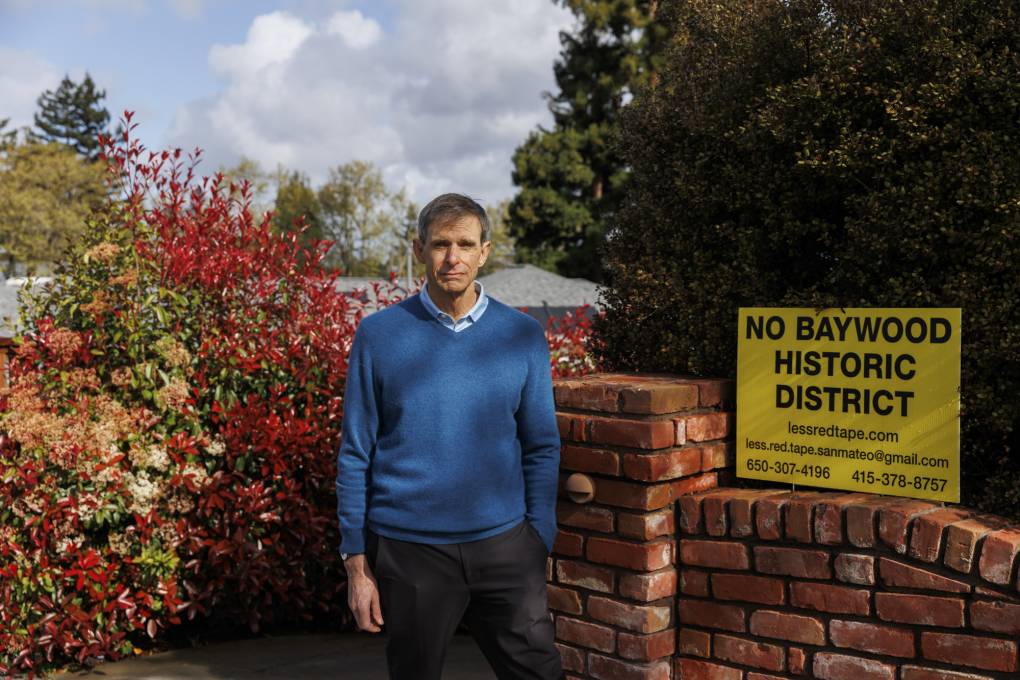
"caption": "Lead organizer of Less Red Tape, Frank Elliott, stands for a portrait outside his home in San Mateo, California, on Thursday, March 28, 2024. Elliott, who has lived in his home in the Baywood neighborhood of San Mateo since 1997, founded Less Red Tape to protest the designation of Baywood as a historic district.",
"credit": "Juliana Yamada/KQED",
"altTag": null,
"description": null,
"imgSizes": {
"medium": {
"file": "https://cdn.kqed.org/wp-content/uploads/sites/10/2024/04/240328-BAYWOODHISTORICDISTRICT-JY-001-KQED-800x533.jpg",
"width": 800,
"height": 533,
"mimeType": "image/jpeg"
},
"large": {
"file": "https://cdn.kqed.org/wp-content/uploads/sites/10/2024/04/240328-BAYWOODHISTORICDISTRICT-JY-001-KQED-1020x680.jpg",
"width": 1020,
"height": 680,
"mimeType": "image/jpeg"
},
"thumbnail": {
"file": "https://cdn.kqed.org/wp-content/uploads/sites/10/2024/04/240328-BAYWOODHISTORICDISTRICT-JY-001-KQED-160x107.jpg",
"width": 160,
"height": 107,
"mimeType": "image/jpeg"
},
"1536x1536": {
"file": "https://cdn.kqed.org/wp-content/uploads/sites/10/2024/04/240328-BAYWOODHISTORICDISTRICT-JY-001-KQED-1536x1024.jpg",
"width": 1536,
"height": 1024,
"mimeType": "image/jpeg"
},
"post-thumbnail": {
"file": "https://cdn.kqed.org/wp-content/uploads/sites/10/2024/04/240328-BAYWOODHISTORICDISTRICT-JY-001-KQED-672x372.jpg",
"width": 672,
"height": 372,
"mimeType": "image/jpeg"
},
"twentyfourteen-full-width": {
"file": "https://cdn.kqed.org/wp-content/uploads/sites/10/2024/04/240328-BAYWOODHISTORICDISTRICT-JY-001-KQED-1038x576.jpg",
"width": 1038,
"height": 576,
"mimeType": "image/jpeg"
},
"full-width": {
"file": "https://cdn.kqed.org/wp-content/uploads/sites/10/2024/04/240328-BAYWOODHISTORICDISTRICT-JY-001-KQED-1920x1280.jpg",
"width": 1920,
"height": 1280,
"mimeType": "image/jpeg"
},
"kqedFullSize": {
"file": "https://cdn.kqed.org/wp-content/uploads/sites/10/2024/04/240328-BAYWOODHISTORICDISTRICT-JY-001-KQED.jpg",
"width": 2000,
"height": 1333
}
},
"isLoading": false,
"fetchFailed": false
},
"news_12027260": {
"type": "attachments",
"id": "news_12027260",
"meta": {
"index": "attachments_1716263798",
"site": "news",
"id": "12027260",
"found": true
},
"title": "250214-Dream Keeper Returns-01-KQED",
"publishDate": 1739574832,
"status": "inherit",
"parent": 0,
"modified": 1739898978,
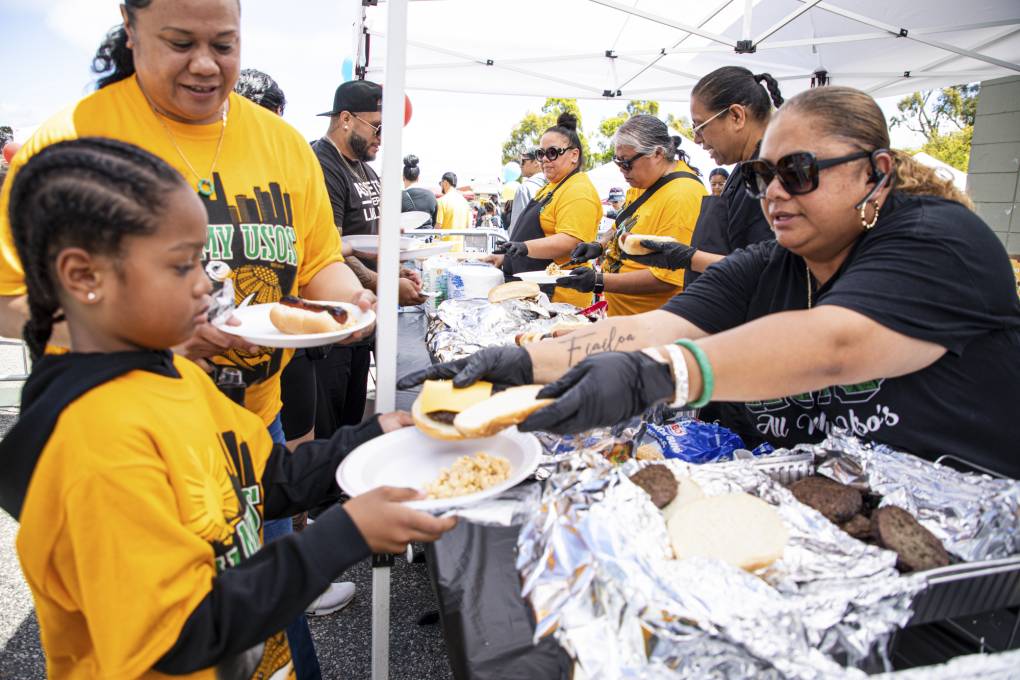
"caption": "Volunteers serve food at All My Usos annual Family Day BBQ at Gilman Park in San Francisco on Aug. 17, 2024. All My Usos was a recipient of Dream Keeper Initiative funds before the program was frozen.",
"credit": "Courtesy of All My Usos",
"altTag": null,
"description": null,
"imgSizes": {
"medium": {
"file": "https://cdn.kqed.org/wp-content/uploads/sites/10/2025/02/250214-Dream-Keeper-Returns-01-KQED-800x533.jpg",
"width": 800,
"height": 533,
"mimeType": "image/jpeg"
},
"large": {
"file": "https://cdn.kqed.org/wp-content/uploads/sites/10/2025/02/250214-Dream-Keeper-Returns-01-KQED-1020x680.jpg",
"width": 1020,
"height": 680,
"mimeType": "image/jpeg"
},
"thumbnail": {
"file": "https://cdn.kqed.org/wp-content/uploads/sites/10/2025/02/250214-Dream-Keeper-Returns-01-KQED-160x107.jpg",
"width": 160,
"height": 107,
"mimeType": "image/jpeg"
},
"1536x1536": {
"file": "https://cdn.kqed.org/wp-content/uploads/sites/10/2025/02/250214-Dream-Keeper-Returns-01-KQED-1536x1024.jpg",
"width": 1536,
"height": 1024,
"mimeType": "image/jpeg"
},
"post-thumbnail": {
"file": "https://cdn.kqed.org/wp-content/uploads/sites/10/2025/02/250214-Dream-Keeper-Returns-01-KQED-672x372.jpg",
"width": 672,
"height": 372,
"mimeType": "image/jpeg"
},
"twentyfourteen-full-width": {
"file": "https://cdn.kqed.org/wp-content/uploads/sites/10/2025/02/250214-Dream-Keeper-Returns-01-KQED-1038x576.jpg",
"width": 1038,
"height": 576,
"mimeType": "image/jpeg"
},
"full-width": {
"file": "https://cdn.kqed.org/wp-content/uploads/sites/10/2025/02/250214-Dream-Keeper-Returns-01-KQED-1920x1280.jpg",
"width": 1920,
"height": 1280,
"mimeType": "image/jpeg"
},
"kqedFullSize": {
"file": "https://cdn.kqed.org/wp-content/uploads/sites/10/2025/02/250214-Dream-Keeper-Returns-01-KQED.jpg",
"width": 2000,
"height": 1333
}
},
"isLoading": false,
"fetchFailed": false
},
"news_12023317": {
"type": "attachments",
"id": "news_12023317",
"meta": {
"index": "attachments_1716263798",
"site": "news",
"id": "12023317",
"found": true
},
"title": "20250115_JapaneseAmericanActivism_GC-47",
"publishDate": 1737490923,
"status": "inherit",
"parent": 0,
"modified": 1737592311,
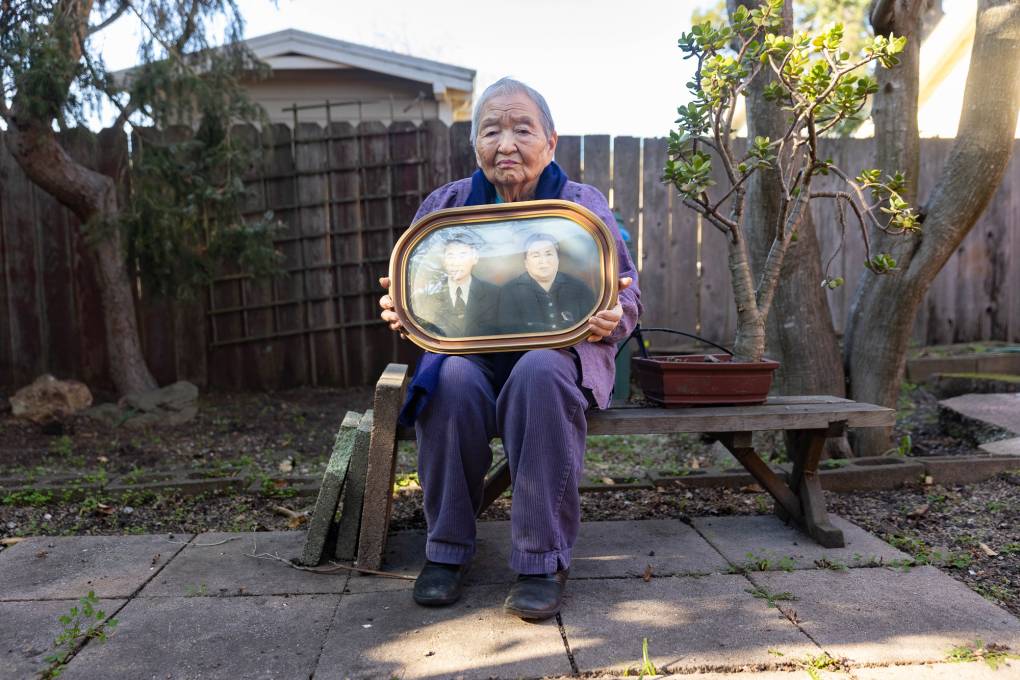
"caption": "Sadako Nimura Kashiwagi, 91, holds a photo of her parents, Juninhi Nimura and Shizuko Nimura, at her home in Berkeley on Jan. 15, 2025. Sadako was incarcerated at Tule Lake concentration camp at the age of 9, where she lived with her family for four years.",
"credit": "Gina Castro/KQED",
"altTag": null,
"description": null,
"imgSizes": {
"medium": {
"file": "https://cdn.kqed.org/wp-content/uploads/sites/10/2025/01/20250115_JapaneseAmericanActivism_GC-47-800x533.jpg",
"width": 800,
"height": 533,
"mimeType": "image/jpeg"
},
"large": {
"file": "https://cdn.kqed.org/wp-content/uploads/sites/10/2025/01/20250115_JapaneseAmericanActivism_GC-47-1020x680.jpg",
"width": 1020,
"height": 680,
"mimeType": "image/jpeg"
},
"thumbnail": {
"file": "https://cdn.kqed.org/wp-content/uploads/sites/10/2025/01/20250115_JapaneseAmericanActivism_GC-47-160x107.jpg",
"width": 160,
"height": 107,
"mimeType": "image/jpeg"
},
"1536x1536": {
"file": "https://cdn.kqed.org/wp-content/uploads/sites/10/2025/01/20250115_JapaneseAmericanActivism_GC-47-1536x1024.jpg",
"width": 1536,
"height": 1024,
"mimeType": "image/jpeg"
},
"post-thumbnail": {
"file": "https://cdn.kqed.org/wp-content/uploads/sites/10/2025/01/20250115_JapaneseAmericanActivism_GC-47-672x372.jpg",
"width": 672,
"height": 372,
"mimeType": "image/jpeg"
},
"twentyfourteen-full-width": {
"file": "https://cdn.kqed.org/wp-content/uploads/sites/10/2025/01/20250115_JapaneseAmericanActivism_GC-47-1038x576.jpg",
"width": 1038,
"height": 576,
"mimeType": "image/jpeg"
},
"full-width": {
"file": "https://cdn.kqed.org/wp-content/uploads/sites/10/2025/01/20250115_JapaneseAmericanActivism_GC-47-1920x1280.jpg",
"width": 1920,
"height": 1280,
"mimeType": "image/jpeg"
},
"kqedFullSize": {
"file": "https://cdn.kqed.org/wp-content/uploads/sites/10/2025/01/20250115_JapaneseAmericanActivism_GC-47.jpg",
"width": 2000,
"height": 1333
}
},
"isLoading": false,
"fetchFailed": false
},
"news_12011971": {
"type": "attachments",
"id": "news_12011971",
"meta": {
"index": "attachments_1716263798",
"site": "news",
"id": "12011971",
"found": true
},
"title": "US-HEALTH-VIRUS-PRISON",
"publishDate": 1730405796,
"status": "inherit",
"parent": 0,
"modified": 1731002698,
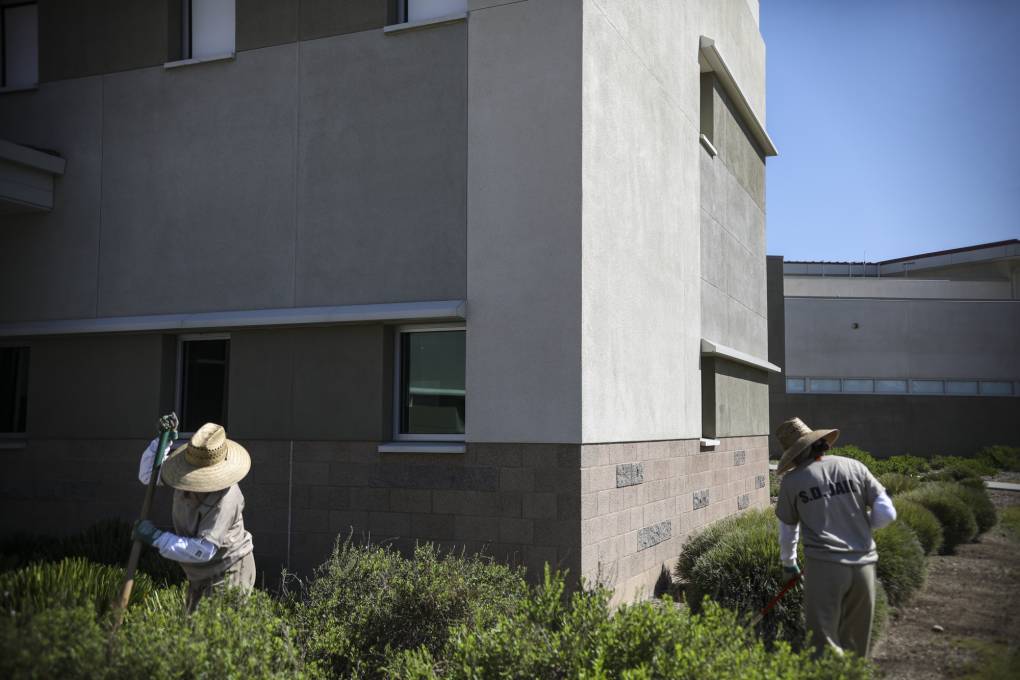
"caption": "Incarcerated women tend to landscaping at Las Colinas Women's Detention Facility in Santee, California, on April 22, 2020.",
"credit": "Sandy Huffaker/AFP via Getty Images",
"altTag": null,
"description": null,
"imgSizes": {
"medium": {
"file": "https://cdn.kqed.org/wp-content/uploads/sites/10/2024/10/GETTYIMAGES-1210676438-KQED-800x533.jpg",
"width": 800,
"height": 533,
"mimeType": "image/jpeg"
},
"large": {
"file": "https://cdn.kqed.org/wp-content/uploads/sites/10/2024/10/GETTYIMAGES-1210676438-KQED-1020x680.jpg",
"width": 1020,
"height": 680,
"mimeType": "image/jpeg"
},
"thumbnail": {
"file": "https://cdn.kqed.org/wp-content/uploads/sites/10/2024/10/GETTYIMAGES-1210676438-KQED-160x107.jpg",
"width": 160,
"height": 107,
"mimeType": "image/jpeg"
},
"1536x1536": {
"file": "https://cdn.kqed.org/wp-content/uploads/sites/10/2024/10/GETTYIMAGES-1210676438-KQED-1536x1024.jpg",
"width": 1536,
"height": 1024,
"mimeType": "image/jpeg"
},
"post-thumbnail": {
"file": "https://cdn.kqed.org/wp-content/uploads/sites/10/2024/10/GETTYIMAGES-1210676438-KQED-672x372.jpg",
"width": 672,
"height": 372,
"mimeType": "image/jpeg"
},
"twentyfourteen-full-width": {
"file": "https://cdn.kqed.org/wp-content/uploads/sites/10/2024/10/GETTYIMAGES-1210676438-KQED-1038x576.jpg",
"width": 1038,
"height": 576,
"mimeType": "image/jpeg"
},
"full-width": {
"file": "https://cdn.kqed.org/wp-content/uploads/sites/10/2024/10/GETTYIMAGES-1210676438-KQED-1920x1280.jpg",
"width": 1920,
"height": 1280,
"mimeType": "image/jpeg"
},
"kqedFullSize": {
"file": "https://cdn.kqed.org/wp-content/uploads/sites/10/2024/10/GETTYIMAGES-1210676438-KQED.jpg",
"width": 2000,
"height": 1333
}
},
"isLoading": false,
"fetchFailed": false
},
"news_11981910": {
"type": "attachments",
"id": "news_11981910",
"meta": {
"index": "attachments_1716263798",
"site": "news",
"id": "11981910",
"found": true
},
"parent": 0,
"imgSizes": {
"twentyfourteen-full-width": {
"file": "https://cdn.kqed.org/wp-content/uploads/sites/10/2024/04/240404-FORCED-STERILIZATION-MOONLIGHT_03-KQED-1038x576.jpg",
"width": 1038,
"mimeType": "image/jpeg",
"height": 576
},
"thumbnail": {
"file": "https://cdn.kqed.org/wp-content/uploads/sites/10/2024/04/240404-FORCED-STERILIZATION-MOONLIGHT_03-KQED-160x107.jpg",
"width": 160,
"mimeType": "image/jpeg",
"height": 107
},
"post-thumbnail": {
"file": "https://cdn.kqed.org/wp-content/uploads/sites/10/2024/04/240404-FORCED-STERILIZATION-MOONLIGHT_03-KQED-672x372.jpg",
"width": 672,
"mimeType": "image/jpeg",
"height": 372
},
"kqedFullSize": {
"file": "https://cdn.kqed.org/wp-content/uploads/sites/10/2024/04/240404-FORCED-STERILIZATION-MOONLIGHT_03-KQED.jpg",
"width": 2000,
"height": 1333
},
"large": {
"file": "https://cdn.kqed.org/wp-content/uploads/sites/10/2024/04/240404-FORCED-STERILIZATION-MOONLIGHT_03-KQED-1020x680.jpg",
"width": 1020,
"mimeType": "image/jpeg",
"height": 680
},
"1536x1536": {
"file": "https://cdn.kqed.org/wp-content/uploads/sites/10/2024/04/240404-FORCED-STERILIZATION-MOONLIGHT_03-KQED-1536x1024.jpg",
"width": 1536,
"mimeType": "image/jpeg",
"height": 1024
},
"full-width": {
"file": "https://cdn.kqed.org/wp-content/uploads/sites/10/2024/04/240404-FORCED-STERILIZATION-MOONLIGHT_03-KQED-1920x1280.jpg",
"width": 1920,
"mimeType": "image/jpeg",
"height": 1280
},
"medium": {
"file": "https://cdn.kqed.org/wp-content/uploads/sites/10/2024/04/240404-FORCED-STERILIZATION-MOONLIGHT_03-KQED-800x533.jpg",
"width": 800,
"mimeType": "image/jpeg",
"height": 533
}
},
"publishDate": 1712251371,
"modified": 1712966037,
"caption": "Moonlight Pulido at her home in Carson on Feb. 10, 2024. While incarcerated in 2005, a doctor performed a hysterectomy on Pulido without her consent. A law required California to involve survivors in memorializing the state's history of forced sterilization. Survivors say that didn’t happen — so they undertook their own project of healing.",
"description": null,
"title": "240404-FORCED STERILIZATION-MOONLIGHT_03-KQED",
"credit": "Cayla Mihalovich for KQED",
"status": "inherit",
"altTag": null,
"isLoading": false,
"fetchFailed": false
},
"news_12008926": {
"type": "attachments",
"id": "news_12008926",
"meta": {
"index": "attachments_1716263798",
"site": "news",
"id": "12008926",
"found": true
},
"title": "Deep Down",
"publishDate": 1728592353,
"status": "inherit",
"parent": 12008909,
"modified": 1728592382,
"caption": "Last month, KQED launched “Deep Down,” an Instagram series that looks at Deep East Oakland with compassion and love. Produced by Olivia Cruz Mayeda, the series is guided by a central question: How could a $100 million investment bring Deep East Oakland's longtime residents relief?",
"credit": null,
"altTag": null,
"description": null,
"imgSizes": {
"medium": {
"file": "https://cdn.kqed.org/wp-content/uploads/sites/10/2024/10/Deep-Down-800x533.jpg",
"width": 800,
"height": 533,
"mimeType": "image/jpeg"
},
"large": {
"file": "https://cdn.kqed.org/wp-content/uploads/sites/10/2024/10/Deep-Down-1020x680.jpg",
"width": 1020,
"height": 680,
"mimeType": "image/jpeg"
},
"thumbnail": {
"file": "https://cdn.kqed.org/wp-content/uploads/sites/10/2024/10/Deep-Down-160x107.jpg",
"width": 160,
"height": 107,
"mimeType": "image/jpeg"
},
"1536x1536": {
"file": "https://cdn.kqed.org/wp-content/uploads/sites/10/2024/10/Deep-Down-1536x1024.jpg",
"width": 1536,
"height": 1024,
"mimeType": "image/jpeg"
},
"post-thumbnail": {
"file": "https://cdn.kqed.org/wp-content/uploads/sites/10/2024/10/Deep-Down-672x372.jpg",
"width": 672,
"height": 372,
"mimeType": "image/jpeg"
},
"twentyfourteen-full-width": {
"file": "https://cdn.kqed.org/wp-content/uploads/sites/10/2024/10/Deep-Down-1038x576.jpg",
"width": 1038,
"height": 576,
"mimeType": "image/jpeg"
},
"full-width": {
"file": "https://cdn.kqed.org/wp-content/uploads/sites/10/2024/10/Deep-Down-1920x1280.jpg",
"width": 1920,
"height": 1280,
"mimeType": "image/jpeg"
},
"kqedFullSize": {
"file": "https://cdn.kqed.org/wp-content/uploads/sites/10/2024/10/Deep-Down.jpg",
"width": 2000,
"height": 1333
}
},
"isLoading": false,
"fetchFailed": false
},
"news_12008249": {
"type": "attachments",
"id": "news_12008249",
"meta": {
"index": "attachments_1716263798",
"site": "news",
"id": "12008249",
"found": true
},
"title": "071724-Geynna-Buffington-ZS-CM-102",
"publishDate": 1728319274,
"status": "inherit",
"parent": 12008246,
"modified": 1728325259,
"caption": "Geynna Buffington in Long Beach on July 17, 2024. ",
"credit": "Zaydee Sanchez/KQED",
"altTag": "A closeup of a Black woman with plants in the foreground.",
"description": null,
"imgSizes": {
"medium": {
"file": "https://cdn.kqed.org/wp-content/uploads/sites/10/2024/10/071724-Geynna-Buffington-ZS-CM-102-800x533.jpg",
"width": 800,
"height": 533,
"mimeType": "image/jpeg"
},
"large": {
"file": "https://cdn.kqed.org/wp-content/uploads/sites/10/2024/10/071724-Geynna-Buffington-ZS-CM-102-1020x680.jpg",
"width": 1020,
"height": 680,
"mimeType": "image/jpeg"
},
"thumbnail": {
"file": "https://cdn.kqed.org/wp-content/uploads/sites/10/2024/10/071724-Geynna-Buffington-ZS-CM-102-160x107.jpg",
"width": 160,
"height": 107,
"mimeType": "image/jpeg"
},
"1536x1536": {
"file": "https://cdn.kqed.org/wp-content/uploads/sites/10/2024/10/071724-Geynna-Buffington-ZS-CM-102-1536x1024.jpg",
"width": 1536,
"height": 1024,
"mimeType": "image/jpeg"
},
"post-thumbnail": {
"file": "https://cdn.kqed.org/wp-content/uploads/sites/10/2024/10/071724-Geynna-Buffington-ZS-CM-102-672x372.jpg",
"width": 672,
"height": 372,
"mimeType": "image/jpeg"
},
"twentyfourteen-full-width": {
"file": "https://cdn.kqed.org/wp-content/uploads/sites/10/2024/10/071724-Geynna-Buffington-ZS-CM-102-1038x576.jpg",
"width": 1038,
"height": 576,
"mimeType": "image/jpeg"
},
"full-width": {
"file": "https://cdn.kqed.org/wp-content/uploads/sites/10/2024/10/071724-Geynna-Buffington-ZS-CM-102-1920x1280.jpg",
"width": 1920,
"height": 1280,
"mimeType": "image/jpeg"
},
"kqedFullSize": {
"file": "https://cdn.kqed.org/wp-content/uploads/sites/10/2024/10/071724-Geynna-Buffington-ZS-CM-102.jpg",
"width": 2000,
"height": 1333
}
},
"isLoading": false,
"fetchFailed": false
}
},
"audioPlayerReducer": {
"postId": "stream_live",
"isPaused": true,
"isPlaying": false,
"pfsActive": false,
"pledgeModalIsOpen": true,
"playerDrawerIsOpen": false,
"liveAudioPlayStartedAt": 0,
"liveAudioPlayContext": ""
},
"authorsReducer": {
"byline_news_12037633": {
"type": "authors",
"id": "byline_news_12037633",
"meta": {
"override": true
},
"slug": "byline_news_12037633",
"name": "Camilla Griffiths",
"isLoading": false
},
"byline_news_12036599": {
"type": "authors",
"id": "byline_news_12036599",
"meta": {
"override": true
},
"slug": "byline_news_12036599",
"name": "Anya Schultz ",
"isLoading": false
},
"byline_news_11982828": {
"type": "authors",
"id": "byline_news_11982828",
"meta": {
"override": true
},
"slug": "byline_news_11982828",
"name": "Cayla Mihalovich",
"isLoading": false
},
"byline_news_12008246": {
"type": "authors",
"id": "byline_news_12008246",
"meta": {
"override": true
},
"slug": "byline_news_12008246",
"name": "\u003ca href=\"https://calmatters.org/author/cayla-mihalovich\">Cayla Mihalovich,\u003c/a> CalMatters",
"isLoading": false
},
"clei": {
"type": "authors",
"id": "8617",
"meta": {
"index": "authors_1716337520",
"id": "8617",
"found": true
},
"name": "Cecilia Lei",
"firstName": "Cecilia",
"lastName": "Lei",
"slug": "clei",
"email": "clei@KQED.org",
"display_author_email": false,
"staff_mastheads": [],
"title": "KQED Contributor",
"bio": "Cecilia Lei is an on-call host and producer for KQED News and Podcasts. Previously, she was the executive producer and host of the San Francisco Chronicle's daily news podcast, 'Fifth and Mission'. Cecilia is a graduate of UC Berkeley’s Graduate School of Journalism and the former president of the Asian American Journalists Association San Francisco Bay Area chapter.",
"avatar": "https://secure.gravatar.com/avatar/40975f1f88fccf628ee537bf6ffc2af8?s=600&d=blank&r=g",
"twitter": null,
"facebook": null,
"instagram": null,
"linkedin": null,
"sites": [
{
"site": "arts",
"roles": [
"contributor"
]
},
{
"site": "news",
"roles": [
"author",
"read_private_posts"
]
},
{
"site": "about",
"roles": [
"editor"
]
}
],
"headData": {
"title": "Cecilia Lei | KQED",
"description": "KQED Contributor",
"ogImgSrc": "https://secure.gravatar.com/avatar/40975f1f88fccf628ee537bf6ffc2af8?s=600&d=blank&r=g",
"twImgSrc": "https://secure.gravatar.com/avatar/40975f1f88fccf628ee537bf6ffc2af8?s=600&d=blank&r=g"
},
"isLoading": false,
"link": "/author/clei"
},
"ecruzguevarra": {
"type": "authors",
"id": "8654",
"meta": {
"index": "authors_1716337520",
"id": "8654",
"found": true
},
"name": "Ericka Cruz Guevarra",
"firstName": "Ericka",
"lastName": "Cruz Guevarra",
"slug": "ecruzguevarra",
"email": "ecruzguevarra@kqed.org",
"display_author_email": true,
"staff_mastheads": [
"news"
],
"title": "Producer, The Bay Podcast",
"bio": "Ericka Cruz Guevarra is host of \u003ca href=\"https://www.kqed.org/podcasts/thebay\">\u003cem>The Bay\u003c/em>\u003c/a> podcast at KQED. Before host, she was the show’s producer. Her work in that capacity includes a three-part reported series on policing in Vallejo, which won a 2020 excellence in journalism award from the Society of Professional Journalists. Ericka has worked as a breaking news reporter at Oregon Public Broadcasting, helped produce the Code Switch podcast, and was KQED’s inaugural Raul Ramirez Diversity Fund intern. She’s also an alumna of NPR’s Next Generation Radio program. Send her an email if you have strong feelings about whether Fairfield and Suisun City are the Bay. Ericka is represented by SAG-AFTRA.",
"avatar": "https://secure.gravatar.com/avatar/accefc1de4bafc7e234b69bcb9b6f6536c130fd84709bc3069ef11a78787e1bb?s=600&d=blank&r=g",
"twitter": "NotoriousECG",
"bluesky": null,
"facebook": null,
"instagram": null,
"linkedin": null,
"sites": [
{
"site": "arts",
"roles": [
"subscriber"
]
},
{
"site": "news",
"roles": [
"editor",
"manage_categories"
]
},
{
"site": "futureofyou",
"roles": [
"subscriber"
]
},
{
"site": "stateofhealth",
"roles": [
"subscriber"
]
},
{
"site": "science",
"roles": [
"editor"
]
},
{
"site": "forum",
"roles": [
"subscriber"
]
}
],
"headData": {
"title": "Ericka Cruz Guevarra | KQED",
"description": "Producer, The Bay Podcast",
"ogImgSrc": "https://secure.gravatar.com/avatar/accefc1de4bafc7e234b69bcb9b6f6536c130fd84709bc3069ef11a78787e1bb?s=600&d=blank&r=g",
"twImgSrc": "https://secure.gravatar.com/avatar/accefc1de4bafc7e234b69bcb9b6f6536c130fd84709bc3069ef11a78787e1bb?s=600&d=blank&r=g"
},
"isLoading": false,
"link": "/author/ecruzguevarra"
},
"amontecillo": {
"type": "authors",
"id": "11649",
"meta": {
"index": "authors_1716337520",
"id": "11649",
"found": true
},
"name": "Alan Montecillo",
"firstName": "Alan",
"lastName": "Montecillo",
"slug": "amontecillo",
"email": "amontecillo@kqed.org",
"display_author_email": false,
"staff_mastheads": [
"news"
],
"title": "KQED Contributor",
"bio": "Alan Montecillo is the senior editor of \u003cem>\u003ca href=\"http://kqed.org/thebay\">The Bay\u003c/a>, \u003c/em> KQED's local news podcast. Before moving to the Bay Area, he worked as a senior talk show producer for WILL in Champaign-Urbana, Illinois and at Oregon Public Broadcasting in Portland, Oregon. He has won journalism awards from the Society of Professional Journalists Northern California, the Public Media Journalists Association, The Signal Awards, and has also received a regional Edward R. Murrow award. Alan is a Filipino American from Hong Kong and a graduate of Reed College.",
"avatar": "https://secure.gravatar.com/avatar/268f53a2066899ea9efdd8a5900218b17c822d9862cbc9326cccec53ef41d349?s=600&d=blank&r=g",
"twitter": "alanmontecillo",
"bluesky": null,
"facebook": null,
"instagram": null,
"linkedin": null,
"sites": [
{
"site": "",
"roles": [
"editor"
]
},
{
"site": "news",
"roles": [
"editor",
"manage_categories"
]
}
],
"headData": {
"title": "Alan Montecillo | KQED",
"description": "KQED Contributor",
"ogImgSrc": "https://secure.gravatar.com/avatar/268f53a2066899ea9efdd8a5900218b17c822d9862cbc9326cccec53ef41d349?s=600&d=blank&r=g",
"twImgSrc": "https://secure.gravatar.com/avatar/268f53a2066899ea9efdd8a5900218b17c822d9862cbc9326cccec53ef41d349?s=600&d=blank&r=g"
},
"isLoading": false,
"link": "/author/amontecillo"
},
"ccabreralomeli": {
"type": "authors",
"id": "11708",
"meta": {
"index": "authors_1716337520",
"id": "11708",
"found": true
},
"name": "Carlos Cabrera-Lomelí",
"firstName": "Carlos",
"lastName": "Cabrera-Lomelí",
"slug": "ccabreralomeli",
"email": "ccabreralomeli@KQED.org",
"display_author_email": true,
"staff_mastheads": [
"news"
],
"title": "Community Reporter",
"bio": "Carlos Cabrera-Lomelí is a community reporter with KQED's digital engagement team. He also reports and co-produces for KQED's bilingual news hub KQED en Español. He grew up in San Francisco's Mission District and has previously worked with Univision, 48 Hills and REFORMA in Mexico City.",
"avatar": "https://secure.gravatar.com/avatar/c309be9665e484f887b818c89e273ecc673004f426f36b24d00a4d813a2e0518?s=600&d=blank&r=g",
"twitter": "@LomeliCabrera",
"bluesky": null,
"facebook": null,
"instagram": null,
"linkedin": null,
"sites": [
{
"site": "arts",
"roles": [
"editor"
]
},
{
"site": "news",
"roles": [
"editor"
]
},
{
"site": "about",
"roles": [
"editor"
]
},
{
"site": "science",
"roles": [
"editor"
]
},
{
"site": "perspectives",
"roles": [
"editor"
]
},
{
"site": "elections",
"roles": [
"editor"
]
},
{
"site": "liveblog",
"roles": [
"contributor"
]
}
],
"headData": {
"title": "Carlos Cabrera-Lomelí | KQED",
"description": "Community Reporter",
"ogImgSrc": "https://secure.gravatar.com/avatar/c309be9665e484f887b818c89e273ecc673004f426f36b24d00a4d813a2e0518?s=600&d=blank&r=g",
"twImgSrc": "https://secure.gravatar.com/avatar/c309be9665e484f887b818c89e273ecc673004f426f36b24d00a4d813a2e0518?s=600&d=blank&r=g"
},
"isLoading": false,
"link": "/author/ccabreralomeli"
},
"jessicakariisa": {
"type": "authors",
"id": "11831",
"meta": {
"index": "authors_1716337520",
"id": "11831",
"found": true
},
"name": "Jessica Kariisa",
"firstName": "Jessica",
"lastName": "Kariisa",
"slug": "jessicakariisa",
"email": "jkariisa@kqed.org",
"display_author_email": false,
"staff_mastheads": [],
"title": "Producer, The Bay",
"bio": "Jessica Kariisa is the producer of The Bay. She first joined KQED as an intern for The California Report Magazine, after which she became an on-call producer. She reported a Bay Curious episode on the use of rap lyrics in criminal trials which won a Society of Professional Journalists award in 2023 for Excellence in Features Journalism and the 2023 Signal Award for Best Conversation Starter. She’s worked on podcasts for Snap Judgment and American Public Media. Before embarking on her audio career, she was a music journalist.\r\n\r\nJessica Kariisa is represented by SAG-AFTRA.",
"avatar": "https://secure.gravatar.com/avatar/522e97b28ac0b3d411621c0fde8f3419c7b71ea2c5c262c57c4bb600963f328c?s=600&d=blank&r=g",
"twitter": null,
"bluesky": null,
"facebook": null,
"instagram": null,
"linkedin": null,
"sites": [
{
"site": "arts",
"roles": [
"author"
]
},
{
"site": "news",
"roles": [
"editor",
"manage_categories"
]
}
],
"headData": {
"title": "Jessica Kariisa | KQED",
"description": "Producer, The Bay",
"ogImgSrc": "https://secure.gravatar.com/avatar/522e97b28ac0b3d411621c0fde8f3419c7b71ea2c5c262c57c4bb600963f328c?s=600&d=blank&r=g",
"twImgSrc": "https://secure.gravatar.com/avatar/522e97b28ac0b3d411621c0fde8f3419c7b71ea2c5c262c57c4bb600963f328c?s=600&d=blank&r=g"
},
"isLoading": false,
"link": "/author/jessicakariisa"
},
"nkhan": {
"type": "authors",
"id": "11867",
"meta": {
"index": "authors_1716337520",
"id": "11867",
"found": true
},
"name": "Nisa Khan",
"firstName": "Nisa",
"lastName": "Khan",
"slug": "nkhan",
"email": "nkhan@kqed.org",
"display_author_email": false,
"staff_mastheads": [],
"title": "KQED Contributor",
"bio": "Nisa Khan is a reporter for KQED's Audience News Desk. She was formerly a data reporter at Michigan Radio. She earned a Bachelor of Science in Information from the University of Michigan and a Master of Arts in Communication from Stanford University.",
"avatar": "https://secure.gravatar.com/avatar/8720459eef081ff64582b3506b124d58523e80e120704a0cbd9892533c914991?s=600&d=blank&r=g",
"twitter": "mnisakhan",
"bluesky": null,
"facebook": null,
"instagram": null,
"linkedin": null,
"sites": [
{
"site": "arts",
"roles": [
"editor"
]
},
{
"site": "news",
"roles": [
"editor"
]
},
{
"site": "science",
"roles": [
"editor",
"author"
]
},
{
"site": "forum",
"roles": [
"editor"
]
},
{
"site": "liveblog",
"roles": [
"contributor"
]
}
],
"headData": {
"title": "Nisa Khan | KQED",
"description": "KQED Contributor",
"ogImgSrc": "https://secure.gravatar.com/avatar/8720459eef081ff64582b3506b124d58523e80e120704a0cbd9892533c914991?s=600&d=blank&r=g",
"twImgSrc": "https://secure.gravatar.com/avatar/8720459eef081ff64582b3506b124d58523e80e120704a0cbd9892533c914991?s=600&d=blank&r=g"
},
"isLoading": false,
"link": "/author/nkhan"
},
"kdebenedetti": {
"type": "authors",
"id": "11913",
"meta": {
"index": "authors_1716337520",
"id": "11913",
"found": true
},
"name": "Katie DeBenedetti",
"firstName": "Katie",
"lastName": "DeBenedetti",
"slug": "kdebenedetti",
"email": "kdebenedetti@kqed.org",
"display_author_email": false,
"staff_mastheads": [
"news",
"science"
],
"title": "KQED Contributor",
"bio": "Katie DeBenedetti is a digital reporter covering daily news for the Express Desk. Prior to joining KQED as a culture reporting intern in January 2024, she covered education and city government for the Napa Valley Register.",
"avatar": "https://secure.gravatar.com/avatar/6e31073cb8f7e4214ab03f42771d0f45?s=600&d=blank&r=g",
"twitter": null,
"facebook": null,
"instagram": null,
"linkedin": null,
"sites": [
{
"site": "news",
"roles": [
"author"
]
},
{
"site": "science",
"roles": [
"author"
]
},
{
"site": "liveblog",
"roles": [
"author"
]
}
],
"headData": {
"title": "Katie DeBenedetti | KQED",
"description": "KQED Contributor",
"ogImgSrc": "https://secure.gravatar.com/avatar/6e31073cb8f7e4214ab03f42771d0f45?s=600&d=blank&r=g",
"twImgSrc": "https://secure.gravatar.com/avatar/6e31073cb8f7e4214ab03f42771d0f45?s=600&d=blank&r=g"
},
"isLoading": false,
"link": "/author/kdebenedetti"
},
"slim": {
"type": "authors",
"id": "11920",
"meta": {
"index": "authors_1716337520",
"id": "11920",
"found": true
},
"name": "Samantha Lim",
"firstName": "Samantha",
"lastName": "Lim",
"slug": "slim",
"email": "slim@KQED.org",
"display_author_email": false,
"staff_mastheads": [],
"title": "KQED Contributor",
"bio": null,
"avatar": "https://secure.gravatar.com/avatar/82e592e6c15fe1a04d385e8ad0fb0b4e?s=600&d=blank&r=g",
"twitter": null,
"facebook": null,
"instagram": null,
"linkedin": null,
"sites": [
{
"site": "news",
"roles": []
}
],
"headData": {
"title": "Samantha Lim | KQED",
"description": "KQED Contributor",
"ogImgSrc": "https://secure.gravatar.com/avatar/82e592e6c15fe1a04d385e8ad0fb0b4e?s=600&d=blank&r=g",
"twImgSrc": "https://secure.gravatar.com/avatar/82e592e6c15fe1a04d385e8ad0fb0b4e?s=600&d=blank&r=g"
},
"isLoading": false,
"link": "/author/slim"
},
"emanoukian": {
"type": "authors",
"id": "11925",
"meta": {
"index": "authors_1716337520",
"id": "11925",
"found": true
},
"name": "Elize Manoukian",
"firstName": "Elize",
"lastName": "Manoukian",
"slug": "emanoukian",
"email": "emanoukian@KQED.org",
"display_author_email": false,
"staff_mastheads": [
"news"
],
"title": "Digital News Editor",
"bio": "Elize Manoukian is an award-winning audio producer and Senior Editor on the Express Desk, KQED's digital news platform. Her work has appeared on KPFA, Interlochen Public Radio, Oregon Public Broadcast, the New York Daily News, LA Times and the San Diego Union-Tribune.",
"avatar": "https://secure.gravatar.com/avatar/4525f1a8e46ccb30933b32653d9772064cfefe3fa655eb45b3b3a80341f6bdad?s=600&d=blank&r=g",
"twitter": null,
"bluesky": null,
"facebook": null,
"instagram": null,
"linkedin": null,
"sites": [
{
"site": "arts",
"roles": [
"editor"
]
},
{
"site": "news",
"roles": [
"editor"
]
},
{
"site": "science",
"roles": [
"editor"
]
}
],
"headData": {
"title": "Elize Manoukian | KQED",
"description": "Digital News Editor",
"ogImgSrc": "https://secure.gravatar.com/avatar/4525f1a8e46ccb30933b32653d9772064cfefe3fa655eb45b3b3a80341f6bdad?s=600&d=blank&r=g",
"twImgSrc": "https://secure.gravatar.com/avatar/4525f1a8e46ccb30933b32653d9772064cfefe3fa655eb45b3b3a80341f6bdad?s=600&d=blank&r=g"
},
"isLoading": false,
"link": "/author/emanoukian"
},
"gglueck": {
"type": "authors",
"id": "11946",
"meta": {
"index": "authors_1716337520",
"id": "11946",
"found": true
},
"name": "Gabriela Glueck",
"firstName": "Gabriela",
"lastName": "Glueck",
"slug": "gglueck",
"email": "gglueck@kqed.org",
"display_author_email": false,
"staff_mastheads": [
"news"
],
"title": "KQED Contributor",
"bio": null,
"avatar": "https://secure.gravatar.com/avatar/ec62b7e3f7727ce1070cc7046dde80271d1e63cf2178d6194f68bb8d1440f841?s=600&d=blank&r=g",
"twitter": null,
"bluesky": null,
"facebook": null,
"instagram": null,
"linkedin": null,
"sites": [
{
"site": "news",
"roles": [
"editor"
]
}
],
"headData": {
"title": "Gabriela Glueck | KQED",
"description": "KQED Contributor",
"ogImgSrc": "https://secure.gravatar.com/avatar/ec62b7e3f7727ce1070cc7046dde80271d1e63cf2178d6194f68bb8d1440f841?s=600&d=blank&r=g",
"twImgSrc": "https://secure.gravatar.com/avatar/ec62b7e3f7727ce1070cc7046dde80271d1e63cf2178d6194f68bb8d1440f841?s=600&d=blank&r=g"
},
"isLoading": false,
"link": "/author/gglueck"
}
},
"pagesReducer": {
"news_tag_california-reparations": {
"type": "terms",
"id": "news_30652",
"meta": {
"index": "terms_1716263798",
"site": "news",
"id": "30652",
"score": 9.556763
},
"featImg": null,
"name": "california-reparations",
"description": null,
"taxonomy": "tag",
"headData": {
"twImgId": null,
"twTitle": null,
"ogTitle": null,
"ogImgId": null,
"twDescription": null,
"description": null,
"title": "california-reparations Archives | KQED News",
"ogDescription": null
},
"ttid": 30669,
"slug": "california-reparations",
"isLoading": false,
"title": "california-reparations",
"pageMeta": {
"site": "news",
"WpPageTemplate": "page-topic-editorial",
"currentPage": 2
},
"blocks": [
{
"blockName": "kqed/post-list",
"attrs": {
"layout": "cardArticle2",
"query": "posts/news?tag=california-reparations",
"seeMore": false,
"paginated": true,
"page": 2
}
},
{
"blockName": "kqed/ad"
}
]
}
},
"pfsSessionReducer": {},
"postsReducer": {
"stream_live": {
"type": "live",
"id": "stream_live",
"audioUrl": "https://streams.kqed.org/kqedradio",
"title": "Live Stream",
"excerpt": "Live Stream information currently unavailable.",
"link": "/radio",
"featImg": "",
"label": {
"name": "KQED Live",
"link": "/"
}
},
"stream_kqedNewscast": {
"type": "posts",
"id": "stream_kqedNewscast",
"audioUrl": "https://www.kqed.org/.stream/anon/radio/RDnews/newscast.mp3?_=1",
"title": "KQED Newscast",
"featImg": "",
"label": {
"name": "88.5 FM",
"link": "/"
}
},
"news_12040058": {
"type": "posts",
"id": "news_12040058",
"meta": {
"index": "posts_1716263798",
"site": "news",
"id": "12040058",
"score": null,
"sort": [
1747303236000
]
},
"guestAuthors": [],
"slug": "how-a-ford-factory-in-milpitas-changed-the-face-of-a-town",
"title": "How a Ford Factory in Milpitas Changed the Face of a Town",
"publishDate": 1747303236,
"format": "standard",
"headTitle": "How a Ford Factory in Milpitas Changed the Face of a Town | KQED",
"labelTerm": {
"term": 33523,
"site": "news"
},
"content": "\u003cp>\u003cem>\u003ca href=\"#A\">View the full episode transcript.\u003c/a>\u003c/em>\u003c/p>\n\u003cp>For Karl Cortese, the Great Mall of Milpitas is much more than just a mall. He’s come here often over the years, to go shopping with his wife or spend time at the Dave and Buster’s with his grandkids. But each time he visits, he can’t help but remember the place as it used to be.\u003c/p>\n\u003cp>[baycuriousbug]\u003c/p>\n\u003cp>Back in Karl’s day, the building was home to a massive Ford factory. Officially known as the San José Assembly Plant, the factory opened its doors in 1955. Karl started working there in 1968 and spent 15 years on the assembly line. For him, the mall’s shipping center offers the best window into the building’s industrial past. “There was that old green color and white letters and … the floor was all concrete,” Karl said. If you peek inside these days, not much has changed.\u003c/p>\n\u003cfigure id=\"attachment_12040150\" class=\"wp-caption aligncenter\" style=\"max-width: 1000px\">\u003cimg loading=\"lazy\" decoding=\"async\" class=\"size-full wp-image-12040150\" src=\"https://cdn.kqed.org/wp-content/uploads/sites/10/2025/05/FordInterior-copy.jpg\" alt=\"\" width=\"1000\" height=\"750\" srcset=\"https://cdn.kqed.org/wp-content/uploads/sites/10/2025/05/FordInterior-copy.jpg 1000w, https://cdn.kqed.org/wp-content/uploads/sites/10/2025/05/FordInterior-copy-800x600.jpg 800w, https://cdn.kqed.org/wp-content/uploads/sites/10/2025/05/FordInterior-copy-160x120.jpg 160w\" sizes=\"auto, (max-width: 1000px) 100vw, 1000px\">\u003cfigcaption class=\"wp-caption-text\">The green walls at Ford’s San José Assembly Plant are still part of the Great Mall today. \u003ccite>(The Milpitas Beat, courtesy of the Sabin family)\u003c/cite>\u003c/figcaption>\u003c/figure>\n\u003cp>Nowadays, the only other way a visitor might know this building used to manufacture Ford cars is a small — and easy-to-overlook — display case of Ford-era memorabilia. For the most part, mall goers seem unaware of the factory’s history and its importance to the surrounding area.\u003c/p>\n\u003cp>The Ford plant put Milpitas on the map, forever changing what had been a sleepy agricultural town into a thriving city. The factory’s opening also sparked historic social change: the creation of one of the first integrated neighborhoods in America.\u003c/p>\n\u003cfigure id=\"attachment_12039976\" class=\"wp-caption aligncenter\" style=\"max-width: 2000px\">\u003cimg loading=\"lazy\" decoding=\"async\" class=\"size-full wp-image-12039976\" src=\"https://cdn.kqed.org/wp-content/uploads/sites/10/2025/05/250429-GREATMALLMILPITAS-02-BL-KQED.jpg\" alt=\"\" width=\"2000\" height=\"1333\" srcset=\"https://cdn.kqed.org/wp-content/uploads/sites/10/2025/05/250429-GREATMALLMILPITAS-02-BL-KQED.jpg 2000w, https://cdn.kqed.org/wp-content/uploads/sites/10/2025/05/250429-GREATMALLMILPITAS-02-BL-KQED-800x533.jpg 800w, https://cdn.kqed.org/wp-content/uploads/sites/10/2025/05/250429-GREATMALLMILPITAS-02-BL-KQED-1020x680.jpg 1020w, https://cdn.kqed.org/wp-content/uploads/sites/10/2025/05/250429-GREATMALLMILPITAS-02-BL-KQED-160x107.jpg 160w, https://cdn.kqed.org/wp-content/uploads/sites/10/2025/05/250429-GREATMALLMILPITAS-02-BL-KQED-1536x1024.jpg 1536w, https://cdn.kqed.org/wp-content/uploads/sites/10/2025/05/250429-GREATMALLMILPITAS-02-BL-KQED-1920x1280.jpg 1920w\" sizes=\"auto, (max-width: 2000px) 100vw, 2000px\">\u003cfigcaption class=\"wp-caption-text\">Karl Cortese, a former employee at the Ford Motor Company’s San José Assembly Plant, stands outside the Great Mall in Milpitas on April 29, 2025. \u003ccite>(Beth LaBerge/KQED)\u003c/cite>\u003c/figcaption>\u003c/figure>\n\u003ch2>Moving to Milpitas\u003c/h2>\n\u003cp>Before Ford opened its Milpitas plant, \u003ca href=\"https://www.nps.gov/places/ford-motor-company-assembly-plant.htm\">the automaker had already been operating in Richmond for decades\u003c/a>. During World War II, the so-called “Richmond Tank Depot” helped produce jeeps, tanks, and other military vehicles. After the war ended, the American economy began to boom and demand for American cars increased. The outdated Richmond factory struggled to meet demand. Ford needed to expand.\u003c/p>\n\u003cp>In 1950s California, Milpitas was a great option. The agricultural town offered expansive acreage at an affordable price. According to historian Herbert Ruffin II, Milpitas “was just a place that you drive through [and] you see nothing but cornfields.” Ruffin spent part of his childhood in Milpitas, a town so agriculturally rooted its name literally means “little cornfield.”\u003c/p>\n\u003cp>[ad fullwidth]\u003c/p>\n\u003cp>After staving off annexation from San José, Milpitas was officially incorporated in 1954. According to Herbert, “San José wanted Milpitas real bad, primarily because they wanted … the tax money that came from that [Ford] plant.”\u003c/p>\n\u003cp>When the Ford factory opened in 1955, just a year later, it called Milpitas home.\u003c/p>\n\u003ch2>Working at the San José Assembly Plant\u003c/h2>\n\u003cp>David McFeely grew up in Milpitas, with the Ford factory in the background. “On a clear summer night, when sound really carries, you could hear the switch engines moving all the freight cars in and out of the Ford plant,” McFeely said.\u003c/p>\n\u003cp>For a high school graduate on the job hunt, Ford was a great option. It offered some of the highest pay in the Santa Clara Valley. McFeely’s plan was to stay short-term and save up money to go to college. So, he joined the factory’s part-time replacement program. When he finally got the chance to peek behind the curtain, he was in awe.\u003c/p>\n\u003cp>“I mean for a technical mind, it was like being a kid in a candy store,” he said.\u003c/p>\n\u003cfigure id=\"attachment_12039982\" class=\"wp-caption aligncenter\" style=\"max-width: 2000px\">\u003cimg loading=\"lazy\" decoding=\"async\" class=\"size-full wp-image-12039982\" src=\"https://cdn.kqed.org/wp-content/uploads/sites/10/2025/05/250513-GREAT-MALL-OF-MILPITAS-ARCHIVAL-3-KQED.jpg\" alt=\"\" width=\"2000\" height=\"1545\" srcset=\"https://cdn.kqed.org/wp-content/uploads/sites/10/2025/05/250513-GREAT-MALL-OF-MILPITAS-ARCHIVAL-3-KQED.jpg 2000w, https://cdn.kqed.org/wp-content/uploads/sites/10/2025/05/250513-GREAT-MALL-OF-MILPITAS-ARCHIVAL-3-KQED-800x618.jpg 800w, https://cdn.kqed.org/wp-content/uploads/sites/10/2025/05/250513-GREAT-MALL-OF-MILPITAS-ARCHIVAL-3-KQED-1020x788.jpg 1020w, https://cdn.kqed.org/wp-content/uploads/sites/10/2025/05/250513-GREAT-MALL-OF-MILPITAS-ARCHIVAL-3-KQED-160x124.jpg 160w, https://cdn.kqed.org/wp-content/uploads/sites/10/2025/05/250513-GREAT-MALL-OF-MILPITAS-ARCHIVAL-3-KQED-1536x1187.jpg 1536w, https://cdn.kqed.org/wp-content/uploads/sites/10/2025/05/250513-GREAT-MALL-OF-MILPITAS-ARCHIVAL-3-KQED-1920x1483.jpg 1920w\" sizes=\"auto, (max-width: 2000px) 100vw, 2000px\">\u003cfigcaption class=\"wp-caption-text\">Vehicle frames on the assembly line at the San José Assembly Plant, 1974. \u003ccite>(Courtesy of the Ford Motor Company)\u003c/cite>\u003c/figcaption>\u003c/figure>\n\u003cp>The Milpitas operation was responsible for making some iconic Ford models — the Mustang, F-series pickups, Pintos, and Falcons. The 1.4 million square-foot factory served as Ford’s West Coast production outpost. At its peak, the plant employed nearly 6,000 workers and operated at a rate of 55 cars and 22 trucks per hour.\u003c/p>\n\u003cp>“God knows how they were able to do this,” McFeely said. “But the logistical coordination was fascinating.”\u003c/p>\n\u003cp>The expansive factory was a network of assembly lines. There was the paint department, the trim department, the chassis department, the repair hole, just to name a few. Workers were assigned a station and task to repeat ad nauseam. Former Ford worker John Wilcoxson said that “[the work] could get boring at times, but … you kind of had to make your own fun.” He remembered causing a stir when he smuggled headphones into the factory to provide a soundtrack to the monotonous, repetitive work.\u003c/p>\n\u003cp>“It was just sort of some nice background noise, instead of the constant clash of metal and things going on around me,” Wilcoxson said.\u003c/p>\n\u003cfigure id=\"attachment_12039981\" class=\"wp-caption aligncenter\" style=\"max-width: 2000px\">\u003cimg loading=\"lazy\" decoding=\"async\" class=\"size-full wp-image-12039981\" src=\"https://cdn.kqed.org/wp-content/uploads/sites/10/2025/05/250513-GREAT-MALL-OF-MILPITAS-ARCHIVAL-2-KQED.jpg\" alt=\"\" width=\"2000\" height=\"1545\" srcset=\"https://cdn.kqed.org/wp-content/uploads/sites/10/2025/05/250513-GREAT-MALL-OF-MILPITAS-ARCHIVAL-2-KQED.jpg 2000w, https://cdn.kqed.org/wp-content/uploads/sites/10/2025/05/250513-GREAT-MALL-OF-MILPITAS-ARCHIVAL-2-KQED-800x618.jpg 800w, https://cdn.kqed.org/wp-content/uploads/sites/10/2025/05/250513-GREAT-MALL-OF-MILPITAS-ARCHIVAL-2-KQED-1020x788.jpg 1020w, https://cdn.kqed.org/wp-content/uploads/sites/10/2025/05/250513-GREAT-MALL-OF-MILPITAS-ARCHIVAL-2-KQED-160x124.jpg 160w, https://cdn.kqed.org/wp-content/uploads/sites/10/2025/05/250513-GREAT-MALL-OF-MILPITAS-ARCHIVAL-2-KQED-1536x1187.jpg 1536w, https://cdn.kqed.org/wp-content/uploads/sites/10/2025/05/250513-GREAT-MALL-OF-MILPITAS-ARCHIVAL-2-KQED-1920x1483.jpg 1920w\" sizes=\"auto, (max-width: 2000px) 100vw, 2000px\">\u003cfigcaption class=\"wp-caption-text\">An inside look at the San José Assembly Plant, 1974. \u003ccite>(Courtesy of the Ford Motor Company)\u003c/cite>\u003c/figcaption>\u003c/figure>\n\u003cp>Former workers remember a strong community around the plant. There was a company softball team where different departments competed against one another and during the holiday season, workers barbecued on the blacksmith’s forge.\u003c/p>\n\u003cp>Many workers lived in a nearby neighborhood called Sunnyhills, which Ford’s local union built to accommodate an influx of workers to Milpitas. There was even a Ford Union Hall in the development. But the most remarkable thing about the neighborhood was its diversity. In 1956, when it opened, Sunnyhills was one of the first planned integrated neighborhoods in America.\u003c/p>\n\u003ch2>The Story of Sunnyhills\u003c/h2>\n\u003cp>https://www.youtube.com/watch?v=S5QKBKrNKGo\u003c/p>\n\u003cp>When Ford shut down its Richmond plant to relocate to Milpitas, many workers opted to continue at the new location. But Milpitas lacked housing, particularly for African American workers who were barred from buying or renting homes in the surrounding towns. Historian Herbert Ruffin II says many of these workers first tried commuting from Richmond by car.\u003c/p>\n\u003cp>“There [was] no BART, there [was] no Caltrain, there [was] none of that,” he said.\u003c/p>\n\u003cp>But it was a long commute, over 40 miles. Ford’s union leaders were determined to find a solution to this housing problem.\u003c/p>\n\u003cp>Leading the charge was\u003ca href=\"https://www.blackpast.org/african-american-history/ben-gross-1921/\"> an African American worker by the name of Ben Gross\u003c/a>. Gross was born and raised in Arkansas, lived under Jim Crow laws, and picked cotton during the Great Depression. After leaving the army, he joined Ford and quickly became an active union member. In 1950, he was the first African American elected to the Local 560s bargaining committee.\u003c/p>\n\u003cp>“Gross believed that he worked on the same lines as everybody, African Americans, and that they should be afforded the same type of treatments,” Ruffin said.\u003c/p>\n\u003cp>In 1954, Gross was appointed to the union’s special housing subcommittee tasked with finding a plot of land to build an integrated housing development. The project \u003ca href=\"https://www.habitatebsv.org/blog/milpitas-fair-housing-history\">met its fair share of setbacks\u003c/a> along the way.\u003c/p>\n\u003cp>“At every point in time as this is being developed … [there were always] these barriers that would be thrown out there,” Ruffin said. “You can’t build this here because of sewage. You can’t do this because of this. You can’t do this because of that.”\u003c/p>\n\u003cp>Despite obstacles, Gross and local union members were able to find some old ranch land for a housing development. With funding and additional support from a handful of Quaker-affiliated organizations, they started to build. When it was completed, it was one of the first integrated neighborhoods in the country, and it helped diversify Milpitas’ population, which had previously been majority white.\u003c/p>\n\u003cp>“When it did open … it was a big deal … it was plastered all over newspapers,” Ruffin said.\u003c/p>\n\u003cp>Gross was eventually elected mayor of Milpitas. He was one of the first African Americans to hold that office in the state of California. Reflecting on his legacy, Gross was quoted in \u003cem>The Peninsula Times Tribune\u003c/em>:\u003c/p>\n\u003cp>“A citizens’ group said they wanted to change the city’s name … I told them we should change its image instead. We sat down and developed a master plan that brought Milpitas from a small farm community to the thriving city it is today. It’s a city on the move.”\u003c/p>\n\u003ch2>The Ford Factory Closes\u003c/h2>\n\u003cp>Ford changed the face of Milpitas, but the golden age of American cars wouldn’t last forever.\u003c/p>\n\u003cfigure id=\"attachment_12040154\" class=\"wp-caption aligncenter\" style=\"max-width: 1000px\">\u003cimg loading=\"lazy\" decoding=\"async\" class=\"size-full wp-image-12040154\" src=\"https://cdn.kqed.org/wp-content/uploads/sites/10/2025/05/LastFordCar-copy.jpg\" alt=\"\" width=\"1000\" height=\"750\" srcset=\"https://cdn.kqed.org/wp-content/uploads/sites/10/2025/05/LastFordCar-copy.jpg 1000w, https://cdn.kqed.org/wp-content/uploads/sites/10/2025/05/LastFordCar-copy-800x600.jpg 800w, https://cdn.kqed.org/wp-content/uploads/sites/10/2025/05/LastFordCar-copy-160x120.jpg 160w\" sizes=\"auto, (max-width: 1000px) 100vw, 1000px\">\u003cfigcaption class=\"wp-caption-text\">One of the last Ford cars built at the San José Assembly Plant before the factory closed in 1983. \u003ccite>(The Milpitas Beat, courtesy of the Sabin family)\u003c/cite>\u003c/figcaption>\u003c/figure>\n\u003cp>“It was the late [19]70s, and all the different auto manufacturers, they were producing more cars than they were selling,” Wilcoxson remembered. The \u003ca href=\"https://history.state.gov/milestones/1969-1976/oil-embargo\">1973 oil crisis spelled disaster\u003c/a> for big American cars. “Everything kind of shut back the amount of cars people were buying.” And Japanese automakers started gaining market share with their smaller, more fuel-efficient cars.\u003c/p>\n\u003cp>Ford eventually closed the Milpitas operation in 1983.\u003c/p>\n\u003cp>“They had a manager’s meeting that the plant was going to be closing, that they were completely shutting it down and moving production to the Midwest,” Wilcoxson recalled.\u003c/p>\n\u003cp>Those who stayed until the end helped to pack up the plant, stripping it of anything valuable.\u003c/p>\n\u003cp>“They were literally having a yard sale in the parking lot of tool benches, air guns,” Wilcoxson said.\u003c/p>\n\u003ch2>Becoming the Great Mall of Milpitas\u003c/h2>\n\u003cp>After the factory closed in 1983, Milpitas’ economy took a hit. Thousands of high-paying jobs were gone. Soon enough, however, the 1980s and ’90s Silicon Valley boom brought new opportunities to the area, but not in manufacturing. The factory itself sat vacant for nearly ten years before it would be transformed into the mall it is today.\u003c/p>\n\u003cp>In 1994, the Great Mall of Milpitas celebrated its grand opening.\u003c/p>\n\u003cfigure id=\"attachment_12040155\" class=\"wp-caption aligncenter\" style=\"max-width: 1600px\">\u003cimg loading=\"lazy\" decoding=\"async\" class=\"size-full wp-image-12040155\" src=\"https://cdn.kqed.org/wp-content/uploads/sites/10/2025/05/250429-GreatMallofMilpitas-24-BL-copy.jpg\" alt=\"\" width=\"1600\" height=\"1067\" srcset=\"https://cdn.kqed.org/wp-content/uploads/sites/10/2025/05/250429-GreatMallofMilpitas-24-BL-copy.jpg 1600w, https://cdn.kqed.org/wp-content/uploads/sites/10/2025/05/250429-GreatMallofMilpitas-24-BL-copy-800x534.jpg 800w, https://cdn.kqed.org/wp-content/uploads/sites/10/2025/05/250429-GreatMallofMilpitas-24-BL-copy-1020x680.jpg 1020w, https://cdn.kqed.org/wp-content/uploads/sites/10/2025/05/250429-GreatMallofMilpitas-24-BL-copy-160x107.jpg 160w, https://cdn.kqed.org/wp-content/uploads/sites/10/2025/05/250429-GreatMallofMilpitas-24-BL-copy-1536x1024.jpg 1536w\" sizes=\"auto, (max-width: 1600px) 100vw, 1600px\">\u003cfigcaption class=\"wp-caption-text\">The Great Mall of Milpitas holds a secret history. \u003ccite>(Beth LaBerge/KQED)\u003c/cite>\u003c/figcaption>\u003c/figure>\n\u003cp>The grand opening was an exciting event, tying up traffic on the nearby freeways and bringing shoppers out to marvel at the massive retail space. There was even an old Ford car on display, a nod to the building’s prior use.\u003c/p>\n\u003cp>Visit the Great Mall today, and it’s much harder to see remnants of the past. The high ceilings crisscrossed with industrial beams are one tell, and the shipping area’s green paint is yet another. But standing in the food court, it’s hard to imagine Mustangs rolling off an assembly line. That doesn’t mean you shouldn’t close your eyes and try.\u003c/p>\n\u003cp>[baycuriousquestion]\u003c/p>\n\u003ch2>\u003ca id=\"A\">\u003c/a>Episode Transcript\u003c/h2>\n\u003cp>\u003cem>This is a computer-generated transcript. While our team has reviewed it, there may be errors.\u003c/em>\u003c/p>\n\u003cp>\u003cstrong>Katrina Schwartz: \u003c/strong>Post World War II America was a time of economic opportunity and people wanted cars.\u003c/p>\n\u003cp>\u003cstrong>Advertisement:\u003c/strong> Mustang, the original, America’s favorite sports car. With three new models.\u003c/p>\n\u003cp>\u003cstrong>Katrina Schwartz: \u003c/strong>Imagine the open road, cruising with the windows down, radio blaring. The epitome of freedom. That’s the image Ford was selling.\u003c/p>\n\u003cp>\u003cstrong>Advertisement: \u003c/strong>Falcon 1966, low, lean, long hooded.\u003c/p>\n\u003cp>\u003cstrong>Katrina Schwartz: \u003c/strong>At the start of the 1960s Ford had cornered nearly a third of the U.S. car market. Many of those vehicles were manufactured in the Midwest, but Ford automobiles were so popular the company had expanded manufacturing nationwide. Ford had outposts in Edgewater, New Jersey, Seattle, Washington, Dallas, Texas, just to name a few.\u003c/p>\n\u003cp>\u003cstrong>Advertisement: \u003c/strong>You’re ahead in a Ford, all the way!\u003c/p>\n\u003cp>\u003cstrong>Katrina Schwartz: \u003c/strong>Many of these factories have since closed but some of this history is still hidden in plain sight. You might have even stepped foot in an old Ford factory without knowing it. Take the Great Mall of Milpitas in the San Francisco Bay Area, for instance.\u003cem> \u003c/em>\u003c/p>\n\u003cp>\u003cstrong>Bob Marsden:\u003c/strong> This is Bob Marsden, reporting from the Ford Motor Company assembly plant at Milpitas.\u003c/p>\n\u003cp>\u003cstrong>Katrina Schwartz: \u003c/strong>That’s right. The Great Mall of Milpitas used to be an enormous Ford factory.\u003c/p>\n\u003cp>\u003cstrong>Bob Marsden: \u003c/strong>This particular facility which employees 3,000 is the West Coast plant for Mustang and light truck assemblage.\u003c/p>\n\u003cp>\u003cstrong>Katrina Schwartz: \u003c/strong>The plant first opened seventy years ago, on May 17th, 1955. At the time, it was one of the largest automotive assembly plants on the West Coast. It represented thousands of good jobs and brought social change to what had been a small, agricultural community. But visit the mall today and there isn’t much left to mark this history. Bay Curious listener Brandon Choy only knows about it because he saw a plaque once that mentioned the old Ford factory.\u003c/p>\n\u003cp>\u003cstrong>Brandon Choy:\u003c/strong> I was just wondering what the story behind this former Ford plant is and how it eventually became the Great Mall?\u003c/p>\n\u003cp>\u003cstrong>Katrina Schwartz: \u003c/strong>This week on Bay Curious, we dive into the history of the Ford factory that put Milpitas on the map. We’ll hear from former Ford workers about life at the factory and then we’ll explore how the plant changed Milpitas itself, transforming a quiet agricultural town into a bustling city, a city with one of the first integrated neighborhoods in America. I’m Katrina Schwartz. Stay with us.\u003c/p>\n\u003cp>\u003cstrong>Katrina Schwartz:\u003c/strong> The Ford factory opened in Milpitas in 1955. To help us understand its history and how it became the Great Mall of Milpitas, we sent Bay Curious producer Gabriela Glueck to the Mall to meet up with someone who used to work there when it was a Ford plant.\u003c/p>\n\u003cp>\u003cstrong>Gabriela Glueck:\u003c/strong> Standing inside of the Great Mall today, it feels like any other American mall. But it’s got kind of an unusual shape. It’s a rough oval with a band of stores around the outside and a hidden open space in the middle where trucks can drive in shipments. It’s this secret inner area Karl Cortese is most excited to show me.\u003c/p>\n\u003cp>\u003cstrong>Karl Cortese: \u003c/strong>I just kind of know where everything is at.\u003c/p>\n\u003cp>\u003cstrong>Gabriela Glueck: \u003c/strong>Karl started working in this building back in 1968 when it was a Ford plant. He spent 15 years sweating on the assembly line.\u003cstrong> \u003c/strong>\u003c/p>\n\u003cp>\u003cstrong>Karl Cortese: \u003c/strong>There wasn’t any air conditioning. So I remember that very well, because I used to take it all the way down to my underwear and then put my coveralls on and that’s all I had to wear, because it was so hot in here, so noisy and everything else. So I put up with it like I said for a long time, but it’s okay.\u003c/p>\n\u003cp>\u003cstrong>Gabriela Glueck: \u003c/strong>Walking through the Great Mall with Karl is a strange experience. Where I see a food court, he sees an assembly line.\u003c/p>\n\u003cp>\u003cstrong>Karl Cortese: \u003c/strong>I could tell you small parts here, upholstery was here, trim was over here, chassis was over here.\u003c/p>\n\u003cp>\u003cstrong>Gabriela Glueck: \u003c/strong>It’s like he can still hear the clanging metal, the chatter of workers, the sounds of nonstop progress.\u003c/p>\n\u003cp>\u003cstrong>Advertisement: \u003c/strong>They’re rolling and they’re moving fast. They’re the new Ford trucks 460 with certified economy. And they’re coming off the assembly lines and onto the highways, heading for Ford dealers all over America.\u003c/p>\n\u003cp>\u003cstrong>Gabriela Glueck: \u003c/strong>Talking with Karl got me wondering why Ford decided to build a factory in Milpitas at all. The answer is actually pretty simple. In the 1950s, Milpitas was largely agricultural land. The name Milpitas means “little cornfield” and after World War II, Ford was looking to expand. Ford had already been operating for decades in Richmond, California. During the war, the factory there manufactured tanks.\u003c/p>\n\u003cp>But post-war, the Richmond plant was just too small and outdated. So in 1955, Ford packed up its boxes and moved to Milpitas, quite the upgrade. The new factory was roughly three times as big. 1,414,000 square feet to be exact. That’s nearly 25 football fields dedicated to making as many cars as humanly possible. I spoke with a handful of men who worked at the Milpitas Ford Factory about their jobs.\u003c/p>\n\u003cp>\u003cstrong>Karl Cortese: \u003c/strong>I put the back hinges on for the three doors and things like that, and the station wagons.\u003c/p>\n\u003cp>\u003cstrong>Don Conley:\u003c/strong> So I was putting in the glass, the side glass, the quarter glass windshield and back glass, wherever they needed me.\u003c/p>\n\u003cp>\u003cstrong>Leo Cozzo: \u003c/strong>I worked in the Mustang, putting the pin stripes on and big emblems and louvers and stuff like that.\u003c/p>\n\u003cp>\u003cstrong>John Wilcoxson: \u003c/strong>I also worked in the repair hole at the end of the production line on cars that had missing parts, damaged parts, that sort of thing.\u003c/p>\n\u003cp>\u003cstrong>Gabriela Glueck: \u003c/strong>Each worker was assigned a station and a task, to repeat, repeat, repeat. One former worker told me it was a job that could turn young bodies into old ones real fast. They worked on all sorts of models, the F-series pickups, the Mustangs, the Falcons and the Pintos.\u003c/p>\n\u003cp>\u003cstrong>Pinto Advertisement:\u003c/strong> The new little car from Ford, moves with a tough little engine that’s not only frisky but thrifty.\u003c/p>\n\u003cp>\u003cstrong>Gabriela Glueck: \u003c/strong>But outside of the factory walls a problem was brewing: a housing problem. When Ford relocated to Milpitas, many Richmond workers came with it, including many of the plant’s African American employees. They needed a place to live.\u003c/p>\n\u003cp>\u003cstrong>Herbert Ruffin II: \u003c/strong>And they’re looking around, and they’re like, you know, okay, so what’s down there? And so how are we going to keep our jobs going back and forth? There is no BART, there is no CalTrain, there is none of that.\u003c/p>\n\u003cp>\u003cstrong>Gabriela Glueck: \u003c/strong>That’s Herbert Ruffin II. He’s an Associate Professor of African American studies at Syracuse University. He also spent part of his childhood in Milpitas. He says an African American worker named Ben Gross was a key player in solving this housing crisis.\u003c/p>\n\u003cp>Gross was born and raised in Arkansas, lived under Jim Crow laws, and picked cotton during the Great Depression. He joined the army, then joined Ford. He quickly became involved in union politics with the Local 560, a branch of the United Auto Workers Union.\u003c/p>\n\u003cp>\u003cstrong>Herbert Ruffin II:\u003c/strong> Gross believed that he worked on the same lines as everybody, African Americans, and that they should be afforded the same type of treatments.\u003c/p>\n\u003cp>\u003cstrong>Gabriela Glueck: \u003c/strong>Top of mind was housing for Black workers who were barred from buying or renting homes in many towns nearby. Gross was appointed to a special housing subcommittee, tasked with finding a plot of land to build an integrated community. But prior to Ford’s move, Milpitas had been almost entirely white. And not everyone was thrilled at the prospect of change.\u003c/p>\n\u003cp>\u003cstrong>Herbert Ruffin II:\u003c/strong> But at every point in time as this is being developed, there were always like these, these barriers that would be thrown out there. Well, you can’t build this here because of sewage. You can’t do this because of this. You can’t do this because of that, that, that, you know.\u003c/p>\n\u003cp>\u003cstrong>Gabriela Glueck: \u003c/strong>Despite obstacles, Gross and local union members were able to find some old ranch land for a housing development. It would become one of the first integrated neighborhoods in America. And with funding and additional support from a handful of Quaker affiliated organizations, they started to build.\u003c/p>\n\u003cp>\u003cstrong>Herbert Ruffin II: \u003c/strong>When it did open it, and it was a big deal, you know, it was plastered all over newspapers.\u003c/p>\n\u003cp>\u003cstrong>Gabriela Glueck: \u003c/strong>Called Sunnyhills, it opened in 1956, just a year after the factory. Soon families like John Wilcoxson’s started moving in.\u003c/p>\n\u003cp>\u003cstrong>John Wilcoxson: \u003c/strong>We had a Black family on one side of us, a Hispanic family on the other side, and we had a Polish family on the backside of our fence.\u003c/p>\n\u003cp>\u003cstrong>Gabriela Glueck: \u003c/strong>John is white and was young enough that he didn’t realize there was anything special about such a diverse community.\u003c/p>\n\u003cp>\u003cstrong>John Wilcoxson:\u003c/strong> And we knew all of them going in, and my father worked with them. All knew him by name, and it was just something that I grew up with, and I thought was normal everywhere.\u003c/p>\n\u003cp>\u003cstrong>Gabriela Glueck: \u003c/strong>The Union Hall was at the entrance to the neighborhood and pretty much everyone who lived there worked at Ford. John told me there was a real community feel to the place. From the Fourth of July parties to the potlucks.\u003c/p>\n\u003cp>Neighbors also came together on more somber occasions, like the assassination of Dr. Martin Luther King Jr. In its wake, the Sunnyhills United Methodist Church held a mourning event, with an open conversation about race.\u003c/p>\n\u003cp>\u003cstrong>John Wilcoxson:\u003c/strong> And it wasn’t until I was older and actually we were moving away that my parents told me that – and this is when the ‘65 riots were starting – that not everybody lived in a nice community like we had been in.\u003c/p>\n\u003cp>\u003cstrong>Gabriela Glueck: \u003c/strong>Ben Gross, the man responsible for getting Sunnyhills built, was eventually elected Mayor of Milpitas. He was one of the first African Americans to hold that office in the state of California. Reflecting on his legacy in Milpitas, Gross was quoted in \u003cem>The Peninsula Times Tribune\u003c/em> saying that when:\u003c/p>\n\u003cp>\u003cstrong>Ben Gross:\u003c/strong> A citizens’ group said they wanted to change the city’s name, I told them we should change its image instead. We sat down and developed a master plan that brought Milpitas from a small farm community to the thriving city it is today. It’s a city on the move.\u003c/p>\n\u003cp>\u003cstrong>Gabriela Glueck: \u003c/strong>Ford was a big part of this “city on the move.” And many neighborhood kids like John, who grew up in Sunnyhills, ended up working at the factory.\u003c/p>\n\u003cp>\u003cstrong>John Wilcoxson: \u003c/strong>Going into Ford, it was not something I originally had planned on doing, but it was sort of a natural event once it kind of came about.\u003c/p>\n\u003cp>\u003cstrong>Gabriela Glueck: \u003c/strong>For many, working at the Ford plant was a pathway to the middle class, they could buy a home, have a family, and a guaranteed retirement. But all that was threatened when American automobile sales started slowing. John remembers it all too well.\u003c/p>\n\u003cp>\u003cstrong>John Wilcoxson:\u003c/strong> Well it was the late ’70s, and everybody, all the different auto manufacturers, they were producing more cars than they were selling.\u003c/p>\n\u003cp>\u003cstrong>Gabriela Glueck: \u003c/strong>It was a real rough patch for the American car industry.\u003c/p>\n\u003cp>\u003cstrong>John Wilcoxson: \u003c/strong>There was the oil crisis, everything kind of shut back the amount of cars people were buying.\u003c/p>\n\u003cp>\u003cstrong>Gabriela Glueck: \u003c/strong>He remembers seeing last year’s models lined up in the factory lot, Ford had made more than they could sell. It was evidence of a changing tide. In 1983, the factory closed its doors, thousands of well-paid jobs were gone. But this was the hey-day of Silicon Valley and tech companies were bringing a new kind of job to the area. The factory itself lay vacant for a while — nearly 10 years — until it would get the chance to fulfill its second destiny.\u003c/p>\n\u003cp>\u003cstrong>KGO-TV: \u003c/strong>A huge commercial venture that’s opened up hundreds of jobs in Milpitas tied up traffic on the Montague expressway today and sent thousands of people into a shopping frenzy.\u003c/p>\n\u003cp>\u003cstrong>Gabriela Glueck: \u003c/strong>In 1990s America, a massive indoor space like that could only really become one thing.\u003c/p>\n\u003cp>\u003cstrong>KGO-TV:\u003c/strong> And with that, the Great Mall opened its doors today, offering the promise of an economic boom.\u003c/p>\n\u003cp>\u003cstrong>Gabriela Glueck: \u003c/strong>Local TV station KGO was there to cover the mall’s 1994 opening.\u003c/p>\n\u003cp>\u003cstrong>KGO-TV:\u003c/strong> Built on the site of the old Ford Motor Company plant, this monster outlet mall is expected to generate 350 million dollars worth of annual sales.\u003c/p>\n\u003cp>\u003cstrong>Gabriela Glueck: \u003c/strong>It was a festive occasion, people milling around, exploring all the new stores. The footage is grainy, but you can still make out what looks like an old-school Ford car on the floor. A small history exhibit commemorating the factory. These days, that car and the exhibit are no more. But traces of the past still linger, if you know where to look.\u003c/p>\n\u003cp>\u003cstrong>Katrina Schwartz: \u003c/strong>That was Bay Curious producer Gabriela Glueck.\u003c/p>\n\u003cp>\u003cstrong>Brandon Choy: \u003c/strong>Bay Curious is produced in San Francisco at member-supported KQED.\u003c/p>\n\u003cp>\u003cstrong>Katrina Schwartz: \u003c/strong>Our show is made by: Gabriela Glueck, Christopher Beale, and me, Katrina Schwartz. With extra support from Alana Walker, Maha Sanad, Katie Springer, Jen Chien, Holly Kernan, and everyone on team KQED. Thanks for listening. Have a great week!\u003c/p>\n\u003cp>[ad floatright]\u003c/p>\n",
"blocks": [],
"excerpt": "The Great Mall of Milpitas was once a Ford Factory, and it put Milpitas on the map, transforming it from a sleepy rural town to a thriving city. ",
"status": "publish",
"parent": 0,
"modified": 1747410050,
"stats": {
"hasAudio": false,
"hasVideo": true,
"hasChartOrMap": false,
"iframeSrcs": [],
"hasGoogleForm": false,
"hasGallery": false,
"hasHearkenModule": true,
"hasPolis": false,
"paragraphCount": 108,
"wordCount": 4170
},
"headData": {
"title": "How a Ford Factory in Milpitas Changed the Face of a Town | KQED",
"description": "The Great Mall of Milpitas was once a Ford Factory, and it put Milpitas on the map, transforming it from a sleepy rural town to a thriving city. ",
"ogTitle": "",
"ogDescription": "",
"ogImgId": "",
"twTitle": "",
"twDescription": "",
"twImgId": "",
"schema": {
"@context": "https://schema.org",
"@type": "NewsArticle",
"headline": "How a Ford Factory in Milpitas Changed the Face of a Town",
"datePublished": "2025-05-15T03:00:36-07:00",
"dateModified": "2025-05-16T08:40:50-07:00",
"image": "https://cdn.kqed.org/wp-content/uploads/2020/02/KQED-OG-Image@1x.png",
"isAccessibleForFree": "True",
"publisher": {
"@type": "NewsMediaOrganization",
"@id": "https://www.kqed.org/#organization",
"name": "KQED",
"logo": "https://cdn.kqed.org/wp-content/uploads/2020/02/KQED-OG-Image@1x.png",
"url": "https://www.kqed.org",
"sameAs": [
"https://www.facebook.com/KQED",
"https://twitter.com/KQED",
"https://www.instagram.com/kqed/",
"https://www.tiktok.com/@kqedofficial",
"https://www.linkedin.com/company/kqed",
"https://www.youtube.com/channel/UCeC0IOo7i1P_61zVUWbJ4nw"
]
}
}
},
"audioUrl": "https://www.podtrac.com/pts/redirect.mp3/pdst.fm/e/chrt.fm/track/G6C7C3/traffic.megaphone.fm/KQINC4158440109.mp3?updated=1747267440",
"sticky": false,
"nprStoryId": "kqed-12040058",
"templateType": "standard",
"featuredImageType": "standard",
"excludeFromSiteSearch": "Include",
"showOnAuthorArchivePages": "No",
"articleAge": "0",
"path": "/news/12040058/how-a-ford-factory-in-milpitas-changed-the-face-of-a-town",
"audioTrackLength": null,
"parsedContent": [
{
"type": "contentString",
"content": "\u003cdiv class=\"post-body\">\u003cp>\u003cp>\u003cem>\u003ca href=\"#A\">View the full episode transcript.\u003c/a>\u003c/em>\u003c/p>\n\u003cp>For Karl Cortese, the Great Mall of Milpitas is much more than just a mall. He’s come here often over the years, to go shopping with his wife or spend time at the Dave and Buster’s with his grandkids. But each time he visits, he can’t help but remember the place as it used to be.\u003c/p>\n\u003cp>\u003c/p>\u003cp>\u003caside class=\"alignleft utils-parseShortcode-shortcodes-__bayCuriousPodcastShortcode__bayCurious\">\u003cimg src=https://cdn.kqed.org/wp-content/uploads/2023/02/bayCuriousLogo.png alt=\"Bay Curious Podcast\" loading=\"lazy\" />\n What do you wonder about the Bay Area, its culture or people that you want KQED to investigate?\n \u003ca href=\"/news/series/baycurious\">Ask Bay Curious.\u003c/a>\u003c/aside>\u003c/p>\u003cp>\u003c/p>\n\u003cp>Back in Karl’s day, the building was home to a massive Ford factory. Officially known as the San José Assembly Plant, the factory opened its doors in 1955. Karl started working there in 1968 and spent 15 years on the assembly line. For him, the mall’s shipping center offers the best window into the building’s industrial past. “There was that old green color and white letters and … the floor was all concrete,” Karl said. If you peek inside these days, not much has changed.\u003c/p>\n\u003cfigure id=\"attachment_12040150\" class=\"wp-caption aligncenter\" style=\"max-width: 1000px\">\u003cimg loading=\"lazy\" decoding=\"async\" class=\"size-full wp-image-12040150\" src=\"https://cdn.kqed.org/wp-content/uploads/sites/10/2025/05/FordInterior-copy.jpg\" alt=\"\" width=\"1000\" height=\"750\" srcset=\"https://cdn.kqed.org/wp-content/uploads/sites/10/2025/05/FordInterior-copy.jpg 1000w, https://cdn.kqed.org/wp-content/uploads/sites/10/2025/05/FordInterior-copy-800x600.jpg 800w, https://cdn.kqed.org/wp-content/uploads/sites/10/2025/05/FordInterior-copy-160x120.jpg 160w\" sizes=\"auto, (max-width: 1000px) 100vw, 1000px\">\u003cfigcaption class=\"wp-caption-text\">The green walls at Ford’s San José Assembly Plant are still part of the Great Mall today. \u003ccite>(The Milpitas Beat, courtesy of the Sabin family)\u003c/cite>\u003c/figcaption>\u003c/figure>\n\u003cp>Nowadays, the only other way a visitor might know this building used to manufacture Ford cars is a small — and easy-to-overlook — display case of Ford-era memorabilia. For the most part, mall goers seem unaware of the factory’s history and its importance to the surrounding area.\u003c/p>\n\u003cp>The Ford plant put Milpitas on the map, forever changing what had been a sleepy agricultural town into a thriving city. The factory’s opening also sparked historic social change: the creation of one of the first integrated neighborhoods in America.\u003c/p>\n\u003cfigure id=\"attachment_12039976\" class=\"wp-caption aligncenter\" style=\"max-width: 2000px\">\u003cimg loading=\"lazy\" decoding=\"async\" class=\"size-full wp-image-12039976\" src=\"https://cdn.kqed.org/wp-content/uploads/sites/10/2025/05/250429-GREATMALLMILPITAS-02-BL-KQED.jpg\" alt=\"\" width=\"2000\" height=\"1333\" srcset=\"https://cdn.kqed.org/wp-content/uploads/sites/10/2025/05/250429-GREATMALLMILPITAS-02-BL-KQED.jpg 2000w, https://cdn.kqed.org/wp-content/uploads/sites/10/2025/05/250429-GREATMALLMILPITAS-02-BL-KQED-800x533.jpg 800w, https://cdn.kqed.org/wp-content/uploads/sites/10/2025/05/250429-GREATMALLMILPITAS-02-BL-KQED-1020x680.jpg 1020w, https://cdn.kqed.org/wp-content/uploads/sites/10/2025/05/250429-GREATMALLMILPITAS-02-BL-KQED-160x107.jpg 160w, https://cdn.kqed.org/wp-content/uploads/sites/10/2025/05/250429-GREATMALLMILPITAS-02-BL-KQED-1536x1024.jpg 1536w, https://cdn.kqed.org/wp-content/uploads/sites/10/2025/05/250429-GREATMALLMILPITAS-02-BL-KQED-1920x1280.jpg 1920w\" sizes=\"auto, (max-width: 2000px) 100vw, 2000px\">\u003cfigcaption class=\"wp-caption-text\">Karl Cortese, a former employee at the Ford Motor Company’s San José Assembly Plant, stands outside the Great Mall in Milpitas on April 29, 2025. \u003ccite>(Beth LaBerge/KQED)\u003c/cite>\u003c/figcaption>\u003c/figure>\n\u003ch2>Moving to Milpitas\u003c/h2>\n\u003cp>Before Ford opened its Milpitas plant, \u003ca href=\"https://www.nps.gov/places/ford-motor-company-assembly-plant.htm\">the automaker had already been operating in Richmond for decades\u003c/a>. During World War II, the so-called “Richmond Tank Depot” helped produce jeeps, tanks, and other military vehicles. After the war ended, the American economy began to boom and demand for American cars increased. The outdated Richmond factory struggled to meet demand. Ford needed to expand.\u003c/p>\n\u003cp>In 1950s California, Milpitas was a great option. The agricultural town offered expansive acreage at an affordable price. According to historian Herbert Ruffin II, Milpitas “was just a place that you drive through [and] you see nothing but cornfields.” Ruffin spent part of his childhood in Milpitas, a town so agriculturally rooted its name literally means “little cornfield.”\u003c/p>\n\u003cp>\u003c/p>\u003c/div>",
"attributes": {
"named": {},
"numeric": []
}
},
{
"type": "component",
"content": "",
"name": "ad",
"attributes": {
"named": {
"label": "fullwidth"
},
"numeric": [
"fullwidth"
]
}
},
{
"type": "contentString",
"content": "\u003cdiv class=\"post-body\">\u003cp>\u003c/p>\n\u003cp>After staving off annexation from San José, Milpitas was officially incorporated in 1954. According to Herbert, “San José wanted Milpitas real bad, primarily because they wanted … the tax money that came from that [Ford] plant.”\u003c/p>\n\u003cp>When the Ford factory opened in 1955, just a year later, it called Milpitas home.\u003c/p>\n\u003ch2>Working at the San José Assembly Plant\u003c/h2>\n\u003cp>David McFeely grew up in Milpitas, with the Ford factory in the background. “On a clear summer night, when sound really carries, you could hear the switch engines moving all the freight cars in and out of the Ford plant,” McFeely said.\u003c/p>\n\u003cp>For a high school graduate on the job hunt, Ford was a great option. It offered some of the highest pay in the Santa Clara Valley. McFeely’s plan was to stay short-term and save up money to go to college. So, he joined the factory’s part-time replacement program. When he finally got the chance to peek behind the curtain, he was in awe.\u003c/p>\n\u003cp>“I mean for a technical mind, it was like being a kid in a candy store,” he said.\u003c/p>\n\u003cfigure id=\"attachment_12039982\" class=\"wp-caption aligncenter\" style=\"max-width: 2000px\">\u003cimg loading=\"lazy\" decoding=\"async\" class=\"size-full wp-image-12039982\" src=\"https://cdn.kqed.org/wp-content/uploads/sites/10/2025/05/250513-GREAT-MALL-OF-MILPITAS-ARCHIVAL-3-KQED.jpg\" alt=\"\" width=\"2000\" height=\"1545\" srcset=\"https://cdn.kqed.org/wp-content/uploads/sites/10/2025/05/250513-GREAT-MALL-OF-MILPITAS-ARCHIVAL-3-KQED.jpg 2000w, https://cdn.kqed.org/wp-content/uploads/sites/10/2025/05/250513-GREAT-MALL-OF-MILPITAS-ARCHIVAL-3-KQED-800x618.jpg 800w, https://cdn.kqed.org/wp-content/uploads/sites/10/2025/05/250513-GREAT-MALL-OF-MILPITAS-ARCHIVAL-3-KQED-1020x788.jpg 1020w, https://cdn.kqed.org/wp-content/uploads/sites/10/2025/05/250513-GREAT-MALL-OF-MILPITAS-ARCHIVAL-3-KQED-160x124.jpg 160w, https://cdn.kqed.org/wp-content/uploads/sites/10/2025/05/250513-GREAT-MALL-OF-MILPITAS-ARCHIVAL-3-KQED-1536x1187.jpg 1536w, https://cdn.kqed.org/wp-content/uploads/sites/10/2025/05/250513-GREAT-MALL-OF-MILPITAS-ARCHIVAL-3-KQED-1920x1483.jpg 1920w\" sizes=\"auto, (max-width: 2000px) 100vw, 2000px\">\u003cfigcaption class=\"wp-caption-text\">Vehicle frames on the assembly line at the San José Assembly Plant, 1974. \u003ccite>(Courtesy of the Ford Motor Company)\u003c/cite>\u003c/figcaption>\u003c/figure>\n\u003cp>The Milpitas operation was responsible for making some iconic Ford models — the Mustang, F-series pickups, Pintos, and Falcons. The 1.4 million square-foot factory served as Ford’s West Coast production outpost. At its peak, the plant employed nearly 6,000 workers and operated at a rate of 55 cars and 22 trucks per hour.\u003c/p>\n\u003cp>“God knows how they were able to do this,” McFeely said. “But the logistical coordination was fascinating.”\u003c/p>\n\u003cp>The expansive factory was a network of assembly lines. There was the paint department, the trim department, the chassis department, the repair hole, just to name a few. Workers were assigned a station and task to repeat ad nauseam. Former Ford worker John Wilcoxson said that “[the work] could get boring at times, but … you kind of had to make your own fun.” He remembered causing a stir when he smuggled headphones into the factory to provide a soundtrack to the monotonous, repetitive work.\u003c/p>\n\u003cp>“It was just sort of some nice background noise, instead of the constant clash of metal and things going on around me,” Wilcoxson said.\u003c/p>\n\u003cfigure id=\"attachment_12039981\" class=\"wp-caption aligncenter\" style=\"max-width: 2000px\">\u003cimg loading=\"lazy\" decoding=\"async\" class=\"size-full wp-image-12039981\" src=\"https://cdn.kqed.org/wp-content/uploads/sites/10/2025/05/250513-GREAT-MALL-OF-MILPITAS-ARCHIVAL-2-KQED.jpg\" alt=\"\" width=\"2000\" height=\"1545\" srcset=\"https://cdn.kqed.org/wp-content/uploads/sites/10/2025/05/250513-GREAT-MALL-OF-MILPITAS-ARCHIVAL-2-KQED.jpg 2000w, https://cdn.kqed.org/wp-content/uploads/sites/10/2025/05/250513-GREAT-MALL-OF-MILPITAS-ARCHIVAL-2-KQED-800x618.jpg 800w, https://cdn.kqed.org/wp-content/uploads/sites/10/2025/05/250513-GREAT-MALL-OF-MILPITAS-ARCHIVAL-2-KQED-1020x788.jpg 1020w, https://cdn.kqed.org/wp-content/uploads/sites/10/2025/05/250513-GREAT-MALL-OF-MILPITAS-ARCHIVAL-2-KQED-160x124.jpg 160w, https://cdn.kqed.org/wp-content/uploads/sites/10/2025/05/250513-GREAT-MALL-OF-MILPITAS-ARCHIVAL-2-KQED-1536x1187.jpg 1536w, https://cdn.kqed.org/wp-content/uploads/sites/10/2025/05/250513-GREAT-MALL-OF-MILPITAS-ARCHIVAL-2-KQED-1920x1483.jpg 1920w\" sizes=\"auto, (max-width: 2000px) 100vw, 2000px\">\u003cfigcaption class=\"wp-caption-text\">An inside look at the San José Assembly Plant, 1974. \u003ccite>(Courtesy of the Ford Motor Company)\u003c/cite>\u003c/figcaption>\u003c/figure>\n\u003cp>Former workers remember a strong community around the plant. There was a company softball team where different departments competed against one another and during the holiday season, workers barbecued on the blacksmith’s forge.\u003c/p>\n\u003cp>Many workers lived in a nearby neighborhood called Sunnyhills, which Ford’s local union built to accommodate an influx of workers to Milpitas. There was even a Ford Union Hall in the development. But the most remarkable thing about the neighborhood was its diversity. In 1956, when it opened, Sunnyhills was one of the first planned integrated neighborhoods in America.\u003c/p>\n\u003ch2>The Story of Sunnyhills\u003c/h2>\u003c/p>\u003cp>\u003cspan class='utils-parseShortcode-shortcodes-__youtubeShortcode__embedYoutube'>\n \u003cspan class='utils-parseShortcode-shortcodes-__youtubeShortcode__embedYoutubeInside'>\n \u003ciframe\n loading='lazy'\n class='utils-parseShortcode-shortcodes-__youtubeShortcode__youtubePlayer'\n type='text/html'\n src='//www.youtube.com/embed/S5QKBKrNKGo'\n title='//www.youtube.com/embed/S5QKBKrNKGo'\n allowfullscreen='true'\n style='border:0;'>\u003c/iframe>\n \u003c/span>\n \u003c/span>\u003c/p>\u003cp>\u003cp>When Ford shut down its Richmond plant to relocate to Milpitas, many workers opted to continue at the new location. But Milpitas lacked housing, particularly for African American workers who were barred from buying or renting homes in the surrounding towns. Historian Herbert Ruffin II says many of these workers first tried commuting from Richmond by car.\u003c/p>\n\u003cp>“There [was] no BART, there [was] no Caltrain, there [was] none of that,” he said.\u003c/p>\n\u003cp>But it was a long commute, over 40 miles. Ford’s union leaders were determined to find a solution to this housing problem.\u003c/p>\n\u003cp>Leading the charge was\u003ca href=\"https://www.blackpast.org/african-american-history/ben-gross-1921/\"> an African American worker by the name of Ben Gross\u003c/a>. Gross was born and raised in Arkansas, lived under Jim Crow laws, and picked cotton during the Great Depression. After leaving the army, he joined Ford and quickly became an active union member. In 1950, he was the first African American elected to the Local 560s bargaining committee.\u003c/p>\n\u003cp>“Gross believed that he worked on the same lines as everybody, African Americans, and that they should be afforded the same type of treatments,” Ruffin said.\u003c/p>\n\u003cp>In 1954, Gross was appointed to the union’s special housing subcommittee tasked with finding a plot of land to build an integrated housing development. The project \u003ca href=\"https://www.habitatebsv.org/blog/milpitas-fair-housing-history\">met its fair share of setbacks\u003c/a> along the way.\u003c/p>\n\u003cp>“At every point in time as this is being developed … [there were always] these barriers that would be thrown out there,” Ruffin said. “You can’t build this here because of sewage. You can’t do this because of this. You can’t do this because of that.”\u003c/p>\n\u003cp>Despite obstacles, Gross and local union members were able to find some old ranch land for a housing development. With funding and additional support from a handful of Quaker-affiliated organizations, they started to build. When it was completed, it was one of the first integrated neighborhoods in the country, and it helped diversify Milpitas’ population, which had previously been majority white.\u003c/p>\n\u003cp>“When it did open … it was a big deal … it was plastered all over newspapers,” Ruffin said.\u003c/p>\n\u003cp>Gross was eventually elected mayor of Milpitas. He was one of the first African Americans to hold that office in the state of California. Reflecting on his legacy, Gross was quoted in \u003cem>The Peninsula Times Tribune\u003c/em>:\u003c/p>\n\u003cp>“A citizens’ group said they wanted to change the city’s name … I told them we should change its image instead. We sat down and developed a master plan that brought Milpitas from a small farm community to the thriving city it is today. It’s a city on the move.”\u003c/p>\n\u003ch2>The Ford Factory Closes\u003c/h2>\n\u003cp>Ford changed the face of Milpitas, but the golden age of American cars wouldn’t last forever.\u003c/p>\n\u003cfigure id=\"attachment_12040154\" class=\"wp-caption aligncenter\" style=\"max-width: 1000px\">\u003cimg loading=\"lazy\" decoding=\"async\" class=\"size-full wp-image-12040154\" src=\"https://cdn.kqed.org/wp-content/uploads/sites/10/2025/05/LastFordCar-copy.jpg\" alt=\"\" width=\"1000\" height=\"750\" srcset=\"https://cdn.kqed.org/wp-content/uploads/sites/10/2025/05/LastFordCar-copy.jpg 1000w, https://cdn.kqed.org/wp-content/uploads/sites/10/2025/05/LastFordCar-copy-800x600.jpg 800w, https://cdn.kqed.org/wp-content/uploads/sites/10/2025/05/LastFordCar-copy-160x120.jpg 160w\" sizes=\"auto, (max-width: 1000px) 100vw, 1000px\">\u003cfigcaption class=\"wp-caption-text\">One of the last Ford cars built at the San José Assembly Plant before the factory closed in 1983. \u003ccite>(The Milpitas Beat, courtesy of the Sabin family)\u003c/cite>\u003c/figcaption>\u003c/figure>\n\u003cp>“It was the late [19]70s, and all the different auto manufacturers, they were producing more cars than they were selling,” Wilcoxson remembered. The \u003ca href=\"https://history.state.gov/milestones/1969-1976/oil-embargo\">1973 oil crisis spelled disaster\u003c/a> for big American cars. “Everything kind of shut back the amount of cars people were buying.” And Japanese automakers started gaining market share with their smaller, more fuel-efficient cars.\u003c/p>\n\u003cp>Ford eventually closed the Milpitas operation in 1983.\u003c/p>\n\u003cp>“They had a manager’s meeting that the plant was going to be closing, that they were completely shutting it down and moving production to the Midwest,” Wilcoxson recalled.\u003c/p>\n\u003cp>Those who stayed until the end helped to pack up the plant, stripping it of anything valuable.\u003c/p>\n\u003cp>“They were literally having a yard sale in the parking lot of tool benches, air guns,” Wilcoxson said.\u003c/p>\n\u003ch2>Becoming the Great Mall of Milpitas\u003c/h2>\n\u003cp>After the factory closed in 1983, Milpitas’ economy took a hit. Thousands of high-paying jobs were gone. Soon enough, however, the 1980s and ’90s Silicon Valley boom brought new opportunities to the area, but not in manufacturing. The factory itself sat vacant for nearly ten years before it would be transformed into the mall it is today.\u003c/p>\n\u003cp>In 1994, the Great Mall of Milpitas celebrated its grand opening.\u003c/p>\n\u003cfigure id=\"attachment_12040155\" class=\"wp-caption aligncenter\" style=\"max-width: 1600px\">\u003cimg loading=\"lazy\" decoding=\"async\" class=\"size-full wp-image-12040155\" src=\"https://cdn.kqed.org/wp-content/uploads/sites/10/2025/05/250429-GreatMallofMilpitas-24-BL-copy.jpg\" alt=\"\" width=\"1600\" height=\"1067\" srcset=\"https://cdn.kqed.org/wp-content/uploads/sites/10/2025/05/250429-GreatMallofMilpitas-24-BL-copy.jpg 1600w, https://cdn.kqed.org/wp-content/uploads/sites/10/2025/05/250429-GreatMallofMilpitas-24-BL-copy-800x534.jpg 800w, https://cdn.kqed.org/wp-content/uploads/sites/10/2025/05/250429-GreatMallofMilpitas-24-BL-copy-1020x680.jpg 1020w, https://cdn.kqed.org/wp-content/uploads/sites/10/2025/05/250429-GreatMallofMilpitas-24-BL-copy-160x107.jpg 160w, https://cdn.kqed.org/wp-content/uploads/sites/10/2025/05/250429-GreatMallofMilpitas-24-BL-copy-1536x1024.jpg 1536w\" sizes=\"auto, (max-width: 1600px) 100vw, 1600px\">\u003cfigcaption class=\"wp-caption-text\">The Great Mall of Milpitas holds a secret history. \u003ccite>(Beth LaBerge/KQED)\u003c/cite>\u003c/figcaption>\u003c/figure>\n\u003cp>The grand opening was an exciting event, tying up traffic on the nearby freeways and bringing shoppers out to marvel at the massive retail space. There was even an old Ford car on display, a nod to the building’s prior use.\u003c/p>\n\u003cp>Visit the Great Mall today, and it’s much harder to see remnants of the past. The high ceilings crisscrossed with industrial beams are one tell, and the shipping area’s green paint is yet another. But standing in the food court, it’s hard to imagine Mustangs rolling off an assembly line. That doesn’t mean you shouldn’t close your eyes and try.\u003c/p>\n\u003cp>\u003c/p>\u003c/div>",
"attributes": {
"named": {},
"numeric": []
}
},
{
"type": "component",
"content": "",
"name": "baycuriousquestion",
"attributes": {
"named": {
"label": ""
},
"numeric": []
}
},
{
"type": "contentString",
"content": "\u003cdiv class=\"post-body\">\u003cp>\u003c/p>\n\u003ch2>\u003ca id=\"A\">\u003c/a>Episode Transcript\u003c/h2>\n\u003cp>\u003cem>This is a computer-generated transcript. While our team has reviewed it, there may be errors.\u003c/em>\u003c/p>\n\u003cp>\u003cstrong>Katrina Schwartz: \u003c/strong>Post World War II America was a time of economic opportunity and people wanted cars.\u003c/p>\n\u003cp>\u003cstrong>Advertisement:\u003c/strong> Mustang, the original, America’s favorite sports car. With three new models.\u003c/p>\n\u003cp>\u003cstrong>Katrina Schwartz: \u003c/strong>Imagine the open road, cruising with the windows down, radio blaring. The epitome of freedom. That’s the image Ford was selling.\u003c/p>\n\u003cp>\u003cstrong>Advertisement: \u003c/strong>Falcon 1966, low, lean, long hooded.\u003c/p>\n\u003cp>\u003cstrong>Katrina Schwartz: \u003c/strong>At the start of the 1960s Ford had cornered nearly a third of the U.S. car market. Many of those vehicles were manufactured in the Midwest, but Ford automobiles were so popular the company had expanded manufacturing nationwide. Ford had outposts in Edgewater, New Jersey, Seattle, Washington, Dallas, Texas, just to name a few.\u003c/p>\n\u003cp>\u003cstrong>Advertisement: \u003c/strong>You’re ahead in a Ford, all the way!\u003c/p>\n\u003cp>\u003cstrong>Katrina Schwartz: \u003c/strong>Many of these factories have since closed but some of this history is still hidden in plain sight. You might have even stepped foot in an old Ford factory without knowing it. Take the Great Mall of Milpitas in the San Francisco Bay Area, for instance.\u003cem> \u003c/em>\u003c/p>\n\u003cp>\u003cstrong>Bob Marsden:\u003c/strong> This is Bob Marsden, reporting from the Ford Motor Company assembly plant at Milpitas.\u003c/p>\n\u003cp>\u003cstrong>Katrina Schwartz: \u003c/strong>That’s right. The Great Mall of Milpitas used to be an enormous Ford factory.\u003c/p>\n\u003cp>\u003cstrong>Bob Marsden: \u003c/strong>This particular facility which employees 3,000 is the West Coast plant for Mustang and light truck assemblage.\u003c/p>\n\u003cp>\u003cstrong>Katrina Schwartz: \u003c/strong>The plant first opened seventy years ago, on May 17th, 1955. At the time, it was one of the largest automotive assembly plants on the West Coast. It represented thousands of good jobs and brought social change to what had been a small, agricultural community. But visit the mall today and there isn’t much left to mark this history. Bay Curious listener Brandon Choy only knows about it because he saw a plaque once that mentioned the old Ford factory.\u003c/p>\n\u003cp>\u003cstrong>Brandon Choy:\u003c/strong> I was just wondering what the story behind this former Ford plant is and how it eventually became the Great Mall?\u003c/p>\n\u003cp>\u003cstrong>Katrina Schwartz: \u003c/strong>This week on Bay Curious, we dive into the history of the Ford factory that put Milpitas on the map. We’ll hear from former Ford workers about life at the factory and then we’ll explore how the plant changed Milpitas itself, transforming a quiet agricultural town into a bustling city, a city with one of the first integrated neighborhoods in America. I’m Katrina Schwartz. Stay with us.\u003c/p>\n\u003cp>\u003cstrong>Katrina Schwartz:\u003c/strong> The Ford factory opened in Milpitas in 1955. To help us understand its history and how it became the Great Mall of Milpitas, we sent Bay Curious producer Gabriela Glueck to the Mall to meet up with someone who used to work there when it was a Ford plant.\u003c/p>\n\u003cp>\u003cstrong>Gabriela Glueck:\u003c/strong> Standing inside of the Great Mall today, it feels like any other American mall. But it’s got kind of an unusual shape. It’s a rough oval with a band of stores around the outside and a hidden open space in the middle where trucks can drive in shipments. It’s this secret inner area Karl Cortese is most excited to show me.\u003c/p>\n\u003cp>\u003cstrong>Karl Cortese: \u003c/strong>I just kind of know where everything is at.\u003c/p>\n\u003cp>\u003cstrong>Gabriela Glueck: \u003c/strong>Karl started working in this building back in 1968 when it was a Ford plant. He spent 15 years sweating on the assembly line.\u003cstrong> \u003c/strong>\u003c/p>\n\u003cp>\u003cstrong>Karl Cortese: \u003c/strong>There wasn’t any air conditioning. So I remember that very well, because I used to take it all the way down to my underwear and then put my coveralls on and that’s all I had to wear, because it was so hot in here, so noisy and everything else. So I put up with it like I said for a long time, but it’s okay.\u003c/p>\n\u003cp>\u003cstrong>Gabriela Glueck: \u003c/strong>Walking through the Great Mall with Karl is a strange experience. Where I see a food court, he sees an assembly line.\u003c/p>\n\u003cp>\u003cstrong>Karl Cortese: \u003c/strong>I could tell you small parts here, upholstery was here, trim was over here, chassis was over here.\u003c/p>\n\u003cp>\u003cstrong>Gabriela Glueck: \u003c/strong>It’s like he can still hear the clanging metal, the chatter of workers, the sounds of nonstop progress.\u003c/p>\n\u003cp>\u003cstrong>Advertisement: \u003c/strong>They’re rolling and they’re moving fast. They’re the new Ford trucks 460 with certified economy. And they’re coming off the assembly lines and onto the highways, heading for Ford dealers all over America.\u003c/p>\n\u003cp>\u003cstrong>Gabriela Glueck: \u003c/strong>Talking with Karl got me wondering why Ford decided to build a factory in Milpitas at all. The answer is actually pretty simple. In the 1950s, Milpitas was largely agricultural land. The name Milpitas means “little cornfield” and after World War II, Ford was looking to expand. Ford had already been operating for decades in Richmond, California. During the war, the factory there manufactured tanks.\u003c/p>\n\u003cp>But post-war, the Richmond plant was just too small and outdated. So in 1955, Ford packed up its boxes and moved to Milpitas, quite the upgrade. The new factory was roughly three times as big. 1,414,000 square feet to be exact. That’s nearly 25 football fields dedicated to making as many cars as humanly possible. I spoke with a handful of men who worked at the Milpitas Ford Factory about their jobs.\u003c/p>\n\u003cp>\u003cstrong>Karl Cortese: \u003c/strong>I put the back hinges on for the three doors and things like that, and the station wagons.\u003c/p>\n\u003cp>\u003cstrong>Don Conley:\u003c/strong> So I was putting in the glass, the side glass, the quarter glass windshield and back glass, wherever they needed me.\u003c/p>\n\u003cp>\u003cstrong>Leo Cozzo: \u003c/strong>I worked in the Mustang, putting the pin stripes on and big emblems and louvers and stuff like that.\u003c/p>\n\u003cp>\u003cstrong>John Wilcoxson: \u003c/strong>I also worked in the repair hole at the end of the production line on cars that had missing parts, damaged parts, that sort of thing.\u003c/p>\n\u003cp>\u003cstrong>Gabriela Glueck: \u003c/strong>Each worker was assigned a station and a task, to repeat, repeat, repeat. One former worker told me it was a job that could turn young bodies into old ones real fast. They worked on all sorts of models, the F-series pickups, the Mustangs, the Falcons and the Pintos.\u003c/p>\n\u003cp>\u003cstrong>Pinto Advertisement:\u003c/strong> The new little car from Ford, moves with a tough little engine that’s not only frisky but thrifty.\u003c/p>\n\u003cp>\u003cstrong>Gabriela Glueck: \u003c/strong>But outside of the factory walls a problem was brewing: a housing problem. When Ford relocated to Milpitas, many Richmond workers came with it, including many of the plant’s African American employees. They needed a place to live.\u003c/p>\n\u003cp>\u003cstrong>Herbert Ruffin II: \u003c/strong>And they’re looking around, and they’re like, you know, okay, so what’s down there? And so how are we going to keep our jobs going back and forth? There is no BART, there is no CalTrain, there is none of that.\u003c/p>\n\u003cp>\u003cstrong>Gabriela Glueck: \u003c/strong>That’s Herbert Ruffin II. He’s an Associate Professor of African American studies at Syracuse University. He also spent part of his childhood in Milpitas. He says an African American worker named Ben Gross was a key player in solving this housing crisis.\u003c/p>\n\u003cp>Gross was born and raised in Arkansas, lived under Jim Crow laws, and picked cotton during the Great Depression. He joined the army, then joined Ford. He quickly became involved in union politics with the Local 560, a branch of the United Auto Workers Union.\u003c/p>\n\u003cp>\u003cstrong>Herbert Ruffin II:\u003c/strong> Gross believed that he worked on the same lines as everybody, African Americans, and that they should be afforded the same type of treatments.\u003c/p>\n\u003cp>\u003cstrong>Gabriela Glueck: \u003c/strong>Top of mind was housing for Black workers who were barred from buying or renting homes in many towns nearby. Gross was appointed to a special housing subcommittee, tasked with finding a plot of land to build an integrated community. But prior to Ford’s move, Milpitas had been almost entirely white. And not everyone was thrilled at the prospect of change.\u003c/p>\n\u003cp>\u003cstrong>Herbert Ruffin II:\u003c/strong> But at every point in time as this is being developed, there were always like these, these barriers that would be thrown out there. Well, you can’t build this here because of sewage. You can’t do this because of this. You can’t do this because of that, that, that, you know.\u003c/p>\n\u003cp>\u003cstrong>Gabriela Glueck: \u003c/strong>Despite obstacles, Gross and local union members were able to find some old ranch land for a housing development. It would become one of the first integrated neighborhoods in America. And with funding and additional support from a handful of Quaker affiliated organizations, they started to build.\u003c/p>\n\u003cp>\u003cstrong>Herbert Ruffin II: \u003c/strong>When it did open it, and it was a big deal, you know, it was plastered all over newspapers.\u003c/p>\n\u003cp>\u003cstrong>Gabriela Glueck: \u003c/strong>Called Sunnyhills, it opened in 1956, just a year after the factory. Soon families like John Wilcoxson’s started moving in.\u003c/p>\n\u003cp>\u003cstrong>John Wilcoxson: \u003c/strong>We had a Black family on one side of us, a Hispanic family on the other side, and we had a Polish family on the backside of our fence.\u003c/p>\n\u003cp>\u003cstrong>Gabriela Glueck: \u003c/strong>John is white and was young enough that he didn’t realize there was anything special about such a diverse community.\u003c/p>\n\u003cp>\u003cstrong>John Wilcoxson:\u003c/strong> And we knew all of them going in, and my father worked with them. All knew him by name, and it was just something that I grew up with, and I thought was normal everywhere.\u003c/p>\n\u003cp>\u003cstrong>Gabriela Glueck: \u003c/strong>The Union Hall was at the entrance to the neighborhood and pretty much everyone who lived there worked at Ford. John told me there was a real community feel to the place. From the Fourth of July parties to the potlucks.\u003c/p>\n\u003cp>Neighbors also came together on more somber occasions, like the assassination of Dr. Martin Luther King Jr. In its wake, the Sunnyhills United Methodist Church held a mourning event, with an open conversation about race.\u003c/p>\n\u003cp>\u003cstrong>John Wilcoxson:\u003c/strong> And it wasn’t until I was older and actually we were moving away that my parents told me that – and this is when the ‘65 riots were starting – that not everybody lived in a nice community like we had been in.\u003c/p>\n\u003cp>\u003cstrong>Gabriela Glueck: \u003c/strong>Ben Gross, the man responsible for getting Sunnyhills built, was eventually elected Mayor of Milpitas. He was one of the first African Americans to hold that office in the state of California. Reflecting on his legacy in Milpitas, Gross was quoted in \u003cem>The Peninsula Times Tribune\u003c/em> saying that when:\u003c/p>\n\u003cp>\u003cstrong>Ben Gross:\u003c/strong> A citizens’ group said they wanted to change the city’s name, I told them we should change its image instead. We sat down and developed a master plan that brought Milpitas from a small farm community to the thriving city it is today. It’s a city on the move.\u003c/p>\n\u003cp>\u003cstrong>Gabriela Glueck: \u003c/strong>Ford was a big part of this “city on the move.” And many neighborhood kids like John, who grew up in Sunnyhills, ended up working at the factory.\u003c/p>\n\u003cp>\u003cstrong>John Wilcoxson: \u003c/strong>Going into Ford, it was not something I originally had planned on doing, but it was sort of a natural event once it kind of came about.\u003c/p>\n\u003cp>\u003cstrong>Gabriela Glueck: \u003c/strong>For many, working at the Ford plant was a pathway to the middle class, they could buy a home, have a family, and a guaranteed retirement. But all that was threatened when American automobile sales started slowing. John remembers it all too well.\u003c/p>\n\u003cp>\u003cstrong>John Wilcoxson:\u003c/strong> Well it was the late ’70s, and everybody, all the different auto manufacturers, they were producing more cars than they were selling.\u003c/p>\n\u003cp>\u003cstrong>Gabriela Glueck: \u003c/strong>It was a real rough patch for the American car industry.\u003c/p>\n\u003cp>\u003cstrong>John Wilcoxson: \u003c/strong>There was the oil crisis, everything kind of shut back the amount of cars people were buying.\u003c/p>\n\u003cp>\u003cstrong>Gabriela Glueck: \u003c/strong>He remembers seeing last year’s models lined up in the factory lot, Ford had made more than they could sell. It was evidence of a changing tide. In 1983, the factory closed its doors, thousands of well-paid jobs were gone. But this was the hey-day of Silicon Valley and tech companies were bringing a new kind of job to the area. The factory itself lay vacant for a while — nearly 10 years — until it would get the chance to fulfill its second destiny.\u003c/p>\n\u003cp>\u003cstrong>KGO-TV: \u003c/strong>A huge commercial venture that’s opened up hundreds of jobs in Milpitas tied up traffic on the Montague expressway today and sent thousands of people into a shopping frenzy.\u003c/p>\n\u003cp>\u003cstrong>Gabriela Glueck: \u003c/strong>In 1990s America, a massive indoor space like that could only really become one thing.\u003c/p>\n\u003cp>\u003cstrong>KGO-TV:\u003c/strong> And with that, the Great Mall opened its doors today, offering the promise of an economic boom.\u003c/p>\n\u003cp>\u003cstrong>Gabriela Glueck: \u003c/strong>Local TV station KGO was there to cover the mall’s 1994 opening.\u003c/p>\n\u003cp>\u003cstrong>KGO-TV:\u003c/strong> Built on the site of the old Ford Motor Company plant, this monster outlet mall is expected to generate 350 million dollars worth of annual sales.\u003c/p>\n\u003cp>\u003cstrong>Gabriela Glueck: \u003c/strong>It was a festive occasion, people milling around, exploring all the new stores. The footage is grainy, but you can still make out what looks like an old-school Ford car on the floor. A small history exhibit commemorating the factory. These days, that car and the exhibit are no more. But traces of the past still linger, if you know where to look.\u003c/p>\n\u003cp>\u003cstrong>Katrina Schwartz: \u003c/strong>That was Bay Curious producer Gabriela Glueck.\u003c/p>\n\u003cp>\u003cstrong>Brandon Choy: \u003c/strong>Bay Curious is produced in San Francisco at member-supported KQED.\u003c/p>\n\u003cp>\u003cstrong>Katrina Schwartz: \u003c/strong>Our show is made by: Gabriela Glueck, Christopher Beale, and me, Katrina Schwartz. With extra support from Alana Walker, Maha Sanad, Katie Springer, Jen Chien, Holly Kernan, and everyone on team KQED. Thanks for listening. Have a great week!\u003c/p>\n\u003cp>\u003c/p>\u003c/div>",
"attributes": {
"named": {},
"numeric": []
}
},
{
"type": "component",
"content": "",
"name": "ad",
"attributes": {
"named": {
"label": "floatright"
},
"numeric": [
"floatright"
]
}
},
{
"type": "contentString",
"content": "\u003cdiv class=\"post-body\">\u003cp>\u003c/p>\n\u003c/div>\u003c/p>",
"attributes": {
"named": {},
"numeric": []
}
}
],
"link": "/news/12040058/how-a-ford-factory-in-milpitas-changed-the-face-of-a-town",
"authors": [
"11946"
],
"programs": [
"news_33523"
],
"series": [
"news_17986"
],
"categories": [
"news_34551",
"news_8",
"news_1397"
],
"tags": [
"news_34681",
"news_18426",
"news_30652",
"news_1202",
"news_22797"
],
"featImg": "news_12039980",
"label": "news_33523"
},
"news_12037633": {
"type": "posts",
"id": "news_12037633",
"meta": {
"index": "posts_1716263798",
"site": "news",
"id": "12037633",
"score": null,
"sort": [
1745859646000
]
},
"guestAuthors": [],
"slug": "bridging-hope-gap-californias-opportunity-reparative-justice",
"title": "Bridging the Hope Gap: California’s Opportunity for Reparative Justice",
"publishDate": 1745859646,
"format": "standard",
"headTitle": "Bridging the Hope Gap: California’s Opportunity for Reparative Justice | KQED",
"labelTerm": {},
"content": "\u003cp>Reparative movements have a hope problem.\u003c/p>\n\u003cp>We at the \u003ca href=\"https://www.bliscollective.org/\">BLIS Collective\u003c/a> — a solidarity and action hub that braids narratives and grows movements for reparative and redistributive policy — call the distance between support for a movement and belief in its feasibility the “hope gap.”\u003c/p>\n\u003cp>\u003ca href=\"https://static1.squarespace.com/static/63e94c8ea475597f7bbc51e7/t/68094609b33fd33efecc6407/1745438229721/Fabric+of+Repair_LONG_2025.pdf\">New research published last week\u003c/a> by BLIS Collective shows that it’s one thing to believe reparative movements — such as \u003ca href=\"https://www.kqed.org/reparations\">reparations for Black people\u003c/a> and \u003ca href=\"https://www.kqed.org/education/535779/land-back-the-indigenous-fight-to-reclaim-stolen-lands\">Land Back for Indigenous people\u003c/a> — should happen, and another thing altogether to believe that they can happen.\u003c/p>\n\u003cp>And to be clear, in order for this country to live up to its stated ideals of democracy, both must happen. America was founded on stolen land and labor — on the exploitation of Indigenous and Black bodies. Repair for these dual original sins is the only way for this country to realize its stated values and ensure freedom and liberation for all.\u003c/p>\n\u003cp>[ad fullwidth]\u003c/p>\n\u003cp>While 76% of surveyed Black respondents support reparations and 80% of Indigenous respondents support Land Back, only about 20% believe such policies are actually achievable.\u003c/p>\n\u003cp>In California, the first state to establish both a \u003ca href=\"https://oag.ca.gov/ab3121/members\">reparations task force\u003c/a> and a \u003ca href=\"https://tribalaffairs.ca.gov/cthc/\">truth and healing council for Native Californians\u003c/a>, the ground is fertile for helping close this hope gap. In 2020, Gov. Gavin Newsom signed AB 3121, creating the California Reparations Task Force to study and develop proposals for potential reparations for descendants of enslaved people and those impacted by slavery.\u003c/p>\n\u003cfigure id=\"attachment_12028920\" class=\"wp-caption aligncenter\" style=\"max-width: 2000px\">\u003cimg loading=\"lazy\" decoding=\"async\" class=\"wp-image-12028920 size-full\" src=\"https://cdn.kqed.org/wp-content/uploads/sites/10/2025/02/250219-ReparationsGallery-04.jpg\" alt=\"\" width=\"2000\" height=\"1333\" srcset=\"https://cdn.kqed.org/wp-content/uploads/sites/10/2025/02/250219-ReparationsGallery-04.jpg 2000w, https://cdn.kqed.org/wp-content/uploads/sites/10/2025/02/250219-ReparationsGallery-04-800x533.jpg 800w, https://cdn.kqed.org/wp-content/uploads/sites/10/2025/02/250219-ReparationsGallery-04-1020x680.jpg 1020w, https://cdn.kqed.org/wp-content/uploads/sites/10/2025/02/250219-ReparationsGallery-04-160x107.jpg 160w, https://cdn.kqed.org/wp-content/uploads/sites/10/2025/02/250219-ReparationsGallery-04-1536x1024.jpg 1536w, https://cdn.kqed.org/wp-content/uploads/sites/10/2025/02/250219-ReparationsGallery-04-1920x1280.jpg 1920w\" sizes=\"auto, (max-width: 2000px) 100vw, 2000px\">\u003cfigcaption class=\"wp-caption-text\">The exhibit What Are Reparations, a bilingual zine and art installation by Katie Quan, at the Edge on the Square gallery in San Francisco’s Chinatown neighborhood on Feb. 19, 2025. The installation explores the ongoing debate about reparations for Black communities in San Francisco, particularly within the context of systemic injustices. \u003ccite>(Beth LaBerge/KQED)\u003c/cite>\u003c/figcaption>\u003c/figure>\n\u003cp>This task force released its final recommendations in 2023, including proposals for financial compensation for housing discrimination, \u003ca href=\"https://www.kqed.org/news/12002804/centerpiece-reparations-bill-derailed-by-newsoms-late-request-heres-why\">the creation of a dedicated state agency\u003c/a> to implement reparations, \u003ca href=\"https://www.kqed.org/news/12006819/california-to-issue-apology-for-slavery-as-newsom-signs-reparations-bills\">formal apologies for historical injustices\u003c/a> and educational reforms to accurately teach Black history in schools.\u003c/p>\n\u003cp>In 2019, Newsom established the Truth and Healing Council to clarify the historical record of the state’s relationship with California Native Americans and provide recommendations on reparative policies by 2025. This dual-track approach to addressing historical injustices offers California a rare chance to show the nation that repair is not just theoretical — it’s possible.\u003c/p>\n\u003ch2>Why the hope gap matters\u003c/h2>\n\u003cp>Support for a movement alone won’t activate people to participate, engage or advocate without also having the belief that meaningful change is possible. Active engagement from supporters is the only way to grow a movement and ensure its success.\u003c/p>\n\u003cp>Though the hope gap isn’t just about pessimism, it reflects generations of oppression, historic disenfranchisement, broken promises and eroded trust in government institutions. When only 21.5% of Black respondents and 19.1% of Indigenous respondents believe reparative policies are feasible, we face a fundamental challenge that goes beyond building support.\u003c/p>\n\u003cp>We need to rebuild public belief in what’s possible. In a society that continues to breed apathy and despair, addressing the hope gap for a reparative and liberated future is the project of our generation.\u003c/p>\n\u003ch2>Research insights: The power of braided narratives\u003c/h2>\n\u003cp>The hope gap findings emerged from our national study, which tested the impact of a “braided narrative” \u003ca href=\"https://www.tiktok.com/@garrisonhayes/video/7412648697215061294?is_from_webapp=1&web_id=7429881490349934122\">video\u003c/a>, which illustrated how the histories and solutions for Black and Indigenous communities are inherently intertwined.\u003c/p>\n\u003cp>Strengthening solidarity between communities could be a powerful strategy for narrowing the hope gap.\u003c/p>\n\u003cfigure id=\"attachment_11891757\" class=\"wp-caption aligncenter\" style=\"max-width: 2000px\">\u003cimg loading=\"lazy\" decoding=\"async\" class=\"size-full wp-image-11891757\" src=\"https://cdn.kqed.org/wp-content/uploads/sites/10/2021/10/1920_GettyImages-859129098-scaled-e1745610765619.jpg\" alt='A person wearing a T-shirt saying \"You Are on Indian Land\" and wearing two long braids with white ribbons stands amid a crowd.' width=\"2000\" height=\"1125\">\u003cfigcaption class=\"wp-caption-text\">Dancers from Anahuacalmecac International University Preparatory of North America prepare to dance on Hollywood Boulevard during an event celebrating Indigenous Peoples Day, Oct. 8, 2017, in the Hollywood section of Los Angeles, California. \u003ccite>(David McNew/Getty Images)\u003c/cite>\u003c/figcaption>\u003c/figure>\n\u003cp>The survey results demonstrate that we can successfully increase support and solidarity by highlighting the interconnectedness of the reparations and Land Back movements. Solidarity matters for several important reasons: It broadens the base of support for each movement, helps overcome the historical divisions intentionally sown between these communities by the U.S. government and ensures that victories for one community can spark momentum and hope for the other.\u003c/p>\n\u003cp>Our data show that Black and Indigenous communities are already primed for solidarity, with 68% of Black respondents supporting Land Back and 51% of Indigenous respondents supporting reparations. The braided narrative approach further strengthened cross-movement support, particularly among Democrats in both groups.\u003c/p>\n\u003cp>It’s encouraging that the majority of both groups support one another at baseline, and even more so that a brief exposure to a solidarity narrative can boost cross-movement support. This should serve as evidence for a scaled solidarity narrative rooted in the truth about the nation’s founding.\u003c/p>\n\u003ch2>The spillover effect: How movements strengthen each other\u003c/h2>\n\u003cp>The study also revealed an important narrative spillover effect: When Black viewers watched content about reparations, their support for Land Back increased, even without content related to it. Similarly, Indigenous viewers who watched content about Land Back showed increased support for reparations.\u003c/p>\n\u003cp>This suggests that hearing about progress for one movement can boost support for the other. While these movements have distinct and rich histories, both communities recognize that Land Back and reparations are linked and that justice for both populations is interconnected.\u003c/p>\n\u003cfigure id=\"attachment_11981334\" class=\"wp-caption aligncenter\" style=\"max-width: 1920px\">\u003cimg loading=\"lazy\" decoding=\"async\" class=\"size-full wp-image-11981334\" src=\"https://cdn.kqed.org/wp-content/uploads/sites/10/2024/03/001_Oakland_ReparationsMarch_10162021_qut.jpg\" alt=\"\" width=\"1920\" height=\"1280\" srcset=\"https://cdn.kqed.org/wp-content/uploads/sites/10/2024/03/001_Oakland_ReparationsMarch_10162021_qut.jpg 1920w, https://cdn.kqed.org/wp-content/uploads/sites/10/2024/03/001_Oakland_ReparationsMarch_10162021_qut-160x107.jpg 160w, https://cdn.kqed.org/wp-content/uploads/sites/10/2024/03/001_Oakland_ReparationsMarch_10162021_qut-800x533.jpg 800w, https://cdn.kqed.org/wp-content/uploads/sites/10/2024/03/001_Oakland_ReparationsMarch_10162021_qut-1020x680.jpg 1020w, https://cdn.kqed.org/wp-content/uploads/sites/10/2024/03/001_Oakland_ReparationsMarch_10162021_qut-1536x1024.jpg 1536w\" sizes=\"auto, (max-width: 1920px) 100vw, 1920px\">\u003cfigcaption class=\"wp-caption-text\">Bakari Olatunji, Western Regional Party Representative of the African People’s Socialist Party, speaks during a rally for reparations for African people in Oakland on Oct. 16, 2021. \u003ccite>(Beth LaBerge/KQED)\u003c/cite>\u003c/figcaption>\u003c/figure>\n\u003cp>Another promising approach to addressing the hope gap is to publicly highlight evidence of past and current successes for reparative movements. History shows that local wins, even when they seem small, can create powerful precedents that fuel hope and transform what people believe is possible.\u003c/p>\n\u003cp>Consider how marriage equality spread across the United States. In 2004, Massachusetts became the first state to legalize same-sex marriage, a decision that seemed impossibly radical to many at the time. That single, state-level victory created a tangible example that advocates could point to, gradually shifting public opinion and \u003ca href=\"https://www.kqed.org/news/11911275/supreme-court-ruling-clears-way-for-release-of-footage-from-landmark-trial-that-legalized-same-sex-marriage-in-california\">inspiring other states to follow\u003c/a>, including California.[aside postID=news_12036599 hero='https://cdn.kqed.org/wp-content/uploads/sites/10/2025/04/250409-LIVERMORE-BLACK-LAND-MD-10-KQED-1-1020x680.jpg']What once seemed unattainable became reality nationwide just 11 years later.\u003c/p>\n\u003cp>Similarly, the municipal reparations program in Evanston, Illinois, \u003ca href=\"https://www.kqed.org/arts/13921493/erika-alexander-reparations-the-big-payback\">provides a powerful contemporary example\u003c/a>. When Evanston approved the first government reparations program for Black residents in 2021, it created a concrete precedent that advocates across the country could reference. This local policy breakthrough has inspired similar efforts in dozens of municipalities, \u003ca href=\"https://www.kqed.org/forum/2010101894622/whats-next-for-san-franciscos-slavery-reparations-plan\">from Providence to San Francisco\u003c/a>, showing how quickly “impossible” can become “inevitable” once the first domino falls.\u003c/p>\n\u003cp>Finally, Minnesota offers a model for transferring a state park to tribal communities, with the state Legislature voting in 2023 to transfer Upper Sioux Agency State Park to a Dakota tribe as a form of repair for the violent acts preceding and during the U.S.-Dakota War of 1862.\u003c/p>\n\u003cp>It’s important to note that while this case offers a strong model, \u003ca href=\"https://www.kqed.org/news/11956856/how-a-coast-miwok-group-are-buying-back-a-piece-of-their-ancestral-land-in-marin\">California’s Land Back strategy\u003c/a> will require significant intention and tact, given the state’s more than 100 federally recognized tribes and dozens fighting for federal recognition, creating a unique landscape for this work.\u003c/p>\n\u003cp>These historical patterns highlight why publicizing successes is important: Precedent breeds hope, which fuels movements that transform society.\u003c/p>\n\u003ch2>A blueprint for building hope\u003c/h2>\n\u003cp>California is uniquely positioned to leverage both approaches to make a real impact on the hope gap across the nation. The dual processes of the California Reparations Task Force and Truth and Healing Council offer an opportunity for key communicators and leaders to present them as part of the same reparative project — to braid their narratives.\u003c/p>\n\u003cp>Our study shows this approach can effectively strengthen solidarity between Black and Indigenous communities.\u003c/p>\n\u003cfigure id=\"attachment_12037638\" class=\"wp-caption aligncenter\" style=\"max-width: 2000px\">\u003cimg loading=\"lazy\" decoding=\"async\" class=\"size-full wp-image-12037638\" src=\"https://cdn.kqed.org/wp-content/uploads/sites/10/2025/04/011_Oakland_ReparationsMarch_10162021_qed.jpg\" alt=\"\" width=\"2000\" height=\"1333\" srcset=\"https://cdn.kqed.org/wp-content/uploads/sites/10/2025/04/011_Oakland_ReparationsMarch_10162021_qed.jpg 2000w, https://cdn.kqed.org/wp-content/uploads/sites/10/2025/04/011_Oakland_ReparationsMarch_10162021_qed-800x533.jpg 800w, https://cdn.kqed.org/wp-content/uploads/sites/10/2025/04/011_Oakland_ReparationsMarch_10162021_qed-1020x680.jpg 1020w, https://cdn.kqed.org/wp-content/uploads/sites/10/2025/04/011_Oakland_ReparationsMarch_10162021_qed-160x107.jpg 160w, https://cdn.kqed.org/wp-content/uploads/sites/10/2025/04/011_Oakland_ReparationsMarch_10162021_qed-1536x1024.jpg 1536w, https://cdn.kqed.org/wp-content/uploads/sites/10/2025/04/011_Oakland_ReparationsMarch_10162021_qed-1920x1280.jpg 1920w\" sizes=\"auto, (max-width: 2000px) 100vw, 2000px\">\u003cfigcaption class=\"wp-caption-text\">Demonstrators march in support of reparations for African people in Oakland on Oct. 16, 2021, organized by the Uhuru Movement. \u003ccite>(Beth LaBerge/KQED)\u003c/cite>\u003c/figcaption>\u003c/figure>\n\u003cp>Second, there is a significant opportunity to showcase the work of the reparations task force and the ongoing efforts of the Truth and Healing Council.\u003c/p>\n\u003cp>While the reparations task force is no longer active, former members continue to advocate for the policies outlined in the final report. Greater communication about the successes and processes of each commission can show that repair is not just a theoretical concept, but that active steps have been taken in California.\u003c/p>\n\u003cp>California should actively build support while directly addressing skepticism about feasibility through evidence-based storytelling. This means:\u003c/p>\n\u003col>\n\u003cli>Amplifying every concrete win across both commissions, no matter how small\u003c/li>\n\u003cli>Connecting current achievements to longer-term goals\u003c/li>\n\u003cli>Using a braided narrative approach that highlights how these efforts are fundamentally related and can support each other.\u003c/li>\n\u003c/ol>\n\u003cp>The communication efforts should center trusted voices from California’s Black and Indigenous communities — and must be persistent. Closing a hope gap of more than 80 percentage points will require sustained effort over time.\u003c/p>\n\u003ch2>From hope to action: Creating pathways for participation\u003c/h2>\n\u003cp>While government commissions are essential, closing the hope gap requires a broader ecosystem of actors demonstrating progress and providing infrastructure for sustained solidarity.\u003c/p>\n\u003cp>As California shows that change is possible through commissions, it must simultaneously create meaningful ways for people to participate. When people begin to believe that reparative policies are achievable, they’re more likely to engage — but only if there are clear opportunities to contribute.[aside postID=news_11966087 hero='https://cdn.kqed.org/wp-content/uploads/sites/10/2023/10/231002-TULUWAT-ISLAND-01-KQED-1020x680.jpg']By creating community engagement mechanisms, supporting local initiatives and establishing educational programs that build public understanding, California can transform growing hope into concrete action. There is also an opportunity to uplift community-led initiatives that are already advancing reparations and Land Back in big and small ways across the state, such as \u003ca href=\"https://www.kqed.org/news/11956963/how-black-californians-had-their-land-stolen\">Bruce’s Beach\u003c/a>, \u003ca href=\"https://sogoreate-landtrust.org\">Sogorea Te’ Land Trust\u003c/a>, \u003ca href=\"https://www.santamonica.gov/topic-explainers/landback-reparations\">Santa Monica Landback and Reparations Task Force\u003c/a> and \u003ca href=\"https://www.kqed.org/news/12014575/palm-springs-oks-5-9-million-in-reparations-for-black-and-latino-families-whose-homes-the-city-burned\">the Section 14 settlement in Palm Springs\u003c/a>.\u003c/p>\n\u003cp>California has a historic opportunity to show that reparative justice is achievable. By building visible wins, fostering cross-movement solidarity and creating pathways for participation, the state can establish a national model that shows how we move from acknowledging historical harms to actually repairing them.\u003c/p>\n\u003cp>This work isn’t just about policy — it’s about healing generations of justified skepticism and creating a foundation for true liberation.\u003c/p>\n\u003cp>\u003cem>Camilla Griffiths, Ph.D., is a behavioral scientist and the director of applied narrative research at the \u003ca href=\"https://www.bliscollective.org/\">BLIS Collective\u003c/a>.\u003c/em>\u003c/p>\n\u003cp>[ad floatright]\u003c/p>\n",
"blocks": [],
"excerpt": "New research shows that solidarity could be a powerful strategy for narrowing what BLIS Collective refers to as the “hope gap” in the reparations and Land Back movements. ",
"status": "publish",
"parent": 0,
"modified": 1745865008,
"stats": {
"hasAudio": false,
"hasVideo": false,
"hasChartOrMap": false,
"iframeSrcs": [],
"hasGoogleForm": false,
"hasGallery": false,
"hasHearkenModule": false,
"hasPolis": false,
"paragraphCount": 37,
"wordCount": 1776
},
"headData": {
"title": "Bridging the Hope Gap: California’s Opportunity for Reparative Justice | KQED",
"description": "New research shows that solidarity could be a powerful strategy for narrowing what BLIS Collective refers to as the “hope gap” in the reparations and Land Back movements. ",
"ogTitle": "",
"ogDescription": "",
"ogImgId": "",
"twTitle": "",
"twDescription": "",
"twImgId": "",
"schema": {
"@context": "https://schema.org",
"@type": "NewsArticle",
"headline": "Bridging the Hope Gap: California’s Opportunity for Reparative Justice",
"datePublished": "2025-04-28T10:00:46-07:00",
"dateModified": "2025-04-28T11:30:08-07:00",
"image": "https://cdn.kqed.org/wp-content/uploads/2020/02/KQED-OG-Image@1x.png",
"isAccessibleForFree": "True",
"publisher": {
"@type": "NewsMediaOrganization",
"@id": "https://www.kqed.org/#organization",
"name": "KQED",
"logo": "https://cdn.kqed.org/wp-content/uploads/2020/02/KQED-OG-Image@1x.png",
"url": "https://www.kqed.org",
"sameAs": [
"https://www.facebook.com/KQED",
"https://twitter.com/KQED",
"https://www.instagram.com/kqed/",
"https://www.tiktok.com/@kqedofficial",
"https://www.linkedin.com/company/kqed",
"https://www.youtube.com/channel/UCeC0IOo7i1P_61zVUWbJ4nw"
]
}
}
},
"source": "Reparations",
"audioUrl": "https://traffic.omny.fm/d/clips/0af137ef-751e-4b19-a055-aaef00d2d578/ffca7e9f-6831-41c5-bcaf-aaef00f5a073/cda1077f-ee77-4e29-9f88-b2cd0101d695/audio.mp3",
"sticky": false,
"nprByline": "Camilla Griffiths",
"nprStoryId": "kqed-12037633",
"templateType": "standard",
"featuredImageType": "standard",
"excludeFromSiteSearch": "Include",
"showOnAuthorArchivePages": "No",
"articleAge": "0",
"path": "/news/12037633/bridging-hope-gap-californias-opportunity-reparative-justice",
"audioTrackLength": null,
"parsedContent": [
{
"type": "contentString",
"content": "\u003cdiv class=\"post-body\">\u003cp>\u003cp>Reparative movements have a hope problem.\u003c/p>\n\u003cp>We at the \u003ca href=\"https://www.bliscollective.org/\">BLIS Collective\u003c/a> — a solidarity and action hub that braids narratives and grows movements for reparative and redistributive policy — call the distance between support for a movement and belief in its feasibility the “hope gap.”\u003c/p>\n\u003cp>\u003ca href=\"https://static1.squarespace.com/static/63e94c8ea475597f7bbc51e7/t/68094609b33fd33efecc6407/1745438229721/Fabric+of+Repair_LONG_2025.pdf\">New research published last week\u003c/a> by BLIS Collective shows that it’s one thing to believe reparative movements — such as \u003ca href=\"https://www.kqed.org/reparations\">reparations for Black people\u003c/a> and \u003ca href=\"https://www.kqed.org/education/535779/land-back-the-indigenous-fight-to-reclaim-stolen-lands\">Land Back for Indigenous people\u003c/a> — should happen, and another thing altogether to believe that they can happen.\u003c/p>\n\u003cp>And to be clear, in order for this country to live up to its stated ideals of democracy, both must happen. America was founded on stolen land and labor — on the exploitation of Indigenous and Black bodies. Repair for these dual original sins is the only way for this country to realize its stated values and ensure freedom and liberation for all.\u003c/p>\n\u003cp>\u003c/p>\u003c/div>",
"attributes": {
"named": {},
"numeric": []
}
},
{
"type": "component",
"content": "",
"name": "ad",
"attributes": {
"named": {
"label": "fullwidth"
},
"numeric": [
"fullwidth"
]
}
},
{
"type": "contentString",
"content": "\u003cdiv class=\"post-body\">\u003cp>\u003c/p>\n\u003cp>While 76% of surveyed Black respondents support reparations and 80% of Indigenous respondents support Land Back, only about 20% believe such policies are actually achievable.\u003c/p>\n\u003cp>In California, the first state to establish both a \u003ca href=\"https://oag.ca.gov/ab3121/members\">reparations task force\u003c/a> and a \u003ca href=\"https://tribalaffairs.ca.gov/cthc/\">truth and healing council for Native Californians\u003c/a>, the ground is fertile for helping close this hope gap. In 2020, Gov. Gavin Newsom signed AB 3121, creating the California Reparations Task Force to study and develop proposals for potential reparations for descendants of enslaved people and those impacted by slavery.\u003c/p>\n\u003cfigure id=\"attachment_12028920\" class=\"wp-caption aligncenter\" style=\"max-width: 2000px\">\u003cimg loading=\"lazy\" decoding=\"async\" class=\"wp-image-12028920 size-full\" src=\"https://cdn.kqed.org/wp-content/uploads/sites/10/2025/02/250219-ReparationsGallery-04.jpg\" alt=\"\" width=\"2000\" height=\"1333\" srcset=\"https://cdn.kqed.org/wp-content/uploads/sites/10/2025/02/250219-ReparationsGallery-04.jpg 2000w, https://cdn.kqed.org/wp-content/uploads/sites/10/2025/02/250219-ReparationsGallery-04-800x533.jpg 800w, https://cdn.kqed.org/wp-content/uploads/sites/10/2025/02/250219-ReparationsGallery-04-1020x680.jpg 1020w, https://cdn.kqed.org/wp-content/uploads/sites/10/2025/02/250219-ReparationsGallery-04-160x107.jpg 160w, https://cdn.kqed.org/wp-content/uploads/sites/10/2025/02/250219-ReparationsGallery-04-1536x1024.jpg 1536w, https://cdn.kqed.org/wp-content/uploads/sites/10/2025/02/250219-ReparationsGallery-04-1920x1280.jpg 1920w\" sizes=\"auto, (max-width: 2000px) 100vw, 2000px\">\u003cfigcaption class=\"wp-caption-text\">The exhibit What Are Reparations, a bilingual zine and art installation by Katie Quan, at the Edge on the Square gallery in San Francisco’s Chinatown neighborhood on Feb. 19, 2025. The installation explores the ongoing debate about reparations for Black communities in San Francisco, particularly within the context of systemic injustices. \u003ccite>(Beth LaBerge/KQED)\u003c/cite>\u003c/figcaption>\u003c/figure>\n\u003cp>This task force released its final recommendations in 2023, including proposals for financial compensation for housing discrimination, \u003ca href=\"https://www.kqed.org/news/12002804/centerpiece-reparations-bill-derailed-by-newsoms-late-request-heres-why\">the creation of a dedicated state agency\u003c/a> to implement reparations, \u003ca href=\"https://www.kqed.org/news/12006819/california-to-issue-apology-for-slavery-as-newsom-signs-reparations-bills\">formal apologies for historical injustices\u003c/a> and educational reforms to accurately teach Black history in schools.\u003c/p>\n\u003cp>In 2019, Newsom established the Truth and Healing Council to clarify the historical record of the state’s relationship with California Native Americans and provide recommendations on reparative policies by 2025. This dual-track approach to addressing historical injustices offers California a rare chance to show the nation that repair is not just theoretical — it’s possible.\u003c/p>\n\u003ch2>Why the hope gap matters\u003c/h2>\n\u003cp>Support for a movement alone won’t activate people to participate, engage or advocate without also having the belief that meaningful change is possible. Active engagement from supporters is the only way to grow a movement and ensure its success.\u003c/p>\n\u003cp>Though the hope gap isn’t just about pessimism, it reflects generations of oppression, historic disenfranchisement, broken promises and eroded trust in government institutions. When only 21.5% of Black respondents and 19.1% of Indigenous respondents believe reparative policies are feasible, we face a fundamental challenge that goes beyond building support.\u003c/p>\n\u003cp>We need to rebuild public belief in what’s possible. In a society that continues to breed apathy and despair, addressing the hope gap for a reparative and liberated future is the project of our generation.\u003c/p>\n\u003ch2>Research insights: The power of braided narratives\u003c/h2>\n\u003cp>The hope gap findings emerged from our national study, which tested the impact of a “braided narrative” \u003ca href=\"https://www.tiktok.com/@garrisonhayes/video/7412648697215061294?is_from_webapp=1&web_id=7429881490349934122\">video\u003c/a>, which illustrated how the histories and solutions for Black and Indigenous communities are inherently intertwined.\u003c/p>\n\u003cp>Strengthening solidarity between communities could be a powerful strategy for narrowing the hope gap.\u003c/p>\n\u003cfigure id=\"attachment_11891757\" class=\"wp-caption aligncenter\" style=\"max-width: 2000px\">\u003cimg loading=\"lazy\" decoding=\"async\" class=\"size-full wp-image-11891757\" src=\"https://cdn.kqed.org/wp-content/uploads/sites/10/2021/10/1920_GettyImages-859129098-scaled-e1745610765619.jpg\" alt='A person wearing a T-shirt saying \"You Are on Indian Land\" and wearing two long braids with white ribbons stands amid a crowd.' width=\"2000\" height=\"1125\">\u003cfigcaption class=\"wp-caption-text\">Dancers from Anahuacalmecac International University Preparatory of North America prepare to dance on Hollywood Boulevard during an event celebrating Indigenous Peoples Day, Oct. 8, 2017, in the Hollywood section of Los Angeles, California. \u003ccite>(David McNew/Getty Images)\u003c/cite>\u003c/figcaption>\u003c/figure>\n\u003cp>The survey results demonstrate that we can successfully increase support and solidarity by highlighting the interconnectedness of the reparations and Land Back movements. Solidarity matters for several important reasons: It broadens the base of support for each movement, helps overcome the historical divisions intentionally sown between these communities by the U.S. government and ensures that victories for one community can spark momentum and hope for the other.\u003c/p>\n\u003cp>Our data show that Black and Indigenous communities are already primed for solidarity, with 68% of Black respondents supporting Land Back and 51% of Indigenous respondents supporting reparations. The braided narrative approach further strengthened cross-movement support, particularly among Democrats in both groups.\u003c/p>\n\u003cp>It’s encouraging that the majority of both groups support one another at baseline, and even more so that a brief exposure to a solidarity narrative can boost cross-movement support. This should serve as evidence for a scaled solidarity narrative rooted in the truth about the nation’s founding.\u003c/p>\n\u003ch2>The spillover effect: How movements strengthen each other\u003c/h2>\n\u003cp>The study also revealed an important narrative spillover effect: When Black viewers watched content about reparations, their support for Land Back increased, even without content related to it. Similarly, Indigenous viewers who watched content about Land Back showed increased support for reparations.\u003c/p>\n\u003cp>This suggests that hearing about progress for one movement can boost support for the other. While these movements have distinct and rich histories, both communities recognize that Land Back and reparations are linked and that justice for both populations is interconnected.\u003c/p>\n\u003cfigure id=\"attachment_11981334\" class=\"wp-caption aligncenter\" style=\"max-width: 1920px\">\u003cimg loading=\"lazy\" decoding=\"async\" class=\"size-full wp-image-11981334\" src=\"https://cdn.kqed.org/wp-content/uploads/sites/10/2024/03/001_Oakland_ReparationsMarch_10162021_qut.jpg\" alt=\"\" width=\"1920\" height=\"1280\" srcset=\"https://cdn.kqed.org/wp-content/uploads/sites/10/2024/03/001_Oakland_ReparationsMarch_10162021_qut.jpg 1920w, https://cdn.kqed.org/wp-content/uploads/sites/10/2024/03/001_Oakland_ReparationsMarch_10162021_qut-160x107.jpg 160w, https://cdn.kqed.org/wp-content/uploads/sites/10/2024/03/001_Oakland_ReparationsMarch_10162021_qut-800x533.jpg 800w, https://cdn.kqed.org/wp-content/uploads/sites/10/2024/03/001_Oakland_ReparationsMarch_10162021_qut-1020x680.jpg 1020w, https://cdn.kqed.org/wp-content/uploads/sites/10/2024/03/001_Oakland_ReparationsMarch_10162021_qut-1536x1024.jpg 1536w\" sizes=\"auto, (max-width: 1920px) 100vw, 1920px\">\u003cfigcaption class=\"wp-caption-text\">Bakari Olatunji, Western Regional Party Representative of the African People’s Socialist Party, speaks during a rally for reparations for African people in Oakland on Oct. 16, 2021. \u003ccite>(Beth LaBerge/KQED)\u003c/cite>\u003c/figcaption>\u003c/figure>\n\u003cp>Another promising approach to addressing the hope gap is to publicly highlight evidence of past and current successes for reparative movements. History shows that local wins, even when they seem small, can create powerful precedents that fuel hope and transform what people believe is possible.\u003c/p>\n\u003cp>Consider how marriage equality spread across the United States. In 2004, Massachusetts became the first state to legalize same-sex marriage, a decision that seemed impossibly radical to many at the time. That single, state-level victory created a tangible example that advocates could point to, gradually shifting public opinion and \u003ca href=\"https://www.kqed.org/news/11911275/supreme-court-ruling-clears-way-for-release-of-footage-from-landmark-trial-that-legalized-same-sex-marriage-in-california\">inspiring other states to follow\u003c/a>, including California.\u003c/p>\u003c/div>",
"attributes": {
"named": {},
"numeric": []
}
},
{
"type": "component",
"content": "",
"name": "aside",
"attributes": {
"named": {
"postid": "news_12036599",
"hero": "https://cdn.kqed.org/wp-content/uploads/sites/10/2025/04/250409-LIVERMORE-BLACK-LAND-MD-10-KQED-1-1020x680.jpg",
"label": ""
},
"numeric": []
}
},
{
"type": "contentString",
"content": "\u003cdiv class=\"post-body\">\u003cp>What once seemed unattainable became reality nationwide just 11 years later.\u003c/p>\n\u003cp>Similarly, the municipal reparations program in Evanston, Illinois, \u003ca href=\"https://www.kqed.org/arts/13921493/erika-alexander-reparations-the-big-payback\">provides a powerful contemporary example\u003c/a>. When Evanston approved the first government reparations program for Black residents in 2021, it created a concrete precedent that advocates across the country could reference. This local policy breakthrough has inspired similar efforts in dozens of municipalities, \u003ca href=\"https://www.kqed.org/forum/2010101894622/whats-next-for-san-franciscos-slavery-reparations-plan\">from Providence to San Francisco\u003c/a>, showing how quickly “impossible” can become “inevitable” once the first domino falls.\u003c/p>\n\u003cp>Finally, Minnesota offers a model for transferring a state park to tribal communities, with the state Legislature voting in 2023 to transfer Upper Sioux Agency State Park to a Dakota tribe as a form of repair for the violent acts preceding and during the U.S.-Dakota War of 1862.\u003c/p>\n\u003cp>It’s important to note that while this case offers a strong model, \u003ca href=\"https://www.kqed.org/news/11956856/how-a-coast-miwok-group-are-buying-back-a-piece-of-their-ancestral-land-in-marin\">California’s Land Back strategy\u003c/a> will require significant intention and tact, given the state’s more than 100 federally recognized tribes and dozens fighting for federal recognition, creating a unique landscape for this work.\u003c/p>\n\u003cp>These historical patterns highlight why publicizing successes is important: Precedent breeds hope, which fuels movements that transform society.\u003c/p>\n\u003ch2>A blueprint for building hope\u003c/h2>\n\u003cp>California is uniquely positioned to leverage both approaches to make a real impact on the hope gap across the nation. The dual processes of the California Reparations Task Force and Truth and Healing Council offer an opportunity for key communicators and leaders to present them as part of the same reparative project — to braid their narratives.\u003c/p>\n\u003cp>Our study shows this approach can effectively strengthen solidarity between Black and Indigenous communities.\u003c/p>\n\u003cfigure id=\"attachment_12037638\" class=\"wp-caption aligncenter\" style=\"max-width: 2000px\">\u003cimg loading=\"lazy\" decoding=\"async\" class=\"size-full wp-image-12037638\" src=\"https://cdn.kqed.org/wp-content/uploads/sites/10/2025/04/011_Oakland_ReparationsMarch_10162021_qed.jpg\" alt=\"\" width=\"2000\" height=\"1333\" srcset=\"https://cdn.kqed.org/wp-content/uploads/sites/10/2025/04/011_Oakland_ReparationsMarch_10162021_qed.jpg 2000w, https://cdn.kqed.org/wp-content/uploads/sites/10/2025/04/011_Oakland_ReparationsMarch_10162021_qed-800x533.jpg 800w, https://cdn.kqed.org/wp-content/uploads/sites/10/2025/04/011_Oakland_ReparationsMarch_10162021_qed-1020x680.jpg 1020w, https://cdn.kqed.org/wp-content/uploads/sites/10/2025/04/011_Oakland_ReparationsMarch_10162021_qed-160x107.jpg 160w, https://cdn.kqed.org/wp-content/uploads/sites/10/2025/04/011_Oakland_ReparationsMarch_10162021_qed-1536x1024.jpg 1536w, https://cdn.kqed.org/wp-content/uploads/sites/10/2025/04/011_Oakland_ReparationsMarch_10162021_qed-1920x1280.jpg 1920w\" sizes=\"auto, (max-width: 2000px) 100vw, 2000px\">\u003cfigcaption class=\"wp-caption-text\">Demonstrators march in support of reparations for African people in Oakland on Oct. 16, 2021, organized by the Uhuru Movement. \u003ccite>(Beth LaBerge/KQED)\u003c/cite>\u003c/figcaption>\u003c/figure>\n\u003cp>Second, there is a significant opportunity to showcase the work of the reparations task force and the ongoing efforts of the Truth and Healing Council.\u003c/p>\n\u003cp>While the reparations task force is no longer active, former members continue to advocate for the policies outlined in the final report. Greater communication about the successes and processes of each commission can show that repair is not just a theoretical concept, but that active steps have been taken in California.\u003c/p>\n\u003cp>California should actively build support while directly addressing skepticism about feasibility through evidence-based storytelling. This means:\u003c/p>\n\u003col>\n\u003cli>Amplifying every concrete win across both commissions, no matter how small\u003c/li>\n\u003cli>Connecting current achievements to longer-term goals\u003c/li>\n\u003cli>Using a braided narrative approach that highlights how these efforts are fundamentally related and can support each other.\u003c/li>\n\u003c/ol>\n\u003cp>The communication efforts should center trusted voices from California’s Black and Indigenous communities — and must be persistent. Closing a hope gap of more than 80 percentage points will require sustained effort over time.\u003c/p>\n\u003ch2>From hope to action: Creating pathways for participation\u003c/h2>\n\u003cp>While government commissions are essential, closing the hope gap requires a broader ecosystem of actors demonstrating progress and providing infrastructure for sustained solidarity.\u003c/p>\n\u003cp>As California shows that change is possible through commissions, it must simultaneously create meaningful ways for people to participate. When people begin to believe that reparative policies are achievable, they’re more likely to engage — but only if there are clear opportunities to contribute.\u003c/p>\u003c/div>",
"attributes": {
"named": {},
"numeric": []
}
},
{
"type": "component",
"content": "",
"name": "aside",
"attributes": {
"named": {
"postid": "news_11966087",
"hero": "https://cdn.kqed.org/wp-content/uploads/sites/10/2023/10/231002-TULUWAT-ISLAND-01-KQED-1020x680.jpg",
"label": ""
},
"numeric": []
}
},
{
"type": "contentString",
"content": "\u003cdiv class=\"post-body\">\u003cp>By creating community engagement mechanisms, supporting local initiatives and establishing educational programs that build public understanding, California can transform growing hope into concrete action. There is also an opportunity to uplift community-led initiatives that are already advancing reparations and Land Back in big and small ways across the state, such as \u003ca href=\"https://www.kqed.org/news/11956963/how-black-californians-had-their-land-stolen\">Bruce’s Beach\u003c/a>, \u003ca href=\"https://sogoreate-landtrust.org\">Sogorea Te’ Land Trust\u003c/a>, \u003ca href=\"https://www.santamonica.gov/topic-explainers/landback-reparations\">Santa Monica Landback and Reparations Task Force\u003c/a> and \u003ca href=\"https://www.kqed.org/news/12014575/palm-springs-oks-5-9-million-in-reparations-for-black-and-latino-families-whose-homes-the-city-burned\">the Section 14 settlement in Palm Springs\u003c/a>.\u003c/p>\n\u003cp>California has a historic opportunity to show that reparative justice is achievable. By building visible wins, fostering cross-movement solidarity and creating pathways for participation, the state can establish a national model that shows how we move from acknowledging historical harms to actually repairing them.\u003c/p>\n\u003cp>This work isn’t just about policy — it’s about healing generations of justified skepticism and creating a foundation for true liberation.\u003c/p>\n\u003cp>\u003cem>Camilla Griffiths, Ph.D., is a behavioral scientist and the director of applied narrative research at the \u003ca href=\"https://www.bliscollective.org/\">BLIS Collective\u003c/a>.\u003c/em>\u003c/p>\n\u003cp>\u003c/p>\u003c/div>",
"attributes": {
"named": {},
"numeric": []
}
},
{
"type": "component",
"content": "",
"name": "ad",
"attributes": {
"named": {
"label": "floatright"
},
"numeric": [
"floatright"
]
}
},
{
"type": "contentString",
"content": "\u003cdiv class=\"post-body\">\u003cp>\u003c/p>\n\u003c/div>\u003c/p>",
"attributes": {
"named": {},
"numeric": []
}
}
],
"link": "/news/12037633/bridging-hope-gap-californias-opportunity-reparative-justice",
"authors": [
"byline_news_12037633"
],
"categories": [
"news_31795",
"news_8",
"news_34199"
],
"tags": [
"news_30656",
"news_32487",
"news_18538",
"news_30652",
"news_33935",
"news_34512",
"news_1775",
"news_27966",
"news_21512",
"news_1262",
"news_2923"
],
"featImg": "news_12037706",
"label": "source_news_12037633"
},
"news_12036599": {
"type": "posts",
"id": "news_12036599",
"meta": {
"index": "posts_1716263798",
"site": "news",
"id": "12036599",
"score": null,
"sort": [
1745233248000
]
},
"guestAuthors": [],
"slug": "wall-war-vet-fight-land-one-familys-50-year-battle-livermore",
"title": "A Wall, a War Vet and a Fight for Land: One Family’s 50-Year Battle in Livermore",
"publishDate": 1745233248,
"format": "standard",
"headTitle": "A Wall, a War Vet and a Fight for Land: One Family’s 50-Year Battle in Livermore | KQED",
"labelTerm": {},
"content": "\u003cp>Tashenia Pearson’s street in Livermore looks like a postcard for the \u003ca href=\"https://www.kqed.org/news/tag/california\">California\u003c/a> suburban dream — wide driveways, manicured lawns, flags fluttering in the breeze. Evergreen trees lean over fences and neighborhood kids splash in backyard pools year-round.\u003c/p>\n\u003cp>But for Pearson, the tranquility is a facade.\u003c/p>\n\u003cp>“I feel like I’m in the 1920s in Mississippi,” she said one warm afternoon in March as she sat on her front patio under the shade of a wooden pergola. “Not California in 2025.”\u003c/p>\n\u003cp>She pointed to a 6-foot wall of cement blocks that runs along the side of her property, dividing her home from the neighbors next door. The gray wall leans to the side. Behind it sits more than 700 square feet of land she owns but has never been allowed to use.\u003c/p>\n\u003cp>[ad fullwidth]\u003c/p>\n\u003cp>Pearson pays property taxes on the land she’s been fighting to reclaim for the past five years.\u003c/p>\n\u003cp>The wall on Pearson’s lot is part of a bigger story — and a long history — of exclusion, belonging and repair. In the Bay Area and America, owning land is a foundation for wealth and mobility.\u003c/p>\n\u003cp>As the first state to establish both a \u003ca href=\"https://www.kqed.org/reparations\">reparations task force\u003c/a> and a \u003ca href=\"https://tribalaffairs.ca.gov/cthc/\">truth and healing council\u003c/a> for Indigenous residents, California is grappling with its legacy of racist land seizures — a reckoning reflected in settlements like \u003ca href=\"https://www.kqed.org/news/12014575/palm-springs-oks-5-9-million-in-reparations-for-black-and-latino-families-whose-homes-the-city-burned\">Section 14 in Palm Springs\u003c/a>, \u003ca href=\"https://www.kqed.org/news/11956963/how-black-californians-had-their-land-stolen\">Bruce’s Beach in Manhattan Beach\u003c/a>, and recent land returns to \u003ca href=\"https://www.kqed.org/news/11956856/how-a-coast-miwok-group-are-buying-back-a-piece-of-their-ancestral-land-in-marin\">tribes like the Coast Miwok in Marin\u003c/a>. In Livermore, a wealthy city built on unceded Ohlone land that once excluded Black families, the history of land dispossession is playing out in a suburban backyard dispute.\u003c/p>\n\u003cfigure id=\"attachment_12035415\" class=\"wp-caption aligncenter\" style=\"max-width: 2000px\">\u003cimg loading=\"lazy\" decoding=\"async\" class=\"wp-image-12035415 size-full\" src=\"https://cdn.kqed.org/wp-content/uploads/sites/10/2025/04/250409-Livermore-Black-Land-MD-DIPTYCH-1-KQED.jpg\" alt=\"\" width=\"2000\" height=\"804\" srcset=\"https://cdn.kqed.org/wp-content/uploads/sites/10/2025/04/250409-Livermore-Black-Land-MD-DIPTYCH-1-KQED.jpg 2000w, https://cdn.kqed.org/wp-content/uploads/sites/10/2025/04/250409-Livermore-Black-Land-MD-DIPTYCH-1-KQED-800x322.jpg 800w, https://cdn.kqed.org/wp-content/uploads/sites/10/2025/04/250409-Livermore-Black-Land-MD-DIPTYCH-1-KQED-1020x410.jpg 1020w, https://cdn.kqed.org/wp-content/uploads/sites/10/2025/04/250409-Livermore-Black-Land-MD-DIPTYCH-1-KQED-160x64.jpg 160w, https://cdn.kqed.org/wp-content/uploads/sites/10/2025/04/250409-Livermore-Black-Land-MD-DIPTYCH-1-KQED-1536x617.jpg 1536w, https://cdn.kqed.org/wp-content/uploads/sites/10/2025/04/250409-Livermore-Black-Land-MD-DIPTYCH-1-KQED-1920x772.jpg 1920w\" sizes=\"auto, (max-width: 2000px) 100vw, 2000px\">\u003cfigcaption class=\"wp-caption-text\">Left: Tashenia Pearson’s home in Livermore photographed in the 1980’s. Right: Tashenia Pearson and her brother Robert play on swings in their backyard in 1975 in front of the wall that was illegally built on their property. \u003ccite>(Courtesy of Tashenia Pearson)\u003c/cite>\u003c/figcaption>\u003c/figure>\n\u003cp>This story begins in 1971, when Lacerial and Opaline Pearson bought the four-bedroom, mid-century ranch-style home.\u003c/p>\n\u003cp>Lacerial, an Alabama native, served two decades in the U.S. Army and fought in the Korean War. After an honorable discharge, he and Opaline moved to Stockton in the late 1960s. Lacerial took a job driving a mail truck for the United States Postal Service in Oakland.\u003c/p>\n\u003cp>It was a boom time in Livermore, with neighborhoods sprouting across former farmland and construction reshaping the once-sleepy suburb. The expansion of Interstate 580 turned the rural town into a destination for families. Developers such as H.C. Elliott advertised full-sized lots in desirable neighborhoods.\u003c/p>\n\u003cp>Lacerial wanted a shorter commute and Opaline, who was raised in Oklahoma, desired fruit trees and a pool. Using a Department of Veterans Affairs loan, they became the first Black family in the subdivision.[aside postID=news_11956963 hero='https://ww2.kqed.org/app/uploads/sites/10/2023/07/LandTakenthumb_1-1020x574.png']But when the Pearsons moved in, they discovered a wall had been built just a few feet from their house, cutting off nearly a third of their side yard — land they owned — and giving it to the house next door. Their neighbors claimed to have a “recreational easement” over the land.\u003c/p>\n\u003cp>Easements are typically tools for shared use, according to Eli Moore, a property law and racial exclusion expert at UC Berkeley’s Othering and Belonging Institute.\u003c/p>\n\u003cp>“Usually, an easement is about allowing limited access — like using someone’s driveway to reach your house or a conservation easement restricting development,” he said.\u003c/p>\n\u003cp>“Unfortunately, people are very creative with how they perpetuate racism,” said Moore, adding that after the Fair Housing Act passed in 1968, developers and realtors devised covert ways to exclude Black families, like raising prices or steering them to certain neighborhoods.\u003c/p>\n\u003cp>An easement can allow owners to share their property for recreational use. It generally does not include the right to build on the land or to block the property owner from using it. Pearson unraveled the story of how her family’s land was appropriated through meticulous research and documents she found in her parents’ safe.\u003c/p>\n\u003cfigure id=\"attachment_12035412\" class=\"wp-caption aligncenter\" style=\"max-width: 2000px\">\u003cimg loading=\"lazy\" decoding=\"async\" class=\"size-full wp-image-12035412\" src=\"https://cdn.kqed.org/wp-content/uploads/sites/10/2025/04/250409-LIVERMORE-BLACK-LAND-MD-06-KQED.jpg\" alt=\"\" width=\"2000\" height=\"1363\" srcset=\"https://cdn.kqed.org/wp-content/uploads/sites/10/2025/04/250409-LIVERMORE-BLACK-LAND-MD-06-KQED.jpg 2000w, https://cdn.kqed.org/wp-content/uploads/sites/10/2025/04/250409-LIVERMORE-BLACK-LAND-MD-06-KQED-800x545.jpg 800w, https://cdn.kqed.org/wp-content/uploads/sites/10/2025/04/250409-LIVERMORE-BLACK-LAND-MD-06-KQED-1020x695.jpg 1020w, https://cdn.kqed.org/wp-content/uploads/sites/10/2025/04/250409-LIVERMORE-BLACK-LAND-MD-06-KQED-160x109.jpg 160w, https://cdn.kqed.org/wp-content/uploads/sites/10/2025/04/250409-LIVERMORE-BLACK-LAND-MD-06-KQED-1536x1047.jpg 1536w, https://cdn.kqed.org/wp-content/uploads/sites/10/2025/04/250409-LIVERMORE-BLACK-LAND-MD-06-KQED-1920x1308.jpg 1920w\" sizes=\"auto, (max-width: 2000px) 100vw, 2000px\">\u003cfigcaption class=\"wp-caption-text\">Lacerial Pearson (center left), Tashenia Pearson’s father, in Wonju, Korea, in 1951. \u003ccite>(Martin do Nascimento/KQED)\u003c/cite>\u003c/figcaption>\u003c/figure>\n\u003cp>Months before the Pearsons arrived in March 1971, the neighboring property — also built by H.C. Elliott — was sold. The sale explicitly included an easement extending 7 feet into what would become the Pearsons’ property.\u003c/p>\n\u003cp>Yet five months later, when the Pearsons bought their home from H.C. Elliott, their deed made no mention of the easement. In a letter to the \u003cem>Oakland Tribune\u003c/em>, Opaline pleaded for help. “We find we are paying taxes on the seven feet which we cannot use,” she wrote. “We were not informed about this easement before we purchased the home.”\u003c/p>\n\u003cp>She wrote to the VA, saying the wall was not in their deed or in the plans they had reviewed. The VA agreed — it should be removed. H.C. Elliott, the builder, promised it would be.\u003c/p>\n\u003cp>It wasn’t. H.C. Elliott, now Elliott Homes, Inc., did not respond for comment.\u003c/p>\n\u003cp>After two years of trying to get the wall removed, Lacerial and Opaline Pearson signed paperwork formalizing the easement and wall agreement with their neighbors — effectively cementing a loss they were forced to accept. The document cites “valuable consideration,” but it’s unclear what, if anything, they received in return — or why they agreed to sign.\u003c/p>\n\u003cfigure id=\"attachment_12035411\" class=\"wp-caption aligncenter\" style=\"max-width: 2000px\">\u003cimg loading=\"lazy\" decoding=\"async\" class=\"wp-image-12035411 size-full\" src=\"https://cdn.kqed.org/wp-content/uploads/sites/10/2025/04/250409-LIVERMORE-BLACK-LAND-MD-04-KQED.jpg\" alt=\"\" width=\"2000\" height=\"1333\" srcset=\"https://cdn.kqed.org/wp-content/uploads/sites/10/2025/04/250409-LIVERMORE-BLACK-LAND-MD-04-KQED.jpg 2000w, https://cdn.kqed.org/wp-content/uploads/sites/10/2025/04/250409-LIVERMORE-BLACK-LAND-MD-04-KQED-800x533.jpg 800w, https://cdn.kqed.org/wp-content/uploads/sites/10/2025/04/250409-LIVERMORE-BLACK-LAND-MD-04-KQED-1020x680.jpg 1020w, https://cdn.kqed.org/wp-content/uploads/sites/10/2025/04/250409-LIVERMORE-BLACK-LAND-MD-04-KQED-160x107.jpg 160w, https://cdn.kqed.org/wp-content/uploads/sites/10/2025/04/250409-LIVERMORE-BLACK-LAND-MD-04-KQED-1536x1024.jpg 1536w, https://cdn.kqed.org/wp-content/uploads/sites/10/2025/04/250409-LIVERMORE-BLACK-LAND-MD-04-KQED-1920x1280.jpg 1920w\" sizes=\"auto, (max-width: 2000px) 100vw, 2000px\">\u003cfigcaption class=\"wp-caption-text\">The boundary between Tashenia Pearson’s property (left) and her neighbors’ (right). Pearson says the lamp post represents the true property line and that her neighbors’ wall and fencing were built 7 feet into her property. \u003ccite>(Martin do Nascimento/KQED)\u003c/cite>\u003c/figcaption>\u003c/figure>\n\u003cp>Pearson, a toddler at the time, now believes they did it out of resignation, not genuine consent.\u003c/p>\n\u003cp>“They were from the Jim Crow South,” Pearson, who turns 55 on Tuesday, said of her parents. “They weren’t just going to give away their land. They must’ve felt they had no choice.”\u003c/p>\n\u003cp>Livermore has a history of racism. In 1968, three years before the Pearsons moved in, residents packed a Livermore City Council meeting to talk about race. According to archived meeting minutes viewed by KQED, Black residents described being told, “We do not rent to Negroes” or “I personally have nothing against Negroes, but the other tenants would not like it.” One speaker said it was widely known in the community that some builders refused to sell to Black families.[aside postID=news_11991098 hero='https://cdn.kqed.org/wp-content/uploads/sites/10/2024/06/PALM-SPRINGS-4-ZS-KQED-1-1020x680.jpg']Pearson recalled frequently being called the N-word as a child by a boy on her street. She said their Christmas decorations were smashed, bikes were stolen and their house was egged. Opaline, who helped found the first Black church in Livermore, talked constantly about getting their land back — of lazy afternoons with family, lounging in a pool. But the surveyor she hired in the 1980s was denied access.\u003c/p>\n\u003cp>“I remember the look on my mom’s face — disappointment,” Pearson said.\u003c/p>\n\u003cp>The wall stood for the rest of her parents’ lives, just three feet from their side window, tilting a little more with each passing decade. Her mother never built the pool.\u003c/p>\n\u003cp>Opaline passed away in 2003, Lacerial in 2012. Pearson returned from Houston, where she was raising her son, to care for her parents in their final years. Pearson and her brother inherited the property, and in 2019, her brother signed over his share, making her the sole owner. She began remodeling, with thoughts of potentially selling.\u003c/p>\n\u003cp>During renovations, she looked into removing the wall. By then, the neighbors had installed an outdoor shower against the wall, causing water to flood onto Pearson’s side. The city told her she’d need a surveyor to confirm the property lines. But when she shared her plan to survey the property — and possibly rebuild the wall — her new neighbors, Jenelle and Ryan Watson, refused to let the surveyor onto their property.\u003c/p>\n\u003cfigure id=\"attachment_12035410\" class=\"wp-caption aligncenter\" style=\"max-width: 2000px\">\u003cimg loading=\"lazy\" decoding=\"async\" class=\"wp-image-12035410 size-full\" src=\"https://cdn.kqed.org/wp-content/uploads/sites/10/2025/04/250409-LIVERMORE-BLACK-LAND-MD-03-KQED.jpg\" alt=\"\" width=\"2000\" height=\"1333\" srcset=\"https://cdn.kqed.org/wp-content/uploads/sites/10/2025/04/250409-LIVERMORE-BLACK-LAND-MD-03-KQED.jpg 2000w, https://cdn.kqed.org/wp-content/uploads/sites/10/2025/04/250409-LIVERMORE-BLACK-LAND-MD-03-KQED-800x533.jpg 800w, https://cdn.kqed.org/wp-content/uploads/sites/10/2025/04/250409-LIVERMORE-BLACK-LAND-MD-03-KQED-1020x680.jpg 1020w, https://cdn.kqed.org/wp-content/uploads/sites/10/2025/04/250409-LIVERMORE-BLACK-LAND-MD-03-KQED-160x107.jpg 160w, https://cdn.kqed.org/wp-content/uploads/sites/10/2025/04/250409-LIVERMORE-BLACK-LAND-MD-03-KQED-1536x1024.jpg 1536w, https://cdn.kqed.org/wp-content/uploads/sites/10/2025/04/250409-LIVERMORE-BLACK-LAND-MD-03-KQED-1920x1280.jpg 1920w\" sizes=\"auto, (max-width: 2000px) 100vw, 2000px\">\u003cfigcaption class=\"wp-caption-text\">The side of Tashenia Pearson’s home in Livermore. Because of the wall separating Pearson’s property from the neighbors’, there isn’t enough room to install a side gate. \u003ccite>(Martin do Nascimento/KQED)\u003c/cite>\u003c/figcaption>\u003c/figure>\n\u003cp>In 2021, Pearson filed a civil suit in Alameda County to assert her rights to conduct a survey. Using aerial and underground imaging, the survey ultimately confirmed the property boundaries. Pearson discovered she was paying property taxes and insurance on land that extended far beyond the wall.\u003c/p>\n\u003cp>A structural evaluation commissioned as part of the civil suit found the wall to be dangerously unstable in 2022. In 2023, an arbitrator in the civil case ruled that the 1973 easement agreement was binding and ordered Pearson and the Watsons to share responsibility for maintaining the wall. The arbitration, however, left unresolved Pearson’s key concerns about the wall’s safety and potential code violations.\u003c/p>\n\u003cp>Meanwhile, tensions between the neighbors escalated. The Watsons expanded their use of the easement, adding fences, sprinklers and landscaping — actions Pearson contested as unauthorized. Pearson said the Watsons installed floodlights that shone onto her property. The couple accused her of harassment and filed for a restraining order. She filed a counterclaim. A judge granted the Watsons’ in part and denied Pearson’s.\u003c/p>\n\u003cp>Jenelle Watson, in an email, said she and her husband have used their land in accordance with the exclusive recreational easement that was part of their deed when they purchased the home in 2015.\u003c/p>\n\u003cp>“This dispute has been about property rights and easement use,” Watson told KQED. “I’ve addressed everything through legal channels. I do not believe race has played any role in this matter.”\u003c/p>\n\u003cp>Watson said she simply wants to protect her property rights and has followed the legal process, noting that similar easement agreements and exclusive-use provisions exist in other properties within their tract.\u003c/p>\n\u003cfigure id=\"attachment_12035413\" class=\"wp-caption aligncenter\" style=\"max-width: 2000px\">\u003cimg loading=\"lazy\" decoding=\"async\" class=\"wp-image-12035413 size-full\" src=\"https://cdn.kqed.org/wp-content/uploads/sites/10/2025/04/250409-LIVERMORE-BLACK-LAND-MD-09-KQED.jpg\" alt=\"\" width=\"2000\" height=\"1333\" srcset=\"https://cdn.kqed.org/wp-content/uploads/sites/10/2025/04/250409-LIVERMORE-BLACK-LAND-MD-09-KQED.jpg 2000w, https://cdn.kqed.org/wp-content/uploads/sites/10/2025/04/250409-LIVERMORE-BLACK-LAND-MD-09-KQED-800x533.jpg 800w, https://cdn.kqed.org/wp-content/uploads/sites/10/2025/04/250409-LIVERMORE-BLACK-LAND-MD-09-KQED-1020x680.jpg 1020w, https://cdn.kqed.org/wp-content/uploads/sites/10/2025/04/250409-LIVERMORE-BLACK-LAND-MD-09-KQED-160x107.jpg 160w, https://cdn.kqed.org/wp-content/uploads/sites/10/2025/04/250409-LIVERMORE-BLACK-LAND-MD-09-KQED-1536x1024.jpg 1536w, https://cdn.kqed.org/wp-content/uploads/sites/10/2025/04/250409-LIVERMORE-BLACK-LAND-MD-09-KQED-1920x1280.jpg 1920w\" sizes=\"auto, (max-width: 2000px) 100vw, 2000px\">\u003cfigcaption class=\"wp-caption-text\">Tashenia Pearson and her brother Robert play in the snow in their front yard in Livermore in 1976. \u003ccite>(Martin do Nascimento/KQED)\u003c/cite>\u003c/figcaption>\u003c/figure>\n\u003cp>Pearson has repeatedly appealed to Livermore officials for inspections and enforcement. In 2022, the city ordered the Watsons to remove a lattice topper they had installed on the wall, as it exceeded height regulations.\u003c/p>\n\u003cp>In an email, the city of Livermore stated that, while it does not typically inspect private property, city inspectors examined the wall in 2021 and 2022 and found no structural or safety risks. The city stated that, since the California Building Code exempts walls that do not exceed 6 feet, it does not believe it is responsible for requiring a permit or repairing the wall.\u003c/p>\n\u003cp>As for the original issue of why Lacerial and Opaline’s 1971 deed contained no mention of an easement, the city said grant deeds and easements are out of its purview. “The easement should have been disclosed,” the city said. “We do not know why this did not occur.”\u003c/p>\n\u003cp>Pearson feels stuck. If she rents her home, she’s worried about liability — what if the wall falls onto her electrical line? If she sells, she can’t imagine a buyer paying full price. She’s racked up debt paying attorney fees throughout the lengthy dispute.[aside postID=news_12005251 hero='https://cdn.kqed.org/wp-content/uploads/sites/10/2024/09/Black-Art-Week-Hannah-Waiters-1020x765.jpg']“It’s hurtful to not be treated equally,” she said. “I’m 50-something years old and I’m still dealing with this. It’s embarrassing.”\u003c/p>\n\u003cp>Recently, a new law firm, Sethi Orchid Minor LLP, took Pearson’s case. Rahul Sethi, who specializes in property law, said it’s one of the most complex easement disputes he’s seen. The reason he wanted to get involved is the history.\u003c/p>\n\u003cp>“There’s a whole connection to the past,” he said. “I see it as this open sore that just hasn’t been dealt with in 50 years.”\u003c/p>\n\u003cp>Oshea Orchid, another attorney at the firm, put it more bluntly: “In our view, this is how systemic discrimination just continues on,” she said. What seemed like a small issue in 1971 changed the Pearsons’ lives dramatically, she said.\u003c/p>\n\u003cp>“Builders, the city — they thought they could get away with this because it’s easier to push around minorities who can’t easily fight back,” she added. “This is how generational wealth is denied.”\u003c/p>\n\u003cfigure id=\"attachment_12035409\" class=\"wp-caption aligncenter\" style=\"max-width: 2000px\">\u003cimg loading=\"lazy\" decoding=\"async\" class=\"size-full wp-image-12035409\" src=\"https://cdn.kqed.org/wp-content/uploads/sites/10/2025/04/250409-LIVERMORE-BLACK-LAND-MD-01-KQED.jpg\" alt=\"\" width=\"2000\" height=\"1333\" srcset=\"https://cdn.kqed.org/wp-content/uploads/sites/10/2025/04/250409-LIVERMORE-BLACK-LAND-MD-01-KQED.jpg 2000w, https://cdn.kqed.org/wp-content/uploads/sites/10/2025/04/250409-LIVERMORE-BLACK-LAND-MD-01-KQED-800x533.jpg 800w, https://cdn.kqed.org/wp-content/uploads/sites/10/2025/04/250409-LIVERMORE-BLACK-LAND-MD-01-KQED-1020x680.jpg 1020w, https://cdn.kqed.org/wp-content/uploads/sites/10/2025/04/250409-LIVERMORE-BLACK-LAND-MD-01-KQED-160x107.jpg 160w, https://cdn.kqed.org/wp-content/uploads/sites/10/2025/04/250409-LIVERMORE-BLACK-LAND-MD-01-KQED-1536x1024.jpg 1536w, https://cdn.kqed.org/wp-content/uploads/sites/10/2025/04/250409-LIVERMORE-BLACK-LAND-MD-01-KQED-1920x1280.jpg 1920w\" sizes=\"auto, (max-width: 2000px) 100vw, 2000px\">\u003cfigcaption class=\"wp-caption-text\">The wall separating Tashenia Pearson’s property from her neighbors’. \u003ccite>(Martin do Nascimento/KQED)\u003c/cite>\u003c/figcaption>\u003c/figure>\n\u003cp>Pearson carries on with quiet determination, guided by her parents’ memory and a steadfast belief that justice, however delayed, will come. Inside the home she shares with her 27-year-old son, the walls are lined with her father’s medals from the Korean War. There’s a painted portrait of her mother, commissioned by a local artist, and a photo of Pearson and her brother playing in the backyard as children, next to her son’s framed abstract artwork.\u003c/p>\n\u003cp>Outside, the wall stands as a symbol of decades of unresolved racial injustice in a city where Black residents have never made up more than 2% of the population. The Pearson family’s story is about more than property lines. It’s about who is heard when they say something was taken from them, and who is told to move on.\u003c/p>\n\u003cp>“My parents paid for something they never stepped foot on,” she said.\u003c/p>\n\u003cp>\u003ca href=\"http://www.anyaviolet.com\">\u003cem>Anya Schultz\u003c/em>\u003c/a>\u003cem> is an investigative reporter and audio producer based in the Bay Area. She was awarded the Pulitzer Prize in 2023 for her work on the investigative series \u003c/em>\u003ca href=\"https://peabodyawards.com/award-profile/stolen-surviving-st-michaels/\">\u003cem>Stolen: Surviving St. Michael’s\u003c/em>\u003c/a>\u003cem>. \u003c/em>\u003c/p>\n\u003cp>[ad floatright]\u003c/p>\n",
"blocks": [],
"excerpt": "A Black family moved into their new Livermore home in 1971 — and discovered a wall on their land. What followed was a 50-year battle for justice. ",
"status": "publish",
"parent": 0,
"modified": 1745251649,
"stats": {
"hasAudio": false,
"hasVideo": false,
"hasChartOrMap": false,
"iframeSrcs": [],
"hasGoogleForm": false,
"hasGallery": false,
"hasHearkenModule": false,
"hasPolis": false,
"paragraphCount": 47,
"wordCount": 2382
},
"headData": {
"title": "A Wall, a War Vet and a Fight for Land: One Family’s 50-Year Battle in Livermore | KQED",
"description": "A Black family moved into their new Livermore home in 1971 — and discovered a wall on their land. What followed was a 50-year battle for justice. ",
"ogTitle": "",
"ogDescription": "",
"ogImgId": "",
"twTitle": "",
"twDescription": "",
"twImgId": "",
"schema": {
"@context": "https://schema.org",
"@type": "NewsArticle",
"headline": "A Wall, a War Vet and a Fight for Land: One Family’s 50-Year Battle in Livermore",
"datePublished": "2025-04-21T04:00:48-07:00",
"dateModified": "2025-04-21T09:07:29-07:00",
"image": "https://cdn.kqed.org/wp-content/uploads/2020/02/KQED-OG-Image@1x.png",
"isAccessibleForFree": "True",
"publisher": {
"@type": "NewsMediaOrganization",
"@id": "https://www.kqed.org/#organization",
"name": "KQED",
"logo": "https://cdn.kqed.org/wp-content/uploads/2020/02/KQED-OG-Image@1x.png",
"url": "https://www.kqed.org",
"sameAs": [
"https://www.facebook.com/KQED",
"https://twitter.com/KQED",
"https://www.instagram.com/kqed/",
"https://www.tiktok.com/@kqedofficial",
"https://www.linkedin.com/company/kqed",
"https://www.youtube.com/channel/UCeC0IOo7i1P_61zVUWbJ4nw"
]
}
}
},
"source": "Reparations",
"sourceUrl": "https://www.kqed.org/news/tag/reparations",
"sticky": false,
"nprByline": "Anya Schultz ",
"nprStoryId": "kqed-12036599",
"templateType": "standard",
"featuredImageType": "standard",
"excludeFromSiteSearch": "Include",
"showOnAuthorArchivePages": "No",
"articleAge": "0",
"path": "/news/12036599/wall-war-vet-fight-land-one-familys-50-year-battle-livermore",
"audioTrackLength": null,
"parsedContent": [
{
"type": "contentString",
"content": "\u003cdiv class=\"post-body\">\u003cp>\u003cp>Tashenia Pearson’s street in Livermore looks like a postcard for the \u003ca href=\"https://www.kqed.org/news/tag/california\">California\u003c/a> suburban dream — wide driveways, manicured lawns, flags fluttering in the breeze. Evergreen trees lean over fences and neighborhood kids splash in backyard pools year-round.\u003c/p>\n\u003cp>But for Pearson, the tranquility is a facade.\u003c/p>\n\u003cp>“I feel like I’m in the 1920s in Mississippi,” she said one warm afternoon in March as she sat on her front patio under the shade of a wooden pergola. “Not California in 2025.”\u003c/p>\n\u003cp>She pointed to a 6-foot wall of cement blocks that runs along the side of her property, dividing her home from the neighbors next door. The gray wall leans to the side. Behind it sits more than 700 square feet of land she owns but has never been allowed to use.\u003c/p>\n\u003cp>\u003c/p>\u003c/div>",
"attributes": {
"named": {},
"numeric": []
}
},
{
"type": "component",
"content": "",
"name": "ad",
"attributes": {
"named": {
"label": "fullwidth"
},
"numeric": [
"fullwidth"
]
}
},
{
"type": "contentString",
"content": "\u003cdiv class=\"post-body\">\u003cp>\u003c/p>\n\u003cp>Pearson pays property taxes on the land she’s been fighting to reclaim for the past five years.\u003c/p>\n\u003cp>The wall on Pearson’s lot is part of a bigger story — and a long history — of exclusion, belonging and repair. In the Bay Area and America, owning land is a foundation for wealth and mobility.\u003c/p>\n\u003cp>As the first state to establish both a \u003ca href=\"https://www.kqed.org/reparations\">reparations task force\u003c/a> and a \u003ca href=\"https://tribalaffairs.ca.gov/cthc/\">truth and healing council\u003c/a> for Indigenous residents, California is grappling with its legacy of racist land seizures — a reckoning reflected in settlements like \u003ca href=\"https://www.kqed.org/news/12014575/palm-springs-oks-5-9-million-in-reparations-for-black-and-latino-families-whose-homes-the-city-burned\">Section 14 in Palm Springs\u003c/a>, \u003ca href=\"https://www.kqed.org/news/11956963/how-black-californians-had-their-land-stolen\">Bruce’s Beach in Manhattan Beach\u003c/a>, and recent land returns to \u003ca href=\"https://www.kqed.org/news/11956856/how-a-coast-miwok-group-are-buying-back-a-piece-of-their-ancestral-land-in-marin\">tribes like the Coast Miwok in Marin\u003c/a>. In Livermore, a wealthy city built on unceded Ohlone land that once excluded Black families, the history of land dispossession is playing out in a suburban backyard dispute.\u003c/p>\n\u003cfigure id=\"attachment_12035415\" class=\"wp-caption aligncenter\" style=\"max-width: 2000px\">\u003cimg loading=\"lazy\" decoding=\"async\" class=\"wp-image-12035415 size-full\" src=\"https://cdn.kqed.org/wp-content/uploads/sites/10/2025/04/250409-Livermore-Black-Land-MD-DIPTYCH-1-KQED.jpg\" alt=\"\" width=\"2000\" height=\"804\" srcset=\"https://cdn.kqed.org/wp-content/uploads/sites/10/2025/04/250409-Livermore-Black-Land-MD-DIPTYCH-1-KQED.jpg 2000w, https://cdn.kqed.org/wp-content/uploads/sites/10/2025/04/250409-Livermore-Black-Land-MD-DIPTYCH-1-KQED-800x322.jpg 800w, https://cdn.kqed.org/wp-content/uploads/sites/10/2025/04/250409-Livermore-Black-Land-MD-DIPTYCH-1-KQED-1020x410.jpg 1020w, https://cdn.kqed.org/wp-content/uploads/sites/10/2025/04/250409-Livermore-Black-Land-MD-DIPTYCH-1-KQED-160x64.jpg 160w, https://cdn.kqed.org/wp-content/uploads/sites/10/2025/04/250409-Livermore-Black-Land-MD-DIPTYCH-1-KQED-1536x617.jpg 1536w, https://cdn.kqed.org/wp-content/uploads/sites/10/2025/04/250409-Livermore-Black-Land-MD-DIPTYCH-1-KQED-1920x772.jpg 1920w\" sizes=\"auto, (max-width: 2000px) 100vw, 2000px\">\u003cfigcaption class=\"wp-caption-text\">Left: Tashenia Pearson’s home in Livermore photographed in the 1980’s. Right: Tashenia Pearson and her brother Robert play on swings in their backyard in 1975 in front of the wall that was illegally built on their property. \u003ccite>(Courtesy of Tashenia Pearson)\u003c/cite>\u003c/figcaption>\u003c/figure>\n\u003cp>This story begins in 1971, when Lacerial and Opaline Pearson bought the four-bedroom, mid-century ranch-style home.\u003c/p>\n\u003cp>Lacerial, an Alabama native, served two decades in the U.S. Army and fought in the Korean War. After an honorable discharge, he and Opaline moved to Stockton in the late 1960s. Lacerial took a job driving a mail truck for the United States Postal Service in Oakland.\u003c/p>\n\u003cp>It was a boom time in Livermore, with neighborhoods sprouting across former farmland and construction reshaping the once-sleepy suburb. The expansion of Interstate 580 turned the rural town into a destination for families. Developers such as H.C. Elliott advertised full-sized lots in desirable neighborhoods.\u003c/p>\n\u003cp>Lacerial wanted a shorter commute and Opaline, who was raised in Oklahoma, desired fruit trees and a pool. Using a Department of Veterans Affairs loan, they became the first Black family in the subdivision.\u003c/p>\u003c/div>",
"attributes": {
"named": {},
"numeric": []
}
},
{
"type": "component",
"content": "",
"name": "aside",
"attributes": {
"named": {
"postid": "news_11956963",
"hero": "https://ww2.kqed.org/app/uploads/sites/10/2023/07/LandTakenthumb_1-1020x574.png",
"label": ""
},
"numeric": []
}
},
{
"type": "contentString",
"content": "\u003cdiv class=\"post-body\">\u003cp>But when the Pearsons moved in, they discovered a wall had been built just a few feet from their house, cutting off nearly a third of their side yard — land they owned — and giving it to the house next door. Their neighbors claimed to have a “recreational easement” over the land.\u003c/p>\n\u003cp>Easements are typically tools for shared use, according to Eli Moore, a property law and racial exclusion expert at UC Berkeley’s Othering and Belonging Institute.\u003c/p>\n\u003cp>“Usually, an easement is about allowing limited access — like using someone’s driveway to reach your house or a conservation easement restricting development,” he said.\u003c/p>\n\u003cp>“Unfortunately, people are very creative with how they perpetuate racism,” said Moore, adding that after the Fair Housing Act passed in 1968, developers and realtors devised covert ways to exclude Black families, like raising prices or steering them to certain neighborhoods.\u003c/p>\n\u003cp>An easement can allow owners to share their property for recreational use. It generally does not include the right to build on the land or to block the property owner from using it. Pearson unraveled the story of how her family’s land was appropriated through meticulous research and documents she found in her parents’ safe.\u003c/p>\n\u003cfigure id=\"attachment_12035412\" class=\"wp-caption aligncenter\" style=\"max-width: 2000px\">\u003cimg loading=\"lazy\" decoding=\"async\" class=\"size-full wp-image-12035412\" src=\"https://cdn.kqed.org/wp-content/uploads/sites/10/2025/04/250409-LIVERMORE-BLACK-LAND-MD-06-KQED.jpg\" alt=\"\" width=\"2000\" height=\"1363\" srcset=\"https://cdn.kqed.org/wp-content/uploads/sites/10/2025/04/250409-LIVERMORE-BLACK-LAND-MD-06-KQED.jpg 2000w, https://cdn.kqed.org/wp-content/uploads/sites/10/2025/04/250409-LIVERMORE-BLACK-LAND-MD-06-KQED-800x545.jpg 800w, https://cdn.kqed.org/wp-content/uploads/sites/10/2025/04/250409-LIVERMORE-BLACK-LAND-MD-06-KQED-1020x695.jpg 1020w, https://cdn.kqed.org/wp-content/uploads/sites/10/2025/04/250409-LIVERMORE-BLACK-LAND-MD-06-KQED-160x109.jpg 160w, https://cdn.kqed.org/wp-content/uploads/sites/10/2025/04/250409-LIVERMORE-BLACK-LAND-MD-06-KQED-1536x1047.jpg 1536w, https://cdn.kqed.org/wp-content/uploads/sites/10/2025/04/250409-LIVERMORE-BLACK-LAND-MD-06-KQED-1920x1308.jpg 1920w\" sizes=\"auto, (max-width: 2000px) 100vw, 2000px\">\u003cfigcaption class=\"wp-caption-text\">Lacerial Pearson (center left), Tashenia Pearson’s father, in Wonju, Korea, in 1951. \u003ccite>(Martin do Nascimento/KQED)\u003c/cite>\u003c/figcaption>\u003c/figure>\n\u003cp>Months before the Pearsons arrived in March 1971, the neighboring property — also built by H.C. Elliott — was sold. The sale explicitly included an easement extending 7 feet into what would become the Pearsons’ property.\u003c/p>\n\u003cp>Yet five months later, when the Pearsons bought their home from H.C. Elliott, their deed made no mention of the easement. In a letter to the \u003cem>Oakland Tribune\u003c/em>, Opaline pleaded for help. “We find we are paying taxes on the seven feet which we cannot use,” she wrote. “We were not informed about this easement before we purchased the home.”\u003c/p>\n\u003cp>She wrote to the VA, saying the wall was not in their deed or in the plans they had reviewed. The VA agreed — it should be removed. H.C. Elliott, the builder, promised it would be.\u003c/p>\n\u003cp>It wasn’t. H.C. Elliott, now Elliott Homes, Inc., did not respond for comment.\u003c/p>\n\u003cp>After two years of trying to get the wall removed, Lacerial and Opaline Pearson signed paperwork formalizing the easement and wall agreement with their neighbors — effectively cementing a loss they were forced to accept. The document cites “valuable consideration,” but it’s unclear what, if anything, they received in return — or why they agreed to sign.\u003c/p>\n\u003cfigure id=\"attachment_12035411\" class=\"wp-caption aligncenter\" style=\"max-width: 2000px\">\u003cimg loading=\"lazy\" decoding=\"async\" class=\"wp-image-12035411 size-full\" src=\"https://cdn.kqed.org/wp-content/uploads/sites/10/2025/04/250409-LIVERMORE-BLACK-LAND-MD-04-KQED.jpg\" alt=\"\" width=\"2000\" height=\"1333\" srcset=\"https://cdn.kqed.org/wp-content/uploads/sites/10/2025/04/250409-LIVERMORE-BLACK-LAND-MD-04-KQED.jpg 2000w, https://cdn.kqed.org/wp-content/uploads/sites/10/2025/04/250409-LIVERMORE-BLACK-LAND-MD-04-KQED-800x533.jpg 800w, https://cdn.kqed.org/wp-content/uploads/sites/10/2025/04/250409-LIVERMORE-BLACK-LAND-MD-04-KQED-1020x680.jpg 1020w, https://cdn.kqed.org/wp-content/uploads/sites/10/2025/04/250409-LIVERMORE-BLACK-LAND-MD-04-KQED-160x107.jpg 160w, https://cdn.kqed.org/wp-content/uploads/sites/10/2025/04/250409-LIVERMORE-BLACK-LAND-MD-04-KQED-1536x1024.jpg 1536w, https://cdn.kqed.org/wp-content/uploads/sites/10/2025/04/250409-LIVERMORE-BLACK-LAND-MD-04-KQED-1920x1280.jpg 1920w\" sizes=\"auto, (max-width: 2000px) 100vw, 2000px\">\u003cfigcaption class=\"wp-caption-text\">The boundary between Tashenia Pearson’s property (left) and her neighbors’ (right). Pearson says the lamp post represents the true property line and that her neighbors’ wall and fencing were built 7 feet into her property. \u003ccite>(Martin do Nascimento/KQED)\u003c/cite>\u003c/figcaption>\u003c/figure>\n\u003cp>Pearson, a toddler at the time, now believes they did it out of resignation, not genuine consent.\u003c/p>\n\u003cp>“They were from the Jim Crow South,” Pearson, who turns 55 on Tuesday, said of her parents. “They weren’t just going to give away their land. They must’ve felt they had no choice.”\u003c/p>\n\u003cp>Livermore has a history of racism. In 1968, three years before the Pearsons moved in, residents packed a Livermore City Council meeting to talk about race. According to archived meeting minutes viewed by KQED, Black residents described being told, “We do not rent to Negroes” or “I personally have nothing against Negroes, but the other tenants would not like it.” One speaker said it was widely known in the community that some builders refused to sell to Black families.\u003c/p>\u003c/div>",
"attributes": {
"named": {},
"numeric": []
}
},
{
"type": "component",
"content": "",
"name": "aside",
"attributes": {
"named": {
"postid": "news_11991098",
"hero": "https://cdn.kqed.org/wp-content/uploads/sites/10/2024/06/PALM-SPRINGS-4-ZS-KQED-1-1020x680.jpg",
"label": ""
},
"numeric": []
}
},
{
"type": "contentString",
"content": "\u003cdiv class=\"post-body\">\u003cp>Pearson recalled frequently being called the N-word as a child by a boy on her street. She said their Christmas decorations were smashed, bikes were stolen and their house was egged. Opaline, who helped found the first Black church in Livermore, talked constantly about getting their land back — of lazy afternoons with family, lounging in a pool. But the surveyor she hired in the 1980s was denied access.\u003c/p>\n\u003cp>“I remember the look on my mom’s face — disappointment,” Pearson said.\u003c/p>\n\u003cp>The wall stood for the rest of her parents’ lives, just three feet from their side window, tilting a little more with each passing decade. Her mother never built the pool.\u003c/p>\n\u003cp>Opaline passed away in 2003, Lacerial in 2012. Pearson returned from Houston, where she was raising her son, to care for her parents in their final years. Pearson and her brother inherited the property, and in 2019, her brother signed over his share, making her the sole owner. She began remodeling, with thoughts of potentially selling.\u003c/p>\n\u003cp>During renovations, she looked into removing the wall. By then, the neighbors had installed an outdoor shower against the wall, causing water to flood onto Pearson’s side. The city told her she’d need a surveyor to confirm the property lines. But when she shared her plan to survey the property — and possibly rebuild the wall — her new neighbors, Jenelle and Ryan Watson, refused to let the surveyor onto their property.\u003c/p>\n\u003cfigure id=\"attachment_12035410\" class=\"wp-caption aligncenter\" style=\"max-width: 2000px\">\u003cimg loading=\"lazy\" decoding=\"async\" class=\"wp-image-12035410 size-full\" src=\"https://cdn.kqed.org/wp-content/uploads/sites/10/2025/04/250409-LIVERMORE-BLACK-LAND-MD-03-KQED.jpg\" alt=\"\" width=\"2000\" height=\"1333\" srcset=\"https://cdn.kqed.org/wp-content/uploads/sites/10/2025/04/250409-LIVERMORE-BLACK-LAND-MD-03-KQED.jpg 2000w, https://cdn.kqed.org/wp-content/uploads/sites/10/2025/04/250409-LIVERMORE-BLACK-LAND-MD-03-KQED-800x533.jpg 800w, https://cdn.kqed.org/wp-content/uploads/sites/10/2025/04/250409-LIVERMORE-BLACK-LAND-MD-03-KQED-1020x680.jpg 1020w, https://cdn.kqed.org/wp-content/uploads/sites/10/2025/04/250409-LIVERMORE-BLACK-LAND-MD-03-KQED-160x107.jpg 160w, https://cdn.kqed.org/wp-content/uploads/sites/10/2025/04/250409-LIVERMORE-BLACK-LAND-MD-03-KQED-1536x1024.jpg 1536w, https://cdn.kqed.org/wp-content/uploads/sites/10/2025/04/250409-LIVERMORE-BLACK-LAND-MD-03-KQED-1920x1280.jpg 1920w\" sizes=\"auto, (max-width: 2000px) 100vw, 2000px\">\u003cfigcaption class=\"wp-caption-text\">The side of Tashenia Pearson’s home in Livermore. Because of the wall separating Pearson’s property from the neighbors’, there isn’t enough room to install a side gate. \u003ccite>(Martin do Nascimento/KQED)\u003c/cite>\u003c/figcaption>\u003c/figure>\n\u003cp>In 2021, Pearson filed a civil suit in Alameda County to assert her rights to conduct a survey. Using aerial and underground imaging, the survey ultimately confirmed the property boundaries. Pearson discovered she was paying property taxes and insurance on land that extended far beyond the wall.\u003c/p>\n\u003cp>A structural evaluation commissioned as part of the civil suit found the wall to be dangerously unstable in 2022. In 2023, an arbitrator in the civil case ruled that the 1973 easement agreement was binding and ordered Pearson and the Watsons to share responsibility for maintaining the wall. The arbitration, however, left unresolved Pearson’s key concerns about the wall’s safety and potential code violations.\u003c/p>\n\u003cp>Meanwhile, tensions between the neighbors escalated. The Watsons expanded their use of the easement, adding fences, sprinklers and landscaping — actions Pearson contested as unauthorized. Pearson said the Watsons installed floodlights that shone onto her property. The couple accused her of harassment and filed for a restraining order. She filed a counterclaim. A judge granted the Watsons’ in part and denied Pearson’s.\u003c/p>\n\u003cp>Jenelle Watson, in an email, said she and her husband have used their land in accordance with the exclusive recreational easement that was part of their deed when they purchased the home in 2015.\u003c/p>\n\u003cp>“This dispute has been about property rights and easement use,” Watson told KQED. “I’ve addressed everything through legal channels. I do not believe race has played any role in this matter.”\u003c/p>\n\u003cp>Watson said she simply wants to protect her property rights and has followed the legal process, noting that similar easement agreements and exclusive-use provisions exist in other properties within their tract.\u003c/p>\n\u003cfigure id=\"attachment_12035413\" class=\"wp-caption aligncenter\" style=\"max-width: 2000px\">\u003cimg loading=\"lazy\" decoding=\"async\" class=\"wp-image-12035413 size-full\" src=\"https://cdn.kqed.org/wp-content/uploads/sites/10/2025/04/250409-LIVERMORE-BLACK-LAND-MD-09-KQED.jpg\" alt=\"\" width=\"2000\" height=\"1333\" srcset=\"https://cdn.kqed.org/wp-content/uploads/sites/10/2025/04/250409-LIVERMORE-BLACK-LAND-MD-09-KQED.jpg 2000w, https://cdn.kqed.org/wp-content/uploads/sites/10/2025/04/250409-LIVERMORE-BLACK-LAND-MD-09-KQED-800x533.jpg 800w, https://cdn.kqed.org/wp-content/uploads/sites/10/2025/04/250409-LIVERMORE-BLACK-LAND-MD-09-KQED-1020x680.jpg 1020w, https://cdn.kqed.org/wp-content/uploads/sites/10/2025/04/250409-LIVERMORE-BLACK-LAND-MD-09-KQED-160x107.jpg 160w, https://cdn.kqed.org/wp-content/uploads/sites/10/2025/04/250409-LIVERMORE-BLACK-LAND-MD-09-KQED-1536x1024.jpg 1536w, https://cdn.kqed.org/wp-content/uploads/sites/10/2025/04/250409-LIVERMORE-BLACK-LAND-MD-09-KQED-1920x1280.jpg 1920w\" sizes=\"auto, (max-width: 2000px) 100vw, 2000px\">\u003cfigcaption class=\"wp-caption-text\">Tashenia Pearson and her brother Robert play in the snow in their front yard in Livermore in 1976. \u003ccite>(Martin do Nascimento/KQED)\u003c/cite>\u003c/figcaption>\u003c/figure>\n\u003cp>Pearson has repeatedly appealed to Livermore officials for inspections and enforcement. In 2022, the city ordered the Watsons to remove a lattice topper they had installed on the wall, as it exceeded height regulations.\u003c/p>\n\u003cp>In an email, the city of Livermore stated that, while it does not typically inspect private property, city inspectors examined the wall in 2021 and 2022 and found no structural or safety risks. The city stated that, since the California Building Code exempts walls that do not exceed 6 feet, it does not believe it is responsible for requiring a permit or repairing the wall.\u003c/p>\n\u003cp>As for the original issue of why Lacerial and Opaline’s 1971 deed contained no mention of an easement, the city said grant deeds and easements are out of its purview. “The easement should have been disclosed,” the city said. “We do not know why this did not occur.”\u003c/p>\n\u003cp>Pearson feels stuck. If she rents her home, she’s worried about liability — what if the wall falls onto her electrical line? If she sells, she can’t imagine a buyer paying full price. She’s racked up debt paying attorney fees throughout the lengthy dispute.\u003c/p>\u003c/div>",
"attributes": {
"named": {},
"numeric": []
}
},
{
"type": "component",
"content": "",
"name": "aside",
"attributes": {
"named": {
"postid": "news_12005251",
"hero": "https://cdn.kqed.org/wp-content/uploads/sites/10/2024/09/Black-Art-Week-Hannah-Waiters-1020x765.jpg",
"label": ""
},
"numeric": []
}
},
{
"type": "contentString",
"content": "\u003cdiv class=\"post-body\">\u003cp>“It’s hurtful to not be treated equally,” she said. “I’m 50-something years old and I’m still dealing with this. It’s embarrassing.”\u003c/p>\n\u003cp>Recently, a new law firm, Sethi Orchid Minor LLP, took Pearson’s case. Rahul Sethi, who specializes in property law, said it’s one of the most complex easement disputes he’s seen. The reason he wanted to get involved is the history.\u003c/p>\n\u003cp>“There’s a whole connection to the past,” he said. “I see it as this open sore that just hasn’t been dealt with in 50 years.”\u003c/p>\n\u003cp>Oshea Orchid, another attorney at the firm, put it more bluntly: “In our view, this is how systemic discrimination just continues on,” she said. What seemed like a small issue in 1971 changed the Pearsons’ lives dramatically, she said.\u003c/p>\n\u003cp>“Builders, the city — they thought they could get away with this because it’s easier to push around minorities who can’t easily fight back,” she added. “This is how generational wealth is denied.”\u003c/p>\n\u003cfigure id=\"attachment_12035409\" class=\"wp-caption aligncenter\" style=\"max-width: 2000px\">\u003cimg loading=\"lazy\" decoding=\"async\" class=\"size-full wp-image-12035409\" src=\"https://cdn.kqed.org/wp-content/uploads/sites/10/2025/04/250409-LIVERMORE-BLACK-LAND-MD-01-KQED.jpg\" alt=\"\" width=\"2000\" height=\"1333\" srcset=\"https://cdn.kqed.org/wp-content/uploads/sites/10/2025/04/250409-LIVERMORE-BLACK-LAND-MD-01-KQED.jpg 2000w, https://cdn.kqed.org/wp-content/uploads/sites/10/2025/04/250409-LIVERMORE-BLACK-LAND-MD-01-KQED-800x533.jpg 800w, https://cdn.kqed.org/wp-content/uploads/sites/10/2025/04/250409-LIVERMORE-BLACK-LAND-MD-01-KQED-1020x680.jpg 1020w, https://cdn.kqed.org/wp-content/uploads/sites/10/2025/04/250409-LIVERMORE-BLACK-LAND-MD-01-KQED-160x107.jpg 160w, https://cdn.kqed.org/wp-content/uploads/sites/10/2025/04/250409-LIVERMORE-BLACK-LAND-MD-01-KQED-1536x1024.jpg 1536w, https://cdn.kqed.org/wp-content/uploads/sites/10/2025/04/250409-LIVERMORE-BLACK-LAND-MD-01-KQED-1920x1280.jpg 1920w\" sizes=\"auto, (max-width: 2000px) 100vw, 2000px\">\u003cfigcaption class=\"wp-caption-text\">The wall separating Tashenia Pearson’s property from her neighbors’. \u003ccite>(Martin do Nascimento/KQED)\u003c/cite>\u003c/figcaption>\u003c/figure>\n\u003cp>Pearson carries on with quiet determination, guided by her parents’ memory and a steadfast belief that justice, however delayed, will come. Inside the home she shares with her 27-year-old son, the walls are lined with her father’s medals from the Korean War. There’s a painted portrait of her mother, commissioned by a local artist, and a photo of Pearson and her brother playing in the backyard as children, next to her son’s framed abstract artwork.\u003c/p>\n\u003cp>Outside, the wall stands as a symbol of decades of unresolved racial injustice in a city where Black residents have never made up more than 2% of the population. The Pearson family’s story is about more than property lines. It’s about who is heard when they say something was taken from them, and who is told to move on.\u003c/p>\n\u003cp>“My parents paid for something they never stepped foot on,” she said.\u003c/p>\n\u003cp>\u003ca href=\"http://www.anyaviolet.com\">\u003cem>Anya Schultz\u003c/em>\u003c/a>\u003cem> is an investigative reporter and audio producer based in the Bay Area. She was awarded the Pulitzer Prize in 2023 for her work on the investigative series \u003c/em>\u003ca href=\"https://peabodyawards.com/award-profile/stolen-surviving-st-michaels/\">\u003cem>Stolen: Surviving St. Michael’s\u003c/em>\u003c/a>\u003cem>. \u003c/em>\u003c/p>\n\u003cp>\u003c/p>\u003c/div>",
"attributes": {
"named": {},
"numeric": []
}
},
{
"type": "component",
"content": "",
"name": "ad",
"attributes": {
"named": {
"label": "floatright"
},
"numeric": [
"floatright"
]
}
},
{
"type": "contentString",
"content": "\u003cdiv class=\"post-body\">\u003cp>\u003c/p>\n\u003c/div>\u003c/p>",
"attributes": {
"named": {},
"numeric": []
}
}
],
"link": "/news/12036599/wall-war-vet-fight-land-one-familys-50-year-battle-livermore",
"authors": [
"byline_news_12036599"
],
"categories": [
"news_31795",
"news_8",
"news_34199"
],
"tags": [
"news_28272",
"news_18538",
"news_30652",
"news_33935",
"news_27626",
"news_34512",
"news_1775",
"news_804",
"news_2672",
"news_2923"
],
"featImg": "news_12035831",
"label": "source_news_12036599"
},
"news_12034699": {
"type": "posts",
"id": "news_12034699",
"meta": {
"index": "posts_1716263798",
"site": "news",
"id": "12034699",
"score": null,
"sort": [
1744110007000
]
},
"guestAuthors": [],
"slug": "racial-justice-advocates-stay-course-dei-faces-mounting-attacks",
"title": "As Trump Slams DEI, Racial Justice Leaders Stay Focused on Reparations",
"publishDate": 1744110007,
"format": "standard",
"headTitle": "As Trump Slams DEI, Racial Justice Leaders Stay Focused on Reparations | KQED",
"labelTerm": {
"site": "news"
},
"content": "\u003cp>\u003ca href=\"https://www.kqed.org/news/tag/donald-trump\">President Donald Trump’s\u003c/a> executive orders aimed at dismantling diversity, equity and inclusion programs across government, academia and business are nothing new to civil rights advocates in the reparative justice movement.\u003c/p>\n\u003cp>Soon after his inauguration in January, Trump issued directives instructing federal agencies to investigate “illegal DEI” in both the private and public sectors. One of Trump’s \u003ca href=\"https://www.whitehouse.gov/presidential-actions/2025/01/ending-radical-indoctrination-in-k-12-schooling/\">executive orders\u003c/a> accused educators of pushing anti-American ideologies and threatened to withhold funding from schools that portray the U.S. as fundamentally racist, sexist or discriminatory. In February, the Pentagon paused observances of Juneteenth, Women’s History Month, Pride Month, Holocaust Remembrance Day and others.\u003c/p>\n\u003cp>Despite the Trump administration’s efforts to limit conversations around race and accountability, some restorative justice advocates see an opportunity to advance the movement. On the final day of Black History Month, dozens gathered at Mills College at Northeastern University for a conference on systemic racism and reparations.\u003c/p>\n\u003cp>[ad fullwidth]\u003c/p>\n\u003cp>The message: Reparations advocates aren’t backing down — they’re rising, rooted and here to stay. The pursuit of reparative justice marches on.\u003c/p>\n\u003cp>“There’s going to be people who are against reparations, who are going to do everything possible to put out their own narratives as to why reparations shouldn’t or can’t be achieved,” said Kamilah Moore, who chaired the California Reparations Task Force, \u003ca href=\"https://www.kqed.org/reparations\">the first statewide commission to study reparations\u003c/a> for Black people. “We have to make sure that narratives are out there and to particularly center the narratives of those who have been directly impacted and let them lead.”\u003c/p>\n\u003cfigure id=\"attachment_12029390\" class=\"wp-caption aligncenter\" style=\"max-width: 2000px\">\u003cimg loading=\"lazy\" decoding=\"async\" class=\"size-full wp-image-12029390\" src=\"https://cdn.kqed.org/wp-content/uploads/sites/10/2025/03/250228-RACIAL-VIOLENCE-CONFERENCE-MD-07-KQED.jpg\" alt=\"\" width=\"2000\" height=\"1333\" srcset=\"https://cdn.kqed.org/wp-content/uploads/sites/10/2025/03/250228-RACIAL-VIOLENCE-CONFERENCE-MD-07-KQED.jpg 2000w, https://cdn.kqed.org/wp-content/uploads/sites/10/2025/03/250228-RACIAL-VIOLENCE-CONFERENCE-MD-07-KQED-800x533.jpg 800w, https://cdn.kqed.org/wp-content/uploads/sites/10/2025/03/250228-RACIAL-VIOLENCE-CONFERENCE-MD-07-KQED-1020x680.jpg 1020w, https://cdn.kqed.org/wp-content/uploads/sites/10/2025/03/250228-RACIAL-VIOLENCE-CONFERENCE-MD-07-KQED-160x107.jpg 160w, https://cdn.kqed.org/wp-content/uploads/sites/10/2025/03/250228-RACIAL-VIOLENCE-CONFERENCE-MD-07-KQED-1536x1024.jpg 1536w, https://cdn.kqed.org/wp-content/uploads/sites/10/2025/03/250228-RACIAL-VIOLENCE-CONFERENCE-MD-07-KQED-1920x1280.jpg 1920w\" sizes=\"auto, (max-width: 2000px) 100vw, 2000px\">\u003cfigcaption class=\"wp-caption-text\">Kamilah Moore at Northeastern University in Oakland on Feb. 28, 2025. \u003ccite>(Martin do Nascimento/KQED)\u003c/cite>\u003c/figcaption>\u003c/figure>\n\u003cp>The task force focused on the state’s role in advancing slavery and inflicting harm on Black residents, delivering a \u003ca href=\"https://oag.ca.gov/ab3121/report\">1,000-page report\u003c/a> on the damages caused by enslavement and anti-Black discrimination, as well as solutions for recompense.\u003c/p>\n\u003cp>Reparative justice advocates are unyielding in their pursuit of redress for decades of police violence in Black communities, mass incarceration and the seizure of Black-owned properties through eminent domain. Reparations could come in the form of expanded social services, such as housing grants, free or reduced-cost health care and improved education opportunities for marginalized youth.\u003c/p>\n\u003cp>In 2023, the task force submitted over a hundred recommendations. The California Legislative Black Caucus \u003ca href=\"https://www.kqed.org/news/11981271/track-the-success-of-californias-14-reparations-bills-for-black-residents\">introduced a slate of bills\u003c/a> in 2024 that incorporated many of the task force’s policy proposals. Gov. Gavin Newsom signed six of the bills, including one that required California to \u003ca href=\"https://www.kqed.org/news/12006819/california-to-issue-apology-for-slavery-as-newsom-signs-reparations-bills\">offer a formal apology\u003c/a> for its role in furthering the oppression of Black residents.[aside postID=news_12027903 hero='https://cdn.kqed.org/wp-content/uploads/sites/10/2024/04/CMReparations01-1020x680.jpg']It wasn’t enough. Senate Bill 1403, which would have created an agency to implement the task force’s recommendations, was derailed after \u003ca href=\"https://www.kqed.org/news/12002804/centerpiece-reparations-bill-derailed-by-newsoms-late-request-heres-why\">last-minute pressure from Newsom’s staff\u003c/a> to change the bill, dividing Black lawmakers. Instead of creating the agency, the amendments proposed earmarking $6 million for the California State University system to lead a study of reparations.\u003c/p>\n\u003cp>Protests erupted inside the state Capitol.\u003c/p>\n\u003cp>“Without [reparations], it doesn’t matter how hard Black folks as a collective work,” Moore said. “We’re playing catch up because of 256 years of enslavement and over 60 years of state-sanctioned violence and discrimination that has collectively hindered the Black American.”\u003c/p>\n\u003cp>The Civil Rights and Restorative Justice Project at Northeastern University School of Law, launched in 2007, examines how racial violence in the Jim Crow era shaped American politics and the legal system. Margaret Burnham, CRRJ’s director, said the initiative focuses on victims of lynching — typically Black men and women who were publicly tortured and killed outside of the judicial system.\u003c/p>\n\u003cp>“There are many communities, cities and localities that are now considering the ways in which governmental entities contributed to these harms,” Burnham, who is also a law professor at Northeastern, said. “It seems appropriate to raise again the question of whether there should be some repair for those families affected by perhaps the most extreme form of racist Jim Crow era violence.”\u003c/p>\n\u003cfigure id=\"attachment_12029392\" class=\"wp-caption aligncenter\" style=\"max-width: 2000px\">\u003cimg loading=\"lazy\" decoding=\"async\" class=\"size-full wp-image-12029392\" src=\"https://cdn.kqed.org/wp-content/uploads/sites/10/2025/03/250228-RACIAL-VIOLENCE-CONFERENCE-MD-11-KQED.jpg\" alt=\"\" width=\"2000\" height=\"1333\" srcset=\"https://cdn.kqed.org/wp-content/uploads/sites/10/2025/03/250228-RACIAL-VIOLENCE-CONFERENCE-MD-11-KQED.jpg 2000w, https://cdn.kqed.org/wp-content/uploads/sites/10/2025/03/250228-RACIAL-VIOLENCE-CONFERENCE-MD-11-KQED-800x533.jpg 800w, https://cdn.kqed.org/wp-content/uploads/sites/10/2025/03/250228-RACIAL-VIOLENCE-CONFERENCE-MD-11-KQED-1020x680.jpg 1020w, https://cdn.kqed.org/wp-content/uploads/sites/10/2025/03/250228-RACIAL-VIOLENCE-CONFERENCE-MD-11-KQED-160x107.jpg 160w, https://cdn.kqed.org/wp-content/uploads/sites/10/2025/03/250228-RACIAL-VIOLENCE-CONFERENCE-MD-11-KQED-1536x1024.jpg 1536w, https://cdn.kqed.org/wp-content/uploads/sites/10/2025/03/250228-RACIAL-VIOLENCE-CONFERENCE-MD-11-KQED-1920x1280.jpg 1920w\" sizes=\"auto, (max-width: 2000px) 100vw, 2000px\">\u003cfigcaption class=\"wp-caption-text\">Margaret A. Burnham, Professor of Law at the Northeastern University School of Law, speaks at the Towards Justice: Addressing Racial Violence, Advancing Legal Clarity, and Restoring Community conference at Northeastern University in Oakland on Feb. 28, 2025. \u003ccite>(Martin do Nascimento/KQED)\u003c/cite>\u003c/figcaption>\u003c/figure>\n\u003cp>The CRRJ partnered with the Legacy Coalition, a nonprofit that advocates on behalf of the descendants of lynching victims, to preserve the voices of Black Americans through its archive. Evan Lewis, the coalition’s founding director, said part of its mission is to ensure people understand how the country’s discriminatory and anti-Black roots, dating back to enslavement, continue to shape many institutions, such as policing.\u003c/p>\n\u003cp>“When Black people in America stand up and tell the truth about their experiences, you can bet there’s going to be some pushback,” Lewis said. “Much of what we’re seeing right now is sort of a last-gasp effort for folks who are resistant to progress to hold onto the status quo and to hold onto an old and outdated way of doing things.\u003c/p>\n\u003cp>“These are dark days, but there are certainly bright mornings coming.”\u003c/p>\n\u003cp>Darcelle Lahr, a business professor at Mills, said restorative justice requires an acknowledgment of the deliberate role that the government has played in allowing racist policies and institutions to flourish, all while inflicting harm on Black people.\u003c/p>\n\u003cp>Black neighborhoods still suffer from the effects of redlining, a policy that allowed creditors to deny financial services to areas with largely Black and Hispanic populations. Residents continue to battle air pollution, poor infrastructure and higher rates of poverty despite the practice being banned in 1968, according to a 2023 \u003ca href=\"https://publichealth.berkeley.edu/news-media/research-highlights/50-years-after-being-outlawed-redlining-still-drives-neighborhood-health-inequities\">report\u003c/a> by the UC Berkeley School of Public Health.\u003c/p>\n\u003cfigure id=\"attachment_11952804\" class=\"wp-caption aligncenter\" style=\"max-width: 2000px\">\u003cimg loading=\"lazy\" decoding=\"async\" class=\"size-full wp-image-11952804\" src=\"https://cdn.kqed.org/wp-content/uploads/sites/10/2023/06/RS66198_230609-InTheBlack-03-BL-KQED.jpg\" alt='A person walks down a nearly empty city sidewalk featuring a street sign reading \"Feel More in the Fillmore.\"' width=\"2000\" height=\"1333\" srcset=\"https://cdn.kqed.org/wp-content/uploads/sites/10/2023/06/RS66198_230609-InTheBlack-03-BL-KQED.jpg 2000w, https://cdn.kqed.org/wp-content/uploads/sites/10/2023/06/RS66198_230609-InTheBlack-03-BL-KQED-800x533.jpg 800w, https://cdn.kqed.org/wp-content/uploads/sites/10/2023/06/RS66198_230609-InTheBlack-03-BL-KQED-1020x680.jpg 1020w, https://cdn.kqed.org/wp-content/uploads/sites/10/2023/06/RS66198_230609-InTheBlack-03-BL-KQED-160x107.jpg 160w, https://cdn.kqed.org/wp-content/uploads/sites/10/2023/06/RS66198_230609-InTheBlack-03-BL-KQED-1536x1024.jpg 1536w, https://cdn.kqed.org/wp-content/uploads/sites/10/2023/06/RS66198_230609-InTheBlack-03-BL-KQED-1920x1280.jpg 1920w\" sizes=\"auto, (max-width: 2000px) 100vw, 2000px\">\u003cfigcaption class=\"wp-caption-text\">A sign for the Fillmore is reflected in the window of the Fillmore Heritage Center in San Francisco on June 9, 2023. \u003ccite>(Beth LaBerge/KQED)\u003c/cite>\u003c/figcaption>\u003c/figure>\n\u003cp>Once known as the “Harlem of the West,” \u003ca href=\"https://www.kqed.org/news/11954111/longtime-fillmore-resident-hopes-to-restore-commerce-with-black-led-marketplace\">the Fillmore District\u003c/a>, with its old Victorian houses and mostly Black population, became the \u003ca href=\"https://www.kqed.org/news/11825401/how-urban-renewal-decimated-the-fillmore-district-and-took-jazz-with-it\">focus of San Francisco’s urban renewal\u003c/a> in the 1960s and 1970s. Many homes were seized through eminent domain and bulldozed, while others were relocated. Many Black-owned businesses were forced to shut down, and more than 10,000 Black residents were displaced.\u003c/p>\n\u003cp>The \u003ca href=\"https://www.kqed.org/news/11943263/americas-highway-system-is-a-monument-to-environmental-racism-and-a-history-of-inequity\">construction of Interstate 980\u003c/a> in Oakland separated West Oakland’s Black residents from downtown. Certain neighborhoods in Oakland have higher rates of respiratory illness due to smog and pollution emanating from the highway, markers of what the reparations task force called environmental racism.\u003c/p>\n\u003cp>Black Californians make up 28% of the state’s prison population but only 6% of the overall population, according to a 2024 report by the California Institute of Public Policy. In November, Proposition 6, a measure to \u003ca href=\"https://www.kqed.org/news/12013392/californians-voted-against-outlawing-slavery-why-is-prop-6-failing\">end forced prison labor\u003c/a>, failed.\u003c/p>\n\u003cp>“California has this reputation of being the most progressive, but when California voters were presented with the opportunity to end slavery in prisons, the majority voted no,” Moore said. “There’s a lot of education that has to continue to essentially change the hearts and minds of folks because that’s really what it’s all about.”\u003c/p>\n\u003cfigure id=\"attachment_12029393\" class=\"wp-caption aligncenter\" style=\"max-width: 2000px\">\u003cimg loading=\"lazy\" decoding=\"async\" class=\"size-full wp-image-12029393\" src=\"https://cdn.kqed.org/wp-content/uploads/sites/10/2025/03/250228-RACIAL-VIOLENCE-CONFERENCE-MD-12-KQED.jpg\" alt=\"\" width=\"2000\" height=\"1333\" srcset=\"https://cdn.kqed.org/wp-content/uploads/sites/10/2025/03/250228-RACIAL-VIOLENCE-CONFERENCE-MD-12-KQED.jpg 2000w, https://cdn.kqed.org/wp-content/uploads/sites/10/2025/03/250228-RACIAL-VIOLENCE-CONFERENCE-MD-12-KQED-800x533.jpg 800w, https://cdn.kqed.org/wp-content/uploads/sites/10/2025/03/250228-RACIAL-VIOLENCE-CONFERENCE-MD-12-KQED-1020x680.jpg 1020w, https://cdn.kqed.org/wp-content/uploads/sites/10/2025/03/250228-RACIAL-VIOLENCE-CONFERENCE-MD-12-KQED-160x107.jpg 160w, https://cdn.kqed.org/wp-content/uploads/sites/10/2025/03/250228-RACIAL-VIOLENCE-CONFERENCE-MD-12-KQED-1536x1024.jpg 1536w, https://cdn.kqed.org/wp-content/uploads/sites/10/2025/03/250228-RACIAL-VIOLENCE-CONFERENCE-MD-12-KQED-1920x1280.jpg 1920w\" sizes=\"auto, (max-width: 2000px) 100vw, 2000px\">\u003cfigcaption class=\"wp-caption-text\">Cheryl Mann (right) and Shauna Taradash listen to panelists speak at the Towards Justice: Addressing Racial Violence, Advancing Legal Clarity, and Restoring Community conference at Northeastern University in Oakland on Feb. 28, 2025. \u003ccite>(Martin do Nascimento/KQED)\u003c/cite>\u003c/figcaption>\u003c/figure>\n\u003cp>A second bill to ban involuntary servitude in prisons was \u003ca href=\"https://www.kqed.org/news/12027903/california-lawmakers-target-historical-harm-to-black-residents-in-latest-bill-push\">introduced last month\u003c/a> by Black lawmakers as part of a suite of new reparations proposals. It could appear on the 2026 ballot.\u003c/p>\n\u003cp>In 2020, California passed the Racial Justice Act to address racial bias in the criminal justice system. The reparations task force report included provisions to strengthen the act, which was used last February to challenge alleged racial bias in a criminal case.[aside postID=news_12013392 hero='https://cdn.kqed.org/wp-content/uploads/sites/10/2024/10/GETTYIMAGES-1210676438-KQED-1020x680.jpg']A Contra Costa County Superior Court judge ruled that racism within the Antioch Police Department \u003ca href=\"https://www.kqed.org/news/11975584/californias-groundbreaking-racial-justice-act-cuts-its-teeth-in-contra-costa\">tainted a murder investigation\u003c/a> following an FBI investigation into the department that uncovered racist text messages exchanged by officers involved in the investigation.\u003c/p>\n\u003cp>One of the officers, Eric Rombough, pleaded guilty in January to conspiracy to deprive residents of their civil rights and confessed to brutalizing suspects, mostly Black and brown men.\u003c/p>\n\u003cp>In March, \u003ca href=\"https://www.kqed.org/news/12030234/ex-antioch-officer-testifies-against-former-partner-in-federal-civil-rights-case\">Rombough testified at the trial\u003c/a> of an Antioch officer he allegedly conspired with. In messages, Rombough and other officers repeatedly referred to Black residents as “gorillas” and made racist jokes about the people they injured.\u003c/p>\n\u003cp>“The longer we continue to try to hide the history of what has happened to this community, the longer the pain will continue, the longer the extraction will continue,” Lahr said, referring to the racial wealth gap that divides Black and white Americans. “That’s why bringing this to folks’ attention — the fact that this is a continuation of things that have been done in the past — is so necessary to move forward collectively.”\u003c/p>\n\u003cp>[ad floatright]\u003c/p>\n",
"blocks": [],
"excerpt": "Despite the targeting of DEI by the Trump administration, racial and restorative justice advocates at a conference in Oakland see an opportunity to advance the reparations movement.",
"status": "publish",
"parent": 0,
"modified": 1744131311,
"stats": {
"hasAudio": false,
"hasVideo": false,
"hasChartOrMap": false,
"iframeSrcs": [],
"hasGoogleForm": false,
"hasGallery": false,
"hasHearkenModule": false,
"hasPolis": false,
"paragraphCount": 28,
"wordCount": 1570
},
"headData": {
"title": "As Trump Slams DEI, Racial Justice Leaders Stay Focused on Reparations | KQED",
"description": "Despite the targeting of DEI by the Trump administration, racial and restorative justice advocates at a conference in Oakland see an opportunity to advance the reparations movement.",
"ogTitle": "",
"ogDescription": "",
"ogImgId": "",
"twTitle": "",
"twDescription": "",
"twImgId": "",
"schema": {
"@context": "https://schema.org",
"@type": "NewsArticle",
"headline": "As Trump Slams DEI, Racial Justice Leaders Stay Focused on Reparations",
"datePublished": "2025-04-08T04:00:07-07:00",
"dateModified": "2025-04-08T09:55:11-07:00",
"image": "https://cdn.kqed.org/wp-content/uploads/2020/02/KQED-OG-Image@1x.png",
"isAccessibleForFree": "True",
"publisher": {
"@type": "NewsMediaOrganization",
"@id": "https://www.kqed.org/#organization",
"name": "KQED",
"logo": "https://cdn.kqed.org/wp-content/uploads/2020/02/KQED-OG-Image@1x.png",
"url": "https://www.kqed.org",
"sameAs": [
"https://www.facebook.com/KQED",
"https://twitter.com/KQED",
"https://www.instagram.com/kqed/",
"https://www.tiktok.com/@kqedofficial",
"https://www.linkedin.com/company/kqed",
"https://www.youtube.com/channel/UCeC0IOo7i1P_61zVUWbJ4nw"
]
}
}
},
"sticky": false,
"nprStoryId": "kqed-12034699",
"templateType": "standard",
"featuredImageType": "standard",
"excludeFromSiteSearch": "Include",
"articleAge": "0",
"path": "/news/12034699/racial-justice-advocates-stay-course-dei-faces-mounting-attacks",
"audioTrackLength": null,
"parsedContent": [
{
"type": "contentString",
"content": "\u003cdiv class=\"post-body\">\u003cp>\u003cp>\u003ca href=\"https://www.kqed.org/news/tag/donald-trump\">President Donald Trump’s\u003c/a> executive orders aimed at dismantling diversity, equity and inclusion programs across government, academia and business are nothing new to civil rights advocates in the reparative justice movement.\u003c/p>\n\u003cp>Soon after his inauguration in January, Trump issued directives instructing federal agencies to investigate “illegal DEI” in both the private and public sectors. One of Trump’s \u003ca href=\"https://www.whitehouse.gov/presidential-actions/2025/01/ending-radical-indoctrination-in-k-12-schooling/\">executive orders\u003c/a> accused educators of pushing anti-American ideologies and threatened to withhold funding from schools that portray the U.S. as fundamentally racist, sexist or discriminatory. In February, the Pentagon paused observances of Juneteenth, Women’s History Month, Pride Month, Holocaust Remembrance Day and others.\u003c/p>\n\u003cp>Despite the Trump administration’s efforts to limit conversations around race and accountability, some restorative justice advocates see an opportunity to advance the movement. On the final day of Black History Month, dozens gathered at Mills College at Northeastern University for a conference on systemic racism and reparations.\u003c/p>\n\u003cp>\u003c/p>\u003c/div>",
"attributes": {
"named": {},
"numeric": []
}
},
{
"type": "component",
"content": "",
"name": "ad",
"attributes": {
"named": {
"label": "fullwidth"
},
"numeric": [
"fullwidth"
]
}
},
{
"type": "contentString",
"content": "\u003cdiv class=\"post-body\">\u003cp>\u003c/p>\n\u003cp>The message: Reparations advocates aren’t backing down — they’re rising, rooted and here to stay. The pursuit of reparative justice marches on.\u003c/p>\n\u003cp>“There’s going to be people who are against reparations, who are going to do everything possible to put out their own narratives as to why reparations shouldn’t or can’t be achieved,” said Kamilah Moore, who chaired the California Reparations Task Force, \u003ca href=\"https://www.kqed.org/reparations\">the first statewide commission to study reparations\u003c/a> for Black people. “We have to make sure that narratives are out there and to particularly center the narratives of those who have been directly impacted and let them lead.”\u003c/p>\n\u003cfigure id=\"attachment_12029390\" class=\"wp-caption aligncenter\" style=\"max-width: 2000px\">\u003cimg loading=\"lazy\" decoding=\"async\" class=\"size-full wp-image-12029390\" src=\"https://cdn.kqed.org/wp-content/uploads/sites/10/2025/03/250228-RACIAL-VIOLENCE-CONFERENCE-MD-07-KQED.jpg\" alt=\"\" width=\"2000\" height=\"1333\" srcset=\"https://cdn.kqed.org/wp-content/uploads/sites/10/2025/03/250228-RACIAL-VIOLENCE-CONFERENCE-MD-07-KQED.jpg 2000w, https://cdn.kqed.org/wp-content/uploads/sites/10/2025/03/250228-RACIAL-VIOLENCE-CONFERENCE-MD-07-KQED-800x533.jpg 800w, https://cdn.kqed.org/wp-content/uploads/sites/10/2025/03/250228-RACIAL-VIOLENCE-CONFERENCE-MD-07-KQED-1020x680.jpg 1020w, https://cdn.kqed.org/wp-content/uploads/sites/10/2025/03/250228-RACIAL-VIOLENCE-CONFERENCE-MD-07-KQED-160x107.jpg 160w, https://cdn.kqed.org/wp-content/uploads/sites/10/2025/03/250228-RACIAL-VIOLENCE-CONFERENCE-MD-07-KQED-1536x1024.jpg 1536w, https://cdn.kqed.org/wp-content/uploads/sites/10/2025/03/250228-RACIAL-VIOLENCE-CONFERENCE-MD-07-KQED-1920x1280.jpg 1920w\" sizes=\"auto, (max-width: 2000px) 100vw, 2000px\">\u003cfigcaption class=\"wp-caption-text\">Kamilah Moore at Northeastern University in Oakland on Feb. 28, 2025. \u003ccite>(Martin do Nascimento/KQED)\u003c/cite>\u003c/figcaption>\u003c/figure>\n\u003cp>The task force focused on the state’s role in advancing slavery and inflicting harm on Black residents, delivering a \u003ca href=\"https://oag.ca.gov/ab3121/report\">1,000-page report\u003c/a> on the damages caused by enslavement and anti-Black discrimination, as well as solutions for recompense.\u003c/p>\n\u003cp>Reparative justice advocates are unyielding in their pursuit of redress for decades of police violence in Black communities, mass incarceration and the seizure of Black-owned properties through eminent domain. Reparations could come in the form of expanded social services, such as housing grants, free or reduced-cost health care and improved education opportunities for marginalized youth.\u003c/p>\n\u003cp>In 2023, the task force submitted over a hundred recommendations. The California Legislative Black Caucus \u003ca href=\"https://www.kqed.org/news/11981271/track-the-success-of-californias-14-reparations-bills-for-black-residents\">introduced a slate of bills\u003c/a> in 2024 that incorporated many of the task force’s policy proposals. Gov. Gavin Newsom signed six of the bills, including one that required California to \u003ca href=\"https://www.kqed.org/news/12006819/california-to-issue-apology-for-slavery-as-newsom-signs-reparations-bills\">offer a formal apology\u003c/a> for its role in furthering the oppression of Black residents.\u003c/p>\u003c/div>",
"attributes": {
"named": {},
"numeric": []
}
},
{
"type": "component",
"content": "",
"name": "aside",
"attributes": {
"named": {
"postid": "news_12027903",
"hero": "https://cdn.kqed.org/wp-content/uploads/sites/10/2024/04/CMReparations01-1020x680.jpg",
"label": ""
},
"numeric": []
}
},
{
"type": "contentString",
"content": "\u003cdiv class=\"post-body\">\u003cp>It wasn’t enough. Senate Bill 1403, which would have created an agency to implement the task force’s recommendations, was derailed after \u003ca href=\"https://www.kqed.org/news/12002804/centerpiece-reparations-bill-derailed-by-newsoms-late-request-heres-why\">last-minute pressure from Newsom’s staff\u003c/a> to change the bill, dividing Black lawmakers. Instead of creating the agency, the amendments proposed earmarking $6 million for the California State University system to lead a study of reparations.\u003c/p>\n\u003cp>Protests erupted inside the state Capitol.\u003c/p>\n\u003cp>“Without [reparations], it doesn’t matter how hard Black folks as a collective work,” Moore said. “We’re playing catch up because of 256 years of enslavement and over 60 years of state-sanctioned violence and discrimination that has collectively hindered the Black American.”\u003c/p>\n\u003cp>The Civil Rights and Restorative Justice Project at Northeastern University School of Law, launched in 2007, examines how racial violence in the Jim Crow era shaped American politics and the legal system. Margaret Burnham, CRRJ’s director, said the initiative focuses on victims of lynching — typically Black men and women who were publicly tortured and killed outside of the judicial system.\u003c/p>\n\u003cp>“There are many communities, cities and localities that are now considering the ways in which governmental entities contributed to these harms,” Burnham, who is also a law professor at Northeastern, said. “It seems appropriate to raise again the question of whether there should be some repair for those families affected by perhaps the most extreme form of racist Jim Crow era violence.”\u003c/p>\n\u003cfigure id=\"attachment_12029392\" class=\"wp-caption aligncenter\" style=\"max-width: 2000px\">\u003cimg loading=\"lazy\" decoding=\"async\" class=\"size-full wp-image-12029392\" src=\"https://cdn.kqed.org/wp-content/uploads/sites/10/2025/03/250228-RACIAL-VIOLENCE-CONFERENCE-MD-11-KQED.jpg\" alt=\"\" width=\"2000\" height=\"1333\" srcset=\"https://cdn.kqed.org/wp-content/uploads/sites/10/2025/03/250228-RACIAL-VIOLENCE-CONFERENCE-MD-11-KQED.jpg 2000w, https://cdn.kqed.org/wp-content/uploads/sites/10/2025/03/250228-RACIAL-VIOLENCE-CONFERENCE-MD-11-KQED-800x533.jpg 800w, https://cdn.kqed.org/wp-content/uploads/sites/10/2025/03/250228-RACIAL-VIOLENCE-CONFERENCE-MD-11-KQED-1020x680.jpg 1020w, https://cdn.kqed.org/wp-content/uploads/sites/10/2025/03/250228-RACIAL-VIOLENCE-CONFERENCE-MD-11-KQED-160x107.jpg 160w, https://cdn.kqed.org/wp-content/uploads/sites/10/2025/03/250228-RACIAL-VIOLENCE-CONFERENCE-MD-11-KQED-1536x1024.jpg 1536w, https://cdn.kqed.org/wp-content/uploads/sites/10/2025/03/250228-RACIAL-VIOLENCE-CONFERENCE-MD-11-KQED-1920x1280.jpg 1920w\" sizes=\"auto, (max-width: 2000px) 100vw, 2000px\">\u003cfigcaption class=\"wp-caption-text\">Margaret A. Burnham, Professor of Law at the Northeastern University School of Law, speaks at the Towards Justice: Addressing Racial Violence, Advancing Legal Clarity, and Restoring Community conference at Northeastern University in Oakland on Feb. 28, 2025. \u003ccite>(Martin do Nascimento/KQED)\u003c/cite>\u003c/figcaption>\u003c/figure>\n\u003cp>The CRRJ partnered with the Legacy Coalition, a nonprofit that advocates on behalf of the descendants of lynching victims, to preserve the voices of Black Americans through its archive. Evan Lewis, the coalition’s founding director, said part of its mission is to ensure people understand how the country’s discriminatory and anti-Black roots, dating back to enslavement, continue to shape many institutions, such as policing.\u003c/p>\n\u003cp>“When Black people in America stand up and tell the truth about their experiences, you can bet there’s going to be some pushback,” Lewis said. “Much of what we’re seeing right now is sort of a last-gasp effort for folks who are resistant to progress to hold onto the status quo and to hold onto an old and outdated way of doing things.\u003c/p>\n\u003cp>“These are dark days, but there are certainly bright mornings coming.”\u003c/p>\n\u003cp>Darcelle Lahr, a business professor at Mills, said restorative justice requires an acknowledgment of the deliberate role that the government has played in allowing racist policies and institutions to flourish, all while inflicting harm on Black people.\u003c/p>\n\u003cp>Black neighborhoods still suffer from the effects of redlining, a policy that allowed creditors to deny financial services to areas with largely Black and Hispanic populations. Residents continue to battle air pollution, poor infrastructure and higher rates of poverty despite the practice being banned in 1968, according to a 2023 \u003ca href=\"https://publichealth.berkeley.edu/news-media/research-highlights/50-years-after-being-outlawed-redlining-still-drives-neighborhood-health-inequities\">report\u003c/a> by the UC Berkeley School of Public Health.\u003c/p>\n\u003cfigure id=\"attachment_11952804\" class=\"wp-caption aligncenter\" style=\"max-width: 2000px\">\u003cimg loading=\"lazy\" decoding=\"async\" class=\"size-full wp-image-11952804\" src=\"https://cdn.kqed.org/wp-content/uploads/sites/10/2023/06/RS66198_230609-InTheBlack-03-BL-KQED.jpg\" alt='A person walks down a nearly empty city sidewalk featuring a street sign reading \"Feel More in the Fillmore.\"' width=\"2000\" height=\"1333\" srcset=\"https://cdn.kqed.org/wp-content/uploads/sites/10/2023/06/RS66198_230609-InTheBlack-03-BL-KQED.jpg 2000w, https://cdn.kqed.org/wp-content/uploads/sites/10/2023/06/RS66198_230609-InTheBlack-03-BL-KQED-800x533.jpg 800w, https://cdn.kqed.org/wp-content/uploads/sites/10/2023/06/RS66198_230609-InTheBlack-03-BL-KQED-1020x680.jpg 1020w, https://cdn.kqed.org/wp-content/uploads/sites/10/2023/06/RS66198_230609-InTheBlack-03-BL-KQED-160x107.jpg 160w, https://cdn.kqed.org/wp-content/uploads/sites/10/2023/06/RS66198_230609-InTheBlack-03-BL-KQED-1536x1024.jpg 1536w, https://cdn.kqed.org/wp-content/uploads/sites/10/2023/06/RS66198_230609-InTheBlack-03-BL-KQED-1920x1280.jpg 1920w\" sizes=\"auto, (max-width: 2000px) 100vw, 2000px\">\u003cfigcaption class=\"wp-caption-text\">A sign for the Fillmore is reflected in the window of the Fillmore Heritage Center in San Francisco on June 9, 2023. \u003ccite>(Beth LaBerge/KQED)\u003c/cite>\u003c/figcaption>\u003c/figure>\n\u003cp>Once known as the “Harlem of the West,” \u003ca href=\"https://www.kqed.org/news/11954111/longtime-fillmore-resident-hopes-to-restore-commerce-with-black-led-marketplace\">the Fillmore District\u003c/a>, with its old Victorian houses and mostly Black population, became the \u003ca href=\"https://www.kqed.org/news/11825401/how-urban-renewal-decimated-the-fillmore-district-and-took-jazz-with-it\">focus of San Francisco’s urban renewal\u003c/a> in the 1960s and 1970s. Many homes were seized through eminent domain and bulldozed, while others were relocated. Many Black-owned businesses were forced to shut down, and more than 10,000 Black residents were displaced.\u003c/p>\n\u003cp>The \u003ca href=\"https://www.kqed.org/news/11943263/americas-highway-system-is-a-monument-to-environmental-racism-and-a-history-of-inequity\">construction of Interstate 980\u003c/a> in Oakland separated West Oakland’s Black residents from downtown. Certain neighborhoods in Oakland have higher rates of respiratory illness due to smog and pollution emanating from the highway, markers of what the reparations task force called environmental racism.\u003c/p>\n\u003cp>Black Californians make up 28% of the state’s prison population but only 6% of the overall population, according to a 2024 report by the California Institute of Public Policy. In November, Proposition 6, a measure to \u003ca href=\"https://www.kqed.org/news/12013392/californians-voted-against-outlawing-slavery-why-is-prop-6-failing\">end forced prison labor\u003c/a>, failed.\u003c/p>\n\u003cp>“California has this reputation of being the most progressive, but when California voters were presented with the opportunity to end slavery in prisons, the majority voted no,” Moore said. “There’s a lot of education that has to continue to essentially change the hearts and minds of folks because that’s really what it’s all about.”\u003c/p>\n\u003cfigure id=\"attachment_12029393\" class=\"wp-caption aligncenter\" style=\"max-width: 2000px\">\u003cimg loading=\"lazy\" decoding=\"async\" class=\"size-full wp-image-12029393\" src=\"https://cdn.kqed.org/wp-content/uploads/sites/10/2025/03/250228-RACIAL-VIOLENCE-CONFERENCE-MD-12-KQED.jpg\" alt=\"\" width=\"2000\" height=\"1333\" srcset=\"https://cdn.kqed.org/wp-content/uploads/sites/10/2025/03/250228-RACIAL-VIOLENCE-CONFERENCE-MD-12-KQED.jpg 2000w, https://cdn.kqed.org/wp-content/uploads/sites/10/2025/03/250228-RACIAL-VIOLENCE-CONFERENCE-MD-12-KQED-800x533.jpg 800w, https://cdn.kqed.org/wp-content/uploads/sites/10/2025/03/250228-RACIAL-VIOLENCE-CONFERENCE-MD-12-KQED-1020x680.jpg 1020w, https://cdn.kqed.org/wp-content/uploads/sites/10/2025/03/250228-RACIAL-VIOLENCE-CONFERENCE-MD-12-KQED-160x107.jpg 160w, https://cdn.kqed.org/wp-content/uploads/sites/10/2025/03/250228-RACIAL-VIOLENCE-CONFERENCE-MD-12-KQED-1536x1024.jpg 1536w, https://cdn.kqed.org/wp-content/uploads/sites/10/2025/03/250228-RACIAL-VIOLENCE-CONFERENCE-MD-12-KQED-1920x1280.jpg 1920w\" sizes=\"auto, (max-width: 2000px) 100vw, 2000px\">\u003cfigcaption class=\"wp-caption-text\">Cheryl Mann (right) and Shauna Taradash listen to panelists speak at the Towards Justice: Addressing Racial Violence, Advancing Legal Clarity, and Restoring Community conference at Northeastern University in Oakland on Feb. 28, 2025. \u003ccite>(Martin do Nascimento/KQED)\u003c/cite>\u003c/figcaption>\u003c/figure>\n\u003cp>A second bill to ban involuntary servitude in prisons was \u003ca href=\"https://www.kqed.org/news/12027903/california-lawmakers-target-historical-harm-to-black-residents-in-latest-bill-push\">introduced last month\u003c/a> by Black lawmakers as part of a suite of new reparations proposals. It could appear on the 2026 ballot.\u003c/p>\n\u003cp>In 2020, California passed the Racial Justice Act to address racial bias in the criminal justice system. The reparations task force report included provisions to strengthen the act, which was used last February to challenge alleged racial bias in a criminal case.\u003c/p>\u003c/div>",
"attributes": {
"named": {},
"numeric": []
}
},
{
"type": "component",
"content": "",
"name": "aside",
"attributes": {
"named": {
"postid": "news_12013392",
"hero": "https://cdn.kqed.org/wp-content/uploads/sites/10/2024/10/GETTYIMAGES-1210676438-KQED-1020x680.jpg",
"label": ""
},
"numeric": []
}
},
{
"type": "contentString",
"content": "\u003cdiv class=\"post-body\">\u003cp>A Contra Costa County Superior Court judge ruled that racism within the Antioch Police Department \u003ca href=\"https://www.kqed.org/news/11975584/californias-groundbreaking-racial-justice-act-cuts-its-teeth-in-contra-costa\">tainted a murder investigation\u003c/a> following an FBI investigation into the department that uncovered racist text messages exchanged by officers involved in the investigation.\u003c/p>\n\u003cp>One of the officers, Eric Rombough, pleaded guilty in January to conspiracy to deprive residents of their civil rights and confessed to brutalizing suspects, mostly Black and brown men.\u003c/p>\n\u003cp>In March, \u003ca href=\"https://www.kqed.org/news/12030234/ex-antioch-officer-testifies-against-former-partner-in-federal-civil-rights-case\">Rombough testified at the trial\u003c/a> of an Antioch officer he allegedly conspired with. In messages, Rombough and other officers repeatedly referred to Black residents as “gorillas” and made racist jokes about the people they injured.\u003c/p>\n\u003cp>“The longer we continue to try to hide the history of what has happened to this community, the longer the pain will continue, the longer the extraction will continue,” Lahr said, referring to the racial wealth gap that divides Black and white Americans. “That’s why bringing this to folks’ attention — the fact that this is a continuation of things that have been done in the past — is so necessary to move forward collectively.”\u003c/p>\n\u003cp>\u003c/p>\u003c/div>",
"attributes": {
"named": {},
"numeric": []
}
},
{
"type": "component",
"content": "",
"name": "ad",
"attributes": {
"named": {
"label": "floatright"
},
"numeric": [
"floatright"
]
}
},
{
"type": "contentString",
"content": "\u003cdiv class=\"post-body\">\u003cp>\u003c/p>\n\u003c/div>\u003c/p>",
"attributes": {
"named": {},
"numeric": []
}
}
],
"link": "/news/12034699/racial-justice-advocates-stay-course-dei-faces-mounting-attacks",
"authors": [
"11920"
],
"categories": [
"news_8",
"news_13",
"news_34199"
],
"tags": [
"news_18538",
"news_30652",
"news_1323",
"news_33935",
"news_27626",
"news_34377",
"news_34512",
"news_17968",
"news_2923"
],
"featImg": "news_12029388",
"label": "news"
},
"news_12033789": {
"type": "posts",
"id": "news_12033789",
"meta": {
"index": "posts_1716263798",
"site": "news",
"id": "12033789",
"score": null,
"sort": [
1743516024000
]
},
"guestAuthors": [],
"slug": "lets-fight-back-127-years-after-momentous-supreme-court-ruling-san-francisco-honors-wong-kim-ark",
"title": "'Let’s Fight Back': 127 Years After Momentous Supreme Court Ruling, San Francisco Honors Wong Kim Ark",
"publishDate": 1743516024,
"format": "standard",
"headTitle": "‘Let’s Fight Back’: 127 Years After Momentous Supreme Court Ruling, San Francisco Honors Wong Kim Ark | KQED",
"labelTerm": {
"site": "news"
},
"content": "\u003cp>On Friday, the corner of Grant Avenue and Sacramento Street in San Francisco’s Chinatown — usually packed with tourists and residents moving through the narrow sidewalks — saw a different crowd: organizers, lawmakers and historians gathered to honor the 127th anniversary of \u003ca href=\"https://www.kqed.org/news/12015449/a-129-year-old-san-francisco-lawsuit-could-stop-trump-from-ending-birthright-citizenship\">\u003cem>United States v. Wong Kim Ark\u003c/em>\u003c/a>, the landmark Supreme Court ruling that set the precedent for birthright citizenship.\u003c/p>\n\u003cp>Friday’s event was the culmination of a week of programming titled “\u003ca href=\"https://caasf.org/2025/03/born-in-the-usa-wong-kim-ark-and-the-fight-for-citizenship/\">Born in the USA: Wong Kim Ark & The Fight for Citizenship\u003c/a>,” organized by the nonprofit Chinese for Affirmative Action. As the Trump administration continues its fights in the courts to limit who gets to be a \u003ca href=\"https://www.kqed.org/news/12023740/federal-judge-temporarily-blocks-trumps-executive-order-ending-birthright-citizenship\">U.S. citizen at birth\u003c/a>, Chinese and Chinese American organizers and lawmakers in San Francisco are stepping up to honor the legacy of Wong Kim Ark by mobilizing to defend birthright citizenship on the national stage.\u003c/p>\n\u003cp>“Attacks on our constitutional rights are only meant to divide us further in an already fractured world,” Norman Wong, Wong Kim Ark’s great-grandson, said on Friday.\u003c/p>\n\u003cp>[ad fullwidth]\u003c/p>\n\u003cp>Next to him stood officials from across the state, including San Francisco City Attorney David Chiu, who has filed multiple lawsuits for the city against the federal government, \u003ca href=\"https://www.sfcityattorney.org/2025/01/21/san-francisco-city-attorney-and-attorneys-general-file-suit-to-protect-birthright-citizenship/\">including one over birthright citizenship\u003c/a>.\u003c/p>\n\u003cp>Wong Kim Ark was born right on that same block on Sacramento Street in the 1870s to Chinese immigrants. In 1894, he traveled to China to visit his family. During his trip, he \u003ca href=\"https://theamericanscholar.org/birthright-citizens-and-paper-sons/\">married a woman and had a child with her\u003c/a>. On his way back to the U.S., he was detained in San Francisco. Customs officials claimed that he was not a U.S. citizen but rather a Chinese national through his parents, blocking him from entering the country due to the Chinese Exclusion Act of 1882.\u003c/p>\n\u003cfigure id=\"attachment_12033800\" class=\"wp-caption aligncenter\" style=\"max-width: 2000px\">\u003ca href=\"https://cdn.kqed.org/wp-content/uploads/sites/10/2025/03/20250328_WONG-KIM-ARK_DB_00062-KQED.jpg\">\u003cimg loading=\"lazy\" decoding=\"async\" class=\"size-full wp-image-12033800\" src=\"https://cdn.kqed.org/wp-content/uploads/sites/10/2025/03/20250328_WONG-KIM-ARK_DB_00062-KQED.jpg\" alt=\"\" width=\"2000\" height=\"1333\" srcset=\"https://cdn.kqed.org/wp-content/uploads/sites/10/2025/03/20250328_WONG-KIM-ARK_DB_00062-KQED.jpg 2000w, https://cdn.kqed.org/wp-content/uploads/sites/10/2025/03/20250328_WONG-KIM-ARK_DB_00062-KQED-800x533.jpg 800w, https://cdn.kqed.org/wp-content/uploads/sites/10/2025/03/20250328_WONG-KIM-ARK_DB_00062-KQED-1020x680.jpg 1020w, https://cdn.kqed.org/wp-content/uploads/sites/10/2025/03/20250328_WONG-KIM-ARK_DB_00062-KQED-160x107.jpg 160w, https://cdn.kqed.org/wp-content/uploads/sites/10/2025/03/20250328_WONG-KIM-ARK_DB_00062-KQED-1536x1024.jpg 1536w, https://cdn.kqed.org/wp-content/uploads/sites/10/2025/03/20250328_WONG-KIM-ARK_DB_00062-KQED-1920x1280.jpg 1920w\" sizes=\"auto, (max-width: 2000px) 100vw, 2000px\">\u003c/a>\u003cfigcaption class=\"wp-caption-text\">A press conference marking the conclusion of Wong Kim Ark week in San Francisco’s Chinatown on the corner of Grant Avenue and Sacramento Street, at the birthplace of Wong Kim Ark, March 28, 2025. Honoring his legacy and the fight for birthright citizenship, this event featured a plaque rendering of Wong Kim Ark celebrating his enduring impact on birthright citizenship and the ongoing efforts to protect this fundamental right. \u003ccite>(David M Barreda/KQED)\u003c/cite>\u003c/figcaption>\u003c/figure>\n\u003cp>Wong Kim Ark sued the U.S. government in order to be recognized as an American citizen. His case went all the way to the Supreme Court, which affirmed that the Constitution \u003ca href=\"https://www.law.cornell.edu/supremecourt/text/169/649\">recognized Wong as a U.S. citizen\u003c/a> because he was born on American soil. The ruling established birthright citizenship as a constitutional principle.\u003c/p>\n\u003cp>“Wong Kim Ark was not a hero alone,” said Norman Wong, noting that his great-grandfather had the financial and legal support of San Francisco’s Chinese community. “Now we need each of us to find the hero inside to make our world right.”\u003c/p>\n\u003cp>Wong Kim Ark’s case is what could stop President Donald Trump from fulfilling one of his biggest campaign promises: ending birthright citizenship for the U.S.-born children of undocumented immigrants.\u003c/p>\n\u003cp>On his first day back in the White House, Trump \u003ca href=\"https://www.kqed.org/news/12024082/qa-what-to-know-about-birthright-citizenship\">signed an executive order\u003c/a> that would radically transform who gets to be a U.S. citizen at birth. The order goes further than what Trump \u003ca href=\"https://x.com/TrumpWarRoom/status/1663537082633953282\">promised on the campaign trail\u003c/a>: It denies birthright citizenship to babies born on or after Feb. 19, 2025, who don’t have at least one parent who is a citizen or a lawful permanent resident.\u003c/p>\n\u003cp>However, multiple federal judges have already \u003ca href=\"https://abcnews.go.com/US/judge-future-trumps-order-blocking-birthright-citizenship/story?id=118460936\">issued injunctions against the executive order\u003c/a>, blocking the federal government from moving forward with Trump’s plans.\u003c/p>\n\u003cp>Last month, the Trump administration asked the Supreme Court to lift the pause on his policy in some \u003ca href=\"https://www.nytimes.com/2025/03/13/us/politics/trump-birthright-citizenship-supreme-court.html\">parts of the country\u003c/a>. During a March 24 event dedicated to Wong Kim Ark, Chiu described this idea as chaotic.\u003c/p>\n\u003cp>[aside postID=news_12015449 hero='https://cdn.kqed.org/wp-content/uploads/sites/10/2024/11/20241119_BirthrightCitizenshipExplainer_GC-16_qed-1020x680.jpg']\u003c/p>\n\u003cp>“We could have an entire generation of babies, newborns, kids, who were born here in the United States who are literally classless,” Chiu said. “It would create a permanent generation of folks who have never lived anywhere else but are considered undocumented. And we’re talking about kids who would not be able to naturalize or obtain citizenship elsewhere because they’re born here.\u003c/p>\n\u003cp>“We’re talking about casting an entire underclass of babies to lifelong immigration purgatory.”\u003c/p>\n\u003cp>San Francisco Mayor Daniel Lurie proclaimed March 28, 2025, as Wong Kim Ark Day in the city, while California Attorney General Rob Bonta mentioned Wong multiple times when he announced that the state \u003ca href=\"https://oag.ca.gov/news/press-releases/attorney-general-bonta-sues-trump-administration-over-unconstitutional\">would sue the federal government over Trump’s birthright executive order\u003c/a>. And earlier in March, state legislators — including Bay Area Reps. Alex Lee, Matt Haney and Ash Kalra — introduced a joint Assembly resolution which, if passed, would reinforce California’s “commitment to birthright citizenship” in honor of Wong Kim Ark’s legal battle.\u003c/p>\n\u003cp>Annie Lee, managing director of policy at Chinese for Affirmative Action, said getting the resolution passed is an important step to protect California’s immigrant communities. “For those of us who were born citizens, we take for granted what it means to be a citizen,” she said. “But there is so much tied to citizenship.”\u003c/p>\n\u003cp>Similar to Wong Kim Ark, Lee was born in San Francisco and grew up traveling between the U.S. and China to visit family. Having American citizenship allowed her to seek more financial aid for her education and express her beliefs via the ballot box.\u003c/p>\n\u003cp>“The important thing about Wong Kim Ark’s case is not that it happened 127 years ago — it’s that it matters today,” she said. “It matters today because every child born in the United States is a citizen, and we cannot allow that fundamental constitutional right to change.”\u003c/p>\n\u003cfigure id=\"attachment_12033798\" class=\"wp-caption aligncenter\" style=\"max-width: 2000px\">\u003ca href=\"https://cdn.kqed.org/wp-content/uploads/sites/10/2025/03/20250328_WONG-KIM-ARK_DB_00021-KQED.jpg\">\u003cimg loading=\"lazy\" decoding=\"async\" class=\"size-full wp-image-12033798\" src=\"https://cdn.kqed.org/wp-content/uploads/sites/10/2025/03/20250328_WONG-KIM-ARK_DB_00021-KQED.jpg\" alt=\"\" width=\"2000\" height=\"1333\" srcset=\"https://cdn.kqed.org/wp-content/uploads/sites/10/2025/03/20250328_WONG-KIM-ARK_DB_00021-KQED.jpg 2000w, https://cdn.kqed.org/wp-content/uploads/sites/10/2025/03/20250328_WONG-KIM-ARK_DB_00021-KQED-800x533.jpg 800w, https://cdn.kqed.org/wp-content/uploads/sites/10/2025/03/20250328_WONG-KIM-ARK_DB_00021-KQED-1020x680.jpg 1020w, https://cdn.kqed.org/wp-content/uploads/sites/10/2025/03/20250328_WONG-KIM-ARK_DB_00021-KQED-160x107.jpg 160w, https://cdn.kqed.org/wp-content/uploads/sites/10/2025/03/20250328_WONG-KIM-ARK_DB_00021-KQED-1536x1024.jpg 1536w, https://cdn.kqed.org/wp-content/uploads/sites/10/2025/03/20250328_WONG-KIM-ARK_DB_00021-KQED-1920x1280.jpg 1920w\" sizes=\"auto, (max-width: 2000px) 100vw, 2000px\">\u003c/a>\u003cfigcaption class=\"wp-caption-text\">A plaque rendering of Wong Kim Ark is unveiled at the conclusion of Wong Kim Ark week in San Francisco’s Chinatown on the corner of Grant Avenue and Sacramento Street on March 28, 2025. \u003ccite>(David M Barreda/KQED)\u003c/cite>\u003c/figcaption>\u003c/figure>\n\u003cp>When Wong Kim Ark took the federal government to court, his legal argument was based on \u003ca href=\"https://constitution.congress.gov/constitution/amendment-14/\">the Fourteenth Amendment\u003c/a>, which protects rights like birthright citizenship, due process and equal protection. Congress originally passed the Fourteenth Amendment in response to the laws many Southern states instituted after the Civil War that severely restricted the rights of formerly enslaved Black Americans and their children.\u003c/p>\n\u003cp>“I’m so proud of this community, the Chinatown community, because Asian Americans have been in the fight for civil rights for a really long time,” Lee said. “And we don’t just do it for ourselves, we do it in collaboration with other communities of color.”\u003c/p>\n\u003cp>For Norman Wong, a San Francisco native like his great-grandfather, defending birthright citizenship is also about his father and \u003ca href=\"https://theamericanscholar.org/birthright-citizens-and-paper-sons/\">the family’s complex history\u003c/a>.\u003c/p>\n\u003cp>Late into his life, Norman Wong’s father was interviewed by local press and even taken to events on Angel Island where Wong Kim Ark was detained. His father started taking pride in the Wong Kim Ark story.\u003c/p>\n\u003cp>“He did these things without our knowledge,” Wong said. “I was well into my adulthood, probably middle-aged, before I ever heard the name Wong Kim Ark. My father didn’t talk about his past. It’s because my father had a very painful childhood when he came over [from China.]”\u003c/p>\n\u003cp>[aside postID=news_12021919 hero='https://cdn.kqed.org/wp-content/uploads/sites/10/2025/01/20250115_JapaneseAmericanActivism_GC-47-1020x680.jpg']\u003c/p>\n\u003cp>His father began sharing more with him and his wife, pulling out articles and talking about the reporters who visited him.\u003c/p>\n\u003cp>“Parents of our generation, it was different. You did what you were told, and you didn’t really ask questions,” Wong said. “Now, we have all these young people that wanna bring up these questions. I’d like to be part of this, [for] my grandchildren … I think it’s really important to know who your ancestors are.\u003c/p>\n\u003cp>“I want my children and my grandchildren and their children to have a better life … I don’t see them having a better life in this country if everything turns draconian.”\u003c/p>\n\u003cp>But the story equally involves his mother’s side. The Trump administration recently invoked the Alien Enemies Act of 1798 to \u003ca href=\"https://apnews.com/article/trump-venezuela-el-salvador-immigration-dd4f61999f85c4dd8bcaba7d4fc7c9af\">detain and deport hundreds of immigrants\u003c/a> to El Salvador. The last time the act was used was 84 years ago, after the bombing of Pearl Harbor. It led to the detention of Japanese, German and Italian nationals and was the precursor to the incarceration of over 120,000 people with Japanese ancestry during World War II, including Wong’s mother.\u003c/p>\n\u003cp>“Threats to birthright citizenship will only divide us,” Norman Wong said during the March 24 event. “We need to come together to continue the impact of my great-grandfather and to remember the history of my mother.\u003c/p>\n\u003cp>“Let’s fight back.”\u003c/p>\n\u003cp>[ad floatright]\u003c/p>\n",
"blocks": [],
"excerpt": "One hundred and twenty-seven years ago, the Supreme Court case of San Francisco resident Wong Kim Ark set the precedent for birthright citizenship — and last week, the city honored his legacy.",
"status": "publish",
"parent": 0,
"modified": 1743523532,
"stats": {
"hasAudio": false,
"hasVideo": false,
"hasChartOrMap": false,
"iframeSrcs": [],
"hasGoogleForm": false,
"hasGallery": false,
"hasHearkenModule": false,
"hasPolis": false,
"paragraphCount": 32,
"wordCount": 1558
},
"headData": {
"title": "'Let’s Fight Back': 127 Years After Momentous Supreme Court Ruling, San Francisco Honors Wong Kim Ark | KQED",
"description": "One hundred and twenty-seven years ago, the Supreme Court case of San Francisco resident Wong Kim Ark set the precedent for birthright citizenship — and last week, the city honored his legacy.",
"ogTitle": "",
"ogDescription": "",
"ogImgId": "",
"twTitle": "",
"twDescription": "",
"twImgId": "",
"schema": {
"@context": "https://schema.org",
"@type": "NewsArticle",
"headline": "'Let’s Fight Back': 127 Years After Momentous Supreme Court Ruling, San Francisco Honors Wong Kim Ark",
"datePublished": "2025-04-01T07:00:24-07:00",
"dateModified": "2025-04-01T09:05:32-07:00",
"image": "https://cdn.kqed.org/wp-content/uploads/2020/02/KQED-OG-Image@1x.png",
"isAccessibleForFree": "True",
"publisher": {
"@type": "NewsMediaOrganization",
"@id": "https://www.kqed.org/#organization",
"name": "KQED",
"logo": "https://cdn.kqed.org/wp-content/uploads/2020/02/KQED-OG-Image@1x.png",
"url": "https://www.kqed.org",
"sameAs": [
"https://www.facebook.com/KQED",
"https://twitter.com/KQED",
"https://www.instagram.com/kqed/",
"https://www.tiktok.com/@kqedofficial",
"https://www.linkedin.com/company/kqed",
"https://www.youtube.com/channel/UCeC0IOo7i1P_61zVUWbJ4nw"
]
}
}
},
"sticky": false,
"nprStoryId": "kqed-12033789",
"templateType": "standard",
"featuredImageType": "standard",
"excludeFromSiteSearch": "Include",
"articleAge": "0",
"path": "/news/12033789/lets-fight-back-127-years-after-momentous-supreme-court-ruling-san-francisco-honors-wong-kim-ark",
"audioTrackLength": null,
"parsedContent": [
{
"type": "contentString",
"content": "\u003cdiv class=\"post-body\">\u003cp>\u003cp>On Friday, the corner of Grant Avenue and Sacramento Street in San Francisco’s Chinatown — usually packed with tourists and residents moving through the narrow sidewalks — saw a different crowd: organizers, lawmakers and historians gathered to honor the 127th anniversary of \u003ca href=\"https://www.kqed.org/news/12015449/a-129-year-old-san-francisco-lawsuit-could-stop-trump-from-ending-birthright-citizenship\">\u003cem>United States v. Wong Kim Ark\u003c/em>\u003c/a>, the landmark Supreme Court ruling that set the precedent for birthright citizenship.\u003c/p>\n\u003cp>Friday’s event was the culmination of a week of programming titled “\u003ca href=\"https://caasf.org/2025/03/born-in-the-usa-wong-kim-ark-and-the-fight-for-citizenship/\">Born in the USA: Wong Kim Ark & The Fight for Citizenship\u003c/a>,” organized by the nonprofit Chinese for Affirmative Action. As the Trump administration continues its fights in the courts to limit who gets to be a \u003ca href=\"https://www.kqed.org/news/12023740/federal-judge-temporarily-blocks-trumps-executive-order-ending-birthright-citizenship\">U.S. citizen at birth\u003c/a>, Chinese and Chinese American organizers and lawmakers in San Francisco are stepping up to honor the legacy of Wong Kim Ark by mobilizing to defend birthright citizenship on the national stage.\u003c/p>\n\u003cp>“Attacks on our constitutional rights are only meant to divide us further in an already fractured world,” Norman Wong, Wong Kim Ark’s great-grandson, said on Friday.\u003c/p>\n\u003cp>\u003c/p>\u003c/div>",
"attributes": {
"named": {},
"numeric": []
}
},
{
"type": "component",
"content": "",
"name": "ad",
"attributes": {
"named": {
"label": "fullwidth"
},
"numeric": [
"fullwidth"
]
}
},
{
"type": "contentString",
"content": "\u003cdiv class=\"post-body\">\u003cp>\u003c/p>\n\u003cp>Next to him stood officials from across the state, including San Francisco City Attorney David Chiu, who has filed multiple lawsuits for the city against the federal government, \u003ca href=\"https://www.sfcityattorney.org/2025/01/21/san-francisco-city-attorney-and-attorneys-general-file-suit-to-protect-birthright-citizenship/\">including one over birthright citizenship\u003c/a>.\u003c/p>\n\u003cp>Wong Kim Ark was born right on that same block on Sacramento Street in the 1870s to Chinese immigrants. In 1894, he traveled to China to visit his family. During his trip, he \u003ca href=\"https://theamericanscholar.org/birthright-citizens-and-paper-sons/\">married a woman and had a child with her\u003c/a>. On his way back to the U.S., he was detained in San Francisco. Customs officials claimed that he was not a U.S. citizen but rather a Chinese national through his parents, blocking him from entering the country due to the Chinese Exclusion Act of 1882.\u003c/p>\n\u003cfigure id=\"attachment_12033800\" class=\"wp-caption aligncenter\" style=\"max-width: 2000px\">\u003ca href=\"https://cdn.kqed.org/wp-content/uploads/sites/10/2025/03/20250328_WONG-KIM-ARK_DB_00062-KQED.jpg\">\u003cimg loading=\"lazy\" decoding=\"async\" class=\"size-full wp-image-12033800\" src=\"https://cdn.kqed.org/wp-content/uploads/sites/10/2025/03/20250328_WONG-KIM-ARK_DB_00062-KQED.jpg\" alt=\"\" width=\"2000\" height=\"1333\" srcset=\"https://cdn.kqed.org/wp-content/uploads/sites/10/2025/03/20250328_WONG-KIM-ARK_DB_00062-KQED.jpg 2000w, https://cdn.kqed.org/wp-content/uploads/sites/10/2025/03/20250328_WONG-KIM-ARK_DB_00062-KQED-800x533.jpg 800w, https://cdn.kqed.org/wp-content/uploads/sites/10/2025/03/20250328_WONG-KIM-ARK_DB_00062-KQED-1020x680.jpg 1020w, https://cdn.kqed.org/wp-content/uploads/sites/10/2025/03/20250328_WONG-KIM-ARK_DB_00062-KQED-160x107.jpg 160w, https://cdn.kqed.org/wp-content/uploads/sites/10/2025/03/20250328_WONG-KIM-ARK_DB_00062-KQED-1536x1024.jpg 1536w, https://cdn.kqed.org/wp-content/uploads/sites/10/2025/03/20250328_WONG-KIM-ARK_DB_00062-KQED-1920x1280.jpg 1920w\" sizes=\"auto, (max-width: 2000px) 100vw, 2000px\">\u003c/a>\u003cfigcaption class=\"wp-caption-text\">A press conference marking the conclusion of Wong Kim Ark week in San Francisco’s Chinatown on the corner of Grant Avenue and Sacramento Street, at the birthplace of Wong Kim Ark, March 28, 2025. Honoring his legacy and the fight for birthright citizenship, this event featured a plaque rendering of Wong Kim Ark celebrating his enduring impact on birthright citizenship and the ongoing efforts to protect this fundamental right. \u003ccite>(David M Barreda/KQED)\u003c/cite>\u003c/figcaption>\u003c/figure>\n\u003cp>Wong Kim Ark sued the U.S. government in order to be recognized as an American citizen. His case went all the way to the Supreme Court, which affirmed that the Constitution \u003ca href=\"https://www.law.cornell.edu/supremecourt/text/169/649\">recognized Wong as a U.S. citizen\u003c/a> because he was born on American soil. The ruling established birthright citizenship as a constitutional principle.\u003c/p>\n\u003cp>“Wong Kim Ark was not a hero alone,” said Norman Wong, noting that his great-grandfather had the financial and legal support of San Francisco’s Chinese community. “Now we need each of us to find the hero inside to make our world right.”\u003c/p>\n\u003cp>Wong Kim Ark’s case is what could stop President Donald Trump from fulfilling one of his biggest campaign promises: ending birthright citizenship for the U.S.-born children of undocumented immigrants.\u003c/p>\n\u003cp>On his first day back in the White House, Trump \u003ca href=\"https://www.kqed.org/news/12024082/qa-what-to-know-about-birthright-citizenship\">signed an executive order\u003c/a> that would radically transform who gets to be a U.S. citizen at birth. The order goes further than what Trump \u003ca href=\"https://x.com/TrumpWarRoom/status/1663537082633953282\">promised on the campaign trail\u003c/a>: It denies birthright citizenship to babies born on or after Feb. 19, 2025, who don’t have at least one parent who is a citizen or a lawful permanent resident.\u003c/p>\n\u003cp>However, multiple federal judges have already \u003ca href=\"https://abcnews.go.com/US/judge-future-trumps-order-blocking-birthright-citizenship/story?id=118460936\">issued injunctions against the executive order\u003c/a>, blocking the federal government from moving forward with Trump’s plans.\u003c/p>\n\u003cp>Last month, the Trump administration asked the Supreme Court to lift the pause on his policy in some \u003ca href=\"https://www.nytimes.com/2025/03/13/us/politics/trump-birthright-citizenship-supreme-court.html\">parts of the country\u003c/a>. During a March 24 event dedicated to Wong Kim Ark, Chiu described this idea as chaotic.\u003c/p>\n\u003cp>\u003c/p>\u003c/div>",
"attributes": {
"named": {},
"numeric": []
}
},
{
"type": "component",
"content": "",
"name": "aside",
"attributes": {
"named": {
"postid": "news_12015449",
"hero": "https://cdn.kqed.org/wp-content/uploads/sites/10/2024/11/20241119_BirthrightCitizenshipExplainer_GC-16_qed-1020x680.jpg",
"label": ""
},
"numeric": []
}
},
{
"type": "contentString",
"content": "\u003cdiv class=\"post-body\">\u003cp>\u003c/p>\n\u003cp>“We could have an entire generation of babies, newborns, kids, who were born here in the United States who are literally classless,” Chiu said. “It would create a permanent generation of folks who have never lived anywhere else but are considered undocumented. And we’re talking about kids who would not be able to naturalize or obtain citizenship elsewhere because they’re born here.\u003c/p>\n\u003cp>“We’re talking about casting an entire underclass of babies to lifelong immigration purgatory.”\u003c/p>\n\u003cp>San Francisco Mayor Daniel Lurie proclaimed March 28, 2025, as Wong Kim Ark Day in the city, while California Attorney General Rob Bonta mentioned Wong multiple times when he announced that the state \u003ca href=\"https://oag.ca.gov/news/press-releases/attorney-general-bonta-sues-trump-administration-over-unconstitutional\">would sue the federal government over Trump’s birthright executive order\u003c/a>. And earlier in March, state legislators — including Bay Area Reps. Alex Lee, Matt Haney and Ash Kalra — introduced a joint Assembly resolution which, if passed, would reinforce California’s “commitment to birthright citizenship” in honor of Wong Kim Ark’s legal battle.\u003c/p>\n\u003cp>Annie Lee, managing director of policy at Chinese for Affirmative Action, said getting the resolution passed is an important step to protect California’s immigrant communities. “For those of us who were born citizens, we take for granted what it means to be a citizen,” she said. “But there is so much tied to citizenship.”\u003c/p>\n\u003cp>Similar to Wong Kim Ark, Lee was born in San Francisco and grew up traveling between the U.S. and China to visit family. Having American citizenship allowed her to seek more financial aid for her education and express her beliefs via the ballot box.\u003c/p>\n\u003cp>“The important thing about Wong Kim Ark’s case is not that it happened 127 years ago — it’s that it matters today,” she said. “It matters today because every child born in the United States is a citizen, and we cannot allow that fundamental constitutional right to change.”\u003c/p>\n\u003cfigure id=\"attachment_12033798\" class=\"wp-caption aligncenter\" style=\"max-width: 2000px\">\u003ca href=\"https://cdn.kqed.org/wp-content/uploads/sites/10/2025/03/20250328_WONG-KIM-ARK_DB_00021-KQED.jpg\">\u003cimg loading=\"lazy\" decoding=\"async\" class=\"size-full wp-image-12033798\" src=\"https://cdn.kqed.org/wp-content/uploads/sites/10/2025/03/20250328_WONG-KIM-ARK_DB_00021-KQED.jpg\" alt=\"\" width=\"2000\" height=\"1333\" srcset=\"https://cdn.kqed.org/wp-content/uploads/sites/10/2025/03/20250328_WONG-KIM-ARK_DB_00021-KQED.jpg 2000w, https://cdn.kqed.org/wp-content/uploads/sites/10/2025/03/20250328_WONG-KIM-ARK_DB_00021-KQED-800x533.jpg 800w, https://cdn.kqed.org/wp-content/uploads/sites/10/2025/03/20250328_WONG-KIM-ARK_DB_00021-KQED-1020x680.jpg 1020w, https://cdn.kqed.org/wp-content/uploads/sites/10/2025/03/20250328_WONG-KIM-ARK_DB_00021-KQED-160x107.jpg 160w, https://cdn.kqed.org/wp-content/uploads/sites/10/2025/03/20250328_WONG-KIM-ARK_DB_00021-KQED-1536x1024.jpg 1536w, https://cdn.kqed.org/wp-content/uploads/sites/10/2025/03/20250328_WONG-KIM-ARK_DB_00021-KQED-1920x1280.jpg 1920w\" sizes=\"auto, (max-width: 2000px) 100vw, 2000px\">\u003c/a>\u003cfigcaption class=\"wp-caption-text\">A plaque rendering of Wong Kim Ark is unveiled at the conclusion of Wong Kim Ark week in San Francisco’s Chinatown on the corner of Grant Avenue and Sacramento Street on March 28, 2025. \u003ccite>(David M Barreda/KQED)\u003c/cite>\u003c/figcaption>\u003c/figure>\n\u003cp>When Wong Kim Ark took the federal government to court, his legal argument was based on \u003ca href=\"https://constitution.congress.gov/constitution/amendment-14/\">the Fourteenth Amendment\u003c/a>, which protects rights like birthright citizenship, due process and equal protection. Congress originally passed the Fourteenth Amendment in response to the laws many Southern states instituted after the Civil War that severely restricted the rights of formerly enslaved Black Americans and their children.\u003c/p>\n\u003cp>“I’m so proud of this community, the Chinatown community, because Asian Americans have been in the fight for civil rights for a really long time,” Lee said. “And we don’t just do it for ourselves, we do it in collaboration with other communities of color.”\u003c/p>\n\u003cp>For Norman Wong, a San Francisco native like his great-grandfather, defending birthright citizenship is also about his father and \u003ca href=\"https://theamericanscholar.org/birthright-citizens-and-paper-sons/\">the family’s complex history\u003c/a>.\u003c/p>\n\u003cp>Late into his life, Norman Wong’s father was interviewed by local press and even taken to events on Angel Island where Wong Kim Ark was detained. His father started taking pride in the Wong Kim Ark story.\u003c/p>\n\u003cp>“He did these things without our knowledge,” Wong said. “I was well into my adulthood, probably middle-aged, before I ever heard the name Wong Kim Ark. My father didn’t talk about his past. It’s because my father had a very painful childhood when he came over [from China.]”\u003c/p>\n\u003cp>\u003c/p>\u003c/div>",
"attributes": {
"named": {},
"numeric": []
}
},
{
"type": "component",
"content": "",
"name": "aside",
"attributes": {
"named": {
"postid": "news_12021919",
"hero": "https://cdn.kqed.org/wp-content/uploads/sites/10/2025/01/20250115_JapaneseAmericanActivism_GC-47-1020x680.jpg",
"label": ""
},
"numeric": []
}
},
{
"type": "contentString",
"content": "\u003cdiv class=\"post-body\">\u003cp>\u003c/p>\n\u003cp>His father began sharing more with him and his wife, pulling out articles and talking about the reporters who visited him.\u003c/p>\n\u003cp>“Parents of our generation, it was different. You did what you were told, and you didn’t really ask questions,” Wong said. “Now, we have all these young people that wanna bring up these questions. I’d like to be part of this, [for] my grandchildren … I think it’s really important to know who your ancestors are.\u003c/p>\n\u003cp>“I want my children and my grandchildren and their children to have a better life … I don’t see them having a better life in this country if everything turns draconian.”\u003c/p>\n\u003cp>But the story equally involves his mother’s side. The Trump administration recently invoked the Alien Enemies Act of 1798 to \u003ca href=\"https://apnews.com/article/trump-venezuela-el-salvador-immigration-dd4f61999f85c4dd8bcaba7d4fc7c9af\">detain and deport hundreds of immigrants\u003c/a> to El Salvador. The last time the act was used was 84 years ago, after the bombing of Pearl Harbor. It led to the detention of Japanese, German and Italian nationals and was the precursor to the incarceration of over 120,000 people with Japanese ancestry during World War II, including Wong’s mother.\u003c/p>\n\u003cp>“Threats to birthright citizenship will only divide us,” Norman Wong said during the March 24 event. “We need to come together to continue the impact of my great-grandfather and to remember the history of my mother.\u003c/p>\n\u003cp>“Let’s fight back.”\u003c/p>\n\u003cp>\u003c/p>\u003c/div>",
"attributes": {
"named": {},
"numeric": []
}
},
{
"type": "component",
"content": "",
"name": "ad",
"attributes": {
"named": {
"label": "floatright"
},
"numeric": [
"floatright"
]
}
},
{
"type": "contentString",
"content": "\u003cdiv class=\"post-body\">\u003cp>\u003c/p>\n\u003c/div>\u003c/p>",
"attributes": {
"named": {},
"numeric": []
}
}
],
"link": "/news/12033789/lets-fight-back-127-years-after-momentous-supreme-court-ruling-san-francisco-honors-wong-kim-ark",
"authors": [
"11708",
"11867"
],
"categories": [
"news_223",
"news_31795",
"news_8"
],
"tags": [
"news_21077",
"news_20075",
"news_32707",
"news_34903",
"news_30652",
"news_1323",
"news_20466",
"news_27626",
"news_34377",
"news_20202",
"news_17968",
"news_38",
"news_30076"
],
"featImg": "news_12032980",
"label": "news"
},
"news_12033491": {
"type": "posts",
"id": "news_12033491",
"meta": {
"index": "posts_1716263798",
"site": "news",
"id": "12033491",
"score": null,
"sort": [
1743332455000
]
},
"guestAuthors": [],
"slug": "wealthy-bay-area-enclave-battle-historic-homes-hits-boiling-point",
"title": "In Wealthy Bay Area Enclave, a Battle Over ‘Historic’ Homes Hits Boiling Point",
"publishDate": 1743332455,
"format": "standard",
"headTitle": "In Wealthy Bay Area Enclave, a Battle Over ‘Historic’ Homes Hits Boiling Point | KQED",
"labelTerm": {},
"content": "\u003cp>A yearslong, drag-out fight in a wealthy Bay Area enclave over \u003ca href=\"https://www.kqed.org/news/12024770/north-beach-a-historic-district-not-yet-sf-mayor-lurie-says\">what should be considered “historic”\u003c/a> has reached a breaking point.\u003c/p>\n\u003cp>Last week, the San Mateo City Council sent a letter pleading with California’s historic preservation board to delay a decision on whether to deem Baywood, one of its most coveted neighborhoods, eligible for the National Register of Historic Places. The coalition of homeowners who launched the effort shot back, accusing the city of defamation.\u003c/p>\n\u003cp>For four years, a contentious battle has raged between the group, which said it wants to “protect historic resources” in San Mateo, and other homeowners who don’t see their 20th-century homes as particularly extraordinary. It all began when a few homeowners along Fairfax Avenue decided to renovate.\u003c/p>\n\u003cp>[ad fullwidth]\u003c/p>\n\u003cp>One of them was Gene Alston. He and his wife bought their home in 2021 and were drawn to Baywood’s wide, quiet streets, quick commute to their daughters’ school and strong community feel.\u003c/p>\n\u003cp>However, their excitement was quickly tainted. As Alston began preparing to renovate their new home — which included shifting the house forward on the lot, changing the architecture style and building an accessory dwelling unit for his mother-in-law in the backyard — neighbors got wind. They weren’t happy.\u003c/p>\n\u003cp>Flyers stuck in mailboxes warned that the new homeowners were going to destroy a historic property. When Alston hosted a meeting to discuss the remodel with neighbors who live within 500 feet, per city policy, he said a “flash mob” of people who live outside the radius joined the video call.\u003c/p>\n\u003cfigure id=\"attachment_11981486\" class=\"wp-caption aligncenter\" style=\"max-width: 2000px\">\u003cimg loading=\"lazy\" decoding=\"async\" class=\"size-full wp-image-11981486\" src=\"https://cdn.kqed.org/wp-content/uploads/sites/10/2024/04/240328-BAYWOODHISTORICDISTRICT-JY-017-KQED.jpg\" alt=\"\" width=\"2000\" height=\"1333\" srcset=\"https://cdn.kqed.org/wp-content/uploads/sites/10/2024/04/240328-BAYWOODHISTORICDISTRICT-JY-017-KQED.jpg 2000w, https://cdn.kqed.org/wp-content/uploads/sites/10/2024/04/240328-BAYWOODHISTORICDISTRICT-JY-017-KQED-800x533.jpg 800w, https://cdn.kqed.org/wp-content/uploads/sites/10/2024/04/240328-BAYWOODHISTORICDISTRICT-JY-017-KQED-1020x680.jpg 1020w, https://cdn.kqed.org/wp-content/uploads/sites/10/2024/04/240328-BAYWOODHISTORICDISTRICT-JY-017-KQED-160x107.jpg 160w, https://cdn.kqed.org/wp-content/uploads/sites/10/2024/04/240328-BAYWOODHISTORICDISTRICT-JY-017-KQED-1536x1024.jpg 1536w, https://cdn.kqed.org/wp-content/uploads/sites/10/2024/04/240328-BAYWOODHISTORICDISTRICT-JY-017-KQED-1920x1280.jpg 1920w\" sizes=\"auto, (max-width: 2000px) 100vw, 2000px\">\u003cfigcaption class=\"wp-caption-text\">A Less Red Tape yard sign is placed in the yard of a home in the Baywood neighborhood in San Mateo, California, on Thursday, March 28, 2024. Less Red Tape is a neighborhood grassroots organization that aims to stop the designation of Baywood as a historic district, which would prevent homeowners from easily making renovations, as well as drive up the cost. \u003ccite>(Juliana Yamada/KQED)\u003c/cite>\u003c/figcaption>\u003c/figure>\n\u003cp>Leaders of the Baywood Neighborhood Association hired a historic preservation architect who deemed Alston’s home historic and retained attorneys to oppose the remodel. At the time, that included Mike Nash, whose property abuts the Alstons’ and who is married to San Mateo Councilmember Lisa Diaz Nash.\u003c/p>\n\u003cp>Alston, who is Black and Korean, said the effort felt hostile and made his family feel unwelcome.\u003c/p>\n\u003cp>Diaz Nash told KQED at the time that opposition to Alston’s renovation had nothing to do with proximity to her home.\u003c/p>\n\u003cp>“Is it because we are not established residents in Baywood, even though we’re established in San Mateo?” asked Alston, who has lived on the San Francisco Peninsula for decades.\u003c/p>\n\u003cp>The city approved his planning proposal in 2022, but it spurred a larger movement against development in Baywood.\u003c/p>\n\u003ch2>‘It was a catalyst’\u003c/h2>\n\u003cp>A few neighbors who had opposed the renovation of Alston’s home and two others nearby that year formed the San Mateo Heritage Alliance.\u003c/p>\n\u003cp>Under the organization, they applied to have Baywood added to the National Register of Historic Places as a historic district, which requires approval from California’s state historic resources commission. President Laurie Hietter said they wanted to preserve San Mateo’s architecture and history.\u003c/p>\n\u003cfigure id=\"attachment_11981487\" class=\"wp-caption aligncenter\" style=\"max-width: 2000px\">\u003cimg loading=\"lazy\" decoding=\"async\" class=\"size-full wp-image-11981487\" src=\"https://cdn.kqed.org/wp-content/uploads/sites/10/2024/04/240328-BAYWOODHISTORICDISTRICT-JY-023-KQED.jpg\" alt=\"\" width=\"2000\" height=\"1333\" srcset=\"https://cdn.kqed.org/wp-content/uploads/sites/10/2024/04/240328-BAYWOODHISTORICDISTRICT-JY-023-KQED.jpg 2000w, https://cdn.kqed.org/wp-content/uploads/sites/10/2024/04/240328-BAYWOODHISTORICDISTRICT-JY-023-KQED-800x533.jpg 800w, https://cdn.kqed.org/wp-content/uploads/sites/10/2024/04/240328-BAYWOODHISTORICDISTRICT-JY-023-KQED-1020x680.jpg 1020w, https://cdn.kqed.org/wp-content/uploads/sites/10/2024/04/240328-BAYWOODHISTORICDISTRICT-JY-023-KQED-160x107.jpg 160w, https://cdn.kqed.org/wp-content/uploads/sites/10/2024/04/240328-BAYWOODHISTORICDISTRICT-JY-023-KQED-1536x1024.jpg 1536w, https://cdn.kqed.org/wp-content/uploads/sites/10/2024/04/240328-BAYWOODHISTORICDISTRICT-JY-023-KQED-1920x1280.jpg 1920w\" sizes=\"auto, (max-width: 2000px) 100vw, 2000px\">\u003cfigcaption class=\"wp-caption-text\">Houses in the Baywood neighborhood are seen in San Mateo, California, on Thursday, March 28, 2024. The San Mateo Heritage Alliance (SMHA) wants to designate Baywood as a historic district, which would prevent homeowners from making changes to their homes as they would have to adhere to specific guidelines. \u003ccite>(Juliana Yamada/KQED)\u003c/cite>\u003c/figcaption>\u003c/figure>\n\u003cp>Critics of the group stuck yellow signs in their lawns and formed their own organization, Less Red Tape, to inform Baywood residents — most of whom were entirely removed from this debate at the time — about the potential drawbacks of the historic designation, which they said would include stricter environmental impact scrutiny and parameters on how they can renovate the exteriors of their homes in the future.\u003c/p>\n\u003cp>Since then, talk of the looming decision by the state has been continuous, at least at City Hall. Residents of Baywood and nearby neighborhoods have attended City Council meetings and signed petitions — some set on preserving the look of the neighborhood they moved into decades ago, and others arguing that new restrictions would make renovating their homes nearly impossible.\u003c/p>\n\u003cp>In June 2024, the council tried to broker an agreement between SMHA and Less Red Tape, proposing to create its own updated local historic resources program. In the meantime, council members hoped that SMHA would pause its appeal to the state.\u003c/p>\n\u003cp>The deal fell apart, but Hietter said SMHA still pulled back for about six months. In December, she announced that the group would resume its push for state recognition, citing slow movement on the part of the city.\u003c/p>\n\u003cp>In the council’s letter urging the historic resources board not to vote on Baywood’s status during its May meeting, officials said San Mateo had “recently allocated funds to develop a local process for evaluating and designating historic resources, including updates to related ordinances,” which it said would increase community engagement and “build consensus around our historic preservation efforts.”\u003c/p>\n\u003cp>“Should the nomination advance at the state level before our local process is fully developed, it could inadvertently undermine these efforts — not only in Baywood but across the entire City of San Mateo,” the council said.\u003c/p>\n\u003ch2>What makes a neighborhood historic?\u003c/h2>\n\u003cp>According to SMHA’s application to the state board, Baywood became a commuter suburb of San Francisco as the city emerged as an industrial hub in the 1920s and ’30s. Upper and middle-class businesspeople who wanted to get out of the dense cityscape after much of it was destroyed in the 1906 earthquake moved a 20- to 30-minute streetcar ride down the peninsula and built homes in the hills.\u003c/p>\n\u003cp>Hietter said the mix of French, Spanish revival and Tudor style homes are signatories of the time period and important to preserve. But not all Baywood neighbors agree.\u003c/p>\n\u003cfigure id=\"attachment_12033671\" class=\"wp-caption aligncenter\" style=\"max-width: 2000px\">\u003cimg loading=\"lazy\" decoding=\"async\" class=\"size-full wp-image-12033671\" src=\"https://cdn.kqed.org/wp-content/uploads/sites/10/2025/03/240328-BaywoodHistoricDistrict-JY-008_qed.jpg\" alt=\"\" width=\"2000\" height=\"1333\" srcset=\"https://cdn.kqed.org/wp-content/uploads/sites/10/2025/03/240328-BaywoodHistoricDistrict-JY-008_qed.jpg 2000w, https://cdn.kqed.org/wp-content/uploads/sites/10/2025/03/240328-BaywoodHistoricDistrict-JY-008_qed-800x533.jpg 800w, https://cdn.kqed.org/wp-content/uploads/sites/10/2025/03/240328-BaywoodHistoricDistrict-JY-008_qed-1020x680.jpg 1020w, https://cdn.kqed.org/wp-content/uploads/sites/10/2025/03/240328-BaywoodHistoricDistrict-JY-008_qed-160x107.jpg 160w, https://cdn.kqed.org/wp-content/uploads/sites/10/2025/03/240328-BaywoodHistoricDistrict-JY-008_qed-1536x1024.jpg 1536w, https://cdn.kqed.org/wp-content/uploads/sites/10/2025/03/240328-BaywoodHistoricDistrict-JY-008_qed-1920x1280.jpg 1920w\" sizes=\"auto, (max-width: 2000px) 100vw, 2000px\">\u003cfigcaption class=\"wp-caption-text\">Lead organizer of Less Red Tape Frank Elliott stands for a portrait in the Baywood neighborhood in San Mateo, California, on Thursday, March 28, 2024. Elliott, who has lived in his home since 1997, founded Less Red Tape to protest the designation of Baywood as a historic district. \u003ccite>(Juliana Yamada/KQED)\u003c/cite>\u003c/figcaption>\u003c/figure>\n\u003cp>“It’s an invented history,” said Frank Elliott, a fellow resident and founder of Less Red Tape. “The architecture is only distinct because the homes represent styles of houses that were built at the time they were built.”\u003c/p>\n\u003cp>The area that would be covered by the historic designation, which includes about 440 homes, is a mix of over 40 styles designed by more than 20 architects, he argues. Almost 100 have been renovated significantly enough that they no longer qualify as historic on their own, according to SMHA’s application.\u003c/p>\n\u003cp>The city has three existing historic districts, two of which have been recognized at the local level since the early 1990s.\u003c/p>\n\u003cp>Glazenwood — a neighborhood that spans one U-shaped road and a short offshoot just south of the city’s downtown — is the only residential zone considered historic. Most of the 70 single-story homes within the restored white pillars that stand at its three entrances are 1920s-style Spanish colonial structures.\u003c/p>\n\u003cp>The neighborhood was originally part of the estate of Alvinza Hayward, a San Francisco businessman in the late 1800s. When Hayward died, his mansion was turned into the ritzy Peninsula Hotel, which operated until the property burned down in 1920. After the fire, the land was divided into single-family homes, most of which were built between 1922 and 1925 by one company.\u003c/p>\n\u003ch2>Exacerbating patterns of segregation\u003c/h2>\n\u003cp>Just one additional property, the Yoshiko Yamanouchi House, has been deemed historic in San Mateo since the ’90s. However, across California, the number of applications from neighborhoods requesting historic status has been increasing over the last decade, according to Annie Fryman, the director of special projects at the housing advocacy group SPUR.\u003c/p>\n\u003cp>Although no searchable database of historic district nominations exists, according to the state parks department, six neighborhoods in California — including St. Francis Wood in southwest San Francisco — were granted historic status between October 2020 and March 2024 based on applications with the same loose outline as Baywood’s.[aside postID=news_12024770 hero='https://cdn.kqed.org/wp-content/uploads/sites/10/2025/01/20250113_North-Beach_DMB_00193-1020x680.jpg']The increase in historic district applications could be a reaction to new state housing legislation being implemented at the same time, much of which is meant to ease development and help cities meet lofty requirements for building new housing, Fryman said.\u003c/p>\n\u003cp>Many of these laws, which aim to rectify years of housing discrimination, expedite permitting and allow more single-family lots to be subdivided into duplexes. They also carve out exemptions for historic places.\u003c/p>\n\u003cp>“One of the challenges with historic districts is that they’re often exacerbating existing patterns of segregation by saying, ‘This is already a segregated place and nothing here can ever change,’” Fryman said.\u003c/p>\n\u003cp>Disproportionately, neighborhoods that get these designations are in wealthier, more segregated areas.\u003c/p>\n\u003cp>“So many state housing laws are basically attempts on the edges to address existing patterns of segregation,” Fryman told KQED. “And establishing historic districts squarely takes us backwards in that journey. That’s something that hasn’t been reconciled in the field yet.”\u003c/p>\n\u003cp>When Baywood was developed in the 1920s and ’30s, it had housing covenants that blocked Black and Asian people from purchasing homes.\u003c/p>\n\u003cp>Today, it remains one of San Mateo’s most prestigious — and wealthiest — neighborhoods. It’s 70% white, and the median sale price for three-bedroom properties like the one Alston purchased was $3.03 million from 2021 to 2024, according to Zillow, an online real estate marketplace.\u003c/p>\n\u003ch2>More ‘Red Tape’\u003c/h2>\n\u003cp>Elliott and Alston believe the SMHA is motivated by a desire to “control the neighborhood.”\u003c/p>\n\u003cp>A historic designation could force homeowners to hire historic consultants, go through additional California Environmental Quality Act reviews or face lawsuits, making renovations more expensive and resource-intensive, Elliott said. CEQA litigation adds an average of two years to a housing project’s timeline, according to a report from the state’s Little Hoover Commission, an independent oversight agency that investigates state government operations and policy.\u003c/p>\n\u003cfigure id=\"attachment_12033668\" class=\"wp-caption aligncenter\" style=\"max-width: 2000px\">\u003cimg loading=\"lazy\" decoding=\"async\" class=\"size-full wp-image-12033668\" src=\"https://cdn.kqed.org/wp-content/uploads/sites/10/2025/03/240328-BaywoodHistoricDistrict-JY-022_qed.jpg\" alt=\"\" width=\"2000\" height=\"1333\" srcset=\"https://cdn.kqed.org/wp-content/uploads/sites/10/2025/03/240328-BaywoodHistoricDistrict-JY-022_qed.jpg 2000w, https://cdn.kqed.org/wp-content/uploads/sites/10/2025/03/240328-BaywoodHistoricDistrict-JY-022_qed-800x533.jpg 800w, https://cdn.kqed.org/wp-content/uploads/sites/10/2025/03/240328-BaywoodHistoricDistrict-JY-022_qed-1020x680.jpg 1020w, https://cdn.kqed.org/wp-content/uploads/sites/10/2025/03/240328-BaywoodHistoricDistrict-JY-022_qed-160x107.jpg 160w, https://cdn.kqed.org/wp-content/uploads/sites/10/2025/03/240328-BaywoodHistoricDistrict-JY-022_qed-1536x1024.jpg 1536w, https://cdn.kqed.org/wp-content/uploads/sites/10/2025/03/240328-BaywoodHistoricDistrict-JY-022_qed-1920x1280.jpg 1920w\" sizes=\"auto, (max-width: 2000px) 100vw, 2000px\">\u003cfigcaption class=\"wp-caption-text\">Houses in the Baywood neighborhood are seen in San Mateo, California, on Thursday, March 28, 2024. \u003ccite>(Juliana Yamada/KQED)\u003c/cite>\u003c/figcaption>\u003c/figure>\n\u003cp>“In the face of such lengthy delays, financing can vanish, stopping a project even if it would eventually have survived the CEQA process and been approved,” the report said.\u003c/p>\n\u003cp>Hietter argues that a historic designation’s effect on homeowners would be minimal and maintains that the designation is symbolic.\u003c/p>\n\u003cp>Historic resource regulations are enforced at the local level, and it would be up to San Mateo to add Baywood to its historic resource ordinance, Hietter said. San Mateo is considering updating its ordinance, and SMHA would advocate for Baywood to be added, she told KQED.\u003c/p>\n\u003cp>“We’re not looking to have an extremely restrictive ordinance. The ordinance would only apply if you’re doing something that’s visible from the street,” she said.\u003c/p>\n\u003cp>“The gain for us is to raise awareness about historic resources, to have a sign that says, ‘This is a historic district,’ so that if people want to come in here and mow down a house, they’re going to think twice,” Hietter told KQED.\u003c/p>\n\u003ch2>A time-consuming, costly process\u003c/h2>\n\u003cp>The Alstons bought their first home in San Mateo 25 years ago and have built successful careers working for various Silicon Valley tech giants since.\u003c/p>\n\u003cp>After having two daughters and outgrowing that home, they moved around Burlingame and San Mateo several times, finally planning to settle in Baywood. Alston said the neighborhood finally met his wife’s top priority — a strong community feel similar to that of their first home, where young families were always hosting backyard barbecues and birthday celebrations or inviting the kids to shoot hoops and ride bikes.\u003c/p>\n\u003cfigure id=\"attachment_11981485\" class=\"wp-caption aligncenter\" style=\"max-width: 2000px\">\u003cimg loading=\"lazy\" decoding=\"async\" class=\"wp-image-11981485 size-full\" src=\"https://cdn.kqed.org/wp-content/uploads/sites/10/2024/04/240328-BAYWOODHISTORICDISTRICT-JY-016-KQED.jpg\" alt=\"\" width=\"2000\" height=\"1333\" srcset=\"https://cdn.kqed.org/wp-content/uploads/sites/10/2024/04/240328-BAYWOODHISTORICDISTRICT-JY-016-KQED.jpg 2000w, https://cdn.kqed.org/wp-content/uploads/sites/10/2024/04/240328-BAYWOODHISTORICDISTRICT-JY-016-KQED-800x533.jpg 800w, https://cdn.kqed.org/wp-content/uploads/sites/10/2024/04/240328-BAYWOODHISTORICDISTRICT-JY-016-KQED-1020x680.jpg 1020w, https://cdn.kqed.org/wp-content/uploads/sites/10/2024/04/240328-BAYWOODHISTORICDISTRICT-JY-016-KQED-160x107.jpg 160w, https://cdn.kqed.org/wp-content/uploads/sites/10/2024/04/240328-BAYWOODHISTORICDISTRICT-JY-016-KQED-1536x1024.jpg 1536w, https://cdn.kqed.org/wp-content/uploads/sites/10/2024/04/240328-BAYWOODHISTORICDISTRICT-JY-016-KQED-1920x1280.jpg 1920w\" sizes=\"auto, (max-width: 2000px) 100vw, 2000px\">\u003cfigcaption class=\"wp-caption-text\">A Less Red Tape yard sign is placed in the yard of a home in the Baywood neighborhood in San Mateo on March 28, 2024. Less Red Tape is a neighborhood grassroots organization that aims to stop the designation of Baywood as a historic district, which would prevent homeowners from easily making renovations, as well as drive up the cost. \u003ccite>(Juliana Yamada/KQED)\u003c/cite>\u003c/figcaption>\u003c/figure>\n\u003cp>The renovation, though, has been discouraging.\u003c/p>\n\u003cp>After Alston’s project plans were originally approved, neighbors submitted a historic evaluation of his house and a letter from an attorney, asking the city to apply historic preservation restrictions. Alston commissioned his own historic assessment, racked up thousands of dollars in city fees, and fielded multiple nuisance complaints in the following years.\u003c/p>\n\u003cp>His whole family, including his mother-in-law, presented the renovation project to the city’s planning commission in July 2022, anticipating appeals. It was unanimously approved.\u003c/p>\n\u003cp>Alston hoped to complete the renovation last year, but he said that additional pushback — and changes he made to the renovated design to try to nullify some of the controversy — slowed progress. He now believes the time-consuming and costly process will be over in May.\u003c/p>\n\u003cp>Alston said he thinks his project ultimately gained approval because it includes an ADU. California legislation passed in 2021 requires that cities limit project-by-project discretionary reviews of renovations that subdivide single-family lots into duplexes or add junior units.\u003c/p>\n\u003cp>The law, Senate Bill 9, has a carve-out for homes in historic districts.\u003c/p>\n\u003cp>Alston believes that if Baywood had been historic when he started the renovation process four years ago, “you wouldn’t be able to do it. If they for some reason wanted to pick on your project, you couldn’t do it.”\u003c/p>\n\u003cp>[ad floatright]\u003c/p>\n",
"blocks": [],
"excerpt": "For four years, a contentious battle has raged over whether San Mateo’s Baywood neighborhood should be a historic district. The City Council is urging California not to take action.",
"status": "publish",
"parent": 0,
"modified": 1748619129,
"stats": {
"hasAudio": false,
"hasVideo": false,
"hasChartOrMap": false,
"iframeSrcs": [],
"hasGoogleForm": false,
"hasGallery": false,
"hasHearkenModule": false,
"hasPolis": false,
"paragraphCount": 52,
"wordCount": 2375
},
"headData": {
"title": "In Wealthy Bay Area Enclave, a Battle Over ‘Historic’ Homes Hits Boiling Point | KQED",
"description": "For four years, a contentious battle has raged over whether San Mateo’s Baywood neighborhood should be a historic district. The City Council is urging California not to take action.",
"ogTitle": "",
"ogDescription": "",
"ogImgId": "",
"twTitle": "",
"twDescription": "",
"twImgId": "",
"schema": {
"@context": "https://schema.org",
"@type": "NewsArticle",
"headline": "In Wealthy Bay Area Enclave, a Battle Over ‘Historic’ Homes Hits Boiling Point",
"datePublished": "2025-03-30T04:00:55-07:00",
"dateModified": "2025-05-30T08:32:09-07:00",
"image": "https://cdn.kqed.org/wp-content/uploads/2020/02/KQED-OG-Image@1x.png",
"isAccessibleForFree": "True",
"publisher": {
"@type": "NewsMediaOrganization",
"@id": "https://www.kqed.org/#organization",
"name": "KQED",
"logo": "https://cdn.kqed.org/wp-content/uploads/2020/02/KQED-OG-Image@1x.png",
"url": "https://www.kqed.org",
"sameAs": [
"https://www.facebook.com/KQED",
"https://twitter.com/KQED",
"https://www.instagram.com/kqed/",
"https://www.tiktok.com/@kqedofficial",
"https://www.linkedin.com/company/kqed",
"https://www.youtube.com/channel/UCeC0IOo7i1P_61zVUWbJ4nw"
]
}
}
},
"source": "News",
"audioUrl": "https://traffic.omny.fm/d/clips/0af137ef-751e-4b19-a055-aaef00d2d578/ffca7e9f-6831-41c5-bcaf-aaef00f5a073/56ab62f7-af04-4461-8bfd-b2ec0101ae88/audio.mp3",
"sticky": false,
"nprStoryId": "kqed-12033491",
"templateType": "standard",
"featuredImageType": "standard",
"excludeFromSiteSearch": "Include",
"articleAge": "0",
"path": "/news/12033491/wealthy-bay-area-enclave-battle-historic-homes-hits-boiling-point",
"audioTrackLength": null,
"parsedContent": [
{
"type": "contentString",
"content": "\u003cdiv class=\"post-body\">\u003cp>\u003cp>A yearslong, drag-out fight in a wealthy Bay Area enclave over \u003ca href=\"https://www.kqed.org/news/12024770/north-beach-a-historic-district-not-yet-sf-mayor-lurie-says\">what should be considered “historic”\u003c/a> has reached a breaking point.\u003c/p>\n\u003cp>Last week, the San Mateo City Council sent a letter pleading with California’s historic preservation board to delay a decision on whether to deem Baywood, one of its most coveted neighborhoods, eligible for the National Register of Historic Places. The coalition of homeowners who launched the effort shot back, accusing the city of defamation.\u003c/p>\n\u003cp>For four years, a contentious battle has raged between the group, which said it wants to “protect historic resources” in San Mateo, and other homeowners who don’t see their 20th-century homes as particularly extraordinary. It all began when a few homeowners along Fairfax Avenue decided to renovate.\u003c/p>\n\u003cp>\u003c/p>\u003c/div>",
"attributes": {
"named": {},
"numeric": []
}
},
{
"type": "component",
"content": "",
"name": "ad",
"attributes": {
"named": {
"label": "fullwidth"
},
"numeric": [
"fullwidth"
]
}
},
{
"type": "contentString",
"content": "\u003cdiv class=\"post-body\">\u003cp>\u003c/p>\n\u003cp>One of them was Gene Alston. He and his wife bought their home in 2021 and were drawn to Baywood’s wide, quiet streets, quick commute to their daughters’ school and strong community feel.\u003c/p>\n\u003cp>However, their excitement was quickly tainted. As Alston began preparing to renovate their new home — which included shifting the house forward on the lot, changing the architecture style and building an accessory dwelling unit for his mother-in-law in the backyard — neighbors got wind. They weren’t happy.\u003c/p>\n\u003cp>Flyers stuck in mailboxes warned that the new homeowners were going to destroy a historic property. When Alston hosted a meeting to discuss the remodel with neighbors who live within 500 feet, per city policy, he said a “flash mob” of people who live outside the radius joined the video call.\u003c/p>\n\u003cfigure id=\"attachment_11981486\" class=\"wp-caption aligncenter\" style=\"max-width: 2000px\">\u003cimg loading=\"lazy\" decoding=\"async\" class=\"size-full wp-image-11981486\" src=\"https://cdn.kqed.org/wp-content/uploads/sites/10/2024/04/240328-BAYWOODHISTORICDISTRICT-JY-017-KQED.jpg\" alt=\"\" width=\"2000\" height=\"1333\" srcset=\"https://cdn.kqed.org/wp-content/uploads/sites/10/2024/04/240328-BAYWOODHISTORICDISTRICT-JY-017-KQED.jpg 2000w, https://cdn.kqed.org/wp-content/uploads/sites/10/2024/04/240328-BAYWOODHISTORICDISTRICT-JY-017-KQED-800x533.jpg 800w, https://cdn.kqed.org/wp-content/uploads/sites/10/2024/04/240328-BAYWOODHISTORICDISTRICT-JY-017-KQED-1020x680.jpg 1020w, https://cdn.kqed.org/wp-content/uploads/sites/10/2024/04/240328-BAYWOODHISTORICDISTRICT-JY-017-KQED-160x107.jpg 160w, https://cdn.kqed.org/wp-content/uploads/sites/10/2024/04/240328-BAYWOODHISTORICDISTRICT-JY-017-KQED-1536x1024.jpg 1536w, https://cdn.kqed.org/wp-content/uploads/sites/10/2024/04/240328-BAYWOODHISTORICDISTRICT-JY-017-KQED-1920x1280.jpg 1920w\" sizes=\"auto, (max-width: 2000px) 100vw, 2000px\">\u003cfigcaption class=\"wp-caption-text\">A Less Red Tape yard sign is placed in the yard of a home in the Baywood neighborhood in San Mateo, California, on Thursday, March 28, 2024. Less Red Tape is a neighborhood grassroots organization that aims to stop the designation of Baywood as a historic district, which would prevent homeowners from easily making renovations, as well as drive up the cost. \u003ccite>(Juliana Yamada/KQED)\u003c/cite>\u003c/figcaption>\u003c/figure>\n\u003cp>Leaders of the Baywood Neighborhood Association hired a historic preservation architect who deemed Alston’s home historic and retained attorneys to oppose the remodel. At the time, that included Mike Nash, whose property abuts the Alstons’ and who is married to San Mateo Councilmember Lisa Diaz Nash.\u003c/p>\n\u003cp>Alston, who is Black and Korean, said the effort felt hostile and made his family feel unwelcome.\u003c/p>\n\u003cp>Diaz Nash told KQED at the time that opposition to Alston’s renovation had nothing to do with proximity to her home.\u003c/p>\n\u003cp>“Is it because we are not established residents in Baywood, even though we’re established in San Mateo?” asked Alston, who has lived on the San Francisco Peninsula for decades.\u003c/p>\n\u003cp>The city approved his planning proposal in 2022, but it spurred a larger movement against development in Baywood.\u003c/p>\n\u003ch2>‘It was a catalyst’\u003c/h2>\n\u003cp>A few neighbors who had opposed the renovation of Alston’s home and two others nearby that year formed the San Mateo Heritage Alliance.\u003c/p>\n\u003cp>Under the organization, they applied to have Baywood added to the National Register of Historic Places as a historic district, which requires approval from California’s state historic resources commission. President Laurie Hietter said they wanted to preserve San Mateo’s architecture and history.\u003c/p>\n\u003cfigure id=\"attachment_11981487\" class=\"wp-caption aligncenter\" style=\"max-width: 2000px\">\u003cimg loading=\"lazy\" decoding=\"async\" class=\"size-full wp-image-11981487\" src=\"https://cdn.kqed.org/wp-content/uploads/sites/10/2024/04/240328-BAYWOODHISTORICDISTRICT-JY-023-KQED.jpg\" alt=\"\" width=\"2000\" height=\"1333\" srcset=\"https://cdn.kqed.org/wp-content/uploads/sites/10/2024/04/240328-BAYWOODHISTORICDISTRICT-JY-023-KQED.jpg 2000w, https://cdn.kqed.org/wp-content/uploads/sites/10/2024/04/240328-BAYWOODHISTORICDISTRICT-JY-023-KQED-800x533.jpg 800w, https://cdn.kqed.org/wp-content/uploads/sites/10/2024/04/240328-BAYWOODHISTORICDISTRICT-JY-023-KQED-1020x680.jpg 1020w, https://cdn.kqed.org/wp-content/uploads/sites/10/2024/04/240328-BAYWOODHISTORICDISTRICT-JY-023-KQED-160x107.jpg 160w, https://cdn.kqed.org/wp-content/uploads/sites/10/2024/04/240328-BAYWOODHISTORICDISTRICT-JY-023-KQED-1536x1024.jpg 1536w, https://cdn.kqed.org/wp-content/uploads/sites/10/2024/04/240328-BAYWOODHISTORICDISTRICT-JY-023-KQED-1920x1280.jpg 1920w\" sizes=\"auto, (max-width: 2000px) 100vw, 2000px\">\u003cfigcaption class=\"wp-caption-text\">Houses in the Baywood neighborhood are seen in San Mateo, California, on Thursday, March 28, 2024. The San Mateo Heritage Alliance (SMHA) wants to designate Baywood as a historic district, which would prevent homeowners from making changes to their homes as they would have to adhere to specific guidelines. \u003ccite>(Juliana Yamada/KQED)\u003c/cite>\u003c/figcaption>\u003c/figure>\n\u003cp>Critics of the group stuck yellow signs in their lawns and formed their own organization, Less Red Tape, to inform Baywood residents — most of whom were entirely removed from this debate at the time — about the potential drawbacks of the historic designation, which they said would include stricter environmental impact scrutiny and parameters on how they can renovate the exteriors of their homes in the future.\u003c/p>\n\u003cp>Since then, talk of the looming decision by the state has been continuous, at least at City Hall. Residents of Baywood and nearby neighborhoods have attended City Council meetings and signed petitions — some set on preserving the look of the neighborhood they moved into decades ago, and others arguing that new restrictions would make renovating their homes nearly impossible.\u003c/p>\n\u003cp>In June 2024, the council tried to broker an agreement between SMHA and Less Red Tape, proposing to create its own updated local historic resources program. In the meantime, council members hoped that SMHA would pause its appeal to the state.\u003c/p>\n\u003cp>The deal fell apart, but Hietter said SMHA still pulled back for about six months. In December, she announced that the group would resume its push for state recognition, citing slow movement on the part of the city.\u003c/p>\n\u003cp>In the council’s letter urging the historic resources board not to vote on Baywood’s status during its May meeting, officials said San Mateo had “recently allocated funds to develop a local process for evaluating and designating historic resources, including updates to related ordinances,” which it said would increase community engagement and “build consensus around our historic preservation efforts.”\u003c/p>\n\u003cp>“Should the nomination advance at the state level before our local process is fully developed, it could inadvertently undermine these efforts — not only in Baywood but across the entire City of San Mateo,” the council said.\u003c/p>\n\u003ch2>What makes a neighborhood historic?\u003c/h2>\n\u003cp>According to SMHA’s application to the state board, Baywood became a commuter suburb of San Francisco as the city emerged as an industrial hub in the 1920s and ’30s. Upper and middle-class businesspeople who wanted to get out of the dense cityscape after much of it was destroyed in the 1906 earthquake moved a 20- to 30-minute streetcar ride down the peninsula and built homes in the hills.\u003c/p>\n\u003cp>Hietter said the mix of French, Spanish revival and Tudor style homes are signatories of the time period and important to preserve. But not all Baywood neighbors agree.\u003c/p>\n\u003cfigure id=\"attachment_12033671\" class=\"wp-caption aligncenter\" style=\"max-width: 2000px\">\u003cimg loading=\"lazy\" decoding=\"async\" class=\"size-full wp-image-12033671\" src=\"https://cdn.kqed.org/wp-content/uploads/sites/10/2025/03/240328-BaywoodHistoricDistrict-JY-008_qed.jpg\" alt=\"\" width=\"2000\" height=\"1333\" srcset=\"https://cdn.kqed.org/wp-content/uploads/sites/10/2025/03/240328-BaywoodHistoricDistrict-JY-008_qed.jpg 2000w, https://cdn.kqed.org/wp-content/uploads/sites/10/2025/03/240328-BaywoodHistoricDistrict-JY-008_qed-800x533.jpg 800w, https://cdn.kqed.org/wp-content/uploads/sites/10/2025/03/240328-BaywoodHistoricDistrict-JY-008_qed-1020x680.jpg 1020w, https://cdn.kqed.org/wp-content/uploads/sites/10/2025/03/240328-BaywoodHistoricDistrict-JY-008_qed-160x107.jpg 160w, https://cdn.kqed.org/wp-content/uploads/sites/10/2025/03/240328-BaywoodHistoricDistrict-JY-008_qed-1536x1024.jpg 1536w, https://cdn.kqed.org/wp-content/uploads/sites/10/2025/03/240328-BaywoodHistoricDistrict-JY-008_qed-1920x1280.jpg 1920w\" sizes=\"auto, (max-width: 2000px) 100vw, 2000px\">\u003cfigcaption class=\"wp-caption-text\">Lead organizer of Less Red Tape Frank Elliott stands for a portrait in the Baywood neighborhood in San Mateo, California, on Thursday, March 28, 2024. Elliott, who has lived in his home since 1997, founded Less Red Tape to protest the designation of Baywood as a historic district. \u003ccite>(Juliana Yamada/KQED)\u003c/cite>\u003c/figcaption>\u003c/figure>\n\u003cp>“It’s an invented history,” said Frank Elliott, a fellow resident and founder of Less Red Tape. “The architecture is only distinct because the homes represent styles of houses that were built at the time they were built.”\u003c/p>\n\u003cp>The area that would be covered by the historic designation, which includes about 440 homes, is a mix of over 40 styles designed by more than 20 architects, he argues. Almost 100 have been renovated significantly enough that they no longer qualify as historic on their own, according to SMHA’s application.\u003c/p>\n\u003cp>The city has three existing historic districts, two of which have been recognized at the local level since the early 1990s.\u003c/p>\n\u003cp>Glazenwood — a neighborhood that spans one U-shaped road and a short offshoot just south of the city’s downtown — is the only residential zone considered historic. Most of the 70 single-story homes within the restored white pillars that stand at its three entrances are 1920s-style Spanish colonial structures.\u003c/p>\n\u003cp>The neighborhood was originally part of the estate of Alvinza Hayward, a San Francisco businessman in the late 1800s. When Hayward died, his mansion was turned into the ritzy Peninsula Hotel, which operated until the property burned down in 1920. After the fire, the land was divided into single-family homes, most of which were built between 1922 and 1925 by one company.\u003c/p>\n\u003ch2>Exacerbating patterns of segregation\u003c/h2>\n\u003cp>Just one additional property, the Yoshiko Yamanouchi House, has been deemed historic in San Mateo since the ’90s. However, across California, the number of applications from neighborhoods requesting historic status has been increasing over the last decade, according to Annie Fryman, the director of special projects at the housing advocacy group SPUR.\u003c/p>\n\u003cp>Although no searchable database of historic district nominations exists, according to the state parks department, six neighborhoods in California — including St. Francis Wood in southwest San Francisco — were granted historic status between October 2020 and March 2024 based on applications with the same loose outline as Baywood’s.\u003c/p>\u003c/div>",
"attributes": {
"named": {},
"numeric": []
}
},
{
"type": "component",
"content": "",
"name": "aside",
"attributes": {
"named": {
"postid": "news_12024770",
"hero": "https://cdn.kqed.org/wp-content/uploads/sites/10/2025/01/20250113_North-Beach_DMB_00193-1020x680.jpg",
"label": ""
},
"numeric": []
}
},
{
"type": "contentString",
"content": "\u003cdiv class=\"post-body\">\u003cp>The increase in historic district applications could be a reaction to new state housing legislation being implemented at the same time, much of which is meant to ease development and help cities meet lofty requirements for building new housing, Fryman said.\u003c/p>\n\u003cp>Many of these laws, which aim to rectify years of housing discrimination, expedite permitting and allow more single-family lots to be subdivided into duplexes. They also carve out exemptions for historic places.\u003c/p>\n\u003cp>“One of the challenges with historic districts is that they’re often exacerbating existing patterns of segregation by saying, ‘This is already a segregated place and nothing here can ever change,’” Fryman said.\u003c/p>\n\u003cp>Disproportionately, neighborhoods that get these designations are in wealthier, more segregated areas.\u003c/p>\n\u003cp>“So many state housing laws are basically attempts on the edges to address existing patterns of segregation,” Fryman told KQED. “And establishing historic districts squarely takes us backwards in that journey. That’s something that hasn’t been reconciled in the field yet.”\u003c/p>\n\u003cp>When Baywood was developed in the 1920s and ’30s, it had housing covenants that blocked Black and Asian people from purchasing homes.\u003c/p>\n\u003cp>Today, it remains one of San Mateo’s most prestigious — and wealthiest — neighborhoods. It’s 70% white, and the median sale price for three-bedroom properties like the one Alston purchased was $3.03 million from 2021 to 2024, according to Zillow, an online real estate marketplace.\u003c/p>\n\u003ch2>More ‘Red Tape’\u003c/h2>\n\u003cp>Elliott and Alston believe the SMHA is motivated by a desire to “control the neighborhood.”\u003c/p>\n\u003cp>A historic designation could force homeowners to hire historic consultants, go through additional California Environmental Quality Act reviews or face lawsuits, making renovations more expensive and resource-intensive, Elliott said. CEQA litigation adds an average of two years to a housing project’s timeline, according to a report from the state’s Little Hoover Commission, an independent oversight agency that investigates state government operations and policy.\u003c/p>\n\u003cfigure id=\"attachment_12033668\" class=\"wp-caption aligncenter\" style=\"max-width: 2000px\">\u003cimg loading=\"lazy\" decoding=\"async\" class=\"size-full wp-image-12033668\" src=\"https://cdn.kqed.org/wp-content/uploads/sites/10/2025/03/240328-BaywoodHistoricDistrict-JY-022_qed.jpg\" alt=\"\" width=\"2000\" height=\"1333\" srcset=\"https://cdn.kqed.org/wp-content/uploads/sites/10/2025/03/240328-BaywoodHistoricDistrict-JY-022_qed.jpg 2000w, https://cdn.kqed.org/wp-content/uploads/sites/10/2025/03/240328-BaywoodHistoricDistrict-JY-022_qed-800x533.jpg 800w, https://cdn.kqed.org/wp-content/uploads/sites/10/2025/03/240328-BaywoodHistoricDistrict-JY-022_qed-1020x680.jpg 1020w, https://cdn.kqed.org/wp-content/uploads/sites/10/2025/03/240328-BaywoodHistoricDistrict-JY-022_qed-160x107.jpg 160w, https://cdn.kqed.org/wp-content/uploads/sites/10/2025/03/240328-BaywoodHistoricDistrict-JY-022_qed-1536x1024.jpg 1536w, https://cdn.kqed.org/wp-content/uploads/sites/10/2025/03/240328-BaywoodHistoricDistrict-JY-022_qed-1920x1280.jpg 1920w\" sizes=\"auto, (max-width: 2000px) 100vw, 2000px\">\u003cfigcaption class=\"wp-caption-text\">Houses in the Baywood neighborhood are seen in San Mateo, California, on Thursday, March 28, 2024. \u003ccite>(Juliana Yamada/KQED)\u003c/cite>\u003c/figcaption>\u003c/figure>\n\u003cp>“In the face of such lengthy delays, financing can vanish, stopping a project even if it would eventually have survived the CEQA process and been approved,” the report said.\u003c/p>\n\u003cp>Hietter argues that a historic designation’s effect on homeowners would be minimal and maintains that the designation is symbolic.\u003c/p>\n\u003cp>Historic resource regulations are enforced at the local level, and it would be up to San Mateo to add Baywood to its historic resource ordinance, Hietter said. San Mateo is considering updating its ordinance, and SMHA would advocate for Baywood to be added, she told KQED.\u003c/p>\n\u003cp>“We’re not looking to have an extremely restrictive ordinance. The ordinance would only apply if you’re doing something that’s visible from the street,” she said.\u003c/p>\n\u003cp>“The gain for us is to raise awareness about historic resources, to have a sign that says, ‘This is a historic district,’ so that if people want to come in here and mow down a house, they’re going to think twice,” Hietter told KQED.\u003c/p>\n\u003ch2>A time-consuming, costly process\u003c/h2>\n\u003cp>The Alstons bought their first home in San Mateo 25 years ago and have built successful careers working for various Silicon Valley tech giants since.\u003c/p>\n\u003cp>After having two daughters and outgrowing that home, they moved around Burlingame and San Mateo several times, finally planning to settle in Baywood. Alston said the neighborhood finally met his wife’s top priority — a strong community feel similar to that of their first home, where young families were always hosting backyard barbecues and birthday celebrations or inviting the kids to shoot hoops and ride bikes.\u003c/p>\n\u003cfigure id=\"attachment_11981485\" class=\"wp-caption aligncenter\" style=\"max-width: 2000px\">\u003cimg loading=\"lazy\" decoding=\"async\" class=\"wp-image-11981485 size-full\" src=\"https://cdn.kqed.org/wp-content/uploads/sites/10/2024/04/240328-BAYWOODHISTORICDISTRICT-JY-016-KQED.jpg\" alt=\"\" width=\"2000\" height=\"1333\" srcset=\"https://cdn.kqed.org/wp-content/uploads/sites/10/2024/04/240328-BAYWOODHISTORICDISTRICT-JY-016-KQED.jpg 2000w, https://cdn.kqed.org/wp-content/uploads/sites/10/2024/04/240328-BAYWOODHISTORICDISTRICT-JY-016-KQED-800x533.jpg 800w, https://cdn.kqed.org/wp-content/uploads/sites/10/2024/04/240328-BAYWOODHISTORICDISTRICT-JY-016-KQED-1020x680.jpg 1020w, https://cdn.kqed.org/wp-content/uploads/sites/10/2024/04/240328-BAYWOODHISTORICDISTRICT-JY-016-KQED-160x107.jpg 160w, https://cdn.kqed.org/wp-content/uploads/sites/10/2024/04/240328-BAYWOODHISTORICDISTRICT-JY-016-KQED-1536x1024.jpg 1536w, https://cdn.kqed.org/wp-content/uploads/sites/10/2024/04/240328-BAYWOODHISTORICDISTRICT-JY-016-KQED-1920x1280.jpg 1920w\" sizes=\"auto, (max-width: 2000px) 100vw, 2000px\">\u003cfigcaption class=\"wp-caption-text\">A Less Red Tape yard sign is placed in the yard of a home in the Baywood neighborhood in San Mateo on March 28, 2024. Less Red Tape is a neighborhood grassroots organization that aims to stop the designation of Baywood as a historic district, which would prevent homeowners from easily making renovations, as well as drive up the cost. \u003ccite>(Juliana Yamada/KQED)\u003c/cite>\u003c/figcaption>\u003c/figure>\n\u003cp>The renovation, though, has been discouraging.\u003c/p>\n\u003cp>After Alston’s project plans were originally approved, neighbors submitted a historic evaluation of his house and a letter from an attorney, asking the city to apply historic preservation restrictions. Alston commissioned his own historic assessment, racked up thousands of dollars in city fees, and fielded multiple nuisance complaints in the following years.\u003c/p>\n\u003cp>His whole family, including his mother-in-law, presented the renovation project to the city’s planning commission in July 2022, anticipating appeals. It was unanimously approved.\u003c/p>\n\u003cp>Alston hoped to complete the renovation last year, but he said that additional pushback — and changes he made to the renovated design to try to nullify some of the controversy — slowed progress. He now believes the time-consuming and costly process will be over in May.\u003c/p>\n\u003cp>Alston said he thinks his project ultimately gained approval because it includes an ADU. California legislation passed in 2021 requires that cities limit project-by-project discretionary reviews of renovations that subdivide single-family lots into duplexes or add junior units.\u003c/p>\n\u003cp>The law, Senate Bill 9, has a carve-out for homes in historic districts.\u003c/p>\n\u003cp>Alston believes that if Baywood had been historic when he started the renovation process four years ago, “you wouldn’t be able to do it. If they for some reason wanted to pick on your project, you couldn’t do it.”\u003c/p>\n\u003cp>\u003c/p>\u003c/div>",
"attributes": {
"named": {},
"numeric": []
}
},
{
"type": "component",
"content": "",
"name": "ad",
"attributes": {
"named": {
"label": "floatright"
},
"numeric": [
"floatright"
]
}
},
{
"type": "contentString",
"content": "\u003cdiv class=\"post-body\">\u003cp>\u003c/p>\n\u003c/div>\u003c/p>",
"attributes": {
"named": {},
"numeric": []
}
}
],
"link": "/news/12033491/wealthy-bay-area-enclave-battle-historic-homes-hits-boiling-point",
"authors": [
"11913"
],
"series": [
"news_34369"
],
"categories": [
"news_31795",
"news_6266",
"news_8"
],
"tags": [
"news_3921",
"news_18538",
"news_30652",
"news_33935",
"news_27626",
"news_34512",
"news_1775",
"news_34502",
"news_1259",
"news_2923",
"news_19192",
"news_551",
"news_21285"
],
"featImg": "news_11981484",
"label": "source_news_12033491"
},
"news_12026600": {
"type": "posts",
"id": "news_12026600",
"meta": {
"index": "posts_1716263798",
"site": "news",
"id": "12026600",
"score": null,
"sort": [
1739899818000
]
},
"guestAuthors": [],
"slug": "sfs-black-social-equity-program-mired-in-scandal-being-revived-rebranded",
"title": "SF’s Black Social Equity Program, Mired in Scandal, Is Being Revived and Rebranded",
"publishDate": 1739899818,
"format": "standard",
"headTitle": "SF’s Black Social Equity Program, Mired in Scandal, Is Being Revived and Rebranded | KQED",
"labelTerm": {
"site": "news"
},
"content": "\u003cp>A book chronicling the lives of seniors in the Tenderloin. Job training in the cannabis industry with a focus on social equity. Backpacks for kids. Down payment assistance for families on the brink of being pushed out of San Francisco.\u003c/p>\n\u003cp>These were success stories of the Dream Keeper Initiative, \u003ca href=\"https://www.kqed.org/news/11862094/sf-mayor-breed-unveils-plan-for-reinvesting-120-million-from-police-into-black-communities\">a commitment made by San Francisco officials in 2021\u003c/a> to invest $120 million into the city’s Black community. But this dream was soon deferred — and \u003ca href=\"https://www.kqed.org/news/12004947/sf-mayor-breed-pushes-back-against-corruption-criticism-from-opponents\">overshadowed by allegations of corruption\u003c/a> and millions of misspent dollars.\u003c/p>\n\u003cp>Months after former Mayor London Breed froze the program’s funding amid that upheaval, incumbent \u003ca href=\"https://www.kqed.org/news/tag/daniel-lurie\">Daniel Lurie\u003c/a> announced last week at the city’s Black History Month celebration that the program would resume under a different name and with vastly more oversight.\u003c/p>\n\u003cp>[ad fullwidth]\u003c/p>\n\u003cp>“Investing in the Black community is a critical component of my administration,” Lurie \u003ca href=\"https://www.kqed.org/forum/2010101908873/san-francisco-mayor-daniel-lurie-takes-your-questions\">told KQED \u003cem>Forum’s\u003c/em> Alexis Madrigal\u003c/a> on Wednesday, adding that this work would continue with “accountability at its core.”\u003c/p>\n\u003cp>“We’re going to look at every group that has been part of the former Dream Keeper Initiative,” Lurie said. “And if there was malfeasance, they will not be getting funding.”\u003c/p>\n\u003cfigure id=\"attachment_12027266\" class=\"wp-caption aligncenter\" style=\"max-width: 2000px\">\u003cimg loading=\"lazy\" decoding=\"async\" class=\"size-full wp-image-12027266\" src=\"https://cdn.kqed.org/wp-content/uploads/sites/10/2025/02/250214-DREAMKEEPERRETURNS-03-BL-KQED.jpg\" alt=\"\" width=\"2000\" height=\"1333\" srcset=\"https://cdn.kqed.org/wp-content/uploads/sites/10/2025/02/250214-DREAMKEEPERRETURNS-03-BL-KQED.jpg 2000w, https://cdn.kqed.org/wp-content/uploads/sites/10/2025/02/250214-DREAMKEEPERRETURNS-03-BL-KQED-800x533.jpg 800w, https://cdn.kqed.org/wp-content/uploads/sites/10/2025/02/250214-DREAMKEEPERRETURNS-03-BL-KQED-1020x680.jpg 1020w, https://cdn.kqed.org/wp-content/uploads/sites/10/2025/02/250214-DREAMKEEPERRETURNS-03-BL-KQED-160x107.jpg 160w, https://cdn.kqed.org/wp-content/uploads/sites/10/2025/02/250214-DREAMKEEPERRETURNS-03-BL-KQED-1536x1024.jpg 1536w, https://cdn.kqed.org/wp-content/uploads/sites/10/2025/02/250214-DREAMKEEPERRETURNS-03-BL-KQED-1920x1280.jpg 1920w\" sizes=\"auto, (max-width: 2000px) 100vw, 2000px\">\u003cfigcaption class=\"wp-caption-text\">Coordinator Tina Sataraka-Faitala (left) speaks with program coordinator Jessica Ponce in the All My Usos offices in San Francisco on Feb. 14, 2025. All My Usos supports marginalized communities, especially Pacific Islander families in the Bay Area, through programs that build relationships and foster leadership. \u003ccite>(Beth LaBerge/KQED)\u003c/cite>\u003c/figcaption>\u003c/figure>\n\u003cp>On Thursday night, the agency that manages the Dream Keeper Initiative — the city’s Human Rights Commission — took its first steps toward restoring some of those funds for former recipients.\u003c/p>\n\u003cp>“I know that many organizations and community members have been negatively affected by the pause of contracts, and I want to say again that it is the mayor’s office who determines the release of funds and how those funds are spent,” acting executive director Mawuli Tugbenyoh said during the community meeting at City Hall. “We’ve been and continue to advocate for funding to be released.”\u003c/p>\n\u003cp>City officials and many prominent voices in San Francisco’s Black community have \u003ca href=\"https://www.kqed.org/news/12009818/sf-dream-keeper-scandal-supervisors-urgency-releasing-funds\">expressed widespread support for the program\u003c/a> and applauded the mayor’s decision to resume funding for nonprofits. Fred Blackwell, CEO of the San Francisco Foundation, a philanthropy that serves the Bay Area, noted the timing of the mayor’s decision amidst an ongoing backlash against DEI and affirmative action policies nationwide.\u003c/p>\n\u003cp>“Contrary to the narrative that is being put out right now, one community’s gain does not mean another community’s setback,” Blackwell said. “The way that we get to the kind of society and community that I think we aspire to sometimes means that we have to invest in the communities that have been left behind — and then sometimes kept behind — because we don’t win until we all win.”\u003c/p>\n\u003cfigure id=\"attachment_12027267\" class=\"wp-caption aligncenter\" style=\"max-width: 2000px\">\u003cimg loading=\"lazy\" decoding=\"async\" class=\"size-full wp-image-12027267\" src=\"https://cdn.kqed.org/wp-content/uploads/sites/10/2025/02/250214-DREAMKEEPERRETURNS-04-BL-KQED.jpg\" alt=\"\" width=\"2000\" height=\"1333\" srcset=\"https://cdn.kqed.org/wp-content/uploads/sites/10/2025/02/250214-DREAMKEEPERRETURNS-04-BL-KQED.jpg 2000w, https://cdn.kqed.org/wp-content/uploads/sites/10/2025/02/250214-DREAMKEEPERRETURNS-04-BL-KQED-800x533.jpg 800w, https://cdn.kqed.org/wp-content/uploads/sites/10/2025/02/250214-DREAMKEEPERRETURNS-04-BL-KQED-1020x680.jpg 1020w, https://cdn.kqed.org/wp-content/uploads/sites/10/2025/02/250214-DREAMKEEPERRETURNS-04-BL-KQED-160x107.jpg 160w, https://cdn.kqed.org/wp-content/uploads/sites/10/2025/02/250214-DREAMKEEPERRETURNS-04-BL-KQED-1536x1024.jpg 1536w, https://cdn.kqed.org/wp-content/uploads/sites/10/2025/02/250214-DREAMKEEPERRETURNS-04-BL-KQED-1920x1280.jpg 1920w\" sizes=\"auto, (max-width: 2000px) 100vw, 2000px\">\u003cfigcaption class=\"wp-caption-text\">Photos of community events hang in the offices of the organization All My Usos in San Francisco on Feb. 14, 2025. \u003ccite>(Beth LaBerge/KQED)\u003c/cite>\u003c/figcaption>\u003c/figure>\n\u003cp>But with more than a month before the city reopens requests for proposals, Dream Keeper’s former beneficiaries are tired of waiting.\u003c/p>\n\u003cp>“Where is our money?” asked Jessica Ponce, a program coordinator of All My Usos, an organization that serves Pacific Islanders across the city. At Thursday’s community meeting, Ponce described an annual event at Gilman Park that served more than 1,600 meals and provided access to critical resources last year.\u003c/p>\n\u003cp>“All of our work is at risk because of the lack of receiving our promised funds,” Ponce told the Human Rights Commission. “Our organization has not seen reimbursements for the last seven months. How do you expect us to continue providing care and support to our community when you limit our ability to help?”\u003c/p>\n\u003cp>[aside postID=news_12027158 hero='https://cdn.kqed.org/wp-content/uploads/sites/10/2024/10/241010-SFUSDClosures-11-BL_qed-1020x680.jpg']\u003c/p>\n\u003cp>Others, especially those who were involved with the early community conversations with Breed around the program, were frustrated to learn about Lurie’s plans to “rebrand” the program without grassroots input.\u003c/p>\n\u003cp>“What does rebranding look like? It was a community-led process from the gates,” Diane Gray of Youth Community Developers, whose 100% College Prep program received funding from Dream Keeper, told KQED. “We just want to make sure that that continues and that happens and that we have a voice in that.”\u003c/p>\n\u003cp>Inspired by the protests over the Minneapolis police killing of George Floyd, Breed and Supervisor Shamann Walton \u003ca href=\"https://www.kqed.org/news/11862094/sf-mayor-breed-unveils-plan-for-reinvesting-120-million-from-police-into-black-communities\">introduced the initiative in 2021\u003c/a>. Guided by public surveys and conversations with Black residents, Dream Keeper aimed to direct funding away from law enforcement and toward investment in the Black community.\u003c/p>\n\u003cp>At the time, the \u003ca href=\"https://www.sfchronicle.com/bayarea/article/San-Francisco-plans-to-redirect-120-million-from-15447811.php\">\u003cem>San Francisco\u003c/em> \u003cem>Chronicle\u003c/em> reported\u003c/a> that the reallocation of funds was intended to be “a gesture of reparations for decades of city policymaking that have created or exacerbated deep inequities for San Francisco’s African American residents.”\u003c/p>\n\u003cp>Black San Franciscans, who now make up just 3% of the city’s population, continue to face disproportionate challenges, including having the lowest household income and lowest rate of homeownership among all racial groups.\u003c/p>\n\u003cfigure id=\"attachment_12027265\" class=\"wp-caption aligncenter\" style=\"max-width: 2000px\">\u003cimg loading=\"lazy\" decoding=\"async\" class=\"size-full wp-image-12027265\" src=\"https://cdn.kqed.org/wp-content/uploads/sites/10/2025/02/250214-DREAMKEEPERRETURNS-01-BL-KQED.jpg\" alt=\"\" width=\"2000\" height=\"1333\" srcset=\"https://cdn.kqed.org/wp-content/uploads/sites/10/2025/02/250214-DREAMKEEPERRETURNS-01-BL-KQED.jpg 2000w, https://cdn.kqed.org/wp-content/uploads/sites/10/2025/02/250214-DREAMKEEPERRETURNS-01-BL-KQED-800x533.jpg 800w, https://cdn.kqed.org/wp-content/uploads/sites/10/2025/02/250214-DREAMKEEPERRETURNS-01-BL-KQED-1020x680.jpg 1020w, https://cdn.kqed.org/wp-content/uploads/sites/10/2025/02/250214-DREAMKEEPERRETURNS-01-BL-KQED-160x107.jpg 160w, https://cdn.kqed.org/wp-content/uploads/sites/10/2025/02/250214-DREAMKEEPERRETURNS-01-BL-KQED-1536x1024.jpg 1536w, https://cdn.kqed.org/wp-content/uploads/sites/10/2025/02/250214-DREAMKEEPERRETURNS-01-BL-KQED-1920x1280.jpg 1920w\" sizes=\"auto, (max-width: 2000px) 100vw, 2000px\">\u003cfigcaption class=\"wp-caption-text\">Program coordinator Jessica Ponce sits in the office of All My Usos in San Francisco on Feb. 14, 2025. Ponce keeps stuffed animals in her office to help create a welcoming space, especially for the children in the community. All My Usos supports marginalized communities, especially Pacific Islander families in the Bay Area, through programs that build relationships and foster leadership. \u003ccite>(Beth LaBerge/KQED)\u003c/cite>\u003c/figcaption>\u003c/figure>\n\u003cp>“We are in a state of emergency for the Black community in San Francisco,” said Dr. Jonathan Butler, president of San Francisco’s NAACP chapter, citing negative health outcomes for the Black residents and outmigration due to the city’s limited housing supply as primary reasons why programs such as Dream Keeper are necessary.\u003c/p>\n\u003cp>Between fiscal years 2022–25, the program disbursed $124 million, according to data provided by the HRC. Housing was a critical component of the Dream Keeper’s vision, including \u003ca href=\"https://static1.squarespace.com/static/60de9be61948f62b49a57ef5/t/6501fa3700873e1b5fd6daed/1694628408891/DKI+Progress+and+Impact+in+the+First+Two+Years+2023+%282%29.pdf\">down payment assistance\u003c/a>.\u003c/p>\n\u003cp>The program suffered a series of setbacks after problematic spending by the Human Rights Commission’s head, Sheryl Davis and several grant recipients were exposed in a series of investigations last summer.\u003c/p>\n\u003cp>Davis \u003ca href=\"https://www.kqed.org/news/12004687/mayor-breed-taps-new-sf-human-rights-director-as-misspending-scrutiny-intensifies\">resigned\u003c/a> amid reports that she misspent Dream Keeper funds, including up to $1.5 million in contracts for Collective Impact, a local nonprofit she ran until 2016, which is currently run by a man with whom she has a close relationship. Davis and James Spingola acknowledged their relationship to the \u003ca href=\"https://sfstandard.com/2024/09/12/san-francisco-dream-keeper-initiative-sheryl-davis-james-spingola-nonprofit/\">\u003cem>San Francisco Standard\u003c/em>\u003c/a>, but she did not formally disclose it to the city.\u003c/p>\n\u003cfigure id=\"attachment_12026935\" class=\"wp-caption alignleft\" style=\"max-width: 800px\">\u003cimg loading=\"lazy\" decoding=\"async\" class=\"size-medium wp-image-12026935\" src=\"https://cdn.kqed.org/wp-content/uploads/sites/10/2025/02/250213-DREAM-KEEPER-08-KQED-1-800x1066.jpg\" alt=\"\" width=\"800\" height=\"1066\" srcset=\"https://cdn.kqed.org/wp-content/uploads/sites/10/2025/02/250213-DREAM-KEEPER-08-KQED-1-800x1066.jpg 800w, https://cdn.kqed.org/wp-content/uploads/sites/10/2025/02/250213-DREAM-KEEPER-08-KQED-1-160x213.jpg 160w, https://cdn.kqed.org/wp-content/uploads/sites/10/2025/02/250213-DREAM-KEEPER-08-KQED-1.jpg 869w\" sizes=\"auto, (max-width: 800px) 100vw, 800px\">\u003cfigcaption class=\"wp-caption-text\">A portrait of Robert, a resident of the Curry Senior Center. The resident’s story appears in the book “My Life, My Stories: The Life Stories of Curry Senior Center Clients,” produced with Dream Keeper Initiative funding. \u003ccite>(Courtesy of The Curry Senior Center)\u003c/cite>\u003c/figcaption>\u003c/figure>\n\u003cp>Spingola appeared at the Thursday meeting to criticize the city’s decision to cancel various contracts with Collective Impact over what HRC officials described as “significant conflicts of interest” in a statement.\u003c/p>\n\u003cp>“They found me guilty — judge, jury and executioner — before they even had a conversation with me,” Spingola told KQED, adding that his organization is committed to its mission of serving hundreds of low-income and at-risk youth.\u003c/p>\n\u003cp>When asked about the nature of his relationship with Davis and whether it posed a conflict of interest, Spingola said, “At the end of the day, every contract we had went through the city attorney and the controller’s office. Sheryl Davis came from Collective Impact. Why didn’t the city attorney flag it then?”\u003c/p>\n\u003cp>The question remains about how Lurie’s iteration of Dream Keeper will look — and how the equity initiatives can avoid those same pitfalls. In an email, Tugbenyoh said the HRC will use a new procurement process, including a new scoring system for applicant organizations, and reorganize its departments to create more separation and compliance in finance.\u003c/p>\n\u003cp>“We are implementing stronger oversight measures to ensure funding reaches the communities it was intended to serve — especially those that have historically been kept out of access to critical resources,” he wrote. “This includes a sharper focus on funding impact and addressing gaps in services to ensure our investments create meaningful, lasting change.”\u003c/p>\n\u003cp>Liz Jackson-Simpson, the CEO of Success Centers, said that while cash flow and resources for the city’s legacy organizations are desperately needed, the city needs to take a closer look at how it builds out public-private partnerships.[aside postID=news_12026575 hero='https://cdn.kqed.org/wp-content/uploads/sites/10/2025/02/20250211_SFPOLICETRIAGE_GC-26-KQED-1020x680.jpg']“I truly believe in the ideals of the initiative, but there was very little investment in building out the infrastructure both internally (City) or externally (Organizations) to ensure the foundation was stable,” Jackson-Simpson said in an email.\u003c/p>\n\u003cp>Most of the $1.7 million Success Centers received, Jackson-Simpson said, was funneled to emerging organizations. The problem was that new organizations and their leaders lacked the knowledge required to comply with complex nonprofit regulations, Jackson-Simpson said.\u003c/p>\n\u003cp>“We anticipated that compliance would be a major challenge,” she said. “It was astonishing that the city did not recognize this need and ensure that these capacities were in place both internally and externally before launching this initiative.”\u003c/p>\n\u003cp>One challenge was that Dream Keeper funding was scattered across various city agencies, including the Department of Public Health, the Arts Commission and the Mayor’s Office of Housing and Community Development, among others. The HRC itself does not have the mechanism to manage procurement, contracts and negotiations, despite Breed consolidating much of the initiative’s funding under the department during her last budget cycle in office.\u003c/p>\n\u003cp>Some agencies routinely failed to pay the full costs of contracted services on time and did not honor their legal obligations of the contracts they signed, Jackson-Simpson said.\u003c/p>\n\u003cp>“Minimally, in any given year, [community-based organizations] are expected to float the city for three or four months before invoices are paid,” Jackson-Simpson said. “We don’t get reimbursed for bank fees if we are forced to take out loans.\u003c/p>\n\u003cp>[ad floatright]\u003c/p>\n",
"blocks": [],
"excerpt": "San Francisco Mayor Daniel Lurie said the Dream Keeper Initiative is resuming under a new name and with “accountability at its core” months after allegations of corruption and misspending.",
"status": "publish",
"parent": 0,
"modified": 1740612954,
"stats": {
"hasAudio": false,
"hasVideo": false,
"hasChartOrMap": false,
"iframeSrcs": [],
"hasGoogleForm": false,
"hasGallery": false,
"hasHearkenModule": false,
"hasPolis": false,
"paragraphCount": 35,
"wordCount": 1784
},
"headData": {
"title": "SF’s Black Social Equity Program, Mired in Scandal, Is Being Revived and Rebranded | KQED",
"description": "San Francisco Mayor Daniel Lurie said the Dream Keeper Initiative is resuming under a new name and with “accountability at its core” months after allegations of corruption and misspending.",
"ogTitle": "",
"ogDescription": "",
"ogImgId": "",
"twTitle": "",
"twDescription": "",
"twImgId": "",
"schema": {
"@context": "https://schema.org",
"@type": "NewsArticle",
"headline": "SF’s Black Social Equity Program, Mired in Scandal, Is Being Revived and Rebranded",
"datePublished": "2025-02-18T09:30:18-08:00",
"dateModified": "2025-02-26T15:35:54-08:00",
"image": "https://cdn.kqed.org/wp-content/uploads/2020/02/KQED-OG-Image@1x.png",
"isAccessibleForFree": "True",
"publisher": {
"@type": "NewsMediaOrganization",
"@id": "https://www.kqed.org/#organization",
"name": "KQED",
"logo": "https://cdn.kqed.org/wp-content/uploads/2020/02/KQED-OG-Image@1x.png",
"url": "https://www.kqed.org",
"sameAs": [
"https://www.facebook.com/KQED",
"https://twitter.com/KQED",
"https://www.instagram.com/kqed/",
"https://www.tiktok.com/@kqedofficial",
"https://www.linkedin.com/company/kqed",
"https://www.youtube.com/channel/UCeC0IOo7i1P_61zVUWbJ4nw"
]
}
}
},
"sticky": false,
"nprStoryId": "kqed-12026600",
"excludeFromSiteSearch": "Include",
"articleAge": "0",
"path": "/news/12026600/sfs-black-social-equity-program-mired-in-scandal-being-revived-rebranded",
"audioTrackLength": null,
"parsedContent": [
{
"type": "contentString",
"content": "\u003cdiv class=\"post-body\">\u003cp>\u003cp>A book chronicling the lives of seniors in the Tenderloin. Job training in the cannabis industry with a focus on social equity. Backpacks for kids. Down payment assistance for families on the brink of being pushed out of San Francisco.\u003c/p>\n\u003cp>These were success stories of the Dream Keeper Initiative, \u003ca href=\"https://www.kqed.org/news/11862094/sf-mayor-breed-unveils-plan-for-reinvesting-120-million-from-police-into-black-communities\">a commitment made by San Francisco officials in 2021\u003c/a> to invest $120 million into the city’s Black community. But this dream was soon deferred — and \u003ca href=\"https://www.kqed.org/news/12004947/sf-mayor-breed-pushes-back-against-corruption-criticism-from-opponents\">overshadowed by allegations of corruption\u003c/a> and millions of misspent dollars.\u003c/p>\n\u003cp>Months after former Mayor London Breed froze the program’s funding amid that upheaval, incumbent \u003ca href=\"https://www.kqed.org/news/tag/daniel-lurie\">Daniel Lurie\u003c/a> announced last week at the city’s Black History Month celebration that the program would resume under a different name and with vastly more oversight.\u003c/p>\n\u003cp>\u003c/p>\u003c/div>",
"attributes": {
"named": {},
"numeric": []
}
},
{
"type": "component",
"content": "",
"name": "ad",
"attributes": {
"named": {
"label": "fullwidth"
},
"numeric": [
"fullwidth"
]
}
},
{
"type": "contentString",
"content": "\u003cdiv class=\"post-body\">\u003cp>\u003c/p>\n\u003cp>“Investing in the Black community is a critical component of my administration,” Lurie \u003ca href=\"https://www.kqed.org/forum/2010101908873/san-francisco-mayor-daniel-lurie-takes-your-questions\">told KQED \u003cem>Forum’s\u003c/em> Alexis Madrigal\u003c/a> on Wednesday, adding that this work would continue with “accountability at its core.”\u003c/p>\n\u003cp>“We’re going to look at every group that has been part of the former Dream Keeper Initiative,” Lurie said. “And if there was malfeasance, they will not be getting funding.”\u003c/p>\n\u003cfigure id=\"attachment_12027266\" class=\"wp-caption aligncenter\" style=\"max-width: 2000px\">\u003cimg loading=\"lazy\" decoding=\"async\" class=\"size-full wp-image-12027266\" src=\"https://cdn.kqed.org/wp-content/uploads/sites/10/2025/02/250214-DREAMKEEPERRETURNS-03-BL-KQED.jpg\" alt=\"\" width=\"2000\" height=\"1333\" srcset=\"https://cdn.kqed.org/wp-content/uploads/sites/10/2025/02/250214-DREAMKEEPERRETURNS-03-BL-KQED.jpg 2000w, https://cdn.kqed.org/wp-content/uploads/sites/10/2025/02/250214-DREAMKEEPERRETURNS-03-BL-KQED-800x533.jpg 800w, https://cdn.kqed.org/wp-content/uploads/sites/10/2025/02/250214-DREAMKEEPERRETURNS-03-BL-KQED-1020x680.jpg 1020w, https://cdn.kqed.org/wp-content/uploads/sites/10/2025/02/250214-DREAMKEEPERRETURNS-03-BL-KQED-160x107.jpg 160w, https://cdn.kqed.org/wp-content/uploads/sites/10/2025/02/250214-DREAMKEEPERRETURNS-03-BL-KQED-1536x1024.jpg 1536w, https://cdn.kqed.org/wp-content/uploads/sites/10/2025/02/250214-DREAMKEEPERRETURNS-03-BL-KQED-1920x1280.jpg 1920w\" sizes=\"auto, (max-width: 2000px) 100vw, 2000px\">\u003cfigcaption class=\"wp-caption-text\">Coordinator Tina Sataraka-Faitala (left) speaks with program coordinator Jessica Ponce in the All My Usos offices in San Francisco on Feb. 14, 2025. All My Usos supports marginalized communities, especially Pacific Islander families in the Bay Area, through programs that build relationships and foster leadership. \u003ccite>(Beth LaBerge/KQED)\u003c/cite>\u003c/figcaption>\u003c/figure>\n\u003cp>On Thursday night, the agency that manages the Dream Keeper Initiative — the city’s Human Rights Commission — took its first steps toward restoring some of those funds for former recipients.\u003c/p>\n\u003cp>“I know that many organizations and community members have been negatively affected by the pause of contracts, and I want to say again that it is the mayor’s office who determines the release of funds and how those funds are spent,” acting executive director Mawuli Tugbenyoh said during the community meeting at City Hall. “We’ve been and continue to advocate for funding to be released.”\u003c/p>\n\u003cp>City officials and many prominent voices in San Francisco’s Black community have \u003ca href=\"https://www.kqed.org/news/12009818/sf-dream-keeper-scandal-supervisors-urgency-releasing-funds\">expressed widespread support for the program\u003c/a> and applauded the mayor’s decision to resume funding for nonprofits. Fred Blackwell, CEO of the San Francisco Foundation, a philanthropy that serves the Bay Area, noted the timing of the mayor’s decision amidst an ongoing backlash against DEI and affirmative action policies nationwide.\u003c/p>\n\u003cp>“Contrary to the narrative that is being put out right now, one community’s gain does not mean another community’s setback,” Blackwell said. “The way that we get to the kind of society and community that I think we aspire to sometimes means that we have to invest in the communities that have been left behind — and then sometimes kept behind — because we don’t win until we all win.”\u003c/p>\n\u003cfigure id=\"attachment_12027267\" class=\"wp-caption aligncenter\" style=\"max-width: 2000px\">\u003cimg loading=\"lazy\" decoding=\"async\" class=\"size-full wp-image-12027267\" src=\"https://cdn.kqed.org/wp-content/uploads/sites/10/2025/02/250214-DREAMKEEPERRETURNS-04-BL-KQED.jpg\" alt=\"\" width=\"2000\" height=\"1333\" srcset=\"https://cdn.kqed.org/wp-content/uploads/sites/10/2025/02/250214-DREAMKEEPERRETURNS-04-BL-KQED.jpg 2000w, https://cdn.kqed.org/wp-content/uploads/sites/10/2025/02/250214-DREAMKEEPERRETURNS-04-BL-KQED-800x533.jpg 800w, https://cdn.kqed.org/wp-content/uploads/sites/10/2025/02/250214-DREAMKEEPERRETURNS-04-BL-KQED-1020x680.jpg 1020w, https://cdn.kqed.org/wp-content/uploads/sites/10/2025/02/250214-DREAMKEEPERRETURNS-04-BL-KQED-160x107.jpg 160w, https://cdn.kqed.org/wp-content/uploads/sites/10/2025/02/250214-DREAMKEEPERRETURNS-04-BL-KQED-1536x1024.jpg 1536w, https://cdn.kqed.org/wp-content/uploads/sites/10/2025/02/250214-DREAMKEEPERRETURNS-04-BL-KQED-1920x1280.jpg 1920w\" sizes=\"auto, (max-width: 2000px) 100vw, 2000px\">\u003cfigcaption class=\"wp-caption-text\">Photos of community events hang in the offices of the organization All My Usos in San Francisco on Feb. 14, 2025. \u003ccite>(Beth LaBerge/KQED)\u003c/cite>\u003c/figcaption>\u003c/figure>\n\u003cp>But with more than a month before the city reopens requests for proposals, Dream Keeper’s former beneficiaries are tired of waiting.\u003c/p>\n\u003cp>“Where is our money?” asked Jessica Ponce, a program coordinator of All My Usos, an organization that serves Pacific Islanders across the city. At Thursday’s community meeting, Ponce described an annual event at Gilman Park that served more than 1,600 meals and provided access to critical resources last year.\u003c/p>\n\u003cp>“All of our work is at risk because of the lack of receiving our promised funds,” Ponce told the Human Rights Commission. “Our organization has not seen reimbursements for the last seven months. How do you expect us to continue providing care and support to our community when you limit our ability to help?”\u003c/p>\n\u003cp>\u003c/p>\u003c/div>",
"attributes": {
"named": {},
"numeric": []
}
},
{
"type": "component",
"content": "",
"name": "aside",
"attributes": {
"named": {
"postid": "news_12027158",
"hero": "https://cdn.kqed.org/wp-content/uploads/sites/10/2024/10/241010-SFUSDClosures-11-BL_qed-1020x680.jpg",
"label": ""
},
"numeric": []
}
},
{
"type": "contentString",
"content": "\u003cdiv class=\"post-body\">\u003cp>\u003c/p>\n\u003cp>Others, especially those who were involved with the early community conversations with Breed around the program, were frustrated to learn about Lurie’s plans to “rebrand” the program without grassroots input.\u003c/p>\n\u003cp>“What does rebranding look like? It was a community-led process from the gates,” Diane Gray of Youth Community Developers, whose 100% College Prep program received funding from Dream Keeper, told KQED. “We just want to make sure that that continues and that happens and that we have a voice in that.”\u003c/p>\n\u003cp>Inspired by the protests over the Minneapolis police killing of George Floyd, Breed and Supervisor Shamann Walton \u003ca href=\"https://www.kqed.org/news/11862094/sf-mayor-breed-unveils-plan-for-reinvesting-120-million-from-police-into-black-communities\">introduced the initiative in 2021\u003c/a>. Guided by public surveys and conversations with Black residents, Dream Keeper aimed to direct funding away from law enforcement and toward investment in the Black community.\u003c/p>\n\u003cp>At the time, the \u003ca href=\"https://www.sfchronicle.com/bayarea/article/San-Francisco-plans-to-redirect-120-million-from-15447811.php\">\u003cem>San Francisco\u003c/em> \u003cem>Chronicle\u003c/em> reported\u003c/a> that the reallocation of funds was intended to be “a gesture of reparations for decades of city policymaking that have created or exacerbated deep inequities for San Francisco’s African American residents.”\u003c/p>\n\u003cp>Black San Franciscans, who now make up just 3% of the city’s population, continue to face disproportionate challenges, including having the lowest household income and lowest rate of homeownership among all racial groups.\u003c/p>\n\u003cfigure id=\"attachment_12027265\" class=\"wp-caption aligncenter\" style=\"max-width: 2000px\">\u003cimg loading=\"lazy\" decoding=\"async\" class=\"size-full wp-image-12027265\" src=\"https://cdn.kqed.org/wp-content/uploads/sites/10/2025/02/250214-DREAMKEEPERRETURNS-01-BL-KQED.jpg\" alt=\"\" width=\"2000\" height=\"1333\" srcset=\"https://cdn.kqed.org/wp-content/uploads/sites/10/2025/02/250214-DREAMKEEPERRETURNS-01-BL-KQED.jpg 2000w, https://cdn.kqed.org/wp-content/uploads/sites/10/2025/02/250214-DREAMKEEPERRETURNS-01-BL-KQED-800x533.jpg 800w, https://cdn.kqed.org/wp-content/uploads/sites/10/2025/02/250214-DREAMKEEPERRETURNS-01-BL-KQED-1020x680.jpg 1020w, https://cdn.kqed.org/wp-content/uploads/sites/10/2025/02/250214-DREAMKEEPERRETURNS-01-BL-KQED-160x107.jpg 160w, https://cdn.kqed.org/wp-content/uploads/sites/10/2025/02/250214-DREAMKEEPERRETURNS-01-BL-KQED-1536x1024.jpg 1536w, https://cdn.kqed.org/wp-content/uploads/sites/10/2025/02/250214-DREAMKEEPERRETURNS-01-BL-KQED-1920x1280.jpg 1920w\" sizes=\"auto, (max-width: 2000px) 100vw, 2000px\">\u003cfigcaption class=\"wp-caption-text\">Program coordinator Jessica Ponce sits in the office of All My Usos in San Francisco on Feb. 14, 2025. Ponce keeps stuffed animals in her office to help create a welcoming space, especially for the children in the community. All My Usos supports marginalized communities, especially Pacific Islander families in the Bay Area, through programs that build relationships and foster leadership. \u003ccite>(Beth LaBerge/KQED)\u003c/cite>\u003c/figcaption>\u003c/figure>\n\u003cp>“We are in a state of emergency for the Black community in San Francisco,” said Dr. Jonathan Butler, president of San Francisco’s NAACP chapter, citing negative health outcomes for the Black residents and outmigration due to the city’s limited housing supply as primary reasons why programs such as Dream Keeper are necessary.\u003c/p>\n\u003cp>Between fiscal years 2022–25, the program disbursed $124 million, according to data provided by the HRC. Housing was a critical component of the Dream Keeper’s vision, including \u003ca href=\"https://static1.squarespace.com/static/60de9be61948f62b49a57ef5/t/6501fa3700873e1b5fd6daed/1694628408891/DKI+Progress+and+Impact+in+the+First+Two+Years+2023+%282%29.pdf\">down payment assistance\u003c/a>.\u003c/p>\n\u003cp>The program suffered a series of setbacks after problematic spending by the Human Rights Commission’s head, Sheryl Davis and several grant recipients were exposed in a series of investigations last summer.\u003c/p>\n\u003cp>Davis \u003ca href=\"https://www.kqed.org/news/12004687/mayor-breed-taps-new-sf-human-rights-director-as-misspending-scrutiny-intensifies\">resigned\u003c/a> amid reports that she misspent Dream Keeper funds, including up to $1.5 million in contracts for Collective Impact, a local nonprofit she ran until 2016, which is currently run by a man with whom she has a close relationship. Davis and James Spingola acknowledged their relationship to the \u003ca href=\"https://sfstandard.com/2024/09/12/san-francisco-dream-keeper-initiative-sheryl-davis-james-spingola-nonprofit/\">\u003cem>San Francisco Standard\u003c/em>\u003c/a>, but she did not formally disclose it to the city.\u003c/p>\n\u003cfigure id=\"attachment_12026935\" class=\"wp-caption alignleft\" style=\"max-width: 800px\">\u003cimg loading=\"lazy\" decoding=\"async\" class=\"size-medium wp-image-12026935\" src=\"https://cdn.kqed.org/wp-content/uploads/sites/10/2025/02/250213-DREAM-KEEPER-08-KQED-1-800x1066.jpg\" alt=\"\" width=\"800\" height=\"1066\" srcset=\"https://cdn.kqed.org/wp-content/uploads/sites/10/2025/02/250213-DREAM-KEEPER-08-KQED-1-800x1066.jpg 800w, https://cdn.kqed.org/wp-content/uploads/sites/10/2025/02/250213-DREAM-KEEPER-08-KQED-1-160x213.jpg 160w, https://cdn.kqed.org/wp-content/uploads/sites/10/2025/02/250213-DREAM-KEEPER-08-KQED-1.jpg 869w\" sizes=\"auto, (max-width: 800px) 100vw, 800px\">\u003cfigcaption class=\"wp-caption-text\">A portrait of Robert, a resident of the Curry Senior Center. The resident’s story appears in the book “My Life, My Stories: The Life Stories of Curry Senior Center Clients,” produced with Dream Keeper Initiative funding. \u003ccite>(Courtesy of The Curry Senior Center)\u003c/cite>\u003c/figcaption>\u003c/figure>\n\u003cp>Spingola appeared at the Thursday meeting to criticize the city’s decision to cancel various contracts with Collective Impact over what HRC officials described as “significant conflicts of interest” in a statement.\u003c/p>\n\u003cp>“They found me guilty — judge, jury and executioner — before they even had a conversation with me,” Spingola told KQED, adding that his organization is committed to its mission of serving hundreds of low-income and at-risk youth.\u003c/p>\n\u003cp>When asked about the nature of his relationship with Davis and whether it posed a conflict of interest, Spingola said, “At the end of the day, every contract we had went through the city attorney and the controller’s office. Sheryl Davis came from Collective Impact. Why didn’t the city attorney flag it then?”\u003c/p>\n\u003cp>The question remains about how Lurie’s iteration of Dream Keeper will look — and how the equity initiatives can avoid those same pitfalls. In an email, Tugbenyoh said the HRC will use a new procurement process, including a new scoring system for applicant organizations, and reorganize its departments to create more separation and compliance in finance.\u003c/p>\n\u003cp>“We are implementing stronger oversight measures to ensure funding reaches the communities it was intended to serve — especially those that have historically been kept out of access to critical resources,” he wrote. “This includes a sharper focus on funding impact and addressing gaps in services to ensure our investments create meaningful, lasting change.”\u003c/p>\n\u003cp>Liz Jackson-Simpson, the CEO of Success Centers, said that while cash flow and resources for the city’s legacy organizations are desperately needed, the city needs to take a closer look at how it builds out public-private partnerships.\u003c/p>\u003c/div>",
"attributes": {
"named": {},
"numeric": []
}
},
{
"type": "component",
"content": "",
"name": "aside",
"attributes": {
"named": {
"postid": "news_12026575",
"hero": "https://cdn.kqed.org/wp-content/uploads/sites/10/2025/02/20250211_SFPOLICETRIAGE_GC-26-KQED-1020x680.jpg",
"label": ""
},
"numeric": []
}
},
{
"type": "contentString",
"content": "\u003cdiv class=\"post-body\">\u003cp>“I truly believe in the ideals of the initiative, but there was very little investment in building out the infrastructure both internally (City) or externally (Organizations) to ensure the foundation was stable,” Jackson-Simpson said in an email.\u003c/p>\n\u003cp>Most of the $1.7 million Success Centers received, Jackson-Simpson said, was funneled to emerging organizations. The problem was that new organizations and their leaders lacked the knowledge required to comply with complex nonprofit regulations, Jackson-Simpson said.\u003c/p>\n\u003cp>“We anticipated that compliance would be a major challenge,” she said. “It was astonishing that the city did not recognize this need and ensure that these capacities were in place both internally and externally before launching this initiative.”\u003c/p>\n\u003cp>One challenge was that Dream Keeper funding was scattered across various city agencies, including the Department of Public Health, the Arts Commission and the Mayor’s Office of Housing and Community Development, among others. The HRC itself does not have the mechanism to manage procurement, contracts and negotiations, despite Breed consolidating much of the initiative’s funding under the department during her last budget cycle in office.\u003c/p>\n\u003cp>Some agencies routinely failed to pay the full costs of contracted services on time and did not honor their legal obligations of the contracts they signed, Jackson-Simpson said.\u003c/p>\n\u003cp>“Minimally, in any given year, [community-based organizations] are expected to float the city for three or four months before invoices are paid,” Jackson-Simpson said. “We don’t get reimbursed for bank fees if we are forced to take out loans.\u003c/p>\n\u003cp>\u003c/p>\u003c/div>",
"attributes": {
"named": {},
"numeric": []
}
},
{
"type": "component",
"content": "",
"name": "ad",
"attributes": {
"named": {
"label": "floatright"
},
"numeric": [
"floatright"
]
}
},
{
"type": "contentString",
"content": "\u003cdiv class=\"post-body\">\u003cp>\u003c/p>\n\u003c/div>\u003c/p>",
"attributes": {
"named": {},
"numeric": []
}
}
],
"link": "/news/12026600/sfs-black-social-equity-program-mired-in-scandal-being-revived-rebranded",
"authors": [
"11925"
],
"categories": [
"news_31795",
"news_8",
"news_13"
],
"tags": [
"news_28272",
"news_30652",
"news_34055",
"news_20013",
"news_33935",
"news_27626",
"news_34377",
"news_34512",
"news_6931",
"news_17968",
"news_2923",
"news_38",
"news_3457"
],
"featImg": "news_12027260",
"label": "news"
},
"news_12021919": {
"type": "posts",
"id": "news_12021919",
"meta": {
"index": "posts_1716263798",
"site": "news",
"id": "12021919",
"score": null,
"sort": [
1737640907000
]
},
"guestAuthors": [],
"slug": "bay-area-japanese-americans-draw-on-wwii-trauma-resist-deportation-threats",
"title": "Bay Area Japanese Americans Draw on WWII Trauma to Resist Deportation Threats",
"publishDate": 1737640907,
"format": "standard",
"headTitle": "Bay Area Japanese Americans Draw on WWII Trauma to Resist Deportation Threats | KQED",
"labelTerm": {
"site": "news"
},
"content": "\u003cp>Sadako Kashiwagi is haunted by the memory of her family scrambling to leave their home as her father discarded books.\u003c/p>\n\u003cp>“We could take only what we could carry. And I remember him pitching his books — he loved his books — into the fireplace because it had Japanese written on it,” said Kashiwagi, who was 8 when the Imperial Japanese Navy Air Service attacked Pearl Harbor.\u003c/p>\n\u003cp>The surprise bombing launched the United States into World War II. Beginning in December 1941, the U.S. government used the Alien Enemies Act of 1798 to authorize the immediate imprisonment of Japanese nationals, claiming that wartime incarceration was necessary to prevent sabotage and spying.\u003c/p>\n\u003cp>[ad fullwidth]\u003c/p>\n\u003cp>The law was used alongside \u003ca href=\"https://www.archives.gov/milestone-documents/executive-order-9066\">Executive Order 9066\u003c/a> to force the removal and relocation of an \u003ca href=\"https://www.kqed.org/news/11906015/how-japanese-americans-in-the-bay-area-are-carrying-forward-the-legacy-of-reparations\">estimated 120,000 people of Japanese descent\u003c/a>. Most of those incarcerated under the executive order were American citizens.\u003c/p>\n\u003cp>Under the Alien Enemies Act, a president can authorize the arrest, relocation or deportation of any citizen of a foreign country deemed an enemy. In addition to World War II, it has been used two other times in American history: the War of 1812 and World War I.\u003c/p>\n\u003cp>It could soon be used for massive deportation operations.\u003c/p>\n\u003cfigure id=\"attachment_12023316\" class=\"wp-caption aligncenter\" style=\"max-width: 2000px\">\u003cimg loading=\"lazy\" decoding=\"async\" class=\"size-full wp-image-12023316\" src=\"https://cdn.kqed.org/wp-content/uploads/sites/10/2025/01/20250115_JapaneseAmericanActivism_GC-30.jpg\" alt=\"\" width=\"2000\" height=\"1333\" srcset=\"https://cdn.kqed.org/wp-content/uploads/sites/10/2025/01/20250115_JapaneseAmericanActivism_GC-30.jpg 2000w, https://cdn.kqed.org/wp-content/uploads/sites/10/2025/01/20250115_JapaneseAmericanActivism_GC-30-800x533.jpg 800w, https://cdn.kqed.org/wp-content/uploads/sites/10/2025/01/20250115_JapaneseAmericanActivism_GC-30-1020x680.jpg 1020w, https://cdn.kqed.org/wp-content/uploads/sites/10/2025/01/20250115_JapaneseAmericanActivism_GC-30-160x107.jpg 160w, https://cdn.kqed.org/wp-content/uploads/sites/10/2025/01/20250115_JapaneseAmericanActivism_GC-30-1536x1024.jpg 1536w, https://cdn.kqed.org/wp-content/uploads/sites/10/2025/01/20250115_JapaneseAmericanActivism_GC-30-1920x1280.jpg 1920w\" sizes=\"auto, (max-width: 2000px) 100vw, 2000px\">\u003cfigcaption class=\"wp-caption-text\">A drawing of Tule Lake concentration camp, made by artist Jimmy Tsutomu Mirikitani, who was also incarcerated at Tule Lake, is displayed at Sadako Nimura Kashiwagi’s home in Berkeley on Jan. 15, 2025. \u003ccite>(Gina Castro/KQED)\u003c/cite>\u003c/figcaption>\u003c/figure>\n\u003cp>On the campaign trail, \u003ca href=\"https://www.kqed.org/news/tag/donald-trump\">President Donald Trump\u003c/a> vowed to use the centuries-old law to expedite the removal of undocumented migrants. During his inaugural speech on Monday, he said the obscure law would be used to target drug cartels.\u003c/p>\n\u003cp>“And by invoking the Alien Enemies Act of 1798, I will direct our government to use the full and immense power of federal and state law enforcement to eliminate the presence of all foreign gang criminal networks, bringing devastating crime to U.S. soil, including our cities and inner cities,” he said.\u003c/p>\n\u003cp>Trump’s anti-immigrant rhetoric has mobilized Japanese Americans in the Bay Area. They are forming a multigenerational resistance effort that includes building solidarity efforts with ally organizations, planning rapid response teams and doubling down on a campaign to educate the public about their community’s incarceration history.\u003c/p>\n\u003cp>“This brings back all kinds of memories, even tears,” said Kashiwagi, a 91-year-old Berkeley resident. “You don’t think I’d remember much, but it’s amazing how much I do remember.”\u003c/p>\n\u003cfigure id=\"attachment_12023312\" class=\"wp-caption aligncenter\" style=\"max-width: 2000px\">\u003cimg loading=\"lazy\" decoding=\"async\" class=\"size-full wp-image-12023312\" src=\"https://cdn.kqed.org/wp-content/uploads/sites/10/2025/01/20250115_JapaneseAmericanActivism_GC-1.jpg\" alt=\"\" width=\"2000\" height=\"1333\" srcset=\"https://cdn.kqed.org/wp-content/uploads/sites/10/2025/01/20250115_JapaneseAmericanActivism_GC-1.jpg 2000w, https://cdn.kqed.org/wp-content/uploads/sites/10/2025/01/20250115_JapaneseAmericanActivism_GC-1-800x533.jpg 800w, https://cdn.kqed.org/wp-content/uploads/sites/10/2025/01/20250115_JapaneseAmericanActivism_GC-1-1020x680.jpg 1020w, https://cdn.kqed.org/wp-content/uploads/sites/10/2025/01/20250115_JapaneseAmericanActivism_GC-1-160x107.jpg 160w, https://cdn.kqed.org/wp-content/uploads/sites/10/2025/01/20250115_JapaneseAmericanActivism_GC-1-1536x1024.jpg 1536w, https://cdn.kqed.org/wp-content/uploads/sites/10/2025/01/20250115_JapaneseAmericanActivism_GC-1-1920x1280.jpg 1920w\" sizes=\"auto, (max-width: 2000px) 100vw, 2000px\">\u003cfigcaption class=\"wp-caption-text\">Sadako Nimura Kashiwagi, 91, points to the bunker that her and her family lived in, at Tule Lake concentration camp, for four years, at her home in Berkeley on Jan. 15, 2025. Tule Lake became the largest of the 10 War Relocation Authority (WRA) camps. \u003ccite>(Gina Castro/KQED)\u003c/cite>\u003c/figcaption>\u003c/figure>\n\u003cp>One week before Inauguration Day, Kashiwagi and a group of Japanese American seniors gathered at J-Sei, a cultural center in Emeryville, to share musubis, baked goods and fruit — and discuss ways to prevent history from repeating. Since 2017, the group, mostly in their 80s and 90s, has met monthly as part of Let’s Talk.\u003c/p>\n\u003cp>Many, like Kashiwagi, are survivors of World War II incarceration.\u003c/p>\n\u003cp>As usual, they shared their families’ prison camp stories and the lasting impacts of family separations and detention.\u003c/p>\n\u003cp>Albany resident Geri Handa’s family, like many other families of Japanese ancestry, was separated during the war. She said family separation is relatable.\u003c/p>\n\u003cp>“That parents will be separated from their children, or they have to make the difficult decision of having to leave here and go back to Mexico, or wherever it may be, and start again,” Handa, 76, said.\u003c/p>\n\u003cfigure id=\"attachment_12023318\" class=\"wp-caption aligncenter\" style=\"max-width: 2000px\">\u003cimg loading=\"lazy\" decoding=\"async\" class=\"size-full wp-image-12023318\" src=\"https://cdn.kqed.org/wp-content/uploads/sites/10/2025/01/20250115_JapaneseAmericanActivism_GC-10.jpg\" alt=\"\" width=\"2000\" height=\"1333\" srcset=\"https://cdn.kqed.org/wp-content/uploads/sites/10/2025/01/20250115_JapaneseAmericanActivism_GC-10.jpg 2000w, https://cdn.kqed.org/wp-content/uploads/sites/10/2025/01/20250115_JapaneseAmericanActivism_GC-10-800x533.jpg 800w, https://cdn.kqed.org/wp-content/uploads/sites/10/2025/01/20250115_JapaneseAmericanActivism_GC-10-1020x680.jpg 1020w, https://cdn.kqed.org/wp-content/uploads/sites/10/2025/01/20250115_JapaneseAmericanActivism_GC-10-160x107.jpg 160w, https://cdn.kqed.org/wp-content/uploads/sites/10/2025/01/20250115_JapaneseAmericanActivism_GC-10-1536x1024.jpg 1536w, https://cdn.kqed.org/wp-content/uploads/sites/10/2025/01/20250115_JapaneseAmericanActivism_GC-10-1920x1280.jpg 1920w\" sizes=\"auto, (max-width: 2000px) 100vw, 2000px\">\u003cfigcaption class=\"wp-caption-text\">An altar of Sadako Nimura Kashiwagi’s family members at her home in Berkeley on Jan. 15, 2025. \u003ccite>(Gina Castro/KQED)\u003c/cite>\u003c/figcaption>\u003c/figure>\n\u003cp>Let’s Talk is led by Satsuki Ina, who was born at the Tule Lake Segregation Center, which was near the Oregon border and the largest of the 10 relocation camps.\u003c/p>\n\u003cp>In 2019, she co-founded \u003ca href=\"https://tsuruforsolidarity.org/\">Tsuru for Solidarity\u003c/a>, a Japanese American social justice advocacy group that works to end immigrant detention sites and support communities targeted by anti-immigration policies. The group started holding protests outside of immigrant detention centers during Trump’s first term.\u003c/p>\n\u003cp>The group, along with other Japanese American community advocates and organizers, has been vocal about the parallels between current-day anti-immigration rhetoric and wartime incarceration.\u003c/p>\n\u003cp>According to Ina, the incarceration of Japanese families burdened the community with long-lasting intergenerational trauma, something she specializes in as a licensed psychotherapist. A central part of her community work is helping Japanese American elders feel safe enough to unearth their family’s stories of detention, long a source of quiet shame.\u003c/p>\n\u003cfigure id=\"attachment_12023571\" class=\"wp-caption aligncenter\" style=\"max-width: 1024px\">\u003cimg loading=\"lazy\" decoding=\"async\" class=\"size-full wp-image-12023571\" src=\"https://cdn.kqed.org/wp-content/uploads/sites/10/2025/01/JapaneseActivism.jpg\" alt=\"\" width=\"1024\" height=\"848\" srcset=\"https://cdn.kqed.org/wp-content/uploads/sites/10/2025/01/JapaneseActivism.jpg 1024w, https://cdn.kqed.org/wp-content/uploads/sites/10/2025/01/JapaneseActivism-800x663.jpg 800w, https://cdn.kqed.org/wp-content/uploads/sites/10/2025/01/JapaneseActivism-1020x845.jpg 1020w, https://cdn.kqed.org/wp-content/uploads/sites/10/2025/01/JapaneseActivism-160x133.jpg 160w\" sizes=\"auto, (max-width: 1024px) 100vw, 1024px\">\u003cfigcaption class=\"wp-caption-text\">Shizuko Ina and others wait in line to register for relocation in April 1942 in San Francisco, California. Shizuko Ina is the mother of Bay Area resident Satsuki Ina, who was born in an incarceration camp. \u003ccite>(Dorothea Lange/Library of Congress 1942)\u003c/cite>\u003c/figcaption>\u003c/figure>\n\u003cp>Ina has \u003ca href=\"https://www.kqed.org/news/11979430/the-poet-and-the-silk-girl-a-japanese-american-story-of-love-imprisonment-and-protest\">published a memoir about her family’s survival\u003c/a>. Her mother was \u003ca href=\"https://blogs.loc.gov/picturethis/2021/05/her-name-is-shizuko-a-mothers-influence/\">photographed waiting in line\u003c/a> for a registration number by the famous documentary photographer Dorothea Lange.\u003c/p>\n\u003cp>“We’ve done many things to now get the fourth and fifth generation [of Japanese Americans] to recognize that there have been long-term impacts and that they have a stake in stopping the same injustice that was perpetrated against us back then,” said Ina, 80.\u003c/p>\n\u003cp>Carl Takei, a lawyer and program director of civil liberties and community safety at the Asian Law Caucus, a San Francisco-based legal nonprofit organization, said the Alien Enemies Act spurred the vilification of Japanese immigrants like his great-grandfather.\u003c/p>\n\u003cp>[aside postID=news_12015449 hero='https://cdn.kqed.org/wp-content/uploads/sites/10/2024/11/20241119_BirthrightCitizenshipExplainer_GC-16_qed-1020x680.jpg']\u003c/p>\n\u003cp>“The Alien Enemies Act was used to target the\u003cem> Issei \u003c/em>generation, the immigrant generation, who had come to the United States and raised families here,” Takei said. “It creates specific authority, under certain circumstances, to detain and deport people who are designated alien enemies based purely on their ancestry in the country that they were born in.”\u003c/p>\n\u003cp>A \u003ca href=\"https://www.brennancenter.org/our-work/policy-solutions/alien-enemies-act\">paper published in October\u003c/a> by the Brennan Center for Justice, a law and policy institute in New York, warned that the Alien Enemies Act is “an authority that permits summarily detaining and deporting civilians merely on the basis of their ancestry.” The paper argues that repealing the act “is crucial to preventing presidential overreach” and “ancestry-based internment and expulsion in the future.”\u003c/p>\n\u003cp>Repeated attempts to repeal it by civil rights groups and Democratic politicians have been unsuccessful. South Bay congressman Mike Honda introduced a bill in 2010 that stalled. In recent years, he has supported efforts by Rep. Ilhan Omar (D–Minnesota) and Sen. Mazie Hirano (D–Hawaii), though their bill hasn’t gained traction.\u003c/p>\n\u003cp>The Alien Enemies Act has only been used in the context of declared wars, but Takei said it is also permissible to use in the event of “any invasion or predatory incursion” against the United States. Legal experts told KQED that if it is invoked, it would be challenged in court.\u003c/p>\n\u003cfigure id=\"attachment_12023314\" class=\"wp-caption aligncenter\" style=\"max-width: 2000px\">\u003cimg loading=\"lazy\" decoding=\"async\" class=\"size-full wp-image-12023314\" src=\"https://cdn.kqed.org/wp-content/uploads/sites/10/2025/01/20250115_JapaneseAmericanActivism_GC-16.jpg\" alt=\"\" width=\"2000\" height=\"1333\" srcset=\"https://cdn.kqed.org/wp-content/uploads/sites/10/2025/01/20250115_JapaneseAmericanActivism_GC-16.jpg 2000w, https://cdn.kqed.org/wp-content/uploads/sites/10/2025/01/20250115_JapaneseAmericanActivism_GC-16-800x533.jpg 800w, https://cdn.kqed.org/wp-content/uploads/sites/10/2025/01/20250115_JapaneseAmericanActivism_GC-16-1020x680.jpg 1020w, https://cdn.kqed.org/wp-content/uploads/sites/10/2025/01/20250115_JapaneseAmericanActivism_GC-16-160x107.jpg 160w, https://cdn.kqed.org/wp-content/uploads/sites/10/2025/01/20250115_JapaneseAmericanActivism_GC-16-1536x1024.jpg 1536w, https://cdn.kqed.org/wp-content/uploads/sites/10/2025/01/20250115_JapaneseAmericanActivism_GC-16-1920x1280.jpg 1920w\" sizes=\"auto, (max-width: 2000px) 100vw, 2000px\">\u003cfigcaption class=\"wp-caption-text\">Hiroshi Kashiwagi, Sadako Nimura Kashiwagi’s husband’s ashes rest at her home in Berkeley on Jan. 15, 2025.\u003cbr>Hiroshi was also incarcerated at Tule Lake. \u003ccite>(Gina Castro/KQED)\u003c/cite>\u003c/figcaption>\u003c/figure>\n\u003cp>“A lot of this is centered around [Trump’s] rhetoric, where he talks about people coming to the United States — to build a better life here — as being invaders,” Takei said. “Whether or not it is a legally valid way of invoking the act, it certainly relies on the language of the Alien Enemy Act.”\u003c/p>\n\u003cp>Gabriel “Jack” Chin, a law professor at UC Davis, believes Trump’s reference to the Alien Enemies Act is a strategic move to rally his anti-immigration supporters.\u003c/p>\n\u003cp>“If you are trying to sell the message that immigrants are coming here and stealing your jobs or immigrants are coming here and eating your pets — if you’re trying to wave the bloody shirt, then it’s a good title to get people riled up,” he said. “The argument that we’re being invaded and we need to take war-like measures to respond seems to be the point.”\u003c/p>\n\u003cp>The inflammatory rhetoric has stirred strong emotions among many Japanese Americans, including Berkeley resident Alan Maeda. At Let’s Talk, he shared that learning more than half the country voted for such divisiveness left him fearful.\u003c/p>\n\u003cp>“I feel unsafe with people that don’t look like me,” Maeda, 77, said, as tears formed at the corner of his eyes.\u003c/p>\n\u003cp>Maeda’s grandfather was relocated because he was a religious leader. During his incarceration, his son — Maeda’s father — fought in the 100th Infantry Battalion, the first Japanese American soldiers to fight in World War II.\u003c/p>\n\u003cp>“It’s like dad had to prove himself, but that’s not enough,” Maeda said.\u003c/p>\n\u003cp>Japanese elders, who have stepped out of their comfort zones to speak up and protest during the late stages of their lives, have inspired young people such as KC Mukai, a Yonsei or fourth-generation Japanese American. Mukai, a volunteer with Tsuru for Solidarity, is also co-chair of the Japanese American Youth Alliance, which works to empower and unite young Japanese Americans in Northern California.\u003c/p>\n\u003cfigure id=\"attachment_12023190\" class=\"wp-caption aligncenter\" style=\"max-width: 2000px\">\u003cimg loading=\"lazy\" decoding=\"async\" class=\"size-full wp-image-12023190\" src=\"https://cdn.kqed.org/wp-content/uploads/sites/10/2025/01/20250118_Japanese-American-Activist_DMB_00535.jpg\" alt=\"\" width=\"2000\" height=\"1333\" srcset=\"https://cdn.kqed.org/wp-content/uploads/sites/10/2025/01/20250118_Japanese-American-Activist_DMB_00535.jpg 2000w, https://cdn.kqed.org/wp-content/uploads/sites/10/2025/01/20250118_Japanese-American-Activist_DMB_00535-800x533.jpg 800w, https://cdn.kqed.org/wp-content/uploads/sites/10/2025/01/20250118_Japanese-American-Activist_DMB_00535-1020x680.jpg 1020w, https://cdn.kqed.org/wp-content/uploads/sites/10/2025/01/20250118_Japanese-American-Activist_DMB_00535-160x107.jpg 160w, https://cdn.kqed.org/wp-content/uploads/sites/10/2025/01/20250118_Japanese-American-Activist_DMB_00535-1536x1024.jpg 1536w, https://cdn.kqed.org/wp-content/uploads/sites/10/2025/01/20250118_Japanese-American-Activist_DMB_00535-1920x1280.jpg 1920w\" sizes=\"auto, (max-width: 2000px) 100vw, 2000px\">\u003cfigcaption class=\"wp-caption-text\">KC Mukai, of Berkeley, a young Japanese American activist and organizer, poses at the Japan Center Malls in San Francisco’s Japantown on Jan. 18, 2025. \u003ccite>(David M. Barreda/KQED)\u003c/cite>\u003c/figcaption>\u003c/figure>\n\u003cp>“Our Bay Area hub has been hard at work, leaning into education and activation of our community here,” Mukai said. “We really want to rally all Japanese Americans to come together and educate themselves on know-your-rights training, how to be a sanctuary people or a sanctuary organization, and start really thinking about our role in this.”\u003c/p>\n\u003cp>Mukai is helping plan the National Japanese American Historical Society’s \u003ca href=\"https://www.njahs.org/events/dor25\">2025 Bay Area Day of Remembrance\u003c/a> event, the annual commemoration of World War II incarceration. Each year, the event takes place at the AMC Kabuki 8 theater in San Francisco’s Japantown, and this year’s theme is “Carrying the Light for Justice: Neighbors Not Enemies.”\u003c/p>\n\u003cp>Jeffery Matsuoka, chair of the event’s organizing committee, said the theme is a direct response to Trump’s threat to invoke the Alien Enemies Act.\u003c/p>\n\u003cp>“We wanted to play off of that, to indicate that immigrants are not our enemies … they’re our neighbors who are embedded throughout our society,” Matsuoka said. “The great majority of immigrants are trying to seek a better life, as did our ancestors who came from Japan.”\u003c/p>\n\u003cfigure id=\"attachment_12023193\" class=\"wp-caption aligncenter\" style=\"max-width: 2000px\">\u003cimg loading=\"lazy\" decoding=\"async\" class=\"size-full wp-image-12023193\" src=\"https://cdn.kqed.org/wp-content/uploads/sites/10/2025/01/20250118_Japanese-American-Activist_DMB_00664.jpg\" alt=\"\" width=\"2000\" height=\"1333\" srcset=\"https://cdn.kqed.org/wp-content/uploads/sites/10/2025/01/20250118_Japanese-American-Activist_DMB_00664.jpg 2000w, https://cdn.kqed.org/wp-content/uploads/sites/10/2025/01/20250118_Japanese-American-Activist_DMB_00664-800x533.jpg 800w, https://cdn.kqed.org/wp-content/uploads/sites/10/2025/01/20250118_Japanese-American-Activist_DMB_00664-1020x680.jpg 1020w, https://cdn.kqed.org/wp-content/uploads/sites/10/2025/01/20250118_Japanese-American-Activist_DMB_00664-160x107.jpg 160w, https://cdn.kqed.org/wp-content/uploads/sites/10/2025/01/20250118_Japanese-American-Activist_DMB_00664-1536x1024.jpg 1536w, https://cdn.kqed.org/wp-content/uploads/sites/10/2025/01/20250118_Japanese-American-Activist_DMB_00664-1920x1280.jpg 1920w\" sizes=\"auto, (max-width: 2000px) 100vw, 2000px\">\u003cfigcaption class=\"wp-caption-text\">KC Mukai, of Berkeley, organizes a Japanese American Youth Alliance conference at the Japan Center Malls in San Francisco’s Japantown, Jan. 18, 2025. \u003ccite>(David M. Barreda/KQED)\u003c/cite>\u003c/figcaption>\u003c/figure>\n\u003cp>Takei believes the demonization of immigrants is an American tradition that needs to be challenged.\u003c/p>\n\u003cp>“If we bend to this kind of xenophobic rhetoric — if we accept it — then it means that any ethnic group is at risk,” he said.\u003c/p>\n\u003cp>Tsuru for Solidarity is working with Latinx, Black and Indigenous community groups to prepare in case there’s an immediate call to action. In response to Trump’s day-one executive orders, group members are coordinating with local counties to ensure rapid response systems are in place. They are also offering their homes as safe spaces for undocumented immigrants during ICE raids and holding resiliency training to provide mental health strategies for activists and organizers.\u003c/p>\n\u003cp>[aside postID=news_12023560 hero='https://cdn.kqed.org/wp-content/uploads/sites/10/2025/01/250122-OaklandImmigrants-28-BL-1020x680.jpg']\u003c/p>\n\u003cp>In March, Tsuru for Solidarity and the Japanese Community Youth Council will host a gathering in San Francisco’s Japantown to equip Japanese Americans with concrete strategies to protect vulnerable immigrants.\u003c/p>\n\u003cp>“We’re talking about connecting with people ahead of time so that …if we need a rapid response, we already have an established communication process,” Ina said. “What often happens is the administration makes efforts to divide us and to work against each other.”\u003c/p>\n\u003cp>Tsuru for Solidarity is also working with other Bay Area organizations, including the Interfaith Movement for Human Integrity, the Center for Empowering Refugees and Immigrants and New Light Wellness.\u003c/p>\n\u003cp>“When we started, we lit the flame, and the flame’s been burning since,” Ina said, recalling Trump’s first administration when many Japanese Americans were reluctant to protest because of cultural taboos. “When us old folk showed up with our canes and hearing aids and walkers and all of our necessary equipment that drew the press, it gave us an opportunity to say why this is so important.”\u003c/p>\n\u003cp>For the past couple of years, Kashiwagi, a former librarian, has visited students at Oakland’s Roosevelt Middle School to share her family’s history. She told KQED that being vulnerable and telling her family’s incarceration story in public isn’t easy, but she wants to continue her family’s legacy of activism.\u003c/p>\n\u003cfigure id=\"attachment_12023315\" class=\"wp-caption aligncenter\" style=\"max-width: 2000px\">\u003cimg loading=\"lazy\" decoding=\"async\" class=\"size-full wp-image-12023315\" src=\"https://cdn.kqed.org/wp-content/uploads/sites/10/2025/01/20250115_JapaneseAmericanActivism_GC-28.jpg\" alt=\"\" width=\"2000\" height=\"1333\" srcset=\"https://cdn.kqed.org/wp-content/uploads/sites/10/2025/01/20250115_JapaneseAmericanActivism_GC-28.jpg 2000w, https://cdn.kqed.org/wp-content/uploads/sites/10/2025/01/20250115_JapaneseAmericanActivism_GC-28-800x533.jpg 800w, https://cdn.kqed.org/wp-content/uploads/sites/10/2025/01/20250115_JapaneseAmericanActivism_GC-28-1020x680.jpg 1020w, https://cdn.kqed.org/wp-content/uploads/sites/10/2025/01/20250115_JapaneseAmericanActivism_GC-28-160x107.jpg 160w, https://cdn.kqed.org/wp-content/uploads/sites/10/2025/01/20250115_JapaneseAmericanActivism_GC-28-1536x1024.jpg 1536w, https://cdn.kqed.org/wp-content/uploads/sites/10/2025/01/20250115_JapaneseAmericanActivism_GC-28-1920x1280.jpg 1920w\" sizes=\"auto, (max-width: 2000px) 100vw, 2000px\">\u003cfigcaption class=\"wp-caption-text\">Sadako Nimura Kashiwagi, 91, poses for a photo at her home in Berkeley on Jan. 15, 2025. \u003ccite>(Gina Castro/KQED)\u003c/cite>\u003c/figcaption>\u003c/figure>\n\u003cp>During a recent visit to her Berkeley home, Kashiwagi walked carefully with a cane. She carries emotional and physical scars from being incarcerated. To prove it, she pulled up her shirt sleeve, revealing a scar on her wrist. It’s a reminder of when her hand accidentally went through a window while she played with her brothers during recess at Tule Lake.\u003c/p>\n\u003cp>She received 20 stitches.\u003c/p>\n\u003cp>“I look at it and I say, ‘Well, you know, don’t tell me I didn’t go to camp. I have proof that I did,’” she said.\u003c/p>\n\u003cp>Kashiwagi said it didn’t hurt much when she injured her wrist as a child but that her scar has become oddly sensitive.\u003c/p>\n\u003cp>“It’s starting to itch, and it just hurts through here,” she said, tracing the white lines against the paper-thin skin of her wrist.\u003c/p>\n\u003cp>“Here we go again,” she muttered. “Here we go again.”\u003c/p>\n\u003cp>[ad floatright]\u003c/p>\n",
"blocks": [],
"excerpt": "President Donald Trump’s campaign pledge to use the Alien Enemies Act of 1798 to expedite deportations has rekindled trauma for Japanese Americans who were relocated and imprisoned during World War II.",
"status": "publish",
"parent": 0,
"modified": 1739900310,
"stats": {
"hasAudio": false,
"hasVideo": false,
"hasChartOrMap": false,
"iframeSrcs": [],
"hasGoogleForm": false,
"hasGallery": false,
"hasHearkenModule": false,
"hasPolis": false,
"paragraphCount": 56,
"wordCount": 2457
},
"headData": {
"title": "Bay Area Japanese Americans Draw on WWII Trauma to Resist Deportation Threats | KQED",
"description": "President Donald Trump’s campaign pledge to use the Alien Enemies Act of 1798 to expedite deportations has rekindled trauma for Japanese Americans who were relocated and imprisoned during World War II.",
"ogTitle": "",
"ogDescription": "",
"ogImgId": "",
"twTitle": "",
"twDescription": "",
"twImgId": "",
"schema": {
"@context": "https://schema.org",
"@type": "NewsArticle",
"headline": "Bay Area Japanese Americans Draw on WWII Trauma to Resist Deportation Threats",
"datePublished": "2025-01-23T06:01:47-08:00",
"dateModified": "2025-02-18T09:38:30-08:00",
"image": "https://cdn.kqed.org/wp-content/uploads/2020/02/KQED-OG-Image@1x.png",
"isAccessibleForFree": "True",
"publisher": {
"@type": "NewsMediaOrganization",
"@id": "https://www.kqed.org/#organization",
"name": "KQED",
"logo": "https://cdn.kqed.org/wp-content/uploads/2020/02/KQED-OG-Image@1x.png",
"url": "https://www.kqed.org",
"sameAs": [
"https://www.facebook.com/KQED",
"https://twitter.com/KQED",
"https://www.instagram.com/kqed/",
"https://www.tiktok.com/@kqedofficial",
"https://www.linkedin.com/company/kqed",
"https://www.youtube.com/channel/UCeC0IOo7i1P_61zVUWbJ4nw"
]
}
}
},
"audioUrl": "https://traffic.omny.fm/d/clips/0af137ef-751e-4b19-a055-aaef00d2d578/ffca7e9f-6831-41c5-bcaf-aaef00f5a073/13615e1a-f347-4e3a-bb88-b26e011a3058/audio.mp3",
"sticky": false,
"nprStoryId": "kqed-12021919",
"excludeFromSiteSearch": "Include",
"showOnAuthorArchivePages": "No",
"articleAge": "0",
"path": "/news/12021919/bay-area-japanese-americans-draw-on-wwii-trauma-resist-deportation-threats",
"audioTrackLength": null,
"parsedContent": [
{
"type": "contentString",
"content": "\u003cdiv class=\"post-body\">\u003cp>\u003cp>Sadako Kashiwagi is haunted by the memory of her family scrambling to leave their home as her father discarded books.\u003c/p>\n\u003cp>“We could take only what we could carry. And I remember him pitching his books — he loved his books — into the fireplace because it had Japanese written on it,” said Kashiwagi, who was 8 when the Imperial Japanese Navy Air Service attacked Pearl Harbor.\u003c/p>\n\u003cp>The surprise bombing launched the United States into World War II. Beginning in December 1941, the U.S. government used the Alien Enemies Act of 1798 to authorize the immediate imprisonment of Japanese nationals, claiming that wartime incarceration was necessary to prevent sabotage and spying.\u003c/p>\n\u003cp>\u003c/p>\u003c/div>",
"attributes": {
"named": {},
"numeric": []
}
},
{
"type": "component",
"content": "",
"name": "ad",
"attributes": {
"named": {
"label": "fullwidth"
},
"numeric": [
"fullwidth"
]
}
},
{
"type": "contentString",
"content": "\u003cdiv class=\"post-body\">\u003cp>\u003c/p>\n\u003cp>The law was used alongside \u003ca href=\"https://www.archives.gov/milestone-documents/executive-order-9066\">Executive Order 9066\u003c/a> to force the removal and relocation of an \u003ca href=\"https://www.kqed.org/news/11906015/how-japanese-americans-in-the-bay-area-are-carrying-forward-the-legacy-of-reparations\">estimated 120,000 people of Japanese descent\u003c/a>. Most of those incarcerated under the executive order were American citizens.\u003c/p>\n\u003cp>Under the Alien Enemies Act, a president can authorize the arrest, relocation or deportation of any citizen of a foreign country deemed an enemy. In addition to World War II, it has been used two other times in American history: the War of 1812 and World War I.\u003c/p>\n\u003cp>It could soon be used for massive deportation operations.\u003c/p>\n\u003cfigure id=\"attachment_12023316\" class=\"wp-caption aligncenter\" style=\"max-width: 2000px\">\u003cimg loading=\"lazy\" decoding=\"async\" class=\"size-full wp-image-12023316\" src=\"https://cdn.kqed.org/wp-content/uploads/sites/10/2025/01/20250115_JapaneseAmericanActivism_GC-30.jpg\" alt=\"\" width=\"2000\" height=\"1333\" srcset=\"https://cdn.kqed.org/wp-content/uploads/sites/10/2025/01/20250115_JapaneseAmericanActivism_GC-30.jpg 2000w, https://cdn.kqed.org/wp-content/uploads/sites/10/2025/01/20250115_JapaneseAmericanActivism_GC-30-800x533.jpg 800w, https://cdn.kqed.org/wp-content/uploads/sites/10/2025/01/20250115_JapaneseAmericanActivism_GC-30-1020x680.jpg 1020w, https://cdn.kqed.org/wp-content/uploads/sites/10/2025/01/20250115_JapaneseAmericanActivism_GC-30-160x107.jpg 160w, https://cdn.kqed.org/wp-content/uploads/sites/10/2025/01/20250115_JapaneseAmericanActivism_GC-30-1536x1024.jpg 1536w, https://cdn.kqed.org/wp-content/uploads/sites/10/2025/01/20250115_JapaneseAmericanActivism_GC-30-1920x1280.jpg 1920w\" sizes=\"auto, (max-width: 2000px) 100vw, 2000px\">\u003cfigcaption class=\"wp-caption-text\">A drawing of Tule Lake concentration camp, made by artist Jimmy Tsutomu Mirikitani, who was also incarcerated at Tule Lake, is displayed at Sadako Nimura Kashiwagi’s home in Berkeley on Jan. 15, 2025. \u003ccite>(Gina Castro/KQED)\u003c/cite>\u003c/figcaption>\u003c/figure>\n\u003cp>On the campaign trail, \u003ca href=\"https://www.kqed.org/news/tag/donald-trump\">President Donald Trump\u003c/a> vowed to use the centuries-old law to expedite the removal of undocumented migrants. During his inaugural speech on Monday, he said the obscure law would be used to target drug cartels.\u003c/p>\n\u003cp>“And by invoking the Alien Enemies Act of 1798, I will direct our government to use the full and immense power of federal and state law enforcement to eliminate the presence of all foreign gang criminal networks, bringing devastating crime to U.S. soil, including our cities and inner cities,” he said.\u003c/p>\n\u003cp>Trump’s anti-immigrant rhetoric has mobilized Japanese Americans in the Bay Area. They are forming a multigenerational resistance effort that includes building solidarity efforts with ally organizations, planning rapid response teams and doubling down on a campaign to educate the public about their community’s incarceration history.\u003c/p>\n\u003cp>“This brings back all kinds of memories, even tears,” said Kashiwagi, a 91-year-old Berkeley resident. “You don’t think I’d remember much, but it’s amazing how much I do remember.”\u003c/p>\n\u003cfigure id=\"attachment_12023312\" class=\"wp-caption aligncenter\" style=\"max-width: 2000px\">\u003cimg loading=\"lazy\" decoding=\"async\" class=\"size-full wp-image-12023312\" src=\"https://cdn.kqed.org/wp-content/uploads/sites/10/2025/01/20250115_JapaneseAmericanActivism_GC-1.jpg\" alt=\"\" width=\"2000\" height=\"1333\" srcset=\"https://cdn.kqed.org/wp-content/uploads/sites/10/2025/01/20250115_JapaneseAmericanActivism_GC-1.jpg 2000w, https://cdn.kqed.org/wp-content/uploads/sites/10/2025/01/20250115_JapaneseAmericanActivism_GC-1-800x533.jpg 800w, https://cdn.kqed.org/wp-content/uploads/sites/10/2025/01/20250115_JapaneseAmericanActivism_GC-1-1020x680.jpg 1020w, https://cdn.kqed.org/wp-content/uploads/sites/10/2025/01/20250115_JapaneseAmericanActivism_GC-1-160x107.jpg 160w, https://cdn.kqed.org/wp-content/uploads/sites/10/2025/01/20250115_JapaneseAmericanActivism_GC-1-1536x1024.jpg 1536w, https://cdn.kqed.org/wp-content/uploads/sites/10/2025/01/20250115_JapaneseAmericanActivism_GC-1-1920x1280.jpg 1920w\" sizes=\"auto, (max-width: 2000px) 100vw, 2000px\">\u003cfigcaption class=\"wp-caption-text\">Sadako Nimura Kashiwagi, 91, points to the bunker that her and her family lived in, at Tule Lake concentration camp, for four years, at her home in Berkeley on Jan. 15, 2025. Tule Lake became the largest of the 10 War Relocation Authority (WRA) camps. \u003ccite>(Gina Castro/KQED)\u003c/cite>\u003c/figcaption>\u003c/figure>\n\u003cp>One week before Inauguration Day, Kashiwagi and a group of Japanese American seniors gathered at J-Sei, a cultural center in Emeryville, to share musubis, baked goods and fruit — and discuss ways to prevent history from repeating. Since 2017, the group, mostly in their 80s and 90s, has met monthly as part of Let’s Talk.\u003c/p>\n\u003cp>Many, like Kashiwagi, are survivors of World War II incarceration.\u003c/p>\n\u003cp>As usual, they shared their families’ prison camp stories and the lasting impacts of family separations and detention.\u003c/p>\n\u003cp>Albany resident Geri Handa’s family, like many other families of Japanese ancestry, was separated during the war. She said family separation is relatable.\u003c/p>\n\u003cp>“That parents will be separated from their children, or they have to make the difficult decision of having to leave here and go back to Mexico, or wherever it may be, and start again,” Handa, 76, said.\u003c/p>\n\u003cfigure id=\"attachment_12023318\" class=\"wp-caption aligncenter\" style=\"max-width: 2000px\">\u003cimg loading=\"lazy\" decoding=\"async\" class=\"size-full wp-image-12023318\" src=\"https://cdn.kqed.org/wp-content/uploads/sites/10/2025/01/20250115_JapaneseAmericanActivism_GC-10.jpg\" alt=\"\" width=\"2000\" height=\"1333\" srcset=\"https://cdn.kqed.org/wp-content/uploads/sites/10/2025/01/20250115_JapaneseAmericanActivism_GC-10.jpg 2000w, https://cdn.kqed.org/wp-content/uploads/sites/10/2025/01/20250115_JapaneseAmericanActivism_GC-10-800x533.jpg 800w, https://cdn.kqed.org/wp-content/uploads/sites/10/2025/01/20250115_JapaneseAmericanActivism_GC-10-1020x680.jpg 1020w, https://cdn.kqed.org/wp-content/uploads/sites/10/2025/01/20250115_JapaneseAmericanActivism_GC-10-160x107.jpg 160w, https://cdn.kqed.org/wp-content/uploads/sites/10/2025/01/20250115_JapaneseAmericanActivism_GC-10-1536x1024.jpg 1536w, https://cdn.kqed.org/wp-content/uploads/sites/10/2025/01/20250115_JapaneseAmericanActivism_GC-10-1920x1280.jpg 1920w\" sizes=\"auto, (max-width: 2000px) 100vw, 2000px\">\u003cfigcaption class=\"wp-caption-text\">An altar of Sadako Nimura Kashiwagi’s family members at her home in Berkeley on Jan. 15, 2025. \u003ccite>(Gina Castro/KQED)\u003c/cite>\u003c/figcaption>\u003c/figure>\n\u003cp>Let’s Talk is led by Satsuki Ina, who was born at the Tule Lake Segregation Center, which was near the Oregon border and the largest of the 10 relocation camps.\u003c/p>\n\u003cp>In 2019, she co-founded \u003ca href=\"https://tsuruforsolidarity.org/\">Tsuru for Solidarity\u003c/a>, a Japanese American social justice advocacy group that works to end immigrant detention sites and support communities targeted by anti-immigration policies. The group started holding protests outside of immigrant detention centers during Trump’s first term.\u003c/p>\n\u003cp>The group, along with other Japanese American community advocates and organizers, has been vocal about the parallels between current-day anti-immigration rhetoric and wartime incarceration.\u003c/p>\n\u003cp>According to Ina, the incarceration of Japanese families burdened the community with long-lasting intergenerational trauma, something she specializes in as a licensed psychotherapist. A central part of her community work is helping Japanese American elders feel safe enough to unearth their family’s stories of detention, long a source of quiet shame.\u003c/p>\n\u003cfigure id=\"attachment_12023571\" class=\"wp-caption aligncenter\" style=\"max-width: 1024px\">\u003cimg loading=\"lazy\" decoding=\"async\" class=\"size-full wp-image-12023571\" src=\"https://cdn.kqed.org/wp-content/uploads/sites/10/2025/01/JapaneseActivism.jpg\" alt=\"\" width=\"1024\" height=\"848\" srcset=\"https://cdn.kqed.org/wp-content/uploads/sites/10/2025/01/JapaneseActivism.jpg 1024w, https://cdn.kqed.org/wp-content/uploads/sites/10/2025/01/JapaneseActivism-800x663.jpg 800w, https://cdn.kqed.org/wp-content/uploads/sites/10/2025/01/JapaneseActivism-1020x845.jpg 1020w, https://cdn.kqed.org/wp-content/uploads/sites/10/2025/01/JapaneseActivism-160x133.jpg 160w\" sizes=\"auto, (max-width: 1024px) 100vw, 1024px\">\u003cfigcaption class=\"wp-caption-text\">Shizuko Ina and others wait in line to register for relocation in April 1942 in San Francisco, California. Shizuko Ina is the mother of Bay Area resident Satsuki Ina, who was born in an incarceration camp. \u003ccite>(Dorothea Lange/Library of Congress 1942)\u003c/cite>\u003c/figcaption>\u003c/figure>\n\u003cp>Ina has \u003ca href=\"https://www.kqed.org/news/11979430/the-poet-and-the-silk-girl-a-japanese-american-story-of-love-imprisonment-and-protest\">published a memoir about her family’s survival\u003c/a>. Her mother was \u003ca href=\"https://blogs.loc.gov/picturethis/2021/05/her-name-is-shizuko-a-mothers-influence/\">photographed waiting in line\u003c/a> for a registration number by the famous documentary photographer Dorothea Lange.\u003c/p>\n\u003cp>“We’ve done many things to now get the fourth and fifth generation [of Japanese Americans] to recognize that there have been long-term impacts and that they have a stake in stopping the same injustice that was perpetrated against us back then,” said Ina, 80.\u003c/p>\n\u003cp>Carl Takei, a lawyer and program director of civil liberties and community safety at the Asian Law Caucus, a San Francisco-based legal nonprofit organization, said the Alien Enemies Act spurred the vilification of Japanese immigrants like his great-grandfather.\u003c/p>\n\u003cp>\u003c/p>\u003c/div>",
"attributes": {
"named": {},
"numeric": []
}
},
{
"type": "component",
"content": "",
"name": "aside",
"attributes": {
"named": {
"postid": "news_12015449",
"hero": "https://cdn.kqed.org/wp-content/uploads/sites/10/2024/11/20241119_BirthrightCitizenshipExplainer_GC-16_qed-1020x680.jpg",
"label": ""
},
"numeric": []
}
},
{
"type": "contentString",
"content": "\u003cdiv class=\"post-body\">\u003cp>\u003c/p>\n\u003cp>“The Alien Enemies Act was used to target the\u003cem> Issei \u003c/em>generation, the immigrant generation, who had come to the United States and raised families here,” Takei said. “It creates specific authority, under certain circumstances, to detain and deport people who are designated alien enemies based purely on their ancestry in the country that they were born in.”\u003c/p>\n\u003cp>A \u003ca href=\"https://www.brennancenter.org/our-work/policy-solutions/alien-enemies-act\">paper published in October\u003c/a> by the Brennan Center for Justice, a law and policy institute in New York, warned that the Alien Enemies Act is “an authority that permits summarily detaining and deporting civilians merely on the basis of their ancestry.” The paper argues that repealing the act “is crucial to preventing presidential overreach” and “ancestry-based internment and expulsion in the future.”\u003c/p>\n\u003cp>Repeated attempts to repeal it by civil rights groups and Democratic politicians have been unsuccessful. South Bay congressman Mike Honda introduced a bill in 2010 that stalled. In recent years, he has supported efforts by Rep. Ilhan Omar (D–Minnesota) and Sen. Mazie Hirano (D–Hawaii), though their bill hasn’t gained traction.\u003c/p>\n\u003cp>The Alien Enemies Act has only been used in the context of declared wars, but Takei said it is also permissible to use in the event of “any invasion or predatory incursion” against the United States. Legal experts told KQED that if it is invoked, it would be challenged in court.\u003c/p>\n\u003cfigure id=\"attachment_12023314\" class=\"wp-caption aligncenter\" style=\"max-width: 2000px\">\u003cimg loading=\"lazy\" decoding=\"async\" class=\"size-full wp-image-12023314\" src=\"https://cdn.kqed.org/wp-content/uploads/sites/10/2025/01/20250115_JapaneseAmericanActivism_GC-16.jpg\" alt=\"\" width=\"2000\" height=\"1333\" srcset=\"https://cdn.kqed.org/wp-content/uploads/sites/10/2025/01/20250115_JapaneseAmericanActivism_GC-16.jpg 2000w, https://cdn.kqed.org/wp-content/uploads/sites/10/2025/01/20250115_JapaneseAmericanActivism_GC-16-800x533.jpg 800w, https://cdn.kqed.org/wp-content/uploads/sites/10/2025/01/20250115_JapaneseAmericanActivism_GC-16-1020x680.jpg 1020w, https://cdn.kqed.org/wp-content/uploads/sites/10/2025/01/20250115_JapaneseAmericanActivism_GC-16-160x107.jpg 160w, https://cdn.kqed.org/wp-content/uploads/sites/10/2025/01/20250115_JapaneseAmericanActivism_GC-16-1536x1024.jpg 1536w, https://cdn.kqed.org/wp-content/uploads/sites/10/2025/01/20250115_JapaneseAmericanActivism_GC-16-1920x1280.jpg 1920w\" sizes=\"auto, (max-width: 2000px) 100vw, 2000px\">\u003cfigcaption class=\"wp-caption-text\">Hiroshi Kashiwagi, Sadako Nimura Kashiwagi’s husband’s ashes rest at her home in Berkeley on Jan. 15, 2025.\u003cbr>Hiroshi was also incarcerated at Tule Lake. \u003ccite>(Gina Castro/KQED)\u003c/cite>\u003c/figcaption>\u003c/figure>\n\u003cp>“A lot of this is centered around [Trump’s] rhetoric, where he talks about people coming to the United States — to build a better life here — as being invaders,” Takei said. “Whether or not it is a legally valid way of invoking the act, it certainly relies on the language of the Alien Enemy Act.”\u003c/p>\n\u003cp>Gabriel “Jack” Chin, a law professor at UC Davis, believes Trump’s reference to the Alien Enemies Act is a strategic move to rally his anti-immigration supporters.\u003c/p>\n\u003cp>“If you are trying to sell the message that immigrants are coming here and stealing your jobs or immigrants are coming here and eating your pets — if you’re trying to wave the bloody shirt, then it’s a good title to get people riled up,” he said. “The argument that we’re being invaded and we need to take war-like measures to respond seems to be the point.”\u003c/p>\n\u003cp>The inflammatory rhetoric has stirred strong emotions among many Japanese Americans, including Berkeley resident Alan Maeda. At Let’s Talk, he shared that learning more than half the country voted for such divisiveness left him fearful.\u003c/p>\n\u003cp>“I feel unsafe with people that don’t look like me,” Maeda, 77, said, as tears formed at the corner of his eyes.\u003c/p>\n\u003cp>Maeda’s grandfather was relocated because he was a religious leader. During his incarceration, his son — Maeda’s father — fought in the 100th Infantry Battalion, the first Japanese American soldiers to fight in World War II.\u003c/p>\n\u003cp>“It’s like dad had to prove himself, but that’s not enough,” Maeda said.\u003c/p>\n\u003cp>Japanese elders, who have stepped out of their comfort zones to speak up and protest during the late stages of their lives, have inspired young people such as KC Mukai, a Yonsei or fourth-generation Japanese American. Mukai, a volunteer with Tsuru for Solidarity, is also co-chair of the Japanese American Youth Alliance, which works to empower and unite young Japanese Americans in Northern California.\u003c/p>\n\u003cfigure id=\"attachment_12023190\" class=\"wp-caption aligncenter\" style=\"max-width: 2000px\">\u003cimg loading=\"lazy\" decoding=\"async\" class=\"size-full wp-image-12023190\" src=\"https://cdn.kqed.org/wp-content/uploads/sites/10/2025/01/20250118_Japanese-American-Activist_DMB_00535.jpg\" alt=\"\" width=\"2000\" height=\"1333\" srcset=\"https://cdn.kqed.org/wp-content/uploads/sites/10/2025/01/20250118_Japanese-American-Activist_DMB_00535.jpg 2000w, https://cdn.kqed.org/wp-content/uploads/sites/10/2025/01/20250118_Japanese-American-Activist_DMB_00535-800x533.jpg 800w, https://cdn.kqed.org/wp-content/uploads/sites/10/2025/01/20250118_Japanese-American-Activist_DMB_00535-1020x680.jpg 1020w, https://cdn.kqed.org/wp-content/uploads/sites/10/2025/01/20250118_Japanese-American-Activist_DMB_00535-160x107.jpg 160w, https://cdn.kqed.org/wp-content/uploads/sites/10/2025/01/20250118_Japanese-American-Activist_DMB_00535-1536x1024.jpg 1536w, https://cdn.kqed.org/wp-content/uploads/sites/10/2025/01/20250118_Japanese-American-Activist_DMB_00535-1920x1280.jpg 1920w\" sizes=\"auto, (max-width: 2000px) 100vw, 2000px\">\u003cfigcaption class=\"wp-caption-text\">KC Mukai, of Berkeley, a young Japanese American activist and organizer, poses at the Japan Center Malls in San Francisco’s Japantown on Jan. 18, 2025. \u003ccite>(David M. Barreda/KQED)\u003c/cite>\u003c/figcaption>\u003c/figure>\n\u003cp>“Our Bay Area hub has been hard at work, leaning into education and activation of our community here,” Mukai said. “We really want to rally all Japanese Americans to come together and educate themselves on know-your-rights training, how to be a sanctuary people or a sanctuary organization, and start really thinking about our role in this.”\u003c/p>\n\u003cp>Mukai is helping plan the National Japanese American Historical Society’s \u003ca href=\"https://www.njahs.org/events/dor25\">2025 Bay Area Day of Remembrance\u003c/a> event, the annual commemoration of World War II incarceration. Each year, the event takes place at the AMC Kabuki 8 theater in San Francisco’s Japantown, and this year’s theme is “Carrying the Light for Justice: Neighbors Not Enemies.”\u003c/p>\n\u003cp>Jeffery Matsuoka, chair of the event’s organizing committee, said the theme is a direct response to Trump’s threat to invoke the Alien Enemies Act.\u003c/p>\n\u003cp>“We wanted to play off of that, to indicate that immigrants are not our enemies … they’re our neighbors who are embedded throughout our society,” Matsuoka said. “The great majority of immigrants are trying to seek a better life, as did our ancestors who came from Japan.”\u003c/p>\n\u003cfigure id=\"attachment_12023193\" class=\"wp-caption aligncenter\" style=\"max-width: 2000px\">\u003cimg loading=\"lazy\" decoding=\"async\" class=\"size-full wp-image-12023193\" src=\"https://cdn.kqed.org/wp-content/uploads/sites/10/2025/01/20250118_Japanese-American-Activist_DMB_00664.jpg\" alt=\"\" width=\"2000\" height=\"1333\" srcset=\"https://cdn.kqed.org/wp-content/uploads/sites/10/2025/01/20250118_Japanese-American-Activist_DMB_00664.jpg 2000w, https://cdn.kqed.org/wp-content/uploads/sites/10/2025/01/20250118_Japanese-American-Activist_DMB_00664-800x533.jpg 800w, https://cdn.kqed.org/wp-content/uploads/sites/10/2025/01/20250118_Japanese-American-Activist_DMB_00664-1020x680.jpg 1020w, https://cdn.kqed.org/wp-content/uploads/sites/10/2025/01/20250118_Japanese-American-Activist_DMB_00664-160x107.jpg 160w, https://cdn.kqed.org/wp-content/uploads/sites/10/2025/01/20250118_Japanese-American-Activist_DMB_00664-1536x1024.jpg 1536w, https://cdn.kqed.org/wp-content/uploads/sites/10/2025/01/20250118_Japanese-American-Activist_DMB_00664-1920x1280.jpg 1920w\" sizes=\"auto, (max-width: 2000px) 100vw, 2000px\">\u003cfigcaption class=\"wp-caption-text\">KC Mukai, of Berkeley, organizes a Japanese American Youth Alliance conference at the Japan Center Malls in San Francisco’s Japantown, Jan. 18, 2025. \u003ccite>(David M. Barreda/KQED)\u003c/cite>\u003c/figcaption>\u003c/figure>\n\u003cp>Takei believes the demonization of immigrants is an American tradition that needs to be challenged.\u003c/p>\n\u003cp>“If we bend to this kind of xenophobic rhetoric — if we accept it — then it means that any ethnic group is at risk,” he said.\u003c/p>\n\u003cp>Tsuru for Solidarity is working with Latinx, Black and Indigenous community groups to prepare in case there’s an immediate call to action. In response to Trump’s day-one executive orders, group members are coordinating with local counties to ensure rapid response systems are in place. They are also offering their homes as safe spaces for undocumented immigrants during ICE raids and holding resiliency training to provide mental health strategies for activists and organizers.\u003c/p>\n\u003cp>\u003c/p>\u003c/div>",
"attributes": {
"named": {},
"numeric": []
}
},
{
"type": "component",
"content": "",
"name": "aside",
"attributes": {
"named": {
"postid": "news_12023560",
"hero": "https://cdn.kqed.org/wp-content/uploads/sites/10/2025/01/250122-OaklandImmigrants-28-BL-1020x680.jpg",
"label": ""
},
"numeric": []
}
},
{
"type": "contentString",
"content": "\u003cdiv class=\"post-body\">\u003cp>\u003c/p>\n\u003cp>In March, Tsuru for Solidarity and the Japanese Community Youth Council will host a gathering in San Francisco’s Japantown to equip Japanese Americans with concrete strategies to protect vulnerable immigrants.\u003c/p>\n\u003cp>“We’re talking about connecting with people ahead of time so that …if we need a rapid response, we already have an established communication process,” Ina said. “What often happens is the administration makes efforts to divide us and to work against each other.”\u003c/p>\n\u003cp>Tsuru for Solidarity is also working with other Bay Area organizations, including the Interfaith Movement for Human Integrity, the Center for Empowering Refugees and Immigrants and New Light Wellness.\u003c/p>\n\u003cp>“When we started, we lit the flame, and the flame’s been burning since,” Ina said, recalling Trump’s first administration when many Japanese Americans were reluctant to protest because of cultural taboos. “When us old folk showed up with our canes and hearing aids and walkers and all of our necessary equipment that drew the press, it gave us an opportunity to say why this is so important.”\u003c/p>\n\u003cp>For the past couple of years, Kashiwagi, a former librarian, has visited students at Oakland’s Roosevelt Middle School to share her family’s history. She told KQED that being vulnerable and telling her family’s incarceration story in public isn’t easy, but she wants to continue her family’s legacy of activism.\u003c/p>\n\u003cfigure id=\"attachment_12023315\" class=\"wp-caption aligncenter\" style=\"max-width: 2000px\">\u003cimg loading=\"lazy\" decoding=\"async\" class=\"size-full wp-image-12023315\" src=\"https://cdn.kqed.org/wp-content/uploads/sites/10/2025/01/20250115_JapaneseAmericanActivism_GC-28.jpg\" alt=\"\" width=\"2000\" height=\"1333\" srcset=\"https://cdn.kqed.org/wp-content/uploads/sites/10/2025/01/20250115_JapaneseAmericanActivism_GC-28.jpg 2000w, https://cdn.kqed.org/wp-content/uploads/sites/10/2025/01/20250115_JapaneseAmericanActivism_GC-28-800x533.jpg 800w, https://cdn.kqed.org/wp-content/uploads/sites/10/2025/01/20250115_JapaneseAmericanActivism_GC-28-1020x680.jpg 1020w, https://cdn.kqed.org/wp-content/uploads/sites/10/2025/01/20250115_JapaneseAmericanActivism_GC-28-160x107.jpg 160w, https://cdn.kqed.org/wp-content/uploads/sites/10/2025/01/20250115_JapaneseAmericanActivism_GC-28-1536x1024.jpg 1536w, https://cdn.kqed.org/wp-content/uploads/sites/10/2025/01/20250115_JapaneseAmericanActivism_GC-28-1920x1280.jpg 1920w\" sizes=\"auto, (max-width: 2000px) 100vw, 2000px\">\u003cfigcaption class=\"wp-caption-text\">Sadako Nimura Kashiwagi, 91, poses for a photo at her home in Berkeley on Jan. 15, 2025. \u003ccite>(Gina Castro/KQED)\u003c/cite>\u003c/figcaption>\u003c/figure>\n\u003cp>During a recent visit to her Berkeley home, Kashiwagi walked carefully with a cane. She carries emotional and physical scars from being incarcerated. To prove it, she pulled up her shirt sleeve, revealing a scar on her wrist. It’s a reminder of when her hand accidentally went through a window while she played with her brothers during recess at Tule Lake.\u003c/p>\n\u003cp>She received 20 stitches.\u003c/p>\n\u003cp>“I look at it and I say, ‘Well, you know, don’t tell me I didn’t go to camp. I have proof that I did,’” she said.\u003c/p>\n\u003cp>Kashiwagi said it didn’t hurt much when she injured her wrist as a child but that her scar has become oddly sensitive.\u003c/p>\n\u003cp>“It’s starting to itch, and it just hurts through here,” she said, tracing the white lines against the paper-thin skin of her wrist.\u003c/p>\n\u003cp>“Here we go again,” she muttered. “Here we go again.”\u003c/p>\n\u003cp>\u003c/p>\u003c/div>",
"attributes": {
"named": {},
"numeric": []
}
},
{
"type": "component",
"content": "",
"name": "ad",
"attributes": {
"named": {
"label": "floatright"
},
"numeric": [
"floatright"
]
}
},
{
"type": "contentString",
"content": "\u003cdiv class=\"post-body\">\u003cp>\u003c/p>\n\u003c/div>\u003c/p>",
"attributes": {
"named": {},
"numeric": []
}
}
],
"link": "/news/12021919/bay-area-japanese-americans-draw-on-wwii-trauma-resist-deportation-threats",
"authors": [
"8617"
],
"categories": [
"news_31795",
"news_1169",
"news_8",
"news_13"
],
"tags": [
"news_30652",
"news_1323",
"news_32839",
"news_34377",
"news_20202",
"news_6431",
"news_17856",
"news_2267",
"news_17968",
"news_29111",
"news_6501",
"news_19216",
"news_236"
],
"featImg": "news_12023317",
"label": "news"
},
"news_12013392": {
"type": "posts",
"id": "news_12013392",
"meta": {
"index": "posts_1716263798",
"site": "news",
"id": "12013392",
"score": null,
"sort": [
1731340556000
]
},
"guestAuthors": [],
"slug": "californians-voted-against-outlawing-slavery-why-is-prop-6-failing",
"title": "Californians Voted Against Outlawing Slavery. Why Did Proposition 6 Fail?",
"publishDate": 1731340556,
"format": "standard",
"headTitle": "Californians Voted Against Outlawing Slavery. Why Did Proposition 6 Fail? | KQED",
"labelTerm": {
"site": "news"
},
"content": "\u003cp>On Christmas Eve in 2012, Amika Mota and the firefighters of Madera County Station Five responded to a house fire call.\u003c/p>\n\u003cp>When she realized the homeowners had children, Mota and her crew began pulling out gifts and family heirlooms to save the kids’ Christmas.\u003c/p>\n\u003cp>Mota, who was a lead engineer in the fire department, later learned that the house belonged to a correctional officer at the Central California Women’s Prison she knew. Firefighting was just one of the jobs Mota performed during her seven years in prison, putting her life on the line for 34 cents an hour.\u003c/p>\n\u003cp>[ad fullwidth]\u003c/p>\n\u003cp>Mota told KQED the work constituted forced labor.\u003c/p>\n\u003cp>“We cannot choose to not do this work without potentially being punished in prison,” Mota said.\u003c/p>\n\u003cp>Voters in 15 states, including Utah, Nebraska and Alabama, have ended forced labor in prisons, closing legal loopholes that allow states to permit legal slavery as a punishment for crime. Why didn’t a similar measure — \u003ca href=\"https://www.kqed.org/elections/results/california/proposition-6\">Proposition 6\u003c/a> — easily pass in California, a state \u003ca href=\"https://www.kqed.org/news/12013395/newsom-calls-special-session-prepare-california-legal-fight-against-trump\">hoping to establish itself as a legal bulwark\u003c/a> against the second Trump administration?\u003c/p>\n\u003cfigure id=\"attachment_12011969\" class=\"wp-caption aligncenter\" style=\"max-width: 2000px\">\u003cimg loading=\"lazy\" decoding=\"async\" class=\"size-full wp-image-12011969\" src=\"https://cdn.kqed.org/wp-content/uploads/sites/10/2024/10/230726-SAN-QUENTIN-MHN-09-KQED.jpg\" alt=\"\" width=\"2000\" height=\"1333\" srcset=\"https://cdn.kqed.org/wp-content/uploads/sites/10/2024/10/230726-SAN-QUENTIN-MHN-09-KQED.jpg 2000w, https://cdn.kqed.org/wp-content/uploads/sites/10/2024/10/230726-SAN-QUENTIN-MHN-09-KQED-800x533.jpg 800w, https://cdn.kqed.org/wp-content/uploads/sites/10/2024/10/230726-SAN-QUENTIN-MHN-09-KQED-1020x680.jpg 1020w, https://cdn.kqed.org/wp-content/uploads/sites/10/2024/10/230726-SAN-QUENTIN-MHN-09-KQED-160x107.jpg 160w, https://cdn.kqed.org/wp-content/uploads/sites/10/2024/10/230726-SAN-QUENTIN-MHN-09-KQED-1536x1024.jpg 1536w, https://cdn.kqed.org/wp-content/uploads/sites/10/2024/10/230726-SAN-QUENTIN-MHN-09-KQED-1920x1280.jpg 1920w\" sizes=\"(max-width: 2000px) 100vw, 2000px\">\u003cfigcaption class=\"wp-caption-text\">Inmates perform yard work at San Quentin State Prison in San Quentin on July 26, 2023. \u003ccite>(Martin do Nascimento/KQED)\u003c/cite>\u003c/figcaption>\u003c/figure>\n\u003cp>California voters rejected a measure that would have banned the use of forced prison labor as punishment for crimes, with 53.8% voting against Proposition 6 according to the Associated Press.\u003c/p>\n\u003cp>There was no opposition listed to Proposition 6 in the state’s voter guide. Many, including Mota, who now organizes around criminal justice issues, were stunned when initial results on Tuesday revealed Californians were voting against the measure.\u003c/p>\n\u003cp>“It’s just really, really devastating that California didn’t have the information they needed to pass this proposition,” said Mota, the executive director of the Sister Warrior Freedom Coalition, a nonprofit that fights for policy change to improve the lives of incarcerated women and trans people.\u003c/p>\n\u003cp>Proposition 6 would have changed the state constitution to ban involuntary servitude in any form. \u003ca href=\"https://www.kqed.org/news/12002804/centerpiece-reparations-bill-derailed-by-newsoms-late-request-heres-why\">It came out of recommendations\u003c/a> by the state task force that \u003ca href=\"https://www.kqed.org/reparations\">studied reparations for Black Californians\u003c/a> amid a push to eradicate the vestiges of slavery from state constitutions. While still too early to call, about 55% of voters opposed the measure as of Thursday.\u003c/p>\n\u003cp>Next door, in Nevada, 60% of voters passed a similar measure, removing language from the state’s constitution allowing slavery and indentured servitude as a form of punishment.\u003c/p>\n\u003cp>The legislative pendulum appears to be shifting to the right in California, moving away from progressive candidates and ideology. Across the state, progressive legislators faced recalls, lost elections and a tough-on-crime measure — Proposition 36 — \u003ca href=\"https://www.kqed.org/news/12012656/proposition-36-californias-newest-tough-on-crime-measure-appears-headed-for-victory\">passed overwhelmingly\u003c/a>. Proposition 36 made shoplifting a felony for repeat offenders and increased penalties on some drug offenses, including fentanyl.\u003c/p>\n\u003cfigure id=\"attachment_11991741\" class=\"wp-caption aligncenter\" style=\"max-width: 2000px\">\u003cimg loading=\"lazy\" decoding=\"async\" class=\"size-full wp-image-11991741\" src=\"https://cdn.kqed.org/wp-content/uploads/sites/10/2024/06/240603-SANQUENTINACES-176-BL-KQED.jpg\" alt=\"An outside view of a large prison facility (San Quentin).\" width=\"2000\" height=\"1333\" srcset=\"https://cdn.kqed.org/wp-content/uploads/sites/10/2024/06/240603-SANQUENTINACES-176-BL-KQED.jpg 2000w, https://cdn.kqed.org/wp-content/uploads/sites/10/2024/06/240603-SANQUENTINACES-176-BL-KQED-800x533.jpg 800w, https://cdn.kqed.org/wp-content/uploads/sites/10/2024/06/240603-SANQUENTINACES-176-BL-KQED-1020x680.jpg 1020w, https://cdn.kqed.org/wp-content/uploads/sites/10/2024/06/240603-SANQUENTINACES-176-BL-KQED-160x107.jpg 160w, https://cdn.kqed.org/wp-content/uploads/sites/10/2024/06/240603-SANQUENTINACES-176-BL-KQED-1536x1024.jpg 1536w, https://cdn.kqed.org/wp-content/uploads/sites/10/2024/06/240603-SANQUENTINACES-176-BL-KQED-1920x1280.jpg 1920w\" sizes=\"(max-width: 2000px) 100vw, 2000px\">\u003cfigcaption class=\"wp-caption-text\">The San Quentin Rehabilitation Center, formerly known as San Quentin State Prison, on June 3, 2024. \u003ccite>(Beth LaBerge/KQED)\u003c/cite>\u003c/figcaption>\u003c/figure>\n\u003cp>“Proposition 6, unfortunately, is just naturally tied in many ways to Proposition 36. The overcriminalization of our people is going to result in forced labor of our incarcerated population,” Mota said. “It’s hard to separate the issues.”\u003c/p>\n\u003cp>The result marks another blow to the movement to provide reparations to Black Californians. The language of Proposition 6 reflected a recommendation from the state’s reparations task force and members of the California Legislative Black Caucus. It won support from colleagues in the state Legislature.\u003c/p>\n\u003cp>Proposition 6 aimed to follow in the footsteps of states such as Alabama and Colorado, where voters recently took similar steps to remove a remnant of enslavement from their state constitutions. California’s founding document currently allows involuntary servitude “as punishment to a crime.” In practice, this provision allowed incarcerated people to lose family visits and telephone access for turning down a work assignment.\u003c/p>\n\u003cp>The task force, created in 2020 to study reparations for African Americans, found the clause to be especially harmful to Black Californians, who account for 28% of the state’s prison population despite making up just 5% of the state’s population.\u003c/p>\n\u003cp>However, the proposal faced initial resistance in Sacramento, including from officials in Gov. Gavin Newsom’s Department of Finance, who argued that language change could open the door for incarcerated people to demand minimum wage. In 2022, the measure was voted down on the Senate floor.\u003c/p>\n\u003cp>This year, the measure was rewritten to clarify its specific intent to ban the disciplining of an incarcerated person for refusing a work assignment.\u003c/p>\n\u003cp>Proposition 6 was supported by the state Democratic Party and a coalition of criminal justice reform and civil rights groups, such as All of Us or None, who provided the bulk of funding to support the measure. While there was no fundraising against Proposition 6, the state Republican Party and anti-tax groups opposed the idea, arguing if more incarcerated people turned down work assignments, the work would have to be contracted out, adding state costs.\u003c/p>\n\u003cp>Michael Rushford, president and CEO of the Criminal Justice Legal Foundation, an organization that advocates for increased sentencing and favors work requirements for incarcerated people, said the timing didn’t help the measure’s chances.\u003c/p>\n\u003cp>“The folks that want stronger law enforcement showed up, and they saw this on there and said, ‘All right, well, we’re voting against that,” he said.\u003c/p>\n\u003cp>Sam Lewis, the executive director of the Anti-Recidivism Coalition, said the practice of punishing incarcerated people for missing or refusing work assignments is not uncommon. It happened to him while serving his time at the Correctional Training Facility, commonly referred to as Soledad State Prison.\u003c/p>\n\u003cp>While completing his college degree in prison, Lewis received permission from his supervisor to miss a shift to take an exam. When he returned to work in the laundry unit, he was written up and 30 days were added to his sentence. While Lewis was able to appeal that punishment, he has spoken with countless others whose rehabilitation “was sidetracked or derailed in some instances.”\u003c/p>\n\u003cp>“Do you want me to come home as a changed person that’s rehabilitated?” Lewis said. “Or do you want to just stick me in a prison system where I have to do work that does not help me become a better me? That’s an example of what Prop. 6 would have changed.”\u003c/p>\n\u003cp>[aside label=\"Live 2024 Election Results\" link1='https://www.kqed.org/elections/results/california,Learn about the results of the California Propositions' hero=https://cdn.kqed.org/wp-content/uploads/sites/80/2024/09/Aside-California-Propositions-2024-General-Election-1200x1200-1.png]\u003c/p>\n\u003cp>The Anti-Recidivism Coalition’s phone number was listed on the state voter information guides to provide more context to voters. Lewis said he fielded many questions from confused voters about what Proposition 6 was.\u003c/p>\n\u003cp>The language of the official voter guide “used the term involuntary servitude,” Lewis said. “We should use the word slavery, which is very clear to people,” he added.\u003c/p>\n\u003cp>Polling on the initiative conducted in September and October by the Public Policy Institute of California showed \u003ca href=\"https://www.ppic.org/wp-content/uploads/crosstabs-likely-voters-1024.pdf\">it was headed for defeat\u003c/a>. Respondents voiced lower interest in Proposition 6 compared to other measures. Only 41% of respondents indicated support for the measure.\u003c/p>\n\u003cp>When voters lack information, they’re more inclined to vote no, according to Mark Baldassare, PPIC’s survey director.\u003c/p>\n\u003cp>“Voters have to feel like they’re making policy,” Baldassare said. “They want to feel like they know what they’re doing and they’re not going to make mistakes. And sometimes, if they feel like it might be confusing, they’ll take a pass this time and wait till the next time.”\u003c/p>\n\u003cp>Rushford said some voters believe work requirements for incarcerated people are beneficial.\u003c/p>\n\u003cp>“I firmly believe that an inmate’s time spent incarcerated needs to be spent doing something productive to help the inmate prepare to be released from prison and become a productive member of society,” Rushford said. “It makes no sense to claim that that’s some kind of slavery.”\u003c/p>\n\u003cp>But Baldassare questioned the idea that both Propositions 6 and 36 are part of a sea change in criminal justice issues. He pointed out that, unlike other measures put on the ballot by legislators, like \u003ca href=\"https://www.kqed.org/news/12012256/californias-10-billion-climate-bond-ahead-with-a-strong-lead\">Proposition 4\u003c/a>, a $10 billion bond to help the state prepare and adapt to climate change, voters understood clearly what that proposition was — and what problems it addressed.\u003c/p>\n\u003cp>In the case of Proposition 36, he said, citizens heard directly from local officials, including four mayors statewide.\u003c/p>\n\u003cp>“If there’s a lesson to be learned, it’s that when the Legislature puts something on the ballot, they need to explain to people why it is that it’s important to change the state constitution, particularly if the wording may be confusing to some people,” Baldassare said.\u003c/p>\n\u003cp>\u003cem>KQED’s \u003ca href=\"https://www.kqed.org/author/gmarzorati\">Guy Marzorati\u003c/a> contributed to this story\u003c/em>.\u003c/p>\n\u003cp>[ad floatright]\u003c/p>\n",
"blocks": [],
"excerpt": "Voters in California appear to reject Proposition 6, a measure to end involuntary servitude as a punishment for crimes.",
"status": "publish",
"parent": 0,
"modified": 1731343263,
"stats": {
"hasAudio": false,
"hasVideo": false,
"hasChartOrMap": false,
"iframeSrcs": [],
"hasGoogleForm": false,
"hasGallery": false,
"hasHearkenModule": false,
"hasPolis": false,
"paragraphCount": 38,
"wordCount": 1533
},
"headData": {
"title": "Californians Voted Against Outlawing Slavery. Why Did Proposition 6 Fail? | KQED",
"description": "Voters in California appear to reject Proposition 6, a measure to end involuntary servitude as a punishment for crimes.",
"ogTitle": "",
"ogDescription": "",
"ogImgId": "",
"twTitle": "",
"twDescription": "",
"twImgId": "",
"schema": {
"@context": "https://schema.org",
"@type": "NewsArticle",
"headline": "Californians Voted Against Outlawing Slavery. Why Did Proposition 6 Fail?",
"datePublished": "2024-11-11T07:55:56-08:00",
"dateModified": "2024-11-11T08:41:03-08:00",
"image": "https://cdn.kqed.org/wp-content/uploads/2020/02/KQED-OG-Image@1x.png",
"isAccessibleForFree": "True",
"publisher": {
"@type": "NewsMediaOrganization",
"@id": "https://www.kqed.org/#organization",
"name": "KQED",
"logo": "https://cdn.kqed.org/wp-content/uploads/2020/02/KQED-OG-Image@1x.png",
"url": "https://www.kqed.org",
"sameAs": [
"https://www.facebook.com/KQED",
"https://twitter.com/KQED",
"https://www.instagram.com/kqed/",
"https://www.tiktok.com/@kqedofficial",
"https://www.linkedin.com/company/kqed",
"https://www.youtube.com/channel/UCeC0IOo7i1P_61zVUWbJ4nw"
]
}
}
},
"sticky": false,
"nprStoryId": "kqed-12013392",
"excludeFromSiteSearch": "Include",
"articleAge": "0",
"path": "/news/12013392/californians-voted-against-outlawing-slavery-why-is-prop-6-failing",
"audioTrackLength": null,
"parsedContent": [
{
"type": "contentString",
"content": "\u003cdiv class=\"post-body\">\u003cp>\u003cp>On Christmas Eve in 2012, Amika Mota and the firefighters of Madera County Station Five responded to a house fire call.\u003c/p>\n\u003cp>When she realized the homeowners had children, Mota and her crew began pulling out gifts and family heirlooms to save the kids’ Christmas.\u003c/p>\n\u003cp>Mota, who was a lead engineer in the fire department, later learned that the house belonged to a correctional officer at the Central California Women’s Prison she knew. Firefighting was just one of the jobs Mota performed during her seven years in prison, putting her life on the line for 34 cents an hour.\u003c/p>\n\u003cp>\u003c/p>\u003c/div>",
"attributes": {
"named": {},
"numeric": []
}
},
{
"type": "component",
"content": "",
"name": "ad",
"attributes": {
"named": {
"label": "fullwidth"
},
"numeric": [
"fullwidth"
]
}
},
{
"type": "contentString",
"content": "\u003cdiv class=\"post-body\">\u003cp>\u003c/p>\n\u003cp>Mota told KQED the work constituted forced labor.\u003c/p>\n\u003cp>“We cannot choose to not do this work without potentially being punished in prison,” Mota said.\u003c/p>\n\u003cp>Voters in 15 states, including Utah, Nebraska and Alabama, have ended forced labor in prisons, closing legal loopholes that allow states to permit legal slavery as a punishment for crime. Why didn’t a similar measure — \u003ca href=\"https://www.kqed.org/elections/results/california/proposition-6\">Proposition 6\u003c/a> — easily pass in California, a state \u003ca href=\"https://www.kqed.org/news/12013395/newsom-calls-special-session-prepare-california-legal-fight-against-trump\">hoping to establish itself as a legal bulwark\u003c/a> against the second Trump administration?\u003c/p>\n\u003cfigure id=\"attachment_12011969\" class=\"wp-caption aligncenter\" style=\"max-width: 2000px\">\u003cimg loading=\"lazy\" decoding=\"async\" class=\"size-full wp-image-12011969\" src=\"https://cdn.kqed.org/wp-content/uploads/sites/10/2024/10/230726-SAN-QUENTIN-MHN-09-KQED.jpg\" alt=\"\" width=\"2000\" height=\"1333\" srcset=\"https://cdn.kqed.org/wp-content/uploads/sites/10/2024/10/230726-SAN-QUENTIN-MHN-09-KQED.jpg 2000w, https://cdn.kqed.org/wp-content/uploads/sites/10/2024/10/230726-SAN-QUENTIN-MHN-09-KQED-800x533.jpg 800w, https://cdn.kqed.org/wp-content/uploads/sites/10/2024/10/230726-SAN-QUENTIN-MHN-09-KQED-1020x680.jpg 1020w, https://cdn.kqed.org/wp-content/uploads/sites/10/2024/10/230726-SAN-QUENTIN-MHN-09-KQED-160x107.jpg 160w, https://cdn.kqed.org/wp-content/uploads/sites/10/2024/10/230726-SAN-QUENTIN-MHN-09-KQED-1536x1024.jpg 1536w, https://cdn.kqed.org/wp-content/uploads/sites/10/2024/10/230726-SAN-QUENTIN-MHN-09-KQED-1920x1280.jpg 1920w\" sizes=\"(max-width: 2000px) 100vw, 2000px\">\u003cfigcaption class=\"wp-caption-text\">Inmates perform yard work at San Quentin State Prison in San Quentin on July 26, 2023. \u003ccite>(Martin do Nascimento/KQED)\u003c/cite>\u003c/figcaption>\u003c/figure>\n\u003cp>California voters rejected a measure that would have banned the use of forced prison labor as punishment for crimes, with 53.8% voting against Proposition 6 according to the Associated Press.\u003c/p>\n\u003cp>There was no opposition listed to Proposition 6 in the state’s voter guide. Many, including Mota, who now organizes around criminal justice issues, were stunned when initial results on Tuesday revealed Californians were voting against the measure.\u003c/p>\n\u003cp>“It’s just really, really devastating that California didn’t have the information they needed to pass this proposition,” said Mota, the executive director of the Sister Warrior Freedom Coalition, a nonprofit that fights for policy change to improve the lives of incarcerated women and trans people.\u003c/p>\n\u003cp>Proposition 6 would have changed the state constitution to ban involuntary servitude in any form. \u003ca href=\"https://www.kqed.org/news/12002804/centerpiece-reparations-bill-derailed-by-newsoms-late-request-heres-why\">It came out of recommendations\u003c/a> by the state task force that \u003ca href=\"https://www.kqed.org/reparations\">studied reparations for Black Californians\u003c/a> amid a push to eradicate the vestiges of slavery from state constitutions. While still too early to call, about 55% of voters opposed the measure as of Thursday.\u003c/p>\n\u003cp>Next door, in Nevada, 60% of voters passed a similar measure, removing language from the state’s constitution allowing slavery and indentured servitude as a form of punishment.\u003c/p>\n\u003cp>The legislative pendulum appears to be shifting to the right in California, moving away from progressive candidates and ideology. Across the state, progressive legislators faced recalls, lost elections and a tough-on-crime measure — Proposition 36 — \u003ca href=\"https://www.kqed.org/news/12012656/proposition-36-californias-newest-tough-on-crime-measure-appears-headed-for-victory\">passed overwhelmingly\u003c/a>. Proposition 36 made shoplifting a felony for repeat offenders and increased penalties on some drug offenses, including fentanyl.\u003c/p>\n\u003cfigure id=\"attachment_11991741\" class=\"wp-caption aligncenter\" style=\"max-width: 2000px\">\u003cimg loading=\"lazy\" decoding=\"async\" class=\"size-full wp-image-11991741\" src=\"https://cdn.kqed.org/wp-content/uploads/sites/10/2024/06/240603-SANQUENTINACES-176-BL-KQED.jpg\" alt=\"An outside view of a large prison facility (San Quentin).\" width=\"2000\" height=\"1333\" srcset=\"https://cdn.kqed.org/wp-content/uploads/sites/10/2024/06/240603-SANQUENTINACES-176-BL-KQED.jpg 2000w, https://cdn.kqed.org/wp-content/uploads/sites/10/2024/06/240603-SANQUENTINACES-176-BL-KQED-800x533.jpg 800w, https://cdn.kqed.org/wp-content/uploads/sites/10/2024/06/240603-SANQUENTINACES-176-BL-KQED-1020x680.jpg 1020w, https://cdn.kqed.org/wp-content/uploads/sites/10/2024/06/240603-SANQUENTINACES-176-BL-KQED-160x107.jpg 160w, https://cdn.kqed.org/wp-content/uploads/sites/10/2024/06/240603-SANQUENTINACES-176-BL-KQED-1536x1024.jpg 1536w, https://cdn.kqed.org/wp-content/uploads/sites/10/2024/06/240603-SANQUENTINACES-176-BL-KQED-1920x1280.jpg 1920w\" sizes=\"(max-width: 2000px) 100vw, 2000px\">\u003cfigcaption class=\"wp-caption-text\">The San Quentin Rehabilitation Center, formerly known as San Quentin State Prison, on June 3, 2024. \u003ccite>(Beth LaBerge/KQED)\u003c/cite>\u003c/figcaption>\u003c/figure>\n\u003cp>“Proposition 6, unfortunately, is just naturally tied in many ways to Proposition 36. The overcriminalization of our people is going to result in forced labor of our incarcerated population,” Mota said. “It’s hard to separate the issues.”\u003c/p>\n\u003cp>The result marks another blow to the movement to provide reparations to Black Californians. The language of Proposition 6 reflected a recommendation from the state’s reparations task force and members of the California Legislative Black Caucus. It won support from colleagues in the state Legislature.\u003c/p>\n\u003cp>Proposition 6 aimed to follow in the footsteps of states such as Alabama and Colorado, where voters recently took similar steps to remove a remnant of enslavement from their state constitutions. California’s founding document currently allows involuntary servitude “as punishment to a crime.” In practice, this provision allowed incarcerated people to lose family visits and telephone access for turning down a work assignment.\u003c/p>\n\u003cp>The task force, created in 2020 to study reparations for African Americans, found the clause to be especially harmful to Black Californians, who account for 28% of the state’s prison population despite making up just 5% of the state’s population.\u003c/p>\n\u003cp>However, the proposal faced initial resistance in Sacramento, including from officials in Gov. Gavin Newsom’s Department of Finance, who argued that language change could open the door for incarcerated people to demand minimum wage. In 2022, the measure was voted down on the Senate floor.\u003c/p>\n\u003cp>This year, the measure was rewritten to clarify its specific intent to ban the disciplining of an incarcerated person for refusing a work assignment.\u003c/p>\n\u003cp>Proposition 6 was supported by the state Democratic Party and a coalition of criminal justice reform and civil rights groups, such as All of Us or None, who provided the bulk of funding to support the measure. While there was no fundraising against Proposition 6, the state Republican Party and anti-tax groups opposed the idea, arguing if more incarcerated people turned down work assignments, the work would have to be contracted out, adding state costs.\u003c/p>\n\u003cp>Michael Rushford, president and CEO of the Criminal Justice Legal Foundation, an organization that advocates for increased sentencing and favors work requirements for incarcerated people, said the timing didn’t help the measure’s chances.\u003c/p>\n\u003cp>“The folks that want stronger law enforcement showed up, and they saw this on there and said, ‘All right, well, we’re voting against that,” he said.\u003c/p>\n\u003cp>Sam Lewis, the executive director of the Anti-Recidivism Coalition, said the practice of punishing incarcerated people for missing or refusing work assignments is not uncommon. It happened to him while serving his time at the Correctional Training Facility, commonly referred to as Soledad State Prison.\u003c/p>\n\u003cp>While completing his college degree in prison, Lewis received permission from his supervisor to miss a shift to take an exam. When he returned to work in the laundry unit, he was written up and 30 days were added to his sentence. While Lewis was able to appeal that punishment, he has spoken with countless others whose rehabilitation “was sidetracked or derailed in some instances.”\u003c/p>\n\u003cp>“Do you want me to come home as a changed person that’s rehabilitated?” Lewis said. “Or do you want to just stick me in a prison system where I have to do work that does not help me become a better me? That’s an example of what Prop. 6 would have changed.”\u003c/p>\n\u003cp>\u003c/p>\u003c/div>",
"attributes": {
"named": {},
"numeric": []
}
},
{
"type": "component",
"content": "",
"name": "aside",
"attributes": {
"named": {
"label": "Live 2024 Election Results ",
"link1": "https://www.kqed.org/elections/results/california,Learn about the results of the California Propositions",
"hero": "https://cdn.kqed.org/wp-content/uploads/sites/80/2024/09/Aside-California-Propositions-2024-General-Election-1200x1200-1.png"
},
"numeric": []
}
},
{
"type": "contentString",
"content": "\u003cdiv class=\"post-body\">\u003cp>\u003c/p>\n\u003cp>The Anti-Recidivism Coalition’s phone number was listed on the state voter information guides to provide more context to voters. Lewis said he fielded many questions from confused voters about what Proposition 6 was.\u003c/p>\n\u003cp>The language of the official voter guide “used the term involuntary servitude,” Lewis said. “We should use the word slavery, which is very clear to people,” he added.\u003c/p>\n\u003cp>Polling on the initiative conducted in September and October by the Public Policy Institute of California showed \u003ca href=\"https://www.ppic.org/wp-content/uploads/crosstabs-likely-voters-1024.pdf\">it was headed for defeat\u003c/a>. Respondents voiced lower interest in Proposition 6 compared to other measures. Only 41% of respondents indicated support for the measure.\u003c/p>\n\u003cp>When voters lack information, they’re more inclined to vote no, according to Mark Baldassare, PPIC’s survey director.\u003c/p>\n\u003cp>“Voters have to feel like they’re making policy,” Baldassare said. “They want to feel like they know what they’re doing and they’re not going to make mistakes. And sometimes, if they feel like it might be confusing, they’ll take a pass this time and wait till the next time.”\u003c/p>\n\u003cp>Rushford said some voters believe work requirements for incarcerated people are beneficial.\u003c/p>\n\u003cp>“I firmly believe that an inmate’s time spent incarcerated needs to be spent doing something productive to help the inmate prepare to be released from prison and become a productive member of society,” Rushford said. “It makes no sense to claim that that’s some kind of slavery.”\u003c/p>\n\u003cp>But Baldassare questioned the idea that both Propositions 6 and 36 are part of a sea change in criminal justice issues. He pointed out that, unlike other measures put on the ballot by legislators, like \u003ca href=\"https://www.kqed.org/news/12012256/californias-10-billion-climate-bond-ahead-with-a-strong-lead\">Proposition 4\u003c/a>, a $10 billion bond to help the state prepare and adapt to climate change, voters understood clearly what that proposition was — and what problems it addressed.\u003c/p>\n\u003cp>In the case of Proposition 36, he said, citizens heard directly from local officials, including four mayors statewide.\u003c/p>\n\u003cp>“If there’s a lesson to be learned, it’s that when the Legislature puts something on the ballot, they need to explain to people why it is that it’s important to change the state constitution, particularly if the wording may be confusing to some people,” Baldassare said.\u003c/p>\n\u003cp>\u003cem>KQED’s \u003ca href=\"https://www.kqed.org/author/gmarzorati\">Guy Marzorati\u003c/a> contributed to this story\u003c/em>.\u003c/p>\n\u003cp>\u003c/p>\u003c/div>",
"attributes": {
"named": {},
"numeric": []
}
},
{
"type": "component",
"content": "",
"name": "ad",
"attributes": {
"named": {
"label": "floatright"
},
"numeric": [
"floatright"
]
}
},
{
"type": "contentString",
"content": "\u003cdiv class=\"post-body\">\u003cp>\u003c/p>\n\u003c/div>\u003c/p>",
"attributes": {
"named": {},
"numeric": []
}
}
],
"link": "/news/12013392/californians-voted-against-outlawing-slavery-why-is-prop-6-failing",
"authors": [
"11925"
],
"categories": [
"news_31795",
"news_8",
"news_34199"
],
"tags": [
"news_18538",
"news_616",
"news_30345",
"news_30652",
"news_33935",
"news_27626",
"news_34512",
"news_34496",
"news_24207",
"news_2923",
"news_22493"
],
"featImg": "news_12011971",
"label": "news"
},
"news_11982828": {
"type": "posts",
"id": "news_11982828",
"meta": {
"index": "posts_1716263798",
"site": "news",
"id": "11982828",
"score": null,
"sort": [
1728669625000
]
},
"guestAuthors": [],
"slug": "forced-sterilization-survivors-undertake-own-healing-after-feeling-silenced-again-by-state",
"title": "Forced Sterilization Survivors Undertake Own Healing After Feeling 'Silenced Again' by State",
"publishDate": 1728669625,
"format": "standard",
"headTitle": "Forced Sterilization Survivors Undertake Own Healing After Feeling ‘Silenced Again’ by State | KQED",
"labelTerm": {
"term": 26731,
"site": "news"
},
"content": "\u003cp>\u003cem>This story was originally published in April 2024. The audio was first broadcast Oct. 11, 2024. Since the story first published, the compensation board has now approved a total of 118 applicants. It has denied 432 – or roughly 75% – of applicants. State agencies have now spent roughly $180,000 on memorials to survivors of state-sponsored sterilization. Dr. James Heinrich passed away in January 2024.Gov. Gavin Newsom \u003ca href=\"https://www.kqed.org/news/12008246/i-would-have-been-a-great-mom-california-finally-pays-reparations-to-woman-it-sterilized\">signed a bill on Sept. 30 \u003c/a>that gives more time to survivors of state-sponsored sterilization to appeal their case if they were denied reparations. They have until Jan. 1, 2025 to file an appeal.\u003c/em>\u003c/p>\n\u003cp>\u003cem>Listen to this and more in-depth storytelling by subscribing to \u003ca href=\"https://www.kqed.org/californiareportmagazine\">The California Report Magazine podcast\u003c/a>.\u003c/em>\u003c/p>\n\u003cp>[dropcap]O[/dropcap]ne morning last spring, Moonlight Pulido called on rituals drawn from her Native American spirituality to confront a painful experience.\u003c/p>\n\u003cp>She stepped outside of her home in Carson, California, and lit a bundle of white sage that she keeps in an abalone shell by the back door. Pulido, who is Apache, fanned the smoke around her with a feather.\u003c/p>\n\u003cp>She was preparing to make quilt squares for a project to honor people who were \u003ca href=\"https://www.kqed.org/news/11965926/survivors-of-californias-forced-sterilization-denied-reparations\">forcibly sterilized at state prisons in California\u003c/a>. A survivor herself, she said she was searching for a way to release the hurt and heartache.\u003c/p>\n\u003cp>[ad fullwidth]\u003c/p>\n\u003cp>In 2005, while she was incarcerated at Valley State Prison in California’s Central Valley, a doctor ordered a hysterectomy without her consent.\u003c/p>\n\u003cp>“This guy really thought that he could play God and decide who was worthy and who wasn’t,” Pulido said.\u003c/p>\n\u003cp>Pulido, 59, was released in 2022. She spends her days caring for her mother, who has dementia. She also works in her stepfather’s appliance repair shop and volunteers with advocacy organizations.\u003c/p>\n\u003cp>In February 2023, she learned that one of the organizations she volunteers for, the California Coalition for Women Prisoners, or CCWP, was organizing a memorial quilt for prison sterilization survivors. She said it was an opportunity to let go of her animosity.\u003c/p>\n\u003cp>“Even though he took something that I can never get back, my spirit still felt free to heal and move on,” Pulido said.\u003c/p>\n\u003cp>Advocates and survivors say the quilt is a response to widespread disappointment over California’s implementation of a 2021 reparations law intended to make amends for a shameful chapter of the state’s history. The historic legislation allocated $4.5 million in reparative compensation to survivors who were forcibly sterilized in state prisons, state-run hospitals, homes and institutions.\u003c/p>\n\u003cp>Pulido is one of 573 people who applied. Her application was approved, and she received $35,000. However, as of March 5, just 115 applicants had been approved. The two-year program has been criticized by dozens of advocates, including CCWP and even those who drafted the bill, because of the interpretation of the reparations law. Roughly 70% of applicants were rejected.\u003c/p>\n\u003cp>[aside label=\"more reparations stories\" postID=\"news_12008246,news_11965926\"]The law also distributed $1 million between three state agencies to commission memorials that mark the harm caused by forced or involuntary sterilizations. The process required consultation with survivors and advocates. However, a review of the state’s memorialization efforts by UC Berkeley’s Investigative Reporting Program and KQED revealed that after making minimal progress in its first year the state rewrote its contracts to eliminate community engagement requirements that it had apparently failed to meet.\u003c/p>\n\u003cp>This story’s reporting is based on multiple public records requests, more than 600 pages of documents, and interviews with lawmakers, public officials and prison representatives. In interviews, advocates and survivors told KQED they feel excluded and disrespected.\u003c/p>\n\u003cp>“[The memorialization process] echoes what we saw across the whole program, which was a following of the letter of the law and not the spirit of the law,” said Jennifer James, an associate professor of sociology at UCSF and member of CCWP.\u003c/p>\n\u003ch2>‘Revictimized and silenced again’\u003c/h2>\n\u003cp>The memorial funding went to the three state agencies that allowed the forced sterilizations to occur: the California Department of Corrections and Rehabilitation, the California Department of State Hospitals and the California Department of Developmental Services. The agencies were charged with leading a collaborative memorialization process that would “acknowledge the wrongful sterilization of thousands of vulnerable people,” according to the legislation.\u003c/p>\n\u003cp>In their 2022 contracts with the California Victim Compensation Board, which oversees the reparations program, the state agencies were required to hold regular meetings, submit quarterly progress reports and create project teams that included survivors and advocates. Roughly one year later, the agencies had not fulfilled any of those requirements.\u003c/p>\n\u003cp>Instead of being held accountable by the compensation board, the agency’s contracts with the compensation board were rewritten.\u003c/p>\n\u003cp>The revised contracts reduced opportunities for community participation and transparency, according to KQED’s analysis of the original and revised contracts. For example, the requirement for agencies, survivors and advocates to meet “weekly or monthly to discuss and finalize the design, location and language that will appear on the markers or plaques” was deleted, as was the stipulation for agencies to provide quarterly reports.\u003c/p>\n\u003cp>When asked about the changes to the memorialization contracts, the compensation board said in a statement that “the contracts were amended to better reflect the roles and responsibilities of each department as described in state law. CalVCB’s statutory role is strictly fiduciary.”\u003c/p>\n\u003cp>Additionally, the funds originally earmarked for memorials have been almost cut in half to $550,000. It’s unclear how any unspent money will be used.\u003c/p>\n\u003cp>The state allocated $7.5 million to the two-year program, with $4.5 million earmarked for compensation, $1 million for memorialization and $2 million for program administration and outreach. Each individual whose application is approved receives $15,000. A second and final payment of $20,000, \u003ca href=\"https://leginfo.legislature.ca.gov/faces/billNavClient.xhtml?bill_id=202320240SB143\">signed into law by Gov. Gavin Newsom\u003c/a> in September 2023, will be processed by October. Up to $1 million of any remaining compensation funds could be extended for survivors if legislation is passed in the next few years.\u003c/p>\n\u003cp>When reparations advocates passed the legislation, they envisioned a collaborative and reparative process with the state where survivors, activists and community members could shape a memorial using the artists and materials they selected. Now advocates and survivors like Kelli Dillon, an advisor of the reparations bill, say they feel cheated.\u003c/p>\n\u003cp>“We thought we were going to be in partnership [with these agencies], and we were totally revictimized and silenced again,” said Dillon, who was coercively sterilized in 2001 at Central California Women’s Facility and was approved for reparations.\u003c/p>\n\u003cfigure id=\"attachment_11976953\" class=\"wp-caption aligncenter\" style=\"max-width: 2000px\">\u003cimg loading=\"lazy\" decoding=\"async\" class=\"size-full wp-image-11976953\" src=\"https://cdn.kqed.org/wp-content/uploads/sites/10/2024/02/240222-REPARATIONS-QUILT-KSM-07-KQED.jpg\" alt=\"\" width=\"2000\" height=\"1333\" srcset=\"https://cdn.kqed.org/wp-content/uploads/sites/10/2024/02/240222-REPARATIONS-QUILT-KSM-07-KQED.jpg 2000w, https://cdn.kqed.org/wp-content/uploads/sites/10/2024/02/240222-REPARATIONS-QUILT-KSM-07-KQED-800x533.jpg 800w, https://cdn.kqed.org/wp-content/uploads/sites/10/2024/02/240222-REPARATIONS-QUILT-KSM-07-KQED-1020x680.jpg 1020w, https://cdn.kqed.org/wp-content/uploads/sites/10/2024/02/240222-REPARATIONS-QUILT-KSM-07-KQED-160x107.jpg 160w, https://cdn.kqed.org/wp-content/uploads/sites/10/2024/02/240222-REPARATIONS-QUILT-KSM-07-KQED-1536x1024.jpg 1536w, https://cdn.kqed.org/wp-content/uploads/sites/10/2024/02/240222-REPARATIONS-QUILT-KSM-07-KQED-1920x1280.jpg 1920w\" sizes=\"(max-width: 2000px) 100vw, 2000px\">\u003cfigcaption class=\"wp-caption-text\">After feeling dismissed by the state, forced sterilization survivors and advocates created their own memorialization project: a quilt centered around a theme of healing and growth. \u003ccite>(Kathryn Styer Martínez/KQED)\u003c/cite>\u003c/figcaption>\u003c/figure>\n\u003cp>Records show that CDCR contracted Boules Consulting in July 2022 at $100 an hour to facilitate 30 hours of meetings between the agencies and the community, but only one meeting was held. Three days before it took place, the compensation board invited the eight survivors whose applications had been approved.\u003c/p>\n\u003cp>The meeting was a critical turning point. There was a tense back and forth between agency representatives and advocates, who shut down the meeting because only two survivors could attend on such short notice. A survivor-centered memorialization process, advocates argued, was contingent on meaningful outreach, opportunities for participation, inclusivity and accessibility.\u003c/p>\n\u003cp>Agency representatives postponed the meeting so more survivors could attend. Instead, according to records obtained through a public records request, CDCR’s Chief of Legislative Affairs, Sydney Tanimoto, emailed Boules Consulting to say there had been a “change of plans.” CDCR would move to a survey format instead of virtual meetings.\u003c/p>\n\u003cp>“The Administration pivoted to a survey model to address accessibility concerns raised by stakeholders as part of the initial stakeholder meeting,” Terri Hardy, a CDCR press secretary, said in a statement to KQED.\u003c/p>\n\u003cp>Survivors and advocates were deeply troubled by the decision.\u003c/p>\n\u003cp>“It could have been a historic moment where people who were greatly harmed could have gained a form of reparation through the process and that was lost,” said Cynthia Chandler, an attorney in Alameda County District Attorney Pamela Price’s office who helped draft the reparations law. “That can’t possibly happen through a survey.”\u003c/p>\n\u003cp>A short questionnaire was sent to a dozen advocates and survivors to assess their visual, auditory and language needs to participate in the survey process. Advocates with expertise in disability rights who had attended the meeting were not consulted, according to Silvia Yee, public policy director at Disability Rights Education and Defense Fund.\u003c/p>\n\u003cp>The first survey related to the design, location and language of the memorials was sent to 24 survivors whose applications had been approved. Based on six responses, the consultant wrote a final recommendation report suggesting the memorial be placed in front of the state capital and CDCR headquarters. A second survey, related to the language for the memorials was sent nearly five months later to 94 survivors. About a third responded.\u003c/p>\n\u003cp>Now, agencies say that they plan to install plaques, benches and gazebos at nine facilities where the sterilizations took place. As of March 26, the agencies had spent roughly $170,000. By the end of its contract, Boules Consulting had charged CDCR $9,900 for the work.\u003c/p>\n\u003cp>In response to KQED’s findings, the four state agencies sent a joint statement, saying that they “have worked together in partnership to meet and surpass the requirements established in the legislation.”\u003c/p>\n\u003cp>“All four departments recognized stakeholder input was a critical part of the process,” the statement continued. “Each department worked with CalVCB to actively engage in outreach efforts by using information collected and conducting targeted searches in hopes of reaching more survivors.”\u003c/p>\n\u003cp>Pulido said she never received a survey.\u003c/p>\n\u003cp>“It feels cold,” she said. “We should have been asked what kind of memorial we wanted.”\u003c/p>\n\u003cp>She said that if she had been asked, she would have replied that she’d like the memorial plaque to carry her name.\u003c/p>\n\u003cp>“I want them to know that I was victimized,” she said. “Remember me. Remember my fight and what I went through.”\u003c/p>\n\u003cp>Survivors of prison sterilization aren’t the only ones frustrated by the state’s memorialization efforts. Between 1909 and 1979, at least 20,000 Californians — disproportionately women and racial minorities — were forcibly sterilized while at state-run homes and hospitals.\u003c/p>\n\u003cp>The state’s memorialization plans don’t include any markers at Pacific Colony, a former state hospital. This upsets Stacy Cordova, whose great-aunt, Mary Franco, was sterilized when she was 13 at Pacific Colony in 1934. Franco had been institutionalized after being molested by a neighbor. She was labeled a “sex delinquent” and “low moron,” according to facility records reviewed by KQED.\u003c/p>\n\u003cp>Cordova said she never received a survey. “Why have I never been contacted?” she said. “It really makes me sad that this promise has gone unfulfilled.”\u003c/p>\n\u003cfigure id=\"attachment_11981912\" class=\"wp-caption aligncenter\" style=\"max-width: 2000px\">\u003cimg loading=\"lazy\" decoding=\"async\" class=\"size-full wp-image-11981912\" src=\"https://cdn.kqed.org/wp-content/uploads/sites/10/2024/04/240404-FORCED-STERILIZATION-STACY_04-KQED.jpg\" alt=\"\" width=\"2000\" height=\"1333\" srcset=\"https://cdn.kqed.org/wp-content/uploads/sites/10/2024/04/240404-FORCED-STERILIZATION-STACY_04-KQED.jpg 2000w, https://cdn.kqed.org/wp-content/uploads/sites/10/2024/04/240404-FORCED-STERILIZATION-STACY_04-KQED-800x533.jpg 800w, https://cdn.kqed.org/wp-content/uploads/sites/10/2024/04/240404-FORCED-STERILIZATION-STACY_04-KQED-1020x680.jpg 1020w, https://cdn.kqed.org/wp-content/uploads/sites/10/2024/04/240404-FORCED-STERILIZATION-STACY_04-KQED-160x107.jpg 160w, https://cdn.kqed.org/wp-content/uploads/sites/10/2024/04/240404-FORCED-STERILIZATION-STACY_04-KQED-1536x1024.jpg 1536w, https://cdn.kqed.org/wp-content/uploads/sites/10/2024/04/240404-FORCED-STERILIZATION-STACY_04-KQED-1920x1280.jpg 1920w\" sizes=\"(max-width: 2000px) 100vw, 2000px\">\u003cfigcaption class=\"wp-caption-text\">Stacy Cordova, at her home in Azusa on Feb. 11, 2024, looks through records from Pacific Colony, where her great-aunt was forcibly sterilized in 1934 when she was 13. \u003ccite>(Cayla Mihalovich for KQED)\u003c/cite>\u003c/figcaption>\u003c/figure>\n\u003cp>Cordova, a special education teacher who lives in Azusa, made her own memorial. She created a historical radio project titled “\u003ca href=\"http://www.americanhistoryeugenix.com/\">American History EugeniX\u003c/a>” to be used as a curriculum in high school and college classes. She will share the histories of people who were sterilized in the 1920s and 1930s based on eugenics records she found in the California State Archives. She hopes to launch the project this month.\u003c/p>\n\u003ch2>‘You have to gather stories’\u003c/h2>\n\u003cp>After the reparations law was passed, advocates and researchers tried to guard against the exclusion many now feel. They prepared a guidance document for the state agencies to follow as memorials were created, noting that including community input, specifically from survivors and their descendants, was crucial to the process.\u003c/p>\n\u003cp>An omission of survivor input, the document stated, “conveys not only an ugly message about state power, but ultimately will constitute a failure of contemporary agencies to properly acknowledge their role in past wrongs and harms.”\u003c/p>\n\u003cp>The document provided examples of memorialization projects from around the world, which are seen as successful because survivors were “active partners in the conceptualization and placement.” Advocates pointed to Los Angeles General Medical Center’s “Sobrevivir,” which recognizes hundreds of survivors who were forcibly sterilized at the hospital during the 1960s and 1970s.\u003c/p>\n\u003cp>Artist Phung Huynh made “Sobrevivir,” a monument with roses and praying hands etched into steel, with a budget of roughly $100,000. The flat disk is in the medical center’s courtyard. Huynh said she spent a year gathering input on what her piece should look like through open forums and correspondence with descendants of survivors and activists.\u003c/p>\n\u003cp>“You have to gather stories, be sensitive and thoughtful because it’s going to live in the community that it’s serving,” Huynh said of public art. “They have to feel like it represents who they are and the specific history that we’re trying to remember.”\u003c/p>\n\u003cp>[aside label='More Reparations Stories' postID='news_11981271,news_11975584,news_11961026']Alexandra Minna Stern, a UCLA humanities professor and the founder of the Sterilization and Social Justice Lab, helped draft the guidance document. She said the state has failed to engage survivors. Her lab has consulted on numerous memorialization efforts for survivors of eugenics-era sterilizations, including in Indiana and North Carolina.\u003c/p>\n\u003cp>“It’s frustrating to me that the state has taken over the memorialization efforts and turned it into plaques that will be [inscribed] with language they wrote and the coalition responded to,” Stern said. “Memorialization should be more than just plaques.”\u003c/p>\n\u003cp>After feeling dismissed by the state, survivors and advocates with CCWP met in January 2023 to discuss ideas for creating their own memorialization project. They landed on a memorial quilt centered around a theme of healing and growth.\u003c/p>\n\u003cp>“We are upset and angry,” said Diana Block, an advocate at CCWP. “But we chose to put our energy into developing something positive.”\u003c/p>\n\u003cp>They spent a year collecting handmade quilt squares from over 100 survivors and their supporters. Some advocates hosted quilt-making parties. Others who are currently incarcerated crocheted squares of their own.\u003c/p>\n\u003cp>Pulido sent her squares to Linda Evans, a formerly incarcerated quiltmaker and CCWP member, who assembled the 5-foot-long, 20-block quilt. It is bordered by red fabric and features images such as a lopsided heart, a peace sign and butterflies that envelop words like “hope” and “lies.”\u003c/p>\n\u003cp>The remaining squares will be assembled into an afghan by Chyrl Lamar, a formerly incarcerated CCWP member.\u003c/p>\n\u003cp>This spring, survivors and advocates of CCWP hope to bring the completed memorial quilt, called “Together We Rise, Together We Heal,” to the Central California Women’s Facility in Chowchilla, California, where many of the illegal sterilizations occurred. From there, the community-led memorial will travel around the country to libraries, prisons, museums and state capitals to serve as a centerpiece for education and conversation.\u003c/p>\n\u003cp>“History disappears,” Evans said. “If we don’t capture it and keep it in the present, we have a real danger of repeating terrible things that happened in the past.”\u003c/p>\n\u003cp>[ad floatright]\u003c/p>\n\u003cp>\u003cem>Cayla Mihalovich is a reporter with the Investigative Reporting Program at the UC Berkeley Graduate School of Journalism.\u003c/em>\u003c/p>\n\n",
"blocks": [],
"excerpt": "A law required California to involve survivors in memorializing the state's history of forced sterilization. Survivors say that didn’t happen — so they undertook their own project of healing.",
"status": "publish",
"parent": 0,
"modified": 1729132233,
"stats": {
"hasAudio": false,
"hasVideo": false,
"hasChartOrMap": false,
"iframeSrcs": [],
"hasGoogleForm": false,
"hasGallery": false,
"hasHearkenModule": false,
"hasPolis": false,
"paragraphCount": 60,
"wordCount": 2652
},
"headData": {
"title": "Forced Sterilization Survivors Undertake Own Healing After Feeling 'Silenced Again' by State | KQED",
"description": "A law required California to involve survivors in memorializing the state's history of forced sterilization. Survivors say that didn’t happen — so they undertook their own project of healing.",
"ogTitle": "",
"ogDescription": "",
"ogImgId": "",
"twTitle": "",
"twDescription": "",
"twImgId": "",
"schema": {
"@context": "https://schema.org",
"@type": "NewsArticle",
"headline": "Forced Sterilization Survivors Undertake Own Healing After Feeling 'Silenced Again' by State",
"datePublished": "2024-10-11T11:00:25-07:00",
"dateModified": "2024-10-16T19:30:33-07:00",
"image": "https://cdn.kqed.org/wp-content/uploads/2020/02/KQED-OG-Image@1x.png",
"isAccessibleForFree": "True",
"publisher": {
"@type": "NewsMediaOrganization",
"@id": "https://www.kqed.org/#organization",
"name": "KQED",
"logo": "https://cdn.kqed.org/wp-content/uploads/2020/02/KQED-OG-Image@1x.png",
"url": "https://www.kqed.org",
"sameAs": [
"https://www.facebook.com/KQED",
"https://twitter.com/KQED",
"https://www.instagram.com/kqed/",
"https://www.tiktok.com/@kqedofficial",
"https://www.linkedin.com/company/kqed",
"https://www.youtube.com/channel/UCeC0IOo7i1P_61zVUWbJ4nw"
]
}
}
},
"audioUrl": "https://traffic.omny.fm/d/clips/0af137ef-751e-4b19-a055-aaef00d2d578/ffca7e9f-6831-41c5-bcaf-aaef00f5a073/ac48ee46-6b24-48e0-92d2-b205012d4b58/audio.mp3",
"sticky": false,
"nprByline": "Cayla Mihalovich",
"excludeFromSiteSearch": "Include",
"showOnAuthorArchivePages": "No",
"articleAge": "0",
"path": "/news/11982828/forced-sterilization-survivors-undertake-own-healing-after-feeling-silenced-again-by-state",
"audioTrackLength": null,
"parsedContent": [
{
"type": "contentString",
"content": "\u003cdiv class=\"post-body\">\u003cp>\u003cp>\u003cem>This story was originally published in April 2024. The audio was first broadcast Oct. 11, 2024. Since the story first published, the compensation board has now approved a total of 118 applicants. It has denied 432 – or roughly 75% – of applicants. State agencies have now spent roughly $180,000 on memorials to survivors of state-sponsored sterilization. Dr. James Heinrich passed away in January 2024.Gov. Gavin Newsom \u003ca href=\"https://www.kqed.org/news/12008246/i-would-have-been-a-great-mom-california-finally-pays-reparations-to-woman-it-sterilized\">signed a bill on Sept. 30 \u003c/a>that gives more time to survivors of state-sponsored sterilization to appeal their case if they were denied reparations. They have until Jan. 1, 2025 to file an appeal.\u003c/em>\u003c/p>\n\u003cp>\u003cem>Listen to this and more in-depth storytelling by subscribing to \u003ca href=\"https://www.kqed.org/californiareportmagazine\">The California Report Magazine podcast\u003c/a>.\u003c/em>\u003c/p>\n\u003cp>\u003c/p>\u003cp>\u003cspan class=\"utils-parseShortcode-shortcodes-__dropcapShortcode__dropcap\">O\u003c/span>\u003c/p>\u003cp>ne morning last spring, Moonlight Pulido called on rituals drawn from her Native American spirituality to confront a painful experience.\u003c/p>\n\u003cp>She stepped outside of her home in Carson, California, and lit a bundle of white sage that she keeps in an abalone shell by the back door. Pulido, who is Apache, fanned the smoke around her with a feather.\u003c/p>\n\u003cp>She was preparing to make quilt squares for a project to honor people who were \u003ca href=\"https://www.kqed.org/news/11965926/survivors-of-californias-forced-sterilization-denied-reparations\">forcibly sterilized at state prisons in California\u003c/a>. A survivor herself, she said she was searching for a way to release the hurt and heartache.\u003c/p>\n\u003cp>\u003c/p>\u003c/div>",
"attributes": {
"named": {},
"numeric": []
}
},
{
"type": "component",
"content": "",
"name": "ad",
"attributes": {
"named": {
"label": "fullwidth"
},
"numeric": [
"fullwidth"
]
}
},
{
"type": "contentString",
"content": "\u003cdiv class=\"post-body\">\u003cp>\u003c/p>\n\u003cp>In 2005, while she was incarcerated at Valley State Prison in California’s Central Valley, a doctor ordered a hysterectomy without her consent.\u003c/p>\n\u003cp>“This guy really thought that he could play God and decide who was worthy and who wasn’t,” Pulido said.\u003c/p>\n\u003cp>Pulido, 59, was released in 2022. She spends her days caring for her mother, who has dementia. She also works in her stepfather’s appliance repair shop and volunteers with advocacy organizations.\u003c/p>\n\u003cp>In February 2023, she learned that one of the organizations she volunteers for, the California Coalition for Women Prisoners, or CCWP, was organizing a memorial quilt for prison sterilization survivors. She said it was an opportunity to let go of her animosity.\u003c/p>\n\u003cp>“Even though he took something that I can never get back, my spirit still felt free to heal and move on,” Pulido said.\u003c/p>\n\u003cp>Advocates and survivors say the quilt is a response to widespread disappointment over California’s implementation of a 2021 reparations law intended to make amends for a shameful chapter of the state’s history. The historic legislation allocated $4.5 million in reparative compensation to survivors who were forcibly sterilized in state prisons, state-run hospitals, homes and institutions.\u003c/p>\n\u003cp>Pulido is one of 573 people who applied. Her application was approved, and she received $35,000. However, as of March 5, just 115 applicants had been approved. The two-year program has been criticized by dozens of advocates, including CCWP and even those who drafted the bill, because of the interpretation of the reparations law. Roughly 70% of applicants were rejected.\u003c/p>\n\u003cp>\u003c/p>\u003c/div>",
"attributes": {
"named": {},
"numeric": []
}
},
{
"type": "component",
"content": "",
"name": "aside",
"attributes": {
"named": {
"label": "more reparations stories ",
"postid": "news_12008246,news_11965926"
},
"numeric": []
}
},
{
"type": "contentString",
"content": "\u003cdiv class=\"post-body\">\u003cp>The law also distributed $1 million between three state agencies to commission memorials that mark the harm caused by forced or involuntary sterilizations. The process required consultation with survivors and advocates. However, a review of the state’s memorialization efforts by UC Berkeley’s Investigative Reporting Program and KQED revealed that after making minimal progress in its first year the state rewrote its contracts to eliminate community engagement requirements that it had apparently failed to meet.\u003c/p>\n\u003cp>This story’s reporting is based on multiple public records requests, more than 600 pages of documents, and interviews with lawmakers, public officials and prison representatives. In interviews, advocates and survivors told KQED they feel excluded and disrespected.\u003c/p>\n\u003cp>“[The memorialization process] echoes what we saw across the whole program, which was a following of the letter of the law and not the spirit of the law,” said Jennifer James, an associate professor of sociology at UCSF and member of CCWP.\u003c/p>\n\u003ch2>‘Revictimized and silenced again’\u003c/h2>\n\u003cp>The memorial funding went to the three state agencies that allowed the forced sterilizations to occur: the California Department of Corrections and Rehabilitation, the California Department of State Hospitals and the California Department of Developmental Services. The agencies were charged with leading a collaborative memorialization process that would “acknowledge the wrongful sterilization of thousands of vulnerable people,” according to the legislation.\u003c/p>\n\u003cp>In their 2022 contracts with the California Victim Compensation Board, which oversees the reparations program, the state agencies were required to hold regular meetings, submit quarterly progress reports and create project teams that included survivors and advocates. Roughly one year later, the agencies had not fulfilled any of those requirements.\u003c/p>\n\u003cp>Instead of being held accountable by the compensation board, the agency’s contracts with the compensation board were rewritten.\u003c/p>\n\u003cp>The revised contracts reduced opportunities for community participation and transparency, according to KQED’s analysis of the original and revised contracts. For example, the requirement for agencies, survivors and advocates to meet “weekly or monthly to discuss and finalize the design, location and language that will appear on the markers or plaques” was deleted, as was the stipulation for agencies to provide quarterly reports.\u003c/p>\n\u003cp>When asked about the changes to the memorialization contracts, the compensation board said in a statement that “the contracts were amended to better reflect the roles and responsibilities of each department as described in state law. CalVCB’s statutory role is strictly fiduciary.”\u003c/p>\n\u003cp>Additionally, the funds originally earmarked for memorials have been almost cut in half to $550,000. It’s unclear how any unspent money will be used.\u003c/p>\n\u003cp>The state allocated $7.5 million to the two-year program, with $4.5 million earmarked for compensation, $1 million for memorialization and $2 million for program administration and outreach. Each individual whose application is approved receives $15,000. A second and final payment of $20,000, \u003ca href=\"https://leginfo.legislature.ca.gov/faces/billNavClient.xhtml?bill_id=202320240SB143\">signed into law by Gov. Gavin Newsom\u003c/a> in September 2023, will be processed by October. Up to $1 million of any remaining compensation funds could be extended for survivors if legislation is passed in the next few years.\u003c/p>\n\u003cp>When reparations advocates passed the legislation, they envisioned a collaborative and reparative process with the state where survivors, activists and community members could shape a memorial using the artists and materials they selected. Now advocates and survivors like Kelli Dillon, an advisor of the reparations bill, say they feel cheated.\u003c/p>\n\u003cp>“We thought we were going to be in partnership [with these agencies], and we were totally revictimized and silenced again,” said Dillon, who was coercively sterilized in 2001 at Central California Women’s Facility and was approved for reparations.\u003c/p>\n\u003cfigure id=\"attachment_11976953\" class=\"wp-caption aligncenter\" style=\"max-width: 2000px\">\u003cimg loading=\"lazy\" decoding=\"async\" class=\"size-full wp-image-11976953\" src=\"https://cdn.kqed.org/wp-content/uploads/sites/10/2024/02/240222-REPARATIONS-QUILT-KSM-07-KQED.jpg\" alt=\"\" width=\"2000\" height=\"1333\" srcset=\"https://cdn.kqed.org/wp-content/uploads/sites/10/2024/02/240222-REPARATIONS-QUILT-KSM-07-KQED.jpg 2000w, https://cdn.kqed.org/wp-content/uploads/sites/10/2024/02/240222-REPARATIONS-QUILT-KSM-07-KQED-800x533.jpg 800w, https://cdn.kqed.org/wp-content/uploads/sites/10/2024/02/240222-REPARATIONS-QUILT-KSM-07-KQED-1020x680.jpg 1020w, https://cdn.kqed.org/wp-content/uploads/sites/10/2024/02/240222-REPARATIONS-QUILT-KSM-07-KQED-160x107.jpg 160w, https://cdn.kqed.org/wp-content/uploads/sites/10/2024/02/240222-REPARATIONS-QUILT-KSM-07-KQED-1536x1024.jpg 1536w, https://cdn.kqed.org/wp-content/uploads/sites/10/2024/02/240222-REPARATIONS-QUILT-KSM-07-KQED-1920x1280.jpg 1920w\" sizes=\"(max-width: 2000px) 100vw, 2000px\">\u003cfigcaption class=\"wp-caption-text\">After feeling dismissed by the state, forced sterilization survivors and advocates created their own memorialization project: a quilt centered around a theme of healing and growth. \u003ccite>(Kathryn Styer Martínez/KQED)\u003c/cite>\u003c/figcaption>\u003c/figure>\n\u003cp>Records show that CDCR contracted Boules Consulting in July 2022 at $100 an hour to facilitate 30 hours of meetings between the agencies and the community, but only one meeting was held. Three days before it took place, the compensation board invited the eight survivors whose applications had been approved.\u003c/p>\n\u003cp>The meeting was a critical turning point. There was a tense back and forth between agency representatives and advocates, who shut down the meeting because only two survivors could attend on such short notice. A survivor-centered memorialization process, advocates argued, was contingent on meaningful outreach, opportunities for participation, inclusivity and accessibility.\u003c/p>\n\u003cp>Agency representatives postponed the meeting so more survivors could attend. Instead, according to records obtained through a public records request, CDCR’s Chief of Legislative Affairs, Sydney Tanimoto, emailed Boules Consulting to say there had been a “change of plans.” CDCR would move to a survey format instead of virtual meetings.\u003c/p>\n\u003cp>“The Administration pivoted to a survey model to address accessibility concerns raised by stakeholders as part of the initial stakeholder meeting,” Terri Hardy, a CDCR press secretary, said in a statement to KQED.\u003c/p>\n\u003cp>Survivors and advocates were deeply troubled by the decision.\u003c/p>\n\u003cp>“It could have been a historic moment where people who were greatly harmed could have gained a form of reparation through the process and that was lost,” said Cynthia Chandler, an attorney in Alameda County District Attorney Pamela Price’s office who helped draft the reparations law. “That can’t possibly happen through a survey.”\u003c/p>\n\u003cp>A short questionnaire was sent to a dozen advocates and survivors to assess their visual, auditory and language needs to participate in the survey process. Advocates with expertise in disability rights who had attended the meeting were not consulted, according to Silvia Yee, public policy director at Disability Rights Education and Defense Fund.\u003c/p>\n\u003cp>The first survey related to the design, location and language of the memorials was sent to 24 survivors whose applications had been approved. Based on six responses, the consultant wrote a final recommendation report suggesting the memorial be placed in front of the state capital and CDCR headquarters. A second survey, related to the language for the memorials was sent nearly five months later to 94 survivors. About a third responded.\u003c/p>\n\u003cp>Now, agencies say that they plan to install plaques, benches and gazebos at nine facilities where the sterilizations took place. As of March 26, the agencies had spent roughly $170,000. By the end of its contract, Boules Consulting had charged CDCR $9,900 for the work.\u003c/p>\n\u003cp>In response to KQED’s findings, the four state agencies sent a joint statement, saying that they “have worked together in partnership to meet and surpass the requirements established in the legislation.”\u003c/p>\n\u003cp>“All four departments recognized stakeholder input was a critical part of the process,” the statement continued. “Each department worked with CalVCB to actively engage in outreach efforts by using information collected and conducting targeted searches in hopes of reaching more survivors.”\u003c/p>\n\u003cp>Pulido said she never received a survey.\u003c/p>\n\u003cp>“It feels cold,” she said. “We should have been asked what kind of memorial we wanted.”\u003c/p>\n\u003cp>She said that if she had been asked, she would have replied that she’d like the memorial plaque to carry her name.\u003c/p>\n\u003cp>“I want them to know that I was victimized,” she said. “Remember me. Remember my fight and what I went through.”\u003c/p>\n\u003cp>Survivors of prison sterilization aren’t the only ones frustrated by the state’s memorialization efforts. Between 1909 and 1979, at least 20,000 Californians — disproportionately women and racial minorities — were forcibly sterilized while at state-run homes and hospitals.\u003c/p>\n\u003cp>The state’s memorialization plans don’t include any markers at Pacific Colony, a former state hospital. This upsets Stacy Cordova, whose great-aunt, Mary Franco, was sterilized when she was 13 at Pacific Colony in 1934. Franco had been institutionalized after being molested by a neighbor. She was labeled a “sex delinquent” and “low moron,” according to facility records reviewed by KQED.\u003c/p>\n\u003cp>Cordova said she never received a survey. “Why have I never been contacted?” she said. “It really makes me sad that this promise has gone unfulfilled.”\u003c/p>\n\u003cfigure id=\"attachment_11981912\" class=\"wp-caption aligncenter\" style=\"max-width: 2000px\">\u003cimg loading=\"lazy\" decoding=\"async\" class=\"size-full wp-image-11981912\" src=\"https://cdn.kqed.org/wp-content/uploads/sites/10/2024/04/240404-FORCED-STERILIZATION-STACY_04-KQED.jpg\" alt=\"\" width=\"2000\" height=\"1333\" srcset=\"https://cdn.kqed.org/wp-content/uploads/sites/10/2024/04/240404-FORCED-STERILIZATION-STACY_04-KQED.jpg 2000w, https://cdn.kqed.org/wp-content/uploads/sites/10/2024/04/240404-FORCED-STERILIZATION-STACY_04-KQED-800x533.jpg 800w, https://cdn.kqed.org/wp-content/uploads/sites/10/2024/04/240404-FORCED-STERILIZATION-STACY_04-KQED-1020x680.jpg 1020w, https://cdn.kqed.org/wp-content/uploads/sites/10/2024/04/240404-FORCED-STERILIZATION-STACY_04-KQED-160x107.jpg 160w, https://cdn.kqed.org/wp-content/uploads/sites/10/2024/04/240404-FORCED-STERILIZATION-STACY_04-KQED-1536x1024.jpg 1536w, https://cdn.kqed.org/wp-content/uploads/sites/10/2024/04/240404-FORCED-STERILIZATION-STACY_04-KQED-1920x1280.jpg 1920w\" sizes=\"(max-width: 2000px) 100vw, 2000px\">\u003cfigcaption class=\"wp-caption-text\">Stacy Cordova, at her home in Azusa on Feb. 11, 2024, looks through records from Pacific Colony, where her great-aunt was forcibly sterilized in 1934 when she was 13. \u003ccite>(Cayla Mihalovich for KQED)\u003c/cite>\u003c/figcaption>\u003c/figure>\n\u003cp>Cordova, a special education teacher who lives in Azusa, made her own memorial. She created a historical radio project titled “\u003ca href=\"http://www.americanhistoryeugenix.com/\">American History EugeniX\u003c/a>” to be used as a curriculum in high school and college classes. She will share the histories of people who were sterilized in the 1920s and 1930s based on eugenics records she found in the California State Archives. She hopes to launch the project this month.\u003c/p>\n\u003ch2>‘You have to gather stories’\u003c/h2>\n\u003cp>After the reparations law was passed, advocates and researchers tried to guard against the exclusion many now feel. They prepared a guidance document for the state agencies to follow as memorials were created, noting that including community input, specifically from survivors and their descendants, was crucial to the process.\u003c/p>\n\u003cp>An omission of survivor input, the document stated, “conveys not only an ugly message about state power, but ultimately will constitute a failure of contemporary agencies to properly acknowledge their role in past wrongs and harms.”\u003c/p>\n\u003cp>The document provided examples of memorialization projects from around the world, which are seen as successful because survivors were “active partners in the conceptualization and placement.” Advocates pointed to Los Angeles General Medical Center’s “Sobrevivir,” which recognizes hundreds of survivors who were forcibly sterilized at the hospital during the 1960s and 1970s.\u003c/p>\n\u003cp>Artist Phung Huynh made “Sobrevivir,” a monument with roses and praying hands etched into steel, with a budget of roughly $100,000. The flat disk is in the medical center’s courtyard. Huynh said she spent a year gathering input on what her piece should look like through open forums and correspondence with descendants of survivors and activists.\u003c/p>\n\u003cp>“You have to gather stories, be sensitive and thoughtful because it’s going to live in the community that it’s serving,” Huynh said of public art. “They have to feel like it represents who they are and the specific history that we’re trying to remember.”\u003c/p>\n\u003cp>\u003c/p>\u003c/div>",
"attributes": {
"named": {},
"numeric": []
}
},
{
"type": "component",
"content": "",
"name": "aside",
"attributes": {
"named": {
"label": "More Reparations Stories ",
"postid": "news_11981271,news_11975584,news_11961026"
},
"numeric": []
}
},
{
"type": "contentString",
"content": "\u003cdiv class=\"post-body\">\u003cp>Alexandra Minna Stern, a UCLA humanities professor and the founder of the Sterilization and Social Justice Lab, helped draft the guidance document. She said the state has failed to engage survivors. Her lab has consulted on numerous memorialization efforts for survivors of eugenics-era sterilizations, including in Indiana and North Carolina.\u003c/p>\n\u003cp>“It’s frustrating to me that the state has taken over the memorialization efforts and turned it into plaques that will be [inscribed] with language they wrote and the coalition responded to,” Stern said. “Memorialization should be more than just plaques.”\u003c/p>\n\u003cp>After feeling dismissed by the state, survivors and advocates with CCWP met in January 2023 to discuss ideas for creating their own memorialization project. They landed on a memorial quilt centered around a theme of healing and growth.\u003c/p>\n\u003cp>“We are upset and angry,” said Diana Block, an advocate at CCWP. “But we chose to put our energy into developing something positive.”\u003c/p>\n\u003cp>They spent a year collecting handmade quilt squares from over 100 survivors and their supporters. Some advocates hosted quilt-making parties. Others who are currently incarcerated crocheted squares of their own.\u003c/p>\n\u003cp>Pulido sent her squares to Linda Evans, a formerly incarcerated quiltmaker and CCWP member, who assembled the 5-foot-long, 20-block quilt. It is bordered by red fabric and features images such as a lopsided heart, a peace sign and butterflies that envelop words like “hope” and “lies.”\u003c/p>\n\u003cp>The remaining squares will be assembled into an afghan by Chyrl Lamar, a formerly incarcerated CCWP member.\u003c/p>\n\u003cp>This spring, survivors and advocates of CCWP hope to bring the completed memorial quilt, called “Together We Rise, Together We Heal,” to the Central California Women’s Facility in Chowchilla, California, where many of the illegal sterilizations occurred. From there, the community-led memorial will travel around the country to libraries, prisons, museums and state capitals to serve as a centerpiece for education and conversation.\u003c/p>\n\u003cp>“History disappears,” Evans said. “If we don’t capture it and keep it in the present, we have a real danger of repeating terrible things that happened in the past.”\u003c/p>\n\u003cp>\u003c/p>\u003c/div>",
"attributes": {
"named": {},
"numeric": []
}
},
{
"type": "component",
"content": "",
"name": "ad",
"attributes": {
"named": {
"label": "floatright"
},
"numeric": [
"floatright"
]
}
},
{
"type": "contentString",
"content": "\u003cdiv class=\"post-body\">\u003cp>\u003c/p>\n\u003cp>\u003cem>Cayla Mihalovich is a reporter with the Investigative Reporting Program at the UC Berkeley Graduate School of Journalism.\u003c/em>\u003c/p>\n\n\u003c/div>\u003c/p>",
"attributes": {
"named": {},
"numeric": []
}
}
],
"link": "/news/11982828/forced-sterilization-survivors-undertake-own-healing-after-feeling-silenced-again-by-state",
"authors": [
"byline_news_11982828"
],
"programs": [
"news_72",
"news_26731"
],
"series": [
"news_34369"
],
"categories": [
"news_31795",
"news_457",
"news_6188",
"news_8",
"news_33520",
"news_13"
],
"tags": [
"news_30652",
"news_21405",
"news_32261",
"news_18543",
"news_160"
],
"featImg": "news_11981910",
"label": "news_26731"
},
"news_12008909": {
"type": "posts",
"id": "news_12008909",
"meta": {
"index": "posts_1716263798",
"site": "news",
"id": "12008909",
"score": null,
"sort": [
1728640818000
]
},
"guestAuthors": [],
"slug": "100-million-is-coming-to-deep-east-oakland",
"title": "$100 Million Is Coming to Deep East Oakland",
"publishDate": 1728640818,
"format": "audio",
"headTitle": "$100 Million Is Coming to Deep East Oakland | KQED",
"labelTerm": {},
"content": "\u003cp>\u003cspan style=\"font-weight: 400\">Deep East Oakland used to be a thriving community with movie theaters and bowling alleys. But the crack cocaine epidemic and decades of disinvestment hit the community hard. Now, a $100 million philanthropic investment is coming to this part of Oakland, and people from the community will decide how to use it. \u003c/span>\u003c/p>\n\u003cp>\u003cspan style=\"font-weight: 400\">Reporter Olivia Cruz Mayeda joins us to talk about ‘Deep Down,’ a new series on \u003c/span>\u003ca href=\"https://www.instagram.com/kqedarts/reel/DABtsbHyy2l/\">\u003cspan style=\"font-weight: 400\">KQED Arts and Culture \u003c/span>\u003c/a>\u003cspan style=\"font-weight: 400\">that explores the hopes and dreams of Deep East Oakland residents as they look towards this new investment.\u003c/span>\u003c/p>\n\u003cp>\u003c!-- iframe plugin v.4.3 wordpress.org/plugins/iframe/ -->\u003cbr>\n\u003ciframe loading=\"lazy\" frameborder=\"0\" height=\"200\" scrolling=\"no\" src=\"https://playlist.megaphone.fm?e=KQINC6193867907&light=true\" width=\"100%\" class=\"iframe-class\">\u003c/iframe>\u003c/p>\n\u003cp>\u003cem>This is a transcript of the episode.\u003c/em>\u003c/p>\n\u003cp>\u003cstrong>Ericka Cruz Guevarra: \u003c/strong>Hey, do you want to come help make The Bay? Well, we’re looking for an intern! This is a paid 16-hour a week internship. You’ll work with us next year from January 21st to June 27th and your deadline to apply is November 8th. Check out \u003ca href=\"https://kqed.applytojob.com/apply/ECNyMQ12yY/The-Bay-Podcast-Intern\">the link to apply,\u003c/a> and good luck.\u003c/p>\n\u003cp>[ad fullwidth]\u003c/p>\n\u003cp>I’m Ericka Cruz Guevarra and welcome to The Bay. Local news to keep you rooted. Years ago when Carolyn Johnson worked in private commercial real estate, she attended a workshop about the future of Oakland.\u003c/p>\n\u003cp>\u003cstrong>Carolyn Johnson: \u003c/strong>You know I went in that room and I was like, I was the only person of color, let alone Black person in the room. And the speaker gets up and he says, “How many of you have seen Hunger Games?” I’m saying, “Yeah, that sounds a little weird.” He literally said with his mouth, “Oakland’s going to be District 1.”\u003c/p>\n\u003cp>\u003cstrong>Ericka Cruz Guevarra: \u003c/strong>The speaker, Johnson says, then turned his focus to Deep East Oakland, where Johnson grew up. He talked about the area known as the ’80s, nicknamed The Killing Zone and how the goal was to take everything there now and make it disappear.\u003c/p>\n\u003cp>\u003cstrong>Carolyn Johnson:\u003c/strong> And people applauded. They don’t anticipate that \u003cem>we\u003c/em> will be in this city.\u003c/p>\n\u003cp>\u003cstrong>Ericka Cruz Guevarra: \u003c/strong>Deep East Oakland, really the southernmost part of The Town, has experienced decades of disinvestment and was hit hard by the crack cocaine epidemic. Now, $100 million in investments are coming to this part of the city. And longtime residents from Deep East Oakland, people like Carolyn Johnson, are calling the shots on what happens with this money.\u003c/p>\n\u003cp>\u003cstrong>Carolyn Johnson: \u003c/strong>And our goal is to really improve sort of how we live and thrive in East Oakland. So again, bringing back some of those things but being able to own those spaces so that we can hold them in a community sort of trust and stewardship by folks who used to live in East Oakland and who live there now and who do business in East Oakland.\u003c/p>\n\u003cp>\u003cstrong>Ericka Cruz Guevarra: \u003c/strong>Today, Reporter Olivia Cruz Mayeda talks with us about her docu-series ‘Deep Down,’ exploring what this historic investment could mean for Deep East Oakland and the longtime residents determined to see meaningful change.\u003c/p>\n\u003cp>\u003ci>\u003cspan style=\"font-weight: 400\">[SPONSOR MESSAGE]\u003c/span>\u003c/i>\u003ci>\u003c/i>\u003c/p>\n\u003cp>\u003cstrong>Ericka Cruz Guevarra:\u003c/strong> Olivia, I wonder if we can just talk first about what we mean when we say Deep East Oakland.\u003c/p>\n\u003cp>\u003cstrong>Olivia Cruz Mayeda:\u003c/strong> Yeah, that’s a really great question and it does vary depending on who you ask. But for the purposes of where this money is going, Deep East Oakland is a 40 by 40 block radius.\u003c/p>\n\u003cp>\u003cstrong>Ericka Cruz Guevarra:\u003c/strong> This is Olivia Cruz Mayeda, who reported and produced the docu-series ‘Deep Down’ for KQED on Deep East Oakland.\u003c/p>\n\u003cp>\u003cstrong>Olivia Cruz Mayeda:\u003c/strong> Its northernmost point is Seminary, and then Seminary basically to San Leandro and then between those two freeways. So up to the freeway and then down to where the Coliseum is. Deep East Oakland really is just South Oakland, but we don’t call anything South Oakland really, but it is.\u003c/p>\n\u003cp>\u003cstrong>Ericka Cruz Guevarra: \u003c/strong>But when we think of East Oakland, when you hear East Oakland, there is a sort of history that is so tied up into that. Right?\u003c/p>\n\u003cp>\u003cstrong>Olivia Cruz Mayeda:\u003c/strong> I think it’s understood by folks that live there, but also folks who are experts in studying different like economic factors in the Bay Area, that Deep East Oakland is a place that is particularly neglected.\u003c/p>\n\u003cp>\u003cstrong>Tony Green:\u003c/strong> You have to look at where you’ve been to understand where you can go.\u003c/p>\n\u003cp>\u003cstrong>Olivia Cruz Mayeda: \u003c/strong>Tony Green is a long time local historian and he’s also a teacher of social studies at Bishop O’Dowd High School, which is in Deep East Oakland. And he developed a curriculum about Black history and Black culture for students there, which was pretty revolutionary.\u003c/p>\n\u003cp>Where we first began was the second Great Migration of Black folks.\u003c/p>\n\u003cp>\u003cstrong>Tony Green:\u003c/strong> We traveled along this this southern route. It was called the Sunset Line. Right from New Orleans through San Francisco to West Oakland.\u003c/p>\n\u003cp>\u003cstrong>Olivia Cruz Mayeda: \u003c/strong> West Oakland was called the Harlem of the West back in that time because it was such a lively place. That migration of folks, a lot of them came from the South. And in Tony’s words, were like very hard working people who wanted to create a better life and community for themselves out here.\u003c/p>\n\u003cp>\u003cstrong>Tony Green: \u003c/strong>It was actually sort of a forced migration because of the way the Black folks were treated after slavery in the South. You know, from the lynchings to the burning some towns, etc. So you had this really driven, hard-working group of people who were viewing coming to the Bay, you know, as sort of the, the second great chance.\u003c/p>\n\u003cp>\u003cstrong>Olivia Cruz Mayeda:\u003c/strong> And that West Oakland community expanded out to East Oakland and Deep East Oakland as well. And there was just like a lot of community events. It was a very lively place.\u003c/p>\n\u003cp>\u003cstrong>Tony Green:\u003c/strong> You had the, I think it was called the Grand Prix, but then you had like little, you know, little motor speedway down there.\u003c/p>\n\u003cp>\u003cstrong>Olivia Cruz Mayeda: \u003c/strong>I heard that kids could get like, they had little permits that they could get to drive on the speedway.\u003c/p>\n\u003cp>\u003cstrong>Tony Green:\u003c/strong>Yeah. Yeah.\u003c/p>\n\u003cp>\u003cstrong>Olivia Cruz Mayeda: \u003c/strong>And then Tony kind of walked me through the crack cocaine epidemic, which he saw in real time.\u003c/p>\n\u003cp>\u003cstrong>Tony Green: \u003c/strong>So it would take over entire communities and people would act abnormally. Itcaused everything around it to sort of shrivel up and die. Right. Because because of the addictive nature of that drug.\u003c/p>\n\u003cp>\u003cstrong>Ericka Cruz Guevarra: \u003c/strong>We are talking about Deep East Oakland now because we’re also sort of in another moment of change for this corner of the city, which is there is this investment that’s coming, a sort of turning of the page in a way. What is this money, Olivia, and where is it coming from and why is it going to Deep East Oakland?\u003c/p>\n\u003cp>\u003cstrong>Olivia Cruz Mayeda: \u003c/strong>So the money comes from this philanthropic venture called Blue Meridian Partners. People might have heard them before because they’re attached to a lot of other institutions and philanthropic projects. Specifically, they chose Deep East Oakland to set up this match of $50 million. So they basically said, if you can find $50 million through other partners, organizations, individuals, private institutions, we will match that $50 million. So that total pot is $100 million.\u003c/p>\n\u003cp>But the people who are really making the decisions on the ground is called, this collective of organizations called Rise East, which is housed under the 40 x 40 Council. So that’s a couple of different Deep East Oakland organizations.\u003c/p>\n\u003cp>\u003cstrong>Ericka Cruz Guevarra:\u003c/strong> But has there ever been investment like this in Deep East Oakland?\u003c/p>\n\u003cp>\u003cstrong>Olivia Cruz Mayeda: \u003c/strong>Yeah, in my conversations with some of these folks who are now in these positions of power over this money, they’ve said that in the past there have been like philanthropic ventures out in Deep East Oakland and Oakland, but not in the same way and not in a way that feels like the decision making power is going to people who are from there. And I think in the Bay Area in general, a lot of communities are skeptical when this kind of money comes in.\u003c/p>\n\u003cp>\u003cstrong>Carolyn Johnson:\u003c/strong>Everybody who comes in, all these nonprofits, what are you doing with the money? So we’re as skeptical as them.\u003c/p>\n\u003cp>\u003cstrong>Olivia Cruz Mayeda:\u003c/strong> One of the people that we talked to in this series, Carolyn Johnson, she’s the CEO of the Black Cultural Zone. So for her and for other people that are part of this council, it’s really important that so many of them are born and raised there.\u003c/p>\n\u003cp>\u003cstrong>Carolyn Johnson :\u003c/strong> True Oakland natives or folks who are.,who have lived here for a really long time and know the history. And we’ve seen what hasn’t worked.\u003c/p>\n\u003cp>\u003cstrong>Olivia Cruz Mayeda: \u003c/strong>That’s what this money is all about, is making sure that people who are there now can stay there.\u003c/p>\n\u003cp>\u003cstrong>Ericka Cruz Guevarra: \u003c/strong>So it seems like we’re in this sort of pivotal moment in Deep East Oakland Olivia, and I know you spent time talking with residents there about what they want to see done with this money. What did you hear?\u003c/p>\n\u003cp>\u003cstrong>Olivia Cruz Mayeda: \u003c/strong>Number one that comes to mind is the houseless community there. When I talk to a lot of people and ask them, you know, if they had access to $100 million, what would they do with it? That was often like the first thing out of people’s mouths. was to like house and support houseless people out there.\u003c/p>\n\u003cp>But in general, just more investment, buying up real estate, giving loans to small business owners, creating education programs for local youth to be connected to jobs and sources of income. And they want to see more investment in the arts and culture scene there, for sure.\u003c/p>\n\u003cp>\u003cstrong>Drew Banga: \u003c/strong>There is nothing to do in this Oakland.\u003c/p>\n\u003cp>\u003cstrong>Olivia Cruz Mayeda: \u003c/strong>I talked to Drew Banga, who is an artist and DJ and music producer who’s from East Oakland.\u003c/p>\n\u003cp>\u003cstrong>Drew Banga: \u003c/strong>My mom used to talk about how it used to be a bowling alley in East Oakland. Used to be a roller skating rink in East Oakland. Used to be a movie theater in East Oakland. We don’t have any of those things.\u003c/p>\n\u003cp>\u003cstrong>Olivia Cruz Mayeda: \u003c/strong> A lot of people were saying that they have to leave Deep East Oakland to have fun, to go to parties, to, you know, go to a movie theater. They have to leave their own neighborhood, which is not true for a lot of people in the Bay Area.\u003c/p>\n\u003cp>\u003cstrong>Drew Banga: \u003c/strong>If I was able to put a club right next to the Coliseum and that be the place to be at every weekend, that would be lit.\u003c/p>\n\u003cp>\u003cstrong>Olivia Cruz Mayeda: \u003c/strong>Drew wants to see venues where, you know, he can spend a whole night and basically a whole weekend in Deep East Oakland. But as it stands now, he goes to, you know, downtown Oakland or he goes to the city or Berkeley or other places. But they would like to see, yeah, more investment in the enjoyment that people have.\u003c/p>\n\u003cp>\u003cstrong>Ericka Cruz Guevarra: \u003c/strong> And that’s a big element of it, too for Carolyn right? What did she tell you about what she and other community members actually are planning to do with the money as of now?\u003c/p>\n\u003cp>\u003cstrong>Olivia Cruz Mayeda: \u003c/strong>One of the places that they’ve already invested some of the money is Liberation Park, where they would like to see like a revitalized market place and renovated public housing also. And in general, I think they’re still planning this part, like their whole kind of real estate plan. But there’s a number of properties all across Deep East Oakland that they have their eye on. And one really big goal for them is to have a cultural hub every ten blocks.\u003c/p>\n\u003cp>\u003cstrong>Carolyn Johnson: \u003c/strong>So imagine roller skating over here, movies over there, tracks over here, places to go, clubs, food.\u003c/p>\n\u003cp>\u003cstrong>Olivia Cruz Mayeda: \u003c/strong>The way that, you know, in other parts of Oakland, other parts of the Bay, every neighborhood kind of has an area that people go for events and things like that. And that’s going to require them to acquire real estate to put these these hubs.\u003c/p>\n\u003cp>\u003cstrong>Ericka Cruz Guevarra: \u003c/strong>But now she’s sort of in a position where she can make some big decisions about what actually happens in in Deep East Oakland, is it fair to say that she’s excited about this opportunity and about this money and what it means?\u003c/p>\n\u003cp>\u003cstrong>Olivia Cruz Mayeda: \u003c/strong>I would say she’s excited, but I think the word that comes more to mind is motivated.\u003c/p>\n\u003cp>\u003cstrong>Carolyn Johnson: \u003c/strong>That $100 million is a drop in the bucket and we appreciate it.\u003c/p>\n\u003cp>\u003cstrong>Olivia Cruz Mayeda: \u003c/strong>While $100 million is a great start, for her it’s a start. She says, well, we’re already thinking about the next $100 million, really the next $500 million because $100 million sounds like a lot at face value. But in the Bay Area, it’s really not. And I think they’re already finding in this project that the money goes really fast, especially when we’re talking about real estate and competing with other developers who have so many more resources than community organizations do.\u003c/p>\n\u003cp>\u003cstrong>Carolyn Johnson: \u003c/strong>The real estate needs that we have, ten hubs costs about $1.75 billion to do because you’re not just doing the hub, you’re doing the ten blocks around it.\u003c/p>\n\u003cp>\u003cstrong>Olivia Cruz Mayeda: \u003c/strong>I think she feels a deep sense of responsibility.\u003c/p>\n\u003cp>\u003cstrong>Ericka Cruz Guevarra: \u003c/strong>So it sounds like there’s sort of a lot of things that people are envisioning for this this money, housing, arts and culture, education. How would you, I guess, describe what people have told you, that the sort of overarching themes here and their hopes ultimately for this money?\u003c/p>\n\u003cp>\u003cstrong>Olivia Cruz Mayeda: \u003c/strong>That’s a great question. I think people’s hopes for this money is to live a safe and fun life. That sounds so simple, but I think that’s true. And I think that’s what everyone wants and what everyone deserves.\u003c/p>\n\u003cp>\u003cstrong>Tony Green:\u003c/strong> Deep East Oakland can get back to where it used to be.\u003c/p>\n\u003cp>\u003cstrong>Olivia Cruz Mayeda:\u003c/strong> Tony Green talked about this idea of rootedness in Deep East Oakland so beautifully.\u003c/p>\n\u003cp>\u003cstrong>Tony Green :\u003c/strong>This investment of all of this money, it has to start in the roots. So you got to create a foundation and it might take you a full generation to realize the full potential of that investment. Right. But you have to start with the roots.\u003c/p>\n\u003cp>\u003cstrong>Olivia Cruz Mayeda: \u003c/strong>His hope is that young people who grow up in Deep East Oakland know the history of this place, know that Oakland has been a very thriving, beautiful place for Black folks in the past. Not that it was perfect by any means. But he wants them to be empowered to create the community that they would like to have.\u003c/p>\n\u003cp>\u003cstrong>Tony Green: \u003c/strong>I hope to see the next generation having an extreme sense of pride in Oakland. If the new generation works towards benefiting Oakland. Everyone in Oakland rises at the same pace.\u003c/p>\n\u003cp>\u003cstrong>Ericka Cruz Guevarra: \u003c/strong>What is the timeline, Olivia, and the current status of, of things with this hundred million dollars as of now?\u003c/p>\n\u003cp>\u003cstrong>Olivia Cruz Mayeda:\u003c/strong> I just spoke to someone from Rise East and they’re still fundraising the last $5 million of this money. They seem pretty confident that they’re going to get there since they’ve already raised that $45 million, which will then be matched to $100 million once it reaches 50. So that’s kind of where they are in the timeline.\u003c/p>\n\u003cp>They’re still fundraising, but they’ve already invested some of this money at Liberation Park and that renovation of that marketplace and housing and in educational programs. But it’s my understanding that people on this council are thinking a lot more long term than that because they feel like they have to.\u003c/p>\n\u003cp>We should always be highlighting these people who are making art and economic opportunities for their community.\u003c/p>\n\u003cp>\u003cstrong>Ericka Cruz Guevarra: \u003c/strong>Well, thank you so much, Olivia, for sharing your reporting with us. I appreciate it.\u003c/p>\n\u003cp>\u003cstrong>Olivia Cruz Mayeda: \u003c/strong>Thank you so much for having me.\u003c/p>\n\u003cp>\u003cstrong>Ericka Cruz Guevarra: \u003c/strong>That was Olivia Cruz Mayeda, a reporter and producer for ‘Deep Down,’ a social video series for KQED. You can find ‘Deep Down’ on the KQED Arts Instagram page. I highly recommend checking it out. It’s got some really, really beautiful visuals, including some really beautiful film photos by photographer Pablo Circa. And they’re in film, which just makes it that much better.\u003c/p>\n\u003cp>This 35 minute conversation with Olivia was cut down and edited by senior editor Alan Montecillo. Jessica Kariisa is our producer. She scored this episode and added all the tape.\u003c/p>\n\u003cp>[ad floatright]\u003c/p>\n\u003cp>Music courtesy of the Audio Network. The Bay is made by me, Alan Montecillo, and Jessica Kariisa with support from Jen Chien. Katie Sprenger, Maha Sanad and Holly Kernan. We are a production of listener supported KQED in San Francisco. I’m Ericka Cruz Guevarra. Thanks for listening. Peace.\u003c/p>\n\n",
"blocks": [],
"excerpt": "After decades of disinvestment, Deep East Oakland residents will decide how this historic investment will be used. ",
"status": "publish",
"parent": 0,
"modified": 1734476467,
"stats": {
"hasAudio": true,
"hasVideo": false,
"hasChartOrMap": false,
"iframeSrcs": [],
"hasGoogleForm": false,
"hasGallery": false,
"hasHearkenModule": false,
"hasPolis": false,
"paragraphCount": 77,
"wordCount": 2971
},
"headData": {
"title": "$100 Million Is Coming to Deep East Oakland | KQED",
"description": "After decades of disinvestment, Deep East Oakland residents will decide how this historic investment will be used. ",
"ogTitle": "",
"ogDescription": "",
"ogImgId": "",
"twTitle": "",
"twDescription": "",
"twImgId": "",
"schema": {
"@context": "https://schema.org",
"@type": "NewsArticle",
"headline": "$100 Million Is Coming to Deep East Oakland",
"datePublished": "2024-10-11T03:00:18-07:00",
"dateModified": "2024-12-17T15:01:07-08:00",
"image": "https://cdn.kqed.org/wp-content/uploads/2020/02/KQED-OG-Image@1x.png",
"isAccessibleForFree": "True",
"publisher": {
"@type": "NewsMediaOrganization",
"@id": "https://www.kqed.org/#organization",
"name": "KQED",
"logo": "https://cdn.kqed.org/wp-content/uploads/2020/02/KQED-OG-Image@1x.png",
"url": "https://www.kqed.org",
"sameAs": [
"https://www.facebook.com/KQED",
"https://twitter.com/KQED",
"https://www.instagram.com/kqed/",
"https://www.tiktok.com/@kqedofficial",
"https://www.linkedin.com/company/kqed",
"https://www.youtube.com/channel/UCeC0IOo7i1P_61zVUWbJ4nw"
]
}
}
},
"source": "The Bay",
"sourceUrl": "https://www.kqed.org/podcasts/thebay",
"audioUrl": "https://www.podtrac.com/pts/redirect.mp3/chrt.fm/track/G6C7C3/traffic.megaphone.fm/KQINC6193867907.mp3?updated=1728590402",
"sticky": false,
"nprStoryId": "kqed-12008909",
"excludeFromSiteSearch": "Include",
"articleAge": "0",
"path": "/news/12008909/100-million-is-coming-to-deep-east-oakland",
"audioTrackLength": null,
"parsedContent": [
{
"type": "contentString",
"content": "\u003cdiv class=\"post-body\">\u003cp>\u003cp>\u003cspan style=\"font-weight: 400\">Deep East Oakland used to be a thriving community with movie theaters and bowling alleys. But the crack cocaine epidemic and decades of disinvestment hit the community hard. Now, a $100 million philanthropic investment is coming to this part of Oakland, and people from the community will decide how to use it. \u003c/span>\u003c/p>\n\u003cp>\u003cspan style=\"font-weight: 400\">Reporter Olivia Cruz Mayeda joins us to talk about ‘Deep Down,’ a new series on \u003c/span>\u003ca href=\"https://www.instagram.com/kqedarts/reel/DABtsbHyy2l/\">\u003cspan style=\"font-weight: 400\">KQED Arts and Culture \u003c/span>\u003c/a>\u003cspan style=\"font-weight: 400\">that explores the hopes and dreams of Deep East Oakland residents as they look towards this new investment.\u003c/span>\u003c/p>\n\u003cp>\u003c!-- iframe plugin v.4.3 wordpress.org/plugins/iframe/ -->\u003cbr>\n\u003ciframe loading=\"lazy\" frameborder=\"0\" height=\"200\" scrolling=\"no\" src=\"https://playlist.megaphone.fm?e=KQINC6193867907&light=true\" width=\"100%\" class=\"iframe-class\">\u003c/iframe>\u003c/p>\n\u003cp>\u003cem>This is a transcript of the episode.\u003c/em>\u003c/p>\n\u003cp>\u003cstrong>Ericka Cruz Guevarra: \u003c/strong>Hey, do you want to come help make The Bay? Well, we’re looking for an intern! This is a paid 16-hour a week internship. You’ll work with us next year from January 21st to June 27th and your deadline to apply is November 8th. Check out \u003ca href=\"https://kqed.applytojob.com/apply/ECNyMQ12yY/The-Bay-Podcast-Intern\">the link to apply,\u003c/a> and good luck.\u003c/p>\n\u003cp>\u003c/p>\u003c/div>",
"attributes": {
"named": {},
"numeric": []
}
},
{
"type": "component",
"content": "",
"name": "ad",
"attributes": {
"named": {
"label": "fullwidth"
},
"numeric": [
"fullwidth"
]
}
},
{
"type": "contentString",
"content": "\u003cdiv class=\"post-body\">\u003cp>\u003c/p>\n\u003cp>I’m Ericka Cruz Guevarra and welcome to The Bay. Local news to keep you rooted. Years ago when Carolyn Johnson worked in private commercial real estate, she attended a workshop about the future of Oakland.\u003c/p>\n\u003cp>\u003cstrong>Carolyn Johnson: \u003c/strong>You know I went in that room and I was like, I was the only person of color, let alone Black person in the room. And the speaker gets up and he says, “How many of you have seen Hunger Games?” I’m saying, “Yeah, that sounds a little weird.” He literally said with his mouth, “Oakland’s going to be District 1.”\u003c/p>\n\u003cp>\u003cstrong>Ericka Cruz Guevarra: \u003c/strong>The speaker, Johnson says, then turned his focus to Deep East Oakland, where Johnson grew up. He talked about the area known as the ’80s, nicknamed The Killing Zone and how the goal was to take everything there now and make it disappear.\u003c/p>\n\u003cp>\u003cstrong>Carolyn Johnson:\u003c/strong> And people applauded. They don’t anticipate that \u003cem>we\u003c/em> will be in this city.\u003c/p>\n\u003cp>\u003cstrong>Ericka Cruz Guevarra: \u003c/strong>Deep East Oakland, really the southernmost part of The Town, has experienced decades of disinvestment and was hit hard by the crack cocaine epidemic. Now, $100 million in investments are coming to this part of the city. And longtime residents from Deep East Oakland, people like Carolyn Johnson, are calling the shots on what happens with this money.\u003c/p>\n\u003cp>\u003cstrong>Carolyn Johnson: \u003c/strong>And our goal is to really improve sort of how we live and thrive in East Oakland. So again, bringing back some of those things but being able to own those spaces so that we can hold them in a community sort of trust and stewardship by folks who used to live in East Oakland and who live there now and who do business in East Oakland.\u003c/p>\n\u003cp>\u003cstrong>Ericka Cruz Guevarra: \u003c/strong>Today, Reporter Olivia Cruz Mayeda talks with us about her docu-series ‘Deep Down,’ exploring what this historic investment could mean for Deep East Oakland and the longtime residents determined to see meaningful change.\u003c/p>\n\u003cp>\u003ci>\u003cspan style=\"font-weight: 400\">[SPONSOR MESSAGE]\u003c/span>\u003c/i>\u003ci>\u003c/i>\u003c/p>\n\u003cp>\u003cstrong>Ericka Cruz Guevarra:\u003c/strong> Olivia, I wonder if we can just talk first about what we mean when we say Deep East Oakland.\u003c/p>\n\u003cp>\u003cstrong>Olivia Cruz Mayeda:\u003c/strong> Yeah, that’s a really great question and it does vary depending on who you ask. But for the purposes of where this money is going, Deep East Oakland is a 40 by 40 block radius.\u003c/p>\n\u003cp>\u003cstrong>Ericka Cruz Guevarra:\u003c/strong> This is Olivia Cruz Mayeda, who reported and produced the docu-series ‘Deep Down’ for KQED on Deep East Oakland.\u003c/p>\n\u003cp>\u003cstrong>Olivia Cruz Mayeda:\u003c/strong> Its northernmost point is Seminary, and then Seminary basically to San Leandro and then between those two freeways. So up to the freeway and then down to where the Coliseum is. Deep East Oakland really is just South Oakland, but we don’t call anything South Oakland really, but it is.\u003c/p>\n\u003cp>\u003cstrong>Ericka Cruz Guevarra: \u003c/strong>But when we think of East Oakland, when you hear East Oakland, there is a sort of history that is so tied up into that. Right?\u003c/p>\n\u003cp>\u003cstrong>Olivia Cruz Mayeda:\u003c/strong> I think it’s understood by folks that live there, but also folks who are experts in studying different like economic factors in the Bay Area, that Deep East Oakland is a place that is particularly neglected.\u003c/p>\n\u003cp>\u003cstrong>Tony Green:\u003c/strong> You have to look at where you’ve been to understand where you can go.\u003c/p>\n\u003cp>\u003cstrong>Olivia Cruz Mayeda: \u003c/strong>Tony Green is a long time local historian and he’s also a teacher of social studies at Bishop O’Dowd High School, which is in Deep East Oakland. And he developed a curriculum about Black history and Black culture for students there, which was pretty revolutionary.\u003c/p>\n\u003cp>Where we first began was the second Great Migration of Black folks.\u003c/p>\n\u003cp>\u003cstrong>Tony Green:\u003c/strong> We traveled along this this southern route. It was called the Sunset Line. Right from New Orleans through San Francisco to West Oakland.\u003c/p>\n\u003cp>\u003cstrong>Olivia Cruz Mayeda: \u003c/strong> West Oakland was called the Harlem of the West back in that time because it was such a lively place. That migration of folks, a lot of them came from the South. And in Tony’s words, were like very hard working people who wanted to create a better life and community for themselves out here.\u003c/p>\n\u003cp>\u003cstrong>Tony Green: \u003c/strong>It was actually sort of a forced migration because of the way the Black folks were treated after slavery in the South. You know, from the lynchings to the burning some towns, etc. So you had this really driven, hard-working group of people who were viewing coming to the Bay, you know, as sort of the, the second great chance.\u003c/p>\n\u003cp>\u003cstrong>Olivia Cruz Mayeda:\u003c/strong> And that West Oakland community expanded out to East Oakland and Deep East Oakland as well. And there was just like a lot of community events. It was a very lively place.\u003c/p>\n\u003cp>\u003cstrong>Tony Green:\u003c/strong> You had the, I think it was called the Grand Prix, but then you had like little, you know, little motor speedway down there.\u003c/p>\n\u003cp>\u003cstrong>Olivia Cruz Mayeda: \u003c/strong>I heard that kids could get like, they had little permits that they could get to drive on the speedway.\u003c/p>\n\u003cp>\u003cstrong>Tony Green:\u003c/strong>Yeah. Yeah.\u003c/p>\n\u003cp>\u003cstrong>Olivia Cruz Mayeda: \u003c/strong>And then Tony kind of walked me through the crack cocaine epidemic, which he saw in real time.\u003c/p>\n\u003cp>\u003cstrong>Tony Green: \u003c/strong>So it would take over entire communities and people would act abnormally. Itcaused everything around it to sort of shrivel up and die. Right. Because because of the addictive nature of that drug.\u003c/p>\n\u003cp>\u003cstrong>Ericka Cruz Guevarra: \u003c/strong>We are talking about Deep East Oakland now because we’re also sort of in another moment of change for this corner of the city, which is there is this investment that’s coming, a sort of turning of the page in a way. What is this money, Olivia, and where is it coming from and why is it going to Deep East Oakland?\u003c/p>\n\u003cp>\u003cstrong>Olivia Cruz Mayeda: \u003c/strong>So the money comes from this philanthropic venture called Blue Meridian Partners. People might have heard them before because they’re attached to a lot of other institutions and philanthropic projects. Specifically, they chose Deep East Oakland to set up this match of $50 million. So they basically said, if you can find $50 million through other partners, organizations, individuals, private institutions, we will match that $50 million. So that total pot is $100 million.\u003c/p>\n\u003cp>But the people who are really making the decisions on the ground is called, this collective of organizations called Rise East, which is housed under the 40 x 40 Council. So that’s a couple of different Deep East Oakland organizations.\u003c/p>\n\u003cp>\u003cstrong>Ericka Cruz Guevarra:\u003c/strong> But has there ever been investment like this in Deep East Oakland?\u003c/p>\n\u003cp>\u003cstrong>Olivia Cruz Mayeda: \u003c/strong>Yeah, in my conversations with some of these folks who are now in these positions of power over this money, they’ve said that in the past there have been like philanthropic ventures out in Deep East Oakland and Oakland, but not in the same way and not in a way that feels like the decision making power is going to people who are from there. And I think in the Bay Area in general, a lot of communities are skeptical when this kind of money comes in.\u003c/p>\n\u003cp>\u003cstrong>Carolyn Johnson:\u003c/strong>Everybody who comes in, all these nonprofits, what are you doing with the money? So we’re as skeptical as them.\u003c/p>\n\u003cp>\u003cstrong>Olivia Cruz Mayeda:\u003c/strong> One of the people that we talked to in this series, Carolyn Johnson, she’s the CEO of the Black Cultural Zone. So for her and for other people that are part of this council, it’s really important that so many of them are born and raised there.\u003c/p>\n\u003cp>\u003cstrong>Carolyn Johnson :\u003c/strong> True Oakland natives or folks who are.,who have lived here for a really long time and know the history. And we’ve seen what hasn’t worked.\u003c/p>\n\u003cp>\u003cstrong>Olivia Cruz Mayeda: \u003c/strong>That’s what this money is all about, is making sure that people who are there now can stay there.\u003c/p>\n\u003cp>\u003cstrong>Ericka Cruz Guevarra: \u003c/strong>So it seems like we’re in this sort of pivotal moment in Deep East Oakland Olivia, and I know you spent time talking with residents there about what they want to see done with this money. What did you hear?\u003c/p>\n\u003cp>\u003cstrong>Olivia Cruz Mayeda: \u003c/strong>Number one that comes to mind is the houseless community there. When I talk to a lot of people and ask them, you know, if they had access to $100 million, what would they do with it? That was often like the first thing out of people’s mouths. was to like house and support houseless people out there.\u003c/p>\n\u003cp>But in general, just more investment, buying up real estate, giving loans to small business owners, creating education programs for local youth to be connected to jobs and sources of income. And they want to see more investment in the arts and culture scene there, for sure.\u003c/p>\n\u003cp>\u003cstrong>Drew Banga: \u003c/strong>There is nothing to do in this Oakland.\u003c/p>\n\u003cp>\u003cstrong>Olivia Cruz Mayeda: \u003c/strong>I talked to Drew Banga, who is an artist and DJ and music producer who’s from East Oakland.\u003c/p>\n\u003cp>\u003cstrong>Drew Banga: \u003c/strong>My mom used to talk about how it used to be a bowling alley in East Oakland. Used to be a roller skating rink in East Oakland. Used to be a movie theater in East Oakland. We don’t have any of those things.\u003c/p>\n\u003cp>\u003cstrong>Olivia Cruz Mayeda: \u003c/strong> A lot of people were saying that they have to leave Deep East Oakland to have fun, to go to parties, to, you know, go to a movie theater. They have to leave their own neighborhood, which is not true for a lot of people in the Bay Area.\u003c/p>\n\u003cp>\u003cstrong>Drew Banga: \u003c/strong>If I was able to put a club right next to the Coliseum and that be the place to be at every weekend, that would be lit.\u003c/p>\n\u003cp>\u003cstrong>Olivia Cruz Mayeda: \u003c/strong>Drew wants to see venues where, you know, he can spend a whole night and basically a whole weekend in Deep East Oakland. But as it stands now, he goes to, you know, downtown Oakland or he goes to the city or Berkeley or other places. But they would like to see, yeah, more investment in the enjoyment that people have.\u003c/p>\n\u003cp>\u003cstrong>Ericka Cruz Guevarra: \u003c/strong> And that’s a big element of it, too for Carolyn right? What did she tell you about what she and other community members actually are planning to do with the money as of now?\u003c/p>\n\u003cp>\u003cstrong>Olivia Cruz Mayeda: \u003c/strong>One of the places that they’ve already invested some of the money is Liberation Park, where they would like to see like a revitalized market place and renovated public housing also. And in general, I think they’re still planning this part, like their whole kind of real estate plan. But there’s a number of properties all across Deep East Oakland that they have their eye on. And one really big goal for them is to have a cultural hub every ten blocks.\u003c/p>\n\u003cp>\u003cstrong>Carolyn Johnson: \u003c/strong>So imagine roller skating over here, movies over there, tracks over here, places to go, clubs, food.\u003c/p>\n\u003cp>\u003cstrong>Olivia Cruz Mayeda: \u003c/strong>The way that, you know, in other parts of Oakland, other parts of the Bay, every neighborhood kind of has an area that people go for events and things like that. And that’s going to require them to acquire real estate to put these these hubs.\u003c/p>\n\u003cp>\u003cstrong>Ericka Cruz Guevarra: \u003c/strong>But now she’s sort of in a position where she can make some big decisions about what actually happens in in Deep East Oakland, is it fair to say that she’s excited about this opportunity and about this money and what it means?\u003c/p>\n\u003cp>\u003cstrong>Olivia Cruz Mayeda: \u003c/strong>I would say she’s excited, but I think the word that comes more to mind is motivated.\u003c/p>\n\u003cp>\u003cstrong>Carolyn Johnson: \u003c/strong>That $100 million is a drop in the bucket and we appreciate it.\u003c/p>\n\u003cp>\u003cstrong>Olivia Cruz Mayeda: \u003c/strong>While $100 million is a great start, for her it’s a start. She says, well, we’re already thinking about the next $100 million, really the next $500 million because $100 million sounds like a lot at face value. But in the Bay Area, it’s really not. And I think they’re already finding in this project that the money goes really fast, especially when we’re talking about real estate and competing with other developers who have so many more resources than community organizations do.\u003c/p>\n\u003cp>\u003cstrong>Carolyn Johnson: \u003c/strong>The real estate needs that we have, ten hubs costs about $1.75 billion to do because you’re not just doing the hub, you’re doing the ten blocks around it.\u003c/p>\n\u003cp>\u003cstrong>Olivia Cruz Mayeda: \u003c/strong>I think she feels a deep sense of responsibility.\u003c/p>\n\u003cp>\u003cstrong>Ericka Cruz Guevarra: \u003c/strong>So it sounds like there’s sort of a lot of things that people are envisioning for this this money, housing, arts and culture, education. How would you, I guess, describe what people have told you, that the sort of overarching themes here and their hopes ultimately for this money?\u003c/p>\n\u003cp>\u003cstrong>Olivia Cruz Mayeda: \u003c/strong>That’s a great question. I think people’s hopes for this money is to live a safe and fun life. That sounds so simple, but I think that’s true. And I think that’s what everyone wants and what everyone deserves.\u003c/p>\n\u003cp>\u003cstrong>Tony Green:\u003c/strong> Deep East Oakland can get back to where it used to be.\u003c/p>\n\u003cp>\u003cstrong>Olivia Cruz Mayeda:\u003c/strong> Tony Green talked about this idea of rootedness in Deep East Oakland so beautifully.\u003c/p>\n\u003cp>\u003cstrong>Tony Green :\u003c/strong>This investment of all of this money, it has to start in the roots. So you got to create a foundation and it might take you a full generation to realize the full potential of that investment. Right. But you have to start with the roots.\u003c/p>\n\u003cp>\u003cstrong>Olivia Cruz Mayeda: \u003c/strong>His hope is that young people who grow up in Deep East Oakland know the history of this place, know that Oakland has been a very thriving, beautiful place for Black folks in the past. Not that it was perfect by any means. But he wants them to be empowered to create the community that they would like to have.\u003c/p>\n\u003cp>\u003cstrong>Tony Green: \u003c/strong>I hope to see the next generation having an extreme sense of pride in Oakland. If the new generation works towards benefiting Oakland. Everyone in Oakland rises at the same pace.\u003c/p>\n\u003cp>\u003cstrong>Ericka Cruz Guevarra: \u003c/strong>What is the timeline, Olivia, and the current status of, of things with this hundred million dollars as of now?\u003c/p>\n\u003cp>\u003cstrong>Olivia Cruz Mayeda:\u003c/strong> I just spoke to someone from Rise East and they’re still fundraising the last $5 million of this money. They seem pretty confident that they’re going to get there since they’ve already raised that $45 million, which will then be matched to $100 million once it reaches 50. So that’s kind of where they are in the timeline.\u003c/p>\n\u003cp>They’re still fundraising, but they’ve already invested some of this money at Liberation Park and that renovation of that marketplace and housing and in educational programs. But it’s my understanding that people on this council are thinking a lot more long term than that because they feel like they have to.\u003c/p>\n\u003cp>We should always be highlighting these people who are making art and economic opportunities for their community.\u003c/p>\n\u003cp>\u003cstrong>Ericka Cruz Guevarra: \u003c/strong>Well, thank you so much, Olivia, for sharing your reporting with us. I appreciate it.\u003c/p>\n\u003cp>\u003cstrong>Olivia Cruz Mayeda: \u003c/strong>Thank you so much for having me.\u003c/p>\n\u003cp>\u003cstrong>Ericka Cruz Guevarra: \u003c/strong>That was Olivia Cruz Mayeda, a reporter and producer for ‘Deep Down,’ a social video series for KQED. You can find ‘Deep Down’ on the KQED Arts Instagram page. I highly recommend checking it out. It’s got some really, really beautiful visuals, including some really beautiful film photos by photographer Pablo Circa. And they’re in film, which just makes it that much better.\u003c/p>\n\u003cp>This 35 minute conversation with Olivia was cut down and edited by senior editor Alan Montecillo. Jessica Kariisa is our producer. She scored this episode and added all the tape.\u003c/p>\n\u003cp>\u003c/p>\u003c/div>",
"attributes": {
"named": {},
"numeric": []
}
},
{
"type": "component",
"content": "",
"name": "ad",
"attributes": {
"named": {
"label": "floatright"
},
"numeric": [
"floatright"
]
}
},
{
"type": "contentString",
"content": "\u003cdiv class=\"post-body\">\u003cp>\u003c/p>\n\u003cp>Music courtesy of the Audio Network. The Bay is made by me, Alan Montecillo, and Jessica Kariisa with support from Jen Chien. Katie Sprenger, Maha Sanad and Holly Kernan. We are a production of listener supported KQED in San Francisco. I’m Ericka Cruz Guevarra. Thanks for listening. Peace.\u003c/p>\n\n\u003c/div>\u003c/p>",
"attributes": {
"named": {},
"numeric": []
}
}
],
"link": "/news/12008909/100-million-is-coming-to-deep-east-oakland",
"authors": [
"8654",
"11649",
"11831"
],
"programs": [
"news_28779"
],
"categories": [
"news_8",
"news_33520"
],
"tags": [
"news_30652",
"news_34639",
"news_34638",
"news_18066",
"news_33935",
"news_33812",
"news_22598"
],
"featImg": "news_12008926",
"label": "source_news_12008909"
},
"news_12008246": {
"type": "posts",
"id": "news_12008246",
"meta": {
"index": "posts_1716263798",
"site": "news",
"id": "12008246",
"score": null,
"sort": [
1728327647000
]
},
"guestAuthors": [],
"slug": "i-would-have-been-a-great-mom-california-finally-pays-reparations-to-woman-it-sterilized",
"title": "‘I Would Have Been a Great Mom’: California Finally Pays Reparations to Woman It Sterilized",
"publishDate": 1728327647,
"format": "standard",
"headTitle": "‘I Would Have Been a Great Mom’: California Finally Pays Reparations to Woman It Sterilized | KQED",
"labelTerm": {
"term": 18481,
"site": "news"
},
"content": "\u003cp>Geynna Buffington knew she had little time to become pregnant once she was released from prison at age 40. For over a year, she tried to have a baby. She didn’t know pregnancy would be unlikely because of a procedure she had nearly a decade earlier.\u003c/p>\n\u003cp>In 1998, while Buffington was incarcerated at Central California Women’s Facility in Chowchilla, she underwent an “endometrial ablation” in order to treat what a prison doctor had told her was an abnormal pap smear. The procedure destroys the uterine lining and should not be done for people who have any desire for future childbearing, according to the American College of Obstetricians and Gynecologists.\u003c/p>\n\u003cp>But Buffington was not told how the procedure would affect her fertility.\u003c/p>\n\u003cp>“That is so humanly low for someone to make the decision that I don’t deserve to have children because I’m incarcerated,” said Buffington, 58. “I would have been a great mom.”\u003c/p>\n\u003cp>Buffington this month finally received the recognition that the state robbed her of her reproductive freedom. Securing that acknowledgment came only after a long court battle to make her eligible for California’s historic reparations program for people who were forcibly sterilized while in state prisons, state-run hospitals and homes.\u003c/p>\n\u003cp>[ad fullwidth]\u003c/p>\n\u003cp>Her case could have wide-ranging implications for other people who were sterilized by the state and whose applications for the 2021 reparations program \u003ca href=\"https://www.kqed.org/news/11965926/survivors-of-californias-forced-sterilization-denied-reparations\">were rejected\u003c/a> by the \u003ca href=\"https://victims.ca.gov/for-victims/fiscp/\">California Victim Compensation Board\u003c/a> on technicalities.\u003c/p>\n\u003cp>The board four times denied Buffington’s applications for a $35,000 reparations payment, writing that ablations don’t qualify as sterilizations under the law because the procedure “was performed to treat her underlying medical condition” and “does not eliminate fertility.”\u003c/p>\n\u003cp>That all changed when an Alameda County Superior Court judge ruled earlier this year that the compensation board wrongfully denied her reparations, stating that “informed consent is a linchpin of the statute.”\u003c/p>\n\u003cfigure id=\"attachment_12008251\" class=\"wp-caption aligncenter\" style=\"max-width: 2000px\">\u003ca href=\"https://cdn.kqed.org/wp-content/uploads/sites/10/2024/10/071724-Geynna-Buffington-ZS-CM-108.jpg\">\u003cimg loading=\"lazy\" decoding=\"async\" class=\"size-full wp-image-12008251\" src=\"https://cdn.kqed.org/wp-content/uploads/sites/10/2024/10/071724-Geynna-Buffington-ZS-CM-108.jpg\" alt=\"A closeup of a Black woman wearing a sleeveless black shirt.\" width=\"2000\" height=\"1500\" srcset=\"https://cdn.kqed.org/wp-content/uploads/sites/10/2024/10/071724-Geynna-Buffington-ZS-CM-108.jpg 2000w, https://cdn.kqed.org/wp-content/uploads/sites/10/2024/10/071724-Geynna-Buffington-ZS-CM-108-800x600.jpg 800w, https://cdn.kqed.org/wp-content/uploads/sites/10/2024/10/071724-Geynna-Buffington-ZS-CM-108-1020x765.jpg 1020w, https://cdn.kqed.org/wp-content/uploads/sites/10/2024/10/071724-Geynna-Buffington-ZS-CM-108-160x120.jpg 160w, https://cdn.kqed.org/wp-content/uploads/sites/10/2024/10/071724-Geynna-Buffington-ZS-CM-108-1536x1152.jpg 1536w, https://cdn.kqed.org/wp-content/uploads/sites/10/2024/10/071724-Geynna-Buffington-ZS-CM-108-1920x1440.jpg 1920w\" sizes=\"(max-width: 2000px) 100vw, 2000px\">\u003c/a>\u003cfigcaption class=\"wp-caption-text\">Geynna Buffington in Long Beach on July 17, 2024. \u003ccite>( Zaydee Sanchez/KQED)\u003c/cite>\u003c/figcaption>\u003c/figure>\n\u003cp>In another signal that the program hasn’t lived up to its promise, Gov. Gavin Newsom on Sept. 30 signed a law that gives survivors who were previously denied until Jan. 1 to file an \u003ca href=\"https://victims.ca.gov/for-victims/fiscp/\">appeal\u003c/a>. The compensation board has an additional 15 months to consider those appeals and process applications. The program, which was slated to conclude last month, will now end in January 2026.\u003c/p>\n\u003cp>The compensation board is a state agency that collects restitution and works to compensate victims of crime. It’s overseen by three members: State Controller Malia Cohen; Contra Costa County District Attorney Diana Becton; and a representative from Newsom’s cabinet, Government Operations Secretary Amy Tong.\u003c/p>\n\u003cp>The agency told CalMatters via an email that its executive officer, Lynda Gledhill, “is unable to give an interview regarding this particular matter as it is pending litigation.”\u003c/p>\n\u003cp>The email also noted that the agency was “sending letters to all claimants who had documentation available and received denials informing them of their ability to request an additional review of their denial.”\u003c/p>\n\u003ch2>Thousands forcibly sterilized in California institutions\u003c/h2>\n\u003cp>Starting in the early 1900s, more than 20,000 people — disproportionately poor women, people of color and people with disabilities — \u003ca href=\"https://www.nytimes.com/2021/07/11/us/california-reparations-eugenics.html\">were involuntarily sterilized\u003c/a> in state-run homes and hospitals under California’s eugenics laws. Those laws were repealed in 1979, but the practice continued. A 2014 \u003ca href=\"https://information.auditor.ca.gov/pdfs/reports/2013-120.pdf\">state audit\u003c/a> found that at least 794 people in state prisons underwent various medical procedures that “could have resulted in sterilization” between 2005 and 2013.\u003c/p>\n\u003cp>The most recent wave of sterilizations was connected to James Heinrich, a doctor who worked at Valley State Prison in Chowchilla. According to \u003ca href=\"https://calmatters.org/wp-content/uploads/2024/10/Heinrich_Historical-RFS-Forms_OCT-3.pdf\">state prison medical records obtained by KQED\u003c/a>, Heinrich ordered at least 80 ablations between 2006 and 2012. He did not perform the procedure on Buffington.\u003c/p>\n\u003cp>In 2013, The Center for Investigative Reporting, which first reported the sterilizations, \u003ca href=\"https://revealnews.org/article/female-inmates-sterilized-in-california-prisons-without-approval/\">quoted him saying \u003c/a>that the state wasn’t paying doctors a significant amount of money for the sterilizations “compared to what you save in welfare paying for these unwanted children — as they procreated more.”\u003c/p>\n\u003cp>The government agency that oversees prison health care, \u003ca href=\"https://calmatters.org/wp-content/uploads/2024/10/2014-sterilization-memo.pdf\">in a 2014 memo obtained by CalMatters\u003c/a> through the California Public Records Act, acknowledged that ablations and dozens of other procedures had “the potential for sterilization or diminished capacity for future conception.” Those procedures, the memo stated, must go through a heightened level of review “effective immediately.” It was sent to top prison health care officials just three months before the state concluded its \u003ca href=\"https://information.auditor.ca.gov/pdfs/reports/2013-120.pdf\">audit on forced sterilization\u003c/a> in California prisons.\u003c/p>\n\u003cp>“They knew we were coming,” said Hannah-Beth Jackson, the former state senator who requested the state audit. “I think that memo was clearly in response to either what they knew was going on or what they needed to do in order to assure that they were covering their rear ends and make sure the doctors and providers understood that, indeed, consent was required in advance.”\u003c/p>\n\u003cp>California in 2021 passed a reparations law carried by Assemblymember Wendy Carrillo to “acknowledge the wrongful sterilization of thousands of vulnerable people,” according to the legislation.\u003c/p>\n\u003cp>Since then, more than 75% of applicants were denied reparations, according to the compensation board.\u003c/p>\n\u003cp>Among the applicants who volunteered their demographic information, the majority self-identified as Black or African American. The compensation board approved payments to just 118 applicants as of Oct. 4. KQED and UC Berkeley’s Investigative Reporting Program \u003ca href=\"https://www.kqed.org/news/11965926/survivors-of-californias-forced-sterilization-denied-reparations\">previously spoke\u003c/a> with six people who had ablations and whose applications were denied by the compensation board. At least four of the ablations were ordered by Heinrich.\u003c/p>\n\u003cp>Carrillo, a Los Angeles Democrat, acknowledged the rejections and delays during a hearing in August. “For all of the survivors and individuals that still have a pending case: know that you are heard, you are seen, the compensation board cares about what happened to you at a state institution where you have been denied the opportunity to be a parent, to be a mother — that should have been your choice … the compensation board is doing everything it possibly can to ensure that you have an answer to your appeal.”\u003c/p>\n\u003ch2>‘Sterilization is unambiguous’\u003c/h2>\n\u003cfigure id=\"attachment_12008247\" class=\"wp-caption aligncenter\" style=\"max-width: 2000px\">\u003ca href=\"https://cdn.kqed.org/wp-content/uploads/sites/10/2024/10/061523-Child-Care-Rally-JAH-CM-33.jpg\">\u003cimg loading=\"lazy\" decoding=\"async\" class=\"size-full wp-image-12008247\" src=\"https://cdn.kqed.org/wp-content/uploads/sites/10/2024/10/061523-Child-Care-Rally-JAH-CM-33.jpg\" alt='A woman wearing black clothing and holding a microphone in front of a podium that says \"California Runs on Child Care.\"' width=\"2000\" height=\"1334\" srcset=\"https://cdn.kqed.org/wp-content/uploads/sites/10/2024/10/061523-Child-Care-Rally-JAH-CM-33.jpg 2000w, https://cdn.kqed.org/wp-content/uploads/sites/10/2024/10/061523-Child-Care-Rally-JAH-CM-33-800x534.jpg 800w, https://cdn.kqed.org/wp-content/uploads/sites/10/2024/10/061523-Child-Care-Rally-JAH-CM-33-1020x680.jpg 1020w, https://cdn.kqed.org/wp-content/uploads/sites/10/2024/10/061523-Child-Care-Rally-JAH-CM-33-160x107.jpg 160w, https://cdn.kqed.org/wp-content/uploads/sites/10/2024/10/061523-Child-Care-Rally-JAH-CM-33-1536x1025.jpg 1536w, https://cdn.kqed.org/wp-content/uploads/sites/10/2024/10/061523-Child-Care-Rally-JAH-CM-33-1920x1281.jpg 1920w\" sizes=\"(max-width: 2000px) 100vw, 2000px\">\u003c/a>\u003cfigcaption class=\"wp-caption-text\">Assemblymember Wendy Carillo speaks to the crowd gathered for the Child Care Providers United Rally at the state Capitol in Sacramento on June 15, 2023. \u003ccite>(Julie A Hotz/CalMatters)\u003c/cite>\u003c/figcaption>\u003c/figure>\n\u003cp>After the compensation board’s fourth denial of Buffington’s application for reparations, her attorneys, WookSun Hong and John Moore, filed a petition in Alameda County Superior Court arguing that the board’s decision was not based on the law or science. She is one of four survivors who have sued the compensation board.\u003c/p>\n\u003cp>Included in Buffington’s petition was a declaration from Cynthia Chandler, an attorney who helped draft the law and who now works for Alameda County District Attorney Pamela Price.\u003c/p>\n\u003cp>“We collectively and deliberately chose NOT to define or limit the methods of sterilization under which survivors could qualify for compensation as we appreciated that there are many different methods by which reproductive capacity can be destroyed, and we did not want to inadvertently exclude a qualifying class from recovery under the compensation program,” wrote Chandler.\u003c/p>\n\u003cp>Judge Michael Markman ruled on June 25 that the compensation board abused its discretion and interpreted the reparations law too narrowly. He found that an endometrial ablation meets the requirement for compensation because there was no evidence that Buffington gave her informed consent prior to undergoing the procedure.\u003c/p>\n\u003cp>Additionally, Markman wrote that the online medical source the compensation board relied on to support its justification for Buffington’s denials did “not suggest that fertility is maintained after the procedure.”\u003c/p>\n\u003cp>He ordered the compensation board to reconsider Buffington’s application “without mistakes of law.” Roughly two months later, the compensation board approved her application.\u003c/p>\n\u003cp>“The court determined that ‘sterilization’ is unambiguous and is the permanent inability to reproduce,” the compensation board wrote in its decision to release the money. “The court sided with Geynna B. and determined that all procedures that result in sterilization are barred where there is lack of informed consent.”\u003c/p>\n\u003cp>Last week — four months after the Alameda court ruling in her favor — she received her payment.[aside postID=\"news_11965672,news_11965926,news_11982828\" label=\"Related Stories\"]\u003c/p>\n\u003cp>“I felt like some justice was being done — that I was being seen,” Buffington said. “That was a terrible thing that happened to us. And it doesn’t deserve to be overlooked.”\u003c/p>\n\u003cp>Advocates for the survivors commended the court decision and said it’s a first step to opening the door for relief for others who were denied.\u003c/p>\n\u003cp>“This ruling indicates the need for wide-sweeping justice that was not met,” Chandler said.\u003c/p>\n\u003ch2>Will the board release reparations to others?\u003c/h2>\n\u003cp>Today, Buffington works as a certified peer support specialist for people in recovery and an assistant director at Footprints Around the World Inc., a nonprofit organization that serves homeless and low-income families in Los Angeles. She plans to put away the money she received in reparations for her retirement.\u003c/p>\n\u003cp>“This is one of the cases where an underprivileged person who doesn’t have anything was prejudiced and treated like a number and then set aside,” said Hong, one of her attorneys. “To me, it’s significant that a government agency acknowledged their mistake, but it’s also sad that it took a court order to rectify their mistake.”\u003c/p>\n\u003cp>Chandler said she’s glad the court put “a monkey wrench” in the compensation board’s process.\u003c/p>\n\u003cp>“They were hellbent on denying this claim, I believe because they know they have failed an entire class of people,” she said. “I hope that this ruling provides some level of precedent to force the compensation board to be accountable.”\u003c/p>\n\u003cp>The compensation board has not said how it plans to apply the court order to other survivors who were wrongfully denied reparations. Without a new policy in place, advocates have expressed concern that survivors could continue to face barriers to receiving compensation, including time, money and legal resources.\u003c/p>\n\u003cp>“I’m anxious to know what this means for the hundreds of other survivors who were denied because the state said that the procedure they had was not sterilizing,” said Jennifer James, an associate professor of sociology at UC San Francisco and member of the California Coalition for Women Prisoners who has assisted survivors with their applications. “I hope that the compensation board will proactively change their decisions and award them compensation so that they don’t have to seek legal support.”\u003c/p>\n\u003cp>[ad floatright]\u003c/p>\n\u003cp>\u003cem>Cayla Mihalovich is a California Local News fellow. She began this reporting with KQED and the Investigative Reporting Program at the UC Berkeley Graduate School of Journalism. This story was supported by the Fund for Investigative Journalism.\u003c/em>\u003c/p>\n\n",
"blocks": [],
"excerpt": "California, over decades, sterilized thousands of people in state prisons, state-run homes and hospitals. Lawmakers created a reparations program for them, but it has denied most applications.",
"status": "publish",
"parent": 0,
"modified": 1728397069,
"stats": {
"hasAudio": false,
"hasVideo": false,
"hasChartOrMap": false,
"iframeSrcs": [],
"hasGoogleForm": false,
"hasGallery": false,
"hasHearkenModule": false,
"hasPolis": false,
"paragraphCount": 41,
"wordCount": 1876
},
"headData": {
"title": "‘I Would Have Been a Great Mom’: California Finally Pays Reparations to Woman It Sterilized | KQED",
"description": "California, over decades, sterilized thousands of people in state prisons, state-run homes and hospitals. Lawmakers created a reparations program for them, but it has denied most applications.",
"ogTitle": "",
"ogDescription": "",
"ogImgId": "",
"twTitle": "",
"twDescription": "",
"twImgId": "",
"schema": {
"@context": "https://schema.org",
"@type": "NewsArticle",
"headline": "‘I Would Have Been a Great Mom’: California Finally Pays Reparations to Woman It Sterilized",
"datePublished": "2024-10-07T12:00:47-07:00",
"dateModified": "2024-10-08T07:17:49-07:00",
"image": "https://cdn.kqed.org/wp-content/uploads/2020/02/KQED-OG-Image@1x.png",
"isAccessibleForFree": "True",
"publisher": {
"@type": "NewsMediaOrganization",
"@id": "https://www.kqed.org/#organization",
"name": "KQED",
"logo": "https://cdn.kqed.org/wp-content/uploads/2020/02/KQED-OG-Image@1x.png",
"url": "https://www.kqed.org",
"sameAs": [
"https://www.facebook.com/KQED",
"https://twitter.com/KQED",
"https://www.instagram.com/kqed/",
"https://www.tiktok.com/@kqedofficial",
"https://www.linkedin.com/company/kqed",
"https://www.youtube.com/channel/UCeC0IOo7i1P_61zVUWbJ4nw"
]
}
}
},
"sticky": false,
"nprByline": "\u003ca href=\"https://calmatters.org/author/cayla-mihalovich\">Cayla Mihalovich,\u003c/a> CalMatters",
"nprStoryId": "kqed-12008246",
"excludeFromSiteSearch": "Include",
"showOnAuthorArchivePages": "No",
"articleAge": "0",
"path": "/news/12008246/i-would-have-been-a-great-mom-california-finally-pays-reparations-to-woman-it-sterilized",
"audioTrackLength": null,
"parsedContent": [
{
"type": "contentString",
"content": "\u003cdiv class=\"post-body\">\u003cp>\u003cp>Geynna Buffington knew she had little time to become pregnant once she was released from prison at age 40. For over a year, she tried to have a baby. She didn’t know pregnancy would be unlikely because of a procedure she had nearly a decade earlier.\u003c/p>\n\u003cp>In 1998, while Buffington was incarcerated at Central California Women’s Facility in Chowchilla, she underwent an “endometrial ablation” in order to treat what a prison doctor had told her was an abnormal pap smear. The procedure destroys the uterine lining and should not be done for people who have any desire for future childbearing, according to the American College of Obstetricians and Gynecologists.\u003c/p>\n\u003cp>But Buffington was not told how the procedure would affect her fertility.\u003c/p>\n\u003cp>“That is so humanly low for someone to make the decision that I don’t deserve to have children because I’m incarcerated,” said Buffington, 58. “I would have been a great mom.”\u003c/p>\n\u003cp>Buffington this month finally received the recognition that the state robbed her of her reproductive freedom. Securing that acknowledgment came only after a long court battle to make her eligible for California’s historic reparations program for people who were forcibly sterilized while in state prisons, state-run hospitals and homes.\u003c/p>\n\u003cp>\u003c/p>\u003c/div>",
"attributes": {
"named": {},
"numeric": []
}
},
{
"type": "component",
"content": "",
"name": "ad",
"attributes": {
"named": {
"label": "fullwidth"
},
"numeric": [
"fullwidth"
]
}
},
{
"type": "contentString",
"content": "\u003cdiv class=\"post-body\">\u003cp>\u003c/p>\n\u003cp>Her case could have wide-ranging implications for other people who were sterilized by the state and whose applications for the 2021 reparations program \u003ca href=\"https://www.kqed.org/news/11965926/survivors-of-californias-forced-sterilization-denied-reparations\">were rejected\u003c/a> by the \u003ca href=\"https://victims.ca.gov/for-victims/fiscp/\">California Victim Compensation Board\u003c/a> on technicalities.\u003c/p>\n\u003cp>The board four times denied Buffington’s applications for a $35,000 reparations payment, writing that ablations don’t qualify as sterilizations under the law because the procedure “was performed to treat her underlying medical condition” and “does not eliminate fertility.”\u003c/p>\n\u003cp>That all changed when an Alameda County Superior Court judge ruled earlier this year that the compensation board wrongfully denied her reparations, stating that “informed consent is a linchpin of the statute.”\u003c/p>\n\u003cfigure id=\"attachment_12008251\" class=\"wp-caption aligncenter\" style=\"max-width: 2000px\">\u003ca href=\"https://cdn.kqed.org/wp-content/uploads/sites/10/2024/10/071724-Geynna-Buffington-ZS-CM-108.jpg\">\u003cimg loading=\"lazy\" decoding=\"async\" class=\"size-full wp-image-12008251\" src=\"https://cdn.kqed.org/wp-content/uploads/sites/10/2024/10/071724-Geynna-Buffington-ZS-CM-108.jpg\" alt=\"A closeup of a Black woman wearing a sleeveless black shirt.\" width=\"2000\" height=\"1500\" srcset=\"https://cdn.kqed.org/wp-content/uploads/sites/10/2024/10/071724-Geynna-Buffington-ZS-CM-108.jpg 2000w, https://cdn.kqed.org/wp-content/uploads/sites/10/2024/10/071724-Geynna-Buffington-ZS-CM-108-800x600.jpg 800w, https://cdn.kqed.org/wp-content/uploads/sites/10/2024/10/071724-Geynna-Buffington-ZS-CM-108-1020x765.jpg 1020w, https://cdn.kqed.org/wp-content/uploads/sites/10/2024/10/071724-Geynna-Buffington-ZS-CM-108-160x120.jpg 160w, https://cdn.kqed.org/wp-content/uploads/sites/10/2024/10/071724-Geynna-Buffington-ZS-CM-108-1536x1152.jpg 1536w, https://cdn.kqed.org/wp-content/uploads/sites/10/2024/10/071724-Geynna-Buffington-ZS-CM-108-1920x1440.jpg 1920w\" sizes=\"(max-width: 2000px) 100vw, 2000px\">\u003c/a>\u003cfigcaption class=\"wp-caption-text\">Geynna Buffington in Long Beach on July 17, 2024. \u003ccite>( Zaydee Sanchez/KQED)\u003c/cite>\u003c/figcaption>\u003c/figure>\n\u003cp>In another signal that the program hasn’t lived up to its promise, Gov. Gavin Newsom on Sept. 30 signed a law that gives survivors who were previously denied until Jan. 1 to file an \u003ca href=\"https://victims.ca.gov/for-victims/fiscp/\">appeal\u003c/a>. The compensation board has an additional 15 months to consider those appeals and process applications. The program, which was slated to conclude last month, will now end in January 2026.\u003c/p>\n\u003cp>The compensation board is a state agency that collects restitution and works to compensate victims of crime. It’s overseen by three members: State Controller Malia Cohen; Contra Costa County District Attorney Diana Becton; and a representative from Newsom’s cabinet, Government Operations Secretary Amy Tong.\u003c/p>\n\u003cp>The agency told CalMatters via an email that its executive officer, Lynda Gledhill, “is unable to give an interview regarding this particular matter as it is pending litigation.”\u003c/p>\n\u003cp>The email also noted that the agency was “sending letters to all claimants who had documentation available and received denials informing them of their ability to request an additional review of their denial.”\u003c/p>\n\u003ch2>Thousands forcibly sterilized in California institutions\u003c/h2>\n\u003cp>Starting in the early 1900s, more than 20,000 people — disproportionately poor women, people of color and people with disabilities — \u003ca href=\"https://www.nytimes.com/2021/07/11/us/california-reparations-eugenics.html\">were involuntarily sterilized\u003c/a> in state-run homes and hospitals under California’s eugenics laws. Those laws were repealed in 1979, but the practice continued. A 2014 \u003ca href=\"https://information.auditor.ca.gov/pdfs/reports/2013-120.pdf\">state audit\u003c/a> found that at least 794 people in state prisons underwent various medical procedures that “could have resulted in sterilization” between 2005 and 2013.\u003c/p>\n\u003cp>The most recent wave of sterilizations was connected to James Heinrich, a doctor who worked at Valley State Prison in Chowchilla. According to \u003ca href=\"https://calmatters.org/wp-content/uploads/2024/10/Heinrich_Historical-RFS-Forms_OCT-3.pdf\">state prison medical records obtained by KQED\u003c/a>, Heinrich ordered at least 80 ablations between 2006 and 2012. He did not perform the procedure on Buffington.\u003c/p>\n\u003cp>In 2013, The Center for Investigative Reporting, which first reported the sterilizations, \u003ca href=\"https://revealnews.org/article/female-inmates-sterilized-in-california-prisons-without-approval/\">quoted him saying \u003c/a>that the state wasn’t paying doctors a significant amount of money for the sterilizations “compared to what you save in welfare paying for these unwanted children — as they procreated more.”\u003c/p>\n\u003cp>The government agency that oversees prison health care, \u003ca href=\"https://calmatters.org/wp-content/uploads/2024/10/2014-sterilization-memo.pdf\">in a 2014 memo obtained by CalMatters\u003c/a> through the California Public Records Act, acknowledged that ablations and dozens of other procedures had “the potential for sterilization or diminished capacity for future conception.” Those procedures, the memo stated, must go through a heightened level of review “effective immediately.” It was sent to top prison health care officials just three months before the state concluded its \u003ca href=\"https://information.auditor.ca.gov/pdfs/reports/2013-120.pdf\">audit on forced sterilization\u003c/a> in California prisons.\u003c/p>\n\u003cp>“They knew we were coming,” said Hannah-Beth Jackson, the former state senator who requested the state audit. “I think that memo was clearly in response to either what they knew was going on or what they needed to do in order to assure that they were covering their rear ends and make sure the doctors and providers understood that, indeed, consent was required in advance.”\u003c/p>\n\u003cp>California in 2021 passed a reparations law carried by Assemblymember Wendy Carrillo to “acknowledge the wrongful sterilization of thousands of vulnerable people,” according to the legislation.\u003c/p>\n\u003cp>Since then, more than 75% of applicants were denied reparations, according to the compensation board.\u003c/p>\n\u003cp>Among the applicants who volunteered their demographic information, the majority self-identified as Black or African American. The compensation board approved payments to just 118 applicants as of Oct. 4. KQED and UC Berkeley’s Investigative Reporting Program \u003ca href=\"https://www.kqed.org/news/11965926/survivors-of-californias-forced-sterilization-denied-reparations\">previously spoke\u003c/a> with six people who had ablations and whose applications were denied by the compensation board. At least four of the ablations were ordered by Heinrich.\u003c/p>\n\u003cp>Carrillo, a Los Angeles Democrat, acknowledged the rejections and delays during a hearing in August. “For all of the survivors and individuals that still have a pending case: know that you are heard, you are seen, the compensation board cares about what happened to you at a state institution where you have been denied the opportunity to be a parent, to be a mother — that should have been your choice … the compensation board is doing everything it possibly can to ensure that you have an answer to your appeal.”\u003c/p>\n\u003ch2>‘Sterilization is unambiguous’\u003c/h2>\n\u003cfigure id=\"attachment_12008247\" class=\"wp-caption aligncenter\" style=\"max-width: 2000px\">\u003ca href=\"https://cdn.kqed.org/wp-content/uploads/sites/10/2024/10/061523-Child-Care-Rally-JAH-CM-33.jpg\">\u003cimg loading=\"lazy\" decoding=\"async\" class=\"size-full wp-image-12008247\" src=\"https://cdn.kqed.org/wp-content/uploads/sites/10/2024/10/061523-Child-Care-Rally-JAH-CM-33.jpg\" alt='A woman wearing black clothing and holding a microphone in front of a podium that says \"California Runs on Child Care.\"' width=\"2000\" height=\"1334\" srcset=\"https://cdn.kqed.org/wp-content/uploads/sites/10/2024/10/061523-Child-Care-Rally-JAH-CM-33.jpg 2000w, https://cdn.kqed.org/wp-content/uploads/sites/10/2024/10/061523-Child-Care-Rally-JAH-CM-33-800x534.jpg 800w, https://cdn.kqed.org/wp-content/uploads/sites/10/2024/10/061523-Child-Care-Rally-JAH-CM-33-1020x680.jpg 1020w, https://cdn.kqed.org/wp-content/uploads/sites/10/2024/10/061523-Child-Care-Rally-JAH-CM-33-160x107.jpg 160w, https://cdn.kqed.org/wp-content/uploads/sites/10/2024/10/061523-Child-Care-Rally-JAH-CM-33-1536x1025.jpg 1536w, https://cdn.kqed.org/wp-content/uploads/sites/10/2024/10/061523-Child-Care-Rally-JAH-CM-33-1920x1281.jpg 1920w\" sizes=\"(max-width: 2000px) 100vw, 2000px\">\u003c/a>\u003cfigcaption class=\"wp-caption-text\">Assemblymember Wendy Carillo speaks to the crowd gathered for the Child Care Providers United Rally at the state Capitol in Sacramento on June 15, 2023. \u003ccite>(Julie A Hotz/CalMatters)\u003c/cite>\u003c/figcaption>\u003c/figure>\n\u003cp>After the compensation board’s fourth denial of Buffington’s application for reparations, her attorneys, WookSun Hong and John Moore, filed a petition in Alameda County Superior Court arguing that the board’s decision was not based on the law or science. She is one of four survivors who have sued the compensation board.\u003c/p>\n\u003cp>Included in Buffington’s petition was a declaration from Cynthia Chandler, an attorney who helped draft the law and who now works for Alameda County District Attorney Pamela Price.\u003c/p>\n\u003cp>“We collectively and deliberately chose NOT to define or limit the methods of sterilization under which survivors could qualify for compensation as we appreciated that there are many different methods by which reproductive capacity can be destroyed, and we did not want to inadvertently exclude a qualifying class from recovery under the compensation program,” wrote Chandler.\u003c/p>\n\u003cp>Judge Michael Markman ruled on June 25 that the compensation board abused its discretion and interpreted the reparations law too narrowly. He found that an endometrial ablation meets the requirement for compensation because there was no evidence that Buffington gave her informed consent prior to undergoing the procedure.\u003c/p>\n\u003cp>Additionally, Markman wrote that the online medical source the compensation board relied on to support its justification for Buffington’s denials did “not suggest that fertility is maintained after the procedure.”\u003c/p>\n\u003cp>He ordered the compensation board to reconsider Buffington’s application “without mistakes of law.” Roughly two months later, the compensation board approved her application.\u003c/p>\n\u003cp>“The court determined that ‘sterilization’ is unambiguous and is the permanent inability to reproduce,” the compensation board wrote in its decision to release the money. “The court sided with Geynna B. and determined that all procedures that result in sterilization are barred where there is lack of informed consent.”\u003c/p>\n\u003cp>Last week — four months after the Alameda court ruling in her favor — she received her payment.\u003c/p>\u003c/div>",
"attributes": {
"named": {},
"numeric": []
}
},
{
"type": "component",
"content": "",
"name": "aside",
"attributes": {
"named": {
"postid": "news_11965672,news_11965926,news_11982828",
"label": "Related Stories "
},
"numeric": []
}
},
{
"type": "contentString",
"content": "\u003cdiv class=\"post-body\">\u003cp>\u003c/p>\n\u003cp>“I felt like some justice was being done — that I was being seen,” Buffington said. “That was a terrible thing that happened to us. And it doesn’t deserve to be overlooked.”\u003c/p>\n\u003cp>Advocates for the survivors commended the court decision and said it’s a first step to opening the door for relief for others who were denied.\u003c/p>\n\u003cp>“This ruling indicates the need for wide-sweeping justice that was not met,” Chandler said.\u003c/p>\n\u003ch2>Will the board release reparations to others?\u003c/h2>\n\u003cp>Today, Buffington works as a certified peer support specialist for people in recovery and an assistant director at Footprints Around the World Inc., a nonprofit organization that serves homeless and low-income families in Los Angeles. She plans to put away the money she received in reparations for her retirement.\u003c/p>\n\u003cp>“This is one of the cases where an underprivileged person who doesn’t have anything was prejudiced and treated like a number and then set aside,” said Hong, one of her attorneys. “To me, it’s significant that a government agency acknowledged their mistake, but it’s also sad that it took a court order to rectify their mistake.”\u003c/p>\n\u003cp>Chandler said she’s glad the court put “a monkey wrench” in the compensation board’s process.\u003c/p>\n\u003cp>“They were hellbent on denying this claim, I believe because they know they have failed an entire class of people,” she said. “I hope that this ruling provides some level of precedent to force the compensation board to be accountable.”\u003c/p>\n\u003cp>The compensation board has not said how it plans to apply the court order to other survivors who were wrongfully denied reparations. Without a new policy in place, advocates have expressed concern that survivors could continue to face barriers to receiving compensation, including time, money and legal resources.\u003c/p>\n\u003cp>“I’m anxious to know what this means for the hundreds of other survivors who were denied because the state said that the procedure they had was not sterilizing,” said Jennifer James, an associate professor of sociology at UC San Francisco and member of the California Coalition for Women Prisoners who has assisted survivors with their applications. “I hope that the compensation board will proactively change their decisions and award them compensation so that they don’t have to seek legal support.”\u003c/p>\n\u003cp>\u003c/p>\u003c/div>",
"attributes": {
"named": {},
"numeric": []
}
},
{
"type": "component",
"content": "",
"name": "ad",
"attributes": {
"named": {
"label": "floatright"
},
"numeric": [
"floatright"
]
}
},
{
"type": "contentString",
"content": "\u003cdiv class=\"post-body\">\u003cp>\u003c/p>\n\u003cp>\u003cem>Cayla Mihalovich is a California Local News fellow. She began this reporting with KQED and the Investigative Reporting Program at the UC Berkeley Graduate School of Journalism. This story was supported by the Fund for Investigative Journalism.\u003c/em>\u003c/p>\n\n\u003c/div>\u003c/p>",
"attributes": {
"named": {},
"numeric": []
}
}
],
"link": "/news/12008246/i-would-have-been-a-great-mom-california-finally-pays-reparations-to-woman-it-sterilized",
"authors": [
"byline_news_12008246"
],
"categories": [
"news_457",
"news_8"
],
"tags": [
"news_30652",
"news_33935",
"news_4738",
"news_21771",
"news_2923"
],
"affiliates": [
"news_18481"
],
"featImg": "news_12008249",
"label": "news_18481"
}
},
"podcastsReducer": {
"isFetching": false,
"fetchFailed": false,
"hasFetched": false,
"podcasts": {}
},
"radioProgramsReducer": {
"isFetching": false,
"fetchFailed": false,
"hasFetched": false,
"radioPrograms": {}
},
"radioSearchSegmentsReducer": {},
"programsReducer": {
"all-things-considered": {
"id": "all-things-considered",
"title": "All Things Considered",
"info": "Every weekday, \u003cem>All Things Considered\u003c/em> hosts Robert Siegel, Audie Cornish, Ari Shapiro, and Kelly McEvers present the program's trademark mix of news, interviews, commentaries, reviews, and offbeat features. Michel Martin hosts on the weekends.",
"airtime": "MON-FRI 1pm-2pm, 4:30pm-6:30pm\u003cbr />SAT-SUN 5pm-6pm",
"imageSrc": "https://cdn.kqed.org/wp-content/uploads/2024/04/All-Things-Considered-Podcast-Tile-360x360-1.jpg",
"officialWebsiteLink": "https://www.npr.org/programs/all-things-considered/",
"meta": {
"site": "news",
"source": "npr"
},
"link": "/radio/program/all-things-considered"
},
"american-suburb-podcast": {
"id": "american-suburb-podcast",
"title": "American Suburb: The Podcast",
"tagline": "The flip side of gentrification, told through one town",
"info": "Gentrification is changing cities across America, forcing people from neighborhoods they have long called home. Call them the displaced. Now those priced out of the Bay Area are looking for a better life in an unlikely place. American Suburb follows this migration to one California town along the Delta, 45 miles from San Francisco. But is this once sleepy suburb ready for them?",
"imageSrc": "https://cdn.kqed.org/wp-content/uploads/2024/04/American-Suburb-Podcast-Tile-703x703-1.jpg",
"officialWebsiteLink": "/news/series/american-suburb-podcast",
"meta": {
"site": "news",
"source": "kqed",
"order": 19
},
"link": "/news/series/american-suburb-podcast/",
"subscribe": {
"npr": "https://rpb3r.app.goo.gl/RBrW",
"apple": "https://itunes.apple.com/WebObjects/MZStore.woa/wa/viewPodcast?mt=2&id=1287748328",
"tuneIn": "https://tunein.com/radio/American-Suburb-p1086805/",
"rss": "https://ww2.kqed.org/news/series/american-suburb-podcast/feed/podcast",
"google": "https://podcasts.google.com/feed/aHR0cHM6Ly9mZWVkcy5tZWdhcGhvbmUuZm0vS1FJTkMzMDExODgxNjA5"
}
},
"baycurious": {
"id": "baycurious",
"title": "Bay Curious",
"tagline": "Exploring the Bay Area, one question at a time",
"info": "KQED’s new podcast, Bay Curious, gets to the bottom of the mysteries — both profound and peculiar — that give the Bay Area its unique identity. And we’ll do it with your help! You ask the questions. You decide what Bay Curious investigates. And you join us on the journey to find the answers.",
"imageSrc": "https://cdn.kqed.org/wp-content/uploads/2024/04/Bay-Curious-Podcast-Tile-703x703-1.jpg",
"imageAlt": "KQED Bay Curious",
"officialWebsiteLink": "/news/series/baycurious",
"meta": {
"site": "news",
"source": "kqed",
"order": 3
},
"link": "/podcasts/baycurious",
"subscribe": {
"apple": "https://podcasts.apple.com/us/podcast/bay-curious/id1172473406",
"npr": "https://www.npr.org/podcasts/500557090/bay-curious",
"rss": "https://ww2.kqed.org/news/category/bay-curious-podcast/feed/podcast",
"amazon": "https://music.amazon.com/podcasts/9a90d476-aa04-455d-9a4c-0871ed6216d4/bay-curious",
"stitcher": "https://www.stitcher.com/podcast/kqed/bay-curious",
"spotify": "https://open.spotify.com/show/6O76IdmhixfijmhTZLIJ8k"
}
},
"bbc-world-service": {
"id": "bbc-world-service",
"title": "BBC World Service",
"info": "The day's top stories from BBC News compiled twice daily in the week, once at weekends.",
"airtime": "MON-FRI 9pm-10pm, TUE-FRI 1am-2am",
"imageSrc": "https://cdn.kqed.org/wp-content/uploads/2024/04/BBC-World-Service-Podcast-Tile-360x360-1.jpg",
"officialWebsiteLink": "https://www.bbc.co.uk/sounds/play/live:bbc_world_service",
"meta": {
"site": "news",
"source": "BBC World Service"
},
"link": "/radio/program/bbc-world-service",
"subscribe": {
"apple": "https://itunes.apple.com/us/podcast/global-news-podcast/id135067274?mt=2",
"tuneIn": "https://tunein.com/radio/BBC-World-Service-p455581/",
"rss": "https://podcasts.files.bbci.co.uk/p02nq0gn.rss"
}
},
"californiareport": {
"id": "californiareport",
"title": "The California Report",
"tagline": "California, day by day",
"info": "KQED’s statewide radio news program providing daily coverage of issues, trends and public policy decisions.",
"imageSrc": "https://cdn.kqed.org/wp-content/uploads/2024/04/The-California-Report-Podcast-Tile-703x703-1.jpg",
"imageAlt": "KQED The California Report",
"officialWebsiteLink": "/californiareport",
"meta": {
"site": "news",
"source": "kqed",
"order": 8
},
"link": "/californiareport",
"subscribe": {
"apple": "https://podcasts.apple.com/us/podcast/kqeds-the-california-report/id79681292",
"amazon": "https://music.amazon.com/podcasts/26099305-72af-4542-9dde-ac1807fe36d5/kqed-s-the-california-report",
"npr": "https://www.npr.org/podcasts/432285393/the-california-report",
"stitcher": "https://www.stitcher.com/podcast/kqedfm-kqeds-the-california-report-podcast-8838",
"rss": "https://ww2.kqed.org/news/tag/tcram/feed/podcast"
}
},
"californiareportmagazine": {
"id": "californiareportmagazine",
"title": "The California Report Magazine",
"tagline": "Your state, your stories",
"info": "Every week, The California Report Magazine takes you on a road trip for the ears: to visit the places and meet the people who make California unique. The in-depth storytelling podcast from the California Report.",
"airtime": "FRI 4:30pm-5pm, 6:30pm-7pm, 11pm-11:30pm",
"imageSrc": "https://cdn.kqed.org/wp-content/uploads/2024/04/The-California-Report-Magazine-Podcast-Tile-703x703-1.jpg",
"imageAlt": "KQED The California Report Magazine",
"officialWebsiteLink": "/californiareportmagazine",
"meta": {
"site": "news",
"source": "kqed",
"order": 10
},
"link": "/californiareportmagazine",
"subscribe": {
"apple": "https://podcasts.apple.com/us/podcast/the-california-report-magazine/id1314750545",
"google": "https://podcasts.google.com/feed/aHR0cHM6Ly9mZWVkcy5tZWdhcGhvbmUuZm0vS1FJTkM3NjkwNjk1OTAz",
"npr": "https://www.npr.org/podcasts/564733126/the-california-report-magazine",
"stitcher": "https://www.stitcher.com/podcast/kqed/the-california-report-magazine",
"rss": "https://ww2.kqed.org/news/tag/tcrmag/feed/podcast"
}
},
"city-arts": {
"id": "city-arts",
"title": "City Arts & Lectures",
"info": "A one-hour radio program to hear celebrated writers, artists and thinkers address contemporary ideas and values, often discussing the creative process. Please note: tapes or transcripts are not available",
"imageSrc": "https://ww2.kqed.org/radio/wp-content/uploads/sites/50/2018/05/cityartsandlecture-300x300.jpg",
"officialWebsiteLink": "https://www.cityarts.net/",
"airtime": "SUN 1pm-2pm, TUE 10pm, WED 1am",
"meta": {
"site": "news",
"source": "City Arts & Lectures"
},
"link": "https://www.cityarts.net",
"subscribe": {
"tuneIn": "https://tunein.com/radio/City-Arts-and-Lectures-p692/",
"rss": "https://www.cityarts.net/feed/"
}
},
"closealltabs": {
"id": "closealltabs",
"title": "Close All Tabs",
"tagline": "Your irreverent guide to the trends redefining our world",
"info": "Close All Tabs breaks down how digital culture shapes our world through thoughtful insights and irreverent humor.",
"imageSrc": "https://cdn.kqed.org/wp-content/uploads/2025/02/CAT_2_Tile-scaled.jpg",
"imageAlt": "KQED Close All Tabs",
"officialWebsiteLink": "/podcasts/closealltabs",
"meta": {
"site": "news",
"source": "kqed",
"order": 1
},
"link": "/podcasts/closealltabs",
"subscribe": {
"apple": "https://podcasts.apple.com/us/podcast/close-all-tabs/id214663465",
"rss": "https://feeds.megaphone.fm/KQINC6993880386",
"amazon": "https://music.amazon.com/podcasts/92d9d4ac-67a3-4eed-b10a-fb45d45b1ef2/close-all-tabs",
"spotify": "https://open.spotify.com/show/6LAJFHnGK1pYXYzv6SIol6?si=deb0cae19813417c"
}
},
"code-switch-life-kit": {
"id": "code-switch-life-kit",
"title": "Code Switch / Life Kit",
"info": "\u003cem>Code Switch\u003c/em>, which listeners will hear in the first part of the hour, has fearless and much-needed conversations about race. Hosted by journalists of color, the show tackles the subject of race head-on, exploring how it impacts every part of society — from politics and pop culture to history, sports and more.\u003cbr />\u003cbr />\u003cem>Life Kit\u003c/em>, which will be in the second part of the hour, guides you through spaces and feelings no one prepares you for — from finances to mental health, from workplace microaggressions to imposter syndrome, from relationships to parenting. The show features experts with real world experience and shares their knowledge. Because everyone needs a little help being human.\u003cbr />\u003cbr />\u003ca href=\"https://www.npr.org/podcasts/510312/codeswitch\">\u003cem>Code Switch\u003c/em> offical site and podcast\u003c/a>\u003cbr />\u003ca href=\"https://www.npr.org/lifekit\">\u003cem>Life Kit\u003c/em> offical site and podcast\u003c/a>\u003cbr />",
"airtime": "SUN 9pm-10pm",
"imageSrc": "https://cdn.kqed.org/wp-content/uploads/2024/04/Code-Switch-Life-Kit-Podcast-Tile-360x360-1.jpg",
"meta": {
"site": "radio",
"source": "npr"
},
"link": "/radio/program/code-switch-life-kit",
"subscribe": {
"apple": "https://podcasts.apple.com/podcast/1112190608?mt=2&at=11l79Y&ct=nprdirectory",
"google": "https://podcasts.google.com/feed/aHR0cHM6Ly93d3cubnByLm9yZy9yc3MvcG9kY2FzdC5waHA_aWQ9NTEwMzEy",
"spotify": "https://open.spotify.com/show/3bExJ9JQpkwNhoHvaIIuyV",
"rss": "https://feeds.npr.org/510312/podcast.xml"
}
},
"commonwealth-club": {
"id": "commonwealth-club",
"title": "Commonwealth Club of California Podcast",
"info": "The Commonwealth Club of California is the nation's oldest and largest public affairs forum. As a non-partisan forum, The Club brings to the public airwaves diverse viewpoints on important topics. The Club's weekly radio broadcast - the oldest in the U.S., dating back to 1924 - is carried across the nation on public radio stations and is now podcasting. Our website archive features audio of our recent programs, as well as selected speeches from our long and distinguished history. This podcast feed is usually updated twice a week and is always un-edited.",
"airtime": "THU 10pm, FRI 1am",
"imageSrc": "https://cdn.kqed.org/wp-content/uploads/2024/04/Commonwealth-Club-Podcast-Tile-360x360-1.jpg",
"officialWebsiteLink": "https://www.commonwealthclub.org/podcasts",
"meta": {
"site": "news",
"source": "Commonwealth Club of California"
},
"link": "/radio/program/commonwealth-club",
"subscribe": {
"apple": "https://itunes.apple.com/us/podcast/commonwealth-club-of-california-podcast/id976334034?mt=2",
"google": "https://podcasts.google.com/feed/aHR0cDovL3d3dy5jb21tb253ZWFsdGhjbHViLm9yZy9hdWRpby9wb2RjYXN0L3dlZWtseS54bWw",
"tuneIn": "https://tunein.com/radio/Commonwealth-Club-of-California-p1060/"
}
},
"forum": {
"id": "forum",
"title": "Forum",
"tagline": "The conversation starts here",
"info": "KQED’s live call-in program discussing local, state, national and international issues, as well as in-depth interviews.",
"airtime": "MON-FRI 9am-11am, 10pm-11pm",
"imageSrc": "https://cdn.kqed.org/wp-content/uploads/2024/04/Forum-Podcast-Tile-703x703-1.jpg",
"imageAlt": "KQED Forum with Mina Kim and Alexis Madrigal",
"officialWebsiteLink": "/forum",
"meta": {
"site": "news",
"source": "kqed",
"order": 9
},
"link": "/forum",
"subscribe": {
"apple": "https://podcasts.apple.com/us/podcast/kqeds-forum/id73329719",
"google": "https://podcasts.google.com/feed/aHR0cHM6Ly9mZWVkcy5tZWdhcGhvbmUuZm0vS1FJTkM5NTU3MzgxNjMz",
"npr": "https://www.npr.org/podcasts/432307980/forum",
"stitcher": "https://www.stitcher.com/podcast/kqedfm-kqeds-forum-podcast",
"rss": "https://feeds.megaphone.fm/KQINC9557381633"
}
},
"freakonomics-radio": {
"id": "freakonomics-radio",
"title": "Freakonomics Radio",
"info": "Freakonomics Radio is a one-hour award-winning podcast and public-radio project hosted by Stephen Dubner, with co-author Steve Levitt as a regular guest. It is produced in partnership with WNYC.",
"imageSrc": "https://ww2.kqed.org/news/wp-content/uploads/sites/10/2018/05/freakonomicsRadio.png",
"officialWebsiteLink": "http://freakonomics.com/",
"airtime": "SUN 1am-2am, SAT 3pm-4pm",
"meta": {
"site": "radio",
"source": "WNYC"
},
"link": "/radio/program/freakonomics-radio",
"subscribe": {
"npr": "https://rpb3r.app.goo.gl/4s8b",
"apple": "https://itunes.apple.com/us/podcast/freakonomics-radio/id354668519",
"tuneIn": "https://tunein.com/podcasts/WNYC-Podcasts/Freakonomics-Radio-p272293/",
"rss": "https://feeds.feedburner.com/freakonomicsradio"
}
},
"fresh-air": {
"id": "fresh-air",
"title": "Fresh Air",
"info": "Hosted by Terry Gross, \u003cem>Fresh Air from WHYY\u003c/em> is the Peabody Award-winning weekday magazine of contemporary arts and issues. One of public radio's most popular programs, Fresh Air features intimate conversations with today's biggest luminaries.",
"airtime": "MON-FRI 7pm-8pm",
"imageSrc": "https://cdn.kqed.org/wp-content/uploads/2024/04/Fresh-Air-Podcast-Tile-360x360-1.jpg",
"officialWebsiteLink": "https://www.npr.org/programs/fresh-air/",
"meta": {
"site": "radio",
"source": "npr"
},
"link": "/radio/program/fresh-air",
"subscribe": {
"npr": "https://rpb3r.app.goo.gl/4s8b",
"apple": "https://itunes.apple.com/WebObjects/MZStore.woa/wa/viewPodcast?s=143441&mt=2&id=214089682&at=11l79Y&ct=nprdirectory",
"tuneIn": "https://tunein.com/radio/Fresh-Air-p17/",
"rss": "https://feeds.npr.org/381444908/podcast.xml"
}
},
"here-and-now": {
"id": "here-and-now",
"title": "Here & Now",
"info": "A live production of NPR and WBUR Boston, in collaboration with stations across the country, Here & Now reflects the fluid world of news as it's happening in the middle of the day, with timely, in-depth news, interviews and conversation. Hosted by Robin Young, Jeremy Hobson and Tonya Mosley.",
"airtime": "MON-THU 11am-12pm",
"imageSrc": "https://cdn.kqed.org/wp-content/uploads/2024/04/Here-And-Now-Podcast-Tile-360x360-1.jpg",
"officialWebsiteLink": "http://www.wbur.org/hereandnow",
"meta": {
"site": "news",
"source": "npr"
},
"link": "/radio/program/here-and-now",
"subsdcribe": {
"apple": "https://itunes.apple.com/WebObjects/MZStore.woa/wa/viewPodcast?mt=2&id=426698661",
"tuneIn": "https://tunein.com/radio/Here--Now-p211/",
"rss": "https://feeds.npr.org/510051/podcast.xml"
}
},
"hidden-brain": {
"id": "hidden-brain",
"title": "Hidden Brain",
"info": "Shankar Vedantam uses science and storytelling to reveal the unconscious patterns that drive human behavior, shape our choices and direct our relationships.",
"imageSrc": "https://ww2.kqed.org/radio/wp-content/uploads/sites/50/2018/05/hiddenbrain.jpg",
"officialWebsiteLink": "https://www.npr.org/series/423302056/hidden-brain",
"airtime": "SUN 7pm-8pm",
"meta": {
"site": "news",
"source": "NPR"
},
"link": "/radio/program/hidden-brain",
"subscribe": {
"apple": "https://itunes.apple.com/us/podcast/hidden-brain/id1028908750?mt=2",
"tuneIn": "https://tunein.com/podcasts/Science-Podcasts/Hidden-Brain-p787503/",
"rss": "https://feeds.npr.org/510308/podcast.xml"
}
},
"how-i-built-this": {
"id": "how-i-built-this",
"title": "How I Built This with Guy Raz",
"info": "Guy Raz dives into the stories behind some of the world's best known companies. How I Built This weaves a narrative journey about innovators, entrepreneurs and idealists—and the movements they built.",
"imageSrc": "https://ww2.kqed.org/news/wp-content/uploads/sites/10/2018/05/howIBuiltThis.png",
"officialWebsiteLink": "https://www.npr.org/podcasts/510313/how-i-built-this",
"airtime": "SUN 7:30pm-8pm",
"meta": {
"site": "news",
"source": "npr"
},
"link": "/radio/program/how-i-built-this",
"subscribe": {
"npr": "https://rpb3r.app.goo.gl/3zxy",
"apple": "https://itunes.apple.com/us/podcast/how-i-built-this-with-guy-raz/id1150510297?mt=2",
"tuneIn": "https://tunein.com/podcasts/Arts--Culture-Podcasts/How-I-Built-This-p910896/",
"rss": "https://feeds.npr.org/510313/podcast.xml"
}
},
"hyphenacion": {
"id": "hyphenacion",
"title": "Hyphenación",
"tagline": "Where conversation and cultura meet",
"info": "What kind of no sabo word is Hyphenación? For us, it’s about living within a hyphenation. Like being a third-gen Mexican-American from the Texas border now living that Bay Area Chicano life. Like Xorje! Each week we bring together a couple of hyphenated Latinos to talk all about personal life choices: family, careers, relationships, belonging … everything is on the table. ",
"imageSrc": "https://cdn.kqed.org/wp-content/uploads/2025/03/Hyphenacion_FinalAssets_PodcastTile.png",
"imageAlt": "KQED Hyphenación",
"officialWebsiteLink": "/podcasts/hyphenacion",
"meta": {
"site": "news",
"source": "kqed",
"order": 15
},
"link": "/podcasts/hyphenacion",
"subscribe": {
"apple": "https://podcasts.apple.com/us/podcast/hyphenaci%C3%B3n/id1191591838",
"spotify": "https://open.spotify.com/show/2p3Fifq96nw9BPcmFdIq0o?si=39209f7b25774f38",
"youtube": "https://www.youtube.com/c/kqedarts",
"amazon": "https://music.amazon.com/podcasts/6c3dd23c-93fb-4aab-97ba-1725fa6315f1/hyphenaci%C3%B3n",
"rss": "https://feeds.megaphone.fm/KQINC2275451163"
}
},
"jerrybrown": {
"id": "jerrybrown",
"title": "The Political Mind of Jerry Brown",
"tagline": "Lessons from a lifetime in politics",
"info": "The Political Mind of Jerry Brown brings listeners the wisdom of the former Governor, Mayor, and presidential candidate. Scott Shafer interviewed Brown for more than 40 hours, covering the former governor's life and half-century in the political game – and Brown has some lessons he'd like to share. ",
"imageSrc": "https://cdn.kqed.org/wp-content/uploads/2024/04/The-Political-Mind-of-Jerry-Brown-Podcast-Tile-703x703-1.jpg",
"imageAlt": "KQED The Political Mind of Jerry Brown",
"officialWebsiteLink": "/podcasts/jerrybrown",
"meta": {
"site": "news",
"source": "kqed",
"order": 18
},
"link": "/podcasts/jerrybrown",
"subscribe": {
"npr": "https://www.npr.org/podcasts/790253322/the-political-mind-of-jerry-brown",
"apple": "https://itunes.apple.com/us/podcast/id1492194549",
"rss": "https://ww2.kqed.org/news/series/jerrybrown/feed/podcast/",
"tuneIn": "http://tun.in/pjGcK",
"stitcher": "https://www.stitcher.com/podcast/kqed/the-political-mind-of-jerry-brown",
"spotify": "https://open.spotify.com/show/54C1dmuyFyKMFttY6X2j6r?si=K8SgRCoISNK6ZbjpXrX5-w",
"amazon": "https://music.amazon.com/podcasts/44420f75-3b0e-4301-ab3b-16da6b09e543/the-political-mind-of-jerry-brown"
}
},
"latino-usa": {
"id": "latino-usa",
"title": "Latino USA",
"airtime": "MON 1am-2am, SUN 6pm-7pm",
"info": "Latino USA, the radio journal of news and culture, is the only national, English-language radio program produced from a Latino perspective.",
"imageSrc": "https://ww2.kqed.org/radio/wp-content/uploads/sites/50/2018/04/latinoUsa.jpg",
"officialWebsiteLink": "http://latinousa.org/",
"meta": {
"site": "news",
"source": "npr"
},
"link": "/radio/program/latino-usa",
"subscribe": {
"npr": "https://rpb3r.app.goo.gl/xtTd",
"apple": "https://itunes.apple.com/WebObjects/MZStore.woa/wa/viewPodcast?s=143441&mt=2&id=79681317&at=11l79Y&ct=nprdirectory",
"tuneIn": "https://tunein.com/radio/Latino-USA-p621/",
"rss": "https://feeds.npr.org/510016/podcast.xml"
}
},
"marketplace": {
"id": "marketplace",
"title": "Marketplace",
"info": "Our flagship program, helmed by Kai Ryssdal, examines what the day in money delivered, through stories, conversations, newsworthy numbers and more. Updated Monday through Friday at about 3:30 p.m. PT.",
"airtime": "MON-FRI 4pm-4:30pm, MON-WED 6:30pm-7pm",
"imageSrc": "https://cdn.kqed.org/wp-content/uploads/2024/04/Marketplace-Podcast-Tile-360x360-1.jpg",
"officialWebsiteLink": "https://www.marketplace.org/",
"meta": {
"site": "news",
"source": "American Public Media"
},
"link": "/radio/program/marketplace",
"subscribe": {
"apple": "https://itunes.apple.com/WebObjects/MZStore.woa/wa/viewPodcast?s=143441&mt=2&id=201853034&at=11l79Y&ct=nprdirectory",
"tuneIn": "https://tunein.com/radio/APM-Marketplace-p88/",
"rss": "https://feeds.publicradio.org/public_feeds/marketplace-pm/rss/rss"
}
},
"masters-of-scale": {
"id": "masters-of-scale",
"title": "Masters of Scale",
"info": "Masters of Scale is an original podcast in which LinkedIn co-founder and Greylock Partner Reid Hoffman sets out to describe and prove theories that explain how great entrepreneurs take their companies from zero to a gazillion in ingenious fashion.",
"airtime": "Every other Wednesday June 12 through October 16 at 8pm (repeats Thursdays at 2am)",
"imageSrc": "https://cdn.kqed.org/wp-content/uploads/2024/04/Masters-of-Scale-Podcast-Tile-360x360-1.jpg",
"officialWebsiteLink": "https://mastersofscale.com/",
"meta": {
"site": "radio",
"source": "WaitWhat"
},
"link": "/radio/program/masters-of-scale",
"subscribe": {
"apple": "http://mastersofscale.app.link/",
"rss": "https://rss.art19.com/masters-of-scale"
}
},
"mindshift": {
"id": "mindshift",
"title": "MindShift",
"tagline": "A podcast about the future of learning and how we raise our kids",
"info": "The MindShift podcast explores the innovations in education that are shaping how kids learn. Hosts Ki Sung and Katrina Schwartz introduce listeners to educators, researchers, parents and students who are developing effective ways to improve how kids learn. We cover topics like how fed-up administrators are developing surprising tactics to deal with classroom disruptions; how listening to podcasts are helping kids develop reading skills; the consequences of overparenting; and why interdisciplinary learning can engage students on all ends of the traditional achievement spectrum. This podcast is part of the MindShift education site, a division of KQED News. KQED is an NPR/PBS member station based in San Francisco. You can also visit the MindShift website for episodes and supplemental blog posts or tweet us \u003ca href=\"https://twitter.com/MindShiftKQED\">@MindShiftKQED\u003c/a> or visit us at \u003ca href=\"/mindshift\">MindShift.KQED.org\u003c/a>",
"imageSrc": "https://cdn.kqed.org/wp-content/uploads/2024/04/Mindshift-Podcast-Tile-703x703-1.jpg",
"imageAlt": "KQED MindShift: How We Will Learn",
"officialWebsiteLink": "/mindshift/",
"meta": {
"site": "news",
"source": "kqed",
"order": 12
},
"link": "/podcasts/mindshift",
"subscribe": {
"apple": "https://podcasts.apple.com/us/podcast/mindshift-podcast/id1078765985",
"google": "https://podcasts.google.com/feed/aHR0cHM6Ly9mZWVkcy5tZWdhcGhvbmUuZm0vS1FJTkM1NzY0NjAwNDI5",
"npr": "https://www.npr.org/podcasts/464615685/mind-shift-podcast",
"stitcher": "https://www.stitcher.com/podcast/kqed/stories-teachers-share",
"spotify": "https://open.spotify.com/show/0MxSpNYZKNprFLCl7eEtyx"
}
},
"morning-edition": {
"id": "morning-edition",
"title": "Morning Edition",
"info": "\u003cem>Morning Edition\u003c/em> takes listeners around the country and the world with multi-faceted stories and commentaries every weekday. Hosts Steve Inskeep, David Greene and Rachel Martin bring you the latest breaking news and features to prepare you for the day.",
"airtime": "MON-FRI 3am-9am",
"imageSrc": "https://cdn.kqed.org/wp-content/uploads/2024/04/Morning-Edition-Podcast-Tile-360x360-1.jpg",
"officialWebsiteLink": "https://www.npr.org/programs/morning-edition/",
"meta": {
"site": "news",
"source": "npr"
},
"link": "/radio/program/morning-edition"
},
"onourwatch": {
"id": "onourwatch",
"title": "On Our Watch",
"tagline": "Deeply-reported investigative journalism",
"info": "For decades, the process for how police police themselves has been inconsistent – if not opaque. In some states, like California, these proceedings were completely hidden. After a new police transparency law unsealed scores of internal affairs files, our reporters set out to examine these cases and the shadow world of police discipline. On Our Watch brings listeners into the rooms where officers are questioned and witnesses are interrogated to find out who this system is really protecting. Is it the officers, or the public they've sworn to serve?",
"imageSrc": "https://cdn.kqed.org/wp-content/uploads/2024/04/On-Our-Watch-Podcast-Tile-703x703-1.jpg",
"imageAlt": "On Our Watch from NPR and KQED",
"officialWebsiteLink": "/podcasts/onourwatch",
"meta": {
"site": "news",
"source": "kqed",
"order": 11
},
"link": "/podcasts/onourwatch",
"subscribe": {
"apple": "https://podcasts.apple.com/podcast/id1567098962",
"google": "https://podcasts.google.com/feed/aHR0cHM6Ly9mZWVkcy5ucHIub3JnLzUxMDM2MC9wb2RjYXN0LnhtbD9zYz1nb29nbGVwb2RjYXN0cw",
"npr": "https://rpb3r.app.goo.gl/onourwatch",
"spotify": "https://open.spotify.com/show/0OLWoyizopu6tY1XiuX70x",
"tuneIn": "https://tunein.com/radio/On-Our-Watch-p1436229/",
"stitcher": "https://www.stitcher.com/show/on-our-watch",
"rss": "https://feeds.npr.org/510360/podcast.xml"
}
},
"on-the-media": {
"id": "on-the-media",
"title": "On The Media",
"info": "Our weekly podcast explores how the media 'sausage' is made, casts an incisive eye on fluctuations in the marketplace of ideas, and examines threats to the freedom of information and expression in America and abroad. For one hour a week, the show tries to lift the veil from the process of \"making media,\" especially news media, because it's through that lens that we see the world and the world sees us",
"airtime": "SUN 2pm-3pm, MON 12am-1am",
"imageSrc": "https://ww2.kqed.org/radio/wp-content/uploads/sites/50/2018/04/onTheMedia.png",
"officialWebsiteLink": "https://www.wnycstudios.org/shows/otm",
"meta": {
"site": "news",
"source": "wnyc"
},
"link": "/radio/program/on-the-media",
"subscribe": {
"apple": "https://itunes.apple.com/us/podcast/on-the-media/id73330715?mt=2",
"tuneIn": "https://tunein.com/radio/On-the-Media-p69/",
"rss": "http://feeds.wnyc.org/onthemedia"
}
},
"pbs-newshour": {
"id": "pbs-newshour",
"title": "PBS NewsHour",
"info": "Analysis, background reports and updates from the PBS NewsHour putting today's news in context.",
"airtime": "MON-FRI 3pm-4pm",
"imageSrc": "https://cdn.kqed.org/wp-content/uploads/2024/04/PBS-News-Hour-Podcast-Tile-360x360-1.jpg",
"officialWebsiteLink": "https://www.pbs.org/newshour/",
"meta": {
"site": "news",
"source": "pbs"
},
"link": "/radio/program/pbs-newshour",
"subscribe": {
"apple": "https://itunes.apple.com/us/podcast/pbs-newshour-full-show/id394432287?mt=2",
"tuneIn": "https://tunein.com/radio/PBS-NewsHour---Full-Show-p425698/",
"rss": "https://www.pbs.org/newshour/feeds/rss/podcasts/show"
}
},
"perspectives": {
"id": "perspectives",
"title": "Perspectives",
"tagline": "KQED's series of daily listener commentaries since 1991",
"info": "KQED's series of daily listener commentaries since 1991.",
"imageSrc": "https://cdn.kqed.org/wp-content/uploads/2025/01/Perspectives_Tile_Final.jpg",
"imageAlt": "KQED Perspectives",
"officialWebsiteLink": "/perspectives/",
"meta": {
"site": "radio",
"source": "kqed",
"order": 14
},
"link": "/perspectives",
"subscribe": {
"apple": "https://podcasts.apple.com/us/podcast/id73801135",
"npr": "https://www.npr.org/podcasts/432309616/perspectives",
"rss": "https://ww2.kqed.org/perspectives/category/perspectives/feed/",
"google": "https://podcasts.google.com/feed/aHR0cHM6Ly93dzIua3FlZC5vcmcvcGVyc3BlY3RpdmVzL2NhdGVnb3J5L3BlcnNwZWN0aXZlcy9mZWVkLw"
}
},
"planet-money": {
"id": "planet-money",
"title": "Planet Money",
"info": "The economy explained. Imagine you could call up a friend and say, Meet me at the bar and tell me what's going on with the economy. Now imagine that's actually a fun evening.",
"airtime": "SUN 3pm-4pm",
"imageSrc": "https://ww2.kqed.org/radio/wp-content/uploads/sites/50/2018/04/planetmoney.jpg",
"officialWebsiteLink": "https://www.npr.org/sections/money/",
"meta": {
"site": "news",
"source": "npr"
},
"link": "/radio/program/planet-money",
"subscribe": {
"npr": "https://rpb3r.app.goo.gl/M4f5",
"apple": "https://itunes.apple.com/us/podcast/planet-money/id290783428?mt=2",
"tuneIn": "https://tunein.com/podcasts/Business--Economics-Podcasts/Planet-Money-p164680/",
"rss": "https://feeds.npr.org/510289/podcast.xml"
}
},
"politicalbreakdown": {
"id": "politicalbreakdown",
"title": "Political Breakdown",
"tagline": "Politics from a personal perspective",
"info": "Political Breakdown is a new series that explores the political intersection of California and the nation. Each week hosts Scott Shafer and Marisa Lagos are joined with a new special guest to unpack politics -- with personality — and offer an insider’s glimpse at how politics happens.",
"airtime": "THU 6:30pm-7pm",
"imageSrc": "https://cdn.kqed.org/wp-content/uploads/2024/04/Political-Breakdown-2024-Podcast-Tile-703x703-1.jpg",
"imageAlt": "KQED Political Breakdown",
"officialWebsiteLink": "/podcasts/politicalbreakdown",
"meta": {
"site": "radio",
"source": "kqed",
"order": 5
},
"link": "/podcasts/politicalbreakdown",
"subscribe": {
"apple": "https://podcasts.apple.com/us/podcast/political-breakdown/id1327641087",
"amazon": "https://music.amazon.com/podcasts/e0c2d153-ad36-4c8d-901d-f1da6a724824/political-breakdown",
"npr": "https://www.npr.org/podcasts/572155894/political-breakdown",
"stitcher": "https://www.stitcher.com/podcast/kqed/political-breakdown",
"spotify": "https://open.spotify.com/show/07RVyIjIdk2WDuVehvBMoN",
"rss": "https://ww2.kqed.org/news/tag/political-breakdown/feed/podcast"
}
},
"possible": {
"id": "possible",
"title": "Possible",
"info": "Possible is hosted by entrepreneur Reid Hoffman and writer Aria Finger. Together in Possible, Hoffman and Finger lead enlightening discussions about building a brighter collective future. The show features interviews with visionary guests like Trevor Noah, Sam Altman and Janette Sadik-Khan. Possible paints an optimistic portrait of the world we can create through science, policy, business, art and our shared humanity. It asks: What if everything goes right for once? How can we get there? Each episode also includes a short fiction story generated by advanced AI GPT-4, serving as a thought-provoking springboard to speculate how humanity could leverage technology for good.",
"airtime": "SUN 2pm",
"imageSrc": "https://cdn.kqed.org/wp-content/uploads/2024/04/Possible-Podcast-Tile-360x360-1.jpg",
"officialWebsiteLink": "https://www.possible.fm/",
"meta": {
"site": "news",
"source": "Possible"
},
"link": "/radio/program/possible",
"subscribe": {
"apple": "https://podcasts.apple.com/us/podcast/possible/id1677184070",
"spotify": "https://open.spotify.com/show/730YpdUSNlMyPQwNnyjp4k"
}
},
"pri-the-world": {
"id": "pri-the-world",
"title": "PRI's The World: Latest Edition",
"info": "Each weekday, host Marco Werman and his team of producers bring you the world's most interesting stories in an hour of radio that reminds us just how small our planet really is.",
"airtime": "MON-FRI 2pm-3pm",
"imageSrc": "https://cdn.kqed.org/wp-content/uploads/2024/04/The-World-Podcast-Tile-360x360-1.jpg",
"officialWebsiteLink": "https://www.pri.org/programs/the-world",
"meta": {
"site": "news",
"source": "PRI"
},
"link": "/radio/program/pri-the-world",
"subscribe": {
"apple": "https://itunes.apple.com/us/podcast/pris-the-world-latest-edition/id278196007?mt=2",
"tuneIn": "https://tunein.com/podcasts/News--Politics-Podcasts/PRIs-The-World-p24/",
"rss": "http://feeds.feedburner.com/pri/theworld"
}
},
"radiolab": {
"id": "radiolab",
"title": "Radiolab",
"info": "A two-time Peabody Award-winner, Radiolab is an investigation told through sounds and stories, and centered around one big idea. In the Radiolab world, information sounds like music and science and culture collide. Hosted by Jad Abumrad and Robert Krulwich, the show is designed for listeners who demand skepticism, but appreciate wonder. WNYC Studios is the producer of other leading podcasts including Freakonomics Radio, Death, Sex & Money, On the Media and many more.",
"airtime": "SUN 12am-1am, SAT 2pm-3pm",
"imageSrc": "https://ww2.kqed.org/radio/wp-content/uploads/sites/50/2018/04/radiolab1400.png",
"officialWebsiteLink": "https://www.wnycstudios.org/shows/radiolab/",
"meta": {
"site": "science",
"source": "WNYC"
},
"link": "/radio/program/radiolab",
"subscribe": {
"apple": "https://itunes.apple.com/us/podcast/radiolab/id152249110?mt=2",
"tuneIn": "https://tunein.com/radio/RadioLab-p68032/",
"rss": "https://feeds.wnyc.org/radiolab"
}
},
"reveal": {
"id": "reveal",
"title": "Reveal",
"info": "Created by The Center for Investigative Reporting and PRX, Reveal is public radios first one-hour weekly radio show and podcast dedicated to investigative reporting. Credible, fact based and without a partisan agenda, Reveal combines the power and artistry of driveway moment storytelling with data-rich reporting on critically important issues. The result is stories that inform and inspire, arming our listeners with information to right injustices, hold the powerful accountable and improve lives.Reveal is hosted by Al Letson and showcases the award-winning work of CIR and newsrooms large and small across the nation. In a radio and podcast market crowded with choices, Reveal focuses on important and often surprising stories that illuminate the world for our listeners.",
"airtime": "SAT 4pm-5pm",
"imageSrc": "https://ww2.kqed.org/radio/wp-content/uploads/sites/50/2018/04/reveal300px.png",
"officialWebsiteLink": "https://www.revealnews.org/episodes/",
"meta": {
"site": "news",
"source": "npr"
},
"link": "/radio/program/reveal",
"subscribe": {
"apple": "https://itunes.apple.com/us/podcast/reveal/id886009669",
"tuneIn": "https://tunein.com/radio/Reveal-p679597/",
"rss": "http://feeds.revealradio.org/revealpodcast"
}
},
"rightnowish": {
"id": "rightnowish",
"title": "Rightnowish",
"tagline": "Art is where you find it",
"info": "Rightnowish digs into life in the Bay Area right now… ish. Journalist Pendarvis Harshaw takes us to galleries painted on the sides of liquor stores in West Oakland. We'll dance in warehouses in the Bayview, make smoothies with kids in South Berkeley, and listen to classical music in a 1984 Cutlass Supreme in Richmond. Every week, Pen talks to movers and shakers about how the Bay Area shapes what they create, and how they shape the place we call home.",
"imageSrc": "https://cdn.kqed.org/wp-content/uploads/2024/04/Rightnowish-Podcast-Tile-500x500-1.jpg",
"imageAlt": "KQED Rightnowish with Pendarvis Harshaw",
"officialWebsiteLink": "/podcasts/rightnowish",
"meta": {
"site": "arts",
"source": "kqed",
"order": 16
},
"link": "/podcasts/rightnowish",
"subscribe": {
"npr": "https://www.npr.org/podcasts/721590300/rightnowish",
"rss": "https://ww2.kqed.org/arts/programs/rightnowish/feed/podcast",
"apple": "https://podcasts.apple.com/us/podcast/rightnowish/id1482187648",
"stitcher": "https://www.stitcher.com/podcast/kqed/rightnowish",
"google": "https://podcasts.google.com/feed/aHR0cHM6Ly9mZWVkcy5tZWdhcGhvbmUuZm0vS1FJTkMxMjU5MTY3NDc4",
"spotify": "https://open.spotify.com/show/7kEJuafTzTVan7B78ttz1I"
}
},
"science-friday": {
"id": "science-friday",
"title": "Science Friday",
"info": "Science Friday is a weekly science talk show, broadcast live over public radio stations nationwide. Each week, the show focuses on science topics that are in the news and tries to bring an educated, balanced discussion to bear on the scientific issues at hand. Panels of expert guests join host Ira Flatow, a veteran science journalist, to discuss science and to take questions from listeners during the call-in portion of the program.",
"airtime": "FRI 11am-1pm",
"imageSrc": "https://cdn.kqed.org/wp-content/uploads/2024/04/Science-Friday-Podcast-Tile-360x360-1.jpg",
"officialWebsiteLink": "https://www.wnycstudios.org/shows/science-friday",
"meta": {
"site": "news",
"source": "npr"
},
"link": "/radio/program/science-friday",
"subscribe": {
"apple": "https://itunes.apple.com/WebObjects/MZStore.woa/wa/viewPodcast?s=143441&mt=2&id=73329284&at=11l79Y&ct=nprdirectory",
"tuneIn": "https://tunein.com/radio/Science-Friday-p394/",
"rss": "http://feeds.wnyc.org/science-friday"
}
},
"snap-judgment": {
"id": "snap-judgment",
"title": "Snap Judgment",
"tagline": "Real stories with killer beats",
"info": "The Snap Judgment radio show and podcast mixes real stories with killer beats to produce cinematic, dramatic radio. Snap's musical brand of storytelling dares listeners to see the world through the eyes of another. This is storytelling... with a BEAT!! Snap first aired on public radio stations nationwide in July 2010. Today, Snap Judgment airs on over 450 public radio stations and is brought to the airwaves by KQED & PRX.",
"airtime": "SAT 1pm-2pm, 9pm-10pm",
"imageSrc": "https://cdn.kqed.org/wp-content/uploads/2024/05/Snap-Judgment-Podcast-Tile-703x703-1.jpg",
"imageAlt": "KQED Snap Judgment",
"officialWebsiteLink": "https://snapjudgment.org",
"meta": {
"site": "arts",
"source": "kqed",
"order": 4
},
"link": "https://snapjudgment.org",
"subscribe": {
"apple": "https://podcasts.apple.com/us/podcast/snap-judgment/id283657561",
"npr": "https://www.npr.org/podcasts/449018144/snap-judgment",
"stitcher": "https://www.pandora.com/podcast/snap-judgment/PC:241?source=stitcher-sunset",
"spotify": "https://open.spotify.com/show/3Cct7ZWmxHNAtLgBTqjC5v",
"rss": "https://snap.feed.snapjudgment.org/"
}
},
"soldout": {
"id": "soldout",
"title": "SOLD OUT: Rethinking Housing in America",
"tagline": "A new future for housing",
"info": "Sold Out: Rethinking Housing in America",
"imageSrc": "https://cdn.kqed.org/wp-content/uploads/2024/04/Sold-Out-Podcast-Tile-703x703-1.jpg",
"imageAlt": "KQED Sold Out: Rethinking Housing in America",
"officialWebsiteLink": "/podcasts/soldout",
"meta": {
"site": "news",
"source": "kqed",
"order": 13
},
"link": "/podcasts/soldout",
"subscribe": {
"npr": "https://www.npr.org/podcasts/911586047/s-o-l-d-o-u-t-a-new-future-for-housing",
"apple": "https://podcasts.apple.com/us/podcast/introducing-sold-out-rethinking-housing-in-america/id1531354937",
"rss": "https://feeds.megaphone.fm/soldout",
"spotify": "https://open.spotify.com/show/38dTBSk2ISFoPiyYNoKn1X",
"stitcher": "https://www.stitcher.com/podcast/kqed/sold-out-rethinking-housing-in-america",
"tunein": "https://tunein.com/radio/SOLD-OUT-Rethinking-Housing-in-America-p1365871/"
}
},
"spooked": {
"id": "spooked",
"title": "Spooked",
"tagline": "True-life supernatural stories",
"info": "",
"imageSrc": "https://cdn.kqed.org/wp-content/uploads/2024/10/Spooked-Podcast-Tile-703x703-1.jpg",
"imageAlt": "KQED Spooked",
"officialWebsiteLink": "https://spookedpodcast.org/",
"meta": {
"site": "news",
"source": "kqed",
"order": 7
},
"link": "https://spookedpodcast.org/",
"subscribe": {
"apple": "https://podcasts.apple.com/us/podcast/spooked/id1279361017",
"npr": "https://www.npr.org/podcasts/549547848/snap-judgment-presents-spooked",
"spotify": "https://open.spotify.com/show/76571Rfl3m7PLJQZKQIGCT",
"rss": "https://feeds.simplecast.com/TBotaapn"
}
},
"tech-nation": {
"id": "tech-nation",
"title": "Tech Nation Radio Podcast",
"info": "Tech Nation is a weekly public radio program, hosted by Dr. Moira Gunn. Founded in 1993, it has grown from a simple interview show to a multi-faceted production, featuring conversations with noted technology and science leaders, and a weekly science and technology-related commentary.",
"airtime": "FRI 10pm",
"imageSrc": "https://cdn.kqed.org/wp-content/uploads/2024/04/Tech-Nation-Radio-Podcast-Tile-360x360-1.jpg",
"officialWebsiteLink": "http://technation.podomatic.com/",
"meta": {
"site": "science",
"source": "Tech Nation Media"
},
"link": "/radio/program/tech-nation",
"subscribe": {
"rss": "https://technation.podomatic.com/rss2.xml"
}
},
"ted-radio-hour": {
"id": "ted-radio-hour",
"title": "TED Radio Hour",
"info": "The TED Radio Hour is a journey through fascinating ideas, astonishing inventions, fresh approaches to old problems, and new ways to think and create.",
"airtime": "SUN 3pm-4pm, SAT 10pm-11pm",
"imageSrc": "https://ww2.kqed.org/radio/wp-content/uploads/sites/50/2018/04/tedRadioHour.jpg",
"officialWebsiteLink": "https://www.npr.org/programs/ted-radio-hour/?showDate=2018-06-22",
"meta": {
"site": "news",
"source": "npr"
},
"link": "/radio/program/ted-radio-hour",
"subscribe": {
"npr": "https://rpb3r.app.goo.gl/8vsS",
"apple": "https://itunes.apple.com/WebObjects/MZStore.woa/wa/viewPodcast?s=143441&mt=2&id=523121474&at=11l79Y&ct=nprdirectory",
"tuneIn": "https://tunein.com/radio/TED-Radio-Hour-p418021/",
"rss": "https://feeds.npr.org/510298/podcast.xml"
}
},
"thebay": {
"id": "thebay",
"title": "The Bay",
"tagline": "Local news to keep you rooted",
"info": "Host Devin Katayama walks you through the biggest story of the day with reporters and newsmakers.",
"imageSrc": "https://cdn.kqed.org/wp-content/uploads/2024/04/The-Bay-Podcast-Tile-703x703-1.jpg",
"imageAlt": "KQED The Bay",
"officialWebsiteLink": "/podcasts/thebay",
"meta": {
"site": "radio",
"source": "kqed",
"order": 2
},
"link": "/podcasts/thebay",
"subscribe": {
"apple": "https://podcasts.apple.com/us/podcast/the-bay/id1350043452",
"amazon": "https://music.amazon.com/podcasts/d800ea4c-7a2c-42f2-b861-edaf78a5db0b/the-bay",
"npr": "https://www.npr.org/podcasts/586725995/the-bay",
"stitcher": "https://www.stitcher.com/podcast/kqed/the-bay",
"spotify": "https://open.spotify.com/show/4BIKBKIujizLHlIlBNaAqQ",
"rss": "https://feeds.megaphone.fm/KQINC8259786327"
}
},
"thelatest": {
"id": "thelatest",
"title": "The Latest",
"tagline": "Trusted local news in real time",
"info": "",
"imageSrc": "https://cdn.kqed.org/wp-content/uploads/2025/05/The-Latest-2025-Podcast-Tile-703x703-1.jpg",
"imageAlt": "KQED The Latest",
"officialWebsiteLink": "/thelatest",
"meta": {
"site": "news",
"source": "kqed",
"order": 6
},
"link": "/thelatest",
"subscribe": {
"apple": "https://podcasts.apple.com/us/podcast/the-latest-from-kqed/id1197721799",
"npr": "https://www.npr.org/podcasts/1257949365/the-latest-from-k-q-e-d",
"spotify": "https://open.spotify.com/show/5KIIXMgM9GTi5AepwOYvIZ?si=bd3053fec7244dba",
"rss": "https://feeds.megaphone.fm/KQINC9137121918"
}
},
"theleap": {
"id": "theleap",
"title": "The Leap",
"tagline": "What if you closed your eyes, and jumped?",
"info": "Stories about people making dramatic, risky changes, told by award-winning public radio reporter Judy Campbell.",
"imageSrc": "https://cdn.kqed.org/wp-content/uploads/2024/04/The-Leap-Podcast-Tile-703x703-1.jpg",
"imageAlt": "KQED The Leap",
"officialWebsiteLink": "/podcasts/theleap",
"meta": {
"site": "news",
"source": "kqed",
"order": 17
},
"link": "/podcasts/theleap",
"subscribe": {
"apple": "https://podcasts.apple.com/us/podcast/the-leap/id1046668171",
"npr": "https://www.npr.org/podcasts/447248267/the-leap",
"stitcher": "https://www.stitcher.com/podcast/kqed/the-leap",
"spotify": "https://open.spotify.com/show/3sSlVHHzU0ytLwuGs1SD1U",
"rss": "https://ww2.kqed.org/news/programs/the-leap/feed/podcast"
}
},
"the-moth-radio-hour": {
"id": "the-moth-radio-hour",
"title": "The Moth Radio Hour",
"info": "Since its launch in 1997, The Moth has presented thousands of true stories, told live and without notes, to standing-room-only crowds worldwide. Moth storytellers stand alone, under a spotlight, with only a microphone and a roomful of strangers. The storyteller and the audience embark on a high-wire act of shared experience which is both terrifying and exhilarating. Since 2008, The Moth podcast has featured many of our favorite stories told live on Moth stages around the country. For information on all of our programs and live events, visit themoth.org.",
"airtime": "SAT 8pm-9pm and SUN 11am-12pm",
"imageSrc": "https://ww2.kqed.org/radio/wp-content/uploads/sites/50/2018/04/theMoth.jpg",
"officialWebsiteLink": "https://themoth.org/",
"meta": {
"site": "arts",
"source": "prx"
},
"link": "/radio/program/the-moth-radio-hour",
"subscribe": {
"apple": "https://itunes.apple.com/us/podcast/the-moth-podcast/id275699983?mt=2",
"tuneIn": "https://tunein.com/radio/The-Moth-p273888/",
"rss": "http://feeds.themoth.org/themothpodcast"
}
},
"the-new-yorker-radio-hour": {
"id": "the-new-yorker-radio-hour",
"title": "The New Yorker Radio Hour",
"info": "The New Yorker Radio Hour is a weekly program presented by the magazine's editor, David Remnick, and produced by WNYC Studios and The New Yorker. Each episode features a diverse mix of interviews, profiles, storytelling, and an occasional burst of humor inspired by the magazine, and shaped by its writers, artists, and editors. This isn't a radio version of a magazine, but something all its own, reflecting the rich possibilities of audio storytelling and conversation. Theme music for the show was composed and performed by Merrill Garbus of tUnE-YArDs.",
"airtime": "SAT 10am-11am",
"imageSrc": "https://cdn.kqed.org/wp-content/uploads/2024/04/The-New-Yorker-Podcast-Tile-360x360-1.jpg",
"officialWebsiteLink": "https://www.wnycstudios.org/shows/tnyradiohour",
"meta": {
"site": "arts",
"source": "WNYC"
},
"link": "/radio/program/the-new-yorker-radio-hour",
"subscribe": {
"apple": "https://itunes.apple.com/us/podcast/id1050430296",
"tuneIn": "https://tunein.com/podcasts/WNYC-Podcasts/New-Yorker-Radio-Hour-p803804/",
"rss": "https://feeds.feedburner.com/newyorkerradiohour"
}
},
"the-sam-sanders-show": {
"id": "the-sam-sanders-show",
"title": "The Sam Sanders Show",
"info": "One of public radio's most dynamic voices, Sam Sanders helped launch The NPR Politics Podcast and hosted NPR's hit show It's Been A Minute. Now, the award-winning host returns with something brand new, The Sam Sanders Show. Every week, Sam Sanders and friends dig into the culture that shapes our lives: what's driving the biggest trends, how artists really think, and even the memes you can't stop scrolling past. Sam is beloved for his way of unpacking the world and bringing you up close to fresh currents and engaging conversations. The Sam Sanders Show is smart, funny and always a good time.",
"airtime": "FRI 12-1pm AND SAT 11am-12pm",
"imageSrc": "https://cdn.kqed.org/wp-content/uploads/2025/11/The-Sam-Sanders-Show-Podcast-Tile-400x400-1.jpg",
"officialWebsiteLink": "https://www.kcrw.com/shows/the-sam-sanders-show/latest",
"meta": {
"site": "arts",
"source": "KCRW"
},
"link": "https://www.kcrw.com/shows/the-sam-sanders-show/latest",
"subscribe": {
"rss": "https://feed.cdnstream1.com/zjb/feed/download/ac/28/59/ac28594c-e1d0-4231-8728-61865cdc80e8.xml"
}
},
"the-splendid-table": {
"id": "the-splendid-table",
"title": "The Splendid Table",
"info": "\u003cem>The Splendid Table\u003c/em> hosts our nation's conversations about cooking, sustainability and food culture.",
"imageSrc": "https://cdn.kqed.org/wp-content/uploads/2024/04/The-Splendid-Table-Podcast-Tile-360x360-1.jpg",
"officialWebsiteLink": "https://www.splendidtable.org/",
"airtime": "SUN 10-11 pm",
"meta": {
"site": "radio",
"source": "npr"
},
"link": "/radio/program/the-splendid-table"
},
"this-american-life": {
"id": "this-american-life",
"title": "This American Life",
"info": "This American Life is a weekly public radio show, heard by 2.2 million people on more than 500 stations. Another 2.5 million people download the weekly podcast. It is hosted by Ira Glass, produced in collaboration with Chicago Public Media, delivered to stations by PRX The Public Radio Exchange, and has won all of the major broadcasting awards.",
"airtime": "SAT 12pm-1pm, 7pm-8pm",
"imageSrc": "https://ww2.kqed.org/radio/wp-content/uploads/sites/50/2018/04/thisAmericanLife.png",
"officialWebsiteLink": "https://www.thisamericanlife.org/",
"meta": {
"site": "news",
"source": "wbez"
},
"link": "/radio/program/this-american-life",
"subscribe": {
"apple": "https://itunes.apple.com/WebObjects/MZStore.woa/wa/viewPodcast?s=143441&mt=2&id=201671138&at=11l79Y&ct=nprdirectory",
"rss": "https://www.thisamericanlife.org/podcast/rss.xml"
}
},
"tinydeskradio": {
"id": "tinydeskradio",
"title": "Tiny Desk Radio",
"info": "We're bringing the best of Tiny Desk to the airwaves, only on public radio.",
"airtime": "SUN 8pm and SAT 9pm",
"imageSrc": "https://cdn.kqed.org/wp-content/uploads/2025/04/300x300-For-Member-Station-Logo-Tiny-Desk-Radio-@2x.png",
"officialWebsiteLink": "https://www.npr.org/series/g-s1-52030/tiny-desk-radio",
"meta": {
"site": "news",
"source": "npr"
},
"link": "/radio/program/tinydeskradio",
"subscribe": {
"rss": "https://feeds.npr.org/g-s1-52030/rss.xml"
}
},
"wait-wait-dont-tell-me": {
"id": "wait-wait-dont-tell-me",
"title": "Wait Wait... Don't Tell Me!",
"info": "Peter Sagal and Bill Kurtis host the weekly NPR News quiz show alongside some of the best and brightest news and entertainment personalities.",
"airtime": "SUN 10am-11am, SAT 11am-12pm, SAT 6pm-7pm",
"imageSrc": "https://cdn.kqed.org/wp-content/uploads/2024/04/Wait-Wait-Podcast-Tile-300x300-1.jpg",
"officialWebsiteLink": "https://www.npr.org/programs/wait-wait-dont-tell-me/",
"meta": {
"site": "news",
"source": "npr"
},
"link": "/radio/program/wait-wait-dont-tell-me",
"subscribe": {
"npr": "https://rpb3r.app.goo.gl/Xogv",
"apple": "https://itunes.apple.com/WebObjects/MZStore.woa/wa/viewPodcast?s=143441&mt=2&id=121493804&at=11l79Y&ct=nprdirectory",
"tuneIn": "https://tunein.com/radio/Wait-Wait-Dont-Tell-Me-p46/",
"rss": "https://feeds.npr.org/344098539/podcast.xml"
}
},
"weekend-edition-saturday": {
"id": "weekend-edition-saturday",
"title": "Weekend Edition Saturday",
"info": "Weekend Edition Saturday wraps up the week's news and offers a mix of analysis and features on a wide range of topics, including arts, sports, entertainment, and human interest stories. The two-hour program is hosted by NPR's Peabody Award-winning Scott Simon.",
"airtime": "SAT 5am-10am",
"imageSrc": "https://cdn.kqed.org/wp-content/uploads/2024/04/Weekend-Edition-Podcast-Tile-360x360-1.jpg",
"officialWebsiteLink": "https://www.npr.org/programs/weekend-edition-saturday/",
"meta": {
"site": "news",
"source": "npr"
},
"link": "/radio/program/weekend-edition-saturday"
},
"weekend-edition-sunday": {
"id": "weekend-edition-sunday",
"title": "Weekend Edition Sunday",
"info": "Weekend Edition Sunday features interviews with newsmakers, artists, scientists, politicians, musicians, writers, theologians and historians. The program has covered news events from Nelson Mandela's 1990 release from a South African prison to the capture of Saddam Hussein.",
"airtime": "SUN 5am-10am",
"imageSrc": "https://cdn.kqed.org/wp-content/uploads/2024/04/Weekend-Edition-Podcast-Tile-360x360-1.jpg",
"officialWebsiteLink": "https://www.npr.org/programs/weekend-edition-sunday/",
"meta": {
"site": "news",
"source": "npr"
},
"link": "/radio/program/weekend-edition-sunday"
}
},
"racesReducer": {},
"racesGenElectionReducer": {},
"racesGenElection2026Reducer": {},
"radioSchedulesReducer": {},
"listsReducer": {
"posts/news?tag=california-reparations": {
"isFetching": false,
"latestQuery": {
"from": 12,
"size": 12
},
"vitalsOnly": false,
"totalRequested": 12,
"isLoading": false,
"isLoadingMore": true,
"total": {
"value": 95,
"relation": "eq"
},
"items": [
"news_12040058",
"news_12037633",
"news_12036599",
"news_12034699",
"news_12033789",
"news_12033491",
"news_12026600",
"news_12021919",
"news_12013392",
"news_11982828",
"news_12008909",
"news_12008246"
],
"complete": true
}
},
"recallGuideReducer": {
"intros": {},
"policy": {},
"candidates": {}
},
"savedArticleReducer": {
"articles": [],
"status": {}
},
"newslettersReducer": {
"isFetching": false,
"fetchFailed": false,
"hasFetched": false,
"newsletters": {},
"isSubscribing": false,
"isUnsubscribing": false,
"subscribedNewsletters": {}
},
"termsReducer": {
"about": {
"name": "About",
"type": "terms",
"id": "about",
"slug": "about",
"link": "/about",
"taxonomy": "site"
},
"arts": {
"name": "Arts & Culture",
"grouping": [
"arts",
"pop",
"trulyca"
],
"description": "KQED Arts provides daily in-depth coverage of the Bay Area's music, art, film, performing arts, literature and arts news, as well as cultural commentary and criticism.",
"type": "terms",
"id": "arts",
"slug": "arts",
"link": "/arts",
"taxonomy": "site"
},
"artschool": {
"name": "Art School",
"parent": "arts",
"type": "terms",
"id": "artschool",
"slug": "artschool",
"link": "/artschool",
"taxonomy": "site"
},
"bayareabites": {
"name": "KQED food",
"grouping": [
"food",
"bayareabites",
"checkplease"
],
"parent": "food",
"type": "terms",
"id": "bayareabites",
"slug": "bayareabites",
"link": "/food",
"taxonomy": "site"
},
"bayareahiphop": {
"name": "Bay Area Hiphop",
"type": "terms",
"id": "bayareahiphop",
"slug": "bayareahiphop",
"link": "/bayareahiphop",
"taxonomy": "site"
},
"campaign21": {
"name": "Campaign 21",
"type": "terms",
"id": "campaign21",
"slug": "campaign21",
"link": "/campaign21",
"taxonomy": "site"
},
"careers": {
"name": "Careers",
"type": "terms",
"id": "careers",
"slug": "careers",
"link": "/careers",
"taxonomy": "site"
},
"checkplease": {
"name": "KQED food",
"grouping": [
"food",
"bayareabites",
"checkplease"
],
"parent": "food",
"type": "terms",
"id": "checkplease",
"slug": "checkplease",
"link": "/food",
"taxonomy": "site"
},
"education": {
"name": "Education",
"grouping": [
"education"
],
"type": "terms",
"id": "education",
"slug": "education",
"link": "/education",
"taxonomy": "site"
},
"elections": {
"name": "Elections",
"type": "terms",
"id": "elections",
"slug": "elections",
"link": "/elections",
"taxonomy": "site"
},
"events": {
"name": "Events",
"type": "terms",
"id": "events",
"slug": "events",
"link": "/events",
"taxonomy": "site"
},
"event": {
"name": "Event",
"alias": "events",
"type": "terms",
"id": "event",
"slug": "event",
"link": "/event",
"taxonomy": "site"
},
"filmschoolshorts": {
"name": "Film School Shorts",
"type": "terms",
"id": "filmschoolshorts",
"slug": "filmschoolshorts",
"link": "/filmschoolshorts",
"taxonomy": "site"
},
"food": {
"name": "KQED food",
"grouping": [
"food",
"bayareabites",
"checkplease"
],
"type": "terms",
"id": "food",
"slug": "food",
"link": "/food",
"taxonomy": "site"
},
"forum": {
"name": "Forum",
"relatedContentQuery": "posts/forum?",
"parent": "news",
"type": "terms",
"id": "forum",
"slug": "forum",
"link": "/forum",
"taxonomy": "site"
},
"futureofyou": {
"name": "Future of You",
"grouping": [
"science",
"futureofyou"
],
"parent": "science",
"type": "terms",
"id": "futureofyou",
"slug": "futureofyou",
"link": "/futureofyou",
"taxonomy": "site"
},
"jpepinheart": {
"name": "KQED food",
"relatedContentQuery": "posts/food,bayareabites,checkplease",
"parent": "food",
"type": "terms",
"id": "jpepinheart",
"slug": "jpepinheart",
"link": "/food",
"taxonomy": "site"
},
"liveblog": {
"name": "Live Blog",
"type": "terms",
"id": "liveblog",
"slug": "liveblog",
"link": "/liveblog",
"taxonomy": "site"
},
"livetv": {
"name": "Live TV",
"parent": "tv",
"type": "terms",
"id": "livetv",
"slug": "livetv",
"link": "/livetv",
"taxonomy": "site"
},
"lowdown": {
"name": "The Lowdown",
"relatedContentQuery": "posts/lowdown?",
"parent": "news",
"type": "terms",
"id": "lowdown",
"slug": "lowdown",
"link": "/lowdown",
"taxonomy": "site"
},
"mindshift": {
"name": "Mindshift",
"parent": "news",
"description": "MindShift explores the future of education by highlighting the innovative – and sometimes counterintuitive – ways educators and parents are helping all children succeed.",
"type": "terms",
"id": "mindshift",
"slug": "mindshift",
"link": "/mindshift",
"taxonomy": "site"
},
"news": {
"name": "News",
"grouping": [
"news",
"forum"
],
"type": "terms",
"id": "news",
"slug": "news",
"link": "/news",
"taxonomy": "site"
},
"newsletters": {
"name": "newsletters",
"type": "terms",
"id": "newsletters",
"slug": "newsletters",
"link": "/newsletters",
"taxonomy": "site"
},
"perspectives": {
"name": "Perspectives",
"parent": "radio",
"type": "terms",
"id": "perspectives",
"slug": "perspectives",
"link": "/perspectives",
"taxonomy": "site"
},
"podcasts": {
"name": "Podcasts",
"type": "terms",
"id": "podcasts",
"slug": "podcasts",
"link": "/podcasts",
"taxonomy": "site"
},
"pop": {
"name": "Pop",
"parent": "arts",
"type": "terms",
"id": "pop",
"slug": "pop",
"link": "/pop",
"taxonomy": "site"
},
"pressroom": {
"name": "Pressroom",
"type": "terms",
"id": "pressroom",
"slug": "pressroom",
"link": "/pressroom",
"taxonomy": "site"
},
"quest": {
"name": "Quest",
"parent": "science",
"type": "terms",
"id": "quest",
"slug": "quest",
"link": "/quest",
"taxonomy": "site"
},
"radio": {
"name": "Radio",
"grouping": [
"forum",
"perspectives"
],
"description": "Listen to KQED Public Radio – home of Forum and The California Report – on 88.5 FM in San Francisco, 89.3 FM in Sacramento, 88.3 FM in Santa Rosa and 88.1 FM in Martinez.",
"type": "terms",
"id": "radio",
"slug": "radio",
"link": "/radio",
"taxonomy": "site"
},
"root": {
"name": "KQED",
"image": "https://ww2.kqed.org/app/uploads/2020/02/KQED-OG-Image@1x.png",
"imageWidth": 1200,
"imageHeight": 630,
"headData": {
"title": "KQED | News, Radio, Podcasts, TV | Public Media for Northern California",
"description": "KQED provides public radio, television, and independent reporting on issues that matter to the Bay Area. We’re the NPR and PBS member station for Northern California."
},
"type": "terms",
"id": "root",
"slug": "root",
"link": "/root",
"taxonomy": "site"
},
"science": {
"name": "Science",
"grouping": [
"science",
"futureofyou"
],
"description": "KQED Science brings you award-winning science and environment coverage from the Bay Area and beyond.",
"type": "terms",
"id": "science",
"slug": "science",
"link": "/science",
"taxonomy": "site"
},
"stateofhealth": {
"name": "State of Health",
"parent": "science",
"type": "terms",
"id": "stateofhealth",
"slug": "stateofhealth",
"link": "/stateofhealth",
"taxonomy": "site"
},
"support": {
"name": "Support",
"type": "terms",
"id": "support",
"slug": "support",
"link": "/support",
"taxonomy": "site"
},
"thedolist": {
"name": "The Do List",
"parent": "arts",
"type": "terms",
"id": "thedolist",
"slug": "thedolist",
"link": "/thedolist",
"taxonomy": "site"
},
"trulyca": {
"name": "Truly CA",
"grouping": [
"arts",
"pop",
"trulyca"
],
"parent": "arts",
"type": "terms",
"id": "trulyca",
"slug": "trulyca",
"link": "/trulyca",
"taxonomy": "site"
},
"tv": {
"name": "TV",
"type": "terms",
"id": "tv",
"slug": "tv",
"link": "/tv",
"taxonomy": "site"
},
"voterguide": {
"name": "Voter Guide",
"parent": "elections",
"alias": "elections",
"type": "terms",
"id": "voterguide",
"slug": "voterguide",
"link": "/voterguide",
"taxonomy": "site"
},
"guiaelectoral": {
"name": "Guia Electoral",
"parent": "elections",
"alias": "elections",
"type": "terms",
"id": "guiaelectoral",
"slug": "guiaelectoral",
"link": "/guiaelectoral",
"taxonomy": "site"
},
"news_tag_california-reparations": {
"isLoading": true
},
"news_30652": {
"type": "terms",
"id": "news_30652",
"meta": {
"index": "terms_1716263798",
"site": "news",
"id": "30652",
"found": true
},
"relationships": {},
"featImg": null,
"name": "california-reparations",
"description": null,
"taxonomy": "tag",
"headData": {
"twImgId": null,
"twTitle": null,
"ogTitle": null,
"ogImgId": null,
"twDescription": null,
"description": null,
"title": "california-reparations Archives | KQED News",
"ogDescription": null
},
"ttid": 30669,
"slug": "california-reparations",
"isLoading": false,
"link": "/news/tag/california-reparations"
},
"source_news_12037633": {
"type": "terms",
"id": "source_news_12037633",
"meta": {
"override": true
},
"name": "Reparations",
"isLoading": false
},
"source_news_12036599": {
"type": "terms",
"id": "source_news_12036599",
"meta": {
"override": true
},
"name": "Reparations",
"link": "https://www.kqed.org/news/tag/reparations",
"isLoading": false
},
"source_news_12033491": {
"type": "terms",
"id": "source_news_12033491",
"meta": {
"override": true
},
"name": "News",
"isLoading": false
},
"source_news_12008909": {
"type": "terms",
"id": "source_news_12008909",
"meta": {
"override": true
},
"name": "The Bay",
"link": "https://www.kqed.org/podcasts/thebay",
"isLoading": false
},
"news_33523": {
"type": "terms",
"id": "news_33523",
"meta": {
"index": "terms_1716263798",
"site": "news",
"id": "33523",
"found": true
},
"relationships": {},
"featImg": null,
"name": "Bay Curious",
"description": null,
"taxonomy": "program",
"headData": {
"twImgId": null,
"twTitle": null,
"ogTitle": null,
"ogImgId": null,
"twDescription": null,
"description": null,
"title": "Bay Curious Archives | KQED News",
"ogDescription": null
},
"ttid": 33540,
"slug": "bay-curious",
"isLoading": false,
"link": "/news/program/bay-curious"
},
"news_17986": {
"type": "terms",
"id": "news_17986",
"meta": {
"index": "terms_1716263798",
"site": "news",
"id": "17986",
"found": true
},
"relationships": {},
"featImg": "https://ww2.kqed.org/app/uploads/sites/10/2016/11/BayCuriousLogoFinal01-e1493662037229.png",
"name": "Bay Curious",
"description": "\u003ch2>A podcast exploring the Bay Area one question at a time\u003c/h2>\r\n\r\n\u003caside>\r\n\u003cdiv style=\"width: 100%; padding-right: 20px;\">\r\n\r\nKQED’s \u003cstrong>Bay Curious\u003c/strong> gets to the bottom of the mysteries — both profound and peculiar — that give the Bay Area its unique identity. And we’ll do it with your help! You ask the questions. You decide what Bay Curious investigates. And you join us on the journey to find the answers.\r\n\u003cbr />\r\n\u003cspan class=\"alignleft\">\u003ca href=\"https://itunes.apple.com/us/podcast/id1172473406\">\u003cimg width=\"75px\" src=\"https://ww2.kqed.org/news/wp-content/uploads/sites/10/2016/11/DownloadOniTunes_100x100.png\">\u003c/a> \u003ca href=\"https://goo.gl/app/playmusic?ibi=com.google.PlayMusic&isi=691797987&ius=googleplaymusic&link=https://play.google.com/music/m/Ipi2mc5aqfen4nr2daayiziiyuy?t%3DBay_Curious\">\u003cimg width=\"75px\" src=\"https://ww2.kqed.org/news/wp-content/uploads/sites/10/2016/11/Google_Play_100x100.png\">\u003c/a>\u003c/span>\u003c/div>\r\n\u003c/aside> \r\n\u003ch2>What's your question?\u003c/h2>\r\n\u003cdiv id=\"huxq6\" class=\"curiosity-module\" data-pym-src=\"//modules.wearehearken.com/kqed/curiosity_modules/133\">\u003c/div>\r\n\u003cscript src=\"//assets.wearehearken.com/production/thirdparty/p.m.js\">\u003c/script>\r\n\u003ch2>Bay Curious monthly newsletter\u003c/h2>\r\nWe're launching it soon! \u003ca href=\"https://docs.google.com/forms/d/e/1FAIpQLSdEtzbyNbSQkRHCCAkKhoGiAl3Bd0zWxhk0ZseJ1KH_o_ZDjQ/viewform\" target=\"_blank\">Sign up\u003c/a> so you don't miss it when it drops.\r\n",
"taxonomy": "series",
"headData": {
"twImgId": null,
"twTitle": null,
"ogTitle": null,
"ogImgId": null,
"twDescription": null,
"description": "A podcast exploring the Bay Area one question at a time KQED’s Bay Curious gets to the bottom of the mysteries — both profound and peculiar — that give the Bay Area its unique identity. And we’ll do it with your help! You ask the questions. You decide what Bay Curious investigates. And you join us on the journey to find the answers. What's your question? Bay Curious monthly newsletter We're launching it soon! Sign up so you don't miss it when it drops.",
"title": "Bay Curious Archives | KQED News",
"ogDescription": null
},
"ttid": 18020,
"slug": "baycurious",
"isLoading": false,
"link": "/news/series/baycurious"
},
"news_34551": {
"type": "terms",
"id": "news_34551",
"meta": {
"index": "terms_1716263798",
"site": "news",
"id": "34551",
"found": true
},
"relationships": {},
"name": "Labor",
"slug": "labor",
"taxonomy": "category",
"description": "We examine worker safety, workplace regulation, employment trends and union organizing.",
"featImg": null,
"headData": {
"title": "Labor | KQED News",
"description": "We examine worker safety, workplace regulation, employment trends and union organizing.",
"ogTitle": null,
"ogDescription": null,
"ogImgId": null,
"twTitle": null,
"twDescription": null,
"twImgId": null
},
"ttid": 34568,
"isLoading": false,
"link": "/news/category/labor"
},
"news_8": {
"type": "terms",
"id": "news_8",
"meta": {
"index": "terms_1716263798",
"site": "news",
"id": "8",
"found": true
},
"relationships": {},
"featImg": null,
"name": "News",
"description": null,
"taxonomy": "category",
"headData": {
"twImgId": null,
"twTitle": null,
"ogTitle": null,
"ogImgId": null,
"twDescription": null,
"description": null,
"title": "News Archives | KQED News",
"ogDescription": null
},
"ttid": 8,
"slug": "news",
"isLoading": false,
"link": "/news/category/news"
},
"news_1397": {
"type": "terms",
"id": "news_1397",
"meta": {
"index": "terms_1716263798",
"site": "news",
"id": "1397",
"found": true
},
"relationships": {},
"featImg": null,
"name": "Transportation",
"description": null,
"taxonomy": "category",
"headData": {
"twImgId": null,
"twTitle": null,
"ogTitle": null,
"ogImgId": null,
"twDescription": null,
"description": null,
"title": "Transportation Archives | KQED News",
"ogDescription": null
},
"ttid": 1409,
"slug": "transportation",
"isLoading": false,
"link": "/news/category/transportation"
},
"news_34681": {
"type": "terms",
"id": "news_34681",
"meta": {
"index": "terms_1716263798",
"site": "news",
"id": "34681",
"found": true
},
"relationships": {},
"name": "automobiles",
"slug": "automobiles",
"taxonomy": "tag",
"description": null,
"featImg": null,
"headData": {
"title": "automobiles | KQED News",
"description": null,
"ogTitle": null,
"ogDescription": null,
"ogImgId": null,
"twTitle": null,
"twDescription": null,
"twImgId": null
},
"ttid": 34698,
"isLoading": false,
"link": "/news/tag/automobiles"
},
"news_18426": {
"type": "terms",
"id": "news_18426",
"meta": {
"index": "terms_1716263798",
"site": "news",
"id": "18426",
"found": true
},
"relationships": {},
"featImg": null,
"name": "Bay Curious",
"description": null,
"taxonomy": "tag",
"headData": {
"twImgId": null,
"twTitle": null,
"ogTitle": null,
"ogImgId": null,
"twDescription": null,
"description": null,
"title": "Bay Curious Archives | KQED News",
"ogDescription": null
},
"ttid": 18460,
"slug": "bay-curious",
"isLoading": false,
"link": "/news/tag/bay-curious"
},
"news_1202": {
"type": "terms",
"id": "news_1202",
"meta": {
"index": "terms_1716263798",
"site": "news",
"id": "1202",
"found": true
},
"relationships": {},
"featImg": null,
"name": "cars",
"description": null,
"taxonomy": "tag",
"headData": {
"twImgId": null,
"twTitle": null,
"ogTitle": null,
"ogImgId": null,
"twDescription": null,
"description": null,
"title": "cars Archives | KQED News",
"ogDescription": null
},
"ttid": 1214,
"slug": "cars",
"isLoading": false,
"link": "/news/tag/cars"
},
"news_22797": {
"type": "terms",
"id": "news_22797",
"meta": {
"index": "terms_1716263798",
"site": "news",
"id": "22797",
"found": true
},
"relationships": {},
"featImg": null,
"name": "Milpitas",
"description": null,
"taxonomy": "tag",
"headData": {
"twImgId": null,
"twTitle": null,
"ogTitle": null,
"ogImgId": null,
"twDescription": null,
"description": null,
"title": "Milpitas Archives | KQED News",
"ogDescription": null
},
"ttid": 22814,
"slug": "milpitas",
"isLoading": false,
"link": "/news/tag/milpitas"
},
"news_33733": {
"type": "terms",
"id": "news_33733",
"meta": {
"index": "terms_1716263798",
"site": "news",
"id": "33733",
"found": true
},
"relationships": {},
"featImg": null,
"name": "News",
"description": null,
"taxonomy": "interest",
"headData": {
"twImgId": null,
"twTitle": null,
"ogTitle": null,
"ogImgId": null,
"twDescription": null,
"description": null,
"title": "News Archives | KQED News",
"ogDescription": null
},
"ttid": 33750,
"slug": "news",
"isLoading": false,
"link": "/news/interest/news"
},
"news_33731": {
"type": "terms",
"id": "news_33731",
"meta": {
"index": "terms_1716263798",
"site": "news",
"id": "33731",
"found": true
},
"relationships": {},
"featImg": null,
"name": "South Bay",
"description": null,
"taxonomy": "interest",
"headData": {
"twImgId": null,
"twTitle": null,
"ogTitle": null,
"ogImgId": null,
"twDescription": null,
"description": null,
"title": "South Bay Archives | KQED News",
"ogDescription": null
},
"ttid": 33748,
"slug": "south-bay",
"isLoading": false,
"link": "/news/interest/south-bay"
},
"news_31795": {
"type": "terms",
"id": "news_31795",
"meta": {
"index": "terms_1716263798",
"site": "news",
"id": "31795",
"found": true
},
"relationships": {},
"featImg": null,
"name": "California",
"description": null,
"taxonomy": "category",
"headData": {
"twImgId": null,
"twTitle": null,
"ogTitle": null,
"ogImgId": null,
"twDescription": null,
"description": null,
"title": "California Archives | KQED News",
"ogDescription": null
},
"ttid": 31812,
"slug": "california",
"isLoading": false,
"link": "/news/category/california"
},
"news_34199": {
"type": "terms",
"id": "news_34199",
"meta": {
"index": "terms_1716263798",
"site": "news",
"id": "34199",
"found": true
},
"relationships": {},
"name": "Reparations",
"slug": "reparations",
"taxonomy": "category",
"description": null,
"featImg": null,
"headData": {
"title": "Reparations Archives | KQED News",
"description": null,
"ogTitle": null,
"ogDescription": null,
"ogImgId": null,
"twTitle": null,
"twDescription": null,
"twImgId": null
},
"ttid": 34216,
"isLoading": false,
"link": "/news/category/reparations"
},
"news_30656": {
"type": "terms",
"id": "news_30656",
"meta": {
"index": "terms_1716263798",
"site": "news",
"id": "30656",
"found": true
},
"relationships": {},
"featImg": null,
"name": "African American reparations",
"description": null,
"taxonomy": "tag",
"headData": {
"twImgId": null,
"twTitle": null,
"ogTitle": null,
"ogImgId": null,
"twDescription": null,
"description": null,
"title": "African American reparations Archives | KQED News",
"ogDescription": null
},
"ttid": 30673,
"slug": "african-american-reparations",
"isLoading": false,
"link": "/news/tag/african-american-reparations"
},
"news_32487": {
"type": "terms",
"id": "news_32487",
"meta": {
"index": "terms_1716263798",
"site": "news",
"id": "32487",
"found": true
},
"relationships": {},
"featImg": null,
"name": "Black reparations",
"description": null,
"taxonomy": "tag",
"headData": {
"twImgId": null,
"twTitle": null,
"ogTitle": null,
"ogImgId": null,
"twDescription": null,
"description": null,
"title": "Black reparations Archives | KQED News",
"ogDescription": null
},
"ttid": 32504,
"slug": "black-reparations",
"isLoading": false,
"link": "/news/tag/black-reparations"
},
"news_18538": {
"type": "terms",
"id": "news_18538",
"meta": {
"index": "terms_1716263798",
"site": "news",
"id": "18538",
"found": true
},
"relationships": {},
"featImg": null,
"name": "California",
"description": null,
"taxonomy": "tag",
"headData": {
"twImgId": null,
"twTitle": null,
"ogTitle": null,
"ogImgId": null,
"twDescription": null,
"description": null,
"title": "California Archives | KQED News",
"ogDescription": null
},
"ttid": 31,
"slug": "california",
"isLoading": false,
"link": "/news/tag/california"
},
"news_33935": {
"type": "terms",
"id": "news_33935",
"meta": {
"index": "terms_1716263798",
"site": "news",
"id": "33935",
"found": true
},
"relationships": {},
"featImg": null,
"name": "featured-california-reparations",
"description": null,
"taxonomy": "tag",
"headData": {
"twImgId": null,
"twTitle": null,
"ogTitle": null,
"ogImgId": null,
"twDescription": null,
"description": null,
"title": "featured-california-reparations Archives | KQED News",
"ogDescription": null
},
"ttid": 33952,
"slug": "featured-california-reparations",
"isLoading": false,
"link": "/news/tag/featured-california-reparations"
},
"news_34512": {
"type": "terms",
"id": "news_34512",
"meta": {
"index": "terms_1716263798",
"site": "news",
"id": "34512",
"found": true
},
"relationships": {},
"name": "featured-reparations",
"slug": "featured-reparations",
"taxonomy": "tag",
"description": null,
"featImg": null,
"headData": {
"title": "featured-reparations | KQED News",
"description": null,
"ogTitle": null,
"ogDescription": null,
"ogImgId": null,
"twTitle": null,
"twDescription": null,
"twImgId": null
},
"ttid": 34529,
"isLoading": false,
"link": "/news/tag/featured-reparations"
},
"news_1775": {
"type": "terms",
"id": "news_1775",
"meta": {
"index": "terms_1716263798",
"site": "news",
"id": "1775",
"found": true
},
"relationships": {},
"featImg": null,
"name": "housing",
"description": null,
"taxonomy": "tag",
"headData": {
"twImgId": null,
"twTitle": null,
"ogTitle": null,
"ogImgId": null,
"twDescription": null,
"description": null,
"title": "housing Archives | KQED News",
"ogDescription": null
},
"ttid": 1790,
"slug": "housing",
"isLoading": false,
"link": "/news/tag/housing"
},
"news_27966": {
"type": "terms",
"id": "news_27966",
"meta": {
"index": "terms_1716263798",
"site": "news",
"id": "27966",
"found": true
},
"relationships": {},
"featImg": null,
"name": "indigenous",
"description": null,
"taxonomy": "tag",
"headData": {
"twImgId": null,
"twTitle": null,
"ogTitle": null,
"ogImgId": null,
"twDescription": null,
"description": null,
"title": "indigenous Archives | KQED News",
"ogDescription": null
},
"ttid": 27983,
"slug": "indigenous",
"isLoading": false,
"link": "/news/tag/indigenous"
},
"news_21512": {
"type": "terms",
"id": "news_21512",
"meta": {
"index": "terms_1716263798",
"site": "news",
"id": "21512",
"found": true
},
"relationships": {},
"featImg": null,
"name": "Native American",
"description": null,
"taxonomy": "tag",
"headData": {
"twImgId": null,
"twTitle": null,
"ogTitle": null,
"ogImgId": null,
"twDescription": null,
"description": null,
"title": "Native American Archives | KQED News",
"ogDescription": null
},
"ttid": 21529,
"slug": "native-american",
"isLoading": false,
"link": "/news/tag/native-american"
},
"news_1262": {
"type": "terms",
"id": "news_1262",
"meta": {
"index": "terms_1716263798",
"site": "news",
"id": "1262",
"found": true
},
"relationships": {},
"featImg": null,
"name": "native americans",
"description": null,
"taxonomy": "tag",
"headData": {
"twImgId": null,
"twTitle": null,
"ogTitle": null,
"ogImgId": null,
"twDescription": null,
"description": null,
"title": "native americans Archives | KQED News",
"ogDescription": null
},
"ttid": 1274,
"slug": "native-americans",
"isLoading": false,
"link": "/news/tag/native-americans"
},
"news_2923": {
"type": "terms",
"id": "news_2923",
"meta": {
"index": "terms_1716263798",
"site": "news",
"id": "2923",
"found": true
},
"relationships": {},
"featImg": null,
"name": "reparations",
"description": null,
"taxonomy": "tag",
"headData": {
"twImgId": null,
"twTitle": null,
"ogTitle": null,
"ogImgId": null,
"twDescription": null,
"description": null,
"title": "reparations Archives | KQED News",
"ogDescription": null
},
"ttid": 2941,
"slug": "reparations",
"isLoading": false,
"link": "/news/tag/reparations"
},
"news_33738": {
"type": "terms",
"id": "news_33738",
"meta": {
"index": "terms_1716263798",
"site": "news",
"id": "33738",
"found": true
},
"relationships": {},
"featImg": null,
"name": "California",
"description": null,
"taxonomy": "interest",
"headData": {
"twImgId": null,
"twTitle": null,
"ogTitle": null,
"ogImgId": null,
"twDescription": null,
"description": null,
"title": "California Archives | KQED News",
"ogDescription": null
},
"ttid": 33755,
"slug": "california",
"isLoading": false,
"link": "/news/interest/california"
},
"news_33739": {
"type": "terms",
"id": "news_33739",
"meta": {
"index": "terms_1716263798",
"site": "news",
"id": "33739",
"found": true
},
"relationships": {},
"featImg": null,
"name": "Housing",
"description": null,
"taxonomy": "interest",
"headData": {
"twImgId": null,
"twTitle": null,
"ogTitle": null,
"ogImgId": null,
"twDescription": null,
"description": null,
"title": "Housing Archives | KQED News",
"ogDescription": null
},
"ttid": 33756,
"slug": "housing",
"isLoading": false,
"link": "/news/interest/housing"
},
"news_28272": {
"type": "terms",
"id": "news_28272",
"meta": {
"index": "terms_1716263798",
"site": "news",
"id": "28272",
"found": true
},
"relationships": {},
"featImg": null,
"name": "black californians",
"description": null,
"taxonomy": "tag",
"headData": {
"twImgId": null,
"twTitle": null,
"ogTitle": null,
"ogImgId": null,
"twDescription": null,
"description": null,
"title": "black californians Archives | KQED News",
"ogDescription": null
},
"ttid": 28289,
"slug": "black-californians",
"isLoading": false,
"link": "/news/tag/black-californians"
},
"news_27626": {
"type": "terms",
"id": "news_27626",
"meta": {
"index": "terms_1716263798",
"site": "news",
"id": "27626",
"found": true
},
"relationships": {},
"featImg": null,
"name": "featured-news",
"description": null,
"taxonomy": "tag",
"headData": {
"twImgId": null,
"twTitle": null,
"ogTitle": null,
"ogImgId": null,
"twDescription": null,
"description": null,
"title": "featured-news Archives | KQED News",
"ogDescription": null
},
"ttid": 27643,
"slug": "featured-news",
"isLoading": false,
"link": "/news/tag/featured-news"
},
"news_804": {
"type": "terms",
"id": "news_804",
"meta": {
"index": "terms_1716263798",
"site": "news",
"id": "804",
"found": true
},
"relationships": {},
"featImg": null,
"name": "Livermore",
"description": null,
"taxonomy": "tag",
"headData": {
"twImgId": null,
"twTitle": null,
"ogTitle": null,
"ogImgId": null,
"twDescription": null,
"description": null,
"title": "Livermore Archives | KQED News",
"ogDescription": null
},
"ttid": 814,
"slug": "livermore",
"isLoading": false,
"link": "/news/tag/livermore"
},
"news_2672": {
"type": "terms",
"id": "news_2672",
"meta": {
"index": "terms_1716263798",
"site": "news",
"id": "2672",
"found": true
},
"relationships": {},
"featImg": null,
"name": "Photography",
"description": "Witness the Bay Area through captivating images and compelling narratives. Explore the latest visually-driven storytelling by KQED and immerse yourself in the heart of our community.",
"taxonomy": "tag",
"headData": {
"twImgId": null,
"twTitle": null,
"ogTitle": null,
"ogImgId": null,
"twDescription": null,
"description": "Witness the Bay Area through captivating images and compelling narratives. Explore the latest visually-driven storytelling by KQED and immerse yourself in the heart of our community.",
"title": "Photography Archives | KQED News",
"ogDescription": null
},
"ttid": 2689,
"slug": "photography",
"isLoading": false,
"link": "/news/tag/photography"
},
"news_33746": {
"type": "terms",
"id": "news_33746",
"meta": {
"index": "terms_1716263798",
"site": "news",
"id": "33746",
"found": true
},
"relationships": {},
"featImg": null,
"name": "Education",
"description": null,
"taxonomy": "interest",
"headData": {
"twImgId": null,
"twTitle": null,
"ogTitle": null,
"ogImgId": null,
"twDescription": null,
"description": null,
"title": "Education Archives | KQED News",
"ogDescription": null
},
"ttid": 33763,
"slug": "education",
"isLoading": false,
"link": "/news/interest/education"
},
"news_13": {
"type": "terms",
"id": "news_13",
"meta": {
"index": "terms_1716263798",
"site": "news",
"id": "13",
"found": true
},
"relationships": {},
"name": "Politics",
"slug": "politics",
"taxonomy": "category",
"description": null,
"featImg": null,
"headData": {
"title": "Politics | KQED News",
"description": null,
"ogTitle": null,
"ogDescription": null,
"ogImgId": null,
"twTitle": null,
"twDescription": null,
"twImgId": null
},
"ttid": 13,
"isLoading": false,
"link": "/news/category/politics"
},
"news_1323": {
"type": "terms",
"id": "news_1323",
"meta": {
"index": "terms_1716263798",
"site": "news",
"id": "1323",
"found": true
},
"relationships": {},
"featImg": null,
"name": "Donald Trump",
"description": null,
"taxonomy": "tag",
"headData": {
"twImgId": null,
"twTitle": null,
"ogTitle": null,
"ogImgId": null,
"twDescription": null,
"description": null,
"title": "Donald Trump Archives | KQED News",
"ogDescription": null
},
"ttid": 1335,
"slug": "donald-trump",
"isLoading": false,
"link": "/news/tag/donald-trump"
},
"news_34377": {
"type": "terms",
"id": "news_34377",
"meta": {
"index": "terms_1716263798",
"site": "news",
"id": "34377",
"found": true
},
"relationships": {},
"name": "featured-politics",
"slug": "featured-politics",
"taxonomy": "tag",
"description": null,
"featImg": null,
"headData": {
"title": "featured-politics Archives | KQED News",
"description": null,
"ogTitle": null,
"ogDescription": null,
"ogImgId": null,
"twTitle": null,
"twDescription": null,
"twImgId": null
},
"ttid": 34394,
"isLoading": false,
"link": "/news/tag/featured-politics"
},
"news_17968": {
"type": "terms",
"id": "news_17968",
"meta": {
"index": "terms_1716263798",
"site": "news",
"id": "17968",
"found": true
},
"relationships": {},
"name": "Politics",
"slug": "politics",
"taxonomy": "tag",
"description": null,
"featImg": null,
"headData": {
"title": "Politics | KQED News",
"description": null,
"ogTitle": null,
"ogDescription": null,
"ogImgId": null,
"twTitle": null,
"twDescription": null,
"twImgId": null
},
"ttid": 18002,
"isLoading": false,
"link": "/news/tag/politics"
},
"news_33734": {
"type": "terms",
"id": "news_33734",
"meta": {
"index": "terms_1716263798",
"site": "news",
"id": "33734",
"found": true
},
"relationships": {},
"featImg": null,
"name": "Local Politics",
"description": null,
"taxonomy": "interest",
"headData": {
"twImgId": null,
"twTitle": null,
"ogTitle": null,
"ogImgId": null,
"twDescription": null,
"description": null,
"title": "Local Politics Archives | KQED News",
"ogDescription": null
},
"ttid": 33751,
"slug": "local-politics",
"isLoading": false,
"link": "/news/interest/local-politics"
},
"news_223": {
"type": "terms",
"id": "news_223",
"meta": {
"index": "terms_1716263798",
"site": "news",
"id": "223",
"found": true
},
"relationships": {},
"featImg": null,
"name": "Arts and Culture",
"description": null,
"taxonomy": "category",
"headData": {
"twImgId": null,
"twTitle": null,
"ogTitle": null,
"ogImgId": null,
"twDescription": null,
"description": null,
"title": "Arts and Culture Archives | KQED News",
"ogDescription": null
},
"ttid": 231,
"slug": "arts-and-culture",
"isLoading": false,
"link": "/news/category/arts-and-culture"
},
"news_21077": {
"type": "terms",
"id": "news_21077",
"meta": {
"index": "terms_1716263798",
"site": "news",
"id": "21077",
"found": true
},
"relationships": {},
"featImg": null,
"name": "activism",
"description": null,
"taxonomy": "tag",
"headData": {
"twImgId": null,
"twTitle": null,
"ogTitle": null,
"ogImgId": null,
"twDescription": null,
"description": null,
"title": "activism Archives | KQED News",
"ogDescription": null
},
"ttid": 21094,
"slug": "activism",
"isLoading": false,
"link": "/news/tag/activism"
},
"news_20075": {
"type": "terms",
"id": "news_20075",
"meta": {
"index": "terms_1716263798",
"site": "news",
"id": "20075",
"found": true
},
"relationships": {},
"featImg": null,
"name": "asian americans",
"description": null,
"taxonomy": "tag",
"headData": {
"twImgId": null,
"twTitle": null,
"ogTitle": null,
"ogImgId": null,
"twDescription": null,
"description": null,
"title": "asian americans Archives | KQED News",
"ogDescription": null
},
"ttid": 20092,
"slug": "asian-americans",
"isLoading": false,
"link": "/news/tag/asian-americans"
},
"news_32707": {
"type": "terms",
"id": "news_32707",
"meta": {
"index": "terms_1716263798",
"site": "news",
"id": "32707",
"found": true
},
"relationships": {},
"featImg": null,
"name": "audience-news",
"description": null,
"taxonomy": "tag",
"headData": {
"twImgId": null,
"twTitle": null,
"ogTitle": null,
"ogImgId": null,
"twDescription": null,
"description": null,
"title": "audience-news Archives | KQED News",
"ogDescription": null
},
"ttid": 32724,
"slug": "audience-news",
"isLoading": false,
"link": "/news/tag/audience-news"
},
"news_34903": {
"type": "terms",
"id": "news_34903",
"meta": {
"index": "terms_1716263798",
"site": "news",
"id": "34903",
"found": true
},
"relationships": {},
"name": "birthright citizenship",
"slug": "birthright-citizenship",
"taxonomy": "tag",
"description": null,
"featImg": null,
"headData": {
"title": "birthright citizenship | KQED News",
"description": null,
"ogTitle": null,
"ogDescription": null,
"ogImgId": null,
"twTitle": null,
"twDescription": null,
"twImgId": null
},
"ttid": 34920,
"isLoading": false,
"link": "/news/tag/birthright-citizenship"
},
"news_20466": {
"type": "terms",
"id": "news_20466",
"meta": {
"index": "terms_1716263798",
"site": "news",
"id": "20466",
"found": true
},
"relationships": {},
"featImg": null,
"name": "Executive Order",
"description": null,
"taxonomy": "tag",
"headData": {
"twImgId": null,
"twTitle": null,
"ogTitle": null,
"ogImgId": null,
"twDescription": null,
"description": null,
"title": "Executive Order Archives | KQED News",
"ogDescription": null
},
"ttid": 20483,
"slug": "executive-order",
"isLoading": false,
"link": "/news/tag/executive-order"
},
"news_20202": {
"type": "terms",
"id": "news_20202",
"meta": {
"index": "terms_1716263798",
"site": "news",
"id": "20202",
"found": true
},
"relationships": {},
"featImg": null,
"name": "immigration",
"description": null,
"taxonomy": "tag",
"headData": {
"twImgId": null,
"twTitle": null,
"ogTitle": null,
"ogImgId": null,
"twDescription": null,
"description": null,
"title": "immigration Archives | KQED News",
"ogDescription": null
},
"ttid": 20219,
"slug": "immigration",
"isLoading": false,
"link": "/news/tag/immigration"
},
"news_38": {
"type": "terms",
"id": "news_38",
"meta": {
"index": "terms_1716263798",
"site": "news",
"id": "38",
"found": true
},
"relationships": {},
"featImg": null,
"name": "San Francisco",
"description": null,
"taxonomy": "tag",
"headData": {
"twImgId": null,
"twTitle": null,
"ogTitle": null,
"ogImgId": null,
"twDescription": null,
"description": null,
"title": "San Francisco Archives | KQED News",
"ogDescription": null
},
"ttid": 58,
"slug": "san-francisco",
"isLoading": false,
"link": "/news/tag/san-francisco"
},
"news_30076": {
"type": "terms",
"id": "news_30076",
"meta": {
"index": "terms_1716263798",
"site": "news",
"id": "30076",
"found": true
},
"relationships": {},
"featImg": null,
"name": "San Francisco Chinatown",
"description": null,
"taxonomy": "tag",
"headData": {
"twImgId": null,
"twTitle": null,
"ogTitle": null,
"ogImgId": null,
"twDescription": null,
"description": null,
"title": "San Francisco Chinatown Archives | KQED News",
"ogDescription": null
},
"ttid": 30093,
"slug": "san-francisco-chinatown",
"isLoading": false,
"link": "/news/tag/san-francisco-chinatown"
},
"news_33736": {
"type": "terms",
"id": "news_33736",
"meta": {
"index": "terms_1716263798",
"site": "news",
"id": "33736",
"found": true
},
"relationships": {},
"featImg": null,
"name": "Arts and Culture",
"description": null,
"taxonomy": "interest",
"headData": {
"twImgId": null,
"twTitle": null,
"ogTitle": null,
"ogImgId": null,
"twDescription": null,
"description": null,
"title": "Arts and Culture Archives | KQED News",
"ogDescription": null
},
"ttid": 33753,
"slug": "arts-and-culture",
"isLoading": false,
"link": "/news/interest/arts-and-culture"
},
"news_33748": {
"type": "terms",
"id": "news_33748",
"meta": {
"index": "terms_1716263798",
"site": "news",
"id": "33748",
"found": true
},
"relationships": {},
"featImg": null,
"name": "Immigration",
"description": null,
"taxonomy": "interest",
"headData": {
"twImgId": null,
"twTitle": null,
"ogTitle": null,
"ogImgId": null,
"twDescription": null,
"description": null,
"title": "Immigration Archives | KQED News",
"ogDescription": null
},
"ttid": 33765,
"slug": "immigration",
"isLoading": false,
"link": "/news/interest/immigration"
},
"news_33729": {
"type": "terms",
"id": "news_33729",
"meta": {
"index": "terms_1716263798",
"site": "news",
"id": "33729",
"found": true
},
"relationships": {},
"featImg": null,
"name": "San Francisco",
"description": null,
"taxonomy": "interest",
"headData": {
"twImgId": null,
"twTitle": null,
"ogTitle": null,
"ogImgId": null,
"twDescription": null,
"description": null,
"title": "San Francisco Archives | KQED News",
"ogDescription": null
},
"ttid": 33746,
"slug": "san-francisco",
"isLoading": false,
"link": "/news/interest/san-francisco"
},
"news_34369": {
"type": "terms",
"id": "news_34369",
"meta": {
"index": "terms_1716263798",
"site": "news",
"id": "34369",
"found": true
},
"relationships": {},
"name": "Reparations",
"slug": "reparations",
"taxonomy": "series",
"description": null,
"featImg": null,
"headData": {
"title": "Reparations Archives | KQED News",
"description": null,
"ogTitle": null,
"ogDescription": null,
"ogImgId": null,
"twTitle": null,
"twDescription": null,
"twImgId": null
},
"ttid": 34386,
"isLoading": false,
"link": "/news/series/reparations"
},
"news_6266": {
"type": "terms",
"id": "news_6266",
"meta": {
"index": "terms_1716263798",
"site": "news",
"id": "6266",
"found": true
},
"relationships": {},
"featImg": null,
"name": "Housing",
"description": null,
"taxonomy": "category",
"headData": {
"twImgId": null,
"twTitle": null,
"ogTitle": null,
"ogImgId": null,
"twDescription": null,
"description": null,
"title": "Housing Archives | KQED News",
"ogDescription": null
},
"ttid": 6290,
"slug": "housing",
"isLoading": false,
"link": "/news/category/housing"
},
"news_3921": {
"type": "terms",
"id": "news_3921",
"meta": {
"index": "terms_1716263798",
"site": "news",
"id": "3921",
"found": true
},
"relationships": {},
"featImg": null,
"name": "affordable housing",
"description": null,
"taxonomy": "tag",
"headData": {
"twImgId": null,
"twTitle": null,
"ogTitle": null,
"ogImgId": null,
"twDescription": null,
"description": null,
"title": "affordable housing Archives | KQED News",
"ogDescription": null
},
"ttid": 3940,
"slug": "affordable-housing",
"isLoading": false,
"link": "/news/tag/affordable-housing"
},
"news_34502": {
"type": "terms",
"id": "news_34502",
"meta": {
"index": "terms_1716263798",
"site": "news",
"id": "34502",
"found": true
},
"relationships": {},
"name": "housing laws",
"slug": "housing-laws",
"taxonomy": "tag",
"description": null,
"featImg": null,
"headData": {
"title": "housing laws | KQED News",
"description": null,
"ogTitle": null,
"ogDescription": null,
"ogImgId": null,
"twTitle": null,
"twDescription": null,
"twImgId": null
},
"ttid": 34519,
"isLoading": false,
"link": "/news/tag/housing-laws"
},
"news_1259": {
"type": "terms",
"id": "news_1259",
"meta": {
"index": "terms_1716263798",
"site": "news",
"id": "1259",
"found": true
},
"relationships": {},
"featImg": null,
"name": "Peninsula",
"description": null,
"taxonomy": "tag",
"headData": {
"twImgId": null,
"twTitle": null,
"ogTitle": null,
"ogImgId": null,
"twDescription": null,
"description": null,
"title": "Peninsula Archives | KQED News",
"ogDescription": null
},
"ttid": 1271,
"slug": "peninsula",
"isLoading": false,
"link": "/news/tag/peninsula"
},
"news_19192": {
"type": "terms",
"id": "news_19192",
"meta": {
"index": "terms_1716263798",
"site": "news",
"id": "19192",
"found": true
},
"relationships": {},
"featImg": null,
"name": "San Mateo",
"description": null,
"taxonomy": "tag",
"headData": {
"twImgId": null,
"twTitle": null,
"ogTitle": null,
"ogImgId": null,
"twDescription": null,
"description": null,
"title": "San Mateo Archives | KQED News",
"ogDescription": null
},
"ttid": 19209,
"slug": "san-mateo",
"isLoading": false,
"link": "/news/tag/san-mateo"
},
"news_551": {
"type": "terms",
"id": "news_551",
"meta": {
"index": "terms_1716263798",
"site": "news",
"id": "551",
"found": true
},
"relationships": {},
"featImg": null,
"name": "San Mateo County",
"description": null,
"taxonomy": "tag",
"headData": {
"twImgId": null,
"twTitle": null,
"ogTitle": null,
"ogImgId": null,
"twDescription": null,
"description": null,
"title": "San Mateo County Archives | KQED News",
"ogDescription": null
},
"ttid": 560,
"slug": "san-mateo-county",
"isLoading": false,
"link": "/news/tag/san-mateo-county"
},
"news_21285": {
"type": "terms",
"id": "news_21285",
"meta": {
"index": "terms_1716263798",
"site": "news",
"id": "21285",
"found": true
},
"relationships": {},
"featImg": null,
"name": "South Bay",
"description": null,
"taxonomy": "tag",
"headData": {
"twImgId": null,
"twTitle": null,
"ogTitle": null,
"ogImgId": null,
"twDescription": null,
"description": null,
"title": "South Bay Archives | KQED News",
"ogDescription": null
},
"ttid": 21302,
"slug": "south-bay",
"isLoading": false,
"link": "/news/tag/south-bay"
},
"news_33744": {
"type": "terms",
"id": "news_33744",
"meta": {
"index": "terms_1716263798",
"site": "news",
"id": "33744",
"found": true
},
"relationships": {},
"featImg": null,
"name": "Peninsula",
"description": null,
"taxonomy": "interest",
"headData": {
"twImgId": null,
"twTitle": null,
"ogTitle": null,
"ogImgId": null,
"twDescription": null,
"description": null,
"title": "Peninsula Archives | KQED News",
"ogDescription": null
},
"ttid": 33761,
"slug": "peninsula",
"isLoading": false,
"link": "/news/interest/peninsula"
},
"news_34055": {
"type": "terms",
"id": "news_34055",
"meta": {
"index": "terms_1716263798",
"site": "news",
"id": "34055",
"found": true
},
"relationships": {},
"name": "Daniel Lurie",
"slug": "daniel-lurie",
"taxonomy": "tag",
"description": null,
"featImg": null,
"headData": {
"title": "Daniel Lurie | KQED News",
"description": null,
"ogTitle": null,
"ogDescription": null,
"ogImgId": null,
"twTitle": null,
"twDescription": null,
"twImgId": null
},
"ttid": 34072,
"isLoading": false,
"link": "/news/tag/daniel-lurie"
},
"news_20013": {
"type": "terms",
"id": "news_20013",
"meta": {
"index": "terms_1716263798",
"site": "news",
"id": "20013",
"found": true
},
"relationships": {},
"featImg": null,
"name": "education",
"description": null,
"taxonomy": "tag",
"headData": {
"twImgId": null,
"twTitle": null,
"ogTitle": null,
"ogImgId": null,
"twDescription": null,
"description": null,
"title": "education Archives | KQED News",
"ogDescription": null
},
"ttid": 20030,
"slug": "education",
"isLoading": false,
"link": "/news/tag/education"
},
"news_6931": {
"type": "terms",
"id": "news_6931",
"meta": {
"index": "terms_1716263798",
"site": "news",
"id": "6931",
"found": true
},
"relationships": {},
"featImg": null,
"name": "London Breed",
"description": null,
"taxonomy": "tag",
"headData": {
"twImgId": null,
"twTitle": null,
"ogTitle": null,
"ogImgId": null,
"twDescription": null,
"description": null,
"title": "London Breed Archives | KQED News",
"ogDescription": null
},
"ttid": 6955,
"slug": "london-breed",
"isLoading": false,
"link": "/news/tag/london-breed"
},
"news_3457": {
"type": "terms",
"id": "news_3457",
"meta": {
"index": "terms_1716263798",
"site": "news",
"id": "3457",
"found": true
},
"relationships": {},
"name": "Students",
"slug": "students",
"taxonomy": "tag",
"description": null,
"featImg": null,
"headData": {
"title": "Students | KQED News",
"description": null,
"ogTitle": null,
"ogDescription": null,
"ogImgId": null,
"twTitle": null,
"twDescription": null,
"twImgId": null
},
"ttid": 3475,
"isLoading": false,
"link": "/news/tag/students"
},
"news_1169": {
"type": "terms",
"id": "news_1169",
"meta": {
"index": "terms_1716263798",
"site": "news",
"id": "1169",
"found": true
},
"relationships": {},
"featImg": null,
"name": "Immigration",
"description": null,
"taxonomy": "category",
"headData": {
"twImgId": null,
"twTitle": null,
"ogTitle": null,
"ogImgId": null,
"twDescription": null,
"description": null,
"title": "Immigration Archives | KQED News",
"ogDescription": null
},
"ttid": 1180,
"slug": "immigration",
"isLoading": false,
"link": "/news/category/immigration"
},
"news_32839": {
"type": "terms",
"id": "news_32839",
"meta": {
"index": "terms_1716263798",
"site": "news",
"id": "32839",
"found": true
},
"relationships": {},
"featImg": null,
"name": "Election 2024",
"description": null,
"taxonomy": "tag",
"headData": {
"twImgId": null,
"twTitle": null,
"ogTitle": null,
"ogImgId": null,
"twDescription": null,
"description": null,
"title": "Election 2024 Archives | KQED News",
"ogDescription": null
},
"ttid": 32856,
"slug": "election-2024",
"isLoading": false,
"link": "/news/tag/election-2024"
},
"news_6431": {
"type": "terms",
"id": "news_6431",
"meta": {
"index": "terms_1716263798",
"site": "news",
"id": "6431",
"found": true
},
"relationships": {},
"featImg": null,
"name": "Japanese American internment",
"description": null,
"taxonomy": "tag",
"headData": {
"twImgId": null,
"twTitle": null,
"ogTitle": null,
"ogImgId": null,
"twDescription": null,
"description": null,
"title": "Japanese American internment Archives | KQED News",
"ogDescription": null
},
"ttid": 6455,
"slug": "japanese-american-internment",
"isLoading": false,
"link": "/news/tag/japanese-american-internment"
},
"news_17856": {
"type": "terms",
"id": "news_17856",
"meta": {
"index": "terms_1716263798",
"site": "news",
"id": "17856",
"found": true
},
"relationships": {},
"featImg": null,
"name": "Japanese Americans",
"description": null,
"taxonomy": "tag",
"headData": {
"twImgId": null,
"twTitle": null,
"ogTitle": null,
"ogImgId": null,
"twDescription": null,
"description": null,
"title": "Japanese Americans Archives | KQED News",
"ogDescription": null
},
"ttid": 17890,
"slug": "japanese-americans",
"isLoading": false,
"link": "/news/tag/japanese-americans"
},
"news_2267": {
"type": "terms",
"id": "news_2267",
"meta": {
"index": "terms_1716263798",
"site": "news",
"id": "2267",
"found": true
},
"relationships": {},
"featImg": null,
"name": "Japanese internment",
"description": null,
"taxonomy": "tag",
"headData": {
"twImgId": null,
"twTitle": null,
"ogTitle": null,
"ogImgId": null,
"twDescription": null,
"description": null,
"title": "Japanese internment Archives | KQED News",
"ogDescription": null
},
"ttid": 2282,
"slug": "japanese-internment",
"isLoading": false,
"link": "/news/tag/japanese-internment"
},
"news_29111": {
"type": "terms",
"id": "news_29111",
"meta": {
"index": "terms_1716263798",
"site": "news",
"id": "29111",
"found": true
},
"relationships": {},
"name": "Presidential Election",
"slug": "presidential-election",
"taxonomy": "tag",
"description": null,
"featImg": null,
"headData": {
"title": "Presidential Election Archives | KQED News",
"description": null,
"ogTitle": null,
"ogDescription": null,
"ogImgId": null,
"twTitle": null,
"twDescription": null,
"twImgId": null
},
"ttid": 29128,
"isLoading": false,
"link": "/news/tag/presidential-election"
},
"news_6501": {
"type": "terms",
"id": "news_6501",
"meta": {
"index": "terms_1716263798",
"site": "news",
"id": "6501",
"found": true
},
"relationships": {},
"featImg": null,
"name": "racial profiling",
"description": null,
"taxonomy": "tag",
"headData": {
"twImgId": null,
"twTitle": null,
"ogTitle": null,
"ogImgId": null,
"twDescription": null,
"description": null,
"title": "racial profiling Archives | KQED News",
"ogDescription": null
},
"ttid": 6525,
"slug": "racial-profiling",
"isLoading": false,
"link": "/news/tag/racial-profiling"
},
"news_19216": {
"type": "terms",
"id": "news_19216",
"meta": {
"index": "terms_1716263798",
"site": "news",
"id": "19216",
"found": true
},
"relationships": {},
"featImg": null,
"name": "racism",
"description": null,
"taxonomy": "tag",
"headData": {
"twImgId": null,
"twTitle": null,
"ogTitle": null,
"ogImgId": null,
"twDescription": null,
"description": null,
"title": "racism Archives | KQED News",
"ogDescription": null
},
"ttid": 19233,
"slug": "racism",
"isLoading": false,
"link": "/news/tag/racism"
},
"news_236": {
"type": "terms",
"id": "news_236",
"meta": {
"index": "terms_1716263798",
"site": "news",
"id": "236",
"found": true
},
"relationships": {},
"featImg": null,
"name": "World War II",
"description": null,
"taxonomy": "tag",
"headData": {
"twImgId": null,
"twTitle": null,
"ogTitle": null,
"ogImgId": null,
"twDescription": null,
"description": null,
"title": "World War II Archives | KQED News",
"ogDescription": null
},
"ttid": 244,
"slug": "world-war-ii",
"isLoading": false,
"link": "/news/tag/world-war-ii"
},
"news_616": {
"type": "terms",
"id": "news_616",
"meta": {
"index": "terms_1716263798",
"site": "news",
"id": "616",
"found": true
},
"relationships": {},
"featImg": null,
"name": "California prisons",
"description": null,
"taxonomy": "tag",
"headData": {
"twImgId": null,
"twTitle": null,
"ogTitle": null,
"ogImgId": null,
"twDescription": null,
"description": null,
"title": "California prisons Archives | KQED News",
"ogDescription": null
},
"ttid": 625,
"slug": "california-prisons",
"isLoading": false,
"link": "/news/tag/california-prisons"
},
"news_30345": {
"type": "terms",
"id": "news_30345",
"meta": {
"index": "terms_1716263798",
"site": "news",
"id": "30345",
"found": true
},
"relationships": {},
"featImg": null,
"name": "California reparations task force",
"description": null,
"taxonomy": "tag",
"headData": {
"twImgId": null,
"twTitle": null,
"ogTitle": null,
"ogImgId": null,
"twDescription": null,
"description": null,
"title": "California reparations task force Archives | KQED News",
"ogDescription": null
},
"ttid": 30362,
"slug": "california-reparations-task-force",
"isLoading": false,
"link": "/news/tag/california-reparations-task-force"
},
"news_34496": {
"type": "terms",
"id": "news_34496",
"meta": {
"index": "terms_1716263798",
"site": "news",
"id": "34496",
"found": true
},
"relationships": {},
"name": "involuntary servitude",
"slug": "involuntary-servitude",
"taxonomy": "tag",
"description": null,
"featImg": null,
"headData": {
"title": "involuntary servitude | KQED News",
"description": null,
"ogTitle": null,
"ogDescription": null,
"ogImgId": null,
"twTitle": null,
"twDescription": null,
"twImgId": null,
"metaRobotsNoIndex": "noindex"
},
"ttid": 34513,
"isLoading": false,
"link": "/news/tag/involuntary-servitude"
},
"news_24207": {
"type": "terms",
"id": "news_24207",
"meta": {
"index": "terms_1716263798",
"site": "news",
"id": "24207",
"found": true
},
"relationships": {},
"featImg": null,
"name": "proposition 6",
"description": null,
"taxonomy": "tag",
"headData": {
"twImgId": null,
"twTitle": null,
"ogTitle": null,
"ogImgId": null,
"twDescription": null,
"description": null,
"title": "proposition 6 Archives | KQED News",
"ogDescription": null
},
"ttid": 24224,
"slug": "proposition-6",
"isLoading": false,
"link": "/news/tag/proposition-6"
},
"news_22493": {
"type": "terms",
"id": "news_22493",
"meta": {
"index": "terms_1716263798",
"site": "news",
"id": "22493",
"found": true
},
"relationships": {},
"featImg": null,
"name": "Slavery",
"description": null,
"taxonomy": "tag",
"headData": {
"twImgId": null,
"twTitle": null,
"ogTitle": null,
"ogImgId": null,
"twDescription": null,
"description": null,
"title": "Slavery Archives | KQED News",
"ogDescription": null
},
"ttid": 22510,
"slug": "slavery",
"isLoading": false,
"link": "/news/tag/slavery"
},
"news_72": {
"type": "terms",
"id": "news_72",
"meta": {
"index": "terms_1716263798",
"site": "news",
"id": "72",
"found": true
},
"relationships": {},
"featImg": "https://ww2.kqed.org/app/uploads/sites/10/2014/10/TCR-2-Logo-Web-Banners-03.png",
"name": "The California Report",
"description": null,
"taxonomy": "program",
"headData": {
"twImgId": null,
"twTitle": null,
"ogTitle": null,
"ogImgId": null,
"twDescription": null,
"description": null,
"title": "The California Report Archives | KQED News",
"ogDescription": null
},
"ttid": 6969,
"slug": "the-california-report",
"isLoading": false,
"link": "/news/program/the-california-report"
},
"news_26731": {
"type": "terms",
"id": "news_26731",
"meta": {
"index": "terms_1716263798",
"site": "news",
"id": "26731",
"found": true
},
"relationships": {},
"featImg": null,
"name": "The California Report Magazine",
"description": null,
"taxonomy": "program",
"headData": {
"twImgId": null,
"twTitle": null,
"ogTitle": null,
"ogImgId": null,
"twDescription": null,
"description": null,
"title": "The California Report Magazine Archives | KQED News",
"ogDescription": null
},
"ttid": 26748,
"slug": "the-california-report-magazine",
"isLoading": false,
"link": "/news/program/the-california-report-magazine"
},
"news_457": {
"type": "terms",
"id": "news_457",
"meta": {
"index": "terms_1716263798",
"site": "news",
"id": "457",
"found": true
},
"relationships": {},
"featImg": null,
"name": "Health",
"description": null,
"taxonomy": "category",
"headData": {
"twImgId": null,
"twTitle": null,
"ogTitle": null,
"ogImgId": null,
"twDescription": null,
"description": null,
"title": "Health Archives | KQED News",
"ogDescription": null
},
"ttid": 16998,
"slug": "health",
"isLoading": false,
"link": "/news/category/health"
},
"news_6188": {
"type": "terms",
"id": "news_6188",
"meta": {
"index": "terms_1716263798",
"site": "news",
"id": "6188",
"found": true
},
"relationships": {},
"featImg": null,
"name": "Law and Justice",
"description": null,
"taxonomy": "category",
"headData": {
"twImgId": null,
"twTitle": null,
"ogTitle": null,
"ogImgId": null,
"twDescription": null,
"description": null,
"title": "Law and Justice Archives | KQED News",
"ogDescription": null
},
"ttid": 6212,
"slug": "law-and-justice",
"isLoading": false,
"link": "/news/category/law-and-justice"
},
"news_33520": {
"type": "terms",
"id": "news_33520",
"meta": {
"index": "terms_1716263798",
"site": "news",
"id": "33520",
"found": true
},
"relationships": {},
"featImg": null,
"name": "Podcast",
"description": null,
"taxonomy": "category",
"headData": {
"twImgId": null,
"twTitle": null,
"ogTitle": null,
"ogImgId": null,
"twDescription": null,
"description": null,
"title": "Podcast Archives | KQED News",
"ogDescription": null
},
"ttid": 33537,
"slug": "podcast",
"isLoading": false,
"link": "/news/category/podcast"
},
"news_21405": {
"type": "terms",
"id": "news_21405",
"meta": {
"index": "terms_1716263798",
"site": "news",
"id": "21405",
"found": true
},
"relationships": {},
"featImg": null,
"name": "equity",
"description": null,
"taxonomy": "tag",
"headData": {
"twImgId": null,
"twTitle": null,
"ogTitle": null,
"ogImgId": null,
"twDescription": null,
"description": null,
"title": "equity Archives | KQED News",
"ogDescription": null
},
"ttid": 21422,
"slug": "equity",
"isLoading": false,
"link": "/news/tag/equity"
},
"news_32261": {
"type": "terms",
"id": "news_32261",
"meta": {
"index": "terms_1716263798",
"site": "news",
"id": "32261",
"found": true
},
"relationships": {},
"name": "forced sterilizations",
"slug": "forced-sterilizations",
"taxonomy": "tag",
"description": null,
"featImg": null,
"headData": {
"title": "forced sterilizations | KQED News",
"description": null,
"ogTitle": null,
"ogDescription": null,
"ogImgId": null,
"twTitle": null,
"twDescription": null,
"twImgId": null,
"metaRobotsNoIndex": "noindex"
},
"ttid": 32278,
"isLoading": false,
"link": "/news/tag/forced-sterilizations"
},
"news_18543": {
"type": "terms",
"id": "news_18543",
"meta": {
"index": "terms_1716263798",
"site": "news",
"id": "18543",
"found": true
},
"relationships": {},
"featImg": null,
"name": "Health",
"description": null,
"taxonomy": "tag",
"headData": {
"twImgId": null,
"twTitle": null,
"ogTitle": null,
"ogImgId": null,
"twDescription": null,
"description": null,
"title": "Health Archives | KQED News",
"ogDescription": null
},
"ttid": 466,
"slug": "health",
"isLoading": false,
"link": "/news/tag/health"
},
"news_160": {
"type": "terms",
"id": "news_160",
"meta": {
"index": "terms_1716263798",
"site": "news",
"id": "160",
"found": true
},
"relationships": {},
"featImg": null,
"name": "history",
"description": null,
"taxonomy": "tag",
"headData": {
"twImgId": null,
"twTitle": null,
"ogTitle": null,
"ogImgId": null,
"twDescription": null,
"description": null,
"title": "history Archives | KQED News",
"ogDescription": null
},
"ttid": 167,
"slug": "history",
"isLoading": false,
"link": "/news/tag/history"
},
"news_33745": {
"type": "terms",
"id": "news_33745",
"meta": {
"index": "terms_1716263798",
"site": "news",
"id": "33745",
"found": true
},
"relationships": {},
"featImg": null,
"name": "Criminal Justice",
"description": null,
"taxonomy": "interest",
"headData": {
"twImgId": null,
"twTitle": null,
"ogTitle": null,
"ogImgId": null,
"twDescription": null,
"description": null,
"title": "Criminal Justice Archives | KQED News",
"ogDescription": null
},
"ttid": 33762,
"slug": "criminal-justice",
"isLoading": false,
"link": "/news/interest/criminal-justice"
},
"news_33747": {
"type": "terms",
"id": "news_33747",
"meta": {
"index": "terms_1716263798",
"site": "news",
"id": "33747",
"found": true
},
"relationships": {},
"featImg": null,
"name": "Health",
"description": null,
"taxonomy": "interest",
"headData": {
"twImgId": null,
"twTitle": null,
"ogTitle": null,
"ogImgId": null,
"twDescription": null,
"description": null,
"title": "Health Archives | KQED News",
"ogDescription": null
},
"ttid": 33764,
"slug": "health",
"isLoading": false,
"link": "/news/interest/health"
},
"news_28779": {
"type": "terms",
"id": "news_28779",
"meta": {
"index": "terms_1716263798",
"site": "news",
"id": "28779",
"found": true
},
"relationships": {},
"featImg": null,
"name": "The Bay",
"description": null,
"taxonomy": "program",
"headData": {
"twImgId": null,
"twTitle": null,
"ogTitle": null,
"ogImgId": null,
"twDescription": null,
"description": "The Bay is a daily news and culture program from KQED that covers the latest headlines, trends, and stories that matter to the Bay Area.",
"title": "The Bay Area Archives | KQED",
"ogDescription": null
},
"ttid": 28796,
"slug": "the-bay",
"isLoading": false,
"link": "/news/program/the-bay"
},
"news_34639": {
"type": "terms",
"id": "news_34639",
"meta": {
"index": "terms_1716263798",
"site": "news",
"id": "34639",
"found": true
},
"relationships": {},
"name": "deep down",
"slug": "deep-down",
"taxonomy": "tag",
"description": null,
"featImg": null,
"headData": {
"title": "deep down | KQED News",
"description": null,
"ogTitle": null,
"ogDescription": null,
"ogImgId": null,
"twTitle": null,
"twDescription": null,
"twImgId": null
},
"ttid": 34656,
"isLoading": false,
"link": "/news/tag/deep-down"
},
"news_34638": {
"type": "terms",
"id": "news_34638",
"meta": {
"index": "terms_1716263798",
"site": "news",
"id": "34638",
"found": true
},
"relationships": {},
"name": "deep east oakland",
"slug": "deep-east-oakland",
"taxonomy": "tag",
"description": null,
"featImg": null,
"headData": {
"title": "deep east oakland | KQED News",
"description": null,
"ogTitle": null,
"ogDescription": null,
"ogImgId": null,
"twTitle": null,
"twDescription": null,
"twImgId": null
},
"ttid": 34655,
"isLoading": false,
"link": "/news/tag/deep-east-oakland"
},
"news_18066": {
"type": "terms",
"id": "news_18066",
"meta": {
"index": "terms_1716263798",
"site": "news",
"id": "18066",
"found": true
},
"relationships": {},
"featImg": null,
"name": "east oakland",
"description": null,
"taxonomy": "tag",
"headData": {
"twImgId": null,
"twTitle": null,
"ogTitle": null,
"ogImgId": null,
"twDescription": null,
"description": null,
"title": "east oakland Archives | KQED News",
"ogDescription": null
},
"ttid": 18100,
"slug": "east-oakland",
"isLoading": false,
"link": "/news/tag/east-oakland"
},
"news_33812": {
"type": "terms",
"id": "news_33812",
"meta": {
"index": "terms_1716263798",
"site": "news",
"id": "33812",
"found": true
},
"relationships": {},
"featImg": null,
"name": "Interests",
"description": null,
"taxonomy": "tag",
"headData": {
"twImgId": null,
"twTitle": null,
"ogTitle": null,
"ogImgId": null,
"twDescription": null,
"description": null,
"title": "Interests Archives | KQED News",
"ogDescription": null
},
"ttid": 33829,
"slug": "interests",
"isLoading": false,
"link": "/news/tag/interests"
},
"news_22598": {
"type": "terms",
"id": "news_22598",
"meta": {
"index": "terms_1716263798",
"site": "news",
"id": "22598",
"found": true
},
"relationships": {},
"featImg": null,
"name": "The Bay",
"description": "\u003cimg class=\"alignnone size-medium wp-image-11638190\" src=\"https://ww2.kqed.org/news/wp-content/uploads/sites/10/2018/02/TheBay_1200x6301.png\" alt=\"\" />\r\n\u003cbr/>\r\n\r\nEvery good story starts local. So that’s where we start. \u003ci>The Bay\u003c/i> is storytelling for daily news. KQED host Devin Katayama talks with reporters to help us make sense of what’s happening in the Bay Area. One story. One conversation. One idea.\r\n\r\n\u003cstrong>Subscribe to The Bay:\u003c/strong>\r\n\r\n\u003ca href=\"https://itunes.apple.com/us/podcast/the-bay/id1350043452?mt=2\">\u003cimg src=\"https://ww2.kqed.org/news/wp-content/uploads/sites/10/2018/01/Listen_on_Apple_Podcasts_sRGB_US-e1515635079510.png\" />\u003c/a>",
"taxonomy": "tag",
"headData": {
"twImgId": null,
"twTitle": null,
"ogTitle": null,
"ogImgId": null,
"twDescription": null,
"description": "Every good story starts local. So that’s where we start. The Bay is storytelling for daily news. KQED host Devin Katayama talks with reporters to help us make sense of what’s happening in the Bay Area. One story. One conversation. One idea. Subscribe to The Bay:",
"title": "The Bay Archives | KQED News",
"ogDescription": null
},
"ttid": 22615,
"slug": "the-bay",
"isLoading": false,
"link": "/news/tag/the-bay"
},
"news_4738": {
"type": "terms",
"id": "news_4738",
"meta": {
"index": "terms_1716263798",
"site": "news",
"id": "4738",
"found": true
},
"relationships": {},
"name": "female sterilization",
"slug": "female-sterilization",
"taxonomy": "tag",
"description": null,
"featImg": null,
"headData": {
"title": "female sterilization | KQED News",
"description": null,
"ogTitle": null,
"ogDescription": null,
"ogImgId": null,
"twTitle": null,
"twDescription": null,
"twImgId": null,
"metaRobotsNoIndex": "noindex"
},
"ttid": 4757,
"isLoading": false,
"link": "/news/tag/female-sterilization"
},
"news_21771": {
"type": "terms",
"id": "news_21771",
"meta": {
"index": "terms_1716263798",
"site": "news",
"id": "21771",
"found": true
},
"relationships": {},
"featImg": null,
"name": "pregnancy",
"description": null,
"taxonomy": "tag",
"headData": {
"twImgId": null,
"twTitle": null,
"ogTitle": null,
"ogImgId": null,
"twDescription": null,
"description": null,
"title": "pregnancy Archives | KQED News",
"ogDescription": null
},
"ttid": 21788,
"slug": "pregnancy",
"isLoading": false,
"link": "/news/tag/pregnancy"
},
"news_18481": {
"type": "terms",
"id": "news_18481",
"meta": {
"index": "terms_1716263798",
"site": "news",
"id": "18481",
"found": true
},
"relationships": {},
"featImg": null,
"name": "CALmatters",
"description": null,
"taxonomy": "affiliate",
"headData": {
"twImgId": null,
"twTitle": null,
"ogTitle": null,
"ogImgId": null,
"twDescription": null,
"description": null,
"title": "CALmatters Archives | KQED Arts",
"ogDescription": null
},
"ttid": 18515,
"slug": "calmatters",
"isLoading": false,
"link": "/news/affiliate/calmatters"
}
},
"userPermissionsReducer": {
"wpLoggedIn": false
},
"eventsReducer": {},
"fssReducer": {},
"tvDailyScheduleReducer": {},
"tvWeeklyScheduleReducer": {},
"tvPrimetimeScheduleReducer": {},
"tvMonthlyScheduleReducer": {},
"userAccountReducer": {
"user": {
"email": null,
"emailStatus": "EMAIL_UNVALIDATED",
"loggedStatus": "LOGGED_OUT",
"loggingChecked": false,
"articles": [],
"firstName": null,
"lastName": null,
"phoneNumber": null,
"fetchingMembership": false,
"membershipError": false,
"memberships": [
{
"id": null,
"startDate": null,
"firstName": null,
"lastName": null,
"familyNumber": null,
"memberNumber": null,
"memberSince": null,
"expirationDate": null,
"pfsEligible": false,
"isSustaining": false,
"membershipLevel": "Prospect",
"membershipStatus": "Non Member",
"lastGiftDate": null,
"renewalDate": null,
"lastDonationAmount": null
}
]
},
"authModal": {
"isOpen": false,
"view": "LANDING_VIEW"
},
"error": null
},
"youthMediaReducer": {},
"checkPleaseReducer": {
"filterData": {
"region": {
"key": "Restaurant Region",
"filters": [
"Any Region"
]
},
"cuisine": {
"key": "Restaurant Cuisine",
"filters": [
"Any Cuisine"
]
}
},
"restaurantDataById": {},
"restaurantIdsSorted": [],
"error": null
},
"userAgentReducer": {
"userAgent": "Mozilla/5.0 AppleWebKit/537.36 (KHTML, like Gecko; compatible; ClaudeBot/1.0; +claudebot@anthropic.com)",
"isBot": true
},
"requestOutcomesReducer": {
"notFound": []
}
}