window.__IS_SSR__=true
window.__INITIAL_STATE__={
"attachmentsReducer": {
"audio_0": {
"type": "attachments",
"id": "audio_0",
"imgSizes": {
"kqedFullSize": {
"file": "https://ww2.kqed.org/news/wp-content/themes/KQED-unified/img/audio_bgs/background0.jpg"
}
}
},
"audio_1": {
"type": "attachments",
"id": "audio_1",
"imgSizes": {
"kqedFullSize": {
"file": "https://ww2.kqed.org/news/wp-content/themes/KQED-unified/img/audio_bgs/background1.jpg"
}
}
},
"audio_2": {
"type": "attachments",
"id": "audio_2",
"imgSizes": {
"kqedFullSize": {
"file": "https://ww2.kqed.org/news/wp-content/themes/KQED-unified/img/audio_bgs/background2.jpg"
}
}
},
"audio_3": {
"type": "attachments",
"id": "audio_3",
"imgSizes": {
"kqedFullSize": {
"file": "https://ww2.kqed.org/news/wp-content/themes/KQED-unified/img/audio_bgs/background3.jpg"
}
}
},
"audio_4": {
"type": "attachments",
"id": "audio_4",
"imgSizes": {
"kqedFullSize": {
"file": "https://ww2.kqed.org/news/wp-content/themes/KQED-unified/img/audio_bgs/background4.jpg"
}
}
},
"placeholder": {
"type": "attachments",
"id": "placeholder",
"imgSizes": {
"thumbnail": {
"file": "https://cdn.kqed.org/wp-content/uploads/2024/12/KQED-Default-Image-816638274-2000x1333-1-160x107.jpg",
"width": 160,
"height": 107,
"mimeType": "image/jpeg"
},
"medium": {
"file": "https://cdn.kqed.org/wp-content/uploads/2024/12/KQED-Default-Image-816638274-2000x1333-1-800x533.jpg",
"width": 800,
"height": 533,
"mimeType": "image/jpeg"
},
"medium_large": {
"file": "https://cdn.kqed.org/wp-content/uploads/2024/12/KQED-Default-Image-816638274-2000x1333-1-768x512.jpg",
"width": 768,
"height": 512,
"mimeType": "image/jpeg"
},
"large": {
"file": "https://cdn.kqed.org/wp-content/uploads/2024/12/KQED-Default-Image-816638274-2000x1333-1-1020x680.jpg",
"width": 1020,
"height": 680,
"mimeType": "image/jpeg"
},
"1536x1536": {
"file": "https://cdn.kqed.org/wp-content/uploads/2024/12/KQED-Default-Image-816638274-2000x1333-1-1536x1024.jpg",
"width": 1536,
"height": 1024,
"mimeType": "image/jpeg"
},
"fd-lrg": {
"file": "https://cdn.kqed.org/wp-content/uploads/2024/12/KQED-Default-Image-816638274-2000x1333-1-1536x1024.jpg",
"width": 1536,
"height": 1024,
"mimeType": "image/jpeg"
},
"fd-med": {
"file": "https://cdn.kqed.org/wp-content/uploads/2024/12/KQED-Default-Image-816638274-2000x1333-1-1020x680.jpg",
"width": 1020,
"height": 680,
"mimeType": "image/jpeg"
},
"fd-sm": {
"file": "https://cdn.kqed.org/wp-content/uploads/2024/12/KQED-Default-Image-816638274-2000x1333-1-800x533.jpg",
"width": 800,
"height": 533,
"mimeType": "image/jpeg"
},
"post-thumbnail": {
"file": "https://cdn.kqed.org/wp-content/uploads/2024/12/KQED-Default-Image-816638274-2000x1333-1-672x372.jpg",
"width": 672,
"height": 372,
"mimeType": "image/jpeg"
},
"twentyfourteen-full-width": {
"file": "https://cdn.kqed.org/wp-content/uploads/2024/12/KQED-Default-Image-816638274-2000x1333-1-1038x576.jpg",
"width": 1038,
"height": 576,
"mimeType": "image/jpeg"
},
"xxsmall": {
"file": "https://cdn.kqed.org/wp-content/uploads/2024/12/KQED-Default-Image-816638274-2000x1333-1-160x107.jpg",
"width": 160,
"height": 107,
"mimeType": "image/jpeg"
},
"xsmall": {
"file": "https://cdn.kqed.org/wp-content/uploads/2024/12/KQED-Default-Image-816638274-2000x1333-1-672x372.jpg",
"width": 672,
"height": 372,
"mimeType": "image/jpeg"
},
"small": {
"file": "https://cdn.kqed.org/wp-content/uploads/2024/12/KQED-Default-Image-816638274-2000x1333-1-672x372.jpg",
"width": 672,
"height": 372,
"mimeType": "image/jpeg"
},
"xlarge": {
"file": "https://cdn.kqed.org/wp-content/uploads/2024/12/KQED-Default-Image-816638274-2000x1333-1-1020x680.jpg",
"width": 1020,
"height": 680,
"mimeType": "image/jpeg"
},
"full-width": {
"file": "https://cdn.kqed.org/wp-content/uploads/2024/12/KQED-Default-Image-816638274-2000x1333-1-1920x1280.jpg",
"width": 1920,
"height": 1280,
"mimeType": "image/jpeg"
},
"guest-author-32": {
"file": "https://cdn.kqed.org/wp-content/uploads/2025/01/KQED-Default-Image-816638274-1333x1333-1-160x160.jpg",
"width": 32,
"height": 32,
"mimeType": "image/jpeg"
},
"guest-author-50": {
"file": "https://cdn.kqed.org/wp-content/uploads/2025/01/KQED-Default-Image-816638274-1333x1333-1-160x160.jpg",
"width": 50,
"height": 50,
"mimeType": "image/jpeg"
},
"guest-author-64": {
"file": "https://cdn.kqed.org/wp-content/uploads/2025/01/KQED-Default-Image-816638274-1333x1333-1-160x160.jpg",
"width": 64,
"height": 64,
"mimeType": "image/jpeg"
},
"guest-author-96": {
"file": "https://cdn.kqed.org/wp-content/uploads/2025/01/KQED-Default-Image-816638274-1333x1333-1-160x160.jpg",
"width": 96,
"height": 96,
"mimeType": "image/jpeg"
},
"guest-author-128": {
"file": "https://cdn.kqed.org/wp-content/uploads/2025/01/KQED-Default-Image-816638274-1333x1333-1-160x160.jpg",
"width": 128,
"height": 128,
"mimeType": "image/jpeg"
},
"detail": {
"file": "https://cdn.kqed.org/wp-content/uploads/2025/01/KQED-Default-Image-816638274-1333x1333-1-160x160.jpg",
"width": 160,
"height": 160,
"mimeType": "image/jpeg"
},
"kqedFullSize": {
"file": "https://cdn.kqed.org/wp-content/uploads/2024/12/KQED-Default-Image-816638274-2000x1333-1.jpg",
"width": 2000,
"height": 1333
}
}
},
"news_11974448": {
"type": "attachments",
"id": "news_11974448",
"meta": {
"index": "attachments_1716263798",
"site": "news",
"id": "11974448",
"found": true
},
"parent": 11974445,
"imgSizes": {
"twentyfourteen-full-width": {
"file": "https://cdn.kqed.org/wp-content/uploads/sites/10/2024/02/CMReparations01-1038x576.jpg",
"width": 1038,
"mimeType": "image/jpeg",
"height": 576
},
"thumbnail": {
"file": "https://cdn.kqed.org/wp-content/uploads/sites/10/2024/02/CMReparations01-160x107.jpg",
"width": 160,
"mimeType": "image/jpeg",
"height": 107
},
"post-thumbnail": {
"file": "https://cdn.kqed.org/wp-content/uploads/sites/10/2024/02/CMReparations01-672x372.jpg",
"width": 672,
"mimeType": "image/jpeg",
"height": 372
},
"kqedFullSize": {
"file": "https://cdn.kqed.org/wp-content/uploads/sites/10/2024/02/CMReparations01.jpg",
"width": 2000,
"height": 1333
},
"large": {
"file": "https://cdn.kqed.org/wp-content/uploads/sites/10/2024/02/CMReparations01-1020x680.jpg",
"width": 1020,
"mimeType": "image/jpeg",
"height": 680
},
"1536x1536": {
"file": "https://cdn.kqed.org/wp-content/uploads/sites/10/2024/02/CMReparations01-1536x1024.jpg",
"width": 1536,
"mimeType": "image/jpeg",
"height": 1024
},
"full-width": {
"file": "https://cdn.kqed.org/wp-content/uploads/sites/10/2024/02/CMReparations01-1920x1280.jpg",
"width": 1920,
"mimeType": "image/jpeg",
"height": 1280
},
"medium": {
"file": "https://cdn.kqed.org/wp-content/uploads/sites/10/2024/02/CMReparations01-800x533.jpg",
"width": 800,
"mimeType": "image/jpeg",
"height": 533
}
},
"publishDate": 1706809467,
"modified": 1706815709,
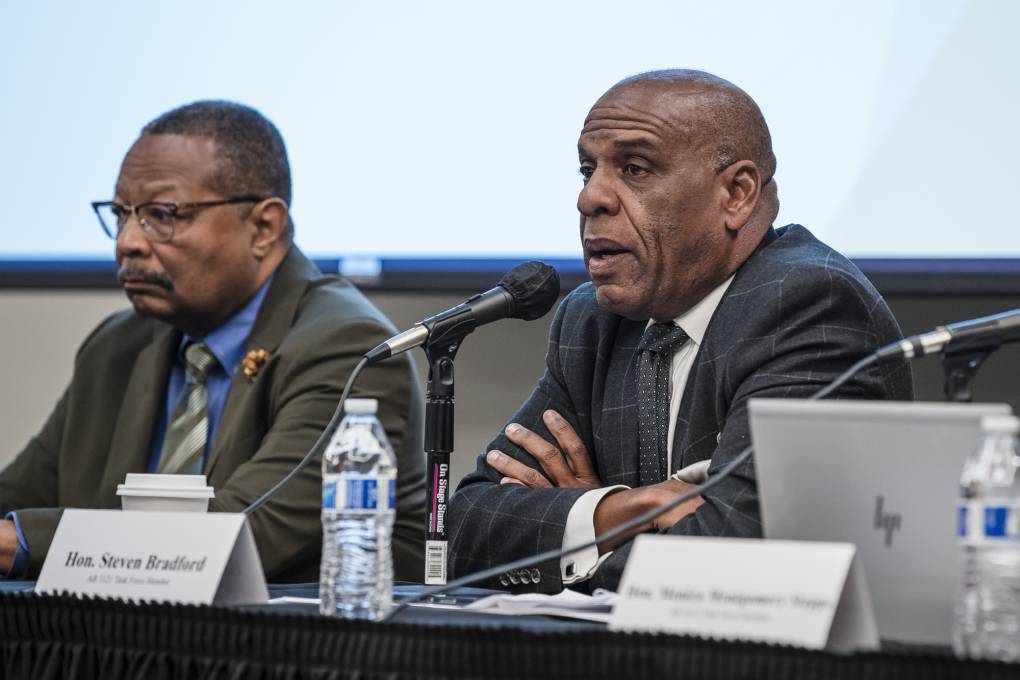
"caption": "California State Sen. Steven Bradford (right) and Assemblymember Reginald Jones-Sawyer (left) during a Reparations Task Force Meeting at San Diego State on Jan. 28, 2023.",
"description": null,
"title": "CMReparations01",
"credit": "Ariana Drehsler/CalMatters",
"status": "inherit",
"altTag": "Two Black men in suits sit at a table with microphones, speaking to a room.",
"isLoading": false,
"fetchFailed": false
},
"news_11972052": {
"type": "attachments",
"id": "news_11972052",
"meta": {
"index": "attachments_1716263798",
"site": "news",
"id": "11972052",
"found": true
},
"parent": 11972039,
"imgSizes": {
"twentyfourteen-full-width": {
"file": "https://cdn.kqed.org/wp-content/uploads/sites/10/2024/01/PROPE_081-qut-1038x576.jpg",
"width": 1038,
"mimeType": "image/jpeg",
"height": 576
},
"thumbnail": {
"file": "https://cdn.kqed.org/wp-content/uploads/sites/10/2024/01/PROPE_081-qut-160x107.jpg",
"width": 160,
"mimeType": "image/jpeg",
"height": 107
},
"post-thumbnail": {
"file": "https://cdn.kqed.org/wp-content/uploads/sites/10/2024/01/PROPE_081-qut-672x372.jpg",
"width": 672,
"mimeType": "image/jpeg",
"height": 372
},
"kqedFullSize": {
"file": "https://cdn.kqed.org/wp-content/uploads/sites/10/2024/01/PROPE_081-qut.jpg",
"width": 1920,
"height": 1280
},
"large": {
"file": "https://cdn.kqed.org/wp-content/uploads/sites/10/2024/01/PROPE_081-qut-1020x680.jpg",
"width": 1020,
"mimeType": "image/jpeg",
"height": 680
},
"1536x1536": {
"file": "https://cdn.kqed.org/wp-content/uploads/sites/10/2024/01/PROPE_081-qut-1536x1024.jpg",
"width": 1536,
"mimeType": "image/jpeg",
"height": 1024
},
"medium": {
"file": "https://cdn.kqed.org/wp-content/uploads/sites/10/2024/01/PROPE_081-qut-800x533.jpg",
"width": 800,
"mimeType": "image/jpeg",
"height": 533
}
},
"publishDate": 1704825105,
"modified": 1704829469,
"caption": "'Fruit n Custard Banana'-flavored tobacco at the Vapor Den in San Francisco on May 9, 2018. According to an employee, the company avoids purchasing flavors that are too childlike in design, even if they are desirable flavors. ",
"description": null,
"title": "PROPE_081-qut",
"credit": "Lauren Hanussak/KQED",
"status": "inherit",
"altTag": "A row of flavored tobacco vape juice bottles.",
"isLoading": false,
"fetchFailed": false
},
"news_11970644": {
"type": "attachments",
"id": "news_11970644",
"meta": {
"index": "attachments_1716263798",
"site": "news",
"id": "11970644",
"found": true
},
"parent": 0,
"imgSizes": {
"twentyfourteen-full-width": {
"file": "https://cdn.kqed.org/wp-content/uploads/sites/10/2023/12/CMWage01-1038x576.jpg",
"width": 1038,
"mimeType": "image/jpeg",
"height": 576
},
"thumbnail": {
"file": "https://cdn.kqed.org/wp-content/uploads/sites/10/2023/12/CMWage01-160x107.jpg",
"width": 160,
"mimeType": "image/jpeg",
"height": 107
},
"post-thumbnail": {
"file": "https://cdn.kqed.org/wp-content/uploads/sites/10/2023/12/CMWage01-672x372.jpg",
"width": 672,
"mimeType": "image/jpeg",
"height": 372
},
"kqedFullSize": {
"file": "https://cdn.kqed.org/wp-content/uploads/sites/10/2023/12/CMWage01.jpg",
"width": 2000,
"height": 1333
},
"large": {
"file": "https://cdn.kqed.org/wp-content/uploads/sites/10/2023/12/CMWage01-1020x680.jpg",
"width": 1020,
"mimeType": "image/jpeg",
"height": 680
},
"1536x1536": {
"file": "https://cdn.kqed.org/wp-content/uploads/sites/10/2023/12/CMWage01-1536x1024.jpg",
"width": 1536,
"mimeType": "image/jpeg",
"height": 1024
},
"full-width": {
"file": "https://cdn.kqed.org/wp-content/uploads/sites/10/2023/12/CMWage01-1920x1280.jpg",
"width": 1920,
"mimeType": "image/jpeg",
"height": 1280
},
"medium": {
"file": "https://cdn.kqed.org/wp-content/uploads/sites/10/2023/12/CMWage01-800x533.jpg",
"width": 800,
"mimeType": "image/jpeg",
"height": 533
}
},
"publishDate": 1703190297,
"modified": 1703190553,
"caption": "Fast food workers rally at the state Capitol in Sacramento on Aug. 31, 2023.",
"description": null,
"title": "CMWage01",
"credit": "Rahul Lal/CalMatters",
"status": "inherit",
"altTag": "Men and women hold signs that say, \"Fast Food Workers Demand A Seat At The Table.\"",
"isLoading": false,
"fetchFailed": false
},
"news_11965298": {
"type": "attachments",
"id": "news_11965298",
"meta": {
"index": "attachments_1716263798",
"site": "news",
"id": "11965298",
"found": true
},
"parent": 0,
"imgSizes": {
"thumbnail": {
"file": "https://ww2.kqed.org/app/uploads/sites/10/2023/10/kidsatplay01-160x107.jpg",
"width": 160,
"mimeType": "image/jpeg",
"height": 107
},
"post-thumbnail": {
"file": "https://ww2.kqed.org/app/uploads/sites/10/2023/10/kidsatplay01-672x372.jpg",
"width": 672,
"mimeType": "image/jpeg",
"height": 372
},
"kqedFullSize": {
"file": "https://ww2.kqed.org/app/uploads/sites/10/2023/10/kidsatplay01.jpg",
"width": 800,
"height": 534
}
},
"publishDate": 1698089577,
"modified": 1698097061,
"caption": "Child advocates like Playworks, Northern California, Executive Director Laura Medina Quintanar say that recess is incredibly valuable for cognitive, social, emotional and physical activity opportunities.",
"description": null,
"title": "kidsatplay01",
"credit": "Courtesy of Playworks Northern California",
"status": "inherit",
"altTag": "Children are playing at recess on the schoolgrounds.",
"isLoading": false,
"fetchFailed": false
},
"news_11964796": {
"type": "attachments",
"id": "news_11964796",
"meta": {
"index": "attachments_1716263798",
"site": "news",
"id": "11964796",
"found": true
},
"parent": 11964791,
"imgSizes": {
"twentyfourteen-full-width": {
"file": "https://ww2.kqed.org/app/uploads/sites/10/2023/10/CalMatters01-1038x576.jpg",
"width": 1038,
"mimeType": "image/jpeg",
"height": 576
},
"thumbnail": {
"file": "https://ww2.kqed.org/app/uploads/sites/10/2023/10/CalMatters01-160x107.jpg",
"width": 160,
"mimeType": "image/jpeg",
"height": 107
},
"post-thumbnail": {
"file": "https://ww2.kqed.org/app/uploads/sites/10/2023/10/CalMatters01-672x372.jpg",
"width": 672,
"mimeType": "image/jpeg",
"height": 372
},
"kqedFullSize": {
"file": "https://ww2.kqed.org/app/uploads/sites/10/2023/10/CalMatters01.jpg",
"width": 2000,
"height": 1333
},
"large": {
"file": "https://ww2.kqed.org/app/uploads/sites/10/2023/10/CalMatters01-1020x680.jpg",
"width": 1020,
"mimeType": "image/jpeg",
"height": 680
},
"1536x1536": {
"file": "https://ww2.kqed.org/app/uploads/sites/10/2023/10/CalMatters01-1536x1024.jpg",
"width": 1536,
"mimeType": "image/jpeg",
"height": 1024
},
"full-width": {
"file": "https://ww2.kqed.org/app/uploads/sites/10/2023/10/CalMatters01-1920x1280.jpg",
"width": 1920,
"mimeType": "image/jpeg",
"height": 1280
},
"medium": {
"file": "https://ww2.kqed.org/app/uploads/sites/10/2023/10/CalMatters01-800x533.jpg",
"width": 800,
"mimeType": "image/jpeg",
"height": 533
}
},
"publishDate": 1697561951,
"modified": 1697562044,
"caption": "Striking Kaiser Permanente mental health workers stage a die-in at the Kaiser Headquarters in Oakland on Oct. 7, 2022.",
"description": null,
"title": "CalMatters01",
"credit": "Martin do Nascimento/CalMatters",
"status": "inherit",
"altTag": "Mental health workers in red T-shirts hold signs in protest outside of a Kaiser facility in Oakland.",
"isLoading": false,
"fetchFailed": false
},
"news_11964310": {
"type": "attachments",
"id": "news_11964310",
"meta": {
"index": "attachments_1716263798",
"site": "news",
"id": "11964310",
"found": true
},
"parent": 0,
"imgSizes": {
"twentyfourteen-full-width": {
"file": "https://ww2.kqed.org/app/uploads/sites/10/2023/10/20231012-Domestic-Workers-011-JY-KQED-1038x576.jpg",
"width": 1038,
"mimeType": "image/jpeg",
"height": 576
},
"thumbnail": {
"file": "https://ww2.kqed.org/app/uploads/sites/10/2023/10/20231012-Domestic-Workers-011-JY-KQED-160x107.jpg",
"width": 160,
"mimeType": "image/jpeg",
"height": 107
},
"post-thumbnail": {
"file": "https://ww2.kqed.org/app/uploads/sites/10/2023/10/20231012-Domestic-Workers-011-JY-KQED-672x372.jpg",
"width": 672,
"mimeType": "image/jpeg",
"height": 372
},
"kqedFullSize": {
"file": "https://ww2.kqed.org/app/uploads/sites/10/2023/10/20231012-Domestic-Workers-011-JY-KQED.jpg",
"width": 2000,
"height": 1333
},
"large": {
"file": "https://ww2.kqed.org/app/uploads/sites/10/2023/10/20231012-Domestic-Workers-011-JY-KQED-1020x680.jpg",
"width": 1020,
"mimeType": "image/jpeg",
"height": 680
},
"1536x1536": {
"file": "https://ww2.kqed.org/app/uploads/sites/10/2023/10/20231012-Domestic-Workers-011-JY-KQED-1536x1024.jpg",
"width": 1536,
"mimeType": "image/jpeg",
"height": 1024
},
"full-width": {
"file": "https://ww2.kqed.org/app/uploads/sites/10/2023/10/20231012-Domestic-Workers-011-JY-KQED-1920x1280.jpg",
"width": 1920,
"mimeType": "image/jpeg",
"height": 1280
},
"medium": {
"file": "https://ww2.kqed.org/app/uploads/sites/10/2023/10/20231012-Domestic-Workers-011-JY-KQED-800x533.jpg",
"width": 800,
"mimeType": "image/jpeg",
"height": 533
}
},
"publishDate": 1697149517,
"modified": 1697153273,
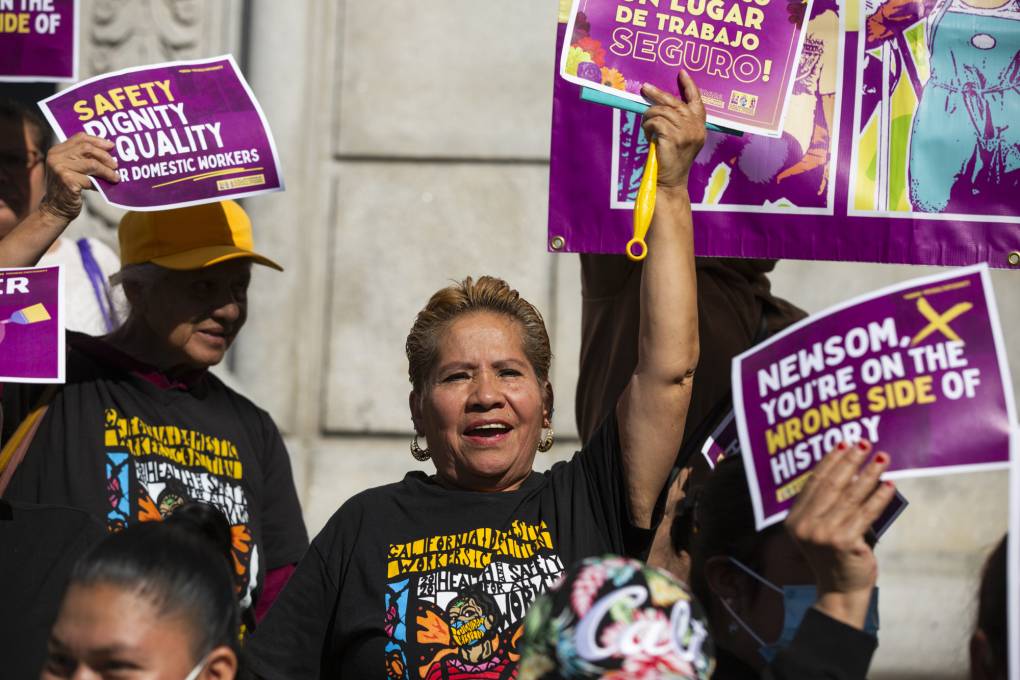
"caption": "Elizabeth Montiel cheers during a rally with the California Domestic Workers Coalition. Employers, domestic workers, and partners gather outside the Earl Warren Building to protest Gov. Gavin Newsom’s veto of SB 686 in San Francisco on Thursday, Oct. 12, 2023. SB 686 would have provided health and safety protections to domestic workers like Montiel, who makes a living cleaning houses.",
"description": null,
"title": "Domestic Workers",
"credit": "Juliana Yamada/KQED",
"status": "inherit",
"altTag": "A group of people cheer and hold up purple signs in an outdoor setting.",
"isLoading": false,
"fetchFailed": false
},
"news_11964286": {
"type": "attachments",
"id": "news_11964286",
"meta": {
"index": "attachments_1716263798",
"site": "news",
"id": "11964286",
"found": true
},
"parent": 0,
"imgSizes": {
"twentyfourteen-full-width": {
"file": "https://ww2.kqed.org/app/uploads/sites/10/2023/10/231012-NEWSOM-MENTAL-HEALTH-AP-DD-01-KQED-1038x576.jpg",
"width": 1038,
"mimeType": "image/jpeg",
"height": 576
},
"thumbnail": {
"file": "https://ww2.kqed.org/app/uploads/sites/10/2023/10/231012-NEWSOM-MENTAL-HEALTH-AP-DD-01-KQED-160x107.jpg",
"width": 160,
"mimeType": "image/jpeg",
"height": 107
},
"post-thumbnail": {
"file": "https://ww2.kqed.org/app/uploads/sites/10/2023/10/231012-NEWSOM-MENTAL-HEALTH-AP-DD-01-KQED-672x372.jpg",
"width": 672,
"mimeType": "image/jpeg",
"height": 372
},
"kqedFullSize": {
"file": "https://ww2.kqed.org/app/uploads/sites/10/2023/10/231012-NEWSOM-MENTAL-HEALTH-AP-DD-01-KQED.jpg",
"width": 2000,
"height": 1333
},
"large": {
"file": "https://ww2.kqed.org/app/uploads/sites/10/2023/10/231012-NEWSOM-MENTAL-HEALTH-AP-DD-01-KQED-1020x680.jpg",
"width": 1020,
"mimeType": "image/jpeg",
"height": 680
},
"1536x1536": {
"file": "https://ww2.kqed.org/app/uploads/sites/10/2023/10/231012-NEWSOM-MENTAL-HEALTH-AP-DD-01-KQED-1536x1024.jpg",
"width": 1536,
"mimeType": "image/jpeg",
"height": 1024
},
"full-width": {
"file": "https://ww2.kqed.org/app/uploads/sites/10/2023/10/231012-NEWSOM-MENTAL-HEALTH-AP-DD-01-KQED-1920x1280.jpg",
"width": 1920,
"mimeType": "image/jpeg",
"height": 1280
},
"medium": {
"file": "https://ww2.kqed.org/app/uploads/sites/10/2023/10/231012-NEWSOM-MENTAL-HEALTH-AP-DD-01-KQED-800x533.jpg",
"width": 800,
"mimeType": "image/jpeg",
"height": 533
}
},
"publishDate": 1697144472,
"modified": 1697151766,
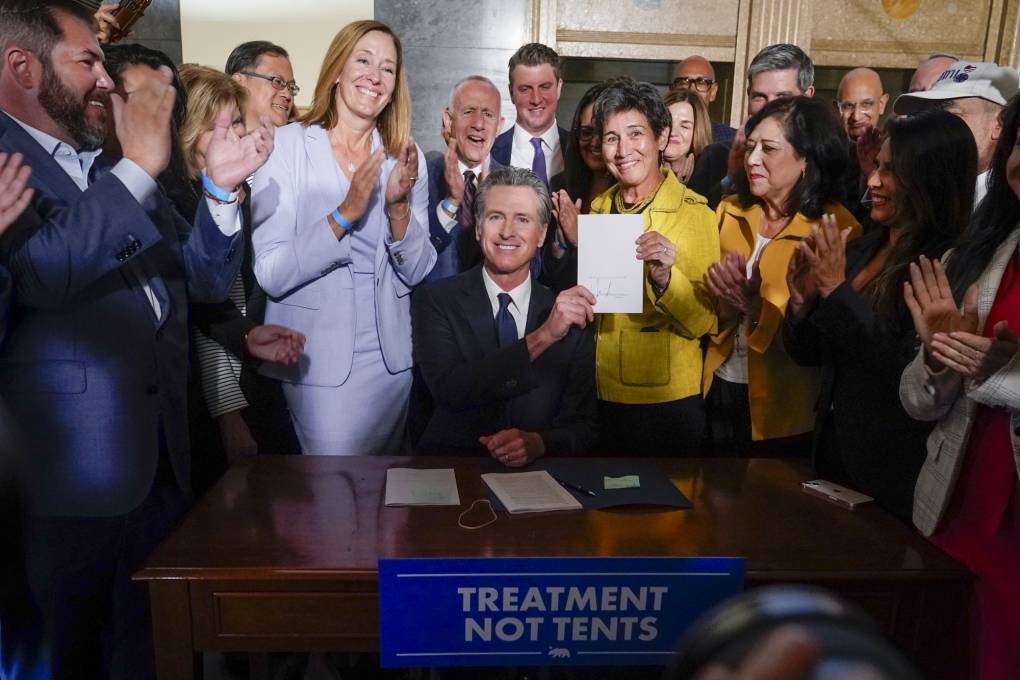
"caption": "Gov. Gavin Newsom signs off on 2 proposals in Los Angeles, Thursday, Oct. 12, 2023, to transform the state's mental health system and address the state's worsening homelessness crisis, putting them both before voters in 2024. ",
"description": null,
"title": "Gavin Newsom",
"credit": "Damian Dovarganes/AP Photo",
"status": "inherit",
"altTag": "A group of people standing around a table and posing for a photo with two people in the center holding a piece of paper together.",
"isLoading": false,
"fetchFailed": false
},
"news_11961523": {
"type": "attachments",
"id": "news_11961523",
"meta": {
"index": "attachments_1716263798",
"site": "news",
"id": "11961523",
"found": true
},
"title": "California State Capital",
"publishDate": 1694885522,
"status": "inherit",
"parent": 11961519,
"modified": 1694885652,
"caption": "The California State Capitol in Sacramento.",
"credit": "iStock/Getty Images Plus",
"altTag": "The California state flag with the Capitol cupola in Sacramento behind it.",
"description": null,
"imgSizes": {
"medium": {
"file": "https://cdn.kqed.org/wp-content/uploads/sites/10/2023/09/GettyImages-186653928-800x533.jpg",
"width": 800,
"height": 533,
"mimeType": "image/jpeg"
},
"large": {
"file": "https://cdn.kqed.org/wp-content/uploads/sites/10/2023/09/GettyImages-186653928-1020x680.jpg",
"width": 1020,
"height": 680,
"mimeType": "image/jpeg"
},
"thumbnail": {
"file": "https://cdn.kqed.org/wp-content/uploads/sites/10/2023/09/GettyImages-186653928-160x107.jpg",
"width": 160,
"height": 107,
"mimeType": "image/jpeg"
},
"1536x1536": {
"file": "https://cdn.kqed.org/wp-content/uploads/sites/10/2023/09/GettyImages-186653928-1536x1024.jpg",
"width": 1536,
"height": 1024,
"mimeType": "image/jpeg"
},
"2048x2048": {
"file": "https://cdn.kqed.org/wp-content/uploads/sites/10/2023/09/GettyImages-186653928-2048x1365.jpg",
"width": 2048,
"height": 1365,
"mimeType": "image/jpeg"
},
"post-thumbnail": {
"file": "https://cdn.kqed.org/wp-content/uploads/sites/10/2023/09/GettyImages-186653928-672x372.jpg",
"width": 672,
"height": 372,
"mimeType": "image/jpeg"
},
"twentyfourteen-full-width": {
"file": "https://cdn.kqed.org/wp-content/uploads/sites/10/2023/09/GettyImages-186653928-1038x576.jpg",
"width": 1038,
"height": 576,
"mimeType": "image/jpeg"
},
"full-width": {
"file": "https://cdn.kqed.org/wp-content/uploads/sites/10/2023/09/GettyImages-186653928-1920x1280.jpg",
"width": 1920,
"height": 1280,
"mimeType": "image/jpeg"
},
"kqedFullSize": {
"file": "https://cdn.kqed.org/wp-content/uploads/sites/10/2023/09/GettyImages-186653928-e1737496719981.jpg",
"width": 2000,
"height": 1333
}
},
"isLoading": false,
"fetchFailed": false
},
"news_11960809": {
"type": "attachments",
"id": "news_11960809",
"meta": {
"index": "attachments_1716263798",
"site": "news",
"id": "11960809",
"found": true
},
"parent": 0,
"imgSizes": {
"twentyfourteen-full-width": {
"file": "https://ww2.kqed.org/app/uploads/sites/10/2023/09/GettyImages-450371241-qut-1038x576.jpg",
"width": 1038,
"mimeType": "image/jpeg",
"height": 576
},
"thumbnail": {
"file": "https://ww2.kqed.org/app/uploads/sites/10/2023/09/GettyImages-450371241-qut-160x107.jpg",
"width": 160,
"mimeType": "image/jpeg",
"height": 107
},
"post-thumbnail": {
"file": "https://ww2.kqed.org/app/uploads/sites/10/2023/09/GettyImages-450371241-qut-672x372.jpg",
"width": 672,
"mimeType": "image/jpeg",
"height": 372
},
"kqedFullSize": {
"file": "https://ww2.kqed.org/app/uploads/sites/10/2023/09/GettyImages-450371241-qut.jpg",
"width": 1920,
"height": 1280
},
"large": {
"file": "https://ww2.kqed.org/app/uploads/sites/10/2023/09/GettyImages-450371241-qut-1020x680.jpg",
"width": 1020,
"mimeType": "image/jpeg",
"height": 680
},
"1536x1536": {
"file": "https://ww2.kqed.org/app/uploads/sites/10/2023/09/GettyImages-450371241-qut-1536x1024.jpg",
"width": 1536,
"mimeType": "image/jpeg",
"height": 1024
},
"medium": {
"file": "https://ww2.kqed.org/app/uploads/sites/10/2023/09/GettyImages-450371241-qut-800x533.jpg",
"width": 800,
"mimeType": "image/jpeg",
"height": 533
}
},
"publishDate": 1694540341,
"modified": 1694557561,
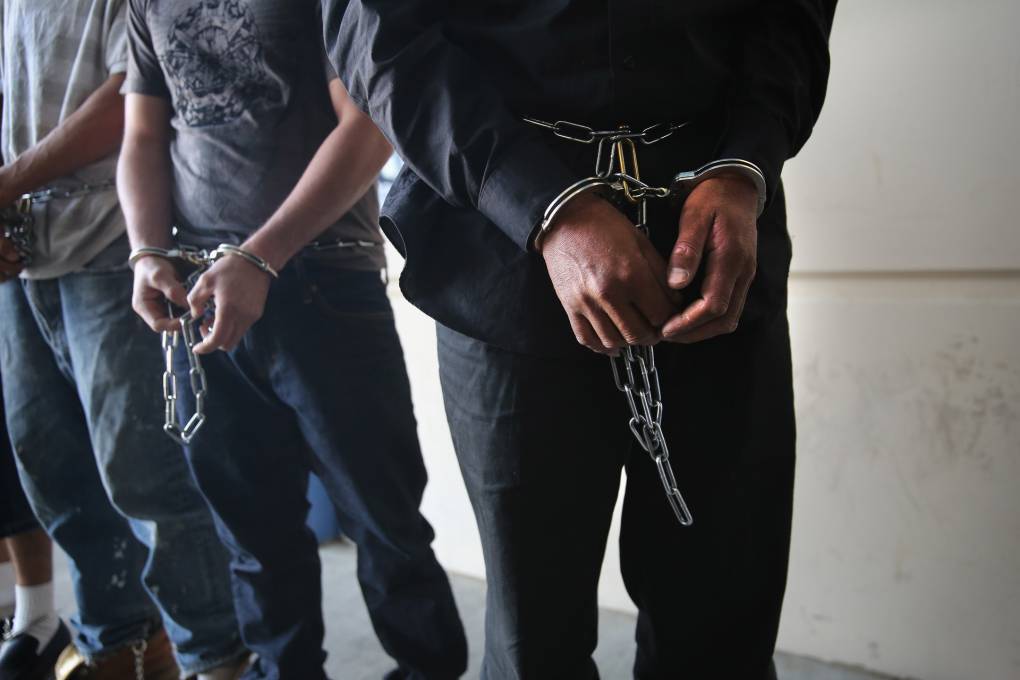
"caption": "On average, nearly 1,600 people come out of state prison each year with an immigration detainer that leads to their transfer to ICE to be deported, according to an estimate by state Senate staff.",
"description": null,
"title": "GettyImages-450371241-qut",
"credit": "John Moore/Getty Images",
"status": "inherit",
"altTag": "A line of individuals are shown from their wrists down. Their hands are shackles with handcuffs. They are incarcerated individuals seemingly on their way to be transported to a different area.",
"isLoading": false,
"fetchFailed": false
},
"news_11960230": {
"type": "attachments",
"id": "news_11960230",
"meta": {
"index": "attachments_1716263798",
"site": "news",
"id": "11960230",
"found": true
},
"title": "Chino Valley School District Passes Policy For Parental Rights",
"publishDate": 1694031517,
"status": "inherit",
"parent": 12075180,
"modified": 1772579133,
"caption": "People hold up signs in support of gay and transgender student rights during the Chino Valley Unified School District board meeting at Don Lugo High School in Chino on Thursday night July 20, 2023.",
"credit": "Will Lester/MediaNews Group/Inland Valley Daily Bulletin via Getty Images",
"altTag": "A crowd of people in an indoor setting including some holding signs, one of which reads \"Let Queer & Trans Kids Be Kids Too!\"",
"description": null,
"imgSizes": {
"medium": {
"file": "https://cdn.kqed.org/wp-content/uploads/sites/10/2023/09/230806-Kids-Pronouns-Protest-Getty-WL-KQED-800x533.jpg",
"width": 800,
"height": 533,
"mimeType": "image/jpeg"
},
"large": {
"file": "https://cdn.kqed.org/wp-content/uploads/sites/10/2023/09/230806-Kids-Pronouns-Protest-Getty-WL-KQED-1020x680.jpg",
"width": 1020,
"height": 680,
"mimeType": "image/jpeg"
},
"thumbnail": {
"file": "https://cdn.kqed.org/wp-content/uploads/sites/10/2023/09/230806-Kids-Pronouns-Protest-Getty-WL-KQED-160x107.jpg",
"width": 160,
"height": 107,
"mimeType": "image/jpeg"
},
"1536x1536": {
"file": "https://cdn.kqed.org/wp-content/uploads/sites/10/2023/09/230806-Kids-Pronouns-Protest-Getty-WL-KQED-1536x1024.jpg",
"width": 1536,
"height": 1024,
"mimeType": "image/jpeg"
},
"post-thumbnail": {
"file": "https://cdn.kqed.org/wp-content/uploads/sites/10/2023/09/230806-Kids-Pronouns-Protest-Getty-WL-KQED-672x372.jpg",
"width": 672,
"height": 372,
"mimeType": "image/jpeg"
},
"twentyfourteen-full-width": {
"file": "https://cdn.kqed.org/wp-content/uploads/sites/10/2023/09/230806-Kids-Pronouns-Protest-Getty-WL-KQED-1038x576.jpg",
"width": 1038,
"height": 576,
"mimeType": "image/jpeg"
},
"full-width": {
"file": "https://cdn.kqed.org/wp-content/uploads/sites/10/2023/09/230806-Kids-Pronouns-Protest-Getty-WL-KQED-1920x1280.jpg",
"width": 1920,
"height": 1280,
"mimeType": "image/jpeg"
},
"kqedFullSize": {
"file": "https://cdn.kqed.org/wp-content/uploads/sites/10/2023/09/230806-Kids-Pronouns-Protest-Getty-WL-KQED.jpg",
"width": 2000,
"height": 1333
}
},
"isLoading": false,
"fetchFailed": false
},
"news_11956784": {
"type": "attachments",
"id": "news_11956784",
"meta": {
"index": "attachments_1716263798",
"site": "news",
"id": "11956784",
"found": true
},
"parent": 11957801,
"imgSizes": {
"twentyfourteen-full-width": {
"file": "https://ww2.kqed.org/app/uploads/sites/10/2023/07/230727-Oakland-Diocese-Sexual-Abuse-MHN-05-KQED-1038x576.jpg",
"width": 1038,
"mimeType": "image/jpeg",
"height": 576
},
"thumbnail": {
"file": "https://ww2.kqed.org/app/uploads/sites/10/2023/07/230727-Oakland-Diocese-Sexual-Abuse-MHN-05-KQED-160x107.jpg",
"width": 160,
"mimeType": "image/jpeg",
"height": 107
},
"post-thumbnail": {
"file": "https://ww2.kqed.org/app/uploads/sites/10/2023/07/230727-Oakland-Diocese-Sexual-Abuse-MHN-05-KQED-672x372.jpg",
"width": 672,
"mimeType": "image/jpeg",
"height": 372
},
"kqedFullSize": {
"file": "https://ww2.kqed.org/app/uploads/sites/10/2023/07/230727-Oakland-Diocese-Sexual-Abuse-MHN-05-KQED.jpg",
"width": 2000,
"height": 1333
},
"large": {
"file": "https://ww2.kqed.org/app/uploads/sites/10/2023/07/230727-Oakland-Diocese-Sexual-Abuse-MHN-05-KQED-1020x680.jpg",
"width": 1020,
"mimeType": "image/jpeg",
"height": 680
},
"1536x1536": {
"file": "https://ww2.kqed.org/app/uploads/sites/10/2023/07/230727-Oakland-Diocese-Sexual-Abuse-MHN-05-KQED-1536x1024.jpg",
"width": 1536,
"mimeType": "image/jpeg",
"height": 1024
},
"full-width": {
"file": "https://ww2.kqed.org/app/uploads/sites/10/2023/07/230727-Oakland-Diocese-Sexual-Abuse-MHN-05-KQED-1920x1280.jpg",
"width": 1920,
"mimeType": "image/jpeg",
"height": 1280
},
"medium": {
"file": "https://ww2.kqed.org/app/uploads/sites/10/2023/07/230727-Oakland-Diocese-Sexual-Abuse-MHN-05-KQED-800x533.jpg",
"width": 800,
"mimeType": "image/jpeg",
"height": 533
}
},
"publishDate": 1690565331,
"modified": 1691625614,
"caption": "The Cathedral of Christ the Light and Catholic Diocese of Oakland in Oakland on July 28, 2023.",
"description": null,
"title": "230727-Oakland Diocese Sexual Abuse-MHN-05-KQED",
"credit": "Martin do Nascimento/KQED",
"status": "inherit",
"altTag": "Modern lettering on a concrete wall reading The Cathedral of Christ the Light: Catholic Diocese of Oakland.\"",
"isLoading": false,
"fetchFailed": false
},
"news_11955062": {
"type": "attachments",
"id": "news_11955062",
"meta": {
"index": "attachments_1716263798",
"site": "news",
"id": "11955062",
"found": true
},
"parent": 0,
"imgSizes": {
"twentyfourteen-full-width": {
"file": "https://ww2.kqed.org/app/uploads/sites/10/2023/07/CalMattersCaste01-1038x576.jpg",
"width": 1038,
"mimeType": "image/jpeg",
"height": 576
},
"thumbnail": {
"file": "https://ww2.kqed.org/app/uploads/sites/10/2023/07/CalMattersCaste01-160x107.jpg",
"width": 160,
"mimeType": "image/jpeg",
"height": 107
},
"post-thumbnail": {
"file": "https://ww2.kqed.org/app/uploads/sites/10/2023/07/CalMattersCaste01-672x372.jpg",
"width": 672,
"mimeType": "image/jpeg",
"height": 372
},
"kqedFullSize": {
"file": "https://ww2.kqed.org/app/uploads/sites/10/2023/07/CalMattersCaste01.jpg",
"width": 1920,
"height": 1279
},
"large": {
"file": "https://ww2.kqed.org/app/uploads/sites/10/2023/07/CalMattersCaste01-1020x679.jpg",
"width": 1020,
"mimeType": "image/jpeg",
"height": 679
},
"1536x1536": {
"file": "https://ww2.kqed.org/app/uploads/sites/10/2023/07/CalMattersCaste01-1536x1023.jpg",
"width": 1536,
"mimeType": "image/jpeg",
"height": 1023
},
"medium": {
"file": "https://ww2.kqed.org/app/uploads/sites/10/2023/07/CalMattersCaste01-800x533.jpg",
"width": 800,
"mimeType": "image/jpeg",
"height": 533
}
},
"publishDate": 1688662913,
"modified": 1688663059,
"caption": "People listen to testimony at the Assembly Judiciary Hearing for SB 403 at the state Capitol in Sacramento on July 5, 2023.",
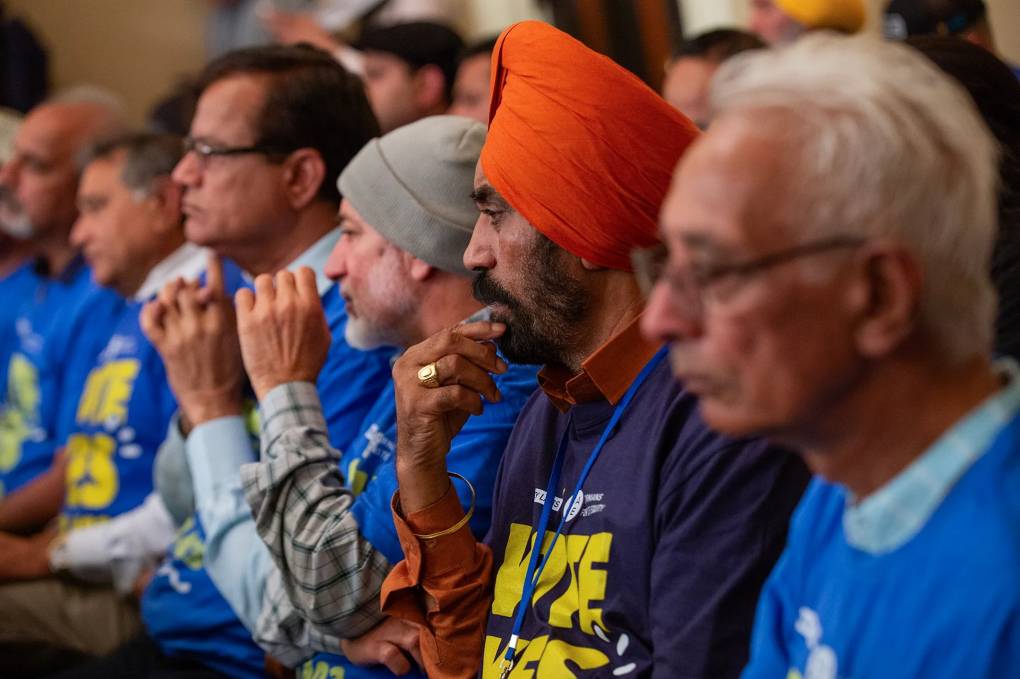
"description": null,
"title": "CalMattersCaste01",
"credit": "Semantha Norris/CalMatters",
"status": "inherit",
"altTag": "A row of men with tan skin are all wearing blue T-shirts as they sit inside California's Assembly Judiciary Hearing. One man wears an orange headwrap, another a tan beanie. All are seated and looking forward as if listening to a speaker off camera.",
"isLoading": false,
"fetchFailed": false
}
},
"audioPlayerReducer": {
"postId": "stream_live",
"isPaused": true,
"isPlaying": false,
"pfsActive": false,
"pledgeModalIsOpen": true,
"playerDrawerIsOpen": false,
"liveAudioPlayStartedAt": 0,
"liveAudioPlayContext": ""
},
"authorsReducer": {
"byline_news_11974445": {
"type": "authors",
"id": "byline_news_11974445",
"meta": {
"override": true
},
"slug": "byline_news_11974445",
"name": "\u003ca href=\"https://calmatters.org/author/wendy-fry/\">Wendy Fry\u003c/a>\u003cbr>",
"isLoading": false
},
"byline_news_11972039": {
"type": "authors",
"id": "byline_news_11972039",
"meta": {
"override": true
},
"slug": "byline_news_11972039",
"name": "\u003ca href=\"https://calmatters.org/author/lynn-la/\">Lynn La\u003c/a>",
"isLoading": false
},
"byline_news_11970640": {
"type": "authors",
"id": "byline_news_11970640",
"meta": {
"override": true
},
"slug": "byline_news_11970640",
"name": "Levi Sumagaysay and Shreya Agrawal",
"isLoading": false
},
"byline_news_11964791": {
"type": "authors",
"id": "byline_news_11964791",
"meta": {
"override": true
},
"slug": "byline_news_11964791",
"name": "\u003ca href=\"https://calmatters.org/author/jocelyn-wiener/\">Jocelyn Wiener\u003c/a>",
"isLoading": false
},
"byline_news_11961519": {
"type": "authors",
"id": "byline_news_11961519",
"meta": {
"override": true
},
"slug": "byline_news_11961519",
"name": "Adam Beam, Sophie Austin\u003cbr>The Associated Press",
"isLoading": false
},
"byline_news_11960202": {
"type": "authors",
"id": "byline_news_11960202",
"meta": {
"override": true
},
"slug": "byline_news_11960202",
"name": "\u003ca href=\"https://twitter.com/ataxin\">Amy Taxin\u003c/a>\u003cbr>The Associated Press",
"isLoading": false
},
"byline_news_11955060": {
"type": "authors",
"id": "byline_news_11955060",
"meta": {
"override": true
},
"slug": "byline_news_11955060",
"name": "\u003ca href=\"https://calmatters.org/author/sameea-kamal//\">Sameea Kamal\u003c/a>",
"isLoading": false
},
"gmarzorati": {
"type": "authors",
"id": "227",
"meta": {
"index": "authors_1716337520",
"id": "227",
"found": true
},
"name": "Guy Marzorati",
"firstName": "Guy",
"lastName": "Marzorati",
"slug": "gmarzorati",
"email": "gmarzorati@KQED.org",
"display_author_email": true,
"staff_mastheads": [
"news"
],
"title": "Correspondent",
"bio": "Guy Marzorati is a correspondent on KQED's California Politics and Government Desk, based in San Jose. A graduate of Santa Clara University, Guy joined KQED in 2013. He reports on state and local politics and produces KQED's digital voter guide.",
"avatar": "https://secure.gravatar.com/avatar/e7038b8dbfd55b104369b76b1cd0b9de?s=600&d=blank&r=g",
"twitter": "guymarzorati",
"facebook": null,
"instagram": null,
"linkedin": null,
"sites": [
{
"site": "",
"roles": [
"editor"
]
},
{
"site": "news",
"roles": [
"editor"
]
},
{
"site": "science",
"roles": [
"editor"
]
},
{
"site": "forum",
"roles": [
"editor"
]
},
{
"site": "elections",
"roles": [
"editor"
]
},
{
"site": "liveblog",
"roles": [
"editor"
]
}
],
"headData": {
"title": "Guy Marzorati | KQED",
"description": "Correspondent",
"ogImgSrc": "https://secure.gravatar.com/avatar/e7038b8dbfd55b104369b76b1cd0b9de?s=600&d=blank&r=g",
"twImgSrc": "https://secure.gravatar.com/avatar/e7038b8dbfd55b104369b76b1cd0b9de?s=600&d=blank&r=g"
},
"isLoading": false,
"link": "/author/gmarzorati"
},
"tychehendricks": {
"type": "authors",
"id": "259",
"meta": {
"index": "authors_1716337520",
"id": "259",
"found": true
},
"name": "Tyche Hendricks",
"firstName": "Tyche",
"lastName": "Hendricks",
"slug": "tychehendricks",
"email": "thendricks@kqed.org",
"display_author_email": true,
"staff_mastheads": [
"news"
],
"title": "KQED Senior Editor, Immigration",
"bio": "\u003cspan style=\"font-weight: 400;\">Tyche Hendricks is KQED’s senior editor for immigration, leading coverage of the policy and politics that affect California’s immigrant communities. Her work for KQED’s radio and online audiences is also carried on NPR and other national outlets. She has been recognized with awards from the Radio and Television News Directors Association, the Society for Professional Journalists; the Education Writers Association; the Best of the West and the National Federation of Community Broadcasters. Before joining KQED in 2010, Tyche spent more than a dozen years as a newspaper reporter, notably at the \u003c/span>\u003ci>\u003cspan style=\"font-weight: 400;\">San Francisco Chronicle\u003c/span>\u003c/i>\u003cspan style=\"font-weight: 400;\">. At different times she has covered criminal justice, government and politics and urban planning. Tyche has taught in the MFA Creative Writing program at the University of San Francisco and at UC Berkeley’s Graduate School of Journalism, where she was co-director of a national immigration symposium for professional journalists. She is the author of \u003c/span>\u003ci>\u003cspan style=\"font-weight: 400;\">The Wind Doesn't Need a Passport: Stories from the U.S.-Mexico Borderlands\u003c/span>\u003c/i>\u003cspan style=\"font-weight: 400;\"> (University of California Press). \u003c/span>",
"avatar": "https://secure.gravatar.com/avatar/b8ee458e2731c2d43df86882ce17267e?s=600&d=blank&r=g",
"twitter": "tychehendricks",
"facebook": null,
"instagram": null,
"linkedin": null,
"sites": [
{
"site": "news",
"roles": [
"editor"
]
},
{
"site": "stateofhealth",
"roles": [
"editor"
]
}
],
"headData": {
"title": "Tyche Hendricks | KQED",
"description": "KQED Senior Editor, Immigration",
"ogImgSrc": "https://secure.gravatar.com/avatar/b8ee458e2731c2d43df86882ce17267e?s=600&d=blank&r=g",
"twImgSrc": "https://secure.gravatar.com/avatar/b8ee458e2731c2d43df86882ce17267e?s=600&d=blank&r=g"
},
"isLoading": false,
"link": "/author/tychehendricks"
},
"fjhabvala": {
"type": "authors",
"id": "8659",
"meta": {
"index": "authors_1716337520",
"id": "8659",
"found": true
},
"name": "Farida Jhabvala Romero",
"firstName": "Farida",
"lastName": "Jhabvala Romero",
"slug": "fjhabvala",
"email": "fjhabvala@kqed.org",
"display_author_email": true,
"staff_mastheads": [
"news"
],
"title": "KQED Contributor",
"bio": "Farida Jhabvala Romero is a Labor Correspondent for KQED. She previously covered immigration. Farida was \u003ca href=\"https://www.ccnma.org/2022-most-influential-latina-journalists\">named\u003c/a> one of the 10 Most Influential Latina Journalists in California in 2022 by the California Chicano News Media Association. Her work has won awards from the Society of Professional Journalists (Northern California), as well as a national and regional Edward M. Murrow Award for the collaborative reporting projects “Dangerous Air” and “Graying California.” Before joining KQED, Farida worked as a producer at Radio Bilingüe, a national public radio network. Farida earned her master’s degree in journalism from Stanford University.",
"avatar": "https://secure.gravatar.com/avatar/f9f022d4e2609741874222a1e9d41f48fea74011aa7c615eef91d9a50c944ebe?s=600&d=blank&r=g",
"twitter": "FaridaJhabvala",
"bluesky": null,
"facebook": null,
"instagram": null,
"linkedin": "https://www.linkedin.com/in/faridajhabvala/",
"sites": [
{
"site": "news",
"roles": [
"editor"
]
},
{
"site": "stateofhealth",
"roles": [
"author"
]
},
{
"site": "liveblog",
"roles": [
"author"
]
}
],
"headData": {
"title": "Farida Jhabvala Romero | KQED",
"description": "KQED Contributor",
"ogImgSrc": "https://secure.gravatar.com/avatar/f9f022d4e2609741874222a1e9d41f48fea74011aa7c615eef91d9a50c944ebe?s=600&d=blank&r=g",
"twImgSrc": "https://secure.gravatar.com/avatar/f9f022d4e2609741874222a1e9d41f48fea74011aa7c615eef91d9a50c944ebe?s=600&d=blank&r=g"
},
"isLoading": false,
"link": "/author/fjhabvala"
},
"bwatt": {
"type": "authors",
"id": "11238",
"meta": {
"index": "authors_1716337520",
"id": "11238",
"found": true
},
"name": "Brian Watt",
"firstName": "Brian",
"lastName": "Watt",
"slug": "bwatt",
"email": "bwatt@KQED.org",
"display_author_email": false,
"staff_mastheads": [
"news"
],
"title": "Morning News Anchor",
"bio": "Brian Watt is KQED's morning radio news anchor. He joined the KQED News team in April of 2016. Prior to that, he worked as a Reporter for KPCC in Los Angeles and a producer at \u003cem>Marketplace.\u003c/em>\r\n\r\nDuring eight years at KPCC, Brian covered business and economics, and his work won several awards. In 2008, he won the Los Angeles Press Club’s first-place award for Business and Financial Reporting, Broadcast. He’s also received honorable mention and been first runner up for the Press Club’s Radio Journalist of the Year. He won two Golden Mike awards from the Radio and TV News Association of Southern California.\r\n\r\nBrian holds degrees in theater from Yale University and the Sorbonne, and has worked as an actor in France, Italy, Brazil, Hungary and . . . Hollywood. He appeared in a few television shows, including \u003cem>The West Wing, Judging Amy\u003c/em> and \u003cem>The District.\u003c/em>\r\n\r\nEmail: bwatt@KQED.org Twitter: @RadioBWatt",
"avatar": "https://secure.gravatar.com/avatar/55393ff57ed34e2be773ba4789dd6a19?s=600&d=blank&r=g",
"twitter": "@RadioBWatt",
"facebook": null,
"instagram": null,
"linkedin": null,
"sites": [
{
"site": "arts",
"roles": [
"contributor"
]
},
{
"site": "news",
"roles": [
"editor"
]
}
],
"headData": {
"title": "Brian Watt | KQED",
"description": "Morning News Anchor",
"ogImgSrc": "https://secure.gravatar.com/avatar/55393ff57ed34e2be773ba4789dd6a19?s=600&d=blank&r=g",
"twImgSrc": "https://secure.gravatar.com/avatar/55393ff57ed34e2be773ba4789dd6a19?s=600&d=blank&r=g"
},
"isLoading": false,
"link": "/author/bwatt"
},
"ahall": {
"type": "authors",
"id": "11490",
"meta": {
"index": "authors_1716337520",
"id": "11490",
"found": true
},
"name": "Alex Hall",
"firstName": "Alex",
"lastName": "Hall",
"slug": "ahall",
"email": "ahall@kqed.org",
"display_author_email": false,
"staff_mastheads": [
"news"
],
"title": "KQED Enterprise & Accountability Reporter",
"bio": "Alex Hall is KQED's Enterprise and Accountability Reporter. She previously covered the Central Valley for five years from KQED's bureau in Fresno. Before joining KQED, Alex was an investigative reporting fellow at Wisconsin Public Radio and the Wisconsin Center for Investigative Journalism. She has also worked as a bilingual producer for NPR's investigative unit and freelance video producer for Reuters TV on the Latin America desk. She got her start in journalism in South America, where she worked as a radio producer and Spanish-English translator for CNN Chile. Her documentary and investigation into the series of deadly COVID-19 outbreaks at Foster Farms won a national Edward R. Murrow award and was named an Investigative Reporters & Editors award finalist. Alex's reporting for Reveal on the Wisconsin dairy industry's reliance on undocumented immigrant labor was made into a film, Los Lecheros, which won a regional Edward R. Murrow award for best news documentary.",
"avatar": "https://secure.gravatar.com/avatar/defcbeb88b0bf591ff9af41f22644051?s=600&d=blank&r=g",
"twitter": "@chalexhall",
"facebook": null,
"instagram": null,
"linkedin": null,
"sites": [
{
"site": "news",
"roles": [
"editor"
]
},
{
"site": "liveblog",
"roles": [
"author"
]
}
],
"headData": {
"title": "Alex Hall | KQED",
"description": "KQED Enterprise & Accountability Reporter",
"ogImgSrc": "https://secure.gravatar.com/avatar/defcbeb88b0bf591ff9af41f22644051?s=600&d=blank&r=g",
"twImgSrc": "https://secure.gravatar.com/avatar/defcbeb88b0bf591ff9af41f22644051?s=600&d=blank&r=g"
},
"isLoading": false,
"link": "/author/ahall"
},
"agonzalez": {
"type": "authors",
"id": "11724",
"meta": {
"index": "authors_1716337520",
"id": "11724",
"found": true
},
"name": "Alexander Gonzalez",
"firstName": "Alexander",
"lastName": "Gonzalez",
"slug": "agonzalez",
"email": "AlexanderGonzalez@KQED.org",
"display_author_email": false,
"staff_mastheads": [
"news"
],
"title": "KQED Contributor",
"bio": null,
"avatar": "https://secure.gravatar.com/avatar/9e291ed34e154df4c662edf858b641d70b4859939bfe40be478408f9dfd057d2?s=600&d=blank&r=g",
"twitter": null,
"bluesky": null,
"facebook": null,
"instagram": null,
"linkedin": null,
"sites": [
{
"site": "arts",
"roles": [
"editor"
]
},
{
"site": "news",
"roles": [
"editor"
]
},
{
"site": "science",
"roles": [
"editor"
]
}
],
"headData": {
"title": "Alexander Gonzalez | KQED",
"description": "KQED Contributor",
"ogImgSrc": "https://secure.gravatar.com/avatar/9e291ed34e154df4c662edf858b641d70b4859939bfe40be478408f9dfd057d2?s=600&d=blank&r=g",
"twImgSrc": "https://secure.gravatar.com/avatar/9e291ed34e154df4c662edf858b641d70b4859939bfe40be478408f9dfd057d2?s=600&d=blank&r=g"
},
"isLoading": false,
"link": "/author/agonzalez"
}
},
"pagesReducer": {
"news_tag_california-law": {
"type": "terms",
"id": "news_30069",
"meta": {
"index": "terms_1716263798",
"site": "news",
"id": "30069",
"score": 9.555889
},
"featImg": null,
"name": "california law",
"description": null,
"taxonomy": "tag",
"headData": {
"twImgId": null,
"twTitle": null,
"ogTitle": null,
"ogImgId": null,
"twDescription": null,
"description": null,
"title": "california law Archives | KQED News",
"ogDescription": null
},
"ttid": 30086,
"slug": "california-law",
"isLoading": false,
"title": "california law",
"pageMeta": {
"site": "news",
"WpPageTemplate": "page-topic-editorial",
"currentPage": 3
},
"blocks": [
{
"blockName": "kqed/post-list",
"attrs": {
"layout": "cardArticle2",
"query": "posts/news?tag=california-law",
"seeMore": false,
"paginated": true,
"page": 3
}
},
{
"blockName": "kqed/ad"
}
]
}
},
"pfsSessionReducer": {},
"postsReducer": {
"stream_live": {
"type": "live",
"id": "stream_live",
"audioUrl": "https://streams.kqed.org/kqedradio",
"title": "Live Stream",
"excerpt": "Live Stream information currently unavailable.",
"link": "/radio",
"featImg": "",
"label": {
"name": "KQED Live",
"link": "/"
}
},
"stream_kqedNewscast": {
"type": "posts",
"id": "stream_kqedNewscast",
"audioUrl": "https://www.kqed.org/.stream/anon/radio/RDnews/newscast.mp3?_=1",
"title": "KQED Newscast",
"featImg": "",
"label": {
"name": "88.5 FM",
"link": "/"
}
},
"news_11974445": {
"type": "posts",
"id": "news_11974445",
"meta": {
"index": "posts_1716263798",
"site": "news",
"id": "11974445",
"score": null,
"sort": [
1706817630000
]
},
"guestAuthors": [],
"slug": "california-reparations-backers-applaud-bills-even-without-big-cash-payouts",
"title": "California Reparations Backers Applaud Bills, Even Without Big Cash Payouts",
"publishDate": 1706817630,
"format": "standard",
"headTitle": "California Reparations Backers Applaud Bills, Even Without Big Cash Payouts | KQED",
"labelTerm": {},
"content": "\u003cp>A group of California lawmakers is tackling reparations for Black descendants of enslaved people with a set of bills modeled after recommendations that a state reparations task force spent years studying and developing.\u003c/p>\n\u003cp>The legislative package — a set of 14 bills the California Legislative Black Caucus released Wednesday — addresses everything from criminal justice to food. It includes proposed laws requiring the governor and Legislature to apologize for human rights violations. One bill would provide financial aid for redlined communities, while another proposal aims to protect the right to wear “natural and protective” hairstyles in all competitive sports. [pullquote size=\"medium\" align=\"right\" citation=\"Assemblymember Lori Wilson, who chairs the Black Caucus\"]‘While many only associate direct cash payments with reparations, the true meaning of the word, to repair, involves much more.’[/pullquote]The headliner of the package, authored by state \u003ca href=\"https://calmatters.org/legislator-tracker/steven-bradford-1960/\">Sen. Steven Bradford\u003c/a>, a Democrat from Inglewood who served on the task force, would address \u003ca href=\"https://oag.ca.gov/system/files/media/ab3121-agenda11-ch22-policies-addressing-housing-segregation-and-unjust-property-takings-05062023.pdf\">unjust property takings\u003c/a> — referring to land, homes or businesses that were seized from Black owners through discriminatory practices and eminent domain.\u003c/p>\n\u003cp>The bill would “restore property taken during raced-based uses of eminent domain to its original owners or provide another effective remedy where appropriate, such as restitution or compensation.”\u003c/p>\n\u003cp>Notably, none of the proposed new laws would include widespread cash compensation for the descendants of slavery, as was recommended by the \u003ca href=\"https://calmatters.org/california-divide/2023/05/reparations-payments-california/\">state’s reparations task force\u003c/a>.\u003c/p>\n\u003cp>[ad fullwidth]\u003c/p>\n\u003cp>“While many only associate direct cash payments with reparations, the true meaning of the word, to repair, involves much more,” said state Assemblymember\u003ca href=\"https://calmatters.org/legislator-tracker/lori-wilson-1976/\"> Lori Wilson\u003c/a>, who chairs the Black Caucus.\u003c/p>\n\u003cp>“We need a comprehensive approach to dismantling the legacy of slavery and systemic racism,” said Wilson, a Democrat from Suisun City.\u003c/p>\n\u003ch2>Reparations to ‘right the wrongs’\u003c/h2>\n\u003cp>The \u003ca href=\"https://oag.ca.gov/ab3121/members\">nine-member reparations task force\u003c/a>, which included five members appointed by the governor, issued its final recommendations last year.\u003c/p>\n\u003cp>While serving on the state panel, Assemblymember \u003ca href=\"https://calmatters.org/legislator-tracker/reginald-jones-sawyer-1957/\">Reggie Jones-Sawyer\u003c/a>, a Democrat from Los Angeles, urged his colleagues to be practical about which measures could get approved and signed into law.\u003c/p>\n\u003cp>On Wednesday, he applauded the first set of bills, which include proposals to provide medically supportive food to Medi-Cal recipients and to require advance notice when grocery stores close in underserved communities. [pullquote size=\"medium\" align=\"right\" citation=\"Assemblymember Reggie Jones-Sawyer, a Democrat from Los Angeles\"]‘We will endeavor to right the wrongs committed against Black communities through laws and policies designed to restrict and alienate African Americans.’[/pullquote]“We will endeavor to right the wrongs committed against Black communities through laws and policies designed to restrict and alienate African Americans,” Jones-Sawyer said in a statement.\u003c/p>\n\u003cp>“Hundreds of legislative and budgetary reparatory recommendations were made within the final report, and I, along with the members of the Black Caucus, look forward to working with our legislative colleagues to achieve true reparations and justice for all Black Californians,” he said.\u003c/p>\n\u003cp>Some of the bills announced Wednesday include only broad strokes of what the proposed legislation would do, and some have not yet been formally introduced. All of the proposed bills in the reparations slate will be formally introduced by the Feb. 16 deadline, a spokesman for Jones-Sawyer said.\u003cstrong> \u003c/strong>\u003c/p>\n\u003cp>The handful of proposed laws makes the Golden State the first in the nation to undertake reparations for Black Californians, but it is being released amid turbulent political and financial waters. The state is facing a budget deficit that the governor’s office says is $38 billion, making it a daunting task to gather support for any measures with hefty price tags attached.\u003c/p>\n\u003cp>In 2020, Newsom and some Democratic leaders applauded the creation and work of the state’s reparations task force, which held monthly meetings in several cities, from San Diego to Sacramento. Formed in the aftermath of the police murder of George Floyd, the task force began while initial public support for racial justice was strong, but it has \u003ca href=\"https://escholarship.org/uc/item/5ks5g9f6#main\">since waned\u003c/a>.\u003c/p>\n\u003cp>As the governor aims to boost his national profile, he has responded cooly to the state panel’s final recommendations, which included more than 115 wide-ranging policy prescriptions and a formula for calculating direct cash payments.\u003c/p>\n\u003cfigure id=\"attachment_11974452\" class=\"wp-caption aligncenter\" style=\"max-width: 2000px\">\u003cimg loading=\"lazy\" decoding=\"async\" class=\"size-full wp-image-11974452\" src=\"https://cdn.kqed.org/wp-content/uploads/sites/10/2024/02/CMReparations02.jpg\" alt=\"A memorial stone plaque reads "Bruce's Beach."\" width=\"2000\" height=\"1315\" srcset=\"https://cdn.kqed.org/wp-content/uploads/sites/10/2024/02/CMReparations02.jpg 2000w, https://cdn.kqed.org/wp-content/uploads/sites/10/2024/02/CMReparations02-800x526.jpg 800w, https://cdn.kqed.org/wp-content/uploads/sites/10/2024/02/CMReparations02-1020x671.jpg 1020w, https://cdn.kqed.org/wp-content/uploads/sites/10/2024/02/CMReparations02-160x105.jpg 160w, https://cdn.kqed.org/wp-content/uploads/sites/10/2024/02/CMReparations02-1536x1010.jpg 1536w, https://cdn.kqed.org/wp-content/uploads/sites/10/2024/02/CMReparations02-1920x1262.jpg 1920w\" sizes=\"(max-width: 2000px) 100vw, 2000px\">\u003cfigcaption class=\"wp-caption-text\">Bruce’s Beach in Manhattan Beach on June 30, 2022. The beach was returned to the descendants of the Bruce family in 2022. \u003ccite>(Raquel Natalicchio/CalMatters)\u003c/cite>\u003c/figcaption>\u003c/figure>\n\u003cp>The panel held 15 public hearings, deliberated for two years, and considered input from more than 100 expert witnesses and the public. Task force advisors suggested the state owes Black Californians hundreds of millions of dollars for the harm they’ve suffered because of systemic racism.\u003c/p>\n\u003cp>CalMatters \u003ca href=\"https://calmatters.org/california-divide/2023/05/california-payment-calculator-reparations/\">created an interactive tool for calculating\u003c/a> how much a person is owed, using formulas in the task force’s final reports and how long a person lived in California during the periods of racial harm.\u003c/p>\n\u003ch2>An uphill battle\u003c/h2>\n\u003cp>Advocates face an uphill battle convincing other ethnic groups that a payout is due, in part because they have also endured racism and unfair treatment. Asians and Latino voters, who combined make up a majority of the California electorate, largely oppose reparations, as do a majority of white residents, \u003ca href=\"https://www.washingtonpost.com/nation/2023/06/29/california-reparations-black-latino-asian-support/\">polls show\u003c/a>.\u003c/p>\n\u003cp>A spokesperson for Newsom said Wednesday that the governor “continues to have productive conversations with the California Legislative Black Caucus. The governor is committed to further building upon California’s record of advancing justice, opportunity, and equity for Black Californians.”\u003c/p>\n\u003cp>At a press conference announcing his proposed budget last month, Newsom said he had “devoured” the more than thousand-page report issued by the state reparations panel.\u003c/p>\n\u003cp>“We are deeply mindful of what will come next in partnership with the Caucus, and the work continues in that space,” Newsom said. [aside label='More on California Reparations' tag='california-reparations']Jonathan Burgess, a fire battalion chief from Sacramento and well-known advocate for reparations, called the legislative package “phenomenal,” especially its proposal to restore property or repay former owners.\u003c/p>\n\u003cp>“It’s a monumental, profound time,” he said.\u003c/p>\n\u003cp>Burgess and his family say a portion of land that is now within the Marshall Gold Discovery State Historic Park in El Dorado County once belonged to him and his family and was unfairly taken away by the state.\u003c/p>\n\u003cp>His great-great-grandfather first came to California from New Orleans in 1849, initially brought here as a slave to mine for gold. Burgess regularly attended the state task force’s meetings, speaking about California’s racist history and the need for repair.\u003c/p>\n\u003cp>“I started my work almost five years ago now,” Burgess told CalMatters on Wednesday, hours after the legislative package was released. “It’s very emotional for me. It’s hard to put into words how I feel — a sense of joy.”\u003c/p>\n\u003cp>Burgess said many of the wrongs committed against Black people and their families can never be fully quantified with any dollar amount, but returning property is one of the most important measures because it correlates to what would have been generational wealth.\u003c/p>\n\u003cp>“It’s really about righting history and showing our nation the path forward,” he said. “This is just the beginning, I’d like to hope.”\u003c/p>\n\u003cp>[ad floatright]\u003c/p>\n",
"blocks": [],
"excerpt": "California lawmakers introduced a package of bills designed to tackle some forms of reparations. The measures may face budget constraints and opposition.",
"status": "publish",
"parent": 0,
"modified": 1725920266,
"stats": {
"hasAudio": false,
"hasVideo": false,
"hasChartOrMap": false,
"iframeSrcs": [],
"hasGoogleForm": false,
"hasGallery": false,
"hasHearkenModule": false,
"hasPolis": false,
"paragraphCount": 28,
"wordCount": 1250
},
"headData": {
"title": "California Reparations Backers Applaud Bills, Even Without Big Cash Payouts | KQED",
"description": "California lawmakers introduced a package of bills designed to tackle some forms of reparations. The measures may face budget constraints and opposition.",
"ogTitle": "",
"ogDescription": "",
"ogImgId": "",
"twTitle": "",
"twDescription": "",
"twImgId": "",
"schema": {
"@context": "https://schema.org",
"@type": "NewsArticle",
"headline": "California Reparations Backers Applaud Bills, Even Without Big Cash Payouts",
"datePublished": "2024-02-01T12:00:30-08:00",
"dateModified": "2024-09-09T15:17:46-07:00",
"image": "https://cdn.kqed.org/wp-content/uploads/2020/02/KQED-OG-Image@1x.png",
"isAccessibleForFree": "True",
"publisher": {
"@type": "NewsMediaOrganization",
"@id": "https://www.kqed.org/#organization",
"name": "KQED",
"logo": "https://cdn.kqed.org/wp-content/uploads/2020/02/KQED-OG-Image@1x.png",
"url": "https://www.kqed.org",
"sameAs": [
"https://www.facebook.com/KQED",
"https://twitter.com/KQED",
"https://www.instagram.com/kqed/",
"https://www.tiktok.com/@kqedofficial",
"https://www.linkedin.com/company/kqed",
"https://www.youtube.com/channel/UCeC0IOo7i1P_61zVUWbJ4nw"
]
}
}
},
"source": "CalMatters",
"sourceUrl": "https://calmatters.org/",
"sticky": false,
"nprByline": "\u003ca href=\"https://calmatters.org/author/wendy-fry/\">Wendy Fry\u003c/a>\u003cbr>",
"excludeFromSiteSearch": "Include",
"showOnAuthorArchivePages": "No",
"articleAge": "0",
"path": "/news/11974445/california-reparations-backers-applaud-bills-even-without-big-cash-payouts",
"audioTrackLength": null,
"parsedContent": [
{
"type": "contentString",
"content": "\u003cdiv class=\"post-body\">\u003cp>\u003cp>A group of California lawmakers is tackling reparations for Black descendants of enslaved people with a set of bills modeled after recommendations that a state reparations task force spent years studying and developing.\u003c/p>\n\u003cp>The legislative package — a set of 14 bills the California Legislative Black Caucus released Wednesday — addresses everything from criminal justice to food. It includes proposed laws requiring the governor and Legislature to apologize for human rights violations. One bill would provide financial aid for redlined communities, while another proposal aims to protect the right to wear “natural and protective” hairstyles in all competitive sports. \u003c/p>\u003c/div>",
"attributes": {
"named": {},
"numeric": []
}
},
{
"type": "component",
"content": "‘While many only associate direct cash payments with reparations, the true meaning of the word, to repair, involves much more.’",
"name": "pullquote",
"attributes": {
"named": {
"size": "medium",
"align": "right",
"citation": "Assemblymember Lori Wilson, who chairs the Black Caucus",
"label": ""
},
"numeric": []
}
},
{
"type": "contentString",
"content": "\u003cdiv class=\"post-body\">\u003cp>The headliner of the package, authored by state \u003ca href=\"https://calmatters.org/legislator-tracker/steven-bradford-1960/\">Sen. Steven Bradford\u003c/a>, a Democrat from Inglewood who served on the task force, would address \u003ca href=\"https://oag.ca.gov/system/files/media/ab3121-agenda11-ch22-policies-addressing-housing-segregation-and-unjust-property-takings-05062023.pdf\">unjust property takings\u003c/a> — referring to land, homes or businesses that were seized from Black owners through discriminatory practices and eminent domain.\u003c/p>\n\u003cp>The bill would “restore property taken during raced-based uses of eminent domain to its original owners or provide another effective remedy where appropriate, such as restitution or compensation.”\u003c/p>\n\u003cp>Notably, none of the proposed new laws would include widespread cash compensation for the descendants of slavery, as was recommended by the \u003ca href=\"https://calmatters.org/california-divide/2023/05/reparations-payments-california/\">state’s reparations task force\u003c/a>.\u003c/p>\n\u003cp>\u003c/p>\u003c/div>",
"attributes": {
"named": {},
"numeric": []
}
},
{
"type": "component",
"content": "",
"name": "ad",
"attributes": {
"named": {
"label": "fullwidth"
},
"numeric": [
"fullwidth"
]
}
},
{
"type": "contentString",
"content": "\u003cdiv class=\"post-body\">\u003cp>\u003c/p>\n\u003cp>“While many only associate direct cash payments with reparations, the true meaning of the word, to repair, involves much more,” said state Assemblymember\u003ca href=\"https://calmatters.org/legislator-tracker/lori-wilson-1976/\"> Lori Wilson\u003c/a>, who chairs the Black Caucus.\u003c/p>\n\u003cp>“We need a comprehensive approach to dismantling the legacy of slavery and systemic racism,” said Wilson, a Democrat from Suisun City.\u003c/p>\n\u003ch2>Reparations to ‘right the wrongs’\u003c/h2>\n\u003cp>The \u003ca href=\"https://oag.ca.gov/ab3121/members\">nine-member reparations task force\u003c/a>, which included five members appointed by the governor, issued its final recommendations last year.\u003c/p>\n\u003cp>While serving on the state panel, Assemblymember \u003ca href=\"https://calmatters.org/legislator-tracker/reginald-jones-sawyer-1957/\">Reggie Jones-Sawyer\u003c/a>, a Democrat from Los Angeles, urged his colleagues to be practical about which measures could get approved and signed into law.\u003c/p>\n\u003cp>On Wednesday, he applauded the first set of bills, which include proposals to provide medically supportive food to Medi-Cal recipients and to require advance notice when grocery stores close in underserved communities. \u003c/p>\u003c/div>",
"attributes": {
"named": {},
"numeric": []
}
},
{
"type": "component",
"content": "‘We will endeavor to right the wrongs committed against Black communities through laws and policies designed to restrict and alienate African Americans.’",
"name": "pullquote",
"attributes": {
"named": {
"size": "medium",
"align": "right",
"citation": "Assemblymember Reggie Jones-Sawyer, a Democrat from Los Angeles",
"label": ""
},
"numeric": []
}
},
{
"type": "contentString",
"content": "\u003cdiv class=\"post-body\">\u003cp>“We will endeavor to right the wrongs committed against Black communities through laws and policies designed to restrict and alienate African Americans,” Jones-Sawyer said in a statement.\u003c/p>\n\u003cp>“Hundreds of legislative and budgetary reparatory recommendations were made within the final report, and I, along with the members of the Black Caucus, look forward to working with our legislative colleagues to achieve true reparations and justice for all Black Californians,” he said.\u003c/p>\n\u003cp>Some of the bills announced Wednesday include only broad strokes of what the proposed legislation would do, and some have not yet been formally introduced. All of the proposed bills in the reparations slate will be formally introduced by the Feb. 16 deadline, a spokesman for Jones-Sawyer said.\u003cstrong> \u003c/strong>\u003c/p>\n\u003cp>The handful of proposed laws makes the Golden State the first in the nation to undertake reparations for Black Californians, but it is being released amid turbulent political and financial waters. The state is facing a budget deficit that the governor’s office says is $38 billion, making it a daunting task to gather support for any measures with hefty price tags attached.\u003c/p>\n\u003cp>In 2020, Newsom and some Democratic leaders applauded the creation and work of the state’s reparations task force, which held monthly meetings in several cities, from San Diego to Sacramento. Formed in the aftermath of the police murder of George Floyd, the task force began while initial public support for racial justice was strong, but it has \u003ca href=\"https://escholarship.org/uc/item/5ks5g9f6#main\">since waned\u003c/a>.\u003c/p>\n\u003cp>As the governor aims to boost his national profile, he has responded cooly to the state panel’s final recommendations, which included more than 115 wide-ranging policy prescriptions and a formula for calculating direct cash payments.\u003c/p>\n\u003cfigure id=\"attachment_11974452\" class=\"wp-caption aligncenter\" style=\"max-width: 2000px\">\u003cimg loading=\"lazy\" decoding=\"async\" class=\"size-full wp-image-11974452\" src=\"https://cdn.kqed.org/wp-content/uploads/sites/10/2024/02/CMReparations02.jpg\" alt=\"A memorial stone plaque reads "Bruce's Beach."\" width=\"2000\" height=\"1315\" srcset=\"https://cdn.kqed.org/wp-content/uploads/sites/10/2024/02/CMReparations02.jpg 2000w, https://cdn.kqed.org/wp-content/uploads/sites/10/2024/02/CMReparations02-800x526.jpg 800w, https://cdn.kqed.org/wp-content/uploads/sites/10/2024/02/CMReparations02-1020x671.jpg 1020w, https://cdn.kqed.org/wp-content/uploads/sites/10/2024/02/CMReparations02-160x105.jpg 160w, https://cdn.kqed.org/wp-content/uploads/sites/10/2024/02/CMReparations02-1536x1010.jpg 1536w, https://cdn.kqed.org/wp-content/uploads/sites/10/2024/02/CMReparations02-1920x1262.jpg 1920w\" sizes=\"(max-width: 2000px) 100vw, 2000px\">\u003cfigcaption class=\"wp-caption-text\">Bruce’s Beach in Manhattan Beach on June 30, 2022. The beach was returned to the descendants of the Bruce family in 2022. \u003ccite>(Raquel Natalicchio/CalMatters)\u003c/cite>\u003c/figcaption>\u003c/figure>\n\u003cp>The panel held 15 public hearings, deliberated for two years, and considered input from more than 100 expert witnesses and the public. Task force advisors suggested the state owes Black Californians hundreds of millions of dollars for the harm they’ve suffered because of systemic racism.\u003c/p>\n\u003cp>CalMatters \u003ca href=\"https://calmatters.org/california-divide/2023/05/california-payment-calculator-reparations/\">created an interactive tool for calculating\u003c/a> how much a person is owed, using formulas in the task force’s final reports and how long a person lived in California during the periods of racial harm.\u003c/p>\n\u003ch2>An uphill battle\u003c/h2>\n\u003cp>Advocates face an uphill battle convincing other ethnic groups that a payout is due, in part because they have also endured racism and unfair treatment. Asians and Latino voters, who combined make up a majority of the California electorate, largely oppose reparations, as do a majority of white residents, \u003ca href=\"https://www.washingtonpost.com/nation/2023/06/29/california-reparations-black-latino-asian-support/\">polls show\u003c/a>.\u003c/p>\n\u003cp>A spokesperson for Newsom said Wednesday that the governor “continues to have productive conversations with the California Legislative Black Caucus. The governor is committed to further building upon California’s record of advancing justice, opportunity, and equity for Black Californians.”\u003c/p>\n\u003cp>At a press conference announcing his proposed budget last month, Newsom said he had “devoured” the more than thousand-page report issued by the state reparations panel.\u003c/p>\n\u003cp>“We are deeply mindful of what will come next in partnership with the Caucus, and the work continues in that space,” Newsom said. \u003c/p>\u003c/div>",
"attributes": {
"named": {},
"numeric": []
}
},
{
"type": "component",
"content": "",
"name": "aside",
"attributes": {
"named": {
"label": "More on California Reparations ",
"tag": "california-reparations"
},
"numeric": []
}
},
{
"type": "contentString",
"content": "\u003cdiv class=\"post-body\">\u003cp>Jonathan Burgess, a fire battalion chief from Sacramento and well-known advocate for reparations, called the legislative package “phenomenal,” especially its proposal to restore property or repay former owners.\u003c/p>\n\u003cp>“It’s a monumental, profound time,” he said.\u003c/p>\n\u003cp>Burgess and his family say a portion of land that is now within the Marshall Gold Discovery State Historic Park in El Dorado County once belonged to him and his family and was unfairly taken away by the state.\u003c/p>\n\u003cp>His great-great-grandfather first came to California from New Orleans in 1849, initially brought here as a slave to mine for gold. Burgess regularly attended the state task force’s meetings, speaking about California’s racist history and the need for repair.\u003c/p>\n\u003cp>“I started my work almost five years ago now,” Burgess told CalMatters on Wednesday, hours after the legislative package was released. “It’s very emotional for me. It’s hard to put into words how I feel — a sense of joy.”\u003c/p>\n\u003cp>Burgess said many of the wrongs committed against Black people and their families can never be fully quantified with any dollar amount, but returning property is one of the most important measures because it correlates to what would have been generational wealth.\u003c/p>\n\u003cp>“It’s really about righting history and showing our nation the path forward,” he said. “This is just the beginning, I’d like to hope.”\u003c/p>\n\u003cp>\u003c/p>\u003c/div>",
"attributes": {
"named": {},
"numeric": []
}
},
{
"type": "component",
"content": "",
"name": "ad",
"attributes": {
"named": {
"label": "floatright"
},
"numeric": [
"floatright"
]
}
},
{
"type": "contentString",
"content": "\u003cdiv class=\"post-body\">\u003cp>\u003c/p>\n\u003c/div>\u003c/p>",
"attributes": {
"named": {},
"numeric": []
}
}
],
"link": "/news/11974445/california-reparations-backers-applaud-bills-even-without-big-cash-payouts",
"authors": [
"byline_news_11974445"
],
"series": [
"news_34369"
],
"categories": [
"news_6188",
"news_8"
],
"tags": [
"news_30069",
"news_22307",
"news_30345",
"news_30652",
"news_27626",
"news_2960",
"news_2923"
],
"affiliates": [
"news_18481"
],
"featImg": "news_11974448",
"label": "source_news_11974445"
},
"news_11972039": {
"type": "posts",
"id": "news_11972039",
"meta": {
"index": "posts_1716263798",
"site": "news",
"id": "11972039",
"score": null,
"sort": [
1704837653000
]
},
"guestAuthors": [],
"slug": "californias-ban-on-flavored-tobacco-upheld-by-u-s-supreme-court",
"title": "California's Ban on Flavored Tobacco Upheld by US Supreme Court",
"publishDate": 1704837653,
"format": "standard",
"headTitle": "California’s Ban on Flavored Tobacco Upheld by US Supreme Court | KQED",
"labelTerm": {},
"content": "\u003cp>California is often at the cutting edge of public policy, so it isn’t rare that one of its laws ends up before the nation’s highest court. But that doesn’t always mean the more conservative U.S. Supreme Court is quick to throw out these laws.\u003c/p>\n\u003cp>Monday, for instance, the court decided, without comment, \u003cem>not\u003c/em> to hear a challenge from the tobacco industry to the state’s ban on flavored tobacco products.\u003c/p>\n\u003cp>The case stems from a 2020 law that \u003ca href=\"https://calmatters.org/health/2020/08/california-flavored-tobacco-ban/\">bans the sale of certain flavored tobacco products\u003c/a> and menthol cigarettes. The law was intended to protect kids and teens, who are often the targets of flavored tobacco ads and sometimes start with flavored tobacco products before becoming smokers.\u003c/p>\n\u003cp>But quickly after the law was passed, tobacco companies funded and qualified a referendum to overturn the law. However, the results did not go in their favor as Californians easily \u003ca href=\"https://calmatters.org/california-voter-guide-2022/propositions/prop-31-flavored-tobacco-ban/\">passed Proposition 31\u003c/a> in November 2022 and upheld the ban. Within days, R.J. Reynolds and other tobacco companies filed a lawsuit. They took\u003ca href=\"https://www.cnn.com/2024/01/08/politics/supreme-court-leaves-californias-ban-on-flavored-cigarettes-in-place/\"> \u003c/a>it to the Supreme Court, arguing that the U.S. Food and Drug Administration, not individual states, has the power to regulate cigarette sales.\u003c/p>\n\u003cp>[ad fullwidth]\u003c/p>\n\u003cp>However, one case the Supreme Court \u003cem>will\u003c/em> consider concerns another pressing issue: housing. Today, the court is expected to hear oral arguments about the constitutionality of a “traffic impact mitigation fee” one resident, George Sheetz, had to \u003ca href=\"https://www.scotusblog.com/2024/01/latest-property-rights-fight-comes-before-justices/\">pay El Dorado County\u003c/a> to build a single-family home on his property. [aside label='More on California Law' tag='california-law']The case has major implications for developers who argue that impact fees such as the $23,000 levied against Sheetz are one of the reasons why it’s difficult \u003ca href=\"https://www.latimes.com/opinion/story/2024-01-08/california-u-s-supreme-court-sheetz-el-dorado-county-permit-fees-traffic-mitigation#:~:text=Sheetz%20vs.%20County%20of%20El,and%20in%20many%20other%20states.\">to construct affordable housing in the state\u003c/a>.\u003c/p>\n\u003cp>And a reminder of recent Supreme Court decisions impacting California:\u003c/p>\n\u003cul>\n\u003cli>\u003cstrong>Animal welfare:\u003c/strong> Last May, the high court sided with California voters and upheld Prop. 12, which was approved in 2018 to \u003ca href=\"https://calmatters.org/newsletters/whatmatters/2023/05/california-propositions-pigs/\">ban the sale of meat and egg products from farms\u003c/a> that do not raise their livestock, including pigs, in spaces that give the animals enough room to stand and turn around.\u003c/li>\n\u003c/ul>\n\u003cul>\n\u003cli>\u003cstrong>Conversion therapy:\u003c/strong> The Supreme Court also turned down an opportunity in December to hear a case regarding a Washington state law that prohibits licensed therapists from \u003ca href=\"https://www.scotusblog.com/2023/12/justices-wont-hear-conversion-therapy-case/\">practicing conversion therapy\u003c/a>. California is one of several states with similar bans, which some argue violates the First Amendment rights of free speech and free exercise of religion.\u003c/li>\n\u003c/ul>\n\u003cul>\n\u003cli>\u003cstrong>Concealed carry:\u003c/strong> With California’s ban on concealed weapons in most public places still tangled up in the courts, it’s unclear how the state will comply with the \u003ca href=\"https://calmatters.org/justice/2022/06/california-gun-laws-supreme-court/\">June 2022 Supreme Court ruling on concealed carry\u003c/a>. On Saturday, a panel of federal judges \u003ca href=\"https://apnews.com/article/california-concealed-carry-gun-law-appeal-7fcf523c22d7c72bd95abf73604df0ad\">upheld a former injunction\u003c/a>, preventing the ban from taking effect. Gov. Gavin Newsom \u003ca href=\"https://twitter.com/dvillasenorCA/status/1743808687687573799?s=20\">decried the decision\u003c/a>, saying it “puts the lives of Californians on the line.”\u003c/li>\n\u003c/ul>\n\u003cp>\u003c/p>\n",
"blocks": [],
"excerpt": "The California law was intended to protect kids and teens, who are often the targets of flavored tobacco ads and sometimes start with flavored tobacco products before becoming smokers.",
"status": "publish",
"parent": 0,
"modified": 1726004427,
"stats": {
"hasAudio": false,
"hasVideo": false,
"hasChartOrMap": false,
"iframeSrcs": [],
"hasGoogleForm": false,
"hasGallery": false,
"hasHearkenModule": false,
"hasPolis": false,
"paragraphCount": 8,
"wordCount": 507
},
"headData": {
"title": "California's Ban on Flavored Tobacco Upheld by US Supreme Court | KQED",
"description": "The California law was intended to protect kids and teens, who are often the targets of flavored tobacco ads and sometimes start with flavored tobacco products before becoming smokers.",
"ogTitle": "",
"ogDescription": "",
"ogImgId": "",
"twTitle": "",
"twDescription": "",
"twImgId": "",
"schema": {
"@context": "https://schema.org",
"@type": "NewsArticle",
"headline": "California's Ban on Flavored Tobacco Upheld by US Supreme Court",
"datePublished": "2024-01-09T14:00:53-08:00",
"dateModified": "2024-09-10T14:40:27-07:00",
"image": "https://cdn.kqed.org/wp-content/uploads/2020/02/KQED-OG-Image@1x.png",
"isAccessibleForFree": "True",
"publisher": {
"@type": "NewsMediaOrganization",
"@id": "https://www.kqed.org/#organization",
"name": "KQED",
"logo": "https://cdn.kqed.org/wp-content/uploads/2020/02/KQED-OG-Image@1x.png",
"url": "https://www.kqed.org",
"sameAs": [
"https://www.facebook.com/KQED",
"https://twitter.com/KQED",
"https://www.instagram.com/kqed/",
"https://www.tiktok.com/@kqedofficial",
"https://www.linkedin.com/company/kqed",
"https://www.youtube.com/channel/UCeC0IOo7i1P_61zVUWbJ4nw"
]
}
}
},
"source": "CalMatters",
"sourceUrl": "https://calmatters.org/",
"sticky": false,
"nprByline": "\u003ca href=\"https://calmatters.org/author/lynn-la/\">Lynn La\u003c/a>",
"excludeFromSiteSearch": "Include",
"showOnAuthorArchivePages": "No",
"articleAge": "0",
"path": "/news/11972039/californias-ban-on-flavored-tobacco-upheld-by-u-s-supreme-court",
"audioTrackLength": null,
"parsedContent": [
{
"type": "contentString",
"content": "\u003cdiv class=\"post-body\">\u003cp>\u003cp>California is often at the cutting edge of public policy, so it isn’t rare that one of its laws ends up before the nation’s highest court. But that doesn’t always mean the more conservative U.S. Supreme Court is quick to throw out these laws.\u003c/p>\n\u003cp>Monday, for instance, the court decided, without comment, \u003cem>not\u003c/em> to hear a challenge from the tobacco industry to the state’s ban on flavored tobacco products.\u003c/p>\n\u003cp>The case stems from a 2020 law that \u003ca href=\"https://calmatters.org/health/2020/08/california-flavored-tobacco-ban/\">bans the sale of certain flavored tobacco products\u003c/a> and menthol cigarettes. The law was intended to protect kids and teens, who are often the targets of flavored tobacco ads and sometimes start with flavored tobacco products before becoming smokers.\u003c/p>\n\u003cp>But quickly after the law was passed, tobacco companies funded and qualified a referendum to overturn the law. However, the results did not go in their favor as Californians easily \u003ca href=\"https://calmatters.org/california-voter-guide-2022/propositions/prop-31-flavored-tobacco-ban/\">passed Proposition 31\u003c/a> in November 2022 and upheld the ban. Within days, R.J. Reynolds and other tobacco companies filed a lawsuit. They took\u003ca href=\"https://www.cnn.com/2024/01/08/politics/supreme-court-leaves-californias-ban-on-flavored-cigarettes-in-place/\"> \u003c/a>it to the Supreme Court, arguing that the U.S. Food and Drug Administration, not individual states, has the power to regulate cigarette sales.\u003c/p>\n\u003cp>\u003c/p>\u003c/div>",
"attributes": {
"named": {},
"numeric": []
}
},
{
"type": "component",
"content": "",
"name": "ad",
"attributes": {
"named": {
"label": "fullwidth"
},
"numeric": [
"fullwidth"
]
}
},
{
"type": "contentString",
"content": "\u003cdiv class=\"post-body\">\u003cp>\u003c/p>\n\u003cp>However, one case the Supreme Court \u003cem>will\u003c/em> consider concerns another pressing issue: housing. Today, the court is expected to hear oral arguments about the constitutionality of a “traffic impact mitigation fee” one resident, George Sheetz, had to \u003ca href=\"https://www.scotusblog.com/2024/01/latest-property-rights-fight-comes-before-justices/\">pay El Dorado County\u003c/a> to build a single-family home on his property. \u003c/p>\u003c/div>",
"attributes": {
"named": {},
"numeric": []
}
},
{
"type": "component",
"content": "",
"name": "aside",
"attributes": {
"named": {
"label": "More on California Law ",
"tag": "california-law"
},
"numeric": []
}
},
{
"type": "contentString",
"content": "\u003cdiv class=\"post-body\">\u003cp>The case has major implications for developers who argue that impact fees such as the $23,000 levied against Sheetz are one of the reasons why it’s difficult \u003ca href=\"https://www.latimes.com/opinion/story/2024-01-08/california-u-s-supreme-court-sheetz-el-dorado-county-permit-fees-traffic-mitigation#:~:text=Sheetz%20vs.%20County%20of%20El,and%20in%20many%20other%20states.\">to construct affordable housing in the state\u003c/a>.\u003c/p>\n\u003cp>And a reminder of recent Supreme Court decisions impacting California:\u003c/p>\n\u003cul>\n\u003cli>\u003cstrong>Animal welfare:\u003c/strong> Last May, the high court sided with California voters and upheld Prop. 12, which was approved in 2018 to \u003ca href=\"https://calmatters.org/newsletters/whatmatters/2023/05/california-propositions-pigs/\">ban the sale of meat and egg products from farms\u003c/a> that do not raise their livestock, including pigs, in spaces that give the animals enough room to stand and turn around.\u003c/li>\n\u003c/ul>\n\u003cul>\n\u003cli>\u003cstrong>Conversion therapy:\u003c/strong> The Supreme Court also turned down an opportunity in December to hear a case regarding a Washington state law that prohibits licensed therapists from \u003ca href=\"https://www.scotusblog.com/2023/12/justices-wont-hear-conversion-therapy-case/\">practicing conversion therapy\u003c/a>. California is one of several states with similar bans, which some argue violates the First Amendment rights of free speech and free exercise of religion.\u003c/li>\n\u003c/ul>\n\u003cul>\n\u003cli>\u003cstrong>Concealed carry:\u003c/strong> With California’s ban on concealed weapons in most public places still tangled up in the courts, it’s unclear how the state will comply with the \u003ca href=\"https://calmatters.org/justice/2022/06/california-gun-laws-supreme-court/\">June 2022 Supreme Court ruling on concealed carry\u003c/a>. On Saturday, a panel of federal judges \u003ca href=\"https://apnews.com/article/california-concealed-carry-gun-law-appeal-7fcf523c22d7c72bd95abf73604df0ad\">upheld a former injunction\u003c/a>, preventing the ban from taking effect. Gov. Gavin Newsom \u003ca href=\"https://twitter.com/dvillasenorCA/status/1743808687687573799?s=20\">decried the decision\u003c/a>, saying it “puts the lives of Californians on the line.”\u003c/li>\n\u003c/ul>\n\u003cp>\u003c/p>\n\u003c/div>\u003c/p>",
"attributes": {
"named": {},
"numeric": []
}
}
],
"link": "/news/11972039/californias-ban-on-flavored-tobacco-upheld-by-u-s-supreme-court",
"authors": [
"byline_news_11972039"
],
"categories": [
"news_457",
"news_8"
],
"tags": [
"news_30069",
"news_22307",
"news_27626",
"news_23477",
"news_18543",
"news_2629",
"news_1172"
],
"affiliates": [
"news_18481"
],
"featImg": "news_11972052",
"label": "source_news_11972039"
},
"news_11970640": {
"type": "posts",
"id": "news_11970640",
"meta": {
"index": "posts_1716263798",
"site": "news",
"id": "11970640",
"score": null,
"sort": [
1703196014000
]
},
"parent": 0,
"labelTerm": {},
"blocks": [],
"publishDate": 1703196014,
"format": "standard",
"title": "California’s Upcoming Wage Hikes May Force Employers to Raise Pay to Compete",
"headTitle": "California’s Upcoming Wage Hikes May Force Employers to Raise Pay to Compete | KQED",
"content": "\u003cp>Californians in two industries are set to get new minimum wages just for them next year, and that could lead to pay bumps for other workers, too.\u003c/p>\n\u003cp>This year, Gov. Gavin Newsom signed two union-backed bills to boost fast-food and health care workers’ minimum wages.\u003c/p>\n\u003cp>California-based \u003ca href=\"https://calmatters.org/california-divide/2023/09/minimum-wage-california/\">fast-food workers\u003c/a> for chains with 60 or more locations around the nation will earn at least $20 an hour beginning in April, $4 higher than the overall state minimum wage of $16 that will be effective Jan. 1.\u003c/p>\n\u003cp>In June, \u003ca href=\"https://calmatters.org/health/2023/10/california-minimum-wage-health-care-law/\">health care workers\u003c/a> will earn a minimum of $18, $21 or $23 an hour, depending on what type of facility employs them and where they work.\u003c/p>\n\u003cp>[ad fullwidth]\u003c/p>\n\u003cp>The industry-specific wage increases reflect a shift in unions’ strategies at the Capitol. After the Great Recession, labor groups led campaigns that resulted in then-Gov. Jerry Brown signing a law in 2016 that put California on a path to a $15 minimum wage. That law included inflation adjustments, which is why the minimum wage is higher today. [pullquote size=\"medium\" align=\"right\" citation=\"John Logan, professor of labor studies, San Francisco State University\"]‘Other food-services companies will likely have to increase wages to retain workers in a sector in which chronic understaffing, and the stress and burnout that causes among remaining staff, is already a problem.’[/pullquote]The two new laws are expected to trigger pay increases for about 900,000 Californians, some of whom are earning more than minimum wage today.\u003c/p>\n\u003cp>They are going into effect in a competitive labor market that has seen employers, especially \u003ca href=\"https://www.sgvtribune.com/2023/02/10/these-small-business-owners-are-upbeat-despite-hiring-challenges/\">small businesses\u003c/a>, struggling to hire and retain workers. California’s unemployment rate is 4.8%, which is higher than the federal unemployment rate of 3.7% but is near a historic low.\u003c/p>\n\u003cp>The new fast-food minimum wage could push up pay for other restaurant and food workers, experts say.\u003c/p>\n\u003cp>In a tight labor market, “other food-services companies will likely have to increase wages to retain workers in a sector in which chronic understaffing, and the stress and burnout that causes among remaining staff, is already a problem,” said John Logan, professor of labor studies at San Francisco State University.\u003c/p>\n\u003cfigure id=\"attachment_11970645\" class=\"wp-caption aligncenter\" style=\"max-width: 2000px\">\u003cimg loading=\"lazy\" decoding=\"async\" class=\"size-full wp-image-11970645\" src=\"https://cdn.kqed.org/wp-content/uploads/sites/10/2023/12/CMWage02.jpg\" alt=\"Gov. Gavin Newsom is speaking at a podium, smiling, surrounded by press and cheering people.\" width=\"2000\" height=\"1333\" srcset=\"https://cdn.kqed.org/wp-content/uploads/sites/10/2023/12/CMWage02.jpg 2000w, https://cdn.kqed.org/wp-content/uploads/sites/10/2023/12/CMWage02-800x533.jpg 800w, https://cdn.kqed.org/wp-content/uploads/sites/10/2023/12/CMWage02-1020x680.jpg 1020w, https://cdn.kqed.org/wp-content/uploads/sites/10/2023/12/CMWage02-160x107.jpg 160w, https://cdn.kqed.org/wp-content/uploads/sites/10/2023/12/CMWage02-1536x1024.jpg 1536w, https://cdn.kqed.org/wp-content/uploads/sites/10/2023/12/CMWage02-1920x1280.jpg 1920w\" sizes=\"(max-width: 2000px) 100vw, 2000px\">\u003cfigcaption class=\"wp-caption-text\">Gov. Gavin Newsom signs legislation supporting the rights of fast food workers and boosting wages to $20 an hour, starting in April of 2024, during a press conference at SEIU Local 721 in Los Angeles on Sept. 28, 2023. Anneisha Williams, a leader in Fight for 15 and a Union and a fast food worker, cheers beside him to the right. \u003ccite>(Alisha Jucevic/CalMatters)\u003c/cite>\u003c/figcaption>\u003c/figure>\n\u003cp>Others say the industry-specific minimum wage could have ripple effects in other industries.\u003c/p>\n\u003cp>Keith Miller owns three Subway sandwich shops in Northern California and is a spokesperson for the American Association of Franchisees & Dealers, which opposed the fast-food worker legislation. The law passed with support from major fast-food chains, which gained assurances that unions would drop an initiative that would have made the chains liable for their franchises’ labor violations. [aside postID=news_11954955 hero='https://ww2.kqed.org/app/uploads/sites/10/2023/07/RS66719_GettyImages-1458634098-qut-1020x680.jpg']Under the law, Miller said, franchisors like McDonald’s or Subway avoid responsibility but franchisees like him will bear the costs of paying higher wages.\u003c/p>\n\u003cp>Miller questioned why fast-food workers were singled out as needing a minimum-wage increase and added that it could affect industries such as retail. He said retail workers might switch over to fast food if they can make more money there, or retailers might need to raise their workers’ wages.\u003c/p>\n\u003cp>“It’s kind of a fallacy that this impacts only fast-food workers,” Miller said. “It kind of creates a market rate. In effect, the minimum wage for a lot of people will be $20.”\u003c/p>\n\u003ch2>Upcoming minimum wage measures\u003c/h2>\n\u003cp>In November, California voters will see a ballot initiative that would raise the\u003ca href=\"https://ktla.com/news/california/18-minimum-wage-in-california-what-to-know-about-next-years-ballot-measure/\"> state minimum wage to $18 an hou\u003c/a>r. Billionaire Joe Sanberg backs it.\u003c/p>\n\u003cp>Meanwhile, workers in other industries are also fighting for higher minimum wages. In Los Angeles, a proposed ordinance would institute a \u003ca href=\"https://calmatters.org/california-divide/2023/06/california-minimum-wage-2/\">$25 minimum wage for workers\u003c/a> in the tourism industry before the 2026 World Cup and the 2028 Olympics, which would rise to $30 an hour by 2028. [pullquote size=\"medium\" align=\"right\" citation=\"Keith Miller, franchise owner, Subway\"]‘It’s kind of a fallacy that this impacts only fast-food workers. It kind of creates a market rate. In effect, the minimum wage for a lot of people will be $20.’[/pullquote]Jovan Houston, an airport security worker at Los Angeles International Airport, said she has worked there for six years and makes $19.78 an hour. She said a wage boost would be “extremely” helpful for her and her 13-year-old son. They live with her niece and her four kids because rent is so expensive, Houston said.\u003c/p>\n\u003cp>“It’s cramped, but I can’t afford to move,” she said, adding that she has coworkers “who work two or three days to survive. They’re sleeping in the back on their breaks because they’re tired.”\u003c/p>\n\u003cp>Even as she fights for the Los Angeles ordinance that would raise her wages, Houston thinks it’s possible that her company would cut workers if forced to pay them more.\u003c/p>\n\u003cp>“They might eliminate workers,” Houston said. “I’m definitely worried about that.”\u003c/p>\n\u003ch2>The effects of higher minimum wages\u003c/h2>\n\u003cp>The costs and potential consequences of the higher minimum wages worry some people, including economists and the governor, while others see upsides.\u003c/p>\n\u003cp>Economist Christopher Thornberg, one of the founding partners of Beacon Economics, said that in a competitive market, increasing minimum wages for the lowest-paid workers will lead to higher prices for consumers. For example, \u003ca href=\"https://www.cnbc.com/2023/10/30/mcdonalds-chipotle-to-raise-california-menu-prices-as-fast-food-wages-rise.html#:~:text=McDonald's%20and%20Chipotle%20Mexican%20Grill%20will%20raise%20their%20menu%20prices,quarterly%20earnings%20in%20recent%20days.\">McDonald’s\u003c/a>\u003ca href=\"https://www.cnbc.com/2023/10/30/mcdonalds-chipotle-to-raise-california-menu-prices-as-fast-food-wages-rise.html#:~:text=McDonald's%20and%20Chipotle%20Mexican%20Grill%20will%20raise%20their%20menu%20prices,quarterly%20earnings%20in%20recent%20days.\"> and Chipotle\u003c/a> executives have said they plan to raise prices next year to offset increased labor costs.\u003c/p>\n\u003cp>But Michael Reich, an economics professor at UC Berkeley, said the effect of increased wages on product costs is relatively low and is usually seen in labor-intensive industries like dining and fast food. Reich said that when wages rise 10%, costs in the restaurant industry go up by about 2% to 3%, usually just on a one-time basis instead of a yearly increase.\u003c/p>\n\u003cp>Reich said raising wages for workers can lead to their upward mobility. Any adverse effects, such as higher costs for consumers or contribution to inflation, are negligible, he and other economists said.\u003c/p>\n\u003cp>By increasing minimum wages for the lowest-paid workers, “you raise the standard of living,” Reich said. “That is quite significant.”\u003c/p>\n\u003cfigure id=\"attachment_11970646\" class=\"wp-caption aligncenter\" style=\"max-width: 2000px\">\u003cimg loading=\"lazy\" decoding=\"async\" class=\"size-full wp-image-11970646\" src=\"https://cdn.kqed.org/wp-content/uploads/sites/10/2023/12/CMWage03.jpg\" alt=\"A strike of health care workers hold signs outside of a Kaiser Permanente facility.\" width=\"2000\" height=\"1333\" srcset=\"https://cdn.kqed.org/wp-content/uploads/sites/10/2023/12/CMWage03.jpg 2000w, https://cdn.kqed.org/wp-content/uploads/sites/10/2023/12/CMWage03-800x533.jpg 800w, https://cdn.kqed.org/wp-content/uploads/sites/10/2023/12/CMWage03-1020x680.jpg 1020w, https://cdn.kqed.org/wp-content/uploads/sites/10/2023/12/CMWage03-160x107.jpg 160w, https://cdn.kqed.org/wp-content/uploads/sites/10/2023/12/CMWage03-1536x1024.jpg 1536w, https://cdn.kqed.org/wp-content/uploads/sites/10/2023/12/CMWage03-1920x1280.jpg 1920w\" sizes=\"(max-width: 2000px) 100vw, 2000px\">\u003cfigcaption class=\"wp-caption-text\">Kaiser Permanente employees on strike on Oct. 4, 2023. The workers held a demonstration in front of the Kaiser Permanente South Sacramento location. \u003ccite>(Miguel Gutierrez Jr./CalMatters)\u003c/cite>\u003c/figcaption>\u003c/figure>\n\u003cp>In addition, securing minimum wages for certain groups could eventually be used as a model to benefit other types of workers, such as gig workers who don’t currently have employee status, said Nelson Lichtenstein, a professor at UC Santa Barbara who has written books about labor history.\u003c/p>\n\u003cp>“One could see a wage commission … for the Uber world that can establish certain kinds of criteria, which would have the effect of a minimum wage,” Lichtenstein said.\u003c/p>\n\u003cp>Meanwhile, the new \u003ca href=\"https://calmatters.org/health/2023/11/california-health-care-minimum-wage-cost/\">minimum wage for health care workers\u003c/a> is expected to cost $4 billion in the first year — half from California’s general fund and half from federal funds — during a time when it is facing a gaping budget deficit. So the governor reportedly is \u003ca href=\"https://www.latimes.com/california/story/2023-12-07/as-california-deficit-tops-68-billion-newsom-seeks-changes-to-healthcare-wage-law\">seeking changes\u003c/a>, though it is unclear what form they will take.\u003c/p>\n\u003ch2>What’s next for California labor?\u003c/h2>\n\u003cp>Worker advocates and labor leaders cheer their victories on wages as they strive to improve workers’ lives in other ways.\u003c/p>\n\u003cp>The unions that advocated for the fast-food and health care minimum wages said their list of priorities is long and includes other concerns, such as how artificial intelligence will affect work, housing costs, worker classification and more.\u003c/p>\n\u003cp>“We can talk about leave, minimum wage, etc., but it doesn’t matter if we’re replacing people with robots in the workplace,” said Lorena Gonzalez Fletcher, head of the California Labor Federation.\u003c/p>\n\u003cp>Isabel Urbano, a spokesperson for the Service Employees International Union, which campaigned for the fast-food bill and played a critical role in championing the minimum wage increase Gov. Brown signed in 2016, said: “The wage increase won’t mean anything if we don’t stabilize schedules and have predictable hours.” [pullquote size=\"medium\" align=\"right\" citation=\"Lisa Fu, executive director, California Healthy Nail Salon Collaborative\"]‘What’s happening in the state and around the country with the labor movement has been really, really inspiring for us.’[/pullquote]Lisa Fu, executive director of the worker-advocacy group California Healthy Nail Salon Collaborative, said, “What’s happening in the state and around the country with the labor movement has been really, really inspiring for us.” However, she said her organization’s main goal is to educate nail salon workers and businesses about labor laws. Fu said there is a “widespread” misclassification of such workers as independent contractors who are not entitled to sick pay, breaks and more.\u003c/p>\n\u003cp>While she said a minimum wage is one concern, “understanding of labor laws is the first step” in an industry primarily comprised of Vietnamese immigrants. The median hourly wage for nail salon workers in the state, including tips, is $10.94 an hour, she said, citing American Community Survey data.\u003c/p>\n\u003cp>Gonzalez Fletcher said labor is more focused on pushing for improvements in contracts, which she said tends to help raise the wages of nonunion workers, too. But she said she continues to support any efforts to raise the state minimum wage. “The only way to keep up with inflation is to increase wages,” she said.\u003c/p>\n\u003cp>[ad floatright]\u003c/p>\n",
"stats": {
"hasVideo": false,
"hasChartOrMap": false,
"hasAudio": false,
"hasPolis": false,
"wordCount": 1708,
"hasGoogleForm": false,
"hasGallery": false,
"hasHearkenModule": false,
"iframeSrcs": [],
"paragraphCount": 33
},
"modified": 1703196700,
"excerpt": "California fast-food workers will earn a $20 minimum wage in April. Other employers might have to raise their pay floor to recruit and retain staff.",
"headData": {
"twImgId": "",
"twTitle": "",
"ogTitle": "",
"ogImgId": "",
"twDescription": "",
"description": "California fast-food workers will earn a $20 minimum wage in April. Other employers might have to raise their pay floor to recruit and retain staff.",
"title": "California’s Upcoming Wage Hikes May Force Employers to Raise Pay to Compete | KQED",
"ogDescription": "",
"schema": {
"@context": "https://schema.org",
"@type": "NewsArticle",
"headline": "California’s Upcoming Wage Hikes May Force Employers to Raise Pay to Compete",
"datePublished": "2023-12-21T14:00:14-08:00",
"dateModified": "2023-12-21T14:11:40-08:00",
"image": "https://cdn.kqed.org/wp-content/uploads/2020/02/KQED-OG-Image@1x.png",
"isAccessibleForFree": "True",
"publisher": {
"@type": "NewsMediaOrganization",
"@id": "https://www.kqed.org/#organization",
"name": "KQED",
"logo": "https://cdn.kqed.org/wp-content/uploads/2020/02/KQED-OG-Image@1x.png",
"url": "https://www.kqed.org",
"sameAs": [
"https://www.facebook.com/KQED",
"https://twitter.com/KQED",
"https://www.instagram.com/kqed/",
"https://www.tiktok.com/@kqedofficial",
"https://www.linkedin.com/company/kqed",
"https://www.youtube.com/channel/UCeC0IOo7i1P_61zVUWbJ4nw"
]
}
}
},
"guestAuthors": [],
"slug": "californias-upcoming-wage-hikes-may-force-employers-to-raise-pay-to-compete",
"status": "publish",
"sourceUrl": "https://calmatters.org/",
"nprByline": "Levi Sumagaysay and Shreya Agrawal",
"excludeFromSiteSearch": "Include",
"sticky": false,
"source": "CalMatters",
"showOnAuthorArchivePages": "No",
"articleAge": "0",
"path": "/news/11970640/californias-upcoming-wage-hikes-may-force-employers-to-raise-pay-to-compete",
"audioTrackLength": null,
"parsedContent": [
{
"type": "contentString",
"content": "\u003cdiv class=\"post-body\">\u003cp>\u003cp>Californians in two industries are set to get new minimum wages just for them next year, and that could lead to pay bumps for other workers, too.\u003c/p>\n\u003cp>This year, Gov. Gavin Newsom signed two union-backed bills to boost fast-food and health care workers’ minimum wages.\u003c/p>\n\u003cp>California-based \u003ca href=\"https://calmatters.org/california-divide/2023/09/minimum-wage-california/\">fast-food workers\u003c/a> for chains with 60 or more locations around the nation will earn at least $20 an hour beginning in April, $4 higher than the overall state minimum wage of $16 that will be effective Jan. 1.\u003c/p>\n\u003cp>In June, \u003ca href=\"https://calmatters.org/health/2023/10/california-minimum-wage-health-care-law/\">health care workers\u003c/a> will earn a minimum of $18, $21 or $23 an hour, depending on what type of facility employs them and where they work.\u003c/p>\n\u003cp>\u003c/p>\u003c/div>",
"attributes": {
"named": {},
"numeric": []
}
},
{
"type": "component",
"content": "",
"name": "ad",
"attributes": {
"named": {
"label": "fullwidth"
},
"numeric": [
"fullwidth"
]
}
},
{
"type": "contentString",
"content": "\u003cdiv class=\"post-body\">\u003cp>\u003c/p>\n\u003cp>The industry-specific wage increases reflect a shift in unions’ strategies at the Capitol. After the Great Recession, labor groups led campaigns that resulted in then-Gov. Jerry Brown signing a law in 2016 that put California on a path to a $15 minimum wage. That law included inflation adjustments, which is why the minimum wage is higher today. \u003c/p>\u003c/div>",
"attributes": {
"named": {},
"numeric": []
}
},
{
"type": "component",
"content": "‘Other food-services companies will likely have to increase wages to retain workers in a sector in which chronic understaffing, and the stress and burnout that causes among remaining staff, is already a problem.’",
"name": "pullquote",
"attributes": {
"named": {
"size": "medium",
"align": "right",
"citation": "John Logan, professor of labor studies, San Francisco State University",
"label": ""
},
"numeric": []
}
},
{
"type": "contentString",
"content": "\u003cdiv class=\"post-body\">\u003cp>The two new laws are expected to trigger pay increases for about 900,000 Californians, some of whom are earning more than minimum wage today.\u003c/p>\n\u003cp>They are going into effect in a competitive labor market that has seen employers, especially \u003ca href=\"https://www.sgvtribune.com/2023/02/10/these-small-business-owners-are-upbeat-despite-hiring-challenges/\">small businesses\u003c/a>, struggling to hire and retain workers. California’s unemployment rate is 4.8%, which is higher than the federal unemployment rate of 3.7% but is near a historic low.\u003c/p>\n\u003cp>The new fast-food minimum wage could push up pay for other restaurant and food workers, experts say.\u003c/p>\n\u003cp>In a tight labor market, “other food-services companies will likely have to increase wages to retain workers in a sector in which chronic understaffing, and the stress and burnout that causes among remaining staff, is already a problem,” said John Logan, professor of labor studies at San Francisco State University.\u003c/p>\n\u003cfigure id=\"attachment_11970645\" class=\"wp-caption aligncenter\" style=\"max-width: 2000px\">\u003cimg loading=\"lazy\" decoding=\"async\" class=\"size-full wp-image-11970645\" src=\"https://cdn.kqed.org/wp-content/uploads/sites/10/2023/12/CMWage02.jpg\" alt=\"Gov. Gavin Newsom is speaking at a podium, smiling, surrounded by press and cheering people.\" width=\"2000\" height=\"1333\" srcset=\"https://cdn.kqed.org/wp-content/uploads/sites/10/2023/12/CMWage02.jpg 2000w, https://cdn.kqed.org/wp-content/uploads/sites/10/2023/12/CMWage02-800x533.jpg 800w, https://cdn.kqed.org/wp-content/uploads/sites/10/2023/12/CMWage02-1020x680.jpg 1020w, https://cdn.kqed.org/wp-content/uploads/sites/10/2023/12/CMWage02-160x107.jpg 160w, https://cdn.kqed.org/wp-content/uploads/sites/10/2023/12/CMWage02-1536x1024.jpg 1536w, https://cdn.kqed.org/wp-content/uploads/sites/10/2023/12/CMWage02-1920x1280.jpg 1920w\" sizes=\"(max-width: 2000px) 100vw, 2000px\">\u003cfigcaption class=\"wp-caption-text\">Gov. Gavin Newsom signs legislation supporting the rights of fast food workers and boosting wages to $20 an hour, starting in April of 2024, during a press conference at SEIU Local 721 in Los Angeles on Sept. 28, 2023. Anneisha Williams, a leader in Fight for 15 and a Union and a fast food worker, cheers beside him to the right. \u003ccite>(Alisha Jucevic/CalMatters)\u003c/cite>\u003c/figcaption>\u003c/figure>\n\u003cp>Others say the industry-specific minimum wage could have ripple effects in other industries.\u003c/p>\n\u003cp>Keith Miller owns three Subway sandwich shops in Northern California and is a spokesperson for the American Association of Franchisees & Dealers, which opposed the fast-food worker legislation. The law passed with support from major fast-food chains, which gained assurances that unions would drop an initiative that would have made the chains liable for their franchises’ labor violations. \u003c/p>\u003c/div>",
"attributes": {
"named": {},
"numeric": []
}
},
{
"type": "component",
"content": "",
"name": "aside",
"attributes": {
"named": {
"postid": "news_11954955",
"hero": "https://ww2.kqed.org/app/uploads/sites/10/2023/07/RS66719_GettyImages-1458634098-qut-1020x680.jpg",
"label": ""
},
"numeric": []
}
},
{
"type": "contentString",
"content": "\u003cdiv class=\"post-body\">\u003cp>Under the law, Miller said, franchisors like McDonald’s or Subway avoid responsibility but franchisees like him will bear the costs of paying higher wages.\u003c/p>\n\u003cp>Miller questioned why fast-food workers were singled out as needing a minimum-wage increase and added that it could affect industries such as retail. He said retail workers might switch over to fast food if they can make more money there, or retailers might need to raise their workers’ wages.\u003c/p>\n\u003cp>“It’s kind of a fallacy that this impacts only fast-food workers,” Miller said. “It kind of creates a market rate. In effect, the minimum wage for a lot of people will be $20.”\u003c/p>\n\u003ch2>Upcoming minimum wage measures\u003c/h2>\n\u003cp>In November, California voters will see a ballot initiative that would raise the\u003ca href=\"https://ktla.com/news/california/18-minimum-wage-in-california-what-to-know-about-next-years-ballot-measure/\"> state minimum wage to $18 an hou\u003c/a>r. Billionaire Joe Sanberg backs it.\u003c/p>\n\u003cp>Meanwhile, workers in other industries are also fighting for higher minimum wages. In Los Angeles, a proposed ordinance would institute a \u003ca href=\"https://calmatters.org/california-divide/2023/06/california-minimum-wage-2/\">$25 minimum wage for workers\u003c/a> in the tourism industry before the 2026 World Cup and the 2028 Olympics, which would rise to $30 an hour by 2028. \u003c/p>\u003c/div>",
"attributes": {
"named": {},
"numeric": []
}
},
{
"type": "component",
"content": "‘It’s kind of a fallacy that this impacts only fast-food workers. It kind of creates a market rate. In effect, the minimum wage for a lot of people will be $20.’",
"name": "pullquote",
"attributes": {
"named": {
"size": "medium",
"align": "right",
"citation": "Keith Miller, franchise owner, Subway",
"label": ""
},
"numeric": []
}
},
{
"type": "contentString",
"content": "\u003cdiv class=\"post-body\">\u003cp>Jovan Houston, an airport security worker at Los Angeles International Airport, said she has worked there for six years and makes $19.78 an hour. She said a wage boost would be “extremely” helpful for her and her 13-year-old son. They live with her niece and her four kids because rent is so expensive, Houston said.\u003c/p>\n\u003cp>“It’s cramped, but I can’t afford to move,” she said, adding that she has coworkers “who work two or three days to survive. They’re sleeping in the back on their breaks because they’re tired.”\u003c/p>\n\u003cp>Even as she fights for the Los Angeles ordinance that would raise her wages, Houston thinks it’s possible that her company would cut workers if forced to pay them more.\u003c/p>\n\u003cp>“They might eliminate workers,” Houston said. “I’m definitely worried about that.”\u003c/p>\n\u003ch2>The effects of higher minimum wages\u003c/h2>\n\u003cp>The costs and potential consequences of the higher minimum wages worry some people, including economists and the governor, while others see upsides.\u003c/p>\n\u003cp>Economist Christopher Thornberg, one of the founding partners of Beacon Economics, said that in a competitive market, increasing minimum wages for the lowest-paid workers will lead to higher prices for consumers. For example, \u003ca href=\"https://www.cnbc.com/2023/10/30/mcdonalds-chipotle-to-raise-california-menu-prices-as-fast-food-wages-rise.html#:~:text=McDonald's%20and%20Chipotle%20Mexican%20Grill%20will%20raise%20their%20menu%20prices,quarterly%20earnings%20in%20recent%20days.\">McDonald’s\u003c/a>\u003ca href=\"https://www.cnbc.com/2023/10/30/mcdonalds-chipotle-to-raise-california-menu-prices-as-fast-food-wages-rise.html#:~:text=McDonald's%20and%20Chipotle%20Mexican%20Grill%20will%20raise%20their%20menu%20prices,quarterly%20earnings%20in%20recent%20days.\"> and Chipotle\u003c/a> executives have said they plan to raise prices next year to offset increased labor costs.\u003c/p>\n\u003cp>But Michael Reich, an economics professor at UC Berkeley, said the effect of increased wages on product costs is relatively low and is usually seen in labor-intensive industries like dining and fast food. Reich said that when wages rise 10%, costs in the restaurant industry go up by about 2% to 3%, usually just on a one-time basis instead of a yearly increase.\u003c/p>\n\u003cp>Reich said raising wages for workers can lead to their upward mobility. Any adverse effects, such as higher costs for consumers or contribution to inflation, are negligible, he and other economists said.\u003c/p>\n\u003cp>By increasing minimum wages for the lowest-paid workers, “you raise the standard of living,” Reich said. “That is quite significant.”\u003c/p>\n\u003cfigure id=\"attachment_11970646\" class=\"wp-caption aligncenter\" style=\"max-width: 2000px\">\u003cimg loading=\"lazy\" decoding=\"async\" class=\"size-full wp-image-11970646\" src=\"https://cdn.kqed.org/wp-content/uploads/sites/10/2023/12/CMWage03.jpg\" alt=\"A strike of health care workers hold signs outside of a Kaiser Permanente facility.\" width=\"2000\" height=\"1333\" srcset=\"https://cdn.kqed.org/wp-content/uploads/sites/10/2023/12/CMWage03.jpg 2000w, https://cdn.kqed.org/wp-content/uploads/sites/10/2023/12/CMWage03-800x533.jpg 800w, https://cdn.kqed.org/wp-content/uploads/sites/10/2023/12/CMWage03-1020x680.jpg 1020w, https://cdn.kqed.org/wp-content/uploads/sites/10/2023/12/CMWage03-160x107.jpg 160w, https://cdn.kqed.org/wp-content/uploads/sites/10/2023/12/CMWage03-1536x1024.jpg 1536w, https://cdn.kqed.org/wp-content/uploads/sites/10/2023/12/CMWage03-1920x1280.jpg 1920w\" sizes=\"(max-width: 2000px) 100vw, 2000px\">\u003cfigcaption class=\"wp-caption-text\">Kaiser Permanente employees on strike on Oct. 4, 2023. The workers held a demonstration in front of the Kaiser Permanente South Sacramento location. \u003ccite>(Miguel Gutierrez Jr./CalMatters)\u003c/cite>\u003c/figcaption>\u003c/figure>\n\u003cp>In addition, securing minimum wages for certain groups could eventually be used as a model to benefit other types of workers, such as gig workers who don’t currently have employee status, said Nelson Lichtenstein, a professor at UC Santa Barbara who has written books about labor history.\u003c/p>\n\u003cp>“One could see a wage commission … for the Uber world that can establish certain kinds of criteria, which would have the effect of a minimum wage,” Lichtenstein said.\u003c/p>\n\u003cp>Meanwhile, the new \u003ca href=\"https://calmatters.org/health/2023/11/california-health-care-minimum-wage-cost/\">minimum wage for health care workers\u003c/a> is expected to cost $4 billion in the first year — half from California’s general fund and half from federal funds — during a time when it is facing a gaping budget deficit. So the governor reportedly is \u003ca href=\"https://www.latimes.com/california/story/2023-12-07/as-california-deficit-tops-68-billion-newsom-seeks-changes-to-healthcare-wage-law\">seeking changes\u003c/a>, though it is unclear what form they will take.\u003c/p>\n\u003ch2>What’s next for California labor?\u003c/h2>\n\u003cp>Worker advocates and labor leaders cheer their victories on wages as they strive to improve workers’ lives in other ways.\u003c/p>\n\u003cp>The unions that advocated for the fast-food and health care minimum wages said their list of priorities is long and includes other concerns, such as how artificial intelligence will affect work, housing costs, worker classification and more.\u003c/p>\n\u003cp>“We can talk about leave, minimum wage, etc., but it doesn’t matter if we’re replacing people with robots in the workplace,” said Lorena Gonzalez Fletcher, head of the California Labor Federation.\u003c/p>\n\u003cp>Isabel Urbano, a spokesperson for the Service Employees International Union, which campaigned for the fast-food bill and played a critical role in championing the minimum wage increase Gov. Brown signed in 2016, said: “The wage increase won’t mean anything if we don’t stabilize schedules and have predictable hours.” \u003c/p>\u003c/div>",
"attributes": {
"named": {},
"numeric": []
}
},
{
"type": "component",
"content": "‘What’s happening in the state and around the country with the labor movement has been really, really inspiring for us.’",
"name": "pullquote",
"attributes": {
"named": {
"size": "medium",
"align": "right",
"citation": "Lisa Fu, executive director, California Healthy Nail Salon Collaborative",
"label": ""
},
"numeric": []
}
},
{
"type": "contentString",
"content": "\u003cdiv class=\"post-body\">\u003cp>Lisa Fu, executive director of the worker-advocacy group California Healthy Nail Salon Collaborative, said, “What’s happening in the state and around the country with the labor movement has been really, really inspiring for us.” However, she said her organization’s main goal is to educate nail salon workers and businesses about labor laws. Fu said there is a “widespread” misclassification of such workers as independent contractors who are not entitled to sick pay, breaks and more.\u003c/p>\n\u003cp>While she said a minimum wage is one concern, “understanding of labor laws is the first step” in an industry primarily comprised of Vietnamese immigrants. The median hourly wage for nail salon workers in the state, including tips, is $10.94 an hour, she said, citing American Community Survey data.\u003c/p>\n\u003cp>Gonzalez Fletcher said labor is more focused on pushing for improvements in contracts, which she said tends to help raise the wages of nonunion workers, too. But she said she continues to support any efforts to raise the state minimum wage. “The only way to keep up with inflation is to increase wages,” she said.\u003c/p>\n\u003cp>\u003c/p>\u003c/div>",
"attributes": {
"named": {},
"numeric": []
}
},
{
"type": "component",
"content": "",
"name": "ad",
"attributes": {
"named": {
"label": "floatright"
},
"numeric": [
"floatright"
]
}
},
{
"type": "contentString",
"content": "\u003cdiv class=\"post-body\">\u003cp>\u003c/p>\n\u003c/div>\u003c/p>",
"attributes": {
"named": {},
"numeric": []
}
}
],
"link": "/news/11970640/californias-upcoming-wage-hikes-may-force-employers-to-raise-pay-to-compete",
"authors": [
"byline_news_11970640"
],
"categories": [
"news_8"
],
"tags": [
"news_18538",
"news_30069",
"news_29044",
"news_27626",
"news_16",
"news_24939",
"news_2141"
],
"affiliates": [
"news_18481"
],
"featImg": "news_11970644",
"label": "source_news_11970640"
},
"news_11965268": {
"type": "posts",
"id": "news_11965268",
"meta": {
"index": "posts_1716263798",
"site": "news",
"id": "11965268",
"score": null,
"sort": [
1698102007000
]
},
"guestAuthors": [],
"slug": "californias-k-8-students-guaranteed-outdoor-time-with-new-recess-law",
"title": "California’s K-8 Students Guaranteed Outdoor Time with New Recess Law",
"publishDate": 1698102007,
"format": "standard",
"headTitle": "California’s K-8 Students Guaranteed Outdoor Time with New Recess Law | KQED",
"labelTerm": {
"site": "news"
},
"content": "\u003cp>Kids across California are getting a lot more time to play outside. Gov. Gavin Newsom signed \u003ca href=\"https://sd29.senate.ca.gov/news/press-release/new-legislation-would-guarantee-daily-recess-all-california-students-k-8\">Senate Bill 291\u003c/a> into law last week, making a half-hour of recess mandatory for all elementary school students from kindergarten through eighth grade in the state.\u003c/p>\n\u003cp>The new law will also prohibit educators from withholding recess as a form of punishment. Laura Medina Quintanar, executive director of the nonprofit \u003ca href=\"https://www.playworks.org/northern-california/\">Playworks, Northern California\u003c/a>, which encourages kids to stay active while building valuable social and emotional skills through play, sat down with KQED’s Brian Watt to discuss the impacts quality outdoor recess can have on growing minds.\u003c/p>\n\u003cp>She also discussed what parents and educators can expect once the law goes into effect next school year.\u003c/p>\n\u003cp>\u003cem>This conversation has been edited for brevity and clarity.\u003c/em>\u003c/p>\n\u003cp>[ad fullwidth]\u003c/p>\n\u003cp>\u003cstrong>Brian Watt: This law guarantees kids half an hour of playtime outside. Why does that matter?\u003c/strong>\u003c/p>\n\u003cfigure id=\"attachment_11965301\" class=\"wp-caption alignleft\" style=\"max-width: 800px\">\u003cimg loading=\"lazy\" decoding=\"async\" class=\"size-medium wp-image-11965301\" src=\"https://ww2.kqed.org/app/uploads/sites/10/2023/10/Laura-Medina-Quintanar-Playworks-800x1100.jpg\" alt=\"A smiling woman with long brown hair and a hot pink sweatshirt is seen standing on a playground on a sunny afternoon.\" width=\"800\" height=\"1100\" srcset=\"https://cdn.kqed.org/wp-content/uploads/sites/10/2023/10/Laura-Medina-Quintanar-Playworks-800x1100.jpg 800w, https://cdn.kqed.org/wp-content/uploads/sites/10/2023/10/Laura-Medina-Quintanar-Playworks-1020x1402.jpg 1020w, https://cdn.kqed.org/wp-content/uploads/sites/10/2023/10/Laura-Medina-Quintanar-Playworks-160x220.jpg 160w, https://cdn.kqed.org/wp-content/uploads/sites/10/2023/10/Laura-Medina-Quintanar-Playworks-1117x1536.jpg 1117w, https://cdn.kqed.org/wp-content/uploads/sites/10/2023/10/Laura-Medina-Quintanar-Playworks.jpg 1455w\" sizes=\"(max-width: 800px) 100vw, 800px\">\u003cfigcaption class=\"wp-caption-text\">Laura Medina Quintanar is the executive director at the nonprofit Playworks, Northern California. \u003ccite>(Courtesy of Playworks Northern California)\u003c/cite>\u003c/figcaption>\u003c/figure>\n\u003cp>Laura Medina Quintanar: First and foremost, this legislation puts a very needed spotlight on the importance of recess time. A lot of times, we think of recess almost as a throwaway in between that really valuable academic time.\u003c/p>\n\u003cp>But we learned, especially during the pandemic, that recess, and the way that it complements the school day, is incredibly valuable for all kinds of cognitive, social, emotional, and, of course, physical activity opportunities.\u003c/p>\n\u003cp>\u003cstrong>Do you believe that outside playtime is equally important as the classroom learning the children are gaining?\u003c/strong>\u003c/p>\n\u003cp>Oh yes, absolutely. Playworks has over 25 years of experience working directly with schools, with programs helping them build a sustainable capacity for safe and healthy play. What we’ve seen time and time again, is that when there are structures for high-quality recess in place, there are positive benefits that spill over from the recess time into the classroom. So we’re talking about higher retention rates, teachers having easier transitions, greater cooperation and greater collaboration among peers. So you can imagine how that contributes to a positive school climate and, ultimately, to positive life outcomes.\u003c/p>\n\u003cp>\u003cstrong>You mentioned the pandemic earlier — did the social isolation resulting from distance learning significantly contribute to this change?\u003c/strong>\u003c/p>\n\u003cp>One-hundred percent. Students were home for months, and months, and months; a year, even beyond. They didn’t get to learn to be among their peers. Meaning, they didn’t get to play. They didn’t get to practice and learn conflict-resolution strategies.\u003c/p>\n\u003cfigure id=\"attachment_11965300\" class=\"wp-caption aligncenter\" style=\"max-width: 800px\">\u003cimg loading=\"lazy\" decoding=\"async\" class=\"wp-image-11965300 size-full\" src=\"https://ww2.kqed.org/app/uploads/sites/10/2023/10/kidsatplay03.jpg\" alt=\"Children are playing rock, paper, scissors at recess on the schoolgrounds.\" width=\"800\" height=\"534\" srcset=\"https://cdn.kqed.org/wp-content/uploads/sites/10/2023/10/kidsatplay03.jpg 800w, https://cdn.kqed.org/wp-content/uploads/sites/10/2023/10/kidsatplay03-160x107.jpg 160w\" sizes=\"(max-width: 800px) 100vw, 800px\">\u003cfigcaption class=\"wp-caption-text\">Gov. Gavin Newsom signed Senate Bill 291 into law last week, making a half-hour of recess mandatory for all elementary school students from kindergarten through eighth grade in the state. \u003ccite>(Courtesy of Playworks Northern California)\u003c/cite>\u003c/figcaption>\u003c/figure>\n\u003cp>That makes it really hard to all of a sudden be expected to go back into the classroom. In addition to isolation, the trauma that was brought on by the pandemic, that was impacted by the pandemic.\u003c/p>\n\u003cp>It’s a lot to be expected to suddenly perform in this academic setting. Recess is more important than ever to help continue to ease that transition and fill all those gaps that became even larger during the pandemic.\u003c/p>\n\u003cp>\u003cstrong>Is it true that under SB 291, schools will no longer be allowed to deny recess as a form of punishment?\u003c/strong>\u003c/p>\n\u003cp>That’s very good news. We love to hear that. Any time that a student is denied the opportunity to participate in recess, they miss out on all that good stuff: All those social-emotional skill-building opportunities, the physical, the relational.\u003c/p>\n\u003cp>I would also highlight that, disproportionately, it’s students who come from underrepresented communities and low-income backgrounds who most often are held back and get their resources taken away from them.\u003c/p>\n\u003cp>From the lens of equity, it’s also very promising and great news to hear that schools will no longer be able to take away recess as a form of punishment. Instead, I really want to emphasize this: This is an opportunity for schools to really adopt the value of recess, to have the adults step up and make sure that they’re implementing quality recess, so that they can use that time to improve the experience of every student. So we’re definitely glad that it’s not a punitive space anymore.\u003c/p>\n\u003cp>\u003cstrong>This law goes into effect next school year. Are California schools going to be ready to meet this requirement? Are all campuses equipped to hold recess every day?\u003c/strong>\u003c/p>\n\u003cp>It’s going to be a challenge. At Playworks, we definitely know and believe that it is possible for every school to have safe and healthy play, but it definitely takes a lot of work. Here at Playworks, we use what we call a great recess framework, which outlines some indicators of what you might see at a high-quality recess.\u003c/p>\n\u003cfigure id=\"attachment_11965299\" class=\"wp-caption aligncenter\" style=\"max-width: 800px\">\u003cimg loading=\"lazy\" decoding=\"async\" class=\"wp-image-11965299 size-full\" src=\"https://ww2.kqed.org/app/uploads/sites/10/2023/10/kidsatplay02.jpg\" alt=\"Children are running around at recess on the schoolgrounds. A building with painted orange butterflies is seen in the background.\" width=\"800\" height=\"534\" srcset=\"https://cdn.kqed.org/wp-content/uploads/sites/10/2023/10/kidsatplay02.jpg 800w, https://cdn.kqed.org/wp-content/uploads/sites/10/2023/10/kidsatplay02-160x107.jpg 160w\" sizes=\"(max-width: 800px) 100vw, 800px\">\u003cfigcaption class=\"wp-caption-text\">The new law will also prohibit educators from withholding recess as a form of punishment. \u003ccite>(Courtesy of Playworks Northern California)\u003c/cite>\u003c/figcaption>\u003c/figure>\n\u003cp>That looks like having caring, consistent adults who are present to play and engage with youth. It looks like kids having options of many games to play in, and the choice about what they want to do and also leadership within those games. It involves conflict-resolution strategies that are agreed upon by the school culture, but it takes time to build that.\u003c/p>\n\u003cp>I would say that it’s realistically going to be a process. It will be really important for schools and adults to take this new law seriously, not just as adopting the lens that quality matters as much as quantity. So it’s great that students are now going to get recess time. The work is going to be to make sure that they’re getting quality recess time.\u003c/p>\n\u003cp>\u003cstrong>Outside time seems to be very important. Does Playworks Northern California offer strategies for schools when the weather doesn’t allow for kids to play outdoors? \u003c/strong>[aside postID=news_11959904 hero='https://ww2.kqed.org/app/uploads/sites/10/2023/09/RS68797_iStock-684059604-qut.jpg'] We love a sunny recess with a big yard, lots of equipment and lots of teachers. That’s the dream that doesn’t often happen. Schools might be underresourced or they might have all the resources, but surprise, it’s raining. So what happens then?\u003c/p>\n\u003cp>At Playworks, we believe in recess skills as being something that can be transformable and modified into different spaces. So many of the activities that we practice with our students can be adopted by any educator who has the opportunity to participate in our training or takes the time to look at the resources online.\u003c/p>\n\u003cp>You can easily modify a lot of those recess games in the classroom, which is what often happens when it rains. Students usually either stay in their classroom or take turns rotating to the school cafeteria. The benefits of recess, engaging students and those social-emotional practices, the relational pieces, you can do that inside, it’s just a little bit different and takes take some planning.\u003c/p>\n\u003cp>[ad floatright]\u003c/p>\n",
"blocks": [],
"excerpt": "Gov. Gavin Newsom signed SB 291, making recess mandatory for all California elementary students starting in the 2024 school year. It also bans withholding recess as punishment.",
"status": "publish",
"parent": 0,
"modified": 1721130648,
"stats": {
"hasAudio": false,
"hasVideo": false,
"hasChartOrMap": false,
"iframeSrcs": [],
"hasGoogleForm": false,
"hasGallery": false,
"hasHearkenModule": false,
"hasPolis": false,
"paragraphCount": 26,
"wordCount": 1195
},
"headData": {
"title": "California’s K-8 Students Guaranteed Outdoor Time with New Recess Law | KQED",
"description": "Gov. Gavin Newsom signed SB 291, making recess mandatory for all California elementary students starting in the 2024 school year. It also bans withholding recess as punishment.",
"ogTitle": "",
"ogDescription": "",
"ogImgId": "",
"twTitle": "",
"twDescription": "",
"twImgId": "",
"schema": {
"@context": "https://schema.org",
"@type": "NewsArticle",
"headline": "California’s K-8 Students Guaranteed Outdoor Time with New Recess Law",
"datePublished": "2023-10-23T16:00:07-07:00",
"dateModified": "2024-07-16T04:50:48-07:00",
"image": "https://cdn.kqed.org/wp-content/uploads/2020/02/KQED-OG-Image@1x.png",
"isAccessibleForFree": "True",
"publisher": {
"@type": "NewsMediaOrganization",
"@id": "https://www.kqed.org/#organization",
"name": "KQED",
"logo": "https://cdn.kqed.org/wp-content/uploads/2020/02/KQED-OG-Image@1x.png",
"url": "https://www.kqed.org",
"sameAs": [
"https://www.facebook.com/KQED",
"https://twitter.com/KQED",
"https://www.instagram.com/kqed/",
"https://www.tiktok.com/@kqedofficial",
"https://www.linkedin.com/company/kqed",
"https://www.youtube.com/channel/UCeC0IOo7i1P_61zVUWbJ4nw"
]
}
}
},
"audioUrl": "https://traffic.omny.fm/d/clips/0af137ef-751e-4b19-a055-aaef00d2d578/ffca7e9f-6831-41c5-bcaf-aaef00f5a073/bd32ce32-884b-4aa6-af11-b0a10108b323/audio.mp3",
"sticky": false,
"excludeFromSiteSearch": "Include",
"articleAge": "0",
"path": "/news/11965268/californias-k-8-students-guaranteed-outdoor-time-with-new-recess-law",
"audioTrackLength": null,
"parsedContent": [
{
"type": "contentString",
"content": "\u003cdiv class=\"post-body\">\u003cp>\u003cp>Kids across California are getting a lot more time to play outside. Gov. Gavin Newsom signed \u003ca href=\"https://sd29.senate.ca.gov/news/press-release/new-legislation-would-guarantee-daily-recess-all-california-students-k-8\">Senate Bill 291\u003c/a> into law last week, making a half-hour of recess mandatory for all elementary school students from kindergarten through eighth grade in the state.\u003c/p>\n\u003cp>The new law will also prohibit educators from withholding recess as a form of punishment. Laura Medina Quintanar, executive director of the nonprofit \u003ca href=\"https://www.playworks.org/northern-california/\">Playworks, Northern California\u003c/a>, which encourages kids to stay active while building valuable social and emotional skills through play, sat down with KQED’s Brian Watt to discuss the impacts quality outdoor recess can have on growing minds.\u003c/p>\n\u003cp>She also discussed what parents and educators can expect once the law goes into effect next school year.\u003c/p>\n\u003cp>\u003cem>This conversation has been edited for brevity and clarity.\u003c/em>\u003c/p>\n\u003cp>\u003c/p>\u003c/div>",
"attributes": {
"named": {},
"numeric": []
}
},
{
"type": "component",
"content": "",
"name": "ad",
"attributes": {
"named": {
"label": "fullwidth"
},
"numeric": [
"fullwidth"
]
}
},
{
"type": "contentString",
"content": "\u003cdiv class=\"post-body\">\u003cp>\u003c/p>\n\u003cp>\u003cstrong>Brian Watt: This law guarantees kids half an hour of playtime outside. Why does that matter?\u003c/strong>\u003c/p>\n\u003cfigure id=\"attachment_11965301\" class=\"wp-caption alignleft\" style=\"max-width: 800px\">\u003cimg loading=\"lazy\" decoding=\"async\" class=\"size-medium wp-image-11965301\" src=\"https://ww2.kqed.org/app/uploads/sites/10/2023/10/Laura-Medina-Quintanar-Playworks-800x1100.jpg\" alt=\"A smiling woman with long brown hair and a hot pink sweatshirt is seen standing on a playground on a sunny afternoon.\" width=\"800\" height=\"1100\" srcset=\"https://cdn.kqed.org/wp-content/uploads/sites/10/2023/10/Laura-Medina-Quintanar-Playworks-800x1100.jpg 800w, https://cdn.kqed.org/wp-content/uploads/sites/10/2023/10/Laura-Medina-Quintanar-Playworks-1020x1402.jpg 1020w, https://cdn.kqed.org/wp-content/uploads/sites/10/2023/10/Laura-Medina-Quintanar-Playworks-160x220.jpg 160w, https://cdn.kqed.org/wp-content/uploads/sites/10/2023/10/Laura-Medina-Quintanar-Playworks-1117x1536.jpg 1117w, https://cdn.kqed.org/wp-content/uploads/sites/10/2023/10/Laura-Medina-Quintanar-Playworks.jpg 1455w\" sizes=\"(max-width: 800px) 100vw, 800px\">\u003cfigcaption class=\"wp-caption-text\">Laura Medina Quintanar is the executive director at the nonprofit Playworks, Northern California. \u003ccite>(Courtesy of Playworks Northern California)\u003c/cite>\u003c/figcaption>\u003c/figure>\n\u003cp>Laura Medina Quintanar: First and foremost, this legislation puts a very needed spotlight on the importance of recess time. A lot of times, we think of recess almost as a throwaway in between that really valuable academic time.\u003c/p>\n\u003cp>But we learned, especially during the pandemic, that recess, and the way that it complements the school day, is incredibly valuable for all kinds of cognitive, social, emotional, and, of course, physical activity opportunities.\u003c/p>\n\u003cp>\u003cstrong>Do you believe that outside playtime is equally important as the classroom learning the children are gaining?\u003c/strong>\u003c/p>\n\u003cp>Oh yes, absolutely. Playworks has over 25 years of experience working directly with schools, with programs helping them build a sustainable capacity for safe and healthy play. What we’ve seen time and time again, is that when there are structures for high-quality recess in place, there are positive benefits that spill over from the recess time into the classroom. So we’re talking about higher retention rates, teachers having easier transitions, greater cooperation and greater collaboration among peers. So you can imagine how that contributes to a positive school climate and, ultimately, to positive life outcomes.\u003c/p>\n\u003cp>\u003cstrong>You mentioned the pandemic earlier — did the social isolation resulting from distance learning significantly contribute to this change?\u003c/strong>\u003c/p>\n\u003cp>One-hundred percent. Students were home for months, and months, and months; a year, even beyond. They didn’t get to learn to be among their peers. Meaning, they didn’t get to play. They didn’t get to practice and learn conflict-resolution strategies.\u003c/p>\n\u003cfigure id=\"attachment_11965300\" class=\"wp-caption aligncenter\" style=\"max-width: 800px\">\u003cimg loading=\"lazy\" decoding=\"async\" class=\"wp-image-11965300 size-full\" src=\"https://ww2.kqed.org/app/uploads/sites/10/2023/10/kidsatplay03.jpg\" alt=\"Children are playing rock, paper, scissors at recess on the schoolgrounds.\" width=\"800\" height=\"534\" srcset=\"https://cdn.kqed.org/wp-content/uploads/sites/10/2023/10/kidsatplay03.jpg 800w, https://cdn.kqed.org/wp-content/uploads/sites/10/2023/10/kidsatplay03-160x107.jpg 160w\" sizes=\"(max-width: 800px) 100vw, 800px\">\u003cfigcaption class=\"wp-caption-text\">Gov. Gavin Newsom signed Senate Bill 291 into law last week, making a half-hour of recess mandatory for all elementary school students from kindergarten through eighth grade in the state. \u003ccite>(Courtesy of Playworks Northern California)\u003c/cite>\u003c/figcaption>\u003c/figure>\n\u003cp>That makes it really hard to all of a sudden be expected to go back into the classroom. In addition to isolation, the trauma that was brought on by the pandemic, that was impacted by the pandemic.\u003c/p>\n\u003cp>It’s a lot to be expected to suddenly perform in this academic setting. Recess is more important than ever to help continue to ease that transition and fill all those gaps that became even larger during the pandemic.\u003c/p>\n\u003cp>\u003cstrong>Is it true that under SB 291, schools will no longer be allowed to deny recess as a form of punishment?\u003c/strong>\u003c/p>\n\u003cp>That’s very good news. We love to hear that. Any time that a student is denied the opportunity to participate in recess, they miss out on all that good stuff: All those social-emotional skill-building opportunities, the physical, the relational.\u003c/p>\n\u003cp>I would also highlight that, disproportionately, it’s students who come from underrepresented communities and low-income backgrounds who most often are held back and get their resources taken away from them.\u003c/p>\n\u003cp>From the lens of equity, it’s also very promising and great news to hear that schools will no longer be able to take away recess as a form of punishment. Instead, I really want to emphasize this: This is an opportunity for schools to really adopt the value of recess, to have the adults step up and make sure that they’re implementing quality recess, so that they can use that time to improve the experience of every student. So we’re definitely glad that it’s not a punitive space anymore.\u003c/p>\n\u003cp>\u003cstrong>This law goes into effect next school year. Are California schools going to be ready to meet this requirement? Are all campuses equipped to hold recess every day?\u003c/strong>\u003c/p>\n\u003cp>It’s going to be a challenge. At Playworks, we definitely know and believe that it is possible for every school to have safe and healthy play, but it definitely takes a lot of work. Here at Playworks, we use what we call a great recess framework, which outlines some indicators of what you might see at a high-quality recess.\u003c/p>\n\u003cfigure id=\"attachment_11965299\" class=\"wp-caption aligncenter\" style=\"max-width: 800px\">\u003cimg loading=\"lazy\" decoding=\"async\" class=\"wp-image-11965299 size-full\" src=\"https://ww2.kqed.org/app/uploads/sites/10/2023/10/kidsatplay02.jpg\" alt=\"Children are running around at recess on the schoolgrounds. A building with painted orange butterflies is seen in the background.\" width=\"800\" height=\"534\" srcset=\"https://cdn.kqed.org/wp-content/uploads/sites/10/2023/10/kidsatplay02.jpg 800w, https://cdn.kqed.org/wp-content/uploads/sites/10/2023/10/kidsatplay02-160x107.jpg 160w\" sizes=\"(max-width: 800px) 100vw, 800px\">\u003cfigcaption class=\"wp-caption-text\">The new law will also prohibit educators from withholding recess as a form of punishment. \u003ccite>(Courtesy of Playworks Northern California)\u003c/cite>\u003c/figcaption>\u003c/figure>\n\u003cp>That looks like having caring, consistent adults who are present to play and engage with youth. It looks like kids having options of many games to play in, and the choice about what they want to do and also leadership within those games. It involves conflict-resolution strategies that are agreed upon by the school culture, but it takes time to build that.\u003c/p>\n\u003cp>I would say that it’s realistically going to be a process. It will be really important for schools and adults to take this new law seriously, not just as adopting the lens that quality matters as much as quantity. So it’s great that students are now going to get recess time. The work is going to be to make sure that they’re getting quality recess time.\u003c/p>\n\u003cp>\u003cstrong>Outside time seems to be very important. Does Playworks Northern California offer strategies for schools when the weather doesn’t allow for kids to play outdoors? \u003c/strong>\u003c/p>\u003c/div>",
"attributes": {
"named": {},
"numeric": []
}
},
{
"type": "component",
"content": "",
"name": "aside",
"attributes": {
"named": {
"postid": "news_11959904",
"hero": "https://ww2.kqed.org/app/uploads/sites/10/2023/09/RS68797_iStock-684059604-qut.jpg",
"label": ""
},
"numeric": []
}
},
{
"type": "contentString",
"content": "\u003cdiv class=\"post-body\">\u003cp> We love a sunny recess with a big yard, lots of equipment and lots of teachers. That’s the dream that doesn’t often happen. Schools might be underresourced or they might have all the resources, but surprise, it’s raining. So what happens then?\u003c/p>\n\u003cp>At Playworks, we believe in recess skills as being something that can be transformable and modified into different spaces. So many of the activities that we practice with our students can be adopted by any educator who has the opportunity to participate in our training or takes the time to look at the resources online.\u003c/p>\n\u003cp>You can easily modify a lot of those recess games in the classroom, which is what often happens when it rains. Students usually either stay in their classroom or take turns rotating to the school cafeteria. The benefits of recess, engaging students and those social-emotional practices, the relational pieces, you can do that inside, it’s just a little bit different and takes take some planning.\u003c/p>\n\u003cp>\u003c/p>\u003c/div>",
"attributes": {
"named": {},
"numeric": []
}
},
{
"type": "component",
"content": "",
"name": "ad",
"attributes": {
"named": {
"label": "floatright"
},
"numeric": [
"floatright"
]
}
},
{
"type": "contentString",
"content": "\u003cdiv class=\"post-body\">\u003cp>\u003c/p>\n\u003c/div>\u003c/p>",
"attributes": {
"named": {},
"numeric": []
}
}
],
"link": "/news/11965268/californias-k-8-students-guaranteed-outdoor-time-with-new-recess-law",
"authors": [
"11238",
"11724"
],
"categories": [
"news_18540",
"news_8"
],
"tags": [
"news_18538",
"news_30069",
"news_22307",
"news_30911",
"news_20013",
"news_27626",
"news_16"
],
"featImg": "news_11965298",
"label": "news"
},
"news_11964791": {
"type": "posts",
"id": "news_11964791",
"meta": {
"index": "posts_1716263798",
"site": "news",
"id": "11964791",
"score": null,
"sort": [
1697569223000
]
},
"guestAuthors": [],
"slug": "californias-groundbreaking-mental-health-law-faces-scrutiny",
"title": "California's 'Groundbreaking' Mental Health Law Faces Scrutiny",
"publishDate": 1697569223,
"format": "standard",
"headTitle": "California’s ‘Groundbreaking’ Mental Health Law Faces Scrutiny | KQED",
"labelTerm": {
"term": 18481,
"site": "news"
},
"content": "\u003cp>Three years ago, California leaders passed legislation that promised \u003ca href=\"https://calmatters.org/health/2020/08/california-leader-mental-health/\">the most dramatic expansion \u003c/a>of mental health and addiction care coverage in decades.\u003c/p>\n\u003cp>As the state’s residents struggled with the stress and trauma of a raging pandemic and a record wildfire season, mental health advocates used words like “groundbreaking” to describe the new law. Finally, they said, California was poised to become a national leader in mental health.\u003c/p>\n\u003cp>Their optimism about that law, Senate Bill 855, has been fraying ever since. Advocates say health plans routinely fail to ensure enough mental health providers accept their coverage, making patients wait too long before being seen.\u003c/p>\n\u003cp>Case in point: Last week, the Department of Managed Health Care unveiled news of a historic $200 million settlement with Kaiser Permanente for failing to provide patients with\u003ca href=\"https://calmatters.org/health/2023/10/kaiser-permanente-california-behavioral-health-settlement/\"> timely mental health appointments\u003c/a>, among other issues.\u003c/p>\n\u003cp>[ad fullwidth]\u003c/p>\n\u003cp>Such issues will take center stage on Wednesday at a \u003ca href=\"https://www.senate.ca.gov/mental-health-and-addiction\">special oversight hearing\u003c/a> of the Senate Select Committee on Mental Health and Addiction.\u003c/p>\n\u003cp>Democratic state Sen. Scott Wiener of San Francisco, chair of the committee and author of the California Mental Health Parity Act, says he shares many of the mental health advocates’ concerns. [pullquote size=\"medium\" align=\"right\" citation=\"Sen. Scott Wiener, D-San Francisco\"]‘We know the plans have a long history of finding ways not to cover mental health treatment. The whole purpose of this law is to put an end to that.’[/pullquote] “We know the plans have a long history of finding ways not to cover mental health treatment,” he told CalMatters. “The whole purpose of this law is to put an end to that.”\u003c/p>\n\u003cp>Before the passage of the 2020 law, the state only required health plans to cover medically necessary treatment of nine serious mental illnesses. For years, mental health advocates have tried and failed to \u003ca href=\"https://calmatters.org/projects/california-mental-health-care-parity/\">expand that list\u003c/a>. With Wiener’s law, they were finally triumphant.\u003c/p>\n\u003cp>Beginning in January 2021, the state has required plans to pay for treatment of a much more extensive array of mental health issues, along with substance use disorder and addiction. This state law is separate from a \u003ca href=\"https://www.apa.org/topics/managed-care-insurance/parity-law-resources\">federal mental health parity\u003c/a> law passed in 2008. The concept of “parity” refers to requiring insurers to treat mental and physical health conditions equally.\u003c/p>\n\u003cp>Health plans say they “have been diligently working in good faith” to comply with these laws while facing industry-wide challenges like workforce shortages. They say they are navigating guidelines that are ambiguous and uneven while waiting for the Department of Managed Health Care to finalize regulations.\u003c/p>\n\u003cp>“This creates a situation of moving goalposts for plans, providers, and our enrollees,” said Mary Ellen Grant, spokesperson for the California Association of Health Plans, in an email.\u003c/p>\n\u003ch2>Mental health parity investigations\u003c/h2>\n\u003cp>Mental health advocates have also long criticized the Department of Managed Health Care, which oversees health plans in the state that receive monthly fees to provide health care for their members. And they, too, are concerned that it’s taking so long for the official rules to be decided.\u003c/p>\n\u003cp>This summer, more than a dozen advocacy groups signed a letter of concern to the department, questioning its commitment to enforcing some aspects of\u003ca href=\"https://steinberginstitute.org/wp-content/uploads/2023/08/Comments-to-DMHC-on-BH-Investigations_DRAFT.pdf\"> the new state parity law\u003c/a>. The organizations want the department to publish and publicize its investigations.\u003c/p>\n\u003cp>“It’s still a relatively secret process,” said Lauren Finke, a policy director at The Kennedy Forum, a national organization that cosponsored California’s parity legislation.\u003c/p>\n\u003cfigure id=\"attachment_11964805\" class=\"wp-caption aligncenter\" style=\"max-width: 800px\">\u003cimg loading=\"lazy\" decoding=\"async\" class=\"size-medium wp-image-11964805\" src=\"https://ww2.kqed.org/app/uploads/sites/10/2023/10/231004-KAISER-STRIKE-MD-03-qut-1-800x533.jpg\" alt=\"Kaiser workers on strike in front of a building.\" width=\"800\" height=\"533\" srcset=\"https://cdn.kqed.org/wp-content/uploads/sites/10/2023/10/231004-KAISER-STRIKE-MD-03-qut-1-800x533.jpg 800w, https://cdn.kqed.org/wp-content/uploads/sites/10/2023/10/231004-KAISER-STRIKE-MD-03-qut-1-1020x680.jpg 1020w, https://cdn.kqed.org/wp-content/uploads/sites/10/2023/10/231004-KAISER-STRIKE-MD-03-qut-1-160x107.jpg 160w, https://cdn.kqed.org/wp-content/uploads/sites/10/2023/10/231004-KAISER-STRIKE-MD-03-qut-1-1536x1024.jpg 1536w, https://cdn.kqed.org/wp-content/uploads/sites/10/2023/10/231004-KAISER-STRIKE-MD-03-qut-1.jpg 1920w\" sizes=\"(max-width: 800px) 100vw, 800px\">\u003cfigcaption class=\"wp-caption-text\">Kaiser workers strike in front of the Kaiser Permanente Oakland Medical Center in Oakland on Oct. 2, 2023. \u003ccite>(Martin do Nascimento/KQED)\u003c/cite>\u003c/figcaption>\u003c/figure>\n\u003cp>The Department of Managed Health Care declined to make anyone available to speak with CalMatters until later this fall. In an email, a representative said the department “is committed to ensuring enrollees have appropriate access to behavioral health care when they need it.”\u003c/p>\n\u003cp>In response to advocates’ critiques that the department isn’t adequately analyzing and publicizing how well plans are complying with state parity law, the department said in a statement that it is evaluating health plans’ compliance in other ways; including that analysis in the behavioral health investigations would slow them down too much, the statement said. [pullquote size=\"medium\" align=\"right\" citation=\"Meiram Bendat, attorney and psychotherapist, Santa Barbara\"]‘The historic network inadequacy around the state and the lack of meaningful fines, that’s a real failure on the part of the department.’[/pullquote] Meiram Bendat, a Santa Barbara attorney and psychotherapist who focuses on mental health parity, says that the three-year-old state law has improved patients’ ability to receive mental health care by creating a uniform definition of what is considered “medically necessary.”\u003c/p>\n\u003cp>But when it comes to ensuring that health plans maintain adequate provider networks, he said, the department is “failing miserably.” Too often, plans offer their members only outdated lists of providers who then prove to be unavailable, Bendat said. The Department of Managed Health Care hasn’t adequately held plans accountable for this and other problematic practices, he said.\u003c/p>\n\u003cp>“The historic network inadequacy around the state and the lack of meaningful fines, that’s a real failure on the part of the department,” he said.\u003c/p>\n\u003ch2>Kaiser mental health settlement\u003c/h2>\n\u003cp>Finke, of The Kennedy Forum, called the Kaiser settlement “long overdue” and “a very important first step in the Department holding plans more accountable for their performance [or lack thereof].” The settlement includes a $50 million fine and corrective action plan as well as a commitment by Kaiser to invest an additional $150 million over five years to improve behavioral health services. [aside label='More on Around California' tag='california-law'] But Finke and others also said the settlement itself provides evidence of the department’s failures to enforce a previous \u003ca href=\"https://wpso.dmhc.ca.gov/enfactions/docs/2895/1500394196511.pdf\">settlement agreement\u003c/a> with Kaiser from 2017.\u003c/p>\n\u003cp>“Will DMHC do its job going forward? That’s the big question,” asked Fred Seavey, research director for the National Union of Healthcare Workers. The union represents 2,000 Kaiser mental health workers in Northern California who undertook a 10-week strike last year over heavy clinician workloads and long wait times for appointments.\u003c/p>\n\u003cp>He said he wrote complaints to the Department of Managed Health Care earlier this year, saying that Kaiser in Southern California has been illegally restricting the scope of behavioral health services.\u003c/p>\n\u003cp>Kaiser said, in an emailed statement, that “any accusation that we intentionally limit or restrict needed care is untrue.”\u003c/p>\n\u003cp>Southern California Kaiser members receive a wide range of behavioral health clinical offerings, the statement said. Despite a statewide shortage of clinicians, Kaiser is “doing all that we can” to expand its network of mental health providers.\u003c/p>\n\u003cp>[ad floatright]\u003c/p>\n",
"blocks": [],
"excerpt": "A 2020 California law expanded the number of mental health conditions that insurers must cover. Now, lawmakers are reviewing whether the law is working as intended.",
"status": "publish",
"parent": 0,
"modified": 1726004824,
"stats": {
"hasAudio": false,
"hasVideo": false,
"hasChartOrMap": false,
"iframeSrcs": [],
"hasGoogleForm": false,
"hasGallery": false,
"hasHearkenModule": false,
"hasPolis": false,
"paragraphCount": 24,
"wordCount": 1161
},
"headData": {
"title": "California's 'Groundbreaking' Mental Health Law Faces Scrutiny | KQED",
"description": "A 2020 California law expanded the number of mental health conditions that insurers must cover. Now, lawmakers are reviewing whether the law is working as intended.",
"ogTitle": "",
"ogDescription": "",
"ogImgId": "",
"twTitle": "",
"twDescription": "",
"twImgId": "",
"schema": {
"@context": "https://schema.org",
"@type": "NewsArticle",
"headline": "California's 'Groundbreaking' Mental Health Law Faces Scrutiny",
"datePublished": "2023-10-17T12:00:23-07:00",
"dateModified": "2024-09-10T14:47:04-07:00",
"image": "https://cdn.kqed.org/wp-content/uploads/2020/02/KQED-OG-Image@1x.png",
"isAccessibleForFree": "True",
"publisher": {
"@type": "NewsMediaOrganization",
"@id": "https://www.kqed.org/#organization",
"name": "KQED",
"logo": "https://cdn.kqed.org/wp-content/uploads/2020/02/KQED-OG-Image@1x.png",
"url": "https://www.kqed.org",
"sameAs": [
"https://www.facebook.com/KQED",
"https://twitter.com/KQED",
"https://www.instagram.com/kqed/",
"https://www.tiktok.com/@kqedofficial",
"https://www.linkedin.com/company/kqed",
"https://www.youtube.com/channel/UCeC0IOo7i1P_61zVUWbJ4nw"
]
}
}
},
"sticky": false,
"nprByline": "\u003ca href=\"https://calmatters.org/author/jocelyn-wiener/\">Jocelyn Wiener\u003c/a>",
"excludeFromSiteSearch": "Include",
"showOnAuthorArchivePages": "No",
"articleAge": "0",
"path": "/news/11964791/californias-groundbreaking-mental-health-law-faces-scrutiny",
"audioTrackLength": null,
"parsedContent": [
{
"type": "contentString",
"content": "\u003cdiv class=\"post-body\">\u003cp>\u003cp>Three years ago, California leaders passed legislation that promised \u003ca href=\"https://calmatters.org/health/2020/08/california-leader-mental-health/\">the most dramatic expansion \u003c/a>of mental health and addiction care coverage in decades.\u003c/p>\n\u003cp>As the state’s residents struggled with the stress and trauma of a raging pandemic and a record wildfire season, mental health advocates used words like “groundbreaking” to describe the new law. Finally, they said, California was poised to become a national leader in mental health.\u003c/p>\n\u003cp>Their optimism about that law, Senate Bill 855, has been fraying ever since. Advocates say health plans routinely fail to ensure enough mental health providers accept their coverage, making patients wait too long before being seen.\u003c/p>\n\u003cp>Case in point: Last week, the Department of Managed Health Care unveiled news of a historic $200 million settlement with Kaiser Permanente for failing to provide patients with\u003ca href=\"https://calmatters.org/health/2023/10/kaiser-permanente-california-behavioral-health-settlement/\"> timely mental health appointments\u003c/a>, among other issues.\u003c/p>\n\u003cp>\u003c/p>\u003c/div>",
"attributes": {
"named": {},
"numeric": []
}
},
{
"type": "component",
"content": "",
"name": "ad",
"attributes": {
"named": {
"label": "fullwidth"
},
"numeric": [
"fullwidth"
]
}
},
{
"type": "contentString",
"content": "\u003cdiv class=\"post-body\">\u003cp>\u003c/p>\n\u003cp>Such issues will take center stage on Wednesday at a \u003ca href=\"https://www.senate.ca.gov/mental-health-and-addiction\">special oversight hearing\u003c/a> of the Senate Select Committee on Mental Health and Addiction.\u003c/p>\n\u003cp>Democratic state Sen. Scott Wiener of San Francisco, chair of the committee and author of the California Mental Health Parity Act, says he shares many of the mental health advocates’ concerns. \u003c/p>\u003c/div>",
"attributes": {
"named": {},
"numeric": []
}
},
{
"type": "component",
"content": "‘We know the plans have a long history of finding ways not to cover mental health treatment. The whole purpose of this law is to put an end to that.’",
"name": "pullquote",
"attributes": {
"named": {
"size": "medium",
"align": "right",
"citation": "Sen. Scott Wiener, D-San Francisco",
"label": ""
},
"numeric": []
}
},
{
"type": "contentString",
"content": "\u003cdiv class=\"post-body\">\u003cp> “We know the plans have a long history of finding ways not to cover mental health treatment,” he told CalMatters. “The whole purpose of this law is to put an end to that.”\u003c/p>\n\u003cp>Before the passage of the 2020 law, the state only required health plans to cover medically necessary treatment of nine serious mental illnesses. For years, mental health advocates have tried and failed to \u003ca href=\"https://calmatters.org/projects/california-mental-health-care-parity/\">expand that list\u003c/a>. With Wiener’s law, they were finally triumphant.\u003c/p>\n\u003cp>Beginning in January 2021, the state has required plans to pay for treatment of a much more extensive array of mental health issues, along with substance use disorder and addiction. This state law is separate from a \u003ca href=\"https://www.apa.org/topics/managed-care-insurance/parity-law-resources\">federal mental health parity\u003c/a> law passed in 2008. The concept of “parity” refers to requiring insurers to treat mental and physical health conditions equally.\u003c/p>\n\u003cp>Health plans say they “have been diligently working in good faith” to comply with these laws while facing industry-wide challenges like workforce shortages. They say they are navigating guidelines that are ambiguous and uneven while waiting for the Department of Managed Health Care to finalize regulations.\u003c/p>\n\u003cp>“This creates a situation of moving goalposts for plans, providers, and our enrollees,” said Mary Ellen Grant, spokesperson for the California Association of Health Plans, in an email.\u003c/p>\n\u003ch2>Mental health parity investigations\u003c/h2>\n\u003cp>Mental health advocates have also long criticized the Department of Managed Health Care, which oversees health plans in the state that receive monthly fees to provide health care for their members. And they, too, are concerned that it’s taking so long for the official rules to be decided.\u003c/p>\n\u003cp>This summer, more than a dozen advocacy groups signed a letter of concern to the department, questioning its commitment to enforcing some aspects of\u003ca href=\"https://steinberginstitute.org/wp-content/uploads/2023/08/Comments-to-DMHC-on-BH-Investigations_DRAFT.pdf\"> the new state parity law\u003c/a>. The organizations want the department to publish and publicize its investigations.\u003c/p>\n\u003cp>“It’s still a relatively secret process,” said Lauren Finke, a policy director at The Kennedy Forum, a national organization that cosponsored California’s parity legislation.\u003c/p>\n\u003cfigure id=\"attachment_11964805\" class=\"wp-caption aligncenter\" style=\"max-width: 800px\">\u003cimg loading=\"lazy\" decoding=\"async\" class=\"size-medium wp-image-11964805\" src=\"https://ww2.kqed.org/app/uploads/sites/10/2023/10/231004-KAISER-STRIKE-MD-03-qut-1-800x533.jpg\" alt=\"Kaiser workers on strike in front of a building.\" width=\"800\" height=\"533\" srcset=\"https://cdn.kqed.org/wp-content/uploads/sites/10/2023/10/231004-KAISER-STRIKE-MD-03-qut-1-800x533.jpg 800w, https://cdn.kqed.org/wp-content/uploads/sites/10/2023/10/231004-KAISER-STRIKE-MD-03-qut-1-1020x680.jpg 1020w, https://cdn.kqed.org/wp-content/uploads/sites/10/2023/10/231004-KAISER-STRIKE-MD-03-qut-1-160x107.jpg 160w, https://cdn.kqed.org/wp-content/uploads/sites/10/2023/10/231004-KAISER-STRIKE-MD-03-qut-1-1536x1024.jpg 1536w, https://cdn.kqed.org/wp-content/uploads/sites/10/2023/10/231004-KAISER-STRIKE-MD-03-qut-1.jpg 1920w\" sizes=\"(max-width: 800px) 100vw, 800px\">\u003cfigcaption class=\"wp-caption-text\">Kaiser workers strike in front of the Kaiser Permanente Oakland Medical Center in Oakland on Oct. 2, 2023. \u003ccite>(Martin do Nascimento/KQED)\u003c/cite>\u003c/figcaption>\u003c/figure>\n\u003cp>The Department of Managed Health Care declined to make anyone available to speak with CalMatters until later this fall. In an email, a representative said the department “is committed to ensuring enrollees have appropriate access to behavioral health care when they need it.”\u003c/p>\n\u003cp>In response to advocates’ critiques that the department isn’t adequately analyzing and publicizing how well plans are complying with state parity law, the department said in a statement that it is evaluating health plans’ compliance in other ways; including that analysis in the behavioral health investigations would slow them down too much, the statement said. \u003c/p>\u003c/div>",
"attributes": {
"named": {},
"numeric": []
}
},
{
"type": "component",
"content": "‘The historic network inadequacy around the state and the lack of meaningful fines, that’s a real failure on the part of the department.’",
"name": "pullquote",
"attributes": {
"named": {
"size": "medium",
"align": "right",
"citation": "Meiram Bendat, attorney and psychotherapist, Santa Barbara",
"label": ""
},
"numeric": []
}
},
{
"type": "contentString",
"content": "\u003cdiv class=\"post-body\">\u003cp> Meiram Bendat, a Santa Barbara attorney and psychotherapist who focuses on mental health parity, says that the three-year-old state law has improved patients’ ability to receive mental health care by creating a uniform definition of what is considered “medically necessary.”\u003c/p>\n\u003cp>But when it comes to ensuring that health plans maintain adequate provider networks, he said, the department is “failing miserably.” Too often, plans offer their members only outdated lists of providers who then prove to be unavailable, Bendat said. The Department of Managed Health Care hasn’t adequately held plans accountable for this and other problematic practices, he said.\u003c/p>\n\u003cp>“The historic network inadequacy around the state and the lack of meaningful fines, that’s a real failure on the part of the department,” he said.\u003c/p>\n\u003ch2>Kaiser mental health settlement\u003c/h2>\n\u003cp>Finke, of The Kennedy Forum, called the Kaiser settlement “long overdue” and “a very important first step in the Department holding plans more accountable for their performance [or lack thereof].” The settlement includes a $50 million fine and corrective action plan as well as a commitment by Kaiser to invest an additional $150 million over five years to improve behavioral health services. \u003c/p>\u003c/div>",
"attributes": {
"named": {},
"numeric": []
}
},
{
"type": "component",
"content": "",
"name": "aside",
"attributes": {
"named": {
"label": "More on Around California ",
"tag": "california-law"
},
"numeric": []
}
},
{
"type": "contentString",
"content": "\u003cdiv class=\"post-body\">\u003cp> But Finke and others also said the settlement itself provides evidence of the department’s failures to enforce a previous \u003ca href=\"https://wpso.dmhc.ca.gov/enfactions/docs/2895/1500394196511.pdf\">settlement agreement\u003c/a> with Kaiser from 2017.\u003c/p>\n\u003cp>“Will DMHC do its job going forward? That’s the big question,” asked Fred Seavey, research director for the National Union of Healthcare Workers. The union represents 2,000 Kaiser mental health workers in Northern California who undertook a 10-week strike last year over heavy clinician workloads and long wait times for appointments.\u003c/p>\n\u003cp>He said he wrote complaints to the Department of Managed Health Care earlier this year, saying that Kaiser in Southern California has been illegally restricting the scope of behavioral health services.\u003c/p>\n\u003cp>Kaiser said, in an emailed statement, that “any accusation that we intentionally limit or restrict needed care is untrue.”\u003c/p>\n\u003cp>Southern California Kaiser members receive a wide range of behavioral health clinical offerings, the statement said. Despite a statewide shortage of clinicians, Kaiser is “doing all that we can” to expand its network of mental health providers.\u003c/p>\n\u003cp>\u003c/p>\u003c/div>",
"attributes": {
"named": {},
"numeric": []
}
},
{
"type": "component",
"content": "",
"name": "ad",
"attributes": {
"named": {
"label": "floatright"
},
"numeric": [
"floatright"
]
}
},
{
"type": "contentString",
"content": "\u003cdiv class=\"post-body\">\u003cp>\u003c/p>\n\u003c/div>\u003c/p>",
"attributes": {
"named": {},
"numeric": []
}
}
],
"link": "/news/11964791/californias-groundbreaking-mental-health-law-faces-scrutiny",
"authors": [
"byline_news_11964791"
],
"categories": [
"news_457",
"news_8"
],
"tags": [
"news_18538",
"news_30069",
"news_22307",
"news_18543",
"news_421",
"news_6637",
"news_33310",
"news_19904",
"news_2109"
],
"affiliates": [
"news_18481"
],
"featImg": "news_11964796",
"label": "news_18481"
},
"news_11964331": {
"type": "posts",
"id": "news_11964331",
"meta": {
"index": "posts_1716263798",
"site": "news",
"id": "11964331",
"score": null,
"sort": [
1697227924000
]
},
"guestAuthors": [],
"slug": "supporters-of-california-domestic-worker-protections-slam-governors-veto",
"title": "Supporters of California Domestic Worker Protections Slam Governor's Veto",
"publishDate": 1697227924,
"format": "standard",
"headTitle": "Supporters of California Domestic Worker Protections Slam Governor’s Veto | KQED",
"labelTerm": {
"site": "news"
},
"content": "\u003cp>Domestic service workers and employers rallied in San Francisco and Los Angeles Thursday lambasting Gov. Gavin Newsom’s rejection of legislation aimed at preventing injuries and illnesses on the job over concerns that it would be too intrusive for households.\u003c/p>\n\u003cp>Some in the crowd of more than 100 near San Francisco City Hall held signs that read “Newsom: You are on the wrong side of history” and “I deserve a safe workplace.” Chants in Spanish of “Get out Newsom!” rose up periodically. A simultaneous demonstration in Los Angeles drew about 125 people, organizers said.\u003c/p>\n\u003cp>Protesters said they felt frustrated that the governor vetoed — for the second time — a measure to extend state occupational health and safety protections to an estimated 300,000 nannies, home-care aides and cleaners.\u003c/p>\n\u003cp>[ad fullwidth]\u003c/p>\n\u003cp>“We need a safe workplace just like other workers,” said Elizabeth Montiel, 60, adding that she endured a severe muscle injury from lifting heavy furniture and moving a washing machine while cleaning homes in San Francisco. “I am a domestic worker and I deserve respect. We deserve our dignity to be recognized.”\u003c/p>\n\u003cp>California’s labor law explicitly exempts household domestic service from its definition of “employment,” which historians attribute to a legacy of slavery and sexist policies impacting a workforce made up heavily of women of color.\u003c/p>\n\u003cp>[pullquote size=\"medium\" align=\"right\" citation=\"Elizabeth Montiel, domestic worker, Bay Area\"]‘We need a safe workplace just like other workers. I am a domestic worker and I deserve respect. We deserve our dignity to be recognized.’[/pullquote]Because of the legal exclusion, the California Division of Occupational Safety and Health (Cal/OSHA) does not have jurisdiction to issue citations on complaints involving this kind of labor, according to the agency.\u003c/p>\n\u003cp>Montiel and other workers said they’ve pushed for years for equal protections, including by traveling to Sacramento several times to rally and lobby lawmakers.\u003c/p>\n\u003cp>\u003ca href=\"https://leginfo.legislature.ca.gov/faces/billNavClient.xhtml?bill_id=202320240SB686\">SB 686\u003c/a>, introduced by state Sen. Maria Elena Durazo (D-Los Angeles), would have required many household employers to take steps to provide a safer workplace, as is the case in other industries, by Jan. 1, 2025. Publicly funded domestic services and family daycare homes would have remained exempt from job safety regulations.\u003c/p>\n\u003cfigure id=\"attachment_11964311\" class=\"wp-caption aligncenter\" style=\"max-width: 800px\">\u003cimg loading=\"lazy\" decoding=\"async\" class=\"wp-image-11964311 size-medium\" src=\"https://ww2.kqed.org/app/uploads/sites/10/2023/10/20231012-Domestic-Workers-019-JY-KQED-800x533.jpg\" alt='A group of people cheer and hold up signs including one that reads \"Living Wage Coalition\" in an outdoor setting.' width=\"800\" height=\"533\" srcset=\"https://cdn.kqed.org/wp-content/uploads/sites/10/2023/10/20231012-Domestic-Workers-019-JY-KQED-800x533.jpg 800w, https://cdn.kqed.org/wp-content/uploads/sites/10/2023/10/20231012-Domestic-Workers-019-JY-KQED-1020x680.jpg 1020w, https://cdn.kqed.org/wp-content/uploads/sites/10/2023/10/20231012-Domestic-Workers-019-JY-KQED-160x107.jpg 160w, https://cdn.kqed.org/wp-content/uploads/sites/10/2023/10/20231012-Domestic-Workers-019-JY-KQED-1536x1024.jpg 1536w, https://cdn.kqed.org/wp-content/uploads/sites/10/2023/10/20231012-Domestic-Workers-019-JY-KQED-1920x1280.jpg 1920w, https://cdn.kqed.org/wp-content/uploads/sites/10/2023/10/20231012-Domestic-Workers-019-JY-KQED.jpg 2000w\" sizes=\"(max-width: 800px) 100vw, 800px\">\u003cfigcaption class=\"wp-caption-text\">The California Domestic Workers Coalition, domestic workers and employers gather outside the Earl Warren Building to protest Gov. Newsom’s veto of SB 686 in San Francisco on Thursday, Oct. 12, 2023. \u003ccite>(Juliana Yamada/KQED)\u003c/cite>\u003c/figcaption>\u003c/figure>\n\u003cp>Newsom countered that rules meant for businesses would prove too onerous and potentially expensive for private households, particularly lower-income ones, which he said comprise 44% of the homes that employ domestic services.\u003c/p>\n\u003cp>In his Sept. 30 \u003ca href=\"https://www.gov.ca.gov/wp-content/uploads/2023/09/SB-686-Veto-Message.pdf\">veto message (PDF)\u003c/a>, Newsom said SB 686 would make homeowners and renters subject to a “full set” of requirements, such as maintaining an Injury and Illness Prevention Program and providing an eyewash station to workers who use bleach and other chemicals.\u003c/p>\n\u003cp>[pullquote size=\"medium\" align=\"right\" citation=\"California Gov. Gavin Newsom\"]‘While I commend the author for the commitment to the well-being of workers in our state … new laws in this area must recognize that private households and families cannot be regulated in the exact same manner as traditional businesses.’[/pullquote]“While I commend the author for the commitment to the well-being of workers in our state and share the spirit behind the legislation, new laws in this area must recognize that private households and families cannot be regulated in the exact same manner as traditional businesses,” Newsom said.\u003c/p>\n\u003cp>The governor also lamented that the measure did not identify which specific rules employers would be required to follow, or a particular system for enforcement.\u003c/p>\n\u003cp>But supporters pointed out that the bill allowed at least one year for Cal/OSHA to work out industry-specific standards compatible with groundbreaking \u003ca href=\"https://www.kqed.org/news/11939848/a-legacy-of-slavery-for-domestic-workers-californias-new-safety-guidelines-are-long-overdue-say-advocates\">voluntary guidelines\u003c/a> for employers issued by the state last year.\u003c/p>\n\u003cp>Allowing domestic workers to be covered by safety protections was “a necessary first step to beginning this process,” said employers at the Hand in Hand network, which \u003ca href=\"https://domesticemployers.org/domestic-employers-condemn-newsoms-veto-of-domestic-worker-health-safety-bill/\">condemned\u003c/a> the governor’s veto.\u003c/p>\n\u003cp>Oakland resident Jessica Lehman, who uses a wheelchair and employs home attendants to help her get out of bed and prepare meals, said Newsom’s statement was upsetting and “disingenuous.”\u003c/p>\n\u003cp>The 46-year-old believes that making the home workplace safer would also be a gain for people who live there, and help decrease labor shortages in the home-care industry by offering better jobs.\u003c/p>\n\u003cfigure id=\"attachment_11964313\" class=\"wp-caption aligncenter\" style=\"max-width: 800px\">\u003cimg loading=\"lazy\" decoding=\"async\" class=\"wp-image-11964313 size-medium\" src=\"https://ww2.kqed.org/app/uploads/sites/10/2023/10/20231012-Domestic-Workers-021-JY-KQED-800x533.jpg\" alt=\"A group of people cheer and hold up purple signs in an outdoor setting.\" width=\"800\" height=\"533\" srcset=\"https://cdn.kqed.org/wp-content/uploads/sites/10/2023/10/20231012-Domestic-Workers-021-JY-KQED-800x533.jpg 800w, https://cdn.kqed.org/wp-content/uploads/sites/10/2023/10/20231012-Domestic-Workers-021-JY-KQED-1020x680.jpg 1020w, https://cdn.kqed.org/wp-content/uploads/sites/10/2023/10/20231012-Domestic-Workers-021-JY-KQED-160x107.jpg 160w, https://cdn.kqed.org/wp-content/uploads/sites/10/2023/10/20231012-Domestic-Workers-021-JY-KQED-1536x1024.jpg 1536w, https://cdn.kqed.org/wp-content/uploads/sites/10/2023/10/20231012-Domestic-Workers-021-JY-KQED-1920x1280.jpg 1920w, https://cdn.kqed.org/wp-content/uploads/sites/10/2023/10/20231012-Domestic-Workers-021-JY-KQED.jpg 2000w\" sizes=\"(max-width: 800px) 100vw, 800px\">\u003cfigcaption class=\"wp-caption-text\">The California Domestic Workers Coalition, domestic workers and employers gather outside the Earl Warren Building to protest Gov. Newsom’s veto of SB 686 in San Francisco. \u003ccite>(Juliana Yamada/KQED)\u003c/cite>\u003c/figcaption>\u003c/figure>\n\u003cp>“I’m part of that community of people who aren’t rich who employ domestic workers, who know that this is going to benefit all of us. … that this is not going to keep us from getting the care and support we need,” said Lehman, a former executive director at Senior and Disability Action in San Francisco.\u003c/p>\n\u003cp>[pullquote size=\"medium\" align=\"right\" citation=\"Sen. Maria Elena Durazo (D-Los Angeles)\"]‘I’m deeply disappointed that the Governor does not recognize the inherent worth and dignity of the women who care for our homes and families by vetoing SB 686.’[/pullquote]Newsom used “employers as an excuse to veto the bill, rather than actually asking our communities what we want and what we need,” she added.\u003c/p>\n\u003cp>Sen. Durazo authored two other bills aimed at ending the exclusion of people who labor in homes from state safety protections. In 2020, Newsom \u003ca href=\"https://leginfo.legislature.ca.gov/faces/billStatusClient.xhtml?bill_id=201920200SB1257\">vetoed\u003c/a> SB 1257 over similar concerns that regulations would be intrusive and unworkable for employers at residential dwellings.\u003c/p>\n\u003cp>The following year, worker advocates tried again with SB 321, but after negotiations with Newsom’s office, the measure that went into effect led instead to the \u003ca href=\"https://www.dir.ca.gov/dosh/documents/Voluntary-Industry-Guidelines-SB-321.pdf\">voluntary industry guidance (PDF)\u003c/a>.\u003c/p>\n\u003cp>“I’m deeply disappointed that the Governor does not recognize the inherent worth and dignity of the women who care for our homes and families by vetoing SB 686,” Durazo told KQED in a statement after the most recent veto.\u003c/p>\n\u003cp>[aside label='More on Around California' tag='california-law']The home setting may be different from other worksites, but domestic employees perform similar tasks to those of nursing homes, hotel housekeeping or janitorial jobs, said Kevin Riley, who is the director of UCLA’s Labor Occupational Safety & Health Program.\u003c/p>\n\u003cp>He authored an \u003ca href=\"https://www.dir.ca.gov/dosh/doshreg/House-Domestic/Domestic-Work-Hazards-April.29.2022.pdf\">analysis (PDF)\u003c/a> of more than 3,500 California worker compensation claims by housekeepers, nannies and caregivers, which found that the top causes for their injuries included falls, heavy lifting and other repetitive motions.\u003c/p>\n\u003cp>“For people doing those tasks in homes, the same risks apply, and therefore, we should be thinking about similar kinds of measures to provide protections to these folks,” Riley said.\u003c/p>\n\u003cp>[ad floatright]\u003c/p>\n",
"blocks": [],
"excerpt": "Domestic workers in San Francisco and Los Angeles rallied against Gov. Newsom's rejection of extending safety protections to an estimated 300,000 nannies, home-care aides and cleaners.",
"status": "publish",
"parent": 0,
"modified": 1721150351,
"stats": {
"hasAudio": false,
"hasVideo": false,
"hasChartOrMap": false,
"iframeSrcs": [],
"hasGoogleForm": false,
"hasGallery": false,
"hasHearkenModule": false,
"hasPolis": false,
"paragraphCount": 26,
"wordCount": 1172
},
"headData": {
"title": "Supporters of California Domestic Worker Protections Slam Governor's Veto | KQED",
"description": "Domestic workers in San Francisco and Los Angeles rallied against Gov. Newsom's rejection of extending safety protections to an estimated 300,000 nannies, home-care aides and cleaners.",
"ogTitle": "",
"ogDescription": "",
"ogImgId": "",
"twTitle": "",
"twDescription": "",
"twImgId": "",
"schema": {
"@context": "https://schema.org",
"@type": "NewsArticle",
"headline": "Supporters of California Domestic Worker Protections Slam Governor's Veto",
"datePublished": "2023-10-13T13:12:04-07:00",
"dateModified": "2024-07-16T10:19:11-07:00",
"image": "https://cdn.kqed.org/wp-content/uploads/2020/02/KQED-OG-Image@1x.png",
"isAccessibleForFree": "True",
"publisher": {
"@type": "NewsMediaOrganization",
"@id": "https://www.kqed.org/#organization",
"name": "KQED",
"logo": "https://cdn.kqed.org/wp-content/uploads/2020/02/KQED-OG-Image@1x.png",
"url": "https://www.kqed.org",
"sameAs": [
"https://www.facebook.com/KQED",
"https://twitter.com/KQED",
"https://www.instagram.com/kqed/",
"https://www.tiktok.com/@kqedofficial",
"https://www.linkedin.com/company/kqed",
"https://www.youtube.com/channel/UCeC0IOo7i1P_61zVUWbJ4nw"
]
}
}
},
"audioUrl": "https://traffic.omny.fm/d/clips/0af137ef-751e-4b19-a055-aaef00d2d578/ffca7e9f-6831-4[…]f-aaef00f5a073/1654862c-429d-48b1-9460-b09a0104fbec/audio.mp3",
"sticky": false,
"excludeFromSiteSearch": "Include",
"articleAge": "0",
"path": "/news/11964331/supporters-of-california-domestic-worker-protections-slam-governors-veto",
"audioTrackLength": null,
"parsedContent": [
{
"type": "contentString",
"content": "\u003cdiv class=\"post-body\">\u003cp>\u003cp>Domestic service workers and employers rallied in San Francisco and Los Angeles Thursday lambasting Gov. Gavin Newsom’s rejection of legislation aimed at preventing injuries and illnesses on the job over concerns that it would be too intrusive for households.\u003c/p>\n\u003cp>Some in the crowd of more than 100 near San Francisco City Hall held signs that read “Newsom: You are on the wrong side of history” and “I deserve a safe workplace.” Chants in Spanish of “Get out Newsom!” rose up periodically. A simultaneous demonstration in Los Angeles drew about 125 people, organizers said.\u003c/p>\n\u003cp>Protesters said they felt frustrated that the governor vetoed — for the second time — a measure to extend state occupational health and safety protections to an estimated 300,000 nannies, home-care aides and cleaners.\u003c/p>\n\u003cp>\u003c/p>\u003c/div>",
"attributes": {
"named": {},
"numeric": []
}
},
{
"type": "component",
"content": "",
"name": "ad",
"attributes": {
"named": {
"label": "fullwidth"
},
"numeric": [
"fullwidth"
]
}
},
{
"type": "contentString",
"content": "\u003cdiv class=\"post-body\">\u003cp>\u003c/p>\n\u003cp>“We need a safe workplace just like other workers,” said Elizabeth Montiel, 60, adding that she endured a severe muscle injury from lifting heavy furniture and moving a washing machine while cleaning homes in San Francisco. “I am a domestic worker and I deserve respect. We deserve our dignity to be recognized.”\u003c/p>\n\u003cp>California’s labor law explicitly exempts household domestic service from its definition of “employment,” which historians attribute to a legacy of slavery and sexist policies impacting a workforce made up heavily of women of color.\u003c/p>\n\u003cp>\u003c/p>\u003c/div>",
"attributes": {
"named": {},
"numeric": []
}
},
{
"type": "component",
"content": "‘We need a safe workplace just like other workers. I am a domestic worker and I deserve respect. We deserve our dignity to be recognized.’",
"name": "pullquote",
"attributes": {
"named": {
"size": "medium",
"align": "right",
"citation": "Elizabeth Montiel, domestic worker, Bay Area",
"label": ""
},
"numeric": []
}
},
{
"type": "contentString",
"content": "\u003cdiv class=\"post-body\">\u003cp>Because of the legal exclusion, the California Division of Occupational Safety and Health (Cal/OSHA) does not have jurisdiction to issue citations on complaints involving this kind of labor, according to the agency.\u003c/p>\n\u003cp>Montiel and other workers said they’ve pushed for years for equal protections, including by traveling to Sacramento several times to rally and lobby lawmakers.\u003c/p>\n\u003cp>\u003ca href=\"https://leginfo.legislature.ca.gov/faces/billNavClient.xhtml?bill_id=202320240SB686\">SB 686\u003c/a>, introduced by state Sen. Maria Elena Durazo (D-Los Angeles), would have required many household employers to take steps to provide a safer workplace, as is the case in other industries, by Jan. 1, 2025. Publicly funded domestic services and family daycare homes would have remained exempt from job safety regulations.\u003c/p>\n\u003cfigure id=\"attachment_11964311\" class=\"wp-caption aligncenter\" style=\"max-width: 800px\">\u003cimg loading=\"lazy\" decoding=\"async\" class=\"wp-image-11964311 size-medium\" src=\"https://ww2.kqed.org/app/uploads/sites/10/2023/10/20231012-Domestic-Workers-019-JY-KQED-800x533.jpg\" alt='A group of people cheer and hold up signs including one that reads \"Living Wage Coalition\" in an outdoor setting.' width=\"800\" height=\"533\" srcset=\"https://cdn.kqed.org/wp-content/uploads/sites/10/2023/10/20231012-Domestic-Workers-019-JY-KQED-800x533.jpg 800w, https://cdn.kqed.org/wp-content/uploads/sites/10/2023/10/20231012-Domestic-Workers-019-JY-KQED-1020x680.jpg 1020w, https://cdn.kqed.org/wp-content/uploads/sites/10/2023/10/20231012-Domestic-Workers-019-JY-KQED-160x107.jpg 160w, https://cdn.kqed.org/wp-content/uploads/sites/10/2023/10/20231012-Domestic-Workers-019-JY-KQED-1536x1024.jpg 1536w, https://cdn.kqed.org/wp-content/uploads/sites/10/2023/10/20231012-Domestic-Workers-019-JY-KQED-1920x1280.jpg 1920w, https://cdn.kqed.org/wp-content/uploads/sites/10/2023/10/20231012-Domestic-Workers-019-JY-KQED.jpg 2000w\" sizes=\"(max-width: 800px) 100vw, 800px\">\u003cfigcaption class=\"wp-caption-text\">The California Domestic Workers Coalition, domestic workers and employers gather outside the Earl Warren Building to protest Gov. Newsom’s veto of SB 686 in San Francisco on Thursday, Oct. 12, 2023. \u003ccite>(Juliana Yamada/KQED)\u003c/cite>\u003c/figcaption>\u003c/figure>\n\u003cp>Newsom countered that rules meant for businesses would prove too onerous and potentially expensive for private households, particularly lower-income ones, which he said comprise 44% of the homes that employ domestic services.\u003c/p>\n\u003cp>In his Sept. 30 \u003ca href=\"https://www.gov.ca.gov/wp-content/uploads/2023/09/SB-686-Veto-Message.pdf\">veto message (PDF)\u003c/a>, Newsom said SB 686 would make homeowners and renters subject to a “full set” of requirements, such as maintaining an Injury and Illness Prevention Program and providing an eyewash station to workers who use bleach and other chemicals.\u003c/p>\n\u003cp>\u003c/p>\u003c/div>",
"attributes": {
"named": {},
"numeric": []
}
},
{
"type": "component",
"content": "‘While I commend the author for the commitment to the well-being of workers in our state … new laws in this area must recognize that private households and families cannot be regulated in the exact same manner as traditional businesses.’",
"name": "pullquote",
"attributes": {
"named": {
"size": "medium",
"align": "right",
"citation": "California Gov. Gavin Newsom",
"label": ""
},
"numeric": []
}
},
{
"type": "contentString",
"content": "\u003cdiv class=\"post-body\">\u003cp>“While I commend the author for the commitment to the well-being of workers in our state and share the spirit behind the legislation, new laws in this area must recognize that private households and families cannot be regulated in the exact same manner as traditional businesses,” Newsom said.\u003c/p>\n\u003cp>The governor also lamented that the measure did not identify which specific rules employers would be required to follow, or a particular system for enforcement.\u003c/p>\n\u003cp>But supporters pointed out that the bill allowed at least one year for Cal/OSHA to work out industry-specific standards compatible with groundbreaking \u003ca href=\"https://www.kqed.org/news/11939848/a-legacy-of-slavery-for-domestic-workers-californias-new-safety-guidelines-are-long-overdue-say-advocates\">voluntary guidelines\u003c/a> for employers issued by the state last year.\u003c/p>\n\u003cp>Allowing domestic workers to be covered by safety protections was “a necessary first step to beginning this process,” said employers at the Hand in Hand network, which \u003ca href=\"https://domesticemployers.org/domestic-employers-condemn-newsoms-veto-of-domestic-worker-health-safety-bill/\">condemned\u003c/a> the governor’s veto.\u003c/p>\n\u003cp>Oakland resident Jessica Lehman, who uses a wheelchair and employs home attendants to help her get out of bed and prepare meals, said Newsom’s statement was upsetting and “disingenuous.”\u003c/p>\n\u003cp>The 46-year-old believes that making the home workplace safer would also be a gain for people who live there, and help decrease labor shortages in the home-care industry by offering better jobs.\u003c/p>\n\u003cfigure id=\"attachment_11964313\" class=\"wp-caption aligncenter\" style=\"max-width: 800px\">\u003cimg loading=\"lazy\" decoding=\"async\" class=\"wp-image-11964313 size-medium\" src=\"https://ww2.kqed.org/app/uploads/sites/10/2023/10/20231012-Domestic-Workers-021-JY-KQED-800x533.jpg\" alt=\"A group of people cheer and hold up purple signs in an outdoor setting.\" width=\"800\" height=\"533\" srcset=\"https://cdn.kqed.org/wp-content/uploads/sites/10/2023/10/20231012-Domestic-Workers-021-JY-KQED-800x533.jpg 800w, https://cdn.kqed.org/wp-content/uploads/sites/10/2023/10/20231012-Domestic-Workers-021-JY-KQED-1020x680.jpg 1020w, https://cdn.kqed.org/wp-content/uploads/sites/10/2023/10/20231012-Domestic-Workers-021-JY-KQED-160x107.jpg 160w, https://cdn.kqed.org/wp-content/uploads/sites/10/2023/10/20231012-Domestic-Workers-021-JY-KQED-1536x1024.jpg 1536w, https://cdn.kqed.org/wp-content/uploads/sites/10/2023/10/20231012-Domestic-Workers-021-JY-KQED-1920x1280.jpg 1920w, https://cdn.kqed.org/wp-content/uploads/sites/10/2023/10/20231012-Domestic-Workers-021-JY-KQED.jpg 2000w\" sizes=\"(max-width: 800px) 100vw, 800px\">\u003cfigcaption class=\"wp-caption-text\">The California Domestic Workers Coalition, domestic workers and employers gather outside the Earl Warren Building to protest Gov. Newsom’s veto of SB 686 in San Francisco. \u003ccite>(Juliana Yamada/KQED)\u003c/cite>\u003c/figcaption>\u003c/figure>\n\u003cp>“I’m part of that community of people who aren’t rich who employ domestic workers, who know that this is going to benefit all of us. … that this is not going to keep us from getting the care and support we need,” said Lehman, a former executive director at Senior and Disability Action in San Francisco.\u003c/p>\n\u003cp>\u003c/p>\u003c/div>",
"attributes": {
"named": {},
"numeric": []
}
},
{
"type": "component",
"content": "‘I’m deeply disappointed that the Governor does not recognize the inherent worth and dignity of the women who care for our homes and families by vetoing SB 686.’",
"name": "pullquote",
"attributes": {
"named": {
"size": "medium",
"align": "right",
"citation": "Sen. Maria Elena Durazo (D-Los Angeles)",
"label": ""
},
"numeric": []
}
},
{
"type": "contentString",
"content": "\u003cdiv class=\"post-body\">\u003cp>Newsom used “employers as an excuse to veto the bill, rather than actually asking our communities what we want and what we need,” she added.\u003c/p>\n\u003cp>Sen. Durazo authored two other bills aimed at ending the exclusion of people who labor in homes from state safety protections. In 2020, Newsom \u003ca href=\"https://leginfo.legislature.ca.gov/faces/billStatusClient.xhtml?bill_id=201920200SB1257\">vetoed\u003c/a> SB 1257 over similar concerns that regulations would be intrusive and unworkable for employers at residential dwellings.\u003c/p>\n\u003cp>The following year, worker advocates tried again with SB 321, but after negotiations with Newsom’s office, the measure that went into effect led instead to the \u003ca href=\"https://www.dir.ca.gov/dosh/documents/Voluntary-Industry-Guidelines-SB-321.pdf\">voluntary industry guidance (PDF)\u003c/a>.\u003c/p>\n\u003cp>“I’m deeply disappointed that the Governor does not recognize the inherent worth and dignity of the women who care for our homes and families by vetoing SB 686,” Durazo told KQED in a statement after the most recent veto.\u003c/p>\n\u003cp>\u003c/p>\u003c/div>",
"attributes": {
"named": {},
"numeric": []
}
},
{
"type": "component",
"content": "",
"name": "aside",
"attributes": {
"named": {
"label": "More on Around California ",
"tag": "california-law"
},
"numeric": []
}
},
{
"type": "contentString",
"content": "\u003cdiv class=\"post-body\">\u003cp>The home setting may be different from other worksites, but domestic employees perform similar tasks to those of nursing homes, hotel housekeeping or janitorial jobs, said Kevin Riley, who is the director of UCLA’s Labor Occupational Safety & Health Program.\u003c/p>\n\u003cp>He authored an \u003ca href=\"https://www.dir.ca.gov/dosh/doshreg/House-Domestic/Domestic-Work-Hazards-April.29.2022.pdf\">analysis (PDF)\u003c/a> of more than 3,500 California worker compensation claims by housekeepers, nannies and caregivers, which found that the top causes for their injuries included falls, heavy lifting and other repetitive motions.\u003c/p>\n\u003cp>“For people doing those tasks in homes, the same risks apply, and therefore, we should be thinking about similar kinds of measures to provide protections to these folks,” Riley said.\u003c/p>\n\u003cp>\u003c/p>\u003c/div>",
"attributes": {
"named": {},
"numeric": []
}
},
{
"type": "component",
"content": "",
"name": "ad",
"attributes": {
"named": {
"label": "floatright"
},
"numeric": [
"floatright"
]
}
},
{
"type": "contentString",
"content": "\u003cdiv class=\"post-body\">\u003cp>\u003c/p>\n\u003c/div>\u003c/p>",
"attributes": {
"named": {},
"numeric": []
}
}
],
"link": "/news/11964331/supporters-of-california-domestic-worker-protections-slam-governors-veto",
"authors": [
"8659"
],
"categories": [
"news_31795",
"news_8"
],
"tags": [
"news_18538",
"news_30427",
"news_30069",
"news_22307",
"news_26115",
"news_16"
],
"featImg": "news_11964310",
"label": "news"
},
"news_11964277": {
"type": "posts",
"id": "news_11964277",
"meta": {
"index": "posts_1716263798",
"site": "news",
"id": "11964277",
"score": null,
"sort": [
1697156172000
]
},
"guestAuthors": [],
"slug": "california-voters-to-weigh-behavioral-health-reforms-after-newsom-signature",
"title": "California Voters to Weigh Behavioral Health Reforms After Newsom Signature",
"publishDate": 1697156172,
"format": "standard",
"headTitle": "California Voters to Weigh Behavioral Health Reforms After Newsom Signature | KQED",
"labelTerm": {
"site": "news"
},
"content": "\u003cp>An \u003ca href=\"https://www.kqed.org/news/11961241/inside-californias-landmark-mental-health-reforms\">ambitious plan to change how California funds mental health care\u003c/a> will go before voters in March after Gov. Gavin Newsom signed a pair of bills Thursday to place the reforms on the primary ballot.\u003c/p>\n\u003cp>The changes to the Mental Health Services Act and a corresponding housing bond are aimed at helping Californians with severe mental illness while living on the street. The measures won overwhelming support in the Legislature despite concerns from California counties and some mental health advocates. Together, they represent Newsom’s latest effort to transform care at the intersection of mental health and homelessness.\u003c/p>\n\u003cp>The two bills Newsom signed on Thursday — Senate Bill 326 and Assembly Bill 531 — will appear on the March 5, 2024 ballot as Proposition 1.\u003c/p>\n\u003cp>[ad fullwidth]\u003c/p>\n\u003cp>“This was bipartisan legislation that we signed today, Democrats, Republicans — all of us impacted by the issue of mental health, mental illness,” Newsom said at a bill signing ceremony in Los Angeles. “So we’re very excited about the prospect of our success in March.”\u003c/p>\n\u003cp>SB 326 reworks the state’s Mental Health Services Act, first approved by voters in 2004. The MHSA places a 1% tax on personal income over $1 million to fund mental health care, along with services aimed at preventing mental health issues in kids and teens from becoming more severe.\u003c/p>\n\u003cp>[pullquote size=\"medium\" align=\"right\" citation=\"California Gov. Gavin Newsom\"]‘This was bipartisan legislation that we signed today, Democrats, Republicans — all of us impacted by the issue of mental health, mental illness.’[/pullquote]Under the changes, the law would be renamed the Behavioral Health Services Act, and tax dollars could be used to treat substance abuse, in addition to mental illness.\u003c/p>\n\u003cp>Going forward, 30% of the act’s revenue would be set aside for housing, which could include temporary units or rental subsidies for Californians with acute mental health care needs.\u003c/p>\n\u003cp>“We all come to this with our own personal stories about the frustrations of knocking our heads against walls, trying to get people we love help,” said Sen. Susan Talamantes Eggman (D-Stockton), the bill’s author. “Well, now we have all the pieces together.”\u003c/p>\n\u003cp>The bill faced initial opposition from providers of youth mental health services, who argued the plan lacked clear set-asides to pay for early interventions — such as paying for mental health clinicians to come into classrooms and help early childhood educators identify issues with students. The plan was amended to include specific set-asides for early intervention and Californians younger than 25.\u003c/p>\n\u003cp>County governments remained skeptical of the bill. Tax revenue from wealthy Californians is a volatile revenue source, and directing more of that money toward housing could leave less funding for core mental health services.\u003c/p>\n\u003cp>[aside label='More on California Law' tag='california-law']“Counties have a significant and growing obligation to fund behavioral health services under the Medi-Cal entitlement and use MHSA funds to support that obligation,” according to the final Senate analysis of the bill. “This proposal leaves counties with fewer resources to do so, including less funding available to use as a Medi-Cal match to draw down additional federal dollars.”\u003c/p>\n\u003cp>AB 531 proposes a $6.38 billion bond, with the goal of providing 10,000 new beds and supportive housing units for those with severe behavioral health needs who, supporters of the plan argue, currently end up in emergency rooms or back on the streets.\u003c/p>\n\u003cp>Over $1 billion will be set aside for veterans with behavioral health needs. Supporters of the plan are promising community-based facilities, and not the locked state mental hospitals of years past.\u003c/p>\n\u003cp>Jolissa Hebard, an outreach supervisor with the National Alliance on Mental Illness in Westside Los Angeles, said she has lived with substance use and has relatives with bipolar disorder. She also has a son who has attempted suicide.\u003c/p>\n\u003cp>“The stuff that we are doing today is going to help families to help themselves and help their loved ones,” she said.\u003c/p>\n\u003cp>The Newsom administration pushed hard to win support for the mental health changes in the state Legislature and the governor will actively pitch his plan to voters next year, said Dana Williamson, Newsom’s chief of staff.\u003c/p>\n\u003cp>“If he were here, he’d tell you this is his biggest priority,” Williamson told KQED’s Political Breakdown last month.\u003c/p>\n\u003cp>[pullquote size=\"medium\" align=\"right\" citation=\"Jolissa Hebard, outreach supervisor, National Alliance on Mental Illness\"]‘The stuff that we are doing today is going to help families to help themselves and help their loved ones.’[/pullquote]Since taking office, Newsom has pushed for changes to how state and local governments deal with people suffering from severe psychosis or substance abuse — many of whom end up living in encampments on sidewalks or riverbeds.\u003c/p>\n\u003cp>Last year, the \u003ca href=\"https://www.kqed.org/news/11924117/governors-care-court-plan-passes-assembly-clearing-way-to-become-law\">governor signed into law the CARE Court program\u003c/a>, which authorizes judges to compel care and housing for Californians with severe mental illness. That law is \u003ca href=\"https://www.kqed.org/forum/2010101894425/care-court-is-coming-to-san-francisco-heres-what-we-can-expect\">rolling out this fall in eight counties\u003c/a> before statewide implementation next year.\u003c/p>\n\u003cp>Earlier this week, Newsom signed a bill \u003ca href=\"https://www.kqed.org/news/11963961/newsom-signs-law-expanding-conservatorships-for-those-experiencing-severe-mental-illness-substance-abuse\">expanding the state’s conservatorship law\u003c/a> governing the use of involuntary medical care.\u003c/p>\n\u003cp>Proposition 1 will be the only statewide measure on the March 5 ballot. Voters will also weigh in on primaries for president and California’s U.S. Senate seat.\u003c/p>\n\u003cp>\u003c/p>\n",
"blocks": [],
"excerpt": "The changes to the Mental Health Services Act represent Gov. Gavin Newsom's latest effort to transform care at the intersection of mental health and homelessness.",
"status": "publish",
"parent": 0,
"modified": 1728425441,
"stats": {
"hasAudio": false,
"hasVideo": false,
"hasChartOrMap": false,
"iframeSrcs": [],
"hasGoogleForm": false,
"hasGallery": false,
"hasHearkenModule": false,
"hasPolis": false,
"paragraphCount": 23,
"wordCount": 914
},
"headData": {
"title": "California Voters to Weigh Behavioral Health Reforms After Newsom Signature | KQED",
"description": "The changes to the Mental Health Services Act represent Gov. Gavin Newsom's latest effort to transform care at the intersection of mental health and homelessness.",
"ogTitle": "",
"ogDescription": "",
"ogImgId": "",
"twTitle": "",
"twDescription": "",
"twImgId": "",
"schema": {
"@context": "https://schema.org",
"@type": "NewsArticle",
"headline": "California Voters to Weigh Behavioral Health Reforms After Newsom Signature",
"datePublished": "2023-10-12T17:16:12-07:00",
"dateModified": "2024-10-08T15:10:41-07:00",
"image": "https://cdn.kqed.org/wp-content/uploads/2020/02/KQED-OG-Image@1x.png",
"isAccessibleForFree": "True",
"publisher": {
"@type": "NewsMediaOrganization",
"@id": "https://www.kqed.org/#organization",
"name": "KQED",
"logo": "https://cdn.kqed.org/wp-content/uploads/2020/02/KQED-OG-Image@1x.png",
"url": "https://www.kqed.org",
"sameAs": [
"https://www.facebook.com/KQED",
"https://twitter.com/KQED",
"https://www.instagram.com/kqed/",
"https://www.tiktok.com/@kqedofficial",
"https://www.linkedin.com/company/kqed",
"https://www.youtube.com/channel/UCeC0IOo7i1P_61zVUWbJ4nw"
]
}
}
},
"sticky": false,
"excludeFromSiteSearch": "Include",
"articleAge": "0",
"path": "/news/11964277/california-voters-to-weigh-behavioral-health-reforms-after-newsom-signature",
"audioTrackLength": null,
"parsedContent": [
{
"type": "contentString",
"content": "\u003cdiv class=\"post-body\">\u003cp>\u003cp>An \u003ca href=\"https://www.kqed.org/news/11961241/inside-californias-landmark-mental-health-reforms\">ambitious plan to change how California funds mental health care\u003c/a> will go before voters in March after Gov. Gavin Newsom signed a pair of bills Thursday to place the reforms on the primary ballot.\u003c/p>\n\u003cp>The changes to the Mental Health Services Act and a corresponding housing bond are aimed at helping Californians with severe mental illness while living on the street. The measures won overwhelming support in the Legislature despite concerns from California counties and some mental health advocates. Together, they represent Newsom’s latest effort to transform care at the intersection of mental health and homelessness.\u003c/p>\n\u003cp>The two bills Newsom signed on Thursday — Senate Bill 326 and Assembly Bill 531 — will appear on the March 5, 2024 ballot as Proposition 1.\u003c/p>\n\u003cp>\u003c/p>\u003c/div>",
"attributes": {
"named": {},
"numeric": []
}
},
{
"type": "component",
"content": "",
"name": "ad",
"attributes": {
"named": {
"label": "fullwidth"
},
"numeric": [
"fullwidth"
]
}
},
{
"type": "contentString",
"content": "\u003cdiv class=\"post-body\">\u003cp>\u003c/p>\n\u003cp>“This was bipartisan legislation that we signed today, Democrats, Republicans — all of us impacted by the issue of mental health, mental illness,” Newsom said at a bill signing ceremony in Los Angeles. “So we’re very excited about the prospect of our success in March.”\u003c/p>\n\u003cp>SB 326 reworks the state’s Mental Health Services Act, first approved by voters in 2004. The MHSA places a 1% tax on personal income over $1 million to fund mental health care, along with services aimed at preventing mental health issues in kids and teens from becoming more severe.\u003c/p>\n\u003cp>\u003c/p>\u003c/div>",
"attributes": {
"named": {},
"numeric": []
}
},
{
"type": "component",
"content": "‘This was bipartisan legislation that we signed today, Democrats, Republicans — all of us impacted by the issue of mental health, mental illness.’",
"name": "pullquote",
"attributes": {
"named": {
"size": "medium",
"align": "right",
"citation": "California Gov. Gavin Newsom",
"label": ""
},
"numeric": []
}
},
{
"type": "contentString",
"content": "\u003cdiv class=\"post-body\">\u003cp>Under the changes, the law would be renamed the Behavioral Health Services Act, and tax dollars could be used to treat substance abuse, in addition to mental illness.\u003c/p>\n\u003cp>Going forward, 30% of the act’s revenue would be set aside for housing, which could include temporary units or rental subsidies for Californians with acute mental health care needs.\u003c/p>\n\u003cp>“We all come to this with our own personal stories about the frustrations of knocking our heads against walls, trying to get people we love help,” said Sen. Susan Talamantes Eggman (D-Stockton), the bill’s author. “Well, now we have all the pieces together.”\u003c/p>\n\u003cp>The bill faced initial opposition from providers of youth mental health services, who argued the plan lacked clear set-asides to pay for early interventions — such as paying for mental health clinicians to come into classrooms and help early childhood educators identify issues with students. The plan was amended to include specific set-asides for early intervention and Californians younger than 25.\u003c/p>\n\u003cp>County governments remained skeptical of the bill. Tax revenue from wealthy Californians is a volatile revenue source, and directing more of that money toward housing could leave less funding for core mental health services.\u003c/p>\n\u003cp>\u003c/p>\u003c/div>",
"attributes": {
"named": {},
"numeric": []
}
},
{
"type": "component",
"content": "",
"name": "aside",
"attributes": {
"named": {
"label": "More on California Law ",
"tag": "california-law"
},
"numeric": []
}
},
{
"type": "contentString",
"content": "\u003cdiv class=\"post-body\">\u003cp>“Counties have a significant and growing obligation to fund behavioral health services under the Medi-Cal entitlement and use MHSA funds to support that obligation,” according to the final Senate analysis of the bill. “This proposal leaves counties with fewer resources to do so, including less funding available to use as a Medi-Cal match to draw down additional federal dollars.”\u003c/p>\n\u003cp>AB 531 proposes a $6.38 billion bond, with the goal of providing 10,000 new beds and supportive housing units for those with severe behavioral health needs who, supporters of the plan argue, currently end up in emergency rooms or back on the streets.\u003c/p>\n\u003cp>Over $1 billion will be set aside for veterans with behavioral health needs. Supporters of the plan are promising community-based facilities, and not the locked state mental hospitals of years past.\u003c/p>\n\u003cp>Jolissa Hebard, an outreach supervisor with the National Alliance on Mental Illness in Westside Los Angeles, said she has lived with substance use and has relatives with bipolar disorder. She also has a son who has attempted suicide.\u003c/p>\n\u003cp>“The stuff that we are doing today is going to help families to help themselves and help their loved ones,” she said.\u003c/p>\n\u003cp>The Newsom administration pushed hard to win support for the mental health changes in the state Legislature and the governor will actively pitch his plan to voters next year, said Dana Williamson, Newsom’s chief of staff.\u003c/p>\n\u003cp>“If he were here, he’d tell you this is his biggest priority,” Williamson told KQED’s Political Breakdown last month.\u003c/p>\n\u003cp>\u003c/p>\u003c/div>",
"attributes": {
"named": {},
"numeric": []
}
},
{
"type": "component",
"content": "‘The stuff that we are doing today is going to help families to help themselves and help their loved ones.’",
"name": "pullquote",
"attributes": {
"named": {
"size": "medium",
"align": "right",
"citation": "Jolissa Hebard, outreach supervisor, National Alliance on Mental Illness",
"label": ""
},
"numeric": []
}
},
{
"type": "contentString",
"content": "\u003cdiv class=\"post-body\">\u003cp>Since taking office, Newsom has pushed for changes to how state and local governments deal with people suffering from severe psychosis or substance abuse — many of whom end up living in encampments on sidewalks or riverbeds.\u003c/p>\n\u003cp>Last year, the \u003ca href=\"https://www.kqed.org/news/11924117/governors-care-court-plan-passes-assembly-clearing-way-to-become-law\">governor signed into law the CARE Court program\u003c/a>, which authorizes judges to compel care and housing for Californians with severe mental illness. That law is \u003ca href=\"https://www.kqed.org/forum/2010101894425/care-court-is-coming-to-san-francisco-heres-what-we-can-expect\">rolling out this fall in eight counties\u003c/a> before statewide implementation next year.\u003c/p>\n\u003cp>Earlier this week, Newsom signed a bill \u003ca href=\"https://www.kqed.org/news/11963961/newsom-signs-law-expanding-conservatorships-for-those-experiencing-severe-mental-illness-substance-abuse\">expanding the state’s conservatorship law\u003c/a> governing the use of involuntary medical care.\u003c/p>\n\u003cp>Proposition 1 will be the only statewide measure on the March 5 ballot. Voters will also weigh in on primaries for president and California’s U.S. Senate seat.\u003c/p>\n\u003cp>\u003c/p>\n\u003c/div>\u003c/p>",
"attributes": {
"named": {},
"numeric": []
}
}
],
"link": "/news/11964277/california-voters-to-weigh-behavioral-health-reforms-after-newsom-signature",
"authors": [
"227"
],
"categories": [
"news_457",
"news_6266",
"news_8",
"news_13"
],
"tags": [
"news_18538",
"news_30069",
"news_22307",
"news_16",
"news_18543",
"news_4020",
"news_2109",
"news_33195",
"news_17968"
],
"featImg": "news_11964286",
"label": "news"
},
"news_11961519": {
"type": "posts",
"id": "news_11961519",
"meta": {
"index": "posts_1716263798",
"site": "news",
"id": "11961519",
"score": null,
"sort": [
1694886168000
]
},
"guestAuthors": [],
"slug": "big-wins-for-labor-unions-and-health-care-workers-as-california-lawmakers-adjourn-for-the-year",
"title": "Big Wins for Labor Unions and Health Care Workers as California Lawmakers Adjourn for the Year",
"publishDate": 1694886168,
"format": "standard",
"headTitle": "Big Wins for Labor Unions and Health Care Workers as California Lawmakers Adjourn for the Year | KQED",
"labelTerm": {
"site": "news"
},
"content": "\u003cp>When health care workers in California asked the state Legislature for a raise earlier this year, it seemed like the longest of long shots — especially after lawmakers in May had to \u003ca href=\"https://apnews.com/article/hospitals-failing-california-emergency-loan-799865ef7cf99732a8b1c10b77194f4c\">loan hospitals in financial distress\u003c/a> $150 million just to stay open.\u003c/p>\n\u003cp>But on Thursday, just before the Legislature adjourned for the year, lawmakers voted to boost the pay of health care workers to at least $25 per hour — and the California Hospital Association supported it, even issuing a joint news release with the labor union praising the bill. The union behind the effort called it the nation’s first statewide minimum wage for health workers.\u003c/p>\n\u003cp>The vote capped a legislative session in California that once again showed the strength of organized labor in the nation’s most populous state.\u003c/p>\n\u003cp>[ad fullwidth]\u003c/p>\n\u003cp>\u003ca href=\"https://apnews.com/article/california-fast-food-health-care-workers-wage-increase-3c1e3b2815523816b5e5d1ffc535aaad\">Fast food workers\u003c/a>? They got a $20-per-hour minimum wage, which would be the highest base pay in the country for an often overlooked workforce.\u003c/p>\n\u003cp>Striking workers? They could get \u003ca href=\"https://apnews.com/article/california-unemployment-workers-strike-231c27a95c7e19ed439530904af7e6c5\">unemployment benefits\u003c/a> starting in January, which could benefit \u003ca href=\"https://apnews.com/hub/hollywood-strikes/\">actors, writers\u003c/a> and Southern California hotel workers who have been on strike for months.\u003c/p>\n\u003cp>\u003ca href=\"https://apnews.com/article/technology-california-state-government-gavin-newsom-business-2577c0328ec9e7138bcd1e079cc5ce29\">Semitruck drivers\u003c/a>? Lawmakers gave them job security by voting to require a human to be present in any self-driving truck.\u003c/p>\n\u003cp>The broader workforce? Most other workers would get at least five guaranteed paid sick days, an increase from the three days required under existing law.\u003c/p>\n\u003cp>Organized labor’s influence is easily explained by their prolific campaign donations, as they are some of the most reliable source of funds for the Democrats who control the state Legislature. But more than that, Democratic leaders credited labor’s success this year to what Assembly Speaker Robert Rivas called “the times we live in” as the state emerges from a disruptive pandemic with inflation driving up the costs of everyday living.\u003c/p>\n\u003cp>[pullquote align=\"right\" size=\"medium\" citation=\"Senate President Pro Tempore Toni Atkins (D-San Diego)\"]‘I think workers and employees have really felt like they need more support and more help. … I think that resonated.’[/pullquote]“You consider the economy that we’re living in, consider what we’ve been through this last three years. I think workers and employees have really felt like they need more support and more help,” said Senate President Pro Tempore Toni Atkins, a Democrat from San Diego. “I think that resonated.”\u003c/p>\n\u003cp>All of these bills now head to Democratic Gov. Gavin Newsom’s desk, who has a month to decide whether to sign them into law — something that’s not guaranteed in all cases despite strong support from lawmakers in his own party. He’s already pledged to sign the bill giving fast food workers a raise, a deal he helped negotiate and what a spokesperson from his office called a “win-win for workers and businesses.”\u003c/p>\n\u003cp>But Newsom has raised concerns about the bill giving unemployment benefits to striking workers, in part because the fund the state uses to pay those benefits \u003ca href=\"https://apnews.com/article/california-unemployment-workers-strike-231c27a95c7e19ed439530904af7e6c5\">is insolvent\u003c/a>. His administration has opposed the bill requiring people to be present to oversee self-driving trucks, warning it would stifle innovation.\u003c/p>\n\u003cp>Beyond wage and labor proposals, lawmakers sent Newsom hundreds of bills this year that do everything from \u003ca href=\"https://apnews.com/article/california-guns-ammunition-tax-increase-c90dae394f43b1e982aaf973960a7105\">raise taxes on gun and ammunition sales\u003c/a>, and to give in-state tuition rates to some low-income Mexican residents who live near the California-Mexico border and attend community colleges.\u003c/p>\n\u003cp>A \u003ca href=\"https://apnews.com/article/california-assembly-speaker-anthony-rendon-robert-rivas-a4b4fc12e431b2107f692d2a225c4708\">dramatic summer leadership fight\u003c/a> in the state Assembly that caused some tension ultimately didn’t stop Democrats from holding together to advance their agenda. Republicans \u003ca href=\"https://apnews.com/article/california-gavin-newsom-child-trafficking-e4bde1ada68261e8b6bf5c299e93241c\">got a rare win\u003c/a> when a bill by state Sen. Shannon Grove to increase penalties leveraged against child traffickers passed the Legislature. Democrats in the Assembly has initially blocked the bill, but they \u003ca href=\"https://apnews.com/article/child-traffickers-california-gavin-newsom-1d89510172a8046bf36e6f05814ec05c\">reversed course\u003c/a> after Newsom and Democratic leaders intervened.\u003c/p>\n\u003cp>The session proved the power of Newsom’s influence, as the second-term governor got nearly everything he wanted. In the spring, lawmakers agreed to Newsom’s request to authorize state regulators to \u003ca href=\"https://apnews.com/article/california-oil-company-profits-penalty-bill-7092c33a80bcab63658e118bbcbabf11\">punish oil companies for price gouging\u003c/a>. On Thursday, lawmakers agreed to place two of Newsom’s \u003ca href=\"https://apnews.com/article/california-mental-health-substance-homeless-legislature-19b2e6087ceee2042e750a7acd72c979\">initiatives before voters in March\u003c/a>: One to change how the state pays mental health services, and the other to borrow more than $6 billion to increase the number of treatment beds available for people with mental illness.\u003c/p>\n\u003cp>And earlier this week, California became the first state to answer Newsom’s call to \u003ca href=\"https://apnews.com/article/california-governor-newsom-constitutional-amendment-guns-6895729e1c3ebee7075e28d04c500063#:~:text=Newsom's%20proposed%2028th%20Amendment%20has,buy%20a%20firearm%20to%2021.\">ask Congress for a Constitutional convention\u003c/a> to add more restrictions on gun sales nationwide — an action that dozens of other states would have to follow before anything would happen.\u003c/p>\n\u003cp>[aside label=\"Related Stories\" postID=\"news_11961350,news_11954314,news_11961346\"]One thing lawmakers failed to tackle: A burgeoning home insurance crisis after major carriers announced they were \u003ca href=\"https://apnews.com/article/california-wildfire-insurance-e31bef0ed7eeddcde096a5b8f2c1768f\">limiting new policies in the state\u003c/a> due to the constant threat of wildfires and other disasters. Lawmakers and industry representatives met in secret for weeks hoping to hammer out a deal, but a bill never materialized, which postpones the issue until next year. Assembly Speaker Robert Rivas, a Democrat from Hollister, vowed to hold public hearings on the issue over the next few weeks.\u003c/p>\n\u003cp>“More time was needed to ensure that you were addressing all concerns,” Rivas said of lawmakers.\u003c/p>\n\u003cp>Big businesses had their eyes on a pair of major climate bills that some lauded as a chance for California to lead the nation in corporate transparency rules — while others criticized the bills as impractical and too wide in scope. The legislation would make big companies \u003ca href=\"https://apnews.com/article/california-climate-change-emissions-disclosure-reporting-companies-123fe15c840b82f960384cbe04f3d955\">disclose a wide range of greenhouse gas emissions\u003c/a> and how climate change affects their company’s finances. The emissions bills would create the most sweeping reporting laws in the nation. Newsom hasn’t said yet whether he’ll sign it.\u003c/p>\n\u003cp>The federal government could soon sign off on \u003ca href=\"https://apnews.com/article/climate-business-environment-e55ae33115e6a9e1202673ab51745924\">disclosure rules for public companies\u003c/a>.\u003c/p>\n\u003cp>Many state have been debating transgender rights — including efforts to ban gender-affirming care, bar transgender women and girls from participating in sports, and require school employees to notify parents if their children change their gender identity.\u003c/p>\n\u003cp>But California lawmakers passed bills this year to expand protections for young LGBTQ+ people. Courts may have to weigh whether a parent affirms their \u003ca href=\"https://apnews.com/article/california-gender-affirm-transgender-nonbinary-children-parents-50815672a60690099ecfed71c738e911\">child’s gender identity\u003c/a> during custody disputes. Documents for a gender-change petition of a minor may be placed under seal. And families who want to care for foster youth may have to show that they can meet their needs regardless of the child’s gender identity or sexual orientation.\u003c/p>\n\u003cp>[ad floatright]\u003c/p>\n",
"blocks": [],
"excerpt": "Having finished their work for 2023, California lawmakers sent hundreds of bills to Gov. Gavin Newsom, who has the next month to decide which to sign into law.",
"status": "publish",
"parent": 0,
"modified": 1722644170,
"stats": {
"hasAudio": false,
"hasVideo": false,
"hasChartOrMap": false,
"iframeSrcs": [],
"hasGoogleForm": false,
"hasGallery": false,
"hasHearkenModule": false,
"hasPolis": false,
"paragraphCount": 23,
"wordCount": 1140
},
"headData": {
"title": "Big Wins for Labor Unions and Health Care Workers as California Lawmakers Adjourn for the Year | KQED",
"description": "Having finished their work for 2023, California lawmakers sent hundreds of bills to Gov. Gavin Newsom, who has the next month to decide which to sign into law.",
"ogTitle": "",
"ogDescription": "",
"ogImgId": "",
"twTitle": "",
"twDescription": "",
"twImgId": "",
"schema": {
"@context": "https://schema.org",
"@type": "NewsArticle",
"headline": "Big Wins for Labor Unions and Health Care Workers as California Lawmakers Adjourn for the Year",
"datePublished": "2023-09-16T10:42:48-07:00",
"dateModified": "2024-08-02T17:16:10-07:00",
"image": "https://cdn.kqed.org/wp-content/uploads/2020/02/KQED-OG-Image@1x.png",
"isAccessibleForFree": "True",
"publisher": {
"@type": "NewsMediaOrganization",
"@id": "https://www.kqed.org/#organization",
"name": "KQED",
"logo": "https://cdn.kqed.org/wp-content/uploads/2020/02/KQED-OG-Image@1x.png",
"url": "https://www.kqed.org",
"sameAs": [
"https://www.facebook.com/KQED",
"https://twitter.com/KQED",
"https://www.instagram.com/kqed/",
"https://www.tiktok.com/@kqedofficial",
"https://www.linkedin.com/company/kqed",
"https://www.youtube.com/channel/UCeC0IOo7i1P_61zVUWbJ4nw"
]
}
}
},
"sticky": false,
"nprByline": "Adam Beam, Sophie Austin\u003cbr>The Associated Press",
"excludeFromSiteSearch": "Include",
"showOnAuthorArchivePages": "No",
"articleAge": "0",
"path": "/news/11961519/big-wins-for-labor-unions-and-health-care-workers-as-california-lawmakers-adjourn-for-the-year",
"audioTrackLength": null,
"parsedContent": [
{
"type": "contentString",
"content": "\u003cdiv class=\"post-body\">\u003cp>\u003cp>When health care workers in California asked the state Legislature for a raise earlier this year, it seemed like the longest of long shots — especially after lawmakers in May had to \u003ca href=\"https://apnews.com/article/hospitals-failing-california-emergency-loan-799865ef7cf99732a8b1c10b77194f4c\">loan hospitals in financial distress\u003c/a> $150 million just to stay open.\u003c/p>\n\u003cp>But on Thursday, just before the Legislature adjourned for the year, lawmakers voted to boost the pay of health care workers to at least $25 per hour — and the California Hospital Association supported it, even issuing a joint news release with the labor union praising the bill. The union behind the effort called it the nation’s first statewide minimum wage for health workers.\u003c/p>\n\u003cp>The vote capped a legislative session in California that once again showed the strength of organized labor in the nation’s most populous state.\u003c/p>\n\u003cp>\u003c/p>\u003c/div>",
"attributes": {
"named": {},
"numeric": []
}
},
{
"type": "component",
"content": "",
"name": "ad",
"attributes": {
"named": {
"label": "fullwidth"
},
"numeric": [
"fullwidth"
]
}
},
{
"type": "contentString",
"content": "\u003cdiv class=\"post-body\">\u003cp>\u003c/p>\n\u003cp>\u003ca href=\"https://apnews.com/article/california-fast-food-health-care-workers-wage-increase-3c1e3b2815523816b5e5d1ffc535aaad\">Fast food workers\u003c/a>? They got a $20-per-hour minimum wage, which would be the highest base pay in the country for an often overlooked workforce.\u003c/p>\n\u003cp>Striking workers? They could get \u003ca href=\"https://apnews.com/article/california-unemployment-workers-strike-231c27a95c7e19ed439530904af7e6c5\">unemployment benefits\u003c/a> starting in January, which could benefit \u003ca href=\"https://apnews.com/hub/hollywood-strikes/\">actors, writers\u003c/a> and Southern California hotel workers who have been on strike for months.\u003c/p>\n\u003cp>\u003ca href=\"https://apnews.com/article/technology-california-state-government-gavin-newsom-business-2577c0328ec9e7138bcd1e079cc5ce29\">Semitruck drivers\u003c/a>? Lawmakers gave them job security by voting to require a human to be present in any self-driving truck.\u003c/p>\n\u003cp>The broader workforce? Most other workers would get at least five guaranteed paid sick days, an increase from the three days required under existing law.\u003c/p>\n\u003cp>Organized labor’s influence is easily explained by their prolific campaign donations, as they are some of the most reliable source of funds for the Democrats who control the state Legislature. But more than that, Democratic leaders credited labor’s success this year to what Assembly Speaker Robert Rivas called “the times we live in” as the state emerges from a disruptive pandemic with inflation driving up the costs of everyday living.\u003c/p>\n\u003cp>\u003c/p>\u003c/div>",
"attributes": {
"named": {},
"numeric": []
}
},
{
"type": "component",
"content": "‘I think workers and employees have really felt like they need more support and more help. … I think that resonated.’",
"name": "pullquote",
"attributes": {
"named": {
"align": "right",
"size": "medium",
"citation": "Senate President Pro Tempore Toni Atkins (D-San Diego)",
"label": ""
},
"numeric": []
}
},
{
"type": "contentString",
"content": "\u003cdiv class=\"post-body\">\u003cp>“You consider the economy that we’re living in, consider what we’ve been through this last three years. I think workers and employees have really felt like they need more support and more help,” said Senate President Pro Tempore Toni Atkins, a Democrat from San Diego. “I think that resonated.”\u003c/p>\n\u003cp>All of these bills now head to Democratic Gov. Gavin Newsom’s desk, who has a month to decide whether to sign them into law — something that’s not guaranteed in all cases despite strong support from lawmakers in his own party. He’s already pledged to sign the bill giving fast food workers a raise, a deal he helped negotiate and what a spokesperson from his office called a “win-win for workers and businesses.”\u003c/p>\n\u003cp>But Newsom has raised concerns about the bill giving unemployment benefits to striking workers, in part because the fund the state uses to pay those benefits \u003ca href=\"https://apnews.com/article/california-unemployment-workers-strike-231c27a95c7e19ed439530904af7e6c5\">is insolvent\u003c/a>. His administration has opposed the bill requiring people to be present to oversee self-driving trucks, warning it would stifle innovation.\u003c/p>\n\u003cp>Beyond wage and labor proposals, lawmakers sent Newsom hundreds of bills this year that do everything from \u003ca href=\"https://apnews.com/article/california-guns-ammunition-tax-increase-c90dae394f43b1e982aaf973960a7105\">raise taxes on gun and ammunition sales\u003c/a>, and to give in-state tuition rates to some low-income Mexican residents who live near the California-Mexico border and attend community colleges.\u003c/p>\n\u003cp>A \u003ca href=\"https://apnews.com/article/california-assembly-speaker-anthony-rendon-robert-rivas-a4b4fc12e431b2107f692d2a225c4708\">dramatic summer leadership fight\u003c/a> in the state Assembly that caused some tension ultimately didn’t stop Democrats from holding together to advance their agenda. Republicans \u003ca href=\"https://apnews.com/article/california-gavin-newsom-child-trafficking-e4bde1ada68261e8b6bf5c299e93241c\">got a rare win\u003c/a> when a bill by state Sen. Shannon Grove to increase penalties leveraged against child traffickers passed the Legislature. Democrats in the Assembly has initially blocked the bill, but they \u003ca href=\"https://apnews.com/article/child-traffickers-california-gavin-newsom-1d89510172a8046bf36e6f05814ec05c\">reversed course\u003c/a> after Newsom and Democratic leaders intervened.\u003c/p>\n\u003cp>The session proved the power of Newsom’s influence, as the second-term governor got nearly everything he wanted. In the spring, lawmakers agreed to Newsom’s request to authorize state regulators to \u003ca href=\"https://apnews.com/article/california-oil-company-profits-penalty-bill-7092c33a80bcab63658e118bbcbabf11\">punish oil companies for price gouging\u003c/a>. On Thursday, lawmakers agreed to place two of Newsom’s \u003ca href=\"https://apnews.com/article/california-mental-health-substance-homeless-legislature-19b2e6087ceee2042e750a7acd72c979\">initiatives before voters in March\u003c/a>: One to change how the state pays mental health services, and the other to borrow more than $6 billion to increase the number of treatment beds available for people with mental illness.\u003c/p>\n\u003cp>And earlier this week, California became the first state to answer Newsom’s call to \u003ca href=\"https://apnews.com/article/california-governor-newsom-constitutional-amendment-guns-6895729e1c3ebee7075e28d04c500063#:~:text=Newsom's%20proposed%2028th%20Amendment%20has,buy%20a%20firearm%20to%2021.\">ask Congress for a Constitutional convention\u003c/a> to add more restrictions on gun sales nationwide — an action that dozens of other states would have to follow before anything would happen.\u003c/p>\n\u003cp>\u003c/p>\u003c/div>",
"attributes": {
"named": {},
"numeric": []
}
},
{
"type": "component",
"content": "",
"name": "aside",
"attributes": {
"named": {
"label": "Related Stories ",
"postid": "news_11961350,news_11954314,news_11961346"
},
"numeric": []
}
},
{
"type": "contentString",
"content": "\u003cdiv class=\"post-body\">\u003cp>One thing lawmakers failed to tackle: A burgeoning home insurance crisis after major carriers announced they were \u003ca href=\"https://apnews.com/article/california-wildfire-insurance-e31bef0ed7eeddcde096a5b8f2c1768f\">limiting new policies in the state\u003c/a> due to the constant threat of wildfires and other disasters. Lawmakers and industry representatives met in secret for weeks hoping to hammer out a deal, but a bill never materialized, which postpones the issue until next year. Assembly Speaker Robert Rivas, a Democrat from Hollister, vowed to hold public hearings on the issue over the next few weeks.\u003c/p>\n\u003cp>“More time was needed to ensure that you were addressing all concerns,” Rivas said of lawmakers.\u003c/p>\n\u003cp>Big businesses had their eyes on a pair of major climate bills that some lauded as a chance for California to lead the nation in corporate transparency rules — while others criticized the bills as impractical and too wide in scope. The legislation would make big companies \u003ca href=\"https://apnews.com/article/california-climate-change-emissions-disclosure-reporting-companies-123fe15c840b82f960384cbe04f3d955\">disclose a wide range of greenhouse gas emissions\u003c/a> and how climate change affects their company’s finances. The emissions bills would create the most sweeping reporting laws in the nation. Newsom hasn’t said yet whether he’ll sign it.\u003c/p>\n\u003cp>The federal government could soon sign off on \u003ca href=\"https://apnews.com/article/climate-business-environment-e55ae33115e6a9e1202673ab51745924\">disclosure rules for public companies\u003c/a>.\u003c/p>\n\u003cp>Many state have been debating transgender rights — including efforts to ban gender-affirming care, bar transgender women and girls from participating in sports, and require school employees to notify parents if their children change their gender identity.\u003c/p>\n\u003cp>But California lawmakers passed bills this year to expand protections for young LGBTQ+ people. Courts may have to weigh whether a parent affirms their \u003ca href=\"https://apnews.com/article/california-gender-affirm-transgender-nonbinary-children-parents-50815672a60690099ecfed71c738e911\">child’s gender identity\u003c/a> during custody disputes. Documents for a gender-change petition of a minor may be placed under seal. And families who want to care for foster youth may have to show that they can meet their needs regardless of the child’s gender identity or sexual orientation.\u003c/p>\n\u003cp>\u003c/p>\u003c/div>",
"attributes": {
"named": {},
"numeric": []
}
},
{
"type": "component",
"content": "",
"name": "ad",
"attributes": {
"named": {
"label": "floatright"
},
"numeric": [
"floatright"
]
}
},
{
"type": "contentString",
"content": "\u003cdiv class=\"post-body\">\u003cp>\u003c/p>\n\u003c/div>\u003c/p>",
"attributes": {
"named": {},
"numeric": []
}
}
],
"link": "/news/11961519/big-wins-for-labor-unions-and-health-care-workers-as-california-lawmakers-adjourn-for-the-year",
"authors": [
"byline_news_11961519"
],
"categories": [
"news_8",
"news_13"
],
"tags": [
"news_913",
"news_30069",
"news_2704",
"news_914",
"news_16"
],
"featImg": "news_11961523",
"label": "news"
},
"news_11960794": {
"type": "posts",
"id": "news_11960794",
"meta": {
"index": "posts_1716263798",
"site": "news",
"id": "11960794",
"score": null,
"sort": [
1694558099000
]
},
"parent": 0,
"labelTerm": {
"site": "news"
},
"blocks": [],
"publishDate": 1694558099,
"format": "standard",
"title": "A Bill to Stop Some Prison-to-ICE Transfers Heads to Newsom's Desk",
"headTitle": "A Bill to Stop Some Prison-to-ICE Transfers Heads to Newsom’s Desk | KQED",
"content": "\u003cp>The California Legislature took steps Monday to close an exception to the state’s sanctuary laws and offer incarcerated immigrants the same opportunity as U.S. citizens to restart their lives upon release from prison.\u003c/p>\n\u003cp>By a vote of 29–9, the California state Senate gave final approval to a bill that would bar state officials from turning some immigrants over to federal authorities when they’re granted parole. The bill, known as \u003ca href=\"https://leginfo.legislature.ca.gov/faces/billTextClient.xhtml?bill_id=202320240AB1306\">the HOME Act\u003c/a>, now goes to Gov. Gavin Newsom’s desk. He has until Oct. 14 to decide whether to sign it into law.\u003c/p>\n\u003cp>Passage is a victory for advocates, who have pressed for years to end the practice by the California Department of Corrections and Rehabilitation of flagging foreign-born people in its custody and, after they’ve served their times, transferring them to U.S. Immigration and Customs Enforcement for detention and possible deportation.\u003c/p>\n\u003cp>[ad fullwidth]\u003c/p>\n\u003cp>“The existing state sanctuary laws have not covered people in CDCR custody, and that’s been heartbreaking for a lot of families who’ve been separated because an individual obtained release from state prison but then was handed over to ICE,” said Angela Chan, an immigration expert at the San Francisco Public Defender’s Office who helped craft the bill. “To have the HOME Act pass the Legislature, and hopefully, get signed by the governor, means we’re going to make a significant dent in covering this glaring gap.”[pullquote size=\"medium\" align=\"right\" citation=\"Asm. Wendy Carrillo (D-Echo Park)\"]‘It was never the intent of the Legislature to create a dual system of justice that treats immigrants differently and as second-class individuals. We now look to the governor in putting a stop to this inhumane practice …’[/pullquote]AB 1306 would bar prison-to-ICE transfers specifically for people who win clemency from the governor or are released from prison under any of several criminal justice reform laws recently enacted in California.\u003c/p>\n\u003cp>The bill’s author, Assemblymember Wendy Carrillo (D-Echo Park), said she was elated by the overwhelming support for the bill, which would allow immigrants to benefit from recent laws that aim to reduce over-incarceration and racial disparities in sentencing.\u003c/p>\n\u003cp>“It was never the intent of the Legislature to create a dual system of justice that treats immigrants differently and as second-class individuals,” she said. “We now look to the governor in putting a stop to this inhumane practice, which results in the indefinite incarceration of justice-impacted individuals when transferred to immigration detention centers to serve an additional sentence that is never handed down by a criminal court or a judge.”\u003c/p>\n\u003cp>Under federal immigration law, even legal permanent residents with green cards can lose their lawful status and be deported if they have committed certain crimes. Nothing in the state bill prevents ICE from locating those people after they return home, but it reduces the state’s role in cooperating with ICE’s enforcement efforts.\u003c/p>\n\u003cp>The HOME Act is more limited than a different bill last year, the VISION Act, which would have blocked all transfers from prison to ICE. That bill\u003ca href=\"https://www.kqed.org/news/11924388/effort-to-block-prison-to-ice-transfers-in-california-fails-in-final-hours-of-legislative-session\"> narrowly failed in the state Legislature\u003c/a> last August after three Democratic senators joined Republicans to vote against the bill and nine others abstained from voting. A number of those Democrats voted in support of the HOME Act on Monday.\u003c/p>\n\u003cp>One was Sen. Susan Talamantes Eggman.[aside label='More on California Law' tag='california-law']“Last year’s bill was far more expansive than I could support due to public safety concerns,” Eggman told KQED. “This year’s bill is a more measured approach that protects immigrants and helps keep families together without putting public safety at risk.”\u003c/p>\n\u003cp>ICE officials say the agency does not comment on pending legislation.\u003c/p>\n\u003cp>The Peace Officers Research Association of California opposed the broader VISION Act last year, but chose not to take a position on the HOME Act.\u003c/p>\n\u003cp>On average, \u003ca href=\"https://leginfo.legislature.ca.gov/faces/billAnalysisClient.xhtml?bill_id=202120220AB937\">nearly 1,600 people come out of state prison each year with an immigration detainer\u003c/a> that leads to their transfer to ICE to be deported, according to an estimate by state Senate staff.\u003c/p>\n\u003cp>The HOME Act would bar prisons from handing over noncitizens to ICE who are being released as a result of several criminal justice reforms signed by Gov. Newsom or his predecessor, Jerry Brown. They include:\u003c/p>\n\u003cul>\n\u003cli>People eligible for compassionate release or parole because they are older or suffering severe medical conditions.\u003c/li>\n\u003cli>People eligible for early parole after serving a set amount of time because their crimes were committed in their youth.\u003c/li>\n\u003cli>People whose crimes were a direct result of having been victims of sexual assault or domestic violence.\u003c/li>\n\u003cli>People eligible for release because they demonstrate that racial bias affected their case.\u003c/li>\n\u003cli>People eligible for resentencing because they were originally convicted under the felony murder rule but did not kill anyone.\u003c/li>\n\u003c/ul>\n\u003cp>The bill would also protect people whose sentences were commuted by the governor. And, where the unsuccessful \u003ca href=\"https://www.kqed.org/news/11923465/immigrant-advocates-make-final-push-to-pass-bill-ending-prison-to-ice-transfers-in-california\">VISION Act also would have banned transfers from local jails to ICE\u003c/a>, the HOME Act only focuses on restricting transfers by the California Department of Corrections and Rehabilitation, or CDCR.\u003c/p>\n\u003cp>In coming weeks, advocates plan to press Newsom to support the bill, and Chan noted that it passed both the Senate and Assembly with veto-proof supermajorities.\u003c/p>\n\u003cp>“We are going to hold his feet to the fire and make sure that we strongly encourage him to sign the HOME Act into law,” she said. “He certainly hasn’t said anything yet, so we’re reading the tea leaves. But we’re pretty hopeful because the bills have passed the legislature with no opposition.”\u003c/p>\n\u003cp>\u003c/p>\n",
"stats": {
"hasVideo": false,
"hasChartOrMap": false,
"hasAudio": false,
"hasPolis": false,
"wordCount": 974,
"hasGoogleForm": false,
"hasGallery": false,
"hasHearkenModule": false,
"iframeSrcs": [],
"paragraphCount": 18
},
"modified": 1694558099,
"excerpt": "The HOME Act would protect immigrants in California prisons from being handed to ICE — if they're released under recent criminal justice reforms. ",
"headData": {
"twImgId": "",
"twTitle": "",
"ogTitle": "",
"ogImgId": "",
"twDescription": "",
"description": "The HOME Act would protect immigrants in California prisons from being handed to ICE — if they're released under recent criminal justice reforms. ",
"title": "A Bill to Stop Some Prison-to-ICE Transfers Heads to Newsom's Desk | KQED",
"ogDescription": "",
"schema": {
"@context": "https://schema.org",
"@type": "NewsArticle",
"headline": "A Bill to Stop Some Prison-to-ICE Transfers Heads to Newsom's Desk",
"datePublished": "2023-09-12T15:34:59-07:00",
"dateModified": "2023-09-12T15:34:59-07:00",
"image": "https://cdn.kqed.org/wp-content/uploads/2020/02/KQED-OG-Image@1x.png",
"isAccessibleForFree": "True",
"publisher": {
"@type": "NewsMediaOrganization",
"@id": "https://www.kqed.org/#organization",
"name": "KQED",
"logo": "https://cdn.kqed.org/wp-content/uploads/2020/02/KQED-OG-Image@1x.png",
"url": "https://www.kqed.org",
"sameAs": [
"https://www.facebook.com/KQED",
"https://twitter.com/KQED",
"https://www.instagram.com/kqed/",
"https://www.tiktok.com/@kqedofficial",
"https://www.linkedin.com/company/kqed",
"https://www.youtube.com/channel/UCeC0IOo7i1P_61zVUWbJ4nw"
]
}
}
},
"guestAuthors": [],
"slug": "a-bill-to-stop-some-prison-to-ice-transfers-heads-to-newsoms-desk",
"status": "publish",
"audioUrl": "https://traffic.omny.fm/d/clips/0af137ef-751e-4b19-a055-aaef00d2d578/ffca7e9f-6831-41c5-bcaf-aaef00f5a073/714af746-7749-4f3f-b38c-b07b0167478c/audio.mp3",
"excludeFromSiteSearch": "Include",
"articleAge": "0",
"path": "/news/11960794/a-bill-to-stop-some-prison-to-ice-transfers-heads-to-newsoms-desk",
"audioTrackLength": null,
"parsedContent": [
{
"type": "contentString",
"content": "\u003cdiv class=\"post-body\">\u003cp>\u003cp>The California Legislature took steps Monday to close an exception to the state’s sanctuary laws and offer incarcerated immigrants the same opportunity as U.S. citizens to restart their lives upon release from prison.\u003c/p>\n\u003cp>By a vote of 29–9, the California state Senate gave final approval to a bill that would bar state officials from turning some immigrants over to federal authorities when they’re granted parole. The bill, known as \u003ca href=\"https://leginfo.legislature.ca.gov/faces/billTextClient.xhtml?bill_id=202320240AB1306\">the HOME Act\u003c/a>, now goes to Gov. Gavin Newsom’s desk. He has until Oct. 14 to decide whether to sign it into law.\u003c/p>\n\u003cp>Passage is a victory for advocates, who have pressed for years to end the practice by the California Department of Corrections and Rehabilitation of flagging foreign-born people in its custody and, after they’ve served their times, transferring them to U.S. Immigration and Customs Enforcement for detention and possible deportation.\u003c/p>\n\u003cp>\u003c/p>\u003c/div>",
"attributes": {
"named": {},
"numeric": []
}
},
{
"type": "component",
"content": "",
"name": "ad",
"attributes": {
"named": {
"label": "fullwidth"
},
"numeric": [
"fullwidth"
]
}
},
{
"type": "contentString",
"content": "\u003cdiv class=\"post-body\">\u003cp>\u003c/p>\n\u003cp>“The existing state sanctuary laws have not covered people in CDCR custody, and that’s been heartbreaking for a lot of families who’ve been separated because an individual obtained release from state prison but then was handed over to ICE,” said Angela Chan, an immigration expert at the San Francisco Public Defender’s Office who helped craft the bill. “To have the HOME Act pass the Legislature, and hopefully, get signed by the governor, means we’re going to make a significant dent in covering this glaring gap.”\u003c/p>\u003c/div>",
"attributes": {
"named": {},
"numeric": []
}
},
{
"type": "component",
"content": "‘It was never the intent of the Legislature to create a dual system of justice that treats immigrants differently and as second-class individuals. We now look to the governor in putting a stop to this inhumane practice …’",
"name": "pullquote",
"attributes": {
"named": {
"size": "medium",
"align": "right",
"citation": "Asm. Wendy Carrillo (D-Echo Park)",
"label": ""
},
"numeric": []
}
},
{
"type": "contentString",
"content": "\u003cdiv class=\"post-body\">\u003cp>AB 1306 would bar prison-to-ICE transfers specifically for people who win clemency from the governor or are released from prison under any of several criminal justice reform laws recently enacted in California.\u003c/p>\n\u003cp>The bill’s author, Assemblymember Wendy Carrillo (D-Echo Park), said she was elated by the overwhelming support for the bill, which would allow immigrants to benefit from recent laws that aim to reduce over-incarceration and racial disparities in sentencing.\u003c/p>\n\u003cp>“It was never the intent of the Legislature to create a dual system of justice that treats immigrants differently and as second-class individuals,” she said. “We now look to the governor in putting a stop to this inhumane practice, which results in the indefinite incarceration of justice-impacted individuals when transferred to immigration detention centers to serve an additional sentence that is never handed down by a criminal court or a judge.”\u003c/p>\n\u003cp>Under federal immigration law, even legal permanent residents with green cards can lose their lawful status and be deported if they have committed certain crimes. Nothing in the state bill prevents ICE from locating those people after they return home, but it reduces the state’s role in cooperating with ICE’s enforcement efforts.\u003c/p>\n\u003cp>The HOME Act is more limited than a different bill last year, the VISION Act, which would have blocked all transfers from prison to ICE. That bill\u003ca href=\"https://www.kqed.org/news/11924388/effort-to-block-prison-to-ice-transfers-in-california-fails-in-final-hours-of-legislative-session\"> narrowly failed in the state Legislature\u003c/a> last August after three Democratic senators joined Republicans to vote against the bill and nine others abstained from voting. A number of those Democrats voted in support of the HOME Act on Monday.\u003c/p>\n\u003cp>One was Sen. Susan Talamantes Eggman.\u003c/p>\u003c/div>",
"attributes": {
"named": {},
"numeric": []
}
},
{
"type": "component",
"content": "",
"name": "aside",
"attributes": {
"named": {
"label": "More on California Law ",
"tag": "california-law"
},
"numeric": []
}
},
{
"type": "contentString",
"content": "\u003cdiv class=\"post-body\">\u003cp>“Last year’s bill was far more expansive than I could support due to public safety concerns,” Eggman told KQED. “This year’s bill is a more measured approach that protects immigrants and helps keep families together without putting public safety at risk.”\u003c/p>\n\u003cp>ICE officials say the agency does not comment on pending legislation.\u003c/p>\n\u003cp>The Peace Officers Research Association of California opposed the broader VISION Act last year, but chose not to take a position on the HOME Act.\u003c/p>\n\u003cp>On average, \u003ca href=\"https://leginfo.legislature.ca.gov/faces/billAnalysisClient.xhtml?bill_id=202120220AB937\">nearly 1,600 people come out of state prison each year with an immigration detainer\u003c/a> that leads to their transfer to ICE to be deported, according to an estimate by state Senate staff.\u003c/p>\n\u003cp>The HOME Act would bar prisons from handing over noncitizens to ICE who are being released as a result of several criminal justice reforms signed by Gov. Newsom or his predecessor, Jerry Brown. They include:\u003c/p>\n\u003cul>\n\u003cli>People eligible for compassionate release or parole because they are older or suffering severe medical conditions.\u003c/li>\n\u003cli>People eligible for early parole after serving a set amount of time because their crimes were committed in their youth.\u003c/li>\n\u003cli>People whose crimes were a direct result of having been victims of sexual assault or domestic violence.\u003c/li>\n\u003cli>People eligible for release because they demonstrate that racial bias affected their case.\u003c/li>\n\u003cli>People eligible for resentencing because they were originally convicted under the felony murder rule but did not kill anyone.\u003c/li>\n\u003c/ul>\n\u003cp>The bill would also protect people whose sentences were commuted by the governor. And, where the unsuccessful \u003ca href=\"https://www.kqed.org/news/11923465/immigrant-advocates-make-final-push-to-pass-bill-ending-prison-to-ice-transfers-in-california\">VISION Act also would have banned transfers from local jails to ICE\u003c/a>, the HOME Act only focuses on restricting transfers by the California Department of Corrections and Rehabilitation, or CDCR.\u003c/p>\n\u003cp>In coming weeks, advocates plan to press Newsom to support the bill, and Chan noted that it passed both the Senate and Assembly with veto-proof supermajorities.\u003c/p>\n\u003cp>“We are going to hold his feet to the fire and make sure that we strongly encourage him to sign the HOME Act into law,” she said. “He certainly hasn’t said anything yet, so we’re reading the tea leaves. But we’re pretty hopeful because the bills have passed the legislature with no opposition.”\u003c/p>\n\u003cp>\u003c/p>\n\u003c/div>\u003c/p>",
"attributes": {
"named": {},
"numeric": []
}
}
],
"link": "/news/11960794/a-bill-to-stop-some-prison-to-ice-transfers-heads-to-newsoms-desk",
"authors": [
"259"
],
"categories": [
"news_1169",
"news_8"
],
"tags": [
"news_18538",
"news_26658",
"news_30069",
"news_16",
"news_33168",
"news_20202",
"news_20857"
],
"featImg": "news_11960809",
"label": "news"
},
"news_11960202": {
"type": "posts",
"id": "news_11960202",
"meta": {
"index": "posts_1716263798",
"site": "news",
"id": "11960202",
"score": null,
"sort": [
1694034354000
]
},
"guestAuthors": [],
"slug": "judge-halts-district-policy-that-notified-parents-when-kids-change-pronouns",
"title": "Judge Halts Southern California School District's Transgender Outing Policy",
"publishDate": 1694034354,
"format": "standard",
"headTitle": "Judge Halts Southern California School District’s Transgender Outing Policy | KQED",
"labelTerm": {
"site": "news"
},
"content": "\u003cp>A judge on Wednesday halted a Southern California school district from requiring parents to be notified if their children change their gender identification or pronouns at school.\u003c/p>\n\u003cp>San Bernardino County Superior Court Judge Thomas S. Garza ruled after California Attorney General Rob Bonta \u003ca href=\"https://www.kqed.org/news/11959323/california-sues-southern-california-school-district-over-transgender-notification-policy\">sued the Chino Valley Unified School District\u003c/a> for adopting a policy requiring schools to tell parents when their children change their pronouns or use a bathroom of a gender other than the one listed on their official paperwork.\u003c/p>\n\u003cp>“Today’s decision by the San Bernardino Superior Court rightfully upholds the state rights of our LGBTQ+ students and protects kids from harm by immediately halting the board’s forced outing policy,” Attorney General Rob Bonta said in a statement.\u003c/p>\n\u003cp>Garza’s order halts the district’s policy while Bonta’s lawsuit continues. During a court hearing Wednesday, Garza raised questions about why the policy came up in the first place and how it protected students.\u003c/p>\n\u003cp>Full details of the order were not immediately available. The next court hearing on the issue was scheduled for Oct. 13.\u003c/p>\n\u003cp>[ad fullwidth]\u003c/p>\n\u003cp>Sonja Shaw, president of the Chino Valley Unified Board of Education, said she was disappointed by the ruling but hopes the case will bring attention to the issue. She said she and other parents feel state officials are limiting their ability to be involved in their children’s education on issues ranging from gender identification to curriculum.\u003c/p>\n\u003cp>“I don’t understand why they are so gung ho on this issue, but everything else we have to inform the parents about,” Shaw said. “There is obviously an issue and parents are concerned.”[pullquote size=\"medium\" align=\"right\" citation=\"California Attorney General Rob Bonta\"]‘Today’s decision by the San Bernardino Superior Court rightfully upholds the state rights of our LGBTQ+ students and protects kids from harm by immediately halting the board’s forced outing policy.’[/pullquote]Chino Valley Unified, which serves 27,000 students about 35 miles east of Los Angeles, is one of several that requires parents to be informed if their children are transgender. The district passed the policy this summer, saying it supported the rights of parents to be involved in their children’s care and education.\u003c/p>\n\u003cp>Two nearby districts have done the same, while at least two others in the state are bringing up similar measures this week.\u003c/p>\n\u003cp>Bonta argues the policy will forcibly out transgender students in violation of their privacy rights and threaten their well-being. Chino Valley contends the policy seeks to involve parents so they can provide the support their children need.\u003c/p>\n\u003cp>During Wednesday’s hearing, Delbert Tran, a deputy attorney general for California, said students were already being affected by the policy and feared being themselves at school, and that risking the safety of one transgender student would be too many. “This policy needs to be addressed now,” Tran told the court.\u003c/p>\n\u003cp>Anthony De Marco, an attorney for Chino Valley Unified, argued the policy would not affect students who were holding private conversations with teachers, but would involve parents in situations where students were making more public decisions such as changing their name or pronouns or using bathrooms or joining sports teams of a gender other than the one on their official paperwork. “We need those parents to be part of a successful transition,” De Marco said.[aside label='More on California Schools' tag='california-schools']He also questioned whether elementary school students as young as 4 and 5 years old should be treated the same as high school teens involved in confidential counseling.\u003c/p>\n\u003cp>The national conversation over transgender rights has intensified as other states have sought to \u003ca href=\"https://apnews.com/article/politics-health-texas-state-government-tennessee-minnesota-878a9217fa434f3ecd83738a71e40572\">impose bans on gender-affirming care\u003c/a>, \u003ca href=\"https://apnews.com/article/congress-transgender-women-sports-ban-athletes-1c58c20cac2b191e323e4376d7949a2d\">bar transgender athletes\u003c/a> from girls’ and women’s sports, and require schools to “out” transgender and nonbinary students to their parents.\u003c/p>\n\u003cp>In California, parental notification policies cropped up after Republican state lawmaker Bill Essayli proposed a statewide bill on the issue, but it never received a hearing in Sacramento. He then worked with school board members and the California Family Council to draft the policy that was voted on in Chino Valley.\u003c/p>\n\u003cp>Essayli said he hopes other school districts evaluating similar proposals will not be discouraged by the judge’s decision.\u003c/p>\n\u003cp>Many of the conversations about transgender students and LGBTQ+ curriculum are taking place in communities that elected more conservative school board members after the pandemic drove many parents who were angry about closures to political action. The districts are increasingly at odds with Gov. Gavin Newsom and fellow Democrats who dominate the state’s political leadership.\u003c/p>\n\u003cp>\u003c/p>\n",
"blocks": [],
"excerpt": "The ruling stops Chino Valley Unified School District from notifying parents if their children change their gender identification and pronouns on campus.",
"status": "publish",
"parent": 0,
"modified": 1721121102,
"stats": {
"hasAudio": false,
"hasVideo": false,
"hasChartOrMap": false,
"iframeSrcs": [],
"hasGoogleForm": false,
"hasGallery": false,
"hasHearkenModule": false,
"hasPolis": false,
"paragraphCount": 17,
"wordCount": 792
},
"headData": {
"title": "Judge Halts Southern California School District's Transgender Outing Policy | KQED",
"description": "The ruling stops Chino Valley Unified School District from notifying parents if their children change their gender identification and pronouns on campus.",
"ogTitle": "",
"ogDescription": "",
"ogImgId": "",
"twTitle": "",
"twDescription": "",
"twImgId": "",
"schema": {
"@context": "https://schema.org",
"@type": "NewsArticle",
"headline": "Judge Halts Southern California School District's Transgender Outing Policy",
"datePublished": "2023-09-06T14:05:54-07:00",
"dateModified": "2024-07-16T02:11:42-07:00",
"image": "https://cdn.kqed.org/wp-content/uploads/2020/02/KQED-OG-Image@1x.png",
"isAccessibleForFree": "True",
"publisher": {
"@type": "NewsMediaOrganization",
"@id": "https://www.kqed.org/#organization",
"name": "KQED",
"logo": "https://cdn.kqed.org/wp-content/uploads/2020/02/KQED-OG-Image@1x.png",
"url": "https://www.kqed.org",
"sameAs": [
"https://www.facebook.com/KQED",
"https://twitter.com/KQED",
"https://www.instagram.com/kqed/",
"https://www.tiktok.com/@kqedofficial",
"https://www.linkedin.com/company/kqed",
"https://www.youtube.com/channel/UCeC0IOo7i1P_61zVUWbJ4nw"
]
}
}
},
"sticky": false,
"nprByline": "\u003ca href=\"https://twitter.com/ataxin\">Amy Taxin\u003c/a>\u003cbr>The Associated Press",
"excludeFromSiteSearch": "Include",
"showOnAuthorArchivePages": "No",
"articleAge": "0",
"path": "/news/11960202/judge-halts-district-policy-that-notified-parents-when-kids-change-pronouns",
"audioTrackLength": null,
"parsedContent": [
{
"type": "contentString",
"content": "\u003cdiv class=\"post-body\">\u003cp>\u003cp>A judge on Wednesday halted a Southern California school district from requiring parents to be notified if their children change their gender identification or pronouns at school.\u003c/p>\n\u003cp>San Bernardino County Superior Court Judge Thomas S. Garza ruled after California Attorney General Rob Bonta \u003ca href=\"https://www.kqed.org/news/11959323/california-sues-southern-california-school-district-over-transgender-notification-policy\">sued the Chino Valley Unified School District\u003c/a> for adopting a policy requiring schools to tell parents when their children change their pronouns or use a bathroom of a gender other than the one listed on their official paperwork.\u003c/p>\n\u003cp>“Today’s decision by the San Bernardino Superior Court rightfully upholds the state rights of our LGBTQ+ students and protects kids from harm by immediately halting the board’s forced outing policy,” Attorney General Rob Bonta said in a statement.\u003c/p>\n\u003cp>Garza’s order halts the district’s policy while Bonta’s lawsuit continues. During a court hearing Wednesday, Garza raised questions about why the policy came up in the first place and how it protected students.\u003c/p>\n\u003cp>Full details of the order were not immediately available. The next court hearing on the issue was scheduled for Oct. 13.\u003c/p>\n\u003cp>\u003c/p>\u003c/div>",
"attributes": {
"named": {},
"numeric": []
}
},
{
"type": "component",
"content": "",
"name": "ad",
"attributes": {
"named": {
"label": "fullwidth"
},
"numeric": [
"fullwidth"
]
}
},
{
"type": "contentString",
"content": "\u003cdiv class=\"post-body\">\u003cp>\u003c/p>\n\u003cp>Sonja Shaw, president of the Chino Valley Unified Board of Education, said she was disappointed by the ruling but hopes the case will bring attention to the issue. She said she and other parents feel state officials are limiting their ability to be involved in their children’s education on issues ranging from gender identification to curriculum.\u003c/p>\n\u003cp>“I don’t understand why they are so gung ho on this issue, but everything else we have to inform the parents about,” Shaw said. “There is obviously an issue and parents are concerned.”\u003c/p>\u003c/div>",
"attributes": {
"named": {},
"numeric": []
}
},
{
"type": "component",
"content": "‘Today’s decision by the San Bernardino Superior Court rightfully upholds the state rights of our LGBTQ+ students and protects kids from harm by immediately halting the board’s forced outing policy.’",
"name": "pullquote",
"attributes": {
"named": {
"size": "medium",
"align": "right",
"citation": "California Attorney General Rob Bonta",
"label": ""
},
"numeric": []
}
},
{
"type": "contentString",
"content": "\u003cdiv class=\"post-body\">\u003cp>Chino Valley Unified, which serves 27,000 students about 35 miles east of Los Angeles, is one of several that requires parents to be informed if their children are transgender. The district passed the policy this summer, saying it supported the rights of parents to be involved in their children’s care and education.\u003c/p>\n\u003cp>Two nearby districts have done the same, while at least two others in the state are bringing up similar measures this week.\u003c/p>\n\u003cp>Bonta argues the policy will forcibly out transgender students in violation of their privacy rights and threaten their well-being. Chino Valley contends the policy seeks to involve parents so they can provide the support their children need.\u003c/p>\n\u003cp>During Wednesday’s hearing, Delbert Tran, a deputy attorney general for California, said students were already being affected by the policy and feared being themselves at school, and that risking the safety of one transgender student would be too many. “This policy needs to be addressed now,” Tran told the court.\u003c/p>\n\u003cp>Anthony De Marco, an attorney for Chino Valley Unified, argued the policy would not affect students who were holding private conversations with teachers, but would involve parents in situations where students were making more public decisions such as changing their name or pronouns or using bathrooms or joining sports teams of a gender other than the one on their official paperwork. “We need those parents to be part of a successful transition,” De Marco said.\u003c/p>\u003c/div>",
"attributes": {
"named": {},
"numeric": []
}
},
{
"type": "component",
"content": "",
"name": "aside",
"attributes": {
"named": {
"label": "More on California Schools ",
"tag": "california-schools"
},
"numeric": []
}
},
{
"type": "contentString",
"content": "\u003cdiv class=\"post-body\">\u003cp>He also questioned whether elementary school students as young as 4 and 5 years old should be treated the same as high school teens involved in confidential counseling.\u003c/p>\n\u003cp>The national conversation over transgender rights has intensified as other states have sought to \u003ca href=\"https://apnews.com/article/politics-health-texas-state-government-tennessee-minnesota-878a9217fa434f3ecd83738a71e40572\">impose bans on gender-affirming care\u003c/a>, \u003ca href=\"https://apnews.com/article/congress-transgender-women-sports-ban-athletes-1c58c20cac2b191e323e4376d7949a2d\">bar transgender athletes\u003c/a> from girls’ and women’s sports, and require schools to “out” transgender and nonbinary students to their parents.\u003c/p>\n\u003cp>In California, parental notification policies cropped up after Republican state lawmaker Bill Essayli proposed a statewide bill on the issue, but it never received a hearing in Sacramento. He then worked with school board members and the California Family Council to draft the policy that was voted on in Chino Valley.\u003c/p>\n\u003cp>Essayli said he hopes other school districts evaluating similar proposals will not be discouraged by the judge’s decision.\u003c/p>\n\u003cp>Many of the conversations about transgender students and LGBTQ+ curriculum are taking place in communities that elected more conservative school board members after the pandemic drove many parents who were angry about closures to political action. The districts are increasingly at odds with Gov. Gavin Newsom and fellow Democrats who dominate the state’s political leadership.\u003c/p>\n\u003cp>\u003c/p>\n\u003c/div>\u003c/p>",
"attributes": {
"named": {},
"numeric": []
}
}
],
"link": "/news/11960202/judge-halts-district-policy-that-notified-parents-when-kids-change-pronouns",
"authors": [
"byline_news_11960202"
],
"categories": [
"news_31795",
"news_18540",
"news_8"
],
"tags": [
"news_18538",
"news_31933",
"news_30069",
"news_20013",
"news_20004",
"news_19345",
"news_32549",
"news_4",
"news_17968"
],
"featImg": "news_11960230",
"label": "news"
},
"news_11957801": {
"type": "posts",
"id": "news_11957801",
"meta": {
"index": "posts_1716263798",
"site": "news",
"id": "11957801",
"score": null,
"sort": [
1691665203000
]
},
"guestAuthors": [],
"slug": "east-bay-priests-accused-of-abuse-still-active",
"title": "Court Records Reveal Names of Active East Bay Priests Accused of Abuse",
"publishDate": 1691665203,
"format": "standard",
"headTitle": "Court Records Reveal Names of Active East Bay Priests Accused of Abuse | KQED",
"labelTerm": {
"site": "news"
},
"content": "\u003cp>A Catholic priest in Rodeo remains the active head of a church and parochial school while he faces accusations of molesting a child parishioner decades ago, KQED has learned.\u003c/p>\n\u003cp>A lawsuit filed in Alameda County in September alleges ongoing abuse in the mid-1980s, including that the priest secluded the unnamed plaintiff in an office and groped his genitals underneath his clothing when he was a parishioner at St. Raymond Catholic Church in Dublin. The plaintiff was around 6 and 7 years old at the time.\u003c/p>\n\u003cp>The priest is not named in the lawsuit. But documents filed in federal bankruptcy court and records from a special proceeding in state court reveal who the priest is: Father Larry Young.\u003c/p>\n\u003cp>[ad fullwidth]\u003c/p>\n\u003cp>Young was parochial vicar at St. Raymond’s from September 1984 to June 1987, according to the Oakland diocese.\u003c/p>\n\u003cp>He is the current pastor of St. Patrick Catholic Church in Rodeo.\u003c/p>\n\u003cp>Reached by phone on July 24, Young initially declined to comment. After he and his attorneys were presented with information identifying him as the unnamed defendant, Young sent an Aug. 8 emailed statement calling the accusation against him “absolutely false.”\u003c/p>\n\u003cp>“It is a defamation of my name and character for something I did not — and would not — do to any child of God,” Young said in his statement.\u003c/p>\n\u003cfigure id=\"attachment_11956782\" class=\"wp-caption aligncenter\" style=\"max-width: 2000px\">\u003cimg loading=\"lazy\" decoding=\"async\" class=\"size-full wp-image-11956782\" src=\"https://ww2.kqed.org/app/uploads/sites/10/2023/07/230727-Oakland-Diocese-Sexual-Abuse-MHN-01-KQED.jpg\" alt='A brightly colored sign hanging on a chain link fence that reads \"Saint Patrick School Now Enrolling.\"' width=\"2000\" height=\"1333\" srcset=\"https://cdn.kqed.org/wp-content/uploads/sites/10/2023/07/230727-Oakland-Diocese-Sexual-Abuse-MHN-01-KQED.jpg 2000w, https://cdn.kqed.org/wp-content/uploads/sites/10/2023/07/230727-Oakland-Diocese-Sexual-Abuse-MHN-01-KQED-800x533.jpg 800w, https://cdn.kqed.org/wp-content/uploads/sites/10/2023/07/230727-Oakland-Diocese-Sexual-Abuse-MHN-01-KQED-1020x680.jpg 1020w, https://cdn.kqed.org/wp-content/uploads/sites/10/2023/07/230727-Oakland-Diocese-Sexual-Abuse-MHN-01-KQED-160x107.jpg 160w, https://cdn.kqed.org/wp-content/uploads/sites/10/2023/07/230727-Oakland-Diocese-Sexual-Abuse-MHN-01-KQED-1536x1024.jpg 1536w, https://cdn.kqed.org/wp-content/uploads/sites/10/2023/07/230727-Oakland-Diocese-Sexual-Abuse-MHN-01-KQED-1920x1280.jpg 1920w\" sizes=\"(max-width: 2000px) 100vw, 2000px\">\u003cfigcaption class=\"wp-caption-text\">Signage outside the St. Patrick Catholic Church in Rodeo on July 27, 2023. \u003ccite>(Martin do Nascimento/KQED)\u003c/cite>\u003c/figcaption>\u003c/figure>\n\u003cp>The allegation in the lawsuit is not proven.\u003c/p>\n\u003cp>The lawsuit against Young is among over a thousand claims filed in Northern California courts on behalf of survivors of alleged childhood sexual abuse by clergy under a recent California law.\u003c/p>\n\u003cp>Attorneys defending the Roman Catholic Diocese of Oakland and two accused clergy who remain in active ministry — Young and another East Bay priest — have been fighting for several months to keep their identities sealed in court and out of public view.\u003c/p>\n\u003cp>They argue that the diocese’s internal investigation found the allegations are without merit and that the priests’ identities have been uncovered in violation of the law. [pullquote size=\"medium\" align=\"right\" citation=\"Rick Simons, attorney for victims’ cases against clergy in Northern California\"]‘The reason that the bishop and his lawyers want to keep names of alleged perpetrators confidential is they know that once the name gets out in the public, other potential victims will come forward.’[/pullquote] “This matter has not been deemed credible,” Oakland diocese spokesperson Helen Osman wrote in an email to KQED.\u003c/p>\n\u003cp>A former assistant U.S. attorney hired by the diocese found the allegations were not credible, Osman said. The diocese declined to identify the former prosecutor or provide documentation of their findings.\u003c/p>\n\u003cp>The bankruptcy proceedings effectively froze all the state court cases filed against the Oakland diocese, its facilities and its clergy. Advocates say the diocese is using the bankruptcy process to delay the lawsuits, and that the lack of transparency undermines the diocese’s public stance of compassion for survivors of abuse.\u003c/p>\n\u003cp>“This is absolutely abhorrent and irresponsible,” said Rick Simons, one of the lead attorneys managing victims’ cases against clergy in Northern California.\u003c/p>\n\u003cp>“The reason that the bishop and his lawyers want to keep names of alleged perpetrators confidential is they know that once the name gets out in the public, other potential victims will come forward,” Simons said. “It’s like the #MeToo movement.”\u003c/p>\n\u003cp>The Oakland diocese sought Chapter 11 protection in federal bankruptcy court in May as it faced more than 330 claims filed by the survivors of alleged child sexual abuse under a 2019 state law, the California Child Victims Act, or \u003ca href=\"https://leginfo.legislature.ca.gov/faces/billTextClient.xhtml?bill_id=201920200AB218\">Assembly Bill 218\u003c/a>.\u003c/p>\n\u003cp>The law waived all time limits for those claims from 2020 through the end of last year, and it permanently extended age limits to sue for childhood molestation — from age 26 to 40 years old, or within five years after the discovery of the abuse.\u003c/p>\n\u003cp>The Oakland diocese was the second California diocese to file for bankruptcy this year in the wake of lawsuits brought under AB 218. The Diocese of Santa Rosa sought Chapter 11 protection in March. The Archdiocese of San Francisco announced Friday it will “very likely” follow suit.\u003c/p>\n\u003cfigure id=\"attachment_11956783\" class=\"wp-caption aligncenter\" style=\"max-width: 2000px\">\u003cimg loading=\"lazy\" decoding=\"async\" class=\"size-full wp-image-11956783\" src=\"https://ww2.kqed.org/app/uploads/sites/10/2023/07/230727-Oakland-Diocese-Sexual-Abuse-MHN-03-KQED.jpg\" alt='A wooden sign outside a large building that reads \"Welcome: St. Patrick Catholic Church\" and listing the times of services.' width=\"2000\" height=\"1333\" srcset=\"https://cdn.kqed.org/wp-content/uploads/sites/10/2023/07/230727-Oakland-Diocese-Sexual-Abuse-MHN-03-KQED.jpg 2000w, https://cdn.kqed.org/wp-content/uploads/sites/10/2023/07/230727-Oakland-Diocese-Sexual-Abuse-MHN-03-KQED-800x533.jpg 800w, https://cdn.kqed.org/wp-content/uploads/sites/10/2023/07/230727-Oakland-Diocese-Sexual-Abuse-MHN-03-KQED-1020x680.jpg 1020w, https://cdn.kqed.org/wp-content/uploads/sites/10/2023/07/230727-Oakland-Diocese-Sexual-Abuse-MHN-03-KQED-160x107.jpg 160w, https://cdn.kqed.org/wp-content/uploads/sites/10/2023/07/230727-Oakland-Diocese-Sexual-Abuse-MHN-03-KQED-1536x1024.jpg 1536w, https://cdn.kqed.org/wp-content/uploads/sites/10/2023/07/230727-Oakland-Diocese-Sexual-Abuse-MHN-03-KQED-1920x1280.jpg 1920w\" sizes=\"(max-width: 2000px) 100vw, 2000px\">\u003cfigcaption class=\"wp-caption-text\">Signage outside the St. Patrick Catholic Church in Rodeo on July 27, 2023. \u003ccite>(Martin do Nascimento/KQED)\u003c/cite>\u003c/figcaption>\u003c/figure>\n\u003cp>Attorneys representing survivors of alleged molestation are “alarmed that two priests accused of sexual abuse remain currently employed by the [diocese],” according to a recent filing in federal court. “An immediate investigation is necessary with respect to the Accused Employees because they (i) remain in contact with children, and (ii) are continuing to collect a salary and benefits from assets of the [diocese’s] estate.”\u003c/p>\n\u003cp>A bankruptcy judge granted the diocese’s request last month to keep the names of the two current employees under seal in federal court.\u003c/p>\n\u003cp>Attorneys have also sought to keep the priests’ names out of state court filings — and the press.\u003c/p>\n\u003cp>“Referencing him in a story now is improper and would severely and recklessly harm Father Young and his reputation,” Young’s attorney, Dan Webb, wrote in a June 27 email to KQED.[pullquote size=\"medium\" align=\"right\" citation=\"Father George Mockel, pastor, Santa Maria Church in Orinda\"]‘I have never been involved in any disciplinary action, criminal case, or civil matter and have never been accused of assault or any such wrongdoing in my lifetime. I am deeply saddened and distressed by this maligning of my name and reputation.’[/pullquote] Webb, along with the diocese, argue that naming Young violates rules of civil proceedings created by the California Child Victims Act.\u003c/p>\n\u003cp>“These very issues are in litigation now,” Webb wrote.\u003c/p>\n\u003cp>The law prohibits accused abusers sued as defendants from being named in lawsuits until supporting evidence is presented. It does not apply to the press.\u003c/p>\n\u003cp>Father George Mockel, another active East Bay priest, has also been accused of sexually abusing a child in a civil case brought under AB 218.\u003c/p>\n\u003cp>In a lawsuit filed in December, a plaintiff alleges they were sexually abused by a priest in the mid-1970s. A filing in the case directly identifies Father George Mockel as the alleged perpetrator, as \u003ca href=\"https://www.nbcbayarea.com/investigations/east-bay-priests-accused-child-sex-abuse-suits/3263850/\">NBC Bay Area reported\u003c/a>.\u003c/p>\n\u003cp>Mockel is the pastor of Santa Maria Church in Orinda.\u003c/p>\n\u003cp>In \u003ca href=\"https://santamariaorinda.com/fr-george-statement\">a statement that was posted to the church’s website\u003c/a>, but has since been taken down, Mockel denied the allegations:\u003c/p>\n\u003cp>“I have never abused anyone in any way at any time. That is not who I am,” Mockel said. “I have never been involved in any disciplinary action, criminal case, or civil matter and have never been accused of assault or any such wrongdoing in my lifetime. I am deeply saddened and distressed by this maligning of my name and reputation.”\u003c/p>\n\u003cp>The plaintiffs’ attorneys in both cases either did not respond to a request for comment or declined to comment.\u003c/p>\n\u003cp>“This effort to leave them in ministry is an effort to intimidate other victims from coming forward,” said Dan McNevin, Oakland leader of the Survivors Network of those Abused by Priests, or SNAP.\u003c/p>\n\u003cp>“People are afraid of powerful priests. Larry Young is a very powerful man within the diocese,” he said.\u003c/p>\n\u003cp>Ordained in 1981, Young served at several parishes in the East Bay, including in San Leandro, Fremont and Richmond, according to church records, before becoming pastor of St. Patrick Catholic Church in Rodeo over 20 years ago.\u003c/p>\n\u003cfigure id=\"attachment_11956785\" class=\"wp-caption aligncenter\" style=\"max-width: 2000px\">\u003cimg loading=\"lazy\" decoding=\"async\" class=\"size-full wp-image-11956785\" src=\"https://ww2.kqed.org/app/uploads/sites/10/https://ww2.kqed.org/app/uploads/sites/10/2023/07/230727-Oakland-Diocese-Sexual-Abuse-MHN-06-KQED.jpg\" alt=\"A large and circular modern-looking building sitting beside a body of water.\" width=\"2000\" height=\"1333\" srcset=\"https://cdn.kqed.org/wp-content/uploads/sites/10/https://ww2.kqed.org/app/uploads/sites/10/2023/07/230727-Oakland-Diocese-Sexual-Abuse-MHN-06-KQED.jpg 2000w, https://cdn.kqed.org/wp-content/uploads/sites/10/https://ww2.kqed.org/app/uploads/sites/10/2023/07/230727-Oakland-Diocese-Sexual-Abuse-MHN-06-KQED-800x533.jpg 800w, https://cdn.kqed.org/wp-content/uploads/sites/10/https://ww2.kqed.org/app/uploads/sites/10/2023/07/230727-Oakland-Diocese-Sexual-Abuse-MHN-06-KQED-1020x680.jpg 1020w, https://cdn.kqed.org/wp-content/uploads/sites/10/https://ww2.kqed.org/app/uploads/sites/10/2023/07/230727-Oakland-Diocese-Sexual-Abuse-MHN-06-KQED-160x107.jpg 160w, https://cdn.kqed.org/wp-content/uploads/sites/10/https://ww2.kqed.org/app/uploads/sites/10/2023/07/230727-Oakland-Diocese-Sexual-Abuse-MHN-06-KQED-1536x1024.jpg 1536w, https://cdn.kqed.org/wp-content/uploads/sites/10/https://ww2.kqed.org/app/uploads/sites/10/2023/07/230727-Oakland-Diocese-Sexual-Abuse-MHN-06-KQED-1920x1280.jpg 1920w\" sizes=\"(max-width: 2000px) 100vw, 2000px\">\u003cfigcaption class=\"wp-caption-text\">The Cathedral of Christ the Light and Catholic Diocese of Oakland in Oakland on July 28, 2023. \u003ccite>(Martin do Nascimento/KQED)\u003c/cite>\u003c/figcaption>\u003c/figure>\n\u003cp>Mockel was previously the vicar general of the diocese, a role that directly supports the bishop in the governance of the diocese.\u003c/p>\n\u003cp>Both priests were listed among diocesan consultors in the 2021 Official Catholic Directory, meaning they are advisors to the bishop.\u003c/p>\n\u003cp>A \u003ca href=\"https://holyspiritfremont.org/wp-content/uploads/2019/05/July-2019-Appointments.pdf\">2019 memo (PDF)\u003c/a> includes Mockel and Young among members of the diocese’s Priests Personnel Board.\u003c/p>\n\u003cp>“I know them both, I know them fairly well,” said Tim Stier, a former priest with the Oakland diocese who was an associate pastor at St. Raymond in the early 1990s.[pullquote size=\"medium\" align=\"right\" citation=\"Tim Stier, former priest, outspoken critic, Oakland diocese\"]‘When a priest is accused, he’s supposed to be suspended by the bishop while an investigation takes place.’[/pullquote] “I like Larry. I’ve always found him somewhat peculiar and eccentric, but he’s always been nice to me. But then, priests are always nice to fellow priests, generally,” he said.\u003c/p>\n\u003cp>Stier has been an outspoken critic of the Oakland diocese’s handling of sexual abuse by its priests. Last year, the Vatican \u003ca href=\"https://www.mercurynews.com/2022/07/09/vatican-defrocks-priest-who-scolded-oakland-diocese-over-sex-abuse/?clearUserState=true\">officially removed\u003c/a> him from the priesthood.\u003c/p>\n\u003cp>“When a priest is accused, he’s supposed to be suspended by the bishop while an investigation takes place,” Stier said, referring to the Oakland diocese’s process for \u003ca href=\"https://oakdiocese.org/victims-assistance#:~:text=When%20the%20diocese%20receives%20an,temporary%20suspension%20of%20all%20ministry.\">responding to allegations of sexual abuse\u003c/a> by clergy.\u003c/p>\n\u003cp>The procedures also require the diocese to report any allegations that a priest is sexually abusing a child to law enforcement and the priest’s parish.\u003c/p>\n\u003cp>The diocese has not reported the allegation against Young to law enforcement. He has not been suspended and parishioners of St. Patrick Catholic Church have not been notified.\u003c/p>\n\u003cp>That’s because the diocese’s policies don’t apply to historical allegations brought through a lawsuit, according to spokesperson Helen Osman.\u003c/p>\n\u003cp>“The Diocese was not aware of the alleged abuse when it allegedly occurred,” Osman said in an email. “We have no records of being contacted. The Diocese also sought to speak with the plaintiff about the allegations after the filing of the complaint and the plaintiff refused.”\u003c/p>\n\u003cp>Young is also not included in the Oakland diocese’s \u003ca href=\"https://oakdiocese.org/credible-accusations\">list of credibly accused clergy\u003c/a> released in 2019, because, Osman said, he has not been credibly accused.\u003c/p>\n\u003cp>“The Bishop has expressed his support for me and has stated I deserve to maintain my good name,” Young said, adding that he has been advised not to speak about the case beyond his emailed statement.\u003c/p>\n\u003cp>“I appreciate your understanding, but especially your prayers, not just for me but for everyone involved,” he said.\u003c/p>\n\u003ch2>How the priests’ identities were revealed\u003c/h2>\n\u003cp>In a June 21 conference call in the bankruptcy case, a representative of the Oakland diocese said that two priests recently accused of child abuse in the East Bay remain in active ministry, without naming them.\u003c/p>\n\u003cp>The diocese initially requested that the names of all accused priests and anyone involved in a cover-up of abuse, along with the survivors of alleged abuse, be kept under seal or redacted from the bankruptcy proceedings. The diocese had argued its employees are entitled to protection from identity theft and harassment.[aside label='More on the Oakland Diocese' tag='oakland-diocese']Lawyers representing the survivors among other “unsecured creditors” in the case, opposed the request. The request for confidentiality was later narrowed to just the two priests in active ministry.\u003c/p>\n\u003cp>“The public should be aware. What we’re doing should not be done behind closed doors,” Jeff Prol, an attorney for the survivors and other creditors in the bankruptcy case, said in an interview with KQED on July 7.\u003c/p>\n\u003cp>“The public interest requires that the priests’ names be disclosed,” he said. “They’re potentially a danger to society.”\u003c/p>\n\u003cp>Bankruptcy Judge William J. Lafferty granted the diocese’s request last month, sealing the names of the two active priests in the bankruptcy case.\u003c/p>\n\u003cp>But cross-referencing filings by the diocese in bankruptcy court and documents filed in state court reveal the identities of the priests and the accusations against them.\u003c/p>\n\u003cp>A routine filing in bankruptcy court in early July disclosed that two active priests with the Oakland diocese hired an attorney to address potential violations of California privacy law. That document referenced two Alameda County Superior Court case numbers.\u003c/p>\n\u003cp>The case numbers relate to two lawsuits filed in state court alleging sexual abuse by priests. Mockel is identified as the alleged perpetrator in one of those cases, but Young is not named.\u003c/p>\n\u003cp>However, a statement filed monthly in state court includes a chart with information from over 1,500 lawsuits filed in the three-year window created by the California Child Victims Act. The chart displays case numbers, attorney names, time periods of the alleged abuse and the names of the alleged perpetrator in hundreds of the cases.\u003c/p>\n\u003cp>Young and Mockel are listed as alleged perpetrators in the chart, buried among the names of hundreds of other accused clergy. Searching by the two case numbers the diocese identified in bankruptcy court, however, highlights Mockel and Young as the two recently accused priests who remain actively leading parishioners.\u003c/p>\n\u003ch2>Pushing for secrecy\u003c/h2>\n\u003cp>Oakland diocese spokesperson Osman said attorneys for survivors “ignored the law” when they named Young in the chart.\u003c/p>\n\u003cp>“California law requires that certain criteria be met before an alleged childhood sexual abuser can be publicly named as a defendant in a lawsuit,” Osman wrote. “Those criteria have not been met in this case.”\u003c/p>\n\u003cp>But Simons, the plaintiffs’ attorney manager in the special proceeding, said lawyers are required by court order to provide information from their cases for use in the chart.[pullquote size=\"medium\" align=\"right\" citation=\"Dan McNevin, Oakland leader, Survivors Network of those Abused by Priests (SNAP)\"]‘I think it really defeats justice when these cases are not publicized and we have no visibility into the process that caused a priest to remain in ministry.’[/pullquote] Attorneys representing the priests have pushed to keep Young and Mockel’s names confidential in state court filings as well.\u003c/p>\n\u003cp>Dan Webb, the attorney representing the two priests, asked an Alameda County Superior Court clerk in late June to seal the chart, blocking public access, while he prepared a motion requesting the priests’ names be removed.\u003c/p>\n\u003cp>The court responded that no action would be taken based on Webb’s emailed request, but that the priests could file a motion to seal.\u003c/p>\n\u003cp>To date, no motion has been filed.\u003c/p>\n\u003cp>“I think it really defeats justice when these cases are not publicized and we have no visibility into the process that caused a priest to remain in ministry,” said McNevin of SNAP.\u003c/p>\n\u003cp>“[Young] should be suspended. His parish should be informed. All of the parishes where he worked should be informed, and survivors should be invited to come forward from all of those places. That would be the compassionate response to an accusation like this,” he said.\u003c/p>\n\u003cp>[ad floatright]\u003c/p>\n",
"blocks": [],
"excerpt": "Advocates say the Oakland diocese is using a bankruptcy bid to stall claims of alleged abuse. The diocese argues the allegations are not credible.",
"status": "publish",
"parent": 0,
"modified": 1728426532,
"stats": {
"hasAudio": false,
"hasVideo": false,
"hasChartOrMap": false,
"iframeSrcs": [],
"hasGoogleForm": false,
"hasGallery": false,
"hasHearkenModule": false,
"hasPolis": false,
"paragraphCount": 66,
"wordCount": 2499
},
"headData": {
"title": "Court Records Reveal Names of Active East Bay Priests Accused of Abuse | KQED",
"description": "Advocates say the Oakland diocese is using a bankruptcy bid to stall claims of alleged abuse. The diocese argues the allegations are not credible.",
"ogTitle": "",
"ogDescription": "",
"ogImgId": "",
"twTitle": "",
"twDescription": "",
"twImgId": "",
"schema": {
"@context": "https://schema.org",
"@type": "NewsArticle",
"headline": "Court Records Reveal Names of Active East Bay Priests Accused of Abuse",
"datePublished": "2023-08-10T04:00:03-07:00",
"dateModified": "2024-10-08T15:28:52-07:00",
"image": "https://cdn.kqed.org/wp-content/uploads/2020/02/KQED-OG-Image@1x.png",
"isAccessibleForFree": "True",
"publisher": {
"@type": "NewsMediaOrganization",
"@id": "https://www.kqed.org/#organization",
"name": "KQED",
"logo": "https://cdn.kqed.org/wp-content/uploads/2020/02/KQED-OG-Image@1x.png",
"url": "https://www.kqed.org",
"sameAs": [
"https://www.facebook.com/KQED",
"https://twitter.com/KQED",
"https://www.instagram.com/kqed/",
"https://www.tiktok.com/@kqedofficial",
"https://www.linkedin.com/company/kqed",
"https://www.youtube.com/channel/UCeC0IOo7i1P_61zVUWbJ4nw"
]
}
}
},
"audioUrl": "https://traffic.omny.fm/d/clips/0af137ef-751e-4b19-a055-aaef00d2d578/ffca7e9f-6831-41c5-bcaf-aaef00f5a073/6f40962c-4f63-4bca-9a38-b068010e28e5/audio.mp3?download=true",
"sticky": false,
"excludeFromSiteSearch": "Include",
"articleAge": "0",
"path": "/news/11957801/east-bay-priests-accused-of-abuse-still-active",
"audioTrackLength": null,
"parsedContent": [
{
"type": "contentString",
"content": "\u003cdiv class=\"post-body\">\u003cp>\u003cp>A Catholic priest in Rodeo remains the active head of a church and parochial school while he faces accusations of molesting a child parishioner decades ago, KQED has learned.\u003c/p>\n\u003cp>A lawsuit filed in Alameda County in September alleges ongoing abuse in the mid-1980s, including that the priest secluded the unnamed plaintiff in an office and groped his genitals underneath his clothing when he was a parishioner at St. Raymond Catholic Church in Dublin. The plaintiff was around 6 and 7 years old at the time.\u003c/p>\n\u003cp>The priest is not named in the lawsuit. But documents filed in federal bankruptcy court and records from a special proceeding in state court reveal who the priest is: Father Larry Young.\u003c/p>\n\u003cp>\u003c/p>\u003c/div>",
"attributes": {
"named": {},
"numeric": []
}
},
{
"type": "component",
"content": "",
"name": "ad",
"attributes": {
"named": {
"label": "fullwidth"
},
"numeric": [
"fullwidth"
]
}
},
{
"type": "contentString",
"content": "\u003cdiv class=\"post-body\">\u003cp>\u003c/p>\n\u003cp>Young was parochial vicar at St. Raymond’s from September 1984 to June 1987, according to the Oakland diocese.\u003c/p>\n\u003cp>He is the current pastor of St. Patrick Catholic Church in Rodeo.\u003c/p>\n\u003cp>Reached by phone on July 24, Young initially declined to comment. After he and his attorneys were presented with information identifying him as the unnamed defendant, Young sent an Aug. 8 emailed statement calling the accusation against him “absolutely false.”\u003c/p>\n\u003cp>“It is a defamation of my name and character for something I did not — and would not — do to any child of God,” Young said in his statement.\u003c/p>\n\u003cfigure id=\"attachment_11956782\" class=\"wp-caption aligncenter\" style=\"max-width: 2000px\">\u003cimg loading=\"lazy\" decoding=\"async\" class=\"size-full wp-image-11956782\" src=\"https://ww2.kqed.org/app/uploads/sites/10/2023/07/230727-Oakland-Diocese-Sexual-Abuse-MHN-01-KQED.jpg\" alt='A brightly colored sign hanging on a chain link fence that reads \"Saint Patrick School Now Enrolling.\"' width=\"2000\" height=\"1333\" srcset=\"https://cdn.kqed.org/wp-content/uploads/sites/10/2023/07/230727-Oakland-Diocese-Sexual-Abuse-MHN-01-KQED.jpg 2000w, https://cdn.kqed.org/wp-content/uploads/sites/10/2023/07/230727-Oakland-Diocese-Sexual-Abuse-MHN-01-KQED-800x533.jpg 800w, https://cdn.kqed.org/wp-content/uploads/sites/10/2023/07/230727-Oakland-Diocese-Sexual-Abuse-MHN-01-KQED-1020x680.jpg 1020w, https://cdn.kqed.org/wp-content/uploads/sites/10/2023/07/230727-Oakland-Diocese-Sexual-Abuse-MHN-01-KQED-160x107.jpg 160w, https://cdn.kqed.org/wp-content/uploads/sites/10/2023/07/230727-Oakland-Diocese-Sexual-Abuse-MHN-01-KQED-1536x1024.jpg 1536w, https://cdn.kqed.org/wp-content/uploads/sites/10/2023/07/230727-Oakland-Diocese-Sexual-Abuse-MHN-01-KQED-1920x1280.jpg 1920w\" sizes=\"(max-width: 2000px) 100vw, 2000px\">\u003cfigcaption class=\"wp-caption-text\">Signage outside the St. Patrick Catholic Church in Rodeo on July 27, 2023. \u003ccite>(Martin do Nascimento/KQED)\u003c/cite>\u003c/figcaption>\u003c/figure>\n\u003cp>The allegation in the lawsuit is not proven.\u003c/p>\n\u003cp>The lawsuit against Young is among over a thousand claims filed in Northern California courts on behalf of survivors of alleged childhood sexual abuse by clergy under a recent California law.\u003c/p>\n\u003cp>Attorneys defending the Roman Catholic Diocese of Oakland and two accused clergy who remain in active ministry — Young and another East Bay priest — have been fighting for several months to keep their identities sealed in court and out of public view.\u003c/p>\n\u003cp>They argue that the diocese’s internal investigation found the allegations are without merit and that the priests’ identities have been uncovered in violation of the law. \u003c/p>\u003c/div>",
"attributes": {
"named": {},
"numeric": []
}
},
{
"type": "component",
"content": "‘The reason that the bishop and his lawyers want to keep names of alleged perpetrators confidential is they know that once the name gets out in the public, other potential victims will come forward.’",
"name": "pullquote",
"attributes": {
"named": {
"size": "medium",
"align": "right",
"citation": "Rick Simons, attorney for victims’ cases against clergy in Northern California",
"label": ""
},
"numeric": []
}
},
{
"type": "contentString",
"content": "\u003cdiv class=\"post-body\">\u003cp> “This matter has not been deemed credible,” Oakland diocese spokesperson Helen Osman wrote in an email to KQED.\u003c/p>\n\u003cp>A former assistant U.S. attorney hired by the diocese found the allegations were not credible, Osman said. The diocese declined to identify the former prosecutor or provide documentation of their findings.\u003c/p>\n\u003cp>The bankruptcy proceedings effectively froze all the state court cases filed against the Oakland diocese, its facilities and its clergy. Advocates say the diocese is using the bankruptcy process to delay the lawsuits, and that the lack of transparency undermines the diocese’s public stance of compassion for survivors of abuse.\u003c/p>\n\u003cp>“This is absolutely abhorrent and irresponsible,” said Rick Simons, one of the lead attorneys managing victims’ cases against clergy in Northern California.\u003c/p>\n\u003cp>“The reason that the bishop and his lawyers want to keep names of alleged perpetrators confidential is they know that once the name gets out in the public, other potential victims will come forward,” Simons said. “It’s like the #MeToo movement.”\u003c/p>\n\u003cp>The Oakland diocese sought Chapter 11 protection in federal bankruptcy court in May as it faced more than 330 claims filed by the survivors of alleged child sexual abuse under a 2019 state law, the California Child Victims Act, or \u003ca href=\"https://leginfo.legislature.ca.gov/faces/billTextClient.xhtml?bill_id=201920200AB218\">Assembly Bill 218\u003c/a>.\u003c/p>\n\u003cp>The law waived all time limits for those claims from 2020 through the end of last year, and it permanently extended age limits to sue for childhood molestation — from age 26 to 40 years old, or within five years after the discovery of the abuse.\u003c/p>\n\u003cp>The Oakland diocese was the second California diocese to file for bankruptcy this year in the wake of lawsuits brought under AB 218. The Diocese of Santa Rosa sought Chapter 11 protection in March. The Archdiocese of San Francisco announced Friday it will “very likely” follow suit.\u003c/p>\n\u003cfigure id=\"attachment_11956783\" class=\"wp-caption aligncenter\" style=\"max-width: 2000px\">\u003cimg loading=\"lazy\" decoding=\"async\" class=\"size-full wp-image-11956783\" src=\"https://ww2.kqed.org/app/uploads/sites/10/2023/07/230727-Oakland-Diocese-Sexual-Abuse-MHN-03-KQED.jpg\" alt='A wooden sign outside a large building that reads \"Welcome: St. Patrick Catholic Church\" and listing the times of services.' width=\"2000\" height=\"1333\" srcset=\"https://cdn.kqed.org/wp-content/uploads/sites/10/2023/07/230727-Oakland-Diocese-Sexual-Abuse-MHN-03-KQED.jpg 2000w, https://cdn.kqed.org/wp-content/uploads/sites/10/2023/07/230727-Oakland-Diocese-Sexual-Abuse-MHN-03-KQED-800x533.jpg 800w, https://cdn.kqed.org/wp-content/uploads/sites/10/2023/07/230727-Oakland-Diocese-Sexual-Abuse-MHN-03-KQED-1020x680.jpg 1020w, https://cdn.kqed.org/wp-content/uploads/sites/10/2023/07/230727-Oakland-Diocese-Sexual-Abuse-MHN-03-KQED-160x107.jpg 160w, https://cdn.kqed.org/wp-content/uploads/sites/10/2023/07/230727-Oakland-Diocese-Sexual-Abuse-MHN-03-KQED-1536x1024.jpg 1536w, https://cdn.kqed.org/wp-content/uploads/sites/10/2023/07/230727-Oakland-Diocese-Sexual-Abuse-MHN-03-KQED-1920x1280.jpg 1920w\" sizes=\"(max-width: 2000px) 100vw, 2000px\">\u003cfigcaption class=\"wp-caption-text\">Signage outside the St. Patrick Catholic Church in Rodeo on July 27, 2023. \u003ccite>(Martin do Nascimento/KQED)\u003c/cite>\u003c/figcaption>\u003c/figure>\n\u003cp>Attorneys representing survivors of alleged molestation are “alarmed that two priests accused of sexual abuse remain currently employed by the [diocese],” according to a recent filing in federal court. “An immediate investigation is necessary with respect to the Accused Employees because they (i) remain in contact with children, and (ii) are continuing to collect a salary and benefits from assets of the [diocese’s] estate.”\u003c/p>\n\u003cp>A bankruptcy judge granted the diocese’s request last month to keep the names of the two current employees under seal in federal court.\u003c/p>\n\u003cp>Attorneys have also sought to keep the priests’ names out of state court filings — and the press.\u003c/p>\n\u003cp>“Referencing him in a story now is improper and would severely and recklessly harm Father Young and his reputation,” Young’s attorney, Dan Webb, wrote in a June 27 email to KQED.\u003c/p>\u003c/div>",
"attributes": {
"named": {},
"numeric": []
}
},
{
"type": "component",
"content": "‘I have never been involved in any disciplinary action, criminal case, or civil matter and have never been accused of assault or any such wrongdoing in my lifetime. I am deeply saddened and distressed by this maligning of my name and reputation.’",
"name": "pullquote",
"attributes": {
"named": {
"size": "medium",
"align": "right",
"citation": "Father George Mockel, pastor, Santa Maria Church in Orinda",
"label": ""
},
"numeric": []
}
},
{
"type": "contentString",
"content": "\u003cdiv class=\"post-body\">\u003cp> Webb, along with the diocese, argue that naming Young violates rules of civil proceedings created by the California Child Victims Act.\u003c/p>\n\u003cp>“These very issues are in litigation now,” Webb wrote.\u003c/p>\n\u003cp>The law prohibits accused abusers sued as defendants from being named in lawsuits until supporting evidence is presented. It does not apply to the press.\u003c/p>\n\u003cp>Father George Mockel, another active East Bay priest, has also been accused of sexually abusing a child in a civil case brought under AB 218.\u003c/p>\n\u003cp>In a lawsuit filed in December, a plaintiff alleges they were sexually abused by a priest in the mid-1970s. A filing in the case directly identifies Father George Mockel as the alleged perpetrator, as \u003ca href=\"https://www.nbcbayarea.com/investigations/east-bay-priests-accused-child-sex-abuse-suits/3263850/\">NBC Bay Area reported\u003c/a>.\u003c/p>\n\u003cp>Mockel is the pastor of Santa Maria Church in Orinda.\u003c/p>\n\u003cp>In \u003ca href=\"https://santamariaorinda.com/fr-george-statement\">a statement that was posted to the church’s website\u003c/a>, but has since been taken down, Mockel denied the allegations:\u003c/p>\n\u003cp>“I have never abused anyone in any way at any time. That is not who I am,” Mockel said. “I have never been involved in any disciplinary action, criminal case, or civil matter and have never been accused of assault or any such wrongdoing in my lifetime. I am deeply saddened and distressed by this maligning of my name and reputation.”\u003c/p>\n\u003cp>The plaintiffs’ attorneys in both cases either did not respond to a request for comment or declined to comment.\u003c/p>\n\u003cp>“This effort to leave them in ministry is an effort to intimidate other victims from coming forward,” said Dan McNevin, Oakland leader of the Survivors Network of those Abused by Priests, or SNAP.\u003c/p>\n\u003cp>“People are afraid of powerful priests. Larry Young is a very powerful man within the diocese,” he said.\u003c/p>\n\u003cp>Ordained in 1981, Young served at several parishes in the East Bay, including in San Leandro, Fremont and Richmond, according to church records, before becoming pastor of St. Patrick Catholic Church in Rodeo over 20 years ago.\u003c/p>\n\u003cfigure id=\"attachment_11956785\" class=\"wp-caption aligncenter\" style=\"max-width: 2000px\">\u003cimg loading=\"lazy\" decoding=\"async\" class=\"size-full wp-image-11956785\" src=\"https://ww2.kqed.org/app/uploads/sites/10/https://ww2.kqed.org/app/uploads/sites/10/2023/07/230727-Oakland-Diocese-Sexual-Abuse-MHN-06-KQED.jpg\" alt=\"A large and circular modern-looking building sitting beside a body of water.\" width=\"2000\" height=\"1333\" srcset=\"https://cdn.kqed.org/wp-content/uploads/sites/10/https://ww2.kqed.org/app/uploads/sites/10/2023/07/230727-Oakland-Diocese-Sexual-Abuse-MHN-06-KQED.jpg 2000w, https://cdn.kqed.org/wp-content/uploads/sites/10/https://ww2.kqed.org/app/uploads/sites/10/2023/07/230727-Oakland-Diocese-Sexual-Abuse-MHN-06-KQED-800x533.jpg 800w, https://cdn.kqed.org/wp-content/uploads/sites/10/https://ww2.kqed.org/app/uploads/sites/10/2023/07/230727-Oakland-Diocese-Sexual-Abuse-MHN-06-KQED-1020x680.jpg 1020w, https://cdn.kqed.org/wp-content/uploads/sites/10/https://ww2.kqed.org/app/uploads/sites/10/2023/07/230727-Oakland-Diocese-Sexual-Abuse-MHN-06-KQED-160x107.jpg 160w, https://cdn.kqed.org/wp-content/uploads/sites/10/https://ww2.kqed.org/app/uploads/sites/10/2023/07/230727-Oakland-Diocese-Sexual-Abuse-MHN-06-KQED-1536x1024.jpg 1536w, https://cdn.kqed.org/wp-content/uploads/sites/10/https://ww2.kqed.org/app/uploads/sites/10/2023/07/230727-Oakland-Diocese-Sexual-Abuse-MHN-06-KQED-1920x1280.jpg 1920w\" sizes=\"(max-width: 2000px) 100vw, 2000px\">\u003cfigcaption class=\"wp-caption-text\">The Cathedral of Christ the Light and Catholic Diocese of Oakland in Oakland on July 28, 2023. \u003ccite>(Martin do Nascimento/KQED)\u003c/cite>\u003c/figcaption>\u003c/figure>\n\u003cp>Mockel was previously the vicar general of the diocese, a role that directly supports the bishop in the governance of the diocese.\u003c/p>\n\u003cp>Both priests were listed among diocesan consultors in the 2021 Official Catholic Directory, meaning they are advisors to the bishop.\u003c/p>\n\u003cp>A \u003ca href=\"https://holyspiritfremont.org/wp-content/uploads/2019/05/July-2019-Appointments.pdf\">2019 memo (PDF)\u003c/a> includes Mockel and Young among members of the diocese’s Priests Personnel Board.\u003c/p>\n\u003cp>“I know them both, I know them fairly well,” said Tim Stier, a former priest with the Oakland diocese who was an associate pastor at St. Raymond in the early 1990s.\u003c/p>\u003c/div>",
"attributes": {
"named": {},
"numeric": []
}
},
{
"type": "component",
"content": "‘When a priest is accused, he’s supposed to be suspended by the bishop while an investigation takes place.’",
"name": "pullquote",
"attributes": {
"named": {
"size": "medium",
"align": "right",
"citation": "Tim Stier, former priest, outspoken critic, Oakland diocese",
"label": ""
},
"numeric": []
}
},
{
"type": "contentString",
"content": "\u003cdiv class=\"post-body\">\u003cp> “I like Larry. I’ve always found him somewhat peculiar and eccentric, but he’s always been nice to me. But then, priests are always nice to fellow priests, generally,” he said.\u003c/p>\n\u003cp>Stier has been an outspoken critic of the Oakland diocese’s handling of sexual abuse by its priests. Last year, the Vatican \u003ca href=\"https://www.mercurynews.com/2022/07/09/vatican-defrocks-priest-who-scolded-oakland-diocese-over-sex-abuse/?clearUserState=true\">officially removed\u003c/a> him from the priesthood.\u003c/p>\n\u003cp>“When a priest is accused, he’s supposed to be suspended by the bishop while an investigation takes place,” Stier said, referring to the Oakland diocese’s process for \u003ca href=\"https://oakdiocese.org/victims-assistance#:~:text=When%20the%20diocese%20receives%20an,temporary%20suspension%20of%20all%20ministry.\">responding to allegations of sexual abuse\u003c/a> by clergy.\u003c/p>\n\u003cp>The procedures also require the diocese to report any allegations that a priest is sexually abusing a child to law enforcement and the priest’s parish.\u003c/p>\n\u003cp>The diocese has not reported the allegation against Young to law enforcement. He has not been suspended and parishioners of St. Patrick Catholic Church have not been notified.\u003c/p>\n\u003cp>That’s because the diocese’s policies don’t apply to historical allegations brought through a lawsuit, according to spokesperson Helen Osman.\u003c/p>\n\u003cp>“The Diocese was not aware of the alleged abuse when it allegedly occurred,” Osman said in an email. “We have no records of being contacted. The Diocese also sought to speak with the plaintiff about the allegations after the filing of the complaint and the plaintiff refused.”\u003c/p>\n\u003cp>Young is also not included in the Oakland diocese’s \u003ca href=\"https://oakdiocese.org/credible-accusations\">list of credibly accused clergy\u003c/a> released in 2019, because, Osman said, he has not been credibly accused.\u003c/p>\n\u003cp>“The Bishop has expressed his support for me and has stated I deserve to maintain my good name,” Young said, adding that he has been advised not to speak about the case beyond his emailed statement.\u003c/p>\n\u003cp>“I appreciate your understanding, but especially your prayers, not just for me but for everyone involved,” he said.\u003c/p>\n\u003ch2>How the priests’ identities were revealed\u003c/h2>\n\u003cp>In a June 21 conference call in the bankruptcy case, a representative of the Oakland diocese said that two priests recently accused of child abuse in the East Bay remain in active ministry, without naming them.\u003c/p>\n\u003cp>The diocese initially requested that the names of all accused priests and anyone involved in a cover-up of abuse, along with the survivors of alleged abuse, be kept under seal or redacted from the bankruptcy proceedings. The diocese had argued its employees are entitled to protection from identity theft and harassment.\u003c/p>\u003c/div>",
"attributes": {
"named": {},
"numeric": []
}
},
{
"type": "component",
"content": "",
"name": "aside",
"attributes": {
"named": {
"label": "More on the Oakland Diocese ",
"tag": "oakland-diocese"
},
"numeric": []
}
},
{
"type": "contentString",
"content": "\u003cdiv class=\"post-body\">\u003cp>Lawyers representing the survivors among other “unsecured creditors” in the case, opposed the request. The request for confidentiality was later narrowed to just the two priests in active ministry.\u003c/p>\n\u003cp>“The public should be aware. What we’re doing should not be done behind closed doors,” Jeff Prol, an attorney for the survivors and other creditors in the bankruptcy case, said in an interview with KQED on July 7.\u003c/p>\n\u003cp>“The public interest requires that the priests’ names be disclosed,” he said. “They’re potentially a danger to society.”\u003c/p>\n\u003cp>Bankruptcy Judge William J. Lafferty granted the diocese’s request last month, sealing the names of the two active priests in the bankruptcy case.\u003c/p>\n\u003cp>But cross-referencing filings by the diocese in bankruptcy court and documents filed in state court reveal the identities of the priests and the accusations against them.\u003c/p>\n\u003cp>A routine filing in bankruptcy court in early July disclosed that two active priests with the Oakland diocese hired an attorney to address potential violations of California privacy law. That document referenced two Alameda County Superior Court case numbers.\u003c/p>\n\u003cp>The case numbers relate to two lawsuits filed in state court alleging sexual abuse by priests. Mockel is identified as the alleged perpetrator in one of those cases, but Young is not named.\u003c/p>\n\u003cp>However, a statement filed monthly in state court includes a chart with information from over 1,500 lawsuits filed in the three-year window created by the California Child Victims Act. The chart displays case numbers, attorney names, time periods of the alleged abuse and the names of the alleged perpetrator in hundreds of the cases.\u003c/p>\n\u003cp>Young and Mockel are listed as alleged perpetrators in the chart, buried among the names of hundreds of other accused clergy. Searching by the two case numbers the diocese identified in bankruptcy court, however, highlights Mockel and Young as the two recently accused priests who remain actively leading parishioners.\u003c/p>\n\u003ch2>Pushing for secrecy\u003c/h2>\n\u003cp>Oakland diocese spokesperson Osman said attorneys for survivors “ignored the law” when they named Young in the chart.\u003c/p>\n\u003cp>“California law requires that certain criteria be met before an alleged childhood sexual abuser can be publicly named as a defendant in a lawsuit,” Osman wrote. “Those criteria have not been met in this case.”\u003c/p>\n\u003cp>But Simons, the plaintiffs’ attorney manager in the special proceeding, said lawyers are required by court order to provide information from their cases for use in the chart.\u003c/p>\u003c/div>",
"attributes": {
"named": {},
"numeric": []
}
},
{
"type": "component",
"content": "‘I think it really defeats justice when these cases are not publicized and we have no visibility into the process that caused a priest to remain in ministry.’",
"name": "pullquote",
"attributes": {
"named": {
"size": "medium",
"align": "right",
"citation": "Dan McNevin, Oakland leader, Survivors Network of those Abused by Priests (SNAP)",
"label": ""
},
"numeric": []
}
},
{
"type": "contentString",
"content": "\u003cdiv class=\"post-body\">\u003cp> Attorneys representing the priests have pushed to keep Young and Mockel’s names confidential in state court filings as well.\u003c/p>\n\u003cp>Dan Webb, the attorney representing the two priests, asked an Alameda County Superior Court clerk in late June to seal the chart, blocking public access, while he prepared a motion requesting the priests’ names be removed.\u003c/p>\n\u003cp>The court responded that no action would be taken based on Webb’s emailed request, but that the priests could file a motion to seal.\u003c/p>\n\u003cp>To date, no motion has been filed.\u003c/p>\n\u003cp>“I think it really defeats justice when these cases are not publicized and we have no visibility into the process that caused a priest to remain in ministry,” said McNevin of SNAP.\u003c/p>\n\u003cp>“[Young] should be suspended. His parish should be informed. All of the parishes where he worked should be informed, and survivors should be invited to come forward from all of those places. That would be the compassionate response to an accusation like this,” he said.\u003c/p>\n\u003cp>\u003c/p>\u003c/div>",
"attributes": {
"named": {},
"numeric": []
}
},
{
"type": "component",
"content": "",
"name": "ad",
"attributes": {
"named": {
"label": "floatright"
},
"numeric": [
"floatright"
]
}
},
{
"type": "contentString",
"content": "\u003cdiv class=\"post-body\">\u003cp>\u003c/p>\n\u003c/div>\u003c/p>",
"attributes": {
"named": {},
"numeric": []
}
}
],
"link": "/news/11957801/east-bay-priests-accused-of-abuse-still-active",
"authors": [
"11490"
],
"categories": [
"news_6188",
"news_8"
],
"tags": [
"news_33003",
"news_32196",
"news_18538",
"news_30069",
"news_25609",
"news_3543",
"news_18352",
"news_27626",
"news_66",
"news_5930",
"news_4361",
"news_26944",
"news_2701",
"news_856",
"news_579",
"news_6032",
"news_23276",
"news_24079",
"news_1527",
"news_31616",
"news_33006"
],
"featImg": "news_11956784",
"label": "news"
},
"news_11955060": {
"type": "posts",
"id": "news_11955060",
"meta": {
"index": "posts_1716263798",
"site": "news",
"id": "11955060",
"score": null,
"sort": [
1688671057000
]
},
"guestAuthors": [],
"slug": "california-caste-discrimination-bill-full-assembly-vote",
"title": "California's Caste Discrimination Bill Now Moves to Full Assembly Vote",
"publishDate": 1688671057,
"format": "standard",
"headTitle": "California’s Caste Discrimination Bill Now Moves to Full Assembly Vote | KQED",
"labelTerm": {},
"content": "\u003cp>An effort to ban \u003ca href=\"https://www.kqed.org/news/11952188/california-caste-discrimination\">caste discrimination in California\u003c/a> survived in committee Wednesday, July 5, despite months of opposition organized by groups that alleged the bill would unfairly target South Asians.\u003c/p>\n\u003cp>\u003ca href=\"https://leginfo.legislature.ca.gov/faces/billNavClient.xhtml?bill_id=202320240SB403\">Senate Bill 403\u003c/a>, authored by Fremont Democratic Sen. \u003ca href=\"https://calmatters.org/legislator-tracker/aisha-wahab-1987/\">Aisha Wahab\u003c/a>, would add caste — a centuries-old social hierarchy system that has historically determined what jobs or education people can attain — to the list of protected classes in the state’s civil rights, employment and housing laws, alongside race, gender and sexual orientation.\u003c/p>\n\u003cp>What would be the first law of its kind in the nation has been watered down somewhat, but was approved in a 9-0 vote by the Assembly Judiciary Committee and now goes to the full Assembly. The Senate approved a similar version by a 34-1 vote in May.\u003c/p>\n\u003cp>The bill that passed through the committee today includes amendments added over the weekend that categorize caste as a subset of ancestry — an already protected trait under state anti-discrimination laws. Wahab accepted that amendment, saying it represented a concept of the bill her office “discussed at length weeks ago.”\u003c/p>\n\u003cp>[ad fullwidth]\u003c/p>\n\u003cp>But the senator rejected earlier\u003cstrong> \u003c/strong>suggestions from Assembly Judiciary Chairperson \u003ca href=\"https://calmatters.org/legislator-tracker/brian-maienschein-1969/\">Brian Maienschein\u003c/a>, a San Diego Democrat, to \u003ca href=\"https://calmatters.org/newsletters/whatmatters/2023/06/robert-rivas-new-speaker/#wm-story-1\">remove the word “caste” from the bill\u003c/a> and replace it with “inherited social status.”\u003c/p>\n\u003cp>“SB 403 will end caste discrimination. The definition and protections included in this bill will protect millions,” Wahab said in a statement after the committee’s hearing, which drew around 200 people representing both sides.\u003c/p>\n\u003cp>[pullquote size=\"medium\" align=\"right\" citation=\"Fremont Democratic Sen. Aisha Wahab, the bill’s author\"]‘SB 403 will end caste discrimination. The definition and protections included in this bill will protect millions.’[/pullquote]\u003c/p>\n\u003cp>Supporters said current laws don’t go far enough to protect against caste-based discrimination because it’s difficult to make such claims against an employer or potential landlord who may share the same race or national origin.\u003c/p>\n\u003cp>“\u003ca href=\"https://twitter.com/hashtag/SB403?src=hashtag_click\">SB 403\u003c/a> is a critical bill to make California a just and equitable place for all,” said workplace lawyer Tarina Mand, one of the two witnesses who spoke in support of the bill.\u003c/p>\n\u003cp>After the vote, supporters marched out of the hearing room chanting “SB 403 zindabad,” which translates to “Long live SB 403.” They continued to celebrate outside the Capitol with more chanting, joyful embraces and even a little dancing.\u003c/p>\n\u003cp>Just feet away, opponents also regrouped, but in more somber tones — reflecting on their efforts, and a pledge by some to keep fighting.\u003c/p>\n\u003cp>Opponents — including groups who organized against a similar ordinance in Seattle — said the prevalence of caste in South Asian countries would lead to racial profiling. They oppose any mention of “caste” in the bill.\u003c/p>\n\u003cp>Samir Kalra, managing director of the \u003ca href=\"https://twitter.com/HinduAmerican/status/1676773377460039684?s=20\">Hindu American Foundation\u003c/a>, which organized some of the opposition, said he was disappointed, but that the group plans to continue to try to “educate lawmakers on the issue” before the full Assembly votes on the bill.\u003c/p>\n\u003cp>“We feel it was a step in the right direction but not far enough,” he told CalMatters after the hearing. “We’re disappointed that the committee didn’t remove ‘caste’ entirely from even the clarification of ancestry.”\u003c/p>\n\u003cp>In a concession to critics, Wahab \u003ca href=\"https://calmatters.org/newsletters/whatmatters/2023/06/gavin-newsom-pushback/#wm-story-1\">amended the bill on June 15 to strip out language\u003c/a> that references any South Asian origins of caste, but said that did not change the intent of the legislation.\u003c/p>\n\u003cfigure id=\"attachment_11955063\" class=\"wp-caption aligncenter\" style=\"max-width: 1200px\">\u003cimg loading=\"lazy\" decoding=\"async\" class=\"size-full wp-image-11955063\" src=\"https://ww2.kqed.org/app/uploads/sites/10/2023/07/CalMattersCaste02.jpg\" alt=\"Inside the Assembly Judiciary Committee chambers: There is a California state flag hanging in the background. There are various women in suits and business attire listening to one another. Seats with skinny, black microphones are also seen in the background.\" width=\"1200\" height=\"800\" srcset=\"https://cdn.kqed.org/wp-content/uploads/sites/10/2023/07/CalMattersCaste02.jpg 1200w, https://cdn.kqed.org/wp-content/uploads/sites/10/2023/07/CalMattersCaste02-800x533.jpg 800w, https://cdn.kqed.org/wp-content/uploads/sites/10/2023/07/CalMattersCaste02-1020x680.jpg 1020w, https://cdn.kqed.org/wp-content/uploads/sites/10/2023/07/CalMattersCaste02-160x107.jpg 160w\" sizes=\"(max-width: 1200px) 100vw, 1200px\">\u003cfigcaption class=\"wp-caption-text\">Supporters testify on a caste discrimination bill before the Assembly Judiciary Committee at the state Capitol in Sacramento on July 5, 2023. \u003ccite>(Semantha Norris/CalMatters)\u003c/cite>\u003c/figcaption>\u003c/figure>\n\u003cp>The bill is the \u003ca href=\"https://calmatters.org/politics/2023/06/caste-discrimination-california/\">latest example of international conflict coming to California\u003c/a>, a magnet for immigrants. Due to immigration laws that favor skilled workers, immigrants from India’s lower caste are more recent arrivals — and some are left to escape discrimination, only to confront it in the workplace and social settings here.\u003c/p>\n\u003cp>While caste systems exist in several countries, it’s commonly associated with India, where it was outlawed in 1950 but its legacy remains.\u003c/p>\n\u003cp>But trying to legislate such conflicts is difficult and controversial.\u003c/p>\n\u003cp>There are two South Asians in the Legislature. Democratic Assemblymember \u003ca href=\"https://calmatters.org/legislator-tracker/jasmeet-bains-1985/\">Jasmeet Bains\u003c/a> from Bakersfield signed on as a co-sponsor of the bill.[aside postID=news_11952543 hero='https://ww2.kqed.org/app/uploads/sites/10/2023/06/CalMatters01-1020x679.jpg']Democratic Assemblymember \u003ca href=\"https://calmatters.org/legislator-tracker/ash-kalra-1972/\">Ash Kalra\u003c/a> of San Jose, who is on the committee, hadn’t spoken on the bill — until today. In an emotional testimony at times, he spoke about the divisions he had witnessed and said he understood concerns from constituents, but concluded that the amendments address those.\u003c/p>\n\u003cp>“Ultimately, there are certain things we must do as a state to protect everyone in our state,” he said.\u003c/p>\n\u003cp>Wahab, the first Afghan American in the Legislature, isn’t South Asian, but represents many in her district. Since introducing the bill, she said she has been threatened and she’s now the target of a recall campaign.\u003c/p>\n\u003cp>Assemblymembers \u003ca href=\"https://calmatters.org/legislator-tracker/alex-lee-1995/\">Alex Lee\u003c/a> and \u003ca href=\"https://calmatters.org/legislator-tracker/evan-low-1983/\">Evan Low\u003c/a> represent parts of Silicon Valley, where many tech workers are South Asian and where allegations of caste bias have hit top companies, including Cisco and Google. In a June letter, they suggested pausing the bill for further study. While Low leads the California Asian American and Pacific Islander Legislative Caucus, the group declined to take a position on the matter.\u003c/p>\n\u003cp>\u003c/p>\n",
"blocks": [],
"excerpt": "'SB 403 will end caste discrimination. The definition and protections included in this bill will protect millions,' said Fremont Democratic Sen. Aisha Wahab.",
"status": "publish",
"parent": 0,
"modified": 1721159071,
"stats": {
"hasAudio": false,
"hasVideo": false,
"hasChartOrMap": false,
"iframeSrcs": [],
"hasGoogleForm": false,
"hasGallery": false,
"hasHearkenModule": false,
"hasPolis": false,
"paragraphCount": 24,
"wordCount": 947
},
"headData": {
"title": "California's Caste Discrimination Bill Now Moves to Full Assembly Vote | KQED",
"description": "'SB 403 will end caste discrimination. The definition and protections included in this bill will protect millions,' said Fremont Democratic Sen. Aisha Wahab.",
"ogTitle": "",
"ogDescription": "",
"ogImgId": "",
"twTitle": "",
"twDescription": "",
"twImgId": "",
"schema": {
"@context": "https://schema.org",
"@type": "NewsArticle",
"headline": "California's Caste Discrimination Bill Now Moves to Full Assembly Vote",
"datePublished": "2023-07-06T12:17:37-07:00",
"dateModified": "2024-07-16T12:44:31-07:00",
"image": "https://cdn.kqed.org/wp-content/uploads/2020/02/KQED-OG-Image@1x.png",
"isAccessibleForFree": "True",
"publisher": {
"@type": "NewsMediaOrganization",
"@id": "https://www.kqed.org/#organization",
"name": "KQED",
"logo": "https://cdn.kqed.org/wp-content/uploads/2020/02/KQED-OG-Image@1x.png",
"url": "https://www.kqed.org",
"sameAs": [
"https://www.facebook.com/KQED",
"https://twitter.com/KQED",
"https://www.instagram.com/kqed/",
"https://www.tiktok.com/@kqedofficial",
"https://www.linkedin.com/company/kqed",
"https://www.youtube.com/channel/UCeC0IOo7i1P_61zVUWbJ4nw"
]
}
}
},
"source": "CalMatters",
"sourceUrl": "https://calmatters.org/",
"sticky": false,
"nprByline": "\u003ca href=\"https://calmatters.org/author/sameea-kamal//\">Sameea Kamal\u003c/a>",
"excludeFromSiteSearch": "Include",
"showOnAuthorArchivePages": "No",
"articleAge": "0",
"path": "/news/11955060/california-caste-discrimination-bill-full-assembly-vote",
"audioTrackLength": null,
"parsedContent": [
{
"type": "contentString",
"content": "\u003cdiv class=\"post-body\">\u003cp>\u003cp>An effort to ban \u003ca href=\"https://www.kqed.org/news/11952188/california-caste-discrimination\">caste discrimination in California\u003c/a> survived in committee Wednesday, July 5, despite months of opposition organized by groups that alleged the bill would unfairly target South Asians.\u003c/p>\n\u003cp>\u003ca href=\"https://leginfo.legislature.ca.gov/faces/billNavClient.xhtml?bill_id=202320240SB403\">Senate Bill 403\u003c/a>, authored by Fremont Democratic Sen. \u003ca href=\"https://calmatters.org/legislator-tracker/aisha-wahab-1987/\">Aisha Wahab\u003c/a>, would add caste — a centuries-old social hierarchy system that has historically determined what jobs or education people can attain — to the list of protected classes in the state’s civil rights, employment and housing laws, alongside race, gender and sexual orientation.\u003c/p>\n\u003cp>What would be the first law of its kind in the nation has been watered down somewhat, but was approved in a 9-0 vote by the Assembly Judiciary Committee and now goes to the full Assembly. The Senate approved a similar version by a 34-1 vote in May.\u003c/p>\n\u003cp>The bill that passed through the committee today includes amendments added over the weekend that categorize caste as a subset of ancestry — an already protected trait under state anti-discrimination laws. Wahab accepted that amendment, saying it represented a concept of the bill her office “discussed at length weeks ago.”\u003c/p>\n\u003cp>\u003c/p>\u003c/div>",
"attributes": {
"named": {},
"numeric": []
}
},
{
"type": "component",
"content": "",
"name": "ad",
"attributes": {
"named": {
"label": "fullwidth"
},
"numeric": [
"fullwidth"
]
}
},
{
"type": "contentString",
"content": "\u003cdiv class=\"post-body\">\u003cp>\u003c/p>\n\u003cp>But the senator rejected earlier\u003cstrong> \u003c/strong>suggestions from Assembly Judiciary Chairperson \u003ca href=\"https://calmatters.org/legislator-tracker/brian-maienschein-1969/\">Brian Maienschein\u003c/a>, a San Diego Democrat, to \u003ca href=\"https://calmatters.org/newsletters/whatmatters/2023/06/robert-rivas-new-speaker/#wm-story-1\">remove the word “caste” from the bill\u003c/a> and replace it with “inherited social status.”\u003c/p>\n\u003cp>“SB 403 will end caste discrimination. The definition and protections included in this bill will protect millions,” Wahab said in a statement after the committee’s hearing, which drew around 200 people representing both sides.\u003c/p>\n\u003cp>\u003c/p>\u003c/div>",
"attributes": {
"named": {},
"numeric": []
}
},
{
"type": "component",
"content": "‘SB 403 will end caste discrimination. The definition and protections included in this bill will protect millions.’",
"name": "pullquote",
"attributes": {
"named": {
"size": "medium",
"align": "right",
"citation": "Fremont Democratic Sen. Aisha Wahab, the bill’s author",
"label": ""
},
"numeric": []
}
},
{
"type": "contentString",
"content": "\u003cdiv class=\"post-body\">\u003cp>\u003c/p>\n\u003cp>Supporters said current laws don’t go far enough to protect against caste-based discrimination because it’s difficult to make such claims against an employer or potential landlord who may share the same race or national origin.\u003c/p>\n\u003cp>“\u003ca href=\"https://twitter.com/hashtag/SB403?src=hashtag_click\">SB 403\u003c/a> is a critical bill to make California a just and equitable place for all,” said workplace lawyer Tarina Mand, one of the two witnesses who spoke in support of the bill.\u003c/p>\n\u003cp>After the vote, supporters marched out of the hearing room chanting “SB 403 zindabad,” which translates to “Long live SB 403.” They continued to celebrate outside the Capitol with more chanting, joyful embraces and even a little dancing.\u003c/p>\n\u003cp>Just feet away, opponents also regrouped, but in more somber tones — reflecting on their efforts, and a pledge by some to keep fighting.\u003c/p>\n\u003cp>Opponents — including groups who organized against a similar ordinance in Seattle — said the prevalence of caste in South Asian countries would lead to racial profiling. They oppose any mention of “caste” in the bill.\u003c/p>\n\u003cp>Samir Kalra, managing director of the \u003ca href=\"https://twitter.com/HinduAmerican/status/1676773377460039684?s=20\">Hindu American Foundation\u003c/a>, which organized some of the opposition, said he was disappointed, but that the group plans to continue to try to “educate lawmakers on the issue” before the full Assembly votes on the bill.\u003c/p>\n\u003cp>“We feel it was a step in the right direction but not far enough,” he told CalMatters after the hearing. “We’re disappointed that the committee didn’t remove ‘caste’ entirely from even the clarification of ancestry.”\u003c/p>\n\u003cp>In a concession to critics, Wahab \u003ca href=\"https://calmatters.org/newsletters/whatmatters/2023/06/gavin-newsom-pushback/#wm-story-1\">amended the bill on June 15 to strip out language\u003c/a> that references any South Asian origins of caste, but said that did not change the intent of the legislation.\u003c/p>\n\u003cfigure id=\"attachment_11955063\" class=\"wp-caption aligncenter\" style=\"max-width: 1200px\">\u003cimg loading=\"lazy\" decoding=\"async\" class=\"size-full wp-image-11955063\" src=\"https://ww2.kqed.org/app/uploads/sites/10/2023/07/CalMattersCaste02.jpg\" alt=\"Inside the Assembly Judiciary Committee chambers: There is a California state flag hanging in the background. There are various women in suits and business attire listening to one another. Seats with skinny, black microphones are also seen in the background.\" width=\"1200\" height=\"800\" srcset=\"https://cdn.kqed.org/wp-content/uploads/sites/10/2023/07/CalMattersCaste02.jpg 1200w, https://cdn.kqed.org/wp-content/uploads/sites/10/2023/07/CalMattersCaste02-800x533.jpg 800w, https://cdn.kqed.org/wp-content/uploads/sites/10/2023/07/CalMattersCaste02-1020x680.jpg 1020w, https://cdn.kqed.org/wp-content/uploads/sites/10/2023/07/CalMattersCaste02-160x107.jpg 160w\" sizes=\"(max-width: 1200px) 100vw, 1200px\">\u003cfigcaption class=\"wp-caption-text\">Supporters testify on a caste discrimination bill before the Assembly Judiciary Committee at the state Capitol in Sacramento on July 5, 2023. \u003ccite>(Semantha Norris/CalMatters)\u003c/cite>\u003c/figcaption>\u003c/figure>\n\u003cp>The bill is the \u003ca href=\"https://calmatters.org/politics/2023/06/caste-discrimination-california/\">latest example of international conflict coming to California\u003c/a>, a magnet for immigrants. Due to immigration laws that favor skilled workers, immigrants from India’s lower caste are more recent arrivals — and some are left to escape discrimination, only to confront it in the workplace and social settings here.\u003c/p>\n\u003cp>While caste systems exist in several countries, it’s commonly associated with India, where it was outlawed in 1950 but its legacy remains.\u003c/p>\n\u003cp>But trying to legislate such conflicts is difficult and controversial.\u003c/p>\n\u003cp>There are two South Asians in the Legislature. Democratic Assemblymember \u003ca href=\"https://calmatters.org/legislator-tracker/jasmeet-bains-1985/\">Jasmeet Bains\u003c/a> from Bakersfield signed on as a co-sponsor of the bill.\u003c/p>\u003c/div>",
"attributes": {
"named": {},
"numeric": []
}
},
{
"type": "component",
"content": "",
"name": "aside",
"attributes": {
"named": {
"postid": "news_11952543",
"hero": "https://ww2.kqed.org/app/uploads/sites/10/2023/06/CalMatters01-1020x679.jpg",
"label": ""
},
"numeric": []
}
},
{
"type": "contentString",
"content": "\u003cdiv class=\"post-body\">\u003cp>Democratic Assemblymember \u003ca href=\"https://calmatters.org/legislator-tracker/ash-kalra-1972/\">Ash Kalra\u003c/a> of San Jose, who is on the committee, hadn’t spoken on the bill — until today. In an emotional testimony at times, he spoke about the divisions he had witnessed and said he understood concerns from constituents, but concluded that the amendments address those.\u003c/p>\n\u003cp>“Ultimately, there are certain things we must do as a state to protect everyone in our state,” he said.\u003c/p>\n\u003cp>Wahab, the first Afghan American in the Legislature, isn’t South Asian, but represents many in her district. Since introducing the bill, she said she has been threatened and she’s now the target of a recall campaign.\u003c/p>\n\u003cp>Assemblymembers \u003ca href=\"https://calmatters.org/legislator-tracker/alex-lee-1995/\">Alex Lee\u003c/a> and \u003ca href=\"https://calmatters.org/legislator-tracker/evan-low-1983/\">Evan Low\u003c/a> represent parts of Silicon Valley, where many tech workers are South Asian and where allegations of caste bias have hit top companies, including Cisco and Google. In a June letter, they suggested pausing the bill for further study. While Low leads the California Asian American and Pacific Islander Legislative Caucus, the group declined to take a position on the matter.\u003c/p>\n\u003cp>\u003c/p>\n\u003c/div>\u003c/p>",
"attributes": {
"named": {},
"numeric": []
}
}
],
"link": "/news/11955060/california-caste-discrimination-bill-full-assembly-vote",
"authors": [
"byline_news_11955060"
],
"categories": [
"news_31795",
"news_1169",
"news_8"
],
"tags": [
"news_18538",
"news_30069",
"news_914",
"news_32790",
"news_20228",
"news_20202"
],
"affiliates": [
"news_18481"
],
"featImg": "news_11955062",
"label": "source_news_11955060"
}
},
"podcastsReducer": {
"isFetching": false,
"fetchFailed": false,
"hasFetched": false,
"podcasts": {}
},
"radioProgramsReducer": {
"isFetching": false,
"fetchFailed": false,
"hasFetched": false,
"radioPrograms": {}
},
"radioSearchSegmentsReducer": {},
"programsReducer": {
"all-things-considered": {
"id": "all-things-considered",
"title": "All Things Considered",
"info": "Every weekday, \u003cem>All Things Considered\u003c/em> hosts Robert Siegel, Audie Cornish, Ari Shapiro, and Kelly McEvers present the program's trademark mix of news, interviews, commentaries, reviews, and offbeat features. Michel Martin hosts on the weekends.",
"airtime": "MON-FRI 1pm-2pm, 4:30pm-6:30pm\u003cbr />SAT-SUN 5pm-6pm",
"imageSrc": "https://cdn.kqed.org/wp-content/uploads/2024/04/All-Things-Considered-Podcast-Tile-360x360-1.jpg",
"officialWebsiteLink": "https://www.npr.org/programs/all-things-considered/",
"meta": {
"site": "news",
"source": "npr"
},
"link": "/radio/program/all-things-considered"
},
"american-suburb-podcast": {
"id": "american-suburb-podcast",
"title": "American Suburb: The Podcast",
"tagline": "The flip side of gentrification, told through one town",
"info": "Gentrification is changing cities across America, forcing people from neighborhoods they have long called home. Call them the displaced. Now those priced out of the Bay Area are looking for a better life in an unlikely place. American Suburb follows this migration to one California town along the Delta, 45 miles from San Francisco. But is this once sleepy suburb ready for them?",
"imageSrc": "https://cdn.kqed.org/wp-content/uploads/2024/04/American-Suburb-Podcast-Tile-703x703-1.jpg",
"officialWebsiteLink": "/news/series/american-suburb-podcast",
"meta": {
"site": "news",
"source": "kqed",
"order": 19
},
"link": "/news/series/american-suburb-podcast/",
"subscribe": {
"npr": "https://rpb3r.app.goo.gl/RBrW",
"apple": "https://itunes.apple.com/WebObjects/MZStore.woa/wa/viewPodcast?mt=2&id=1287748328",
"tuneIn": "https://tunein.com/radio/American-Suburb-p1086805/",
"rss": "https://ww2.kqed.org/news/series/american-suburb-podcast/feed/podcast",
"google": "https://podcasts.google.com/feed/aHR0cHM6Ly9mZWVkcy5tZWdhcGhvbmUuZm0vS1FJTkMzMDExODgxNjA5"
}
},
"baycurious": {
"id": "baycurious",
"title": "Bay Curious",
"tagline": "Exploring the Bay Area, one question at a time",
"info": "KQED’s new podcast, Bay Curious, gets to the bottom of the mysteries — both profound and peculiar — that give the Bay Area its unique identity. And we’ll do it with your help! You ask the questions. You decide what Bay Curious investigates. And you join us on the journey to find the answers.",
"imageSrc": "https://cdn.kqed.org/wp-content/uploads/2024/04/Bay-Curious-Podcast-Tile-703x703-1.jpg",
"imageAlt": "KQED Bay Curious",
"officialWebsiteLink": "/news/series/baycurious",
"meta": {
"site": "news",
"source": "kqed",
"order": 3
},
"link": "/podcasts/baycurious",
"subscribe": {
"apple": "https://podcasts.apple.com/us/podcast/bay-curious/id1172473406",
"npr": "https://www.npr.org/podcasts/500557090/bay-curious",
"rss": "https://ww2.kqed.org/news/category/bay-curious-podcast/feed/podcast",
"amazon": "https://music.amazon.com/podcasts/9a90d476-aa04-455d-9a4c-0871ed6216d4/bay-curious",
"stitcher": "https://www.stitcher.com/podcast/kqed/bay-curious",
"spotify": "https://open.spotify.com/show/6O76IdmhixfijmhTZLIJ8k"
}
},
"bbc-world-service": {
"id": "bbc-world-service",
"title": "BBC World Service",
"info": "The day's top stories from BBC News compiled twice daily in the week, once at weekends.",
"airtime": "MON-FRI 9pm-10pm, TUE-FRI 1am-2am",
"imageSrc": "https://cdn.kqed.org/wp-content/uploads/2024/04/BBC-World-Service-Podcast-Tile-360x360-1.jpg",
"officialWebsiteLink": "https://www.bbc.co.uk/sounds/play/live:bbc_world_service",
"meta": {
"site": "news",
"source": "BBC World Service"
},
"link": "/radio/program/bbc-world-service",
"subscribe": {
"apple": "https://itunes.apple.com/us/podcast/global-news-podcast/id135067274?mt=2",
"tuneIn": "https://tunein.com/radio/BBC-World-Service-p455581/",
"rss": "https://podcasts.files.bbci.co.uk/p02nq0gn.rss"
}
},
"californiareport": {
"id": "californiareport",
"title": "The California Report",
"tagline": "California, day by day",
"info": "KQED’s statewide radio news program providing daily coverage of issues, trends and public policy decisions.",
"imageSrc": "https://cdn.kqed.org/wp-content/uploads/2024/04/The-California-Report-Podcast-Tile-703x703-1.jpg",
"imageAlt": "KQED The California Report",
"officialWebsiteLink": "/californiareport",
"meta": {
"site": "news",
"source": "kqed",
"order": 8
},
"link": "/californiareport",
"subscribe": {
"apple": "https://podcasts.apple.com/us/podcast/kqeds-the-california-report/id79681292",
"amazon": "https://music.amazon.com/podcasts/26099305-72af-4542-9dde-ac1807fe36d5/kqed-s-the-california-report",
"npr": "https://www.npr.org/podcasts/432285393/the-california-report",
"stitcher": "https://www.stitcher.com/podcast/kqedfm-kqeds-the-california-report-podcast-8838",
"rss": "https://ww2.kqed.org/news/tag/tcram/feed/podcast"
}
},
"californiareportmagazine": {
"id": "californiareportmagazine",
"title": "The California Report Magazine",
"tagline": "Your state, your stories",
"info": "Every week, The California Report Magazine takes you on a road trip for the ears: to visit the places and meet the people who make California unique. The in-depth storytelling podcast from the California Report.",
"airtime": "FRI 4:30pm-5pm, 6:30pm-7pm, 11pm-11:30pm",
"imageSrc": "https://cdn.kqed.org/wp-content/uploads/2024/04/The-California-Report-Magazine-Podcast-Tile-703x703-1.jpg",
"imageAlt": "KQED The California Report Magazine",
"officialWebsiteLink": "/californiareportmagazine",
"meta": {
"site": "news",
"source": "kqed",
"order": 10
},
"link": "/californiareportmagazine",
"subscribe": {
"apple": "https://podcasts.apple.com/us/podcast/the-california-report-magazine/id1314750545",
"google": "https://podcasts.google.com/feed/aHR0cHM6Ly9mZWVkcy5tZWdhcGhvbmUuZm0vS1FJTkM3NjkwNjk1OTAz",
"npr": "https://www.npr.org/podcasts/564733126/the-california-report-magazine",
"stitcher": "https://www.stitcher.com/podcast/kqed/the-california-report-magazine",
"rss": "https://ww2.kqed.org/news/tag/tcrmag/feed/podcast"
}
},
"city-arts": {
"id": "city-arts",
"title": "City Arts & Lectures",
"info": "A one-hour radio program to hear celebrated writers, artists and thinkers address contemporary ideas and values, often discussing the creative process. Please note: tapes or transcripts are not available",
"imageSrc": "https://ww2.kqed.org/radio/wp-content/uploads/sites/50/2018/05/cityartsandlecture-300x300.jpg",
"officialWebsiteLink": "https://www.cityarts.net/",
"airtime": "SUN 1pm-2pm, TUE 10pm, WED 1am",
"meta": {
"site": "news",
"source": "City Arts & Lectures"
},
"link": "https://www.cityarts.net",
"subscribe": {
"tuneIn": "https://tunein.com/radio/City-Arts-and-Lectures-p692/",
"rss": "https://www.cityarts.net/feed/"
}
},
"closealltabs": {
"id": "closealltabs",
"title": "Close All Tabs",
"tagline": "Your irreverent guide to the trends redefining our world",
"info": "Close All Tabs breaks down how digital culture shapes our world through thoughtful insights and irreverent humor.",
"imageSrc": "https://cdn.kqed.org/wp-content/uploads/2025/02/CAT_2_Tile-scaled.jpg",
"imageAlt": "KQED Close All Tabs",
"officialWebsiteLink": "/podcasts/closealltabs",
"meta": {
"site": "news",
"source": "kqed",
"order": 1
},
"link": "/podcasts/closealltabs",
"subscribe": {
"apple": "https://podcasts.apple.com/us/podcast/close-all-tabs/id214663465",
"rss": "https://feeds.megaphone.fm/KQINC6993880386",
"amazon": "https://music.amazon.com/podcasts/92d9d4ac-67a3-4eed-b10a-fb45d45b1ef2/close-all-tabs",
"spotify": "https://open.spotify.com/show/6LAJFHnGK1pYXYzv6SIol6?si=deb0cae19813417c"
}
},
"code-switch-life-kit": {
"id": "code-switch-life-kit",
"title": "Code Switch / Life Kit",
"info": "\u003cem>Code Switch\u003c/em>, which listeners will hear in the first part of the hour, has fearless and much-needed conversations about race. Hosted by journalists of color, the show tackles the subject of race head-on, exploring how it impacts every part of society — from politics and pop culture to history, sports and more.\u003cbr />\u003cbr />\u003cem>Life Kit\u003c/em>, which will be in the second part of the hour, guides you through spaces and feelings no one prepares you for — from finances to mental health, from workplace microaggressions to imposter syndrome, from relationships to parenting. The show features experts with real world experience and shares their knowledge. Because everyone needs a little help being human.\u003cbr />\u003cbr />\u003ca href=\"https://www.npr.org/podcasts/510312/codeswitch\">\u003cem>Code Switch\u003c/em> offical site and podcast\u003c/a>\u003cbr />\u003ca href=\"https://www.npr.org/lifekit\">\u003cem>Life Kit\u003c/em> offical site and podcast\u003c/a>\u003cbr />",
"airtime": "SUN 9pm-10pm",
"imageSrc": "https://cdn.kqed.org/wp-content/uploads/2024/04/Code-Switch-Life-Kit-Podcast-Tile-360x360-1.jpg",
"meta": {
"site": "radio",
"source": "npr"
},
"link": "/radio/program/code-switch-life-kit",
"subscribe": {
"apple": "https://podcasts.apple.com/podcast/1112190608?mt=2&at=11l79Y&ct=nprdirectory",
"google": "https://podcasts.google.com/feed/aHR0cHM6Ly93d3cubnByLm9yZy9yc3MvcG9kY2FzdC5waHA_aWQ9NTEwMzEy",
"spotify": "https://open.spotify.com/show/3bExJ9JQpkwNhoHvaIIuyV",
"rss": "https://feeds.npr.org/510312/podcast.xml"
}
},
"commonwealth-club": {
"id": "commonwealth-club",
"title": "Commonwealth Club of California Podcast",
"info": "The Commonwealth Club of California is the nation's oldest and largest public affairs forum. As a non-partisan forum, The Club brings to the public airwaves diverse viewpoints on important topics. The Club's weekly radio broadcast - the oldest in the U.S., dating back to 1924 - is carried across the nation on public radio stations and is now podcasting. Our website archive features audio of our recent programs, as well as selected speeches from our long and distinguished history. This podcast feed is usually updated twice a week and is always un-edited.",
"airtime": "THU 10pm, FRI 1am",
"imageSrc": "https://cdn.kqed.org/wp-content/uploads/2024/04/Commonwealth-Club-Podcast-Tile-360x360-1.jpg",
"officialWebsiteLink": "https://www.commonwealthclub.org/podcasts",
"meta": {
"site": "news",
"source": "Commonwealth Club of California"
},
"link": "/radio/program/commonwealth-club",
"subscribe": {
"apple": "https://itunes.apple.com/us/podcast/commonwealth-club-of-california-podcast/id976334034?mt=2",
"google": "https://podcasts.google.com/feed/aHR0cDovL3d3dy5jb21tb253ZWFsdGhjbHViLm9yZy9hdWRpby9wb2RjYXN0L3dlZWtseS54bWw",
"tuneIn": "https://tunein.com/radio/Commonwealth-Club-of-California-p1060/"
}
},
"forum": {
"id": "forum",
"title": "Forum",
"tagline": "The conversation starts here",
"info": "KQED’s live call-in program discussing local, state, national and international issues, as well as in-depth interviews.",
"airtime": "MON-FRI 9am-11am, 10pm-11pm",
"imageSrc": "https://cdn.kqed.org/wp-content/uploads/2024/04/Forum-Podcast-Tile-703x703-1.jpg",
"imageAlt": "KQED Forum with Mina Kim and Alexis Madrigal",
"officialWebsiteLink": "/forum",
"meta": {
"site": "news",
"source": "kqed",
"order": 9
},
"link": "/forum",
"subscribe": {
"apple": "https://podcasts.apple.com/us/podcast/kqeds-forum/id73329719",
"google": "https://podcasts.google.com/feed/aHR0cHM6Ly9mZWVkcy5tZWdhcGhvbmUuZm0vS1FJTkM5NTU3MzgxNjMz",
"npr": "https://www.npr.org/podcasts/432307980/forum",
"stitcher": "https://www.stitcher.com/podcast/kqedfm-kqeds-forum-podcast",
"rss": "https://feeds.megaphone.fm/KQINC9557381633"
}
},
"freakonomics-radio": {
"id": "freakonomics-radio",
"title": "Freakonomics Radio",
"info": "Freakonomics Radio is a one-hour award-winning podcast and public-radio project hosted by Stephen Dubner, with co-author Steve Levitt as a regular guest. It is produced in partnership with WNYC.",
"imageSrc": "https://ww2.kqed.org/news/wp-content/uploads/sites/10/2018/05/freakonomicsRadio.png",
"officialWebsiteLink": "http://freakonomics.com/",
"airtime": "SUN 1am-2am, SAT 3pm-4pm",
"meta": {
"site": "radio",
"source": "WNYC"
},
"link": "/radio/program/freakonomics-radio",
"subscribe": {
"npr": "https://rpb3r.app.goo.gl/4s8b",
"apple": "https://itunes.apple.com/us/podcast/freakonomics-radio/id354668519",
"tuneIn": "https://tunein.com/podcasts/WNYC-Podcasts/Freakonomics-Radio-p272293/",
"rss": "https://feeds.feedburner.com/freakonomicsradio"
}
},
"fresh-air": {
"id": "fresh-air",
"title": "Fresh Air",
"info": "Hosted by Terry Gross, \u003cem>Fresh Air from WHYY\u003c/em> is the Peabody Award-winning weekday magazine of contemporary arts and issues. One of public radio's most popular programs, Fresh Air features intimate conversations with today's biggest luminaries.",
"airtime": "MON-FRI 7pm-8pm",
"imageSrc": "https://cdn.kqed.org/wp-content/uploads/2024/04/Fresh-Air-Podcast-Tile-360x360-1.jpg",
"officialWebsiteLink": "https://www.npr.org/programs/fresh-air/",
"meta": {
"site": "radio",
"source": "npr"
},
"link": "/radio/program/fresh-air",
"subscribe": {
"npr": "https://rpb3r.app.goo.gl/4s8b",
"apple": "https://itunes.apple.com/WebObjects/MZStore.woa/wa/viewPodcast?s=143441&mt=2&id=214089682&at=11l79Y&ct=nprdirectory",
"tuneIn": "https://tunein.com/radio/Fresh-Air-p17/",
"rss": "https://feeds.npr.org/381444908/podcast.xml"
}
},
"here-and-now": {
"id": "here-and-now",
"title": "Here & Now",
"info": "A live production of NPR and WBUR Boston, in collaboration with stations across the country, Here & Now reflects the fluid world of news as it's happening in the middle of the day, with timely, in-depth news, interviews and conversation. Hosted by Robin Young, Jeremy Hobson and Tonya Mosley.",
"airtime": "MON-THU 11am-12pm",
"imageSrc": "https://cdn.kqed.org/wp-content/uploads/2024/04/Here-And-Now-Podcast-Tile-360x360-1.jpg",
"officialWebsiteLink": "http://www.wbur.org/hereandnow",
"meta": {
"site": "news",
"source": "npr"
},
"link": "/radio/program/here-and-now",
"subsdcribe": {
"apple": "https://itunes.apple.com/WebObjects/MZStore.woa/wa/viewPodcast?mt=2&id=426698661",
"tuneIn": "https://tunein.com/radio/Here--Now-p211/",
"rss": "https://feeds.npr.org/510051/podcast.xml"
}
},
"hidden-brain": {
"id": "hidden-brain",
"title": "Hidden Brain",
"info": "Shankar Vedantam uses science and storytelling to reveal the unconscious patterns that drive human behavior, shape our choices and direct our relationships.",
"imageSrc": "https://ww2.kqed.org/radio/wp-content/uploads/sites/50/2018/05/hiddenbrain.jpg",
"officialWebsiteLink": "https://www.npr.org/series/423302056/hidden-brain",
"airtime": "SUN 7pm-8pm",
"meta": {
"site": "news",
"source": "NPR"
},
"link": "/radio/program/hidden-brain",
"subscribe": {
"apple": "https://itunes.apple.com/us/podcast/hidden-brain/id1028908750?mt=2",
"tuneIn": "https://tunein.com/podcasts/Science-Podcasts/Hidden-Brain-p787503/",
"rss": "https://feeds.npr.org/510308/podcast.xml"
}
},
"how-i-built-this": {
"id": "how-i-built-this",
"title": "How I Built This with Guy Raz",
"info": "Guy Raz dives into the stories behind some of the world's best known companies. How I Built This weaves a narrative journey about innovators, entrepreneurs and idealists—and the movements they built.",
"imageSrc": "https://ww2.kqed.org/news/wp-content/uploads/sites/10/2018/05/howIBuiltThis.png",
"officialWebsiteLink": "https://www.npr.org/podcasts/510313/how-i-built-this",
"airtime": "SUN 7:30pm-8pm",
"meta": {
"site": "news",
"source": "npr"
},
"link": "/radio/program/how-i-built-this",
"subscribe": {
"npr": "https://rpb3r.app.goo.gl/3zxy",
"apple": "https://itunes.apple.com/us/podcast/how-i-built-this-with-guy-raz/id1150510297?mt=2",
"tuneIn": "https://tunein.com/podcasts/Arts--Culture-Podcasts/How-I-Built-This-p910896/",
"rss": "https://feeds.npr.org/510313/podcast.xml"
}
},
"hyphenacion": {
"id": "hyphenacion",
"title": "Hyphenación",
"tagline": "Where conversation and cultura meet",
"info": "What kind of no sabo word is Hyphenación? For us, it’s about living within a hyphenation. Like being a third-gen Mexican-American from the Texas border now living that Bay Area Chicano life. Like Xorje! Each week we bring together a couple of hyphenated Latinos to talk all about personal life choices: family, careers, relationships, belonging … everything is on the table. ",
"imageSrc": "https://cdn.kqed.org/wp-content/uploads/2025/03/Hyphenacion_FinalAssets_PodcastTile.png",
"imageAlt": "KQED Hyphenación",
"officialWebsiteLink": "/podcasts/hyphenacion",
"meta": {
"site": "news",
"source": "kqed",
"order": 15
},
"link": "/podcasts/hyphenacion",
"subscribe": {
"apple": "https://podcasts.apple.com/us/podcast/hyphenaci%C3%B3n/id1191591838",
"spotify": "https://open.spotify.com/show/2p3Fifq96nw9BPcmFdIq0o?si=39209f7b25774f38",
"youtube": "https://www.youtube.com/c/kqedarts",
"amazon": "https://music.amazon.com/podcasts/6c3dd23c-93fb-4aab-97ba-1725fa6315f1/hyphenaci%C3%B3n",
"rss": "https://feeds.megaphone.fm/KQINC2275451163"
}
},
"jerrybrown": {
"id": "jerrybrown",
"title": "The Political Mind of Jerry Brown",
"tagline": "Lessons from a lifetime in politics",
"info": "The Political Mind of Jerry Brown brings listeners the wisdom of the former Governor, Mayor, and presidential candidate. Scott Shafer interviewed Brown for more than 40 hours, covering the former governor's life and half-century in the political game – and Brown has some lessons he'd like to share. ",
"imageSrc": "https://cdn.kqed.org/wp-content/uploads/2024/04/The-Political-Mind-of-Jerry-Brown-Podcast-Tile-703x703-1.jpg",
"imageAlt": "KQED The Political Mind of Jerry Brown",
"officialWebsiteLink": "/podcasts/jerrybrown",
"meta": {
"site": "news",
"source": "kqed",
"order": 18
},
"link": "/podcasts/jerrybrown",
"subscribe": {
"npr": "https://www.npr.org/podcasts/790253322/the-political-mind-of-jerry-brown",
"apple": "https://itunes.apple.com/us/podcast/id1492194549",
"rss": "https://ww2.kqed.org/news/series/jerrybrown/feed/podcast/",
"tuneIn": "http://tun.in/pjGcK",
"stitcher": "https://www.stitcher.com/podcast/kqed/the-political-mind-of-jerry-brown",
"spotify": "https://open.spotify.com/show/54C1dmuyFyKMFttY6X2j6r?si=K8SgRCoISNK6ZbjpXrX5-w",
"amazon": "https://music.amazon.com/podcasts/44420f75-3b0e-4301-ab3b-16da6b09e543/the-political-mind-of-jerry-brown"
}
},
"latino-usa": {
"id": "latino-usa",
"title": "Latino USA",
"airtime": "MON 1am-2am, SUN 6pm-7pm",
"info": "Latino USA, the radio journal of news and culture, is the only national, English-language radio program produced from a Latino perspective.",
"imageSrc": "https://ww2.kqed.org/radio/wp-content/uploads/sites/50/2018/04/latinoUsa.jpg",
"officialWebsiteLink": "http://latinousa.org/",
"meta": {
"site": "news",
"source": "npr"
},
"link": "/radio/program/latino-usa",
"subscribe": {
"npr": "https://rpb3r.app.goo.gl/xtTd",
"apple": "https://itunes.apple.com/WebObjects/MZStore.woa/wa/viewPodcast?s=143441&mt=2&id=79681317&at=11l79Y&ct=nprdirectory",
"tuneIn": "https://tunein.com/radio/Latino-USA-p621/",
"rss": "https://feeds.npr.org/510016/podcast.xml"
}
},
"marketplace": {
"id": "marketplace",
"title": "Marketplace",
"info": "Our flagship program, helmed by Kai Ryssdal, examines what the day in money delivered, through stories, conversations, newsworthy numbers and more. Updated Monday through Friday at about 3:30 p.m. PT.",
"airtime": "MON-FRI 4pm-4:30pm, MON-WED 6:30pm-7pm",
"imageSrc": "https://cdn.kqed.org/wp-content/uploads/2024/04/Marketplace-Podcast-Tile-360x360-1.jpg",
"officialWebsiteLink": "https://www.marketplace.org/",
"meta": {
"site": "news",
"source": "American Public Media"
},
"link": "/radio/program/marketplace",
"subscribe": {
"apple": "https://itunes.apple.com/WebObjects/MZStore.woa/wa/viewPodcast?s=143441&mt=2&id=201853034&at=11l79Y&ct=nprdirectory",
"tuneIn": "https://tunein.com/radio/APM-Marketplace-p88/",
"rss": "https://feeds.publicradio.org/public_feeds/marketplace-pm/rss/rss"
}
},
"masters-of-scale": {
"id": "masters-of-scale",
"title": "Masters of Scale",
"info": "Masters of Scale is an original podcast in which LinkedIn co-founder and Greylock Partner Reid Hoffman sets out to describe and prove theories that explain how great entrepreneurs take their companies from zero to a gazillion in ingenious fashion.",
"airtime": "Every other Wednesday June 12 through October 16 at 8pm (repeats Thursdays at 2am)",
"imageSrc": "https://cdn.kqed.org/wp-content/uploads/2024/04/Masters-of-Scale-Podcast-Tile-360x360-1.jpg",
"officialWebsiteLink": "https://mastersofscale.com/",
"meta": {
"site": "radio",
"source": "WaitWhat"
},
"link": "/radio/program/masters-of-scale",
"subscribe": {
"apple": "http://mastersofscale.app.link/",
"rss": "https://rss.art19.com/masters-of-scale"
}
},
"mindshift": {
"id": "mindshift",
"title": "MindShift",
"tagline": "A podcast about the future of learning and how we raise our kids",
"info": "The MindShift podcast explores the innovations in education that are shaping how kids learn. Hosts Ki Sung and Katrina Schwartz introduce listeners to educators, researchers, parents and students who are developing effective ways to improve how kids learn. We cover topics like how fed-up administrators are developing surprising tactics to deal with classroom disruptions; how listening to podcasts are helping kids develop reading skills; the consequences of overparenting; and why interdisciplinary learning can engage students on all ends of the traditional achievement spectrum. This podcast is part of the MindShift education site, a division of KQED News. KQED is an NPR/PBS member station based in San Francisco. You can also visit the MindShift website for episodes and supplemental blog posts or tweet us \u003ca href=\"https://twitter.com/MindShiftKQED\">@MindShiftKQED\u003c/a> or visit us at \u003ca href=\"/mindshift\">MindShift.KQED.org\u003c/a>",
"imageSrc": "https://cdn.kqed.org/wp-content/uploads/2024/04/Mindshift-Podcast-Tile-703x703-1.jpg",
"imageAlt": "KQED MindShift: How We Will Learn",
"officialWebsiteLink": "/mindshift/",
"meta": {
"site": "news",
"source": "kqed",
"order": 12
},
"link": "/podcasts/mindshift",
"subscribe": {
"apple": "https://podcasts.apple.com/us/podcast/mindshift-podcast/id1078765985",
"google": "https://podcasts.google.com/feed/aHR0cHM6Ly9mZWVkcy5tZWdhcGhvbmUuZm0vS1FJTkM1NzY0NjAwNDI5",
"npr": "https://www.npr.org/podcasts/464615685/mind-shift-podcast",
"stitcher": "https://www.stitcher.com/podcast/kqed/stories-teachers-share",
"spotify": "https://open.spotify.com/show/0MxSpNYZKNprFLCl7eEtyx"
}
},
"morning-edition": {
"id": "morning-edition",
"title": "Morning Edition",
"info": "\u003cem>Morning Edition\u003c/em> takes listeners around the country and the world with multi-faceted stories and commentaries every weekday. Hosts Steve Inskeep, David Greene and Rachel Martin bring you the latest breaking news and features to prepare you for the day.",
"airtime": "MON-FRI 3am-9am",
"imageSrc": "https://cdn.kqed.org/wp-content/uploads/2024/04/Morning-Edition-Podcast-Tile-360x360-1.jpg",
"officialWebsiteLink": "https://www.npr.org/programs/morning-edition/",
"meta": {
"site": "news",
"source": "npr"
},
"link": "/radio/program/morning-edition"
},
"onourwatch": {
"id": "onourwatch",
"title": "On Our Watch",
"tagline": "Deeply-reported investigative journalism",
"info": "For decades, the process for how police police themselves has been inconsistent – if not opaque. In some states, like California, these proceedings were completely hidden. After a new police transparency law unsealed scores of internal affairs files, our reporters set out to examine these cases and the shadow world of police discipline. On Our Watch brings listeners into the rooms where officers are questioned and witnesses are interrogated to find out who this system is really protecting. Is it the officers, or the public they've sworn to serve?",
"imageSrc": "https://cdn.kqed.org/wp-content/uploads/2024/04/On-Our-Watch-Podcast-Tile-703x703-1.jpg",
"imageAlt": "On Our Watch from NPR and KQED",
"officialWebsiteLink": "/podcasts/onourwatch",
"meta": {
"site": "news",
"source": "kqed",
"order": 11
},
"link": "/podcasts/onourwatch",
"subscribe": {
"apple": "https://podcasts.apple.com/podcast/id1567098962",
"google": "https://podcasts.google.com/feed/aHR0cHM6Ly9mZWVkcy5ucHIub3JnLzUxMDM2MC9wb2RjYXN0LnhtbD9zYz1nb29nbGVwb2RjYXN0cw",
"npr": "https://rpb3r.app.goo.gl/onourwatch",
"spotify": "https://open.spotify.com/show/0OLWoyizopu6tY1XiuX70x",
"tuneIn": "https://tunein.com/radio/On-Our-Watch-p1436229/",
"stitcher": "https://www.stitcher.com/show/on-our-watch",
"rss": "https://feeds.npr.org/510360/podcast.xml"
}
},
"on-the-media": {
"id": "on-the-media",
"title": "On The Media",
"info": "Our weekly podcast explores how the media 'sausage' is made, casts an incisive eye on fluctuations in the marketplace of ideas, and examines threats to the freedom of information and expression in America and abroad. For one hour a week, the show tries to lift the veil from the process of \"making media,\" especially news media, because it's through that lens that we see the world and the world sees us",
"airtime": "SUN 2pm-3pm, MON 12am-1am",
"imageSrc": "https://ww2.kqed.org/radio/wp-content/uploads/sites/50/2018/04/onTheMedia.png",
"officialWebsiteLink": "https://www.wnycstudios.org/shows/otm",
"meta": {
"site": "news",
"source": "wnyc"
},
"link": "/radio/program/on-the-media",
"subscribe": {
"apple": "https://itunes.apple.com/us/podcast/on-the-media/id73330715?mt=2",
"tuneIn": "https://tunein.com/radio/On-the-Media-p69/",
"rss": "http://feeds.wnyc.org/onthemedia"
}
},
"pbs-newshour": {
"id": "pbs-newshour",
"title": "PBS NewsHour",
"info": "Analysis, background reports and updates from the PBS NewsHour putting today's news in context.",
"airtime": "MON-FRI 3pm-4pm",
"imageSrc": "https://cdn.kqed.org/wp-content/uploads/2024/04/PBS-News-Hour-Podcast-Tile-360x360-1.jpg",
"officialWebsiteLink": "https://www.pbs.org/newshour/",
"meta": {
"site": "news",
"source": "pbs"
},
"link": "/radio/program/pbs-newshour",
"subscribe": {
"apple": "https://itunes.apple.com/us/podcast/pbs-newshour-full-show/id394432287?mt=2",
"tuneIn": "https://tunein.com/radio/PBS-NewsHour---Full-Show-p425698/",
"rss": "https://www.pbs.org/newshour/feeds/rss/podcasts/show"
}
},
"perspectives": {
"id": "perspectives",
"title": "Perspectives",
"tagline": "KQED's series of daily listener commentaries since 1991",
"info": "KQED's series of daily listener commentaries since 1991.",
"imageSrc": "https://cdn.kqed.org/wp-content/uploads/2025/01/Perspectives_Tile_Final.jpg",
"imageAlt": "KQED Perspectives",
"officialWebsiteLink": "/perspectives/",
"meta": {
"site": "radio",
"source": "kqed",
"order": 14
},
"link": "/perspectives",
"subscribe": {
"apple": "https://podcasts.apple.com/us/podcast/id73801135",
"npr": "https://www.npr.org/podcasts/432309616/perspectives",
"rss": "https://ww2.kqed.org/perspectives/category/perspectives/feed/",
"google": "https://podcasts.google.com/feed/aHR0cHM6Ly93dzIua3FlZC5vcmcvcGVyc3BlY3RpdmVzL2NhdGVnb3J5L3BlcnNwZWN0aXZlcy9mZWVkLw"
}
},
"planet-money": {
"id": "planet-money",
"title": "Planet Money",
"info": "The economy explained. Imagine you could call up a friend and say, Meet me at the bar and tell me what's going on with the economy. Now imagine that's actually a fun evening.",
"airtime": "SUN 3pm-4pm",
"imageSrc": "https://ww2.kqed.org/radio/wp-content/uploads/sites/50/2018/04/planetmoney.jpg",
"officialWebsiteLink": "https://www.npr.org/sections/money/",
"meta": {
"site": "news",
"source": "npr"
},
"link": "/radio/program/planet-money",
"subscribe": {
"npr": "https://rpb3r.app.goo.gl/M4f5",
"apple": "https://itunes.apple.com/us/podcast/planet-money/id290783428?mt=2",
"tuneIn": "https://tunein.com/podcasts/Business--Economics-Podcasts/Planet-Money-p164680/",
"rss": "https://feeds.npr.org/510289/podcast.xml"
}
},
"politicalbreakdown": {
"id": "politicalbreakdown",
"title": "Political Breakdown",
"tagline": "Politics from a personal perspective",
"info": "Political Breakdown is a new series that explores the political intersection of California and the nation. Each week hosts Scott Shafer and Marisa Lagos are joined with a new special guest to unpack politics -- with personality — and offer an insider’s glimpse at how politics happens.",
"airtime": "THU 6:30pm-7pm",
"imageSrc": "https://cdn.kqed.org/wp-content/uploads/2024/04/Political-Breakdown-2024-Podcast-Tile-703x703-1.jpg",
"imageAlt": "KQED Political Breakdown",
"officialWebsiteLink": "/podcasts/politicalbreakdown",
"meta": {
"site": "radio",
"source": "kqed",
"order": 5
},
"link": "/podcasts/politicalbreakdown",
"subscribe": {
"apple": "https://podcasts.apple.com/us/podcast/political-breakdown/id1327641087",
"amazon": "https://music.amazon.com/podcasts/e0c2d153-ad36-4c8d-901d-f1da6a724824/political-breakdown",
"npr": "https://www.npr.org/podcasts/572155894/political-breakdown",
"stitcher": "https://www.stitcher.com/podcast/kqed/political-breakdown",
"spotify": "https://open.spotify.com/show/07RVyIjIdk2WDuVehvBMoN",
"rss": "https://ww2.kqed.org/news/tag/political-breakdown/feed/podcast"
}
},
"possible": {
"id": "possible",
"title": "Possible",
"info": "Possible is hosted by entrepreneur Reid Hoffman and writer Aria Finger. Together in Possible, Hoffman and Finger lead enlightening discussions about building a brighter collective future. The show features interviews with visionary guests like Trevor Noah, Sam Altman and Janette Sadik-Khan. Possible paints an optimistic portrait of the world we can create through science, policy, business, art and our shared humanity. It asks: What if everything goes right for once? How can we get there? Each episode also includes a short fiction story generated by advanced AI GPT-4, serving as a thought-provoking springboard to speculate how humanity could leverage technology for good.",
"airtime": "SUN 2pm",
"imageSrc": "https://cdn.kqed.org/wp-content/uploads/2024/04/Possible-Podcast-Tile-360x360-1.jpg",
"officialWebsiteLink": "https://www.possible.fm/",
"meta": {
"site": "news",
"source": "Possible"
},
"link": "/radio/program/possible",
"subscribe": {
"apple": "https://podcasts.apple.com/us/podcast/possible/id1677184070",
"spotify": "https://open.spotify.com/show/730YpdUSNlMyPQwNnyjp4k"
}
},
"pri-the-world": {
"id": "pri-the-world",
"title": "PRI's The World: Latest Edition",
"info": "Each weekday, host Marco Werman and his team of producers bring you the world's most interesting stories in an hour of radio that reminds us just how small our planet really is.",
"airtime": "MON-FRI 2pm-3pm",
"imageSrc": "https://cdn.kqed.org/wp-content/uploads/2024/04/The-World-Podcast-Tile-360x360-1.jpg",
"officialWebsiteLink": "https://www.pri.org/programs/the-world",
"meta": {
"site": "news",
"source": "PRI"
},
"link": "/radio/program/pri-the-world",
"subscribe": {
"apple": "https://itunes.apple.com/us/podcast/pris-the-world-latest-edition/id278196007?mt=2",
"tuneIn": "https://tunein.com/podcasts/News--Politics-Podcasts/PRIs-The-World-p24/",
"rss": "http://feeds.feedburner.com/pri/theworld"
}
},
"radiolab": {
"id": "radiolab",
"title": "Radiolab",
"info": "A two-time Peabody Award-winner, Radiolab is an investigation told through sounds and stories, and centered around one big idea. In the Radiolab world, information sounds like music and science and culture collide. Hosted by Jad Abumrad and Robert Krulwich, the show is designed for listeners who demand skepticism, but appreciate wonder. WNYC Studios is the producer of other leading podcasts including Freakonomics Radio, Death, Sex & Money, On the Media and many more.",
"airtime": "SUN 12am-1am, SAT 2pm-3pm",
"imageSrc": "https://ww2.kqed.org/radio/wp-content/uploads/sites/50/2018/04/radiolab1400.png",
"officialWebsiteLink": "https://www.wnycstudios.org/shows/radiolab/",
"meta": {
"site": "science",
"source": "WNYC"
},
"link": "/radio/program/radiolab",
"subscribe": {
"apple": "https://itunes.apple.com/us/podcast/radiolab/id152249110?mt=2",
"tuneIn": "https://tunein.com/radio/RadioLab-p68032/",
"rss": "https://feeds.wnyc.org/radiolab"
}
},
"reveal": {
"id": "reveal",
"title": "Reveal",
"info": "Created by The Center for Investigative Reporting and PRX, Reveal is public radios first one-hour weekly radio show and podcast dedicated to investigative reporting. Credible, fact based and without a partisan agenda, Reveal combines the power and artistry of driveway moment storytelling with data-rich reporting on critically important issues. The result is stories that inform and inspire, arming our listeners with information to right injustices, hold the powerful accountable and improve lives.Reveal is hosted by Al Letson and showcases the award-winning work of CIR and newsrooms large and small across the nation. In a radio and podcast market crowded with choices, Reveal focuses on important and often surprising stories that illuminate the world for our listeners.",
"airtime": "SAT 4pm-5pm",
"imageSrc": "https://ww2.kqed.org/radio/wp-content/uploads/sites/50/2018/04/reveal300px.png",
"officialWebsiteLink": "https://www.revealnews.org/episodes/",
"meta": {
"site": "news",
"source": "npr"
},
"link": "/radio/program/reveal",
"subscribe": {
"apple": "https://itunes.apple.com/us/podcast/reveal/id886009669",
"tuneIn": "https://tunein.com/radio/Reveal-p679597/",
"rss": "http://feeds.revealradio.org/revealpodcast"
}
},
"rightnowish": {
"id": "rightnowish",
"title": "Rightnowish",
"tagline": "Art is where you find it",
"info": "Rightnowish digs into life in the Bay Area right now… ish. Journalist Pendarvis Harshaw takes us to galleries painted on the sides of liquor stores in West Oakland. We'll dance in warehouses in the Bayview, make smoothies with kids in South Berkeley, and listen to classical music in a 1984 Cutlass Supreme in Richmond. Every week, Pen talks to movers and shakers about how the Bay Area shapes what they create, and how they shape the place we call home.",
"imageSrc": "https://cdn.kqed.org/wp-content/uploads/2024/04/Rightnowish-Podcast-Tile-500x500-1.jpg",
"imageAlt": "KQED Rightnowish with Pendarvis Harshaw",
"officialWebsiteLink": "/podcasts/rightnowish",
"meta": {
"site": "arts",
"source": "kqed",
"order": 16
},
"link": "/podcasts/rightnowish",
"subscribe": {
"npr": "https://www.npr.org/podcasts/721590300/rightnowish",
"rss": "https://ww2.kqed.org/arts/programs/rightnowish/feed/podcast",
"apple": "https://podcasts.apple.com/us/podcast/rightnowish/id1482187648",
"stitcher": "https://www.stitcher.com/podcast/kqed/rightnowish",
"google": "https://podcasts.google.com/feed/aHR0cHM6Ly9mZWVkcy5tZWdhcGhvbmUuZm0vS1FJTkMxMjU5MTY3NDc4",
"spotify": "https://open.spotify.com/show/7kEJuafTzTVan7B78ttz1I"
}
},
"science-friday": {
"id": "science-friday",
"title": "Science Friday",
"info": "Science Friday is a weekly science talk show, broadcast live over public radio stations nationwide. Each week, the show focuses on science topics that are in the news and tries to bring an educated, balanced discussion to bear on the scientific issues at hand. Panels of expert guests join host Ira Flatow, a veteran science journalist, to discuss science and to take questions from listeners during the call-in portion of the program.",
"airtime": "FRI 11am-1pm",
"imageSrc": "https://cdn.kqed.org/wp-content/uploads/2024/04/Science-Friday-Podcast-Tile-360x360-1.jpg",
"officialWebsiteLink": "https://www.wnycstudios.org/shows/science-friday",
"meta": {
"site": "news",
"source": "npr"
},
"link": "/radio/program/science-friday",
"subscribe": {
"apple": "https://itunes.apple.com/WebObjects/MZStore.woa/wa/viewPodcast?s=143441&mt=2&id=73329284&at=11l79Y&ct=nprdirectory",
"tuneIn": "https://tunein.com/radio/Science-Friday-p394/",
"rss": "http://feeds.wnyc.org/science-friday"
}
},
"snap-judgment": {
"id": "snap-judgment",
"title": "Snap Judgment",
"tagline": "Real stories with killer beats",
"info": "The Snap Judgment radio show and podcast mixes real stories with killer beats to produce cinematic, dramatic radio. Snap's musical brand of storytelling dares listeners to see the world through the eyes of another. This is storytelling... with a BEAT!! Snap first aired on public radio stations nationwide in July 2010. Today, Snap Judgment airs on over 450 public radio stations and is brought to the airwaves by KQED & PRX.",
"airtime": "SAT 1pm-2pm, 9pm-10pm",
"imageSrc": "https://cdn.kqed.org/wp-content/uploads/2024/05/Snap-Judgment-Podcast-Tile-703x703-1.jpg",
"imageAlt": "KQED Snap Judgment",
"officialWebsiteLink": "https://snapjudgment.org",
"meta": {
"site": "arts",
"source": "kqed",
"order": 4
},
"link": "https://snapjudgment.org",
"subscribe": {
"apple": "https://podcasts.apple.com/us/podcast/snap-judgment/id283657561",
"npr": "https://www.npr.org/podcasts/449018144/snap-judgment",
"stitcher": "https://www.pandora.com/podcast/snap-judgment/PC:241?source=stitcher-sunset",
"spotify": "https://open.spotify.com/show/3Cct7ZWmxHNAtLgBTqjC5v",
"rss": "https://snap.feed.snapjudgment.org/"
}
},
"soldout": {
"id": "soldout",
"title": "SOLD OUT: Rethinking Housing in America",
"tagline": "A new future for housing",
"info": "Sold Out: Rethinking Housing in America",
"imageSrc": "https://cdn.kqed.org/wp-content/uploads/2024/04/Sold-Out-Podcast-Tile-703x703-1.jpg",
"imageAlt": "KQED Sold Out: Rethinking Housing in America",
"officialWebsiteLink": "/podcasts/soldout",
"meta": {
"site": "news",
"source": "kqed",
"order": 13
},
"link": "/podcasts/soldout",
"subscribe": {
"npr": "https://www.npr.org/podcasts/911586047/s-o-l-d-o-u-t-a-new-future-for-housing",
"apple": "https://podcasts.apple.com/us/podcast/introducing-sold-out-rethinking-housing-in-america/id1531354937",
"rss": "https://feeds.megaphone.fm/soldout",
"spotify": "https://open.spotify.com/show/38dTBSk2ISFoPiyYNoKn1X",
"stitcher": "https://www.stitcher.com/podcast/kqed/sold-out-rethinking-housing-in-america",
"tunein": "https://tunein.com/radio/SOLD-OUT-Rethinking-Housing-in-America-p1365871/"
}
},
"spooked": {
"id": "spooked",
"title": "Spooked",
"tagline": "True-life supernatural stories",
"info": "",
"imageSrc": "https://cdn.kqed.org/wp-content/uploads/2024/10/Spooked-Podcast-Tile-703x703-1.jpg",
"imageAlt": "KQED Spooked",
"officialWebsiteLink": "https://spookedpodcast.org/",
"meta": {
"site": "news",
"source": "kqed",
"order": 7
},
"link": "https://spookedpodcast.org/",
"subscribe": {
"apple": "https://podcasts.apple.com/us/podcast/spooked/id1279361017",
"npr": "https://www.npr.org/podcasts/549547848/snap-judgment-presents-spooked",
"spotify": "https://open.spotify.com/show/76571Rfl3m7PLJQZKQIGCT",
"rss": "https://feeds.simplecast.com/TBotaapn"
}
},
"tech-nation": {
"id": "tech-nation",
"title": "Tech Nation Radio Podcast",
"info": "Tech Nation is a weekly public radio program, hosted by Dr. Moira Gunn. Founded in 1993, it has grown from a simple interview show to a multi-faceted production, featuring conversations with noted technology and science leaders, and a weekly science and technology-related commentary.",
"airtime": "FRI 10pm",
"imageSrc": "https://cdn.kqed.org/wp-content/uploads/2024/04/Tech-Nation-Radio-Podcast-Tile-360x360-1.jpg",
"officialWebsiteLink": "http://technation.podomatic.com/",
"meta": {
"site": "science",
"source": "Tech Nation Media"
},
"link": "/radio/program/tech-nation",
"subscribe": {
"rss": "https://technation.podomatic.com/rss2.xml"
}
},
"ted-radio-hour": {
"id": "ted-radio-hour",
"title": "TED Radio Hour",
"info": "The TED Radio Hour is a journey through fascinating ideas, astonishing inventions, fresh approaches to old problems, and new ways to think and create.",
"airtime": "SUN 3pm-4pm, SAT 10pm-11pm",
"imageSrc": "https://ww2.kqed.org/radio/wp-content/uploads/sites/50/2018/04/tedRadioHour.jpg",
"officialWebsiteLink": "https://www.npr.org/programs/ted-radio-hour/?showDate=2018-06-22",
"meta": {
"site": "news",
"source": "npr"
},
"link": "/radio/program/ted-radio-hour",
"subscribe": {
"npr": "https://rpb3r.app.goo.gl/8vsS",
"apple": "https://itunes.apple.com/WebObjects/MZStore.woa/wa/viewPodcast?s=143441&mt=2&id=523121474&at=11l79Y&ct=nprdirectory",
"tuneIn": "https://tunein.com/radio/TED-Radio-Hour-p418021/",
"rss": "https://feeds.npr.org/510298/podcast.xml"
}
},
"thebay": {
"id": "thebay",
"title": "The Bay",
"tagline": "Local news to keep you rooted",
"info": "Host Devin Katayama walks you through the biggest story of the day with reporters and newsmakers.",
"imageSrc": "https://cdn.kqed.org/wp-content/uploads/2024/04/The-Bay-Podcast-Tile-703x703-1.jpg",
"imageAlt": "KQED The Bay",
"officialWebsiteLink": "/podcasts/thebay",
"meta": {
"site": "radio",
"source": "kqed",
"order": 2
},
"link": "/podcasts/thebay",
"subscribe": {
"apple": "https://podcasts.apple.com/us/podcast/the-bay/id1350043452",
"amazon": "https://music.amazon.com/podcasts/d800ea4c-7a2c-42f2-b861-edaf78a5db0b/the-bay",
"npr": "https://www.npr.org/podcasts/586725995/the-bay",
"stitcher": "https://www.stitcher.com/podcast/kqed/the-bay",
"spotify": "https://open.spotify.com/show/4BIKBKIujizLHlIlBNaAqQ",
"rss": "https://feeds.megaphone.fm/KQINC8259786327"
}
},
"thelatest": {
"id": "thelatest",
"title": "The Latest",
"tagline": "Trusted local news in real time",
"info": "",
"imageSrc": "https://cdn.kqed.org/wp-content/uploads/2025/05/The-Latest-2025-Podcast-Tile-703x703-1.jpg",
"imageAlt": "KQED The Latest",
"officialWebsiteLink": "/thelatest",
"meta": {
"site": "news",
"source": "kqed",
"order": 6
},
"link": "/thelatest",
"subscribe": {
"apple": "https://podcasts.apple.com/us/podcast/the-latest-from-kqed/id1197721799",
"npr": "https://www.npr.org/podcasts/1257949365/the-latest-from-k-q-e-d",
"spotify": "https://open.spotify.com/show/5KIIXMgM9GTi5AepwOYvIZ?si=bd3053fec7244dba",
"rss": "https://feeds.megaphone.fm/KQINC9137121918"
}
},
"theleap": {
"id": "theleap",
"title": "The Leap",
"tagline": "What if you closed your eyes, and jumped?",
"info": "Stories about people making dramatic, risky changes, told by award-winning public radio reporter Judy Campbell.",
"imageSrc": "https://cdn.kqed.org/wp-content/uploads/2024/04/The-Leap-Podcast-Tile-703x703-1.jpg",
"imageAlt": "KQED The Leap",
"officialWebsiteLink": "/podcasts/theleap",
"meta": {
"site": "news",
"source": "kqed",
"order": 17
},
"link": "/podcasts/theleap",
"subscribe": {
"apple": "https://podcasts.apple.com/us/podcast/the-leap/id1046668171",
"npr": "https://www.npr.org/podcasts/447248267/the-leap",
"stitcher": "https://www.stitcher.com/podcast/kqed/the-leap",
"spotify": "https://open.spotify.com/show/3sSlVHHzU0ytLwuGs1SD1U",
"rss": "https://ww2.kqed.org/news/programs/the-leap/feed/podcast"
}
},
"the-moth-radio-hour": {
"id": "the-moth-radio-hour",
"title": "The Moth Radio Hour",
"info": "Since its launch in 1997, The Moth has presented thousands of true stories, told live and without notes, to standing-room-only crowds worldwide. Moth storytellers stand alone, under a spotlight, with only a microphone and a roomful of strangers. The storyteller and the audience embark on a high-wire act of shared experience which is both terrifying and exhilarating. Since 2008, The Moth podcast has featured many of our favorite stories told live on Moth stages around the country. For information on all of our programs and live events, visit themoth.org.",
"airtime": "SAT 8pm-9pm and SUN 11am-12pm",
"imageSrc": "https://ww2.kqed.org/radio/wp-content/uploads/sites/50/2018/04/theMoth.jpg",
"officialWebsiteLink": "https://themoth.org/",
"meta": {
"site": "arts",
"source": "prx"
},
"link": "/radio/program/the-moth-radio-hour",
"subscribe": {
"apple": "https://itunes.apple.com/us/podcast/the-moth-podcast/id275699983?mt=2",
"tuneIn": "https://tunein.com/radio/The-Moth-p273888/",
"rss": "http://feeds.themoth.org/themothpodcast"
}
},
"the-new-yorker-radio-hour": {
"id": "the-new-yorker-radio-hour",
"title": "The New Yorker Radio Hour",
"info": "The New Yorker Radio Hour is a weekly program presented by the magazine's editor, David Remnick, and produced by WNYC Studios and The New Yorker. Each episode features a diverse mix of interviews, profiles, storytelling, and an occasional burst of humor inspired by the magazine, and shaped by its writers, artists, and editors. This isn't a radio version of a magazine, but something all its own, reflecting the rich possibilities of audio storytelling and conversation. Theme music for the show was composed and performed by Merrill Garbus of tUnE-YArDs.",
"airtime": "SAT 10am-11am",
"imageSrc": "https://cdn.kqed.org/wp-content/uploads/2024/04/The-New-Yorker-Podcast-Tile-360x360-1.jpg",
"officialWebsiteLink": "https://www.wnycstudios.org/shows/tnyradiohour",
"meta": {
"site": "arts",
"source": "WNYC"
},
"link": "/radio/program/the-new-yorker-radio-hour",
"subscribe": {
"apple": "https://itunes.apple.com/us/podcast/id1050430296",
"tuneIn": "https://tunein.com/podcasts/WNYC-Podcasts/New-Yorker-Radio-Hour-p803804/",
"rss": "https://feeds.feedburner.com/newyorkerradiohour"
}
},
"the-sam-sanders-show": {
"id": "the-sam-sanders-show",
"title": "The Sam Sanders Show",
"info": "One of public radio's most dynamic voices, Sam Sanders helped launch The NPR Politics Podcast and hosted NPR's hit show It's Been A Minute. Now, the award-winning host returns with something brand new, The Sam Sanders Show. Every week, Sam Sanders and friends dig into the culture that shapes our lives: what's driving the biggest trends, how artists really think, and even the memes you can't stop scrolling past. Sam is beloved for his way of unpacking the world and bringing you up close to fresh currents and engaging conversations. The Sam Sanders Show is smart, funny and always a good time.",
"airtime": "FRI 12-1pm AND SAT 11am-12pm",
"imageSrc": "https://cdn.kqed.org/wp-content/uploads/2025/11/The-Sam-Sanders-Show-Podcast-Tile-400x400-1.jpg",
"officialWebsiteLink": "https://www.kcrw.com/shows/the-sam-sanders-show/latest",
"meta": {
"site": "arts",
"source": "KCRW"
},
"link": "https://www.kcrw.com/shows/the-sam-sanders-show/latest",
"subscribe": {
"rss": "https://feed.cdnstream1.com/zjb/feed/download/ac/28/59/ac28594c-e1d0-4231-8728-61865cdc80e8.xml"
}
},
"the-splendid-table": {
"id": "the-splendid-table",
"title": "The Splendid Table",
"info": "\u003cem>The Splendid Table\u003c/em> hosts our nation's conversations about cooking, sustainability and food culture.",
"imageSrc": "https://cdn.kqed.org/wp-content/uploads/2024/04/The-Splendid-Table-Podcast-Tile-360x360-1.jpg",
"officialWebsiteLink": "https://www.splendidtable.org/",
"airtime": "SUN 10-11 pm",
"meta": {
"site": "radio",
"source": "npr"
},
"link": "/radio/program/the-splendid-table"
},
"this-american-life": {
"id": "this-american-life",
"title": "This American Life",
"info": "This American Life is a weekly public radio show, heard by 2.2 million people on more than 500 stations. Another 2.5 million people download the weekly podcast. It is hosted by Ira Glass, produced in collaboration with Chicago Public Media, delivered to stations by PRX The Public Radio Exchange, and has won all of the major broadcasting awards.",
"airtime": "SAT 12pm-1pm, 7pm-8pm",
"imageSrc": "https://ww2.kqed.org/radio/wp-content/uploads/sites/50/2018/04/thisAmericanLife.png",
"officialWebsiteLink": "https://www.thisamericanlife.org/",
"meta": {
"site": "news",
"source": "wbez"
},
"link": "/radio/program/this-american-life",
"subscribe": {
"apple": "https://itunes.apple.com/WebObjects/MZStore.woa/wa/viewPodcast?s=143441&mt=2&id=201671138&at=11l79Y&ct=nprdirectory",
"rss": "https://www.thisamericanlife.org/podcast/rss.xml"
}
},
"tinydeskradio": {
"id": "tinydeskradio",
"title": "Tiny Desk Radio",
"info": "We're bringing the best of Tiny Desk to the airwaves, only on public radio.",
"airtime": "SUN 8pm and SAT 9pm",
"imageSrc": "https://cdn.kqed.org/wp-content/uploads/2025/04/300x300-For-Member-Station-Logo-Tiny-Desk-Radio-@2x.png",
"officialWebsiteLink": "https://www.npr.org/series/g-s1-52030/tiny-desk-radio",
"meta": {
"site": "news",
"source": "npr"
},
"link": "/radio/program/tinydeskradio",
"subscribe": {
"rss": "https://feeds.npr.org/g-s1-52030/rss.xml"
}
},
"wait-wait-dont-tell-me": {
"id": "wait-wait-dont-tell-me",
"title": "Wait Wait... Don't Tell Me!",
"info": "Peter Sagal and Bill Kurtis host the weekly NPR News quiz show alongside some of the best and brightest news and entertainment personalities.",
"airtime": "SUN 10am-11am, SAT 11am-12pm, SAT 6pm-7pm",
"imageSrc": "https://cdn.kqed.org/wp-content/uploads/2024/04/Wait-Wait-Podcast-Tile-300x300-1.jpg",
"officialWebsiteLink": "https://www.npr.org/programs/wait-wait-dont-tell-me/",
"meta": {
"site": "news",
"source": "npr"
},
"link": "/radio/program/wait-wait-dont-tell-me",
"subscribe": {
"npr": "https://rpb3r.app.goo.gl/Xogv",
"apple": "https://itunes.apple.com/WebObjects/MZStore.woa/wa/viewPodcast?s=143441&mt=2&id=121493804&at=11l79Y&ct=nprdirectory",
"tuneIn": "https://tunein.com/radio/Wait-Wait-Dont-Tell-Me-p46/",
"rss": "https://feeds.npr.org/344098539/podcast.xml"
}
},
"weekend-edition-saturday": {
"id": "weekend-edition-saturday",
"title": "Weekend Edition Saturday",
"info": "Weekend Edition Saturday wraps up the week's news and offers a mix of analysis and features on a wide range of topics, including arts, sports, entertainment, and human interest stories. The two-hour program is hosted by NPR's Peabody Award-winning Scott Simon.",
"airtime": "SAT 5am-10am",
"imageSrc": "https://cdn.kqed.org/wp-content/uploads/2024/04/Weekend-Edition-Podcast-Tile-360x360-1.jpg",
"officialWebsiteLink": "https://www.npr.org/programs/weekend-edition-saturday/",
"meta": {
"site": "news",
"source": "npr"
},
"link": "/radio/program/weekend-edition-saturday"
},
"weekend-edition-sunday": {
"id": "weekend-edition-sunday",
"title": "Weekend Edition Sunday",
"info": "Weekend Edition Sunday features interviews with newsmakers, artists, scientists, politicians, musicians, writers, theologians and historians. The program has covered news events from Nelson Mandela's 1990 release from a South African prison to the capture of Saddam Hussein.",
"airtime": "SUN 5am-10am",
"imageSrc": "https://cdn.kqed.org/wp-content/uploads/2024/04/Weekend-Edition-Podcast-Tile-360x360-1.jpg",
"officialWebsiteLink": "https://www.npr.org/programs/weekend-edition-sunday/",
"meta": {
"site": "news",
"source": "npr"
},
"link": "/radio/program/weekend-edition-sunday"
}
},
"racesReducer": {},
"racesGenElectionReducer": {},
"racesGenElection2026Reducer": {},
"radioSchedulesReducer": {},
"listsReducer": {
"posts/news?tag=california-law": {
"isFetching": false,
"latestQuery": {
"from": 24,
"size": 12
},
"vitalsOnly": false,
"totalRequested": 12,
"isLoading": false,
"isLoadingMore": true,
"total": {
"value": 43,
"relation": "eq"
},
"items": [
"news_11974445",
"news_11972039",
"news_11970640",
"news_11965268",
"news_11964791",
"news_11964331",
"news_11964277",
"news_11961519",
"news_11960794",
"news_11960202",
"news_11957801",
"news_11955060"
],
"complete": true
}
},
"recallGuideReducer": {
"intros": {},
"policy": {},
"candidates": {}
},
"savedArticleReducer": {
"articles": [],
"status": {}
},
"newslettersReducer": {
"isFetching": false,
"fetchFailed": false,
"hasFetched": false,
"newsletters": {},
"isSubscribing": false,
"isUnsubscribing": false,
"subscribedNewsletters": {}
},
"termsReducer": {
"about": {
"name": "About",
"type": "terms",
"id": "about",
"slug": "about",
"link": "/about",
"taxonomy": "site"
},
"arts": {
"name": "Arts & Culture",
"grouping": [
"arts",
"pop",
"trulyca"
],
"description": "KQED Arts provides daily in-depth coverage of the Bay Area's music, art, film, performing arts, literature and arts news, as well as cultural commentary and criticism.",
"type": "terms",
"id": "arts",
"slug": "arts",
"link": "/arts",
"taxonomy": "site"
},
"artschool": {
"name": "Art School",
"parent": "arts",
"type": "terms",
"id": "artschool",
"slug": "artschool",
"link": "/artschool",
"taxonomy": "site"
},
"bayareabites": {
"name": "KQED food",
"grouping": [
"food",
"bayareabites",
"checkplease"
],
"parent": "food",
"type": "terms",
"id": "bayareabites",
"slug": "bayareabites",
"link": "/food",
"taxonomy": "site"
},
"bayareahiphop": {
"name": "Bay Area Hiphop",
"type": "terms",
"id": "bayareahiphop",
"slug": "bayareahiphop",
"link": "/bayareahiphop",
"taxonomy": "site"
},
"campaign21": {
"name": "Campaign 21",
"type": "terms",
"id": "campaign21",
"slug": "campaign21",
"link": "/campaign21",
"taxonomy": "site"
},
"careers": {
"name": "Careers",
"type": "terms",
"id": "careers",
"slug": "careers",
"link": "/careers",
"taxonomy": "site"
},
"checkplease": {
"name": "KQED food",
"grouping": [
"food",
"bayareabites",
"checkplease"
],
"parent": "food",
"type": "terms",
"id": "checkplease",
"slug": "checkplease",
"link": "/food",
"taxonomy": "site"
},
"education": {
"name": "Education",
"grouping": [
"education"
],
"type": "terms",
"id": "education",
"slug": "education",
"link": "/education",
"taxonomy": "site"
},
"elections": {
"name": "Elections",
"type": "terms",
"id": "elections",
"slug": "elections",
"link": "/elections",
"taxonomy": "site"
},
"events": {
"name": "Events",
"type": "terms",
"id": "events",
"slug": "events",
"link": "/events",
"taxonomy": "site"
},
"event": {
"name": "Event",
"alias": "events",
"type": "terms",
"id": "event",
"slug": "event",
"link": "/event",
"taxonomy": "site"
},
"filmschoolshorts": {
"name": "Film School Shorts",
"type": "terms",
"id": "filmschoolshorts",
"slug": "filmschoolshorts",
"link": "/filmschoolshorts",
"taxonomy": "site"
},
"food": {
"name": "KQED food",
"grouping": [
"food",
"bayareabites",
"checkplease"
],
"type": "terms",
"id": "food",
"slug": "food",
"link": "/food",
"taxonomy": "site"
},
"forum": {
"name": "Forum",
"relatedContentQuery": "posts/forum?",
"parent": "news",
"type": "terms",
"id": "forum",
"slug": "forum",
"link": "/forum",
"taxonomy": "site"
},
"futureofyou": {
"name": "Future of You",
"grouping": [
"science",
"futureofyou"
],
"parent": "science",
"type": "terms",
"id": "futureofyou",
"slug": "futureofyou",
"link": "/futureofyou",
"taxonomy": "site"
},
"jpepinheart": {
"name": "KQED food",
"relatedContentQuery": "posts/food,bayareabites,checkplease",
"parent": "food",
"type": "terms",
"id": "jpepinheart",
"slug": "jpepinheart",
"link": "/food",
"taxonomy": "site"
},
"liveblog": {
"name": "Live Blog",
"type": "terms",
"id": "liveblog",
"slug": "liveblog",
"link": "/liveblog",
"taxonomy": "site"
},
"livetv": {
"name": "Live TV",
"parent": "tv",
"type": "terms",
"id": "livetv",
"slug": "livetv",
"link": "/livetv",
"taxonomy": "site"
},
"lowdown": {
"name": "The Lowdown",
"relatedContentQuery": "posts/lowdown?",
"parent": "news",
"type": "terms",
"id": "lowdown",
"slug": "lowdown",
"link": "/lowdown",
"taxonomy": "site"
},
"mindshift": {
"name": "Mindshift",
"parent": "news",
"description": "MindShift explores the future of education by highlighting the innovative – and sometimes counterintuitive – ways educators and parents are helping all children succeed.",
"type": "terms",
"id": "mindshift",
"slug": "mindshift",
"link": "/mindshift",
"taxonomy": "site"
},
"news": {
"name": "News",
"grouping": [
"news",
"forum"
],
"type": "terms",
"id": "news",
"slug": "news",
"link": "/news",
"taxonomy": "site"
},
"newsletters": {
"name": "newsletters",
"type": "terms",
"id": "newsletters",
"slug": "newsletters",
"link": "/newsletters",
"taxonomy": "site"
},
"perspectives": {
"name": "Perspectives",
"parent": "radio",
"type": "terms",
"id": "perspectives",
"slug": "perspectives",
"link": "/perspectives",
"taxonomy": "site"
},
"podcasts": {
"name": "Podcasts",
"type": "terms",
"id": "podcasts",
"slug": "podcasts",
"link": "/podcasts",
"taxonomy": "site"
},
"pop": {
"name": "Pop",
"parent": "arts",
"type": "terms",
"id": "pop",
"slug": "pop",
"link": "/pop",
"taxonomy": "site"
},
"pressroom": {
"name": "Pressroom",
"type": "terms",
"id": "pressroom",
"slug": "pressroom",
"link": "/pressroom",
"taxonomy": "site"
},
"quest": {
"name": "Quest",
"parent": "science",
"type": "terms",
"id": "quest",
"slug": "quest",
"link": "/quest",
"taxonomy": "site"
},
"radio": {
"name": "Radio",
"grouping": [
"forum",
"perspectives"
],
"description": "Listen to KQED Public Radio – home of Forum and The California Report – on 88.5 FM in San Francisco, 89.3 FM in Sacramento, 88.3 FM in Santa Rosa and 88.1 FM in Martinez.",
"type": "terms",
"id": "radio",
"slug": "radio",
"link": "/radio",
"taxonomy": "site"
},
"root": {
"name": "KQED",
"image": "https://ww2.kqed.org/app/uploads/2020/02/KQED-OG-Image@1x.png",
"imageWidth": 1200,
"imageHeight": 630,
"headData": {
"title": "KQED | News, Radio, Podcasts, TV | Public Media for Northern California",
"description": "KQED provides public radio, television, and independent reporting on issues that matter to the Bay Area. We’re the NPR and PBS member station for Northern California."
},
"type": "terms",
"id": "root",
"slug": "root",
"link": "/root",
"taxonomy": "site"
},
"science": {
"name": "Science",
"grouping": [
"science",
"futureofyou"
],
"description": "KQED Science brings you award-winning science and environment coverage from the Bay Area and beyond.",
"type": "terms",
"id": "science",
"slug": "science",
"link": "/science",
"taxonomy": "site"
},
"stateofhealth": {
"name": "State of Health",
"parent": "science",
"type": "terms",
"id": "stateofhealth",
"slug": "stateofhealth",
"link": "/stateofhealth",
"taxonomy": "site"
},
"support": {
"name": "Support",
"type": "terms",
"id": "support",
"slug": "support",
"link": "/support",
"taxonomy": "site"
},
"thedolist": {
"name": "The Do List",
"parent": "arts",
"type": "terms",
"id": "thedolist",
"slug": "thedolist",
"link": "/thedolist",
"taxonomy": "site"
},
"trulyca": {
"name": "Truly CA",
"grouping": [
"arts",
"pop",
"trulyca"
],
"parent": "arts",
"type": "terms",
"id": "trulyca",
"slug": "trulyca",
"link": "/trulyca",
"taxonomy": "site"
},
"tv": {
"name": "TV",
"type": "terms",
"id": "tv",
"slug": "tv",
"link": "/tv",
"taxonomy": "site"
},
"voterguide": {
"name": "Voter Guide",
"parent": "elections",
"alias": "elections",
"type": "terms",
"id": "voterguide",
"slug": "voterguide",
"link": "/voterguide",
"taxonomy": "site"
},
"guiaelectoral": {
"name": "Guia Electoral",
"parent": "elections",
"alias": "elections",
"type": "terms",
"id": "guiaelectoral",
"slug": "guiaelectoral",
"link": "/guiaelectoral",
"taxonomy": "site"
},
"news_tag_california-law": {
"isLoading": true
},
"news_30069": {
"type": "terms",
"id": "news_30069",
"meta": {
"index": "terms_1716263798",
"site": "news",
"id": "30069",
"found": true
},
"relationships": {},
"featImg": null,
"name": "california law",
"description": null,
"taxonomy": "tag",
"headData": {
"twImgId": null,
"twTitle": null,
"ogTitle": null,
"ogImgId": null,
"twDescription": null,
"description": null,
"title": "california law Archives | KQED News",
"ogDescription": null
},
"ttid": 30086,
"slug": "california-law",
"isLoading": false,
"link": "/news/tag/california-law"
},
"source_news_11974445": {
"type": "terms",
"id": "source_news_11974445",
"meta": {
"override": true
},
"name": "CalMatters",
"link": "https://calmatters.org/",
"isLoading": false
},
"source_news_11972039": {
"type": "terms",
"id": "source_news_11972039",
"meta": {
"override": true
},
"name": "CalMatters",
"link": "https://calmatters.org/",
"isLoading": false
},
"source_news_11970640": {
"type": "terms",
"id": "source_news_11970640",
"meta": {
"override": true
},
"name": "CalMatters",
"link": "https://calmatters.org/",
"isLoading": false
},
"source_news_11955060": {
"type": "terms",
"id": "source_news_11955060",
"meta": {
"override": true
},
"name": "CalMatters",
"link": "https://calmatters.org/",
"isLoading": false
},
"news_34369": {
"type": "terms",
"id": "news_34369",
"meta": {
"index": "terms_1716263798",
"site": "news",
"id": "34369",
"found": true
},
"relationships": {},
"name": "Reparations",
"slug": "reparations",
"taxonomy": "series",
"description": null,
"featImg": null,
"headData": {
"title": "Reparations Archives | KQED News",
"description": null,
"ogTitle": null,
"ogDescription": null,
"ogImgId": null,
"twTitle": null,
"twDescription": null,
"twImgId": null
},
"ttid": 34386,
"isLoading": false,
"link": "/news/series/reparations"
},
"news_6188": {
"type": "terms",
"id": "news_6188",
"meta": {
"index": "terms_1716263798",
"site": "news",
"id": "6188",
"found": true
},
"relationships": {},
"featImg": null,
"name": "Law and Justice",
"description": null,
"taxonomy": "category",
"headData": {
"twImgId": null,
"twTitle": null,
"ogTitle": null,
"ogImgId": null,
"twDescription": null,
"description": null,
"title": "Law and Justice Archives | KQED News",
"ogDescription": null
},
"ttid": 6212,
"slug": "law-and-justice",
"isLoading": false,
"link": "/news/category/law-and-justice"
},
"news_8": {
"type": "terms",
"id": "news_8",
"meta": {
"index": "terms_1716263798",
"site": "news",
"id": "8",
"found": true
},
"relationships": {},
"featImg": null,
"name": "News",
"description": null,
"taxonomy": "category",
"headData": {
"twImgId": null,
"twTitle": null,
"ogTitle": null,
"ogImgId": null,
"twDescription": null,
"description": null,
"title": "News Archives | KQED News",
"ogDescription": null
},
"ttid": 8,
"slug": "news",
"isLoading": false,
"link": "/news/category/news"
},
"news_22307": {
"type": "terms",
"id": "news_22307",
"meta": {
"index": "terms_1716263798",
"site": "news",
"id": "22307",
"found": true
},
"relationships": {},
"featImg": null,
"name": "california laws",
"description": null,
"taxonomy": "tag",
"headData": {
"twImgId": null,
"twTitle": null,
"ogTitle": null,
"ogImgId": null,
"twDescription": null,
"description": null,
"title": "california laws Archives | KQED News",
"ogDescription": null
},
"ttid": 22324,
"slug": "california-laws",
"isLoading": false,
"link": "/news/tag/california-laws"
},
"news_30345": {
"type": "terms",
"id": "news_30345",
"meta": {
"index": "terms_1716263798",
"site": "news",
"id": "30345",
"found": true
},
"relationships": {},
"featImg": null,
"name": "California reparations task force",
"description": null,
"taxonomy": "tag",
"headData": {
"twImgId": null,
"twTitle": null,
"ogTitle": null,
"ogImgId": null,
"twDescription": null,
"description": null,
"title": "California reparations task force Archives | KQED News",
"ogDescription": null
},
"ttid": 30362,
"slug": "california-reparations-task-force",
"isLoading": false,
"link": "/news/tag/california-reparations-task-force"
},
"news_30652": {
"type": "terms",
"id": "news_30652",
"meta": {
"index": "terms_1716263798",
"site": "news",
"id": "30652",
"found": true
},
"relationships": {},
"featImg": null,
"name": "california-reparations",
"description": null,
"taxonomy": "tag",
"headData": {
"twImgId": null,
"twTitle": null,
"ogTitle": null,
"ogImgId": null,
"twDescription": null,
"description": null,
"title": "california-reparations Archives | KQED News",
"ogDescription": null
},
"ttid": 30669,
"slug": "california-reparations",
"isLoading": false,
"link": "/news/tag/california-reparations"
},
"news_27626": {
"type": "terms",
"id": "news_27626",
"meta": {
"index": "terms_1716263798",
"site": "news",
"id": "27626",
"found": true
},
"relationships": {},
"featImg": null,
"name": "featured-news",
"description": null,
"taxonomy": "tag",
"headData": {
"twImgId": null,
"twTitle": null,
"ogTitle": null,
"ogImgId": null,
"twDescription": null,
"description": null,
"title": "featured-news Archives | KQED News",
"ogDescription": null
},
"ttid": 27643,
"slug": "featured-news",
"isLoading": false,
"link": "/news/tag/featured-news"
},
"news_2960": {
"type": "terms",
"id": "news_2960",
"meta": {
"index": "terms_1716263798",
"site": "news",
"id": "2960",
"found": true
},
"relationships": {},
"featImg": null,
"name": "legislation",
"description": null,
"taxonomy": "tag",
"headData": {
"twImgId": null,
"twTitle": null,
"ogTitle": null,
"ogImgId": null,
"twDescription": null,
"description": null,
"title": "legislation Archives | KQED News",
"ogDescription": null
},
"ttid": 2978,
"slug": "legislation",
"isLoading": false,
"link": "/news/tag/legislation"
},
"news_2923": {
"type": "terms",
"id": "news_2923",
"meta": {
"index": "terms_1716263798",
"site": "news",
"id": "2923",
"found": true
},
"relationships": {},
"featImg": null,
"name": "reparations",
"description": null,
"taxonomy": "tag",
"headData": {
"twImgId": null,
"twTitle": null,
"ogTitle": null,
"ogImgId": null,
"twDescription": null,
"description": null,
"title": "reparations Archives | KQED News",
"ogDescription": null
},
"ttid": 2941,
"slug": "reparations",
"isLoading": false,
"link": "/news/tag/reparations"
},
"news_18481": {
"type": "terms",
"id": "news_18481",
"meta": {
"index": "terms_1716263798",
"site": "news",
"id": "18481",
"found": true
},
"relationships": {},
"featImg": null,
"name": "CALmatters",
"description": null,
"taxonomy": "affiliate",
"headData": {
"twImgId": null,
"twTitle": null,
"ogTitle": null,
"ogImgId": null,
"twDescription": null,
"description": null,
"title": "CALmatters Archives | KQED Arts",
"ogDescription": null
},
"ttid": 18515,
"slug": "calmatters",
"isLoading": false,
"link": "/news/affiliate/calmatters"
},
"news_457": {
"type": "terms",
"id": "news_457",
"meta": {
"index": "terms_1716263798",
"site": "news",
"id": "457",
"found": true
},
"relationships": {},
"featImg": null,
"name": "Health",
"description": null,
"taxonomy": "category",
"headData": {
"twImgId": null,
"twTitle": null,
"ogTitle": null,
"ogImgId": null,
"twDescription": null,
"description": null,
"title": "Health Archives | KQED News",
"ogDescription": null
},
"ttid": 16998,
"slug": "health",
"isLoading": false,
"link": "/news/category/health"
},
"news_23477": {
"type": "terms",
"id": "news_23477",
"meta": {
"index": "terms_1716263798",
"site": "news",
"id": "23477",
"found": true
},
"relationships": {},
"featImg": null,
"name": "flavored tobacco",
"description": null,
"taxonomy": "tag",
"headData": {
"twImgId": null,
"twTitle": null,
"ogTitle": null,
"ogImgId": null,
"twDescription": null,
"description": null,
"title": "flavored tobacco Archives | KQED News",
"ogDescription": null
},
"ttid": 23494,
"slug": "flavored-tobacco",
"isLoading": false,
"link": "/news/tag/flavored-tobacco"
},
"news_18543": {
"type": "terms",
"id": "news_18543",
"meta": {
"index": "terms_1716263798",
"site": "news",
"id": "18543",
"found": true
},
"relationships": {},
"featImg": null,
"name": "Health",
"description": null,
"taxonomy": "tag",
"headData": {
"twImgId": null,
"twTitle": null,
"ogTitle": null,
"ogImgId": null,
"twDescription": null,
"description": null,
"title": "Health Archives | KQED News",
"ogDescription": null
},
"ttid": 466,
"slug": "health",
"isLoading": false,
"link": "/news/tag/health"
},
"news_2629": {
"type": "terms",
"id": "news_2629",
"meta": {
"index": "terms_1716263798",
"site": "news",
"id": "2629",
"found": true
},
"relationships": {},
"featImg": null,
"name": "tobacco",
"description": null,
"taxonomy": "tag",
"headData": {
"twImgId": null,
"twTitle": null,
"ogTitle": null,
"ogImgId": null,
"twDescription": null,
"description": null,
"title": "tobacco Archives | KQED News",
"ogDescription": null
},
"ttid": 2645,
"slug": "tobacco",
"isLoading": false,
"link": "/news/tag/tobacco"
},
"news_1172": {
"type": "terms",
"id": "news_1172",
"meta": {
"index": "terms_1716263798",
"site": "news",
"id": "1172",
"found": true
},
"relationships": {},
"featImg": null,
"name": "U.S. Supreme Court",
"description": null,
"taxonomy": "tag",
"headData": {
"twImgId": null,
"twTitle": null,
"ogTitle": null,
"ogImgId": null,
"twDescription": null,
"description": null,
"title": "U.S. Supreme Court Archives | KQED News",
"ogDescription": null
},
"ttid": 1183,
"slug": "u-s-supreme-court",
"isLoading": false,
"link": "/news/tag/u-s-supreme-court"
},
"news_18538": {
"type": "terms",
"id": "news_18538",
"meta": {
"index": "terms_1716263798",
"site": "news",
"id": "18538",
"found": true
},
"relationships": {},
"featImg": null,
"name": "California",
"description": null,
"taxonomy": "tag",
"headData": {
"twImgId": null,
"twTitle": null,
"ogTitle": null,
"ogImgId": null,
"twDescription": null,
"description": null,
"title": "California Archives | KQED News",
"ogDescription": null
},
"ttid": 31,
"slug": "california",
"isLoading": false,
"link": "/news/tag/california"
},
"news_29044": {
"type": "terms",
"id": "news_29044",
"meta": {
"index": "terms_1716263798",
"site": "news",
"id": "29044",
"found": true
},
"relationships": {},
"featImg": null,
"name": "fast food workers",
"description": null,
"taxonomy": "tag",
"headData": {
"twImgId": null,
"twTitle": null,
"ogTitle": null,
"ogImgId": null,
"twDescription": null,
"description": null,
"title": "fast food workers Archives | KQED News",
"ogDescription": null
},
"ttid": 29061,
"slug": "fast-food-workers",
"isLoading": false,
"link": "/news/tag/fast-food-workers"
},
"news_16": {
"type": "terms",
"id": "news_16",
"meta": {
"index": "terms_1716263798",
"site": "news",
"id": "16",
"found": true
},
"relationships": {},
"featImg": null,
"name": "Gavin Newsom",
"description": null,
"taxonomy": "tag",
"headData": {
"twImgId": null,
"twTitle": null,
"ogTitle": null,
"ogImgId": null,
"twDescription": null,
"description": null,
"title": "Gavin Newsom Archives | KQED News",
"ogDescription": null
},
"ttid": 16,
"slug": "gavin-newsom",
"isLoading": false,
"link": "/news/tag/gavin-newsom"
},
"news_24939": {
"type": "terms",
"id": "news_24939",
"meta": {
"index": "terms_1716263798",
"site": "news",
"id": "24939",
"found": true
},
"relationships": {},
"featImg": null,
"name": "health care workers",
"description": null,
"taxonomy": "tag",
"headData": {
"twImgId": null,
"twTitle": null,
"ogTitle": null,
"ogImgId": null,
"twDescription": null,
"description": null,
"title": "health care workers Archives | KQED News",
"ogDescription": null
},
"ttid": 24956,
"slug": "health-care-workers",
"isLoading": false,
"link": "/news/tag/health-care-workers"
},
"news_2141": {
"type": "terms",
"id": "news_2141",
"meta": {
"index": "terms_1716263798",
"site": "news",
"id": "2141",
"found": true
},
"relationships": {},
"featImg": null,
"name": "minimum wage",
"description": null,
"taxonomy": "tag",
"headData": {
"twImgId": null,
"twTitle": null,
"ogTitle": null,
"ogImgId": null,
"twDescription": null,
"description": null,
"title": "minimum wage Archives | KQED News",
"ogDescription": null
},
"ttid": 2156,
"slug": "minimum-wage",
"isLoading": false,
"link": "/news/tag/minimum-wage"
},
"news_18540": {
"type": "terms",
"id": "news_18540",
"meta": {
"index": "terms_1716263798",
"site": "news",
"id": "18540",
"found": true
},
"relationships": {},
"featImg": null,
"name": "Education",
"description": null,
"taxonomy": "category",
"headData": {
"twImgId": null,
"twTitle": null,
"ogTitle": null,
"ogImgId": null,
"twDescription": null,
"description": null,
"title": "Education Archives | KQED News",
"ogDescription": null
},
"ttid": 2595,
"slug": "education",
"isLoading": false,
"link": "/news/category/education"
},
"news_30911": {
"type": "terms",
"id": "news_30911",
"meta": {
"index": "terms_1716263798",
"site": "news",
"id": "30911",
"found": true
},
"relationships": {},
"featImg": null,
"name": "california schools",
"description": null,
"taxonomy": "tag",
"headData": {
"twImgId": null,
"twTitle": null,
"ogTitle": null,
"ogImgId": null,
"twDescription": null,
"description": null,
"title": "california schools Archives | KQED News",
"ogDescription": null
},
"ttid": 30928,
"slug": "california-schools",
"isLoading": false,
"link": "/news/tag/california-schools"
},
"news_20013": {
"type": "terms",
"id": "news_20013",
"meta": {
"index": "terms_1716263798",
"site": "news",
"id": "20013",
"found": true
},
"relationships": {},
"featImg": null,
"name": "education",
"description": null,
"taxonomy": "tag",
"headData": {
"twImgId": null,
"twTitle": null,
"ogTitle": null,
"ogImgId": null,
"twDescription": null,
"description": null,
"title": "education Archives | KQED News",
"ogDescription": null
},
"ttid": 20030,
"slug": "education",
"isLoading": false,
"link": "/news/tag/education"
},
"news_421": {
"type": "terms",
"id": "news_421",
"meta": {
"index": "terms_1716263798",
"site": "news",
"id": "421",
"found": true
},
"relationships": {},
"featImg": null,
"name": "Kaiser Permanente",
"description": null,
"taxonomy": "tag",
"headData": {
"twImgId": null,
"twTitle": null,
"ogTitle": null,
"ogImgId": null,
"twDescription": null,
"description": null,
"title": "Kaiser Permanente Archives | KQED News",
"ogDescription": null
},
"ttid": 430,
"slug": "kaiser-permanente",
"isLoading": false,
"link": "/news/tag/kaiser-permanente"
},
"news_6637": {
"type": "terms",
"id": "news_6637",
"meta": {
"index": "terms_1716263798",
"site": "news",
"id": "6637",
"found": true
},
"relationships": {},
"featImg": null,
"name": "Kaiser Permanente mental health",
"description": null,
"taxonomy": "tag",
"headData": {
"twImgId": null,
"twTitle": null,
"ogTitle": null,
"ogImgId": null,
"twDescription": null,
"description": null,
"title": "Kaiser Permanente mental health Archives | KQED News",
"ogDescription": null
},
"ttid": 6661,
"slug": "kaiser-permanente-mental-health",
"isLoading": false,
"link": "/news/tag/kaiser-permanente-mental-health"
},
"news_33310": {
"type": "terms",
"id": "news_33310",
"meta": {
"index": "terms_1716263798",
"site": "news",
"id": "33310",
"found": true
},
"relationships": {},
"name": "kaiser workers",
"slug": "kaiser-workers",
"taxonomy": "tag",
"description": null,
"featImg": null,
"headData": {
"title": "kaiser workers | KQED News",
"description": null,
"ogTitle": null,
"ogDescription": null,
"ogImgId": null,
"twTitle": null,
"twDescription": null,
"twImgId": null,
"metaRobotsNoIndex": "noindex"
},
"ttid": 33327,
"isLoading": false,
"link": "/news/tag/kaiser-workers"
},
"news_19904": {
"type": "terms",
"id": "news_19904",
"meta": {
"index": "terms_1716263798",
"site": "news",
"id": "19904",
"found": true
},
"relationships": {},
"name": "Labor",
"slug": "labor",
"taxonomy": "tag",
"description": null,
"featImg": null,
"headData": {
"title": "Labor | KQED News",
"description": null,
"ogTitle": null,
"ogDescription": null,
"ogImgId": null,
"twTitle": null,
"twDescription": null,
"twImgId": null
},
"ttid": 19921,
"isLoading": false,
"link": "/news/tag/labor"
},
"news_2109": {
"type": "terms",
"id": "news_2109",
"meta": {
"index": "terms_1716263798",
"site": "news",
"id": "2109",
"found": true
},
"relationships": {},
"featImg": null,
"name": "mental health",
"description": null,
"taxonomy": "tag",
"headData": {
"twImgId": null,
"twTitle": null,
"ogTitle": null,
"ogImgId": null,
"twDescription": null,
"description": null,
"title": "mental health Archives | KQED News",
"ogDescription": null
},
"ttid": 2124,
"slug": "mental-health",
"isLoading": false,
"link": "/news/tag/mental-health"
},
"news_31795": {
"type": "terms",
"id": "news_31795",
"meta": {
"index": "terms_1716263798",
"site": "news",
"id": "31795",
"found": true
},
"relationships": {},
"featImg": null,
"name": "California",
"description": null,
"taxonomy": "category",
"headData": {
"twImgId": null,
"twTitle": null,
"ogTitle": null,
"ogImgId": null,
"twDescription": null,
"description": null,
"title": "California Archives | KQED News",
"ogDescription": null
},
"ttid": 31812,
"slug": "california",
"isLoading": false,
"link": "/news/category/california"
},
"news_30427": {
"type": "terms",
"id": "news_30427",
"meta": {
"index": "terms_1716263798",
"site": "news",
"id": "30427",
"found": true
},
"relationships": {},
"name": "California Domestic Workers Coalition",
"slug": "california-domestic-workers-coalition",
"taxonomy": "tag",
"description": null,
"featImg": null,
"headData": {
"title": "California Domestic Workers Coalition | KQED News",
"description": null,
"ogTitle": null,
"ogDescription": null,
"ogImgId": null,
"twTitle": null,
"twDescription": null,
"twImgId": null,
"metaRobotsNoIndex": "noindex"
},
"ttid": 30444,
"isLoading": false,
"link": "/news/tag/california-domestic-workers-coalition"
},
"news_26115": {
"type": "terms",
"id": "news_26115",
"meta": {
"index": "terms_1716263798",
"site": "news",
"id": "26115",
"found": true
},
"relationships": {},
"featImg": null,
"name": "domestic workers",
"description": null,
"taxonomy": "tag",
"headData": {
"twImgId": null,
"twTitle": null,
"ogTitle": null,
"ogImgId": null,
"twDescription": null,
"description": null,
"title": "domestic workers Archives | KQED News",
"ogDescription": null
},
"ttid": 26132,
"slug": "domestic-workers",
"isLoading": false,
"link": "/news/tag/domestic-workers"
},
"news_6266": {
"type": "terms",
"id": "news_6266",
"meta": {
"index": "terms_1716263798",
"site": "news",
"id": "6266",
"found": true
},
"relationships": {},
"featImg": null,
"name": "Housing",
"description": null,
"taxonomy": "category",
"headData": {
"twImgId": null,
"twTitle": null,
"ogTitle": null,
"ogImgId": null,
"twDescription": null,
"description": null,
"title": "Housing Archives | KQED News",
"ogDescription": null
},
"ttid": 6290,
"slug": "housing",
"isLoading": false,
"link": "/news/category/housing"
},
"news_13": {
"type": "terms",
"id": "news_13",
"meta": {
"index": "terms_1716263798",
"site": "news",
"id": "13",
"found": true
},
"relationships": {},
"name": "Politics",
"slug": "politics",
"taxonomy": "category",
"description": null,
"featImg": null,
"headData": {
"title": "Politics | KQED News",
"description": null,
"ogTitle": null,
"ogDescription": null,
"ogImgId": null,
"twTitle": null,
"twDescription": null,
"twImgId": null
},
"ttid": 13,
"isLoading": false,
"link": "/news/category/politics"
},
"news_4020": {
"type": "terms",
"id": "news_4020",
"meta": {
"index": "terms_1716263798",
"site": "news",
"id": "4020",
"found": true
},
"relationships": {},
"name": "Homelessness",
"slug": "homelessness",
"taxonomy": "tag",
"description": null,
"featImg": null,
"headData": {
"title": "Homelessness | KQED News",
"description": null,
"ogTitle": null,
"ogDescription": null,
"ogImgId": null,
"twTitle": null,
"twDescription": null,
"twImgId": null,
"metaRobotsNoIndex": "index"
},
"ttid": 4039,
"isLoading": false,
"link": "/news/tag/homelessness"
},
"news_33195": {
"type": "terms",
"id": "news_33195",
"meta": {
"index": "terms_1716263798",
"site": "news",
"id": "33195",
"found": true
},
"relationships": {},
"name": "mental health services act",
"slug": "mental-health-services-act",
"taxonomy": "tag",
"description": null,
"featImg": null,
"headData": {
"title": "mental health services act | KQED News",
"description": null,
"ogTitle": null,
"ogDescription": null,
"ogImgId": null,
"twTitle": null,
"twDescription": null,
"twImgId": null,
"metaRobotsNoIndex": "noindex"
},
"ttid": 33212,
"isLoading": false,
"link": "/news/tag/mental-health-services-act"
},
"news_17968": {
"type": "terms",
"id": "news_17968",
"meta": {
"index": "terms_1716263798",
"site": "news",
"id": "17968",
"found": true
},
"relationships": {},
"name": "Politics",
"slug": "politics",
"taxonomy": "tag",
"description": null,
"featImg": null,
"headData": {
"title": "Politics | KQED News",
"description": null,
"ogTitle": null,
"ogDescription": null,
"ogImgId": null,
"twTitle": null,
"twDescription": null,
"twImgId": null
},
"ttid": 18002,
"isLoading": false,
"link": "/news/tag/politics"
},
"news_913": {
"type": "terms",
"id": "news_913",
"meta": {
"index": "terms_1716263798",
"site": "news",
"id": "913",
"found": true
},
"relationships": {},
"featImg": null,
"name": "California Assembly",
"description": null,
"taxonomy": "tag",
"headData": {
"twImgId": null,
"twTitle": null,
"ogTitle": null,
"ogImgId": null,
"twDescription": null,
"description": null,
"title": "California Assembly Archives | KQED News",
"ogDescription": null
},
"ttid": 923,
"slug": "california-assembly",
"isLoading": false,
"link": "/news/tag/california-assembly"
},
"news_2704": {
"type": "terms",
"id": "news_2704",
"meta": {
"index": "terms_1716263798",
"site": "news",
"id": "2704",
"found": true
},
"relationships": {},
"featImg": null,
"name": "California Legislature",
"description": null,
"taxonomy": "tag",
"headData": {
"twImgId": null,
"twTitle": null,
"ogTitle": null,
"ogImgId": null,
"twDescription": null,
"description": null,
"title": "California Legislature Archives | KQED News",
"ogDescription": null
},
"ttid": 2722,
"slug": "california-legislature",
"isLoading": false,
"link": "/news/tag/california-legislature"
},
"news_914": {
"type": "terms",
"id": "news_914",
"meta": {
"index": "terms_1716263798",
"site": "news",
"id": "914",
"found": true
},
"relationships": {},
"featImg": null,
"name": "California Senate",
"description": null,
"taxonomy": "tag",
"headData": {
"twImgId": null,
"twTitle": null,
"ogTitle": null,
"ogImgId": null,
"twDescription": null,
"description": null,
"title": "California Senate Archives | KQED News",
"ogDescription": null
},
"ttid": 924,
"slug": "california-senate",
"isLoading": false,
"link": "/news/tag/california-senate"
},
"news_1169": {
"type": "terms",
"id": "news_1169",
"meta": {
"index": "terms_1716263798",
"site": "news",
"id": "1169",
"found": true
},
"relationships": {},
"featImg": null,
"name": "Immigration",
"description": null,
"taxonomy": "category",
"headData": {
"twImgId": null,
"twTitle": null,
"ogTitle": null,
"ogImgId": null,
"twDescription": null,
"description": null,
"title": "Immigration Archives | KQED News",
"ogDescription": null
},
"ttid": 1180,
"slug": "immigration",
"isLoading": false,
"link": "/news/category/immigration"
},
"news_26658": {
"type": "terms",
"id": "news_26658",
"meta": {
"index": "terms_1716263798",
"site": "news",
"id": "26658",
"found": true
},
"relationships": {},
"featImg": null,
"name": "California Department of Correction and Rehabilitation",
"description": null,
"taxonomy": "tag",
"headData": {
"twImgId": null,
"twTitle": null,
"ogTitle": null,
"ogImgId": null,
"twDescription": null,
"description": null,
"title": "California Department of Correction and Rehabilitation Archives | KQED News",
"ogDescription": null
},
"ttid": 26675,
"slug": "california-department-of-correction-and-rehabilitation",
"isLoading": false,
"link": "/news/tag/california-department-of-correction-and-rehabilitation"
},
"news_33168": {
"type": "terms",
"id": "news_33168",
"meta": {
"index": "terms_1716263798",
"site": "news",
"id": "33168",
"found": true
},
"relationships": {},
"name": "HOME Act",
"slug": "home-act",
"taxonomy": "tag",
"description": null,
"featImg": null,
"headData": {
"title": "HOME Act | KQED News",
"description": null,
"ogTitle": null,
"ogDescription": null,
"ogImgId": null,
"twTitle": null,
"twDescription": null,
"twImgId": null,
"metaRobotsNoIndex": "noindex"
},
"ttid": 33185,
"isLoading": false,
"link": "/news/tag/home-act"
},
"news_20202": {
"type": "terms",
"id": "news_20202",
"meta": {
"index": "terms_1716263798",
"site": "news",
"id": "20202",
"found": true
},
"relationships": {},
"featImg": null,
"name": "immigration",
"description": null,
"taxonomy": "tag",
"headData": {
"twImgId": null,
"twTitle": null,
"ogTitle": null,
"ogImgId": null,
"twDescription": null,
"description": null,
"title": "immigration Archives | KQED News",
"ogDescription": null
},
"ttid": 20219,
"slug": "immigration",
"isLoading": false,
"link": "/news/tag/immigration"
},
"news_20857": {
"type": "terms",
"id": "news_20857",
"meta": {
"index": "terms_1716263798",
"site": "news",
"id": "20857",
"found": true
},
"relationships": {},
"featImg": null,
"name": "Immigration Customs and Enforcement",
"description": null,
"taxonomy": "tag",
"headData": {
"twImgId": null,
"twTitle": null,
"ogTitle": null,
"ogImgId": null,
"twDescription": null,
"description": null,
"title": "Immigration Customs and Enforcement Archives | KQED News",
"ogDescription": null
},
"ttid": 20874,
"slug": "immigration-customs-and-enforcement",
"isLoading": false,
"link": "/news/tag/immigration-customs-and-enforcement"
},
"news_31933": {
"type": "terms",
"id": "news_31933",
"meta": {
"index": "terms_1716263798",
"site": "news",
"id": "31933",
"found": true
},
"relationships": {},
"featImg": null,
"name": "California education",
"description": null,
"taxonomy": "tag",
"headData": {
"twImgId": null,
"twTitle": null,
"ogTitle": null,
"ogImgId": null,
"twDescription": null,
"description": null,
"title": "California education Archives | KQED News",
"ogDescription": null
},
"ttid": 31950,
"slug": "california-education",
"isLoading": false,
"link": "/news/tag/california-education"
},
"news_20004": {
"type": "terms",
"id": "news_20004",
"meta": {
"index": "terms_1716263798",
"site": "news",
"id": "20004",
"found": true
},
"relationships": {},
"featImg": null,
"name": "LGBTQ",
"description": null,
"taxonomy": "tag",
"headData": {
"twImgId": null,
"twTitle": null,
"ogTitle": null,
"ogImgId": null,
"twDescription": null,
"description": null,
"title": "LGBTQ Archives | KQED News",
"ogDescription": null
},
"ttid": 20021,
"slug": "lgbtq",
"isLoading": false,
"link": "/news/tag/lgbtq"
},
"news_19345": {
"type": "terms",
"id": "news_19345",
"meta": {
"index": "terms_1716263798",
"site": "news",
"id": "19345",
"found": true
},
"relationships": {},
"featImg": null,
"name": "LGBTQ rights",
"description": null,
"taxonomy": "tag",
"headData": {
"twImgId": null,
"twTitle": null,
"ogTitle": null,
"ogImgId": null,
"twDescription": null,
"description": null,
"title": "LGBTQ rights Archives | KQED News",
"ogDescription": null
},
"ttid": 19362,
"slug": "lgbtq-rights",
"isLoading": false,
"link": "/news/tag/lgbtq-rights"
},
"news_32549": {
"type": "terms",
"id": "news_32549",
"meta": {
"index": "terms_1716263798",
"site": "news",
"id": "32549",
"found": true
},
"relationships": {},
"featImg": null,
"name": "LGBTQ youth",
"description": null,
"taxonomy": "tag",
"headData": {
"twImgId": null,
"twTitle": null,
"ogTitle": null,
"ogImgId": null,
"twDescription": null,
"description": null,
"title": "LGBTQ youth Archives | KQED News",
"ogDescription": null
},
"ttid": 32566,
"slug": "lgbtq-youth",
"isLoading": false,
"link": "/news/tag/lgbtq-youth"
},
"news_4": {
"type": "terms",
"id": "news_4",
"meta": {
"index": "terms_1716263798",
"site": "news",
"id": "4",
"found": true
},
"relationships": {},
"featImg": null,
"name": "los angeles",
"description": null,
"taxonomy": "tag",
"headData": {
"twImgId": null,
"twTitle": null,
"ogTitle": null,
"ogImgId": null,
"twDescription": null,
"description": null,
"title": "los angeles Archives | KQED News",
"ogDescription": null
},
"ttid": 4,
"slug": "los-angeles",
"isLoading": false,
"link": "/news/tag/los-angeles"
},
"news_33003": {
"type": "terms",
"id": "news_33003",
"meta": {
"index": "terms_1716263798",
"site": "news",
"id": "33003",
"found": true
},
"relationships": {},
"featImg": null,
"name": "Archdiocese of San Francisco",
"description": null,
"taxonomy": "tag",
"headData": {
"twImgId": null,
"twTitle": null,
"ogTitle": null,
"ogImgId": null,
"twDescription": null,
"description": null,
"title": "Archdiocese of San Francisco Archives | KQED News",
"ogDescription": null
},
"ttid": 33020,
"slug": "archdiocese-of-san-francisco",
"isLoading": false,
"link": "/news/tag/archdiocese-of-san-francisco"
},
"news_32196": {
"type": "terms",
"id": "news_32196",
"meta": {
"index": "terms_1716263798",
"site": "news",
"id": "32196",
"found": true
},
"relationships": {},
"name": "Assembly Bill 218",
"slug": "assembly-bill-218",
"taxonomy": "tag",
"description": null,
"featImg": null,
"headData": {
"title": "Assembly Bill 218 | KQED News",
"description": null,
"ogTitle": null,
"ogDescription": null,
"ogImgId": null,
"twTitle": null,
"twDescription": null,
"twImgId": null,
"metaRobotsNoIndex": "noindex"
},
"ttid": 32213,
"isLoading": false,
"link": "/news/tag/assembly-bill-218"
},
"news_25609": {
"type": "terms",
"id": "news_25609",
"meta": {
"index": "terms_1716263798",
"site": "news",
"id": "25609",
"found": true
},
"relationships": {},
"featImg": null,
"name": "Catholic Church sexual abuse",
"description": null,
"taxonomy": "tag",
"headData": {
"twImgId": null,
"twTitle": null,
"ogTitle": null,
"ogImgId": null,
"twDescription": null,
"description": null,
"title": "Catholic Church sexual abuse Archives | KQED News",
"ogDescription": null
},
"ttid": 25626,
"slug": "catholic-church-sexual-abuse",
"isLoading": false,
"link": "/news/tag/catholic-church-sexual-abuse"
},
"news_3543": {
"type": "terms",
"id": "news_3543",
"meta": {
"index": "terms_1716263798",
"site": "news",
"id": "3543",
"found": true
},
"relationships": {},
"featImg": null,
"name": "Dublin",
"description": null,
"taxonomy": "tag",
"headData": {
"twImgId": null,
"twTitle": null,
"ogTitle": null,
"ogImgId": null,
"twDescription": null,
"description": null,
"title": "Dublin Archives | KQED News",
"ogDescription": null
},
"ttid": 3561,
"slug": "dublin",
"isLoading": false,
"link": "/news/tag/dublin"
},
"news_18352": {
"type": "terms",
"id": "news_18352",
"meta": {
"index": "terms_1716263798",
"site": "news",
"id": "18352",
"found": true
},
"relationships": {},
"featImg": null,
"name": "East Bay",
"description": null,
"taxonomy": "tag",
"headData": {
"twImgId": null,
"twTitle": null,
"ogTitle": null,
"ogImgId": null,
"twDescription": null,
"description": null,
"title": "East Bay Archives | KQED News",
"ogDescription": null
},
"ttid": 18386,
"slug": "east-bay",
"isLoading": false,
"link": "/news/tag/east-bay"
},
"news_66": {
"type": "terms",
"id": "news_66",
"meta": {
"index": "terms_1716263798",
"site": "news",
"id": "66",
"found": true
},
"relationships": {},
"featImg": null,
"name": "Fremont",
"description": null,
"taxonomy": "tag",
"headData": {
"twImgId": null,
"twTitle": null,
"ogTitle": null,
"ogImgId": null,
"twDescription": null,
"description": null,
"title": "Fremont Archives | KQED News",
"ogDescription": null
},
"ttid": 67,
"slug": "fremont",
"isLoading": false,
"link": "/news/tag/fremont"
},
"news_5930": {
"type": "terms",
"id": "news_5930",
"meta": {
"index": "terms_1716263798",
"site": "news",
"id": "5930",
"found": true
},
"relationships": {},
"featImg": null,
"name": "Northern California",
"description": null,
"taxonomy": "tag",
"headData": {
"twImgId": null,
"twTitle": null,
"ogTitle": null,
"ogImgId": null,
"twDescription": null,
"description": null,
"title": "Northern California Archives | KQED News",
"ogDescription": null
},
"ttid": 5954,
"slug": "northern-california",
"isLoading": false,
"link": "/news/tag/northern-california"
},
"news_4361": {
"type": "terms",
"id": "news_4361",
"meta": {
"index": "terms_1716263798",
"site": "news",
"id": "4361",
"found": true
},
"relationships": {},
"featImg": null,
"name": "Oakland diocese",
"description": null,
"taxonomy": "tag",
"headData": {
"twImgId": null,
"twTitle": null,
"ogTitle": null,
"ogImgId": null,
"twDescription": null,
"description": null,
"title": "Oakland diocese Archives | KQED News",
"ogDescription": null
},
"ttid": 4380,
"slug": "oakland-diocese",
"isLoading": false,
"link": "/news/tag/oakland-diocese"
},
"news_26944": {
"type": "terms",
"id": "news_26944",
"meta": {
"index": "terms_1716263798",
"site": "news",
"id": "26944",
"found": true
},
"relationships": {},
"featImg": null,
"name": "Orinda",
"description": null,
"taxonomy": "tag",
"headData": {
"twImgId": null,
"twTitle": null,
"ogTitle": null,
"ogImgId": null,
"twDescription": null,
"description": null,
"title": "Orinda Archives | KQED News",
"ogDescription": null
},
"ttid": 26961,
"slug": "orinda",
"isLoading": false,
"link": "/news/tag/orinda"
},
"news_2701": {
"type": "terms",
"id": "news_2701",
"meta": {
"index": "terms_1716263798",
"site": "news",
"id": "2701",
"found": true
},
"relationships": {},
"name": "priests",
"slug": "priests",
"taxonomy": "tag",
"description": null,
"featImg": null,
"headData": {
"title": "priests | KQED News",
"description": null,
"ogTitle": null,
"ogDescription": null,
"ogImgId": null,
"twTitle": null,
"twDescription": null,
"twImgId": null,
"metaRobotsNoIndex": "noindex"
},
"ttid": 2719,
"isLoading": false,
"link": "/news/tag/priests"
},
"news_856": {
"type": "terms",
"id": "news_856",
"meta": {
"index": "terms_1716263798",
"site": "news",
"id": "856",
"found": true
},
"relationships": {},
"featImg": null,
"name": "Religion",
"description": null,
"taxonomy": "tag",
"headData": {
"twImgId": null,
"twTitle": null,
"ogTitle": null,
"ogImgId": null,
"twDescription": null,
"description": null,
"title": "Religion Archives | KQED News",
"ogDescription": null
},
"ttid": 866,
"slug": "religion",
"isLoading": false,
"link": "/news/tag/religion"
},
"news_579": {
"type": "terms",
"id": "news_579",
"meta": {
"index": "terms_1716263798",
"site": "news",
"id": "579",
"found": true
},
"relationships": {},
"featImg": null,
"name": "Richmond",
"description": null,
"taxonomy": "tag",
"headData": {
"twImgId": null,
"twTitle": null,
"ogTitle": null,
"ogImgId": null,
"twDescription": null,
"description": null,
"title": "Richmond Archives | KQED News",
"ogDescription": null
},
"ttid": 2717,
"slug": "richmond",
"isLoading": false,
"link": "/news/tag/richmond"
},
"news_6032": {
"type": "terms",
"id": "news_6032",
"meta": {
"index": "terms_1716263798",
"site": "news",
"id": "6032",
"found": true
},
"relationships": {},
"featImg": null,
"name": "rodeo",
"description": null,
"taxonomy": "tag",
"headData": {
"twImgId": null,
"twTitle": null,
"ogTitle": null,
"ogImgId": null,
"twDescription": null,
"description": null,
"title": "rodeo Archives | KQED News",
"ogDescription": null
},
"ttid": 6056,
"slug": "rodeo",
"isLoading": false,
"link": "/news/tag/rodeo"
},
"news_23276": {
"type": "terms",
"id": "news_23276",
"meta": {
"index": "terms_1716263798",
"site": "news",
"id": "23276",
"found": true
},
"relationships": {},
"featImg": null,
"name": "San Leandro",
"description": null,
"taxonomy": "tag",
"headData": {
"twImgId": null,
"twTitle": null,
"ogTitle": null,
"ogImgId": null,
"twDescription": null,
"description": null,
"title": "San Leandro Archives | KQED News",
"ogDescription": null
},
"ttid": 23293,
"slug": "san-leandro",
"isLoading": false,
"link": "/news/tag/san-leandro"
},
"news_24079": {
"type": "terms",
"id": "news_24079",
"meta": {
"index": "terms_1716263798",
"site": "news",
"id": "24079",
"found": true
},
"relationships": {},
"featImg": null,
"name": "sexual abuse by priests",
"description": null,
"taxonomy": "tag",
"headData": {
"twImgId": null,
"twTitle": null,
"ogTitle": null,
"ogImgId": null,
"twDescription": null,
"description": null,
"title": "sexual abuse by priests Archives | KQED News",
"ogDescription": null
},
"ttid": 24096,
"slug": "sexual-abuse-by-priests",
"isLoading": false,
"link": "/news/tag/sexual-abuse-by-priests"
},
"news_1527": {
"type": "terms",
"id": "news_1527",
"meta": {
"index": "terms_1716263798",
"site": "news",
"id": "1527",
"found": true
},
"relationships": {},
"featImg": null,
"name": "sexual assault",
"description": null,
"taxonomy": "tag",
"headData": {
"twImgId": null,
"twTitle": null,
"ogTitle": null,
"ogImgId": null,
"twDescription": null,
"description": null,
"title": "sexual assault Archives | KQED News",
"ogDescription": null
},
"ttid": 1539,
"slug": "sexual-assault",
"isLoading": false,
"link": "/news/tag/sexual-assault"
},
"news_31616": {
"type": "terms",
"id": "news_31616",
"meta": {
"index": "terms_1716263798",
"site": "news",
"id": "31616",
"found": true
},
"relationships": {},
"name": "sexual assault case",
"slug": "sexual-assault-case",
"taxonomy": "tag",
"description": null,
"featImg": null,
"headData": {
"title": "sexual assault case | KQED News",
"description": null,
"ogTitle": null,
"ogDescription": null,
"ogImgId": null,
"twTitle": null,
"twDescription": null,
"twImgId": null,
"metaRobotsNoIndex": "noindex"
},
"ttid": 31633,
"isLoading": false,
"link": "/news/tag/sexual-assault-case"
},
"news_33006": {
"type": "terms",
"id": "news_33006",
"meta": {
"index": "terms_1716263798",
"site": "news",
"id": "33006",
"found": true
},
"relationships": {},
"name": "Survivors Network of those Abused by Priests",
"slug": "survivors-network-of-those-abused-by-priests",
"taxonomy": "tag",
"description": null,
"featImg": null,
"headData": {
"title": "Survivors Network of those Abused by Priests | KQED News",
"description": null,
"ogTitle": null,
"ogDescription": null,
"ogImgId": null,
"twTitle": null,
"twDescription": null,
"twImgId": null,
"metaRobotsNoIndex": "noindex"
},
"ttid": 33023,
"isLoading": false,
"link": "/news/tag/survivors-network-of-those-abused-by-priests"
},
"news_32790": {
"type": "terms",
"id": "news_32790",
"meta": {
"index": "terms_1716263798",
"site": "news",
"id": "32790",
"found": true
},
"relationships": {},
"name": "Caste discrimination",
"slug": "caste-discrimination",
"taxonomy": "tag",
"description": null,
"featImg": null,
"headData": {
"title": "Caste discrimination | KQED News",
"description": null,
"ogTitle": null,
"ogDescription": null,
"ogImgId": null,
"twTitle": null,
"twDescription": null,
"twImgId": null,
"metaRobotsNoIndex": "noindex"
},
"ttid": 32807,
"isLoading": false,
"link": "/news/tag/caste-discrimination"
},
"news_20228": {
"type": "terms",
"id": "news_20228",
"meta": {
"index": "terms_1716263798",
"site": "news",
"id": "20228",
"found": true
},
"relationships": {},
"featImg": null,
"name": "discrimination",
"description": null,
"taxonomy": "tag",
"headData": {
"twImgId": null,
"twTitle": null,
"ogTitle": null,
"ogImgId": null,
"twDescription": null,
"description": null,
"title": "discrimination Archives | KQED News",
"ogDescription": null
},
"ttid": 20245,
"slug": "discrimination",
"isLoading": false,
"link": "/news/tag/discrimination"
}
},
"userPermissionsReducer": {
"wpLoggedIn": false
},
"eventsReducer": {},
"fssReducer": {},
"tvDailyScheduleReducer": {},
"tvWeeklyScheduleReducer": {},
"tvPrimetimeScheduleReducer": {},
"tvMonthlyScheduleReducer": {},
"userAccountReducer": {
"user": {
"email": null,
"emailStatus": "EMAIL_UNVALIDATED",
"loggedStatus": "LOGGED_OUT",
"loggingChecked": false,
"articles": [],
"firstName": null,
"lastName": null,
"phoneNumber": null,
"fetchingMembership": false,
"membershipError": false,
"memberships": [
{
"id": null,
"startDate": null,
"firstName": null,
"lastName": null,
"familyNumber": null,
"memberNumber": null,
"memberSince": null,
"expirationDate": null,
"pfsEligible": false,
"isSustaining": false,
"membershipLevel": "Prospect",
"membershipStatus": "Non Member",
"lastGiftDate": null,
"renewalDate": null,
"lastDonationAmount": null
}
]
},
"authModal": {
"isOpen": false,
"view": "LANDING_VIEW"
},
"error": null
},
"youthMediaReducer": {},
"checkPleaseReducer": {
"filterData": {
"region": {
"key": "Restaurant Region",
"filters": [
"Any Region"
]
},
"cuisine": {
"key": "Restaurant Cuisine",
"filters": [
"Any Cuisine"
]
}
},
"restaurantDataById": {},
"restaurantIdsSorted": [],
"error": null
},
"userAgentReducer": {
"userAgent": "Mozilla/5.0 AppleWebKit/537.36 (KHTML, like Gecko; compatible; ClaudeBot/1.0; +claudebot@anthropic.com)",
"isBot": true
},
"requestOutcomesReducer": {
"notFound": []
}
}