window.__IS_SSR__=true
window.__INITIAL_STATE__={
"attachmentsReducer": {
"audio_0": {
"type": "attachments",
"id": "audio_0",
"imgSizes": {
"kqedFullSize": {
"file": "https://ww2.kqed.org/news/wp-content/themes/KQED-unified/img/audio_bgs/background0.jpg"
}
}
},
"audio_1": {
"type": "attachments",
"id": "audio_1",
"imgSizes": {
"kqedFullSize": {
"file": "https://ww2.kqed.org/news/wp-content/themes/KQED-unified/img/audio_bgs/background1.jpg"
}
}
},
"audio_2": {
"type": "attachments",
"id": "audio_2",
"imgSizes": {
"kqedFullSize": {
"file": "https://ww2.kqed.org/news/wp-content/themes/KQED-unified/img/audio_bgs/background2.jpg"
}
}
},
"audio_3": {
"type": "attachments",
"id": "audio_3",
"imgSizes": {
"kqedFullSize": {
"file": "https://ww2.kqed.org/news/wp-content/themes/KQED-unified/img/audio_bgs/background3.jpg"
}
}
},
"audio_4": {
"type": "attachments",
"id": "audio_4",
"imgSizes": {
"kqedFullSize": {
"file": "https://ww2.kqed.org/news/wp-content/themes/KQED-unified/img/audio_bgs/background4.jpg"
}
}
},
"placeholder": {
"type": "attachments",
"id": "placeholder",
"imgSizes": {
"thumbnail": {
"file": "https://cdn.kqed.org/wp-content/uploads/2024/12/KQED-Default-Image-816638274-2000x1333-1-160x107.jpg",
"width": 160,
"height": 107,
"mimeType": "image/jpeg"
},
"medium": {
"file": "https://cdn.kqed.org/wp-content/uploads/2024/12/KQED-Default-Image-816638274-2000x1333-1-800x533.jpg",
"width": 800,
"height": 533,
"mimeType": "image/jpeg"
},
"medium_large": {
"file": "https://cdn.kqed.org/wp-content/uploads/2024/12/KQED-Default-Image-816638274-2000x1333-1-768x512.jpg",
"width": 768,
"height": 512,
"mimeType": "image/jpeg"
},
"large": {
"file": "https://cdn.kqed.org/wp-content/uploads/2024/12/KQED-Default-Image-816638274-2000x1333-1-1020x680.jpg",
"width": 1020,
"height": 680,
"mimeType": "image/jpeg"
},
"1536x1536": {
"file": "https://cdn.kqed.org/wp-content/uploads/2024/12/KQED-Default-Image-816638274-2000x1333-1-1536x1024.jpg",
"width": 1536,
"height": 1024,
"mimeType": "image/jpeg"
},
"fd-lrg": {
"file": "https://cdn.kqed.org/wp-content/uploads/2024/12/KQED-Default-Image-816638274-2000x1333-1-1536x1024.jpg",
"width": 1536,
"height": 1024,
"mimeType": "image/jpeg"
},
"fd-med": {
"file": "https://cdn.kqed.org/wp-content/uploads/2024/12/KQED-Default-Image-816638274-2000x1333-1-1020x680.jpg",
"width": 1020,
"height": 680,
"mimeType": "image/jpeg"
},
"fd-sm": {
"file": "https://cdn.kqed.org/wp-content/uploads/2024/12/KQED-Default-Image-816638274-2000x1333-1-800x533.jpg",
"width": 800,
"height": 533,
"mimeType": "image/jpeg"
},
"post-thumbnail": {
"file": "https://cdn.kqed.org/wp-content/uploads/2024/12/KQED-Default-Image-816638274-2000x1333-1-672x372.jpg",
"width": 672,
"height": 372,
"mimeType": "image/jpeg"
},
"twentyfourteen-full-width": {
"file": "https://cdn.kqed.org/wp-content/uploads/2024/12/KQED-Default-Image-816638274-2000x1333-1-1038x576.jpg",
"width": 1038,
"height": 576,
"mimeType": "image/jpeg"
},
"xxsmall": {
"file": "https://cdn.kqed.org/wp-content/uploads/2024/12/KQED-Default-Image-816638274-2000x1333-1-160x107.jpg",
"width": 160,
"height": 107,
"mimeType": "image/jpeg"
},
"xsmall": {
"file": "https://cdn.kqed.org/wp-content/uploads/2024/12/KQED-Default-Image-816638274-2000x1333-1-672x372.jpg",
"width": 672,
"height": 372,
"mimeType": "image/jpeg"
},
"small": {
"file": "https://cdn.kqed.org/wp-content/uploads/2024/12/KQED-Default-Image-816638274-2000x1333-1-672x372.jpg",
"width": 672,
"height": 372,
"mimeType": "image/jpeg"
},
"xlarge": {
"file": "https://cdn.kqed.org/wp-content/uploads/2024/12/KQED-Default-Image-816638274-2000x1333-1-1020x680.jpg",
"width": 1020,
"height": 680,
"mimeType": "image/jpeg"
},
"full-width": {
"file": "https://cdn.kqed.org/wp-content/uploads/2024/12/KQED-Default-Image-816638274-2000x1333-1-1920x1280.jpg",
"width": 1920,
"height": 1280,
"mimeType": "image/jpeg"
},
"guest-author-32": {
"file": "https://cdn.kqed.org/wp-content/uploads/2025/01/KQED-Default-Image-816638274-1333x1333-1-160x160.jpg",
"width": 32,
"height": 32,
"mimeType": "image/jpeg"
},
"guest-author-50": {
"file": "https://cdn.kqed.org/wp-content/uploads/2025/01/KQED-Default-Image-816638274-1333x1333-1-160x160.jpg",
"width": 50,
"height": 50,
"mimeType": "image/jpeg"
},
"guest-author-64": {
"file": "https://cdn.kqed.org/wp-content/uploads/2025/01/KQED-Default-Image-816638274-1333x1333-1-160x160.jpg",
"width": 64,
"height": 64,
"mimeType": "image/jpeg"
},
"guest-author-96": {
"file": "https://cdn.kqed.org/wp-content/uploads/2025/01/KQED-Default-Image-816638274-1333x1333-1-160x160.jpg",
"width": 96,
"height": 96,
"mimeType": "image/jpeg"
},
"guest-author-128": {
"file": "https://cdn.kqed.org/wp-content/uploads/2025/01/KQED-Default-Image-816638274-1333x1333-1-160x160.jpg",
"width": 128,
"height": 128,
"mimeType": "image/jpeg"
},
"detail": {
"file": "https://cdn.kqed.org/wp-content/uploads/2025/01/KQED-Default-Image-816638274-1333x1333-1-160x160.jpg",
"width": 160,
"height": 160,
"mimeType": "image/jpeg"
},
"kqedFullSize": {
"file": "https://cdn.kqed.org/wp-content/uploads/2024/12/KQED-Default-Image-816638274-2000x1333-1.jpg",
"width": 2000,
"height": 1333
}
}
},
"news_11985705": {
"type": "attachments",
"id": "news_11985705",
"meta": {
"index": "attachments_1716263798",
"site": "news",
"id": "11985705",
"found": true
},
"parent": 11985695,
"imgSizes": {
"twentyfourteen-full-width": {
"file": "https://cdn.kqed.org/wp-content/uploads/sites/10/2024/05/AP24130678077165-1038x576.jpg",
"width": 1038,
"mimeType": "image/jpeg",
"height": 576
},
"thumbnail": {
"file": "https://cdn.kqed.org/wp-content/uploads/sites/10/2024/05/AP24130678077165-160x107.jpg",
"width": 160,
"mimeType": "image/jpeg",
"height": 107
},
"post-thumbnail": {
"file": "https://cdn.kqed.org/wp-content/uploads/sites/10/2024/05/AP24130678077165-672x372.jpg",
"width": 672,
"mimeType": "image/jpeg",
"height": 372
},
"kqedFullSize": {
"file": "https://cdn.kqed.org/wp-content/uploads/sites/10/2024/05/AP24130678077165-scaled.jpg",
"width": 2560,
"height": 1707
},
"2048x2048": {
"file": "https://cdn.kqed.org/wp-content/uploads/sites/10/2024/05/AP24130678077165-2048x1365.jpg",
"width": 2048,
"mimeType": "image/jpeg",
"height": 1365
},
"large": {
"file": "https://cdn.kqed.org/wp-content/uploads/sites/10/2024/05/AP24130678077165-1020x680.jpg",
"width": 1020,
"mimeType": "image/jpeg",
"height": 680
},
"1536x1536": {
"file": "https://cdn.kqed.org/wp-content/uploads/sites/10/2024/05/AP24130678077165-1536x1024.jpg",
"width": 1536,
"mimeType": "image/jpeg",
"height": 1024
},
"full-width": {
"file": "https://cdn.kqed.org/wp-content/uploads/sites/10/2024/05/AP24130678077165-1920x1280.jpg",
"width": 1920,
"mimeType": "image/jpeg",
"height": 1280
},
"medium": {
"file": "https://cdn.kqed.org/wp-content/uploads/sites/10/2024/05/AP24130678077165-800x533.jpg",
"width": 800,
"mimeType": "image/jpeg",
"height": 533
}
},
"publishDate": 1715365561,
"modified": 1715371751,
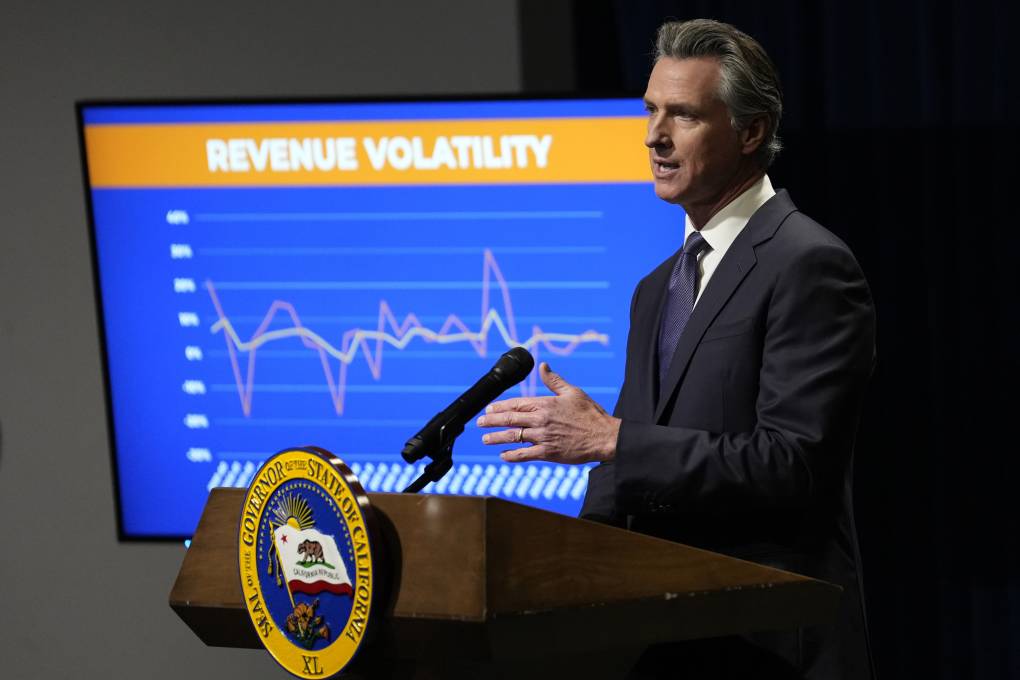
"caption": "California Gov. Gavin Newsom discusses his budget proposal in Sacramento on Jan. 10, 2024. Newsom released his updated budget proposal on Friday, May 10, 2024.",
"description": null,
"title": "California Budget",
"credit": "Rich Pedroncelli/AP Photo",
"status": "inherit",
"altTag": "A white, middle-aged man speaks behind a lectern with a screen with a graph in the background.",
"isLoading": false,
"fetchFailed": false
},
"news_11981420": {
"type": "attachments",
"id": "news_11981420",
"meta": {
"index": "attachments_1716263798",
"site": "news",
"id": "11981420",
"found": true
},
"parent": 11981418,
"imgSizes": {
"twentyfourteen-full-width": {
"file": "https://cdn.kqed.org/wp-content/uploads/sites/10/2024/03/032024_CalWorks-Hearing_JLV_CM_15-copy-1038x576.jpg",
"width": 1038,
"mimeType": "image/jpeg",
"height": 576
},
"thumbnail": {
"file": "https://cdn.kqed.org/wp-content/uploads/sites/10/2024/03/032024_CalWorks-Hearing_JLV_CM_15-copy-160x107.jpg",
"width": 160,
"mimeType": "image/jpeg",
"height": 107
},
"post-thumbnail": {
"file": "https://cdn.kqed.org/wp-content/uploads/sites/10/2024/03/032024_CalWorks-Hearing_JLV_CM_15-copy-672x372.jpg",
"width": 672,
"mimeType": "image/jpeg",
"height": 372
},
"kqedFullSize": {
"file": "https://cdn.kqed.org/wp-content/uploads/sites/10/2024/03/032024_CalWorks-Hearing_JLV_CM_15-copy.jpg",
"width": 2000,
"height": 1333
},
"large": {
"file": "https://cdn.kqed.org/wp-content/uploads/sites/10/2024/03/032024_CalWorks-Hearing_JLV_CM_15-copy-1020x680.jpg",
"width": 1020,
"mimeType": "image/jpeg",
"height": 680
},
"1536x1536": {
"file": "https://cdn.kqed.org/wp-content/uploads/sites/10/2024/03/032024_CalWorks-Hearing_JLV_CM_15-copy-1536x1024.jpg",
"width": 1536,
"mimeType": "image/jpeg",
"height": 1024
},
"full-width": {
"file": "https://cdn.kqed.org/wp-content/uploads/sites/10/2024/03/032024_CalWorks-Hearing_JLV_CM_15-copy-1920x1280.jpg",
"width": 1920,
"mimeType": "image/jpeg",
"height": 1280
},
"medium": {
"file": "https://cdn.kqed.org/wp-content/uploads/sites/10/2024/03/032024_CalWorks-Hearing_JLV_CM_15-copy-800x533.jpg",
"width": 800,
"mimeType": "image/jpeg",
"height": 533
}
},
"publishDate": 1711833797,
"modified": 1711833872,
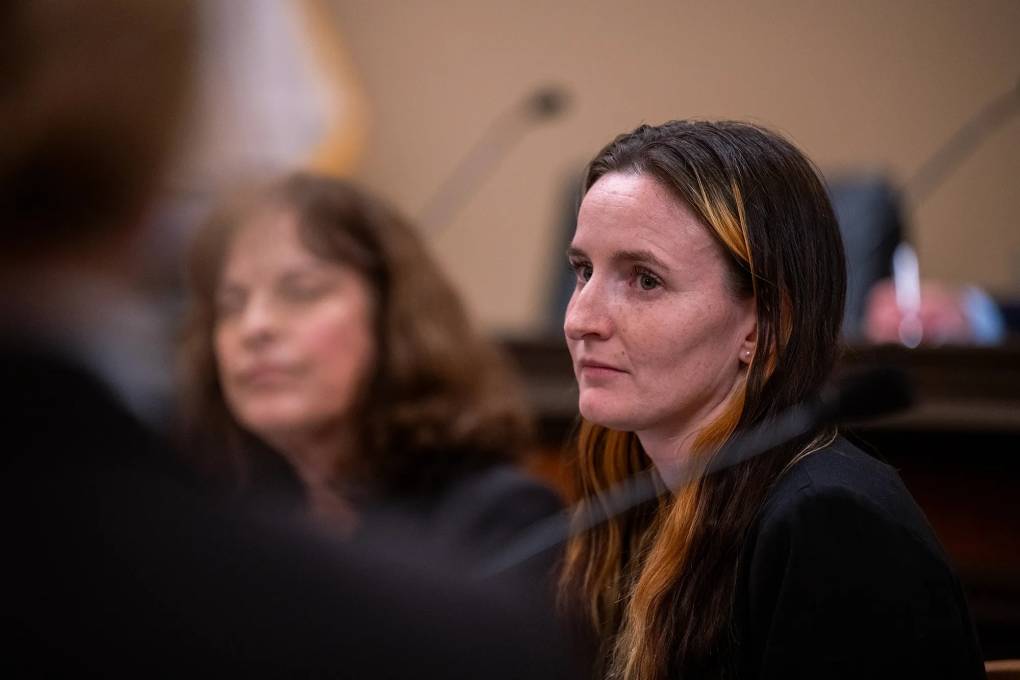
"caption": "Joy Perrin, a mother of 2 children, testifies at the Budget Subcommittee on Human Services hearing at the state Capitol in Sacramento March 20, 2024. With the help of CalWORKS, Perrin was able to secure housing for her and her family. ",
"description": null,
"title": "032024_CalWorks-Hearing_JLV_CM_15 copy",
"credit": "José Luis Villegas for CalMatters",
"status": "inherit",
"altTag": "A concerned-looking white woman looks on in a courtroom with another woman in the background.",
"isLoading": false,
"fetchFailed": false
},
"news_11972235": {
"type": "attachments",
"id": "news_11972235",
"meta": {
"index": "attachments_1716263798",
"site": "news",
"id": "11972235",
"found": true
},
"parent": 11972226,
"imgSizes": {
"twentyfourteen-full-width": {
"file": "https://cdn.kqed.org/wp-content/uploads/sites/10/2024/01/AP24010715773560-1038x576.jpg",
"width": 1038,
"mimeType": "image/jpeg",
"height": 576
},
"thumbnail": {
"file": "https://cdn.kqed.org/wp-content/uploads/sites/10/2024/01/AP24010715773560-160x107.jpg",
"width": 160,
"mimeType": "image/jpeg",
"height": 107
},
"post-thumbnail": {
"file": "https://cdn.kqed.org/wp-content/uploads/sites/10/2024/01/AP24010715773560-672x372.jpg",
"width": 672,
"mimeType": "image/jpeg",
"height": 372
},
"kqedFullSize": {
"file": "https://cdn.kqed.org/wp-content/uploads/sites/10/2024/01/AP24010715773560-scaled.jpg",
"width": 2560,
"height": 1707
},
"2048x2048": {
"file": "https://cdn.kqed.org/wp-content/uploads/sites/10/2024/01/AP24010715773560-2048x1365.jpg",
"width": 2048,
"mimeType": "image/jpeg",
"height": 1365
},
"large": {
"file": "https://cdn.kqed.org/wp-content/uploads/sites/10/2024/01/AP24010715773560-1020x680.jpg",
"width": 1020,
"mimeType": "image/jpeg",
"height": 680
},
"1536x1536": {
"file": "https://cdn.kqed.org/wp-content/uploads/sites/10/2024/01/AP24010715773560-1536x1024.jpg",
"width": 1536,
"mimeType": "image/jpeg",
"height": 1024
},
"full-width": {
"file": "https://cdn.kqed.org/wp-content/uploads/sites/10/2024/01/AP24010715773560-1920x1280.jpg",
"width": 1920,
"mimeType": "image/jpeg",
"height": 1280
},
"medium": {
"file": "https://cdn.kqed.org/wp-content/uploads/sites/10/2024/01/AP24010715773560-800x533.jpg",
"width": 800,
"mimeType": "image/jpeg",
"height": 533
}
},
"publishDate": 1704925987,
"modified": 1704930899,
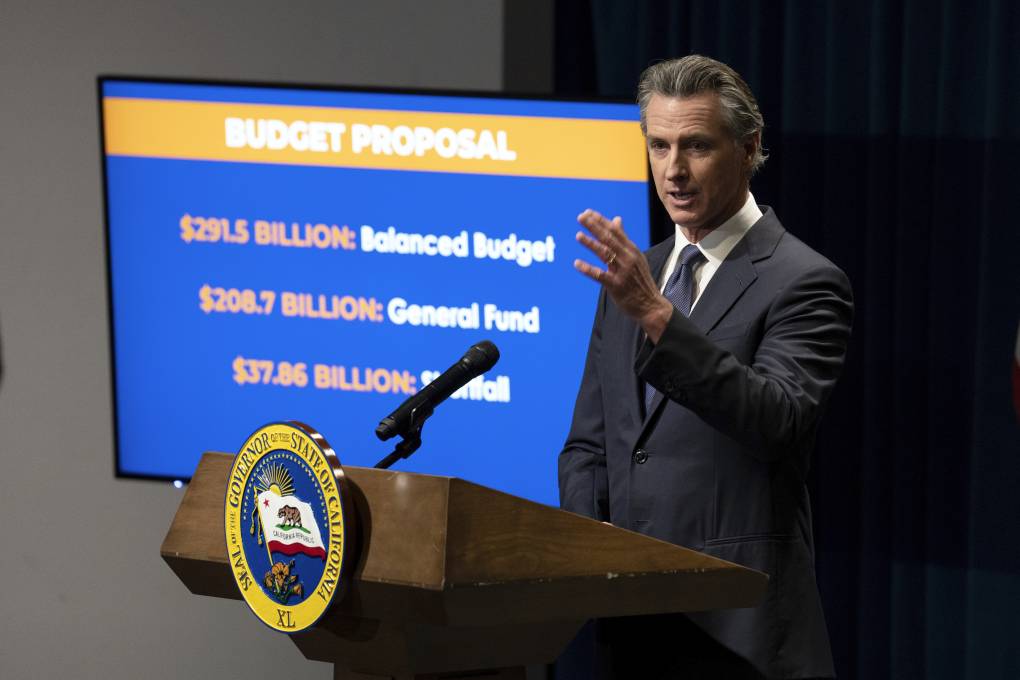
"caption": "California Gov. Gavin Newsom discusses his proposed state budget for the 2024–25 fiscal year during a news conference in Sacramento on Wednesday, Jan. 10, 2024.",
"description": null,
"title": "Gavin Newsom",
"credit": "Rich Pedroncelli/AP Photo",
"status": "inherit",
"altTag": "Gov. Gavin Newsom at a podium.",
"isLoading": false,
"fetchFailed": false
},
"news_11969314": {
"type": "attachments",
"id": "news_11969314",
"meta": {
"index": "attachments_1716263798",
"site": "news",
"id": "11969314",
"found": true
},
"parent": 11969301,
"imgSizes": {
"twentyfourteen-full-width": {
"file": "https://cdn.kqed.org/wp-content/uploads/sites/10/2023/12/CalMattersNewsom01-1038x576.jpg",
"width": 1038,
"mimeType": "image/jpeg",
"height": 576
},
"thumbnail": {
"file": "https://cdn.kqed.org/wp-content/uploads/sites/10/2023/12/CalMattersNewsom01-160x107.jpg",
"width": 160,
"mimeType": "image/jpeg",
"height": 107
},
"post-thumbnail": {
"file": "https://cdn.kqed.org/wp-content/uploads/sites/10/2023/12/CalMattersNewsom01-672x372.jpg",
"width": 672,
"mimeType": "image/jpeg",
"height": 372
},
"kqedFullSize": {
"file": "https://cdn.kqed.org/wp-content/uploads/sites/10/2023/12/CalMattersNewsom01.jpg",
"width": 2000,
"height": 1333
},
"large": {
"file": "https://cdn.kqed.org/wp-content/uploads/sites/10/2023/12/CalMattersNewsom01-1020x680.jpg",
"width": 1020,
"mimeType": "image/jpeg",
"height": 680
},
"1536x1536": {
"file": "https://cdn.kqed.org/wp-content/uploads/sites/10/2023/12/CalMattersNewsom01-1536x1024.jpg",
"width": 1536,
"mimeType": "image/jpeg",
"height": 1024
},
"full-width": {
"file": "https://cdn.kqed.org/wp-content/uploads/sites/10/2023/12/CalMattersNewsom01-1920x1280.jpg",
"width": 1920,
"mimeType": "image/jpeg",
"height": 1280
},
"medium": {
"file": "https://cdn.kqed.org/wp-content/uploads/sites/10/2023/12/CalMattersNewsom01-800x533.jpg",
"width": 800,
"mimeType": "image/jpeg",
"height": 533
}
},
"publishDate": 1701986481,
"modified": 1702084463,
"caption": "Gov. Gavin Newsom unveils his revised budget proposal for 2023–24 during a press briefing at the state Natural Resources Agency in Sacramento on May 12, 2023. ",
"description": null,
"title": "CalMattersNewsom01",
"credit": "Rahul Lal/CalMatters",
"status": "inherit",
"altTag": "Gov. Gavin Newsom at a podium with an American and California flag behind him.",
"isLoading": false,
"fetchFailed": false
},
"news_11954404": {
"type": "attachments",
"id": "news_11954404",
"meta": {
"index": "attachments_1716263798",
"site": "news",
"id": "11954404",
"found": true
},
"parent": 11954194,
"imgSizes": {
"twentyfourteen-full-width": {
"file": "https://ww2.kqed.org/app/uploads/sites/10/2023/06/Oak_Tech_011-1200x750-1-1038x576.jpeg",
"width": 1038,
"mimeType": "image/jpeg",
"height": 576
},
"thumbnail": {
"file": "https://ww2.kqed.org/app/uploads/sites/10/2023/06/Oak_Tech_011-1200x750-1-160x100.jpeg",
"width": 160,
"mimeType": "image/jpeg",
"height": 100
},
"post-thumbnail": {
"file": "https://ww2.kqed.org/app/uploads/sites/10/2023/06/Oak_Tech_011-1200x750-1-672x372.jpeg",
"width": 672,
"mimeType": "image/jpeg",
"height": 372
},
"kqedFullSize": {
"file": "https://ww2.kqed.org/app/uploads/sites/10/2023/06/Oak_Tech_011-1200x750-1.jpeg",
"width": 1200,
"height": 750
},
"large": {
"file": "https://ww2.kqed.org/app/uploads/sites/10/2023/06/Oak_Tech_011-1200x750-1-1020x638.jpeg",
"width": 1020,
"mimeType": "image/jpeg",
"height": 638
},
"medium": {
"file": "https://ww2.kqed.org/app/uploads/sites/10/2023/06/Oak_Tech_011-1200x750-1-800x500.jpeg",
"width": 800,
"mimeType": "image/jpeg",
"height": 500
}
},
"publishDate": 1687985237,
"modified": 1687985341,
"caption": "Students at Oakland Technical High School. About 133,000 students in California attend alternative schools.",
"description": null,
"title": "Oakland Tech",
"credit": "Alison Yin/EdSource",
"status": "inherit",
"altTag": "A handful of teenagers of different ethnicities are walking up a small set of concrete stairs, with a couple of them walking down the stairs",
"isLoading": false,
"fetchFailed": false
},
"news_11936197": {
"type": "attachments",
"id": "news_11936197",
"meta": {
"index": "attachments_1716263798",
"site": "news",
"id": "11936197",
"found": true
},
"parent": 11936184,
"imgSizes": {
"twentyfourteen-full-width": {
"file": "https://ww2.kqed.org/app/uploads/sites/10/2022/12/GettyImages-1431097320-1024x576.jpg",
"width": 1024,
"mimeType": "image/jpeg",
"height": 576
},
"thumbnail": {
"file": "https://ww2.kqed.org/app/uploads/sites/10/2022/12/GettyImages-1431097320-160x107.jpg",
"width": 160,
"mimeType": "image/jpeg",
"height": 107
},
"post-thumbnail": {
"file": "https://ww2.kqed.org/app/uploads/sites/10/2022/12/GettyImages-1431097320-672x372.jpg",
"width": 672,
"mimeType": "image/jpeg",
"height": 372
},
"kqedFullSize": {
"file": "https://ww2.kqed.org/app/uploads/sites/10/2022/12/GettyImages-1431097320.jpg",
"width": 1024,
"height": 683
},
"large": {
"file": "https://ww2.kqed.org/app/uploads/sites/10/2022/12/GettyImages-1431097320-1020x680.jpg",
"width": 1020,
"mimeType": "image/jpeg",
"height": 680
},
"medium": {
"file": "https://ww2.kqed.org/app/uploads/sites/10/2022/12/GettyImages-1431097320-800x534.jpg",
"width": 800,
"mimeType": "image/jpeg",
"height": 534
}
},
"publishDate": 1671735941,
"modified": 1671738852,
"caption": "Gov. Gavin Newsom speaks during a press conference on Oct. 6, 2022, in San Francisco. Newsom and the Democratic Party-controlled Legislature are facing a $24 billion projected budget deficit for the next fiscal year.",
"description": null,
"title": "California Gov. Newsom And West Coast Leaders Sign Climate Agreement",
"credit": "Justin Sullivan/Getty Images",
"status": "inherit",
"altTag": "A white man in a blue suit and tie looks on pensively.",
"isLoading": false,
"fetchFailed": false
},
"news_11920415": {
"type": "attachments",
"id": "news_11920415",
"meta": {
"index": "attachments_1716263798",
"site": "news",
"id": "11920415",
"found": true
},
"parent": 11920412,
"imgSizes": {
"twentyfourteen-full-width": {
"file": "https://ww2.kqed.org/app/uploads/sites/10/2022/07/062822_CoalingaPortraits_LV__010-CM-1038x576.jpg",
"width": 1038,
"mimeType": "image/jpeg",
"height": 576
},
"thumbnail": {
"file": "https://ww2.kqed.org/app/uploads/sites/10/2022/07/062822_CoalingaPortraits_LV__010-CM-160x108.jpg",
"width": 160,
"mimeType": "image/jpeg",
"height": 108
},
"post-thumbnail": {
"file": "https://ww2.kqed.org/app/uploads/sites/10/2022/07/062822_CoalingaPortraits_LV__010-CM-672x372.jpg",
"width": 672,
"mimeType": "image/jpeg",
"height": 372
},
"kqedFullSize": {
"file": "https://ww2.kqed.org/app/uploads/sites/10/2022/07/062822_CoalingaPortraits_LV__010-CM.jpg",
"width": 2000,
"height": 1349
},
"large": {
"file": "https://ww2.kqed.org/app/uploads/sites/10/2022/07/062822_CoalingaPortraits_LV__010-CM-1020x688.jpg",
"width": 1020,
"mimeType": "image/jpeg",
"height": 688
},
"1536x1536": {
"file": "https://ww2.kqed.org/app/uploads/sites/10/2022/07/062822_CoalingaPortraits_LV__010-CM-1536x1036.jpg",
"width": 1536,
"mimeType": "image/jpeg",
"height": 1036
},
"full-width": {
"file": "https://ww2.kqed.org/app/uploads/sites/10/2022/07/062822_CoalingaPortraits_LV__010-CM-1920x1295.jpg",
"width": 1920,
"mimeType": "image/jpeg",
"height": 1295
},
"medium": {
"file": "https://ww2.kqed.org/app/uploads/sites/10/2022/07/062822_CoalingaPortraits_LV__010-CM-800x540.jpg",
"width": 800,
"mimeType": "image/jpeg",
"height": 540
}
},
"publishDate": 1658777367,
"modified": 1658792522,
"caption": "Martin (left) and Miranda Basulto, who lost both of their parents to COVID, pose for a photo in front of their home in Coalinga on June 28, 2022. Miranda is eligible for a state bond given to kids who lost a caregiver because of COVID. ",
"description": null,
"title": "062822_CoalingaPortraits_LV__010-CM",
"credit": "Larry Valenzuela/CalMatters/CatchLight Local",
"status": "inherit",
"altTag": "two young adults pose for a portrait while holding a photo of their parents, both of whom died from COVID",
"isLoading": false,
"fetchFailed": false
},
"news_11918209": {
"type": "attachments",
"id": "news_11918209",
"meta": {
"index": "attachments_1716263798",
"site": "news",
"id": "11918209",
"found": true
},
"parent": 11918170,
"imgSizes": {
"twentyfourteen-full-width": {
"file": "https://ww2.kqed.org/app/uploads/sites/10/2022/06/RS52693_018_Chico_WomensHealthSpecialists_11182021-qut-1038x576.jpg",
"width": 1038,
"mimeType": "image/jpeg",
"height": 576
},
"thumbnail": {
"file": "https://ww2.kqed.org/app/uploads/sites/10/2022/06/RS52693_018_Chico_WomensHealthSpecialists_11182021-qut-160x107.jpg",
"width": 160,
"mimeType": "image/jpeg",
"height": 107
},
"post-thumbnail": {
"file": "https://ww2.kqed.org/app/uploads/sites/10/2022/06/RS52693_018_Chico_WomensHealthSpecialists_11182021-qut-672x372.jpg",
"width": 672,
"mimeType": "image/jpeg",
"height": 372
},
"kqedFullSize": {
"file": "https://ww2.kqed.org/app/uploads/sites/10/2022/06/RS52693_018_Chico_WomensHealthSpecialists_11182021-qut.jpg",
"width": 1920,
"height": 1280
},
"large": {
"file": "https://ww2.kqed.org/app/uploads/sites/10/2022/06/RS52693_018_Chico_WomensHealthSpecialists_11182021-qut-1020x680.jpg",
"width": 1020,
"mimeType": "image/jpeg",
"height": 680
},
"1536x1536": {
"file": "https://ww2.kqed.org/app/uploads/sites/10/2022/06/RS52693_018_Chico_WomensHealthSpecialists_11182021-qut-1536x1024.jpg",
"width": 1536,
"mimeType": "image/jpeg",
"height": 1024
},
"medium": {
"file": "https://ww2.kqed.org/app/uploads/sites/10/2022/06/RS52693_018_Chico_WomensHealthSpecialists_11182021-qut-800x533.jpg",
"width": 800,
"mimeType": "image/jpeg",
"height": 533
}
},
"publishDate": 1656446128,
"modified": 1656457153,
"caption": "Clinic manager Maria Barreto speaks with a receptionist at the Women's Health Specialists clinic in Chico on Nov. 18, 2021. The clinic is one of the few abortion providers in the region. In the wake of the US Supreme Court's decision to overturn Roe v. Wade, clinics in California are expected to see an influx of out-of-state patients seeking abortion services.",
"description": null,
"title": "RS52693_018_Chico_WomensHealthSpecialists_11182021-qut",
"credit": "Beth LaBerge/KQED",
"status": "inherit",
"altTag": "Inside a clinic reception area, a woman leans on a desk speaking to another woman behind the desk.",
"isLoading": false,
"fetchFailed": false
},
"news_11918069": {
"type": "attachments",
"id": "news_11918069",
"meta": {
"index": "attachments_1716263798",
"site": "news",
"id": "11918069",
"found": true
},
"parent": 11918058,
"imgSizes": {
"twentyfourteen-full-width": {
"file": "https://ww2.kqed.org/app/uploads/sites/10/2022/06/052522-GAS-PRICES-FILE-MHN-CM-1038x576.jpg",
"width": 1038,
"mimeType": "image/jpeg",
"height": 576
},
"thumbnail": {
"file": "https://ww2.kqed.org/app/uploads/sites/10/2022/06/052522-GAS-PRICES-FILE-MHN-CM-160x107.jpg",
"width": 160,
"mimeType": "image/jpeg",
"height": 107
},
"post-thumbnail": {
"file": "https://ww2.kqed.org/app/uploads/sites/10/2022/06/052522-GAS-PRICES-FILE-MHN-CM-672x372.jpg",
"width": 672,
"mimeType": "image/jpeg",
"height": 372
},
"kqedFullSize": {
"file": "https://ww2.kqed.org/app/uploads/sites/10/2022/06/052522-GAS-PRICES-FILE-MHN-CM.jpg",
"width": 1920,
"height": 1280
},
"large": {
"file": "https://ww2.kqed.org/app/uploads/sites/10/2022/06/052522-GAS-PRICES-FILE-MHN-CM-1020x680.jpg",
"width": 1020,
"mimeType": "image/jpeg",
"height": 680
},
"1536x1536": {
"file": "https://ww2.kqed.org/app/uploads/sites/10/2022/06/052522-GAS-PRICES-FILE-MHN-CM-1536x1024.jpg",
"width": 1536,
"mimeType": "image/jpeg",
"height": 1024
},
"medium": {
"file": "https://ww2.kqed.org/app/uploads/sites/10/2022/06/052522-GAS-PRICES-FILE-MHN-CM-800x533.jpg",
"width": 800,
"mimeType": "image/jpeg",
"height": 533
}
},
"publishDate": 1656360054,
"modified": 1656372616,
"caption": "The cost of gas at an Arco station in Oakland on May 25, 2022. Prices start at $6.19 per gallon.",
"description": null,
"title": "052522-GAS-PRICES-FILE-MHN-CM",
"credit": "Martin do Nascimento/CalMatters",
"status": "inherit",
"altTag": "At an Arco gas station, a blue and white sign shows how prices start at $6:19 per gallon and go up to $6.59 per gallon.",
"isLoading": false,
"fetchFailed": false
},
"news_11917021": {
"type": "attachments",
"id": "news_11917021",
"meta": {
"index": "attachments_1716263798",
"site": "news",
"id": "11917021",
"found": true
},
"parent": 11917012,
"imgSizes": {
"twentyfourteen-full-width": {
"file": "https://ww2.kqed.org/app/uploads/sites/10/2022/06/Helms_Community_Schools_061322-1038x576.jpg",
"width": 1038,
"mimeType": "image/jpeg",
"height": 576
},
"thumbnail": {
"file": "https://ww2.kqed.org/app/uploads/sites/10/2022/06/Helms_Community_Schools_061322-160x90.jpg",
"width": 160,
"mimeType": "image/jpeg",
"height": 90
},
"post-thumbnail": {
"file": "https://ww2.kqed.org/app/uploads/sites/10/2022/06/Helms_Community_Schools_061322-672x372.jpg",
"width": 672,
"mimeType": "image/jpeg",
"height": 372
},
"kqedFullSize": {
"file": "https://ww2.kqed.org/app/uploads/sites/10/2022/06/Helms_Community_Schools_061322.jpg",
"width": 1920,
"height": 1080
},
"large": {
"file": "https://ww2.kqed.org/app/uploads/sites/10/2022/06/Helms_Community_Schools_061322-1020x574.jpg",
"width": 1020,
"mimeType": "image/jpeg",
"height": 574
},
"1536x1536": {
"file": "https://ww2.kqed.org/app/uploads/sites/10/2022/06/Helms_Community_Schools_061322-1536x864.jpg",
"width": 1536,
"mimeType": "image/jpeg",
"height": 864
},
"medium": {
"file": "https://ww2.kqed.org/app/uploads/sites/10/2022/06/Helms_Community_Schools_061322-800x450.jpg",
"width": 800,
"mimeType": "image/jpeg",
"height": 450
}
},
"publishDate": 1655162346,
"modified": 1655234520,
"caption": "One of the community school's services was providing students with backpacks and books for the students to take home.",
"description": null,
"title": "Helms_Community_Schools_061322",
"credit": "Ali Tadayon/EdSource",
"status": "inherit",
"altTag": "A foldout table, covered in a teal oilcloth with designs of brightly colored flowers, displays 12 small stacks of young adult books, all on the theme of African American culture and history. On the top-right corner of the table sits a basket full of folded-up slips of paper. Behind the table are two black plastic chairs. The room has a reddish, possibly wooden, floor, and behind the chairs are a white-painted wall and short, white bookshelves.",
"isLoading": false,
"fetchFailed": false
},
"news_11914062": {
"type": "attachments",
"id": "news_11914062",
"meta": {
"index": "attachments_1716263798",
"site": "news",
"id": "11914062",
"found": true
},
"parent": 11914051,
"imgSizes": {
"twentyfourteen-full-width": {
"file": "https://ww2.kqed.org/app/uploads/sites/10/2022/05/Screen-Shot-2022-05-13-at-11.48.57-AM-922x576.png",
"width": 922,
"mimeType": "image/png",
"height": 576
},
"thumbnail": {
"file": "https://ww2.kqed.org/app/uploads/sites/10/2022/05/Screen-Shot-2022-05-13-at-11.48.57-AM-160x118.png",
"width": 160,
"mimeType": "image/png",
"height": 118
},
"post-thumbnail": {
"file": "https://ww2.kqed.org/app/uploads/sites/10/2022/05/Screen-Shot-2022-05-13-at-11.48.57-AM-672x372.png",
"width": 672,
"mimeType": "image/png",
"height": 372
},
"kqedFullSize": {
"file": "https://ww2.kqed.org/app/uploads/sites/10/2022/05/Screen-Shot-2022-05-13-at-11.48.57-AM.png",
"width": 922,
"height": 682
},
"medium": {
"file": "https://ww2.kqed.org/app/uploads/sites/10/2022/05/Screen-Shot-2022-05-13-at-11.48.57-AM-800x592.png",
"width": 800,
"mimeType": "image/png",
"height": 592
}
},
"publishDate": 1652467816,
"modified": 1652467953,
"caption": "Gov. Gavin Newsom announcing California's record-breaking budget surplus, on May 13, 2022. ",
"description": null,
"title": "Screen Shot 2022-05-13 at 11.48.57 AM",
"credit": "Courtesy of Youtube",
"status": "inherit",
"altTag": "Gov. Gavin Newsom speaking behind a podium.",
"isLoading": false,
"fetchFailed": false
},
"news_11901275": {
"type": "attachments",
"id": "news_11901275",
"meta": {
"index": "attachments_1716263798",
"site": "news",
"id": "11901275",
"found": true
},
"parent": 11901267,
"imgSizes": {
"twentyfourteen-full-width": {
"file": "https://ww2.kqed.org/app/uploads/sites/10/2022/01/leantesting_011022_final-1038x576.png",
"width": 1038,
"mimeType": "image/png",
"height": 576
},
"thumbnail": {
"file": "https://ww2.kqed.org/app/uploads/sites/10/2022/01/leantesting_011022_final-160x115.png",
"width": 160,
"mimeType": "image/png",
"height": 115
},
"post-thumbnail": {
"file": "https://ww2.kqed.org/app/uploads/sites/10/2022/01/leantesting_011022_final-672x372.png",
"width": 672,
"mimeType": "image/png",
"height": 372
},
"kqedFullSize": {
"file": "https://ww2.kqed.org/app/uploads/sites/10/2022/01/leantesting_011022_final.png",
"width": 1920,
"height": 1379
},
"large": {
"file": "https://ww2.kqed.org/app/uploads/sites/10/2022/01/leantesting_011022_final-1020x733.png",
"width": 1020,
"mimeType": "image/png",
"height": 733
},
"1536x1536": {
"file": "https://ww2.kqed.org/app/uploads/sites/10/2022/01/leantesting_011022_final-1536x1103.png",
"width": 1536,
"mimeType": "image/png",
"height": 1103
},
"medium": {
"file": "https://ww2.kqed.org/app/uploads/sites/10/2022/01/leantesting_011022_final-800x575.png",
"width": 800,
"mimeType": "image/png",
"height": 575
}
},
"publishDate": 1641851297,
"modified": 1641851473,
"caption": null,
"description": null,
"title": "leantesting_011022_final",
"credit": null,
"status": "inherit",
"altTag": "Cartoon: a three-legged stool with one leg, chopped shorter, that is labeled \"testi--.\" The other two legs read, \"masks\" and \"vaccines.\" Atop the stool is a small crowd of nervous people looking down as the stool leans toward covid virus.",
"isLoading": false,
"fetchFailed": false
}
},
"audioPlayerReducer": {
"postId": "stream_live",
"isPaused": true,
"isPlaying": false,
"pfsActive": false,
"pledgeModalIsOpen": true,
"playerDrawerIsOpen": false,
"liveAudioPlayStartedAt": 0,
"liveAudioPlayContext": ""
},
"authorsReducer": {
"byline_news_11985695": {
"type": "authors",
"id": "byline_news_11985695",
"meta": {
"override": true
},
"slug": "byline_news_11985695",
"name": "Adam Beam\u003cbr>Associated Press",
"isLoading": false
},
"byline_news_11981418": {
"type": "authors",
"id": "byline_news_11981418",
"meta": {
"override": true
},
"slug": "byline_news_11981418",
"name": "\u003ca href=\"https://calmatters.org/author/kervy-robles/\">Justo Robles\u003c/a>",
"isLoading": false
},
"byline_news_11969301": {
"type": "authors",
"id": "byline_news_11969301",
"meta": {
"override": true
},
"slug": "byline_news_11969301",
"name": "\u003ca href=\"https://calmatters.org/author/alexei-koseff/\">Alexei Koseff\u003c/a>",
"isLoading": false
},
"byline_news_11954194": {
"type": "authors",
"id": "byline_news_11954194",
"meta": {
"override": true
},
"slug": "byline_news_11954194",
"name": "\u003ca href=\"https://edsource.org/author/bmarquez\">Betty Márquez Rosales\u003c/a>",
"isLoading": false
},
"byline_news_11936184": {
"type": "authors",
"id": "byline_news_11936184",
"meta": {
"override": true
},
"slug": "byline_news_11936184",
"name": "\u003ca href=\"https://calmatters.org/author/alejandro-lazo/\">Alejandro Lazo\u003c/a> and \u003ca href=\"https://calmatters.org/author/jeanne-kuang/\">Jeanne Kuang\u003c/a>",
"isLoading": false
},
"byline_news_11920412": {
"type": "authors",
"id": "byline_news_11920412",
"meta": {
"override": true
},
"slug": "byline_news_11920412",
"name": "Elizabeth Aguilera",
"isLoading": false
},
"byline_news_11918170": {
"type": "authors",
"id": "byline_news_11918170",
"meta": {
"override": true
},
"slug": "byline_news_11918170",
"name": "Kristen Hwang",
"isLoading": false
},
"byline_news_11918058": {
"type": "authors",
"id": "byline_news_11918058",
"meta": {
"override": true
},
"slug": "byline_news_11918058",
"name": "Alexei Koseff",
"isLoading": false
},
"byline_news_11917012": {
"type": "authors",
"id": "byline_news_11917012",
"meta": {
"override": true
},
"slug": "byline_news_11917012",
"name": "\u003ca href=\"https://edsource.org/author/atadayon\">Ali Tadayon\u003c/a>",
"isLoading": false
},
"byline_news_11914051": {
"type": "authors",
"id": "byline_news_11914051",
"meta": {
"override": true
},
"slug": "byline_news_11914051",
"name": "\u003ca href=\"https://calmatters.org/author/ben-christopher/\">Ben Christopher\u003c/a>",
"isLoading": false
},
"gmarzorati": {
"type": "authors",
"id": "227",
"meta": {
"index": "authors_1716337520",
"id": "227",
"found": true
},
"name": "Guy Marzorati",
"firstName": "Guy",
"lastName": "Marzorati",
"slug": "gmarzorati",
"email": "gmarzorati@KQED.org",
"display_author_email": true,
"staff_mastheads": [
"news"
],
"title": "Correspondent",
"bio": "Guy Marzorati is a correspondent on KQED's California Politics and Government Desk, based in San Jose. A graduate of Santa Clara University, Guy joined KQED in 2013. He reports on state and local politics and produces KQED's digital voter guide.",
"avatar": "https://secure.gravatar.com/avatar/771cddf45ce3a8ed533d82dcc214e9ef925d76d2af5794a33da1ce439eb54a32?s=600&d=blank&r=g",
"twitter": "guymarzorati",
"bluesky": null,
"facebook": null,
"instagram": null,
"linkedin": null,
"sites": [
{
"site": "",
"roles": [
"editor"
]
},
{
"site": "news",
"roles": [
"editor"
]
},
{
"site": "science",
"roles": [
"editor"
]
},
{
"site": "forum",
"roles": [
"editor"
]
},
{
"site": "elections",
"roles": [
"editor"
]
},
{
"site": "liveblog",
"roles": [
"editor"
]
}
],
"headData": {
"title": "Guy Marzorati | KQED",
"description": "Correspondent",
"ogImgSrc": "https://secure.gravatar.com/avatar/771cddf45ce3a8ed533d82dcc214e9ef925d76d2af5794a33da1ce439eb54a32?s=600&d=blank&r=g",
"twImgSrc": "https://secure.gravatar.com/avatar/771cddf45ce3a8ed533d82dcc214e9ef925d76d2af5794a33da1ce439eb54a32?s=600&d=blank&r=g"
},
"isLoading": false,
"link": "/author/gmarzorati"
},
"markfiore": {
"type": "authors",
"id": "3236",
"meta": {
"index": "authors_1716337520",
"id": "3236",
"found": true
},
"name": "Mark Fiore",
"firstName": "Mark",
"lastName": "Fiore",
"slug": "markfiore",
"email": "mark@markfiore.com",
"display_author_email": false,
"staff_mastheads": [
"news"
],
"title": "KQED News Cartoonist",
"bio": "\u003ca href=\"http://www.MarkFiore.com\">MarkFiore.com\u003c/a> | \u003ca href=\"https://twitter.com/markfiore\">Follow on Twitter\u003c/a> | \u003ca href=\"https://www.facebook.com/pages/Mark-Fiore-Animated-Political-Cartoons/94451707396?ref=bookmarks\">Facebook\u003c/a> | \u003ca href=\"mailto:mark@markfiore.com\">email\u003c/a>\r\n\r\nPulitzer Prize-winner, Mark Fiore, who the Wall Street Journal has called “the undisputed guru of the form,” creates animated political cartoons in San Francisco, where his work has been featured regularly on the San Francisco Chronicle’s web site, SFGate.com. His work has appeared on Newsweek.com, Slate.com, CBSNews.com, MotherJones.com, DailyKos.com and NPR’s web site. Fiore’s political animation has appeared on CNN, Frontline, Bill Moyers Journal, Salon.com and cable and broadcast outlets across the globe.\r\n\r\nBeginning his professional life by drawing traditional political cartoons for newspapers, Fiore’s work appeared in publications ranging from the Washington Post to the Los Angeles Times. In the late 1990s, he began to experiment with animating political cartoons and, after a short stint at the San Jose Mercury News as their staff cartoonist, Fiore devoted all his energies to animation.\r\nGrowing up in California, Fiore also spent a good portion of his life in the backwoods of Idaho. It was this combination that shaped him politically. Mark majored in political science at Colorado College, where, in a perfect send-off for a cartoonist, he received his diploma in 1991 as commencement speaker Dick Cheney smiled approvingly.\r\nMark Fiore was awarded the Pulitzer Prize for political cartooning in 2010, a Robert F. Kennedy Journalism Award in 2004 and has twice received an Online Journalism Award for commentary from the Online News Association (2002, 2008). Fiore has received two awards for his work in new media from the National Cartoonists Society (2001, 2002), and in 2006 received The James Madison Freedom of Information Award from The Society of Professional Journalists.",
"avatar": "https://secure.gravatar.com/avatar/fc4e2a612b15b67bad0c6f0e1db4ca9b?s=600&d=blank&r=g",
"twitter": "MarkFiore",
"facebook": null,
"instagram": "https://www.instagram.com/markfiore/?hl=en",
"linkedin": null,
"sites": [
{
"site": "arts",
"roles": [
"contributor"
]
},
{
"site": "news",
"roles": [
"editor"
]
},
{
"site": "futureofyou",
"roles": [
"editor"
]
},
{
"site": "science",
"roles": [
"editor"
]
}
],
"headData": {
"title": "Mark Fiore | KQED",
"description": "KQED News Cartoonist",
"ogImgSrc": "https://secure.gravatar.com/avatar/fc4e2a612b15b67bad0c6f0e1db4ca9b?s=600&d=blank&r=g",
"twImgSrc": "https://secure.gravatar.com/avatar/fc4e2a612b15b67bad0c6f0e1db4ca9b?s=600&d=blank&r=g"
},
"isLoading": false,
"link": "/author/markfiore"
}
},
"pagesReducer": {
"news_tag_california-budget": {
"type": "terms",
"id": "news_402",
"meta": {
"index": "terms_1716263798",
"site": "news",
"id": "402",
"score": 9.108477
},
"featImg": null,
"name": "California budget",
"description": null,
"taxonomy": "tag",
"headData": {
"twImgId": null,
"twTitle": null,
"ogTitle": null,
"ogImgId": null,
"twDescription": null,
"description": null,
"title": "California budget Archives | KQED News",
"ogDescription": null
},
"ttid": 410,
"slug": "california-budget",
"isLoading": false,
"title": "California budget",
"pageMeta": {
"site": "news",
"WpPageTemplate": "page-topic-editorial",
"currentPage": 3
},
"blocks": [
{
"blockName": "kqed/post-list",
"attrs": {
"layout": "cardArticle2",
"query": "posts/news?tag=california-budget",
"seeMore": false,
"paginated": true,
"page": 3
}
},
{
"blockName": "kqed/ad"
}
]
}
},
"pfsSessionReducer": {},
"postsReducer": {
"stream_live": {
"type": "live",
"id": "stream_live",
"audioUrl": "https://hls.kqed.org/hls/kqed_app/playlist.m3u8",
"title": "Live Stream",
"excerpt": "Live Stream information currently unavailable.",
"link": "/radio",
"featImg": "",
"label": {
"name": "KQED Live",
"link": "/"
}
},
"stream_kqedNewscast": {
"type": "posts",
"id": "stream_kqedNewscast",
"audioUrl": "https://www.kqed.org/.stream/anon/radio/RDnews/newscast.mp3?_=1",
"title": "KQED Newscast",
"featImg": "",
"label": {
"name": "88.5 FM",
"link": "/"
}
},
"news_11985695": {
"type": "posts",
"id": "news_11985695",
"meta": {
"index": "posts_1716263798",
"site": "news",
"id": "11985695",
"score": null,
"sort": [
1715367982000
]
},
"guestAuthors": [],
"slug": "newsom-proposes-cutting-10000-vacant-state-jobs-to-help-close-27-billion-budget",
"title": "Newsom Proposes Cutting 10,000 Vacant State Jobs to Help Close $27 Billion Budget",
"publishDate": 1715367982,
"format": "standard",
"headTitle": "Newsom Proposes Cutting 10,000 Vacant State Jobs to Help Close $27 Billion Budget | KQED",
"labelTerm": {
"site": "news"
},
"content": "\u003cp>California has a budget deficit of $27.6 billion, Gov. Gavin Newsom announced Friday — a gap so wide that he’s proposing eliminating 10,000 vacant state jobs and cutting spending across 260 state programs.\u003c/p>\n\u003cp>The Democratic governor outlined the deficit on Friday as part of his proposed $288 billion state budget for the fiscal year that starts July 1. That’s by far the largest budget of any state.\u003c/p>\n\u003cp>One-time cuts would include $2 billion for broadband that would have expanded broadband connections, $500 million for water storage in the drought-plagued state, and $272 million for employment services for the state’s welfare program.\u003c/p>\n\u003cp>Continuing cuts would save another $81 million by closing housing units with 4,600 beds across 13 state prisons and removing $300 million in pandemic-related help for state and local public health departments. Ongoing spending for a scholarship program for middle-class college students pursuing a teaching credential would be cut by $510 million. He also wants to suspend the widely used net operating loss tax deduction for businesses.\u003c/p>\n\u003cp>“These are programs, propositions that I’ve long advanced — many of them,” Newsom said as he began outlining his budget. “But you’ve got to do it. We have to be responsible. We have to be accountable.”\u003c/p>\n\u003cp>[ad fullwidth]\u003c/p>\n\u003cp>The deficit is smaller than the $38 billion Newsom predicted in January. However, that’s because it doesn’t include $17.3 billion in cuts and other actions he and lawmakers already agreed on to help close it. Otherwise, it would be closer to $45 billion.\u003c/p>\n\u003cp>This is the second year in a row the nation’s most populous state faces a multibillion-dollar shortfall. State revenues have continued to fall amid increasing inflation and a slowdown in the state’s normally robust technology industry. Through the end of April, state tax collections from its three biggest sources — personal income, corporations and sales — dropped more than $6 billion below the previous estimate.\u003c/p>\n\u003cp>Newsom, now in his last term as governor and widely seen as a future presidential candidate, said his plan would address both this year’s deficit and a projected $28.4 billion deficit for the following year. He plans to outline more than $32 billion in cuts to make that happen so that the state Legislature can pass a spending plan by June 15.\u003c/p>\n\u003cp>“It’s, I think, appropriate and prudent for us not to just solve for this year but to also solve for next year,” Newsom said.\u003c/p>\n\u003cp>Newsom and the nonpartisan Legislative Analyst’s Office have disagreed on the true size of the state’s deficit this year. The LAO said in January that the deficit was actually $58 billion when including some reductions in public education spending. The LAO will release its own new estimate next week, and it will likely be larger.\u003c/p>\n\u003cp>In January, Newsom floated the possibility of delaying a minimum wage increase for health care workers, which \u003ca href=\"https://apnews.com/article/california-health-care-workers-minimum-wage-274c712eec29573731a479bc7ef9b452#:~:text=Newsom%20signs%20law%20to%20slowly,%2425%20per%20hour%20%7C%20AP%20News\">Newsom signed into law to much fanfare just last year\u003c/a>.\u003c/p>\n\u003cp>[aside label=\"Related Stories\" postID=\"news_11981977,news_11972196,news_11969301\"]State budgeting is a guessing game, particularly in California, where a progressive tax system means the state gets the bulk of its tax collections from rich people. About half of the state’s income tax collections came from just 1% of the population in 2021, making the state more vulnerable to \u003ca href=\"https://apnews.com/general-news-3b24f287b7214fac91311bfca23ef16c\">swings in the stock market\u003c/a>.\u003c/p>\n\u003cp>If lawmakers and Newsom get revenue projections wrong and the state takes in less than they thought, there’s a shortfall. And unlike the federal government, the California Constitution requires the state to have a balanced budget.\u003c/p>\n\u003cp>Last year, their predictions were way off after a series of destructive storms in January 2023 prompted lengthy delays in tax filing deadlines. Instead of filing their taxes in April, most Californians could wait until November. Lawmakers still had to pass a budget by June despite not knowing how much money they had.\u003c/p>\n\u003cp>This January, Newsom said the state’s revenues for 2022–23 to 2024–25 have been coming in $42.9 billion lower than estimated.\u003c/p>\n\u003cp>Newsom and lawmakers have already \u003ca href=\"https://apnews.com/article/california-budget-deficit-gavin-newsom-09507c2b312e454baa50d38c94218a1d\">agreed to about $17 billion in reductions and deferrals\u003c/a> to reduce the deficit. Plus, Newsom has said he wants to take $13 billion from the state’s various savings accounts to help balance the budget.\u003c/p>\n\u003cp>Corporate tax collections are down 15% from last year, the fourth largest drop in the past 40 years, according to the LAO. And while income taxes are growing thanks to a 20% increase in the stock market since October, which is driving an increase of 8% in total income tax collections this year, the LAO said growth is unlikely to continue. That’s because the broader state economy has not improved — the unemployment rate has risen and investments in California businesses have declined.\u003c/p>\n\u003cp>\u003c/p>\n",
"blocks": [],
"excerpt": "The governor also suggested cutting funding for 260 different state programs as part of his proposed $288 billion state budget for the fiscal year starting July 1.",
"status": "publish",
"parent": 0,
"modified": 1722644046,
"stats": {
"hasAudio": false,
"hasVideo": false,
"hasChartOrMap": false,
"iframeSrcs": [],
"hasGoogleForm": false,
"hasGallery": false,
"hasHearkenModule": false,
"hasPolis": false,
"paragraphCount": 19,
"wordCount": 835
},
"headData": {
"title": "Newsom Proposes Cutting 10,000 Vacant State Jobs to Help Close $27 Billion Budget | KQED",
"description": "The governor also suggested cutting funding for 260 different state programs as part of his proposed $288 billion state budget for the fiscal year starting July 1.",
"ogTitle": "",
"ogDescription": "",
"ogImgId": "",
"twTitle": "",
"twDescription": "",
"twImgId": "",
"schema": {
"@context": "https://schema.org",
"@type": "NewsArticle",
"headline": "Newsom Proposes Cutting 10,000 Vacant State Jobs to Help Close $27 Billion Budget",
"datePublished": "2024-05-10T12:06:22-07:00",
"dateModified": "2024-08-02T17:14:06-07:00",
"image": "https://cdn.kqed.org/wp-content/uploads/2020/02/KQED-OG-Image@1x.png",
"isAccessibleForFree": "True",
"publisher": {
"@type": "NewsMediaOrganization",
"@id": "https://www.kqed.org/#organization",
"name": "KQED",
"logo": "https://cdn.kqed.org/wp-content/uploads/2020/02/KQED-OG-Image@1x.png",
"url": "https://www.kqed.org",
"sameAs": [
"https://www.facebook.com/KQED",
"https://twitter.com/KQED",
"https://www.instagram.com/kqed/",
"https://www.tiktok.com/@kqedofficial",
"https://www.linkedin.com/company/kqed",
"https://www.youtube.com/channel/UCeC0IOo7i1P_61zVUWbJ4nw"
]
}
}
},
"sticky": false,
"nprByline": "Adam Beam\u003cbr>Associated Press",
"nprStoryId": "kqed-11985695",
"excludeFromSiteSearch": "Include",
"showOnAuthorArchivePages": "No",
"articleAge": "0",
"path": "/news/11985695/newsom-proposes-cutting-10000-vacant-state-jobs-to-help-close-27-billion-budget",
"audioTrackLength": null,
"parsedContent": [
{
"type": "contentString",
"content": "\u003cdiv class=\"post-body\">\u003cp>\u003cp>California has a budget deficit of $27.6 billion, Gov. Gavin Newsom announced Friday — a gap so wide that he’s proposing eliminating 10,000 vacant state jobs and cutting spending across 260 state programs.\u003c/p>\n\u003cp>The Democratic governor outlined the deficit on Friday as part of his proposed $288 billion state budget for the fiscal year that starts July 1. That’s by far the largest budget of any state.\u003c/p>\n\u003cp>One-time cuts would include $2 billion for broadband that would have expanded broadband connections, $500 million for water storage in the drought-plagued state, and $272 million for employment services for the state’s welfare program.\u003c/p>\n\u003cp>Continuing cuts would save another $81 million by closing housing units with 4,600 beds across 13 state prisons and removing $300 million in pandemic-related help for state and local public health departments. Ongoing spending for a scholarship program for middle-class college students pursuing a teaching credential would be cut by $510 million. He also wants to suspend the widely used net operating loss tax deduction for businesses.\u003c/p>\n\u003cp>“These are programs, propositions that I’ve long advanced — many of them,” Newsom said as he began outlining his budget. “But you’ve got to do it. We have to be responsible. We have to be accountable.”\u003c/p>\n\u003cp>\u003c/p>\u003c/div>",
"attributes": {
"named": {},
"numeric": []
}
},
{
"type": "component",
"content": "",
"name": "ad",
"attributes": {
"named": {
"label": "fullwidth"
},
"numeric": [
"fullwidth"
]
}
},
{
"type": "contentString",
"content": "\u003cdiv class=\"post-body\">\u003cp>\u003c/p>\n\u003cp>The deficit is smaller than the $38 billion Newsom predicted in January. However, that’s because it doesn’t include $17.3 billion in cuts and other actions he and lawmakers already agreed on to help close it. Otherwise, it would be closer to $45 billion.\u003c/p>\n\u003cp>This is the second year in a row the nation’s most populous state faces a multibillion-dollar shortfall. State revenues have continued to fall amid increasing inflation and a slowdown in the state’s normally robust technology industry. Through the end of April, state tax collections from its three biggest sources — personal income, corporations and sales — dropped more than $6 billion below the previous estimate.\u003c/p>\n\u003cp>Newsom, now in his last term as governor and widely seen as a future presidential candidate, said his plan would address both this year’s deficit and a projected $28.4 billion deficit for the following year. He plans to outline more than $32 billion in cuts to make that happen so that the state Legislature can pass a spending plan by June 15.\u003c/p>\n\u003cp>“It’s, I think, appropriate and prudent for us not to just solve for this year but to also solve for next year,” Newsom said.\u003c/p>\n\u003cp>Newsom and the nonpartisan Legislative Analyst’s Office have disagreed on the true size of the state’s deficit this year. The LAO said in January that the deficit was actually $58 billion when including some reductions in public education spending. The LAO will release its own new estimate next week, and it will likely be larger.\u003c/p>\n\u003cp>In January, Newsom floated the possibility of delaying a minimum wage increase for health care workers, which \u003ca href=\"https://apnews.com/article/california-health-care-workers-minimum-wage-274c712eec29573731a479bc7ef9b452#:~:text=Newsom%20signs%20law%20to%20slowly,%2425%20per%20hour%20%7C%20AP%20News\">Newsom signed into law to much fanfare just last year\u003c/a>.\u003c/p>\n\u003cp>\u003c/p>\u003c/div>",
"attributes": {
"named": {},
"numeric": []
}
},
{
"type": "component",
"content": "",
"name": "aside",
"attributes": {
"named": {
"label": "Related Stories ",
"postid": "news_11981977,news_11972196,news_11969301"
},
"numeric": []
}
},
{
"type": "contentString",
"content": "\u003cdiv class=\"post-body\">\u003cp>State budgeting is a guessing game, particularly in California, where a progressive tax system means the state gets the bulk of its tax collections from rich people. About half of the state’s income tax collections came from just 1% of the population in 2021, making the state more vulnerable to \u003ca href=\"https://apnews.com/general-news-3b24f287b7214fac91311bfca23ef16c\">swings in the stock market\u003c/a>.\u003c/p>\n\u003cp>If lawmakers and Newsom get revenue projections wrong and the state takes in less than they thought, there’s a shortfall. And unlike the federal government, the California Constitution requires the state to have a balanced budget.\u003c/p>\n\u003cp>Last year, their predictions were way off after a series of destructive storms in January 2023 prompted lengthy delays in tax filing deadlines. Instead of filing their taxes in April, most Californians could wait until November. Lawmakers still had to pass a budget by June despite not knowing how much money they had.\u003c/p>\n\u003cp>This January, Newsom said the state’s revenues for 2022–23 to 2024–25 have been coming in $42.9 billion lower than estimated.\u003c/p>\n\u003cp>Newsom and lawmakers have already \u003ca href=\"https://apnews.com/article/california-budget-deficit-gavin-newsom-09507c2b312e454baa50d38c94218a1d\">agreed to about $17 billion in reductions and deferrals\u003c/a> to reduce the deficit. Plus, Newsom has said he wants to take $13 billion from the state’s various savings accounts to help balance the budget.\u003c/p>\n\u003cp>Corporate tax collections are down 15% from last year, the fourth largest drop in the past 40 years, according to the LAO. And while income taxes are growing thanks to a 20% increase in the stock market since October, which is driving an increase of 8% in total income tax collections this year, the LAO said growth is unlikely to continue. That’s because the broader state economy has not improved — the unemployment rate has risen and investments in California businesses have declined.\u003c/p>\n\u003cp>\u003c/p>\n\u003c/div>\u003c/p>",
"attributes": {
"named": {},
"numeric": []
}
}
],
"link": "/news/11985695/newsom-proposes-cutting-10000-vacant-state-jobs-to-help-close-27-billion-budget",
"authors": [
"byline_news_11985695"
],
"categories": [
"news_1758",
"news_8",
"news_13"
],
"tags": [
"news_402",
"news_27626",
"news_16",
"news_19904"
],
"featImg": "news_11985705",
"label": "news"
},
"news_11981418": {
"type": "posts",
"id": "news_11981418",
"meta": {
"index": "posts_1716263798",
"site": "news",
"id": "11981418",
"score": null,
"sort": [
1711882808000
]
},
"guestAuthors": [],
"slug": "california-may-cut-2-calworks-programs-over-budget-deficit-potentially-affecting-thousands-of-families",
"title": "California May Cut 2 CalWORKS Programs Over Budget Deficit, Potentially Affecting Thousands of Families",
"publishDate": 1711882808,
"format": "standard",
"headTitle": "California May Cut 2 CalWORKS Programs Over Budget Deficit, Potentially Affecting Thousands of Families | KQED",
"labelTerm": {
"term": 18481,
"site": "news"
},
"content": "\u003cp>Joy Perrin had been living in a van with her two children for several months when she walked into a welfare office in 2018. She had left an abusive partner and had failed her first semester at Laney College in Oakland.\u003c/p>\n\u003cp>A social worker told Perrin she qualified for the CalWORKS family stabilization program, which provides cash assistance, transitional housing and counseling to families experiencing crises such as domestic violence, substance abuse, or the risk of homelessness.\u003c/p>\n\u003cp>Five years later, Perrin spoke to lawmakers on March 20, trying to save the program that helped her find a safe home and achieve an associate’s degree in biology.\u003c/p>\n\u003cp>“This program gave me the opportunity to show my children that poverty doesn’t have to be our name,” said Perrin, who plans to study radiology. “Not only am I a testament of the power of this program, but my children will be able to share their stories and how it can change their path to their future.”\u003c/p>\n\u003cp>Because California faces a projected budget shortfall of $38 billion to $73 billion, Gov. Gavin Newsom in January \u003ca href=\"https://calmatters.org/politics/2024/01/newsom-budget-california/\">proposed cuts\u003c/a> that would wipe out funding for the family stabilization program and for another CalWORKS program that subsidizes jobs for lower-income recipients.\u003c/p>\n\u003cfigure id=\"attachment_11981421\" class=\"wp-caption alignnone\" style=\"max-width: 1568px\">\u003cimg loading=\"lazy\" decoding=\"async\" class=\"size-full wp-image-11981421\" src=\"https://cdn.kqed.org/wp-content/uploads/sites/10/2024/03/032024_CalWorks-Hearing_JLV_CM_03-copy.jpg\" alt=\"A room full of people seated and listening.\" width=\"1568\" height=\"1045\" srcset=\"https://cdn.kqed.org/wp-content/uploads/sites/10/2024/03/032024_CalWorks-Hearing_JLV_CM_03-copy.jpg 1568w, https://cdn.kqed.org/wp-content/uploads/sites/10/2024/03/032024_CalWorks-Hearing_JLV_CM_03-copy-800x533.jpg 800w, https://cdn.kqed.org/wp-content/uploads/sites/10/2024/03/032024_CalWorks-Hearing_JLV_CM_03-copy-1020x680.jpg 1020w, https://cdn.kqed.org/wp-content/uploads/sites/10/2024/03/032024_CalWorks-Hearing_JLV_CM_03-copy-160x107.jpg 160w, https://cdn.kqed.org/wp-content/uploads/sites/10/2024/03/032024_CalWorks-Hearing_JLV_CM_03-copy-1536x1024.jpg 1536w\" sizes=\"(max-width: 1568px) 100vw, 1568px\">\u003cfigcaption class=\"wp-caption-text\">Attendees at the Budget Subcommittee on Human Services hearing at the state Capitol in Sacramento on March 20, 2024. \u003ccite>(José Luis Villegas for CalMatters)\u003c/cite>\u003c/figcaption>\u003c/figure>\n\u003cp>Both cuts would undermine CalWORKS’ effectiveness, advocates say, and contradict the governor’s stated goals of helping move families out of poverty.\u003c/p>\n\u003cp>The family stabilization program serves more than 31,000 people. The extended subsidized employment program reaches about 8,000 participants a month. In total 354,000 households with 659,000 children receive CalWORKS benefits a year.\u003c/p>\n\u003ch2>CalWORKS cuts\u003c/h2>\n\u003cp>To shrink CalWORKS’ $7 billion annual budget, Newsom would take away what’s left of the $55 million from family stabilization this year and $71 million next year and $134 million each year from the expanded subsidized employment program — along with other cuts.\u003c/p>\n\u003cp>Some lawmakers are resisting.\u003c/p>\n\u003cp>Assemblymember Corey Jackson, the Moreno Valley Democrat who chairs the Assembly’s Human Services Committee, held the recent hearing to make clear how many people would be hurt.\u003c/p>\n\u003cp>He told CalMatters he opposes “a vast majority” of Newsom’s proposed cuts to CalWORKS and is seeking alternatives.\u003c/p>\n\u003cfigure id=\"attachment_11981424\" class=\"wp-caption alignright\" style=\"max-width: 1257px\">\u003cimg loading=\"lazy\" decoding=\"async\" class=\"size-full wp-image-11981424\" src=\"https://cdn.kqed.org/wp-content/uploads/sites/10/2024/03/032024_CalWorks-Hearing_JLV_CM_05-copy-e1711834742992.jpg\" alt=\"An African American man in a gray suit with black tie listens from behind a desk with his name on it.\" width=\"1257\" height=\"754\" srcset=\"https://cdn.kqed.org/wp-content/uploads/sites/10/2024/03/032024_CalWorks-Hearing_JLV_CM_05-copy-e1711834742992.jpg 1257w, https://cdn.kqed.org/wp-content/uploads/sites/10/2024/03/032024_CalWorks-Hearing_JLV_CM_05-copy-e1711834742992-800x480.jpg 800w, https://cdn.kqed.org/wp-content/uploads/sites/10/2024/03/032024_CalWorks-Hearing_JLV_CM_05-copy-e1711834742992-1020x612.jpg 1020w, https://cdn.kqed.org/wp-content/uploads/sites/10/2024/03/032024_CalWorks-Hearing_JLV_CM_05-copy-e1711834742992-160x96.jpg 160w\" sizes=\"(max-width: 1257px) 100vw, 1257px\">\u003cfigcaption class=\"wp-caption-text\">Assemblymember Corey Jackson, chairperson of the Human Services Committee, at a hearing at the state Capitol on March 20, 2024. \u003ccite>(José Luis Villegas for CalMatters)\u003c/cite>\u003c/figcaption>\u003c/figure>\n\u003cp>“The question is no longer whether something is a good program; the question is whether it is more important than another,” Jackson said. “CalWORKS is one of the most important programs that the state has. Very few can compete with it from a priorities perspective.”\u003c/p>\n\u003cp>State senators recently proposed shrinking the state budget shortfall by trimming current-year allocations. They agreed with Newsom’s plan to take back $336 million from CalWORKs, saying the money “is projected to be unexpended and should have no programmatic impact.”\u003c/p>\n\u003cp>But that doesn’t mean the cuts are set in stone. Newsom’s administration has proposed “a number of solutions across state government,” said H.D. Palmer, a spokesperson for Newsom’s finance department, including some funding for both CalWORKS programs.\u003c/p>\n\u003cp>[ad fullwidth]\u003c/p>\n\u003cp>The nonpartisan Legislative Analyst’s Office is also recommending \u003ca href=\"https://lao.ca.gov/Publications/Report/4872\">reducing CalWORKS funding\u003c/a> to reflect “consistently unspent funds,” said Sonia Russo, a policy analyst there. Almost $40 million a year remains unspent in the subsidized employment program, she said, though the family stabilization program spends all of its funds each year.\u003c/p>\n\u003ch2>A family’s lifeline\u003c/h2>\n\u003cp>Part of the federal Temporary Assistance for Needy Families program, generally known as welfare, CalWORKS requires recipients to get a job or participate in activities intended to lead to employment.\u003c/p>\n\u003cp>Its subsidized employment program helps people transition off public assistance by placing them into jobs and paying part of their wages.\u003c/p>\n\u003cp>[pullquote align=\"right\" size=\"medium\" citation=\"Assemblymember Corey Jackson (D-Moreno Valley)\"]‘CalWORKS is one of the most important programs that the state has. Very few can compete with it from a priorities perspective.’[/pullquote]At the height of the pandemic, the subsidized employment program’s caseload dropped, largely due to worksite closures and restrictions. But it began rebounding in 2021 and this year increased again, though still below pre-pandemic levels.\u003c/p>\n\u003cp>Lizbet Paz Alegria, a program participant, said it’s a lifeline for many who need it.\u003c/p>\n\u003cp>Paz Alegria, a Mexican-born immigrant, sought CalWORKS help in 2022 because her husband at the time had lost his job. Bills were piling up and she and her three children needed to escape domestic violence, she said.\u003c/p>\n\u003cp>The subsidized employment program gave her a job at a San Mateo County resource center, where she helps other Spanish-speaking CalWORKS participants find employment.\u003c/p>\n\u003cp>“I was so grateful, because I was placed in a position to welcome families,” she told CalMatters, “and they see in me someone who has walked in their shoes, who knows that feeling of desperation.”\u003c/p>\n\u003cp>Paz Alegria is a permanent resident who immigrated more than two decades ago. Many other immigrants do not qualify for CalWORKS benefits because they are undocumented or have legal status but have lived fewer than five years in the U.S.\u003c/p>\n\u003cfigure id=\"attachment_11981422\" class=\"wp-caption alignnone\" style=\"max-width: 1568px\">\u003cimg loading=\"lazy\" decoding=\"async\" class=\"size-full wp-image-11981422\" src=\"https://cdn.kqed.org/wp-content/uploads/sites/10/2024/03/032024_CalWorks-Hearing_JLV_CM_20-copy.jpg\" alt=\"A woman with blond hair and a red cardigan stands in court, looking toward the floor.\" width=\"1568\" height=\"1045\" srcset=\"https://cdn.kqed.org/wp-content/uploads/sites/10/2024/03/032024_CalWorks-Hearing_JLV_CM_20-copy.jpg 1568w, https://cdn.kqed.org/wp-content/uploads/sites/10/2024/03/032024_CalWorks-Hearing_JLV_CM_20-copy-800x533.jpg 800w, https://cdn.kqed.org/wp-content/uploads/sites/10/2024/03/032024_CalWorks-Hearing_JLV_CM_20-copy-1020x680.jpg 1020w, https://cdn.kqed.org/wp-content/uploads/sites/10/2024/03/032024_CalWorks-Hearing_JLV_CM_20-copy-160x107.jpg 160w, https://cdn.kqed.org/wp-content/uploads/sites/10/2024/03/032024_CalWorks-Hearing_JLV_CM_20-copy-1536x1024.jpg 1536w\" sizes=\"(max-width: 1568px) 100vw, 1568px\">\u003cfigcaption class=\"wp-caption-text\">Lizbeth Paz Alegria at the Budget Subcommittee on Human Services hearing at the state Capitol in Sacramento on March 20, 2024. \u003ccite>(José Luis Villegas for CalMatters)\u003c/cite>\u003c/figcaption>\u003c/figure>\n\u003cp>CalWORKS bases its grants on the number of eligible family members in a household. The average cash grant was $1,021 a month last year, though families living in high-cost coastal counties, such as Los Angeles and San Francisco, received 5% more than families in inland counties, such as Shasta and Fresno.\u003c/p>\n\u003cp>In Fresno County, where poverty is nearly 19% higher than the rest of the state, more than 8,000 people received employment services from CalWORKS last year, said Maria Rodriguez-Lopez, the county’s deputy director of employment services.\u003c/p>\n\u003cp>The county contracts with the Marjaree Mason Center to help domestic violence victims. Last year the center handled 8,748 domestic violence cases, Rodriquez-Lopez said, and more than 500 people, including 257 children, participated in the family stabilization program.\u003c/p>\n\u003cp>“If funding is terminated, the risk of transitioning out of this contract is high,” Rodriguez-Lopez said. “However our department will make every attempt to mitigate the negative consequences to our families.”\u003c/p>\n\u003ch2>A question of priorities\u003c/h2>\n\u003cp>Jackson said the state has an obligation to prevent its vulnerable population from plunging further into a financial crisis. Last year California’s \u003ca href=\"https://calmatters.org/california-divide/2023/10/poverty-rate-california/\">poverty\u003c/a> rate grew from 11.7% in 2021 to 13.2%, with 5 million people living in poverty, \u003ca href=\"https://www.ppic.org/wp-content/uploads/JTF_PovertyJTF.pdf\">according to the Public Policy Institute\u003c/a>.\u003c/p>\n\u003cp>[aside label=\"Related Stories\" postID=\"news_11969301,news_11980559,news_11949192\"]“I agree there must be cuts,” Jackson said. “The only question is where and whether we accomplish this through a just process.”\u003c/p>\n\u003cp>Jackson said he and other lawmakers have asked Assembly Speaker Robert Rivas to “not rush the process so people are not hurt due to political theater.”\u003c/p>\n\u003cp>Advocacy groups and nonprofits wrote a joint letter to legislative leaders predicting the cuts won’t save money but will instead cost the state: “Every $1 in CalWORKs received by a family saves the state $8 by preventing increases in child protective services, worsened children and parents’ health, and reductions in future education, employment and earnings,” it said.\u003c/p>\n\u003cp>State Sen. Scott Weiner, the San Francisco Democrat who chairs the Senate Budget Committee, said it will release a budget package later this spring. “Our goal will be to protect our progress for California and mitigate any impact on core program improvements of recent years, including CalWORKS.”\u003c/p>\n\u003cp>[ad floatright]\u003c/p>\n",
"blocks": [],
"excerpt": "The state is considering zeroing out funds for CalWORKS family stabilization and job subsidy programs to help balance the budget.",
"status": "publish",
"parent": 0,
"modified": 1725922090,
"stats": {
"hasAudio": false,
"hasVideo": false,
"hasChartOrMap": false,
"iframeSrcs": [],
"hasGoogleForm": false,
"hasGallery": false,
"hasHearkenModule": false,
"hasPolis": false,
"paragraphCount": 34,
"wordCount": 1341
},
"headData": {
"title": "California May Cut 2 CalWORKS Programs Over Budget Deficit, Potentially Affecting Thousands of Families | KQED",
"description": "The state is considering zeroing out funds for CalWORKS family stabilization and job subsidy programs to help balance the budget.",
"ogTitle": "",
"ogDescription": "",
"ogImgId": "",
"twTitle": "",
"twDescription": "",
"twImgId": "",
"schema": {
"@context": "https://schema.org",
"@type": "NewsArticle",
"headline": "California May Cut 2 CalWORKS Programs Over Budget Deficit, Potentially Affecting Thousands of Families",
"datePublished": "2024-03-31T04:00:08-07:00",
"dateModified": "2024-09-09T15:48:10-07:00",
"image": "https://cdn.kqed.org/wp-content/uploads/2020/02/KQED-OG-Image@1x.png",
"isAccessibleForFree": "True",
"publisher": {
"@type": "NewsMediaOrganization",
"@id": "https://www.kqed.org/#organization",
"name": "KQED",
"logo": "https://cdn.kqed.org/wp-content/uploads/2020/02/KQED-OG-Image@1x.png",
"url": "https://www.kqed.org",
"sameAs": [
"https://www.facebook.com/KQED",
"https://twitter.com/KQED",
"https://www.instagram.com/kqed/",
"https://www.tiktok.com/@kqedofficial",
"https://www.linkedin.com/company/kqed",
"https://www.youtube.com/channel/UCeC0IOo7i1P_61zVUWbJ4nw"
]
}
}
},
"sticky": false,
"nprByline": "\u003ca href=\"https://calmatters.org/author/kervy-robles/\">Justo Robles\u003c/a>",
"excludeFromSiteSearch": "Include",
"showOnAuthorArchivePages": "No",
"articleAge": "0",
"path": "/news/11981418/california-may-cut-2-calworks-programs-over-budget-deficit-potentially-affecting-thousands-of-families",
"audioTrackLength": null,
"parsedContent": [
{
"type": "contentString",
"content": "\u003cdiv class=\"post-body\">\u003cp>\u003cp>Joy Perrin had been living in a van with her two children for several months when she walked into a welfare office in 2018. She had left an abusive partner and had failed her first semester at Laney College in Oakland.\u003c/p>\n\u003cp>A social worker told Perrin she qualified for the CalWORKS family stabilization program, which provides cash assistance, transitional housing and counseling to families experiencing crises such as domestic violence, substance abuse, or the risk of homelessness.\u003c/p>\n\u003cp>Five years later, Perrin spoke to lawmakers on March 20, trying to save the program that helped her find a safe home and achieve an associate’s degree in biology.\u003c/p>\n\u003cp>“This program gave me the opportunity to show my children that poverty doesn’t have to be our name,” said Perrin, who plans to study radiology. “Not only am I a testament of the power of this program, but my children will be able to share their stories and how it can change their path to their future.”\u003c/p>\n\u003cp>Because California faces a projected budget shortfall of $38 billion to $73 billion, Gov. Gavin Newsom in January \u003ca href=\"https://calmatters.org/politics/2024/01/newsom-budget-california/\">proposed cuts\u003c/a> that would wipe out funding for the family stabilization program and for another CalWORKS program that subsidizes jobs for lower-income recipients.\u003c/p>\n\u003cfigure id=\"attachment_11981421\" class=\"wp-caption alignnone\" style=\"max-width: 1568px\">\u003cimg loading=\"lazy\" decoding=\"async\" class=\"size-full wp-image-11981421\" src=\"https://cdn.kqed.org/wp-content/uploads/sites/10/2024/03/032024_CalWorks-Hearing_JLV_CM_03-copy.jpg\" alt=\"A room full of people seated and listening.\" width=\"1568\" height=\"1045\" srcset=\"https://cdn.kqed.org/wp-content/uploads/sites/10/2024/03/032024_CalWorks-Hearing_JLV_CM_03-copy.jpg 1568w, https://cdn.kqed.org/wp-content/uploads/sites/10/2024/03/032024_CalWorks-Hearing_JLV_CM_03-copy-800x533.jpg 800w, https://cdn.kqed.org/wp-content/uploads/sites/10/2024/03/032024_CalWorks-Hearing_JLV_CM_03-copy-1020x680.jpg 1020w, https://cdn.kqed.org/wp-content/uploads/sites/10/2024/03/032024_CalWorks-Hearing_JLV_CM_03-copy-160x107.jpg 160w, https://cdn.kqed.org/wp-content/uploads/sites/10/2024/03/032024_CalWorks-Hearing_JLV_CM_03-copy-1536x1024.jpg 1536w\" sizes=\"(max-width: 1568px) 100vw, 1568px\">\u003cfigcaption class=\"wp-caption-text\">Attendees at the Budget Subcommittee on Human Services hearing at the state Capitol in Sacramento on March 20, 2024. \u003ccite>(José Luis Villegas for CalMatters)\u003c/cite>\u003c/figcaption>\u003c/figure>\n\u003cp>Both cuts would undermine CalWORKS’ effectiveness, advocates say, and contradict the governor’s stated goals of helping move families out of poverty.\u003c/p>\n\u003cp>The family stabilization program serves more than 31,000 people. The extended subsidized employment program reaches about 8,000 participants a month. In total 354,000 households with 659,000 children receive CalWORKS benefits a year.\u003c/p>\n\u003ch2>CalWORKS cuts\u003c/h2>\n\u003cp>To shrink CalWORKS’ $7 billion annual budget, Newsom would take away what’s left of the $55 million from family stabilization this year and $71 million next year and $134 million each year from the expanded subsidized employment program — along with other cuts.\u003c/p>\n\u003cp>Some lawmakers are resisting.\u003c/p>\n\u003cp>Assemblymember Corey Jackson, the Moreno Valley Democrat who chairs the Assembly’s Human Services Committee, held the recent hearing to make clear how many people would be hurt.\u003c/p>\n\u003cp>He told CalMatters he opposes “a vast majority” of Newsom’s proposed cuts to CalWORKS and is seeking alternatives.\u003c/p>\n\u003cfigure id=\"attachment_11981424\" class=\"wp-caption alignright\" style=\"max-width: 1257px\">\u003cimg loading=\"lazy\" decoding=\"async\" class=\"size-full wp-image-11981424\" src=\"https://cdn.kqed.org/wp-content/uploads/sites/10/2024/03/032024_CalWorks-Hearing_JLV_CM_05-copy-e1711834742992.jpg\" alt=\"An African American man in a gray suit with black tie listens from behind a desk with his name on it.\" width=\"1257\" height=\"754\" srcset=\"https://cdn.kqed.org/wp-content/uploads/sites/10/2024/03/032024_CalWorks-Hearing_JLV_CM_05-copy-e1711834742992.jpg 1257w, https://cdn.kqed.org/wp-content/uploads/sites/10/2024/03/032024_CalWorks-Hearing_JLV_CM_05-copy-e1711834742992-800x480.jpg 800w, https://cdn.kqed.org/wp-content/uploads/sites/10/2024/03/032024_CalWorks-Hearing_JLV_CM_05-copy-e1711834742992-1020x612.jpg 1020w, https://cdn.kqed.org/wp-content/uploads/sites/10/2024/03/032024_CalWorks-Hearing_JLV_CM_05-copy-e1711834742992-160x96.jpg 160w\" sizes=\"(max-width: 1257px) 100vw, 1257px\">\u003cfigcaption class=\"wp-caption-text\">Assemblymember Corey Jackson, chairperson of the Human Services Committee, at a hearing at the state Capitol on March 20, 2024. \u003ccite>(José Luis Villegas for CalMatters)\u003c/cite>\u003c/figcaption>\u003c/figure>\n\u003cp>“The question is no longer whether something is a good program; the question is whether it is more important than another,” Jackson said. “CalWORKS is one of the most important programs that the state has. Very few can compete with it from a priorities perspective.”\u003c/p>\n\u003cp>State senators recently proposed shrinking the state budget shortfall by trimming current-year allocations. They agreed with Newsom’s plan to take back $336 million from CalWORKs, saying the money “is projected to be unexpended and should have no programmatic impact.”\u003c/p>\n\u003cp>But that doesn’t mean the cuts are set in stone. Newsom’s administration has proposed “a number of solutions across state government,” said H.D. Palmer, a spokesperson for Newsom’s finance department, including some funding for both CalWORKS programs.\u003c/p>\n\u003cp>\u003c/p>\u003c/div>",
"attributes": {
"named": {},
"numeric": []
}
},
{
"type": "component",
"content": "",
"name": "ad",
"attributes": {
"named": {
"label": "fullwidth"
},
"numeric": [
"fullwidth"
]
}
},
{
"type": "contentString",
"content": "\u003cdiv class=\"post-body\">\u003cp>\u003c/p>\n\u003cp>The nonpartisan Legislative Analyst’s Office is also recommending \u003ca href=\"https://lao.ca.gov/Publications/Report/4872\">reducing CalWORKS funding\u003c/a> to reflect “consistently unspent funds,” said Sonia Russo, a policy analyst there. Almost $40 million a year remains unspent in the subsidized employment program, she said, though the family stabilization program spends all of its funds each year.\u003c/p>\n\u003ch2>A family’s lifeline\u003c/h2>\n\u003cp>Part of the federal Temporary Assistance for Needy Families program, generally known as welfare, CalWORKS requires recipients to get a job or participate in activities intended to lead to employment.\u003c/p>\n\u003cp>Its subsidized employment program helps people transition off public assistance by placing them into jobs and paying part of their wages.\u003c/p>\n\u003cp>\u003c/p>\u003c/div>",
"attributes": {
"named": {},
"numeric": []
}
},
{
"type": "component",
"content": "‘CalWORKS is one of the most important programs that the state has. Very few can compete with it from a priorities perspective.’",
"name": "pullquote",
"attributes": {
"named": {
"align": "right",
"size": "medium",
"citation": "Assemblymember Corey Jackson (D-Moreno Valley)",
"label": ""
},
"numeric": []
}
},
{
"type": "contentString",
"content": "\u003cdiv class=\"post-body\">\u003cp>At the height of the pandemic, the subsidized employment program’s caseload dropped, largely due to worksite closures and restrictions. But it began rebounding in 2021 and this year increased again, though still below pre-pandemic levels.\u003c/p>\n\u003cp>Lizbet Paz Alegria, a program participant, said it’s a lifeline for many who need it.\u003c/p>\n\u003cp>Paz Alegria, a Mexican-born immigrant, sought CalWORKS help in 2022 because her husband at the time had lost his job. Bills were piling up and she and her three children needed to escape domestic violence, she said.\u003c/p>\n\u003cp>The subsidized employment program gave her a job at a San Mateo County resource center, where she helps other Spanish-speaking CalWORKS participants find employment.\u003c/p>\n\u003cp>“I was so grateful, because I was placed in a position to welcome families,” she told CalMatters, “and they see in me someone who has walked in their shoes, who knows that feeling of desperation.”\u003c/p>\n\u003cp>Paz Alegria is a permanent resident who immigrated more than two decades ago. Many other immigrants do not qualify for CalWORKS benefits because they are undocumented or have legal status but have lived fewer than five years in the U.S.\u003c/p>\n\u003cfigure id=\"attachment_11981422\" class=\"wp-caption alignnone\" style=\"max-width: 1568px\">\u003cimg loading=\"lazy\" decoding=\"async\" class=\"size-full wp-image-11981422\" src=\"https://cdn.kqed.org/wp-content/uploads/sites/10/2024/03/032024_CalWorks-Hearing_JLV_CM_20-copy.jpg\" alt=\"A woman with blond hair and a red cardigan stands in court, looking toward the floor.\" width=\"1568\" height=\"1045\" srcset=\"https://cdn.kqed.org/wp-content/uploads/sites/10/2024/03/032024_CalWorks-Hearing_JLV_CM_20-copy.jpg 1568w, https://cdn.kqed.org/wp-content/uploads/sites/10/2024/03/032024_CalWorks-Hearing_JLV_CM_20-copy-800x533.jpg 800w, https://cdn.kqed.org/wp-content/uploads/sites/10/2024/03/032024_CalWorks-Hearing_JLV_CM_20-copy-1020x680.jpg 1020w, https://cdn.kqed.org/wp-content/uploads/sites/10/2024/03/032024_CalWorks-Hearing_JLV_CM_20-copy-160x107.jpg 160w, https://cdn.kqed.org/wp-content/uploads/sites/10/2024/03/032024_CalWorks-Hearing_JLV_CM_20-copy-1536x1024.jpg 1536w\" sizes=\"(max-width: 1568px) 100vw, 1568px\">\u003cfigcaption class=\"wp-caption-text\">Lizbeth Paz Alegria at the Budget Subcommittee on Human Services hearing at the state Capitol in Sacramento on March 20, 2024. \u003ccite>(José Luis Villegas for CalMatters)\u003c/cite>\u003c/figcaption>\u003c/figure>\n\u003cp>CalWORKS bases its grants on the number of eligible family members in a household. The average cash grant was $1,021 a month last year, though families living in high-cost coastal counties, such as Los Angeles and San Francisco, received 5% more than families in inland counties, such as Shasta and Fresno.\u003c/p>\n\u003cp>In Fresno County, where poverty is nearly 19% higher than the rest of the state, more than 8,000 people received employment services from CalWORKS last year, said Maria Rodriguez-Lopez, the county’s deputy director of employment services.\u003c/p>\n\u003cp>The county contracts with the Marjaree Mason Center to help domestic violence victims. Last year the center handled 8,748 domestic violence cases, Rodriquez-Lopez said, and more than 500 people, including 257 children, participated in the family stabilization program.\u003c/p>\n\u003cp>“If funding is terminated, the risk of transitioning out of this contract is high,” Rodriguez-Lopez said. “However our department will make every attempt to mitigate the negative consequences to our families.”\u003c/p>\n\u003ch2>A question of priorities\u003c/h2>\n\u003cp>Jackson said the state has an obligation to prevent its vulnerable population from plunging further into a financial crisis. Last year California’s \u003ca href=\"https://calmatters.org/california-divide/2023/10/poverty-rate-california/\">poverty\u003c/a> rate grew from 11.7% in 2021 to 13.2%, with 5 million people living in poverty, \u003ca href=\"https://www.ppic.org/wp-content/uploads/JTF_PovertyJTF.pdf\">according to the Public Policy Institute\u003c/a>.\u003c/p>\n\u003cp>\u003c/p>\u003c/div>",
"attributes": {
"named": {},
"numeric": []
}
},
{
"type": "component",
"content": "",
"name": "aside",
"attributes": {
"named": {
"label": "Related Stories ",
"postid": "news_11969301,news_11980559,news_11949192"
},
"numeric": []
}
},
{
"type": "contentString",
"content": "\u003cdiv class=\"post-body\">\u003cp>“I agree there must be cuts,” Jackson said. “The only question is where and whether we accomplish this through a just process.”\u003c/p>\n\u003cp>Jackson said he and other lawmakers have asked Assembly Speaker Robert Rivas to “not rush the process so people are not hurt due to political theater.”\u003c/p>\n\u003cp>Advocacy groups and nonprofits wrote a joint letter to legislative leaders predicting the cuts won’t save money but will instead cost the state: “Every $1 in CalWORKs received by a family saves the state $8 by preventing increases in child protective services, worsened children and parents’ health, and reductions in future education, employment and earnings,” it said.\u003c/p>\n\u003cp>State Sen. Scott Weiner, the San Francisco Democrat who chairs the Senate Budget Committee, said it will release a budget package later this spring. “Our goal will be to protect our progress for California and mitigate any impact on core program improvements of recent years, including CalWORKS.”\u003c/p>\n\u003cp>\u003c/p>\u003c/div>",
"attributes": {
"named": {},
"numeric": []
}
},
{
"type": "component",
"content": "",
"name": "ad",
"attributes": {
"named": {
"label": "floatright"
},
"numeric": [
"floatright"
]
}
},
{
"type": "contentString",
"content": "\u003cdiv class=\"post-body\">\u003cp>\u003c/p>\n\u003c/div>\u003c/p>",
"attributes": {
"named": {},
"numeric": []
}
}
],
"link": "/news/11981418/california-may-cut-2-calworks-programs-over-budget-deficit-potentially-affecting-thousands-of-families",
"authors": [
"byline_news_11981418"
],
"categories": [
"news_6266",
"news_8"
],
"tags": [
"news_402",
"news_21405",
"news_27626",
"news_16",
"news_1775",
"news_1760"
],
"affiliates": [
"news_18481"
],
"featImg": "news_11981420",
"label": "news_18481"
},
"news_11972226": {
"type": "posts",
"id": "news_11972226",
"meta": {
"index": "posts_1716263798",
"site": "news",
"id": "11972226",
"score": null,
"sort": [
1704929758000
]
},
"guestAuthors": [],
"slug": "how-newsoms-291-billion-spending-plan-aims-to-tackle-californias-formidable-budget-shortfall",
"title": "How Newsom's $291 Billion Spending Plan Aims to Tackle California's Formidable Budget Shortfall",
"publishDate": 1704929758,
"format": "standard",
"headTitle": "How Newsom’s $291 Billion Spending Plan Aims to Tackle California’s Formidable Budget Shortfall | KQED",
"labelTerm": {
"site": "news"
},
"content": "\u003cp>California Gov. Gavin Newsom \u003ca href=\"https://ebudget.ca.gov/FullBudgetSummary.pdf\">unveiled his plan\u003c/a> on Wednesday to close an estimated $37.9 billion budget shortfall by drawing down on state reserves and cutting some previous investments in climate and housing programs.\u003c/p>\n\u003cp>Newsom’s proposal — a $291.5 billion spending plan that kicks off the year’s budget process at the capitol — estimates a smaller deficit than earlier projections from state analysts. Nevertheless, the governor offered a sober assessment of the toll the inflation-battered economy has taken on state finances. [pullquote size=\"medium\" align=\"right\" citation=\"California Gov. Gavin Newsom\"]‘All of this uncertainty happened because we experienced something we’ve never experienced in the modern history in this state. We had a blindfold on.’[/pullquote]“For decades and decades, we’ve come to expect the unexpected as it relates to the volatility of our tax system,” Newsom said at a press conference in Sacramento, calling the fiscal problems “a story of correction, a story of normalization” after record surpluses during his first term.\u003c/p>\n\u003cp>Further complicating matters, much of the revenue shortfall is in the budget year that ended last June. Delayed tax collection made it difficult for lawmakers to grasp how much revenue would arrive in state coffers when they negotiated the budget last summer.\u003c/p>\n\u003cp>“All of this uncertainty happened because we experienced something we’ve never experienced in the modern history in this state,” Newsom said. “We had a blindfold on.”\u003c/p>\n\u003cp>[ad fullwidth]\u003c/p>\n\u003cp>In response, Newsom’s budget taps $13.1 billion from the state’s reserves, cuts $8.5 billion in spending and pulls in $5.7 billion through internal borrowing and a tax on health care providers.\u003c/p>\n\u003cp>In December, the nonpartisan \u003ca href=\"https://lao.ca.gov/Publications/Report/4819\">Legislative Analyst’s Office pegged the budget shortfall at $68 billion\u003c/a>, as income tax collections fell 25% in the 2022–23 fiscal year.\u003c/p>\n\u003cp>Newsom said his administration’s smaller deficit projection was largely due to differing estimates of tax revenue in the coming year.\u003c/p>\n\u003cp>“We are just a little less pessimistic than they are about the next year,” he said.\u003c/p>\n\u003cp>Going forward, Newsom said he wants to increase the amount of money the state can stash in reserves during surplus years, which is currently capped at 10% of the general fund.\u003c/p>\n\u003cp>“Ten percent is not adequate,” Newsom said. “We’ve got to reconcile the volatility of the capital gains [tax revenue] … and it’s really important to capture more going forward.”\u003c/p>\n\u003cp>Senate leader Toni Atkins said the rainy-day savings over the last decade have put the state in a stronger position to weather this deficit than in the years following the Great Recession. [aside label='More on California’s Budget' tag='california-budget']“Now, because of more than a decade of responsible budgeting, we’re better prepared to protect the path of progress we’ve made,” Atkins said in a statement.\u003c/p>\n\u003cp>Some Republicans called for Newsom to enact further cuts before tapping state reserves.\u003c/p>\n\u003cp>“Years of out-of-control spending by the governor and the legislative Democrats have added billions of dollars of new ongoing costs,” said Assemblymember Vince Fong (R-Bakersfield) the vice chair of the Assembly Budget Committee. “Until the governor takes control of the unsustainable spending, it is premature to tap the rainy day fund.”\u003c/p>\n\u003cp>Throughout his press conference, Newsom bristled at calls for new taxes, suggesting that even discussing ideas such as a “wealth tax” plan damage the state’s reputation.\u003c/p>\n\u003cp>That proposal, which would tax the net worth of high-income residents, is expected to receive an initial hearing in the Legislature on Wednesday afternoon.\u003c/p>\n\u003cp>“There’s no wealth tax, there’s no income tax,” Newsom said.\u003c/p>\n\u003cp>The cuts in Newsom’s budget are centered on reductions on climate programs, with investments dropping from $54 billion to $48.3 billion, by trimming investments in biking and walking projects, along with fire prevention programs such as home hardening and prescribed fires.\u003c/p>\n\u003cp>Water and energy are the largest climate reductions of more than a billion dollars. At the same time, there are nearly $160 million in new investments for flood protection, levee repair and the restoration of the Salton Sea.\u003c/p>\n\u003cp>Some environmental groups said they are glad the cuts aren’t deep into the climate sector.\u003c/p>\n\u003cp>“But, the climate crisis and the corporations who are causing it will not pause while we wait for another budget surplus — and neither can we,” said David Weiskopf, senior policy advisor with NextGen California.\u003c/p>\n\u003cp>Newsom said the Biden administration’s investments in transportation and climate projects through the Bipartisan Infrastructure Act and the Inflation Reduction Act “helped supplement some of the modest cuts we’re making in this space.”\u003c/p>\n\u003cp>But Laura Deehan, state director at Environment California, said she was disappointed in the cuts to clean car and rooftop solar incentives.\u003c/p>\n\u003cp>“Clean energy and climate programs are investments we make for our kids and grandkids,” Deehan said in a statement. “If we cut now, they pay more later in health and in their environment as well as money.”\u003c/p>\n\u003cp>Newsom’s budget proposal also pauses funding to implement all newly signed laws — including the Climate Accountability Package made up of two laws that would require large corporations to publicly disclose their greenhouse gas emissions, carbon embedded in supply chains and climate risks — until the state’s finances are clear in May.\u003c/p>\n\u003cp>“It’s critical that the May budget include funding to implement these laws so that businesses have the certainty they need to prepare to make these new disclosures,” Sen. Scott Wiener (D-San Francisco) said.\u003c/p>\n\u003cp>Elsewhere in the budget, Newsom proposed $1.2 billion in cuts to housing programs supporting rental housing development, infill development and homeownership, along with a modest drop in per-pupil spending and deferred some funding for higher education and capital transit projects. [pullquote size=\"medium\" align=\"right\" citation=\"Matt Schwartz, CEO, California Housing Partnership\"]‘They will result in some short-term savings, and they will have long-term costs that will exceed the savings.’[/pullquote]Matt Schwartz, CEO of the California Housing Partnership, expressed dismay with the cuts to housing programs. “They will result in some short-term savings,” he said, “and they will have long-term costs that will exceed the savings.\u003c/p>\n\u003cp>According to his analysis, the proposed cuts could lead to 6,400 fewer affordable homes built, including many reserved for people exiting homelessness. “The state has been only producing about 20,000 new affordable homes a year. So we’re talking about a reduction of about a third,” he said.\u003c/p>\n\u003cp>The governor’s budget aims to protect spending on homelessness, including $1 billion for local homelessness funding.\u003c/p>\n\u003cp>“We’re seeing more and more people fall into homelessness, and a reversal of those funding streams would be dangerous at a time when folks are really struggling,” said Christopher Martin, policy director for Housing California.\u003c/p>\n\u003cp>Newsom’s plan also seeks to maintain investments in high-profile health services commitments, including $3.4 billion to expand access to Medi-Cal coverage to all low-income immigrant adults, regardless of their legal status. The budget also includes $234 million to build the infrastructure for Newsom’s CARE Courts, which aim to help people with serious psychotic illnesses into treatment.\u003c/p>\n\u003cp>The budget “prioritizes what we learned during the pandemic, that our health is dependent on the health and wellness of our community members, from our neighbors to the essential workers we rely on,” said Anthony Wright, executive director of the consumer group, Health Access California.\u003c/p>\n\u003cp>The governor said he would honor the bill he signed into law last year to raise the minimum wage for health care workers to $25 an hour, but his budget plan did not include funding for it, raising some concerns that negotiations between labor and industry might need to resume.\u003c/p>\n\u003cp>The Legislature will hold hearings on Newsom’s proposal in the coming months, and the governor will propose a revised budget in May.\u003c/p>\n\u003cp>\u003cem>KQED’s \u003ca href=\"https://www.kqed.org/author/eromero\">Ezra David Romero\u003c/a>, \u003ca href=\"https://www.kqed.org/author/vrancano\">Vanessa Rancaño, \u003c/a> \u003ca href=\"https://www.kqed.org/author/adembosky\">April Dembosky\u003c/a> and \u003ca href=\"https://www.kqed.org/author/mlagos\">Marisa Lagos\u003c/a> contributed to this story.\u003c/em>\u003c/p>\n\u003cp>[ad floatright]\u003c/p>\n",
"blocks": [],
"excerpt": "The governor projected a significantly smaller deficit than legislative analysts had predicted, but one that still called for major spending cuts.",
"status": "publish",
"parent": 0,
"modified": 1727905231,
"stats": {
"hasAudio": false,
"hasVideo": false,
"hasChartOrMap": false,
"iframeSrcs": [],
"hasGoogleForm": false,
"hasGallery": false,
"hasHearkenModule": false,
"hasPolis": false,
"paragraphCount": 36,
"wordCount": 1415
},
"headData": {
"title": "How Newsom's $291 Billion Spending Plan Aims to Tackle California's Formidable Budget Shortfall | KQED",
"description": "The governor projected a significantly smaller deficit than legislative analysts had predicted, but one that still called for major spending cuts.",
"ogTitle": "",
"ogDescription": "",
"ogImgId": "",
"twTitle": "",
"twDescription": "",
"twImgId": "",
"schema": {
"@context": "https://schema.org",
"@type": "NewsArticle",
"headline": "How Newsom's $291 Billion Spending Plan Aims to Tackle California's Formidable Budget Shortfall",
"datePublished": "2024-01-10T15:35:58-08:00",
"dateModified": "2024-10-02T14:40:31-07:00",
"image": "https://cdn.kqed.org/wp-content/uploads/2020/02/KQED-OG-Image@1x.png",
"isAccessibleForFree": "True",
"publisher": {
"@type": "NewsMediaOrganization",
"@id": "https://www.kqed.org/#organization",
"name": "KQED",
"logo": "https://cdn.kqed.org/wp-content/uploads/2020/02/KQED-OG-Image@1x.png",
"url": "https://www.kqed.org",
"sameAs": [
"https://www.facebook.com/KQED",
"https://twitter.com/KQED",
"https://www.instagram.com/kqed/",
"https://www.tiktok.com/@kqedofficial",
"https://www.linkedin.com/company/kqed",
"https://www.youtube.com/channel/UCeC0IOo7i1P_61zVUWbJ4nw"
]
}
}
},
"sticky": false,
"WpOldSlug": "newsoms-291-billion-spending-plan-aims-to-address-californias-budget-crisis",
"excludeFromSiteSearch": "Include",
"articleAge": "0",
"path": "/news/11972226/how-newsoms-291-billion-spending-plan-aims-to-tackle-californias-formidable-budget-shortfall",
"audioTrackLength": null,
"parsedContent": [
{
"type": "contentString",
"content": "\u003cdiv class=\"post-body\">\u003cp>\u003cp>California Gov. Gavin Newsom \u003ca href=\"https://ebudget.ca.gov/FullBudgetSummary.pdf\">unveiled his plan\u003c/a> on Wednesday to close an estimated $37.9 billion budget shortfall by drawing down on state reserves and cutting some previous investments in climate and housing programs.\u003c/p>\n\u003cp>Newsom’s proposal — a $291.5 billion spending plan that kicks off the year’s budget process at the capitol — estimates a smaller deficit than earlier projections from state analysts. Nevertheless, the governor offered a sober assessment of the toll the inflation-battered economy has taken on state finances. \u003c/p>\u003c/div>",
"attributes": {
"named": {},
"numeric": []
}
},
{
"type": "component",
"content": "‘All of this uncertainty happened because we experienced something we’ve never experienced in the modern history in this state. We had a blindfold on.’",
"name": "pullquote",
"attributes": {
"named": {
"size": "medium",
"align": "right",
"citation": "California Gov. Gavin Newsom",
"label": ""
},
"numeric": []
}
},
{
"type": "contentString",
"content": "\u003cdiv class=\"post-body\">\u003cp>“For decades and decades, we’ve come to expect the unexpected as it relates to the volatility of our tax system,” Newsom said at a press conference in Sacramento, calling the fiscal problems “a story of correction, a story of normalization” after record surpluses during his first term.\u003c/p>\n\u003cp>Further complicating matters, much of the revenue shortfall is in the budget year that ended last June. Delayed tax collection made it difficult for lawmakers to grasp how much revenue would arrive in state coffers when they negotiated the budget last summer.\u003c/p>\n\u003cp>“All of this uncertainty happened because we experienced something we’ve never experienced in the modern history in this state,” Newsom said. “We had a blindfold on.”\u003c/p>\n\u003cp>\u003c/p>\u003c/div>",
"attributes": {
"named": {},
"numeric": []
}
},
{
"type": "component",
"content": "",
"name": "ad",
"attributes": {
"named": {
"label": "fullwidth"
},
"numeric": [
"fullwidth"
]
}
},
{
"type": "contentString",
"content": "\u003cdiv class=\"post-body\">\u003cp>\u003c/p>\n\u003cp>In response, Newsom’s budget taps $13.1 billion from the state’s reserves, cuts $8.5 billion in spending and pulls in $5.7 billion through internal borrowing and a tax on health care providers.\u003c/p>\n\u003cp>In December, the nonpartisan \u003ca href=\"https://lao.ca.gov/Publications/Report/4819\">Legislative Analyst’s Office pegged the budget shortfall at $68 billion\u003c/a>, as income tax collections fell 25% in the 2022–23 fiscal year.\u003c/p>\n\u003cp>Newsom said his administration’s smaller deficit projection was largely due to differing estimates of tax revenue in the coming year.\u003c/p>\n\u003cp>“We are just a little less pessimistic than they are about the next year,” he said.\u003c/p>\n\u003cp>Going forward, Newsom said he wants to increase the amount of money the state can stash in reserves during surplus years, which is currently capped at 10% of the general fund.\u003c/p>\n\u003cp>“Ten percent is not adequate,” Newsom said. “We’ve got to reconcile the volatility of the capital gains [tax revenue] … and it’s really important to capture more going forward.”\u003c/p>\n\u003cp>Senate leader Toni Atkins said the rainy-day savings over the last decade have put the state in a stronger position to weather this deficit than in the years following the Great Recession. \u003c/p>\u003c/div>",
"attributes": {
"named": {},
"numeric": []
}
},
{
"type": "component",
"content": "",
"name": "aside",
"attributes": {
"named": {
"label": "More on Californias Budget ",
"tag": "california-budget"
},
"numeric": []
}
},
{
"type": "contentString",
"content": "\u003cdiv class=\"post-body\">\u003cp>“Now, because of more than a decade of responsible budgeting, we’re better prepared to protect the path of progress we’ve made,” Atkins said in a statement.\u003c/p>\n\u003cp>Some Republicans called for Newsom to enact further cuts before tapping state reserves.\u003c/p>\n\u003cp>“Years of out-of-control spending by the governor and the legislative Democrats have added billions of dollars of new ongoing costs,” said Assemblymember Vince Fong (R-Bakersfield) the vice chair of the Assembly Budget Committee. “Until the governor takes control of the unsustainable spending, it is premature to tap the rainy day fund.”\u003c/p>\n\u003cp>Throughout his press conference, Newsom bristled at calls for new taxes, suggesting that even discussing ideas such as a “wealth tax” plan damage the state’s reputation.\u003c/p>\n\u003cp>That proposal, which would tax the net worth of high-income residents, is expected to receive an initial hearing in the Legislature on Wednesday afternoon.\u003c/p>\n\u003cp>“There’s no wealth tax, there’s no income tax,” Newsom said.\u003c/p>\n\u003cp>The cuts in Newsom’s budget are centered on reductions on climate programs, with investments dropping from $54 billion to $48.3 billion, by trimming investments in biking and walking projects, along with fire prevention programs such as home hardening and prescribed fires.\u003c/p>\n\u003cp>Water and energy are the largest climate reductions of more than a billion dollars. At the same time, there are nearly $160 million in new investments for flood protection, levee repair and the restoration of the Salton Sea.\u003c/p>\n\u003cp>Some environmental groups said they are glad the cuts aren’t deep into the climate sector.\u003c/p>\n\u003cp>“But, the climate crisis and the corporations who are causing it will not pause while we wait for another budget surplus — and neither can we,” said David Weiskopf, senior policy advisor with NextGen California.\u003c/p>\n\u003cp>Newsom said the Biden administration’s investments in transportation and climate projects through the Bipartisan Infrastructure Act and the Inflation Reduction Act “helped supplement some of the modest cuts we’re making in this space.”\u003c/p>\n\u003cp>But Laura Deehan, state director at Environment California, said she was disappointed in the cuts to clean car and rooftop solar incentives.\u003c/p>\n\u003cp>“Clean energy and climate programs are investments we make for our kids and grandkids,” Deehan said in a statement. “If we cut now, they pay more later in health and in their environment as well as money.”\u003c/p>\n\u003cp>Newsom’s budget proposal also pauses funding to implement all newly signed laws — including the Climate Accountability Package made up of two laws that would require large corporations to publicly disclose their greenhouse gas emissions, carbon embedded in supply chains and climate risks — until the state’s finances are clear in May.\u003c/p>\n\u003cp>“It’s critical that the May budget include funding to implement these laws so that businesses have the certainty they need to prepare to make these new disclosures,” Sen. Scott Wiener (D-San Francisco) said.\u003c/p>\n\u003cp>Elsewhere in the budget, Newsom proposed $1.2 billion in cuts to housing programs supporting rental housing development, infill development and homeownership, along with a modest drop in per-pupil spending and deferred some funding for higher education and capital transit projects. \u003c/p>\u003c/div>",
"attributes": {
"named": {},
"numeric": []
}
},
{
"type": "component",
"content": "‘They will result in some short-term savings, and they will have long-term costs that will exceed the savings.’",
"name": "pullquote",
"attributes": {
"named": {
"size": "medium",
"align": "right",
"citation": "Matt Schwartz, CEO, California Housing Partnership",
"label": ""
},
"numeric": []
}
},
{
"type": "contentString",
"content": "\u003cdiv class=\"post-body\">\u003cp>Matt Schwartz, CEO of the California Housing Partnership, expressed dismay with the cuts to housing programs. “They will result in some short-term savings,” he said, “and they will have long-term costs that will exceed the savings.\u003c/p>\n\u003cp>According to his analysis, the proposed cuts could lead to 6,400 fewer affordable homes built, including many reserved for people exiting homelessness. “The state has been only producing about 20,000 new affordable homes a year. So we’re talking about a reduction of about a third,” he said.\u003c/p>\n\u003cp>The governor’s budget aims to protect spending on homelessness, including $1 billion for local homelessness funding.\u003c/p>\n\u003cp>“We’re seeing more and more people fall into homelessness, and a reversal of those funding streams would be dangerous at a time when folks are really struggling,” said Christopher Martin, policy director for Housing California.\u003c/p>\n\u003cp>Newsom’s plan also seeks to maintain investments in high-profile health services commitments, including $3.4 billion to expand access to Medi-Cal coverage to all low-income immigrant adults, regardless of their legal status. The budget also includes $234 million to build the infrastructure for Newsom’s CARE Courts, which aim to help people with serious psychotic illnesses into treatment.\u003c/p>\n\u003cp>The budget “prioritizes what we learned during the pandemic, that our health is dependent on the health and wellness of our community members, from our neighbors to the essential workers we rely on,” said Anthony Wright, executive director of the consumer group, Health Access California.\u003c/p>\n\u003cp>The governor said he would honor the bill he signed into law last year to raise the minimum wage for health care workers to $25 an hour, but his budget plan did not include funding for it, raising some concerns that negotiations between labor and industry might need to resume.\u003c/p>\n\u003cp>The Legislature will hold hearings on Newsom’s proposal in the coming months, and the governor will propose a revised budget in May.\u003c/p>\n\u003cp>\u003cem>KQED’s \u003ca href=\"https://www.kqed.org/author/eromero\">Ezra David Romero\u003c/a>, \u003ca href=\"https://www.kqed.org/author/vrancano\">Vanessa Rancaño, \u003c/a> \u003ca href=\"https://www.kqed.org/author/adembosky\">April Dembosky\u003c/a> and \u003ca href=\"https://www.kqed.org/author/mlagos\">Marisa Lagos\u003c/a> contributed to this story.\u003c/em>\u003c/p>\n\u003cp>\u003c/p>\u003c/div>",
"attributes": {
"named": {},
"numeric": []
}
},
{
"type": "component",
"content": "",
"name": "ad",
"attributes": {
"named": {
"label": "floatright"
},
"numeric": [
"floatright"
]
}
},
{
"type": "contentString",
"content": "\u003cdiv class=\"post-body\">\u003cp>\u003c/p>\n\u003c/div>\u003c/p>",
"attributes": {
"named": {},
"numeric": []
}
}
],
"link": "/news/11972226/how-newsoms-291-billion-spending-plan-aims-to-tackle-californias-formidable-budget-shortfall",
"authors": [
"227"
],
"categories": [
"news_34165",
"news_6266",
"news_8",
"news_13"
],
"tags": [
"news_402",
"news_19204",
"news_27626",
"news_16",
"news_1775",
"news_17968"
],
"featImg": "news_11972235",
"label": "news"
},
"news_11969301": {
"type": "posts",
"id": "news_11969301",
"meta": {
"index": "posts_1716263798",
"site": "news",
"id": "11969301",
"score": null,
"sort": [
1702049429000
]
},
"guestAuthors": [],
"slug": "californias-massive-budget-deficit-soars-to-68-billion-officials-say",
"title": "California's Massive Budget Deficit Soars to $68 Billion, Officials Say",
"publishDate": 1702049429,
"format": "standard",
"headTitle": "California’s Massive Budget Deficit Soars to $68 Billion, Officials Say | KQED",
"labelTerm": {},
"content": "\u003cp>With tax revenues in a free fall comparable to the Great Recession and the dot-com bust, California faces a projected $68 billion budget deficit next year that will require spending cuts and reserve funds to close, state finance officials said today.\u003c/p>\n\u003cp>The \u003ca href=\"https://lao.ca.gov/Publications/Report/4819\">new estimate\u003c/a> from the nonpartisan Legislative Analyst’s Office, released as Gov. Gavin Newsom finalizes his January budget proposal, reflects a substantially delayed tax-filing period this fall where collections came in far below what lawmakers expected when they adopted a spending plan over the summer. [pullquote size=\"medium\" align=\"right\" citation=\"California Legislative Analyst Gabriel Petek\"]‘I go with the word ‘serious.’ A serious budget problem.’[/pullquote]This projected deficit would be a record for California. But officials noted that it is partly because the budget has grown so much in recent years — the most recent was \u003ca href=\"https://calmatters.org/politics/2023/06/california-budget-deal-what-you-need-to-know/\">more than $300 billion\u003c/a> — and that the state has closed similar or worse spending gaps, by percentage, in the past.\u003c/p>\n\u003cp>Legislative analyst Gabriel Petek cautioned that California is better prepared to respond to the situation than during the economic recession 15 years ago because it has since built several multibillion-dollar rainy-day funds. However, the state is also looking at a structural deficit of about $30 billion annually going forward.\u003c/p>\n\u003cp>“I go with the word ‘serious.’ A serious budget problem,” Petek said during a briefing with journalists. “I would stop short of calling it a crisis.”\u003c/p>\n\u003cp>[ad fullwidth]\u003c/p>\n\u003cp>H.D. Palmer, a spokesperson for Newsom’s Department of Finance, said the administration will have different numbers when the governor presents his 2024–25 spending plan next month, but Newsom is preparing to address a significant deficit.\u003c/p>\n\u003cp>“Both the Governor and the Legislature have a substantial challenge before them in closing a very large revenue gap in this budget,” Palmer told CalMatters. “The IRS, with the best of intentions, created a situation this year that is entirely new territory.”\u003c/p>\n\u003cp>Severe winter storms prompted the federal government to delay the income tax filing deadline for most Californians from April until November, and the state followed suit, giving an incomplete picture when legislators and the governor \u003ca href=\"https://calmatters.org/politics/2023/06/california-budget-deal-what-you-need-to-know/\">crafted the budget this summer\u003c/a>. [pullquote size=\"medium\" align=\"right\" citation=\"H.D. Palmer, spokesperson, Gov. Gavin Newsom’s Department of Finance\"]‘Both the Governor and the Legislature have a substantial challenge before them in closing a very large revenue gap in this budget. The IRS, with the best of intentions, created a situation this year that is entirely new territory.’[/pullquote]It already accounted for a $30 billion deficit after two years of record surpluses driven by economic recovery and federal aid related to the coronavirus pandemic. But those collections were ultimately another $26 billion below estimates — a drop of 25% from the prior year — digging a financial hole based on money the state committed in its spending plan.\u003c/p>\n\u003cp>This year looks weak as well, according to finance officials. California has been hit particularly hard by inflation, which pinched the housing market; a stock market downturn, affecting capital gains; and a drop in investments in the tech industry, which has pulled back on initial public offerings. Overall tax revenues are projected to be \u003ca href=\"https://calmatters.org/newsletter/california-edd-unemployment-contractor/#wm-story-1\">$58 billion below assumptions\u003c/a> in the multi-year budget window.\u003c/p>\n\u003cp>Though the Legislative Analyst’s Office estimates that tax revenues will begin growing again next year, the recovery will likely be slow, opening up long-term funding shortfalls that could affect essential programs in future years.\u003c/p>\n\u003cp>“There are enough options available to address this immediate problem,” Petek said. “Our high-level suggestion to the Legislature is just to be judicious about reserves because there’s a lot of uncertainty ahead, so preserving some of that resilience would be helpful.”\u003c/p>\n\u003cp>His office recommended that Newsom declare a fiscal emergency, allowing the state to dip into as much as $24 billion of its rainy-day funds and that legislators pull back on one-time spending allocations that have not yet been distributed, potentially saving $10 billion or more that had previously been set aside for transportation, environmental and education programs.\u003c/p>\n\u003cp>Petek also suggested that California could cut the deficit by nearly $17 billion over the next three years by recalculating its constitutionally mandated funding obligation to schools and community colleges, Proposition 98, based on the lower revenues. Though this would decrease the state’s base education funding over the long term, Petek said the immediate effects could be offset with reserves. [aside label='More Stories on California' tag='california']That option, in particular, could encounter stiff resistance in the Legislature. Assembly Speaker \u003ca href=\"https://calmatters.org/legislator-tracker/robert-rivas-1980/\">Robert Rivas\u003c/a>, a Hollister Democrat, released a statement last week when it became clear that tax revenues would be substantially below estimates, committing to a budget that “protects classroom funding.”\u003c/p>\n\u003cp>Newsom and lawmakers are also likely to confront months of tremendous pressure from advocates arguing that their priorities should be protected in any budget solutions. Statements started rolling out mere minutes after the Legislative Analyst’s Office published its report.\u003c/p>\n\u003cp>“California leaders have stepped up before to prioritize Californians who are struggling to get by and they must continue this in 2024,” said Pete Manzo, president & CEO of United Ways of California.\u003c/p>\n\u003cp>Republican legislators chastised their Democratic colleagues for continuing to make new spending commitments in recent budget cycles even as it became clear that the economy was increasingly shaky.\u003c/p>\n\u003cp>“Hopefully, the supermajority will see it is time for a more realistic budget strategy,” Senate Republican Leader \u003ca href=\"https://calmatters.org/legislator-tracker/brian-jones-1968/\">Brian Jones\u003c/a> of San Diego said in a statement, “instead of throwing money at a laundry list of projects that sounds nice on the national television debate stage.”\u003c/p>\n\u003cp>\u003c/p>\n",
"blocks": [],
"excerpt": "California’s Legislative Analyst’s Office projects a 2024–25 budget deficit twice as large as 2023–24. It says the state could dip into reserves and cut some one-time spending.",
"status": "publish",
"parent": 0,
"modified": 1721124839,
"stats": {
"hasAudio": false,
"hasVideo": false,
"hasChartOrMap": false,
"iframeSrcs": [],
"hasGoogleForm": false,
"hasGallery": false,
"hasHearkenModule": false,
"hasPolis": false,
"paragraphCount": 18,
"wordCount": 983
},
"headData": {
"title": "California's Massive Budget Deficit Soars to $68 Billion, Officials Say | KQED",
"description": "California’s Legislative Analyst’s Office projects a 2024–25 budget deficit twice as large as 2023–24. It says the state could dip into reserves and cut some one-time spending.",
"ogTitle": "",
"ogDescription": "",
"ogImgId": "",
"twTitle": "",
"twDescription": "",
"twImgId": "",
"schema": {
"@context": "https://schema.org",
"@type": "NewsArticle",
"headline": "California's Massive Budget Deficit Soars to $68 Billion, Officials Say",
"datePublished": "2023-12-08T07:30:29-08:00",
"dateModified": "2024-07-16T03:13:59-07:00",
"image": "https://cdn.kqed.org/wp-content/uploads/2020/02/KQED-OG-Image@1x.png",
"isAccessibleForFree": "True",
"publisher": {
"@type": "NewsMediaOrganization",
"@id": "https://www.kqed.org/#organization",
"name": "KQED",
"logo": "https://cdn.kqed.org/wp-content/uploads/2020/02/KQED-OG-Image@1x.png",
"url": "https://www.kqed.org",
"sameAs": [
"https://www.facebook.com/KQED",
"https://twitter.com/KQED",
"https://www.instagram.com/kqed/",
"https://www.tiktok.com/@kqedofficial",
"https://www.linkedin.com/company/kqed",
"https://www.youtube.com/channel/UCeC0IOo7i1P_61zVUWbJ4nw"
]
}
}
},
"source": "CalMatters",
"sourceUrl": "https://calmatters.org/",
"sticky": false,
"nprByline": "\u003ca href=\"https://calmatters.org/author/alexei-koseff/\">Alexei Koseff\u003c/a>",
"excludeFromSiteSearch": "Include",
"showOnAuthorArchivePages": "No",
"articleAge": "0",
"path": "/news/11969301/californias-massive-budget-deficit-soars-to-68-billion-officials-say",
"audioTrackLength": null,
"parsedContent": [
{
"type": "contentString",
"content": "\u003cdiv class=\"post-body\">\u003cp>\u003cp>With tax revenues in a free fall comparable to the Great Recession and the dot-com bust, California faces a projected $68 billion budget deficit next year that will require spending cuts and reserve funds to close, state finance officials said today.\u003c/p>\n\u003cp>The \u003ca href=\"https://lao.ca.gov/Publications/Report/4819\">new estimate\u003c/a> from the nonpartisan Legislative Analyst’s Office, released as Gov. Gavin Newsom finalizes his January budget proposal, reflects a substantially delayed tax-filing period this fall where collections came in far below what lawmakers expected when they adopted a spending plan over the summer. \u003c/p>\u003c/div>",
"attributes": {
"named": {},
"numeric": []
}
},
{
"type": "component",
"content": "‘I go with the word ‘serious.’ A serious budget problem.’",
"name": "pullquote",
"attributes": {
"named": {
"size": "medium",
"align": "right",
"citation": "California Legislative Analyst Gabriel Petek",
"label": ""
},
"numeric": []
}
},
{
"type": "contentString",
"content": "\u003cdiv class=\"post-body\">\u003cp>This projected deficit would be a record for California. But officials noted that it is partly because the budget has grown so much in recent years — the most recent was \u003ca href=\"https://calmatters.org/politics/2023/06/california-budget-deal-what-you-need-to-know/\">more than $300 billion\u003c/a> — and that the state has closed similar or worse spending gaps, by percentage, in the past.\u003c/p>\n\u003cp>Legislative analyst Gabriel Petek cautioned that California is better prepared to respond to the situation than during the economic recession 15 years ago because it has since built several multibillion-dollar rainy-day funds. However, the state is also looking at a structural deficit of about $30 billion annually going forward.\u003c/p>\n\u003cp>“I go with the word ‘serious.’ A serious budget problem,” Petek said during a briefing with journalists. “I would stop short of calling it a crisis.”\u003c/p>\n\u003cp>\u003c/p>\u003c/div>",
"attributes": {
"named": {},
"numeric": []
}
},
{
"type": "component",
"content": "",
"name": "ad",
"attributes": {
"named": {
"label": "fullwidth"
},
"numeric": [
"fullwidth"
]
}
},
{
"type": "contentString",
"content": "\u003cdiv class=\"post-body\">\u003cp>\u003c/p>\n\u003cp>H.D. Palmer, a spokesperson for Newsom’s Department of Finance, said the administration will have different numbers when the governor presents his 2024–25 spending plan next month, but Newsom is preparing to address a significant deficit.\u003c/p>\n\u003cp>“Both the Governor and the Legislature have a substantial challenge before them in closing a very large revenue gap in this budget,” Palmer told CalMatters. “The IRS, with the best of intentions, created a situation this year that is entirely new territory.”\u003c/p>\n\u003cp>Severe winter storms prompted the federal government to delay the income tax filing deadline for most Californians from April until November, and the state followed suit, giving an incomplete picture when legislators and the governor \u003ca href=\"https://calmatters.org/politics/2023/06/california-budget-deal-what-you-need-to-know/\">crafted the budget this summer\u003c/a>. \u003c/p>\u003c/div>",
"attributes": {
"named": {},
"numeric": []
}
},
{
"type": "component",
"content": "‘Both the Governor and the Legislature have a substantial challenge before them in closing a very large revenue gap in this budget. The IRS, with the best of intentions, created a situation this year that is entirely new territory.’",
"name": "pullquote",
"attributes": {
"named": {
"size": "medium",
"align": "right",
"citation": "H.D. Palmer, spokesperson, Gov. Gavin Newsom’s Department of Finance",
"label": ""
},
"numeric": []
}
},
{
"type": "contentString",
"content": "\u003cdiv class=\"post-body\">\u003cp>It already accounted for a $30 billion deficit after two years of record surpluses driven by economic recovery and federal aid related to the coronavirus pandemic. But those collections were ultimately another $26 billion below estimates — a drop of 25% from the prior year — digging a financial hole based on money the state committed in its spending plan.\u003c/p>\n\u003cp>This year looks weak as well, according to finance officials. California has been hit particularly hard by inflation, which pinched the housing market; a stock market downturn, affecting capital gains; and a drop in investments in the tech industry, which has pulled back on initial public offerings. Overall tax revenues are projected to be \u003ca href=\"https://calmatters.org/newsletter/california-edd-unemployment-contractor/#wm-story-1\">$58 billion below assumptions\u003c/a> in the multi-year budget window.\u003c/p>\n\u003cp>Though the Legislative Analyst’s Office estimates that tax revenues will begin growing again next year, the recovery will likely be slow, opening up long-term funding shortfalls that could affect essential programs in future years.\u003c/p>\n\u003cp>“There are enough options available to address this immediate problem,” Petek said. “Our high-level suggestion to the Legislature is just to be judicious about reserves because there’s a lot of uncertainty ahead, so preserving some of that resilience would be helpful.”\u003c/p>\n\u003cp>His office recommended that Newsom declare a fiscal emergency, allowing the state to dip into as much as $24 billion of its rainy-day funds and that legislators pull back on one-time spending allocations that have not yet been distributed, potentially saving $10 billion or more that had previously been set aside for transportation, environmental and education programs.\u003c/p>\n\u003cp>Petek also suggested that California could cut the deficit by nearly $17 billion over the next three years by recalculating its constitutionally mandated funding obligation to schools and community colleges, Proposition 98, based on the lower revenues. Though this would decrease the state’s base education funding over the long term, Petek said the immediate effects could be offset with reserves. \u003c/p>\u003c/div>",
"attributes": {
"named": {},
"numeric": []
}
},
{
"type": "component",
"content": "",
"name": "aside",
"attributes": {
"named": {
"label": "More Stories on California ",
"tag": "california"
},
"numeric": []
}
},
{
"type": "contentString",
"content": "\u003cdiv class=\"post-body\">\u003cp>That option, in particular, could encounter stiff resistance in the Legislature. Assembly Speaker \u003ca href=\"https://calmatters.org/legislator-tracker/robert-rivas-1980/\">Robert Rivas\u003c/a>, a Hollister Democrat, released a statement last week when it became clear that tax revenues would be substantially below estimates, committing to a budget that “protects classroom funding.”\u003c/p>\n\u003cp>Newsom and lawmakers are also likely to confront months of tremendous pressure from advocates arguing that their priorities should be protected in any budget solutions. Statements started rolling out mere minutes after the Legislative Analyst’s Office published its report.\u003c/p>\n\u003cp>“California leaders have stepped up before to prioritize Californians who are struggling to get by and they must continue this in 2024,” said Pete Manzo, president & CEO of United Ways of California.\u003c/p>\n\u003cp>Republican legislators chastised their Democratic colleagues for continuing to make new spending commitments in recent budget cycles even as it became clear that the economy was increasingly shaky.\u003c/p>\n\u003cp>“Hopefully, the supermajority will see it is time for a more realistic budget strategy,” Senate Republican Leader \u003ca href=\"https://calmatters.org/legislator-tracker/brian-jones-1968/\">Brian Jones\u003c/a> of San Diego said in a statement, “instead of throwing money at a laundry list of projects that sounds nice on the national television debate stage.”\u003c/p>\n\u003cp>\u003c/p>\n\u003c/div>\u003c/p>",
"attributes": {
"named": {},
"numeric": []
}
}
],
"link": "/news/11969301/californias-massive-budget-deficit-soars-to-68-billion-officials-say",
"authors": [
"byline_news_11969301"
],
"categories": [
"news_8"
],
"tags": [
"news_18538",
"news_402",
"news_27626",
"news_16",
"news_17968"
],
"affiliates": [
"news_18481"
],
"featImg": "news_11969314",
"label": "source_news_11969301"
},
"news_11954194": {
"type": "posts",
"id": "news_11954194",
"meta": {
"index": "posts_1716263798",
"site": "news",
"id": "11954194",
"score": null,
"sort": [
1687988514000
]
},
"guestAuthors": [],
"slug": "could-a-new-funding-model-help-alternative-and-juvenile-court-school-students",
"title": "Could a New Funding Model Help Alternative and Juvenile Court School Students?",
"publishDate": 1687988514,
"format": "standard",
"headTitle": "Could a New Funding Model Help Alternative and Juvenile Court School Students? | KQED",
"labelTerm": {},
"content": "\u003cp>If California’s \u003ca href=\"https://www.kqed.org/news/11954314/3-big-takeaways-from-californias-311-billion-budget-deal\">proposed budget\u003c/a> is approved as it currently stands, county offices of education will get an increase of $80 million in ongoing funding to be used toward juvenile court schools and alternative schools. It’s an amount that staff in county offices say would help them better support the students they serve and that education researchers hope will include accountability reporting for greater transparency into how county offices allocate such funding.\u003c/p>\n\u003cp>The proposed increase in Proposition 98 funds would go toward both juvenile court schools and alternative education schools run by county offices of education. Alternative schools serve those who have faced challenges in their traditional public school, including expulsion, suspension and chronic absenteeism. Some of these schools enroll students with unique needs, such as teen parents, students experiencing homelessness, and students in the foster care system.\u003c/p>\n\u003cp>A set of formulas outlined in Proposition 98 are used to determine the minimum funding level for education in California, year after year. One of these formulas takes students’ average daily attendance into account, which assumes that students are enrolled in a single academic institution for long periods of time. This is most often the opposite in the juvenile justice system, as the population of students they serve remain in their schools anywhere between several days to a few months.\u003c/p>\n\u003cp>As the state’s juvenile justice system fully shifts to being entirely county-led at the end of June, juvenile court schools will also be serving some students that were previously held in state facilities for years at a time. But for most counties, it’s far more common that the majority of their students will not be enrolled long enough to finish a single semester.\u003c/p>\n\u003cp>[aside postID=news_11924009,news_11942615,perspectives_201601138855 label='More on Juvenile Justice']“There’s something inherently wrong about the idea that this particular population has a funding mechanism that is so variable and inconsistent, when I think everyone in California would say that that is absolutely not what they want,” said Susan Connolly, assistant superintendent of student services in Placer County.\u003c/p>\n\u003cp>“They want these particular students who have had the most traumatic experiences and who have had potentially disproportionate disciplinary experiences and maybe not positive school experiences, to have absolutely the most stable funding and access to all of the supports and services that they require.”\u003c/p>\n\u003cp>As legislative leaders and the governor negotiate on the final budget, the possibility remains that the $80 million increase may not make it through.\u003c/p>\n\u003cp>In Placer County, the daily student attendance has ranged in recent years from four to 30 on any given day, according to Connolly. And this doesn’t account for emergencies, like when a fire broke out a few years ago and they needed to suddenly house six additional students from neighboring El Dorado.\u003c/p>\n\u003cp>While it may not be uncommon to see 30 students in a single classroom, such a sight is rare in juvenile court schools, which serve students involved in the juvenile justice system. Students are rarely placed in a single classroom, or even the same living unit — where they are placed depends on various factors such as the seriousness of their infraction and their age. Given the unpredictability in day-to-day enrollment, administrators must still fully staff their schools with teachers and other education staff like behavioral therapists and social workers, Connolly said.\u003c/p>\n\u003cp>Connolly said they may have a classroom with one to three students or several classrooms with a higher number of students. They may be housing a seventh grader plus 24-year-olds, for example, each requiring a different level of education, she said.\u003c/p>\n\u003cp>“I have to have appropriate staff for that amount of units regardless of the number of students that I have or the number of units that are open on that particular day, because it could change very quickly,” Connolly said.\u003c/p>\n\u003cp>About 120 youths entered Placer County’s single juvenile hall this past school year, and the average length of stay was 21 days, she said. About five of these students were there for more than 90 days.\u003c/p>\n\u003cp>Some say the proposed funding increase should include transparency measures to better understand the quality of instruction being administered by county offices of education.\u003c/p>\n\u003cp>[ad fullwidth]\u003c/p>\n\u003cp>\u003ca href=\"https://youthlaw.org/sites/default/files/attachments/2023-03/2023%20Decoding%20Alternative%20Education%20FINAL.pdf\">A 2023 report (PDF)\u003c/a> from \u003ca href=\"https://www.aclusocal.org/\">the ACLU Southern California\u003c/a>, \u003ca href=\"https://youthlaw.org/\">National Center for Youth Law\u003c/a>, and \u003ca href=\"https://ebclc.org/\">the East Bay Community Law Center\u003c/a> found that the top five largest county offices of education in California lacked the transparency required to evaluate the quality of education being offered due to a lack of “clear public-facing information about curriculum or student support systems,” the report authors wrote.\u003c/p>\n\u003cp>“The main thing that we’ve been hoping for is that the Legislature would build in some additional accountability and transparency mechanisms with this $80 million,” said Atasi Uppal, director of the education justice clinic at East Bay Community Law Center and co-author of the report.\u003c/p>\n\u003cp>The Legislature has not indicated if such accountability measures would be included in this fiscal allotment if it were to be included in the final budget.\u003c/p>\n\u003cp>San Diego County has two court schools and 26 alternative schools, which are often referred to as county community schools. Each of those 26 alternative schools has different funding needs, said Paul Gothold, San Diego County’s superintendent.\u003c/p>\n\u003cp>The school that enrolls student parents, for example, offers child care along with a pregnancy and parenting program.\u003c/p>\n\u003cp>“In a district, you do your enrollment projections, you staff up, you open school, and you have this wiggle room to shuffle folks around and deal with the numbers when kids are actually there,” Gothold said.\u003c/p>\n\u003cp>Echoing county staff from other regions of the state, Gothold said funding court schools and alternative schools similarly to traditional public schools is “a basic and fundamental flaw.”\u003c/p>\n\u003cp>[pullquote size=\"medium\" align=\"right\" citation=\"Susan Connolly, student services in Placer County\"]‘These are our most vulnerable children and they have the most unstable funding and resources.’[/pullquote]“The kids come from incredibly extraordinary circumstances, a lot of that associated with being incarcerated and the trauma that comes with that,” he said. “The level of support, the level of need for our children is really unprecedented.”\u003c/p>\n\u003cp>On Census Day, the first Wednesday of October during the 2021-22 school year, San Bernardino County in Southern California had 93 students enrolled. By the end of the school year, they’d enrolled a cumulative total of 661.\u003c/p>\n\u003cp>The majority of these students, as is the case for other counties, stayed for a short period of time, according to Myrlene Pierre, the county’s assistant superintendent of student services.\u003c/p>\n\u003cp>Because San Bernardino is a large county, Pierre has more people on her staff than Connolly does in Placer County; still, she said additional funding could help them expand their services.\u003c/p>\n\u003cp>“We always have the basics covered regardless of the funding, but when we’re looking for extras to really make it a rich and valuable experience for the students, which is important, that’s where we’re looking for additional funds,” Pierre said.\u003c/p>\n\u003cp>Those extras include activities such as learning to use artificial intelligence programs like ChatGPT and access to language classes, she said. The proposed budget increase would also be used to fund behavioral health counselors, providing additional professional development for teachers, and ensuring students have access to A-G coursework.\u003c/p>\n\u003cp>“These are our most vulnerable children and they have the most unstable funding and resources, so I’m very excited to have this idea of something that makes sense for our students that’s crafted to support their unique needs,” said Placer County’s Connolly.\u003c/p>\n\u003cp>\u003cem>\u003ca href=\"https://edsource.org/2023/californias-most-vulnerable-students-may-be-seeing-increased-funding-soon/692969\">This story originally appeared in EdSource\u003c/a>.\u003c/em>\u003c/p>\n\u003cp>[ad floatright]\u003c/p>\n",
"blocks": [],
"excerpt": "The proposed state budget includes $80 million for these programs, but some say it should come with accountability measures.",
"status": "publish",
"parent": 0,
"modified": 1721110325,
"stats": {
"hasAudio": false,
"hasVideo": false,
"hasChartOrMap": false,
"iframeSrcs": [],
"hasGoogleForm": false,
"hasGallery": false,
"hasHearkenModule": false,
"hasPolis": false,
"paragraphCount": 30,
"wordCount": 1318
},
"headData": {
"title": "Could a New Funding Model Help Alternative and Juvenile Court School Students? | KQED",
"description": "The proposed state budget includes $80 million for these programs, but some say it should come with accountability measures.",
"ogTitle": "",
"ogDescription": "",
"ogImgId": "",
"twTitle": "",
"twDescription": "",
"twImgId": "",
"schema": {
"@context": "https://schema.org",
"@type": "NewsArticle",
"headline": "Could a New Funding Model Help Alternative and Juvenile Court School Students?",
"datePublished": "2023-06-28T14:41:54-07:00",
"dateModified": "2024-07-15T23:12:05-07:00",
"image": "https://cdn.kqed.org/wp-content/uploads/2020/02/KQED-OG-Image@1x.png",
"isAccessibleForFree": "True",
"publisher": {
"@type": "NewsMediaOrganization",
"@id": "https://www.kqed.org/#organization",
"name": "KQED",
"logo": "https://cdn.kqed.org/wp-content/uploads/2020/02/KQED-OG-Image@1x.png",
"url": "https://www.kqed.org",
"sameAs": [
"https://www.facebook.com/KQED",
"https://twitter.com/KQED",
"https://www.instagram.com/kqed/",
"https://www.tiktok.com/@kqedofficial",
"https://www.linkedin.com/company/kqed",
"https://www.youtube.com/channel/UCeC0IOo7i1P_61zVUWbJ4nw"
]
}
}
},
"source": "EdSource",
"sourceUrl": "https://edsource.org/2023/californias-most-vulnerable-students-may-be-seeing-increased-funding-soon/692969",
"sticky": false,
"nprByline": "\u003ca href=\"https://edsource.org/author/bmarquez\">Betty Márquez Rosales\u003c/a>",
"excludeFromSiteSearch": "Include",
"showOnAuthorArchivePages": "No",
"articleAge": "0",
"path": "/news/11954194/could-a-new-funding-model-help-alternative-and-juvenile-court-school-students",
"audioTrackLength": null,
"parsedContent": [
{
"type": "contentString",
"content": "\u003cdiv class=\"post-body\">\u003cp>\u003cp>If California’s \u003ca href=\"https://www.kqed.org/news/11954314/3-big-takeaways-from-californias-311-billion-budget-deal\">proposed budget\u003c/a> is approved as it currently stands, county offices of education will get an increase of $80 million in ongoing funding to be used toward juvenile court schools and alternative schools. It’s an amount that staff in county offices say would help them better support the students they serve and that education researchers hope will include accountability reporting for greater transparency into how county offices allocate such funding.\u003c/p>\n\u003cp>The proposed increase in Proposition 98 funds would go toward both juvenile court schools and alternative education schools run by county offices of education. Alternative schools serve those who have faced challenges in their traditional public school, including expulsion, suspension and chronic absenteeism. Some of these schools enroll students with unique needs, such as teen parents, students experiencing homelessness, and students in the foster care system.\u003c/p>\n\u003cp>A set of formulas outlined in Proposition 98 are used to determine the minimum funding level for education in California, year after year. One of these formulas takes students’ average daily attendance into account, which assumes that students are enrolled in a single academic institution for long periods of time. This is most often the opposite in the juvenile justice system, as the population of students they serve remain in their schools anywhere between several days to a few months.\u003c/p>\n\u003cp>As the state’s juvenile justice system fully shifts to being entirely county-led at the end of June, juvenile court schools will also be serving some students that were previously held in state facilities for years at a time. But for most counties, it’s far more common that the majority of their students will not be enrolled long enough to finish a single semester.\u003c/p>\n\u003cp>\u003c/p>\u003c/div>",
"attributes": {
"named": {},
"numeric": []
}
},
{
"type": "component",
"content": "",
"name": "aside",
"attributes": {
"named": {
"postid": "news_11924009,news_11942615,perspectives_201601138855",
"label": "More on Juvenile Justice "
},
"numeric": []
}
},
{
"type": "contentString",
"content": "\u003cdiv class=\"post-body\">\u003cp>“There’s something inherently wrong about the idea that this particular population has a funding mechanism that is so variable and inconsistent, when I think everyone in California would say that that is absolutely not what they want,” said Susan Connolly, assistant superintendent of student services in Placer County.\u003c/p>\n\u003cp>“They want these particular students who have had the most traumatic experiences and who have had potentially disproportionate disciplinary experiences and maybe not positive school experiences, to have absolutely the most stable funding and access to all of the supports and services that they require.”\u003c/p>\n\u003cp>As legislative leaders and the governor negotiate on the final budget, the possibility remains that the $80 million increase may not make it through.\u003c/p>\n\u003cp>In Placer County, the daily student attendance has ranged in recent years from four to 30 on any given day, according to Connolly. And this doesn’t account for emergencies, like when a fire broke out a few years ago and they needed to suddenly house six additional students from neighboring El Dorado.\u003c/p>\n\u003cp>While it may not be uncommon to see 30 students in a single classroom, such a sight is rare in juvenile court schools, which serve students involved in the juvenile justice system. Students are rarely placed in a single classroom, or even the same living unit — where they are placed depends on various factors such as the seriousness of their infraction and their age. Given the unpredictability in day-to-day enrollment, administrators must still fully staff their schools with teachers and other education staff like behavioral therapists and social workers, Connolly said.\u003c/p>\n\u003cp>Connolly said they may have a classroom with one to three students or several classrooms with a higher number of students. They may be housing a seventh grader plus 24-year-olds, for example, each requiring a different level of education, she said.\u003c/p>\n\u003cp>“I have to have appropriate staff for that amount of units regardless of the number of students that I have or the number of units that are open on that particular day, because it could change very quickly,” Connolly said.\u003c/p>\n\u003cp>About 120 youths entered Placer County’s single juvenile hall this past school year, and the average length of stay was 21 days, she said. About five of these students were there for more than 90 days.\u003c/p>\n\u003cp>Some say the proposed funding increase should include transparency measures to better understand the quality of instruction being administered by county offices of education.\u003c/p>\n\u003cp>\u003c/p>\u003c/div>",
"attributes": {
"named": {},
"numeric": []
}
},
{
"type": "component",
"content": "",
"name": "ad",
"attributes": {
"named": {
"label": "fullwidth"
},
"numeric": [
"fullwidth"
]
}
},
{
"type": "contentString",
"content": "\u003cdiv class=\"post-body\">\u003cp>\u003c/p>\n\u003cp>\u003ca href=\"https://youthlaw.org/sites/default/files/attachments/2023-03/2023%20Decoding%20Alternative%20Education%20FINAL.pdf\">A 2023 report (PDF)\u003c/a> from \u003ca href=\"https://www.aclusocal.org/\">the ACLU Southern California\u003c/a>, \u003ca href=\"https://youthlaw.org/\">National Center for Youth Law\u003c/a>, and \u003ca href=\"https://ebclc.org/\">the East Bay Community Law Center\u003c/a> found that the top five largest county offices of education in California lacked the transparency required to evaluate the quality of education being offered due to a lack of “clear public-facing information about curriculum or student support systems,” the report authors wrote.\u003c/p>\n\u003cp>“The main thing that we’ve been hoping for is that the Legislature would build in some additional accountability and transparency mechanisms with this $80 million,” said Atasi Uppal, director of the education justice clinic at East Bay Community Law Center and co-author of the report.\u003c/p>\n\u003cp>The Legislature has not indicated if such accountability measures would be included in this fiscal allotment if it were to be included in the final budget.\u003c/p>\n\u003cp>San Diego County has two court schools and 26 alternative schools, which are often referred to as county community schools. Each of those 26 alternative schools has different funding needs, said Paul Gothold, San Diego County’s superintendent.\u003c/p>\n\u003cp>The school that enrolls student parents, for example, offers child care along with a pregnancy and parenting program.\u003c/p>\n\u003cp>“In a district, you do your enrollment projections, you staff up, you open school, and you have this wiggle room to shuffle folks around and deal with the numbers when kids are actually there,” Gothold said.\u003c/p>\n\u003cp>Echoing county staff from other regions of the state, Gothold said funding court schools and alternative schools similarly to traditional public schools is “a basic and fundamental flaw.”\u003c/p>\n\u003cp>\u003c/p>\u003c/div>",
"attributes": {
"named": {},
"numeric": []
}
},
{
"type": "component",
"content": "‘These are our most vulnerable children and they have the most unstable funding and resources.’",
"name": "pullquote",
"attributes": {
"named": {
"size": "medium",
"align": "right",
"citation": "Susan Connolly, student services in Placer County",
"label": ""
},
"numeric": []
}
},
{
"type": "contentString",
"content": "\u003cdiv class=\"post-body\">\u003cp>“The kids come from incredibly extraordinary circumstances, a lot of that associated with being incarcerated and the trauma that comes with that,” he said. “The level of support, the level of need for our children is really unprecedented.”\u003c/p>\n\u003cp>On Census Day, the first Wednesday of October during the 2021-22 school year, San Bernardino County in Southern California had 93 students enrolled. By the end of the school year, they’d enrolled a cumulative total of 661.\u003c/p>\n\u003cp>The majority of these students, as is the case for other counties, stayed for a short period of time, according to Myrlene Pierre, the county’s assistant superintendent of student services.\u003c/p>\n\u003cp>Because San Bernardino is a large county, Pierre has more people on her staff than Connolly does in Placer County; still, she said additional funding could help them expand their services.\u003c/p>\n\u003cp>“We always have the basics covered regardless of the funding, but when we’re looking for extras to really make it a rich and valuable experience for the students, which is important, that’s where we’re looking for additional funds,” Pierre said.\u003c/p>\n\u003cp>Those extras include activities such as learning to use artificial intelligence programs like ChatGPT and access to language classes, she said. The proposed budget increase would also be used to fund behavioral health counselors, providing additional professional development for teachers, and ensuring students have access to A-G coursework.\u003c/p>\n\u003cp>“These are our most vulnerable children and they have the most unstable funding and resources, so I’m very excited to have this idea of something that makes sense for our students that’s crafted to support their unique needs,” said Placer County’s Connolly.\u003c/p>\n\u003cp>\u003cem>\u003ca href=\"https://edsource.org/2023/californias-most-vulnerable-students-may-be-seeing-increased-funding-soon/692969\">This story originally appeared in EdSource\u003c/a>.\u003c/em>\u003c/p>\n\u003cp>\u003c/p>\u003c/div>",
"attributes": {
"named": {},
"numeric": []
}
},
{
"type": "component",
"content": "",
"name": "ad",
"attributes": {
"named": {
"label": "floatright"
},
"numeric": [
"floatright"
]
}
},
{
"type": "contentString",
"content": "\u003cdiv class=\"post-body\">\u003cp>\u003c/p>\n\u003c/div>\u003c/p>",
"attributes": {
"named": {},
"numeric": []
}
}
],
"link": "/news/11954194/could-a-new-funding-model-help-alternative-and-juvenile-court-school-students",
"authors": [
"byline_news_11954194"
],
"categories": [
"news_18540",
"news_8"
],
"tags": [
"news_402",
"news_17725",
"news_4961"
],
"featImg": "news_11954404",
"label": "source_news_11954194"
},
"news_11936184": {
"type": "posts",
"id": "news_11936184",
"meta": {
"index": "posts_1716263798",
"site": "news",
"id": "11936184",
"score": null,
"sort": [
1671739154000
]
},
"guestAuthors": [],
"slug": "californias-safety-net-may-feel-the-strain-amid-recession-and-24-billion-budget-deficit",
"title": "California's Safety Net May Feel the Strain Amid Potential Recession and $24 Billion Budget Deficit",
"publishDate": 1671739154,
"format": "standard",
"headTitle": "California’s Safety Net May Feel the Strain Amid Potential Recession and $24 Billion Budget Deficit | KQED",
"labelTerm": {
"term": 18481,
"site": "news"
},
"content": "\u003cp>California faces a projected deficit next year even if the U.S. avoids a recession. Despite the expected shortfall, policymakers say they’ll maintain spending on social programs, though advocates are calling for more.\u003c/p>\n\u003cp>The Legislative Analyst’s Office recently said in its annual forecast that Gov. Gavin Newsom and the Democratic Party-controlled Legislature are facing a \u003ca href=\"https://lao.ca.gov/Publications/Report/4646\">$24 billion projected budget deficit\u003c/a> for the next fiscal year.\u003c/p>\n\u003cp>If the state enters a recession, the outlook is even worse, with revenues predicted to fall short by $30 billion to $50 billion. The governor signed a record-breaking $308 billion budget in June.\u003c/p>\n\u003cp>The legislative analyst attributes the projected shortfall to California’s reliance on those whose incomes often ebb and flow with the price of stocks, real estate and other investments.[pullquote align=\"right\" size=\"medium\" citation=\"Phil Ting (D-San Francisco), chair, Assembly budget committee\"]‘We have a significant amount of cash available, both in terms of reserves, but also in terms of liquidity. So this is a very different situation than the state faced in 2008–2009, where they were running out of cash.’[/pullquote]“Those are the same people who get a lot of their income from financial investments,” said Legislative Analyst Gabriel Petek. “That volatility then gets transmitted directly to the state budget.”\u003c/p>\n\u003cp>The governor will present a proposed budget in January and then a revision in May. The budget, which the Legislature must approve, will fund state government for the fiscal year beginning July 1.\u003c/p>\n\u003cp>H.D. Palmer, spokesperson for the state Department of Finance, declined to comment on whether social spending cuts might be proposed.\u003c/p>\n\u003cp>He did say, however, that the governor’s priority was to not scale back programs that people have come to depend on, or to begin new ones. Some program expansions in later fiscal years could be delayed if there isn’t enough revenue to support them, he said. The goal is to avoid the kind of drastic program reductions enacted during the Great Recession that took years for the state to restore.\u003c/p>\n\u003ch2>Building reserves\u003c/h2>\n\u003cp>The state’s Democratic legislative leaders have said they are not inclined to cut recently expanded programs, such as the \u003ca href=\"https://calmatters.org/health/2022/02/medi-cal-expansion-immigrants/\">extension of free health care\u003c/a> to lower-income undocumented immigrants, which began with older adults this year and is slated to open up to all ages in January 2024. The expansion is expected to cost more than $2 billion annually.\u003c/p>\n\u003cp>The budget is in a much stronger position than it was during the state’s last fiscal crisis, said Phil Ting, the Assembly budget committee chair from San Francisco.\u003c/p>\n\u003cdiv>\n\u003cp>“We have a significant amount of cash available, both in terms of reserves, but also in terms of liquidity,” Ting said. “So this is a very different situation than the state faced in 2008–2009, where they were running out of cash.”\u003c/p>\n\u003cp>The governor, nevertheless, has signaled he is being cautious. Newsom in October said he had vetoed 169 bills and saved taxpayers billions. Seventy-five of those vetoes were directly budget related, with many including boilerplate language that the state was facing “lower-than-expected revenues” and that it was “important to remain disciplined when it comes to spending, particularly spending that is ongoing.”\u003c/p>\n\u003cp>Among the bills vetoed by the governor earlier this year were proposals to \u003ca href=\"https://leginfo.legislature.ca.gov/faces/billStatusClient.xhtml?bill_id=202120220AB1930\">expand government-funded care for new mothers\u003c/a>, \u003ca href=\"https://leginfo.legislature.ca.gov/faces/billStatusClient.xhtml?bill_id=202120220AB1919\">expand free transit programs for California students\u003c/a> and create \u003ca href=\"https://leginfo.legislature.ca.gov/faces/billStatusClient.xhtml?bill_id=202120220AB2222\">grants for graduate students in mental health\u003c/a> who commit to working at certain California-based nonprofits.\u003c/p>\n\u003cp>Newsom, whom voters elected to another four-year term, has used surpluses to pay down debts, build reserves and provide direct payments to millions of Californians.\u003c/p>\n\u003cp>Recently Moody’s Analytics \u003ca href=\"https://www.economy.com/getlocal?q=a7a91c91-cad1-447d-a03f-cd48c8cdaa21&app=eccafile\">rated California one of the states most prepared for a recession (PDF)\u003c/a>, citing its reserves.\u003c/p>\n\u003cp>Nevertheless, California’s budget enacted in June 2021 committed to $3.4 billion in new ongoing spending and is \u003ca href=\"https://lao.ca.gov/Publications/Report/4646\">expected to grow to $12 billion in the 2025 budget year\u003c/a>. The \u003ca href=\"https://calmatters.org/politics/2022/06/california-budget-deal-2/\">budget enacted in June\u003c/a>\u003cstrong> \u003c/strong>of this year committed an additional $2.3 billion, expected to grow to nearly $5 billion by the 2026 budget year, the Legislative Analyst’s Office said.\u003c/p>\n\u003cp>The state has $37 billion in specific reserve funds. That includes about $23 billion in a rainy day fund voters agreed to strengthen in 2014 at the urging of then-Gov. Jerry Brown. The state also has $900 million in a reserve account for safety net programs. The rest of those reserve funds are in school-specific and general operating reserves.\u003c/p>\n\u003cp>But, Palmer noted, the state can only draw down the rainy day fund by half in any year. The Legislative Analyst’s Office has advised the Legislature to slow down or pause program expansions before dipping into reserves.\u003c/p>\n\u003cp>Ting’s office contends the state has billions in unspent federal and state dollars in its coffers that could address a potential deficit. Using that money would avoid cuts to programs but delay other projects.\u003c/p>\n\u003ch2>Is it time to spend?\u003c/h2>\n\u003cp>Anti-poverty advocates said in interviews they plan to continue pushing for program expansions, arguing the precipice of a downturn is the time to bolster social spending, not cut it.\u003c/p>\n\u003cp>Nearly 30% of California residents live in or near poverty, according to the Public Policy Institute of California. \u003ca href=\"https://calmatters.org/california-divide/2022/11/child-tax-credit/\">Experts expect poverty rates to increase\u003c/a> after the end of a boost in federal cash aid, which came in 2021 in the form of an expanded child tax credit included in the American Rescue Plan Act.\u003c/p>\n\u003cp>Advocates are proposing that California mimic that federal expansion by opening up the state’s young child tax credit, currently a $1,000-a-year credit for lower-income families with children under age 6, to include all children in lower-income households.\u003c/p>\n\u003cp>They estimate 1 million children live in families that would qualify, at an additional cost of $700 million a year.\u003c/p>\n\u003cp>Additional tax credits could make a difference to people like Ivonne Sonato-Vega, a medical assistant in Santa Rosa.\u003c/p>\n\u003cp>Last year she used some of the $4,000 in federal child tax credits on school supplies and clothes for the four children she and her boyfriend are raising, she said. With prices rising this year, she was unable to save any of that subsidy.\u003c/p>\n\u003cfigure id=\"attachment_11936193\" class=\"wp-caption alignright\" style=\"max-width: 1568px\">\u003cimg loading=\"lazy\" decoding=\"async\" class=\"size-full wp-image-11936193\" src=\"https://ww2.kqed.org/app/uploads/sites/10/2022/12/121922-IVONNE-CALDEFICIT-BF-73-CM-copy.jpg\" alt=\"A Latina woman in her late-30s with long black hair smiles toward the camera in a house.\" width=\"1568\" height=\"1044\" srcset=\"https://cdn.kqed.org/wp-content/uploads/sites/10/2022/12/121922-IVONNE-CALDEFICIT-BF-73-CM-copy.jpg 1568w, https://cdn.kqed.org/wp-content/uploads/sites/10/2022/12/121922-IVONNE-CALDEFICIT-BF-73-CM-copy-800x533.jpg 800w, https://cdn.kqed.org/wp-content/uploads/sites/10/2022/12/121922-IVONNE-CALDEFICIT-BF-73-CM-copy-1020x679.jpg 1020w, https://cdn.kqed.org/wp-content/uploads/sites/10/2022/12/121922-IVONNE-CALDEFICIT-BF-73-CM-copy-160x107.jpg 160w, https://cdn.kqed.org/wp-content/uploads/sites/10/2022/12/121922-IVONNE-CALDEFICIT-BF-73-CM-copy-1536x1023.jpg 1536w\" sizes=\"(max-width: 1568px) 100vw, 1568px\">\u003cfigcaption class=\"wp-caption-text\">Ivonne Sonato-Vega at her home in Santa Rosa. \u003ccite>(Brian Frank for CalMatters)\u003c/cite>\u003c/figcaption>\u003c/figure>\n\u003cp>If the credits were an annual payment, she said, it would allow her to plan for expenses, maybe use it as “a little savings account” to draw on when the children grow out of their clothes or save it for a security deposit if the family needs to move.\u003c/p>\n\u003cp>“It was kind of like a tease,” she said of the credit. “It was here and then not.”\u003c/p>\n\u003cp>Advocates said they also want the state to create an \u003ca href=\"https://calmatters.org/california-divide/2022/04/california-undocumented-immigrants/\">unemployment benefits program for undocumented immigrants\u003c/a> and to include all lower-income immigrants, regardless of immigration status, in its food assistance program.\u003c/p>\n\u003cp>“We know the projected budget shortfalls make it more challenging, but the past few years highlighted why something like this is so important,” said Sasha Feldstein, economic justice policy manager at the California Immigrant Policy Center. “People who are excluded from our safety net have been the most adversely impacted from the COVID-19 pandemic and are the most harmed during times of economic downturn.”\u003c/p>\n\u003cp>Lawmakers and Newsom this year allocated money to expand the California Food Assistance Program, \u003ca href=\"https://calmatters.org/california-divide/2022/06/california-food-assistance/\">a state version of food stamps, to include undocumented immigrants age 55 and older\u003c/a>; the benefits are expected to become available late next year. Newsom vetoed a bill that would have tested an unemployment benefits program for undocumented immigrants, citing costs.\u003c/p>\n\u003ch2>The makings of a budget problem\u003c/h2>\n\u003cp>The projected shortfall is the state’s first major fiscal challenge since Newsom’s office predicted a $54 billion shortfall in May 2020, when the country was in the grips of the COVID-19 pandemic. After financial markets rebounded and the federal government provided unprecedented stimulus, the anticipated shortfall resulted in surpluses.\u003c/p>\n\u003cp>The Federal Reserve began hiking interest rates in March 2022 to cool inflation. Then housing sales, initial public stock offerings and \u003ca href=\"https://www.bloomberg.com/news/articles/2022-10-18/california-faces-loss-of-ipo-crown-as-tech-startup-plans-stymied\">stock markets fell\u003c/a>. All are important sources of personal income tax revenue.\u003c/p>\n\u003cp>In California, \u003ca href=\"https://lao.ca.gov/LAOEconTax/Article/Detail/759\">personal income withholding fell\u003c/a> even as the job market recovered.\u003c/p>\n\u003cp>Over the last decade, California has increasingly relied on some of the state’s highest earners to fund its budget which, among other things, takes aim at poverty and some of the nation’s starkest income inequality.\u003c/p>\n\u003cp>Much of the state’s general fund is paid for by its progressive personal income tax, which voters in 2012 raised on the state’s highest earners after Brown warned of cuts to health and education. In 2016 voters extended those higher income tax rates through 2030 while also allowing a temporary sales tax to expire. The increases, meant for education and health care spending, have also paid for increased social safety net spending.\u003c/p>\n\u003cp>About 49% of the personal income tax paid in California in 2020 came from just 1% of tax filers, according to the state’s finance department. And in the past decade, taxes collected from the most volatile form of income — capital gains — have doubled, making up a larger share of the state’s revenue and tying the state’s budget to particularly unstable economic cycles.\u003c/p>\n\u003cp>To address that, voters approved changes to the state’s rainy day fund in 2014. The changes serve as a check on spending, directing California to capture additional dollars in reserve when capital gains tax receipts are high.\u003c/p>\n\u003cp>Building reserves large enough for a state to ride through a recession is difficult, said Donald Boyd, a state finance expert at the University of Albany in New York.\u003c/p>\n\u003cp>“As a practical matter, it is very hard to build a rainy day fund that’s big enough to get you through a rainy season,” Boyd said. “You need huge amounts of money to offset the effects of even a modest recession.”\u003c/p>\n\u003cp>[ad fullwidth]\u003c/p>\n\u003c/div>\n\u003cp>[ad floatright]\u003c/p>\n",
"blocks": [],
"excerpt": "Advocates warn that now is not the time to cut programs that help people with the lowest incomes. The state has reserves to weather a tough year, but a recession could deepen the deficit.",
"status": "publish",
"parent": 0,
"modified": 1722644276,
"stats": {
"hasAudio": false,
"hasVideo": false,
"hasChartOrMap": false,
"iframeSrcs": [],
"hasGoogleForm": false,
"hasGallery": false,
"hasHearkenModule": false,
"hasPolis": false,
"paragraphCount": 40,
"wordCount": 1741
},
"headData": {
"title": "California's Safety Net May Feel the Strain Amid Potential Recession and $24 Billion Budget Deficit | KQED",
"description": "Advocates warn that now is not the time to cut programs that help people with the lowest incomes. The state has reserves to weather a tough year, but a recession could deepen the deficit.",
"ogTitle": "",
"ogDescription": "",
"ogImgId": "",
"twTitle": "",
"twDescription": "",
"twImgId": "",
"schema": {
"@context": "https://schema.org",
"@type": "NewsArticle",
"headline": "California's Safety Net May Feel the Strain Amid Potential Recession and $24 Billion Budget Deficit",
"datePublished": "2022-12-22T11:59:14-08:00",
"dateModified": "2024-08-02T17:17:56-07:00",
"image": "https://cdn.kqed.org/wp-content/uploads/2020/02/KQED-OG-Image@1x.png",
"isAccessibleForFree": "True",
"publisher": {
"@type": "NewsMediaOrganization",
"@id": "https://www.kqed.org/#organization",
"name": "KQED",
"logo": "https://cdn.kqed.org/wp-content/uploads/2020/02/KQED-OG-Image@1x.png",
"url": "https://www.kqed.org",
"sameAs": [
"https://www.facebook.com/KQED",
"https://twitter.com/KQED",
"https://www.instagram.com/kqed/",
"https://www.tiktok.com/@kqedofficial",
"https://www.linkedin.com/company/kqed",
"https://www.youtube.com/channel/UCeC0IOo7i1P_61zVUWbJ4nw"
]
}
}
},
"sticky": false,
"nprByline": "\u003ca href=\"https://calmatters.org/author/alejandro-lazo/\">Alejandro Lazo\u003c/a> and \u003ca href=\"https://calmatters.org/author/jeanne-kuang/\">Jeanne Kuang\u003c/a>",
"excludeFromSiteSearch": "Include",
"showOnAuthorArchivePages": "No",
"articleAge": "0",
"path": "/news/11936184/californias-safety-net-may-feel-the-strain-amid-recession-and-24-billion-budget-deficit",
"audioTrackLength": null,
"parsedContent": [
{
"type": "contentString",
"content": "\u003cdiv class=\"post-body\">\u003cp>\u003cp>California faces a projected deficit next year even if the U.S. avoids a recession. Despite the expected shortfall, policymakers say they’ll maintain spending on social programs, though advocates are calling for more.\u003c/p>\n\u003cp>The Legislative Analyst’s Office recently said in its annual forecast that Gov. Gavin Newsom and the Democratic Party-controlled Legislature are facing a \u003ca href=\"https://lao.ca.gov/Publications/Report/4646\">$24 billion projected budget deficit\u003c/a> for the next fiscal year.\u003c/p>\n\u003cp>If the state enters a recession, the outlook is even worse, with revenues predicted to fall short by $30 billion to $50 billion. The governor signed a record-breaking $308 billion budget in June.\u003c/p>\n\u003cp>The legislative analyst attributes the projected shortfall to California’s reliance on those whose incomes often ebb and flow with the price of stocks, real estate and other investments.\u003c/p>\u003c/div>",
"attributes": {
"named": {},
"numeric": []
}
},
{
"type": "component",
"content": "‘We have a significant amount of cash available, both in terms of reserves, but also in terms of liquidity. So this is a very different situation than the state faced in 2008–2009, where they were running out of cash.’",
"name": "pullquote",
"attributes": {
"named": {
"align": "right",
"size": "medium",
"citation": "Phil Ting (D-San Francisco), chair, Assembly budget committee",
"label": ""
},
"numeric": []
}
},
{
"type": "contentString",
"content": "\u003cdiv class=\"post-body\">\u003cp>“Those are the same people who get a lot of their income from financial investments,” said Legislative Analyst Gabriel Petek. “That volatility then gets transmitted directly to the state budget.”\u003c/p>\n\u003cp>The governor will present a proposed budget in January and then a revision in May. The budget, which the Legislature must approve, will fund state government for the fiscal year beginning July 1.\u003c/p>\n\u003cp>H.D. Palmer, spokesperson for the state Department of Finance, declined to comment on whether social spending cuts might be proposed.\u003c/p>\n\u003cp>He did say, however, that the governor’s priority was to not scale back programs that people have come to depend on, or to begin new ones. Some program expansions in later fiscal years could be delayed if there isn’t enough revenue to support them, he said. The goal is to avoid the kind of drastic program reductions enacted during the Great Recession that took years for the state to restore.\u003c/p>\n\u003ch2>Building reserves\u003c/h2>\n\u003cp>The state’s Democratic legislative leaders have said they are not inclined to cut recently expanded programs, such as the \u003ca href=\"https://calmatters.org/health/2022/02/medi-cal-expansion-immigrants/\">extension of free health care\u003c/a> to lower-income undocumented immigrants, which began with older adults this year and is slated to open up to all ages in January 2024. The expansion is expected to cost more than $2 billion annually.\u003c/p>\n\u003cp>The budget is in a much stronger position than it was during the state’s last fiscal crisis, said Phil Ting, the Assembly budget committee chair from San Francisco.\u003c/p>\n\u003cdiv>\n\u003cp>“We have a significant amount of cash available, both in terms of reserves, but also in terms of liquidity,” Ting said. “So this is a very different situation than the state faced in 2008–2009, where they were running out of cash.”\u003c/p>\n\u003cp>The governor, nevertheless, has signaled he is being cautious. Newsom in October said he had vetoed 169 bills and saved taxpayers billions. Seventy-five of those vetoes were directly budget related, with many including boilerplate language that the state was facing “lower-than-expected revenues” and that it was “important to remain disciplined when it comes to spending, particularly spending that is ongoing.”\u003c/p>\n\u003cp>Among the bills vetoed by the governor earlier this year were proposals to \u003ca href=\"https://leginfo.legislature.ca.gov/faces/billStatusClient.xhtml?bill_id=202120220AB1930\">expand government-funded care for new mothers\u003c/a>, \u003ca href=\"https://leginfo.legislature.ca.gov/faces/billStatusClient.xhtml?bill_id=202120220AB1919\">expand free transit programs for California students\u003c/a> and create \u003ca href=\"https://leginfo.legislature.ca.gov/faces/billStatusClient.xhtml?bill_id=202120220AB2222\">grants for graduate students in mental health\u003c/a> who commit to working at certain California-based nonprofits.\u003c/p>\n\u003cp>Newsom, whom voters elected to another four-year term, has used surpluses to pay down debts, build reserves and provide direct payments to millions of Californians.\u003c/p>\n\u003cp>Recently Moody’s Analytics \u003ca href=\"https://www.economy.com/getlocal?q=a7a91c91-cad1-447d-a03f-cd48c8cdaa21&app=eccafile\">rated California one of the states most prepared for a recession (PDF)\u003c/a>, citing its reserves.\u003c/p>\n\u003cp>Nevertheless, California’s budget enacted in June 2021 committed to $3.4 billion in new ongoing spending and is \u003ca href=\"https://lao.ca.gov/Publications/Report/4646\">expected to grow to $12 billion in the 2025 budget year\u003c/a>. The \u003ca href=\"https://calmatters.org/politics/2022/06/california-budget-deal-2/\">budget enacted in June\u003c/a>\u003cstrong> \u003c/strong>of this year committed an additional $2.3 billion, expected to grow to nearly $5 billion by the 2026 budget year, the Legislative Analyst’s Office said.\u003c/p>\n\u003cp>The state has $37 billion in specific reserve funds. That includes about $23 billion in a rainy day fund voters agreed to strengthen in 2014 at the urging of then-Gov. Jerry Brown. The state also has $900 million in a reserve account for safety net programs. The rest of those reserve funds are in school-specific and general operating reserves.\u003c/p>\n\u003cp>But, Palmer noted, the state can only draw down the rainy day fund by half in any year. The Legislative Analyst’s Office has advised the Legislature to slow down or pause program expansions before dipping into reserves.\u003c/p>\n\u003cp>Ting’s office contends the state has billions in unspent federal and state dollars in its coffers that could address a potential deficit. Using that money would avoid cuts to programs but delay other projects.\u003c/p>\n\u003ch2>Is it time to spend?\u003c/h2>\n\u003cp>Anti-poverty advocates said in interviews they plan to continue pushing for program expansions, arguing the precipice of a downturn is the time to bolster social spending, not cut it.\u003c/p>\n\u003cp>Nearly 30% of California residents live in or near poverty, according to the Public Policy Institute of California. \u003ca href=\"https://calmatters.org/california-divide/2022/11/child-tax-credit/\">Experts expect poverty rates to increase\u003c/a> after the end of a boost in federal cash aid, which came in 2021 in the form of an expanded child tax credit included in the American Rescue Plan Act.\u003c/p>\n\u003cp>Advocates are proposing that California mimic that federal expansion by opening up the state’s young child tax credit, currently a $1,000-a-year credit for lower-income families with children under age 6, to include all children in lower-income households.\u003c/p>\n\u003cp>They estimate 1 million children live in families that would qualify, at an additional cost of $700 million a year.\u003c/p>\n\u003cp>Additional tax credits could make a difference to people like Ivonne Sonato-Vega, a medical assistant in Santa Rosa.\u003c/p>\n\u003cp>Last year she used some of the $4,000 in federal child tax credits on school supplies and clothes for the four children she and her boyfriend are raising, she said. With prices rising this year, she was unable to save any of that subsidy.\u003c/p>\n\u003cfigure id=\"attachment_11936193\" class=\"wp-caption alignright\" style=\"max-width: 1568px\">\u003cimg loading=\"lazy\" decoding=\"async\" class=\"size-full wp-image-11936193\" src=\"https://ww2.kqed.org/app/uploads/sites/10/2022/12/121922-IVONNE-CALDEFICIT-BF-73-CM-copy.jpg\" alt=\"A Latina woman in her late-30s with long black hair smiles toward the camera in a house.\" width=\"1568\" height=\"1044\" srcset=\"https://cdn.kqed.org/wp-content/uploads/sites/10/2022/12/121922-IVONNE-CALDEFICIT-BF-73-CM-copy.jpg 1568w, https://cdn.kqed.org/wp-content/uploads/sites/10/2022/12/121922-IVONNE-CALDEFICIT-BF-73-CM-copy-800x533.jpg 800w, https://cdn.kqed.org/wp-content/uploads/sites/10/2022/12/121922-IVONNE-CALDEFICIT-BF-73-CM-copy-1020x679.jpg 1020w, https://cdn.kqed.org/wp-content/uploads/sites/10/2022/12/121922-IVONNE-CALDEFICIT-BF-73-CM-copy-160x107.jpg 160w, https://cdn.kqed.org/wp-content/uploads/sites/10/2022/12/121922-IVONNE-CALDEFICIT-BF-73-CM-copy-1536x1023.jpg 1536w\" sizes=\"(max-width: 1568px) 100vw, 1568px\">\u003cfigcaption class=\"wp-caption-text\">Ivonne Sonato-Vega at her home in Santa Rosa. \u003ccite>(Brian Frank for CalMatters)\u003c/cite>\u003c/figcaption>\u003c/figure>\n\u003cp>If the credits were an annual payment, she said, it would allow her to plan for expenses, maybe use it as “a little savings account” to draw on when the children grow out of their clothes or save it for a security deposit if the family needs to move.\u003c/p>\n\u003cp>“It was kind of like a tease,” she said of the credit. “It was here and then not.”\u003c/p>\n\u003cp>Advocates said they also want the state to create an \u003ca href=\"https://calmatters.org/california-divide/2022/04/california-undocumented-immigrants/\">unemployment benefits program for undocumented immigrants\u003c/a> and to include all lower-income immigrants, regardless of immigration status, in its food assistance program.\u003c/p>\n\u003cp>“We know the projected budget shortfalls make it more challenging, but the past few years highlighted why something like this is so important,” said Sasha Feldstein, economic justice policy manager at the California Immigrant Policy Center. “People who are excluded from our safety net have been the most adversely impacted from the COVID-19 pandemic and are the most harmed during times of economic downturn.”\u003c/p>\n\u003cp>Lawmakers and Newsom this year allocated money to expand the California Food Assistance Program, \u003ca href=\"https://calmatters.org/california-divide/2022/06/california-food-assistance/\">a state version of food stamps, to include undocumented immigrants age 55 and older\u003c/a>; the benefits are expected to become available late next year. Newsom vetoed a bill that would have tested an unemployment benefits program for undocumented immigrants, citing costs.\u003c/p>\n\u003ch2>The makings of a budget problem\u003c/h2>\n\u003cp>The projected shortfall is the state’s first major fiscal challenge since Newsom’s office predicted a $54 billion shortfall in May 2020, when the country was in the grips of the COVID-19 pandemic. After financial markets rebounded and the federal government provided unprecedented stimulus, the anticipated shortfall resulted in surpluses.\u003c/p>\n\u003cp>The Federal Reserve began hiking interest rates in March 2022 to cool inflation. Then housing sales, initial public stock offerings and \u003ca href=\"https://www.bloomberg.com/news/articles/2022-10-18/california-faces-loss-of-ipo-crown-as-tech-startup-plans-stymied\">stock markets fell\u003c/a>. All are important sources of personal income tax revenue.\u003c/p>\n\u003cp>In California, \u003ca href=\"https://lao.ca.gov/LAOEconTax/Article/Detail/759\">personal income withholding fell\u003c/a> even as the job market recovered.\u003c/p>\n\u003cp>Over the last decade, California has increasingly relied on some of the state’s highest earners to fund its budget which, among other things, takes aim at poverty and some of the nation’s starkest income inequality.\u003c/p>\n\u003cp>Much of the state’s general fund is paid for by its progressive personal income tax, which voters in 2012 raised on the state’s highest earners after Brown warned of cuts to health and education. In 2016 voters extended those higher income tax rates through 2030 while also allowing a temporary sales tax to expire. The increases, meant for education and health care spending, have also paid for increased social safety net spending.\u003c/p>\n\u003cp>About 49% of the personal income tax paid in California in 2020 came from just 1% of tax filers, according to the state’s finance department. And in the past decade, taxes collected from the most volatile form of income — capital gains — have doubled, making up a larger share of the state’s revenue and tying the state’s budget to particularly unstable economic cycles.\u003c/p>\n\u003cp>To address that, voters approved changes to the state’s rainy day fund in 2014. The changes serve as a check on spending, directing California to capture additional dollars in reserve when capital gains tax receipts are high.\u003c/p>\n\u003cp>Building reserves large enough for a state to ride through a recession is difficult, said Donald Boyd, a state finance expert at the University of Albany in New York.\u003c/p>\n\u003cp>“As a practical matter, it is very hard to build a rainy day fund that’s big enough to get you through a rainy season,” Boyd said. “You need huge amounts of money to offset the effects of even a modest recession.”\u003c/p>\n\u003cp>\u003c/p>\u003c/div>",
"attributes": {
"named": {},
"numeric": []
}
},
{
"type": "component",
"content": "",
"name": "ad",
"attributes": {
"named": {
"label": "fullwidth"
},
"numeric": [
"fullwidth"
]
}
},
{
"type": "contentString",
"content": "\u003cdiv class=\"post-body\">\u003cp>\u003c/p>\n\u003c/div>\n\u003cp>\u003c/p>\u003c/div>",
"attributes": {
"named": {},
"numeric": []
}
},
{
"type": "component",
"content": "",
"name": "ad",
"attributes": {
"named": {
"label": "floatright"
},
"numeric": [
"floatright"
]
}
},
{
"type": "contentString",
"content": "\u003cdiv class=\"post-body\">\u003cp>\u003c/p>\n\u003c/div>\u003c/p>",
"attributes": {
"named": {},
"numeric": []
}
}
],
"link": "/news/11936184/californias-safety-net-may-feel-the-strain-amid-recession-and-24-billion-budget-deficit",
"authors": [
"byline_news_11936184"
],
"categories": [
"news_1758",
"news_8",
"news_13"
],
"tags": [
"news_402",
"news_16",
"news_28844"
],
"affiliates": [
"news_18481"
],
"featImg": "news_11936197",
"label": "news_18481"
},
"news_11920412": {
"type": "posts",
"id": "news_11920412",
"meta": {
"index": "posts_1716263798",
"site": "news",
"id": "11920412",
"score": null,
"sort": [
1658787627000
]
},
"guestAuthors": [],
"slug": "many-kids-who-lost-parents-to-covid-will-now-get-state-aid",
"title": "Many Kids Who Lost Parents to COVID Will Now Get State Aid",
"publishDate": 1658787627,
"format": "standard",
"headTitle": "Many Kids Who Lost Parents to COVID Will Now Get State Aid | KQED",
"labelTerm": {
"term": 18481,
"site": "news"
},
"content": "\u003cp>In a small town in California’s Central Valley, a trio of siblings lost both their parents to COVID-19 within two weeks of each other in 2021. Overnight, their deaths made the oldest son a pseudo-parent to his teenage siblings, and forced the brothers and sister to figure out a future without their mom and dad.\u003c/p>\n\u003cp>In California, 32,000 children under 18 have experienced the \u003ca href=\"https://imperialcollegelondon.github.io/orphanhood_USA/\" target=\"_blank\" rel=\"noopener noreferrer\">death of a parent or primary caregiver from COVID-19\u003c/a>, according to research by the Global Reference Group for Children Affected by COVID-19. Those children — so-called “COVID orphans” — are likely to face not just financial hardship but a lifetime of mental health, educational, relational and emotional challenges, researchers say.\u003c/p>\n\u003cp>Now, California has become the first state to create a financial safety net for some of these children when they reach adulthood. The state has allocated $100 million in its \u003ca href=\"https://www.ebudget.ca.gov/FullBudgetSummary.pdf\" target=\"_blank\" rel=\"noopener noreferrer\">recently adopted budget\u003c/a> for the Hope, Opportunity, Perseverance, and Empowerment for Children Trust Account Fund, which will seed trust funds for children from lower-income families who lost a parent or primary caregiver to COVID-19. Trust funds will also be created for long-term foster youth.\u003c/p>\n\u003cp>The funds, known as “baby bonds,” would be started with state money and allowed to grow until the child turns 18. At that time, the young person would be able to access the fund for housing, education or other expenses.\u003c/p>\n\u003cp>“It will make it so that people who are in the most need, who’ve lost a parent or caregiver to COVID, will have a little bit of extra help,” said Emily Walton, policy director of COVID Survivors for Change, a national organization advocating for benefits for Americans impacted by COVID-19. “The lack of several thousand dollars could stop a child from jumping on to the next thing and getting an education or getting a job in a place where they know they can be successful.”\u003c/p>\n\u003cp>[ad fullwidth]\u003c/p>\n\u003cp>The details of the plan will be laid out later this summer in one of several trailer bills, which add specifics to the state budget. Advocates say eligibility will most likely be tied to enrollment in Medi-Cal, the state’s health insurance system for lower-income Californians. Amounts deposited are expected to reflect the age of the child and how long before that person turns 18.\u003c/p>\n\u003cp>[pullquote size=\"medium\" align=\"right\" citation=\"Emily Walton, policy director, COVID Survivors for Change\"]‘It will make it so that people who are in the most need, who’ve lost a parent or caregiver to COVID, will have a little bit of extra help.’[/pullquote]\u003c/p>\n\u003cp>In the Central Valley agricultural town of Coalinga, Martin, Angel and Miranda Basulto felt lost after both of their parents died in January of 2021.\u003c/p>\n\u003cp>Their father, Martin Basulto, a truck driver, thought he was exposed to COVID-19 at work. Their mother, Rosa Garcia Cortez, who worked as a front desk receptionist at a local hotel, got sick after taking care of their dad. Basulto, 44, and Garcia Cortez, 46, were taken to a local hospital, and within weeks both died.\u003c/p>\n\u003cp>Martin, now 27, was in charge of his family. He moved back home from Fresno to take over responsibilities like paying the mortgage and making sure his sister Miranda got to high school on time.\u003c/p>\n\u003cp>“In the beginning, I didn’t care about school. I was so angry,” said Miranda, now 17 and about to start her senior year. “We are all going to die someday, so what is the point of trying in life?”\u003c/p>\n\u003cp>But then someone asked her if she wanted to die without living up to her full potential.\u003c/p>\n\u003cp>“That hit me because I know my parents wanted to do a lot of things in their life they couldn’t do,” she said. “So, I want to live my life to the fullest potential.”\u003c/p>\n\u003cp>[aside label=\"Related Stories\" postID=\"news_11866749,news_11919233,news_11901484\"]\u003c/p>\n\u003cp>She’s on the honor roll now and looking forward to college — a dream her father had for her.\u003c/p>\n\u003cp>The baby bonds are critical for their family, Martin said. He remembers their parents would help him with groceries or step in when he could not pay his own phone bill when he first moved away.\u003c/p>\n\u003cp>Now it’s his turn.\u003c/p>\n\u003cp>“The smallest amount can go a long way,” Martin said. “I want her to be prepared for when she goes to college and I’ll help in any way I can, so any other help available is greatly appreciated.”\u003c/p>\n\u003cp>Latino children account for the majority — 66% — of kids orphaned by COVID in California. Many of them are the \u003ca href=\"https://calmatters.org/health/coronavirus/2021/09/covid-california-deaths/\" target=\"_blank\" rel=\"noopener noreferrer\">sons and daughters of essential workers\u003c/a> who were already facing economic uncertainty before the pandemic.\u003c/p>\n\u003cp>Across the country, non-white children lost parents or caregivers at four times the rate of their white peers, according to a report titled “\u003ca href=\"https://www.covidcollaborative.us/assets/uploads/pdf/HIDDEN-PAIN.Report.Final.pdf\" target=\"_blank\" rel=\"noopener noreferrer\">Hidden Pain, Children Who Lost a Parent or Caregiver to COVID-19 and What the Nation Can Do to Help Them\u003c/a>,” released in December by the COVID Collaborative. Nationally, 250,000 kids have been left orphaned by the death of at least one parent or primary caregiver as of March 2022, reports the Global Reference Group on Children Affected by COVID-19.\u003c/p>\n\u003cp>Children who have lost a primary caregiver to COVID-19 have unique needs, said Marlo Cales, executive director of the Mourning Sun Children’s Foundation, an Apple Valley-based support organization for youth and their families who are grieving a death of a loved one or their loss through abandonment, imprisonment or other types of separation. Cales said that for COVID-19 survivors, bereavement was intensified because many could not gather or grieve their loss with others. The ongoing pandemic is prolonging grief, she said.\u003c/p>\n\u003cp>“They are really feeling more alone and isolated,” she said. “Not only have they lost their person, they seem to be struggling with the inability to be able to connect with or find services that are meeting their particular needs of loss and grief because of the pandemic.”\u003c/p>\n\u003cp>California’s new program for this population is in line with a broader effort to provide trust funds for all children from lower-income families who qualify for Medi-Cal, regardless of COVID’s impact on their families, said Shamika Gaskins, president and CEO of Grace and End Child Poverty in California, which advocated for the money.\u003c/p>\n\u003cp>“This is really a part of our longer-term vision to end child poverty in California by closing the racial wealth gap and providing opportunities for our most vulnerable children,” Gaskins said.\u003c/p>\n\u003cp>Delaware, Washington, Connecticut, Washington, D.C., New York and Iowa are considering or have created their own trust fund programs for children from lower-income families. Eligibility for most of the programs or proposals is tied to qualifying for the Medicaid program in each of those states.\u003c/p>\n\u003cp>Connecticut and Washington, D.C., \u003ca href=\"https://www.zerotothree.org/resources/4245-dc-council-passes-the-child-wealth-building-act-and-more\" target=\"_blank\" rel=\"noopener noreferrer\">approved baby bond programs last year\u003c/a>. The Connecticut program \u003ca href=\"https://portal.ct.gov/OTT/Debt-Management/CT-Baby-Bonds\" target=\"_blank\" rel=\"noopener noreferrer\">begins in July 2023\u003c/a> with deposits of up to $3,200 for each child. The D.C. program started with babies born in October 2021, and the funds are seeded with $500 plus annual deposits as long as the family’s income qualifies.\u003c/p>\n\u003cp>But California’s new program is the first in the nation to provide trust funds specifically for children who have lost parents or caregivers to COVID and for long-term foster youth. Walton, of COVID Survivors for Change, said the organization is working with a handful of states to consider scholarships or similar trust funds for children who have lost a parent or caregiver to COVID-19.\u003c/p>\n\u003cp>[pullquote size=\"medium\" align=\"right\" citation=\"Shamika Gaskins, president and CEO, Grace and End Child Poverty in California\"]‘This is really a part of our longer-term vision to end child poverty in California by closing the racial wealth gap and providing opportunities for our most vulnerable children.’[/pullquote]\u003c/p>\n\u003cp>As a teacher in Marin County, Kate McLaughlin doesn’t think her daughter, Éala, would currently qualify for the trust fund, but she is reassured that should her daughter need the support in the future, she could access it. Her husband, Jason McLaughlin, died from the virus last year when their daughter was 3. He was 48.\u003c/p>\n\u003cp>“Our people are not just a number,” she said, of those who died from COVID-19. “I want people to know Jason McLaughlin was a really great guy and an incredible father, and he was on this planet, and his life mattered.”\u003c/p>\n\u003cp>As a kidney transplant survivor, Jason was immunocompromised.\u003c/p>\n\u003cp>The family hunkered down when the pandemic began in 2020. Kate believes Jason was exposed on one of their quick runs to a grocery store or Home Depot. He was sick at home for 10 days before being hospitalized. Kate and Éala both tested positive, too, but only Kate had symptoms.\u003c/p>\n\u003cp>Around Valentine’s Day of 2021, Jason’s working kidney started to fail. He was put on dialysis but died within days.\u003c/p>\n\u003cp>“I was able to be with him in his last moments,” Kate said. “The biggest challenge for us is adjusting to the gigantic loss in our lives.”\u003c/p>\n\u003cp>When Jason’s hometown Boston Celtics recently played the Warriors in the playoffs, Kate felt a wave of heartache. He had looked forward to watching games with his daughter.\u003c/p>\n\u003cp>“He would be loving it. He should be here to watch this game, to watch it with her,” Kate said. “Dealing with those constant reminders that he is gone is terrible.”\u003c/p>\n\u003cp>A study published in the medical journal \u003ca href=\"https://publications.aap.org/pediatrics/article/148/6/e2021053760/183446/COVID-19-Associated-Orphanhood-and-Caregiver-Death?autologincheck=redirected\" target=\"_blank\" rel=\"noopener noreferrer\">Pediatrics\u003c/a> in October found that orphanhood is a secondary tragedy brought on by the pandemic. Researchers say that children’s lives are forever changed by the loss of a parent or caregiver, and addressing it should be a top priority. It is considered an adverse childhood experience, linked to mental health challenges, lower self-esteem, suicide and other problems later in life.\u003c/p>\n\u003cp>California’s trust funds began as a bill introduced by Democratic Sen. Nancy Skinner of Berkeley that was sailing through the Legislature. In May, Skinner pulled the bill because the funds for kids orphaned by COVID were going to be included in the budget proposal.\u003c/p>\n\u003cp>“At a time when California has immense wealth, we can afford to ensure that children who have suffered an inconceivable loss will be comforted knowing they’ll have a little help at a time when they no longer have parents to rely on,” Skinner has said.\u003c/p>\n\u003cfigure id=\"attachment_11920431\" class=\"wp-caption aligncenter\" style=\"max-width: 800px\">\u003ca href=\"https://ww2.kqed.org/app/uploads/sites/10/2022/07/062222_BakersfieldPortait_LV__006-CM.jpg\">\u003cimg loading=\"lazy\" decoding=\"async\" class=\"size-medium wp-image-11920431\" src=\"https://ww2.kqed.org/app/uploads/sites/10/2022/07/062222_BakersfieldPortait_LV__006-CM-800x533.jpg\" alt=\"a young Black woman stands for a portrait in front of greenery while holding a photograph of her father, who died from COVID\" width=\"800\" height=\"533\" srcset=\"https://cdn.kqed.org/wp-content/uploads/sites/10/2022/07/062222_BakersfieldPortait_LV__006-CM-800x533.jpg 800w, https://cdn.kqed.org/wp-content/uploads/sites/10/2022/07/062222_BakersfieldPortait_LV__006-CM-1020x680.jpg 1020w, https://cdn.kqed.org/wp-content/uploads/sites/10/2022/07/062222_BakersfieldPortait_LV__006-CM-160x107.jpg 160w, https://cdn.kqed.org/wp-content/uploads/sites/10/2022/07/062222_BakersfieldPortait_LV__006-CM-1536x1024.jpg 1536w, https://cdn.kqed.org/wp-content/uploads/sites/10/2022/07/062222_BakersfieldPortait_LV__006-CM.jpg 1568w\" sizes=\"(max-width: 800px) 100vw, 800px\">\u003c/a>\u003cfigcaption class=\"wp-caption-text\">MacLemore Porter, whose father died of COVID, poses for a photo in her backyard in Bakersfield on June 22, 2022. \u003ccite>(Larry Valenzuela, CalMatters/CatchLight Local)\u003c/cite>\u003c/figcaption>\u003c/figure>\n\u003cp>In Bakersfield, Hillary Porter is keeping an eye on the progress of the trust fund program. She is one of the surviving parents who advocated for the program.\u003c/p>\n\u003cp>In March of 2020, Hillary; her husband, Lloyd Porter; and their daughter MacLemore were packing up their home in New York City for a move back to California.\u003c/p>\n\u003cp>Then Lloyd, an actor, got sick with COVID-19. Six weeks later he died.\u003c/p>\n\u003cp>“He really fought the good fight. He kind of rallied back,” Hillary said. “I was in the process of planning rehab for him and suddenly he was gone.”\u003c/p>\n\u003cp>Hillary and their daughter moved back to California as the family had planned. Lloyd grew up in Bakersfield and Hillary in Salinas. College sweethearts, the couple met at Fresno State when they were officers of Black student organizations.\u003c/p>\n\u003cp>Lloyd was the kind of guy who took off his sweatshirt and gave it to a young man arriving in San Francisco who didn’t realize how cold it would be, his wife said.\u003c/p>\n\u003cp>“Because my husband passed away in May of 2020, we couldn’t have a funeral, couldn’t gather with friends or family. It was very much that we were in a bubble,” she said. “That adds another layer of trauma or grief.”\u003c/p>\n\u003cp>She is looking to the trust fund to help kids with mental health support, as well as to help pay for college.\u003c/p>\n\u003cp>[ad floatright]\u003c/p>\n\u003cp>“The kids, when they are turning into adults, can now dream a little bigger,” Hilary said. “It could change the trajectory of their goals at 18.”\u003c/p>\n\n",
"blocks": [],
"excerpt": "California has allocated $100 million to seed trust funds for some of the state's 32,000 children who have lost a parent or caregiver to COVID-19.",
"status": "publish",
"parent": 0,
"modified": 1721129766,
"stats": {
"hasAudio": false,
"hasVideo": false,
"hasChartOrMap": false,
"iframeSrcs": [],
"hasGoogleForm": false,
"hasGallery": false,
"hasHearkenModule": false,
"hasPolis": false,
"paragraphCount": 50,
"wordCount": 2118
},
"headData": {
"title": "Many Kids Who Lost Parents to COVID Will Now Get State Aid | KQED",
"description": "California has allocated $100 million to seed trust funds for some of the state's 32,000 children who have lost a parent or caregiver to COVID-19.",
"ogTitle": "",
"ogDescription": "",
"ogImgId": "",
"twTitle": "",
"twDescription": "",
"twImgId": "",
"schema": {
"@context": "https://schema.org",
"@type": "NewsArticle",
"headline": "Many Kids Who Lost Parents to COVID Will Now Get State Aid",
"datePublished": "2022-07-25T15:20:27-07:00",
"dateModified": "2024-07-16T04:36:06-07:00",
"image": "https://cdn.kqed.org/wp-content/uploads/2020/02/KQED-OG-Image@1x.png",
"isAccessibleForFree": "True",
"publisher": {
"@type": "NewsMediaOrganization",
"@id": "https://www.kqed.org/#organization",
"name": "KQED",
"logo": "https://cdn.kqed.org/wp-content/uploads/2020/02/KQED-OG-Image@1x.png",
"url": "https://www.kqed.org",
"sameAs": [
"https://www.facebook.com/KQED",
"https://twitter.com/KQED",
"https://www.instagram.com/kqed/",
"https://www.tiktok.com/@kqedofficial",
"https://www.linkedin.com/company/kqed",
"https://www.youtube.com/channel/UCeC0IOo7i1P_61zVUWbJ4nw"
]
}
}
},
"sticky": false,
"nprByline": "Elizabeth Aguilera",
"excludeFromSiteSearch": "Include",
"showOnAuthorArchivePages": "No",
"path": "/news/11920412/many-kids-who-lost-parents-to-covid-will-now-get-state-aid",
"audioTrackLength": null,
"parsedContent": [
{
"type": "contentString",
"content": "\u003cdiv class=\"post-body\">\u003cp>\u003cp>In a small town in California’s Central Valley, a trio of siblings lost both their parents to COVID-19 within two weeks of each other in 2021. Overnight, their deaths made the oldest son a pseudo-parent to his teenage siblings, and forced the brothers and sister to figure out a future without their mom and dad.\u003c/p>\n\u003cp>In California, 32,000 children under 18 have experienced the \u003ca href=\"https://imperialcollegelondon.github.io/orphanhood_USA/\" target=\"_blank\" rel=\"noopener noreferrer\">death of a parent or primary caregiver from COVID-19\u003c/a>, according to research by the Global Reference Group for Children Affected by COVID-19. Those children — so-called “COVID orphans” — are likely to face not just financial hardship but a lifetime of mental health, educational, relational and emotional challenges, researchers say.\u003c/p>\n\u003cp>Now, California has become the first state to create a financial safety net for some of these children when they reach adulthood. The state has allocated $100 million in its \u003ca href=\"https://www.ebudget.ca.gov/FullBudgetSummary.pdf\" target=\"_blank\" rel=\"noopener noreferrer\">recently adopted budget\u003c/a> for the Hope, Opportunity, Perseverance, and Empowerment for Children Trust Account Fund, which will seed trust funds for children from lower-income families who lost a parent or primary caregiver to COVID-19. Trust funds will also be created for long-term foster youth.\u003c/p>\n\u003cp>The funds, known as “baby bonds,” would be started with state money and allowed to grow until the child turns 18. At that time, the young person would be able to access the fund for housing, education or other expenses.\u003c/p>\n\u003cp>“It will make it so that people who are in the most need, who’ve lost a parent or caregiver to COVID, will have a little bit of extra help,” said Emily Walton, policy director of COVID Survivors for Change, a national organization advocating for benefits for Americans impacted by COVID-19. “The lack of several thousand dollars could stop a child from jumping on to the next thing and getting an education or getting a job in a place where they know they can be successful.”\u003c/p>\n\u003cp>\u003c/p>\u003c/div>",
"attributes": {
"named": {},
"numeric": []
}
},
{
"type": "component",
"content": "",
"name": "ad",
"attributes": {
"named": {
"label": "fullwidth"
},
"numeric": [
"fullwidth"
]
}
},
{
"type": "contentString",
"content": "\u003cdiv class=\"post-body\">\u003cp>\u003c/p>\n\u003cp>The details of the plan will be laid out later this summer in one of several trailer bills, which add specifics to the state budget. Advocates say eligibility will most likely be tied to enrollment in Medi-Cal, the state’s health insurance system for lower-income Californians. Amounts deposited are expected to reflect the age of the child and how long before that person turns 18.\u003c/p>\n\u003cp>\u003c/p>\u003c/div>",
"attributes": {
"named": {},
"numeric": []
}
},
{
"type": "component",
"content": "‘It will make it so that people who are in the most need, who’ve lost a parent or caregiver to COVID, will have a little bit of extra help.’",
"name": "pullquote",
"attributes": {
"named": {
"size": "medium",
"align": "right",
"citation": "Emily Walton, policy director, COVID Survivors for Change",
"label": ""
},
"numeric": []
}
},
{
"type": "contentString",
"content": "\u003cdiv class=\"post-body\">\u003cp>\u003c/p>\n\u003cp>In the Central Valley agricultural town of Coalinga, Martin, Angel and Miranda Basulto felt lost after both of their parents died in January of 2021.\u003c/p>\n\u003cp>Their father, Martin Basulto, a truck driver, thought he was exposed to COVID-19 at work. Their mother, Rosa Garcia Cortez, who worked as a front desk receptionist at a local hotel, got sick after taking care of their dad. Basulto, 44, and Garcia Cortez, 46, were taken to a local hospital, and within weeks both died.\u003c/p>\n\u003cp>Martin, now 27, was in charge of his family. He moved back home from Fresno to take over responsibilities like paying the mortgage and making sure his sister Miranda got to high school on time.\u003c/p>\n\u003cp>“In the beginning, I didn’t care about school. I was so angry,” said Miranda, now 17 and about to start her senior year. “We are all going to die someday, so what is the point of trying in life?”\u003c/p>\n\u003cp>But then someone asked her if she wanted to die without living up to her full potential.\u003c/p>\n\u003cp>“That hit me because I know my parents wanted to do a lot of things in their life they couldn’t do,” she said. “So, I want to live my life to the fullest potential.”\u003c/p>\n\u003cp>\u003c/p>\u003c/div>",
"attributes": {
"named": {},
"numeric": []
}
},
{
"type": "component",
"content": "",
"name": "aside",
"attributes": {
"named": {
"label": "Related Stories ",
"postid": "news_11866749,news_11919233,news_11901484"
},
"numeric": []
}
},
{
"type": "contentString",
"content": "\u003cdiv class=\"post-body\">\u003cp>\u003c/p>\n\u003cp>She’s on the honor roll now and looking forward to college — a dream her father had for her.\u003c/p>\n\u003cp>The baby bonds are critical for their family, Martin said. He remembers their parents would help him with groceries or step in when he could not pay his own phone bill when he first moved away.\u003c/p>\n\u003cp>Now it’s his turn.\u003c/p>\n\u003cp>“The smallest amount can go a long way,” Martin said. “I want her to be prepared for when she goes to college and I’ll help in any way I can, so any other help available is greatly appreciated.”\u003c/p>\n\u003cp>Latino children account for the majority — 66% — of kids orphaned by COVID in California. Many of them are the \u003ca href=\"https://calmatters.org/health/coronavirus/2021/09/covid-california-deaths/\" target=\"_blank\" rel=\"noopener noreferrer\">sons and daughters of essential workers\u003c/a> who were already facing economic uncertainty before the pandemic.\u003c/p>\n\u003cp>Across the country, non-white children lost parents or caregivers at four times the rate of their white peers, according to a report titled “\u003ca href=\"https://www.covidcollaborative.us/assets/uploads/pdf/HIDDEN-PAIN.Report.Final.pdf\" target=\"_blank\" rel=\"noopener noreferrer\">Hidden Pain, Children Who Lost a Parent or Caregiver to COVID-19 and What the Nation Can Do to Help Them\u003c/a>,” released in December by the COVID Collaborative. Nationally, 250,000 kids have been left orphaned by the death of at least one parent or primary caregiver as of March 2022, reports the Global Reference Group on Children Affected by COVID-19.\u003c/p>\n\u003cp>Children who have lost a primary caregiver to COVID-19 have unique needs, said Marlo Cales, executive director of the Mourning Sun Children’s Foundation, an Apple Valley-based support organization for youth and their families who are grieving a death of a loved one or their loss through abandonment, imprisonment or other types of separation. Cales said that for COVID-19 survivors, bereavement was intensified because many could not gather or grieve their loss with others. The ongoing pandemic is prolonging grief, she said.\u003c/p>\n\u003cp>“They are really feeling more alone and isolated,” she said. “Not only have they lost their person, they seem to be struggling with the inability to be able to connect with or find services that are meeting their particular needs of loss and grief because of the pandemic.”\u003c/p>\n\u003cp>California’s new program for this population is in line with a broader effort to provide trust funds for all children from lower-income families who qualify for Medi-Cal, regardless of COVID’s impact on their families, said Shamika Gaskins, president and CEO of Grace and End Child Poverty in California, which advocated for the money.\u003c/p>\n\u003cp>“This is really a part of our longer-term vision to end child poverty in California by closing the racial wealth gap and providing opportunities for our most vulnerable children,” Gaskins said.\u003c/p>\n\u003cp>Delaware, Washington, Connecticut, Washington, D.C., New York and Iowa are considering or have created their own trust fund programs for children from lower-income families. Eligibility for most of the programs or proposals is tied to qualifying for the Medicaid program in each of those states.\u003c/p>\n\u003cp>Connecticut and Washington, D.C., \u003ca href=\"https://www.zerotothree.org/resources/4245-dc-council-passes-the-child-wealth-building-act-and-more\" target=\"_blank\" rel=\"noopener noreferrer\">approved baby bond programs last year\u003c/a>. The Connecticut program \u003ca href=\"https://portal.ct.gov/OTT/Debt-Management/CT-Baby-Bonds\" target=\"_blank\" rel=\"noopener noreferrer\">begins in July 2023\u003c/a> with deposits of up to $3,200 for each child. The D.C. program started with babies born in October 2021, and the funds are seeded with $500 plus annual deposits as long as the family’s income qualifies.\u003c/p>\n\u003cp>But California’s new program is the first in the nation to provide trust funds specifically for children who have lost parents or caregivers to COVID and for long-term foster youth. Walton, of COVID Survivors for Change, said the organization is working with a handful of states to consider scholarships or similar trust funds for children who have lost a parent or caregiver to COVID-19.\u003c/p>\n\u003cp>\u003c/p>\u003c/div>",
"attributes": {
"named": {},
"numeric": []
}
},
{
"type": "component",
"content": "‘This is really a part of our longer-term vision to end child poverty in California by closing the racial wealth gap and providing opportunities for our most vulnerable children.’",
"name": "pullquote",
"attributes": {
"named": {
"size": "medium",
"align": "right",
"citation": "Shamika Gaskins, president and CEO, Grace and End Child Poverty in California",
"label": ""
},
"numeric": []
}
},
{
"type": "contentString",
"content": "\u003cdiv class=\"post-body\">\u003cp>\u003c/p>\n\u003cp>As a teacher in Marin County, Kate McLaughlin doesn’t think her daughter, Éala, would currently qualify for the trust fund, but she is reassured that should her daughter need the support in the future, she could access it. Her husband, Jason McLaughlin, died from the virus last year when their daughter was 3. He was 48.\u003c/p>\n\u003cp>“Our people are not just a number,” she said, of those who died from COVID-19. “I want people to know Jason McLaughlin was a really great guy and an incredible father, and he was on this planet, and his life mattered.”\u003c/p>\n\u003cp>As a kidney transplant survivor, Jason was immunocompromised.\u003c/p>\n\u003cp>The family hunkered down when the pandemic began in 2020. Kate believes Jason was exposed on one of their quick runs to a grocery store or Home Depot. He was sick at home for 10 days before being hospitalized. Kate and Éala both tested positive, too, but only Kate had symptoms.\u003c/p>\n\u003cp>Around Valentine’s Day of 2021, Jason’s working kidney started to fail. He was put on dialysis but died within days.\u003c/p>\n\u003cp>“I was able to be with him in his last moments,” Kate said. “The biggest challenge for us is adjusting to the gigantic loss in our lives.”\u003c/p>\n\u003cp>When Jason’s hometown Boston Celtics recently played the Warriors in the playoffs, Kate felt a wave of heartache. He had looked forward to watching games with his daughter.\u003c/p>\n\u003cp>“He would be loving it. He should be here to watch this game, to watch it with her,” Kate said. “Dealing with those constant reminders that he is gone is terrible.”\u003c/p>\n\u003cp>A study published in the medical journal \u003ca href=\"https://publications.aap.org/pediatrics/article/148/6/e2021053760/183446/COVID-19-Associated-Orphanhood-and-Caregiver-Death?autologincheck=redirected\" target=\"_blank\" rel=\"noopener noreferrer\">Pediatrics\u003c/a> in October found that orphanhood is a secondary tragedy brought on by the pandemic. Researchers say that children’s lives are forever changed by the loss of a parent or caregiver, and addressing it should be a top priority. It is considered an adverse childhood experience, linked to mental health challenges, lower self-esteem, suicide and other problems later in life.\u003c/p>\n\u003cp>California’s trust funds began as a bill introduced by Democratic Sen. Nancy Skinner of Berkeley that was sailing through the Legislature. In May, Skinner pulled the bill because the funds for kids orphaned by COVID were going to be included in the budget proposal.\u003c/p>\n\u003cp>“At a time when California has immense wealth, we can afford to ensure that children who have suffered an inconceivable loss will be comforted knowing they’ll have a little help at a time when they no longer have parents to rely on,” Skinner has said.\u003c/p>\n\u003cfigure id=\"attachment_11920431\" class=\"wp-caption aligncenter\" style=\"max-width: 800px\">\u003ca href=\"https://ww2.kqed.org/app/uploads/sites/10/2022/07/062222_BakersfieldPortait_LV__006-CM.jpg\">\u003cimg loading=\"lazy\" decoding=\"async\" class=\"size-medium wp-image-11920431\" src=\"https://ww2.kqed.org/app/uploads/sites/10/2022/07/062222_BakersfieldPortait_LV__006-CM-800x533.jpg\" alt=\"a young Black woman stands for a portrait in front of greenery while holding a photograph of her father, who died from COVID\" width=\"800\" height=\"533\" srcset=\"https://cdn.kqed.org/wp-content/uploads/sites/10/2022/07/062222_BakersfieldPortait_LV__006-CM-800x533.jpg 800w, https://cdn.kqed.org/wp-content/uploads/sites/10/2022/07/062222_BakersfieldPortait_LV__006-CM-1020x680.jpg 1020w, https://cdn.kqed.org/wp-content/uploads/sites/10/2022/07/062222_BakersfieldPortait_LV__006-CM-160x107.jpg 160w, https://cdn.kqed.org/wp-content/uploads/sites/10/2022/07/062222_BakersfieldPortait_LV__006-CM-1536x1024.jpg 1536w, https://cdn.kqed.org/wp-content/uploads/sites/10/2022/07/062222_BakersfieldPortait_LV__006-CM.jpg 1568w\" sizes=\"(max-width: 800px) 100vw, 800px\">\u003c/a>\u003cfigcaption class=\"wp-caption-text\">MacLemore Porter, whose father died of COVID, poses for a photo in her backyard in Bakersfield on June 22, 2022. \u003ccite>(Larry Valenzuela, CalMatters/CatchLight Local)\u003c/cite>\u003c/figcaption>\u003c/figure>\n\u003cp>In Bakersfield, Hillary Porter is keeping an eye on the progress of the trust fund program. She is one of the surviving parents who advocated for the program.\u003c/p>\n\u003cp>In March of 2020, Hillary; her husband, Lloyd Porter; and their daughter MacLemore were packing up their home in New York City for a move back to California.\u003c/p>\n\u003cp>Then Lloyd, an actor, got sick with COVID-19. Six weeks later he died.\u003c/p>\n\u003cp>“He really fought the good fight. He kind of rallied back,” Hillary said. “I was in the process of planning rehab for him and suddenly he was gone.”\u003c/p>\n\u003cp>Hillary and their daughter moved back to California as the family had planned. Lloyd grew up in Bakersfield and Hillary in Salinas. College sweethearts, the couple met at Fresno State when they were officers of Black student organizations.\u003c/p>\n\u003cp>Lloyd was the kind of guy who took off his sweatshirt and gave it to a young man arriving in San Francisco who didn’t realize how cold it would be, his wife said.\u003c/p>\n\u003cp>“Because my husband passed away in May of 2020, we couldn’t have a funeral, couldn’t gather with friends or family. It was very much that we were in a bubble,” she said. “That adds another layer of trauma or grief.”\u003c/p>\n\u003cp>She is looking to the trust fund to help kids with mental health support, as well as to help pay for college.\u003c/p>\n\u003cp>\u003c/p>\u003c/div>",
"attributes": {
"named": {},
"numeric": []
}
},
{
"type": "component",
"content": "",
"name": "ad",
"attributes": {
"named": {
"label": "floatright"
},
"numeric": [
"floatright"
]
}
},
{
"type": "contentString",
"content": "\u003cdiv class=\"post-body\">\u003cp>\u003c/p>\n\u003cp>“The kids, when they are turning into adults, can now dream a little bigger,” Hilary said. “It could change the trajectory of their goals at 18.”\u003c/p>\n\n\u003c/div>\u003c/p>",
"attributes": {
"named": {},
"numeric": []
}
}
],
"link": "/news/11920412/many-kids-who-lost-parents-to-covid-will-now-get-state-aid",
"authors": [
"byline_news_11920412"
],
"categories": [
"news_8"
],
"tags": [
"news_402",
"news_22772",
"news_27989",
"news_27504",
"news_18142"
],
"affiliates": [
"news_18481"
],
"featImg": "news_11920415",
"label": "news_18481"
},
"news_11918170": {
"type": "posts",
"id": "news_11918170",
"meta": {
"index": "posts_1716263798",
"site": "news",
"id": "11918170",
"score": null,
"sort": [
1656447103000
]
},
"guestAuthors": [],
"slug": "california-fails-to-collect-basic-abortion-data-even-as-it-invites-an-out-of-state-influx",
"title": "California Doesn't Collect Basic Abortion Data — Even As It Invites an Out-of-State Influx",
"publishDate": 1656447103,
"format": "standard",
"headTitle": "California Doesn’t Collect Basic Abortion Data — Even As It Invites an Out-of-State Influx | KQED",
"labelTerm": {},
"content": "\u003cp>With federal abortion protections eliminated in a \u003ca href=\"https://calmatters.org/abortion-rights/2022/06/california-abortion-roe-ruling/\">watershed U.S. Supreme Court decision\u003c/a>, California is preparing for a flood of out-of-state patients seeking abortions as it positions itself as a \u003ca href=\"https://calmatters.org/politics/2022/04/california-abortion-rights/\">stronghold for reproductive rights\u003c/a>. Most lawmakers are even willing to foot the multimillion-dollar bill.\u003c/p>\n\u003cp>[pullquote size='medium' align='right' citation=\"Jessica Pinckney, executive director, ACCESS Reproductive Justice\"]‘Every journalist and every legislator I’ve talked to in the past six months wants to know how many people are coming to California.’[/pullquote]\u003c/p>\n\u003cp>But amid all the politicking, one crucial question remains unanswered: How does California plan for a significant increase when it doesn’t know how many abortions are currently performed in the state?\u003c/p>\n\u003cp>Although almost every other state tracks abortion information — including how many people arrive from out of state — California is one of three that does not. The California Department of Public Health has not kept track of any abortion data since 1997. When CalMatters asked why, the agency did not provide an answer.\u003c/p>\n\u003cp>“Having a lack of information and data is sometimes an issue,” said Jessica Pinckney, executive director of ACCESS Reproductive Justice, which provides funding for those who can’t afford abortions.\u003c/p>\n\u003cp>[ad fullwidth]\u003c/p>\n\u003cp>“Every journalist and every legislator I’ve talked to in the past six months wants to know how many people are coming to California,” Pinckney said.\u003c/p>\n\u003cp>A recent brief from UCLA’s Center on Reproductive Health, Law, and Policy estimated that post-Roe, 26 states would ban all or nearly all abortions — \u003ca href=\"https://law.ucla.edu/sites/default/files/PDFs/Center_on_Reproductive_Health/California_Abortion_Estimates.pdf?campaign_id=49&emc=edit_ca_20220627&instance_id=65130&nl=california-today®i_id=76640136&segment_id=96906&te=1&user_id=c120963d91c8afc63788786e6663d8bb\">prompting between 8,000 and 16,100 more people to travel to California seeking abortions each year\u003c/a>.\u003c/p>\n\u003cp>Yet as of today, there’s no centralized system collecting information on how many Californians are obtaining abortions here. Individual clinics and hospitals in California know how many procedures they perform, but it’s hard to get the full picture on abortions and how much they cost, Pinckney said. State officials said the new \u003ca href=\"https://hcai.ca.gov/data-and-reports/cost-transparency/healthcare-payments/\">Health Care Payments Database\u003c/a>, which tracks insurance claims, should capture abortion procedures and medication, but the information likely won’t be available until the end of next year.\u003c/p>\n\u003cp>In the meantime, estimating future demand for abortion services remains difficult — but that hasn’t stopped legislators from pushing forward with big-ticket budget proposals.[aside label=\"Related Stories\" tag=\"roe-v-wade\"]In a budget deal announced Sunday night, Gov. Gavin Newsom and legislators pledged \u003ca href=\"https://calmatters.org/abortion-rights/2022/06/california-abortion-roe-ruling/\">more than $200 million to improve reproductive health care in the state\u003c/a>, including $40 million to directly subsidize the cost of providing abortions for lower-income or uninsured patients.\u003c/p>\n\u003cp>Next year, most insurance plans in the state will be required to eliminate out-of-pocket fees for abortion services, meaning the money will go primarily to uninsured Californians and out-of-state residents.\u003c/p>\n\u003cp>“With today’s Supreme Court decision to endanger the health and safety of millions of women across the country, California must do everything it can to protect the fundamental rights of all women — in California and beyond,” Newsom said in a statement following the Supreme Court decision.\u003c/p>\n\u003cp>Much of the funding is part of a \u003ca href=\"https://calmatters.org/politics/2022/05/abortion-rights-california-election/\">15-bill package\u003c/a> pushed forward by the California Future of Abortion Council to improve clinical infrastructure, strengthen privacy protections and remove barriers to access. The abortion council was convened by Newsom in 2021 to assess the reproductive health landscape in California and draft policy recommendations for lawmakers.\u003c/p>\n\u003cp>Given the perilous state of abortion rights in most of the country, the legislation and funding is necessary for California to “truly be a reproductive freedom state,” said Lisa Matsubara, general counsel for Planned Parenthood Affiliates of California, one of the council’s leading organizations.\u003c/p>\n\u003cp>The budget deal also commits $20 million over three years to establish the California Abortion Support Fund to help offset travel, child care and other costs that might prohibit a patient from getting to a clinic.\u003c/p>\n\u003cp>However, much like the question of how many nonresidents will seek abortions here, the number of Californians who need additional support is at best a guesstimate.\u003c/p>\n\u003ch2>Abortion data: What do we know?\u003c/h2>\n\u003cp>“It is my dream to set up some sort of surveillance system for California,” said Ushma Upadhyay, a leading abortion researcher and associate professor-in-residence at UC San Francisco’s Bixby Center for Global Reproductive Health. Among researchers and public health professionals, “surveillance” is a term used to describe routine data collection and analysis to assess trends.\u003c/p>\n\u003cp>“For a researcher, [surveillance] is incredible. It’s really helpful to understand access,” Upadhyay said.\u003c/p>\n\u003cp>Although the state doesn’t track abortions, the information may be out there, advocates say. The Guttmacher Institute, a national reproductive health think tank, is widely cited for its \u003ca href=\"https://www.guttmacher.org/article/2022/06/long-term-decline-us-abortions-reverses-showing-rising-need-abortion-supreme-court\">survey of abortion providers\u003c/a>: The organization sends a survey to all known abortion providers in the country every three years to calculate its estimates.[pullquote size='medium' align='left' citation=\"Ushma Upadhyay, researcher and associate professor, UCSF's Bixby Center for Global Reproductive Health\"]‘For a researcher, [surveillance] is incredible. It’s really helpful to understand access.’[/pullquote]“It’s not like we’re running blind,” said Fabiola Carrión, director of reproductive and sexual health at the National Health Law Program, a member of the abortion council. “Guttmacher has numbers on abortions in California.”\u003c/p>\n\u003cp>Guttmacher published its \u003ca href=\"https://www.guttmacher.org/article/2022/06/long-term-decline-us-abortions-reverses-showing-rising-need-abortion-supreme-court\">latest abortion survey with 2020 estimates\u003c/a> this month, showing the first significant increase in abortions nationwide since 1980. The new survey is the first update to include California since 2017. It estimates roughly 154,000 abortions were performed in California in 2020, a 16% increase from 2017.\u003c/p>\n\u003cp>\u003ca href=\"https://www.guttmacher.org/fact-sheet/state-facts-about-abortion-california\">Some of those abortions likely were for nonresidents\u003c/a>, but the number isn’t specified.\u003c/p>\n\u003cp>The U.S. Centers for Disease Control and Prevention, which conducts an annual abortion survey, does ask which state patients reside in as well as where the procedure was performed. But California does not participate in the CDC survey.\u003c/p>\n\u003cp>The best guess on abortion numbers comes from another Guttmacher data point. Its projections indicate \u003ca href=\"https://states.guttmacher.org/#california\">the number of women of reproductive age whose nearest abortion clinic would be in California would increase 30-fold\u003c/a> as other states ban abortions, which they are expected to do now that federal protections are gone.[pullquote size='medium' align='right' citation=\"Fabiola Carrión, director of reproductive and sexual health, National Health Law Program\"]‘We want to know these numbers because we want policy to reflect what people need.’[/pullquote]That means 1.3 million more women, primarily from Arizona, would find themselves closest to a California clinic. Arizona, along with two dozen other states, has a “trigger ban” on abortions, making the procedure illegal the moment Roe was overturned, according to the Guttmacher Institute.\u003c/p>\n\u003cp>Using women of reproductive age as a proxy for abortion need, however, is an imprecise metric, especially considering how abortion rates have declined nationally over the past three decades.\u003c/p>\n\u003cp>Those estimates are also based on driving distance and don’t take into account the fact that California’s major transportation hubs make flying a convenient option, Planned Parenthood’s Matsubara said. Evidence from ACCESS already shows that women from states farther away than Arizona are seeking abortions in California, with 18 states represented among its clients.\u003c/p>\n\u003cp>But without detailed yearly state data, crafting precise policy is difficult.\u003c/p>\n\u003cp>“We want to know these numbers because we want policy to reflect what people need,” Carrión said.\u003c/p>\n\u003cp>\u003c!-- iframe plugin v.4.3 wordpress.org/plugins/iframe/ -->\u003cbr>\n\u003ciframe loading=\"lazy\" src=\"https://flo.uri.sh/visualisation/9333881/embed\" title=\"Interactive or visual content\" class=\"flourish-embed-iframe\" frameborder=\"0\" scrolling=\"no\" style=\"width:100%;height:600px;\" sandbox=\"allow-same-origin allow-forms allow-scripts allow-downloads allow-popups allow-popups-to-escape-sandbox allow-top-navigation-by-user-activation\" width=\"100%\" height=\"500\">\u003c/iframe>\u003c/p>\n\u003cp>Some questions are fairly basic: How many abortions are performed each year in California? How many people seek out medication abortions versus procedural ones?\u003c/p>\n\u003cp>Other questions are important for assessing the impact of current health policy: Are there ethnic or age groups that are disproportionately affected? Is telehealth a help or a hindrance for people seeking abortions?\u003c/p>\n\u003cp>Still other questions seek to identify how accessible abortion care is, and what the unmet needs are: How many people come from out of state for abortions? How far do people in the state have to travel to reach a clinic? In which trimester do most abortions occur and how many Californians have to leave the state to seek third-trimester options?\u003c/p>\n\u003cp>The CDC’s survey includes \u003ca href=\"https://www.cdc.gov/mmwr/volumes/70/ss/ss7009a1.htm\">answers to many of these questions\u003c/a>, but California was no longer included when it stopped reporting data in 1997.\u003c/p>\n\u003cp>There is no policy preventing the department from collecting abortion data, according to an emailed statement from Matt Conens, a spokesperson for the California Department of Public Health. When asked specifically why the health department doesn’t track abortions, Conens said it is not required.\u003c/p>\n\u003cp>In a separate email sent without attribution, a statement reads “the California Department of Public Health does not have information about the history of abortion-data reporting in California.”\u003c/p>\n\u003cp>That means the information on statewide trends is piecemeal at best.\u003c/p>\n\u003cp>\u003c!-- iframe plugin v.4.3 wordpress.org/plugins/iframe/ -->\u003cbr>\n\u003ciframe loading=\"lazy\" src=\"https://flo.uri.sh/visualisation/9333881/embed\" title=\"Interactive or visual content\" class=\"flourish-embed-iframe\" frameborder=\"0\" scrolling=\"no\" style=\"width:100%;height:600px;\" sandbox=\"allow-same-origin allow-forms allow-scripts allow-downloads allow-popups allow-popups-to-escape-sandbox allow-top-navigation-by-user-activation\" width=\"100%\" height=\"500\">\u003c/iframe>\u003c/p>\n\u003cp>The only window into abortions here is through Medi-Cal, the state’s health insurance program for lower-income people, which covers roughly a third of all Californians. Medi-Cal data suggests that the abortion rate has been dropping among enrollees since 2014. There are no numbers on procedures among those with private insurance, those who may have paid out of pocket or those from out of state.\u003c/p>\n\u003cp>Hospitals, surgery centers and insurers may collect the information voluntarily but aren’t required to report it. Abortion clinics also are not required to report any of their data.\u003c/p>\n\u003cp>Likewise, there is no way to track the number of medication abortions in the state, although \u003ca href=\"https://www.guttmacher.org/article/2022/02/medication-abortion-now-accounts-more-half-all-us-abortions\">nationwide trends suggest they may comprise up to half of all abortions\u003c/a>. Medication abortions use prescription drugs — the “abortion pill” — to terminate a pregnancy within the first 10 weeks, a physical experience similar to an early miscarriage.[aside postID=\"arts_13912860,news_11917111,news_11917541\" label=\"Related Stories\"]The California Department of Health Care Access and Information collects annual data from hospitals and surgery centers, capturing surgical abortions regardless of insurance status, but the department does not receive any data from abortion clinics, spokesperson Andrew DiLuccia said in an email.\u003c/p>\n\u003cp>Pinckney said some of the proposals put forth in the bill package, like creating a statewide website where providers can contribute information on services and funding, would be helpful. It would also make it easier for providers to refer patients to one another if they can’t accommodate them. The key is making sure the data is secure.\u003c/p>\n\u003cp>“That takes additional resources but it’s absolutely necessary to protect the privacy of patients and providers because people have politicized abortion so seriously,” Pinckney said.\u003c/p>\n\u003cp>The budget passed by the Legislature in June includes $20 million to improve physical and digital security at reproductive health facilities. It also includes $1 million for the state health department to research unmet abortion needs.\u003c/p>\n\u003cp>UCSF abortion researcher Upadhyay said while $1 million isn’t a lot compared to how much research typically costs, it is an important signal of California’s commitment to abortion rights.\u003c/p>\n\u003cp>“Traditionally the National Institutes of Health and CDC do not fund research on abortion, and that’s why this funding is so critical,” Upadhyay said. Lack of federal support tends to create a “chilling effect” when it comes to investing in abortion research, she said.\u003c/p>\n\u003ch2>Are we spending wisely?\u003c/h2>\n\u003cp>Based on the work of the abortion council — which released \u003ca href=\"https://www.cafabcouncil.org/_files/ugd/ddc900_0beac0c75cb54445a230168863566b55.pdf\">a report in 2021 outlining 45 policy recommendations\u003c/a> — the Newsom administration is confident proposed spending on reproductive health is adequate, said Richard Figueroa, deputy cabinet secretary.\u003c/p>\n\u003cp>A bulk of the spending focuses on offsetting the cost of abortions provided for free or at reduced rates, helping abortion clinics improve security and encouraging more providers to offer abortions with loan repayment. There also is funding for improving sexual and reproductive health education that meets the social, cultural and linguistic needs of communities throughout the state.[aside postID=\"news_11917975,news_11896908,news_11916950\" label=”Related Stories”]“These are unmet needs that we know already exist. These are not ephemeral things,” Figueroa said.\u003c/p>\n\u003cp>Recommendations made by the abortion council and incorporated in the 15-bill package are based on members’ experience. The 40-member group forecasted future costs based on how much money they’ve collectively spent on improving access.\u003c/p>\n\u003cp>Matsubara said Planned Parenthood Affiliates of California provided close to $20 million for abortion care last year that was not reimbursed by insurance. ACCESS Reproductive Justice spent around $63,000 to help people pay for procedures or medication and $28,000 in travel grants or other practical support.\u003c/p>\n\u003cp>But it’s hard to say what the outstanding needs are. Between January and April of this year, ACCESS fielded twice as many calls from people seeking assistance compared to the same period last year. Around 30% of the calls were from out of state.\u003c/p>\n\u003cp>“We’ve been really clear that there are a lot of unknowns and we may have to come back to the state Legislature at some point and request additional funds just depending on how it pans out,” ACCESS Executive Director Pinckney said.\u003c/p>\n\u003cp>The money earmarked for abortion research in the budget can be used to answer some of these questions and assess the effectiveness of the bill package once implemented, Deputy Cabinet Secretary Figueroa said.\u003c/p>\n\u003cp>[ad floatright]\u003c/p>\n\u003cp>“You need good data to help you make good decisions,” Figueroa said. “It was very clear to us that there were still some things that we needed to learn about the provision of abortion care in California.”\u003c/p>\n\n",
"blocks": [],
"excerpt": "As California vows to protect abortion rights, it lacks the data that would help estimate how many out-of-state patients may seek services. Currently, the state does not collect abortion data, including comprehensive numbers.",
"status": "publish",
"parent": 0,
"modified": 1721133732,
"stats": {
"hasAudio": false,
"hasVideo": false,
"hasChartOrMap": true,
"iframeSrcs": [
"https://flo.uri.sh/visualisation/9333881/embed"
],
"hasGoogleForm": false,
"hasGallery": false,
"hasHearkenModule": false,
"hasPolis": false,
"paragraphCount": 53,
"wordCount": 2321
},
"headData": {
"title": "California Doesn't Collect Basic Abortion Data — Even As It Invites an Out-of-State Influx | KQED",
"description": "As California vows to protect abortion rights, it lacks the data that would help estimate how many out-of-state patients may seek services. Currently, the state does not collect abortion data, including comprehensive numbers.",
"ogTitle": "",
"ogDescription": "",
"ogImgId": "",
"twTitle": "",
"twDescription": "",
"twImgId": "",
"schema": {
"@context": "https://schema.org",
"@type": "NewsArticle",
"headline": "California Doesn't Collect Basic Abortion Data — Even As It Invites an Out-of-State Influx",
"datePublished": "2022-06-28T13:11:43-07:00",
"dateModified": "2024-07-16T05:42:12-07:00",
"image": "https://cdn.kqed.org/wp-content/uploads/2020/02/KQED-OG-Image@1x.png",
"isAccessibleForFree": "True",
"publisher": {
"@type": "NewsMediaOrganization",
"@id": "https://www.kqed.org/#organization",
"name": "KQED",
"logo": "https://cdn.kqed.org/wp-content/uploads/2020/02/KQED-OG-Image@1x.png",
"url": "https://www.kqed.org",
"sameAs": [
"https://www.facebook.com/KQED",
"https://twitter.com/KQED",
"https://www.instagram.com/kqed/",
"https://www.tiktok.com/@kqedofficial",
"https://www.linkedin.com/company/kqed",
"https://www.youtube.com/channel/UCeC0IOo7i1P_61zVUWbJ4nw"
]
}
}
},
"source": "CalMatters",
"sourceUrl": "https://calmatters.org/health/2022/06/abortion-data-california/",
"sticky": false,
"nprByline": "Kristen Hwang",
"excludeFromSiteSearch": "Include",
"showOnAuthorArchivePages": "No",
"path": "/news/11918170/california-fails-to-collect-basic-abortion-data-even-as-it-invites-an-out-of-state-influx",
"audioTrackLength": null,
"parsedContent": [
{
"type": "contentString",
"content": "\u003cdiv class=\"post-body\">\u003cp>\u003cp>With federal abortion protections eliminated in a \u003ca href=\"https://calmatters.org/abortion-rights/2022/06/california-abortion-roe-ruling/\">watershed U.S. Supreme Court decision\u003c/a>, California is preparing for a flood of out-of-state patients seeking abortions as it positions itself as a \u003ca href=\"https://calmatters.org/politics/2022/04/california-abortion-rights/\">stronghold for reproductive rights\u003c/a>. Most lawmakers are even willing to foot the multimillion-dollar bill.\u003c/p>\n\u003cp>\u003c/p>\u003c/div>",
"attributes": {
"named": {},
"numeric": []
}
},
{
"type": "component",
"content": "‘Every journalist and every legislator I’ve talked to in the past six months wants to know how many people are coming to California.’",
"name": "pullquote",
"attributes": {
"named": {
"size": "medium",
"align": "right",
"citation": "Jessica Pinckney, executive director, ACCESS Reproductive Justice",
"label": ""
},
"numeric": []
}
},
{
"type": "contentString",
"content": "\u003cdiv class=\"post-body\">\u003cp>\u003c/p>\n\u003cp>But amid all the politicking, one crucial question remains unanswered: How does California plan for a significant increase when it doesn’t know how many abortions are currently performed in the state?\u003c/p>\n\u003cp>Although almost every other state tracks abortion information — including how many people arrive from out of state — California is one of three that does not. The California Department of Public Health has not kept track of any abortion data since 1997. When CalMatters asked why, the agency did not provide an answer.\u003c/p>\n\u003cp>“Having a lack of information and data is sometimes an issue,” said Jessica Pinckney, executive director of ACCESS Reproductive Justice, which provides funding for those who can’t afford abortions.\u003c/p>\n\u003cp>\u003c/p>\u003c/div>",
"attributes": {
"named": {},
"numeric": []
}
},
{
"type": "component",
"content": "",
"name": "ad",
"attributes": {
"named": {
"label": "fullwidth"
},
"numeric": [
"fullwidth"
]
}
},
{
"type": "contentString",
"content": "\u003cdiv class=\"post-body\">\u003cp>\u003c/p>\n\u003cp>“Every journalist and every legislator I’ve talked to in the past six months wants to know how many people are coming to California,” Pinckney said.\u003c/p>\n\u003cp>A recent brief from UCLA’s Center on Reproductive Health, Law, and Policy estimated that post-Roe, 26 states would ban all or nearly all abortions — \u003ca href=\"https://law.ucla.edu/sites/default/files/PDFs/Center_on_Reproductive_Health/California_Abortion_Estimates.pdf?campaign_id=49&emc=edit_ca_20220627&instance_id=65130&nl=california-today®i_id=76640136&segment_id=96906&te=1&user_id=c120963d91c8afc63788786e6663d8bb\">prompting between 8,000 and 16,100 more people to travel to California seeking abortions each year\u003c/a>.\u003c/p>\n\u003cp>Yet as of today, there’s no centralized system collecting information on how many Californians are obtaining abortions here. Individual clinics and hospitals in California know how many procedures they perform, but it’s hard to get the full picture on abortions and how much they cost, Pinckney said. State officials said the new \u003ca href=\"https://hcai.ca.gov/data-and-reports/cost-transparency/healthcare-payments/\">Health Care Payments Database\u003c/a>, which tracks insurance claims, should capture abortion procedures and medication, but the information likely won’t be available until the end of next year.\u003c/p>\n\u003cp>In the meantime, estimating future demand for abortion services remains difficult — but that hasn’t stopped legislators from pushing forward with big-ticket budget proposals.\u003c/p>\u003c/div>",
"attributes": {
"named": {},
"numeric": []
}
},
{
"type": "component",
"content": "",
"name": "aside",
"attributes": {
"named": {
"label": "Related Stories ",
"tag": "roe-v-wade"
},
"numeric": []
}
},
{
"type": "contentString",
"content": "\u003cdiv class=\"post-body\">\u003cp>In a budget deal announced Sunday night, Gov. Gavin Newsom and legislators pledged \u003ca href=\"https://calmatters.org/abortion-rights/2022/06/california-abortion-roe-ruling/\">more than $200 million to improve reproductive health care in the state\u003c/a>, including $40 million to directly subsidize the cost of providing abortions for lower-income or uninsured patients.\u003c/p>\n\u003cp>Next year, most insurance plans in the state will be required to eliminate out-of-pocket fees for abortion services, meaning the money will go primarily to uninsured Californians and out-of-state residents.\u003c/p>\n\u003cp>“With today’s Supreme Court decision to endanger the health and safety of millions of women across the country, California must do everything it can to protect the fundamental rights of all women — in California and beyond,” Newsom said in a statement following the Supreme Court decision.\u003c/p>\n\u003cp>Much of the funding is part of a \u003ca href=\"https://calmatters.org/politics/2022/05/abortion-rights-california-election/\">15-bill package\u003c/a> pushed forward by the California Future of Abortion Council to improve clinical infrastructure, strengthen privacy protections and remove barriers to access. The abortion council was convened by Newsom in 2021 to assess the reproductive health landscape in California and draft policy recommendations for lawmakers.\u003c/p>\n\u003cp>Given the perilous state of abortion rights in most of the country, the legislation and funding is necessary for California to “truly be a reproductive freedom state,” said Lisa Matsubara, general counsel for Planned Parenthood Affiliates of California, one of the council’s leading organizations.\u003c/p>\n\u003cp>The budget deal also commits $20 million over three years to establish the California Abortion Support Fund to help offset travel, child care and other costs that might prohibit a patient from getting to a clinic.\u003c/p>\n\u003cp>However, much like the question of how many nonresidents will seek abortions here, the number of Californians who need additional support is at best a guesstimate.\u003c/p>\n\u003ch2>Abortion data: What do we know?\u003c/h2>\n\u003cp>“It is my dream to set up some sort of surveillance system for California,” said Ushma Upadhyay, a leading abortion researcher and associate professor-in-residence at UC San Francisco’s Bixby Center for Global Reproductive Health. Among researchers and public health professionals, “surveillance” is a term used to describe routine data collection and analysis to assess trends.\u003c/p>\n\u003cp>“For a researcher, [surveillance] is incredible. It’s really helpful to understand access,” Upadhyay said.\u003c/p>\n\u003cp>Although the state doesn’t track abortions, the information may be out there, advocates say. The Guttmacher Institute, a national reproductive health think tank, is widely cited for its \u003ca href=\"https://www.guttmacher.org/article/2022/06/long-term-decline-us-abortions-reverses-showing-rising-need-abortion-supreme-court\">survey of abortion providers\u003c/a>: The organization sends a survey to all known abortion providers in the country every three years to calculate its estimates.\u003c/p>\u003c/div>",
"attributes": {
"named": {},
"numeric": []
}
},
{
"type": "component",
"content": "‘For a researcher, [surveillance] is incredible. It’s really helpful to understand access.’",
"name": "pullquote",
"attributes": {
"named": {
"size": "medium",
"align": "left",
"citation": "Ushma Upadhyay, researcher and associate professor, UCSF's Bixby Center for Global Reproductive Health",
"label": ""
},
"numeric": []
}
},
{
"type": "contentString",
"content": "\u003cdiv class=\"post-body\">\u003cp>“It’s not like we’re running blind,” said Fabiola Carrión, director of reproductive and sexual health at the National Health Law Program, a member of the abortion council. “Guttmacher has numbers on abortions in California.”\u003c/p>\n\u003cp>Guttmacher published its \u003ca href=\"https://www.guttmacher.org/article/2022/06/long-term-decline-us-abortions-reverses-showing-rising-need-abortion-supreme-court\">latest abortion survey with 2020 estimates\u003c/a> this month, showing the first significant increase in abortions nationwide since 1980. The new survey is the first update to include California since 2017. It estimates roughly 154,000 abortions were performed in California in 2020, a 16% increase from 2017.\u003c/p>\n\u003cp>\u003ca href=\"https://www.guttmacher.org/fact-sheet/state-facts-about-abortion-california\">Some of those abortions likely were for nonresidents\u003c/a>, but the number isn’t specified.\u003c/p>\n\u003cp>The U.S. Centers for Disease Control and Prevention, which conducts an annual abortion survey, does ask which state patients reside in as well as where the procedure was performed. But California does not participate in the CDC survey.\u003c/p>\n\u003cp>The best guess on abortion numbers comes from another Guttmacher data point. Its projections indicate \u003ca href=\"https://states.guttmacher.org/#california\">the number of women of reproductive age whose nearest abortion clinic would be in California would increase 30-fold\u003c/a> as other states ban abortions, which they are expected to do now that federal protections are gone.\u003c/p>\u003c/div>",
"attributes": {
"named": {},
"numeric": []
}
},
{
"type": "component",
"content": "‘We want to know these numbers because we want policy to reflect what people need.’",
"name": "pullquote",
"attributes": {
"named": {
"size": "medium",
"align": "right",
"citation": "Fabiola Carrión, director of reproductive and sexual health, National Health Law Program",
"label": ""
},
"numeric": []
}
},
{
"type": "contentString",
"content": "\u003cdiv class=\"post-body\">\u003cp>That means 1.3 million more women, primarily from Arizona, would find themselves closest to a California clinic. Arizona, along with two dozen other states, has a “trigger ban” on abortions, making the procedure illegal the moment Roe was overturned, according to the Guttmacher Institute.\u003c/p>\n\u003cp>Using women of reproductive age as a proxy for abortion need, however, is an imprecise metric, especially considering how abortion rates have declined nationally over the past three decades.\u003c/p>\n\u003cp>Those estimates are also based on driving distance and don’t take into account the fact that California’s major transportation hubs make flying a convenient option, Planned Parenthood’s Matsubara said. Evidence from ACCESS already shows that women from states farther away than Arizona are seeking abortions in California, with 18 states represented among its clients.\u003c/p>\n\u003cp>But without detailed yearly state data, crafting precise policy is difficult.\u003c/p>\n\u003cp>“We want to know these numbers because we want policy to reflect what people need,” Carrión said.\u003c/p>\n\u003cp>\u003c!-- iframe plugin v.4.3 wordpress.org/plugins/iframe/ -->\u003cbr>\n\u003ciframe loading=\"lazy\" src=\"https://flo.uri.sh/visualisation/9333881/embed\" title=\"Interactive or visual content\" class=\"flourish-embed-iframe\" frameborder=\"0\" scrolling=\"no\" style=\"width:100%;height:600px;\" sandbox=\"allow-same-origin allow-forms allow-scripts allow-downloads allow-popups allow-popups-to-escape-sandbox allow-top-navigation-by-user-activation\" width=\"100%\" height=\"500\">\u003c/iframe>\u003c/p>\n\u003cp>Some questions are fairly basic: How many abortions are performed each year in California? How many people seek out medication abortions versus procedural ones?\u003c/p>\n\u003cp>Other questions are important for assessing the impact of current health policy: Are there ethnic or age groups that are disproportionately affected? Is telehealth a help or a hindrance for people seeking abortions?\u003c/p>\n\u003cp>Still other questions seek to identify how accessible abortion care is, and what the unmet needs are: How many people come from out of state for abortions? How far do people in the state have to travel to reach a clinic? In which trimester do most abortions occur and how many Californians have to leave the state to seek third-trimester options?\u003c/p>\n\u003cp>The CDC’s survey includes \u003ca href=\"https://www.cdc.gov/mmwr/volumes/70/ss/ss7009a1.htm\">answers to many of these questions\u003c/a>, but California was no longer included when it stopped reporting data in 1997.\u003c/p>\n\u003cp>There is no policy preventing the department from collecting abortion data, according to an emailed statement from Matt Conens, a spokesperson for the California Department of Public Health. When asked specifically why the health department doesn’t track abortions, Conens said it is not required.\u003c/p>\n\u003cp>In a separate email sent without attribution, a statement reads “the California Department of Public Health does not have information about the history of abortion-data reporting in California.”\u003c/p>\n\u003cp>That means the information on statewide trends is piecemeal at best.\u003c/p>\n\u003cp>\u003c!-- iframe plugin v.4.3 wordpress.org/plugins/iframe/ -->\u003cbr>\n\u003ciframe loading=\"lazy\" src=\"https://flo.uri.sh/visualisation/9333881/embed\" title=\"Interactive or visual content\" class=\"flourish-embed-iframe\" frameborder=\"0\" scrolling=\"no\" style=\"width:100%;height:600px;\" sandbox=\"allow-same-origin allow-forms allow-scripts allow-downloads allow-popups allow-popups-to-escape-sandbox allow-top-navigation-by-user-activation\" width=\"100%\" height=\"500\">\u003c/iframe>\u003c/p>\n\u003cp>The only window into abortions here is through Medi-Cal, the state’s health insurance program for lower-income people, which covers roughly a third of all Californians. Medi-Cal data suggests that the abortion rate has been dropping among enrollees since 2014. There are no numbers on procedures among those with private insurance, those who may have paid out of pocket or those from out of state.\u003c/p>\n\u003cp>Hospitals, surgery centers and insurers may collect the information voluntarily but aren’t required to report it. Abortion clinics also are not required to report any of their data.\u003c/p>\n\u003cp>Likewise, there is no way to track the number of medication abortions in the state, although \u003ca href=\"https://www.guttmacher.org/article/2022/02/medication-abortion-now-accounts-more-half-all-us-abortions\">nationwide trends suggest they may comprise up to half of all abortions\u003c/a>. Medication abortions use prescription drugs — the “abortion pill” — to terminate a pregnancy within the first 10 weeks, a physical experience similar to an early miscarriage.\u003c/p>\u003c/div>",
"attributes": {
"named": {},
"numeric": []
}
},
{
"type": "component",
"content": "",
"name": "aside",
"attributes": {
"named": {
"postid": "arts_13912860,news_11917111,news_11917541",
"label": "Related Stories "
},
"numeric": []
}
},
{
"type": "contentString",
"content": "\u003cdiv class=\"post-body\">\u003cp>The California Department of Health Care Access and Information collects annual data from hospitals and surgery centers, capturing surgical abortions regardless of insurance status, but the department does not receive any data from abortion clinics, spokesperson Andrew DiLuccia said in an email.\u003c/p>\n\u003cp>Pinckney said some of the proposals put forth in the bill package, like creating a statewide website where providers can contribute information on services and funding, would be helpful. It would also make it easier for providers to refer patients to one another if they can’t accommodate them. The key is making sure the data is secure.\u003c/p>\n\u003cp>“That takes additional resources but it’s absolutely necessary to protect the privacy of patients and providers because people have politicized abortion so seriously,” Pinckney said.\u003c/p>\n\u003cp>The budget passed by the Legislature in June includes $20 million to improve physical and digital security at reproductive health facilities. It also includes $1 million for the state health department to research unmet abortion needs.\u003c/p>\n\u003cp>UCSF abortion researcher Upadhyay said while $1 million isn’t a lot compared to how much research typically costs, it is an important signal of California’s commitment to abortion rights.\u003c/p>\n\u003cp>“Traditionally the National Institutes of Health and CDC do not fund research on abortion, and that’s why this funding is so critical,” Upadhyay said. Lack of federal support tends to create a “chilling effect” when it comes to investing in abortion research, she said.\u003c/p>\n\u003ch2>Are we spending wisely?\u003c/h2>\n\u003cp>Based on the work of the abortion council — which released \u003ca href=\"https://www.cafabcouncil.org/_files/ugd/ddc900_0beac0c75cb54445a230168863566b55.pdf\">a report in 2021 outlining 45 policy recommendations\u003c/a> — the Newsom administration is confident proposed spending on reproductive health is adequate, said Richard Figueroa, deputy cabinet secretary.\u003c/p>\n\u003cp>A bulk of the spending focuses on offsetting the cost of abortions provided for free or at reduced rates, helping abortion clinics improve security and encouraging more providers to offer abortions with loan repayment. There also is funding for improving sexual and reproductive health education that meets the social, cultural and linguistic needs of communities throughout the state.\u003c/p>\u003c/div>",
"attributes": {
"named": {},
"numeric": []
}
},
{
"type": "component",
"content": "",
"name": "aside",
"attributes": {
"named": {
"postid": "news_11917975,news_11896908,news_11916950",
"label": "Related Stories"
},
"numeric": [
"Stories”"
]
}
},
{
"type": "contentString",
"content": "\u003cdiv class=\"post-body\">\u003cp>“These are unmet needs that we know already exist. These are not ephemeral things,” Figueroa said.\u003c/p>\n\u003cp>Recommendations made by the abortion council and incorporated in the 15-bill package are based on members’ experience. The 40-member group forecasted future costs based on how much money they’ve collectively spent on improving access.\u003c/p>\n\u003cp>Matsubara said Planned Parenthood Affiliates of California provided close to $20 million for abortion care last year that was not reimbursed by insurance. ACCESS Reproductive Justice spent around $63,000 to help people pay for procedures or medication and $28,000 in travel grants or other practical support.\u003c/p>\n\u003cp>But it’s hard to say what the outstanding needs are. Between January and April of this year, ACCESS fielded twice as many calls from people seeking assistance compared to the same period last year. Around 30% of the calls were from out of state.\u003c/p>\n\u003cp>“We’ve been really clear that there are a lot of unknowns and we may have to come back to the state Legislature at some point and request additional funds just depending on how it pans out,” ACCESS Executive Director Pinckney said.\u003c/p>\n\u003cp>The money earmarked for abortion research in the budget can be used to answer some of these questions and assess the effectiveness of the bill package once implemented, Deputy Cabinet Secretary Figueroa said.\u003c/p>\n\u003cp>\u003c/p>\u003c/div>",
"attributes": {
"named": {},
"numeric": []
}
},
{
"type": "component",
"content": "",
"name": "ad",
"attributes": {
"named": {
"label": "floatright"
},
"numeric": [
"floatright"
]
}
},
{
"type": "contentString",
"content": "\u003cdiv class=\"post-body\">\u003cp>\u003c/p>\n\u003cp>“You need good data to help you make good decisions,” Figueroa said. “It was very clear to us that there were still some things that we needed to learn about the provision of abortion care in California.”\u003c/p>\n\n\u003c/div>\u003c/p>",
"attributes": {
"named": {},
"numeric": []
}
}
],
"link": "/news/11918170/california-fails-to-collect-basic-abortion-data-even-as-it-invites-an-out-of-state-influx",
"authors": [
"byline_news_11918170"
],
"categories": [
"news_8"
],
"tags": [
"news_866",
"news_30251",
"news_402",
"news_17968",
"news_23688",
"news_18037"
],
"featImg": "news_11918209",
"label": "source_news_11918170"
},
"news_11918058": {
"type": "posts",
"id": "news_11918058",
"meta": {
"index": "posts_1716263798",
"site": "news",
"id": "11918058",
"score": null,
"sort": [
1656369362000
]
},
"guestAuthors": [],
"slug": "gas-rebate-could-net-california-families-up-to-1050",
"title": "Gas Rebate Could Net California Families Up to $1,050",
"publishDate": 1656369362,
"format": "standard",
"headTitle": "Gas Rebate Could Net California Families Up to $1,050 | KQED",
"labelTerm": {},
"content": "\u003cp>Gov. Gavin Newsom and legislative leaders have reached a tentative agreement to provide as much as $1,050 to millions of California families to help with rising gas prices and inflation, according to emails sent this week to Democratic members of the state Senate and Assembly.\u003c/p>\n\u003cp>[pullquote size='medium' align='right' citation=\"Anthony York, spokesperson, Office of the California Governor\"]‘We’re not taking any issue off the table until the entire budget’s done.’[/pullquote]\u003c/p>\n\u003cp>The three-tier program would benefit an estimated 17.4 million California taxpayers, including individual filers making as much as $250,000 and joint filers making as much as $500,000, according to the outline obtained by CalMatters, with lower- and middle-income households set to receive incrementally more money.\u003c/p>\n\u003cp>The plan is part of a broader $300 billion budget deal that state leaders continue to negotiate ahead of the July 1 start of the fiscal year.\u003c/p>\n\u003cp>Though the email to Democratic senators and their chiefs of staff called the rebate proposal an “agreement,” a spokesperson for Senate President Pro Tem Toni Atkins, a San Diego Democrat, cautioned today in a statement that “any tentative agreement can unravel.”\u003c/p>\n\u003cp>[ad fullwidth]\u003c/p>\n\u003cp>Anthony York, a spokesperson for Newsom, reiterated that point, denying there was a deal because details could still change until a final budget compromise is publicly announced.\u003c/p>\n\u003cp>“We’re not taking any issue off the table until the entire budget’s done,” he said.\u003c/p>\n\u003cp>Under the plan, households making as much as $75,000 for individuals or $150,000 for joint filers would receive $350 per taxpayer, plus an additional $350 if they have at least one dependent. So a single parent would receive $700 and two-parent families would receive $1,050.\u003c/p>\n\u003cp>The amount would decrease to $250 per taxpayer for households making $75,001 to $125,000 for individuals, or $150,001 to $250,000 for joint filers, and to $200 per taxpayer for households making $125,001 to $250,000 for individuals, or $250,001 to $500,000 for joint filers.[aside postID=\"news_11907999,news_11909103,news_11914291\" label=\"Related Coverage\"]Californians with incomes above $250,000 for individuals or $500,000 for joint filers would not receive a rebate. The plan would also include an increase for recipients of Supplemental Security Income who do not file taxes.\u003c/p>\n\u003cp>Differences in proposed spending for universities, housing and social safety net programs, as well as the details of a major climate package, lingered as \u003ca href=\"https://calmatters.org/politics/2022/06/california-budget-surplus-differences/\">the Legislature passed a placeholder budget earlier this month\u003c/a>. But the biggest holdup to a bargain, which must go into print by Monday to pass before lawmakers leave for summer recess at the end of the month, has been the dispute over direct financial assistance for taxpayers.\u003c/p>\n\u003cp>Newsom and legislative leaders were at odds for months over whether to target the relief at drivers or the neediest Californians.\u003c/p>\n\u003cp>During his State of the State speech in March, the governor called for a plan to address spiraling gas prices, which have since reached an average of \u003ca href=\"https://gasprices.aaa.com/?state=CA\">more than $6 per gallon\u003c/a>. He proposed to \u003ca href=\"https://calmatters.org/politics/2022/03/california-gas-tax-newsom-rebate/\">send $400 debit cards to every registered vehicle owner\u003c/a> in the state, up to two per person.\u003c/p>\n\u003cp>Legislative leaders firmly resisted that approach, which did not include an income limit. Progressive critics noted that it would benefit millionaires and billionaires while leaving out Californians too poor to own their own cars.\u003c/p>\n\u003cp>The deal announced today is much closer to the \u003ca href=\"https://sd39.senate.ca.gov/news/20220601-legislative-leaders-announce-2022-23-joint-budget-agreement\">program that Atkins and Assembly Speaker Anthony Rendon devised\u003c/a>, under which the state would have cut $200 checks for each eligible taxpayer and their dependents living in households making less than $250,000 per year for joint filers or $125,000 per year for individuals.\u003c/p>\n\u003cp>Despite growing demands from Republican lawmakers, plus an increasing number of Democrats, \u003ca href=\"https://republicans.senate.ca.gov/content/senate-republicans-call-gas-tax-holiday\">the plan does not include a suspension of the state’s gas tax\u003c/a>, which is set to increase by $0.03 on July 1.\u003c/p>\n\u003cp>\u003c/p>\n",
"blocks": [],
"excerpt": "After weeks of talks, state lawmakers are told there is a tentative agreement on California gas tax relief between Gov. Newsom and legislative leaders. But officials caution that the deal isn't final.",
"status": "publish",
"parent": 0,
"modified": 1721133325,
"stats": {
"hasAudio": false,
"hasVideo": false,
"hasChartOrMap": false,
"iframeSrcs": [],
"hasGoogleForm": false,
"hasGallery": false,
"hasHearkenModule": false,
"hasPolis": false,
"paragraphCount": 17,
"wordCount": 665
},
"headData": {
"title": "Gas Rebate Could Net California Families Up to $1,050 | KQED",
"description": "After weeks of talks, state lawmakers are told there is a tentative agreement on California gas tax relief between Gov. Newsom and legislative leaders. But officials caution that the deal isn't final.",
"ogTitle": "",
"ogDescription": "",
"ogImgId": "",
"twTitle": "",
"twDescription": "",
"twImgId": "",
"schema": {
"@context": "https://schema.org",
"@type": "NewsArticle",
"headline": "Gas Rebate Could Net California Families Up to $1,050",
"datePublished": "2022-06-27T15:36:02-07:00",
"dateModified": "2024-07-16T05:35:25-07:00",
"image": "https://cdn.kqed.org/wp-content/uploads/2020/02/KQED-OG-Image@1x.png",
"isAccessibleForFree": "True",
"publisher": {
"@type": "NewsMediaOrganization",
"@id": "https://www.kqed.org/#organization",
"name": "KQED",
"logo": "https://cdn.kqed.org/wp-content/uploads/2020/02/KQED-OG-Image@1x.png",
"url": "https://www.kqed.org",
"sameAs": [
"https://www.facebook.com/KQED",
"https://twitter.com/KQED",
"https://www.instagram.com/kqed/",
"https://www.tiktok.com/@kqedofficial",
"https://www.linkedin.com/company/kqed",
"https://www.youtube.com/channel/UCeC0IOo7i1P_61zVUWbJ4nw"
]
}
}
},
"source": "CalMatters",
"sourceUrl": "https://calmatters.org/politics/2022/06/california-tax-relief-deal/",
"sticky": false,
"nprByline": "Alexei Koseff",
"excludeFromSiteSearch": "Include",
"showOnAuthorArchivePages": "No",
"path": "/news/11918058/gas-rebate-could-net-california-families-up-to-1050",
"audioTrackLength": null,
"parsedContent": [
{
"type": "contentString",
"content": "\u003cdiv class=\"post-body\">\u003cp>\u003cp>Gov. Gavin Newsom and legislative leaders have reached a tentative agreement to provide as much as $1,050 to millions of California families to help with rising gas prices and inflation, according to emails sent this week to Democratic members of the state Senate and Assembly.\u003c/p>\n\u003cp>\u003c/p>\u003c/div>",
"attributes": {
"named": {},
"numeric": []
}
},
{
"type": "component",
"content": "‘We’re not taking any issue off the table until the entire budget’s done.’",
"name": "pullquote",
"attributes": {
"named": {
"size": "medium",
"align": "right",
"citation": "Anthony York, spokesperson, Office of the California Governor",
"label": ""
},
"numeric": []
}
},
{
"type": "contentString",
"content": "\u003cdiv class=\"post-body\">\u003cp>\u003c/p>\n\u003cp>The three-tier program would benefit an estimated 17.4 million California taxpayers, including individual filers making as much as $250,000 and joint filers making as much as $500,000, according to the outline obtained by CalMatters, with lower- and middle-income households set to receive incrementally more money.\u003c/p>\n\u003cp>The plan is part of a broader $300 billion budget deal that state leaders continue to negotiate ahead of the July 1 start of the fiscal year.\u003c/p>\n\u003cp>Though the email to Democratic senators and their chiefs of staff called the rebate proposal an “agreement,” a spokesperson for Senate President Pro Tem Toni Atkins, a San Diego Democrat, cautioned today in a statement that “any tentative agreement can unravel.”\u003c/p>\n\u003cp>\u003c/p>\u003c/div>",
"attributes": {
"named": {},
"numeric": []
}
},
{
"type": "component",
"content": "",
"name": "ad",
"attributes": {
"named": {
"label": "fullwidth"
},
"numeric": [
"fullwidth"
]
}
},
{
"type": "contentString",
"content": "\u003cdiv class=\"post-body\">\u003cp>\u003c/p>\n\u003cp>Anthony York, a spokesperson for Newsom, reiterated that point, denying there was a deal because details could still change until a final budget compromise is publicly announced.\u003c/p>\n\u003cp>“We’re not taking any issue off the table until the entire budget’s done,” he said.\u003c/p>\n\u003cp>Under the plan, households making as much as $75,000 for individuals or $150,000 for joint filers would receive $350 per taxpayer, plus an additional $350 if they have at least one dependent. So a single parent would receive $700 and two-parent families would receive $1,050.\u003c/p>\n\u003cp>The amount would decrease to $250 per taxpayer for households making $75,001 to $125,000 for individuals, or $150,001 to $250,000 for joint filers, and to $200 per taxpayer for households making $125,001 to $250,000 for individuals, or $250,001 to $500,000 for joint filers.\u003c/p>\u003c/div>",
"attributes": {
"named": {},
"numeric": []
}
},
{
"type": "component",
"content": "",
"name": "aside",
"attributes": {
"named": {
"postid": "news_11907999,news_11909103,news_11914291",
"label": "Related Coverage "
},
"numeric": []
}
},
{
"type": "contentString",
"content": "\u003cdiv class=\"post-body\">\u003cp>Californians with incomes above $250,000 for individuals or $500,000 for joint filers would not receive a rebate. The plan would also include an increase for recipients of Supplemental Security Income who do not file taxes.\u003c/p>\n\u003cp>Differences in proposed spending for universities, housing and social safety net programs, as well as the details of a major climate package, lingered as \u003ca href=\"https://calmatters.org/politics/2022/06/california-budget-surplus-differences/\">the Legislature passed a placeholder budget earlier this month\u003c/a>. But the biggest holdup to a bargain, which must go into print by Monday to pass before lawmakers leave for summer recess at the end of the month, has been the dispute over direct financial assistance for taxpayers.\u003c/p>\n\u003cp>Newsom and legislative leaders were at odds for months over whether to target the relief at drivers or the neediest Californians.\u003c/p>\n\u003cp>During his State of the State speech in March, the governor called for a plan to address spiraling gas prices, which have since reached an average of \u003ca href=\"https://gasprices.aaa.com/?state=CA\">more than $6 per gallon\u003c/a>. He proposed to \u003ca href=\"https://calmatters.org/politics/2022/03/california-gas-tax-newsom-rebate/\">send $400 debit cards to every registered vehicle owner\u003c/a> in the state, up to two per person.\u003c/p>\n\u003cp>Legislative leaders firmly resisted that approach, which did not include an income limit. Progressive critics noted that it would benefit millionaires and billionaires while leaving out Californians too poor to own their own cars.\u003c/p>\n\u003cp>The deal announced today is much closer to the \u003ca href=\"https://sd39.senate.ca.gov/news/20220601-legislative-leaders-announce-2022-23-joint-budget-agreement\">program that Atkins and Assembly Speaker Anthony Rendon devised\u003c/a>, under which the state would have cut $200 checks for each eligible taxpayer and their dependents living in households making less than $250,000 per year for joint filers or $125,000 per year for individuals.\u003c/p>\n\u003cp>Despite growing demands from Republican lawmakers, plus an increasing number of Democrats, \u003ca href=\"https://republicans.senate.ca.gov/content/senate-republicans-call-gas-tax-holiday\">the plan does not include a suspension of the state’s gas tax\u003c/a>, which is set to increase by $0.03 on July 1.\u003c/p>\n\u003cp>\u003c/p>\n\u003c/div>\u003c/p>",
"attributes": {
"named": {},
"numeric": []
}
}
],
"link": "/news/11918058/gas-rebate-could-net-california-families-up-to-1050",
"authors": [
"byline_news_11918058"
],
"categories": [
"news_8",
"news_13"
],
"tags": [
"news_402",
"news_641",
"news_19105",
"news_16",
"news_17968"
],
"featImg": "news_11918069",
"label": "source_news_11918058"
},
"news_11917012": {
"type": "posts",
"id": "news_11917012",
"meta": {
"index": "posts_1716263798",
"site": "news",
"id": "11917012",
"score": null,
"sort": [
1655166452000
]
},
"parent": 0,
"labelTerm": {},
"blocks": [],
"publishDate": 1655166452,
"format": "standard",
"disqusTitle": "California Launched a $3 Billion Community Schools Grant Program, Some Say More Funds Needed to Meet Demand",
"title": "California Launched a $3 Billion Community Schools Grant Program, Some Say More Funds Needed to Meet Demand",
"headTitle": "KQED News",
"content": "\u003cp>For a Helms Middle School boy and his father, moving from a homeless shelter to their own apartment in the East Bay city of San Pablo turned the boy’s life around. It’s a transformation that wouldn’t have happened without the school’s community school staff, who saw a problem and came up with a way to fix it.\u003c/p>\n\u003cp>In this case, staff was able to tap into fundraising money to help this family come up with rent money. And while it’s not a situation they face every day, solving a student’s problem through local partnerships is what being a community school is all about.\u003c/p>\n\u003cp>[pullquote size='medium' align='right' citation=\"Joyce Synnott, community schools director, Helms Middle School\"]'Kids really don't just come to school to learn, they come to school to grow, and they can't learn if their basic needs aren't met.'[/pullquote]\u003c/p>\n\u003cp>“I could see how happy he was, we were so connected with him,” said Principal Jessica Petrilli. “Every day I was amazed at how well he was doing.”\u003c/p>\n\u003cp>In addition to housing assistance, community schools like Helms typically provide health screenings, family support, counseling and other services to families while acting as community hubs. The concept has been steadily growing in California for decades, and now that the state has launched a $3 billion community schools grant program through 2028, hundreds more schools in lower-income areas will begin the transition. Existing community schools also will be able to either expand their services, or keep them going if their district makes budget cuts.\u003c/p>\n\u003cp>“Kids really don’t just come to school to learn, they come to school to grow, and they can’t learn if their basic needs aren’t met,” said Joyce Synnott, community schools director for Helms. “School is a place of contact for families, they drop off and pick up their kids, so it’s an access point and a hub for the community.”\u003c/p>\n\u003cp>The State Board of Education last month approved the first round of planning and implementation grants through the California Community Schools Partnership program, totaling $635 million for 265 school districts, county offices of education and charter schools.\u003c/p>\n\u003cp>Of the 265, 192 will receive $200,000 two-year planning grants in the first round. The other 73 districts, with at least some existing community schools, will receive implementation grants covering 444 schools.\u003c/p>\n\u003cp>Though the program is only in its first year and has yet to use up all of its seed money, Gov. Gavin Newsom and state education leaders are saying funding is needed in order to meet the demand.\u003c/p>\n\u003cp>The state budgeted $400 million for the first round of implementation grants, and received requests totaling about $749 million, according to a State Board of Education report for its May 18 meeting. Additionally, many schools that would have been eligible for planning grants this round didn’t apply.\u003c/p>\n\u003cp>Newsom pitched adding another $1.5 billion to the program in his revised 2022-23 budget proposal, but the Legislature seeks to cut it along with some of Newsom’s other proposals in order to add $4.5 billion to the Local Control Funding Formula.\u003c/p>\n\u003cp>[pullquote size='medium' align='left' citation=\"Linda Darling-Hammond, president, California State Board of Education\"]'We're quite confident that this money will be needed, and will be needed soon. We need to have it allocated at a moment that allows us to spend it over the coming year, and year after, as the additional implementation grants come online and new planning grants get issued.'[/pullquote]Newsom and the Legislature have until June 15 to pass the budget.\u003c/p>\n\u003cp>“We’re quite confident that this money will be needed, and will be needed soon,” State Board of Education President Linda Darling-Hammond said at a news conference earlier in the month. “We need to have it allocated at a moment that allows us to spend it over the coming year, and year after, as the additional implementation grants come online and new planning grants get issued.”\u003c/p>\n\u003cp>While education experts say the idea of community schools first emerged in the early 1900s, the concept as it is known today began to gain traction in the 1990s with New York City’s Beacon programs. The programs, which remain active today, bring activities and services to public school buildings in New York City, ranging from after-school programs for children to life skills classes for adults. The programs were developed as a community-driven effort to reduce crime, which was at an all-time high in the '80s and early '90s.\u003c/p>\n\u003cp>San Francisco was the first California city to start a Beacon program of its own in 1996. Oakland Unified started its community schools program in 2011 with the intent of becoming the first district in the nation in which every school is a community school.\u003c/p>\n\u003cp>Oakland Unified will receive $66 million to expand and supplement its community school network to 53 of the district’s 81 schools.\u003c/p>\n\u003cp>Los Angeles Unified launched an initiative in 2019 to convert 30 schools into community schools, with full-time coordinators and health services as part of its agreement with the teachers union to end a strike.\u003c/p>\n\u003cp>West Contra Costa Unified, which serves Richmond, El Cerrito, San Pablo and surrounding cities, started adopting the community schools model in 2007, and ramped up efforts around 2015. Now the district has 22 community schools of its 52 schools. It was awarded around $30 million through the Community Schools Partnership Program to continue its services.[aside label=\"More Education Stories\" tag=\"education\"]The city of San Pablo, where several West Contra Costa schools are located, launched its own initiative in 2011 to turn its six schools into community schools. City officials in 2013 chose to build a new community center directly adjacent to the school.\u003c/p>\n\u003cp>In addition to the basic-needs services, the existing community schools in West Contra Costa Unified host programs, adult classes and tutoring in the evenings and on the weekends, said William McGee, the district’s director of the Office of African American Student Achievement.\u003c/p>\n\u003cp>For those in the process of becoming community schools, the top priority for the grant funds is to hire a school community coordinator. That person acts as the school’s liaison between organizations and state and county organizations.\u003c/p>\n\u003cp>Another rule of the grant is that schools must establish all four community school “pillars”: integrating services, including trauma-informed health services; expanding learning time; sharing decision-making among educators and administrators; and engaging families and the community.\u003c/p>\n\u003cp>The state board added additional commitments: a willingness to share power, the use of “restorative practices rather than punitive, exclusionary discipline,” and an appreciation of a community’s culture, heritage and strengths.\u003c/p>\n\u003cp>Helms has a partnership with nonprofit counseling service Bay Area Community Resources to station full-time therapists, social workers and mentors on the campus, which staff refer to as a “care team.” They do mediations and home visits, and will go out looking for truant students, Synnott said. The school also makes someone from the care team available daily in case a student is in crisis.\u003c/p>\n\u003cp>Helms, along with the other West Contra Costa community schools, collects referrals from teachers and school staff who believe a child is in need of services, which go to the care team to coordinate a solution. Students and their parents also can submit referrals for themselves, McGee said, but it's up to them whether they want to accept the services they are offered. If a child is referred to the care team because they are \"acting out,\" McGee said the goal is to avoid having to suspend the student.[pullquote size='medium' align='left' citation=\"Jessica Petrilli, principal, Helms Middle School\"]'A community school is the dream.'[/pullquote]They’ll also look for trends to see whether changes need to be made, Synnott said.\u003c/p>\n\u003cp>This year, the school had a high number of students who had anxiety returning to school, and who were grieving loved ones who recently died, she said, so the care team held support groups for students who shared experiences.\u003c/p>\n\u003cp>Since Helms had already been a community school for years prior to the pandemic, the school was well-equipped to serve families who fell on hard times, Synnott said.\u003c/p>\n\u003cp>The care team continued to meet and come up with plans for students who were struggling, and the school already had established partnerships with organizations and agencies. Families also trusted the teachers and school staff they already knew, and felt comfortable reaching out for services, she said.\u003c/p>\n\u003cp>“A community school is the dream,” Petrilli said. “Because to work at schools like Helms, like so many others that serve high-needs populations, you already have an attitude that I have to do whatever it takes.”\u003c/p>\n\u003cp>[ad fullwidth]\u003c/p>\n\u003cp>[ad floatright]\u003c/p>\n",
"disqusIdentifier": "11917012 https://ww2.kqed.org/news/?p=11917012",
"disqusUrl": "https://ww2.kqed.org/news/2022/06/13/after-california-launched-3-billion-community-schools-grant-program-some-say-more-funds-needed-to-meet-demand/",
"stats": {
"hasVideo": false,
"hasChartOrMap": false,
"hasAudio": false,
"hasPolis": false,
"wordCount": 1515,
"hasGoogleForm": false,
"hasGallery": false,
"hasHearkenModule": false,
"iframeSrcs": [],
"paragraphCount": 30
},
"modified": 1655234523,
"excerpt": "In addition to housing assistance, community schools typically provide health screenings, family support, counseling and other services to families while acting as community hubs.",
"headData": {
"twImgId": "",
"twTitle": "",
"ogTitle": "",
"ogImgId": "",
"twDescription": "",
"description": "In addition to housing assistance, community schools typically provide health screenings, family support, counseling and other services to families while acting as community hubs.",
"title": "California Launched a $3 Billion Community Schools Grant Program, Some Say More Funds Needed to Meet Demand | KQED",
"ogDescription": "",
"schema": {
"@context": "https://schema.org",
"@type": "NewsArticle",
"headline": "California Launched a $3 Billion Community Schools Grant Program, Some Say More Funds Needed to Meet Demand",
"datePublished": "2022-06-13T17:27:32-07:00",
"dateModified": "2022-06-14T12:22:03-07:00",
"image": "https://cdn.kqed.org/wp-content/uploads/2020/02/KQED-OG-Image@1x.png",
"isAccessibleForFree": "True",
"publisher": {
"@type": "NewsMediaOrganization",
"@id": "https://www.kqed.org/#organization",
"name": "KQED",
"logo": "https://cdn.kqed.org/wp-content/uploads/2020/02/KQED-OG-Image@1x.png",
"url": "https://www.kqed.org",
"sameAs": [
"https://www.facebook.com/KQED",
"https://twitter.com/KQED",
"https://www.instagram.com/kqed/",
"https://www.tiktok.com/@kqedofficial",
"https://www.linkedin.com/company/kqed",
"https://www.youtube.com/channel/UCeC0IOo7i1P_61zVUWbJ4nw"
]
}
}
},
"guestAuthors": [],
"slug": "after-california-launched-3-billion-community-schools-grant-program-some-say-more-funds-needed-to-meet-demand",
"status": "publish",
"sourceUrl": "https://edsource.org/2022/how-an-east-bay-school-turns-into-a-community-school-under-californias-model/673769",
"nprByline": "\u003ca href=\"https://edsource.org/author/atadayon\">Ali Tadayon\u003c/a>",
"excludeFromSiteSearch": "Include",
"source": "EdSource",
"showOnAuthorArchivePages": "No",
"path": "/news/11917012/after-california-launched-3-billion-community-schools-grant-program-some-say-more-funds-needed-to-meet-demand",
"audioTrackLength": null,
"parsedContent": [
{
"type": "contentString",
"content": "\u003cdiv class=\"post-body\">\u003cp>\u003cp>For a Helms Middle School boy and his father, moving from a homeless shelter to their own apartment in the East Bay city of San Pablo turned the boy’s life around. It’s a transformation that wouldn’t have happened without the school’s community school staff, who saw a problem and came up with a way to fix it.\u003c/p>\n\u003cp>In this case, staff was able to tap into fundraising money to help this family come up with rent money. And while it’s not a situation they face every day, solving a student’s problem through local partnerships is what being a community school is all about.\u003c/p>\n\u003cp>\u003c/p>\u003c/div>",
"attributes": {
"named": {},
"numeric": []
}
},
{
"type": "component",
"content": "'Kids really don't just come to school to learn, they come to school to grow, and they can't learn if their basic needs aren't met.'",
"name": "pullquote",
"attributes": {
"named": {
"size": "medium",
"align": "right",
"citation": "Joyce Synnott, community schools director, Helms Middle School",
"label": ""
},
"numeric": []
}
},
{
"type": "contentString",
"content": "\u003cdiv class=\"post-body\">\u003cp>\u003c/p>\n\u003cp>“I could see how happy he was, we were so connected with him,” said Principal Jessica Petrilli. “Every day I was amazed at how well he was doing.”\u003c/p>\n\u003cp>In addition to housing assistance, community schools like Helms typically provide health screenings, family support, counseling and other services to families while acting as community hubs. The concept has been steadily growing in California for decades, and now that the state has launched a $3 billion community schools grant program through 2028, hundreds more schools in lower-income areas will begin the transition. Existing community schools also will be able to either expand their services, or keep them going if their district makes budget cuts.\u003c/p>\n\u003cp>“Kids really don’t just come to school to learn, they come to school to grow, and they can’t learn if their basic needs aren’t met,” said Joyce Synnott, community schools director for Helms. “School is a place of contact for families, they drop off and pick up their kids, so it’s an access point and a hub for the community.”\u003c/p>\n\u003cp>The State Board of Education last month approved the first round of planning and implementation grants through the California Community Schools Partnership program, totaling $635 million for 265 school districts, county offices of education and charter schools.\u003c/p>\n\u003cp>Of the 265, 192 will receive $200,000 two-year planning grants in the first round. The other 73 districts, with at least some existing community schools, will receive implementation grants covering 444 schools.\u003c/p>\n\u003cp>Though the program is only in its first year and has yet to use up all of its seed money, Gov. Gavin Newsom and state education leaders are saying funding is needed in order to meet the demand.\u003c/p>\n\u003cp>The state budgeted $400 million for the first round of implementation grants, and received requests totaling about $749 million, according to a State Board of Education report for its May 18 meeting. Additionally, many schools that would have been eligible for planning grants this round didn’t apply.\u003c/p>\n\u003cp>Newsom pitched adding another $1.5 billion to the program in his revised 2022-23 budget proposal, but the Legislature seeks to cut it along with some of Newsom’s other proposals in order to add $4.5 billion to the Local Control Funding Formula.\u003c/p>\n\u003cp>\u003c/p>\u003c/div>",
"attributes": {
"named": {},
"numeric": []
}
},
{
"type": "component",
"content": "'We're quite confident that this money will be needed, and will be needed soon. We need to have it allocated at a moment that allows us to spend it over the coming year, and year after, as the additional implementation grants come online and new planning grants get issued.'",
"name": "pullquote",
"attributes": {
"named": {
"size": "medium",
"align": "left",
"citation": "Linda Darling-Hammond, president, California State Board of Education",
"label": ""
},
"numeric": []
}
},
{
"type": "contentString",
"content": "\u003cdiv class=\"post-body\">\u003cp>Newsom and the Legislature have until June 15 to pass the budget.\u003c/p>\n\u003cp>“We’re quite confident that this money will be needed, and will be needed soon,” State Board of Education President Linda Darling-Hammond said at a news conference earlier in the month. “We need to have it allocated at a moment that allows us to spend it over the coming year, and year after, as the additional implementation grants come online and new planning grants get issued.”\u003c/p>\n\u003cp>While education experts say the idea of community schools first emerged in the early 1900s, the concept as it is known today began to gain traction in the 1990s with New York City’s Beacon programs. The programs, which remain active today, bring activities and services to public school buildings in New York City, ranging from after-school programs for children to life skills classes for adults. The programs were developed as a community-driven effort to reduce crime, which was at an all-time high in the '80s and early '90s.\u003c/p>\n\u003cp>San Francisco was the first California city to start a Beacon program of its own in 1996. Oakland Unified started its community schools program in 2011 with the intent of becoming the first district in the nation in which every school is a community school.\u003c/p>\n\u003cp>Oakland Unified will receive $66 million to expand and supplement its community school network to 53 of the district’s 81 schools.\u003c/p>\n\u003cp>Los Angeles Unified launched an initiative in 2019 to convert 30 schools into community schools, with full-time coordinators and health services as part of its agreement with the teachers union to end a strike.\u003c/p>\n\u003cp>West Contra Costa Unified, which serves Richmond, El Cerrito, San Pablo and surrounding cities, started adopting the community schools model in 2007, and ramped up efforts around 2015. Now the district has 22 community schools of its 52 schools. It was awarded around $30 million through the Community Schools Partnership Program to continue its services.\u003c/p>\u003c/div>",
"attributes": {
"named": {},
"numeric": []
}
},
{
"type": "component",
"content": "",
"name": "aside",
"attributes": {
"named": {
"label": "More Education Stories ",
"tag": "education"
},
"numeric": []
}
},
{
"type": "contentString",
"content": "\u003cdiv class=\"post-body\">\u003cp>The city of San Pablo, where several West Contra Costa schools are located, launched its own initiative in 2011 to turn its six schools into community schools. City officials in 2013 chose to build a new community center directly adjacent to the school.\u003c/p>\n\u003cp>In addition to the basic-needs services, the existing community schools in West Contra Costa Unified host programs, adult classes and tutoring in the evenings and on the weekends, said William McGee, the district’s director of the Office of African American Student Achievement.\u003c/p>\n\u003cp>For those in the process of becoming community schools, the top priority for the grant funds is to hire a school community coordinator. That person acts as the school’s liaison between organizations and state and county organizations.\u003c/p>\n\u003cp>Another rule of the grant is that schools must establish all four community school “pillars”: integrating services, including trauma-informed health services; expanding learning time; sharing decision-making among educators and administrators; and engaging families and the community.\u003c/p>\n\u003cp>The state board added additional commitments: a willingness to share power, the use of “restorative practices rather than punitive, exclusionary discipline,” and an appreciation of a community’s culture, heritage and strengths.\u003c/p>\n\u003cp>Helms has a partnership with nonprofit counseling service Bay Area Community Resources to station full-time therapists, social workers and mentors on the campus, which staff refer to as a “care team.” They do mediations and home visits, and will go out looking for truant students, Synnott said. The school also makes someone from the care team available daily in case a student is in crisis.\u003c/p>\n\u003cp>Helms, along with the other West Contra Costa community schools, collects referrals from teachers and school staff who believe a child is in need of services, which go to the care team to coordinate a solution. Students and their parents also can submit referrals for themselves, McGee said, but it's up to them whether they want to accept the services they are offered. If a child is referred to the care team because they are \"acting out,\" McGee said the goal is to avoid having to suspend the student.\u003c/p>\u003c/div>",
"attributes": {
"named": {},
"numeric": []
}
},
{
"type": "component",
"content": "'A community school is the dream.'",
"name": "pullquote",
"attributes": {
"named": {
"size": "medium",
"align": "left",
"citation": "Jessica Petrilli, principal, Helms Middle School",
"label": ""
},
"numeric": []
}
},
{
"type": "contentString",
"content": "\u003cdiv class=\"post-body\">\u003cp>They’ll also look for trends to see whether changes need to be made, Synnott said.\u003c/p>\n\u003cp>This year, the school had a high number of students who had anxiety returning to school, and who were grieving loved ones who recently died, she said, so the care team held support groups for students who shared experiences.\u003c/p>\n\u003cp>Since Helms had already been a community school for years prior to the pandemic, the school was well-equipped to serve families who fell on hard times, Synnott said.\u003c/p>\n\u003cp>The care team continued to meet and come up with plans for students who were struggling, and the school already had established partnerships with organizations and agencies. Families also trusted the teachers and school staff they already knew, and felt comfortable reaching out for services, she said.\u003c/p>\n\u003cp>“A community school is the dream,” Petrilli said. “Because to work at schools like Helms, like so many others that serve high-needs populations, you already have an attitude that I have to do whatever it takes.”\u003c/p>\n\u003cp>\u003c/p>\u003c/div>",
"attributes": {
"named": {},
"numeric": []
}
},
{
"type": "component",
"content": "",
"name": "ad",
"attributes": {
"named": {
"label": "fullwidth"
},
"numeric": [
"fullwidth"
]
}
},
{
"type": "contentString",
"content": "\u003cdiv class=\"post-body\">\u003cp>\u003c/p>\n\u003cp>\u003c/p>\u003c/div>",
"attributes": {
"named": {},
"numeric": []
}
},
{
"type": "component",
"content": "",
"name": "ad",
"attributes": {
"named": {
"label": "floatright"
},
"numeric": [
"floatright"
]
}
},
{
"type": "contentString",
"content": "\u003cdiv class=\"post-body\">\u003cp>\u003c/p>\n\u003c/div>\u003c/p>",
"attributes": {
"named": {},
"numeric": []
}
}
],
"link": "/news/11917012/after-california-launched-3-billion-community-schools-grant-program-some-say-more-funds-needed-to-meet-demand",
"authors": [
"byline_news_11917012"
],
"categories": [
"news_18540",
"news_8"
],
"tags": [
"news_402",
"news_2704",
"news_31228",
"news_20013",
"news_16",
"news_31227"
],
"featImg": "news_11917021",
"label": "source_news_11917012"
},
"news_11914051": {
"type": "posts",
"id": "news_11914051",
"meta": {
"index": "posts_1716263798",
"site": "news",
"id": "11914051",
"score": null,
"sort": [
1652469056000
]
},
"parent": 0,
"labelTerm": {
"site": "news",
"term": 18481
},
"blocks": [],
"publishDate": 1652469056,
"format": "standard",
"disqusTitle": "Newsom: California Has Record-Smashing $97.5 Billion Budget Surplus",
"title": "Newsom: California Has Record-Smashing $97.5 Billion Budget Surplus",
"headTitle": "CALmatters | KQED News",
"content": "\u003cp>“Simply without precedent.”\u003c/p>\n\u003cp>Gov. Gavin Newsom is \u003ca href=\"https://calmatters.org/politics/2021/03/newsom-jargon-pandemic-economy/\">a man of many superlatives\u003c/a>, but even he seemed to struggle today to adequately describe just how much extra cash the state of California will have to spend in the coming year’s budget: $97.5 billion.\u003c/p>\n\u003cp>In a press conference in Sacramento, Newsom unveiled his \u003ca href=\"https://www.gov.ca.gov/2022/05/13/governor-newsom-presents-300-7-billion-blueprint-paving-the-california-way-forward/\">latest record spending proposal\u003c/a> for the coming fiscal year. Riding a superheating economy and drawing disproportionately from the state’s highest earners, the state is now projected to have a surplus bigger than California — or any state — has ever had, and significantly more than the $76 billion that the governor predicted in January.\u003c/p>\n\u003cp>Roughly half of the surplus is required by law to be spent on education. That leaves “only” roughly $49 billion in discretionary money, and the governor wants to reserve 99% of that for one-time spending: $18.1 billion \u003ca href=\"https://www.gov.ca.gov/2022/05/12/governor-newsom-proposes-18-1-billion-inflation-relief-package/\">to provide financial relief\u003c/a> for Californians buffeted by inflation, plus $37 billion for infrastructure investments, including $5.6 billion for education facility upgrades, and an extra $2.3 billion for the ongoing fight against COVID-19.\u003c/p>\n\u003cp>A \u003ca href=\"https://ebudget.ca.gov/FullBudgetSummary.pdf\">few of the other big numbers\u003c/a> that Newsom mentioned today:\u003c/p>\n\u003cul>\n\u003cli>$128.3 billion in education spending, from transitional kindergarten through high school, a record-breaking sum that works out to $22,850 per student.\u003c/li>\n\u003cli>Another $23 billion will be parked into the state’s rainy day fund, to be drawn upon the next time the economy slows\u003c/li>\n\u003cli>$2.5 billion for housing, including $500 million to fund the conversion of vacant malls and storefronts into homes\u003c/li>\n\u003cli>An extra $3.4 billion to pay down state employee retirement debt\u003c/li>\n\u003c/ul>\n\u003cp>The massive windfall that the state is sitting on, coupled with the state’s progressive tax system is a sign of “the concentration of wealth and success in the hands of a few that are enjoying abundance in historic and unprecedented ways,” Newsom said. “I am proud of California’s progressive tax system…and we’re the beneficiary of that.”\u003c/p>\n\u003cp>[ad fullwidth]\u003c/p>\n\u003cp>Now the ball is in the state Legislature’s court as lawmakers decide where they agree with the governor and which priorities they want to haggle over before the June 15 deadline to pass a final, balanced budget for the fiscal year that starts July 1.\u003c/p>\n\u003cp>Today’s “May revise” rollout is part of the annual call-and-response between the governor’s office and the Legislature over how to spend your tax dollars. Each year, the governor sets the negotiations in motion in January with a \u003ca href=\"https://calmatters.org/politics/2022/01/california-budget-newsom/\">preliminary budget proposal\u003c/a>. This year, Newsom’s proffer included a record surge in K-12 education spending, along with multi-billion dollar proposals to ramp up the state’s wildfire prevention projects, convert more vacant hotels into housing for the homeless and open up Medi-Cal, the state’s health insurance program for the poor, to all undocumented immigrants.\u003c/p>\n\u003cp>What Newsom unveiled today is a retake on that earlier budget blueprint, but freshened up with new estimates of the state’s fiscal future. Tack on the extra surplus money and you end up with a new record-high total: $300.7 billion.\u003c/p>\n\u003cp>\u003c!-- iframe plugin v.4.3 wordpress.org/plugins/iframe/ -->\u003cbr>\n\u003ciframe src=\"https://flo.uri.sh/visualisation/9979834/embed#?secret=2LNgNb0NXP%C2%A0\" width=\"800\" height=\"600\" scrolling=\"yes\" class=\"iframe-class\" frameborder=\"0\">\u003c/iframe>\u003c/p>\n\u003cp>When discussing money on the scale of the California state budget, it’s easy to lose perspective. But to be clear, even by Golden State standards, that is an astounding amount of money.\u003c/p>\n\u003cp>What a difference two years makes. In May 2020, with the state still weathering the first surge of COVID-19, the governor’s Department of Finance projected a \u003ca href=\"https://calmatters.org/economy/2020/05/newsom-economic-forecast-criticism-california-model-recession-budget/\">$54 billion deficit and a year of Great Depression-level unemployment rates\u003c/a>. Neither came to pass, just the opposite: Boosted by rosy \u003ca href=\"https://calmatters.org/california-divide/2021/01/california-budget-depends-on-staggering-wealth-gap/\">economic conditions for the state’s highest earners\u003c/a> and a massive influx of cash from the federal government, \u003ca href=\"https://calmatters.org/politics/2021/01/newsoms-record-breaking-budget-proposal/\">state coffers have been overflowing\u003c/a> for the last two years.\u003c/p>\n\u003cp>For the governor and Democratic leadership in the Assembly and Senate, having to divvy up billions of new dollars during an election year is a good problem to have. But on financial aid to struggling families, the scale of the state’s drought response, \u003ca href=\"https://www.latimes.com/california/newsletter/2022-05-13/california-politics-newsletter-gambling-taxes-will-dominate-november-ballot-ca-politics\">what to do about the sky-high price of gasoline\u003c/a> and other pressing policy conundrums, not everyone is on the same page.\u003c/p>\n\u003cp>[aside label=\"related coverage\" tag=\"california-budget\"]Assembly Speaker Anthony Rendon kept his cards close to his chest in a statement, simply heralding his Democratic “teammates” in the Senate. “We know how to work together to present Governor Gavin Newsom with a budget he can be proud to sign by the constitutional deadline,” he said.\u003c/p>\n\u003cp>The\u003ca href=\"https://cssrc.us/sites/default/files/Caucus%202022%20Wilk%20May%20Revise%20Budget%20Priorities.pdf?utm_source=CalMatters+Newsletters&utm_campaign=ebdd812119-WHATMATTERS&utm_medium=email&utm_term=0_faa7be558d-ebdd812119-150256405&mc_cid=ebdd812119&mc_eid=498adde128\"> Republican minority in the Legislature\u003c/a> is so diminished that Democrats don’t need their support to pass a budget. But that isn’t stopping GOP lawmakers from weighing in, if only to \u003ca href=\"https://www.cagop.org/s/blog/ca-dems-ignore-the-obvious-MCZ2N2HI7YLFCAHEWHK6DQ7YEG3Q\">provide voters with a clear contrast\u003c/a> as Election Day approaches.\u003c/p>\n\u003cp>“Newsom specializes in grand announcements and flashy sounding proposals, but he rarely follows through with effective solutions that actually help California families,” GOP Assembly leader James Gallagher from Chico said in a statement. “As Californians struggle to fill their tank and put food on the table, Democrats fail to provide any real solutions to cut costs.”\u003c/p>\n\u003cp>Here are other highlights from the governor’s latest spending plan:\u003c/p>\n\u003ch3>Cash for Californians\u003c/h3>\n\u003cp>If the average Californian hears anything about today’s announcement it’s probably this: The governor wants to send $400 to most of the state’s car owners.\u003c/p>\n\u003cp>That’s been the governor’s idea to help drivers bear the cost of historically elevated gas prices. In the face of pushback from environmentalists, he also wants to throw in $750 million to entice transit agencies to make bus and rail travel free for three months. And lest he be accused to throwing money at those who don’t need it, the proposal is limited to drivers whose car are worth under an unspecified cap.\u003c/p>\n\u003cp>Despite all that, there’s some distance between this proposal and the Legislature’s, where Democratic leaders \u003ca href=\"https://www.latimes.com/california/story/2022-03-18/california-senate-assembly-weigh-refund-possibilities-amid-rising-gas-costs#:~:text=Gavin%20Newsom's%20proposal%20to%20offer,each%20California%20taxpayer%20and%20dependent.\">want to send cash rebates to Californians\u003c/a> making less than $250,000, car owners or not. And it’s even further still from the GOP plan, which is simply to \u003ca href=\"https://calmatters.org/newsletters/whatmatters/2022/04/california-gas-rebate/\">suspend the state gas tax\u003c/a>.\u003c/p>\n\u003cp>“I have all the confidence in the world we’ll be able to square those modest differences and we’ll come around to a number and a strategy that’s in the best interests of Californians,” Newsom said.\u003c/p>\n\u003cp>Today’s announcement also answered another big question left unaddressed by the January proposal: Will an obscure amendment inserted into the California Constitution in 1979 compel the state to reroute some of the state’s extra cash back to taxpayers?\u003c/p>\n\u003cp>The answer, at least for now, appears to be no.\u003c/p>\n\u003cp>The constitutional provision in question, the \u003ca href=\"https://calmatters.org/politics/2021/05/newsom-tax-rebate/\">Gann Limit\u003c/a>, was approved by voters during the heyday of the state’s conservative “tax revolt” and capped per-person state spending to its 1978 level, after adjusting for inflation. Anything left over has to be sent back to taxpayers and school districts. With the state’s coffers as full as they are, the January budget blueprint projected that the state would breach the cap.\u003c/p>\n\u003cp>But with more spending on exempt types of expenditure, including infrastructure, the current plan is now $2.6 billion below that ceiling.\u003c/p>\n\u003ch3 id=\"h-eat-your-heart-out-texas\">‘Eat your heart out, Texas’\u003c/h3>\n\u003cp>Budgets, as the cliche goes, are statements of values. Newsom clearly values \u003ca href=\"https://calmatters.org/newsletters/whatmatters/2022/02/california-crime-abortion-guns/\">decrying the state of Texas\u003c/a> and its right-wing government.\u003c/p>\n\u003cp>Among the policies-cum-anti-Texas-digs that Newsom rolled out today were a revision of the state’s business relocation tax credit program to provide “additional consideration” for businesses relocating from states with anti-abortion and “anti-LGBTQ+” laws.\u003c/p>\n\u003cp>The context, only barely unspoken, is that Texas has recently passed a law that effectively \u003ca href=\"https://capitol.texas.gov/tlodocs/87R/billtext/pdf/SB00008F.pdf\">bans most abortions\u003c/a> and introduced a policy that treats gender-confirming care for transgender kids \u003ca href=\"https://www.npr.org/2022/05/13/1098779201/texas-supreme-court-transgender-gender-affirming-child-abuse\">as child abuse\u003c/a>.\u003c/p>\n\u003cp>Newsom’s budget plan also include an additional \u003ca href=\"https://www.gov.ca.gov/2022/05/11/governor-newsom-proposes-reproductive-health-package-to-strengthen-protections-expand-access-and-welcome-businesses-from-anti-abortion-states/\">$125 million to expand access to abortions\u003c/a> and fund research into reproductive health.\u003c/p>\n\u003cp>“I do want to make a deep point here: California is a pro-life state,” Newsom said, appropriating a term used by the anti-abortion movement to tout his proposed spending on expanded preschool, health insurance access and gun-violence reduction programs.\u003c/p>\n\u003cp>He also chided Arizona, Florida and Texas for having COVID death rates higher than California’s: “There are a lot of folks out there that are pro- conception to birth but that fall wholly short of being pro-life.”\u003c/p>\n\u003cp>[ad floatright]\u003c/p>\n\u003cp>\u003cem>CalMatters reporter Grace Gedye contributed to this story.\u003c/em>\u003c/p>\n\n",
"disqusIdentifier": "11914051 https://ww2.kqed.org/news/?p=11914051",
"disqusUrl": "https://ww2.kqed.org/news/2022/05/13/newsom-california-has-record-smashing-97-5-billion-budget-surplus/",
"stats": {
"hasVideo": false,
"hasChartOrMap": true,
"hasAudio": false,
"hasPolis": false,
"wordCount": 1489,
"hasGoogleForm": false,
"hasGallery": false,
"hasHearkenModule": false,
"iframeSrcs": [
"https://flo.uri.sh/visualisation/9979834/embed#"
],
"paragraphCount": 34
},
"modified": 1652473252,
"excerpt": "Newsom unveiled a revised budget plan of just over $300 billion for the next fiscal year, the highest in state history, resulting from surging tax revenues through the winter and spring.",
"headData": {
"twImgId": "",
"twTitle": "",
"ogTitle": "",
"ogImgId": "",
"twDescription": "",
"description": "Newsom unveiled a revised budget plan of just over $300 billion for the next fiscal year, the highest in state history, resulting from surging tax revenues through the winter and spring.",
"title": "Newsom: California Has Record-Smashing $97.5 Billion Budget Surplus | KQED",
"ogDescription": "",
"schema": {
"@context": "https://schema.org",
"@type": "NewsArticle",
"headline": "Newsom: California Has Record-Smashing $97.5 Billion Budget Surplus",
"datePublished": "2022-05-13T12:10:56-07:00",
"dateModified": "2022-05-13T13:20:52-07:00",
"image": "https://cdn.kqed.org/wp-content/uploads/2020/02/KQED-OG-Image@1x.png",
"isAccessibleForFree": "True",
"publisher": {
"@type": "NewsMediaOrganization",
"@id": "https://www.kqed.org/#organization",
"name": "KQED",
"logo": "https://cdn.kqed.org/wp-content/uploads/2020/02/KQED-OG-Image@1x.png",
"url": "https://www.kqed.org",
"sameAs": [
"https://www.facebook.com/KQED",
"https://twitter.com/KQED",
"https://www.instagram.com/kqed/",
"https://www.tiktok.com/@kqedofficial",
"https://www.linkedin.com/company/kqed",
"https://www.youtube.com/channel/UCeC0IOo7i1P_61zVUWbJ4nw"
]
}
}
},
"guestAuthors": [],
"slug": "newsom-california-has-record-smashing-97-5-billion-budget-surplus",
"status": "publish",
"nprByline": "\u003ca href=\"https://calmatters.org/author/ben-christopher/\">Ben Christopher\u003c/a>",
"excludeFromSiteSearch": "Include",
"showOnAuthorArchivePages": "No",
"path": "/news/11914051/newsom-california-has-record-smashing-97-5-billion-budget-surplus",
"audioTrackLength": null,
"parsedContent": [
{
"type": "contentString",
"content": "\u003cdiv class=\"post-body\">\u003cp>\u003cp>“Simply without precedent.”\u003c/p>\n\u003cp>Gov. Gavin Newsom is \u003ca href=\"https://calmatters.org/politics/2021/03/newsom-jargon-pandemic-economy/\">a man of many superlatives\u003c/a>, but even he seemed to struggle today to adequately describe just how much extra cash the state of California will have to spend in the coming year’s budget: $97.5 billion.\u003c/p>\n\u003cp>In a press conference in Sacramento, Newsom unveiled his \u003ca href=\"https://www.gov.ca.gov/2022/05/13/governor-newsom-presents-300-7-billion-blueprint-paving-the-california-way-forward/\">latest record spending proposal\u003c/a> for the coming fiscal year. Riding a superheating economy and drawing disproportionately from the state’s highest earners, the state is now projected to have a surplus bigger than California — or any state — has ever had, and significantly more than the $76 billion that the governor predicted in January.\u003c/p>\n\u003cp>Roughly half of the surplus is required by law to be spent on education. That leaves “only” roughly $49 billion in discretionary money, and the governor wants to reserve 99% of that for one-time spending: $18.1 billion \u003ca href=\"https://www.gov.ca.gov/2022/05/12/governor-newsom-proposes-18-1-billion-inflation-relief-package/\">to provide financial relief\u003c/a> for Californians buffeted by inflation, plus $37 billion for infrastructure investments, including $5.6 billion for education facility upgrades, and an extra $2.3 billion for the ongoing fight against COVID-19.\u003c/p>\n\u003cp>A \u003ca href=\"https://ebudget.ca.gov/FullBudgetSummary.pdf\">few of the other big numbers\u003c/a> that Newsom mentioned today:\u003c/p>\n\u003cul>\n\u003cli>$128.3 billion in education spending, from transitional kindergarten through high school, a record-breaking sum that works out to $22,850 per student.\u003c/li>\n\u003cli>Another $23 billion will be parked into the state’s rainy day fund, to be drawn upon the next time the economy slows\u003c/li>\n\u003cli>$2.5 billion for housing, including $500 million to fund the conversion of vacant malls and storefronts into homes\u003c/li>\n\u003cli>An extra $3.4 billion to pay down state employee retirement debt\u003c/li>\n\u003c/ul>\n\u003cp>The massive windfall that the state is sitting on, coupled with the state’s progressive tax system is a sign of “the concentration of wealth and success in the hands of a few that are enjoying abundance in historic and unprecedented ways,” Newsom said. “I am proud of California’s progressive tax system…and we’re the beneficiary of that.”\u003c/p>\n\u003cp>\u003c/p>\u003c/div>",
"attributes": {
"named": {},
"numeric": []
}
},
{
"type": "component",
"content": "",
"name": "ad",
"attributes": {
"named": {
"label": "fullwidth"
},
"numeric": [
"fullwidth"
]
}
},
{
"type": "contentString",
"content": "\u003cdiv class=\"post-body\">\u003cp>\u003c/p>\n\u003cp>Now the ball is in the state Legislature’s court as lawmakers decide where they agree with the governor and which priorities they want to haggle over before the June 15 deadline to pass a final, balanced budget for the fiscal year that starts July 1.\u003c/p>\n\u003cp>Today’s “May revise” rollout is part of the annual call-and-response between the governor’s office and the Legislature over how to spend your tax dollars. Each year, the governor sets the negotiations in motion in January with a \u003ca href=\"https://calmatters.org/politics/2022/01/california-budget-newsom/\">preliminary budget proposal\u003c/a>. This year, Newsom’s proffer included a record surge in K-12 education spending, along with multi-billion dollar proposals to ramp up the state’s wildfire prevention projects, convert more vacant hotels into housing for the homeless and open up Medi-Cal, the state’s health insurance program for the poor, to all undocumented immigrants.\u003c/p>\n\u003cp>What Newsom unveiled today is a retake on that earlier budget blueprint, but freshened up with new estimates of the state’s fiscal future. Tack on the extra surplus money and you end up with a new record-high total: $300.7 billion.\u003c/p>\n\u003cp>\u003c!-- iframe plugin v.4.3 wordpress.org/plugins/iframe/ -->\u003cbr>\n\u003ciframe src=\"https://flo.uri.sh/visualisation/9979834/embed#?secret=2LNgNb0NXP%C2%A0\" width=\"800\" height=\"600\" scrolling=\"yes\" class=\"iframe-class\" frameborder=\"0\">\u003c/iframe>\u003c/p>\n\u003cp>When discussing money on the scale of the California state budget, it’s easy to lose perspective. But to be clear, even by Golden State standards, that is an astounding amount of money.\u003c/p>\n\u003cp>What a difference two years makes. In May 2020, with the state still weathering the first surge of COVID-19, the governor’s Department of Finance projected a \u003ca href=\"https://calmatters.org/economy/2020/05/newsom-economic-forecast-criticism-california-model-recession-budget/\">$54 billion deficit and a year of Great Depression-level unemployment rates\u003c/a>. Neither came to pass, just the opposite: Boosted by rosy \u003ca href=\"https://calmatters.org/california-divide/2021/01/california-budget-depends-on-staggering-wealth-gap/\">economic conditions for the state’s highest earners\u003c/a> and a massive influx of cash from the federal government, \u003ca href=\"https://calmatters.org/politics/2021/01/newsoms-record-breaking-budget-proposal/\">state coffers have been overflowing\u003c/a> for the last two years.\u003c/p>\n\u003cp>For the governor and Democratic leadership in the Assembly and Senate, having to divvy up billions of new dollars during an election year is a good problem to have. But on financial aid to struggling families, the scale of the state’s drought response, \u003ca href=\"https://www.latimes.com/california/newsletter/2022-05-13/california-politics-newsletter-gambling-taxes-will-dominate-november-ballot-ca-politics\">what to do about the sky-high price of gasoline\u003c/a> and other pressing policy conundrums, not everyone is on the same page.\u003c/p>\n\u003cp>\u003c/p>\u003c/div>",
"attributes": {
"named": {},
"numeric": []
}
},
{
"type": "component",
"content": "",
"name": "aside",
"attributes": {
"named": {
"label": "related coverage ",
"tag": "california-budget"
},
"numeric": []
}
},
{
"type": "contentString",
"content": "\u003cdiv class=\"post-body\">\u003cp>Assembly Speaker Anthony Rendon kept his cards close to his chest in a statement, simply heralding his Democratic “teammates” in the Senate. “We know how to work together to present Governor Gavin Newsom with a budget he can be proud to sign by the constitutional deadline,” he said.\u003c/p>\n\u003cp>The\u003ca href=\"https://cssrc.us/sites/default/files/Caucus%202022%20Wilk%20May%20Revise%20Budget%20Priorities.pdf?utm_source=CalMatters+Newsletters&utm_campaign=ebdd812119-WHATMATTERS&utm_medium=email&utm_term=0_faa7be558d-ebdd812119-150256405&mc_cid=ebdd812119&mc_eid=498adde128\"> Republican minority in the Legislature\u003c/a> is so diminished that Democrats don’t need their support to pass a budget. But that isn’t stopping GOP lawmakers from weighing in, if only to \u003ca href=\"https://www.cagop.org/s/blog/ca-dems-ignore-the-obvious-MCZ2N2HI7YLFCAHEWHK6DQ7YEG3Q\">provide voters with a clear contrast\u003c/a> as Election Day approaches.\u003c/p>\n\u003cp>“Newsom specializes in grand announcements and flashy sounding proposals, but he rarely follows through with effective solutions that actually help California families,” GOP Assembly leader James Gallagher from Chico said in a statement. “As Californians struggle to fill their tank and put food on the table, Democrats fail to provide any real solutions to cut costs.”\u003c/p>\n\u003cp>Here are other highlights from the governor’s latest spending plan:\u003c/p>\n\u003ch3>Cash for Californians\u003c/h3>\n\u003cp>If the average Californian hears anything about today’s announcement it’s probably this: The governor wants to send $400 to most of the state’s car owners.\u003c/p>\n\u003cp>That’s been the governor’s idea to help drivers bear the cost of historically elevated gas prices. In the face of pushback from environmentalists, he also wants to throw in $750 million to entice transit agencies to make bus and rail travel free for three months. And lest he be accused to throwing money at those who don’t need it, the proposal is limited to drivers whose car are worth under an unspecified cap.\u003c/p>\n\u003cp>Despite all that, there’s some distance between this proposal and the Legislature’s, where Democratic leaders \u003ca href=\"https://www.latimes.com/california/story/2022-03-18/california-senate-assembly-weigh-refund-possibilities-amid-rising-gas-costs#:~:text=Gavin%20Newsom's%20proposal%20to%20offer,each%20California%20taxpayer%20and%20dependent.\">want to send cash rebates to Californians\u003c/a> making less than $250,000, car owners or not. And it’s even further still from the GOP plan, which is simply to \u003ca href=\"https://calmatters.org/newsletters/whatmatters/2022/04/california-gas-rebate/\">suspend the state gas tax\u003c/a>.\u003c/p>\n\u003cp>“I have all the confidence in the world we’ll be able to square those modest differences and we’ll come around to a number and a strategy that’s in the best interests of Californians,” Newsom said.\u003c/p>\n\u003cp>Today’s announcement also answered another big question left unaddressed by the January proposal: Will an obscure amendment inserted into the California Constitution in 1979 compel the state to reroute some of the state’s extra cash back to taxpayers?\u003c/p>\n\u003cp>The answer, at least for now, appears to be no.\u003c/p>\n\u003cp>The constitutional provision in question, the \u003ca href=\"https://calmatters.org/politics/2021/05/newsom-tax-rebate/\">Gann Limit\u003c/a>, was approved by voters during the heyday of the state’s conservative “tax revolt” and capped per-person state spending to its 1978 level, after adjusting for inflation. Anything left over has to be sent back to taxpayers and school districts. With the state’s coffers as full as they are, the January budget blueprint projected that the state would breach the cap.\u003c/p>\n\u003cp>But with more spending on exempt types of expenditure, including infrastructure, the current plan is now $2.6 billion below that ceiling.\u003c/p>\n\u003ch3 id=\"h-eat-your-heart-out-texas\">‘Eat your heart out, Texas’\u003c/h3>\n\u003cp>Budgets, as the cliche goes, are statements of values. Newsom clearly values \u003ca href=\"https://calmatters.org/newsletters/whatmatters/2022/02/california-crime-abortion-guns/\">decrying the state of Texas\u003c/a> and its right-wing government.\u003c/p>\n\u003cp>Among the policies-cum-anti-Texas-digs that Newsom rolled out today were a revision of the state’s business relocation tax credit program to provide “additional consideration” for businesses relocating from states with anti-abortion and “anti-LGBTQ+” laws.\u003c/p>\n\u003cp>The context, only barely unspoken, is that Texas has recently passed a law that effectively \u003ca href=\"https://capitol.texas.gov/tlodocs/87R/billtext/pdf/SB00008F.pdf\">bans most abortions\u003c/a> and introduced a policy that treats gender-confirming care for transgender kids \u003ca href=\"https://www.npr.org/2022/05/13/1098779201/texas-supreme-court-transgender-gender-affirming-child-abuse\">as child abuse\u003c/a>.\u003c/p>\n\u003cp>Newsom’s budget plan also include an additional \u003ca href=\"https://www.gov.ca.gov/2022/05/11/governor-newsom-proposes-reproductive-health-package-to-strengthen-protections-expand-access-and-welcome-businesses-from-anti-abortion-states/\">$125 million to expand access to abortions\u003c/a> and fund research into reproductive health.\u003c/p>\n\u003cp>“I do want to make a deep point here: California is a pro-life state,” Newsom said, appropriating a term used by the anti-abortion movement to tout his proposed spending on expanded preschool, health insurance access and gun-violence reduction programs.\u003c/p>\n\u003cp>He also chided Arizona, Florida and Texas for having COVID death rates higher than California’s: “There are a lot of folks out there that are pro- conception to birth but that fall wholly short of being pro-life.”\u003c/p>\n\u003cp>\u003c/p>\u003c/div>",
"attributes": {
"named": {},
"numeric": []
}
},
{
"type": "component",
"content": "",
"name": "ad",
"attributes": {
"named": {
"label": "floatright"
},
"numeric": [
"floatright"
]
}
},
{
"type": "contentString",
"content": "\u003cdiv class=\"post-body\">\u003cp>\u003c/p>\n\u003cp>\u003cem>CalMatters reporter Grace Gedye contributed to this story.\u003c/em>\u003c/p>\n\n\u003c/div>\u003c/p>",
"attributes": {
"named": {},
"numeric": []
}
}
],
"link": "/news/11914051/newsom-california-has-record-smashing-97-5-billion-budget-surplus",
"authors": [
"byline_news_11914051"
],
"categories": [
"news_1758",
"news_13"
],
"tags": [
"news_29447",
"news_402",
"news_16"
],
"affiliates": [
"news_18481"
],
"featImg": "news_11914062",
"label": "news_18481"
},
"news_11901267": {
"type": "posts",
"id": "news_11901267",
"meta": {
"index": "posts_1716263798",
"site": "news",
"id": "11901267",
"score": null,
"sort": [
1641852453000
]
},
"parent": 0,
"labelTerm": {
"site": "news",
"term": 18515
},
"blocks": [],
"publishDate": 1641852453,
"format": "aside",
"disqusTitle": "The Two-and-a-Half-Legged Stool",
"title": "The Two-and-a-Half-Legged Stool",
"headTitle": "Mark Fiore: Drawn to the Bay | KQED News",
"content": "\u003cp>\u003ca href=\"https://ww2.kqed.org/app/uploads/sites/10/2022/01/leantesting_011022_final.png\">\u003cimg class=\"alignnone size-full wp-image-11901275\" src=\"https://ww2.kqed.org/app/uploads/sites/10/2022/01/leantesting_011022_final.png\" alt='Cartoon: a three-legged stool with one leg, chopped shorter, that is labeled \"testi--.\" The other two legs read, \"masks\" and \"vaccines.\" Atop the stool is a small crowd of nervous people looking down as the stool leans toward covid virus.' width=\"1920\" height=\"1379\" srcset=\"https://ww2.kqed.org/app/uploads/sites/10/2022/01/leantesting_011022_final.png 1920w, https://ww2.kqed.org/app/uploads/sites/10/2022/01/leantesting_011022_final-800x575.png 800w, https://ww2.kqed.org/app/uploads/sites/10/2022/01/leantesting_011022_final-1020x733.png 1020w, https://ww2.kqed.org/app/uploads/sites/10/2022/01/leantesting_011022_final-160x115.png 160w, https://ww2.kqed.org/app/uploads/sites/10/2022/01/leantesting_011022_final-1536x1103.png 1536w\" sizes=\"(max-width: 1920px) 100vw, 1920px\">\u003c/a>\u003c/p>\n\u003cp>With COVID testing hard to come by, \u003ca href=\"https://bit.ly/fiorenewsombudgettesting\">the budget proposal Gov. Gavin Newsom released today includes $1.2 billion to expand capacity at testing sites\u003c/a> and distribute rapid tests across the state.\u003c/p>\n\u003cp>I still cannot believe that we are struggling to distribute rapid antigen tests and provide access to PCR testing this late in the game.\u003c/p>\n\u003cp>\u003ca href=\"https://www.sfchronicle.com/health/article/California-officials-warn-against-price-gouging-16761546.php\">From supply shortages to price gouging\u003c/a>, I'm beginning to suspect that capitalism may not be the best means for ending a deadly pandemic.\u003c/p>\n\u003cp>Let's hope Newsom's proposal makes it easier for people to get tested. In the meantime, \u003ca href=\"https://bit.ly/fiorecovidtesting\">here are some suggestions for finding a COVID test in the Bay Area\u003c/a>.\u003c/p>\n\u003cp>[ad fullwidth]\u003c/p>\n\u003cp>\u003c/p>\n",
"disqusIdentifier": "11901267 https://ww2.kqed.org/news/?p=11901267",
"disqusUrl": "https://ww2.kqed.org/news/2022/01/10/the-two-and-a-half-legged-stool/",
"stats": {
"hasVideo": false,
"hasChartOrMap": false,
"hasAudio": false,
"hasPolis": false,
"wordCount": 112,
"hasGoogleForm": false,
"hasGallery": false,
"hasHearkenModule": false,
"iframeSrcs": [],
"paragraphCount": 7
},
"modified": 1641852453,
"excerpt": "With COVID testing hard to come by, the budget proposal Gov. Gavin Newsom released today includes $1.2 billion to expand capacity at testing sites and distribute rapid tests across the state.",
"headData": {
"twImgId": "",
"twTitle": "",
"ogTitle": "",
"ogImgId": "",
"twDescription": "",
"description": "With COVID testing hard to come by, the budget proposal Gov. Gavin Newsom released today includes $1.2 billion to expand capacity at testing sites and distribute rapid tests across the state.",
"title": "The Two-and-a-Half-Legged Stool | KQED",
"ogDescription": "",
"schema": {
"@context": "https://schema.org",
"@type": "NewsArticle",
"headline": "The Two-and-a-Half-Legged Stool",
"datePublished": "2022-01-10T14:07:33-08:00",
"dateModified": "2022-01-10T14:07:33-08:00",
"image": "https://cdn.kqed.org/wp-content/uploads/2020/02/KQED-OG-Image@1x.png",
"isAccessibleForFree": "True",
"publisher": {
"@type": "NewsMediaOrganization",
"@id": "https://www.kqed.org/#organization",
"name": "KQED",
"logo": "https://cdn.kqed.org/wp-content/uploads/2020/02/KQED-OG-Image@1x.png",
"url": "https://www.kqed.org",
"sameAs": [
"https://www.facebook.com/KQED",
"https://twitter.com/KQED",
"https://www.instagram.com/kqed/",
"https://www.tiktok.com/@kqedofficial",
"https://www.linkedin.com/company/kqed",
"https://www.youtube.com/channel/UCeC0IOo7i1P_61zVUWbJ4nw"
]
}
}
},
"guestAuthors": [],
"slug": "the-two-and-a-half-legged-stool",
"status": "publish",
"excludeFromSiteSearch": "Include",
"path": "/news/11901267/the-two-and-a-half-legged-stool",
"audioTrackLength": null,
"parsedContent": [
{
"type": "contentString",
"content": "\u003cdiv class=\"post-body\">\u003cp>\u003cp>\u003ca href=\"https://ww2.kqed.org/app/uploads/sites/10/2022/01/leantesting_011022_final.png\">\u003cimg class=\"alignnone size-full wp-image-11901275\" src=\"https://ww2.kqed.org/app/uploads/sites/10/2022/01/leantesting_011022_final.png\" alt='Cartoon: a three-legged stool with one leg, chopped shorter, that is labeled \"testi--.\" The other two legs read, \"masks\" and \"vaccines.\" Atop the stool is a small crowd of nervous people looking down as the stool leans toward covid virus.' width=\"1920\" height=\"1379\" srcset=\"https://ww2.kqed.org/app/uploads/sites/10/2022/01/leantesting_011022_final.png 1920w, https://ww2.kqed.org/app/uploads/sites/10/2022/01/leantesting_011022_final-800x575.png 800w, https://ww2.kqed.org/app/uploads/sites/10/2022/01/leantesting_011022_final-1020x733.png 1020w, https://ww2.kqed.org/app/uploads/sites/10/2022/01/leantesting_011022_final-160x115.png 160w, https://ww2.kqed.org/app/uploads/sites/10/2022/01/leantesting_011022_final-1536x1103.png 1536w\" sizes=\"(max-width: 1920px) 100vw, 1920px\">\u003c/a>\u003c/p>\n\u003cp>With COVID testing hard to come by, \u003ca href=\"https://bit.ly/fiorenewsombudgettesting\">the budget proposal Gov. Gavin Newsom released today includes $1.2 billion to expand capacity at testing sites\u003c/a> and distribute rapid tests across the state.\u003c/p>\n\u003cp>I still cannot believe that we are struggling to distribute rapid antigen tests and provide access to PCR testing this late in the game.\u003c/p>\n\u003cp>\u003ca href=\"https://www.sfchronicle.com/health/article/California-officials-warn-against-price-gouging-16761546.php\">From supply shortages to price gouging\u003c/a>, I'm beginning to suspect that capitalism may not be the best means for ending a deadly pandemic.\u003c/p>\n\u003cp>Let's hope Newsom's proposal makes it easier for people to get tested. In the meantime, \u003ca href=\"https://bit.ly/fiorecovidtesting\">here are some suggestions for finding a COVID test in the Bay Area\u003c/a>.\u003c/p>\n\u003cp>\u003c/p>\u003c/div>",
"attributes": {
"named": {},
"numeric": []
}
},
{
"type": "component",
"content": "",
"name": "ad",
"attributes": {
"named": {
"label": "fullwidth"
},
"numeric": [
"fullwidth"
]
}
},
{
"type": "contentString",
"content": "\u003cdiv class=\"post-body\">\u003cp>\u003c/p>\n\u003cp>\u003c/p>\n\u003c/div>\u003c/p>",
"attributes": {
"named": {},
"numeric": []
}
}
],
"link": "/news/11901267/the-two-and-a-half-legged-stool",
"authors": [
"3236"
],
"series": [
"news_18515"
],
"categories": [
"news_457",
"news_8",
"news_13"
],
"tags": [
"news_402",
"news_1153",
"news_22178",
"news_27646",
"news_27989",
"news_27504",
"news_29122",
"news_16",
"news_20949",
"news_27660",
"news_19960"
],
"featImg": "news_11901275",
"label": "news_18515"
}
},
"podcastsReducer": {
"isFetching": false,
"fetchFailed": false,
"hasFetched": false,
"podcasts": {}
},
"radioProgramsReducer": {
"isFetching": false,
"fetchFailed": false,
"hasFetched": false,
"radioPrograms": {}
},
"radioSearchSegmentsReducer": {},
"programsReducer": {
"all-things-considered": {
"id": "all-things-considered",
"title": "All Things Considered",
"info": "Every weekday, \u003cem>All Things Considered\u003c/em> hosts Robert Siegel, Audie Cornish, Ari Shapiro, and Kelly McEvers present the program's trademark mix of news, interviews, commentaries, reviews, and offbeat features. Michel Martin hosts on the weekends.",
"airtime": "MON-FRI 1pm-2pm, 4:30pm-6:30pm\u003cbr />SAT-SUN 5pm-6pm",
"imageSrc": "https://cdn.kqed.org/wp-content/uploads/2024/04/All-Things-Considered-Podcast-Tile-360x360-1.jpg",
"officialWebsiteLink": "https://www.npr.org/programs/all-things-considered/",
"meta": {
"site": "news",
"source": "npr"
},
"link": "/radio/program/all-things-considered"
},
"american-suburb-podcast": {
"id": "american-suburb-podcast",
"title": "American Suburb: The Podcast",
"tagline": "The flip side of gentrification, told through one town",
"info": "Gentrification is changing cities across America, forcing people from neighborhoods they have long called home. Call them the displaced. Now those priced out of the Bay Area are looking for a better life in an unlikely place. American Suburb follows this migration to one California town along the Delta, 45 miles from San Francisco. But is this once sleepy suburb ready for them?",
"imageSrc": "https://cdn.kqed.org/wp-content/uploads/2024/04/American-Suburb-Podcast-Tile-703x703-1.jpg",
"officialWebsiteLink": "/news/series/american-suburb-podcast",
"meta": {
"site": "news",
"source": "kqed",
"order": 19
},
"link": "/news/series/american-suburb-podcast/",
"subscribe": {
"npr": "https://rpb3r.app.goo.gl/RBrW",
"apple": "https://itunes.apple.com/WebObjects/MZStore.woa/wa/viewPodcast?mt=2&id=1287748328",
"tuneIn": "https://tunein.com/radio/American-Suburb-p1086805/",
"rss": "https://ww2.kqed.org/news/series/american-suburb-podcast/feed/podcast",
"google": "https://podcasts.google.com/feed/aHR0cHM6Ly9mZWVkcy5tZWdhcGhvbmUuZm0vS1FJTkMzMDExODgxNjA5"
}
},
"baycurious": {
"id": "baycurious",
"title": "Bay Curious",
"tagline": "Exploring the Bay Area, one question at a time",
"info": "KQED’s new podcast, Bay Curious, gets to the bottom of the mysteries — both profound and peculiar — that give the Bay Area its unique identity. And we’ll do it with your help! You ask the questions. You decide what Bay Curious investigates. And you join us on the journey to find the answers.",
"imageSrc": "https://cdn.kqed.org/wp-content/uploads/2024/04/Bay-Curious-Podcast-Tile-703x703-1.jpg",
"imageAlt": "KQED Bay Curious",
"officialWebsiteLink": "/news/series/baycurious",
"meta": {
"site": "news",
"source": "kqed",
"order": 3
},
"link": "/podcasts/baycurious",
"subscribe": {
"apple": "https://podcasts.apple.com/us/podcast/bay-curious/id1172473406",
"npr": "https://www.npr.org/podcasts/500557090/bay-curious",
"rss": "https://ww2.kqed.org/news/category/bay-curious-podcast/feed/podcast",
"amazon": "https://music.amazon.com/podcasts/9a90d476-aa04-455d-9a4c-0871ed6216d4/bay-curious",
"stitcher": "https://www.stitcher.com/podcast/kqed/bay-curious",
"spotify": "https://open.spotify.com/show/6O76IdmhixfijmhTZLIJ8k"
}
},
"bbc-world-service": {
"id": "bbc-world-service",
"title": "BBC World Service",
"info": "The day's top stories from BBC News compiled twice daily in the week, once at weekends.",
"airtime": "MON-FRI 9pm-10pm, TUE-FRI 1am-2am",
"imageSrc": "https://cdn.kqed.org/wp-content/uploads/2024/04/BBC-World-Service-Podcast-Tile-360x360-1.jpg",
"officialWebsiteLink": "https://www.bbc.co.uk/sounds/play/live:bbc_world_service",
"meta": {
"site": "news",
"source": "BBC World Service"
},
"link": "/radio/program/bbc-world-service",
"subscribe": {
"apple": "https://itunes.apple.com/us/podcast/global-news-podcast/id135067274?mt=2",
"tuneIn": "https://tunein.com/radio/BBC-World-Service-p455581/",
"rss": "https://podcasts.files.bbci.co.uk/p02nq0gn.rss"
}
},
"californiareport": {
"id": "californiareport",
"title": "The California Report",
"tagline": "California, day by day",
"info": "KQED’s statewide radio news program providing daily coverage of issues, trends and public policy decisions.",
"imageSrc": "https://cdn.kqed.org/wp-content/uploads/2024/04/The-California-Report-Podcast-Tile-703x703-1.jpg",
"imageAlt": "KQED The California Report",
"officialWebsiteLink": "/californiareport",
"meta": {
"site": "news",
"source": "kqed",
"order": 8
},
"link": "/californiareport",
"subscribe": {
"apple": "https://podcasts.apple.com/us/podcast/kqeds-the-california-report/id79681292",
"amazon": "https://music.amazon.com/podcasts/26099305-72af-4542-9dde-ac1807fe36d5/kqed-s-the-california-report",
"npr": "https://www.npr.org/podcasts/432285393/the-california-report",
"stitcher": "https://www.stitcher.com/podcast/kqedfm-kqeds-the-california-report-podcast-8838",
"rss": "https://ww2.kqed.org/news/tag/tcram/feed/podcast"
}
},
"californiareportmagazine": {
"id": "californiareportmagazine",
"title": "The California Report Magazine",
"tagline": "Your state, your stories",
"info": "Every week, The California Report Magazine takes you on a road trip for the ears: to visit the places and meet the people who make California unique. The in-depth storytelling podcast from the California Report.",
"airtime": "FRI 4:30pm-5pm, 6:30pm-7pm, 11pm-11:30pm",
"imageSrc": "https://cdn.kqed.org/wp-content/uploads/2024/04/The-California-Report-Magazine-Podcast-Tile-703x703-1.jpg",
"imageAlt": "KQED The California Report Magazine",
"officialWebsiteLink": "/californiareportmagazine",
"meta": {
"site": "news",
"source": "kqed",
"order": 10
},
"link": "/californiareportmagazine",
"subscribe": {
"apple": "https://podcasts.apple.com/us/podcast/the-california-report-magazine/id1314750545",
"google": "https://podcasts.google.com/feed/aHR0cHM6Ly9mZWVkcy5tZWdhcGhvbmUuZm0vS1FJTkM3NjkwNjk1OTAz",
"npr": "https://www.npr.org/podcasts/564733126/the-california-report-magazine",
"stitcher": "https://www.stitcher.com/podcast/kqed/the-california-report-magazine",
"rss": "https://ww2.kqed.org/news/tag/tcrmag/feed/podcast"
}
},
"city-arts": {
"id": "city-arts",
"title": "City Arts & Lectures",
"info": "A one-hour radio program to hear celebrated writers, artists and thinkers address contemporary ideas and values, often discussing the creative process. Please note: tapes or transcripts are not available",
"imageSrc": "https://ww2.kqed.org/radio/wp-content/uploads/sites/50/2018/05/cityartsandlecture-300x300.jpg",
"officialWebsiteLink": "https://www.cityarts.net/",
"airtime": "SUN 1pm-2pm, TUE 10pm, WED 1am",
"meta": {
"site": "news",
"source": "City Arts & Lectures"
},
"link": "https://www.cityarts.net",
"subscribe": {
"tuneIn": "https://tunein.com/radio/City-Arts-and-Lectures-p692/",
"rss": "https://www.cityarts.net/feed/"
}
},
"closealltabs": {
"id": "closealltabs",
"title": "Close All Tabs",
"tagline": "Your irreverent guide to the trends redefining our world",
"info": "Close All Tabs breaks down how digital culture shapes our world through thoughtful insights and irreverent humor.",
"imageSrc": "https://cdn.kqed.org/wp-content/uploads/2025/02/CAT_2_Tile-scaled.jpg",
"imageAlt": "KQED Close All Tabs",
"officialWebsiteLink": "/podcasts/closealltabs",
"meta": {
"site": "news",
"source": "kqed",
"order": 1
},
"link": "/podcasts/closealltabs",
"subscribe": {
"apple": "https://podcasts.apple.com/us/podcast/close-all-tabs/id214663465",
"rss": "https://feeds.megaphone.fm/KQINC6993880386",
"amazon": "https://music.amazon.com/podcasts/92d9d4ac-67a3-4eed-b10a-fb45d45b1ef2/close-all-tabs",
"spotify": "https://open.spotify.com/show/6LAJFHnGK1pYXYzv6SIol6?si=deb0cae19813417c"
}
},
"code-switch-life-kit": {
"id": "code-switch-life-kit",
"title": "Code Switch / Life Kit",
"info": "\u003cem>Code Switch\u003c/em>, which listeners will hear in the first part of the hour, has fearless and much-needed conversations about race. Hosted by journalists of color, the show tackles the subject of race head-on, exploring how it impacts every part of society — from politics and pop culture to history, sports and more.\u003cbr />\u003cbr />\u003cem>Life Kit\u003c/em>, which will be in the second part of the hour, guides you through spaces and feelings no one prepares you for — from finances to mental health, from workplace microaggressions to imposter syndrome, from relationships to parenting. The show features experts with real world experience and shares their knowledge. Because everyone needs a little help being human.\u003cbr />\u003cbr />\u003ca href=\"https://www.npr.org/podcasts/510312/codeswitch\">\u003cem>Code Switch\u003c/em> offical site and podcast\u003c/a>\u003cbr />\u003ca href=\"https://www.npr.org/lifekit\">\u003cem>Life Kit\u003c/em> offical site and podcast\u003c/a>\u003cbr />",
"airtime": "SUN 9pm-10pm",
"imageSrc": "https://cdn.kqed.org/wp-content/uploads/2024/04/Code-Switch-Life-Kit-Podcast-Tile-360x360-1.jpg",
"meta": {
"site": "radio",
"source": "npr"
},
"link": "/radio/program/code-switch-life-kit",
"subscribe": {
"apple": "https://podcasts.apple.com/podcast/1112190608?mt=2&at=11l79Y&ct=nprdirectory",
"google": "https://podcasts.google.com/feed/aHR0cHM6Ly93d3cubnByLm9yZy9yc3MvcG9kY2FzdC5waHA_aWQ9NTEwMzEy",
"spotify": "https://open.spotify.com/show/3bExJ9JQpkwNhoHvaIIuyV",
"rss": "https://feeds.npr.org/510312/podcast.xml"
}
},
"commonwealth-club": {
"id": "commonwealth-club",
"title": "Commonwealth Club of California Podcast",
"info": "The Commonwealth Club of California is the nation's oldest and largest public affairs forum. As a non-partisan forum, The Club brings to the public airwaves diverse viewpoints on important topics. The Club's weekly radio broadcast - the oldest in the U.S., dating back to 1924 - is carried across the nation on public radio stations and is now podcasting. Our website archive features audio of our recent programs, as well as selected speeches from our long and distinguished history. This podcast feed is usually updated twice a week and is always un-edited.",
"airtime": "THU 10pm, FRI 1am",
"imageSrc": "https://cdn.kqed.org/wp-content/uploads/2024/04/Commonwealth-Club-Podcast-Tile-360x360-1.jpg",
"officialWebsiteLink": "https://www.commonwealthclub.org/podcasts",
"meta": {
"site": "news",
"source": "Commonwealth Club of California"
},
"link": "/radio/program/commonwealth-club",
"subscribe": {
"apple": "https://itunes.apple.com/us/podcast/commonwealth-club-of-california-podcast/id976334034?mt=2",
"google": "https://podcasts.google.com/feed/aHR0cDovL3d3dy5jb21tb253ZWFsdGhjbHViLm9yZy9hdWRpby9wb2RjYXN0L3dlZWtseS54bWw",
"tuneIn": "https://tunein.com/radio/Commonwealth-Club-of-California-p1060/"
}
},
"forum": {
"id": "forum",
"title": "Forum",
"tagline": "The conversation starts here",
"info": "KQED’s live call-in program discussing local, state, national and international issues, as well as in-depth interviews.",
"airtime": "MON-FRI 9am-11am, 10pm-11pm",
"imageSrc": "https://cdn.kqed.org/wp-content/uploads/2024/04/Forum-Podcast-Tile-703x703-1.jpg",
"imageAlt": "KQED Forum with Mina Kim and Alexis Madrigal",
"officialWebsiteLink": "/forum",
"meta": {
"site": "news",
"source": "kqed",
"order": 9
},
"link": "/forum",
"subscribe": {
"apple": "https://podcasts.apple.com/us/podcast/kqeds-forum/id73329719",
"google": "https://podcasts.google.com/feed/aHR0cHM6Ly9mZWVkcy5tZWdhcGhvbmUuZm0vS1FJTkM5NTU3MzgxNjMz",
"npr": "https://www.npr.org/podcasts/432307980/forum",
"stitcher": "https://www.stitcher.com/podcast/kqedfm-kqeds-forum-podcast",
"rss": "https://feeds.megaphone.fm/KQINC9557381633"
}
},
"freakonomics-radio": {
"id": "freakonomics-radio",
"title": "Freakonomics Radio",
"info": "Freakonomics Radio is a one-hour award-winning podcast and public-radio project hosted by Stephen Dubner, with co-author Steve Levitt as a regular guest. It is produced in partnership with WNYC.",
"imageSrc": "https://ww2.kqed.org/news/wp-content/uploads/sites/10/2018/05/freakonomicsRadio.png",
"officialWebsiteLink": "http://freakonomics.com/",
"airtime": "SUN 1am-2am, SAT 3pm-4pm",
"meta": {
"site": "radio",
"source": "WNYC"
},
"link": "/radio/program/freakonomics-radio",
"subscribe": {
"npr": "https://rpb3r.app.goo.gl/4s8b",
"apple": "https://itunes.apple.com/us/podcast/freakonomics-radio/id354668519",
"tuneIn": "https://tunein.com/podcasts/WNYC-Podcasts/Freakonomics-Radio-p272293/",
"rss": "https://feeds.feedburner.com/freakonomicsradio"
}
},
"fresh-air": {
"id": "fresh-air",
"title": "Fresh Air",
"info": "Hosted by Terry Gross, \u003cem>Fresh Air from WHYY\u003c/em> is the Peabody Award-winning weekday magazine of contemporary arts and issues. One of public radio's most popular programs, Fresh Air features intimate conversations with today's biggest luminaries.",
"airtime": "MON-FRI 7pm-8pm",
"imageSrc": "https://cdn.kqed.org/wp-content/uploads/2024/04/Fresh-Air-Podcast-Tile-360x360-1.jpg",
"officialWebsiteLink": "https://www.npr.org/programs/fresh-air/",
"meta": {
"site": "radio",
"source": "npr"
},
"link": "/radio/program/fresh-air",
"subscribe": {
"npr": "https://rpb3r.app.goo.gl/4s8b",
"apple": "https://itunes.apple.com/WebObjects/MZStore.woa/wa/viewPodcast?s=143441&mt=2&id=214089682&at=11l79Y&ct=nprdirectory",
"tuneIn": "https://tunein.com/radio/Fresh-Air-p17/",
"rss": "https://feeds.npr.org/381444908/podcast.xml"
}
},
"here-and-now": {
"id": "here-and-now",
"title": "Here & Now",
"info": "A live production of NPR and WBUR Boston, in collaboration with stations across the country, Here & Now reflects the fluid world of news as it's happening in the middle of the day, with timely, in-depth news, interviews and conversation. Hosted by Robin Young, Jeremy Hobson and Tonya Mosley.",
"airtime": "MON-THU 11am-12pm",
"imageSrc": "https://cdn.kqed.org/wp-content/uploads/2024/04/Here-And-Now-Podcast-Tile-360x360-1.jpg",
"officialWebsiteLink": "http://www.wbur.org/hereandnow",
"meta": {
"site": "news",
"source": "npr"
},
"link": "/radio/program/here-and-now",
"subsdcribe": {
"apple": "https://itunes.apple.com/WebObjects/MZStore.woa/wa/viewPodcast?mt=2&id=426698661",
"tuneIn": "https://tunein.com/radio/Here--Now-p211/",
"rss": "https://feeds.npr.org/510051/podcast.xml"
}
},
"hidden-brain": {
"id": "hidden-brain",
"title": "Hidden Brain",
"info": "Shankar Vedantam uses science and storytelling to reveal the unconscious patterns that drive human behavior, shape our choices and direct our relationships.",
"imageSrc": "https://ww2.kqed.org/radio/wp-content/uploads/sites/50/2018/05/hiddenbrain.jpg",
"officialWebsiteLink": "https://www.npr.org/series/423302056/hidden-brain",
"airtime": "SUN 7pm-8pm",
"meta": {
"site": "news",
"source": "NPR"
},
"link": "/radio/program/hidden-brain",
"subscribe": {
"apple": "https://itunes.apple.com/us/podcast/hidden-brain/id1028908750?mt=2",
"tuneIn": "https://tunein.com/podcasts/Science-Podcasts/Hidden-Brain-p787503/",
"rss": "https://feeds.npr.org/510308/podcast.xml"
}
},
"how-i-built-this": {
"id": "how-i-built-this",
"title": "How I Built This with Guy Raz",
"info": "Guy Raz dives into the stories behind some of the world's best known companies. How I Built This weaves a narrative journey about innovators, entrepreneurs and idealists—and the movements they built.",
"imageSrc": "https://ww2.kqed.org/news/wp-content/uploads/sites/10/2018/05/howIBuiltThis.png",
"officialWebsiteLink": "https://www.npr.org/podcasts/510313/how-i-built-this",
"airtime": "SUN 7:30pm-8pm",
"meta": {
"site": "news",
"source": "npr"
},
"link": "/radio/program/how-i-built-this",
"subscribe": {
"npr": "https://rpb3r.app.goo.gl/3zxy",
"apple": "https://itunes.apple.com/us/podcast/how-i-built-this-with-guy-raz/id1150510297?mt=2",
"tuneIn": "https://tunein.com/podcasts/Arts--Culture-Podcasts/How-I-Built-This-p910896/",
"rss": "https://feeds.npr.org/510313/podcast.xml"
}
},
"hyphenacion": {
"id": "hyphenacion",
"title": "Hyphenación",
"tagline": "Where conversation and cultura meet",
"info": "What kind of no sabo word is Hyphenación? For us, it’s about living within a hyphenation. Like being a third-gen Mexican-American from the Texas border now living that Bay Area Chicano life. Like Xorje! Each week we bring together a couple of hyphenated Latinos to talk all about personal life choices: family, careers, relationships, belonging … everything is on the table. ",
"imageSrc": "https://cdn.kqed.org/wp-content/uploads/2025/03/Hyphenacion_FinalAssets_PodcastTile.png",
"imageAlt": "KQED Hyphenación",
"officialWebsiteLink": "/podcasts/hyphenacion",
"meta": {
"site": "news",
"source": "kqed",
"order": 15
},
"link": "/podcasts/hyphenacion",
"subscribe": {
"apple": "https://podcasts.apple.com/us/podcast/hyphenaci%C3%B3n/id1191591838",
"spotify": "https://open.spotify.com/show/2p3Fifq96nw9BPcmFdIq0o?si=39209f7b25774f38",
"youtube": "https://www.youtube.com/c/kqedarts",
"amazon": "https://music.amazon.com/podcasts/6c3dd23c-93fb-4aab-97ba-1725fa6315f1/hyphenaci%C3%B3n",
"rss": "https://feeds.megaphone.fm/KQINC2275451163"
}
},
"jerrybrown": {
"id": "jerrybrown",
"title": "The Political Mind of Jerry Brown",
"tagline": "Lessons from a lifetime in politics",
"info": "The Political Mind of Jerry Brown brings listeners the wisdom of the former Governor, Mayor, and presidential candidate. Scott Shafer interviewed Brown for more than 40 hours, covering the former governor's life and half-century in the political game – and Brown has some lessons he'd like to share. ",
"imageSrc": "https://cdn.kqed.org/wp-content/uploads/2024/04/The-Political-Mind-of-Jerry-Brown-Podcast-Tile-703x703-1.jpg",
"imageAlt": "KQED The Political Mind of Jerry Brown",
"officialWebsiteLink": "/podcasts/jerrybrown",
"meta": {
"site": "news",
"source": "kqed",
"order": 18
},
"link": "/podcasts/jerrybrown",
"subscribe": {
"npr": "https://www.npr.org/podcasts/790253322/the-political-mind-of-jerry-brown",
"apple": "https://itunes.apple.com/us/podcast/id1492194549",
"rss": "https://ww2.kqed.org/news/series/jerrybrown/feed/podcast/",
"tuneIn": "http://tun.in/pjGcK",
"stitcher": "https://www.stitcher.com/podcast/kqed/the-political-mind-of-jerry-brown",
"spotify": "https://open.spotify.com/show/54C1dmuyFyKMFttY6X2j6r?si=K8SgRCoISNK6ZbjpXrX5-w",
"amazon": "https://music.amazon.com/podcasts/44420f75-3b0e-4301-ab3b-16da6b09e543/the-political-mind-of-jerry-brown"
}
},
"latino-usa": {
"id": "latino-usa",
"title": "Latino USA",
"airtime": "MON 1am-2am, SUN 6pm-7pm",
"info": "Latino USA, the radio journal of news and culture, is the only national, English-language radio program produced from a Latino perspective.",
"imageSrc": "https://ww2.kqed.org/radio/wp-content/uploads/sites/50/2018/04/latinoUsa.jpg",
"officialWebsiteLink": "http://latinousa.org/",
"meta": {
"site": "news",
"source": "npr"
},
"link": "/radio/program/latino-usa",
"subscribe": {
"npr": "https://rpb3r.app.goo.gl/xtTd",
"apple": "https://itunes.apple.com/WebObjects/MZStore.woa/wa/viewPodcast?s=143441&mt=2&id=79681317&at=11l79Y&ct=nprdirectory",
"tuneIn": "https://tunein.com/radio/Latino-USA-p621/",
"rss": "https://feeds.npr.org/510016/podcast.xml"
}
},
"marketplace": {
"id": "marketplace",
"title": "Marketplace",
"info": "Our flagship program, helmed by Kai Ryssdal, examines what the day in money delivered, through stories, conversations, newsworthy numbers and more. Updated Monday through Friday at about 3:30 p.m. PT.",
"airtime": "MON-FRI 4pm-4:30pm, MON-WED 6:30pm-7pm",
"imageSrc": "https://cdn.kqed.org/wp-content/uploads/2024/04/Marketplace-Podcast-Tile-360x360-1.jpg",
"officialWebsiteLink": "https://www.marketplace.org/",
"meta": {
"site": "news",
"source": "American Public Media"
},
"link": "/radio/program/marketplace",
"subscribe": {
"apple": "https://itunes.apple.com/WebObjects/MZStore.woa/wa/viewPodcast?s=143441&mt=2&id=201853034&at=11l79Y&ct=nprdirectory",
"tuneIn": "https://tunein.com/radio/APM-Marketplace-p88/",
"rss": "https://feeds.publicradio.org/public_feeds/marketplace-pm/rss/rss"
}
},
"masters-of-scale": {
"id": "masters-of-scale",
"title": "Masters of Scale",
"info": "Masters of Scale is an original podcast in which LinkedIn co-founder and Greylock Partner Reid Hoffman sets out to describe and prove theories that explain how great entrepreneurs take their companies from zero to a gazillion in ingenious fashion.",
"airtime": "Every other Wednesday June 12 through October 16 at 8pm (repeats Thursdays at 2am)",
"imageSrc": "https://cdn.kqed.org/wp-content/uploads/2024/04/Masters-of-Scale-Podcast-Tile-360x360-1.jpg",
"officialWebsiteLink": "https://mastersofscale.com/",
"meta": {
"site": "radio",
"source": "WaitWhat"
},
"link": "/radio/program/masters-of-scale",
"subscribe": {
"apple": "http://mastersofscale.app.link/",
"rss": "https://rss.art19.com/masters-of-scale"
}
},
"mindshift": {
"id": "mindshift",
"title": "MindShift",
"tagline": "A podcast about the future of learning and how we raise our kids",
"info": "The MindShift podcast explores the innovations in education that are shaping how kids learn. Hosts Ki Sung and Katrina Schwartz introduce listeners to educators, researchers, parents and students who are developing effective ways to improve how kids learn. We cover topics like how fed-up administrators are developing surprising tactics to deal with classroom disruptions; how listening to podcasts are helping kids develop reading skills; the consequences of overparenting; and why interdisciplinary learning can engage students on all ends of the traditional achievement spectrum. This podcast is part of the MindShift education site, a division of KQED News. KQED is an NPR/PBS member station based in San Francisco. You can also visit the MindShift website for episodes and supplemental blog posts or tweet us \u003ca href=\"https://twitter.com/MindShiftKQED\">@MindShiftKQED\u003c/a> or visit us at \u003ca href=\"/mindshift\">MindShift.KQED.org\u003c/a>",
"imageSrc": "https://cdn.kqed.org/wp-content/uploads/2024/04/Mindshift-Podcast-Tile-703x703-1.jpg",
"imageAlt": "KQED MindShift: How We Will Learn",
"officialWebsiteLink": "/mindshift/",
"meta": {
"site": "news",
"source": "kqed",
"order": 12
},
"link": "/podcasts/mindshift",
"subscribe": {
"apple": "https://podcasts.apple.com/us/podcast/mindshift-podcast/id1078765985",
"google": "https://podcasts.google.com/feed/aHR0cHM6Ly9mZWVkcy5tZWdhcGhvbmUuZm0vS1FJTkM1NzY0NjAwNDI5",
"npr": "https://www.npr.org/podcasts/464615685/mind-shift-podcast",
"stitcher": "https://www.stitcher.com/podcast/kqed/stories-teachers-share",
"spotify": "https://open.spotify.com/show/0MxSpNYZKNprFLCl7eEtyx"
}
},
"morning-edition": {
"id": "morning-edition",
"title": "Morning Edition",
"info": "\u003cem>Morning Edition\u003c/em> takes listeners around the country and the world with multi-faceted stories and commentaries every weekday. Hosts Steve Inskeep, David Greene and Rachel Martin bring you the latest breaking news and features to prepare you for the day.",
"airtime": "MON-FRI 3am-9am",
"imageSrc": "https://cdn.kqed.org/wp-content/uploads/2024/04/Morning-Edition-Podcast-Tile-360x360-1.jpg",
"officialWebsiteLink": "https://www.npr.org/programs/morning-edition/",
"meta": {
"site": "news",
"source": "npr"
},
"link": "/radio/program/morning-edition"
},
"onourwatch": {
"id": "onourwatch",
"title": "On Our Watch",
"tagline": "Deeply-reported investigative journalism",
"info": "For decades, the process for how police police themselves has been inconsistent – if not opaque. In some states, like California, these proceedings were completely hidden. After a new police transparency law unsealed scores of internal affairs files, our reporters set out to examine these cases and the shadow world of police discipline. On Our Watch brings listeners into the rooms where officers are questioned and witnesses are interrogated to find out who this system is really protecting. Is it the officers, or the public they've sworn to serve?",
"imageSrc": "https://cdn.kqed.org/wp-content/uploads/2024/04/On-Our-Watch-Podcast-Tile-703x703-1.jpg",
"imageAlt": "On Our Watch from NPR and KQED",
"officialWebsiteLink": "/podcasts/onourwatch",
"meta": {
"site": "news",
"source": "kqed",
"order": 11
},
"link": "/podcasts/onourwatch",
"subscribe": {
"apple": "https://podcasts.apple.com/podcast/id1567098962",
"google": "https://podcasts.google.com/feed/aHR0cHM6Ly9mZWVkcy5ucHIub3JnLzUxMDM2MC9wb2RjYXN0LnhtbD9zYz1nb29nbGVwb2RjYXN0cw",
"npr": "https://rpb3r.app.goo.gl/onourwatch",
"spotify": "https://open.spotify.com/show/0OLWoyizopu6tY1XiuX70x",
"tuneIn": "https://tunein.com/radio/On-Our-Watch-p1436229/",
"stitcher": "https://www.stitcher.com/show/on-our-watch",
"rss": "https://feeds.npr.org/510360/podcast.xml"
}
},
"on-the-media": {
"id": "on-the-media",
"title": "On The Media",
"info": "Our weekly podcast explores how the media 'sausage' is made, casts an incisive eye on fluctuations in the marketplace of ideas, and examines threats to the freedom of information and expression in America and abroad. For one hour a week, the show tries to lift the veil from the process of \"making media,\" especially news media, because it's through that lens that we see the world and the world sees us",
"airtime": "SUN 2pm-3pm, MON 12am-1am",
"imageSrc": "https://ww2.kqed.org/radio/wp-content/uploads/sites/50/2018/04/onTheMedia.png",
"officialWebsiteLink": "https://www.wnycstudios.org/shows/otm",
"meta": {
"site": "news",
"source": "wnyc"
},
"link": "/radio/program/on-the-media",
"subscribe": {
"apple": "https://itunes.apple.com/us/podcast/on-the-media/id73330715?mt=2",
"tuneIn": "https://tunein.com/radio/On-the-Media-p69/",
"rss": "http://feeds.wnyc.org/onthemedia"
}
},
"pbs-newshour": {
"id": "pbs-newshour",
"title": "PBS NewsHour",
"info": "Analysis, background reports and updates from the PBS NewsHour putting today's news in context.",
"airtime": "MON-FRI 3pm-4pm",
"imageSrc": "https://cdn.kqed.org/wp-content/uploads/2024/04/PBS-News-Hour-Podcast-Tile-360x360-1.jpg",
"officialWebsiteLink": "https://www.pbs.org/newshour/",
"meta": {
"site": "news",
"source": "pbs"
},
"link": "/radio/program/pbs-newshour",
"subscribe": {
"apple": "https://itunes.apple.com/us/podcast/pbs-newshour-full-show/id394432287?mt=2",
"tuneIn": "https://tunein.com/radio/PBS-NewsHour---Full-Show-p425698/",
"rss": "https://www.pbs.org/newshour/feeds/rss/podcasts/show"
}
},
"perspectives": {
"id": "perspectives",
"title": "Perspectives",
"tagline": "KQED's series of daily listener commentaries since 1991",
"info": "KQED's series of daily listener commentaries since 1991.",
"imageSrc": "https://cdn.kqed.org/wp-content/uploads/2025/01/Perspectives_Tile_Final.jpg",
"imageAlt": "KQED Perspectives",
"officialWebsiteLink": "/perspectives/",
"meta": {
"site": "radio",
"source": "kqed",
"order": 14
},
"link": "/perspectives",
"subscribe": {
"apple": "https://podcasts.apple.com/us/podcast/id73801135",
"npr": "https://www.npr.org/podcasts/432309616/perspectives",
"rss": "https://ww2.kqed.org/perspectives/category/perspectives/feed/",
"google": "https://podcasts.google.com/feed/aHR0cHM6Ly93dzIua3FlZC5vcmcvcGVyc3BlY3RpdmVzL2NhdGVnb3J5L3BlcnNwZWN0aXZlcy9mZWVkLw"
}
},
"planet-money": {
"id": "planet-money",
"title": "Planet Money",
"info": "The economy explained. Imagine you could call up a friend and say, Meet me at the bar and tell me what's going on with the economy. Now imagine that's actually a fun evening.",
"airtime": "SUN 3pm-4pm",
"imageSrc": "https://ww2.kqed.org/radio/wp-content/uploads/sites/50/2018/04/planetmoney.jpg",
"officialWebsiteLink": "https://www.npr.org/sections/money/",
"meta": {
"site": "news",
"source": "npr"
},
"link": "/radio/program/planet-money",
"subscribe": {
"npr": "https://rpb3r.app.goo.gl/M4f5",
"apple": "https://itunes.apple.com/us/podcast/planet-money/id290783428?mt=2",
"tuneIn": "https://tunein.com/podcasts/Business--Economics-Podcasts/Planet-Money-p164680/",
"rss": "https://feeds.npr.org/510289/podcast.xml"
}
},
"politicalbreakdown": {
"id": "politicalbreakdown",
"title": "Political Breakdown",
"tagline": "Politics from a personal perspective",
"info": "Political Breakdown is a new series that explores the political intersection of California and the nation. Each week hosts Scott Shafer and Marisa Lagos are joined with a new special guest to unpack politics -- with personality — and offer an insider’s glimpse at how politics happens.",
"airtime": "THU 6:30pm-7pm",
"imageSrc": "https://cdn.kqed.org/wp-content/uploads/2024/04/Political-Breakdown-2024-Podcast-Tile-703x703-1.jpg",
"imageAlt": "KQED Political Breakdown",
"officialWebsiteLink": "/podcasts/politicalbreakdown",
"meta": {
"site": "radio",
"source": "kqed",
"order": 5
},
"link": "/podcasts/politicalbreakdown",
"subscribe": {
"apple": "https://podcasts.apple.com/us/podcast/political-breakdown/id1327641087",
"amazon": "https://music.amazon.com/podcasts/e0c2d153-ad36-4c8d-901d-f1da6a724824/political-breakdown",
"npr": "https://www.npr.org/podcasts/572155894/political-breakdown",
"stitcher": "https://www.stitcher.com/podcast/kqed/political-breakdown",
"spotify": "https://open.spotify.com/show/07RVyIjIdk2WDuVehvBMoN",
"rss": "https://ww2.kqed.org/news/tag/political-breakdown/feed/podcast"
}
},
"possible": {
"id": "possible",
"title": "Possible",
"info": "Possible is hosted by entrepreneur Reid Hoffman and writer Aria Finger. Together in Possible, Hoffman and Finger lead enlightening discussions about building a brighter collective future. The show features interviews with visionary guests like Trevor Noah, Sam Altman and Janette Sadik-Khan. Possible paints an optimistic portrait of the world we can create through science, policy, business, art and our shared humanity. It asks: What if everything goes right for once? How can we get there? Each episode also includes a short fiction story generated by advanced AI GPT-4, serving as a thought-provoking springboard to speculate how humanity could leverage technology for good.",
"airtime": "SUN 2pm",
"imageSrc": "https://cdn.kqed.org/wp-content/uploads/2024/04/Possible-Podcast-Tile-360x360-1.jpg",
"officialWebsiteLink": "https://www.possible.fm/",
"meta": {
"site": "news",
"source": "Possible"
},
"link": "/radio/program/possible",
"subscribe": {
"apple": "https://podcasts.apple.com/us/podcast/possible/id1677184070",
"spotify": "https://open.spotify.com/show/730YpdUSNlMyPQwNnyjp4k"
}
},
"pri-the-world": {
"id": "pri-the-world",
"title": "PRI's The World: Latest Edition",
"info": "Each weekday, host Marco Werman and his team of producers bring you the world's most interesting stories in an hour of radio that reminds us just how small our planet really is.",
"airtime": "MON-FRI 2pm-3pm",
"imageSrc": "https://cdn.kqed.org/wp-content/uploads/2024/04/The-World-Podcast-Tile-360x360-1.jpg",
"officialWebsiteLink": "https://www.pri.org/programs/the-world",
"meta": {
"site": "news",
"source": "PRI"
},
"link": "/radio/program/pri-the-world",
"subscribe": {
"apple": "https://itunes.apple.com/us/podcast/pris-the-world-latest-edition/id278196007?mt=2",
"tuneIn": "https://tunein.com/podcasts/News--Politics-Podcasts/PRIs-The-World-p24/",
"rss": "http://feeds.feedburner.com/pri/theworld"
}
},
"radiolab": {
"id": "radiolab",
"title": "Radiolab",
"info": "A two-time Peabody Award-winner, Radiolab is an investigation told through sounds and stories, and centered around one big idea. In the Radiolab world, information sounds like music and science and culture collide. Hosted by Jad Abumrad and Robert Krulwich, the show is designed for listeners who demand skepticism, but appreciate wonder. WNYC Studios is the producer of other leading podcasts including Freakonomics Radio, Death, Sex & Money, On the Media and many more.",
"airtime": "SUN 12am-1am, SAT 2pm-3pm",
"imageSrc": "https://ww2.kqed.org/radio/wp-content/uploads/sites/50/2018/04/radiolab1400.png",
"officialWebsiteLink": "https://www.wnycstudios.org/shows/radiolab/",
"meta": {
"site": "science",
"source": "WNYC"
},
"link": "/radio/program/radiolab",
"subscribe": {
"apple": "https://itunes.apple.com/us/podcast/radiolab/id152249110?mt=2",
"tuneIn": "https://tunein.com/radio/RadioLab-p68032/",
"rss": "https://feeds.wnyc.org/radiolab"
}
},
"reveal": {
"id": "reveal",
"title": "Reveal",
"info": "Created by The Center for Investigative Reporting and PRX, Reveal is public radios first one-hour weekly radio show and podcast dedicated to investigative reporting. Credible, fact based and without a partisan agenda, Reveal combines the power and artistry of driveway moment storytelling with data-rich reporting on critically important issues. The result is stories that inform and inspire, arming our listeners with information to right injustices, hold the powerful accountable and improve lives.Reveal is hosted by Al Letson and showcases the award-winning work of CIR and newsrooms large and small across the nation. In a radio and podcast market crowded with choices, Reveal focuses on important and often surprising stories that illuminate the world for our listeners.",
"airtime": "SAT 4pm-5pm",
"imageSrc": "https://ww2.kqed.org/radio/wp-content/uploads/sites/50/2018/04/reveal300px.png",
"officialWebsiteLink": "https://www.revealnews.org/episodes/",
"meta": {
"site": "news",
"source": "npr"
},
"link": "/radio/program/reveal",
"subscribe": {
"apple": "https://itunes.apple.com/us/podcast/reveal/id886009669",
"tuneIn": "https://tunein.com/radio/Reveal-p679597/",
"rss": "http://feeds.revealradio.org/revealpodcast"
}
},
"rightnowish": {
"id": "rightnowish",
"title": "Rightnowish",
"tagline": "Art is where you find it",
"info": "Rightnowish digs into life in the Bay Area right now… ish. Journalist Pendarvis Harshaw takes us to galleries painted on the sides of liquor stores in West Oakland. We'll dance in warehouses in the Bayview, make smoothies with kids in South Berkeley, and listen to classical music in a 1984 Cutlass Supreme in Richmond. Every week, Pen talks to movers and shakers about how the Bay Area shapes what they create, and how they shape the place we call home.",
"imageSrc": "https://cdn.kqed.org/wp-content/uploads/2024/04/Rightnowish-Podcast-Tile-500x500-1.jpg",
"imageAlt": "KQED Rightnowish with Pendarvis Harshaw",
"officialWebsiteLink": "/podcasts/rightnowish",
"meta": {
"site": "arts",
"source": "kqed",
"order": 16
},
"link": "/podcasts/rightnowish",
"subscribe": {
"npr": "https://www.npr.org/podcasts/721590300/rightnowish",
"rss": "https://ww2.kqed.org/arts/programs/rightnowish/feed/podcast",
"apple": "https://podcasts.apple.com/us/podcast/rightnowish/id1482187648",
"stitcher": "https://www.stitcher.com/podcast/kqed/rightnowish",
"google": "https://podcasts.google.com/feed/aHR0cHM6Ly9mZWVkcy5tZWdhcGhvbmUuZm0vS1FJTkMxMjU5MTY3NDc4",
"spotify": "https://open.spotify.com/show/7kEJuafTzTVan7B78ttz1I"
}
},
"science-friday": {
"id": "science-friday",
"title": "Science Friday",
"info": "Science Friday is a weekly science talk show, broadcast live over public radio stations nationwide. Each week, the show focuses on science topics that are in the news and tries to bring an educated, balanced discussion to bear on the scientific issues at hand. Panels of expert guests join host Ira Flatow, a veteran science journalist, to discuss science and to take questions from listeners during the call-in portion of the program.",
"airtime": "FRI 11am-1pm",
"imageSrc": "https://cdn.kqed.org/wp-content/uploads/2024/04/Science-Friday-Podcast-Tile-360x360-1.jpg",
"officialWebsiteLink": "https://www.wnycstudios.org/shows/science-friday",
"meta": {
"site": "news",
"source": "npr"
},
"link": "/radio/program/science-friday",
"subscribe": {
"apple": "https://itunes.apple.com/WebObjects/MZStore.woa/wa/viewPodcast?s=143441&mt=2&id=73329284&at=11l79Y&ct=nprdirectory",
"tuneIn": "https://tunein.com/radio/Science-Friday-p394/",
"rss": "http://feeds.wnyc.org/science-friday"
}
},
"snap-judgment": {
"id": "snap-judgment",
"title": "Snap Judgment",
"tagline": "Real stories with killer beats",
"info": "The Snap Judgment radio show and podcast mixes real stories with killer beats to produce cinematic, dramatic radio. Snap's musical brand of storytelling dares listeners to see the world through the eyes of another. This is storytelling... with a BEAT!! Snap first aired on public radio stations nationwide in July 2010. Today, Snap Judgment airs on over 450 public radio stations and is brought to the airwaves by KQED & PRX.",
"airtime": "SAT 1pm-2pm, 9pm-10pm",
"imageSrc": "https://cdn.kqed.org/wp-content/uploads/2024/05/Snap-Judgment-Podcast-Tile-703x703-1.jpg",
"imageAlt": "KQED Snap Judgment",
"officialWebsiteLink": "https://snapjudgment.org",
"meta": {
"site": "arts",
"source": "kqed",
"order": 4
},
"link": "https://snapjudgment.org",
"subscribe": {
"apple": "https://podcasts.apple.com/us/podcast/snap-judgment/id283657561",
"npr": "https://www.npr.org/podcasts/449018144/snap-judgment",
"stitcher": "https://www.pandora.com/podcast/snap-judgment/PC:241?source=stitcher-sunset",
"spotify": "https://open.spotify.com/show/3Cct7ZWmxHNAtLgBTqjC5v",
"rss": "https://snap.feed.snapjudgment.org/"
}
},
"soldout": {
"id": "soldout",
"title": "SOLD OUT: Rethinking Housing in America",
"tagline": "A new future for housing",
"info": "Sold Out: Rethinking Housing in America",
"imageSrc": "https://cdn.kqed.org/wp-content/uploads/2024/04/Sold-Out-Podcast-Tile-703x703-1.jpg",
"imageAlt": "KQED Sold Out: Rethinking Housing in America",
"officialWebsiteLink": "/podcasts/soldout",
"meta": {
"site": "news",
"source": "kqed",
"order": 13
},
"link": "/podcasts/soldout",
"subscribe": {
"npr": "https://www.npr.org/podcasts/911586047/s-o-l-d-o-u-t-a-new-future-for-housing",
"apple": "https://podcasts.apple.com/us/podcast/introducing-sold-out-rethinking-housing-in-america/id1531354937",
"rss": "https://feeds.megaphone.fm/soldout",
"spotify": "https://open.spotify.com/show/38dTBSk2ISFoPiyYNoKn1X",
"stitcher": "https://www.stitcher.com/podcast/kqed/sold-out-rethinking-housing-in-america",
"tunein": "https://tunein.com/radio/SOLD-OUT-Rethinking-Housing-in-America-p1365871/"
}
},
"spooked": {
"id": "spooked",
"title": "Spooked",
"tagline": "True-life supernatural stories",
"info": "",
"imageSrc": "https://cdn.kqed.org/wp-content/uploads/2024/10/Spooked-Podcast-Tile-703x703-1.jpg",
"imageAlt": "KQED Spooked",
"officialWebsiteLink": "https://spookedpodcast.org/",
"meta": {
"site": "news",
"source": "kqed",
"order": 7
},
"link": "https://spookedpodcast.org/",
"subscribe": {
"apple": "https://podcasts.apple.com/us/podcast/spooked/id1279361017",
"npr": "https://www.npr.org/podcasts/549547848/snap-judgment-presents-spooked",
"spotify": "https://open.spotify.com/show/76571Rfl3m7PLJQZKQIGCT",
"rss": "https://feeds.simplecast.com/TBotaapn"
}
},
"tech-nation": {
"id": "tech-nation",
"title": "Tech Nation Radio Podcast",
"info": "Tech Nation is a weekly public radio program, hosted by Dr. Moira Gunn. Founded in 1993, it has grown from a simple interview show to a multi-faceted production, featuring conversations with noted technology and science leaders, and a weekly science and technology-related commentary.",
"airtime": "FRI 10pm",
"imageSrc": "https://cdn.kqed.org/wp-content/uploads/2024/04/Tech-Nation-Radio-Podcast-Tile-360x360-1.jpg",
"officialWebsiteLink": "http://technation.podomatic.com/",
"meta": {
"site": "science",
"source": "Tech Nation Media"
},
"link": "/radio/program/tech-nation",
"subscribe": {
"rss": "https://technation.podomatic.com/rss2.xml"
}
},
"ted-radio-hour": {
"id": "ted-radio-hour",
"title": "TED Radio Hour",
"info": "The TED Radio Hour is a journey through fascinating ideas, astonishing inventions, fresh approaches to old problems, and new ways to think and create.",
"airtime": "SUN 3pm-4pm, SAT 10pm-11pm",
"imageSrc": "https://ww2.kqed.org/radio/wp-content/uploads/sites/50/2018/04/tedRadioHour.jpg",
"officialWebsiteLink": "https://www.npr.org/programs/ted-radio-hour/?showDate=2018-06-22",
"meta": {
"site": "news",
"source": "npr"
},
"link": "/radio/program/ted-radio-hour",
"subscribe": {
"npr": "https://rpb3r.app.goo.gl/8vsS",
"apple": "https://itunes.apple.com/WebObjects/MZStore.woa/wa/viewPodcast?s=143441&mt=2&id=523121474&at=11l79Y&ct=nprdirectory",
"tuneIn": "https://tunein.com/radio/TED-Radio-Hour-p418021/",
"rss": "https://feeds.npr.org/510298/podcast.xml"
}
},
"thebay": {
"id": "thebay",
"title": "The Bay",
"tagline": "Local news to keep you rooted",
"info": "Host Devin Katayama walks you through the biggest story of the day with reporters and newsmakers.",
"imageSrc": "https://cdn.kqed.org/wp-content/uploads/2024/04/The-Bay-Podcast-Tile-703x703-1.jpg",
"imageAlt": "KQED The Bay",
"officialWebsiteLink": "/podcasts/thebay",
"meta": {
"site": "radio",
"source": "kqed",
"order": 2
},
"link": "/podcasts/thebay",
"subscribe": {
"apple": "https://podcasts.apple.com/us/podcast/the-bay/id1350043452",
"amazon": "https://music.amazon.com/podcasts/d800ea4c-7a2c-42f2-b861-edaf78a5db0b/the-bay",
"npr": "https://www.npr.org/podcasts/586725995/the-bay",
"stitcher": "https://www.stitcher.com/podcast/kqed/the-bay",
"spotify": "https://open.spotify.com/show/4BIKBKIujizLHlIlBNaAqQ",
"rss": "https://feeds.megaphone.fm/KQINC8259786327"
}
},
"thelatest": {
"id": "thelatest",
"title": "The Latest",
"tagline": "Trusted local news in real time",
"info": "",
"imageSrc": "https://cdn.kqed.org/wp-content/uploads/2025/05/The-Latest-2025-Podcast-Tile-703x703-1.jpg",
"imageAlt": "KQED The Latest",
"officialWebsiteLink": "/thelatest",
"meta": {
"site": "news",
"source": "kqed",
"order": 6
},
"link": "/thelatest",
"subscribe": {
"apple": "https://podcasts.apple.com/us/podcast/the-latest-from-kqed/id1197721799",
"npr": "https://www.npr.org/podcasts/1257949365/the-latest-from-k-q-e-d",
"spotify": "https://open.spotify.com/show/5KIIXMgM9GTi5AepwOYvIZ?si=bd3053fec7244dba",
"rss": "https://feeds.megaphone.fm/KQINC9137121918"
}
},
"theleap": {
"id": "theleap",
"title": "The Leap",
"tagline": "What if you closed your eyes, and jumped?",
"info": "Stories about people making dramatic, risky changes, told by award-winning public radio reporter Judy Campbell.",
"imageSrc": "https://cdn.kqed.org/wp-content/uploads/2024/04/The-Leap-Podcast-Tile-703x703-1.jpg",
"imageAlt": "KQED The Leap",
"officialWebsiteLink": "/podcasts/theleap",
"meta": {
"site": "news",
"source": "kqed",
"order": 17
},
"link": "/podcasts/theleap",
"subscribe": {
"apple": "https://podcasts.apple.com/us/podcast/the-leap/id1046668171",
"npr": "https://www.npr.org/podcasts/447248267/the-leap",
"stitcher": "https://www.stitcher.com/podcast/kqed/the-leap",
"spotify": "https://open.spotify.com/show/3sSlVHHzU0ytLwuGs1SD1U",
"rss": "https://ww2.kqed.org/news/programs/the-leap/feed/podcast"
}
},
"the-moth-radio-hour": {
"id": "the-moth-radio-hour",
"title": "The Moth Radio Hour",
"info": "Since its launch in 1997, The Moth has presented thousands of true stories, told live and without notes, to standing-room-only crowds worldwide. Moth storytellers stand alone, under a spotlight, with only a microphone and a roomful of strangers. The storyteller and the audience embark on a high-wire act of shared experience which is both terrifying and exhilarating. Since 2008, The Moth podcast has featured many of our favorite stories told live on Moth stages around the country. For information on all of our programs and live events, visit themoth.org.",
"airtime": "SAT 8pm-9pm and SUN 11am-12pm",
"imageSrc": "https://ww2.kqed.org/radio/wp-content/uploads/sites/50/2018/04/theMoth.jpg",
"officialWebsiteLink": "https://themoth.org/",
"meta": {
"site": "arts",
"source": "prx"
},
"link": "/radio/program/the-moth-radio-hour",
"subscribe": {
"apple": "https://itunes.apple.com/us/podcast/the-moth-podcast/id275699983?mt=2",
"tuneIn": "https://tunein.com/radio/The-Moth-p273888/",
"rss": "http://feeds.themoth.org/themothpodcast"
}
},
"the-new-yorker-radio-hour": {
"id": "the-new-yorker-radio-hour",
"title": "The New Yorker Radio Hour",
"info": "The New Yorker Radio Hour is a weekly program presented by the magazine's editor, David Remnick, and produced by WNYC Studios and The New Yorker. Each episode features a diverse mix of interviews, profiles, storytelling, and an occasional burst of humor inspired by the magazine, and shaped by its writers, artists, and editors. This isn't a radio version of a magazine, but something all its own, reflecting the rich possibilities of audio storytelling and conversation. Theme music for the show was composed and performed by Merrill Garbus of tUnE-YArDs.",
"airtime": "SAT 10am-11am",
"imageSrc": "https://cdn.kqed.org/wp-content/uploads/2024/04/The-New-Yorker-Podcast-Tile-360x360-1.jpg",
"officialWebsiteLink": "https://www.wnycstudios.org/shows/tnyradiohour",
"meta": {
"site": "arts",
"source": "WNYC"
},
"link": "/radio/program/the-new-yorker-radio-hour",
"subscribe": {
"apple": "https://itunes.apple.com/us/podcast/id1050430296",
"tuneIn": "https://tunein.com/podcasts/WNYC-Podcasts/New-Yorker-Radio-Hour-p803804/",
"rss": "https://feeds.feedburner.com/newyorkerradiohour"
}
},
"the-sam-sanders-show": {
"id": "the-sam-sanders-show",
"title": "The Sam Sanders Show",
"info": "One of public radio's most dynamic voices, Sam Sanders helped launch The NPR Politics Podcast and hosted NPR's hit show It's Been A Minute. Now, the award-winning host returns with something brand new, The Sam Sanders Show. Every week, Sam Sanders and friends dig into the culture that shapes our lives: what's driving the biggest trends, how artists really think, and even the memes you can't stop scrolling past. Sam is beloved for his way of unpacking the world and bringing you up close to fresh currents and engaging conversations. The Sam Sanders Show is smart, funny and always a good time.",
"airtime": "FRI 12-1pm AND SAT 11am-12pm",
"imageSrc": "https://cdn.kqed.org/wp-content/uploads/2025/11/The-Sam-Sanders-Show-Podcast-Tile-400x400-1.jpg",
"officialWebsiteLink": "https://www.kcrw.com/shows/the-sam-sanders-show/latest",
"meta": {
"site": "arts",
"source": "KCRW"
},
"link": "https://www.kcrw.com/shows/the-sam-sanders-show/latest",
"subscribe": {
"rss": "https://feed.cdnstream1.com/zjb/feed/download/ac/28/59/ac28594c-e1d0-4231-8728-61865cdc80e8.xml"
}
},
"the-splendid-table": {
"id": "the-splendid-table",
"title": "The Splendid Table",
"info": "\u003cem>The Splendid Table\u003c/em> hosts our nation's conversations about cooking, sustainability and food culture.",
"imageSrc": "https://cdn.kqed.org/wp-content/uploads/2024/04/The-Splendid-Table-Podcast-Tile-360x360-1.jpg",
"officialWebsiteLink": "https://www.splendidtable.org/",
"airtime": "SUN 10-11 pm",
"meta": {
"site": "radio",
"source": "npr"
},
"link": "/radio/program/the-splendid-table"
},
"this-american-life": {
"id": "this-american-life",
"title": "This American Life",
"info": "This American Life is a weekly public radio show, heard by 2.2 million people on more than 500 stations. Another 2.5 million people download the weekly podcast. It is hosted by Ira Glass, produced in collaboration with Chicago Public Media, delivered to stations by PRX The Public Radio Exchange, and has won all of the major broadcasting awards.",
"airtime": "SAT 12pm-1pm, 7pm-8pm",
"imageSrc": "https://ww2.kqed.org/radio/wp-content/uploads/sites/50/2018/04/thisAmericanLife.png",
"officialWebsiteLink": "https://www.thisamericanlife.org/",
"meta": {
"site": "news",
"source": "wbez"
},
"link": "/radio/program/this-american-life",
"subscribe": {
"apple": "https://itunes.apple.com/WebObjects/MZStore.woa/wa/viewPodcast?s=143441&mt=2&id=201671138&at=11l79Y&ct=nprdirectory",
"rss": "https://www.thisamericanlife.org/podcast/rss.xml"
}
},
"tinydeskradio": {
"id": "tinydeskradio",
"title": "Tiny Desk Radio",
"info": "We're bringing the best of Tiny Desk to the airwaves, only on public radio.",
"airtime": "SUN 8pm and SAT 9pm",
"imageSrc": "https://cdn.kqed.org/wp-content/uploads/2025/04/300x300-For-Member-Station-Logo-Tiny-Desk-Radio-@2x.png",
"officialWebsiteLink": "https://www.npr.org/series/g-s1-52030/tiny-desk-radio",
"meta": {
"site": "news",
"source": "npr"
},
"link": "/radio/program/tinydeskradio",
"subscribe": {
"rss": "https://feeds.npr.org/g-s1-52030/rss.xml"
}
},
"wait-wait-dont-tell-me": {
"id": "wait-wait-dont-tell-me",
"title": "Wait Wait... Don't Tell Me!",
"info": "Peter Sagal and Bill Kurtis host the weekly NPR News quiz show alongside some of the best and brightest news and entertainment personalities.",
"airtime": "SUN 10am-11am, SAT 11am-12pm, SAT 6pm-7pm",
"imageSrc": "https://cdn.kqed.org/wp-content/uploads/2024/04/Wait-Wait-Podcast-Tile-300x300-1.jpg",
"officialWebsiteLink": "https://www.npr.org/programs/wait-wait-dont-tell-me/",
"meta": {
"site": "news",
"source": "npr"
},
"link": "/radio/program/wait-wait-dont-tell-me",
"subscribe": {
"npr": "https://rpb3r.app.goo.gl/Xogv",
"apple": "https://itunes.apple.com/WebObjects/MZStore.woa/wa/viewPodcast?s=143441&mt=2&id=121493804&at=11l79Y&ct=nprdirectory",
"tuneIn": "https://tunein.com/radio/Wait-Wait-Dont-Tell-Me-p46/",
"rss": "https://feeds.npr.org/344098539/podcast.xml"
}
},
"weekend-edition-saturday": {
"id": "weekend-edition-saturday",
"title": "Weekend Edition Saturday",
"info": "Weekend Edition Saturday wraps up the week's news and offers a mix of analysis and features on a wide range of topics, including arts, sports, entertainment, and human interest stories. The two-hour program is hosted by NPR's Peabody Award-winning Scott Simon.",
"airtime": "SAT 5am-10am",
"imageSrc": "https://cdn.kqed.org/wp-content/uploads/2024/04/Weekend-Edition-Podcast-Tile-360x360-1.jpg",
"officialWebsiteLink": "https://www.npr.org/programs/weekend-edition-saturday/",
"meta": {
"site": "news",
"source": "npr"
},
"link": "/radio/program/weekend-edition-saturday"
},
"weekend-edition-sunday": {
"id": "weekend-edition-sunday",
"title": "Weekend Edition Sunday",
"info": "Weekend Edition Sunday features interviews with newsmakers, artists, scientists, politicians, musicians, writers, theologians and historians. The program has covered news events from Nelson Mandela's 1990 release from a South African prison to the capture of Saddam Hussein.",
"airtime": "SUN 5am-10am",
"imageSrc": "https://cdn.kqed.org/wp-content/uploads/2024/04/Weekend-Edition-Podcast-Tile-360x360-1.jpg",
"officialWebsiteLink": "https://www.npr.org/programs/weekend-edition-sunday/",
"meta": {
"site": "news",
"source": "npr"
},
"link": "/radio/program/weekend-edition-sunday"
}
},
"racesReducer": {},
"racesGenElectionReducer": {},
"racesGenElection2026Reducer": {},
"racesGeneralEl2026Reducer": {},
"radioSchedulesReducer": {},
"listsReducer": {
"posts/news?tag=california-budget": {
"isFetching": false,
"latestQuery": {
"from": 24,
"size": 12
},
"vitalsOnly": false,
"totalRequested": 12,
"isLoading": false,
"isLoadingMore": true,
"total": {
"value": 98,
"relation": "eq"
},
"items": [
"news_11985695",
"news_11981418",
"news_11972226",
"news_11969301",
"news_11954194",
"news_11936184",
"news_11920412",
"news_11918170",
"news_11918058",
"news_11917012",
"news_11914051",
"news_11901267"
],
"complete": true
}
},
"recallGuideReducer": {
"intros": {},
"policy": {},
"candidates": {}
},
"savedArticleReducer": {
"articles": [],
"status": {}
},
"newslettersReducer": {
"isFetching": false,
"fetchFailed": false,
"hasFetched": false,
"newsletters": {},
"isSubscribing": false,
"isUnsubscribing": false,
"subscribedNewsletters": {}
},
"termsReducer": {
"about": {
"name": "About",
"type": "terms",
"id": "about",
"slug": "about",
"link": "/about",
"taxonomy": "site"
},
"arts": {
"name": "Arts & Culture",
"grouping": [
"arts",
"pop",
"trulyca"
],
"description": "KQED Arts provides daily in-depth coverage of the Bay Area's music, art, film, performing arts, literature and arts news, as well as cultural commentary and criticism.",
"type": "terms",
"id": "arts",
"slug": "arts",
"link": "/arts",
"taxonomy": "site"
},
"artschool": {
"name": "Art School",
"parent": "arts",
"type": "terms",
"id": "artschool",
"slug": "artschool",
"link": "/artschool",
"taxonomy": "site"
},
"bayareabites": {
"name": "KQED food",
"grouping": [
"food",
"bayareabites",
"checkplease"
],
"parent": "food",
"type": "terms",
"id": "bayareabites",
"slug": "bayareabites",
"link": "/food",
"taxonomy": "site"
},
"bayareahiphop": {
"name": "Bay Area Hiphop",
"type": "terms",
"id": "bayareahiphop",
"slug": "bayareahiphop",
"link": "/bayareahiphop",
"taxonomy": "site"
},
"campaign21": {
"name": "Campaign 21",
"type": "terms",
"id": "campaign21",
"slug": "campaign21",
"link": "/campaign21",
"taxonomy": "site"
},
"careers": {
"name": "Careers",
"type": "terms",
"id": "careers",
"slug": "careers",
"link": "/careers",
"taxonomy": "site"
},
"checkplease": {
"name": "KQED food",
"grouping": [
"food",
"bayareabites",
"checkplease"
],
"parent": "food",
"type": "terms",
"id": "checkplease",
"slug": "checkplease",
"link": "/food",
"taxonomy": "site"
},
"education": {
"name": "Education",
"grouping": [
"education"
],
"type": "terms",
"id": "education",
"slug": "education",
"link": "/education",
"taxonomy": "site"
},
"elections": {
"name": "Elections",
"type": "terms",
"id": "elections",
"slug": "elections",
"link": "/elections",
"taxonomy": "site"
},
"events": {
"name": "Events",
"type": "terms",
"id": "events",
"slug": "events",
"link": "/events",
"taxonomy": "site"
},
"event": {
"name": "Event",
"alias": "events",
"type": "terms",
"id": "event",
"slug": "event",
"link": "/event",
"taxonomy": "site"
},
"filmschoolshorts": {
"name": "Film School Shorts",
"type": "terms",
"id": "filmschoolshorts",
"slug": "filmschoolshorts",
"link": "/filmschoolshorts",
"taxonomy": "site"
},
"food": {
"name": "KQED food",
"grouping": [
"food",
"bayareabites",
"checkplease"
],
"type": "terms",
"id": "food",
"slug": "food",
"link": "/food",
"taxonomy": "site"
},
"forum": {
"name": "Forum",
"relatedContentQuery": "posts/forum?",
"parent": "news",
"type": "terms",
"id": "forum",
"slug": "forum",
"link": "/forum",
"taxonomy": "site"
},
"futureofyou": {
"name": "Future of You",
"grouping": [
"science",
"futureofyou"
],
"parent": "science",
"type": "terms",
"id": "futureofyou",
"slug": "futureofyou",
"link": "/futureofyou",
"taxonomy": "site"
},
"jpepinheart": {
"name": "KQED food",
"relatedContentQuery": "posts/food,bayareabites,checkplease",
"parent": "food",
"type": "terms",
"id": "jpepinheart",
"slug": "jpepinheart",
"link": "/food",
"taxonomy": "site"
},
"liveblog": {
"name": "Live Blog",
"type": "terms",
"id": "liveblog",
"slug": "liveblog",
"link": "/liveblog",
"taxonomy": "site"
},
"livetv": {
"name": "Live TV",
"parent": "tv",
"type": "terms",
"id": "livetv",
"slug": "livetv",
"link": "/livetv",
"taxonomy": "site"
},
"lowdown": {
"name": "The Lowdown",
"relatedContentQuery": "posts/lowdown?",
"parent": "news",
"type": "terms",
"id": "lowdown",
"slug": "lowdown",
"link": "/lowdown",
"taxonomy": "site"
},
"mindshift": {
"name": "Mindshift",
"parent": "news",
"description": "MindShift explores the future of education by highlighting the innovative – and sometimes counterintuitive – ways educators and parents are helping all children succeed.",
"type": "terms",
"id": "mindshift",
"slug": "mindshift",
"link": "/mindshift",
"taxonomy": "site"
},
"news": {
"name": "News",
"grouping": [
"news",
"forum"
],
"type": "terms",
"id": "news",
"slug": "news",
"link": "/news",
"taxonomy": "site"
},
"newsletters": {
"name": "newsletters",
"type": "terms",
"id": "newsletters",
"slug": "newsletters",
"link": "/newsletters",
"taxonomy": "site"
},
"perspectives": {
"name": "Perspectives",
"parent": "radio",
"type": "terms",
"id": "perspectives",
"slug": "perspectives",
"link": "/perspectives",
"taxonomy": "site"
},
"podcasts": {
"name": "Podcasts",
"type": "terms",
"id": "podcasts",
"slug": "podcasts",
"link": "/podcasts",
"taxonomy": "site"
},
"pop": {
"name": "Pop",
"parent": "arts",
"type": "terms",
"id": "pop",
"slug": "pop",
"link": "/pop",
"taxonomy": "site"
},
"pressroom": {
"name": "Pressroom",
"type": "terms",
"id": "pressroom",
"slug": "pressroom",
"link": "/pressroom",
"taxonomy": "site"
},
"quest": {
"name": "Quest",
"parent": "science",
"type": "terms",
"id": "quest",
"slug": "quest",
"link": "/quest",
"taxonomy": "site"
},
"radio": {
"name": "Radio",
"grouping": [
"forum",
"perspectives"
],
"description": "Listen to KQED Public Radio – home of Forum and The California Report – on 88.5 FM in San Francisco, 89.3 FM in Sacramento, 88.3 FM in Santa Rosa and 88.1 FM in Martinez.",
"type": "terms",
"id": "radio",
"slug": "radio",
"link": "/radio",
"taxonomy": "site"
},
"root": {
"name": "KQED",
"image": "https://ww2.kqed.org/app/uploads/2020/02/KQED-OG-Image@1x.png",
"imageWidth": 1200,
"imageHeight": 630,
"headData": {
"title": "KQED | News, Radio, Podcasts, TV | Public Media for Northern California",
"description": "KQED provides public radio, television, and independent reporting on issues that matter to the Bay Area. We’re the NPR and PBS member station for Northern California."
},
"type": "terms",
"id": "root",
"slug": "root",
"link": "/root",
"taxonomy": "site"
},
"science": {
"name": "Science",
"grouping": [
"science",
"futureofyou"
],
"description": "KQED Science brings you award-winning science and environment coverage from the Bay Area and beyond.",
"type": "terms",
"id": "science",
"slug": "science",
"link": "/science",
"taxonomy": "site"
},
"stateofhealth": {
"name": "State of Health",
"parent": "science",
"type": "terms",
"id": "stateofhealth",
"slug": "stateofhealth",
"link": "/stateofhealth",
"taxonomy": "site"
},
"support": {
"name": "Support",
"type": "terms",
"id": "support",
"slug": "support",
"link": "/support",
"taxonomy": "site"
},
"thedolist": {
"name": "The Do List",
"parent": "arts",
"type": "terms",
"id": "thedolist",
"slug": "thedolist",
"link": "/thedolist",
"taxonomy": "site"
},
"trulyca": {
"name": "Truly CA",
"grouping": [
"arts",
"pop",
"trulyca"
],
"parent": "arts",
"type": "terms",
"id": "trulyca",
"slug": "trulyca",
"link": "/trulyca",
"taxonomy": "site"
},
"tv": {
"name": "TV",
"type": "terms",
"id": "tv",
"slug": "tv",
"link": "/tv",
"taxonomy": "site"
},
"voterguide": {
"name": "Voter Guide",
"parent": "elections",
"alias": "elections",
"type": "terms",
"id": "voterguide",
"slug": "voterguide",
"link": "/voterguide",
"taxonomy": "site"
},
"guiaelectoral": {
"name": "Guia Electoral",
"parent": "elections",
"alias": "elections",
"type": "terms",
"id": "guiaelectoral",
"slug": "guiaelectoral",
"link": "/guiaelectoral",
"taxonomy": "site"
},
"news_tag_california-budget": {
"isLoading": true
},
"news_402": {
"type": "terms",
"id": "news_402",
"meta": {
"index": "terms_1716263798",
"site": "news",
"id": "402",
"found": true
},
"relationships": {},
"featImg": null,
"name": "California budget",
"description": null,
"taxonomy": "tag",
"headData": {
"twImgId": null,
"twTitle": null,
"ogTitle": null,
"ogImgId": null,
"twDescription": null,
"description": null,
"title": "California budget Archives | KQED News",
"ogDescription": null
},
"ttid": 410,
"slug": "california-budget",
"isLoading": false,
"link": "/news/tag/california-budget"
},
"source_news_11969301": {
"type": "terms",
"id": "source_news_11969301",
"meta": {
"override": true
},
"name": "CalMatters",
"link": "https://calmatters.org/",
"isLoading": false
},
"source_news_11954194": {
"type": "terms",
"id": "source_news_11954194",
"meta": {
"override": true
},
"name": "EdSource",
"link": "https://edsource.org/2023/californias-most-vulnerable-students-may-be-seeing-increased-funding-soon/692969",
"isLoading": false
},
"source_news_11918170": {
"type": "terms",
"id": "source_news_11918170",
"meta": {
"override": true
},
"name": "CalMatters",
"link": "https://calmatters.org/health/2022/06/abortion-data-california/",
"isLoading": false
},
"source_news_11918058": {
"type": "terms",
"id": "source_news_11918058",
"meta": {
"override": true
},
"name": "CalMatters",
"link": "https://calmatters.org/politics/2022/06/california-tax-relief-deal/",
"isLoading": false
},
"source_news_11917012": {
"type": "terms",
"id": "source_news_11917012",
"meta": {
"override": true
},
"name": "EdSource",
"link": "https://edsource.org/2022/how-an-east-bay-school-turns-into-a-community-school-under-californias-model/673769",
"isLoading": false
},
"news_1758": {
"type": "terms",
"id": "news_1758",
"meta": {
"index": "terms_1716263798",
"site": "news",
"id": "1758",
"found": true
},
"relationships": {},
"featImg": null,
"name": "Economy",
"description": null,
"taxonomy": "category",
"headData": {
"twImgId": null,
"twTitle": null,
"ogTitle": null,
"ogImgId": null,
"twDescription": null,
"description": "Full coverage of the economy",
"title": "Economy Archives | KQED News",
"ogDescription": null
},
"ttid": 2648,
"slug": "economy",
"isLoading": false,
"link": "/news/category/economy"
},
"news_8": {
"type": "terms",
"id": "news_8",
"meta": {
"index": "terms_1716263798",
"site": "news",
"id": "8",
"found": true
},
"relationships": {},
"featImg": null,
"name": "News",
"description": null,
"taxonomy": "category",
"headData": {
"twImgId": null,
"twTitle": null,
"ogTitle": null,
"ogImgId": null,
"twDescription": null,
"description": null,
"title": "News Archives | KQED News",
"ogDescription": null
},
"ttid": 8,
"slug": "news",
"isLoading": false,
"link": "/news/category/news"
},
"news_13": {
"type": "terms",
"id": "news_13",
"meta": {
"index": "terms_1716263798",
"site": "news",
"id": "13",
"found": true
},
"relationships": {},
"name": "Politics",
"slug": "politics",
"taxonomy": "category",
"description": null,
"featImg": null,
"headData": {
"title": "Politics | KQED News",
"description": null,
"ogTitle": null,
"ogDescription": null,
"ogImgId": null,
"twTitle": null,
"twDescription": null,
"twImgId": null
},
"ttid": 13,
"isLoading": false,
"link": "/news/category/politics"
},
"news_27626": {
"type": "terms",
"id": "news_27626",
"meta": {
"index": "terms_1716263798",
"site": "news",
"id": "27626",
"found": true
},
"relationships": {},
"featImg": null,
"name": "featured-news",
"description": null,
"taxonomy": "tag",
"headData": {
"twImgId": null,
"twTitle": null,
"ogTitle": null,
"ogImgId": null,
"twDescription": null,
"description": null,
"title": "featured-news Archives | KQED News",
"ogDescription": null
},
"ttid": 27643,
"slug": "featured-news",
"isLoading": false,
"link": "/news/tag/featured-news"
},
"news_16": {
"type": "terms",
"id": "news_16",
"meta": {
"index": "terms_1716263798",
"site": "news",
"id": "16",
"found": true
},
"relationships": {},
"featImg": null,
"name": "Gavin Newsom",
"description": null,
"taxonomy": "tag",
"headData": {
"twImgId": null,
"twTitle": null,
"ogTitle": null,
"ogImgId": null,
"twDescription": null,
"description": null,
"title": "Gavin Newsom Archives | KQED News",
"ogDescription": null
},
"ttid": 16,
"slug": "gavin-newsom",
"isLoading": false,
"link": "/news/tag/gavin-newsom"
},
"news_19904": {
"type": "terms",
"id": "news_19904",
"meta": {
"index": "terms_1716263798",
"site": "news",
"id": "19904",
"found": true
},
"relationships": {},
"name": "Labor",
"slug": "labor",
"taxonomy": "tag",
"description": null,
"featImg": null,
"headData": {
"title": "Labor | KQED News",
"description": null,
"ogTitle": null,
"ogDescription": null,
"ogImgId": null,
"twTitle": null,
"twDescription": null,
"twImgId": null
},
"ttid": 19921,
"isLoading": false,
"link": "/news/tag/labor"
},
"news_33738": {
"type": "terms",
"id": "news_33738",
"meta": {
"index": "terms_1716263798",
"site": "news",
"id": "33738",
"found": true
},
"relationships": {},
"featImg": null,
"name": "California",
"description": null,
"taxonomy": "interest",
"headData": {
"twImgId": null,
"twTitle": null,
"ogTitle": null,
"ogImgId": null,
"twDescription": null,
"description": null,
"title": "California Archives | KQED News",
"ogDescription": null
},
"ttid": 33755,
"slug": "california",
"isLoading": false,
"link": "/news/interest/california"
},
"news_33733": {
"type": "terms",
"id": "news_33733",
"meta": {
"index": "terms_1716263798",
"site": "news",
"id": "33733",
"found": true
},
"relationships": {},
"featImg": null,
"name": "News",
"description": null,
"taxonomy": "interest",
"headData": {
"twImgId": null,
"twTitle": null,
"ogTitle": null,
"ogImgId": null,
"twDescription": null,
"description": null,
"title": "News Archives | KQED News",
"ogDescription": null
},
"ttid": 33750,
"slug": "news",
"isLoading": false,
"link": "/news/interest/news"
},
"news_6266": {
"type": "terms",
"id": "news_6266",
"meta": {
"index": "terms_1716263798",
"site": "news",
"id": "6266",
"found": true
},
"relationships": {},
"featImg": null,
"name": "Housing",
"description": null,
"taxonomy": "category",
"headData": {
"twImgId": null,
"twTitle": null,
"ogTitle": null,
"ogImgId": null,
"twDescription": null,
"description": null,
"title": "Housing Archives | KQED News",
"ogDescription": null
},
"ttid": 6290,
"slug": "housing",
"isLoading": false,
"link": "/news/category/housing"
},
"news_21405": {
"type": "terms",
"id": "news_21405",
"meta": {
"index": "terms_1716263798",
"site": "news",
"id": "21405",
"found": true
},
"relationships": {},
"featImg": null,
"name": "equity",
"description": null,
"taxonomy": "tag",
"headData": {
"twImgId": null,
"twTitle": null,
"ogTitle": null,
"ogImgId": null,
"twDescription": null,
"description": null,
"title": "equity Archives | KQED News",
"ogDescription": null
},
"ttid": 21422,
"slug": "equity",
"isLoading": false,
"link": "/news/tag/equity"
},
"news_1775": {
"type": "terms",
"id": "news_1775",
"meta": {
"index": "terms_1716263798",
"site": "news",
"id": "1775",
"found": true
},
"relationships": {},
"featImg": null,
"name": "housing",
"description": null,
"taxonomy": "tag",
"headData": {
"twImgId": null,
"twTitle": null,
"ogTitle": null,
"ogImgId": null,
"twDescription": null,
"description": null,
"title": "housing Archives | KQED News",
"ogDescription": null
},
"ttid": 1790,
"slug": "housing",
"isLoading": false,
"link": "/news/tag/housing"
},
"news_1760": {
"type": "terms",
"id": "news_1760",
"meta": {
"index": "terms_1716263798",
"site": "news",
"id": "1760",
"found": true
},
"relationships": {},
"featImg": null,
"name": "Jobs",
"description": null,
"taxonomy": "tag",
"headData": {
"twImgId": null,
"twTitle": null,
"ogTitle": null,
"ogImgId": null,
"twDescription": null,
"description": null,
"title": "Jobs Archives | KQED News",
"ogDescription": null
},
"ttid": 1773,
"slug": "jobs",
"isLoading": false,
"link": "/news/tag/jobs"
},
"news_18481": {
"type": "terms",
"id": "news_18481",
"meta": {
"index": "terms_1716263798",
"site": "news",
"id": "18481",
"found": true
},
"relationships": {},
"featImg": null,
"name": "CALmatters",
"description": null,
"taxonomy": "affiliate",
"headData": {
"twImgId": null,
"twTitle": null,
"ogTitle": null,
"ogImgId": null,
"twDescription": null,
"description": null,
"title": "CALmatters Archives | KQED Arts",
"ogDescription": null
},
"ttid": 18515,
"slug": "calmatters",
"isLoading": false,
"link": "/news/affiliate/calmatters"
},
"news_33739": {
"type": "terms",
"id": "news_33739",
"meta": {
"index": "terms_1716263798",
"site": "news",
"id": "33739",
"found": true
},
"relationships": {},
"featImg": null,
"name": "Housing",
"description": null,
"taxonomy": "interest",
"headData": {
"twImgId": null,
"twTitle": null,
"ogTitle": null,
"ogImgId": null,
"twDescription": null,
"description": null,
"title": "Housing Archives | KQED News",
"ogDescription": null
},
"ttid": 33756,
"slug": "housing",
"isLoading": false,
"link": "/news/interest/housing"
},
"news_34165": {
"type": "terms",
"id": "news_34165",
"meta": {
"index": "terms_1716263798",
"site": "news",
"id": "34165",
"found": true
},
"relationships": {},
"name": "Climate",
"slug": "climate",
"taxonomy": "category",
"description": null,
"featImg": null,
"headData": {
"title": "Climate Archives | KQED News",
"description": null,
"ogTitle": null,
"ogDescription": null,
"ogImgId": null,
"twTitle": null,
"twDescription": null,
"twImgId": null
},
"ttid": 34182,
"isLoading": false,
"link": "/news/category/climate"
},
"news_19204": {
"type": "terms",
"id": "news_19204",
"meta": {
"index": "terms_1716263798",
"site": "news",
"id": "19204",
"found": true
},
"relationships": {},
"featImg": null,
"name": "climate",
"description": null,
"taxonomy": "tag",
"headData": {
"twImgId": null,
"twTitle": null,
"ogTitle": null,
"ogImgId": null,
"twDescription": null,
"description": null,
"title": "climate Archives | KQED News",
"ogDescription": null
},
"ttid": 19221,
"slug": "climate",
"isLoading": false,
"link": "/news/tag/climate"
},
"news_17968": {
"type": "terms",
"id": "news_17968",
"meta": {
"index": "terms_1716263798",
"site": "news",
"id": "17968",
"found": true
},
"relationships": {},
"name": "Politics",
"slug": "politics",
"taxonomy": "tag",
"description": null,
"featImg": null,
"headData": {
"title": "Politics | KQED News",
"description": null,
"ogTitle": null,
"ogDescription": null,
"ogImgId": null,
"twTitle": null,
"twDescription": null,
"twImgId": null
},
"ttid": 18002,
"isLoading": false,
"link": "/news/tag/politics"
},
"news_18538": {
"type": "terms",
"id": "news_18538",
"meta": {
"index": "terms_1716263798",
"site": "news",
"id": "18538",
"found": true
},
"relationships": {},
"featImg": null,
"name": "California",
"description": null,
"taxonomy": "tag",
"headData": {
"twImgId": null,
"twTitle": null,
"ogTitle": null,
"ogImgId": null,
"twDescription": null,
"description": null,
"title": "California Archives | KQED News",
"ogDescription": null
},
"ttid": 31,
"slug": "california",
"isLoading": false,
"link": "/news/tag/california"
},
"news_18540": {
"type": "terms",
"id": "news_18540",
"meta": {
"index": "terms_1716263798",
"site": "news",
"id": "18540",
"found": true
},
"relationships": {},
"featImg": null,
"name": "Education",
"description": null,
"taxonomy": "category",
"headData": {
"twImgId": null,
"twTitle": null,
"ogTitle": null,
"ogImgId": null,
"twDescription": null,
"description": null,
"title": "Education Archives | KQED News",
"ogDescription": null
},
"ttid": 2595,
"slug": "education",
"isLoading": false,
"link": "/news/category/education"
},
"news_17725": {
"type": "terms",
"id": "news_17725",
"meta": {
"index": "terms_1716263798",
"site": "news",
"id": "17725",
"found": true
},
"relationships": {},
"featImg": null,
"name": "criminal justice",
"description": null,
"taxonomy": "tag",
"headData": {
"twImgId": null,
"twTitle": null,
"ogTitle": null,
"ogImgId": null,
"twDescription": null,
"description": null,
"title": "criminal justice Archives | KQED News",
"ogDescription": null
},
"ttid": 17759,
"slug": "criminal-justice",
"isLoading": false,
"link": "/news/tag/criminal-justice"
},
"news_4961": {
"type": "terms",
"id": "news_4961",
"meta": {
"index": "terms_1716263798",
"site": "news",
"id": "4961",
"found": true
},
"relationships": {},
"featImg": null,
"name": "school funding",
"description": null,
"taxonomy": "tag",
"headData": {
"twImgId": null,
"twTitle": null,
"ogTitle": null,
"ogImgId": null,
"twDescription": null,
"description": null,
"title": "school funding Archives | KQED News",
"ogDescription": null
},
"ttid": 4980,
"slug": "school-funding",
"isLoading": false,
"link": "/news/tag/school-funding"
},
"news_28844": {
"type": "terms",
"id": "news_28844",
"meta": {
"index": "terms_1716263798",
"site": "news",
"id": "28844",
"found": true
},
"relationships": {},
"featImg": null,
"name": "recession",
"description": null,
"taxonomy": "tag",
"headData": {
"twImgId": null,
"twTitle": null,
"ogTitle": null,
"ogImgId": null,
"twDescription": null,
"description": null,
"title": "recession Archives | KQED News",
"ogDescription": null
},
"ttid": 28861,
"slug": "recession",
"isLoading": false,
"link": "/news/tag/recession"
},
"news_22772": {
"type": "terms",
"id": "news_22772",
"meta": {
"index": "terms_1716263798",
"site": "news",
"id": "22772",
"found": true
},
"relationships": {},
"featImg": null,
"name": "CALmatters",
"description": null,
"taxonomy": "tag",
"headData": {
"twImgId": null,
"twTitle": null,
"ogTitle": null,
"ogImgId": null,
"twDescription": null,
"description": null,
"title": "CALmatters Archives | KQED News",
"ogDescription": null
},
"ttid": 22789,
"slug": "calmatters",
"isLoading": false,
"link": "/news/tag/calmatters"
},
"news_27989": {
"type": "terms",
"id": "news_27989",
"meta": {
"index": "terms_1716263798",
"site": "news",
"id": "27989",
"found": true
},
"relationships": {},
"featImg": null,
"name": "covid",
"description": null,
"taxonomy": "tag",
"headData": {
"twImgId": null,
"twTitle": null,
"ogTitle": null,
"ogImgId": null,
"twDescription": null,
"description": null,
"title": "covid Archives | KQED News",
"ogDescription": null
},
"ttid": 28006,
"slug": "covid",
"isLoading": false,
"link": "/news/tag/covid"
},
"news_27504": {
"type": "terms",
"id": "news_27504",
"meta": {
"index": "terms_1716263798",
"site": "news",
"id": "27504",
"found": true
},
"relationships": {},
"featImg": null,
"name": "covid-19",
"description": null,
"taxonomy": "tag",
"headData": {
"twImgId": null,
"twTitle": null,
"ogTitle": null,
"ogImgId": null,
"twDescription": null,
"description": null,
"title": "covid-19 Archives | KQED News",
"ogDescription": null
},
"ttid": 27521,
"slug": "covid-19",
"isLoading": false,
"link": "/news/tag/covid-19"
},
"news_18142": {
"type": "terms",
"id": "news_18142",
"meta": {
"index": "terms_1716263798",
"site": "news",
"id": "18142",
"found": true
},
"relationships": {},
"featImg": null,
"name": "Latinos",
"description": null,
"taxonomy": "tag",
"headData": {
"twImgId": null,
"twTitle": null,
"ogTitle": null,
"ogImgId": null,
"twDescription": null,
"description": null,
"title": "Latinos Archives | KQED News",
"ogDescription": null
},
"ttid": 18176,
"slug": "latinos",
"isLoading": false,
"link": "/news/tag/latinos"
},
"news_866": {
"type": "terms",
"id": "news_866",
"meta": {
"index": "terms_1716263798",
"site": "news",
"id": "866",
"found": true
},
"relationships": {},
"featImg": null,
"name": "abortion",
"description": null,
"taxonomy": "tag",
"headData": {
"twImgId": null,
"twTitle": null,
"ogTitle": null,
"ogImgId": null,
"twDescription": null,
"description": null,
"title": "abortion Archives | KQED News",
"ogDescription": null
},
"ttid": 876,
"slug": "abortion",
"isLoading": false,
"link": "/news/tag/abortion"
},
"news_30251": {
"type": "terms",
"id": "news_30251",
"meta": {
"index": "terms_1716263798",
"site": "news",
"id": "30251",
"found": true
},
"relationships": {},
"featImg": null,
"name": "abortion access",
"description": null,
"taxonomy": "tag",
"headData": {
"twImgId": null,
"twTitle": null,
"ogTitle": null,
"ogImgId": null,
"twDescription": null,
"description": null,
"title": "abortion access Archives | KQED News",
"ogDescription": null
},
"ttid": 30268,
"slug": "abortion-access",
"isLoading": false,
"link": "/news/tag/abortion-access"
},
"news_23688": {
"type": "terms",
"id": "news_23688",
"meta": {
"index": "terms_1716263798",
"site": "news",
"id": "23688",
"found": true
},
"relationships": {},
"featImg": null,
"name": "roe v. wade",
"description": null,
"taxonomy": "tag",
"headData": {
"twImgId": null,
"twTitle": null,
"ogTitle": null,
"ogImgId": null,
"twDescription": null,
"description": null,
"title": "roe v. wade Archives | KQED News",
"ogDescription": null
},
"ttid": 23705,
"slug": "roe-v-wade",
"isLoading": false,
"link": "/news/tag/roe-v-wade"
},
"news_18037": {
"type": "terms",
"id": "news_18037",
"meta": {
"index": "terms_1716263798",
"site": "news",
"id": "18037",
"found": true
},
"relationships": {},
"featImg": null,
"name": "Supreme Court of the United States",
"description": null,
"taxonomy": "tag",
"headData": {
"twImgId": null,
"twTitle": null,
"ogTitle": null,
"ogImgId": null,
"twDescription": null,
"description": null,
"title": "Supreme Court of the United States Archives | KQED News",
"ogDescription": null
},
"ttid": 18071,
"slug": "supreme-court-of-the-united-states",
"isLoading": false,
"link": "/news/tag/supreme-court-of-the-united-states"
},
"news_641": {
"type": "terms",
"id": "news_641",
"meta": {
"index": "terms_1716263798",
"site": "news",
"id": "641",
"found": true
},
"relationships": {},
"featImg": null,
"name": "gas prices",
"description": null,
"taxonomy": "tag",
"headData": {
"twImgId": null,
"twTitle": null,
"ogTitle": null,
"ogImgId": null,
"twDescription": null,
"description": null,
"title": "gas prices Archives | KQED News",
"ogDescription": null
},
"ttid": 650,
"slug": "gas-prices",
"isLoading": false,
"link": "/news/tag/gas-prices"
},
"news_19105": {
"type": "terms",
"id": "news_19105",
"meta": {
"index": "terms_1716263798",
"site": "news",
"id": "19105",
"found": true
},
"relationships": {},
"featImg": null,
"name": "gas tax",
"description": null,
"taxonomy": "tag",
"headData": {
"twImgId": null,
"twTitle": null,
"ogTitle": null,
"ogImgId": null,
"twDescription": null,
"description": null,
"title": "gas tax Archives | KQED News",
"ogDescription": null
},
"ttid": 19122,
"slug": "gas-tax",
"isLoading": false,
"link": "/news/tag/gas-tax"
},
"news_2704": {
"type": "terms",
"id": "news_2704",
"meta": {
"index": "terms_1716263798",
"site": "news",
"id": "2704",
"found": true
},
"relationships": {},
"featImg": null,
"name": "California Legislature",
"description": null,
"taxonomy": "tag",
"headData": {
"twImgId": null,
"twTitle": null,
"ogTitle": null,
"ogImgId": null,
"twDescription": null,
"description": null,
"title": "California Legislature Archives | KQED News",
"ogDescription": null
},
"ttid": 2722,
"slug": "california-legislature",
"isLoading": false,
"link": "/news/tag/california-legislature"
},
"news_20013": {
"type": "terms",
"id": "news_20013",
"meta": {
"index": "terms_1716263798",
"site": "news",
"id": "20013",
"found": true
},
"relationships": {},
"featImg": null,
"name": "education",
"description": null,
"taxonomy": "tag",
"headData": {
"twImgId": null,
"twTitle": null,
"ogTitle": null,
"ogImgId": null,
"twDescription": null,
"description": null,
"title": "education Archives | KQED News",
"ogDescription": null
},
"ttid": 20030,
"slug": "education",
"isLoading": false,
"link": "/news/tag/education"
},
"news_29447": {
"type": "terms",
"id": "news_29447",
"meta": {
"index": "terms_1716263798",
"site": "news",
"id": "29447",
"found": true
},
"relationships": {},
"featImg": null,
"name": "budget surplus",
"description": null,
"taxonomy": "tag",
"headData": {
"twImgId": null,
"twTitle": null,
"ogTitle": null,
"ogImgId": null,
"twDescription": null,
"description": null,
"title": "budget surplus Archives | KQED News",
"ogDescription": null
},
"ttid": 29464,
"slug": "budget-surplus",
"isLoading": false,
"link": "/news/tag/budget-surplus"
},
"news_18515": {
"type": "terms",
"id": "news_18515",
"meta": {
"index": "terms_1716263798",
"site": "news",
"id": "18515",
"found": true
},
"relationships": {},
"featImg": "https://ww2.kqed.org/app/uploads/sites/10/2015/09/DrawnBayHeader.jpg",
"name": "Mark Fiore: Drawn to the Bay",
"description": "\"Mark Fiore: Drawn to the Bay\" is a look at the Bay Area through the eyes of a longtime local cartoonist. Sometimes current, sometimes quirky, always interesting and engaging, you can find Drawn to the Bay here and on KQED’s Facebook, Twitter and Instagram feeds Monday through Friday. Mark Fiore is a Pulitzer Prize-winning political animator and cartoonist who hatched in California before the Intertubes were even invented.\r\n",
"taxonomy": "series",
"headData": {
"twImgId": null,
"twTitle": null,
"ogTitle": null,
"ogImgId": null,
"twDescription": null,
"description": "\"Mark Fiore: Drawn to the Bay\" is a look at the Bay Area through the eyes of a longtime local cartoonist. Sometimes current, sometimes quirky, always interesting and engaging, you can find Drawn to the Bay here and on KQED’s Facebook, Twitter and Instagram feeds Monday through Friday. Mark Fiore is a Pulitzer Prize-winning political animator and cartoonist who hatched in California before the Intertubes were even invented.",
"title": "Mark Fiore: Drawn to the Bay Archives | KQED News",
"ogDescription": null
},
"ttid": 18549,
"slug": "mark-fiore-drawn-to-the-bay",
"isLoading": false,
"link": "/news/series/mark-fiore-drawn-to-the-bay"
},
"news_457": {
"type": "terms",
"id": "news_457",
"meta": {
"index": "terms_1716263798",
"site": "news",
"id": "457",
"found": true
},
"relationships": {},
"featImg": null,
"name": "Health",
"description": null,
"taxonomy": "category",
"headData": {
"twImgId": null,
"twTitle": null,
"ogTitle": null,
"ogImgId": null,
"twDescription": null,
"description": null,
"title": "Health Archives | KQED News",
"ogDescription": null
},
"ttid": 16998,
"slug": "health",
"isLoading": false,
"link": "/news/category/health"
},
"news_1153": {
"type": "terms",
"id": "news_1153",
"meta": {
"index": "terms_1716263798",
"site": "news",
"id": "1153",
"found": true
},
"relationships": {},
"featImg": null,
"name": "California Department of Public Health",
"description": null,
"taxonomy": "tag",
"headData": {
"twImgId": null,
"twTitle": null,
"ogTitle": null,
"ogImgId": null,
"twDescription": null,
"description": null,
"title": "California Department of Public Health Archives | KQED News",
"ogDescription": null
},
"ttid": 1164,
"slug": "california-department-of-public-health",
"isLoading": false,
"link": "/news/tag/california-department-of-public-health"
},
"news_22178": {
"type": "terms",
"id": "news_22178",
"meta": {
"index": "terms_1716263798",
"site": "news",
"id": "22178",
"found": true
},
"relationships": {},
"featImg": null,
"name": "California State Budget",
"description": null,
"taxonomy": "tag",
"headData": {
"twImgId": null,
"twTitle": null,
"ogTitle": null,
"ogImgId": null,
"twDescription": null,
"description": null,
"title": "California State Budget Archives | KQED News",
"ogDescription": null
},
"ttid": 22195,
"slug": "california-state-budget",
"isLoading": false,
"link": "/news/tag/california-state-budget"
},
"news_27646": {
"type": "terms",
"id": "news_27646",
"meta": {
"index": "terms_1716263798",
"site": "news",
"id": "27646",
"found": true
},
"relationships": {},
"featImg": null,
"name": "coronavirus testing",
"description": null,
"taxonomy": "tag",
"headData": {
"twImgId": null,
"twTitle": null,
"ogTitle": null,
"ogImgId": null,
"twDescription": null,
"description": null,
"title": "coronavirus testing Archives | KQED News",
"ogDescription": null
},
"ttid": 27663,
"slug": "coronavirus-testing",
"isLoading": false,
"link": "/news/tag/coronavirus-testing"
},
"news_29122": {
"type": "terms",
"id": "news_29122",
"meta": {
"index": "terms_1716263798",
"site": "news",
"id": "29122",
"found": true
},
"relationships": {},
"featImg": null,
"name": "COVID-19 testing",
"description": null,
"taxonomy": "tag",
"headData": {
"twImgId": null,
"twTitle": null,
"ogTitle": null,
"ogImgId": null,
"twDescription": null,
"description": null,
"title": "COVID-19 testing Archives | KQED News",
"ogDescription": null
},
"ttid": 29139,
"slug": "covid-19-testing",
"isLoading": false,
"link": "/news/tag/covid-19-testing"
},
"news_20949": {
"type": "terms",
"id": "news_20949",
"meta": {
"index": "terms_1716263798",
"site": "news",
"id": "20949",
"found": true
},
"relationships": {},
"featImg": null,
"name": "mark-fiore-drawn-to-the-bay-featured",
"description": null,
"taxonomy": "tag",
"headData": {
"twImgId": null,
"twTitle": null,
"ogTitle": null,
"ogImgId": null,
"twDescription": null,
"description": null,
"title": "mark-fiore-drawn-to-the-bay-featured Archives | KQED News",
"ogDescription": null
},
"ttid": 20966,
"slug": "mark-fiore-drawn-to-the-bay-featured",
"isLoading": false,
"link": "/news/tag/mark-fiore-drawn-to-the-bay-featured"
},
"news_27660": {
"type": "terms",
"id": "news_27660",
"meta": {
"index": "terms_1716263798",
"site": "news",
"id": "27660",
"found": true
},
"relationships": {},
"featImg": null,
"name": "pandemic",
"description": null,
"taxonomy": "tag",
"headData": {
"twImgId": null,
"twTitle": null,
"ogTitle": null,
"ogImgId": null,
"twDescription": null,
"description": null,
"title": "pandemic Archives | KQED News",
"ogDescription": null
},
"ttid": 27677,
"slug": "pandemic",
"isLoading": false,
"link": "/news/tag/pandemic"
},
"news_19960": {
"type": "terms",
"id": "news_19960",
"meta": {
"index": "terms_1716263798",
"site": "news",
"id": "19960",
"found": true
},
"relationships": {},
"featImg": null,
"name": "public health",
"description": null,
"taxonomy": "tag",
"headData": {
"twImgId": null,
"twTitle": null,
"ogTitle": null,
"ogImgId": null,
"twDescription": null,
"description": null,
"title": "public health Archives | KQED News",
"ogDescription": null
},
"ttid": 19977,
"slug": "public-health",
"isLoading": false,
"link": "/news/tag/public-health"
}
},
"userPermissionsReducer": {
"wpLoggedIn": false
},
"eventsReducer": {},
"fssReducer": {},
"tvDailyScheduleReducer": {},
"tvWeeklyScheduleReducer": {},
"tvPrimetimeScheduleReducer": {},
"tvMonthlyScheduleReducer": {},
"userAccountReducer": {
"user": {
"email": null,
"emailStatus": "EMAIL_UNVALIDATED",
"loggedStatus": "LOGGED_OUT",
"loggingChecked": false,
"articles": [],
"firstName": null,
"lastName": null,
"phoneNumber": null,
"fetchingMembership": false,
"membershipError": false,
"memberships": [
{
"id": null,
"startDate": null,
"firstName": null,
"lastName": null,
"familyNumber": null,
"memberNumber": null,
"memberSince": null,
"expirationDate": null,
"pfsEligible": false,
"isSustaining": false,
"membershipLevel": "Prospect",
"membershipStatus": "Non Member",
"lastGiftDate": null,
"renewalDate": null,
"lastDonationAmount": null
}
]
},
"authModal": {
"isOpen": false,
"view": "LANDING_VIEW"
},
"error": null
},
"youthMediaReducer": {},
"checkPleaseReducer": {
"filterData": {
"region": {
"key": "Restaurant Region",
"filters": [
"Any Region"
]
},
"cuisine": {
"key": "Restaurant Cuisine",
"filters": [
"Any Cuisine"
]
}
},
"restaurantDataById": {},
"restaurantIdsSorted": [],
"error": null
},
"userAgentReducer": {
"userAgent": "Mozilla/5.0 AppleWebKit/537.36 (KHTML, like Gecko; compatible; ClaudeBot/1.0; +claudebot@anthropic.com)",
"isBot": true
},
"requestOutcomesReducer": {
"notFound": []
},
"navPromosReducer": {
"isFetching": false,
"fetchFailed": false,
"hasFetched": true,
"promos": {
"news": {},
"podcasts-radio": {},
"video-tv": {},
"events": {},
"support": {
"name": "Shop exclusive Bay Area offers",
"link": "https://shop.kqed.org/",
"imageURL": "https://cdn.kqed.org/wp-content/uploads/2026/11/Nav-Support-KQED-Marketplace@2x-e29b8111.png",
"description": "100% of net proceeds go to support KQED’s mission."
}
}
}
}