window.__IS_SSR__=true
window.__INITIAL_STATE__={
"attachmentsReducer": {
"audio_0": {
"type": "attachments",
"id": "audio_0",
"imgSizes": {
"kqedFullSize": {
"file": "https://ww2.kqed.org/news/wp-content/themes/KQED-unified/img/audio_bgs/background0.jpg"
}
}
},
"audio_1": {
"type": "attachments",
"id": "audio_1",
"imgSizes": {
"kqedFullSize": {
"file": "https://ww2.kqed.org/news/wp-content/themes/KQED-unified/img/audio_bgs/background1.jpg"
}
}
},
"audio_2": {
"type": "attachments",
"id": "audio_2",
"imgSizes": {
"kqedFullSize": {
"file": "https://ww2.kqed.org/news/wp-content/themes/KQED-unified/img/audio_bgs/background2.jpg"
}
}
},
"audio_3": {
"type": "attachments",
"id": "audio_3",
"imgSizes": {
"kqedFullSize": {
"file": "https://ww2.kqed.org/news/wp-content/themes/KQED-unified/img/audio_bgs/background3.jpg"
}
}
},
"audio_4": {
"type": "attachments",
"id": "audio_4",
"imgSizes": {
"kqedFullSize": {
"file": "https://ww2.kqed.org/news/wp-content/themes/KQED-unified/img/audio_bgs/background4.jpg"
}
}
},
"placeholder": {
"type": "attachments",
"id": "placeholder",
"imgSizes": {
"thumbnail": {
"file": "https://cdn.kqed.org/wp-content/uploads/2024/12/KQED-Default-Image-816638274-2000x1333-1-160x107.jpg",
"width": 160,
"height": 107,
"mimeType": "image/jpeg"
},
"medium": {
"file": "https://cdn.kqed.org/wp-content/uploads/2024/12/KQED-Default-Image-816638274-2000x1333-1-800x533.jpg",
"width": 800,
"height": 533,
"mimeType": "image/jpeg"
},
"medium_large": {
"file": "https://cdn.kqed.org/wp-content/uploads/2024/12/KQED-Default-Image-816638274-2000x1333-1-768x512.jpg",
"width": 768,
"height": 512,
"mimeType": "image/jpeg"
},
"large": {
"file": "https://cdn.kqed.org/wp-content/uploads/2024/12/KQED-Default-Image-816638274-2000x1333-1-1020x680.jpg",
"width": 1020,
"height": 680,
"mimeType": "image/jpeg"
},
"1536x1536": {
"file": "https://cdn.kqed.org/wp-content/uploads/2024/12/KQED-Default-Image-816638274-2000x1333-1-1536x1024.jpg",
"width": 1536,
"height": 1024,
"mimeType": "image/jpeg"
},
"fd-lrg": {
"file": "https://cdn.kqed.org/wp-content/uploads/2024/12/KQED-Default-Image-816638274-2000x1333-1-1536x1024.jpg",
"width": 1536,
"height": 1024,
"mimeType": "image/jpeg"
},
"fd-med": {
"file": "https://cdn.kqed.org/wp-content/uploads/2024/12/KQED-Default-Image-816638274-2000x1333-1-1020x680.jpg",
"width": 1020,
"height": 680,
"mimeType": "image/jpeg"
},
"fd-sm": {
"file": "https://cdn.kqed.org/wp-content/uploads/2024/12/KQED-Default-Image-816638274-2000x1333-1-800x533.jpg",
"width": 800,
"height": 533,
"mimeType": "image/jpeg"
},
"post-thumbnail": {
"file": "https://cdn.kqed.org/wp-content/uploads/2024/12/KQED-Default-Image-816638274-2000x1333-1-672x372.jpg",
"width": 672,
"height": 372,
"mimeType": "image/jpeg"
},
"twentyfourteen-full-width": {
"file": "https://cdn.kqed.org/wp-content/uploads/2024/12/KQED-Default-Image-816638274-2000x1333-1-1038x576.jpg",
"width": 1038,
"height": 576,
"mimeType": "image/jpeg"
},
"xxsmall": {
"file": "https://cdn.kqed.org/wp-content/uploads/2024/12/KQED-Default-Image-816638274-2000x1333-1-160x107.jpg",
"width": 160,
"height": 107,
"mimeType": "image/jpeg"
},
"xsmall": {
"file": "https://cdn.kqed.org/wp-content/uploads/2024/12/KQED-Default-Image-816638274-2000x1333-1-672x372.jpg",
"width": 672,
"height": 372,
"mimeType": "image/jpeg"
},
"small": {
"file": "https://cdn.kqed.org/wp-content/uploads/2024/12/KQED-Default-Image-816638274-2000x1333-1-672x372.jpg",
"width": 672,
"height": 372,
"mimeType": "image/jpeg"
},
"xlarge": {
"file": "https://cdn.kqed.org/wp-content/uploads/2024/12/KQED-Default-Image-816638274-2000x1333-1-1020x680.jpg",
"width": 1020,
"height": 680,
"mimeType": "image/jpeg"
},
"full-width": {
"file": "https://cdn.kqed.org/wp-content/uploads/2024/12/KQED-Default-Image-816638274-2000x1333-1-1920x1280.jpg",
"width": 1920,
"height": 1280,
"mimeType": "image/jpeg"
},
"guest-author-32": {
"file": "https://cdn.kqed.org/wp-content/uploads/2025/01/KQED-Default-Image-816638274-1333x1333-1-160x160.jpg",
"width": 32,
"height": 32,
"mimeType": "image/jpeg"
},
"guest-author-50": {
"file": "https://cdn.kqed.org/wp-content/uploads/2025/01/KQED-Default-Image-816638274-1333x1333-1-160x160.jpg",
"width": 50,
"height": 50,
"mimeType": "image/jpeg"
},
"guest-author-64": {
"file": "https://cdn.kqed.org/wp-content/uploads/2025/01/KQED-Default-Image-816638274-1333x1333-1-160x160.jpg",
"width": 64,
"height": 64,
"mimeType": "image/jpeg"
},
"guest-author-96": {
"file": "https://cdn.kqed.org/wp-content/uploads/2025/01/KQED-Default-Image-816638274-1333x1333-1-160x160.jpg",
"width": 96,
"height": 96,
"mimeType": "image/jpeg"
},
"guest-author-128": {
"file": "https://cdn.kqed.org/wp-content/uploads/2025/01/KQED-Default-Image-816638274-1333x1333-1-160x160.jpg",
"width": 128,
"height": 128,
"mimeType": "image/jpeg"
},
"detail": {
"file": "https://cdn.kqed.org/wp-content/uploads/2025/01/KQED-Default-Image-816638274-1333x1333-1-160x160.jpg",
"width": 160,
"height": 160,
"mimeType": "image/jpeg"
},
"kqedFullSize": {
"file": "https://cdn.kqed.org/wp-content/uploads/2024/12/KQED-Default-Image-816638274-2000x1333-1.jpg",
"width": 2000,
"height": 1333
}
}
},
"news_12036967": {
"type": "attachments",
"id": "news_12036967",
"meta": {
"index": "attachments_1716263798",
"site": "news",
"id": "12036967",
"found": true
},
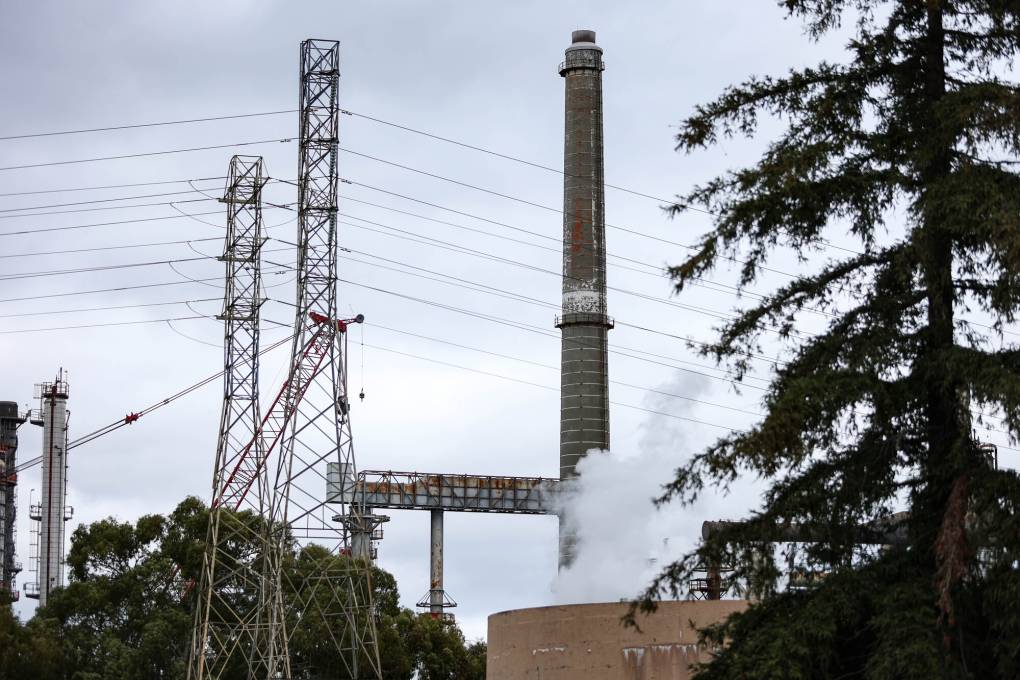
"title": "Martinez Refining Company in Martinez on Feb. 3, 2025.",
"publishDate": 1745267109,
"status": "inherit",
"parent": 12036965,
"modified": 1745267124,
"caption": "Martinez Refining Company in Martinez, California, on Feb. 3, 2025. The company was hit with 163 violations from 2020 to 2024, including the Thanksgiving Day 2022 release of 50,000 pounds of spent catalyst.",
"credit": "Gina Castro/KQED",
"altTag": null,
"description": null,
"imgSizes": {
"medium": {
"file": "https://cdn.kqed.org/wp-content/uploads/sites/10/2025/04/20250203_MartinezRefineryFolo_GC-32_qed-800x533.jpg",
"width": 800,
"height": 533,
"mimeType": "image/jpeg"
},
"large": {
"file": "https://cdn.kqed.org/wp-content/uploads/sites/10/2025/04/20250203_MartinezRefineryFolo_GC-32_qed-1020x680.jpg",
"width": 1020,
"height": 680,
"mimeType": "image/jpeg"
},
"thumbnail": {
"file": "https://cdn.kqed.org/wp-content/uploads/sites/10/2025/04/20250203_MartinezRefineryFolo_GC-32_qed-160x107.jpg",
"width": 160,
"height": 107,
"mimeType": "image/jpeg"
},
"1536x1536": {
"file": "https://cdn.kqed.org/wp-content/uploads/sites/10/2025/04/20250203_MartinezRefineryFolo_GC-32_qed-1536x1024.jpg",
"width": 1536,
"height": 1024,
"mimeType": "image/jpeg"
},
"post-thumbnail": {
"file": "https://cdn.kqed.org/wp-content/uploads/sites/10/2025/04/20250203_MartinezRefineryFolo_GC-32_qed-672x372.jpg",
"width": 672,
"height": 372,
"mimeType": "image/jpeg"
},
"twentyfourteen-full-width": {
"file": "https://cdn.kqed.org/wp-content/uploads/sites/10/2025/04/20250203_MartinezRefineryFolo_GC-32_qed-1038x576.jpg",
"width": 1038,
"height": 576,
"mimeType": "image/jpeg"
},
"full-width": {
"file": "https://cdn.kqed.org/wp-content/uploads/sites/10/2025/04/20250203_MartinezRefineryFolo_GC-32_qed-1920x1280.jpg",
"width": 1920,
"height": 1280,
"mimeType": "image/jpeg"
},
"kqedFullSize": {
"file": "https://cdn.kqed.org/wp-content/uploads/sites/10/2025/04/20250203_MartinezRefineryFolo_GC-32_qed.jpg",
"width": 2000,
"height": 1333
}
},
"isLoading": false,
"fetchFailed": false
},
"news_12073668": {
"type": "attachments",
"id": "news_12073668",
"meta": {
"index": "attachments_1716263798",
"site": "news",
"id": "12073668",
"found": true
},
"title": "Close-up shot of hands holding food.",
"publishDate": 1771434983,
"status": "inherit",
"parent": 12073604,
"modified": 1771435002,
"caption": "Close-up shot of hands holding food.",
"credit": "Tashdique Mehtaj Ahmed/Getty Images",
"altTag": null,
"description": null,
"imgSizes": {
"thumbnail": {
"file": "https://cdn.kqed.org/wp-content/uploads/sites/10/2026/02/RamadanGetty-160x107.jpg",
"width": 160,
"height": 107,
"mimeType": "image/jpeg"
},
"1536x1536": {
"file": "https://cdn.kqed.org/wp-content/uploads/sites/10/2026/02/RamadanGetty-1536x1024.jpg",
"width": 1536,
"height": 1024,
"mimeType": "image/jpeg"
},
"post-thumbnail": {
"file": "https://cdn.kqed.org/wp-content/uploads/sites/10/2026/02/RamadanGetty-672x372.jpg",
"width": 672,
"height": 372,
"mimeType": "image/jpeg"
},
"twentyfourteen-full-width": {
"file": "https://cdn.kqed.org/wp-content/uploads/sites/10/2026/02/RamadanGetty-1038x576.jpg",
"width": 1038,
"height": 576,
"mimeType": "image/jpeg"
},
"npr-cds-wide": {
"file": "https://cdn.kqed.org/wp-content/uploads/sites/10/2026/02/RamadanGetty-1200x675.jpg",
"width": 1200,
"height": 675,
"mimeType": "image/jpeg"
},
"kqedFullSize": {
"file": "https://cdn.kqed.org/wp-content/uploads/sites/10/2026/02/RamadanGetty.jpg",
"width": 2000,
"height": 1333
}
},
"isLoading": false,
"fetchFailed": false
},
"news_12073622": {
"type": "attachments",
"id": "news_12073622",
"meta": {
"index": "attachments_1716263798",
"site": "news",
"id": "12073622",
"found": true
},
"title": "Heavy Snow in Truckee, California",
"publishDate": 1771364859,
"status": "inherit",
"parent": 12073593,
"modified": 1771364884,
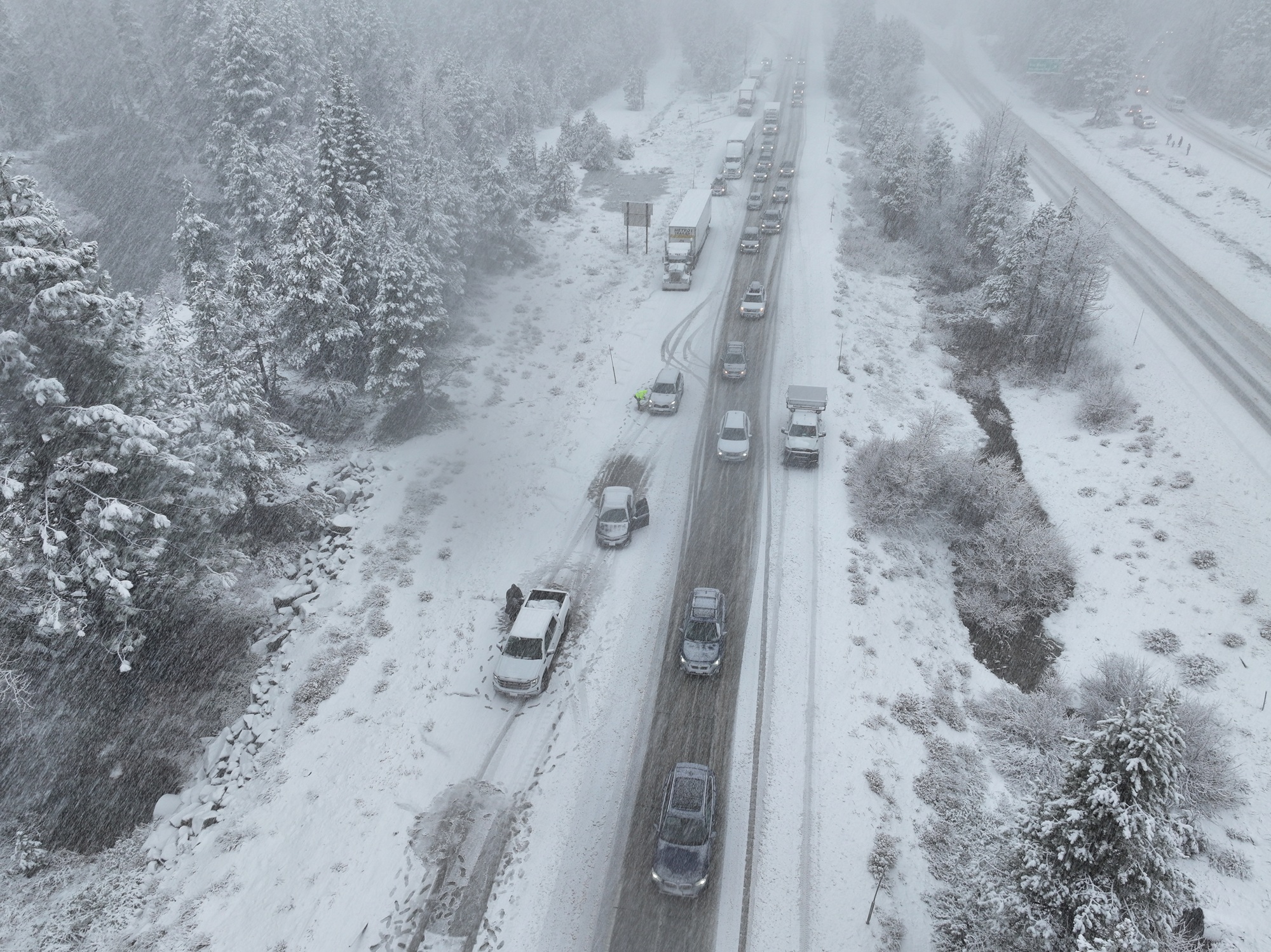
"caption": "A view of trucks piled up during heavy snow near Donner Pass in Truckee in California, United States on Dec. 24, 2025.",
"credit": "Tayfun Coskun/Anadolu via Getty Images",
"altTag": null,
"description": null,
"imgSizes": {
"thumbnail": {
"file": "https://cdn.kqed.org/wp-content/uploads/sites/10/2026/02/DonnerPassGetty-160x120.jpg",
"width": 160,
"height": 120,
"mimeType": "image/jpeg"
},
"1536x1536": {
"file": "https://cdn.kqed.org/wp-content/uploads/sites/10/2026/02/DonnerPassGetty-1536x1150.jpg",
"width": 1536,
"height": 1150,
"mimeType": "image/jpeg"
},
"post-thumbnail": {
"file": "https://cdn.kqed.org/wp-content/uploads/sites/10/2026/02/DonnerPassGetty-672x372.jpg",
"width": 672,
"height": 372,
"mimeType": "image/jpeg"
},
"twentyfourteen-full-width": {
"file": "https://cdn.kqed.org/wp-content/uploads/sites/10/2026/02/DonnerPassGetty-1038x576.jpg",
"width": 1038,
"height": 576,
"mimeType": "image/jpeg"
},
"npr-cds-wide": {
"file": "https://cdn.kqed.org/wp-content/uploads/sites/10/2026/02/DonnerPassGetty-1200x675.jpg",
"width": 1200,
"height": 675,
"mimeType": "image/jpeg"
},
"kqedFullSize": {
"file": "https://cdn.kqed.org/wp-content/uploads/sites/10/2026/02/DonnerPassGetty.jpg",
"width": 2000,
"height": 1498
}
},
"isLoading": false,
"fetchFailed": false
},
"news_12073471": {
"type": "attachments",
"id": "news_12073471",
"meta": {
"index": "attachments_1716263798",
"site": "news",
"id": "12073471",
"found": true
},
"title": "021226-Mountain-Lions-NPS-CM-03",
"publishDate": 1771006587,
"status": "inherit",
"parent": 12073470,
"modified": 1771006607,
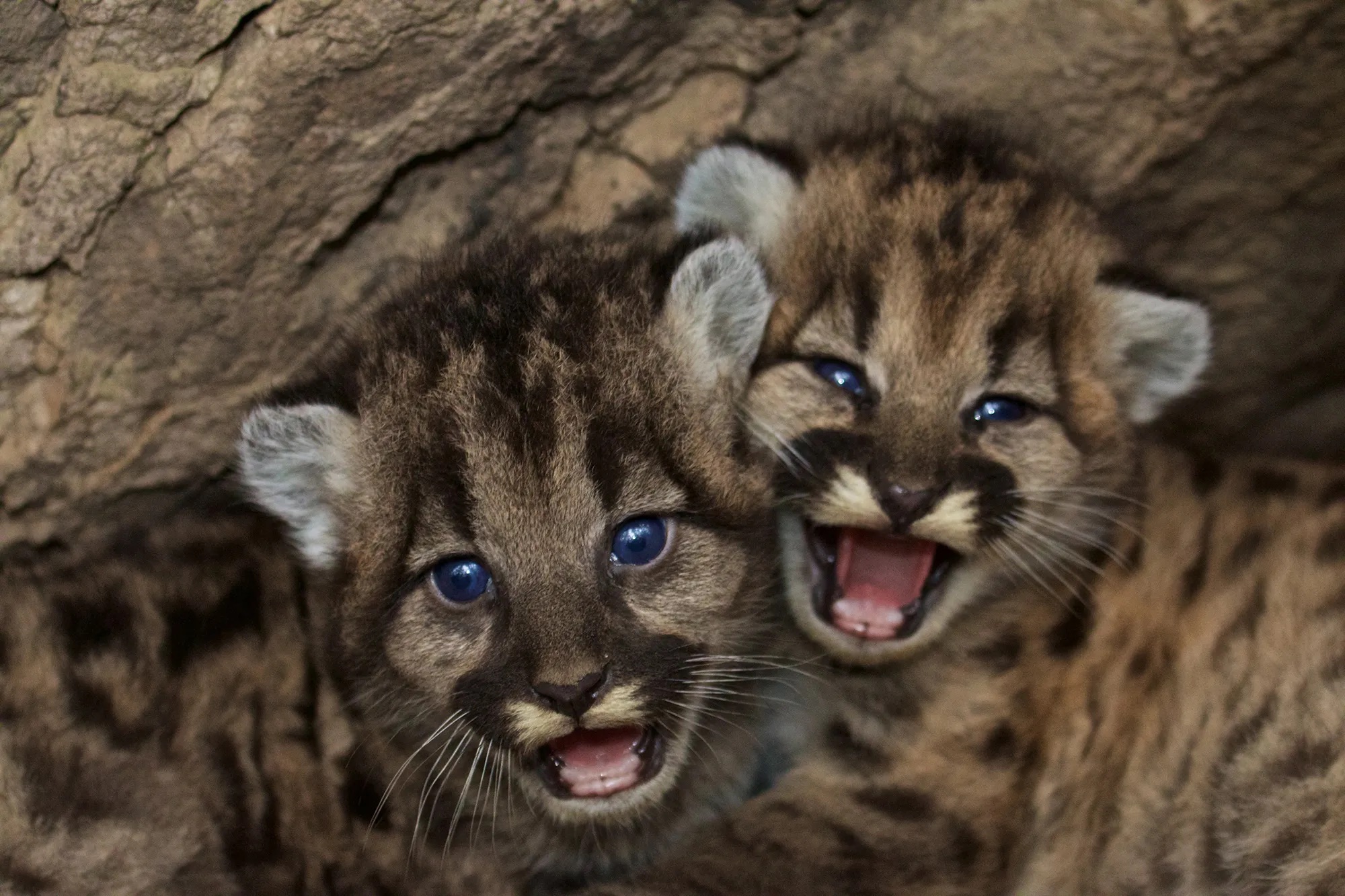
"caption": "Kittens from a local mountain lion population tracked by the National Park Service and UCLA in 2015. ",
"credit": "Photo via National Park Service",
"altTag": null,
"description": null,
"imgSizes": {
"thumbnail": {
"file": "https://cdn.kqed.org/wp-content/uploads/sites/10/2026/02/021226-Mountain-Lions-NPS-CM-03-160x107.jpeg",
"width": 160,
"height": 107,
"mimeType": "image/jpeg"
},
"1536x1536": {
"file": "https://cdn.kqed.org/wp-content/uploads/sites/10/2026/02/021226-Mountain-Lions-NPS-CM-03-1536x1024.jpeg",
"width": 1536,
"height": 1024,
"mimeType": "image/jpeg"
},
"post-thumbnail": {
"file": "https://cdn.kqed.org/wp-content/uploads/sites/10/2026/02/021226-Mountain-Lions-NPS-CM-03-672x372.jpeg",
"width": 672,
"height": 372,
"mimeType": "image/jpeg"
},
"twentyfourteen-full-width": {
"file": "https://cdn.kqed.org/wp-content/uploads/sites/10/2026/02/021226-Mountain-Lions-NPS-CM-03-1038x576.jpeg",
"width": 1038,
"height": 576,
"mimeType": "image/jpeg"
},
"npr-cds-wide": {
"file": "https://cdn.kqed.org/wp-content/uploads/sites/10/2026/02/021226-Mountain-Lions-NPS-CM-03-1200x675.jpeg",
"width": 1200,
"height": 675,
"mimeType": "image/jpeg"
},
"kqedFullSize": {
"file": "https://cdn.kqed.org/wp-content/uploads/sites/10/2026/02/021226-Mountain-Lions-NPS-CM-03.jpeg",
"width": 2000,
"height": 1333
}
},
"isLoading": false,
"fetchFailed": false
},
"news_12073318": {
"type": "attachments",
"id": "news_12073318",
"meta": {
"index": "attachments_1716263798",
"site": "news",
"id": "12073318",
"found": true
},
"title": "251205-wccusdstrikerally01511_TV_qed",
"publishDate": 1770921134,
"status": "inherit",
"parent": 12073310,
"modified": 1770921162,
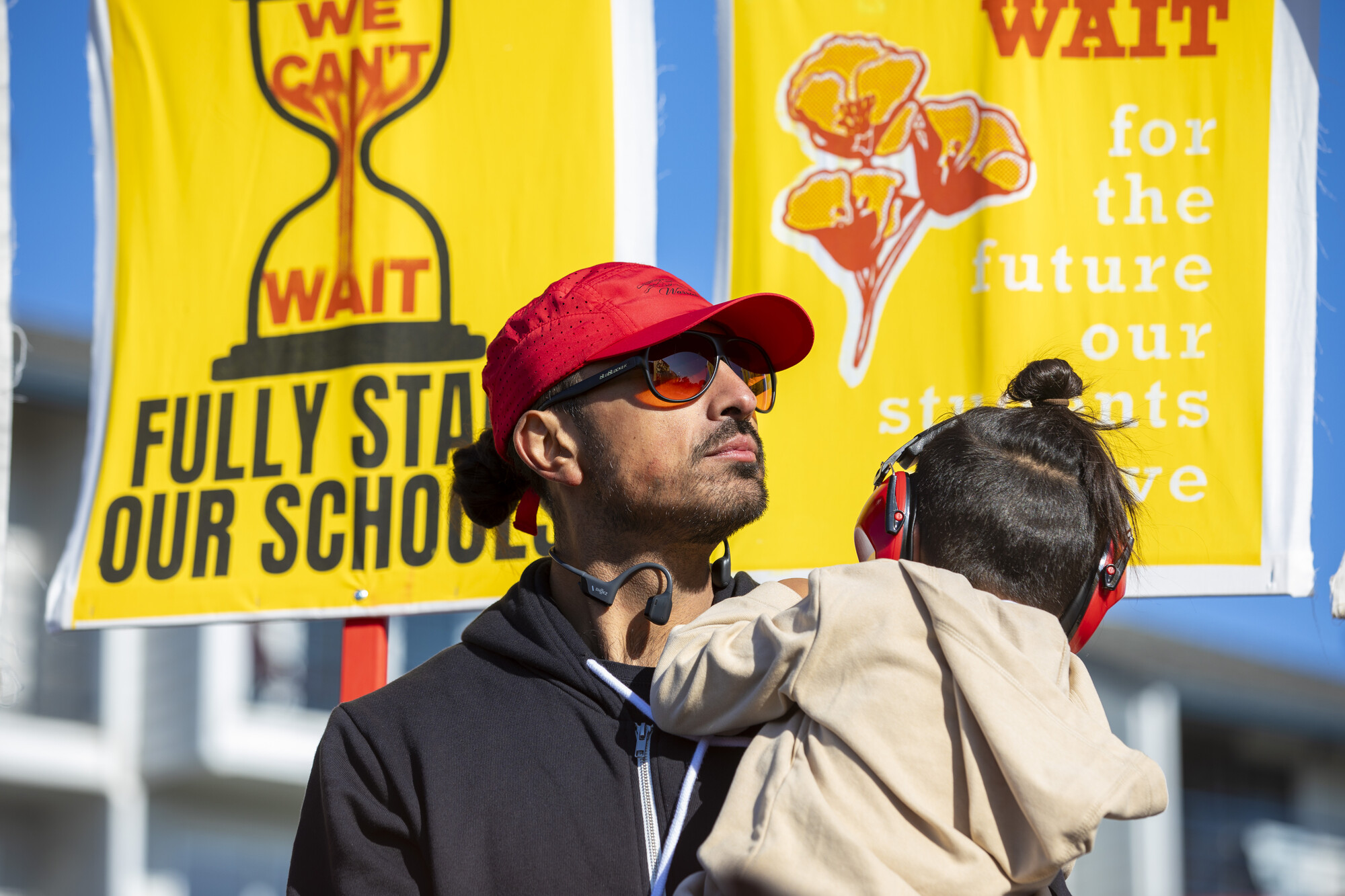
"caption": "Francisco Ortiz attends the West Contra Costa United School District rally at Marina Bay Park in Richmond on Dec. 5, 2025.",
"credit": "Tâm Vũ/KQED",
"altTag": null,
"description": null,
"imgSizes": {
"thumbnail": {
"file": "https://cdn.kqed.org/wp-content/uploads/sites/10/2026/02/251205-wccusdstrikerally01511_TV_qed-160x107.jpg",
"width": 160,
"height": 107,
"mimeType": "image/jpeg"
},
"1536x1536": {
"file": "https://cdn.kqed.org/wp-content/uploads/sites/10/2026/02/251205-wccusdstrikerally01511_TV_qed-1536x1024.jpg",
"width": 1536,
"height": 1024,
"mimeType": "image/jpeg"
},
"post-thumbnail": {
"file": "https://cdn.kqed.org/wp-content/uploads/sites/10/2026/02/251205-wccusdstrikerally01511_TV_qed-672x372.jpg",
"width": 672,
"height": 372,
"mimeType": "image/jpeg"
},
"twentyfourteen-full-width": {
"file": "https://cdn.kqed.org/wp-content/uploads/sites/10/2026/02/251205-wccusdstrikerally01511_TV_qed-1038x576.jpg",
"width": 1038,
"height": 576,
"mimeType": "image/jpeg"
},
"npr-cds-wide": {
"file": "https://cdn.kqed.org/wp-content/uploads/sites/10/2026/02/251205-wccusdstrikerally01511_TV_qed-1200x675.jpg",
"width": 1200,
"height": 675,
"mimeType": "image/jpeg"
},
"kqedFullSize": {
"file": "https://cdn.kqed.org/wp-content/uploads/sites/10/2026/02/251205-wccusdstrikerally01511_TV_qed.jpg",
"width": 2000,
"height": 1333
}
},
"isLoading": false,
"fetchFailed": false
},
"news_12073223": {
"type": "attachments",
"id": "news_12073223",
"meta": {
"index": "attachments_1716263798",
"site": "news",
"id": "12073223",
"found": true
},
"title": "IMG_8090",
"publishDate": 1770844497,
"status": "inherit",
"parent": 12073183,
"modified": 1770844521,
"caption": "The Exploratorium is among several museums offering discounted admission for families during the SFUSD strike.",
"credit": "Courtesy of The Exploratorium",
"altTag": null,
"description": null,
"imgSizes": {
"thumbnail": {
"file": "https://cdn.kqed.org/wp-content/uploads/sites/10/2026/02/IMG_8090-160x107.jpg",
"width": 160,
"height": 107,
"mimeType": "image/jpeg"
},
"1536x1536": {
"file": "https://cdn.kqed.org/wp-content/uploads/sites/10/2026/02/IMG_8090-1536x1024.jpg",
"width": 1536,
"height": 1024,
"mimeType": "image/jpeg"
},
"post-thumbnail": {
"file": "https://cdn.kqed.org/wp-content/uploads/sites/10/2026/02/IMG_8090-672x372.jpg",
"width": 672,
"height": 372,
"mimeType": "image/jpeg"
},
"twentyfourteen-full-width": {
"file": "https://cdn.kqed.org/wp-content/uploads/sites/10/2026/02/IMG_8090-1038x576.jpg",
"width": 1038,
"height": 576,
"mimeType": "image/jpeg"
},
"npr-cds-wide": {
"file": "https://cdn.kqed.org/wp-content/uploads/sites/10/2026/02/IMG_8090-1200x675.jpg",
"width": 1200,
"height": 675,
"mimeType": "image/jpeg"
},
"kqedFullSize": {
"file": "https://cdn.kqed.org/wp-content/uploads/sites/10/2026/02/IMG_8090.jpg",
"width": 2000,
"height": 1333
}
},
"isLoading": false,
"fetchFailed": false
},
"news_12071944": {
"type": "attachments",
"id": "news_12071944",
"meta": {
"index": "attachments_1716263798",
"site": "news",
"id": "12071944",
"found": true
},
"title": "260130-SFCHILDCAREACCESS00005_TV-KQED",
"publishDate": 1770069977,
"status": "inherit",
"parent": 0,
"modified": 1770070024,
"caption": "Lyuba Shkolnik carries a child at her in-home childcare business called Daycare Bumblebee in San Francisco on January 30, 2026. San Francisco is expanding access to child care by offering 50% discounts to middle- and upper-middle-income earners in an effort to tackle affordability issues in one of the most expensive cities in the country. Daycare Bumblebee is trying to get approval to enter the city's Early Learning For All system.",
"credit": "Tâm Vũ/KQED",
"altTag": null,
"description": null,
"imgSizes": {
"thumbnail": {
"file": "https://cdn.kqed.org/wp-content/uploads/sites/10/2026/02/260130-SFCHILDCAREACCESS00005_TV-KQED-160x107.jpg",
"width": 160,
"height": 107,
"mimeType": "image/jpeg"
},
"1536x1536": {
"file": "https://cdn.kqed.org/wp-content/uploads/sites/10/2026/02/260130-SFCHILDCAREACCESS00005_TV-KQED-1536x1024.jpg",
"width": 1536,
"height": 1024,
"mimeType": "image/jpeg"
},
"post-thumbnail": {
"file": "https://cdn.kqed.org/wp-content/uploads/sites/10/2026/02/260130-SFCHILDCAREACCESS00005_TV-KQED-672x372.jpg",
"width": 672,
"height": 372,
"mimeType": "image/jpeg"
},
"twentyfourteen-full-width": {
"file": "https://cdn.kqed.org/wp-content/uploads/sites/10/2026/02/260130-SFCHILDCAREACCESS00005_TV-KQED-1038x576.jpg",
"width": 1038,
"height": 576,
"mimeType": "image/jpeg"
},
"npr-cds-wide": {
"file": "https://cdn.kqed.org/wp-content/uploads/sites/10/2026/02/260130-SFCHILDCAREACCESS00005_TV-KQED-1200x675.jpg",
"width": 1200,
"height": 675,
"mimeType": "image/jpeg"
},
"kqedFullSize": {
"file": "https://cdn.kqed.org/wp-content/uploads/sites/10/2026/02/260130-SFCHILDCAREACCESS00005_TV-KQED.jpg",
"width": 2000,
"height": 1333
}
},
"isLoading": false,
"fetchFailed": false
},
"news_12072987": {
"type": "attachments",
"id": "news_12072987",
"meta": {
"index": "attachments_1716263798",
"site": "news",
"id": "12072987",
"found": true
},
"title": "020926_KAISERSTRIKE_8137B-KQED",
"publishDate": 1770747058,
"status": "inherit",
"parent": 0,
"modified": 1770747219,
"caption": "Carrie Esqueda plays with one of her grandkids at her home in Wildomar on Feb. 9, 2026.",
"credit": "Lauren Justice for KQED",
"altTag": null,
"description": null,
"imgSizes": {
"thumbnail": {
"file": "https://cdn.kqed.org/wp-content/uploads/sites/10/2026/02/020926_KAISERSTRIKE_8137B-KQED-160x107.jpg",
"width": 160,
"height": 107,
"mimeType": "image/jpeg"
},
"1536x1536": {
"file": "https://cdn.kqed.org/wp-content/uploads/sites/10/2026/02/020926_KAISERSTRIKE_8137B-KQED-1536x1024.jpg",
"width": 1536,
"height": 1024,
"mimeType": "image/jpeg"
},
"post-thumbnail": {
"file": "https://cdn.kqed.org/wp-content/uploads/sites/10/2026/02/020926_KAISERSTRIKE_8137B-KQED-672x372.jpg",
"width": 672,
"height": 372,
"mimeType": "image/jpeg"
},
"twentyfourteen-full-width": {
"file": "https://cdn.kqed.org/wp-content/uploads/sites/10/2026/02/020926_KAISERSTRIKE_8137B-KQED-1038x576.jpg",
"width": 1038,
"height": 576,
"mimeType": "image/jpeg"
},
"npr-cds-wide": {
"file": "https://cdn.kqed.org/wp-content/uploads/sites/10/2026/02/020926_KAISERSTRIKE_8137B-KQED-1200x675.jpg",
"width": 1200,
"height": 675,
"mimeType": "image/jpeg"
},
"kqedFullSize": {
"file": "https://cdn.kqed.org/wp-content/uploads/sites/10/2026/02/020926_KAISERSTRIKE_8137B-KQED.jpg",
"width": 2000,
"height": 1333
}
},
"isLoading": false,
"fetchFailed": false
},
"news_12071040": {
"type": "attachments",
"id": "news_12071040",
"meta": {
"index": "attachments_1716263798",
"site": "news",
"id": "12071040",
"found": true
},
"title": "DULCETRICOLOR-10-JL-012526-KQED",
"publishDate": 1769457247,
"status": "inherit",
"parent": 0,
"modified": 1770677217,
"caption": "Michelle Paulin dances while instructing youth at the Dulce Tricolor Venezolano dance group at the Ariel Dance Studio in Campbell on Jan. 25, 2026.",
"credit": "Josie Lepe for KQED",
"altTag": null,
"description": null,
"imgSizes": {
"thumbnail": {
"file": "https://cdn.kqed.org/wp-content/uploads/sites/10/2026/01/DULCETRICOLOR-10-JL-012526-KQED-160x107.jpg",
"width": 160,
"height": 107,
"mimeType": "image/jpeg"
},
"1536x1536": {
"file": "https://cdn.kqed.org/wp-content/uploads/sites/10/2026/01/DULCETRICOLOR-10-JL-012526-KQED-1536x1025.jpg",
"width": 1536,
"height": 1025,
"mimeType": "image/jpeg"
},
"post-thumbnail": {
"file": "https://cdn.kqed.org/wp-content/uploads/sites/10/2026/01/DULCETRICOLOR-10-JL-012526-KQED-672x372.jpg",
"width": 672,
"height": 372,
"mimeType": "image/jpeg"
},
"twentyfourteen-full-width": {
"file": "https://cdn.kqed.org/wp-content/uploads/sites/10/2026/01/DULCETRICOLOR-10-JL-012526-KQED-1038x576.jpg",
"width": 1038,
"height": 576,
"mimeType": "image/jpeg"
},
"npr-cds-wide": {
"file": "https://cdn.kqed.org/wp-content/uploads/sites/10/2026/01/DULCETRICOLOR-10-JL-012526-KQED-1200x675.jpg",
"width": 1200,
"height": 675,
"mimeType": "image/jpeg"
},
"kqedFullSize": {
"file": "https://cdn.kqed.org/wp-content/uploads/sites/10/2026/01/DULCETRICOLOR-10-JL-012526-KQED.jpg",
"width": 2000,
"height": 1334
}
},
"isLoading": false,
"fetchFailed": false
},
"news_12072766": {
"type": "attachments",
"id": "news_12072766",
"meta": {
"index": "attachments_1716263798",
"site": "news",
"id": "12072766",
"found": true
},
"title": "A79A2187-KQED-2",
"publishDate": 1770507428,
"status": "inherit",
"parent": 12072657,
"modified": 1770507441,
"caption": "Artificial grass made to look like a football field at San Pedro Square in San José on Feb. 6, 2026. For San José, the coming days are about more than just the big game; they’re a high-stakes test of downtown’s post-pandemic recovery.",
"credit": null,
"altTag": null,
"description": null,
"imgSizes": {
"thumbnail": {
"file": "https://cdn.kqed.org/wp-content/uploads/sites/10/2026/02/A79A2187-KQED-2-160x107.jpg",
"width": 160,
"height": 107,
"mimeType": "image/jpeg"
},
"1536x1536": {
"file": "https://cdn.kqed.org/wp-content/uploads/sites/10/2026/02/A79A2187-KQED-2-1536x1025.jpg",
"width": 1536,
"height": 1025,
"mimeType": "image/jpeg"
},
"post-thumbnail": {
"file": "https://cdn.kqed.org/wp-content/uploads/sites/10/2026/02/A79A2187-KQED-2-672x372.jpg",
"width": 672,
"height": 372,
"mimeType": "image/jpeg"
},
"twentyfourteen-full-width": {
"file": "https://cdn.kqed.org/wp-content/uploads/sites/10/2026/02/A79A2187-KQED-2-1038x576.jpg",
"width": 1038,
"height": 576,
"mimeType": "image/jpeg"
},
"npr-cds-wide": {
"file": "https://cdn.kqed.org/wp-content/uploads/sites/10/2026/02/A79A2187-KQED-2-1200x675.jpg",
"width": 1200,
"height": 675,
"mimeType": "image/jpeg"
},
"kqedFullSize": {
"file": "https://cdn.kqed.org/wp-content/uploads/sites/10/2026/02/A79A2187-KQED-2.jpg",
"width": 2000,
"height": 1334
}
},
"isLoading": false,
"fetchFailed": false
},
"news_12072687": {
"type": "attachments",
"id": "news_12072687",
"meta": {
"index": "attachments_1716263798",
"site": "news",
"id": "12072687",
"found": true
},
"title": "ISU World Cup Short Track - Salt Lake City",
"publishDate": 1770414934,
"status": "inherit",
"parent": 12072634,
"modified": 1770417471,
"caption": "Brandon Kim of the United States competes in a men's 1000-meter heat during the ISU World Cup Short Track at the Utah Olympic Oval on Nov. 4, 2022, in Salt Lake City, Utah. ",
"credit": "Gregory Shamus/International Skating Union via Getty Images",
"altTag": null,
"description": null,
"imgSizes": {
"thumbnail": {
"file": "https://cdn.kqed.org/wp-content/uploads/sites/10/2026/02/BrandonKimOlympicsGetty1-160x107.jpg",
"width": 160,
"height": 107,
"mimeType": "image/jpeg"
},
"1536x1536": {
"file": "https://cdn.kqed.org/wp-content/uploads/sites/10/2026/02/BrandonKimOlympicsGetty1-1536x1024.jpg",
"width": 1536,
"height": 1024,
"mimeType": "image/jpeg"
},
"post-thumbnail": {
"file": "https://cdn.kqed.org/wp-content/uploads/sites/10/2026/02/BrandonKimOlympicsGetty1-672x372.jpg",
"width": 672,
"height": 372,
"mimeType": "image/jpeg"
},
"twentyfourteen-full-width": {
"file": "https://cdn.kqed.org/wp-content/uploads/sites/10/2026/02/BrandonKimOlympicsGetty1-1038x576.jpg",
"width": 1038,
"height": 576,
"mimeType": "image/jpeg"
},
"npr-cds-wide": {
"file": "https://cdn.kqed.org/wp-content/uploads/sites/10/2026/02/BrandonKimOlympicsGetty1-1200x675.jpg",
"width": 1200,
"height": 675,
"mimeType": "image/jpeg"
},
"kqedFullSize": {
"file": "https://cdn.kqed.org/wp-content/uploads/sites/10/2026/02/BrandonKimOlympicsGetty1.jpg",
"width": 2000,
"height": 1333
}
},
"isLoading": false,
"fetchFailed": false
},
"news_12072674": {
"type": "attachments",
"id": "news_12072674",
"meta": {
"index": "attachments_1716263798",
"site": "news",
"id": "12072674",
"found": true
},
"title": "Woman Inserts Cash Into Wallet",
"publishDate": 1770413026,
"status": "inherit",
"parent": 12072629,
"modified": 1770418707,
"caption": "Close-up of a woman inserting $20 bills into her wallet.",
"credit": "Grace Cary via Getty Images",
"altTag": null,
"description": null,
"imgSizes": {
"thumbnail": {
"file": "https://cdn.kqed.org/wp-content/uploads/sites/10/2026/02/GettyImages-1493652768-160x107.jpg",
"width": 160,
"height": 107,
"mimeType": "image/jpeg"
},
"1536x1536": {
"file": "https://cdn.kqed.org/wp-content/uploads/sites/10/2026/02/GettyImages-1493652768-1536x1024.jpg",
"width": 1536,
"height": 1024,
"mimeType": "image/jpeg"
},
"post-thumbnail": {
"file": "https://cdn.kqed.org/wp-content/uploads/sites/10/2026/02/GettyImages-1493652768-672x372.jpg",
"width": 672,
"height": 372,
"mimeType": "image/jpeg"
},
"twentyfourteen-full-width": {
"file": "https://cdn.kqed.org/wp-content/uploads/sites/10/2026/02/GettyImages-1493652768-1038x576.jpg",
"width": 1038,
"height": 576,
"mimeType": "image/jpeg"
},
"npr-cds-wide": {
"file": "https://cdn.kqed.org/wp-content/uploads/sites/10/2026/02/GettyImages-1493652768-1200x675.jpg",
"width": 1200,
"height": 675,
"mimeType": "image/jpeg"
},
"kqedFullSize": {
"file": "https://cdn.kqed.org/wp-content/uploads/sites/10/2026/02/GettyImages-1493652768.jpg",
"width": 1980,
"height": 1320
}
},
"isLoading": false,
"fetchFailed": false
}
},
"audioPlayerReducer": {
"postId": "stream_live",
"isPaused": true,
"isPlaying": false,
"pfsActive": false,
"pledgeModalIsOpen": true,
"playerDrawerIsOpen": false,
"liveAudioPlayStartedAt": 0,
"liveAudioPlayContext": ""
},
"authorsReducer": {
"byline_news_12073470": {
"type": "authors",
"id": "byline_news_12073470",
"meta": {
"override": true
},
"slug": "byline_news_12073470",
"name": "Rachel Becker, CalMatters",
"isLoading": false
},
"carlysevern": {
"type": "authors",
"id": "3243",
"meta": {
"index": "authors_1716337520",
"id": "3243",
"found": true
},
"name": "Carly Severn",
"firstName": "Carly",
"lastName": "Severn",
"slug": "carlysevern",
"email": "csevern@kqed.org",
"display_author_email": false,
"staff_mastheads": [
"news"
],
"title": "Senior Editor, Audience News ",
"bio": "Carly is KQED's Senior Editor of Audience News on the Digital News team, and has reported for the California Report Magazine, Bay Curious and KQED Arts. She's formerly the host of \u003ca href=\"http://ww2.kqed.org/pop/category/the-cooler/\" rel=\"noopener noreferrer\">The Cooler\u003c/a> podcast.",
"avatar": "https://secure.gravatar.com/avatar/54037bf5c128fe678f0ef26cec97a93f2e7f220a22d7285703328f12c42c1b1d?s=600&d=blank&r=g",
"twitter": "teacupinthebay",
"bluesky": null,
"facebook": null,
"instagram": null,
"linkedin": null,
"sites": [
{
"site": "",
"roles": [
"editor"
]
},
{
"site": "arts",
"roles": [
"editor"
]
},
{
"site": "news",
"roles": [
"administrator"
]
},
{
"site": "pop",
"roles": [
"editor"
]
},
{
"site": "futureofyou",
"roles": [
"editor"
]
},
{
"site": "about",
"roles": [
"administrator"
]
},
{
"site": "mindshift",
"roles": [
"editor"
]
},
{
"site": "bayareabites",
"roles": [
"editor"
]
},
{
"site": "stateofhealth",
"roles": [
"editor"
]
},
{
"site": "science",
"roles": [
"editor"
]
},
{
"site": "food",
"roles": [
"contributor"
]
},
{
"site": "forum",
"roles": [
"editor"
]
},
{
"site": "perspectives",
"roles": [
"administrator"
]
},
{
"site": "liveblog",
"roles": [
"editor"
]
}
],
"headData": {
"title": "Carly Severn | KQED",
"description": "Senior Editor, Audience News ",
"ogImgSrc": "https://secure.gravatar.com/avatar/54037bf5c128fe678f0ef26cec97a93f2e7f220a22d7285703328f12c42c1b1d?s=600&d=blank&r=g",
"twImgSrc": "https://secure.gravatar.com/avatar/54037bf5c128fe678f0ef26cec97a93f2e7f220a22d7285703328f12c42c1b1d?s=600&d=blank&r=g"
},
"isLoading": false,
"link": "/author/carlysevern"
},
"jsmall": {
"type": "authors",
"id": "6625",
"meta": {
"index": "authors_1716337520",
"id": "6625",
"found": true
},
"name": "Julie Small",
"firstName": "Julie",
"lastName": "Small",
"slug": "jsmall",
"email": "jsmall@kqed.org",
"display_author_email": true,
"staff_mastheads": [
"news"
],
"title": "KQED Contributor",
"bio": "Julie Small reports on criminal justice and immigration.\r\n\r\nShe was part of a team at KQED awarded a regional 2019 Edward R. Murrow award for continuing coverage of the Trump Administration's family separation policy.\r\n\r\nThe Society for Professional Journalists recognized Julie's 2018 \u003ca href=\"https://www.kqed.org/news/11636262/the-officer-tased-him-31-times-the-sheriff-called-his-death-an-accident\">reporting\u003c/a> on the San Joaquin County Sheriff's \u003ca href=\"https://www.kqed.org/news/11634689/autopsy-doctors-sheriff-overrode-death-findings-to-protect-law-enforcement\">interference\u003c/a> in death investigations with an Excellence in Journalism Award for Ongoing Coverage.\r\n\r\nJulie's\u003ca href=\"https://www.kqed.org/news/11039666/two-mentally-ill-inmates-died-one-month-in-santa-clara\"> reporting\u003c/a> with Lisa Pickoff-White on the treatment of mentally ill offenders in California jails earned a 2017 regional Edward R. Murrow Award for news reporting and an investigative reporting award from the SPJ of Northern California.\r\n\r\nBefore joining KQED, Julie covered government and politics in Sacramento for Southern California Public Radio (SCPR). Her 2010 \u003ca href=\"https://www.scpr.org/specials/prisonmedical/\">series\u003c/a> on lapses in California’s prison medical care also won a regional Edward R. Murrow Award for investigative reporting and a Golden Mic Award from the RTNDA of Southern California.\r\n\r\nJulie began her career in journalism in 2000 as the deputy foreign editor for public radio's \u003cem>Marketplace, \u003c/em>while earning her master's degree in journalism from USC’s Annenberg School of Communication.",
"avatar": "https://secure.gravatar.com/avatar/4baedf201468df97be97c2a9dd7585d0?s=600&d=blank&r=g",
"twitter": "@SmallRadio2",
"facebook": null,
"instagram": null,
"linkedin": null,
"sites": [
{
"site": "news",
"roles": [
"editor"
]
},
{
"site": "stateofhealth",
"roles": [
"author"
]
},
{
"site": "science",
"roles": [
"author"
]
}
],
"headData": {
"title": "Julie Small | KQED",
"description": "KQED Contributor",
"ogImgSrc": "https://secure.gravatar.com/avatar/4baedf201468df97be97c2a9dd7585d0?s=600&d=blank&r=g",
"twImgSrc": "https://secure.gravatar.com/avatar/4baedf201468df97be97c2a9dd7585d0?s=600&d=blank&r=g"
},
"isLoading": false,
"link": "/author/jsmall"
},
"fjhabvala": {
"type": "authors",
"id": "8659",
"meta": {
"index": "authors_1716337520",
"id": "8659",
"found": true
},
"name": "Farida Jhabvala Romero",
"firstName": "Farida",
"lastName": "Jhabvala Romero",
"slug": "fjhabvala",
"email": "fjhabvala@kqed.org",
"display_author_email": true,
"staff_mastheads": [
"news"
],
"title": "KQED Contributor",
"bio": "Farida Jhabvala Romero is a Labor Correspondent for KQED. She previously covered immigration. Farida was \u003ca href=\"https://www.ccnma.org/2022-most-influential-latina-journalists\">named\u003c/a> one of the 10 Most Influential Latina Journalists in California in 2022 by the California Chicano News Media Association. Her work has won awards from the Society of Professional Journalists (Northern California), as well as a national and regional Edward M. Murrow Award for the collaborative reporting projects “Dangerous Air” and “Graying California.” Before joining KQED, Farida worked as a producer at Radio Bilingüe, a national public radio network. Farida earned her master’s degree in journalism from Stanford University.",
"avatar": "https://secure.gravatar.com/avatar/f9f022d4e2609741874222a1e9d41f48fea74011aa7c615eef91d9a50c944ebe?s=600&d=blank&r=g",
"twitter": "FaridaJhabvala",
"bluesky": null,
"facebook": null,
"instagram": null,
"linkedin": "https://www.linkedin.com/in/faridajhabvala/",
"sites": [
{
"site": "news",
"roles": [
"editor"
]
},
{
"site": "stateofhealth",
"roles": [
"author"
]
},
{
"site": "liveblog",
"roles": [
"author"
]
}
],
"headData": {
"title": "Farida Jhabvala Romero | KQED",
"description": "KQED Contributor",
"ogImgSrc": "https://secure.gravatar.com/avatar/f9f022d4e2609741874222a1e9d41f48fea74011aa7c615eef91d9a50c944ebe?s=600&d=blank&r=g",
"twImgSrc": "https://secure.gravatar.com/avatar/f9f022d4e2609741874222a1e9d41f48fea74011aa7c615eef91d9a50c944ebe?s=600&d=blank&r=g"
},
"isLoading": false,
"link": "/author/fjhabvala"
},
"bwatt": {
"type": "authors",
"id": "11238",
"meta": {
"index": "authors_1716337520",
"id": "11238",
"found": true
},
"name": "Brian Watt",
"firstName": "Brian",
"lastName": "Watt",
"slug": "bwatt",
"email": "bwatt@KQED.org",
"display_author_email": false,
"staff_mastheads": [
"news"
],
"title": "Morning News Anchor",
"bio": "Brian Watt is KQED's morning radio news anchor. He joined the KQED News team in April of 2016. Prior to that, he worked as a Reporter for KPCC in Los Angeles and a producer at \u003cem>Marketplace.\u003c/em>\r\n\r\nDuring eight years at KPCC, Brian covered business and economics, and his work won several awards. In 2008, he won the Los Angeles Press Club’s first-place award for Business and Financial Reporting, Broadcast. He’s also received honorable mention and been first runner up for the Press Club’s Radio Journalist of the Year. He won two Golden Mike awards from the Radio and TV News Association of Southern California.\r\n\r\nBrian holds degrees in theater from Yale University and the Sorbonne, and has worked as an actor in France, Italy, Brazil, Hungary and . . . Hollywood. He appeared in a few television shows, including \u003cem>The West Wing, Judging Amy\u003c/em> and \u003cem>The District.\u003c/em>\r\n\r\nEmail: bwatt@KQED.org Twitter: @RadioBWatt",
"avatar": "https://secure.gravatar.com/avatar/55393ff57ed34e2be773ba4789dd6a19?s=600&d=blank&r=g",
"twitter": "@RadioBWatt",
"facebook": null,
"instagram": null,
"linkedin": null,
"sites": [
{
"site": "arts",
"roles": [
"contributor"
]
},
{
"site": "news",
"roles": [
"editor"
]
}
],
"headData": {
"title": "Brian Watt | KQED",
"description": "Morning News Anchor",
"ogImgSrc": "https://secure.gravatar.com/avatar/55393ff57ed34e2be773ba4789dd6a19?s=600&d=blank&r=g",
"twImgSrc": "https://secure.gravatar.com/avatar/55393ff57ed34e2be773ba4789dd6a19?s=600&d=blank&r=g"
},
"isLoading": false,
"link": "/author/bwatt"
},
"smohamad": {
"type": "authors",
"id": "11631",
"meta": {
"index": "authors_1716337520",
"id": "11631",
"found": true
},
"name": "Sarah Mohamad",
"firstName": "Sarah",
"lastName": "Mohamad",
"slug": "smohamad",
"email": "smohamad@KQED.org",
"display_author_email": true,
"staff_mastheads": [],
"title": "Engagement Producer and Reporter, KQED Science",
"bio": "Sarah Mohamad is an audience engagement reporter and producer for KQED Science. She reports on audience-focused science and environment stories and manages the team's social media, newsletter, and engagement efforts. Prior to this role, she played a key role as project manager for NSF's \u003ca href=\"https://www.kqed.org/crackingthecode\">\u003cem>Cracking the Code: Influencing Millennial Science Engagement\u003c/em> \u003c/a>audience research.",
"avatar": "https://secure.gravatar.com/avatar/e6224957cd82d015183756ddde1f928013a563d7ca2e4565f8c4de1ec64886c5?s=600&d=blank&r=g",
"twitter": "sarahkmohamad",
"bluesky": null,
"facebook": null,
"instagram": null,
"linkedin": null,
"sites": [
{
"site": "",
"roles": [
"editor"
]
},
{
"site": "arts",
"roles": [
"editor"
]
},
{
"site": "news",
"roles": [
"editor"
]
},
{
"site": "about",
"roles": [
"editor"
]
},
{
"site": "science",
"roles": [
"editor"
]
}
],
"headData": {
"title": "Sarah Mohamad | KQED",
"description": "Engagement Producer and Reporter, KQED Science",
"ogImgSrc": "https://secure.gravatar.com/avatar/e6224957cd82d015183756ddde1f928013a563d7ca2e4565f8c4de1ec64886c5?s=600&d=blank&r=g",
"twImgSrc": "https://secure.gravatar.com/avatar/e6224957cd82d015183756ddde1f928013a563d7ca2e4565f8c4de1ec64886c5?s=600&d=blank&r=g"
},
"isLoading": false,
"link": "/author/smohamad"
},
"btorres": {
"type": "authors",
"id": "11666",
"meta": {
"index": "authors_1716337520",
"id": "11666",
"found": true
},
"name": "Blanca Torres",
"firstName": "Blanca",
"lastName": "Torres",
"slug": "btorres",
"email": "btorres@kqed.org",
"display_author_email": true,
"staff_mastheads": [
"news"
],
"title": "Producer, Forum",
"bio": "Blanca Torres brings sharp news judgement and keen sense of lively conversation to her work as producer for Forum. She loves producing shows that leave listeners feeling like they heard distinctive voices, learned something new and gained a fresh perspective.\r\n\r\nShe joined KQED in January of 2020 after 16 years of working as a newspaper reporter most recently at the \u003cem>San Francisco Business Times,\u003c/em> where she wrote about real estate and economic development. Before that, she covered a variety of beats including crime, education, retail, workplace, the economy, consumer issues, and small business for the \u003cem>Contra Costa Times, Baltimore Sun\u003c/em> and\u003cem> The Seattle Times\u003c/em>. In addition to reporting, she worked as an editorial writer and columnist for the \u003cem>Seattle Times\u003c/em>. From 2017 to 2020, Blanca won a total of ten awards from the National Association of Real Estate Editors and won first place for land use reporting from the California News Publishers Association two years in a row. She is also a member and former board member for the National Association of Hispanic Journalists.\r\n\r\nA native of the Pacific Northwest, Blanca earned her bachelor's degree from Vanderbilt University in Nashville and a master's in fine arts in creative writing at Mills College. She lives in the East Bay with her family.",
"avatar": "https://secure.gravatar.com/avatar/50b49d19b14a1eed34f26ebf4681152cdd81574ed21851100871ccd29e578cdc?s=600&d=blank&r=g",
"twitter": "@blancawrites",
"bluesky": null,
"facebook": null,
"instagram": null,
"linkedin": null,
"sites": [
{
"site": "arts",
"roles": [
"editor"
]
},
{
"site": "news",
"roles": [
"editor"
]
},
{
"site": "forum",
"roles": [
"editor"
]
}
],
"headData": {
"title": "Blanca Torres | KQED",
"description": "Producer, Forum",
"ogImgSrc": "https://secure.gravatar.com/avatar/50b49d19b14a1eed34f26ebf4681152cdd81574ed21851100871ccd29e578cdc?s=600&d=blank&r=g",
"twImgSrc": "https://secure.gravatar.com/avatar/50b49d19b14a1eed34f26ebf4681152cdd81574ed21851100871ccd29e578cdc?s=600&d=blank&r=g"
},
"isLoading": false,
"link": "/author/btorres"
},
"agonzalez": {
"type": "authors",
"id": "11724",
"meta": {
"index": "authors_1716337520",
"id": "11724",
"found": true
},
"name": "Alexander Gonzalez",
"firstName": "Alexander",
"lastName": "Gonzalez",
"slug": "agonzalez",
"email": "AlexanderGonzalez@KQED.org",
"display_author_email": false,
"staff_mastheads": [
"news"
],
"title": "KQED Contributor",
"bio": null,
"avatar": "https://secure.gravatar.com/avatar/9e291ed34e154df4c662edf858b641d70b4859939bfe40be478408f9dfd057d2?s=600&d=blank&r=g",
"twitter": null,
"bluesky": null,
"facebook": null,
"instagram": null,
"linkedin": null,
"sites": [
{
"site": "arts",
"roles": [
"editor"
]
},
{
"site": "news",
"roles": [
"editor"
]
},
{
"site": "science",
"roles": [
"editor"
]
}
],
"headData": {
"title": "Alexander Gonzalez | KQED",
"description": "KQED Contributor",
"ogImgSrc": "https://secure.gravatar.com/avatar/9e291ed34e154df4c662edf858b641d70b4859939bfe40be478408f9dfd057d2?s=600&d=blank&r=g",
"twImgSrc": "https://secure.gravatar.com/avatar/9e291ed34e154df4c662edf858b641d70b4859939bfe40be478408f9dfd057d2?s=600&d=blank&r=g"
},
"isLoading": false,
"link": "/author/agonzalez"
},
"daisynguyen": {
"type": "authors",
"id": "11829",
"meta": {
"index": "authors_1716337520",
"id": "11829",
"found": true
},
"name": "Daisy Nguyen",
"firstName": "Daisy",
"lastName": "Nguyen",
"slug": "daisynguyen",
"email": "daisynguyen@kqed.org",
"display_author_email": true,
"staff_mastheads": [
"news"
],
"title": "KQED Contributor",
"bio": "I have covered early childhood education and child care for KQED since 2022. I focus on policies aimed at increasing access to early care and education and how they shape individual lives. I've been a journalist for more than two decades, with most of that time devoted to covering breaking news throughout California for The Associated Press. I grew up in San Francisco and studied at UC Davis and Columbia University's Graduate School of Journalism. I live in Oakland with my husband and two kids.",
"avatar": "https://secure.gravatar.com/avatar/2da2127c27f7143b53ebd419800fd55f?s=600&d=blank&r=g",
"twitter": null,
"facebook": null,
"instagram": null,
"linkedin": "https://www.linkedin.com/in/daisynguyen/",
"sites": [
{
"site": "news",
"roles": [
"author"
]
},
{
"site": "liveblog",
"roles": [
"author"
]
}
],
"headData": {
"title": "Daisy Nguyen | KQED",
"description": "KQED Contributor",
"ogImgSrc": "https://secure.gravatar.com/avatar/2da2127c27f7143b53ebd419800fd55f?s=600&d=blank&r=g",
"twImgSrc": "https://secure.gravatar.com/avatar/2da2127c27f7143b53ebd419800fd55f?s=600&d=blank&r=g"
},
"isLoading": false,
"link": "/author/daisynguyen"
},
"nkhan": {
"type": "authors",
"id": "11867",
"meta": {
"index": "authors_1716337520",
"id": "11867",
"found": true
},
"name": "Nisa Khan",
"firstName": "Nisa",
"lastName": "Khan",
"slug": "nkhan",
"email": "nkhan@kqed.org",
"display_author_email": false,
"staff_mastheads": [],
"title": "KQED Contributor",
"bio": "Nisa Khan is a reporter for KQED's Audience News Desk. She was formerly a data reporter at Michigan Radio. She earned a Bachelor of Science in Information from the University of Michigan and a Master of Arts in Communication from Stanford University.",
"avatar": "https://secure.gravatar.com/avatar/8720459eef081ff64582b3506b124d58523e80e120704a0cbd9892533c914991?s=600&d=blank&r=g",
"twitter": "mnisakhan",
"bluesky": null,
"facebook": null,
"instagram": null,
"linkedin": null,
"sites": [
{
"site": "arts",
"roles": [
"editor"
]
},
{
"site": "news",
"roles": [
"editor"
]
},
{
"site": "science",
"roles": [
"editor",
"author"
]
},
{
"site": "forum",
"roles": [
"editor"
]
},
{
"site": "liveblog",
"roles": [
"contributor"
]
}
],
"headData": {
"title": "Nisa Khan | KQED",
"description": "KQED Contributor",
"ogImgSrc": "https://secure.gravatar.com/avatar/8720459eef081ff64582b3506b124d58523e80e120704a0cbd9892533c914991?s=600&d=blank&r=g",
"twImgSrc": "https://secure.gravatar.com/avatar/8720459eef081ff64582b3506b124d58523e80e120704a0cbd9892533c914991?s=600&d=blank&r=g"
},
"isLoading": false,
"link": "/author/nkhan"
},
"kdebenedetti": {
"type": "authors",
"id": "11913",
"meta": {
"index": "authors_1716337520",
"id": "11913",
"found": true
},
"name": "Katie DeBenedetti",
"firstName": "Katie",
"lastName": "DeBenedetti",
"slug": "kdebenedetti",
"email": "kdebenedetti@kqed.org",
"display_author_email": false,
"staff_mastheads": [
"news",
"science"
],
"title": "KQED Contributor",
"bio": "Katie DeBenedetti is a digital reporter covering daily news for the Express Desk. Prior to joining KQED as a culture reporting intern in January 2024, she covered education and city government for the Napa Valley Register.",
"avatar": "https://secure.gravatar.com/avatar/6e31073cb8f7e4214ab03f42771d0f45?s=600&d=blank&r=g",
"twitter": null,
"facebook": null,
"instagram": null,
"linkedin": null,
"sites": [
{
"site": "news",
"roles": [
"author"
]
},
{
"site": "science",
"roles": [
"author"
]
},
{
"site": "liveblog",
"roles": [
"author"
]
}
],
"headData": {
"title": "Katie DeBenedetti | KQED",
"description": "KQED Contributor",
"ogImgSrc": "https://secure.gravatar.com/avatar/6e31073cb8f7e4214ab03f42771d0f45?s=600&d=blank&r=g",
"twImgSrc": "https://secure.gravatar.com/avatar/6e31073cb8f7e4214ab03f42771d0f45?s=600&d=blank&r=g"
},
"isLoading": false,
"link": "/author/kdebenedetti"
},
"aaliahmad": {
"type": "authors",
"id": "11986",
"meta": {
"index": "authors_1716337520",
"id": "11986",
"found": true
},
"name": "Ayah Ali-Ahmad",
"firstName": "Ayah",
"lastName": "Ali-Ahmad",
"slug": "aaliahmad",
"email": "aaliahmad@KQED.org",
"display_author_email": false,
"staff_mastheads": [],
"title": "KQED Contributor",
"bio": null,
"avatar": "https://secure.gravatar.com/avatar/1cf54f187a5e1064b2cfef3f3d2f1e4f93e453395d56912aca6382a6071ec3ed?s=600&d=blank&r=g",
"twitter": "ayahaliahmad",
"bluesky": null,
"facebook": null,
"instagram": null,
"linkedin": null,
"sites": [
{
"site": "news",
"roles": [
"subscriber"
]
}
],
"headData": {
"title": "Ayah Ali-Ahmad | KQED",
"description": "KQED Contributor",
"ogImgSrc": "https://secure.gravatar.com/avatar/1cf54f187a5e1064b2cfef3f3d2f1e4f93e453395d56912aca6382a6071ec3ed?s=600&d=blank&r=g",
"twImgSrc": "https://secure.gravatar.com/avatar/1cf54f187a5e1064b2cfef3f3d2f1e4f93e453395d56912aca6382a6071ec3ed?s=600&d=blank&r=g"
},
"isLoading": false,
"link": "/author/aaliahmad"
}
},
"pagesReducer": {
"news_tag_bay-area": {
"type": "terms",
"id": "news_1386",
"meta": {
"index": "terms_1716263798",
"site": "news",
"id": "1386",
"score": 7.788433
},
"featImg": null,
"name": "Bay Area",
"description": null,
"taxonomy": "tag",
"headData": {
"twImgId": null,
"twTitle": null,
"ogTitle": null,
"ogImgId": null,
"twDescription": null,
"description": null,
"title": "Bay Area Archives | KQED News",
"ogDescription": null
},
"ttid": 1398,
"slug": "bay-area",
"isLoading": false,
"title": "Bay Area",
"pageMeta": {
"site": "news",
"WpPageTemplate": "page-topic-editorial",
"currentPage": 33
},
"blocks": [
{
"blockName": "kqed/post-list",
"attrs": {
"layout": "cardArticle2",
"query": "posts/news?tag=bay-area",
"seeMore": false,
"paginated": true,
"page": 33
}
},
{
"blockName": "kqed/ad"
}
]
}
},
"pfsSessionReducer": {},
"postsReducer": {
"stream_live": {
"type": "live",
"id": "stream_live",
"audioUrl": "https://streams.kqed.org/kqedradio",
"title": "Live Stream",
"excerpt": "Live Stream information currently unavailable.",
"link": "/radio",
"featImg": "",
"label": {
"name": "KQED Live",
"link": "/"
}
},
"stream_kqedNewscast": {
"type": "posts",
"id": "stream_kqedNewscast",
"audioUrl": "https://www.kqed.org/.stream/anon/radio/RDnews/newscast.mp3?_=1",
"title": "KQED Newscast",
"featImg": "",
"label": {
"name": "88.5 FM",
"link": "/"
}
},
"news_12073784": {
"type": "posts",
"id": "news_12073784",
"meta": {
"index": "posts_1716263798",
"site": "news",
"id": "12073784",
"score": null,
"sort": [
1771524004000
]
},
"guestAuthors": [],
"slug": "major-bay-area-refinery-to-pay-10-million-for-long-stretch-of-violations",
"title": "Major Bay Area Refinery to Pay $10 Million for Long Stretch of Violations",
"publishDate": 1771524004,
"format": "standard",
"headTitle": "Major Bay Area Refinery to Pay $10 Million for Long Stretch of Violations | KQED",
"labelTerm": {
"site": "news"
},
"content": "\u003cp>The \u003ca href=\"https://www.kqed.org/news/tag/martinez-refinery\">Martinez Refining Company\u003c/a> will pay a $10 million fine for 163 violations over four years, the Contra Costa County district attorney and the Bay Area Air District announced Thursday morning.\u003c/p>\n\u003cp>The violations at MRC stretched from early 2020 to 2024, according to a press release, and included the Thanksgiving Day 2022 release of \u003ca href=\"https://www.kqed.org/news/11952517/martinez-refinery-chemical-release-poses-no-long-term-hazard-tests-find\">50,000 pounds of spent catalyst\u003c/a>, a toxic ash-like substance that settled over residents’ cars, gardens and houses.\u003c/p>\n\u003cp>Other violations included “illegal flaring, fires, leaking tanks, public nuisance-level odors in downtown Martinez,” and releases of a byproduct of petroleum production called “coke dust,” a black powdery substance that spread to properties near the refinery in 2023.\u003c/p>\n\u003cp>[ad fullwidth]\u003c/p>\n\u003cp>The Contra Costa County district attorney’s office and the Bay Area Air District jointly prosecuted the sprawling case against MRC. The refinery is one of the largest remaining producers of gasoline and jet fuel in the Bay Area, sitting on unincorporated lands abutting the city of Martinez, with roughly 37,000 residents.\u003c/p>\n\u003cp>“The residents of Martinez deserve clean air,” District Attorney Diana Becton said Thursday. “They deserve transparency and accountability. Today’s judgment sends a clear message. No company is above the law, and when conduct harms our communities and our environment, we will act. We will act firmly, lawfully, and in partnership to hold violators accountable.”\u003c/p>\n\u003cfigure id=\"attachment_12073878\" class=\"wp-caption aligncenter\" style=\"max-width: 2000px\">\u003ca href=\"https://cdn.kqed.org/wp-content/uploads/sites/10/2026/02/260219-MARTINEZ-REFINERY-SUIT-01-KQED.jpg\">\u003cimg loading=\"lazy\" decoding=\"async\" src=\"https://cdn.kqed.org/wp-content/uploads/sites/10/2026/02/260219-MARTINEZ-REFINERY-SUIT-01-KQED.jpg\" alt=\"\" width=\"2000\" height=\"1333\" class=\"size-full wp-image-12073878\" srcset=\"https://cdn.kqed.org/wp-content/uploads/sites/10/2026/02/260219-MARTINEZ-REFINERY-SUIT-01-KQED.jpg 2000w, https://cdn.kqed.org/wp-content/uploads/sites/10/2026/02/260219-MARTINEZ-REFINERY-SUIT-01-KQED-160x107.jpg 160w, https://cdn.kqed.org/wp-content/uploads/sites/10/2026/02/260219-MARTINEZ-REFINERY-SUIT-01-KQED-1536x1024.jpg 1536w\" sizes=\"auto, (max-width: 2000px) 100vw, 2000px\">\u003c/a>\u003cfigcaption class=\"wp-caption-text\">Contra Costa County District Attorney Diana Becton spoke at a press conference on Feb. 19, 2026, announcing the settlement with the Martinez Refining Company. \u003ccite>(Julie Small/KQED)\u003c/cite>\u003c/figcaption>\u003c/figure>\n\u003cp>“Many of the violations were not minor technical oversights,” Air District chief attorney Alexander Crockett said. “They involved repeated failures that impacted public health, environmental safety, and community trust.”\u003c/p>\n\u003cp>The ash falling from the sky in 2022 prompted community members to form an advocacy group called Healthy Martinez. \u003c/p>\n\u003cp>“My son wiped his hand across that white ash,” said Heidi Taylor, a resident and attorney who speaks for the group. “To this day, we don’t know the health consequences of that. [I was] walking outside in my backyard going, can I eat the oranges or not?”\u003c/p>\n\u003cp>Taylor said she appreciates the effort that air regulators and the district attorney put into getting the penalty against MRC but cautioned that the community needs to remain vigilant.[aside postID=news_12042553 hero='https://cdn.kqed.org/wp-content/uploads/sites/10/2025/02/475966196_17941090172958161_4612211217959910985_n-e1738464480621-1020x706.jpg']“Unless we continue to press this refinery to do the right thing, they won’t do the right thing. They prove that to us time and time again,” she said.\u003c/p>\n\u003cp>In a press release Thursday, the company said it was committed to safe, reliable, and environmentally responsible operations.\u003c/p>\n\u003cp> “MRC recognizes that we must earn the right to operate in Martinez and that we have a responsibility to be involved in and to give back to the Martinez community,” the company said by email. \u003c/p>\n\u003cp>The $10 million will be allocated to stakeholders:\u003c/p>\n\u003cul>\n\u003cli>$6.35 million of the penalty will be allocated to the Air District to fund community mitigation projects in Martinez and other affected communities.\u003c/li>\n\u003cli>$3.5 million of the penalty will support enforcement efforts at the district attorney’s office’s Environmental Unit.\u003c/li>\n\u003cli>Contra Costa County Health Services will receive $100,000, and California’s Department of Fish and Wildlife will get $50,000.\u003c/li>\n\u003c/ul>\n\u003cp>MRC will spend an additional $600,000 on improvements to bring the refinery into compliance with environmental regulations and on projects to mitigate the refinery’s effects on Martinez and surrounding communities, such as installing air filtration in public schools.\u003c/p>\n\u003cp>The company also agreed to keep emissions control equipment going during startups and shutdowns and to install enhanced air pollution monitoring equipment.\u003c/p>\n\u003cp>“Enforcement is not symbolic. It is one of the most powerful tools we have to drive compliance and prevent future harm,” Crockett continued. “When facilities violate air pollution laws, there are consequences. Communities living near heavy industry already face disproportionate environmental impacts. The Martinez area bore the burden of these violations.”\u003c/p>\n\u003cp>Contra Costa County Judge Benjamin Reyes II signed the final judgment on Wednesday, just days after the Martinez refinery resumed full production following \u003ca href=\"https://www.kqed.org/news/12026572/10-days-after-martinez-refinery-fire-new-details-toxic-chemicals-released\">a massive fire\u003c/a> on Feb. 1, 2025, that injured six workers and led to a partial shelter-in-place order. That fire was not included in the judgment; air regulators plan to address it in a separate civil action.\u003c/p>\n\u003cp>\u003c/p>\n",
"blocks": [],
"excerpt": "The Martinez Refining Company was hit with 163 violations from 2020 to 2024, including the Thanksgiving Day 2022 release of 50,000 pounds of spent catalyst.",
"status": "publish",
"parent": 0,
"modified": 1771539404,
"stats": {
"hasAudio": false,
"hasVideo": false,
"hasChartOrMap": false,
"iframeSrcs": [],
"hasGoogleForm": false,
"hasGallery": false,
"hasHearkenModule": false,
"hasPolis": false,
"paragraphCount": 18,
"wordCount": 756
},
"headData": {
"title": "Major Bay Area Refinery to Pay $10 Million for Long Stretch of Violations | KQED",
"description": "The Martinez Refining Company was hit with 163 violations from 2020 to 2024, including the Thanksgiving Day 2022 release of 50,000 pounds of spent catalyst.",
"ogTitle": "",
"ogDescription": "",
"ogImgId": "",
"twTitle": "",
"twDescription": "",
"twImgId": "",
"schema": {
"@context": "https://schema.org",
"@type": "NewsArticle",
"headline": "Major Bay Area Refinery to Pay $10 Million for Long Stretch of Violations",
"datePublished": "2026-02-19T10:00:04-08:00",
"dateModified": "2026-02-19T14:16:44-08:00",
"image": "https://cdn.kqed.org/wp-content/uploads/2020/02/KQED-OG-Image@1x.png",
"isAccessibleForFree": "True",
"publisher": {
"@type": "NewsMediaOrganization",
"@id": "https://www.kqed.org/#organization",
"name": "KQED",
"logo": "https://cdn.kqed.org/wp-content/uploads/2020/02/KQED-OG-Image@1x.png",
"url": "https://www.kqed.org",
"sameAs": [
"https://www.facebook.com/KQED",
"https://twitter.com/KQED",
"https://www.instagram.com/kqed/",
"https://www.tiktok.com/@kqedofficial",
"https://www.linkedin.com/company/kqed",
"https://www.youtube.com/channel/UCeC0IOo7i1P_61zVUWbJ4nw"
]
}
}
},
"primaryCategory": {
"termId": 8,
"slug": "news",
"name": "News"
},
"sticky": false,
"nprStoryId": "kqed-12073784",
"templateType": "standard",
"featuredImageType": "standard",
"excludeFromSiteSearch": "Include",
"articleAge": "0",
"path": "/news/12073784/major-bay-area-refinery-to-pay-10-million-for-long-stretch-of-violations",
"audioTrackLength": null,
"parsedContent": [
{
"type": "contentString",
"content": "\u003cdiv class=\"post-body\">\u003cp>\u003cp>The \u003ca href=\"https://www.kqed.org/news/tag/martinez-refinery\">Martinez Refining Company\u003c/a> will pay a $10 million fine for 163 violations over four years, the Contra Costa County district attorney and the Bay Area Air District announced Thursday morning.\u003c/p>\n\u003cp>The violations at MRC stretched from early 2020 to 2024, according to a press release, and included the Thanksgiving Day 2022 release of \u003ca href=\"https://www.kqed.org/news/11952517/martinez-refinery-chemical-release-poses-no-long-term-hazard-tests-find\">50,000 pounds of spent catalyst\u003c/a>, a toxic ash-like substance that settled over residents’ cars, gardens and houses.\u003c/p>\n\u003cp>Other violations included “illegal flaring, fires, leaking tanks, public nuisance-level odors in downtown Martinez,” and releases of a byproduct of petroleum production called “coke dust,” a black powdery substance that spread to properties near the refinery in 2023.\u003c/p>\n\u003cp>\u003c/p>\u003c/div>",
"attributes": {
"named": {},
"numeric": []
}
},
{
"type": "component",
"content": "",
"name": "ad",
"attributes": {
"named": {
"label": "fullwidth"
},
"numeric": [
"fullwidth"
]
}
},
{
"type": "contentString",
"content": "\u003cdiv class=\"post-body\">\u003cp>\u003c/p>\n\u003cp>The Contra Costa County district attorney’s office and the Bay Area Air District jointly prosecuted the sprawling case against MRC. The refinery is one of the largest remaining producers of gasoline and jet fuel in the Bay Area, sitting on unincorporated lands abutting the city of Martinez, with roughly 37,000 residents.\u003c/p>\n\u003cp>“The residents of Martinez deserve clean air,” District Attorney Diana Becton said Thursday. “They deserve transparency and accountability. Today’s judgment sends a clear message. No company is above the law, and when conduct harms our communities and our environment, we will act. We will act firmly, lawfully, and in partnership to hold violators accountable.”\u003c/p>\n\u003cfigure id=\"attachment_12073878\" class=\"wp-caption aligncenter\" style=\"max-width: 2000px\">\u003ca href=\"https://cdn.kqed.org/wp-content/uploads/sites/10/2026/02/260219-MARTINEZ-REFINERY-SUIT-01-KQED.jpg\">\u003cimg loading=\"lazy\" decoding=\"async\" src=\"https://cdn.kqed.org/wp-content/uploads/sites/10/2026/02/260219-MARTINEZ-REFINERY-SUIT-01-KQED.jpg\" alt=\"\" width=\"2000\" height=\"1333\" class=\"size-full wp-image-12073878\" srcset=\"https://cdn.kqed.org/wp-content/uploads/sites/10/2026/02/260219-MARTINEZ-REFINERY-SUIT-01-KQED.jpg 2000w, https://cdn.kqed.org/wp-content/uploads/sites/10/2026/02/260219-MARTINEZ-REFINERY-SUIT-01-KQED-160x107.jpg 160w, https://cdn.kqed.org/wp-content/uploads/sites/10/2026/02/260219-MARTINEZ-REFINERY-SUIT-01-KQED-1536x1024.jpg 1536w\" sizes=\"auto, (max-width: 2000px) 100vw, 2000px\">\u003c/a>\u003cfigcaption class=\"wp-caption-text\">Contra Costa County District Attorney Diana Becton spoke at a press conference on Feb. 19, 2026, announcing the settlement with the Martinez Refining Company. \u003ccite>(Julie Small/KQED)\u003c/cite>\u003c/figcaption>\u003c/figure>\n\u003cp>“Many of the violations were not minor technical oversights,” Air District chief attorney Alexander Crockett said. “They involved repeated failures that impacted public health, environmental safety, and community trust.”\u003c/p>\n\u003cp>The ash falling from the sky in 2022 prompted community members to form an advocacy group called Healthy Martinez. \u003c/p>\n\u003cp>“My son wiped his hand across that white ash,” said Heidi Taylor, a resident and attorney who speaks for the group. “To this day, we don’t know the health consequences of that. [I was] walking outside in my backyard going, can I eat the oranges or not?”\u003c/p>\n\u003cp>Taylor said she appreciates the effort that air regulators and the district attorney put into getting the penalty against MRC but cautioned that the community needs to remain vigilant.\u003c/p>\u003c/div>",
"attributes": {
"named": {},
"numeric": []
}
},
{
"type": "component",
"content": "",
"name": "aside",
"attributes": {
"named": {
"postid": "news_12042553",
"hero": "https://cdn.kqed.org/wp-content/uploads/sites/10/2025/02/475966196_17941090172958161_4612211217959910985_n-e1738464480621-1020x706.jpg",
"label": ""
},
"numeric": []
}
},
{
"type": "contentString",
"content": "\u003cdiv class=\"post-body\">\u003cp>“Unless we continue to press this refinery to do the right thing, they won’t do the right thing. They prove that to us time and time again,” she said.\u003c/p>\n\u003cp>In a press release Thursday, the company said it was committed to safe, reliable, and environmentally responsible operations.\u003c/p>\n\u003cp> “MRC recognizes that we must earn the right to operate in Martinez and that we have a responsibility to be involved in and to give back to the Martinez community,” the company said by email. \u003c/p>\n\u003cp>The $10 million will be allocated to stakeholders:\u003c/p>\n\u003cul>\n\u003cli>$6.35 million of the penalty will be allocated to the Air District to fund community mitigation projects in Martinez and other affected communities.\u003c/li>\n\u003cli>$3.5 million of the penalty will support enforcement efforts at the district attorney’s office’s Environmental Unit.\u003c/li>\n\u003cli>Contra Costa County Health Services will receive $100,000, and California’s Department of Fish and Wildlife will get $50,000.\u003c/li>\n\u003c/ul>\n\u003cp>MRC will spend an additional $600,000 on improvements to bring the refinery into compliance with environmental regulations and on projects to mitigate the refinery’s effects on Martinez and surrounding communities, such as installing air filtration in public schools.\u003c/p>\n\u003cp>The company also agreed to keep emissions control equipment going during startups and shutdowns and to install enhanced air pollution monitoring equipment.\u003c/p>\n\u003cp>“Enforcement is not symbolic. It is one of the most powerful tools we have to drive compliance and prevent future harm,” Crockett continued. “When facilities violate air pollution laws, there are consequences. Communities living near heavy industry already face disproportionate environmental impacts. The Martinez area bore the burden of these violations.”\u003c/p>\n\u003cp>Contra Costa County Judge Benjamin Reyes II signed the final judgment on Wednesday, just days after the Martinez refinery resumed full production following \u003ca href=\"https://www.kqed.org/news/12026572/10-days-after-martinez-refinery-fire-new-details-toxic-chemicals-released\">a massive fire\u003c/a> on Feb. 1, 2025, that injured six workers and led to a partial shelter-in-place order. That fire was not included in the judgment; air regulators plan to address it in a separate civil action.\u003c/p>\n\u003cp>\u003c/p>\n\u003c/div>\u003c/p>",
"attributes": {
"named": {},
"numeric": []
}
}
],
"link": "/news/12073784/major-bay-area-refinery-to-pay-10-million-for-long-stretch-of-violations",
"authors": [
"6625"
],
"categories": [
"news_19906",
"news_6188",
"news_28250",
"news_8"
],
"tags": [
"news_2036",
"news_1386",
"news_1467",
"news_227",
"news_20455",
"news_2920",
"news_19960",
"news_22456"
],
"featImg": "news_12036967",
"label": "news"
},
"news_12073604": {
"type": "posts",
"id": "news_12073604",
"meta": {
"index": "posts_1716263798",
"site": "news",
"id": "12073604",
"score": null,
"sort": [
1771437779000
]
},
"guestAuthors": [],
"slug": "2026-ramadan-mubarak-where-to-find-iftar-suhoor-san-francisco-bay-area",
"title": "Ramadan 2026: Where to Find Iftar and Suhoor in the Bay Area",
"publishDate": 1771437779,
"format": "standard",
"headTitle": "Ramadan 2026: Where to Find Iftar and Suhoor in the Bay Area | KQED",
"labelTerm": {
"site": "news"
},
"content": "\u003cp>It’s a particularly festive February this year. Following Valentine’s Day and Lunar New Year, Wednesday brings the first day of \u003ca href=\"https://www.kqed.org/news/tag/ramadan\">Ramadan\u003c/a>: the holy month in which Muslims in the Bay Area and across the world abstain from food and drink, from sunrise to sunset.\u003c/p>\n\u003cp>This year, observers on the West Coast will be fasting for around 12 to 13 hours a day. According to \u003ca href=\"https://www.islamicfinder.org/ramadan-calendar/5391959/san-francisco-ramadan-calendar/\">Islamic Finder\u003c/a>, on the first day of Ramadan in San Francisco, sunrise is around 5:25 a.m. and sunset is around 5:53 p.m. Remember that exact timing will change depending on the day or your city, and daylight saving time will be kicking in on March 8.\u003c/p>\n\u003cp>Along with \u003ca href=\"https://www.anera.org/blog/what-is-zakat/\">charity\u003c/a> and spiritual reflection, many Muslims across the Bay Area will also be scoping out the best spots to break their fast in the evening with friends and family. Keep reading for restaurants and events that are hosting Iftar specials — and in some cases, pre-dawn Suhoor meals — this Ramadan.\u003c/p>\n\u003cp>[ad fullwidth]\u003c/p>\n\u003cp>(And if you’re reading this, wondering how to wish someone a happy Ramadan, you can tell them “Ramadan Mubarak” — or Ramadan Kareem. You may also see different spellings of Ramadan, including Ramzan, Ramazan and Ramadhan.)\u003c/p>\n\u003ch2>Which community groups are offering Iftar events?\u003c/h2>\n\u003cp>Local community groups and mosques are also hosting their own special Iftars, many of which may require a ticket for entry.\u003c/p>\n\u003cp>For a regularly updated list, you can check out this community \u003ca href=\"https://ramadaninbayarea.com/\">calendar\u003c/a>, keeping track of Ramadan events in the Bay Area.\u003c/p>\n\u003cp>https://twitter.com/ssaniya_/status/2023796192455647267?s=46&t=7BBzFwo6eYLzJIVfAlumEQ\u003c/p>\n\u003cp>\u003cstrong>San Francisco \u003c/strong>\u003c/p>\n\u003cul>\n\u003cli>Feb. 18: \u003ca href=\"https://partiful.com/e/6yMVDDs5RYQbT0KaKW7V\">Iftar with Amal Collective\u003c/a> (waitlisted)\u003c/li>\n\u003cli>Feb. 20: \u003ca href=\"https://www.instagram.com/p/DUyh5iBlXOC/?igsh=NTc4MTIwNjQ2YQ%3D%3D\">Arab Youth Organizing Iftar about Sundan\u003c/a>, for youth up to age 22.\u003c/li>\n\u003cli>Feb. 21: \u003ca href=\"https://partiful.com/e/0K52xHUiJ5EKqcBV5x2J\">Community Iftar hosted by Palestinian Youth Movement and Tech for Palestine\u003c/a> (tickets start at $15)\u003c/li>\n\u003cli>Feb. 27: \u003ca href=\"https://support.anera.org/a/bayarea-2026\">Interfaith Iftar hosted by Anera\u003c/a> at Amoura Restaurant (tickets $60)\u003c/li>\n\u003cli>March 1: \u003ca href=\"https://partiful.com/e/X6o2jR1NeWB3ELTnzorS\">An Iftar in Sudan\u003c/a>\u003c/li>\n\u003cli>March 5: \u003ca href=\"https://www.eventbrite.com/e/4th-annual-community-iftar-event-at-city-college-of-san-francisco-tickets-1982235031339?aff=ebdssbdestsearch\">Iftar at the City College of San Francisco\u003c/a> (free)\u003c/li>\n\u003cli>March 5: \u003ca href=\"https://www.muppies.org/e/sfiftar26/\">Iftar for Muslim professionals\u003c/a> (tickets $35 to $40)\u003c/li>\n\u003cli>March 6: \u003ca href=\"https://www.eventbrite.com/e/ramadan-collections-tour-arabic-calligraphy-and-font-development-tickets-1980494460244?aff=ebdssbdestsearch\">Arabic Calligraphy and Font Development\u003c/a> with Iftar snacks at Letterform Archive (waitlisted)\u003c/li>\n\u003c/ul>\n\u003cp>\u003cstrong>East Bay\u003c/strong>\u003c/p>\n\u003cul>\n\u003cli>Feb. 22: \u003ca href=\"https://www.eventbrite.com/e/averroes-high-school-ramadan-community-iftar-tickets-1980744301526?aff=ebdssbdestsearch\">Averroes High School Iftar\u003c/a>, Newark (tickets start at $39.19)\u003c/li>\n\u003cli>Feb. 27: \u003ca href=\"https://www.eventbrite.com/e/muslim-dems-friends-iftar-tickets-1980353408354?aff=ebdssbdestsearch\">Muslim Dems Iftar\u003c/a> at Mehran Restaurant, Newark (tickets start at $25)\u003c/li>\n\u003cli>March 1: \u003ca href=\"https://www.eventbrite.com/e/hhrd-bay-area-grand-iftar-tickets-1979542080651?aff=ebdssbdestsearch\">Helping Hand for Relief and Development Iftar\u003c/a>, Newark (tickets start at at $55.20)\u003c/li>\n\u003cli>March 3: \u003ca href=\"https://partiful.com/e/VEQEyj0GuU8nnM9MeKrF\">Journey Iftar Potluck\u003c/a>, San Ramon (donation-based)\u003c/li>\n\u003c/ul>\n\u003cp>\u003cstrong>South Bay\u003c/strong>\u003c/p>\n\u003cul>\n\u003cli>Feb. 28: \u003ca href=\"https://www.eventbrite.com/e/ramadan-iftar-dinner-228-at-500p-tickets-1983296099021?aff=ebdssbdestsearch\">Ramadan Iftar Dinner\u003c/a> hosted by the Ahmadiyya Muslim Community at the Baitul Baseer Mosque, Milpitas (free)\u003c/li>\n\u003cli>March 1: \u003ca href=\"https://www.eventbrite.com/e/interfaith-iftar-dinner-tickets-1980507909471?aff=ebdssbdestsearch\">Interfaith Iftar Dinner\u003c/a> at St Mark’s Episcopal Church, Palo Alto (free)\u003c/li>\n\u003c/ul>\n\u003ch2>Which restaurants are offering Iftar in the Bay Area?\u003c/h2>\n\u003cp>Of course, you can break your fast at \u003cem>any \u003c/em>restaurant of your choosing. But here are some choice spots that host Iftar dinners, buffets and specials.\u003c/p>\n\u003cp>As of publication, several restaurants are still figuring out their adjusted hours and specials for the month. Here’s a list compiled from both the \u003ca href=\"https://www.instagram.com/p/DU92pGBEVqu/?img_index=1\">Halal Food Reviewer\u003c/a> and \u003ca href=\"https://www.halalfest.com/\">HalalFest.\u003c/a>\u003c/p>\n\u003cul>\n\u003cli>\u003ca href=\"https://www.instagram.com/theportofperiperifremont/reel/DUv6zxDEiC-/\">Port of Peri-Peri\u003c/a>, San Francisco (also Fremont and San José)\u003c/li>\n\u003cli>Nob Hill Pizza and Shawarma, San Francisco\u003c/li>\n\u003cli>Halal City, San Francisco\u003c/li>\n\u003cli>Piccolo Italia, San Francisco\u003c/li>\n\u003cli>Mustafio’s Pizza, San Francisco\u003c/li>\n\u003cli>Jamra Pizzeria & Grill, San Francisco\u003c/li>\n\u003cli>Paris Pizza & Grill, San Francisco\u003c/li>\n\u003cli>Falafel City, San Francisco\u003c/li>\n\u003cli>Karhai House, San Francisco\u003c/li>\n\u003cli>Lahore Karahi By Alhamra, San Francisco\u003c/li>\n\u003cli>\u003ca href=\"https://www.instagram.com/maiwand_village/reel/DUZmzoXkYXm/?hl=en\">Maiwand Village\u003c/a>, Newark\u003c/li>\n\u003cli>\u003ca href=\"https://www.instagram.com/523southernhalal/reel/DUoiZp_kkH0/?hl=en\">523 Southern Halal BBQ\u003c/a>, Oakland\u003c/li>\n\u003cli>\u003ca href=\"https://www.instagram.com/p/DU4a0D3kTuN/?igsh=NTc4MTIwNjQ2YQ%3D%3D\">Jaji\u003c/a>, Oakland\u003c/li>\n\u003cli>\u003ca href=\"https://www.instagram.com/p/DU2RPMfEXUN/?igsh=NTc4MTIwNjQ2YQ%3D%3D\">Iraklis\u003c/a>, Santa Clara\u003c/li>\n\u003cli>\u003ca href=\"https://www.instagram.com/thechaicocafe/?hl=en\">Chai & Co, \u003c/a>Concord\u003c/li>\n\u003cli>\u003ca href=\"https://www.safarbykarimi.com/\">Safar by Karimi\u003c/a>, Cupertino\u003c/li>\n\u003cli>\u003ca href=\"https://ijavacafe.com/\">iJAVA Halal California Bistro\u003c/a>, San José\u003c/li>\n\u003cli>\u003ca href=\"https://charminarsunnyvale.com/\">Charminar Restaurant\u003c/a>, Sunnyvale and Fremont\u003c/li>\n\u003cli>\u003ca href=\"https://www.aryasteakhouse.com/\">Arya Steakhouse\u003c/a>, Palo Alto\u003c/li>\n\u003cli>Falafel Fremont, Fremont\u003c/li>\n\u003cli>BBQ Sizzle, Fremont\u003c/li>\n\u003cli>Mirchi, Fremont\u003c/li>\n\u003cli>Wayback Burger, Milpitas\u003c/li>\n\u003cli>Kabab Fusion, Fremont\u003c/li>\n\u003cli>Bismillah Restaurant, Fremont\u003c/li>\n\u003cli>Chick n Go, Fremont\u003c/li>\n\u003cli>Deccan Morsel, Fremont\u003c/li>\n\u003cli>Maya Halal Taqueria, Oakland and Union City\u003c/li>\n\u003cli>World Famous Hotboys, Oakland\u003c/li>\n\u003cli>Halal Burgers and More, Oakland\u003c/li>\n\u003cli>Gabriella’s Pizza, Oakland\u003c/li>\n\u003cli>Zoco, Oakland\u003c/li>\n\u003cli>The Halal Guys, Oakland\u003c/li>\n\u003c/ul>\n\u003cp>Recommendations by KQED staffers (that often have Iftar specials) include:\u003c/p>\n\u003cul>\n\u003cli>\u003ca href=\"https://beitrimasf.com/\">Beit Rima\u003c/a>, San Francisco\u003c/li>\n\u003cli>\u003ca href=\"https://www.oldmandarinislamic.com/\">Old Mandarin Islamic Restaurant\u003c/a>, San Francisco\u003c/li>\n\u003cli>\u003ca href=\"https://www.instagram.com/zzoulcafesf/\">Z Zoul Cafe\u003c/a>, San Francisco\u003c/li>\n\u003cli>\u003ca href=\"https://kinarafusion.com/\">Kinara Fusion Kitchen\u003c/a>, San Francisco\u003c/li>\n\u003c/ul>\n\u003cul>\n\u003cli>\u003ca href=\"https://www.instagram.com/maiwand_village/reel/DUZmzoXkYXm/?hl=en\">Maiwand Village\u003c/a>, Newark\u003c/li>\n\u003cli>\u003ca href=\"https://mehranbayarea.net/\">Mehran Restaurant & Catering\u003c/a>, Newark\u003c/li>\n\u003cli>\u003ca href=\"https://www.instagram.com/ysghalal/\">Yee Shaans Grubb\u003c/a>, Fremont\u003c/li>\n\u003cli>\u003ca href=\"https://www.instagram.com/p/C4q5IQCPIaF/?igsh=NTc4MTIwNjQ2YQ%3D%3D\">Yafar Hummus\u003c/a>, Dublin, Tracy, Livermore and Lodi\u003c/li>\n\u003cli>\u003ca href=\"https://greensngrills.com/\">Green N Grills\u003c/a>, Union City\u003c/li>\n\u003c/ul>\n\u003cul>\n\u003cli>\u003ca href=\"https://www.instagram.com/nahitabakery/?hl=en\">Nahita Bakery\u003c/a>, Sunnyvale\u003c/li>\n\u003cli>\u003ca href=\"https://www.yelp.com/biz/kabul-darbar-concord\">Kabul Darbar\u003c/a>, Concord\u003c/li>\n\u003cli>\u003ca href=\"https://www.karimirestaurant.com/\">Karimi Restaurant\u003c/a>, San José\u003c/li>\n\u003c/ul>\n\u003cp>For more options, you can also check out:\u003c/p>\n\u003cul>\n\u003cli>\u003ca href=\"https://www.halalfest.com/map\">This interactive map created by HalalFest\u003c/a>\u003c/li>\n\u003cli>The \u003ca href=\"https://www.facebook.com/groups/bayareahalalfoodies/\">Bay Area Halal Foodies Facebook group\u003c/a>: With almost 50,000 members, it’s one of the best places to keep your eyes on. (See their \u003ca href=\"https://www.facebook.com/groups/bayareahalalfoodies/permalink/1835251513827863\">Iftar catering and buffet listings\u003c/a> and\u003ca href=\"https://www.facebook.com/groups/bayareahalalfoodies/permalink/1835271140492567\"> their Suhoor lists\u003c/a> too.)\u003c/li>\n\u003cli>This community-built list of \u003ca href=\"https://www.yelp.com/collection/18PU8RS-7nPWquEO2NhF2Q/Halal-SF-Bay-Area\">halal spots in the Bay Area on Yelp\u003c/a>\u003c/li>\n\u003cli>This list of Bay Area halal restaurants open for Suhoor by Shazad Shafi at \u003ca href=\"https://www.instagram.com/p/DU92pGBEVqu/?img_index=1\">The Halal Food Reviewer\u003c/a>\u003c/li>\n\u003c/ul>\n\u003ch2>Are there any spots offering Suhoor in the Bay Area?\u003c/h2>\n\u003cp>It’s a little harder for restaurants to cater for Suhoor, the pre-dawn meal, but there are several late-night festivals marking the occasion.\u003c/p>\n\u003cp>The biggest one is on March 7, when \u003ca href=\"https://www.halalfest.com/\">Halalfest\u003c/a> brings back its popular \u003ca href=\"https://www.instagram.com/suhoorfest/?hl=en\">SuhoorFest\u003c/a> at the NewPark Mall in Newark. In past years, the festival has \u003ca href=\"https://www.kqed.org/arts/13972704/suhoor-fest-ramadan-san-jose-halal-food-festival-2025\">run from 11 p.m. up until 5 a.m. \u003c/a>\u003c/p>\n\u003cfigure id=\"attachment_12073671\" class=\"wp-caption aligncenter\" style=\"max-width: 2000px\">\u003cimg loading=\"lazy\" decoding=\"async\" class=\"size-full wp-image-12073671\" src=\"https://cdn.kqed.org/wp-content/uploads/sites/10/2026/02/RamadanGetty2.jpg\" alt=\"\" width=\"2000\" height=\"1332\" srcset=\"https://cdn.kqed.org/wp-content/uploads/sites/10/2026/02/RamadanGetty2.jpg 2000w, https://cdn.kqed.org/wp-content/uploads/sites/10/2026/02/RamadanGetty2-160x107.jpg 160w, https://cdn.kqed.org/wp-content/uploads/sites/10/2026/02/RamadanGetty2-1536x1023.jpg 1536w\" sizes=\"auto, (max-width: 2000px) 100vw, 2000px\">\u003cfigcaption class=\"wp-caption-text\">A crescent moon sets behind a transmission tower over the San Francisco Bay, ahead of Eid al-Fitr as seen from Foster City, California, on April 9, 2024. \u003ccite>(Tayfun Coskun/Anadolu via Getty Images)\u003c/cite>\u003c/figcaption>\u003c/figure>\n\u003cp>Over at UC Berkeley, another \u003ca href=\"https://www.instagram.com/p/DUoey73Ew1k/\">“Suhoor Fest,”\u003c/a> organized by the UC Berkeley Pakistani Student Association and \u003ca href=\"https://www.instagram.com/halalbitesbazaar/\">Halal Bites and Bazaar\u003c/a>, will take place on Feb. 27, starting at 11:30 p.m.\u003c/p>\n\u003cp>San José will host \u003ca href=\"https://www.instagram.com/p/DU2XCL9lY9o/?igsh=NTc4MTIwNjQ2YQ%3D%3D\">the Suffa Suhoor Fest\u003c/a> on Feb. 28, from 11 p.m. to 3 a.m — and another \u003ca href=\"https://ramadaninbayarea.com/event/suhoor-fest\">Suhoor festival hosted at the city’s Silver Creek Muslim Community Center\u003c/a> until 4 a.m.\u003c/p>\n\u003cp>And of course, there is \u003ca href=\"https://x.com/p1nkmttr/status/1127383378771238913?s=46&t=7BBzFwo6eYLzJIVfAlumEQ\">the grand teenage tradition\u003c/a> of going to your local IHOP. Their 24-hour locations include \u003ca href=\"https://restaurants.ihop.com/en-us/ca/daly-city/breakfast-2398-junipero-serra-blvd-1709?utm_source=google&utm_medium=organic&utm_campaign=google_my_business&utm_term=1709&utm_content=website\">Daly City\u003c/a> and \u003ca href=\"https://restaurants.ihop.com/en-us/ca/south-san-francisco/breakfast-316-s-airport-blvd-648?utm_source=google&utm_medium=organic&utm_campaign=google_my_business&utm_term=648&utm_content=website\">South San Francisco\u003c/a>.\u003c/p>\n\u003ch2>What about late-night cafes?\u003c/h2>\n\u003cp>Perhaps you’re someone who also finds late-night cafes a helpful refuge during the strange sleep schedule that often comes with Ramadan. Luckily, the Bay Area is home to a host of coffee and tea spots that welcome night owls and \u003ca href=\"https://www.kqed.org/news/12030278/things-to-do-bay-area-alcohol-free-evening\">Muslim communities \u003c/a>alike.\u003c/p>\n\u003cp>The many coffeehouses and chai options in the Bay Area, taking inspiration from traditions across the world, include:\u003c/p>\n\u003cul>\n\u003cli>\u003ca href=\"https://delahcoffee.com/locations/\">Delah’s Coffee\u003c/a> has two locations in San Francisco, one in Oakland and one in Berkeley. Most locations are open until 11 p.m. on the weekends.\u003c/li>\n\u003cli>\u003ca href=\"https://sanaahousecafe.com/\">Sana’a Cafe\u003c/a> has several locations across the Bay, including San Francisco and Oakland. For Ramadan, some will be \u003ca href=\"https://www.instagram.com/sanaacafe.lakeforest/p/DUq2CxqkvZp/\">open until 1 a.m\u003c/a>.\u003c/li>\n\u003cli>\u003ca href=\"https://www.elaichico.com/\">elaichi co.\u003c/a> in Berkeley, usually open until 10 or 11 p.m.\u003c/li>\n\u003cli>\u003ca href=\"https://www.qamariacoffee.com/cafes\">Qamaria\u003c/a> in Fremont, usually open until 12 a.m.\u003c/li>\n\u003cli>\u003ca href=\"https://www.toasttab.com/local/order/haraz-coffee-franklin-street-san-francisco-ca-1452-franklin-st/r-a7051549-b323-4a1a-9ebd-2a423e082a55\">Haraz Coffee House\u003c/a> in San Francisco, open until 11 p.m.\u003c/li>\n\u003cli>\u003ca href=\"https://www.instagram.com/mohkahouse/?hl=en\">Mohka House\u003c/a> in Oakland, open until 7:30 p.m.\u003c/li>\n\u003cli>\u003ca href=\"https://www.yelp.com/biz/heyma-yemeni-coffee-berkeley#location-and-hours\">Heyma Yemeni Coffee\u003c/a> in Berkeley, open until 11 p.m. or 12 a.m.\u003c/li>\n\u003c/ul>\n\u003cp>[ad floatright]\u003c/p>\n",
"blocks": [],
"excerpt": "This week starts the holy month of Ramadan — and here are the spots where you can break your fast in the Bay Area.",
"status": "publish",
"parent": 0,
"modified": 1771621338,
"stats": {
"hasAudio": false,
"hasVideo": false,
"hasChartOrMap": false,
"iframeSrcs": [],
"hasGoogleForm": false,
"hasGallery": false,
"hasHearkenModule": false,
"hasPolis": false,
"paragraphCount": 22,
"wordCount": 1203
},
"headData": {
"title": "Ramadan 2026: Where to Find Iftar and Suhoor in the Bay Area | KQED",
"description": "This week starts the holy month of Ramadan — and here are the spots where you can break your fast in the Bay Area.",
"ogTitle": "",
"ogDescription": "",
"ogImgId": "",
"twTitle": "",
"twDescription": "",
"twImgId": "",
"schema": {
"@context": "https://schema.org",
"@type": "NewsArticle",
"headline": "Ramadan 2026: Where to Find Iftar and Suhoor in the Bay Area",
"datePublished": "2026-02-18T10:02:59-08:00",
"dateModified": "2026-02-20T13:02:18-08:00",
"image": "https://cdn.kqed.org/wp-content/uploads/2020/02/KQED-OG-Image@1x.png",
"isAccessibleForFree": "True",
"publisher": {
"@type": "NewsMediaOrganization",
"@id": "https://www.kqed.org/#organization",
"name": "KQED",
"logo": "https://cdn.kqed.org/wp-content/uploads/2020/02/KQED-OG-Image@1x.png",
"url": "https://www.kqed.org",
"sameAs": [
"https://www.facebook.com/KQED",
"https://twitter.com/KQED",
"https://www.instagram.com/kqed/",
"https://www.tiktok.com/@kqedofficial",
"https://www.linkedin.com/company/kqed",
"https://www.youtube.com/channel/UCeC0IOo7i1P_61zVUWbJ4nw"
]
}
}
},
"primaryCategory": {
"termId": 34168,
"slug": "guides-and-explainers",
"name": "Guides and Explainers"
},
"sticky": false,
"nprStoryId": "kqed-12073604",
"templateType": "standard",
"featuredImageType": "standard",
"excludeFromSiteSearch": "Include",
"articleAge": "0",
"path": "/news/12073604/2026-ramadan-mubarak-where-to-find-iftar-suhoor-san-francisco-bay-area",
"audioTrackLength": null,
"parsedContent": [
{
"type": "contentString",
"content": "\u003cdiv class=\"post-body\">\u003cp>\u003cp>It’s a particularly festive February this year. Following Valentine’s Day and Lunar New Year, Wednesday brings the first day of \u003ca href=\"https://www.kqed.org/news/tag/ramadan\">Ramadan\u003c/a>: the holy month in which Muslims in the Bay Area and across the world abstain from food and drink, from sunrise to sunset.\u003c/p>\n\u003cp>This year, observers on the West Coast will be fasting for around 12 to 13 hours a day. According to \u003ca href=\"https://www.islamicfinder.org/ramadan-calendar/5391959/san-francisco-ramadan-calendar/\">Islamic Finder\u003c/a>, on the first day of Ramadan in San Francisco, sunrise is around 5:25 a.m. and sunset is around 5:53 p.m. Remember that exact timing will change depending on the day or your city, and daylight saving time will be kicking in on March 8.\u003c/p>\n\u003cp>Along with \u003ca href=\"https://www.anera.org/blog/what-is-zakat/\">charity\u003c/a> and spiritual reflection, many Muslims across the Bay Area will also be scoping out the best spots to break their fast in the evening with friends and family. Keep reading for restaurants and events that are hosting Iftar specials — and in some cases, pre-dawn Suhoor meals — this Ramadan.\u003c/p>\n\u003cp>\u003c/p>\u003c/div>",
"attributes": {
"named": {},
"numeric": []
}
},
{
"type": "component",
"content": "",
"name": "ad",
"attributes": {
"named": {
"label": "fullwidth"
},
"numeric": [
"fullwidth"
]
}
},
{
"type": "contentString",
"content": "\u003cdiv class=\"post-body\">\u003cp>\u003c/p>\n\u003cp>(And if you’re reading this, wondering how to wish someone a happy Ramadan, you can tell them “Ramadan Mubarak” — or Ramadan Kareem. You may also see different spellings of Ramadan, including Ramzan, Ramazan and Ramadhan.)\u003c/p>\n\u003ch2>Which community groups are offering Iftar events?\u003c/h2>\n\u003cp>Local community groups and mosques are also hosting their own special Iftars, many of which may require a ticket for entry.\u003c/p>\n\u003cp>For a regularly updated list, you can check out this community \u003ca href=\"https://ramadaninbayarea.com/\">calendar\u003c/a>, keeping track of Ramadan events in the Bay Area.\u003c/p>\u003c/p>\u003c/div>",
"attributes": {
"named": {},
"numeric": []
}
},
{
"type": "component",
"content": "",
"name": "singleTwitterStatus",
"attributes": {
"named": {
"id": "2023796192455647267"
},
"numeric": []
}
},
{
"type": "contentString",
"content": "\u003cdiv class=\"post-body\">\u003cp>\n\u003cp>\u003cstrong>San Francisco \u003c/strong>\u003c/p>\n\u003cul>\n\u003cli>Feb. 18: \u003ca href=\"https://partiful.com/e/6yMVDDs5RYQbT0KaKW7V\">Iftar with Amal Collective\u003c/a> (waitlisted)\u003c/li>\n\u003cli>Feb. 20: \u003ca href=\"https://www.instagram.com/p/DUyh5iBlXOC/?igsh=NTc4MTIwNjQ2YQ%3D%3D\">Arab Youth Organizing Iftar about Sundan\u003c/a>, for youth up to age 22.\u003c/li>\n\u003cli>Feb. 21: \u003ca href=\"https://partiful.com/e/0K52xHUiJ5EKqcBV5x2J\">Community Iftar hosted by Palestinian Youth Movement and Tech for Palestine\u003c/a> (tickets start at $15)\u003c/li>\n\u003cli>Feb. 27: \u003ca href=\"https://support.anera.org/a/bayarea-2026\">Interfaith Iftar hosted by Anera\u003c/a> at Amoura Restaurant (tickets $60)\u003c/li>\n\u003cli>March 1: \u003ca href=\"https://partiful.com/e/X6o2jR1NeWB3ELTnzorS\">An Iftar in Sudan\u003c/a>\u003c/li>\n\u003cli>March 5: \u003ca href=\"https://www.eventbrite.com/e/4th-annual-community-iftar-event-at-city-college-of-san-francisco-tickets-1982235031339?aff=ebdssbdestsearch\">Iftar at the City College of San Francisco\u003c/a> (free)\u003c/li>\n\u003cli>March 5: \u003ca href=\"https://www.muppies.org/e/sfiftar26/\">Iftar for Muslim professionals\u003c/a> (tickets $35 to $40)\u003c/li>\n\u003cli>March 6: \u003ca href=\"https://www.eventbrite.com/e/ramadan-collections-tour-arabic-calligraphy-and-font-development-tickets-1980494460244?aff=ebdssbdestsearch\">Arabic Calligraphy and Font Development\u003c/a> with Iftar snacks at Letterform Archive (waitlisted)\u003c/li>\n\u003c/ul>\n\u003cp>\u003cstrong>East Bay\u003c/strong>\u003c/p>\n\u003cul>\n\u003cli>Feb. 22: \u003ca href=\"https://www.eventbrite.com/e/averroes-high-school-ramadan-community-iftar-tickets-1980744301526?aff=ebdssbdestsearch\">Averroes High School Iftar\u003c/a>, Newark (tickets start at $39.19)\u003c/li>\n\u003cli>Feb. 27: \u003ca href=\"https://www.eventbrite.com/e/muslim-dems-friends-iftar-tickets-1980353408354?aff=ebdssbdestsearch\">Muslim Dems Iftar\u003c/a> at Mehran Restaurant, Newark (tickets start at $25)\u003c/li>\n\u003cli>March 1: \u003ca href=\"https://www.eventbrite.com/e/hhrd-bay-area-grand-iftar-tickets-1979542080651?aff=ebdssbdestsearch\">Helping Hand for Relief and Development Iftar\u003c/a>, Newark (tickets start at at $55.20)\u003c/li>\n\u003cli>March 3: \u003ca href=\"https://partiful.com/e/VEQEyj0GuU8nnM9MeKrF\">Journey Iftar Potluck\u003c/a>, San Ramon (donation-based)\u003c/li>\n\u003c/ul>\n\u003cp>\u003cstrong>South Bay\u003c/strong>\u003c/p>\n\u003cul>\n\u003cli>Feb. 28: \u003ca href=\"https://www.eventbrite.com/e/ramadan-iftar-dinner-228-at-500p-tickets-1983296099021?aff=ebdssbdestsearch\">Ramadan Iftar Dinner\u003c/a> hosted by the Ahmadiyya Muslim Community at the Baitul Baseer Mosque, Milpitas (free)\u003c/li>\n\u003cli>March 1: \u003ca href=\"https://www.eventbrite.com/e/interfaith-iftar-dinner-tickets-1980507909471?aff=ebdssbdestsearch\">Interfaith Iftar Dinner\u003c/a> at St Mark’s Episcopal Church, Palo Alto (free)\u003c/li>\n\u003c/ul>\n\u003ch2>Which restaurants are offering Iftar in the Bay Area?\u003c/h2>\n\u003cp>Of course, you can break your fast at \u003cem>any \u003c/em>restaurant of your choosing. But here are some choice spots that host Iftar dinners, buffets and specials.\u003c/p>\n\u003cp>As of publication, several restaurants are still figuring out their adjusted hours and specials for the month. Here’s a list compiled from both the \u003ca href=\"https://www.instagram.com/p/DU92pGBEVqu/?img_index=1\">Halal Food Reviewer\u003c/a> and \u003ca href=\"https://www.halalfest.com/\">HalalFest.\u003c/a>\u003c/p>\n\u003cul>\n\u003cli>\u003ca href=\"https://www.instagram.com/theportofperiperifremont/reel/DUv6zxDEiC-/\">Port of Peri-Peri\u003c/a>, San Francisco (also Fremont and San José)\u003c/li>\n\u003cli>Nob Hill Pizza and Shawarma, San Francisco\u003c/li>\n\u003cli>Halal City, San Francisco\u003c/li>\n\u003cli>Piccolo Italia, San Francisco\u003c/li>\n\u003cli>Mustafio’s Pizza, San Francisco\u003c/li>\n\u003cli>Jamra Pizzeria & Grill, San Francisco\u003c/li>\n\u003cli>Paris Pizza & Grill, San Francisco\u003c/li>\n\u003cli>Falafel City, San Francisco\u003c/li>\n\u003cli>Karhai House, San Francisco\u003c/li>\n\u003cli>Lahore Karahi By Alhamra, San Francisco\u003c/li>\n\u003cli>\u003ca href=\"https://www.instagram.com/maiwand_village/reel/DUZmzoXkYXm/?hl=en\">Maiwand Village\u003c/a>, Newark\u003c/li>\n\u003cli>\u003ca href=\"https://www.instagram.com/523southernhalal/reel/DUoiZp_kkH0/?hl=en\">523 Southern Halal BBQ\u003c/a>, Oakland\u003c/li>\n\u003cli>\u003ca href=\"https://www.instagram.com/p/DU4a0D3kTuN/?igsh=NTc4MTIwNjQ2YQ%3D%3D\">Jaji\u003c/a>, Oakland\u003c/li>\n\u003cli>\u003ca href=\"https://www.instagram.com/p/DU2RPMfEXUN/?igsh=NTc4MTIwNjQ2YQ%3D%3D\">Iraklis\u003c/a>, Santa Clara\u003c/li>\n\u003cli>\u003ca href=\"https://www.instagram.com/thechaicocafe/?hl=en\">Chai & Co, \u003c/a>Concord\u003c/li>\n\u003cli>\u003ca href=\"https://www.safarbykarimi.com/\">Safar by Karimi\u003c/a>, Cupertino\u003c/li>\n\u003cli>\u003ca href=\"https://ijavacafe.com/\">iJAVA Halal California Bistro\u003c/a>, San José\u003c/li>\n\u003cli>\u003ca href=\"https://charminarsunnyvale.com/\">Charminar Restaurant\u003c/a>, Sunnyvale and Fremont\u003c/li>\n\u003cli>\u003ca href=\"https://www.aryasteakhouse.com/\">Arya Steakhouse\u003c/a>, Palo Alto\u003c/li>\n\u003cli>Falafel Fremont, Fremont\u003c/li>\n\u003cli>BBQ Sizzle, Fremont\u003c/li>\n\u003cli>Mirchi, Fremont\u003c/li>\n\u003cli>Wayback Burger, Milpitas\u003c/li>\n\u003cli>Kabab Fusion, Fremont\u003c/li>\n\u003cli>Bismillah Restaurant, Fremont\u003c/li>\n\u003cli>Chick n Go, Fremont\u003c/li>\n\u003cli>Deccan Morsel, Fremont\u003c/li>\n\u003cli>Maya Halal Taqueria, Oakland and Union City\u003c/li>\n\u003cli>World Famous Hotboys, Oakland\u003c/li>\n\u003cli>Halal Burgers and More, Oakland\u003c/li>\n\u003cli>Gabriella’s Pizza, Oakland\u003c/li>\n\u003cli>Zoco, Oakland\u003c/li>\n\u003cli>The Halal Guys, Oakland\u003c/li>\n\u003c/ul>\n\u003cp>Recommendations by KQED staffers (that often have Iftar specials) include:\u003c/p>\n\u003cul>\n\u003cli>\u003ca href=\"https://beitrimasf.com/\">Beit Rima\u003c/a>, San Francisco\u003c/li>\n\u003cli>\u003ca href=\"https://www.oldmandarinislamic.com/\">Old Mandarin Islamic Restaurant\u003c/a>, San Francisco\u003c/li>\n\u003cli>\u003ca href=\"https://www.instagram.com/zzoulcafesf/\">Z Zoul Cafe\u003c/a>, San Francisco\u003c/li>\n\u003cli>\u003ca href=\"https://kinarafusion.com/\">Kinara Fusion Kitchen\u003c/a>, San Francisco\u003c/li>\n\u003c/ul>\n\u003cul>\n\u003cli>\u003ca href=\"https://www.instagram.com/maiwand_village/reel/DUZmzoXkYXm/?hl=en\">Maiwand Village\u003c/a>, Newark\u003c/li>\n\u003cli>\u003ca href=\"https://mehranbayarea.net/\">Mehran Restaurant & Catering\u003c/a>, Newark\u003c/li>\n\u003cli>\u003ca href=\"https://www.instagram.com/ysghalal/\">Yee Shaans Grubb\u003c/a>, Fremont\u003c/li>\n\u003cli>\u003ca href=\"https://www.instagram.com/p/C4q5IQCPIaF/?igsh=NTc4MTIwNjQ2YQ%3D%3D\">Yafar Hummus\u003c/a>, Dublin, Tracy, Livermore and Lodi\u003c/li>\n\u003cli>\u003ca href=\"https://greensngrills.com/\">Green N Grills\u003c/a>, Union City\u003c/li>\n\u003c/ul>\n\u003cul>\n\u003cli>\u003ca href=\"https://www.instagram.com/nahitabakery/?hl=en\">Nahita Bakery\u003c/a>, Sunnyvale\u003c/li>\n\u003cli>\u003ca href=\"https://www.yelp.com/biz/kabul-darbar-concord\">Kabul Darbar\u003c/a>, Concord\u003c/li>\n\u003cli>\u003ca href=\"https://www.karimirestaurant.com/\">Karimi Restaurant\u003c/a>, San José\u003c/li>\n\u003c/ul>\n\u003cp>For more options, you can also check out:\u003c/p>\n\u003cul>\n\u003cli>\u003ca href=\"https://www.halalfest.com/map\">This interactive map created by HalalFest\u003c/a>\u003c/li>\n\u003cli>The \u003ca href=\"https://www.facebook.com/groups/bayareahalalfoodies/\">Bay Area Halal Foodies Facebook group\u003c/a>: With almost 50,000 members, it’s one of the best places to keep your eyes on. (See their \u003ca href=\"https://www.facebook.com/groups/bayareahalalfoodies/permalink/1835251513827863\">Iftar catering and buffet listings\u003c/a> and\u003ca href=\"https://www.facebook.com/groups/bayareahalalfoodies/permalink/1835271140492567\"> their Suhoor lists\u003c/a> too.)\u003c/li>\n\u003cli>This community-built list of \u003ca href=\"https://www.yelp.com/collection/18PU8RS-7nPWquEO2NhF2Q/Halal-SF-Bay-Area\">halal spots in the Bay Area on Yelp\u003c/a>\u003c/li>\n\u003cli>This list of Bay Area halal restaurants open for Suhoor by Shazad Shafi at \u003ca href=\"https://www.instagram.com/p/DU92pGBEVqu/?img_index=1\">The Halal Food Reviewer\u003c/a>\u003c/li>\n\u003c/ul>\n\u003ch2>Are there any spots offering Suhoor in the Bay Area?\u003c/h2>\n\u003cp>It’s a little harder for restaurants to cater for Suhoor, the pre-dawn meal, but there are several late-night festivals marking the occasion.\u003c/p>\n\u003cp>The biggest one is on March 7, when \u003ca href=\"https://www.halalfest.com/\">Halalfest\u003c/a> brings back its popular \u003ca href=\"https://www.instagram.com/suhoorfest/?hl=en\">SuhoorFest\u003c/a> at the NewPark Mall in Newark. In past years, the festival has \u003ca href=\"https://www.kqed.org/arts/13972704/suhoor-fest-ramadan-san-jose-halal-food-festival-2025\">run from 11 p.m. up until 5 a.m. \u003c/a>\u003c/p>\n\u003cfigure id=\"attachment_12073671\" class=\"wp-caption aligncenter\" style=\"max-width: 2000px\">\u003cimg loading=\"lazy\" decoding=\"async\" class=\"size-full wp-image-12073671\" src=\"https://cdn.kqed.org/wp-content/uploads/sites/10/2026/02/RamadanGetty2.jpg\" alt=\"\" width=\"2000\" height=\"1332\" srcset=\"https://cdn.kqed.org/wp-content/uploads/sites/10/2026/02/RamadanGetty2.jpg 2000w, https://cdn.kqed.org/wp-content/uploads/sites/10/2026/02/RamadanGetty2-160x107.jpg 160w, https://cdn.kqed.org/wp-content/uploads/sites/10/2026/02/RamadanGetty2-1536x1023.jpg 1536w\" sizes=\"auto, (max-width: 2000px) 100vw, 2000px\">\u003cfigcaption class=\"wp-caption-text\">A crescent moon sets behind a transmission tower over the San Francisco Bay, ahead of Eid al-Fitr as seen from Foster City, California, on April 9, 2024. \u003ccite>(Tayfun Coskun/Anadolu via Getty Images)\u003c/cite>\u003c/figcaption>\u003c/figure>\n\u003cp>Over at UC Berkeley, another \u003ca href=\"https://www.instagram.com/p/DUoey73Ew1k/\">“Suhoor Fest,”\u003c/a> organized by the UC Berkeley Pakistani Student Association and \u003ca href=\"https://www.instagram.com/halalbitesbazaar/\">Halal Bites and Bazaar\u003c/a>, will take place on Feb. 27, starting at 11:30 p.m.\u003c/p>\n\u003cp>San José will host \u003ca href=\"https://www.instagram.com/p/DU2XCL9lY9o/?igsh=NTc4MTIwNjQ2YQ%3D%3D\">the Suffa Suhoor Fest\u003c/a> on Feb. 28, from 11 p.m. to 3 a.m — and another \u003ca href=\"https://ramadaninbayarea.com/event/suhoor-fest\">Suhoor festival hosted at the city’s Silver Creek Muslim Community Center\u003c/a> until 4 a.m.\u003c/p>\n\u003cp>And of course, there is \u003ca href=\"https://x.com/p1nkmttr/status/1127383378771238913?s=46&t=7BBzFwo6eYLzJIVfAlumEQ\">the grand teenage tradition\u003c/a> of going to your local IHOP. Their 24-hour locations include \u003ca href=\"https://restaurants.ihop.com/en-us/ca/daly-city/breakfast-2398-junipero-serra-blvd-1709?utm_source=google&utm_medium=organic&utm_campaign=google_my_business&utm_term=1709&utm_content=website\">Daly City\u003c/a> and \u003ca href=\"https://restaurants.ihop.com/en-us/ca/south-san-francisco/breakfast-316-s-airport-blvd-648?utm_source=google&utm_medium=organic&utm_campaign=google_my_business&utm_term=648&utm_content=website\">South San Francisco\u003c/a>.\u003c/p>\n\u003ch2>What about late-night cafes?\u003c/h2>\n\u003cp>Perhaps you’re someone who also finds late-night cafes a helpful refuge during the strange sleep schedule that often comes with Ramadan. Luckily, the Bay Area is home to a host of coffee and tea spots that welcome night owls and \u003ca href=\"https://www.kqed.org/news/12030278/things-to-do-bay-area-alcohol-free-evening\">Muslim communities \u003c/a>alike.\u003c/p>\n\u003cp>The many coffeehouses and chai options in the Bay Area, taking inspiration from traditions across the world, include:\u003c/p>\n\u003cul>\n\u003cli>\u003ca href=\"https://delahcoffee.com/locations/\">Delah’s Coffee\u003c/a> has two locations in San Francisco, one in Oakland and one in Berkeley. Most locations are open until 11 p.m. on the weekends.\u003c/li>\n\u003cli>\u003ca href=\"https://sanaahousecafe.com/\">Sana’a Cafe\u003c/a> has several locations across the Bay, including San Francisco and Oakland. For Ramadan, some will be \u003ca href=\"https://www.instagram.com/sanaacafe.lakeforest/p/DUq2CxqkvZp/\">open until 1 a.m\u003c/a>.\u003c/li>\n\u003cli>\u003ca href=\"https://www.elaichico.com/\">elaichi co.\u003c/a> in Berkeley, usually open until 10 or 11 p.m.\u003c/li>\n\u003cli>\u003ca href=\"https://www.qamariacoffee.com/cafes\">Qamaria\u003c/a> in Fremont, usually open until 12 a.m.\u003c/li>\n\u003cli>\u003ca href=\"https://www.toasttab.com/local/order/haraz-coffee-franklin-street-san-francisco-ca-1452-franklin-st/r-a7051549-b323-4a1a-9ebd-2a423e082a55\">Haraz Coffee House\u003c/a> in San Francisco, open until 11 p.m.\u003c/li>\n\u003cli>\u003ca href=\"https://www.instagram.com/mohkahouse/?hl=en\">Mohka House\u003c/a> in Oakland, open until 7:30 p.m.\u003c/li>\n\u003cli>\u003ca href=\"https://www.yelp.com/biz/heyma-yemeni-coffee-berkeley#location-and-hours\">Heyma Yemeni Coffee\u003c/a> in Berkeley, open until 11 p.m. or 12 a.m.\u003c/li>\n\u003c/ul>\n\u003cp>\u003c/p>\u003c/div>",
"attributes": {
"named": {},
"numeric": []
}
},
{
"type": "component",
"content": "",
"name": "ad",
"attributes": {
"named": {
"label": "floatright"
},
"numeric": [
"floatright"
]
}
},
{
"type": "contentString",
"content": "\u003cdiv class=\"post-body\">\u003cp>\u003c/p>\n\u003c/div>\u003c/p>",
"attributes": {
"named": {},
"numeric": []
}
}
],
"link": "/news/12073604/2026-ramadan-mubarak-where-to-find-iftar-suhoor-san-francisco-bay-area",
"authors": [
"11631",
"11867"
],
"categories": [
"news_223",
"news_24114",
"news_34168",
"news_28250",
"news_8"
],
"tags": [
"news_32662",
"news_32707",
"news_1386",
"news_22973",
"news_35888",
"news_333",
"news_1767"
],
"featImg": "news_12073668",
"label": "news"
},
"news_12073593": {
"type": "posts",
"id": "news_12073593",
"meta": {
"index": "posts_1716263798",
"site": "news",
"id": "12073593",
"score": null,
"sort": [
1771364904000
]
},
"guestAuthors": [],
"slug": "heavy-rain-and-snow-shut-down-roads-across-bay-area-and-sierra-nevada",
"title": "Heavy Rain and Snow Shut Down Roads Across Bay Area and Sierra Nevada",
"publishDate": 1771364904,
"format": "standard",
"headTitle": "Heavy Rain and Snow Shut Down Roads Across Bay Area and Sierra Nevada | KQED",
"labelTerm": {
"site": "news"
},
"content": "\u003cp>The \u003ca href=\"https://www.kqed.org/science/2000043/winter-is-coming-storms-soak-bay-area-next-week-drop-2-feet-of-fresh-snow-on-tahoe\">major storm system\u003c/a> passing through Northern California after weeks of dry weather shut down roads across the Bay Area and in the Sierra Nevada on Tuesday morning.\u003c/p>\n\u003cp>As the area braces for more steady rainfall throughout the day, highways in the East Bay and North Bay were flooded in parts, and access to Lake Tahoe was cut off due to inches of rain and snow collected since Monday.\u003c/p>\n\u003cp>The weather \u003ca href=\"https://511.org/alerts/critical\">suspended Golden Gate Ferry\u003c/a> operations to Angel Island, and travel to Tiburon has been rerouted via bus. Trips from San Francisco to Sausalito were suspended until 12:10 p.m. After that, early afternoon travel will be via bus.\u003c/p>\n\u003cp>[ad fullwidth]\u003c/p>\n\u003cp>In Oakland, Interstate 880 northbound was backed up as the offramp on Broadway flooded, according to the Metropolitan Transportation Commission’s \u003ca href=\"https://511.org/\">511 website\u003c/a>. Interstate 580 was also affected by flooding: in the eastbound direction, the right lane and shoulder were closed due to flooding near Grand Avenue, and westbound, the right lane was closed east of 35th Avenue.\u003c/p>\n\u003cul>\n\u003cli style=\"list-style-type: none;\">\n\u003cul>\n\u003cli>\u003cstrong>\u003ca href=\"#Tips\">Jump straight to: Tips for safe driving in the rain and snow\u003c/a>\u003c/strong>\u003c/li>\n\u003c/ul>\n\u003c/li>\n\u003c/ul>\n\u003cp>The city has gotten more than an inch and a half of rain in the last 48 hours, according to the National Weather Service.\u003c/p>\n\u003cp>Farther northeast in Solano County, where there’s also been more than an inch of rainfall since midday Sunday, flooding affected lanes of Highway 38 headed east in Vallejo and Interstate 80 westbound in Fairfield.\u003c/p>\n\u003cfigure id=\"attachment_10366486\" class=\"wp-caption aligncenter\" style=\"max-width: 2000px\">\u003cimg loading=\"lazy\" decoding=\"async\" class=\"size-full wp-image-10366486\" src=\"https://cdn.kqed.org/wp-content/uploads/sites/10/2014/12/459889850-e1771364269475.jpg\" alt=\"\" width=\"2000\" height=\"1360\">\u003cfigcaption class=\"wp-caption-text\">A motorist drives through a flooded intersection on Dec. 3, 2014, in Mill Valley, California. \u003ccite>(Justin Sullivan/Getty Images)\u003c/cite>\u003c/figcaption>\u003c/figure>\n\u003cp>In Sonoma County, where back-to-back storms in December and early January brought \u003ca href=\"https://www.kqed.org/news/12068281/bay-area-braces-for-storm-that-could-become-a-rare-bomb-cyclone-ahead-of-holiday-travel\">significant flooding\u003c/a>, Green Valley Road in Sebastopol was shut down on Tuesday due to flood conditions. In a livestream operated by the county to \u003ca href=\"https://www.youtube.com/watch?v=mcQJUHnWAVA\">show flooding conditions\u003c/a>, water was streaming over the roadway near Sullivan Road and pooling heavily on Tuesday afternoon.\u003c/p>\n\u003cp>“The section between Thomas Road and Sullivan Road is currently closed due to flooding from the recent storm,” county spokesperson Diana Callaway said via email. She said the roadway would reopen when water levels receded, but did not give a time estimate.\u003c/p>\n\u003cp>“Motorists are advised to use alternate routes and avoid driving through flooded areas due to potential debris and water-related hazards,” she said.[aside postID=news_12068981 hero='https://cdn.kqed.org/wp-content/uploads/sites/10/2026/01/Hwy116Getty.jpg']Parts of the county have collected more than 2 inches of rain since Sunday, the NWS reported, and county officials urged residents to limit unnecessary travel and turn around if they come across flooded roadways.\u003c/p>\n\u003cp>In Monterey County, a nearly 7-mile stretch of Highway 1 was closed as crews cleared mud and debris from the roadway after a slide late Monday evening. The Regent’s Slide area in Big Sur — where there were major mudslides in 2023 and 2024 — \u003ca href=\"https://www.kqed.org/news/12069761/californias-highway-1-fully-opens-through-big-sur-years-after-major-landslides\">just reopened in January\u003c/a> after three years of damage repairs.\u003c/p>\n\u003cp>“Crews continue to clear mud from the roadway at Regent’s Slide,” Caltrans said in a post on the social media platform X.\u003c/p>\n\u003cp>As for the mountains, UC Berkeley’s Central Sierra Snow Lab said it best: “It. Is. Dumping,” the lab \u003ca href=\"https://x.com/UCB_CSSL\">posted on X on Tuesday\u003c/a>.\u003c/p>\n\u003cp>Reaching the Sierra won’t be easy — or advised — after Interstate 80 shut down from Colfax in Placer County to the Nevada state line due to snowfall. The Sierra Snow Lab, which is located near Donner Summit, about 50 miles east of Colfax along I-80, reported 28 inches of snow overnight Monday, and predicted another 2-3 feet by Wednesday night.\u003c/p>\n\u003cp>“Anecdotally, the combination of low visibility, intense snowfall, and high winds have created the worst conditions since Feb 2023,” the Berkeley lab said via social media.\u003c/p>\n\u003cfigure id=\"attachment_11980519\" class=\"wp-caption aligncenter\" style=\"max-width: 1920px\">\u003cimg loading=\"lazy\" decoding=\"async\" class=\"size-full wp-image-11980519\" src=\"https://cdn.kqed.org/wp-content/uploads/sites/10/2024/02/GettyImages-1244621245_qut.jpg\" alt=\"\" width=\"1920\" height=\"1280\" srcset=\"https://cdn.kqed.org/wp-content/uploads/sites/10/2024/02/GettyImages-1244621245_qut.jpg 1920w, https://cdn.kqed.org/wp-content/uploads/sites/10/2024/02/GettyImages-1244621245_qut-800x533.jpg 800w, https://cdn.kqed.org/wp-content/uploads/sites/10/2024/02/GettyImages-1244621245_qut-1020x680.jpg 1020w, https://cdn.kqed.org/wp-content/uploads/sites/10/2024/02/GettyImages-1244621245_qut-160x107.jpg 160w, https://cdn.kqed.org/wp-content/uploads/sites/10/2024/02/GettyImages-1244621245_qut-1536x1024.jpg 1536w\" sizes=\"auto, (max-width: 1920px) 100vw, 1920px\">\u003cfigcaption class=\"wp-caption-text\">Snow blanketed South Lake Tahoe in California on Nov. 8, 2022. \u003ccite>(Tayfun Coskun/Anadolu Agency via Getty Images)\u003c/cite>\u003c/figcaption>\u003c/figure>\n\u003cp>Highway 50 to South Lake Tahoe was also closed in El Dorado County, from Pointview Drive in Placerville to Meyers, due to multiple spinouts, and Highway 89 in El Dorado County was closed at Emerald Bay State Park in South Lake.\u003c/p>\n\u003cp>The National Weather Service said that travel throughout the Sierra is “highly discouraged” throughout the day and into the night, as periods of whiteout conditions are likely.\u003c/p>\n\u003cp>Across Northern California, more rain and snow are expected throughout the day, and scattered showers could continue into the rest of the week.\u003c/p>\n\u003cp>In the Sierra, the National Weather Service is forecasting up to 8 feet of snow on peaks above 3,500 feet, while 1-2 feet could accumulate at lower elevations. Some snowfall is predicted at elevations as low as 1,000 feet in the Sierra and Shasta County.\u003c/p>\n\u003ch2>\u003cstrong>\u003ca id=\"Tips\">\u003c/a>Driving safely in rain and strong winds\u003c/strong>\u003c/h2>\n\u003cp>During storms like this, officials typically urge residents to limit unnecessary travel and stay home if at all possible during weather events like these, citing the potential dangers presented by downed trees and power lines in addition to flooding.\u003c/p>\n\u003cp>\u003cstrong>How should I change my driving style during rain and winds?\u003c/strong>\u003c/p>\n\u003cp>If you must drive, do it much more slowly and cautiously than usual, while:\u003c/p>\n\u003cul>\n\u003cli>Using your headlights\u003c/li>\n\u003cli>Turning off cruise control\u003c/li>\n\u003cli>Maintaining a firm grip on the steering wheel\u003c/li>\n\u003cli>Leaving twice as much space between your vehicle and the one in front of it (wet roads might mean it takes longer to stop)\u003c/li>\n\u003cli>Staying alert for debris on the road.\u003c/li>\n\u003c/ul>\n\u003cp>\u003cstrong>What do I do if my car begins to hydroplane on a wet road?\u003c/strong>\u003c/p>\n\u003cul>\n\u003cli>First off, remain calm — and don’t slam on the brakes\u003c/li>\n\u003cli>Ease off the gas\u003c/li>\n\u003cli>Steer in the direction you want to go …\u003c/li>\n\u003cli>… and very lightly pump the brakes until you regain traction.\u003c/li>\n\u003c/ul>\n\u003cp>\u003cstrong>What if I approach a flooded road?\u003c/strong>\u003c/p>\n\u003cp>Always turn around rather than driving through a flooded area — as little as 6 inches of water is enough to disable or stall a small car, while 12 inches can sweep away a vehicle. Don’t assume you know the depth of a pool of water or the conditions of the road underneath it, especially at night.\u003c/p>\n\u003cp>If floodwaters begin to rise around your car, abandon the car and move to higher ground on foot. According to the California Department of Water Resources, more people become trapped and die in their vehicles than anywhere else during a flood.\u003c/p>\n\u003ch2>\u003cstrong>Driving safely in snowy conditions\u003c/strong>\u003c/h2>\n\u003cp>Be sure to take weather warnings for the Sierra Nevada seriously, as winter storms can sometimes make travel virtually impossible — and genuinely dangerous. \u003ca href=\"https://www.kqed.org/news/11937204/lake-tahoe-weather-forecast-road-conditions-snow-chains#snowroadclosures\">Read more on how to check the weather forecast and travel warnings.\u003c/a>\u003c/p>\n\u003cfigure id=\"attachment_11937339\" class=\"wp-caption aligncenter\" style=\"max-width: 1920px\">\u003ca href=\"https://cdn.kqed.org/wp-content/uploads/sites/10/2023/01/RS61930_GettyImages-1244621487-qut.jpg\">\u003cimg loading=\"lazy\" decoding=\"async\" class=\"size-full wp-image-11937339\" src=\"https://cdn.kqed.org/wp-content/uploads/sites/10/2023/01/RS61930_GettyImages-1244621487-qut.jpg\" alt=\"\" width=\"1920\" height=\"1280\" srcset=\"https://cdn.kqed.org/wp-content/uploads/sites/10/2023/01/RS61930_GettyImages-1244621487-qut.jpg 1920w, https://cdn.kqed.org/wp-content/uploads/sites/10/2023/01/RS61930_GettyImages-1244621487-qut-800x533.jpg 800w, https://cdn.kqed.org/wp-content/uploads/sites/10/2023/01/RS61930_GettyImages-1244621487-qut-1020x680.jpg 1020w, https://cdn.kqed.org/wp-content/uploads/sites/10/2023/01/RS61930_GettyImages-1244621487-qut-160x107.jpg 160w, https://cdn.kqed.org/wp-content/uploads/sites/10/2023/01/RS61930_GettyImages-1244621487-qut-1536x1024.jpg 1536w\" sizes=\"auto, (max-width: 1920px) 100vw, 1920px\">\u003c/a>\u003cfigcaption class=\"wp-caption-text\">A snowplow clears debris from the road to Stateline, Nevada on Nov. 8, 2022. A winter Storm warning in is effect for Lake Tahoe and the Sierra Nevada. \u003ccite>(Tayfun Coskun/Anadolu Agency via Getty Images)\u003c/cite>\u003c/figcaption>\u003c/figure>\n\u003cp>If you must drive in these conditions:\u003c/p>\n\u003cp>\u003cstrong>Carry chains\u003c/strong>\u003c/p>\n\u003cp>In addition to making sure your vehicle’s in good working order (including brakes, wipers and heater), you’ll need to carry chains, which are fitted onto the tires of a vehicle’s drive wheels to offer more traction on snowy and icy roads. \u003ca href=\"https://www.kqed.org/news/11937204/lake-tahoe-weather-forecast-road-conditions-snow-chains#chaincontroltahoe\">Read more about when chain control is declared in the Tahoe region and how to fit chains onto your car.\u003c/a>\u003c/p>\n\u003cp>\u003cstrong>Fuel up\u003c/strong>\u003c/p>\n\u003cp>Make sure you also have as much fuel as possible at all times, as you could be delayed or even held on the road, which will burn up the fuel in your tank. Gaining elevation as you ascend into the mountains will also use more gas.\u003c/p>\n\u003cp>\u003cstrong>Use Caltrans’ QuickMap \u003c/strong>\u003c/p>\n\u003cp>Caltrans’ \u003ca href=\"https://quickmap.dot.ca.gov/QM/app.htm\">QuickMap app (available on the App Store and Google Play)\u003c/a>, and also in \u003ca href=\"https://quickmap.dot.ca.gov/\">web form,\u003c/a> will show you the latest road conditions and travel information, including chain controls, snowplows on the roads and closures.\u003c/p>\n\u003cp>\u003cstrong>Pack for getting stuck\u003c/strong>\u003c/p>\n\u003cp>Make sure your vehicles contains emergency items including:\u003c/p>\n\u003cul>\n\u003cli>Food and water\u003c/li>\n\u003cli>Warm blankets\u003c/li>\n\u003cli>Extra clothing\u003c/li>\n\u003cli>A shovel, in case you need to dig your vehicle out of snow\u003c/li>\n\u003cli>An ice scraper.\u003c/li>\n\u003c/ul>\n\u003cp>\u003cstrong>Take it slow\u003c/strong>\u003c/p>\n\u003cp>You’ll see the words “Ice and snow, take it slow” on road signs in Tahoe, and you should heed the advice — especially in areas with chain control, which is in effect for a reason.\u003c/p>\n\u003cp>Leave far more braking distance between you and the car ahead than you normally would. If cars behind you are clearly trying to go much faster than you, pull over when it’s safe to do so, and let them pass. Read \u003ca href=\"https://dot.ca.gov/travel/winter-driving-tips\">Caltrans’ list of winter driving tips\u003c/a>.\u003c/p>\n\u003cp>\u003cstrong>Know how to correct a skid\u003c/strong>\u003c/p>\n\u003cp>There are \u003ca href=\"https://www.youtube.com/results?search_query=how+to+get+out+of+skid\">many video tutorials online demonstrating how to control and correct a skid\u003c/a>. It’s a good idea to watch a few of them so you can see what the advice for correcting a skid — \u003ca href=\"https://www.aarp.org/auto/driver-safety/the-car-skids-what-you-should-do/\">take your feet off the pedals and turn into the direction you want to go\u003c/a> — looks like in action.\u003c/p>\n\u003cp>Be aware of the ice risk especially posed by roads that are shaded by the sun — and also on \u003ca href=\"https://www.forbes.com/sites/marshallshepherd/2017/12/19/the-science-of-why-bridges-ice-before-roads/?sh=194a49857cd0\">bridges, which freeze faster than the road before and after them\u003c/a> owing to the air underneath.\u003c/p>\n\u003cp>\u003cem>This story contains reporting by KQED’s \u003c/em>\u003ca href=\"https://www.kqed.org/author/ccabreralomeli\">\u003cem>Carlos Cabrera-Lomelí\u003c/em>\u003c/a>\u003cem> and \u003c/em>\u003ca href=\"https://www.kqed.org/author/esilvers\">\u003cem>Emma Silvers\u003c/em>\u003c/a>\u003cem>.\u003c/em>\u003c/p>\n\u003cp>[ad floatright]\u003c/p>\n",
"blocks": [],
"excerpt": "A major storm system passing through Northern California is bringing significant disruptions to travel, including what officials called the worst conditions over Donner Pass in years.",
"status": "publish",
"parent": 0,
"modified": 1771377514,
"stats": {
"hasAudio": false,
"hasVideo": false,
"hasChartOrMap": false,
"iframeSrcs": [],
"hasGoogleForm": false,
"hasGallery": false,
"hasHearkenModule": false,
"hasPolis": false,
"paragraphCount": 44,
"wordCount": 1562
},
"headData": {
"title": "Heavy Rain and Snow Shut Down Roads Across Bay Area and Sierra Nevada | KQED",
"description": "A major storm system passing through Northern California is bringing significant disruptions to travel, including what officials called the worst conditions over Donner Pass in years.",
"ogTitle": "",
"ogDescription": "",
"ogImgId": "",
"twTitle": "",
"twDescription": "",
"twImgId": "",
"schema": {
"@context": "https://schema.org",
"@type": "NewsArticle",
"headline": "Heavy Rain and Snow Shut Down Roads Across Bay Area and Sierra Nevada",
"datePublished": "2026-02-17T13:48:24-08:00",
"dateModified": "2026-02-17T17:18:34-08:00",
"image": "https://cdn.kqed.org/wp-content/uploads/2020/02/KQED-OG-Image@1x.png",
"isAccessibleForFree": "True",
"publisher": {
"@type": "NewsMediaOrganization",
"@id": "https://www.kqed.org/#organization",
"name": "KQED",
"logo": "https://cdn.kqed.org/wp-content/uploads/2020/02/KQED-OG-Image@1x.png",
"url": "https://www.kqed.org",
"sameAs": [
"https://www.facebook.com/KQED",
"https://twitter.com/KQED",
"https://www.instagram.com/kqed/",
"https://www.tiktok.com/@kqedofficial",
"https://www.linkedin.com/company/kqed",
"https://www.youtube.com/channel/UCeC0IOo7i1P_61zVUWbJ4nw"
]
}
}
},
"primaryCategory": {
"termId": 34165,
"slug": "climate",
"name": "Climate"
},
"sticky": false,
"nprStoryId": "kqed-12073593",
"templateType": "standard",
"featuredImageType": "standard",
"excludeFromSiteSearch": "Include",
"articleAge": "0",
"path": "/news/12073593/heavy-rain-and-snow-shut-down-roads-across-bay-area-and-sierra-nevada",
"audioTrackLength": null,
"parsedContent": [
{
"type": "contentString",
"content": "\u003cdiv class=\"post-body\">\u003cp>\u003cp>The \u003ca href=\"https://www.kqed.org/science/2000043/winter-is-coming-storms-soak-bay-area-next-week-drop-2-feet-of-fresh-snow-on-tahoe\">major storm system\u003c/a> passing through Northern California after weeks of dry weather shut down roads across the Bay Area and in the Sierra Nevada on Tuesday morning.\u003c/p>\n\u003cp>As the area braces for more steady rainfall throughout the day, highways in the East Bay and North Bay were flooded in parts, and access to Lake Tahoe was cut off due to inches of rain and snow collected since Monday.\u003c/p>\n\u003cp>The weather \u003ca href=\"https://511.org/alerts/critical\">suspended Golden Gate Ferry\u003c/a> operations to Angel Island, and travel to Tiburon has been rerouted via bus. Trips from San Francisco to Sausalito were suspended until 12:10 p.m. After that, early afternoon travel will be via bus.\u003c/p>\n\u003cp>\u003c/p>\u003c/div>",
"attributes": {
"named": {},
"numeric": []
}
},
{
"type": "component",
"content": "",
"name": "ad",
"attributes": {
"named": {
"label": "fullwidth"
},
"numeric": [
"fullwidth"
]
}
},
{
"type": "contentString",
"content": "\u003cdiv class=\"post-body\">\u003cp>\u003c/p>\n\u003cp>In Oakland, Interstate 880 northbound was backed up as the offramp on Broadway flooded, according to the Metropolitan Transportation Commission’s \u003ca href=\"https://511.org/\">511 website\u003c/a>. Interstate 580 was also affected by flooding: in the eastbound direction, the right lane and shoulder were closed due to flooding near Grand Avenue, and westbound, the right lane was closed east of 35th Avenue.\u003c/p>\n\u003cul>\n\u003cli style=\"list-style-type: none;\">\n\u003cul>\n\u003cli>\u003cstrong>\u003ca href=\"#Tips\">Jump straight to: Tips for safe driving in the rain and snow\u003c/a>\u003c/strong>\u003c/li>\n\u003c/ul>\n\u003c/li>\n\u003c/ul>\n\u003cp>The city has gotten more than an inch and a half of rain in the last 48 hours, according to the National Weather Service.\u003c/p>\n\u003cp>Farther northeast in Solano County, where there’s also been more than an inch of rainfall since midday Sunday, flooding affected lanes of Highway 38 headed east in Vallejo and Interstate 80 westbound in Fairfield.\u003c/p>\n\u003cfigure id=\"attachment_10366486\" class=\"wp-caption aligncenter\" style=\"max-width: 2000px\">\u003cimg loading=\"lazy\" decoding=\"async\" class=\"size-full wp-image-10366486\" src=\"https://cdn.kqed.org/wp-content/uploads/sites/10/2014/12/459889850-e1771364269475.jpg\" alt=\"\" width=\"2000\" height=\"1360\">\u003cfigcaption class=\"wp-caption-text\">A motorist drives through a flooded intersection on Dec. 3, 2014, in Mill Valley, California. \u003ccite>(Justin Sullivan/Getty Images)\u003c/cite>\u003c/figcaption>\u003c/figure>\n\u003cp>In Sonoma County, where back-to-back storms in December and early January brought \u003ca href=\"https://www.kqed.org/news/12068281/bay-area-braces-for-storm-that-could-become-a-rare-bomb-cyclone-ahead-of-holiday-travel\">significant flooding\u003c/a>, Green Valley Road in Sebastopol was shut down on Tuesday due to flood conditions. In a livestream operated by the county to \u003ca href=\"https://www.youtube.com/watch?v=mcQJUHnWAVA\">show flooding conditions\u003c/a>, water was streaming over the roadway near Sullivan Road and pooling heavily on Tuesday afternoon.\u003c/p>\n\u003cp>“The section between Thomas Road and Sullivan Road is currently closed due to flooding from the recent storm,” county spokesperson Diana Callaway said via email. She said the roadway would reopen when water levels receded, but did not give a time estimate.\u003c/p>\n\u003cp>“Motorists are advised to use alternate routes and avoid driving through flooded areas due to potential debris and water-related hazards,” she said.\u003c/p>\u003c/div>",
"attributes": {
"named": {},
"numeric": []
}
},
{
"type": "component",
"content": "",
"name": "aside",
"attributes": {
"named": {
"postid": "news_12068981",
"hero": "https://cdn.kqed.org/wp-content/uploads/sites/10/2026/01/Hwy116Getty.jpg",
"label": ""
},
"numeric": []
}
},
{
"type": "contentString",
"content": "\u003cdiv class=\"post-body\">\u003cp>Parts of the county have collected more than 2 inches of rain since Sunday, the NWS reported, and county officials urged residents to limit unnecessary travel and turn around if they come across flooded roadways.\u003c/p>\n\u003cp>In Monterey County, a nearly 7-mile stretch of Highway 1 was closed as crews cleared mud and debris from the roadway after a slide late Monday evening. The Regent’s Slide area in Big Sur — where there were major mudslides in 2023 and 2024 — \u003ca href=\"https://www.kqed.org/news/12069761/californias-highway-1-fully-opens-through-big-sur-years-after-major-landslides\">just reopened in January\u003c/a> after three years of damage repairs.\u003c/p>\n\u003cp>“Crews continue to clear mud from the roadway at Regent’s Slide,” Caltrans said in a post on the social media platform X.\u003c/p>\n\u003cp>As for the mountains, UC Berkeley’s Central Sierra Snow Lab said it best: “It. Is. Dumping,” the lab \u003ca href=\"https://x.com/UCB_CSSL\">posted on X on Tuesday\u003c/a>.\u003c/p>\n\u003cp>Reaching the Sierra won’t be easy — or advised — after Interstate 80 shut down from Colfax in Placer County to the Nevada state line due to snowfall. The Sierra Snow Lab, which is located near Donner Summit, about 50 miles east of Colfax along I-80, reported 28 inches of snow overnight Monday, and predicted another 2-3 feet by Wednesday night.\u003c/p>\n\u003cp>“Anecdotally, the combination of low visibility, intense snowfall, and high winds have created the worst conditions since Feb 2023,” the Berkeley lab said via social media.\u003c/p>\n\u003cfigure id=\"attachment_11980519\" class=\"wp-caption aligncenter\" style=\"max-width: 1920px\">\u003cimg loading=\"lazy\" decoding=\"async\" class=\"size-full wp-image-11980519\" src=\"https://cdn.kqed.org/wp-content/uploads/sites/10/2024/02/GettyImages-1244621245_qut.jpg\" alt=\"\" width=\"1920\" height=\"1280\" srcset=\"https://cdn.kqed.org/wp-content/uploads/sites/10/2024/02/GettyImages-1244621245_qut.jpg 1920w, https://cdn.kqed.org/wp-content/uploads/sites/10/2024/02/GettyImages-1244621245_qut-800x533.jpg 800w, https://cdn.kqed.org/wp-content/uploads/sites/10/2024/02/GettyImages-1244621245_qut-1020x680.jpg 1020w, https://cdn.kqed.org/wp-content/uploads/sites/10/2024/02/GettyImages-1244621245_qut-160x107.jpg 160w, https://cdn.kqed.org/wp-content/uploads/sites/10/2024/02/GettyImages-1244621245_qut-1536x1024.jpg 1536w\" sizes=\"auto, (max-width: 1920px) 100vw, 1920px\">\u003cfigcaption class=\"wp-caption-text\">Snow blanketed South Lake Tahoe in California on Nov. 8, 2022. \u003ccite>(Tayfun Coskun/Anadolu Agency via Getty Images)\u003c/cite>\u003c/figcaption>\u003c/figure>\n\u003cp>Highway 50 to South Lake Tahoe was also closed in El Dorado County, from Pointview Drive in Placerville to Meyers, due to multiple spinouts, and Highway 89 in El Dorado County was closed at Emerald Bay State Park in South Lake.\u003c/p>\n\u003cp>The National Weather Service said that travel throughout the Sierra is “highly discouraged” throughout the day and into the night, as periods of whiteout conditions are likely.\u003c/p>\n\u003cp>Across Northern California, more rain and snow are expected throughout the day, and scattered showers could continue into the rest of the week.\u003c/p>\n\u003cp>In the Sierra, the National Weather Service is forecasting up to 8 feet of snow on peaks above 3,500 feet, while 1-2 feet could accumulate at lower elevations. Some snowfall is predicted at elevations as low as 1,000 feet in the Sierra and Shasta County.\u003c/p>\n\u003ch2>\u003cstrong>\u003ca id=\"Tips\">\u003c/a>Driving safely in rain and strong winds\u003c/strong>\u003c/h2>\n\u003cp>During storms like this, officials typically urge residents to limit unnecessary travel and stay home if at all possible during weather events like these, citing the potential dangers presented by downed trees and power lines in addition to flooding.\u003c/p>\n\u003cp>\u003cstrong>How should I change my driving style during rain and winds?\u003c/strong>\u003c/p>\n\u003cp>If you must drive, do it much more slowly and cautiously than usual, while:\u003c/p>\n\u003cul>\n\u003cli>Using your headlights\u003c/li>\n\u003cli>Turning off cruise control\u003c/li>\n\u003cli>Maintaining a firm grip on the steering wheel\u003c/li>\n\u003cli>Leaving twice as much space between your vehicle and the one in front of it (wet roads might mean it takes longer to stop)\u003c/li>\n\u003cli>Staying alert for debris on the road.\u003c/li>\n\u003c/ul>\n\u003cp>\u003cstrong>What do I do if my car begins to hydroplane on a wet road?\u003c/strong>\u003c/p>\n\u003cul>\n\u003cli>First off, remain calm — and don’t slam on the brakes\u003c/li>\n\u003cli>Ease off the gas\u003c/li>\n\u003cli>Steer in the direction you want to go …\u003c/li>\n\u003cli>… and very lightly pump the brakes until you regain traction.\u003c/li>\n\u003c/ul>\n\u003cp>\u003cstrong>What if I approach a flooded road?\u003c/strong>\u003c/p>\n\u003cp>Always turn around rather than driving through a flooded area — as little as 6 inches of water is enough to disable or stall a small car, while 12 inches can sweep away a vehicle. Don’t assume you know the depth of a pool of water or the conditions of the road underneath it, especially at night.\u003c/p>\n\u003cp>If floodwaters begin to rise around your car, abandon the car and move to higher ground on foot. According to the California Department of Water Resources, more people become trapped and die in their vehicles than anywhere else during a flood.\u003c/p>\n\u003ch2>\u003cstrong>Driving safely in snowy conditions\u003c/strong>\u003c/h2>\n\u003cp>Be sure to take weather warnings for the Sierra Nevada seriously, as winter storms can sometimes make travel virtually impossible — and genuinely dangerous. \u003ca href=\"https://www.kqed.org/news/11937204/lake-tahoe-weather-forecast-road-conditions-snow-chains#snowroadclosures\">Read more on how to check the weather forecast and travel warnings.\u003c/a>\u003c/p>\n\u003cfigure id=\"attachment_11937339\" class=\"wp-caption aligncenter\" style=\"max-width: 1920px\">\u003ca href=\"https://cdn.kqed.org/wp-content/uploads/sites/10/2023/01/RS61930_GettyImages-1244621487-qut.jpg\">\u003cimg loading=\"lazy\" decoding=\"async\" class=\"size-full wp-image-11937339\" src=\"https://cdn.kqed.org/wp-content/uploads/sites/10/2023/01/RS61930_GettyImages-1244621487-qut.jpg\" alt=\"\" width=\"1920\" height=\"1280\" srcset=\"https://cdn.kqed.org/wp-content/uploads/sites/10/2023/01/RS61930_GettyImages-1244621487-qut.jpg 1920w, https://cdn.kqed.org/wp-content/uploads/sites/10/2023/01/RS61930_GettyImages-1244621487-qut-800x533.jpg 800w, https://cdn.kqed.org/wp-content/uploads/sites/10/2023/01/RS61930_GettyImages-1244621487-qut-1020x680.jpg 1020w, https://cdn.kqed.org/wp-content/uploads/sites/10/2023/01/RS61930_GettyImages-1244621487-qut-160x107.jpg 160w, https://cdn.kqed.org/wp-content/uploads/sites/10/2023/01/RS61930_GettyImages-1244621487-qut-1536x1024.jpg 1536w\" sizes=\"auto, (max-width: 1920px) 100vw, 1920px\">\u003c/a>\u003cfigcaption class=\"wp-caption-text\">A snowplow clears debris from the road to Stateline, Nevada on Nov. 8, 2022. A winter Storm warning in is effect for Lake Tahoe and the Sierra Nevada. \u003ccite>(Tayfun Coskun/Anadolu Agency via Getty Images)\u003c/cite>\u003c/figcaption>\u003c/figure>\n\u003cp>If you must drive in these conditions:\u003c/p>\n\u003cp>\u003cstrong>Carry chains\u003c/strong>\u003c/p>\n\u003cp>In addition to making sure your vehicle’s in good working order (including brakes, wipers and heater), you’ll need to carry chains, which are fitted onto the tires of a vehicle’s drive wheels to offer more traction on snowy and icy roads. \u003ca href=\"https://www.kqed.org/news/11937204/lake-tahoe-weather-forecast-road-conditions-snow-chains#chaincontroltahoe\">Read more about when chain control is declared in the Tahoe region and how to fit chains onto your car.\u003c/a>\u003c/p>\n\u003cp>\u003cstrong>Fuel up\u003c/strong>\u003c/p>\n\u003cp>Make sure you also have as much fuel as possible at all times, as you could be delayed or even held on the road, which will burn up the fuel in your tank. Gaining elevation as you ascend into the mountains will also use more gas.\u003c/p>\n\u003cp>\u003cstrong>Use Caltrans’ QuickMap \u003c/strong>\u003c/p>\n\u003cp>Caltrans’ \u003ca href=\"https://quickmap.dot.ca.gov/QM/app.htm\">QuickMap app (available on the App Store and Google Play)\u003c/a>, and also in \u003ca href=\"https://quickmap.dot.ca.gov/\">web form,\u003c/a> will show you the latest road conditions and travel information, including chain controls, snowplows on the roads and closures.\u003c/p>\n\u003cp>\u003cstrong>Pack for getting stuck\u003c/strong>\u003c/p>\n\u003cp>Make sure your vehicles contains emergency items including:\u003c/p>\n\u003cul>\n\u003cli>Food and water\u003c/li>\n\u003cli>Warm blankets\u003c/li>\n\u003cli>Extra clothing\u003c/li>\n\u003cli>A shovel, in case you need to dig your vehicle out of snow\u003c/li>\n\u003cli>An ice scraper.\u003c/li>\n\u003c/ul>\n\u003cp>\u003cstrong>Take it slow\u003c/strong>\u003c/p>\n\u003cp>You’ll see the words “Ice and snow, take it slow” on road signs in Tahoe, and you should heed the advice — especially in areas with chain control, which is in effect for a reason.\u003c/p>\n\u003cp>Leave far more braking distance between you and the car ahead than you normally would. If cars behind you are clearly trying to go much faster than you, pull over when it’s safe to do so, and let them pass. Read \u003ca href=\"https://dot.ca.gov/travel/winter-driving-tips\">Caltrans’ list of winter driving tips\u003c/a>.\u003c/p>\n\u003cp>\u003cstrong>Know how to correct a skid\u003c/strong>\u003c/p>\n\u003cp>There are \u003ca href=\"https://www.youtube.com/results?search_query=how+to+get+out+of+skid\">many video tutorials online demonstrating how to control and correct a skid\u003c/a>. It’s a good idea to watch a few of them so you can see what the advice for correcting a skid — \u003ca href=\"https://www.aarp.org/auto/driver-safety/the-car-skids-what-you-should-do/\">take your feet off the pedals and turn into the direction you want to go\u003c/a> — looks like in action.\u003c/p>\n\u003cp>Be aware of the ice risk especially posed by roads that are shaded by the sun — and also on \u003ca href=\"https://www.forbes.com/sites/marshallshepherd/2017/12/19/the-science-of-why-bridges-ice-before-roads/?sh=194a49857cd0\">bridges, which freeze faster than the road before and after them\u003c/a> owing to the air underneath.\u003c/p>\n\u003cp>\u003cem>This story contains reporting by KQED’s \u003c/em>\u003ca href=\"https://www.kqed.org/author/ccabreralomeli\">\u003cem>Carlos Cabrera-Lomelí\u003c/em>\u003c/a>\u003cem> and \u003c/em>\u003ca href=\"https://www.kqed.org/author/esilvers\">\u003cem>Emma Silvers\u003c/em>\u003c/a>\u003cem>.\u003c/em>\u003c/p>\n\u003cp>\u003c/p>\u003c/div>",
"attributes": {
"named": {},
"numeric": []
}
},
{
"type": "component",
"content": "",
"name": "ad",
"attributes": {
"named": {
"label": "floatright"
},
"numeric": [
"floatright"
]
}
},
{
"type": "contentString",
"content": "\u003cdiv class=\"post-body\">\u003cp>\u003c/p>\n\u003c/div>\u003c/p>",
"attributes": {
"named": {},
"numeric": []
}
}
],
"link": "/news/12073593/heavy-rain-and-snow-shut-down-roads-across-bay-area-and-sierra-nevada",
"authors": [
"11913",
"3243"
],
"categories": [
"news_31795",
"news_34165",
"news_8"
],
"tags": [
"news_32707",
"news_1386",
"news_34945",
"news_19204",
"news_27626",
"news_1430",
"news_465",
"news_30125",
"news_4747",
"news_466",
"news_29871",
"news_3"
],
"featImg": "news_12073622",
"label": "news"
},
"news_12073470": {
"type": "posts",
"id": "news_12073470",
"meta": {
"index": "posts_1716263798",
"site": "news",
"id": "12073470",
"score": null,
"sort": [
1771007722000
]
},
"guestAuthors": [],
"slug": "california-mountain-lions-are-now-considered-threatened-but-only-in-certain-regions",
"title": "California Mountain Lions Are Now Considered ‘Threatened,’ but Only in Certain Regions",
"publishDate": 1771007722,
"format": "standard",
"headTitle": "California Mountain Lions Are Now Considered ‘Threatened,’ but Only in Certain Regions | KQED",
"labelTerm": {},
"content": "\u003cp>\u003c!-- Creative Commons Attribution-NonCommercial-NoDerivatives https://creativecommons.org/licenses/by-nc-nd/4.0/ -->\u003c/p>\n\u003cp>\u003cem>This story was originally published by \u003ca href=\"https://calmatters.org/\">CalMatters\u003c/a>. \u003ca href=\"https://calmatters.org/subscribe-to-calmatters/\">Sign up\u003c/a> for their newsletters.\u003c/em>\u003c/p>\n\u003cp>Just weeks after a \u003ca href=\"https://www.kqed.org/news/12071216/san-francisco-mountain-lion-is-tranquilized-as-officials-work-to-capture-the-cougar\">mountain lion wandered\u003c/a> into San Francisco, state officials voted to permanently protect populations of the charismatic predators that prowl the coastal mountains between the Bay Area and the Mexican border.\u003c/p>\n\u003cp>Mountain lions are one of the last big predators keeping \u003ca href=\"https://home.nps.gov/articles/000/mountain-lions-are-keystone-species.htm#:~:text=By%20Bryan%20Hamilton%2C%20acting%20Integrated,et%20al.%2C%202015)\">ecosystems in balance. They feed \u003c/a>on deer and other animals, leave scavengers, raptors and other wildlife the remains, and help maintain equilibrium among plants, prey and predator.\u003c/p>\n\u003cp>[ad fullwidth]\u003c/p>\n\u003cp>But, caged by concrete, killed by cars and sickened by rat poison, the isolated mountain lions along California’s coast risk inbreeding themselves into extinction, scientists and state wildlife officials say.\u003c/p>\n\u003cp>Members of the California Fish and Game Commission on Thursday voted unanimously to list six groups of Central Coast and Southern California mountain lions as threatened under the California Endangered Species Act.\u003c/p>\n\u003cp>These mountain lions account for about one-third of the roughly 4,200 solitary, tawny cats thought to roam California.\u003c/p>\n\u003cfigure id=\"attachment_147557\" class=\"wp-caption aligncenter\" style=\"max-width: 4712px\">\u003cimg loading=\"lazy\" decoding=\"async\" class=\"size-full wp-image-147557\" src=\"https://cdn.kqed.org/wp-content/uploads/sites/10/2014/09/mountain-lion.jpg\" alt=\"Mountain lions typically avoid interaction with humans, and attacks are rare. An estimated 4,000 to 6,000 live in California. This one, however, was living at the Berlin Zoo in 2012. (Stephanie Pilick/AFP/Getty Images)\" width=\"4712\" height=\"3096\" srcset=\"https://cdn.kqed.org/wp-content/uploads/sites/10/2014/09/mountain-lion.jpg 4712w, https://cdn.kqed.org/wp-content/uploads/sites/10/2014/09/mountain-lion-640x420.jpg 640w, https://cdn.kqed.org/wp-content/uploads/sites/10/2014/09/mountain-lion-1028x675.jpg 1028w\" sizes=\"auto, (max-width: 4712px) 100vw, 4712px\">\u003cfigcaption class=\"wp-caption-text\">Mountain lions typically avoid interaction with humans, and attacks are rare. An estimated 4,000 to 6,000 live in California. This one, however, was living at the Berlin Zoo in 2012. \u003ccite>(Stephanie Pilick/AFP via Getty Images)\u003c/cite>\u003c/figcaption>\u003c/figure>\n\u003cp>Dozens of people spoke before the board today, from ardent supporters of wildlife to fierce opponents of free roaming predators and residents of rural areas concerned for their livestock and livelihoods.\u003c/p>\n\u003cp>Listing the mountain lions aligns with the state’s existing ban on hunting mountain lions for sport and prohibits harming, or “taking”, them except with a permit under certain conditions.\u003c/p>\n\u003cp>It could also increase their priority for limited conservation grants and other funds. More importantly, advocates say, it will trigger habitat protections — including under the landmark California Environmental Quality Act.\u003c/p>\n\u003ch2>Builders push back\u003c/h2>\n\u003cp>State and local planning agencies must determine whether projects such as new roads, buildings or other developments could harm protected species and their habitats, and require developers to reduce that harm when possible.\u003c/p>\n\u003cp>For mountain lions, advocates and scientists hope that the listing will reduce further habitat loss and fragmentation in areas already carved into isolated pockets by roads and cities.\u003c/p>\n\u003cp>“If we want to maintain mountain lion populations in these coastal regions, then we’ve got some work to do,” said \u003ca href=\"https://wildlife.ucsc.edu/\">Chris Wilmers\u003c/a>, a professor of wildlife ecology at the University of California, Santa Cruz and lead investigator of the Santa Cruz Puma Project.\u003c/p>\n\u003cdiv class=\"mceTemp\">\u003c/div>\n\u003cfigure id=\"attachment_12073474\" class=\"wp-caption aligncenter\" style=\"max-width: 2000px\">\u003cimg loading=\"lazy\" decoding=\"async\" class=\"size-full wp-image-12073474\" src=\"https://cdn.kqed.org/wp-content/uploads/sites/10/2026/02/260127-mountainlion00970_TV_qed.jpg\" alt=\"\" width=\"2000\" height=\"1333\" srcset=\"https://cdn.kqed.org/wp-content/uploads/sites/10/2026/02/260127-mountainlion00970_TV_qed.jpg 2000w, https://cdn.kqed.org/wp-content/uploads/sites/10/2026/02/260127-mountainlion00970_TV_qed-160x107.jpg 160w, https://cdn.kqed.org/wp-content/uploads/sites/10/2026/02/260127-mountainlion00970_TV_qed-1536x1024.jpg 1536w\" sizes=\"auto, (max-width: 2000px) 100vw, 2000px\">\u003cfigcaption class=\"wp-caption-text\">California Department of Fish and Wildlife members load the cage containing the juvenile mountain lion onto a truck outside an apartment building on Octavia and California Street in San Francisco on Jan. 27, 2026. \u003ccite>(Tâm Vũ / KQED)\u003c/cite>\u003c/figcaption>\u003c/figure>\n\u003cp>Builders have challenged some of the details of the listing, but did not oppose granting the mountain lions protected status.\u003c/p>\n\u003cp>In a letter, the California Building Industry Association and the Building Industry Association of Southern California warned that the state’s current habitat maps could force developers in urban areas into studies and mitigation efforts that “would significantly increase project costs and schedules.”\u003c/p>\n\u003cp>Protecting mountain lions is a card that one wealthy Bay Area enclave \u003ca href=\"https://calmatters.org/housing/2022/02/california-zoning-housing-podcast/\">has already tried to play\u003c/a> in a gambit to block denser housing — to the scorn of housing and wildlife advocates alike.\u003c/p>\n\u003ch2>Conflict over wildlife conflict\u003c/h2>\n\u003cp>Ranchers and residents of hilly, remote Bay Area and Central Coast suburbs also argued that more protections could spur more mountain lion attacks on people and livestock, and harm ranchers’ livelihoods. Some sent the commission photographs of mauled cattle.\u003c/p>\n\u003cp>“People have them on cameras all the time eating house cats off peoples’ porches, dogs dragged off in broad daylight right in front of their owners, and children being mauled,” Greg Fontana, whose family has ranched the coastal reaches of San Mateo county for generations, wrote in a letter to the board.\u003c/p>\n\u003cp>It’s rare for the reclusive cats to attack people — rarer still for the attacks to be fatal. Cougars are known to have killed six people \u003ca href=\"https://wildlife.ca.gov/Conservation/Mammals/Mountain-Lion\">in the last 136 years\u003c/a> — most recently \u003ca href=\"https://wildlife.ca.gov/News/Archive/dna-is-a-match-in-fatal-mountain-lion-attack-in-el-dorado-county\">a young man in 2024 in El Dorado County\u003c/a>, outside the area where mountain lions are now listed as threatened.\u003c/p>\n\u003cfigure id=\"attachment_12071220\" class=\"wp-caption aligncenter\" style=\"max-width: 2000px\">\u003cimg loading=\"lazy\" decoding=\"async\" class=\"size-full wp-image-12071220\" src=\"https://cdn.kqed.org/wp-content/uploads/sites/10/2026/01/SFMountainLionAP.jpg\" alt=\"\" width=\"2000\" height=\"1333\" srcset=\"https://cdn.kqed.org/wp-content/uploads/sites/10/2026/01/SFMountainLionAP.jpg 2000w, https://cdn.kqed.org/wp-content/uploads/sites/10/2026/01/SFMountainLionAP-160x107.jpg 160w, https://cdn.kqed.org/wp-content/uploads/sites/10/2026/01/SFMountainLionAP-1536x1024.jpg 1536w\" sizes=\"auto, (max-width: 2000px) 100vw, 2000px\">\u003cfigcaption class=\"wp-caption-text\">A sign warns of mountain lions in a neighborhood on Tuesday, Jan. 27, 2026, in San Francisco. \u003ccite>(Andy Bao/AP Photo)\u003c/cite>\u003c/figcaption>\u003c/figure>\n\u003cp>Attacks on livestock and pets, however, have trended upward in recent decades, according to a state report. But state wildlife officials also note that such attacks rise for every mountain lion killed or relocated in the prior year. One theory is that younger males move into the emptied territory, where the less proficient hunters go after slower pets and livestock.\u003c/p>\n\u003cp>Listing mountain lions under the state’s endangered species act doesn’t prevent wildlife officials from intervening in conflicts, either, according to Stephen Gonzalez, a spokesperson for the California Department of Fish and Wildlife. The act still allows the department to “issue permits for take of a … listed species for ‘management’ purposes,” which could include managing mountain lions that kill pets and livestock.\u003c/p>\n\u003cp>Mountain lions have had temporary protections under the state’s endangered species act while the state weighed whether to list them. Even in that time, Gonzalez said the department has issued such permits to scare off troublesome mountain lions. It “anticipates it will continue to do so … evaluating each situation on a case-by-case basis and continuing to prioritize non-lethal methods.”\u003c/p>\n\u003ch2>Inbreeding to extinction\u003c/h2>\n\u003cp>Scientists and advocates say that mountain lions are running out of time: physical signs of inbreeding, including \u003ca href=\"https://www.nps.gov/samo/learn/news/southern-california-mountain-lions-show-first-reproductive-effects-of-inbreeding-according-to-ucla-led-study.htm\">kinked tails, testicular defects and malformed sperm\u003c/a>, have already cropped up in cougars corralled by freeways in the \u003ca href=\"https://pubmed.ncbi.nlm.nih.gov/34710647/\">mountains of Southern California\u003c/a>.\u003c/p>\n\u003cp>Having a kinked tail, where the end is \u003ca href=\"https://www.nps.gov/articles/000/puma-profiles-p-81.htm\">sharply bent like an ‘L’,\u003c/a> doesn’t seem to harm a mountain lion, Wilmers said. But they’re an ominous sign that a population is reaching alarming levels of inbreeding.[aside postID=news_12052044 hero='https://cdn.kqed.org/wp-content/uploads/sites/10/2025/08/Mountain-Lion.png']Without fresh gametes swimming in the gene pool, the iconic cougars of the Santa Ana and Santa Monica mountains risk dying out in the coming decades when inbreeding starts affecting reproduction and survival, \u003ca href=\"https://esajournals.onlinelibrary.wiley.com/doi/abs/10.1002/eap.1868\">scientists warn\u003c/a>.\u003c/p>\n\u003cp>Even populations further north are struggling to find mates that aren’t related to them. Wilmers recalls the first time he saw a kinked tail on a trail cam in the Santa Cruz mountains. “It was definitely an ‘Oh shit’ moment,” Wilmers said. “This is really happening.”\u003c/p>\n\u003cp>To combat the array of threats — from inbreeding and car accidents to rat poisons and wildfires — the Center for Biological Diversity and the Mountain Lion Foundation petitioned in 2019 to add Central Coast and Southern California Mountain Lions to the state’s endangered species list.\u003c/p>\n\u003cp>“These populations are facing an extinction vortex,” said Tiffany Yap, urban wildlands science director at the Center for Biological Diversity. “We need these protections to get more connectivity on our roads, in our development, so that they can roam freely.”\u003c/p>\n\u003cp>More than six years later, the California Department of Fish and Wildlife agreed. In December, a staff report recommended that, with some tweaks to the protected area, California list these mountain lions as threatened.\u003c/p>\n\u003ch2>Room to roam\u003c/h2>\n\u003cp>California is already taking steps to connect cougars’ habitats — sinking \u003ca href=\"https://calmatters.org/politics/2021/07/california-wildlife-crossings/\">millions of dollars\u003c/a> into highway crossings to give wildlife safe passage \u003ca href=\"https://www.gov.ca.gov/2026/02/02/california-closes-in-on-completing-the-worlds-largest-wildlife-crossing/\">over\u003c/a> or \u003ca href=\"https://s3.us-west-2.amazonaws.com/craft-landtrust/uploads/Highway-17-Laurel-Wildlife-Crossing-Study-2023-2024-1.pdf\">under the cars and trucks\u003c/a> that scientists report \u003ca href=\"https://www.vetmed.ucdavis.edu/news/mountain-lion-mortality-maps-show-rough-road-cougars\">killed hundreds of mountain lions\u003c/a> over a seven year stretch.\u003c/p>\n\u003cp>Yap says it’s not enough — and San Francisco’s recent visit from a cougar is a prime example. Young males disperse to find new territory and mates away from their relatives and other more dominant males.\u003c/p>\n\u003cp>But without paths to suitable habitat, they can find their way to Yap’s neighborhood in Pacific Heights, where the 80-pound cat ended up sandwiched in a narrow space between two apartment buildings.\u003c/p>\n\u003cfigure id=\"attachment_12073475\" class=\"wp-caption aligncenter\" style=\"max-width: 2000px\">\u003cimg loading=\"lazy\" decoding=\"async\" class=\"size-full wp-image-12073475\" src=\"https://cdn.kqed.org/wp-content/uploads/sites/10/2026/02/260127-mountainlion00797_TV_qed.jpg\" alt=\"\" width=\"2000\" height=\"1333\" srcset=\"https://cdn.kqed.org/wp-content/uploads/sites/10/2026/02/260127-mountainlion00797_TV_qed.jpg 2000w, https://cdn.kqed.org/wp-content/uploads/sites/10/2026/02/260127-mountainlion00797_TV_qed-160x107.jpg 160w, https://cdn.kqed.org/wp-content/uploads/sites/10/2026/02/260127-mountainlion00797_TV_qed-1536x1024.jpg 1536w\" sizes=\"auto, (max-width: 2000px) 100vw, 2000px\">\u003cfigcaption class=\"wp-caption-text\">A member of San Francisco Animal Care & Control opens their car door outside the apartment building where a juvenile mountain lion was caught on Octavia and California Street in San Francisco on January 27, 2026. \u003ccite>(Tâm Vũ / KQED)\u003c/cite>\u003c/figcaption>\u003c/figure>\n\u003cp>Yap was across the street watching \u003ca href=\"https://www.facebook.com/CaliforniaDFW/posts/pfbid02ny6XBu8F1VMvKLWL7BoBJ9d9vrPVZFsdjnVD9SJVbCytKkuCDPxqPJ6ouo5XEuuJl\">California Fish and Wildlife biologists and veterinarians\u003c/a> from the San Francisco Zoo trying to catch the cougar, which they eventually tranquilized and released into the Santa Cruz Mountains.\u003c/p>\n\u003cp>To her, it drove home the importance of protecting — and connecting — the mountains the lions call home.\u003c/p>\n\u003cp>Wilmers agreed. “There’s always going to be mountain lions bumping into San Francisco. But right now, that’s all they can do,” he said. “We’d like to get to the place where they can find ways through this maze of urban and suburban development, to the next mountain range over.”\u003c/p>\n\u003cp>\u003cem>This article was \u003ca href=\"https://calmatters.org/environment/2026/02/facing-extinction-vortex-california-grants-new-protections-to-more-mountain-lions/\">originally published on CalMatters\u003c/a> and was republished under the \u003ca href=\"https://creativecommons.org/licenses/by-nc-nd/4.0/\">Creative Commons Attribution-NonCommercial-NoDerivatives\u003c/a> license.\u003c/em>\u003c/p>\n\u003cp>[ad floatright]\u003c/p>\n",
"blocks": [],
"excerpt": "State fish and game officials declared mountain lions in the Central Coast and Southern California threatened under the state’s endangered species act.",
"status": "publish",
"parent": 0,
"modified": 1771007857,
"stats": {
"hasAudio": false,
"hasVideo": false,
"hasChartOrMap": false,
"iframeSrcs": [],
"hasGoogleForm": false,
"hasGallery": false,
"hasHearkenModule": false,
"hasPolis": false,
"paragraphCount": 37,
"wordCount": 1538
},
"headData": {
"title": "California Mountain Lions Are Now Considered ‘Threatened,’ but Only in Certain Regions | KQED",
"description": "State fish and game officials declared mountain lions in the Central Coast and Southern California threatened under the state’s endangered species act.",
"ogTitle": "",
"ogDescription": "",
"ogImgId": "",
"twTitle": "",
"twDescription": "",
"twImgId": "",
"schema": {
"@context": "https://schema.org",
"@type": "NewsArticle",
"headline": "California Mountain Lions Are Now Considered ‘Threatened,’ but Only in Certain Regions",
"datePublished": "2026-02-13T10:35:22-08:00",
"dateModified": "2026-02-13T10:37:37-08:00",
"image": "https://cdn.kqed.org/wp-content/uploads/2020/02/KQED-OG-Image@1x.png",
"isAccessibleForFree": "True",
"publisher": {
"@type": "NewsMediaOrganization",
"@id": "https://www.kqed.org/#organization",
"name": "KQED",
"logo": "https://cdn.kqed.org/wp-content/uploads/2020/02/KQED-OG-Image@1x.png",
"url": "https://www.kqed.org",
"sameAs": [
"https://www.facebook.com/KQED",
"https://twitter.com/KQED",
"https://www.instagram.com/kqed/",
"https://www.tiktok.com/@kqedofficial",
"https://www.linkedin.com/company/kqed",
"https://www.youtube.com/channel/UCeC0IOo7i1P_61zVUWbJ4nw"
]
}
}
},
"primaryCategory": {
"termId": 19906,
"slug": "environment",
"name": "Environment"
},
"source": "CalMatters",
"sourceUrl": "https://calmatters.org/",
"sticky": false,
"nprByline": "Rachel Becker, CalMatters",
"nprStoryId": "kqed-12073470",
"templateType": "standard",
"featuredImageType": "standard",
"excludeFromSiteSearch": "Include",
"showOnAuthorArchivePages": "No",
"articleAge": "0",
"path": "/news/12073470/california-mountain-lions-are-now-considered-threatened-but-only-in-certain-regions",
"audioTrackLength": null,
"parsedContent": [
{
"type": "contentString",
"content": "\u003cdiv class=\"post-body\">\u003cp>\u003cp>\u003c!-- Creative Commons Attribution-NonCommercial-NoDerivatives https://creativecommons.org/licenses/by-nc-nd/4.0/ -->\u003c/p>\n\u003cp>\u003cem>This story was originally published by \u003ca href=\"https://calmatters.org/\">CalMatters\u003c/a>. \u003ca href=\"https://calmatters.org/subscribe-to-calmatters/\">Sign up\u003c/a> for their newsletters.\u003c/em>\u003c/p>\n\u003cp>Just weeks after a \u003ca href=\"https://www.kqed.org/news/12071216/san-francisco-mountain-lion-is-tranquilized-as-officials-work-to-capture-the-cougar\">mountain lion wandered\u003c/a> into San Francisco, state officials voted to permanently protect populations of the charismatic predators that prowl the coastal mountains between the Bay Area and the Mexican border.\u003c/p>\n\u003cp>Mountain lions are one of the last big predators keeping \u003ca href=\"https://home.nps.gov/articles/000/mountain-lions-are-keystone-species.htm#:~:text=By%20Bryan%20Hamilton%2C%20acting%20Integrated,et%20al.%2C%202015)\">ecosystems in balance. They feed \u003c/a>on deer and other animals, leave scavengers, raptors and other wildlife the remains, and help maintain equilibrium among plants, prey and predator.\u003c/p>\n\u003cp>\u003c/p>\u003c/div>",
"attributes": {
"named": {},
"numeric": []
}
},
{
"type": "component",
"content": "",
"name": "ad",
"attributes": {
"named": {
"label": "fullwidth"
},
"numeric": [
"fullwidth"
]
}
},
{
"type": "contentString",
"content": "\u003cdiv class=\"post-body\">\u003cp>\u003c/p>\n\u003cp>But, caged by concrete, killed by cars and sickened by rat poison, the isolated mountain lions along California’s coast risk inbreeding themselves into extinction, scientists and state wildlife officials say.\u003c/p>\n\u003cp>Members of the California Fish and Game Commission on Thursday voted unanimously to list six groups of Central Coast and Southern California mountain lions as threatened under the California Endangered Species Act.\u003c/p>\n\u003cp>These mountain lions account for about one-third of the roughly 4,200 solitary, tawny cats thought to roam California.\u003c/p>\n\u003cfigure id=\"attachment_147557\" class=\"wp-caption aligncenter\" style=\"max-width: 4712px\">\u003cimg loading=\"lazy\" decoding=\"async\" class=\"size-full wp-image-147557\" src=\"https://cdn.kqed.org/wp-content/uploads/sites/10/2014/09/mountain-lion.jpg\" alt=\"Mountain lions typically avoid interaction with humans, and attacks are rare. An estimated 4,000 to 6,000 live in California. This one, however, was living at the Berlin Zoo in 2012. (Stephanie Pilick/AFP/Getty Images)\" width=\"4712\" height=\"3096\" srcset=\"https://cdn.kqed.org/wp-content/uploads/sites/10/2014/09/mountain-lion.jpg 4712w, https://cdn.kqed.org/wp-content/uploads/sites/10/2014/09/mountain-lion-640x420.jpg 640w, https://cdn.kqed.org/wp-content/uploads/sites/10/2014/09/mountain-lion-1028x675.jpg 1028w\" sizes=\"auto, (max-width: 4712px) 100vw, 4712px\">\u003cfigcaption class=\"wp-caption-text\">Mountain lions typically avoid interaction with humans, and attacks are rare. An estimated 4,000 to 6,000 live in California. This one, however, was living at the Berlin Zoo in 2012. \u003ccite>(Stephanie Pilick/AFP via Getty Images)\u003c/cite>\u003c/figcaption>\u003c/figure>\n\u003cp>Dozens of people spoke before the board today, from ardent supporters of wildlife to fierce opponents of free roaming predators and residents of rural areas concerned for their livestock and livelihoods.\u003c/p>\n\u003cp>Listing the mountain lions aligns with the state’s existing ban on hunting mountain lions for sport and prohibits harming, or “taking”, them except with a permit under certain conditions.\u003c/p>\n\u003cp>It could also increase their priority for limited conservation grants and other funds. More importantly, advocates say, it will trigger habitat protections — including under the landmark California Environmental Quality Act.\u003c/p>\n\u003ch2>Builders push back\u003c/h2>\n\u003cp>State and local planning agencies must determine whether projects such as new roads, buildings or other developments could harm protected species and their habitats, and require developers to reduce that harm when possible.\u003c/p>\n\u003cp>For mountain lions, advocates and scientists hope that the listing will reduce further habitat loss and fragmentation in areas already carved into isolated pockets by roads and cities.\u003c/p>\n\u003cp>“If we want to maintain mountain lion populations in these coastal regions, then we’ve got some work to do,” said \u003ca href=\"https://wildlife.ucsc.edu/\">Chris Wilmers\u003c/a>, a professor of wildlife ecology at the University of California, Santa Cruz and lead investigator of the Santa Cruz Puma Project.\u003c/p>\n\u003cdiv class=\"mceTemp\">\u003c/div>\n\u003cfigure id=\"attachment_12073474\" class=\"wp-caption aligncenter\" style=\"max-width: 2000px\">\u003cimg loading=\"lazy\" decoding=\"async\" class=\"size-full wp-image-12073474\" src=\"https://cdn.kqed.org/wp-content/uploads/sites/10/2026/02/260127-mountainlion00970_TV_qed.jpg\" alt=\"\" width=\"2000\" height=\"1333\" srcset=\"https://cdn.kqed.org/wp-content/uploads/sites/10/2026/02/260127-mountainlion00970_TV_qed.jpg 2000w, https://cdn.kqed.org/wp-content/uploads/sites/10/2026/02/260127-mountainlion00970_TV_qed-160x107.jpg 160w, https://cdn.kqed.org/wp-content/uploads/sites/10/2026/02/260127-mountainlion00970_TV_qed-1536x1024.jpg 1536w\" sizes=\"auto, (max-width: 2000px) 100vw, 2000px\">\u003cfigcaption class=\"wp-caption-text\">California Department of Fish and Wildlife members load the cage containing the juvenile mountain lion onto a truck outside an apartment building on Octavia and California Street in San Francisco on Jan. 27, 2026. \u003ccite>(Tâm Vũ / KQED)\u003c/cite>\u003c/figcaption>\u003c/figure>\n\u003cp>Builders have challenged some of the details of the listing, but did not oppose granting the mountain lions protected status.\u003c/p>\n\u003cp>In a letter, the California Building Industry Association and the Building Industry Association of Southern California warned that the state’s current habitat maps could force developers in urban areas into studies and mitigation efforts that “would significantly increase project costs and schedules.”\u003c/p>\n\u003cp>Protecting mountain lions is a card that one wealthy Bay Area enclave \u003ca href=\"https://calmatters.org/housing/2022/02/california-zoning-housing-podcast/\">has already tried to play\u003c/a> in a gambit to block denser housing — to the scorn of housing and wildlife advocates alike.\u003c/p>\n\u003ch2>Conflict over wildlife conflict\u003c/h2>\n\u003cp>Ranchers and residents of hilly, remote Bay Area and Central Coast suburbs also argued that more protections could spur more mountain lion attacks on people and livestock, and harm ranchers’ livelihoods. Some sent the commission photographs of mauled cattle.\u003c/p>\n\u003cp>“People have them on cameras all the time eating house cats off peoples’ porches, dogs dragged off in broad daylight right in front of their owners, and children being mauled,” Greg Fontana, whose family has ranched the coastal reaches of San Mateo county for generations, wrote in a letter to the board.\u003c/p>\n\u003cp>It’s rare for the reclusive cats to attack people — rarer still for the attacks to be fatal. Cougars are known to have killed six people \u003ca href=\"https://wildlife.ca.gov/Conservation/Mammals/Mountain-Lion\">in the last 136 years\u003c/a> — most recently \u003ca href=\"https://wildlife.ca.gov/News/Archive/dna-is-a-match-in-fatal-mountain-lion-attack-in-el-dorado-county\">a young man in 2024 in El Dorado County\u003c/a>, outside the area where mountain lions are now listed as threatened.\u003c/p>\n\u003cfigure id=\"attachment_12071220\" class=\"wp-caption aligncenter\" style=\"max-width: 2000px\">\u003cimg loading=\"lazy\" decoding=\"async\" class=\"size-full wp-image-12071220\" src=\"https://cdn.kqed.org/wp-content/uploads/sites/10/2026/01/SFMountainLionAP.jpg\" alt=\"\" width=\"2000\" height=\"1333\" srcset=\"https://cdn.kqed.org/wp-content/uploads/sites/10/2026/01/SFMountainLionAP.jpg 2000w, https://cdn.kqed.org/wp-content/uploads/sites/10/2026/01/SFMountainLionAP-160x107.jpg 160w, https://cdn.kqed.org/wp-content/uploads/sites/10/2026/01/SFMountainLionAP-1536x1024.jpg 1536w\" sizes=\"auto, (max-width: 2000px) 100vw, 2000px\">\u003cfigcaption class=\"wp-caption-text\">A sign warns of mountain lions in a neighborhood on Tuesday, Jan. 27, 2026, in San Francisco. \u003ccite>(Andy Bao/AP Photo)\u003c/cite>\u003c/figcaption>\u003c/figure>\n\u003cp>Attacks on livestock and pets, however, have trended upward in recent decades, according to a state report. But state wildlife officials also note that such attacks rise for every mountain lion killed or relocated in the prior year. One theory is that younger males move into the emptied territory, where the less proficient hunters go after slower pets and livestock.\u003c/p>\n\u003cp>Listing mountain lions under the state’s endangered species act doesn’t prevent wildlife officials from intervening in conflicts, either, according to Stephen Gonzalez, a spokesperson for the California Department of Fish and Wildlife. The act still allows the department to “issue permits for take of a … listed species for ‘management’ purposes,” which could include managing mountain lions that kill pets and livestock.\u003c/p>\n\u003cp>Mountain lions have had temporary protections under the state’s endangered species act while the state weighed whether to list them. Even in that time, Gonzalez said the department has issued such permits to scare off troublesome mountain lions. It “anticipates it will continue to do so … evaluating each situation on a case-by-case basis and continuing to prioritize non-lethal methods.”\u003c/p>\n\u003ch2>Inbreeding to extinction\u003c/h2>\n\u003cp>Scientists and advocates say that mountain lions are running out of time: physical signs of inbreeding, including \u003ca href=\"https://www.nps.gov/samo/learn/news/southern-california-mountain-lions-show-first-reproductive-effects-of-inbreeding-according-to-ucla-led-study.htm\">kinked tails, testicular defects and malformed sperm\u003c/a>, have already cropped up in cougars corralled by freeways in the \u003ca href=\"https://pubmed.ncbi.nlm.nih.gov/34710647/\">mountains of Southern California\u003c/a>.\u003c/p>\n\u003cp>Having a kinked tail, where the end is \u003ca href=\"https://www.nps.gov/articles/000/puma-profiles-p-81.htm\">sharply bent like an ‘L’,\u003c/a> doesn’t seem to harm a mountain lion, Wilmers said. But they’re an ominous sign that a population is reaching alarming levels of inbreeding.\u003c/p>\u003c/div>",
"attributes": {
"named": {},
"numeric": []
}
},
{
"type": "component",
"content": "",
"name": "aside",
"attributes": {
"named": {
"postid": "news_12052044",
"hero": "https://cdn.kqed.org/wp-content/uploads/sites/10/2025/08/Mountain-Lion.png",
"label": ""
},
"numeric": []
}
},
{
"type": "contentString",
"content": "\u003cdiv class=\"post-body\">\u003cp>Without fresh gametes swimming in the gene pool, the iconic cougars of the Santa Ana and Santa Monica mountains risk dying out in the coming decades when inbreeding starts affecting reproduction and survival, \u003ca href=\"https://esajournals.onlinelibrary.wiley.com/doi/abs/10.1002/eap.1868\">scientists warn\u003c/a>.\u003c/p>\n\u003cp>Even populations further north are struggling to find mates that aren’t related to them. Wilmers recalls the first time he saw a kinked tail on a trail cam in the Santa Cruz mountains. “It was definitely an ‘Oh shit’ moment,” Wilmers said. “This is really happening.”\u003c/p>\n\u003cp>To combat the array of threats — from inbreeding and car accidents to rat poisons and wildfires — the Center for Biological Diversity and the Mountain Lion Foundation petitioned in 2019 to add Central Coast and Southern California Mountain Lions to the state’s endangered species list.\u003c/p>\n\u003cp>“These populations are facing an extinction vortex,” said Tiffany Yap, urban wildlands science director at the Center for Biological Diversity. “We need these protections to get more connectivity on our roads, in our development, so that they can roam freely.”\u003c/p>\n\u003cp>More than six years later, the California Department of Fish and Wildlife agreed. In December, a staff report recommended that, with some tweaks to the protected area, California list these mountain lions as threatened.\u003c/p>\n\u003ch2>Room to roam\u003c/h2>\n\u003cp>California is already taking steps to connect cougars’ habitats — sinking \u003ca href=\"https://calmatters.org/politics/2021/07/california-wildlife-crossings/\">millions of dollars\u003c/a> into highway crossings to give wildlife safe passage \u003ca href=\"https://www.gov.ca.gov/2026/02/02/california-closes-in-on-completing-the-worlds-largest-wildlife-crossing/\">over\u003c/a> or \u003ca href=\"https://s3.us-west-2.amazonaws.com/craft-landtrust/uploads/Highway-17-Laurel-Wildlife-Crossing-Study-2023-2024-1.pdf\">under the cars and trucks\u003c/a> that scientists report \u003ca href=\"https://www.vetmed.ucdavis.edu/news/mountain-lion-mortality-maps-show-rough-road-cougars\">killed hundreds of mountain lions\u003c/a> over a seven year stretch.\u003c/p>\n\u003cp>Yap says it’s not enough — and San Francisco’s recent visit from a cougar is a prime example. Young males disperse to find new territory and mates away from their relatives and other more dominant males.\u003c/p>\n\u003cp>But without paths to suitable habitat, they can find their way to Yap’s neighborhood in Pacific Heights, where the 80-pound cat ended up sandwiched in a narrow space between two apartment buildings.\u003c/p>\n\u003cfigure id=\"attachment_12073475\" class=\"wp-caption aligncenter\" style=\"max-width: 2000px\">\u003cimg loading=\"lazy\" decoding=\"async\" class=\"size-full wp-image-12073475\" src=\"https://cdn.kqed.org/wp-content/uploads/sites/10/2026/02/260127-mountainlion00797_TV_qed.jpg\" alt=\"\" width=\"2000\" height=\"1333\" srcset=\"https://cdn.kqed.org/wp-content/uploads/sites/10/2026/02/260127-mountainlion00797_TV_qed.jpg 2000w, https://cdn.kqed.org/wp-content/uploads/sites/10/2026/02/260127-mountainlion00797_TV_qed-160x107.jpg 160w, https://cdn.kqed.org/wp-content/uploads/sites/10/2026/02/260127-mountainlion00797_TV_qed-1536x1024.jpg 1536w\" sizes=\"auto, (max-width: 2000px) 100vw, 2000px\">\u003cfigcaption class=\"wp-caption-text\">A member of San Francisco Animal Care & Control opens their car door outside the apartment building where a juvenile mountain lion was caught on Octavia and California Street in San Francisco on January 27, 2026. \u003ccite>(Tâm Vũ / KQED)\u003c/cite>\u003c/figcaption>\u003c/figure>\n\u003cp>Yap was across the street watching \u003ca href=\"https://www.facebook.com/CaliforniaDFW/posts/pfbid02ny6XBu8F1VMvKLWL7BoBJ9d9vrPVZFsdjnVD9SJVbCytKkuCDPxqPJ6ouo5XEuuJl\">California Fish and Wildlife biologists and veterinarians\u003c/a> from the San Francisco Zoo trying to catch the cougar, which they eventually tranquilized and released into the Santa Cruz Mountains.\u003c/p>\n\u003cp>To her, it drove home the importance of protecting — and connecting — the mountains the lions call home.\u003c/p>\n\u003cp>Wilmers agreed. “There’s always going to be mountain lions bumping into San Francisco. But right now, that’s all they can do,” he said. “We’d like to get to the place where they can find ways through this maze of urban and suburban development, to the next mountain range over.”\u003c/p>\n\u003cp>\u003cem>This article was \u003ca href=\"https://calmatters.org/environment/2026/02/facing-extinction-vortex-california-grants-new-protections-to-more-mountain-lions/\">originally published on CalMatters\u003c/a> and was republished under the \u003ca href=\"https://creativecommons.org/licenses/by-nc-nd/4.0/\">Creative Commons Attribution-NonCommercial-NoDerivatives\u003c/a> license.\u003c/em>\u003c/p>\n\u003cp>\u003c/p>\u003c/div>",
"attributes": {
"named": {},
"numeric": []
}
},
{
"type": "component",
"content": "",
"name": "ad",
"attributes": {
"named": {
"label": "floatright"
},
"numeric": [
"floatright"
]
}
},
{
"type": "contentString",
"content": "\u003cdiv class=\"post-body\">\u003cp>\u003c/p>\n\u003c/div>\u003c/p>",
"attributes": {
"named": {},
"numeric": []
}
}
],
"link": "/news/12073470/california-mountain-lions-are-now-considered-threatened-but-only-in-certain-regions",
"authors": [
"byline_news_12073470"
],
"categories": [
"news_31795",
"news_34165",
"news_19906",
"news_8"
],
"tags": [
"news_1386",
"news_18538",
"news_18245",
"news_1838",
"news_17996",
"news_1421"
],
"affiliates": [
"news_18481"
],
"featImg": "news_12073471",
"label": "source_news_12073470"
},
"news_12073310": {
"type": "posts",
"id": "news_12073310",
"meta": {
"index": "posts_1716263798",
"site": "news",
"id": "12073310",
"score": null,
"sort": [
1770934763000
]
},
"guestAuthors": [],
"slug": "if-sfusd-teachers-get-their-way-district-suggests-more-cuts-could-be-on-the-table",
"title": "If SFUSD Teachers Get Their Way, District Suggests More Cuts Could Be on the Table",
"publishDate": 1770934763,
"format": "standard",
"headTitle": "If SFUSD Teachers Get Their Way, District Suggests More Cuts Could Be on the Table | KQED",
"labelTerm": {
"site": "news"
},
"content": "\u003cp>With the \u003ca href=\"https://www.kqed.org/news/12073306/sfusd-teachers-strike-no-end-in-sight-health-care-battle\">San Francisco teachers strike\u003c/a> in its fourth day, a look across the bay to Contra Costa County could offer a glimpse at the future for the financially struggling district.\u003c/p>\n\u003cp>Educators want the \u003ca href=\"https://www.kqed.org/news/tag/san-francisco-unified-school-district\">San Francisco Unified School District\u003c/a> to step up its wage offer and fully fund family health care. And if the city’s last teachers strike in 1979 is any indication, the longer negotiations drag on, the more likely it is that the district will have to make significant concessions on the union’s demands to reach a deal and reopen schools.\u003c/p>\n\u003cp>But SFUSD said it’s facing dire fiscal constraints, and with budget planning for next year looming, Superintendent Maria Su has indicated that spending more on the teachers union contract could force the district to make deeper cuts than it already planned to this spring.\u003c/p>\n\u003cp>[ad fullwidth]\u003c/p>\n\u003cp>“Every single time we increase on one side, we have to decrease on the other side,” she told reporters on Wednesday.\u003c/p>\n\u003cp>That’s already playing out in Contra Costa County, where educators were granted similar contract demands — including 8% raises over two years and a plan to fully fund health care benefits by 2028 — \u003ca href=\"https://www.kqed.org/news/12066588/west-contra-costa-teachers-agree-to-end-strike-and-return-to-class-after-a-week\">after a four-day strike\u003c/a> in December.\u003c/p>\n\u003cp>In community meetings last month, the West Contra Costa County Unified School District laid out bleak plans to slash 10% of its workforce and consider merging schools, blaming in part the cost of the new contract agreements: an estimated $106 million more than planned over the next three years.\u003c/p>\n\u003cfigure id=\"attachment_12067253\" class=\"wp-caption aligncenter\" style=\"max-width: 2000px\">\u003ca href=\"https://cdn.kqed.org/wp-content/uploads/sites/10/2025/12/240312-RICHMOND-WALKOUT-MD-01-KQED.jpg\">\u003cimg loading=\"lazy\" decoding=\"async\" class=\"size-full wp-image-12067253\" src=\"https://cdn.kqed.org/wp-content/uploads/sites/10/2025/12/240312-RICHMOND-WALKOUT-MD-01-KQED.jpg\" alt=\"\" width=\"2000\" height=\"1333\" srcset=\"https://cdn.kqed.org/wp-content/uploads/sites/10/2025/12/240312-RICHMOND-WALKOUT-MD-01-KQED.jpg 2000w, https://cdn.kqed.org/wp-content/uploads/sites/10/2025/12/240312-RICHMOND-WALKOUT-MD-01-KQED-160x107.jpg 160w, https://cdn.kqed.org/wp-content/uploads/sites/10/2025/12/240312-RICHMOND-WALKOUT-MD-01-KQED-1536x1024.jpg 1536w\" sizes=\"auto, (max-width: 2000px) 100vw, 2000px\">\u003c/a>\u003cfigcaption class=\"wp-caption-text\">Valerie Aquino and other students from Richmond’s John F. Kennedy High School stage a walkout and marched to the West Contra Costa Unified School District Offices to protest impending layoffs as part of cuts to the district’s budget in Richmond on March 12, 2025. \u003ccite>(Martin do Nascimento/KQED)\u003c/cite>\u003c/figcaption>\u003c/figure>\n\u003cp>“The community has lifted up and said, ‘We support our teachers. We want them to have everything that they want,’” Superintendent Cheryl Cotton said at a district committee meeting last month, the \u003ca href=\"https://richmondside.org/2026/01/16/wccusd-considers-layoffs-and-60-million-budget-cut-to-cover-raises/\">\u003cem>Richmondside \u003c/em>reported\u003c/a>. “This is what this looks like.”\u003c/p>\n\u003cp>Associate Superintendent of Business Services Jeff Carter said the district planned to empty a “rainy day fund” — which includes reserve money beyond the state’s mandated amount — of about $28 million and borrow an additional $13 million a year from a pool of money it invests to pay for retiree health care benefits.\u003c/p>\n\u003cp>After that, Carter said the district would still need to come up with about $60 million in reductions over three years through staffing and program reductions, including “rethinking” its kindergarten through eighth-grade school model, considering merging middle schools with fewer than 400 students, and realigning staffing to minimum required levels by closing vacant positions, not re-filling positions left empty through retirement, and potentially laying off workers.\u003c/p>\n\u003cblockquote>\u003cp>\u003cstrong>\u003cem>California is an expensive place to live. Are you feeling the pinch? \u003ca href=\"#Shareyourstory\">Share your story\u003c/a> with KQED by leaving us a voicemail at \u003ca href=\"tel:4155532115\">415-553-2115\u003c/a> or \u003ca href=\"https://docs.google.com/forms/d/e/1FAIpQLSe5v6Atf-zIWjJr8ZXgyOmDSRVu2kSdv4_RdPTIWLdBmnVoXg/viewform?usp=header\">clicking here\u003c/a>.\u003c/em>\u003c/strong>\u003c/p>\u003c/blockquote>\n\u003cp>Carter said West Contra Costa Unified is also considering cutting 10% of educators, school support roles, administrators and district central office staff.\u003c/p>\n\u003cp>“There are choices that we have to make in order to meet the obligations that we are stepping into and agreeing to,” Cotton said. “My job is to come up with solutions to this deficit. The board is what makes the decisions.”\u003c/p>\n\u003cp>San Francisco Unified has previously warned that it needs to cut more than $100 million from its ongoing expenditures for the second year in a row this spring.\u003c/p>\n\u003cfigure id=\"attachment_12073226\" class=\"wp-caption aligncenter\" style=\"max-width: 2000px\">\u003ca href=\"https://cdn.kqed.org/wp-content/uploads/sites/10/2026/02/260211-SFUSDSTRIKEOCEANBEACH-04-BL-KQED.jpg\">\u003cimg loading=\"lazy\" decoding=\"async\" class=\"size-full wp-image-12073226\" src=\"https://cdn.kqed.org/wp-content/uploads/sites/10/2026/02/260211-SFUSDSTRIKEOCEANBEACH-04-BL-KQED.jpg\" alt=\"\" width=\"2000\" height=\"1333\" srcset=\"https://cdn.kqed.org/wp-content/uploads/sites/10/2026/02/260211-SFUSDSTRIKEOCEANBEACH-04-BL-KQED.jpg 2000w, https://cdn.kqed.org/wp-content/uploads/sites/10/2026/02/260211-SFUSDSTRIKEOCEANBEACH-04-BL-KQED-160x107.jpg 160w, https://cdn.kqed.org/wp-content/uploads/sites/10/2026/02/260211-SFUSDSTRIKEOCEANBEACH-04-BL-KQED-1536x1024.jpg 1536w\" sizes=\"auto, (max-width: 2000px) 100vw, 2000px\">\u003c/a>\u003cfigcaption class=\"wp-caption-text\">Striking San Francisco Unified School District employees form the words “For Our Students Strike” at Ocean Beach in San Francisco on Feb. 11, 2026. \u003ccite>(Beth LaBerge/KQED)\u003c/cite>\u003c/figcaption>\u003c/figure>\n\u003cp>Last year’s reductions included hundreds of early retirement buyouts, a strict staffing model and administrative cuts.\u003c/p>\n\u003cp>In November, the district took steps to reopen a conversation around possible \u003ca href=\"https://www.kqed.org/news/12064746/sf-school-board-could-put-school-closures-back-on-the-table\">school closures\u003c/a>, more than a year after it shelved its botched plan to shutter or merge more than a dozen campuses.\u003c/p>\n\u003cp>All of those reductions were based on the district’s budget predictions without accounting for additional raises and benefit costs.\u003c/p>\n\u003cp>A \u003ca href=\"https://drive.google.com/drive/folders/1NNSxZPaiw4Qq7REJ0BNlldBl0qDEOHDV\">report from a neutral panel\u003c/a> earlier this month found that the union’s proposal to fully fund health care for families with two dependents would cost the district $14 million a year. Transitioning from a caseload to a workload model for special education staff would cost $11 million annually.\u003c/p>\n\u003cp>The report also suggested that fully funded health care could be covered for the next three years through existing parcel tax funding, though that tax expires after three years.[aside postID=news_12072028 hero='https://cdn.kqed.org/wp-content/uploads/sites/10/2026/02/20260209_SFUSDSTRIKE_GC-9-KQED.jpg']When asked on Wednesday if San Francisco could end up in a position similar to West Contra Costa with added contract costs, Su said, “That’s the reality of where we are at.”\u003c/p>\n\u003cp>Still, United Educators of San Francisco said the district can afford to cover the union’s demands without making additional cuts. It pointed to a large “fund balance,” which is made up of money that the district has left over at the end of a budget year — usually because it brought in more revenue than expected. At the end of the 2024-2025 school year, that \u003ca href=\"https://www.sfusd.edu/information-employees/labor-relations/negotiations-updates/status-sfusd-negotiations-uesf\">balance \u003c/a>was almost $430 million.\u003c/p>\n\u003cp>In December, the district set aside a financial reserve of about $110 million as a rainy-day fund, money that could — and, it argues, should — be spent now. California requires districts to maintain a reserve equivalent to 2% of their general fund, which for SFUSD would equal about $28 million.\u003c/p>\n\u003cp>The district said both the reserve and any existing fund balance should not be used for ongoing expenses like salaries and health care costs, since they represent one-time funding, but the union has argued that funding available today should be used for today’s students.\u003c/p>\n\u003cp>“This is a tale as old as time,” Curiel said, when asked about the possibility of cuts after a new contract deal is reached.\u003c/p>\n\u003cp>She said that districts often project a budget deficit and end up with a surplus by the end of the budget year.\u003c/p>\n\u003cp>“And then suddenly they’ve got $400 million in reserve,” Curiel said. “Today’s dollars are in that account, and they need to be spent.”\u003c/p>\n\u003ch2>\u003ca id=\"Shareyourstory\">\u003c/a>California is expensive. Share your story of how you get by\u003c/h2>\n\u003cp>https://docs.google.com/forms/d/e/1FAIpQLSe5v6Atf-zIWjJr8ZXgyOmDSRVu2kSdv4_RdPTIWLdBmnVoXg/viewform?usp=header\u003c/p>\n\u003cp>[ad floatright]\u003c/p>\n",
"blocks": [],
"excerpt": "With the teachers strike in its fourth day, SFUSD indicated that spending more on the union contract could force it to make deeper cuts. That’s already playing out in Contra Costa County.",
"status": "publish",
"parent": 0,
"modified": 1770944400,
"stats": {
"hasAudio": false,
"hasVideo": false,
"hasChartOrMap": false,
"iframeSrcs": [],
"hasGoogleForm": true,
"hasGallery": false,
"hasHearkenModule": false,
"hasPolis": false,
"paragraphCount": 26,
"wordCount": 1125
},
"headData": {
"title": "If SFUSD Teachers Get Their Way, District Suggests More Cuts Could Be on the Table | KQED",
"description": "With the teachers strike in its fourth day, SFUSD indicated that spending more on the union contract could force it to make deeper cuts. That’s already playing out in Contra Costa County.",
"ogTitle": "",
"ogDescription": "",
"ogImgId": "",
"twTitle": "",
"twDescription": "",
"twImgId": "",
"schema": {
"@context": "https://schema.org",
"@type": "NewsArticle",
"headline": "If SFUSD Teachers Get Their Way, District Suggests More Cuts Could Be on the Table",
"datePublished": "2026-02-12T14:19:23-08:00",
"dateModified": "2026-02-12T17:00:00-08:00",
"image": "https://cdn.kqed.org/wp-content/uploads/2020/02/KQED-OG-Image@1x.png",
"isAccessibleForFree": "True",
"publisher": {
"@type": "NewsMediaOrganization",
"@id": "https://www.kqed.org/#organization",
"name": "KQED",
"logo": "https://cdn.kqed.org/wp-content/uploads/2020/02/KQED-OG-Image@1x.png",
"url": "https://www.kqed.org",
"sameAs": [
"https://www.facebook.com/KQED",
"https://twitter.com/KQED",
"https://www.instagram.com/kqed/",
"https://www.tiktok.com/@kqedofficial",
"https://www.linkedin.com/company/kqed",
"https://www.youtube.com/channel/UCeC0IOo7i1P_61zVUWbJ4nw"
]
}
}
},
"primaryCategory": {
"termId": 18540,
"slug": "education",
"name": "Education"
},
"sticky": false,
"nprStoryId": "kqed-12073310",
"templateType": "standard",
"featuredImageType": "standard",
"excludeFromSiteSearch": "Include",
"articleAge": "0",
"path": "/news/12073310/if-sfusd-teachers-get-their-way-district-suggests-more-cuts-could-be-on-the-table",
"audioTrackLength": null,
"parsedContent": [
{
"type": "contentString",
"content": "\u003cdiv class=\"post-body\">\u003cp>\u003cp>With the \u003ca href=\"https://www.kqed.org/news/12073306/sfusd-teachers-strike-no-end-in-sight-health-care-battle\">San Francisco teachers strike\u003c/a> in its fourth day, a look across the bay to Contra Costa County could offer a glimpse at the future for the financially struggling district.\u003c/p>\n\u003cp>Educators want the \u003ca href=\"https://www.kqed.org/news/tag/san-francisco-unified-school-district\">San Francisco Unified School District\u003c/a> to step up its wage offer and fully fund family health care. And if the city’s last teachers strike in 1979 is any indication, the longer negotiations drag on, the more likely it is that the district will have to make significant concessions on the union’s demands to reach a deal and reopen schools.\u003c/p>\n\u003cp>But SFUSD said it’s facing dire fiscal constraints, and with budget planning for next year looming, Superintendent Maria Su has indicated that spending more on the teachers union contract could force the district to make deeper cuts than it already planned to this spring.\u003c/p>\n\u003cp>\u003c/p>\u003c/div>",
"attributes": {
"named": {},
"numeric": []
}
},
{
"type": "component",
"content": "",
"name": "ad",
"attributes": {
"named": {
"label": "fullwidth"
},
"numeric": [
"fullwidth"
]
}
},
{
"type": "contentString",
"content": "\u003cdiv class=\"post-body\">\u003cp>\u003c/p>\n\u003cp>“Every single time we increase on one side, we have to decrease on the other side,” she told reporters on Wednesday.\u003c/p>\n\u003cp>That’s already playing out in Contra Costa County, where educators were granted similar contract demands — including 8% raises over two years and a plan to fully fund health care benefits by 2028 — \u003ca href=\"https://www.kqed.org/news/12066588/west-contra-costa-teachers-agree-to-end-strike-and-return-to-class-after-a-week\">after a four-day strike\u003c/a> in December.\u003c/p>\n\u003cp>In community meetings last month, the West Contra Costa County Unified School District laid out bleak plans to slash 10% of its workforce and consider merging schools, blaming in part the cost of the new contract agreements: an estimated $106 million more than planned over the next three years.\u003c/p>\n\u003cfigure id=\"attachment_12067253\" class=\"wp-caption aligncenter\" style=\"max-width: 2000px\">\u003ca href=\"https://cdn.kqed.org/wp-content/uploads/sites/10/2025/12/240312-RICHMOND-WALKOUT-MD-01-KQED.jpg\">\u003cimg loading=\"lazy\" decoding=\"async\" class=\"size-full wp-image-12067253\" src=\"https://cdn.kqed.org/wp-content/uploads/sites/10/2025/12/240312-RICHMOND-WALKOUT-MD-01-KQED.jpg\" alt=\"\" width=\"2000\" height=\"1333\" srcset=\"https://cdn.kqed.org/wp-content/uploads/sites/10/2025/12/240312-RICHMOND-WALKOUT-MD-01-KQED.jpg 2000w, https://cdn.kqed.org/wp-content/uploads/sites/10/2025/12/240312-RICHMOND-WALKOUT-MD-01-KQED-160x107.jpg 160w, https://cdn.kqed.org/wp-content/uploads/sites/10/2025/12/240312-RICHMOND-WALKOUT-MD-01-KQED-1536x1024.jpg 1536w\" sizes=\"auto, (max-width: 2000px) 100vw, 2000px\">\u003c/a>\u003cfigcaption class=\"wp-caption-text\">Valerie Aquino and other students from Richmond’s John F. Kennedy High School stage a walkout and marched to the West Contra Costa Unified School District Offices to protest impending layoffs as part of cuts to the district’s budget in Richmond on March 12, 2025. \u003ccite>(Martin do Nascimento/KQED)\u003c/cite>\u003c/figcaption>\u003c/figure>\n\u003cp>“The community has lifted up and said, ‘We support our teachers. We want them to have everything that they want,’” Superintendent Cheryl Cotton said at a district committee meeting last month, the \u003ca href=\"https://richmondside.org/2026/01/16/wccusd-considers-layoffs-and-60-million-budget-cut-to-cover-raises/\">\u003cem>Richmondside \u003c/em>reported\u003c/a>. “This is what this looks like.”\u003c/p>\n\u003cp>Associate Superintendent of Business Services Jeff Carter said the district planned to empty a “rainy day fund” — which includes reserve money beyond the state’s mandated amount — of about $28 million and borrow an additional $13 million a year from a pool of money it invests to pay for retiree health care benefits.\u003c/p>\n\u003cp>After that, Carter said the district would still need to come up with about $60 million in reductions over three years through staffing and program reductions, including “rethinking” its kindergarten through eighth-grade school model, considering merging middle schools with fewer than 400 students, and realigning staffing to minimum required levels by closing vacant positions, not re-filling positions left empty through retirement, and potentially laying off workers.\u003c/p>\n\u003cblockquote>\u003cp>\u003cstrong>\u003cem>California is an expensive place to live. Are you feeling the pinch? \u003ca href=\"#Shareyourstory\">Share your story\u003c/a> with KQED by leaving us a voicemail at \u003ca href=\"tel:4155532115\">415-553-2115\u003c/a> or \u003ca href=\"https://docs.google.com/forms/d/e/1FAIpQLSe5v6Atf-zIWjJr8ZXgyOmDSRVu2kSdv4_RdPTIWLdBmnVoXg/viewform?usp=header\">clicking here\u003c/a>.\u003c/em>\u003c/strong>\u003c/p>\u003c/blockquote>\n\u003cp>Carter said West Contra Costa Unified is also considering cutting 10% of educators, school support roles, administrators and district central office staff.\u003c/p>\n\u003cp>“There are choices that we have to make in order to meet the obligations that we are stepping into and agreeing to,” Cotton said. “My job is to come up with solutions to this deficit. The board is what makes the decisions.”\u003c/p>\n\u003cp>San Francisco Unified has previously warned that it needs to cut more than $100 million from its ongoing expenditures for the second year in a row this spring.\u003c/p>\n\u003cfigure id=\"attachment_12073226\" class=\"wp-caption aligncenter\" style=\"max-width: 2000px\">\u003ca href=\"https://cdn.kqed.org/wp-content/uploads/sites/10/2026/02/260211-SFUSDSTRIKEOCEANBEACH-04-BL-KQED.jpg\">\u003cimg loading=\"lazy\" decoding=\"async\" class=\"size-full wp-image-12073226\" src=\"https://cdn.kqed.org/wp-content/uploads/sites/10/2026/02/260211-SFUSDSTRIKEOCEANBEACH-04-BL-KQED.jpg\" alt=\"\" width=\"2000\" height=\"1333\" srcset=\"https://cdn.kqed.org/wp-content/uploads/sites/10/2026/02/260211-SFUSDSTRIKEOCEANBEACH-04-BL-KQED.jpg 2000w, https://cdn.kqed.org/wp-content/uploads/sites/10/2026/02/260211-SFUSDSTRIKEOCEANBEACH-04-BL-KQED-160x107.jpg 160w, https://cdn.kqed.org/wp-content/uploads/sites/10/2026/02/260211-SFUSDSTRIKEOCEANBEACH-04-BL-KQED-1536x1024.jpg 1536w\" sizes=\"auto, (max-width: 2000px) 100vw, 2000px\">\u003c/a>\u003cfigcaption class=\"wp-caption-text\">Striking San Francisco Unified School District employees form the words “For Our Students Strike” at Ocean Beach in San Francisco on Feb. 11, 2026. \u003ccite>(Beth LaBerge/KQED)\u003c/cite>\u003c/figcaption>\u003c/figure>\n\u003cp>Last year’s reductions included hundreds of early retirement buyouts, a strict staffing model and administrative cuts.\u003c/p>\n\u003cp>In November, the district took steps to reopen a conversation around possible \u003ca href=\"https://www.kqed.org/news/12064746/sf-school-board-could-put-school-closures-back-on-the-table\">school closures\u003c/a>, more than a year after it shelved its botched plan to shutter or merge more than a dozen campuses.\u003c/p>\n\u003cp>All of those reductions were based on the district’s budget predictions without accounting for additional raises and benefit costs.\u003c/p>\n\u003cp>A \u003ca href=\"https://drive.google.com/drive/folders/1NNSxZPaiw4Qq7REJ0BNlldBl0qDEOHDV\">report from a neutral panel\u003c/a> earlier this month found that the union’s proposal to fully fund health care for families with two dependents would cost the district $14 million a year. Transitioning from a caseload to a workload model for special education staff would cost $11 million annually.\u003c/p>\n\u003cp>The report also suggested that fully funded health care could be covered for the next three years through existing parcel tax funding, though that tax expires after three years.\u003c/p>\u003c/div>",
"attributes": {
"named": {},
"numeric": []
}
},
{
"type": "component",
"content": "",
"name": "aside",
"attributes": {
"named": {
"postid": "news_12072028",
"hero": "https://cdn.kqed.org/wp-content/uploads/sites/10/2026/02/20260209_SFUSDSTRIKE_GC-9-KQED.jpg",
"label": ""
},
"numeric": []
}
},
{
"type": "contentString",
"content": "\u003cdiv class=\"post-body\">\u003cp>When asked on Wednesday if San Francisco could end up in a position similar to West Contra Costa with added contract costs, Su said, “That’s the reality of where we are at.”\u003c/p>\n\u003cp>Still, United Educators of San Francisco said the district can afford to cover the union’s demands without making additional cuts. It pointed to a large “fund balance,” which is made up of money that the district has left over at the end of a budget year — usually because it brought in more revenue than expected. At the end of the 2024-2025 school year, that \u003ca href=\"https://www.sfusd.edu/information-employees/labor-relations/negotiations-updates/status-sfusd-negotiations-uesf\">balance \u003c/a>was almost $430 million.\u003c/p>\n\u003cp>In December, the district set aside a financial reserve of about $110 million as a rainy-day fund, money that could — and, it argues, should — be spent now. California requires districts to maintain a reserve equivalent to 2% of their general fund, which for SFUSD would equal about $28 million.\u003c/p>\n\u003cp>The district said both the reserve and any existing fund balance should not be used for ongoing expenses like salaries and health care costs, since they represent one-time funding, but the union has argued that funding available today should be used for today’s students.\u003c/p>\n\u003cp>“This is a tale as old as time,” Curiel said, when asked about the possibility of cuts after a new contract deal is reached.\u003c/p>\n\u003cp>She said that districts often project a budget deficit and end up with a surplus by the end of the budget year.\u003c/p>\n\u003cp>“And then suddenly they’ve got $400 million in reserve,” Curiel said. “Today’s dollars are in that account, and they need to be spent.”\u003c/p>\n\u003ch2>\u003ca id=\"Shareyourstory\">\u003c/a>California is expensive. Share your story of how you get by\u003c/h2>\u003c/p>\u003cp>\u003cdiv class='utils-parseShortcode-shortcodes-__shortcodes__shortcodeWrapper'>\n \u003ciframe\n src='https://docs.google.com/forms/d/e/1FAIpQLSe5v6Atf-zIWjJr8ZXgyOmDSRVu2kSdv4_RdPTIWLdBmnVoXg/viewform?usp=header?embedded=true'\n title='https://docs.google.com/forms/d/e/1FAIpQLSe5v6Atf-zIWjJr8ZXgyOmDSRVu2kSdv4_RdPTIWLdBmnVoXg/viewform?usp=header'\n width='760' height='500'\n frameborder='0'\n marginheight='0' marginwidth='0'>\u003c/iframe>\u003c/div>\u003c/p>\u003cp>\u003cp>\u003c/p>\u003c/div>",
"attributes": {
"named": {},
"numeric": []
}
},
{
"type": "component",
"content": "",
"name": "ad",
"attributes": {
"named": {
"label": "floatright"
},
"numeric": [
"floatright"
]
}
},
{
"type": "contentString",
"content": "\u003cdiv class=\"post-body\">\u003cp>\u003c/p>\n\u003c/div>\u003c/p>",
"attributes": {
"named": {},
"numeric": []
}
}
],
"link": "/news/12073310/if-sfusd-teachers-get-their-way-district-suggests-more-cuts-could-be-on-the-table",
"authors": [
"11913"
],
"categories": [
"news_18540",
"news_34551",
"news_28250",
"news_8"
],
"tags": [
"news_1386",
"news_20013",
"news_27626",
"news_32885",
"news_19904",
"news_3946",
"news_1290",
"news_24807",
"news_30789",
"news_27458"
],
"featImg": "news_12073318",
"label": "news"
},
"news_12073183": {
"type": "posts",
"id": "news_12073183",
"meta": {
"index": "posts_1716263798",
"site": "news",
"id": "12073183",
"score": null,
"sort": [
1770858224000
]
},
"guestAuthors": [],
"slug": "sfusd-san-francisco-teachers-strike-museums-free-tickets-discounts-sf-library",
"title": "Where Can SFUSD Families Take Children During the Teachers Strike?",
"publishDate": 1770858224,
"format": "standard",
"headTitle": "Where Can SFUSD Families Take Children During the Teachers Strike? | KQED",
"labelTerm": {
"site": "news"
},
"content": "\u003cp>The Exploratorium is no stranger to students visiting during the weekday — albeit mostly thanks to school field trips.\u003c/p>\n\u003cp>But due to the ongoing \u003ca href=\"https://www.kqed.org/news/12072028/2026-san-francisco-teachers-strike-sfusd-when-sf-union-childcare-after-school-programs-meals\">San Francisco teachers strike\u003c/a> — the first such walkout in \u003ca href=\"https://www.kqed.org/news/12071181/san-francisco-teachers-union-moves-closer-to-a-historic-strike-first-in-more-than-50-years\">almost half a century\u003c/a> — the hands-on science museum on the city’s Embarcadero was flooded with children on a Wednesday afternoon.\u003c/p>\n\u003cp>Nashat Moyn was at the Exploratorium with her two children — one in pre-K, the other in second grade — and watched them dial the knobs of a light display.\u003c/p>\n\u003cp>[ad fullwidth]\u003c/p>\n\u003cp>Like many caregivers of the roughly 50,000 students enrolled within the San Francisco Unified School District system, Moyn has scrambled to occupy her children’s time during this uncertain week. She said that she and her fellow caregivers have stepped up for each other, scheduling playdates and outings for other people’s kids.\u003c/p>\n\u003cul>\n\u003cli>\u003cstrong>\u003ca href=\"#Discounts\">Jump straight to: Places in San Francisco offering discounts to SFUSD families right now\u003c/a>\u003c/strong>\u003c/li>\n\u003c/ul>\n\u003cp>Moyn came to the Exploratorium, she said, because of the deal the museum was offering during the strike — free admission for SFUSD students plus a discount for accompanying adults.\u003c/p>\n\u003cp>“We love to come here anyways,” she said. “We’re not in school, but they’re gonna learn so much just by being here.”\u003c/p>\n\u003cp>“It’s been hard — it’s day by day,” said SFUSD parent Hang Vu at the museum on Wednesday. “Every evening we sit around like, ‘What can we do the next day to keep them occupied, without them just sitting on the computers or screens all day?”\u003c/p>\n\u003cfigure id=\"attachment_12073278\" class=\"wp-caption aligncenter\" style=\"max-width: 2000px\">\u003ca href=\"https://cdn.kqed.org/wp-content/uploads/sites/10/2026/02/IMG_8089-1.jpg\">\u003cimg loading=\"lazy\" decoding=\"async\" class=\"size-full wp-image-12073278\" src=\"https://cdn.kqed.org/wp-content/uploads/sites/10/2026/02/IMG_8089-1.jpg\" alt=\"\" width=\"2000\" height=\"1334\" srcset=\"https://cdn.kqed.org/wp-content/uploads/sites/10/2026/02/IMG_8089-1.jpg 2000w, https://cdn.kqed.org/wp-content/uploads/sites/10/2026/02/IMG_8089-1-160x107.jpg 160w, https://cdn.kqed.org/wp-content/uploads/sites/10/2026/02/IMG_8089-1-1536x1025.jpg 1536w\" sizes=\"auto, (max-width: 2000px) 100vw, 2000px\">\u003c/a>\u003cfigcaption class=\"wp-caption-text\">The Exploratorium is among several museums offering discounted admission for families during the SFUSD strike. \u003ccite>(Courtesy of the Exploratorium)\u003c/cite>\u003c/figcaption>\u003c/figure>\n\u003cp>According to Megan Taylor, chief teaching and learning officer at the Exploratorium, over 200 students and caregivers took advantage of the promotion on Tuesday. The Exploratorium’s communications manager, Lyndsey Roach, said nearly 50 of these people were a group from a local YMCA. She also saw many caregroups formed by parents, who also seemed to be multitasking with their laptops as well.\u003c/p>\n\u003cp>“The Exploratorium takes its responsibility supporting educators very seriously and supporting the young people that are currently displaced in schools very seriously,” Taylor said.\u003c/p>\n\u003cp>Moyn said she supports the educators during the strike, and said she’s saddened by what she called “a fight, like ‘district versus the teachers.’”\u003c/p>\n\u003cp>“We live in a very expensive city with high earners, high taxes,” she said. “My dream would be — San Francisco being the city that it is — that we have the best-funded public schools … Wouldn’t that be amazing?”\u003c/p>\n\u003cp>The Fine Arts Museums of San Francisco, the De Young Museum and the Legion of Honor have always allowed young people under the age of 17 to attend the museum for free. But during the SFUSD strike, the museums are also allowing accompanying adults to temporarily enter for free as well.[aside postID=news_12072028 hero='https://cdn.kqed.org/wp-content/uploads/sites/10/2026/02/20260209_SFUSDSTRIKE_GC-9-KQED.jpg']In the De Young in Golden Gate Park, Manash Das’s four-year-old son led his father by the hand through the galleries, eagerly looking at the \u003ca href=\"https://www.famsf.org/exhibitions/rose-b-simpson\">lowriders\u003c/a>, sculptures and pottery.\u003c/p>\n\u003cp>“We love our art, and we love going to the museum – and we’ve never been to this one before,” Das said.\u003c/p>\n\u003cp>“And cardboard arts and crafts!” his son said.\u003c/p>\n\u003cp>“We support our teachers, and we want them to get what they need,” Das said. “\u003ca href=\"https://www.kqed.org/news/12072981/the-sfusd-teachers-strike-goes-on-heres-what-itll-take-to-end-it\">Fair wages and coverage for the dependents.\u003c/a> Like, that’s crazy that they don’t have those things.”\u003c/p>\n\u003cp>“We wanted to make sure that the parents [or] the caregivers here with the kids are also welcomed,” De Young’s director of visitor experience, Anna Present, said. “So that they know they have a place to go where they can continue education, be out of the rain, be safe, and have some really interesting and fun dialogue about our work.”\u003c/p>\n\u003cp>Keep reading for a list of the museums, galleries, libraries and other locations offering a space for SFUSD families who are able to attend during the strike, and which ones are offering discounts at this time.\u003c/p>\n\u003cp>And if you’re looking for where students can find free meals while schools are closed, take a look at \u003ca href=\"https://www.kqed.org/news/12072028/2026-san-francisco-teachers-strike-sfusd-when-sf-union-childcare-after-school-programs-meals#Whataboutchildrenwhorelyonfreemealsatschool\">our list of free and low-cost food assistance during the SFUSD strike.\u003c/a>\u003c/p>\n\u003ch2>\u003cstrong>San Francisco\u003ca id=\"Discounts\">\u003c/a> museums offering free or reduced admission during the strike\u003c/strong>\u003c/h2>\n\u003cp>These museums across the city are expanding their hours or providing free admission for students during the strike. (Bear in mind that many Bay Area museums always had\u003ca href=\"https://www.kqed.org/news/11943906/how-to-find-free-museum-tickets-in-the-bay-area\"> free or discounted admission for visitors under 18\u003c/a>.)\u003c/p>\n\u003cp>Be sure to check the scheduling and see if the museum is open that day,= before heading out.\u003c/p>\n\u003cul>\n\u003cli>\u003cstrong>The California Academy of Sciences \u003c/strong>is offering \u003ca href=\"https://www.calacademy.org/complimentary-admission-policy-during-sfusd-teacher-strike\">free admission\u003c/a> to students under 17 during the weekday, plus discounts for accompanying guardians.\u003c/li>\n\u003cli>According to \u003ca href=\"https://www.instagram.com/p/DUi6yG6CQt1/?img_index=1&igsh=NTc4MTIwNjQ2YQ%3D%3D\">a social media post\u003c/a>, the \u003cstrong>Asian Art Museum\u003c/strong> in Civic Center is expanding free admission on Mondays, Thursdays and Fridays for guests under 18 \u003cem>and \u003c/em>an adult accompanying them. (The museum is closed on Tuesdays and Wednesdays.)\u003c/li>\n\u003cli>\u003cstrong>SFMOMA\u003c/strong> always has \u003ca href=\"https://tickets.sfmoma.org/tickets/type?performanceId=10875&timezone=173&type=ga\">free tickets for kids 18 and under\u003c/a>, but for every six kids, an adult must also be in attendance.\u003c/li>\n\u003cli>According to the \u003cstrong>de Young Museum\u003c/strong>’s \u003ca href=\"https://www.famsf.org/visit/de-young\">notice\u003c/a>, “General admission is always free for students 17 and under. During the SFUSD closures, free admission for an accompanying parent or guardian is also available on-site, [Tuesday through Friday.]”\u003c/li>\n\u003cli>\u003cstrong>Legion of Honor\u003c/strong> also has \u003ca href=\"https://www.famsf.org/visit/legion-of-honor\">free general admission for students 17 or under\u003c/a>. “During the SFUSD closures, free admission for an accompanying parent or guardian is also available on-site, [Tuesday to Friday.]”\u003c/li>\n\u003cli>\u003cstrong>YBCA \u003c/strong>in the Yerba Buena Gardens area has free entry for young people 17 and under. On Wednesday, admission is \u003ca href=\"https://ybca.org/visit/\">free for everyone\u003c/a>.\u003c/li>\n\u003cli>\u003cstrong>The Exploratorium\u003c/strong> is offering free weekday student admission and adult discounts, according to \u003ca href=\"https://www.instagram.com/p/DUir8Bcgaep/?img_index=1\">a social media post\u003c/a>.\u003c/li>\n\u003cli>\u003cstrong>MoAD\u003c/strong> is \u003ca href=\"https://www.moadsf.org/visit\">free for youth under 12\u003c/a>. For students age 12 and over, tickets are $12.\u003c/li>\n\u003cli>Tickets are \u003ca href=\"https://www.waltdisney.org/visit/admission\">free for children 5 and under\u003c/a> at the \u003cstrong>Walt Disney Family Museum\u003c/strong>.\u003c/li>\n\u003c/ul>\n\u003ch2>Libraries around San Francisco\u003c/h2>\n\u003cp>Most San Francisco public library branches are open during normal school hours, and a SFPL spokesperson said that their spaces remain a resource for students. Some libraries within the city have \u003ca href=\"https://mommypoppins.com/san-francisco-bay-area-kids/indoor-activities/san-francisco-and-bay-area-libraries\">play spaces inside \u003c/a>for younger children.\u003c/p>\n\u003cp>Children older than eight can spend time in the city’s public libraries without a parent or guardian. \u003ca href=\"https://sfpl.org/locations\">Find a library branch near you in San Francisco.\u003c/a>\u003c/p>\n\u003cp>San Francisco publication McSweeney’s also runs \u003ca href=\"https://www.theinternationallibraryofyoungauthors.org/\">The International Library of Young Authors\u003c/a> on Valencia Street in the Mission District. It is free to enter, and is open Tuesday to Saturday from 12 p.m. to 6 p.m.\u003c/p>\n\u003cp>The library offers activities for students, as well as an array of books written by young people ages 6 to 18.\u003c/p>\n\u003cp>[ad floatright]\u003c/p>\n",
"blocks": [],
"excerpt": "From museums to libraries, here are some of the places San Francisco families can take kids as the teachers' strike rolls on.",
"status": "publish",
"parent": 0,
"modified": 1770920652,
"stats": {
"hasAudio": false,
"hasVideo": false,
"hasChartOrMap": false,
"iframeSrcs": [],
"hasGoogleForm": false,
"hasGallery": false,
"hasHearkenModule": false,
"hasPolis": false,
"paragraphCount": 26,
"wordCount": 1201
},
"headData": {
"title": "Where Can SFUSD Families Take Children During the Teachers Strike? | KQED",
"description": "From museums to libraries, here are some of the places San Francisco families can take kids as the teachers' strike rolls on.",
"ogTitle": "",
"ogDescription": "",
"ogImgId": "",
"twTitle": "",
"twDescription": "",
"twImgId": "",
"schema": {
"@context": "https://schema.org",
"@type": "NewsArticle",
"headline": "Where Can SFUSD Families Take Children During the Teachers Strike?",
"datePublished": "2026-02-11T17:03:44-08:00",
"dateModified": "2026-02-12T10:24:12-08:00",
"image": "https://cdn.kqed.org/wp-content/uploads/2020/02/KQED-OG-Image@1x.png",
"isAccessibleForFree": "True",
"publisher": {
"@type": "NewsMediaOrganization",
"@id": "https://www.kqed.org/#organization",
"name": "KQED",
"logo": "https://cdn.kqed.org/wp-content/uploads/2020/02/KQED-OG-Image@1x.png",
"url": "https://www.kqed.org",
"sameAs": [
"https://www.facebook.com/KQED",
"https://twitter.com/KQED",
"https://www.instagram.com/kqed/",
"https://www.tiktok.com/@kqedofficial",
"https://www.linkedin.com/company/kqed",
"https://www.youtube.com/channel/UCeC0IOo7i1P_61zVUWbJ4nw"
]
}
}
},
"primaryCategory": {
"termId": 34168,
"slug": "guides-and-explainers",
"name": "Guides and Explainers"
},
"audioUrl": "https://traffic.omny.fm/d/clips/0af137ef-751e-4b19-a055-aaef00d2d578/ffca7e9f-6831-41c5-bcaf-aaef00f5a073/96a7381f-67af-477b-8afa-b3ef012d935c/audio.mp3",
"sticky": false,
"nprStoryId": "kqed-12073183",
"templateType": "standard",
"featuredImageType": "standard",
"excludeFromSiteSearch": "Include",
"articleAge": "0",
"path": "/news/12073183/sfusd-san-francisco-teachers-strike-museums-free-tickets-discounts-sf-library",
"audioTrackLength": null,
"parsedContent": [
{
"type": "contentString",
"content": "\u003cdiv class=\"post-body\">\u003cp>\u003cp>The Exploratorium is no stranger to students visiting during the weekday — albeit mostly thanks to school field trips.\u003c/p>\n\u003cp>But due to the ongoing \u003ca href=\"https://www.kqed.org/news/12072028/2026-san-francisco-teachers-strike-sfusd-when-sf-union-childcare-after-school-programs-meals\">San Francisco teachers strike\u003c/a> — the first such walkout in \u003ca href=\"https://www.kqed.org/news/12071181/san-francisco-teachers-union-moves-closer-to-a-historic-strike-first-in-more-than-50-years\">almost half a century\u003c/a> — the hands-on science museum on the city’s Embarcadero was flooded with children on a Wednesday afternoon.\u003c/p>\n\u003cp>Nashat Moyn was at the Exploratorium with her two children — one in pre-K, the other in second grade — and watched them dial the knobs of a light display.\u003c/p>\n\u003cp>\u003c/p>\u003c/div>",
"attributes": {
"named": {},
"numeric": []
}
},
{
"type": "component",
"content": "",
"name": "ad",
"attributes": {
"named": {
"label": "fullwidth"
},
"numeric": [
"fullwidth"
]
}
},
{
"type": "contentString",
"content": "\u003cdiv class=\"post-body\">\u003cp>\u003c/p>\n\u003cp>Like many caregivers of the roughly 50,000 students enrolled within the San Francisco Unified School District system, Moyn has scrambled to occupy her children’s time during this uncertain week. She said that she and her fellow caregivers have stepped up for each other, scheduling playdates and outings for other people’s kids.\u003c/p>\n\u003cul>\n\u003cli>\u003cstrong>\u003ca href=\"#Discounts\">Jump straight to: Places in San Francisco offering discounts to SFUSD families right now\u003c/a>\u003c/strong>\u003c/li>\n\u003c/ul>\n\u003cp>Moyn came to the Exploratorium, she said, because of the deal the museum was offering during the strike — free admission for SFUSD students plus a discount for accompanying adults.\u003c/p>\n\u003cp>“We love to come here anyways,” she said. “We’re not in school, but they’re gonna learn so much just by being here.”\u003c/p>\n\u003cp>“It’s been hard — it’s day by day,” said SFUSD parent Hang Vu at the museum on Wednesday. “Every evening we sit around like, ‘What can we do the next day to keep them occupied, without them just sitting on the computers or screens all day?”\u003c/p>\n\u003cfigure id=\"attachment_12073278\" class=\"wp-caption aligncenter\" style=\"max-width: 2000px\">\u003ca href=\"https://cdn.kqed.org/wp-content/uploads/sites/10/2026/02/IMG_8089-1.jpg\">\u003cimg loading=\"lazy\" decoding=\"async\" class=\"size-full wp-image-12073278\" src=\"https://cdn.kqed.org/wp-content/uploads/sites/10/2026/02/IMG_8089-1.jpg\" alt=\"\" width=\"2000\" height=\"1334\" srcset=\"https://cdn.kqed.org/wp-content/uploads/sites/10/2026/02/IMG_8089-1.jpg 2000w, https://cdn.kqed.org/wp-content/uploads/sites/10/2026/02/IMG_8089-1-160x107.jpg 160w, https://cdn.kqed.org/wp-content/uploads/sites/10/2026/02/IMG_8089-1-1536x1025.jpg 1536w\" sizes=\"auto, (max-width: 2000px) 100vw, 2000px\">\u003c/a>\u003cfigcaption class=\"wp-caption-text\">The Exploratorium is among several museums offering discounted admission for families during the SFUSD strike. \u003ccite>(Courtesy of the Exploratorium)\u003c/cite>\u003c/figcaption>\u003c/figure>\n\u003cp>According to Megan Taylor, chief teaching and learning officer at the Exploratorium, over 200 students and caregivers took advantage of the promotion on Tuesday. The Exploratorium’s communications manager, Lyndsey Roach, said nearly 50 of these people were a group from a local YMCA. She also saw many caregroups formed by parents, who also seemed to be multitasking with their laptops as well.\u003c/p>\n\u003cp>“The Exploratorium takes its responsibility supporting educators very seriously and supporting the young people that are currently displaced in schools very seriously,” Taylor said.\u003c/p>\n\u003cp>Moyn said she supports the educators during the strike, and said she’s saddened by what she called “a fight, like ‘district versus the teachers.’”\u003c/p>\n\u003cp>“We live in a very expensive city with high earners, high taxes,” she said. “My dream would be — San Francisco being the city that it is — that we have the best-funded public schools … Wouldn’t that be amazing?”\u003c/p>\n\u003cp>The Fine Arts Museums of San Francisco, the De Young Museum and the Legion of Honor have always allowed young people under the age of 17 to attend the museum for free. But during the SFUSD strike, the museums are also allowing accompanying adults to temporarily enter for free as well.\u003c/p>\u003c/div>",
"attributes": {
"named": {},
"numeric": []
}
},
{
"type": "component",
"content": "",
"name": "aside",
"attributes": {
"named": {
"postid": "news_12072028",
"hero": "https://cdn.kqed.org/wp-content/uploads/sites/10/2026/02/20260209_SFUSDSTRIKE_GC-9-KQED.jpg",
"label": ""
},
"numeric": []
}
},
{
"type": "contentString",
"content": "\u003cdiv class=\"post-body\">\u003cp>In the De Young in Golden Gate Park, Manash Das’s four-year-old son led his father by the hand through the galleries, eagerly looking at the \u003ca href=\"https://www.famsf.org/exhibitions/rose-b-simpson\">lowriders\u003c/a>, sculptures and pottery.\u003c/p>\n\u003cp>“We love our art, and we love going to the museum – and we’ve never been to this one before,” Das said.\u003c/p>\n\u003cp>“And cardboard arts and crafts!” his son said.\u003c/p>\n\u003cp>“We support our teachers, and we want them to get what they need,” Das said. “\u003ca href=\"https://www.kqed.org/news/12072981/the-sfusd-teachers-strike-goes-on-heres-what-itll-take-to-end-it\">Fair wages and coverage for the dependents.\u003c/a> Like, that’s crazy that they don’t have those things.”\u003c/p>\n\u003cp>“We wanted to make sure that the parents [or] the caregivers here with the kids are also welcomed,” De Young’s director of visitor experience, Anna Present, said. “So that they know they have a place to go where they can continue education, be out of the rain, be safe, and have some really interesting and fun dialogue about our work.”\u003c/p>\n\u003cp>Keep reading for a list of the museums, galleries, libraries and other locations offering a space for SFUSD families who are able to attend during the strike, and which ones are offering discounts at this time.\u003c/p>\n\u003cp>And if you’re looking for where students can find free meals while schools are closed, take a look at \u003ca href=\"https://www.kqed.org/news/12072028/2026-san-francisco-teachers-strike-sfusd-when-sf-union-childcare-after-school-programs-meals#Whataboutchildrenwhorelyonfreemealsatschool\">our list of free and low-cost food assistance during the SFUSD strike.\u003c/a>\u003c/p>\n\u003ch2>\u003cstrong>San Francisco\u003ca id=\"Discounts\">\u003c/a> museums offering free or reduced admission during the strike\u003c/strong>\u003c/h2>\n\u003cp>These museums across the city are expanding their hours or providing free admission for students during the strike. (Bear in mind that many Bay Area museums always had\u003ca href=\"https://www.kqed.org/news/11943906/how-to-find-free-museum-tickets-in-the-bay-area\"> free or discounted admission for visitors under 18\u003c/a>.)\u003c/p>\n\u003cp>Be sure to check the scheduling and see if the museum is open that day,= before heading out.\u003c/p>\n\u003cul>\n\u003cli>\u003cstrong>The California Academy of Sciences \u003c/strong>is offering \u003ca href=\"https://www.calacademy.org/complimentary-admission-policy-during-sfusd-teacher-strike\">free admission\u003c/a> to students under 17 during the weekday, plus discounts for accompanying guardians.\u003c/li>\n\u003cli>According to \u003ca href=\"https://www.instagram.com/p/DUi6yG6CQt1/?img_index=1&igsh=NTc4MTIwNjQ2YQ%3D%3D\">a social media post\u003c/a>, the \u003cstrong>Asian Art Museum\u003c/strong> in Civic Center is expanding free admission on Mondays, Thursdays and Fridays for guests under 18 \u003cem>and \u003c/em>an adult accompanying them. (The museum is closed on Tuesdays and Wednesdays.)\u003c/li>\n\u003cli>\u003cstrong>SFMOMA\u003c/strong> always has \u003ca href=\"https://tickets.sfmoma.org/tickets/type?performanceId=10875&timezone=173&type=ga\">free tickets for kids 18 and under\u003c/a>, but for every six kids, an adult must also be in attendance.\u003c/li>\n\u003cli>According to the \u003cstrong>de Young Museum\u003c/strong>’s \u003ca href=\"https://www.famsf.org/visit/de-young\">notice\u003c/a>, “General admission is always free for students 17 and under. During the SFUSD closures, free admission for an accompanying parent or guardian is also available on-site, [Tuesday through Friday.]”\u003c/li>\n\u003cli>\u003cstrong>Legion of Honor\u003c/strong> also has \u003ca href=\"https://www.famsf.org/visit/legion-of-honor\">free general admission for students 17 or under\u003c/a>. “During the SFUSD closures, free admission for an accompanying parent or guardian is also available on-site, [Tuesday to Friday.]”\u003c/li>\n\u003cli>\u003cstrong>YBCA \u003c/strong>in the Yerba Buena Gardens area has free entry for young people 17 and under. On Wednesday, admission is \u003ca href=\"https://ybca.org/visit/\">free for everyone\u003c/a>.\u003c/li>\n\u003cli>\u003cstrong>The Exploratorium\u003c/strong> is offering free weekday student admission and adult discounts, according to \u003ca href=\"https://www.instagram.com/p/DUir8Bcgaep/?img_index=1\">a social media post\u003c/a>.\u003c/li>\n\u003cli>\u003cstrong>MoAD\u003c/strong> is \u003ca href=\"https://www.moadsf.org/visit\">free for youth under 12\u003c/a>. For students age 12 and over, tickets are $12.\u003c/li>\n\u003cli>Tickets are \u003ca href=\"https://www.waltdisney.org/visit/admission\">free for children 5 and under\u003c/a> at the \u003cstrong>Walt Disney Family Museum\u003c/strong>.\u003c/li>\n\u003c/ul>\n\u003ch2>Libraries around San Francisco\u003c/h2>\n\u003cp>Most San Francisco public library branches are open during normal school hours, and a SFPL spokesperson said that their spaces remain a resource for students. Some libraries within the city have \u003ca href=\"https://mommypoppins.com/san-francisco-bay-area-kids/indoor-activities/san-francisco-and-bay-area-libraries\">play spaces inside \u003c/a>for younger children.\u003c/p>\n\u003cp>Children older than eight can spend time in the city’s public libraries without a parent or guardian. \u003ca href=\"https://sfpl.org/locations\">Find a library branch near you in San Francisco.\u003c/a>\u003c/p>\n\u003cp>San Francisco publication McSweeney’s also runs \u003ca href=\"https://www.theinternationallibraryofyoungauthors.org/\">The International Library of Young Authors\u003c/a> on Valencia Street in the Mission District. It is free to enter, and is open Tuesday to Saturday from 12 p.m. to 6 p.m.\u003c/p>\n\u003cp>The library offers activities for students, as well as an array of books written by young people ages 6 to 18.\u003c/p>\n\u003cp>\u003c/p>\u003c/div>",
"attributes": {
"named": {},
"numeric": []
}
},
{
"type": "component",
"content": "",
"name": "ad",
"attributes": {
"named": {
"label": "floatright"
},
"numeric": [
"floatright"
]
}
},
{
"type": "contentString",
"content": "\u003cdiv class=\"post-body\">\u003cp>\u003c/p>\n\u003c/div>\u003c/p>",
"attributes": {
"named": {},
"numeric": []
}
}
],
"link": "/news/12073183/sfusd-san-francisco-teachers-strike-museums-free-tickets-discounts-sf-library",
"authors": [
"11867"
],
"categories": [
"news_18540",
"news_34168",
"news_8"
],
"tags": [
"news_32707",
"news_1386",
"news_20013",
"news_23333",
"news_35888",
"news_639",
"news_38",
"news_3946",
"news_1290",
"news_24807"
],
"featImg": "news_12073223",
"label": "news"
},
"news_12071760": {
"type": "posts",
"id": "news_12071760",
"meta": {
"index": "posts_1716263798",
"site": "news",
"id": "12071760",
"score": null,
"sort": [
1770811213000
]
},
"guestAuthors": [],
"slug": "lack-of-approved-child-care-providers-may-slow-rollout-of-san-franciscos-expanded-subsidies",
"title": "Lack of Approved Child Care Providers May Slow Rollout of San Francisco’s Expanded Subsidies",
"publishDate": 1770811213,
"format": "standard",
"headTitle": "Lack of Approved Child Care Providers May Slow Rollout of San Francisco’s Expanded Subsidies | KQED",
"labelTerm": {
"site": "news"
},
"content": "\u003cp>When Daniel Zimmerman heard that \u003ca href=\"https://www.kqed.org/news/tag/san-francisco\">San Francisco\u003c/a> would offer free or low-cost child care to more families, he went online to make sure he and his wife qualify for a discount and started dreaming about having another baby.\u003c/p>\n\u003cp>For the last few years, the couple has been paying about $3,500 per month to send their children, ages 2 and 5, to a Spanish immersion preschool. Zimmerman said even though they earn six figures — he’s a nurse, and she’s a dietician — keeping up with the high cost of child care leaves them “basically in the red every month.”\u003c/p>\n\u003cp>“We’re not saving money, but we figured, especially when they’re young, we’ll just weather the storm until they get into public school,” he said.\u003c/p>\n\u003cp>[ad fullwidth]\u003c/p>\n\u003cp>The prospect of getting financial aid made him think they could raise three kids in the city. But he may need to brace for some snags when he starts looking for child care.\u003c/p>\n\u003cp>Under guidelines set by the city Department of Early Childhood, income-eligible families can only select from nearly 600 child care programs within a pre-approved network. That might limit parents’ choices at a time when San Francisco is \u003ca href=\"https://www.kqed.org/news/12069711/san-francisco-expands-child-care-subsidies-to-tackle-affordability-issues\">expanding child care subsidies\u003c/a> to middle-income earners as part of a broader push to make the city affordable for families.\u003c/p>\n\u003cp>Last month, Mayor Daniel Lurie announced that a family of four making less than $234,000 a year can get free child care, and starting in July, those earning up to $312,000 annually will qualify for a \u003ca href=\"https://provider.sfdec.org/wp-content/uploads/ELFA-Center-FCC-Rates-FY25-26.pdf\">50% discount\u003c/a>. The changes put San Francisco ahead of other major cities in offering nearly universal access to child care.\u003c/p>\n\u003cfigure id=\"attachment_12071945\" class=\"wp-caption aligncenter\" style=\"max-width: 2000px\">\u003cimg loading=\"lazy\" decoding=\"async\" class=\"size-full wp-image-12071945\" src=\"https://cdn.kqed.org/wp-content/uploads/sites/10/2026/02/260130-SFCHILDCAREACCESS00075_TV-KQED.jpg\" alt=\"\" width=\"2000\" height=\"1333\" srcset=\"https://cdn.kqed.org/wp-content/uploads/sites/10/2026/02/260130-SFCHILDCAREACCESS00075_TV-KQED.jpg 2000w, https://cdn.kqed.org/wp-content/uploads/sites/10/2026/02/260130-SFCHILDCAREACCESS00075_TV-KQED-160x107.jpg 160w, https://cdn.kqed.org/wp-content/uploads/sites/10/2026/02/260130-SFCHILDCAREACCESS00075_TV-KQED-1536x1024.jpg 1536w\" sizes=\"auto, (max-width: 2000px) 100vw, 2000px\">\u003cfigcaption class=\"wp-caption-text\">Children play at an in-home child care business called Daycare Bumblebee in San Francisco on Jan. 30, 2026. \u003ccite>(Tâm Vũ/KQED)\u003c/cite>\u003c/figcaption>\u003c/figure>\n\u003cp>Up to 12,000 kids under age 5 will be eligible for the newly expanded subsidies — though fewer than half are expected to enroll — paid by \u003ca href=\"https://www.kqed.org/news/11948690/business-tax-provides-crucial-funding-for-early-childhood-education-and-care-in-san-francisco\">funds from Baby Prop C, a 3.5% tax on commercial property leases\u003c/a>.\u003c/p>\n\u003cp>“A lot of people are excited and have a lot of questions,” said Mark Ryle, CEO of Wu Yee Children’s Services, an agency contracted by the city to refer families who qualify for subsidies to child care providers with available spaces. “We’ve seen a pretty significant uptick in inquiries around the tuition credit program.”\u003c/p>\n\u003cp>Some families are discovering, though, that getting public funding for child care comes with a catch.\u003c/p>\n\u003cblockquote>\u003cp>\u003cstrong>\u003cem>The early years matter. Tell us what you want to learn about early childhood education and care by \u003c/em>\u003c/strong>\u003ca href=\"https://survey.alchemer.com/s3/8658266/ChildhoodAudience\">\u003cstrong>\u003cem>clicking here\u003c/em>\u003c/strong>\u003c/a>\u003cstrong>\u003cem>.\u003c/em>\u003c/strong>\u003c/p>\u003c/blockquote>\n\u003cp>When Danielle Eichenbaum learned she qualified for the city’s subsidized child care, her toddler was already enrolled in Daycare Bumblebee in the West Portal neighborhood. She wanted him to stay — not only with the caregivers he already bonded with, but because they were teaching him Russian and exposing him to music, karate and other enriching activities.[aside postID=news_12069711 hero='https://cdn.kqed.org/wp-content/uploads/sites/10/2026/01/260115-SFCHILDCARESUBSIDIES00057_TV-KQED.jpg']But the day care wasn’t part of the city-funded network, called Early Learning for All, or ELFA.\u003c/p>\n\u003cp>“I cried when we left. It was such a wonderful program,” she said. “His program now is great, too, but I miss the other one.”\u003c/p>\n\u003cp>Bumblebee’s owner, Lyuba Schkolnik, decided to join ELFA to help Eichenbaum. But she soon discovered the process could take more than a year, requiring her to complete several early childhood education classes and undergo evaluations to determine if her program meets the city’s \u003ca href=\"https://provider.sfdec.org/wp-content/uploads/Quality-Standard_Updated_052125.pdf\">quality standards\u003c/a>.\u003c/p>\n\u003cp>Schkolnik, who left a marketing career to open her day care, didn’t mind taking the classes and hopes to get in. Joining the network comes with perks: Last year, in-home day care owners like her got $16,000 stipends to help them earn a living wage, and $12,000 to boost their assistants’ pay.\u003c/p>\n\u003cp>“But the fact it takes so long for someone to become a provider within the system is a little bit disheartening because the [expanded subsidies] are supposed to launch shortly, and we want to help families,” she said.\u003c/p>\n\u003cp>Other parents expressed frustration over a policy that prohibits placing a deposit to hold space at their preferred day care, which is a standard practice in private-pay programs, where families often compete for scarce infant-care slots. Ryle said this assures fair access for everyone.\u003c/p>\n\u003cp>Eichenbaum said that while she understood the system’s equitable goals, she worries the high standards to join ELFA are making it too hard for providers like Schkolnik to participate in the system and for parents like her to get the child care that works for them.\u003c/p>\n\u003cfigure id=\"attachment_12071946\" class=\"wp-caption aligncenter\" style=\"max-width: 2000px\">\u003cimg loading=\"lazy\" decoding=\"async\" class=\"size-full wp-image-12071946\" src=\"https://cdn.kqed.org/wp-content/uploads/sites/10/2026/02/260130-SFCHILDCAREACCESS00137_TV-KQED.jpg\" alt=\"\" width=\"2000\" height=\"1333\" srcset=\"https://cdn.kqed.org/wp-content/uploads/sites/10/2026/02/260130-SFCHILDCAREACCESS00137_TV-KQED.jpg 2000w, https://cdn.kqed.org/wp-content/uploads/sites/10/2026/02/260130-SFCHILDCAREACCESS00137_TV-KQED-160x107.jpg 160w, https://cdn.kqed.org/wp-content/uploads/sites/10/2026/02/260130-SFCHILDCAREACCESS00137_TV-KQED-1536x1024.jpg 1536w\" sizes=\"auto, (max-width: 2000px) 100vw, 2000px\">\u003cfigcaption class=\"wp-caption-text\">Lyuba Shkolnik teaches children how to bake muffins at her in-home child care business called Daycare Bumblebee in San Francisco on Jan. 30, 2026. \u003ccite>(Tâm Vũ/KQED)\u003c/cite>\u003c/figcaption>\u003c/figure>\n\u003cp>“Their goals are so lofty that they don’t look at the real-world impact,” she said. “They are letting the perfect be the enemy of the good.”\u003c/p>\n\u003cp>Inside City Hall, two members of the Board of Supervisors want the early childhood department to speed things up for providers who want to join ELFA. They worry that when the subsidies expand, the waitlist for child care will grow.\u003c/p>\n\u003cp>“Do I want to go faster than they probably feel comfortable with? Of course I do,” Supervisor Stephen Sherrill said. “I think we can expand the system without sacrificing quality.”\u003c/p>\n\u003cp>Supervisor Myrna Melgar said she’d like to see a simpler and more accessible system.[aside postID=news_12070762 hero='https://cdn.kqed.org/wp-content/uploads/sites/10/2026/01/240911-CHILDCARE-REAX-MD-01_qed.jpg']“There are multiple things that go into the decision to pick a provider. It’s how you feel. Sometimes it’s cultural and language competence, sometimes it is proximity to your home or work. And so on top of it, to layer a bunch of other things for eligibility, it makes it difficult and complicated,” she said.\u003c/p>\n\u003cp>Ingrid Mezquita, director of the Department of Early Childhood, said the city is carefully building out the system, adding more ELFA sites and infant and toddler care slots in neighborhoods that need them most. Depending on their qualifications, she said, some providers can “easily whisk through in less than three months and some programs may take a little longer.”\u003c/p>\n\u003cp>“We need to have those kinds of quality assurances because, at the end of the day, our accountability and our responsibility is to that child and to that family and the programs that do come on board and do enroll in this public funding support also prescribe to that and have that shared accountability with us,” she said.\u003c/p>\n\u003cp>Over the past three years, the city used unspent funds that accrued when it was fighting a taxpayer group’s lawsuit over Baby Prop C to clear the waitlist for lower-income families who needed child care, boost wages for more than 3,000 early educators, who have historically been underpaid, and support their professional development. Those funds are expected to run out in six years.\u003c/p>\n\u003cp>As a result, the city-funded child care programs are serving more than 9,000 kids, have a lower staff turnover rate than the state average, and children’s kindergarten readiness has gone up, Mezquita said.\u003c/p>\n\u003cfigure id=\"attachment_12071947\" class=\"wp-caption aligncenter\" style=\"max-width: 2000px\">\u003cimg loading=\"lazy\" decoding=\"async\" class=\"size-full wp-image-12071947\" src=\"https://cdn.kqed.org/wp-content/uploads/sites/10/2026/02/260130-SFCHILDCAREACCESS00152_TV-KQED.jpg\" alt=\"\" width=\"2000\" height=\"1333\" srcset=\"https://cdn.kqed.org/wp-content/uploads/sites/10/2026/02/260130-SFCHILDCAREACCESS00152_TV-KQED.jpg 2000w, https://cdn.kqed.org/wp-content/uploads/sites/10/2026/02/260130-SFCHILDCAREACCESS00152_TV-KQED-160x107.jpg 160w, https://cdn.kqed.org/wp-content/uploads/sites/10/2026/02/260130-SFCHILDCAREACCESS00152_TV-KQED-1536x1024.jpg 1536w\" sizes=\"auto, (max-width: 2000px) 100vw, 2000px\">\u003cfigcaption class=\"wp-caption-text\">Shoes line a cubby at Daycare Bumblebee in San Francisco on Jan. 30, 2026. \u003ccite>(Tâm Vũ/KQED)\u003c/cite>\u003c/figcaption>\u003c/figure>\n\u003cp>About 700 children are currently on the wait list for care, though there are about 1,000 available spaces. One reason for the discrepancy is that there aren’t enough infant- and toddler-care slots to meet demand, or the open slots don’t match families’ preferred schedule, location or language, she said.\u003c/p>\n\u003cp>“We have expanded access, but the only thing that is a little bit of an art and a science — mostly art — to pinpoint is the preferences of families,” she said at a recent Board of Supervisors hearing.\u003c/p>\n\u003cp>The Department of Early Childhood estimates that ongoing revenue from the commercial rent tax can pay for the expanded subsidies. But the department cautions that it may not cover the program’s full cost down the road if the commercial real estate market softens.\u003c/p>\n\u003cp>Mezquita said she’s hopeful San Francisco’s experiment will demonstrate that it can be scaled up and funded with state dollars. The city was first to offer free preschool for 4-year-olds in 2005, and this year, California expanded transitional kindergarten for all children who turn 4 by Sept. 1.\u003c/p>\n\u003cp>“We are building a universal system. How we’re designing it is also taking into account that eventually, yes, we also need the partnership with the state to be able to not only expand it, but also make it widely available,” she said.\u003c/p>\n\u003cp>[ad floatright]\u003c/p>\n",
"blocks": [],
"excerpt": "San Francisco’s newly expanded child care subsidies could add up to 12,000 kids, straining an already-limited set of pre-approved providers.",
"status": "publish",
"parent": 0,
"modified": 1772149107,
"stats": {
"hasAudio": false,
"hasVideo": false,
"hasChartOrMap": false,
"iframeSrcs": [],
"hasGoogleForm": false,
"hasGallery": false,
"hasHearkenModule": false,
"hasPolis": false,
"paragraphCount": 32,
"wordCount": 1550
},
"headData": {
"title": "Lack of Approved Child Care Providers May Slow Rollout of San Francisco’s Expanded Subsidies | KQED",
"description": "San Francisco’s newly expanded child care subsidies could add up to 12,000 kids, straining an already-limited set of pre-approved providers.",
"ogTitle": "",
"ogDescription": "",
"ogImgId": "",
"twTitle": "",
"twDescription": "",
"twImgId": "",
"schema": {
"@context": "https://schema.org",
"@type": "NewsArticle",
"headline": "Lack of Approved Child Care Providers May Slow Rollout of San Francisco’s Expanded Subsidies",
"datePublished": "2026-02-11T04:00:13-08:00",
"dateModified": "2026-02-26T15:38:27-08:00",
"image": "https://cdn.kqed.org/wp-content/uploads/2020/02/KQED-OG-Image@1x.png",
"isAccessibleForFree": "True",
"publisher": {
"@type": "NewsMediaOrganization",
"@id": "https://www.kqed.org/#organization",
"name": "KQED",
"logo": "https://cdn.kqed.org/wp-content/uploads/2020/02/KQED-OG-Image@1x.png",
"url": "https://www.kqed.org",
"sameAs": [
"https://www.facebook.com/KQED",
"https://twitter.com/KQED",
"https://www.instagram.com/kqed/",
"https://www.tiktok.com/@kqedofficial",
"https://www.linkedin.com/company/kqed",
"https://www.youtube.com/channel/UCeC0IOo7i1P_61zVUWbJ4nw"
]
}
}
},
"primaryCategory": {
"termId": 18540,
"slug": "education",
"name": "Education"
},
"audioUrl": "https://traffic.omny.fm/d/clips/0af137ef-751e-4b19-a055-aaef00d2d578/ffca7e9f-6831-41c5-bcaf-aaef00f5a073/ecdf0a16-b712-42ce-ac7b-b3f6011e497b/audio.mp3",
"sticky": false,
"nprStoryId": "kqed-12071760",
"templateType": "standard",
"featuredImageType": "standard",
"excludeFromSiteSearch": "Include",
"articleAge": "0",
"path": "/news/12071760/lack-of-approved-child-care-providers-may-slow-rollout-of-san-franciscos-expanded-subsidies",
"audioTrackLength": null,
"parsedContent": [
{
"type": "contentString",
"content": "\u003cdiv class=\"post-body\">\u003cp>\u003cp>When Daniel Zimmerman heard that \u003ca href=\"https://www.kqed.org/news/tag/san-francisco\">San Francisco\u003c/a> would offer free or low-cost child care to more families, he went online to make sure he and his wife qualify for a discount and started dreaming about having another baby.\u003c/p>\n\u003cp>For the last few years, the couple has been paying about $3,500 per month to send their children, ages 2 and 5, to a Spanish immersion preschool. Zimmerman said even though they earn six figures — he’s a nurse, and she’s a dietician — keeping up with the high cost of child care leaves them “basically in the red every month.”\u003c/p>\n\u003cp>“We’re not saving money, but we figured, especially when they’re young, we’ll just weather the storm until they get into public school,” he said.\u003c/p>\n\u003cp>\u003c/p>\u003c/div>",
"attributes": {
"named": {},
"numeric": []
}
},
{
"type": "component",
"content": "",
"name": "ad",
"attributes": {
"named": {
"label": "fullwidth"
},
"numeric": [
"fullwidth"
]
}
},
{
"type": "contentString",
"content": "\u003cdiv class=\"post-body\">\u003cp>\u003c/p>\n\u003cp>The prospect of getting financial aid made him think they could raise three kids in the city. But he may need to brace for some snags when he starts looking for child care.\u003c/p>\n\u003cp>Under guidelines set by the city Department of Early Childhood, income-eligible families can only select from nearly 600 child care programs within a pre-approved network. That might limit parents’ choices at a time when San Francisco is \u003ca href=\"https://www.kqed.org/news/12069711/san-francisco-expands-child-care-subsidies-to-tackle-affordability-issues\">expanding child care subsidies\u003c/a> to middle-income earners as part of a broader push to make the city affordable for families.\u003c/p>\n\u003cp>Last month, Mayor Daniel Lurie announced that a family of four making less than $234,000 a year can get free child care, and starting in July, those earning up to $312,000 annually will qualify for a \u003ca href=\"https://provider.sfdec.org/wp-content/uploads/ELFA-Center-FCC-Rates-FY25-26.pdf\">50% discount\u003c/a>. The changes put San Francisco ahead of other major cities in offering nearly universal access to child care.\u003c/p>\n\u003cfigure id=\"attachment_12071945\" class=\"wp-caption aligncenter\" style=\"max-width: 2000px\">\u003cimg loading=\"lazy\" decoding=\"async\" class=\"size-full wp-image-12071945\" src=\"https://cdn.kqed.org/wp-content/uploads/sites/10/2026/02/260130-SFCHILDCAREACCESS00075_TV-KQED.jpg\" alt=\"\" width=\"2000\" height=\"1333\" srcset=\"https://cdn.kqed.org/wp-content/uploads/sites/10/2026/02/260130-SFCHILDCAREACCESS00075_TV-KQED.jpg 2000w, https://cdn.kqed.org/wp-content/uploads/sites/10/2026/02/260130-SFCHILDCAREACCESS00075_TV-KQED-160x107.jpg 160w, https://cdn.kqed.org/wp-content/uploads/sites/10/2026/02/260130-SFCHILDCAREACCESS00075_TV-KQED-1536x1024.jpg 1536w\" sizes=\"auto, (max-width: 2000px) 100vw, 2000px\">\u003cfigcaption class=\"wp-caption-text\">Children play at an in-home child care business called Daycare Bumblebee in San Francisco on Jan. 30, 2026. \u003ccite>(Tâm Vũ/KQED)\u003c/cite>\u003c/figcaption>\u003c/figure>\n\u003cp>Up to 12,000 kids under age 5 will be eligible for the newly expanded subsidies — though fewer than half are expected to enroll — paid by \u003ca href=\"https://www.kqed.org/news/11948690/business-tax-provides-crucial-funding-for-early-childhood-education-and-care-in-san-francisco\">funds from Baby Prop C, a 3.5% tax on commercial property leases\u003c/a>.\u003c/p>\n\u003cp>“A lot of people are excited and have a lot of questions,” said Mark Ryle, CEO of Wu Yee Children’s Services, an agency contracted by the city to refer families who qualify for subsidies to child care providers with available spaces. “We’ve seen a pretty significant uptick in inquiries around the tuition credit program.”\u003c/p>\n\u003cp>Some families are discovering, though, that getting public funding for child care comes with a catch.\u003c/p>\n\u003cblockquote>\u003cp>\u003cstrong>\u003cem>The early years matter. Tell us what you want to learn about early childhood education and care by \u003c/em>\u003c/strong>\u003ca href=\"https://survey.alchemer.com/s3/8658266/ChildhoodAudience\">\u003cstrong>\u003cem>clicking here\u003c/em>\u003c/strong>\u003c/a>\u003cstrong>\u003cem>.\u003c/em>\u003c/strong>\u003c/p>\u003c/blockquote>\n\u003cp>When Danielle Eichenbaum learned she qualified for the city’s subsidized child care, her toddler was already enrolled in Daycare Bumblebee in the West Portal neighborhood. She wanted him to stay — not only with the caregivers he already bonded with, but because they were teaching him Russian and exposing him to music, karate and other enriching activities.\u003c/p>\u003c/div>",
"attributes": {
"named": {},
"numeric": []
}
},
{
"type": "component",
"content": "",
"name": "aside",
"attributes": {
"named": {
"postid": "news_12069711",
"hero": "https://cdn.kqed.org/wp-content/uploads/sites/10/2026/01/260115-SFCHILDCARESUBSIDIES00057_TV-KQED.jpg",
"label": ""
},
"numeric": []
}
},
{
"type": "contentString",
"content": "\u003cdiv class=\"post-body\">\u003cp>But the day care wasn’t part of the city-funded network, called Early Learning for All, or ELFA.\u003c/p>\n\u003cp>“I cried when we left. It was such a wonderful program,” she said. “His program now is great, too, but I miss the other one.”\u003c/p>\n\u003cp>Bumblebee’s owner, Lyuba Schkolnik, decided to join ELFA to help Eichenbaum. But she soon discovered the process could take more than a year, requiring her to complete several early childhood education classes and undergo evaluations to determine if her program meets the city’s \u003ca href=\"https://provider.sfdec.org/wp-content/uploads/Quality-Standard_Updated_052125.pdf\">quality standards\u003c/a>.\u003c/p>\n\u003cp>Schkolnik, who left a marketing career to open her day care, didn’t mind taking the classes and hopes to get in. Joining the network comes with perks: Last year, in-home day care owners like her got $16,000 stipends to help them earn a living wage, and $12,000 to boost their assistants’ pay.\u003c/p>\n\u003cp>“But the fact it takes so long for someone to become a provider within the system is a little bit disheartening because the [expanded subsidies] are supposed to launch shortly, and we want to help families,” she said.\u003c/p>\n\u003cp>Other parents expressed frustration over a policy that prohibits placing a deposit to hold space at their preferred day care, which is a standard practice in private-pay programs, where families often compete for scarce infant-care slots. Ryle said this assures fair access for everyone.\u003c/p>\n\u003cp>Eichenbaum said that while she understood the system’s equitable goals, she worries the high standards to join ELFA are making it too hard for providers like Schkolnik to participate in the system and for parents like her to get the child care that works for them.\u003c/p>\n\u003cfigure id=\"attachment_12071946\" class=\"wp-caption aligncenter\" style=\"max-width: 2000px\">\u003cimg loading=\"lazy\" decoding=\"async\" class=\"size-full wp-image-12071946\" src=\"https://cdn.kqed.org/wp-content/uploads/sites/10/2026/02/260130-SFCHILDCAREACCESS00137_TV-KQED.jpg\" alt=\"\" width=\"2000\" height=\"1333\" srcset=\"https://cdn.kqed.org/wp-content/uploads/sites/10/2026/02/260130-SFCHILDCAREACCESS00137_TV-KQED.jpg 2000w, https://cdn.kqed.org/wp-content/uploads/sites/10/2026/02/260130-SFCHILDCAREACCESS00137_TV-KQED-160x107.jpg 160w, https://cdn.kqed.org/wp-content/uploads/sites/10/2026/02/260130-SFCHILDCAREACCESS00137_TV-KQED-1536x1024.jpg 1536w\" sizes=\"auto, (max-width: 2000px) 100vw, 2000px\">\u003cfigcaption class=\"wp-caption-text\">Lyuba Shkolnik teaches children how to bake muffins at her in-home child care business called Daycare Bumblebee in San Francisco on Jan. 30, 2026. \u003ccite>(Tâm Vũ/KQED)\u003c/cite>\u003c/figcaption>\u003c/figure>\n\u003cp>“Their goals are so lofty that they don’t look at the real-world impact,” she said. “They are letting the perfect be the enemy of the good.”\u003c/p>\n\u003cp>Inside City Hall, two members of the Board of Supervisors want the early childhood department to speed things up for providers who want to join ELFA. They worry that when the subsidies expand, the waitlist for child care will grow.\u003c/p>\n\u003cp>“Do I want to go faster than they probably feel comfortable with? Of course I do,” Supervisor Stephen Sherrill said. “I think we can expand the system without sacrificing quality.”\u003c/p>\n\u003cp>Supervisor Myrna Melgar said she’d like to see a simpler and more accessible system.\u003c/p>\u003c/div>",
"attributes": {
"named": {},
"numeric": []
}
},
{
"type": "component",
"content": "",
"name": "aside",
"attributes": {
"named": {
"postid": "news_12070762",
"hero": "https://cdn.kqed.org/wp-content/uploads/sites/10/2026/01/240911-CHILDCARE-REAX-MD-01_qed.jpg",
"label": ""
},
"numeric": []
}
},
{
"type": "contentString",
"content": "\u003cdiv class=\"post-body\">\u003cp>“There are multiple things that go into the decision to pick a provider. It’s how you feel. Sometimes it’s cultural and language competence, sometimes it is proximity to your home or work. And so on top of it, to layer a bunch of other things for eligibility, it makes it difficult and complicated,” she said.\u003c/p>\n\u003cp>Ingrid Mezquita, director of the Department of Early Childhood, said the city is carefully building out the system, adding more ELFA sites and infant and toddler care slots in neighborhoods that need them most. Depending on their qualifications, she said, some providers can “easily whisk through in less than three months and some programs may take a little longer.”\u003c/p>\n\u003cp>“We need to have those kinds of quality assurances because, at the end of the day, our accountability and our responsibility is to that child and to that family and the programs that do come on board and do enroll in this public funding support also prescribe to that and have that shared accountability with us,” she said.\u003c/p>\n\u003cp>Over the past three years, the city used unspent funds that accrued when it was fighting a taxpayer group’s lawsuit over Baby Prop C to clear the waitlist for lower-income families who needed child care, boost wages for more than 3,000 early educators, who have historically been underpaid, and support their professional development. Those funds are expected to run out in six years.\u003c/p>\n\u003cp>As a result, the city-funded child care programs are serving more than 9,000 kids, have a lower staff turnover rate than the state average, and children’s kindergarten readiness has gone up, Mezquita said.\u003c/p>\n\u003cfigure id=\"attachment_12071947\" class=\"wp-caption aligncenter\" style=\"max-width: 2000px\">\u003cimg loading=\"lazy\" decoding=\"async\" class=\"size-full wp-image-12071947\" src=\"https://cdn.kqed.org/wp-content/uploads/sites/10/2026/02/260130-SFCHILDCAREACCESS00152_TV-KQED.jpg\" alt=\"\" width=\"2000\" height=\"1333\" srcset=\"https://cdn.kqed.org/wp-content/uploads/sites/10/2026/02/260130-SFCHILDCAREACCESS00152_TV-KQED.jpg 2000w, https://cdn.kqed.org/wp-content/uploads/sites/10/2026/02/260130-SFCHILDCAREACCESS00152_TV-KQED-160x107.jpg 160w, https://cdn.kqed.org/wp-content/uploads/sites/10/2026/02/260130-SFCHILDCAREACCESS00152_TV-KQED-1536x1024.jpg 1536w\" sizes=\"auto, (max-width: 2000px) 100vw, 2000px\">\u003cfigcaption class=\"wp-caption-text\">Shoes line a cubby at Daycare Bumblebee in San Francisco on Jan. 30, 2026. \u003ccite>(Tâm Vũ/KQED)\u003c/cite>\u003c/figcaption>\u003c/figure>\n\u003cp>About 700 children are currently on the wait list for care, though there are about 1,000 available spaces. One reason for the discrepancy is that there aren’t enough infant- and toddler-care slots to meet demand, or the open slots don’t match families’ preferred schedule, location or language, she said.\u003c/p>\n\u003cp>“We have expanded access, but the only thing that is a little bit of an art and a science — mostly art — to pinpoint is the preferences of families,” she said at a recent Board of Supervisors hearing.\u003c/p>\n\u003cp>The Department of Early Childhood estimates that ongoing revenue from the commercial rent tax can pay for the expanded subsidies. But the department cautions that it may not cover the program’s full cost down the road if the commercial real estate market softens.\u003c/p>\n\u003cp>Mezquita said she’s hopeful San Francisco’s experiment will demonstrate that it can be scaled up and funded with state dollars. The city was first to offer free preschool for 4-year-olds in 2005, and this year, California expanded transitional kindergarten for all children who turn 4 by Sept. 1.\u003c/p>\n\u003cp>“We are building a universal system. How we’re designing it is also taking into account that eventually, yes, we also need the partnership with the state to be able to not only expand it, but also make it widely available,” she said.\u003c/p>\n\u003cp>\u003c/p>\u003c/div>",
"attributes": {
"named": {},
"numeric": []
}
},
{
"type": "component",
"content": "",
"name": "ad",
"attributes": {
"named": {
"label": "floatright"
},
"numeric": [
"floatright"
]
}
},
{
"type": "contentString",
"content": "\u003cdiv class=\"post-body\">\u003cp>\u003c/p>\n\u003c/div>\u003c/p>",
"attributes": {
"named": {},
"numeric": []
}
}
],
"link": "/news/12071760/lack-of-approved-child-care-providers-may-slow-rollout-of-san-franciscos-expanded-subsidies",
"authors": [
"11829"
],
"categories": [
"news_1758",
"news_18540",
"news_28250",
"news_8"
],
"tags": [
"news_26598",
"news_25647",
"news_1386",
"news_3651",
"news_20754",
"news_34055",
"news_32102",
"news_32928",
"news_29460",
"news_18545",
"news_23333",
"news_27626",
"news_38"
],
"featImg": "news_12071944",
"label": "news"
},
"news_12072837": {
"type": "posts",
"id": "news_12072837",
"meta": {
"index": "posts_1716263798",
"site": "news",
"id": "12072837",
"score": null,
"sort": [
1770767573000
]
},
"guestAuthors": [],
"slug": "kaiser-strike-delays-surgeries-disrupts-care-as-more-workers-walk-off-jobs",
"title": "Kaiser Strike Delays Surgeries, Disrupts Care as More Workers Walk Off Jobs",
"publishDate": 1770767573,
"format": "standard",
"headTitle": "Kaiser Strike Delays Surgeries, Disrupts Care as More Workers Walk Off Jobs | KQED",
"labelTerm": {
"site": "news"
},
"content": "\u003cp>Carrie Esqueda’s injured knee has hurt since last summer, sometimes agonizingly so. It hurts when she tries to walk in her hilly Riverside County neighborhood and show homes to real estate clients. The 57-year-old misses the regular one-hour strolls with friends that kept her healthy and fit.\u003c/p>\n\u003cp>After months waiting for a high-demand surgery at Kaiser Permanente to repair her torn meniscus, Esqueda said the procedure was scheduled for Jan. 29. But the night before, the nonprofit health care organization called with bad news: Her operation was canceled due to \u003ca href=\"https://www.kqed.org/news/12071014/kaiser-strike-sees-thousands-walk-out-in-california-this-time-with-no-end-in-sight\">an employee strike\u003c/a>.\u003c/p>\n\u003cp>“I was absolutely devastated. I literally wanted to cry,” Esqueda said. “I am in constant pain. I cannot really walk without a knee brace because it always feels like it’s going to buckle. So I’ve been in a bad situation. And now, who knows how long it’ll take.”\u003c/p>\n\u003cp>[ad fullwidth]\u003c/p>\n\u003cp>Esqueda is one of a growing number of patients reporting delays in care as a labor conflict intensifies at Kaiser, rippling across California and Hawaii, with no contract deal in sight. Meanwhile, the ranks of up to 31,000 nurses, physician assistants, physical therapists and other health care workers striking for a third week over staffing levels and compensation swelled on Monday, as thousands more employees walked off pharmacy and laboratory jobs.\u003c/p>\n\u003cp>The Oakland-based health care giant, which has kept most of its facilities open, declined requests for more information on how many procedures it has postponed since the strike began on Jan. 26.\u003c/p>\n\u003cp>The company has relocated staffers to affected hospitals and medical offices, and hired temporary workers, a mounting expense that could add up to millions of dollars per week. Some pharmacies will close.\u003c/p>\n\u003cfigure id=\"attachment_12072988\" class=\"wp-caption aligncenter\" style=\"max-width: 2000px\">\u003cimg loading=\"lazy\" decoding=\"async\" class=\"size-full wp-image-12072988\" src=\"https://cdn.kqed.org/wp-content/uploads/sites/10/2026/02/020926_KAISERSTRIKE_8239B-KQED.jpg\" alt=\"\" width=\"2000\" height=\"1333\" srcset=\"https://cdn.kqed.org/wp-content/uploads/sites/10/2026/02/020926_KAISERSTRIKE_8239B-KQED.jpg 2000w, https://cdn.kqed.org/wp-content/uploads/sites/10/2026/02/020926_KAISERSTRIKE_8239B-KQED-160x107.jpg 160w, https://cdn.kqed.org/wp-content/uploads/sites/10/2026/02/020926_KAISERSTRIKE_8239B-KQED-1536x1024.jpg 1536w\" sizes=\"auto, (max-width: 2000px) 100vw, 2000px\">\u003cfigcaption class=\"wp-caption-text\">Carrie Esqueda wears a knee brace at home in Wildomar on Feb. 9, 2026. \u003ccite>(Lauren Justice for KQED)\u003c/cite>\u003c/figcaption>\u003c/figure>\n\u003cp>“Kaiser Permanente remains committed to its nurses, employees, and patients and focused on reaching a fair agreement that recognizes employees’ value while protecting access to affordable, quality care for the members and patients who rely on us every day,” a company statement said.\u003c/p>\n\u003cp>While Kaiser said its doctors, nurses and contingency personnel are working to meet members’ needs, the nurse anesthetists and other highly specialized professionals who are on the picket lines can be hard to replace. Disruptions are especially affecting patients in Southern California, where most of the workers on strike are based.\u003c/p>\n\u003cp>Dozens of cancer patients have said on social media that their chemotherapy treatments were canceled or moved with little warning to non-Kaiser facilities that required further travel, while others described deserted hospital halls and long pharmacy wait lines. Several patients told KQED that their postponed hip replacement and other surgeries due to the staffing shortages left them depressed and struggling.\u003c/p>\n\u003cp>“I feel angry and hopeless because my surgery has been delayed by five weeks, and that’s five more weeks of my life waiting to get back to normal,” said Kayla Howell, whose Jan. 27 operation to repair a torn ACL was rescheduled to March. “Having that taken away, you realize, ‘Oh my God, I use my leg for everything, even taking a shower is extremely difficult and painful.’”[aside postID=news_12070141 hero='https://cdn.kqed.org/wp-content/uploads/sites/10/2026/01/Emmas-room-2.jpg']The 27-year-old kindergarten teacher assistant in San José had enlisted her mother to travel from Ireland to help with post-surgery recovery, including the weeks Howell must spend on crutches. But the setback upended those plans, as rebooking her mother’s flight and lodging would cost hundreds more dollars.\u003c/p>\n\u003cp>“It’s just so frustrating because we just want care, and we deserve care. I pay my health insurance, and I pay my premiums, and where is that money going?” she said, adding that she wants Kaiser executives to work urgently to resolve the strike. “Help people get care, because that’s what their company is supposed to be for. But instead, people are suffering.”\u003c/p>\n\u003cp>Meanwhile, labor negotiations are at a standstill, with both parties accusing each other of halting progress. Kaiser is refusing to meet with national union negotiators, saying it is shifting unresolved contract issues to local bargaining tables. The union, which has called that move illegal, filed a federal unfair labor practices complaint against Kaiser.\u003c/p>\n\u003cp>Union-represented employees want a 25% raise over a four-year contract, with no cuts to pensions and other benefits, as well as more input on scheduling and staffing ratios. The company, which has dismissed claims of chronic understaffing or declining patient care, has stuck for months to its offer to increase wages by 21.5%.\u003c/p>\n\u003cp>“I’ve put all of these years into this company, and to see that it has come to this, it’s very overwhelming and it’s heartbreaking,” said Christina Thomas, a 40-year-old pharmacy technician with the United Food and Commercial Workers who walked off the job this week.\u003c/p>\n\u003cp>The mother of two said wages have not kept up with inflation, while she and co-workers struggle to fill thousands of prescriptions daily at a Lancaster pharmacy.\u003c/p>\n\u003cfigure id=\"attachment_11963409\" class=\"wp-caption aligncenter\" style=\"max-width: 2000px\">\u003cimg loading=\"lazy\" decoding=\"async\" class=\"size-full wp-image-11963409\" src=\"https://cdn.kqed.org/wp-content/uploads/sites/10/2023/10/231004-KAISER-STRIKE-MD-10-KQED.jpg\" alt='A large modern building with the words \"Kaiser Permanente\" across the top.' width=\"2000\" height=\"1333\" srcset=\"https://cdn.kqed.org/wp-content/uploads/sites/10/2023/10/231004-KAISER-STRIKE-MD-10-KQED.jpg 2000w, https://cdn.kqed.org/wp-content/uploads/sites/10/2023/10/231004-KAISER-STRIKE-MD-10-KQED-800x533.jpg 800w, https://cdn.kqed.org/wp-content/uploads/sites/10/2023/10/231004-KAISER-STRIKE-MD-10-KQED-1020x680.jpg 1020w, https://cdn.kqed.org/wp-content/uploads/sites/10/2023/10/231004-KAISER-STRIKE-MD-10-KQED-160x107.jpg 160w, https://cdn.kqed.org/wp-content/uploads/sites/10/2023/10/231004-KAISER-STRIKE-MD-10-KQED-1536x1024.jpg 1536w, https://cdn.kqed.org/wp-content/uploads/sites/10/2023/10/231004-KAISER-STRIKE-MD-10-KQED-1920x1280.jpg 1920w\" sizes=\"auto, (max-width: 2000px) 100vw, 2000px\">\u003cfigcaption class=\"wp-caption-text\">The Kaiser Permanente Oakland Medical Center in Oakland on Oct. 4, 2023. \u003ccite>(Martin do Nascimento/KQED)\u003c/cite>\u003c/figcaption>\u003c/figure>\n\u003cp>“At the end of the day, we are striking for our patients, and so that Kaiser can wake up and come back to the table,” she said.\u003c/p>\n\u003cp>As a nonprofit health plan and care provider, Kaiser reinvests its revenue into facilities and services for patients. The organization, founded in 1945, has grown to serve more than 12 million people in eight states and the District of Columbia, emphasizing preventive care.\u003c/p>\n\u003cp>Company executives argue that greater wage raises are unsustainable and would increase members’ premiums at a time when massive budget cuts to Medicaid and other federal policies could make insurance unaffordable for millions of Americans. Under the Trump administration, Kaiser and other health care systems face an uncertain financial forecast with potential revenue losses and increased costs.\u003c/p>\n\u003cp>As the work stoppage drags on in California, where most Kaiser customers are located, the company risks increasing reputational damage among not only its patients but also its workforce, resulting in longer-term costs, according to health care business experts.\u003c/p>\n\u003cfigure id=\"attachment_12073048\" class=\"wp-caption alignleft\" style=\"max-width: 1333px\">\u003cimg loading=\"lazy\" decoding=\"async\" class=\"wp-image-12073048 size-full\" src=\"https://cdn.kqed.org/wp-content/uploads/sites/10/2026/02/020926_KAISERSTRIKE_8223B-KQED.jpg\" alt=\"\" width=\"1333\" height=\"2000\" srcset=\"https://cdn.kqed.org/wp-content/uploads/sites/10/2026/02/020926_KAISERSTRIKE_8223B-KQED.jpg 1333w, https://cdn.kqed.org/wp-content/uploads/sites/10/2026/02/020926_KAISERSTRIKE_8223B-KQED-160x240.jpg 160w, https://cdn.kqed.org/wp-content/uploads/sites/10/2026/02/020926_KAISERSTRIKE_8223B-KQED-1024x1536.jpg 1024w\" sizes=\"auto, (max-width: 1333px) 100vw, 1333px\">\u003cfigcaption class=\"wp-caption-text\">Carrie Esqueda at home in Wildomar, California, on Monday, Feb. 9, 2026. \u003ccite>(Lauren Justice for KQED)\u003c/cite>\u003c/figcaption>\u003c/figure>\n\u003cp>“The bigger economic risk isn’t what the strike costs this week, but it’s what happens if workforce distrust becomes structural at Kaiser, because you will get higher turnover, you’re going to have higher recruitment costs,” said Michael Skolnik, academic director of the Dominican University of California’s health care executive MBA program.\u003c/p>\n\u003cp>Patients like Alice Gallagher sympathize with the strikers but fear further disruptions. Last week, the San Diego County clarinetist said she was temporarily unable to order her medication for epilepsy via the Kaiser app. She tried calling her local pharmacy and then a regional number, she said, but nobody would help her.\u003c/p>\n\u003cp>Gallagher, 46, started to panic.\u003c/p>\n\u003cp>“If I don’t have my medication, I end up in the hospital… because my seizures are so bad once they get out of control,” she said, adding that, as she can’t drive, it would take her hours to travel on paratransit to visit her pharmacy.\u003c/p>\n\u003cp>Gallagher was later able to order her prescriptions online. But the experience left her wondering about other vulnerable patients in need of timely care.\u003c/p>\n\u003cp>“I had my moment of panic,” she said. “But for someone who’s just been diagnosed with something and feels overwhelmed, or someone who has cancer and then they are at the mercy of this stalemate in the negotiations, that’s who’s really suffering. That’s what’s really tough here.”\u003c/p>\n\u003cp>Esqueda, the real estate agent with a torn meniscus, said that she’s watching the news daily, hoping that Kaiser ends the strike so that she can get the surgery she needs to heal.\u003c/p>\n\u003cp>“I’m just praying that they get to some resolution,” Esqueda said. “I hope they listen and take into consideration that there are people’s lives that are being turned upside down.”\u003c/p>\n\u003cp>[ad floatright]\u003c/p>\n",
"blocks": [],
"excerpt": "A growing number of patients are experiencing delays in care as a labor conflict intensifies at Kaiser, rippling across California and Hawaii, with no contract deal in sight. ",
"status": "publish",
"parent": 0,
"modified": 1770769086,
"stats": {
"hasAudio": false,
"hasVideo": false,
"hasChartOrMap": false,
"iframeSrcs": [],
"hasGoogleForm": false,
"hasGallery": false,
"hasHearkenModule": false,
"hasPolis": false,
"paragraphCount": 29,
"wordCount": 1416
},
"headData": {
"title": "Kaiser Strike Delays Surgeries, Disrupts Care as More Workers Walk Off Jobs | KQED",
"description": "A growing number of patients are experiencing delays in care as a labor conflict intensifies at Kaiser, rippling across California and Hawaii, with no contract deal in sight. ",
"ogTitle": "",
"ogDescription": "",
"ogImgId": "",
"twTitle": "",
"twDescription": "",
"twImgId": "",
"schema": {
"@context": "https://schema.org",
"@type": "NewsArticle",
"headline": "Kaiser Strike Delays Surgeries, Disrupts Care as More Workers Walk Off Jobs",
"datePublished": "2026-02-10T15:52:53-08:00",
"dateModified": "2026-02-10T16:18:06-08:00",
"image": "https://cdn.kqed.org/wp-content/uploads/2020/02/KQED-OG-Image@1x.png",
"isAccessibleForFree": "True",
"publisher": {
"@type": "NewsMediaOrganization",
"@id": "https://www.kqed.org/#organization",
"name": "KQED",
"logo": "https://cdn.kqed.org/wp-content/uploads/2020/02/KQED-OG-Image@1x.png",
"url": "https://www.kqed.org",
"sameAs": [
"https://www.facebook.com/KQED",
"https://twitter.com/KQED",
"https://www.instagram.com/kqed/",
"https://www.tiktok.com/@kqedofficial",
"https://www.linkedin.com/company/kqed",
"https://www.youtube.com/channel/UCeC0IOo7i1P_61zVUWbJ4nw"
]
}
}
},
"primaryCategory": {
"termId": 34551,
"slug": "labor",
"name": "Labor"
},
"sticky": false,
"nprStoryId": "kqed-12072837",
"templateType": "standard",
"featuredImageType": "standard",
"excludeFromSiteSearch": "Include",
"articleAge": "0",
"path": "/news/12072837/kaiser-strike-delays-surgeries-disrupts-care-as-more-workers-walk-off-jobs",
"audioTrackLength": null,
"parsedContent": [
{
"type": "contentString",
"content": "\u003cdiv class=\"post-body\">\u003cp>\u003cp>Carrie Esqueda’s injured knee has hurt since last summer, sometimes agonizingly so. It hurts when she tries to walk in her hilly Riverside County neighborhood and show homes to real estate clients. The 57-year-old misses the regular one-hour strolls with friends that kept her healthy and fit.\u003c/p>\n\u003cp>After months waiting for a high-demand surgery at Kaiser Permanente to repair her torn meniscus, Esqueda said the procedure was scheduled for Jan. 29. But the night before, the nonprofit health care organization called with bad news: Her operation was canceled due to \u003ca href=\"https://www.kqed.org/news/12071014/kaiser-strike-sees-thousands-walk-out-in-california-this-time-with-no-end-in-sight\">an employee strike\u003c/a>.\u003c/p>\n\u003cp>“I was absolutely devastated. I literally wanted to cry,” Esqueda said. “I am in constant pain. I cannot really walk without a knee brace because it always feels like it’s going to buckle. So I’ve been in a bad situation. And now, who knows how long it’ll take.”\u003c/p>\n\u003cp>\u003c/p>\u003c/div>",
"attributes": {
"named": {},
"numeric": []
}
},
{
"type": "component",
"content": "",
"name": "ad",
"attributes": {
"named": {
"label": "fullwidth"
},
"numeric": [
"fullwidth"
]
}
},
{
"type": "contentString",
"content": "\u003cdiv class=\"post-body\">\u003cp>\u003c/p>\n\u003cp>Esqueda is one of a growing number of patients reporting delays in care as a labor conflict intensifies at Kaiser, rippling across California and Hawaii, with no contract deal in sight. Meanwhile, the ranks of up to 31,000 nurses, physician assistants, physical therapists and other health care workers striking for a third week over staffing levels and compensation swelled on Monday, as thousands more employees walked off pharmacy and laboratory jobs.\u003c/p>\n\u003cp>The Oakland-based health care giant, which has kept most of its facilities open, declined requests for more information on how many procedures it has postponed since the strike began on Jan. 26.\u003c/p>\n\u003cp>The company has relocated staffers to affected hospitals and medical offices, and hired temporary workers, a mounting expense that could add up to millions of dollars per week. Some pharmacies will close.\u003c/p>\n\u003cfigure id=\"attachment_12072988\" class=\"wp-caption aligncenter\" style=\"max-width: 2000px\">\u003cimg loading=\"lazy\" decoding=\"async\" class=\"size-full wp-image-12072988\" src=\"https://cdn.kqed.org/wp-content/uploads/sites/10/2026/02/020926_KAISERSTRIKE_8239B-KQED.jpg\" alt=\"\" width=\"2000\" height=\"1333\" srcset=\"https://cdn.kqed.org/wp-content/uploads/sites/10/2026/02/020926_KAISERSTRIKE_8239B-KQED.jpg 2000w, https://cdn.kqed.org/wp-content/uploads/sites/10/2026/02/020926_KAISERSTRIKE_8239B-KQED-160x107.jpg 160w, https://cdn.kqed.org/wp-content/uploads/sites/10/2026/02/020926_KAISERSTRIKE_8239B-KQED-1536x1024.jpg 1536w\" sizes=\"auto, (max-width: 2000px) 100vw, 2000px\">\u003cfigcaption class=\"wp-caption-text\">Carrie Esqueda wears a knee brace at home in Wildomar on Feb. 9, 2026. \u003ccite>(Lauren Justice for KQED)\u003c/cite>\u003c/figcaption>\u003c/figure>\n\u003cp>“Kaiser Permanente remains committed to its nurses, employees, and patients and focused on reaching a fair agreement that recognizes employees’ value while protecting access to affordable, quality care for the members and patients who rely on us every day,” a company statement said.\u003c/p>\n\u003cp>While Kaiser said its doctors, nurses and contingency personnel are working to meet members’ needs, the nurse anesthetists and other highly specialized professionals who are on the picket lines can be hard to replace. Disruptions are especially affecting patients in Southern California, where most of the workers on strike are based.\u003c/p>\n\u003cp>Dozens of cancer patients have said on social media that their chemotherapy treatments were canceled or moved with little warning to non-Kaiser facilities that required further travel, while others described deserted hospital halls and long pharmacy wait lines. Several patients told KQED that their postponed hip replacement and other surgeries due to the staffing shortages left them depressed and struggling.\u003c/p>\n\u003cp>“I feel angry and hopeless because my surgery has been delayed by five weeks, and that’s five more weeks of my life waiting to get back to normal,” said Kayla Howell, whose Jan. 27 operation to repair a torn ACL was rescheduled to March. “Having that taken away, you realize, ‘Oh my God, I use my leg for everything, even taking a shower is extremely difficult and painful.’”\u003c/p>\u003c/div>",
"attributes": {
"named": {},
"numeric": []
}
},
{
"type": "component",
"content": "",
"name": "aside",
"attributes": {
"named": {
"postid": "news_12070141",
"hero": "https://cdn.kqed.org/wp-content/uploads/sites/10/2026/01/Emmas-room-2.jpg",
"label": ""
},
"numeric": []
}
},
{
"type": "contentString",
"content": "\u003cdiv class=\"post-body\">\u003cp>The 27-year-old kindergarten teacher assistant in San José had enlisted her mother to travel from Ireland to help with post-surgery recovery, including the weeks Howell must spend on crutches. But the setback upended those plans, as rebooking her mother’s flight and lodging would cost hundreds more dollars.\u003c/p>\n\u003cp>“It’s just so frustrating because we just want care, and we deserve care. I pay my health insurance, and I pay my premiums, and where is that money going?” she said, adding that she wants Kaiser executives to work urgently to resolve the strike. “Help people get care, because that’s what their company is supposed to be for. But instead, people are suffering.”\u003c/p>\n\u003cp>Meanwhile, labor negotiations are at a standstill, with both parties accusing each other of halting progress. Kaiser is refusing to meet with national union negotiators, saying it is shifting unresolved contract issues to local bargaining tables. The union, which has called that move illegal, filed a federal unfair labor practices complaint against Kaiser.\u003c/p>\n\u003cp>Union-represented employees want a 25% raise over a four-year contract, with no cuts to pensions and other benefits, as well as more input on scheduling and staffing ratios. The company, which has dismissed claims of chronic understaffing or declining patient care, has stuck for months to its offer to increase wages by 21.5%.\u003c/p>\n\u003cp>“I’ve put all of these years into this company, and to see that it has come to this, it’s very overwhelming and it’s heartbreaking,” said Christina Thomas, a 40-year-old pharmacy technician with the United Food and Commercial Workers who walked off the job this week.\u003c/p>\n\u003cp>The mother of two said wages have not kept up with inflation, while she and co-workers struggle to fill thousands of prescriptions daily at a Lancaster pharmacy.\u003c/p>\n\u003cfigure id=\"attachment_11963409\" class=\"wp-caption aligncenter\" style=\"max-width: 2000px\">\u003cimg loading=\"lazy\" decoding=\"async\" class=\"size-full wp-image-11963409\" src=\"https://cdn.kqed.org/wp-content/uploads/sites/10/2023/10/231004-KAISER-STRIKE-MD-10-KQED.jpg\" alt='A large modern building with the words \"Kaiser Permanente\" across the top.' width=\"2000\" height=\"1333\" srcset=\"https://cdn.kqed.org/wp-content/uploads/sites/10/2023/10/231004-KAISER-STRIKE-MD-10-KQED.jpg 2000w, https://cdn.kqed.org/wp-content/uploads/sites/10/2023/10/231004-KAISER-STRIKE-MD-10-KQED-800x533.jpg 800w, https://cdn.kqed.org/wp-content/uploads/sites/10/2023/10/231004-KAISER-STRIKE-MD-10-KQED-1020x680.jpg 1020w, https://cdn.kqed.org/wp-content/uploads/sites/10/2023/10/231004-KAISER-STRIKE-MD-10-KQED-160x107.jpg 160w, https://cdn.kqed.org/wp-content/uploads/sites/10/2023/10/231004-KAISER-STRIKE-MD-10-KQED-1536x1024.jpg 1536w, https://cdn.kqed.org/wp-content/uploads/sites/10/2023/10/231004-KAISER-STRIKE-MD-10-KQED-1920x1280.jpg 1920w\" sizes=\"auto, (max-width: 2000px) 100vw, 2000px\">\u003cfigcaption class=\"wp-caption-text\">The Kaiser Permanente Oakland Medical Center in Oakland on Oct. 4, 2023. \u003ccite>(Martin do Nascimento/KQED)\u003c/cite>\u003c/figcaption>\u003c/figure>\n\u003cp>“At the end of the day, we are striking for our patients, and so that Kaiser can wake up and come back to the table,” she said.\u003c/p>\n\u003cp>As a nonprofit health plan and care provider, Kaiser reinvests its revenue into facilities and services for patients. The organization, founded in 1945, has grown to serve more than 12 million people in eight states and the District of Columbia, emphasizing preventive care.\u003c/p>\n\u003cp>Company executives argue that greater wage raises are unsustainable and would increase members’ premiums at a time when massive budget cuts to Medicaid and other federal policies could make insurance unaffordable for millions of Americans. Under the Trump administration, Kaiser and other health care systems face an uncertain financial forecast with potential revenue losses and increased costs.\u003c/p>\n\u003cp>As the work stoppage drags on in California, where most Kaiser customers are located, the company risks increasing reputational damage among not only its patients but also its workforce, resulting in longer-term costs, according to health care business experts.\u003c/p>\n\u003cfigure id=\"attachment_12073048\" class=\"wp-caption alignleft\" style=\"max-width: 1333px\">\u003cimg loading=\"lazy\" decoding=\"async\" class=\"wp-image-12073048 size-full\" src=\"https://cdn.kqed.org/wp-content/uploads/sites/10/2026/02/020926_KAISERSTRIKE_8223B-KQED.jpg\" alt=\"\" width=\"1333\" height=\"2000\" srcset=\"https://cdn.kqed.org/wp-content/uploads/sites/10/2026/02/020926_KAISERSTRIKE_8223B-KQED.jpg 1333w, https://cdn.kqed.org/wp-content/uploads/sites/10/2026/02/020926_KAISERSTRIKE_8223B-KQED-160x240.jpg 160w, https://cdn.kqed.org/wp-content/uploads/sites/10/2026/02/020926_KAISERSTRIKE_8223B-KQED-1024x1536.jpg 1024w\" sizes=\"auto, (max-width: 1333px) 100vw, 1333px\">\u003cfigcaption class=\"wp-caption-text\">Carrie Esqueda at home in Wildomar, California, on Monday, Feb. 9, 2026. \u003ccite>(Lauren Justice for KQED)\u003c/cite>\u003c/figcaption>\u003c/figure>\n\u003cp>“The bigger economic risk isn’t what the strike costs this week, but it’s what happens if workforce distrust becomes structural at Kaiser, because you will get higher turnover, you’re going to have higher recruitment costs,” said Michael Skolnik, academic director of the Dominican University of California’s health care executive MBA program.\u003c/p>\n\u003cp>Patients like Alice Gallagher sympathize with the strikers but fear further disruptions. Last week, the San Diego County clarinetist said she was temporarily unable to order her medication for epilepsy via the Kaiser app. She tried calling her local pharmacy and then a regional number, she said, but nobody would help her.\u003c/p>\n\u003cp>Gallagher, 46, started to panic.\u003c/p>\n\u003cp>“If I don’t have my medication, I end up in the hospital… because my seizures are so bad once they get out of control,” she said, adding that, as she can’t drive, it would take her hours to travel on paratransit to visit her pharmacy.\u003c/p>\n\u003cp>Gallagher was later able to order her prescriptions online. But the experience left her wondering about other vulnerable patients in need of timely care.\u003c/p>\n\u003cp>“I had my moment of panic,” she said. “But for someone who’s just been diagnosed with something and feels overwhelmed, or someone who has cancer and then they are at the mercy of this stalemate in the negotiations, that’s who’s really suffering. That’s what’s really tough here.”\u003c/p>\n\u003cp>Esqueda, the real estate agent with a torn meniscus, said that she’s watching the news daily, hoping that Kaiser ends the strike so that she can get the surgery she needs to heal.\u003c/p>\n\u003cp>“I’m just praying that they get to some resolution,” Esqueda said. “I hope they listen and take into consideration that there are people’s lives that are being turned upside down.”\u003c/p>\n\u003cp>\u003c/p>\u003c/div>",
"attributes": {
"named": {},
"numeric": []
}
},
{
"type": "component",
"content": "",
"name": "ad",
"attributes": {
"named": {
"label": "floatright"
},
"numeric": [
"floatright"
]
}
},
{
"type": "contentString",
"content": "\u003cdiv class=\"post-body\">\u003cp>\u003c/p>\n\u003c/div>\u003c/p>",
"attributes": {
"named": {},
"numeric": []
}
}
],
"link": "/news/12072837/kaiser-strike-delays-surgeries-disrupts-care-as-more-workers-walk-off-jobs",
"authors": [
"8659"
],
"categories": [
"news_31795",
"news_457",
"news_34551",
"news_8"
],
"tags": [
"news_1386",
"news_18543",
"news_35118",
"news_24939",
"news_421",
"news_33310",
"news_19904",
"news_24590"
],
"featImg": "news_12072987",
"label": "news"
},
"news_12072776": {
"type": "posts",
"id": "news_12072776",
"meta": {
"index": "posts_1716263798",
"site": "news",
"id": "12072776",
"score": null,
"sort": [
1770732022000
]
},
"guestAuthors": [],
"slug": "venezuelan-dance-group-in-the-bay-area-keeps-culture-alive-for-a-new-generation",
"title": "Venezuelan Dance Group in the Bay Area Keeps Culture Alive for a New Generation",
"publishDate": 1770732022,
"format": "standard",
"headTitle": "Venezuelan Dance Group in the Bay Area Keeps Culture Alive for a New Generation | KQED",
"labelTerm": {},
"content": "\u003cp>\u003cem>This story was reported for K Onda KQED, a monthly newsletter focused on the Bay Area’s Latinx community. \u003ca href=\"https://www.kqed.org/newsletters/k-onda\">Click here to subscribe\u003c/a>.\u003c/em>\u003c/p>\n\u003cp>On a recent Sunday afternoon in a Campbell dance studio, Michille Paulin and Carolina Meneses were busy trying to explain to a group of young kids their roles in a dance routine based on El Calypso de Callao, a festival from \u003ca href=\"https://www.kqed.org/news/12068663/a-really-confusing-moment-bay-area-venezuelans-struggle-to-make-sense-of-us-attack\">Venezuela\u003c/a>.\u003c/p>\n\u003cp>The dancers will wear a lot of gold for the performance, the women tell the children, because the routine celebrates El Callao, a city in Venezuela where people from the Caribbean nation of Trinidad moved to work in gold mines centuries ago.\u003c/p>\n\u003cp>[ad fullwidth]\u003c/p>\n\u003cp>“Are they millionaires?” one child asks, astonished.\u003c/p>\n\u003cp>“Oh yes,” Meneses replies. “There’s a lot of gold in El Callao.”\u003c/p>\n\u003cp>The lesson was part choreography, part history and culture class. Paulin and Meneses are co-founders of Dulce Tricolor, a group they founded in 2019, focused on teaching traditional folk dances from Venezuela.\u003c/p>\n\u003cfigure id=\"attachment_12071043\" class=\"wp-caption aligncenter\" style=\"max-width: 2000px\">\u003cimg loading=\"lazy\" decoding=\"async\" class=\"size-full wp-image-12071043\" src=\"https://cdn.kqed.org/wp-content/uploads/sites/10/2026/01/DULCETRICOLOR-22-JL-012526-KQED.jpg\" alt=\"\" width=\"2000\" height=\"1334\" srcset=\"https://cdn.kqed.org/wp-content/uploads/sites/10/2026/01/DULCETRICOLOR-22-JL-012526-KQED.jpg 2000w, https://cdn.kqed.org/wp-content/uploads/sites/10/2026/01/DULCETRICOLOR-22-JL-012526-KQED-160x107.jpg 160w, https://cdn.kqed.org/wp-content/uploads/sites/10/2026/01/DULCETRICOLOR-22-JL-012526-KQED-1536x1025.jpg 1536w\" sizes=\"auto, (max-width: 2000px) 100vw, 2000px\">\u003cfigcaption class=\"wp-caption-text\">Carolina Meneses (center) speaks with a student during morning lessons at the Dulce Tricolor Venezolano dance group at the Ariel Dance Studio in Campbell on Jan. 25, 2026. \u003ccite>(Josie Lepe for KQED)\u003c/cite>\u003c/figcaption>\u003c/figure>\n\u003cp>The group’s mission of celebrating Venezuelan culture feels even more relevant now, as the country’s political woes are making headlines with the U.S. government’s \u003ca href=\"https://www.kqed.org/news/12069211/after-maduros-capture-venezuela-faces-old-u-s-shadows-and-uncertain-future\">capture of the country’s leader\u003c/a>, Nicolás Maduro.\u003c/p>\n\u003cp>“I’ve been in the U.S. for 23 years, and I feel that I’m very well acculturated to the U.S., but I miss my roots, I miss my traditions, I miss my country,” said Paulin, 46.\u003c/p>\n\u003cp>“This was a way to keep it alive for me, for my kids, for our community and then most importantly to share with the Bay Area what Venezuela is. And to make sure that everybody knows that we are more than what they see these days on the news.”\u003c/p>\n\u003cfigure id=\"attachment_12071041\" class=\"wp-caption aligncenter\" style=\"max-width: 2000px\">\u003cimg loading=\"lazy\" decoding=\"async\" class=\"size-full wp-image-12071041\" src=\"https://cdn.kqed.org/wp-content/uploads/sites/10/2026/01/DULCETRICOLOR-12-JL-012526-KQED.jpg\" alt=\"\" width=\"2000\" height=\"1334\" srcset=\"https://cdn.kqed.org/wp-content/uploads/sites/10/2026/01/DULCETRICOLOR-12-JL-012526-KQED.jpg 2000w, https://cdn.kqed.org/wp-content/uploads/sites/10/2026/01/DULCETRICOLOR-12-JL-012526-KQED-160x107.jpg 160w, https://cdn.kqed.org/wp-content/uploads/sites/10/2026/01/DULCETRICOLOR-12-JL-012526-KQED-1536x1025.jpg 1536w\" sizes=\"auto, (max-width: 2000px) 100vw, 2000px\">\u003cfigcaption class=\"wp-caption-text\">Students participate in youth morning lessons at the Dulce Tricolor Venezolano dance group at the Ariel Dance Studio in Campbell on Jan. 25, 2026. \u003ccite>(Josie Lepe for KQED)\u003c/cite>\u003c/figcaption>\u003c/figure>\n\u003cp>The future of Venezuela is unclear, but its political and economic instability has plagued the South American nation for nearly two decades, forcing a quarter of the population to emigrate.\u003c/p>\n\u003cp>Still, Americans have little understanding of the Venezuelan people or culture.\u003c/p>\n\u003cp>The Venezuelan diaspora in the Bay Area is relatively small. An estimated 770,000 Venezuelan natives lived in the United States in 2024, with 3%, or about 23,000, in California, according to the Migration Policy Institute.[aside postID=news_12069211 hero='https://cdn.kqed.org/wp-content/uploads/sites/10/2026/01/GettyImages-2254673550.jpg']I wanted to find out more about the Venezuelan community in the Bay Area, so I reached out to Paulin to learn about Dulce Tricolor.\u003c/p>\n\u003cp>The group, formed in 2019, obtained nonprofit status and now has about two dozen members who perform at events all over the Bay Area, including an annual Christmas showcase in December.\u003c/p>\n\u003cp>The group is divided into age groups — ages 4 to 7, 8 to 15, and 15 and up — that practice every Sunday at a dance studio tucked away in a strip mall.\u003c/p>\n\u003cp>After moving to the Bay Area in 2017, Paulin struggled to expose her three kids to Venezuelan culture here.\u003c/p>\n\u003cp>“Although we speak Spanish at home and we eat arepas and all the stuff, having something more structured was better,” Paulin said.\u003c/p>\n\u003cp>Seven years ago, she was shopping in a grocery store when a woman overheard her speaking, recognized her accent and invited her to join a WhatsApp group for Venezuelan women in the Bay Area. That chance encounter led to the formation of Dulce Tricolor.\u003c/p>\n\u003cfigure id=\"attachment_12071039\" class=\"wp-caption aligncenter\" style=\"max-width: 2000px\">\u003cimg loading=\"lazy\" decoding=\"async\" class=\"size-full wp-image-12071039\" src=\"https://cdn.kqed.org/wp-content/uploads/sites/10/2026/01/DULCETRICOLOR-01-JL-012526-KQED.jpg\" alt=\"\" width=\"2000\" height=\"1334\" srcset=\"https://cdn.kqed.org/wp-content/uploads/sites/10/2026/01/DULCETRICOLOR-01-JL-012526-KQED.jpg 2000w, https://cdn.kqed.org/wp-content/uploads/sites/10/2026/01/DULCETRICOLOR-01-JL-012526-KQED-160x107.jpg 160w, https://cdn.kqed.org/wp-content/uploads/sites/10/2026/01/DULCETRICOLOR-01-JL-012526-KQED-1536x1025.jpg 1536w\" sizes=\"auto, (max-width: 2000px) 100vw, 2000px\">\u003cfigcaption class=\"wp-caption-text\">Students participate in morning lessons for youth ages 4 to 7 at the Dulce Tricolor Venezolano dance group at the Ariel Dance Studio in Campbell, California, on Jan. 25, 2026. \u003ccite>(Josie Lepe for KQED)\u003c/cite>\u003c/figcaption>\u003c/figure>\n\u003cp>“I have friends from everywhere, but being close to Venezuelans gives me a special fulfillment I get out of being with people that speak the same language and the same culture,” Paulin said. “It was very exciting to find this group.”\u003c/p>\n\u003cp>For Paulin and Meneses, preserving and sharing Venezuelan traditions has been a lifeline in their adopted homes.\u003c/p>\n\u003cp>“It has been amazing because at first there were not too many Venezuela people,” said Meneses, who left Venezuela in 2010 and now lives in Campbell. “In these last few years, a lot of people that came from Venezuela and that is good for one part, but it’s not for another part because a lot of people are leaving our country for the situation. But, also, we have been building a very beautiful community.”\u003c/p>\n\u003cp>When I asked the young dancers what they took from being part of Dulce Tricolor, they said things like “confidence,” “community,” and a “fun time with my friends.”\u003c/p>\n\u003cfigure id=\"attachment_12071042\" class=\"wp-caption aligncenter\" style=\"max-width: 2000px\">\u003cimg loading=\"lazy\" decoding=\"async\" class=\"size-full wp-image-12071042\" src=\"https://cdn.kqed.org/wp-content/uploads/sites/10/2026/01/DULCETRICOLOR-15-JL-012526-KQED.jpg\" alt=\"\" width=\"2000\" height=\"1334\" srcset=\"https://cdn.kqed.org/wp-content/uploads/sites/10/2026/01/DULCETRICOLOR-15-JL-012526-KQED.jpg 2000w, https://cdn.kqed.org/wp-content/uploads/sites/10/2026/01/DULCETRICOLOR-15-JL-012526-KQED-160x107.jpg 160w, https://cdn.kqed.org/wp-content/uploads/sites/10/2026/01/DULCETRICOLOR-15-JL-012526-KQED-1536x1025.jpg 1536w\" sizes=\"auto, (max-width: 2000px) 100vw, 2000px\">\u003cfigcaption class=\"wp-caption-text\">Carolina Meneses, left, and Michelle Paulin, center, instruct youth during morning lessons at the Dulce Tricolor Venezolano dance group at the Ariel Dance Studio in Campbell on Jan. 25, 2026. \u003ccite>(Josie Lepe for KQED)\u003c/cite>\u003c/figcaption>\u003c/figure>\n\u003cp>Watching the kids practice reminded me of the years I spent learning and performing traditional Mexican folklorico dances when I was in elementary school. Looking back, those were some of the most formative experiences of my childhood because they reinforced pride, appreciation and understanding of my Mexican roots.\u003c/p>\n\u003cp>It’s empowering to not just be exposed to a cultural tradition, but to embody it and act as a representative.[aside postID=arts_13986280 hero='https://cdn.kqed.org/wp-content/uploads/sites/2/2026/02/012026_BadBunnyBayArea_GH_019_qed.jpg']The group’s next performance is slated for March 1 at Fuego Sports Bar in Sunnyvale that will feature music, live performances, food and a community forum.\u003c/p>\n\u003cp>The idea, Paulin said, is to combine tradition and celebration with taking time for Venezuelans to process the current moment with each other.\u003c/p>\n\u003cp>\u003cspan style=\"background-color: transparent\">“We don’t know what the future will bring. We don’t really know if the future will be better or not, based on what happened recently,” Paulin said.\u003c/span>\u003c/p>\n\u003cp>The event is about “giving that space for people to express, let the feelings flow, because it’s conflicting right now. Some people are happy, some people are not happy, people are stressed, some are feeling many different things.”\u003c/p>\n\u003cp>The day I visited the group’s rehearsal, a group of adults assembled in the back parking lot to practice for the March 1 event. They wanted to play the music live, even though they are amateur musicians, and were horrified when they realized my recorder was on while they played.\u003c/p>\n\u003cfigure id=\"attachment_12072923\" class=\"wp-caption aligncenter\" style=\"max-width: 1999px\">\u003cimg loading=\"lazy\" decoding=\"async\" class=\"size-full wp-image-12072923\" src=\"https://cdn.kqed.org/wp-content/uploads/sites/10/2026/02/DulceTricolor-14-JL-012526_qed.jpg\" alt=\"\" width=\"1999\" height=\"1333\" srcset=\"https://cdn.kqed.org/wp-content/uploads/sites/10/2026/02/DulceTricolor-14-JL-012526_qed.jpg 1999w, https://cdn.kqed.org/wp-content/uploads/sites/10/2026/02/DulceTricolor-14-JL-012526_qed-160x107.jpg 160w, https://cdn.kqed.org/wp-content/uploads/sites/10/2026/02/DulceTricolor-14-JL-012526_qed-1536x1024.jpg 1536w\" sizes=\"auto, (max-width: 1999px) 100vw, 1999px\">\u003cfigcaption class=\"wp-caption-text\">Samantha Leon, 4, reacts during morning youth lessons at the Dulce Tricolor Venezolano dance group at the Ariel Dance Studio in Campbell, California, on Jan. 25, 2026. \u003ccite>(Josie Lepe for KQED)\u003c/cite>\u003c/figcaption>\u003c/figure>\n\u003cp>Among the songs they plan to play are “Mis Ilusiones,” about hope for a better future, and “Venezuela,” which Paulin described as an unofficial national anthem.\u003c/p>\n\u003cp>Paulin said hearing the music of her homeland gives her hope that, despite the uncertainty of the current moment, there might be a time soon when more Venezuelans can hear it in person at home.\u003c/p>\n\u003cp>“I still have the hope that things are going to change,” she said. “The way we feel that we support Venezuelans at home, being here in the U.S., is by keeping Venezuela alive and making sure that people don’t only listen to the bad side of the news, but also to know what Venezuela was, and hopefully will be soon enough.”\u003c/p>\n\u003cp>[ad floatright]\u003c/p>\n",
"blocks": [],
"excerpt": "Dulce Tricolor, a Bay Area Venezuelan dance group founded in 2019, teaches children traditional folk dances while preserving culture, building community and offering a sense of home amid Venezuela’s ongoing political and economic crisis.",
"status": "publish",
"parent": 0,
"modified": 1770755407,
"stats": {
"hasAudio": false,
"hasVideo": false,
"hasChartOrMap": false,
"iframeSrcs": [],
"hasGoogleForm": false,
"hasGallery": false,
"hasHearkenModule": false,
"hasPolis": false,
"paragraphCount": 32,
"wordCount": 1314
},
"headData": {
"title": "Venezuelan Dance Group in the Bay Area Keeps Culture Alive for a New Generation | KQED",
"description": "Dulce Tricolor, a Bay Area Venezuelan dance group founded in 2019, teaches children traditional folk dances while preserving culture, building community and offering a sense of home amid Venezuela’s ongoing political and economic crisis.",
"ogTitle": "",
"ogDescription": "",
"ogImgId": "",
"twTitle": "",
"twDescription": "",
"twImgId": "",
"schema": {
"@context": "https://schema.org",
"@type": "NewsArticle",
"headline": "Venezuelan Dance Group in the Bay Area Keeps Culture Alive for a New Generation",
"datePublished": "2026-02-10T06:00:22-08:00",
"dateModified": "2026-02-10T12:30:07-08:00",
"image": "https://cdn.kqed.org/wp-content/uploads/2020/02/KQED-OG-Image@1x.png",
"isAccessibleForFree": "True",
"publisher": {
"@type": "NewsMediaOrganization",
"@id": "https://www.kqed.org/#organization",
"name": "KQED",
"logo": "https://cdn.kqed.org/wp-content/uploads/2020/02/KQED-OG-Image@1x.png",
"url": "https://www.kqed.org",
"sameAs": [
"https://www.facebook.com/KQED",
"https://twitter.com/KQED",
"https://www.instagram.com/kqed/",
"https://www.tiktok.com/@kqedofficial",
"https://www.linkedin.com/company/kqed",
"https://www.youtube.com/channel/UCeC0IOo7i1P_61zVUWbJ4nw"
]
}
}
},
"primaryCategory": {
"termId": 1169,
"slug": "immigration",
"name": "Immigration"
},
"source": "COMMENTARY",
"sticky": false,
"nprStoryId": "kqed-12072776",
"templateType": "standard",
"featuredImageType": "standard",
"excludeFromSiteSearch": "Include",
"articleAge": "0",
"path": "/news/12072776/venezuelan-dance-group-in-the-bay-area-keeps-culture-alive-for-a-new-generation",
"audioTrackLength": null,
"parsedContent": [
{
"type": "contentString",
"content": "\u003cdiv class=\"post-body\">\u003cp>\u003cp>\u003cem>This story was reported for K Onda KQED, a monthly newsletter focused on the Bay Area’s Latinx community. \u003ca href=\"https://www.kqed.org/newsletters/k-onda\">Click here to subscribe\u003c/a>.\u003c/em>\u003c/p>\n\u003cp>On a recent Sunday afternoon in a Campbell dance studio, Michille Paulin and Carolina Meneses were busy trying to explain to a group of young kids their roles in a dance routine based on El Calypso de Callao, a festival from \u003ca href=\"https://www.kqed.org/news/12068663/a-really-confusing-moment-bay-area-venezuelans-struggle-to-make-sense-of-us-attack\">Venezuela\u003c/a>.\u003c/p>\n\u003cp>The dancers will wear a lot of gold for the performance, the women tell the children, because the routine celebrates El Callao, a city in Venezuela where people from the Caribbean nation of Trinidad moved to work in gold mines centuries ago.\u003c/p>\n\u003cp>\u003c/p>\u003c/div>",
"attributes": {
"named": {},
"numeric": []
}
},
{
"type": "component",
"content": "",
"name": "ad",
"attributes": {
"named": {
"label": "fullwidth"
},
"numeric": [
"fullwidth"
]
}
},
{
"type": "contentString",
"content": "\u003cdiv class=\"post-body\">\u003cp>\u003c/p>\n\u003cp>“Are they millionaires?” one child asks, astonished.\u003c/p>\n\u003cp>“Oh yes,” Meneses replies. “There’s a lot of gold in El Callao.”\u003c/p>\n\u003cp>The lesson was part choreography, part history and culture class. Paulin and Meneses are co-founders of Dulce Tricolor, a group they founded in 2019, focused on teaching traditional folk dances from Venezuela.\u003c/p>\n\u003cfigure id=\"attachment_12071043\" class=\"wp-caption aligncenter\" style=\"max-width: 2000px\">\u003cimg loading=\"lazy\" decoding=\"async\" class=\"size-full wp-image-12071043\" src=\"https://cdn.kqed.org/wp-content/uploads/sites/10/2026/01/DULCETRICOLOR-22-JL-012526-KQED.jpg\" alt=\"\" width=\"2000\" height=\"1334\" srcset=\"https://cdn.kqed.org/wp-content/uploads/sites/10/2026/01/DULCETRICOLOR-22-JL-012526-KQED.jpg 2000w, https://cdn.kqed.org/wp-content/uploads/sites/10/2026/01/DULCETRICOLOR-22-JL-012526-KQED-160x107.jpg 160w, https://cdn.kqed.org/wp-content/uploads/sites/10/2026/01/DULCETRICOLOR-22-JL-012526-KQED-1536x1025.jpg 1536w\" sizes=\"auto, (max-width: 2000px) 100vw, 2000px\">\u003cfigcaption class=\"wp-caption-text\">Carolina Meneses (center) speaks with a student during morning lessons at the Dulce Tricolor Venezolano dance group at the Ariel Dance Studio in Campbell on Jan. 25, 2026. \u003ccite>(Josie Lepe for KQED)\u003c/cite>\u003c/figcaption>\u003c/figure>\n\u003cp>The group’s mission of celebrating Venezuelan culture feels even more relevant now, as the country’s political woes are making headlines with the U.S. government’s \u003ca href=\"https://www.kqed.org/news/12069211/after-maduros-capture-venezuela-faces-old-u-s-shadows-and-uncertain-future\">capture of the country’s leader\u003c/a>, Nicolás Maduro.\u003c/p>\n\u003cp>“I’ve been in the U.S. for 23 years, and I feel that I’m very well acculturated to the U.S., but I miss my roots, I miss my traditions, I miss my country,” said Paulin, 46.\u003c/p>\n\u003cp>“This was a way to keep it alive for me, for my kids, for our community and then most importantly to share with the Bay Area what Venezuela is. And to make sure that everybody knows that we are more than what they see these days on the news.”\u003c/p>\n\u003cfigure id=\"attachment_12071041\" class=\"wp-caption aligncenter\" style=\"max-width: 2000px\">\u003cimg loading=\"lazy\" decoding=\"async\" class=\"size-full wp-image-12071041\" src=\"https://cdn.kqed.org/wp-content/uploads/sites/10/2026/01/DULCETRICOLOR-12-JL-012526-KQED.jpg\" alt=\"\" width=\"2000\" height=\"1334\" srcset=\"https://cdn.kqed.org/wp-content/uploads/sites/10/2026/01/DULCETRICOLOR-12-JL-012526-KQED.jpg 2000w, https://cdn.kqed.org/wp-content/uploads/sites/10/2026/01/DULCETRICOLOR-12-JL-012526-KQED-160x107.jpg 160w, https://cdn.kqed.org/wp-content/uploads/sites/10/2026/01/DULCETRICOLOR-12-JL-012526-KQED-1536x1025.jpg 1536w\" sizes=\"auto, (max-width: 2000px) 100vw, 2000px\">\u003cfigcaption class=\"wp-caption-text\">Students participate in youth morning lessons at the Dulce Tricolor Venezolano dance group at the Ariel Dance Studio in Campbell on Jan. 25, 2026. \u003ccite>(Josie Lepe for KQED)\u003c/cite>\u003c/figcaption>\u003c/figure>\n\u003cp>The future of Venezuela is unclear, but its political and economic instability has plagued the South American nation for nearly two decades, forcing a quarter of the population to emigrate.\u003c/p>\n\u003cp>Still, Americans have little understanding of the Venezuelan people or culture.\u003c/p>\n\u003cp>The Venezuelan diaspora in the Bay Area is relatively small. An estimated 770,000 Venezuelan natives lived in the United States in 2024, with 3%, or about 23,000, in California, according to the Migration Policy Institute.\u003c/p>\u003c/div>",
"attributes": {
"named": {},
"numeric": []
}
},
{
"type": "component",
"content": "",
"name": "aside",
"attributes": {
"named": {
"postid": "news_12069211",
"hero": "https://cdn.kqed.org/wp-content/uploads/sites/10/2026/01/GettyImages-2254673550.jpg",
"label": ""
},
"numeric": []
}
},
{
"type": "contentString",
"content": "\u003cdiv class=\"post-body\">\u003cp>I wanted to find out more about the Venezuelan community in the Bay Area, so I reached out to Paulin to learn about Dulce Tricolor.\u003c/p>\n\u003cp>The group, formed in 2019, obtained nonprofit status and now has about two dozen members who perform at events all over the Bay Area, including an annual Christmas showcase in December.\u003c/p>\n\u003cp>The group is divided into age groups — ages 4 to 7, 8 to 15, and 15 and up — that practice every Sunday at a dance studio tucked away in a strip mall.\u003c/p>\n\u003cp>After moving to the Bay Area in 2017, Paulin struggled to expose her three kids to Venezuelan culture here.\u003c/p>\n\u003cp>“Although we speak Spanish at home and we eat arepas and all the stuff, having something more structured was better,” Paulin said.\u003c/p>\n\u003cp>Seven years ago, she was shopping in a grocery store when a woman overheard her speaking, recognized her accent and invited her to join a WhatsApp group for Venezuelan women in the Bay Area. That chance encounter led to the formation of Dulce Tricolor.\u003c/p>\n\u003cfigure id=\"attachment_12071039\" class=\"wp-caption aligncenter\" style=\"max-width: 2000px\">\u003cimg loading=\"lazy\" decoding=\"async\" class=\"size-full wp-image-12071039\" src=\"https://cdn.kqed.org/wp-content/uploads/sites/10/2026/01/DULCETRICOLOR-01-JL-012526-KQED.jpg\" alt=\"\" width=\"2000\" height=\"1334\" srcset=\"https://cdn.kqed.org/wp-content/uploads/sites/10/2026/01/DULCETRICOLOR-01-JL-012526-KQED.jpg 2000w, https://cdn.kqed.org/wp-content/uploads/sites/10/2026/01/DULCETRICOLOR-01-JL-012526-KQED-160x107.jpg 160w, https://cdn.kqed.org/wp-content/uploads/sites/10/2026/01/DULCETRICOLOR-01-JL-012526-KQED-1536x1025.jpg 1536w\" sizes=\"auto, (max-width: 2000px) 100vw, 2000px\">\u003cfigcaption class=\"wp-caption-text\">Students participate in morning lessons for youth ages 4 to 7 at the Dulce Tricolor Venezolano dance group at the Ariel Dance Studio in Campbell, California, on Jan. 25, 2026. \u003ccite>(Josie Lepe for KQED)\u003c/cite>\u003c/figcaption>\u003c/figure>\n\u003cp>“I have friends from everywhere, but being close to Venezuelans gives me a special fulfillment I get out of being with people that speak the same language and the same culture,” Paulin said. “It was very exciting to find this group.”\u003c/p>\n\u003cp>For Paulin and Meneses, preserving and sharing Venezuelan traditions has been a lifeline in their adopted homes.\u003c/p>\n\u003cp>“It has been amazing because at first there were not too many Venezuela people,” said Meneses, who left Venezuela in 2010 and now lives in Campbell. “In these last few years, a lot of people that came from Venezuela and that is good for one part, but it’s not for another part because a lot of people are leaving our country for the situation. But, also, we have been building a very beautiful community.”\u003c/p>\n\u003cp>When I asked the young dancers what they took from being part of Dulce Tricolor, they said things like “confidence,” “community,” and a “fun time with my friends.”\u003c/p>\n\u003cfigure id=\"attachment_12071042\" class=\"wp-caption aligncenter\" style=\"max-width: 2000px\">\u003cimg loading=\"lazy\" decoding=\"async\" class=\"size-full wp-image-12071042\" src=\"https://cdn.kqed.org/wp-content/uploads/sites/10/2026/01/DULCETRICOLOR-15-JL-012526-KQED.jpg\" alt=\"\" width=\"2000\" height=\"1334\" srcset=\"https://cdn.kqed.org/wp-content/uploads/sites/10/2026/01/DULCETRICOLOR-15-JL-012526-KQED.jpg 2000w, https://cdn.kqed.org/wp-content/uploads/sites/10/2026/01/DULCETRICOLOR-15-JL-012526-KQED-160x107.jpg 160w, https://cdn.kqed.org/wp-content/uploads/sites/10/2026/01/DULCETRICOLOR-15-JL-012526-KQED-1536x1025.jpg 1536w\" sizes=\"auto, (max-width: 2000px) 100vw, 2000px\">\u003cfigcaption class=\"wp-caption-text\">Carolina Meneses, left, and Michelle Paulin, center, instruct youth during morning lessons at the Dulce Tricolor Venezolano dance group at the Ariel Dance Studio in Campbell on Jan. 25, 2026. \u003ccite>(Josie Lepe for KQED)\u003c/cite>\u003c/figcaption>\u003c/figure>\n\u003cp>Watching the kids practice reminded me of the years I spent learning and performing traditional Mexican folklorico dances when I was in elementary school. Looking back, those were some of the most formative experiences of my childhood because they reinforced pride, appreciation and understanding of my Mexican roots.\u003c/p>\n\u003cp>It’s empowering to not just be exposed to a cultural tradition, but to embody it and act as a representative.\u003c/p>\u003c/div>",
"attributes": {
"named": {},
"numeric": []
}
},
{
"type": "component",
"content": "",
"name": "aside",
"attributes": {
"named": {
"postid": "arts_13986280",
"hero": "https://cdn.kqed.org/wp-content/uploads/sites/2/2026/02/012026_BadBunnyBayArea_GH_019_qed.jpg",
"label": ""
},
"numeric": []
}
},
{
"type": "contentString",
"content": "\u003cdiv class=\"post-body\">\u003cp>The group’s next performance is slated for March 1 at Fuego Sports Bar in Sunnyvale that will feature music, live performances, food and a community forum.\u003c/p>\n\u003cp>The idea, Paulin said, is to combine tradition and celebration with taking time for Venezuelans to process the current moment with each other.\u003c/p>\n\u003cp>\u003cspan style=\"background-color: transparent\">“We don’t know what the future will bring. We don’t really know if the future will be better or not, based on what happened recently,” Paulin said.\u003c/span>\u003c/p>\n\u003cp>The event is about “giving that space for people to express, let the feelings flow, because it’s conflicting right now. Some people are happy, some people are not happy, people are stressed, some are feeling many different things.”\u003c/p>\n\u003cp>The day I visited the group’s rehearsal, a group of adults assembled in the back parking lot to practice for the March 1 event. They wanted to play the music live, even though they are amateur musicians, and were horrified when they realized my recorder was on while they played.\u003c/p>\n\u003cfigure id=\"attachment_12072923\" class=\"wp-caption aligncenter\" style=\"max-width: 1999px\">\u003cimg loading=\"lazy\" decoding=\"async\" class=\"size-full wp-image-12072923\" src=\"https://cdn.kqed.org/wp-content/uploads/sites/10/2026/02/DulceTricolor-14-JL-012526_qed.jpg\" alt=\"\" width=\"1999\" height=\"1333\" srcset=\"https://cdn.kqed.org/wp-content/uploads/sites/10/2026/02/DulceTricolor-14-JL-012526_qed.jpg 1999w, https://cdn.kqed.org/wp-content/uploads/sites/10/2026/02/DulceTricolor-14-JL-012526_qed-160x107.jpg 160w, https://cdn.kqed.org/wp-content/uploads/sites/10/2026/02/DulceTricolor-14-JL-012526_qed-1536x1024.jpg 1536w\" sizes=\"auto, (max-width: 1999px) 100vw, 1999px\">\u003cfigcaption class=\"wp-caption-text\">Samantha Leon, 4, reacts during morning youth lessons at the Dulce Tricolor Venezolano dance group at the Ariel Dance Studio in Campbell, California, on Jan. 25, 2026. \u003ccite>(Josie Lepe for KQED)\u003c/cite>\u003c/figcaption>\u003c/figure>\n\u003cp>Among the songs they plan to play are “Mis Ilusiones,” about hope for a better future, and “Venezuela,” which Paulin described as an unofficial national anthem.\u003c/p>\n\u003cp>Paulin said hearing the music of her homeland gives her hope that, despite the uncertainty of the current moment, there might be a time soon when more Venezuelans can hear it in person at home.\u003c/p>\n\u003cp>“I still have the hope that things are going to change,” she said. “The way we feel that we support Venezuelans at home, being here in the U.S., is by keeping Venezuela alive and making sure that people don’t only listen to the bad side of the news, but also to know what Venezuela was, and hopefully will be soon enough.”\u003c/p>\n\u003cp>\u003c/p>\u003c/div>",
"attributes": {
"named": {},
"numeric": []
}
},
{
"type": "component",
"content": "",
"name": "ad",
"attributes": {
"named": {
"label": "floatright"
},
"numeric": [
"floatright"
]
}
},
{
"type": "contentString",
"content": "\u003cdiv class=\"post-body\">\u003cp>\u003c/p>\n\u003c/div>\u003c/p>",
"attributes": {
"named": {},
"numeric": []
}
}
],
"link": "/news/12072776/venezuelan-dance-group-in-the-bay-area-keeps-culture-alive-for-a-new-generation",
"authors": [
"11666"
],
"categories": [
"news_1169",
"news_28250",
"news_8"
],
"tags": [
"news_1386",
"news_2043",
"news_18192",
"news_27626",
"news_25409",
"news_17996",
"news_36321"
],
"featImg": "news_12071040",
"label": "source_news_12072776"
},
"news_12072657": {
"type": "posts",
"id": "news_12072657",
"meta": {
"index": "posts_1716263798",
"site": "news",
"id": "12072657",
"score": null,
"sort": [
1770480056000
]
},
"guestAuthors": [],
"slug": "san-joses-downtown-has-had-a-strong-recovery-is-it-ready-for-the-super-bowl-surge",
"title": "San José’s Downtown Has Had a Strong Recovery. Is It Ready for the Super Bowl Surge?",
"publishDate": 1770480056,
"format": "standard",
"headTitle": "San José’s Downtown Has Had a Strong Recovery. Is It Ready for the Super Bowl Surge? | KQED",
"labelTerm": {
"site": "news"
},
"content": "\u003cp>In the narrow street of \u003ca href=\"https://www.kqed.org/news/tag/san-jose\">San José\u003c/a>’s San Pedro Square, the rhythmic thud of beer kegs hitting the pavement serves as the unofficial countdown to \u003ca href=\"https://www.kqed.org/news/tag/super-bowl\">Super Bowl\u003c/a> weekend.\u003c/p>\n\u003cp>For San José, the coming days are about more than just the \u003ca href=\"https://www.kqed.org/news/12071931/the-super-bowl-\">big game\u003c/a>; they’re a high-stakes test of downtown’s post-pandemic recovery — which outpaced San Francisco and Oakland — and its ability to host a national event.\u003c/p>\n\u003cp>From local kitchens to regional transit command centers, the South Bay is on an emergency operational footing to welcome a massive influx of out-of-town visitors.\u003c/p>\n\u003cp>[ad fullwidth]\u003c/p>\n\u003cp>The scale of preparation is visible across downtown, where security and barricades now mark \u003ca href=\"https://www.kqed.org/news/12072093/how-the-super-bowl-will-affect-the-south-bay\">street closures\u003c/a> and game-day decorations line bar windows.\u003c/p>\n\u003cp>One of \u003ca href=\"https://sj26.sanjose.org/the-big-game\">three major events\u003c/a> downtown will be the San Pedro Superfest, a three-day massive street activation for fans to enjoy music, vendors and drink throughout a designated “entertainment zone” that allows businesses to sell to-go alcoholic beverages.\u003c/p>\n\u003cp>For the dozens of eateries at the San Pedro Square Market, such as the Old Wagon Saloon and Grill, which has anchored a corner of San Pedro Street for nearly two decades, the weekend requires a doubling of resources. Sonny Walters, the saloon’s owner, said he is preparing for up to a thousand people to pass through his doors each day.\u003c/p>\n\u003cfigure id=\"attachment_12072764\" class=\"wp-caption aligncenter\" style=\"max-width: 2000px\">\u003cimg loading=\"lazy\" decoding=\"async\" class=\"wp-image-12072764 size-full\" src=\"https://cdn.kqed.org/wp-content/uploads/sites/10/2026/02/A79A2820-KQED-2.jpg\" alt=\"\" width=\"2000\" height=\"1334\" srcset=\"https://cdn.kqed.org/wp-content/uploads/sites/10/2026/02/A79A2820-KQED-2.jpg 2000w, https://cdn.kqed.org/wp-content/uploads/sites/10/2026/02/A79A2820-KQED-2-160x107.jpg 160w, https://cdn.kqed.org/wp-content/uploads/sites/10/2026/02/A79A2820-KQED-2-1536x1025.jpg 1536w\" sizes=\"auto, (max-width: 2000px) 100vw, 2000px\">\u003cfigcaption class=\"wp-caption-text\">The San Pedro Square Market in San José on Feb. 6, 2026. \u003ccite>(Martin do Nascimento/KQED)\u003c/cite>\u003c/figcaption>\u003c/figure>\n\u003cp>Walters noted that successful management of such a crowd starts in the kitchen, particularly when the menu relies on labor-intensive smoked meats. To keep up with demand for ribs, brisket and pulled pork, Walters plans to start ramping up his smokers early Saturday morning.\u003c/p>\n\u003cp>He has also increased his food and beverage orders to nearly three times his normal weekend volume, and his patio has already been booked for a private event by a massive Seahawks fan club.\u003c/p>\n\u003cp>“Honestly, the block party is pretty exciting,” Walters said. “It’s going to be foot traffic, a lot of out-of-towners, we get to showcase what we do. We’re hoping that San José is a hub and we get the traffic from Santa Clara to here.”[aside postID=news_12072256 hero='https://cdn.kqed.org/wp-content/uploads/sites/10/2026/01/260128-SUPERBOWLVENDORS00339_TV-KQED.jpg']A few doors down at Pizza Bocca Lupo, shift lead Charlotte Tavernise said that because the small pizzeria makes every pie to order, there is no way to pre-cook the inventory. Instead, the strategy involves filling every available storage container and ensuring the wood-fired ovens are at peak temperature from open to close.\u003c/p>\n\u003cp>The shop expected its heaviest crowds on Friday and Saturday as tourists explore the downtown core before heading toward Levi’s Stadium on Sunday.\u003c/p>\n\u003cp>“I was just telling one of my co-workers, let’s prep as though we’re going to get hit by a hurricane, and make sure we use all of the containers, fill everything. Expect it to be just busy, open to close,” Tavernise said.\u003c/p>\n\u003cp>She noted that the shop has doubled its typical staffing levels, even during the mid-afternoon hours that are usually quiet, to ensure a sudden wave of fans doesn’t catch them off guard.\u003c/p>\n\u003cp>John Burroughs, operations manager at San Pedro Square Market, said this is the first time the area has experimented with an entertainment zone.\u003c/p>\n\u003cp>“We’re excited for the potential for that, and allowing guests to go into the activation with their beverage,” Burroughs said.\u003c/p>\n\u003cfigure id=\"attachment_12072763\" class=\"wp-caption aligncenter\" style=\"max-width: 2000px\">\u003cimg loading=\"lazy\" decoding=\"async\" class=\"wp-image-12072763 size-full\" src=\"https://cdn.kqed.org/wp-content/uploads/sites/10/2026/02/A79A2670-KQED-2_1.jpg\" alt=\"\" width=\"2000\" height=\"1334\" srcset=\"https://cdn.kqed.org/wp-content/uploads/sites/10/2026/02/A79A2670-KQED-2_1.jpg 2000w, https://cdn.kqed.org/wp-content/uploads/sites/10/2026/02/A79A2670-KQED-2_1-160x107.jpg 160w, https://cdn.kqed.org/wp-content/uploads/sites/10/2026/02/A79A2670-KQED-2_1-1536x1025.jpg 1536w\" sizes=\"auto, (max-width: 2000px) 100vw, 2000px\">\u003cfigcaption class=\"wp-caption-text\">Jaxon Moreno prepares pizzas at Pizza Bocca Lupo in San Pedro Square Market in San José on Feb. 6, 2026. \u003ccite>(Martin do Nascimento/KQED)\u003c/cite>\u003c/figcaption>\u003c/figure>\n\u003cp>With over 20 screens dedicated to the game and many entry points to the market, Burroughs has hired extra security and staff. He noted that while the market is used to large crowds because of the nearby SAP Center, the Super Bowl brings a different level of logistical challenges.\u003c/p>\n\u003cp>“This is kind of where the market shines, and our merchants here are very, very adept at handling this kind of crowd flow,” Burroughs said.\u003c/p>\n\u003cp>The market will also be hosting several private corporate activations throughout the weekend. Burroughs, who has watched the downtown area change over the last 11 years, said the current trajectory of foot traffic suggests the neighborhood is finally reclaiming its pre-pandemic vibrancy.\u003c/p>\n\u003cfigure id=\"attachment_12072749\" class=\"wp-caption aligncenter\" style=\"max-width: 2000px\">\u003cimg loading=\"lazy\" decoding=\"async\" class=\"wp-image-12072749 size-full\" src=\"https://cdn.kqed.org/wp-content/uploads/sites/10/2026/02/260206-SOUTH-BAY-VENDORS-MD-04-KQED-1.jpg\" alt=\"\" width=\"2000\" height=\"1334\" srcset=\"https://cdn.kqed.org/wp-content/uploads/sites/10/2026/02/260206-SOUTH-BAY-VENDORS-MD-04-KQED-1.jpg 2000w, https://cdn.kqed.org/wp-content/uploads/sites/10/2026/02/260206-SOUTH-BAY-VENDORS-MD-04-KQED-1-160x107.jpg 160w, https://cdn.kqed.org/wp-content/uploads/sites/10/2026/02/260206-SOUTH-BAY-VENDORS-MD-04-KQED-1-1536x1025.jpg 1536w\" sizes=\"auto, (max-width: 2000px) 100vw, 2000px\">\u003cfigcaption class=\"wp-caption-text\">The San Pedro Square Market in San José on Feb. 6, 2026. \u003ccite>(Martin do Nascimento/KQED)\u003c/cite>\u003c/figcaption>\u003c/figure>\n\u003cp>“Our foot traffic is still increasing year over year,” Burroughs said. “Everything’s going in the right direction as we have seen.”\u003c/p>\n\u003cp>Managing the movement of these crowds falls largely on the Santa Clara Valley Transportation Authority. VTA spokesperson Stacey Hendler Ross said the agency expects to transport roughly 25,000 fans to and from the stadium on Sunday alone.\u003c/p>\n\u003cp>To meet that demand, VTA is adding 22 extra three-car trains to its regular service. Hendler Ross said this represents a significant increase from 2016, when the region hosted Super Bowl 50 and saw roughly half that number of riders.\u003c/p>\n\u003cfigure id=\"attachment_12072762\" class=\"wp-caption aligncenter\" style=\"max-width: 2000px\">\u003cimg loading=\"lazy\" decoding=\"async\" class=\"wp-image-12072762 size-full\" src=\"https://cdn.kqed.org/wp-content/uploads/sites/10/2026/02/260206-South-Bay-Vendors-MD-08-KQED-1-1.jpg\" alt=\"\" width=\"2000\" height=\"1334\" srcset=\"https://cdn.kqed.org/wp-content/uploads/sites/10/2026/02/260206-South-Bay-Vendors-MD-08-KQED-1-1.jpg 2000w, https://cdn.kqed.org/wp-content/uploads/sites/10/2026/02/260206-South-Bay-Vendors-MD-08-KQED-1-1-160x107.jpg 160w, https://cdn.kqed.org/wp-content/uploads/sites/10/2026/02/260206-South-Bay-Vendors-MD-08-KQED-1-1-1536x1025.jpg 1536w\" sizes=\"auto, (max-width: 2000px) 100vw, 2000px\">\u003cfigcaption class=\"wp-caption-text\">People in the patio at the San Pedro Square Market in San José on Feb. 6, 2026. \u003ccite>(Martin do Nascimento/KQED)\u003c/cite>\u003c/figcaption>\u003c/figure>\n\u003cp>“It’s going to be awesome. It’s going to be so much easier this time than it was 10 years ago,” Hendler Ross said.\u003c/p>\n\u003cp>While the stadium is the primary destination, Hendler Ross noted the plan is designed to support the entire system, especially those traveling to downtown events or connecting to other parts of the Bay Area. She added that the agency is also facilitating travel for fans heading up to San Francisco, as VTA connects with Caltrain in Mountain View.\u003c/p>\n\u003cp>VTA will also have 130 “game-day ambassadors” in blue vests stationed at strategic hubs to help out-of-towners navigate the Transit app and the Clipper card system.\u003c/p>\n\u003cp>“The one thing that we always remind people about when they’re going to big events anywhere in the city or to the stadium is to try and plan early,” she said.\u003c/p>\n\u003cp>Carlos Velazquez, a spokesperson for the city’s Office of Economic Development, noted that while there are over 108,000 public and private parking spots available in the downtown area, with some street closures, the city is encouraging use of public transit.\u003c/p>\n\u003cp>[ad floatright]\u003c/p>\n",
"blocks": [],
"excerpt": "For San José, the coming days are about more than just the big game; they’re a high-stakes test of downtown’s post-pandemic recovery.",
"status": "publish",
"parent": 0,
"modified": 1770507446,
"stats": {
"hasAudio": false,
"hasVideo": false,
"hasChartOrMap": false,
"iframeSrcs": [],
"hasGoogleForm": false,
"hasGallery": false,
"hasHearkenModule": false,
"hasPolis": false,
"paragraphCount": 27,
"wordCount": 1101
},
"headData": {
"title": "San José’s Downtown Has Had a Strong Recovery. Is It Ready for the Super Bowl Surge? | KQED",
"description": "For San José, the coming days are about more than just the big game; they’re a high-stakes test of downtown’s post-pandemic recovery.",
"ogTitle": "",
"ogDescription": "",
"ogImgId": "",
"twTitle": "",
"twDescription": "",
"twImgId": "",
"schema": {
"@context": "https://schema.org",
"@type": "NewsArticle",
"headline": "San José’s Downtown Has Had a Strong Recovery. Is It Ready for the Super Bowl Surge?",
"datePublished": "2026-02-07T08:00:56-08:00",
"dateModified": "2026-02-07T15:37:26-08:00",
"image": "https://cdn.kqed.org/wp-content/uploads/2020/02/KQED-OG-Image@1x.png",
"isAccessibleForFree": "True",
"publisher": {
"@type": "NewsMediaOrganization",
"@id": "https://www.kqed.org/#organization",
"name": "KQED",
"logo": "https://cdn.kqed.org/wp-content/uploads/2020/02/KQED-OG-Image@1x.png",
"url": "https://www.kqed.org",
"sameAs": [
"https://www.facebook.com/KQED",
"https://twitter.com/KQED",
"https://www.instagram.com/kqed/",
"https://www.tiktok.com/@kqedofficial",
"https://www.linkedin.com/company/kqed",
"https://www.youtube.com/channel/UCeC0IOo7i1P_61zVUWbJ4nw"
]
}
}
},
"primaryCategory": {
"termId": 1758,
"slug": "economy",
"name": "Economy"
},
"sticky": false,
"nprStoryId": "kqed-12072657",
"templateType": "standard",
"featuredImageType": "standard",
"excludeFromSiteSearch": "Include",
"articleAge": "0",
"path": "/news/12072657/san-joses-downtown-has-had-a-strong-recovery-is-it-ready-for-the-super-bowl-surge",
"audioTrackLength": null,
"parsedContent": [
{
"type": "contentString",
"content": "\u003cdiv class=\"post-body\">\u003cp>\u003cp>In the narrow street of \u003ca href=\"https://www.kqed.org/news/tag/san-jose\">San José\u003c/a>’s San Pedro Square, the rhythmic thud of beer kegs hitting the pavement serves as the unofficial countdown to \u003ca href=\"https://www.kqed.org/news/tag/super-bowl\">Super Bowl\u003c/a> weekend.\u003c/p>\n\u003cp>For San José, the coming days are about more than just the \u003ca href=\"https://www.kqed.org/news/12071931/the-super-bowl-\">big game\u003c/a>; they’re a high-stakes test of downtown’s post-pandemic recovery — which outpaced San Francisco and Oakland — and its ability to host a national event.\u003c/p>\n\u003cp>From local kitchens to regional transit command centers, the South Bay is on an emergency operational footing to welcome a massive influx of out-of-town visitors.\u003c/p>\n\u003cp>\u003c/p>\u003c/div>",
"attributes": {
"named": {},
"numeric": []
}
},
{
"type": "component",
"content": "",
"name": "ad",
"attributes": {
"named": {
"label": "fullwidth"
},
"numeric": [
"fullwidth"
]
}
},
{
"type": "contentString",
"content": "\u003cdiv class=\"post-body\">\u003cp>\u003c/p>\n\u003cp>The scale of preparation is visible across downtown, where security and barricades now mark \u003ca href=\"https://www.kqed.org/news/12072093/how-the-super-bowl-will-affect-the-south-bay\">street closures\u003c/a> and game-day decorations line bar windows.\u003c/p>\n\u003cp>One of \u003ca href=\"https://sj26.sanjose.org/the-big-game\">three major events\u003c/a> downtown will be the San Pedro Superfest, a three-day massive street activation for fans to enjoy music, vendors and drink throughout a designated “entertainment zone” that allows businesses to sell to-go alcoholic beverages.\u003c/p>\n\u003cp>For the dozens of eateries at the San Pedro Square Market, such as the Old Wagon Saloon and Grill, which has anchored a corner of San Pedro Street for nearly two decades, the weekend requires a doubling of resources. Sonny Walters, the saloon’s owner, said he is preparing for up to a thousand people to pass through his doors each day.\u003c/p>\n\u003cfigure id=\"attachment_12072764\" class=\"wp-caption aligncenter\" style=\"max-width: 2000px\">\u003cimg loading=\"lazy\" decoding=\"async\" class=\"wp-image-12072764 size-full\" src=\"https://cdn.kqed.org/wp-content/uploads/sites/10/2026/02/A79A2820-KQED-2.jpg\" alt=\"\" width=\"2000\" height=\"1334\" srcset=\"https://cdn.kqed.org/wp-content/uploads/sites/10/2026/02/A79A2820-KQED-2.jpg 2000w, https://cdn.kqed.org/wp-content/uploads/sites/10/2026/02/A79A2820-KQED-2-160x107.jpg 160w, https://cdn.kqed.org/wp-content/uploads/sites/10/2026/02/A79A2820-KQED-2-1536x1025.jpg 1536w\" sizes=\"auto, (max-width: 2000px) 100vw, 2000px\">\u003cfigcaption class=\"wp-caption-text\">The San Pedro Square Market in San José on Feb. 6, 2026. \u003ccite>(Martin do Nascimento/KQED)\u003c/cite>\u003c/figcaption>\u003c/figure>\n\u003cp>Walters noted that successful management of such a crowd starts in the kitchen, particularly when the menu relies on labor-intensive smoked meats. To keep up with demand for ribs, brisket and pulled pork, Walters plans to start ramping up his smokers early Saturday morning.\u003c/p>\n\u003cp>He has also increased his food and beverage orders to nearly three times his normal weekend volume, and his patio has already been booked for a private event by a massive Seahawks fan club.\u003c/p>\n\u003cp>“Honestly, the block party is pretty exciting,” Walters said. “It’s going to be foot traffic, a lot of out-of-towners, we get to showcase what we do. We’re hoping that San José is a hub and we get the traffic from Santa Clara to here.”\u003c/p>\u003c/div>",
"attributes": {
"named": {},
"numeric": []
}
},
{
"type": "component",
"content": "",
"name": "aside",
"attributes": {
"named": {
"postid": "news_12072256",
"hero": "https://cdn.kqed.org/wp-content/uploads/sites/10/2026/01/260128-SUPERBOWLVENDORS00339_TV-KQED.jpg",
"label": ""
},
"numeric": []
}
},
{
"type": "contentString",
"content": "\u003cdiv class=\"post-body\">\u003cp>A few doors down at Pizza Bocca Lupo, shift lead Charlotte Tavernise said that because the small pizzeria makes every pie to order, there is no way to pre-cook the inventory. Instead, the strategy involves filling every available storage container and ensuring the wood-fired ovens are at peak temperature from open to close.\u003c/p>\n\u003cp>The shop expected its heaviest crowds on Friday and Saturday as tourists explore the downtown core before heading toward Levi’s Stadium on Sunday.\u003c/p>\n\u003cp>“I was just telling one of my co-workers, let’s prep as though we’re going to get hit by a hurricane, and make sure we use all of the containers, fill everything. Expect it to be just busy, open to close,” Tavernise said.\u003c/p>\n\u003cp>She noted that the shop has doubled its typical staffing levels, even during the mid-afternoon hours that are usually quiet, to ensure a sudden wave of fans doesn’t catch them off guard.\u003c/p>\n\u003cp>John Burroughs, operations manager at San Pedro Square Market, said this is the first time the area has experimented with an entertainment zone.\u003c/p>\n\u003cp>“We’re excited for the potential for that, and allowing guests to go into the activation with their beverage,” Burroughs said.\u003c/p>\n\u003cfigure id=\"attachment_12072763\" class=\"wp-caption aligncenter\" style=\"max-width: 2000px\">\u003cimg loading=\"lazy\" decoding=\"async\" class=\"wp-image-12072763 size-full\" src=\"https://cdn.kqed.org/wp-content/uploads/sites/10/2026/02/A79A2670-KQED-2_1.jpg\" alt=\"\" width=\"2000\" height=\"1334\" srcset=\"https://cdn.kqed.org/wp-content/uploads/sites/10/2026/02/A79A2670-KQED-2_1.jpg 2000w, https://cdn.kqed.org/wp-content/uploads/sites/10/2026/02/A79A2670-KQED-2_1-160x107.jpg 160w, https://cdn.kqed.org/wp-content/uploads/sites/10/2026/02/A79A2670-KQED-2_1-1536x1025.jpg 1536w\" sizes=\"auto, (max-width: 2000px) 100vw, 2000px\">\u003cfigcaption class=\"wp-caption-text\">Jaxon Moreno prepares pizzas at Pizza Bocca Lupo in San Pedro Square Market in San José on Feb. 6, 2026. \u003ccite>(Martin do Nascimento/KQED)\u003c/cite>\u003c/figcaption>\u003c/figure>\n\u003cp>With over 20 screens dedicated to the game and many entry points to the market, Burroughs has hired extra security and staff. He noted that while the market is used to large crowds because of the nearby SAP Center, the Super Bowl brings a different level of logistical challenges.\u003c/p>\n\u003cp>“This is kind of where the market shines, and our merchants here are very, very adept at handling this kind of crowd flow,” Burroughs said.\u003c/p>\n\u003cp>The market will also be hosting several private corporate activations throughout the weekend. Burroughs, who has watched the downtown area change over the last 11 years, said the current trajectory of foot traffic suggests the neighborhood is finally reclaiming its pre-pandemic vibrancy.\u003c/p>\n\u003cfigure id=\"attachment_12072749\" class=\"wp-caption aligncenter\" style=\"max-width: 2000px\">\u003cimg loading=\"lazy\" decoding=\"async\" class=\"wp-image-12072749 size-full\" src=\"https://cdn.kqed.org/wp-content/uploads/sites/10/2026/02/260206-SOUTH-BAY-VENDORS-MD-04-KQED-1.jpg\" alt=\"\" width=\"2000\" height=\"1334\" srcset=\"https://cdn.kqed.org/wp-content/uploads/sites/10/2026/02/260206-SOUTH-BAY-VENDORS-MD-04-KQED-1.jpg 2000w, https://cdn.kqed.org/wp-content/uploads/sites/10/2026/02/260206-SOUTH-BAY-VENDORS-MD-04-KQED-1-160x107.jpg 160w, https://cdn.kqed.org/wp-content/uploads/sites/10/2026/02/260206-SOUTH-BAY-VENDORS-MD-04-KQED-1-1536x1025.jpg 1536w\" sizes=\"auto, (max-width: 2000px) 100vw, 2000px\">\u003cfigcaption class=\"wp-caption-text\">The San Pedro Square Market in San José on Feb. 6, 2026. \u003ccite>(Martin do Nascimento/KQED)\u003c/cite>\u003c/figcaption>\u003c/figure>\n\u003cp>“Our foot traffic is still increasing year over year,” Burroughs said. “Everything’s going in the right direction as we have seen.”\u003c/p>\n\u003cp>Managing the movement of these crowds falls largely on the Santa Clara Valley Transportation Authority. VTA spokesperson Stacey Hendler Ross said the agency expects to transport roughly 25,000 fans to and from the stadium on Sunday alone.\u003c/p>\n\u003cp>To meet that demand, VTA is adding 22 extra three-car trains to its regular service. Hendler Ross said this represents a significant increase from 2016, when the region hosted Super Bowl 50 and saw roughly half that number of riders.\u003c/p>\n\u003cfigure id=\"attachment_12072762\" class=\"wp-caption aligncenter\" style=\"max-width: 2000px\">\u003cimg loading=\"lazy\" decoding=\"async\" class=\"wp-image-12072762 size-full\" src=\"https://cdn.kqed.org/wp-content/uploads/sites/10/2026/02/260206-South-Bay-Vendors-MD-08-KQED-1-1.jpg\" alt=\"\" width=\"2000\" height=\"1334\" srcset=\"https://cdn.kqed.org/wp-content/uploads/sites/10/2026/02/260206-South-Bay-Vendors-MD-08-KQED-1-1.jpg 2000w, https://cdn.kqed.org/wp-content/uploads/sites/10/2026/02/260206-South-Bay-Vendors-MD-08-KQED-1-1-160x107.jpg 160w, https://cdn.kqed.org/wp-content/uploads/sites/10/2026/02/260206-South-Bay-Vendors-MD-08-KQED-1-1-1536x1025.jpg 1536w\" sizes=\"auto, (max-width: 2000px) 100vw, 2000px\">\u003cfigcaption class=\"wp-caption-text\">People in the patio at the San Pedro Square Market in San José on Feb. 6, 2026. \u003ccite>(Martin do Nascimento/KQED)\u003c/cite>\u003c/figcaption>\u003c/figure>\n\u003cp>“It’s going to be awesome. It’s going to be so much easier this time than it was 10 years ago,” Hendler Ross said.\u003c/p>\n\u003cp>While the stadium is the primary destination, Hendler Ross noted the plan is designed to support the entire system, especially those traveling to downtown events or connecting to other parts of the Bay Area. She added that the agency is also facilitating travel for fans heading up to San Francisco, as VTA connects with Caltrain in Mountain View.\u003c/p>\n\u003cp>VTA will also have 130 “game-day ambassadors” in blue vests stationed at strategic hubs to help out-of-towners navigate the Transit app and the Clipper card system.\u003c/p>\n\u003cp>“The one thing that we always remind people about when they’re going to big events anywhere in the city or to the stadium is to try and plan early,” she said.\u003c/p>\n\u003cp>Carlos Velazquez, a spokesperson for the city’s Office of Economic Development, noted that while there are over 108,000 public and private parking spots available in the downtown area, with some street closures, the city is encouraging use of public transit.\u003c/p>\n\u003cp>\u003c/p>\u003c/div>",
"attributes": {
"named": {},
"numeric": []
}
},
{
"type": "component",
"content": "",
"name": "ad",
"attributes": {
"named": {
"label": "floatright"
},
"numeric": [
"floatright"
]
}
},
{
"type": "contentString",
"content": "\u003cdiv class=\"post-body\">\u003cp>\u003c/p>\n\u003c/div>\u003c/p>",
"attributes": {
"named": {},
"numeric": []
}
}
],
"link": "/news/12072657/san-joses-downtown-has-had-a-strong-recovery-is-it-ready-for-the-super-bowl-surge",
"authors": [
"11986"
],
"categories": [
"news_1758",
"news_8",
"news_10"
],
"tags": [
"news_1386",
"news_3651",
"news_18545",
"news_27626",
"news_18541",
"news_27734",
"news_21285",
"news_783"
],
"featImg": "news_12072766",
"label": "news"
},
"news_12072634": {
"type": "posts",
"id": "news_12072634",
"meta": {
"index": "posts_1716263798",
"site": "news",
"id": "12072634",
"score": null,
"sort": [
1770476402000
]
},
"guestAuthors": [],
"slug": "this-stanford-student-and-top-us-speedskater-is-aiming-for-gold-at-2026-winter-olympics",
"title": "This Stanford Student and Top US Speedskater Is Aiming for Gold at 2026 Winter Olympics",
"publishDate": 1770476402,
"format": "standard",
"headTitle": "This Stanford Student and Top US Speedskater Is Aiming for Gold at 2026 Winter Olympics | KQED",
"labelTerm": {
"site": "news"
},
"content": "\u003cp>For most student-athletes, the balancing act between exams and training is part of the job. But for Brandon Kim, a rising senior at \u003ca href=\"https://www.kqed.org/news/tag/stanford-university\">Stanford University\u003c/a> studying computer science, he calls himself a full-time student first, who still makes time to go for gold at this year’s Milan Cortina \u003ca href=\"https://www.kqed.org/news/tag/winter-olympics\">Winter Olympics\u003c/a>.\u003c/p>\n\u003cp>“My journey to where I am now is totally different from what a traditional skater or athlete might be,” said Kim, who was born and raised in Fairfax, Virginia. “When I’m at school, I don’t have access to an ice rink.”\u003c/p>\n\u003cp>Kim, 24, is among the 20 or so athletes with Bay Area ties who are competing in the Winter Games. He has been speedskating since he was a kid, and at 20 years old, he went on to become the top-ranked American skater in the world, entering the U.S. Olympic Trials in 2022 at No. 29. During those trials, he suffered crashes during the finals.\u003c/p>\n\u003cp>[ad fullwidth]\u003c/p>\n\u003cp>Kim persevered, and now he’s finally headed to the Olympics. He described his passion for speedskating and what he plans to see in Italy off the ice, in conversation with KQED morning news host Brian Watt. Here’s an excerpt of their conversation, which has been edited for brevity and clarity.\u003c/p>\n\u003cp>\u003cstrong>Brian Watt: How would you describe speedskating? What is happening on the ice?\u003c/strong>\u003c/p>\n\u003cp>\u003cstrong>Brandon Kim:\u003c/strong> We’re racing in a pack. We have 17-inch blades. We’re turning around the corner, leaning at crazy angles and going up to speeds of 30 miles per hour. I’m a short-track speed skater, so I compete inside like an Olympic-size rink, which is like a regular public rink. Our races consist of a lot of strategy. It’s definitely the more exciting version of speedskating compared to long track.\u003c/p>\n\u003cp>\u003cstrong>Short track seems intense, almost like the sprint on a typical track and field-like track, versus the longer distances, where you have to watch for a while.\u003c/strong>\u003c/p>\n\u003cp>It’s like watching paint dry. I guess the general consensus among short trackers is that long track is boring, and it’s easier because you don’t have to pass people and things like that.\u003c/p>\n\u003cfigure id=\"attachment_12072695\" class=\"wp-caption aligncenter\" style=\"max-width: 2000px\">\u003cimg loading=\"lazy\" decoding=\"async\" class=\"size-full wp-image-12072695\" src=\"https://cdn.kqed.org/wp-content/uploads/sites/10/2026/02/BrandonKimOlympicsGetty2.jpg\" alt=\"\" width=\"2000\" height=\"1333\" srcset=\"https://cdn.kqed.org/wp-content/uploads/sites/10/2026/02/BrandonKimOlympicsGetty2.jpg 2000w, https://cdn.kqed.org/wp-content/uploads/sites/10/2026/02/BrandonKimOlympicsGetty2-160x107.jpg 160w, https://cdn.kqed.org/wp-content/uploads/sites/10/2026/02/BrandonKimOlympicsGetty2-1536x1024.jpg 1536w\" sizes=\"auto, (max-width: 2000px) 100vw, 2000px\">\u003cfigcaption class=\"wp-caption-text\">Brandon Kim of the United States competes in the men’s 500-meter heats during the ISU Short Track World Tour, Montreal, at Aréna Maurice-Richard on Oct. 9, 2025, in Montreal, Quebec. \u003ccite>( Sarah Stier/International Skating Union via Getty Images)\u003c/cite>\u003c/figcaption>\u003c/figure>\n\u003cp>\u003cstrong>I have to admit, I barely learned to ice skate. The idea of going that fast, like with any speed whatsoever, terrifies me. So, how did you get into it, and how did you maybe get over a fear of going fast?\u003c/strong>\u003c/p>\n\u003cp>I started when I was 9 or 10 years old, after watching the [2010] Vancouver Olympics. I thought just the speed that the athletes were going at and turning and racing seemed exciting. And there were a few teams around my area, so I just started out that way.\u003c/p>\n\u003cp>\u003cstrong>Your dream has been to make it to the Olympics. And you got really close, right before the 2022 Beijing Games. Can you talk a little bit more about that?\u003c/strong>\u003c/p>\n\u003cp>We qualify for Olympic spots based on our performance at World Cup competitions prior to the Olympics. I had earned those spots, but unfortunately, I had a lot of trouble at the Olympic Trials.\u003c/p>\n\u003cp>I fell like five times. It was a difficult competition for me. With short track, you never know what will happen because you’re racing in a group. You’re passing different people, so there can be a lot of collisions.[aside postID=news_12072038 hero='https://cdn.kqed.org/wp-content/uploads/sites/10/2026/02/WinterOlympics2026Getty1.jpg']\u003cstrong>You are going to make your Olympic debut, and you’re also a full-time student at Stanford. When you are studying? And training for competitions, what does a typical day look like for you?\u003c/strong>\u003c/p>\n\u003cp>I’m not like a student athlete. I wasn’t recruited to Stanford for short track or anything like that.\u003c/p>\n\u003cp>When I’m at school, I prioritize my academics. I do a lot of weight lifting and training by myself because there’s no ice rink at Stanford. So, when I go out to compete, I fly out like Wednesday and then start competing on Friday.\u003c/p>\n\u003cp>Having just one or two days to acclimate myself and compete again, it’s something that not many, if any skaters, have done. Being away from the ice yet being able to compete at the highest level brings up my confidence and sets me apart from different athletes.\u003c/p>\n\u003cp>\u003cstrong>As you join Team USA in speedskating, competing alongside people like Jordan Stoltz, what’s going through your mind?\u003c/strong>\u003c/p>\n\u003cp>I just want to take it one race at a time and make sure my preparation from now until we start racing is as good as possible. I don’t want to let the pressure overwhelm me or anything like that. I just want to skate my own race and give it all I got.\u003c/p>\n\u003cp>\u003cstrong>What are you looking forward to doing in Italy that is not speed skating?\u003c/strong>\u003c/p>\n\u003cp>Outside the Olympic Village, I’m looking forward to looking at the Duomo di Milano. We had the test event at the Olympic facility last year, but unfortunately, I wasn’t able to check it out. So this time, I want to be able to get a look.\u003c/p>\n\u003cp>\u003c/p>\n",
"blocks": [],
"excerpt": "Brandon Kim, who’s been named one of the best skaters in the world, is competing for Team USA in short track speedskating.",
"status": "publish",
"parent": 0,
"modified": 1770662174,
"stats": {
"hasAudio": false,
"hasVideo": false,
"hasChartOrMap": false,
"iframeSrcs": [],
"hasGoogleForm": false,
"hasGallery": false,
"hasHearkenModule": false,
"hasPolis": false,
"paragraphCount": 22,
"wordCount": 941
},
"headData": {
"title": "This Stanford Student and Top US Speedskater Is Aiming for Gold at 2026 Winter Olympics | KQED",
"description": "Brandon Kim, who’s been named one of the best skaters in the world, is competing for Team USA in short track speedskating.",
"ogTitle": "",
"ogDescription": "",
"ogImgId": "",
"twTitle": "",
"twDescription": "",
"twImgId": "",
"schema": {
"@context": "https://schema.org",
"@type": "NewsArticle",
"headline": "This Stanford Student and Top US Speedskater Is Aiming for Gold at 2026 Winter Olympics",
"datePublished": "2026-02-07T07:00:02-08:00",
"dateModified": "2026-02-09T10:36:14-08:00",
"image": "https://cdn.kqed.org/wp-content/uploads/2020/02/KQED-OG-Image@1x.png",
"isAccessibleForFree": "True",
"publisher": {
"@type": "NewsMediaOrganization",
"@id": "https://www.kqed.org/#organization",
"name": "KQED",
"logo": "https://cdn.kqed.org/wp-content/uploads/2020/02/KQED-OG-Image@1x.png",
"url": "https://www.kqed.org",
"sameAs": [
"https://www.facebook.com/KQED",
"https://twitter.com/KQED",
"https://www.instagram.com/kqed/",
"https://www.tiktok.com/@kqedofficial",
"https://www.linkedin.com/company/kqed",
"https://www.youtube.com/channel/UCeC0IOo7i1P_61zVUWbJ4nw"
]
}
}
},
"primaryCategory": {
"termId": 10,
"slug": "sports",
"name": "Sports"
},
"audioUrl": "https://traffic.omny.fm/d/clips/0af137ef-751e-4b19-a055-aaef00d2d578/ffca7e9f-6831-41c5-bcaf-aaef00f5a073/54deaa44-cd05-4558-bd3a-b3ec0123369b/audio.mp3",
"sticky": false,
"nprStoryId": "kqed-12072634",
"templateType": "standard",
"featuredImageType": "standard",
"excludeFromSiteSearch": "Include",
"articleAge": "0",
"path": "/news/12072634/this-stanford-student-and-top-us-speedskater-is-aiming-for-gold-at-2026-winter-olympics",
"audioTrackLength": null,
"parsedContent": [
{
"type": "contentString",
"content": "\u003cdiv class=\"post-body\">\u003cp>\u003cp>For most student-athletes, the balancing act between exams and training is part of the job. But for Brandon Kim, a rising senior at \u003ca href=\"https://www.kqed.org/news/tag/stanford-university\">Stanford University\u003c/a> studying computer science, he calls himself a full-time student first, who still makes time to go for gold at this year’s Milan Cortina \u003ca href=\"https://www.kqed.org/news/tag/winter-olympics\">Winter Olympics\u003c/a>.\u003c/p>\n\u003cp>“My journey to where I am now is totally different from what a traditional skater or athlete might be,” said Kim, who was born and raised in Fairfax, Virginia. “When I’m at school, I don’t have access to an ice rink.”\u003c/p>\n\u003cp>Kim, 24, is among the 20 or so athletes with Bay Area ties who are competing in the Winter Games. He has been speedskating since he was a kid, and at 20 years old, he went on to become the top-ranked American skater in the world, entering the U.S. Olympic Trials in 2022 at No. 29. During those trials, he suffered crashes during the finals.\u003c/p>\n\u003cp>\u003c/p>\u003c/div>",
"attributes": {
"named": {},
"numeric": []
}
},
{
"type": "component",
"content": "",
"name": "ad",
"attributes": {
"named": {
"label": "fullwidth"
},
"numeric": [
"fullwidth"
]
}
},
{
"type": "contentString",
"content": "\u003cdiv class=\"post-body\">\u003cp>\u003c/p>\n\u003cp>Kim persevered, and now he’s finally headed to the Olympics. He described his passion for speedskating and what he plans to see in Italy off the ice, in conversation with KQED morning news host Brian Watt. Here’s an excerpt of their conversation, which has been edited for brevity and clarity.\u003c/p>\n\u003cp>\u003cstrong>Brian Watt: How would you describe speedskating? What is happening on the ice?\u003c/strong>\u003c/p>\n\u003cp>\u003cstrong>Brandon Kim:\u003c/strong> We’re racing in a pack. We have 17-inch blades. We’re turning around the corner, leaning at crazy angles and going up to speeds of 30 miles per hour. I’m a short-track speed skater, so I compete inside like an Olympic-size rink, which is like a regular public rink. Our races consist of a lot of strategy. It’s definitely the more exciting version of speedskating compared to long track.\u003c/p>\n\u003cp>\u003cstrong>Short track seems intense, almost like the sprint on a typical track and field-like track, versus the longer distances, where you have to watch for a while.\u003c/strong>\u003c/p>\n\u003cp>It’s like watching paint dry. I guess the general consensus among short trackers is that long track is boring, and it’s easier because you don’t have to pass people and things like that.\u003c/p>\n\u003cfigure id=\"attachment_12072695\" class=\"wp-caption aligncenter\" style=\"max-width: 2000px\">\u003cimg loading=\"lazy\" decoding=\"async\" class=\"size-full wp-image-12072695\" src=\"https://cdn.kqed.org/wp-content/uploads/sites/10/2026/02/BrandonKimOlympicsGetty2.jpg\" alt=\"\" width=\"2000\" height=\"1333\" srcset=\"https://cdn.kqed.org/wp-content/uploads/sites/10/2026/02/BrandonKimOlympicsGetty2.jpg 2000w, https://cdn.kqed.org/wp-content/uploads/sites/10/2026/02/BrandonKimOlympicsGetty2-160x107.jpg 160w, https://cdn.kqed.org/wp-content/uploads/sites/10/2026/02/BrandonKimOlympicsGetty2-1536x1024.jpg 1536w\" sizes=\"auto, (max-width: 2000px) 100vw, 2000px\">\u003cfigcaption class=\"wp-caption-text\">Brandon Kim of the United States competes in the men’s 500-meter heats during the ISU Short Track World Tour, Montreal, at Aréna Maurice-Richard on Oct. 9, 2025, in Montreal, Quebec. \u003ccite>( Sarah Stier/International Skating Union via Getty Images)\u003c/cite>\u003c/figcaption>\u003c/figure>\n\u003cp>\u003cstrong>I have to admit, I barely learned to ice skate. The idea of going that fast, like with any speed whatsoever, terrifies me. So, how did you get into it, and how did you maybe get over a fear of going fast?\u003c/strong>\u003c/p>\n\u003cp>I started when I was 9 or 10 years old, after watching the [2010] Vancouver Olympics. I thought just the speed that the athletes were going at and turning and racing seemed exciting. And there were a few teams around my area, so I just started out that way.\u003c/p>\n\u003cp>\u003cstrong>Your dream has been to make it to the Olympics. And you got really close, right before the 2022 Beijing Games. Can you talk a little bit more about that?\u003c/strong>\u003c/p>\n\u003cp>We qualify for Olympic spots based on our performance at World Cup competitions prior to the Olympics. I had earned those spots, but unfortunately, I had a lot of trouble at the Olympic Trials.\u003c/p>\n\u003cp>I fell like five times. It was a difficult competition for me. With short track, you never know what will happen because you’re racing in a group. You’re passing different people, so there can be a lot of collisions.\u003c/p>\u003c/div>",
"attributes": {
"named": {},
"numeric": []
}
},
{
"type": "component",
"content": "",
"name": "aside",
"attributes": {
"named": {
"postid": "news_12072038",
"hero": "https://cdn.kqed.org/wp-content/uploads/sites/10/2026/02/WinterOlympics2026Getty1.jpg",
"label": ""
},
"numeric": []
}
},
{
"type": "contentString",
"content": "\u003cdiv class=\"post-body\">\u003cp>\u003cstrong>You are going to make your Olympic debut, and you’re also a full-time student at Stanford. When you are studying? And training for competitions, what does a typical day look like for you?\u003c/strong>\u003c/p>\n\u003cp>I’m not like a student athlete. I wasn’t recruited to Stanford for short track or anything like that.\u003c/p>\n\u003cp>When I’m at school, I prioritize my academics. I do a lot of weight lifting and training by myself because there’s no ice rink at Stanford. So, when I go out to compete, I fly out like Wednesday and then start competing on Friday.\u003c/p>\n\u003cp>Having just one or two days to acclimate myself and compete again, it’s something that not many, if any skaters, have done. Being away from the ice yet being able to compete at the highest level brings up my confidence and sets me apart from different athletes.\u003c/p>\n\u003cp>\u003cstrong>As you join Team USA in speedskating, competing alongside people like Jordan Stoltz, what’s going through your mind?\u003c/strong>\u003c/p>\n\u003cp>I just want to take it one race at a time and make sure my preparation from now until we start racing is as good as possible. I don’t want to let the pressure overwhelm me or anything like that. I just want to skate my own race and give it all I got.\u003c/p>\n\u003cp>\u003cstrong>What are you looking forward to doing in Italy that is not speed skating?\u003c/strong>\u003c/p>\n\u003cp>Outside the Olympic Village, I’m looking forward to looking at the Duomo di Milano. We had the test event at the Olympic facility last year, but unfortunately, I wasn’t able to check it out. So this time, I want to be able to get a look.\u003c/p>\n\u003cp>\u003c/p>\n\u003c/div>\u003c/p>",
"attributes": {
"named": {},
"numeric": []
}
}
],
"link": "/news/12072634/this-stanford-student-and-top-us-speedskater-is-aiming-for-gold-at-2026-winter-olympics",
"authors": [
"11724",
"11238"
],
"categories": [
"news_8",
"news_10"
],
"tags": [
"news_1386",
"news_27626",
"news_2808",
"news_34078",
"news_1928",
"news_5637"
],
"featImg": "news_12072687",
"label": "news"
},
"news_12072629": {
"type": "posts",
"id": "news_12072629",
"meta": {
"index": "posts_1716263798",
"site": "news",
"id": "12072629",
"score": null,
"sort": [
1770465652000
]
},
"guestAuthors": [],
"slug": "a-decade-on-the-bay-area-is-hosting-another-super-bowl-how-have-prices-changed-since-2016",
"title": "A Decade on, the Bay Area Is Hosting Another Super Bowl. How Have Prices Changed Since 2016?",
"publishDate": 1770465652,
"format": "standard",
"headTitle": "A Decade on, the Bay Area Is Hosting Another Super Bowl. How Have Prices Changed Since 2016? | KQED",
"labelTerm": {
"site": "news"
},
"content": "\u003cp>Alongside \u003cem>Heated Rivalry\u003c/em> rewatches and furious posts about \u003ca href=\"https://www.rollingstone.com/culture/culture-features/harry-styles-tour-blood-tickets-1235505811/\">the price of Harry Styles tickets\u003c/a>, you may have noticed a nostalgic \u003ca href=\"https://www.npr.org/2026/01/16/nx-s1-5680084/why-reliving-2016-is-the-new-social-media-trend\">“me in 2016” micro-trend\u003c/a> while scrolling social media in the last few weeks.\u003c/p>\n\u003cp>From your friends’ \u003ca href=\"https://www.thecut.com/article/what-do-we-really-miss-about-2016-photos.html\">VSCO-filtered throwback photos\u003c/a> featuring leggings and black mesh tops to \u003ca href=\"https://www.teenvogue.com/story/best-evil-kermit-memes\">“evil Kermit” memes\u003c/a> and Vine compilations, many of our feeds were briefly overtaken by odes to a so-called simpler time a decade ago (This reporter remains baffled by the longing: This was the year Carrie Fisher died, after all).\u003c/p>\n\u003cp>2016 was also the year the Bay Area \u003cem>last \u003c/em>hosted a \u003ca href=\"https://www.nfl.com/photos/super-bowl-50-0ap3000000633830#f7085554-9f49-43cf-b017-aba23ab28a01\">Super Bowl\u003c/a>, which saw the Denver Broncos beat the Carolina Panthers and Coldplay as the halftime show with Beyoncé and Bruno Mars.\u003c/p>\n\u003cp>[ad fullwidth]\u003c/p>\n\u003cp>This Sunday, the NFL’s biggest game is returning to our region once again with Super Bowl LX at Santa Clara’s Levi’s Stadium, featuring the Seattle Seahawks, the New England Patriots and \u003ca href=\"https://www.kqed.org/arts/13986280/bad-bunny-bay-area-imoact-sol-food-mural-pinatas-super-bowl-mission-district\">a halftime show by Bad Bunny\u003c/a>.\u003c/p>\n\u003cp>With the universe seemingly insisting in this moment on us casting our minds back a decade earlier, there’s one aspect that’s hard to ignore: the affordability crisis that’s \u003ca href=\"https://www.kqed.org/affordability\">hit the Bay Area particularly hard\u003c/a>, and just how much prices have risen since 2016.\u003c/p>\n\u003cp>https://twitter.com/spaceashes/status/2015670842106003680?s=46&t=7BBzFwo6eYLzJIVfAlumEQ\u003c/p>\n\u003cp>But how simple \u003cem>is \u003c/em>it to compare how much cheaper — or not — everyday items were back then, and how much prices have actually changed?\u003c/p>\n\u003cp>In the spirit of \u003ca href=\"https://en.wikipedia.org/wiki/2026_is_the_new_2016\">2026 being the new 2016\u003c/a>, let’s take a deep dive.\u003c/p>\n\u003ch2>First off, what’s the best way to look at changing prices over the years?\u003c/h2>\n\u003cp>To get an accurate impression of whether something has become more expensive, beyond the changing numbers, it’s important to account for inflation.\u003c/p>\n\u003cp>And according to Ricky Volpe, professor of Agribusiness at California Polytechnic State University, this makes the \u003ca href=\"https://www.irp.wisc.edu/resources/what-is-the-consumer-price-index-and-how-is-it-used/\">Consumer Price Index\u003c/a> (CPI) — which measures price changes over time and serves as a key indicator of inflation — a good baseline for assessing increases.\u003c/p>\n\u003cfigure id=\"attachment_12067357\" class=\"wp-caption aligncenter\" style=\"max-width: 2000px\">\u003cimg loading=\"lazy\" decoding=\"async\" class=\"size-full wp-image-12067357\" src=\"https://cdn.kqed.org/wp-content/uploads/sites/10/2025/12/251113-SNAPDELAYSFEATURE01284_TV-KQED_1.jpg\" alt=\"\" width=\"2000\" height=\"1333\" srcset=\"https://cdn.kqed.org/wp-content/uploads/sites/10/2025/12/251113-SNAPDELAYSFEATURE01284_TV-KQED_1.jpg 2000w, https://cdn.kqed.org/wp-content/uploads/sites/10/2025/12/251113-SNAPDELAYSFEATURE01284_TV-KQED_1-160x107.jpg 160w, https://cdn.kqed.org/wp-content/uploads/sites/10/2025/12/251113-SNAPDELAYSFEATURE01284_TV-KQED_1-1536x1024.jpg 1536w\" sizes=\"auto, (max-width: 2000px) 100vw, 2000px\">\u003cfigcaption class=\"wp-caption-text\">A commuter holds her groceries from the Alameda Food Bank at the 12th Street BART Station in Oakland on Nov. 14, 2025. \u003ccite>(Tâm Vũ/KQED)\u003c/cite>\u003c/figcaption>\u003c/figure>\n\u003cp>“All Items” is \u003ca href=\"https://fred.stlouisfed.org/series/CPIAUCSL\">an index category\u003c/a> that encompasses a huge variety of U.S. consumer spending, from groceries to education to entertainment — and CPI “is grounded in the value of the U.S. Dollar,” said Volpe. “And that can serve as a benchmark for saying, ‘Okay, this is what’s been going on economy-wide.’”\u003c/p>\n\u003cp>From 2016 to 2025 (the most recent year for which data is available), the CPI has gone up 34.14%, said Volpe.\u003c/p>\n\u003cp>Meaning that relative to the value of the dollar, “anything that’s gone up faster than that has become less affordable,” he said.\u003c/p>\n\u003ch2>\u003cstrong>What about the price of groceries?\u003c/strong>\u003c/h2>\n\u003cp>“The last 10 years encapsulate quite a roller coaster ride in food prices in the US,” Volpe said.\u003c/p>\n\u003cp>In 2016, food prices actually \u003cem>decreased \u003c/em>— something “we do not see that often in the U.S.,” he said. “Inflation is the name of the game.”\u003c/p>\n\u003cp>After 2016, food prices “started to tip up,” said Volpe — and then came COVID-19. The pandemic ushered in record food price inflation in 2021 and 2022, which remains top of mind for many U.S. consumers, he said.\u003c/p>\n\u003cfigure id=\"attachment_12030659\" class=\"wp-caption aligncenter\" style=\"max-width: 2000px\">\u003cimg loading=\"lazy\" decoding=\"async\" class=\"wp-image-12030659 size-full\" src=\"https://cdn.kqed.org/wp-content/uploads/sites/10/2025/03/20250308_BESANS-MARKET_DMB_00903-KQED.jpg\" alt=\"\" width=\"2000\" height=\"1334\" srcset=\"https://cdn.kqed.org/wp-content/uploads/sites/10/2025/03/20250308_BESANS-MARKET_DMB_00903-KQED.jpg 2000w, https://cdn.kqed.org/wp-content/uploads/sites/10/2025/03/20250308_BESANS-MARKET_DMB_00903-KQED-800x534.jpg 800w, https://cdn.kqed.org/wp-content/uploads/sites/10/2025/03/20250308_BESANS-MARKET_DMB_00903-KQED-1020x680.jpg 1020w, https://cdn.kqed.org/wp-content/uploads/sites/10/2025/03/20250308_BESANS-MARKET_DMB_00903-KQED-160x107.jpg 160w, https://cdn.kqed.org/wp-content/uploads/sites/10/2025/03/20250308_BESANS-MARKET_DMB_00903-KQED-1536x1025.jpg 1536w, https://cdn.kqed.org/wp-content/uploads/sites/10/2025/03/20250308_BESANS-MARKET_DMB_00903-KQED-1920x1281.jpg 1920w\" sizes=\"auto, (max-width: 2000px) 100vw, 2000px\">\u003cfigcaption class=\"wp-caption-text\">Besan’s International Market in San Bruno on March 8, 2025. \u003ccite>(David M. Barreda/KQED)\u003c/cite>\u003c/figcaption>\u003c/figure>\n\u003cp>“The current administration has \u003ca href=\"https://www.nytimes.com/2026/01/14/business/food-prices-tariffs-trump.html\">a talking point that grocery prices are going down\u003c/a>. That is not true,” Volpe said. “But what \u003cem>is \u003c/em>true is that food prices are behaving largely normally right now.”\u003c/p>\n\u003cp>Regardless, because food prices have never outright dropped since then, “any increases we see now, even modest ones, are on top of the food price inflation that hit Americans so hard over the last few years,” said Volpe. “So \u003ca href=\"https://www.kqed.org/news/12036654/2025-recession-indicator-meme-us-economy\">consumer sentiment\u003c/a> is very much down on food.”\u003c/p>\n\u003cp>Let’s look at the classic — and increasingly political — example of eggs: specifically, a dozen large grade A eggs. In 2016, the average cost nationwide was $1.68, according to data provided by Volpe.\u003c/p>\n\u003cp>https://www.youtube.com/watch?v=Nl_Qyk9DSUw\u003c/p>\n\u003cp>The 2025 average was $4.41 — a 161.59% increase, meaning these types of eggs have become \u003cem>less \u003c/em>affordable for Americans over this time period.\u003c/p>\n\u003cp>An increase more in line with the consumer price index would have seen 2025 eggs costing around $2.25 on average.\u003c/p>\n\u003cp>Elsewhere in the grocery aisles, white rice went from 72 cents per pound in 2016 to $1.05 in 2025 — a 46.43% increase.\u003c/p>\n\u003cfigure id=\"attachment_12072676\" class=\"wp-caption aligncenter\" style=\"max-width: 1980px\">\u003cimg loading=\"lazy\" decoding=\"async\" class=\"wp-image-12072676 size-full\" src=\"https://cdn.kqed.org/wp-content/uploads/sites/10/2026/02/GettyImages-524459278.jpg\" alt=\"\" width=\"1980\" height=\"1320\" srcset=\"https://cdn.kqed.org/wp-content/uploads/sites/10/2026/02/GettyImages-524459278.jpg 1980w, https://cdn.kqed.org/wp-content/uploads/sites/10/2026/02/GettyImages-524459278-160x107.jpg 160w, https://cdn.kqed.org/wp-content/uploads/sites/10/2026/02/GettyImages-524459278-1536x1024.jpg 1536w\" sizes=\"auto, (max-width: 1980px) 100vw, 1980px\">\u003cfigcaption class=\"wp-caption-text\">Eggs sit in a container at Chip-In Farm in Bedford, Massachusetts, on Jan. 7, 2016. \u003ccite>(Dina Rudick/The Boston Globe via Getty Images)\u003c/cite>\u003c/figcaption>\u003c/figure>\n\u003cp>And how about a snack you’re likely to see at \u003ca href=\"https://www.kqed.org/news/12071772/where-to-watch-super-bowl-2026-san-francisco-bay-area-levis-stadium-bad-bunny-green-day-larussell-santa-clara\">a Super Bowl watch party\u003c/a>, like potato chips? In 2016, the average price for 16 ounces of chips was $4.46, according to CPI data provided by Volpe. By 2025, those chips were $6.70 — a 50.12% increase.\u003c/p>\n\u003cp>By comparison, a price more aligned with the CPI would be around $5.98. But something that might surprise you: A gallon of fresh whole milk has actually become somewhat \u003cem>more \u003c/em>affordable for Americans in this time period, relative to the U.S. dollar.\u003c/p>\n\u003cp>The 2016 average was $3.20, and the 2025 average was $4.07: a 26.97% increase, compared to the 34.14% rise in the Consumer Price Index.\u003c/p>\n\u003ch2>What about local prices here in the Bay Area?\u003c/h2>\n\u003cp>To look at more local examples here in the Bay Area, a few caveats are needed.\u003c/p>\n\u003cp>First, more localized data like this comes from different sources — meaning that because it may not match the exact timeline of the CPI increase, it won’t be an apples-to-apples comparison.\u003c/p>\n\u003cfigure id=\"attachment_11944934\" class=\"wp-caption aligncenter\" style=\"max-width: 1980px\">\u003cimg loading=\"lazy\" decoding=\"async\" class=\"size-full wp-image-11944934\" src=\"https://cdn.kqed.org/wp-content/uploads/sites/10/2023/03/AP23086788063121-scaled-e1770414780894.jpg\" alt=\"A sign at a gas station shows very high gas prices, approaching $6 a gallon. The Bay Bridge can be scene in the background.\" width=\"1980\" height=\"1319\">\u003cfigcaption class=\"wp-caption-text\">The Bay Bridge rises behind the price board of a gas station in San Francisco on July 20, 2022. \u003ccite>(Jeff Chiu/AP)\u003c/cite>\u003c/figcaption>\u003c/figure>\n\u003cp>Another thing to know: From 2016 to 2025, the Bay Area — measured as the San Francisco, Oakland and Hayward region — saw a \u003cem>slightly \u003c/em>lower increase in CPI than the national average, of 33.66% compared to that 34.14% increase nationwide.\u003c/p>\n\u003cp>But Volpe stressed that this “does not mean that costs or prices are comparable” between the Bay Area and the rest of the country. “It just means that the rate of change in prices or affordability has been \u003cem>comparable \u003c/em>between the Bay Area and the rest of the country.”\u003c/p>\n\u003cp>With that, let’s look at …\u003c/p>\n\u003cp>\u003cstrong>The price of a Golden Gate Bridge toll\u003c/strong>\u003c/p>\n\u003cp>The current \u003ca href=\"https://www.goldengate.org/bridge/tolls-payment/\">price of crossing the Golden Gate Bridge using FasTrak\u003c/a> with a car or a motorcycle, as of the most recent price increase in 2025, is $9.75. Back on \u003ca href=\"https://www.goldengate.org/bridge/history-research/statistics-data/traffic-toll-data/\">July 1, 2016\u003c/a>, the FasTrak toll price was $6.50.\u003c/p>\n\u003cfigure id=\"attachment_12072677\" class=\"wp-caption aligncenter\" style=\"max-width: 1980px\">\u003cimg loading=\"lazy\" decoding=\"async\" class=\"size-full wp-image-12072677\" src=\"https://cdn.kqed.org/wp-content/uploads/sites/10/2026/02/GettyImages-1036068114.jpg\" alt=\"\" width=\"1980\" height=\"1291\" srcset=\"https://cdn.kqed.org/wp-content/uploads/sites/10/2026/02/GettyImages-1036068114.jpg 1980w, https://cdn.kqed.org/wp-content/uploads/sites/10/2026/02/GettyImages-1036068114-160x104.jpg 160w, https://cdn.kqed.org/wp-content/uploads/sites/10/2026/02/GettyImages-1036068114-1536x1002.jpg 1536w\" sizes=\"auto, (max-width: 1980px) 100vw, 1980px\">\u003cfigcaption class=\"wp-caption-text\">A container ship under the Golden Gate Bridge. \u003ccite>(Andia/Universal Images via Getty Images)\u003c/cite>\u003c/figcaption>\u003c/figure>\n\u003cp>That’s a 50% increase, very much above the CPI increase — as a 2025 toll fare matching the CPI would be something more like $8.68.\u003c/p>\n\u003cp>\u003cstrong>The price of a BART fare\u003c/strong>\u003c/p>\n\u003cp>By now, you’re probably used to seeing \u003ca href=\"https://www.bart.gov/news/articles/2024/news20241126\">annual \u003c/a>\u003ca href=\"https://www.bart.gov/news/articles/2023/news20231211-0\">announcements \u003c/a>\u003ca href=\"https://www.bart.gov/news/articles/2022/news20220614\">from BART\u003c/a> about fare increases, with \u003ca href=\"https://www.bart.gov/news/articles/2025/news20251120\">the most recent arriving Jan. 1\u003c/a>.\u003c/p>\n\u003cp>According to BART, the agency’s \u003ca href=\"https://www.bart.gov/news/articles/2025/news20251120\">“current funding model relies on passenger fares to pay for operations”\u003c/a> (which BART also described last month as “an outdated model that is no longer feasible due to remote work.”)\u003c/p>\n\u003cp>Between 2016 and 2026, there’s been a 36% increase in the average BART fare (which, remember, encompasses more time than the CPI). In January 2016, the average fare was $3.67, with a minimum fare of $1.95 and a maximum of $15.70.\u003c/p>\n\u003cfigure id=\"attachment_12044953\" class=\"wp-caption aligncenter\" style=\"max-width: 2000px\">\u003cimg loading=\"lazy\" decoding=\"async\" class=\"size-full wp-image-12044953\" src=\"https://cdn.kqed.org/wp-content/uploads/sites/10/2025/06/20241204-BART-JY-009_qed.jpg\" alt=\"\" width=\"2000\" height=\"1333\" srcset=\"https://cdn.kqed.org/wp-content/uploads/sites/10/2025/06/20241204-BART-JY-009_qed.jpg 2000w, https://cdn.kqed.org/wp-content/uploads/sites/10/2025/06/20241204-BART-JY-009_qed-160x107.jpg 160w, https://cdn.kqed.org/wp-content/uploads/sites/10/2025/06/20241204-BART-JY-009_qed-1536x1024.jpg 1536w\" sizes=\"auto, (max-width: 2000px) 100vw, 2000px\">\u003cfigcaption class=\"wp-caption-text\">Passengers wait to board BART at Daly City Station in Daly City, on Dec. 4, 2024. \u003ccite>(Juliana Yamada/KQED)\u003c/cite>\u003c/figcaption>\u003c/figure>\n\u003cp>The \u003ca href=\"https://www.kqed.org/news/12040951/bart-raise-fares-again-deficit-looms\">current average fare\u003c/a> in 2026 has officially been updated to $4.98, according to a BART spokesperson in an email to KQED. This makes the latest price range of a journey on BART between $2.55 and $17.25.\u003c/p>\n\u003cp>As an aside, remember that in 2016, we had physical BART tickets made of paper, which were \u003ca href=\"https://www.bart.gov/news/articles/2023/news20230911\">phased out in late 2023\u003c/a>.\u003c/p>\n\u003cp>\u003cstrong>The average rent in the Bay Area\u003c/strong>\u003c/p>\n\u003cp>This is a thornier example, since housing markets are more granular, and rental data has always been \u003ca href=\"https://www.sfchronicle.com/bayarea/article/The-S-F-Chronicle-s-guide-to-Bay-Area-housing-16441648.php\">somewhat tricky to get ahold of\u003c/a>. But you can’t talk about Bay Area prices without getting into rent, right?\u003c/p>\n\u003cp>For the purposes of our task, we’ll be referring to real-estate website Zillow’s metric called the \u003ca href=\"https://www.zillow.com/research/methodology-zori-repeat-rent-27092/\">“Zillow Observed Rent Index”\u003c/a> — which a Zillow spokesperson told KQED is used by the company to assess “typical rent.”\u003c/p>\n\u003cfigure id=\"attachment_12072679\" class=\"wp-caption aligncenter\" style=\"max-width: 1980px\">\u003cimg loading=\"lazy\" decoding=\"async\" class=\"size-full wp-image-12072679\" src=\"https://cdn.kqed.org/wp-content/uploads/sites/10/2026/02/GettyImages-600766444.jpg\" alt=\"\" width=\"1980\" height=\"1320\" srcset=\"https://cdn.kqed.org/wp-content/uploads/sites/10/2026/02/GettyImages-600766444.jpg 1980w, https://cdn.kqed.org/wp-content/uploads/sites/10/2026/02/GettyImages-600766444-160x107.jpg 160w, https://cdn.kqed.org/wp-content/uploads/sites/10/2026/02/GettyImages-600766444-1536x1024.jpg 1536w\" sizes=\"auto, (max-width: 1980px) 100vw, 1980px\">\u003cfigcaption class=\"wp-caption-text\">Three Victorian homes in a row on a steep hill on Fillmore Street in San Francisco, California, on Aug. 28, 2016. \u003ccite>(Photo via Smith Collection/Getty Images)\u003c/cite>\u003c/figcaption>\u003c/figure>\n\u003cp>Rather than reflecting a home’s number of beds or baths, this metric instead “looks at all available rentals, narrows into the middle third, then takes the average of just those units,” according to the spokesperson.\u003c/p>\n\u003cp>Zillow’s most recently available data is from a few months ago, for December 2025 — so let’s compare our rents with December 2015 this time. In 2025, in Santa Clara, where the Super Bowl will take place on Sunday, the typical rent was $3,578. Ten years ago, that number was $2,745: a rise of just over 30%.\u003c/p>\n\u003cp>But in San Francisco, a different picture emerges. According to Zillow’s metric, the typical rent in San Francisco in December 2025 was $3,666 — and in December 2015, it was $3,190.[aside postID=news_12071211 hero='https://cdn.kqed.org/wp-content/uploads/sites/10/2026/01/013026_SUPERBOWLECONOMICDEV_GH_010_QED-KQED.jpg']This 10-year rise of just under 15% might strike you as lower than you’d expect.\u003c/p>\n\u003cp>Alex Lacter, a spokesperson for Zillow, told KQED that among the U.S.’s biggest 50 cities, the city’s growth in rent has actually “been by far the lowest over that period” — with the next lowest being Washington, D.C’s rent, at just under 26%. By comparison, he said, Fresno’s rents went up 90% in the same period.\u003c/p>\n\u003cp>But for context, it’s important to remember how rent “\u003ca href=\"https://www.zillow.com/research/2020-urban-suburban-report-28802/\">fell significantly \u003c/a>in urban areas of San Francisco” during the COVID-19 pandemic, said Lacter, which put the city “behind many other markets when it comes to rent growth over this 10-year period.”\u003c/p>\n\u003cp>Ted Egan, chief economist with San Francisco’s Office of Economic Analysis, echoed this take: “Because of economic changes that happened to the city during COVID, housing is actually cheaper than it was 10 years ago,” he said.\u003c/p>\n\u003cp>Plus, in a city as expensive as San Francisco, “there’s only so high [rents] can climb where enough people can still afford them to keep units filled,” speculated Lacter.\u003c/p>\n\u003ch2>The cost of season tickets for a 49ers game\u003c/h2>\n\u003cp>The fact that Levi’s Stadium has changed the way it structures its seating since the last time it hosted a Super Bowl — almost tripling the number of pricing tiers on sale — makes this one slightly trickier to find an apples-to-apples ticket comparison, said Keith Pagello, \u003ca href=\"https://www.ticketdata.com/super-bowl-ticket-prices\">founder of TicketData\u003c/a>.\u003c/p>\n\u003cp>During the 2015-16 season, there were only 11 pricing tiers at Levi’s — but now the stadium is broken into 30 tiers.\u003c/p>\n\u003cfigure id=\"attachment_12072682\" class=\"wp-caption aligncenter\" style=\"max-width: 1980px\">\u003cimg loading=\"lazy\" decoding=\"async\" class=\"wp-image-12072682 size-full\" src=\"https://cdn.kqed.org/wp-content/uploads/sites/10/2026/02/GettyImages-508989690.jpg\" alt=\"\" width=\"1980\" height=\"1320\" srcset=\"https://cdn.kqed.org/wp-content/uploads/sites/10/2026/02/GettyImages-508989690.jpg 1980w, https://cdn.kqed.org/wp-content/uploads/sites/10/2026/02/GettyImages-508989690-160x107.jpg 160w, https://cdn.kqed.org/wp-content/uploads/sites/10/2026/02/GettyImages-508989690-1536x1024.jpg 1536w\" sizes=\"auto, (max-width: 1980px) 100vw, 1980px\">\u003cfigcaption class=\"wp-caption-text\">Super Bowl 50 at Levi’s Stadium on Feb. 7, 2016, in Santa Clara, California. \u003ccite>(Ezra Shaw via Getty Images)\u003c/cite>\u003c/figcaption>\u003c/figure>\n\u003cp>However, even with that in mind, “the overall increase is still very clear,” said Pagello. For example, according to \u003ca href=\"https://levisstadium.com/seats-pricing/\">a 2026 ticketing season map\u003c/a>, Section 101’s first 10 rows are priced at $315. The same section during the 2015-16 season was $125 — a 152% increase.\u003c/p>\n\u003cp>“Quite a jump!” Pagello said.\u003c/p>\n\u003cp>[ad floatright]\u003c/p>\n",
"blocks": [],
"excerpt": "2016 was the last time the Bay Area hosted the Super Bowl. How much more expensive have things gotten since then?",
"status": "publish",
"parent": 0,
"modified": 1770657918,
"stats": {
"hasAudio": false,
"hasVideo": true,
"hasChartOrMap": false,
"iframeSrcs": [],
"hasGoogleForm": false,
"hasGallery": false,
"hasHearkenModule": false,
"hasPolis": false,
"paragraphCount": 54,
"wordCount": 2088
},
"headData": {
"title": "A Decade on, the Bay Area Is Hosting Another Super Bowl. How Have Prices Changed Since 2016? | KQED",
"description": "2016 was the last time the Bay Area hosted the Super Bowl. How much more expensive have things gotten since then?",
"ogTitle": "",
"ogDescription": "",
"ogImgId": "",
"twTitle": "",
"twDescription": "",
"twImgId": "",
"schema": {
"@context": "https://schema.org",
"@type": "NewsArticle",
"headline": "A Decade on, the Bay Area Is Hosting Another Super Bowl. How Have Prices Changed Since 2016?",
"datePublished": "2026-02-07T04:00:52-08:00",
"dateModified": "2026-02-09T09:25:18-08:00",
"image": "https://cdn.kqed.org/wp-content/uploads/2020/02/KQED-OG-Image@1x.png",
"isAccessibleForFree": "True",
"publisher": {
"@type": "NewsMediaOrganization",
"@id": "https://www.kqed.org/#organization",
"name": "KQED",
"logo": "https://cdn.kqed.org/wp-content/uploads/2020/02/KQED-OG-Image@1x.png",
"url": "https://www.kqed.org",
"sameAs": [
"https://www.facebook.com/KQED",
"https://twitter.com/KQED",
"https://www.instagram.com/kqed/",
"https://www.tiktok.com/@kqedofficial",
"https://www.linkedin.com/company/kqed",
"https://www.youtube.com/channel/UCeC0IOo7i1P_61zVUWbJ4nw"
]
}
}
},
"primaryCategory": {
"termId": 34168,
"slug": "guides-and-explainers",
"name": "Guides and Explainers"
},
"sticky": false,
"nprStoryId": "kqed-12072629",
"templateType": "standard",
"featuredImageType": "standard",
"excludeFromSiteSearch": "Include",
"articleAge": "0",
"path": "/news/12072629/a-decade-on-the-bay-area-is-hosting-another-super-bowl-how-have-prices-changed-since-2016",
"audioTrackLength": null,
"parsedContent": [
{
"type": "contentString",
"content": "\u003cdiv class=\"post-body\">\u003cp>\u003cp>Alongside \u003cem>Heated Rivalry\u003c/em> rewatches and furious posts about \u003ca href=\"https://www.rollingstone.com/culture/culture-features/harry-styles-tour-blood-tickets-1235505811/\">the price of Harry Styles tickets\u003c/a>, you may have noticed a nostalgic \u003ca href=\"https://www.npr.org/2026/01/16/nx-s1-5680084/why-reliving-2016-is-the-new-social-media-trend\">“me in 2016” micro-trend\u003c/a> while scrolling social media in the last few weeks.\u003c/p>\n\u003cp>From your friends’ \u003ca href=\"https://www.thecut.com/article/what-do-we-really-miss-about-2016-photos.html\">VSCO-filtered throwback photos\u003c/a> featuring leggings and black mesh tops to \u003ca href=\"https://www.teenvogue.com/story/best-evil-kermit-memes\">“evil Kermit” memes\u003c/a> and Vine compilations, many of our feeds were briefly overtaken by odes to a so-called simpler time a decade ago (This reporter remains baffled by the longing: This was the year Carrie Fisher died, after all).\u003c/p>\n\u003cp>2016 was also the year the Bay Area \u003cem>last \u003c/em>hosted a \u003ca href=\"https://www.nfl.com/photos/super-bowl-50-0ap3000000633830#f7085554-9f49-43cf-b017-aba23ab28a01\">Super Bowl\u003c/a>, which saw the Denver Broncos beat the Carolina Panthers and Coldplay as the halftime show with Beyoncé and Bruno Mars.\u003c/p>\n\u003cp>\u003c/p>\u003c/div>",
"attributes": {
"named": {},
"numeric": []
}
},
{
"type": "component",
"content": "",
"name": "ad",
"attributes": {
"named": {
"label": "fullwidth"
},
"numeric": [
"fullwidth"
]
}
},
{
"type": "contentString",
"content": "\u003cdiv class=\"post-body\">\u003cp>\u003c/p>\n\u003cp>This Sunday, the NFL’s biggest game is returning to our region once again with Super Bowl LX at Santa Clara’s Levi’s Stadium, featuring the Seattle Seahawks, the New England Patriots and \u003ca href=\"https://www.kqed.org/arts/13986280/bad-bunny-bay-area-imoact-sol-food-mural-pinatas-super-bowl-mission-district\">a halftime show by Bad Bunny\u003c/a>.\u003c/p>\n\u003cp>With the universe seemingly insisting in this moment on us casting our minds back a decade earlier, there’s one aspect that’s hard to ignore: the affordability crisis that’s \u003ca href=\"https://www.kqed.org/affordability\">hit the Bay Area particularly hard\u003c/a>, and just how much prices have risen since 2016.\u003c/p>\u003c/p>\u003c/div>",
"attributes": {
"named": {},
"numeric": []
}
},
{
"type": "component",
"content": "",
"name": "singleTwitterStatus",
"attributes": {
"named": {
"id": "2015670842106003680"
},
"numeric": []
}
},
{
"type": "contentString",
"content": "\u003cdiv class=\"post-body\">\u003cp>\n\u003cp>But how simple \u003cem>is \u003c/em>it to compare how much cheaper — or not — everyday items were back then, and how much prices have actually changed?\u003c/p>\n\u003cp>In the spirit of \u003ca href=\"https://en.wikipedia.org/wiki/2026_is_the_new_2016\">2026 being the new 2016\u003c/a>, let’s take a deep dive.\u003c/p>\n\u003ch2>First off, what’s the best way to look at changing prices over the years?\u003c/h2>\n\u003cp>To get an accurate impression of whether something has become more expensive, beyond the changing numbers, it’s important to account for inflation.\u003c/p>\n\u003cp>And according to Ricky Volpe, professor of Agribusiness at California Polytechnic State University, this makes the \u003ca href=\"https://www.irp.wisc.edu/resources/what-is-the-consumer-price-index-and-how-is-it-used/\">Consumer Price Index\u003c/a> (CPI) — which measures price changes over time and serves as a key indicator of inflation — a good baseline for assessing increases.\u003c/p>\n\u003cfigure id=\"attachment_12067357\" class=\"wp-caption aligncenter\" style=\"max-width: 2000px\">\u003cimg loading=\"lazy\" decoding=\"async\" class=\"size-full wp-image-12067357\" src=\"https://cdn.kqed.org/wp-content/uploads/sites/10/2025/12/251113-SNAPDELAYSFEATURE01284_TV-KQED_1.jpg\" alt=\"\" width=\"2000\" height=\"1333\" srcset=\"https://cdn.kqed.org/wp-content/uploads/sites/10/2025/12/251113-SNAPDELAYSFEATURE01284_TV-KQED_1.jpg 2000w, https://cdn.kqed.org/wp-content/uploads/sites/10/2025/12/251113-SNAPDELAYSFEATURE01284_TV-KQED_1-160x107.jpg 160w, https://cdn.kqed.org/wp-content/uploads/sites/10/2025/12/251113-SNAPDELAYSFEATURE01284_TV-KQED_1-1536x1024.jpg 1536w\" sizes=\"auto, (max-width: 2000px) 100vw, 2000px\">\u003cfigcaption class=\"wp-caption-text\">A commuter holds her groceries from the Alameda Food Bank at the 12th Street BART Station in Oakland on Nov. 14, 2025. \u003ccite>(Tâm Vũ/KQED)\u003c/cite>\u003c/figcaption>\u003c/figure>\n\u003cp>“All Items” is \u003ca href=\"https://fred.stlouisfed.org/series/CPIAUCSL\">an index category\u003c/a> that encompasses a huge variety of U.S. consumer spending, from groceries to education to entertainment — and CPI “is grounded in the value of the U.S. Dollar,” said Volpe. “And that can serve as a benchmark for saying, ‘Okay, this is what’s been going on economy-wide.’”\u003c/p>\n\u003cp>From 2016 to 2025 (the most recent year for which data is available), the CPI has gone up 34.14%, said Volpe.\u003c/p>\n\u003cp>Meaning that relative to the value of the dollar, “anything that’s gone up faster than that has become less affordable,” he said.\u003c/p>\n\u003ch2>\u003cstrong>What about the price of groceries?\u003c/strong>\u003c/h2>\n\u003cp>“The last 10 years encapsulate quite a roller coaster ride in food prices in the US,” Volpe said.\u003c/p>\n\u003cp>In 2016, food prices actually \u003cem>decreased \u003c/em>— something “we do not see that often in the U.S.,” he said. “Inflation is the name of the game.”\u003c/p>\n\u003cp>After 2016, food prices “started to tip up,” said Volpe — and then came COVID-19. The pandemic ushered in record food price inflation in 2021 and 2022, which remains top of mind for many U.S. consumers, he said.\u003c/p>\n\u003cfigure id=\"attachment_12030659\" class=\"wp-caption aligncenter\" style=\"max-width: 2000px\">\u003cimg loading=\"lazy\" decoding=\"async\" class=\"wp-image-12030659 size-full\" src=\"https://cdn.kqed.org/wp-content/uploads/sites/10/2025/03/20250308_BESANS-MARKET_DMB_00903-KQED.jpg\" alt=\"\" width=\"2000\" height=\"1334\" srcset=\"https://cdn.kqed.org/wp-content/uploads/sites/10/2025/03/20250308_BESANS-MARKET_DMB_00903-KQED.jpg 2000w, https://cdn.kqed.org/wp-content/uploads/sites/10/2025/03/20250308_BESANS-MARKET_DMB_00903-KQED-800x534.jpg 800w, https://cdn.kqed.org/wp-content/uploads/sites/10/2025/03/20250308_BESANS-MARKET_DMB_00903-KQED-1020x680.jpg 1020w, https://cdn.kqed.org/wp-content/uploads/sites/10/2025/03/20250308_BESANS-MARKET_DMB_00903-KQED-160x107.jpg 160w, https://cdn.kqed.org/wp-content/uploads/sites/10/2025/03/20250308_BESANS-MARKET_DMB_00903-KQED-1536x1025.jpg 1536w, https://cdn.kqed.org/wp-content/uploads/sites/10/2025/03/20250308_BESANS-MARKET_DMB_00903-KQED-1920x1281.jpg 1920w\" sizes=\"auto, (max-width: 2000px) 100vw, 2000px\">\u003cfigcaption class=\"wp-caption-text\">Besan’s International Market in San Bruno on March 8, 2025. \u003ccite>(David M. Barreda/KQED)\u003c/cite>\u003c/figcaption>\u003c/figure>\n\u003cp>“The current administration has \u003ca href=\"https://www.nytimes.com/2026/01/14/business/food-prices-tariffs-trump.html\">a talking point that grocery prices are going down\u003c/a>. That is not true,” Volpe said. “But what \u003cem>is \u003c/em>true is that food prices are behaving largely normally right now.”\u003c/p>\n\u003cp>Regardless, because food prices have never outright dropped since then, “any increases we see now, even modest ones, are on top of the food price inflation that hit Americans so hard over the last few years,” said Volpe. “So \u003ca href=\"https://www.kqed.org/news/12036654/2025-recession-indicator-meme-us-economy\">consumer sentiment\u003c/a> is very much down on food.”\u003c/p>\n\u003cp>Let’s look at the classic — and increasingly political — example of eggs: specifically, a dozen large grade A eggs. In 2016, the average cost nationwide was $1.68, according to data provided by Volpe.\u003c/p>\u003c/p>\u003cp>\u003cspan class='utils-parseShortcode-shortcodes-__youtubeShortcode__embedYoutube'>\n \u003cspan class='utils-parseShortcode-shortcodes-__youtubeShortcode__embedYoutubeInside'>\n \u003ciframe\n loading='lazy'\n class='utils-parseShortcode-shortcodes-__youtubeShortcode__youtubePlayer'\n type='text/html'\n src='//www.youtube.com/embed/Nl_Qyk9DSUw'\n title='//www.youtube.com/embed/Nl_Qyk9DSUw'\n allowfullscreen='true'\n style='border:0;'>\u003c/iframe>\n \u003c/span>\n \u003c/span>\u003c/p>\u003cp>\u003cp>The 2025 average was $4.41 — a 161.59% increase, meaning these types of eggs have become \u003cem>less \u003c/em>affordable for Americans over this time period.\u003c/p>\n\u003cp>An increase more in line with the consumer price index would have seen 2025 eggs costing around $2.25 on average.\u003c/p>\n\u003cp>Elsewhere in the grocery aisles, white rice went from 72 cents per pound in 2016 to $1.05 in 2025 — a 46.43% increase.\u003c/p>\n\u003cfigure id=\"attachment_12072676\" class=\"wp-caption aligncenter\" style=\"max-width: 1980px\">\u003cimg loading=\"lazy\" decoding=\"async\" class=\"wp-image-12072676 size-full\" src=\"https://cdn.kqed.org/wp-content/uploads/sites/10/2026/02/GettyImages-524459278.jpg\" alt=\"\" width=\"1980\" height=\"1320\" srcset=\"https://cdn.kqed.org/wp-content/uploads/sites/10/2026/02/GettyImages-524459278.jpg 1980w, https://cdn.kqed.org/wp-content/uploads/sites/10/2026/02/GettyImages-524459278-160x107.jpg 160w, https://cdn.kqed.org/wp-content/uploads/sites/10/2026/02/GettyImages-524459278-1536x1024.jpg 1536w\" sizes=\"auto, (max-width: 1980px) 100vw, 1980px\">\u003cfigcaption class=\"wp-caption-text\">Eggs sit in a container at Chip-In Farm in Bedford, Massachusetts, on Jan. 7, 2016. \u003ccite>(Dina Rudick/The Boston Globe via Getty Images)\u003c/cite>\u003c/figcaption>\u003c/figure>\n\u003cp>And how about a snack you’re likely to see at \u003ca href=\"https://www.kqed.org/news/12071772/where-to-watch-super-bowl-2026-san-francisco-bay-area-levis-stadium-bad-bunny-green-day-larussell-santa-clara\">a Super Bowl watch party\u003c/a>, like potato chips? In 2016, the average price for 16 ounces of chips was $4.46, according to CPI data provided by Volpe. By 2025, those chips were $6.70 — a 50.12% increase.\u003c/p>\n\u003cp>By comparison, a price more aligned with the CPI would be around $5.98. But something that might surprise you: A gallon of fresh whole milk has actually become somewhat \u003cem>more \u003c/em>affordable for Americans in this time period, relative to the U.S. dollar.\u003c/p>\n\u003cp>The 2016 average was $3.20, and the 2025 average was $4.07: a 26.97% increase, compared to the 34.14% rise in the Consumer Price Index.\u003c/p>\n\u003ch2>What about local prices here in the Bay Area?\u003c/h2>\n\u003cp>To look at more local examples here in the Bay Area, a few caveats are needed.\u003c/p>\n\u003cp>First, more localized data like this comes from different sources — meaning that because it may not match the exact timeline of the CPI increase, it won’t be an apples-to-apples comparison.\u003c/p>\n\u003cfigure id=\"attachment_11944934\" class=\"wp-caption aligncenter\" style=\"max-width: 1980px\">\u003cimg loading=\"lazy\" decoding=\"async\" class=\"size-full wp-image-11944934\" src=\"https://cdn.kqed.org/wp-content/uploads/sites/10/2023/03/AP23086788063121-scaled-e1770414780894.jpg\" alt=\"A sign at a gas station shows very high gas prices, approaching $6 a gallon. The Bay Bridge can be scene in the background.\" width=\"1980\" height=\"1319\">\u003cfigcaption class=\"wp-caption-text\">The Bay Bridge rises behind the price board of a gas station in San Francisco on July 20, 2022. \u003ccite>(Jeff Chiu/AP)\u003c/cite>\u003c/figcaption>\u003c/figure>\n\u003cp>Another thing to know: From 2016 to 2025, the Bay Area — measured as the San Francisco, Oakland and Hayward region — saw a \u003cem>slightly \u003c/em>lower increase in CPI than the national average, of 33.66% compared to that 34.14% increase nationwide.\u003c/p>\n\u003cp>But Volpe stressed that this “does not mean that costs or prices are comparable” between the Bay Area and the rest of the country. “It just means that the rate of change in prices or affordability has been \u003cem>comparable \u003c/em>between the Bay Area and the rest of the country.”\u003c/p>\n\u003cp>With that, let’s look at …\u003c/p>\n\u003cp>\u003cstrong>The price of a Golden Gate Bridge toll\u003c/strong>\u003c/p>\n\u003cp>The current \u003ca href=\"https://www.goldengate.org/bridge/tolls-payment/\">price of crossing the Golden Gate Bridge using FasTrak\u003c/a> with a car or a motorcycle, as of the most recent price increase in 2025, is $9.75. Back on \u003ca href=\"https://www.goldengate.org/bridge/history-research/statistics-data/traffic-toll-data/\">July 1, 2016\u003c/a>, the FasTrak toll price was $6.50.\u003c/p>\n\u003cfigure id=\"attachment_12072677\" class=\"wp-caption aligncenter\" style=\"max-width: 1980px\">\u003cimg loading=\"lazy\" decoding=\"async\" class=\"size-full wp-image-12072677\" src=\"https://cdn.kqed.org/wp-content/uploads/sites/10/2026/02/GettyImages-1036068114.jpg\" alt=\"\" width=\"1980\" height=\"1291\" srcset=\"https://cdn.kqed.org/wp-content/uploads/sites/10/2026/02/GettyImages-1036068114.jpg 1980w, https://cdn.kqed.org/wp-content/uploads/sites/10/2026/02/GettyImages-1036068114-160x104.jpg 160w, https://cdn.kqed.org/wp-content/uploads/sites/10/2026/02/GettyImages-1036068114-1536x1002.jpg 1536w\" sizes=\"auto, (max-width: 1980px) 100vw, 1980px\">\u003cfigcaption class=\"wp-caption-text\">A container ship under the Golden Gate Bridge. \u003ccite>(Andia/Universal Images via Getty Images)\u003c/cite>\u003c/figcaption>\u003c/figure>\n\u003cp>That’s a 50% increase, very much above the CPI increase — as a 2025 toll fare matching the CPI would be something more like $8.68.\u003c/p>\n\u003cp>\u003cstrong>The price of a BART fare\u003c/strong>\u003c/p>\n\u003cp>By now, you’re probably used to seeing \u003ca href=\"https://www.bart.gov/news/articles/2024/news20241126\">annual \u003c/a>\u003ca href=\"https://www.bart.gov/news/articles/2023/news20231211-0\">announcements \u003c/a>\u003ca href=\"https://www.bart.gov/news/articles/2022/news20220614\">from BART\u003c/a> about fare increases, with \u003ca href=\"https://www.bart.gov/news/articles/2025/news20251120\">the most recent arriving Jan. 1\u003c/a>.\u003c/p>\n\u003cp>According to BART, the agency’s \u003ca href=\"https://www.bart.gov/news/articles/2025/news20251120\">“current funding model relies on passenger fares to pay for operations”\u003c/a> (which BART also described last month as “an outdated model that is no longer feasible due to remote work.”)\u003c/p>\n\u003cp>Between 2016 and 2026, there’s been a 36% increase in the average BART fare (which, remember, encompasses more time than the CPI). In January 2016, the average fare was $3.67, with a minimum fare of $1.95 and a maximum of $15.70.\u003c/p>\n\u003cfigure id=\"attachment_12044953\" class=\"wp-caption aligncenter\" style=\"max-width: 2000px\">\u003cimg loading=\"lazy\" decoding=\"async\" class=\"size-full wp-image-12044953\" src=\"https://cdn.kqed.org/wp-content/uploads/sites/10/2025/06/20241204-BART-JY-009_qed.jpg\" alt=\"\" width=\"2000\" height=\"1333\" srcset=\"https://cdn.kqed.org/wp-content/uploads/sites/10/2025/06/20241204-BART-JY-009_qed.jpg 2000w, https://cdn.kqed.org/wp-content/uploads/sites/10/2025/06/20241204-BART-JY-009_qed-160x107.jpg 160w, https://cdn.kqed.org/wp-content/uploads/sites/10/2025/06/20241204-BART-JY-009_qed-1536x1024.jpg 1536w\" sizes=\"auto, (max-width: 2000px) 100vw, 2000px\">\u003cfigcaption class=\"wp-caption-text\">Passengers wait to board BART at Daly City Station in Daly City, on Dec. 4, 2024. \u003ccite>(Juliana Yamada/KQED)\u003c/cite>\u003c/figcaption>\u003c/figure>\n\u003cp>The \u003ca href=\"https://www.kqed.org/news/12040951/bart-raise-fares-again-deficit-looms\">current average fare\u003c/a> in 2026 has officially been updated to $4.98, according to a BART spokesperson in an email to KQED. This makes the latest price range of a journey on BART between $2.55 and $17.25.\u003c/p>\n\u003cp>As an aside, remember that in 2016, we had physical BART tickets made of paper, which were \u003ca href=\"https://www.bart.gov/news/articles/2023/news20230911\">phased out in late 2023\u003c/a>.\u003c/p>\n\u003cp>\u003cstrong>The average rent in the Bay Area\u003c/strong>\u003c/p>\n\u003cp>This is a thornier example, since housing markets are more granular, and rental data has always been \u003ca href=\"https://www.sfchronicle.com/bayarea/article/The-S-F-Chronicle-s-guide-to-Bay-Area-housing-16441648.php\">somewhat tricky to get ahold of\u003c/a>. But you can’t talk about Bay Area prices without getting into rent, right?\u003c/p>\n\u003cp>For the purposes of our task, we’ll be referring to real-estate website Zillow’s metric called the \u003ca href=\"https://www.zillow.com/research/methodology-zori-repeat-rent-27092/\">“Zillow Observed Rent Index”\u003c/a> — which a Zillow spokesperson told KQED is used by the company to assess “typical rent.”\u003c/p>\n\u003cfigure id=\"attachment_12072679\" class=\"wp-caption aligncenter\" style=\"max-width: 1980px\">\u003cimg loading=\"lazy\" decoding=\"async\" class=\"size-full wp-image-12072679\" src=\"https://cdn.kqed.org/wp-content/uploads/sites/10/2026/02/GettyImages-600766444.jpg\" alt=\"\" width=\"1980\" height=\"1320\" srcset=\"https://cdn.kqed.org/wp-content/uploads/sites/10/2026/02/GettyImages-600766444.jpg 1980w, https://cdn.kqed.org/wp-content/uploads/sites/10/2026/02/GettyImages-600766444-160x107.jpg 160w, https://cdn.kqed.org/wp-content/uploads/sites/10/2026/02/GettyImages-600766444-1536x1024.jpg 1536w\" sizes=\"auto, (max-width: 1980px) 100vw, 1980px\">\u003cfigcaption class=\"wp-caption-text\">Three Victorian homes in a row on a steep hill on Fillmore Street in San Francisco, California, on Aug. 28, 2016. \u003ccite>(Photo via Smith Collection/Getty Images)\u003c/cite>\u003c/figcaption>\u003c/figure>\n\u003cp>Rather than reflecting a home’s number of beds or baths, this metric instead “looks at all available rentals, narrows into the middle third, then takes the average of just those units,” according to the spokesperson.\u003c/p>\n\u003cp>Zillow’s most recently available data is from a few months ago, for December 2025 — so let’s compare our rents with December 2015 this time. In 2025, in Santa Clara, where the Super Bowl will take place on Sunday, the typical rent was $3,578. Ten years ago, that number was $2,745: a rise of just over 30%.\u003c/p>\n\u003cp>But in San Francisco, a different picture emerges. According to Zillow’s metric, the typical rent in San Francisco in December 2025 was $3,666 — and in December 2015, it was $3,190.\u003c/p>\u003c/div>",
"attributes": {
"named": {},
"numeric": []
}
},
{
"type": "component",
"content": "",
"name": "aside",
"attributes": {
"named": {
"postid": "news_12071211",
"hero": "https://cdn.kqed.org/wp-content/uploads/sites/10/2026/01/013026_SUPERBOWLECONOMICDEV_GH_010_QED-KQED.jpg",
"label": ""
},
"numeric": []
}
},
{
"type": "contentString",
"content": "\u003cdiv class=\"post-body\">\u003cp>This 10-year rise of just under 15% might strike you as lower than you’d expect.\u003c/p>\n\u003cp>Alex Lacter, a spokesperson for Zillow, told KQED that among the U.S.’s biggest 50 cities, the city’s growth in rent has actually “been by far the lowest over that period” — with the next lowest being Washington, D.C’s rent, at just under 26%. By comparison, he said, Fresno’s rents went up 90% in the same period.\u003c/p>\n\u003cp>But for context, it’s important to remember how rent “\u003ca href=\"https://www.zillow.com/research/2020-urban-suburban-report-28802/\">fell significantly \u003c/a>in urban areas of San Francisco” during the COVID-19 pandemic, said Lacter, which put the city “behind many other markets when it comes to rent growth over this 10-year period.”\u003c/p>\n\u003cp>Ted Egan, chief economist with San Francisco’s Office of Economic Analysis, echoed this take: “Because of economic changes that happened to the city during COVID, housing is actually cheaper than it was 10 years ago,” he said.\u003c/p>\n\u003cp>Plus, in a city as expensive as San Francisco, “there’s only so high [rents] can climb where enough people can still afford them to keep units filled,” speculated Lacter.\u003c/p>\n\u003ch2>The cost of season tickets for a 49ers game\u003c/h2>\n\u003cp>The fact that Levi’s Stadium has changed the way it structures its seating since the last time it hosted a Super Bowl — almost tripling the number of pricing tiers on sale — makes this one slightly trickier to find an apples-to-apples ticket comparison, said Keith Pagello, \u003ca href=\"https://www.ticketdata.com/super-bowl-ticket-prices\">founder of TicketData\u003c/a>.\u003c/p>\n\u003cp>During the 2015-16 season, there were only 11 pricing tiers at Levi’s — but now the stadium is broken into 30 tiers.\u003c/p>\n\u003cfigure id=\"attachment_12072682\" class=\"wp-caption aligncenter\" style=\"max-width: 1980px\">\u003cimg loading=\"lazy\" decoding=\"async\" class=\"wp-image-12072682 size-full\" src=\"https://cdn.kqed.org/wp-content/uploads/sites/10/2026/02/GettyImages-508989690.jpg\" alt=\"\" width=\"1980\" height=\"1320\" srcset=\"https://cdn.kqed.org/wp-content/uploads/sites/10/2026/02/GettyImages-508989690.jpg 1980w, https://cdn.kqed.org/wp-content/uploads/sites/10/2026/02/GettyImages-508989690-160x107.jpg 160w, https://cdn.kqed.org/wp-content/uploads/sites/10/2026/02/GettyImages-508989690-1536x1024.jpg 1536w\" sizes=\"auto, (max-width: 1980px) 100vw, 1980px\">\u003cfigcaption class=\"wp-caption-text\">Super Bowl 50 at Levi’s Stadium on Feb. 7, 2016, in Santa Clara, California. \u003ccite>(Ezra Shaw via Getty Images)\u003c/cite>\u003c/figcaption>\u003c/figure>\n\u003cp>However, even with that in mind, “the overall increase is still very clear,” said Pagello. For example, according to \u003ca href=\"https://levisstadium.com/seats-pricing/\">a 2026 ticketing season map\u003c/a>, Section 101’s first 10 rows are priced at $315. The same section during the 2015-16 season was $125 — a 152% increase.\u003c/p>\n\u003cp>“Quite a jump!” Pagello said.\u003c/p>\n\u003cp>\u003c/p>\u003c/div>",
"attributes": {
"named": {},
"numeric": []
}
},
{
"type": "component",
"content": "",
"name": "ad",
"attributes": {
"named": {
"label": "floatright"
},
"numeric": [
"floatright"
]
}
},
{
"type": "contentString",
"content": "\u003cdiv class=\"post-body\">\u003cp>\u003c/p>\n\u003c/div>\u003c/p>",
"attributes": {
"named": {},
"numeric": []
}
}
],
"link": "/news/12072629/a-decade-on-the-bay-area-is-hosting-another-super-bowl-how-have-prices-changed-since-2016",
"authors": [
"11867"
],
"categories": [
"news_1758",
"news_34168",
"news_8",
"news_10"
],
"tags": [
"news_32707",
"news_269",
"news_1386",
"news_3651",
"news_18545",
"news_35888",
"news_27626",
"news_38",
"news_783"
],
"featImg": "news_12072674",
"label": "news"
}
},
"podcastsReducer": {
"isFetching": false,
"fetchFailed": false,
"hasFetched": false,
"podcasts": {}
},
"radioProgramsReducer": {
"isFetching": false,
"fetchFailed": false,
"hasFetched": false,
"radioPrograms": {}
},
"radioSearchSegmentsReducer": {},
"programsReducer": {
"all-things-considered": {
"id": "all-things-considered",
"title": "All Things Considered",
"info": "Every weekday, \u003cem>All Things Considered\u003c/em> hosts Robert Siegel, Audie Cornish, Ari Shapiro, and Kelly McEvers present the program's trademark mix of news, interviews, commentaries, reviews, and offbeat features. Michel Martin hosts on the weekends.",
"airtime": "MON-FRI 1pm-2pm, 4:30pm-6:30pm\u003cbr />SAT-SUN 5pm-6pm",
"imageSrc": "https://cdn.kqed.org/wp-content/uploads/2024/04/All-Things-Considered-Podcast-Tile-360x360-1.jpg",
"officialWebsiteLink": "https://www.npr.org/programs/all-things-considered/",
"meta": {
"site": "news",
"source": "npr"
},
"link": "/radio/program/all-things-considered"
},
"american-suburb-podcast": {
"id": "american-suburb-podcast",
"title": "American Suburb: The Podcast",
"tagline": "The flip side of gentrification, told through one town",
"info": "Gentrification is changing cities across America, forcing people from neighborhoods they have long called home. Call them the displaced. Now those priced out of the Bay Area are looking for a better life in an unlikely place. American Suburb follows this migration to one California town along the Delta, 45 miles from San Francisco. But is this once sleepy suburb ready for them?",
"imageSrc": "https://cdn.kqed.org/wp-content/uploads/2024/04/American-Suburb-Podcast-Tile-703x703-1.jpg",
"officialWebsiteLink": "/news/series/american-suburb-podcast",
"meta": {
"site": "news",
"source": "kqed",
"order": 19
},
"link": "/news/series/american-suburb-podcast/",
"subscribe": {
"npr": "https://rpb3r.app.goo.gl/RBrW",
"apple": "https://itunes.apple.com/WebObjects/MZStore.woa/wa/viewPodcast?mt=2&id=1287748328",
"tuneIn": "https://tunein.com/radio/American-Suburb-p1086805/",
"rss": "https://ww2.kqed.org/news/series/american-suburb-podcast/feed/podcast",
"google": "https://podcasts.google.com/feed/aHR0cHM6Ly9mZWVkcy5tZWdhcGhvbmUuZm0vS1FJTkMzMDExODgxNjA5"
}
},
"baycurious": {
"id": "baycurious",
"title": "Bay Curious",
"tagline": "Exploring the Bay Area, one question at a time",
"info": "KQED’s new podcast, Bay Curious, gets to the bottom of the mysteries — both profound and peculiar — that give the Bay Area its unique identity. And we’ll do it with your help! You ask the questions. You decide what Bay Curious investigates. And you join us on the journey to find the answers.",
"imageSrc": "https://cdn.kqed.org/wp-content/uploads/2024/04/Bay-Curious-Podcast-Tile-703x703-1.jpg",
"imageAlt": "KQED Bay Curious",
"officialWebsiteLink": "/news/series/baycurious",
"meta": {
"site": "news",
"source": "kqed",
"order": 3
},
"link": "/podcasts/baycurious",
"subscribe": {
"apple": "https://podcasts.apple.com/us/podcast/bay-curious/id1172473406",
"npr": "https://www.npr.org/podcasts/500557090/bay-curious",
"rss": "https://ww2.kqed.org/news/category/bay-curious-podcast/feed/podcast",
"amazon": "https://music.amazon.com/podcasts/9a90d476-aa04-455d-9a4c-0871ed6216d4/bay-curious",
"stitcher": "https://www.stitcher.com/podcast/kqed/bay-curious",
"spotify": "https://open.spotify.com/show/6O76IdmhixfijmhTZLIJ8k"
}
},
"bbc-world-service": {
"id": "bbc-world-service",
"title": "BBC World Service",
"info": "The day's top stories from BBC News compiled twice daily in the week, once at weekends.",
"airtime": "MON-FRI 9pm-10pm, TUE-FRI 1am-2am",
"imageSrc": "https://cdn.kqed.org/wp-content/uploads/2024/04/BBC-World-Service-Podcast-Tile-360x360-1.jpg",
"officialWebsiteLink": "https://www.bbc.co.uk/sounds/play/live:bbc_world_service",
"meta": {
"site": "news",
"source": "BBC World Service"
},
"link": "/radio/program/bbc-world-service",
"subscribe": {
"apple": "https://itunes.apple.com/us/podcast/global-news-podcast/id135067274?mt=2",
"tuneIn": "https://tunein.com/radio/BBC-World-Service-p455581/",
"rss": "https://podcasts.files.bbci.co.uk/p02nq0gn.rss"
}
},
"californiareport": {
"id": "californiareport",
"title": "The California Report",
"tagline": "California, day by day",
"info": "KQED’s statewide radio news program providing daily coverage of issues, trends and public policy decisions.",
"imageSrc": "https://cdn.kqed.org/wp-content/uploads/2024/04/The-California-Report-Podcast-Tile-703x703-1.jpg",
"imageAlt": "KQED The California Report",
"officialWebsiteLink": "/californiareport",
"meta": {
"site": "news",
"source": "kqed",
"order": 8
},
"link": "/californiareport",
"subscribe": {
"apple": "https://podcasts.apple.com/us/podcast/kqeds-the-california-report/id79681292",
"amazon": "https://music.amazon.com/podcasts/26099305-72af-4542-9dde-ac1807fe36d5/kqed-s-the-california-report",
"npr": "https://www.npr.org/podcasts/432285393/the-california-report",
"stitcher": "https://www.stitcher.com/podcast/kqedfm-kqeds-the-california-report-podcast-8838",
"rss": "https://ww2.kqed.org/news/tag/tcram/feed/podcast"
}
},
"californiareportmagazine": {
"id": "californiareportmagazine",
"title": "The California Report Magazine",
"tagline": "Your state, your stories",
"info": "Every week, The California Report Magazine takes you on a road trip for the ears: to visit the places and meet the people who make California unique. The in-depth storytelling podcast from the California Report.",
"airtime": "FRI 4:30pm-5pm, 6:30pm-7pm, 11pm-11:30pm",
"imageSrc": "https://cdn.kqed.org/wp-content/uploads/2024/04/The-California-Report-Magazine-Podcast-Tile-703x703-1.jpg",
"imageAlt": "KQED The California Report Magazine",
"officialWebsiteLink": "/californiareportmagazine",
"meta": {
"site": "news",
"source": "kqed",
"order": 10
},
"link": "/californiareportmagazine",
"subscribe": {
"apple": "https://podcasts.apple.com/us/podcast/the-california-report-magazine/id1314750545",
"google": "https://podcasts.google.com/feed/aHR0cHM6Ly9mZWVkcy5tZWdhcGhvbmUuZm0vS1FJTkM3NjkwNjk1OTAz",
"npr": "https://www.npr.org/podcasts/564733126/the-california-report-magazine",
"stitcher": "https://www.stitcher.com/podcast/kqed/the-california-report-magazine",
"rss": "https://ww2.kqed.org/news/tag/tcrmag/feed/podcast"
}
},
"city-arts": {
"id": "city-arts",
"title": "City Arts & Lectures",
"info": "A one-hour radio program to hear celebrated writers, artists and thinkers address contemporary ideas and values, often discussing the creative process. Please note: tapes or transcripts are not available",
"imageSrc": "https://ww2.kqed.org/radio/wp-content/uploads/sites/50/2018/05/cityartsandlecture-300x300.jpg",
"officialWebsiteLink": "https://www.cityarts.net/",
"airtime": "SUN 1pm-2pm, TUE 10pm, WED 1am",
"meta": {
"site": "news",
"source": "City Arts & Lectures"
},
"link": "https://www.cityarts.net",
"subscribe": {
"tuneIn": "https://tunein.com/radio/City-Arts-and-Lectures-p692/",
"rss": "https://www.cityarts.net/feed/"
}
},
"closealltabs": {
"id": "closealltabs",
"title": "Close All Tabs",
"tagline": "Your irreverent guide to the trends redefining our world",
"info": "Close All Tabs breaks down how digital culture shapes our world through thoughtful insights and irreverent humor.",
"imageSrc": "https://cdn.kqed.org/wp-content/uploads/2025/02/CAT_2_Tile-scaled.jpg",
"imageAlt": "KQED Close All Tabs",
"officialWebsiteLink": "/podcasts/closealltabs",
"meta": {
"site": "news",
"source": "kqed",
"order": 1
},
"link": "/podcasts/closealltabs",
"subscribe": {
"apple": "https://podcasts.apple.com/us/podcast/close-all-tabs/id214663465",
"rss": "https://feeds.megaphone.fm/KQINC6993880386",
"amazon": "https://music.amazon.com/podcasts/92d9d4ac-67a3-4eed-b10a-fb45d45b1ef2/close-all-tabs",
"spotify": "https://open.spotify.com/show/6LAJFHnGK1pYXYzv6SIol6?si=deb0cae19813417c"
}
},
"code-switch-life-kit": {
"id": "code-switch-life-kit",
"title": "Code Switch / Life Kit",
"info": "\u003cem>Code Switch\u003c/em>, which listeners will hear in the first part of the hour, has fearless and much-needed conversations about race. Hosted by journalists of color, the show tackles the subject of race head-on, exploring how it impacts every part of society — from politics and pop culture to history, sports and more.\u003cbr />\u003cbr />\u003cem>Life Kit\u003c/em>, which will be in the second part of the hour, guides you through spaces and feelings no one prepares you for — from finances to mental health, from workplace microaggressions to imposter syndrome, from relationships to parenting. The show features experts with real world experience and shares their knowledge. Because everyone needs a little help being human.\u003cbr />\u003cbr />\u003ca href=\"https://www.npr.org/podcasts/510312/codeswitch\">\u003cem>Code Switch\u003c/em> offical site and podcast\u003c/a>\u003cbr />\u003ca href=\"https://www.npr.org/lifekit\">\u003cem>Life Kit\u003c/em> offical site and podcast\u003c/a>\u003cbr />",
"airtime": "SUN 9pm-10pm",
"imageSrc": "https://cdn.kqed.org/wp-content/uploads/2024/04/Code-Switch-Life-Kit-Podcast-Tile-360x360-1.jpg",
"meta": {
"site": "radio",
"source": "npr"
},
"link": "/radio/program/code-switch-life-kit",
"subscribe": {
"apple": "https://podcasts.apple.com/podcast/1112190608?mt=2&at=11l79Y&ct=nprdirectory",
"google": "https://podcasts.google.com/feed/aHR0cHM6Ly93d3cubnByLm9yZy9yc3MvcG9kY2FzdC5waHA_aWQ9NTEwMzEy",
"spotify": "https://open.spotify.com/show/3bExJ9JQpkwNhoHvaIIuyV",
"rss": "https://feeds.npr.org/510312/podcast.xml"
}
},
"commonwealth-club": {
"id": "commonwealth-club",
"title": "Commonwealth Club of California Podcast",
"info": "The Commonwealth Club of California is the nation's oldest and largest public affairs forum. As a non-partisan forum, The Club brings to the public airwaves diverse viewpoints on important topics. The Club's weekly radio broadcast - the oldest in the U.S., dating back to 1924 - is carried across the nation on public radio stations and is now podcasting. Our website archive features audio of our recent programs, as well as selected speeches from our long and distinguished history. This podcast feed is usually updated twice a week and is always un-edited.",
"airtime": "THU 10pm, FRI 1am",
"imageSrc": "https://cdn.kqed.org/wp-content/uploads/2024/04/Commonwealth-Club-Podcast-Tile-360x360-1.jpg",
"officialWebsiteLink": "https://www.commonwealthclub.org/podcasts",
"meta": {
"site": "news",
"source": "Commonwealth Club of California"
},
"link": "/radio/program/commonwealth-club",
"subscribe": {
"apple": "https://itunes.apple.com/us/podcast/commonwealth-club-of-california-podcast/id976334034?mt=2",
"google": "https://podcasts.google.com/feed/aHR0cDovL3d3dy5jb21tb253ZWFsdGhjbHViLm9yZy9hdWRpby9wb2RjYXN0L3dlZWtseS54bWw",
"tuneIn": "https://tunein.com/radio/Commonwealth-Club-of-California-p1060/"
}
},
"forum": {
"id": "forum",
"title": "Forum",
"tagline": "The conversation starts here",
"info": "KQED’s live call-in program discussing local, state, national and international issues, as well as in-depth interviews.",
"airtime": "MON-FRI 9am-11am, 10pm-11pm",
"imageSrc": "https://cdn.kqed.org/wp-content/uploads/2024/04/Forum-Podcast-Tile-703x703-1.jpg",
"imageAlt": "KQED Forum with Mina Kim and Alexis Madrigal",
"officialWebsiteLink": "/forum",
"meta": {
"site": "news",
"source": "kqed",
"order": 9
},
"link": "/forum",
"subscribe": {
"apple": "https://podcasts.apple.com/us/podcast/kqeds-forum/id73329719",
"google": "https://podcasts.google.com/feed/aHR0cHM6Ly9mZWVkcy5tZWdhcGhvbmUuZm0vS1FJTkM5NTU3MzgxNjMz",
"npr": "https://www.npr.org/podcasts/432307980/forum",
"stitcher": "https://www.stitcher.com/podcast/kqedfm-kqeds-forum-podcast",
"rss": "https://feeds.megaphone.fm/KQINC9557381633"
}
},
"freakonomics-radio": {
"id": "freakonomics-radio",
"title": "Freakonomics Radio",
"info": "Freakonomics Radio is a one-hour award-winning podcast and public-radio project hosted by Stephen Dubner, with co-author Steve Levitt as a regular guest. It is produced in partnership with WNYC.",
"imageSrc": "https://ww2.kqed.org/news/wp-content/uploads/sites/10/2018/05/freakonomicsRadio.png",
"officialWebsiteLink": "http://freakonomics.com/",
"airtime": "SUN 1am-2am, SAT 3pm-4pm",
"meta": {
"site": "radio",
"source": "WNYC"
},
"link": "/radio/program/freakonomics-radio",
"subscribe": {
"npr": "https://rpb3r.app.goo.gl/4s8b",
"apple": "https://itunes.apple.com/us/podcast/freakonomics-radio/id354668519",
"tuneIn": "https://tunein.com/podcasts/WNYC-Podcasts/Freakonomics-Radio-p272293/",
"rss": "https://feeds.feedburner.com/freakonomicsradio"
}
},
"fresh-air": {
"id": "fresh-air",
"title": "Fresh Air",
"info": "Hosted by Terry Gross, \u003cem>Fresh Air from WHYY\u003c/em> is the Peabody Award-winning weekday magazine of contemporary arts and issues. One of public radio's most popular programs, Fresh Air features intimate conversations with today's biggest luminaries.",
"airtime": "MON-FRI 7pm-8pm",
"imageSrc": "https://cdn.kqed.org/wp-content/uploads/2024/04/Fresh-Air-Podcast-Tile-360x360-1.jpg",
"officialWebsiteLink": "https://www.npr.org/programs/fresh-air/",
"meta": {
"site": "radio",
"source": "npr"
},
"link": "/radio/program/fresh-air",
"subscribe": {
"npr": "https://rpb3r.app.goo.gl/4s8b",
"apple": "https://itunes.apple.com/WebObjects/MZStore.woa/wa/viewPodcast?s=143441&mt=2&id=214089682&at=11l79Y&ct=nprdirectory",
"tuneIn": "https://tunein.com/radio/Fresh-Air-p17/",
"rss": "https://feeds.npr.org/381444908/podcast.xml"
}
},
"here-and-now": {
"id": "here-and-now",
"title": "Here & Now",
"info": "A live production of NPR and WBUR Boston, in collaboration with stations across the country, Here & Now reflects the fluid world of news as it's happening in the middle of the day, with timely, in-depth news, interviews and conversation. Hosted by Robin Young, Jeremy Hobson and Tonya Mosley.",
"airtime": "MON-THU 11am-12pm",
"imageSrc": "https://cdn.kqed.org/wp-content/uploads/2024/04/Here-And-Now-Podcast-Tile-360x360-1.jpg",
"officialWebsiteLink": "http://www.wbur.org/hereandnow",
"meta": {
"site": "news",
"source": "npr"
},
"link": "/radio/program/here-and-now",
"subsdcribe": {
"apple": "https://itunes.apple.com/WebObjects/MZStore.woa/wa/viewPodcast?mt=2&id=426698661",
"tuneIn": "https://tunein.com/radio/Here--Now-p211/",
"rss": "https://feeds.npr.org/510051/podcast.xml"
}
},
"hidden-brain": {
"id": "hidden-brain",
"title": "Hidden Brain",
"info": "Shankar Vedantam uses science and storytelling to reveal the unconscious patterns that drive human behavior, shape our choices and direct our relationships.",
"imageSrc": "https://ww2.kqed.org/radio/wp-content/uploads/sites/50/2018/05/hiddenbrain.jpg",
"officialWebsiteLink": "https://www.npr.org/series/423302056/hidden-brain",
"airtime": "SUN 7pm-8pm",
"meta": {
"site": "news",
"source": "NPR"
},
"link": "/radio/program/hidden-brain",
"subscribe": {
"apple": "https://itunes.apple.com/us/podcast/hidden-brain/id1028908750?mt=2",
"tuneIn": "https://tunein.com/podcasts/Science-Podcasts/Hidden-Brain-p787503/",
"rss": "https://feeds.npr.org/510308/podcast.xml"
}
},
"how-i-built-this": {
"id": "how-i-built-this",
"title": "How I Built This with Guy Raz",
"info": "Guy Raz dives into the stories behind some of the world's best known companies. How I Built This weaves a narrative journey about innovators, entrepreneurs and idealists—and the movements they built.",
"imageSrc": "https://ww2.kqed.org/news/wp-content/uploads/sites/10/2018/05/howIBuiltThis.png",
"officialWebsiteLink": "https://www.npr.org/podcasts/510313/how-i-built-this",
"airtime": "SUN 7:30pm-8pm",
"meta": {
"site": "news",
"source": "npr"
},
"link": "/radio/program/how-i-built-this",
"subscribe": {
"npr": "https://rpb3r.app.goo.gl/3zxy",
"apple": "https://itunes.apple.com/us/podcast/how-i-built-this-with-guy-raz/id1150510297?mt=2",
"tuneIn": "https://tunein.com/podcasts/Arts--Culture-Podcasts/How-I-Built-This-p910896/",
"rss": "https://feeds.npr.org/510313/podcast.xml"
}
},
"hyphenacion": {
"id": "hyphenacion",
"title": "Hyphenación",
"tagline": "Where conversation and cultura meet",
"info": "What kind of no sabo word is Hyphenación? For us, it’s about living within a hyphenation. Like being a third-gen Mexican-American from the Texas border now living that Bay Area Chicano life. Like Xorje! Each week we bring together a couple of hyphenated Latinos to talk all about personal life choices: family, careers, relationships, belonging … everything is on the table. ",
"imageSrc": "https://cdn.kqed.org/wp-content/uploads/2025/03/Hyphenacion_FinalAssets_PodcastTile.png",
"imageAlt": "KQED Hyphenación",
"officialWebsiteLink": "/podcasts/hyphenacion",
"meta": {
"site": "news",
"source": "kqed",
"order": 15
},
"link": "/podcasts/hyphenacion",
"subscribe": {
"apple": "https://podcasts.apple.com/us/podcast/hyphenaci%C3%B3n/id1191591838",
"spotify": "https://open.spotify.com/show/2p3Fifq96nw9BPcmFdIq0o?si=39209f7b25774f38",
"youtube": "https://www.youtube.com/c/kqedarts",
"amazon": "https://music.amazon.com/podcasts/6c3dd23c-93fb-4aab-97ba-1725fa6315f1/hyphenaci%C3%B3n",
"rss": "https://feeds.megaphone.fm/KQINC2275451163"
}
},
"jerrybrown": {
"id": "jerrybrown",
"title": "The Political Mind of Jerry Brown",
"tagline": "Lessons from a lifetime in politics",
"info": "The Political Mind of Jerry Brown brings listeners the wisdom of the former Governor, Mayor, and presidential candidate. Scott Shafer interviewed Brown for more than 40 hours, covering the former governor's life and half-century in the political game – and Brown has some lessons he'd like to share. ",
"imageSrc": "https://cdn.kqed.org/wp-content/uploads/2024/04/The-Political-Mind-of-Jerry-Brown-Podcast-Tile-703x703-1.jpg",
"imageAlt": "KQED The Political Mind of Jerry Brown",
"officialWebsiteLink": "/podcasts/jerrybrown",
"meta": {
"site": "news",
"source": "kqed",
"order": 18
},
"link": "/podcasts/jerrybrown",
"subscribe": {
"npr": "https://www.npr.org/podcasts/790253322/the-political-mind-of-jerry-brown",
"apple": "https://itunes.apple.com/us/podcast/id1492194549",
"rss": "https://ww2.kqed.org/news/series/jerrybrown/feed/podcast/",
"tuneIn": "http://tun.in/pjGcK",
"stitcher": "https://www.stitcher.com/podcast/kqed/the-political-mind-of-jerry-brown",
"spotify": "https://open.spotify.com/show/54C1dmuyFyKMFttY6X2j6r?si=K8SgRCoISNK6ZbjpXrX5-w",
"amazon": "https://music.amazon.com/podcasts/44420f75-3b0e-4301-ab3b-16da6b09e543/the-political-mind-of-jerry-brown"
}
},
"latino-usa": {
"id": "latino-usa",
"title": "Latino USA",
"airtime": "MON 1am-2am, SUN 6pm-7pm",
"info": "Latino USA, the radio journal of news and culture, is the only national, English-language radio program produced from a Latino perspective.",
"imageSrc": "https://ww2.kqed.org/radio/wp-content/uploads/sites/50/2018/04/latinoUsa.jpg",
"officialWebsiteLink": "http://latinousa.org/",
"meta": {
"site": "news",
"source": "npr"
},
"link": "/radio/program/latino-usa",
"subscribe": {
"npr": "https://rpb3r.app.goo.gl/xtTd",
"apple": "https://itunes.apple.com/WebObjects/MZStore.woa/wa/viewPodcast?s=143441&mt=2&id=79681317&at=11l79Y&ct=nprdirectory",
"tuneIn": "https://tunein.com/radio/Latino-USA-p621/",
"rss": "https://feeds.npr.org/510016/podcast.xml"
}
},
"marketplace": {
"id": "marketplace",
"title": "Marketplace",
"info": "Our flagship program, helmed by Kai Ryssdal, examines what the day in money delivered, through stories, conversations, newsworthy numbers and more. Updated Monday through Friday at about 3:30 p.m. PT.",
"airtime": "MON-FRI 4pm-4:30pm, MON-WED 6:30pm-7pm",
"imageSrc": "https://cdn.kqed.org/wp-content/uploads/2024/04/Marketplace-Podcast-Tile-360x360-1.jpg",
"officialWebsiteLink": "https://www.marketplace.org/",
"meta": {
"site": "news",
"source": "American Public Media"
},
"link": "/radio/program/marketplace",
"subscribe": {
"apple": "https://itunes.apple.com/WebObjects/MZStore.woa/wa/viewPodcast?s=143441&mt=2&id=201853034&at=11l79Y&ct=nprdirectory",
"tuneIn": "https://tunein.com/radio/APM-Marketplace-p88/",
"rss": "https://feeds.publicradio.org/public_feeds/marketplace-pm/rss/rss"
}
},
"masters-of-scale": {
"id": "masters-of-scale",
"title": "Masters of Scale",
"info": "Masters of Scale is an original podcast in which LinkedIn co-founder and Greylock Partner Reid Hoffman sets out to describe and prove theories that explain how great entrepreneurs take their companies from zero to a gazillion in ingenious fashion.",
"airtime": "Every other Wednesday June 12 through October 16 at 8pm (repeats Thursdays at 2am)",
"imageSrc": "https://cdn.kqed.org/wp-content/uploads/2024/04/Masters-of-Scale-Podcast-Tile-360x360-1.jpg",
"officialWebsiteLink": "https://mastersofscale.com/",
"meta": {
"site": "radio",
"source": "WaitWhat"
},
"link": "/radio/program/masters-of-scale",
"subscribe": {
"apple": "http://mastersofscale.app.link/",
"rss": "https://rss.art19.com/masters-of-scale"
}
},
"mindshift": {
"id": "mindshift",
"title": "MindShift",
"tagline": "A podcast about the future of learning and how we raise our kids",
"info": "The MindShift podcast explores the innovations in education that are shaping how kids learn. Hosts Ki Sung and Katrina Schwartz introduce listeners to educators, researchers, parents and students who are developing effective ways to improve how kids learn. We cover topics like how fed-up administrators are developing surprising tactics to deal with classroom disruptions; how listening to podcasts are helping kids develop reading skills; the consequences of overparenting; and why interdisciplinary learning can engage students on all ends of the traditional achievement spectrum. This podcast is part of the MindShift education site, a division of KQED News. KQED is an NPR/PBS member station based in San Francisco. You can also visit the MindShift website for episodes and supplemental blog posts or tweet us \u003ca href=\"https://twitter.com/MindShiftKQED\">@MindShiftKQED\u003c/a> or visit us at \u003ca href=\"/mindshift\">MindShift.KQED.org\u003c/a>",
"imageSrc": "https://cdn.kqed.org/wp-content/uploads/2024/04/Mindshift-Podcast-Tile-703x703-1.jpg",
"imageAlt": "KQED MindShift: How We Will Learn",
"officialWebsiteLink": "/mindshift/",
"meta": {
"site": "news",
"source": "kqed",
"order": 12
},
"link": "/podcasts/mindshift",
"subscribe": {
"apple": "https://podcasts.apple.com/us/podcast/mindshift-podcast/id1078765985",
"google": "https://podcasts.google.com/feed/aHR0cHM6Ly9mZWVkcy5tZWdhcGhvbmUuZm0vS1FJTkM1NzY0NjAwNDI5",
"npr": "https://www.npr.org/podcasts/464615685/mind-shift-podcast",
"stitcher": "https://www.stitcher.com/podcast/kqed/stories-teachers-share",
"spotify": "https://open.spotify.com/show/0MxSpNYZKNprFLCl7eEtyx"
}
},
"morning-edition": {
"id": "morning-edition",
"title": "Morning Edition",
"info": "\u003cem>Morning Edition\u003c/em> takes listeners around the country and the world with multi-faceted stories and commentaries every weekday. Hosts Steve Inskeep, David Greene and Rachel Martin bring you the latest breaking news and features to prepare you for the day.",
"airtime": "MON-FRI 3am-9am",
"imageSrc": "https://cdn.kqed.org/wp-content/uploads/2024/04/Morning-Edition-Podcast-Tile-360x360-1.jpg",
"officialWebsiteLink": "https://www.npr.org/programs/morning-edition/",
"meta": {
"site": "news",
"source": "npr"
},
"link": "/radio/program/morning-edition"
},
"onourwatch": {
"id": "onourwatch",
"title": "On Our Watch",
"tagline": "Deeply-reported investigative journalism",
"info": "For decades, the process for how police police themselves has been inconsistent – if not opaque. In some states, like California, these proceedings were completely hidden. After a new police transparency law unsealed scores of internal affairs files, our reporters set out to examine these cases and the shadow world of police discipline. On Our Watch brings listeners into the rooms where officers are questioned and witnesses are interrogated to find out who this system is really protecting. Is it the officers, or the public they've sworn to serve?",
"imageSrc": "https://cdn.kqed.org/wp-content/uploads/2024/04/On-Our-Watch-Podcast-Tile-703x703-1.jpg",
"imageAlt": "On Our Watch from NPR and KQED",
"officialWebsiteLink": "/podcasts/onourwatch",
"meta": {
"site": "news",
"source": "kqed",
"order": 11
},
"link": "/podcasts/onourwatch",
"subscribe": {
"apple": "https://podcasts.apple.com/podcast/id1567098962",
"google": "https://podcasts.google.com/feed/aHR0cHM6Ly9mZWVkcy5ucHIub3JnLzUxMDM2MC9wb2RjYXN0LnhtbD9zYz1nb29nbGVwb2RjYXN0cw",
"npr": "https://rpb3r.app.goo.gl/onourwatch",
"spotify": "https://open.spotify.com/show/0OLWoyizopu6tY1XiuX70x",
"tuneIn": "https://tunein.com/radio/On-Our-Watch-p1436229/",
"stitcher": "https://www.stitcher.com/show/on-our-watch",
"rss": "https://feeds.npr.org/510360/podcast.xml"
}
},
"on-the-media": {
"id": "on-the-media",
"title": "On The Media",
"info": "Our weekly podcast explores how the media 'sausage' is made, casts an incisive eye on fluctuations in the marketplace of ideas, and examines threats to the freedom of information and expression in America and abroad. For one hour a week, the show tries to lift the veil from the process of \"making media,\" especially news media, because it's through that lens that we see the world and the world sees us",
"airtime": "SUN 2pm-3pm, MON 12am-1am",
"imageSrc": "https://ww2.kqed.org/radio/wp-content/uploads/sites/50/2018/04/onTheMedia.png",
"officialWebsiteLink": "https://www.wnycstudios.org/shows/otm",
"meta": {
"site": "news",
"source": "wnyc"
},
"link": "/radio/program/on-the-media",
"subscribe": {
"apple": "https://itunes.apple.com/us/podcast/on-the-media/id73330715?mt=2",
"tuneIn": "https://tunein.com/radio/On-the-Media-p69/",
"rss": "http://feeds.wnyc.org/onthemedia"
}
},
"pbs-newshour": {
"id": "pbs-newshour",
"title": "PBS NewsHour",
"info": "Analysis, background reports and updates from the PBS NewsHour putting today's news in context.",
"airtime": "MON-FRI 3pm-4pm",
"imageSrc": "https://cdn.kqed.org/wp-content/uploads/2024/04/PBS-News-Hour-Podcast-Tile-360x360-1.jpg",
"officialWebsiteLink": "https://www.pbs.org/newshour/",
"meta": {
"site": "news",
"source": "pbs"
},
"link": "/radio/program/pbs-newshour",
"subscribe": {
"apple": "https://itunes.apple.com/us/podcast/pbs-newshour-full-show/id394432287?mt=2",
"tuneIn": "https://tunein.com/radio/PBS-NewsHour---Full-Show-p425698/",
"rss": "https://www.pbs.org/newshour/feeds/rss/podcasts/show"
}
},
"perspectives": {
"id": "perspectives",
"title": "Perspectives",
"tagline": "KQED's series of daily listener commentaries since 1991",
"info": "KQED's series of daily listener commentaries since 1991.",
"imageSrc": "https://cdn.kqed.org/wp-content/uploads/2025/01/Perspectives_Tile_Final.jpg",
"imageAlt": "KQED Perspectives",
"officialWebsiteLink": "/perspectives/",
"meta": {
"site": "radio",
"source": "kqed",
"order": 14
},
"link": "/perspectives",
"subscribe": {
"apple": "https://podcasts.apple.com/us/podcast/id73801135",
"npr": "https://www.npr.org/podcasts/432309616/perspectives",
"rss": "https://ww2.kqed.org/perspectives/category/perspectives/feed/",
"google": "https://podcasts.google.com/feed/aHR0cHM6Ly93dzIua3FlZC5vcmcvcGVyc3BlY3RpdmVzL2NhdGVnb3J5L3BlcnNwZWN0aXZlcy9mZWVkLw"
}
},
"planet-money": {
"id": "planet-money",
"title": "Planet Money",
"info": "The economy explained. Imagine you could call up a friend and say, Meet me at the bar and tell me what's going on with the economy. Now imagine that's actually a fun evening.",
"airtime": "SUN 3pm-4pm",
"imageSrc": "https://ww2.kqed.org/radio/wp-content/uploads/sites/50/2018/04/planetmoney.jpg",
"officialWebsiteLink": "https://www.npr.org/sections/money/",
"meta": {
"site": "news",
"source": "npr"
},
"link": "/radio/program/planet-money",
"subscribe": {
"npr": "https://rpb3r.app.goo.gl/M4f5",
"apple": "https://itunes.apple.com/us/podcast/planet-money/id290783428?mt=2",
"tuneIn": "https://tunein.com/podcasts/Business--Economics-Podcasts/Planet-Money-p164680/",
"rss": "https://feeds.npr.org/510289/podcast.xml"
}
},
"politicalbreakdown": {
"id": "politicalbreakdown",
"title": "Political Breakdown",
"tagline": "Politics from a personal perspective",
"info": "Political Breakdown is a new series that explores the political intersection of California and the nation. Each week hosts Scott Shafer and Marisa Lagos are joined with a new special guest to unpack politics -- with personality — and offer an insider’s glimpse at how politics happens.",
"airtime": "THU 6:30pm-7pm",
"imageSrc": "https://cdn.kqed.org/wp-content/uploads/2024/04/Political-Breakdown-2024-Podcast-Tile-703x703-1.jpg",
"imageAlt": "KQED Political Breakdown",
"officialWebsiteLink": "/podcasts/politicalbreakdown",
"meta": {
"site": "radio",
"source": "kqed",
"order": 5
},
"link": "/podcasts/politicalbreakdown",
"subscribe": {
"apple": "https://podcasts.apple.com/us/podcast/political-breakdown/id1327641087",
"amazon": "https://music.amazon.com/podcasts/e0c2d153-ad36-4c8d-901d-f1da6a724824/political-breakdown",
"npr": "https://www.npr.org/podcasts/572155894/political-breakdown",
"stitcher": "https://www.stitcher.com/podcast/kqed/political-breakdown",
"spotify": "https://open.spotify.com/show/07RVyIjIdk2WDuVehvBMoN",
"rss": "https://ww2.kqed.org/news/tag/political-breakdown/feed/podcast"
}
},
"possible": {
"id": "possible",
"title": "Possible",
"info": "Possible is hosted by entrepreneur Reid Hoffman and writer Aria Finger. Together in Possible, Hoffman and Finger lead enlightening discussions about building a brighter collective future. The show features interviews with visionary guests like Trevor Noah, Sam Altman and Janette Sadik-Khan. Possible paints an optimistic portrait of the world we can create through science, policy, business, art and our shared humanity. It asks: What if everything goes right for once? How can we get there? Each episode also includes a short fiction story generated by advanced AI GPT-4, serving as a thought-provoking springboard to speculate how humanity could leverage technology for good.",
"airtime": "SUN 2pm",
"imageSrc": "https://cdn.kqed.org/wp-content/uploads/2024/04/Possible-Podcast-Tile-360x360-1.jpg",
"officialWebsiteLink": "https://www.possible.fm/",
"meta": {
"site": "news",
"source": "Possible"
},
"link": "/radio/program/possible",
"subscribe": {
"apple": "https://podcasts.apple.com/us/podcast/possible/id1677184070",
"spotify": "https://open.spotify.com/show/730YpdUSNlMyPQwNnyjp4k"
}
},
"pri-the-world": {
"id": "pri-the-world",
"title": "PRI's The World: Latest Edition",
"info": "Each weekday, host Marco Werman and his team of producers bring you the world's most interesting stories in an hour of radio that reminds us just how small our planet really is.",
"airtime": "MON-FRI 2pm-3pm",
"imageSrc": "https://cdn.kqed.org/wp-content/uploads/2024/04/The-World-Podcast-Tile-360x360-1.jpg",
"officialWebsiteLink": "https://www.pri.org/programs/the-world",
"meta": {
"site": "news",
"source": "PRI"
},
"link": "/radio/program/pri-the-world",
"subscribe": {
"apple": "https://itunes.apple.com/us/podcast/pris-the-world-latest-edition/id278196007?mt=2",
"tuneIn": "https://tunein.com/podcasts/News--Politics-Podcasts/PRIs-The-World-p24/",
"rss": "http://feeds.feedburner.com/pri/theworld"
}
},
"radiolab": {
"id": "radiolab",
"title": "Radiolab",
"info": "A two-time Peabody Award-winner, Radiolab is an investigation told through sounds and stories, and centered around one big idea. In the Radiolab world, information sounds like music and science and culture collide. Hosted by Jad Abumrad and Robert Krulwich, the show is designed for listeners who demand skepticism, but appreciate wonder. WNYC Studios is the producer of other leading podcasts including Freakonomics Radio, Death, Sex & Money, On the Media and many more.",
"airtime": "SUN 12am-1am, SAT 2pm-3pm",
"imageSrc": "https://ww2.kqed.org/radio/wp-content/uploads/sites/50/2018/04/radiolab1400.png",
"officialWebsiteLink": "https://www.wnycstudios.org/shows/radiolab/",
"meta": {
"site": "science",
"source": "WNYC"
},
"link": "/radio/program/radiolab",
"subscribe": {
"apple": "https://itunes.apple.com/us/podcast/radiolab/id152249110?mt=2",
"tuneIn": "https://tunein.com/radio/RadioLab-p68032/",
"rss": "https://feeds.wnyc.org/radiolab"
}
},
"reveal": {
"id": "reveal",
"title": "Reveal",
"info": "Created by The Center for Investigative Reporting and PRX, Reveal is public radios first one-hour weekly radio show and podcast dedicated to investigative reporting. Credible, fact based and without a partisan agenda, Reveal combines the power and artistry of driveway moment storytelling with data-rich reporting on critically important issues. The result is stories that inform and inspire, arming our listeners with information to right injustices, hold the powerful accountable and improve lives.Reveal is hosted by Al Letson and showcases the award-winning work of CIR and newsrooms large and small across the nation. In a radio and podcast market crowded with choices, Reveal focuses on important and often surprising stories that illuminate the world for our listeners.",
"airtime": "SAT 4pm-5pm",
"imageSrc": "https://ww2.kqed.org/radio/wp-content/uploads/sites/50/2018/04/reveal300px.png",
"officialWebsiteLink": "https://www.revealnews.org/episodes/",
"meta": {
"site": "news",
"source": "npr"
},
"link": "/radio/program/reveal",
"subscribe": {
"apple": "https://itunes.apple.com/us/podcast/reveal/id886009669",
"tuneIn": "https://tunein.com/radio/Reveal-p679597/",
"rss": "http://feeds.revealradio.org/revealpodcast"
}
},
"rightnowish": {
"id": "rightnowish",
"title": "Rightnowish",
"tagline": "Art is where you find it",
"info": "Rightnowish digs into life in the Bay Area right now… ish. Journalist Pendarvis Harshaw takes us to galleries painted on the sides of liquor stores in West Oakland. We'll dance in warehouses in the Bayview, make smoothies with kids in South Berkeley, and listen to classical music in a 1984 Cutlass Supreme in Richmond. Every week, Pen talks to movers and shakers about how the Bay Area shapes what they create, and how they shape the place we call home.",
"imageSrc": "https://cdn.kqed.org/wp-content/uploads/2024/04/Rightnowish-Podcast-Tile-500x500-1.jpg",
"imageAlt": "KQED Rightnowish with Pendarvis Harshaw",
"officialWebsiteLink": "/podcasts/rightnowish",
"meta": {
"site": "arts",
"source": "kqed",
"order": 16
},
"link": "/podcasts/rightnowish",
"subscribe": {
"npr": "https://www.npr.org/podcasts/721590300/rightnowish",
"rss": "https://ww2.kqed.org/arts/programs/rightnowish/feed/podcast",
"apple": "https://podcasts.apple.com/us/podcast/rightnowish/id1482187648",
"stitcher": "https://www.stitcher.com/podcast/kqed/rightnowish",
"google": "https://podcasts.google.com/feed/aHR0cHM6Ly9mZWVkcy5tZWdhcGhvbmUuZm0vS1FJTkMxMjU5MTY3NDc4",
"spotify": "https://open.spotify.com/show/7kEJuafTzTVan7B78ttz1I"
}
},
"science-friday": {
"id": "science-friday",
"title": "Science Friday",
"info": "Science Friday is a weekly science talk show, broadcast live over public radio stations nationwide. Each week, the show focuses on science topics that are in the news and tries to bring an educated, balanced discussion to bear on the scientific issues at hand. Panels of expert guests join host Ira Flatow, a veteran science journalist, to discuss science and to take questions from listeners during the call-in portion of the program.",
"airtime": "FRI 11am-1pm",
"imageSrc": "https://cdn.kqed.org/wp-content/uploads/2024/04/Science-Friday-Podcast-Tile-360x360-1.jpg",
"officialWebsiteLink": "https://www.wnycstudios.org/shows/science-friday",
"meta": {
"site": "news",
"source": "npr"
},
"link": "/radio/program/science-friday",
"subscribe": {
"apple": "https://itunes.apple.com/WebObjects/MZStore.woa/wa/viewPodcast?s=143441&mt=2&id=73329284&at=11l79Y&ct=nprdirectory",
"tuneIn": "https://tunein.com/radio/Science-Friday-p394/",
"rss": "http://feeds.wnyc.org/science-friday"
}
},
"snap-judgment": {
"id": "snap-judgment",
"title": "Snap Judgment",
"tagline": "Real stories with killer beats",
"info": "The Snap Judgment radio show and podcast mixes real stories with killer beats to produce cinematic, dramatic radio. Snap's musical brand of storytelling dares listeners to see the world through the eyes of another. This is storytelling... with a BEAT!! Snap first aired on public radio stations nationwide in July 2010. Today, Snap Judgment airs on over 450 public radio stations and is brought to the airwaves by KQED & PRX.",
"airtime": "SAT 1pm-2pm, 9pm-10pm",
"imageSrc": "https://cdn.kqed.org/wp-content/uploads/2024/05/Snap-Judgment-Podcast-Tile-703x703-1.jpg",
"imageAlt": "KQED Snap Judgment",
"officialWebsiteLink": "https://snapjudgment.org",
"meta": {
"site": "arts",
"source": "kqed",
"order": 4
},
"link": "https://snapjudgment.org",
"subscribe": {
"apple": "https://podcasts.apple.com/us/podcast/snap-judgment/id283657561",
"npr": "https://www.npr.org/podcasts/449018144/snap-judgment",
"stitcher": "https://www.pandora.com/podcast/snap-judgment/PC:241?source=stitcher-sunset",
"spotify": "https://open.spotify.com/show/3Cct7ZWmxHNAtLgBTqjC5v",
"rss": "https://snap.feed.snapjudgment.org/"
}
},
"soldout": {
"id": "soldout",
"title": "SOLD OUT: Rethinking Housing in America",
"tagline": "A new future for housing",
"info": "Sold Out: Rethinking Housing in America",
"imageSrc": "https://cdn.kqed.org/wp-content/uploads/2024/04/Sold-Out-Podcast-Tile-703x703-1.jpg",
"imageAlt": "KQED Sold Out: Rethinking Housing in America",
"officialWebsiteLink": "/podcasts/soldout",
"meta": {
"site": "news",
"source": "kqed",
"order": 13
},
"link": "/podcasts/soldout",
"subscribe": {
"npr": "https://www.npr.org/podcasts/911586047/s-o-l-d-o-u-t-a-new-future-for-housing",
"apple": "https://podcasts.apple.com/us/podcast/introducing-sold-out-rethinking-housing-in-america/id1531354937",
"rss": "https://feeds.megaphone.fm/soldout",
"spotify": "https://open.spotify.com/show/38dTBSk2ISFoPiyYNoKn1X",
"stitcher": "https://www.stitcher.com/podcast/kqed/sold-out-rethinking-housing-in-america",
"tunein": "https://tunein.com/radio/SOLD-OUT-Rethinking-Housing-in-America-p1365871/"
}
},
"spooked": {
"id": "spooked",
"title": "Spooked",
"tagline": "True-life supernatural stories",
"info": "",
"imageSrc": "https://cdn.kqed.org/wp-content/uploads/2024/10/Spooked-Podcast-Tile-703x703-1.jpg",
"imageAlt": "KQED Spooked",
"officialWebsiteLink": "https://spookedpodcast.org/",
"meta": {
"site": "news",
"source": "kqed",
"order": 7
},
"link": "https://spookedpodcast.org/",
"subscribe": {
"apple": "https://podcasts.apple.com/us/podcast/spooked/id1279361017",
"npr": "https://www.npr.org/podcasts/549547848/snap-judgment-presents-spooked",
"spotify": "https://open.spotify.com/show/76571Rfl3m7PLJQZKQIGCT",
"rss": "https://feeds.simplecast.com/TBotaapn"
}
},
"tech-nation": {
"id": "tech-nation",
"title": "Tech Nation Radio Podcast",
"info": "Tech Nation is a weekly public radio program, hosted by Dr. Moira Gunn. Founded in 1993, it has grown from a simple interview show to a multi-faceted production, featuring conversations with noted technology and science leaders, and a weekly science and technology-related commentary.",
"airtime": "FRI 10pm",
"imageSrc": "https://cdn.kqed.org/wp-content/uploads/2024/04/Tech-Nation-Radio-Podcast-Tile-360x360-1.jpg",
"officialWebsiteLink": "http://technation.podomatic.com/",
"meta": {
"site": "science",
"source": "Tech Nation Media"
},
"link": "/radio/program/tech-nation",
"subscribe": {
"rss": "https://technation.podomatic.com/rss2.xml"
}
},
"ted-radio-hour": {
"id": "ted-radio-hour",
"title": "TED Radio Hour",
"info": "The TED Radio Hour is a journey through fascinating ideas, astonishing inventions, fresh approaches to old problems, and new ways to think and create.",
"airtime": "SUN 3pm-4pm, SAT 10pm-11pm",
"imageSrc": "https://ww2.kqed.org/radio/wp-content/uploads/sites/50/2018/04/tedRadioHour.jpg",
"officialWebsiteLink": "https://www.npr.org/programs/ted-radio-hour/?showDate=2018-06-22",
"meta": {
"site": "news",
"source": "npr"
},
"link": "/radio/program/ted-radio-hour",
"subscribe": {
"npr": "https://rpb3r.app.goo.gl/8vsS",
"apple": "https://itunes.apple.com/WebObjects/MZStore.woa/wa/viewPodcast?s=143441&mt=2&id=523121474&at=11l79Y&ct=nprdirectory",
"tuneIn": "https://tunein.com/radio/TED-Radio-Hour-p418021/",
"rss": "https://feeds.npr.org/510298/podcast.xml"
}
},
"thebay": {
"id": "thebay",
"title": "The Bay",
"tagline": "Local news to keep you rooted",
"info": "Host Devin Katayama walks you through the biggest story of the day with reporters and newsmakers.",
"imageSrc": "https://cdn.kqed.org/wp-content/uploads/2024/04/The-Bay-Podcast-Tile-703x703-1.jpg",
"imageAlt": "KQED The Bay",
"officialWebsiteLink": "/podcasts/thebay",
"meta": {
"site": "radio",
"source": "kqed",
"order": 2
},
"link": "/podcasts/thebay",
"subscribe": {
"apple": "https://podcasts.apple.com/us/podcast/the-bay/id1350043452",
"amazon": "https://music.amazon.com/podcasts/d800ea4c-7a2c-42f2-b861-edaf78a5db0b/the-bay",
"npr": "https://www.npr.org/podcasts/586725995/the-bay",
"stitcher": "https://www.stitcher.com/podcast/kqed/the-bay",
"spotify": "https://open.spotify.com/show/4BIKBKIujizLHlIlBNaAqQ",
"rss": "https://feeds.megaphone.fm/KQINC8259786327"
}
},
"thelatest": {
"id": "thelatest",
"title": "The Latest",
"tagline": "Trusted local news in real time",
"info": "",
"imageSrc": "https://cdn.kqed.org/wp-content/uploads/2025/05/The-Latest-2025-Podcast-Tile-703x703-1.jpg",
"imageAlt": "KQED The Latest",
"officialWebsiteLink": "/thelatest",
"meta": {
"site": "news",
"source": "kqed",
"order": 6
},
"link": "/thelatest",
"subscribe": {
"apple": "https://podcasts.apple.com/us/podcast/the-latest-from-kqed/id1197721799",
"npr": "https://www.npr.org/podcasts/1257949365/the-latest-from-k-q-e-d",
"spotify": "https://open.spotify.com/show/5KIIXMgM9GTi5AepwOYvIZ?si=bd3053fec7244dba",
"rss": "https://feeds.megaphone.fm/KQINC9137121918"
}
},
"theleap": {
"id": "theleap",
"title": "The Leap",
"tagline": "What if you closed your eyes, and jumped?",
"info": "Stories about people making dramatic, risky changes, told by award-winning public radio reporter Judy Campbell.",
"imageSrc": "https://cdn.kqed.org/wp-content/uploads/2024/04/The-Leap-Podcast-Tile-703x703-1.jpg",
"imageAlt": "KQED The Leap",
"officialWebsiteLink": "/podcasts/theleap",
"meta": {
"site": "news",
"source": "kqed",
"order": 17
},
"link": "/podcasts/theleap",
"subscribe": {
"apple": "https://podcasts.apple.com/us/podcast/the-leap/id1046668171",
"npr": "https://www.npr.org/podcasts/447248267/the-leap",
"stitcher": "https://www.stitcher.com/podcast/kqed/the-leap",
"spotify": "https://open.spotify.com/show/3sSlVHHzU0ytLwuGs1SD1U",
"rss": "https://ww2.kqed.org/news/programs/the-leap/feed/podcast"
}
},
"the-moth-radio-hour": {
"id": "the-moth-radio-hour",
"title": "The Moth Radio Hour",
"info": "Since its launch in 1997, The Moth has presented thousands of true stories, told live and without notes, to standing-room-only crowds worldwide. Moth storytellers stand alone, under a spotlight, with only a microphone and a roomful of strangers. The storyteller and the audience embark on a high-wire act of shared experience which is both terrifying and exhilarating. Since 2008, The Moth podcast has featured many of our favorite stories told live on Moth stages around the country. For information on all of our programs and live events, visit themoth.org.",
"airtime": "SAT 8pm-9pm and SUN 11am-12pm",
"imageSrc": "https://ww2.kqed.org/radio/wp-content/uploads/sites/50/2018/04/theMoth.jpg",
"officialWebsiteLink": "https://themoth.org/",
"meta": {
"site": "arts",
"source": "prx"
},
"link": "/radio/program/the-moth-radio-hour",
"subscribe": {
"apple": "https://itunes.apple.com/us/podcast/the-moth-podcast/id275699983?mt=2",
"tuneIn": "https://tunein.com/radio/The-Moth-p273888/",
"rss": "http://feeds.themoth.org/themothpodcast"
}
},
"the-new-yorker-radio-hour": {
"id": "the-new-yorker-radio-hour",
"title": "The New Yorker Radio Hour",
"info": "The New Yorker Radio Hour is a weekly program presented by the magazine's editor, David Remnick, and produced by WNYC Studios and The New Yorker. Each episode features a diverse mix of interviews, profiles, storytelling, and an occasional burst of humor inspired by the magazine, and shaped by its writers, artists, and editors. This isn't a radio version of a magazine, but something all its own, reflecting the rich possibilities of audio storytelling and conversation. Theme music for the show was composed and performed by Merrill Garbus of tUnE-YArDs.",
"airtime": "SAT 10am-11am",
"imageSrc": "https://cdn.kqed.org/wp-content/uploads/2024/04/The-New-Yorker-Podcast-Tile-360x360-1.jpg",
"officialWebsiteLink": "https://www.wnycstudios.org/shows/tnyradiohour",
"meta": {
"site": "arts",
"source": "WNYC"
},
"link": "/radio/program/the-new-yorker-radio-hour",
"subscribe": {
"apple": "https://itunes.apple.com/us/podcast/id1050430296",
"tuneIn": "https://tunein.com/podcasts/WNYC-Podcasts/New-Yorker-Radio-Hour-p803804/",
"rss": "https://feeds.feedburner.com/newyorkerradiohour"
}
},
"the-sam-sanders-show": {
"id": "the-sam-sanders-show",
"title": "The Sam Sanders Show",
"info": "One of public radio's most dynamic voices, Sam Sanders helped launch The NPR Politics Podcast and hosted NPR's hit show It's Been A Minute. Now, the award-winning host returns with something brand new, The Sam Sanders Show. Every week, Sam Sanders and friends dig into the culture that shapes our lives: what's driving the biggest trends, how artists really think, and even the memes you can't stop scrolling past. Sam is beloved for his way of unpacking the world and bringing you up close to fresh currents and engaging conversations. The Sam Sanders Show is smart, funny and always a good time.",
"airtime": "FRI 12-1pm AND SAT 11am-12pm",
"imageSrc": "https://cdn.kqed.org/wp-content/uploads/2025/11/The-Sam-Sanders-Show-Podcast-Tile-400x400-1.jpg",
"officialWebsiteLink": "https://www.kcrw.com/shows/the-sam-sanders-show/latest",
"meta": {
"site": "arts",
"source": "KCRW"
},
"link": "https://www.kcrw.com/shows/the-sam-sanders-show/latest",
"subscribe": {
"rss": "https://feed.cdnstream1.com/zjb/feed/download/ac/28/59/ac28594c-e1d0-4231-8728-61865cdc80e8.xml"
}
},
"the-splendid-table": {
"id": "the-splendid-table",
"title": "The Splendid Table",
"info": "\u003cem>The Splendid Table\u003c/em> hosts our nation's conversations about cooking, sustainability and food culture.",
"imageSrc": "https://cdn.kqed.org/wp-content/uploads/2024/04/The-Splendid-Table-Podcast-Tile-360x360-1.jpg",
"officialWebsiteLink": "https://www.splendidtable.org/",
"airtime": "SUN 10-11 pm",
"meta": {
"site": "radio",
"source": "npr"
},
"link": "/radio/program/the-splendid-table"
},
"this-american-life": {
"id": "this-american-life",
"title": "This American Life",
"info": "This American Life is a weekly public radio show, heard by 2.2 million people on more than 500 stations. Another 2.5 million people download the weekly podcast. It is hosted by Ira Glass, produced in collaboration with Chicago Public Media, delivered to stations by PRX The Public Radio Exchange, and has won all of the major broadcasting awards.",
"airtime": "SAT 12pm-1pm, 7pm-8pm",
"imageSrc": "https://ww2.kqed.org/radio/wp-content/uploads/sites/50/2018/04/thisAmericanLife.png",
"officialWebsiteLink": "https://www.thisamericanlife.org/",
"meta": {
"site": "news",
"source": "wbez"
},
"link": "/radio/program/this-american-life",
"subscribe": {
"apple": "https://itunes.apple.com/WebObjects/MZStore.woa/wa/viewPodcast?s=143441&mt=2&id=201671138&at=11l79Y&ct=nprdirectory",
"rss": "https://www.thisamericanlife.org/podcast/rss.xml"
}
},
"tinydeskradio": {
"id": "tinydeskradio",
"title": "Tiny Desk Radio",
"info": "We're bringing the best of Tiny Desk to the airwaves, only on public radio.",
"airtime": "SUN 8pm and SAT 9pm",
"imageSrc": "https://cdn.kqed.org/wp-content/uploads/2025/04/300x300-For-Member-Station-Logo-Tiny-Desk-Radio-@2x.png",
"officialWebsiteLink": "https://www.npr.org/series/g-s1-52030/tiny-desk-radio",
"meta": {
"site": "news",
"source": "npr"
},
"link": "/radio/program/tinydeskradio",
"subscribe": {
"rss": "https://feeds.npr.org/g-s1-52030/rss.xml"
}
},
"wait-wait-dont-tell-me": {
"id": "wait-wait-dont-tell-me",
"title": "Wait Wait... Don't Tell Me!",
"info": "Peter Sagal and Bill Kurtis host the weekly NPR News quiz show alongside some of the best and brightest news and entertainment personalities.",
"airtime": "SUN 10am-11am, SAT 11am-12pm, SAT 6pm-7pm",
"imageSrc": "https://cdn.kqed.org/wp-content/uploads/2024/04/Wait-Wait-Podcast-Tile-300x300-1.jpg",
"officialWebsiteLink": "https://www.npr.org/programs/wait-wait-dont-tell-me/",
"meta": {
"site": "news",
"source": "npr"
},
"link": "/radio/program/wait-wait-dont-tell-me",
"subscribe": {
"npr": "https://rpb3r.app.goo.gl/Xogv",
"apple": "https://itunes.apple.com/WebObjects/MZStore.woa/wa/viewPodcast?s=143441&mt=2&id=121493804&at=11l79Y&ct=nprdirectory",
"tuneIn": "https://tunein.com/radio/Wait-Wait-Dont-Tell-Me-p46/",
"rss": "https://feeds.npr.org/344098539/podcast.xml"
}
},
"weekend-edition-saturday": {
"id": "weekend-edition-saturday",
"title": "Weekend Edition Saturday",
"info": "Weekend Edition Saturday wraps up the week's news and offers a mix of analysis and features on a wide range of topics, including arts, sports, entertainment, and human interest stories. The two-hour program is hosted by NPR's Peabody Award-winning Scott Simon.",
"airtime": "SAT 5am-10am",
"imageSrc": "https://cdn.kqed.org/wp-content/uploads/2024/04/Weekend-Edition-Podcast-Tile-360x360-1.jpg",
"officialWebsiteLink": "https://www.npr.org/programs/weekend-edition-saturday/",
"meta": {
"site": "news",
"source": "npr"
},
"link": "/radio/program/weekend-edition-saturday"
},
"weekend-edition-sunday": {
"id": "weekend-edition-sunday",
"title": "Weekend Edition Sunday",
"info": "Weekend Edition Sunday features interviews with newsmakers, artists, scientists, politicians, musicians, writers, theologians and historians. The program has covered news events from Nelson Mandela's 1990 release from a South African prison to the capture of Saddam Hussein.",
"airtime": "SUN 5am-10am",
"imageSrc": "https://cdn.kqed.org/wp-content/uploads/2024/04/Weekend-Edition-Podcast-Tile-360x360-1.jpg",
"officialWebsiteLink": "https://www.npr.org/programs/weekend-edition-sunday/",
"meta": {
"site": "news",
"source": "npr"
},
"link": "/radio/program/weekend-edition-sunday"
}
},
"racesReducer": {},
"racesGenElectionReducer": {},
"racesGenElection2026Reducer": {},
"radioSchedulesReducer": {},
"listsReducer": {
"posts/news?tag=bay-area": {
"isFetching": false,
"latestQuery": {
"from": 384,
"size": 12
},
"vitalsOnly": false,
"totalRequested": 12,
"isLoading": false,
"isLoadingMore": true,
"total": {
"value": 1215,
"relation": "eq"
},
"items": [
"news_12073784",
"news_12073604",
"news_12073593",
"news_12073470",
"news_12073310",
"news_12073183",
"news_12071760",
"news_12072837",
"news_12072776",
"news_12072657",
"news_12072634",
"news_12072629"
],
"complete": true
}
},
"recallGuideReducer": {
"intros": {},
"policy": {},
"candidates": {}
},
"savedArticleReducer": {
"articles": [],
"status": {}
},
"newslettersReducer": {
"isFetching": false,
"fetchFailed": false,
"hasFetched": false,
"newsletters": {},
"isSubscribing": false,
"isUnsubscribing": false,
"subscribedNewsletters": {}
},
"termsReducer": {
"about": {
"name": "About",
"type": "terms",
"id": "about",
"slug": "about",
"link": "/about",
"taxonomy": "site"
},
"arts": {
"name": "Arts & Culture",
"grouping": [
"arts",
"pop",
"trulyca"
],
"description": "KQED Arts provides daily in-depth coverage of the Bay Area's music, art, film, performing arts, literature and arts news, as well as cultural commentary and criticism.",
"type": "terms",
"id": "arts",
"slug": "arts",
"link": "/arts",
"taxonomy": "site"
},
"artschool": {
"name": "Art School",
"parent": "arts",
"type": "terms",
"id": "artschool",
"slug": "artschool",
"link": "/artschool",
"taxonomy": "site"
},
"bayareabites": {
"name": "KQED food",
"grouping": [
"food",
"bayareabites",
"checkplease"
],
"parent": "food",
"type": "terms",
"id": "bayareabites",
"slug": "bayareabites",
"link": "/food",
"taxonomy": "site"
},
"bayareahiphop": {
"name": "Bay Area Hiphop",
"type": "terms",
"id": "bayareahiphop",
"slug": "bayareahiphop",
"link": "/bayareahiphop",
"taxonomy": "site"
},
"campaign21": {
"name": "Campaign 21",
"type": "terms",
"id": "campaign21",
"slug": "campaign21",
"link": "/campaign21",
"taxonomy": "site"
},
"careers": {
"name": "Careers",
"type": "terms",
"id": "careers",
"slug": "careers",
"link": "/careers",
"taxonomy": "site"
},
"checkplease": {
"name": "KQED food",
"grouping": [
"food",
"bayareabites",
"checkplease"
],
"parent": "food",
"type": "terms",
"id": "checkplease",
"slug": "checkplease",
"link": "/food",
"taxonomy": "site"
},
"education": {
"name": "Education",
"grouping": [
"education"
],
"type": "terms",
"id": "education",
"slug": "education",
"link": "/education",
"taxonomy": "site"
},
"elections": {
"name": "Elections",
"type": "terms",
"id": "elections",
"slug": "elections",
"link": "/elections",
"taxonomy": "site"
},
"events": {
"name": "Events",
"type": "terms",
"id": "events",
"slug": "events",
"link": "/events",
"taxonomy": "site"
},
"event": {
"name": "Event",
"alias": "events",
"type": "terms",
"id": "event",
"slug": "event",
"link": "/event",
"taxonomy": "site"
},
"filmschoolshorts": {
"name": "Film School Shorts",
"type": "terms",
"id": "filmschoolshorts",
"slug": "filmschoolshorts",
"link": "/filmschoolshorts",
"taxonomy": "site"
},
"food": {
"name": "KQED food",
"grouping": [
"food",
"bayareabites",
"checkplease"
],
"type": "terms",
"id": "food",
"slug": "food",
"link": "/food",
"taxonomy": "site"
},
"forum": {
"name": "Forum",
"relatedContentQuery": "posts/forum?",
"parent": "news",
"type": "terms",
"id": "forum",
"slug": "forum",
"link": "/forum",
"taxonomy": "site"
},
"futureofyou": {
"name": "Future of You",
"grouping": [
"science",
"futureofyou"
],
"parent": "science",
"type": "terms",
"id": "futureofyou",
"slug": "futureofyou",
"link": "/futureofyou",
"taxonomy": "site"
},
"jpepinheart": {
"name": "KQED food",
"relatedContentQuery": "posts/food,bayareabites,checkplease",
"parent": "food",
"type": "terms",
"id": "jpepinheart",
"slug": "jpepinheart",
"link": "/food",
"taxonomy": "site"
},
"liveblog": {
"name": "Live Blog",
"type": "terms",
"id": "liveblog",
"slug": "liveblog",
"link": "/liveblog",
"taxonomy": "site"
},
"livetv": {
"name": "Live TV",
"parent": "tv",
"type": "terms",
"id": "livetv",
"slug": "livetv",
"link": "/livetv",
"taxonomy": "site"
},
"lowdown": {
"name": "The Lowdown",
"relatedContentQuery": "posts/lowdown?",
"parent": "news",
"type": "terms",
"id": "lowdown",
"slug": "lowdown",
"link": "/lowdown",
"taxonomy": "site"
},
"mindshift": {
"name": "Mindshift",
"parent": "news",
"description": "MindShift explores the future of education by highlighting the innovative – and sometimes counterintuitive – ways educators and parents are helping all children succeed.",
"type": "terms",
"id": "mindshift",
"slug": "mindshift",
"link": "/mindshift",
"taxonomy": "site"
},
"news": {
"name": "News",
"grouping": [
"news",
"forum"
],
"type": "terms",
"id": "news",
"slug": "news",
"link": "/news",
"taxonomy": "site"
},
"newsletters": {
"name": "newsletters",
"type": "terms",
"id": "newsletters",
"slug": "newsletters",
"link": "/newsletters",
"taxonomy": "site"
},
"perspectives": {
"name": "Perspectives",
"parent": "radio",
"type": "terms",
"id": "perspectives",
"slug": "perspectives",
"link": "/perspectives",
"taxonomy": "site"
},
"podcasts": {
"name": "Podcasts",
"type": "terms",
"id": "podcasts",
"slug": "podcasts",
"link": "/podcasts",
"taxonomy": "site"
},
"pop": {
"name": "Pop",
"parent": "arts",
"type": "terms",
"id": "pop",
"slug": "pop",
"link": "/pop",
"taxonomy": "site"
},
"pressroom": {
"name": "Pressroom",
"type": "terms",
"id": "pressroom",
"slug": "pressroom",
"link": "/pressroom",
"taxonomy": "site"
},
"quest": {
"name": "Quest",
"parent": "science",
"type": "terms",
"id": "quest",
"slug": "quest",
"link": "/quest",
"taxonomy": "site"
},
"radio": {
"name": "Radio",
"grouping": [
"forum",
"perspectives"
],
"description": "Listen to KQED Public Radio – home of Forum and The California Report – on 88.5 FM in San Francisco, 89.3 FM in Sacramento, 88.3 FM in Santa Rosa and 88.1 FM in Martinez.",
"type": "terms",
"id": "radio",
"slug": "radio",
"link": "/radio",
"taxonomy": "site"
},
"root": {
"name": "KQED",
"image": "https://ww2.kqed.org/app/uploads/2020/02/KQED-OG-Image@1x.png",
"imageWidth": 1200,
"imageHeight": 630,
"headData": {
"title": "KQED | News, Radio, Podcasts, TV | Public Media for Northern California",
"description": "KQED provides public radio, television, and independent reporting on issues that matter to the Bay Area. We’re the NPR and PBS member station for Northern California."
},
"type": "terms",
"id": "root",
"slug": "root",
"link": "/root",
"taxonomy": "site"
},
"science": {
"name": "Science",
"grouping": [
"science",
"futureofyou"
],
"description": "KQED Science brings you award-winning science and environment coverage from the Bay Area and beyond.",
"type": "terms",
"id": "science",
"slug": "science",
"link": "/science",
"taxonomy": "site"
},
"stateofhealth": {
"name": "State of Health",
"parent": "science",
"type": "terms",
"id": "stateofhealth",
"slug": "stateofhealth",
"link": "/stateofhealth",
"taxonomy": "site"
},
"support": {
"name": "Support",
"type": "terms",
"id": "support",
"slug": "support",
"link": "/support",
"taxonomy": "site"
},
"thedolist": {
"name": "The Do List",
"parent": "arts",
"type": "terms",
"id": "thedolist",
"slug": "thedolist",
"link": "/thedolist",
"taxonomy": "site"
},
"trulyca": {
"name": "Truly CA",
"grouping": [
"arts",
"pop",
"trulyca"
],
"parent": "arts",
"type": "terms",
"id": "trulyca",
"slug": "trulyca",
"link": "/trulyca",
"taxonomy": "site"
},
"tv": {
"name": "TV",
"type": "terms",
"id": "tv",
"slug": "tv",
"link": "/tv",
"taxonomy": "site"
},
"voterguide": {
"name": "Voter Guide",
"parent": "elections",
"alias": "elections",
"type": "terms",
"id": "voterguide",
"slug": "voterguide",
"link": "/voterguide",
"taxonomy": "site"
},
"guiaelectoral": {
"name": "Guia Electoral",
"parent": "elections",
"alias": "elections",
"type": "terms",
"id": "guiaelectoral",
"slug": "guiaelectoral",
"link": "/guiaelectoral",
"taxonomy": "site"
},
"news_tag_bay-area": {
"isLoading": true
},
"news_1386": {
"type": "terms",
"id": "news_1386",
"meta": {
"index": "terms_1716263798",
"site": "news",
"id": "1386",
"found": true
},
"relationships": {},
"featImg": null,
"name": "Bay Area",
"description": null,
"taxonomy": "tag",
"headData": {
"twImgId": null,
"twTitle": null,
"ogTitle": null,
"ogImgId": null,
"twDescription": null,
"description": null,
"title": "Bay Area Archives | KQED News",
"ogDescription": null
},
"ttid": 1398,
"slug": "bay-area",
"isLoading": false,
"link": "/news/tag/bay-area"
},
"source_news_12073470": {
"type": "terms",
"id": "source_news_12073470",
"meta": {
"override": true
},
"name": "CalMatters",
"link": "https://calmatters.org/",
"isLoading": false
},
"source_news_12072776": {
"type": "terms",
"id": "source_news_12072776",
"meta": {
"override": true
},
"name": "COMMENTARY",
"isLoading": false
},
"news_19906": {
"type": "terms",
"id": "news_19906",
"meta": {
"index": "terms_1716263798",
"site": "news",
"id": "19906",
"found": true
},
"relationships": {},
"featImg": null,
"name": "Environment",
"description": null,
"taxonomy": "category",
"headData": {
"twImgId": null,
"twTitle": null,
"ogTitle": null,
"ogImgId": null,
"twDescription": null,
"description": null,
"title": "Environment Archives | KQED News",
"ogDescription": null
},
"ttid": 19923,
"slug": "environment",
"isLoading": false,
"link": "/news/category/environment"
},
"news_6188": {
"type": "terms",
"id": "news_6188",
"meta": {
"index": "terms_1716263798",
"site": "news",
"id": "6188",
"found": true
},
"relationships": {},
"featImg": null,
"name": "Law and Justice",
"description": null,
"taxonomy": "category",
"headData": {
"twImgId": null,
"twTitle": null,
"ogTitle": null,
"ogImgId": null,
"twDescription": null,
"description": null,
"title": "Law and Justice Archives | KQED News",
"ogDescription": null
},
"ttid": 6212,
"slug": "law-and-justice",
"isLoading": false,
"link": "/news/category/law-and-justice"
},
"news_28250": {
"type": "terms",
"id": "news_28250",
"meta": {
"index": "terms_1716263798",
"site": "news",
"id": "28250",
"found": true
},
"relationships": {},
"featImg": null,
"name": "Local",
"description": null,
"taxonomy": "category",
"headData": {
"twImgId": null,
"twTitle": null,
"ogTitle": null,
"ogImgId": null,
"twDescription": null,
"description": null,
"title": "Local Archives | KQED News",
"ogDescription": null
},
"ttid": 28267,
"slug": "local",
"isLoading": false,
"link": "/news/category/local"
},
"news_8": {
"type": "terms",
"id": "news_8",
"meta": {
"index": "terms_1716263798",
"site": "news",
"id": "8",
"found": true
},
"relationships": {},
"featImg": null,
"name": "News",
"description": null,
"taxonomy": "category",
"headData": {
"twImgId": null,
"twTitle": null,
"ogTitle": null,
"ogImgId": null,
"twDescription": null,
"description": null,
"title": "News Archives | KQED News",
"ogDescription": null
},
"ttid": 8,
"slug": "news",
"isLoading": false,
"link": "/news/category/news"
},
"news_2036": {
"type": "terms",
"id": "news_2036",
"meta": {
"index": "terms_1716263798",
"site": "news",
"id": "2036",
"found": true
},
"relationships": {},
"featImg": null,
"name": "air pollution",
"description": null,
"taxonomy": "tag",
"headData": {
"twImgId": null,
"twTitle": null,
"ogTitle": null,
"ogImgId": null,
"twDescription": null,
"description": null,
"title": "air pollution Archives | KQED News",
"ogDescription": null
},
"ttid": 2051,
"slug": "air-pollution",
"isLoading": false,
"link": "/news/tag/air-pollution"
},
"news_1467": {
"type": "terms",
"id": "news_1467",
"meta": {
"index": "terms_1716263798",
"site": "news",
"id": "1467",
"found": true
},
"relationships": {},
"featImg": null,
"name": "Contra Costa County",
"description": null,
"taxonomy": "tag",
"headData": {
"twImgId": null,
"twTitle": null,
"ogTitle": null,
"ogImgId": null,
"twDescription": null,
"description": null,
"title": "Contra Costa County Archives | KQED News",
"ogDescription": null
},
"ttid": 1479,
"slug": "contra-costa-county",
"isLoading": false,
"link": "/news/tag/contra-costa-county"
},
"news_227": {
"type": "terms",
"id": "news_227",
"meta": {
"index": "terms_1716263798",
"site": "news",
"id": "227",
"found": true
},
"relationships": {},
"featImg": null,
"name": "Martinez",
"description": null,
"taxonomy": "tag",
"headData": {
"twImgId": null,
"twTitle": null,
"ogTitle": null,
"ogImgId": null,
"twDescription": null,
"description": null,
"title": "Martinez Archives | KQED News",
"ogDescription": null
},
"ttid": 235,
"slug": "martinez",
"isLoading": false,
"link": "/news/tag/martinez"
},
"news_20455": {
"type": "terms",
"id": "news_20455",
"meta": {
"index": "terms_1716263798",
"site": "news",
"id": "20455",
"found": true
},
"relationships": {},
"featImg": null,
"name": "Martinez Refinery",
"description": null,
"taxonomy": "tag",
"headData": {
"twImgId": null,
"twTitle": null,
"ogTitle": null,
"ogImgId": null,
"twDescription": null,
"description": null,
"title": "Martinez Refinery Archives | KQED News",
"ogDescription": null
},
"ttid": 20472,
"slug": "martinez-refinery",
"isLoading": false,
"link": "/news/tag/martinez-refinery"
},
"news_2920": {
"type": "terms",
"id": "news_2920",
"meta": {
"index": "terms_1716263798",
"site": "news",
"id": "2920",
"found": true
},
"relationships": {},
"featImg": null,
"name": "pollution",
"description": null,
"taxonomy": "tag",
"headData": {
"twImgId": null,
"twTitle": null,
"ogTitle": null,
"ogImgId": null,
"twDescription": null,
"description": null,
"title": "pollution Archives | KQED News",
"ogDescription": null
},
"ttid": 2938,
"slug": "pollution",
"isLoading": false,
"link": "/news/tag/pollution"
},
"news_19960": {
"type": "terms",
"id": "news_19960",
"meta": {
"index": "terms_1716263798",
"site": "news",
"id": "19960",
"found": true
},
"relationships": {},
"featImg": null,
"name": "public health",
"description": null,
"taxonomy": "tag",
"headData": {
"twImgId": null,
"twTitle": null,
"ogTitle": null,
"ogImgId": null,
"twDescription": null,
"description": null,
"title": "public health Archives | KQED News",
"ogDescription": null
},
"ttid": 19977,
"slug": "public-health",
"isLoading": false,
"link": "/news/tag/public-health"
},
"news_22456": {
"type": "terms",
"id": "news_22456",
"meta": {
"index": "terms_1716263798",
"site": "news",
"id": "22456",
"found": true
},
"relationships": {},
"featImg": null,
"name": "public safety",
"description": null,
"taxonomy": "tag",
"headData": {
"twImgId": null,
"twTitle": null,
"ogTitle": null,
"ogImgId": null,
"twDescription": null,
"description": null,
"title": "public safety Archives | KQED News",
"ogDescription": null
},
"ttid": 22473,
"slug": "public-safety",
"isLoading": false,
"link": "/news/tag/public-safety"
},
"news_33741": {
"type": "terms",
"id": "news_33741",
"meta": {
"index": "terms_1716263798",
"site": "news",
"id": "33741",
"found": true
},
"relationships": {},
"featImg": null,
"name": "East Bay",
"description": null,
"taxonomy": "interest",
"headData": {
"twImgId": null,
"twTitle": null,
"ogTitle": null,
"ogImgId": null,
"twDescription": null,
"description": null,
"title": "East Bay Archives | KQED News",
"ogDescription": null
},
"ttid": 33758,
"slug": "east-bay",
"isLoading": false,
"link": "/news/interest/east-bay"
},
"news_33733": {
"type": "terms",
"id": "news_33733",
"meta": {
"index": "terms_1716263798",
"site": "news",
"id": "33733",
"found": true
},
"relationships": {},
"featImg": null,
"name": "News",
"description": null,
"taxonomy": "interest",
"headData": {
"twImgId": null,
"twTitle": null,
"ogTitle": null,
"ogImgId": null,
"twDescription": null,
"description": null,
"title": "News Archives | KQED News",
"ogDescription": null
},
"ttid": 33750,
"slug": "news",
"isLoading": false,
"link": "/news/interest/news"
},
"news_223": {
"type": "terms",
"id": "news_223",
"meta": {
"index": "terms_1716263798",
"site": "news",
"id": "223",
"found": true
},
"relationships": {},
"featImg": null,
"name": "Arts and Culture",
"description": null,
"taxonomy": "category",
"headData": {
"twImgId": null,
"twTitle": null,
"ogTitle": null,
"ogImgId": null,
"twDescription": null,
"description": null,
"title": "Arts and Culture Archives | KQED News",
"ogDescription": null
},
"ttid": 231,
"slug": "arts-and-culture",
"isLoading": false,
"link": "/news/category/arts-and-culture"
},
"news_24114": {
"type": "terms",
"id": "news_24114",
"meta": {
"index": "terms_1716263798",
"site": "news",
"id": "24114",
"found": true
},
"relationships": {},
"featImg": null,
"name": "Food",
"description": null,
"taxonomy": "category",
"headData": {
"twImgId": null,
"twTitle": null,
"ogTitle": null,
"ogImgId": null,
"twDescription": null,
"description": null,
"title": "Food Archives | KQED News",
"ogDescription": null
},
"ttid": 24131,
"slug": "food",
"isLoading": false,
"link": "/news/category/food"
},
"news_34168": {
"type": "terms",
"id": "news_34168",
"meta": {
"index": "terms_1716263798",
"site": "news",
"id": "34168",
"found": true
},
"relationships": {},
"name": "Guides and Explainers",
"slug": "guides-and-explainers",
"taxonomy": "category",
"description": null,
"featImg": null,
"headData": {
"title": "Guides and Explainers Archives | KQED News",
"description": null,
"ogTitle": null,
"ogDescription": null,
"ogImgId": null,
"twTitle": null,
"twDescription": null,
"twImgId": null
},
"ttid": 34185,
"isLoading": false,
"link": "/news/category/guides-and-explainers"
},
"news_32662": {
"type": "terms",
"id": "news_32662",
"meta": {
"index": "terms_1716263798",
"site": "news",
"id": "32662",
"found": true
},
"relationships": {},
"featImg": null,
"name": "arts and culture",
"description": null,
"taxonomy": "tag",
"headData": {
"twImgId": null,
"twTitle": null,
"ogTitle": null,
"ogImgId": null,
"twDescription": null,
"description": null,
"title": "arts and culture Archives | KQED News",
"ogDescription": null
},
"ttid": 32679,
"slug": "arts-and-culture",
"isLoading": false,
"link": "/news/tag/arts-and-culture"
},
"news_32707": {
"type": "terms",
"id": "news_32707",
"meta": {
"index": "terms_1716263798",
"site": "news",
"id": "32707",
"found": true
},
"relationships": {},
"featImg": null,
"name": "audience-news",
"description": null,
"taxonomy": "tag",
"headData": {
"twImgId": null,
"twTitle": null,
"ogTitle": null,
"ogImgId": null,
"twDescription": null,
"description": null,
"title": "audience-news Archives | KQED News",
"ogDescription": null
},
"ttid": 32724,
"slug": "audience-news",
"isLoading": false,
"link": "/news/tag/audience-news"
},
"news_22973": {
"type": "terms",
"id": "news_22973",
"meta": {
"index": "terms_1716263798",
"site": "news",
"id": "22973",
"found": true
},
"relationships": {},
"featImg": null,
"name": "culture",
"description": null,
"taxonomy": "tag",
"headData": {
"twImgId": null,
"twTitle": null,
"ogTitle": null,
"ogImgId": null,
"twDescription": null,
"description": null,
"title": "culture Archives | KQED News",
"ogDescription": null
},
"ttid": 22990,
"slug": "culture",
"isLoading": false,
"link": "/news/tag/culture"
},
"news_35888": {
"type": "terms",
"id": "news_35888",
"meta": {
"index": "terms_1716263798",
"site": "news",
"id": "35888",
"found": true
},
"relationships": {},
"name": "featured-audience-news",
"slug": "featured-audience-news",
"taxonomy": "tag",
"description": null,
"featImg": null,
"headData": {
"title": "featured-audience-news | KQED News",
"description": null,
"ogTitle": null,
"ogDescription": null,
"ogImgId": null,
"twTitle": null,
"twDescription": null,
"twImgId": null
},
"ttid": 35905,
"isLoading": false,
"link": "/news/tag/featured-audience-news"
},
"news_333": {
"type": "terms",
"id": "news_333",
"meta": {
"index": "terms_1716263798",
"site": "news",
"id": "333",
"found": true
},
"relationships": {},
"featImg": null,
"name": "Food",
"description": null,
"taxonomy": "tag",
"headData": {
"twImgId": null,
"twTitle": null,
"ogTitle": null,
"ogImgId": null,
"twDescription": null,
"description": null,
"title": "Food Archives | KQED News",
"ogDescription": null
},
"ttid": 341,
"slug": "food",
"isLoading": false,
"link": "/news/tag/food"
},
"news_1767": {
"type": "terms",
"id": "news_1767",
"meta": {
"index": "terms_1716263798",
"site": "news",
"id": "1767",
"found": true
},
"relationships": {},
"featImg": null,
"name": "Ramadan",
"description": null,
"taxonomy": "tag",
"headData": {
"twImgId": null,
"twTitle": null,
"ogTitle": null,
"ogImgId": null,
"twDescription": null,
"description": null,
"title": "Ramadan Archives | KQED News",
"ogDescription": null
},
"ttid": 1781,
"slug": "ramadan",
"isLoading": false,
"link": "/news/tag/ramadan"
},
"news_33736": {
"type": "terms",
"id": "news_33736",
"meta": {
"index": "terms_1716263798",
"site": "news",
"id": "33736",
"found": true
},
"relationships": {},
"featImg": null,
"name": "Arts and Culture",
"description": null,
"taxonomy": "interest",
"headData": {
"twImgId": null,
"twTitle": null,
"ogTitle": null,
"ogImgId": null,
"twDescription": null,
"description": null,
"title": "Arts and Culture Archives | KQED News",
"ogDescription": null
},
"ttid": 33753,
"slug": "arts-and-culture",
"isLoading": false,
"link": "/news/interest/arts-and-culture"
},
"news_33740": {
"type": "terms",
"id": "news_33740",
"meta": {
"index": "terms_1716263798",
"site": "news",
"id": "33740",
"found": true
},
"relationships": {},
"featImg": null,
"name": "Events",
"description": null,
"taxonomy": "interest",
"headData": {
"twImgId": null,
"twTitle": null,
"ogTitle": null,
"ogImgId": null,
"twDescription": null,
"description": null,
"title": "Events Archives | KQED News",
"ogDescription": null
},
"ttid": 33757,
"slug": "events",
"isLoading": false,
"link": "/news/interest/events"
},
"news_31795": {
"type": "terms",
"id": "news_31795",
"meta": {
"index": "terms_1716263798",
"site": "news",
"id": "31795",
"found": true
},
"relationships": {},
"featImg": null,
"name": "California",
"description": null,
"taxonomy": "category",
"headData": {
"twImgId": null,
"twTitle": null,
"ogTitle": null,
"ogImgId": null,
"twDescription": null,
"description": null,
"title": "California Archives | KQED News",
"ogDescription": null
},
"ttid": 31812,
"slug": "california",
"isLoading": false,
"link": "/news/category/california"
},
"news_34165": {
"type": "terms",
"id": "news_34165",
"meta": {
"index": "terms_1716263798",
"site": "news",
"id": "34165",
"found": true
},
"relationships": {},
"name": "Climate",
"slug": "climate",
"taxonomy": "category",
"description": null,
"featImg": null,
"headData": {
"title": "Climate Archives | KQED News",
"description": null,
"ogTitle": null,
"ogDescription": null,
"ogImgId": null,
"twTitle": null,
"twDescription": null,
"twImgId": null
},
"ttid": 34182,
"isLoading": false,
"link": "/news/category/climate"
},
"news_34945": {
"type": "terms",
"id": "news_34945",
"meta": {
"index": "terms_1716263798",
"site": "news",
"id": "34945",
"found": true
},
"relationships": {},
"name": "bay area weather",
"slug": "bay-area-weather",
"taxonomy": "tag",
"description": null,
"featImg": null,
"headData": {
"title": "bay area weather | KQED News",
"description": null,
"ogTitle": null,
"ogDescription": null,
"ogImgId": null,
"twTitle": null,
"twDescription": null,
"twImgId": null
},
"ttid": 34962,
"isLoading": false,
"link": "/news/tag/bay-area-weather"
},
"news_19204": {
"type": "terms",
"id": "news_19204",
"meta": {
"index": "terms_1716263798",
"site": "news",
"id": "19204",
"found": true
},
"relationships": {},
"featImg": null,
"name": "climate",
"description": null,
"taxonomy": "tag",
"headData": {
"twImgId": null,
"twTitle": null,
"ogTitle": null,
"ogImgId": null,
"twDescription": null,
"description": null,
"title": "climate Archives | KQED News",
"ogDescription": null
},
"ttid": 19221,
"slug": "climate",
"isLoading": false,
"link": "/news/tag/climate"
},
"news_27626": {
"type": "terms",
"id": "news_27626",
"meta": {
"index": "terms_1716263798",
"site": "news",
"id": "27626",
"found": true
},
"relationships": {},
"featImg": null,
"name": "featured-news",
"description": null,
"taxonomy": "tag",
"headData": {
"twImgId": null,
"twTitle": null,
"ogTitle": null,
"ogImgId": null,
"twDescription": null,
"description": null,
"title": "featured-news Archives | KQED News",
"ogDescription": null
},
"ttid": 27643,
"slug": "featured-news",
"isLoading": false,
"link": "/news/tag/featured-news"
},
"news_1430": {
"type": "terms",
"id": "news_1430",
"meta": {
"index": "terms_1716263798",
"site": "news",
"id": "1430",
"found": true
},
"relationships": {},
"featImg": null,
"name": "Lake Tahoe",
"description": null,
"taxonomy": "tag",
"headData": {
"twImgId": null,
"twTitle": null,
"ogTitle": null,
"ogImgId": null,
"twDescription": null,
"description": null,
"title": "Lake Tahoe Archives | KQED News",
"ogDescription": null
},
"ttid": 1442,
"slug": "lake-tahoe",
"isLoading": false,
"link": "/news/tag/lake-tahoe"
},
"news_465": {
"type": "terms",
"id": "news_465",
"meta": {
"index": "terms_1716263798",
"site": "news",
"id": "465",
"found": true
},
"relationships": {},
"featImg": null,
"name": "rain",
"description": null,
"taxonomy": "tag",
"headData": {
"twImgId": null,
"twTitle": null,
"ogTitle": null,
"ogImgId": null,
"twDescription": null,
"description": null,
"title": "rain Archives | KQED News",
"ogDescription": null
},
"ttid": 474,
"slug": "rain",
"isLoading": false,
"link": "/news/tag/rain"
},
"news_30125": {
"type": "terms",
"id": "news_30125",
"meta": {
"index": "terms_1716263798",
"site": "news",
"id": "30125",
"found": true
},
"relationships": {},
"featImg": null,
"name": "rain storm",
"description": null,
"taxonomy": "tag",
"headData": {
"twImgId": null,
"twTitle": null,
"ogTitle": null,
"ogImgId": null,
"twDescription": null,
"description": null,
"title": "rain storm Archives | KQED News",
"ogDescription": null
},
"ttid": 30142,
"slug": "rain-storm",
"isLoading": false,
"link": "/news/tag/rain-storm"
},
"news_4747": {
"type": "terms",
"id": "news_4747",
"meta": {
"index": "terms_1716263798",
"site": "news",
"id": "4747",
"found": true
},
"relationships": {},
"featImg": null,
"name": "Sierra Nevada",
"description": null,
"taxonomy": "tag",
"headData": {
"twImgId": null,
"twTitle": null,
"ogTitle": null,
"ogImgId": null,
"twDescription": null,
"description": null,
"title": "Sierra Nevada Archives | KQED News",
"ogDescription": null
},
"ttid": 4766,
"slug": "sierra-nevada",
"isLoading": false,
"link": "/news/tag/sierra-nevada"
},
"news_466": {
"type": "terms",
"id": "news_466",
"meta": {
"index": "terms_1716263798",
"site": "news",
"id": "466",
"found": true
},
"relationships": {},
"featImg": null,
"name": "snow",
"description": null,
"taxonomy": "tag",
"headData": {
"twImgId": null,
"twTitle": null,
"ogTitle": null,
"ogImgId": null,
"twDescription": null,
"description": null,
"title": "snow Archives | KQED News",
"ogDescription": null
},
"ttid": 475,
"slug": "snow",
"isLoading": false,
"link": "/news/tag/snow"
},
"news_29871": {
"type": "terms",
"id": "news_29871",
"meta": {
"index": "terms_1716263798",
"site": "news",
"id": "29871",
"found": true
},
"relationships": {},
"featImg": null,
"name": "tahoe",
"description": null,
"taxonomy": "tag",
"headData": {
"twImgId": null,
"twTitle": null,
"ogTitle": null,
"ogImgId": null,
"twDescription": null,
"description": null,
"title": "tahoe Archives | KQED News",
"ogDescription": null
},
"ttid": 29888,
"slug": "tahoe",
"isLoading": false,
"link": "/news/tag/tahoe"
},
"news_3": {
"type": "terms",
"id": "news_3",
"meta": {
"index": "terms_1716263798",
"site": "news",
"id": "3",
"found": true
},
"relationships": {},
"featImg": null,
"name": "weather",
"description": null,
"taxonomy": "tag",
"headData": {
"twImgId": null,
"twTitle": null,
"ogTitle": null,
"ogImgId": null,
"twDescription": null,
"description": null,
"title": "weather Archives | KQED News",
"ogDescription": null
},
"ttid": 3,
"slug": "weather",
"isLoading": false,
"link": "/news/tag/weather"
},
"news_33738": {
"type": "terms",
"id": "news_33738",
"meta": {
"index": "terms_1716263798",
"site": "news",
"id": "33738",
"found": true
},
"relationships": {},
"featImg": null,
"name": "California",
"description": null,
"taxonomy": "interest",
"headData": {
"twImgId": null,
"twTitle": null,
"ogTitle": null,
"ogImgId": null,
"twDescription": null,
"description": null,
"title": "California Archives | KQED News",
"ogDescription": null
},
"ttid": 33755,
"slug": "california",
"isLoading": false,
"link": "/news/interest/california"
},
"news_33750": {
"type": "terms",
"id": "news_33750",
"meta": {
"index": "terms_1716263798",
"site": "news",
"id": "33750",
"found": true
},
"relationships": {},
"featImg": null,
"name": "Climate",
"description": null,
"taxonomy": "interest",
"headData": {
"twImgId": null,
"twTitle": null,
"ogTitle": null,
"ogImgId": null,
"twDescription": null,
"description": null,
"title": "Climate Archives | KQED News",
"ogDescription": null
},
"ttid": 33767,
"slug": "climate",
"isLoading": false,
"link": "/news/interest/climate"
},
"news_18538": {
"type": "terms",
"id": "news_18538",
"meta": {
"index": "terms_1716263798",
"site": "news",
"id": "18538",
"found": true
},
"relationships": {},
"featImg": null,
"name": "California",
"description": null,
"taxonomy": "tag",
"headData": {
"twImgId": null,
"twTitle": null,
"ogTitle": null,
"ogImgId": null,
"twDescription": null,
"description": null,
"title": "California Archives | KQED News",
"ogDescription": null
},
"ttid": 31,
"slug": "california",
"isLoading": false,
"link": "/news/tag/california"
},
"news_18245": {
"type": "terms",
"id": "news_18245",
"meta": {
"index": "terms_1716263798",
"site": "news",
"id": "18245",
"found": true
},
"relationships": {},
"featImg": null,
"name": "endangered species",
"description": null,
"taxonomy": "tag",
"headData": {
"twImgId": null,
"twTitle": null,
"ogTitle": null,
"ogImgId": null,
"twDescription": null,
"description": null,
"title": "endangered species Archives | KQED News",
"ogDescription": null
},
"ttid": 18279,
"slug": "endangered-species",
"isLoading": false,
"link": "/news/tag/endangered-species"
},
"news_1838": {
"type": "terms",
"id": "news_1838",
"meta": {
"index": "terms_1716263798",
"site": "news",
"id": "1838",
"found": true
},
"relationships": {},
"featImg": null,
"name": "mountain lions",
"description": null,
"taxonomy": "tag",
"headData": {
"twImgId": null,
"twTitle": null,
"ogTitle": null,
"ogImgId": null,
"twDescription": null,
"description": null,
"title": "mountain lions Archives | KQED News",
"ogDescription": null
},
"ttid": 1853,
"slug": "mountain-lions",
"isLoading": false,
"link": "/news/tag/mountain-lions"
},
"news_17996": {
"type": "terms",
"id": "news_17996",
"meta": {
"index": "terms_1716263798",
"site": "news",
"id": "17996",
"found": true
},
"relationships": {},
"featImg": null,
"name": "News",
"description": null,
"taxonomy": "tag",
"headData": {
"twImgId": null,
"twTitle": null,
"ogTitle": null,
"ogImgId": null,
"twDescription": null,
"description": null,
"title": "News Archives | KQED News",
"ogDescription": null
},
"ttid": 18030,
"slug": "news",
"isLoading": false,
"link": "/news/tag/news"
},
"news_1421": {
"type": "terms",
"id": "news_1421",
"meta": {
"index": "terms_1716263798",
"site": "news",
"id": "1421",
"found": true
},
"relationships": {},
"featImg": null,
"name": "wildlife",
"description": null,
"taxonomy": "tag",
"headData": {
"twImgId": null,
"twTitle": null,
"ogTitle": null,
"ogImgId": null,
"twDescription": null,
"description": null,
"title": "wildlife Archives | KQED News",
"ogDescription": null
},
"ttid": 1433,
"slug": "wildlife",
"isLoading": false,
"link": "/news/tag/wildlife"
},
"news_18481": {
"type": "terms",
"id": "news_18481",
"meta": {
"index": "terms_1716263798",
"site": "news",
"id": "18481",
"found": true
},
"relationships": {},
"featImg": null,
"name": "CALmatters",
"description": null,
"taxonomy": "affiliate",
"headData": {
"twImgId": null,
"twTitle": null,
"ogTitle": null,
"ogImgId": null,
"twDescription": null,
"description": null,
"title": "CALmatters Archives | KQED Arts",
"ogDescription": null
},
"ttid": 18515,
"slug": "calmatters",
"isLoading": false,
"link": "/news/affiliate/calmatters"
},
"news_33747": {
"type": "terms",
"id": "news_33747",
"meta": {
"index": "terms_1716263798",
"site": "news",
"id": "33747",
"found": true
},
"relationships": {},
"featImg": null,
"name": "Health",
"description": null,
"taxonomy": "interest",
"headData": {
"twImgId": null,
"twTitle": null,
"ogTitle": null,
"ogImgId": null,
"twDescription": null,
"description": null,
"title": "Health Archives | KQED News",
"ogDescription": null
},
"ttid": 33764,
"slug": "health",
"isLoading": false,
"link": "/news/interest/health"
},
"news_18540": {
"type": "terms",
"id": "news_18540",
"meta": {
"index": "terms_1716263798",
"site": "news",
"id": "18540",
"found": true
},
"relationships": {},
"featImg": null,
"name": "Education",
"description": null,
"taxonomy": "category",
"headData": {
"twImgId": null,
"twTitle": null,
"ogTitle": null,
"ogImgId": null,
"twDescription": null,
"description": null,
"title": "Education Archives | KQED News",
"ogDescription": null
},
"ttid": 2595,
"slug": "education",
"isLoading": false,
"link": "/news/category/education"
},
"news_34551": {
"type": "terms",
"id": "news_34551",
"meta": {
"index": "terms_1716263798",
"site": "news",
"id": "34551",
"found": true
},
"relationships": {},
"name": "Labor",
"slug": "labor",
"taxonomy": "category",
"description": "We examine worker safety, workplace regulation, employment trends and union organizing.",
"featImg": null,
"headData": {
"title": "Labor | KQED News",
"description": "We examine worker safety, workplace regulation, employment trends and union organizing.",
"ogTitle": null,
"ogDescription": null,
"ogImgId": null,
"twTitle": null,
"twDescription": null,
"twImgId": null
},
"ttid": 34568,
"isLoading": false,
"link": "/news/category/labor"
},
"news_20013": {
"type": "terms",
"id": "news_20013",
"meta": {
"index": "terms_1716263798",
"site": "news",
"id": "20013",
"found": true
},
"relationships": {},
"featImg": null,
"name": "education",
"description": null,
"taxonomy": "tag",
"headData": {
"twImgId": null,
"twTitle": null,
"ogTitle": null,
"ogImgId": null,
"twDescription": null,
"description": null,
"title": "education Archives | KQED News",
"ogDescription": null
},
"ttid": 20030,
"slug": "education",
"isLoading": false,
"link": "/news/tag/education"
},
"news_32885": {
"type": "terms",
"id": "news_32885",
"meta": {
"index": "terms_1716263798",
"site": "news",
"id": "32885",
"found": true
},
"relationships": {},
"featImg": null,
"name": "higher wages",
"description": null,
"taxonomy": "tag",
"headData": {
"twImgId": null,
"twTitle": null,
"ogTitle": null,
"ogImgId": null,
"twDescription": null,
"description": null,
"title": "higher wages Archives | KQED News",
"ogDescription": null
},
"ttid": 32902,
"slug": "higher-wages",
"isLoading": false,
"link": "/news/tag/higher-wages"
},
"news_19904": {
"type": "terms",
"id": "news_19904",
"meta": {
"index": "terms_1716263798",
"site": "news",
"id": "19904",
"found": true
},
"relationships": {},
"name": "Labor",
"slug": "labor",
"taxonomy": "tag",
"description": null,
"featImg": null,
"headData": {
"title": "Labor | KQED News",
"description": null,
"ogTitle": null,
"ogDescription": null,
"ogImgId": null,
"twTitle": null,
"twDescription": null,
"twImgId": null
},
"ttid": 19921,
"isLoading": false,
"link": "/news/tag/labor"
},
"news_3946": {
"type": "terms",
"id": "news_3946",
"meta": {
"index": "terms_1716263798",
"site": "news",
"id": "3946",
"found": true
},
"relationships": {},
"featImg": null,
"name": "San Francisco Unified School District",
"description": null,
"taxonomy": "tag",
"headData": {
"twImgId": null,
"twTitle": null,
"ogTitle": null,
"ogImgId": null,
"twDescription": null,
"description": null,
"title": "San Francisco Unified School District Archives | KQED News",
"ogDescription": null
},
"ttid": 3965,
"slug": "san-francisco-unified-school-district",
"isLoading": false,
"link": "/news/tag/san-francisco-unified-school-district"
},
"news_1290": {
"type": "terms",
"id": "news_1290",
"meta": {
"index": "terms_1716263798",
"site": "news",
"id": "1290",
"found": true
},
"relationships": {},
"featImg": null,
"name": "SFUSD",
"description": null,
"taxonomy": "tag",
"headData": {
"twImgId": null,
"twTitle": null,
"ogTitle": null,
"ogImgId": null,
"twDescription": null,
"description": null,
"title": "SFUSD Archives | KQED News",
"ogDescription": null
},
"ttid": 1302,
"slug": "sfusd",
"isLoading": false,
"link": "/news/tag/sfusd"
},
"news_24807": {
"type": "terms",
"id": "news_24807",
"meta": {
"index": "terms_1716263798",
"site": "news",
"id": "24807",
"found": true
},
"relationships": {},
"featImg": null,
"name": "teachers strike",
"description": null,
"taxonomy": "tag",
"headData": {
"twImgId": null,
"twTitle": null,
"ogTitle": null,
"ogImgId": null,
"twDescription": null,
"description": null,
"title": "teachers strike Archives | KQED News",
"ogDescription": null
},
"ttid": 24824,
"slug": "teachers-strike",
"isLoading": false,
"link": "/news/tag/teachers-strike"
},
"news_30789": {
"type": "terms",
"id": "news_30789",
"meta": {
"index": "terms_1716263798",
"site": "news",
"id": "30789",
"found": true
},
"relationships": {},
"featImg": null,
"name": "United Educators of San Francisco",
"description": null,
"taxonomy": "tag",
"headData": {
"twImgId": null,
"twTitle": null,
"ogTitle": null,
"ogImgId": null,
"twDescription": null,
"description": null,
"title": "United Educators of San Francisco Archives | KQED News",
"ogDescription": null
},
"ttid": 30806,
"slug": "united-educators-of-san-francisco",
"isLoading": false,
"link": "/news/tag/united-educators-of-san-francisco"
},
"news_27458": {
"type": "terms",
"id": "news_27458",
"meta": {
"index": "terms_1716263798",
"site": "news",
"id": "27458",
"found": true
},
"relationships": {},
"featImg": null,
"name": "West Contra Costa Unified School District",
"description": null,
"taxonomy": "tag",
"headData": {
"twImgId": null,
"twTitle": null,
"ogTitle": null,
"ogImgId": null,
"twDescription": null,
"description": null,
"title": "West Contra Costa Unified School District Archives | KQED News",
"ogDescription": null
},
"ttid": 27475,
"slug": "west-contra-costa-unified-school-district",
"isLoading": false,
"link": "/news/tag/west-contra-costa-unified-school-district"
},
"news_33746": {
"type": "terms",
"id": "news_33746",
"meta": {
"index": "terms_1716263798",
"site": "news",
"id": "33746",
"found": true
},
"relationships": {},
"featImg": null,
"name": "Education",
"description": null,
"taxonomy": "interest",
"headData": {
"twImgId": null,
"twTitle": null,
"ogTitle": null,
"ogImgId": null,
"twDescription": null,
"description": null,
"title": "Education Archives | KQED News",
"ogDescription": null
},
"ttid": 33763,
"slug": "education",
"isLoading": false,
"link": "/news/interest/education"
},
"news_23333": {
"type": "terms",
"id": "news_23333",
"meta": {
"index": "terms_1716263798",
"site": "news",
"id": "23333",
"found": true
},
"relationships": {},
"featImg": null,
"name": "families",
"description": null,
"taxonomy": "tag",
"headData": {
"twImgId": null,
"twTitle": null,
"ogTitle": null,
"ogImgId": null,
"twDescription": null,
"description": null,
"title": "families Archives | KQED News",
"ogDescription": null
},
"ttid": 23350,
"slug": "families",
"isLoading": false,
"link": "/news/tag/families"
},
"news_639": {
"type": "terms",
"id": "news_639",
"meta": {
"index": "terms_1716263798",
"site": "news",
"id": "639",
"found": true
},
"relationships": {},
"featImg": null,
"name": "museums",
"description": null,
"taxonomy": "tag",
"headData": {
"twImgId": null,
"twTitle": null,
"ogTitle": null,
"ogImgId": null,
"twDescription": null,
"description": null,
"title": "museums Archives | KQED News",
"ogDescription": null
},
"ttid": 648,
"slug": "museums",
"isLoading": false,
"link": "/news/tag/museums"
},
"news_38": {
"type": "terms",
"id": "news_38",
"meta": {
"index": "terms_1716263798",
"site": "news",
"id": "38",
"found": true
},
"relationships": {},
"featImg": null,
"name": "San Francisco",
"description": null,
"taxonomy": "tag",
"headData": {
"twImgId": null,
"twTitle": null,
"ogTitle": null,
"ogImgId": null,
"twDescription": null,
"description": null,
"title": "San Francisco Archives | KQED News",
"ogDescription": null
},
"ttid": 58,
"slug": "san-francisco",
"isLoading": false,
"link": "/news/tag/san-francisco"
},
"news_33729": {
"type": "terms",
"id": "news_33729",
"meta": {
"index": "terms_1716263798",
"site": "news",
"id": "33729",
"found": true
},
"relationships": {},
"featImg": null,
"name": "San Francisco",
"description": null,
"taxonomy": "interest",
"headData": {
"twImgId": null,
"twTitle": null,
"ogTitle": null,
"ogImgId": null,
"twDescription": null,
"description": null,
"title": "San Francisco Archives | KQED News",
"ogDescription": null
},
"ttid": 33746,
"slug": "san-francisco",
"isLoading": false,
"link": "/news/interest/san-francisco"
},
"news_1758": {
"type": "terms",
"id": "news_1758",
"meta": {
"index": "terms_1716263798",
"site": "news",
"id": "1758",
"found": true
},
"relationships": {},
"featImg": null,
"name": "Economy",
"description": null,
"taxonomy": "category",
"headData": {
"twImgId": null,
"twTitle": null,
"ogTitle": null,
"ogImgId": null,
"twDescription": null,
"description": "Full coverage of the economy",
"title": "Economy Archives | KQED News",
"ogDescription": null
},
"ttid": 2648,
"slug": "economy",
"isLoading": false,
"link": "/news/category/economy"
},
"news_26598": {
"type": "terms",
"id": "news_26598",
"meta": {
"index": "terms_1716263798",
"site": "news",
"id": "26598",
"found": true
},
"relationships": {},
"name": "affordability",
"slug": "affordability",
"taxonomy": "tag",
"description": null,
"featImg": null,
"headData": {
"title": "affordability | KQED News",
"description": null,
"ogTitle": null,
"ogDescription": null,
"ogImgId": null,
"twTitle": null,
"twDescription": null,
"twImgId": null,
"metaRobotsNoIndex": "noindex"
},
"ttid": 26615,
"isLoading": false,
"link": "/news/tag/affordability"
},
"news_25647": {
"type": "terms",
"id": "news_25647",
"meta": {
"index": "terms_1716263798",
"site": "news",
"id": "25647",
"found": true
},
"relationships": {},
"name": "affordable child care",
"slug": "affordable-child-care",
"taxonomy": "tag",
"description": null,
"featImg": null,
"headData": {
"title": "affordable child care | KQED News",
"description": null,
"ogTitle": null,
"ogDescription": null,
"ogImgId": null,
"twTitle": null,
"twDescription": null,
"twImgId": null,
"metaRobotsNoIndex": "noindex"
},
"ttid": 25664,
"isLoading": false,
"link": "/news/tag/affordable-child-care"
},
"news_3651": {
"type": "terms",
"id": "news_3651",
"meta": {
"index": "terms_1716263798",
"site": "news",
"id": "3651",
"found": true
},
"relationships": {},
"featImg": null,
"name": "California economy",
"description": null,
"taxonomy": "tag",
"headData": {
"twImgId": null,
"twTitle": null,
"ogTitle": null,
"ogImgId": null,
"twDescription": null,
"description": null,
"title": "California economy Archives | KQED News",
"ogDescription": null
},
"ttid": 3669,
"slug": "california-economy",
"isLoading": false,
"link": "/news/tag/california-economy"
},
"news_20754": {
"type": "terms",
"id": "news_20754",
"meta": {
"index": "terms_1716263798",
"site": "news",
"id": "20754",
"found": true
},
"relationships": {},
"featImg": null,
"name": "child care",
"description": null,
"taxonomy": "tag",
"headData": {
"twImgId": null,
"twTitle": null,
"ogTitle": null,
"ogImgId": null,
"twDescription": null,
"description": null,
"title": "child care Archives | KQED News",
"ogDescription": null
},
"ttid": 20771,
"slug": "child-care",
"isLoading": false,
"link": "/news/tag/child-care"
},
"news_34055": {
"type": "terms",
"id": "news_34055",
"meta": {
"index": "terms_1716263798",
"site": "news",
"id": "34055",
"found": true
},
"relationships": {},
"name": "Daniel Lurie",
"slug": "daniel-lurie",
"taxonomy": "tag",
"description": null,
"featImg": null,
"headData": {
"title": "Daniel Lurie | KQED News",
"description": null,
"ogTitle": null,
"ogDescription": null,
"ogImgId": null,
"twTitle": null,
"twDescription": null,
"twImgId": null
},
"ttid": 34072,
"isLoading": false,
"link": "/news/tag/daniel-lurie"
},
"news_32102": {
"type": "terms",
"id": "news_32102",
"meta": {
"index": "terms_1716263798",
"site": "news",
"id": "32102",
"found": true
},
"relationships": {},
"featImg": null,
"name": "early childhood education and care",
"description": null,
"taxonomy": "tag",
"headData": {
"twImgId": null,
"twTitle": null,
"ogTitle": null,
"ogImgId": null,
"twDescription": null,
"description": null,
"title": "early childhood education and care Archives | KQED News",
"ogDescription": null
},
"ttid": 32119,
"slug": "early-childhood-education-and-care",
"isLoading": false,
"link": "/news/tag/early-childhood-education-and-care"
},
"news_32928": {
"type": "terms",
"id": "news_32928",
"meta": {
"index": "terms_1716263798",
"site": "news",
"id": "32928",
"found": true
},
"relationships": {},
"featImg": null,
"name": "early childhood services",
"description": null,
"taxonomy": "tag",
"headData": {
"twImgId": null,
"twTitle": null,
"ogTitle": null,
"ogImgId": null,
"twDescription": null,
"description": null,
"title": "early childhood services Archives | KQED News",
"ogDescription": null
},
"ttid": 32945,
"slug": "early-childhood-services",
"isLoading": false,
"link": "/news/tag/early-childhood-services"
},
"news_29460": {
"type": "terms",
"id": "news_29460",
"meta": {
"index": "terms_1716263798",
"site": "news",
"id": "29460",
"found": true
},
"relationships": {},
"featImg": null,
"name": "early education",
"description": null,
"taxonomy": "tag",
"headData": {
"twImgId": null,
"twTitle": null,
"ogTitle": null,
"ogImgId": null,
"twDescription": null,
"description": null,
"title": "early education Archives | KQED News",
"ogDescription": null
},
"ttid": 29477,
"slug": "early-education",
"isLoading": false,
"link": "/news/tag/early-education"
},
"news_18545": {
"type": "terms",
"id": "news_18545",
"meta": {
"index": "terms_1716263798",
"site": "news",
"id": "18545",
"found": true
},
"relationships": {},
"featImg": null,
"name": "Economy",
"description": null,
"taxonomy": "tag",
"headData": {
"twImgId": null,
"twTitle": null,
"ogTitle": null,
"ogImgId": null,
"twDescription": null,
"description": null,
"title": "Economy Archives | KQED News",
"ogDescription": null
},
"ttid": 1771,
"slug": "economy",
"isLoading": false,
"link": "/news/tag/economy"
},
"news_457": {
"type": "terms",
"id": "news_457",
"meta": {
"index": "terms_1716263798",
"site": "news",
"id": "457",
"found": true
},
"relationships": {},
"featImg": null,
"name": "Health",
"description": null,
"taxonomy": "category",
"headData": {
"twImgId": null,
"twTitle": null,
"ogTitle": null,
"ogImgId": null,
"twDescription": null,
"description": null,
"title": "Health Archives | KQED News",
"ogDescription": null
},
"ttid": 16998,
"slug": "health",
"isLoading": false,
"link": "/news/category/health"
},
"news_18543": {
"type": "terms",
"id": "news_18543",
"meta": {
"index": "terms_1716263798",
"site": "news",
"id": "18543",
"found": true
},
"relationships": {},
"featImg": null,
"name": "Health",
"description": null,
"taxonomy": "tag",
"headData": {
"twImgId": null,
"twTitle": null,
"ogTitle": null,
"ogImgId": null,
"twDescription": null,
"description": null,
"title": "Health Archives | KQED News",
"ogDescription": null
},
"ttid": 466,
"slug": "health",
"isLoading": false,
"link": "/news/tag/health"
},
"news_35118": {
"type": "terms",
"id": "news_35118",
"meta": {
"index": "terms_1716263798",
"site": "news",
"id": "35118",
"found": true
},
"relationships": {},
"name": "health care",
"slug": "health-care",
"taxonomy": "tag",
"description": null,
"featImg": null,
"headData": {
"title": "health care | KQED News",
"description": null,
"ogTitle": null,
"ogDescription": null,
"ogImgId": null,
"twTitle": null,
"twDescription": null,
"twImgId": null
},
"ttid": 35135,
"isLoading": false,
"link": "/news/tag/health-care"
},
"news_24939": {
"type": "terms",
"id": "news_24939",
"meta": {
"index": "terms_1716263798",
"site": "news",
"id": "24939",
"found": true
},
"relationships": {},
"featImg": null,
"name": "health care workers",
"description": null,
"taxonomy": "tag",
"headData": {
"twImgId": null,
"twTitle": null,
"ogTitle": null,
"ogImgId": null,
"twDescription": null,
"description": null,
"title": "health care workers Archives | KQED News",
"ogDescription": null
},
"ttid": 24956,
"slug": "health-care-workers",
"isLoading": false,
"link": "/news/tag/health-care-workers"
},
"news_421": {
"type": "terms",
"id": "news_421",
"meta": {
"index": "terms_1716263798",
"site": "news",
"id": "421",
"found": true
},
"relationships": {},
"featImg": null,
"name": "Kaiser Permanente",
"description": null,
"taxonomy": "tag",
"headData": {
"twImgId": null,
"twTitle": null,
"ogTitle": null,
"ogImgId": null,
"twDescription": null,
"description": null,
"title": "Kaiser Permanente Archives | KQED News",
"ogDescription": null
},
"ttid": 430,
"slug": "kaiser-permanente",
"isLoading": false,
"link": "/news/tag/kaiser-permanente"
},
"news_33310": {
"type": "terms",
"id": "news_33310",
"meta": {
"index": "terms_1716263798",
"site": "news",
"id": "33310",
"found": true
},
"relationships": {},
"name": "kaiser workers",
"slug": "kaiser-workers",
"taxonomy": "tag",
"description": null,
"featImg": null,
"headData": {
"title": "kaiser workers | KQED News",
"description": null,
"ogTitle": null,
"ogDescription": null,
"ogImgId": null,
"twTitle": null,
"twDescription": null,
"twImgId": null,
"metaRobotsNoIndex": "noindex"
},
"ttid": 33327,
"isLoading": false,
"link": "/news/tag/kaiser-workers"
},
"news_24590": {
"type": "terms",
"id": "news_24590",
"meta": {
"index": "terms_1716263798",
"site": "news",
"id": "24590",
"found": true
},
"relationships": {},
"featImg": null,
"name": "labor strikes",
"description": null,
"taxonomy": "tag",
"headData": {
"twImgId": null,
"twTitle": null,
"ogTitle": null,
"ogImgId": null,
"twDescription": null,
"description": null,
"title": "labor strikes Archives | KQED News",
"ogDescription": null
},
"ttid": 24607,
"slug": "labor-strikes",
"isLoading": false,
"link": "/news/tag/labor-strikes"
},
"news_1169": {
"type": "terms",
"id": "news_1169",
"meta": {
"index": "terms_1716263798",
"site": "news",
"id": "1169",
"found": true
},
"relationships": {},
"featImg": null,
"name": "Immigration",
"description": null,
"taxonomy": "category",
"headData": {
"twImgId": null,
"twTitle": null,
"ogTitle": null,
"ogImgId": null,
"twDescription": null,
"description": null,
"title": "Immigration Archives | KQED News",
"ogDescription": null
},
"ttid": 1180,
"slug": "immigration",
"isLoading": false,
"link": "/news/category/immigration"
},
"news_2043": {
"type": "terms",
"id": "news_2043",
"meta": {
"index": "terms_1716263798",
"site": "news",
"id": "2043",
"found": true
},
"relationships": {},
"featImg": null,
"name": "children",
"description": null,
"taxonomy": "tag",
"headData": {
"twImgId": null,
"twTitle": null,
"ogTitle": null,
"ogImgId": null,
"twDescription": null,
"description": null,
"title": "children Archives | KQED News",
"ogDescription": null
},
"ttid": 2058,
"slug": "children",
"isLoading": false,
"link": "/news/tag/children"
},
"news_18192": {
"type": "terms",
"id": "news_18192",
"meta": {
"index": "terms_1716263798",
"site": "news",
"id": "18192",
"found": true
},
"relationships": {},
"featImg": null,
"name": "dance",
"description": null,
"taxonomy": "tag",
"headData": {
"twImgId": null,
"twTitle": null,
"ogTitle": null,
"ogImgId": null,
"twDescription": null,
"description": null,
"title": "dance Archives | KQED News",
"ogDescription": null
},
"ttid": 18226,
"slug": "dance",
"isLoading": false,
"link": "/news/tag/dance"
},
"news_25409": {
"type": "terms",
"id": "news_25409",
"meta": {
"index": "terms_1716263798",
"site": "news",
"id": "25409",
"found": true
},
"relationships": {},
"featImg": null,
"name": "Latinx",
"description": null,
"taxonomy": "tag",
"headData": {
"twImgId": null,
"twTitle": null,
"ogTitle": null,
"ogImgId": null,
"twDescription": null,
"description": null,
"title": "Latinx Archives | KQED News",
"ogDescription": null
},
"ttid": 25426,
"slug": "latinx",
"isLoading": false,
"link": "/news/tag/latinx"
},
"news_36321": {
"type": "terms",
"id": "news_36321",
"meta": {
"index": "terms_1716263798",
"site": "news",
"id": "36321",
"found": true
},
"relationships": {},
"name": "venezuela",
"slug": "venezuela",
"taxonomy": "tag",
"description": null,
"featImg": null,
"headData": {
"title": "venezuela | KQED News",
"description": null,
"ogTitle": null,
"ogDescription": null,
"ogImgId": null,
"twTitle": null,
"twDescription": null,
"twImgId": null
},
"ttid": 36338,
"isLoading": false,
"link": "/news/tag/venezuela"
},
"news_33748": {
"type": "terms",
"id": "news_33748",
"meta": {
"index": "terms_1716263798",
"site": "news",
"id": "33748",
"found": true
},
"relationships": {},
"featImg": null,
"name": "Immigration",
"description": null,
"taxonomy": "interest",
"headData": {
"twImgId": null,
"twTitle": null,
"ogTitle": null,
"ogImgId": null,
"twDescription": null,
"description": null,
"title": "Immigration Archives | KQED News",
"ogDescription": null
},
"ttid": 33765,
"slug": "immigration",
"isLoading": false,
"link": "/news/interest/immigration"
},
"news_33744": {
"type": "terms",
"id": "news_33744",
"meta": {
"index": "terms_1716263798",
"site": "news",
"id": "33744",
"found": true
},
"relationships": {},
"featImg": null,
"name": "Peninsula",
"description": null,
"taxonomy": "interest",
"headData": {
"twImgId": null,
"twTitle": null,
"ogTitle": null,
"ogImgId": null,
"twDescription": null,
"description": null,
"title": "Peninsula Archives | KQED News",
"ogDescription": null
},
"ttid": 33761,
"slug": "peninsula",
"isLoading": false,
"link": "/news/interest/peninsula"
},
"news_33731": {
"type": "terms",
"id": "news_33731",
"meta": {
"index": "terms_1716263798",
"site": "news",
"id": "33731",
"found": true
},
"relationships": {},
"featImg": null,
"name": "South Bay",
"description": null,
"taxonomy": "interest",
"headData": {
"twImgId": null,
"twTitle": null,
"ogTitle": null,
"ogImgId": null,
"twDescription": null,
"description": null,
"title": "South Bay Archives | KQED News",
"ogDescription": null
},
"ttid": 33748,
"slug": "south-bay",
"isLoading": false,
"link": "/news/interest/south-bay"
},
"news_10": {
"type": "terms",
"id": "news_10",
"meta": {
"index": "terms_1716263798",
"site": "news",
"id": "10",
"found": true
},
"relationships": {},
"featImg": null,
"name": "Sports",
"description": null,
"taxonomy": "category",
"headData": {
"twImgId": null,
"twTitle": null,
"ogTitle": null,
"ogImgId": null,
"twDescription": null,
"description": null,
"title": "Sports Archives | KQED News",
"ogDescription": null
},
"ttid": 10,
"slug": "sports",
"isLoading": false,
"link": "/news/category/sports"
},
"news_18541": {
"type": "terms",
"id": "news_18541",
"meta": {
"index": "terms_1716263798",
"site": "news",
"id": "18541",
"found": true
},
"relationships": {},
"featImg": null,
"name": "San Jose",
"description": null,
"taxonomy": "tag",
"headData": {
"twImgId": null,
"twTitle": null,
"ogTitle": null,
"ogImgId": null,
"twDescription": null,
"description": null,
"title": "San Jose Archives | KQED News",
"ogDescription": null
},
"ttid": 91,
"slug": "san-jose",
"isLoading": false,
"link": "/news/tag/san-jose"
},
"news_27734": {
"type": "terms",
"id": "news_27734",
"meta": {
"index": "terms_1716263798",
"site": "news",
"id": "27734",
"found": true
},
"relationships": {},
"featImg": null,
"name": "small businesses",
"description": null,
"taxonomy": "tag",
"headData": {
"twImgId": null,
"twTitle": null,
"ogTitle": null,
"ogImgId": null,
"twDescription": null,
"description": null,
"title": "small businesses Archives | KQED News",
"ogDescription": null
},
"ttid": 27751,
"slug": "small-businesses",
"isLoading": false,
"link": "/news/tag/small-businesses"
},
"news_21285": {
"type": "terms",
"id": "news_21285",
"meta": {
"index": "terms_1716263798",
"site": "news",
"id": "21285",
"found": true
},
"relationships": {},
"featImg": null,
"name": "South Bay",
"description": null,
"taxonomy": "tag",
"headData": {
"twImgId": null,
"twTitle": null,
"ogTitle": null,
"ogImgId": null,
"twDescription": null,
"description": null,
"title": "South Bay Archives | KQED News",
"ogDescription": null
},
"ttid": 21302,
"slug": "south-bay",
"isLoading": false,
"link": "/news/tag/south-bay"
},
"news_783": {
"type": "terms",
"id": "news_783",
"meta": {
"index": "terms_1716263798",
"site": "news",
"id": "783",
"found": true
},
"relationships": {},
"featImg": null,
"name": "Super Bowl",
"description": null,
"taxonomy": "tag",
"headData": {
"twImgId": null,
"twTitle": null,
"ogTitle": null,
"ogImgId": null,
"twDescription": null,
"description": null,
"title": "Super Bowl Archives | KQED News",
"ogDescription": null
},
"ttid": 792,
"slug": "super-bowl",
"isLoading": false,
"link": "/news/tag/super-bowl"
},
"news_2808": {
"type": "terms",
"id": "news_2808",
"meta": {
"index": "terms_1716263798",
"site": "news",
"id": "2808",
"found": true
},
"relationships": {},
"featImg": null,
"name": "Olympics",
"description": null,
"taxonomy": "tag",
"headData": {
"twImgId": null,
"twTitle": null,
"ogTitle": null,
"ogImgId": null,
"twDescription": null,
"description": null,
"title": "Olympics Archives | KQED News",
"ogDescription": null
},
"ttid": 2826,
"slug": "olympics",
"isLoading": false,
"link": "/news/tag/olympics"
},
"news_34078": {
"type": "terms",
"id": "news_34078",
"meta": {
"index": "terms_1716263798",
"site": "news",
"id": "34078",
"found": true
},
"relationships": {},
"featImg": null,
"name": "sports",
"description": null,
"taxonomy": "tag",
"headData": {
"twImgId": null,
"twTitle": null,
"ogTitle": null,
"ogImgId": null,
"twDescription": null,
"description": null,
"title": "sports Archives | KQED News",
"ogDescription": null
},
"ttid": 34095,
"slug": "sports",
"isLoading": false,
"link": "/news/tag/sports"
},
"news_1928": {
"type": "terms",
"id": "news_1928",
"meta": {
"index": "terms_1716263798",
"site": "news",
"id": "1928",
"found": true
},
"relationships": {},
"featImg": null,
"name": "Stanford University",
"description": null,
"taxonomy": "tag",
"headData": {
"twImgId": null,
"twTitle": null,
"ogTitle": null,
"ogImgId": null,
"twDescription": null,
"description": null,
"title": "Stanford University Archives | KQED News",
"ogDescription": null
},
"ttid": 1943,
"slug": "stanford-university",
"isLoading": false,
"link": "/news/tag/stanford-university"
},
"news_5637": {
"type": "terms",
"id": "news_5637",
"meta": {
"index": "terms_1716263798",
"site": "news",
"id": "5637",
"found": true
},
"relationships": {},
"featImg": null,
"name": "Winter Olympics",
"description": null,
"taxonomy": "tag",
"headData": {
"twImgId": null,
"twTitle": null,
"ogTitle": null,
"ogImgId": null,
"twDescription": null,
"description": null,
"title": "Winter Olympics Archives | KQED News",
"ogDescription": null
},
"ttid": 5661,
"slug": "winter-olympics",
"isLoading": false,
"link": "/news/tag/winter-olympics"
},
"news_33749": {
"type": "terms",
"id": "news_33749",
"meta": {
"index": "terms_1716263798",
"site": "news",
"id": "33749",
"found": true
},
"relationships": {},
"featImg": null,
"name": "Entertainment",
"description": null,
"taxonomy": "interest",
"headData": {
"twImgId": null,
"twTitle": null,
"ogTitle": null,
"ogImgId": null,
"twDescription": null,
"description": null,
"title": "Entertainment Archives | KQED News",
"ogDescription": null
},
"ttid": 33766,
"slug": "entertainment",
"isLoading": false,
"link": "/news/interest/entertainment"
},
"news_269": {
"type": "terms",
"id": "news_269",
"meta": {
"index": "terms_1716263798",
"site": "news",
"id": "269",
"found": true
},
"relationships": {},
"featImg": null,
"name": "BART",
"description": null,
"taxonomy": "tag",
"headData": {
"twImgId": null,
"twTitle": null,
"ogTitle": null,
"ogImgId": null,
"twDescription": null,
"description": null,
"title": "BART Archives | KQED News",
"ogDescription": null
},
"ttid": 277,
"slug": "bart",
"isLoading": false,
"link": "/news/tag/bart"
}
},
"userPermissionsReducer": {
"wpLoggedIn": false
},
"eventsReducer": {},
"fssReducer": {},
"tvDailyScheduleReducer": {},
"tvWeeklyScheduleReducer": {},
"tvPrimetimeScheduleReducer": {},
"tvMonthlyScheduleReducer": {},
"userAccountReducer": {
"user": {
"email": null,
"emailStatus": "EMAIL_UNVALIDATED",
"loggedStatus": "LOGGED_OUT",
"loggingChecked": false,
"articles": [],
"firstName": null,
"lastName": null,
"phoneNumber": null,
"fetchingMembership": false,
"membershipError": false,
"memberships": [
{
"id": null,
"startDate": null,
"firstName": null,
"lastName": null,
"familyNumber": null,
"memberNumber": null,
"memberSince": null,
"expirationDate": null,
"pfsEligible": false,
"isSustaining": false,
"membershipLevel": "Prospect",
"membershipStatus": "Non Member",
"lastGiftDate": null,
"renewalDate": null,
"lastDonationAmount": null
}
]
},
"authModal": {
"isOpen": false,
"view": "LANDING_VIEW"
},
"error": null
},
"youthMediaReducer": {},
"checkPleaseReducer": {
"filterData": {
"region": {
"key": "Restaurant Region",
"filters": [
"Any Region"
]
},
"cuisine": {
"key": "Restaurant Cuisine",
"filters": [
"Any Cuisine"
]
}
},
"restaurantDataById": {},
"restaurantIdsSorted": [],
"error": null
},
"userAgentReducer": {
"userAgent": "Mozilla/5.0 AppleWebKit/537.36 (KHTML, like Gecko; compatible; ClaudeBot/1.0; +claudebot@anthropic.com)",
"isBot": true
},
"requestOutcomesReducer": {
"notFound": []
}
}