window.__IS_SSR__=true
window.__INITIAL_STATE__={
"attachmentsReducer": {
"audio_0": {
"type": "attachments",
"id": "audio_0",
"imgSizes": {
"kqedFullSize": {
"file": "https://ww2.kqed.org/news/wp-content/themes/KQED-unified/img/audio_bgs/background0.jpg"
}
}
},
"audio_1": {
"type": "attachments",
"id": "audio_1",
"imgSizes": {
"kqedFullSize": {
"file": "https://ww2.kqed.org/news/wp-content/themes/KQED-unified/img/audio_bgs/background1.jpg"
}
}
},
"audio_2": {
"type": "attachments",
"id": "audio_2",
"imgSizes": {
"kqedFullSize": {
"file": "https://ww2.kqed.org/news/wp-content/themes/KQED-unified/img/audio_bgs/background2.jpg"
}
}
},
"audio_3": {
"type": "attachments",
"id": "audio_3",
"imgSizes": {
"kqedFullSize": {
"file": "https://ww2.kqed.org/news/wp-content/themes/KQED-unified/img/audio_bgs/background3.jpg"
}
}
},
"audio_4": {
"type": "attachments",
"id": "audio_4",
"imgSizes": {
"kqedFullSize": {
"file": "https://ww2.kqed.org/news/wp-content/themes/KQED-unified/img/audio_bgs/background4.jpg"
}
}
},
"placeholder": {
"type": "attachments",
"id": "placeholder",
"imgSizes": {
"thumbnail": {
"file": "https://cdn.kqed.org/wp-content/uploads/2024/12/KQED-Default-Image-816638274-2000x1333-1-160x107.jpg",
"width": 160,
"height": 107,
"mimeType": "image/jpeg"
},
"medium": {
"file": "https://cdn.kqed.org/wp-content/uploads/2024/12/KQED-Default-Image-816638274-2000x1333-1-800x533.jpg",
"width": 800,
"height": 533,
"mimeType": "image/jpeg"
},
"medium_large": {
"file": "https://cdn.kqed.org/wp-content/uploads/2024/12/KQED-Default-Image-816638274-2000x1333-1-768x512.jpg",
"width": 768,
"height": 512,
"mimeType": "image/jpeg"
},
"large": {
"file": "https://cdn.kqed.org/wp-content/uploads/2024/12/KQED-Default-Image-816638274-2000x1333-1-1020x680.jpg",
"width": 1020,
"height": 680,
"mimeType": "image/jpeg"
},
"1536x1536": {
"file": "https://cdn.kqed.org/wp-content/uploads/2024/12/KQED-Default-Image-816638274-2000x1333-1-1536x1024.jpg",
"width": 1536,
"height": 1024,
"mimeType": "image/jpeg"
},
"fd-lrg": {
"file": "https://cdn.kqed.org/wp-content/uploads/2024/12/KQED-Default-Image-816638274-2000x1333-1-1536x1024.jpg",
"width": 1536,
"height": 1024,
"mimeType": "image/jpeg"
},
"fd-med": {
"file": "https://cdn.kqed.org/wp-content/uploads/2024/12/KQED-Default-Image-816638274-2000x1333-1-1020x680.jpg",
"width": 1020,
"height": 680,
"mimeType": "image/jpeg"
},
"fd-sm": {
"file": "https://cdn.kqed.org/wp-content/uploads/2024/12/KQED-Default-Image-816638274-2000x1333-1-800x533.jpg",
"width": 800,
"height": 533,
"mimeType": "image/jpeg"
},
"post-thumbnail": {
"file": "https://cdn.kqed.org/wp-content/uploads/2024/12/KQED-Default-Image-816638274-2000x1333-1-672x372.jpg",
"width": 672,
"height": 372,
"mimeType": "image/jpeg"
},
"twentyfourteen-full-width": {
"file": "https://cdn.kqed.org/wp-content/uploads/2024/12/KQED-Default-Image-816638274-2000x1333-1-1038x576.jpg",
"width": 1038,
"height": 576,
"mimeType": "image/jpeg"
},
"xxsmall": {
"file": "https://cdn.kqed.org/wp-content/uploads/2024/12/KQED-Default-Image-816638274-2000x1333-1-160x107.jpg",
"width": 160,
"height": 107,
"mimeType": "image/jpeg"
},
"xsmall": {
"file": "https://cdn.kqed.org/wp-content/uploads/2024/12/KQED-Default-Image-816638274-2000x1333-1-672x372.jpg",
"width": 672,
"height": 372,
"mimeType": "image/jpeg"
},
"small": {
"file": "https://cdn.kqed.org/wp-content/uploads/2024/12/KQED-Default-Image-816638274-2000x1333-1-672x372.jpg",
"width": 672,
"height": 372,
"mimeType": "image/jpeg"
},
"xlarge": {
"file": "https://cdn.kqed.org/wp-content/uploads/2024/12/KQED-Default-Image-816638274-2000x1333-1-1020x680.jpg",
"width": 1020,
"height": 680,
"mimeType": "image/jpeg"
},
"full-width": {
"file": "https://cdn.kqed.org/wp-content/uploads/2024/12/KQED-Default-Image-816638274-2000x1333-1-1920x1280.jpg",
"width": 1920,
"height": 1280,
"mimeType": "image/jpeg"
},
"guest-author-32": {
"file": "https://cdn.kqed.org/wp-content/uploads/2025/01/KQED-Default-Image-816638274-1333x1333-1-160x160.jpg",
"width": 32,
"height": 32,
"mimeType": "image/jpeg"
},
"guest-author-50": {
"file": "https://cdn.kqed.org/wp-content/uploads/2025/01/KQED-Default-Image-816638274-1333x1333-1-160x160.jpg",
"width": 50,
"height": 50,
"mimeType": "image/jpeg"
},
"guest-author-64": {
"file": "https://cdn.kqed.org/wp-content/uploads/2025/01/KQED-Default-Image-816638274-1333x1333-1-160x160.jpg",
"width": 64,
"height": 64,
"mimeType": "image/jpeg"
},
"guest-author-96": {
"file": "https://cdn.kqed.org/wp-content/uploads/2025/01/KQED-Default-Image-816638274-1333x1333-1-160x160.jpg",
"width": 96,
"height": 96,
"mimeType": "image/jpeg"
},
"guest-author-128": {
"file": "https://cdn.kqed.org/wp-content/uploads/2025/01/KQED-Default-Image-816638274-1333x1333-1-160x160.jpg",
"width": 128,
"height": 128,
"mimeType": "image/jpeg"
},
"detail": {
"file": "https://cdn.kqed.org/wp-content/uploads/2025/01/KQED-Default-Image-816638274-1333x1333-1-160x160.jpg",
"width": 160,
"height": 160,
"mimeType": "image/jpeg"
},
"kqedFullSize": {
"file": "https://cdn.kqed.org/wp-content/uploads/2024/12/KQED-Default-Image-816638274-2000x1333-1.jpg",
"width": 2000,
"height": 1333
}
}
},
"news_12060589": {
"type": "attachments",
"id": "news_12060589",
"meta": {
"index": "attachments_1716263798",
"site": "news",
"id": "12060589",
"found": true
},
"title": "251018-NoKingsSF-27-BL",
"publishDate": 1760827176,
"status": "inherit",
"parent": 12060590,
"modified": 1760828606,
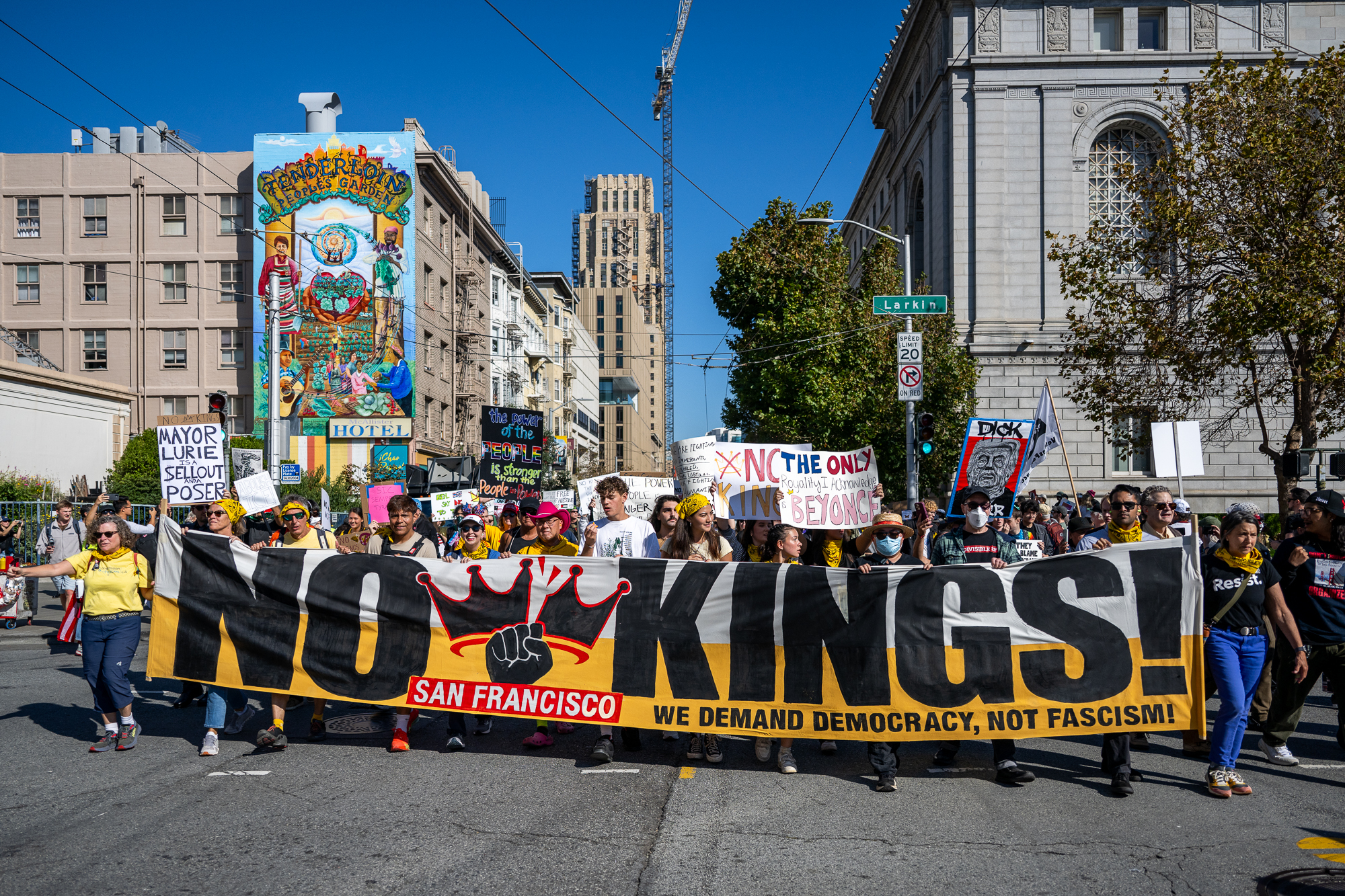
"caption": "Demonstrators march during a No Kings protest in San Francisco on Oct. 18, 2025. Tens of thousands are set to join “No Kings” protests in San Francisco, Oakland and San José, highlighting opposition to Trump’s immigration policies, military actions and civil rights attacks. ",
"credit": "Beth LaBerge/KQED",
"altTag": null,
"description": null,
"imgSizes": {
"thumbnail": {
"file": "https://cdn.kqed.org/wp-content/uploads/sites/10/2025/10/251018-NoKingsSF-27-BL-160x107.jpg",
"width": 160,
"height": 107,
"mimeType": "image/jpeg"
},
"1536x1536": {
"file": "https://cdn.kqed.org/wp-content/uploads/sites/10/2025/10/251018-NoKingsSF-27-BL-1536x1024.jpg",
"width": 1536,
"height": 1024,
"mimeType": "image/jpeg"
},
"post-thumbnail": {
"file": "https://cdn.kqed.org/wp-content/uploads/sites/10/2025/10/251018-NoKingsSF-27-BL-672x372.jpg",
"width": 672,
"height": 372,
"mimeType": "image/jpeg"
},
"twentyfourteen-full-width": {
"file": "https://cdn.kqed.org/wp-content/uploads/sites/10/2025/10/251018-NoKingsSF-27-BL-1038x576.jpg",
"width": 1038,
"height": 576,
"mimeType": "image/jpeg"
},
"kqedFullSize": {
"file": "https://cdn.kqed.org/wp-content/uploads/sites/10/2025/10/251018-NoKingsSF-27-BL.jpg",
"width": 2000,
"height": 1333
}
},
"isLoading": false,
"fetchFailed": false
},
"news_12062438": {
"type": "attachments",
"id": "news_12062438",
"meta": {
"index": "attachments_1716263798",
"site": "news",
"id": "12062438",
"found": true
},
"title": "251027-ALMADENQUICKSILVER00034_TV-KQED",
"publishDate": 1761912370,
"status": "inherit",
"parent": 0,
"modified": 1774479490,
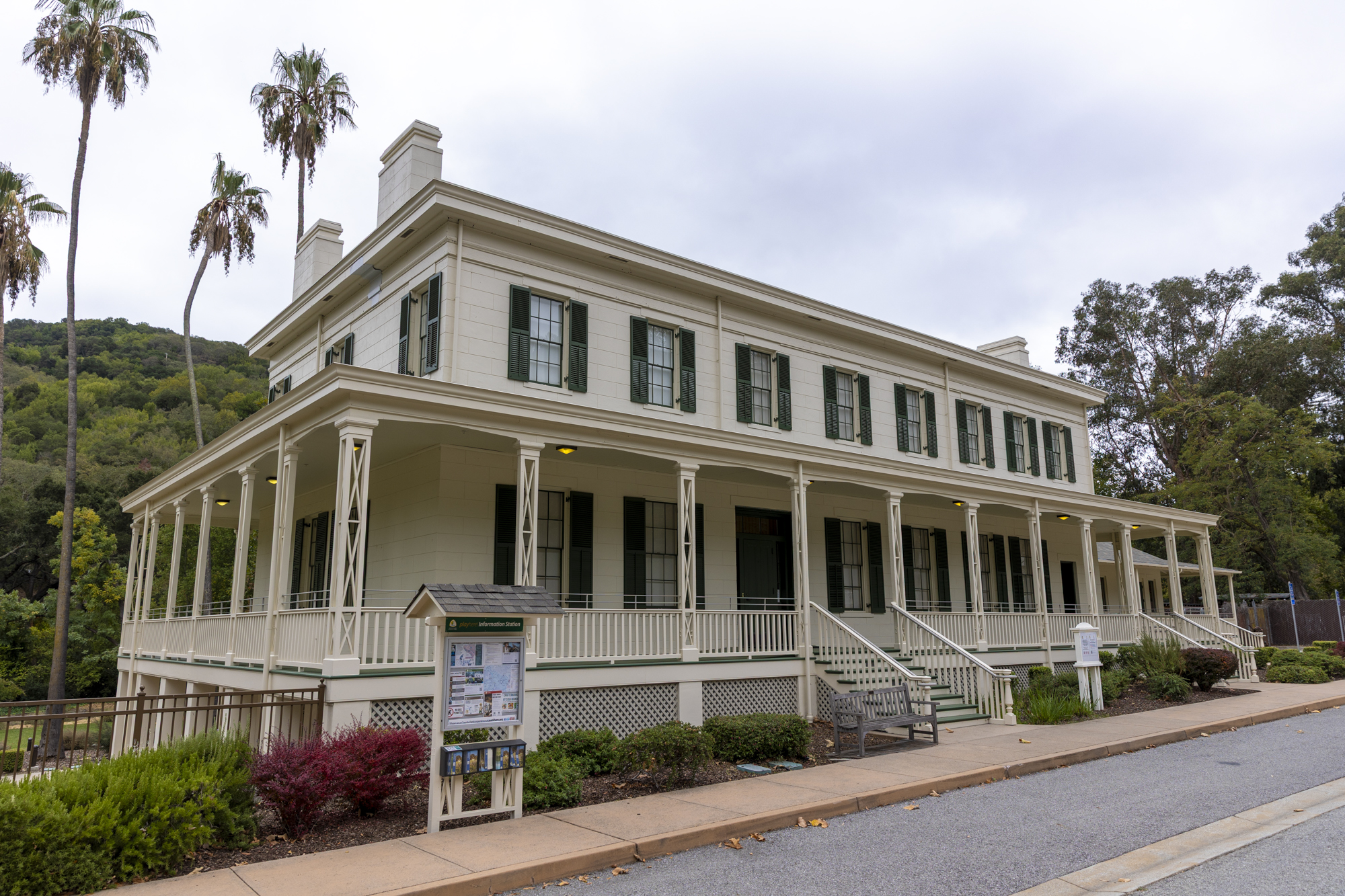
"caption": "The New Almaden Quicksilver Mining Museum is located in what used to be the mine manager’s mansion, also known as Casa Grande, in the hills south of San José. ",
"credit": "Tâm Vũ/KQED",
"altTag": null,
"description": null,
"imgSizes": {
"thumbnail": {
"file": "https://cdn.kqed.org/wp-content/uploads/sites/10/2025/10/251027-ALMADENQUICKSILVER00034_TV-KQED-160x107.jpg",
"width": 160,
"height": 107,
"mimeType": "image/jpeg"
},
"1536x1536": {
"file": "https://cdn.kqed.org/wp-content/uploads/sites/10/2025/10/251027-ALMADENQUICKSILVER00034_TV-KQED-1536x1024.jpg",
"width": 1536,
"height": 1024,
"mimeType": "image/jpeg"
},
"post-thumbnail": {
"file": "https://cdn.kqed.org/wp-content/uploads/sites/10/2025/10/251027-ALMADENQUICKSILVER00034_TV-KQED-672x372.jpg",
"width": 672,
"height": 372,
"mimeType": "image/jpeg"
},
"twentyfourteen-full-width": {
"file": "https://cdn.kqed.org/wp-content/uploads/sites/10/2025/10/251027-ALMADENQUICKSILVER00034_TV-KQED-1038x576.jpg",
"width": 1038,
"height": 576,
"mimeType": "image/jpeg"
},
"npr-cds-wide": {
"file": "https://cdn.kqed.org/wp-content/uploads/sites/10/2025/10/251027-ALMADENQUICKSILVER00034_TV-KQED-1200x675.jpg",
"width": 1200,
"height": 675,
"mimeType": "image/jpeg"
},
"kqedFullSize": {
"file": "https://cdn.kqed.org/wp-content/uploads/sites/10/2025/10/251027-ALMADENQUICKSILVER00034_TV-KQED.jpg",
"width": 2000,
"height": 1333
}
},
"isLoading": false,
"fetchFailed": false
},
"news_11729066": {
"type": "attachments",
"id": "news_11729066",
"meta": {
"index": "attachments_1716263798",
"site": "news",
"id": "11729066",
"found": true
},
"parent": 11728992,
"imgSizes": {
"twentyfourteen-full-width": {
"file": "https://ww2.kqed.org/app/uploads/sites/10/2019/02/GettyImages-450371283-1038x576.jpg",
"width": 1038,
"mimeType": "image/jpeg",
"height": 576
},
"thumbnail": {
"file": "https://ww2.kqed.org/app/uploads/sites/10/2019/02/GettyImages-450371283-160x107.jpg",
"width": 160,
"mimeType": "image/jpeg",
"height": 107
},
"post-thumbnail": {
"file": "https://ww2.kqed.org/app/uploads/sites/10/2019/02/GettyImages-450371283-672x372.jpg",
"width": 672,
"mimeType": "image/jpeg",
"height": 372
},
"kqedFullSize": {
"file": "https://ww2.kqed.org/app/uploads/sites/10/2019/02/GettyImages-450371283.jpg",
"width": 2048,
"height": 1365
},
"large": {
"file": "https://ww2.kqed.org/app/uploads/sites/10/2019/02/GettyImages-450371283-1020x680.jpg",
"width": 1020,
"mimeType": "image/jpeg",
"height": 680
},
"complete_open_graph": {
"file": "https://ww2.kqed.org/app/uploads/sites/10/2019/02/GettyImages-450371283-1200x800.jpg",
"width": 1200,
"mimeType": "image/jpeg",
"height": 800
},
"guest-author-50": {
"file": "https://ww2.kqed.org/app/uploads/sites/10/2019/02/GettyImages-450371283-50x50.jpg",
"width": 50,
"mimeType": "image/jpeg",
"height": 50
},
"guest-author-96": {
"file": "https://ww2.kqed.org/app/uploads/sites/10/2019/02/GettyImages-450371283-96x96.jpg",
"width": 96,
"mimeType": "image/jpeg",
"height": 96
},
"medium": {
"file": "https://ww2.kqed.org/app/uploads/sites/10/2019/02/GettyImages-450371283-800x533.jpg",
"width": 800,
"mimeType": "image/jpeg",
"height": 533
},
"guest-author-64": {
"file": "https://ww2.kqed.org/app/uploads/sites/10/2019/02/GettyImages-450371283-64x64.jpg",
"width": 64,
"mimeType": "image/jpeg",
"height": 64
},
"guest-author-32": {
"file": "https://ww2.kqed.org/app/uploads/sites/10/2019/02/GettyImages-450371283-32x32.jpg",
"width": 32,
"mimeType": "image/jpeg",
"height": 32
},
"full-width": {
"file": "https://ww2.kqed.org/app/uploads/sites/10/2019/02/GettyImages-450371283-1920x1280.jpg",
"width": 1920,
"mimeType": "image/jpeg",
"height": 1280
},
"detail": {
"file": "https://ww2.kqed.org/app/uploads/sites/10/2019/02/GettyImages-450371283-150x150.jpg",
"width": 150,
"mimeType": "image/jpeg",
"height": 150
},
"guest-author-128": {
"file": "https://ww2.kqed.org/app/uploads/sites/10/2019/02/GettyImages-450371283-128x128.jpg",
"width": 128,
"mimeType": "image/jpeg",
"height": 128
}
},
"publishDate": 1551211893,
"modified": 1551211976,
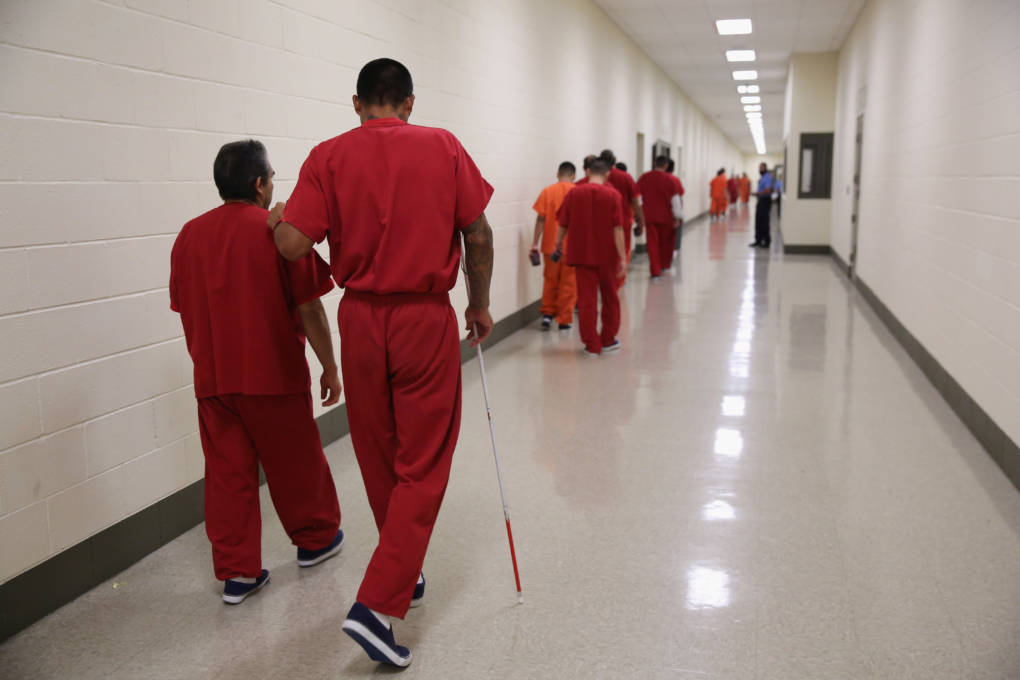
"caption": "Immigration detainees at the facility in Adelanto, California, which houses an average of 1,100 immigrants in custody pending a decision in their immigration cases or awaiting deportation. ",
"description": "Immigration detainees at the facility in Adelanto, California, which houses an average of 1,100 immigrants in custody pending a decision in their immigration cases or awaiting deportation. ",
"title": "ICE Holds Immigrants At Adelanto Detention Facility",
"credit": "John Moore/Getty Images",
"status": "inherit",
"isLoading": false,
"fetchFailed": false
},
"news_12077504": {
"type": "attachments",
"id": "news_12077504",
"meta": {
"index": "attachments_1716263798",
"site": "news",
"id": "12077504",
"found": true
},
"title": "Trump Sends ICE Agents To Airports As DHS Remains Unfunded",
"publishDate": 1774462696,
"status": "inherit",
"parent": 12077353,
"modified": 1779816919,
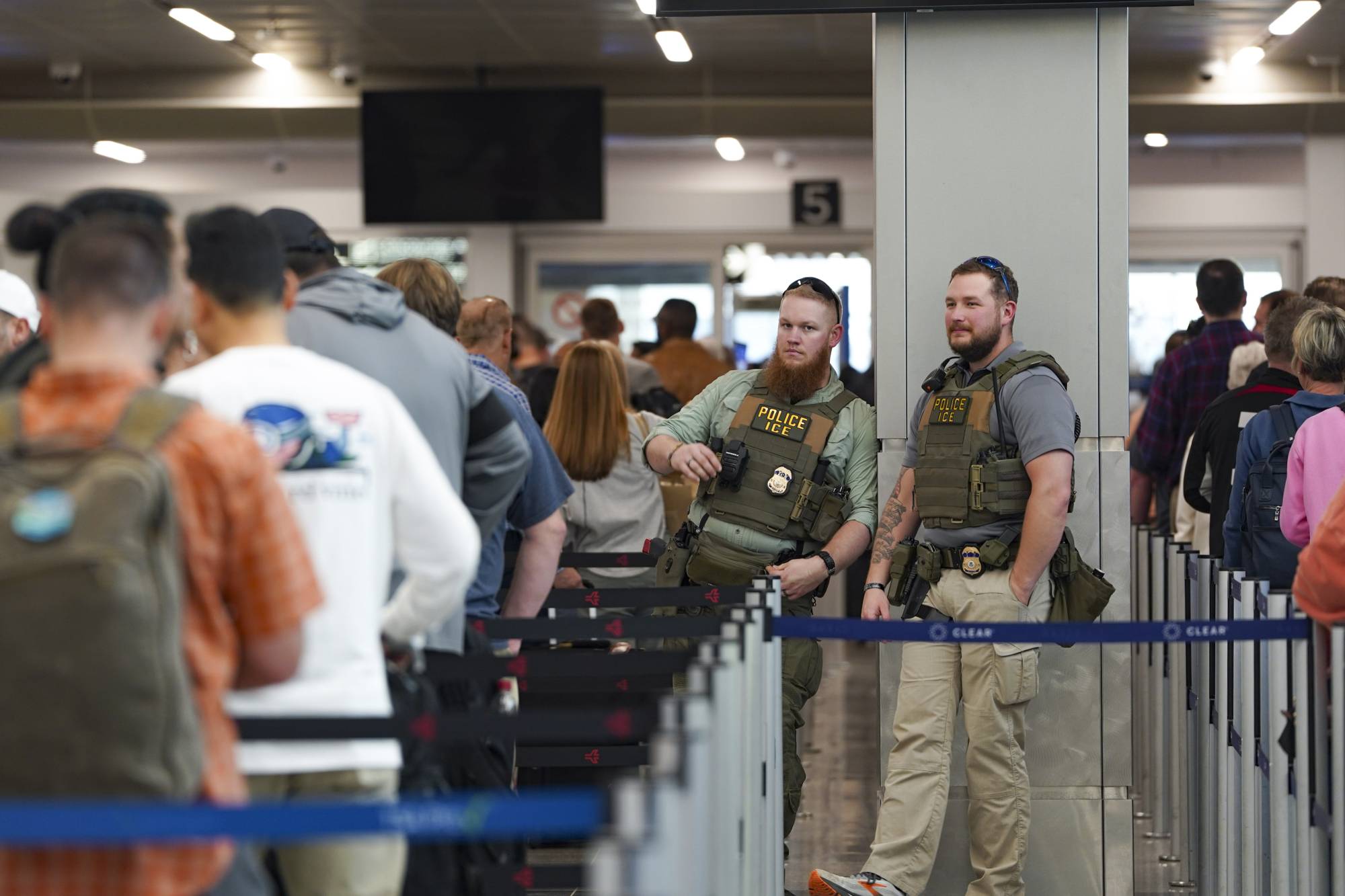
"caption": "CE agents stand next to the security line at Atlanta Hartsfield-Jackson International Airport on March 23, 2026 in Atlanta, Georgia. ",
"credit": "Megan Varner/Getty Images",
"altTag": null,
"description": null,
"imgSizes": {
"medium": {
"file": "https://cdn.kqed.org/wp-content/uploads/sites/10/2026/03/GettyImages-2267571375-2000x1333.jpg",
"width": 2000,
"height": 1333,
"mimeType": "image/jpeg"
},
"large": {
"file": "https://cdn.kqed.org/wp-content/uploads/sites/10/2026/03/GettyImages-2267571375-2000x1333.jpg",
"width": 2000,
"height": 1333,
"mimeType": "image/jpeg"
},
"thumbnail": {
"file": "https://cdn.kqed.org/wp-content/uploads/sites/10/2026/03/GettyImages-2267571375-160x107.jpg",
"width": 160,
"height": 107,
"mimeType": "image/jpeg"
},
"1536x1536": {
"file": "https://cdn.kqed.org/wp-content/uploads/sites/10/2026/03/GettyImages-2267571375-1536x1024.jpg",
"width": 1536,
"height": 1024,
"mimeType": "image/jpeg"
},
"2048x2048": {
"file": "https://cdn.kqed.org/wp-content/uploads/sites/10/2026/03/GettyImages-2267571375-2048x1365.jpg",
"width": 2048,
"height": 1365,
"mimeType": "image/jpeg"
},
"post-thumbnail": {
"file": "https://cdn.kqed.org/wp-content/uploads/sites/10/2026/03/GettyImages-2267571375-672x372.jpg",
"width": 672,
"height": 372,
"mimeType": "image/jpeg"
},
"twentyfourteen-full-width": {
"file": "https://cdn.kqed.org/wp-content/uploads/sites/10/2026/03/GettyImages-2267571375-1038x576.jpg",
"width": 1038,
"height": 576,
"mimeType": "image/jpeg"
},
"full-width": {
"file": "https://cdn.kqed.org/wp-content/uploads/sites/10/2026/03/GettyImages-2267571375-2000x1333.jpg",
"width": 2000,
"height": 1333,
"mimeType": "image/jpeg"
},
"npr-cds-wide": {
"file": "https://cdn.kqed.org/wp-content/uploads/sites/10/2026/03/GettyImages-2267571375-1200x675.jpg",
"width": 1200,
"height": 675,
"mimeType": "image/jpeg"
},
"npr-cds-square": {
"file": "https://cdn.kqed.org/wp-content/uploads/sites/10/2026/03/GettyImages-2267571375-600x600.jpg",
"width": 600,
"height": 600,
"mimeType": "image/jpeg"
},
"kqedFullSize": {
"file": "https://cdn.kqed.org/wp-content/uploads/sites/10/2026/03/GettyImages-2267571375-scaled-e1774462803299.jpg",
"width": 2000,
"height": 1334
}
},
"isLoading": false,
"fetchFailed": false
},
"news_12046809": {
"type": "attachments",
"id": "news_12046809",
"meta": {
"index": "attachments_1716263798",
"site": "news",
"id": "12046809",
"found": true
},
"title": "CoyotePresidioTrust1",
"publishDate": 1751478302,
"status": "inherit",
"parent": 12046806,
"modified": 1751478519,
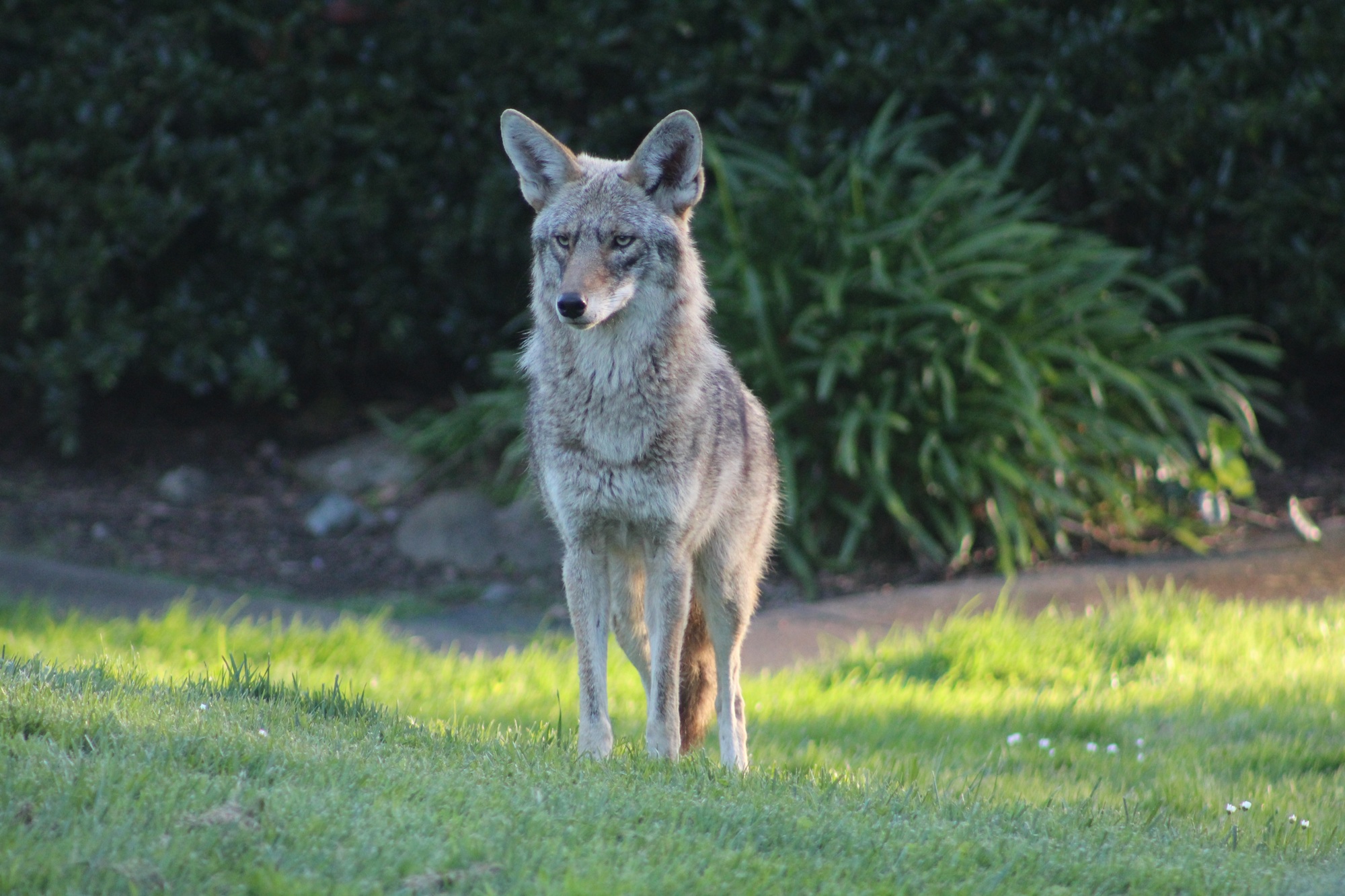
"caption": "A coyote advisory is in effect as sightings increase across Bay Area trails and neighborhoods this summer. Native to the region, coyotes are generally not dangerous to humans but can pose a threat to pets, prompting reminders from park officials to stay alert.",
"credit": "Courtesy of The Presidio Trust",
"altTag": null,
"description": null,
"imgSizes": {
"thumbnail": {
"file": "https://cdn.kqed.org/wp-content/uploads/sites/10/2025/07/CoyotePresidioTrust1-160x107.jpg",
"width": 160,
"height": 107,
"mimeType": "image/jpeg"
},
"1536x1536": {
"file": "https://cdn.kqed.org/wp-content/uploads/sites/10/2025/07/CoyotePresidioTrust1-1536x1024.jpg",
"width": 1536,
"height": 1024,
"mimeType": "image/jpeg"
},
"post-thumbnail": {
"file": "https://cdn.kqed.org/wp-content/uploads/sites/10/2025/07/CoyotePresidioTrust1-672x372.jpg",
"width": 672,
"height": 372,
"mimeType": "image/jpeg"
},
"twentyfourteen-full-width": {
"file": "https://cdn.kqed.org/wp-content/uploads/sites/10/2025/07/CoyotePresidioTrust1-1038x576.jpg",
"width": 1038,
"height": 576,
"mimeType": "image/jpeg"
},
"kqedFullSize": {
"file": "https://cdn.kqed.org/wp-content/uploads/sites/10/2025/07/CoyotePresidioTrust1.jpg",
"width": 2000,
"height": 1333
}
},
"isLoading": false,
"fetchFailed": false
},
"news_12075430": {
"type": "attachments",
"id": "news_12075430",
"meta": {
"index": "attachments_1716263798",
"site": "news",
"id": "12075430",
"found": true
},
"title": "260304-Elon-Musk-Trial-03-KQED",
"publishDate": 1772664124,
"status": "inherit",
"parent": 12081290,
"modified": 1777070671,
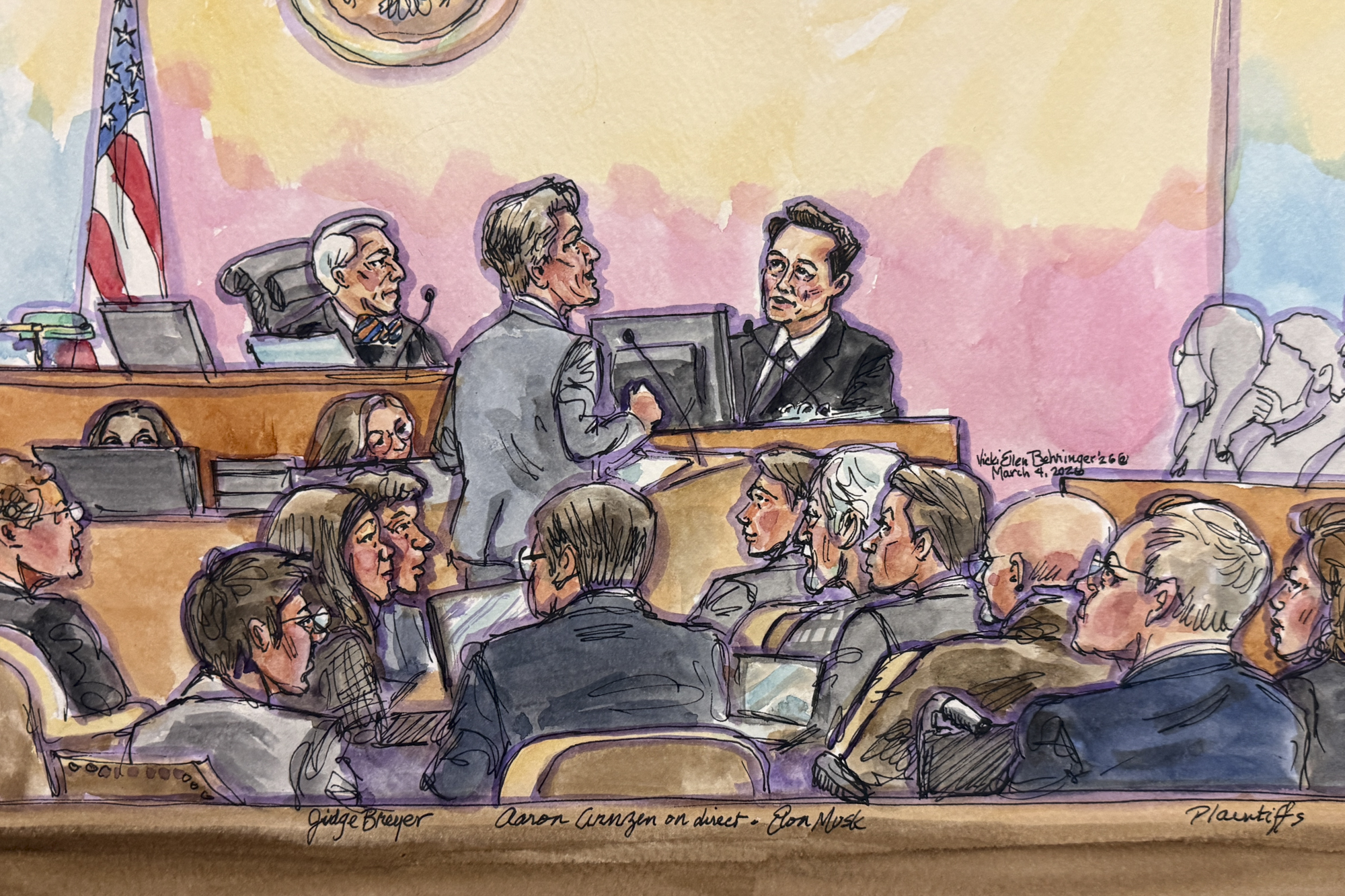
"caption": "A courtroom sketch depicts Elon Musk on the stand on March 4, 2026.",
"credit": "Vicki Behringer for KQED",
"altTag": null,
"description": null,
"imgSizes": {
"thumbnail": {
"file": "https://cdn.kqed.org/wp-content/uploads/sites/10/2026/03/260304-Elon-Musk-Trial-03-KQED-160x107.jpg",
"width": 160,
"height": 107,
"mimeType": "image/jpeg"
},
"1536x1536": {
"file": "https://cdn.kqed.org/wp-content/uploads/sites/10/2026/03/260304-Elon-Musk-Trial-03-KQED-1536x1024.jpg",
"width": 1536,
"height": 1024,
"mimeType": "image/jpeg"
},
"post-thumbnail": {
"file": "https://cdn.kqed.org/wp-content/uploads/sites/10/2026/03/260304-Elon-Musk-Trial-03-KQED-672x372.jpg",
"width": 672,
"height": 372,
"mimeType": "image/jpeg"
},
"twentyfourteen-full-width": {
"file": "https://cdn.kqed.org/wp-content/uploads/sites/10/2026/03/260304-Elon-Musk-Trial-03-KQED-1038x576.jpg",
"width": 1038,
"height": 576,
"mimeType": "image/jpeg"
},
"npr-cds-wide": {
"file": "https://cdn.kqed.org/wp-content/uploads/sites/10/2026/03/260304-Elon-Musk-Trial-03-KQED-1200x675.jpg",
"width": 1200,
"height": 675,
"mimeType": "image/jpeg"
},
"kqedFullSize": {
"file": "https://cdn.kqed.org/wp-content/uploads/sites/10/2026/03/260304-Elon-Musk-Trial-03-KQED.jpg",
"width": 2000,
"height": 1333
}
},
"isLoading": false,
"fetchFailed": false
},
"news_12077198": {
"type": "attachments",
"id": "news_12077198",
"meta": {
"index": "attachments_1716263798",
"site": "news",
"id": "12077198",
"found": true
},
"title": "260319-CHAVEZSJ-KQED-09_qed",
"publishDate": 1774034858,
"status": "inherit",
"parent": 12077159,
"modified": 1774037044,
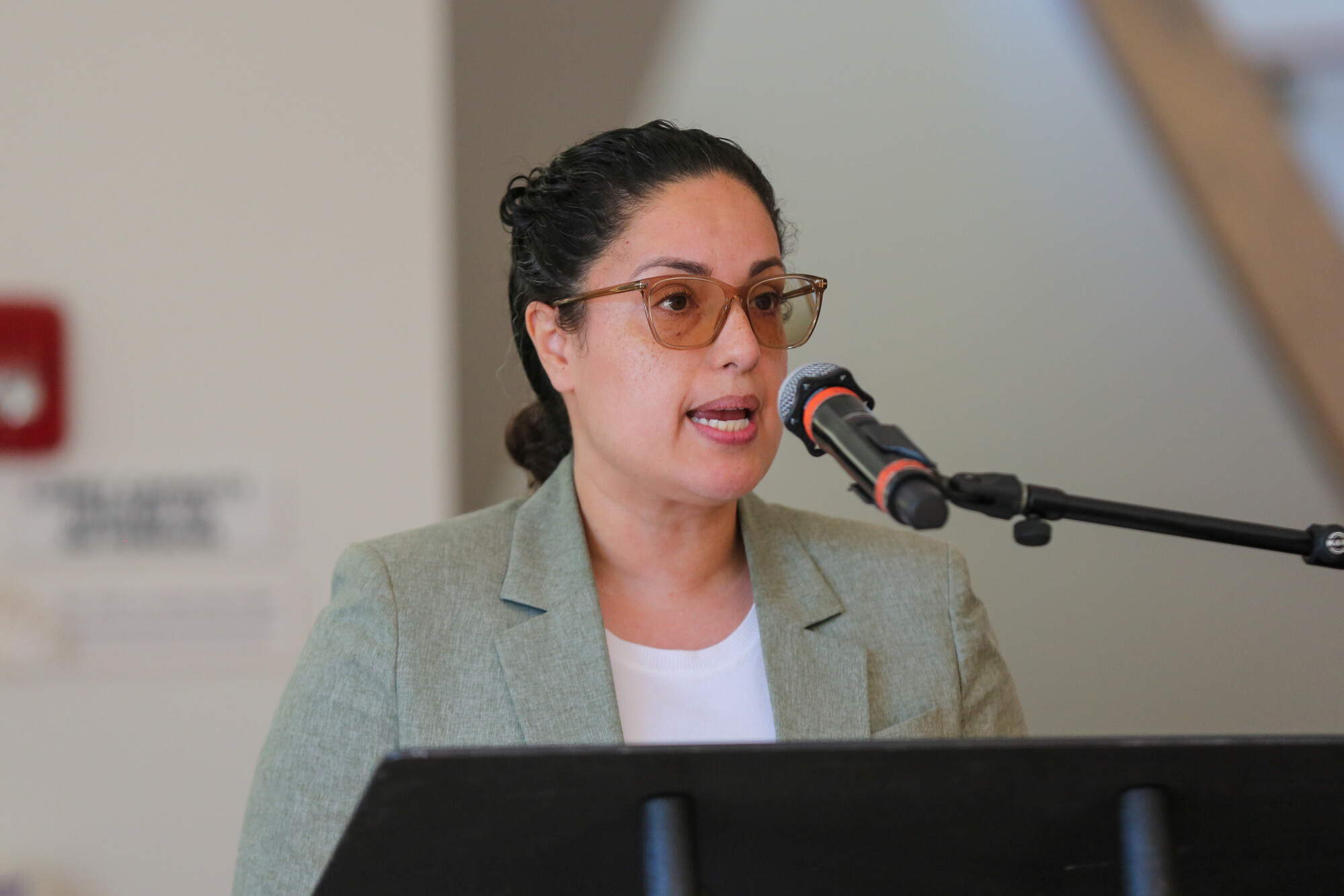
"caption": "Jessica Paz-Cedillos, CEO of Mexican Heritage Plaza, speaks about the community response to sexual abuse allegations against the late labor leader Cesar Chavez in East San José on Thursday, March 19, 2026.",
"credit": "Joseph Geha/KQED",
"altTag": null,
"description": null,
"imgSizes": {
"thumbnail": {
"file": "https://cdn.kqed.org/wp-content/uploads/sites/10/2026/03/260319-CHAVEZSJ-KQED-09_qed-160x107.jpg",
"width": 160,
"height": 107,
"mimeType": "image/jpeg"
},
"1536x1536": {
"file": "https://cdn.kqed.org/wp-content/uploads/sites/10/2026/03/260319-CHAVEZSJ-KQED-09_qed-1536x1024.jpg",
"width": 1536,
"height": 1024,
"mimeType": "image/jpeg"
},
"post-thumbnail": {
"file": "https://cdn.kqed.org/wp-content/uploads/sites/10/2026/03/260319-CHAVEZSJ-KQED-09_qed-672x372.jpg",
"width": 672,
"height": 372,
"mimeType": "image/jpeg"
},
"twentyfourteen-full-width": {
"file": "https://cdn.kqed.org/wp-content/uploads/sites/10/2026/03/260319-CHAVEZSJ-KQED-09_qed-1038x576.jpg",
"width": 1038,
"height": 576,
"mimeType": "image/jpeg"
},
"npr-cds-wide": {
"file": "https://cdn.kqed.org/wp-content/uploads/sites/10/2026/03/260319-CHAVEZSJ-KQED-09_qed-1200x675.jpg",
"width": 1200,
"height": 675,
"mimeType": "image/jpeg"
},
"kqedFullSize": {
"file": "https://cdn.kqed.org/wp-content/uploads/sites/10/2026/03/260319-CHAVEZSJ-KQED-09_qed.jpg",
"width": 1999,
"height": 1333
}
},
"isLoading": false,
"fetchFailed": false
},
"news_12076934": {
"type": "attachments",
"id": "news_12076934",
"meta": {
"index": "attachments_1716263798",
"site": "news",
"id": "12076934",
"found": true
},
"title": "US-LABOUR-RIGHTS-CHAVEZ",
"publishDate": 1773864383,
"status": "inherit",
"parent": 12076859,
"modified": 1773960421,
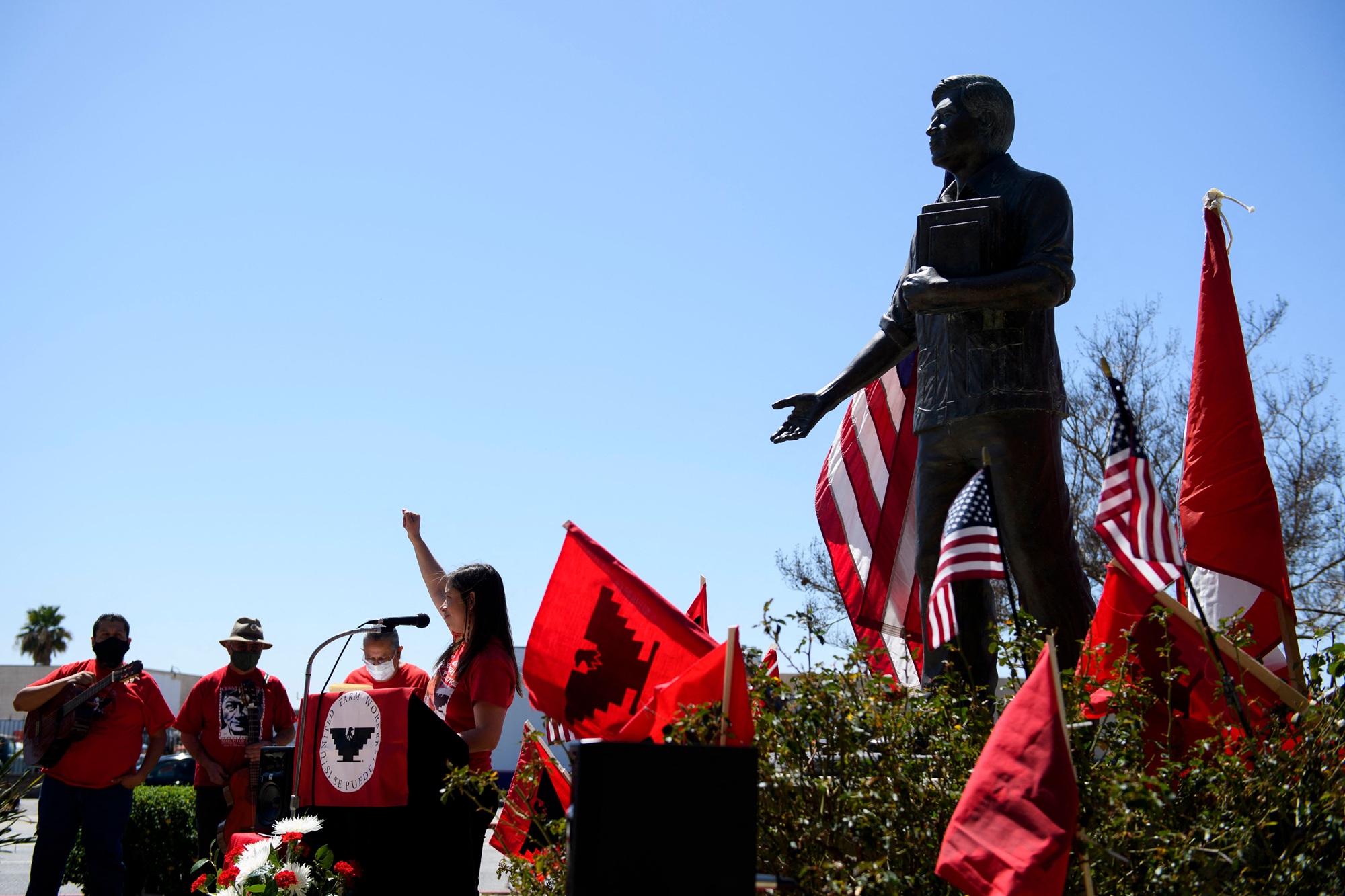
"caption": "A statue of César E. Chavez stands as members of the San Fernando Valley commemorative committee celebrate César Chavez Day on March 31, 2021, in San Fernando, California. Chavez was known for employing non-violent means to seek better working conditions for thousands of farm workers who suffered low wages and severe working conditions. In 1962, he founded the National Farm Workers Association, which later became the United Farm Workers (UFW) union. ",
"credit": "Patrick T. Fallon/AFP via Getty Images",
"altTag": null,
"description": null,
"imgSizes": {
"thumbnail": {
"file": "https://cdn.kqed.org/wp-content/uploads/sites/10/2026/03/CesarChavezGetty2-160x107.jpg",
"width": 160,
"height": 107,
"mimeType": "image/jpeg"
},
"1536x1536": {
"file": "https://cdn.kqed.org/wp-content/uploads/sites/10/2026/03/CesarChavezGetty2-1536x1024.jpg",
"width": 1536,
"height": 1024,
"mimeType": "image/jpeg"
},
"post-thumbnail": {
"file": "https://cdn.kqed.org/wp-content/uploads/sites/10/2026/03/CesarChavezGetty2-672x372.jpg",
"width": 672,
"height": 372,
"mimeType": "image/jpeg"
},
"twentyfourteen-full-width": {
"file": "https://cdn.kqed.org/wp-content/uploads/sites/10/2026/03/CesarChavezGetty2-1038x576.jpg",
"width": 1038,
"height": 576,
"mimeType": "image/jpeg"
},
"npr-cds-wide": {
"file": "https://cdn.kqed.org/wp-content/uploads/sites/10/2026/03/CesarChavezGetty2-1200x675.jpg",
"width": 1200,
"height": 675,
"mimeType": "image/jpeg"
},
"kqedFullSize": {
"file": "https://cdn.kqed.org/wp-content/uploads/sites/10/2026/03/CesarChavezGetty2.jpg",
"width": 2000,
"height": 1333
}
},
"isLoading": false,
"fetchFailed": false
},
"news_12077058": {
"type": "attachments",
"id": "news_12077058",
"meta": {
"index": "attachments_1716263798",
"site": "news",
"id": "12077058",
"found": true
},
"title": "A street sign on Cesar Chavez Street in San Francisco on March 19, 2026.",
"publishDate": 1773944010,
"status": "inherit",
"parent": 12077691,
"modified": 1774556186,
"caption": "A street sign on Cesar Chavez Street in San Francisco on March 19, 2026.",
"credit": "Martin do Nascimento/KQED",
"altTag": null,
"description": null,
"imgSizes": {
"thumbnail": {
"file": "https://cdn.kqed.org/wp-content/uploads/sites/10/2026/03/260319-CESAR-CHAVEZ-STREET-MD-01-KQED-160x107.jpg",
"width": 160,
"height": 107,
"mimeType": "image/jpeg"
},
"1536x1536": {
"file": "https://cdn.kqed.org/wp-content/uploads/sites/10/2026/03/260319-CESAR-CHAVEZ-STREET-MD-01-KQED-1536x1024.jpg",
"width": 1536,
"height": 1024,
"mimeType": "image/jpeg"
},
"post-thumbnail": {
"file": "https://cdn.kqed.org/wp-content/uploads/sites/10/2026/03/260319-CESAR-CHAVEZ-STREET-MD-01-KQED-672x372.jpg",
"width": 672,
"height": 372,
"mimeType": "image/jpeg"
},
"twentyfourteen-full-width": {
"file": "https://cdn.kqed.org/wp-content/uploads/sites/10/2026/03/260319-CESAR-CHAVEZ-STREET-MD-01-KQED-1038x576.jpg",
"width": 1038,
"height": 576,
"mimeType": "image/jpeg"
},
"npr-cds-wide": {
"file": "https://cdn.kqed.org/wp-content/uploads/sites/10/2026/03/260319-CESAR-CHAVEZ-STREET-MD-01-KQED-1200x675.jpg",
"width": 1200,
"height": 675,
"mimeType": "image/jpeg"
},
"kqedFullSize": {
"file": "https://cdn.kqed.org/wp-content/uploads/sites/10/2026/03/260319-CESAR-CHAVEZ-STREET-MD-01-KQED.jpg",
"width": 2000,
"height": 1333
}
},
"isLoading": false,
"fetchFailed": false
},
"news_12077095": {
"type": "attachments",
"id": "news_12077095",
"meta": {
"index": "attachments_1716263798",
"site": "news",
"id": "12077095",
"found": true
},
"title": "260310-UnhousedMail-02-BL_qed",
"publishDate": 1773958415,
"status": "inherit",
"parent": 12076996,
"modified": 1773958455,
"caption": "USPS employee Robert Tapia works at San Francisco General Delivery on March 10, 2026. The service allows people without a permanent address to receive mail by picking it up at the post office.",
"credit": "Beth LaBerge/KQED",
"altTag": null,
"description": null,
"imgSizes": {
"thumbnail": {
"file": "https://cdn.kqed.org/wp-content/uploads/sites/10/2026/03/260310-UnhousedMail-02-BL_qed-160x107.jpg",
"width": 160,
"height": 107,
"mimeType": "image/jpeg"
},
"1536x1536": {
"file": "https://cdn.kqed.org/wp-content/uploads/sites/10/2026/03/260310-UnhousedMail-02-BL_qed-1536x1024.jpg",
"width": 1536,
"height": 1024,
"mimeType": "image/jpeg"
},
"post-thumbnail": {
"file": "https://cdn.kqed.org/wp-content/uploads/sites/10/2026/03/260310-UnhousedMail-02-BL_qed-672x372.jpg",
"width": 672,
"height": 372,
"mimeType": "image/jpeg"
},
"twentyfourteen-full-width": {
"file": "https://cdn.kqed.org/wp-content/uploads/sites/10/2026/03/260310-UnhousedMail-02-BL_qed-1038x576.jpg",
"width": 1038,
"height": 576,
"mimeType": "image/jpeg"
},
"npr-cds-wide": {
"file": "https://cdn.kqed.org/wp-content/uploads/sites/10/2026/03/260310-UnhousedMail-02-BL_qed-1200x675.jpg",
"width": 1200,
"height": 675,
"mimeType": "image/jpeg"
},
"kqedFullSize": {
"file": "https://cdn.kqed.org/wp-content/uploads/sites/10/2026/03/260310-UnhousedMail-02-BL_qed.jpg",
"width": 2000,
"height": 1333
}
},
"isLoading": false,
"fetchFailed": false
},
"news_12077043": {
"type": "attachments",
"id": "news_12077043",
"meta": {
"index": "attachments_1716263798",
"site": "news",
"id": "12077043",
"found": true
},
"title": "chavezstudentcenter",
"publishDate": 1773940084,
"status": "inherit",
"parent": 12077014,
"modified": 1773941724,
"caption": "The Cesar Chavez Student Center at San Francisco State University on June 24, 2005.",
"credit": "Brian Trejo/Wikimedia Commons",
"altTag": null,
"description": null,
"imgSizes": {
"thumbnail": {
"file": "https://cdn.kqed.org/wp-content/uploads/sites/10/2026/03/chavezstudentcenter-160x120.jpg",
"width": 160,
"height": 120,
"mimeType": "image/jpeg"
},
"1536x1536": {
"file": "https://cdn.kqed.org/wp-content/uploads/sites/10/2026/03/chavezstudentcenter-1536x1152.jpg",
"width": 1536,
"height": 1152,
"mimeType": "image/jpeg"
},
"post-thumbnail": {
"file": "https://cdn.kqed.org/wp-content/uploads/sites/10/2026/03/chavezstudentcenter-672x372.jpg",
"width": 672,
"height": 372,
"mimeType": "image/jpeg"
},
"twentyfourteen-full-width": {
"file": "https://cdn.kqed.org/wp-content/uploads/sites/10/2026/03/chavezstudentcenter-1038x576.jpg",
"width": 1038,
"height": 576,
"mimeType": "image/jpeg"
},
"npr-cds-wide": {
"file": "https://cdn.kqed.org/wp-content/uploads/sites/10/2026/03/chavezstudentcenter-1200x675.jpg",
"width": 1200,
"height": 675,
"mimeType": "image/jpeg"
},
"kqedFullSize": {
"file": "https://cdn.kqed.org/wp-content/uploads/sites/10/2026/03/chavezstudentcenter.jpg",
"width": 2000,
"height": 1500
}
},
"isLoading": false,
"fetchFailed": false
},
"news_12076804": {
"type": "attachments",
"id": "news_12076804",
"meta": {
"index": "attachments_1716263798",
"site": "news",
"id": "12076804",
"found": true
},
"title": "260317-MONARCH THE BEAR-07-KQED",
"publishDate": 1773788495,
"status": "inherit",
"parent": 12083826,
"modified": 1778869141,
"caption": "Fran Ritchie with the California Academy of Sciences works to restore the taxidermied form of Monarch the bear, part of the exhibit California: State of Nature. ",
"credit": "Gayle Laird/California Academy of Sciences",
"altTag": null,
"description": null,
"imgSizes": {
"thumbnail": {
"file": "https://cdn.kqed.org/wp-content/uploads/sites/10/2026/03/260317-MONARCH-THE-BEAR-07-KQED-160x107.jpg",
"width": 160,
"height": 107,
"mimeType": "image/jpeg"
},
"1536x1536": {
"file": "https://cdn.kqed.org/wp-content/uploads/sites/10/2026/03/260317-MONARCH-THE-BEAR-07-KQED-1536x1024.jpg",
"width": 1536,
"height": 1024,
"mimeType": "image/jpeg"
},
"post-thumbnail": {
"file": "https://cdn.kqed.org/wp-content/uploads/sites/10/2026/03/260317-MONARCH-THE-BEAR-07-KQED-672x372.jpg",
"width": 672,
"height": 372,
"mimeType": "image/jpeg"
},
"twentyfourteen-full-width": {
"file": "https://cdn.kqed.org/wp-content/uploads/sites/10/2026/03/260317-MONARCH-THE-BEAR-07-KQED-1038x576.jpg",
"width": 1038,
"height": 576,
"mimeType": "image/jpeg"
},
"npr-cds-wide": {
"file": "https://cdn.kqed.org/wp-content/uploads/sites/10/2026/03/260317-MONARCH-THE-BEAR-07-KQED-1200x675.jpg",
"width": 1200,
"height": 675,
"mimeType": "image/jpeg"
},
"kqedFullSize": {
"file": "https://cdn.kqed.org/wp-content/uploads/sites/10/2026/03/260317-MONARCH-THE-BEAR-07-KQED.jpg",
"width": 2000,
"height": 1333
}
},
"isLoading": false,
"fetchFailed": false
}
},
"audioPlayerReducer": {
"postId": "stream_live",
"isPaused": true,
"isPlaying": false,
"pfsActive": false,
"pledgeModalIsOpen": true,
"playerDrawerIsOpen": false,
"liveAudioPlayStartedAt": 0,
"liveAudioPlayContext": ""
},
"authorsReducer": {
"byline_news_12077101": {
"type": "authors",
"id": "byline_news_12077101",
"meta": {
"override": true
},
"slug": "byline_news_12077101",
"name": "Erin Bump ",
"isLoading": false
},
"byline_news_12077014": {
"type": "authors",
"id": "byline_news_12077014",
"meta": {
"override": true
},
"slug": "byline_news_12077014",
"name": "Claire Morgan and Emily Zentner, The California Newsroom",
"isLoading": false
},
"kqed": {
"type": "authors",
"id": "236",
"meta": {
"index": "authors_1716337520",
"id": "236",
"found": true
},
"name": "KQED News Staff",
"firstName": "KQED News Staff",
"lastName": null,
"slug": "kqed",
"email": "faq@kqed.org",
"display_author_email": false,
"staff_mastheads": [],
"title": null,
"bio": null,
"avatar": "https://secure.gravatar.com/avatar/ef0e801a68c4c54afa9180db14084167?s=600&d=blank&r=g",
"twitter": null,
"facebook": null,
"instagram": null,
"linkedin": null,
"sites": [
{
"site": "arts",
"roles": [
"contributor"
]
},
{
"site": "news",
"roles": [
"editor"
]
},
{
"site": "futureofyou",
"roles": [
"author"
]
}
],
"headData": {
"title": "KQED News Staff | KQED",
"description": null,
"ogImgSrc": "https://secure.gravatar.com/avatar/ef0e801a68c4c54afa9180db14084167?s=600&d=blank&r=g",
"twImgSrc": "https://secure.gravatar.com/avatar/ef0e801a68c4c54afa9180db14084167?s=600&d=blank&r=g"
},
"isLoading": false,
"link": "/author/kqed"
},
"rachael-myrow": {
"type": "authors",
"id": "251",
"meta": {
"index": "authors_1716337520",
"id": "251",
"found": true
},
"name": "Rachael Myrow",
"firstName": "Rachael",
"lastName": "Myrow",
"slug": "rachael-myrow",
"email": "rmyrow@kqed.org",
"display_author_email": true,
"staff_mastheads": [
"news"
],
"title": "Senior Editor of KQED's Silicon Valley News Desk",
"bio": "• I write and edit stories about how Silicon Valley power and policies shape everyday life in California. I’m also passionate about making Bay Area history and culture more accessible to a broad public. • I’ve been a journalist for most of my life, starting in high school with The Franklin Press in Los Angeles, where I grew up. While earning my first degree in English at UC Berkeley, I got my start in public radio at KALX-FM. After completing a second degree in journalism at Cal, I landed my first professional job at Marketplace, then moved on to KPCC (now LAist), and then KQED, where I hosted The California Report for more than seven years. • My reporting has appeared on NPR, The World, WBUR’s \u003ci>Here & Now\u003c/i>, and the BBC. I also guest host for KQED’s \u003ci>Forum\u003c/i>, as well as the Commonwealth Club in San Francisco. • I speak periodically on media, democracy and technology issues, and do voiceover work for documentaries and educational video projects. • Outside of the studio, you'll find me hiking Bay Area trails and whipping up Insta-ready meals in my kitchen. • I do not accept gifts, money, or favors from anyone connected to my reporting, I don't pay people for information, and I do not support or donate to political causes. • I strive to treat the people I report on with fairness, honesty, and respect. I also recognize there are often multiple sides to a story and work to verify information through multiple sources and documentation. If I get something wrong, I correct it.",
"avatar": "https://secure.gravatar.com/avatar/3ed8a3c5f26025e4a805ba634cda8cd764906b97438a6d9ce216b044e340da4e?s=600&d=blank&r=g",
"twitter": "rachaelmyrow",
"bluesky": null,
"facebook": null,
"instagram": null,
"linkedin": "https://www.linkedin.com/in/rachaelmyrow/",
"sites": [
{
"site": "arts",
"roles": [
"administrator"
]
},
{
"site": "news",
"roles": [
"edit_others_posts",
"editor"
]
},
{
"site": "futureofyou",
"roles": [
"editor"
]
},
{
"site": "bayareabites",
"roles": [
"editor"
]
},
{
"site": "stateofhealth",
"roles": [
"editor"
]
},
{
"site": "science",
"roles": [
"editor"
]
},
{
"site": "food",
"roles": [
"editor"
]
},
{
"site": "forum",
"roles": [
"editor"
]
},
{
"site": "liveblog",
"roles": [
"author"
]
}
],
"headData": {
"title": "Rachael Myrow | KQED",
"description": "Senior Editor of KQED's Silicon Valley News Desk",
"ogImgSrc": "https://secure.gravatar.com/avatar/3ed8a3c5f26025e4a805ba634cda8cd764906b97438a6d9ce216b044e340da4e?s=600&d=blank&r=g",
"twImgSrc": "https://secure.gravatar.com/avatar/3ed8a3c5f26025e4a805ba634cda8cd764906b97438a6d9ce216b044e340da4e?s=600&d=blank&r=g"
},
"isLoading": false,
"link": "/author/rachael-myrow"
},
"fjhabvala": {
"type": "authors",
"id": "8659",
"meta": {
"index": "authors_1716337520",
"id": "8659",
"found": true
},
"name": "Farida Jhabvala Romero",
"firstName": "Farida",
"lastName": "Jhabvala Romero",
"slug": "fjhabvala",
"email": "fjhabvala@kqed.org",
"display_author_email": true,
"staff_mastheads": [
"news"
],
"title": "KQED Contributor",
"bio": "Farida Jhabvala Romero is a Labor Correspondent for KQED. She previously covered immigration. Farida was \u003ca href=\"https://www.ccnma.org/2022-most-influential-latina-journalists\">named\u003c/a> one of the 10 Most Influential Latina Journalists in California in 2022 by the California Chicano News Media Association. Her work has won awards from the Society of Professional Journalists (Northern California), as well as a national and regional Edward M. Murrow Award for the collaborative reporting projects “Dangerous Air” and “Graying California.” Before joining KQED, Farida worked as a producer at Radio Bilingüe, a national public radio network. Farida earned her master’s degree in journalism from Stanford University.",
"avatar": "https://secure.gravatar.com/avatar/f9f022d4e2609741874222a1e9d41f48fea74011aa7c615eef91d9a50c944ebe?s=600&d=blank&r=g",
"twitter": "FaridaJhabvala",
"bluesky": null,
"facebook": null,
"instagram": null,
"linkedin": "https://www.linkedin.com/in/faridajhabvala/",
"sites": [
{
"site": "news",
"roles": [
"editor"
]
},
{
"site": "stateofhealth",
"roles": [
"author"
]
},
{
"site": "liveblog",
"roles": [
"author"
]
}
],
"headData": {
"title": "Farida Jhabvala Romero | KQED",
"description": "KQED Contributor",
"ogImgSrc": "https://secure.gravatar.com/avatar/f9f022d4e2609741874222a1e9d41f48fea74011aa7c615eef91d9a50c944ebe?s=600&d=blank&r=g",
"twImgSrc": "https://secure.gravatar.com/avatar/f9f022d4e2609741874222a1e9d41f48fea74011aa7c615eef91d9a50c944ebe?s=600&d=blank&r=g"
},
"isLoading": false,
"link": "/author/fjhabvala"
},
"kmonahan": {
"type": "authors",
"id": "11842",
"meta": {
"index": "authors_1716337520",
"id": "11842",
"found": true
},
"name": "Katherine Monahan",
"firstName": "Katherine",
"lastName": "Monahan",
"slug": "kmonahan",
"email": "kmonahan@kqed.org",
"display_author_email": true,
"staff_mastheads": [],
"title": "Reporter / Sound Engineer",
"bio": "I cover state and local news. I’m also a sound engineer at the station, mixing stories and running live broadcasts. I link to source materials so that readers can draw their own conclusions, and seek comment from a range of perspectives, including from people directly affected by events. Awards received include from the Society of Professional Journalists, Northern California chapter and the Alaska Press Club. I speak multiple languages and have reported and engineered in the Bay Area, Alaska, West Africa and Latin America.",
"avatar": "https://secure.gravatar.com/avatar/ff257b3a5da88893781a3d3266904b2d2f91c7f0e1bbf728f61f5fb81b74a669?s=600&d=blank&r=g",
"twitter": null,
"bluesky": null,
"facebook": null,
"instagram": null,
"linkedin": null,
"sites": [
{
"site": "news",
"roles": [
"editor"
]
},
{
"site": "science",
"roles": [
"contributor"
]
}
],
"headData": {
"title": "Katherine Monahan | KQED",
"description": "Reporter / Sound Engineer",
"ogImgSrc": "https://secure.gravatar.com/avatar/ff257b3a5da88893781a3d3266904b2d2f91c7f0e1bbf728f61f5fb81b74a669?s=600&d=blank&r=g",
"twImgSrc": "https://secure.gravatar.com/avatar/ff257b3a5da88893781a3d3266904b2d2f91c7f0e1bbf728f61f5fb81b74a669?s=600&d=blank&r=g"
},
"isLoading": false,
"link": "/author/kmonahan"
},
"nkhan": {
"type": "authors",
"id": "11867",
"meta": {
"index": "authors_1716337520",
"id": "11867",
"found": true
},
"name": "Nisa Khan",
"firstName": "Nisa",
"lastName": "Khan",
"slug": "nkhan",
"email": "nkhan@kqed.org",
"display_author_email": false,
"staff_mastheads": [],
"title": "KQED Contributor",
"bio": "Nisa Khan is a reporter for KQED's Audience News Desk. She was formerly a data reporter at Michigan Radio. She earned a Bachelor of Science in Information from the University of Michigan and a Master of Arts in Communication from Stanford University.",
"avatar": "https://secure.gravatar.com/avatar/8720459eef081ff64582b3506b124d58523e80e120704a0cbd9892533c914991?s=600&d=blank&r=g",
"twitter": "mnisakhan",
"bluesky": null,
"facebook": null,
"instagram": null,
"linkedin": null,
"sites": [
{
"site": "arts",
"roles": [
"editor"
]
},
{
"site": "news",
"roles": [
"editor"
]
},
{
"site": "science",
"roles": [
"editor",
"author"
]
},
{
"site": "forum",
"roles": [
"editor"
]
},
{
"site": "liveblog",
"roles": [
"contributor"
]
}
],
"headData": {
"title": "Nisa Khan | KQED",
"description": "KQED Contributor",
"ogImgSrc": "https://secure.gravatar.com/avatar/8720459eef081ff64582b3506b124d58523e80e120704a0cbd9892533c914991?s=600&d=blank&r=g",
"twImgSrc": "https://secure.gravatar.com/avatar/8720459eef081ff64582b3506b124d58523e80e120704a0cbd9892533c914991?s=600&d=blank&r=g"
},
"isLoading": false,
"link": "/author/nkhan"
},
"jgeha": {
"type": "authors",
"id": "11906",
"meta": {
"index": "authors_1716337520",
"id": "11906",
"found": true
},
"name": "Joseph Geha",
"firstName": "Joseph",
"lastName": "Geha",
"slug": "jgeha",
"email": "jgeha@kqed.org",
"display_author_email": false,
"staff_mastheads": [
"news",
"science"
],
"title": "KQED Contributor",
"bio": null,
"avatar": "https://secure.gravatar.com/avatar/ea84d2b6dd93d6369d453edf19dd583f117cd1759d2d9c9c92f9de77017354fe?s=600&d=blank&r=g",
"twitter": null,
"bluesky": null,
"facebook": null,
"instagram": null,
"linkedin": null,
"sites": [
{
"site": "news",
"roles": [
"editor"
]
},
{
"site": "liveblog",
"roles": [
"author"
]
}
],
"headData": {
"title": "Joseph Geha | KQED",
"description": "KQED Contributor",
"ogImgSrc": "https://secure.gravatar.com/avatar/ea84d2b6dd93d6369d453edf19dd583f117cd1759d2d9c9c92f9de77017354fe?s=600&d=blank&r=g",
"twImgSrc": "https://secure.gravatar.com/avatar/ea84d2b6dd93d6369d453edf19dd583f117cd1759d2d9c9c92f9de77017354fe?s=600&d=blank&r=g"
},
"isLoading": false,
"link": "/author/jgeha"
},
"kdebenedetti": {
"type": "authors",
"id": "11913",
"meta": {
"index": "authors_1716337520",
"id": "11913",
"found": true
},
"name": "Katie DeBenedetti",
"firstName": "Katie",
"lastName": "DeBenedetti",
"slug": "kdebenedetti",
"email": "kdebenedetti@kqed.org",
"display_author_email": false,
"staff_mastheads": [
"news",
"science"
],
"title": "KQED Contributor",
"bio": "Katie DeBenedetti is a digital reporter covering daily news for the Express Desk. Prior to joining KQED as a culture reporting intern in January 2024, she covered education and city government for the Napa Valley Register.",
"avatar": "https://secure.gravatar.com/avatar/6e31073cb8f7e4214ab03f42771d0f45?s=600&d=blank&r=g",
"twitter": null,
"facebook": null,
"instagram": null,
"linkedin": null,
"sites": [
{
"site": "news",
"roles": [
"author"
]
},
{
"site": "science",
"roles": [
"author"
]
},
{
"site": "liveblog",
"roles": [
"author"
]
}
],
"headData": {
"title": "Katie DeBenedetti | KQED",
"description": "KQED Contributor",
"ogImgSrc": "https://secure.gravatar.com/avatar/6e31073cb8f7e4214ab03f42771d0f45?s=600&d=blank&r=g",
"twImgSrc": "https://secure.gravatar.com/avatar/6e31073cb8f7e4214ab03f42771d0f45?s=600&d=blank&r=g"
},
"isLoading": false,
"link": "/author/kdebenedetti"
},
"emanoukian": {
"type": "authors",
"id": "11925",
"meta": {
"index": "authors_1716337520",
"id": "11925",
"found": true
},
"name": "Elize Manoukian",
"firstName": "Elize",
"lastName": "Manoukian",
"slug": "emanoukian",
"email": "emanoukian@KQED.org",
"display_author_email": false,
"staff_mastheads": [
"news"
],
"title": "Digital News Editor",
"bio": "Elize Manoukian is an award-winning audio producer and Senior Editor on the Express Desk, KQED's digital news platform. Her work has appeared on KPFA, Interlochen Public Radio, Oregon Public Broadcast, the New York Daily News, LA Times and the San Diego Union-Tribune.",
"avatar": "https://secure.gravatar.com/avatar/4525f1a8e46ccb30933b32653d9772064cfefe3fa655eb45b3b3a80341f6bdad?s=600&d=blank&r=g",
"twitter": null,
"bluesky": null,
"facebook": null,
"instagram": null,
"linkedin": null,
"sites": [
{
"site": "arts",
"roles": [
"editor"
]
},
{
"site": "news",
"roles": [
"editor"
]
},
{
"site": "science",
"roles": [
"editor"
]
}
],
"headData": {
"title": "Elize Manoukian | KQED",
"description": "Digital News Editor",
"ogImgSrc": "https://secure.gravatar.com/avatar/4525f1a8e46ccb30933b32653d9772064cfefe3fa655eb45b3b3a80341f6bdad?s=600&d=blank&r=g",
"twImgSrc": "https://secure.gravatar.com/avatar/4525f1a8e46ccb30933b32653d9772064cfefe3fa655eb45b3b3a80341f6bdad?s=600&d=blank&r=g"
},
"isLoading": false,
"link": "/author/emanoukian"
},
"sarahwright": {
"type": "authors",
"id": "11956",
"meta": {
"index": "authors_1716337520",
"id": "11956",
"found": true
},
"name": "Sarah Wright",
"firstName": "Sarah",
"lastName": "Wright",
"slug": "sarahwright",
"email": "swright@kqed.org",
"display_author_email": true,
"staff_mastheads": [],
"title": "Outdoors Engagement Reporter",
"bio": "Sarah Wright is KQED's Outdoors Engagement Reporter. Originally from Lake Tahoe, she completed a thru-hike of the Pacific Crest Trail in 2019 and was a U.S. Fulbright Program grantee to Argentina in 2023. Her journalism has appeared in The Guardian, The San Francisco Standard, The Palo Alto Weekly and the Half Moon Bay Review.",
"avatar": "https://secure.gravatar.com/avatar/c161a3d6441865cba25e6db4fa561099ad665799e9432e34da2b84d7e371524c?s=600&d=blank&r=g",
"twitter": null,
"bluesky": null,
"facebook": null,
"instagram": null,
"linkedin": null,
"sites": [
{
"site": "arts",
"roles": [
"editor"
]
},
{
"site": "news",
"roles": [
"editor"
]
},
{
"site": "science",
"roles": [
"contributor",
"author"
]
},
{
"site": "forum",
"roles": [
"editor"
]
}
],
"headData": {
"title": "Sarah Wright | KQED",
"description": "Outdoors Engagement Reporter",
"ogImgSrc": "https://secure.gravatar.com/avatar/c161a3d6441865cba25e6db4fa561099ad665799e9432e34da2b84d7e371524c?s=600&d=blank&r=g",
"twImgSrc": "https://secure.gravatar.com/avatar/c161a3d6441865cba25e6db4fa561099ad665799e9432e34da2b84d7e371524c?s=600&d=blank&r=g"
},
"isLoading": false,
"link": "/author/sarahwright"
}
},
"pagesReducer": {
"news_tag_bay-area": {
"type": "terms",
"id": "news_1386",
"meta": {
"index": "terms_1716263798",
"site": "news",
"id": "1386",
"score": 7.788433
},
"featImg": null,
"name": "Bay Area",
"description": null,
"taxonomy": "tag",
"headData": {
"twImgId": null,
"twTitle": null,
"ogTitle": null,
"ogImgId": null,
"twDescription": null,
"description": null,
"title": "Bay Area Archives | KQED News",
"ogDescription": null
},
"ttid": 1398,
"slug": "bay-area",
"isLoading": false,
"title": "Bay Area",
"pageMeta": {
"site": "news",
"WpPageTemplate": "page-topic-editorial",
"currentPage": 29
},
"blocks": [
{
"blockName": "kqed/post-list",
"attrs": {
"layout": "cardArticle2",
"query": "posts/news?tag=bay-area",
"seeMore": false,
"paginated": true,
"page": 29
}
},
{
"blockName": "kqed/ad"
}
]
}
},
"pfsSessionReducer": {},
"postsReducer": {
"stream_live": {
"type": "live",
"id": "stream_live",
"audioUrl": "https://streams.kqed.org/kqedradio",
"title": "Live Stream",
"excerpt": "Live Stream information currently unavailable.",
"link": "/radio",
"featImg": "",
"label": {
"name": "KQED Live",
"link": "/"
}
},
"stream_kqedNewscast": {
"type": "posts",
"id": "stream_kqedNewscast",
"audioUrl": "https://www.kqed.org/.stream/anon/radio/RDnews/newscast.mp3?_=1",
"title": "KQED Newscast",
"featImg": "",
"label": {
"name": "88.5 FM",
"link": "/"
}
},
"news_12077800": {
"type": "posts",
"id": "news_12077800",
"meta": {
"index": "posts_1716263798",
"site": "news",
"id": "12077800",
"score": null,
"sort": [
1774639520000
]
},
"guestAuthors": [],
"slug": "what-to-expect-at-saturdays-no-kings-protests-across-the-bay-area",
"title": "What to Expect at Saturday’s ‘No Kings’ Protests Across the Bay Area",
"publishDate": 1774639520,
"format": "standard",
"headTitle": "What to Expect at Saturday’s ‘No Kings’ Protests Across the Bay Area | KQED",
"labelTerm": {
"site": "news"
},
"content": "\u003cp>Tens of thousands of demonstrators are expected to take to the streets across the Bay Area this Saturday, making history as part of the \u003ca href=\"https://www.kqed.org/news/12060511/massive-no-kings-crowds-return-to-bay-area-streets-rebuking-trump\">“No Kings” day of action\u003c/a>, with major rallies planned in San Francisco and from Napa and Sonoma to Pleasanton and San José.\u003c/p>\n\u003cp>Saturday’s rallies are the third “No Kings” protests, continuing a national movement from previous years.\u003c/p>\n\u003cp>Organizers say the protests are aimed at opposing President Donald Trump’s aggressive immigration restrictions, military actions in Iran and Venezuela and attacks on civil rights. The third “No Kings” mobilization could see record-setting turnout, as millions are expected to join protests planned in thousands of communities nationwide.\u003c/p>\n\u003cp>[ad fullwidth]\u003c/p>\n\u003cp>“No Kings now or ever in America,” Rebecca Elliot, organizer with Indivisible San José, said in a statement. “We are fighting to ensure that future generations will enjoy the same freedoms and rights we had, freedoms and rights that are disappearing before our very eyes.”\u003c/p>\n\u003cp>Saturday’s rallies mark the third “No Kings” protests, continuing \u003ca href=\"https://www.kqed.org/news/12044426/no-kings-protests-draw-thousands-across-the-bay-area-to-rally-against-president-trump\">a national movement that began last June\u003c/a>.\u003c/p>\n\u003cp>San Francisco, which is expected to host the Bay Area’s largest crowd, is also preparing for significant turnout and widespread disruptions.\u003c/p>\n\u003ch2>Where and where is the rally in San Francisco?\u003c/h2>\n\u003cp>A march organized by Indivisible SF will begin at noon at the Embarcadero, moving along Market Street toward Civic Center, concluding with a rally scheduled from about 2 to 3 p.m.\u003c/p>\n\u003cp>More than 40 community groups will also take part in a fair at Civic Center’s Fulton Plaza from noon to 4 p.m.\u003c/p>\n\u003cfigure id=\"attachment_12077869\" class=\"wp-caption alignleft\" style=\"max-width: 600px\">\u003cimg loading=\"lazy\" decoding=\"async\" class=\"wp-image-12077869 size-full\" src=\"https://cdn.kqed.org/wp-content/uploads/sites/10/2026/03/No-Kings-Map-e1774639316509.jpeg\" alt=\"\" width=\"600\" height=\"590\">\u003cfigcaption class=\"wp-caption-text\">Route map and service disruptions. \u003ccite>(Courtesy SFMTA)\u003c/cite>\u003c/figcaption>\u003c/figure>\n\u003cp>City officials are warning people moving around the city to expect heavy congestion, particularly north of Market Street, east of Van Ness Avenue and around Civic Center.\u003c/p>\n\u003cp>The protest coincides with a Giants Game and a celebration of the American Indian Cultural District’s sixth anniversary, increasing flows of people in and out of the area.\u003c/p>\n\u003cp>Muni service along Market Street will be routed onto Mission Street, and lines that typically cross Market will be rerouted or turned back to avoid the march area between Market and Beale streets and Civic Center. Several major Muni lines will detour or terminate early near Market Street.\u003c/p>\n\u003cp>The F Market & Wharves streetcar will operate as a bus on Mission Street, while other routes — including the 1 California, 5 Fulton, 7 Haight/Noriega, 8 Bayshore, 9 San Bruno, 38 Geary and 38R Geary Rapid — will detour or truncate service.\u003c/p>\n\u003cp>Transit officials say Muni is expected to remain the most reliable way to travel through downtown during the protest and are encouraging riders to plan ahead and allow extra travel time.\u003c/p>\n\u003cp>Gwen Mills, international president of UNITE HERE and a member of the AFL-CIO executive council, said the labor movement will join working people in the streets.\u003c/p>\n\u003cp>“America wasn’t built by greedy billionaires and corporations; it was built by hardworking people across the country — people who are living on the edge and struggling to make ends meet under this administration’s policies,” Mills said Friday. “Our government doesn’t answer to a king.”\u003c/p>\n\u003ch2>Oakland and San José protests\u003c/h2>\n\u003cp>In downtown San José, thousands are expected to gather at St. James Park at noon. Organizers say this is their largest coalition yet, bringing together more than 20 partner groups, including labor unions, healthcare workers and environmental advocates.\u003c/p>\n\u003cp>Meanwhile, in Oakland, tens of thousands are expected to rally at Frank H. Ogawa Plaza before marching to the Lake Merritt amphitheater for a rally. Officials are urging attendees to take public transit, noting nearby BART stations and limited parking.\u003c/p>\n\u003cp>Across all marches, organizers emphasize that the demonstrations are intended to remain peaceful. Volunteer “peace ambassadors” will be present in San José, and Oakland organizers have reiterated a commitment to nonviolent action and de-escalation.\u003c/p>\n\u003cp>\u003c/p>\n",
"blocks": [],
"excerpt": "Tens of thousands are set to join “No Kings” protests in San Francisco, Oakland and San José, highlighting opposition to Trump’s immigration policies, military actions and civil rights attacks.",
"status": "publish",
"parent": 0,
"modified": 1774650002,
"stats": {
"hasAudio": false,
"hasVideo": false,
"hasChartOrMap": false,
"iframeSrcs": [],
"hasGoogleForm": false,
"hasGallery": false,
"hasHearkenModule": false,
"hasPolis": false,
"paragraphCount": 20,
"wordCount": 673
},
"headData": {
"title": "What to Expect at Saturday’s ‘No Kings’ Protests Across the Bay Area | KQED",
"description": "Tens of thousands are set to join “No Kings” protests in San Francisco, Oakland and San José, highlighting opposition to Trump’s immigration policies, military actions and civil rights attacks.",
"ogTitle": "",
"ogDescription": "",
"ogImgId": "",
"twTitle": "",
"twDescription": "",
"twImgId": "",
"schema": {
"@context": "https://schema.org",
"@type": "NewsArticle",
"headline": "What to Expect at Saturday’s ‘No Kings’ Protests Across the Bay Area",
"datePublished": "2026-03-27T12:25:20-07:00",
"dateModified": "2026-03-27T15:20:02-07:00",
"image": "https://cdn.kqed.org/wp-content/uploads/2020/02/KQED-OG-Image@1x.png",
"isAccessibleForFree": "True",
"publisher": {
"@type": "NewsMediaOrganization",
"@id": "https://www.kqed.org/#organization",
"name": "KQED",
"logo": "https://cdn.kqed.org/wp-content/uploads/2020/02/KQED-OG-Image@1x.png",
"url": "https://www.kqed.org",
"sameAs": [
"https://www.facebook.com/KQED",
"https://twitter.com/KQED",
"https://www.instagram.com/kqed/",
"https://www.tiktok.com/@kqedofficial",
"https://www.linkedin.com/company/kqed",
"https://www.youtube.com/channel/UCeC0IOo7i1P_61zVUWbJ4nw"
]
}
}
},
"primaryCategory": {
"termId": 13,
"slug": "politics",
"name": "Politics"
},
"sticky": false,
"nprStoryId": "kqed-12077800",
"templateType": "standard",
"featuredImageType": "standard",
"excludeFromSiteSearch": "Include",
"articleAge": "0",
"path": "/news/12077800/what-to-expect-at-saturdays-no-kings-protests-across-the-bay-area",
"audioTrackLength": null,
"parsedContent": [
{
"type": "contentString",
"content": "\u003cdiv class=\"post-body\">\u003cp>\u003cp>Tens of thousands of demonstrators are expected to take to the streets across the Bay Area this Saturday, making history as part of the \u003ca href=\"https://www.kqed.org/news/12060511/massive-no-kings-crowds-return-to-bay-area-streets-rebuking-trump\">“No Kings” day of action\u003c/a>, with major rallies planned in San Francisco and from Napa and Sonoma to Pleasanton and San José.\u003c/p>\n\u003cp>Saturday’s rallies are the third “No Kings” protests, continuing a national movement from previous years.\u003c/p>\n\u003cp>Organizers say the protests are aimed at opposing President Donald Trump’s aggressive immigration restrictions, military actions in Iran and Venezuela and attacks on civil rights. The third “No Kings” mobilization could see record-setting turnout, as millions are expected to join protests planned in thousands of communities nationwide.\u003c/p>\n\u003cp>\u003c/p>\u003c/div>",
"attributes": {
"named": {},
"numeric": []
}
},
{
"type": "component",
"content": "",
"name": "ad",
"attributes": {
"named": {
"label": "fullwidth"
},
"numeric": [
"fullwidth"
]
}
},
{
"type": "contentString",
"content": "\u003cdiv class=\"post-body\">\u003cp>\u003c/p>\n\u003cp>“No Kings now or ever in America,” Rebecca Elliot, organizer with Indivisible San José, said in a statement. “We are fighting to ensure that future generations will enjoy the same freedoms and rights we had, freedoms and rights that are disappearing before our very eyes.”\u003c/p>\n\u003cp>Saturday’s rallies mark the third “No Kings” protests, continuing \u003ca href=\"https://www.kqed.org/news/12044426/no-kings-protests-draw-thousands-across-the-bay-area-to-rally-against-president-trump\">a national movement that began last June\u003c/a>.\u003c/p>\n\u003cp>San Francisco, which is expected to host the Bay Area’s largest crowd, is also preparing for significant turnout and widespread disruptions.\u003c/p>\n\u003ch2>Where and where is the rally in San Francisco?\u003c/h2>\n\u003cp>A march organized by Indivisible SF will begin at noon at the Embarcadero, moving along Market Street toward Civic Center, concluding with a rally scheduled from about 2 to 3 p.m.\u003c/p>\n\u003cp>More than 40 community groups will also take part in a fair at Civic Center’s Fulton Plaza from noon to 4 p.m.\u003c/p>\n\u003cfigure id=\"attachment_12077869\" class=\"wp-caption alignleft\" style=\"max-width: 600px\">\u003cimg loading=\"lazy\" decoding=\"async\" class=\"wp-image-12077869 size-full\" src=\"https://cdn.kqed.org/wp-content/uploads/sites/10/2026/03/No-Kings-Map-e1774639316509.jpeg\" alt=\"\" width=\"600\" height=\"590\">\u003cfigcaption class=\"wp-caption-text\">Route map and service disruptions. \u003ccite>(Courtesy SFMTA)\u003c/cite>\u003c/figcaption>\u003c/figure>\n\u003cp>City officials are warning people moving around the city to expect heavy congestion, particularly north of Market Street, east of Van Ness Avenue and around Civic Center.\u003c/p>\n\u003cp>The protest coincides with a Giants Game and a celebration of the American Indian Cultural District’s sixth anniversary, increasing flows of people in and out of the area.\u003c/p>\n\u003cp>Muni service along Market Street will be routed onto Mission Street, and lines that typically cross Market will be rerouted or turned back to avoid the march area between Market and Beale streets and Civic Center. Several major Muni lines will detour or terminate early near Market Street.\u003c/p>\n\u003cp>The F Market & Wharves streetcar will operate as a bus on Mission Street, while other routes — including the 1 California, 5 Fulton, 7 Haight/Noriega, 8 Bayshore, 9 San Bruno, 38 Geary and 38R Geary Rapid — will detour or truncate service.\u003c/p>\n\u003cp>Transit officials say Muni is expected to remain the most reliable way to travel through downtown during the protest and are encouraging riders to plan ahead and allow extra travel time.\u003c/p>\n\u003cp>Gwen Mills, international president of UNITE HERE and a member of the AFL-CIO executive council, said the labor movement will join working people in the streets.\u003c/p>\n\u003cp>“America wasn’t built by greedy billionaires and corporations; it was built by hardworking people across the country — people who are living on the edge and struggling to make ends meet under this administration’s policies,” Mills said Friday. “Our government doesn’t answer to a king.”\u003c/p>\n\u003ch2>Oakland and San José protests\u003c/h2>\n\u003cp>In downtown San José, thousands are expected to gather at St. James Park at noon. Organizers say this is their largest coalition yet, bringing together more than 20 partner groups, including labor unions, healthcare workers and environmental advocates.\u003c/p>\n\u003cp>Meanwhile, in Oakland, tens of thousands are expected to rally at Frank H. Ogawa Plaza before marching to the Lake Merritt amphitheater for a rally. Officials are urging attendees to take public transit, noting nearby BART stations and limited parking.\u003c/p>\n\u003cp>Across all marches, organizers emphasize that the demonstrations are intended to remain peaceful. Volunteer “peace ambassadors” will be present in San José, and Oakland organizers have reiterated a commitment to nonviolent action and de-escalation.\u003c/p>\n\u003cp>\u003c/p>\n\u003c/div>\u003c/p>",
"attributes": {
"named": {},
"numeric": []
}
}
],
"link": "/news/12077800/what-to-expect-at-saturdays-no-kings-protests-across-the-bay-area",
"authors": [
"236"
],
"categories": [
"news_28250",
"news_8",
"news_13"
],
"tags": [
"news_1386",
"news_18538",
"news_1323",
"news_34377",
"news_23960",
"news_35549",
"news_17968",
"news_745"
],
"featImg": "news_12060589",
"label": "news"
},
"news_12077572": {
"type": "posts",
"id": "news_12077572",
"meta": {
"index": "posts_1716263798",
"site": "news",
"id": "12077572",
"score": null,
"sort": [
1774519232000
]
},
"guestAuthors": [],
"slug": "new-almaden-the-mercury-mine-that-built-a-boomtown-south-of-san-jose",
"title": "New Almaden: The Mercury Mine That Built a Boomtown South of San José",
"publishDate": 1774519232,
"format": "standard",
"headTitle": "New Almaden: The Mercury Mine That Built a Boomtown South of San José | KQED",
"labelTerm": {},
"content": "\u003cp>\u003ca href=\"#Viewthefullepisodetranscript\">View\u003c/a>\u003cem>\u003ca href=\"#Viewthefullepisodetranscript\"> the full episode transcript.\u003c/a>\u003c/em>\u003c/p>\n\u003cp>Visitors to the Almaden Quicksilver County Park may well wonder what the heck accounts for the name.\u003c/p>\n\u003cp>Who or what was Almaden? What is quicksilver? Why is there a 27-room Classical Revival mansion nestled in more than 4,000 acres in the hills south of San José? So many questions!\u003c/p>\n\u003cp>It beggars belief today, given how bucolic the park is, but New Almaden once hummed with a busy mining operation in the late 19th and early 20th centuries.\u003c/p>\n\u003cp>[ad fullwidth]\u003c/p>\n\u003cp>In its heyday, 1,800 miners and their families lived here, primarily in a couple of self-contained villages. Imagine churches, saloons, a school, a post office, and more. Now there are just a few moldering cemeteries and the old mine supervisor’s mansion, which has been turned into a \u003ca href=\"https://parks.santaclaracounty.gov/learn/visit-historic-sites/almaden-quicksilver-mining-museum\">museum\u003c/a>.\u003c/p>\n\u003ch2>\u003cstrong>How quicksilver is used to extract gold\u003c/strong>\u003c/h2>\n\u003cp>Before we get to our audience questions sent in about Almaden Quicksilver Park, let’s get a handle on why this place was once so valuable.\u003c/p>\n\u003cp>The South Bay is full of cinnabar, a bright red rock the color of a stop sign. It formed 10 million to 12 million years ago during a time of intense volcanic and hydrothermal activity. Chemically speaking, cinnabar is mercury bonded to sulfur, and mercury is the more proper name for the silver-colored quicksilver. To get mercury out of cinnabar, you heat the rocks up and the mercury essentially sweats out.\u003c/p>\n\u003cfigure id=\"attachment_12062447\" class=\"wp-caption aligncenter\" style=\"max-width: 2000px\">\u003ca href=\"https://cdn.kqed.org/wp-content/uploads/sites/10/2025/10/251027-ALMADENQUICKSILVER00307_TV-KQED.jpg\">\u003cimg loading=\"lazy\" decoding=\"async\" class=\"size-full wp-image-12062447\" src=\"https://cdn.kqed.org/wp-content/uploads/sites/10/2025/10/251027-ALMADENQUICKSILVER00307_TV-KQED.jpg\" alt=\"\" width=\"2000\" height=\"1333\" srcset=\"https://cdn.kqed.org/wp-content/uploads/sites/10/2025/10/251027-ALMADENQUICKSILVER00307_TV-KQED.jpg 2000w, https://cdn.kqed.org/wp-content/uploads/sites/10/2025/10/251027-ALMADENQUICKSILVER00307_TV-KQED-160x107.jpg 160w, https://cdn.kqed.org/wp-content/uploads/sites/10/2025/10/251027-ALMADENQUICKSILVER00307_TV-KQED-1536x1024.jpg 1536w\" sizes=\"auto, (max-width: 2000px) 100vw, 2000px\">\u003c/a>\u003cfigcaption class=\"wp-caption-text\">Exhibits at The New Almaden Quicksilver Mining Museum, south of San José, on Oct. 27, 2025, paint a picture of the dangerous but lucrative craft of mining quicksilver from cinnabar. \u003ccite>(Tâm Vũ/KQED)\u003c/cite>\u003c/figcaption>\u003c/figure>\n\u003cp>Mercury was super important during the Gold Rush, because in its liquid form, gold and silver miners used the quicksilver to extract precious metals from the crushed rocks they were trapped in.\u003c/p>\n\u003cp>“The mercury kind of grabs on to any precious metal,” said Lynda Will, parks program coordinator at Santa Clara County Parks and Recreation. “All the sand and other waste rock is left alone and left behind. And then you have a kinda of silver putty.”\u003c/p>\n\u003cp>Miners call that an amalgam. You heat that amalgam to 1,076 degrees Fahrenheit, the mercury vapor goes off into the air, leaving you with your precious metal.\u003c/p>\n\u003cp>“It usually looks like spun sugar,” Will said. “It has all these holes where the mercury had been. So then you can take that spun gold, as we call it, and so you can make nuggets or even bars.”\u003c/p>\n\u003ch2>\u003cstrong>How a Mexican cavalry officer discovered the cinnabar deposit in 1845\u003c/strong>\u003c/h2>\n\u003cp>Just a few years prior to the discovery of gold at Sutter’s Mill near Sacramento in 1848, California was a Mexican territory. The Mexican government sent a cavalry officer named Andrés Castillero to catalogue strategic assets, and as was the practice at that time, officers and citizens could claim mines they discovered for themselves.\u003c/p>\n\u003cp>Castillero was traveling in the South Bay when he noticed a fiery red-orange paint local Indigenous people were using on the walls of nearby missions. Castillero knew exactly what he was looking at. He knew that red paint had to have come from cinnabar.\u003c/p>\n\u003cfigure id=\"attachment_12062440\" class=\"wp-caption aligncenter\" style=\"max-width: 2000px\">\u003ca href=\"https://cdn.kqed.org/wp-content/uploads/sites/10/2025/10/251027-ALMADENQUICKSILVER00156_TV-KQED.jpg\">\u003cimg loading=\"lazy\" decoding=\"async\" class=\"size-full wp-image-12062440\" src=\"https://cdn.kqed.org/wp-content/uploads/sites/10/2025/10/251027-ALMADENQUICKSILVER00156_TV-KQED.jpg\" alt=\"\" width=\"2000\" height=\"1333\" srcset=\"https://cdn.kqed.org/wp-content/uploads/sites/10/2025/10/251027-ALMADENQUICKSILVER00156_TV-KQED.jpg 2000w, https://cdn.kqed.org/wp-content/uploads/sites/10/2025/10/251027-ALMADENQUICKSILVER00156_TV-KQED-160x107.jpg 160w, https://cdn.kqed.org/wp-content/uploads/sites/10/2025/10/251027-ALMADENQUICKSILVER00156_TV-KQED-1536x1024.jpg 1536w\" sizes=\"auto, (max-width: 2000px) 100vw, 2000px\">\u003c/a>\u003cfigcaption class=\"wp-caption-text\">The New Almaden Quicksilver Mining Museum features different kinds of ore in a display on Oct. 27, 2025. \u003ccite>(Tâm Vũ/KQED)\u003c/cite>\u003c/figcaption>\u003c/figure>\n\u003cp>At the time, the world’s main source of mercury was in Almadén, Spain. Spain controlled the supply, which meant they could charge what they wanted. Castillero, just from reading the newspapers, would have understood he was looking at a potential fortune in the hills south of San José.\u003c/p>\n\u003cp>As you can imagine, it wasn’t long after Castillero discovered the cinnabar that other people wanted to take the mine from him, especially after the Gold Rush kicked off in 1848 and sent demand for quicksilver soaring. Multiple parties, including private investors and mining companies, tried to claim the land, and the case went all the way to the U.S. Supreme Court. In 1859, the Supreme Court recognized Castillero’s claim, but the mine’s ownership remained split among several parties.\u003c/p>\n\u003cp>And then in 1861, the U.S. Civil War started. During the Civil War, the federal government briefly attempted to seize the New Almaden mine because mercury was essential for extracting gold used to finance the Union war effort.\u003c/p>\n\u003cp>And this is where we get to Bay Curious listener Kiera O’Hara’s question:\u003c/p>\n\u003ch2>\u003cstrong>What was the Civil War history behind the Almaden mercury mine in San José? I remember hearing Abraham Lincoln was involved?! \u003c/strong>\u003c/h2>\n\u003cp>At the museum, parks program coordinator Will told of an aide to President Lincoln who thought, “There’s enough questionability about who owns this land, so maybe it’s owned by the U.S. government.”\u003c/p>\n\u003cp>Again, the quicksilver mine is an obvious money maker, and war is expensive. California gold was vital to the Union’s war effort, providing more than $170 million (roughly $7 billion today), in gold mostly, that stabilized the federal currency and paid for roughly 10% of things like weapons and supplies.\u003c/p>\n\u003cfigure id=\"attachment_12062439\" class=\"wp-caption aligncenter\" style=\"max-width: 2000px\">\u003ca href=\"https://cdn.kqed.org/wp-content/uploads/sites/10/2025/10/251027-ALMADENQUICKSILVER00110_TV-KQED.jpg\">\u003cimg loading=\"lazy\" decoding=\"async\" class=\"size-full wp-image-12062439\" src=\"https://cdn.kqed.org/wp-content/uploads/sites/10/2025/10/251027-ALMADENQUICKSILVER00110_TV-KQED.jpg\" alt=\"\" width=\"2000\" height=\"1333\" srcset=\"https://cdn.kqed.org/wp-content/uploads/sites/10/2025/10/251027-ALMADENQUICKSILVER00110_TV-KQED.jpg 2000w, https://cdn.kqed.org/wp-content/uploads/sites/10/2025/10/251027-ALMADENQUICKSILVER00110_TV-KQED-160x107.jpg 160w, https://cdn.kqed.org/wp-content/uploads/sites/10/2025/10/251027-ALMADENQUICKSILVER00110_TV-KQED-1536x1024.jpg 1536w\" sizes=\"auto, (max-width: 2000px) 100vw, 2000px\">\u003c/a>\u003cfigcaption class=\"wp-caption-text\">The New Almaden Quicksilver Mining Museum features photos of village life for quicksilver miners and their families during the late 19th and early 20th centuries. \u003ccite>(Tâm Vũ/KQED)\u003c/cite>\u003c/figcaption>\u003c/figure>\n\u003cp>This aide was thinking something along the lines of, “Why not claim the New Almaden mine and its profits for the Union side of the Civil War?”\u003c/p>\n\u003cp>“And so he came down with a marshal and even a cavalry behind him to say, ‘Lincoln’s going to take over this mine. And, you know, you’re supposed to just surrender it to me.’” Will said. The mine manager at the time, John Young, rallied the miners working for him by saying something akin to “If they take over the mines, you’re going to be out of a job. So come down with, you know, your best rifles and your guns and, you know, help me defend this,” Will said.\u003c/p>\n\u003cp>Young also fired off urgent telegraphs, not only to other mine operators across California, but to a former New Almaden manager who happened to be working inside Lincoln’s administration.\u003c/p>\n\u003cp>Young warned the well-placed friend that the federal government was about to set off a destructive chain reaction across the West, at a moment when the Union depended on the support of California’s gold miners. There were people in the state who sympathized with the South during the Civil War. So it would be really, really dumb to piss off Union supporters and drive them into the waiting arms of the Confederacy.\u003c/p>\n\u003cp>Will thinks it’s possible Lincoln didn’t even know this whole fight was going on, given how distracted he was with the Civil War. Whatever the case, John Young’s quick thinking stopped a bright idea from a government man that could have thrown California and the rest of the Western U.S. to the Confederate side.\u003c/p>\n\u003ch2>Has the mercury in San José caused environmental problems?\u003c/h2>\n\u003cp>You don’t have to be a geologist to know mercury is a neurotoxin and an environmental hazard.\u003c/p>\n\u003cp>Some of the mercury dug up at New Almaden \u003ca href=\"https://www.kqed.org/quest/17411/mercury-in-the-bay-part-1\">made its way downstream\u003c/a>, into the San Francisco Bay. Mining continued into the 1970s, and in 2002, scientists identified this mine as the \u003ca href=\"https://www.sfgate.com/bayarea/article/tracking-a-toxic-trail-long-closed-mine-2709557.php\">single largest source\u003c/a> of mercury in the Bay, making the fish unsafe to eat for humans and birds alike.\u003c/p>\n\u003cfigure id=\"attachment_12062445\" class=\"wp-caption aligncenter\" style=\"max-width: 2000px\">\u003ca href=\"https://cdn.kqed.org/wp-content/uploads/sites/10/2025/10/251027-ALMADENQUICKSILVER00255_TV-KQED.jpg\">\u003cimg loading=\"lazy\" decoding=\"async\" class=\"size-full wp-image-12062445\" src=\"https://cdn.kqed.org/wp-content/uploads/sites/10/2025/10/251027-ALMADENQUICKSILVER00255_TV-KQED.jpg\" alt=\"\" width=\"2000\" height=\"1334\" srcset=\"https://cdn.kqed.org/wp-content/uploads/sites/10/2025/10/251027-ALMADENQUICKSILVER00255_TV-KQED.jpg 2000w, https://cdn.kqed.org/wp-content/uploads/sites/10/2025/10/251027-ALMADENQUICKSILVER00255_TV-KQED-160x107.jpg 160w, https://cdn.kqed.org/wp-content/uploads/sites/10/2025/10/251027-ALMADENQUICKSILVER00255_TV-KQED-1536x1025.jpg 1536w\" sizes=\"auto, (max-width: 2000px) 100vw, 2000px\">\u003c/a>\u003cfigcaption class=\"wp-caption-text\">A statue of a miner is featured at The New Almaden Quicksilver Mining Museum south of San Joséon Oct. 27, 2025. \u003ccite>(Tâm Vũ/KQED)\u003c/cite>\u003c/figcaption>\u003c/figure>\n\u003cp>“When we acquired the land in the mid-1970s, there was quite a bit of mercury contamination of the land,” Will said. “Under the furnace yards were pools of mercury. They had paved roads with cinnabar waste rock, which we call calcines. They had just dumped it over the sides of the hills. They had dumped it into the creeks. And so we have been remediating it ever since.”\u003c/p>\n\u003cp>Local governments, including Santa Clara County, purchased part of the mine property for parkland, found themselves partially on the hook for a multimillion-dollar \u003ca href=\"https://dtsc.ca.gov/dtsc-oversees-environmental-cleanup-of-mercury-contaminated-park/\">cleanup effort\u003c/a> to comply with the federal Clean Water Act. They did get help from the state and federal agencies. Additional work and monitoring continue, but authorities say it’s safe to picnic, hike, ride horses and otherwise recreate.\u003c/p>\n\u003ch2>\u003cstrong>Is it safe to eat fish from the San Francisco Bay?\u003c/strong>\u003c/h2>\n\u003cp>As recently as 10 years ago, two years into the big effort to clean up the Bay, \u003ca href=\"https://youtu.be/cpwQ5OFIZRQ?si=SP5B4deyax67I7iR&t=356\">KQED explored this question\u003c/a>.\u003c/p>\n\u003cp>https://youtu.be/cpwQ5OFIZRQ?si=SP5B4deyax67I7iR&t=356 \u003c/p>\n\u003cp>Because mercury converts into methylmercury, which bioaccumulates up the food chain, fish, especially large fish, can carry high levels.\u003c/p>\n\u003cp>“The Bay is slowly cleaning itself, washing 3,100 pounds a year out to sea, but because so much has built up over time, it needs a helping hand,” the story said. “At a minimum, three generations will be impacted by the potent and long-lasting poison still lingering in the Bay mud. It may take more than 100 years for the Bay to recover.”\u003c/p>\n\u003cp>In 2023, California’s Office of Environmental Health Hazard Assessment recommended that children and women of childbearing age steer clear of fish like \u003ca href=\"https://oehha.ca.gov/sites/default/files/media/downloads/advisories/fishadvisorysfbayreport2023.pdf\">sharks and striped bass\u003c/a>. Ocean-going fish like Chinook salmon would be the safer bet.\u003c/p>\n\u003ch2>\u003cstrong>Has Cornish culture survived in the region?\u003c/strong>\u003c/h2>\n\u003cp>Our final listener question comes from Andrew Long, who lives all the way over in Cornwall, on the far southwest tip of England. He came to the Bay Area some time ago to visit a relative and had some questions.\u003c/p>\n\u003cp>“I’m Cornish from the U.K. I know of the Cornish Camp at the Alamaden Quicksilver Mine. It would be great to know if Cornish culture survived, and is growing, like it is here with our language,” Long said.\u003c/p>\n\u003cfigure id=\"attachment_12062446\" class=\"wp-caption aligncenter\" style=\"max-width: 2000px\">\u003ca href=\"https://cdn.kqed.org/wp-content/uploads/sites/10/2025/10/251027-ALMADENQUICKSILVER00296_TV-KQED.jpg\">\u003cimg loading=\"lazy\" decoding=\"async\" class=\"size-full wp-image-12062446\" src=\"https://cdn.kqed.org/wp-content/uploads/sites/10/2025/10/251027-ALMADENQUICKSILVER00296_TV-KQED.jpg\" alt=\"\" width=\"2000\" height=\"1333\" srcset=\"https://cdn.kqed.org/wp-content/uploads/sites/10/2025/10/251027-ALMADENQUICKSILVER00296_TV-KQED.jpg 2000w, https://cdn.kqed.org/wp-content/uploads/sites/10/2025/10/251027-ALMADENQUICKSILVER00296_TV-KQED-160x107.jpg 160w, https://cdn.kqed.org/wp-content/uploads/sites/10/2025/10/251027-ALMADENQUICKSILVER00296_TV-KQED-1536x1024.jpg 1536w\" sizes=\"auto, (max-width: 2000px) 100vw, 2000px\">\u003c/a>\u003cfigcaption class=\"wp-caption-text\">The New Almaden Quicksilver Mining Museum features a Cinnabar display south of San Joséon Oct. 27, 2025. \u003ccite>(Tâm Vũ/KQED)\u003c/cite>\u003c/figcaption>\u003c/figure>\n\u003cp>Long filled me in on the long, rich history of mining tin and copper in Cornwall, which extends all the way back to the early Bronze Age, circa 2200 B.C.\u003c/p>\n\u003cp>Some of you may be thinking about the British TV series “\u003ca href=\"https://www.youtube.com/watch?v=7A0U6kQNCN0\">Poldark,\u003c/a>” and you’d be in the right territory. There were more than 300 active mines in Cornwall in the 1860s. But by the late 19th century, the industry had largely collapsed, and Cornish miners left in droves, traveling across the world to places like New Almaden in search of work.\u003c/p>\n\u003cp>“There is a saying, ‘If you go to the bottom of a mine, a hole in the ground, at the bottom of it you’ll find a Cornishman,’” Long said.\u003c/p>\n\u003cp>They took a bit of Cornwall with them and left cultural evidence everywhere they went. In central Mexico, they introduced the Cornish pasty, which became, in Spanish, the paste. Over in \u003ca href=\"https://califcornishcousins.org/\">Grass Valley\u003c/a>, home to a lot of gold mining back in the day, there’s an annual Cornish Christmas Celebration. But in the South Bay, the history’s more subtle, almost hiding in plain sight. Like cinnabar.[aside postID=news_12076973 hero='https://cdn.kqed.org/wp-content/uploads/sites/10/2026/03/260317-MONARCH-THE-BEAR-07-KQED.jpg']“I just did a very cursory search of your phone book in San José, and I saw a scattering of Cornish surnames,” Long said. Also on his trip to San José not too long ago, he spotted the \u003ca href=\"https://www.vta.org/go/stations/ohlone-chynoweth\">Ohlone-Chynoweth\u003c/a> station sign for the Santa Clara Valley Transportation Authority.\u003c/p>\n\u003cp>“Chynoweth in Cornish means ‘new house.’ So that got me thinking, well, there’s got to be a reason you have a Cornish name for a Cornish railway station in South San José,” Long said.\u003c/p>\n\u003cp>The two most prominent settlements at New Almaden were Spanish Town and English Camp, but that was really Cornish Camp, if you ask him.\u003c/p>\n\u003cp>A 1960 documentary collaboration entitled \u003ca href=\"https://archive.org/details/casjhsj_000081\">Quicksilver!\u003c/a> noted that, even then, in the mid-20th century, the mine was fading into the mists of time.\u003c/p>\n\u003cp>“The international flavor of the old mining camp is shown by the names that survive. Manyales. Danielson. Castro. At one time, 26 nationalities were represented in New Almaden, and they helped fill two other cemeteries up on Mine Hill, which have long since been swept bare by souvenir hunters and the ravages of time.”\u003c/p>\n\u003cp>Cornish culture has largely faded into the rearview mirror in the South Bay, but Long has an idea related to his membership in a Cornish chorus. The Cornish are big singers. Here’s Barrett’s Privateers singing \u003ca href=\"https://open.spotify.com/track/60i1cJcq1fCNgolbUc67Xn\">The Miners’ Anthem\u003c/a>.\u003c/p>\n\u003cp>Long wants to take the band on tour to the South Bay, to reintroduce locals to our Cornish connections and light a fire under our interest in the history.\u003c/p>\n\u003cp>“Maybe to link up with a museum and do some promotional singing in shopping malls and that sort of stuff, to give people an idea that where they’re living has a history that is maybe something they never knew about,” Long said.\u003c/p>\n\u003cp>[baycuriousquestion]\u003c/p>\n\u003ch2>\u003ca id=\"Viewthefullepisodetranscript\">\u003c/a>Episode transcript\u003c/h2>\n\u003cp>\u003cstrong>Olivia Allen-Price: \u003c/strong>This story starts with three things that don’t seem like they belong together: Cornish miners, mercury poisoning, and Abraham Lincoln. They are, however, all connected to a mine in the foothills south of San José. We’re talking about the Almaden Quicksilver mine. Its glory days are long gone, and so Bay Curious gets a lot of questions about it. KQED’s Rachael Myrow knows all sorts of things South Bay, so we called her up to answer some of your questions. Hey, Rachael!\u003c/p>\n\u003cp>\u003cstrong>Rachael Myrow: \u003c/strong>Hey, Olivia!\u003c/p>\n\u003cp>\u003cstrong>Olivia Allen-Price: \u003c/strong>So the Almaden Quicksilver mine sits in what is today Almaden Quicksilver County Park. I visited some years ago, and I remember a sprawling park with rolling hills. I think I went in the summertime, so it was very, very, very hot and quite dry. But I can’t say I remember the mine.\u003c/p>\n\u003cp>\u003cstrong>Rachael Myrow:\u003c/strong> That could be because there’s not a lot of the mining apparatus left. But in its heyday, in the 19th century, 1,800 miners and their families populated these hills, primarily in a couple of self-contained villages. Imagine churches, saloons, a school, and much, much more. Now there’s just a few moldering cemeteries …and the old mine supervisor’s mansion, which has been turned into a museum, with really restricted hours. I’m going to guess it was closed when you hiked or drove past.\u003c/p>\n\u003cp>\u003cstrong>Olivia Allen-Price: \u003c/strong>Hmmm, yeah. Must have been. Now, over the years on Bay Curious, we have done quite a few stories that touch on the California Gold Rush, less about the Silver Rushes that followed, but really nothing about quicksilver. To be honest, I don’t even really know what quicksilver is …\u003c/p>\n\u003cp>\u003cstrong>Rachael Myrow: \u003c/strong>To be honest, Olivia, neither did I before reporting this story out. But mining it was a lucrative hustle during the Gold Rush.\u003c/p>\n\u003cp>\u003cstrong>Olivia Allen-Price: \u003c/strong>OK, well, before we dive in, then, could we do a little quicksilver 101?\u003c/p>\n\u003cp>\u003cstrong>Rachael Myrow: \u003c/strong>Of course! The South Bay is full of \u003cem>cinnabar\u003c/em>, a bright red rock the color of a stop sign. It formed 10-12 million years ago during a time of intense volcanic and hydrothermal activity. Chemically speaking, cinnabar is mercury bonded to sulfur. Mercury being a more proper name for quicksilver, by the way …\u003c/p>\n\u003cp>\u003cstrong>Olivia Allen-Price: \u003c/strong>This is really taking me back to high school chemistry class.\u003c/p>\n\u003cp>\u003cstrong>Rachael Myrow:\u003c/strong> As it should! And what do you remember about mercury, Olivia?\u003c/p>\n\u003cp>\u003cstrong>Olivia Allen-Price:\u003c/strong> OK, well, it’s a liquid at room temperature, and that’s unusual for a metal. And it’s a silvery color…\u003c/p>\n\u003cp>\u003cstrong>Rachael Myrow:\u003c/strong> You’ve got it! To get mercury out of cinnabar, you heat the rocks up and the mercury essentially sweats out. Now, mercury was super important during the Gold Rush because it was used by gold and silver miners to extract the precious metals from the crushed rocks they were trapped in. Here’s Lynda Will, parks program coordinator at Santa Clara County Parks and Recreation, to explain further.\u003c/p>\n\u003cp>\u003cstrong>Lynda Will: \u003c/strong>So you pour your mercury over that sand. The mercury kind of grabs onto any precious metal. All the sand and other waste rock is left alone and left behind. And then you have — uh — looks kinda of like a silver putty. So it’s called an amalgam, and then you heat that amalgam to 1,076 degrees, the mercury vapor goes off into the air, and then you are left with your precious metal, which could be gold or silver. It usually looks like spun sugar, almost. It has all these holes where the mercury had been. So then you can take that spun gold, as we call it, and so you can make nuggets or even bars.\u003c/p>\n\u003cp>\u003cstrong>Olivia Allen-Price:\u003c/strong> All right, I get it. And this stuff must have been in high demand after the Gold Rush kicked off in 1848. I imagine?\u003c/p>\n\u003cp>\u003cstrong>Rachael Myrow:\u003c/strong> Exactly. In 1845, California is still a Mexican territory. A Mexican cavalry officer named Andrés Castillero was riding through these foothills when he noticed something unusual — a fiery red-orange paint that local Indigenous people were using on the walls of nearby missions. Castillero knew exactly what he was looking at. He knew that red paint had to have come from cinnabar.\u003c/p>\n\u003cp>\u003cstrong>Olivia Allen-Price:\u003c/strong> But how did he know?\u003c/p>\n\u003cp>\u003cstrong>Rachael Myrow:\u003c/strong> At the time Castillero made his discovery, the world’s main source of mercury was in Almadén, Spain. So Spain controlled the supply. Which meant they could charge what they wanted. Castillero, just from reading the newspapers, would have understood mercury’s importance in economic terms. So when Castillero saw that cinnabar in 1845, he understood he was looking at a potential fortune.\u003c/p>\n\u003cp>\u003cstrong>Olivia Allen-Price:\u003c/strong> What was Castillero doing in San José anyway?\u003c/p>\n\u003cp>\u003cstrong>Rachael Myrow: \u003c/strong>He was sent by the Mexican government to catalogue strategic assets. Now, under Mexican law, officers and citizens could claim mines they discovered for themselves. So when Castillero saw the cinnabar, his life changed forever.\u003c/p>\n\u003cp>\u003cstrong>Olivia Allen-Price:\u003c/strong> And this brings us to one of our Almaden Quicksilver listener questions! It comes from Kiera O’Hara of Santa Clara, who joined you, Rachael, on her \u003cem>second\u003c/em> tour of the Almaden Quicksilver Museum. Second, because she first visited when she was seven or eight years old. The museum is a regular pit stop for South Bay school children.\u003c/p>\n\u003cp>\u003cstrong>Kiera O’Hara:\u003c/strong> What was the Civil War history behind the Almaden mercury mine in San José? I remember hearing Abraham Lincoln was involved?!\u003c/p>\n\u003cp>\u003cstrong>Rachael Myrow: \u003c/strong>The museum sits in the Casa Grande, or big house, a 27-room Classical Revival mansion the mine’s superintendents used to live in. As you can imagine, it wasn’t long after Castillero discovered the cinnabar that other people wanted to take the mine from him, especially after the Gold Rush sent demand for quicksilver soaring.\u003c/p>\n\u003cp>So multiple parties, including private investors and mining companies, tried to claim the land, and the case went all the way to the U.S. Supreme Court. In 1859, SCOTUS recognized Castillero’s claim, but the mine’s ownership remained split among several parties. And then in 1861, the U.S. Civil War started. And this is where we get to Kiera’s question, about whether Abraham Lincoln was involved.\u003c/p>\n\u003cp>\u003cstrong>Lynda Will: \u003c/strong>There was an aide to President Lincoln who went, “Oh, there’s enough questionability about who owns this land, so maybe it’s owned by the U.S. government.\u003c/p>\n\u003cp>\u003cstrong>Rachael Myrow:\u003c/strong> Again, the quicksilver mine is an obvious money maker, and war is expensive. California gold was vital to the Union’s war effort, providing more than $170 million dollars in gold mostly that stabilized the federal currency and paid for roughly 10% of things like weapons and supplies. For those of you wondering, $170 million dollars in the 1860s would be worth roughly $7 billion dollars today.\u003c/p>\n\u003cp>So this aide is thinking, ‘Why not claim the New Almaden mine and its profits for the Union side of the U.S. civil war?”\u003c/p>\n\u003cp>\u003cstrong>Lynda Will: \u003c/strong>And so he came down with a marshal and even a cavalry behind him to say, “Lincoln’s going to take over this mine. And, you know, you’re supposed to just surrender it to me, the aide.” Then, mine manager, John Young, said ‘no!’\u003c/p>\n\u003cp>\u003cstrong>Rachael Myrow: \u003c/strong>So, just put yourself in John Young’s shoes. Who the heck is this aide showing up all of a sudden with troops behind him and a half-baked plan to take over the mine, because says who?\u003c/p>\n\u003cp>\u003cstrong>Lynda Will: \u003c/strong>He got the miners and said, “If they take over the mines, you’re going to be out of a job. So come down with, you know, your best rifles and your guns and, you know, help me defend this.”\u003c/p>\n\u003cp>\u003cstrong>Rachael Myrow: \u003c/strong>First, Young rallies his workers. And he fires off urgent telegraphs, not only to other mine operators across California, but to a former Almaden manager who now sits inside Lincoln’s administration.\u003c/p>\n\u003cp>\u003cstrong>Lynda Will: \u003c/strong>And said, “This is what’s happening out here. If he takes this mine, there’s the potential that he could take over every mine in California and the western United States.”\u003c/p>\n\u003cp>\u003cstrong>Rachael Myrow:\u003c/strong> Young was essentially saying, if the federal government seizes this mine, it could set off a chain reaction across the West, and at a moment when the Union depends on the support of California’s gold miners. There \u003cem>were\u003c/em> people in the state who sympathized with the South during the Civil War. So it would be really, really dumb to piss off Union supporters and drive them into the waiting arms of the Confederacy.\u003c/p>\n\u003cp>Kiera, our question asker, asked if Abraham Lincoln was involved. Lynda told us it’s possible Lincoln didn’t even know this whole fight was going on, given how distracted he was with the Civil War. Whatever the case, John Young’s quick thinking — his calculated warning framed as patriotism — stopped a bright idea from a government man that could have thrown California and the rest of the Western U.S. to the Confederate side.\u003c/p>\n\u003cp>\u003cstrong>Olivia Allen-Price: \u003c/strong>When we return, we dig in on the environmental impacts of this mine. Plus a listener question about the miners who once worked there. Stay with us.\u003c/p>\n\u003cp>\u003cem>\u003cstrong>Sponsor Message\u003c/strong>\u003c/em>\u003c/p>\n\u003cp>\u003cstrong>Olivia Allen-Price: \u003c/strong>So we’ve learned that mercury comes from cinnabar. It was super valuable during the Gold Rush because it helps separate gold from ore. And there was a big kerfuffle over the ownership of the Almaden mine that could have changed California’s posture during the Civil War.\u003c/p>\n\u003cp>Next, I want to touch on the environment … because you don’t have to be a geologist to know mercury is a neurotoxin, and a huge environmental hazard.\u003c/p>\n\u003cp>\u003cstrong>Rachael Myrow: \u003c/strong>Yes. Unfortunately, some of that mercury made its way downstream, into the San Francisco Bay. In 2002 — not that long ago — scientists identified \u003cem>this\u003c/em> mine as the single largest source of mercury in the Bay, making the fish unsafe to eat for humans and birds alike. I asked Lynda Will, parks program coordinator at Santa Clara County Parks and Recreation, about this very question …\u003c/p>\n\u003cp>\u003cstrong>Lynda Will: \u003c/strong>I can tell you a little bit about it. Yeah. When we acquired the land in the mid-70s, 1970s, there was quite a bit of mercury contamination of the land. Under the furnace yards was, you know, pools of mercury. They had paved roads with cinnabar waste rock, which we call calcines. They had just dumped it over the sides of the hills. They had dumped it into the creeks. And so we have been remediating it ever since.\u003c/p>\n\u003cp>\u003cstrong>Rachael Myrow: \u003c/strong>Local governments, including Santa Clara County, which purchased part of the mine property for parkland, found themselves partially on the hook for a multimillion-dollar cleanup effort to comply with the federal Clean Water Act. They did, I should mention, get help from the state and the feds.\u003c/p>\n\u003cp>\u003cstrong>Olivia Allen-Price: \u003c/strong>Is it safe for us to be in this park?\u003c/p>\n\u003cp>\u003cstrong>Rachael Myrow:\u003c/strong> Additional work and monitoring continues, but authorities say it’s safe to picnic, hike, ride horses, et cetera.\u003c/p>\n\u003cp>\u003cstrong>Olivia Allen-Price: \u003c/strong>And what about the fish in the Bay, can we eat them?\u003c/p>\n\u003cp>\u003cstrong>Rachael Myrow:\u003c/strong> Errr, that’s a different story, more complicated. As recently as 10 years ago, 2 years then into the big effort to clean up the Bay, KQED explored this very question. Let’s just say, they were still describing it as problematic, not just because of the direct legacy from mining days, but from stormwater runoff and air pollution. Because mercury converts into methylmercury, which bioaccumulates up the food chain, fish … especially large fish … can carry high levels.\u003c/p>\n\u003cp>\u003cstrong>Clip from documentary: \u003c/strong>The Bay is slowly cleaning itself, washing 3,100 pounds a year out to sea, but because so much has built up over time, it needs a helping hand. … At a minimum, three generations will be impacted by the potent and long-lasting poison still lingering in the Bay mud.\u003cstrong> \u003c/strong>\u003c/p>\n\u003cp>\u003cstrong>Olivia Allen-Price:\u003c/strong> So that old adage, “Don’t fish off the pier,” sounds like it remains true today.\u003c/p>\n\u003cp>\u003cstrong>Rachael Myrow:\u003c/strong> Well, the longer-lived, big fish, especially. In 2023, California’s Office of Environmental Health Hazard Assessment, or OEHHA, recommended children and women of childbearing age steer clear of fish like sharks and striped bass. Ocean-going fish like Chinook salmon would be the safer bet.\u003c/p>\n\u003cp>\u003cstrong>Olivia Allen-Price: \u003c/strong>Alright, so that’s two questions dispatched. Let’s move on to question number three. It comes from Andrew Long, who lives all the way over in Cornwall — the county at the far south west tip of England. He came to the Bay Area some time ago to visit a relative and had some questions.\u003c/p>\n\u003cp>\u003cstrong>Andrew Long: \u003c/strong>I’m Cornish from the U.K. I know of the Cornish Camp at the Alamaden Quicksilver Mine. It would be great to know if Cornish culture survived, and is growing, like it is here with our language.\u003c/p>\n\u003cp>\u003cstrong>Rachael Myrow: \u003c/strong>Andrew filled me in on the long, rich history of mining tin and copper in Cornwall, which extends all the way back to the early Bronze Age, circa 2200 BC.\u003c/p>\n\u003cp>Some of you may be thinking about the British TV series “Poldark,” and you’d be in the right territory. There were more than 300 active mines in Cornwall in the 1860s.\u003c/p>\n\u003cp>But by the late 19th century, the industry had largely collapsed … and Cornish miners left in droves, traveling across the world to places like New Almaden in search of work.\u003c/p>\n\u003cp>\u003cstrong>Andrew Long: \u003c/strong>So there is a saying, if you go to the bottom of a mine, a hole in the ground, at the bottom of it you’ll find a Cornishman.\u003c/p>\n\u003cp>\u003cstrong>Rachael Myrow: \u003c/strong>They took a bit of Cornwall with them and left cultural evidence everywhere they went. In central Mexico, they introduced the Cornish \u003cem>pasty\u003c/em>, which became, in Spanish, the \u003cem>paste. \u003c/em>Over in Grass Valley, home to a lot of gold mining back in the day, there’s an annual Cornish Christmas Celebration. But in the South Bay, the history’s more subtle, almost hiding in plain sight. Like cinnabar.\u003c/p>\n\u003cp>\u003cstrong>Andrew Long: \u003c/strong>I just did a very cursory search of your — the phone book in San José — and I saw a scattering of Cornish surnames.\u003c/p>\n\u003cp>\u003cstrong>Rachael Myrow: \u003c/strong>Cornish surnames like “Hicks” and even “Cornish.” Also, on his trip to San José, not too long ago, and he spotted a curious station sign for the Santa Clara Valley Transportation Authority.\u003c/p>\n\u003cp>\u003cstrong>Andrew Long: \u003c/strong>There’s a station called Ohlone-Chy-NO-weth. Or CHIN-oh-weth, as you call it. Well, Chynoweth in Cornish means “new house.” So that got me thinking, well, there’s got to be a reason you have a Cornish name for a Cornish railway station in South San José.\u003c/p>\n\u003cp>\u003cstrong>Rachael Myrow: \u003c/strong>The two most prominent settlements at New Almaden were Spanish Town and English Camp, but that was really Cornish Camp, if you ask Andrew. Today, little remains of the area’s once-bustling village life. Aside from the large mansion that now houses the museum, the only hints are the nonnative cypress and poplar trees, and the spreading vinca ground cover … green survivors of gardens long since forgotten.\u003c/p>\n\u003cp>Here’s a bit from a 1960 documentary collaboration I dug up between the Museum and Channel 11 News.\u003c/p>\n\u003cp>\u003cstrong>Clip from documentary: \u003c/strong>The international flavor of the old mining camp is shown by the names that survive. Manyales. Danielson. Castro. At one time, 26 nationalities were represented in New Almaden, and they helped fill two other cemeteries up on Mine Hill, that have long since been swept bare by souvenir hunters and the ravages of time.\u003c/p>\n\u003cp>\u003cstrong>Rachael Myrow: \u003c/strong>Cornish culture has largely faded into the rearview mirror in the South Bay, but Andrew has an idea, related to his membership in a Cornish chorus called Barrett’s Privateers. The Cornish are big singers. Here’s Barrett’s Privateers singing The Miners’ Anthem.\u003c/p>\n\u003cp>\u003cstrong>Clip of The Miners Anthem\u003c/strong>\u003c/p>\n\u003cp>\u003cstrong>Rachael Myrow: \u003c/strong>Andrew wants to take the band on tour to the South Bay, to reintroduce locals to our Cornish connections and light a fire under our interest in the history.\u003c/p>\n\u003cp>\u003cstrong>Andrew Long: \u003c/strong>Maybe to link up with the museum and do some promotional singing in shopping malls and that sort of stuff, to give people an idea that where they’re living has a history that is maybe something they never knew about.\u003c/p>\n\u003cp>\u003cstrong>Olivia Allen-Price:\u003c/strong> Thanks to Andrew, Kiera and to you, Rachael.\u003c/p>\n\u003cp>\u003cstrong>Rachael Myrow:\u003c/strong> My pleasure, as always!\u003c/p>\n\u003cp>\u003cstrong>Olivia Allen-Price: \u003c/strong>It’s the start of a month, and that means a new voting round is up at \u003ca href=\"http://baycurious.org\">BayCurious.org\u003c/a>. Let’s hear your choices …\u003c/p>\n\u003cp>Voice 1: Why is there a taco truck on every corner in San Francisco and San Mateo? They seem to have sprung up in the last year or two.\u003c/p>\n\u003cp>Voice 2: Why are there huge fans over the tunnels near the Golden Gate Bridge?\u003c/p>\n\u003cp>Voice 3: What’s the story with the abandoned cop car in front of the airport off 101? Everyone knows no actual cop is in it, so what’s the scoop with leaving it there?\u003c/p>\n\u003cp>\u003cstrong>Olivia Allen-Price: \u003c/strong>Tally a vote for your favorite of those questions at \u003ca href=\"http://baycurious.org\">BayCurious.org\u003c/a>.\u003c/p>\n\u003cp>We’ve still got space in our upcoming Bay Curious Trivia game. Snag some tickets for you and your friends at KQED.org/live.\u003c/p>\n\u003cp>Bay Curious is made in San Francisco at member-supported KQED.\u003c/p>\n\u003cp>Our show is made by Katrina Schwartz, Christopher Beale and me, Olivia Allen-Price. With extra support from Maha Sanad, Jen Chien, Katie Sprenger, Ethan Toven-Lindsey and everyone on Team KQED.\u003c/p>\n\u003cp>Some members of the KQED podcast team are represented by the Screen Actors Guild, American Federation of Television and Radio Artists, San Francisco Northern California Local.\u003c/p>\n\u003cp>I’m Olivia Allen-Price. Thanks for listening!\u003c/p>\n\u003cp>[ad floatright]\u003c/p>\n",
"blocks": [],
"excerpt": "Its quicksilver powered the California Gold Rush, but today, few traces of those boom-boom days remain, other than the toxic legacy still circulating in the San Francisco Bay.",
"status": "publish",
"parent": 0,
"modified": 1774549992,
"stats": {
"hasAudio": false,
"hasVideo": false,
"hasChartOrMap": false,
"iframeSrcs": [],
"hasGoogleForm": false,
"hasGallery": false,
"hasHearkenModule": true,
"hasPolis": false,
"paragraphCount": 124,
"wordCount": 5412
},
"headData": {
"title": "New Almaden: The Mercury Mine That Built a Boomtown South of San José | KQED",
"description": "Its quicksilver powered the California Gold Rush, but today, few traces of those boom-boom days remain, other than the toxic legacy still circulating in the San Francisco Bay.",
"ogTitle": "",
"ogDescription": "",
"ogImgId": "",
"twTitle": "",
"twDescription": "",
"twImgId": "",
"schema": {
"@context": "https://schema.org",
"@type": "NewsArticle",
"headline": "New Almaden: The Mercury Mine That Built a Boomtown South of San José",
"datePublished": "2026-03-26T03:00:32-07:00",
"dateModified": "2026-03-26T11:33:12-07:00",
"image": "https://cdn.kqed.org/wp-content/uploads/2020/02/KQED-OG-Image@1x.png",
"isAccessibleForFree": "True",
"publisher": {
"@type": "NewsMediaOrganization",
"@id": "https://www.kqed.org/#organization",
"name": "KQED",
"logo": "https://cdn.kqed.org/wp-content/uploads/2020/02/KQED-OG-Image@1x.png",
"url": "https://www.kqed.org",
"sameAs": [
"https://www.facebook.com/KQED",
"https://twitter.com/KQED",
"https://www.instagram.com/kqed/",
"https://www.tiktok.com/@kqedofficial",
"https://www.linkedin.com/company/kqed",
"https://www.youtube.com/channel/UCeC0IOo7i1P_61zVUWbJ4nw"
]
}
}
},
"primaryCategory": {
"termId": 33520,
"slug": "podcast",
"name": "Podcast"
},
"source": "Bay Curious",
"sourceUrl": "https://www.kqed.org/podcasts/baycurious",
"audioUrl": "https://www.podtrac.com/pts/redirect.mp3/pdst.fm/e/traffic.megaphone.fm/KQINC1509074453.mp3?updated=1774475274",
"sticky": false,
"nprStoryId": "kqed-12077572",
"templateType": "standard",
"featuredImageType": "standard",
"excludeFromSiteSearch": "Include",
"articleAge": "0",
"path": "/news/12077572/new-almaden-the-mercury-mine-that-built-a-boomtown-south-of-san-jose",
"audioTrackLength": null,
"parsedContent": [
{
"type": "contentString",
"content": "\u003cdiv class=\"post-body\">\u003cp>\u003cp>\u003ca href=\"#Viewthefullepisodetranscript\">View\u003c/a>\u003cem>\u003ca href=\"#Viewthefullepisodetranscript\"> the full episode transcript.\u003c/a>\u003c/em>\u003c/p>\n\u003cp>Visitors to the Almaden Quicksilver County Park may well wonder what the heck accounts for the name.\u003c/p>\n\u003cp>Who or what was Almaden? What is quicksilver? Why is there a 27-room Classical Revival mansion nestled in more than 4,000 acres in the hills south of San José? So many questions!\u003c/p>\n\u003cp>It beggars belief today, given how bucolic the park is, but New Almaden once hummed with a busy mining operation in the late 19th and early 20th centuries.\u003c/p>\n\u003cp>\u003c/p>\u003c/div>",
"attributes": {
"named": {},
"numeric": []
}
},
{
"type": "component",
"content": "",
"name": "ad",
"attributes": {
"named": {
"label": "fullwidth"
},
"numeric": [
"fullwidth"
]
}
},
{
"type": "contentString",
"content": "\u003cdiv class=\"post-body\">\u003cp>\u003c/p>\n\u003cp>In its heyday, 1,800 miners and their families lived here, primarily in a couple of self-contained villages. Imagine churches, saloons, a school, a post office, and more. Now there are just a few moldering cemeteries and the old mine supervisor’s mansion, which has been turned into a \u003ca href=\"https://parks.santaclaracounty.gov/learn/visit-historic-sites/almaden-quicksilver-mining-museum\">museum\u003c/a>.\u003c/p>\n\u003ch2>\u003cstrong>How quicksilver is used to extract gold\u003c/strong>\u003c/h2>\n\u003cp>Before we get to our audience questions sent in about Almaden Quicksilver Park, let’s get a handle on why this place was once so valuable.\u003c/p>\n\u003cp>The South Bay is full of cinnabar, a bright red rock the color of a stop sign. It formed 10 million to 12 million years ago during a time of intense volcanic and hydrothermal activity. Chemically speaking, cinnabar is mercury bonded to sulfur, and mercury is the more proper name for the silver-colored quicksilver. To get mercury out of cinnabar, you heat the rocks up and the mercury essentially sweats out.\u003c/p>\n\u003cfigure id=\"attachment_12062447\" class=\"wp-caption aligncenter\" style=\"max-width: 2000px\">\u003ca href=\"https://cdn.kqed.org/wp-content/uploads/sites/10/2025/10/251027-ALMADENQUICKSILVER00307_TV-KQED.jpg\">\u003cimg loading=\"lazy\" decoding=\"async\" class=\"size-full wp-image-12062447\" src=\"https://cdn.kqed.org/wp-content/uploads/sites/10/2025/10/251027-ALMADENQUICKSILVER00307_TV-KQED.jpg\" alt=\"\" width=\"2000\" height=\"1333\" srcset=\"https://cdn.kqed.org/wp-content/uploads/sites/10/2025/10/251027-ALMADENQUICKSILVER00307_TV-KQED.jpg 2000w, https://cdn.kqed.org/wp-content/uploads/sites/10/2025/10/251027-ALMADENQUICKSILVER00307_TV-KQED-160x107.jpg 160w, https://cdn.kqed.org/wp-content/uploads/sites/10/2025/10/251027-ALMADENQUICKSILVER00307_TV-KQED-1536x1024.jpg 1536w\" sizes=\"auto, (max-width: 2000px) 100vw, 2000px\">\u003c/a>\u003cfigcaption class=\"wp-caption-text\">Exhibits at The New Almaden Quicksilver Mining Museum, south of San José, on Oct. 27, 2025, paint a picture of the dangerous but lucrative craft of mining quicksilver from cinnabar. \u003ccite>(Tâm Vũ/KQED)\u003c/cite>\u003c/figcaption>\u003c/figure>\n\u003cp>Mercury was super important during the Gold Rush, because in its liquid form, gold and silver miners used the quicksilver to extract precious metals from the crushed rocks they were trapped in.\u003c/p>\n\u003cp>“The mercury kind of grabs on to any precious metal,” said Lynda Will, parks program coordinator at Santa Clara County Parks and Recreation. “All the sand and other waste rock is left alone and left behind. And then you have a kinda of silver putty.”\u003c/p>\n\u003cp>Miners call that an amalgam. You heat that amalgam to 1,076 degrees Fahrenheit, the mercury vapor goes off into the air, leaving you with your precious metal.\u003c/p>\n\u003cp>“It usually looks like spun sugar,” Will said. “It has all these holes where the mercury had been. So then you can take that spun gold, as we call it, and so you can make nuggets or even bars.”\u003c/p>\n\u003ch2>\u003cstrong>How a Mexican cavalry officer discovered the cinnabar deposit in 1845\u003c/strong>\u003c/h2>\n\u003cp>Just a few years prior to the discovery of gold at Sutter’s Mill near Sacramento in 1848, California was a Mexican territory. The Mexican government sent a cavalry officer named Andrés Castillero to catalogue strategic assets, and as was the practice at that time, officers and citizens could claim mines they discovered for themselves.\u003c/p>\n\u003cp>Castillero was traveling in the South Bay when he noticed a fiery red-orange paint local Indigenous people were using on the walls of nearby missions. Castillero knew exactly what he was looking at. He knew that red paint had to have come from cinnabar.\u003c/p>\n\u003cfigure id=\"attachment_12062440\" class=\"wp-caption aligncenter\" style=\"max-width: 2000px\">\u003ca href=\"https://cdn.kqed.org/wp-content/uploads/sites/10/2025/10/251027-ALMADENQUICKSILVER00156_TV-KQED.jpg\">\u003cimg loading=\"lazy\" decoding=\"async\" class=\"size-full wp-image-12062440\" src=\"https://cdn.kqed.org/wp-content/uploads/sites/10/2025/10/251027-ALMADENQUICKSILVER00156_TV-KQED.jpg\" alt=\"\" width=\"2000\" height=\"1333\" srcset=\"https://cdn.kqed.org/wp-content/uploads/sites/10/2025/10/251027-ALMADENQUICKSILVER00156_TV-KQED.jpg 2000w, https://cdn.kqed.org/wp-content/uploads/sites/10/2025/10/251027-ALMADENQUICKSILVER00156_TV-KQED-160x107.jpg 160w, https://cdn.kqed.org/wp-content/uploads/sites/10/2025/10/251027-ALMADENQUICKSILVER00156_TV-KQED-1536x1024.jpg 1536w\" sizes=\"auto, (max-width: 2000px) 100vw, 2000px\">\u003c/a>\u003cfigcaption class=\"wp-caption-text\">The New Almaden Quicksilver Mining Museum features different kinds of ore in a display on Oct. 27, 2025. \u003ccite>(Tâm Vũ/KQED)\u003c/cite>\u003c/figcaption>\u003c/figure>\n\u003cp>At the time, the world’s main source of mercury was in Almadén, Spain. Spain controlled the supply, which meant they could charge what they wanted. Castillero, just from reading the newspapers, would have understood he was looking at a potential fortune in the hills south of San José.\u003c/p>\n\u003cp>As you can imagine, it wasn’t long after Castillero discovered the cinnabar that other people wanted to take the mine from him, especially after the Gold Rush kicked off in 1848 and sent demand for quicksilver soaring. Multiple parties, including private investors and mining companies, tried to claim the land, and the case went all the way to the U.S. Supreme Court. In 1859, the Supreme Court recognized Castillero’s claim, but the mine’s ownership remained split among several parties.\u003c/p>\n\u003cp>And then in 1861, the U.S. Civil War started. During the Civil War, the federal government briefly attempted to seize the New Almaden mine because mercury was essential for extracting gold used to finance the Union war effort.\u003c/p>\n\u003cp>And this is where we get to Bay Curious listener Kiera O’Hara’s question:\u003c/p>\n\u003ch2>\u003cstrong>What was the Civil War history behind the Almaden mercury mine in San José? I remember hearing Abraham Lincoln was involved?! \u003c/strong>\u003c/h2>\n\u003cp>At the museum, parks program coordinator Will told of an aide to President Lincoln who thought, “There’s enough questionability about who owns this land, so maybe it’s owned by the U.S. government.”\u003c/p>\n\u003cp>Again, the quicksilver mine is an obvious money maker, and war is expensive. California gold was vital to the Union’s war effort, providing more than $170 million (roughly $7 billion today), in gold mostly, that stabilized the federal currency and paid for roughly 10% of things like weapons and supplies.\u003c/p>\n\u003cfigure id=\"attachment_12062439\" class=\"wp-caption aligncenter\" style=\"max-width: 2000px\">\u003ca href=\"https://cdn.kqed.org/wp-content/uploads/sites/10/2025/10/251027-ALMADENQUICKSILVER00110_TV-KQED.jpg\">\u003cimg loading=\"lazy\" decoding=\"async\" class=\"size-full wp-image-12062439\" src=\"https://cdn.kqed.org/wp-content/uploads/sites/10/2025/10/251027-ALMADENQUICKSILVER00110_TV-KQED.jpg\" alt=\"\" width=\"2000\" height=\"1333\" srcset=\"https://cdn.kqed.org/wp-content/uploads/sites/10/2025/10/251027-ALMADENQUICKSILVER00110_TV-KQED.jpg 2000w, https://cdn.kqed.org/wp-content/uploads/sites/10/2025/10/251027-ALMADENQUICKSILVER00110_TV-KQED-160x107.jpg 160w, https://cdn.kqed.org/wp-content/uploads/sites/10/2025/10/251027-ALMADENQUICKSILVER00110_TV-KQED-1536x1024.jpg 1536w\" sizes=\"auto, (max-width: 2000px) 100vw, 2000px\">\u003c/a>\u003cfigcaption class=\"wp-caption-text\">The New Almaden Quicksilver Mining Museum features photos of village life for quicksilver miners and their families during the late 19th and early 20th centuries. \u003ccite>(Tâm Vũ/KQED)\u003c/cite>\u003c/figcaption>\u003c/figure>\n\u003cp>This aide was thinking something along the lines of, “Why not claim the New Almaden mine and its profits for the Union side of the Civil War?”\u003c/p>\n\u003cp>“And so he came down with a marshal and even a cavalry behind him to say, ‘Lincoln’s going to take over this mine. And, you know, you’re supposed to just surrender it to me.’” Will said. The mine manager at the time, John Young, rallied the miners working for him by saying something akin to “If they take over the mines, you’re going to be out of a job. So come down with, you know, your best rifles and your guns and, you know, help me defend this,” Will said.\u003c/p>\n\u003cp>Young also fired off urgent telegraphs, not only to other mine operators across California, but to a former New Almaden manager who happened to be working inside Lincoln’s administration.\u003c/p>\n\u003cp>Young warned the well-placed friend that the federal government was about to set off a destructive chain reaction across the West, at a moment when the Union depended on the support of California’s gold miners. There were people in the state who sympathized with the South during the Civil War. So it would be really, really dumb to piss off Union supporters and drive them into the waiting arms of the Confederacy.\u003c/p>\n\u003cp>Will thinks it’s possible Lincoln didn’t even know this whole fight was going on, given how distracted he was with the Civil War. Whatever the case, John Young’s quick thinking stopped a bright idea from a government man that could have thrown California and the rest of the Western U.S. to the Confederate side.\u003c/p>\n\u003ch2>Has the mercury in San José caused environmental problems?\u003c/h2>\n\u003cp>You don’t have to be a geologist to know mercury is a neurotoxin and an environmental hazard.\u003c/p>\n\u003cp>Some of the mercury dug up at New Almaden \u003ca href=\"https://www.kqed.org/quest/17411/mercury-in-the-bay-part-1\">made its way downstream\u003c/a>, into the San Francisco Bay. Mining continued into the 1970s, and in 2002, scientists identified this mine as the \u003ca href=\"https://www.sfgate.com/bayarea/article/tracking-a-toxic-trail-long-closed-mine-2709557.php\">single largest source\u003c/a> of mercury in the Bay, making the fish unsafe to eat for humans and birds alike.\u003c/p>\n\u003cfigure id=\"attachment_12062445\" class=\"wp-caption aligncenter\" style=\"max-width: 2000px\">\u003ca href=\"https://cdn.kqed.org/wp-content/uploads/sites/10/2025/10/251027-ALMADENQUICKSILVER00255_TV-KQED.jpg\">\u003cimg loading=\"lazy\" decoding=\"async\" class=\"size-full wp-image-12062445\" src=\"https://cdn.kqed.org/wp-content/uploads/sites/10/2025/10/251027-ALMADENQUICKSILVER00255_TV-KQED.jpg\" alt=\"\" width=\"2000\" height=\"1334\" srcset=\"https://cdn.kqed.org/wp-content/uploads/sites/10/2025/10/251027-ALMADENQUICKSILVER00255_TV-KQED.jpg 2000w, https://cdn.kqed.org/wp-content/uploads/sites/10/2025/10/251027-ALMADENQUICKSILVER00255_TV-KQED-160x107.jpg 160w, https://cdn.kqed.org/wp-content/uploads/sites/10/2025/10/251027-ALMADENQUICKSILVER00255_TV-KQED-1536x1025.jpg 1536w\" sizes=\"auto, (max-width: 2000px) 100vw, 2000px\">\u003c/a>\u003cfigcaption class=\"wp-caption-text\">A statue of a miner is featured at The New Almaden Quicksilver Mining Museum south of San Joséon Oct. 27, 2025. \u003ccite>(Tâm Vũ/KQED)\u003c/cite>\u003c/figcaption>\u003c/figure>\n\u003cp>“When we acquired the land in the mid-1970s, there was quite a bit of mercury contamination of the land,” Will said. “Under the furnace yards were pools of mercury. They had paved roads with cinnabar waste rock, which we call calcines. They had just dumped it over the sides of the hills. They had dumped it into the creeks. And so we have been remediating it ever since.”\u003c/p>\n\u003cp>Local governments, including Santa Clara County, purchased part of the mine property for parkland, found themselves partially on the hook for a multimillion-dollar \u003ca href=\"https://dtsc.ca.gov/dtsc-oversees-environmental-cleanup-of-mercury-contaminated-park/\">cleanup effort\u003c/a> to comply with the federal Clean Water Act. They did get help from the state and federal agencies. Additional work and monitoring continue, but authorities say it’s safe to picnic, hike, ride horses and otherwise recreate.\u003c/p>\n\u003ch2>\u003cstrong>Is it safe to eat fish from the San Francisco Bay?\u003c/strong>\u003c/h2>\n\u003cp>As recently as 10 years ago, two years into the big effort to clean up the Bay, \u003ca href=\"https://youtu.be/cpwQ5OFIZRQ?si=SP5B4deyax67I7iR&t=356\">KQED explored this question\u003c/a>.\u003c/p>\u003c/p>\u003cp>\u003cspan class='utils-parseShortcode-shortcodes-__youtubeShortcode__embedYoutube'>\n \u003cspan class='utils-parseShortcode-shortcodes-__youtubeShortcode__embedYoutubeInside'>\n \u003ciframe\n loading='lazy'\n class='utils-parseShortcode-shortcodes-__youtubeShortcode__youtubePlayer'\n type='text/html'\n src='//www.youtube.com/embed/cpwQ5OFIZRQ'\n title='//www.youtube.com/embed/cpwQ5OFIZRQ'\n allowfullscreen='true'\n style='border:0;'>\u003c/iframe>\n \u003c/span>\n \u003c/span>\u003c/p>\u003cp>\u003cp>Because mercury converts into methylmercury, which bioaccumulates up the food chain, fish, especially large fish, can carry high levels.\u003c/p>\n\u003cp>“The Bay is slowly cleaning itself, washing 3,100 pounds a year out to sea, but because so much has built up over time, it needs a helping hand,” the story said. “At a minimum, three generations will be impacted by the potent and long-lasting poison still lingering in the Bay mud. It may take more than 100 years for the Bay to recover.”\u003c/p>\n\u003cp>In 2023, California’s Office of Environmental Health Hazard Assessment recommended that children and women of childbearing age steer clear of fish like \u003ca href=\"https://oehha.ca.gov/sites/default/files/media/downloads/advisories/fishadvisorysfbayreport2023.pdf\">sharks and striped bass\u003c/a>. Ocean-going fish like Chinook salmon would be the safer bet.\u003c/p>\n\u003ch2>\u003cstrong>Has Cornish culture survived in the region?\u003c/strong>\u003c/h2>\n\u003cp>Our final listener question comes from Andrew Long, who lives all the way over in Cornwall, on the far southwest tip of England. He came to the Bay Area some time ago to visit a relative and had some questions.\u003c/p>\n\u003cp>“I’m Cornish from the U.K. I know of the Cornish Camp at the Alamaden Quicksilver Mine. It would be great to know if Cornish culture survived, and is growing, like it is here with our language,” Long said.\u003c/p>\n\u003cfigure id=\"attachment_12062446\" class=\"wp-caption aligncenter\" style=\"max-width: 2000px\">\u003ca href=\"https://cdn.kqed.org/wp-content/uploads/sites/10/2025/10/251027-ALMADENQUICKSILVER00296_TV-KQED.jpg\">\u003cimg loading=\"lazy\" decoding=\"async\" class=\"size-full wp-image-12062446\" src=\"https://cdn.kqed.org/wp-content/uploads/sites/10/2025/10/251027-ALMADENQUICKSILVER00296_TV-KQED.jpg\" alt=\"\" width=\"2000\" height=\"1333\" srcset=\"https://cdn.kqed.org/wp-content/uploads/sites/10/2025/10/251027-ALMADENQUICKSILVER00296_TV-KQED.jpg 2000w, https://cdn.kqed.org/wp-content/uploads/sites/10/2025/10/251027-ALMADENQUICKSILVER00296_TV-KQED-160x107.jpg 160w, https://cdn.kqed.org/wp-content/uploads/sites/10/2025/10/251027-ALMADENQUICKSILVER00296_TV-KQED-1536x1024.jpg 1536w\" sizes=\"auto, (max-width: 2000px) 100vw, 2000px\">\u003c/a>\u003cfigcaption class=\"wp-caption-text\">The New Almaden Quicksilver Mining Museum features a Cinnabar display south of San Joséon Oct. 27, 2025. \u003ccite>(Tâm Vũ/KQED)\u003c/cite>\u003c/figcaption>\u003c/figure>\n\u003cp>Long filled me in on the long, rich history of mining tin and copper in Cornwall, which extends all the way back to the early Bronze Age, circa 2200 B.C.\u003c/p>\n\u003cp>Some of you may be thinking about the British TV series “\u003ca href=\"https://www.youtube.com/watch?v=7A0U6kQNCN0\">Poldark,\u003c/a>” and you’d be in the right territory. There were more than 300 active mines in Cornwall in the 1860s. But by the late 19th century, the industry had largely collapsed, and Cornish miners left in droves, traveling across the world to places like New Almaden in search of work.\u003c/p>\n\u003cp>“There is a saying, ‘If you go to the bottom of a mine, a hole in the ground, at the bottom of it you’ll find a Cornishman,’” Long said.\u003c/p>\n\u003cp>They took a bit of Cornwall with them and left cultural evidence everywhere they went. In central Mexico, they introduced the Cornish pasty, which became, in Spanish, the paste. Over in \u003ca href=\"https://califcornishcousins.org/\">Grass Valley\u003c/a>, home to a lot of gold mining back in the day, there’s an annual Cornish Christmas Celebration. But in the South Bay, the history’s more subtle, almost hiding in plain sight. Like cinnabar.\u003c/p>\u003c/div>",
"attributes": {
"named": {},
"numeric": []
}
},
{
"type": "component",
"content": "",
"name": "aside",
"attributes": {
"named": {
"postid": "news_12076973",
"hero": "https://cdn.kqed.org/wp-content/uploads/sites/10/2026/03/260317-MONARCH-THE-BEAR-07-KQED.jpg",
"label": ""
},
"numeric": []
}
},
{
"type": "contentString",
"content": "\u003cdiv class=\"post-body\">\u003cp>“I just did a very cursory search of your phone book in San José, and I saw a scattering of Cornish surnames,” Long said. Also on his trip to San José not too long ago, he spotted the \u003ca href=\"https://www.vta.org/go/stations/ohlone-chynoweth\">Ohlone-Chynoweth\u003c/a> station sign for the Santa Clara Valley Transportation Authority.\u003c/p>\n\u003cp>“Chynoweth in Cornish means ‘new house.’ So that got me thinking, well, there’s got to be a reason you have a Cornish name for a Cornish railway station in South San José,” Long said.\u003c/p>\n\u003cp>The two most prominent settlements at New Almaden were Spanish Town and English Camp, but that was really Cornish Camp, if you ask him.\u003c/p>\n\u003cp>A 1960 documentary collaboration entitled \u003ca href=\"https://archive.org/details/casjhsj_000081\">Quicksilver!\u003c/a> noted that, even then, in the mid-20th century, the mine was fading into the mists of time.\u003c/p>\n\u003cp>“The international flavor of the old mining camp is shown by the names that survive. Manyales. Danielson. Castro. At one time, 26 nationalities were represented in New Almaden, and they helped fill two other cemeteries up on Mine Hill, which have long since been swept bare by souvenir hunters and the ravages of time.”\u003c/p>\n\u003cp>Cornish culture has largely faded into the rearview mirror in the South Bay, but Long has an idea related to his membership in a Cornish chorus. The Cornish are big singers. Here’s Barrett’s Privateers singing \u003ca href=\"https://open.spotify.com/track/60i1cJcq1fCNgolbUc67Xn\">The Miners’ Anthem\u003c/a>.\u003c/p>\n\u003cp>Long wants to take the band on tour to the South Bay, to reintroduce locals to our Cornish connections and light a fire under our interest in the history.\u003c/p>\n\u003cp>“Maybe to link up with a museum and do some promotional singing in shopping malls and that sort of stuff, to give people an idea that where they’re living has a history that is maybe something they never knew about,” Long said.\u003c/p>\n\u003cp>\u003c/p>\u003c/div>",
"attributes": {
"named": {},
"numeric": []
}
},
{
"type": "component",
"content": "",
"name": "baycuriousquestion",
"attributes": {
"named": {
"label": ""
},
"numeric": []
}
},
{
"type": "contentString",
"content": "\u003cdiv class=\"post-body\">\u003cp>\u003c/p>\n\u003ch2>\u003ca id=\"Viewthefullepisodetranscript\">\u003c/a>Episode transcript\u003c/h2>\n\u003cp>\u003cstrong>Olivia Allen-Price: \u003c/strong>This story starts with three things that don’t seem like they belong together: Cornish miners, mercury poisoning, and Abraham Lincoln. They are, however, all connected to a mine in the foothills south of San José. We’re talking about the Almaden Quicksilver mine. Its glory days are long gone, and so Bay Curious gets a lot of questions about it. KQED’s Rachael Myrow knows all sorts of things South Bay, so we called her up to answer some of your questions. Hey, Rachael!\u003c/p>\n\u003cp>\u003cstrong>Rachael Myrow: \u003c/strong>Hey, Olivia!\u003c/p>\n\u003cp>\u003cstrong>Olivia Allen-Price: \u003c/strong>So the Almaden Quicksilver mine sits in what is today Almaden Quicksilver County Park. I visited some years ago, and I remember a sprawling park with rolling hills. I think I went in the summertime, so it was very, very, very hot and quite dry. But I can’t say I remember the mine.\u003c/p>\n\u003cp>\u003cstrong>Rachael Myrow:\u003c/strong> That could be because there’s not a lot of the mining apparatus left. But in its heyday, in the 19th century, 1,800 miners and their families populated these hills, primarily in a couple of self-contained villages. Imagine churches, saloons, a school, and much, much more. Now there’s just a few moldering cemeteries …and the old mine supervisor’s mansion, which has been turned into a museum, with really restricted hours. I’m going to guess it was closed when you hiked or drove past.\u003c/p>\n\u003cp>\u003cstrong>Olivia Allen-Price: \u003c/strong>Hmmm, yeah. Must have been. Now, over the years on Bay Curious, we have done quite a few stories that touch on the California Gold Rush, less about the Silver Rushes that followed, but really nothing about quicksilver. To be honest, I don’t even really know what quicksilver is …\u003c/p>\n\u003cp>\u003cstrong>Rachael Myrow: \u003c/strong>To be honest, Olivia, neither did I before reporting this story out. But mining it was a lucrative hustle during the Gold Rush.\u003c/p>\n\u003cp>\u003cstrong>Olivia Allen-Price: \u003c/strong>OK, well, before we dive in, then, could we do a little quicksilver 101?\u003c/p>\n\u003cp>\u003cstrong>Rachael Myrow: \u003c/strong>Of course! The South Bay is full of \u003cem>cinnabar\u003c/em>, a bright red rock the color of a stop sign. It formed 10-12 million years ago during a time of intense volcanic and hydrothermal activity. Chemically speaking, cinnabar is mercury bonded to sulfur. Mercury being a more proper name for quicksilver, by the way …\u003c/p>\n\u003cp>\u003cstrong>Olivia Allen-Price: \u003c/strong>This is really taking me back to high school chemistry class.\u003c/p>\n\u003cp>\u003cstrong>Rachael Myrow:\u003c/strong> As it should! And what do you remember about mercury, Olivia?\u003c/p>\n\u003cp>\u003cstrong>Olivia Allen-Price:\u003c/strong> OK, well, it’s a liquid at room temperature, and that’s unusual for a metal. And it’s a silvery color…\u003c/p>\n\u003cp>\u003cstrong>Rachael Myrow:\u003c/strong> You’ve got it! To get mercury out of cinnabar, you heat the rocks up and the mercury essentially sweats out. Now, mercury was super important during the Gold Rush because it was used by gold and silver miners to extract the precious metals from the crushed rocks they were trapped in. Here’s Lynda Will, parks program coordinator at Santa Clara County Parks and Recreation, to explain further.\u003c/p>\n\u003cp>\u003cstrong>Lynda Will: \u003c/strong>So you pour your mercury over that sand. The mercury kind of grabs onto any precious metal. All the sand and other waste rock is left alone and left behind. And then you have — uh — looks kinda of like a silver putty. So it’s called an amalgam, and then you heat that amalgam to 1,076 degrees, the mercury vapor goes off into the air, and then you are left with your precious metal, which could be gold or silver. It usually looks like spun sugar, almost. It has all these holes where the mercury had been. So then you can take that spun gold, as we call it, and so you can make nuggets or even bars.\u003c/p>\n\u003cp>\u003cstrong>Olivia Allen-Price:\u003c/strong> All right, I get it. And this stuff must have been in high demand after the Gold Rush kicked off in 1848. I imagine?\u003c/p>\n\u003cp>\u003cstrong>Rachael Myrow:\u003c/strong> Exactly. In 1845, California is still a Mexican territory. A Mexican cavalry officer named Andrés Castillero was riding through these foothills when he noticed something unusual — a fiery red-orange paint that local Indigenous people were using on the walls of nearby missions. Castillero knew exactly what he was looking at. He knew that red paint had to have come from cinnabar.\u003c/p>\n\u003cp>\u003cstrong>Olivia Allen-Price:\u003c/strong> But how did he know?\u003c/p>\n\u003cp>\u003cstrong>Rachael Myrow:\u003c/strong> At the time Castillero made his discovery, the world’s main source of mercury was in Almadén, Spain. So Spain controlled the supply. Which meant they could charge what they wanted. Castillero, just from reading the newspapers, would have understood mercury’s importance in economic terms. So when Castillero saw that cinnabar in 1845, he understood he was looking at a potential fortune.\u003c/p>\n\u003cp>\u003cstrong>Olivia Allen-Price:\u003c/strong> What was Castillero doing in San José anyway?\u003c/p>\n\u003cp>\u003cstrong>Rachael Myrow: \u003c/strong>He was sent by the Mexican government to catalogue strategic assets. Now, under Mexican law, officers and citizens could claim mines they discovered for themselves. So when Castillero saw the cinnabar, his life changed forever.\u003c/p>\n\u003cp>\u003cstrong>Olivia Allen-Price:\u003c/strong> And this brings us to one of our Almaden Quicksilver listener questions! It comes from Kiera O’Hara of Santa Clara, who joined you, Rachael, on her \u003cem>second\u003c/em> tour of the Almaden Quicksilver Museum. Second, because she first visited when she was seven or eight years old. The museum is a regular pit stop for South Bay school children.\u003c/p>\n\u003cp>\u003cstrong>Kiera O’Hara:\u003c/strong> What was the Civil War history behind the Almaden mercury mine in San José? I remember hearing Abraham Lincoln was involved?!\u003c/p>\n\u003cp>\u003cstrong>Rachael Myrow: \u003c/strong>The museum sits in the Casa Grande, or big house, a 27-room Classical Revival mansion the mine’s superintendents used to live in. As you can imagine, it wasn’t long after Castillero discovered the cinnabar that other people wanted to take the mine from him, especially after the Gold Rush sent demand for quicksilver soaring.\u003c/p>\n\u003cp>So multiple parties, including private investors and mining companies, tried to claim the land, and the case went all the way to the U.S. Supreme Court. In 1859, SCOTUS recognized Castillero’s claim, but the mine’s ownership remained split among several parties. And then in 1861, the U.S. Civil War started. And this is where we get to Kiera’s question, about whether Abraham Lincoln was involved.\u003c/p>\n\u003cp>\u003cstrong>Lynda Will: \u003c/strong>There was an aide to President Lincoln who went, “Oh, there’s enough questionability about who owns this land, so maybe it’s owned by the U.S. government.\u003c/p>\n\u003cp>\u003cstrong>Rachael Myrow:\u003c/strong> Again, the quicksilver mine is an obvious money maker, and war is expensive. California gold was vital to the Union’s war effort, providing more than $170 million dollars in gold mostly that stabilized the federal currency and paid for roughly 10% of things like weapons and supplies. For those of you wondering, $170 million dollars in the 1860s would be worth roughly $7 billion dollars today.\u003c/p>\n\u003cp>So this aide is thinking, ‘Why not claim the New Almaden mine and its profits for the Union side of the U.S. civil war?”\u003c/p>\n\u003cp>\u003cstrong>Lynda Will: \u003c/strong>And so he came down with a marshal and even a cavalry behind him to say, “Lincoln’s going to take over this mine. And, you know, you’re supposed to just surrender it to me, the aide.” Then, mine manager, John Young, said ‘no!’\u003c/p>\n\u003cp>\u003cstrong>Rachael Myrow: \u003c/strong>So, just put yourself in John Young’s shoes. Who the heck is this aide showing up all of a sudden with troops behind him and a half-baked plan to take over the mine, because says who?\u003c/p>\n\u003cp>\u003cstrong>Lynda Will: \u003c/strong>He got the miners and said, “If they take over the mines, you’re going to be out of a job. So come down with, you know, your best rifles and your guns and, you know, help me defend this.”\u003c/p>\n\u003cp>\u003cstrong>Rachael Myrow: \u003c/strong>First, Young rallies his workers. And he fires off urgent telegraphs, not only to other mine operators across California, but to a former Almaden manager who now sits inside Lincoln’s administration.\u003c/p>\n\u003cp>\u003cstrong>Lynda Will: \u003c/strong>And said, “This is what’s happening out here. If he takes this mine, there’s the potential that he could take over every mine in California and the western United States.”\u003c/p>\n\u003cp>\u003cstrong>Rachael Myrow:\u003c/strong> Young was essentially saying, if the federal government seizes this mine, it could set off a chain reaction across the West, and at a moment when the Union depends on the support of California’s gold miners. There \u003cem>were\u003c/em> people in the state who sympathized with the South during the Civil War. So it would be really, really dumb to piss off Union supporters and drive them into the waiting arms of the Confederacy.\u003c/p>\n\u003cp>Kiera, our question asker, asked if Abraham Lincoln was involved. Lynda told us it’s possible Lincoln didn’t even know this whole fight was going on, given how distracted he was with the Civil War. Whatever the case, John Young’s quick thinking — his calculated warning framed as patriotism — stopped a bright idea from a government man that could have thrown California and the rest of the Western U.S. to the Confederate side.\u003c/p>\n\u003cp>\u003cstrong>Olivia Allen-Price: \u003c/strong>When we return, we dig in on the environmental impacts of this mine. Plus a listener question about the miners who once worked there. Stay with us.\u003c/p>\n\u003cp>\u003cem>\u003cstrong>Sponsor Message\u003c/strong>\u003c/em>\u003c/p>\n\u003cp>\u003cstrong>Olivia Allen-Price: \u003c/strong>So we’ve learned that mercury comes from cinnabar. It was super valuable during the Gold Rush because it helps separate gold from ore. And there was a big kerfuffle over the ownership of the Almaden mine that could have changed California’s posture during the Civil War.\u003c/p>\n\u003cp>Next, I want to touch on the environment … because you don’t have to be a geologist to know mercury is a neurotoxin, and a huge environmental hazard.\u003c/p>\n\u003cp>\u003cstrong>Rachael Myrow: \u003c/strong>Yes. Unfortunately, some of that mercury made its way downstream, into the San Francisco Bay. In 2002 — not that long ago — scientists identified \u003cem>this\u003c/em> mine as the single largest source of mercury in the Bay, making the fish unsafe to eat for humans and birds alike. I asked Lynda Will, parks program coordinator at Santa Clara County Parks and Recreation, about this very question …\u003c/p>\n\u003cp>\u003cstrong>Lynda Will: \u003c/strong>I can tell you a little bit about it. Yeah. When we acquired the land in the mid-70s, 1970s, there was quite a bit of mercury contamination of the land. Under the furnace yards was, you know, pools of mercury. They had paved roads with cinnabar waste rock, which we call calcines. They had just dumped it over the sides of the hills. They had dumped it into the creeks. And so we have been remediating it ever since.\u003c/p>\n\u003cp>\u003cstrong>Rachael Myrow: \u003c/strong>Local governments, including Santa Clara County, which purchased part of the mine property for parkland, found themselves partially on the hook for a multimillion-dollar cleanup effort to comply with the federal Clean Water Act. They did, I should mention, get help from the state and the feds.\u003c/p>\n\u003cp>\u003cstrong>Olivia Allen-Price: \u003c/strong>Is it safe for us to be in this park?\u003c/p>\n\u003cp>\u003cstrong>Rachael Myrow:\u003c/strong> Additional work and monitoring continues, but authorities say it’s safe to picnic, hike, ride horses, et cetera.\u003c/p>\n\u003cp>\u003cstrong>Olivia Allen-Price: \u003c/strong>And what about the fish in the Bay, can we eat them?\u003c/p>\n\u003cp>\u003cstrong>Rachael Myrow:\u003c/strong> Errr, that’s a different story, more complicated. As recently as 10 years ago, 2 years then into the big effort to clean up the Bay, KQED explored this very question. Let’s just say, they were still describing it as problematic, not just because of the direct legacy from mining days, but from stormwater runoff and air pollution. Because mercury converts into methylmercury, which bioaccumulates up the food chain, fish … especially large fish … can carry high levels.\u003c/p>\n\u003cp>\u003cstrong>Clip from documentary: \u003c/strong>The Bay is slowly cleaning itself, washing 3,100 pounds a year out to sea, but because so much has built up over time, it needs a helping hand. … At a minimum, three generations will be impacted by the potent and long-lasting poison still lingering in the Bay mud.\u003cstrong> \u003c/strong>\u003c/p>\n\u003cp>\u003cstrong>Olivia Allen-Price:\u003c/strong> So that old adage, “Don’t fish off the pier,” sounds like it remains true today.\u003c/p>\n\u003cp>\u003cstrong>Rachael Myrow:\u003c/strong> Well, the longer-lived, big fish, especially. In 2023, California’s Office of Environmental Health Hazard Assessment, or OEHHA, recommended children and women of childbearing age steer clear of fish like sharks and striped bass. Ocean-going fish like Chinook salmon would be the safer bet.\u003c/p>\n\u003cp>\u003cstrong>Olivia Allen-Price: \u003c/strong>Alright, so that’s two questions dispatched. Let’s move on to question number three. It comes from Andrew Long, who lives all the way over in Cornwall — the county at the far south west tip of England. He came to the Bay Area some time ago to visit a relative and had some questions.\u003c/p>\n\u003cp>\u003cstrong>Andrew Long: \u003c/strong>I’m Cornish from the U.K. I know of the Cornish Camp at the Alamaden Quicksilver Mine. It would be great to know if Cornish culture survived, and is growing, like it is here with our language.\u003c/p>\n\u003cp>\u003cstrong>Rachael Myrow: \u003c/strong>Andrew filled me in on the long, rich history of mining tin and copper in Cornwall, which extends all the way back to the early Bronze Age, circa 2200 BC.\u003c/p>\n\u003cp>Some of you may be thinking about the British TV series “Poldark,” and you’d be in the right territory. There were more than 300 active mines in Cornwall in the 1860s.\u003c/p>\n\u003cp>But by the late 19th century, the industry had largely collapsed … and Cornish miners left in droves, traveling across the world to places like New Almaden in search of work.\u003c/p>\n\u003cp>\u003cstrong>Andrew Long: \u003c/strong>So there is a saying, if you go to the bottom of a mine, a hole in the ground, at the bottom of it you’ll find a Cornishman.\u003c/p>\n\u003cp>\u003cstrong>Rachael Myrow: \u003c/strong>They took a bit of Cornwall with them and left cultural evidence everywhere they went. In central Mexico, they introduced the Cornish \u003cem>pasty\u003c/em>, which became, in Spanish, the \u003cem>paste. \u003c/em>Over in Grass Valley, home to a lot of gold mining back in the day, there’s an annual Cornish Christmas Celebration. But in the South Bay, the history’s more subtle, almost hiding in plain sight. Like cinnabar.\u003c/p>\n\u003cp>\u003cstrong>Andrew Long: \u003c/strong>I just did a very cursory search of your — the phone book in San José — and I saw a scattering of Cornish surnames.\u003c/p>\n\u003cp>\u003cstrong>Rachael Myrow: \u003c/strong>Cornish surnames like “Hicks” and even “Cornish.” Also, on his trip to San José, not too long ago, and he spotted a curious station sign for the Santa Clara Valley Transportation Authority.\u003c/p>\n\u003cp>\u003cstrong>Andrew Long: \u003c/strong>There’s a station called Ohlone-Chy-NO-weth. Or CHIN-oh-weth, as you call it. Well, Chynoweth in Cornish means “new house.” So that got me thinking, well, there’s got to be a reason you have a Cornish name for a Cornish railway station in South San José.\u003c/p>\n\u003cp>\u003cstrong>Rachael Myrow: \u003c/strong>The two most prominent settlements at New Almaden were Spanish Town and English Camp, but that was really Cornish Camp, if you ask Andrew. Today, little remains of the area’s once-bustling village life. Aside from the large mansion that now houses the museum, the only hints are the nonnative cypress and poplar trees, and the spreading vinca ground cover … green survivors of gardens long since forgotten.\u003c/p>\n\u003cp>Here’s a bit from a 1960 documentary collaboration I dug up between the Museum and Channel 11 News.\u003c/p>\n\u003cp>\u003cstrong>Clip from documentary: \u003c/strong>The international flavor of the old mining camp is shown by the names that survive. Manyales. Danielson. Castro. At one time, 26 nationalities were represented in New Almaden, and they helped fill two other cemeteries up on Mine Hill, that have long since been swept bare by souvenir hunters and the ravages of time.\u003c/p>\n\u003cp>\u003cstrong>Rachael Myrow: \u003c/strong>Cornish culture has largely faded into the rearview mirror in the South Bay, but Andrew has an idea, related to his membership in a Cornish chorus called Barrett’s Privateers. The Cornish are big singers. Here’s Barrett’s Privateers singing The Miners’ Anthem.\u003c/p>\n\u003cp>\u003cstrong>Clip of The Miners Anthem\u003c/strong>\u003c/p>\n\u003cp>\u003cstrong>Rachael Myrow: \u003c/strong>Andrew wants to take the band on tour to the South Bay, to reintroduce locals to our Cornish connections and light a fire under our interest in the history.\u003c/p>\n\u003cp>\u003cstrong>Andrew Long: \u003c/strong>Maybe to link up with the museum and do some promotional singing in shopping malls and that sort of stuff, to give people an idea that where they’re living has a history that is maybe something they never knew about.\u003c/p>\n\u003cp>\u003cstrong>Olivia Allen-Price:\u003c/strong> Thanks to Andrew, Kiera and to you, Rachael.\u003c/p>\n\u003cp>\u003cstrong>Rachael Myrow:\u003c/strong> My pleasure, as always!\u003c/p>\n\u003cp>\u003cstrong>Olivia Allen-Price: \u003c/strong>It’s the start of a month, and that means a new voting round is up at \u003ca href=\"http://baycurious.org\">BayCurious.org\u003c/a>. Let’s hear your choices …\u003c/p>\n\u003cp>Voice 1: Why is there a taco truck on every corner in San Francisco and San Mateo? They seem to have sprung up in the last year or two.\u003c/p>\n\u003cp>Voice 2: Why are there huge fans over the tunnels near the Golden Gate Bridge?\u003c/p>\n\u003cp>Voice 3: What’s the story with the abandoned cop car in front of the airport off 101? Everyone knows no actual cop is in it, so what’s the scoop with leaving it there?\u003c/p>\n\u003cp>\u003cstrong>Olivia Allen-Price: \u003c/strong>Tally a vote for your favorite of those questions at \u003ca href=\"http://baycurious.org\">BayCurious.org\u003c/a>.\u003c/p>\n\u003cp>We’ve still got space in our upcoming Bay Curious Trivia game. Snag some tickets for you and your friends at KQED.org/live.\u003c/p>\n\u003cp>Bay Curious is made in San Francisco at member-supported KQED.\u003c/p>\n\u003cp>Our show is made by Katrina Schwartz, Christopher Beale and me, Olivia Allen-Price. With extra support from Maha Sanad, Jen Chien, Katie Sprenger, Ethan Toven-Lindsey and everyone on Team KQED.\u003c/p>\n\u003cp>Some members of the KQED podcast team are represented by the Screen Actors Guild, American Federation of Television and Radio Artists, San Francisco Northern California Local.\u003c/p>\n\u003cp>I’m Olivia Allen-Price. Thanks for listening!\u003c/p>\n\u003cp>\u003c/p>\u003c/div>",
"attributes": {
"named": {},
"numeric": []
}
},
{
"type": "component",
"content": "",
"name": "ad",
"attributes": {
"named": {
"label": "floatright"
},
"numeric": [
"floatright"
]
}
},
{
"type": "contentString",
"content": "\u003cdiv class=\"post-body\">\u003cp>\u003c/p>\n\u003c/div>\u003c/p>",
"attributes": {
"named": {},
"numeric": []
}
}
],
"link": "/news/12077572/new-almaden-the-mercury-mine-that-built-a-boomtown-south-of-san-jose",
"authors": [
"251"
],
"programs": [
"news_33523"
],
"series": [
"news_17986"
],
"categories": [
"news_31795",
"news_28250",
"news_8",
"news_33520"
],
"tags": [
"news_1386",
"news_18426",
"news_18538",
"news_20397",
"news_27626",
"news_3130",
"news_18541"
],
"featImg": "news_12062438",
"label": "source_news_12077572"
},
"news_12077496": {
"type": "posts",
"id": "news_12077496",
"meta": {
"index": "posts_1716263798",
"site": "news",
"id": "12077496",
"score": null,
"sort": [
1774469806000
]
},
"guestAuthors": [],
"slug": "trumps-mass-deportations-could-cost-the-bay-area-67-billion-a-year-report-says",
"title": "Trump’s Mass Deportations Could Cost the Bay Area $67 Billion a Year, Report Says",
"publishDate": 1774469806,
"format": "standard",
"headTitle": "Trump’s Mass Deportations Could Cost the Bay Area $67 Billion a Year, Report Says | KQED",
"labelTerm": {
"site": "news"
},
"content": "\u003cp>As the Trump administration carries out high-profile \u003ca href=\"https://www.kqed.org/news/12077292/is-ice-at-sfo-heres-what-we-know-about-videos-of-woman-being-forcefully-detained\">detention and deportation efforts\u003c/a> across the country, a new study by Bay Area researchers found that mass immigration raids in the nine counties would cost the local economy up to $67 billion a year.\u003c/p>\n\u003cp>The study published Wednesday by business advocacy group Bay Area Council is the first to examine the consequences of increased enforcement on the region’s roughly 478,000 undocumented immigrants, from fear and uncertainty to potential targeted arrests or widespread raids.\u003c/p>\n\u003cp>Undocumented immigrants make up 5% to 6% of the Bay Area’s economy, one of the largest in the world. The loss of that workforce would be a major blow, said Abby Raisz, vice president of research at the Bay Area Council Economic Institute.\u003c/p>\n\u003cp>[ad fullwidth]\u003c/p>\n\u003cp>“This would be very different than a typical recession,” Raisz said. “This is a loss of productive capacity. You’re removing workers from an economy in a way that’s very difficult to immediately replace, especially in a high-cost region like this one.”\u003c/p>\n\u003cp>Political debate over immigrants’ economic contributions to the U.S. labor market has escalated under the second Trump administration, which \u003ca href=\"https://www.opb.org/article/2024/11/15/trump-mass-deportation-immigration-border/\">promised \u003c/a>the largest deportation campaign in history. Abundant \u003ca href=\"https://www.migrationpolicy.org/content/explainer-immigrants-and-us-economy\">research \u003c/a>has shown that immigrants are a powerful engine for growth and innovation, expanding the workforce and increasing consumer spending, and often paying significantly into public services while frequently being \u003ca href=\"https://taxpolicycenter.org/fiscal-facts/yes-undocumented-immigrants-pay-taxes-and-receive-few-tax-benefits\">excluded \u003c/a>from benefits.\u003c/p>\n\u003cp>Still, proponents of greater restrictions \u003ca href=\"https://www.whitehouse.gov/priorities/border-immigration/\">argue \u003c/a>that unauthorized immigration is a net strain on public resources and depresses wages for American workers, though there is substantial \u003ca href=\"https://www.cato.org/cato-journal/fall-2017/does-immigration-reduce-wages\">disagreement \u003c/a>even among conservatives about whether that is true.\u003c/p>\n\u003cp>Nearly one-third of California’s residents are immigrants, including an estimated 2.28 million undocumented individuals — or around 8% of the workforce. In the Bay Area, 1 in 5 immigrants is undocumented.\u003c/p>\n\u003cp>[aside postID=news_12077372 hero='https://cdn.kqed.org/wp-content/uploads/sites/10/2026/03/005_KQED_630Sansome_02052020_1455_qed.jpg']\u003c/p>\n\u003cp>The researchers behind this week’s report measured deportation’s economic effects by industry, GDP, tax revenue and household impacts on mixed-status families, which includes more than 3 million Californians.\u003c/p>\n\u003cp>The report found that more than half of the Bay Area’s undocumented population has lived there for over a decade, and one-third have lived in the region for more than 20 years.\u003c/p>\n\u003cp>“This is not a marginal population,” Raisz said. “These are folks that are very deeply embedded in the workforce of the Bay Area and the broader economy.”\u003c/p>\n\u003cp>Sanctuary policies and other local constraints could blunt the effects of large-scale enforcement in the Bay Area, the report noted. Still, it said \u003ca href=\"https://www.kqed.org/news/12045243/ice-raids-deportations-could-cripple-californias-economy'\">employers and business owners\u003c/a> across the region have already reported lower foot traffic, higher absenteeism and delays in hiring as \u003ca href=\"https://www.kqed.org/news/12072256/immigration-fears-stilt-vendors-trying-to-make-money-during-super-bowl\">communities with greater immigrant populations\u003c/a> navigate mounting challenges since last year.\u003c/p>\n\u003cp>“The disruption that’s already happening, even without large-scale raids or deportation, also has its own slew of economic impacts,” Raisz said. “And we’re seeing that small-scale enforcement action — the fear and uncertainty that starts to ripple through communities — that alone can have millions of dollars of economic impact.”\u003c/p>\n\u003cp>Fred Blackwell, CEO of the San Francisco Foundation, which commissioned the report, said that much of the conversation surrounding the escalating federal immigration activities in cities such as Los Angeles and Chicago has framed it as a “moral issue and a legal issue.”\u003c/p>\n\u003cp>But what the report highlights, Blackwell said, is that immigration and deportation are also questions of economics.\u003c/p>\n\u003cp>“Economic issues require strategy, and silence is not a strategy,” Blackwell said. “We all need to be speaking up on behalf of these communities and talking about the contributions they make from an economic and cultural point of view.”\u003c/p>\n\u003cfigure id=\"attachment_12055077\" class=\"wp-caption aligncenter\" style=\"max-width: 2000px\">\u003cimg loading=\"lazy\" decoding=\"async\" class=\"size-full wp-image-12055077\" src=\"https://cdn.kqed.org/wp-content/uploads/sites/10/2025/09/250905-ADOPTACORNER_00805_TV-KQED.jpg\" alt=\"\" width=\"2000\" height=\"1333\" srcset=\"https://cdn.kqed.org/wp-content/uploads/sites/10/2025/09/250905-ADOPTACORNER_00805_TV-KQED.jpg 2000w, https://cdn.kqed.org/wp-content/uploads/sites/10/2025/09/250905-ADOPTACORNER_00805_TV-KQED-160x107.jpg 160w, https://cdn.kqed.org/wp-content/uploads/sites/10/2025/09/250905-ADOPTACORNER_00805_TV-KQED-1536x1024.jpg 1536w\" sizes=\"auto, (max-width: 2000px) 100vw, 2000px\">\u003cfigcaption class=\"wp-caption-text\">Day laborers wait for work on International Boulevard at a U-Haul in Oakland on Sept. 5, 2025. \u003ccite>(Tâm Vũ/KQED)\u003c/cite>\u003c/figcaption>\u003c/figure>\n\u003cp>The report showed that undocumented workers earn an estimated $21.5 billion annually in the Bay Area, which generates billions in public revenue each year.\u003c/p>\n\u003cp>Additionally, the removal of a single undocumented primary income earner from a mixed-status household would ripple through the economy and result in average household income losses of 69%. That would be particularly devastating across Santa Clara, Alameda and Contra Costa counties, which have the highest numbers of mixed-status households, according to the report.\u003c/p>\n\u003cp>The study found that the region’s undocumented immigrants are highly active in the workforce — with nearly 75% participation, a higher rate than that of U.S.-born residents. Their removal would have an outsized effect on critical industries such as construction, hospitality and caregiving.\u003c/p>\n\u003cp>Because many of those jobs involve physically demanding work, nonstandard hours or high turnover, the workers are not easily or quickly replaced in an already tight labor market, researchers said. Disruptions in those industries, the report said, could radiate outward through supply chains, consumer spending and public budgets “in ways no sector would escape.”\u003c/p>\n\u003cp>\u003c/p>\n",
"blocks": [],
"excerpt": "Nearly half a million undocumented immigrants live in the Bay Area, and they are “deeply embedded” in the region’s robust economy, according to a new study.",
"status": "publish",
"parent": 0,
"modified": 1774474459,
"stats": {
"hasAudio": false,
"hasVideo": false,
"hasChartOrMap": false,
"iframeSrcs": [],
"hasGoogleForm": false,
"hasGallery": false,
"hasHearkenModule": false,
"hasPolis": false,
"paragraphCount": 22,
"wordCount": 856
},
"headData": {
"title": "Trump’s Mass Deportations Could Cost the Bay Area $67 Billion a Year, Report Says | KQED",
"description": "Nearly half a million undocumented immigrants live in the Bay Area, and they are “deeply embedded” in the region’s robust economy, according to a new study.",
"ogTitle": "",
"ogDescription": "",
"ogImgId": "",
"twTitle": "",
"twDescription": "",
"twImgId": "",
"schema": {
"@context": "https://schema.org",
"@type": "NewsArticle",
"headline": "Trump’s Mass Deportations Could Cost the Bay Area $67 Billion a Year, Report Says",
"datePublished": "2026-03-25T13:16:46-07:00",
"dateModified": "2026-03-25T14:34:19-07:00",
"image": "https://cdn.kqed.org/wp-content/uploads/2020/02/KQED-OG-Image@1x.png",
"isAccessibleForFree": "True",
"publisher": {
"@type": "NewsMediaOrganization",
"@id": "https://www.kqed.org/#organization",
"name": "KQED",
"logo": "https://cdn.kqed.org/wp-content/uploads/2020/02/KQED-OG-Image@1x.png",
"url": "https://www.kqed.org",
"sameAs": [
"https://www.facebook.com/KQED",
"https://twitter.com/KQED",
"https://www.instagram.com/kqed/",
"https://www.tiktok.com/@kqedofficial",
"https://www.linkedin.com/company/kqed",
"https://www.youtube.com/channel/UCeC0IOo7i1P_61zVUWbJ4nw"
]
}
}
},
"primaryCategory": {
"termId": 1169,
"slug": "immigration",
"name": "Immigration"
},
"sticky": false,
"nprStoryId": "kqed-12077496",
"templateType": "standard",
"featuredImageType": "standard",
"excludeFromSiteSearch": "Include",
"articleAge": "0",
"path": "/news/12077496/trumps-mass-deportations-could-cost-the-bay-area-67-billion-a-year-report-says",
"audioTrackLength": null,
"parsedContent": [
{
"type": "contentString",
"content": "\u003cdiv class=\"post-body\">\u003cp>\u003cp>As the Trump administration carries out high-profile \u003ca href=\"https://www.kqed.org/news/12077292/is-ice-at-sfo-heres-what-we-know-about-videos-of-woman-being-forcefully-detained\">detention and deportation efforts\u003c/a> across the country, a new study by Bay Area researchers found that mass immigration raids in the nine counties would cost the local economy up to $67 billion a year.\u003c/p>\n\u003cp>The study published Wednesday by business advocacy group Bay Area Council is the first to examine the consequences of increased enforcement on the region’s roughly 478,000 undocumented immigrants, from fear and uncertainty to potential targeted arrests or widespread raids.\u003c/p>\n\u003cp>Undocumented immigrants make up 5% to 6% of the Bay Area’s economy, one of the largest in the world. The loss of that workforce would be a major blow, said Abby Raisz, vice president of research at the Bay Area Council Economic Institute.\u003c/p>\n\u003cp>\u003c/p>\u003c/div>",
"attributes": {
"named": {},
"numeric": []
}
},
{
"type": "component",
"content": "",
"name": "ad",
"attributes": {
"named": {
"label": "fullwidth"
},
"numeric": [
"fullwidth"
]
}
},
{
"type": "contentString",
"content": "\u003cdiv class=\"post-body\">\u003cp>\u003c/p>\n\u003cp>“This would be very different than a typical recession,” Raisz said. “This is a loss of productive capacity. You’re removing workers from an economy in a way that’s very difficult to immediately replace, especially in a high-cost region like this one.”\u003c/p>\n\u003cp>Political debate over immigrants’ economic contributions to the U.S. labor market has escalated under the second Trump administration, which \u003ca href=\"https://www.opb.org/article/2024/11/15/trump-mass-deportation-immigration-border/\">promised \u003c/a>the largest deportation campaign in history. Abundant \u003ca href=\"https://www.migrationpolicy.org/content/explainer-immigrants-and-us-economy\">research \u003c/a>has shown that immigrants are a powerful engine for growth and innovation, expanding the workforce and increasing consumer spending, and often paying significantly into public services while frequently being \u003ca href=\"https://taxpolicycenter.org/fiscal-facts/yes-undocumented-immigrants-pay-taxes-and-receive-few-tax-benefits\">excluded \u003c/a>from benefits.\u003c/p>\n\u003cp>Still, proponents of greater restrictions \u003ca href=\"https://www.whitehouse.gov/priorities/border-immigration/\">argue \u003c/a>that unauthorized immigration is a net strain on public resources and depresses wages for American workers, though there is substantial \u003ca href=\"https://www.cato.org/cato-journal/fall-2017/does-immigration-reduce-wages\">disagreement \u003c/a>even among conservatives about whether that is true.\u003c/p>\n\u003cp>Nearly one-third of California’s residents are immigrants, including an estimated 2.28 million undocumented individuals — or around 8% of the workforce. In the Bay Area, 1 in 5 immigrants is undocumented.\u003c/p>\n\u003cp>\u003c/p>\u003c/div>",
"attributes": {
"named": {},
"numeric": []
}
},
{
"type": "component",
"content": "",
"name": "aside",
"attributes": {
"named": {
"postid": "news_12077372",
"hero": "https://cdn.kqed.org/wp-content/uploads/sites/10/2026/03/005_KQED_630Sansome_02052020_1455_qed.jpg",
"label": ""
},
"numeric": []
}
},
{
"type": "contentString",
"content": "\u003cdiv class=\"post-body\">\u003cp>\u003c/p>\n\u003cp>The researchers behind this week’s report measured deportation’s economic effects by industry, GDP, tax revenue and household impacts on mixed-status families, which includes more than 3 million Californians.\u003c/p>\n\u003cp>The report found that more than half of the Bay Area’s undocumented population has lived there for over a decade, and one-third have lived in the region for more than 20 years.\u003c/p>\n\u003cp>“This is not a marginal population,” Raisz said. “These are folks that are very deeply embedded in the workforce of the Bay Area and the broader economy.”\u003c/p>\n\u003cp>Sanctuary policies and other local constraints could blunt the effects of large-scale enforcement in the Bay Area, the report noted. Still, it said \u003ca href=\"https://www.kqed.org/news/12045243/ice-raids-deportations-could-cripple-californias-economy'\">employers and business owners\u003c/a> across the region have already reported lower foot traffic, higher absenteeism and delays in hiring as \u003ca href=\"https://www.kqed.org/news/12072256/immigration-fears-stilt-vendors-trying-to-make-money-during-super-bowl\">communities with greater immigrant populations\u003c/a> navigate mounting challenges since last year.\u003c/p>\n\u003cp>“The disruption that’s already happening, even without large-scale raids or deportation, also has its own slew of economic impacts,” Raisz said. “And we’re seeing that small-scale enforcement action — the fear and uncertainty that starts to ripple through communities — that alone can have millions of dollars of economic impact.”\u003c/p>\n\u003cp>Fred Blackwell, CEO of the San Francisco Foundation, which commissioned the report, said that much of the conversation surrounding the escalating federal immigration activities in cities such as Los Angeles and Chicago has framed it as a “moral issue and a legal issue.”\u003c/p>\n\u003cp>But what the report highlights, Blackwell said, is that immigration and deportation are also questions of economics.\u003c/p>\n\u003cp>“Economic issues require strategy, and silence is not a strategy,” Blackwell said. “We all need to be speaking up on behalf of these communities and talking about the contributions they make from an economic and cultural point of view.”\u003c/p>\n\u003cfigure id=\"attachment_12055077\" class=\"wp-caption aligncenter\" style=\"max-width: 2000px\">\u003cimg loading=\"lazy\" decoding=\"async\" class=\"size-full wp-image-12055077\" src=\"https://cdn.kqed.org/wp-content/uploads/sites/10/2025/09/250905-ADOPTACORNER_00805_TV-KQED.jpg\" alt=\"\" width=\"2000\" height=\"1333\" srcset=\"https://cdn.kqed.org/wp-content/uploads/sites/10/2025/09/250905-ADOPTACORNER_00805_TV-KQED.jpg 2000w, https://cdn.kqed.org/wp-content/uploads/sites/10/2025/09/250905-ADOPTACORNER_00805_TV-KQED-160x107.jpg 160w, https://cdn.kqed.org/wp-content/uploads/sites/10/2025/09/250905-ADOPTACORNER_00805_TV-KQED-1536x1024.jpg 1536w\" sizes=\"auto, (max-width: 2000px) 100vw, 2000px\">\u003cfigcaption class=\"wp-caption-text\">Day laborers wait for work on International Boulevard at a U-Haul in Oakland on Sept. 5, 2025. \u003ccite>(Tâm Vũ/KQED)\u003c/cite>\u003c/figcaption>\u003c/figure>\n\u003cp>The report showed that undocumented workers earn an estimated $21.5 billion annually in the Bay Area, which generates billions in public revenue each year.\u003c/p>\n\u003cp>Additionally, the removal of a single undocumented primary income earner from a mixed-status household would ripple through the economy and result in average household income losses of 69%. That would be particularly devastating across Santa Clara, Alameda and Contra Costa counties, which have the highest numbers of mixed-status households, according to the report.\u003c/p>\n\u003cp>The study found that the region’s undocumented immigrants are highly active in the workforce — with nearly 75% participation, a higher rate than that of U.S.-born residents. Their removal would have an outsized effect on critical industries such as construction, hospitality and caregiving.\u003c/p>\n\u003cp>Because many of those jobs involve physically demanding work, nonstandard hours or high turnover, the workers are not easily or quickly replaced in an already tight labor market, researchers said. Disruptions in those industries, the report said, could radiate outward through supply chains, consumer spending and public budgets “in ways no sector would escape.”\u003c/p>\n\u003cp>\u003c/p>\n\u003c/div>\u003c/p>",
"attributes": {
"named": {},
"numeric": []
}
}
],
"link": "/news/12077496/trumps-mass-deportations-could-cost-the-bay-area-67-billion-a-year-report-says",
"authors": [
"11925"
],
"categories": [
"news_31795",
"news_1758",
"news_1169",
"news_8",
"news_13"
],
"tags": [
"news_1386",
"news_18538",
"news_27626",
"news_20202",
"news_34468"
],
"featImg": "news_11729066",
"label": "news"
},
"news_12077353": {
"type": "posts",
"id": "news_12077353",
"meta": {
"index": "posts_1716263798",
"site": "news",
"id": "12077353",
"score": null,
"sort": [
1774466913000
]
},
"guestAuthors": [],
"slug": "ice-airports-tsa-trump-deployed-shutdown-sfo-incident-your-rights-what-to-know",
"title": "ICE in Airports: What Are Your Rights?",
"publishDate": 1774466913,
"format": "standard",
"headTitle": "ICE in Airports: What Are Your Rights? | KQED",
"labelTerm": {
"site": "news"
},
"content": "\u003cp>\u003cem>Update: On July 28, immigrant rights advocates released guidance that said people without U.S. citizenship should try to \u003c/em>\u003ca href=\"https://www.kqed.org/news/12092697/bay-area-immigrant-advocates-warn-noncitizens-to-avoid-air-travel-after-ice-arrests\">\u003cem>avoid air travel\u003c/em>\u003c/a>\u003cem>, including domestic flights, after a series of airport detainments in the Bay Area. \u003c/em>\u003c/p>\n\u003cp>\u003cem>An \u003c/em>\u003ca href=\"https://www.instagram.com/arocupdates/\">\u003cem>Arab Resource and Organizing Center post\u003c/em>\u003c/a>\u003cem> reads, “If you do not have permanent status in the United States, or have been recently charged with a crime, we advise that you do not travel until you are able to consult with an attorney.”\u003c/em>\u003c/p>\n\u003cp>Since \u003ca href=\"https://www.npr.org/2026/03/13/nx-s1-5744648/as-partial-shutdown-drags-on-morning-edition-checks-out-tsa-lines-at-3-airports\">Feb. 14\u003c/a>, \u003ca href=\"https://www.kqed.org/news/tag/air-travel\">Transportation Security Administration\u003c/a> staff have worked without pay due to the ongoing partial government shutdown — and with many calling out of work, passengers across the United States have experienced \u003ca href=\"https://www.npr.org/2026/03/21/nx-s1-5755796/airport-security-tsa-lines-travel-tips\">hourslong security screening lines\u003c/a>.\u003c/p>\n\u003cp>[ad fullwidth]\u003c/p>\n\u003cp>This weekend, President Donald Trump announced that as of Monday, Immigration and Customs Enforcement agents would be deployed to airports to support TSA operations.\u003c/p>\n\u003cp>The Trump administration said that ICE officers would be on duty to \u003ca href=\"https://www.kqed.org/news/12077292/is-ice-at-sfo-heres-what-we-know-about-videos-of-woman-being-forcefully-detained\">assist with airport security staffing\u003c/a>. But the presence of ICE officers has \u003ca href=\"https://www.youtube.com/watch?v=KeBTNUdzvN8\">sparked fear and\u003c/a> \u003ca href=\"https://www.azcentral.com/story/news/politics/immigration/2026/03/23/ice-officers-at-airports-could-sow-fear-latino-group-warns/89294194007/?gnt-cfr=1&gca-cat=p&gca-uir=true&gca-epti=z116320p119050l004550c119050e1123xxv116320d--45--b--45--&gca-ft=168&gca-ds=sophi\">uncertainty \u003c/a>among travelers.\u003c/p>\n\u003cp>San Francisco International Airport, the Bay Area’s biggest airport, has been spared long wait lines by the fact that its security screening is \u003ca href=\"https://www.instagram.com/flysfo/p/DWHseVzDnnc/\">contracted by a private company\u003c/a> rather than TSA.\u003c/p>\n\u003cp>But on Sunday night, in an incident\u003ca href=\"https://www.reddit.com/r/sanfrancisco/comments/1s1a3lq/ice_already_causing_havoc_at_sfo/\"> captured on video\u003c/a>, plainclothes immigration officers were seen at SFO \u003ca href=\"https://www.kqed.org/news/12077292/is-ice-at-sfo-heres-what-we-know-about-videos-of-woman-being-forcefully-detained\">forcefully handling a woman in front of her young child\u003c/a>. SFO was not on the list of 14 airports \u003ca href=\"https://www.cnn.com/us/live-news/tsa-wait-times-ice-airports-03-23-26?post-id=cmn37qf65000q3b6rfo32wpep\">obtained by CNN\u003c/a> where ICE would be appearing.\u003c/p>\n\u003cp>\u003cstrong>Jump straight to: \u003c/strong>\u003c/p>\n\u003cul>\n\u003cli>\u003cstrong>\u003ca href=\"#SFO\">Why was ICE at SFO on Sunday?\u003c/a>\u003c/strong>\u003c/li>\n\u003cli>\u003cstrong>\u003ca href=\"#Questions\">Do I have to answer ICE’s questions in an airport?\u003c/a>\u003c/strong>\u003c/li>\n\u003cli>\u003cstrong>\u003ca href=\"#Film\">Is it legal to film ICE in an airport?\u003c/a>\u003c/strong>\u003c/li>\n\u003c/ul>\n\u003cfigure id=\"attachment_12067064\" class=\"wp-caption aligncenter\" style=\"max-width: 2000px\">\u003ca href=\"https://cdn.kqed.org/wp-content/uploads/sites/10/2025/12/251210-SFOEATING-91-BL-KQED.jpg\">\u003cimg loading=\"lazy\" decoding=\"async\" class=\"size-full wp-image-12067064\" src=\"https://cdn.kqed.org/wp-content/uploads/sites/10/2025/12/251210-SFOEATING-91-BL-KQED.jpg\" alt=\"\" width=\"2000\" height=\"1333\" srcset=\"https://cdn.kqed.org/wp-content/uploads/sites/10/2025/12/251210-SFOEATING-91-BL-KQED.jpg 2000w, https://cdn.kqed.org/wp-content/uploads/sites/10/2025/12/251210-SFOEATING-91-BL-KQED-160x107.jpg 160w, https://cdn.kqed.org/wp-content/uploads/sites/10/2025/12/251210-SFOEATING-91-BL-KQED-1536x1024.jpg 1536w\" sizes=\"auto, (max-width: 2000px) 100vw, 2000px\">\u003c/a>\u003cfigcaption class=\"wp-caption-text\">The International Terminal at San Francisco International Airport on Dec. 10, 2025. \u003ccite>(Beth LaBerge/KQED)\u003c/cite>\u003c/figcaption>\u003c/figure>\n\u003cp>So what should you know about ICE in U.S. airports right now? Keep reading for what we know about immigration officers, air travel and your rights around ICE officers.\u003c/p>\n\u003cp>Bear in mind that the following information doesn’t constitute legal advice, and you should direct any specific questions about your individual situation to a lawyer.\u003c/p>\n\u003ch2>Which U.S. airports have ICE been deployed to?\u003c/h2>\n\u003cp>According to \u003ca href=\"https://www.nytimes.com/2026/03/22/us/politics/ice-airports-homan-trump.html?smid=url-share\">reporting by\u003cem> The New York Times\u003c/em>\u003c/a>, 14 airports around the country will host ICE agents.\u003c/p>\n\u003cp>\u003ca href=\"https://www.cnn.com/us/live-news/tsa-wait-times-ice-airports-03-23-26?post-id=cmn37qf65000q3b6rfo32wpep\">CNN reported\u003c/a> that these locations include Chicago-O’Hare International Airport, Hartsfield-Jackson Atlanta International Airport, John F. Kennedy International and LaGuardia airports in New York and Louis Armstrong New Orleans International Airport.\u003c/p>\n\u003cp>No California airports appear on CNN’s current list.\u003c/p>\n\u003cp>On Tuesday, a TSA spokesperson confirmed to KQED that ICE would be deployed to “airports being adversely impacted” by TSA callouts and resignations — and that none of these were in the Bay Area.\u003c/p>\n\u003ch2>\u003ca id=\"SFO\">\u003c/a>Why was ICE at SFO on Sunday?\u003c/h2>\n\u003cp>In footage from around 10 p.m. Sunday that was posted to social media, men wearing dark clothing were filmed at SFO pulling a crying woman from an airport terminal bench and then pushing her into a wheelchair — as a girl of around 10 is heard crying nearby. San Francisco police officers were seen standing by as the arrest occurred.[aside postID=news_12047506 hero='https://cdn.kqed.org/wp-content/uploads/sites/10/2025/07/250609-SEIUProtests-07-BL_qed.jpg']\u003c/p>\n\u003cp>The men are not wearing visible badges or agency markings, but the Department of Homeland Security \u003ca href=\"https://x.com/dhsgov/status/2036158826341077203?s=46&t=PMxn5DJx4Cr-fWgaQBUvVA\">said\u003c/a> on the social media platform X Monday that they were, in fact, ICE officers.\u003c/p>\n\u003cp>According to a DHS spokesperson, the woman and her daughter were arrested at the airport and were being “escorted to the international terminal for processing” when the woman tried to flee. \u003ca href=\"https://www.kqed.org/news/12077292/is-ice-at-sfo-heres-what-we-know-about-videos-of-woman-being-forcefully-detained\">Read more about Sunday night’s incident at SFO.\u003c/a> As reported by \u003cem>The New York Times\u003c/em> on Tuesday evening, \u003ca href=\"https://www.nytimes.com/2026/03/24/us/tsa-data-ice-deportation-san-francisco-airport.html\">ICE had originally been alerted\u003c/a> to the pair’s presence at SFO by TSA.\u003c/p>\n\u003cp>According to \u003ca href=\"https://www.instagram.com/flysfo/p/DWPA-h5D_QG/\">a statement released by SFO\u003c/a>, the airport was “not involved in or notified in advance of this incident.”\u003c/p>\n\u003cp>“We understand federal officers were transporting two individuals on an outbound flight when this incident occurred,” the statement reads. “We believe this is an isolated incident and have no reason to suspect broader enforcement action at SFO.”\u003c/p>\n\u003cp>\u003ca href=\"https://www.instagram.com/p/DWPGTBvmGX9/\">San Francisco Mayor Daniel Lurie echoed the airport’s statement on Monday in a social media post\u003c/a>. Lurie said in his statement that local law enforcement “does not participate in federal civil immigration enforcement,” although \u003ca href=\"https://missionlocal.org/2026/03/attorneys-say-sfpd-may-have-violated-the-law-during-ice-arrest-at-sfo/\">some immigration attorneys have nonetheless questioned SFPD’s presence\u003c/a> during the arrest.\u003c/p>\n\u003cp>As of Monday afternoon, local immigration advocates said they were \u003ca href=\"https://www.instagram.com/sfrrn_/p/DWPQRS4lMjl/\">still assessing the situation\u003c/a> and working to “confirm all the facts related to this incident.”\u003c/p>\n\u003cp>“After killing people in our streets and detaining U.S. citizens, ICE has lost all credibility and trust with the public,” Bay Area Rep. Kevin Mullin and Speaker Emerita Nancy Pelosi said in a joint statement. “We demand immediate answers as to the mother’s and her child’s condition and the grounds for their detainment.”\u003c/p>\n\u003ch2>\u003cstrong>Can ICE arrest people at the airport?\u003c/strong>\u003c/h2>\n\u003cp>Yes, there have been documented instances of \u003ca href=\"https://www.nilc.org/resources/community-alert-immigration-arrests-at-airports/\">ICE arresting people at airports\u003c/a>.\u003c/p>\n\u003cp>Jonathan Blazer, director of border strategies and senior advisor at the American Civil Liberties Union, said that there is “nothing that categorically prohibits ICE from going into an airport as an immigration enforcement agent.”\u003c/p>\n\u003cp>For example, Blazer said, ICE agents have used commercial flights in the past to transport individuals on deportation flights — or to transfer arrested people to immigration detention centers.\u003c/p>\n\u003cfigure id=\"attachment_12067210\" class=\"wp-caption aligncenter\" style=\"max-width: 2000px\">\u003ca href=\"https://cdn.kqed.org/wp-content/uploads/sites/10/2025/12/251210-SFOEating-86-BL_qed.jpg\">\u003cimg loading=\"lazy\" decoding=\"async\" class=\"size-full wp-image-12067210\" src=\"https://cdn.kqed.org/wp-content/uploads/sites/10/2025/12/251210-SFOEating-86-BL_qed.jpg\" alt=\"\" width=\"2000\" height=\"1333\" srcset=\"https://cdn.kqed.org/wp-content/uploads/sites/10/2025/12/251210-SFOEating-86-BL_qed.jpg 2000w, https://cdn.kqed.org/wp-content/uploads/sites/10/2025/12/251210-SFOEating-86-BL_qed-160x107.jpg 160w, https://cdn.kqed.org/wp-content/uploads/sites/10/2025/12/251210-SFOEating-86-BL_qed-1536x1024.jpg 1536w\" sizes=\"auto, (max-width: 2000px) 100vw, 2000px\">\u003c/a>\u003cfigcaption class=\"wp-caption-text\">Passengers wait for their flight at San Francisco International Airport on Dec. 10, 2025. \u003ccite>(Beth LaBerge/KQED)\u003c/cite>\u003c/figcaption>\u003c/figure>\n\u003cp>Additionally, as first reported by \u003ca href=\"https://www.nytimes.com/2025/12/12/us/politics/immigration-tsa-passenger-data.html?unlocked_article_code=1.9U8.1lIj.Qa1WfLVCwcJB&smid=url-share\">\u003cem>The New York Times\u003c/em>\u003c/a> in December 2025, TSA has shared information about air travelers who are believed to be under deportation orders with ICE, enabling immigration agents to make arrests at the airport.\u003c/p>\n\u003cp>But Blazer said that this week’s deployment of ICE to airports — the “mere presence for this purpose, in an untargeted fashion, in large numbers” — was “unprecedented.”\u003c/p>\n\u003cp>According to \u003ca href=\"https://www.cnn.com/us/live-news/ice-tsa-wait-times-shutdown-03-24-26?post-id=cmn48kb0y00823b6p6u9q5bxl\">CNN on Tuesday morning\u003c/a>, Trump said that agents will continue arresting undocumented people, but said of ICE agents in airports: “That’s not why they’re there; they’re really there to help.” (Most TSA officers are \u003ca href=\"https://www.aclu.org/know-your-rights/what-do-when-encountering-law-enforcement-airports-and-other-ports-entry-us#what-types-of-law-enforcement-officers-and-other-government-officials-could-i-encounter-during-the-security-screening-process-at-the-airport\">not commissioned law enforcement officers\u003c/a>.)\u003c/p>\n\u003cp>“Part of what’s so challenging here is that the Trump administration hasn’t really made clear what authorities they are vesting with ICE as part of this mission,” Blazer said.\u003c/p>\n\u003cp>In its roundup of \u003ca href=\"https://www.nilc.org/resources/community-alert-immigration-arrests-at-airports/\">risks of air travel,\u003c/a> the National Immigration Law Center said that for people who are undocumented, have temporary immigration status or who are under a deportation order, there is “a significant risk of arrest at a U.S. airport.”\u003c/p>\n\u003cp>However, NILC also said that “all non-citizens face some risk” while traveling through U.S. airports, including those with green cards, if they have certain criminal convictions or who have Deferred Action for Childhood Arrivals status.\u003c/p>\n\u003cp>Advocates encourage \u003ca href=\"https://www.instagram.com/p/DWMjSDSgeoZ/?igsh=NTc4MTIwNjQ2YQ%3D%3D\">passengers who aren’t U.S. citizens to talk to a lawyer\u003c/a> about their specific situation before traveling.\u003c/p>\n\u003ch2>\u003cstrong>Customs and Border Protection already regularly works in airports. What’s the difference between their powers and ICE’s?\u003c/strong>\u003c/h2>\n\u003cp>ICE and CBP are both immigration enforcement agencies within DHS.\u003c/p>\n\u003cp>While \u003ca href=\"https://crsreports.congress.gov/product/pdf/LSB/LSB10362\">ICE conducts enforcement within the U.S.\u003c/a> and manages detention and deportation operations, CBP conducts inspections at all U.S. “ports of entry” — at land borders, seaports and airports.[aside postID=news_12025647 hero='https://cdn.kqed.org/wp-content/uploads/sites/10/2025/01/GettyImages-1243312873-1020x680.jpg'] ACLU’s Blazer said that while CBP has a lot of “power when they’re screening people coming in on an international flight,” that doesn’t apply to \u003ca href=\"https://www.aclu.org/news/national-security/cbp-cant-detain-domestic-flight-passengers-refusing-suspicionless-id-checks#:~:text=CBP%20is%20bound%20by%20those,actions%20that%20participation%20is%20voluntary.\">domestic flights\u003c/a>. For example, CBP — and ICE — should not be able to check your electronic devices without a warrant for a domestic flight.\u003c/p>\n\u003cp>Nicole Hallett, director of the Immigrants’ Rights Clinic and a clinical professor of law at the University of Chicago, told the \u003ca href=\"https://www.washingtonpost.com/travel/tips/ice-agents-tsa-airports/\">\u003cem>Washington Post\u003c/em>\u003c/a> that ICE cannot search a passenger’s personal belongings without a warrant — and can only do this if they are working on behalf of an agency that \u003cem>can\u003c/em>, like CBP.\u003c/p>\n\u003cp>“If they’re acting as a TSA agent, they have to follow TSA rules. If they’re acting as a CBP agent and doing Border Patrol work, then they have the authority that Border Patrol has,” Hallett said.\u003c/p>\n\u003cp>“And if they are just merely standing in the airport as ICE officers, then they have the same legal authority that any ICE officer standing in a public location has,” she said. (Regardless, she said that ICE can \u003ca href=\"https://archive.ph/YWJ1z#selection-853.62-853.119\">approach passengers anywhere\u003c/a> in the airport, including after security.)\u003c/p>\n\u003ch2>\u003cstrong>What should I do if ICE approaches me in the airport?\u003c/strong>\u003c/h2>\n\u003cp>At border checkpoints — including airports — officers can ask questions, carry out personal searches and detain people with wide latitude, Ahilan Arulanantham, co-director of the UCLA School of Law’s Center for Immigration Law & Policy, \u003ca href=\"https://www.npr.org/2025/09/05/nx-s1-5517998/ice-arrest-rules-explained\">told NPR\u003c/a>.\u003c/p>\n\u003cp>But Blazer said that in order for ICE to arrest someone for an immigration violation \u003cem>without\u003c/em> a warrant, they would \u003ca href=\"https://immigrantjustice.org/sites/default/files/content-type/page/documents/2025-01/Castanon-Nava_training_slides_2025-01-16-english.pdf\">need to establish probable cause\u003c/a> that the person is in the U.S. in violation of U.S. immigration laws — and that the person is likely to escape before a warrant can be obtained for the arrest. There has been \u003ca href=\"https://www.aclu.org/press-releases/five-individuals-launch-class-action-lawsuit-over-warrantless-immigration-arrests-in-north-carolina\">recent litigation across the country\u003c/a> challenging some of ICE’s warrantless arrests, he said.\u003c/p>\n\u003cfigure id=\"attachment_12067757\" class=\"wp-caption aligncenter\" style=\"max-width: 1999px\">\u003ca href=\"https://cdn.kqed.org/wp-content/uploads/sites/10/2025/11/251210-SFOEating-24-BL_qed.jpg\">\u003cimg loading=\"lazy\" decoding=\"async\" class=\"size-full wp-image-12067757\" src=\"https://cdn.kqed.org/wp-content/uploads/sites/10/2025/11/251210-SFOEating-24-BL_qed.jpg\" alt=\"\" width=\"1999\" height=\"1333\" srcset=\"https://cdn.kqed.org/wp-content/uploads/sites/10/2025/11/251210-SFOEating-24-BL_qed.jpg 1999w, https://cdn.kqed.org/wp-content/uploads/sites/10/2025/11/251210-SFOEating-24-BL_qed-160x107.jpg 160w, https://cdn.kqed.org/wp-content/uploads/sites/10/2025/11/251210-SFOEating-24-BL_qed-1536x1024.jpg 1536w\" sizes=\"auto, (max-width: 1999px) 100vw, 1999px\">\u003c/a>\u003cfigcaption class=\"wp-caption-text\">Passengers walk past a flight board in Harvey Milk Terminal 1 at San Francisco International Airport on Dec. 10, 2025. \u003ccite>(Beth LaBerge/KQED)\u003c/cite>\u003c/figcaption>\u003c/figure>\n\u003cp>ICE officers \u003cstrong>“\u003c/strong>have no additional authority in an airport,” Blazer said. But in reality, he said, the constitutional protections and rights people have can be “a lot trickier to make the choice to exercise them” in an airport setting for most people — who are dealing not only with the added pressures of catching expensive flights but also the impatience of other passengers in the security line.\u003c/p>\n\u003cp>For example, people — whether \u003ca href=\"https://www.ilrc.org/community-resources/know-your-rights-faq#item-5131\">citizens or immigrants\u003c/a> — have the right to ask an immigration officer, “Am I free to go?” If they don’t have a specific, individualized, reasonable suspicion that you’ve committed a crime, they can’t question you further and you can go, Blazer said.\u003c/p>\n\u003cp>“But let’s think about how that works in the airport context,” he said. “‘Am I free to go?’ and leaving means that I’m probably leaving the airport to get myself out of a situation, and I may miss my flight at that point.”\u003c/p>\n\u003ch2>\u003ca id=\"Questions\">\u003c/a>Do I have to answer ICE’s questions at the airport?\u003c/h2>\n\u003cp>If an ICE agent asks you questions in the airport, you “have the same right to remain silent as you do on the street,” Blazer said. “Nothing changes just because you’re in an airport.”\u003c/p>\n\u003cp>But this is another example of how the pressures of the airport setting can affect your situation, Blazer said. If you choose to exercise your right to remain silent, the officer may pull you out of the security line and try to ask more questions.\u003c/p>\n\u003cp>“We have the same rights, but in that environment, there are additional costs associated with exercising those rights,” Blazer said. “Many people in that situation, out of their own self-interest … ‘go along to get along’ as much as possible.”\u003c/p>\n\u003ch2>\u003cstrong>What if ICE asks me for ID?\u003c/strong>\u003c/h2>\n\u003cp>According to \u003ca href=\"https://www.usatoday.com/story/travel/news/2026/03/23/ice-agents-airports-tsa-my-rights/89278550007/\">reporting from USA Today\u003c/a>, travelers do need to provide identification and comply with TSA screening to board a flight. But generally, \u003ca href=\"https://www.ilrc.org/community-resources/know-your-rights-faq#item-5131\">citizens and immigrants \u003c/a>have the right to remain silent when talking to law enforcement, including ICE.\u003c/p>\n\u003cp>The Asian Law Caucus said that if you believe you are being taken into ICE custody, \u003ca href=\"https://www.asianlawcaucus.org/news-resources/guides-reports/know-your-rights-at-airports\">you should practice your right to remain silent and should not answer any questions\u003c/a>. You should also not sign any documents without a lawyer reviewing them, the organization said.[aside postID=news_12038914 hero='https://cdn.kqed.org/wp-content/uploads/sites/10/2025/02/ICE-three-agents.jpg']\u003c/p>\n\u003cp>Blazer said that \u003ca href=\"https://www.kqed.org/news/12065885/ice-immigration-us-citizens-detained-carry-passports-documentation-green-card\">federal law \u003c/a>said people with lawful permanent residency or other visas that grant them lawful status must carry proof of their status with them — like their green card. “And it may be in their interest, in terms of avoiding further improper questioning or improper unlawful arrests, to answer those questions and to show that proof of status,” Blazer said.\u003c/p>\n\u003cp>“So even though you have a right \u003cem>not \u003c/em>to, I want to make clear that people are going to need to make an individualized decision as to whether it’s in their interest to exercise that right,” he said. “Especially if they are an adult green cardholder or somebody else who is subject to a federal law requiring them to carry proof of their status at all times.”\u003c/p>\n\u003ch2>\u003ca id=\"Film\">\u003c/a>Is it legal to film ICE?\u003c/h2>\n\u003cp>“Taking photographs and video of things that are plainly visible in public spaces is \u003ca href=\"https://www.aclu.org/issues/free-speech/photographers-rights/filming-and-photographing-police\">a constitutional right\u003c/a> — and that includes police and other government officials carrying out their duties,” the ACLU’s guidance reads.\u003c/p>\n\u003cp>And while there’s no Supreme Court ruling on an unambiguous First Amendment right to film law enforcement officers, “all of the seven U.S. Federal Circuit Courts that have considered the issue have pretty much said there is\u003ca href=\"https://www.kqed.org/news/12069590/are-you-allowed-to-record-ice\"> a First Amendment right to record the police \u003c/a>and observe the police,” criminal justice reporter C.J. Ciaramella at Reason told KQED’s Close All Tabs podcast earlier this year.\u003c/p>\n\u003cfigure id=\"attachment_12068316\" class=\"wp-caption aligncenter\" style=\"max-width: 2000px\">\u003ca href=\"https://cdn.kqed.org/wp-content/uploads/sites/10/2025/12/BorderPatrolAgentsGetty.jpeg\">\u003cimg loading=\"lazy\" decoding=\"async\" class=\"size-full wp-image-12068316\" src=\"https://cdn.kqed.org/wp-content/uploads/sites/10/2025/12/BorderPatrolAgentsGetty.jpeg\" alt=\"\" width=\"2000\" height=\"1334\" srcset=\"https://cdn.kqed.org/wp-content/uploads/sites/10/2025/12/BorderPatrolAgentsGetty.jpeg 2000w, https://cdn.kqed.org/wp-content/uploads/sites/10/2025/12/BorderPatrolAgentsGetty-160x107.jpeg 160w, https://cdn.kqed.org/wp-content/uploads/sites/10/2025/12/BorderPatrolAgentsGetty-1536x1025.jpeg 1536w\" sizes=\"auto, (max-width: 2000px) 100vw, 2000px\">\u003c/a>\u003cfigcaption class=\"wp-caption-text\">Gregory Bovino, former Border Patrol commander at large (center), marches with federal agents to the Edward R. Roybal Federal Building after U.S. Border Patrol agents produced a show of force outside the Japanese American National Museum, where Gov. Newsom was holding a redistricting press conference on Thursday, Aug. 14, 2025, in Los Angeles. \u003ccite>(Carlin Stiehl / Los Angeles Times via Getty Images)\u003c/cite>\u003c/figcaption>\u003c/figure>\n\u003cp>But airports \u003cem>could\u003c/em> be a potentially harder environment to film, Blazer said.\u003c/p>\n\u003cp>“It’s not as though the First Amendment doesn’t exist at airports, but airports are not traditional public domain in a way that parks [are],” Blazer said. For example, some TSA security lines have a sign nearby that says “no photos.”\u003c/p>\n\u003cp>“They rarely enforce that, but it just shows you that it’s already a more regulated environment in which they can impose certain restrictions,” Blazer said.\u003c/p>\n\u003cp>It \u003cem>is\u003c/em> lawful to film law enforcement in “any open, visible place when they’re performing their duties,” Blazer said, echoing the guidance laid out in \u003ca href=\"https://www.aclu.org/issues/free-speech/photographers-rights/filming-and-photographing-police\">this thorough guide by the ACLU\u003c/a>.\u003c/p>\n\u003cp>“But at the same time, it can be permissible for airport operators to impose certain reasonable rules, and those rules might include restricting photographing in particular areas of the airport,” Blazer said.[aside postID=news_12026817 hero='https://cdn.kqed.org/wp-content/uploads/sites/10/2025/02/GettyImages-2197914000-1020x680.jpg'] Practically, it could be hard to argue against an airport official who is telling you not to take photos in an area, Blazer said. And there may be a legal fight after the fact, “if a person doesn’t comply with that order and is arrested or is taken out of the line,” he said.\u003c/p>\n\u003cp>“But, I think, the practical reality is that” in an airport “environment, it gets harder to exercise that right,” he said.\u003c/p>\n\u003cp>\u003ca href=\"https://www.kqed.org/news/11871364/recording-the-police-what-to-know-and-how-to-stay-safe-doing-it\">Bystander videos also provide important counternarratives\u003c/a> to official law enforcement accounts. After the fatal shooting of Alex Pretti by ICE officers in Minnesota earlier this year, Trump administration officials immediately claimed Pretti was a “domestic terrorist” intending to “massacre” officers — \u003ca href=\"https://www.npr.org/2026/01/25/nx-s1-5687875/minneapolis-shooting-minnesota-ice-alex-pretti-dhs-investigation\">claims contradicted\u003c/a> by the multiple eyewitness videos taken of the killing.\u003c/p>\n\u003cp>Officials with the Trump administration have, however, \u003ca href=\"https://abc3340.com/news/nation-world/secretary-kristi-noem-addresses-surge-in-attacks-on-ice-agents-in-tampa-dhs-us-immigration-and-customs-enforcement-agents-florida-department-of-homeland-security-july-13-2025\">characterized filming ICE as “violence” and “doxing,”\u003c/a> and \u003ca href=\"https://www.kqed.org/news/12069590/are-you-allowed-to-record-ice\">Americans have faced detention\u003c/a> by ICE \u003ca href=\"https://www.fox9.com/news/ice-detains-woodbury-man-filming-agents\">after filming agents.\u003c/a>\u003c/p>\n\u003cp>So all in all, while recording ICE might be your constitutional right, it also brings increasing risks. \u003ca href=\"https://www.kqed.org/news/11871364/recording-the-police-what-to-know-and-how-to-stay-safe-doing-it\">Read more about the logistics — and risks — of recording law enforcement officers like ICE agents.\u003c/a>\u003c/p>\n\u003ch2>\u003cstrong>What do immigrant advocates say about traveling during this time? \u003c/strong>\u003c/h2>\n\u003cp>San Francisco advocacy group \u003ca href=\"https://www.instagram.com/sfrrn_/p/DWPQRS4lMjl/?img_index=2\">Mission Action\u003c/a> warns that noncitizens who do not currently have legal status “should carefully consider the risks of air travel, including domestic flights within the U.S.”\u003c/p>\n\u003cp>“Recent reporting suggests increased risks, including that TSA may be sharing traveler information with ICE, which could expose individuals to enforcement,” \u003ca href=\"https://www.instagram.com/sfrrn_/p/DWPQRS4lMjl/?img_index=2\">their social media post\u003c/a> reads.\u003c/p>\n\u003cfigure id=\"attachment_12077525\" class=\"wp-caption aligncenter\" style=\"max-width: 2000px\">\u003ca href=\"https://cdn.kqed.org/wp-content/uploads/sites/10/2026/03/GettyImages-2267556279-scaled-e1774466569963.jpg\">\u003cimg loading=\"lazy\" decoding=\"async\" class=\"size-full wp-image-12077525\" src=\"https://cdn.kqed.org/wp-content/uploads/sites/10/2026/03/GettyImages-2267556279-scaled-e1774466569963.jpg\" alt=\"\" width=\"2000\" height=\"1334\">\u003c/a>\u003cfigcaption class=\"wp-caption-text\">Atlanta Police Department officers look on as travelers stand in long lines at Atlanta Hartsfield-Jackson International Airport on March 23, 2026, in Atlanta, Georgia. \u003ccite>(Photo by Megan Varner/Getty Images)\u003c/cite>\u003c/figcaption>\u003c/figure>\n\u003cp>The Alameda County Immigration Legal Education Partnership said people should \u003ca href=\"https://www.instagram.com/p/DWMjSDSgeoZ/?igsh=NTc4MTIwNjQ2YQ%3D%3D\">“talk to an attorney before flying to understand your risk.”\u003c/a> The \u003ca href=\"https://www.instagram.com/p/DWMjSDSgeoZ/?igsh=NTc4MTIwNjQ2YQ%3D%3D\">guidance\u003c/a> suggested people plan extra time before traveling and keep key documents — like \u003ca href=\"https://www.nilc.org/resources/community-alert-immigration-arrests-at-airports/\">proof of lawful status, pending applications or certified copies of criminal cases if the case was closed\u003c/a> — on hand. The organization emphasized that people should not “sign anything” they’re given by immigration agents that they “don’t understand.”\u003c/p>\n\u003cp>The ACLU Northern California has \u003ca href=\"https://www.aclunorcal.org/know-your-rights/know-your-rights-us-airports-and-ports-entry/\">a page that breaks down your rights at the airport \u003c/a>and whether or not border officers can ask about your immigration status.\u003c/p>\n\u003cp>According to ACLU NorCal, U.S. citizens only have to \u003ca href=\"https://www.aclunorcal.org/know-your-rights/know-your-rights-us-airports-and-ports-entry/\">“answer questions establishing your identity and citizenship\u003c/a> (in addition to customs-related questions).”\u003c/p>\n\u003cp>However, the organization cautions that \u003ca href=\"https://www.aclu.org/know-your-rights/what-do-when-encountering-law-enforcement-airports-and-other-ports-entry-us\">“refusing to answer routine questions \u003c/a>about the nature and purpose of your travel could result in delay and/or further inspection.”\u003c/p>\n\u003cp>Noncitizen visa holders and visitors who refuse to answer questions could face a delay or be denied entry. Lawful permanent residents, like green card holders, only have to answer questions about their identity and permanent residency, \u003ca href=\"https://www.aclunorcal.org/know-your-rights/know-your-rights-us-airports-and-ports-entry/\">according to ACLU NorCal.\u003c/a>\u003c/p>\n\u003cp>“Refusal to answer other questions will likely cause delay, but officials may not deny you entry into the U.S. for failure to answer other questions,” \u003ca href=\"https://www.aclunorcal.org/know-your-rights/know-your-rights-us-airports-and-ports-entry/\">ACLU NorCal\u003c/a> advised legal permanent residents — noting that green card status “may be revoked only by an immigration judge,” and warning, “Do not give up your green card voluntarily!”\u003c/p>\n\u003cp>The Asian Law Caucus also has \u003ca href=\"https://www.asianlawcaucus.org/news-resources/guides-reports/know-your-rights-at-airports\">a helpful chart\u003c/a> on what people of differing statuses can expect in airports when it comes to their baggage, device searches and length of potential detainment.\u003c/p>\n\u003ch2>\u003cstrong>What should I do if I think I see ICE in an airport?\u003c/strong>\u003c/h2>\n\u003cp>Instead of posting possible ICE sightings to social media, immigration advocates \u003ca href=\"https://www.kqed.org/news/12025647/what-to-do-if-you-encounter-ice\">highly encourage\u003c/a> people to call them first instead. With these hotlines, advocates can \u003ca href=\"https://www.kqed.org/news/12024332/ice-raids-in-california-how-to-sort-fact-from-rumor-online\">fact-check these sightings\u003c/a>, with the goal of preventing the spread of misinformation online.\u003c/p>\n\u003cp>You can find the complete and updated list of rapid response numbers on \u003ca href=\"https://www.ccijustice.org/carrn\">the California Collaborative for Immigrant Justice’s website\u003c/a>.\u003c/p>\n\u003cp>You can also follow these organizations on \u003ca href=\"https://www.instagram.com/acilep_rapidresponse/\">their social media accounts\u003c/a> to see if these are confirmed sightings or just rumors.\u003c/p>\n\u003ch2>\u003cstrong>Immigration agents detained someone I know. How do I find them?\u003c/strong>\u003c/h2>\n\u003cp>Typically, a person of any status can be \u003ca href=\"https://www.asianlawcaucus.org/news-resources/guides-reports/know-your-rights-at-airports\">detained up to 72 hours at a port of entry\u003c/a>, according to the Asian Law Caucus. They can also be transferred to criminal or ICE custody.\u003c/p>\n\u003cp>KQED has\u003ca href=\"https://www.kqed.org/news/12047506/searching-for-a-loved-one-in-ice-custody-heres-what-you-need-to-know\"> a guide that walks you through\u003c/a> how to potentially locate someone through different detention centers.\u003c/p>\n\u003cp>The primary way to find someone is through \u003ca href=\"https://locator.ice.gov/odls/#/search\">ICE’s Online Detainee Locator System\u003c/a>. You can also call ICE at \u003ca href=\"https://www.help.cbp.gov/s/article/Article-1706?language=en_US\">866-347-2423\u003c/a>.\u003c/p>\n\u003cp>According to the \u003ca href=\"https://help.asylumadvocacy.org/faqs-other-topics/#detained-loved-one\">Asylum Seeker Advocacy Project\u003c/a>, it may take a few days for a person to appear in the ICE database. If the name you’re searching for isn’t showing up in the ICE system — or if you’re concerned about their safety and possible deportation — you can seek out assistance from advocacy organizations such as \u003ca href=\"https://www.freedomforimmigrants.org/hotline\">Freedom for Immigrants\u003c/a>.\u003c/p>\n\u003cp>\u003ca href=\"https://www.kqed.org/news/12013522/free-legal-aid-in-the-bay-area-how-it-works-where-to-find-it\">Read more on how to find free or low-cost legal aid in the Bay Area.\u003c/a>\u003c/p>\n\u003cp>\u003cem>This story contains reporting from KQED’s Katie DeBenedetti, Carlos Cabrera-Lomelí, Tyche Hendricks and Carly Severn.\u003c/em>\u003c/p>\n\u003cp>[ad floatright]\u003c/p>\n",
"blocks": [],
"excerpt": "As the Trump administration deploys ICE agents amid TSA delays, here’s what experts and advocates say about encounters with immigration enforcement officers in airports.",
"status": "publish",
"parent": 0,
"modified": 1785347020,
"stats": {
"hasAudio": false,
"hasVideo": false,
"hasChartOrMap": false,
"iframeSrcs": [],
"hasGoogleForm": false,
"hasGallery": false,
"hasHearkenModule": false,
"hasPolis": false,
"paragraphCount": 80,
"wordCount": 3463
},
"headData": {
"title": "ICE in Airports: What Are Your Rights? | KQED",
"description": "As the Trump administration deploys ICE agents amid TSA delays, here’s what experts and advocates say about encounters with immigration enforcement officers in airports.",
"ogTitle": "",
"ogDescription": "",
"ogImgId": "",
"twTitle": "",
"twDescription": "",
"twImgId": "",
"schema": {
"@context": "https://schema.org",
"@type": "NewsArticle",
"headline": "ICE in Airports: What Are Your Rights?",
"datePublished": "2026-03-25T12:28:33-07:00",
"dateModified": "2026-07-29T10:43:40-07:00",
"image": "https://cdn.kqed.org/wp-content/uploads/2020/02/KQED-OG-Image@1x.png",
"isAccessibleForFree": "True",
"publisher": {
"@type": "NewsMediaOrganization",
"@id": "https://www.kqed.org/#organization",
"name": "KQED",
"logo": "https://cdn.kqed.org/wp-content/uploads/2020/02/KQED-OG-Image@1x.png",
"url": "https://www.kqed.org",
"sameAs": [
"https://www.facebook.com/KQED",
"https://twitter.com/KQED",
"https://www.instagram.com/kqed/",
"https://www.tiktok.com/@kqedofficial",
"https://www.linkedin.com/company/kqed",
"https://www.youtube.com/channel/UCeC0IOo7i1P_61zVUWbJ4nw"
]
}
}
},
"primaryCategory": {
"termId": 34168,
"slug": "guides-and-explainers",
"name": "Guides and Explainers"
},
"audioUrl": "https://traffic.omny.fm/d/clips/0af137ef-751e-4b19-a055-aaef00d2d578/87fdd794-f90e-4280-920f-ab89016e8062/279f4ed0-896f-4714-b9cc-b41d01719785/audio.mp3",
"sticky": false,
"nprStoryId": "kqed-12077353",
"templateType": "standard",
"featuredImageType": "standard",
"excludeFromSiteSearch": "Include",
"articleAge": "0",
"path": "/news/12077353/ice-airports-tsa-trump-deployed-shutdown-sfo-incident-your-rights-what-to-know",
"audioTrackLength": null,
"parsedContent": [
{
"type": "contentString",
"content": "\u003cdiv class=\"post-body\">\u003cp>\u003cp>\u003cem>Update: On July 28, immigrant rights advocates released guidance that said people without U.S. citizenship should try to \u003c/em>\u003ca href=\"https://www.kqed.org/news/12092697/bay-area-immigrant-advocates-warn-noncitizens-to-avoid-air-travel-after-ice-arrests\">\u003cem>avoid air travel\u003c/em>\u003c/a>\u003cem>, including domestic flights, after a series of airport detainments in the Bay Area. \u003c/em>\u003c/p>\n\u003cp>\u003cem>An \u003c/em>\u003ca href=\"https://www.instagram.com/arocupdates/\">\u003cem>Arab Resource and Organizing Center post\u003c/em>\u003c/a>\u003cem> reads, “If you do not have permanent status in the United States, or have been recently charged with a crime, we advise that you do not travel until you are able to consult with an attorney.”\u003c/em>\u003c/p>\n\u003cp>Since \u003ca href=\"https://www.npr.org/2026/03/13/nx-s1-5744648/as-partial-shutdown-drags-on-morning-edition-checks-out-tsa-lines-at-3-airports\">Feb. 14\u003c/a>, \u003ca href=\"https://www.kqed.org/news/tag/air-travel\">Transportation Security Administration\u003c/a> staff have worked without pay due to the ongoing partial government shutdown — and with many calling out of work, passengers across the United States have experienced \u003ca href=\"https://www.npr.org/2026/03/21/nx-s1-5755796/airport-security-tsa-lines-travel-tips\">hourslong security screening lines\u003c/a>.\u003c/p>\n\u003cp>\u003c/p>\u003c/div>",
"attributes": {
"named": {},
"numeric": []
}
},
{
"type": "component",
"content": "",
"name": "ad",
"attributes": {
"named": {
"label": "fullwidth"
},
"numeric": [
"fullwidth"
]
}
},
{
"type": "contentString",
"content": "\u003cdiv class=\"post-body\">\u003cp>\u003c/p>\n\u003cp>This weekend, President Donald Trump announced that as of Monday, Immigration and Customs Enforcement agents would be deployed to airports to support TSA operations.\u003c/p>\n\u003cp>The Trump administration said that ICE officers would be on duty to \u003ca href=\"https://www.kqed.org/news/12077292/is-ice-at-sfo-heres-what-we-know-about-videos-of-woman-being-forcefully-detained\">assist with airport security staffing\u003c/a>. But the presence of ICE officers has \u003ca href=\"https://www.youtube.com/watch?v=KeBTNUdzvN8\">sparked fear and\u003c/a> \u003ca href=\"https://www.azcentral.com/story/news/politics/immigration/2026/03/23/ice-officers-at-airports-could-sow-fear-latino-group-warns/89294194007/?gnt-cfr=1&gca-cat=p&gca-uir=true&gca-epti=z116320p119050l004550c119050e1123xxv116320d--45--b--45--&gca-ft=168&gca-ds=sophi\">uncertainty \u003c/a>among travelers.\u003c/p>\n\u003cp>San Francisco International Airport, the Bay Area’s biggest airport, has been spared long wait lines by the fact that its security screening is \u003ca href=\"https://www.instagram.com/flysfo/p/DWHseVzDnnc/\">contracted by a private company\u003c/a> rather than TSA.\u003c/p>\n\u003cp>But on Sunday night, in an incident\u003ca href=\"https://www.reddit.com/r/sanfrancisco/comments/1s1a3lq/ice_already_causing_havoc_at_sfo/\"> captured on video\u003c/a>, plainclothes immigration officers were seen at SFO \u003ca href=\"https://www.kqed.org/news/12077292/is-ice-at-sfo-heres-what-we-know-about-videos-of-woman-being-forcefully-detained\">forcefully handling a woman in front of her young child\u003c/a>. SFO was not on the list of 14 airports \u003ca href=\"https://www.cnn.com/us/live-news/tsa-wait-times-ice-airports-03-23-26?post-id=cmn37qf65000q3b6rfo32wpep\">obtained by CNN\u003c/a> where ICE would be appearing.\u003c/p>\n\u003cp>\u003cstrong>Jump straight to: \u003c/strong>\u003c/p>\n\u003cul>\n\u003cli>\u003cstrong>\u003ca href=\"#SFO\">Why was ICE at SFO on Sunday?\u003c/a>\u003c/strong>\u003c/li>\n\u003cli>\u003cstrong>\u003ca href=\"#Questions\">Do I have to answer ICE’s questions in an airport?\u003c/a>\u003c/strong>\u003c/li>\n\u003cli>\u003cstrong>\u003ca href=\"#Film\">Is it legal to film ICE in an airport?\u003c/a>\u003c/strong>\u003c/li>\n\u003c/ul>\n\u003cfigure id=\"attachment_12067064\" class=\"wp-caption aligncenter\" style=\"max-width: 2000px\">\u003ca href=\"https://cdn.kqed.org/wp-content/uploads/sites/10/2025/12/251210-SFOEATING-91-BL-KQED.jpg\">\u003cimg loading=\"lazy\" decoding=\"async\" class=\"size-full wp-image-12067064\" src=\"https://cdn.kqed.org/wp-content/uploads/sites/10/2025/12/251210-SFOEATING-91-BL-KQED.jpg\" alt=\"\" width=\"2000\" height=\"1333\" srcset=\"https://cdn.kqed.org/wp-content/uploads/sites/10/2025/12/251210-SFOEATING-91-BL-KQED.jpg 2000w, https://cdn.kqed.org/wp-content/uploads/sites/10/2025/12/251210-SFOEATING-91-BL-KQED-160x107.jpg 160w, https://cdn.kqed.org/wp-content/uploads/sites/10/2025/12/251210-SFOEATING-91-BL-KQED-1536x1024.jpg 1536w\" sizes=\"auto, (max-width: 2000px) 100vw, 2000px\">\u003c/a>\u003cfigcaption class=\"wp-caption-text\">The International Terminal at San Francisco International Airport on Dec. 10, 2025. \u003ccite>(Beth LaBerge/KQED)\u003c/cite>\u003c/figcaption>\u003c/figure>\n\u003cp>So what should you know about ICE in U.S. airports right now? Keep reading for what we know about immigration officers, air travel and your rights around ICE officers.\u003c/p>\n\u003cp>Bear in mind that the following information doesn’t constitute legal advice, and you should direct any specific questions about your individual situation to a lawyer.\u003c/p>\n\u003ch2>Which U.S. airports have ICE been deployed to?\u003c/h2>\n\u003cp>According to \u003ca href=\"https://www.nytimes.com/2026/03/22/us/politics/ice-airports-homan-trump.html?smid=url-share\">reporting by\u003cem> The New York Times\u003c/em>\u003c/a>, 14 airports around the country will host ICE agents.\u003c/p>\n\u003cp>\u003ca href=\"https://www.cnn.com/us/live-news/tsa-wait-times-ice-airports-03-23-26?post-id=cmn37qf65000q3b6rfo32wpep\">CNN reported\u003c/a> that these locations include Chicago-O’Hare International Airport, Hartsfield-Jackson Atlanta International Airport, John F. Kennedy International and LaGuardia airports in New York and Louis Armstrong New Orleans International Airport.\u003c/p>\n\u003cp>No California airports appear on CNN’s current list.\u003c/p>\n\u003cp>On Tuesday, a TSA spokesperson confirmed to KQED that ICE would be deployed to “airports being adversely impacted” by TSA callouts and resignations — and that none of these were in the Bay Area.\u003c/p>\n\u003ch2>\u003ca id=\"SFO\">\u003c/a>Why was ICE at SFO on Sunday?\u003c/h2>\n\u003cp>In footage from around 10 p.m. Sunday that was posted to social media, men wearing dark clothing were filmed at SFO pulling a crying woman from an airport terminal bench and then pushing her into a wheelchair — as a girl of around 10 is heard crying nearby. San Francisco police officers were seen standing by as the arrest occurred.\u003c/p>\u003c/div>",
"attributes": {
"named": {},
"numeric": []
}
},
{
"type": "component",
"content": "",
"name": "aside",
"attributes": {
"named": {
"postid": "news_12047506",
"hero": "https://cdn.kqed.org/wp-content/uploads/sites/10/2025/07/250609-SEIUProtests-07-BL_qed.jpg",
"label": ""
},
"numeric": []
}
},
{
"type": "contentString",
"content": "\u003cdiv class=\"post-body\">\u003cp>\u003c/p>\n\u003cp>The men are not wearing visible badges or agency markings, but the Department of Homeland Security \u003ca href=\"https://x.com/dhsgov/status/2036158826341077203?s=46&t=PMxn5DJx4Cr-fWgaQBUvVA\">said\u003c/a> on the social media platform X Monday that they were, in fact, ICE officers.\u003c/p>\n\u003cp>According to a DHS spokesperson, the woman and her daughter were arrested at the airport and were being “escorted to the international terminal for processing” when the woman tried to flee. \u003ca href=\"https://www.kqed.org/news/12077292/is-ice-at-sfo-heres-what-we-know-about-videos-of-woman-being-forcefully-detained\">Read more about Sunday night’s incident at SFO.\u003c/a> As reported by \u003cem>The New York Times\u003c/em> on Tuesday evening, \u003ca href=\"https://www.nytimes.com/2026/03/24/us/tsa-data-ice-deportation-san-francisco-airport.html\">ICE had originally been alerted\u003c/a> to the pair’s presence at SFO by TSA.\u003c/p>\n\u003cp>According to \u003ca href=\"https://www.instagram.com/flysfo/p/DWPA-h5D_QG/\">a statement released by SFO\u003c/a>, the airport was “not involved in or notified in advance of this incident.”\u003c/p>\n\u003cp>“We understand federal officers were transporting two individuals on an outbound flight when this incident occurred,” the statement reads. “We believe this is an isolated incident and have no reason to suspect broader enforcement action at SFO.”\u003c/p>\n\u003cp>\u003ca href=\"https://www.instagram.com/p/DWPGTBvmGX9/\">San Francisco Mayor Daniel Lurie echoed the airport’s statement on Monday in a social media post\u003c/a>. Lurie said in his statement that local law enforcement “does not participate in federal civil immigration enforcement,” although \u003ca href=\"https://missionlocal.org/2026/03/attorneys-say-sfpd-may-have-violated-the-law-during-ice-arrest-at-sfo/\">some immigration attorneys have nonetheless questioned SFPD’s presence\u003c/a> during the arrest.\u003c/p>\n\u003cp>As of Monday afternoon, local immigration advocates said they were \u003ca href=\"https://www.instagram.com/sfrrn_/p/DWPQRS4lMjl/\">still assessing the situation\u003c/a> and working to “confirm all the facts related to this incident.”\u003c/p>\n\u003cp>“After killing people in our streets and detaining U.S. citizens, ICE has lost all credibility and trust with the public,” Bay Area Rep. Kevin Mullin and Speaker Emerita Nancy Pelosi said in a joint statement. “We demand immediate answers as to the mother’s and her child’s condition and the grounds for their detainment.”\u003c/p>\n\u003ch2>\u003cstrong>Can ICE arrest people at the airport?\u003c/strong>\u003c/h2>\n\u003cp>Yes, there have been documented instances of \u003ca href=\"https://www.nilc.org/resources/community-alert-immigration-arrests-at-airports/\">ICE arresting people at airports\u003c/a>.\u003c/p>\n\u003cp>Jonathan Blazer, director of border strategies and senior advisor at the American Civil Liberties Union, said that there is “nothing that categorically prohibits ICE from going into an airport as an immigration enforcement agent.”\u003c/p>\n\u003cp>For example, Blazer said, ICE agents have used commercial flights in the past to transport individuals on deportation flights — or to transfer arrested people to immigration detention centers.\u003c/p>\n\u003cfigure id=\"attachment_12067210\" class=\"wp-caption aligncenter\" style=\"max-width: 2000px\">\u003ca href=\"https://cdn.kqed.org/wp-content/uploads/sites/10/2025/12/251210-SFOEating-86-BL_qed.jpg\">\u003cimg loading=\"lazy\" decoding=\"async\" class=\"size-full wp-image-12067210\" src=\"https://cdn.kqed.org/wp-content/uploads/sites/10/2025/12/251210-SFOEating-86-BL_qed.jpg\" alt=\"\" width=\"2000\" height=\"1333\" srcset=\"https://cdn.kqed.org/wp-content/uploads/sites/10/2025/12/251210-SFOEating-86-BL_qed.jpg 2000w, https://cdn.kqed.org/wp-content/uploads/sites/10/2025/12/251210-SFOEating-86-BL_qed-160x107.jpg 160w, https://cdn.kqed.org/wp-content/uploads/sites/10/2025/12/251210-SFOEating-86-BL_qed-1536x1024.jpg 1536w\" sizes=\"auto, (max-width: 2000px) 100vw, 2000px\">\u003c/a>\u003cfigcaption class=\"wp-caption-text\">Passengers wait for their flight at San Francisco International Airport on Dec. 10, 2025. \u003ccite>(Beth LaBerge/KQED)\u003c/cite>\u003c/figcaption>\u003c/figure>\n\u003cp>Additionally, as first reported by \u003ca href=\"https://www.nytimes.com/2025/12/12/us/politics/immigration-tsa-passenger-data.html?unlocked_article_code=1.9U8.1lIj.Qa1WfLVCwcJB&smid=url-share\">\u003cem>The New York Times\u003c/em>\u003c/a> in December 2025, TSA has shared information about air travelers who are believed to be under deportation orders with ICE, enabling immigration agents to make arrests at the airport.\u003c/p>\n\u003cp>But Blazer said that this week’s deployment of ICE to airports — the “mere presence for this purpose, in an untargeted fashion, in large numbers” — was “unprecedented.”\u003c/p>\n\u003cp>According to \u003ca href=\"https://www.cnn.com/us/live-news/ice-tsa-wait-times-shutdown-03-24-26?post-id=cmn48kb0y00823b6p6u9q5bxl\">CNN on Tuesday morning\u003c/a>, Trump said that agents will continue arresting undocumented people, but said of ICE agents in airports: “That’s not why they’re there; they’re really there to help.” (Most TSA officers are \u003ca href=\"https://www.aclu.org/know-your-rights/what-do-when-encountering-law-enforcement-airports-and-other-ports-entry-us#what-types-of-law-enforcement-officers-and-other-government-officials-could-i-encounter-during-the-security-screening-process-at-the-airport\">not commissioned law enforcement officers\u003c/a>.)\u003c/p>\n\u003cp>“Part of what’s so challenging here is that the Trump administration hasn’t really made clear what authorities they are vesting with ICE as part of this mission,” Blazer said.\u003c/p>\n\u003cp>In its roundup of \u003ca href=\"https://www.nilc.org/resources/community-alert-immigration-arrests-at-airports/\">risks of air travel,\u003c/a> the National Immigration Law Center said that for people who are undocumented, have temporary immigration status or who are under a deportation order, there is “a significant risk of arrest at a U.S. airport.”\u003c/p>\n\u003cp>However, NILC also said that “all non-citizens face some risk” while traveling through U.S. airports, including those with green cards, if they have certain criminal convictions or who have Deferred Action for Childhood Arrivals status.\u003c/p>\n\u003cp>Advocates encourage \u003ca href=\"https://www.instagram.com/p/DWMjSDSgeoZ/?igsh=NTc4MTIwNjQ2YQ%3D%3D\">passengers who aren’t U.S. citizens to talk to a lawyer\u003c/a> about their specific situation before traveling.\u003c/p>\n\u003ch2>\u003cstrong>Customs and Border Protection already regularly works in airports. What’s the difference between their powers and ICE’s?\u003c/strong>\u003c/h2>\n\u003cp>ICE and CBP are both immigration enforcement agencies within DHS.\u003c/p>\n\u003cp>While \u003ca href=\"https://crsreports.congress.gov/product/pdf/LSB/LSB10362\">ICE conducts enforcement within the U.S.\u003c/a> and manages detention and deportation operations, CBP conducts inspections at all U.S. “ports of entry” — at land borders, seaports and airports.\u003c/p>\u003c/div>",
"attributes": {
"named": {},
"numeric": []
}
},
{
"type": "component",
"content": "",
"name": "aside",
"attributes": {
"named": {
"postid": "news_12025647",
"hero": "https://cdn.kqed.org/wp-content/uploads/sites/10/2025/01/GettyImages-1243312873-1020x680.jpg",
"label": ""
},
"numeric": []
}
},
{
"type": "contentString",
"content": "\u003cdiv class=\"post-body\">\u003cp> ACLU’s Blazer said that while CBP has a lot of “power when they’re screening people coming in on an international flight,” that doesn’t apply to \u003ca href=\"https://www.aclu.org/news/national-security/cbp-cant-detain-domestic-flight-passengers-refusing-suspicionless-id-checks#:~:text=CBP%20is%20bound%20by%20those,actions%20that%20participation%20is%20voluntary.\">domestic flights\u003c/a>. For example, CBP — and ICE — should not be able to check your electronic devices without a warrant for a domestic flight.\u003c/p>\n\u003cp>Nicole Hallett, director of the Immigrants’ Rights Clinic and a clinical professor of law at the University of Chicago, told the \u003ca href=\"https://www.washingtonpost.com/travel/tips/ice-agents-tsa-airports/\">\u003cem>Washington Post\u003c/em>\u003c/a> that ICE cannot search a passenger’s personal belongings without a warrant — and can only do this if they are working on behalf of an agency that \u003cem>can\u003c/em>, like CBP.\u003c/p>\n\u003cp>“If they’re acting as a TSA agent, they have to follow TSA rules. If they’re acting as a CBP agent and doing Border Patrol work, then they have the authority that Border Patrol has,” Hallett said.\u003c/p>\n\u003cp>“And if they are just merely standing in the airport as ICE officers, then they have the same legal authority that any ICE officer standing in a public location has,” she said. (Regardless, she said that ICE can \u003ca href=\"https://archive.ph/YWJ1z#selection-853.62-853.119\">approach passengers anywhere\u003c/a> in the airport, including after security.)\u003c/p>\n\u003ch2>\u003cstrong>What should I do if ICE approaches me in the airport?\u003c/strong>\u003c/h2>\n\u003cp>At border checkpoints — including airports — officers can ask questions, carry out personal searches and detain people with wide latitude, Ahilan Arulanantham, co-director of the UCLA School of Law’s Center for Immigration Law & Policy, \u003ca href=\"https://www.npr.org/2025/09/05/nx-s1-5517998/ice-arrest-rules-explained\">told NPR\u003c/a>.\u003c/p>\n\u003cp>But Blazer said that in order for ICE to arrest someone for an immigration violation \u003cem>without\u003c/em> a warrant, they would \u003ca href=\"https://immigrantjustice.org/sites/default/files/content-type/page/documents/2025-01/Castanon-Nava_training_slides_2025-01-16-english.pdf\">need to establish probable cause\u003c/a> that the person is in the U.S. in violation of U.S. immigration laws — and that the person is likely to escape before a warrant can be obtained for the arrest. There has been \u003ca href=\"https://www.aclu.org/press-releases/five-individuals-launch-class-action-lawsuit-over-warrantless-immigration-arrests-in-north-carolina\">recent litigation across the country\u003c/a> challenging some of ICE’s warrantless arrests, he said.\u003c/p>\n\u003cfigure id=\"attachment_12067757\" class=\"wp-caption aligncenter\" style=\"max-width: 1999px\">\u003ca href=\"https://cdn.kqed.org/wp-content/uploads/sites/10/2025/11/251210-SFOEating-24-BL_qed.jpg\">\u003cimg loading=\"lazy\" decoding=\"async\" class=\"size-full wp-image-12067757\" src=\"https://cdn.kqed.org/wp-content/uploads/sites/10/2025/11/251210-SFOEating-24-BL_qed.jpg\" alt=\"\" width=\"1999\" height=\"1333\" srcset=\"https://cdn.kqed.org/wp-content/uploads/sites/10/2025/11/251210-SFOEating-24-BL_qed.jpg 1999w, https://cdn.kqed.org/wp-content/uploads/sites/10/2025/11/251210-SFOEating-24-BL_qed-160x107.jpg 160w, https://cdn.kqed.org/wp-content/uploads/sites/10/2025/11/251210-SFOEating-24-BL_qed-1536x1024.jpg 1536w\" sizes=\"auto, (max-width: 1999px) 100vw, 1999px\">\u003c/a>\u003cfigcaption class=\"wp-caption-text\">Passengers walk past a flight board in Harvey Milk Terminal 1 at San Francisco International Airport on Dec. 10, 2025. \u003ccite>(Beth LaBerge/KQED)\u003c/cite>\u003c/figcaption>\u003c/figure>\n\u003cp>ICE officers \u003cstrong>“\u003c/strong>have no additional authority in an airport,” Blazer said. But in reality, he said, the constitutional protections and rights people have can be “a lot trickier to make the choice to exercise them” in an airport setting for most people — who are dealing not only with the added pressures of catching expensive flights but also the impatience of other passengers in the security line.\u003c/p>\n\u003cp>For example, people — whether \u003ca href=\"https://www.ilrc.org/community-resources/know-your-rights-faq#item-5131\">citizens or immigrants\u003c/a> — have the right to ask an immigration officer, “Am I free to go?” If they don’t have a specific, individualized, reasonable suspicion that you’ve committed a crime, they can’t question you further and you can go, Blazer said.\u003c/p>\n\u003cp>“But let’s think about how that works in the airport context,” he said. “‘Am I free to go?’ and leaving means that I’m probably leaving the airport to get myself out of a situation, and I may miss my flight at that point.”\u003c/p>\n\u003ch2>\u003ca id=\"Questions\">\u003c/a>Do I have to answer ICE’s questions at the airport?\u003c/h2>\n\u003cp>If an ICE agent asks you questions in the airport, you “have the same right to remain silent as you do on the street,” Blazer said. “Nothing changes just because you’re in an airport.”\u003c/p>\n\u003cp>But this is another example of how the pressures of the airport setting can affect your situation, Blazer said. If you choose to exercise your right to remain silent, the officer may pull you out of the security line and try to ask more questions.\u003c/p>\n\u003cp>“We have the same rights, but in that environment, there are additional costs associated with exercising those rights,” Blazer said. “Many people in that situation, out of their own self-interest … ‘go along to get along’ as much as possible.”\u003c/p>\n\u003ch2>\u003cstrong>What if ICE asks me for ID?\u003c/strong>\u003c/h2>\n\u003cp>According to \u003ca href=\"https://www.usatoday.com/story/travel/news/2026/03/23/ice-agents-airports-tsa-my-rights/89278550007/\">reporting from USA Today\u003c/a>, travelers do need to provide identification and comply with TSA screening to board a flight. But generally, \u003ca href=\"https://www.ilrc.org/community-resources/know-your-rights-faq#item-5131\">citizens and immigrants \u003c/a>have the right to remain silent when talking to law enforcement, including ICE.\u003c/p>\n\u003cp>The Asian Law Caucus said that if you believe you are being taken into ICE custody, \u003ca href=\"https://www.asianlawcaucus.org/news-resources/guides-reports/know-your-rights-at-airports\">you should practice your right to remain silent and should not answer any questions\u003c/a>. You should also not sign any documents without a lawyer reviewing them, the organization said.\u003c/p>\u003c/div>",
"attributes": {
"named": {},
"numeric": []
}
},
{
"type": "component",
"content": "",
"name": "aside",
"attributes": {
"named": {
"postid": "news_12038914",
"hero": "https://cdn.kqed.org/wp-content/uploads/sites/10/2025/02/ICE-three-agents.jpg",
"label": ""
},
"numeric": []
}
},
{
"type": "contentString",
"content": "\u003cdiv class=\"post-body\">\u003cp>\u003c/p>\n\u003cp>Blazer said that \u003ca href=\"https://www.kqed.org/news/12065885/ice-immigration-us-citizens-detained-carry-passports-documentation-green-card\">federal law \u003c/a>said people with lawful permanent residency or other visas that grant them lawful status must carry proof of their status with them — like their green card. “And it may be in their interest, in terms of avoiding further improper questioning or improper unlawful arrests, to answer those questions and to show that proof of status,” Blazer said.\u003c/p>\n\u003cp>“So even though you have a right \u003cem>not \u003c/em>to, I want to make clear that people are going to need to make an individualized decision as to whether it’s in their interest to exercise that right,” he said. “Especially if they are an adult green cardholder or somebody else who is subject to a federal law requiring them to carry proof of their status at all times.”\u003c/p>\n\u003ch2>\u003ca id=\"Film\">\u003c/a>Is it legal to film ICE?\u003c/h2>\n\u003cp>“Taking photographs and video of things that are plainly visible in public spaces is \u003ca href=\"https://www.aclu.org/issues/free-speech/photographers-rights/filming-and-photographing-police\">a constitutional right\u003c/a> — and that includes police and other government officials carrying out their duties,” the ACLU’s guidance reads.\u003c/p>\n\u003cp>And while there’s no Supreme Court ruling on an unambiguous First Amendment right to film law enforcement officers, “all of the seven U.S. Federal Circuit Courts that have considered the issue have pretty much said there is\u003ca href=\"https://www.kqed.org/news/12069590/are-you-allowed-to-record-ice\"> a First Amendment right to record the police \u003c/a>and observe the police,” criminal justice reporter C.J. Ciaramella at Reason told KQED’s Close All Tabs podcast earlier this year.\u003c/p>\n\u003cfigure id=\"attachment_12068316\" class=\"wp-caption aligncenter\" style=\"max-width: 2000px\">\u003ca href=\"https://cdn.kqed.org/wp-content/uploads/sites/10/2025/12/BorderPatrolAgentsGetty.jpeg\">\u003cimg loading=\"lazy\" decoding=\"async\" class=\"size-full wp-image-12068316\" src=\"https://cdn.kqed.org/wp-content/uploads/sites/10/2025/12/BorderPatrolAgentsGetty.jpeg\" alt=\"\" width=\"2000\" height=\"1334\" srcset=\"https://cdn.kqed.org/wp-content/uploads/sites/10/2025/12/BorderPatrolAgentsGetty.jpeg 2000w, https://cdn.kqed.org/wp-content/uploads/sites/10/2025/12/BorderPatrolAgentsGetty-160x107.jpeg 160w, https://cdn.kqed.org/wp-content/uploads/sites/10/2025/12/BorderPatrolAgentsGetty-1536x1025.jpeg 1536w\" sizes=\"auto, (max-width: 2000px) 100vw, 2000px\">\u003c/a>\u003cfigcaption class=\"wp-caption-text\">Gregory Bovino, former Border Patrol commander at large (center), marches with federal agents to the Edward R. Roybal Federal Building after U.S. Border Patrol agents produced a show of force outside the Japanese American National Museum, where Gov. Newsom was holding a redistricting press conference on Thursday, Aug. 14, 2025, in Los Angeles. \u003ccite>(Carlin Stiehl / Los Angeles Times via Getty Images)\u003c/cite>\u003c/figcaption>\u003c/figure>\n\u003cp>But airports \u003cem>could\u003c/em> be a potentially harder environment to film, Blazer said.\u003c/p>\n\u003cp>“It’s not as though the First Amendment doesn’t exist at airports, but airports are not traditional public domain in a way that parks [are],” Blazer said. For example, some TSA security lines have a sign nearby that says “no photos.”\u003c/p>\n\u003cp>“They rarely enforce that, but it just shows you that it’s already a more regulated environment in which they can impose certain restrictions,” Blazer said.\u003c/p>\n\u003cp>It \u003cem>is\u003c/em> lawful to film law enforcement in “any open, visible place when they’re performing their duties,” Blazer said, echoing the guidance laid out in \u003ca href=\"https://www.aclu.org/issues/free-speech/photographers-rights/filming-and-photographing-police\">this thorough guide by the ACLU\u003c/a>.\u003c/p>\n\u003cp>“But at the same time, it can be permissible for airport operators to impose certain reasonable rules, and those rules might include restricting photographing in particular areas of the airport,” Blazer said.\u003c/p>\u003c/div>",
"attributes": {
"named": {},
"numeric": []
}
},
{
"type": "component",
"content": "",
"name": "aside",
"attributes": {
"named": {
"postid": "news_12026817",
"hero": "https://cdn.kqed.org/wp-content/uploads/sites/10/2025/02/GettyImages-2197914000-1020x680.jpg",
"label": ""
},
"numeric": []
}
},
{
"type": "contentString",
"content": "\u003cdiv class=\"post-body\">\u003cp> Practically, it could be hard to argue against an airport official who is telling you not to take photos in an area, Blazer said. And there may be a legal fight after the fact, “if a person doesn’t comply with that order and is arrested or is taken out of the line,” he said.\u003c/p>\n\u003cp>“But, I think, the practical reality is that” in an airport “environment, it gets harder to exercise that right,” he said.\u003c/p>\n\u003cp>\u003ca href=\"https://www.kqed.org/news/11871364/recording-the-police-what-to-know-and-how-to-stay-safe-doing-it\">Bystander videos also provide important counternarratives\u003c/a> to official law enforcement accounts. After the fatal shooting of Alex Pretti by ICE officers in Minnesota earlier this year, Trump administration officials immediately claimed Pretti was a “domestic terrorist” intending to “massacre” officers — \u003ca href=\"https://www.npr.org/2026/01/25/nx-s1-5687875/minneapolis-shooting-minnesota-ice-alex-pretti-dhs-investigation\">claims contradicted\u003c/a> by the multiple eyewitness videos taken of the killing.\u003c/p>\n\u003cp>Officials with the Trump administration have, however, \u003ca href=\"https://abc3340.com/news/nation-world/secretary-kristi-noem-addresses-surge-in-attacks-on-ice-agents-in-tampa-dhs-us-immigration-and-customs-enforcement-agents-florida-department-of-homeland-security-july-13-2025\">characterized filming ICE as “violence” and “doxing,”\u003c/a> and \u003ca href=\"https://www.kqed.org/news/12069590/are-you-allowed-to-record-ice\">Americans have faced detention\u003c/a> by ICE \u003ca href=\"https://www.fox9.com/news/ice-detains-woodbury-man-filming-agents\">after filming agents.\u003c/a>\u003c/p>\n\u003cp>So all in all, while recording ICE might be your constitutional right, it also brings increasing risks. \u003ca href=\"https://www.kqed.org/news/11871364/recording-the-police-what-to-know-and-how-to-stay-safe-doing-it\">Read more about the logistics — and risks — of recording law enforcement officers like ICE agents.\u003c/a>\u003c/p>\n\u003ch2>\u003cstrong>What do immigrant advocates say about traveling during this time? \u003c/strong>\u003c/h2>\n\u003cp>San Francisco advocacy group \u003ca href=\"https://www.instagram.com/sfrrn_/p/DWPQRS4lMjl/?img_index=2\">Mission Action\u003c/a> warns that noncitizens who do not currently have legal status “should carefully consider the risks of air travel, including domestic flights within the U.S.”\u003c/p>\n\u003cp>“Recent reporting suggests increased risks, including that TSA may be sharing traveler information with ICE, which could expose individuals to enforcement,” \u003ca href=\"https://www.instagram.com/sfrrn_/p/DWPQRS4lMjl/?img_index=2\">their social media post\u003c/a> reads.\u003c/p>\n\u003cfigure id=\"attachment_12077525\" class=\"wp-caption aligncenter\" style=\"max-width: 2000px\">\u003ca href=\"https://cdn.kqed.org/wp-content/uploads/sites/10/2026/03/GettyImages-2267556279-scaled-e1774466569963.jpg\">\u003cimg loading=\"lazy\" decoding=\"async\" class=\"size-full wp-image-12077525\" src=\"https://cdn.kqed.org/wp-content/uploads/sites/10/2026/03/GettyImages-2267556279-scaled-e1774466569963.jpg\" alt=\"\" width=\"2000\" height=\"1334\">\u003c/a>\u003cfigcaption class=\"wp-caption-text\">Atlanta Police Department officers look on as travelers stand in long lines at Atlanta Hartsfield-Jackson International Airport on March 23, 2026, in Atlanta, Georgia. \u003ccite>(Photo by Megan Varner/Getty Images)\u003c/cite>\u003c/figcaption>\u003c/figure>\n\u003cp>The Alameda County Immigration Legal Education Partnership said people should \u003ca href=\"https://www.instagram.com/p/DWMjSDSgeoZ/?igsh=NTc4MTIwNjQ2YQ%3D%3D\">“talk to an attorney before flying to understand your risk.”\u003c/a> The \u003ca href=\"https://www.instagram.com/p/DWMjSDSgeoZ/?igsh=NTc4MTIwNjQ2YQ%3D%3D\">guidance\u003c/a> suggested people plan extra time before traveling and keep key documents — like \u003ca href=\"https://www.nilc.org/resources/community-alert-immigration-arrests-at-airports/\">proof of lawful status, pending applications or certified copies of criminal cases if the case was closed\u003c/a> — on hand. The organization emphasized that people should not “sign anything” they’re given by immigration agents that they “don’t understand.”\u003c/p>\n\u003cp>The ACLU Northern California has \u003ca href=\"https://www.aclunorcal.org/know-your-rights/know-your-rights-us-airports-and-ports-entry/\">a page that breaks down your rights at the airport \u003c/a>and whether or not border officers can ask about your immigration status.\u003c/p>\n\u003cp>According to ACLU NorCal, U.S. citizens only have to \u003ca href=\"https://www.aclunorcal.org/know-your-rights/know-your-rights-us-airports-and-ports-entry/\">“answer questions establishing your identity and citizenship\u003c/a> (in addition to customs-related questions).”\u003c/p>\n\u003cp>However, the organization cautions that \u003ca href=\"https://www.aclu.org/know-your-rights/what-do-when-encountering-law-enforcement-airports-and-other-ports-entry-us\">“refusing to answer routine questions \u003c/a>about the nature and purpose of your travel could result in delay and/or further inspection.”\u003c/p>\n\u003cp>Noncitizen visa holders and visitors who refuse to answer questions could face a delay or be denied entry. Lawful permanent residents, like green card holders, only have to answer questions about their identity and permanent residency, \u003ca href=\"https://www.aclunorcal.org/know-your-rights/know-your-rights-us-airports-and-ports-entry/\">according to ACLU NorCal.\u003c/a>\u003c/p>\n\u003cp>“Refusal to answer other questions will likely cause delay, but officials may not deny you entry into the U.S. for failure to answer other questions,” \u003ca href=\"https://www.aclunorcal.org/know-your-rights/know-your-rights-us-airports-and-ports-entry/\">ACLU NorCal\u003c/a> advised legal permanent residents — noting that green card status “may be revoked only by an immigration judge,” and warning, “Do not give up your green card voluntarily!”\u003c/p>\n\u003cp>The Asian Law Caucus also has \u003ca href=\"https://www.asianlawcaucus.org/news-resources/guides-reports/know-your-rights-at-airports\">a helpful chart\u003c/a> on what people of differing statuses can expect in airports when it comes to their baggage, device searches and length of potential detainment.\u003c/p>\n\u003ch2>\u003cstrong>What should I do if I think I see ICE in an airport?\u003c/strong>\u003c/h2>\n\u003cp>Instead of posting possible ICE sightings to social media, immigration advocates \u003ca href=\"https://www.kqed.org/news/12025647/what-to-do-if-you-encounter-ice\">highly encourage\u003c/a> people to call them first instead. With these hotlines, advocates can \u003ca href=\"https://www.kqed.org/news/12024332/ice-raids-in-california-how-to-sort-fact-from-rumor-online\">fact-check these sightings\u003c/a>, with the goal of preventing the spread of misinformation online.\u003c/p>\n\u003cp>You can find the complete and updated list of rapid response numbers on \u003ca href=\"https://www.ccijustice.org/carrn\">the California Collaborative for Immigrant Justice’s website\u003c/a>.\u003c/p>\n\u003cp>You can also follow these organizations on \u003ca href=\"https://www.instagram.com/acilep_rapidresponse/\">their social media accounts\u003c/a> to see if these are confirmed sightings or just rumors.\u003c/p>\n\u003ch2>\u003cstrong>Immigration agents detained someone I know. How do I find them?\u003c/strong>\u003c/h2>\n\u003cp>Typically, a person of any status can be \u003ca href=\"https://www.asianlawcaucus.org/news-resources/guides-reports/know-your-rights-at-airports\">detained up to 72 hours at a port of entry\u003c/a>, according to the Asian Law Caucus. They can also be transferred to criminal or ICE custody.\u003c/p>\n\u003cp>KQED has\u003ca href=\"https://www.kqed.org/news/12047506/searching-for-a-loved-one-in-ice-custody-heres-what-you-need-to-know\"> a guide that walks you through\u003c/a> how to potentially locate someone through different detention centers.\u003c/p>\n\u003cp>The primary way to find someone is through \u003ca href=\"https://locator.ice.gov/odls/#/search\">ICE’s Online Detainee Locator System\u003c/a>. You can also call ICE at \u003ca href=\"https://www.help.cbp.gov/s/article/Article-1706?language=en_US\">866-347-2423\u003c/a>.\u003c/p>\n\u003cp>According to the \u003ca href=\"https://help.asylumadvocacy.org/faqs-other-topics/#detained-loved-one\">Asylum Seeker Advocacy Project\u003c/a>, it may take a few days for a person to appear in the ICE database. If the name you’re searching for isn’t showing up in the ICE system — or if you’re concerned about their safety and possible deportation — you can seek out assistance from advocacy organizations such as \u003ca href=\"https://www.freedomforimmigrants.org/hotline\">Freedom for Immigrants\u003c/a>.\u003c/p>\n\u003cp>\u003ca href=\"https://www.kqed.org/news/12013522/free-legal-aid-in-the-bay-area-how-it-works-where-to-find-it\">Read more on how to find free or low-cost legal aid in the Bay Area.\u003c/a>\u003c/p>\n\u003cp>\u003cem>This story contains reporting from KQED’s Katie DeBenedetti, Carlos Cabrera-Lomelí, Tyche Hendricks and Carly Severn.\u003c/em>\u003c/p>\n\u003cp>\u003c/p>\u003c/div>",
"attributes": {
"named": {},
"numeric": []
}
},
{
"type": "component",
"content": "",
"name": "ad",
"attributes": {
"named": {
"label": "floatright"
},
"numeric": [
"floatright"
]
}
},
{
"type": "contentString",
"content": "\u003cdiv class=\"post-body\">\u003cp>\u003c/p>\n\u003c/div>\u003c/p>",
"attributes": {
"named": {},
"numeric": []
}
}
],
"link": "/news/12077353/ice-airports-tsa-trump-deployed-shutdown-sfo-incident-your-rights-what-to-know",
"authors": [
"11867"
],
"categories": [
"news_34168",
"news_1169",
"news_8",
"news_1397"
],
"tags": [
"news_36369",
"news_32707",
"news_1386",
"news_18538",
"news_35888",
"news_20579",
"news_20202",
"news_22456",
"news_20517",
"news_20529"
],
"featImg": "news_12077504",
"label": "news"
},
"news_12046806": {
"type": "posts",
"id": "news_12046806",
"meta": {
"index": "posts_1716263798",
"site": "news",
"id": "12046806",
"score": null,
"sort": [
1774295128000
]
},
"guestAuthors": [],
"slug": "coyotes-are-in-pupping-season-in-the-bay-area-heres-how-to-keep-yourself-and-your-dog-safe",
"title": "Coyotes Are in Pupping Season in the Bay Area. Here’s How to Keep Yourself and Your Dog Safe",
"publishDate": 1774295128,
"format": "standard",
"headTitle": "Coyotes Are in Pupping Season in the Bay Area. Here’s How to Keep Yourself and Your Dog Safe | KQED",
"labelTerm": {
"site": "news"
},
"content": "\u003cp>The Presidio Trust announced on Monday that it’s closing parts of its trails to dog walkers due to the start of \u003ca href=\"https://presidio.gov/about/sustainability/coyotes-in-the-presidio\">coyote pupping season\u003c/a>.\u003c/p>\n\u003cp>This annual period in springtime is when hikers and dog walkers should be especially aware of the potential for coyote encounters — and prioritize their safety.\u003c/p>\n\u003cp>While “\u003ca href=\"https://www.ebparks.org/safety/living-with-coyotes\">coyotes are part of the landscape\u003c/a>,” said Dave Mason, a spokesperson for East Bay Regional Parks, and aren’t inherently dangerous to humans, these animals can pose a threat to dogs in particular.\u003c/p>\n\u003cp>Across the bay, \u003ca href=\"https://www.kqed.org/news/12042228/learning-to-live-with-san-franciscos-coyotes\">San Francisco’s own coyotes have been back\u003c/a> for several decades after an eradication campaign at the turn of the 20th century. And while \u003ca href=\"https://www.nytimes.com/2025/05/19/us/coyotes-san-francisco-california.html\">the reasons for their return may elude us\u003c/a>, these coyotes, which have been spotted roaming parks, encountering humans and \u003ca href=\"https://www.kqed.org/news/12025959/san-francisco-coyotes-now-theyre-in-the-subway-too\">even strolling in a Muni tunnel\u003c/a>, certainly don’t.\u003c/p>\n\u003cp>[ad fullwidth]\u003c/p>\n\u003cp>\u003ca href=\"https://www.nytimes.com/2025/05/19/us/coyotes-san-francisco-california.html\">While the reemergence of coyotes in the city has some residents divided,\u003c/a> their presence across the entire Bay Area has become a reality, both for the coyotes themselves and the people that interact with them in parks, neighborhoods and their backyards. And during the summer months, known as “pupping season,” human-coyote interactions can increase.\u003c/p>\n\u003cp>But even though a coyote that’s protecting its young may seem threatening, the animals are unlikely to actually get aggressive.\u003c/p>\n\u003cp>\u003ca href=\"https://bayareacoyote.org/\">Many local agencies, researchers and jurisdictions are working together\u003c/a> to manage coyote populations and help educate residents on the animals and their behaviors. Keep reading for what to know about coyotes and safety in the Bay Area, especially for pet owners.\u003c/p>\n\u003cp>\u003cstrong>Jump straight to:\u003c/strong>\u003c/p>\n\u003cul>\n\u003cli>\u003cstrong>\u003ca href=\"#Arecoyotesdangeroustomeormypets\">Are coyotes dangerous to me or my pets?\u003c/a>\u003c/strong>\u003c/li>\n\u003cli>\u003cstrong>\u003ca href=\"#WhatshouldIknowabouttheirpuprearingseason\">What should I know about their pup-rearing season?\u003c/a>\u003c/strong>\u003c/li>\n\u003cli>\u003cstrong>\u003ca href=\"#WhatdoIdoifIseeacoyote\">What do I do if I see a coyote?\u003c/a>\u003c/strong>\u003c/li>\n\u003cli>\u003cstrong>\u003ca href=\"#MyfavoritetrailisclosedforpuppingseasonWhatshouldIdo\">My favorite trail is closed for pupping season. What should I do?\u003c/a>\u003c/strong>\u003c/li>\n\u003c/ul>\n\u003ch2>What’s with all the coyotes in the Bay Area?\u003c/h2>\n\u003cp>“They are part of our native ecosystem,” said Phoebe Parker-Shames, wildlife ecologist for The Presidio Trust.\u003c/p>\n\u003cp>Coyotes naturally control pests, like rats, mice and gophers, and studies have shown that they also \u003ca href=\"https://projectcoyote.org/wp-content/uploads/2020/08/PC_SAB_Coyote-Facts_FINAL_2020_08.pdf\">contribute to bird biodiversity\u003c/a> by keeping feral cats and other small predator populations in check, Parker-Shames said. Plus, they don’t need much to survive: \u003ca href=\"https://discoverwildcare.org/understanding-coyote-denning-behavior/\">all they really need is a small burrow or opening to raise their infants, called a “den,”\u003c/a> and food, which also comes in the form of human trash. And with few natural predators in populated areas, they can actually thrive.\u003c/p>\n\u003cfigure id=\"attachment_12046810\" class=\"wp-caption aligncenter\" style=\"max-width: 2000px\">\u003cimg loading=\"lazy\" decoding=\"async\" class=\"wp-image-12046810 size-full\" src=\"https://cdn.kqed.org/wp-content/uploads/sites/10/2025/07/CoyotePresidioTrust2.jpg\" alt=\"\" width=\"2000\" height=\"1500\" srcset=\"https://cdn.kqed.org/wp-content/uploads/sites/10/2025/07/CoyotePresidioTrust2.jpg 2000w, https://cdn.kqed.org/wp-content/uploads/sites/10/2025/07/CoyotePresidioTrust2-160x120.jpg 160w, https://cdn.kqed.org/wp-content/uploads/sites/10/2025/07/CoyotePresidioTrust2-1536x1152.jpg 1536w\" sizes=\"auto, (max-width: 2000px) 100vw, 2000px\">\u003cfigcaption class=\"wp-caption-text\">Coyotes aren’t taking over the city anytime soon, said Phoebe Parker-Shames, a wildlife ecologist for The Presidio Trust. “We did see an increase when they first reestablished themselves into the city. But at this point in time, it will be and it has been stable.” \u003ccite>(Courtesy of The Presidio Trust)\u003c/cite>\u003c/figcaption>\u003c/figure>\n\u003cp>Parker-Shames said \u003ca href=\"https://presidio.gov/about/sustainability/coyotes-in-the-presidio\">the Presidio is working toward human-coyote “coexistence”\u003c/a> so humans and coyotes can share space in the city and beyond.\u003c/p>\n\u003cp>She said that due to their reemergence in San Francisco in particular, there’s a common misconception that coyote populations are out of control or going to “take over the city.”\u003c/p>\n\u003cp>But once juvenile coyotes learn to fend for themselves as early as 10 months old, they tend to separate from their families and find their own territory, so there’s never a huge number of animals occupying the same space at once.\u003c/p>\n\u003cp>“The reality is because coyotes are very territorial animals, it keeps the population stable year over year,” Parker-Shames said. “We did see an increase when they first reestablished themselves into the city. But at this point in time, it will be and it has been stable.”\u003c/p>\n\u003cp>In the Presidio, Parker-Shames said, coyotes den in the center of the park, near the golf course. “That’s an area that has much less dog activity.”\u003c/p>\n\u003ch2>Are coyotes dangerous to me or \u003ca id=\"Arecoyotesdangeroustomeormypets\">\u003c/a>my pets?\u003c/h2>\n\u003cp>Another point of confusion is the personal risk a coyote poses, Parker-Shames said. The biggest coyotes are only around 30 pounds, so “there’s a pretty good overlap between the largest raccoons and the smaller coyotes,” she said. “These are not fundamentally dangerous animals.”[aside postID=news_12046061 hero='https://cdn.kqed.org/wp-content/uploads/sites/10/2025/06/Tahoe1.jpg']“\u003ca href=\"https://besjournals.onlinelibrary.wiley.com/doi/full/10.1002/pan3.10549\">It’s incredibly rare for people to be hurt by coyotes\u003c/a>,” Parker-Shames said, but they do pose a real threat to dogs.\u003c/p>\n\u003cp>That’s because a coyote’s instinct is to see other canines, usually other coyotes or wolves, as dangerous to them, their pups and their territory. So when a coyote meets a dog, “it’s seeing: ‘This is a threat to myself and to my baby,’” Parker-Shames said.\u003c/p>\n\u003cp>That’s why coyotes will often go after dogs, even if they’re afraid of the humans nearby. It’s also why keeping your dog on a leash can be so effective in preventing interactions that could put your dog in danger, both because your presence may deter the coyote and also\u003ca href=\"https://coyoteyipps.com/2019/06/24/please-leash-up-coyotes-are-entitled-to-defend-their-den-areas-here-in-san-francisco/\"> prevent your dog from checking out den sites or engaging with coyotes,\u003c/a> which may be more defensive around their young.\u003c/p>\n\u003cp>“Our data indicates that if you’ve got a leash on your dog, you are far, far less likely to have a negative encounter with a coyote,” Parker-Shames said.\u003c/p>\n\u003ch2>What should I know during coyote \u003ca id=\"WhatshouldIknowabouttheirpuprearingseason\">\u003c/a>pupping season?\u003c/h2>\n\u003cp>Pup-rearing season, when the coyote pups are born and eventually start to get big enough to go out on their own, stretches from springtime to fall, and this is when lots of activity occurs, Parker-Shames said.\u003c/p>\n\u003cp>“Coyotes are creating dens, having pups, and then the pup is getting bigger and starting to get a little bit more independent and curious and exploring the spaces around them,” Parker-Shames said. “And then eventually, [the pups are] starting to be fully independent and dispersing and trying to find their own territories.”\u003c/p>\n\u003cfigure id=\"attachment_12046819\" class=\"wp-caption aligncenter\" style=\"max-width: 1003px\">\u003cimg loading=\"lazy\" decoding=\"async\" class=\"wp-image-12046819 size-full\" src=\"https://cdn.kqed.org/wp-content/uploads/sites/10/2025/07/alphamale_InfantryTerraceMay2020DH.png\" alt=\"\" width=\"1003\" height=\"753\" srcset=\"https://cdn.kqed.org/wp-content/uploads/sites/10/2025/07/alphamale_InfantryTerraceMay2020DH.png 1003w, https://cdn.kqed.org/wp-content/uploads/sites/10/2025/07/alphamale_InfantryTerraceMay2020DH-160x120.png 160w\" sizes=\"auto, (max-width: 1003px) 100vw, 1003px\">\u003cfigcaption class=\"wp-caption-text\">Near the main denning area in the Presidio, a few trails are currently closed preemptively during the height of pupping season. \u003ccite>(Courtesy of The Presidio Trust)\u003c/cite>\u003c/figcaption>\u003c/figure>\n\u003cp>What hikers and dog walkers should know: Pupping season is also when coyote parents can be more protective of their pups, Mason said. Plus, with kids out of school, more people are out on trails, so sightings can be common.\u003c/p>\n\u003cp>If you notice a coyote trailing you, that’s a behavior known as “escorting,” when the animal “follows at a closer distance than usual to encourage departure from the area,” Mason said. And while the parent may bare its teeth or growl, escorting isn’t typically aggressive — the coyote is usually just making sure you’re heading out of the vicinity of its pups. “The best course of action is to leave the area calmly and without running,” Mason advised.\u003c/p>\n\u003cp>Near the main denning area in the Presidio, \u003ca href=\"https://presidio.gov/visit/dogs-in-the-presidio\">a few trails are currently closed preemptively\u003c/a> during the height of pupping season, with some closed only to dogs. On other trails throughout the Bay Area, signage will typically alert visitors to coyote activity in the area.\u003c/p>\n\u003ch2>What do I do \u003ca id=\"WhatdoIdoifIseeacoyote\">\u003c/a>if I see a coyote?\u003c/h2>\n\u003cp>“The most important thing is just keep a distance,” Mason said. “It’s best to walk calmly away and leave the area immediately,” — but don’t run.\u003c/p>\n\u003cp>Coyotes are more active at dawn or dusk, but they usually observe you from afar, Mason said. So if you want to avoid an interaction, keep your dog leashed and any kids close by — and don’t go off-trail into their natural hiding spots, like brush. Do not ever feed a coyote.\u003c/p>\n\u003cfigure id=\"attachment_12046817\" class=\"wp-caption aligncenter\" style=\"max-width: 964px\">\u003cimg loading=\"lazy\" decoding=\"async\" class=\"wp-image-12046817 size-full\" src=\"https://cdn.kqed.org/wp-content/uploads/sites/10/2025/07/alphafemale_InfantryTerrace_March2020DH.png\" alt=\"\" width=\"964\" height=\"721\" srcset=\"https://cdn.kqed.org/wp-content/uploads/sites/10/2025/07/alphafemale_InfantryTerrace_March2020DH.png 964w, https://cdn.kqed.org/wp-content/uploads/sites/10/2025/07/alphafemale_InfantryTerrace_March2020DH-160x120.png 160w\" sizes=\"auto, (max-width: 964px) 100vw, 964px\">\u003cfigcaption class=\"wp-caption-text\">Coyotes are more active at dawn or dusk and will usually observe people from afar, East Bay Regional Parks spokesperson Dave Mason said. He advises staying on trails, keeping dogs leashed and children close — and avoiding off-trail areas where coyotes may be hiding, such as dense brush. \u003ccite>(Courtesy of The Presidio Trust)\u003c/cite>\u003c/figcaption>\u003c/figure>\n\u003cp>If you’re with a dog, your best bet is to immediately get your dog under control on a leash or by picking it up without turning your back on the coyote.\u003c/p>\n\u003cp>“Then make eye contact with a coyote, be big and loud, and then back away with your dog,” Parker-Shames said. This is called “\u003ca href=\"https://nrm.dfg.ca.gov/FileHandler.ashx?DocumentID=123886\">hazing,\u003c/a>” and should scare the coyote away. Never let your dog play or chase a coyote.\u003c/p>\n\u003cp>Cats are also at risk of being killed by coyotes, so keeping them indoors can prevent any encounters. Keeping your trash, pet food and fruit from trees contained can help minimize coyote activity in your neighborhood.\u003c/p>\n\u003ch2>\u003ca id=\"MyfavoritetrailisclosedforpuppingseasonWhatshouldIdo\">\u003c/a>My favorite trail is closed. What should I do?\u003c/h2>\n\u003cp>Two segments of the Park Trail and the Bay Area Ridge Trail in the Presidio are closed to dogs — on or off-leash — from March 27 to early October. Be sure to abide by the signs and take a different route through the park. (Hikers without dogs can still use these trails.)\u003c/p>\n\u003cp>Alternative trails through this area of the park for dog walkers are highlighted in green on the Presidio Trust’s map below. These detours help reduce the risk of encounters with coyotes near their denning sites, where they are the most protective.\u003c/p>\n\u003cfigure id=\"attachment_12077325\" class=\"wp-caption aligncenter\" style=\"max-width: 2000px\">\u003cimg loading=\"lazy\" decoding=\"async\" class=\"size-full wp-image-12077325\" src=\"https://cdn.kqed.org/wp-content/uploads/sites/10/2025/07/presidio_closure_pupping.jpg\" alt=\"\" width=\"2000\" height=\"1841\" srcset=\"https://cdn.kqed.org/wp-content/uploads/sites/10/2025/07/presidio_closure_pupping.jpg 2000w, https://cdn.kqed.org/wp-content/uploads/sites/10/2025/07/presidio_closure_pupping-160x147.jpg 160w, https://cdn.kqed.org/wp-content/uploads/sites/10/2025/07/presidio_closure_pupping-1536x1414.jpg 1536w\" sizes=\"auto, (max-width: 2000px) 100vw, 2000px\">\u003cfigcaption class=\"wp-caption-text\">A map of the temporarily closed trails in the Presidio during coyote pupping season. \u003ccite>(Courtesy Presidio Trust)\u003c/cite>\u003c/figcaption>\u003c/figure>\n\u003cp>“The goal of the closure is to reduce conflicts between coyotes, dogs and people,” the Presidio Trust said in the announcement.\u003c/p>\n\u003cp>During the spring and summer, visitors are also asked to securely throw away their trash and avoid leaving human or pet food outside.\u003c/p>\n\u003ch2>If I do have an aggressive encounter with a coyote, how should I report it?\u003c/h2>\n\u003cp>The Presidio Trust is hosting a \u003ca href=\"https://presidio.gov/explore/events/coyote-conversations-free-community-meeting-2\">free community meeting on April 12\u003c/a> from 10:30 a.m. to 12 p.m. at the Crissy Field Center p.m. Experts like Parker-Shames will share information about coyote behavior, safety and their role in local ecosystems.\u003c/p>\n\u003cp>If an aggressive encounter with a coyote does happen in the Presidio, you can report it to the Presidio Trust at (415) 561-4270 or \u003ca href=\"mailto:coyote@presidiotrust.gov\">coyote@presidiotrust.gov\u003c/a>.\u003c/p>\n\u003cp>To report an aggressive encounter or coyote in need of help in East Bay Regional Parks, contact (510) 881-1833. \u003ca href=\"https://www.kqed.org/news/12042615/animal-rescue-what-to-do-if-you-find-a-sick-or-lost-critter-in-the-bay-area\">If you find a sick or injured coyote elsewhere in the Bay Area\u003c/a>, contact a wildlife hospital like \u003ca href=\"https://discoverwildcare.org/\">WildCare\u003c/a>, which may be able to help.\u003c/p>\n\u003cp>To report a sighting in San Francisco, \u003ca href=\"https://www.sfanimalcare.org/living-with-urban-wildlife/coyote-sightings/\">you can alert Animal Care & Control\u003c/a>, \u003ca href=\"https://bayareacoyote.org/report/\">or fill out this form for a sighting outside of the city\u003c/a>.\u003c/p>\n\u003cp>For any emergencies, call 911.\u003c/p>\n\u003cp>https://docs.google.com/forms/d/e/1FAIpQLSeCeDp_MY_h4G6VWj_-VPl-BJlQ3Uya2H0vxRZZd_47BpXwVA/viewform?embedded=true\u003c/p>\n\u003cp>[ad floatright]\u003c/p>\n",
"blocks": [],
"excerpt": "Dog owners: Here’s what to know about safety during coyote pupping season, and what to do if you encounter a coyote.",
"status": "publish",
"parent": 0,
"modified": 1774295225,
"stats": {
"hasAudio": false,
"hasVideo": false,
"hasChartOrMap": false,
"iframeSrcs": [],
"hasGoogleForm": true,
"hasGallery": false,
"hasHearkenModule": false,
"hasPolis": false,
"paragraphCount": 40,
"wordCount": 1845
},
"headData": {
"title": "Coyotes Are in Pupping Season in the Bay Area. Here’s How to Keep Yourself and Your Dog Safe | KQED",
"description": "Dog owners: Here’s what to know about safety during coyote pupping season, and what to do if you encounter a coyote.",
"ogTitle": "",
"ogDescription": "",
"ogImgId": "",
"twTitle": "",
"twDescription": "",
"twImgId": "",
"schema": {
"@context": "https://schema.org",
"@type": "NewsArticle",
"headline": "Coyotes Are in Pupping Season in the Bay Area. Here’s How to Keep Yourself and Your Dog Safe",
"datePublished": "2026-03-23T12:45:28-07:00",
"dateModified": "2026-03-23T12:47:05-07:00",
"image": "https://cdn.kqed.org/wp-content/uploads/2020/02/KQED-OG-Image@1x.png",
"isAccessibleForFree": "True",
"publisher": {
"@type": "NewsMediaOrganization",
"@id": "https://www.kqed.org/#organization",
"name": "KQED",
"logo": "https://cdn.kqed.org/wp-content/uploads/2020/02/KQED-OG-Image@1x.png",
"url": "https://www.kqed.org",
"sameAs": [
"https://www.facebook.com/KQED",
"https://twitter.com/KQED",
"https://www.instagram.com/kqed/",
"https://www.tiktok.com/@kqedofficial",
"https://www.linkedin.com/company/kqed",
"https://www.youtube.com/channel/UCeC0IOo7i1P_61zVUWbJ4nw"
]
}
}
},
"primaryCategory": {
"termId": 34168,
"slug": "guides-and-explainers",
"name": "Guides and Explainers"
},
"sticky": false,
"nprStoryId": "kqed-12046806",
"templateType": "standard",
"featuredImageType": "standard",
"excludeFromSiteSearch": "Include",
"articleAge": "0",
"path": "/news/12046806/coyotes-are-in-pupping-season-in-the-bay-area-heres-how-to-keep-yourself-and-your-dog-safe",
"audioTrackLength": null,
"parsedContent": [
{
"type": "contentString",
"content": "\u003cdiv class=\"post-body\">\u003cp>\u003cp>The Presidio Trust announced on Monday that it’s closing parts of its trails to dog walkers due to the start of \u003ca href=\"https://presidio.gov/about/sustainability/coyotes-in-the-presidio\">coyote pupping season\u003c/a>.\u003c/p>\n\u003cp>This annual period in springtime is when hikers and dog walkers should be especially aware of the potential for coyote encounters — and prioritize their safety.\u003c/p>\n\u003cp>While “\u003ca href=\"https://www.ebparks.org/safety/living-with-coyotes\">coyotes are part of the landscape\u003c/a>,” said Dave Mason, a spokesperson for East Bay Regional Parks, and aren’t inherently dangerous to humans, these animals can pose a threat to dogs in particular.\u003c/p>\n\u003cp>Across the bay, \u003ca href=\"https://www.kqed.org/news/12042228/learning-to-live-with-san-franciscos-coyotes\">San Francisco’s own coyotes have been back\u003c/a> for several decades after an eradication campaign at the turn of the 20th century. And while \u003ca href=\"https://www.nytimes.com/2025/05/19/us/coyotes-san-francisco-california.html\">the reasons for their return may elude us\u003c/a>, these coyotes, which have been spotted roaming parks, encountering humans and \u003ca href=\"https://www.kqed.org/news/12025959/san-francisco-coyotes-now-theyre-in-the-subway-too\">even strolling in a Muni tunnel\u003c/a>, certainly don’t.\u003c/p>\n\u003cp>\u003c/p>\u003c/div>",
"attributes": {
"named": {},
"numeric": []
}
},
{
"type": "component",
"content": "",
"name": "ad",
"attributes": {
"named": {
"label": "fullwidth"
},
"numeric": [
"fullwidth"
]
}
},
{
"type": "contentString",
"content": "\u003cdiv class=\"post-body\">\u003cp>\u003c/p>\n\u003cp>\u003ca href=\"https://www.nytimes.com/2025/05/19/us/coyotes-san-francisco-california.html\">While the reemergence of coyotes in the city has some residents divided,\u003c/a> their presence across the entire Bay Area has become a reality, both for the coyotes themselves and the people that interact with them in parks, neighborhoods and their backyards. And during the summer months, known as “pupping season,” human-coyote interactions can increase.\u003c/p>\n\u003cp>But even though a coyote that’s protecting its young may seem threatening, the animals are unlikely to actually get aggressive.\u003c/p>\n\u003cp>\u003ca href=\"https://bayareacoyote.org/\">Many local agencies, researchers and jurisdictions are working together\u003c/a> to manage coyote populations and help educate residents on the animals and their behaviors. Keep reading for what to know about coyotes and safety in the Bay Area, especially for pet owners.\u003c/p>\n\u003cp>\u003cstrong>Jump straight to:\u003c/strong>\u003c/p>\n\u003cul>\n\u003cli>\u003cstrong>\u003ca href=\"#Arecoyotesdangeroustomeormypets\">Are coyotes dangerous to me or my pets?\u003c/a>\u003c/strong>\u003c/li>\n\u003cli>\u003cstrong>\u003ca href=\"#WhatshouldIknowabouttheirpuprearingseason\">What should I know about their pup-rearing season?\u003c/a>\u003c/strong>\u003c/li>\n\u003cli>\u003cstrong>\u003ca href=\"#WhatdoIdoifIseeacoyote\">What do I do if I see a coyote?\u003c/a>\u003c/strong>\u003c/li>\n\u003cli>\u003cstrong>\u003ca href=\"#MyfavoritetrailisclosedforpuppingseasonWhatshouldIdo\">My favorite trail is closed for pupping season. What should I do?\u003c/a>\u003c/strong>\u003c/li>\n\u003c/ul>\n\u003ch2>What’s with all the coyotes in the Bay Area?\u003c/h2>\n\u003cp>“They are part of our native ecosystem,” said Phoebe Parker-Shames, wildlife ecologist for The Presidio Trust.\u003c/p>\n\u003cp>Coyotes naturally control pests, like rats, mice and gophers, and studies have shown that they also \u003ca href=\"https://projectcoyote.org/wp-content/uploads/2020/08/PC_SAB_Coyote-Facts_FINAL_2020_08.pdf\">contribute to bird biodiversity\u003c/a> by keeping feral cats and other small predator populations in check, Parker-Shames said. Plus, they don’t need much to survive: \u003ca href=\"https://discoverwildcare.org/understanding-coyote-denning-behavior/\">all they really need is a small burrow or opening to raise their infants, called a “den,”\u003c/a> and food, which also comes in the form of human trash. And with few natural predators in populated areas, they can actually thrive.\u003c/p>\n\u003cfigure id=\"attachment_12046810\" class=\"wp-caption aligncenter\" style=\"max-width: 2000px\">\u003cimg loading=\"lazy\" decoding=\"async\" class=\"wp-image-12046810 size-full\" src=\"https://cdn.kqed.org/wp-content/uploads/sites/10/2025/07/CoyotePresidioTrust2.jpg\" alt=\"\" width=\"2000\" height=\"1500\" srcset=\"https://cdn.kqed.org/wp-content/uploads/sites/10/2025/07/CoyotePresidioTrust2.jpg 2000w, https://cdn.kqed.org/wp-content/uploads/sites/10/2025/07/CoyotePresidioTrust2-160x120.jpg 160w, https://cdn.kqed.org/wp-content/uploads/sites/10/2025/07/CoyotePresidioTrust2-1536x1152.jpg 1536w\" sizes=\"auto, (max-width: 2000px) 100vw, 2000px\">\u003cfigcaption class=\"wp-caption-text\">Coyotes aren’t taking over the city anytime soon, said Phoebe Parker-Shames, a wildlife ecologist for The Presidio Trust. “We did see an increase when they first reestablished themselves into the city. But at this point in time, it will be and it has been stable.” \u003ccite>(Courtesy of The Presidio Trust)\u003c/cite>\u003c/figcaption>\u003c/figure>\n\u003cp>Parker-Shames said \u003ca href=\"https://presidio.gov/about/sustainability/coyotes-in-the-presidio\">the Presidio is working toward human-coyote “coexistence”\u003c/a> so humans and coyotes can share space in the city and beyond.\u003c/p>\n\u003cp>She said that due to their reemergence in San Francisco in particular, there’s a common misconception that coyote populations are out of control or going to “take over the city.”\u003c/p>\n\u003cp>But once juvenile coyotes learn to fend for themselves as early as 10 months old, they tend to separate from their families and find their own territory, so there’s never a huge number of animals occupying the same space at once.\u003c/p>\n\u003cp>“The reality is because coyotes are very territorial animals, it keeps the population stable year over year,” Parker-Shames said. “We did see an increase when they first reestablished themselves into the city. But at this point in time, it will be and it has been stable.”\u003c/p>\n\u003cp>In the Presidio, Parker-Shames said, coyotes den in the center of the park, near the golf course. “That’s an area that has much less dog activity.”\u003c/p>\n\u003ch2>Are coyotes dangerous to me or \u003ca id=\"Arecoyotesdangeroustomeormypets\">\u003c/a>my pets?\u003c/h2>\n\u003cp>Another point of confusion is the personal risk a coyote poses, Parker-Shames said. The biggest coyotes are only around 30 pounds, so “there’s a pretty good overlap between the largest raccoons and the smaller coyotes,” she said. “These are not fundamentally dangerous animals.”\u003c/p>\u003c/div>",
"attributes": {
"named": {},
"numeric": []
}
},
{
"type": "component",
"content": "",
"name": "aside",
"attributes": {
"named": {
"postid": "news_12046061",
"hero": "https://cdn.kqed.org/wp-content/uploads/sites/10/2025/06/Tahoe1.jpg",
"label": ""
},
"numeric": []
}
},
{
"type": "contentString",
"content": "\u003cdiv class=\"post-body\">\u003cp>“\u003ca href=\"https://besjournals.onlinelibrary.wiley.com/doi/full/10.1002/pan3.10549\">It’s incredibly rare for people to be hurt by coyotes\u003c/a>,” Parker-Shames said, but they do pose a real threat to dogs.\u003c/p>\n\u003cp>That’s because a coyote’s instinct is to see other canines, usually other coyotes or wolves, as dangerous to them, their pups and their territory. So when a coyote meets a dog, “it’s seeing: ‘This is a threat to myself and to my baby,’” Parker-Shames said.\u003c/p>\n\u003cp>That’s why coyotes will often go after dogs, even if they’re afraid of the humans nearby. It’s also why keeping your dog on a leash can be so effective in preventing interactions that could put your dog in danger, both because your presence may deter the coyote and also\u003ca href=\"https://coyoteyipps.com/2019/06/24/please-leash-up-coyotes-are-entitled-to-defend-their-den-areas-here-in-san-francisco/\"> prevent your dog from checking out den sites or engaging with coyotes,\u003c/a> which may be more defensive around their young.\u003c/p>\n\u003cp>“Our data indicates that if you’ve got a leash on your dog, you are far, far less likely to have a negative encounter with a coyote,” Parker-Shames said.\u003c/p>\n\u003ch2>What should I know during coyote \u003ca id=\"WhatshouldIknowabouttheirpuprearingseason\">\u003c/a>pupping season?\u003c/h2>\n\u003cp>Pup-rearing season, when the coyote pups are born and eventually start to get big enough to go out on their own, stretches from springtime to fall, and this is when lots of activity occurs, Parker-Shames said.\u003c/p>\n\u003cp>“Coyotes are creating dens, having pups, and then the pup is getting bigger and starting to get a little bit more independent and curious and exploring the spaces around them,” Parker-Shames said. “And then eventually, [the pups are] starting to be fully independent and dispersing and trying to find their own territories.”\u003c/p>\n\u003cfigure id=\"attachment_12046819\" class=\"wp-caption aligncenter\" style=\"max-width: 1003px\">\u003cimg loading=\"lazy\" decoding=\"async\" class=\"wp-image-12046819 size-full\" src=\"https://cdn.kqed.org/wp-content/uploads/sites/10/2025/07/alphamale_InfantryTerraceMay2020DH.png\" alt=\"\" width=\"1003\" height=\"753\" srcset=\"https://cdn.kqed.org/wp-content/uploads/sites/10/2025/07/alphamale_InfantryTerraceMay2020DH.png 1003w, https://cdn.kqed.org/wp-content/uploads/sites/10/2025/07/alphamale_InfantryTerraceMay2020DH-160x120.png 160w\" sizes=\"auto, (max-width: 1003px) 100vw, 1003px\">\u003cfigcaption class=\"wp-caption-text\">Near the main denning area in the Presidio, a few trails are currently closed preemptively during the height of pupping season. \u003ccite>(Courtesy of The Presidio Trust)\u003c/cite>\u003c/figcaption>\u003c/figure>\n\u003cp>What hikers and dog walkers should know: Pupping season is also when coyote parents can be more protective of their pups, Mason said. Plus, with kids out of school, more people are out on trails, so sightings can be common.\u003c/p>\n\u003cp>If you notice a coyote trailing you, that’s a behavior known as “escorting,” when the animal “follows at a closer distance than usual to encourage departure from the area,” Mason said. And while the parent may bare its teeth or growl, escorting isn’t typically aggressive — the coyote is usually just making sure you’re heading out of the vicinity of its pups. “The best course of action is to leave the area calmly and without running,” Mason advised.\u003c/p>\n\u003cp>Near the main denning area in the Presidio, \u003ca href=\"https://presidio.gov/visit/dogs-in-the-presidio\">a few trails are currently closed preemptively\u003c/a> during the height of pupping season, with some closed only to dogs. On other trails throughout the Bay Area, signage will typically alert visitors to coyote activity in the area.\u003c/p>\n\u003ch2>What do I do \u003ca id=\"WhatdoIdoifIseeacoyote\">\u003c/a>if I see a coyote?\u003c/h2>\n\u003cp>“The most important thing is just keep a distance,” Mason said. “It’s best to walk calmly away and leave the area immediately,” — but don’t run.\u003c/p>\n\u003cp>Coyotes are more active at dawn or dusk, but they usually observe you from afar, Mason said. So if you want to avoid an interaction, keep your dog leashed and any kids close by — and don’t go off-trail into their natural hiding spots, like brush. Do not ever feed a coyote.\u003c/p>\n\u003cfigure id=\"attachment_12046817\" class=\"wp-caption aligncenter\" style=\"max-width: 964px\">\u003cimg loading=\"lazy\" decoding=\"async\" class=\"wp-image-12046817 size-full\" src=\"https://cdn.kqed.org/wp-content/uploads/sites/10/2025/07/alphafemale_InfantryTerrace_March2020DH.png\" alt=\"\" width=\"964\" height=\"721\" srcset=\"https://cdn.kqed.org/wp-content/uploads/sites/10/2025/07/alphafemale_InfantryTerrace_March2020DH.png 964w, https://cdn.kqed.org/wp-content/uploads/sites/10/2025/07/alphafemale_InfantryTerrace_March2020DH-160x120.png 160w\" sizes=\"auto, (max-width: 964px) 100vw, 964px\">\u003cfigcaption class=\"wp-caption-text\">Coyotes are more active at dawn or dusk and will usually observe people from afar, East Bay Regional Parks spokesperson Dave Mason said. He advises staying on trails, keeping dogs leashed and children close — and avoiding off-trail areas where coyotes may be hiding, such as dense brush. \u003ccite>(Courtesy of The Presidio Trust)\u003c/cite>\u003c/figcaption>\u003c/figure>\n\u003cp>If you’re with a dog, your best bet is to immediately get your dog under control on a leash or by picking it up without turning your back on the coyote.\u003c/p>\n\u003cp>“Then make eye contact with a coyote, be big and loud, and then back away with your dog,” Parker-Shames said. This is called “\u003ca href=\"https://nrm.dfg.ca.gov/FileHandler.ashx?DocumentID=123886\">hazing,\u003c/a>” and should scare the coyote away. Never let your dog play or chase a coyote.\u003c/p>\n\u003cp>Cats are also at risk of being killed by coyotes, so keeping them indoors can prevent any encounters. Keeping your trash, pet food and fruit from trees contained can help minimize coyote activity in your neighborhood.\u003c/p>\n\u003ch2>\u003ca id=\"MyfavoritetrailisclosedforpuppingseasonWhatshouldIdo\">\u003c/a>My favorite trail is closed. What should I do?\u003c/h2>\n\u003cp>Two segments of the Park Trail and the Bay Area Ridge Trail in the Presidio are closed to dogs — on or off-leash — from March 27 to early October. Be sure to abide by the signs and take a different route through the park. (Hikers without dogs can still use these trails.)\u003c/p>\n\u003cp>Alternative trails through this area of the park for dog walkers are highlighted in green on the Presidio Trust’s map below. These detours help reduce the risk of encounters with coyotes near their denning sites, where they are the most protective.\u003c/p>\n\u003cfigure id=\"attachment_12077325\" class=\"wp-caption aligncenter\" style=\"max-width: 2000px\">\u003cimg loading=\"lazy\" decoding=\"async\" class=\"size-full wp-image-12077325\" src=\"https://cdn.kqed.org/wp-content/uploads/sites/10/2025/07/presidio_closure_pupping.jpg\" alt=\"\" width=\"2000\" height=\"1841\" srcset=\"https://cdn.kqed.org/wp-content/uploads/sites/10/2025/07/presidio_closure_pupping.jpg 2000w, https://cdn.kqed.org/wp-content/uploads/sites/10/2025/07/presidio_closure_pupping-160x147.jpg 160w, https://cdn.kqed.org/wp-content/uploads/sites/10/2025/07/presidio_closure_pupping-1536x1414.jpg 1536w\" sizes=\"auto, (max-width: 2000px) 100vw, 2000px\">\u003cfigcaption class=\"wp-caption-text\">A map of the temporarily closed trails in the Presidio during coyote pupping season. \u003ccite>(Courtesy Presidio Trust)\u003c/cite>\u003c/figcaption>\u003c/figure>\n\u003cp>“The goal of the closure is to reduce conflicts between coyotes, dogs and people,” the Presidio Trust said in the announcement.\u003c/p>\n\u003cp>During the spring and summer, visitors are also asked to securely throw away their trash and avoid leaving human or pet food outside.\u003c/p>\n\u003ch2>If I do have an aggressive encounter with a coyote, how should I report it?\u003c/h2>\n\u003cp>The Presidio Trust is hosting a \u003ca href=\"https://presidio.gov/explore/events/coyote-conversations-free-community-meeting-2\">free community meeting on April 12\u003c/a> from 10:30 a.m. to 12 p.m. at the Crissy Field Center p.m. Experts like Parker-Shames will share information about coyote behavior, safety and their role in local ecosystems.\u003c/p>\n\u003cp>If an aggressive encounter with a coyote does happen in the Presidio, you can report it to the Presidio Trust at (415) 561-4270 or \u003ca href=\"mailto:coyote@presidiotrust.gov\">coyote@presidiotrust.gov\u003c/a>.\u003c/p>\n\u003cp>To report an aggressive encounter or coyote in need of help in East Bay Regional Parks, contact (510) 881-1833. \u003ca href=\"https://www.kqed.org/news/12042615/animal-rescue-what-to-do-if-you-find-a-sick-or-lost-critter-in-the-bay-area\">If you find a sick or injured coyote elsewhere in the Bay Area\u003c/a>, contact a wildlife hospital like \u003ca href=\"https://discoverwildcare.org/\">WildCare\u003c/a>, which may be able to help.\u003c/p>\n\u003cp>To report a sighting in San Francisco, \u003ca href=\"https://www.sfanimalcare.org/living-with-urban-wildlife/coyote-sightings/\">you can alert Animal Care & Control\u003c/a>, \u003ca href=\"https://bayareacoyote.org/report/\">or fill out this form for a sighting outside of the city\u003c/a>.\u003c/p>\n\u003cp>For any emergencies, call 911.\u003c/p>\u003c/p>\u003cp>\u003cdiv class='utils-parseShortcode-shortcodes-__shortcodes__shortcodeWrapper'>\n \u003ciframe\n src='https://docs.google.com/forms/d/e/1FAIpQLSeCeDp_MY_h4G6VWj_-VPl-BJlQ3Uya2H0vxRZZd_47BpXwVA/viewform?embedded=true?embedded=true'\n title='https://docs.google.com/forms/d/e/1FAIpQLSeCeDp_MY_h4G6VWj_-VPl-BJlQ3Uya2H0vxRZZd_47BpXwVA/viewform?embedded=true'\n width='760' height='500'\n frameborder='0'\n marginheight='0' marginwidth='0'>\u003c/iframe>\u003c/div>\u003c/p>\u003cp>\u003cp>\u003c/p>\u003c/div>",
"attributes": {
"named": {},
"numeric": []
}
},
{
"type": "component",
"content": "",
"name": "ad",
"attributes": {
"named": {
"label": "floatright"
},
"numeric": [
"floatright"
]
}
},
{
"type": "contentString",
"content": "\u003cdiv class=\"post-body\">\u003cp>\u003c/p>\n\u003c/div>\u003c/p>",
"attributes": {
"named": {},
"numeric": []
}
}
],
"link": "/news/12046806/coyotes-are-in-pupping-season-in-the-bay-area-heres-how-to-keep-yourself-and-your-dog-safe",
"authors": [
"11956"
],
"categories": [
"news_31795",
"news_34165",
"news_34168",
"news_28250"
],
"tags": [
"news_32707",
"news_1386",
"news_24345",
"news_34985",
"news_18352",
"news_6938",
"news_35888",
"news_17925",
"news_2715",
"news_2905",
"news_5663",
"news_22456",
"news_38",
"news_4170"
],
"featImg": "news_12046809",
"label": "news"
},
"news_12077222": {
"type": "posts",
"id": "news_12077222",
"meta": {
"index": "posts_1716263798",
"site": "news",
"id": "12077222",
"score": null,
"sort": [
1774045527000
]
},
"guestAuthors": [],
"slug": "elon-musk-to-owe-billions-after-jury-finds-he-misled-twitter-investors-before-takeover",
"title": "Elon Musk to Owe Billions After Jury Finds He Misled Twitter Investors Before Takeover",
"publishDate": 1774045527,
"format": "standard",
"headTitle": "Elon Musk to Owe Billions After Jury Finds He Misled Twitter Investors Before Takeover | KQED",
"labelTerm": {
"site": "news"
},
"content": "\u003cp>\u003ca href=\"https://www.kqed.org/news/tag/elon-musk\">Elon Musk\u003c/a> has been found liable for attempting to drive down Twitter’s stock price ahead of his $44 billion takeover of the company four years ago, a federal jury in San Francisco decided Friday.\u003c/p>\n\u003cp>Attorneys said the world’s wealthiest person will owe an estimated $2.1 billion in damages to former shareholders in the company, who say they lost out on earnings when they sold their stocks at deflated prices amid Musk’s public waffling over his 2022 acquisition deal.\u003c/p>\n\u003cp>“The jury’s verdict sends a strong message that just because you’re a rich and powerful person, you still have to obey the law and no man is above the law,” attorney Mark Molumphy, who represented the shareholders, said after the verdict was read Friday.\u003c/p>\n\u003cp>[ad fullwidth]\u003c/p>\n\u003cp>Attorneys for Musk declined to comment on the verdict.\u003c/p>\n\u003cp>The class action lawsuit accused Musk of \u003ca href=\"https://www.kqed.org/news/12076663/lawsuit-accusing-elon-musk-of-tanking-twitter-share-price-goes-to-jury\">making misleading statements\u003c/a> to hurt Twitter’s stock price with the intent to renegotiate a cheaper price in the months it took to close the deal.\u003c/p>\n\u003cp>The weekslong civil trial focused primarily on statements he made in May 2022, a month after signing the binding purchase agreement, speculating that the number of bots on Twitter was much higher than the company publicly reported and suggesting that the deal could be put on pause as a result.\u003c/p>\n\u003cfigure id=\"attachment_12029287\" class=\"wp-caption aligncenter\" style=\"max-width: 2000px\">\u003ca href=\"https://cdn.kqed.org/wp-content/uploads/sites/10/2025/02/ElonMuskGetty.jpg\">\u003cimg loading=\"lazy\" decoding=\"async\" class=\"size-full wp-image-12029287\" src=\"https://cdn.kqed.org/wp-content/uploads/sites/10/2025/02/ElonMuskGetty.jpg\" alt=\"\" width=\"2000\" height=\"1333\" srcset=\"https://cdn.kqed.org/wp-content/uploads/sites/10/2025/02/ElonMuskGetty.jpg 2000w, https://cdn.kqed.org/wp-content/uploads/sites/10/2025/02/ElonMuskGetty-800x533.jpg 800w, https://cdn.kqed.org/wp-content/uploads/sites/10/2025/02/ElonMuskGetty-1020x680.jpg 1020w, https://cdn.kqed.org/wp-content/uploads/sites/10/2025/02/ElonMuskGetty-160x107.jpg 160w, https://cdn.kqed.org/wp-content/uploads/sites/10/2025/02/ElonMuskGetty-1536x1024.jpg 1536w, https://cdn.kqed.org/wp-content/uploads/sites/10/2025/02/ElonMuskGetty-1920x1280.jpg 1920w\" sizes=\"auto, (max-width: 2000px) 100vw, 2000px\">\u003c/a>\u003cfigcaption class=\"wp-caption-text\">Elon Musk speaks at the Conservative Political Action Conference (CPAC) at the National Harbor in Oxon Hill, Maryland, on Feb. 20, 2025. \u003ccite>(Valerie Plesch/The Washington Post via Getty Images)\u003c/cite>\u003c/figcaption>\u003c/figure>\n\u003cp>In Securities and Exchange Commission filings at the time, Twitter reported that spam accounts made up about 5% of its daily users.\u003c/p>\n\u003cp>Testifying earlier this month, Musk said that in early May 2022, he asked then-CEO Parag Agrawal and CFO Ned Segal how the company determined that percentage, and did not get a clear answer.\u003c/p>\n\u003cp>Days later, he tweeted that the deal was “temporarily on hold” pending that information.\u003c/p>\n\u003cp>Hours after that, he posted that he was “still committed to the acquisition,” but the following Monday, he tweeted again, suggesting that up to 20% of Twitter users could be bots. In the time between those posts, the company’s stock dropped nearly 18%.\u003c/p>\n\u003cp>On the stand, Musk said he was only speaking his mind with his tweets and had not intended to manipulate the market. He also maintained his belief that the company had misrepresented the number of bots, saying at times he felt like up to 90% of comments on his posts were from spam accounts.\u003c/p>\n\u003cp>He deflected blame for investors’ lost earnings, saying that “if somebody had simply held on to their position … the vast number of people benefited greatly from the acquisition.”[aside postID=news_12076608 hero='https://cdn.kqed.org/wp-content/uploads/sites/10/2026/03/Billboard-AI-Illustration_6.jpg'] Ultimately, the deal closed at its original price point in October 2022, after Twitter sued Musk, accusing him of trying to back out of the deal.\u003c/p>\n\u003cp>Molumphy told reporters on Friday that the verdict was a victory not only for shareholders but also for Twitter as a company.\u003c/p>\n\u003cp>“He was basically saying the company was a sham,” he said. Before Musk’s takeover, he said, “Twitter was an important institution in San Francisco. It was not a sham; it was a real company, and the way he dragged it through the mud in order to basically get a better deal was atrocious.”\u003c/p>\n\u003cp>Attorneys believed the ruling was the first time a jury had held Musk liable for his statements on Twitter.\u003c/p>\n\u003cp>“Going forward, this will have a real chilling effect,” said Monte Mann, a Chicago-based business litigation partner. “Executives and dealmakers will need to think carefully about how public statements can be interpreted — not just as disclosure, but as part of the negotiation itself.”\u003c/p>\n\u003cp>The maximum cost to Musk could be closer to $2.6 billion, accounting for both shares and stock options, the plaintiffs’ lawyers estimated. They said that it will likely take about six months for class members to receive damages.\u003c/p>\n\u003cp>“But it’ll be well earned,” attorney Joseph Cotchett said.\u003cstrong> \u003c/strong>\u003c/p>\n\u003cp>\u003c/p>\n",
"blocks": [],
"excerpt": "A federal jury in San Francisco found Elon Musk liable for attempting to drive down Twitter’s stock price with misleading statements ahead of his 2022 acquisition of the company.",
"status": "publish",
"parent": 0,
"modified": 1774048980,
"stats": {
"hasAudio": false,
"hasVideo": false,
"hasChartOrMap": false,
"iframeSrcs": [],
"hasGoogleForm": false,
"hasGallery": false,
"hasHearkenModule": false,
"hasPolis": false,
"paragraphCount": 20,
"wordCount": 713
},
"headData": {
"title": "Elon Musk to Owe Billions After Jury Finds He Misled Twitter Investors Before Takeover | KQED",
"description": "A federal jury in San Francisco found Elon Musk liable for attempting to drive down Twitter’s stock price with misleading statements ahead of his 2022 acquisition of the company.",
"ogTitle": "",
"ogDescription": "",
"ogImgId": "",
"twTitle": "",
"twDescription": "",
"twImgId": "",
"schema": {
"@context": "https://schema.org",
"@type": "NewsArticle",
"headline": "Elon Musk to Owe Billions After Jury Finds He Misled Twitter Investors Before Takeover",
"datePublished": "2026-03-20T15:25:27-07:00",
"dateModified": "2026-03-20T16:23:00-07:00",
"image": "https://cdn.kqed.org/wp-content/uploads/2020/02/KQED-OG-Image@1x.png",
"isAccessibleForFree": "True",
"publisher": {
"@type": "NewsMediaOrganization",
"@id": "https://www.kqed.org/#organization",
"name": "KQED",
"logo": "https://cdn.kqed.org/wp-content/uploads/2020/02/KQED-OG-Image@1x.png",
"url": "https://www.kqed.org",
"sameAs": [
"https://www.facebook.com/KQED",
"https://twitter.com/KQED",
"https://www.instagram.com/kqed/",
"https://www.tiktok.com/@kqedofficial",
"https://www.linkedin.com/company/kqed",
"https://www.youtube.com/channel/UCeC0IOo7i1P_61zVUWbJ4nw"
]
}
}
},
"primaryCategory": {
"termId": 34167,
"slug": "criminal-justice",
"name": "Criminal Justice"
},
"sticky": false,
"nprStoryId": "kqed-12077222",
"templateType": "standard",
"featuredImageType": "standard",
"excludeFromSiteSearch": "Include",
"articleAge": "0",
"path": "/news/12077222/elon-musk-to-owe-billions-after-jury-finds-he-misled-twitter-investors-before-takeover",
"audioTrackLength": null,
"parsedContent": [
{
"type": "contentString",
"content": "\u003cdiv class=\"post-body\">\u003cp>\u003cp>\u003ca href=\"https://www.kqed.org/news/tag/elon-musk\">Elon Musk\u003c/a> has been found liable for attempting to drive down Twitter’s stock price ahead of his $44 billion takeover of the company four years ago, a federal jury in San Francisco decided Friday.\u003c/p>\n\u003cp>Attorneys said the world’s wealthiest person will owe an estimated $2.1 billion in damages to former shareholders in the company, who say they lost out on earnings when they sold their stocks at deflated prices amid Musk’s public waffling over his 2022 acquisition deal.\u003c/p>\n\u003cp>“The jury’s verdict sends a strong message that just because you’re a rich and powerful person, you still have to obey the law and no man is above the law,” attorney Mark Molumphy, who represented the shareholders, said after the verdict was read Friday.\u003c/p>\n\u003cp>\u003c/p>\u003c/div>",
"attributes": {
"named": {},
"numeric": []
}
},
{
"type": "component",
"content": "",
"name": "ad",
"attributes": {
"named": {
"label": "fullwidth"
},
"numeric": [
"fullwidth"
]
}
},
{
"type": "contentString",
"content": "\u003cdiv class=\"post-body\">\u003cp>\u003c/p>\n\u003cp>Attorneys for Musk declined to comment on the verdict.\u003c/p>\n\u003cp>The class action lawsuit accused Musk of \u003ca href=\"https://www.kqed.org/news/12076663/lawsuit-accusing-elon-musk-of-tanking-twitter-share-price-goes-to-jury\">making misleading statements\u003c/a> to hurt Twitter’s stock price with the intent to renegotiate a cheaper price in the months it took to close the deal.\u003c/p>\n\u003cp>The weekslong civil trial focused primarily on statements he made in May 2022, a month after signing the binding purchase agreement, speculating that the number of bots on Twitter was much higher than the company publicly reported and suggesting that the deal could be put on pause as a result.\u003c/p>\n\u003cfigure id=\"attachment_12029287\" class=\"wp-caption aligncenter\" style=\"max-width: 2000px\">\u003ca href=\"https://cdn.kqed.org/wp-content/uploads/sites/10/2025/02/ElonMuskGetty.jpg\">\u003cimg loading=\"lazy\" decoding=\"async\" class=\"size-full wp-image-12029287\" src=\"https://cdn.kqed.org/wp-content/uploads/sites/10/2025/02/ElonMuskGetty.jpg\" alt=\"\" width=\"2000\" height=\"1333\" srcset=\"https://cdn.kqed.org/wp-content/uploads/sites/10/2025/02/ElonMuskGetty.jpg 2000w, https://cdn.kqed.org/wp-content/uploads/sites/10/2025/02/ElonMuskGetty-800x533.jpg 800w, https://cdn.kqed.org/wp-content/uploads/sites/10/2025/02/ElonMuskGetty-1020x680.jpg 1020w, https://cdn.kqed.org/wp-content/uploads/sites/10/2025/02/ElonMuskGetty-160x107.jpg 160w, https://cdn.kqed.org/wp-content/uploads/sites/10/2025/02/ElonMuskGetty-1536x1024.jpg 1536w, https://cdn.kqed.org/wp-content/uploads/sites/10/2025/02/ElonMuskGetty-1920x1280.jpg 1920w\" sizes=\"auto, (max-width: 2000px) 100vw, 2000px\">\u003c/a>\u003cfigcaption class=\"wp-caption-text\">Elon Musk speaks at the Conservative Political Action Conference (CPAC) at the National Harbor in Oxon Hill, Maryland, on Feb. 20, 2025. \u003ccite>(Valerie Plesch/The Washington Post via Getty Images)\u003c/cite>\u003c/figcaption>\u003c/figure>\n\u003cp>In Securities and Exchange Commission filings at the time, Twitter reported that spam accounts made up about 5% of its daily users.\u003c/p>\n\u003cp>Testifying earlier this month, Musk said that in early May 2022, he asked then-CEO Parag Agrawal and CFO Ned Segal how the company determined that percentage, and did not get a clear answer.\u003c/p>\n\u003cp>Days later, he tweeted that the deal was “temporarily on hold” pending that information.\u003c/p>\n\u003cp>Hours after that, he posted that he was “still committed to the acquisition,” but the following Monday, he tweeted again, suggesting that up to 20% of Twitter users could be bots. In the time between those posts, the company’s stock dropped nearly 18%.\u003c/p>\n\u003cp>On the stand, Musk said he was only speaking his mind with his tweets and had not intended to manipulate the market. He also maintained his belief that the company had misrepresented the number of bots, saying at times he felt like up to 90% of comments on his posts were from spam accounts.\u003c/p>\n\u003cp>He deflected blame for investors’ lost earnings, saying that “if somebody had simply held on to their position … the vast number of people benefited greatly from the acquisition.”\u003c/p>\u003c/div>",
"attributes": {
"named": {},
"numeric": []
}
},
{
"type": "component",
"content": "",
"name": "aside",
"attributes": {
"named": {
"postid": "news_12076608",
"hero": "https://cdn.kqed.org/wp-content/uploads/sites/10/2026/03/Billboard-AI-Illustration_6.jpg",
"label": ""
},
"numeric": []
}
},
{
"type": "contentString",
"content": "\u003cdiv class=\"post-body\">\u003cp> Ultimately, the deal closed at its original price point in October 2022, after Twitter sued Musk, accusing him of trying to back out of the deal.\u003c/p>\n\u003cp>Molumphy told reporters on Friday that the verdict was a victory not only for shareholders but also for Twitter as a company.\u003c/p>\n\u003cp>“He was basically saying the company was a sham,” he said. Before Musk’s takeover, he said, “Twitter was an important institution in San Francisco. It was not a sham; it was a real company, and the way he dragged it through the mud in order to basically get a better deal was atrocious.”\u003c/p>\n\u003cp>Attorneys believed the ruling was the first time a jury had held Musk liable for his statements on Twitter.\u003c/p>\n\u003cp>“Going forward, this will have a real chilling effect,” said Monte Mann, a Chicago-based business litigation partner. “Executives and dealmakers will need to think carefully about how public statements can be interpreted — not just as disclosure, but as part of the negotiation itself.”\u003c/p>\n\u003cp>The maximum cost to Musk could be closer to $2.6 billion, accounting for both shares and stock options, the plaintiffs’ lawyers estimated. They said that it will likely take about six months for class members to receive damages.\u003c/p>\n\u003cp>“But it’ll be well earned,” attorney Joseph Cotchett said.\u003cstrong> \u003c/strong>\u003c/p>\n\u003cp>\u003c/p>\n\u003c/div>\u003c/p>",
"attributes": {
"named": {},
"numeric": []
}
}
],
"link": "/news/12077222/elon-musk-to-owe-billions-after-jury-finds-he-misled-twitter-investors-before-takeover",
"authors": [
"11913"
],
"categories": [
"news_34167",
"news_6188",
"news_8",
"news_248"
],
"tags": [
"news_1386",
"news_18538",
"news_17725",
"news_3897",
"news_27626",
"news_23052",
"news_21891",
"news_38",
"news_34586",
"news_1089",
"news_1631",
"news_346"
],
"featImg": "news_12075430",
"label": "news"
},
"news_12077159": {
"type": "posts",
"id": "news_12077159",
"meta": {
"index": "posts_1716263798",
"site": "news",
"id": "12077159",
"score": null,
"sort": [
1774035418000
]
},
"guestAuthors": [],
"slug": "east-san-jose-leaders-call-for-supporting-survivors-after-cesar-chavez-allegations",
"title": "East San José Leaders Call for Supporting Survivors After Cesar Chavez Allegations",
"publishDate": 1774035418,
"format": "standard",
"headTitle": "East San José Leaders Call for Supporting Survivors After Cesar Chavez Allegations | KQED",
"labelTerm": {
"site": "news"
},
"content": "\u003cp>A coalition of South Bay leaders said the sexual abuse allegations against \u003ca href=\"https://www.kqed.org/news/12077073/cesar-chavez-was-a-hero-to-farmworkers-now-they-confront-the-pain-of-alleged-abuse\">late labor leader Cesar Chavez\u003c/a> should be a turning point for the community and the country.\u003c/p>\n\u003cp>The heads of several community organizations and elected leaders gathered in Mexican Heritage Plaza on Thursday afternoon in East San José’s Mayfair neighborhood — where Chavez himself once lived — calling for \u003ca href=\"https://www.kqed.org/news/12077059/san-francisco-fought-to-name-a-major-street-after-cesar-chavez-will-it-be-renamed-again\">believing and supporting survivors\u003c/a>, and for healing.\u003c/p>\n\u003cp>“For us here in East San José, this is personal. This is Cesar Chavez’s neighborhood. His legacy is reflected in our murals, in our public spaces and in our community memory,” said Jessica Paz-Cedillos, the CEO of the plaza.\u003c/p>\n\u003cp>[ad fullwidth]\u003c/p>\n\u003cp>“That proximity makes this moment more painful, but also more important. Because we don’t have the luxury of distancing ourselves from it,” she said.\u003c/p>\n\u003cp>The coalition, including several organizations that make up a group known as the Sí Se Puede Collective — which borrows the powerful organizing slogan originating with \u003ca href=\"https://www.kqed.org/news/12077151/farmworker-activists-reflect-on-legacy-of-civil-rights-icon\">the farmworker movement\u003c/a> and Dolores Huerta — said communities must actively work to create spaces and cultures where no one is above accountability.\u003c/p>\n\u003cfigure id=\"attachment_12077194\" class=\"wp-caption aligncenter\" style=\"max-width: 1999px\">\u003cimg loading=\"lazy\" decoding=\"async\" class=\"size-full wp-image-12077194\" src=\"https://cdn.kqed.org/wp-content/uploads/sites/10/2026/03/260319-CHAVEZSJ-KQED-03_qed.jpg\" alt=\"\" width=\"1999\" height=\"1333\" srcset=\"https://cdn.kqed.org/wp-content/uploads/sites/10/2026/03/260319-CHAVEZSJ-KQED-03_qed.jpg 1999w, https://cdn.kqed.org/wp-content/uploads/sites/10/2026/03/260319-CHAVEZSJ-KQED-03_qed-160x107.jpg 160w, https://cdn.kqed.org/wp-content/uploads/sites/10/2026/03/260319-CHAVEZSJ-KQED-03_qed-1536x1024.jpg 1536w\" sizes=\"auto, (max-width: 1999px) 100vw, 1999px\">\u003cfigcaption class=\"wp-caption-text\">A sign featuring an image of Cesar Chavez and information about his connection to Mexican Heritage Plaza in East San José is seen leaning against a wall in an office at the plaza on March 19, 2026. The sign was removed from a memorial walkway this week after sexual abuse allegations were revealed against the late labor leader. \u003ccite>(Joseph Geha/KQED)\u003c/cite>\u003c/figcaption>\u003c/figure>\n\u003cp>“This is a moment of responsibility,” said Adriana Caldera Boroffice, the CEO of YWCA Golden Gate Silicon Valley. “A responsibility to listen without defensiveness, to resist the instinct to protect reputations over people, to challenge the systems that have allowed harm to go unaddressed and to stand firmly on the side of those who have carried these truths for far too long.”\u003c/p>\n\u003cp>Huerta, who co-founded the United Farm Workers with Chavez and helped lead and organize its many historic actions and protests, said Chavez pressured her into sex and raped her in the 1960s, resulting in two pregnancies, according to a \u003ca href=\"https://www.nytimes.com/2026/03/18/us/cesar-chavez-sexual-abuse-allegations-ufw.html\">\u003cem>New York Times\u003c/em> investigation\u003c/a> published this week.\u003c/p>\n\u003cp>The report also contained allegations against Chavez from two women who said they were young teenagers when he sexually abused them over a period of years.\u003c/p>\n\u003cfigure id=\"attachment_12077200\" class=\"wp-caption aligncenter\" style=\"max-width: 2000px\">\u003cimg loading=\"lazy\" decoding=\"async\" class=\"wp-image-12077200 size-full\" src=\"https://cdn.kqed.org/wp-content/uploads/sites/10/2026/03/260319-CHAVEZSJ-KQED-07_qed.jpg\" alt=\"\" width=\"2000\" height=\"1333\" srcset=\"https://cdn.kqed.org/wp-content/uploads/sites/10/2026/03/260319-CHAVEZSJ-KQED-07_qed.jpg 2000w, https://cdn.kqed.org/wp-content/uploads/sites/10/2026/03/260319-CHAVEZSJ-KQED-07_qed-160x107.jpg 160w, https://cdn.kqed.org/wp-content/uploads/sites/10/2026/03/260319-CHAVEZSJ-KQED-07_qed-1536x1024.jpg 1536w\" sizes=\"auto, (max-width: 2000px) 100vw, 2000px\">\u003cfigcaption class=\"wp-caption-text\">Colsaria Henderson, executive director of Next Door Solutions to Domestic Violence, is seen during a community gathering at Mexican Heritage Plaza in East San José on Thursday, March 19, 2026. \u003ccite>(Joseph Geha/KQED)\u003c/cite>\u003c/figcaption>\u003c/figure>\n\u003cp>Colsaria Henderson, executive director of Next Door Solutions to Domestic Violence in San José, said movements that shape history, like the farmworker movement, are not perfect and their leaders are not infallible.\u003c/p>\n\u003cp>“We are often told to choose between honoring a movement and confronting its flaws, but that is a false choice. We can do both. We can recognize the good that was done while refusing to excuse the harm that occurred. We can hold complexity without losing our moral clarity. In fact, this is how movements grow stronger,” Henderson said.\u003c/p>\n\u003cp>“At the heart of this moment are women and families, people whose voices have too often been minimized and doubted. Their experiences are not footnotes in history; they are part of it,” she said.\u003c/p>\n\u003cfigure id=\"attachment_12077192\" class=\"wp-caption aligncenter\" style=\"max-width: 2000px\">\u003cimg loading=\"lazy\" decoding=\"async\" class=\"wp-image-12077192 size-full\" src=\"https://cdn.kqed.org/wp-content/uploads/sites/10/2026/03/260319-CHAVEZSJ-KQED-10_qed.jpg\" alt=\"\" width=\"2000\" height=\"1333\" srcset=\"https://cdn.kqed.org/wp-content/uploads/sites/10/2026/03/260319-CHAVEZSJ-KQED-10_qed.jpg 2000w, https://cdn.kqed.org/wp-content/uploads/sites/10/2026/03/260319-CHAVEZSJ-KQED-10_qed-160x107.jpg 160w, https://cdn.kqed.org/wp-content/uploads/sites/10/2026/03/260319-CHAVEZSJ-KQED-10_qed-1536x1024.jpg 1536w\" sizes=\"auto, (max-width: 2000px) 100vw, 2000px\">\u003cfigcaption class=\"wp-caption-text\">Gabriela Chavez-Lopez, executive director of the Latina Coalition of Silicon Valley, listens during a gathering at Mexican Heritage Plaza in East San José on Thursday, March 19, 2026. \u003ccite>(Joseph Geha/KQED)\u003c/cite>\u003c/figcaption>\u003c/figure>\n\u003cp>Gabriela Chavez-Lopez, executive director of the Latina Coalition of Silicon Valley, said that the community must model what accountability looks like as a way to honor the courage of Huerta and other survivors, and to protect others who want to share their stories.\u003c/p>\n\u003cp>“So that they can see, okay, if I do that, then what would happen? Well, the community will come to my side, will be there for me,” Chavez-Lopez said. “If they are harmed, there will be somebody there to support you through that, and you don’t have to go at it alone, and you don’t have to feel judged about it.”[aside postID=news_12077059 hero='https://cdn.kqed.org/wp-content/uploads/sites/10/2026/03/260319-CESAR-CHAVEZ-STREET-MD-01-KQED.jpg']The revelations have shattered the longstanding iconic image of Chavez around the nation, and have deep resonance in San José, where he lived for a time and where the movement he and Huerta led witnessed some of its first organizing actions.\u003c/p>\n\u003cp>Mexican Heritage Plaza, a community gathering space with gardens, a theater, and a school of arts and culture, opened in 1999. The site of the plaza, at the intersection of South King Road and Alum Rock Avenue, once housed a Safeway where one of the earliest grocery store pickets took place during the UFW’s grape boycotts in the 1960s.\u003c/p>\n\u003cp>For years, until this week, a memorial walkway at the plaza featured a sign with a photo of Chavez and information about his connection to the site. Another corridor featured a deep blue painting, depicting a close-up image of Chavez’s eyes.\u003c/p>\n\u003cp>By Thursday afternoon, the sign was taken down and leaned against a wall inside an administrative office. The painting was removed and replaced with an image depicting a hummingbird with flowers.\u003c/p>\n\u003cp>City Councilmember Peter Ortiz said the council is planning to begin “a community-driven process to review public spaces, monuments, and sites, including Cesar Chavez Plaza in downtown San José,” that feature Chavez’s name or likeness, to consider changes.\u003c/p>\n\u003cfigure id=\"attachment_12077196\" class=\"wp-caption aligncenter\" style=\"max-width: 1999px\">\u003cimg loading=\"lazy\" decoding=\"async\" class=\"wp-image-12077196 size-full\" src=\"https://cdn.kqed.org/wp-content/uploads/sites/10/2026/03/260319-CHAVEZSJ-KQED-04_qed.jpg\" alt=\"\" width=\"1999\" height=\"1333\" srcset=\"https://cdn.kqed.org/wp-content/uploads/sites/10/2026/03/260319-CHAVEZSJ-KQED-04_qed.jpg 1999w, https://cdn.kqed.org/wp-content/uploads/sites/10/2026/03/260319-CHAVEZSJ-KQED-04_qed-160x107.jpg 160w, https://cdn.kqed.org/wp-content/uploads/sites/10/2026/03/260319-CHAVEZSJ-KQED-04_qed-1536x1024.jpg 1536w\" sizes=\"auto, (max-width: 1999px) 100vw, 1999px\">\u003cfigcaption class=\"wp-caption-text\">District 5 San José City Councilmember Peter Ortiz speaks on March 19, 2026, about the city’s plans to review public spaces that bear the name or image of Cesar Chavez, in the wake of the sexual abuse allegations against the late labor leader. \u003ccite>(Joseph Geha/KQED)\u003c/cite>\u003c/figcaption>\u003c/figure>\n\u003cp>“This will be an open and inclusive process, one that reflects our values and ensures we are not causing further harm to anyone,” Ortiz said.\u003c/p>\n\u003cp>The home where Chavez once lived, about a mile from Mexican Heritage Plaza, was purchased in 2022 by the nonprofit Amigos de Guadalupe, which has used the space for community organizing meetings and mental health programs.\u003c/p>\n\u003cp>Maritza Maldonado, the executive director of Amigos, said the organization bought the home to preserve it as a part of East San José history and to lift up the legacy of Chavez.\u003c/p>\n\u003cfigure id=\"attachment_12077197\" class=\"wp-caption aligncenter\" style=\"max-width: 1999px\">\u003cimg loading=\"lazy\" decoding=\"async\" class=\"wp-image-12077197 size-full\" src=\"https://cdn.kqed.org/wp-content/uploads/sites/10/2026/03/260319-CHAVEZSJ-KQED-05_qed.jpg\" alt=\"\" width=\"1999\" height=\"1333\" srcset=\"https://cdn.kqed.org/wp-content/uploads/sites/10/2026/03/260319-CHAVEZSJ-KQED-05_qed.jpg 1999w, https://cdn.kqed.org/wp-content/uploads/sites/10/2026/03/260319-CHAVEZSJ-KQED-05_qed-160x107.jpg 160w, https://cdn.kqed.org/wp-content/uploads/sites/10/2026/03/260319-CHAVEZSJ-KQED-05_qed-1536x1024.jpg 1536w\" sizes=\"auto, (max-width: 1999px) 100vw, 1999px\">\u003cfigcaption class=\"wp-caption-text\">Maritza Maldonado, the executive director of Amigos de Guadalupe in San José, listens during a community gathering to respond to the sexual abuse allegations against the late labor leader Cesar Chavez on Thursday, March 19, 2026. \u003ccite>(Joseph Geha/KQED)\u003c/cite>\u003c/figcaption>\u003c/figure>\n\u003cp>“He was a hero for all of us, from this very community, who rose to national and international status here,” she said.\u003c/p>\n\u003cp>Maldonado said the organization has been holding open meetings to get input on how to develop the space for community use and has been fundraising to build out that reality.\u003c/p>\n\u003cp>Some plans may need to change, and she said Amigos will ask for more input going forward.\u003c/p>\n\u003cp>“That house will remain the people’s house,” Maldonado said. “We are deciding what we’re going to name it, but it will remain a place for community organizers, a place of healing, a place of love.”\u003c/p>\n\u003cp>[ad floatright]\u003c/p>\n",
"blocks": [],
"excerpt": "South Bay community leaders are calling for more support for survivors in the wake of sexual abuse allegations against the late labor leader Cesar Chavez. ",
"status": "publish",
"parent": 0,
"modified": 1774037303,
"stats": {
"hasAudio": false,
"hasVideo": false,
"hasChartOrMap": false,
"iframeSrcs": [],
"hasGoogleForm": false,
"hasGallery": false,
"hasHearkenModule": false,
"hasPolis": false,
"paragraphCount": 26,
"wordCount": 1254
},
"headData": {
"title": "East San José Leaders Call for Supporting Survivors After Cesar Chavez Allegations | KQED",
"description": "South Bay community leaders are calling for more support for survivors in the wake of sexual abuse allegations against the late labor leader Cesar Chavez. ",
"ogTitle": "",
"ogDescription": "",
"ogImgId": "",
"twTitle": "",
"twDescription": "",
"twImgId": "",
"schema": {
"@context": "https://schema.org",
"@type": "NewsArticle",
"headline": "East San José Leaders Call for Supporting Survivors After Cesar Chavez Allegations",
"datePublished": "2026-03-20T12:36:58-07:00",
"dateModified": "2026-03-20T13:08:23-07:00",
"image": "https://cdn.kqed.org/wp-content/uploads/2020/02/KQED-OG-Image@1x.png",
"isAccessibleForFree": "True",
"publisher": {
"@type": "NewsMediaOrganization",
"@id": "https://www.kqed.org/#organization",
"name": "KQED",
"logo": "https://cdn.kqed.org/wp-content/uploads/2020/02/KQED-OG-Image@1x.png",
"url": "https://www.kqed.org",
"sameAs": [
"https://www.facebook.com/KQED",
"https://twitter.com/KQED",
"https://www.instagram.com/kqed/",
"https://www.tiktok.com/@kqedofficial",
"https://www.linkedin.com/company/kqed",
"https://www.youtube.com/channel/UCeC0IOo7i1P_61zVUWbJ4nw"
]
}
}
},
"primaryCategory": {
"termId": 28250,
"slug": "local",
"name": "Local"
},
"sticky": false,
"nprStoryId": "kqed-12077159",
"templateType": "standard",
"featuredImageType": "standard",
"excludeFromSiteSearch": "Include",
"articleAge": "0",
"path": "/news/12077159/east-san-jose-leaders-call-for-supporting-survivors-after-cesar-chavez-allegations",
"audioTrackLength": null,
"parsedContent": [
{
"type": "contentString",
"content": "\u003cdiv class=\"post-body\">\u003cp>\u003cp>A coalition of South Bay leaders said the sexual abuse allegations against \u003ca href=\"https://www.kqed.org/news/12077073/cesar-chavez-was-a-hero-to-farmworkers-now-they-confront-the-pain-of-alleged-abuse\">late labor leader Cesar Chavez\u003c/a> should be a turning point for the community and the country.\u003c/p>\n\u003cp>The heads of several community organizations and elected leaders gathered in Mexican Heritage Plaza on Thursday afternoon in East San José’s Mayfair neighborhood — where Chavez himself once lived — calling for \u003ca href=\"https://www.kqed.org/news/12077059/san-francisco-fought-to-name-a-major-street-after-cesar-chavez-will-it-be-renamed-again\">believing and supporting survivors\u003c/a>, and for healing.\u003c/p>\n\u003cp>“For us here in East San José, this is personal. This is Cesar Chavez’s neighborhood. His legacy is reflected in our murals, in our public spaces and in our community memory,” said Jessica Paz-Cedillos, the CEO of the plaza.\u003c/p>\n\u003cp>\u003c/p>\u003c/div>",
"attributes": {
"named": {},
"numeric": []
}
},
{
"type": "component",
"content": "",
"name": "ad",
"attributes": {
"named": {
"label": "fullwidth"
},
"numeric": [
"fullwidth"
]
}
},
{
"type": "contentString",
"content": "\u003cdiv class=\"post-body\">\u003cp>\u003c/p>\n\u003cp>“That proximity makes this moment more painful, but also more important. Because we don’t have the luxury of distancing ourselves from it,” she said.\u003c/p>\n\u003cp>The coalition, including several organizations that make up a group known as the Sí Se Puede Collective — which borrows the powerful organizing slogan originating with \u003ca href=\"https://www.kqed.org/news/12077151/farmworker-activists-reflect-on-legacy-of-civil-rights-icon\">the farmworker movement\u003c/a> and Dolores Huerta — said communities must actively work to create spaces and cultures where no one is above accountability.\u003c/p>\n\u003cfigure id=\"attachment_12077194\" class=\"wp-caption aligncenter\" style=\"max-width: 1999px\">\u003cimg loading=\"lazy\" decoding=\"async\" class=\"size-full wp-image-12077194\" src=\"https://cdn.kqed.org/wp-content/uploads/sites/10/2026/03/260319-CHAVEZSJ-KQED-03_qed.jpg\" alt=\"\" width=\"1999\" height=\"1333\" srcset=\"https://cdn.kqed.org/wp-content/uploads/sites/10/2026/03/260319-CHAVEZSJ-KQED-03_qed.jpg 1999w, https://cdn.kqed.org/wp-content/uploads/sites/10/2026/03/260319-CHAVEZSJ-KQED-03_qed-160x107.jpg 160w, https://cdn.kqed.org/wp-content/uploads/sites/10/2026/03/260319-CHAVEZSJ-KQED-03_qed-1536x1024.jpg 1536w\" sizes=\"auto, (max-width: 1999px) 100vw, 1999px\">\u003cfigcaption class=\"wp-caption-text\">A sign featuring an image of Cesar Chavez and information about his connection to Mexican Heritage Plaza in East San José is seen leaning against a wall in an office at the plaza on March 19, 2026. The sign was removed from a memorial walkway this week after sexual abuse allegations were revealed against the late labor leader. \u003ccite>(Joseph Geha/KQED)\u003c/cite>\u003c/figcaption>\u003c/figure>\n\u003cp>“This is a moment of responsibility,” said Adriana Caldera Boroffice, the CEO of YWCA Golden Gate Silicon Valley. “A responsibility to listen without defensiveness, to resist the instinct to protect reputations over people, to challenge the systems that have allowed harm to go unaddressed and to stand firmly on the side of those who have carried these truths for far too long.”\u003c/p>\n\u003cp>Huerta, who co-founded the United Farm Workers with Chavez and helped lead and organize its many historic actions and protests, said Chavez pressured her into sex and raped her in the 1960s, resulting in two pregnancies, according to a \u003ca href=\"https://www.nytimes.com/2026/03/18/us/cesar-chavez-sexual-abuse-allegations-ufw.html\">\u003cem>New York Times\u003c/em> investigation\u003c/a> published this week.\u003c/p>\n\u003cp>The report also contained allegations against Chavez from two women who said they were young teenagers when he sexually abused them over a period of years.\u003c/p>\n\u003cfigure id=\"attachment_12077200\" class=\"wp-caption aligncenter\" style=\"max-width: 2000px\">\u003cimg loading=\"lazy\" decoding=\"async\" class=\"wp-image-12077200 size-full\" src=\"https://cdn.kqed.org/wp-content/uploads/sites/10/2026/03/260319-CHAVEZSJ-KQED-07_qed.jpg\" alt=\"\" width=\"2000\" height=\"1333\" srcset=\"https://cdn.kqed.org/wp-content/uploads/sites/10/2026/03/260319-CHAVEZSJ-KQED-07_qed.jpg 2000w, https://cdn.kqed.org/wp-content/uploads/sites/10/2026/03/260319-CHAVEZSJ-KQED-07_qed-160x107.jpg 160w, https://cdn.kqed.org/wp-content/uploads/sites/10/2026/03/260319-CHAVEZSJ-KQED-07_qed-1536x1024.jpg 1536w\" sizes=\"auto, (max-width: 2000px) 100vw, 2000px\">\u003cfigcaption class=\"wp-caption-text\">Colsaria Henderson, executive director of Next Door Solutions to Domestic Violence, is seen during a community gathering at Mexican Heritage Plaza in East San José on Thursday, March 19, 2026. \u003ccite>(Joseph Geha/KQED)\u003c/cite>\u003c/figcaption>\u003c/figure>\n\u003cp>Colsaria Henderson, executive director of Next Door Solutions to Domestic Violence in San José, said movements that shape history, like the farmworker movement, are not perfect and their leaders are not infallible.\u003c/p>\n\u003cp>“We are often told to choose between honoring a movement and confronting its flaws, but that is a false choice. We can do both. We can recognize the good that was done while refusing to excuse the harm that occurred. We can hold complexity without losing our moral clarity. In fact, this is how movements grow stronger,” Henderson said.\u003c/p>\n\u003cp>“At the heart of this moment are women and families, people whose voices have too often been minimized and doubted. Their experiences are not footnotes in history; they are part of it,” she said.\u003c/p>\n\u003cfigure id=\"attachment_12077192\" class=\"wp-caption aligncenter\" style=\"max-width: 2000px\">\u003cimg loading=\"lazy\" decoding=\"async\" class=\"wp-image-12077192 size-full\" src=\"https://cdn.kqed.org/wp-content/uploads/sites/10/2026/03/260319-CHAVEZSJ-KQED-10_qed.jpg\" alt=\"\" width=\"2000\" height=\"1333\" srcset=\"https://cdn.kqed.org/wp-content/uploads/sites/10/2026/03/260319-CHAVEZSJ-KQED-10_qed.jpg 2000w, https://cdn.kqed.org/wp-content/uploads/sites/10/2026/03/260319-CHAVEZSJ-KQED-10_qed-160x107.jpg 160w, https://cdn.kqed.org/wp-content/uploads/sites/10/2026/03/260319-CHAVEZSJ-KQED-10_qed-1536x1024.jpg 1536w\" sizes=\"auto, (max-width: 2000px) 100vw, 2000px\">\u003cfigcaption class=\"wp-caption-text\">Gabriela Chavez-Lopez, executive director of the Latina Coalition of Silicon Valley, listens during a gathering at Mexican Heritage Plaza in East San José on Thursday, March 19, 2026. \u003ccite>(Joseph Geha/KQED)\u003c/cite>\u003c/figcaption>\u003c/figure>\n\u003cp>Gabriela Chavez-Lopez, executive director of the Latina Coalition of Silicon Valley, said that the community must model what accountability looks like as a way to honor the courage of Huerta and other survivors, and to protect others who want to share their stories.\u003c/p>\n\u003cp>“So that they can see, okay, if I do that, then what would happen? Well, the community will come to my side, will be there for me,” Chavez-Lopez said. “If they are harmed, there will be somebody there to support you through that, and you don’t have to go at it alone, and you don’t have to feel judged about it.”\u003c/p>\u003c/div>",
"attributes": {
"named": {},
"numeric": []
}
},
{
"type": "component",
"content": "",
"name": "aside",
"attributes": {
"named": {
"postid": "news_12077059",
"hero": "https://cdn.kqed.org/wp-content/uploads/sites/10/2026/03/260319-CESAR-CHAVEZ-STREET-MD-01-KQED.jpg",
"label": ""
},
"numeric": []
}
},
{
"type": "contentString",
"content": "\u003cdiv class=\"post-body\">\u003cp>The revelations have shattered the longstanding iconic image of Chavez around the nation, and have deep resonance in San José, where he lived for a time and where the movement he and Huerta led witnessed some of its first organizing actions.\u003c/p>\n\u003cp>Mexican Heritage Plaza, a community gathering space with gardens, a theater, and a school of arts and culture, opened in 1999. The site of the plaza, at the intersection of South King Road and Alum Rock Avenue, once housed a Safeway where one of the earliest grocery store pickets took place during the UFW’s grape boycotts in the 1960s.\u003c/p>\n\u003cp>For years, until this week, a memorial walkway at the plaza featured a sign with a photo of Chavez and information about his connection to the site. Another corridor featured a deep blue painting, depicting a close-up image of Chavez’s eyes.\u003c/p>\n\u003cp>By Thursday afternoon, the sign was taken down and leaned against a wall inside an administrative office. The painting was removed and replaced with an image depicting a hummingbird with flowers.\u003c/p>\n\u003cp>City Councilmember Peter Ortiz said the council is planning to begin “a community-driven process to review public spaces, monuments, and sites, including Cesar Chavez Plaza in downtown San José,” that feature Chavez’s name or likeness, to consider changes.\u003c/p>\n\u003cfigure id=\"attachment_12077196\" class=\"wp-caption aligncenter\" style=\"max-width: 1999px\">\u003cimg loading=\"lazy\" decoding=\"async\" class=\"wp-image-12077196 size-full\" src=\"https://cdn.kqed.org/wp-content/uploads/sites/10/2026/03/260319-CHAVEZSJ-KQED-04_qed.jpg\" alt=\"\" width=\"1999\" height=\"1333\" srcset=\"https://cdn.kqed.org/wp-content/uploads/sites/10/2026/03/260319-CHAVEZSJ-KQED-04_qed.jpg 1999w, https://cdn.kqed.org/wp-content/uploads/sites/10/2026/03/260319-CHAVEZSJ-KQED-04_qed-160x107.jpg 160w, https://cdn.kqed.org/wp-content/uploads/sites/10/2026/03/260319-CHAVEZSJ-KQED-04_qed-1536x1024.jpg 1536w\" sizes=\"auto, (max-width: 1999px) 100vw, 1999px\">\u003cfigcaption class=\"wp-caption-text\">District 5 San José City Councilmember Peter Ortiz speaks on March 19, 2026, about the city’s plans to review public spaces that bear the name or image of Cesar Chavez, in the wake of the sexual abuse allegations against the late labor leader. \u003ccite>(Joseph Geha/KQED)\u003c/cite>\u003c/figcaption>\u003c/figure>\n\u003cp>“This will be an open and inclusive process, one that reflects our values and ensures we are not causing further harm to anyone,” Ortiz said.\u003c/p>\n\u003cp>The home where Chavez once lived, about a mile from Mexican Heritage Plaza, was purchased in 2022 by the nonprofit Amigos de Guadalupe, which has used the space for community organizing meetings and mental health programs.\u003c/p>\n\u003cp>Maritza Maldonado, the executive director of Amigos, said the organization bought the home to preserve it as a part of East San José history and to lift up the legacy of Chavez.\u003c/p>\n\u003cfigure id=\"attachment_12077197\" class=\"wp-caption aligncenter\" style=\"max-width: 1999px\">\u003cimg loading=\"lazy\" decoding=\"async\" class=\"wp-image-12077197 size-full\" src=\"https://cdn.kqed.org/wp-content/uploads/sites/10/2026/03/260319-CHAVEZSJ-KQED-05_qed.jpg\" alt=\"\" width=\"1999\" height=\"1333\" srcset=\"https://cdn.kqed.org/wp-content/uploads/sites/10/2026/03/260319-CHAVEZSJ-KQED-05_qed.jpg 1999w, https://cdn.kqed.org/wp-content/uploads/sites/10/2026/03/260319-CHAVEZSJ-KQED-05_qed-160x107.jpg 160w, https://cdn.kqed.org/wp-content/uploads/sites/10/2026/03/260319-CHAVEZSJ-KQED-05_qed-1536x1024.jpg 1536w\" sizes=\"auto, (max-width: 1999px) 100vw, 1999px\">\u003cfigcaption class=\"wp-caption-text\">Maritza Maldonado, the executive director of Amigos de Guadalupe in San José, listens during a community gathering to respond to the sexual abuse allegations against the late labor leader Cesar Chavez on Thursday, March 19, 2026. \u003ccite>(Joseph Geha/KQED)\u003c/cite>\u003c/figcaption>\u003c/figure>\n\u003cp>“He was a hero for all of us, from this very community, who rose to national and international status here,” she said.\u003c/p>\n\u003cp>Maldonado said the organization has been holding open meetings to get input on how to develop the space for community use and has been fundraising to build out that reality.\u003c/p>\n\u003cp>Some plans may need to change, and she said Amigos will ask for more input going forward.\u003c/p>\n\u003cp>“That house will remain the people’s house,” Maldonado said. “We are deciding what we’re going to name it, but it will remain a place for community organizers, a place of healing, a place of love.”\u003c/p>\n\u003cp>\u003c/p>\u003c/div>",
"attributes": {
"named": {},
"numeric": []
}
},
{
"type": "component",
"content": "",
"name": "ad",
"attributes": {
"named": {
"label": "floatright"
},
"numeric": [
"floatright"
]
}
},
{
"type": "contentString",
"content": "\u003cdiv class=\"post-body\">\u003cp>\u003c/p>\n\u003c/div>\u003c/p>",
"attributes": {
"named": {},
"numeric": []
}
}
],
"link": "/news/12077159/east-san-jose-leaders-call-for-supporting-survivors-after-cesar-chavez-allegations",
"authors": [
"11906"
],
"categories": [
"news_31795",
"news_1169",
"news_34551",
"news_28250",
"news_8"
],
"tags": [
"news_1386",
"news_885",
"news_18269",
"news_27626",
"news_32889",
"news_20202",
"news_19904",
"news_21285",
"news_1602"
],
"featImg": "news_12077198",
"label": "news"
},
"news_12077073": {
"type": "posts",
"id": "news_12077073",
"meta": {
"index": "posts_1716263798",
"site": "news",
"id": "12077073",
"score": null,
"sort": [
1774025412000
]
},
"guestAuthors": [],
"slug": "cesar-chavez-was-a-hero-to-farmworkers-now-they-confront-the-pain-of-alleged-abuse",
"title": "César Chavez Was a Hero to Farmworkers. Now They Confront the Pain of Alleged Abuse",
"publishDate": 1774025412,
"format": "standard",
"headTitle": "César Chavez Was a Hero to Farmworkers. Now They Confront the Pain of Alleged Abuse | KQED",
"labelTerm": {
"site": "news"
},
"content": "\u003cp>\u003ca href=\"https://www.kqed.org/news/12077473/cesar-chavez-fue-un-heroe-para-los-trabajadores-agricolas-ellos-ahora-enfrentan-un-legado-mas-complicado\">\u003cem>Leer en español\u003c/em>\u003c/a>\u003c/p>\n\u003cp>As word of the damning sexual abuse \u003ca href=\"https://www.kqed.org/news/12076859/california-reacts-to-shocking-cesar-chavez-sexual-misconduct-revelations\">accusations against César Chavez\u003c/a> spread this week, California’s farmworking communities struggled to process and reconcile the disturbing details with the image of a labor icon and civil rights fighter many considered a hero.\u003c/p>\n\u003cp>Reached by phone, people described feeling stunned and disjointed after learning the news from a neighbor’s call, conversations with relatives, work meetings or social media.\u003c/p>\n\u003cp>“It’s almost too difficult to believe what is happening,” Maria García Hernández, a farmworker for more than 30 years, said in Spanish on Wednesday afternoon. The 52-year-old, who lives in Tulare County, said she and her parents benefited from Chavez’s advocacy to include undocumented farmworkers in the last major comprehensive immigration reform in the 1980s.\u003c/p>\n\u003cp>[ad fullwidth]\u003c/p>\n\u003cp>“I still can’t quite believe it — that such a courageous person who fought for all of us to ensure we had shade, water, clean restrooms, better working conditions, that such a person, so dedicated to the people … could do that,” said García, who seeds and harvests plants in a job represented by the United Farm Workers, the union that Chavez and Dolores Huerta co-founded.\u003c/p>\n\u003cp>Huerta, now 95, revealed for the first time publicly that Chavez manipulated her into sex and raped her in the 1960s, telling \u003cem>The\u003c/em> \u003cem>New York Times\u003c/em> that the two encounters each left her pregnant. \u003cem>The\u003c/em> \u003cem>Times’\u003c/em> multi-year investigation, \u003ca href=\"https://www.nytimes.com/2026/03/18/us/cesar-chavez-sexual-abuse-allegations-ufw.html\">published Wednesday\u003c/a>, also detailed accusations by two women, daughters of union organizers, who said Chavez sexually abused them when they were children in the 1970s.\u003c/p>\n\u003cfigure id=\"attachment_12076915\" class=\"wp-caption aligncenter\" style=\"max-width: 2000px\">\u003cimg loading=\"lazy\" decoding=\"async\" class=\"size-full wp-image-12076915\" src=\"https://cdn.kqed.org/wp-content/uploads/sites/10/2026/03/20250903_FarmLaborCrisis_GC-2_qed.jpg\" alt=\"\" width=\"2000\" height=\"1333\" srcset=\"https://cdn.kqed.org/wp-content/uploads/sites/10/2026/03/20250903_FarmLaborCrisis_GC-2_qed.jpg 2000w, https://cdn.kqed.org/wp-content/uploads/sites/10/2026/03/20250903_FarmLaborCrisis_GC-2_qed-160x107.jpg 160w, https://cdn.kqed.org/wp-content/uploads/sites/10/2026/03/20250903_FarmLaborCrisis_GC-2_qed-1536x1024.jpg 1536w\" sizes=\"auto, (max-width: 2000px) 100vw, 2000px\">\u003cfigcaption class=\"wp-caption-text\">A farmworker picks grapes at a field in Fresno on Sept. 3, 2025. \u003ccite>(Gina Castro for KQED)\u003c/cite>\u003c/figcaption>\u003c/figure>\n\u003cp>When Rolando Hernandez first heard about the allegations from coworkers during a job training meeting, the former agricultural worker was confused. He thought the discussion must be about someone else.\u003c/p>\n\u003cp>“Excuse me, but which César Chavez are you talking about?” Hernandez, 33, asked at the gathering. “Because I only know of one César Chavez who fought for farmworkers’ rights so that there’d be better wages and not so much injustice in the fields.”\u003c/p>\n\u003cp>“That’s the one,” came the response, leaving Hernandez speechless.\u003c/p>\n\u003cp>“It landed really heavy,” said Hernandez, an outreach educator for a Fresno-based farmworker nonprofit who began harvesting chile fields as a 14-year-old in Arizona before working with grapes and oranges in California.\u003c/p>\n\u003cp>The \u003ca href=\"https://www.kqed.org/news/12077014/california-weighs-renaming-parks-streets-after-cesar-chavez-amid-abuse-allegations\">fallout from the revelations\u003c/a> was almost immediate. California lawmakers announced they plan to rename the state holiday named after Chavez as Farmworkers Day. Cities, states and organizations, including the UFW, moved to postpone or cancel celebrations planned for March 31 in honor of the Mexican American labor leader’s birthday. Officials are considering \u003ca href=\"https://www.kqed.org/news/12077059/san-francisco-fought-to-name-a-major-street-after-cesar-chavez-will-it-be-renamed-again\">renaming streets\u003c/a>, parks, libraries, schools and other buildings named after Chavez.[aside postID=news_12077059 hero='https://cdn.kqed.org/wp-content/uploads/sites/10/2026/03/260319-CESAR-CHAVEZ-STREET-MD-01-KQED.jpg']For decades, Chavez and Huerta’s collaboration to advance farmworker rights has been celebrated in children’s textbooks, biographies, movies and parades. Now, mothers like García are troubled that more was not done sooner to prevent and respond to the alleged attacks.\u003c/p>\n\u003cp>“I feel for them; it really pains me in the bottom of my soul what happened to them,” García said. “But if what happened is true, why wasn’t it spoken of a long time ago? Why now?”\u003c/p>\n\u003cp>Chavez died in 1993. Huerta said she stayed silent for 60 years because she feared hurting the reputation of a man who became the face of the Mexican American civil rights movement, known for national boycotts, marches and strikes that achieved significant gains for thousands of farmworkers.\u003c/p>\n\u003cp>“I carried this secret for as long as I did because building the movement and securing farmworker rights was my life’s work,” Huerta said in a statement after the \u003cem>Times\u003c/em> investigation was published. “I have never identified myself as a victim, but I now understand that I am a survivor — of violence, of sexual abuse, of domineering men who saw me, and other women, as property, or things to control.”\u003c/p>\n\u003cp>Luz Gallegos, whose childhood experiences accompanying her parents to UFW pickets and marches inspired her to become a farmworker advocate, said she felt shattered by the revelations. Now the director of TODEC Legal Center, an immigrant and farmworker nonprofit in the Inland Empire and Coachella Valley, Gallegos praised the courage of Huerta and the other victims who carried their pain before choosing to speak up.\u003c/p>\n\u003cp>“We stand with our compañera Dolores Huerta and the survivors. What has been revealed is very painful and deeply disturbing,” said Gallegos, her voice cracking. “We know firsthand that silence has never protected our farmworker communities, and no movement or justice can ask people to stay silent about abuse — not then and not now.”\u003c/p>\n\u003cfigure id=\"attachment_12076917\" class=\"wp-caption aligncenter\" style=\"max-width: 2000px\">\u003cimg loading=\"lazy\" decoding=\"async\" class=\"size-full wp-image-12076917\" src=\"https://cdn.kqed.org/wp-content/uploads/sites/10/2026/03/Workers-2_qed.jpg\" alt=\"\" width=\"2000\" height=\"1333\" srcset=\"https://cdn.kqed.org/wp-content/uploads/sites/10/2026/03/Workers-2_qed.jpg 2000w, https://cdn.kqed.org/wp-content/uploads/sites/10/2026/03/Workers-2_qed-160x107.jpg 160w, https://cdn.kqed.org/wp-content/uploads/sites/10/2026/03/Workers-2_qed-1536x1024.jpg 1536w\" sizes=\"auto, (max-width: 2000px) 100vw, 2000px\">\u003cfigcaption class=\"wp-caption-text\">A mandarin orchard west of Fresno, California, on March 21, 2017. \u003ccite>(Alexandra Hall/KQED)\u003c/cite>\u003c/figcaption>\u003c/figure>\n\u003cp>She, like others who spoke with KQED hours after hearing the news, said they want this moment of reckoning to help prevent similar abuses in the future. They hope the allegations against Chavez don’t undercut gains by the farmworker movement as a whole, built by many laborers and their families over decades.\u003c/p>\n\u003cp>“Right now, we are holding grief. I am holding so much pain in my chest, in my mind, in my heart,” Gallegos said. “At the same time, it’s a reflection that we cannot stay silent, we cannot let our movement end … reassuring our community that their voice matters and that no one should endure any type of abuse.”\u003c/p>\n\u003cp>García, who started accompanying her parents to work in agriculture at the age of 10, said sexual harassment by farm labor contractors and supervisors was rampant. She was fired from jobs, she said, as retaliation for not agreeing to men’s advances. But joining the UFW helped improve her job conditions and feel supported to complain if there were problems, she said.\u003c/p>\n\u003cfigure id=\"attachment_12076914\" class=\"wp-caption aligncenter\" style=\"max-width: 2000px\">\u003cimg loading=\"lazy\" decoding=\"async\" class=\"size-full wp-image-12076914\" src=\"https://cdn.kqed.org/wp-content/uploads/sites/10/2026/03/20250903_FarmLaborCrisis_GC-7_qed.jpg\" alt=\"\" width=\"2000\" height=\"1333\" srcset=\"https://cdn.kqed.org/wp-content/uploads/sites/10/2026/03/20250903_FarmLaborCrisis_GC-7_qed.jpg 2000w, https://cdn.kqed.org/wp-content/uploads/sites/10/2026/03/20250903_FarmLaborCrisis_GC-7_qed-160x107.jpg 160w, https://cdn.kqed.org/wp-content/uploads/sites/10/2026/03/20250903_FarmLaborCrisis_GC-7_qed-1536x1024.jpg 1536w\" sizes=\"auto, (max-width: 2000px) 100vw, 2000px\">\u003cfigcaption class=\"wp-caption-text\">A farmworker picks grapes at a field in Fresno on Sept. 3, 2025. \u003ccite>(Gina Castro for KQED)\u003c/cite>\u003c/figcaption>\u003c/figure>\n\u003cp>García said that if union insiders or others knew of the allegations against Chavez but failed to investigate or willingly ignored the underage victims, there should be consequences.\u003c/p>\n\u003cp>“If those people are still around — if they are still alive — then they must be held accountable,” she said.\u003c/p>\n\u003cp>Outside a courtroom in Fresno, where the UFW is fighting a Trump administration plan to make it cheaper to hire temporary farm labor, union president Teresa Romero asked the public to respect the privacy of victims who came forward, according to \u003ca href=\"https://calmatters.org/justice/2026/03/cesar-chavez-ufw-romero/\">CalMatters\u003c/a>.\u003c/p>\n\u003cp>“We do not condone the actions of César Chavez,” Romero said. “It’s wrong.”\u003c/p>\n\u003cp>[ad floatright]\u003c/p>\n",
"blocks": [],
"excerpt": "California’s farmworking communities struggled to process the disturbing details of sexual abuse accusations against the labor icon and civil rights fighter.",
"status": "publish",
"parent": 0,
"modified": 1774469276,
"stats": {
"hasAudio": false,
"hasVideo": false,
"hasChartOrMap": false,
"iframeSrcs": [],
"hasGoogleForm": false,
"hasGallery": false,
"hasHearkenModule": false,
"hasPolis": false,
"paragraphCount": 25,
"wordCount": 1197
},
"headData": {
"title": "César Chavez Was a Hero to Farmworkers. Now They Confront the Pain of Alleged Abuse | KQED",
"description": "California’s farmworking communities struggled to process the disturbing details of sexual abuse accusations against the labor icon and civil rights fighter.",
"ogTitle": "",
"ogDescription": "",
"ogImgId": "",
"twTitle": "",
"twDescription": "",
"twImgId": "",
"translatedArticles": [
{
"path": "/news/12077073/cesar-chavez-was-a-hero-to-farmworkers-now-they-confront-the-pain-of-alleged-abuse",
"lang": "en"
},
{
"path": "/news/12077473/cesar-chavez-fue-un-heroe-para-los-trabajadores-agricolas-ellos-ahora-enfrentan-un-legado-mas-complicado",
"lang": "es"
}
],
"schema": {
"@context": "https://schema.org",
"@type": "NewsArticle",
"headline": "César Chavez Was a Hero to Farmworkers. Now They Confront the Pain of Alleged Abuse",
"datePublished": "2026-03-20T09:50:12-07:00",
"dateModified": "2026-03-25T13:07:56-07:00",
"image": "https://cdn.kqed.org/wp-content/uploads/2020/02/KQED-OG-Image@1x.png",
"isAccessibleForFree": "True",
"publisher": {
"@type": "NewsMediaOrganization",
"@id": "https://www.kqed.org/#organization",
"name": "KQED",
"logo": "https://cdn.kqed.org/wp-content/uploads/2020/02/KQED-OG-Image@1x.png",
"url": "https://www.kqed.org",
"sameAs": [
"https://www.facebook.com/KQED",
"https://twitter.com/KQED",
"https://www.instagram.com/kqed/",
"https://www.tiktok.com/@kqedofficial",
"https://www.linkedin.com/company/kqed",
"https://www.youtube.com/channel/UCeC0IOo7i1P_61zVUWbJ4nw"
]
}
}
},
"primaryCategory": {
"termId": 34551,
"slug": "labor",
"name": "Labor"
},
"audioUrl": "https://traffic.omny.fm/d/clips/0af137ef-751e-4b19-a055-aaef00d2d578/ffca7e9f-6831-4[…]f-aaef00f5a073/1423f9ae-e904-440d-873e-b413010fc6a7/audio.mp3",
"sticky": false,
"nprStoryId": "kqed-12077073",
"templateType": "standard",
"featuredImageType": "standard",
"excludeFromSiteSearch": "Include",
"articleAge": "0",
"path": "/news/12077073/cesar-chavez-was-a-hero-to-farmworkers-now-they-confront-the-pain-of-alleged-abuse",
"audioTrackLength": null,
"parsedContent": [
{
"type": "contentString",
"content": "\u003cdiv class=\"post-body\">\u003cp>\u003cp>\u003ca href=\"https://www.kqed.org/news/12077473/cesar-chavez-fue-un-heroe-para-los-trabajadores-agricolas-ellos-ahora-enfrentan-un-legado-mas-complicado\">\u003cem>Leer en español\u003c/em>\u003c/a>\u003c/p>\n\u003cp>As word of the damning sexual abuse \u003ca href=\"https://www.kqed.org/news/12076859/california-reacts-to-shocking-cesar-chavez-sexual-misconduct-revelations\">accusations against César Chavez\u003c/a> spread this week, California’s farmworking communities struggled to process and reconcile the disturbing details with the image of a labor icon and civil rights fighter many considered a hero.\u003c/p>\n\u003cp>Reached by phone, people described feeling stunned and disjointed after learning the news from a neighbor’s call, conversations with relatives, work meetings or social media.\u003c/p>\n\u003cp>“It’s almost too difficult to believe what is happening,” Maria García Hernández, a farmworker for more than 30 years, said in Spanish on Wednesday afternoon. The 52-year-old, who lives in Tulare County, said she and her parents benefited from Chavez’s advocacy to include undocumented farmworkers in the last major comprehensive immigration reform in the 1980s.\u003c/p>\n\u003cp>\u003c/p>\u003c/div>",
"attributes": {
"named": {},
"numeric": []
}
},
{
"type": "component",
"content": "",
"name": "ad",
"attributes": {
"named": {
"label": "fullwidth"
},
"numeric": [
"fullwidth"
]
}
},
{
"type": "contentString",
"content": "\u003cdiv class=\"post-body\">\u003cp>\u003c/p>\n\u003cp>“I still can’t quite believe it — that such a courageous person who fought for all of us to ensure we had shade, water, clean restrooms, better working conditions, that such a person, so dedicated to the people … could do that,” said García, who seeds and harvests plants in a job represented by the United Farm Workers, the union that Chavez and Dolores Huerta co-founded.\u003c/p>\n\u003cp>Huerta, now 95, revealed for the first time publicly that Chavez manipulated her into sex and raped her in the 1960s, telling \u003cem>The\u003c/em> \u003cem>New York Times\u003c/em> that the two encounters each left her pregnant. \u003cem>The\u003c/em> \u003cem>Times’\u003c/em> multi-year investigation, \u003ca href=\"https://www.nytimes.com/2026/03/18/us/cesar-chavez-sexual-abuse-allegations-ufw.html\">published Wednesday\u003c/a>, also detailed accusations by two women, daughters of union organizers, who said Chavez sexually abused them when they were children in the 1970s.\u003c/p>\n\u003cfigure id=\"attachment_12076915\" class=\"wp-caption aligncenter\" style=\"max-width: 2000px\">\u003cimg loading=\"lazy\" decoding=\"async\" class=\"size-full wp-image-12076915\" src=\"https://cdn.kqed.org/wp-content/uploads/sites/10/2026/03/20250903_FarmLaborCrisis_GC-2_qed.jpg\" alt=\"\" width=\"2000\" height=\"1333\" srcset=\"https://cdn.kqed.org/wp-content/uploads/sites/10/2026/03/20250903_FarmLaborCrisis_GC-2_qed.jpg 2000w, https://cdn.kqed.org/wp-content/uploads/sites/10/2026/03/20250903_FarmLaborCrisis_GC-2_qed-160x107.jpg 160w, https://cdn.kqed.org/wp-content/uploads/sites/10/2026/03/20250903_FarmLaborCrisis_GC-2_qed-1536x1024.jpg 1536w\" sizes=\"auto, (max-width: 2000px) 100vw, 2000px\">\u003cfigcaption class=\"wp-caption-text\">A farmworker picks grapes at a field in Fresno on Sept. 3, 2025. \u003ccite>(Gina Castro for KQED)\u003c/cite>\u003c/figcaption>\u003c/figure>\n\u003cp>When Rolando Hernandez first heard about the allegations from coworkers during a job training meeting, the former agricultural worker was confused. He thought the discussion must be about someone else.\u003c/p>\n\u003cp>“Excuse me, but which César Chavez are you talking about?” Hernandez, 33, asked at the gathering. “Because I only know of one César Chavez who fought for farmworkers’ rights so that there’d be better wages and not so much injustice in the fields.”\u003c/p>\n\u003cp>“That’s the one,” came the response, leaving Hernandez speechless.\u003c/p>\n\u003cp>“It landed really heavy,” said Hernandez, an outreach educator for a Fresno-based farmworker nonprofit who began harvesting chile fields as a 14-year-old in Arizona before working with grapes and oranges in California.\u003c/p>\n\u003cp>The \u003ca href=\"https://www.kqed.org/news/12077014/california-weighs-renaming-parks-streets-after-cesar-chavez-amid-abuse-allegations\">fallout from the revelations\u003c/a> was almost immediate. California lawmakers announced they plan to rename the state holiday named after Chavez as Farmworkers Day. Cities, states and organizations, including the UFW, moved to postpone or cancel celebrations planned for March 31 in honor of the Mexican American labor leader’s birthday. Officials are considering \u003ca href=\"https://www.kqed.org/news/12077059/san-francisco-fought-to-name-a-major-street-after-cesar-chavez-will-it-be-renamed-again\">renaming streets\u003c/a>, parks, libraries, schools and other buildings named after Chavez.\u003c/p>\u003c/div>",
"attributes": {
"named": {},
"numeric": []
}
},
{
"type": "component",
"content": "",
"name": "aside",
"attributes": {
"named": {
"postid": "news_12077059",
"hero": "https://cdn.kqed.org/wp-content/uploads/sites/10/2026/03/260319-CESAR-CHAVEZ-STREET-MD-01-KQED.jpg",
"label": ""
},
"numeric": []
}
},
{
"type": "contentString",
"content": "\u003cdiv class=\"post-body\">\u003cp>For decades, Chavez and Huerta’s collaboration to advance farmworker rights has been celebrated in children’s textbooks, biographies, movies and parades. Now, mothers like García are troubled that more was not done sooner to prevent and respond to the alleged attacks.\u003c/p>\n\u003cp>“I feel for them; it really pains me in the bottom of my soul what happened to them,” García said. “But if what happened is true, why wasn’t it spoken of a long time ago? Why now?”\u003c/p>\n\u003cp>Chavez died in 1993. Huerta said she stayed silent for 60 years because she feared hurting the reputation of a man who became the face of the Mexican American civil rights movement, known for national boycotts, marches and strikes that achieved significant gains for thousands of farmworkers.\u003c/p>\n\u003cp>“I carried this secret for as long as I did because building the movement and securing farmworker rights was my life’s work,” Huerta said in a statement after the \u003cem>Times\u003c/em> investigation was published. “I have never identified myself as a victim, but I now understand that I am a survivor — of violence, of sexual abuse, of domineering men who saw me, and other women, as property, or things to control.”\u003c/p>\n\u003cp>Luz Gallegos, whose childhood experiences accompanying her parents to UFW pickets and marches inspired her to become a farmworker advocate, said she felt shattered by the revelations. Now the director of TODEC Legal Center, an immigrant and farmworker nonprofit in the Inland Empire and Coachella Valley, Gallegos praised the courage of Huerta and the other victims who carried their pain before choosing to speak up.\u003c/p>\n\u003cp>“We stand with our compañera Dolores Huerta and the survivors. What has been revealed is very painful and deeply disturbing,” said Gallegos, her voice cracking. “We know firsthand that silence has never protected our farmworker communities, and no movement or justice can ask people to stay silent about abuse — not then and not now.”\u003c/p>\n\u003cfigure id=\"attachment_12076917\" class=\"wp-caption aligncenter\" style=\"max-width: 2000px\">\u003cimg loading=\"lazy\" decoding=\"async\" class=\"size-full wp-image-12076917\" src=\"https://cdn.kqed.org/wp-content/uploads/sites/10/2026/03/Workers-2_qed.jpg\" alt=\"\" width=\"2000\" height=\"1333\" srcset=\"https://cdn.kqed.org/wp-content/uploads/sites/10/2026/03/Workers-2_qed.jpg 2000w, https://cdn.kqed.org/wp-content/uploads/sites/10/2026/03/Workers-2_qed-160x107.jpg 160w, https://cdn.kqed.org/wp-content/uploads/sites/10/2026/03/Workers-2_qed-1536x1024.jpg 1536w\" sizes=\"auto, (max-width: 2000px) 100vw, 2000px\">\u003cfigcaption class=\"wp-caption-text\">A mandarin orchard west of Fresno, California, on March 21, 2017. \u003ccite>(Alexandra Hall/KQED)\u003c/cite>\u003c/figcaption>\u003c/figure>\n\u003cp>She, like others who spoke with KQED hours after hearing the news, said they want this moment of reckoning to help prevent similar abuses in the future. They hope the allegations against Chavez don’t undercut gains by the farmworker movement as a whole, built by many laborers and their families over decades.\u003c/p>\n\u003cp>“Right now, we are holding grief. I am holding so much pain in my chest, in my mind, in my heart,” Gallegos said. “At the same time, it’s a reflection that we cannot stay silent, we cannot let our movement end … reassuring our community that their voice matters and that no one should endure any type of abuse.”\u003c/p>\n\u003cp>García, who started accompanying her parents to work in agriculture at the age of 10, said sexual harassment by farm labor contractors and supervisors was rampant. She was fired from jobs, she said, as retaliation for not agreeing to men’s advances. But joining the UFW helped improve her job conditions and feel supported to complain if there were problems, she said.\u003c/p>\n\u003cfigure id=\"attachment_12076914\" class=\"wp-caption aligncenter\" style=\"max-width: 2000px\">\u003cimg loading=\"lazy\" decoding=\"async\" class=\"size-full wp-image-12076914\" src=\"https://cdn.kqed.org/wp-content/uploads/sites/10/2026/03/20250903_FarmLaborCrisis_GC-7_qed.jpg\" alt=\"\" width=\"2000\" height=\"1333\" srcset=\"https://cdn.kqed.org/wp-content/uploads/sites/10/2026/03/20250903_FarmLaborCrisis_GC-7_qed.jpg 2000w, https://cdn.kqed.org/wp-content/uploads/sites/10/2026/03/20250903_FarmLaborCrisis_GC-7_qed-160x107.jpg 160w, https://cdn.kqed.org/wp-content/uploads/sites/10/2026/03/20250903_FarmLaborCrisis_GC-7_qed-1536x1024.jpg 1536w\" sizes=\"auto, (max-width: 2000px) 100vw, 2000px\">\u003cfigcaption class=\"wp-caption-text\">A farmworker picks grapes at a field in Fresno on Sept. 3, 2025. \u003ccite>(Gina Castro for KQED)\u003c/cite>\u003c/figcaption>\u003c/figure>\n\u003cp>García said that if union insiders or others knew of the allegations against Chavez but failed to investigate or willingly ignored the underage victims, there should be consequences.\u003c/p>\n\u003cp>“If those people are still around — if they are still alive — then they must be held accountable,” she said.\u003c/p>\n\u003cp>Outside a courtroom in Fresno, where the UFW is fighting a Trump administration plan to make it cheaper to hire temporary farm labor, union president Teresa Romero asked the public to respect the privacy of victims who came forward, according to \u003ca href=\"https://calmatters.org/justice/2026/03/cesar-chavez-ufw-romero/\">CalMatters\u003c/a>.\u003c/p>\n\u003cp>“We do not condone the actions of César Chavez,” Romero said. “It’s wrong.”\u003c/p>\n\u003cp>\u003c/p>\u003c/div>",
"attributes": {
"named": {},
"numeric": []
}
},
{
"type": "component",
"content": "",
"name": "ad",
"attributes": {
"named": {
"label": "floatright"
},
"numeric": [
"floatright"
]
}
},
{
"type": "contentString",
"content": "\u003cdiv class=\"post-body\">\u003cp>\u003c/p>\n\u003c/div>\u003c/p>",
"attributes": {
"named": {},
"numeric": []
}
}
],
"link": "/news/12077073/cesar-chavez-was-a-hero-to-farmworkers-now-they-confront-the-pain-of-alleged-abuse",
"authors": [
"8659"
],
"categories": [
"news_31795",
"news_1169",
"news_34551",
"news_28250",
"news_8"
],
"tags": [
"news_1386",
"news_18538",
"news_885",
"news_18269",
"news_32889",
"news_20202",
"news_19904",
"news_31420",
"news_18142"
],
"featImg": "news_12076934",
"label": "news"
},
"news_12077059": {
"type": "posts",
"id": "news_12077059",
"meta": {
"index": "posts_1716263798",
"site": "news",
"id": "12077059",
"score": null,
"sort": [
1774025291000
]
},
"guestAuthors": [],
"slug": "san-francisco-fought-to-name-a-major-street-after-cesar-chavez-will-it-be-renamed-again",
"title": "San Francisco Fought to Name a Major Street After Cesar Chavez. Will It Be Renamed Again?",
"publishDate": 1774025291,
"format": "standard",
"headTitle": "San Francisco Fought to Name a Major Street After Cesar Chavez. Will It Be Renamed Again? | KQED",
"labelTerm": {
"site": "news"
},
"content": "\u003cp>On \u003ca href=\"https://www.kqed.org/news/tag/cesar-chavez\">Cesar Chavez\u003c/a>‘s birthday in 1995, a crowd of hundreds gathered in San Francisco’s Mission District to commemorate new street signs, installed along the 3-mile thoroughfare stretching from the Bayview waterfront to Noe Valley.\u003c/p>\n\u003cp>City supervisors voted unanimously that year to change the name of Army Street to Cesar Chavez Street in honor of the labor leader, who had died two years prior.\u003c/p>\n\u003cp>“Cesar Chavez lives in our hearts, and from now on he will live on this street,” Frank Martin Del Campo, a spokesperson for the local 790 United Public Employees, told the \u003ca href=\"https://www.newspapers.com/image/1231549583/?match=1&terms=cesar%20chavez%20street\">\u003cem>San Francisco Chronicle\u003c/em>\u003c/a> that year.\u003c/p>\n\u003cp>[ad fullwidth]\u003c/p>\n\u003cp>Many Latino San Franciscans saw the dedication as an acknowledgment of the farmworker movement Chavez helped build.\u003c/p>\n\u003cp>But after allegations surfaced this week that the civil rights icon sexually abused multiple young girls, and United Farm Workers co-founder Dolores Huerta, as he led the movement in the 1960s and ’70s, politicians have quickly proposed stripping his name from \u003ca href=\"https://www.kqed.org/news/12077014/california-weighs-renaming-parks-streets-after-cesar-chavez-amid-abuse-allegations\">dozens of streets, schools, parks and monuments\u003c/a>, and the state holiday in his honor at the end of the month.\u003c/p>\n\u003cp>The revelations have raised questions about how to further the movement’s legacy, without Chavez as the figurehead.\u003c/p>\n\u003cfigure id=\"attachment_12077135\" class=\"wp-caption aligncenter\" style=\"max-width: 2000px\">\u003cimg loading=\"lazy\" decoding=\"async\" class=\"size-full wp-image-12077135\" src=\"https://cdn.kqed.org/wp-content/uploads/sites/10/2026/03/SF_Examiner_Cesar_Chavez_1.jpg\" alt=\"\" width=\"2000\" height=\"1415\" srcset=\"https://cdn.kqed.org/wp-content/uploads/sites/10/2026/03/SF_Examiner_Cesar_Chavez_1.jpg 2000w, https://cdn.kqed.org/wp-content/uploads/sites/10/2026/03/SF_Examiner_Cesar_Chavez_1-160x113.jpg 160w, https://cdn.kqed.org/wp-content/uploads/sites/10/2026/03/SF_Examiner_Cesar_Chavez_1-1536x1087.jpg 1536w\" sizes=\"auto, (max-width: 2000px) 100vw, 2000px\">\u003cfigcaption class=\"wp-caption-text\">The ballot measure to strip Chavez’s name from the street failed by a wide margin in November 1995, as reported in the San Francisco Examiner, on Nov. 8, 1995. \u003ccite>(The San Francisco Examiner via Newspapers.com)\u003c/cite>\u003c/figcaption>\u003c/figure>\n\u003cp>“He was a symbol,” San Francisco State University labor historian John Logan said, “for a recognition of the farmworker movement, of the Chicano civil rights movement.”\u003c/p>\n\u003cp>“This [is an] incredibly important social movement and incredibly important worker movement,” he said, adding that now, it will be important “to find a way of trying to recognize those things without using his name.”\u003c/p>\n\u003ch2>Reckoning with abuse\u003c/h2>\n\u003cp>On Wednesday, \u003ca href=\"https://www.nytimes.com/2026/03/18/us/cesar-chavez-sexual-abuse-allegations-ufw.html\">\u003cem>The\u003c/em> \u003cem>New York Times\u003c/em>\u003c/a> published an investigation revealing accounts from two women, now in their 60s, who said that they had been assaulted repeatedly by Chavez for years in the 1970s, beginning when they were 12 and 13, and he was in his 40s.\u003c/p>\n\u003cp>Huerta came forward with her own allegations that on two separate occasions in the 1960s, Chavez had pressured her into intercourse and later raped her.\u003c/p>\n\u003cp>Within hours, local officials and organizations across California launched efforts to strip Chavez’s name from public view. Sacramento’s mayor appointed city council members to \u003ca href=\"https://x.com/MayorMcCarty/status/2034359028583960962\">rename \u003c/a>Cesar Chavez Plaza in the state capital.\u003c/p>\n\u003cfigure id=\"attachment_12077043\" class=\"wp-caption aligncenter\" style=\"max-width: 2000px\">\u003cimg loading=\"lazy\" decoding=\"async\" class=\"size-full wp-image-12077043\" src=\"https://cdn.kqed.org/wp-content/uploads/sites/10/2026/03/chavezstudentcenter.jpg\" alt=\"\" width=\"2000\" height=\"1500\" srcset=\"https://cdn.kqed.org/wp-content/uploads/sites/10/2026/03/chavezstudentcenter.jpg 2000w, https://cdn.kqed.org/wp-content/uploads/sites/10/2026/03/chavezstudentcenter-160x120.jpg 160w, https://cdn.kqed.org/wp-content/uploads/sites/10/2026/03/chavezstudentcenter-1536x1152.jpg 1536w\" sizes=\"auto, (max-width: 2000px) 100vw, 2000px\">\u003cfigcaption class=\"wp-caption-text\">The Cesar Chavez Student Center at San Francisco State University on June 24, 2005. \u003ccite>(Brian Trejo/Wikimedia Commons)\u003c/cite>\u003c/figcaption>\u003c/figure>\n\u003cp>Fresno officials set a meeting for this week to \u003ca href=\"https://fresno.legistar.com/MeetingDetail.aspx?ID=1402336&GUID=DEFF00CA-9492-4094-B66A-E64AB03FC28F&Options=info%7C&Search=\">remove\u003c/a> Cesar Chavez Boulevard street signs and groups at San Francisco State and Sonoma State University announced plans to shroud his image and name on campus murals and on buildings.\u003c/p>\n\u003cp>Early Thursday, California Assembly Speaker Robert Rivas and Senate President Pro Tempore Monique Limón announced legislation that would rename the state holiday honoring Chavez at the end of March to Farmworkers Day.\u003c/p>\n\u003cp>“This moment calls for honesty. It calls for reflection. And it calls for a renewed commitment to the values that the farmworker movement was built on,” Rivas said, speaking on the California Assembly floor on Thursday.\u003c/p>\n\u003cfigure id=\"attachment_12076930\" class=\"wp-caption aligncenter\" style=\"max-width: 2000px\">\u003cimg loading=\"lazy\" decoding=\"async\" class=\"size-full wp-image-12076930\" src=\"https://cdn.kqed.org/wp-content/uploads/sites/10/2026/03/CesarChavezGetty1.jpg\" alt=\"\" width=\"2000\" height=\"1333\" srcset=\"https://cdn.kqed.org/wp-content/uploads/sites/10/2026/03/CesarChavezGetty1.jpg 2000w, https://cdn.kqed.org/wp-content/uploads/sites/10/2026/03/CesarChavezGetty1-160x107.jpg 160w, https://cdn.kqed.org/wp-content/uploads/sites/10/2026/03/CesarChavezGetty1-1536x1024.jpg 1536w\" sizes=\"auto, (max-width: 2000px) 100vw, 2000px\">\u003cfigcaption class=\"wp-caption-text\">Pedestrians walk past César Chávez Elementary School on March 18, 2026, in San Francisco, California. Labor activist César Chávez has been accused in an investigation of sexual abuse of women and minors. \u003ccite>(Benjamin Fanjoy/Getty Images)\u003c/cite>\u003c/figcaption>\u003c/figure>\n\u003cp>While San Francisco leaders haven’t taken any concrete steps to strip Chavez’s name from the street, or from the public elementary school renamed in his honor around the same time, it seems more than likely in the coming weeks.\u003c/p>\n\u003cp>“My office will support community efforts to remove Cesar Chavez’s name from any District 9 institutions,” said Supervisor Jackie Fielder, who represents the Mission, which includes both sites.\u003c/p>\n\u003cp>“I think there should be no hesitation,” said former Supervisor Susan Leal, who served from 1993 to 1997, and helped lead the renaming effort.\u003c/p>\n\u003ch2>A divisive renaming\u003c/h2>\n\u003cp>Leal said the decision to name Army Street after Chavez was meant to acknowledge “unrecognized work of a lot of farmworkers.”\u003c/p>\n\u003cp>“The meaning of having Cesar Chavez Street is that it signifies we have a place here too,” Maria Paya, a grocer in the Mission District, \u003ca href=\"https://www.latimes.com/archives/la-xpm-1995-10-30-mn-62893-story.html\">told the \u003cem>Los Angeles Times\u003c/em>\u003c/a> that year.\u003c/p>\n\u003cp>But by the time the new street signs were unveiled that April, the decision had already sparked controversy, and a campaign to repeal the name change. Opponents put a citywide measure on that year’s general election ballot to restore the road’s name to Army Street.\u003c/p>\n\u003cfigure id=\"attachment_12077136\" class=\"wp-caption aligncenter\" style=\"max-width: 1854px\">\u003cimg loading=\"lazy\" decoding=\"async\" class=\"size-full wp-image-12077136\" src=\"https://cdn.kqed.org/wp-content/uploads/sites/10/2026/03/SF_Chron_Cesar_Chavez_2.jpg\" alt=\"\" width=\"1854\" height=\"1390\" srcset=\"https://cdn.kqed.org/wp-content/uploads/sites/10/2026/03/SF_Chron_Cesar_Chavez_2.jpg 1854w, https://cdn.kqed.org/wp-content/uploads/sites/10/2026/03/SF_Chron_Cesar_Chavez_2-160x120.jpg 160w, https://cdn.kqed.org/wp-content/uploads/sites/10/2026/03/SF_Chron_Cesar_Chavez_2-1536x1152.jpg 1536w\" sizes=\"auto, (max-width: 1854px) 100vw, 1854px\">\u003cfigcaption class=\"wp-caption-text\">Opponents of the ballot measure to restore Cesar Chavez Street to Army Street celebrate with a caravan after it failed in 1995, as reported by the San Francisco Chronicle on Nov. 9, 1995. \u003ccite>(The San Francisco Chronicle via Newspapers.com)\u003c/cite>\u003c/figcaption>\u003c/figure>\n\u003cp>The battle became one of the most divisive that election cycle, according to newspaper reports at the time\u003cem>,\u003c/em> pitting residents of the then-predominantly Latino Mission District, backed by thousands of United Farm Workers volunteers who traveled from as far as Bakersfield to campaign, against wealthy, majority white Noe Valley residents and small business owners who said they had an affinity for their addresses, and the 140-year-old Army Street name.\u003c/p>\n\u003cp>The renaming came at a time of heightened anti-immigrant sentiment, Leal said, not unlike today. The year prior, California voters passed \u003ca href=\"https://www.kqed.org/news/12045374/from-save-our-state-to-sanctuary-californias-immigration-views-have-shifted-dramatically\">Proposition 187\u003c/a>, which aimed to block undocumented immigrants from accessing most health care services, public education and social services.\u003c/p>\n\u003cp>“If you would come up with another San Franciscan who was not of the farmworker movement, I think he might’ve gotten more support. It was not unlike Prop. 187,” Leal said.[aside postID=news_12077073 hero='https://cdn.kqed.org/wp-content/uploads/sites/10/2026/03/CesarChavezGetty2.jpg']“It was very personal about him being Latino,” she said. “Some of the comments were, ‘He’s not even a citizen.’” Chavez was born in Yuma, Arizona.\u003c/p>\n\u003cp>When the city voted by a wide margin to uphold the new name that November, it was seen as an affirmation of support not just for Chavez, but for Latino San Franciscans, and the farmworker movement.\u003c/p>\n\u003cp>“It was more than him,” Leal said. “It was about Dolores. It was about, for a lot Latino people … pushing back,” against efforts like Proposition 187.\u003c/p>\n\u003cp>If San Francisco did launch an effort to rename Cesar Chavez Street, Leal said she’d hope to see that sentiment remain.\u003c/p>\n\u003cp>“It should be named for something connected to that movement. Probably Dolores Huerta,” Leal told KQED.\u003c/p>\n\u003cp>Plans already in motion to scrub Chavez’s name from other public places are also taking similar considerations.\u003c/p>\n\u003cp>“The farmworker movement was never ever about one man,” Rivas said Thursday. “It was built by tens of thousands of workers. People who labored in the fields. People who organized, who sacrificed, and who stood up when it was hard.”\u003c/p>\n\u003cp>“Now, we have a responsibility not just to remember that movement, but to carry it forward with integrity,” he said.\u003c/p>\n\u003cp>[ad floatright]\u003c/p>\n",
"blocks": [],
"excerpt": "Disturbing revelations about the late labor leader’s history of abuse have raised questions about continuing the California farmworker movement’s legacy, without Chavez as its figurehead. ",
"status": "publish",
"parent": 0,
"modified": 1774985431,
"stats": {
"hasAudio": false,
"hasVideo": false,
"hasChartOrMap": false,
"iframeSrcs": [],
"hasGoogleForm": false,
"hasGallery": false,
"hasHearkenModule": false,
"hasPolis": false,
"paragraphCount": 32,
"wordCount": 1241
},
"headData": {
"title": "San Francisco Fought to Name a Major Street After Cesar Chavez. Will It Be Renamed Again? | KQED",
"description": "Disturbing revelations about the late labor leader’s history of abuse have raised questions about continuing the California farmworker movement’s legacy, without Chavez as its figurehead. ",
"ogTitle": "",
"ogDescription": "",
"ogImgId": "",
"twTitle": "",
"twDescription": "",
"twImgId": "",
"schema": {
"@context": "https://schema.org",
"@type": "NewsArticle",
"headline": "San Francisco Fought to Name a Major Street After Cesar Chavez. Will It Be Renamed Again?",
"datePublished": "2026-03-20T09:48:11-07:00",
"dateModified": "2026-03-31T12:30:31-07:00",
"image": "https://cdn.kqed.org/wp-content/uploads/2020/02/KQED-OG-Image@1x.png",
"isAccessibleForFree": "True",
"publisher": {
"@type": "NewsMediaOrganization",
"@id": "https://www.kqed.org/#organization",
"name": "KQED",
"logo": "https://cdn.kqed.org/wp-content/uploads/2020/02/KQED-OG-Image@1x.png",
"url": "https://www.kqed.org",
"sameAs": [
"https://www.facebook.com/KQED",
"https://twitter.com/KQED",
"https://www.instagram.com/kqed/",
"https://www.tiktok.com/@kqedofficial",
"https://www.linkedin.com/company/kqed",
"https://www.youtube.com/channel/UCeC0IOo7i1P_61zVUWbJ4nw"
]
}
}
},
"primaryCategory": {
"termId": 28250,
"slug": "local",
"name": "Local"
},
"audioUrl": "https://traffic.omny.fm/d/clips/0af137ef-751e-4b19-a055-aaef00d2d578/ffca7e9f-6831-41c5-bcaf-aaef00f5a073/c8fed568-c1da-462c-9fc2-b41d010b3b5b/audio.mp3",
"sticky": false,
"nprStoryId": "kqed-12077059",
"templateType": "standard",
"featuredImageType": "standard",
"excludeFromSiteSearch": "Include",
"articleAge": "0",
"path": "/news/12077059/san-francisco-fought-to-name-a-major-street-after-cesar-chavez-will-it-be-renamed-again",
"audioTrackLength": null,
"parsedContent": [
{
"type": "contentString",
"content": "\u003cdiv class=\"post-body\">\u003cp>\u003cp>On \u003ca href=\"https://www.kqed.org/news/tag/cesar-chavez\">Cesar Chavez\u003c/a>‘s birthday in 1995, a crowd of hundreds gathered in San Francisco’s Mission District to commemorate new street signs, installed along the 3-mile thoroughfare stretching from the Bayview waterfront to Noe Valley.\u003c/p>\n\u003cp>City supervisors voted unanimously that year to change the name of Army Street to Cesar Chavez Street in honor of the labor leader, who had died two years prior.\u003c/p>\n\u003cp>“Cesar Chavez lives in our hearts, and from now on he will live on this street,” Frank Martin Del Campo, a spokesperson for the local 790 United Public Employees, told the \u003ca href=\"https://www.newspapers.com/image/1231549583/?match=1&terms=cesar%20chavez%20street\">\u003cem>San Francisco Chronicle\u003c/em>\u003c/a> that year.\u003c/p>\n\u003cp>\u003c/p>\u003c/div>",
"attributes": {
"named": {},
"numeric": []
}
},
{
"type": "component",
"content": "",
"name": "ad",
"attributes": {
"named": {
"label": "fullwidth"
},
"numeric": [
"fullwidth"
]
}
},
{
"type": "contentString",
"content": "\u003cdiv class=\"post-body\">\u003cp>\u003c/p>\n\u003cp>Many Latino San Franciscans saw the dedication as an acknowledgment of the farmworker movement Chavez helped build.\u003c/p>\n\u003cp>But after allegations surfaced this week that the civil rights icon sexually abused multiple young girls, and United Farm Workers co-founder Dolores Huerta, as he led the movement in the 1960s and ’70s, politicians have quickly proposed stripping his name from \u003ca href=\"https://www.kqed.org/news/12077014/california-weighs-renaming-parks-streets-after-cesar-chavez-amid-abuse-allegations\">dozens of streets, schools, parks and monuments\u003c/a>, and the state holiday in his honor at the end of the month.\u003c/p>\n\u003cp>The revelations have raised questions about how to further the movement’s legacy, without Chavez as the figurehead.\u003c/p>\n\u003cfigure id=\"attachment_12077135\" class=\"wp-caption aligncenter\" style=\"max-width: 2000px\">\u003cimg loading=\"lazy\" decoding=\"async\" class=\"size-full wp-image-12077135\" src=\"https://cdn.kqed.org/wp-content/uploads/sites/10/2026/03/SF_Examiner_Cesar_Chavez_1.jpg\" alt=\"\" width=\"2000\" height=\"1415\" srcset=\"https://cdn.kqed.org/wp-content/uploads/sites/10/2026/03/SF_Examiner_Cesar_Chavez_1.jpg 2000w, https://cdn.kqed.org/wp-content/uploads/sites/10/2026/03/SF_Examiner_Cesar_Chavez_1-160x113.jpg 160w, https://cdn.kqed.org/wp-content/uploads/sites/10/2026/03/SF_Examiner_Cesar_Chavez_1-1536x1087.jpg 1536w\" sizes=\"auto, (max-width: 2000px) 100vw, 2000px\">\u003cfigcaption class=\"wp-caption-text\">The ballot measure to strip Chavez’s name from the street failed by a wide margin in November 1995, as reported in the San Francisco Examiner, on Nov. 8, 1995. \u003ccite>(The San Francisco Examiner via Newspapers.com)\u003c/cite>\u003c/figcaption>\u003c/figure>\n\u003cp>“He was a symbol,” San Francisco State University labor historian John Logan said, “for a recognition of the farmworker movement, of the Chicano civil rights movement.”\u003c/p>\n\u003cp>“This [is an] incredibly important social movement and incredibly important worker movement,” he said, adding that now, it will be important “to find a way of trying to recognize those things without using his name.”\u003c/p>\n\u003ch2>Reckoning with abuse\u003c/h2>\n\u003cp>On Wednesday, \u003ca href=\"https://www.nytimes.com/2026/03/18/us/cesar-chavez-sexual-abuse-allegations-ufw.html\">\u003cem>The\u003c/em> \u003cem>New York Times\u003c/em>\u003c/a> published an investigation revealing accounts from two women, now in their 60s, who said that they had been assaulted repeatedly by Chavez for years in the 1970s, beginning when they were 12 and 13, and he was in his 40s.\u003c/p>\n\u003cp>Huerta came forward with her own allegations that on two separate occasions in the 1960s, Chavez had pressured her into intercourse and later raped her.\u003c/p>\n\u003cp>Within hours, local officials and organizations across California launched efforts to strip Chavez’s name from public view. Sacramento’s mayor appointed city council members to \u003ca href=\"https://x.com/MayorMcCarty/status/2034359028583960962\">rename \u003c/a>Cesar Chavez Plaza in the state capital.\u003c/p>\n\u003cfigure id=\"attachment_12077043\" class=\"wp-caption aligncenter\" style=\"max-width: 2000px\">\u003cimg loading=\"lazy\" decoding=\"async\" class=\"size-full wp-image-12077043\" src=\"https://cdn.kqed.org/wp-content/uploads/sites/10/2026/03/chavezstudentcenter.jpg\" alt=\"\" width=\"2000\" height=\"1500\" srcset=\"https://cdn.kqed.org/wp-content/uploads/sites/10/2026/03/chavezstudentcenter.jpg 2000w, https://cdn.kqed.org/wp-content/uploads/sites/10/2026/03/chavezstudentcenter-160x120.jpg 160w, https://cdn.kqed.org/wp-content/uploads/sites/10/2026/03/chavezstudentcenter-1536x1152.jpg 1536w\" sizes=\"auto, (max-width: 2000px) 100vw, 2000px\">\u003cfigcaption class=\"wp-caption-text\">The Cesar Chavez Student Center at San Francisco State University on June 24, 2005. \u003ccite>(Brian Trejo/Wikimedia Commons)\u003c/cite>\u003c/figcaption>\u003c/figure>\n\u003cp>Fresno officials set a meeting for this week to \u003ca href=\"https://fresno.legistar.com/MeetingDetail.aspx?ID=1402336&GUID=DEFF00CA-9492-4094-B66A-E64AB03FC28F&Options=info%7C&Search=\">remove\u003c/a> Cesar Chavez Boulevard street signs and groups at San Francisco State and Sonoma State University announced plans to shroud his image and name on campus murals and on buildings.\u003c/p>\n\u003cp>Early Thursday, California Assembly Speaker Robert Rivas and Senate President Pro Tempore Monique Limón announced legislation that would rename the state holiday honoring Chavez at the end of March to Farmworkers Day.\u003c/p>\n\u003cp>“This moment calls for honesty. It calls for reflection. And it calls for a renewed commitment to the values that the farmworker movement was built on,” Rivas said, speaking on the California Assembly floor on Thursday.\u003c/p>\n\u003cfigure id=\"attachment_12076930\" class=\"wp-caption aligncenter\" style=\"max-width: 2000px\">\u003cimg loading=\"lazy\" decoding=\"async\" class=\"size-full wp-image-12076930\" src=\"https://cdn.kqed.org/wp-content/uploads/sites/10/2026/03/CesarChavezGetty1.jpg\" alt=\"\" width=\"2000\" height=\"1333\" srcset=\"https://cdn.kqed.org/wp-content/uploads/sites/10/2026/03/CesarChavezGetty1.jpg 2000w, https://cdn.kqed.org/wp-content/uploads/sites/10/2026/03/CesarChavezGetty1-160x107.jpg 160w, https://cdn.kqed.org/wp-content/uploads/sites/10/2026/03/CesarChavezGetty1-1536x1024.jpg 1536w\" sizes=\"auto, (max-width: 2000px) 100vw, 2000px\">\u003cfigcaption class=\"wp-caption-text\">Pedestrians walk past César Chávez Elementary School on March 18, 2026, in San Francisco, California. Labor activist César Chávez has been accused in an investigation of sexual abuse of women and minors. \u003ccite>(Benjamin Fanjoy/Getty Images)\u003c/cite>\u003c/figcaption>\u003c/figure>\n\u003cp>While San Francisco leaders haven’t taken any concrete steps to strip Chavez’s name from the street, or from the public elementary school renamed in his honor around the same time, it seems more than likely in the coming weeks.\u003c/p>\n\u003cp>“My office will support community efforts to remove Cesar Chavez’s name from any District 9 institutions,” said Supervisor Jackie Fielder, who represents the Mission, which includes both sites.\u003c/p>\n\u003cp>“I think there should be no hesitation,” said former Supervisor Susan Leal, who served from 1993 to 1997, and helped lead the renaming effort.\u003c/p>\n\u003ch2>A divisive renaming\u003c/h2>\n\u003cp>Leal said the decision to name Army Street after Chavez was meant to acknowledge “unrecognized work of a lot of farmworkers.”\u003c/p>\n\u003cp>“The meaning of having Cesar Chavez Street is that it signifies we have a place here too,” Maria Paya, a grocer in the Mission District, \u003ca href=\"https://www.latimes.com/archives/la-xpm-1995-10-30-mn-62893-story.html\">told the \u003cem>Los Angeles Times\u003c/em>\u003c/a> that year.\u003c/p>\n\u003cp>But by the time the new street signs were unveiled that April, the decision had already sparked controversy, and a campaign to repeal the name change. Opponents put a citywide measure on that year’s general election ballot to restore the road’s name to Army Street.\u003c/p>\n\u003cfigure id=\"attachment_12077136\" class=\"wp-caption aligncenter\" style=\"max-width: 1854px\">\u003cimg loading=\"lazy\" decoding=\"async\" class=\"size-full wp-image-12077136\" src=\"https://cdn.kqed.org/wp-content/uploads/sites/10/2026/03/SF_Chron_Cesar_Chavez_2.jpg\" alt=\"\" width=\"1854\" height=\"1390\" srcset=\"https://cdn.kqed.org/wp-content/uploads/sites/10/2026/03/SF_Chron_Cesar_Chavez_2.jpg 1854w, https://cdn.kqed.org/wp-content/uploads/sites/10/2026/03/SF_Chron_Cesar_Chavez_2-160x120.jpg 160w, https://cdn.kqed.org/wp-content/uploads/sites/10/2026/03/SF_Chron_Cesar_Chavez_2-1536x1152.jpg 1536w\" sizes=\"auto, (max-width: 1854px) 100vw, 1854px\">\u003cfigcaption class=\"wp-caption-text\">Opponents of the ballot measure to restore Cesar Chavez Street to Army Street celebrate with a caravan after it failed in 1995, as reported by the San Francisco Chronicle on Nov. 9, 1995. \u003ccite>(The San Francisco Chronicle via Newspapers.com)\u003c/cite>\u003c/figcaption>\u003c/figure>\n\u003cp>The battle became one of the most divisive that election cycle, according to newspaper reports at the time\u003cem>,\u003c/em> pitting residents of the then-predominantly Latino Mission District, backed by thousands of United Farm Workers volunteers who traveled from as far as Bakersfield to campaign, against wealthy, majority white Noe Valley residents and small business owners who said they had an affinity for their addresses, and the 140-year-old Army Street name.\u003c/p>\n\u003cp>The renaming came at a time of heightened anti-immigrant sentiment, Leal said, not unlike today. The year prior, California voters passed \u003ca href=\"https://www.kqed.org/news/12045374/from-save-our-state-to-sanctuary-californias-immigration-views-have-shifted-dramatically\">Proposition 187\u003c/a>, which aimed to block undocumented immigrants from accessing most health care services, public education and social services.\u003c/p>\n\u003cp>“If you would come up with another San Franciscan who was not of the farmworker movement, I think he might’ve gotten more support. It was not unlike Prop. 187,” Leal said.\u003c/p>\u003c/div>",
"attributes": {
"named": {},
"numeric": []
}
},
{
"type": "component",
"content": "",
"name": "aside",
"attributes": {
"named": {
"postid": "news_12077073",
"hero": "https://cdn.kqed.org/wp-content/uploads/sites/10/2026/03/CesarChavezGetty2.jpg",
"label": ""
},
"numeric": []
}
},
{
"type": "contentString",
"content": "\u003cdiv class=\"post-body\">\u003cp>“It was very personal about him being Latino,” she said. “Some of the comments were, ‘He’s not even a citizen.’” Chavez was born in Yuma, Arizona.\u003c/p>\n\u003cp>When the city voted by a wide margin to uphold the new name that November, it was seen as an affirmation of support not just for Chavez, but for Latino San Franciscans, and the farmworker movement.\u003c/p>\n\u003cp>“It was more than him,” Leal said. “It was about Dolores. It was about, for a lot Latino people … pushing back,” against efforts like Proposition 187.\u003c/p>\n\u003cp>If San Francisco did launch an effort to rename Cesar Chavez Street, Leal said she’d hope to see that sentiment remain.\u003c/p>\n\u003cp>“It should be named for something connected to that movement. Probably Dolores Huerta,” Leal told KQED.\u003c/p>\n\u003cp>Plans already in motion to scrub Chavez’s name from other public places are also taking similar considerations.\u003c/p>\n\u003cp>“The farmworker movement was never ever about one man,” Rivas said Thursday. “It was built by tens of thousands of workers. People who labored in the fields. People who organized, who sacrificed, and who stood up when it was hard.”\u003c/p>\n\u003cp>“Now, we have a responsibility not just to remember that movement, but to carry it forward with integrity,” he said.\u003c/p>\n\u003cp>\u003c/p>\u003c/div>",
"attributes": {
"named": {},
"numeric": []
}
},
{
"type": "component",
"content": "",
"name": "ad",
"attributes": {
"named": {
"label": "floatright"
},
"numeric": [
"floatright"
]
}
},
{
"type": "contentString",
"content": "\u003cdiv class=\"post-body\">\u003cp>\u003c/p>\n\u003c/div>\u003c/p>",
"attributes": {
"named": {},
"numeric": []
}
}
],
"link": "/news/12077059/san-francisco-fought-to-name-a-major-street-after-cesar-chavez-will-it-be-renamed-again",
"authors": [
"11913"
],
"categories": [
"news_31795",
"news_1169",
"news_34551",
"news_28250",
"news_8"
],
"tags": [
"news_1386",
"news_18538",
"news_885",
"news_344",
"news_886",
"news_18269",
"news_27626",
"news_32889",
"news_20202",
"news_19904",
"news_4435",
"news_38",
"news_2700",
"news_1527",
"news_1602"
],
"featImg": "news_12077058",
"label": "news"
},
"news_12077101": {
"type": "posts",
"id": "news_12077101",
"meta": {
"index": "posts_1716263798",
"site": "news",
"id": "12077101",
"score": null,
"sort": [
1774004437000
]
},
"guestAuthors": [],
"slug": "this-san-francisco-post-office-is-the-only-address-some-residents-have",
"title": "This San Francisco Post Office Is the Only Address Some Residents Have",
"publishDate": 1774004437,
"format": "standard",
"headTitle": "This San Francisco Post Office Is the Only Address Some Residents Have | KQED",
"labelTerm": {
"term": 26731,
"site": "news"
},
"content": "\u003cp>On a recent Tuesday afternoon, Gary Parkinson waited at the end of the line in San Francisco’s \u003ca href=\"https://www.kqed.org/news/tag/tenderloin\">Tenderloin \u003c/a>neighborhood.\u003c/p>\n\u003cp>He and others waited for their turn at a little window, like one where you might pick up fast food.\u003c/p>\n\u003cp>The window is a post office, but not one where Parkinson can buy stamps or mail a letter. It’s the U.S. Postal Service \u003ca href=\"https://tools.usps.com/locations/details/1492402\">General Delivery Unit\u003c/a> — a mail service where people who don’t have a permanent address can pick up mail.\u003c/p>\n\u003cp>“Two weeks ago in the hospital, I lost my — I had two IDs, I lost them both, and my phone,” he said. “So I’m hoping it’s come in the mail.”\u003c/p>\n\u003cp>[ad fullwidth]\u003c/p>\n\u003cp>Parkinson hoped to find out if his replacement driver’s license had arrived. He uses General Delivery’s address — 391 Ellis St. — on his license because, like most patrons in line here, he does not have an address of his own. He’s been unhoused for the better part of 20 years.\u003c/p>\n\u003cp>Parkinson, 65, has lived in various vehicles for the past year, and currently parks his van a couple of miles away in the Bayview neighborhood. He’s been using General Delivery to get his mail for as long as it’s been open: a decade. Before moving to San Francisco about 25 years ago, Parkinson grew up in Los Angeles.\u003c/p>\n\u003cfigure id=\"attachment_12077126\" class=\"wp-caption aligncenter\" style=\"max-width: 2000px\">\u003cimg loading=\"lazy\" decoding=\"async\" class=\"size-full wp-image-12077126\" src=\"https://cdn.kqed.org/wp-content/uploads/sites/10/2026/03/260310-UnhousedMail-03-BL_qed.jpg\" alt=\"\" width=\"2000\" height=\"1333\" srcset=\"https://cdn.kqed.org/wp-content/uploads/sites/10/2026/03/260310-UnhousedMail-03-BL_qed.jpg 2000w, https://cdn.kqed.org/wp-content/uploads/sites/10/2026/03/260310-UnhousedMail-03-BL_qed-160x107.jpg 160w, https://cdn.kqed.org/wp-content/uploads/sites/10/2026/03/260310-UnhousedMail-03-BL_qed-1536x1024.jpg 1536w\" sizes=\"auto, (max-width: 2000px) 100vw, 2000px\">\u003cfigcaption class=\"wp-caption-text\">A line outside of the San Francisco General Delivery in the Tenderloin neighborhood of San Francisco on March 10, 2026. The service allows people without a permanent address to receive mail by picking it up at the post office. \u003ccite>(Beth LaBerge/KQED)\u003c/cite>\u003c/figcaption>\u003c/figure>\n\u003cp>“I started out as a professional foosball player,” he said, “traveling the country. It was great. It almost got super big, but it died off. I went into sales and marketing before I gave up the desire for money.”\u003c/p>\n\u003cp>Parkinson said he now lives on his social security benefits.\u003c/p>\n\u003cp>“So, getting my information on that’s really important cause they’ll cut you off if you don’t respond,” he said. “So this has been important for that, to have an address that’s consistent.”\u003c/p>\n\u003cp>Unhoused people need an address to stay on other government services, too — like food stamps.[aside postID=news_12051236 hero='https://cdn.kqed.org/wp-content/uploads/sites/10/2025/07/250626-GRANTSPASSDECISIONANNI-03-BL-KQED.jpg']Kay waited in line ahead of Parkinson in her hiking boots, her grey hair pulled back with a clip. She didn’t want to share her last name. She’s a fan of General Delivery, too.\u003c/p>\n\u003cp>“It’s great,” Kay said. “It’s a way to safely get your mail. And you don’t have to pay for it.”\u003c/p>\n\u003cp>General Delivery is a free service. To get their mail, patrons slip their IDs through a small hole in the thick plexiglass window. A USPS clerk inside searches for their mail and delivers stacks of letters and packages through a small, transparent door on one side of the window.\u003c/p>\n\u003cp>“Before post offices did delivery, this was the original way,” Kay said.\u003c/p>\n\u003cp>Formed in 1775, the postal system predates the U.S. But free home delivery didn’t start in cities until the 1860s, and began even later in rural areas. So for decades, people went to the post office to pick up their mail. General Delivery service has evolved since.\u003c/p>\n\u003cp>“Usually, the General Delivery is in the main post office for a city,” Kay said. “Here, it’s kind of unique. It’s the first one I’ve ever seen like this.”\u003c/p>\n\u003cp>That’s because standalone General Delivery locations like this one are rare. In most parts of the United States, General Delivery is a service offered at designated post offices, not an entire dedicated branch.\u003c/p>\n\u003cp>In the Tenderloin, its services are in demand; the district is home to nearly 2000 unhoused residents. General Delivery is open Monday through Saturday from 10 a.m. until 2 p.m. And from the moment this post office opens, it is busy.\u003c/p>\n\u003cfigure id=\"attachment_12077125\" class=\"wp-caption aligncenter\" style=\"max-width: 2000px\">\u003cimg loading=\"lazy\" decoding=\"async\" class=\"size-full wp-image-12077125\" src=\"https://cdn.kqed.org/wp-content/uploads/sites/10/2026/03/260310-UnhousedMail-04-BL_qed.jpg\" alt=\"\" width=\"2000\" height=\"1333\" srcset=\"https://cdn.kqed.org/wp-content/uploads/sites/10/2026/03/260310-UnhousedMail-04-BL_qed.jpg 2000w, https://cdn.kqed.org/wp-content/uploads/sites/10/2026/03/260310-UnhousedMail-04-BL_qed-160x107.jpg 160w, https://cdn.kqed.org/wp-content/uploads/sites/10/2026/03/260310-UnhousedMail-04-BL_qed-1536x1024.jpg 1536w\" sizes=\"auto, (max-width: 2000px) 100vw, 2000px\">\u003cfigcaption class=\"wp-caption-text\">USPS employee Robert Tapia works at San Francisco General Delivery on March 10, 2026. The service allows people without a permanent address to receive mail by picking it up at the post office. \u003ccite>(Beth LaBerge/KQED)\u003c/cite>\u003c/figcaption>\u003c/figure>\n\u003cp>“It’s like nonstop,” USPS clerk Robert Tapia said. “Ever since I opened the door, it’s like no break, nonstop, keep going and going and going.\u003cstrong>”\u003c/strong>\u003c/p>\n\u003cp>Tapia is 44, and his freckled face is quick to smile. He described the types of mail that patrons commonly receive here: IDs, bills, phones and more.\u003c/p>\n\u003cp>“Of course, from the first of the month, it’s checks,” Tapia said. “Like social security checks. And if it’s not here, I have to be able to tell them it hasn’t arrived yet. It feels bad ‘cause I want to give them their mail. And I know they could be homeless, and they depend on the money.”[aside postID=news_12065083 hero='https://cdn.kqed.org/wp-content/uploads/sites/10/2025/11/wmn-afrofuturism-gallery-03-2000x1337.jpg']Tapia has only worked at General Delivery for around six months, but he’s starting to build relationships with his regular customers.\u003c/p>\n\u003cp>“There’s one lady, I don’t even need to see her ID because I know her face,” Tapia said. “There are also some customers whom I’m gonna go check again. Even though I know their mail’s not there, I just go the extra mile to do a thorough look for them.”\u003c/p>\n\u003cp>Mail addressed to 391 Ellis St. is held for pickup for 30 days before it’s returned to the sender.\u003c/p>\n\u003cp>After 20 minutes, Parkinson reached the front of the line. He carried a tablet, which he flashed at Tapia through the window. The screen showed a photo of his lost driver’s license, which lists the General Delivery address.\u003c/p>\n\u003cp>Tapia disappeared into the mailroom, where he examined a wall full of alphabetized slots, some stuffed with mail. He returned with a stack of a dozen letters for Parkinson, which he delivered through the tiny door in the window. Parkinson flipped through them.\u003c/p>\n\u003cp>“Credit union, Social Security Administration, City of Oakland. No driver’s license.”\u003c/p>\n\u003cp>Parkinson then spied a hand-addressed envelope in his stack. It was a letter from Zuckerberg, San Francisco General Hospital, where he lost his ID. Parkinson opens it.\u003c/p>\n\u003cfigure id=\"attachment_12077131\" class=\"wp-caption aligncenter\" style=\"max-width: 2000px\">\u003cimg loading=\"lazy\" decoding=\"async\" class=\"size-full wp-image-12077131\" src=\"https://cdn.kqed.org/wp-content/uploads/sites/10/2026/03/260310-UnhousedMail-16-BL_qed.jpg\" alt=\"\" width=\"2000\" height=\"1333\" srcset=\"https://cdn.kqed.org/wp-content/uploads/sites/10/2026/03/260310-UnhousedMail-16-BL_qed.jpg 2000w, https://cdn.kqed.org/wp-content/uploads/sites/10/2026/03/260310-UnhousedMail-16-BL_qed-160x107.jpg 160w, https://cdn.kqed.org/wp-content/uploads/sites/10/2026/03/260310-UnhousedMail-16-BL_qed-1536x1024.jpg 1536w\" sizes=\"auto, (max-width: 2000px) 100vw, 2000px\">\u003cfigcaption class=\"wp-caption-text\">San Francisco General Delivery in the Tenderloin neighborhood on March 10, 2026. The service allows people without a permanent address to receive mail by picking it up at the post office. \u003ccite>(Beth LaBerge/KQED)\u003c/cite>\u003c/figcaption>\u003c/figure>\n\u003cp>“Notice of Unclaimed Valuables: You left your phone and California ID,” he read. “This is great news. I figured maybe someone threw it away. But they had it all along. Woo! I’m going to get them right now.”\u003c/p>\n\u003cp>Parkinson started to head off, but turned back around and began to recite a poem he said he wrote about 20 years ago:\u003c/p>\n\u003cp>\u003cem>I’m dreaming of the day \u003c/em>\u003c/p>\n\u003cp>\u003cem>That we can get away \u003c/em>\u003c/p>\n\u003cp>\u003cem>From all our pains and sorrows. \u003c/em>\u003c/p>\n\u003cp>\u003cem>Sunshine replacing \u003c/em>\u003c/p>\n\u003cp>\u003cem>The rains of our tomorrows.\u003c/em>\u003c/p>\n\u003cp>Cradling his stack of letters, Gary Parkinson crossed the street, walking out of the shade and into the sun. He’s off to the hospital to collect his once-lost belongings — now found.\u003c/p>\n\u003cp>\u003cem>Erin Bump is a radio reporter and podcast producer living in San Francisco. Find more of her work at \u003c/em>\u003ca href=\"http://kalw.org\">\u003cem>kalw.org\u003c/em>\u003c/a>\u003cem> or in the Century Lives podcast feed.\u003c/em>\u003c/p>\n\u003cp>[ad floatright]\u003c/p>\n",
"blocks": [],
"excerpt": "The U.S. Postal Service operates a small post office out of the city’s Tenderloin neighborhood, where people without a permanent address can receive mail.",
"status": "publish",
"parent": 0,
"modified": 1773966230,
"stats": {
"hasAudio": false,
"hasVideo": false,
"hasChartOrMap": false,
"iframeSrcs": [],
"hasGoogleForm": false,
"hasGallery": false,
"hasHearkenModule": false,
"hasPolis": false,
"paragraphCount": 37,
"wordCount": 1334
},
"headData": {
"title": "This San Francisco Post Office Is the Only Address Some Residents Have | KQED",
"description": "The U.S. Postal Service operates a small post office out of the city’s Tenderloin neighborhood, where people without a permanent address can receive mail.",
"ogTitle": "",
"ogDescription": "",
"ogImgId": "",
"twTitle": "",
"twDescription": "",
"twImgId": "",
"schema": {
"@context": "https://schema.org",
"@type": "NewsArticle",
"headline": "This San Francisco Post Office Is the Only Address Some Residents Have",
"datePublished": "2026-03-20T04:00:37-07:00",
"dateModified": "2026-03-19T17:23:50-07:00",
"image": "https://cdn.kqed.org/wp-content/uploads/2020/02/KQED-OG-Image@1x.png",
"isAccessibleForFree": "True",
"publisher": {
"@type": "NewsMediaOrganization",
"@id": "https://www.kqed.org/#organization",
"name": "KQED",
"logo": "https://cdn.kqed.org/wp-content/uploads/2020/02/KQED-OG-Image@1x.png",
"url": "https://www.kqed.org",
"sameAs": [
"https://www.facebook.com/KQED",
"https://twitter.com/KQED",
"https://www.instagram.com/kqed/",
"https://www.tiktok.com/@kqedofficial",
"https://www.linkedin.com/company/kqed",
"https://www.youtube.com/channel/UCeC0IOo7i1P_61zVUWbJ4nw"
]
}
}
},
"primaryCategory": {
"termId": 6266,
"slug": "housing",
"name": "Housing"
},
"audioUrl": "https://traffic.omny.fm/d/clips/0af137ef-751e-4b19-a055-aaef00d2d578/ffca7e9f-6831-41c5-bcaf-aaef00f5a073/39f15191-baf2-4043-bd17-b412012159e7/audio.mp3",
"sticky": false,
"nprByline": "Erin Bump ",
"nprStoryId": "kqed-12073006",
"templateType": "standard",
"featuredImageType": "standard",
"excludeFromSiteSearch": "Include",
"showOnAuthorArchivePages": "No",
"articleAge": "0",
"path": "/news/12077101/this-san-francisco-post-office-is-the-only-address-some-residents-have",
"audioTrackLength": null,
"parsedContent": [
{
"type": "contentString",
"content": "\u003cdiv class=\"post-body\">\u003cp>\u003cp>On a recent Tuesday afternoon, Gary Parkinson waited at the end of the line in San Francisco’s \u003ca href=\"https://www.kqed.org/news/tag/tenderloin\">Tenderloin \u003c/a>neighborhood.\u003c/p>\n\u003cp>He and others waited for their turn at a little window, like one where you might pick up fast food.\u003c/p>\n\u003cp>The window is a post office, but not one where Parkinson can buy stamps or mail a letter. It’s the U.S. Postal Service \u003ca href=\"https://tools.usps.com/locations/details/1492402\">General Delivery Unit\u003c/a> — a mail service where people who don’t have a permanent address can pick up mail.\u003c/p>\n\u003cp>“Two weeks ago in the hospital, I lost my — I had two IDs, I lost them both, and my phone,” he said. “So I’m hoping it’s come in the mail.”\u003c/p>\n\u003cp>\u003c/p>\u003c/div>",
"attributes": {
"named": {},
"numeric": []
}
},
{
"type": "component",
"content": "",
"name": "ad",
"attributes": {
"named": {
"label": "fullwidth"
},
"numeric": [
"fullwidth"
]
}
},
{
"type": "contentString",
"content": "\u003cdiv class=\"post-body\">\u003cp>\u003c/p>\n\u003cp>Parkinson hoped to find out if his replacement driver’s license had arrived. He uses General Delivery’s address — 391 Ellis St. — on his license because, like most patrons in line here, he does not have an address of his own. He’s been unhoused for the better part of 20 years.\u003c/p>\n\u003cp>Parkinson, 65, has lived in various vehicles for the past year, and currently parks his van a couple of miles away in the Bayview neighborhood. He’s been using General Delivery to get his mail for as long as it’s been open: a decade. Before moving to San Francisco about 25 years ago, Parkinson grew up in Los Angeles.\u003c/p>\n\u003cfigure id=\"attachment_12077126\" class=\"wp-caption aligncenter\" style=\"max-width: 2000px\">\u003cimg loading=\"lazy\" decoding=\"async\" class=\"size-full wp-image-12077126\" src=\"https://cdn.kqed.org/wp-content/uploads/sites/10/2026/03/260310-UnhousedMail-03-BL_qed.jpg\" alt=\"\" width=\"2000\" height=\"1333\" srcset=\"https://cdn.kqed.org/wp-content/uploads/sites/10/2026/03/260310-UnhousedMail-03-BL_qed.jpg 2000w, https://cdn.kqed.org/wp-content/uploads/sites/10/2026/03/260310-UnhousedMail-03-BL_qed-160x107.jpg 160w, https://cdn.kqed.org/wp-content/uploads/sites/10/2026/03/260310-UnhousedMail-03-BL_qed-1536x1024.jpg 1536w\" sizes=\"auto, (max-width: 2000px) 100vw, 2000px\">\u003cfigcaption class=\"wp-caption-text\">A line outside of the San Francisco General Delivery in the Tenderloin neighborhood of San Francisco on March 10, 2026. The service allows people without a permanent address to receive mail by picking it up at the post office. \u003ccite>(Beth LaBerge/KQED)\u003c/cite>\u003c/figcaption>\u003c/figure>\n\u003cp>“I started out as a professional foosball player,” he said, “traveling the country. It was great. It almost got super big, but it died off. I went into sales and marketing before I gave up the desire for money.”\u003c/p>\n\u003cp>Parkinson said he now lives on his social security benefits.\u003c/p>\n\u003cp>“So, getting my information on that’s really important cause they’ll cut you off if you don’t respond,” he said. “So this has been important for that, to have an address that’s consistent.”\u003c/p>\n\u003cp>Unhoused people need an address to stay on other government services, too — like food stamps.\u003c/p>\u003c/div>",
"attributes": {
"named": {},
"numeric": []
}
},
{
"type": "component",
"content": "",
"name": "aside",
"attributes": {
"named": {
"postid": "news_12051236",
"hero": "https://cdn.kqed.org/wp-content/uploads/sites/10/2025/07/250626-GRANTSPASSDECISIONANNI-03-BL-KQED.jpg",
"label": ""
},
"numeric": []
}
},
{
"type": "contentString",
"content": "\u003cdiv class=\"post-body\">\u003cp>Kay waited in line ahead of Parkinson in her hiking boots, her grey hair pulled back with a clip. She didn’t want to share her last name. She’s a fan of General Delivery, too.\u003c/p>\n\u003cp>“It’s great,” Kay said. “It’s a way to safely get your mail. And you don’t have to pay for it.”\u003c/p>\n\u003cp>General Delivery is a free service. To get their mail, patrons slip their IDs through a small hole in the thick plexiglass window. A USPS clerk inside searches for their mail and delivers stacks of letters and packages through a small, transparent door on one side of the window.\u003c/p>\n\u003cp>“Before post offices did delivery, this was the original way,” Kay said.\u003c/p>\n\u003cp>Formed in 1775, the postal system predates the U.S. But free home delivery didn’t start in cities until the 1860s, and began even later in rural areas. So for decades, people went to the post office to pick up their mail. General Delivery service has evolved since.\u003c/p>\n\u003cp>“Usually, the General Delivery is in the main post office for a city,” Kay said. “Here, it’s kind of unique. It’s the first one I’ve ever seen like this.”\u003c/p>\n\u003cp>That’s because standalone General Delivery locations like this one are rare. In most parts of the United States, General Delivery is a service offered at designated post offices, not an entire dedicated branch.\u003c/p>\n\u003cp>In the Tenderloin, its services are in demand; the district is home to nearly 2000 unhoused residents. General Delivery is open Monday through Saturday from 10 a.m. until 2 p.m. And from the moment this post office opens, it is busy.\u003c/p>\n\u003cfigure id=\"attachment_12077125\" class=\"wp-caption aligncenter\" style=\"max-width: 2000px\">\u003cimg loading=\"lazy\" decoding=\"async\" class=\"size-full wp-image-12077125\" src=\"https://cdn.kqed.org/wp-content/uploads/sites/10/2026/03/260310-UnhousedMail-04-BL_qed.jpg\" alt=\"\" width=\"2000\" height=\"1333\" srcset=\"https://cdn.kqed.org/wp-content/uploads/sites/10/2026/03/260310-UnhousedMail-04-BL_qed.jpg 2000w, https://cdn.kqed.org/wp-content/uploads/sites/10/2026/03/260310-UnhousedMail-04-BL_qed-160x107.jpg 160w, https://cdn.kqed.org/wp-content/uploads/sites/10/2026/03/260310-UnhousedMail-04-BL_qed-1536x1024.jpg 1536w\" sizes=\"auto, (max-width: 2000px) 100vw, 2000px\">\u003cfigcaption class=\"wp-caption-text\">USPS employee Robert Tapia works at San Francisco General Delivery on March 10, 2026. The service allows people without a permanent address to receive mail by picking it up at the post office. \u003ccite>(Beth LaBerge/KQED)\u003c/cite>\u003c/figcaption>\u003c/figure>\n\u003cp>“It’s like nonstop,” USPS clerk Robert Tapia said. “Ever since I opened the door, it’s like no break, nonstop, keep going and going and going.\u003cstrong>”\u003c/strong>\u003c/p>\n\u003cp>Tapia is 44, and his freckled face is quick to smile. He described the types of mail that patrons commonly receive here: IDs, bills, phones and more.\u003c/p>\n\u003cp>“Of course, from the first of the month, it’s checks,” Tapia said. “Like social security checks. And if it’s not here, I have to be able to tell them it hasn’t arrived yet. It feels bad ‘cause I want to give them their mail. And I know they could be homeless, and they depend on the money.”\u003c/p>\u003c/div>",
"attributes": {
"named": {},
"numeric": []
}
},
{
"type": "component",
"content": "",
"name": "aside",
"attributes": {
"named": {
"postid": "news_12065083",
"hero": "https://cdn.kqed.org/wp-content/uploads/sites/10/2025/11/wmn-afrofuturism-gallery-03-2000x1337.jpg",
"label": ""
},
"numeric": []
}
},
{
"type": "contentString",
"content": "\u003cdiv class=\"post-body\">\u003cp>Tapia has only worked at General Delivery for around six months, but he’s starting to build relationships with his regular customers.\u003c/p>\n\u003cp>“There’s one lady, I don’t even need to see her ID because I know her face,” Tapia said. “There are also some customers whom I’m gonna go check again. Even though I know their mail’s not there, I just go the extra mile to do a thorough look for them.”\u003c/p>\n\u003cp>Mail addressed to 391 Ellis St. is held for pickup for 30 days before it’s returned to the sender.\u003c/p>\n\u003cp>After 20 minutes, Parkinson reached the front of the line. He carried a tablet, which he flashed at Tapia through the window. The screen showed a photo of his lost driver’s license, which lists the General Delivery address.\u003c/p>\n\u003cp>Tapia disappeared into the mailroom, where he examined a wall full of alphabetized slots, some stuffed with mail. He returned with a stack of a dozen letters for Parkinson, which he delivered through the tiny door in the window. Parkinson flipped through them.\u003c/p>\n\u003cp>“Credit union, Social Security Administration, City of Oakland. No driver’s license.”\u003c/p>\n\u003cp>Parkinson then spied a hand-addressed envelope in his stack. It was a letter from Zuckerberg, San Francisco General Hospital, where he lost his ID. Parkinson opens it.\u003c/p>\n\u003cfigure id=\"attachment_12077131\" class=\"wp-caption aligncenter\" style=\"max-width: 2000px\">\u003cimg loading=\"lazy\" decoding=\"async\" class=\"size-full wp-image-12077131\" src=\"https://cdn.kqed.org/wp-content/uploads/sites/10/2026/03/260310-UnhousedMail-16-BL_qed.jpg\" alt=\"\" width=\"2000\" height=\"1333\" srcset=\"https://cdn.kqed.org/wp-content/uploads/sites/10/2026/03/260310-UnhousedMail-16-BL_qed.jpg 2000w, https://cdn.kqed.org/wp-content/uploads/sites/10/2026/03/260310-UnhousedMail-16-BL_qed-160x107.jpg 160w, https://cdn.kqed.org/wp-content/uploads/sites/10/2026/03/260310-UnhousedMail-16-BL_qed-1536x1024.jpg 1536w\" sizes=\"auto, (max-width: 2000px) 100vw, 2000px\">\u003cfigcaption class=\"wp-caption-text\">San Francisco General Delivery in the Tenderloin neighborhood on March 10, 2026. The service allows people without a permanent address to receive mail by picking it up at the post office. \u003ccite>(Beth LaBerge/KQED)\u003c/cite>\u003c/figcaption>\u003c/figure>\n\u003cp>“Notice of Unclaimed Valuables: You left your phone and California ID,” he read. “This is great news. I figured maybe someone threw it away. But they had it all along. Woo! I’m going to get them right now.”\u003c/p>\n\u003cp>Parkinson started to head off, but turned back around and began to recite a poem he said he wrote about 20 years ago:\u003c/p>\n\u003cp>\u003cem>I’m dreaming of the day \u003c/em>\u003c/p>\n\u003cp>\u003cem>That we can get away \u003c/em>\u003c/p>\n\u003cp>\u003cem>From all our pains and sorrows. \u003c/em>\u003c/p>\n\u003cp>\u003cem>Sunshine replacing \u003c/em>\u003c/p>\n\u003cp>\u003cem>The rains of our tomorrows.\u003c/em>\u003c/p>\n\u003cp>Cradling his stack of letters, Gary Parkinson crossed the street, walking out of the shade and into the sun. He’s off to the hospital to collect his once-lost belongings — now found.\u003c/p>\n\u003cp>\u003cem>Erin Bump is a radio reporter and podcast producer living in San Francisco. Find more of her work at \u003c/em>\u003ca href=\"http://kalw.org\">\u003cem>kalw.org\u003c/em>\u003c/a>\u003cem> or in the Century Lives podcast feed.\u003c/em>\u003c/p>\n\u003cp>\u003c/p>\u003c/div>",
"attributes": {
"named": {},
"numeric": []
}
},
{
"type": "component",
"content": "",
"name": "ad",
"attributes": {
"named": {
"label": "floatright"
},
"numeric": [
"floatright"
]
}
},
{
"type": "contentString",
"content": "\u003cdiv class=\"post-body\">\u003cp>\u003c/p>\n\u003c/div>\u003c/p>",
"attributes": {
"named": {},
"numeric": []
}
}
],
"link": "/news/12077101/this-san-francisco-post-office-is-the-only-address-some-residents-have",
"authors": [
"byline_news_12077101"
],
"programs": [
"news_72",
"news_26731"
],
"categories": [
"news_31795",
"news_6266",
"news_8"
],
"tags": [
"news_1386",
"news_18538",
"news_27626",
"news_4020",
"news_1775",
"news_34926",
"news_38",
"news_22018",
"news_3181",
"news_30162",
"news_29607"
],
"featImg": "news_12077095",
"label": "news_26731"
},
"news_12077014": {
"type": "posts",
"id": "news_12077014",
"meta": {
"index": "posts_1716263798",
"site": "news",
"id": "12077014",
"score": null,
"sort": [
1773940547000
]
},
"guestAuthors": [],
"slug": "california-weighs-renaming-parks-streets-after-cesar-chavez-amid-abuse-allegations",
"title": "California Weighs Renaming Parks, Streets After Cesar Chavez Amid Abuse Allegations",
"publishDate": 1773940547,
"format": "standard",
"headTitle": "California Weighs Renaming Parks, Streets After Cesar Chavez Amid Abuse Allegations | KQED",
"labelTerm": {},
"content": "\u003cp>In the wake of \u003ca href=\"https://www.kqed.org/news/12076859/california-reacts-to-shocking-cesar-chavez-sexual-misconduct-revelations\">explosive sexual misconduct allegations\u003c/a> against labor leader \u003ca href=\"https://www.kqed.org/news/tag/cesar-chavez\">Cesar Chavez\u003c/a>, municipalities across California are grappling with whether to rename dozens of buildings, parks and roads currently honoring him.\u003c/p>\n\u003cp>Government leaders from across the state have called for some of these name changes, including in Fresno and Sacramento. In Bakersfield, city officials announced Wednesday they would pause efforts to rename a street after Chavez.\u003c/p>\n\u003cp>Several lawmakers around the state — including L.A. County Supervisor Janice Hahn and state Sen. Shannon Grove, who represents much of the Central Valley — have called for Cesar Chavez Day to be renamed “Farm Worker Day” in light of the allegations.\u003c/p>\n\u003cp>[ad fullwidth]\u003c/p>\n\u003cp>“I am deeply saddened for the victims of Cesar Chavez who have had to carry this secret for decades while every year people celebrate, march, and dedicate a holiday in his name,” Grove said in a statement on social media. “I hope that people reconsider celebrating Cesar Chavez Day and instead celebrate our incredible farm workers who feed and fuel our nation with Farm Worker Day.”\u003c/p>\n\u003cp>The California Newsroom has compiled a non-exhaustive list of the parks, libraries, schools, monuments and streets named after Chavez.\u003c/p>\n\u003cp>\u003c!-- iframe plugin v.4.3 wordpress.org/plugins/iframe/ -->\u003cbr>\n\u003ciframe loading=\"lazy\" title=\"Places named after César Chávez in California\" aria-label=\"Symbol map\" id=\"datawrapper-chart-8lowA\" src=\"https://datawrapper.dwcdn.net/8lowA/3/\" scrolling=\"no\" frameborder=\"0\" style=\"width: 0; min-width: 100% !important; border: none;\" height=\"811\" data-external=\"1\" width=\"100%\" class=\"iframe-class\">\u003c/iframe>\u003c/p>\n\u003ch2>Schools\u003c/h2>\n\u003cp>\u003ca href=\"https://cc.cusdk12.org/\">Cesar Chavez Elementary School\u003c/a>, Calexico\u003c/p>\n\u003cp>\u003ca href=\"https://cces.cvusd.us/\">Cesar Chavez Elementary School\u003c/a>, Coachella\u003c/p>\n\u003cp>\u003ca href=\"https://chavez.cnusd.k12.ca.us/\">Cesar Chavez Academy\u003c/a>, Corona\u003c/p>\n\u003cp>\u003ca href=\"https://cesarchavez.djusd.net/\">César Chávez Elementary School\u003c/a>, Davis\u003c/p>\n\u003cp>\u003ca href=\"https://chavez.maderausd.org/\">Cesar Chavez Elementary School\u003c/a>, Madera\u003c/p>\n\u003cp>\u003ca href=\"https://montebello-cce.edlioschool.com/\">Cesar E. Chavez Elementary School\u003c/a>, Bell Gardens\u003c/p>\n\u003cp>\u003ca href=\"https://cesarchavez.scusd.edu/\">César E. Chávez Elementary School\u003c/a>, Sacramento\u003c/p>\n\u003cp>\u003ca href=\"https://www.sfusd.edu/school/cesar-chavez-elementary-school\">César Chávez Elementary School\u003c/a>, San Francisco\u003c/p>\n\u003cfigure id=\"attachment_12077037\" class=\"wp-caption aligncenter\" style=\"max-width: 2000px\">\u003cimg loading=\"lazy\" decoding=\"async\" class=\"size-full wp-image-12077037\" src=\"https://cdn.kqed.org/wp-content/uploads/sites/10/2026/03/CesarChavezElementarySchool1.jpg\" alt=\"\" width=\"2000\" height=\"1500\" srcset=\"https://cdn.kqed.org/wp-content/uploads/sites/10/2026/03/CesarChavezElementarySchool1.jpg 2000w, https://cdn.kqed.org/wp-content/uploads/sites/10/2026/03/CesarChavezElementarySchool1-160x120.jpg 160w, https://cdn.kqed.org/wp-content/uploads/sites/10/2026/03/CesarChavezElementarySchool1-1536x1152.jpg 1536w\" sizes=\"auto, (max-width: 2000px) 100vw, 2000px\">\u003cfigcaption class=\"wp-caption-text\">Cesar Chavez Elementary School in El Sereno, California. \u003ccite>(Fiona Ng/LAist)\u003c/cite>\u003c/figcaption>\u003c/figure>\n\u003cp>\u003ca href=\"https://www.cde.ca.gov/sdprofile/details.aspx?cds=43693696046239\">César Chávez Early Learning Center\u003c/a>, San José\u003c/p>\n\u003cp>\u003ca href=\"https://chavez.oxnardsd.org/\">Cesar Chavez School\u003c/a>, Oxnard\u003c/p>\n\u003cp>\u003ca href=\"https://www.greenfield.k12.ca.us/o/cces\">Cesar Chavez Elementary School\u003c/a>, Greenfield\u003c/p>\n\u003cp>\u003ca href=\"https://www.cde.ca.gov/schooldirectory/details?cdscode=19648406020853\">Cesar Chavez Elementary School\u003c/a>, Norwalk\u003c/p>\n\u003cp>\u003ca href=\"https://chavez.sandiegounified.org/\">César Chávez Elementary School\u003c/a>, San Diego\u003c/p>\n\u003cp>\u003ca href=\"https://chavez.alisal.org/\">César E. Chávez Elementary School\u003c/a>, Salinas\u003c/p>\n\u003cp>\u003ca href=\"https://chavez.sbcusd.com/\">Cesar E. Chavez Middle School\u003c/a>, San Bernardino\u003c/p>\n\u003cp>\u003ca href=\"https://ravenswoodms.ravenswoodschools.org/\">Cesar Chavez Ravenswood Middle School\u003c/a>, East Palo Alto\u003c/p>\n\u003cp>\u003ca href=\"https://cec.planada.org/\">Cesar E Chavez Middle School\u003c/a>, Planada\u003c/p>\n\u003cp>\u003ca href=\"https://chavez.husd.us/\">Cesar Chavez Middle School\u003c/a>, Hayward\u003c/p>\n\u003cp>\u003ca href=\"https://ccms.mynhusd.org/\">Cesar Chavez Middle School\u003c/a>, Union City\u003c/p>\n\u003cfigure id=\"attachment_12077038\" class=\"wp-caption aligncenter\" style=\"max-width: 2000px\">\u003cimg loading=\"lazy\" decoding=\"async\" class=\"size-full wp-image-12077038\" src=\"https://cdn.kqed.org/wp-content/uploads/sites/10/2026/03/CesarChavezMural.jpg\" alt=\"\" width=\"2000\" height=\"1500\" srcset=\"https://cdn.kqed.org/wp-content/uploads/sites/10/2026/03/CesarChavezMural.jpg 2000w, https://cdn.kqed.org/wp-content/uploads/sites/10/2026/03/CesarChavezMural-160x120.jpg 160w, https://cdn.kqed.org/wp-content/uploads/sites/10/2026/03/CesarChavezMural-1536x1152.jpg 1536w\" sizes=\"auto, (max-width: 2000px) 100vw, 2000px\">\u003cfigcaption class=\"wp-caption-text\">A Cesar Chavez mural at Jerome Park in Santa Ana, California. \u003ccite>(Destiny Torres/LAist)\u003c/cite>\u003c/figcaption>\u003c/figure>\n\u003cp>\u003ca href=\"https://cms.mylusd.org/\">Cesar Chavez Middle School\u003c/a>, Lynwood\u003c/p>\n\u003cp>\u003ca href=\"https://chavez.oside.us/\">César Chávez Middle School\u003c/a>, Oceanside\u003c/p>\n\u003cp>\u003ca href=\"https://cesarchavez.pvusd.net/\">Cesar E. Chavez Middle School\u003c/a>, Watsonville\u003c/p>\n\u003cp>\u003ca href=\"https://chavez.ceres.k12.ca.us/\">Cesar Chavez Junior High\u003c/a>, Ceres\u003c/p>\n\u003cp>\u003ca href=\"https://chavez.djuhsd.org/\">Cesar E. Chavez High School\u003c/a>, Delano\u003c/p>\n\u003cp>\u003ca href=\"https://ccla.lausd.org/\">Cesar E Chavez Learning Academies\u003c/a>, San Fernando\u003c/p>\n\u003cp>\u003ca href=\"https://chavez.sausd.us/\">César E. Chávez High School\u003c/a>, Santa Ana\u003c/p>\n\u003cp>\u003ca href=\"https://chavez.stocktonusd.net/\">Cesar Chavez High School\u003c/a>, Stockton\u003c/p>\n\u003cp>\u003ca href=\"https://www.ycoe.org/Divisions/Educational-Services/Alternative-Education/Cesar-Chavez-Community-School/index.html\">Cesar Chavez Community School\u003c/a>, Woodland\u003c/p>\n\u003cp>\u003ca href=\"https://chavezhs.compton.k12.ca.us/\">Cesar Chavez Continuation High School\u003c/a>, Compton\u003c/p>\n\u003cp>\u003ca href=\"https://www.fas.edu/main-locations/\">César Chávez Campus of the Fresno Adult School\u003c/a>, Fresno\u003c/p>\n\u003ch2>University buildings\u003c/h2>\n\u003cp>\u003ca href=\"https://www.berkeley.edu/map/cesar-e-chavez-student-center/\">César E. Chávez Student Center\u003c/a> at UC Berkeley, Berkeley\u003c/p>\n\u003cp>\u003ca href=\"https://www.swccd.edu/student-support/\">César E. Chávez Student Services Center\u003c/a> at Southwestern College, Chula Vista\u003c/p>\n\u003cp>\u003ca href=\"https://sjcc.edu/on-campus-resources/library/default.aspx\">César E. Chávez Library\u003c/a> at San José City College, San José\u003c/p>\n\u003cfigure id=\"attachment_12077039\" class=\"wp-caption aligncenter\" style=\"max-width: 2000px\">\u003cimg loading=\"lazy\" decoding=\"async\" class=\"size-full wp-image-12077039\" src=\"https://cdn.kqed.org/wp-content/uploads/sites/10/2026/03/CesarChavezStatue.jpg\" alt=\"\" width=\"2000\" height=\"1500\" srcset=\"https://cdn.kqed.org/wp-content/uploads/sites/10/2026/03/CesarChavezStatue.jpg 2000w, https://cdn.kqed.org/wp-content/uploads/sites/10/2026/03/CesarChavezStatue-160x120.jpg 160w, https://cdn.kqed.org/wp-content/uploads/sites/10/2026/03/CesarChavezStatue-1536x1152.jpg 1536w\" sizes=\"auto, (max-width: 2000px) 100vw, 2000px\">\u003cfigcaption class=\"wp-caption-text\">A statue of Cesar Chavez on Fresno State University’s campus is covered with black plastic and duct tape on Wednesday, March 18, 2026. \u003ccite>(Samantha Rangel/KVPR)\u003c/cite>\u003c/figcaption>\u003c/figure>\n\u003cp>\u003ca href=\"https://chavez.ucla.edu/\">César E. Chávez Department of Chicana and Chicano Studies\u003c/a> at UCLA, Los Angeles\u003c/p>\n\u003cp>\u003ca href=\"https://asi.sfsu.edu/building-map-hours\">Cesar Chavez Student Center\u003c/a> at San Francisco State University, San Francisco\u003c/p>\n\u003cp>\u003ca href=\"https://www.sac.edu/aboutsac/campus_maps/Campus%20Map.pdf\">César Chávez Building at Santa Ana College\u003c/a>, Santa Ana\u003c/p>\n\u003cp>\u003ca href=\"https://sdcce.edu/campus-life/campuses/cesar-chavez.html\">César E. Chávez Campus\u003c/a> at San Diego College of Continuing Education, San Diego\u003c/p>\n\u003ch2>Parks\u003c/h2>\n\u003cp>\u003ca href=\"https://sacramento365.com/venue/cesar-chavez-plaza/\">Cesar Chavez Plaza\u003c/a>, Sacramento\u003c/p>\n\u003cp>\u003ca href=\"https://www.sanjose.org/listings/plaza-de-cesar-chavez\">Plaza de César Chávez\u003c/a>, San José\u003c/p>\n\u003cp>\u003ca href=\"https://berkeleyca.gov/community-recreation/parks-recreation/parks/cesar-chavez-park\">César Chávez Park\u003c/a>, Berkeley\u003c/p>\n\u003cp>\u003ca href=\"https://www.portofsandiego.org/experiences/where-go/cesar-chavez-park\">César Chávez Park\u003c/a>, San Diego\u003c/p>\n\u003cp>\u003ca href=\"https://www.parksforcalifornia.org/project/1368/\">Cesar Chavez Park\u003c/a>, Oakland\u003c/p>\n\u003cfigure id=\"attachment_12077040\" class=\"wp-caption aligncenter\" style=\"max-width: 2000px\">\u003cimg loading=\"lazy\" decoding=\"async\" class=\"size-full wp-image-12077040\" src=\"https://cdn.kqed.org/wp-content/uploads/sites/10/2026/03/CesarChavezPark.jpg\" alt=\"\" width=\"2000\" height=\"1500\" srcset=\"https://cdn.kqed.org/wp-content/uploads/sites/10/2026/03/CesarChavezPark.jpg 2000w, https://cdn.kqed.org/wp-content/uploads/sites/10/2026/03/CesarChavezPark-160x120.jpg 160w, https://cdn.kqed.org/wp-content/uploads/sites/10/2026/03/CesarChavezPark-1536x1152.jpg 1536w\" sizes=\"auto, (max-width: 2000px) 100vw, 2000px\">\u003cfigcaption class=\"wp-caption-text\">Cesar Chavez Campesino Park in Santa Ana, California. \u003ccite>(Destiny Torres/LAist)\u003c/cite>\u003c/figcaption>\u003c/figure>\n\u003cp>\u003ca href=\"https://www.modestogov.com/2619/Chavez-Park-Renovation-Project\">César E. Chavez Park\u003c/a>, Modesto\u003c/p>\n\u003cp>\u003ca href=\"https://www.coltonca.gov/facilities/facility/details/Cesar-Chavez-Park-11\">César E. Chávez Park\u003c/a>, Colton\u003c/p>\n\u003cp>\u003ca href=\"https://www.longbeach.gov/park/park-and-facilities/directory/cesar-e--chavez-park/\">Cesar E. Chavez Park\u003c/a>, Long Beach\u003c/p>\n\u003cp>\u003ca href=\"https://www.tripadvisor.com/Attraction_Review-g32288-d28168853-Reviews-Cesar_Chavez_Park-Delano_California.html\">Cesar Chavez Park\u003c/a>, Delano\u003c/p>\n\u003cp>\u003ca href=\"https://www.cityofsoledad.com/departments/soledad-community-center/neighborhood-parks/cesar-chavez-park/\">Cesar Chavez Park\u003c/a>, Soledad\u003c/p>\n\u003cp>\u003ca href=\"https://www.sandiego.gov/park-and-recreation/centers/recctr/cesar\">César Chávez Community Center\u003c/a>, San Diego\u003c/p>\n\u003cp>\u003ca href=\"https://www.riversideca.gov/park_rec/facilities-parks/indoor-facilities/community-centers\">César Chávez Center\u003c/a>, Riverside\u003c/p>\n\u003ch2>Libraries\u003c/h2>\n\u003cp>\u003ca href=\"https://oaklandlibrary.org/locations/cca/\">César E. Chávez Branch Library\u003c/a>, Oakland\u003c/p>\n\u003cp>\u003ca href=\"https://www.ssjcpl.org/your-library/locations/chavez\">Cesar Chavez Central Library\u003c/a>, Stockton\u003c/p>\n\u003cfigure id=\"attachment_12077027\" class=\"wp-caption aligncenter\" style=\"max-width: 2000px\">\u003cimg loading=\"lazy\" decoding=\"async\" class=\"size-full wp-image-12077027\" src=\"https://cdn.kqed.org/wp-content/uploads/sites/10/2026/03/GettyImages-515109272-scaled-e1773940356467.jpg\" alt=\"\" width=\"2000\" height=\"1443\">\u003cfigcaption class=\"wp-caption-text\">Farm labor leader Cesar Chavez pickets outside the San Diego-area headquarters of Safeway markets. It was in protest over the arrest of 29 persons at a Delano, California, Safeway. \u003ccite>(Getty Images)\u003c/cite>\u003c/figcaption>\u003c/figure>\n\u003cp>\u003ca href=\"https://lacountylibrary.org/location/maywood-cesar-chavez-library/\">Maywood César Chávez Library\u003c/a>, Maywood\u003c/p>\n\u003cp>\u003ca href=\"https://library.salinas.gov/about/locations-hours/cesar-chavez-library\">Cesár Chávez Public Library\u003c/a>, Salinas\u003c/p>\n\u003cp>\u003ca href=\"https://www.cityofperris.org/our-city/community-info/library\">Cesar E. Chavez Library\u003c/a>, Perris\u003c/p>\n\u003ch2>Monuments, statues\u003c/h2>\n\u003cp>\u003ca href=\"https://www.nps.gov/cech/index.htm\">César E. Chávez National Monument\u003c/a>, Keene\u003c/p>\n\u003cp>\u003ca href=\"https://publicartarchive.org/art/Cesar-E-Chavez-Memorial-Monument/dfa80730\">Cesar E. Chavez Memorial Monument\u003c/a> at Fresno State University, Fresno\u003c/p>\n\u003cp>\u003ca href=\"https://www.riversidelatinonetwork.org/site/chavez-memorial.html\">Cesar E. Chavez Memorial\u003c/a>, Riverside\u003c/p>\n\u003ch2>Roads, streets\u003c/h2>\n\u003cp>Cesar E. Chavez Avenue, Los Angeles\u003c/p>\n\u003cp>Cesar Chavez Boulevard, Fresno\u003c/p>\n\u003cp>Calle César Chávez, Santa Barbara[aside postID=news_12076859 hero='https://cdn.kqed.org/wp-content/uploads/sites/10/2026/03/CesarChavezGetty1.jpg']Cesar Chavez Drive, Oxnard\u003c/p>\n\u003cp>Cesar E. Chavez Parkway, San Diego\u003c/p>\n\u003cp>Cesar Chavez Street, Brawley\u003c/p>\n\u003cp>Cesar Chavez Street, San Francisco\u003c/p>\n\u003cp>Cesar Chavez Street, Mecca\u003c/p>\n\u003cp>Cesar Chavez Street, Coachella\u003c/p>\n\u003cp>Cesar Chavez Street, Soledad\u003c/p>\n\u003cp>Cesar Chavez Drive, Brentwood\u003c/p>\n\u003cp>Cesar Chavez Drive, Baldwin Park\u003c/p>\n\u003cp>Cesar E Chavez Drive, Santa Maria\u003c/p>\n\u003cp>\u003c/p>\n",
"blocks": [],
"excerpt": "As California cities and lawmakers debate renaming parks and streets honoring Cesar Chavez, an analysis found more than 65 libraries, schools, parks and other sites across the state bearing his name.",
"status": "publish",
"parent": 0,
"modified": 1773941888,
"stats": {
"hasAudio": false,
"hasVideo": false,
"hasChartOrMap": true,
"iframeSrcs": [
"https://datawrapper.dwcdn.net/8lowA/3/"
],
"hasGoogleForm": false,
"hasGallery": false,
"hasHearkenModule": false,
"hasPolis": false,
"paragraphCount": 77,
"wordCount": 851
},
"headData": {
"title": "California Weighs Renaming Parks, Streets After Cesar Chavez Amid Abuse Allegations | KQED",
"description": "As California cities and lawmakers debate renaming parks and streets honoring Cesar Chavez, an analysis found more than 65 libraries, schools, parks and other sites across the state bearing his name.",
"ogTitle": "",
"ogDescription": "",
"ogImgId": "",
"twTitle": "",
"twDescription": "",
"twImgId": "",
"schema": {
"@context": "https://schema.org",
"@type": "NewsArticle",
"headline": "California Weighs Renaming Parks, Streets After Cesar Chavez Amid Abuse Allegations",
"datePublished": "2026-03-19T10:15:47-07:00",
"dateModified": "2026-03-19T10:38:08-07:00",
"image": "https://cdn.kqed.org/wp-content/uploads/2020/02/KQED-OG-Image@1x.png",
"isAccessibleForFree": "True",
"publisher": {
"@type": "NewsMediaOrganization",
"@id": "https://www.kqed.org/#organization",
"name": "KQED",
"logo": "https://cdn.kqed.org/wp-content/uploads/2020/02/KQED-OG-Image@1x.png",
"url": "https://www.kqed.org",
"sameAs": [
"https://www.facebook.com/KQED",
"https://twitter.com/KQED",
"https://www.instagram.com/kqed/",
"https://www.tiktok.com/@kqedofficial",
"https://www.linkedin.com/company/kqed",
"https://www.youtube.com/channel/UCeC0IOo7i1P_61zVUWbJ4nw"
]
}
}
},
"primaryCategory": {
"termId": 31795,
"slug": "california",
"name": "California"
},
"source": "The California Newsroom",
"sticky": false,
"nprByline": "Claire Morgan and Emily Zentner, The California Newsroom",
"nprStoryId": "kqed-12077014",
"templateType": "standard",
"featuredImageType": "standard",
"excludeFromSiteSearch": "Include",
"showOnAuthorArchivePages": "No",
"articleAge": "0",
"path": "/news/12077014/california-weighs-renaming-parks-streets-after-cesar-chavez-amid-abuse-allegations",
"audioTrackLength": null,
"parsedContent": [
{
"type": "contentString",
"content": "\u003cdiv class=\"post-body\">\u003cp>\u003cp>In the wake of \u003ca href=\"https://www.kqed.org/news/12076859/california-reacts-to-shocking-cesar-chavez-sexual-misconduct-revelations\">explosive sexual misconduct allegations\u003c/a> against labor leader \u003ca href=\"https://www.kqed.org/news/tag/cesar-chavez\">Cesar Chavez\u003c/a>, municipalities across California are grappling with whether to rename dozens of buildings, parks and roads currently honoring him.\u003c/p>\n\u003cp>Government leaders from across the state have called for some of these name changes, including in Fresno and Sacramento. In Bakersfield, city officials announced Wednesday they would pause efforts to rename a street after Chavez.\u003c/p>\n\u003cp>Several lawmakers around the state — including L.A. County Supervisor Janice Hahn and state Sen. Shannon Grove, who represents much of the Central Valley — have called for Cesar Chavez Day to be renamed “Farm Worker Day” in light of the allegations.\u003c/p>\n\u003cp>\u003c/p>\u003c/div>",
"attributes": {
"named": {},
"numeric": []
}
},
{
"type": "component",
"content": "",
"name": "ad",
"attributes": {
"named": {
"label": "fullwidth"
},
"numeric": [
"fullwidth"
]
}
},
{
"type": "contentString",
"content": "\u003cdiv class=\"post-body\">\u003cp>\u003c/p>\n\u003cp>“I am deeply saddened for the victims of Cesar Chavez who have had to carry this secret for decades while every year people celebrate, march, and dedicate a holiday in his name,” Grove said in a statement on social media. “I hope that people reconsider celebrating Cesar Chavez Day and instead celebrate our incredible farm workers who feed and fuel our nation with Farm Worker Day.”\u003c/p>\n\u003cp>The California Newsroom has compiled a non-exhaustive list of the parks, libraries, schools, monuments and streets named after Chavez.\u003c/p>\n\u003cp>\u003c!-- iframe plugin v.4.3 wordpress.org/plugins/iframe/ -->\u003cbr>\n\u003ciframe loading=\"lazy\" title=\"Places named after César Chávez in California\" aria-label=\"Symbol map\" id=\"datawrapper-chart-8lowA\" src=\"https://datawrapper.dwcdn.net/8lowA/3/\" scrolling=\"no\" frameborder=\"0\" style=\"width: 0; min-width: 100% !important; border: none;\" height=\"811\" data-external=\"1\" width=\"100%\" class=\"iframe-class\">\u003c/iframe>\u003c/p>\n\u003ch2>Schools\u003c/h2>\n\u003cp>\u003ca href=\"https://cc.cusdk12.org/\">Cesar Chavez Elementary School\u003c/a>, Calexico\u003c/p>\n\u003cp>\u003ca href=\"https://cces.cvusd.us/\">Cesar Chavez Elementary School\u003c/a>, Coachella\u003c/p>\n\u003cp>\u003ca href=\"https://chavez.cnusd.k12.ca.us/\">Cesar Chavez Academy\u003c/a>, Corona\u003c/p>\n\u003cp>\u003ca href=\"https://cesarchavez.djusd.net/\">César Chávez Elementary School\u003c/a>, Davis\u003c/p>\n\u003cp>\u003ca href=\"https://chavez.maderausd.org/\">Cesar Chavez Elementary School\u003c/a>, Madera\u003c/p>\n\u003cp>\u003ca href=\"https://montebello-cce.edlioschool.com/\">Cesar E. Chavez Elementary School\u003c/a>, Bell Gardens\u003c/p>\n\u003cp>\u003ca href=\"https://cesarchavez.scusd.edu/\">César E. Chávez Elementary School\u003c/a>, Sacramento\u003c/p>\n\u003cp>\u003ca href=\"https://www.sfusd.edu/school/cesar-chavez-elementary-school\">César Chávez Elementary School\u003c/a>, San Francisco\u003c/p>\n\u003cfigure id=\"attachment_12077037\" class=\"wp-caption aligncenter\" style=\"max-width: 2000px\">\u003cimg loading=\"lazy\" decoding=\"async\" class=\"size-full wp-image-12077037\" src=\"https://cdn.kqed.org/wp-content/uploads/sites/10/2026/03/CesarChavezElementarySchool1.jpg\" alt=\"\" width=\"2000\" height=\"1500\" srcset=\"https://cdn.kqed.org/wp-content/uploads/sites/10/2026/03/CesarChavezElementarySchool1.jpg 2000w, https://cdn.kqed.org/wp-content/uploads/sites/10/2026/03/CesarChavezElementarySchool1-160x120.jpg 160w, https://cdn.kqed.org/wp-content/uploads/sites/10/2026/03/CesarChavezElementarySchool1-1536x1152.jpg 1536w\" sizes=\"auto, (max-width: 2000px) 100vw, 2000px\">\u003cfigcaption class=\"wp-caption-text\">Cesar Chavez Elementary School in El Sereno, California. \u003ccite>(Fiona Ng/LAist)\u003c/cite>\u003c/figcaption>\u003c/figure>\n\u003cp>\u003ca href=\"https://www.cde.ca.gov/sdprofile/details.aspx?cds=43693696046239\">César Chávez Early Learning Center\u003c/a>, San José\u003c/p>\n\u003cp>\u003ca href=\"https://chavez.oxnardsd.org/\">Cesar Chavez School\u003c/a>, Oxnard\u003c/p>\n\u003cp>\u003ca href=\"https://www.greenfield.k12.ca.us/o/cces\">Cesar Chavez Elementary School\u003c/a>, Greenfield\u003c/p>\n\u003cp>\u003ca href=\"https://www.cde.ca.gov/schooldirectory/details?cdscode=19648406020853\">Cesar Chavez Elementary School\u003c/a>, Norwalk\u003c/p>\n\u003cp>\u003ca href=\"https://chavez.sandiegounified.org/\">César Chávez Elementary School\u003c/a>, San Diego\u003c/p>\n\u003cp>\u003ca href=\"https://chavez.alisal.org/\">César E. Chávez Elementary School\u003c/a>, Salinas\u003c/p>\n\u003cp>\u003ca href=\"https://chavez.sbcusd.com/\">Cesar E. Chavez Middle School\u003c/a>, San Bernardino\u003c/p>\n\u003cp>\u003ca href=\"https://ravenswoodms.ravenswoodschools.org/\">Cesar Chavez Ravenswood Middle School\u003c/a>, East Palo Alto\u003c/p>\n\u003cp>\u003ca href=\"https://cec.planada.org/\">Cesar E Chavez Middle School\u003c/a>, Planada\u003c/p>\n\u003cp>\u003ca href=\"https://chavez.husd.us/\">Cesar Chavez Middle School\u003c/a>, Hayward\u003c/p>\n\u003cp>\u003ca href=\"https://ccms.mynhusd.org/\">Cesar Chavez Middle School\u003c/a>, Union City\u003c/p>\n\u003cfigure id=\"attachment_12077038\" class=\"wp-caption aligncenter\" style=\"max-width: 2000px\">\u003cimg loading=\"lazy\" decoding=\"async\" class=\"size-full wp-image-12077038\" src=\"https://cdn.kqed.org/wp-content/uploads/sites/10/2026/03/CesarChavezMural.jpg\" alt=\"\" width=\"2000\" height=\"1500\" srcset=\"https://cdn.kqed.org/wp-content/uploads/sites/10/2026/03/CesarChavezMural.jpg 2000w, https://cdn.kqed.org/wp-content/uploads/sites/10/2026/03/CesarChavezMural-160x120.jpg 160w, https://cdn.kqed.org/wp-content/uploads/sites/10/2026/03/CesarChavezMural-1536x1152.jpg 1536w\" sizes=\"auto, (max-width: 2000px) 100vw, 2000px\">\u003cfigcaption class=\"wp-caption-text\">A Cesar Chavez mural at Jerome Park in Santa Ana, California. \u003ccite>(Destiny Torres/LAist)\u003c/cite>\u003c/figcaption>\u003c/figure>\n\u003cp>\u003ca href=\"https://cms.mylusd.org/\">Cesar Chavez Middle School\u003c/a>, Lynwood\u003c/p>\n\u003cp>\u003ca href=\"https://chavez.oside.us/\">César Chávez Middle School\u003c/a>, Oceanside\u003c/p>\n\u003cp>\u003ca href=\"https://cesarchavez.pvusd.net/\">Cesar E. Chavez Middle School\u003c/a>, Watsonville\u003c/p>\n\u003cp>\u003ca href=\"https://chavez.ceres.k12.ca.us/\">Cesar Chavez Junior High\u003c/a>, Ceres\u003c/p>\n\u003cp>\u003ca href=\"https://chavez.djuhsd.org/\">Cesar E. Chavez High School\u003c/a>, Delano\u003c/p>\n\u003cp>\u003ca href=\"https://ccla.lausd.org/\">Cesar E Chavez Learning Academies\u003c/a>, San Fernando\u003c/p>\n\u003cp>\u003ca href=\"https://chavez.sausd.us/\">César E. Chávez High School\u003c/a>, Santa Ana\u003c/p>\n\u003cp>\u003ca href=\"https://chavez.stocktonusd.net/\">Cesar Chavez High School\u003c/a>, Stockton\u003c/p>\n\u003cp>\u003ca href=\"https://www.ycoe.org/Divisions/Educational-Services/Alternative-Education/Cesar-Chavez-Community-School/index.html\">Cesar Chavez Community School\u003c/a>, Woodland\u003c/p>\n\u003cp>\u003ca href=\"https://chavezhs.compton.k12.ca.us/\">Cesar Chavez Continuation High School\u003c/a>, Compton\u003c/p>\n\u003cp>\u003ca href=\"https://www.fas.edu/main-locations/\">César Chávez Campus of the Fresno Adult School\u003c/a>, Fresno\u003c/p>\n\u003ch2>University buildings\u003c/h2>\n\u003cp>\u003ca href=\"https://www.berkeley.edu/map/cesar-e-chavez-student-center/\">César E. Chávez Student Center\u003c/a> at UC Berkeley, Berkeley\u003c/p>\n\u003cp>\u003ca href=\"https://www.swccd.edu/student-support/\">César E. Chávez Student Services Center\u003c/a> at Southwestern College, Chula Vista\u003c/p>\n\u003cp>\u003ca href=\"https://sjcc.edu/on-campus-resources/library/default.aspx\">César E. Chávez Library\u003c/a> at San José City College, San José\u003c/p>\n\u003cfigure id=\"attachment_12077039\" class=\"wp-caption aligncenter\" style=\"max-width: 2000px\">\u003cimg loading=\"lazy\" decoding=\"async\" class=\"size-full wp-image-12077039\" src=\"https://cdn.kqed.org/wp-content/uploads/sites/10/2026/03/CesarChavezStatue.jpg\" alt=\"\" width=\"2000\" height=\"1500\" srcset=\"https://cdn.kqed.org/wp-content/uploads/sites/10/2026/03/CesarChavezStatue.jpg 2000w, https://cdn.kqed.org/wp-content/uploads/sites/10/2026/03/CesarChavezStatue-160x120.jpg 160w, https://cdn.kqed.org/wp-content/uploads/sites/10/2026/03/CesarChavezStatue-1536x1152.jpg 1536w\" sizes=\"auto, (max-width: 2000px) 100vw, 2000px\">\u003cfigcaption class=\"wp-caption-text\">A statue of Cesar Chavez on Fresno State University’s campus is covered with black plastic and duct tape on Wednesday, March 18, 2026. \u003ccite>(Samantha Rangel/KVPR)\u003c/cite>\u003c/figcaption>\u003c/figure>\n\u003cp>\u003ca href=\"https://chavez.ucla.edu/\">César E. Chávez Department of Chicana and Chicano Studies\u003c/a> at UCLA, Los Angeles\u003c/p>\n\u003cp>\u003ca href=\"https://asi.sfsu.edu/building-map-hours\">Cesar Chavez Student Center\u003c/a> at San Francisco State University, San Francisco\u003c/p>\n\u003cp>\u003ca href=\"https://www.sac.edu/aboutsac/campus_maps/Campus%20Map.pdf\">César Chávez Building at Santa Ana College\u003c/a>, Santa Ana\u003c/p>\n\u003cp>\u003ca href=\"https://sdcce.edu/campus-life/campuses/cesar-chavez.html\">César E. Chávez Campus\u003c/a> at San Diego College of Continuing Education, San Diego\u003c/p>\n\u003ch2>Parks\u003c/h2>\n\u003cp>\u003ca href=\"https://sacramento365.com/venue/cesar-chavez-plaza/\">Cesar Chavez Plaza\u003c/a>, Sacramento\u003c/p>\n\u003cp>\u003ca href=\"https://www.sanjose.org/listings/plaza-de-cesar-chavez\">Plaza de César Chávez\u003c/a>, San José\u003c/p>\n\u003cp>\u003ca href=\"https://berkeleyca.gov/community-recreation/parks-recreation/parks/cesar-chavez-park\">César Chávez Park\u003c/a>, Berkeley\u003c/p>\n\u003cp>\u003ca href=\"https://www.portofsandiego.org/experiences/where-go/cesar-chavez-park\">César Chávez Park\u003c/a>, San Diego\u003c/p>\n\u003cp>\u003ca href=\"https://www.parksforcalifornia.org/project/1368/\">Cesar Chavez Park\u003c/a>, Oakland\u003c/p>\n\u003cfigure id=\"attachment_12077040\" class=\"wp-caption aligncenter\" style=\"max-width: 2000px\">\u003cimg loading=\"lazy\" decoding=\"async\" class=\"size-full wp-image-12077040\" src=\"https://cdn.kqed.org/wp-content/uploads/sites/10/2026/03/CesarChavezPark.jpg\" alt=\"\" width=\"2000\" height=\"1500\" srcset=\"https://cdn.kqed.org/wp-content/uploads/sites/10/2026/03/CesarChavezPark.jpg 2000w, https://cdn.kqed.org/wp-content/uploads/sites/10/2026/03/CesarChavezPark-160x120.jpg 160w, https://cdn.kqed.org/wp-content/uploads/sites/10/2026/03/CesarChavezPark-1536x1152.jpg 1536w\" sizes=\"auto, (max-width: 2000px) 100vw, 2000px\">\u003cfigcaption class=\"wp-caption-text\">Cesar Chavez Campesino Park in Santa Ana, California. \u003ccite>(Destiny Torres/LAist)\u003c/cite>\u003c/figcaption>\u003c/figure>\n\u003cp>\u003ca href=\"https://www.modestogov.com/2619/Chavez-Park-Renovation-Project\">César E. Chavez Park\u003c/a>, Modesto\u003c/p>\n\u003cp>\u003ca href=\"https://www.coltonca.gov/facilities/facility/details/Cesar-Chavez-Park-11\">César E. Chávez Park\u003c/a>, Colton\u003c/p>\n\u003cp>\u003ca href=\"https://www.longbeach.gov/park/park-and-facilities/directory/cesar-e--chavez-park/\">Cesar E. Chavez Park\u003c/a>, Long Beach\u003c/p>\n\u003cp>\u003ca href=\"https://www.tripadvisor.com/Attraction_Review-g32288-d28168853-Reviews-Cesar_Chavez_Park-Delano_California.html\">Cesar Chavez Park\u003c/a>, Delano\u003c/p>\n\u003cp>\u003ca href=\"https://www.cityofsoledad.com/departments/soledad-community-center/neighborhood-parks/cesar-chavez-park/\">Cesar Chavez Park\u003c/a>, Soledad\u003c/p>\n\u003cp>\u003ca href=\"https://www.sandiego.gov/park-and-recreation/centers/recctr/cesar\">César Chávez Community Center\u003c/a>, San Diego\u003c/p>\n\u003cp>\u003ca href=\"https://www.riversideca.gov/park_rec/facilities-parks/indoor-facilities/community-centers\">César Chávez Center\u003c/a>, Riverside\u003c/p>\n\u003ch2>Libraries\u003c/h2>\n\u003cp>\u003ca href=\"https://oaklandlibrary.org/locations/cca/\">César E. Chávez Branch Library\u003c/a>, Oakland\u003c/p>\n\u003cp>\u003ca href=\"https://www.ssjcpl.org/your-library/locations/chavez\">Cesar Chavez Central Library\u003c/a>, Stockton\u003c/p>\n\u003cfigure id=\"attachment_12077027\" class=\"wp-caption aligncenter\" style=\"max-width: 2000px\">\u003cimg loading=\"lazy\" decoding=\"async\" class=\"size-full wp-image-12077027\" src=\"https://cdn.kqed.org/wp-content/uploads/sites/10/2026/03/GettyImages-515109272-scaled-e1773940356467.jpg\" alt=\"\" width=\"2000\" height=\"1443\">\u003cfigcaption class=\"wp-caption-text\">Farm labor leader Cesar Chavez pickets outside the San Diego-area headquarters of Safeway markets. It was in protest over the arrest of 29 persons at a Delano, California, Safeway. \u003ccite>(Getty Images)\u003c/cite>\u003c/figcaption>\u003c/figure>\n\u003cp>\u003ca href=\"https://lacountylibrary.org/location/maywood-cesar-chavez-library/\">Maywood César Chávez Library\u003c/a>, Maywood\u003c/p>\n\u003cp>\u003ca href=\"https://library.salinas.gov/about/locations-hours/cesar-chavez-library\">Cesár Chávez Public Library\u003c/a>, Salinas\u003c/p>\n\u003cp>\u003ca href=\"https://www.cityofperris.org/our-city/community-info/library\">Cesar E. Chavez Library\u003c/a>, Perris\u003c/p>\n\u003ch2>Monuments, statues\u003c/h2>\n\u003cp>\u003ca href=\"https://www.nps.gov/cech/index.htm\">César E. Chávez National Monument\u003c/a>, Keene\u003c/p>\n\u003cp>\u003ca href=\"https://publicartarchive.org/art/Cesar-E-Chavez-Memorial-Monument/dfa80730\">Cesar E. Chavez Memorial Monument\u003c/a> at Fresno State University, Fresno\u003c/p>\n\u003cp>\u003ca href=\"https://www.riversidelatinonetwork.org/site/chavez-memorial.html\">Cesar E. Chavez Memorial\u003c/a>, Riverside\u003c/p>\n\u003ch2>Roads, streets\u003c/h2>\n\u003cp>Cesar E. Chavez Avenue, Los Angeles\u003c/p>\n\u003cp>Cesar Chavez Boulevard, Fresno\u003c/p>\n\u003cp>Calle César Chávez, Santa Barbara\u003c/p>\u003c/div>",
"attributes": {
"named": {},
"numeric": []
}
},
{
"type": "component",
"content": "",
"name": "aside",
"attributes": {
"named": {
"postid": "news_12076859",
"hero": "https://cdn.kqed.org/wp-content/uploads/sites/10/2026/03/CesarChavezGetty1.jpg",
"label": ""
},
"numeric": []
}
},
{
"type": "contentString",
"content": "\u003cdiv class=\"post-body\">\u003cp>Cesar Chavez Drive, Oxnard\u003c/p>\n\u003cp>Cesar E. Chavez Parkway, San Diego\u003c/p>\n\u003cp>Cesar Chavez Street, Brawley\u003c/p>\n\u003cp>Cesar Chavez Street, San Francisco\u003c/p>\n\u003cp>Cesar Chavez Street, Mecca\u003c/p>\n\u003cp>Cesar Chavez Street, Coachella\u003c/p>\n\u003cp>Cesar Chavez Street, Soledad\u003c/p>\n\u003cp>Cesar Chavez Drive, Brentwood\u003c/p>\n\u003cp>Cesar Chavez Drive, Baldwin Park\u003c/p>\n\u003cp>Cesar E Chavez Drive, Santa Maria\u003c/p>\n\u003cp>\u003c/p>\n\u003c/div>\u003c/p>",
"attributes": {
"named": {},
"numeric": []
}
}
],
"link": "/news/12077014/california-weighs-renaming-parks-streets-after-cesar-chavez-amid-abuse-allegations",
"authors": [
"byline_news_12077014"
],
"categories": [
"news_31795",
"news_28250",
"news_8"
],
"tags": [
"news_1386",
"news_18538",
"news_885",
"news_5796",
"news_344",
"news_18269",
"news_32889",
"news_19904",
"news_2700",
"news_1527",
"news_1602"
],
"featImg": "news_12077043",
"label": "source_news_12077014"
},
"news_12076973": {
"type": "posts",
"id": "news_12076973",
"meta": {
"index": "posts_1716263798",
"site": "news",
"id": "12076973",
"score": null,
"sort": [
1773914412000
]
},
"guestAuthors": [],
"slug": "who-is-the-bear-on-the-california-flag-a-story-bigger-than-one-legend",
"title": "Who Is the Bear on the California Flag? A Story Bigger Than One Legend",
"publishDate": 1773914412,
"format": "standard",
"headTitle": "Who Is the Bear on the California Flag? A Story Bigger Than One Legend | KQED",
"labelTerm": {},
"content": "\u003cp>\u003ca href=\"#Viewthefullepisodetranscript\">View\u003c/a>\u003cem>\u003ca href=\"#Viewthefullepisodetranscript\"> the full episode transcript.\u003c/a>\u003c/em>\u003c/p>\n\u003cp>Many state flags stick to geometric designs. Wyoming has a buffalo, Louisiana has a pelican. But the \u003ca href=\"https://www.kqed.org/news/tag/california\">California\u003c/a> flag has a grizzly bear.\u003c/p>\n\u003cp>\u003cem>Bay Curious\u003c/em> listener Mark Karn was researching the flag one day when he found an unexpected story behind it, one that has been repeated for many years in newspapers, videos, and websites. He read that the bear on California’s flag was modeled after a famous bear named Monarch.\u003c/p>\n\u003cp>But as he looked into the history further, Karn started to have doubts. He noticed some inconsistencies in the story that made him question whether Monarch was indeed the bear on our flag.\u003c/p>\n\u003cp>[ad fullwidth]\u003c/p>\n\u003ch2>California used to have thousands of grizzlies\u003c/h2>\n\u003cp>Before the Gold Rush, historians estimate there were \u003ca href=\"https://nhmlac.org/california-grizzly-bear#:~:text=Some%20have%20estimated%20that%20California,skins%20and%20skeletons%20in%20existence.\">10,000 grizzly bears\u003c/a> in California, living alongside hundreds of thousands of Native Americans.\u003c/p>\n\u003cp>But Spanish ranchers and then gold miners who flooded into California in the 1800s portrayed the animals as brutal, bloodthirsty killers, even though grizzlies mostly minded their own business unless provoked.\u003c/p>\n\u003cfigure id=\"attachment_12076801\" class=\"wp-caption aligncenter\" style=\"max-width: 2000px\">\u003cimg loading=\"lazy\" decoding=\"async\" class=\"size-full wp-image-12076801\" src=\"https://cdn.kqed.org/wp-content/uploads/sites/10/2026/03/260317-MONARCH-THE-BEAR-04-KQED.jpg\" alt=\"\" width=\"2000\" height=\"1339\" srcset=\"https://cdn.kqed.org/wp-content/uploads/sites/10/2026/03/260317-MONARCH-THE-BEAR-04-KQED.jpg 2000w, https://cdn.kqed.org/wp-content/uploads/sites/10/2026/03/260317-MONARCH-THE-BEAR-04-KQED-160x107.jpg 160w, https://cdn.kqed.org/wp-content/uploads/sites/10/2026/03/260317-MONARCH-THE-BEAR-04-KQED-1536x1028.jpg 1536w\" sizes=\"auto, (max-width: 2000px) 100vw, 2000px\">\u003cfigcaption class=\"wp-caption-text\">It is often said that the bear on the modern California state flag is based on “Monarch,” one of the last grizzly bears to live in the state. But researchers now believe it was based on the drawing of another bear, Samson. \u003ccite>(Joseph Sohm/Getty Images)\u003c/cite>\u003c/figcaption>\u003c/figure>\n\u003cp>“You see the bear being really cast as this obstacle to progress, much like the wolves and much like native people,” said Devlin Gandy, tribal liaison for the California Grizzly Alliance. “As something that has to be done away with.”\u003c/p>\n\u003cp>Bounties on grizzlies became common. Ranchers often put strychnine onto the carcasses of dead cows. By the late 1800s, very few grizzlies were left in the state.\u003c/p>\n\u003ch2>Monarch the bear’s infamous life\u003c/h2>\n\u003cp>In 1887, after getting kicked out of Harvard for bad behavior, William Randolph Hearst landed back in his hometown of San Francisco, where his father gave him a small newspaper called the \u003cem>San Francisco Examiner\u003c/em>.\u003c/p>\n\u003cp>He was in his 20s and thought it would be great publicity if someone from the Examiner could capture one of the last California grizzly bears and bring it back to San Francisco alive. So, he tasked one of his reporters, Allen Kelly, with the assignment.\u003c/p>\n\u003cp>Kelly had never actually hunted a bear before. But he strapped on a bandolier of ammunition and struck out for the mountains of Southern California, where it was rumored there were still a few grizzlies left.\u003c/p>\n\u003cfigure id=\"attachment_12076803\" class=\"wp-caption aligncenter\" style=\"max-width: 2000px\">\u003cimg loading=\"lazy\" decoding=\"async\" class=\"size-full wp-image-12076803\" src=\"https://cdn.kqed.org/wp-content/uploads/sites/10/2026/03/260317-MONARCH-THE-BEAR-06-KQED.jpg\" alt=\"\" width=\"2000\" height=\"1600\" srcset=\"https://cdn.kqed.org/wp-content/uploads/sites/10/2026/03/260317-MONARCH-THE-BEAR-06-KQED.jpg 2000w, https://cdn.kqed.org/wp-content/uploads/sites/10/2026/03/260317-MONARCH-THE-BEAR-06-KQED-160x128.jpg 160w, https://cdn.kqed.org/wp-content/uploads/sites/10/2026/03/260317-MONARCH-THE-BEAR-06-KQED-1536x1229.jpg 1536w\" sizes=\"auto, (max-width: 2000px) 100vw, 2000px\">\u003cfigcaption class=\"wp-caption-text\">The taxidermied form of Monarch the bear is part of an exhibit called California: State of Nature on display at the California Academy of Sciences. \u003ccite>(Gayle Laird/California Academy of Sciences)\u003c/cite>\u003c/figcaption>\u003c/figure>\n\u003cp>With help from local hunters, Kelly spent months hiking around the mountains looking for bears with no luck. But eventually, a monstrous grizzly came to his camp and walked into one of the traps he had set.\u003c/p>\n\u003cp>At least, that’s how \u003ca href=\"https://www.newspapers.com/image/460837694/?match=1&terms=monarch%20the%20bear\">Kelly reported\u003c/a> it in the \u003cem>Examiner \u003c/em>at the time.\u003c/p>\n\u003cp>But Gandy thinks there was no trap. “[Monarch] was actually probably captured by some of the vaqueros using lassos,” he said.\u003c/p>\n\u003cp>Sure enough, Kelly later \u003ca href=\"https://www.gutenberg.org/files/15276/15276-h/15276-h.htm#chap02\">retold his story\u003c/a> in a book, this time saying that some Mexicans caught the bear, and he heard about it and went and bought it from them.\u003c/p>\n\u003cfigure id=\"attachment_12076813\" class=\"wp-caption alignleft\" style=\"max-width: 800px\">\u003cimg loading=\"lazy\" decoding=\"async\" class=\"size-full wp-image-12076813\" src=\"https://cdn.kqed.org/wp-content/uploads/sites/10/2026/03/260317-MONARCH-THE-BEAR-08-KQED.jpg\" alt=\"\" width=\"800\" height=\"480\" srcset=\"https://cdn.kqed.org/wp-content/uploads/sites/10/2026/03/260317-MONARCH-THE-BEAR-08-KQED.jpg 800w, https://cdn.kqed.org/wp-content/uploads/sites/10/2026/03/260317-MONARCH-THE-BEAR-08-KQED-160x96.jpg 160w\" sizes=\"auto, (max-width: 800px) 100vw, 800px\">\u003cfigcaption class=\"wp-caption-text\">An 1875 image of Woodward’s Gardens, an attraction that was open in the Mission District from 1866 to 189. It featured a museum, art gallery, zoo, rides and more. \u003ccite>(Public Domain)\u003c/cite>\u003c/figcaption>\u003c/figure>\n\u003cp>Kelly called the bear “Monarch,” as an advertisement for the \u003cem>Examiner\u003c/em>, which had the slogan: “The Monarch of the Dailies.” He brought Monarch, via sled, wagon and train, to a place called Woodward’s Garden in San Francisco.\u003c/p>\n\u003cp>In the late 1800’s, \u003ca href=\"https://www.foundsf.org/Woodward%27s_Gardens,_c._1860s\">Woodward’s Garden \u003c/a>was an amusement park in the Mission, near where the Armory is now. It had an aquatic carousel, balloon rides, camel rides and an 8-foot-3-inch-tall man who was billed as a giant. It was kind of a carnival, and a sign of its times.\u003c/p>\n\u003cp>Monarch stayed there for five years, in a cage so small he could barely turn around in it. Then he was moved to the World’s Fair in Golden Gate Park.\u003c/p>\n\u003cp>The fair, called the \u003ca href=\"https://www.foundsf.org/California_Midwinter_Fair_of_1894:_An_Orientalist_Exposition\">California Midwinter International Exposition of 1894\u003c/a>, took up 200 acres in Golden Gate Park. It was built like an amusement park, with large outdoor attractions. There were Inuit people on display — real people — in a village of papier-mache igloos. \u003ca href=\"https://www.sfgate.com/sfhistory/article/the-racist-fair-that-almost-ruined-golden-gate-16770528.php\">There was a Japanese village\u003c/a>, which is now the Japanese Tea Garden. And a \u003ca href=\"https://www.newspapers.com/image/378308351/?match=1&terms=%2749%20mining%20camp\">pretend mining camp\u003c/a>, where you could go to a saloon and see a grizzly bear — Monarch.\u003c/p>\n\u003cp>After the fair, Monarch was moved to his final home — a cage in Golden Gate Park’s menagerie — where the AIDS Memorial Grove is now. The menagerie had bison, kangaroos, elk, an aviary and now a grizzly bear.\u003c/p>\n\u003cp>“You could walk up to the enclosure [and] stick your arm in if you wanted to,” said Rebekah Kim, head librarian at the California Academy of Sciences. “You could throw peanuts or whatever snacks you wanted to.”\u003c/p>\n\u003cfigure id=\"attachment_12076816\" class=\"wp-caption aligncenter\" style=\"max-width: 2000px\">\u003cimg loading=\"lazy\" decoding=\"async\" class=\"size-full wp-image-12076816\" src=\"https://cdn.kqed.org/wp-content/uploads/sites/10/2026/03/260317-MONARCH-THE-BEAR-09-KQED.jpg\" alt=\"\" width=\"2000\" height=\"1334\" srcset=\"https://cdn.kqed.org/wp-content/uploads/sites/10/2026/03/260317-MONARCH-THE-BEAR-09-KQED.jpg 2000w, https://cdn.kqed.org/wp-content/uploads/sites/10/2026/03/260317-MONARCH-THE-BEAR-09-KQED-160x107.jpg 160w, https://cdn.kqed.org/wp-content/uploads/sites/10/2026/03/260317-MONARCH-THE-BEAR-09-KQED-1536x1025.jpg 1536w\" sizes=\"auto, (max-width: 2000px) 100vw, 2000px\">\u003cfigcaption class=\"wp-caption-text\">A young guest inspects Monarch the bear, on view for the first time since 2012 at Cal Academy’s “California: State of Nature” exhibition. \u003ccite>(Gayle Laird/California Academy of Sciences)\u003c/cite>\u003c/figcaption>\u003c/figure>\n\u003cp>And Monarch lived there for the rest of his life.\u003c/p>\n\u003cp>“You can see many times he looks pretty sad behind bars,” said Kim, referencing a historic photograph of Monarch resting his head against the side of his cage, staring, it seems, at nothing. And in 1911, after over two decades in captivity, Monarch died.\u003c/p>\n\u003cp>“At that point, he was very overweight; he was paralyzed,” said Kim, “Their way of euthanasia was like a policeman coming and shooting him in the head.”\u003c/p>\n\u003cp>Monarch was one of the last of his kind. California grizzlies were classified as a distinct subspecies, and for over half a century, they had been relentlessly, systematically poisoned, hunted and trapped. By the 1920s, scientists believed them to be extinct.\u003c/p>\n\u003ch2>How California ended up with a bear on its flag\u003c/h2>\n\u003cp>In 1846, grizzly bears were all over California, which was still part of Mexico. That year, a group of about 30 American settlers rebelled against the Mexican government and took over the town of Sonoma.\u003c/p>\n\u003cp>They painted a bear and a star on a sheet, raised it above town, and proclaimed themselves an independent nation: “the California Republic.” They said the grizzly \u003ca href=\"https://bearflagmuseum.blogspot.com/2009/08/william-b-ide-on-creation-of-bear-flag.html\">symbolized\u003c/a> “strength and unyielding resistance.”\u003c/p>\n\u003cfigure id=\"attachment_12076800\" class=\"wp-caption aligncenter\" style=\"max-width: 1474px\">\u003cimg loading=\"lazy\" decoding=\"async\" class=\"size-full wp-image-12076800\" src=\"https://cdn.kqed.org/wp-content/uploads/sites/10/2026/03/260317-MONARCH-THE-BEAR-03-KQED.jpg\" alt=\"\" width=\"1474\" height=\"848\" srcset=\"https://cdn.kqed.org/wp-content/uploads/sites/10/2026/03/260317-MONARCH-THE-BEAR-03-KQED.jpg 1474w, https://cdn.kqed.org/wp-content/uploads/sites/10/2026/03/260317-MONARCH-THE-BEAR-03-KQED-160x92.jpg 160w\" sizes=\"auto, (max-width: 1474px) 100vw, 1474px\">\u003cfigcaption class=\"wp-caption-text\">This 1855 illustration of the grizzly bear, Samson, was made by artist Charles Nahl. \u003ccite>(Public Domain)\u003c/cite>\u003c/figcaption>\u003c/figure>\n\u003cp>The bear on that flag bore little resemblance to our current flag’s bear. “[It looks like] maybe a bear or a pig or a dog, right? It’s so hard to tell,” Kim said.\u003c/p>\n\u003cp>The independent republic didn’t last; California soon became part of the United States. The bear flag stuck around, but everybody was drawing it in a different way. Some versions had the bear standing up, on others it was perched up at the top of the flag.\u003c/p>\n\u003cp>In 1911, California adopted the bear flag as its state flag, and the legislature set guidelines, saying the bear must be in the middle, walking toward the left, and dark brown. In 1953, the state decided to standardize the flag further and try to make the bear look more like a bear, rather than a wolf or a pig. A zoologist was brought in to advise.\u003c/p>\n\u003cfigure id=\"attachment_12076799\" class=\"wp-caption alignleft\" style=\"max-width: 1099px\">\u003cimg loading=\"lazy\" decoding=\"async\" class=\"wp-image-12076799 size-full\" src=\"https://cdn.kqed.org/wp-content/uploads/sites/10/2026/03/260317-MONARCH-THE-BEAR-02-KQED.jpg\" alt=\"\" width=\"1099\" height=\"621\" srcset=\"https://cdn.kqed.org/wp-content/uploads/sites/10/2026/03/260317-MONARCH-THE-BEAR-02-KQED.jpg 1099w, https://cdn.kqed.org/wp-content/uploads/sites/10/2026/03/260317-MONARCH-THE-BEAR-02-KQED-160x90.jpg 160w\" sizes=\"auto, (max-width: 1099px) 100vw, 1099px\">\u003cfigcaption class=\"wp-caption-text\">Photograph of an illustration showing the raising of the Bear Flag over Sonoma, June 14, 1846. The California Republic flag, complete with grizzly bear, star and stripe, is being raised on the pole. In the background is the home of General Vallejo, an army barracks and a church. \u003ccite>(Public Domain)\u003c/cite>\u003c/figcaption>\u003c/figure>\n\u003cp>Here’s where the urban legend begins. Many sources report that since all the California grizzlies were dead by then, the flag’s artist used the taxidermied form of Monarch, which was even then on display at the California Academy of Sciences, as a reference.\u003c/p>\n\u003cp>But Kim doesn’t buy it. She studied the relevant historical documents, especially the correspondence between the zoologist and the flag’s artist. \u003ca href=\"https://cdn.kqed.org/wp-content/uploads/sites/10/2026/03/flag-correspondence.pdf\" target=\"_blank\" rel=\"noopener\">According to the letters\u003c/a>, the men used as their main reference a different grizzly.\u003c/p>\n\u003cp>Back in the 1850s, a man named James Capen Adams, better known as Grizzly Adams, opened the Mountaineer Museum in San Francisco. It was on Clay Street, just a few blocks from where the Ferry Building is today. It had several live grizzlies chained to the floor, as well as elk, mountain lions, and a few eagles.\u003c/p>\n\u003cp>At the rear, in a very large iron cage, was a massive grizzly named Samson.\u003c/p>\n\u003cp>A painter called Charles Nahl made illustrations for \u003ca href=\"https://archive.org/details/adventuresofjame00hittrich/page/n9/mode/2up\">a book\u003c/a> about Adams, and one of his paintings was of \u003ca href=\"https://bancroftlibrarycara.wordpress.com/nahl_grizzly_monterey_image_cropped/\">Samson\u003c/a>. It’s \u003cem>that\u003c/em> painting, of Samson, that was consistently used as a reference for the California state flag.\u003c/p>\n\u003ch2>The California grizzly’s undeserved reputation\u003c/h2>\n\u003cp>Not only did Monarch’s story get distorted and manipulated, but so did the story of all the California grizzlies.\u003c/p>\n\u003cp>“The most wrong part of it was the idea that the extinction of grizzly bears in California was inevitable and the recovery of them is impossible,” said Peter Alagona, a professor in the environmental studies program at UC Santa Barbara.\u003c/p>\n\u003cp>Together with a team of researchers, Alagona analyzed Monarch’s bones and fur, along with those of other grizzlies. He found startling results.\u003c/p>\n\u003cfigure id=\"attachment_12076817\" class=\"wp-caption aligncenter\" style=\"max-width: 2000px\">\u003cimg loading=\"lazy\" decoding=\"async\" class=\"size-full wp-image-12076817\" src=\"https://cdn.kqed.org/wp-content/uploads/sites/10/2026/03/260317-MONARCH-THE-BEAR-10-KQED.jpg\" alt=\"\" width=\"2000\" height=\"1333\" srcset=\"https://cdn.kqed.org/wp-content/uploads/sites/10/2026/03/260317-MONARCH-THE-BEAR-10-KQED.jpg 2000w, https://cdn.kqed.org/wp-content/uploads/sites/10/2026/03/260317-MONARCH-THE-BEAR-10-KQED-160x107.jpg 160w, https://cdn.kqed.org/wp-content/uploads/sites/10/2026/03/260317-MONARCH-THE-BEAR-10-KQED-1536x1024.jpg 1536w\" sizes=\"auto, (max-width: 2000px) 100vw, 2000px\">\u003cfigcaption class=\"wp-caption-text\">Fran Ritchie of the California Academy of Sciences works to restore Monarch’s fur. \u003ccite>(Gayle Laird/California Academy of Sciences)\u003c/cite>\u003c/figcaption>\u003c/figure>\n\u003cp>It turns out, California grizzlies were mostly vegetarian and averaged around 500 pounds, much smaller than the monstrous sizes attributed to them. Perhaps most surprisingly, they are genetically indistinguishable from modern-day grizzlies in Yellowstone and Montana.\u003c/p>\n\u003cp>“They’re gone from California, but they’re not really extinct,” said Alagona. “They just kind of live in Montana right now. It’s the same bear. It’s just not here at the moment.”\u003c/p>\n\u003cp>Now Alagona is working with the California Grizzly Alliance, which proposes \u003ca href=\"https://www.calgrizzly.org/\">bringing grizzlies back\u003c/a> to the state.[aside postID=news_12076077 hero='https://cdn.kqed.org/wp-content/uploads/sites/10/2025/12/251212-JET-PLAYGROUND-MD-09-KQED.jpg']He’s aware that to many people this sounds like a very bad idea. But the concept is to start with just a couple of animals, very closely monitored, in a very remote area.\u003c/p>\n\u003cp>“They do a lot of amazing things,” he said. “They turn over soil and enrich the soil. They are by far the biggest seed dispersers of any animal out there in the world on a per capita basis.”\u003c/p>\n\u003cp>Alagona’s research suggests that with sufficient numbers and time, grizzlies could even change the state’s vegetation and create firebreaks. But to him, the most important benefit is less tangible.\u003c/p>\n\u003cp>“They’re more about imagination,” Alagona said. “They’re more about this idea that yes, we can restore things that seem unrestorable. To me, that’s what the bear does for us is it enables you to see a different kind of future by showing you a little bit more about yourself.”\u003c/p>\n\u003cp>[baycuriousquestion]\u003c/p>\n\u003ch2>\u003ca id=\"Viewthefullepisodetranscript\">\u003c/a>Episode transcript\u003c/h2>\n\u003cp>\u003cstrong>Olivia Allen-Price:\u003c/strong> Out of the 50 states that make up the union, California is considered pretty cool. We’ve got the good weather, the stunning coastline, those laid-back vibes. And we’ve definitely got a cool state flag. If you’ve looked at other flags, many stick to geometric designs. Wyoming does have a buffalo. Louisiana’s got a pelican. But California? Our flag has a grizzly bear.\u003c/p>\n\u003cp>\u003cem>Bay Curious\u003c/em> listener Mark Karn was researching the flag one day,\u003c/p>\n\u003cp>\u003cstrong>Mark Karn: \u003c/strong>I like to read a lot, and whenever I read, I like to, um, go off on tangents.\u003c/p>\n\u003cp>\u003cstrong>Olivia Allen-Price: \u003c/strong>He found an unexpected story behind it — one that has been repeated for many years in newspapers, videos, and websites. He read that the bear on our flag was modeled after a famous bear named Monarch.\u003c/p>\n\u003cp>Monarch was one of California’s last grizzlies, captured in the mountains and then put on display in San Francisco.\u003c/p>\n\u003cp>\u003cstrong>Mark Karn: \u003c/strong>I kind of deep dived into Monarch the bear. I was fascinated by it.\u003c/p>\n\u003cp>\u003cstrong>Olivia Allen-Price: \u003c/strong>Mark has always had a passion for wild animals.\u003c/p>\n\u003cp>\u003cstrong>Mark Karn: \u003c/strong>I was born in Nigeria and grew up in South Africa. I love looking at nature in its wild state.\u003c/p>\n\u003cp>\u003cstrong>Olivia Allen-Price: \u003c/strong>As a teenager, he would take a book out to a remote watering hole where he’d read and wait for animals to come and drink.\u003c/p>\n\u003cp>\u003cstrong>Mark Karn: \u003c/strong>And I used to see a little, uh, a duiker. A duiker is a very small antelope. I used to watch the duiker come and, and drink water at the water hole. Definitely one of my most memorable moments, and you know, my happy memories. \u003cem>(Laughs.)\u003c/em>\u003c/p>\n\u003cp>\u003cstrong>Olivia Allen-Price: \u003c/strong>So, Mark was dismayed to learn that Monarch, this big, powerful grizzly, was kept behind bars for most of his life.\u003c/p>\n\u003cp>\u003cstrong>Mark Karn: \u003c/strong>I kind of cringe at animals in zoos. You know, they supposedly live longer, but to me there’s a, a beauty that they lack when they’re in a cage.\u003c/p>\n\u003cp>\u003cstrong>Olivia Allen-Price: \u003c/strong>And while he was doing his own research, he noticed some inconsistencies in Monarch’s story that made him question if Monarch was indeed the bear on our flag. So he reached out to \u003cem>Bay Curious\u003c/em>.\u003c/p>\n\u003cp>\u003cstrong>Mark Karn: \u003c/strong>The bear on the California flag, is it the actual Monarch the Bear that they claim it is?\u003c/p>\n\u003cp>\u003cstrong>Olivia Allen-Price: \u003c/strong>To find out if it really was, and to sort through some of the other legends around the bear, reporter Katherine Monahan went to meet Monarch. Or rather, his taxidermied form, more than a century old, on display at the California Academy of Sciences.\u003c/p>\n\u003cp>\u003cem>Sounds of chatter and kids in an echoey space\u003c/em>\u003c/p>\n\u003cp>\u003cstrong>Katherine Monahan:\u003c/strong> It’s a weekday afternoon, and the academy is packed with kids and families, mostly checking out the aquarium or the T-rex. They don’t all head for this dimly lit corner of the California exhibit. But those who do\u003c/p>\n\u003cp>\u003cstrong>Museum visitor: \u003c/strong>\u003cstrong> \u003c/strong>Wow. That is crazy. Man.\u003c/p>\n\u003cp>\u003cstrong>Katherine Monahan:\u003c/strong> Get to see a California grizzly.\u003c/p>\n\u003cp>\u003cstrong>Museum visitor 2: \u003c/strong>Did you know we had grizzly bears?\u003c/p>\n\u003cp>\u003cstrong>Museum visitor 3: \u003c/strong>We don’t have ’em anymore, do we?\u003c/p>\n\u003cp>\u003cstrong>Katherine Monahan:\u003c/strong> Monarch is powerful-looking, with a muscular hump above his shoulders. He’s dark and shaggy and bigger than a black bear for sure, but not nearly as big as, say, a two-ton polar bear. His claws, though\u003c/p>\n\u003cp>\u003cstrong>Museum visitor 2: \u003c/strong>They look lethal.\u003c/p>\n\u003cp>\u003cstrong>Katherine Monahan:\u003c/strong> They’re easily as long as my fingers. There’s a cast paw print where people can put their own hand in to compare.\u003c/p>\n\u003cp>\u003cstrong>Museum visitor 4: \u003c/strong>Go put your hand in.\u003c/p>\n\u003cp>\u003cstrong>Museum visitor 5: \u003c/strong>Oh my goodness. That’s just the palm.\u003c/p>\n\u003cp>\u003cstrong>Katherine Monahan:\u003c/strong> Monarch is standing flat on all fours with kind of a Mona Lisa smile.\u003c/p>\n\u003cp>\u003cstrong>Museum visitor 6: \u003c/strong>Was he old?\u003c/p>\n\u003cp>\u003cstrong>Katherine Monahan:\u003c/strong> He looks peaceful. But then, he is taxidermied, quite literally a puppet. And we could have made him look however we wanted. Which, in many ways, is what we did.\u003c/p>\n\u003cp>\u003cem>Music starts\u003c/em>\u003c/p>\n\u003cp>\u003cstrong>Devlin Gandy:\u003c/strong> So much of what we know about grizzlies is a myth. It’s fictitious, it’s fear-based.\u003c/p>\n\u003cp>\u003cstrong>Katherine Monahan:\u003c/strong> That’s Devlin Gandy, tribal liaison for the California Grizzly Alliance.\u003c/p>\n\u003cp>He says it’s estimated there were ten thousand grizzly bears in the state before the California Gold Rush. And, hundreds of thousands of Native Americans.\u003c/p>\n\u003cp>\u003cstrong>Devlin Gandy: \u003c/strong>It’s very abundantly clear that they not only existed alongside grizzlies, but they thrived with grizzlies.\u003c/p>\n\u003cp>\u003cstrong>Katherine Monahan:\u003c/strong> But the Spanish ranchers and then the gold miners who flooded into California in the 1800s saw the bears differently. They told sensational stories that featured the animals as brutal, bloodthirsty killers — even though grizzlies mostly minded their own business unless provoked.\u003c/p>\n\u003cp>\u003cstrong>Devlin Gandy: \u003c/strong>You see the bear being really cast as this, um, obstacle to progress, much like the wolves and much like native people, and as something that, you know, has to be done away with.\u003c/p>\n\u003cp>\u003cstrong>Katherine Monahan:\u003c/strong> Bounties on grizzlies became common. Mostly, they were killed with poison. Ranchers put strychnine onto the carcasses of dead cows. By the late 1800s, very few grizzlies were left in the state.\u003c/p>\n\u003cp>\u003cstrong>Devlin Gandy: \u003c/strong>It’s a time of extreme ecological degradation, and you start to get this romanticism for the West, this romantic notion of Native Americans and wildlife. And Monarch falls right into that narrative.\u003c/p>\n\u003cp>\u003cem>Music\u003c/em>\u003c/p>\n\u003cp>\u003cstrong>Katherine Monahan:\u003c/strong> Enter William Randolph Hearst. In 1887, after getting kicked out of Harvard for bad behavior, he landed back in his hometown of San Francisco. Where his father gave him a small newspaper called the San Francisco Examiner.\u003c/p>\n\u003cp>\u003cstrong>Devlin Gandy: \u003c/strong>Hearst is leading this new wave of journalism that has a lot of sensationalism tied to it.\u003c/p>\n\u003cp>\u003cstrong>Katherine Monahan:\u003c/strong> He was about 25 years old. And he thought it would be great publicity if someone from the Examiner could capture a live grizzly bear.\u003c/p>\n\u003cp>So he asked one of his reporters, Allen Kelly, to do it. Kelly clearly got right into character, as you can see in his portrait from the time.\u003c/p>\n\u003cp>\u003cstrong>Devlin Gandy: \u003c/strong>He has these bandoliers of ammunition on both sides of his chest.\u003c/p>\n\u003cp>And it’s just like he’s trying to be Rambo. You’re like, what are you doing, dude?\u003c/p>\n\u003cp>\u003cstrong>Katherine Monahan:\u003c/strong> Kelly had never actually hunted a bear before. So when he struck out for the mountains of Southern California, where it was rumored there were still a few grizzlies left, he hired local helpers. They were happy to oblige.\u003c/p>\n\u003cp>\u003cstrong>Devlin Gandy: \u003c/strong>A man coming from San Francisco with a blank check from one of the richest men in California to go on a bear hunt? That sounds absolutely great.\u003c/p>\n\u003cp>\u003cstrong>Katherine Monahan:\u003c/strong> They led this city-slicker journalist around in circles, all the while camping and eating well and seeing plenty of bear sign, but not trapping any bears. Kelly eventually caught on.\u003c/p>\n\u003cp>\u003cstrong>Devlin Gandy: \u003c/strong>He starts to realize that all these grizzly bear tracks that he’s seeing are actually probably not being made by a grizzly bear.\u003c/p>\n\u003cp>\u003cstrong>Katherine Monahan:\u003c/strong> So he fired his crew. But by then he’d been gone for five months, and he was getting desperate.\u003c/p>\n\u003cp>\u003cstrong>Devlin Gandy: \u003c/strong>Like, I need a bear.\u003c/p>\n\u003cp>\u003cstrong>Katherine Monahan:\u003c/strong> Just then, a monstrous grizzly came to his camp, conquered a cinnamon bear called Six-Toed Pete in an epic moonlit battle, and walked into his trap. At least, that’s how Kelly reported it in the Examiner.\u003c/p>\n\u003cp>\u003cstrong>Voice over reads newspaper clipping: \u003c/strong>A great ripping and tearing was heard going on inside. The Monarch was caught at last. Upon the approach of men, the grizzly became furious and made the heavy logs tremble and shake in his efforts to get out and resent the indignity that had been put upon him.\u003c/p>\n\u003cp>\u003cstrong>Katherine Monahan:\u003c/strong> But Gandy thinks there was no trap.\u003c/p>\n\u003cp>\u003cstrong>Devlin Gandy: \u003c/strong>He was actually probably captured by some of the vaqueros using lassos. And when they’re able to use four different horses to pull the bear’s arms and legs in four different directions, you have a bear that basically is stuck.\u003c/p>\n\u003cp>\u003cstrong>Katherine Monahan:\u003c/strong> About fifteen years later, Kelly \u003ca href=\"https://www.gutenberg.org/files/15276/15276-h/15276-h.htm#chap02\">retold his story\u003c/a> in a book, this time saying that some Mexicans caught the bear, and he heard about it and went and bought it from them.\u003c/p>\n\u003cp>Regardless, he still had to transport it to San Francisco. Which he reports in swashbuckling, self-aggrandizing detail.\u003c/p>\n\u003cp>\u003cstrong>Voice over reads newspaper clipping: \u003c/strong>The Monarch was now bound, gagged, and utterly helpless, but he never ceased roaring with rage at his captors and struggling to get just one swipe at them with his paw.\u003c/p>\n\u003cp>\u003cstrong>Katherine Monahan:\u003c/strong> Naming the bear “Monarch” was kind of an advertisement for the Examiner, which had the slogan “The Monarch of the Dailies.”\u003c/p>\n\u003cp>Kelly describes how the grizzly broke his teeth trying to gnaw through his chains. How he tied Monarch to a kind of sled and hauled him down the mountain, and then built a cage and mounted it on a wagon and then a train for San Francisco … to a place called Woodward’s Garden.\u003c/p>\n\u003cp>\u003cem>Music\u003c/em>\u003c/p>\n\u003cp>\u003cstrong>Katherine Monahan:\u003c/strong> In the late 1800’s, Woodward’s Garden was an amusement park in the Mission, near where the Armory is now. It had an aquatic carousel, balloon rides, camel rides, an eight foot three inch tall man who was billed as a giant . . . It was kind of a carnival. And a sign of its time.\u003c/p>\n\u003cp>California Academy of Sciences head librarian Rebekah Kim shows me a picture of it.\u003c/p>\n\u003cp>\u003cstrong>Rebekah Kim: \u003c/strong>They had, like, live bears jumping from like a diving board.\u003c/p>\n\u003cp>\u003cstrong>Katherine Monahan: \u003c/strong>Whoa.\u003c/p>\n\u003cp>\u003cstrong>Rebekah Kim:\u003c/strong> Oh, and then bears in captivity.\u003c/p>\n\u003cp>\u003cstrong>Katherine Monahan:\u003c/strong> The Examiner covered Monarch’s arrival at the garden with great drama: how one of the black bears died of fright when he arrived. How he tore through his cage into the hyena enclosure and rolled up sheets of iron like they were paper. How he was the only grizzly bear in captivity (which is not true. There was another one at the Oregon Zoo). How he weighed a thousand pounds (also not true).\u003c/p>\n\u003cp>\u003cem>Ambi of chatter at the Academy of Sciences\u003c/em>\u003c/p>\n\u003cp>\u003cstrong>Katherine Monahan:\u003c/strong> Back at Monarch’s taxidermy display, we talk about how the fabled massiveness of grizzly bears was yet another tall tale\u003c/p>\n\u003cp>\u003cstrong>Katherine Monahan:\u003c/strong> I have never seen a grizzly, and I thought they’d be a lot bigger.\u003c/p>\n\u003cp>\u003cstrong>Rebekah Kim: \u003c/strong>No, actually, technically. Monarch is a little overweight.\u003c/p>\n\u003cp>\u003cstrong>Katherine Monahan:\u003c/strong> Kim explains that despite grizzlies’ reputation for being huge and vicious\u003c/p>\n\u003cp>\u003cstrong>Rebekah Kim: \u003c/strong>They were mostly vegan. And they probably weighed close to like 500 ish pounds.\u003c/p>\n\u003cp>\u003cstrong>Katherine Monahan: \u003c/strong>Why would you bother being vegan with a body like that? Look at those claws.\u003c/p>\n\u003cp>\u003cstrong>Rebekah Kim: \u003c/strong>I don’t know. I mean, and that’s the thing, it’s like a dispelling a myth. I think California grizzlies were hunted down because they were thought to be, um, apex predators and a threat to livestock and people, but they really weren’t going after those things.\u003c/p>\n\u003cp>\u003cstrong>Katherine Monahan:\u003c/strong> It turns out the claws, along with the muscular hump on the shoulders, are really for digging. Grizzlies are omnivores, and eat mostly vegetarian. In captivity, however,\u003c/p>\n\u003cp>\u003cstrong>Rebekah Kim: \u003c/strong>Monarch’s diet consisted of biscuits, sugar, peanuts, not his natural diet.\u003c/p>\n\u003cp>\u003cstrong>Katherine Monahan:\u003c/strong> No wonder he is portly.\u003c/p>\n\u003cp>\u003cstrong>Rebekah Kim: \u003c/strong>He is. He was like, um, I don’t know exactly, around 900 pounds. So double the normal size of a grizzly.\u003c/p>\n\u003cp>\u003cstrong>Katherine Monahan:\u003c/strong> Monarch stayed in Woodward’s Garden for five years, in a cage so small he could barely turn around in it.\u003c/p>\n\u003cp>\u003cstrong>Rebekah Kim: \u003c/strong>And then he moved to the World’s Fair in Golden Gate Park as part of like the 49 ERs camp.\u003c/p>\n\u003cp>\u003cstrong>Katherine Monahan:\u003c/strong> Wait a second. \u003ca href=\"https://www.newspapers.com/image/457584756/?match=1&terms=monarch%20the%20bear\">As a live bear. He was in the World Fair?\u003c/a>\u003c/p>\n\u003cp>\u003cstrong>Rebekah Kim: \u003c/strong>Yeah, he was. There’s, oh, I have a picture somewhere. He’s like in a pit. It’s actually really sad.\u003c/p>\n\u003cp>\u003cstrong>Katherine Monahan:\u003c/strong> The 1894 World’s Fair took up 200 acres in Golden Gate Park. It was built like an amusement park, with large outdoor attractions. There were Inuit people on display, real people, in a village of papier-mache igloos. There was a Japanese village, which is now the Japanese Tea Garden. And a \u003ca href=\"https://www.newspapers.com/image/378308351/?match=1&terms=%2749%20mining%20camp\">pretend mining camp\u003c/a>, where you could go to a saloon and see a grizzly bear. Here’s, once again, the San Francisco Examiner:\u003c/p>\n\u003cp>\u003cstrong>Voice over reads newspaper clipping: \u003c/strong>Monarch, the Examiner bear, is a wild and untamed beast, and has not yet been told that one of the lion tribe is likely to invade his home.\u003c/p>\n\u003cp>\u003cstrong>Katherine Monahan:\u003c/strong> Fairgoers were clamouring for a lion to be dropped into Monarch’s concrete pit so they’d fight. But the fair managers, in a rare moment of good taste, refused.\u003c/p>\n\u003cp>After the World’s Fair, Monarch was moved to his final home — a cage in Golden Gate Park’s menagerie, where the AIDS Memorial Grove is now.\u003c/p>\n\u003cp>\u003cstrong>Rebekah Kim: \u003c/strong>You could see a bunch of different animals. It was free.\u003c/p>\n\u003cp>\u003cstrong>Katherine Monahan:\u003c/strong> This was the late 1800s, well before the San Francisco Zoo, and really before any real understanding of how to run a zoo. The park had bison, as it still does, but also kangaroos and elk and an aviary. And a grizzly bear.\u003c/p>\n\u003cp>\u003cstrong>Rebekah Kim: \u003c/strong>You could walk up to the enclosure, stick your arm in if you wanted to. Um, and you could throw peanuts or whatever snacks you wanted to.\u003c/p>\n\u003cp>\u003cstrong>Katherine Monahan:\u003c/strong> And Monarch lived there for the rest of his life.\u003c/p>\n\u003cp>\u003cstrong>Rebekah Kim: \u003c/strong>There’s a lot of historic photos. You can see many times he looks pretty sad behind bars.\u003c/p>\n\u003cp>\u003cstrong>Katherine Monahan:\u003c/strong> She shows me one of Monarch resting his head against the side of his cage, staring, it seems, into nothing. After the first decade, his keepers became concerned by his apparent depression and brought a female grizzly called Montana Babe. Over time, they had several cubs. Some of them died. And in 1911, after over two decades in captivity, Monarch died too.\u003c/p>\n\u003cp>\u003cstrong>Rebekah Kim: \u003c/strong>At that point. He was very overweight, he was like paralyzed and not moving, and so the, I think their way of euthanasia was like a policeman coming and shooting him in the head.\u003c/p>\n\u003cp>\u003cstrong>Katherine Monahan:\u003c/strong> Monarch was one of the last of his kind. California grizzlies were classified as a distinct subspecies. And for over half a century, they had been relentlessly, systematically poisoned, hunted and trapped. By the 1920s, they were extinct … or so we believed.\u003c/p>\n\u003cp>\u003cstrong>Olivia Allen-Price:\u003c/strong> When we come back, we turn to Mark’s question. \u003cem>Is Monarch\u003c/em> the bear on the California flag? Stay with us.\u003c/p>\n\u003cp>\u003cem>Sponsor break\u003c/em>\u003c/p>\n\u003cp>\u003cstrong>Olivia Allen-Price:\u003c/strong> Now we come to the question of our state flag, featuring a strong and proud-looking grizzly bear. Our question asker, Mark Karn, wanted to know if, as the legend goes, \u003cem>Monarch\u003c/em> is the bear on the flag.\u003c/p>\n\u003cp>Here’s Katherine Monahan again.\u003c/p>\n\u003cp>\u003cstrong>Katherine Monahan:\u003c/strong> The history of the bear flag goes way back – to before California was even a state.\u003c/p>\n\u003cp>In 1846, grizzly bears were all over California, which was still part of Mexico. That year, a group of about thirty American settlers rebelled against the Mexican government and took over the town of Sonoma.\u003c/p>\n\u003cp>They painted a bear and a star on a sheet, raised it above town, and proclaimed themselves an independent nation. The California Republic.\u003c/p>\n\u003cp>Academy of Sciences head librarian Rebekah Kim shows me a picture of their flag.\u003c/p>\n\u003cp>\u003cstrong>Rebekah Kim: \u003c/strong>The first one is just like a silhouette of a. You think maybe a bear or a pig or a dog, right? It’s so hard to tell.\u003c/p>\n\u003cp>\u003cstrong>Katherine Monahan:\u003c/strong> To the rebels, the grizzly \u003ca href=\"https://bearflagmuseum.blogspot.com/2009/08/william-b-ide-on-creation-of-bear-flag.html\">symbolized\u003c/a> “strength and unyielding resistance.” Their new republic didn’t last – California soon became part of the United States. But the bear flag stuck around. Only everybody was drawing it in a different way.\u003c/p>\n\u003cp>\u003cstrong>Rebekah Kim: \u003c/strong>There’s another variation where the bear is up on its hind legs and kind of standing up.\u003c/p>\n\u003cp>\u003cstrong>Katherine Monahan:\u003c/strong> In 1911, California decided to make it the state flag. And the state legislature set guidelines, saying the bear must be in the middle, walking toward the left, and it must be dark brown\u003c/p>\n\u003cp>\u003cstrong>Rebekah Kim: \u003c/strong>But there are no specific specifications about what it’s supposed to look like, so then, depending on the printer, you can get a different version.\u003c/p>\n\u003cp>\u003cstrong>Katherine Monahan:\u003c/strong> So, in 1953, the legislature decided we needed to standardize the flag and try to make the bear look more reliably like a bear.\u003c/p>\n\u003cp>\u003cstrong>Rebekah Kim: \u003c/strong>And so there is a zoologist who is an expert on California grizzlies, who’s sort of informing the designer about how to change the image to make it less like either a wolf or like a pig.\u003c/p>\n\u003cp>\u003cstrong>Katherine Monahan:\u003c/strong> The problem was, all the California grizzlies were dead by then. So what could the artist look at for a reference? The taxidermied form of Monarch could have been helpful, and there is a 1953 article in the San Francisco Chronicle that suggests it was part of the process. But Kim doesn’t buy it.\u003c/p>\n\u003cp>\u003cstrong>Rebekah Kim: \u003c/strong>No. Looking at the historical documents of the illustrator. All the back and forth is not about Monarch. The references he uses is a different illustration and some, um, images of other grizzlies in other states.\u003c/p>\n\u003cp>\u003cstrong>Katherine Monahan:\u003c/strong> So it’s. Kind of an urban legend.\u003c/p>\n\u003cp>\u003cstrong>Rebekah Kim: \u003c/strong>It is, and it is perpetuated by lots of sources.\u003c/p>\n\u003cp>\u003cstrong>Katherine Monahan:\u003c/strong> Kim herself was one of them, until she did this research.\u003c/p>\n\u003cp>\u003cstrong>Rebekah Kim: \u003c/strong> I was like, oh no, I’ve told people, like I’ve told the wrong thing to people. Cause that has been the narrative that we’ve been fed.\u003c/p>\n\u003cp>\u003cstrong>Katherine Monahan:\u003c/strong> The real model for the California state flag, as it turns out, was Samson, another famous grizzly that spent time in San Francisco long before Monarch showed up.\u003c/p>\n\u003cp>Back in the 1850s, a man named James Capen Adams, better known as Grizzly Adams, opened the Mountaineer Museum in San Francisco. It was on Clay Street, just a few blocks from where the Ferry Building is today. A newspaper reporter described a dingy basement with several live grizzlies chained to the floor. There were also elk, mountain lions, and a few eagles.\u003c/p>\n\u003cp>\u003cstrong>Voice over reads newspaper clipping:\u003c/strong> At the rear, in a very large iron cage, was the monster grizzly Samson. He was an immense creature weighing some three-quarters of a ton.\u003c/p>\n\u003cp>\u003cstrong>Katherine Monahan:\u003c/strong> A painter called Charles Nahl made a detailed portrait of Samson. And \u003cem>that\u003c/em> painting of \u003cem>that\u003c/em> bear was consistently used as a reference for the California state flag.\u003c/p>\n\u003cp>\u003cstrong>Peter Alagona: \u003c/strong>The entire story was, was wrong in a lot of ways.\u003c/p>\n\u003cp>\u003cstrong>Katherine Monahan:\u003c/strong> Pete Alagona is a professor in the environmental studies program at UC Santa Barbara. He says not only did \u003cem>Monarch’s \u003c/em>story get distorted and manipulated, but so did the story of all the California grizzlies.\u003c/p>\n\u003cp>\u003cstrong>Peter Alagona: \u003c/strong>And the most wrong part of it was the idea that the extinction of grizzly bears in California was inevitable, and the recovery of them is impossible.\u003c/p>\n\u003cp>\u003cstrong>Katherine Monahan:\u003c/strong> To get closer to the truth, Alagona analyzed Monarch’s bones and fur, along with those of other grizzlies. His team found startling results. It turns out California grizzlies are genetically indistinguishable from modern-day grizzlies in Yellowstone and Montana.\u003c/p>\n\u003cp>\u003cstrong>Peter Alagona: \u003c/strong>They’re gone from California, but they’re not really extinct. They just kind of live in Montana right now. It’s the same bear. It’s just not here at the moment.\u003c/p>\n\u003cp>\u003cstrong>Katherine Monahan:\u003c/strong> Now, Alagona is working with the California Grizzly Alliance, which proposes \u003ca href=\"https://www.calgrizzly.org/\">bringing grizzlies back\u003c/a> to the state. The idea is to start with just a couple of animals, very closely monitored, in a very remote area.\u003c/p>\n\u003cp>\u003cstrong>Katherine Monahan:\u003c/strong> You are aware that to a lot of people, the idea of reintroducing grizzlies sounds pretty nuts.\u003c/p>\n\u003cp>\u003cstrong>Peter Alagona: \u003c/strong>Um, yeah.\u003c/p>\n\u003cp>\u003cstrong>Katherine Monahan:\u003c/strong> What’s, what’s your response to that?\u003c/p>\n\u003cp>\u003cstrong>Peter Alagona: \u003c/strong>So, you know, when I started this project, it sounded nuts to me too. I wasn’t interested in that. I was just interested in learning about them. And as I went further along, I realized, it’s totally possible. Which means it’s a choice.\u003c/p>\n\u003cp>\u003cstrong>Katherine Monahan:\u003c/strong> And if it’s a choice, he figures, we should make it an informed one by learning more about grizzlies. And not, this time, from what people have said about them, but by studying the animals themselves.\u003c/p>\n\u003cp>\u003cstrong>Peter Alagona: \u003c/strong>They do a lot of amazing things. They turn over soil and enrich the soil. They are by far the biggest seed dispersers of any animal out there in the world on a per capita basis.\u003c/p>\n\u003cp>\u003cstrong>Katherine Monahan:\u003c/strong> He says the biggest benefits that grizzlies might bring back to California, though, are not really about the ecosystem.\u003c/p>\n\u003cp>\u003cstrong>Peter Alagona: \u003c/strong>They’re more about. Imagination. They’re more about this idea that yes, we can restore things that seem unrestorable. Yes, there is a possibility for things that seem impossible. To me, that’s what the bear does for us is it enables you to see a different kind of future by showing you a little bit more about yourself.\u003c/p>\n\u003cp>\u003cstrong>Katherine Monahan:\u003c/strong> Maybe Monarch’s story is a kind of allegory for our present moment. On one hand, we live in a time of severe environmental loss, and many of us, to some extent, feel it and can relate to the depressed, overweight captive bear. On the other hand, this is a time of incredible possibility. When enough of our natural world still lives that it may be able to make a comeback.\u003c/p>\n\u003cp>Who knows if we’ll ever find grizzlies in California again? But for now, we have our flag — adorned with an image of the fierce, proud, mostly vegetarian bear — named Samson.\u003c/p>\n\u003cp>\u003cstrong>Olivia Allen-Price: \u003c/strong>That was KQED’s Katherine Monahan.\u003c/p>\n\u003cp>We are in the middle of our experiment of dropping two episodes a week, and we want to know what you think! Share your feedback with us by emailing \u003ca href=\"mailto:baycurious@kqed.org\">baycurious@kqed.org\u003c/a>.\u003c/p>\n\u003cp>This question came from listener Mark Karn, and hey, who knows, a future episode could come from YOUR question. Our show is only possible because you keep asking them. Head to \u003ca href=\"http://baycurious.org\">BayCurious.org\u003c/a> and submit a question right at the top of the page.\u003c/p>\n\u003cp>\u003cem>Bay Curious\u003c/em> is made in San Francisco at member-supported KQED.\u003c/p>\n\u003cp>Our show is made by Katrina Schwartz, Gabriella Glueck, Christopher Beale and me, Olivia Allen-Price.\u003c/p>\n\u003cp>Extra support from Maha Sanad, Katie Sprenger, Jen Chien, Ethan Toven-Lindsey and everyone on team KQED.\u003c/p>\n\u003cp>Some members of the KQED podcast team are represented by the Screen Actors Guild, American Federation of Television and Radio Artists, San Francisco Northern California Local.\u003c/p>\n\u003cp>I’m Olivia Allen-Price. Have a good one.\u003c/p>\n\u003cp>[ad floatright]\u003c/p>\n",
"blocks": [],
"excerpt": "A famous San Francisco bear named Monarch has long been rumored to be the model for California’s state flag — but the truth points elsewhere.",
"status": "publish",
"parent": 0,
"modified": 1774908417,
"stats": {
"hasAudio": false,
"hasVideo": false,
"hasChartOrMap": false,
"iframeSrcs": [],
"hasGoogleForm": false,
"hasGallery": false,
"hasHearkenModule": true,
"hasPolis": false,
"paragraphCount": 191,
"wordCount": 5909
},
"headData": {
"title": "Who Is the Bear on the California Flag? A Story Bigger Than One Legend | KQED",
"description": "A famous San Francisco bear named Monarch has long been rumored to be the model for California’s state flag — but the truth points elsewhere.",
"ogTitle": "",
"ogDescription": "",
"ogImgId": "",
"twTitle": "",
"twDescription": "",
"twImgId": "",
"schema": {
"@context": "https://schema.org",
"@type": "NewsArticle",
"headline": "Who Is the Bear on the California Flag? A Story Bigger Than One Legend",
"datePublished": "2026-03-19T03:00:12-07:00",
"dateModified": "2026-03-30T15:06:57-07:00",
"image": "https://cdn.kqed.org/wp-content/uploads/2020/02/KQED-OG-Image@1x.png",
"isAccessibleForFree": "True",
"publisher": {
"@type": "NewsMediaOrganization",
"@id": "https://www.kqed.org/#organization",
"name": "KQED",
"logo": "https://cdn.kqed.org/wp-content/uploads/2020/02/KQED-OG-Image@1x.png",
"url": "https://www.kqed.org",
"sameAs": [
"https://www.facebook.com/KQED",
"https://twitter.com/KQED",
"https://www.instagram.com/kqed/",
"https://www.tiktok.com/@kqedofficial",
"https://www.linkedin.com/company/kqed",
"https://www.youtube.com/channel/UCeC0IOo7i1P_61zVUWbJ4nw"
]
}
}
},
"primaryCategory": {
"termId": 33520,
"slug": "podcast",
"name": "Podcast"
},
"source": "Bay Curious",
"sourceUrl": "https://www.kqed.org/podcasts/baycurious",
"audioUrl": "https://dcs-cached.megaphone.fm/KQINC5586697210.mp3?key=e1430c8e7bac0efe1a48a9d50570fc76&request_event_id=0b5a6f91-9828-4fc7-a049-bcc441e7927b&session_id=0b5a6f91-9828-4fc7-a049-bcc441e7927b&timetoken=1773882745_645430250D30C1165AA655A439C3BF0C",
"sticky": false,
"nprStoryId": "kqed-12076973",
"templateType": "standard",
"featuredImageType": "standard",
"excludeFromSiteSearch": "Include",
"articleAge": "0",
"path": "/news/12076973/who-is-the-bear-on-the-california-flag-a-story-bigger-than-one-legend",
"audioTrackLength": null,
"parsedContent": [
{
"type": "contentString",
"content": "\u003cdiv class=\"post-body\">\u003cp>\u003cp>\u003ca href=\"#Viewthefullepisodetranscript\">View\u003c/a>\u003cem>\u003ca href=\"#Viewthefullepisodetranscript\"> the full episode transcript.\u003c/a>\u003c/em>\u003c/p>\n\u003cp>Many state flags stick to geometric designs. Wyoming has a buffalo, Louisiana has a pelican. But the \u003ca href=\"https://www.kqed.org/news/tag/california\">California\u003c/a> flag has a grizzly bear.\u003c/p>\n\u003cp>\u003cem>Bay Curious\u003c/em> listener Mark Karn was researching the flag one day when he found an unexpected story behind it, one that has been repeated for many years in newspapers, videos, and websites. He read that the bear on California’s flag was modeled after a famous bear named Monarch.\u003c/p>\n\u003cp>But as he looked into the history further, Karn started to have doubts. He noticed some inconsistencies in the story that made him question whether Monarch was indeed the bear on our flag.\u003c/p>\n\u003cp>\u003c/p>\u003c/div>",
"attributes": {
"named": {},
"numeric": []
}
},
{
"type": "component",
"content": "",
"name": "ad",
"attributes": {
"named": {
"label": "fullwidth"
},
"numeric": [
"fullwidth"
]
}
},
{
"type": "contentString",
"content": "\u003cdiv class=\"post-body\">\u003cp>\u003c/p>\n\u003ch2>California used to have thousands of grizzlies\u003c/h2>\n\u003cp>Before the Gold Rush, historians estimate there were \u003ca href=\"https://nhmlac.org/california-grizzly-bear#:~:text=Some%20have%20estimated%20that%20California,skins%20and%20skeletons%20in%20existence.\">10,000 grizzly bears\u003c/a> in California, living alongside hundreds of thousands of Native Americans.\u003c/p>\n\u003cp>But Spanish ranchers and then gold miners who flooded into California in the 1800s portrayed the animals as brutal, bloodthirsty killers, even though grizzlies mostly minded their own business unless provoked.\u003c/p>\n\u003cfigure id=\"attachment_12076801\" class=\"wp-caption aligncenter\" style=\"max-width: 2000px\">\u003cimg loading=\"lazy\" decoding=\"async\" class=\"size-full wp-image-12076801\" src=\"https://cdn.kqed.org/wp-content/uploads/sites/10/2026/03/260317-MONARCH-THE-BEAR-04-KQED.jpg\" alt=\"\" width=\"2000\" height=\"1339\" srcset=\"https://cdn.kqed.org/wp-content/uploads/sites/10/2026/03/260317-MONARCH-THE-BEAR-04-KQED.jpg 2000w, https://cdn.kqed.org/wp-content/uploads/sites/10/2026/03/260317-MONARCH-THE-BEAR-04-KQED-160x107.jpg 160w, https://cdn.kqed.org/wp-content/uploads/sites/10/2026/03/260317-MONARCH-THE-BEAR-04-KQED-1536x1028.jpg 1536w\" sizes=\"auto, (max-width: 2000px) 100vw, 2000px\">\u003cfigcaption class=\"wp-caption-text\">It is often said that the bear on the modern California state flag is based on “Monarch,” one of the last grizzly bears to live in the state. But researchers now believe it was based on the drawing of another bear, Samson. \u003ccite>(Joseph Sohm/Getty Images)\u003c/cite>\u003c/figcaption>\u003c/figure>\n\u003cp>“You see the bear being really cast as this obstacle to progress, much like the wolves and much like native people,” said Devlin Gandy, tribal liaison for the California Grizzly Alliance. “As something that has to be done away with.”\u003c/p>\n\u003cp>Bounties on grizzlies became common. Ranchers often put strychnine onto the carcasses of dead cows. By the late 1800s, very few grizzlies were left in the state.\u003c/p>\n\u003ch2>Monarch the bear’s infamous life\u003c/h2>\n\u003cp>In 1887, after getting kicked out of Harvard for bad behavior, William Randolph Hearst landed back in his hometown of San Francisco, where his father gave him a small newspaper called the \u003cem>San Francisco Examiner\u003c/em>.\u003c/p>\n\u003cp>He was in his 20s and thought it would be great publicity if someone from the Examiner could capture one of the last California grizzly bears and bring it back to San Francisco alive. So, he tasked one of his reporters, Allen Kelly, with the assignment.\u003c/p>\n\u003cp>Kelly had never actually hunted a bear before. But he strapped on a bandolier of ammunition and struck out for the mountains of Southern California, where it was rumored there were still a few grizzlies left.\u003c/p>\n\u003cfigure id=\"attachment_12076803\" class=\"wp-caption aligncenter\" style=\"max-width: 2000px\">\u003cimg loading=\"lazy\" decoding=\"async\" class=\"size-full wp-image-12076803\" src=\"https://cdn.kqed.org/wp-content/uploads/sites/10/2026/03/260317-MONARCH-THE-BEAR-06-KQED.jpg\" alt=\"\" width=\"2000\" height=\"1600\" srcset=\"https://cdn.kqed.org/wp-content/uploads/sites/10/2026/03/260317-MONARCH-THE-BEAR-06-KQED.jpg 2000w, https://cdn.kqed.org/wp-content/uploads/sites/10/2026/03/260317-MONARCH-THE-BEAR-06-KQED-160x128.jpg 160w, https://cdn.kqed.org/wp-content/uploads/sites/10/2026/03/260317-MONARCH-THE-BEAR-06-KQED-1536x1229.jpg 1536w\" sizes=\"auto, (max-width: 2000px) 100vw, 2000px\">\u003cfigcaption class=\"wp-caption-text\">The taxidermied form of Monarch the bear is part of an exhibit called California: State of Nature on display at the California Academy of Sciences. \u003ccite>(Gayle Laird/California Academy of Sciences)\u003c/cite>\u003c/figcaption>\u003c/figure>\n\u003cp>With help from local hunters, Kelly spent months hiking around the mountains looking for bears with no luck. But eventually, a monstrous grizzly came to his camp and walked into one of the traps he had set.\u003c/p>\n\u003cp>At least, that’s how \u003ca href=\"https://www.newspapers.com/image/460837694/?match=1&terms=monarch%20the%20bear\">Kelly reported\u003c/a> it in the \u003cem>Examiner \u003c/em>at the time.\u003c/p>\n\u003cp>But Gandy thinks there was no trap. “[Monarch] was actually probably captured by some of the vaqueros using lassos,” he said.\u003c/p>\n\u003cp>Sure enough, Kelly later \u003ca href=\"https://www.gutenberg.org/files/15276/15276-h/15276-h.htm#chap02\">retold his story\u003c/a> in a book, this time saying that some Mexicans caught the bear, and he heard about it and went and bought it from them.\u003c/p>\n\u003cfigure id=\"attachment_12076813\" class=\"wp-caption alignleft\" style=\"max-width: 800px\">\u003cimg loading=\"lazy\" decoding=\"async\" class=\"size-full wp-image-12076813\" src=\"https://cdn.kqed.org/wp-content/uploads/sites/10/2026/03/260317-MONARCH-THE-BEAR-08-KQED.jpg\" alt=\"\" width=\"800\" height=\"480\" srcset=\"https://cdn.kqed.org/wp-content/uploads/sites/10/2026/03/260317-MONARCH-THE-BEAR-08-KQED.jpg 800w, https://cdn.kqed.org/wp-content/uploads/sites/10/2026/03/260317-MONARCH-THE-BEAR-08-KQED-160x96.jpg 160w\" sizes=\"auto, (max-width: 800px) 100vw, 800px\">\u003cfigcaption class=\"wp-caption-text\">An 1875 image of Woodward’s Gardens, an attraction that was open in the Mission District from 1866 to 189. It featured a museum, art gallery, zoo, rides and more. \u003ccite>(Public Domain)\u003c/cite>\u003c/figcaption>\u003c/figure>\n\u003cp>Kelly called the bear “Monarch,” as an advertisement for the \u003cem>Examiner\u003c/em>, which had the slogan: “The Monarch of the Dailies.” He brought Monarch, via sled, wagon and train, to a place called Woodward’s Garden in San Francisco.\u003c/p>\n\u003cp>In the late 1800’s, \u003ca href=\"https://www.foundsf.org/Woodward%27s_Gardens,_c._1860s\">Woodward’s Garden \u003c/a>was an amusement park in the Mission, near where the Armory is now. It had an aquatic carousel, balloon rides, camel rides and an 8-foot-3-inch-tall man who was billed as a giant. It was kind of a carnival, and a sign of its times.\u003c/p>\n\u003cp>Monarch stayed there for five years, in a cage so small he could barely turn around in it. Then he was moved to the World’s Fair in Golden Gate Park.\u003c/p>\n\u003cp>The fair, called the \u003ca href=\"https://www.foundsf.org/California_Midwinter_Fair_of_1894:_An_Orientalist_Exposition\">California Midwinter International Exposition of 1894\u003c/a>, took up 200 acres in Golden Gate Park. It was built like an amusement park, with large outdoor attractions. There were Inuit people on display — real people — in a village of papier-mache igloos. \u003ca href=\"https://www.sfgate.com/sfhistory/article/the-racist-fair-that-almost-ruined-golden-gate-16770528.php\">There was a Japanese village\u003c/a>, which is now the Japanese Tea Garden. And a \u003ca href=\"https://www.newspapers.com/image/378308351/?match=1&terms=%2749%20mining%20camp\">pretend mining camp\u003c/a>, where you could go to a saloon and see a grizzly bear — Monarch.\u003c/p>\n\u003cp>After the fair, Monarch was moved to his final home — a cage in Golden Gate Park’s menagerie — where the AIDS Memorial Grove is now. The menagerie had bison, kangaroos, elk, an aviary and now a grizzly bear.\u003c/p>\n\u003cp>“You could walk up to the enclosure [and] stick your arm in if you wanted to,” said Rebekah Kim, head librarian at the California Academy of Sciences. “You could throw peanuts or whatever snacks you wanted to.”\u003c/p>\n\u003cfigure id=\"attachment_12076816\" class=\"wp-caption aligncenter\" style=\"max-width: 2000px\">\u003cimg loading=\"lazy\" decoding=\"async\" class=\"size-full wp-image-12076816\" src=\"https://cdn.kqed.org/wp-content/uploads/sites/10/2026/03/260317-MONARCH-THE-BEAR-09-KQED.jpg\" alt=\"\" width=\"2000\" height=\"1334\" srcset=\"https://cdn.kqed.org/wp-content/uploads/sites/10/2026/03/260317-MONARCH-THE-BEAR-09-KQED.jpg 2000w, https://cdn.kqed.org/wp-content/uploads/sites/10/2026/03/260317-MONARCH-THE-BEAR-09-KQED-160x107.jpg 160w, https://cdn.kqed.org/wp-content/uploads/sites/10/2026/03/260317-MONARCH-THE-BEAR-09-KQED-1536x1025.jpg 1536w\" sizes=\"auto, (max-width: 2000px) 100vw, 2000px\">\u003cfigcaption class=\"wp-caption-text\">A young guest inspects Monarch the bear, on view for the first time since 2012 at Cal Academy’s “California: State of Nature” exhibition. \u003ccite>(Gayle Laird/California Academy of Sciences)\u003c/cite>\u003c/figcaption>\u003c/figure>\n\u003cp>And Monarch lived there for the rest of his life.\u003c/p>\n\u003cp>“You can see many times he looks pretty sad behind bars,” said Kim, referencing a historic photograph of Monarch resting his head against the side of his cage, staring, it seems, at nothing. And in 1911, after over two decades in captivity, Monarch died.\u003c/p>\n\u003cp>“At that point, he was very overweight; he was paralyzed,” said Kim, “Their way of euthanasia was like a policeman coming and shooting him in the head.”\u003c/p>\n\u003cp>Monarch was one of the last of his kind. California grizzlies were classified as a distinct subspecies, and for over half a century, they had been relentlessly, systematically poisoned, hunted and trapped. By the 1920s, scientists believed them to be extinct.\u003c/p>\n\u003ch2>How California ended up with a bear on its flag\u003c/h2>\n\u003cp>In 1846, grizzly bears were all over California, which was still part of Mexico. That year, a group of about 30 American settlers rebelled against the Mexican government and took over the town of Sonoma.\u003c/p>\n\u003cp>They painted a bear and a star on a sheet, raised it above town, and proclaimed themselves an independent nation: “the California Republic.” They said the grizzly \u003ca href=\"https://bearflagmuseum.blogspot.com/2009/08/william-b-ide-on-creation-of-bear-flag.html\">symbolized\u003c/a> “strength and unyielding resistance.”\u003c/p>\n\u003cfigure id=\"attachment_12076800\" class=\"wp-caption aligncenter\" style=\"max-width: 1474px\">\u003cimg loading=\"lazy\" decoding=\"async\" class=\"size-full wp-image-12076800\" src=\"https://cdn.kqed.org/wp-content/uploads/sites/10/2026/03/260317-MONARCH-THE-BEAR-03-KQED.jpg\" alt=\"\" width=\"1474\" height=\"848\" srcset=\"https://cdn.kqed.org/wp-content/uploads/sites/10/2026/03/260317-MONARCH-THE-BEAR-03-KQED.jpg 1474w, https://cdn.kqed.org/wp-content/uploads/sites/10/2026/03/260317-MONARCH-THE-BEAR-03-KQED-160x92.jpg 160w\" sizes=\"auto, (max-width: 1474px) 100vw, 1474px\">\u003cfigcaption class=\"wp-caption-text\">This 1855 illustration of the grizzly bear, Samson, was made by artist Charles Nahl. \u003ccite>(Public Domain)\u003c/cite>\u003c/figcaption>\u003c/figure>\n\u003cp>The bear on that flag bore little resemblance to our current flag’s bear. “[It looks like] maybe a bear or a pig or a dog, right? It’s so hard to tell,” Kim said.\u003c/p>\n\u003cp>The independent republic didn’t last; California soon became part of the United States. The bear flag stuck around, but everybody was drawing it in a different way. Some versions had the bear standing up, on others it was perched up at the top of the flag.\u003c/p>\n\u003cp>In 1911, California adopted the bear flag as its state flag, and the legislature set guidelines, saying the bear must be in the middle, walking toward the left, and dark brown. In 1953, the state decided to standardize the flag further and try to make the bear look more like a bear, rather than a wolf or a pig. A zoologist was brought in to advise.\u003c/p>\n\u003cfigure id=\"attachment_12076799\" class=\"wp-caption alignleft\" style=\"max-width: 1099px\">\u003cimg loading=\"lazy\" decoding=\"async\" class=\"wp-image-12076799 size-full\" src=\"https://cdn.kqed.org/wp-content/uploads/sites/10/2026/03/260317-MONARCH-THE-BEAR-02-KQED.jpg\" alt=\"\" width=\"1099\" height=\"621\" srcset=\"https://cdn.kqed.org/wp-content/uploads/sites/10/2026/03/260317-MONARCH-THE-BEAR-02-KQED.jpg 1099w, https://cdn.kqed.org/wp-content/uploads/sites/10/2026/03/260317-MONARCH-THE-BEAR-02-KQED-160x90.jpg 160w\" sizes=\"auto, (max-width: 1099px) 100vw, 1099px\">\u003cfigcaption class=\"wp-caption-text\">Photograph of an illustration showing the raising of the Bear Flag over Sonoma, June 14, 1846. The California Republic flag, complete with grizzly bear, star and stripe, is being raised on the pole. In the background is the home of General Vallejo, an army barracks and a church. \u003ccite>(Public Domain)\u003c/cite>\u003c/figcaption>\u003c/figure>\n\u003cp>Here’s where the urban legend begins. Many sources report that since all the California grizzlies were dead by then, the flag’s artist used the taxidermied form of Monarch, which was even then on display at the California Academy of Sciences, as a reference.\u003c/p>\n\u003cp>But Kim doesn’t buy it. She studied the relevant historical documents, especially the correspondence between the zoologist and the flag’s artist. \u003ca href=\"https://cdn.kqed.org/wp-content/uploads/sites/10/2026/03/flag-correspondence.pdf\" target=\"_blank\" rel=\"noopener\">According to the letters\u003c/a>, the men used as their main reference a different grizzly.\u003c/p>\n\u003cp>Back in the 1850s, a man named James Capen Adams, better known as Grizzly Adams, opened the Mountaineer Museum in San Francisco. It was on Clay Street, just a few blocks from where the Ferry Building is today. It had several live grizzlies chained to the floor, as well as elk, mountain lions, and a few eagles.\u003c/p>\n\u003cp>At the rear, in a very large iron cage, was a massive grizzly named Samson.\u003c/p>\n\u003cp>A painter called Charles Nahl made illustrations for \u003ca href=\"https://archive.org/details/adventuresofjame00hittrich/page/n9/mode/2up\">a book\u003c/a> about Adams, and one of his paintings was of \u003ca href=\"https://bancroftlibrarycara.wordpress.com/nahl_grizzly_monterey_image_cropped/\">Samson\u003c/a>. It’s \u003cem>that\u003c/em> painting, of Samson, that was consistently used as a reference for the California state flag.\u003c/p>\n\u003ch2>The California grizzly’s undeserved reputation\u003c/h2>\n\u003cp>Not only did Monarch’s story get distorted and manipulated, but so did the story of all the California grizzlies.\u003c/p>\n\u003cp>“The most wrong part of it was the idea that the extinction of grizzly bears in California was inevitable and the recovery of them is impossible,” said Peter Alagona, a professor in the environmental studies program at UC Santa Barbara.\u003c/p>\n\u003cp>Together with a team of researchers, Alagona analyzed Monarch’s bones and fur, along with those of other grizzlies. He found startling results.\u003c/p>\n\u003cfigure id=\"attachment_12076817\" class=\"wp-caption aligncenter\" style=\"max-width: 2000px\">\u003cimg loading=\"lazy\" decoding=\"async\" class=\"size-full wp-image-12076817\" src=\"https://cdn.kqed.org/wp-content/uploads/sites/10/2026/03/260317-MONARCH-THE-BEAR-10-KQED.jpg\" alt=\"\" width=\"2000\" height=\"1333\" srcset=\"https://cdn.kqed.org/wp-content/uploads/sites/10/2026/03/260317-MONARCH-THE-BEAR-10-KQED.jpg 2000w, https://cdn.kqed.org/wp-content/uploads/sites/10/2026/03/260317-MONARCH-THE-BEAR-10-KQED-160x107.jpg 160w, https://cdn.kqed.org/wp-content/uploads/sites/10/2026/03/260317-MONARCH-THE-BEAR-10-KQED-1536x1024.jpg 1536w\" sizes=\"auto, (max-width: 2000px) 100vw, 2000px\">\u003cfigcaption class=\"wp-caption-text\">Fran Ritchie of the California Academy of Sciences works to restore Monarch’s fur. \u003ccite>(Gayle Laird/California Academy of Sciences)\u003c/cite>\u003c/figcaption>\u003c/figure>\n\u003cp>It turns out, California grizzlies were mostly vegetarian and averaged around 500 pounds, much smaller than the monstrous sizes attributed to them. Perhaps most surprisingly, they are genetically indistinguishable from modern-day grizzlies in Yellowstone and Montana.\u003c/p>\n\u003cp>“They’re gone from California, but they’re not really extinct,” said Alagona. “They just kind of live in Montana right now. It’s the same bear. It’s just not here at the moment.”\u003c/p>\n\u003cp>Now Alagona is working with the California Grizzly Alliance, which proposes \u003ca href=\"https://www.calgrizzly.org/\">bringing grizzlies back\u003c/a> to the state.\u003c/p>\u003c/div>",
"attributes": {
"named": {},
"numeric": []
}
},
{
"type": "component",
"content": "",
"name": "aside",
"attributes": {
"named": {
"postid": "news_12076077",
"hero": "https://cdn.kqed.org/wp-content/uploads/sites/10/2025/12/251212-JET-PLAYGROUND-MD-09-KQED.jpg",
"label": ""
},
"numeric": []
}
},
{
"type": "contentString",
"content": "\u003cdiv class=\"post-body\">\u003cp>He’s aware that to many people this sounds like a very bad idea. But the concept is to start with just a couple of animals, very closely monitored, in a very remote area.\u003c/p>\n\u003cp>“They do a lot of amazing things,” he said. “They turn over soil and enrich the soil. They are by far the biggest seed dispersers of any animal out there in the world on a per capita basis.”\u003c/p>\n\u003cp>Alagona’s research suggests that with sufficient numbers and time, grizzlies could even change the state’s vegetation and create firebreaks. But to him, the most important benefit is less tangible.\u003c/p>\n\u003cp>“They’re more about imagination,” Alagona said. “They’re more about this idea that yes, we can restore things that seem unrestorable. To me, that’s what the bear does for us is it enables you to see a different kind of future by showing you a little bit more about yourself.”\u003c/p>\n\u003cp>\u003c/p>\u003c/div>",
"attributes": {
"named": {},
"numeric": []
}
},
{
"type": "component",
"content": "",
"name": "baycuriousquestion",
"attributes": {
"named": {
"label": ""
},
"numeric": []
}
},
{
"type": "contentString",
"content": "\u003cdiv class=\"post-body\">\u003cp>\u003c/p>\n\u003ch2>\u003ca id=\"Viewthefullepisodetranscript\">\u003c/a>Episode transcript\u003c/h2>\n\u003cp>\u003cstrong>Olivia Allen-Price:\u003c/strong> Out of the 50 states that make up the union, California is considered pretty cool. We’ve got the good weather, the stunning coastline, those laid-back vibes. And we’ve definitely got a cool state flag. If you’ve looked at other flags, many stick to geometric designs. Wyoming does have a buffalo. Louisiana’s got a pelican. But California? Our flag has a grizzly bear.\u003c/p>\n\u003cp>\u003cem>Bay Curious\u003c/em> listener Mark Karn was researching the flag one day,\u003c/p>\n\u003cp>\u003cstrong>Mark Karn: \u003c/strong>I like to read a lot, and whenever I read, I like to, um, go off on tangents.\u003c/p>\n\u003cp>\u003cstrong>Olivia Allen-Price: \u003c/strong>He found an unexpected story behind it — one that has been repeated for many years in newspapers, videos, and websites. He read that the bear on our flag was modeled after a famous bear named Monarch.\u003c/p>\n\u003cp>Monarch was one of California’s last grizzlies, captured in the mountains and then put on display in San Francisco.\u003c/p>\n\u003cp>\u003cstrong>Mark Karn: \u003c/strong>I kind of deep dived into Monarch the bear. I was fascinated by it.\u003c/p>\n\u003cp>\u003cstrong>Olivia Allen-Price: \u003c/strong>Mark has always had a passion for wild animals.\u003c/p>\n\u003cp>\u003cstrong>Mark Karn: \u003c/strong>I was born in Nigeria and grew up in South Africa. I love looking at nature in its wild state.\u003c/p>\n\u003cp>\u003cstrong>Olivia Allen-Price: \u003c/strong>As a teenager, he would take a book out to a remote watering hole where he’d read and wait for animals to come and drink.\u003c/p>\n\u003cp>\u003cstrong>Mark Karn: \u003c/strong>And I used to see a little, uh, a duiker. A duiker is a very small antelope. I used to watch the duiker come and, and drink water at the water hole. Definitely one of my most memorable moments, and you know, my happy memories. \u003cem>(Laughs.)\u003c/em>\u003c/p>\n\u003cp>\u003cstrong>Olivia Allen-Price: \u003c/strong>So, Mark was dismayed to learn that Monarch, this big, powerful grizzly, was kept behind bars for most of his life.\u003c/p>\n\u003cp>\u003cstrong>Mark Karn: \u003c/strong>I kind of cringe at animals in zoos. You know, they supposedly live longer, but to me there’s a, a beauty that they lack when they’re in a cage.\u003c/p>\n\u003cp>\u003cstrong>Olivia Allen-Price: \u003c/strong>And while he was doing his own research, he noticed some inconsistencies in Monarch’s story that made him question if Monarch was indeed the bear on our flag. So he reached out to \u003cem>Bay Curious\u003c/em>.\u003c/p>\n\u003cp>\u003cstrong>Mark Karn: \u003c/strong>The bear on the California flag, is it the actual Monarch the Bear that they claim it is?\u003c/p>\n\u003cp>\u003cstrong>Olivia Allen-Price: \u003c/strong>To find out if it really was, and to sort through some of the other legends around the bear, reporter Katherine Monahan went to meet Monarch. Or rather, his taxidermied form, more than a century old, on display at the California Academy of Sciences.\u003c/p>\n\u003cp>\u003cem>Sounds of chatter and kids in an echoey space\u003c/em>\u003c/p>\n\u003cp>\u003cstrong>Katherine Monahan:\u003c/strong> It’s a weekday afternoon, and the academy is packed with kids and families, mostly checking out the aquarium or the T-rex. They don’t all head for this dimly lit corner of the California exhibit. But those who do\u003c/p>\n\u003cp>\u003cstrong>Museum visitor: \u003c/strong>\u003cstrong> \u003c/strong>Wow. That is crazy. Man.\u003c/p>\n\u003cp>\u003cstrong>Katherine Monahan:\u003c/strong> Get to see a California grizzly.\u003c/p>\n\u003cp>\u003cstrong>Museum visitor 2: \u003c/strong>Did you know we had grizzly bears?\u003c/p>\n\u003cp>\u003cstrong>Museum visitor 3: \u003c/strong>We don’t have ’em anymore, do we?\u003c/p>\n\u003cp>\u003cstrong>Katherine Monahan:\u003c/strong> Monarch is powerful-looking, with a muscular hump above his shoulders. He’s dark and shaggy and bigger than a black bear for sure, but not nearly as big as, say, a two-ton polar bear. His claws, though\u003c/p>\n\u003cp>\u003cstrong>Museum visitor 2: \u003c/strong>They look lethal.\u003c/p>\n\u003cp>\u003cstrong>Katherine Monahan:\u003c/strong> They’re easily as long as my fingers. There’s a cast paw print where people can put their own hand in to compare.\u003c/p>\n\u003cp>\u003cstrong>Museum visitor 4: \u003c/strong>Go put your hand in.\u003c/p>\n\u003cp>\u003cstrong>Museum visitor 5: \u003c/strong>Oh my goodness. That’s just the palm.\u003c/p>\n\u003cp>\u003cstrong>Katherine Monahan:\u003c/strong> Monarch is standing flat on all fours with kind of a Mona Lisa smile.\u003c/p>\n\u003cp>\u003cstrong>Museum visitor 6: \u003c/strong>Was he old?\u003c/p>\n\u003cp>\u003cstrong>Katherine Monahan:\u003c/strong> He looks peaceful. But then, he is taxidermied, quite literally a puppet. And we could have made him look however we wanted. Which, in many ways, is what we did.\u003c/p>\n\u003cp>\u003cem>Music starts\u003c/em>\u003c/p>\n\u003cp>\u003cstrong>Devlin Gandy:\u003c/strong> So much of what we know about grizzlies is a myth. It’s fictitious, it’s fear-based.\u003c/p>\n\u003cp>\u003cstrong>Katherine Monahan:\u003c/strong> That’s Devlin Gandy, tribal liaison for the California Grizzly Alliance.\u003c/p>\n\u003cp>He says it’s estimated there were ten thousand grizzly bears in the state before the California Gold Rush. And, hundreds of thousands of Native Americans.\u003c/p>\n\u003cp>\u003cstrong>Devlin Gandy: \u003c/strong>It’s very abundantly clear that they not only existed alongside grizzlies, but they thrived with grizzlies.\u003c/p>\n\u003cp>\u003cstrong>Katherine Monahan:\u003c/strong> But the Spanish ranchers and then the gold miners who flooded into California in the 1800s saw the bears differently. They told sensational stories that featured the animals as brutal, bloodthirsty killers — even though grizzlies mostly minded their own business unless provoked.\u003c/p>\n\u003cp>\u003cstrong>Devlin Gandy: \u003c/strong>You see the bear being really cast as this, um, obstacle to progress, much like the wolves and much like native people, and as something that, you know, has to be done away with.\u003c/p>\n\u003cp>\u003cstrong>Katherine Monahan:\u003c/strong> Bounties on grizzlies became common. Mostly, they were killed with poison. Ranchers put strychnine onto the carcasses of dead cows. By the late 1800s, very few grizzlies were left in the state.\u003c/p>\n\u003cp>\u003cstrong>Devlin Gandy: \u003c/strong>It’s a time of extreme ecological degradation, and you start to get this romanticism for the West, this romantic notion of Native Americans and wildlife. And Monarch falls right into that narrative.\u003c/p>\n\u003cp>\u003cem>Music\u003c/em>\u003c/p>\n\u003cp>\u003cstrong>Katherine Monahan:\u003c/strong> Enter William Randolph Hearst. In 1887, after getting kicked out of Harvard for bad behavior, he landed back in his hometown of San Francisco. Where his father gave him a small newspaper called the San Francisco Examiner.\u003c/p>\n\u003cp>\u003cstrong>Devlin Gandy: \u003c/strong>Hearst is leading this new wave of journalism that has a lot of sensationalism tied to it.\u003c/p>\n\u003cp>\u003cstrong>Katherine Monahan:\u003c/strong> He was about 25 years old. And he thought it would be great publicity if someone from the Examiner could capture a live grizzly bear.\u003c/p>\n\u003cp>So he asked one of his reporters, Allen Kelly, to do it. Kelly clearly got right into character, as you can see in his portrait from the time.\u003c/p>\n\u003cp>\u003cstrong>Devlin Gandy: \u003c/strong>He has these bandoliers of ammunition on both sides of his chest.\u003c/p>\n\u003cp>And it’s just like he’s trying to be Rambo. You’re like, what are you doing, dude?\u003c/p>\n\u003cp>\u003cstrong>Katherine Monahan:\u003c/strong> Kelly had never actually hunted a bear before. So when he struck out for the mountains of Southern California, where it was rumored there were still a few grizzlies left, he hired local helpers. They were happy to oblige.\u003c/p>\n\u003cp>\u003cstrong>Devlin Gandy: \u003c/strong>A man coming from San Francisco with a blank check from one of the richest men in California to go on a bear hunt? That sounds absolutely great.\u003c/p>\n\u003cp>\u003cstrong>Katherine Monahan:\u003c/strong> They led this city-slicker journalist around in circles, all the while camping and eating well and seeing plenty of bear sign, but not trapping any bears. Kelly eventually caught on.\u003c/p>\n\u003cp>\u003cstrong>Devlin Gandy: \u003c/strong>He starts to realize that all these grizzly bear tracks that he’s seeing are actually probably not being made by a grizzly bear.\u003c/p>\n\u003cp>\u003cstrong>Katherine Monahan:\u003c/strong> So he fired his crew. But by then he’d been gone for five months, and he was getting desperate.\u003c/p>\n\u003cp>\u003cstrong>Devlin Gandy: \u003c/strong>Like, I need a bear.\u003c/p>\n\u003cp>\u003cstrong>Katherine Monahan:\u003c/strong> Just then, a monstrous grizzly came to his camp, conquered a cinnamon bear called Six-Toed Pete in an epic moonlit battle, and walked into his trap. At least, that’s how Kelly reported it in the Examiner.\u003c/p>\n\u003cp>\u003cstrong>Voice over reads newspaper clipping: \u003c/strong>A great ripping and tearing was heard going on inside. The Monarch was caught at last. Upon the approach of men, the grizzly became furious and made the heavy logs tremble and shake in his efforts to get out and resent the indignity that had been put upon him.\u003c/p>\n\u003cp>\u003cstrong>Katherine Monahan:\u003c/strong> But Gandy thinks there was no trap.\u003c/p>\n\u003cp>\u003cstrong>Devlin Gandy: \u003c/strong>He was actually probably captured by some of the vaqueros using lassos. And when they’re able to use four different horses to pull the bear’s arms and legs in four different directions, you have a bear that basically is stuck.\u003c/p>\n\u003cp>\u003cstrong>Katherine Monahan:\u003c/strong> About fifteen years later, Kelly \u003ca href=\"https://www.gutenberg.org/files/15276/15276-h/15276-h.htm#chap02\">retold his story\u003c/a> in a book, this time saying that some Mexicans caught the bear, and he heard about it and went and bought it from them.\u003c/p>\n\u003cp>Regardless, he still had to transport it to San Francisco. Which he reports in swashbuckling, self-aggrandizing detail.\u003c/p>\n\u003cp>\u003cstrong>Voice over reads newspaper clipping: \u003c/strong>The Monarch was now bound, gagged, and utterly helpless, but he never ceased roaring with rage at his captors and struggling to get just one swipe at them with his paw.\u003c/p>\n\u003cp>\u003cstrong>Katherine Monahan:\u003c/strong> Naming the bear “Monarch” was kind of an advertisement for the Examiner, which had the slogan “The Monarch of the Dailies.”\u003c/p>\n\u003cp>Kelly describes how the grizzly broke his teeth trying to gnaw through his chains. How he tied Monarch to a kind of sled and hauled him down the mountain, and then built a cage and mounted it on a wagon and then a train for San Francisco … to a place called Woodward’s Garden.\u003c/p>\n\u003cp>\u003cem>Music\u003c/em>\u003c/p>\n\u003cp>\u003cstrong>Katherine Monahan:\u003c/strong> In the late 1800’s, Woodward’s Garden was an amusement park in the Mission, near where the Armory is now. It had an aquatic carousel, balloon rides, camel rides, an eight foot three inch tall man who was billed as a giant . . . It was kind of a carnival. And a sign of its time.\u003c/p>\n\u003cp>California Academy of Sciences head librarian Rebekah Kim shows me a picture of it.\u003c/p>\n\u003cp>\u003cstrong>Rebekah Kim: \u003c/strong>They had, like, live bears jumping from like a diving board.\u003c/p>\n\u003cp>\u003cstrong>Katherine Monahan: \u003c/strong>Whoa.\u003c/p>\n\u003cp>\u003cstrong>Rebekah Kim:\u003c/strong> Oh, and then bears in captivity.\u003c/p>\n\u003cp>\u003cstrong>Katherine Monahan:\u003c/strong> The Examiner covered Monarch’s arrival at the garden with great drama: how one of the black bears died of fright when he arrived. How he tore through his cage into the hyena enclosure and rolled up sheets of iron like they were paper. How he was the only grizzly bear in captivity (which is not true. There was another one at the Oregon Zoo). How he weighed a thousand pounds (also not true).\u003c/p>\n\u003cp>\u003cem>Ambi of chatter at the Academy of Sciences\u003c/em>\u003c/p>\n\u003cp>\u003cstrong>Katherine Monahan:\u003c/strong> Back at Monarch’s taxidermy display, we talk about how the fabled massiveness of grizzly bears was yet another tall tale\u003c/p>\n\u003cp>\u003cstrong>Katherine Monahan:\u003c/strong> I have never seen a grizzly, and I thought they’d be a lot bigger.\u003c/p>\n\u003cp>\u003cstrong>Rebekah Kim: \u003c/strong>No, actually, technically. Monarch is a little overweight.\u003c/p>\n\u003cp>\u003cstrong>Katherine Monahan:\u003c/strong> Kim explains that despite grizzlies’ reputation for being huge and vicious\u003c/p>\n\u003cp>\u003cstrong>Rebekah Kim: \u003c/strong>They were mostly vegan. And they probably weighed close to like 500 ish pounds.\u003c/p>\n\u003cp>\u003cstrong>Katherine Monahan: \u003c/strong>Why would you bother being vegan with a body like that? Look at those claws.\u003c/p>\n\u003cp>\u003cstrong>Rebekah Kim: \u003c/strong>I don’t know. I mean, and that’s the thing, it’s like a dispelling a myth. I think California grizzlies were hunted down because they were thought to be, um, apex predators and a threat to livestock and people, but they really weren’t going after those things.\u003c/p>\n\u003cp>\u003cstrong>Katherine Monahan:\u003c/strong> It turns out the claws, along with the muscular hump on the shoulders, are really for digging. Grizzlies are omnivores, and eat mostly vegetarian. In captivity, however,\u003c/p>\n\u003cp>\u003cstrong>Rebekah Kim: \u003c/strong>Monarch’s diet consisted of biscuits, sugar, peanuts, not his natural diet.\u003c/p>\n\u003cp>\u003cstrong>Katherine Monahan:\u003c/strong> No wonder he is portly.\u003c/p>\n\u003cp>\u003cstrong>Rebekah Kim: \u003c/strong>He is. He was like, um, I don’t know exactly, around 900 pounds. So double the normal size of a grizzly.\u003c/p>\n\u003cp>\u003cstrong>Katherine Monahan:\u003c/strong> Monarch stayed in Woodward’s Garden for five years, in a cage so small he could barely turn around in it.\u003c/p>\n\u003cp>\u003cstrong>Rebekah Kim: \u003c/strong>And then he moved to the World’s Fair in Golden Gate Park as part of like the 49 ERs camp.\u003c/p>\n\u003cp>\u003cstrong>Katherine Monahan:\u003c/strong> Wait a second. \u003ca href=\"https://www.newspapers.com/image/457584756/?match=1&terms=monarch%20the%20bear\">As a live bear. He was in the World Fair?\u003c/a>\u003c/p>\n\u003cp>\u003cstrong>Rebekah Kim: \u003c/strong>Yeah, he was. There’s, oh, I have a picture somewhere. He’s like in a pit. It’s actually really sad.\u003c/p>\n\u003cp>\u003cstrong>Katherine Monahan:\u003c/strong> The 1894 World’s Fair took up 200 acres in Golden Gate Park. It was built like an amusement park, with large outdoor attractions. There were Inuit people on display, real people, in a village of papier-mache igloos. There was a Japanese village, which is now the Japanese Tea Garden. And a \u003ca href=\"https://www.newspapers.com/image/378308351/?match=1&terms=%2749%20mining%20camp\">pretend mining camp\u003c/a>, where you could go to a saloon and see a grizzly bear. Here’s, once again, the San Francisco Examiner:\u003c/p>\n\u003cp>\u003cstrong>Voice over reads newspaper clipping: \u003c/strong>Monarch, the Examiner bear, is a wild and untamed beast, and has not yet been told that one of the lion tribe is likely to invade his home.\u003c/p>\n\u003cp>\u003cstrong>Katherine Monahan:\u003c/strong> Fairgoers were clamouring for a lion to be dropped into Monarch’s concrete pit so they’d fight. But the fair managers, in a rare moment of good taste, refused.\u003c/p>\n\u003cp>After the World’s Fair, Monarch was moved to his final home — a cage in Golden Gate Park’s menagerie, where the AIDS Memorial Grove is now.\u003c/p>\n\u003cp>\u003cstrong>Rebekah Kim: \u003c/strong>You could see a bunch of different animals. It was free.\u003c/p>\n\u003cp>\u003cstrong>Katherine Monahan:\u003c/strong> This was the late 1800s, well before the San Francisco Zoo, and really before any real understanding of how to run a zoo. The park had bison, as it still does, but also kangaroos and elk and an aviary. And a grizzly bear.\u003c/p>\n\u003cp>\u003cstrong>Rebekah Kim: \u003c/strong>You could walk up to the enclosure, stick your arm in if you wanted to. Um, and you could throw peanuts or whatever snacks you wanted to.\u003c/p>\n\u003cp>\u003cstrong>Katherine Monahan:\u003c/strong> And Monarch lived there for the rest of his life.\u003c/p>\n\u003cp>\u003cstrong>Rebekah Kim: \u003c/strong>There’s a lot of historic photos. You can see many times he looks pretty sad behind bars.\u003c/p>\n\u003cp>\u003cstrong>Katherine Monahan:\u003c/strong> She shows me one of Monarch resting his head against the side of his cage, staring, it seems, into nothing. After the first decade, his keepers became concerned by his apparent depression and brought a female grizzly called Montana Babe. Over time, they had several cubs. Some of them died. And in 1911, after over two decades in captivity, Monarch died too.\u003c/p>\n\u003cp>\u003cstrong>Rebekah Kim: \u003c/strong>At that point. He was very overweight, he was like paralyzed and not moving, and so the, I think their way of euthanasia was like a policeman coming and shooting him in the head.\u003c/p>\n\u003cp>\u003cstrong>Katherine Monahan:\u003c/strong> Monarch was one of the last of his kind. California grizzlies were classified as a distinct subspecies. And for over half a century, they had been relentlessly, systematically poisoned, hunted and trapped. By the 1920s, they were extinct … or so we believed.\u003c/p>\n\u003cp>\u003cstrong>Olivia Allen-Price:\u003c/strong> When we come back, we turn to Mark’s question. \u003cem>Is Monarch\u003c/em> the bear on the California flag? Stay with us.\u003c/p>\n\u003cp>\u003cem>Sponsor break\u003c/em>\u003c/p>\n\u003cp>\u003cstrong>Olivia Allen-Price:\u003c/strong> Now we come to the question of our state flag, featuring a strong and proud-looking grizzly bear. Our question asker, Mark Karn, wanted to know if, as the legend goes, \u003cem>Monarch\u003c/em> is the bear on the flag.\u003c/p>\n\u003cp>Here’s Katherine Monahan again.\u003c/p>\n\u003cp>\u003cstrong>Katherine Monahan:\u003c/strong> The history of the bear flag goes way back – to before California was even a state.\u003c/p>\n\u003cp>In 1846, grizzly bears were all over California, which was still part of Mexico. That year, a group of about thirty American settlers rebelled against the Mexican government and took over the town of Sonoma.\u003c/p>\n\u003cp>They painted a bear and a star on a sheet, raised it above town, and proclaimed themselves an independent nation. The California Republic.\u003c/p>\n\u003cp>Academy of Sciences head librarian Rebekah Kim shows me a picture of their flag.\u003c/p>\n\u003cp>\u003cstrong>Rebekah Kim: \u003c/strong>The first one is just like a silhouette of a. You think maybe a bear or a pig or a dog, right? It’s so hard to tell.\u003c/p>\n\u003cp>\u003cstrong>Katherine Monahan:\u003c/strong> To the rebels, the grizzly \u003ca href=\"https://bearflagmuseum.blogspot.com/2009/08/william-b-ide-on-creation-of-bear-flag.html\">symbolized\u003c/a> “strength and unyielding resistance.” Their new republic didn’t last – California soon became part of the United States. But the bear flag stuck around. Only everybody was drawing it in a different way.\u003c/p>\n\u003cp>\u003cstrong>Rebekah Kim: \u003c/strong>There’s another variation where the bear is up on its hind legs and kind of standing up.\u003c/p>\n\u003cp>\u003cstrong>Katherine Monahan:\u003c/strong> In 1911, California decided to make it the state flag. And the state legislature set guidelines, saying the bear must be in the middle, walking toward the left, and it must be dark brown\u003c/p>\n\u003cp>\u003cstrong>Rebekah Kim: \u003c/strong>But there are no specific specifications about what it’s supposed to look like, so then, depending on the printer, you can get a different version.\u003c/p>\n\u003cp>\u003cstrong>Katherine Monahan:\u003c/strong> So, in 1953, the legislature decided we needed to standardize the flag and try to make the bear look more reliably like a bear.\u003c/p>\n\u003cp>\u003cstrong>Rebekah Kim: \u003c/strong>And so there is a zoologist who is an expert on California grizzlies, who’s sort of informing the designer about how to change the image to make it less like either a wolf or like a pig.\u003c/p>\n\u003cp>\u003cstrong>Katherine Monahan:\u003c/strong> The problem was, all the California grizzlies were dead by then. So what could the artist look at for a reference? The taxidermied form of Monarch could have been helpful, and there is a 1953 article in the San Francisco Chronicle that suggests it was part of the process. But Kim doesn’t buy it.\u003c/p>\n\u003cp>\u003cstrong>Rebekah Kim: \u003c/strong>No. Looking at the historical documents of the illustrator. All the back and forth is not about Monarch. The references he uses is a different illustration and some, um, images of other grizzlies in other states.\u003c/p>\n\u003cp>\u003cstrong>Katherine Monahan:\u003c/strong> So it’s. Kind of an urban legend.\u003c/p>\n\u003cp>\u003cstrong>Rebekah Kim: \u003c/strong>It is, and it is perpetuated by lots of sources.\u003c/p>\n\u003cp>\u003cstrong>Katherine Monahan:\u003c/strong> Kim herself was one of them, until she did this research.\u003c/p>\n\u003cp>\u003cstrong>Rebekah Kim: \u003c/strong> I was like, oh no, I’ve told people, like I’ve told the wrong thing to people. Cause that has been the narrative that we’ve been fed.\u003c/p>\n\u003cp>\u003cstrong>Katherine Monahan:\u003c/strong> The real model for the California state flag, as it turns out, was Samson, another famous grizzly that spent time in San Francisco long before Monarch showed up.\u003c/p>\n\u003cp>Back in the 1850s, a man named James Capen Adams, better known as Grizzly Adams, opened the Mountaineer Museum in San Francisco. It was on Clay Street, just a few blocks from where the Ferry Building is today. A newspaper reporter described a dingy basement with several live grizzlies chained to the floor. There were also elk, mountain lions, and a few eagles.\u003c/p>\n\u003cp>\u003cstrong>Voice over reads newspaper clipping:\u003c/strong> At the rear, in a very large iron cage, was the monster grizzly Samson. He was an immense creature weighing some three-quarters of a ton.\u003c/p>\n\u003cp>\u003cstrong>Katherine Monahan:\u003c/strong> A painter called Charles Nahl made a detailed portrait of Samson. And \u003cem>that\u003c/em> painting of \u003cem>that\u003c/em> bear was consistently used as a reference for the California state flag.\u003c/p>\n\u003cp>\u003cstrong>Peter Alagona: \u003c/strong>The entire story was, was wrong in a lot of ways.\u003c/p>\n\u003cp>\u003cstrong>Katherine Monahan:\u003c/strong> Pete Alagona is a professor in the environmental studies program at UC Santa Barbara. He says not only did \u003cem>Monarch’s \u003c/em>story get distorted and manipulated, but so did the story of all the California grizzlies.\u003c/p>\n\u003cp>\u003cstrong>Peter Alagona: \u003c/strong>And the most wrong part of it was the idea that the extinction of grizzly bears in California was inevitable, and the recovery of them is impossible.\u003c/p>\n\u003cp>\u003cstrong>Katherine Monahan:\u003c/strong> To get closer to the truth, Alagona analyzed Monarch’s bones and fur, along with those of other grizzlies. His team found startling results. It turns out California grizzlies are genetically indistinguishable from modern-day grizzlies in Yellowstone and Montana.\u003c/p>\n\u003cp>\u003cstrong>Peter Alagona: \u003c/strong>They’re gone from California, but they’re not really extinct. They just kind of live in Montana right now. It’s the same bear. It’s just not here at the moment.\u003c/p>\n\u003cp>\u003cstrong>Katherine Monahan:\u003c/strong> Now, Alagona is working with the California Grizzly Alliance, which proposes \u003ca href=\"https://www.calgrizzly.org/\">bringing grizzlies back\u003c/a> to the state. The idea is to start with just a couple of animals, very closely monitored, in a very remote area.\u003c/p>\n\u003cp>\u003cstrong>Katherine Monahan:\u003c/strong> You are aware that to a lot of people, the idea of reintroducing grizzlies sounds pretty nuts.\u003c/p>\n\u003cp>\u003cstrong>Peter Alagona: \u003c/strong>Um, yeah.\u003c/p>\n\u003cp>\u003cstrong>Katherine Monahan:\u003c/strong> What’s, what’s your response to that?\u003c/p>\n\u003cp>\u003cstrong>Peter Alagona: \u003c/strong>So, you know, when I started this project, it sounded nuts to me too. I wasn’t interested in that. I was just interested in learning about them. And as I went further along, I realized, it’s totally possible. Which means it’s a choice.\u003c/p>\n\u003cp>\u003cstrong>Katherine Monahan:\u003c/strong> And if it’s a choice, he figures, we should make it an informed one by learning more about grizzlies. And not, this time, from what people have said about them, but by studying the animals themselves.\u003c/p>\n\u003cp>\u003cstrong>Peter Alagona: \u003c/strong>They do a lot of amazing things. They turn over soil and enrich the soil. They are by far the biggest seed dispersers of any animal out there in the world on a per capita basis.\u003c/p>\n\u003cp>\u003cstrong>Katherine Monahan:\u003c/strong> He says the biggest benefits that grizzlies might bring back to California, though, are not really about the ecosystem.\u003c/p>\n\u003cp>\u003cstrong>Peter Alagona: \u003c/strong>They’re more about. Imagination. They’re more about this idea that yes, we can restore things that seem unrestorable. Yes, there is a possibility for things that seem impossible. To me, that’s what the bear does for us is it enables you to see a different kind of future by showing you a little bit more about yourself.\u003c/p>\n\u003cp>\u003cstrong>Katherine Monahan:\u003c/strong> Maybe Monarch’s story is a kind of allegory for our present moment. On one hand, we live in a time of severe environmental loss, and many of us, to some extent, feel it and can relate to the depressed, overweight captive bear. On the other hand, this is a time of incredible possibility. When enough of our natural world still lives that it may be able to make a comeback.\u003c/p>\n\u003cp>Who knows if we’ll ever find grizzlies in California again? But for now, we have our flag — adorned with an image of the fierce, proud, mostly vegetarian bear — named Samson.\u003c/p>\n\u003cp>\u003cstrong>Olivia Allen-Price: \u003c/strong>That was KQED’s Katherine Monahan.\u003c/p>\n\u003cp>We are in the middle of our experiment of dropping two episodes a week, and we want to know what you think! Share your feedback with us by emailing \u003ca href=\"mailto:baycurious@kqed.org\">baycurious@kqed.org\u003c/a>.\u003c/p>\n\u003cp>This question came from listener Mark Karn, and hey, who knows, a future episode could come from YOUR question. Our show is only possible because you keep asking them. Head to \u003ca href=\"http://baycurious.org\">BayCurious.org\u003c/a> and submit a question right at the top of the page.\u003c/p>\n\u003cp>\u003cem>Bay Curious\u003c/em> is made in San Francisco at member-supported KQED.\u003c/p>\n\u003cp>Our show is made by Katrina Schwartz, Gabriella Glueck, Christopher Beale and me, Olivia Allen-Price.\u003c/p>\n\u003cp>Extra support from Maha Sanad, Katie Sprenger, Jen Chien, Ethan Toven-Lindsey and everyone on team KQED.\u003c/p>\n\u003cp>Some members of the KQED podcast team are represented by the Screen Actors Guild, American Federation of Television and Radio Artists, San Francisco Northern California Local.\u003c/p>\n\u003cp>I’m Olivia Allen-Price. Have a good one.\u003c/p>\n\u003cp>\u003c/p>\u003c/div>",
"attributes": {
"named": {},
"numeric": []
}
},
{
"type": "component",
"content": "",
"name": "ad",
"attributes": {
"named": {
"label": "floatright"
},
"numeric": [
"floatright"
]
}
},
{
"type": "contentString",
"content": "\u003cdiv class=\"post-body\">\u003cp>\u003c/p>\n\u003c/div>\u003c/p>",
"attributes": {
"named": {},
"numeric": []
}
}
],
"link": "/news/12076973/who-is-the-bear-on-the-california-flag-a-story-bigger-than-one-legend",
"authors": [
"11842"
],
"programs": [
"news_33523"
],
"series": [
"news_17986"
],
"categories": [
"news_31795",
"news_28250",
"news_8",
"news_33520"
],
"tags": [
"news_1386",
"news_18426",
"news_19757",
"news_18538",
"news_20397",
"news_27626"
],
"featImg": "news_12076804",
"label": "source_news_12076973"
}
},
"podcastsReducer": {
"isFetching": false,
"fetchFailed": false,
"hasFetched": false,
"podcasts": {}
},
"radioProgramsReducer": {
"isFetching": false,
"fetchFailed": false,
"hasFetched": false,
"radioPrograms": {}
},
"radioSearchSegmentsReducer": {},
"programsReducer": {
"all-things-considered": {
"id": "all-things-considered",
"title": "All Things Considered",
"info": "Every weekday, \u003cem>All Things Considered\u003c/em> hosts Robert Siegel, Audie Cornish, Ari Shapiro, and Kelly McEvers present the program's trademark mix of news, interviews, commentaries, reviews, and offbeat features. Michel Martin hosts on the weekends.",
"airtime": "MON-FRI 1pm-2pm, 4:30pm-6:30pm\u003cbr />SAT-SUN 5pm-6pm",
"imageSrc": "https://cdn.kqed.org/wp-content/uploads/2024/04/All-Things-Considered-Podcast-Tile-360x360-1.jpg",
"officialWebsiteLink": "https://www.npr.org/programs/all-things-considered/",
"meta": {
"site": "news",
"source": "npr"
},
"link": "/radio/program/all-things-considered"
},
"american-suburb-podcast": {
"id": "american-suburb-podcast",
"title": "American Suburb: The Podcast",
"tagline": "The flip side of gentrification, told through one town",
"info": "Gentrification is changing cities across America, forcing people from neighborhoods they have long called home. Call them the displaced. Now those priced out of the Bay Area are looking for a better life in an unlikely place. American Suburb follows this migration to one California town along the Delta, 45 miles from San Francisco. But is this once sleepy suburb ready for them?",
"imageSrc": "https://cdn.kqed.org/wp-content/uploads/2024/04/American-Suburb-Podcast-Tile-703x703-1.jpg",
"officialWebsiteLink": "/news/series/american-suburb-podcast",
"meta": {
"site": "news",
"source": "kqed",
"order": 19
},
"link": "/news/series/american-suburb-podcast/",
"subscribe": {
"npr": "https://rpb3r.app.goo.gl/RBrW",
"apple": "https://itunes.apple.com/WebObjects/MZStore.woa/wa/viewPodcast?mt=2&id=1287748328",
"tuneIn": "https://tunein.com/radio/American-Suburb-p1086805/",
"rss": "https://ww2.kqed.org/news/series/american-suburb-podcast/feed/podcast",
"google": "https://podcasts.google.com/feed/aHR0cHM6Ly9mZWVkcy5tZWdhcGhvbmUuZm0vS1FJTkMzMDExODgxNjA5"
}
},
"baycurious": {
"id": "baycurious",
"title": "Bay Curious",
"tagline": "Exploring the Bay Area, one question at a time",
"info": "KQED’s new podcast, Bay Curious, gets to the bottom of the mysteries — both profound and peculiar — that give the Bay Area its unique identity. And we’ll do it with your help! You ask the questions. You decide what Bay Curious investigates. And you join us on the journey to find the answers.",
"imageSrc": "https://cdn.kqed.org/wp-content/uploads/2024/04/Bay-Curious-Podcast-Tile-703x703-1.jpg",
"imageAlt": "KQED Bay Curious",
"officialWebsiteLink": "/news/series/baycurious",
"meta": {
"site": "news",
"source": "kqed",
"order": 3
},
"link": "/podcasts/baycurious",
"subscribe": {
"apple": "https://podcasts.apple.com/us/podcast/bay-curious/id1172473406",
"npr": "https://www.npr.org/podcasts/500557090/bay-curious",
"rss": "https://ww2.kqed.org/news/category/bay-curious-podcast/feed/podcast",
"amazon": "https://music.amazon.com/podcasts/9a90d476-aa04-455d-9a4c-0871ed6216d4/bay-curious",
"stitcher": "https://www.stitcher.com/podcast/kqed/bay-curious",
"spotify": "https://open.spotify.com/show/6O76IdmhixfijmhTZLIJ8k"
}
},
"bbc-world-service": {
"id": "bbc-world-service",
"title": "BBC World Service",
"info": "The day's top stories from BBC News compiled twice daily in the week, once at weekends.",
"airtime": "MON-FRI 9pm-10pm, TUE-FRI 1am-2am",
"imageSrc": "https://cdn.kqed.org/wp-content/uploads/2024/04/BBC-World-Service-Podcast-Tile-360x360-1.jpg",
"officialWebsiteLink": "https://www.bbc.co.uk/sounds/play/live:bbc_world_service",
"meta": {
"site": "news",
"source": "BBC World Service"
},
"link": "/radio/program/bbc-world-service",
"subscribe": {
"apple": "https://itunes.apple.com/us/podcast/global-news-podcast/id135067274?mt=2",
"tuneIn": "https://tunein.com/radio/BBC-World-Service-p455581/",
"rss": "https://podcasts.files.bbci.co.uk/p02nq0gn.rss"
}
},
"californiareport": {
"id": "californiareport",
"title": "The California Report",
"tagline": "California, day by day",
"info": "KQED’s statewide radio news program providing daily coverage of issues, trends and public policy decisions.",
"imageSrc": "https://cdn.kqed.org/wp-content/uploads/2024/04/The-California-Report-Podcast-Tile-703x703-1.jpg",
"imageAlt": "KQED The California Report",
"officialWebsiteLink": "/californiareport",
"meta": {
"site": "news",
"source": "kqed",
"order": 8
},
"link": "/californiareport",
"subscribe": {
"apple": "https://podcasts.apple.com/us/podcast/kqeds-the-california-report/id79681292",
"amazon": "https://music.amazon.com/podcasts/26099305-72af-4542-9dde-ac1807fe36d5/kqed-s-the-california-report",
"npr": "https://www.npr.org/podcasts/432285393/the-california-report",
"stitcher": "https://www.stitcher.com/podcast/kqedfm-kqeds-the-california-report-podcast-8838",
"rss": "https://ww2.kqed.org/news/tag/tcram/feed/podcast"
}
},
"californiareportmagazine": {
"id": "californiareportmagazine",
"title": "The California Report Magazine",
"tagline": "Your state, your stories",
"info": "Every week, The California Report Magazine takes you on a road trip for the ears: to visit the places and meet the people who make California unique. The in-depth storytelling podcast from the California Report.",
"airtime": "FRI 4:30pm-5pm, 6:30pm-7pm, 11pm-11:30pm",
"imageSrc": "https://cdn.kqed.org/wp-content/uploads/2024/04/The-California-Report-Magazine-Podcast-Tile-703x703-1.jpg",
"imageAlt": "KQED The California Report Magazine",
"officialWebsiteLink": "/californiareportmagazine",
"meta": {
"site": "news",
"source": "kqed",
"order": 10
},
"link": "/californiareportmagazine",
"subscribe": {
"apple": "https://podcasts.apple.com/us/podcast/the-california-report-magazine/id1314750545",
"google": "https://podcasts.google.com/feed/aHR0cHM6Ly9mZWVkcy5tZWdhcGhvbmUuZm0vS1FJTkM3NjkwNjk1OTAz",
"npr": "https://www.npr.org/podcasts/564733126/the-california-report-magazine",
"stitcher": "https://www.stitcher.com/podcast/kqed/the-california-report-magazine",
"rss": "https://ww2.kqed.org/news/tag/tcrmag/feed/podcast"
}
},
"city-arts": {
"id": "city-arts",
"title": "City Arts & Lectures",
"info": "A one-hour radio program to hear celebrated writers, artists and thinkers address contemporary ideas and values, often discussing the creative process. Please note: tapes or transcripts are not available",
"imageSrc": "https://ww2.kqed.org/radio/wp-content/uploads/sites/50/2018/05/cityartsandlecture-300x300.jpg",
"officialWebsiteLink": "https://www.cityarts.net/",
"airtime": "SUN 1pm-2pm, TUE 10pm, WED 1am",
"meta": {
"site": "news",
"source": "City Arts & Lectures"
},
"link": "https://www.cityarts.net",
"subscribe": {
"tuneIn": "https://tunein.com/radio/City-Arts-and-Lectures-p692/",
"rss": "https://www.cityarts.net/feed/"
}
},
"closealltabs": {
"id": "closealltabs",
"title": "Close All Tabs",
"tagline": "Your irreverent guide to the trends redefining our world",
"info": "Close All Tabs breaks down how digital culture shapes our world through thoughtful insights and irreverent humor.",
"imageSrc": "https://cdn.kqed.org/wp-content/uploads/2025/02/CAT_2_Tile-scaled.jpg",
"imageAlt": "KQED Close All Tabs",
"officialWebsiteLink": "/podcasts/closealltabs",
"meta": {
"site": "news",
"source": "kqed",
"order": 1
},
"link": "/podcasts/closealltabs",
"subscribe": {
"apple": "https://podcasts.apple.com/us/podcast/close-all-tabs/id214663465",
"rss": "https://feeds.megaphone.fm/KQINC6993880386",
"amazon": "https://music.amazon.com/podcasts/92d9d4ac-67a3-4eed-b10a-fb45d45b1ef2/close-all-tabs",
"spotify": "https://open.spotify.com/show/6LAJFHnGK1pYXYzv6SIol6?si=deb0cae19813417c"
}
},
"code-switch-life-kit": {
"id": "code-switch-life-kit",
"title": "Code Switch / Life Kit",
"info": "\u003cem>Code Switch\u003c/em>, which listeners will hear in the first part of the hour, has fearless and much-needed conversations about race. Hosted by journalists of color, the show tackles the subject of race head-on, exploring how it impacts every part of society — from politics and pop culture to history, sports and more.\u003cbr />\u003cbr />\u003cem>Life Kit\u003c/em>, which will be in the second part of the hour, guides you through spaces and feelings no one prepares you for — from finances to mental health, from workplace microaggressions to imposter syndrome, from relationships to parenting. The show features experts with real world experience and shares their knowledge. Because everyone needs a little help being human.\u003cbr />\u003cbr />\u003ca href=\"https://www.npr.org/podcasts/510312/codeswitch\">\u003cem>Code Switch\u003c/em> offical site and podcast\u003c/a>\u003cbr />\u003ca href=\"https://www.npr.org/lifekit\">\u003cem>Life Kit\u003c/em> offical site and podcast\u003c/a>\u003cbr />",
"airtime": "SUN 9pm-10pm",
"imageSrc": "https://cdn.kqed.org/wp-content/uploads/2024/04/Code-Switch-Life-Kit-Podcast-Tile-360x360-1.jpg",
"meta": {
"site": "radio",
"source": "npr"
},
"link": "/radio/program/code-switch-life-kit",
"subscribe": {
"apple": "https://podcasts.apple.com/podcast/1112190608?mt=2&at=11l79Y&ct=nprdirectory",
"google": "https://podcasts.google.com/feed/aHR0cHM6Ly93d3cubnByLm9yZy9yc3MvcG9kY2FzdC5waHA_aWQ9NTEwMzEy",
"spotify": "https://open.spotify.com/show/3bExJ9JQpkwNhoHvaIIuyV",
"rss": "https://feeds.npr.org/510312/podcast.xml"
}
},
"commonwealth-club": {
"id": "commonwealth-club",
"title": "Commonwealth Club of California Podcast",
"info": "The Commonwealth Club of California is the nation's oldest and largest public affairs forum. As a non-partisan forum, The Club brings to the public airwaves diverse viewpoints on important topics. The Club's weekly radio broadcast - the oldest in the U.S., dating back to 1924 - is carried across the nation on public radio stations and is now podcasting. Our website archive features audio of our recent programs, as well as selected speeches from our long and distinguished history. This podcast feed is usually updated twice a week and is always un-edited.",
"airtime": "THU 10pm, FRI 1am",
"imageSrc": "https://cdn.kqed.org/wp-content/uploads/2024/04/Commonwealth-Club-Podcast-Tile-360x360-1.jpg",
"officialWebsiteLink": "https://www.commonwealthclub.org/podcasts",
"meta": {
"site": "news",
"source": "Commonwealth Club of California"
},
"link": "/radio/program/commonwealth-club",
"subscribe": {
"apple": "https://itunes.apple.com/us/podcast/commonwealth-club-of-california-podcast/id976334034?mt=2",
"google": "https://podcasts.google.com/feed/aHR0cDovL3d3dy5jb21tb253ZWFsdGhjbHViLm9yZy9hdWRpby9wb2RjYXN0L3dlZWtseS54bWw",
"tuneIn": "https://tunein.com/radio/Commonwealth-Club-of-California-p1060/"
}
},
"forum": {
"id": "forum",
"title": "Forum",
"tagline": "The conversation starts here",
"info": "KQED’s live call-in program discussing local, state, national and international issues, as well as in-depth interviews.",
"airtime": "MON-FRI 9am-11am, 10pm-11pm",
"imageSrc": "https://cdn.kqed.org/wp-content/uploads/2024/04/Forum-Podcast-Tile-703x703-1.jpg",
"imageAlt": "KQED Forum with Mina Kim and Alexis Madrigal",
"officialWebsiteLink": "/forum",
"meta": {
"site": "news",
"source": "kqed",
"order": 9
},
"link": "/forum",
"subscribe": {
"apple": "https://podcasts.apple.com/us/podcast/kqeds-forum/id73329719",
"google": "https://podcasts.google.com/feed/aHR0cHM6Ly9mZWVkcy5tZWdhcGhvbmUuZm0vS1FJTkM5NTU3MzgxNjMz",
"npr": "https://www.npr.org/podcasts/432307980/forum",
"stitcher": "https://www.stitcher.com/podcast/kqedfm-kqeds-forum-podcast",
"rss": "https://feeds.megaphone.fm/KQINC9557381633"
}
},
"freakonomics-radio": {
"id": "freakonomics-radio",
"title": "Freakonomics Radio",
"info": "Freakonomics Radio is a one-hour award-winning podcast and public-radio project hosted by Stephen Dubner, with co-author Steve Levitt as a regular guest. It is produced in partnership with WNYC.",
"imageSrc": "https://ww2.kqed.org/news/wp-content/uploads/sites/10/2018/05/freakonomicsRadio.png",
"officialWebsiteLink": "http://freakonomics.com/",
"airtime": "SUN 1am-2am, SAT 3pm-4pm",
"meta": {
"site": "radio",
"source": "WNYC"
},
"link": "/radio/program/freakonomics-radio",
"subscribe": {
"npr": "https://rpb3r.app.goo.gl/4s8b",
"apple": "https://itunes.apple.com/us/podcast/freakonomics-radio/id354668519",
"tuneIn": "https://tunein.com/podcasts/WNYC-Podcasts/Freakonomics-Radio-p272293/",
"rss": "https://feeds.feedburner.com/freakonomicsradio"
}
},
"fresh-air": {
"id": "fresh-air",
"title": "Fresh Air",
"info": "Hosted by Terry Gross, \u003cem>Fresh Air from WHYY\u003c/em> is the Peabody Award-winning weekday magazine of contemporary arts and issues. One of public radio's most popular programs, Fresh Air features intimate conversations with today's biggest luminaries.",
"airtime": "MON-FRI 7pm-8pm",
"imageSrc": "https://cdn.kqed.org/wp-content/uploads/2024/04/Fresh-Air-Podcast-Tile-360x360-1.jpg",
"officialWebsiteLink": "https://www.npr.org/programs/fresh-air/",
"meta": {
"site": "radio",
"source": "npr"
},
"link": "/radio/program/fresh-air",
"subscribe": {
"npr": "https://rpb3r.app.goo.gl/4s8b",
"apple": "https://itunes.apple.com/WebObjects/MZStore.woa/wa/viewPodcast?s=143441&mt=2&id=214089682&at=11l79Y&ct=nprdirectory",
"tuneIn": "https://tunein.com/radio/Fresh-Air-p17/",
"rss": "https://feeds.npr.org/381444908/podcast.xml"
}
},
"here-and-now": {
"id": "here-and-now",
"title": "Here & Now",
"info": "A live production of NPR and WBUR Boston, in collaboration with stations across the country, Here & Now reflects the fluid world of news as it's happening in the middle of the day, with timely, in-depth news, interviews and conversation. Hosted by Robin Young, Jeremy Hobson and Tonya Mosley.",
"airtime": "MON-THU 11am-12pm",
"imageSrc": "https://cdn.kqed.org/wp-content/uploads/2024/04/Here-And-Now-Podcast-Tile-360x360-1.jpg",
"officialWebsiteLink": "http://www.wbur.org/hereandnow",
"meta": {
"site": "news",
"source": "npr"
},
"link": "/radio/program/here-and-now",
"subsdcribe": {
"apple": "https://itunes.apple.com/WebObjects/MZStore.woa/wa/viewPodcast?mt=2&id=426698661",
"tuneIn": "https://tunein.com/radio/Here--Now-p211/",
"rss": "https://feeds.npr.org/510051/podcast.xml"
}
},
"hidden-brain": {
"id": "hidden-brain",
"title": "Hidden Brain",
"info": "Shankar Vedantam uses science and storytelling to reveal the unconscious patterns that drive human behavior, shape our choices and direct our relationships.",
"imageSrc": "https://ww2.kqed.org/radio/wp-content/uploads/sites/50/2018/05/hiddenbrain.jpg",
"officialWebsiteLink": "https://www.npr.org/series/423302056/hidden-brain",
"airtime": "SUN 7pm-8pm",
"meta": {
"site": "news",
"source": "NPR"
},
"link": "/radio/program/hidden-brain",
"subscribe": {
"apple": "https://itunes.apple.com/us/podcast/hidden-brain/id1028908750?mt=2",
"tuneIn": "https://tunein.com/podcasts/Science-Podcasts/Hidden-Brain-p787503/",
"rss": "https://feeds.npr.org/510308/podcast.xml"
}
},
"how-i-built-this": {
"id": "how-i-built-this",
"title": "How I Built This with Guy Raz",
"info": "Guy Raz dives into the stories behind some of the world's best known companies. How I Built This weaves a narrative journey about innovators, entrepreneurs and idealists—and the movements they built.",
"imageSrc": "https://ww2.kqed.org/news/wp-content/uploads/sites/10/2018/05/howIBuiltThis.png",
"officialWebsiteLink": "https://www.npr.org/podcasts/510313/how-i-built-this",
"airtime": "SUN 7:30pm-8pm",
"meta": {
"site": "news",
"source": "npr"
},
"link": "/radio/program/how-i-built-this",
"subscribe": {
"npr": "https://rpb3r.app.goo.gl/3zxy",
"apple": "https://itunes.apple.com/us/podcast/how-i-built-this-with-guy-raz/id1150510297?mt=2",
"tuneIn": "https://tunein.com/podcasts/Arts--Culture-Podcasts/How-I-Built-This-p910896/",
"rss": "https://feeds.npr.org/510313/podcast.xml"
}
},
"hyphenacion": {
"id": "hyphenacion",
"title": "Hyphenación",
"tagline": "Where conversation and cultura meet",
"info": "What kind of no sabo word is Hyphenación? For us, it’s about living within a hyphenation. Like being a third-gen Mexican-American from the Texas border now living that Bay Area Chicano life. Like Xorje! Each week we bring together a couple of hyphenated Latinos to talk all about personal life choices: family, careers, relationships, belonging … everything is on the table. ",
"imageSrc": "https://cdn.kqed.org/wp-content/uploads/2025/03/Hyphenacion_FinalAssets_PodcastTile.png",
"imageAlt": "KQED Hyphenación",
"officialWebsiteLink": "/podcasts/hyphenacion",
"meta": {
"site": "news",
"source": "kqed",
"order": 15
},
"link": "/podcasts/hyphenacion",
"subscribe": {
"apple": "https://podcasts.apple.com/us/podcast/hyphenaci%C3%B3n/id1191591838",
"spotify": "https://open.spotify.com/show/2p3Fifq96nw9BPcmFdIq0o?si=39209f7b25774f38",
"youtube": "https://www.youtube.com/c/kqedarts",
"amazon": "https://music.amazon.com/podcasts/6c3dd23c-93fb-4aab-97ba-1725fa6315f1/hyphenaci%C3%B3n",
"rss": "https://feeds.megaphone.fm/KQINC2275451163"
}
},
"jerrybrown": {
"id": "jerrybrown",
"title": "The Political Mind of Jerry Brown",
"tagline": "Lessons from a lifetime in politics",
"info": "The Political Mind of Jerry Brown brings listeners the wisdom of the former Governor, Mayor, and presidential candidate. Scott Shafer interviewed Brown for more than 40 hours, covering the former governor's life and half-century in the political game – and Brown has some lessons he'd like to share. ",
"imageSrc": "https://cdn.kqed.org/wp-content/uploads/2024/04/The-Political-Mind-of-Jerry-Brown-Podcast-Tile-703x703-1.jpg",
"imageAlt": "KQED The Political Mind of Jerry Brown",
"officialWebsiteLink": "/podcasts/jerrybrown",
"meta": {
"site": "news",
"source": "kqed",
"order": 18
},
"link": "/podcasts/jerrybrown",
"subscribe": {
"npr": "https://www.npr.org/podcasts/790253322/the-political-mind-of-jerry-brown",
"apple": "https://itunes.apple.com/us/podcast/id1492194549",
"rss": "https://ww2.kqed.org/news/series/jerrybrown/feed/podcast/",
"tuneIn": "http://tun.in/pjGcK",
"stitcher": "https://www.stitcher.com/podcast/kqed/the-political-mind-of-jerry-brown",
"spotify": "https://open.spotify.com/show/54C1dmuyFyKMFttY6X2j6r?si=K8SgRCoISNK6ZbjpXrX5-w",
"amazon": "https://music.amazon.com/podcasts/44420f75-3b0e-4301-ab3b-16da6b09e543/the-political-mind-of-jerry-brown"
}
},
"latino-usa": {
"id": "latino-usa",
"title": "Latino USA",
"airtime": "MON 1am-2am, SUN 6pm-7pm",
"info": "Latino USA, the radio journal of news and culture, is the only national, English-language radio program produced from a Latino perspective.",
"imageSrc": "https://ww2.kqed.org/radio/wp-content/uploads/sites/50/2018/04/latinoUsa.jpg",
"officialWebsiteLink": "http://latinousa.org/",
"meta": {
"site": "news",
"source": "npr"
},
"link": "/radio/program/latino-usa",
"subscribe": {
"npr": "https://rpb3r.app.goo.gl/xtTd",
"apple": "https://itunes.apple.com/WebObjects/MZStore.woa/wa/viewPodcast?s=143441&mt=2&id=79681317&at=11l79Y&ct=nprdirectory",
"tuneIn": "https://tunein.com/radio/Latino-USA-p621/",
"rss": "https://feeds.npr.org/510016/podcast.xml"
}
},
"marketplace": {
"id": "marketplace",
"title": "Marketplace",
"info": "Our flagship program, helmed by Kai Ryssdal, examines what the day in money delivered, through stories, conversations, newsworthy numbers and more. Updated Monday through Friday at about 3:30 p.m. PT.",
"airtime": "MON-FRI 4pm-4:30pm, MON-WED 6:30pm-7pm",
"imageSrc": "https://cdn.kqed.org/wp-content/uploads/2024/04/Marketplace-Podcast-Tile-360x360-1.jpg",
"officialWebsiteLink": "https://www.marketplace.org/",
"meta": {
"site": "news",
"source": "American Public Media"
},
"link": "/radio/program/marketplace",
"subscribe": {
"apple": "https://itunes.apple.com/WebObjects/MZStore.woa/wa/viewPodcast?s=143441&mt=2&id=201853034&at=11l79Y&ct=nprdirectory",
"tuneIn": "https://tunein.com/radio/APM-Marketplace-p88/",
"rss": "https://feeds.publicradio.org/public_feeds/marketplace-pm/rss/rss"
}
},
"masters-of-scale": {
"id": "masters-of-scale",
"title": "Masters of Scale",
"info": "Masters of Scale is an original podcast in which LinkedIn co-founder and Greylock Partner Reid Hoffman sets out to describe and prove theories that explain how great entrepreneurs take their companies from zero to a gazillion in ingenious fashion.",
"airtime": "Every other Wednesday June 12 through October 16 at 8pm (repeats Thursdays at 2am)",
"imageSrc": "https://cdn.kqed.org/wp-content/uploads/2024/04/Masters-of-Scale-Podcast-Tile-360x360-1.jpg",
"officialWebsiteLink": "https://mastersofscale.com/",
"meta": {
"site": "radio",
"source": "WaitWhat"
},
"link": "/radio/program/masters-of-scale",
"subscribe": {
"apple": "http://mastersofscale.app.link/",
"rss": "https://rss.art19.com/masters-of-scale"
}
},
"mindshift": {
"id": "mindshift",
"title": "MindShift",
"tagline": "A podcast about the future of learning and how we raise our kids",
"info": "The MindShift podcast explores the innovations in education that are shaping how kids learn. Hosts Ki Sung and Katrina Schwartz introduce listeners to educators, researchers, parents and students who are developing effective ways to improve how kids learn. We cover topics like how fed-up administrators are developing surprising tactics to deal with classroom disruptions; how listening to podcasts are helping kids develop reading skills; the consequences of overparenting; and why interdisciplinary learning can engage students on all ends of the traditional achievement spectrum. This podcast is part of the MindShift education site, a division of KQED News. KQED is an NPR/PBS member station based in San Francisco. You can also visit the MindShift website for episodes and supplemental blog posts or tweet us \u003ca href=\"https://twitter.com/MindShiftKQED\">@MindShiftKQED\u003c/a> or visit us at \u003ca href=\"/mindshift\">MindShift.KQED.org\u003c/a>",
"imageSrc": "https://cdn.kqed.org/wp-content/uploads/2024/04/Mindshift-Podcast-Tile-703x703-1.jpg",
"imageAlt": "KQED MindShift: How We Will Learn",
"officialWebsiteLink": "/mindshift/",
"meta": {
"site": "news",
"source": "kqed",
"order": 12
},
"link": "/podcasts/mindshift",
"subscribe": {
"apple": "https://podcasts.apple.com/us/podcast/mindshift-podcast/id1078765985",
"google": "https://podcasts.google.com/feed/aHR0cHM6Ly9mZWVkcy5tZWdhcGhvbmUuZm0vS1FJTkM1NzY0NjAwNDI5",
"npr": "https://www.npr.org/podcasts/464615685/mind-shift-podcast",
"stitcher": "https://www.stitcher.com/podcast/kqed/stories-teachers-share",
"spotify": "https://open.spotify.com/show/0MxSpNYZKNprFLCl7eEtyx"
}
},
"morning-edition": {
"id": "morning-edition",
"title": "Morning Edition",
"info": "\u003cem>Morning Edition\u003c/em> takes listeners around the country and the world with multi-faceted stories and commentaries every weekday. Hosts Steve Inskeep, David Greene and Rachel Martin bring you the latest breaking news and features to prepare you for the day.",
"airtime": "MON-FRI 3am-9am",
"imageSrc": "https://cdn.kqed.org/wp-content/uploads/2024/04/Morning-Edition-Podcast-Tile-360x360-1.jpg",
"officialWebsiteLink": "https://www.npr.org/programs/morning-edition/",
"meta": {
"site": "news",
"source": "npr"
},
"link": "/radio/program/morning-edition"
},
"onourwatch": {
"id": "onourwatch",
"title": "On Our Watch",
"tagline": "Deeply-reported investigative journalism",
"info": "For decades, the process for how police police themselves has been inconsistent – if not opaque. In some states, like California, these proceedings were completely hidden. After a new police transparency law unsealed scores of internal affairs files, our reporters set out to examine these cases and the shadow world of police discipline. On Our Watch brings listeners into the rooms where officers are questioned and witnesses are interrogated to find out who this system is really protecting. Is it the officers, or the public they've sworn to serve?",
"imageSrc": "https://cdn.kqed.org/wp-content/uploads/2024/04/On-Our-Watch-Podcast-Tile-703x703-1.jpg",
"imageAlt": "On Our Watch from NPR and KQED",
"officialWebsiteLink": "/podcasts/onourwatch",
"meta": {
"site": "news",
"source": "kqed",
"order": 11
},
"link": "/podcasts/onourwatch",
"subscribe": {
"apple": "https://podcasts.apple.com/podcast/id1567098962",
"google": "https://podcasts.google.com/feed/aHR0cHM6Ly9mZWVkcy5ucHIub3JnLzUxMDM2MC9wb2RjYXN0LnhtbD9zYz1nb29nbGVwb2RjYXN0cw",
"npr": "https://rpb3r.app.goo.gl/onourwatch",
"spotify": "https://open.spotify.com/show/0OLWoyizopu6tY1XiuX70x",
"tuneIn": "https://tunein.com/radio/On-Our-Watch-p1436229/",
"stitcher": "https://www.stitcher.com/show/on-our-watch",
"rss": "https://feeds.npr.org/510360/podcast.xml"
}
},
"on-the-media": {
"id": "on-the-media",
"title": "On The Media",
"info": "Our weekly podcast explores how the media 'sausage' is made, casts an incisive eye on fluctuations in the marketplace of ideas, and examines threats to the freedom of information and expression in America and abroad. For one hour a week, the show tries to lift the veil from the process of \"making media,\" especially news media, because it's through that lens that we see the world and the world sees us",
"airtime": "SUN 2pm-3pm, MON 12am-1am",
"imageSrc": "https://ww2.kqed.org/radio/wp-content/uploads/sites/50/2018/04/onTheMedia.png",
"officialWebsiteLink": "https://www.wnycstudios.org/shows/otm",
"meta": {
"site": "news",
"source": "wnyc"
},
"link": "/radio/program/on-the-media",
"subscribe": {
"apple": "https://itunes.apple.com/us/podcast/on-the-media/id73330715?mt=2",
"tuneIn": "https://tunein.com/radio/On-the-Media-p69/",
"rss": "http://feeds.wnyc.org/onthemedia"
}
},
"pbs-newshour": {
"id": "pbs-newshour",
"title": "PBS NewsHour",
"info": "Analysis, background reports and updates from the PBS NewsHour putting today's news in context.",
"airtime": "MON-FRI 3pm-4pm",
"imageSrc": "https://cdn.kqed.org/wp-content/uploads/2024/04/PBS-News-Hour-Podcast-Tile-360x360-1.jpg",
"officialWebsiteLink": "https://www.pbs.org/newshour/",
"meta": {
"site": "news",
"source": "pbs"
},
"link": "/radio/program/pbs-newshour",
"subscribe": {
"apple": "https://itunes.apple.com/us/podcast/pbs-newshour-full-show/id394432287?mt=2",
"tuneIn": "https://tunein.com/radio/PBS-NewsHour---Full-Show-p425698/",
"rss": "https://www.pbs.org/newshour/feeds/rss/podcasts/show"
}
},
"perspectives": {
"id": "perspectives",
"title": "Perspectives",
"tagline": "KQED's series of daily listener commentaries since 1991",
"info": "KQED's series of daily listener commentaries since 1991.",
"imageSrc": "https://cdn.kqed.org/wp-content/uploads/2025/01/Perspectives_Tile_Final.jpg",
"imageAlt": "KQED Perspectives",
"officialWebsiteLink": "/perspectives/",
"meta": {
"site": "radio",
"source": "kqed",
"order": 14
},
"link": "/perspectives",
"subscribe": {
"apple": "https://podcasts.apple.com/us/podcast/id73801135",
"npr": "https://www.npr.org/podcasts/432309616/perspectives",
"rss": "https://ww2.kqed.org/perspectives/category/perspectives/feed/",
"google": "https://podcasts.google.com/feed/aHR0cHM6Ly93dzIua3FlZC5vcmcvcGVyc3BlY3RpdmVzL2NhdGVnb3J5L3BlcnNwZWN0aXZlcy9mZWVkLw"
}
},
"planet-money": {
"id": "planet-money",
"title": "Planet Money",
"info": "The economy explained. Imagine you could call up a friend and say, Meet me at the bar and tell me what's going on with the economy. Now imagine that's actually a fun evening.",
"airtime": "SUN 3pm-4pm",
"imageSrc": "https://ww2.kqed.org/radio/wp-content/uploads/sites/50/2018/04/planetmoney.jpg",
"officialWebsiteLink": "https://www.npr.org/sections/money/",
"meta": {
"site": "news",
"source": "npr"
},
"link": "/radio/program/planet-money",
"subscribe": {
"npr": "https://rpb3r.app.goo.gl/M4f5",
"apple": "https://itunes.apple.com/us/podcast/planet-money/id290783428?mt=2",
"tuneIn": "https://tunein.com/podcasts/Business--Economics-Podcasts/Planet-Money-p164680/",
"rss": "https://feeds.npr.org/510289/podcast.xml"
}
},
"politicalbreakdown": {
"id": "politicalbreakdown",
"title": "Political Breakdown",
"tagline": "Politics from a personal perspective",
"info": "Political Breakdown is a new series that explores the political intersection of California and the nation. Each week hosts Scott Shafer and Marisa Lagos are joined with a new special guest to unpack politics -- with personality — and offer an insider’s glimpse at how politics happens.",
"airtime": "THU 6:30pm-7pm",
"imageSrc": "https://cdn.kqed.org/wp-content/uploads/2024/04/Political-Breakdown-2024-Podcast-Tile-703x703-1.jpg",
"imageAlt": "KQED Political Breakdown",
"officialWebsiteLink": "/podcasts/politicalbreakdown",
"meta": {
"site": "radio",
"source": "kqed",
"order": 5
},
"link": "/podcasts/politicalbreakdown",
"subscribe": {
"apple": "https://podcasts.apple.com/us/podcast/political-breakdown/id1327641087",
"amazon": "https://music.amazon.com/podcasts/e0c2d153-ad36-4c8d-901d-f1da6a724824/political-breakdown",
"npr": "https://www.npr.org/podcasts/572155894/political-breakdown",
"stitcher": "https://www.stitcher.com/podcast/kqed/political-breakdown",
"spotify": "https://open.spotify.com/show/07RVyIjIdk2WDuVehvBMoN",
"rss": "https://ww2.kqed.org/news/tag/political-breakdown/feed/podcast"
}
},
"possible": {
"id": "possible",
"title": "Possible",
"info": "Possible is hosted by entrepreneur Reid Hoffman and writer Aria Finger. Together in Possible, Hoffman and Finger lead enlightening discussions about building a brighter collective future. The show features interviews with visionary guests like Trevor Noah, Sam Altman and Janette Sadik-Khan. Possible paints an optimistic portrait of the world we can create through science, policy, business, art and our shared humanity. It asks: What if everything goes right for once? How can we get there? Each episode also includes a short fiction story generated by advanced AI GPT-4, serving as a thought-provoking springboard to speculate how humanity could leverage technology for good.",
"airtime": "SUN 2pm",
"imageSrc": "https://cdn.kqed.org/wp-content/uploads/2024/04/Possible-Podcast-Tile-360x360-1.jpg",
"officialWebsiteLink": "https://www.possible.fm/",
"meta": {
"site": "news",
"source": "Possible"
},
"link": "/radio/program/possible",
"subscribe": {
"apple": "https://podcasts.apple.com/us/podcast/possible/id1677184070",
"spotify": "https://open.spotify.com/show/730YpdUSNlMyPQwNnyjp4k"
}
},
"pri-the-world": {
"id": "pri-the-world",
"title": "PRI's The World: Latest Edition",
"info": "Each weekday, host Marco Werman and his team of producers bring you the world's most interesting stories in an hour of radio that reminds us just how small our planet really is.",
"airtime": "MON-FRI 2pm-3pm",
"imageSrc": "https://cdn.kqed.org/wp-content/uploads/2024/04/The-World-Podcast-Tile-360x360-1.jpg",
"officialWebsiteLink": "https://www.pri.org/programs/the-world",
"meta": {
"site": "news",
"source": "PRI"
},
"link": "/radio/program/pri-the-world",
"subscribe": {
"apple": "https://itunes.apple.com/us/podcast/pris-the-world-latest-edition/id278196007?mt=2",
"tuneIn": "https://tunein.com/podcasts/News--Politics-Podcasts/PRIs-The-World-p24/",
"rss": "http://feeds.feedburner.com/pri/theworld"
}
},
"radiolab": {
"id": "radiolab",
"title": "Radiolab",
"info": "A two-time Peabody Award-winner, Radiolab is an investigation told through sounds and stories, and centered around one big idea. In the Radiolab world, information sounds like music and science and culture collide. Hosted by Jad Abumrad and Robert Krulwich, the show is designed for listeners who demand skepticism, but appreciate wonder. WNYC Studios is the producer of other leading podcasts including Freakonomics Radio, Death, Sex & Money, On the Media and many more.",
"airtime": "SUN 12am-1am, SAT 2pm-3pm",
"imageSrc": "https://ww2.kqed.org/radio/wp-content/uploads/sites/50/2018/04/radiolab1400.png",
"officialWebsiteLink": "https://www.wnycstudios.org/shows/radiolab/",
"meta": {
"site": "science",
"source": "WNYC"
},
"link": "/radio/program/radiolab",
"subscribe": {
"apple": "https://itunes.apple.com/us/podcast/radiolab/id152249110?mt=2",
"tuneIn": "https://tunein.com/radio/RadioLab-p68032/",
"rss": "https://feeds.wnyc.org/radiolab"
}
},
"reveal": {
"id": "reveal",
"title": "Reveal",
"info": "Created by The Center for Investigative Reporting and PRX, Reveal is public radios first one-hour weekly radio show and podcast dedicated to investigative reporting. Credible, fact based and without a partisan agenda, Reveal combines the power and artistry of driveway moment storytelling with data-rich reporting on critically important issues. The result is stories that inform and inspire, arming our listeners with information to right injustices, hold the powerful accountable and improve lives.Reveal is hosted by Al Letson and showcases the award-winning work of CIR and newsrooms large and small across the nation. In a radio and podcast market crowded with choices, Reveal focuses on important and often surprising stories that illuminate the world for our listeners.",
"airtime": "SAT 4pm-5pm",
"imageSrc": "https://ww2.kqed.org/radio/wp-content/uploads/sites/50/2018/04/reveal300px.png",
"officialWebsiteLink": "https://www.revealnews.org/episodes/",
"meta": {
"site": "news",
"source": "npr"
},
"link": "/radio/program/reveal",
"subscribe": {
"apple": "https://itunes.apple.com/us/podcast/reveal/id886009669",
"tuneIn": "https://tunein.com/radio/Reveal-p679597/",
"rss": "http://feeds.revealradio.org/revealpodcast"
}
},
"rightnowish": {
"id": "rightnowish",
"title": "Rightnowish",
"tagline": "Art is where you find it",
"info": "Rightnowish digs into life in the Bay Area right now… ish. Journalist Pendarvis Harshaw takes us to galleries painted on the sides of liquor stores in West Oakland. We'll dance in warehouses in the Bayview, make smoothies with kids in South Berkeley, and listen to classical music in a 1984 Cutlass Supreme in Richmond. Every week, Pen talks to movers and shakers about how the Bay Area shapes what they create, and how they shape the place we call home.",
"imageSrc": "https://cdn.kqed.org/wp-content/uploads/2024/04/Rightnowish-Podcast-Tile-500x500-1.jpg",
"imageAlt": "KQED Rightnowish with Pendarvis Harshaw",
"officialWebsiteLink": "/podcasts/rightnowish",
"meta": {
"site": "arts",
"source": "kqed",
"order": 16
},
"link": "/podcasts/rightnowish",
"subscribe": {
"npr": "https://www.npr.org/podcasts/721590300/rightnowish",
"rss": "https://ww2.kqed.org/arts/programs/rightnowish/feed/podcast",
"apple": "https://podcasts.apple.com/us/podcast/rightnowish/id1482187648",
"stitcher": "https://www.stitcher.com/podcast/kqed/rightnowish",
"google": "https://podcasts.google.com/feed/aHR0cHM6Ly9mZWVkcy5tZWdhcGhvbmUuZm0vS1FJTkMxMjU5MTY3NDc4",
"spotify": "https://open.spotify.com/show/7kEJuafTzTVan7B78ttz1I"
}
},
"science-friday": {
"id": "science-friday",
"title": "Science Friday",
"info": "Science Friday is a weekly science talk show, broadcast live over public radio stations nationwide. Each week, the show focuses on science topics that are in the news and tries to bring an educated, balanced discussion to bear on the scientific issues at hand. Panels of expert guests join host Ira Flatow, a veteran science journalist, to discuss science and to take questions from listeners during the call-in portion of the program.",
"airtime": "FRI 11am-1pm",
"imageSrc": "https://cdn.kqed.org/wp-content/uploads/2024/04/Science-Friday-Podcast-Tile-360x360-1.jpg",
"officialWebsiteLink": "https://www.wnycstudios.org/shows/science-friday",
"meta": {
"site": "news",
"source": "npr"
},
"link": "/radio/program/science-friday",
"subscribe": {
"apple": "https://itunes.apple.com/WebObjects/MZStore.woa/wa/viewPodcast?s=143441&mt=2&id=73329284&at=11l79Y&ct=nprdirectory",
"tuneIn": "https://tunein.com/radio/Science-Friday-p394/",
"rss": "http://feeds.wnyc.org/science-friday"
}
},
"snap-judgment": {
"id": "snap-judgment",
"title": "Snap Judgment",
"tagline": "Real stories with killer beats",
"info": "The Snap Judgment radio show and podcast mixes real stories with killer beats to produce cinematic, dramatic radio. Snap's musical brand of storytelling dares listeners to see the world through the eyes of another. This is storytelling... with a BEAT!! Snap first aired on public radio stations nationwide in July 2010. Today, Snap Judgment airs on over 450 public radio stations and is brought to the airwaves by KQED & PRX.",
"airtime": "SAT 1pm-2pm, 9pm-10pm",
"imageSrc": "https://cdn.kqed.org/wp-content/uploads/2024/05/Snap-Judgment-Podcast-Tile-703x703-1.jpg",
"imageAlt": "KQED Snap Judgment",
"officialWebsiteLink": "https://snapjudgment.org",
"meta": {
"site": "arts",
"source": "kqed",
"order": 4
},
"link": "https://snapjudgment.org",
"subscribe": {
"apple": "https://podcasts.apple.com/us/podcast/snap-judgment/id283657561",
"npr": "https://www.npr.org/podcasts/449018144/snap-judgment",
"stitcher": "https://www.pandora.com/podcast/snap-judgment/PC:241?source=stitcher-sunset",
"spotify": "https://open.spotify.com/show/3Cct7ZWmxHNAtLgBTqjC5v",
"rss": "https://snap.feed.snapjudgment.org/"
}
},
"soldout": {
"id": "soldout",
"title": "SOLD OUT: Rethinking Housing in America",
"tagline": "A new future for housing",
"info": "Sold Out: Rethinking Housing in America",
"imageSrc": "https://cdn.kqed.org/wp-content/uploads/2024/04/Sold-Out-Podcast-Tile-703x703-1.jpg",
"imageAlt": "KQED Sold Out: Rethinking Housing in America",
"officialWebsiteLink": "/podcasts/soldout",
"meta": {
"site": "news",
"source": "kqed",
"order": 13
},
"link": "/podcasts/soldout",
"subscribe": {
"npr": "https://www.npr.org/podcasts/911586047/s-o-l-d-o-u-t-a-new-future-for-housing",
"apple": "https://podcasts.apple.com/us/podcast/introducing-sold-out-rethinking-housing-in-america/id1531354937",
"rss": "https://feeds.megaphone.fm/soldout",
"spotify": "https://open.spotify.com/show/38dTBSk2ISFoPiyYNoKn1X",
"stitcher": "https://www.stitcher.com/podcast/kqed/sold-out-rethinking-housing-in-america",
"tunein": "https://tunein.com/radio/SOLD-OUT-Rethinking-Housing-in-America-p1365871/"
}
},
"spooked": {
"id": "spooked",
"title": "Spooked",
"tagline": "True-life supernatural stories",
"info": "",
"imageSrc": "https://cdn.kqed.org/wp-content/uploads/2024/10/Spooked-Podcast-Tile-703x703-1.jpg",
"imageAlt": "KQED Spooked",
"officialWebsiteLink": "https://spookedpodcast.org/",
"meta": {
"site": "news",
"source": "kqed",
"order": 7
},
"link": "https://spookedpodcast.org/",
"subscribe": {
"apple": "https://podcasts.apple.com/us/podcast/spooked/id1279361017",
"npr": "https://www.npr.org/podcasts/549547848/snap-judgment-presents-spooked",
"spotify": "https://open.spotify.com/show/76571Rfl3m7PLJQZKQIGCT",
"rss": "https://feeds.simplecast.com/TBotaapn"
}
},
"tech-nation": {
"id": "tech-nation",
"title": "Tech Nation Radio Podcast",
"info": "Tech Nation is a weekly public radio program, hosted by Dr. Moira Gunn. Founded in 1993, it has grown from a simple interview show to a multi-faceted production, featuring conversations with noted technology and science leaders, and a weekly science and technology-related commentary.",
"airtime": "FRI 10pm",
"imageSrc": "https://cdn.kqed.org/wp-content/uploads/2024/04/Tech-Nation-Radio-Podcast-Tile-360x360-1.jpg",
"officialWebsiteLink": "http://technation.podomatic.com/",
"meta": {
"site": "science",
"source": "Tech Nation Media"
},
"link": "/radio/program/tech-nation",
"subscribe": {
"rss": "https://technation.podomatic.com/rss2.xml"
}
},
"ted-radio-hour": {
"id": "ted-radio-hour",
"title": "TED Radio Hour",
"info": "The TED Radio Hour is a journey through fascinating ideas, astonishing inventions, fresh approaches to old problems, and new ways to think and create.",
"airtime": "SUN 3pm-4pm, SAT 10pm-11pm",
"imageSrc": "https://ww2.kqed.org/radio/wp-content/uploads/sites/50/2018/04/tedRadioHour.jpg",
"officialWebsiteLink": "https://www.npr.org/programs/ted-radio-hour/?showDate=2018-06-22",
"meta": {
"site": "news",
"source": "npr"
},
"link": "/radio/program/ted-radio-hour",
"subscribe": {
"npr": "https://rpb3r.app.goo.gl/8vsS",
"apple": "https://itunes.apple.com/WebObjects/MZStore.woa/wa/viewPodcast?s=143441&mt=2&id=523121474&at=11l79Y&ct=nprdirectory",
"tuneIn": "https://tunein.com/radio/TED-Radio-Hour-p418021/",
"rss": "https://feeds.npr.org/510298/podcast.xml"
}
},
"thebay": {
"id": "thebay",
"title": "The Bay",
"tagline": "Local news to keep you rooted",
"info": "Host Devin Katayama walks you through the biggest story of the day with reporters and newsmakers.",
"imageSrc": "https://cdn.kqed.org/wp-content/uploads/2024/04/The-Bay-Podcast-Tile-703x703-1.jpg",
"imageAlt": "KQED The Bay",
"officialWebsiteLink": "/podcasts/thebay",
"meta": {
"site": "radio",
"source": "kqed",
"order": 2
},
"link": "/podcasts/thebay",
"subscribe": {
"apple": "https://podcasts.apple.com/us/podcast/the-bay/id1350043452",
"amazon": "https://music.amazon.com/podcasts/d800ea4c-7a2c-42f2-b861-edaf78a5db0b/the-bay",
"npr": "https://www.npr.org/podcasts/586725995/the-bay",
"stitcher": "https://www.stitcher.com/podcast/kqed/the-bay",
"spotify": "https://open.spotify.com/show/4BIKBKIujizLHlIlBNaAqQ",
"rss": "https://feeds.megaphone.fm/KQINC8259786327"
}
},
"thelatest": {
"id": "thelatest",
"title": "The Latest",
"tagline": "Trusted local news in real time",
"info": "",
"imageSrc": "https://cdn.kqed.org/wp-content/uploads/2025/05/The-Latest-2025-Podcast-Tile-703x703-1.jpg",
"imageAlt": "KQED The Latest",
"officialWebsiteLink": "/thelatest",
"meta": {
"site": "news",
"source": "kqed",
"order": 6
},
"link": "/thelatest",
"subscribe": {
"apple": "https://podcasts.apple.com/us/podcast/the-latest-from-kqed/id1197721799",
"npr": "https://www.npr.org/podcasts/1257949365/the-latest-from-k-q-e-d",
"spotify": "https://open.spotify.com/show/5KIIXMgM9GTi5AepwOYvIZ?si=bd3053fec7244dba",
"rss": "https://feeds.megaphone.fm/KQINC9137121918"
}
},
"theleap": {
"id": "theleap",
"title": "The Leap",
"tagline": "What if you closed your eyes, and jumped?",
"info": "Stories about people making dramatic, risky changes, told by award-winning public radio reporter Judy Campbell.",
"imageSrc": "https://cdn.kqed.org/wp-content/uploads/2024/04/The-Leap-Podcast-Tile-703x703-1.jpg",
"imageAlt": "KQED The Leap",
"officialWebsiteLink": "/podcasts/theleap",
"meta": {
"site": "news",
"source": "kqed",
"order": 17
},
"link": "/podcasts/theleap",
"subscribe": {
"apple": "https://podcasts.apple.com/us/podcast/the-leap/id1046668171",
"npr": "https://www.npr.org/podcasts/447248267/the-leap",
"stitcher": "https://www.stitcher.com/podcast/kqed/the-leap",
"spotify": "https://open.spotify.com/show/3sSlVHHzU0ytLwuGs1SD1U",
"rss": "https://ww2.kqed.org/news/programs/the-leap/feed/podcast"
}
},
"the-moth-radio-hour": {
"id": "the-moth-radio-hour",
"title": "The Moth Radio Hour",
"info": "Since its launch in 1997, The Moth has presented thousands of true stories, told live and without notes, to standing-room-only crowds worldwide. Moth storytellers stand alone, under a spotlight, with only a microphone and a roomful of strangers. The storyteller and the audience embark on a high-wire act of shared experience which is both terrifying and exhilarating. Since 2008, The Moth podcast has featured many of our favorite stories told live on Moth stages around the country. For information on all of our programs and live events, visit themoth.org.",
"airtime": "SAT 8pm-9pm and SUN 11am-12pm",
"imageSrc": "https://ww2.kqed.org/radio/wp-content/uploads/sites/50/2018/04/theMoth.jpg",
"officialWebsiteLink": "https://themoth.org/",
"meta": {
"site": "arts",
"source": "prx"
},
"link": "/radio/program/the-moth-radio-hour",
"subscribe": {
"apple": "https://itunes.apple.com/us/podcast/the-moth-podcast/id275699983?mt=2",
"tuneIn": "https://tunein.com/radio/The-Moth-p273888/",
"rss": "http://feeds.themoth.org/themothpodcast"
}
},
"the-new-yorker-radio-hour": {
"id": "the-new-yorker-radio-hour",
"title": "The New Yorker Radio Hour",
"info": "The New Yorker Radio Hour is a weekly program presented by the magazine's editor, David Remnick, and produced by WNYC Studios and The New Yorker. Each episode features a diverse mix of interviews, profiles, storytelling, and an occasional burst of humor inspired by the magazine, and shaped by its writers, artists, and editors. This isn't a radio version of a magazine, but something all its own, reflecting the rich possibilities of audio storytelling and conversation. Theme music for the show was composed and performed by Merrill Garbus of tUnE-YArDs.",
"airtime": "SAT 10am-11am",
"imageSrc": "https://cdn.kqed.org/wp-content/uploads/2024/04/The-New-Yorker-Podcast-Tile-360x360-1.jpg",
"officialWebsiteLink": "https://www.wnycstudios.org/shows/tnyradiohour",
"meta": {
"site": "arts",
"source": "WNYC"
},
"link": "/radio/program/the-new-yorker-radio-hour",
"subscribe": {
"apple": "https://itunes.apple.com/us/podcast/id1050430296",
"tuneIn": "https://tunein.com/podcasts/WNYC-Podcasts/New-Yorker-Radio-Hour-p803804/",
"rss": "https://feeds.feedburner.com/newyorkerradiohour"
}
},
"the-sam-sanders-show": {
"id": "the-sam-sanders-show",
"title": "The Sam Sanders Show",
"info": "One of public radio's most dynamic voices, Sam Sanders helped launch The NPR Politics Podcast and hosted NPR's hit show It's Been A Minute. Now, the award-winning host returns with something brand new, The Sam Sanders Show. Every week, Sam Sanders and friends dig into the culture that shapes our lives: what's driving the biggest trends, how artists really think, and even the memes you can't stop scrolling past. Sam is beloved for his way of unpacking the world and bringing you up close to fresh currents and engaging conversations. The Sam Sanders Show is smart, funny and always a good time.",
"airtime": "FRI 12-1pm AND SAT 11am-12pm",
"imageSrc": "https://cdn.kqed.org/wp-content/uploads/2025/11/The-Sam-Sanders-Show-Podcast-Tile-400x400-1.jpg",
"officialWebsiteLink": "https://www.kcrw.com/shows/the-sam-sanders-show/latest",
"meta": {
"site": "arts",
"source": "KCRW"
},
"link": "https://www.kcrw.com/shows/the-sam-sanders-show/latest",
"subscribe": {
"rss": "https://feed.cdnstream1.com/zjb/feed/download/ac/28/59/ac28594c-e1d0-4231-8728-61865cdc80e8.xml"
}
},
"the-splendid-table": {
"id": "the-splendid-table",
"title": "The Splendid Table",
"info": "\u003cem>The Splendid Table\u003c/em> hosts our nation's conversations about cooking, sustainability and food culture.",
"imageSrc": "https://cdn.kqed.org/wp-content/uploads/2024/04/The-Splendid-Table-Podcast-Tile-360x360-1.jpg",
"officialWebsiteLink": "https://www.splendidtable.org/",
"airtime": "SUN 10-11 pm",
"meta": {
"site": "radio",
"source": "npr"
},
"link": "/radio/program/the-splendid-table"
},
"this-american-life": {
"id": "this-american-life",
"title": "This American Life",
"info": "This American Life is a weekly public radio show, heard by 2.2 million people on more than 500 stations. Another 2.5 million people download the weekly podcast. It is hosted by Ira Glass, produced in collaboration with Chicago Public Media, delivered to stations by PRX The Public Radio Exchange, and has won all of the major broadcasting awards.",
"airtime": "SAT 12pm-1pm, 7pm-8pm",
"imageSrc": "https://ww2.kqed.org/radio/wp-content/uploads/sites/50/2018/04/thisAmericanLife.png",
"officialWebsiteLink": "https://www.thisamericanlife.org/",
"meta": {
"site": "news",
"source": "wbez"
},
"link": "/radio/program/this-american-life",
"subscribe": {
"apple": "https://itunes.apple.com/WebObjects/MZStore.woa/wa/viewPodcast?s=143441&mt=2&id=201671138&at=11l79Y&ct=nprdirectory",
"rss": "https://www.thisamericanlife.org/podcast/rss.xml"
}
},
"tinydeskradio": {
"id": "tinydeskradio",
"title": "Tiny Desk Radio",
"info": "We're bringing the best of Tiny Desk to the airwaves, only on public radio.",
"airtime": "SUN 8pm and SAT 9pm",
"imageSrc": "https://cdn.kqed.org/wp-content/uploads/2025/04/300x300-For-Member-Station-Logo-Tiny-Desk-Radio-@2x.png",
"officialWebsiteLink": "https://www.npr.org/series/g-s1-52030/tiny-desk-radio",
"meta": {
"site": "news",
"source": "npr"
},
"link": "/radio/program/tinydeskradio",
"subscribe": {
"rss": "https://feeds.npr.org/g-s1-52030/rss.xml"
}
},
"wait-wait-dont-tell-me": {
"id": "wait-wait-dont-tell-me",
"title": "Wait Wait... Don't Tell Me!",
"info": "Peter Sagal and Bill Kurtis host the weekly NPR News quiz show alongside some of the best and brightest news and entertainment personalities.",
"airtime": "SUN 10am-11am, SAT 11am-12pm, SAT 6pm-7pm",
"imageSrc": "https://cdn.kqed.org/wp-content/uploads/2024/04/Wait-Wait-Podcast-Tile-300x300-1.jpg",
"officialWebsiteLink": "https://www.npr.org/programs/wait-wait-dont-tell-me/",
"meta": {
"site": "news",
"source": "npr"
},
"link": "/radio/program/wait-wait-dont-tell-me",
"subscribe": {
"npr": "https://rpb3r.app.goo.gl/Xogv",
"apple": "https://itunes.apple.com/WebObjects/MZStore.woa/wa/viewPodcast?s=143441&mt=2&id=121493804&at=11l79Y&ct=nprdirectory",
"tuneIn": "https://tunein.com/radio/Wait-Wait-Dont-Tell-Me-p46/",
"rss": "https://feeds.npr.org/344098539/podcast.xml"
}
},
"weekend-edition-saturday": {
"id": "weekend-edition-saturday",
"title": "Weekend Edition Saturday",
"info": "Weekend Edition Saturday wraps up the week's news and offers a mix of analysis and features on a wide range of topics, including arts, sports, entertainment, and human interest stories. The two-hour program is hosted by NPR's Peabody Award-winning Scott Simon.",
"airtime": "SAT 5am-10am",
"imageSrc": "https://cdn.kqed.org/wp-content/uploads/2024/04/Weekend-Edition-Podcast-Tile-360x360-1.jpg",
"officialWebsiteLink": "https://www.npr.org/programs/weekend-edition-saturday/",
"meta": {
"site": "news",
"source": "npr"
},
"link": "/radio/program/weekend-edition-saturday"
},
"weekend-edition-sunday": {
"id": "weekend-edition-sunday",
"title": "Weekend Edition Sunday",
"info": "Weekend Edition Sunday features interviews with newsmakers, artists, scientists, politicians, musicians, writers, theologians and historians. The program has covered news events from Nelson Mandela's 1990 release from a South African prison to the capture of Saddam Hussein.",
"airtime": "SUN 5am-10am",
"imageSrc": "https://cdn.kqed.org/wp-content/uploads/2024/04/Weekend-Edition-Podcast-Tile-360x360-1.jpg",
"officialWebsiteLink": "https://www.npr.org/programs/weekend-edition-sunday/",
"meta": {
"site": "news",
"source": "npr"
},
"link": "/radio/program/weekend-edition-sunday"
}
},
"racesReducer": {},
"racesGenElectionReducer": {},
"racesGenElection2026Reducer": {},
"radioSchedulesReducer": {},
"listsReducer": {
"posts/news?tag=bay-area": {
"isFetching": false,
"latestQuery": {
"from": 336,
"size": 12
},
"vitalsOnly": false,
"totalRequested": 12,
"isLoading": false,
"isLoadingMore": true,
"total": {
"value": 1215,
"relation": "eq"
},
"items": [
"news_12077800",
"news_12077572",
"news_12077496",
"news_12077353",
"news_12046806",
"news_12077222",
"news_12077159",
"news_12077073",
"news_12077059",
"news_12077101",
"news_12077014",
"news_12076973"
],
"complete": true
}
},
"recallGuideReducer": {
"intros": {},
"policy": {},
"candidates": {}
},
"savedArticleReducer": {
"articles": [],
"status": {}
},
"newslettersReducer": {
"isFetching": false,
"fetchFailed": false,
"hasFetched": false,
"newsletters": {},
"isSubscribing": false,
"isUnsubscribing": false,
"subscribedNewsletters": {}
},
"termsReducer": {
"about": {
"name": "About",
"type": "terms",
"id": "about",
"slug": "about",
"link": "/about",
"taxonomy": "site"
},
"arts": {
"name": "Arts & Culture",
"grouping": [
"arts",
"pop",
"trulyca"
],
"description": "KQED Arts provides daily in-depth coverage of the Bay Area's music, art, film, performing arts, literature and arts news, as well as cultural commentary and criticism.",
"type": "terms",
"id": "arts",
"slug": "arts",
"link": "/arts",
"taxonomy": "site"
},
"artschool": {
"name": "Art School",
"parent": "arts",
"type": "terms",
"id": "artschool",
"slug": "artschool",
"link": "/artschool",
"taxonomy": "site"
},
"bayareabites": {
"name": "KQED food",
"grouping": [
"food",
"bayareabites",
"checkplease"
],
"parent": "food",
"type": "terms",
"id": "bayareabites",
"slug": "bayareabites",
"link": "/food",
"taxonomy": "site"
},
"bayareahiphop": {
"name": "Bay Area Hiphop",
"type": "terms",
"id": "bayareahiphop",
"slug": "bayareahiphop",
"link": "/bayareahiphop",
"taxonomy": "site"
},
"campaign21": {
"name": "Campaign 21",
"type": "terms",
"id": "campaign21",
"slug": "campaign21",
"link": "/campaign21",
"taxonomy": "site"
},
"careers": {
"name": "Careers",
"type": "terms",
"id": "careers",
"slug": "careers",
"link": "/careers",
"taxonomy": "site"
},
"checkplease": {
"name": "KQED food",
"grouping": [
"food",
"bayareabites",
"checkplease"
],
"parent": "food",
"type": "terms",
"id": "checkplease",
"slug": "checkplease",
"link": "/food",
"taxonomy": "site"
},
"education": {
"name": "Education",
"grouping": [
"education"
],
"type": "terms",
"id": "education",
"slug": "education",
"link": "/education",
"taxonomy": "site"
},
"elections": {
"name": "Elections",
"type": "terms",
"id": "elections",
"slug": "elections",
"link": "/elections",
"taxonomy": "site"
},
"events": {
"name": "Events",
"type": "terms",
"id": "events",
"slug": "events",
"link": "/events",
"taxonomy": "site"
},
"event": {
"name": "Event",
"alias": "events",
"type": "terms",
"id": "event",
"slug": "event",
"link": "/event",
"taxonomy": "site"
},
"filmschoolshorts": {
"name": "Film School Shorts",
"type": "terms",
"id": "filmschoolshorts",
"slug": "filmschoolshorts",
"link": "/filmschoolshorts",
"taxonomy": "site"
},
"food": {
"name": "KQED food",
"grouping": [
"food",
"bayareabites",
"checkplease"
],
"type": "terms",
"id": "food",
"slug": "food",
"link": "/food",
"taxonomy": "site"
},
"forum": {
"name": "Forum",
"relatedContentQuery": "posts/forum?",
"parent": "news",
"type": "terms",
"id": "forum",
"slug": "forum",
"link": "/forum",
"taxonomy": "site"
},
"futureofyou": {
"name": "Future of You",
"grouping": [
"science",
"futureofyou"
],
"parent": "science",
"type": "terms",
"id": "futureofyou",
"slug": "futureofyou",
"link": "/futureofyou",
"taxonomy": "site"
},
"jpepinheart": {
"name": "KQED food",
"relatedContentQuery": "posts/food,bayareabites,checkplease",
"parent": "food",
"type": "terms",
"id": "jpepinheart",
"slug": "jpepinheart",
"link": "/food",
"taxonomy": "site"
},
"liveblog": {
"name": "Live Blog",
"type": "terms",
"id": "liveblog",
"slug": "liveblog",
"link": "/liveblog",
"taxonomy": "site"
},
"livetv": {
"name": "Live TV",
"parent": "tv",
"type": "terms",
"id": "livetv",
"slug": "livetv",
"link": "/livetv",
"taxonomy": "site"
},
"lowdown": {
"name": "The Lowdown",
"relatedContentQuery": "posts/lowdown?",
"parent": "news",
"type": "terms",
"id": "lowdown",
"slug": "lowdown",
"link": "/lowdown",
"taxonomy": "site"
},
"mindshift": {
"name": "Mindshift",
"parent": "news",
"description": "MindShift explores the future of education by highlighting the innovative – and sometimes counterintuitive – ways educators and parents are helping all children succeed.",
"type": "terms",
"id": "mindshift",
"slug": "mindshift",
"link": "/mindshift",
"taxonomy": "site"
},
"news": {
"name": "News",
"grouping": [
"news",
"forum"
],
"type": "terms",
"id": "news",
"slug": "news",
"link": "/news",
"taxonomy": "site"
},
"newsletters": {
"name": "newsletters",
"type": "terms",
"id": "newsletters",
"slug": "newsletters",
"link": "/newsletters",
"taxonomy": "site"
},
"perspectives": {
"name": "Perspectives",
"parent": "radio",
"type": "terms",
"id": "perspectives",
"slug": "perspectives",
"link": "/perspectives",
"taxonomy": "site"
},
"podcasts": {
"name": "Podcasts",
"type": "terms",
"id": "podcasts",
"slug": "podcasts",
"link": "/podcasts",
"taxonomy": "site"
},
"pop": {
"name": "Pop",
"parent": "arts",
"type": "terms",
"id": "pop",
"slug": "pop",
"link": "/pop",
"taxonomy": "site"
},
"pressroom": {
"name": "Pressroom",
"type": "terms",
"id": "pressroom",
"slug": "pressroom",
"link": "/pressroom",
"taxonomy": "site"
},
"quest": {
"name": "Quest",
"parent": "science",
"type": "terms",
"id": "quest",
"slug": "quest",
"link": "/quest",
"taxonomy": "site"
},
"radio": {
"name": "Radio",
"grouping": [
"forum",
"perspectives"
],
"description": "Listen to KQED Public Radio – home of Forum and The California Report – on 88.5 FM in San Francisco, 89.3 FM in Sacramento, 88.3 FM in Santa Rosa and 88.1 FM in Martinez.",
"type": "terms",
"id": "radio",
"slug": "radio",
"link": "/radio",
"taxonomy": "site"
},
"root": {
"name": "KQED",
"image": "https://ww2.kqed.org/app/uploads/2020/02/KQED-OG-Image@1x.png",
"imageWidth": 1200,
"imageHeight": 630,
"headData": {
"title": "KQED | News, Radio, Podcasts, TV | Public Media for Northern California",
"description": "KQED provides public radio, television, and independent reporting on issues that matter to the Bay Area. We’re the NPR and PBS member station for Northern California."
},
"type": "terms",
"id": "root",
"slug": "root",
"link": "/root",
"taxonomy": "site"
},
"science": {
"name": "Science",
"grouping": [
"science",
"futureofyou"
],
"description": "KQED Science brings you award-winning science and environment coverage from the Bay Area and beyond.",
"type": "terms",
"id": "science",
"slug": "science",
"link": "/science",
"taxonomy": "site"
},
"stateofhealth": {
"name": "State of Health",
"parent": "science",
"type": "terms",
"id": "stateofhealth",
"slug": "stateofhealth",
"link": "/stateofhealth",
"taxonomy": "site"
},
"support": {
"name": "Support",
"type": "terms",
"id": "support",
"slug": "support",
"link": "/support",
"taxonomy": "site"
},
"thedolist": {
"name": "The Do List",
"parent": "arts",
"type": "terms",
"id": "thedolist",
"slug": "thedolist",
"link": "/thedolist",
"taxonomy": "site"
},
"trulyca": {
"name": "Truly CA",
"grouping": [
"arts",
"pop",
"trulyca"
],
"parent": "arts",
"type": "terms",
"id": "trulyca",
"slug": "trulyca",
"link": "/trulyca",
"taxonomy": "site"
},
"tv": {
"name": "TV",
"type": "terms",
"id": "tv",
"slug": "tv",
"link": "/tv",
"taxonomy": "site"
},
"voterguide": {
"name": "Voter Guide",
"parent": "elections",
"alias": "elections",
"type": "terms",
"id": "voterguide",
"slug": "voterguide",
"link": "/voterguide",
"taxonomy": "site"
},
"guiaelectoral": {
"name": "Guia Electoral",
"parent": "elections",
"alias": "elections",
"type": "terms",
"id": "guiaelectoral",
"slug": "guiaelectoral",
"link": "/guiaelectoral",
"taxonomy": "site"
},
"news_tag_bay-area": {
"isLoading": true
},
"news_1386": {
"type": "terms",
"id": "news_1386",
"meta": {
"index": "terms_1716263798",
"site": "news",
"id": "1386",
"found": true
},
"relationships": {},
"featImg": null,
"name": "Bay Area",
"description": null,
"taxonomy": "tag",
"headData": {
"twImgId": null,
"twTitle": null,
"ogTitle": null,
"ogImgId": null,
"twDescription": null,
"description": null,
"title": "Bay Area Archives | KQED News",
"ogDescription": null
},
"ttid": 1398,
"slug": "bay-area",
"isLoading": false,
"link": "/news/tag/bay-area"
},
"source_news_12077572": {
"type": "terms",
"id": "source_news_12077572",
"meta": {
"override": true
},
"name": "Bay Curious",
"link": "https://www.kqed.org/podcasts/baycurious",
"isLoading": false
},
"source_news_12077014": {
"type": "terms",
"id": "source_news_12077014",
"meta": {
"override": true
},
"name": "The California Newsroom",
"isLoading": false
},
"source_news_12076973": {
"type": "terms",
"id": "source_news_12076973",
"meta": {
"override": true
},
"name": "Bay Curious",
"link": "https://www.kqed.org/podcasts/baycurious",
"isLoading": false
},
"news_28250": {
"type": "terms",
"id": "news_28250",
"meta": {
"index": "terms_1716263798",
"site": "news",
"id": "28250",
"found": true
},
"relationships": {},
"featImg": null,
"name": "Local",
"description": null,
"taxonomy": "category",
"headData": {
"twImgId": null,
"twTitle": null,
"ogTitle": null,
"ogImgId": null,
"twDescription": null,
"description": null,
"title": "Local Archives | KQED News",
"ogDescription": null
},
"ttid": 28267,
"slug": "local",
"isLoading": false,
"link": "/news/category/local"
},
"news_8": {
"type": "terms",
"id": "news_8",
"meta": {
"index": "terms_1716263798",
"site": "news",
"id": "8",
"found": true
},
"relationships": {},
"featImg": null,
"name": "News",
"description": null,
"taxonomy": "category",
"headData": {
"twImgId": null,
"twTitle": null,
"ogTitle": null,
"ogImgId": null,
"twDescription": null,
"description": null,
"title": "News Archives | KQED News",
"ogDescription": null
},
"ttid": 8,
"slug": "news",
"isLoading": false,
"link": "/news/category/news"
},
"news_13": {
"type": "terms",
"id": "news_13",
"meta": {
"index": "terms_1716263798",
"site": "news",
"id": "13",
"found": true
},
"relationships": {},
"name": "Politics",
"slug": "politics",
"taxonomy": "category",
"description": null,
"featImg": null,
"headData": {
"title": "Politics | KQED News",
"description": null,
"ogTitle": null,
"ogDescription": null,
"ogImgId": null,
"twTitle": null,
"twDescription": null,
"twImgId": null
},
"ttid": 13,
"isLoading": false,
"link": "/news/category/politics"
},
"news_18538": {
"type": "terms",
"id": "news_18538",
"meta": {
"index": "terms_1716263798",
"site": "news",
"id": "18538",
"found": true
},
"relationships": {},
"featImg": null,
"name": "California",
"description": null,
"taxonomy": "tag",
"headData": {
"twImgId": null,
"twTitle": null,
"ogTitle": null,
"ogImgId": null,
"twDescription": null,
"description": null,
"title": "California Archives | KQED News",
"ogDescription": null
},
"ttid": 31,
"slug": "california",
"isLoading": false,
"link": "/news/tag/california"
},
"news_1323": {
"type": "terms",
"id": "news_1323",
"meta": {
"index": "terms_1716263798",
"site": "news",
"id": "1323",
"found": true
},
"relationships": {},
"featImg": null,
"name": "Donald Trump",
"description": null,
"taxonomy": "tag",
"headData": {
"twImgId": null,
"twTitle": null,
"ogTitle": null,
"ogImgId": null,
"twDescription": null,
"description": null,
"title": "Donald Trump Archives | KQED News",
"ogDescription": null
},
"ttid": 1335,
"slug": "donald-trump",
"isLoading": false,
"link": "/news/tag/donald-trump"
},
"news_34377": {
"type": "terms",
"id": "news_34377",
"meta": {
"index": "terms_1716263798",
"site": "news",
"id": "34377",
"found": true
},
"relationships": {},
"name": "featured-politics",
"slug": "featured-politics",
"taxonomy": "tag",
"description": null,
"featImg": null,
"headData": {
"title": "featured-politics Archives | KQED News",
"description": null,
"ogTitle": null,
"ogDescription": null,
"ogImgId": null,
"twTitle": null,
"twDescription": null,
"twImgId": null
},
"ttid": 34394,
"isLoading": false,
"link": "/news/tag/featured-politics"
},
"news_23960": {
"type": "terms",
"id": "news_23960",
"meta": {
"index": "terms_1716263798",
"site": "news",
"id": "23960",
"found": true
},
"relationships": {},
"featImg": null,
"name": "First Amendment",
"description": null,
"taxonomy": "tag",
"headData": {
"twImgId": null,
"twTitle": null,
"ogTitle": null,
"ogImgId": null,
"twDescription": null,
"description": null,
"title": "First Amendment Archives | KQED News",
"ogDescription": null
},
"ttid": 23977,
"slug": "first-amendment",
"isLoading": false,
"link": "/news/tag/first-amendment"
},
"news_35549": {
"type": "terms",
"id": "news_35549",
"meta": {
"index": "terms_1716263798",
"site": "news",
"id": "35549",
"found": true
},
"relationships": {},
"name": "No Kings Protest",
"slug": "no-kings-protest",
"taxonomy": "tag",
"description": null,
"featImg": null,
"headData": {
"title": "No Kings Protest | KQED News",
"description": null,
"ogTitle": null,
"ogDescription": null,
"ogImgId": null,
"twTitle": null,
"twDescription": null,
"twImgId": null
},
"ttid": 35566,
"isLoading": false,
"link": "/news/tag/no-kings-protest"
},
"news_17968": {
"type": "terms",
"id": "news_17968",
"meta": {
"index": "terms_1716263798",
"site": "news",
"id": "17968",
"found": true
},
"relationships": {},
"name": "Politics",
"slug": "politics",
"taxonomy": "tag",
"description": null,
"featImg": null,
"headData": {
"title": "Politics | KQED News",
"description": null,
"ogTitle": null,
"ogDescription": null,
"ogImgId": null,
"twTitle": null,
"twDescription": null,
"twImgId": null
},
"ttid": 18002,
"isLoading": false,
"link": "/news/tag/politics"
},
"news_745": {
"type": "terms",
"id": "news_745",
"meta": {
"index": "terms_1716263798",
"site": "news",
"id": "745",
"found": true
},
"relationships": {},
"featImg": null,
"name": "protests",
"description": null,
"taxonomy": "tag",
"headData": {
"twImgId": null,
"twTitle": null,
"ogTitle": null,
"ogImgId": null,
"twDescription": null,
"description": null,
"title": "protests Archives | KQED News",
"ogDescription": null
},
"ttid": 754,
"slug": "protests",
"isLoading": false,
"link": "/news/tag/protests"
},
"news_33738": {
"type": "terms",
"id": "news_33738",
"meta": {
"index": "terms_1716263798",
"site": "news",
"id": "33738",
"found": true
},
"relationships": {},
"featImg": null,
"name": "California",
"description": null,
"taxonomy": "interest",
"headData": {
"twImgId": null,
"twTitle": null,
"ogTitle": null,
"ogImgId": null,
"twDescription": null,
"description": null,
"title": "California Archives | KQED News",
"ogDescription": null
},
"ttid": 33755,
"slug": "california",
"isLoading": false,
"link": "/news/interest/california"
},
"news_33734": {
"type": "terms",
"id": "news_33734",
"meta": {
"index": "terms_1716263798",
"site": "news",
"id": "33734",
"found": true
},
"relationships": {},
"featImg": null,
"name": "Local Politics",
"description": null,
"taxonomy": "interest",
"headData": {
"twImgId": null,
"twTitle": null,
"ogTitle": null,
"ogImgId": null,
"twDescription": null,
"description": null,
"title": "Local Politics Archives | KQED News",
"ogDescription": null
},
"ttid": 33751,
"slug": "local-politics",
"isLoading": false,
"link": "/news/interest/local-politics"
},
"news_33733": {
"type": "terms",
"id": "news_33733",
"meta": {
"index": "terms_1716263798",
"site": "news",
"id": "33733",
"found": true
},
"relationships": {},
"featImg": null,
"name": "News",
"description": null,
"taxonomy": "interest",
"headData": {
"twImgId": null,
"twTitle": null,
"ogTitle": null,
"ogImgId": null,
"twDescription": null,
"description": null,
"title": "News Archives | KQED News",
"ogDescription": null
},
"ttid": 33750,
"slug": "news",
"isLoading": false,
"link": "/news/interest/news"
},
"news_33523": {
"type": "terms",
"id": "news_33523",
"meta": {
"index": "terms_1716263798",
"site": "news",
"id": "33523",
"found": true
},
"relationships": {},
"featImg": null,
"name": "Bay Curious",
"description": null,
"taxonomy": "program",
"headData": {
"twImgId": null,
"twTitle": null,
"ogTitle": null,
"ogImgId": null,
"twDescription": null,
"description": null,
"title": "Bay Curious Archives | KQED News",
"ogDescription": null
},
"ttid": 33540,
"slug": "bay-curious",
"isLoading": false,
"link": "/news/program/bay-curious"
},
"news_17986": {
"type": "terms",
"id": "news_17986",
"meta": {
"index": "terms_1716263798",
"site": "news",
"id": "17986",
"found": true
},
"relationships": {},
"featImg": "https://ww2.kqed.org/app/uploads/sites/10/2016/11/BayCuriousLogoFinal01-e1493662037229.png",
"name": "Bay Curious",
"description": "\u003ch2>A podcast exploring the Bay Area one question at a time\u003c/h2>\r\n\r\n\u003caside>\r\n\u003cdiv style=\"width: 100%; padding-right: 20px;\">\r\n\r\nKQED’s \u003cstrong>Bay Curious\u003c/strong> gets to the bottom of the mysteries — both profound and peculiar — that give the Bay Area its unique identity. And we’ll do it with your help! You ask the questions. You decide what Bay Curious investigates. And you join us on the journey to find the answers.\r\n\u003cbr />\r\n\u003cspan class=\"alignleft\">\u003ca href=\"https://itunes.apple.com/us/podcast/id1172473406\">\u003cimg width=\"75px\" src=\"https://ww2.kqed.org/news/wp-content/uploads/sites/10/2016/11/DownloadOniTunes_100x100.png\">\u003c/a> \u003ca href=\"https://goo.gl/app/playmusic?ibi=com.google.PlayMusic&isi=691797987&ius=googleplaymusic&link=https://play.google.com/music/m/Ipi2mc5aqfen4nr2daayiziiyuy?t%3DBay_Curious\">\u003cimg width=\"75px\" src=\"https://ww2.kqed.org/news/wp-content/uploads/sites/10/2016/11/Google_Play_100x100.png\">\u003c/a>\u003c/span>\u003c/div>\r\n\u003c/aside> \r\n\u003ch2>What's your question?\u003c/h2>\r\n\u003cdiv id=\"huxq6\" class=\"curiosity-module\" data-pym-src=\"//modules.wearehearken.com/kqed/curiosity_modules/133\">\u003c/div>\r\n\u003cscript src=\"//assets.wearehearken.com/production/thirdparty/p.m.js\">\u003c/script>\r\n\u003ch2>Bay Curious monthly newsletter\u003c/h2>\r\nWe're launching it soon! \u003ca href=\"https://docs.google.com/forms/d/e/1FAIpQLSdEtzbyNbSQkRHCCAkKhoGiAl3Bd0zWxhk0ZseJ1KH_o_ZDjQ/viewform\" target=\"_blank\">Sign up\u003c/a> so you don't miss it when it drops.\r\n",
"taxonomy": "series",
"headData": {
"twImgId": null,
"twTitle": null,
"ogTitle": null,
"ogImgId": null,
"twDescription": null,
"description": "A podcast exploring the Bay Area one question at a time KQED’s Bay Curious gets to the bottom of the mysteries — both profound and peculiar — that give the Bay Area its unique identity. And we’ll do it with your help! You ask the questions. You decide what Bay Curious investigates. And you join us on the journey to find the answers. What's your question? Bay Curious monthly newsletter We're launching it soon! Sign up so you don't miss it when it drops.",
"title": "Bay Curious Archives | KQED News",
"ogDescription": null
},
"ttid": 18020,
"slug": "baycurious",
"isLoading": false,
"link": "/news/series/baycurious"
},
"news_31795": {
"type": "terms",
"id": "news_31795",
"meta": {
"index": "terms_1716263798",
"site": "news",
"id": "31795",
"found": true
},
"relationships": {},
"featImg": null,
"name": "California",
"description": null,
"taxonomy": "category",
"headData": {
"twImgId": null,
"twTitle": null,
"ogTitle": null,
"ogImgId": null,
"twDescription": null,
"description": null,
"title": "California Archives | KQED News",
"ogDescription": null
},
"ttid": 31812,
"slug": "california",
"isLoading": false,
"link": "/news/category/california"
},
"news_33520": {
"type": "terms",
"id": "news_33520",
"meta": {
"index": "terms_1716263798",
"site": "news",
"id": "33520",
"found": true
},
"relationships": {},
"featImg": null,
"name": "Podcast",
"description": null,
"taxonomy": "category",
"headData": {
"twImgId": null,
"twTitle": null,
"ogTitle": null,
"ogImgId": null,
"twDescription": null,
"description": null,
"title": "Podcast Archives | KQED News",
"ogDescription": null
},
"ttid": 33537,
"slug": "podcast",
"isLoading": false,
"link": "/news/category/podcast"
},
"news_18426": {
"type": "terms",
"id": "news_18426",
"meta": {
"index": "terms_1716263798",
"site": "news",
"id": "18426",
"found": true
},
"relationships": {},
"featImg": null,
"name": "Bay Curious",
"description": null,
"taxonomy": "tag",
"headData": {
"twImgId": null,
"twTitle": null,
"ogTitle": null,
"ogImgId": null,
"twDescription": null,
"description": null,
"title": "Bay Curious Archives | KQED News",
"ogDescription": null
},
"ttid": 18460,
"slug": "bay-curious",
"isLoading": false,
"link": "/news/tag/bay-curious"
},
"news_20397": {
"type": "terms",
"id": "news_20397",
"meta": {
"index": "terms_1716263798",
"site": "news",
"id": "20397",
"found": true
},
"relationships": {},
"featImg": null,
"name": "California history",
"description": null,
"taxonomy": "tag",
"headData": {
"twImgId": null,
"twTitle": null,
"ogTitle": null,
"ogImgId": null,
"twDescription": null,
"description": null,
"title": "California history Archives | KQED News",
"ogDescription": null
},
"ttid": 20414,
"slug": "california-history",
"isLoading": false,
"link": "/news/tag/california-history"
},
"news_27626": {
"type": "terms",
"id": "news_27626",
"meta": {
"index": "terms_1716263798",
"site": "news",
"id": "27626",
"found": true
},
"relationships": {},
"featImg": null,
"name": "featured-news",
"description": null,
"taxonomy": "tag",
"headData": {
"twImgId": null,
"twTitle": null,
"ogTitle": null,
"ogImgId": null,
"twDescription": null,
"description": null,
"title": "featured-news Archives | KQED News",
"ogDescription": null
},
"ttid": 27643,
"slug": "featured-news",
"isLoading": false,
"link": "/news/tag/featured-news"
},
"news_3130": {
"type": "terms",
"id": "news_3130",
"meta": {
"index": "terms_1716263798",
"site": "news",
"id": "3130",
"found": true
},
"relationships": {},
"name": "mercury",
"slug": "mercury",
"taxonomy": "tag",
"description": null,
"featImg": null,
"headData": {
"title": "mercury | KQED News",
"description": null,
"ogTitle": null,
"ogDescription": null,
"ogImgId": null,
"twTitle": null,
"twDescription": null,
"twImgId": null,
"metaRobotsNoIndex": "noindex"
},
"ttid": 3148,
"isLoading": false,
"link": "/news/tag/mercury"
},
"news_18541": {
"type": "terms",
"id": "news_18541",
"meta": {
"index": "terms_1716263798",
"site": "news",
"id": "18541",
"found": true
},
"relationships": {},
"featImg": null,
"name": "San Jose",
"description": null,
"taxonomy": "tag",
"headData": {
"twImgId": null,
"twTitle": null,
"ogTitle": null,
"ogImgId": null,
"twDescription": null,
"description": null,
"title": "San Jose Archives | KQED News",
"ogDescription": null
},
"ttid": 91,
"slug": "san-jose",
"isLoading": false,
"link": "/news/tag/san-jose"
},
"news_1758": {
"type": "terms",
"id": "news_1758",
"meta": {
"index": "terms_1716263798",
"site": "news",
"id": "1758",
"found": true
},
"relationships": {},
"featImg": null,
"name": "Economy",
"description": null,
"taxonomy": "category",
"headData": {
"twImgId": null,
"twTitle": null,
"ogTitle": null,
"ogImgId": null,
"twDescription": null,
"description": "Full coverage of the economy",
"title": "Economy Archives | KQED News",
"ogDescription": null
},
"ttid": 2648,
"slug": "economy",
"isLoading": false,
"link": "/news/category/economy"
},
"news_1169": {
"type": "terms",
"id": "news_1169",
"meta": {
"index": "terms_1716263798",
"site": "news",
"id": "1169",
"found": true
},
"relationships": {},
"featImg": null,
"name": "Immigration",
"description": null,
"taxonomy": "category",
"headData": {
"twImgId": null,
"twTitle": null,
"ogTitle": null,
"ogImgId": null,
"twDescription": null,
"description": null,
"title": "Immigration Archives | KQED News",
"ogDescription": null
},
"ttid": 1180,
"slug": "immigration",
"isLoading": false,
"link": "/news/category/immigration"
},
"news_20202": {
"type": "terms",
"id": "news_20202",
"meta": {
"index": "terms_1716263798",
"site": "news",
"id": "20202",
"found": true
},
"relationships": {},
"featImg": null,
"name": "immigration",
"description": null,
"taxonomy": "tag",
"headData": {
"twImgId": null,
"twTitle": null,
"ogTitle": null,
"ogImgId": null,
"twDescription": null,
"description": null,
"title": "immigration Archives | KQED News",
"ogDescription": null
},
"ttid": 20219,
"slug": "immigration",
"isLoading": false,
"link": "/news/tag/immigration"
},
"news_34468": {
"type": "terms",
"id": "news_34468",
"meta": {
"index": "terms_1716263798",
"site": "news",
"id": "34468",
"found": true
},
"relationships": {},
"name": "mass deportations",
"slug": "mass-deportations",
"taxonomy": "tag",
"description": null,
"featImg": null,
"headData": {
"title": "mass deportations | KQED News",
"description": null,
"ogTitle": null,
"ogDescription": null,
"ogImgId": null,
"twTitle": null,
"twDescription": null,
"twImgId": null
},
"ttid": 34485,
"isLoading": false,
"link": "/news/tag/mass-deportations"
},
"news_33748": {
"type": "terms",
"id": "news_33748",
"meta": {
"index": "terms_1716263798",
"site": "news",
"id": "33748",
"found": true
},
"relationships": {},
"featImg": null,
"name": "Immigration",
"description": null,
"taxonomy": "interest",
"headData": {
"twImgId": null,
"twTitle": null,
"ogTitle": null,
"ogImgId": null,
"twDescription": null,
"description": null,
"title": "Immigration Archives | KQED News",
"ogDescription": null
},
"ttid": 33765,
"slug": "immigration",
"isLoading": false,
"link": "/news/interest/immigration"
},
"news_34168": {
"type": "terms",
"id": "news_34168",
"meta": {
"index": "terms_1716263798",
"site": "news",
"id": "34168",
"found": true
},
"relationships": {},
"name": "Guides and Explainers",
"slug": "guides-and-explainers",
"taxonomy": "category",
"description": null,
"featImg": null,
"headData": {
"title": "Guides and Explainers Archives | KQED News",
"description": null,
"ogTitle": null,
"ogDescription": null,
"ogImgId": null,
"twTitle": null,
"twDescription": null,
"twImgId": null
},
"ttid": 34185,
"isLoading": false,
"link": "/news/category/guides-and-explainers"
},
"news_1397": {
"type": "terms",
"id": "news_1397",
"meta": {
"index": "terms_1716263798",
"site": "news",
"id": "1397",
"found": true
},
"relationships": {},
"featImg": null,
"name": "Transportation",
"description": null,
"taxonomy": "category",
"headData": {
"twImgId": null,
"twTitle": null,
"ogTitle": null,
"ogImgId": null,
"twDescription": null,
"description": null,
"title": "Transportation Archives | KQED News",
"ogDescription": null
},
"ttid": 1409,
"slug": "transportation",
"isLoading": false,
"link": "/news/category/transportation"
},
"news_36369": {
"type": "terms",
"id": "news_36369",
"meta": {
"index": "terms_1716263798",
"site": "news",
"id": "36369",
"found": true
},
"relationships": {},
"name": "airports",
"slug": "airports",
"taxonomy": "tag",
"description": null,
"featImg": null,
"headData": {
"title": "airports | KQED News",
"description": null,
"ogTitle": null,
"ogDescription": null,
"ogImgId": null,
"twTitle": null,
"twDescription": null,
"twImgId": null
},
"ttid": 36386,
"isLoading": false,
"link": "/news/tag/airports"
},
"news_32707": {
"type": "terms",
"id": "news_32707",
"meta": {
"index": "terms_1716263798",
"site": "news",
"id": "32707",
"found": true
},
"relationships": {},
"featImg": null,
"name": "audience-news",
"description": null,
"taxonomy": "tag",
"headData": {
"twImgId": null,
"twTitle": null,
"ogTitle": null,
"ogImgId": null,
"twDescription": null,
"description": null,
"title": "audience-news Archives | KQED News",
"ogDescription": null
},
"ttid": 32724,
"slug": "audience-news",
"isLoading": false,
"link": "/news/tag/audience-news"
},
"news_35888": {
"type": "terms",
"id": "news_35888",
"meta": {
"index": "terms_1716263798",
"site": "news",
"id": "35888",
"found": true
},
"relationships": {},
"name": "featured-audience-news",
"slug": "featured-audience-news",
"taxonomy": "tag",
"description": null,
"featImg": null,
"headData": {
"title": "featured-audience-news | KQED News",
"description": null,
"ogTitle": null,
"ogDescription": null,
"ogImgId": null,
"twTitle": null,
"twDescription": null,
"twImgId": null
},
"ttid": 35905,
"isLoading": false,
"link": "/news/tag/featured-audience-news"
},
"news_20579": {
"type": "terms",
"id": "news_20579",
"meta": {
"index": "terms_1716263798",
"site": "news",
"id": "20579",
"found": true
},
"relationships": {},
"featImg": null,
"name": "immigrant rights",
"description": null,
"taxonomy": "tag",
"headData": {
"twImgId": null,
"twTitle": null,
"ogTitle": null,
"ogImgId": null,
"twDescription": null,
"description": null,
"title": "immigrant rights Archives | KQED News",
"ogDescription": null
},
"ttid": 20596,
"slug": "immigrant-rights",
"isLoading": false,
"link": "/news/tag/immigrant-rights"
},
"news_22456": {
"type": "terms",
"id": "news_22456",
"meta": {
"index": "terms_1716263798",
"site": "news",
"id": "22456",
"found": true
},
"relationships": {},
"featImg": null,
"name": "public safety",
"description": null,
"taxonomy": "tag",
"headData": {
"twImgId": null,
"twTitle": null,
"ogTitle": null,
"ogImgId": null,
"twDescription": null,
"description": null,
"title": "public safety Archives | KQED News",
"ogDescription": null
},
"ttid": 22473,
"slug": "public-safety",
"isLoading": false,
"link": "/news/tag/public-safety"
},
"news_20517": {
"type": "terms",
"id": "news_20517",
"meta": {
"index": "terms_1716263798",
"site": "news",
"id": "20517",
"found": true
},
"relationships": {},
"featImg": null,
"name": "transportation",
"description": null,
"taxonomy": "tag",
"headData": {
"twImgId": null,
"twTitle": null,
"ogTitle": null,
"ogImgId": null,
"twDescription": null,
"description": null,
"title": "transportation Archives | KQED News",
"ogDescription": null
},
"ttid": 20534,
"slug": "transportation",
"isLoading": false,
"link": "/news/tag/transportation"
},
"news_20529": {
"type": "terms",
"id": "news_20529",
"meta": {
"index": "terms_1716263798",
"site": "news",
"id": "20529",
"found": true
},
"relationships": {},
"featImg": null,
"name": "U.S. Immigration and Customs Enforcement",
"description": null,
"taxonomy": "tag",
"headData": {
"twImgId": null,
"twTitle": null,
"ogTitle": null,
"ogImgId": null,
"twDescription": null,
"description": null,
"title": "U.S. Immigration and Customs Enforcement Archives | KQED News",
"ogDescription": null
},
"ttid": 20546,
"slug": "u-s-immigration-and-customs-enforcement",
"isLoading": false,
"link": "/news/tag/u-s-immigration-and-customs-enforcement"
},
"news_34165": {
"type": "terms",
"id": "news_34165",
"meta": {
"index": "terms_1716263798",
"site": "news",
"id": "34165",
"found": true
},
"relationships": {},
"name": "Climate",
"slug": "climate",
"taxonomy": "category",
"description": null,
"featImg": null,
"headData": {
"title": "Climate Archives | KQED News",
"description": null,
"ogTitle": null,
"ogDescription": null,
"ogImgId": null,
"twTitle": null,
"twDescription": null,
"twImgId": null
},
"ttid": 34182,
"isLoading": false,
"link": "/news/category/climate"
},
"news_24345": {
"type": "terms",
"id": "news_24345",
"meta": {
"index": "terms_1716263798",
"site": "news",
"id": "24345",
"found": true
},
"relationships": {},
"featImg": null,
"name": "California State Parks",
"description": null,
"taxonomy": "tag",
"headData": {
"twImgId": null,
"twTitle": null,
"ogTitle": null,
"ogImgId": null,
"twDescription": null,
"description": null,
"title": "California State Parks Archives | KQED News",
"ogDescription": null
},
"ttid": 24362,
"slug": "california-state-parks",
"isLoading": false,
"link": "/news/tag/california-state-parks"
},
"news_34985": {
"type": "terms",
"id": "news_34985",
"meta": {
"index": "terms_1716263798",
"site": "news",
"id": "34985",
"found": true
},
"relationships": {},
"name": "coyotes",
"slug": "coyotes",
"taxonomy": "tag",
"description": null,
"featImg": null,
"headData": {
"title": "coyotes | KQED News",
"description": null,
"ogTitle": null,
"ogDescription": null,
"ogImgId": null,
"twTitle": null,
"twDescription": null,
"twImgId": null
},
"ttid": 35002,
"isLoading": false,
"link": "/news/tag/coyotes"
},
"news_18352": {
"type": "terms",
"id": "news_18352",
"meta": {
"index": "terms_1716263798",
"site": "news",
"id": "18352",
"found": true
},
"relationships": {},
"featImg": null,
"name": "East Bay",
"description": null,
"taxonomy": "tag",
"headData": {
"twImgId": null,
"twTitle": null,
"ogTitle": null,
"ogImgId": null,
"twDescription": null,
"description": null,
"title": "East Bay Archives | KQED News",
"ogDescription": null
},
"ttid": 18386,
"slug": "east-bay",
"isLoading": false,
"link": "/news/tag/east-bay"
},
"news_6938": {
"type": "terms",
"id": "news_6938",
"meta": {
"index": "terms_1716263798",
"site": "news",
"id": "6938",
"found": true
},
"relationships": {},
"featImg": null,
"name": "East Bay Regional Park District",
"description": null,
"taxonomy": "tag",
"headData": {
"twImgId": null,
"twTitle": null,
"ogTitle": null,
"ogImgId": null,
"twDescription": null,
"description": null,
"title": "East Bay Regional Park District Archives | KQED News",
"ogDescription": null
},
"ttid": 6962,
"slug": "east-bay-regional-park-district",
"isLoading": false,
"link": "/news/tag/east-bay-regional-park-district"
},
"news_17925": {
"type": "terms",
"id": "news_17925",
"meta": {
"index": "terms_1716263798",
"site": "news",
"id": "17925",
"found": true
},
"relationships": {},
"featImg": null,
"name": "hiking",
"description": null,
"taxonomy": "tag",
"headData": {
"twImgId": null,
"twTitle": null,
"ogTitle": null,
"ogImgId": null,
"twDescription": null,
"description": null,
"title": "hiking Archives | KQED News",
"ogDescription": null
},
"ttid": 17959,
"slug": "hiking",
"isLoading": false,
"link": "/news/tag/hiking"
},
"news_2715": {
"type": "terms",
"id": "news_2715",
"meta": {
"index": "terms_1716263798",
"site": "news",
"id": "2715",
"found": true
},
"relationships": {},
"featImg": null,
"name": "national parks",
"description": null,
"taxonomy": "tag",
"headData": {
"twImgId": null,
"twTitle": null,
"ogTitle": null,
"ogImgId": null,
"twDescription": null,
"description": null,
"title": "national parks Archives | KQED News",
"ogDescription": null
},
"ttid": 2733,
"slug": "national-parks",
"isLoading": false,
"link": "/news/tag/national-parks"
},
"news_2905": {
"type": "terms",
"id": "news_2905",
"meta": {
"index": "terms_1716263798",
"site": "news",
"id": "2905",
"found": true
},
"relationships": {},
"featImg": null,
"name": "parks",
"description": null,
"taxonomy": "tag",
"headData": {
"twImgId": null,
"twTitle": null,
"ogTitle": null,
"ogImgId": null,
"twDescription": null,
"description": null,
"title": "parks Archives | KQED News",
"ogDescription": null
},
"ttid": 2923,
"slug": "parks",
"isLoading": false,
"link": "/news/tag/parks"
},
"news_5663": {
"type": "terms",
"id": "news_5663",
"meta": {
"index": "terms_1716263798",
"site": "news",
"id": "5663",
"found": true
},
"relationships": {},
"featImg": null,
"name": "Presidio",
"description": null,
"taxonomy": "tag",
"headData": {
"twImgId": null,
"twTitle": null,
"ogTitle": null,
"ogImgId": null,
"twDescription": null,
"description": null,
"title": "Presidio Archives | KQED News",
"ogDescription": null
},
"ttid": 5687,
"slug": "presidio",
"isLoading": false,
"link": "/news/tag/presidio"
},
"news_38": {
"type": "terms",
"id": "news_38",
"meta": {
"index": "terms_1716263798",
"site": "news",
"id": "38",
"found": true
},
"relationships": {},
"featImg": null,
"name": "San Francisco",
"description": null,
"taxonomy": "tag",
"headData": {
"twImgId": null,
"twTitle": null,
"ogTitle": null,
"ogImgId": null,
"twDescription": null,
"description": null,
"title": "San Francisco Archives | KQED News",
"ogDescription": null
},
"ttid": 58,
"slug": "san-francisco",
"isLoading": false,
"link": "/news/tag/san-francisco"
},
"news_4170": {
"type": "terms",
"id": "news_4170",
"meta": {
"index": "terms_1716263798",
"site": "news",
"id": "4170",
"found": true
},
"relationships": {},
"featImg": null,
"name": "the Presidio",
"description": null,
"taxonomy": "tag",
"headData": {
"twImgId": null,
"twTitle": null,
"ogTitle": null,
"ogImgId": null,
"twDescription": null,
"description": null,
"title": "the Presidio Archives | KQED News",
"ogDescription": null
},
"ttid": 4189,
"slug": "the-presidio",
"isLoading": false,
"link": "/news/tag/the-presidio"
},
"news_33729": {
"type": "terms",
"id": "news_33729",
"meta": {
"index": "terms_1716263798",
"site": "news",
"id": "33729",
"found": true
},
"relationships": {},
"featImg": null,
"name": "San Francisco",
"description": null,
"taxonomy": "interest",
"headData": {
"twImgId": null,
"twTitle": null,
"ogTitle": null,
"ogImgId": null,
"twDescription": null,
"description": null,
"title": "San Francisco Archives | KQED News",
"ogDescription": null
},
"ttid": 33746,
"slug": "san-francisco",
"isLoading": false,
"link": "/news/interest/san-francisco"
},
"news_34167": {
"type": "terms",
"id": "news_34167",
"meta": {
"index": "terms_1716263798",
"site": "news",
"id": "34167",
"found": true
},
"relationships": {},
"name": "Criminal Justice",
"slug": "criminal-justice",
"taxonomy": "category",
"description": null,
"featImg": null,
"headData": {
"title": "Criminal Justice Archives | KQED News",
"description": null,
"ogTitle": null,
"ogDescription": null,
"ogImgId": null,
"twTitle": null,
"twDescription": null,
"twImgId": null
},
"ttid": 34184,
"isLoading": false,
"link": "/news/category/criminal-justice"
},
"news_6188": {
"type": "terms",
"id": "news_6188",
"meta": {
"index": "terms_1716263798",
"site": "news",
"id": "6188",
"found": true
},
"relationships": {},
"featImg": null,
"name": "Law and Justice",
"description": null,
"taxonomy": "category",
"headData": {
"twImgId": null,
"twTitle": null,
"ogTitle": null,
"ogImgId": null,
"twDescription": null,
"description": null,
"title": "Law and Justice Archives | KQED News",
"ogDescription": null
},
"ttid": 6212,
"slug": "law-and-justice",
"isLoading": false,
"link": "/news/category/law-and-justice"
},
"news_248": {
"type": "terms",
"id": "news_248",
"meta": {
"index": "terms_1716263798",
"site": "news",
"id": "248",
"found": true
},
"relationships": {},
"featImg": null,
"name": "Technology",
"description": null,
"taxonomy": "category",
"headData": {
"twImgId": null,
"twTitle": null,
"ogTitle": null,
"ogImgId": null,
"twDescription": null,
"description": null,
"title": "Technology Archives | KQED News",
"ogDescription": null
},
"ttid": 256,
"slug": "technology",
"isLoading": false,
"link": "/news/category/technology"
},
"news_17725": {
"type": "terms",
"id": "news_17725",
"meta": {
"index": "terms_1716263798",
"site": "news",
"id": "17725",
"found": true
},
"relationships": {},
"featImg": null,
"name": "criminal justice",
"description": null,
"taxonomy": "tag",
"headData": {
"twImgId": null,
"twTitle": null,
"ogTitle": null,
"ogImgId": null,
"twDescription": null,
"description": null,
"title": "criminal justice Archives | KQED News",
"ogDescription": null
},
"ttid": 17759,
"slug": "criminal-justice",
"isLoading": false,
"link": "/news/tag/criminal-justice"
},
"news_3897": {
"type": "terms",
"id": "news_3897",
"meta": {
"index": "terms_1716263798",
"site": "news",
"id": "3897",
"found": true
},
"relationships": {},
"featImg": null,
"name": "Elon Musk",
"description": null,
"taxonomy": "tag",
"headData": {
"twImgId": null,
"twTitle": null,
"ogTitle": null,
"ogImgId": null,
"twDescription": null,
"description": null,
"title": "Elon Musk Archives | KQED News",
"ogDescription": null
},
"ttid": 3916,
"slug": "elon-musk",
"isLoading": false,
"link": "/news/tag/elon-musk"
},
"news_23052": {
"type": "terms",
"id": "news_23052",
"meta": {
"index": "terms_1716263798",
"site": "news",
"id": "23052",
"found": true
},
"relationships": {},
"featImg": null,
"name": "fraud",
"description": null,
"taxonomy": "tag",
"headData": {
"twImgId": null,
"twTitle": null,
"ogTitle": null,
"ogImgId": null,
"twDescription": null,
"description": null,
"title": "fraud Archives | KQED News",
"ogDescription": null
},
"ttid": 23069,
"slug": "fraud",
"isLoading": false,
"link": "/news/tag/fraud"
},
"news_21891": {
"type": "terms",
"id": "news_21891",
"meta": {
"index": "terms_1716263798",
"site": "news",
"id": "21891",
"found": true
},
"relationships": {},
"featImg": null,
"name": "lawsuits",
"description": null,
"taxonomy": "tag",
"headData": {
"twImgId": null,
"twTitle": null,
"ogTitle": null,
"ogImgId": null,
"twDescription": null,
"description": null,
"title": "lawsuits Archives | KQED News",
"ogDescription": null
},
"ttid": 21908,
"slug": "lawsuits",
"isLoading": false,
"link": "/news/tag/lawsuits"
},
"news_34586": {
"type": "terms",
"id": "news_34586",
"meta": {
"index": "terms_1716263798",
"site": "news",
"id": "34586",
"found": true
},
"relationships": {},
"name": "Silicon Valley",
"slug": "silicon-valley",
"taxonomy": "tag",
"description": null,
"featImg": null,
"headData": {
"title": "Silicon Valley | KQED News",
"description": null,
"ogTitle": null,
"ogDescription": null,
"ogImgId": null,
"twTitle": null,
"twDescription": null,
"twImgId": null
},
"ttid": 34603,
"isLoading": false,
"link": "/news/tag/silicon-valley"
},
"news_1089": {
"type": "terms",
"id": "news_1089",
"meta": {
"index": "terms_1716263798",
"site": "news",
"id": "1089",
"found": true
},
"relationships": {},
"featImg": null,
"name": "social media",
"description": null,
"taxonomy": "tag",
"headData": {
"twImgId": null,
"twTitle": null,
"ogTitle": null,
"ogImgId": null,
"twDescription": null,
"description": null,
"title": "social media Archives | KQED News",
"ogDescription": null
},
"ttid": 1100,
"slug": "social-media",
"isLoading": false,
"link": "/news/tag/social-media"
},
"news_1631": {
"type": "terms",
"id": "news_1631",
"meta": {
"index": "terms_1716263798",
"site": "news",
"id": "1631",
"found": true
},
"relationships": {},
"name": "Technology",
"slug": "technology",
"taxonomy": "tag",
"description": null,
"featImg": null,
"headData": {
"title": "Technology | KQED News",
"description": null,
"ogTitle": null,
"ogDescription": null,
"ogImgId": null,
"twTitle": null,
"twDescription": null,
"twImgId": null
},
"ttid": 1643,
"isLoading": false,
"link": "/news/tag/technology"
},
"news_346": {
"type": "terms",
"id": "news_346",
"meta": {
"index": "terms_1716263798",
"site": "news",
"id": "346",
"found": true
},
"relationships": {},
"featImg": null,
"name": "Twitter",
"description": null,
"taxonomy": "tag",
"headData": {
"twImgId": null,
"twTitle": null,
"ogTitle": null,
"ogImgId": null,
"twDescription": null,
"description": null,
"title": "Twitter Archives | KQED News",
"ogDescription": null
},
"ttid": 354,
"slug": "twitter",
"isLoading": false,
"link": "/news/tag/twitter"
},
"news_33732": {
"type": "terms",
"id": "news_33732",
"meta": {
"index": "terms_1716263798",
"site": "news",
"id": "33732",
"found": true
},
"relationships": {},
"featImg": null,
"name": "Technology",
"description": null,
"taxonomy": "interest",
"headData": {
"twImgId": null,
"twTitle": null,
"ogTitle": null,
"ogImgId": null,
"twDescription": null,
"description": null,
"title": "Technology Archives | KQED News",
"ogDescription": null
},
"ttid": 33749,
"slug": "technology",
"isLoading": false,
"link": "/news/interest/technology"
},
"news_34551": {
"type": "terms",
"id": "news_34551",
"meta": {
"index": "terms_1716263798",
"site": "news",
"id": "34551",
"found": true
},
"relationships": {},
"name": "Labor",
"slug": "labor",
"taxonomy": "category",
"description": "We examine worker safety, workplace regulation, employment trends and union organizing.",
"featImg": null,
"headData": {
"title": "Labor | KQED News",
"description": "We examine worker safety, workplace regulation, employment trends and union organizing.",
"ogTitle": null,
"ogDescription": null,
"ogImgId": null,
"twTitle": null,
"twDescription": null,
"twImgId": null
},
"ttid": 34568,
"isLoading": false,
"link": "/news/category/labor"
},
"news_885": {
"type": "terms",
"id": "news_885",
"meta": {
"index": "terms_1716263798",
"site": "news",
"id": "885",
"found": true
},
"relationships": {},
"featImg": null,
"name": "Cesar Chavez",
"description": null,
"taxonomy": "tag",
"headData": {
"twImgId": null,
"twTitle": null,
"ogTitle": null,
"ogImgId": null,
"twDescription": null,
"description": null,
"title": "Cesar Chavez Archives | KQED News",
"ogDescription": null
},
"ttid": 895,
"slug": "cesar-chavez",
"isLoading": false,
"link": "/news/tag/cesar-chavez"
},
"news_18269": {
"type": "terms",
"id": "news_18269",
"meta": {
"index": "terms_1716263798",
"site": "news",
"id": "18269",
"found": true
},
"relationships": {},
"featImg": null,
"name": "farmworkers",
"description": null,
"taxonomy": "tag",
"headData": {
"twImgId": null,
"twTitle": null,
"ogTitle": null,
"ogImgId": null,
"twDescription": null,
"description": null,
"title": "farmworkers Archives | KQED News",
"ogDescription": null
},
"ttid": 18303,
"slug": "farmworkers",
"isLoading": false,
"link": "/news/tag/farmworkers"
},
"news_32889": {
"type": "terms",
"id": "news_32889",
"meta": {
"index": "terms_1716263798",
"site": "news",
"id": "32889",
"found": true
},
"relationships": {},
"featImg": null,
"name": "immigrant farmworkers",
"description": null,
"taxonomy": "tag",
"headData": {
"twImgId": null,
"twTitle": null,
"ogTitle": null,
"ogImgId": null,
"twDescription": null,
"description": null,
"title": "immigrant farmworkers Archives | KQED News",
"ogDescription": null
},
"ttid": 32906,
"slug": "immigrant-farmworkers",
"isLoading": false,
"link": "/news/tag/immigrant-farmworkers"
},
"news_19904": {
"type": "terms",
"id": "news_19904",
"meta": {
"index": "terms_1716263798",
"site": "news",
"id": "19904",
"found": true
},
"relationships": {},
"name": "Labor",
"slug": "labor",
"taxonomy": "tag",
"description": null,
"featImg": null,
"headData": {
"title": "Labor | KQED News",
"description": null,
"ogTitle": null,
"ogDescription": null,
"ogImgId": null,
"twTitle": null,
"twDescription": null,
"twImgId": null
},
"ttid": 19921,
"isLoading": false,
"link": "/news/tag/labor"
},
"news_21285": {
"type": "terms",
"id": "news_21285",
"meta": {
"index": "terms_1716263798",
"site": "news",
"id": "21285",
"found": true
},
"relationships": {},
"featImg": null,
"name": "South Bay",
"description": null,
"taxonomy": "tag",
"headData": {
"twImgId": null,
"twTitle": null,
"ogTitle": null,
"ogImgId": null,
"twDescription": null,
"description": null,
"title": "South Bay Archives | KQED News",
"ogDescription": null
},
"ttid": 21302,
"slug": "south-bay",
"isLoading": false,
"link": "/news/tag/south-bay"
},
"news_1602": {
"type": "terms",
"id": "news_1602",
"meta": {
"index": "terms_1716263798",
"site": "news",
"id": "1602",
"found": true
},
"relationships": {},
"featImg": null,
"name": "united farm workers",
"description": null,
"taxonomy": "tag",
"headData": {
"twImgId": null,
"twTitle": null,
"ogTitle": null,
"ogImgId": null,
"twDescription": null,
"description": null,
"title": "united farm workers Archives | KQED News",
"ogDescription": null
},
"ttid": 1614,
"slug": "united-farm-workers",
"isLoading": false,
"link": "/news/tag/united-farm-workers"
},
"news_33731": {
"type": "terms",
"id": "news_33731",
"meta": {
"index": "terms_1716263798",
"site": "news",
"id": "33731",
"found": true
},
"relationships": {},
"featImg": null,
"name": "South Bay",
"description": null,
"taxonomy": "interest",
"headData": {
"twImgId": null,
"twTitle": null,
"ogTitle": null,
"ogImgId": null,
"twDescription": null,
"description": null,
"title": "South Bay Archives | KQED News",
"ogDescription": null
},
"ttid": 33748,
"slug": "south-bay",
"isLoading": false,
"link": "/news/interest/south-bay"
},
"news_31420": {
"type": "terms",
"id": "news_31420",
"meta": {
"index": "terms_1716263798",
"site": "news",
"id": "31420",
"found": true
},
"relationships": {},
"featImg": null,
"name": "latino community",
"description": null,
"taxonomy": "tag",
"headData": {
"twImgId": null,
"twTitle": null,
"ogTitle": null,
"ogImgId": null,
"twDescription": null,
"description": null,
"title": "latino community Archives | KQED News",
"ogDescription": null
},
"ttid": 31437,
"slug": "latino-community",
"isLoading": false,
"link": "/news/tag/latino-community"
},
"news_18142": {
"type": "terms",
"id": "news_18142",
"meta": {
"index": "terms_1716263798",
"site": "news",
"id": "18142",
"found": true
},
"relationships": {},
"featImg": null,
"name": "Latinos",
"description": null,
"taxonomy": "tag",
"headData": {
"twImgId": null,
"twTitle": null,
"ogTitle": null,
"ogImgId": null,
"twDescription": null,
"description": null,
"title": "Latinos Archives | KQED News",
"ogDescription": null
},
"ttid": 18176,
"slug": "latinos",
"isLoading": false,
"link": "/news/tag/latinos"
},
"news_344": {
"type": "terms",
"id": "news_344",
"meta": {
"index": "terms_1716263798",
"site": "news",
"id": "344",
"found": true
},
"relationships": {},
"featImg": null,
"name": "Cesar Chavez Street",
"description": null,
"taxonomy": "tag",
"headData": {
"twImgId": null,
"twTitle": null,
"ogTitle": null,
"ogImgId": null,
"twDescription": null,
"description": null,
"title": "Cesar Chavez Street Archives | KQED News",
"ogDescription": null
},
"ttid": 352,
"slug": "cesar-chavez-street",
"isLoading": false,
"link": "/news/tag/cesar-chavez-street"
},
"news_886": {
"type": "terms",
"id": "news_886",
"meta": {
"index": "terms_1716263798",
"site": "news",
"id": "886",
"found": true
},
"relationships": {},
"name": "Dolores Huerta",
"slug": "dolores-huerta",
"taxonomy": "tag",
"description": null,
"featImg": null,
"headData": {
"title": "Dolores Huerta | KQED News",
"description": null,
"ogTitle": null,
"ogDescription": null,
"ogImgId": null,
"twTitle": null,
"twDescription": null,
"twImgId": null,
"metaRobotsNoIndex": "noindex"
},
"ttid": 896,
"isLoading": false,
"link": "/news/tag/dolores-huerta"
},
"news_4435": {
"type": "terms",
"id": "news_4435",
"meta": {
"index": "terms_1716263798",
"site": "news",
"id": "4435",
"found": true
},
"relationships": {},
"featImg": null,
"name": "Rape",
"description": null,
"taxonomy": "tag",
"headData": {
"twImgId": null,
"twTitle": null,
"ogTitle": null,
"ogImgId": null,
"twDescription": null,
"description": null,
"title": "Rape Archives | KQED News",
"ogDescription": null
},
"ttid": 4454,
"slug": "rape",
"isLoading": false,
"link": "/news/tag/rape"
},
"news_2700": {
"type": "terms",
"id": "news_2700",
"meta": {
"index": "terms_1716263798",
"site": "news",
"id": "2700",
"found": true
},
"relationships": {},
"featImg": null,
"name": "sexual abuse",
"description": null,
"taxonomy": "tag",
"headData": {
"twImgId": null,
"twTitle": null,
"ogTitle": null,
"ogImgId": null,
"twDescription": null,
"description": null,
"title": "sexual abuse Archives | KQED News",
"ogDescription": null
},
"ttid": 2718,
"slug": "sexual-abuse",
"isLoading": false,
"link": "/news/tag/sexual-abuse"
},
"news_1527": {
"type": "terms",
"id": "news_1527",
"meta": {
"index": "terms_1716263798",
"site": "news",
"id": "1527",
"found": true
},
"relationships": {},
"featImg": null,
"name": "sexual assault",
"description": null,
"taxonomy": "tag",
"headData": {
"twImgId": null,
"twTitle": null,
"ogTitle": null,
"ogImgId": null,
"twDescription": null,
"description": null,
"title": "sexual assault Archives | KQED News",
"ogDescription": null
},
"ttid": 1539,
"slug": "sexual-assault",
"isLoading": false,
"link": "/news/tag/sexual-assault"
},
"news_72": {
"type": "terms",
"id": "news_72",
"meta": {
"index": "terms_1716263798",
"site": "news",
"id": "72",
"found": true
},
"relationships": {},
"featImg": "https://ww2.kqed.org/app/uploads/sites/10/2014/10/TCR-2-Logo-Web-Banners-03.png",
"name": "The California Report",
"description": null,
"taxonomy": "program",
"headData": {
"twImgId": null,
"twTitle": null,
"ogTitle": null,
"ogImgId": null,
"twDescription": null,
"description": null,
"title": "The California Report Archives | KQED News",
"ogDescription": null
},
"ttid": 6969,
"slug": "the-california-report",
"isLoading": false,
"link": "/news/program/the-california-report"
},
"news_26731": {
"type": "terms",
"id": "news_26731",
"meta": {
"index": "terms_1716263798",
"site": "news",
"id": "26731",
"found": true
},
"relationships": {},
"featImg": null,
"name": "The California Report Magazine",
"description": null,
"taxonomy": "program",
"headData": {
"twImgId": null,
"twTitle": null,
"ogTitle": null,
"ogImgId": null,
"twDescription": null,
"description": null,
"title": "The California Report Magazine Archives | KQED News",
"ogDescription": null
},
"ttid": 26748,
"slug": "the-california-report-magazine",
"isLoading": false,
"link": "/news/program/the-california-report-magazine"
},
"news_6266": {
"type": "terms",
"id": "news_6266",
"meta": {
"index": "terms_1716263798",
"site": "news",
"id": "6266",
"found": true
},
"relationships": {},
"featImg": null,
"name": "Housing",
"description": null,
"taxonomy": "category",
"headData": {
"twImgId": null,
"twTitle": null,
"ogTitle": null,
"ogImgId": null,
"twDescription": null,
"description": null,
"title": "Housing Archives | KQED News",
"ogDescription": null
},
"ttid": 6290,
"slug": "housing",
"isLoading": false,
"link": "/news/category/housing"
},
"news_4020": {
"type": "terms",
"id": "news_4020",
"meta": {
"index": "terms_1716263798",
"site": "news",
"id": "4020",
"found": true
},
"relationships": {},
"name": "Homelessness",
"slug": "homelessness",
"taxonomy": "tag",
"description": null,
"featImg": null,
"headData": {
"title": "Homelessness | KQED News",
"description": null,
"ogTitle": null,
"ogDescription": null,
"ogImgId": null,
"twTitle": null,
"twDescription": null,
"twImgId": null,
"metaRobotsNoIndex": "index"
},
"ttid": 4039,
"isLoading": false,
"link": "/news/tag/homelessness"
},
"news_1775": {
"type": "terms",
"id": "news_1775",
"meta": {
"index": "terms_1716263798",
"site": "news",
"id": "1775",
"found": true
},
"relationships": {},
"featImg": null,
"name": "housing",
"description": null,
"taxonomy": "tag",
"headData": {
"twImgId": null,
"twTitle": null,
"ogTitle": null,
"ogImgId": null,
"twDescription": null,
"description": null,
"title": "housing Archives | KQED News",
"ogDescription": null
},
"ttid": 1790,
"slug": "housing",
"isLoading": false,
"link": "/news/tag/housing"
},
"news_34926": {
"type": "terms",
"id": "news_34926",
"meta": {
"index": "terms_1716263798",
"site": "news",
"id": "34926",
"found": true
},
"relationships": {},
"name": "post office",
"slug": "post-office",
"taxonomy": "tag",
"description": null,
"featImg": null,
"headData": {
"title": "post office | KQED News",
"description": null,
"ogTitle": null,
"ogDescription": null,
"ogImgId": null,
"twTitle": null,
"twDescription": null,
"twImgId": null
},
"ttid": 34943,
"isLoading": false,
"link": "/news/tag/post-office"
},
"news_22018": {
"type": "terms",
"id": "news_22018",
"meta": {
"index": "terms_1716263798",
"site": "news",
"id": "22018",
"found": true
},
"relationships": {},
"featImg": null,
"name": "TCRMag",
"description": null,
"taxonomy": "tag",
"headData": {
"twImgId": null,
"twTitle": null,
"ogTitle": null,
"ogImgId": null,
"twDescription": null,
"description": null,
"title": "TCRMag Archives | KQED News",
"ogDescription": null
},
"ttid": 22035,
"slug": "tcrmag",
"isLoading": false,
"link": "/news/tag/tcrmag"
},
"news_3181": {
"type": "terms",
"id": "news_3181",
"meta": {
"index": "terms_1716263798",
"site": "news",
"id": "3181",
"found": true
},
"relationships": {},
"featImg": null,
"name": "Tenderloin",
"description": null,
"taxonomy": "tag",
"headData": {
"twImgId": null,
"twTitle": null,
"ogTitle": null,
"ogImgId": null,
"twDescription": null,
"description": null,
"title": "Tenderloin Archives | KQED News",
"ogDescription": null
},
"ttid": 3199,
"slug": "tenderloin",
"isLoading": false,
"link": "/news/tag/tenderloin"
},
"news_30162": {
"type": "terms",
"id": "news_30162",
"meta": {
"index": "terms_1716263798",
"site": "news",
"id": "30162",
"found": true
},
"relationships": {},
"featImg": null,
"name": "The California Report Magazine",
"description": null,
"taxonomy": "tag",
"headData": {
"twImgId": null,
"twTitle": null,
"ogTitle": null,
"ogImgId": null,
"twDescription": null,
"description": null,
"title": "The California Report Magazine Archives | KQED News",
"ogDescription": null
},
"ttid": 30179,
"slug": "the-california-report-magazine",
"isLoading": false,
"link": "/news/tag/the-california-report-magazine"
},
"news_29607": {
"type": "terms",
"id": "news_29607",
"meta": {
"index": "terms_1716263798",
"site": "news",
"id": "29607",
"found": true
},
"relationships": {},
"featImg": null,
"name": "unhoused",
"description": null,
"taxonomy": "tag",
"headData": {
"twImgId": null,
"twTitle": null,
"ogTitle": null,
"ogImgId": null,
"twDescription": null,
"description": null,
"title": "unhoused Archives | KQED News",
"ogDescription": null
},
"ttid": 29624,
"slug": "unhoused",
"isLoading": false,
"link": "/news/tag/unhoused"
},
"news_33739": {
"type": "terms",
"id": "news_33739",
"meta": {
"index": "terms_1716263798",
"site": "news",
"id": "33739",
"found": true
},
"relationships": {},
"featImg": null,
"name": "Housing",
"description": null,
"taxonomy": "interest",
"headData": {
"twImgId": null,
"twTitle": null,
"ogTitle": null,
"ogImgId": null,
"twDescription": null,
"description": null,
"title": "Housing Archives | KQED News",
"ogDescription": null
},
"ttid": 33756,
"slug": "housing",
"isLoading": false,
"link": "/news/interest/housing"
},
"news_5796": {
"type": "terms",
"id": "news_5796",
"meta": {
"index": "terms_1716263798",
"site": "news",
"id": "5796",
"found": true
},
"relationships": {},
"featImg": null,
"name": "Cesar Chavez Park",
"description": null,
"taxonomy": "tag",
"headData": {
"twImgId": null,
"twTitle": null,
"ogTitle": null,
"ogImgId": null,
"twDescription": null,
"description": null,
"title": "Cesar Chavez Park Archives | KQED News",
"ogDescription": null
},
"ttid": 5820,
"slug": "cesar-chavez-park",
"isLoading": false,
"link": "/news/tag/cesar-chavez-park"
},
"news_19757": {
"type": "terms",
"id": "news_19757",
"meta": {
"index": "terms_1716263798",
"site": "news",
"id": "19757",
"found": true
},
"relationships": {},
"featImg": null,
"name": "bears",
"description": null,
"taxonomy": "tag",
"headData": {
"twImgId": null,
"twTitle": null,
"ogTitle": null,
"ogImgId": null,
"twDescription": null,
"description": null,
"title": "bears Archives | KQED News",
"ogDescription": null
},
"ttid": 19774,
"slug": "bears",
"isLoading": false,
"link": "/news/tag/bears"
}
},
"userPermissionsReducer": {
"wpLoggedIn": false
},
"eventsReducer": {},
"fssReducer": {},
"tvDailyScheduleReducer": {},
"tvWeeklyScheduleReducer": {},
"tvPrimetimeScheduleReducer": {},
"tvMonthlyScheduleReducer": {},
"userAccountReducer": {
"user": {
"email": null,
"emailStatus": "EMAIL_UNVALIDATED",
"loggedStatus": "LOGGED_OUT",
"loggingChecked": false,
"articles": [],
"firstName": null,
"lastName": null,
"phoneNumber": null,
"fetchingMembership": false,
"membershipError": false,
"memberships": [
{
"id": null,
"startDate": null,
"firstName": null,
"lastName": null,
"familyNumber": null,
"memberNumber": null,
"memberSince": null,
"expirationDate": null,
"pfsEligible": false,
"isSustaining": false,
"membershipLevel": "Prospect",
"membershipStatus": "Non Member",
"lastGiftDate": null,
"renewalDate": null,
"lastDonationAmount": null
}
]
},
"authModal": {
"isOpen": false,
"view": "LANDING_VIEW"
},
"error": null
},
"youthMediaReducer": {},
"checkPleaseReducer": {
"filterData": {
"region": {
"key": "Restaurant Region",
"filters": [
"Any Region"
]
},
"cuisine": {
"key": "Restaurant Cuisine",
"filters": [
"Any Cuisine"
]
}
},
"restaurantDataById": {},
"restaurantIdsSorted": [],
"error": null
},
"userAgentReducer": {
"userAgent": "Mozilla/5.0 AppleWebKit/537.36 (KHTML, like Gecko; compatible; ClaudeBot/1.0; +claudebot@anthropic.com)",
"isBot": true
},
"requestOutcomesReducer": {
"notFound": []
}
}