window.__IS_SSR__=true
window.__INITIAL_STATE__={
"attachmentsReducer": {
"audio_0": {
"type": "attachments",
"id": "audio_0",
"imgSizes": {
"kqedFullSize": {
"file": "https://ww2.kqed.org/news/wp-content/themes/KQED-unified/img/audio_bgs/background0.jpg"
}
}
},
"audio_1": {
"type": "attachments",
"id": "audio_1",
"imgSizes": {
"kqedFullSize": {
"file": "https://ww2.kqed.org/news/wp-content/themes/KQED-unified/img/audio_bgs/background1.jpg"
}
}
},
"audio_2": {
"type": "attachments",
"id": "audio_2",
"imgSizes": {
"kqedFullSize": {
"file": "https://ww2.kqed.org/news/wp-content/themes/KQED-unified/img/audio_bgs/background2.jpg"
}
}
},
"audio_3": {
"type": "attachments",
"id": "audio_3",
"imgSizes": {
"kqedFullSize": {
"file": "https://ww2.kqed.org/news/wp-content/themes/KQED-unified/img/audio_bgs/background3.jpg"
}
}
},
"audio_4": {
"type": "attachments",
"id": "audio_4",
"imgSizes": {
"kqedFullSize": {
"file": "https://ww2.kqed.org/news/wp-content/themes/KQED-unified/img/audio_bgs/background4.jpg"
}
}
},
"placeholder": {
"type": "attachments",
"id": "placeholder",
"imgSizes": {
"thumbnail": {
"file": "https://cdn.kqed.org/wp-content/uploads/2024/12/KQED-Default-Image-816638274-2000x1333-1-160x107.jpg",
"width": 160,
"height": 107,
"mimeType": "image/jpeg"
},
"medium": {
"file": "https://cdn.kqed.org/wp-content/uploads/2024/12/KQED-Default-Image-816638274-2000x1333-1-800x533.jpg",
"width": 800,
"height": 533,
"mimeType": "image/jpeg"
},
"medium_large": {
"file": "https://cdn.kqed.org/wp-content/uploads/2024/12/KQED-Default-Image-816638274-2000x1333-1-768x512.jpg",
"width": 768,
"height": 512,
"mimeType": "image/jpeg"
},
"large": {
"file": "https://cdn.kqed.org/wp-content/uploads/2024/12/KQED-Default-Image-816638274-2000x1333-1-1020x680.jpg",
"width": 1020,
"height": 680,
"mimeType": "image/jpeg"
},
"1536x1536": {
"file": "https://cdn.kqed.org/wp-content/uploads/2024/12/KQED-Default-Image-816638274-2000x1333-1-1536x1024.jpg",
"width": 1536,
"height": 1024,
"mimeType": "image/jpeg"
},
"fd-lrg": {
"file": "https://cdn.kqed.org/wp-content/uploads/2024/12/KQED-Default-Image-816638274-2000x1333-1-1536x1024.jpg",
"width": 1536,
"height": 1024,
"mimeType": "image/jpeg"
},
"fd-med": {
"file": "https://cdn.kqed.org/wp-content/uploads/2024/12/KQED-Default-Image-816638274-2000x1333-1-1020x680.jpg",
"width": 1020,
"height": 680,
"mimeType": "image/jpeg"
},
"fd-sm": {
"file": "https://cdn.kqed.org/wp-content/uploads/2024/12/KQED-Default-Image-816638274-2000x1333-1-800x533.jpg",
"width": 800,
"height": 533,
"mimeType": "image/jpeg"
},
"post-thumbnail": {
"file": "https://cdn.kqed.org/wp-content/uploads/2024/12/KQED-Default-Image-816638274-2000x1333-1-672x372.jpg",
"width": 672,
"height": 372,
"mimeType": "image/jpeg"
},
"twentyfourteen-full-width": {
"file": "https://cdn.kqed.org/wp-content/uploads/2024/12/KQED-Default-Image-816638274-2000x1333-1-1038x576.jpg",
"width": 1038,
"height": 576,
"mimeType": "image/jpeg"
},
"xxsmall": {
"file": "https://cdn.kqed.org/wp-content/uploads/2024/12/KQED-Default-Image-816638274-2000x1333-1-160x107.jpg",
"width": 160,
"height": 107,
"mimeType": "image/jpeg"
},
"xsmall": {
"file": "https://cdn.kqed.org/wp-content/uploads/2024/12/KQED-Default-Image-816638274-2000x1333-1-672x372.jpg",
"width": 672,
"height": 372,
"mimeType": "image/jpeg"
},
"small": {
"file": "https://cdn.kqed.org/wp-content/uploads/2024/12/KQED-Default-Image-816638274-2000x1333-1-672x372.jpg",
"width": 672,
"height": 372,
"mimeType": "image/jpeg"
},
"xlarge": {
"file": "https://cdn.kqed.org/wp-content/uploads/2024/12/KQED-Default-Image-816638274-2000x1333-1-1020x680.jpg",
"width": 1020,
"height": 680,
"mimeType": "image/jpeg"
},
"full-width": {
"file": "https://cdn.kqed.org/wp-content/uploads/2024/12/KQED-Default-Image-816638274-2000x1333-1-1920x1280.jpg",
"width": 1920,
"height": 1280,
"mimeType": "image/jpeg"
},
"guest-author-32": {
"file": "https://cdn.kqed.org/wp-content/uploads/2025/01/KQED-Default-Image-816638274-1333x1333-1-160x160.jpg",
"width": 32,
"height": 32,
"mimeType": "image/jpeg"
},
"guest-author-50": {
"file": "https://cdn.kqed.org/wp-content/uploads/2025/01/KQED-Default-Image-816638274-1333x1333-1-160x160.jpg",
"width": 50,
"height": 50,
"mimeType": "image/jpeg"
},
"guest-author-64": {
"file": "https://cdn.kqed.org/wp-content/uploads/2025/01/KQED-Default-Image-816638274-1333x1333-1-160x160.jpg",
"width": 64,
"height": 64,
"mimeType": "image/jpeg"
},
"guest-author-96": {
"file": "https://cdn.kqed.org/wp-content/uploads/2025/01/KQED-Default-Image-816638274-1333x1333-1-160x160.jpg",
"width": 96,
"height": 96,
"mimeType": "image/jpeg"
},
"guest-author-128": {
"file": "https://cdn.kqed.org/wp-content/uploads/2025/01/KQED-Default-Image-816638274-1333x1333-1-160x160.jpg",
"width": 128,
"height": 128,
"mimeType": "image/jpeg"
},
"detail": {
"file": "https://cdn.kqed.org/wp-content/uploads/2025/01/KQED-Default-Image-816638274-1333x1333-1-160x160.jpg",
"width": 160,
"height": 160,
"mimeType": "image/jpeg"
},
"kqedFullSize": {
"file": "https://cdn.kqed.org/wp-content/uploads/2024/12/KQED-Default-Image-816638274-2000x1333-1.jpg",
"width": 2000,
"height": 1333
}
}
},
"news_12076665": {
"type": "attachments",
"id": "news_12076665",
"meta": {
"index": "attachments_1716263798",
"site": "news",
"id": "12076665",
"found": true
},
"title": "260316-SJ SHELTER FOLO-MD-01-KQED",
"publishDate": 1773703118,
"status": "inherit",
"parent": 0,
"modified": 1773765396,
"caption": "The LifeMoves Branham Lane largest temporary housing site in San José on March 16, 2026. The three-story modular site in South San José housed over 300 residents and was operated by one of the Bay Area’s most prominent homelessness service providers.",
"credit": "Martin do Nascimento/KQED",
"altTag": null,
"description": null,
"imgSizes": {
"thumbnail": {
"file": "https://cdn.kqed.org/wp-content/uploads/sites/10/2026/03/260316-SJ-SHELTER-FOLO-MD-01-KQED-160x107.jpg",
"width": 160,
"height": 107,
"mimeType": "image/jpeg"
},
"1536x1536": {
"file": "https://cdn.kqed.org/wp-content/uploads/sites/10/2026/03/260316-SJ-SHELTER-FOLO-MD-01-KQED-1536x1024.jpg",
"width": 1536,
"height": 1024,
"mimeType": "image/jpeg"
},
"post-thumbnail": {
"file": "https://cdn.kqed.org/wp-content/uploads/sites/10/2026/03/260316-SJ-SHELTER-FOLO-MD-01-KQED-672x372.jpg",
"width": 672,
"height": 372,
"mimeType": "image/jpeg"
},
"twentyfourteen-full-width": {
"file": "https://cdn.kqed.org/wp-content/uploads/sites/10/2026/03/260316-SJ-SHELTER-FOLO-MD-01-KQED-1038x576.jpg",
"width": 1038,
"height": 576,
"mimeType": "image/jpeg"
},
"npr-cds-wide": {
"file": "https://cdn.kqed.org/wp-content/uploads/sites/10/2026/03/260316-SJ-SHELTER-FOLO-MD-01-KQED-1200x675.jpg",
"width": 1200,
"height": 675,
"mimeType": "image/jpeg"
},
"kqedFullSize": {
"file": "https://cdn.kqed.org/wp-content/uploads/sites/10/2026/03/260316-SJ-SHELTER-FOLO-MD-01-KQED.jpg",
"width": 2000,
"height": 1333
}
},
"isLoading": false,
"fetchFailed": false
},
"news_12075461": {
"type": "attachments",
"id": "news_12075461",
"meta": {
"index": "attachments_1716263798",
"site": "news",
"id": "12075461",
"found": true
},
"title": "260304-Elon-Musk-Trial-05-KQED",
"publishDate": 1772671994,
"status": "inherit",
"parent": 12075332,
"modified": 1773790475,
"caption": "A courtroom sketch depicts the defense questioning Elon Musk on March 4, 2026.",
"credit": "Vicki Behringer for KQED",
"altTag": null,
"description": null,
"imgSizes": {
"thumbnail": {
"file": "https://cdn.kqed.org/wp-content/uploads/sites/10/2026/03/260304-Elon-Musk-Trial-05-KQED-160x107.jpg",
"width": 160,
"height": 107,
"mimeType": "image/jpeg"
},
"1536x1536": {
"file": "https://cdn.kqed.org/wp-content/uploads/sites/10/2026/03/260304-Elon-Musk-Trial-05-KQED-1536x1024.jpg",
"width": 1536,
"height": 1024,
"mimeType": "image/jpeg"
},
"post-thumbnail": {
"file": "https://cdn.kqed.org/wp-content/uploads/sites/10/2026/03/260304-Elon-Musk-Trial-05-KQED-672x372.jpg",
"width": 672,
"height": 372,
"mimeType": "image/jpeg"
},
"twentyfourteen-full-width": {
"file": "https://cdn.kqed.org/wp-content/uploads/sites/10/2026/03/260304-Elon-Musk-Trial-05-KQED-1038x576.jpg",
"width": 1038,
"height": 576,
"mimeType": "image/jpeg"
},
"npr-cds-wide": {
"file": "https://cdn.kqed.org/wp-content/uploads/sites/10/2026/03/260304-Elon-Musk-Trial-05-KQED-1200x675.jpg",
"width": 1200,
"height": 675,
"mimeType": "image/jpeg"
},
"kqedFullSize": {
"file": "https://cdn.kqed.org/wp-content/uploads/sites/10/2026/03/260304-Elon-Musk-Trial-05-KQED.jpg",
"width": 2000,
"height": 1333
}
},
"isLoading": false,
"fetchFailed": false
},
"news_12076745": {
"type": "attachments",
"id": "news_12076745",
"meta": {
"index": "attachments_1716263798",
"site": "news",
"id": "12076745",
"found": true
},
"title": "The CBS Bay Area television studio in San Francisco on March 17, 2026.",
"publishDate": 1773771883,
"status": "inherit",
"parent": 0,
"modified": 1773771903,
"caption": "The CBS Bay Area television studio in San Francisco on March 17, 2026.",
"credit": "Beth LaBerge/KQED",
"altTag": null,
"description": null,
"imgSizes": {
"thumbnail": {
"file": "https://cdn.kqed.org/wp-content/uploads/sites/10/2026/03/260317-CBSSTRIKE-01-BL-KQED-160x107.jpg",
"width": 160,
"height": 107,
"mimeType": "image/jpeg"
},
"1536x1536": {
"file": "https://cdn.kqed.org/wp-content/uploads/sites/10/2026/03/260317-CBSSTRIKE-01-BL-KQED-1536x1024.jpg",
"width": 1536,
"height": 1024,
"mimeType": "image/jpeg"
},
"post-thumbnail": {
"file": "https://cdn.kqed.org/wp-content/uploads/sites/10/2026/03/260317-CBSSTRIKE-01-BL-KQED-672x372.jpg",
"width": 672,
"height": 372,
"mimeType": "image/jpeg"
},
"twentyfourteen-full-width": {
"file": "https://cdn.kqed.org/wp-content/uploads/sites/10/2026/03/260317-CBSSTRIKE-01-BL-KQED-1038x576.jpg",
"width": 1038,
"height": 576,
"mimeType": "image/jpeg"
},
"npr-cds-wide": {
"file": "https://cdn.kqed.org/wp-content/uploads/sites/10/2026/03/260317-CBSSTRIKE-01-BL-KQED-1200x675.jpg",
"width": 1200,
"height": 675,
"mimeType": "image/jpeg"
},
"kqedFullSize": {
"file": "https://cdn.kqed.org/wp-content/uploads/sites/10/2026/03/260317-CBSSTRIKE-01-BL-KQED.jpg",
"width": 2000,
"height": 1333
}
},
"isLoading": false,
"fetchFailed": false
},
"news_12075084": {
"type": "attachments",
"id": "news_12075084",
"meta": {
"index": "attachments_1716263798",
"site": "news",
"id": "12075084",
"found": true
},
"title": "260301-INTERFAITHIFTAR00470_TV-KQED",
"publishDate": 1772480762,
"status": "inherit",
"parent": 0,
"modified": 1772480816,
"caption": "Nora Hany eats her iftar dinner, the second meal of the day during Ramadan, with her friends in San Francisco on March 1, 2026. Iftar dinners during Ramadan are used as a vehicle for charity and activism.",
"credit": "Tâm Vũ/KQED",
"altTag": null,
"description": null,
"imgSizes": {
"thumbnail": {
"file": "https://cdn.kqed.org/wp-content/uploads/sites/10/2026/03/260301-INTERFAITHIFTAR00470_TV-KQED-160x107.jpg",
"width": 160,
"height": 107,
"mimeType": "image/jpeg"
},
"1536x1536": {
"file": "https://cdn.kqed.org/wp-content/uploads/sites/10/2026/03/260301-INTERFAITHIFTAR00470_TV-KQED-1536x1025.jpg",
"width": 1536,
"height": 1025,
"mimeType": "image/jpeg"
},
"post-thumbnail": {
"file": "https://cdn.kqed.org/wp-content/uploads/sites/10/2026/03/260301-INTERFAITHIFTAR00470_TV-KQED-672x372.jpg",
"width": 672,
"height": 372,
"mimeType": "image/jpeg"
},
"twentyfourteen-full-width": {
"file": "https://cdn.kqed.org/wp-content/uploads/sites/10/2026/03/260301-INTERFAITHIFTAR00470_TV-KQED-1038x576.jpg",
"width": 1038,
"height": 576,
"mimeType": "image/jpeg"
},
"npr-cds-wide": {
"file": "https://cdn.kqed.org/wp-content/uploads/sites/10/2026/03/260301-INTERFAITHIFTAR00470_TV-KQED-1200x675.jpg",
"width": 1200,
"height": 675,
"mimeType": "image/jpeg"
},
"kqedFullSize": {
"file": "https://cdn.kqed.org/wp-content/uploads/sites/10/2026/03/260301-INTERFAITHIFTAR00470_TV-KQED.jpg",
"width": 2000,
"height": 1334
}
},
"isLoading": false,
"fetchFailed": false
},
"news_12076629": {
"type": "attachments",
"id": "news_12076629",
"meta": {
"index": "attachments_1716263798",
"site": "news",
"id": "12076629",
"found": true
},
"title": "Billboard-AI-Illustration_6",
"publishDate": 1773699455,
"status": "inherit",
"parent": 12076608,
"modified": 1773703712,
"caption": "The Bay Area's booming AI industry has taken over bus shelters, buildings and billboards, broadcasting an array of messages about the future of work for humans.",
"credit": "Darren Tu/KQED",
"altTag": null,
"description": null,
"imgSizes": {
"thumbnail": {
"file": "https://cdn.kqed.org/wp-content/uploads/sites/10/2026/03/Billboard-AI-Illustration_6-160x103.jpg",
"width": 160,
"height": 103,
"mimeType": "image/jpeg"
},
"1536x1536": {
"file": "https://cdn.kqed.org/wp-content/uploads/sites/10/2026/03/Billboard-AI-Illustration_6-1536x992.jpg",
"width": 1536,
"height": 992,
"mimeType": "image/jpeg"
},
"post-thumbnail": {
"file": "https://cdn.kqed.org/wp-content/uploads/sites/10/2026/03/Billboard-AI-Illustration_6-672x372.jpg",
"width": 672,
"height": 372,
"mimeType": "image/jpeg"
},
"twentyfourteen-full-width": {
"file": "https://cdn.kqed.org/wp-content/uploads/sites/10/2026/03/Billboard-AI-Illustration_6-1038x576.jpg",
"width": 1038,
"height": 576,
"mimeType": "image/jpeg"
},
"npr-cds-wide": {
"file": "https://cdn.kqed.org/wp-content/uploads/sites/10/2026/03/Billboard-AI-Illustration_6-1200x675.jpg",
"width": 1200,
"height": 675,
"mimeType": "image/jpeg"
},
"kqedFullSize": {
"file": "https://cdn.kqed.org/wp-content/uploads/sites/10/2026/03/Billboard-AI-Illustration_6.jpg",
"width": 1920,
"height": 1240
}
},
"isLoading": false,
"fetchFailed": false
},
"news_11726081": {
"type": "attachments",
"id": "news_11726081",
"meta": {
"index": "attachments_1716263798",
"site": "news",
"id": "11726081",
"found": true
},
"title": "Los Angeles City Council Votes To Ban Medical Marijuana Dispensaries",
"publishDate": 1550105027,
"status": "inherit",
"parent": 11726034,
"modified": 1773693624,
"caption": "Supporters say fully opening the doors of the U.S. banking system to the legal marijuana industry would reduce crime risks and resolve a litany of challenges for cannabis companies, from paying taxes to getting a loan.",
"credit": "David McNew/Getty Images",
"altTag": null,
"description": "Supporters say fully opening the doors of the U.S. banking system to the legal marijuana industry would reduce crime risks and resolve a litany of challenges for cannabis companies, from paying taxes to getting a loan.",
"imgSizes": {
"thumbnail": {
"file": "https://cdn.kqed.org/wp-content/uploads/sites/10/2019/02/RS4903_marajuanasales-160x107.jpg",
"width": 160,
"height": 107,
"mimeType": "image/jpeg"
},
"medium": {
"file": "https://cdn.kqed.org/wp-content/uploads/sites/10/2019/02/RS4903_marajuanasales-800x533.jpg",
"width": 800,
"height": 533,
"mimeType": "image/jpeg"
},
"large": {
"file": "https://cdn.kqed.org/wp-content/uploads/sites/10/2019/02/RS4903_marajuanasales-1020x680.jpg",
"width": 1020,
"height": 680,
"mimeType": "image/jpeg"
},
"complete_open_graph": {
"file": "https://cdn.kqed.org/wp-content/uploads/sites/10/2019/02/RS4903_marajuanasales-1200x800.jpg",
"width": 1200,
"height": 800,
"mimeType": "image/jpeg"
},
"post-thumbnail": {
"file": "https://cdn.kqed.org/wp-content/uploads/sites/10/2019/02/RS4903_marajuanasales-672x372.jpg",
"width": 672,
"height": 372,
"mimeType": "image/jpeg"
},
"twentyfourteen-full-width": {
"file": "https://cdn.kqed.org/wp-content/uploads/sites/10/2019/02/RS4903_marajuanasales-1038x576.jpg",
"width": 1038,
"height": 576,
"mimeType": "image/jpeg"
},
"full-width": {
"file": "https://cdn.kqed.org/wp-content/uploads/sites/10/2019/02/RS4903_marajuanasales-1920x1280.jpg",
"width": 1920,
"height": 1280,
"mimeType": "image/jpeg"
},
"guest-author-32": {
"file": "https://cdn.kqed.org/wp-content/uploads/sites/10/2019/02/RS4903_marajuanasales-32x32.jpg",
"width": 32,
"height": 32,
"mimeType": "image/jpeg"
},
"guest-author-50": {
"file": "https://cdn.kqed.org/wp-content/uploads/sites/10/2019/02/RS4903_marajuanasales-50x50.jpg",
"width": 50,
"height": 50,
"mimeType": "image/jpeg"
},
"guest-author-64": {
"file": "https://cdn.kqed.org/wp-content/uploads/sites/10/2019/02/RS4903_marajuanasales-64x64.jpg",
"width": 64,
"height": 64,
"mimeType": "image/jpeg"
},
"guest-author-96": {
"file": "https://cdn.kqed.org/wp-content/uploads/sites/10/2019/02/RS4903_marajuanasales-96x96.jpg",
"width": 96,
"height": 96,
"mimeType": "image/jpeg"
},
"guest-author-128": {
"file": "https://cdn.kqed.org/wp-content/uploads/sites/10/2019/02/RS4903_marajuanasales-128x128.jpg",
"width": 128,
"height": 128,
"mimeType": "image/jpeg"
},
"detail": {
"file": "https://cdn.kqed.org/wp-content/uploads/sites/10/2019/02/RS4903_marajuanasales-150x150.jpg",
"width": 150,
"height": 150,
"mimeType": "image/jpeg"
},
"kqedFullSize": {
"file": "https://cdn.kqed.org/wp-content/uploads/sites/10/2019/02/RS4903_marajuanasales-e1550105105781.jpg",
"width": 1920,
"height": 1280
}
},
"isLoading": false,
"fetchFailed": false
},
"news_12076153": {
"type": "attachments",
"id": "news_12076153",
"meta": {
"index": "attachments_1716263798",
"site": "news",
"id": "12076153",
"found": true
},
"title": "260106-PREVENTINGPRESCHOOLFADEOUT-14-BL-KQED",
"publishDate": 1773264551,
"status": "inherit",
"parent": 0,
"modified": 1773264564,
"caption": "Transitional kindergarten teacher Kristi Fowler teaches class at Yokayo Elementary School in Ukiah on Jan. 6, 2026.",
"credit": "Beth LaBerge/KQED",
"altTag": null,
"description": null,
"imgSizes": {
"thumbnail": {
"file": "https://cdn.kqed.org/wp-content/uploads/sites/10/2026/03/260106-PREVENTINGPRESCHOOLFADEOUT-14-BL-KQED-160x107.jpg",
"width": 160,
"height": 107,
"mimeType": "image/jpeg"
},
"1536x1536": {
"file": "https://cdn.kqed.org/wp-content/uploads/sites/10/2026/03/260106-PREVENTINGPRESCHOOLFADEOUT-14-BL-KQED-1536x1024.jpg",
"width": 1536,
"height": 1024,
"mimeType": "image/jpeg"
},
"post-thumbnail": {
"file": "https://cdn.kqed.org/wp-content/uploads/sites/10/2026/03/260106-PREVENTINGPRESCHOOLFADEOUT-14-BL-KQED-672x372.jpg",
"width": 672,
"height": 372,
"mimeType": "image/jpeg"
},
"twentyfourteen-full-width": {
"file": "https://cdn.kqed.org/wp-content/uploads/sites/10/2026/03/260106-PREVENTINGPRESCHOOLFADEOUT-14-BL-KQED-1038x576.jpg",
"width": 1038,
"height": 576,
"mimeType": "image/jpeg"
},
"npr-cds-wide": {
"file": "https://cdn.kqed.org/wp-content/uploads/sites/10/2026/03/260106-PREVENTINGPRESCHOOLFADEOUT-14-BL-KQED-1200x675.jpg",
"width": 1200,
"height": 675,
"mimeType": "image/jpeg"
},
"kqedFullSize": {
"file": "https://cdn.kqed.org/wp-content/uploads/sites/10/2026/03/260106-PREVENTINGPRESCHOOLFADEOUT-14-BL-KQED.jpg",
"width": 2000,
"height": 1333
}
},
"isLoading": false,
"fetchFailed": false
},
"news_12055811": {
"type": "attachments",
"id": "news_12055811",
"meta": {
"index": "attachments_1716263798",
"site": "news",
"id": "12055811",
"found": true
},
"title": "250912-TRUMPSSIGNAGEORDER-35-BL-KQED",
"publishDate": 1757714622,
"status": "inherit",
"parent": 0,
"modified": 1757714770,
"caption": "Hikers walk through Muir Woods National Monument on Sept. 12, 2025. Part of the Golden Gate National Recreation Area, the monument protects one of the last old-growth coast redwood forests in the Bay Area.",
"credit": "Beth LaBerge/KQED",
"altTag": null,
"description": null,
"imgSizes": {
"thumbnail": {
"file": "https://cdn.kqed.org/wp-content/uploads/sites/10/2025/09/250912-TRUMPSSIGNAGEORDER-35-BL-KQED-160x107.jpg",
"width": 160,
"height": 107,
"mimeType": "image/jpeg"
},
"1536x1536": {
"file": "https://cdn.kqed.org/wp-content/uploads/sites/10/2025/09/250912-TRUMPSSIGNAGEORDER-35-BL-KQED-1536x1024.jpg",
"width": 1536,
"height": 1024,
"mimeType": "image/jpeg"
},
"post-thumbnail": {
"file": "https://cdn.kqed.org/wp-content/uploads/sites/10/2025/09/250912-TRUMPSSIGNAGEORDER-35-BL-KQED-672x372.jpg",
"width": 672,
"height": 372,
"mimeType": "image/jpeg"
},
"twentyfourteen-full-width": {
"file": "https://cdn.kqed.org/wp-content/uploads/sites/10/2025/09/250912-TRUMPSSIGNAGEORDER-35-BL-KQED-1038x576.jpg",
"width": 1038,
"height": 576,
"mimeType": "image/jpeg"
},
"kqedFullSize": {
"file": "https://cdn.kqed.org/wp-content/uploads/sites/10/2025/09/250912-TRUMPSSIGNAGEORDER-35-BL-KQED.jpg",
"width": 2000,
"height": 1333
}
},
"isLoading": false,
"fetchFailed": false
},
"news_12076453": {
"type": "attachments",
"id": "news_12076453",
"meta": {
"index": "attachments_1716263798",
"site": "news",
"id": "12076453",
"found": true
},
"title": "HaywardFamilyDeportation1",
"publishDate": 1773427265,
"status": "inherit",
"parent": 12076370,
"modified": 1773427650,
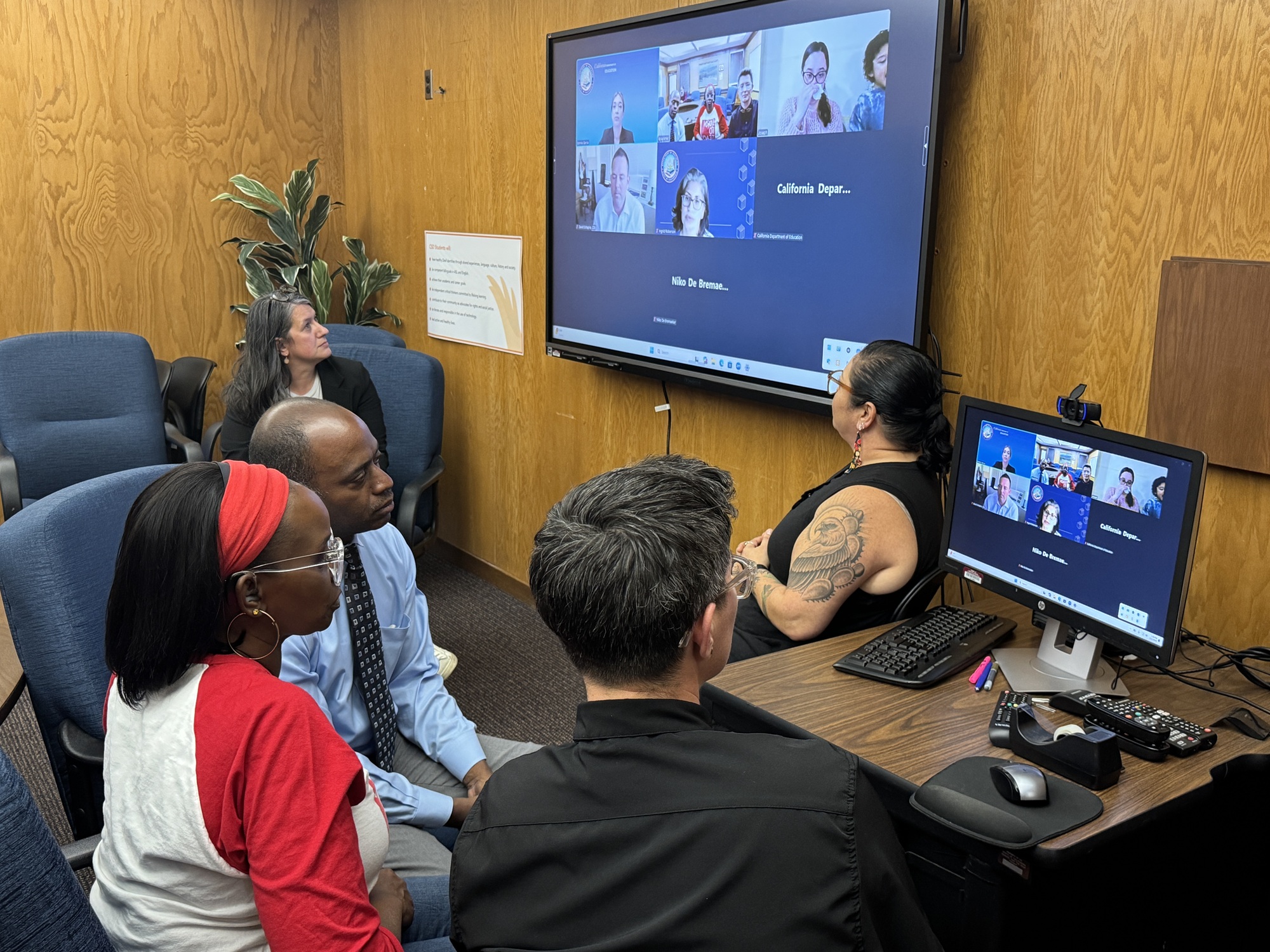
"caption": "Staff at California School for the Deaf in Fremont meet virtually with Joseph Londono Rodriguez and his mother, Lesly Rodriguez Gutierrez, now in hiding in Colombia, on Thursday, March 12, 2026. From left are teacher Tanisha Cotton, Superintendent Amy Novotny, State Superintendent of Public Instruction Tony Thurmond, ASL interpreter Jacelia Washington and family educator Vanessa Sandez. Staff interpret in ASL and speak English and Spanish so everyone can communicate.",
"credit": "Courtesy of State Superintendent Tony Thurmond's Office",
"altTag": null,
"description": null,
"imgSizes": {
"thumbnail": {
"file": "https://cdn.kqed.org/wp-content/uploads/sites/10/2026/03/HaywardFamilyDeportation1-160x120.jpg",
"width": 160,
"height": 120,
"mimeType": "image/jpeg"
},
"1536x1536": {
"file": "https://cdn.kqed.org/wp-content/uploads/sites/10/2026/03/HaywardFamilyDeportation1-1536x1152.jpg",
"width": 1536,
"height": 1152,
"mimeType": "image/jpeg"
},
"post-thumbnail": {
"file": "https://cdn.kqed.org/wp-content/uploads/sites/10/2026/03/HaywardFamilyDeportation1-672x372.jpg",
"width": 672,
"height": 372,
"mimeType": "image/jpeg"
},
"twentyfourteen-full-width": {
"file": "https://cdn.kqed.org/wp-content/uploads/sites/10/2026/03/HaywardFamilyDeportation1-1038x576.jpg",
"width": 1038,
"height": 576,
"mimeType": "image/jpeg"
},
"npr-cds-wide": {
"file": "https://cdn.kqed.org/wp-content/uploads/sites/10/2026/03/HaywardFamilyDeportation1-1200x675.jpg",
"width": 1200,
"height": 675,
"mimeType": "image/jpeg"
},
"kqedFullSize": {
"file": "https://cdn.kqed.org/wp-content/uploads/sites/10/2026/03/HaywardFamilyDeportation1.jpg",
"width": 2000,
"height": 1500
}
},
"isLoading": false,
"fetchFailed": false
},
"news_12076316": {
"type": "attachments",
"id": "news_12076316",
"meta": {
"index": "attachments_1716263798",
"site": "news",
"id": "12076316",
"found": true
},
"title": "260312-Ayden Fang-KQED",
"publishDate": 1773347618,
"status": "inherit",
"parent": 0,
"modified": 1773349936,
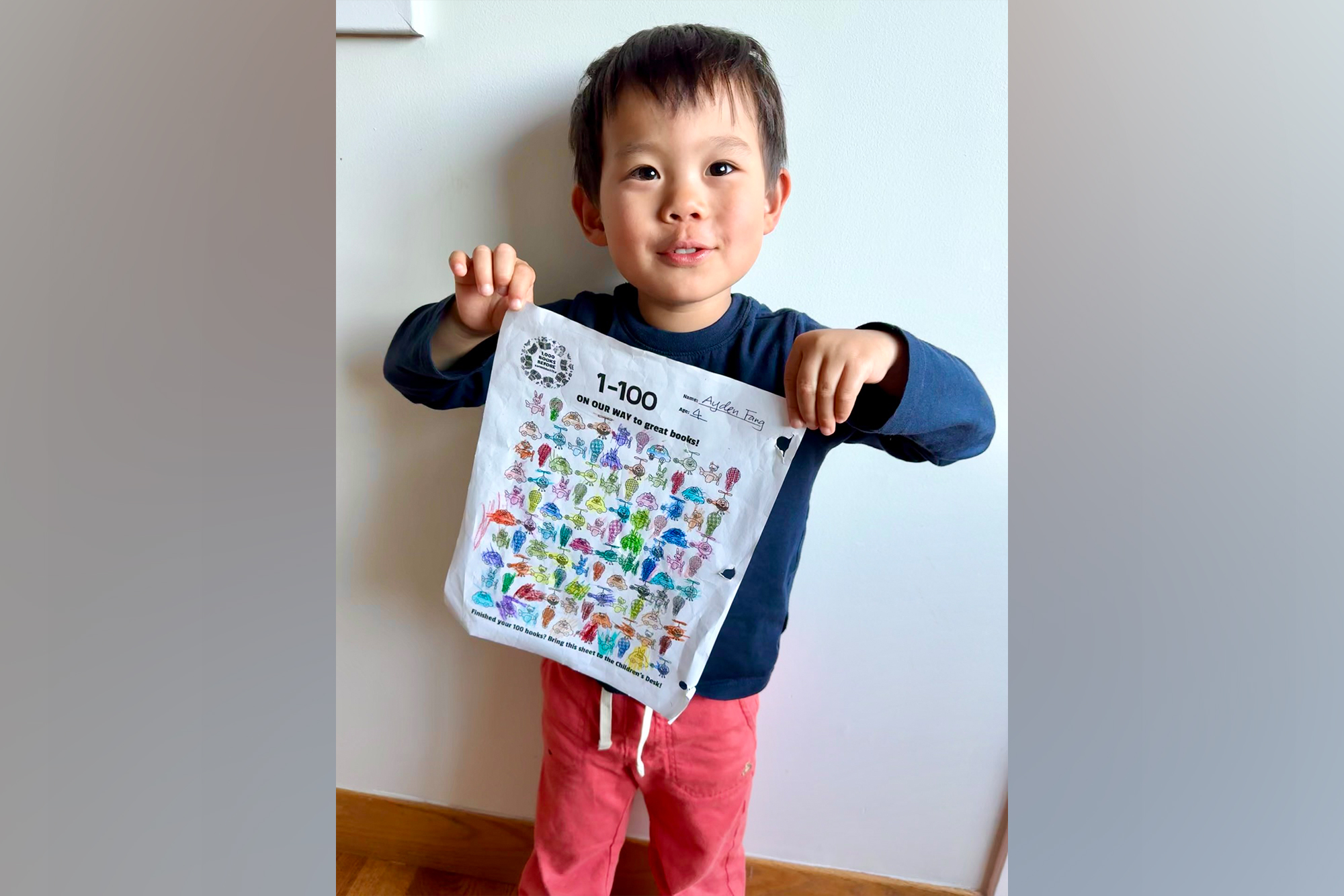
"caption": "A photograph of 4-year-old Ayden Fang, who was killed when a vehicle crashed onto the sidewalk where he was playing in downtown Burlingame on Aug. 8, 2025.",
"credit": "Courtesy of Xiaoming Fang and Ting Ting Liu",
"altTag": null,
"description": null,
"imgSizes": {
"thumbnail": {
"file": "https://cdn.kqed.org/wp-content/uploads/sites/10/2026/03/260312-Ayden-Fang-KQED-160x107.jpg",
"width": 160,
"height": 107,
"mimeType": "image/jpeg"
},
"1536x1536": {
"file": "https://cdn.kqed.org/wp-content/uploads/sites/10/2026/03/260312-Ayden-Fang-KQED-1536x1025.jpg",
"width": 1536,
"height": 1025,
"mimeType": "image/jpeg"
},
"post-thumbnail": {
"file": "https://cdn.kqed.org/wp-content/uploads/sites/10/2026/03/260312-Ayden-Fang-KQED-672x372.jpg",
"width": 672,
"height": 372,
"mimeType": "image/jpeg"
},
"twentyfourteen-full-width": {
"file": "https://cdn.kqed.org/wp-content/uploads/sites/10/2026/03/260312-Ayden-Fang-KQED-1038x576.jpg",
"width": 1038,
"height": 576,
"mimeType": "image/jpeg"
},
"npr-cds-wide": {
"file": "https://cdn.kqed.org/wp-content/uploads/sites/10/2026/03/260312-Ayden-Fang-KQED-1200x675.jpg",
"width": 1200,
"height": 675,
"mimeType": "image/jpeg"
},
"kqedFullSize": {
"file": "https://cdn.kqed.org/wp-content/uploads/sites/10/2026/03/260312-Ayden-Fang-KQED.jpg",
"width": 2000,
"height": 1334
}
},
"isLoading": false,
"fetchFailed": false
},
"news_12075952": {
"type": "attachments",
"id": "news_12075952",
"meta": {
"index": "attachments_1716263798",
"site": "news",
"id": "12075952",
"found": true
},
"title": "260310-ALYSA LIU COACH-MD-03-KQED",
"publishDate": 1773172122,
"status": "inherit",
"parent": 0,
"modified": 1773172294,
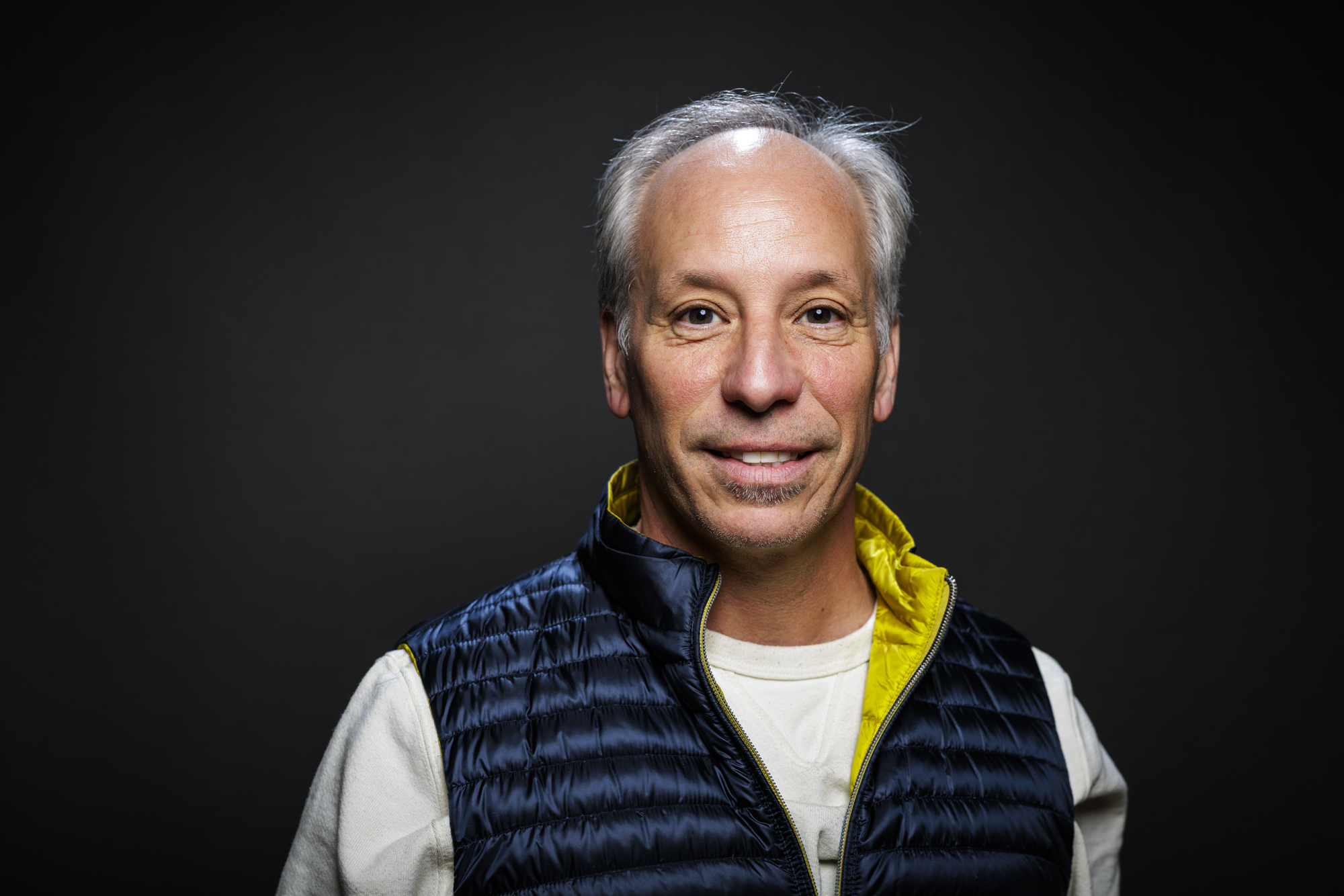
"caption": "Phillip DiGuglielmo, Alysa Liu's coach, at KQED in San Francisco on March 10, 2026.",
"credit": "Martin do Nascimento/KQED",
"altTag": null,
"description": null,
"imgSizes": {
"thumbnail": {
"file": "https://cdn.kqed.org/wp-content/uploads/sites/10/2026/03/260310-ALYSA-LIU-COACH-MD-03-KQED-160x107.jpg",
"width": 160,
"height": 107,
"mimeType": "image/jpeg"
},
"1536x1536": {
"file": "https://cdn.kqed.org/wp-content/uploads/sites/10/2026/03/260310-ALYSA-LIU-COACH-MD-03-KQED-1536x1025.jpg",
"width": 1536,
"height": 1025,
"mimeType": "image/jpeg"
},
"post-thumbnail": {
"file": "https://cdn.kqed.org/wp-content/uploads/sites/10/2026/03/260310-ALYSA-LIU-COACH-MD-03-KQED-672x372.jpg",
"width": 672,
"height": 372,
"mimeType": "image/jpeg"
},
"twentyfourteen-full-width": {
"file": "https://cdn.kqed.org/wp-content/uploads/sites/10/2026/03/260310-ALYSA-LIU-COACH-MD-03-KQED-1038x576.jpg",
"width": 1038,
"height": 576,
"mimeType": "image/jpeg"
},
"npr-cds-wide": {
"file": "https://cdn.kqed.org/wp-content/uploads/sites/10/2026/03/260310-ALYSA-LIU-COACH-MD-03-KQED-1200x675.jpg",
"width": 1200,
"height": 675,
"mimeType": "image/jpeg"
},
"kqedFullSize": {
"file": "https://cdn.kqed.org/wp-content/uploads/sites/10/2026/03/260310-ALYSA-LIU-COACH-MD-03-KQED.jpg",
"width": 2000,
"height": 1334
}
},
"isLoading": false,
"fetchFailed": false
},
"news_12067023": {
"type": "attachments",
"id": "news_12067023",
"meta": {
"index": "attachments_1716263798",
"site": "news",
"id": "12067023",
"found": true
},
"title": "251212-JET PLAYGROUND-MD-09-KQED",
"publishDate": 1765583456,
"status": "inherit",
"parent": 0,
"modified": 1765583484,
"caption": "The restored Vought F-8 Crusader at the Pacific Coast Air Museum in Santa Rosa on Dec. 12, 2025.",
"credit": "Martin do Nascimento/KQED",
"altTag": null,
"description": null,
"imgSizes": {
"thumbnail": {
"file": "https://cdn.kqed.org/wp-content/uploads/sites/10/2025/12/251212-JET-PLAYGROUND-MD-09-KQED-160x107.jpg",
"width": 160,
"height": 107,
"mimeType": "image/jpeg"
},
"1536x1536": {
"file": "https://cdn.kqed.org/wp-content/uploads/sites/10/2025/12/251212-JET-PLAYGROUND-MD-09-KQED-1536x1025.jpg",
"width": 1536,
"height": 1025,
"mimeType": "image/jpeg"
},
"post-thumbnail": {
"file": "https://cdn.kqed.org/wp-content/uploads/sites/10/2025/12/251212-JET-PLAYGROUND-MD-09-KQED-672x372.jpg",
"width": 672,
"height": 372,
"mimeType": "image/jpeg"
},
"twentyfourteen-full-width": {
"file": "https://cdn.kqed.org/wp-content/uploads/sites/10/2025/12/251212-JET-PLAYGROUND-MD-09-KQED-1038x576.jpg",
"width": 1038,
"height": 576,
"mimeType": "image/jpeg"
},
"npr-cds-wide": {
"file": "https://cdn.kqed.org/wp-content/uploads/sites/10/2025/12/251212-JET-PLAYGROUND-MD-09-KQED-1200x675.jpg",
"width": 1200,
"height": 675,
"mimeType": "image/jpeg"
},
"kqedFullSize": {
"file": "https://cdn.kqed.org/wp-content/uploads/sites/10/2025/12/251212-JET-PLAYGROUND-MD-09-KQED.jpg",
"width": 2000,
"height": 1334
}
},
"isLoading": false,
"fetchFailed": false
}
},
"audioPlayerReducer": {
"postId": "stream_live",
"isPaused": true,
"isPlaying": false,
"pfsActive": false,
"pledgeModalIsOpen": true,
"playerDrawerIsOpen": false,
"liveAudioPlayStartedAt": 0,
"liveAudioPlayContext": ""
},
"authorsReducer": {
"katrinaschwartz": {
"type": "authors",
"id": "234",
"meta": {
"index": "authors_1716337520",
"id": "234",
"found": true
},
"name": "Katrina Schwartz",
"firstName": "Katrina",
"lastName": "Schwartz",
"slug": "katrinaschwartz",
"email": "kschwartz@kqed.org",
"display_author_email": false,
"staff_mastheads": [
"news"
],
"title": "Producer",
"bio": "Katrina Schwartz is a journalist based in San Francisco. She's worked at KPCC public radio in LA and has reported on air and online for KQED since 2010. She covered how teaching and learning is changing for MindShift between 2012 and 2020. She is the co-host of the MindShift podcast and now produces KQED's Bay Curious podcast.",
"avatar": "https://secure.gravatar.com/avatar/edb4ee79070447a018538c9aae6eeecf28786515b8a0c30e43b6b7dce5aa44c8?s=600&d=blank&r=g",
"twitter": "kschwart",
"bluesky": null,
"facebook": null,
"instagram": null,
"linkedin": null,
"sites": [
{
"site": "",
"roles": [
"editor"
]
},
{
"site": "news",
"roles": [
"editor"
]
},
{
"site": "mindshift",
"roles": [
"administrator"
]
},
{
"site": "stateofhealth",
"roles": [
"author"
]
},
{
"site": "science",
"roles": [
"editor"
]
}
],
"headData": {
"title": "Katrina Schwartz | KQED",
"description": "Producer",
"ogImgSrc": "https://secure.gravatar.com/avatar/edb4ee79070447a018538c9aae6eeecf28786515b8a0c30e43b6b7dce5aa44c8?s=600&d=blank&r=g",
"twImgSrc": "https://secure.gravatar.com/avatar/edb4ee79070447a018538c9aae6eeecf28786515b8a0c30e43b6b7dce5aa44c8?s=600&d=blank&r=g"
},
"isLoading": false,
"link": "/author/katrinaschwartz"
},
"tychehendricks": {
"type": "authors",
"id": "259",
"meta": {
"index": "authors_1716337520",
"id": "259",
"found": true
},
"name": "Tyche Hendricks",
"firstName": "Tyche",
"lastName": "Hendricks",
"slug": "tychehendricks",
"email": "thendricks@kqed.org",
"display_author_email": true,
"staff_mastheads": [
"news"
],
"title": "KQED Senior Editor, Immigration",
"bio": "\u003cspan style=\"font-weight: 400;\">Tyche Hendricks is KQED’s senior editor for immigration, leading coverage of the policy and politics that affect California’s immigrant communities. Her work for KQED’s radio and online audiences is also carried on NPR and other national outlets. She has been recognized with awards from the Radio and Television News Directors Association, the Society for Professional Journalists; the Education Writers Association; the Best of the West and the National Federation of Community Broadcasters. Before joining KQED in 2010, Tyche spent more than a dozen years as a newspaper reporter, notably at the \u003c/span>\u003ci>\u003cspan style=\"font-weight: 400;\">San Francisco Chronicle\u003c/span>\u003c/i>\u003cspan style=\"font-weight: 400;\">. At different times she has covered criminal justice, government and politics and urban planning. Tyche has taught in the MFA Creative Writing program at the University of San Francisco and at UC Berkeley’s Graduate School of Journalism, where she was co-director of a national immigration symposium for professional journalists. She is the author of \u003c/span>\u003ci>\u003cspan style=\"font-weight: 400;\">The Wind Doesn't Need a Passport: Stories from the U.S.-Mexico Borderlands\u003c/span>\u003c/i>\u003cspan style=\"font-weight: 400;\"> (University of California Press). \u003c/span>",
"avatar": "https://secure.gravatar.com/avatar/b8ee458e2731c2d43df86882ce17267e?s=600&d=blank&r=g",
"twitter": "tychehendricks",
"facebook": null,
"instagram": null,
"linkedin": null,
"sites": [
{
"site": "news",
"roles": [
"editor"
]
},
{
"site": "stateofhealth",
"roles": [
"editor"
]
}
],
"headData": {
"title": "Tyche Hendricks | KQED",
"description": "KQED Senior Editor, Immigration",
"ogImgSrc": "https://secure.gravatar.com/avatar/b8ee458e2731c2d43df86882ce17267e?s=600&d=blank&r=g",
"twImgSrc": "https://secure.gravatar.com/avatar/b8ee458e2731c2d43df86882ce17267e?s=600&d=blank&r=g"
},
"isLoading": false,
"link": "/author/tychehendricks"
},
"lklivans": {
"type": "authors",
"id": "8648",
"meta": {
"index": "authors_1716337520",
"id": "8648",
"found": true
},
"name": "Laura Klivans",
"firstName": "Laura",
"lastName": "Klivans",
"slug": "lklivans",
"email": "lklivans@kqed.org",
"display_author_email": true,
"staff_mastheads": [
"news",
"science"
],
"title": "Reporter",
"bio": "Laura Klivans is an award-winning science reporter for KQED News, where she covers climate change with an eye on both groundbreaking progress and gaps in action. She is the former host of KQED's blockbuster video series about tiny, amazing animals, \u003cem>Deep Look\u003c/em>. Her work reaches national audiences through NPR, \u003cem>Here & Now, \u003c/em>PRI, and other major outlets. \r\n\r\nLaura’s won five Northern California Area Emmy Awards for Deep Look and First Place in the Greater Bay Area Journalism Awards for a podcast exploring how one Oakland neighborhood teamed up to reduce planet-heating pollution.\r\n\r\nBeyond her reporting, she hosts and moderates events. In the past, she taught audio storytelling at the UC Berkeley Graduate School of Journalism, led international education programs, worked with immigrants and refugees along the Thai-Burmese border, taught high schoolers sex ed, and was an actress. \r\n\r\nShe's a former UC Berkeley Human Rights Fellow, USC Center for Health Journalism's California Fellow and Coro Fellow in Public Affairs. Laura has a master’s in journalism from UC Berkeley, a master’s in education from Harvard, and an undergraduate degree from Northwestern University.\r\n\r\nShe loves trying to riddle the meaning out of vanity license plates.",
"avatar": "https://secure.gravatar.com/avatar/2d2ecd1550a494cc10ad4a503406965585902124739e775a9b3817eebf1d88be?s=600&d=blank&r=g",
"twitter": "lauraklivans",
"bluesky": null,
"facebook": null,
"instagram": null,
"linkedin": null,
"sites": [
{
"site": "news",
"roles": [
"editor"
]
},
{
"site": "stateofhealth",
"roles": [
"contributor",
"editor"
]
},
{
"site": "science",
"roles": [
"editor"
]
},
{
"site": "forum",
"roles": [
"editor"
]
}
],
"headData": {
"title": "Laura Klivans | KQED",
"description": "Reporter",
"ogImgSrc": "https://secure.gravatar.com/avatar/2d2ecd1550a494cc10ad4a503406965585902124739e775a9b3817eebf1d88be?s=600&d=blank&r=g",
"twImgSrc": "https://secure.gravatar.com/avatar/2d2ecd1550a494cc10ad4a503406965585902124739e775a9b3817eebf1d88be?s=600&d=blank&r=g"
},
"isLoading": false,
"link": "/author/lklivans"
},
"bwatt": {
"type": "authors",
"id": "11238",
"meta": {
"index": "authors_1716337520",
"id": "11238",
"found": true
},
"name": "Brian Watt",
"firstName": "Brian",
"lastName": "Watt",
"slug": "bwatt",
"email": "bwatt@KQED.org",
"display_author_email": false,
"staff_mastheads": [
"news"
],
"title": "Morning News Anchor",
"bio": "Brian Watt is KQED's morning radio news anchor. He joined the KQED News team in April of 2016. Prior to that, he worked as a Reporter for KPCC in Los Angeles and a producer at \u003cem>Marketplace.\u003c/em>\r\n\r\nDuring eight years at KPCC, Brian covered business and economics, and his work won several awards. In 2008, he won the Los Angeles Press Club’s first-place award for Business and Financial Reporting, Broadcast. He’s also received honorable mention and been first runner up for the Press Club’s Radio Journalist of the Year. He won two Golden Mike awards from the Radio and TV News Association of Southern California.\r\n\r\nBrian holds degrees in theater from Yale University and the Sorbonne, and has worked as an actor in France, Italy, Brazil, Hungary and . . . Hollywood. He appeared in a few television shows, including \u003cem>The West Wing, Judging Amy\u003c/em> and \u003cem>The District.\u003c/em>\r\n\r\nEmail: bwatt@KQED.org Twitter: @RadioBWatt",
"avatar": "https://secure.gravatar.com/avatar/55393ff57ed34e2be773ba4789dd6a19?s=600&d=blank&r=g",
"twitter": "@RadioBWatt",
"facebook": null,
"instagram": null,
"linkedin": null,
"sites": [
{
"site": "arts",
"roles": [
"contributor"
]
},
{
"site": "news",
"roles": [
"editor"
]
}
],
"headData": {
"title": "Brian Watt | KQED",
"description": "Morning News Anchor",
"ogImgSrc": "https://secure.gravatar.com/avatar/55393ff57ed34e2be773ba4789dd6a19?s=600&d=blank&r=g",
"twImgSrc": "https://secure.gravatar.com/avatar/55393ff57ed34e2be773ba4789dd6a19?s=600&d=blank&r=g"
},
"isLoading": false,
"link": "/author/bwatt"
},
"smohamad": {
"type": "authors",
"id": "11631",
"meta": {
"index": "authors_1716337520",
"id": "11631",
"found": true
},
"name": "Sarah Mohamad",
"firstName": "Sarah",
"lastName": "Mohamad",
"slug": "smohamad",
"email": "smohamad@KQED.org",
"display_author_email": true,
"staff_mastheads": [],
"title": "Engagement Producer and Reporter, KQED Science",
"bio": "Sarah Mohamad is an audience engagement reporter and producer for KQED Science. She reports on audience-focused science and environment stories and manages the team's social media, newsletter, and engagement efforts. Prior to this role, she played a key role as project manager for NSF's \u003ca href=\"https://www.kqed.org/crackingthecode\">\u003cem>Cracking the Code: Influencing Millennial Science Engagement\u003c/em> \u003c/a>audience research.",
"avatar": "https://secure.gravatar.com/avatar/e6224957cd82d015183756ddde1f928013a563d7ca2e4565f8c4de1ec64886c5?s=600&d=blank&r=g",
"twitter": "sarahkmohamad",
"bluesky": null,
"facebook": null,
"instagram": null,
"linkedin": null,
"sites": [
{
"site": "",
"roles": [
"editor"
]
},
{
"site": "arts",
"roles": [
"editor"
]
},
{
"site": "news",
"roles": [
"editor"
]
},
{
"site": "about",
"roles": [
"editor"
]
},
{
"site": "science",
"roles": [
"editor"
]
}
],
"headData": {
"title": "Sarah Mohamad | KQED",
"description": "Engagement Producer and Reporter, KQED Science",
"ogImgSrc": "https://secure.gravatar.com/avatar/e6224957cd82d015183756ddde1f928013a563d7ca2e4565f8c4de1ec64886c5?s=600&d=blank&r=g",
"twImgSrc": "https://secure.gravatar.com/avatar/e6224957cd82d015183756ddde1f928013a563d7ca2e4565f8c4de1ec64886c5?s=600&d=blank&r=g"
},
"isLoading": false,
"link": "/author/smohamad"
},
"ccabreralomeli": {
"type": "authors",
"id": "11708",
"meta": {
"index": "authors_1716337520",
"id": "11708",
"found": true
},
"name": "Carlos Cabrera-Lomelí",
"firstName": "Carlos",
"lastName": "Cabrera-Lomelí",
"slug": "ccabreralomeli",
"email": "ccabreralomeli@KQED.org",
"display_author_email": true,
"staff_mastheads": [
"news"
],
"title": "Community Reporter",
"bio": "Carlos Cabrera-Lomelí is a community reporter with KQED's digital engagement team. He also reports and co-produces for KQED's bilingual news hub KQED en Español. He grew up in San Francisco's Mission District and has previously worked with Univision, 48 Hills and REFORMA in Mexico City.",
"avatar": "https://secure.gravatar.com/avatar/c309be9665e484f887b818c89e273ecc673004f426f36b24d00a4d813a2e0518?s=600&d=blank&r=g",
"twitter": "@LomeliCabrera",
"bluesky": null,
"facebook": null,
"instagram": null,
"linkedin": null,
"sites": [
{
"site": "arts",
"roles": [
"editor"
]
},
{
"site": "news",
"roles": [
"editor"
]
},
{
"site": "about",
"roles": [
"editor"
]
},
{
"site": "science",
"roles": [
"editor"
]
},
{
"site": "perspectives",
"roles": [
"editor"
]
},
{
"site": "elections",
"roles": [
"editor"
]
},
{
"site": "liveblog",
"roles": [
"contributor"
]
}
],
"headData": {
"title": "Carlos Cabrera-Lomelí | KQED",
"description": "Community Reporter",
"ogImgSrc": "https://secure.gravatar.com/avatar/c309be9665e484f887b818c89e273ecc673004f426f36b24d00a4d813a2e0518?s=600&d=blank&r=g",
"twImgSrc": "https://secure.gravatar.com/avatar/c309be9665e484f887b818c89e273ecc673004f426f36b24d00a4d813a2e0518?s=600&d=blank&r=g"
},
"isLoading": false,
"link": "/author/ccabreralomeli"
},
"agonzalez": {
"type": "authors",
"id": "11724",
"meta": {
"index": "authors_1716337520",
"id": "11724",
"found": true
},
"name": "Alexander Gonzalez",
"firstName": "Alexander",
"lastName": "Gonzalez",
"slug": "agonzalez",
"email": "AlexanderGonzalez@KQED.org",
"display_author_email": false,
"staff_mastheads": [
"news"
],
"title": "KQED Contributor",
"bio": null,
"avatar": "https://secure.gravatar.com/avatar/9e291ed34e154df4c662edf858b641d70b4859939bfe40be478408f9dfd057d2?s=600&d=blank&r=g",
"twitter": null,
"bluesky": null,
"facebook": null,
"instagram": null,
"linkedin": null,
"sites": [
{
"site": "arts",
"roles": [
"editor"
]
},
{
"site": "news",
"roles": [
"editor"
]
},
{
"site": "science",
"roles": [
"editor"
]
}
],
"headData": {
"title": "Alexander Gonzalez | KQED",
"description": "KQED Contributor",
"ogImgSrc": "https://secure.gravatar.com/avatar/9e291ed34e154df4c662edf858b641d70b4859939bfe40be478408f9dfd057d2?s=600&d=blank&r=g",
"twImgSrc": "https://secure.gravatar.com/avatar/9e291ed34e154df4c662edf858b641d70b4859939bfe40be478408f9dfd057d2?s=600&d=blank&r=g"
},
"isLoading": false,
"link": "/author/agonzalez"
},
"daisynguyen": {
"type": "authors",
"id": "11829",
"meta": {
"index": "authors_1716337520",
"id": "11829",
"found": true
},
"name": "Daisy Nguyen",
"firstName": "Daisy",
"lastName": "Nguyen",
"slug": "daisynguyen",
"email": "daisynguyen@kqed.org",
"display_author_email": true,
"staff_mastheads": [
"news"
],
"title": "KQED Contributor",
"bio": "I have covered early childhood education and child care for KQED since 2022. I focus on policies aimed at increasing access to early care and education and how they shape individual lives. I've been a journalist for more than two decades, with most of that time devoted to covering breaking news throughout California for The Associated Press. I grew up in San Francisco and studied at UC Davis and Columbia University's Graduate School of Journalism. I live in Oakland with my husband and two kids.",
"avatar": "https://secure.gravatar.com/avatar/2da2127c27f7143b53ebd419800fd55f?s=600&d=blank&r=g",
"twitter": null,
"facebook": null,
"instagram": null,
"linkedin": "https://www.linkedin.com/in/daisynguyen/",
"sites": [
{
"site": "news",
"roles": [
"author"
]
},
{
"site": "liveblog",
"roles": [
"author"
]
}
],
"headData": {
"title": "Daisy Nguyen | KQED",
"description": "KQED Contributor",
"ogImgSrc": "https://secure.gravatar.com/avatar/2da2127c27f7143b53ebd419800fd55f?s=600&d=blank&r=g",
"twImgSrc": "https://secure.gravatar.com/avatar/2da2127c27f7143b53ebd419800fd55f?s=600&d=blank&r=g"
},
"isLoading": false,
"link": "/author/daisynguyen"
},
"nkhan": {
"type": "authors",
"id": "11867",
"meta": {
"index": "authors_1716337520",
"id": "11867",
"found": true
},
"name": "Nisa Khan",
"firstName": "Nisa",
"lastName": "Khan",
"slug": "nkhan",
"email": "nkhan@kqed.org",
"display_author_email": false,
"staff_mastheads": [],
"title": "KQED Contributor",
"bio": "Nisa Khan is a reporter for KQED's Audience News Desk. She was formerly a data reporter at Michigan Radio. She earned a Bachelor of Science in Information from the University of Michigan and a Master of Arts in Communication from Stanford University.",
"avatar": "https://secure.gravatar.com/avatar/8720459eef081ff64582b3506b124d58523e80e120704a0cbd9892533c914991?s=600&d=blank&r=g",
"twitter": "mnisakhan",
"bluesky": null,
"facebook": null,
"instagram": null,
"linkedin": null,
"sites": [
{
"site": "arts",
"roles": [
"editor"
]
},
{
"site": "news",
"roles": [
"editor"
]
},
{
"site": "science",
"roles": [
"editor",
"author"
]
},
{
"site": "forum",
"roles": [
"editor"
]
},
{
"site": "liveblog",
"roles": [
"contributor"
]
}
],
"headData": {
"title": "Nisa Khan | KQED",
"description": "KQED Contributor",
"ogImgSrc": "https://secure.gravatar.com/avatar/8720459eef081ff64582b3506b124d58523e80e120704a0cbd9892533c914991?s=600&d=blank&r=g",
"twImgSrc": "https://secure.gravatar.com/avatar/8720459eef081ff64582b3506b124d58523e80e120704a0cbd9892533c914991?s=600&d=blank&r=g"
},
"isLoading": false,
"link": "/author/nkhan"
},
"kdebenedetti": {
"type": "authors",
"id": "11913",
"meta": {
"index": "authors_1716337520",
"id": "11913",
"found": true
},
"name": "Katie DeBenedetti",
"firstName": "Katie",
"lastName": "DeBenedetti",
"slug": "kdebenedetti",
"email": "kdebenedetti@kqed.org",
"display_author_email": false,
"staff_mastheads": [
"news",
"science"
],
"title": "KQED Contributor",
"bio": "Katie DeBenedetti is a digital reporter covering daily news for the Express Desk. Prior to joining KQED as a culture reporting intern in January 2024, she covered education and city government for the Napa Valley Register.",
"avatar": "https://secure.gravatar.com/avatar/6e31073cb8f7e4214ab03f42771d0f45?s=600&d=blank&r=g",
"twitter": null,
"facebook": null,
"instagram": null,
"linkedin": null,
"sites": [
{
"site": "news",
"roles": [
"author"
]
},
{
"site": "science",
"roles": [
"author"
]
},
{
"site": "liveblog",
"roles": [
"author"
]
}
],
"headData": {
"title": "Katie DeBenedetti | KQED",
"description": "KQED Contributor",
"ogImgSrc": "https://secure.gravatar.com/avatar/6e31073cb8f7e4214ab03f42771d0f45?s=600&d=blank&r=g",
"twImgSrc": "https://secure.gravatar.com/avatar/6e31073cb8f7e4214ab03f42771d0f45?s=600&d=blank&r=g"
},
"isLoading": false,
"link": "/author/kdebenedetti"
},
"sarahwright": {
"type": "authors",
"id": "11956",
"meta": {
"index": "authors_1716337520",
"id": "11956",
"found": true
},
"name": "Sarah Wright",
"firstName": "Sarah",
"lastName": "Wright",
"slug": "sarahwright",
"email": "swright@kqed.org",
"display_author_email": true,
"staff_mastheads": [],
"title": "Outdoors Engagement Reporter",
"bio": "Sarah Wright is KQED's Outdoors Engagement Reporter. Originally from Lake Tahoe, she completed a thru-hike of the Pacific Crest Trail in 2019 and was a U.S. Fulbright Program grantee to Argentina in 2023. Her journalism has appeared in The Guardian, The San Francisco Standard, The Palo Alto Weekly and the Half Moon Bay Review.",
"avatar": "https://secure.gravatar.com/avatar/c161a3d6441865cba25e6db4fa561099ad665799e9432e34da2b84d7e371524c?s=600&d=blank&r=g",
"twitter": null,
"bluesky": null,
"facebook": null,
"instagram": null,
"linkedin": null,
"sites": [
{
"site": "arts",
"roles": [
"editor"
]
},
{
"site": "news",
"roles": [
"editor"
]
},
{
"site": "science",
"roles": [
"contributor",
"author"
]
},
{
"site": "forum",
"roles": [
"editor"
]
}
],
"headData": {
"title": "Sarah Wright | KQED",
"description": "Outdoors Engagement Reporter",
"ogImgSrc": "https://secure.gravatar.com/avatar/c161a3d6441865cba25e6db4fa561099ad665799e9432e34da2b84d7e371524c?s=600&d=blank&r=g",
"twImgSrc": "https://secure.gravatar.com/avatar/c161a3d6441865cba25e6db4fa561099ad665799e9432e34da2b84d7e371524c?s=600&d=blank&r=g"
},
"isLoading": false,
"link": "/author/sarahwright"
},
"aaliahmad": {
"type": "authors",
"id": "11986",
"meta": {
"index": "authors_1716337520",
"id": "11986",
"found": true
},
"name": "Ayah Ali-Ahmad",
"firstName": "Ayah",
"lastName": "Ali-Ahmad",
"slug": "aaliahmad",
"email": "aaliahmad@KQED.org",
"display_author_email": false,
"staff_mastheads": [],
"title": "KQED Contributor",
"bio": null,
"avatar": "https://secure.gravatar.com/avatar/1cf54f187a5e1064b2cfef3f3d2f1e4f93e453395d56912aca6382a6071ec3ed?s=600&d=blank&r=g",
"twitter": "ayahaliahmad",
"bluesky": null,
"facebook": null,
"instagram": null,
"linkedin": null,
"sites": [
{
"site": "news",
"roles": [
"subscriber"
]
}
],
"headData": {
"title": "Ayah Ali-Ahmad | KQED",
"description": "KQED Contributor",
"ogImgSrc": "https://secure.gravatar.com/avatar/1cf54f187a5e1064b2cfef3f3d2f1e4f93e453395d56912aca6382a6071ec3ed?s=600&d=blank&r=g",
"twImgSrc": "https://secure.gravatar.com/avatar/1cf54f187a5e1064b2cfef3f3d2f1e4f93e453395d56912aca6382a6071ec3ed?s=600&d=blank&r=g"
},
"isLoading": false,
"link": "/author/aaliahmad"
},
"psibulo": {
"type": "authors",
"id": "11995",
"meta": {
"index": "authors_1716337520",
"id": "11995",
"found": true
},
"name": "Paula Sibulo",
"firstName": "Paula",
"lastName": "Sibulo",
"slug": "psibulo",
"email": "psibulo@kqed.org",
"display_author_email": false,
"staff_mastheads": [
"news"
],
"title": "KQED Contributor",
"bio": "Paula Sibulo is a reporter at KQED. She graduated from San Francisco State University, where she studied broadcast journalism and served as the editor-in-chief of its student-run newspaper, \u003cem>Golden Gate Xpress\u003c/em>. Her work has been recognized with awards from Society of Professional Journalists NorCal, College Media Association, Associated Collegiate Press, and Best of SNO.",
"avatar": "https://secure.gravatar.com/avatar/0548c07ed39b61edb3e76faad378e49a997fd03a43541c27edf5392b1e0738f6?s=600&d=blank&r=g",
"twitter": null,
"bluesky": null,
"facebook": null,
"instagram": null,
"linkedin": null,
"sites": [
{
"site": "news",
"roles": [
"contributor"
]
}
],
"headData": {
"title": "Paula Sibulo | KQED",
"description": "KQED Contributor",
"ogImgSrc": "https://secure.gravatar.com/avatar/0548c07ed39b61edb3e76faad378e49a997fd03a43541c27edf5392b1e0738f6?s=600&d=blank&r=g",
"twImgSrc": "https://secure.gravatar.com/avatar/0548c07ed39b61edb3e76faad378e49a997fd03a43541c27edf5392b1e0738f6?s=600&d=blank&r=g"
},
"isLoading": false,
"link": "/author/psibulo"
}
},
"pagesReducer": {
"news_tag_bay-area": {
"type": "terms",
"id": "news_1386",
"meta": {
"index": "terms_1716263798",
"site": "news",
"id": "1386",
"score": 7.788453
},
"featImg": null,
"name": "Bay Area",
"description": null,
"taxonomy": "tag",
"headData": {
"twImgId": null,
"twTitle": null,
"ogTitle": null,
"ogImgId": null,
"twDescription": null,
"description": null,
"title": "Bay Area Archives | KQED News",
"ogDescription": null
},
"ttid": 1398,
"slug": "bay-area",
"isLoading": false,
"title": "Bay Area",
"pageMeta": {
"site": "news",
"WpPageTemplate": "page-topic-editorial",
"currentPage": 30
},
"blocks": [
{
"blockName": "kqed/post-list",
"attrs": {
"layout": "cardArticle2",
"query": "posts/news?tag=bay-area",
"seeMore": false,
"paginated": true,
"page": 30
}
},
{
"blockName": "kqed/ad"
}
]
}
},
"pfsSessionReducer": {},
"postsReducer": {
"stream_live": {
"type": "live",
"id": "stream_live",
"audioUrl": "https://streams.kqed.org/kqedradio",
"title": "Live Stream",
"excerpt": "Live Stream information currently unavailable.",
"link": "/radio",
"featImg": "",
"label": {
"name": "KQED Live",
"link": "/"
}
},
"stream_kqedNewscast": {
"type": "posts",
"id": "stream_kqedNewscast",
"audioUrl": "https://www.kqed.org/.stream/anon/radio/RDnews/newscast.mp3?_=1",
"title": "KQED Newscast",
"featImg": "",
"label": {
"name": "88.5 FM",
"link": "/"
}
},
"news_12076693": {
"type": "posts",
"id": "news_12076693",
"meta": {
"index": "posts_1716263798",
"site": "news",
"id": "12076693",
"score": null,
"sort": [
1773864002000
]
},
"guestAuthors": [],
"slug": "san-jose-could-convert-troubled-homeless-shelter-to-permanent-housing",
"title": "San José Could Convert Troubled Homeless Shelter to Permanent Housing",
"publishDate": 1773864002,
"format": "standard",
"headTitle": "San José Could Convert Troubled Homeless Shelter to Permanent Housing | KQED",
"labelTerm": {
"site": "news"
},
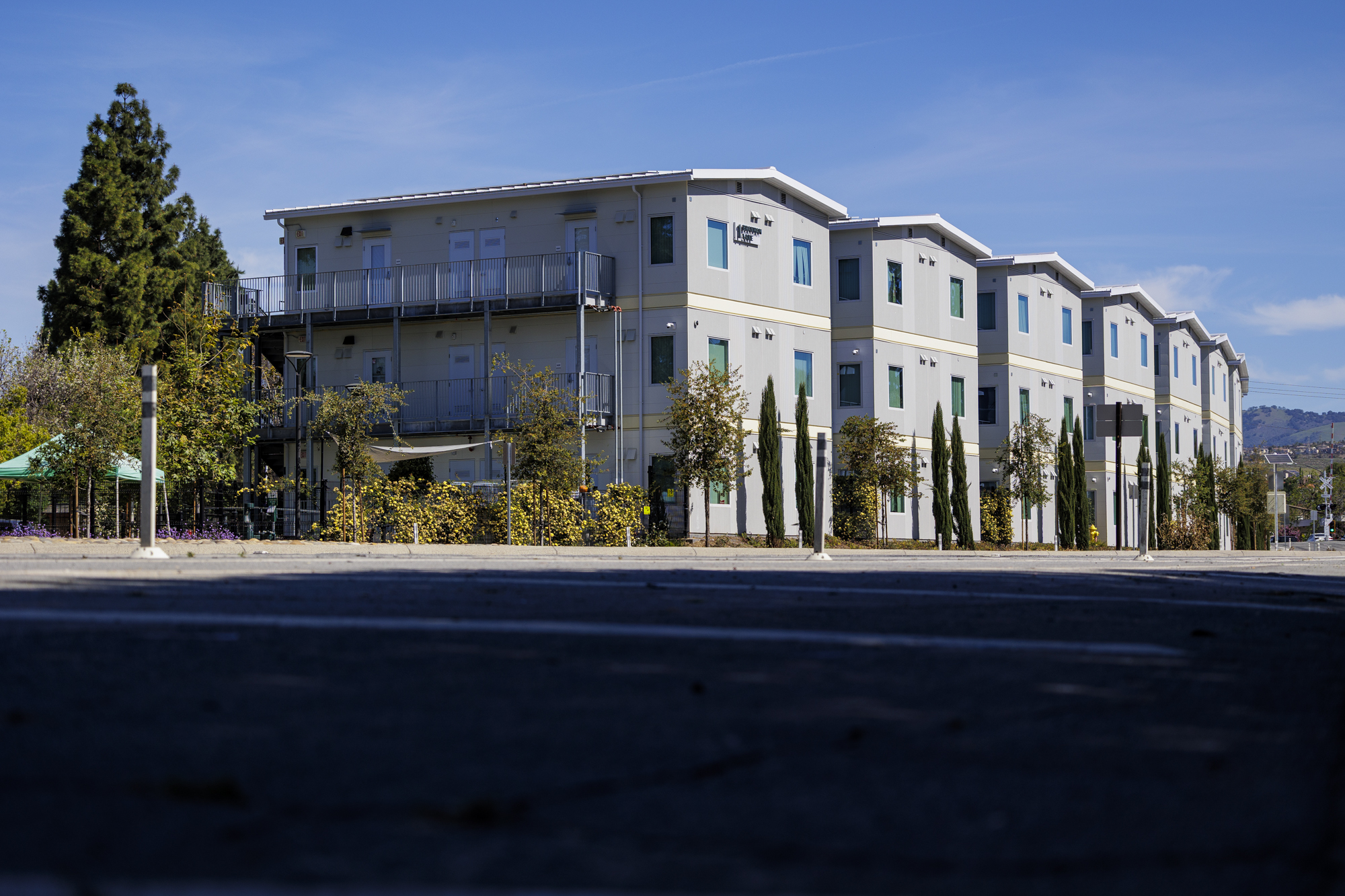
"content": "\u003cp>The \u003ca href=\"http://kqed.org/news/tag/san-jose\">San José\u003c/a> City Council voted Tuesday to explore converting the city’s largest interim housing community into permanent housing — just days after officials moved to terminate the city’s contract with the site’s operators, following a staff member’s arrest on drug charges.\u003c/p>\n\u003cp>Councilmember Pamela Campos, whose district hosts the shelter, led the charge to pursue the conversion of the Branham Lane Emergency Interim Housing Community from a transitional shelter into permanent low-income housing. The transition would prioritize residents over age 55 and people with disabilities.\u003c/p>\n\u003cp>The move follows the March 9 arrest of LifeMoves caseworker Yasmin Wright, 46, outside the site for allegedly selling methamphetamine to residents, as first reported by \u003ca href=\"https://sanjosespotlight.com/san-jose-ends-homeless-shelter-contract-amid-worker-drug-charges/\">San José Spotlight\u003c/a>. LifeMoves, one of the most prominent shelter operators and \u003ca href=\"https://www.kqed.org/news/12073006/once-a-last-stop-for-the-citys-homeless-sfo-ramps-up-outreach-and-support\">homelessness outreach nonprofits\u003c/a> in the Bay Area, has come under fire for its failure to investigate Wright, who faces felony charges for possession with intent to sell and for transporting drugs, as well as a misdemeanor for drug paraphernalia.\u003c/p>\n\u003cp>[ad fullwidth]\u003c/p>\n\u003cp>The vote came during a broader budget discussion that drew hundreds of residents to City Hall. The three-story modular site in South San José, which currently houses more than 200 people, has become a flashpoint for neighbors concerned about safety and site management.\u003c/p>\n\u003cp>\u003ca href=\"https://www.kqed.org/news/12042370/in-san-jose-a-controversial-choice-for-unhoused-shelter-or-arrest\">Issa Ajlouny\u003c/a>, who chairs the community advisory committee for the site, said nearly 100 community members submitted emails in support of the transition. Neighborhood resident Lisa Doyle echoed those concerns during public comment.\u003c/p>\n\u003cp>“We sincerely appreciate an expedited change in operator and approval process so our quality of life, public safety and property values can be restored,” Doyle said.\u003c/p>\n\u003cfigure id=\"attachment_12076666\" class=\"wp-caption aligncenter\" style=\"max-width: 2000px\">\u003cimg loading=\"lazy\" decoding=\"async\" class=\"size-full wp-image-12076666\" src=\"https://cdn.kqed.org/wp-content/uploads/sites/10/2026/03/260316-SJ-SHELTER-FOLO-MD-03-KQED.jpg\" alt=\"\" width=\"2000\" height=\"1333\" srcset=\"https://cdn.kqed.org/wp-content/uploads/sites/10/2026/03/260316-SJ-SHELTER-FOLO-MD-03-KQED.jpg 2000w, https://cdn.kqed.org/wp-content/uploads/sites/10/2026/03/260316-SJ-SHELTER-FOLO-MD-03-KQED-160x107.jpg 160w, https://cdn.kqed.org/wp-content/uploads/sites/10/2026/03/260316-SJ-SHELTER-FOLO-MD-03-KQED-1536x1024.jpg 1536w\" sizes=\"auto, (max-width: 2000px) 100vw, 2000px\">\u003cfigcaption class=\"wp-caption-text\">The LifeMoves Branham Lane, the largest temporary housing site in San José, on March 16, 2026. \u003ccite>(Martin do Nascimento/KQED)\u003c/cite>\u003c/figcaption>\u003c/figure>\n\u003cp>Margie, a former resident who gave only their first name, told the council the site had been mismanaged and called on the city to pull funding from the current program because of “unprofessional” conditions.\u003c/p>\n\u003cp>The city’s Housing Department said that while a formal notice ending the contract has not yet been issued to LifeMoves, the intent has been communicated directly to the nonprofit’s leadership. Current residents will continue to receive on-site services and support throughout the transition.\u003c/p>\n\u003cp>LifeMoves said in a statement it first learned of the city’s position during a meeting with neighbors — not from city officials directly — and has since requested a meeting with the Housing Department.[aside postID=news_12076238 hero='https://cdn.kqed.org/wp-content/uploads/sites/10/2026/03/020526SJ-Tiny-Homes_GH_013_qed.jpg']“Our first priority remains the well-being and stability of the clients currently residing at the Branham Lane community and all of our 25 sites,” LifeMoves said. The nonprofit added that it is conducting an “organization-wide risk assessment” and a thorough review of internal processes following the arrest.\u003c/p>\n\u003cp>The modular site at Branham Lane and Monterey Road opened in early 2025 and serves up to 216 people across 204 units, all of which include full bathrooms and kitchenettes.\u003c/p>\n\u003cp>According to the \u003ca href=\"https://lifemoves.org/city-of-san-jose-and-lifemoves-unveil-citys-largest-interim-housing-community/\">LifeMoves website\u003c/a>, the project was funded through a $51.8 million state Project Homekey grant, $38.8 million from the city, $4 million from Santa Clara County and $5 million from the Sobrato Foundation. The site was designed and built with the long-term possibility of conversion to permanent housing, according to the city’s Housing Department.\u003c/p>\n\u003cp>Campos directed the city manager to update the status of the transition by Aug. 31.\u003c/p>\n\u003cp>The directive was folded into Mayor Matt Mahan’s annual March budget message, which sets city priorities for the coming fiscal year. Mahan said the process of finding a new operator is already underway.\u003c/p>\n\u003cp>“Interim housing sites exist to help vulnerable residents get back on a better path,” Mahan said Tuesday in an emailed statement. “Hearing allegations that someone entrusted with their care took advantage of them is an egregious violation of trust. We’ve already begun the process to transfer operations of this site to a provider capable of meeting the standards our residents and neighbors deserve.”\u003c/p>\n\u003cp>Mahan added that he hopes to have a new operator in place before the end of the year.\u003c/p>\n\u003cp>\u003c/p>\n",
"blocks": [],
"excerpt": "The three-story modular site in South San José housed over 300 residents and was operated by one of the Bay Area’s most prominent homelessness service providers.",
"status": "publish",
"parent": 0,
"modified": 1773868075,
"stats": {
"hasAudio": false,
"hasVideo": false,
"hasChartOrMap": false,
"iframeSrcs": [],
"hasGoogleForm": false,
"hasGallery": false,
"hasHearkenModule": false,
"hasPolis": false,
"paragraphCount": 17,
"wordCount": 738
},
"headData": {
"title": "San José Could Convert Troubled Homeless Shelter to Permanent Housing | KQED",
"description": "The three-story modular site in South San José housed over 300 residents and was operated by one of the Bay Area’s most prominent homelessness service providers.",
"ogTitle": "",
"ogDescription": "",
"ogImgId": "",
"twTitle": "",
"twDescription": "",
"twImgId": "",
"schema": {
"@context": "https://schema.org",
"@type": "NewsArticle",
"headline": "San José Could Convert Troubled Homeless Shelter to Permanent Housing",
"datePublished": "2026-03-18T13:00:02-07:00",
"dateModified": "2026-03-18T14:07:55-07:00",
"image": "https://cdn.kqed.org/wp-content/uploads/2020/02/KQED-OG-Image@1x.png",
"isAccessibleForFree": "True",
"publisher": {
"@type": "NewsMediaOrganization",
"@id": "https://www.kqed.org/#organization",
"name": "KQED",
"logo": "https://cdn.kqed.org/wp-content/uploads/2020/02/KQED-OG-Image@1x.png",
"url": "https://www.kqed.org",
"sameAs": [
"https://www.facebook.com/KQED",
"https://twitter.com/KQED",
"https://www.instagram.com/kqed/",
"https://www.tiktok.com/@kqedofficial",
"https://www.linkedin.com/company/kqed",
"https://www.youtube.com/channel/UCeC0IOo7i1P_61zVUWbJ4nw"
]
}
}
},
"primaryCategory": {
"termId": 6266,
"slug": "housing",
"name": "Housing"
},
"sticky": false,
"nprStoryId": "kqed-12076693",
"templateType": "standard",
"featuredImageType": "standard",
"excludeFromSiteSearch": "Include",
"articleAge": "0",
"path": "/news/12076693/san-jose-could-convert-troubled-homeless-shelter-to-permanent-housing",
"audioTrackLength": null,
"parsedContent": [
{
"type": "contentString",
"content": "\u003cdiv class=\"post-body\">\u003cp>\u003cp>The \u003ca href=\"http://kqed.org/news/tag/san-jose\">San José\u003c/a> City Council voted Tuesday to explore converting the city’s largest interim housing community into permanent housing — just days after officials moved to terminate the city’s contract with the site’s operators, following a staff member’s arrest on drug charges.\u003c/p>\n\u003cp>Councilmember Pamela Campos, whose district hosts the shelter, led the charge to pursue the conversion of the Branham Lane Emergency Interim Housing Community from a transitional shelter into permanent low-income housing. The transition would prioritize residents over age 55 and people with disabilities.\u003c/p>\n\u003cp>The move follows the March 9 arrest of LifeMoves caseworker Yasmin Wright, 46, outside the site for allegedly selling methamphetamine to residents, as first reported by \u003ca href=\"https://sanjosespotlight.com/san-jose-ends-homeless-shelter-contract-amid-worker-drug-charges/\">San José Spotlight\u003c/a>. LifeMoves, one of the most prominent shelter operators and \u003ca href=\"https://www.kqed.org/news/12073006/once-a-last-stop-for-the-citys-homeless-sfo-ramps-up-outreach-and-support\">homelessness outreach nonprofits\u003c/a> in the Bay Area, has come under fire for its failure to investigate Wright, who faces felony charges for possession with intent to sell and for transporting drugs, as well as a misdemeanor for drug paraphernalia.\u003c/p>\n\u003cp>\u003c/p>\u003c/div>",
"attributes": {
"named": {},
"numeric": []
}
},
{
"type": "component",
"content": "",
"name": "ad",
"attributes": {
"named": {
"label": "fullwidth"
},
"numeric": [
"fullwidth"
]
}
},
{
"type": "contentString",
"content": "\u003cdiv class=\"post-body\">\u003cp>\u003c/p>\n\u003cp>The vote came during a broader budget discussion that drew hundreds of residents to City Hall. The three-story modular site in South San José, which currently houses more than 200 people, has become a flashpoint for neighbors concerned about safety and site management.\u003c/p>\n\u003cp>\u003ca href=\"https://www.kqed.org/news/12042370/in-san-jose-a-controversial-choice-for-unhoused-shelter-or-arrest\">Issa Ajlouny\u003c/a>, who chairs the community advisory committee for the site, said nearly 100 community members submitted emails in support of the transition. Neighborhood resident Lisa Doyle echoed those concerns during public comment.\u003c/p>\n\u003cp>“We sincerely appreciate an expedited change in operator and approval process so our quality of life, public safety and property values can be restored,” Doyle said.\u003c/p>\n\u003cfigure id=\"attachment_12076666\" class=\"wp-caption aligncenter\" style=\"max-width: 2000px\">\u003cimg loading=\"lazy\" decoding=\"async\" class=\"size-full wp-image-12076666\" src=\"https://cdn.kqed.org/wp-content/uploads/sites/10/2026/03/260316-SJ-SHELTER-FOLO-MD-03-KQED.jpg\" alt=\"\" width=\"2000\" height=\"1333\" srcset=\"https://cdn.kqed.org/wp-content/uploads/sites/10/2026/03/260316-SJ-SHELTER-FOLO-MD-03-KQED.jpg 2000w, https://cdn.kqed.org/wp-content/uploads/sites/10/2026/03/260316-SJ-SHELTER-FOLO-MD-03-KQED-160x107.jpg 160w, https://cdn.kqed.org/wp-content/uploads/sites/10/2026/03/260316-SJ-SHELTER-FOLO-MD-03-KQED-1536x1024.jpg 1536w\" sizes=\"auto, (max-width: 2000px) 100vw, 2000px\">\u003cfigcaption class=\"wp-caption-text\">The LifeMoves Branham Lane, the largest temporary housing site in San José, on March 16, 2026. \u003ccite>(Martin do Nascimento/KQED)\u003c/cite>\u003c/figcaption>\u003c/figure>\n\u003cp>Margie, a former resident who gave only their first name, told the council the site had been mismanaged and called on the city to pull funding from the current program because of “unprofessional” conditions.\u003c/p>\n\u003cp>The city’s Housing Department said that while a formal notice ending the contract has not yet been issued to LifeMoves, the intent has been communicated directly to the nonprofit’s leadership. Current residents will continue to receive on-site services and support throughout the transition.\u003c/p>\n\u003cp>LifeMoves said in a statement it first learned of the city’s position during a meeting with neighbors — not from city officials directly — and has since requested a meeting with the Housing Department.\u003c/p>\u003c/div>",
"attributes": {
"named": {},
"numeric": []
}
},
{
"type": "component",
"content": "",
"name": "aside",
"attributes": {
"named": {
"postid": "news_12076238",
"hero": "https://cdn.kqed.org/wp-content/uploads/sites/10/2026/03/020526SJ-Tiny-Homes_GH_013_qed.jpg",
"label": ""
},
"numeric": []
}
},
{
"type": "contentString",
"content": "\u003cdiv class=\"post-body\">\u003cp>“Our first priority remains the well-being and stability of the clients currently residing at the Branham Lane community and all of our 25 sites,” LifeMoves said. The nonprofit added that it is conducting an “organization-wide risk assessment” and a thorough review of internal processes following the arrest.\u003c/p>\n\u003cp>The modular site at Branham Lane and Monterey Road opened in early 2025 and serves up to 216 people across 204 units, all of which include full bathrooms and kitchenettes.\u003c/p>\n\u003cp>According to the \u003ca href=\"https://lifemoves.org/city-of-san-jose-and-lifemoves-unveil-citys-largest-interim-housing-community/\">LifeMoves website\u003c/a>, the project was funded through a $51.8 million state Project Homekey grant, $38.8 million from the city, $4 million from Santa Clara County and $5 million from the Sobrato Foundation. The site was designed and built with the long-term possibility of conversion to permanent housing, according to the city’s Housing Department.\u003c/p>\n\u003cp>Campos directed the city manager to update the status of the transition by Aug. 31.\u003c/p>\n\u003cp>The directive was folded into Mayor Matt Mahan’s annual March budget message, which sets city priorities for the coming fiscal year. Mahan said the process of finding a new operator is already underway.\u003c/p>\n\u003cp>“Interim housing sites exist to help vulnerable residents get back on a better path,” Mahan said Tuesday in an emailed statement. “Hearing allegations that someone entrusted with their care took advantage of them is an egregious violation of trust. We’ve already begun the process to transfer operations of this site to a provider capable of meeting the standards our residents and neighbors deserve.”\u003c/p>\n\u003cp>Mahan added that he hopes to have a new operator in place before the end of the year.\u003c/p>\n\u003cp>\u003c/p>\n\u003c/div>\u003c/p>",
"attributes": {
"named": {},
"numeric": []
}
}
],
"link": "/news/12076693/san-jose-could-convert-troubled-homeless-shelter-to-permanent-housing",
"authors": [
"11986"
],
"categories": [
"news_6266",
"news_8"
],
"tags": [
"news_3921",
"news_1386",
"news_35213",
"news_1775",
"news_18541",
"news_36245",
"news_21285"
],
"featImg": "news_12076665",
"label": "news"
},
"news_12076663": {
"type": "posts",
"id": "news_12076663",
"meta": {
"index": "posts_1716263798",
"site": "news",
"id": "12076663",
"score": null,
"sort": [
1773789004000
]
},
"guestAuthors": [],
"slug": "lawsuit-accusing-elon-musk-of-tanking-twitter-share-price-goes-to-jury",
"title": "Lawsuit Accusing Elon Musk of Tanking Twitter Share Price Goes to Jury",
"publishDate": 1773789004,
"format": "standard",
"headTitle": "Lawsuit Accusing Elon Musk of Tanking Twitter Share Price Goes to Jury | KQED",
"labelTerm": {
"site": "news"
},
"content": "\u003cp>Whether Elon Musk will be forced to pay back \u003ca href=\"https://www.kqed.org/news/12075332/elon-musk-defends-himself-in-court-over-posts-before-twitter-takeover\">investors who sold Twitter stock\u003c/a> amid his 2022 takeover is now in the hands of a San Francisco jury, after attorneys wrapped up their closing arguments in the securities fraud case Tuesday.\u003c/p>\n\u003cp>The federal class action lawsuit, brought by former shareholders in the social media company, alleges that in the months before the $44 million buyout, the billionaire made misleading statements to hurt Twitter’s stock price with intent to renegotiate a cheaper deal.\u003c/p>\n\u003cp>“Mr. Musk decided … that he didn’t want to pay investors what he promised to pay. The deal in his mind had gotten too expensive,” said Mark Molumphy, an attorney for the plaintiffs. “So, he did here what he did on the stand: he trashed the company, he trashed the executives and he tanked the stock.”\u003c/p>\n\u003cp>[ad fullwidth]\u003c/p>\n\u003cp>The weekslong civil trial has focused primarily on statements Musk made in May 2022, speculating that the number of bots on Twitter was much higher than the company publicly reported, and suggesting that the deal could be put on pause as a result.\u003c/p>\n\u003cp>The previous month, he’d signed a binding agreement to purchase the company at $54.20 a share.\u003c/p>\n\u003cp>During his testimony earlier this month, Musk said that in a May meeting with then-CEO Parag Agrawal and CFO Ned Segal, he asked the executives how the company determined the number of spam accounts that use the site daily, and said he was “flabbergasted” when they did not know.\u003c/p>\n\u003cfigure id=\"attachment_12075459\" class=\"wp-caption aligncenter\" style=\"max-width: 2000px\">\u003cimg loading=\"lazy\" decoding=\"async\" class=\"wp-image-12075459 size-full\" src=\"https://cdn.kqed.org/wp-content/uploads/sites/10/2026/03/260304-Elon-Musk-Trial-04-KQED.jpg\" alt=\"\" width=\"2000\" height=\"1125\" srcset=\"https://cdn.kqed.org/wp-content/uploads/sites/10/2026/03/260304-Elon-Musk-Trial-04-KQED.jpg 2000w, https://cdn.kqed.org/wp-content/uploads/sites/10/2026/03/260304-Elon-Musk-Trial-04-KQED-160x90.jpg 160w, https://cdn.kqed.org/wp-content/uploads/sites/10/2026/03/260304-Elon-Musk-Trial-04-KQED-1536x864.jpg 1536w, https://cdn.kqed.org/wp-content/uploads/sites/10/2026/03/260304-Elon-Musk-Trial-04-KQED-1200x675.jpg 1200w\" sizes=\"auto, (max-width: 2000px) 100vw, 2000px\">\u003cfigcaption class=\"wp-caption-text\">A courtroom sketch depicts Elon Musk (left) with his defense team on Mar. 4, 2026. \u003ccite>(Vicki Behringer for KQED)\u003c/cite>\u003c/figcaption>\u003c/figure>\n\u003cp>Days later, Musk tweeted that the deal was “temporarily on hold,” pending evidence of how the company calculated that percentage. Hours later, he posted that he was “still committed to the acquisition,” but the following Monday, he tweeted again, suggesting that up to 20% of Twitter users could be bots. In the time between those posts, the company’s stock dropped nearly 18%.\u003c/p>\n\u003cp>Molumphy said in total, Twitter stock dropped $8 million amid Musk’s public waffling, and many people sold their shares at deflated prices, believing the deal might fall through.[aside postID=forum_2010101912956 hero='https://cdn.kqed.org/wp-content/uploads/sites/43/2025/04/GettyImages-2203694533-1-1020x574.jpg']“There can be no dispute that Mr. Musk’s tweets caused this loss, caused this drop,” he said.\u003c/p>\n\u003cp>Musk’s defense argued his tweets were just him speaking his mind, and not intended to manipulate the market. Defense Attorney Michael Lifrak said Tuesday that Musk’s concerns about spam on the site were real, and said that when he asked for information about how Twitter calculated its bot numbers at the May executive meeting, the company “clammed up.”\u003c/p>\n\u003cp>Musk never asked directly for a discount on the purchase, Lifrak added.\u003c/p>\n\u003cp>The deal closed at the original price point in October 2022, after \u003ca href=\"https://www.npr.org/2022/07/12/1111032233/elon-musk-twitter-lawsuit-deal\">Twitter sued Musk\u003c/a> over his alleged plan to back out.\u003c/p>\n\u003cp>Lifrak urged the jury to consider the facts of the case, regardless of their feelings toward Musk.\u003c/p>\n\u003cp>“This is about what happened in 2022, whether Mr. Musk engaged in the scheme to defraud, whether he purposely was tanking Twitter’s stock price, whether he lied,” Lifrak said. “He didn’t. They didn’t prove it.”\u003c/p>\n\u003cp>If he’s found guilty, Musk could be forced to repay more than $2 billion in damages to investors, according to Molumphy.\u003c/p>\n\u003cp>\u003c/p>\n",
"blocks": [],
"excerpt": "The civil trial in San Francisco will decide whether the world’s richest man engaged in deceptive practices before buying the social media platform, which he renamed X. ",
"status": "publish",
"parent": 0,
"modified": 1773793222,
"stats": {
"hasAudio": false,
"hasVideo": false,
"hasChartOrMap": false,
"iframeSrcs": [],
"hasGoogleForm": false,
"hasGallery": false,
"hasHearkenModule": false,
"hasPolis": false,
"paragraphCount": 16,
"wordCount": 603
},
"headData": {
"title": "Lawsuit Accusing Elon Musk of Tanking Twitter Share Price Goes to Jury | KQED",
"description": "The civil trial in San Francisco will decide whether the world’s richest man engaged in deceptive practices before buying the social media platform, which he renamed X. ",
"ogTitle": "",
"ogDescription": "",
"ogImgId": "",
"twTitle": "",
"twDescription": "",
"twImgId": "",
"schema": {
"@context": "https://schema.org",
"@type": "NewsArticle",
"headline": "Lawsuit Accusing Elon Musk of Tanking Twitter Share Price Goes to Jury",
"datePublished": "2026-03-17T16:10:04-07:00",
"dateModified": "2026-03-17T17:20:22-07:00",
"image": "https://cdn.kqed.org/wp-content/uploads/2020/02/KQED-OG-Image@1x.png",
"isAccessibleForFree": "True",
"publisher": {
"@type": "NewsMediaOrganization",
"@id": "https://www.kqed.org/#organization",
"name": "KQED",
"logo": "https://cdn.kqed.org/wp-content/uploads/2020/02/KQED-OG-Image@1x.png",
"url": "https://www.kqed.org",
"sameAs": [
"https://www.facebook.com/KQED",
"https://twitter.com/KQED",
"https://www.instagram.com/kqed/",
"https://www.tiktok.com/@kqedofficial",
"https://www.linkedin.com/company/kqed",
"https://www.youtube.com/channel/UCeC0IOo7i1P_61zVUWbJ4nw"
]
}
}
},
"primaryCategory": {
"termId": 34167,
"slug": "criminal-justice",
"name": "Criminal Justice"
},
"sticky": false,
"nprStoryId": "kqed-12076663",
"templateType": "standard",
"featuredImageType": "standard",
"excludeFromSiteSearch": "Include",
"articleAge": "0",
"path": "/news/12076663/lawsuit-accusing-elon-musk-of-tanking-twitter-share-price-goes-to-jury",
"audioTrackLength": null,
"parsedContent": [
{
"type": "contentString",
"content": "\u003cdiv class=\"post-body\">\u003cp>\u003cp>Whether Elon Musk will be forced to pay back \u003ca href=\"https://www.kqed.org/news/12075332/elon-musk-defends-himself-in-court-over-posts-before-twitter-takeover\">investors who sold Twitter stock\u003c/a> amid his 2022 takeover is now in the hands of a San Francisco jury, after attorneys wrapped up their closing arguments in the securities fraud case Tuesday.\u003c/p>\n\u003cp>The federal class action lawsuit, brought by former shareholders in the social media company, alleges that in the months before the $44 million buyout, the billionaire made misleading statements to hurt Twitter’s stock price with intent to renegotiate a cheaper deal.\u003c/p>\n\u003cp>“Mr. Musk decided … that he didn’t want to pay investors what he promised to pay. The deal in his mind had gotten too expensive,” said Mark Molumphy, an attorney for the plaintiffs. “So, he did here what he did on the stand: he trashed the company, he trashed the executives and he tanked the stock.”\u003c/p>\n\u003cp>\u003c/p>\u003c/div>",
"attributes": {
"named": {},
"numeric": []
}
},
{
"type": "component",
"content": "",
"name": "ad",
"attributes": {
"named": {
"label": "fullwidth"
},
"numeric": [
"fullwidth"
]
}
},
{
"type": "contentString",
"content": "\u003cdiv class=\"post-body\">\u003cp>\u003c/p>\n\u003cp>The weekslong civil trial has focused primarily on statements Musk made in May 2022, speculating that the number of bots on Twitter was much higher than the company publicly reported, and suggesting that the deal could be put on pause as a result.\u003c/p>\n\u003cp>The previous month, he’d signed a binding agreement to purchase the company at $54.20 a share.\u003c/p>\n\u003cp>During his testimony earlier this month, Musk said that in a May meeting with then-CEO Parag Agrawal and CFO Ned Segal, he asked the executives how the company determined the number of spam accounts that use the site daily, and said he was “flabbergasted” when they did not know.\u003c/p>\n\u003cfigure id=\"attachment_12075459\" class=\"wp-caption aligncenter\" style=\"max-width: 2000px\">\u003cimg loading=\"lazy\" decoding=\"async\" class=\"wp-image-12075459 size-full\" src=\"https://cdn.kqed.org/wp-content/uploads/sites/10/2026/03/260304-Elon-Musk-Trial-04-KQED.jpg\" alt=\"\" width=\"2000\" height=\"1125\" srcset=\"https://cdn.kqed.org/wp-content/uploads/sites/10/2026/03/260304-Elon-Musk-Trial-04-KQED.jpg 2000w, https://cdn.kqed.org/wp-content/uploads/sites/10/2026/03/260304-Elon-Musk-Trial-04-KQED-160x90.jpg 160w, https://cdn.kqed.org/wp-content/uploads/sites/10/2026/03/260304-Elon-Musk-Trial-04-KQED-1536x864.jpg 1536w, https://cdn.kqed.org/wp-content/uploads/sites/10/2026/03/260304-Elon-Musk-Trial-04-KQED-1200x675.jpg 1200w\" sizes=\"auto, (max-width: 2000px) 100vw, 2000px\">\u003cfigcaption class=\"wp-caption-text\">A courtroom sketch depicts Elon Musk (left) with his defense team on Mar. 4, 2026. \u003ccite>(Vicki Behringer for KQED)\u003c/cite>\u003c/figcaption>\u003c/figure>\n\u003cp>Days later, Musk tweeted that the deal was “temporarily on hold,” pending evidence of how the company calculated that percentage. Hours later, he posted that he was “still committed to the acquisition,” but the following Monday, he tweeted again, suggesting that up to 20% of Twitter users could be bots. In the time between those posts, the company’s stock dropped nearly 18%.\u003c/p>\n\u003cp>Molumphy said in total, Twitter stock dropped $8 million amid Musk’s public waffling, and many people sold their shares at deflated prices, believing the deal might fall through.\u003c/p>\u003c/div>",
"attributes": {
"named": {},
"numeric": []
}
},
{
"type": "component",
"content": "",
"name": "aside",
"attributes": {
"named": {
"postid": "forum_2010101912956",
"hero": "https://cdn.kqed.org/wp-content/uploads/sites/43/2025/04/GettyImages-2203694533-1-1020x574.jpg",
"label": ""
},
"numeric": []
}
},
{
"type": "contentString",
"content": "\u003cdiv class=\"post-body\">\u003cp>“There can be no dispute that Mr. Musk’s tweets caused this loss, caused this drop,” he said.\u003c/p>\n\u003cp>Musk’s defense argued his tweets were just him speaking his mind, and not intended to manipulate the market. Defense Attorney Michael Lifrak said Tuesday that Musk’s concerns about spam on the site were real, and said that when he asked for information about how Twitter calculated its bot numbers at the May executive meeting, the company “clammed up.”\u003c/p>\n\u003cp>Musk never asked directly for a discount on the purchase, Lifrak added.\u003c/p>\n\u003cp>The deal closed at the original price point in October 2022, after \u003ca href=\"https://www.npr.org/2022/07/12/1111032233/elon-musk-twitter-lawsuit-deal\">Twitter sued Musk\u003c/a> over his alleged plan to back out.\u003c/p>\n\u003cp>Lifrak urged the jury to consider the facts of the case, regardless of their feelings toward Musk.\u003c/p>\n\u003cp>“This is about what happened in 2022, whether Mr. Musk engaged in the scheme to defraud, whether he purposely was tanking Twitter’s stock price, whether he lied,” Lifrak said. “He didn’t. They didn’t prove it.”\u003c/p>\n\u003cp>If he’s found guilty, Musk could be forced to repay more than $2 billion in damages to investors, according to Molumphy.\u003c/p>\n\u003cp>\u003c/p>\n\u003c/div>\u003c/p>",
"attributes": {
"named": {},
"numeric": []
}
}
],
"link": "/news/12076663/lawsuit-accusing-elon-musk-of-tanking-twitter-share-price-goes-to-jury",
"authors": [
"11913"
],
"categories": [
"news_34167",
"news_6188",
"news_8",
"news_248"
],
"tags": [
"news_1386",
"news_18538",
"news_17725",
"news_3897",
"news_27626",
"news_23052",
"news_21891",
"news_38",
"news_34586",
"news_1089",
"news_1631",
"news_346"
],
"featImg": "news_12075461",
"label": "news"
},
"news_12076712": {
"type": "posts",
"id": "news_12076712",
"meta": {
"index": "posts_1716263798",
"site": "news",
"id": "12076712",
"score": null,
"sort": [
1773783460000
]
},
"guestAuthors": [],
"slug": "san-francisco-cbs-workers-hold-24-hour-walk-out-for-higher-pay-more-respect",
"title": "San Francisco CBS Workers Hold 24-Hour Walkout for Higher Pay, More ‘Respect’",
"publishDate": 1773783460,
"format": "standard",
"headTitle": "San Francisco CBS Workers Hold 24-Hour Walkout for Higher Pay, More ‘Respect’ | KQED",
"labelTerm": {
"site": "news"
},
"content": "\u003cp>CBS News employees in \u003ca href=\"https://www.kqed.org/news/tag/san-francisco\">San Francisco\u003c/a> joined dozens of colleagues in New York in a 24-hour walkout on Tuesday, after contract negotiations stalled last week.\u003c/p>\n\u003cp>Workers for streaming service CBS News 24/7, represented by the Writers Guild of America East, are demanding wage increases, “respect and a sustainable work-life balance.” The walkout comes amid rising tensions at the Paramount-owned broadcast company following its recent bid to acquire Warner Bros. Discovery, and the appointment of controversial political commentator Bari Weiss as CBS News’ editor-in-chief last fall.\u003c/p>\n\u003cp>“Paramount has billions to spend acquiring Warner Bros. Discovery, but still hasn’t guaranteed fair wages and basic job protections for the workers who make their streaming news operation run,” said Beth Godvik, WGAE’s Vice President of Broadcast/Cable/Streaming News. “Our members are walking out today to show management they stand united in their demand for a fair contract — and the WGAE is with them every step of the way.”\u003c/p>\n\u003cp>[ad fullwidth]\u003c/p>\n\u003cp>The union represents about 60 workers, including 10 in San Francisco.\u003c/p>\n\u003cp>During initial contract negotiations, which began last month, the company proposed a 1.5% raise for each of the next three years. Producer Justin Lape, a member of the union’s bargaining committee, likened that offer to a slap in the face, saying WGAE’s previous contract, which expired March 9, included 3% annual raises.\u003c/p>\n\u003cp>Through negotiations, CBS has come up to match the wage hikes in the former contract, he said, but the union has asked for higher.\u003c/p>\n\u003cfigure id=\"attachment_12076783\" class=\"wp-caption aligncenter\" style=\"max-width: 2000px\">\u003cimg loading=\"lazy\" decoding=\"async\" class=\"size-full wp-image-12076783\" src=\"https://cdn.kqed.org/wp-content/uploads/sites/10/2026/03/CBS-Walk-Out-KQED.jpg\" alt=\"\" width=\"2000\" height=\"1500\" srcset=\"https://cdn.kqed.org/wp-content/uploads/sites/10/2026/03/CBS-Walk-Out-KQED.jpg 2000w, https://cdn.kqed.org/wp-content/uploads/sites/10/2026/03/CBS-Walk-Out-KQED-160x120.jpg 160w, https://cdn.kqed.org/wp-content/uploads/sites/10/2026/03/CBS-Walk-Out-KQED-1536x1152.jpg 1536w\" sizes=\"auto, (max-width: 2000px) 100vw, 2000px\">\u003cfigcaption class=\"wp-caption-text\">Union representatives said CBS’s owner, Paramount, spent billions to acquire Warner Bros. Discovery, “but still hasn’t guaranteed fair wages and basic job protections for the workers who make their streaming news operation run.” \u003ccite>(Katie DeBenedetti/KQED)\u003c/cite>\u003c/figcaption>\u003c/figure>\n\u003cp>“We’re constantly doing stories that show the rising cost of living,” said Lape, who is a member of the union’s bargaining team. “Three percent a year just can’t match that. There has to be some other at least language within that contract to meet the needs of just traveling to work, coming back from work, the cost of food.\u003c/p>\n\u003cp>“It’s just meeting something that doesn’t pinch our pockets as much,” he continued.\u003c/p>\n\u003cp>A CBS spokesperson said the company was negotiating in good faith and hopes to “reach a fair resolution quickly.”\u003c/p>\n\u003cp>While Lape said the walkout was not “personal” and centered around pay issues, it comes as CBS undergoes major structural and leadership changes.[aside postID=news_12076608 hero='https://cdn.kqed.org/wp-content/uploads/sites/10/2026/03/Billboard-AI-Illustration_6.jpg']In August, CBS’s parent company, Paramount, was acquired by Skydance Media, owned by David Ellison and primarily funded by Larry Ellison, a longtime ally of President Donald Trump. In October, CBS announced that Weiss — a vocal critic of mainstream news who founded right-leaning online publication \u003cem>The Free Press, \u003c/em>known for its “anti-woke” perspectives — had been named editor in chief.\u003c/p>\n\u003cp>Since her takeover, CBS News has undergone \u003ca href=\"https://www.latimes.com/entertainment-arts/business/story/2025-10-29/paramount-1000-layoffs-skydance-david-ellison\">layoffs\u003c/a> and has seen \u003ca href=\"https://www.washingtonpost.com/business/2025/11/07/bari-weiss-cbs-news-remake/\">departures\u003c/a> of multiple high-profile journalists, as concerns rise about editorial interference within the company.\u003c/p>\n\u003cp>In July, just a week before the FCC approved Skydance’s $8 billion deal to purchase Paramount, CBS late-night host Stephen Colbert, who’s often criticized Trump, announced that his show had been canceled. In December, amid Paramount Skydance’s push to merge with Warner Bros. Discovery, CBS sparked more controversy after it pulled a \u003cem>60 Minutes \u003c/em>segment hours before it was supposed to air. The segment on the Terrorism Confinement Center, or CECOT, a prison in El Salvador where the Trump administration has deported hundreds of people, was apparently cut after Weiss expressed \u003ca href=\"https://www.nytimes.com/2025/12/21/business/60-minutes-trump-bari-weiss.html\">concerns\u003c/a> that the piece didn’t include an interview with a White House representative.\u003c/p>\n\u003cp>“Members are fighting to protect their livelihoods during a period of uncertainty in broadcast news,” WGAE said in a statement. “Layoffs, editorial interference and political pressure have all become existential threats following the Paramount Skydance merger, and those same concerns have escalated with a possible merger of Paramount Skydance and Warner Bros. Discovery.”\u003c/p>\n\u003cp>Lape said he was confident that the union and company would be able to come to a deal.\u003c/p>\n\u003cp>“We’re trying to meet them in the middle. I think we’re slowly getting there,” he told KQED. “We love what we do. Especially with as much as is constantly happening and changing in the world with breaking news, there’s a lot of pressure on that. We just want to reach a fair contract for both sides.”\u003c/p>\n\u003cp>\u003c/p>\n",
"blocks": [],
"excerpt": "Union representatives said CBS’s owner, Paramount, spent billions to acquire Warner Bros. Discovery, “but still hasn’t guaranteed fair wages and basic job protections for the workers who make their streaming news operation run.”",
"status": "publish",
"parent": 0,
"modified": 1773786900,
"stats": {
"hasAudio": false,
"hasVideo": false,
"hasChartOrMap": false,
"iframeSrcs": [],
"hasGoogleForm": false,
"hasGallery": false,
"hasHearkenModule": false,
"hasPolis": false,
"paragraphCount": 17,
"wordCount": 808
},
"headData": {
"title": "San Francisco CBS Workers Hold 24-Hour Walkout for Higher Pay, More ‘Respect’ | KQED",
"description": "Union representatives said CBS’s owner, Paramount, spent billions to acquire Warner Bros. Discovery, “but still hasn’t guaranteed fair wages and basic job protections for the workers who make their streaming news operation run.”",
"ogTitle": "",
"ogDescription": "",
"ogImgId": "",
"twTitle": "",
"twDescription": "",
"twImgId": "",
"schema": {
"@context": "https://schema.org",
"@type": "NewsArticle",
"headline": "San Francisco CBS Workers Hold 24-Hour Walkout for Higher Pay, More ‘Respect’",
"datePublished": "2026-03-17T14:37:40-07:00",
"dateModified": "2026-03-17T15:35:00-07:00",
"image": "https://cdn.kqed.org/wp-content/uploads/2020/02/KQED-OG-Image@1x.png",
"isAccessibleForFree": "True",
"publisher": {
"@type": "NewsMediaOrganization",
"@id": "https://www.kqed.org/#organization",
"name": "KQED",
"logo": "https://cdn.kqed.org/wp-content/uploads/2020/02/KQED-OG-Image@1x.png",
"url": "https://www.kqed.org",
"sameAs": [
"https://www.facebook.com/KQED",
"https://twitter.com/KQED",
"https://www.instagram.com/kqed/",
"https://www.tiktok.com/@kqedofficial",
"https://www.linkedin.com/company/kqed",
"https://www.youtube.com/channel/UCeC0IOo7i1P_61zVUWbJ4nw"
]
}
}
},
"primaryCategory": {
"termId": 34551,
"slug": "labor",
"name": "Labor"
},
"sticky": false,
"nprStoryId": "kqed-12076712",
"templateType": "standard",
"featuredImageType": "standard",
"excludeFromSiteSearch": "Include",
"articleAge": "0",
"path": "/news/12076712/san-francisco-cbs-workers-hold-24-hour-walk-out-for-higher-pay-more-respect",
"audioTrackLength": null,
"parsedContent": [
{
"type": "contentString",
"content": "\u003cdiv class=\"post-body\">\u003cp>\u003cp>CBS News employees in \u003ca href=\"https://www.kqed.org/news/tag/san-francisco\">San Francisco\u003c/a> joined dozens of colleagues in New York in a 24-hour walkout on Tuesday, after contract negotiations stalled last week.\u003c/p>\n\u003cp>Workers for streaming service CBS News 24/7, represented by the Writers Guild of America East, are demanding wage increases, “respect and a sustainable work-life balance.” The walkout comes amid rising tensions at the Paramount-owned broadcast company following its recent bid to acquire Warner Bros. Discovery, and the appointment of controversial political commentator Bari Weiss as CBS News’ editor-in-chief last fall.\u003c/p>\n\u003cp>“Paramount has billions to spend acquiring Warner Bros. Discovery, but still hasn’t guaranteed fair wages and basic job protections for the workers who make their streaming news operation run,” said Beth Godvik, WGAE’s Vice President of Broadcast/Cable/Streaming News. “Our members are walking out today to show management they stand united in their demand for a fair contract — and the WGAE is with them every step of the way.”\u003c/p>\n\u003cp>\u003c/p>\u003c/div>",
"attributes": {
"named": {},
"numeric": []
}
},
{
"type": "component",
"content": "",
"name": "ad",
"attributes": {
"named": {
"label": "fullwidth"
},
"numeric": [
"fullwidth"
]
}
},
{
"type": "contentString",
"content": "\u003cdiv class=\"post-body\">\u003cp>\u003c/p>\n\u003cp>The union represents about 60 workers, including 10 in San Francisco.\u003c/p>\n\u003cp>During initial contract negotiations, which began last month, the company proposed a 1.5% raise for each of the next three years. Producer Justin Lape, a member of the union’s bargaining committee, likened that offer to a slap in the face, saying WGAE’s previous contract, which expired March 9, included 3% annual raises.\u003c/p>\n\u003cp>Through negotiations, CBS has come up to match the wage hikes in the former contract, he said, but the union has asked for higher.\u003c/p>\n\u003cfigure id=\"attachment_12076783\" class=\"wp-caption aligncenter\" style=\"max-width: 2000px\">\u003cimg loading=\"lazy\" decoding=\"async\" class=\"size-full wp-image-12076783\" src=\"https://cdn.kqed.org/wp-content/uploads/sites/10/2026/03/CBS-Walk-Out-KQED.jpg\" alt=\"\" width=\"2000\" height=\"1500\" srcset=\"https://cdn.kqed.org/wp-content/uploads/sites/10/2026/03/CBS-Walk-Out-KQED.jpg 2000w, https://cdn.kqed.org/wp-content/uploads/sites/10/2026/03/CBS-Walk-Out-KQED-160x120.jpg 160w, https://cdn.kqed.org/wp-content/uploads/sites/10/2026/03/CBS-Walk-Out-KQED-1536x1152.jpg 1536w\" sizes=\"auto, (max-width: 2000px) 100vw, 2000px\">\u003cfigcaption class=\"wp-caption-text\">Union representatives said CBS’s owner, Paramount, spent billions to acquire Warner Bros. Discovery, “but still hasn’t guaranteed fair wages and basic job protections for the workers who make their streaming news operation run.” \u003ccite>(Katie DeBenedetti/KQED)\u003c/cite>\u003c/figcaption>\u003c/figure>\n\u003cp>“We’re constantly doing stories that show the rising cost of living,” said Lape, who is a member of the union’s bargaining team. “Three percent a year just can’t match that. There has to be some other at least language within that contract to meet the needs of just traveling to work, coming back from work, the cost of food.\u003c/p>\n\u003cp>“It’s just meeting something that doesn’t pinch our pockets as much,” he continued.\u003c/p>\n\u003cp>A CBS spokesperson said the company was negotiating in good faith and hopes to “reach a fair resolution quickly.”\u003c/p>\n\u003cp>While Lape said the walkout was not “personal” and centered around pay issues, it comes as CBS undergoes major structural and leadership changes.\u003c/p>\u003c/div>",
"attributes": {
"named": {},
"numeric": []
}
},
{
"type": "component",
"content": "",
"name": "aside",
"attributes": {
"named": {
"postid": "news_12076608",
"hero": "https://cdn.kqed.org/wp-content/uploads/sites/10/2026/03/Billboard-AI-Illustration_6.jpg",
"label": ""
},
"numeric": []
}
},
{
"type": "contentString",
"content": "\u003cdiv class=\"post-body\">\u003cp>In August, CBS’s parent company, Paramount, was acquired by Skydance Media, owned by David Ellison and primarily funded by Larry Ellison, a longtime ally of President Donald Trump. In October, CBS announced that Weiss — a vocal critic of mainstream news who founded right-leaning online publication \u003cem>The Free Press, \u003c/em>known for its “anti-woke” perspectives — had been named editor in chief.\u003c/p>\n\u003cp>Since her takeover, CBS News has undergone \u003ca href=\"https://www.latimes.com/entertainment-arts/business/story/2025-10-29/paramount-1000-layoffs-skydance-david-ellison\">layoffs\u003c/a> and has seen \u003ca href=\"https://www.washingtonpost.com/business/2025/11/07/bari-weiss-cbs-news-remake/\">departures\u003c/a> of multiple high-profile journalists, as concerns rise about editorial interference within the company.\u003c/p>\n\u003cp>In July, just a week before the FCC approved Skydance’s $8 billion deal to purchase Paramount, CBS late-night host Stephen Colbert, who’s often criticized Trump, announced that his show had been canceled. In December, amid Paramount Skydance’s push to merge with Warner Bros. Discovery, CBS sparked more controversy after it pulled a \u003cem>60 Minutes \u003c/em>segment hours before it was supposed to air. The segment on the Terrorism Confinement Center, or CECOT, a prison in El Salvador where the Trump administration has deported hundreds of people, was apparently cut after Weiss expressed \u003ca href=\"https://www.nytimes.com/2025/12/21/business/60-minutes-trump-bari-weiss.html\">concerns\u003c/a> that the piece didn’t include an interview with a White House representative.\u003c/p>\n\u003cp>“Members are fighting to protect their livelihoods during a period of uncertainty in broadcast news,” WGAE said in a statement. “Layoffs, editorial interference and political pressure have all become existential threats following the Paramount Skydance merger, and those same concerns have escalated with a possible merger of Paramount Skydance and Warner Bros. Discovery.”\u003c/p>\n\u003cp>Lape said he was confident that the union and company would be able to come to a deal.\u003c/p>\n\u003cp>“We’re trying to meet them in the middle. I think we’re slowly getting there,” he told KQED. “We love what we do. Especially with as much as is constantly happening and changing in the world with breaking news, there’s a lot of pressure on that. We just want to reach a fair contract for both sides.”\u003c/p>\n\u003cp>\u003c/p>\n\u003c/div>\u003c/p>",
"attributes": {
"named": {},
"numeric": []
}
}
],
"link": "/news/12076712/san-francisco-cbs-workers-hold-24-hour-walk-out-for-higher-pay-more-respect",
"authors": [
"11913"
],
"categories": [
"news_34551",
"news_28250",
"news_8",
"news_13"
],
"tags": [
"news_1386",
"news_32885",
"news_19904",
"news_24590",
"news_20482",
"news_205",
"news_17968",
"news_38"
],
"featImg": "news_12076745",
"label": "news"
},
"news_12076432": {
"type": "posts",
"id": "news_12076432",
"meta": {
"index": "posts_1716263798",
"site": "news",
"id": "12076432",
"score": null,
"sort": [
1773779471000
]
},
"guestAuthors": [],
"slug": "2026-when-is-eid-al-fitr-end-ramadan-san-francisco-bay-area-bazaars-festivals-night-markets-parties",
"title": "Where to Celebrate Eid al-Fitr 2026 in the Bay Area: Bazaars, Festivals, Night Markets and Parties to Know",
"publishDate": 1773779471,
"format": "standard",
"headTitle": "Where to Celebrate Eid al-Fitr 2026 in the Bay Area: Bazaars, Festivals, Night Markets and Parties to Know | KQED",
"labelTerm": {
"site": "news"
},
"content": "\u003cp>Eid al-Fitr — “the feast of breaking the fast” — is coming up at the end of March, signaling the end of \u003ca href=\"https://www.kqed.org/news/12073604/2026-ramadan-mubarak-where-to-find-iftar-suhoor-san-francisco-bay-area\">the holy month of Ramadan\u003c/a> for Muslims across the world.\u003c/p>\n\u003cp>However, \u003ca href=\"https://www.kqed.org/news/11978744/were-all-hurting-for-bay-area-muslim-leaders-gaza-is-ever-present-during-ramadan-2024\">as with Eids of recent years\u003c/a>, it may be a somber occasion for many in the Muslim community. Earlier this month, the \u003ca href=\"https://www.kqed.org/forum/2010101913218/in-second-week-iran-war-expands-through-region\">United States and Israel launched strikes\u003c/a> against Iran, sparking a war that’s seen violence continue to ripple across the Middle East.\u003c/p>\n\u003cp>The day Eid actually starts \u003ca href=\"https://www.kqed.org/news/11910408/ramadan-begins-on-a-crescent-moon-ushering-in-a-holy-month-of-fasting-and-kindness\">depends on the sightings of the moon\u003c/a>, but at present it’s estimated to \u003ca href=\"https://www.the-independent.com/bulletin/lifestyle/when-is-eid-al-fitr-2026-ramadan-end-b2937043.html\">begin on either the night of March 19 or March 20\u003c/a>.\u003c/p>\n\u003cp>[ad fullwidth]\u003c/p>\n\u003cp>If you’re looking for an \u003ca href=\"https://www.kqed.org/news/12075745/bay-area-muslims-ramp-up-charity-drives-fundraisers-during-ramadan\">Eid party to celebrate\u003c/a>, pray and enjoy food (during the \u003cem>day!\u003c/em>) with others, keep reading for just some of the events taking place around the Bay Area — several of which are family-friendly or have free admission.\u003c/p>\n\u003cp>And if you’re still looking for Iftar and Suhoor meals and buffets near you this week before Eid, \u003ca href=\"https://www.kqed.org/news/12073604/2026-ramadan-mubarak-where-to-find-iftar-suhoor-san-francisco-bay-area\">read our guide to these Bay Area restaurants and pop-ups\u003c/a>.\u003c/p>\n\u003ch2>Where can I find Eid celebrations in the Bay Area?\u003c/h2>\n\u003cp>The following are just some of the Eid-related celebrations in the Bay Area. Keep in mind that more often than not, these events are not \u003cem>on\u003c/em> Eid itself. Some may even change the day, according to the moon sighting, so be sure to keep an eye out for any updates from organizers.\u003c/p>\n\u003cp>And if you see tickets on sale, consider grabbing them early, as these tend to run out quickly.\u003c/p>\n\u003cp>For a regularly updated list, you can check out \u003ca href=\"https://ramadaninbayarea.com/\">this community calendar\u003c/a> and \u003ca href=\"https://tockify.com/muslimfomo/pinboard\">crowd-sourced website\u003c/a> that keeps track of Ramadan and Eid-related events in the Bay Area.\u003c/p>\n\u003cfigure id=\"attachment_11944171\" class=\"wp-caption aligncenter\" style=\"max-width: 1920px\">\u003cimg loading=\"lazy\" decoding=\"async\" class=\"size-full wp-image-11944171\" src=\"https://cdn.kqed.org/wp-content/uploads/sites/10/2023/03/RS63752_GettyImages-1240397744-qut.jpg\" alt=\"A man and a young boy, both with darker skin, wear traditional long sleeved purple shirts and pants, sitting down on a prayer mat. The boy is smiling broadly as the man looks down at him.\" width=\"1920\" height=\"1280\" srcset=\"https://cdn.kqed.org/wp-content/uploads/sites/10/2023/03/RS63752_GettyImages-1240397744-qut.jpg 1920w, https://cdn.kqed.org/wp-content/uploads/sites/10/2023/03/RS63752_GettyImages-1240397744-qut-800x533.jpg 800w, https://cdn.kqed.org/wp-content/uploads/sites/10/2023/03/RS63752_GettyImages-1240397744-qut-1020x680.jpg 1020w, https://cdn.kqed.org/wp-content/uploads/sites/10/2023/03/RS63752_GettyImages-1240397744-qut-160x107.jpg 160w, https://cdn.kqed.org/wp-content/uploads/sites/10/2023/03/RS63752_GettyImages-1240397744-qut-1536x1024.jpg 1536w\" sizes=\"auto, (max-width: 1920px) 100vw, 1920px\">\u003cfigcaption class=\"wp-caption-text\">This year’s Eid al-Fitr is predicted to begin on Sunday, March 30. \u003ccite>(Tayfun Coskun/Anadolu Agency via Getty Images)\u003c/cite>\u003c/figcaption>\u003c/figure>\n\u003cp>\u003cstrong>Shopping, henna and other preparations for Eid\u003c/strong>\u003c/p>\n\u003cul>\n\u003cli>\u003cstrong>March 16-19: \u003c/strong>\u003ca href=\"https://www.mcabayarea.org/mec-events/henna-nights/?occurrence=2026-03-16\">Henna Nights\u003c/a>, leading up to Eid at the Muslim Community Association in Santa Clara\u003c/li>\n\u003cli>\u003cstrong>March 18:\u003c/strong> \u003ca href=\"https://www.instagram.com/p/DVeZlREknTt/\">Chand Raat\u003c/a>, Marriott in Pleasanton\u003c/li>\n\u003cli>\u003cstrong>March 19: \u003c/strong>\u003ca href=\"https://sbia.info/\">Henna Night\u003c/a> at the South Bay Islamic Association in San José\u003c/li>\n\u003cli>\u003cstrong>March 19: \u003ca href=\"https://www.tickettailor.com/events/mcceastbay/2115727\">Henna for Hearts: Chaand Raat Event\u003c/a>\u003c/strong> at the MCC Sunday School in Pleasanton\u003c/li>\n\u003c/ul>\n\u003cfigure id=\"attachment_12033216\" class=\"wp-caption aligncenter\" style=\"max-width: 2120px\">\u003cimg loading=\"lazy\" decoding=\"async\" class=\"size-full wp-image-12033216\" src=\"https://cdn.kqed.org/wp-content/uploads/sites/10/2025/03/GettyImages-2195339591.jpg\" alt=\"\" width=\"2120\" height=\"1414\" srcset=\"https://cdn.kqed.org/wp-content/uploads/sites/10/2025/03/GettyImages-2195339591.jpg 2120w, https://cdn.kqed.org/wp-content/uploads/sites/10/2025/03/GettyImages-2195339591-800x534.jpg 800w, https://cdn.kqed.org/wp-content/uploads/sites/10/2025/03/GettyImages-2195339591-1020x680.jpg 1020w, https://cdn.kqed.org/wp-content/uploads/sites/10/2025/03/GettyImages-2195339591-160x107.jpg 160w, https://cdn.kqed.org/wp-content/uploads/sites/10/2025/03/GettyImages-2195339591-1536x1024.jpg 1536w, https://cdn.kqed.org/wp-content/uploads/sites/10/2025/03/GettyImages-2195339591-2048x1366.jpg 2048w, https://cdn.kqed.org/wp-content/uploads/sites/10/2025/03/GettyImages-2195339591-1920x1281.jpg 1920w\" sizes=\"auto, (max-width: 2120px) 100vw, 2120px\">\u003cfigcaption class=\"wp-caption-text\">There are Eid picnics, parties and celebrations across the Bay Area over the coming week. \u003ccite>(Alvarez/Getty Images)\u003c/cite>\u003c/figcaption>\u003c/figure>\n\u003cp>\u003cstrong>Eid festivals, prayers and markets \u003c/strong>\u003c/p>\n\u003cul>\n\u003cli>\u003cstrong>March 19: \u003c/strong>\u003ca href=\"https://partiful.com/e/K6SDyO6W6QSoCmfPFWxy?source=share\">Charity Chandraat\u003c/a> at Zareen’s in Palo Alto\u003c/li>\n\u003cli>\u003cstrong>March 19: \u003ca href=\"https://www.instagram.com/p/DVzFUmCklQo/?igsh=NTc4MTIwNjQ2YQ%3D%3D\">Chand Raat: Night Market\u003c/a>\u003c/strong> at elaichi co. in Berkeley\u003c/li>\n\u003cli>\u003cstrong>March 19 \u003cem>or\u003c/em> 20: \u003c/strong>\u003ca href=\"https://www.facebook.com/groups/bayareahalalfoodies/posts/1847497695936578/\">Mountain House Chaand Raat Bazaar\u003c/a> at the Unity Center in Mountain House\u003c/li>\n\u003cli>\u003cstrong>March 20: \u003c/strong>\u003ca href=\"https://srvic.org/event/eid-ul-fitr-celebration/\">San Ramon Valley Islamic Center Eid Celebration\u003c/a> in San Ramon\u003c/li>\n\u003cli>\u003cstrong>March 21:\u003c/strong> \u003ca href=\"https://ramadaninbayarea.com/event/eid-al-fitr-celebration-stories-mar-21-2026\">Eid Al Fitr Celebration Stories\u003c/a> for children at Santa Clara City Library in Santa Clara\u003c/li>\n\u003cli>\u003cstrong>March 20: \u003ca href=\"https://sbia.info/\">Eid Al-Fitr Prayer and Celebration\u003c/a>\u003c/strong> at the Santa Clara Fairgrounds in San José\u003c/li>\n\u003cli>\u003cstrong>March 20: \u003ca href=\"https://www.instagram.com/p/DUohy7Ckl21/?igsh=NTc4MTIwNjQ2YQ%3D%3D\">SAC Unity Eid and Festival\u003c/a>\u003c/strong> at Cal Expo in Sacramento\u003c/li>\n\u003cli>\u003cstrong>March 20 and 21: \u003ca href=\"https://www.instagram.com/p/DVz6pgDEW6z/?igsh=NTc4MTIwNjQ2YQ%3D%3D\">Eid ul-Fitr Buffet\u003c/a>\u003c/strong> at Mehran in Newark\u003c/li>\n\u003cli>\u003cstrong>March 22: \u003ca href=\"https://partiful.com/e/d8rXKGU4Y6hGLU9JvUfZ?source=share\">Eid Picnic\u003c/a>\u003c/strong> (potluck style) at Central Park in Santa Clara\u003c/li>\n\u003cli>\u003cstrong>March 22: \u003c/strong>\u003ca href=\"https://www.instagram.com/p/DVwPL2Ij5LW/?igsh=NjZiM2M3MzIxNA%3D%3D\">Eid Celebration and Fundraiser for Sudan\u003c/a> in Oakland\u003c/li>\n\u003cli>\u003cstrong>March 27:\u003c/strong> \u003ca href=\"https://www.threads.com/@azmi_a.gill/post/DVC2joRgfWB/eid-mela-fremont\">Eid Mela\u003c/a> at Fremont Event Center in Fremont\u003c/li>\n\u003cli>\u003cstrong>March 28: \u003ca href=\"https://www.eventbrite.com/e/tenderloin-street-fair-eid-celebration-tickets-1983912677223?aff=ebdssbdestsearch\">Tenderloin Street Fair Eid Celebration\u003c/a>\u003c/strong> in San Francisco\u003c/li>\n\u003cli>\u003cstrong>March 28:\u003c/strong> \u003ca href=\"https://www.instagram.com/reels/DV0Bc8JiVIs/\">Eid Festival at Islamic Society of East Bay\u003c/a> (Lowry Mosque) in Union City\u003c/li>\n\u003cli>\u003cstrong>March 28: \u003c/strong>\u003ca href=\"https://docs.google.com/forms/d/e/1FAIpQLSeGZik55yq3lDXCAkUyXIKdgMp1Bt3QEUNBq8Ke8ydmh7fRLQ/viewform\">Tawasaw Eid Al-Fitr Family Picnic\u003c/a> at Sunnyvale Baylands Park in Sunnyvale\u003c/li>\n\u003c/ul>\n\u003cp>\u003c/p>\n",
"blocks": [],
"excerpt": "Where can Muslim Bay Area residents celebrate Eid al-Fitr this year?",
"status": "publish",
"parent": 0,
"modified": 1773779509,
"stats": {
"hasAudio": false,
"hasVideo": false,
"hasChartOrMap": false,
"iframeSrcs": [],
"hasGoogleForm": false,
"hasGallery": false,
"hasHearkenModule": false,
"hasPolis": false,
"paragraphCount": 12,
"wordCount": 585
},
"headData": {
"title": "Where to Celebrate Eid al-Fitr 2026 in the Bay Area: Bazaars, Festivals, Night Markets and Parties to Know | KQED",
"description": "Where can Muslim Bay Area residents celebrate Eid al-Fitr this year?",
"ogTitle": "",
"ogDescription": "",
"ogImgId": "",
"twTitle": "",
"twDescription": "",
"twImgId": "",
"schema": {
"@context": "https://schema.org",
"@type": "NewsArticle",
"headline": "Where to Celebrate Eid al-Fitr 2026 in the Bay Area: Bazaars, Festivals, Night Markets and Parties to Know",
"datePublished": "2026-03-17T13:31:11-07:00",
"dateModified": "2026-03-17T13:31:49-07:00",
"image": "https://cdn.kqed.org/wp-content/uploads/2020/02/KQED-OG-Image@1x.png",
"isAccessibleForFree": "True",
"publisher": {
"@type": "NewsMediaOrganization",
"@id": "https://www.kqed.org/#organization",
"name": "KQED",
"logo": "https://cdn.kqed.org/wp-content/uploads/2020/02/KQED-OG-Image@1x.png",
"url": "https://www.kqed.org",
"sameAs": [
"https://www.facebook.com/KQED",
"https://twitter.com/KQED",
"https://www.instagram.com/kqed/",
"https://www.tiktok.com/@kqedofficial",
"https://www.linkedin.com/company/kqed",
"https://www.youtube.com/channel/UCeC0IOo7i1P_61zVUWbJ4nw"
]
}
}
},
"primaryCategory": {
"termId": 34168,
"slug": "guides-and-explainers",
"name": "Guides and Explainers"
},
"sticky": false,
"nprStoryId": "kqed-12076432",
"templateType": "standard",
"featuredImageType": "standard",
"excludeFromSiteSearch": "Include",
"articleAge": "0",
"path": "/news/12076432/2026-when-is-eid-al-fitr-end-ramadan-san-francisco-bay-area-bazaars-festivals-night-markets-parties",
"audioTrackLength": null,
"parsedContent": [
{
"type": "contentString",
"content": "\u003cdiv class=\"post-body\">\u003cp>\u003cp>Eid al-Fitr — “the feast of breaking the fast” — is coming up at the end of March, signaling the end of \u003ca href=\"https://www.kqed.org/news/12073604/2026-ramadan-mubarak-where-to-find-iftar-suhoor-san-francisco-bay-area\">the holy month of Ramadan\u003c/a> for Muslims across the world.\u003c/p>\n\u003cp>However, \u003ca href=\"https://www.kqed.org/news/11978744/were-all-hurting-for-bay-area-muslim-leaders-gaza-is-ever-present-during-ramadan-2024\">as with Eids of recent years\u003c/a>, it may be a somber occasion for many in the Muslim community. Earlier this month, the \u003ca href=\"https://www.kqed.org/forum/2010101913218/in-second-week-iran-war-expands-through-region\">United States and Israel launched strikes\u003c/a> against Iran, sparking a war that’s seen violence continue to ripple across the Middle East.\u003c/p>\n\u003cp>The day Eid actually starts \u003ca href=\"https://www.kqed.org/news/11910408/ramadan-begins-on-a-crescent-moon-ushering-in-a-holy-month-of-fasting-and-kindness\">depends on the sightings of the moon\u003c/a>, but at present it’s estimated to \u003ca href=\"https://www.the-independent.com/bulletin/lifestyle/when-is-eid-al-fitr-2026-ramadan-end-b2937043.html\">begin on either the night of March 19 or March 20\u003c/a>.\u003c/p>\n\u003cp>\u003c/p>\u003c/div>",
"attributes": {
"named": {},
"numeric": []
}
},
{
"type": "component",
"content": "",
"name": "ad",
"attributes": {
"named": {
"label": "fullwidth"
},
"numeric": [
"fullwidth"
]
}
},
{
"type": "contentString",
"content": "\u003cdiv class=\"post-body\">\u003cp>\u003c/p>\n\u003cp>If you’re looking for an \u003ca href=\"https://www.kqed.org/news/12075745/bay-area-muslims-ramp-up-charity-drives-fundraisers-during-ramadan\">Eid party to celebrate\u003c/a>, pray and enjoy food (during the \u003cem>day!\u003c/em>) with others, keep reading for just some of the events taking place around the Bay Area — several of which are family-friendly or have free admission.\u003c/p>\n\u003cp>And if you’re still looking for Iftar and Suhoor meals and buffets near you this week before Eid, \u003ca href=\"https://www.kqed.org/news/12073604/2026-ramadan-mubarak-where-to-find-iftar-suhoor-san-francisco-bay-area\">read our guide to these Bay Area restaurants and pop-ups\u003c/a>.\u003c/p>\n\u003ch2>Where can I find Eid celebrations in the Bay Area?\u003c/h2>\n\u003cp>The following are just some of the Eid-related celebrations in the Bay Area. Keep in mind that more often than not, these events are not \u003cem>on\u003c/em> Eid itself. Some may even change the day, according to the moon sighting, so be sure to keep an eye out for any updates from organizers.\u003c/p>\n\u003cp>And if you see tickets on sale, consider grabbing them early, as these tend to run out quickly.\u003c/p>\n\u003cp>For a regularly updated list, you can check out \u003ca href=\"https://ramadaninbayarea.com/\">this community calendar\u003c/a> and \u003ca href=\"https://tockify.com/muslimfomo/pinboard\">crowd-sourced website\u003c/a> that keeps track of Ramadan and Eid-related events in the Bay Area.\u003c/p>\n\u003cfigure id=\"attachment_11944171\" class=\"wp-caption aligncenter\" style=\"max-width: 1920px\">\u003cimg loading=\"lazy\" decoding=\"async\" class=\"size-full wp-image-11944171\" src=\"https://cdn.kqed.org/wp-content/uploads/sites/10/2023/03/RS63752_GettyImages-1240397744-qut.jpg\" alt=\"A man and a young boy, both with darker skin, wear traditional long sleeved purple shirts and pants, sitting down on a prayer mat. The boy is smiling broadly as the man looks down at him.\" width=\"1920\" height=\"1280\" srcset=\"https://cdn.kqed.org/wp-content/uploads/sites/10/2023/03/RS63752_GettyImages-1240397744-qut.jpg 1920w, https://cdn.kqed.org/wp-content/uploads/sites/10/2023/03/RS63752_GettyImages-1240397744-qut-800x533.jpg 800w, https://cdn.kqed.org/wp-content/uploads/sites/10/2023/03/RS63752_GettyImages-1240397744-qut-1020x680.jpg 1020w, https://cdn.kqed.org/wp-content/uploads/sites/10/2023/03/RS63752_GettyImages-1240397744-qut-160x107.jpg 160w, https://cdn.kqed.org/wp-content/uploads/sites/10/2023/03/RS63752_GettyImages-1240397744-qut-1536x1024.jpg 1536w\" sizes=\"auto, (max-width: 1920px) 100vw, 1920px\">\u003cfigcaption class=\"wp-caption-text\">This year’s Eid al-Fitr is predicted to begin on Sunday, March 30. \u003ccite>(Tayfun Coskun/Anadolu Agency via Getty Images)\u003c/cite>\u003c/figcaption>\u003c/figure>\n\u003cp>\u003cstrong>Shopping, henna and other preparations for Eid\u003c/strong>\u003c/p>\n\u003cul>\n\u003cli>\u003cstrong>March 16-19: \u003c/strong>\u003ca href=\"https://www.mcabayarea.org/mec-events/henna-nights/?occurrence=2026-03-16\">Henna Nights\u003c/a>, leading up to Eid at the Muslim Community Association in Santa Clara\u003c/li>\n\u003cli>\u003cstrong>March 18:\u003c/strong> \u003ca href=\"https://www.instagram.com/p/DVeZlREknTt/\">Chand Raat\u003c/a>, Marriott in Pleasanton\u003c/li>\n\u003cli>\u003cstrong>March 19: \u003c/strong>\u003ca href=\"https://sbia.info/\">Henna Night\u003c/a> at the South Bay Islamic Association in San José\u003c/li>\n\u003cli>\u003cstrong>March 19: \u003ca href=\"https://www.tickettailor.com/events/mcceastbay/2115727\">Henna for Hearts: Chaand Raat Event\u003c/a>\u003c/strong> at the MCC Sunday School in Pleasanton\u003c/li>\n\u003c/ul>\n\u003cfigure id=\"attachment_12033216\" class=\"wp-caption aligncenter\" style=\"max-width: 2120px\">\u003cimg loading=\"lazy\" decoding=\"async\" class=\"size-full wp-image-12033216\" src=\"https://cdn.kqed.org/wp-content/uploads/sites/10/2025/03/GettyImages-2195339591.jpg\" alt=\"\" width=\"2120\" height=\"1414\" srcset=\"https://cdn.kqed.org/wp-content/uploads/sites/10/2025/03/GettyImages-2195339591.jpg 2120w, https://cdn.kqed.org/wp-content/uploads/sites/10/2025/03/GettyImages-2195339591-800x534.jpg 800w, https://cdn.kqed.org/wp-content/uploads/sites/10/2025/03/GettyImages-2195339591-1020x680.jpg 1020w, https://cdn.kqed.org/wp-content/uploads/sites/10/2025/03/GettyImages-2195339591-160x107.jpg 160w, https://cdn.kqed.org/wp-content/uploads/sites/10/2025/03/GettyImages-2195339591-1536x1024.jpg 1536w, https://cdn.kqed.org/wp-content/uploads/sites/10/2025/03/GettyImages-2195339591-2048x1366.jpg 2048w, https://cdn.kqed.org/wp-content/uploads/sites/10/2025/03/GettyImages-2195339591-1920x1281.jpg 1920w\" sizes=\"auto, (max-width: 2120px) 100vw, 2120px\">\u003cfigcaption class=\"wp-caption-text\">There are Eid picnics, parties and celebrations across the Bay Area over the coming week. \u003ccite>(Alvarez/Getty Images)\u003c/cite>\u003c/figcaption>\u003c/figure>\n\u003cp>\u003cstrong>Eid festivals, prayers and markets \u003c/strong>\u003c/p>\n\u003cul>\n\u003cli>\u003cstrong>March 19: \u003c/strong>\u003ca href=\"https://partiful.com/e/K6SDyO6W6QSoCmfPFWxy?source=share\">Charity Chandraat\u003c/a> at Zareen’s in Palo Alto\u003c/li>\n\u003cli>\u003cstrong>March 19: \u003ca href=\"https://www.instagram.com/p/DVzFUmCklQo/?igsh=NTc4MTIwNjQ2YQ%3D%3D\">Chand Raat: Night Market\u003c/a>\u003c/strong> at elaichi co. in Berkeley\u003c/li>\n\u003cli>\u003cstrong>March 19 \u003cem>or\u003c/em> 20: \u003c/strong>\u003ca href=\"https://www.facebook.com/groups/bayareahalalfoodies/posts/1847497695936578/\">Mountain House Chaand Raat Bazaar\u003c/a> at the Unity Center in Mountain House\u003c/li>\n\u003cli>\u003cstrong>March 20: \u003c/strong>\u003ca href=\"https://srvic.org/event/eid-ul-fitr-celebration/\">San Ramon Valley Islamic Center Eid Celebration\u003c/a> in San Ramon\u003c/li>\n\u003cli>\u003cstrong>March 21:\u003c/strong> \u003ca href=\"https://ramadaninbayarea.com/event/eid-al-fitr-celebration-stories-mar-21-2026\">Eid Al Fitr Celebration Stories\u003c/a> for children at Santa Clara City Library in Santa Clara\u003c/li>\n\u003cli>\u003cstrong>March 20: \u003ca href=\"https://sbia.info/\">Eid Al-Fitr Prayer and Celebration\u003c/a>\u003c/strong> at the Santa Clara Fairgrounds in San José\u003c/li>\n\u003cli>\u003cstrong>March 20: \u003ca href=\"https://www.instagram.com/p/DUohy7Ckl21/?igsh=NTc4MTIwNjQ2YQ%3D%3D\">SAC Unity Eid and Festival\u003c/a>\u003c/strong> at Cal Expo in Sacramento\u003c/li>\n\u003cli>\u003cstrong>March 20 and 21: \u003ca href=\"https://www.instagram.com/p/DVz6pgDEW6z/?igsh=NTc4MTIwNjQ2YQ%3D%3D\">Eid ul-Fitr Buffet\u003c/a>\u003c/strong> at Mehran in Newark\u003c/li>\n\u003cli>\u003cstrong>March 22: \u003ca href=\"https://partiful.com/e/d8rXKGU4Y6hGLU9JvUfZ?source=share\">Eid Picnic\u003c/a>\u003c/strong> (potluck style) at Central Park in Santa Clara\u003c/li>\n\u003cli>\u003cstrong>March 22: \u003c/strong>\u003ca href=\"https://www.instagram.com/p/DVwPL2Ij5LW/?igsh=NjZiM2M3MzIxNA%3D%3D\">Eid Celebration and Fundraiser for Sudan\u003c/a> in Oakland\u003c/li>\n\u003cli>\u003cstrong>March 27:\u003c/strong> \u003ca href=\"https://www.threads.com/@azmi_a.gill/post/DVC2joRgfWB/eid-mela-fremont\">Eid Mela\u003c/a> at Fremont Event Center in Fremont\u003c/li>\n\u003cli>\u003cstrong>March 28: \u003ca href=\"https://www.eventbrite.com/e/tenderloin-street-fair-eid-celebration-tickets-1983912677223?aff=ebdssbdestsearch\">Tenderloin Street Fair Eid Celebration\u003c/a>\u003c/strong> in San Francisco\u003c/li>\n\u003cli>\u003cstrong>March 28:\u003c/strong> \u003ca href=\"https://www.instagram.com/reels/DV0Bc8JiVIs/\">Eid Festival at Islamic Society of East Bay\u003c/a> (Lowry Mosque) in Union City\u003c/li>\n\u003cli>\u003cstrong>March 28: \u003c/strong>\u003ca href=\"https://docs.google.com/forms/d/e/1FAIpQLSeGZik55yq3lDXCAkUyXIKdgMp1Bt3QEUNBq8Ke8ydmh7fRLQ/viewform\">Tawasaw Eid Al-Fitr Family Picnic\u003c/a> at Sunnyvale Baylands Park in Sunnyvale\u003c/li>\n\u003c/ul>\n\u003cp>\u003c/p>\n\u003c/div>\u003c/p>",
"attributes": {
"named": {},
"numeric": []
}
}
],
"link": "/news/12076432/2026-when-is-eid-al-fitr-end-ramadan-san-francisco-bay-area-bazaars-festivals-night-markets-parties",
"authors": [
"11867",
"11631"
],
"categories": [
"news_223",
"news_24114",
"news_34168",
"news_28250"
],
"tags": [
"news_32707",
"news_1386",
"news_22973",
"news_34081",
"news_333",
"news_1767"
],
"featImg": "news_12075084",
"label": "news"
},
"news_12076608": {
"type": "posts",
"id": "news_12076608",
"meta": {
"index": "posts_1716263798",
"site": "news",
"id": "12076608",
"score": null,
"sort": [
1773776093000
]
},
"guestAuthors": [],
"slug": "what-do-san-franciscos-ai-vs-humans-billboards-say-about-our-working-futures",
"title": "What Do San Francisco’s ‘AI vs. Humans’ Billboards Say About Our Working Futures?",
"publishDate": 1773776093,
"format": "standard",
"headTitle": "What Do San Francisco’s ‘AI vs. Humans’ Billboards Say About Our Working Futures? | KQED",
"labelTerm": {
"site": "news"
},
"content": "\u003cp>It’s no secret that \u003ca href=\"https://www.kqed.org/news/tag/ai\">artificial intelligence\u003c/a> has taken over the Bay Area’s advertising space. \u003ca href=\"https://www.sidewalktattoos.com/blogs/transforming-san-francisco-streets-wheatpaste-postings-for-ai-companies\">Buildings\u003c/a>, bus shelters and billboards lining Highway \u003ca href=\"https://clearchanneloutdoor.com/blog/decoded-the-psychology-behind-san-franciscos-cryptic-tech-billboards/\">101\u003c/a> have become unofficial chroniclers of the region’s AI boom.\u003c/p>\n\u003cp>The ads are peppered with Silicon Valley speak— SaaS! SOC 2! Vibe coding! — to woo a select few potential employees, clients or investors. But for everyone who \u003cem>isn’t\u003c/em> working in tech, the billboards are an opaque window into an industry that isn’t speaking to them at all.\u003c/p>\n\u003cp>“So much of AI right here in the Bay, but it feels like a whole separate world,” said Angélica Castro, a community health worker living in San Francisco, on her way to a class at City College of San Francisco. “When you do see AI, it’s on billboards. And they make you feel like you’re some sort of problem for being a human.”\u003c/p>\n\u003cp>[ad fullwidth]\u003c/p>\n\u003cp>The anti-human sentiment dates back to a 2024 campaign by San Francisco-based Artisan AI \u003ca href=\"https://www.sfgate.com/tech/article/sf-artisan-billboards-stop-hiring-humans-19969672.php\">featuring the message\u003c/a>, “Stop hiring humans.”\u003c/p>\n\u003cp>Company leadership did not respond to an interview request from KQED, but CEO Jaspar Carmichael-Jack said in \u003ca href=\"https://sfstandard.com/2025/04/07/the-real-person-behind-san-franciscos-hated-anti-human-ad-campaign/\">a 2025 interview\u003c/a> with the San Francisco Standard that the billboards were, in fact, deliberate ragebait, designed to spark outrage and \u003ca href=\"https://www.reddit.com/r/Futurology/comments/1he5ojx/ai_firms_stop_hiring_humans_billboard_campaign/\">angry online chatter\u003c/a> to boost the company’s visibility.\u003c/p>\n\u003cfigure id=\"attachment_12076632\" class=\"wp-caption aligncenter\" style=\"max-width: 2000px\">\u003cimg loading=\"lazy\" decoding=\"async\" class=\"size-full wp-image-12076632\" src=\"https://cdn.kqed.org/wp-content/uploads/sites/10/2026/03/020226AI-Billboards-_GH_007_qed.jpg\" alt=\"\" width=\"2000\" height=\"1333\" srcset=\"https://cdn.kqed.org/wp-content/uploads/sites/10/2026/03/020226AI-Billboards-_GH_007_qed.jpg 2000w, https://cdn.kqed.org/wp-content/uploads/sites/10/2026/03/020226AI-Billboards-_GH_007_qed-160x107.jpg 160w, https://cdn.kqed.org/wp-content/uploads/sites/10/2026/03/020226AI-Billboards-_GH_007_qed-1536x1024.jpg 1536w\" sizes=\"auto, (max-width: 2000px) 100vw, 2000px\">\u003cfigcaption class=\"wp-caption-text\">Cars idle at a light beneath a tech billboard at Brannan and Fourth streets on Feb. 2, 2026, in San Francisco. \u003ccite>(Gustavo Hernandez/KQED)\u003c/cite>\u003c/figcaption>\u003c/figure>\n\u003cp>Artisan’s ads are now mostly gone, but the fear and anxiety they provoked have taken hold. According to a 2025 \u003ca href=\"https://www.reuters.com/world/us/americans-fear-ai-permanently-displacing-workers-reutersipsos-poll-finds-2025-08-19/\">Reuters/Ipsos poll\u003c/a>, more than 70% of adults surveyed fear that AI will be “putting too many people out of work permanently.” Recent news that Bay Area companies like \u003ca href=\"https://apnews.com/article/pinterest-layoffs-ai-cf278cf06929db07d5b1310ab7f91861\">Pinterest\u003c/a> and \u003ca href=\"https://x.com/jack/status/2027129697092731343\">Block\u003c/a> are conducting massive layoffs as they automate work with AI continues to stoke these anxieties.\u003c/p>\n\u003cp>Many billboards now feature ad campaigns that argue AI will empower rather than replace humans. The backlash against “Stop hiring humans” has brought us “Stop firing humans.” But shifting public perception about AI’s human impact will require more than a change in advertising, as skeptics call for worker protections and regulations to prevent large-scale displacement.\u003c/p>\n\u003ch2>Zig and zag\u003c/h2>\n\u003cp>When the billboards for Artisan AI first went up, David McGrane, advertising professor at the University of San Francisco, remembers how his students reacted. “They were enraged,” he said, adding that many of them felt frustrated seeing this message displayed so publicly when they themselves were starting to look for jobs.\u003c/p>\n\u003cp>“Trying to attract attention by being obnoxious — that’s been done in advertising for a century. That’s nothing new,” he said.\u003c/p>\n\u003cp>But the approach opened an opportunity for other companies, he said. “They saw the ragebait,” he said. “They saw they could explain that their AI works well when it works with humans. ‘If they’re zigging, we will zag.’”\u003c/p>\n\u003cfigure id=\"attachment_12076633\" class=\"wp-caption aligncenter\" style=\"max-width: 1999px\">\u003cimg loading=\"lazy\" decoding=\"async\" class=\"size-full wp-image-12076633\" src=\"https://cdn.kqed.org/wp-content/uploads/sites/10/2026/03/020326AI-Billboards-_GH_010_qed.jpg\" alt=\"\" width=\"1999\" height=\"1333\" srcset=\"https://cdn.kqed.org/wp-content/uploads/sites/10/2026/03/020326AI-Billboards-_GH_010_qed.jpg 1999w, https://cdn.kqed.org/wp-content/uploads/sites/10/2026/03/020326AI-Billboards-_GH_010_qed-160x107.jpg 160w, https://cdn.kqed.org/wp-content/uploads/sites/10/2026/03/020326AI-Billboards-_GH_010_qed-1536x1024.jpg 1536w\" sizes=\"auto, (max-width: 1999px) 100vw, 1999px\">\u003cfigcaption class=\"wp-caption-text\">Tech billboards line Interstate 80 South on Feb. 3, 2026, in San Francisco. \u003ccite>(Gustavo Hernandez/KQED)\u003c/cite>\u003c/figcaption>\u003c/figure>\n\u003cp>That’s exactly what Abby Connect did. The Las Vegas-based virtual receptionist service unveiled an AI-powered offering last year that takes over some administrative tasks that its human receptionists usually do. After a visit to San Francisco, CEO Nathan Strum wanted to promote it on Silicon Valley’s own turf.\u003c/p>\n\u003cp>“We couldn’t come in with your typical message, ‘Hi, we’re an answering service, call us and set up an appointment to learn more,’” Strum said. He wanted to respond directly to the Artisan campaign, he said. “Something triggered me when I saw that — something deep down.”\u003c/p>\n\u003cp>Soon, Abby ads that read, “Humanity: Stop firing humans,” appeared on Muni bus shelters all over the city. While Abby’s AI schedules appointments, it’s a human that still handles the more complicated calls — like someone calling their dentist about a toothache.\u003c/p>\n\u003cp>“I love human service, and I love AI. I don’t have to be one or the other,” Strum said.\u003c/p>\n\u003cp>Abby’s not the only one with a campaign that pushes back against automation fears. San Francisco-based firm Nooks pitched its message with a pair of billboards along 101 that read “AI won’t take your job …” and “But someone using Nooks will!”[aside postID=news_12071615 hero='https://cdn.kqed.org/wp-content/uploads/sites/10/2026/01/Tesla-Optimus-Getty.jpg']“We are playing into the topical, ‘How does AI change hiring and jobs?” said CEO Daniel Lee, who started Nooks with fellow Stanford University students during the pandemic. The company sells software that automates parts of a salesperson’s job — like researching clients or following up on emails.\u003c/p>\n\u003cp>“Sales is human, and sales reps will continue selling in the future,” Lee said, and compared sales to a game of chess. “We’re playing the game alongside you, helping you think a lot less about manually making the moves and a lot more about the strategy and solving customer problems.”\u003c/p>\n\u003cp>Linear, a San Francisco-based company, took one of the most recognizable images in Western civilization — Michelangelo’s \u003cem>The Creation of Adam\u003c/em> — and instead of God reaching towards Adam, God’s hand now approaches a cluster of tiny cursor hands. Below, a message reads, “Agents. At your command.”\u003c/p>\n\u003cp>The company wanted to stay away from any message that suggested AI is replacing humans, COO Cristina Cordova said. Linear produces software for engineers and designers to work together on projects, and includes “agents” — virtual workers that do a lot of the coding themselves.\u003c/p>\n\u003cp>The billboards — like Linear’s product — are not meant for everyone, Cordova said. But she’s optimistic about a future where more people can build their own software when AI can deal with complex code.\u003c/p>\n\u003cp>“We want to position human beings as the source of intent, the decision makers, the ones who have taste and judgment,” Cordova said. Echoing her company’s Sistine Chapel-coded billboards, she said. “The human role is almost divine.”\u003c/p>\n\u003ch2>Who regulates AI workers?\u003c/h2>\n\u003cp>At a recent industry conference in New Delhi, OpenAI and ChatGPT chief Sam Altman \u003ca href=\"https://www.youtube.com/live/qH7thwrCluM\">told the press\u003c/a> that automation has eliminated jobs multiple times in history. But it’s also created entirely new industries, he said. “We always find new things to do, and I have no doubt we will find lots of better ones this time.”\u003c/p>\n\u003cp>But there’s no guarantee that humans whose jobs are automated will actually find a new livelihood, said UC Los Angeles professor Ramesh Srinivasan, who studies the connections between technology and democracy.\u003c/p>\n\u003cfigure id=\"attachment_12076634\" class=\"wp-caption aligncenter\" style=\"max-width: 2000px\">\u003cimg loading=\"lazy\" decoding=\"async\" class=\"size-full wp-image-12076634\" src=\"https://cdn.kqed.org/wp-content/uploads/sites/10/2026/03/020226AI-Billboards-_GH_006_qed.jpg\" alt=\"\" width=\"2000\" height=\"1333\" srcset=\"https://cdn.kqed.org/wp-content/uploads/sites/10/2026/03/020226AI-Billboards-_GH_006_qed.jpg 2000w, https://cdn.kqed.org/wp-content/uploads/sites/10/2026/03/020226AI-Billboards-_GH_006_qed-160x107.jpg 160w, https://cdn.kqed.org/wp-content/uploads/sites/10/2026/03/020226AI-Billboards-_GH_006_qed-1536x1024.jpg 1536w\" sizes=\"auto, (max-width: 2000px) 100vw, 2000px\">\u003cfigcaption class=\"wp-caption-text\">A cyclist rides along Fifth Street beneath a tech billboard on Feb. 2, 2026, in San Francisco. \u003ccite>(Gustavo Hernandez/KQED)\u003c/cite>\u003c/figcaption>\u003c/figure>\n\u003cp>“Where are the jobs and what are they going to look like?” he said. Without a clear picture of how humans will add value to the work AI takes up, he said. “What’s on the chopping block is the social contract where people are compensated for their labor.”\u003c/p>\n\u003cp>Srinivasan said the gig economy — rideshare apps like Uber and Lyft, for example — show how, without enough government oversight, tech innovations that promised to give workers more freedom actually create more precarious conditions.\u003c/p>\n\u003cp>During California’s 2020 election, Uber and other gig companies spent \u003ca href=\"https://www.kqed.org/news/11843123/prop-22-explained-why-gig-companies-are-spending-huge-money-on-an-unprecedented-measure\">more than $200 million\u003c/a> backing Proposition 22, a ballot measure allowing them to classify drivers as independent contractors rather than employees — exempting them from state labor protections such as minimum wage, overtime pay, and workers’ compensation. While backers of Proposition 22 promised the initiative would guarantee minimum earnings, many ride-hail drivers say their\u003ca href=\"https://www.kqed.org/news/12057798/california-gives-uber-lyft-drivers-collective-bargaining-rights\"> real wages have slipped\u003c/a>.[aside postID=news_12072425 hero='https://cdn.kqed.org/wp-content/uploads/sites/10/2024/05/AP24134775174210-1020x680.jpg']“The direction tech has taken has become an amplifier of inequality, but it certainly doesn’t need to be that way,” Srinivasan said. He’s skeptical that President Donald Trump and his administration will set up guardrails to prevent widespread AI automation and points to \u003ca href=\"https://www.wired.com/story/tech-ceos-donald-trump-white-house/\">the close relationship\u003c/a> OpenAI and other tech giants have developed with the White House.\u003c/p>\n\u003cp>“If regulators have been captured by the technology industry, then you don’t have much recourse,” he said. “The point of regulation isn’t to stop technology innovation, but to direct it in a way that supports multiple stakeholders rather than just a few investors.”\u003c/p>\n\u003cp>California lawmakers and labor groups are pushing forward legislation in response to AI automation. Last month, state Sen. Eloise Gómez Reyes, D-San Bernardino, introduced \u003ca href=\"https://calmatters.digitaldemocracy.org/bills/ca_202520260sb951\">SB 951\u003c/a>, which would require employers to notify workers and state officials at least 90 days in advance before any “technological displacement” — layoffs caused “by the introduction of an AI system or other automated technology.”\u003c/p>\n\u003cp>The California Labor Federation — which represents over 2.3 million workers — supports the bill. “We need data on which jobs and industries are impacted by AI layoffs and hiring freezes and what tools are being used to replace workers,” said Lorena Gonzalez, president of the California Labor Federation.\u003c/p>\n\u003cp>Whether the AI industry can keep that promised balance between human and machine in the workforce may not matter much for Bay Area residents already struggling in the existing job market.\u003c/p>\n\u003cfigure id=\"attachment_12076637\" class=\"wp-caption aligncenter\" style=\"max-width: 2000px\">\u003cimg loading=\"lazy\" decoding=\"async\" class=\"size-full wp-image-12076637\" src=\"https://cdn.kqed.org/wp-content/uploads/sites/10/2026/03/020226AI-Billboards-_GH_005_qed.jpg\" alt=\"\" width=\"2000\" height=\"1333\" srcset=\"https://cdn.kqed.org/wp-content/uploads/sites/10/2026/03/020226AI-Billboards-_GH_005_qed.jpg 2000w, https://cdn.kqed.org/wp-content/uploads/sites/10/2026/03/020226AI-Billboards-_GH_005_qed-160x107.jpg 160w, https://cdn.kqed.org/wp-content/uploads/sites/10/2026/03/020226AI-Billboards-_GH_005_qed-1536x1024.jpg 1536w\" sizes=\"auto, (max-width: 2000px) 100vw, 2000px\">\u003cfigcaption class=\"wp-caption-text\">A woman walks past a bus shelter ad reading “Humanity. Stop firing humans.” in front of a boarded storefront at Fifth and Harrison streets on Feb. 2, 2026, in San Francisco. \u003ccite>(Gustavo Hernandez/KQED)\u003c/cite>\u003c/figcaption>\u003c/figure>\n\u003cp>Ian Molloy, a paraeducator at a San Francisco public school, said he sees the billboard advertisements for AI every single day. “You see them and feel this existential dread about this whole block of AI,” he said.\u003c/p>\n\u003cp>Molloy participated in February’s four-day \u003ca href=\"https://www.kqed.org/news/12073306/sfusd-teachers-strike-no-end-in-sight-health-care-battle\">teacher strike\u003c/a> that included demands for family health care and wage increases. He said the topic of billboards in the city came up on the picket line.\u003c/p>\n\u003cp>“A lot of San Francisco is marketed towards a very small portion of San Francisco,” he said, adding that the future these billboards promise impacts everyone in the city — regardless of whether they are the target audience or not.\u003c/p>\n\u003cp>“I wish we lived in a world where if AI took your job, you would not starve, not be homeless,” he said.\u003c/p>\n\u003cp>“But the reality is we don’t have a good enough social safety net.”\u003c/p>\n\u003cp>[ad floatright]\u003c/p>\n",
"blocks": [],
"excerpt": "AI company billboards have evolved from “Stop Hiring Humans” to “Stop Firing Humans” as the technology raises fears of massive layoffs.",
"status": "publish",
"parent": 0,
"modified": 1773779318,
"stats": {
"hasAudio": false,
"hasVideo": false,
"hasChartOrMap": false,
"iframeSrcs": [],
"hasGoogleForm": false,
"hasGallery": false,
"hasHearkenModule": false,
"hasPolis": false,
"paragraphCount": 36,
"wordCount": 1840
},
"headData": {
"title": "What Do San Francisco’s ‘AI vs. Humans’ Billboards Say About Our Working Futures? | KQED",
"description": "AI company billboards have evolved from “Stop Hiring Humans” to “Stop Firing Humans” as the technology raises fears of massive layoffs.",
"ogTitle": "",
"ogDescription": "",
"ogImgId": "",
"twTitle": "",
"twDescription": "",
"twImgId": "",
"schema": {
"@context": "https://schema.org",
"@type": "NewsArticle",
"headline": "What Do San Francisco’s ‘AI vs. Humans’ Billboards Say About Our Working Futures?",
"datePublished": "2026-03-17T12:34:53-07:00",
"dateModified": "2026-03-17T13:28:38-07:00",
"image": "https://cdn.kqed.org/wp-content/uploads/2020/02/KQED-OG-Image@1x.png",
"isAccessibleForFree": "True",
"publisher": {
"@type": "NewsMediaOrganization",
"@id": "https://www.kqed.org/#organization",
"name": "KQED",
"logo": "https://cdn.kqed.org/wp-content/uploads/2020/02/KQED-OG-Image@1x.png",
"url": "https://www.kqed.org",
"sameAs": [
"https://www.facebook.com/KQED",
"https://twitter.com/KQED",
"https://www.instagram.com/kqed/",
"https://www.tiktok.com/@kqedofficial",
"https://www.linkedin.com/company/kqed",
"https://www.youtube.com/channel/UCeC0IOo7i1P_61zVUWbJ4nw"
]
}
}
},
"primaryCategory": {
"termId": 248,
"slug": "technology",
"name": "Technology"
},
"sticky": false,
"nprStoryId": "kqed-12076608",
"templateType": "standard",
"featuredImageType": "standard",
"excludeFromSiteSearch": "Include",
"articleAge": "0",
"path": "/news/12076608/what-do-san-franciscos-ai-vs-humans-billboards-say-about-our-working-futures",
"audioTrackLength": null,
"parsedContent": [
{
"type": "contentString",
"content": "\u003cdiv class=\"post-body\">\u003cp>\u003cp>It’s no secret that \u003ca href=\"https://www.kqed.org/news/tag/ai\">artificial intelligence\u003c/a> has taken over the Bay Area’s advertising space. \u003ca href=\"https://www.sidewalktattoos.com/blogs/transforming-san-francisco-streets-wheatpaste-postings-for-ai-companies\">Buildings\u003c/a>, bus shelters and billboards lining Highway \u003ca href=\"https://clearchanneloutdoor.com/blog/decoded-the-psychology-behind-san-franciscos-cryptic-tech-billboards/\">101\u003c/a> have become unofficial chroniclers of the region’s AI boom.\u003c/p>\n\u003cp>The ads are peppered with Silicon Valley speak— SaaS! SOC 2! Vibe coding! — to woo a select few potential employees, clients or investors. But for everyone who \u003cem>isn’t\u003c/em> working in tech, the billboards are an opaque window into an industry that isn’t speaking to them at all.\u003c/p>\n\u003cp>“So much of AI right here in the Bay, but it feels like a whole separate world,” said Angélica Castro, a community health worker living in San Francisco, on her way to a class at City College of San Francisco. “When you do see AI, it’s on billboards. And they make you feel like you’re some sort of problem for being a human.”\u003c/p>\n\u003cp>\u003c/p>\u003c/div>",
"attributes": {
"named": {},
"numeric": []
}
},
{
"type": "component",
"content": "",
"name": "ad",
"attributes": {
"named": {
"label": "fullwidth"
},
"numeric": [
"fullwidth"
]
}
},
{
"type": "contentString",
"content": "\u003cdiv class=\"post-body\">\u003cp>\u003c/p>\n\u003cp>The anti-human sentiment dates back to a 2024 campaign by San Francisco-based Artisan AI \u003ca href=\"https://www.sfgate.com/tech/article/sf-artisan-billboards-stop-hiring-humans-19969672.php\">featuring the message\u003c/a>, “Stop hiring humans.”\u003c/p>\n\u003cp>Company leadership did not respond to an interview request from KQED, but CEO Jaspar Carmichael-Jack said in \u003ca href=\"https://sfstandard.com/2025/04/07/the-real-person-behind-san-franciscos-hated-anti-human-ad-campaign/\">a 2025 interview\u003c/a> with the San Francisco Standard that the billboards were, in fact, deliberate ragebait, designed to spark outrage and \u003ca href=\"https://www.reddit.com/r/Futurology/comments/1he5ojx/ai_firms_stop_hiring_humans_billboard_campaign/\">angry online chatter\u003c/a> to boost the company’s visibility.\u003c/p>\n\u003cfigure id=\"attachment_12076632\" class=\"wp-caption aligncenter\" style=\"max-width: 2000px\">\u003cimg loading=\"lazy\" decoding=\"async\" class=\"size-full wp-image-12076632\" src=\"https://cdn.kqed.org/wp-content/uploads/sites/10/2026/03/020226AI-Billboards-_GH_007_qed.jpg\" alt=\"\" width=\"2000\" height=\"1333\" srcset=\"https://cdn.kqed.org/wp-content/uploads/sites/10/2026/03/020226AI-Billboards-_GH_007_qed.jpg 2000w, https://cdn.kqed.org/wp-content/uploads/sites/10/2026/03/020226AI-Billboards-_GH_007_qed-160x107.jpg 160w, https://cdn.kqed.org/wp-content/uploads/sites/10/2026/03/020226AI-Billboards-_GH_007_qed-1536x1024.jpg 1536w\" sizes=\"auto, (max-width: 2000px) 100vw, 2000px\">\u003cfigcaption class=\"wp-caption-text\">Cars idle at a light beneath a tech billboard at Brannan and Fourth streets on Feb. 2, 2026, in San Francisco. \u003ccite>(Gustavo Hernandez/KQED)\u003c/cite>\u003c/figcaption>\u003c/figure>\n\u003cp>Artisan’s ads are now mostly gone, but the fear and anxiety they provoked have taken hold. According to a 2025 \u003ca href=\"https://www.reuters.com/world/us/americans-fear-ai-permanently-displacing-workers-reutersipsos-poll-finds-2025-08-19/\">Reuters/Ipsos poll\u003c/a>, more than 70% of adults surveyed fear that AI will be “putting too many people out of work permanently.” Recent news that Bay Area companies like \u003ca href=\"https://apnews.com/article/pinterest-layoffs-ai-cf278cf06929db07d5b1310ab7f91861\">Pinterest\u003c/a> and \u003ca href=\"https://x.com/jack/status/2027129697092731343\">Block\u003c/a> are conducting massive layoffs as they automate work with AI continues to stoke these anxieties.\u003c/p>\n\u003cp>Many billboards now feature ad campaigns that argue AI will empower rather than replace humans. The backlash against “Stop hiring humans” has brought us “Stop firing humans.” But shifting public perception about AI’s human impact will require more than a change in advertising, as skeptics call for worker protections and regulations to prevent large-scale displacement.\u003c/p>\n\u003ch2>Zig and zag\u003c/h2>\n\u003cp>When the billboards for Artisan AI first went up, David McGrane, advertising professor at the University of San Francisco, remembers how his students reacted. “They were enraged,” he said, adding that many of them felt frustrated seeing this message displayed so publicly when they themselves were starting to look for jobs.\u003c/p>\n\u003cp>“Trying to attract attention by being obnoxious — that’s been done in advertising for a century. That’s nothing new,” he said.\u003c/p>\n\u003cp>But the approach opened an opportunity for other companies, he said. “They saw the ragebait,” he said. “They saw they could explain that their AI works well when it works with humans. ‘If they’re zigging, we will zag.’”\u003c/p>\n\u003cfigure id=\"attachment_12076633\" class=\"wp-caption aligncenter\" style=\"max-width: 1999px\">\u003cimg loading=\"lazy\" decoding=\"async\" class=\"size-full wp-image-12076633\" src=\"https://cdn.kqed.org/wp-content/uploads/sites/10/2026/03/020326AI-Billboards-_GH_010_qed.jpg\" alt=\"\" width=\"1999\" height=\"1333\" srcset=\"https://cdn.kqed.org/wp-content/uploads/sites/10/2026/03/020326AI-Billboards-_GH_010_qed.jpg 1999w, https://cdn.kqed.org/wp-content/uploads/sites/10/2026/03/020326AI-Billboards-_GH_010_qed-160x107.jpg 160w, https://cdn.kqed.org/wp-content/uploads/sites/10/2026/03/020326AI-Billboards-_GH_010_qed-1536x1024.jpg 1536w\" sizes=\"auto, (max-width: 1999px) 100vw, 1999px\">\u003cfigcaption class=\"wp-caption-text\">Tech billboards line Interstate 80 South on Feb. 3, 2026, in San Francisco. \u003ccite>(Gustavo Hernandez/KQED)\u003c/cite>\u003c/figcaption>\u003c/figure>\n\u003cp>That’s exactly what Abby Connect did. The Las Vegas-based virtual receptionist service unveiled an AI-powered offering last year that takes over some administrative tasks that its human receptionists usually do. After a visit to San Francisco, CEO Nathan Strum wanted to promote it on Silicon Valley’s own turf.\u003c/p>\n\u003cp>“We couldn’t come in with your typical message, ‘Hi, we’re an answering service, call us and set up an appointment to learn more,’” Strum said. He wanted to respond directly to the Artisan campaign, he said. “Something triggered me when I saw that — something deep down.”\u003c/p>\n\u003cp>Soon, Abby ads that read, “Humanity: Stop firing humans,” appeared on Muni bus shelters all over the city. While Abby’s AI schedules appointments, it’s a human that still handles the more complicated calls — like someone calling their dentist about a toothache.\u003c/p>\n\u003cp>“I love human service, and I love AI. I don’t have to be one or the other,” Strum said.\u003c/p>\n\u003cp>Abby’s not the only one with a campaign that pushes back against automation fears. San Francisco-based firm Nooks pitched its message with a pair of billboards along 101 that read “AI won’t take your job …” and “But someone using Nooks will!”\u003c/p>\u003c/div>",
"attributes": {
"named": {},
"numeric": []
}
},
{
"type": "component",
"content": "",
"name": "aside",
"attributes": {
"named": {
"postid": "news_12071615",
"hero": "https://cdn.kqed.org/wp-content/uploads/sites/10/2026/01/Tesla-Optimus-Getty.jpg",
"label": ""
},
"numeric": []
}
},
{
"type": "contentString",
"content": "\u003cdiv class=\"post-body\">\u003cp>“We are playing into the topical, ‘How does AI change hiring and jobs?” said CEO Daniel Lee, who started Nooks with fellow Stanford University students during the pandemic. The company sells software that automates parts of a salesperson’s job — like researching clients or following up on emails.\u003c/p>\n\u003cp>“Sales is human, and sales reps will continue selling in the future,” Lee said, and compared sales to a game of chess. “We’re playing the game alongside you, helping you think a lot less about manually making the moves and a lot more about the strategy and solving customer problems.”\u003c/p>\n\u003cp>Linear, a San Francisco-based company, took one of the most recognizable images in Western civilization — Michelangelo’s \u003cem>The Creation of Adam\u003c/em> — and instead of God reaching towards Adam, God’s hand now approaches a cluster of tiny cursor hands. Below, a message reads, “Agents. At your command.”\u003c/p>\n\u003cp>The company wanted to stay away from any message that suggested AI is replacing humans, COO Cristina Cordova said. Linear produces software for engineers and designers to work together on projects, and includes “agents” — virtual workers that do a lot of the coding themselves.\u003c/p>\n\u003cp>The billboards — like Linear’s product — are not meant for everyone, Cordova said. But she’s optimistic about a future where more people can build their own software when AI can deal with complex code.\u003c/p>\n\u003cp>“We want to position human beings as the source of intent, the decision makers, the ones who have taste and judgment,” Cordova said. Echoing her company’s Sistine Chapel-coded billboards, she said. “The human role is almost divine.”\u003c/p>\n\u003ch2>Who regulates AI workers?\u003c/h2>\n\u003cp>At a recent industry conference in New Delhi, OpenAI and ChatGPT chief Sam Altman \u003ca href=\"https://www.youtube.com/live/qH7thwrCluM\">told the press\u003c/a> that automation has eliminated jobs multiple times in history. But it’s also created entirely new industries, he said. “We always find new things to do, and I have no doubt we will find lots of better ones this time.”\u003c/p>\n\u003cp>But there’s no guarantee that humans whose jobs are automated will actually find a new livelihood, said UC Los Angeles professor Ramesh Srinivasan, who studies the connections between technology and democracy.\u003c/p>\n\u003cfigure id=\"attachment_12076634\" class=\"wp-caption aligncenter\" style=\"max-width: 2000px\">\u003cimg loading=\"lazy\" decoding=\"async\" class=\"size-full wp-image-12076634\" src=\"https://cdn.kqed.org/wp-content/uploads/sites/10/2026/03/020226AI-Billboards-_GH_006_qed.jpg\" alt=\"\" width=\"2000\" height=\"1333\" srcset=\"https://cdn.kqed.org/wp-content/uploads/sites/10/2026/03/020226AI-Billboards-_GH_006_qed.jpg 2000w, https://cdn.kqed.org/wp-content/uploads/sites/10/2026/03/020226AI-Billboards-_GH_006_qed-160x107.jpg 160w, https://cdn.kqed.org/wp-content/uploads/sites/10/2026/03/020226AI-Billboards-_GH_006_qed-1536x1024.jpg 1536w\" sizes=\"auto, (max-width: 2000px) 100vw, 2000px\">\u003cfigcaption class=\"wp-caption-text\">A cyclist rides along Fifth Street beneath a tech billboard on Feb. 2, 2026, in San Francisco. \u003ccite>(Gustavo Hernandez/KQED)\u003c/cite>\u003c/figcaption>\u003c/figure>\n\u003cp>“Where are the jobs and what are they going to look like?” he said. Without a clear picture of how humans will add value to the work AI takes up, he said. “What’s on the chopping block is the social contract where people are compensated for their labor.”\u003c/p>\n\u003cp>Srinivasan said the gig economy — rideshare apps like Uber and Lyft, for example — show how, without enough government oversight, tech innovations that promised to give workers more freedom actually create more precarious conditions.\u003c/p>\n\u003cp>During California’s 2020 election, Uber and other gig companies spent \u003ca href=\"https://www.kqed.org/news/11843123/prop-22-explained-why-gig-companies-are-spending-huge-money-on-an-unprecedented-measure\">more than $200 million\u003c/a> backing Proposition 22, a ballot measure allowing them to classify drivers as independent contractors rather than employees — exempting them from state labor protections such as minimum wage, overtime pay, and workers’ compensation. While backers of Proposition 22 promised the initiative would guarantee minimum earnings, many ride-hail drivers say their\u003ca href=\"https://www.kqed.org/news/12057798/california-gives-uber-lyft-drivers-collective-bargaining-rights\"> real wages have slipped\u003c/a>.\u003c/p>\u003c/div>",
"attributes": {
"named": {},
"numeric": []
}
},
{
"type": "component",
"content": "",
"name": "aside",
"attributes": {
"named": {
"postid": "news_12072425",
"hero": "https://cdn.kqed.org/wp-content/uploads/sites/10/2024/05/AP24134775174210-1020x680.jpg",
"label": ""
},
"numeric": []
}
},
{
"type": "contentString",
"content": "\u003cdiv class=\"post-body\">\u003cp>“The direction tech has taken has become an amplifier of inequality, but it certainly doesn’t need to be that way,” Srinivasan said. He’s skeptical that President Donald Trump and his administration will set up guardrails to prevent widespread AI automation and points to \u003ca href=\"https://www.wired.com/story/tech-ceos-donald-trump-white-house/\">the close relationship\u003c/a> OpenAI and other tech giants have developed with the White House.\u003c/p>\n\u003cp>“If regulators have been captured by the technology industry, then you don’t have much recourse,” he said. “The point of regulation isn’t to stop technology innovation, but to direct it in a way that supports multiple stakeholders rather than just a few investors.”\u003c/p>\n\u003cp>California lawmakers and labor groups are pushing forward legislation in response to AI automation. Last month, state Sen. Eloise Gómez Reyes, D-San Bernardino, introduced \u003ca href=\"https://calmatters.digitaldemocracy.org/bills/ca_202520260sb951\">SB 951\u003c/a>, which would require employers to notify workers and state officials at least 90 days in advance before any “technological displacement” — layoffs caused “by the introduction of an AI system or other automated technology.”\u003c/p>\n\u003cp>The California Labor Federation — which represents over 2.3 million workers — supports the bill. “We need data on which jobs and industries are impacted by AI layoffs and hiring freezes and what tools are being used to replace workers,” said Lorena Gonzalez, president of the California Labor Federation.\u003c/p>\n\u003cp>Whether the AI industry can keep that promised balance between human and machine in the workforce may not matter much for Bay Area residents already struggling in the existing job market.\u003c/p>\n\u003cfigure id=\"attachment_12076637\" class=\"wp-caption aligncenter\" style=\"max-width: 2000px\">\u003cimg loading=\"lazy\" decoding=\"async\" class=\"size-full wp-image-12076637\" src=\"https://cdn.kqed.org/wp-content/uploads/sites/10/2026/03/020226AI-Billboards-_GH_005_qed.jpg\" alt=\"\" width=\"2000\" height=\"1333\" srcset=\"https://cdn.kqed.org/wp-content/uploads/sites/10/2026/03/020226AI-Billboards-_GH_005_qed.jpg 2000w, https://cdn.kqed.org/wp-content/uploads/sites/10/2026/03/020226AI-Billboards-_GH_005_qed-160x107.jpg 160w, https://cdn.kqed.org/wp-content/uploads/sites/10/2026/03/020226AI-Billboards-_GH_005_qed-1536x1024.jpg 1536w\" sizes=\"auto, (max-width: 2000px) 100vw, 2000px\">\u003cfigcaption class=\"wp-caption-text\">A woman walks past a bus shelter ad reading “Humanity. Stop firing humans.” in front of a boarded storefront at Fifth and Harrison streets on Feb. 2, 2026, in San Francisco. \u003ccite>(Gustavo Hernandez/KQED)\u003c/cite>\u003c/figcaption>\u003c/figure>\n\u003cp>Ian Molloy, a paraeducator at a San Francisco public school, said he sees the billboard advertisements for AI every single day. “You see them and feel this existential dread about this whole block of AI,” he said.\u003c/p>\n\u003cp>Molloy participated in February’s four-day \u003ca href=\"https://www.kqed.org/news/12073306/sfusd-teachers-strike-no-end-in-sight-health-care-battle\">teacher strike\u003c/a> that included demands for family health care and wage increases. He said the topic of billboards in the city came up on the picket line.\u003c/p>\n\u003cp>“A lot of San Francisco is marketed towards a very small portion of San Francisco,” he said, adding that the future these billboards promise impacts everyone in the city — regardless of whether they are the target audience or not.\u003c/p>\n\u003cp>“I wish we lived in a world where if AI took your job, you would not starve, not be homeless,” he said.\u003c/p>\n\u003cp>“But the reality is we don’t have a good enough social safety net.”\u003c/p>\n\u003cp>\u003c/p>\u003c/div>",
"attributes": {
"named": {},
"numeric": []
}
},
{
"type": "component",
"content": "",
"name": "ad",
"attributes": {
"named": {
"label": "floatright"
},
"numeric": [
"floatright"
]
}
},
{
"type": "contentString",
"content": "\u003cdiv class=\"post-body\">\u003cp>\u003c/p>\n\u003c/div>\u003c/p>",
"attributes": {
"named": {},
"numeric": []
}
}
],
"link": "/news/12076608/what-do-san-franciscos-ai-vs-humans-billboards-say-about-our-working-futures",
"authors": [
"11708"
],
"categories": [
"news_34551",
"news_28250",
"news_248"
],
"tags": [
"news_25184",
"news_34755",
"news_32707",
"news_1386",
"news_27626",
"news_1760",
"news_19904",
"news_352",
"news_38",
"news_34586",
"news_1631"
],
"featImg": "news_12076629",
"label": "news"
},
"news_12076584": {
"type": "posts",
"id": "news_12076584",
"meta": {
"index": "posts_1716263798",
"site": "news",
"id": "12076584",
"score": null,
"sort": [
1773693436000
]
},
"guestAuthors": [],
"slug": "san-francisco-leaders-hope-to-spark-citys-cannabis-scene",
"title": "San Francisco Leaders Hope to Spark City’s Cannabis Scene",
"publishDate": 1773693436,
"format": "standard",
"headTitle": "San Francisco Leaders Hope to Spark City’s Cannabis Scene | KQED",
"labelTerm": {
"site": "news"
},
"content": "\u003cp>The sale of \u003ca href=\"https://www.kqed.org/news/tag/cannabis\">cannabis\u003c/a>, prepared food, coffee and live entertainment — all in one place — has been legal in California for over a year.\u003c/p>\n\u003cp>But while San Francisco has long been marijuana-friendly, the city has yet to approve cannabis cafes for operation, officials said Monday.\u003c/p>\n\u003cp>At City Hall, Supervisor Rafael Mandelman announced Monday an ordinance that would enact \u003ca href=\"https://calmatters.digitaldemocracy.org/bills/ca_202320240ab1775\">AB 1775\u003c/a> — The Control, Regulate and Tax Adult Use of Marijuana Act — on the city level.\u003c/p>\n\u003cp>[ad fullwidth]\u003c/p>\n\u003cp>California operates the world’s largest legal cannabis market — with \u003ca href=\"https://www.cannabis.ca.gov/resources/data-dashboard/daily-sales-customer-type-item-category-report/\">$29 billion \u003c/a>in cumulative sales since 2020, according to state numbers. Yet the state only captures \u003ca href=\"https://www.dankreports.com/california-cannabis-market-failure-analysis/#:~:text=Why%20California%20Fails:%20Three%20Structural,Angeles:%20The%20Enforcement%20Black%20Hole\">less than two-thirds \u003c/a>of the total market, while illegal operations flourish.\u003c/p>\n\u003cp>“We have our legal cannabis industry retailers following all the rules, following all the laws, paying the taxes in competition with people who just don’t have to deal with any of that,” Mandelman said at a press conference on Monday. “It’s important to provide new pathways for the legal industry to survive and thrive.”\u003c/p>\n\u003cfigure id=\"attachment_12034721\" class=\"wp-caption aligncenter\" style=\"max-width: 2000px\">\u003cimg loading=\"lazy\" decoding=\"async\" class=\"size-full wp-image-12034721\" src=\"https://cdn.kqed.org/wp-content/uploads/sites/10/2025/04/250218-SFDowntown-12-BL_qed.jpg\" alt=\"\" width=\"2000\" height=\"1333\" srcset=\"https://cdn.kqed.org/wp-content/uploads/sites/10/2025/04/250218-SFDowntown-12-BL_qed.jpg 2000w, https://cdn.kqed.org/wp-content/uploads/sites/10/2025/04/250218-SFDowntown-12-BL_qed-800x533.jpg 800w, https://cdn.kqed.org/wp-content/uploads/sites/10/2025/04/250218-SFDowntown-12-BL_qed-1020x680.jpg 1020w, https://cdn.kqed.org/wp-content/uploads/sites/10/2025/04/250218-SFDowntown-12-BL_qed-160x107.jpg 160w, https://cdn.kqed.org/wp-content/uploads/sites/10/2025/04/250218-SFDowntown-12-BL_qed-1536x1024.jpg 1536w, https://cdn.kqed.org/wp-content/uploads/sites/10/2025/04/250218-SFDowntown-12-BL_qed-1920x1280.jpg 1920w\" sizes=\"auto, (max-width: 2000px) 100vw, 2000px\">\u003cfigcaption class=\"wp-caption-text\">Assemblymember Matt Haney speaks during a press conference in Union Square, San Francisco, on Feb. 18, 2025, announcing legislation to increase nightlife in Downtown San Francisco to help the recovery of the neighborhood. \u003ccite>(Beth LaBerge/KQED)\u003c/cite>\u003c/figcaption>\u003c/figure>\n\u003cp>Assemblymember Matt Haney, who authored the state law, said he’s supported efforts like this since \u003ca href=\"https://courts.ca.gov/programs-initiatives/criminal-justice-services/proposition-64-adult-use-marijuana-act\">Proposition 64\u003c/a>, which legalized cannabis for recreational use in California since 2016.\u003c/p>\n\u003cp>“If we don’t innovate and adapt like we are doing today, we risk watching California’s legal cannabis industry continue to collapse,” Haney said. “This has tremendous value in jobs and revenue for our state.”\u003c/p>\n\u003cp>Will Dolan, owner of cannabis businesses in the Outer Sunset and Mission districts, said local legislation will allow him and other community members to have “a space at the crossroads of cannabis and hospitality.”[aside postID=news_12048931 hero='https://cdn.kqed.org/wp-content/uploads/sites/10/2025/07/070125-Camarillo-Aftermath-LV-CM-06-copy.jpg']“The community can gather, consume cannabis and enjoy such things as coffee, light bites, a snack, and entertainment such as music and standup comedy,” Dolan said. “I’m incredibly excited for this opportunity, not just for my business but for the industry as a whole and specifically for our local industry here in San Francisco.”\u003c/p>\n\u003cp>San Diego, West Hollywood and Sacramento already operate cannabis cafes of their own.\u003c/p>\n\u003cp>Lawmakers cited health and safety laws as the main reasons why the bill has not yet gone into effect in San Francisco. The ordinance would amend the city code governing those domains, along with tax and business laws, to make it easier for cannabis cafes in San Francisco to get approved.\u003c/p>\n\u003cp>Mandelman thanked San Francisco’s Director of Nightlife Initiatives Ben Van Houten for amending the existing legislation in efforts to reduce obstacles businesses may face from local government and “clear the path to open real cannabis cafes.”\u003c/p>\n\u003cp>The ordinance would additionally require sites to have clear signage of consumption, training on second-hand smoke and ventilation and prohibit loitering.\u003c/p>\n\u003cp>\u003c/p>\n",
"blocks": [],
"excerpt": "“If we don’t innovate and adapt, we risk watching California’s legal cannabis industry continue to collapse,” Assemblymember Matt Haney said at City Hall on Monday.",
"status": "publish",
"parent": 0,
"modified": 1774369133,
"stats": {
"hasAudio": false,
"hasVideo": false,
"hasChartOrMap": false,
"iframeSrcs": [],
"hasGoogleForm": false,
"hasGallery": false,
"hasHearkenModule": false,
"hasPolis": false,
"paragraphCount": 14,
"wordCount": 534
},
"headData": {
"title": "San Francisco Leaders Hope to Spark City’s Cannabis Scene | KQED",
"description": "“If we don’t innovate and adapt, we risk watching California’s legal cannabis industry continue to collapse,” Assemblymember Matt Haney said at City Hall on Monday.",
"ogTitle": "",
"ogDescription": "",
"ogImgId": "",
"twTitle": "",
"twDescription": "",
"twImgId": "",
"schema": {
"@context": "https://schema.org",
"@type": "NewsArticle",
"headline": "San Francisco Leaders Hope to Spark City’s Cannabis Scene",
"datePublished": "2026-03-16T13:37:16-07:00",
"dateModified": "2026-03-24T09:18:53-07:00",
"image": "https://cdn.kqed.org/wp-content/uploads/2020/02/KQED-OG-Image@1x.png",
"isAccessibleForFree": "True",
"publisher": {
"@type": "NewsMediaOrganization",
"@id": "https://www.kqed.org/#organization",
"name": "KQED",
"logo": "https://cdn.kqed.org/wp-content/uploads/2020/02/KQED-OG-Image@1x.png",
"url": "https://www.kqed.org",
"sameAs": [
"https://www.facebook.com/KQED",
"https://twitter.com/KQED",
"https://www.instagram.com/kqed/",
"https://www.tiktok.com/@kqedofficial",
"https://www.linkedin.com/company/kqed",
"https://www.youtube.com/channel/UCeC0IOo7i1P_61zVUWbJ4nw"
]
}
}
},
"primaryCategory": {
"termId": 28250,
"slug": "local",
"name": "Local"
},
"sticky": false,
"nprStoryId": "kqed-12076584",
"templateType": "standard",
"featuredImageType": "standard",
"excludeFromSiteSearch": "Include",
"showOnAuthorArchivePages": "No",
"articleAge": "0",
"path": "/news/12076584/san-francisco-leaders-hope-to-spark-citys-cannabis-scene",
"audioTrackLength": null,
"parsedContent": [
{
"type": "contentString",
"content": "\u003cdiv class=\"post-body\">\u003cp>\u003cp>The sale of \u003ca href=\"https://www.kqed.org/news/tag/cannabis\">cannabis\u003c/a>, prepared food, coffee and live entertainment — all in one place — has been legal in California for over a year.\u003c/p>\n\u003cp>But while San Francisco has long been marijuana-friendly, the city has yet to approve cannabis cafes for operation, officials said Monday.\u003c/p>\n\u003cp>At City Hall, Supervisor Rafael Mandelman announced Monday an ordinance that would enact \u003ca href=\"https://calmatters.digitaldemocracy.org/bills/ca_202320240ab1775\">AB 1775\u003c/a> — The Control, Regulate and Tax Adult Use of Marijuana Act — on the city level.\u003c/p>\n\u003cp>\u003c/p>\u003c/div>",
"attributes": {
"named": {},
"numeric": []
}
},
{
"type": "component",
"content": "",
"name": "ad",
"attributes": {
"named": {
"label": "fullwidth"
},
"numeric": [
"fullwidth"
]
}
},
{
"type": "contentString",
"content": "\u003cdiv class=\"post-body\">\u003cp>\u003c/p>\n\u003cp>California operates the world’s largest legal cannabis market — with \u003ca href=\"https://www.cannabis.ca.gov/resources/data-dashboard/daily-sales-customer-type-item-category-report/\">$29 billion \u003c/a>in cumulative sales since 2020, according to state numbers. Yet the state only captures \u003ca href=\"https://www.dankreports.com/california-cannabis-market-failure-analysis/#:~:text=Why%20California%20Fails:%20Three%20Structural,Angeles:%20The%20Enforcement%20Black%20Hole\">less than two-thirds \u003c/a>of the total market, while illegal operations flourish.\u003c/p>\n\u003cp>“We have our legal cannabis industry retailers following all the rules, following all the laws, paying the taxes in competition with people who just don’t have to deal with any of that,” Mandelman said at a press conference on Monday. “It’s important to provide new pathways for the legal industry to survive and thrive.”\u003c/p>\n\u003cfigure id=\"attachment_12034721\" class=\"wp-caption aligncenter\" style=\"max-width: 2000px\">\u003cimg loading=\"lazy\" decoding=\"async\" class=\"size-full wp-image-12034721\" src=\"https://cdn.kqed.org/wp-content/uploads/sites/10/2025/04/250218-SFDowntown-12-BL_qed.jpg\" alt=\"\" width=\"2000\" height=\"1333\" srcset=\"https://cdn.kqed.org/wp-content/uploads/sites/10/2025/04/250218-SFDowntown-12-BL_qed.jpg 2000w, https://cdn.kqed.org/wp-content/uploads/sites/10/2025/04/250218-SFDowntown-12-BL_qed-800x533.jpg 800w, https://cdn.kqed.org/wp-content/uploads/sites/10/2025/04/250218-SFDowntown-12-BL_qed-1020x680.jpg 1020w, https://cdn.kqed.org/wp-content/uploads/sites/10/2025/04/250218-SFDowntown-12-BL_qed-160x107.jpg 160w, https://cdn.kqed.org/wp-content/uploads/sites/10/2025/04/250218-SFDowntown-12-BL_qed-1536x1024.jpg 1536w, https://cdn.kqed.org/wp-content/uploads/sites/10/2025/04/250218-SFDowntown-12-BL_qed-1920x1280.jpg 1920w\" sizes=\"auto, (max-width: 2000px) 100vw, 2000px\">\u003cfigcaption class=\"wp-caption-text\">Assemblymember Matt Haney speaks during a press conference in Union Square, San Francisco, on Feb. 18, 2025, announcing legislation to increase nightlife in Downtown San Francisco to help the recovery of the neighborhood. \u003ccite>(Beth LaBerge/KQED)\u003c/cite>\u003c/figcaption>\u003c/figure>\n\u003cp>Assemblymember Matt Haney, who authored the state law, said he’s supported efforts like this since \u003ca href=\"https://courts.ca.gov/programs-initiatives/criminal-justice-services/proposition-64-adult-use-marijuana-act\">Proposition 64\u003c/a>, which legalized cannabis for recreational use in California since 2016.\u003c/p>\n\u003cp>“If we don’t innovate and adapt like we are doing today, we risk watching California’s legal cannabis industry continue to collapse,” Haney said. “This has tremendous value in jobs and revenue for our state.”\u003c/p>\n\u003cp>Will Dolan, owner of cannabis businesses in the Outer Sunset and Mission districts, said local legislation will allow him and other community members to have “a space at the crossroads of cannabis and hospitality.”\u003c/p>\u003c/div>",
"attributes": {
"named": {},
"numeric": []
}
},
{
"type": "component",
"content": "",
"name": "aside",
"attributes": {
"named": {
"postid": "news_12048931",
"hero": "https://cdn.kqed.org/wp-content/uploads/sites/10/2025/07/070125-Camarillo-Aftermath-LV-CM-06-copy.jpg",
"label": ""
},
"numeric": []
}
},
{
"type": "contentString",
"content": "\u003cdiv class=\"post-body\">\u003cp>“The community can gather, consume cannabis and enjoy such things as coffee, light bites, a snack, and entertainment such as music and standup comedy,” Dolan said. “I’m incredibly excited for this opportunity, not just for my business but for the industry as a whole and specifically for our local industry here in San Francisco.”\u003c/p>\n\u003cp>San Diego, West Hollywood and Sacramento already operate cannabis cafes of their own.\u003c/p>\n\u003cp>Lawmakers cited health and safety laws as the main reasons why the bill has not yet gone into effect in San Francisco. The ordinance would amend the city code governing those domains, along with tax and business laws, to make it easier for cannabis cafes in San Francisco to get approved.\u003c/p>\n\u003cp>Mandelman thanked San Francisco’s Director of Nightlife Initiatives Ben Van Houten for amending the existing legislation in efforts to reduce obstacles businesses may face from local government and “clear the path to open real cannabis cafes.”\u003c/p>\n\u003cp>The ordinance would additionally require sites to have clear signage of consumption, training on second-hand smoke and ventilation and prohibit loitering.\u003c/p>\n\u003cp>\u003c/p>\n\u003c/div>\u003c/p>",
"attributes": {
"named": {},
"numeric": []
}
}
],
"link": "/news/12076584/san-francisco-leaders-hope-to-spark-citys-cannabis-scene",
"authors": [
"11995"
],
"categories": [
"news_28250",
"news_8"
],
"tags": [
"news_1386",
"news_19963",
"news_34085",
"news_21926",
"news_25468",
"news_25113",
"news_38"
],
"featImg": "news_11726081",
"label": "news"
},
"news_12076468": {
"type": "posts",
"id": "news_12076468",
"meta": {
"index": "posts_1716263798",
"site": "news",
"id": "12076468",
"score": null,
"sort": [
1773669635000
]
},
"guestAuthors": [],
"slug": "california-invested-big-in-transitional-kindergarten-how-one-school-is-making-the-most-of-it",
"title": "California Invested Big in Transitional Kindergarten. How 1 School Is Making the Most of It",
"publishDate": 1773669635,
"format": "standard",
"headTitle": "California Invested Big in Transitional Kindergarten. How 1 School Is Making the Most of It | KQED",
"labelTerm": {
"site": "news"
},
"content": "\u003cp>In Kristi Fowler’s \u003ca href=\"https://www.kqed.org/news/tag/transitional-kindergarten\">transitional kindergarten\u003c/a> classroom, 4-year-olds learn math by counting steps as they jump and by sorting objects by shape or color.\u003c/p>\n\u003cp>They can skip-count by 10s to get up to 100 and recognize patterns in a numerical sequence.\u003c/p>\n\u003cp>\u003cem>“\u003c/em>I used to think that TK [students] were just babies, and they can’t do that kind of stuff,” Fowler said. “They can, and they love it, and they’re excited to do it, and they’re really good at it.”\u003c/p>\n\u003cp>Getting these students to learn through play is one goal at Yokayo Elementary School, where Fowler works, in the North Coast city of Ukiah. Another is to ensure the skills they gain in TK will last throughout elementary school.\u003c/p>\n\u003cp>[ad fullwidth]\u003c/p>\n\u003cp>The district is one of dozens in California hoping to maximize the benefits of transitional kindergarten, which this year became \u003ca href=\"https://www.kqed.org/news/11989955/what-to-expect-when-enrolling-your-child-in-transitional-kindergarten\">free and available for all 4-year-olds across the state\u003c/a>. Gov. Gavin Newsom called the \u003ca href=\"https://calbudgetcenter.org/resources/how-california-is-expanding-transitional-kindergarten/\">$15 billion rollout\u003c/a> “a huge opportunity to invest in our kids and their future” and narrow the \u003ca href=\"https://www.ap.org/news-highlights/spotlights/2026/kindergarten-readiness-varies-widely-by-income-new-data-shows-cities-are-stepping-in-to-help/\">gap in kindergarten readiness\u003c/a> — such as the ability to socialize, pay attention and regulate emotions — between kids from lower-income and higher-income families.\u003c/p>\n\u003cp>But the enthusiasm for TK is tempered by concerns that the investment won’t pay off if the program’s benefits fade over time. Studies have shown that children who attend preschool start kindergarten with a measurable advantage over classmates who didn’t participate, but those gains seem to disappear by roughly the third grade. In Tennessee, a multi-year study found that 4-year-olds who attended a public pre-kindergarten program fared worse academically by the time they reached sixth grade than those who didn’t participate.\u003c/p>\n\u003cfigure id=\"attachment_12076149\" class=\"wp-caption aligncenter\" style=\"max-width: 2000px\">\u003cimg loading=\"lazy\" decoding=\"async\" class=\"size-full wp-image-12076149\" src=\"https://cdn.kqed.org/wp-content/uploads/sites/10/2026/03/260106-PREVENTINGPRESCHOOLFADEOUT-04-BL-KQED.jpg\" alt=\"\" width=\"2000\" height=\"1333\" srcset=\"https://cdn.kqed.org/wp-content/uploads/sites/10/2026/03/260106-PREVENTINGPRESCHOOLFADEOUT-04-BL-KQED.jpg 2000w, https://cdn.kqed.org/wp-content/uploads/sites/10/2026/03/260106-PREVENTINGPRESCHOOLFADEOUT-04-BL-KQED-160x107.jpg 160w, https://cdn.kqed.org/wp-content/uploads/sites/10/2026/03/260106-PREVENTINGPRESCHOOLFADEOUT-04-BL-KQED-1536x1024.jpg 1536w\" sizes=\"auto, (max-width: 2000px) 100vw, 2000px\">\u003cfigcaption class=\"wp-caption-text\">Students work on a math question in their second grade class with teacher Yadira DeLuna at Yokayo Elementary School in Ukiah on Jan. 6, 2026. \u003ccite>(Beth LaBerge/KQED)\u003c/cite>\u003c/figcaption>\u003c/figure>\n\u003cp>California \u003ca href=\"https://laist.com/news/education/early-childhood-education-pre-k/california-legislature-newsom-transitional-kindergarten-budget-research\">doesn’t have a plan to evaluate\u003c/a> the effectiveness of universal TK. And while the California Department of Education has guidelines on \u003ca href=\"https://www.cde.ca.gov/sp/cd/re/psfoundations.asp\">what students should learn, \u003c/a>there is no mandated curriculum — leaving TK programs potentially vulnerable to repeating the pitfalls in Tennessee’s program.\u003c/p>\n\u003cp>Some districts are seeking out best practices to avoid the same fate.\u003c/p>\n\u003cp>At Ukiah Unified, a high-poverty school district where a large percentage of its 5,800 students are in foster care or are English learners from Spanish-speaking households, administrators are determined to ensure the TK students are set up for success later on. They’re supporting an initiative at Yokayo Elementary, where teachers emphasize learning math skills in TK and building on what students know as they move to the next grade.\u003c/p>\n\u003cp>The school is focusing on math because more than 60% of California students \u003ca href=\"https://edsource.org/2025/california-students-struggle-math-english/742613#:~:text=%E2%80%9CProficient%20is%20a%20pretty%20high,and%20transparency%20from%20the%20state.\">are not proficient in the subject\u003c/a>, and studies show that students’ early math skills predict their academic achievement in middle and even high school.[aside postID=news_12052609 hero='https://cdn.kqed.org/wp-content/uploads/sites/10/2025/08/240520-TKParentsDilemma-32-BL_qed.jpg']“If they don’t get that foundation, then it’s a house of cards,” said Deborah Stipek, an expert on early childhood and elementary education at Stanford’s Graduate School of Education. “And as they make an effort to learn more advanced math, it falls apart because they don’t really have that basic understanding.”\u003c/p>\n\u003cp>When students are forced to reach too high when they start a new grade, they can feel lost and frustrated. If they repeat something they already know, they can lose interest in learning, Stipek said.\u003c/p>\n\u003cp>At Yokayo, teachers from TK to third grade get together to align their curriculum and standards to ensure students make academic progress from one grade to the next.\u003c/p>\n\u003cp>It’s a type of collaboration that might seem intuitive, but that runs counter to the way schools are typically organized. Teachers usually talk to their colleagues from the same grade level and follow pre-designed lesson plans.\u003c/p>\n\u003cp>Steven Kellner, director of district leadership and state policy for the nonprofit California Education Partners, said that creates a “herky-jerky” learning experience for students.\u003c/p>\n\u003cp>“‘Kindergarten’s this way and first grade’s that way,’ and they have nothing to do with each other,” he said of districts’ typical approach. “Transitional kindergarten is great, but if it’s not connected to the other grades, it’s not super helpful.”\u003c/p>\n\u003cp>Ed Partners, which is dedicated to improving student outcomes in under-resourced districts, is helping dozens of school districts across the state develop what it calls “preschool through third grade coherence.”\u003c/p>\n\u003cfigure id=\"attachment_12076152\" class=\"wp-caption aligncenter\" style=\"max-width: 2000px\">\u003cimg loading=\"lazy\" decoding=\"async\" class=\"size-full wp-image-12076152\" src=\"https://cdn.kqed.org/wp-content/uploads/sites/10/2026/03/260106-PREVENTINGPRESCHOOLFADEOUT-13-BL-KQED.jpg\" alt=\"\" width=\"2000\" height=\"1333\" srcset=\"https://cdn.kqed.org/wp-content/uploads/sites/10/2026/03/260106-PREVENTINGPRESCHOOLFADEOUT-13-BL-KQED.jpg 2000w, https://cdn.kqed.org/wp-content/uploads/sites/10/2026/03/260106-PREVENTINGPRESCHOOLFADEOUT-13-BL-KQED-160x107.jpg 160w, https://cdn.kqed.org/wp-content/uploads/sites/10/2026/03/260106-PREVENTINGPRESCHOOLFADEOUT-13-BL-KQED-1536x1024.jpg 1536w\" sizes=\"auto, (max-width: 2000px) 100vw, 2000px\">\u003cfigcaption class=\"wp-caption-text\">Students run during gym class at Yokayo Elementary School in Ukiah on Jan. 6, 2026. \u003ccite>(Beth LaBerge/KQED)\u003c/cite>\u003c/figcaption>\u003c/figure>\n\u003cp>The nonprofit pairs \u003ca href=\"https://centerx.gseis.ucla.edu/math-project/\">university experts\u003c/a> with teams of teachers, principals and school district leaders to share math teaching strategies that work across the early elementary school years. The teams receive ongoing coaching to improve the way they teach math, based on how much progress students make between the beginning and end of each school year. Stipek is an advisor to the nonprofit.\u003c/p>\n\u003cp>Yokayo Elementary is in the third year of implementing this strategy. In Fowler’s classroom, for example, students play a game called “How many ways?” where they’re asked to represent the number 4 and share their reasoning with classmates. Some students drew four dots or four hearts, while others wrote their names four times on the whiteboard.\u003c/p>\n\u003cp>By the time they get to second grade, in teacher Yadira De Luna’s classroom, they’ll perform the same task but with increasing difficulty. One recent morning, she asked her students to show multiple ways to represent the number 175. Some drew 175 circles or bars, while others filled their sheet of paper with as many addition or subtraction formulas they could think of that end in 175.\u003c/p>\n\u003cp>This exercise lets students see that there is more than one way to get to the right answer. It also encourages them to articulate their reasoning in front of their peers.\u003c/p>\n\u003cfigure id=\"attachment_12076151\" class=\"wp-caption aligncenter\" style=\"max-width: 2000px\">\u003cimg loading=\"lazy\" decoding=\"async\" class=\"size-full wp-image-12076151\" src=\"https://cdn.kqed.org/wp-content/uploads/sites/10/2026/03/260106-PREVENTINGPRESCHOOLFADEOUT-10-BL-KQED.jpg\" alt=\"\" width=\"2000\" height=\"1333\" srcset=\"https://cdn.kqed.org/wp-content/uploads/sites/10/2026/03/260106-PREVENTINGPRESCHOOLFADEOUT-10-BL-KQED.jpg 2000w, https://cdn.kqed.org/wp-content/uploads/sites/10/2026/03/260106-PREVENTINGPRESCHOOLFADEOUT-10-BL-KQED-160x107.jpg 160w, https://cdn.kqed.org/wp-content/uploads/sites/10/2026/03/260106-PREVENTINGPRESCHOOLFADEOUT-10-BL-KQED-1536x1024.jpg 1536w\" sizes=\"auto, (max-width: 2000px) 100vw, 2000px\">\u003cfigcaption class=\"wp-caption-text\">Principal Dana Milani speaks with second grade students about a math question in their class at Yokayo Elementary School in Ukiah on Jan. 6, 2026. \u003ccite>(Beth LaBerge/KQED)\u003c/cite>\u003c/figcaption>\u003c/figure>\n\u003cp>“By allowing them to play with numbers and to look at patterns and to see what they look like in the real world, that’s where you’re going to get that love of math,” said Dana Milani, the school’s principal.\u003c/p>\n\u003cp>Milani spent 15 years teaching fifth grade at Yokayo Elementary before switching to administration. She said having transitional kindergarten at her school has made her appreciate the opportunity to nurture young children’s love of learning, while being careful not to stifle it.\u003c/p>\n\u003cp>“We’re not making [math lessons] too long, we’re not having them get to where they’re like, ‘Ugh, do we have to do math again?’” she said. “It’s this really fun time where they get to use problem-solving skills. When you’re 4, problem-solving is a big deal, and if they can figure out how to problem-solve socially, they can do it academically.”\u003c/p>\n\u003cp>Researchers say engaging in math activities early on teaches young kids cognitive skills (like memorizing and organizing) that can be applied to other areas of life.\u003c/p>\n\u003cfigure id=\"attachment_12076150\" class=\"wp-caption aligncenter\" style=\"max-width: 2000px\">\u003cimg loading=\"lazy\" decoding=\"async\" class=\"size-full wp-image-12076150\" src=\"https://cdn.kqed.org/wp-content/uploads/sites/10/2026/03/260106-PREVENTINGPRESCHOOLFADEOUT-05-BL-KQED.jpg\" alt=\"\" width=\"2000\" height=\"1333\" srcset=\"https://cdn.kqed.org/wp-content/uploads/sites/10/2026/03/260106-PREVENTINGPRESCHOOLFADEOUT-05-BL-KQED.jpg 2000w, https://cdn.kqed.org/wp-content/uploads/sites/10/2026/03/260106-PREVENTINGPRESCHOOLFADEOUT-05-BL-KQED-160x107.jpg 160w, https://cdn.kqed.org/wp-content/uploads/sites/10/2026/03/260106-PREVENTINGPRESCHOOLFADEOUT-05-BL-KQED-1536x1024.jpg 1536w\" sizes=\"auto, (max-width: 2000px) 100vw, 2000px\">\u003cfigcaption class=\"wp-caption-text\">Students work on a math question in their second grade class with teacher Yadira DeLuna at Yokayo Elementary School in Ukiah on Jan. 6, 2026. \u003ccite>(Beth LaBerge/KQED)\u003c/cite>\u003c/figcaption>\u003c/figure>\n\u003cp>Recently, \u003ca href=\"https://edsource.org/2026/clarifying-transitional-kindergartens-curriculum-keeps-kids-playing/751419\">the state proposed redefining transitional kindergarten\u003c/a> in official documents to clarify that, instead of using a “modified kindergarten curriculum,” TK instruction should prioritize play as a form of learning. The California Department of Education also encourages school districts to align \u003ca href=\"https://www.cde.ca.gov/ci/gs/p3/#:~:text=Successful%20P%2D3%20alignment%20requires%20cross%2Dsector,families%2C%20and%20continuity%20of%20pathways.\">preschool to third grade\u003c/a> teachings.\u003c/p>\n\u003cp>But with no standard statewide curriculum, Stipek said she’s heard a variety of stories about what goes on in TK classrooms — from a “drill and kill” approach, where “all the kids do is sit and do worksheets” to the “incredibly wonderful, playful learning that’s going on.”\u003c/p>\n\u003cp>She said one reason Tennessee’s Pre-K program failed kids was that it rigidly focused on knowing letters and numbers, instead of exploring learning through interaction and play.\u003c/p>\n\u003cp>An evaluation of the fully expanded program would help California state leaders and educators figure out how to fine-tune TK, Stipek said. So far, the Legislature has not committed funding for a study.[aside postID=news_11989955 hero='https://cdn.kqed.org/wp-content/uploads/sites/10/2024/06/240520-TKPARENTSDILEMMA-07-BL-KQED-1020x680.jpg']In the meantime, the Ukiah Unified School District plans to track its students’ progress from this first year of universal TK, and Ed Partners will evaluate the districts that implemented preschool through third grade alignment.\u003c/p>\n\u003cp>The district’s superintendent, Deborah Kubin, said so far, TK seems to be working. Ukiah Unified used its state funding to add a new building and playground just for 4-year-olds on Yokayo’s sprawling campus. Each of the two spacious classrooms has a teacher and a teacher’s aide, and classes are capped at no more than 20 students to ensure the kids get the attention that they need.\u003c/p>\n\u003cp>Students who attended the program when the district began offering it scored 7% higher on their third grade assessments last year than students who didn’t go to TK.\u003c/p>\n\u003cp>Launching the program “definitely has been a challenge, but as we’re seeing in our results, the students are doing better,” Kubin said.\u003c/p>\n\u003cp>Parent Katie Sims said at the beginning of the school year, her son, Sawyer, had a hard time transitioning from a small day care to Fowler’s classroom.\u003c/p>\n\u003cp>“But once he settled in, he did have a great experience with the teachers,” Sims said. “He absolutely loves going to school now.”\u003c/p>\n\u003cp>TK wasn’t an option when her older son, who’s in seventh grade, began his educational journey.\u003c/p>\n\u003cp>“My youngest son is going to have an easier transition into kindergarten and actual academics, versus my older son, who just got kind of thrown in and didn’t know what to expect,” Sims said.\u003c/p>\n\u003cp>[ad floatright]\u003c/p>\n",
"blocks": [],
"excerpt": "The enthusiasm for California’s free preschool program for 4-year-olds is tempered by concerns that its benefits may fade over time, and that the state doesn’t have a plan to evaluate it. ",
"status": "publish",
"parent": 0,
"modified": 1773692013,
"stats": {
"hasAudio": false,
"hasVideo": false,
"hasChartOrMap": false,
"iframeSrcs": [],
"hasGoogleForm": false,
"hasGallery": false,
"hasHearkenModule": false,
"hasPolis": false,
"paragraphCount": 37,
"wordCount": 1778
},
"headData": {
"title": "California Invested Big in Transitional Kindergarten. How 1 School Is Making the Most of It | KQED",
"description": "The enthusiasm for California’s free preschool program for 4-year-olds is tempered by concerns that its benefits may fade over time, and that the state doesn’t have a plan to evaluate it. ",
"ogTitle": "",
"ogDescription": "",
"ogImgId": "",
"twTitle": "",
"twDescription": "",
"twImgId": "",
"schema": {
"@context": "https://schema.org",
"@type": "NewsArticle",
"headline": "California Invested Big in Transitional Kindergarten. How 1 School Is Making the Most of It",
"datePublished": "2026-03-16T07:00:35-07:00",
"dateModified": "2026-03-16T13:13:33-07:00",
"image": "https://cdn.kqed.org/wp-content/uploads/2020/02/KQED-OG-Image@1x.png",
"isAccessibleForFree": "True",
"publisher": {
"@type": "NewsMediaOrganization",
"@id": "https://www.kqed.org/#organization",
"name": "KQED",
"logo": "https://cdn.kqed.org/wp-content/uploads/2020/02/KQED-OG-Image@1x.png",
"url": "https://www.kqed.org",
"sameAs": [
"https://www.facebook.com/KQED",
"https://twitter.com/KQED",
"https://www.instagram.com/kqed/",
"https://www.tiktok.com/@kqedofficial",
"https://www.linkedin.com/company/kqed",
"https://www.youtube.com/channel/UCeC0IOo7i1P_61zVUWbJ4nw"
]
}
}
},
"primaryCategory": {
"termId": 18540,
"slug": "education",
"name": "Education"
},
"audioUrl": "https://traffic.omny.fm/d/clips/0af137ef-751e-4b19-a055-aaef00d2d578/ffca7e9f-6831-41c5-bcaf-aaef00f5a073/5c47d84e-4864-4a22-b8b7-b40f01133626/audio.mp3",
"sticky": false,
"nprStoryId": "kqed-12076468",
"templateType": "standard",
"featuredImageType": "standard",
"excludeFromSiteSearch": "Include",
"articleAge": "0",
"path": "/news/12076468/california-invested-big-in-transitional-kindergarten-how-one-school-is-making-the-most-of-it",
"audioTrackLength": null,
"parsedContent": [
{
"type": "contentString",
"content": "\u003cdiv class=\"post-body\">\u003cp>\u003cp>In Kristi Fowler’s \u003ca href=\"https://www.kqed.org/news/tag/transitional-kindergarten\">transitional kindergarten\u003c/a> classroom, 4-year-olds learn math by counting steps as they jump and by sorting objects by shape or color.\u003c/p>\n\u003cp>They can skip-count by 10s to get up to 100 and recognize patterns in a numerical sequence.\u003c/p>\n\u003cp>\u003cem>“\u003c/em>I used to think that TK [students] were just babies, and they can’t do that kind of stuff,” Fowler said. “They can, and they love it, and they’re excited to do it, and they’re really good at it.”\u003c/p>\n\u003cp>Getting these students to learn through play is one goal at Yokayo Elementary School, where Fowler works, in the North Coast city of Ukiah. Another is to ensure the skills they gain in TK will last throughout elementary school.\u003c/p>\n\u003cp>\u003c/p>\u003c/div>",
"attributes": {
"named": {},
"numeric": []
}
},
{
"type": "component",
"content": "",
"name": "ad",
"attributes": {
"named": {
"label": "fullwidth"
},
"numeric": [
"fullwidth"
]
}
},
{
"type": "contentString",
"content": "\u003cdiv class=\"post-body\">\u003cp>\u003c/p>\n\u003cp>The district is one of dozens in California hoping to maximize the benefits of transitional kindergarten, which this year became \u003ca href=\"https://www.kqed.org/news/11989955/what-to-expect-when-enrolling-your-child-in-transitional-kindergarten\">free and available for all 4-year-olds across the state\u003c/a>. Gov. Gavin Newsom called the \u003ca href=\"https://calbudgetcenter.org/resources/how-california-is-expanding-transitional-kindergarten/\">$15 billion rollout\u003c/a> “a huge opportunity to invest in our kids and their future” and narrow the \u003ca href=\"https://www.ap.org/news-highlights/spotlights/2026/kindergarten-readiness-varies-widely-by-income-new-data-shows-cities-are-stepping-in-to-help/\">gap in kindergarten readiness\u003c/a> — such as the ability to socialize, pay attention and regulate emotions — between kids from lower-income and higher-income families.\u003c/p>\n\u003cp>But the enthusiasm for TK is tempered by concerns that the investment won’t pay off if the program’s benefits fade over time. Studies have shown that children who attend preschool start kindergarten with a measurable advantage over classmates who didn’t participate, but those gains seem to disappear by roughly the third grade. In Tennessee, a multi-year study found that 4-year-olds who attended a public pre-kindergarten program fared worse academically by the time they reached sixth grade than those who didn’t participate.\u003c/p>\n\u003cfigure id=\"attachment_12076149\" class=\"wp-caption aligncenter\" style=\"max-width: 2000px\">\u003cimg loading=\"lazy\" decoding=\"async\" class=\"size-full wp-image-12076149\" src=\"https://cdn.kqed.org/wp-content/uploads/sites/10/2026/03/260106-PREVENTINGPRESCHOOLFADEOUT-04-BL-KQED.jpg\" alt=\"\" width=\"2000\" height=\"1333\" srcset=\"https://cdn.kqed.org/wp-content/uploads/sites/10/2026/03/260106-PREVENTINGPRESCHOOLFADEOUT-04-BL-KQED.jpg 2000w, https://cdn.kqed.org/wp-content/uploads/sites/10/2026/03/260106-PREVENTINGPRESCHOOLFADEOUT-04-BL-KQED-160x107.jpg 160w, https://cdn.kqed.org/wp-content/uploads/sites/10/2026/03/260106-PREVENTINGPRESCHOOLFADEOUT-04-BL-KQED-1536x1024.jpg 1536w\" sizes=\"auto, (max-width: 2000px) 100vw, 2000px\">\u003cfigcaption class=\"wp-caption-text\">Students work on a math question in their second grade class with teacher Yadira DeLuna at Yokayo Elementary School in Ukiah on Jan. 6, 2026. \u003ccite>(Beth LaBerge/KQED)\u003c/cite>\u003c/figcaption>\u003c/figure>\n\u003cp>California \u003ca href=\"https://laist.com/news/education/early-childhood-education-pre-k/california-legislature-newsom-transitional-kindergarten-budget-research\">doesn’t have a plan to evaluate\u003c/a> the effectiveness of universal TK. And while the California Department of Education has guidelines on \u003ca href=\"https://www.cde.ca.gov/sp/cd/re/psfoundations.asp\">what students should learn, \u003c/a>there is no mandated curriculum — leaving TK programs potentially vulnerable to repeating the pitfalls in Tennessee’s program.\u003c/p>\n\u003cp>Some districts are seeking out best practices to avoid the same fate.\u003c/p>\n\u003cp>At Ukiah Unified, a high-poverty school district where a large percentage of its 5,800 students are in foster care or are English learners from Spanish-speaking households, administrators are determined to ensure the TK students are set up for success later on. They’re supporting an initiative at Yokayo Elementary, where teachers emphasize learning math skills in TK and building on what students know as they move to the next grade.\u003c/p>\n\u003cp>The school is focusing on math because more than 60% of California students \u003ca href=\"https://edsource.org/2025/california-students-struggle-math-english/742613#:~:text=%E2%80%9CProficient%20is%20a%20pretty%20high,and%20transparency%20from%20the%20state.\">are not proficient in the subject\u003c/a>, and studies show that students’ early math skills predict their academic achievement in middle and even high school.\u003c/p>\u003c/div>",
"attributes": {
"named": {},
"numeric": []
}
},
{
"type": "component",
"content": "",
"name": "aside",
"attributes": {
"named": {
"postid": "news_12052609",
"hero": "https://cdn.kqed.org/wp-content/uploads/sites/10/2025/08/240520-TKParentsDilemma-32-BL_qed.jpg",
"label": ""
},
"numeric": []
}
},
{
"type": "contentString",
"content": "\u003cdiv class=\"post-body\">\u003cp>“If they don’t get that foundation, then it’s a house of cards,” said Deborah Stipek, an expert on early childhood and elementary education at Stanford’s Graduate School of Education. “And as they make an effort to learn more advanced math, it falls apart because they don’t really have that basic understanding.”\u003c/p>\n\u003cp>When students are forced to reach too high when they start a new grade, they can feel lost and frustrated. If they repeat something they already know, they can lose interest in learning, Stipek said.\u003c/p>\n\u003cp>At Yokayo, teachers from TK to third grade get together to align their curriculum and standards to ensure students make academic progress from one grade to the next.\u003c/p>\n\u003cp>It’s a type of collaboration that might seem intuitive, but that runs counter to the way schools are typically organized. Teachers usually talk to their colleagues from the same grade level and follow pre-designed lesson plans.\u003c/p>\n\u003cp>Steven Kellner, director of district leadership and state policy for the nonprofit California Education Partners, said that creates a “herky-jerky” learning experience for students.\u003c/p>\n\u003cp>“‘Kindergarten’s this way and first grade’s that way,’ and they have nothing to do with each other,” he said of districts’ typical approach. “Transitional kindergarten is great, but if it’s not connected to the other grades, it’s not super helpful.”\u003c/p>\n\u003cp>Ed Partners, which is dedicated to improving student outcomes in under-resourced districts, is helping dozens of school districts across the state develop what it calls “preschool through third grade coherence.”\u003c/p>\n\u003cfigure id=\"attachment_12076152\" class=\"wp-caption aligncenter\" style=\"max-width: 2000px\">\u003cimg loading=\"lazy\" decoding=\"async\" class=\"size-full wp-image-12076152\" src=\"https://cdn.kqed.org/wp-content/uploads/sites/10/2026/03/260106-PREVENTINGPRESCHOOLFADEOUT-13-BL-KQED.jpg\" alt=\"\" width=\"2000\" height=\"1333\" srcset=\"https://cdn.kqed.org/wp-content/uploads/sites/10/2026/03/260106-PREVENTINGPRESCHOOLFADEOUT-13-BL-KQED.jpg 2000w, https://cdn.kqed.org/wp-content/uploads/sites/10/2026/03/260106-PREVENTINGPRESCHOOLFADEOUT-13-BL-KQED-160x107.jpg 160w, https://cdn.kqed.org/wp-content/uploads/sites/10/2026/03/260106-PREVENTINGPRESCHOOLFADEOUT-13-BL-KQED-1536x1024.jpg 1536w\" sizes=\"auto, (max-width: 2000px) 100vw, 2000px\">\u003cfigcaption class=\"wp-caption-text\">Students run during gym class at Yokayo Elementary School in Ukiah on Jan. 6, 2026. \u003ccite>(Beth LaBerge/KQED)\u003c/cite>\u003c/figcaption>\u003c/figure>\n\u003cp>The nonprofit pairs \u003ca href=\"https://centerx.gseis.ucla.edu/math-project/\">university experts\u003c/a> with teams of teachers, principals and school district leaders to share math teaching strategies that work across the early elementary school years. The teams receive ongoing coaching to improve the way they teach math, based on how much progress students make between the beginning and end of each school year. Stipek is an advisor to the nonprofit.\u003c/p>\n\u003cp>Yokayo Elementary is in the third year of implementing this strategy. In Fowler’s classroom, for example, students play a game called “How many ways?” where they’re asked to represent the number 4 and share their reasoning with classmates. Some students drew four dots or four hearts, while others wrote their names four times on the whiteboard.\u003c/p>\n\u003cp>By the time they get to second grade, in teacher Yadira De Luna’s classroom, they’ll perform the same task but with increasing difficulty. One recent morning, she asked her students to show multiple ways to represent the number 175. Some drew 175 circles or bars, while others filled their sheet of paper with as many addition or subtraction formulas they could think of that end in 175.\u003c/p>\n\u003cp>This exercise lets students see that there is more than one way to get to the right answer. It also encourages them to articulate their reasoning in front of their peers.\u003c/p>\n\u003cfigure id=\"attachment_12076151\" class=\"wp-caption aligncenter\" style=\"max-width: 2000px\">\u003cimg loading=\"lazy\" decoding=\"async\" class=\"size-full wp-image-12076151\" src=\"https://cdn.kqed.org/wp-content/uploads/sites/10/2026/03/260106-PREVENTINGPRESCHOOLFADEOUT-10-BL-KQED.jpg\" alt=\"\" width=\"2000\" height=\"1333\" srcset=\"https://cdn.kqed.org/wp-content/uploads/sites/10/2026/03/260106-PREVENTINGPRESCHOOLFADEOUT-10-BL-KQED.jpg 2000w, https://cdn.kqed.org/wp-content/uploads/sites/10/2026/03/260106-PREVENTINGPRESCHOOLFADEOUT-10-BL-KQED-160x107.jpg 160w, https://cdn.kqed.org/wp-content/uploads/sites/10/2026/03/260106-PREVENTINGPRESCHOOLFADEOUT-10-BL-KQED-1536x1024.jpg 1536w\" sizes=\"auto, (max-width: 2000px) 100vw, 2000px\">\u003cfigcaption class=\"wp-caption-text\">Principal Dana Milani speaks with second grade students about a math question in their class at Yokayo Elementary School in Ukiah on Jan. 6, 2026. \u003ccite>(Beth LaBerge/KQED)\u003c/cite>\u003c/figcaption>\u003c/figure>\n\u003cp>“By allowing them to play with numbers and to look at patterns and to see what they look like in the real world, that’s where you’re going to get that love of math,” said Dana Milani, the school’s principal.\u003c/p>\n\u003cp>Milani spent 15 years teaching fifth grade at Yokayo Elementary before switching to administration. She said having transitional kindergarten at her school has made her appreciate the opportunity to nurture young children’s love of learning, while being careful not to stifle it.\u003c/p>\n\u003cp>“We’re not making [math lessons] too long, we’re not having them get to where they’re like, ‘Ugh, do we have to do math again?’” she said. “It’s this really fun time where they get to use problem-solving skills. When you’re 4, problem-solving is a big deal, and if they can figure out how to problem-solve socially, they can do it academically.”\u003c/p>\n\u003cp>Researchers say engaging in math activities early on teaches young kids cognitive skills (like memorizing and organizing) that can be applied to other areas of life.\u003c/p>\n\u003cfigure id=\"attachment_12076150\" class=\"wp-caption aligncenter\" style=\"max-width: 2000px\">\u003cimg loading=\"lazy\" decoding=\"async\" class=\"size-full wp-image-12076150\" src=\"https://cdn.kqed.org/wp-content/uploads/sites/10/2026/03/260106-PREVENTINGPRESCHOOLFADEOUT-05-BL-KQED.jpg\" alt=\"\" width=\"2000\" height=\"1333\" srcset=\"https://cdn.kqed.org/wp-content/uploads/sites/10/2026/03/260106-PREVENTINGPRESCHOOLFADEOUT-05-BL-KQED.jpg 2000w, https://cdn.kqed.org/wp-content/uploads/sites/10/2026/03/260106-PREVENTINGPRESCHOOLFADEOUT-05-BL-KQED-160x107.jpg 160w, https://cdn.kqed.org/wp-content/uploads/sites/10/2026/03/260106-PREVENTINGPRESCHOOLFADEOUT-05-BL-KQED-1536x1024.jpg 1536w\" sizes=\"auto, (max-width: 2000px) 100vw, 2000px\">\u003cfigcaption class=\"wp-caption-text\">Students work on a math question in their second grade class with teacher Yadira DeLuna at Yokayo Elementary School in Ukiah on Jan. 6, 2026. \u003ccite>(Beth LaBerge/KQED)\u003c/cite>\u003c/figcaption>\u003c/figure>\n\u003cp>Recently, \u003ca href=\"https://edsource.org/2026/clarifying-transitional-kindergartens-curriculum-keeps-kids-playing/751419\">the state proposed redefining transitional kindergarten\u003c/a> in official documents to clarify that, instead of using a “modified kindergarten curriculum,” TK instruction should prioritize play as a form of learning. The California Department of Education also encourages school districts to align \u003ca href=\"https://www.cde.ca.gov/ci/gs/p3/#:~:text=Successful%20P%2D3%20alignment%20requires%20cross%2Dsector,families%2C%20and%20continuity%20of%20pathways.\">preschool to third grade\u003c/a> teachings.\u003c/p>\n\u003cp>But with no standard statewide curriculum, Stipek said she’s heard a variety of stories about what goes on in TK classrooms — from a “drill and kill” approach, where “all the kids do is sit and do worksheets” to the “incredibly wonderful, playful learning that’s going on.”\u003c/p>\n\u003cp>She said one reason Tennessee’s Pre-K program failed kids was that it rigidly focused on knowing letters and numbers, instead of exploring learning through interaction and play.\u003c/p>\n\u003cp>An evaluation of the fully expanded program would help California state leaders and educators figure out how to fine-tune TK, Stipek said. So far, the Legislature has not committed funding for a study.\u003c/p>\u003c/div>",
"attributes": {
"named": {},
"numeric": []
}
},
{
"type": "component",
"content": "",
"name": "aside",
"attributes": {
"named": {
"postid": "news_11989955",
"hero": "https://cdn.kqed.org/wp-content/uploads/sites/10/2024/06/240520-TKPARENTSDILEMMA-07-BL-KQED-1020x680.jpg",
"label": ""
},
"numeric": []
}
},
{
"type": "contentString",
"content": "\u003cdiv class=\"post-body\">\u003cp>In the meantime, the Ukiah Unified School District plans to track its students’ progress from this first year of universal TK, and Ed Partners will evaluate the districts that implemented preschool through third grade alignment.\u003c/p>\n\u003cp>The district’s superintendent, Deborah Kubin, said so far, TK seems to be working. Ukiah Unified used its state funding to add a new building and playground just for 4-year-olds on Yokayo’s sprawling campus. Each of the two spacious classrooms has a teacher and a teacher’s aide, and classes are capped at no more than 20 students to ensure the kids get the attention that they need.\u003c/p>\n\u003cp>Students who attended the program when the district began offering it scored 7% higher on their third grade assessments last year than students who didn’t go to TK.\u003c/p>\n\u003cp>Launching the program “definitely has been a challenge, but as we’re seeing in our results, the students are doing better,” Kubin said.\u003c/p>\n\u003cp>Parent Katie Sims said at the beginning of the school year, her son, Sawyer, had a hard time transitioning from a small day care to Fowler’s classroom.\u003c/p>\n\u003cp>“But once he settled in, he did have a great experience with the teachers,” Sims said. “He absolutely loves going to school now.”\u003c/p>\n\u003cp>TK wasn’t an option when her older son, who’s in seventh grade, began his educational journey.\u003c/p>\n\u003cp>“My youngest son is going to have an easier transition into kindergarten and actual academics, versus my older son, who just got kind of thrown in and didn’t know what to expect,” Sims said.\u003c/p>\n\u003cp>\u003c/p>\u003c/div>",
"attributes": {
"named": {},
"numeric": []
}
},
{
"type": "component",
"content": "",
"name": "ad",
"attributes": {
"named": {
"label": "floatright"
},
"numeric": [
"floatright"
]
}
},
{
"type": "contentString",
"content": "\u003cdiv class=\"post-body\">\u003cp>\u003c/p>\n\u003c/div>\u003c/p>",
"attributes": {
"named": {},
"numeric": []
}
}
],
"link": "/news/12076468/california-invested-big-in-transitional-kindergarten-how-one-school-is-making-the-most-of-it",
"authors": [
"11829"
],
"categories": [
"news_31795",
"news_18540",
"news_28250",
"news_8"
],
"tags": [
"news_1386",
"news_18538",
"news_2043",
"news_32102",
"news_32928",
"news_29460",
"news_20013",
"news_27626",
"news_17763",
"news_2252"
],
"featImg": "news_12076153",
"label": "news"
},
"news_12076459": {
"type": "posts",
"id": "news_12076459",
"meta": {
"index": "posts_1716263798",
"site": "news",
"id": "12076459",
"score": null,
"sort": [
1773446476000
]
},
"guestAuthors": [],
"slug": "best-san-francisco-bay-area-weather-hikes-forests-redwoods-coast-heat-wave-forecast",
"title": "The Cool, Shaded Bay Area Hikes That Are Perfect for a Heat Wave",
"publishDate": 1773446476,
"format": "standard",
"headTitle": "The Cool, Shaded Bay Area Hikes That Are Perfect for a Heat Wave | KQED",
"labelTerm": {
"site": "news"
},
"content": "\u003cp>\u003cspan style=\"font-weight: 400\">A heat wave is set to \u003c/span>\u003ca href=\"https://www.kqed.org/science/2000276/hot-in-the-city-bay-area-sierra-nevada-brace-for-unusual-march-heat-wave\">\u003cspan style=\"font-weight: 400\">slam the Bay Area\u003c/span>\u003c/a>\u003cspan style=\"font-weight: 400\"> starting this weekend — but look, not all outdoorsy folk rejoice at the high temperatures.\u003c/span>\u003c/p>\n\u003cp>\u003cspan style=\"font-weight: 400\">Whether you moved here for the promise of fog, adore our cool summers or just love sweater weather, you may be one of those scrambling to work out how you can still get into nature this weekend without melting.\u003c/span>\u003c/p>\n\u003cp>[ad fullwidth]\u003c/p>\n\u003cp>\u003cspan style=\"font-weight: 400\">If that’s you, then outdoor-loving heat-hater: You’re in the right place. While others \u003c/span>\u003ca href=\"https://www.kqed.org/news/12076391/best-beaches-near-san-francisco-bay-area-weather-heat-wave-how-to-check-tides-wind\">\u003cspan style=\"font-weight: 400\">hit the beach\u003c/span>\u003c/a>\u003cspan style=\"font-weight: 400\">, we’ve got recommendations galore for shade-seeking hikers — from cool trails with crisp ocean breezes to dark redwood forests and everything in between.\u003c/span>\u003cb>\u003c/b>\u003c/p>\n\u003cul>\n\u003cli>\u003cb>Jump straight to: \u003ca href=\"#Tipsforhikingintheheat\">Tips for hiking in the heat\u003c/a>\u003c/b>\u003c/li>\n\u003c/ul>\n\u003ch2>For guaranteed shade, go to the Santa Cruz Mountains\u003c/h2>\n\u003cp>\u003cspan style=\"font-weight: 400\">The best way to escape the heat is to head into the forest — specifically, the dense, shady forests of regions like the Santa Cruz Mountains. \u003c/span>\u003c/p>\n\u003cp>\u003cspan style=\"font-weight: 400\">Carla Schoof, spokesperson for the San Mateo County Parks Department, said the redwood and oak forests in places like Huddart Park, Memorial Park and Sam McDonald Park create a dense, cool oasis for hikers, not to mention being near water.\u003cbr>\n\u003c/span>\u003c/p>\n\u003cfigure id=\"attachment_12040945\" class=\"wp-caption aligncenter\" style=\"max-width: 1920px\">\u003cimg loading=\"lazy\" decoding=\"async\" class=\"size-full wp-image-12040945\" src=\"https://cdn.kqed.org/wp-content/uploads/sites/10/2025/05/best-hikes-bay-area-memorial-day.png\" alt=\"A photo taken low to the ground of a wooden bridge in a deep green redwood forest\" width=\"1920\" height=\"1279\" srcset=\"https://cdn.kqed.org/wp-content/uploads/sites/10/2025/05/best-hikes-bay-area-memorial-day.png 1920w, https://cdn.kqed.org/wp-content/uploads/sites/10/2025/05/best-hikes-bay-area-memorial-day-800x533.png 800w, https://cdn.kqed.org/wp-content/uploads/sites/10/2025/05/best-hikes-bay-area-memorial-day-1020x679.png 1020w, https://cdn.kqed.org/wp-content/uploads/sites/10/2025/05/best-hikes-bay-area-memorial-day-160x107.png 160w, https://cdn.kqed.org/wp-content/uploads/sites/10/2025/05/best-hikes-bay-area-memorial-day-1536x1023.png 1536w\" sizes=\"auto, (max-width: 1920px) 100vw, 1920px\">\u003cfigcaption class=\"wp-caption-text\">Bridge over Purisima Creek in Purisima Creek Redwoods Preserve, Santa Cruz Mountains \u003ccite>(Sundry Photography/Getty Images)\u003c/cite>\u003c/figcaption>\u003c/figure>\n\u003cp>\u003cspan style=\"font-weight: 400\">“Sometimes, it just makes you feel cooler if you’re next to a creek or some running water,” she said. \u003c/span>\u003c/p>\n\u003cp>\u003cspan style=\"font-weight: 400\">In Loma Mar, Schoof recommended you head to Memorial Park’s Mt. Ellen, — either for the short one-mile easy \u003c/span>\u003ca href=\"https://www.smcgov.org/parks/trail/mt-ellen-nature-trail\">\u003cspan style=\"font-weight: 400\">nature trail\u003c/span>\u003c/a>\u003cspan style=\"font-weight: 400\">, which is perfect for kids, or all the way up to the \u003c/span>\u003ca href=\"https://www.smcgov.org/parks/trail/mt-ellen-summit-trail\">\u003cspan style=\"font-weight: 400\">summit\u003c/span>\u003c/a>\u003cspan style=\"font-weight: 400\"> for a bigger challenge.\u003c/span>\u003c/p>\n\u003cp>\u003cspan style=\"font-weight: 400\">Also in Memorial Park is \u003c/span>\u003ca href=\"https://www.savetheredwoods.org/project/lomamar/\">\u003cspan style=\"font-weight: 400\">Loma Mar Redwoods\u003c/span>\u003c/a>\u003cspan style=\"font-weight: 400\">: a more wild experience, where many trails aren’t as clearly marked or maintained. This remote feeling makes it feel like “a magical place,” Schoof said. “You could almost be in Jurassic Park.”\u003c/span>\u003c/p>\n\u003cp>\u003cspan style=\"font-weight: 400\">In Sam McDonald Park, just adjacent and closer to La Honda, the \u003c/span>\u003ca href=\"https://www.smcgov.org/parks/trail/heritage-grove-trail\">\u003cspan style=\"font-weight: 400\">Heritage Grove Trail\u003c/span>\u003c/a>\u003cspan style=\"font-weight: 400\"> has old-growth redwoods, where “you’re guaranteed the shade,” Schoof said. And the 2.5-mile trailhead is right there in the parking lot, so it’s easy to find and easy to bail out if temperatures get too high or you run out of steam, she said. \u003c/span>\u003c/p>\n\u003cfigure id=\"attachment_12068408\" class=\"wp-caption aligncenter\" style=\"max-width: 2000px\">\u003cimg loading=\"lazy\" decoding=\"async\" class=\"size-full wp-image-12068408\" src=\"https://cdn.kqed.org/wp-content/uploads/sites/10/2025/12/ParksCA-SanMateo-21-scaled-e1766881784540.jpg\" alt=\"\" width=\"2000\" height=\"1334\">\u003cfigcaption class=\"wp-caption-text\">The San Mateo County Library system loans out backpacks and other hiking gear for free to anyone with a library card. \u003ccite>(Courtesy San Mateo County Libraries)\u003c/cite>\u003c/figcaption>\u003c/figure>\n\u003cp>\u003cspan style=\"font-weight: 400\">“There’s never any shame in realizing that you only have so much gas left in the tank and you need to turn around,” she said. \u003c/span>\u003c/p>\n\u003cp>\u003cspan style=\"font-weight: 400\">For a slightly higher-temperature choice, Schoof also recommended \u003c/span>\u003ca href=\"https://www.smcgov.org/parks/huddart-park\">\u003cspan style=\"font-weight: 400\">Huddart Park\u003c/span>\u003c/a>\u003cspan style=\"font-weight: 400\"> in Woodside, which may be easier to access from the Peninsula and has its own immersive trails, so much so that the county parks department has a \u003c/span>\u003ca href=\"https://sanmateocountyparks.stqry.app/en/1/tour/28788\">\u003cspan style=\"font-weight: 400\">forest bathing tour\u003c/span>\u003c/a>\u003cspan style=\"font-weight: 400\"> of the park you can access via its \u003c/span>\u003ca href=\"https://www.smcgov.org/parks/san-mateo-county-parks-self-guided-tour-app\">\u003cspan style=\"font-weight: 400\">app\u003c/span>\u003c/a>\u003cspan style=\"font-weight: 400\">.\u003c/span>\u003c/p>\n\u003cp>\u003cspan style=\"font-weight: 400\">The \u003c/span>\u003ca href=\"https://www.smcgov.org/parks/trail/chickadee-nature-trail\">\u003cspan style=\"font-weight: 400\">Chickadee Nature Trail\u003c/span>\u003c/a>\u003cspan style=\"font-weight: 400\"> is stroller-friendly and great for kids, and with many interconnecting trails, you can make loop hikes as long as you’d like, Schoof said. \u003c/span>\u003c/p>\n\u003cp>If you’ve got plans to roam any one of Midpeninsula Regional Open Space District’s properties in the Santa Cruz Mountains, like \u003ca href=\"https://www.openspace.org/preserves/purisima-creek-redwoods\">Purisima Creek Redwoods, \u003c/a>\u003ca href=\"https://www.openspace.org/preserves/el-corte-de-madera-creek\">El Corte De Madera Creek\u003c/a> or \u003ca href=\"https://www.openspace.org/preserves/long-ridge\">Long Ridge\u003c/a> open space preserves, their \u003ca href=\"https://mrosd.maps.arcgis.com/apps/dashboards/7cdef8e9d6084803bac8290fd519dfe2\">Trail Explorer tool\u003c/a> has a filter that allows you to find a trail that’s shady. You can also filter your hike for other elements like trail width, slope or dog friendliness.\u003c/p>\n\u003ch2>Stay close to the coast for cooler temperatures\u003c/h2>\n\u003cp>\u003cspan style=\"font-weight: 400\">The other surefire way to stay cool while hiking this weekend is to head to the coast. Schoof called out \u003c/span>\u003ca href=\"https://www.smcgov.org/parks/quarry-park\">\u003cspan style=\"font-weight: 400\">Quarry Park\u003c/span>\u003c/a>\u003cspan style=\"font-weight: 400\"> in El Granada, where the dense eucalyptus trees shelter hikers away from the sun — but breaks in the tree coverage still provide stunning ocean views. \u003c/span>\u003c/p>\n\u003cp>\u003cspan style=\"font-weight: 400\">Want something less strenuous? The trek down to the park’s namesake quarry is a relatively flat and shaded adventure, and don’t forget to check out the \u003c/span>\u003ca href=\"https://labyrinthlocator.org/labyrinth/quarry-park/\">\u003cspan style=\"font-weight: 400\">labyrinth\u003c/span>\u003c/a>\u003cspan style=\"font-weight: 400\">. \u003c/span>\u003c/p>\n\u003cfigure id=\"attachment_12076496\" class=\"wp-caption aligncenter\" style=\"max-width: 1980px\">\u003cimg loading=\"lazy\" decoding=\"async\" class=\"size-full wp-image-12076496\" src=\"https://cdn.kqed.org/wp-content/uploads/sites/10/2026/03/GettyImages-2260838904.jpg\" alt=\"\" width=\"1980\" height=\"1320\" srcset=\"https://cdn.kqed.org/wp-content/uploads/sites/10/2026/03/GettyImages-2260838904.jpg 1980w, https://cdn.kqed.org/wp-content/uploads/sites/10/2026/03/GettyImages-2260838904-160x107.jpg 160w, https://cdn.kqed.org/wp-content/uploads/sites/10/2026/03/GettyImages-2260838904-1536x1024.jpg 1536w\" sizes=\"auto, (max-width: 1980px) 100vw, 1980px\">\u003cfigcaption class=\"wp-caption-text\">A view of Stillwater Cove on Feb. 12, 2026, in Pebble Beach, California. \u003ccite>(Tracy Wilcox via Getty Images)\u003c/cite>\u003c/figcaption>\u003c/figure>\n\u003cp>\u003cspan style=\"font-weight: 400\">Gabe McKenna, public safety superintendent for state parks’ Santa Cruz District, recommended \u003c/span>\u003ca href=\"https://www.coastsidestateparks.org/pescadero-marsh-natural-preserve\">\u003cspan style=\"font-weight: 400\">Pescadero Marsh Natural Preserve\u003c/span>\u003c/a>\u003cspan style=\"font-weight: 400\"> as well as a number of beaches and hikes around Santa Cruz, like \u003c/span>\u003ca href=\"https://www.parks.ca.gov/?page_id=549\">\u003cspan style=\"font-weight: 400\">Wilder Ranch\u003c/span>\u003c/a>\u003cspan style=\"font-weight: 400\">’s Old Cove Landing and the \u003c/span>\u003ca href=\"https://www.parks.ca.gov/?page_id=666\">\u003cspan style=\"font-weight: 400\">Forest of Nisene Marks\u003c/span>\u003c/a>\u003cspan style=\"font-weight: 400\">’ Aptos Ranch Trail, where the lower elevations and proximity to coastlines will keep hikers cool. \u003c/span>\u003c/p>\n\u003cp>\u003cspan style=\"font-weight: 400\">But McKenna cautioned that there’s only so much you can truly escape the heat here. “It’s still going to be quite hot,” he stressed.\u003c/span>\u003c/p>\n\u003cp>\u003cspan style=\"font-weight: 400\">An obvious,\u003c/span>\u003ca href=\"https://www.kqed.org/news/12064296/san-francisco-bay-area-holiday-hikes-things-to-do-thanksgiving-where-take-guests-holidays\">\u003cspan style=\"font-weight: 400\"> classic-for-a-reason coastal hike\u003c/span>\u003c/a>\u003cspan style=\"font-weight: 400\"> up north is the Dipsea Trail. \u003c/span>\u003cspan style=\"font-weight: 400\">Pop into Muir Woods or skip it entirely to avoid crowds, then journey through the redwood and oak canopy all the way to Stinson Beach. \u003c/span>\u003cspan style=\"font-weight: 400\">On a hot day like this weekend, that final reveal when the dense tree cover opens into sweeping ocean views is sure to be dramatic.[aside postID=news_12076391 hero='https://cdn.kqed.org/wp-content/uploads/sites/10/2026/03/SFBeachesGetty.jpg']\u003c/span>\u003cspan style=\"font-weight: 400\">If the Sonoma County coast is anywhere near home, check out the \u003c/span>\u003ca href=\"https://parks.sonomacounty.ca.gov/visit/find-a-park/stillwater-cove-regional-park\">\u003cspan style=\"font-weight: 400\">Stillwater Cove Regional Park\u003c/span>\u003c/a>\u003cspan style=\"font-weight: 400\">. \u003c/span>\u003c/p>\n\u003cp>\u003cspan style=\"font-weight: 400\">Its Canyon Trail is a lush oasis for hikers, where redwoods, ferns, salmon and trout all thrive. There’s also the historic Fort Ross schoolhouse, which was moved there in the 1970s for preservation. \u003c/span>\u003c/p>\n\u003ch2>Even on a hot day, don’t rule out the East Bay\u003c/h2>\n\u003cp>\u003cspan style=\"font-weight: 400\">If you don’t want to travel far from the East Bay, that’s OK, East Bay Regional Parks spokesperson Jen Vanya said. For a hot and sunny day, she recommended any of the area’s many shoreline parks — or, if you’re headed for the hills, be sure to pick somewhere with ample tree coverage.\u003c/span>\u003c/p>\n\u003cp>\u003cspan style=\"font-weight: 400\">Some of the densest, most forested parks in the area are \u003c/span>\u003ca href=\"https://www.ebparks.org/parks/reinhardt-redwood\">\u003cspan style=\"font-weight: 400\">Reinhardt Redwoods\u003c/span>\u003c/a>\u003cspan style=\"font-weight: 400\"> and \u003c/span>\u003ca href=\"https://www.ebparks.org/parks/roberts\">\u003cspan style=\"font-weight: 400\">Roberts\u003c/span>\u003c/a>\u003cspan style=\"font-weight: 400\"> regional parks, which guarantee shade, picnicking and cooler temperatures. \u003c/span>\u003c/p>\n\u003cp>\u003cspan style=\"font-weight: 400\">Or head to the shoreline, like Point Pinole, Point Isabel, McLaughlin Eastshore, Miller/Knox or any of the other parks along the San Francisco Bay Trail, where wind off the shore will keep you cool.\u003c/span>\u003c/p>\n\u003cp>\u003ca href=\"https://www.ebparks.org/parks/coyote-hills\">\u003cspan style=\"font-weight: 400\">Coyote Hills Regional Park\u003c/span>\u003c/a>\u003cspan style=\"font-weight: 400\">, which is located right along the Bay, is full of marshes, gentle hills, and a breeze from the Bay that’s ”really pleasant — even when it’s a sunny day,” Vanya said. \u003c/span>\u003c/p>\n\u003cfigure id=\"attachment_12051712\" class=\"wp-caption aligncenter\" style=\"max-width: 2000px\">\u003cimg loading=\"lazy\" decoding=\"async\" class=\"size-full wp-image-12051712\" src=\"https://cdn.kqed.org/wp-content/uploads/sites/10/2025/08/250808-WILDPIGS_00140_TV-KQED.jpg\" alt=\"\" width=\"2000\" height=\"1333\" srcset=\"https://cdn.kqed.org/wp-content/uploads/sites/10/2025/08/250808-WILDPIGS_00140_TV-KQED.jpg 2000w, https://cdn.kqed.org/wp-content/uploads/sites/10/2025/08/250808-WILDPIGS_00140_TV-KQED-160x107.jpg 160w, https://cdn.kqed.org/wp-content/uploads/sites/10/2025/08/250808-WILDPIGS_00140_TV-KQED-1536x1024.jpg 1536w\" sizes=\"auto, (max-width: 2000px) 100vw, 2000px\">\u003cfigcaption class=\"wp-caption-text\">Cows graze on the hills of Máyyan ‘Ooyákma – Coyote Ridge, a preserve owned by Open Space Authority, in Morgan Hill on Aug. 8, 2025. Wild Boars are an invasive species that endanger native plants, water sources, and agriculture. \u003ccite>(Tâm Vũ/KQED)\u003c/cite>\u003c/figcaption>\u003c/figure>\n\u003cp>\u003cspan style=\"font-weight: 400\">But take note: Parking here fills up early, so get there in the morning. \u003c/span>\u003c/p>\n\u003cp>\u003cspan style=\"font-weight: 400\">The same goes for hiking anywhere in the East Bay, Vanya stressed. “Even with a heat in the 80s, you can still enjoy most of the parks if you go in the early part of the day or closer to the end of the day,” she said.\u003c/span>\u003c/p>\n\u003ch2>\u003ca id=\"Tipsforhikingintheheat\">\u003c/a>Tips on hiking in the heat\u003c/h2>\n\u003cp>\u003cspan style=\"font-weight: 400\">McKenna said there are a few things everyone should know before embarking on a hike during a heat wave:\u003c/span>\u003c/p>\n\u003cul>\n\u003cli style=\"font-weight: 400\">\u003cspan style=\"font-weight: 400\">Plan ahead\u003c/span>\u003c/li>\n\u003cli style=\"font-weight: 400\">\u003cspan style=\"font-weight: 400\">Know your trail\u003c/span>\u003c/li>\n\u003cli style=\"font-weight: 400\">\u003cspan style=\"font-weight: 400\">Start early and end early, \u003c/span>\u003ci>\u003cspan style=\"font-weight: 400\">before \u003c/span>\u003c/i>\u003cspan style=\"font-weight: 400\">the midday heat hits\u003c/span>\u003c/li>\n\u003cli style=\"font-weight: 400\">\u003cspan style=\"font-weight: 400\">Bring lots of water\u003c/span>\u003c/li>\n\u003c/ul>\n\u003cp>\u003cspan style=\"font-weight: 400\">Schoof and Vanya also recommended dressing in layers, light-colored clothing and bringing sun protection. \u003c/span>\u003c/p>\n\u003cp>\u003cspan style=\"font-weight: 400\">And keep in mind that dogs, kids and older people may be more \u003c/span>\u003ca href=\"https://www.kqed.org/news/11878134/bay-area-heat-wave-how-to-stay-safe-during-dangerously-hot-weather\">\u003cspan style=\"font-weight: 400\">sensitive to heat.\u003c/span>\u003c/a>\u003c/p>\n\u003cp>\u003cspan style=\"font-weight: 400\">“If you’re with kids or dogs, make sure you bring water for them as well,” Schoof said. “And pace yourself.”\u003c/span>\u003c/p>\n\u003cp>https://docs.google.com/forms/d/e/1FAIpQLSeeeKhyuk-_odJH80iw5eAlpLBF-YWJnOi_Yqs4BEN9fY1YJA/viewform?usp=publish-editor\u003c/p>\n\u003cp>\u003cem>This version of the article corrects Midpeninsula Regional Open Space District’s full name.\u003c/em>\u003c/p>\n\u003cp>[ad floatright]\u003c/p>\n",
"blocks": [],
"excerpt": "Don’t want to get roasted this week? Stick to the coast and the shade — and don’t forget plenty of water.",
"status": "publish",
"parent": 0,
"modified": 1774392078,
"stats": {
"hasAudio": false,
"hasVideo": false,
"hasChartOrMap": false,
"iframeSrcs": [],
"hasGoogleForm": true,
"hasGallery": false,
"hasHearkenModule": false,
"hasPolis": false,
"paragraphCount": 32,
"wordCount": 1357
},
"headData": {
"title": "The Cool, Shaded Bay Area Hikes That Are Perfect for a Heat Wave | KQED",
"description": "Don’t want to get roasted this week? Stick to the coast and the shade — and don’t forget plenty of water.",
"ogTitle": "",
"ogDescription": "",
"ogImgId": "",
"twTitle": "",
"twDescription": "",
"twImgId": "",
"schema": {
"@context": "https://schema.org",
"@type": "NewsArticle",
"headline": "The Cool, Shaded Bay Area Hikes That Are Perfect for a Heat Wave",
"datePublished": "2026-03-13T17:01:16-07:00",
"dateModified": "2026-03-24T15:41:18-07:00",
"image": "https://cdn.kqed.org/wp-content/uploads/2020/02/KQED-OG-Image@1x.png",
"isAccessibleForFree": "True",
"publisher": {
"@type": "NewsMediaOrganization",
"@id": "https://www.kqed.org/#organization",
"name": "KQED",
"logo": "https://cdn.kqed.org/wp-content/uploads/2020/02/KQED-OG-Image@1x.png",
"url": "https://www.kqed.org",
"sameAs": [
"https://www.facebook.com/KQED",
"https://twitter.com/KQED",
"https://www.instagram.com/kqed/",
"https://www.tiktok.com/@kqedofficial",
"https://www.linkedin.com/company/kqed",
"https://www.youtube.com/channel/UCeC0IOo7i1P_61zVUWbJ4nw"
]
}
}
},
"primaryCategory": {
"termId": 34168,
"slug": "guides-and-explainers",
"name": "Guides and Explainers"
},
"sticky": false,
"nprStoryId": "kqed-12076459",
"templateType": "standard",
"featuredImageType": "standard",
"excludeFromSiteSearch": "Include",
"articleAge": "0",
"path": "/news/12076459/best-san-francisco-bay-area-weather-hikes-forests-redwoods-coast-heat-wave-forecast",
"audioTrackLength": null,
"parsedContent": [
{
"type": "contentString",
"content": "\u003cdiv class=\"post-body\">\u003cp>\u003cp>\u003cspan style=\"font-weight: 400\">A heat wave is set to \u003c/span>\u003ca href=\"https://www.kqed.org/science/2000276/hot-in-the-city-bay-area-sierra-nevada-brace-for-unusual-march-heat-wave\">\u003cspan style=\"font-weight: 400\">slam the Bay Area\u003c/span>\u003c/a>\u003cspan style=\"font-weight: 400\"> starting this weekend — but look, not all outdoorsy folk rejoice at the high temperatures.\u003c/span>\u003c/p>\n\u003cp>\u003cspan style=\"font-weight: 400\">Whether you moved here for the promise of fog, adore our cool summers or just love sweater weather, you may be one of those scrambling to work out how you can still get into nature this weekend without melting.\u003c/span>\u003c/p>\n\u003cp>\u003c/p>\u003c/div>",
"attributes": {
"named": {},
"numeric": []
}
},
{
"type": "component",
"content": "",
"name": "ad",
"attributes": {
"named": {
"label": "fullwidth"
},
"numeric": [
"fullwidth"
]
}
},
{
"type": "contentString",
"content": "\u003cdiv class=\"post-body\">\u003cp>\u003c/p>\n\u003cp>\u003cspan style=\"font-weight: 400\">If that’s you, then outdoor-loving heat-hater: You’re in the right place. While others \u003c/span>\u003ca href=\"https://www.kqed.org/news/12076391/best-beaches-near-san-francisco-bay-area-weather-heat-wave-how-to-check-tides-wind\">\u003cspan style=\"font-weight: 400\">hit the beach\u003c/span>\u003c/a>\u003cspan style=\"font-weight: 400\">, we’ve got recommendations galore for shade-seeking hikers — from cool trails with crisp ocean breezes to dark redwood forests and everything in between.\u003c/span>\u003cb>\u003c/b>\u003c/p>\n\u003cul>\n\u003cli>\u003cb>Jump straight to: \u003ca href=\"#Tipsforhikingintheheat\">Tips for hiking in the heat\u003c/a>\u003c/b>\u003c/li>\n\u003c/ul>\n\u003ch2>For guaranteed shade, go to the Santa Cruz Mountains\u003c/h2>\n\u003cp>\u003cspan style=\"font-weight: 400\">The best way to escape the heat is to head into the forest — specifically, the dense, shady forests of regions like the Santa Cruz Mountains. \u003c/span>\u003c/p>\n\u003cp>\u003cspan style=\"font-weight: 400\">Carla Schoof, spokesperson for the San Mateo County Parks Department, said the redwood and oak forests in places like Huddart Park, Memorial Park and Sam McDonald Park create a dense, cool oasis for hikers, not to mention being near water.\u003cbr>\n\u003c/span>\u003c/p>\n\u003cfigure id=\"attachment_12040945\" class=\"wp-caption aligncenter\" style=\"max-width: 1920px\">\u003cimg loading=\"lazy\" decoding=\"async\" class=\"size-full wp-image-12040945\" src=\"https://cdn.kqed.org/wp-content/uploads/sites/10/2025/05/best-hikes-bay-area-memorial-day.png\" alt=\"A photo taken low to the ground of a wooden bridge in a deep green redwood forest\" width=\"1920\" height=\"1279\" srcset=\"https://cdn.kqed.org/wp-content/uploads/sites/10/2025/05/best-hikes-bay-area-memorial-day.png 1920w, https://cdn.kqed.org/wp-content/uploads/sites/10/2025/05/best-hikes-bay-area-memorial-day-800x533.png 800w, https://cdn.kqed.org/wp-content/uploads/sites/10/2025/05/best-hikes-bay-area-memorial-day-1020x679.png 1020w, https://cdn.kqed.org/wp-content/uploads/sites/10/2025/05/best-hikes-bay-area-memorial-day-160x107.png 160w, https://cdn.kqed.org/wp-content/uploads/sites/10/2025/05/best-hikes-bay-area-memorial-day-1536x1023.png 1536w\" sizes=\"auto, (max-width: 1920px) 100vw, 1920px\">\u003cfigcaption class=\"wp-caption-text\">Bridge over Purisima Creek in Purisima Creek Redwoods Preserve, Santa Cruz Mountains \u003ccite>(Sundry Photography/Getty Images)\u003c/cite>\u003c/figcaption>\u003c/figure>\n\u003cp>\u003cspan style=\"font-weight: 400\">“Sometimes, it just makes you feel cooler if you’re next to a creek or some running water,” she said. \u003c/span>\u003c/p>\n\u003cp>\u003cspan style=\"font-weight: 400\">In Loma Mar, Schoof recommended you head to Memorial Park’s Mt. Ellen, — either for the short one-mile easy \u003c/span>\u003ca href=\"https://www.smcgov.org/parks/trail/mt-ellen-nature-trail\">\u003cspan style=\"font-weight: 400\">nature trail\u003c/span>\u003c/a>\u003cspan style=\"font-weight: 400\">, which is perfect for kids, or all the way up to the \u003c/span>\u003ca href=\"https://www.smcgov.org/parks/trail/mt-ellen-summit-trail\">\u003cspan style=\"font-weight: 400\">summit\u003c/span>\u003c/a>\u003cspan style=\"font-weight: 400\"> for a bigger challenge.\u003c/span>\u003c/p>\n\u003cp>\u003cspan style=\"font-weight: 400\">Also in Memorial Park is \u003c/span>\u003ca href=\"https://www.savetheredwoods.org/project/lomamar/\">\u003cspan style=\"font-weight: 400\">Loma Mar Redwoods\u003c/span>\u003c/a>\u003cspan style=\"font-weight: 400\">: a more wild experience, where many trails aren’t as clearly marked or maintained. This remote feeling makes it feel like “a magical place,” Schoof said. “You could almost be in Jurassic Park.”\u003c/span>\u003c/p>\n\u003cp>\u003cspan style=\"font-weight: 400\">In Sam McDonald Park, just adjacent and closer to La Honda, the \u003c/span>\u003ca href=\"https://www.smcgov.org/parks/trail/heritage-grove-trail\">\u003cspan style=\"font-weight: 400\">Heritage Grove Trail\u003c/span>\u003c/a>\u003cspan style=\"font-weight: 400\"> has old-growth redwoods, where “you’re guaranteed the shade,” Schoof said. And the 2.5-mile trailhead is right there in the parking lot, so it’s easy to find and easy to bail out if temperatures get too high or you run out of steam, she said. \u003c/span>\u003c/p>\n\u003cfigure id=\"attachment_12068408\" class=\"wp-caption aligncenter\" style=\"max-width: 2000px\">\u003cimg loading=\"lazy\" decoding=\"async\" class=\"size-full wp-image-12068408\" src=\"https://cdn.kqed.org/wp-content/uploads/sites/10/2025/12/ParksCA-SanMateo-21-scaled-e1766881784540.jpg\" alt=\"\" width=\"2000\" height=\"1334\">\u003cfigcaption class=\"wp-caption-text\">The San Mateo County Library system loans out backpacks and other hiking gear for free to anyone with a library card. \u003ccite>(Courtesy San Mateo County Libraries)\u003c/cite>\u003c/figcaption>\u003c/figure>\n\u003cp>\u003cspan style=\"font-weight: 400\">“There’s never any shame in realizing that you only have so much gas left in the tank and you need to turn around,” she said. \u003c/span>\u003c/p>\n\u003cp>\u003cspan style=\"font-weight: 400\">For a slightly higher-temperature choice, Schoof also recommended \u003c/span>\u003ca href=\"https://www.smcgov.org/parks/huddart-park\">\u003cspan style=\"font-weight: 400\">Huddart Park\u003c/span>\u003c/a>\u003cspan style=\"font-weight: 400\"> in Woodside, which may be easier to access from the Peninsula and has its own immersive trails, so much so that the county parks department has a \u003c/span>\u003ca href=\"https://sanmateocountyparks.stqry.app/en/1/tour/28788\">\u003cspan style=\"font-weight: 400\">forest bathing tour\u003c/span>\u003c/a>\u003cspan style=\"font-weight: 400\"> of the park you can access via its \u003c/span>\u003ca href=\"https://www.smcgov.org/parks/san-mateo-county-parks-self-guided-tour-app\">\u003cspan style=\"font-weight: 400\">app\u003c/span>\u003c/a>\u003cspan style=\"font-weight: 400\">.\u003c/span>\u003c/p>\n\u003cp>\u003cspan style=\"font-weight: 400\">The \u003c/span>\u003ca href=\"https://www.smcgov.org/parks/trail/chickadee-nature-trail\">\u003cspan style=\"font-weight: 400\">Chickadee Nature Trail\u003c/span>\u003c/a>\u003cspan style=\"font-weight: 400\"> is stroller-friendly and great for kids, and with many interconnecting trails, you can make loop hikes as long as you’d like, Schoof said. \u003c/span>\u003c/p>\n\u003cp>If you’ve got plans to roam any one of Midpeninsula Regional Open Space District’s properties in the Santa Cruz Mountains, like \u003ca href=\"https://www.openspace.org/preserves/purisima-creek-redwoods\">Purisima Creek Redwoods, \u003c/a>\u003ca href=\"https://www.openspace.org/preserves/el-corte-de-madera-creek\">El Corte De Madera Creek\u003c/a> or \u003ca href=\"https://www.openspace.org/preserves/long-ridge\">Long Ridge\u003c/a> open space preserves, their \u003ca href=\"https://mrosd.maps.arcgis.com/apps/dashboards/7cdef8e9d6084803bac8290fd519dfe2\">Trail Explorer tool\u003c/a> has a filter that allows you to find a trail that’s shady. You can also filter your hike for other elements like trail width, slope or dog friendliness.\u003c/p>\n\u003ch2>Stay close to the coast for cooler temperatures\u003c/h2>\n\u003cp>\u003cspan style=\"font-weight: 400\">The other surefire way to stay cool while hiking this weekend is to head to the coast. Schoof called out \u003c/span>\u003ca href=\"https://www.smcgov.org/parks/quarry-park\">\u003cspan style=\"font-weight: 400\">Quarry Park\u003c/span>\u003c/a>\u003cspan style=\"font-weight: 400\"> in El Granada, where the dense eucalyptus trees shelter hikers away from the sun — but breaks in the tree coverage still provide stunning ocean views. \u003c/span>\u003c/p>\n\u003cp>\u003cspan style=\"font-weight: 400\">Want something less strenuous? The trek down to the park’s namesake quarry is a relatively flat and shaded adventure, and don’t forget to check out the \u003c/span>\u003ca href=\"https://labyrinthlocator.org/labyrinth/quarry-park/\">\u003cspan style=\"font-weight: 400\">labyrinth\u003c/span>\u003c/a>\u003cspan style=\"font-weight: 400\">. \u003c/span>\u003c/p>\n\u003cfigure id=\"attachment_12076496\" class=\"wp-caption aligncenter\" style=\"max-width: 1980px\">\u003cimg loading=\"lazy\" decoding=\"async\" class=\"size-full wp-image-12076496\" src=\"https://cdn.kqed.org/wp-content/uploads/sites/10/2026/03/GettyImages-2260838904.jpg\" alt=\"\" width=\"1980\" height=\"1320\" srcset=\"https://cdn.kqed.org/wp-content/uploads/sites/10/2026/03/GettyImages-2260838904.jpg 1980w, https://cdn.kqed.org/wp-content/uploads/sites/10/2026/03/GettyImages-2260838904-160x107.jpg 160w, https://cdn.kqed.org/wp-content/uploads/sites/10/2026/03/GettyImages-2260838904-1536x1024.jpg 1536w\" sizes=\"auto, (max-width: 1980px) 100vw, 1980px\">\u003cfigcaption class=\"wp-caption-text\">A view of Stillwater Cove on Feb. 12, 2026, in Pebble Beach, California. \u003ccite>(Tracy Wilcox via Getty Images)\u003c/cite>\u003c/figcaption>\u003c/figure>\n\u003cp>\u003cspan style=\"font-weight: 400\">Gabe McKenna, public safety superintendent for state parks’ Santa Cruz District, recommended \u003c/span>\u003ca href=\"https://www.coastsidestateparks.org/pescadero-marsh-natural-preserve\">\u003cspan style=\"font-weight: 400\">Pescadero Marsh Natural Preserve\u003c/span>\u003c/a>\u003cspan style=\"font-weight: 400\"> as well as a number of beaches and hikes around Santa Cruz, like \u003c/span>\u003ca href=\"https://www.parks.ca.gov/?page_id=549\">\u003cspan style=\"font-weight: 400\">Wilder Ranch\u003c/span>\u003c/a>\u003cspan style=\"font-weight: 400\">’s Old Cove Landing and the \u003c/span>\u003ca href=\"https://www.parks.ca.gov/?page_id=666\">\u003cspan style=\"font-weight: 400\">Forest of Nisene Marks\u003c/span>\u003c/a>\u003cspan style=\"font-weight: 400\">’ Aptos Ranch Trail, where the lower elevations and proximity to coastlines will keep hikers cool. \u003c/span>\u003c/p>\n\u003cp>\u003cspan style=\"font-weight: 400\">But McKenna cautioned that there’s only so much you can truly escape the heat here. “It’s still going to be quite hot,” he stressed.\u003c/span>\u003c/p>\n\u003cp>\u003cspan style=\"font-weight: 400\">An obvious,\u003c/span>\u003ca href=\"https://www.kqed.org/news/12064296/san-francisco-bay-area-holiday-hikes-things-to-do-thanksgiving-where-take-guests-holidays\">\u003cspan style=\"font-weight: 400\"> classic-for-a-reason coastal hike\u003c/span>\u003c/a>\u003cspan style=\"font-weight: 400\"> up north is the Dipsea Trail. \u003c/span>\u003cspan style=\"font-weight: 400\">Pop into Muir Woods or skip it entirely to avoid crowds, then journey through the redwood and oak canopy all the way to Stinson Beach. \u003c/span>\u003cspan style=\"font-weight: 400\">On a hot day like this weekend, that final reveal when the dense tree cover opens into sweeping ocean views is sure to be dramatic.\u003c/p>\u003c/div>",
"attributes": {
"named": {},
"numeric": []
}
},
{
"type": "component",
"content": "",
"name": "aside",
"attributes": {
"named": {
"postid": "news_12076391",
"hero": "https://cdn.kqed.org/wp-content/uploads/sites/10/2026/03/SFBeachesGetty.jpg",
"label": ""
},
"numeric": []
}
},
{
"type": "contentString",
"content": "\u003cdiv class=\"post-body\">\u003cp>\u003c/span>\u003cspan style=\"font-weight: 400\">If the Sonoma County coast is anywhere near home, check out the \u003c/span>\u003ca href=\"https://parks.sonomacounty.ca.gov/visit/find-a-park/stillwater-cove-regional-park\">\u003cspan style=\"font-weight: 400\">Stillwater Cove Regional Park\u003c/span>\u003c/a>\u003cspan style=\"font-weight: 400\">. \u003c/span>\u003c/p>\n\u003cp>\u003cspan style=\"font-weight: 400\">Its Canyon Trail is a lush oasis for hikers, where redwoods, ferns, salmon and trout all thrive. There’s also the historic Fort Ross schoolhouse, which was moved there in the 1970s for preservation. \u003c/span>\u003c/p>\n\u003ch2>Even on a hot day, don’t rule out the East Bay\u003c/h2>\n\u003cp>\u003cspan style=\"font-weight: 400\">If you don’t want to travel far from the East Bay, that’s OK, East Bay Regional Parks spokesperson Jen Vanya said. For a hot and sunny day, she recommended any of the area’s many shoreline parks — or, if you’re headed for the hills, be sure to pick somewhere with ample tree coverage.\u003c/span>\u003c/p>\n\u003cp>\u003cspan style=\"font-weight: 400\">Some of the densest, most forested parks in the area are \u003c/span>\u003ca href=\"https://www.ebparks.org/parks/reinhardt-redwood\">\u003cspan style=\"font-weight: 400\">Reinhardt Redwoods\u003c/span>\u003c/a>\u003cspan style=\"font-weight: 400\"> and \u003c/span>\u003ca href=\"https://www.ebparks.org/parks/roberts\">\u003cspan style=\"font-weight: 400\">Roberts\u003c/span>\u003c/a>\u003cspan style=\"font-weight: 400\"> regional parks, which guarantee shade, picnicking and cooler temperatures. \u003c/span>\u003c/p>\n\u003cp>\u003cspan style=\"font-weight: 400\">Or head to the shoreline, like Point Pinole, Point Isabel, McLaughlin Eastshore, Miller/Knox or any of the other parks along the San Francisco Bay Trail, where wind off the shore will keep you cool.\u003c/span>\u003c/p>\n\u003cp>\u003ca href=\"https://www.ebparks.org/parks/coyote-hills\">\u003cspan style=\"font-weight: 400\">Coyote Hills Regional Park\u003c/span>\u003c/a>\u003cspan style=\"font-weight: 400\">, which is located right along the Bay, is full of marshes, gentle hills, and a breeze from the Bay that’s ”really pleasant — even when it’s a sunny day,” Vanya said. \u003c/span>\u003c/p>\n\u003cfigure id=\"attachment_12051712\" class=\"wp-caption aligncenter\" style=\"max-width: 2000px\">\u003cimg loading=\"lazy\" decoding=\"async\" class=\"size-full wp-image-12051712\" src=\"https://cdn.kqed.org/wp-content/uploads/sites/10/2025/08/250808-WILDPIGS_00140_TV-KQED.jpg\" alt=\"\" width=\"2000\" height=\"1333\" srcset=\"https://cdn.kqed.org/wp-content/uploads/sites/10/2025/08/250808-WILDPIGS_00140_TV-KQED.jpg 2000w, https://cdn.kqed.org/wp-content/uploads/sites/10/2025/08/250808-WILDPIGS_00140_TV-KQED-160x107.jpg 160w, https://cdn.kqed.org/wp-content/uploads/sites/10/2025/08/250808-WILDPIGS_00140_TV-KQED-1536x1024.jpg 1536w\" sizes=\"auto, (max-width: 2000px) 100vw, 2000px\">\u003cfigcaption class=\"wp-caption-text\">Cows graze on the hills of Máyyan ‘Ooyákma – Coyote Ridge, a preserve owned by Open Space Authority, in Morgan Hill on Aug. 8, 2025. Wild Boars are an invasive species that endanger native plants, water sources, and agriculture. \u003ccite>(Tâm Vũ/KQED)\u003c/cite>\u003c/figcaption>\u003c/figure>\n\u003cp>\u003cspan style=\"font-weight: 400\">But take note: Parking here fills up early, so get there in the morning. \u003c/span>\u003c/p>\n\u003cp>\u003cspan style=\"font-weight: 400\">The same goes for hiking anywhere in the East Bay, Vanya stressed. “Even with a heat in the 80s, you can still enjoy most of the parks if you go in the early part of the day or closer to the end of the day,” she said.\u003c/span>\u003c/p>\n\u003ch2>\u003ca id=\"Tipsforhikingintheheat\">\u003c/a>Tips on hiking in the heat\u003c/h2>\n\u003cp>\u003cspan style=\"font-weight: 400\">McKenna said there are a few things everyone should know before embarking on a hike during a heat wave:\u003c/span>\u003c/p>\n\u003cul>\n\u003cli style=\"font-weight: 400\">\u003cspan style=\"font-weight: 400\">Plan ahead\u003c/span>\u003c/li>\n\u003cli style=\"font-weight: 400\">\u003cspan style=\"font-weight: 400\">Know your trail\u003c/span>\u003c/li>\n\u003cli style=\"font-weight: 400\">\u003cspan style=\"font-weight: 400\">Start early and end early, \u003c/span>\u003ci>\u003cspan style=\"font-weight: 400\">before \u003c/span>\u003c/i>\u003cspan style=\"font-weight: 400\">the midday heat hits\u003c/span>\u003c/li>\n\u003cli style=\"font-weight: 400\">\u003cspan style=\"font-weight: 400\">Bring lots of water\u003c/span>\u003c/li>\n\u003c/ul>\n\u003cp>\u003cspan style=\"font-weight: 400\">Schoof and Vanya also recommended dressing in layers, light-colored clothing and bringing sun protection. \u003c/span>\u003c/p>\n\u003cp>\u003cspan style=\"font-weight: 400\">And keep in mind that dogs, kids and older people may be more \u003c/span>\u003ca href=\"https://www.kqed.org/news/11878134/bay-area-heat-wave-how-to-stay-safe-during-dangerously-hot-weather\">\u003cspan style=\"font-weight: 400\">sensitive to heat.\u003c/span>\u003c/a>\u003c/p>\n\u003cp>\u003cspan style=\"font-weight: 400\">“If you’re with kids or dogs, make sure you bring water for them as well,” Schoof said. “And pace yourself.”\u003c/span>\u003c/p>\u003c/p>\u003cp>\u003cdiv class='utils-parseShortcode-shortcodes-__shortcodes__shortcodeWrapper'>\n \u003ciframe\n src='https://docs.google.com/forms/d/e/1FAIpQLSeeeKhyuk-_odJH80iw5eAlpLBF-YWJnOi_Yqs4BEN9fY1YJA/viewform?usp=publish-editor?embedded=true'\n title='https://docs.google.com/forms/d/e/1FAIpQLSeeeKhyuk-_odJH80iw5eAlpLBF-YWJnOi_Yqs4BEN9fY1YJA/viewform?usp=publish-editor'\n width='760' height='500'\n frameborder='0'\n marginheight='0' marginwidth='0'>\u003c/iframe>\u003c/div>\u003c/p>\u003cp>\u003cp>\u003cem>This version of the article corrects Midpeninsula Regional Open Space District’s full name.\u003c/em>\u003c/p>\n\u003cp>\u003c/p>\u003c/div>",
"attributes": {
"named": {},
"numeric": []
}
},
{
"type": "component",
"content": "",
"name": "ad",
"attributes": {
"named": {
"label": "floatright"
},
"numeric": [
"floatright"
]
}
},
{
"type": "contentString",
"content": "\u003cdiv class=\"post-body\">\u003cp>\u003c/p>\n\u003c/div>\u003c/p>",
"attributes": {
"named": {},
"numeric": []
}
}
],
"link": "/news/12076459/best-san-francisco-bay-area-weather-hikes-forests-redwoods-coast-heat-wave-forecast",
"authors": [
"11956"
],
"categories": [
"news_31795",
"news_34165",
"news_34168"
],
"tags": [
"news_32707",
"news_1386",
"news_35888",
"news_18578",
"news_29828",
"news_36379",
"news_1855"
],
"featImg": "news_12055811",
"label": "news"
},
"news_12076370": {
"type": "posts",
"id": "news_12076370",
"meta": {
"index": "posts_1716263798",
"site": "news",
"id": "12076370",
"score": null,
"sort": [
1773434635000
]
},
"guestAuthors": [],
"slug": "state-schools-leader-urges-ice-to-return-deported-deaf-child-to-california",
"title": "State Schools Leader Urges ICE to Return Deported Deaf Child to California",
"publishDate": 1773434635,
"format": "standard",
"headTitle": "State Schools Leader Urges ICE to Return Deported Deaf Child to California | KQED",
"labelTerm": {
"site": "news"
},
"content": "\u003cp>California’s Superintendent of Public Instruction Tony Thurmond is calling for the Trump administration to bring back a deaf child and his family, who were \u003ca href=\"https://www.kqed.org/news/12075826/immigration-attorney-says-ice-violated-hayward-familys-due-process-before-deportation\">deported\u003c/a> to Colombia last week.\u003c/p>\n\u003cp>Thurmond on Thursday sent a \u003ca href=\"https://cdn.kqed.org/wp-content/uploads/sites/10/2026/03/Thurmond-Letter-of-Support-JALR-3-12-26-for-press.pdf\">letter\u003c/a> to White House officials, stressing the need for 6-year-old Joseph Londoño Rodríguez to resume his education at the California School for the Deaf in Fremont, where he was enrolled before being deported.\u003c/p>\n\u003cp>For the past three years, Joseph attended the state school, founded in 1860, becoming part of a community of 300 other deaf students — from infants to college age — and their families.\u003c/p>\n\u003cp>[ad fullwidth]\u003c/p>\n\u003cp>Speaking at the school on Thursday, with an American Sign Language interpreter at his side, Thurmond said Joseph has been isolated and depressed since his abrupt deportation. But Thurmond said that he saw the boy crack a big smile when he was able to speak in ASL with his teacher on a video call earlier in the day.\u003c/p>\n\u003cp>“Joseph said: ‘I want to come back to school,’” Thurmond said, adding that “no one should be treated the way he and his family have been treated.”\u003c/p>\n\u003cfigure id=\"attachment_12075685\" class=\"wp-caption aligncenter\" style=\"max-width: 2000px\">\u003cimg loading=\"lazy\" decoding=\"async\" class=\"size-full wp-image-12075685\" src=\"https://cdn.kqed.org/wp-content/uploads/sites/10/2026/03/260306-Child-Deportation-01-KQED.jpg\" alt=\"\" width=\"2000\" height=\"1334\" srcset=\"https://cdn.kqed.org/wp-content/uploads/sites/10/2026/03/260306-Child-Deportation-01-KQED.jpg 2000w, https://cdn.kqed.org/wp-content/uploads/sites/10/2026/03/260306-Child-Deportation-01-KQED-160x107.jpg 160w, https://cdn.kqed.org/wp-content/uploads/sites/10/2026/03/260306-Child-Deportation-01-KQED-1536x1025.jpg 1536w\" sizes=\"auto, (max-width: 2000px) 100vw, 2000px\">\u003cfigcaption class=\"wp-caption-text\">Lesly Rodriguez Gutierrez and her two sons were deported following an asylum check-in appointment in San Francisco on Tuesday. \u003ccite>(Courtesy of Centro Legal de la Raza)\u003c/cite>\u003c/figcaption>\u003c/figure>\n\u003cp>Lawyers with the Alameda County Immigration Legal and Education Partnership, or ACILEP — the county’s rapid response network for immigration legal aid — said that on March 3, Joseph, his little brother and their mother, Lesly Rodríguez Gutiérrez, were summoned to a check-in at the San Francisco office of U.S. Immigration and Customs Enforcement, ostensibly to update photos of the children.\u003c/p>\n\u003cp>But at the appointment, ICE arrested the family. According to the family’s attorney, Nikolas De Bremaeker of Centro Legal de la Raza, they were not permitted to retrieve Joseph’s hearing devices, which a relative had in the car outside, or to make contact with lawyers. They were deported on March 5.\u003c/p>\n\u003cp>“They were not given a chance to seek humanitarian protection, which they should have under the law and under the Constitution,” De Bremaeker said. He said that ICE “misled us at every turn,” and he slammed the agency for denying Joseph access to his assistive devices.[aside postID=news_12075826 hero='https://cdn.kqed.org/wp-content/uploads/sites/10/2026/03/260309-DEAF-DEPORTEE-MD-01-KQED.jpg']Not only did ICE’s conduct violate the Constitution, De Bremaeker said, “it shocks the conscience.”\u003c/p>\n\u003cp>A DHS spokesperson, who would not give their name, told KQED that Rodríguez Gutiérrez “received full due process,” and that an immigration judge ordered her family’s deportation on Nov. 25, 2024.\u003c/p>\n\u003cp>The spokesperson said Rodríguez Gutiérrez was given an opportunity to designate a guardian with whom to leave her children in the U.S., but she “chose to be removed with her children.”\u003c/p>\n\u003cp>De Bremaeker said Rodríguez Gutiérrez had come to the U.S. with her sons in 2022 to seek asylum, fleeing severe gender-based violence in Colombia. She did not have a lawyer to help with her asylum case, and it was denied.\u003c/p>\n\u003cp>However, he said, as long as she was in the U.S., there were still avenues to seek protection. De Bremaeker added that after their arrest, ICE thwarted lawyers’ efforts to locate the family and file legal claims on their behalf.\u003c/p>\n\u003cp>Lawyers filed an emergency petition for humanitarian parole with the Department of Homeland Security early Thursday morning, according to De Bremaeker, so the family can return lawfully and Joseph can continue to attend the deaf school. The petition asked the department to return them to the U.S. by March 18.\u003c/p>\n\u003cfigure id=\"attachment_12075687\" class=\"wp-caption alignleft\" style=\"max-width: 1500px\">\u003cimg loading=\"lazy\" decoding=\"async\" class=\"size-full wp-image-12075687\" src=\"https://cdn.kqed.org/wp-content/uploads/sites/10/2026/03/260306-CHILD-DEPORTATION-02-KQED.jpg\" alt=\"\" width=\"1500\" height=\"2000\" srcset=\"https://cdn.kqed.org/wp-content/uploads/sites/10/2026/03/260306-CHILD-DEPORTATION-02-KQED.jpg 1500w, https://cdn.kqed.org/wp-content/uploads/sites/10/2026/03/260306-CHILD-DEPORTATION-02-KQED-160x213.jpg 160w, https://cdn.kqed.org/wp-content/uploads/sites/10/2026/03/260306-CHILD-DEPORTATION-02-KQED-1152x1536.jpg 1152w\" sizes=\"auto, (max-width: 1500px) 100vw, 1500px\">\u003cfigcaption class=\"wp-caption-text\">Rodriguez Gutierrez’s two sons, who are 4 and 6 years old. \u003ccite>(Courtesy of Centro Legal de la Raza)\u003c/cite>\u003c/figcaption>\u003c/figure>\n\u003cp>The family is currently in hiding in Colombia, De Bremaeker said, because the threats that caused Rodríguez Gutiérrez to flee are still present. He added that without the medical care Joseph had been receiving in California, his health would be at risk.\u003c/p>\n\u003cp>According to Joseph’s doctors, because of his cochlear implants, he needs ongoing care, or else he faces “risk of infection, meningitis,” De Bremaeker said. “It’s very serious.”\u003c/p>\n\u003cp>At the press conference, teachers and administrators at the California School for the Deaf gathered to show support.\u003c/p>\n\u003cp>Speaking in ASL through an interpreter, school superintendent Amy Novotny told KQED the school provides a “critical mass” of ASL speakers, allowing students like Joseph to express themselves and develop relationships with other children and adults. She said Joseph belongs at the school.\u003c/p>\n\u003cp>ASL is Joseph’s only language, officials said. His mother had only begun to learn it, leaving Joseph cut off in Colombia. He cannot communicate in Spanish or Colombian Sign Language.\u003c/p>\n\u003cp>In his letter to DHS, Thurmond wrote that “remaining in an environment where ASL is the primary language of instruction is essential for his continued language development and academic progress and overall well-being.”\u003c/p>\n\u003cp>He added that Joseph is a “joyful student” who has thrived at the school, where he “enjoys dancing, playing with his friends and participating in classroom activities.”\u003c/p>\n\u003cp>Without this support system, Thurmond warned, Joseph faces language loss, learning delays and social and emotional difficulties. He urged Bay Area residents to contact their elected officials if they are concerned.\u003c/p>\n\u003cfigure id=\"attachment_12075783\" class=\"wp-caption aligncenter\" style=\"max-width: 2000px\">\u003cimg loading=\"lazy\" decoding=\"async\" class=\"size-full wp-image-12075783\" src=\"https://cdn.kqed.org/wp-content/uploads/sites/10/2026/03/260309-DEAF-DEPORTEE-MD-02-KQED.jpg\" alt=\"\" width=\"2000\" height=\"1333\" srcset=\"https://cdn.kqed.org/wp-content/uploads/sites/10/2026/03/260309-DEAF-DEPORTEE-MD-02-KQED.jpg 2000w, https://cdn.kqed.org/wp-content/uploads/sites/10/2026/03/260309-DEAF-DEPORTEE-MD-02-KQED-160x107.jpg 160w, https://cdn.kqed.org/wp-content/uploads/sites/10/2026/03/260309-DEAF-DEPORTEE-MD-02-KQED-1536x1024.jpg 1536w\" sizes=\"auto, (max-width: 2000px) 100vw, 2000px\">\u003cfigcaption class=\"wp-caption-text\">Rep. Eric Swalwell addresses the press in Hayward on March 9, 2026. \u003ccite>(Martin do Nascimento/KQED)\u003c/cite>\u003c/figcaption>\u003c/figure>\n\u003cp>Thurmond, who is running for governor, said he is working with East Bay Congressional Rep. Eric Swalwell, \u003ca href=\"https://www.kqed.org/news/12075156/californias-governors-race-is-breaking-an-80-year-political-mold\">another gubernatorial candidate\u003c/a>, Rep. Lateefah Simon and Sens. Alex Padilla and Adam Schiff, to pressure the administration to bring the family back.\u003c/p>\n\u003cp>“If ever there was a case for this administration to walk back these actions,” he said, “this certainly would be the case.”\u003c/p>\n\u003cp>Thurmond stressed Joseph’s health risks and the language deprivation that he is currently struggling with. “There is no one who can communicate with him,” he said. “No one.”\u003c/p>\n\u003cp>\u003c/p>\n",
"blocks": [],
"excerpt": "Superintendent Tony Thurmond told the Trump administration it’s “essential” that the 6-year-old boy return to the California School for the Deaf, as he faces health and learning risks in Colombia.",
"status": "publish",
"parent": 0,
"modified": 1773443687,
"stats": {
"hasAudio": false,
"hasVideo": false,
"hasChartOrMap": false,
"iframeSrcs": [],
"hasGoogleForm": false,
"hasGallery": false,
"hasHearkenModule": false,
"hasPolis": false,
"paragraphCount": 26,
"wordCount": 1069
},
"headData": {
"title": "State Schools Leader Urges ICE to Return Deported Deaf Child to California | KQED",
"description": "Superintendent Tony Thurmond told the Trump administration it’s “essential” that the 6-year-old boy return to the California School for the Deaf, as he faces health and learning risks in Colombia.",
"ogTitle": "",
"ogDescription": "",
"ogImgId": "",
"twTitle": "",
"twDescription": "",
"twImgId": "",
"schema": {
"@context": "https://schema.org",
"@type": "NewsArticle",
"headline": "State Schools Leader Urges ICE to Return Deported Deaf Child to California",
"datePublished": "2026-03-13T13:43:55-07:00",
"dateModified": "2026-03-13T16:14:47-07:00",
"image": "https://cdn.kqed.org/wp-content/uploads/2020/02/KQED-OG-Image@1x.png",
"isAccessibleForFree": "True",
"publisher": {
"@type": "NewsMediaOrganization",
"@id": "https://www.kqed.org/#organization",
"name": "KQED",
"logo": "https://cdn.kqed.org/wp-content/uploads/2020/02/KQED-OG-Image@1x.png",
"url": "https://www.kqed.org",
"sameAs": [
"https://www.facebook.com/KQED",
"https://twitter.com/KQED",
"https://www.instagram.com/kqed/",
"https://www.tiktok.com/@kqedofficial",
"https://www.linkedin.com/company/kqed",
"https://www.youtube.com/channel/UCeC0IOo7i1P_61zVUWbJ4nw"
]
}
}
},
"primaryCategory": {
"termId": 1169,
"slug": "immigration",
"name": "Immigration"
},
"audioUrl": "https://traffic.omny.fm/d/clips/0af137ef-751e-4b19-a055-aaef00d2d578/ffca7e9f-6831-41c5-bcaf-aaef00f5a073/f3af1978-0dc7-454c-8161-b40c01150e85/audio.mp3",
"sticky": false,
"nprStoryId": "kqed-12076370",
"templateType": "standard",
"featuredImageType": "standard",
"excludeFromSiteSearch": "Include",
"articleAge": "0",
"path": "/news/12076370/state-schools-leader-urges-ice-to-return-deported-deaf-child-to-california",
"audioTrackLength": null,
"parsedContent": [
{
"type": "contentString",
"content": "\u003cdiv class=\"post-body\">\u003cp>\u003cp>California’s Superintendent of Public Instruction Tony Thurmond is calling for the Trump administration to bring back a deaf child and his family, who were \u003ca href=\"https://www.kqed.org/news/12075826/immigration-attorney-says-ice-violated-hayward-familys-due-process-before-deportation\">deported\u003c/a> to Colombia last week.\u003c/p>\n\u003cp>Thurmond on Thursday sent a \u003ca href=\"https://cdn.kqed.org/wp-content/uploads/sites/10/2026/03/Thurmond-Letter-of-Support-JALR-3-12-26-for-press.pdf\">letter\u003c/a> to White House officials, stressing the need for 6-year-old Joseph Londoño Rodríguez to resume his education at the California School for the Deaf in Fremont, where he was enrolled before being deported.\u003c/p>\n\u003cp>For the past three years, Joseph attended the state school, founded in 1860, becoming part of a community of 300 other deaf students — from infants to college age — and their families.\u003c/p>\n\u003cp>\u003c/p>\u003c/div>",
"attributes": {
"named": {},
"numeric": []
}
},
{
"type": "component",
"content": "",
"name": "ad",
"attributes": {
"named": {
"label": "fullwidth"
},
"numeric": [
"fullwidth"
]
}
},
{
"type": "contentString",
"content": "\u003cdiv class=\"post-body\">\u003cp>\u003c/p>\n\u003cp>Speaking at the school on Thursday, with an American Sign Language interpreter at his side, Thurmond said Joseph has been isolated and depressed since his abrupt deportation. But Thurmond said that he saw the boy crack a big smile when he was able to speak in ASL with his teacher on a video call earlier in the day.\u003c/p>\n\u003cp>“Joseph said: ‘I want to come back to school,’” Thurmond said, adding that “no one should be treated the way he and his family have been treated.”\u003c/p>\n\u003cfigure id=\"attachment_12075685\" class=\"wp-caption aligncenter\" style=\"max-width: 2000px\">\u003cimg loading=\"lazy\" decoding=\"async\" class=\"size-full wp-image-12075685\" src=\"https://cdn.kqed.org/wp-content/uploads/sites/10/2026/03/260306-Child-Deportation-01-KQED.jpg\" alt=\"\" width=\"2000\" height=\"1334\" srcset=\"https://cdn.kqed.org/wp-content/uploads/sites/10/2026/03/260306-Child-Deportation-01-KQED.jpg 2000w, https://cdn.kqed.org/wp-content/uploads/sites/10/2026/03/260306-Child-Deportation-01-KQED-160x107.jpg 160w, https://cdn.kqed.org/wp-content/uploads/sites/10/2026/03/260306-Child-Deportation-01-KQED-1536x1025.jpg 1536w\" sizes=\"auto, (max-width: 2000px) 100vw, 2000px\">\u003cfigcaption class=\"wp-caption-text\">Lesly Rodriguez Gutierrez and her two sons were deported following an asylum check-in appointment in San Francisco on Tuesday. \u003ccite>(Courtesy of Centro Legal de la Raza)\u003c/cite>\u003c/figcaption>\u003c/figure>\n\u003cp>Lawyers with the Alameda County Immigration Legal and Education Partnership, or ACILEP — the county’s rapid response network for immigration legal aid — said that on March 3, Joseph, his little brother and their mother, Lesly Rodríguez Gutiérrez, were summoned to a check-in at the San Francisco office of U.S. Immigration and Customs Enforcement, ostensibly to update photos of the children.\u003c/p>\n\u003cp>But at the appointment, ICE arrested the family. According to the family’s attorney, Nikolas De Bremaeker of Centro Legal de la Raza, they were not permitted to retrieve Joseph’s hearing devices, which a relative had in the car outside, or to make contact with lawyers. They were deported on March 5.\u003c/p>\n\u003cp>“They were not given a chance to seek humanitarian protection, which they should have under the law and under the Constitution,” De Bremaeker said. He said that ICE “misled us at every turn,” and he slammed the agency for denying Joseph access to his assistive devices.\u003c/p>\u003c/div>",
"attributes": {
"named": {},
"numeric": []
}
},
{
"type": "component",
"content": "",
"name": "aside",
"attributes": {
"named": {
"postid": "news_12075826",
"hero": "https://cdn.kqed.org/wp-content/uploads/sites/10/2026/03/260309-DEAF-DEPORTEE-MD-01-KQED.jpg",
"label": ""
},
"numeric": []
}
},
{
"type": "contentString",
"content": "\u003cdiv class=\"post-body\">\u003cp>Not only did ICE’s conduct violate the Constitution, De Bremaeker said, “it shocks the conscience.”\u003c/p>\n\u003cp>A DHS spokesperson, who would not give their name, told KQED that Rodríguez Gutiérrez “received full due process,” and that an immigration judge ordered her family’s deportation on Nov. 25, 2024.\u003c/p>\n\u003cp>The spokesperson said Rodríguez Gutiérrez was given an opportunity to designate a guardian with whom to leave her children in the U.S., but she “chose to be removed with her children.”\u003c/p>\n\u003cp>De Bremaeker said Rodríguez Gutiérrez had come to the U.S. with her sons in 2022 to seek asylum, fleeing severe gender-based violence in Colombia. She did not have a lawyer to help with her asylum case, and it was denied.\u003c/p>\n\u003cp>However, he said, as long as she was in the U.S., there were still avenues to seek protection. De Bremaeker added that after their arrest, ICE thwarted lawyers’ efforts to locate the family and file legal claims on their behalf.\u003c/p>\n\u003cp>Lawyers filed an emergency petition for humanitarian parole with the Department of Homeland Security early Thursday morning, according to De Bremaeker, so the family can return lawfully and Joseph can continue to attend the deaf school. The petition asked the department to return them to the U.S. by March 18.\u003c/p>\n\u003cfigure id=\"attachment_12075687\" class=\"wp-caption alignleft\" style=\"max-width: 1500px\">\u003cimg loading=\"lazy\" decoding=\"async\" class=\"size-full wp-image-12075687\" src=\"https://cdn.kqed.org/wp-content/uploads/sites/10/2026/03/260306-CHILD-DEPORTATION-02-KQED.jpg\" alt=\"\" width=\"1500\" height=\"2000\" srcset=\"https://cdn.kqed.org/wp-content/uploads/sites/10/2026/03/260306-CHILD-DEPORTATION-02-KQED.jpg 1500w, https://cdn.kqed.org/wp-content/uploads/sites/10/2026/03/260306-CHILD-DEPORTATION-02-KQED-160x213.jpg 160w, https://cdn.kqed.org/wp-content/uploads/sites/10/2026/03/260306-CHILD-DEPORTATION-02-KQED-1152x1536.jpg 1152w\" sizes=\"auto, (max-width: 1500px) 100vw, 1500px\">\u003cfigcaption class=\"wp-caption-text\">Rodriguez Gutierrez’s two sons, who are 4 and 6 years old. \u003ccite>(Courtesy of Centro Legal de la Raza)\u003c/cite>\u003c/figcaption>\u003c/figure>\n\u003cp>The family is currently in hiding in Colombia, De Bremaeker said, because the threats that caused Rodríguez Gutiérrez to flee are still present. He added that without the medical care Joseph had been receiving in California, his health would be at risk.\u003c/p>\n\u003cp>According to Joseph’s doctors, because of his cochlear implants, he needs ongoing care, or else he faces “risk of infection, meningitis,” De Bremaeker said. “It’s very serious.”\u003c/p>\n\u003cp>At the press conference, teachers and administrators at the California School for the Deaf gathered to show support.\u003c/p>\n\u003cp>Speaking in ASL through an interpreter, school superintendent Amy Novotny told KQED the school provides a “critical mass” of ASL speakers, allowing students like Joseph to express themselves and develop relationships with other children and adults. She said Joseph belongs at the school.\u003c/p>\n\u003cp>ASL is Joseph’s only language, officials said. His mother had only begun to learn it, leaving Joseph cut off in Colombia. He cannot communicate in Spanish or Colombian Sign Language.\u003c/p>\n\u003cp>In his letter to DHS, Thurmond wrote that “remaining in an environment where ASL is the primary language of instruction is essential for his continued language development and academic progress and overall well-being.”\u003c/p>\n\u003cp>He added that Joseph is a “joyful student” who has thrived at the school, where he “enjoys dancing, playing with his friends and participating in classroom activities.”\u003c/p>\n\u003cp>Without this support system, Thurmond warned, Joseph faces language loss, learning delays and social and emotional difficulties. He urged Bay Area residents to contact their elected officials if they are concerned.\u003c/p>\n\u003cfigure id=\"attachment_12075783\" class=\"wp-caption aligncenter\" style=\"max-width: 2000px\">\u003cimg loading=\"lazy\" decoding=\"async\" class=\"size-full wp-image-12075783\" src=\"https://cdn.kqed.org/wp-content/uploads/sites/10/2026/03/260309-DEAF-DEPORTEE-MD-02-KQED.jpg\" alt=\"\" width=\"2000\" height=\"1333\" srcset=\"https://cdn.kqed.org/wp-content/uploads/sites/10/2026/03/260309-DEAF-DEPORTEE-MD-02-KQED.jpg 2000w, https://cdn.kqed.org/wp-content/uploads/sites/10/2026/03/260309-DEAF-DEPORTEE-MD-02-KQED-160x107.jpg 160w, https://cdn.kqed.org/wp-content/uploads/sites/10/2026/03/260309-DEAF-DEPORTEE-MD-02-KQED-1536x1024.jpg 1536w\" sizes=\"auto, (max-width: 2000px) 100vw, 2000px\">\u003cfigcaption class=\"wp-caption-text\">Rep. Eric Swalwell addresses the press in Hayward on March 9, 2026. \u003ccite>(Martin do Nascimento/KQED)\u003c/cite>\u003c/figcaption>\u003c/figure>\n\u003cp>Thurmond, who is running for governor, said he is working with East Bay Congressional Rep. Eric Swalwell, \u003ca href=\"https://www.kqed.org/news/12075156/californias-governors-race-is-breaking-an-80-year-political-mold\">another gubernatorial candidate\u003c/a>, Rep. Lateefah Simon and Sens. Alex Padilla and Adam Schiff, to pressure the administration to bring the family back.\u003c/p>\n\u003cp>“If ever there was a case for this administration to walk back these actions,” he said, “this certainly would be the case.”\u003c/p>\n\u003cp>Thurmond stressed Joseph’s health risks and the language deprivation that he is currently struggling with. “There is no one who can communicate with him,” he said. “No one.”\u003c/p>\n\u003cp>\u003c/p>\n\u003c/div>\u003c/p>",
"attributes": {
"named": {},
"numeric": []
}
}
],
"link": "/news/12076370/state-schools-leader-urges-ice-to-return-deported-deaf-child-to-california",
"authors": [
"259"
],
"categories": [
"news_1169",
"news_6188",
"news_8"
],
"tags": [
"news_1386",
"news_18538",
"news_34258",
"news_3716",
"news_18123",
"news_20202",
"news_20857",
"news_38",
"news_36465",
"news_23313",
"news_20529"
],
"featImg": "news_12076453",
"label": "news"
},
"news_12076277": {
"type": "posts",
"id": "news_12076277",
"meta": {
"index": "posts_1716263798",
"site": "news",
"id": "12076277",
"score": null,
"sort": [
1773353808000
]
},
"guestAuthors": [],
"slug": "parents-of-burlingame-4-year-old-killed-in-crash-sue-city-young-driver",
"title": "Parents of Burlingame 4-year-old Killed in Crash Sue City, Young Driver",
"publishDate": 1773353808,
"format": "standard",
"headTitle": "Parents of Burlingame 4-year-old Killed in Crash Sue City, Young Driver | KQED",
"labelTerm": {
"site": "news"
},
"content": "\u003cp>The parents of a 4-year-old child struck and killed by a driver while on the sidewalk in \u003ca href=\"https://www.kqed.org/news/tag/san-mateo-county\">downtown Burlingame\u003c/a> filed a lawsuit against multiple parties on Thursday, alleging “preventable failures.”\u003c/p>\n\u003cp>On the evening of Aug. 8, 2025, Ayden Fang was playing with a friend on the sidewalk outside Truffle Poké Bar on Donnelly Avenue while his family sat nearby. Around 6:20 p.m., a vehicle crashed onto the sidewalk, killing him.\u003c/p>\n\u003cp>The family’s lawsuit alleges that nineteen-year-old driver Mari Abey, who was attempting to exit a parking lot, had an obstructed view of oncoming traffic by a large SUV legally parked by the driveway. At the same time, an 11-year-old boy riding east on a Class 2 electric bicycle with his 10-year-old sister as a passenger collided with Abey’s SUV door. The driver, Abey, accidentally accelerated over the curb and onto the sidewalk, hitting Fang before crashing into the front of the restaurant.\u003c/p>\n\u003cp>[ad fullwidth]\u003c/p>\n\u003cp>An 11-year-old driving an e-bike and having a passenger are both prohibited by the e-bike’s \u003ca href=\"https://www.cpmlegal.com/media/matter/60027_Fang%20Complaint.pdf\">user manual,\u003c/a> though the manual does not constitute a legal requirement under California law.\u003c/p>\n\u003cp>The lawsuit stated that since the tragedy, Burlingame now prohibits parking in the spot in question.\u003c/p>\n\u003cp>Fang’s parents are suing the city of Burlingame, the 19-year-old driver of the SUV and her parents, and the parents of the child riding the e-bike.\u003c/p>\n\u003cp>“This tragedy was preventable on multiple levels. Ignoring basic safety caused this result,” said Niall P. McCarthy, the attorney for Ayden’s parents, Xiaoming Fang and Ting Ting Liu, in an emailed statement.\u003c/p>\n\u003cp>Fang spoke about his son at a press conference on Thursday.\u003c/p>\n\u003cp>“He was cheated of his years. His toddler brother was robbed of a loving sibling and a best friend for life. My wife and I were denied the sacred right of watching Ayden blossom through his teenage and adult years. Our lives, as we knew them, shattered,” Fang said.[aside postID=news_12075833 hero='https://cdn.kqed.org/wp-content/uploads/sites/10/2026/03/260309-OAKLANDVICTIMS00259_TV-KQED.jpg']The family has created two scholarships in Ayden’s name, one to support families with financial need to attend Ayden’s former preschool, and another in support of the U.S. Space & Rocket Center Education Foundation, to honor Ayden’s love of space and flight.\u003c/p>\n\u003cp>“What are we left with? We’re left only with an opportunity to honor Ayden’s life and spirit by doing good,” Fang said.\u003c/p>\n\u003cp>But the father cited a greater mission: “To prevent just one other family from experiencing what therapists and other grief experts call the worst loss,” he said.\u003c/p>\n\u003cp>Fang and Liu brought a Lego tower to the press conference that Ayden had constructed two days before his death. As the 4-year-old built, the family said, Ayden incorporated blocks that said “Protect our city,” with four animals perched at the top, overlooking what happens below.\u003c/p>\n\u003cp>When the parents looked more closely at his work in the days following his death, the structure became a call from Ayden to protect others, which had been a key element of who he was.\u003c/p>\n\u003cp>“Nothing can lessen the pain of missing his hugs, his kisses, his acts of kindness,” Fang said. “But by taking action today, we can create opportunities.”\u003c/p>\n\u003cp>Fang said he and his family hope for contrition from the families involved in the crash, for elected leaders to enact stricter laws on children riding e-bikes and for the Department of Motor Vehicles to “take reckless drivers off our streets.”\u003c/p>\n\u003cp>“The family has made clear to us from the beginning that this case is not about money,” McCarthy said. “It’s about saving lives and improving safety.”\u003c/p>\n\u003cp>In January 2026, San Mateo County District Attorney Steve Wagstaffe declined to file charges, saying a jury might not find sufficient evidence.\u003c/p>\n\u003cp>\u003c/p>\n",
"blocks": [],
"excerpt": "Parents Xiaoming Fang and Ting Ting Liu alleged that the San Mateo County city created and failed to remedy a dangerous condition on public ground. ",
"status": "publish",
"parent": 0,
"modified": 1773431226,
"stats": {
"hasAudio": false,
"hasVideo": false,
"hasChartOrMap": false,
"iframeSrcs": [],
"hasGoogleForm": false,
"hasGallery": false,
"hasHearkenModule": false,
"hasPolis": false,
"paragraphCount": 19,
"wordCount": 689
},
"headData": {
"title": "Parents of Burlingame 4-year-old Killed in Crash Sue City, Young Driver | KQED",
"description": "Parents Xiaoming Fang and Ting Ting Liu alleged that the San Mateo County city created and failed to remedy a dangerous condition on public ground. ",
"ogTitle": "",
"ogDescription": "",
"ogImgId": "",
"twTitle": "",
"twDescription": "",
"twImgId": "",
"schema": {
"@context": "https://schema.org",
"@type": "NewsArticle",
"headline": "Parents of Burlingame 4-year-old Killed in Crash Sue City, Young Driver",
"datePublished": "2026-03-12T15:16:48-07:00",
"dateModified": "2026-03-13T12:47:06-07:00",
"image": "https://cdn.kqed.org/wp-content/uploads/2020/02/KQED-OG-Image@1x.png",
"isAccessibleForFree": "True",
"publisher": {
"@type": "NewsMediaOrganization",
"@id": "https://www.kqed.org/#organization",
"name": "KQED",
"logo": "https://cdn.kqed.org/wp-content/uploads/2020/02/KQED-OG-Image@1x.png",
"url": "https://www.kqed.org",
"sameAs": [
"https://www.facebook.com/KQED",
"https://twitter.com/KQED",
"https://www.instagram.com/kqed/",
"https://www.tiktok.com/@kqedofficial",
"https://www.linkedin.com/company/kqed",
"https://www.youtube.com/channel/UCeC0IOo7i1P_61zVUWbJ4nw"
]
}
}
},
"primaryCategory": {
"termId": 34167,
"slug": "criminal-justice",
"name": "Criminal Justice"
},
"sticky": false,
"nprStoryId": "kqed-12076277",
"templateType": "standard",
"featuredImageType": "standard",
"excludeFromSiteSearch": "Include",
"articleAge": "0",
"path": "/news/12076277/parents-of-burlingame-4-year-old-killed-in-crash-sue-city-young-driver",
"audioTrackLength": null,
"parsedContent": [
{
"type": "contentString",
"content": "\u003cdiv class=\"post-body\">\u003cp>\u003cp>The parents of a 4-year-old child struck and killed by a driver while on the sidewalk in \u003ca href=\"https://www.kqed.org/news/tag/san-mateo-county\">downtown Burlingame\u003c/a> filed a lawsuit against multiple parties on Thursday, alleging “preventable failures.”\u003c/p>\n\u003cp>On the evening of Aug. 8, 2025, Ayden Fang was playing with a friend on the sidewalk outside Truffle Poké Bar on Donnelly Avenue while his family sat nearby. Around 6:20 p.m., a vehicle crashed onto the sidewalk, killing him.\u003c/p>\n\u003cp>The family’s lawsuit alleges that nineteen-year-old driver Mari Abey, who was attempting to exit a parking lot, had an obstructed view of oncoming traffic by a large SUV legally parked by the driveway. At the same time, an 11-year-old boy riding east on a Class 2 electric bicycle with his 10-year-old sister as a passenger collided with Abey’s SUV door. The driver, Abey, accidentally accelerated over the curb and onto the sidewalk, hitting Fang before crashing into the front of the restaurant.\u003c/p>\n\u003cp>\u003c/p>\u003c/div>",
"attributes": {
"named": {},
"numeric": []
}
},
{
"type": "component",
"content": "",
"name": "ad",
"attributes": {
"named": {
"label": "fullwidth"
},
"numeric": [
"fullwidth"
]
}
},
{
"type": "contentString",
"content": "\u003cdiv class=\"post-body\">\u003cp>\u003c/p>\n\u003cp>An 11-year-old driving an e-bike and having a passenger are both prohibited by the e-bike’s \u003ca href=\"https://www.cpmlegal.com/media/matter/60027_Fang%20Complaint.pdf\">user manual,\u003c/a> though the manual does not constitute a legal requirement under California law.\u003c/p>\n\u003cp>The lawsuit stated that since the tragedy, Burlingame now prohibits parking in the spot in question.\u003c/p>\n\u003cp>Fang’s parents are suing the city of Burlingame, the 19-year-old driver of the SUV and her parents, and the parents of the child riding the e-bike.\u003c/p>\n\u003cp>“This tragedy was preventable on multiple levels. Ignoring basic safety caused this result,” said Niall P. McCarthy, the attorney for Ayden’s parents, Xiaoming Fang and Ting Ting Liu, in an emailed statement.\u003c/p>\n\u003cp>Fang spoke about his son at a press conference on Thursday.\u003c/p>\n\u003cp>“He was cheated of his years. His toddler brother was robbed of a loving sibling and a best friend for life. My wife and I were denied the sacred right of watching Ayden blossom through his teenage and adult years. Our lives, as we knew them, shattered,” Fang said.\u003c/p>\u003c/div>",
"attributes": {
"named": {},
"numeric": []
}
},
{
"type": "component",
"content": "",
"name": "aside",
"attributes": {
"named": {
"postid": "news_12075833",
"hero": "https://cdn.kqed.org/wp-content/uploads/sites/10/2026/03/260309-OAKLANDVICTIMS00259_TV-KQED.jpg",
"label": ""
},
"numeric": []
}
},
{
"type": "contentString",
"content": "\u003cdiv class=\"post-body\">\u003cp>The family has created two scholarships in Ayden’s name, one to support families with financial need to attend Ayden’s former preschool, and another in support of the U.S. Space & Rocket Center Education Foundation, to honor Ayden’s love of space and flight.\u003c/p>\n\u003cp>“What are we left with? We’re left only with an opportunity to honor Ayden’s life and spirit by doing good,” Fang said.\u003c/p>\n\u003cp>But the father cited a greater mission: “To prevent just one other family from experiencing what therapists and other grief experts call the worst loss,” he said.\u003c/p>\n\u003cp>Fang and Liu brought a Lego tower to the press conference that Ayden had constructed two days before his death. As the 4-year-old built, the family said, Ayden incorporated blocks that said “Protect our city,” with four animals perched at the top, overlooking what happens below.\u003c/p>\n\u003cp>When the parents looked more closely at his work in the days following his death, the structure became a call from Ayden to protect others, which had been a key element of who he was.\u003c/p>\n\u003cp>“Nothing can lessen the pain of missing his hugs, his kisses, his acts of kindness,” Fang said. “But by taking action today, we can create opportunities.”\u003c/p>\n\u003cp>Fang said he and his family hope for contrition from the families involved in the crash, for elected leaders to enact stricter laws on children riding e-bikes and for the Department of Motor Vehicles to “take reckless drivers off our streets.”\u003c/p>\n\u003cp>“The family has made clear to us from the beginning that this case is not about money,” McCarthy said. “It’s about saving lives and improving safety.”\u003c/p>\n\u003cp>In January 2026, San Mateo County District Attorney Steve Wagstaffe declined to file charges, saying a jury might not find sufficient evidence.\u003c/p>\n\u003cp>\u003c/p>\n\u003c/div>\u003c/p>",
"attributes": {
"named": {},
"numeric": []
}
}
],
"link": "/news/12076277/parents-of-burlingame-4-year-old-killed-in-crash-sue-city-young-driver",
"authors": [
"8648"
],
"categories": [
"news_34167",
"news_6188",
"news_8"
],
"tags": [
"news_1386",
"news_20006",
"news_35350",
"news_17725",
"news_22434",
"news_19954",
"news_21891",
"news_1259",
"news_35357"
],
"featImg": "news_12076316",
"label": "news"
},
"news_12076055": {
"type": "posts",
"id": "news_12076055",
"meta": {
"index": "posts_1716263798",
"site": "news",
"id": "12076055",
"score": null,
"sort": [
1773331234000
]
},
"guestAuthors": [],
"slug": "alysa-lius-figure-skating-coach-from-san-francisco-says-her-next-lesson-is-fame",
"title": "Alysa Liu’s Figure Skating Coach From San Francisco Says Her Next Lesson … Is Fame?",
"publishDate": 1773331234,
"format": "standard",
"headTitle": "Alysa Liu’s Figure Skating Coach From San Francisco Says Her Next Lesson … Is Fame? | KQED",
"labelTerm": {
"site": "news"
},
"content": "\u003cp>Longtime \u003ca href=\"https://www.kqed.org/news/tag/san-francisco\">San Francisco\u003c/a> figure skating coach Phillip DiGuglielmo recalled the day when his former athlete, \u003ca href=\"https://www.kqed.org/news/12074589/olympic-star-alysa-liu-is-back-in-the-bay-and-oakland-is-ready-to-celebrate\">Alysa Liu\u003c/a>, asked to FaceTime. He said she asked him about getting back on the ice, two years after she had announced her retirement from the sport.\u003c/p>\n\u003cp>DiGuglielmo said he tried to talk her out of it.\u003c/p>\n\u003cp>“My heart sank a little bit because I knew what it means for an athlete who is at that level to come back,” he told KQED. “I was afraid that she wouldn’t be able to succeed and do something even better than that.”\u003c/p>\n\u003cp>[ad fullwidth]\u003c/p>\n\u003cp>Liu, the youngest woman to land a triple axel in international competition and the first woman to combine a quadruple jump with a triple axel, came out of retirement in 2024.\u003c/p>\n\u003cp>In collaboration with coach DiGuglielmo and choreographer Massimo Scali, the team charted a star-making course at the 2026 Milan Winter Games that helped the 20-year-old, who grew up in Richmond and trained in Oakland, become the first U.S. woman to \u003ca href=\"https://www.kqed.org/news/12073916/oaklands-alysa-liu-gives-the-us-its-first-womens-figure-skating-olympic-gold-in-24-years\">win an Olympic gold in her sport\u003c/a> in the last 24 years.\u003c/p>\n\u003cp>“Alysa has that rare confluence of hard work, excellent jump technique, excellent performance ability and an ability to not see competition as this make-or-break moment for her, [rather] that competition is an opportunity to share her art with the audience,” he said.\u003c/p>\n\u003cfigure id=\"attachment_12076106\" class=\"wp-caption aligncenter\" style=\"max-width: 2000px\">\u003cimg loading=\"lazy\" decoding=\"async\" class=\"size-full wp-image-12076106\" src=\"https://cdn.kqed.org/wp-content/uploads/sites/10/2026/03/031026_ALYSA-LIU-OAKLAND-ICE-_GH_011-KQED.jpg\" alt=\"\" width=\"2000\" height=\"1333\" srcset=\"https://cdn.kqed.org/wp-content/uploads/sites/10/2026/03/031026_ALYSA-LIU-OAKLAND-ICE-_GH_011-KQED.jpg 2000w, https://cdn.kqed.org/wp-content/uploads/sites/10/2026/03/031026_ALYSA-LIU-OAKLAND-ICE-_GH_011-KQED-160x107.jpg 160w, https://cdn.kqed.org/wp-content/uploads/sites/10/2026/03/031026_ALYSA-LIU-OAKLAND-ICE-_GH_011-KQED-1536x1024.jpg 1536w\" sizes=\"auto, (max-width: 2000px) 100vw, 2000px\">\u003cfigcaption class=\"wp-caption-text\">Coach Phillip DiGuglielmo watches Haya Marie Hayes practice on March 10, 2026, at the Oakland Ice Center in Oakland. \u003ccite>(Gustavo Hernandez/KQED)\u003c/cite>\u003c/figcaption>\u003c/figure>\n\u003cp>DiGuglielmo talked about the rise of Liu’s stardom with KQED morning host \u003ca href=\"https://www.kqed.org/author/bwatt\">Brian Watt\u003c/a>, as the city of Oakland gears up for a Thursday \u003ca href=\"https://www.kqed.org/news/12075928/alysa-liu-celebration-oakland-city-hall-free-tickets-sold-out-parking-bag-policy-no-parade\">pep rally\u003c/a> to celebrate Liu. Their conversation has been edited for brevity and clarity.\u003c/p>\n\u003cp>\u003cstrong>Brian Watt:\u003c/strong> In what way did you notice a difference in Alysa Liu between pre- and post-retirement?\u003c/p>\n\u003cp>\u003cstrong>Phillip DiGuglielmo:\u003c/strong> Before she retired, she was your little model athlete. She did exactly what every coach ever asked her to. She tried as hard as she could. She succeeded at almost everything she tried. But I don’t think that we ever got to see who Alysa Liu was.[aside postID=arts_13987431 hero='https://cdn.kqed.org/wp-content/uploads/sites/2/2026/03/alysia-liu.png']Now, when she’s come back, the magic about her is that you get to see who she is as the athlete. There were around 13,000 people in the [Milano Ice Skating Arena].\u003c/p>\n\u003cp>Those are the people she was performing for, but she was also performing for her family and for the millions of people watching on TV or Instagram or wherever they consume their media. She feels like she just wants to show her art, and it comes across in a different way than the other athletes that we have in our sport.\u003c/p>\n\u003cp>\u003cstrong>What is it about her style? She’s called the queen of the triple axels, but what else is she doing?\u003c/strong>\u003c/p>\n\u003cp>Because she’s taken ownership of her sport, of her performances, of her training, it just comes from inside of her. It’s not about the coaches and not the training facility. It’s only about Alysa trying to do the best that she can, and all of our whole team supporting her.\u003c/p>\n\u003cp>\u003cstrong>Take us back to the Winter Olympics in Milan. What moment stands out to you?\u003c/strong>\u003c/p>\n\u003cp>Alyssa in this crazy gold sequined dress that looks like she just walked out of Studio 54 in 1978. Donna Summer’s “MacArthur Park” is playing, and the whole crowd gets into that vibe.\u003c/p>\n\u003cp>It’s like she is skating around, floating on the ice, doing these difficult triple combinations. The spins, the step sequences and the split jumps are all perfectly on the music.\u003c/p>\n\u003cp>https://www.youtube.com/watch?v=Dg0h9iZ1ZAg\u003c/p>\n\u003cp>The audience feels like they are part of it. At the end, she grabs her foot and pulls it above her head, and it turns into like a disco ball.\u003c/p>\n\u003cp>She ends in this pose with her right arm up with her finger pointing straight up to the sky, No.1.\u003c/p>\n\u003cp>\u003cstrong>Now that that has all happened, what are you hearing from her? She’s become a star known around the world. And I imagine that there’s more joy that comes with that, but also a lot of pressure.\u003c/strong>\u003c/p>\n\u003cp>She is worried for these next few months. Being recognized on the street, everywhere she goes. She’ll be able to handle it with time, but it’s going to be a challenge.\u003c/p>\n\u003cp>She’s very busy, and she’s bringing a lot of attention to figure skating. Alysa has some new lessons to learn — how to balance this kind of attention. I don’t want to say “fame,” but maybe it is fame.\u003c/p>\n\u003cp>\u003ci>Clarification: Alysa Liu has \u003c/i>\u003ci>\u003ca href=\"https://www.instagram.com/p/DVWjM5VEl1_/?img_index=2&igsh=ZjNiYTJpdjc3M28y\" target=\"_blank\" rel=\"noopener noreferrer\">said on social media\u003c/a>\u003c/i>\u003ci> that her family moved around a lot to various places, including Richmond. Liu has said she spent most of her life in Oakland.\u003c/i>\u003c/p>\n\u003cp>\u003c/p>\n",
"blocks": [],
"excerpt": "Bay Area instructor Phillip DiGuglielmo reflects on the rise of the Olympian’s stardom, following her two-year retirement.",
"status": "publish",
"parent": 0,
"modified": 1773340109,
"stats": {
"hasAudio": false,
"hasVideo": true,
"hasChartOrMap": false,
"iframeSrcs": [],
"hasGoogleForm": false,
"hasGallery": false,
"hasHearkenModule": false,
"hasPolis": false,
"paragraphCount": 23,
"wordCount": 855
},
"headData": {
"title": "Alysa Liu’s Figure Skating Coach From San Francisco Says Her Next Lesson … Is Fame? | KQED",
"description": "Bay Area instructor Phillip DiGuglielmo reflects on the rise of the Olympian’s stardom, following her two-year retirement.",
"ogTitle": "",
"ogDescription": "",
"ogImgId": "",
"twTitle": "",
"twDescription": "",
"twImgId": "",
"schema": {
"@context": "https://schema.org",
"@type": "NewsArticle",
"headline": "Alysa Liu’s Figure Skating Coach From San Francisco Says Her Next Lesson … Is Fame?",
"datePublished": "2026-03-12T09:00:34-07:00",
"dateModified": "2026-03-12T11:28:29-07:00",
"image": "https://cdn.kqed.org/wp-content/uploads/2020/02/KQED-OG-Image@1x.png",
"isAccessibleForFree": "True",
"publisher": {
"@type": "NewsMediaOrganization",
"@id": "https://www.kqed.org/#organization",
"name": "KQED",
"logo": "https://cdn.kqed.org/wp-content/uploads/2020/02/KQED-OG-Image@1x.png",
"url": "https://www.kqed.org",
"sameAs": [
"https://www.facebook.com/KQED",
"https://twitter.com/KQED",
"https://www.instagram.com/kqed/",
"https://www.tiktok.com/@kqedofficial",
"https://www.linkedin.com/company/kqed",
"https://www.youtube.com/channel/UCeC0IOo7i1P_61zVUWbJ4nw"
]
}
}
},
"primaryCategory": {
"termId": 28250,
"slug": "local",
"name": "Local"
},
"audioUrl": "https://traffic.omny.fm/d/clips/0af137ef-751e-4b19-a055-aaef00d2d578/ffca7e9f-6831-41c5-bcaf-aaef00f5a073/cc0ace8a-5f27-4532-abc0-b40b012797aa/audio.mp3",
"sticky": false,
"nprStoryId": "kqed-12076055",
"templateType": "standard",
"featuredImageType": "standard",
"excludeFromSiteSearch": "Include",
"articleAge": "0",
"path": "/news/12076055/alysa-lius-figure-skating-coach-from-san-francisco-says-her-next-lesson-is-fame",
"audioTrackLength": null,
"parsedContent": [
{
"type": "contentString",
"content": "\u003cdiv class=\"post-body\">\u003cp>\u003cp>Longtime \u003ca href=\"https://www.kqed.org/news/tag/san-francisco\">San Francisco\u003c/a> figure skating coach Phillip DiGuglielmo recalled the day when his former athlete, \u003ca href=\"https://www.kqed.org/news/12074589/olympic-star-alysa-liu-is-back-in-the-bay-and-oakland-is-ready-to-celebrate\">Alysa Liu\u003c/a>, asked to FaceTime. He said she asked him about getting back on the ice, two years after she had announced her retirement from the sport.\u003c/p>\n\u003cp>DiGuglielmo said he tried to talk her out of it.\u003c/p>\n\u003cp>“My heart sank a little bit because I knew what it means for an athlete who is at that level to come back,” he told KQED. “I was afraid that she wouldn’t be able to succeed and do something even better than that.”\u003c/p>\n\u003cp>\u003c/p>\u003c/div>",
"attributes": {
"named": {},
"numeric": []
}
},
{
"type": "component",
"content": "",
"name": "ad",
"attributes": {
"named": {
"label": "fullwidth"
},
"numeric": [
"fullwidth"
]
}
},
{
"type": "contentString",
"content": "\u003cdiv class=\"post-body\">\u003cp>\u003c/p>\n\u003cp>Liu, the youngest woman to land a triple axel in international competition and the first woman to combine a quadruple jump with a triple axel, came out of retirement in 2024.\u003c/p>\n\u003cp>In collaboration with coach DiGuglielmo and choreographer Massimo Scali, the team charted a star-making course at the 2026 Milan Winter Games that helped the 20-year-old, who grew up in Richmond and trained in Oakland, become the first U.S. woman to \u003ca href=\"https://www.kqed.org/news/12073916/oaklands-alysa-liu-gives-the-us-its-first-womens-figure-skating-olympic-gold-in-24-years\">win an Olympic gold in her sport\u003c/a> in the last 24 years.\u003c/p>\n\u003cp>“Alysa has that rare confluence of hard work, excellent jump technique, excellent performance ability and an ability to not see competition as this make-or-break moment for her, [rather] that competition is an opportunity to share her art with the audience,” he said.\u003c/p>\n\u003cfigure id=\"attachment_12076106\" class=\"wp-caption aligncenter\" style=\"max-width: 2000px\">\u003cimg loading=\"lazy\" decoding=\"async\" class=\"size-full wp-image-12076106\" src=\"https://cdn.kqed.org/wp-content/uploads/sites/10/2026/03/031026_ALYSA-LIU-OAKLAND-ICE-_GH_011-KQED.jpg\" alt=\"\" width=\"2000\" height=\"1333\" srcset=\"https://cdn.kqed.org/wp-content/uploads/sites/10/2026/03/031026_ALYSA-LIU-OAKLAND-ICE-_GH_011-KQED.jpg 2000w, https://cdn.kqed.org/wp-content/uploads/sites/10/2026/03/031026_ALYSA-LIU-OAKLAND-ICE-_GH_011-KQED-160x107.jpg 160w, https://cdn.kqed.org/wp-content/uploads/sites/10/2026/03/031026_ALYSA-LIU-OAKLAND-ICE-_GH_011-KQED-1536x1024.jpg 1536w\" sizes=\"auto, (max-width: 2000px) 100vw, 2000px\">\u003cfigcaption class=\"wp-caption-text\">Coach Phillip DiGuglielmo watches Haya Marie Hayes practice on March 10, 2026, at the Oakland Ice Center in Oakland. \u003ccite>(Gustavo Hernandez/KQED)\u003c/cite>\u003c/figcaption>\u003c/figure>\n\u003cp>DiGuglielmo talked about the rise of Liu’s stardom with KQED morning host \u003ca href=\"https://www.kqed.org/author/bwatt\">Brian Watt\u003c/a>, as the city of Oakland gears up for a Thursday \u003ca href=\"https://www.kqed.org/news/12075928/alysa-liu-celebration-oakland-city-hall-free-tickets-sold-out-parking-bag-policy-no-parade\">pep rally\u003c/a> to celebrate Liu. Their conversation has been edited for brevity and clarity.\u003c/p>\n\u003cp>\u003cstrong>Brian Watt:\u003c/strong> In what way did you notice a difference in Alysa Liu between pre- and post-retirement?\u003c/p>\n\u003cp>\u003cstrong>Phillip DiGuglielmo:\u003c/strong> Before she retired, she was your little model athlete. She did exactly what every coach ever asked her to. She tried as hard as she could. She succeeded at almost everything she tried. But I don’t think that we ever got to see who Alysa Liu was.\u003c/p>\u003c/div>",
"attributes": {
"named": {},
"numeric": []
}
},
{
"type": "component",
"content": "",
"name": "aside",
"attributes": {
"named": {
"postid": "arts_13987431",
"hero": "https://cdn.kqed.org/wp-content/uploads/sites/2/2026/03/alysia-liu.png",
"label": ""
},
"numeric": []
}
},
{
"type": "contentString",
"content": "\u003cdiv class=\"post-body\">\u003cp>Now, when she’s come back, the magic about her is that you get to see who she is as the athlete. There were around 13,000 people in the [Milano Ice Skating Arena].\u003c/p>\n\u003cp>Those are the people she was performing for, but she was also performing for her family and for the millions of people watching on TV or Instagram or wherever they consume their media. She feels like she just wants to show her art, and it comes across in a different way than the other athletes that we have in our sport.\u003c/p>\n\u003cp>\u003cstrong>What is it about her style? She’s called the queen of the triple axels, but what else is she doing?\u003c/strong>\u003c/p>\n\u003cp>Because she’s taken ownership of her sport, of her performances, of her training, it just comes from inside of her. It’s not about the coaches and not the training facility. It’s only about Alysa trying to do the best that she can, and all of our whole team supporting her.\u003c/p>\n\u003cp>\u003cstrong>Take us back to the Winter Olympics in Milan. What moment stands out to you?\u003c/strong>\u003c/p>\n\u003cp>Alyssa in this crazy gold sequined dress that looks like she just walked out of Studio 54 in 1978. Donna Summer’s “MacArthur Park” is playing, and the whole crowd gets into that vibe.\u003c/p>\n\u003cp>It’s like she is skating around, floating on the ice, doing these difficult triple combinations. The spins, the step sequences and the split jumps are all perfectly on the music.\u003c/p>\u003c/p>\u003cp>\u003cspan class='utils-parseShortcode-shortcodes-__youtubeShortcode__embedYoutube'>\n \u003cspan class='utils-parseShortcode-shortcodes-__youtubeShortcode__embedYoutubeInside'>\n \u003ciframe\n loading='lazy'\n class='utils-parseShortcode-shortcodes-__youtubeShortcode__youtubePlayer'\n type='text/html'\n src='//www.youtube.com/embed/Dg0h9iZ1ZAg'\n title='//www.youtube.com/embed/Dg0h9iZ1ZAg'\n allowfullscreen='true'\n style='border:0;'>\u003c/iframe>\n \u003c/span>\n \u003c/span>\u003c/p>\u003cp>\u003cp>The audience feels like they are part of it. At the end, she grabs her foot and pulls it above her head, and it turns into like a disco ball.\u003c/p>\n\u003cp>She ends in this pose with her right arm up with her finger pointing straight up to the sky, No.1.\u003c/p>\n\u003cp>\u003cstrong>Now that that has all happened, what are you hearing from her? She’s become a star known around the world. And I imagine that there’s more joy that comes with that, but also a lot of pressure.\u003c/strong>\u003c/p>\n\u003cp>She is worried for these next few months. Being recognized on the street, everywhere she goes. She’ll be able to handle it with time, but it’s going to be a challenge.\u003c/p>\n\u003cp>She’s very busy, and she’s bringing a lot of attention to figure skating. Alysa has some new lessons to learn — how to balance this kind of attention. I don’t want to say “fame,” but maybe it is fame.\u003c/p>\n\u003cp>\u003ci>Clarification: Alysa Liu has \u003c/i>\u003ci>\u003ca href=\"https://www.instagram.com/p/DVWjM5VEl1_/?img_index=2&igsh=ZjNiYTJpdjc3M28y\" target=\"_blank\" rel=\"noopener noreferrer\">said on social media\u003c/a>\u003c/i>\u003ci> that her family moved around a lot to various places, including Richmond. Liu has said she spent most of her life in Oakland.\u003c/i>\u003c/p>\n\u003cp>\u003c/p>\n\u003c/div>\u003c/p>",
"attributes": {
"named": {},
"numeric": []
}
}
],
"link": "/news/12076055/alysa-lius-figure-skating-coach-from-san-francisco-says-her-next-lesson-is-fame",
"authors": [
"11724",
"11238"
],
"categories": [
"news_28250",
"news_8",
"news_10"
],
"tags": [
"news_1386",
"news_34054",
"news_2808",
"news_38",
"news_34078",
"news_5637"
],
"featImg": "news_12075952",
"label": "news"
},
"news_12076077": {
"type": "posts",
"id": "news_12076077",
"meta": {
"index": "posts_1716263798",
"site": "news",
"id": "12076077",
"score": null,
"sort": [
1773309645000
]
},
"guestAuthors": [],
"slug": "the-navy-jet-generations-of-san-francisco-kids-played-on",
"title": "The Navy Jet Generations of San Francisco Kids Played On",
"publishDate": 1773309645,
"format": "standard",
"headTitle": "The Navy Jet Generations of San Francisco Kids Played On | KQED",
"labelTerm": {},
"content": "\u003cp>\u003cem>\u003ca href=\"#Viewthefullepisodetranscript\">View the full episode transcript.\u003c/a>\u003c/em>\u003c/p>\n\u003cp>When Dennis O’Neill was a kid growing up in the Outer Sunset neighborhood of\u003ca href=\"https://www.kqed.org/news/tag/san-francisco\"> San Francisco\u003c/a>, his world largely consisted of several blocks to either side of his home. In one direction was his school, Saint Cecilia’s, and in the other was Carl Larsen Park, which had all the usual fun and games plus something a little extra special — a real Navy jet.\u003c/p>\n\u003cp>“It was fantastic, I have to say,” O’Neill said. “I still remember. I’m 64 years old. I remember specifically sitting in that cockpit and being a pilot.”\u003c/p>\n\u003cp>And he’s certainly not the only one. Every time a picture of the Larsen Park plane gets posted to history groups on Facebook, the comments blow up with hundreds of people fondly remembering playing on the jet.\u003c/p>\n\u003cp>“That was a meeting place, after school,” O’Neill remembered. “‘Meet at the airplane.’ That was common. And when you started getting girlfriends or hanging out with girls, that was a safe place to hang out.”\u003c/p>\n\u003cp>[ad fullwidth]\u003c/p>\n\u003cp>Each kid who played in Larsen Park remembers \u003ca href=\"https://www.outsidelands.org/larsen_park_jets.php\">“their plane” clearly\u003c/a>, but over a period of 35 years, there were actually three different Navy jets in that park. The last one was placed in 1975 — and the nose of it was painted with shark’s teeth. It was there the longest and was known to many as “The Shark in the Park.”\u003c/p>\n\u003cp>That’s the plane our \u003ca href=\"http://www.baycurious.org\">Bay Curious\u003c/a> question asker, Aaron Van Lieu, played on when he was little.\u003c/p>\n\u003cp>“It’s some of my earliest memories,” said Van Lieu, who thinks he was 5 for 6. “My brother, dad and I we [went] there in the late 80s.”\u003c/p>\n\u003cfigure id=\"attachment_12067017\" class=\"wp-caption aligncenter\" style=\"max-width: 2000px\">\u003cimg loading=\"lazy\" decoding=\"async\" class=\"size-full wp-image-12067017\" src=\"https://cdn.kqed.org/wp-content/uploads/sites/10/2025/12/251212-JET-PLAYGROUND-MD-02-KQED.jpg\" alt=\"\" width=\"2000\" height=\"1334\" srcset=\"https://cdn.kqed.org/wp-content/uploads/sites/10/2025/12/251212-JET-PLAYGROUND-MD-02-KQED.jpg 2000w, https://cdn.kqed.org/wp-content/uploads/sites/10/2025/12/251212-JET-PLAYGROUND-MD-02-KQED-160x107.jpg 160w, https://cdn.kqed.org/wp-content/uploads/sites/10/2025/12/251212-JET-PLAYGROUND-MD-02-KQED-1536x1025.jpg 1536w\" sizes=\"auto, (max-width: 2000px) 100vw, 2000px\">\u003cfigcaption class=\"wp-caption-text\">Aaron Van Lieu looks up at the Vought F-8 Crusader with Janet Doto at the Pacific Coast Air Museum in Santa Rosa on Dec. 12, 2025. \u003ccite>(Martin do Nascimento/KQED)\u003c/cite>\u003c/figcaption>\u003c/figure>\n\u003cp>Van Lieu remembers stopping at the park with his dad and brother as a treat after a Saturday morning spent going to open houses with his dad, who was a realtor. The jet was the kids’ reward for behaving.\u003c/p>\n\u003cp>“Playing tag, but there’s a jet involved, and hide and seek,” Van Lieu reminisced.\u003c/p>\n\u003cp>But despite these fond memories, Aaron also remembers watching the jet slowly fall apart.\u003c/p>\n\u003cfigure id=\"attachment_12067018\" class=\"wp-caption aligncenter\" style=\"max-width: 2000px\">\u003cimg loading=\"lazy\" decoding=\"async\" class=\"wp-image-12067018 size-full\" src=\"https://cdn.kqed.org/wp-content/uploads/sites/10/2025/12/251212-JET-PLAYGROUND-MD-03-KQED.jpg\" alt=\"\" width=\"2000\" height=\"1334\" srcset=\"https://cdn.kqed.org/wp-content/uploads/sites/10/2025/12/251212-JET-PLAYGROUND-MD-03-KQED.jpg 2000w, https://cdn.kqed.org/wp-content/uploads/sites/10/2025/12/251212-JET-PLAYGROUND-MD-03-KQED-160x107.jpg 160w, https://cdn.kqed.org/wp-content/uploads/sites/10/2025/12/251212-JET-PLAYGROUND-MD-03-KQED-1536x1025.jpg 1536w\" sizes=\"auto, (max-width: 2000px) 100vw, 2000px\">\u003cfigcaption class=\"wp-caption-text\">Aaron Van Lieu looks at a display showing photos of the Vought F-8 Crusader from when it was located at Carl Larsen Park in San Francisco, and its removal from the park at the Pacific Coast Air Museum in Santa Rosa on Dec. 12, 2025. \u003ccite>(Martin do Nascimento/KQED)\u003c/cite>\u003c/figcaption>\u003c/figure>\n\u003cp>“Little by little, the wings and parts of the jet just started falling off and disappearing,” Van Lieu said. “And then, eventually, it was kind of like this skeleton.”\u003c/p>\n\u003cp>And then one day it was gone. Aaron has spent the better part of 30 years wondering where it landed.\u003c/p>\n\u003cp>He wants to know: “What happened to the jet and why did it get taken out — aside from being covered in graffiti? I just wanna know where it went from there.”\u003c/p>\n\u003ch2>How did a Navy jet end up in Larsen Park in the first place?\u003c/h2>\n\u003cp>Larsen Park opened in 1926 after Danish immigrant and Tivoli Cafe owner Carl Larsen donated the land. At the time, the concept of a playground was fairly new. \u003ca href=\"https://savingplaces.org/stories/how-we-came-to-play-the-history-of-playgrounds/\">They came into fashion at the turn of the century \u003c/a>when people started to realize that children weren’t just mini adults, but developing beings that learned through play.\u003c/p>\n\u003cp>“Kids were getting into trouble because they didn’t have enough to do in off-hours of school,” said Christopher Pollock, historian in residence for the San Francisco Recreation and Parks Department.\u003c/p>\n\u003cp>In the early days, every park had a Recreation Director who kept play equipment in their office, organized games and kept an eye on the kids when they were at the park.\u003c/p>\n\u003cfigure id=\"attachment_12076067\" class=\"wp-caption aligncenter\" style=\"max-width: 2000px\">\u003cimg loading=\"lazy\" decoding=\"async\" class=\"size-full wp-image-12076067\" src=\"https://cdn.kqed.org/wp-content/uploads/sites/10/2026/03/260311-Jet-Playground-Archival-03-KQED.jpg\" alt=\"\" width=\"2000\" height=\"1254\" srcset=\"https://cdn.kqed.org/wp-content/uploads/sites/10/2026/03/260311-Jet-Playground-Archival-03-KQED.jpg 2000w, https://cdn.kqed.org/wp-content/uploads/sites/10/2026/03/260311-Jet-Playground-Archival-03-KQED-160x100.jpg 160w, https://cdn.kqed.org/wp-content/uploads/sites/10/2026/03/260311-Jet-Playground-Archival-03-KQED-1536x963.jpg 1536w\" sizes=\"auto, (max-width: 2000px) 100vw, 2000px\">\u003cfigcaption class=\"wp-caption-text\">Children play on the first Larsen Park jet circa 1964. \u003ccite>(Courtesy of San Francisco History Center/San Francisco Public Library)\u003c/cite>\u003c/figcaption>\u003c/figure>\n\u003cp>The first jet came to Larsen Park in 1958.\u003c/p>\n\u003cp>“That period is called the jet age because we have rockets being developed,” Pollock said. “People want to go to the moon, and people started designing playground equipment to look like jet planes and rockets and things like that.”\u003c/p>\n\u003cp>Pollock said even back then, San Francisco didn’t want to be like everywhere else. The general manager of Rec and Park at the time heard that there were surplus jets at \u003ca href=\"https://www.moffettfieldmuseum.org/\">Moffett Field \u003c/a>in Mountain View.\u003c/p>\n\u003cp>“And so that becomes our very first plaything in a playground, but it’s the real thing,” Pollock said. “Our kids were going to learn the real straight skinny on stuff, not some representation.”\u003c/p>\n\u003cp>They took the engine out of the jet, put it on a truck and dragged it up the freeway to the park with a California Highway Patrol escort. But once in the park, kids were hard on it.\u003c/p>\n\u003cfigure id=\"attachment_12076061\" class=\"wp-caption aligncenter\" style=\"max-width: 2000px\">\u003cimg loading=\"lazy\" decoding=\"async\" class=\"size-full wp-image-12076061\" src=\"https://cdn.kqed.org/wp-content/uploads/sites/10/2026/03/260311-Jet-Playground-Archival-01-KQED.jpg\" alt=\"\" width=\"2000\" height=\"1387\" srcset=\"https://cdn.kqed.org/wp-content/uploads/sites/10/2026/03/260311-Jet-Playground-Archival-01-KQED.jpg 2000w, https://cdn.kqed.org/wp-content/uploads/sites/10/2026/03/260311-Jet-Playground-Archival-01-KQED-160x111.jpg 160w, https://cdn.kqed.org/wp-content/uploads/sites/10/2026/03/260311-Jet-Playground-Archival-01-KQED-1536x1065.jpg 1536w\" sizes=\"auto, (max-width: 2000px) 100vw, 2000px\">\u003cfigcaption class=\"wp-caption-text\">The third and final Larsen Park jet, a 1956 F-8 Crusader, just before being removed from the park by Pacific Coast Air Museum volunteers. \u003ccite>(Courtesy of Pacific Coast Air Museum)\u003c/cite>\u003c/figcaption>\u003c/figure>\n\u003cp>“About every 10 years, these jets had to be replaced because the kids wore them down so much,” Pollock said.\u003c/p>\n\u003cp>The second jet in Larsen Park came from the Alameda Naval Base and was placed in the park in 1967. But the longest tenured jet — the “Shark in the Park” our question asker loved — arrived in dramatic fashion in 1975.\u003c/p>\n\u003cp>A \u003cem>San Francisco Chronicle\u003c/em> article from Jan. 15, 1975, details its route:\u003c/p>\n\u003cp>“A marine helicopter carrying a surplus Navy fighter in its sling, flew under the Golden Gate Bridge yesterday morning — after it had cruised under the Bay Bridge. The old F-8 Crusader was taken from Alameda Naval Air Station to the parking lot of the San Francisco Zoo. … The engineless plane will be used, as was its predecessor, as a giant toy in which San Francisco children may take flights of imagination.”\u003c/p>\n\u003cp>After landing at the Zoo, workers towed the jet two and a half miles northeast, going up Sloat Boulevard and down 19th Avenue to Larsen Park. And there it stayed for 18 years.\u003c/p>\n\u003cp>But by the early 1990s, the F-8 Crusader had seen better days, and city leaders were learning more about the hazards to kids that it posed.\u003c/p>\n\u003cfigure id=\"attachment_12070945\" class=\"wp-caption aligncenter\" style=\"max-width: 2000px\">\u003cimg loading=\"lazy\" decoding=\"async\" class=\"size-full wp-image-12070945\" src=\"https://cdn.kqed.org/wp-content/uploads/sites/10/2026/01/260123-JET-PLAYGROUND-MD-01-KQED.jpg\" alt=\"\" width=\"2000\" height=\"1334\" srcset=\"https://cdn.kqed.org/wp-content/uploads/sites/10/2026/01/260123-JET-PLAYGROUND-MD-01-KQED.jpg 2000w, https://cdn.kqed.org/wp-content/uploads/sites/10/2026/01/260123-JET-PLAYGROUND-MD-01-KQED-160x107.jpg 160w, https://cdn.kqed.org/wp-content/uploads/sites/10/2026/01/260123-JET-PLAYGROUND-MD-01-KQED-1536x1025.jpg 1536w\" sizes=\"auto, (max-width: 2000px) 100vw, 2000px\">\u003cfigcaption class=\"wp-caption-text\">The jet play structure that replaced the Vought F-8 Crusader at Carl Larsen Park in San Francisco on Jan. 23, 2026. \u003ccite>(Martin do Nascimento/KQED)\u003c/cite>\u003c/figcaption>\u003c/figure>\n\u003cp>“When this first started, people weren’t thinking so much about safety,” Pollock said.\u003c/p>\n\u003cp>“But as the years went by, safety became a much bigger issue. It was found that the paint on these jets was lead-based, and it was being discovered in later years that this was toxic to children.”\u003c/p>\n\u003cp>In 1993, city leaders had the Navy take the jet back.\u003c/p>\n\u003cp>Larsen Park was without a jet for 22 years. In 2015, Larsen Park playground got a makeover, and community leaders insisted that the new play structure look like a jet plane. It’s no longer the real deal, but kids still like it.\u003c/p>\n\u003ch2>So, what happened to the Shark in the Park?\u003c/h2>\n\u003cp>Jim Mattison used to commute from Santa Rosa to a job in Daly City. When he was idling in traffic on 19th Avenue, he’d look over at Larsen Park and see the plane.\u003c/p>\n\u003cp>“I look over there, and I say, ‘What’s the city gonna do to that piece of junk? That looks terrible,’” Mattison remembered. “And it’s just the irony that 30 years later, guess what I’m doing?”\u003c/p>\n\u003cp>Retired from the workforce now, and an Air Force veteran, Mattison is a volunteer at the \u003ca href=\"https://pacificcoastairmuseum.org/\">Pacific Coast Air Museum (PCAM)\u003c/a>, where the Shark in the Park ended up.\u003c/p>\n\u003cfigure id=\"attachment_12067090\" class=\"wp-caption aligncenter\" style=\"max-width: 2000px\">\u003cimg loading=\"lazy\" decoding=\"async\" class=\"size-full wp-image-12067090\" src=\"https://cdn.kqed.org/wp-content/uploads/sites/10/2025/12/251212-JET-PLAYGROUND-MD-04-KQED-1.jpg\" alt=\"\" width=\"2000\" height=\"1334\" srcset=\"https://cdn.kqed.org/wp-content/uploads/sites/10/2025/12/251212-JET-PLAYGROUND-MD-04-KQED-1.jpg 2000w, https://cdn.kqed.org/wp-content/uploads/sites/10/2025/12/251212-JET-PLAYGROUND-MD-04-KQED-1-160x107.jpg 160w, https://cdn.kqed.org/wp-content/uploads/sites/10/2025/12/251212-JET-PLAYGROUND-MD-04-KQED-1-1536x1025.jpg 1536w\" sizes=\"auto, (max-width: 2000px) 100vw, 2000px\">\u003cfigcaption class=\"wp-caption-text\">Jim Mattison, the Pacific Coast Air Museum volunteer responsible for restoring the Vought F-8 Crusader, talks to Aaron Van Lieu about the restoration process at the Pacific Coast Air Museum in Santa Rosa on Dec. 12, 2025. \u003ccite>(Martin do Nascimento/KQED)\u003c/cite>\u003c/figcaption>\u003c/figure>\n\u003cp>The way he tells it, San Francisco leaders were bugging the Navy to take the plane away because it was hazardous. Then, the Navy basically begged the museum to take the F-8 Crusader off their hands, promising that if they did, more aircraft might come the museum’s way.\u003c/p>\n\u003cp>“I like to say this was the catalyst,” Mattison said. “This started our association with the Navy. We developed a really close association because we started getting more and more assets. So that’s how we wound up becoming a museum, because we took this.”\u003c/p>\n\u003cp>Now, the museum has an impressive set of aircraft to visit at its open-air site. Some planes flew during War War II, Korea and Vietnam. They have a plane that was one of the first responders to the 9/11 attacks in New York City in 2001. Each volunteer has their favorites — often related to the branch of the military where they served.[aside postID=news_12074947 hero='https://cdn.kqed.org/wp-content/uploads/sites/10/2026/02/260221-SUNNYSIDECONSERVATORY00252_TV-KQED.jpg']“We are not a velvet rope air museum,” Mattison said. “We encourage people to touch them.”\u003c/p>\n\u003cp>When the F-8 Crusader first arrived at the museum in 1993, a crew did a ton of work to reverse some of the things San Francisco Rec and Park had done to make the plane safer for kids. Park workers had filled the body of the plane with concrete to prevent kids from crawling through it — the PCAM crew had to jackhammer it out. And, the body of the plane had been buried in the sand — another safety measure to soften the landing when kids fell off.\u003c/p>\n\u003cp>“The entire section of the fuselage where the engine and all the internal components were was filled with sand,” said Guy Crow, a PCAM volunteer who worked on the plane when it first arrived. “About seven yards of sand we scraped, swept, shoveled, vacuumed. And it took us a couple of weeks to get it all out.”\u003c/p>\n\u003cp>That original team got the plane looking presentable and painted it with the telltale shark mouth for which it was known. They even had T-shirts made up with “Shark in the Park” on them.\u003c/p>\n\u003cp>But after more than two decades on display in the field at the museum, the weather had taken its toll on the F-8. Museum staff removed it from the display in 2012 and started revamping it once again in 2014.\u003c/p>\n\u003cp>“We treat [them like] they’re full-size model airplanes,” Mattison said.\u003c/p>\n\u003cp>Mattison’s team removed still more sand, fixed the rudder and reskinned the wings and flaps, patched the fuselage and gave it a new paint job.\u003c/p>\n\u003cfigure id=\"attachment_12067024\" class=\"wp-caption aligncenter\" style=\"max-width: 2000px\">\u003cimg loading=\"lazy\" decoding=\"async\" class=\"size-full wp-image-12067024\" src=\"https://cdn.kqed.org/wp-content/uploads/sites/10/2025/12/251212-JET-PLAYGROUND-MD-10-KQED.jpg\" alt=\"\" width=\"2000\" height=\"1334\" srcset=\"https://cdn.kqed.org/wp-content/uploads/sites/10/2025/12/251212-JET-PLAYGROUND-MD-10-KQED.jpg 2000w, https://cdn.kqed.org/wp-content/uploads/sites/10/2025/12/251212-JET-PLAYGROUND-MD-10-KQED-160x107.jpg 160w, https://cdn.kqed.org/wp-content/uploads/sites/10/2025/12/251212-JET-PLAYGROUND-MD-10-KQED-1536x1025.jpg 1536w\" sizes=\"auto, (max-width: 2000px) 100vw, 2000px\">\u003cfigcaption class=\"wp-caption-text\">Museum visitor Michael Wilkins reads about the F-5E Tiger II at the Pacific Coast Air Museum in Santa Rosa on Dec. 12, 2025. \u003ccite>(Martin do Nascimento/KQED)\u003c/cite>\u003c/figcaption>\u003c/figure>\n\u003cp>“I chose to paint it in the Marine Corps colors,” Mattison said. “That was the last squadron it flew out of.”\u003c/p>\n\u003cp>The F-8 Crusader was built in 1956 as a “supersonic dayfighter. It was fast. I think it was [one of] the first Navy aircraft that achieved a thousand miles an hour. It’s very maneuverable, and the pilots loved flying it,” he said.\u003c/p>\n\u003cp>Our question asker, Aaron Van Lieu, accompanied me on the trip to the museum. He remembered the jet immediately, although he said it looked bigger than he remembered.\u003c/p>\n\u003cp>“It’s just a rush and flush of emotions and memories,” he said. “I’m on top of the world, being able to see it again. ‘Cause I’ve always wondered what happened to it.”\u003c/p>\n\u003cp>\u003cem>The Pacific Coast Air Museum is open \u003c/em>\u003ca href=\"https://pacificcoastairmuseum.org/visit-us/#hours_admin\">\u003cem>Thursday-Sunday, 10 a.m.-4 p.m.\u003c/em>\u003c/a>\u003cem> It’s\u003c/em> \u003cem>located at the Charles M Schulz — Sonoma County Airport, off Airport Boulevard on the corner of N. Laughlin Road. and Becker Boulevard.\u003c/em>\u003c/p>\n\u003cp>[baycuriousquestion]\u003c/p>\n\u003ch2>\u003ca id=\"Viewthefullepisodetranscript\">\u003c/a>Episode transcript\u003c/h2>\n\u003cp>\u003cstrong>Olivia Allen-Price:\u003c/strong> Things were different for San Francisco kids back in the 1960s and ’70s. For one, there was a lot more freedom.\u003c/p>\n\u003cp>\u003cstrong>Dennis O’Neill: \u003c/strong>In those days, there were no cars parked on the street for the most part. And there were kids everywhere. You know, there were six or seven kids on my block. My name’s Dennis O’Neill. I grew up on 18th Avenue from about 1963 to 1980.\u003c/p>\n\u003cp>\u003cstrong>Olivia Allen-Price: \u003c/strong>Dennis and the other neighborhood kids spent a lot of time at nearby Larsen Park. It’s right on busy 19th Avenue at Vicente Street.\u003c/p>\n\u003cp>\u003cstrong>Dennis O’Neill: \u003c/strong>We were seven or eight. And our parents, you know, allowed us to cross 19th Avenue, the highway, on a green light and go to the park.\u003c/p>\n\u003cp>\u003cstrong>Olivia Allen-Price: \u003c/strong>Back then, every city park had a park director. They would organize games, keep an eye on the kids and maintain play equipment. But Larsen Park also had something that made it extra special. A real Navy jet.\u003c/p>\n\u003cp>\u003cstrong>Dennis O’Neill: \u003c/strong>It felt like an actual jet landed in Larsen Park.\u003c/p>\n\u003cp>\u003cstrong>Olivia Allen-Price: \u003c/strong>And wow, was that jet beloved by the neighborhood kids!\u003c/p>\n\u003cp>\u003cstrong>Dennis O’Neill: \u003c/strong>It was fantastic, I have to say. I still remember. I’m 64 years old. I remember specifically sitting in that cockpit and being a pilot, you know.\u003c/p>\n\u003cp>Olivia Allen-Price: Our question asker this week, Aaron Van Lieu, also spent a lot of time at the plane in Larsen Park.\u003c/p>\n\u003cp>\u003cstrong>Aaron Van Lieu:\u003c/strong> It’s some of my earliest memories. My brother, dad and I were going there in the late ’80s, like ’88-’89. So I was like 4, 5, 6.\u003c/p>\n\u003cp>\u003cstrong>Olivia Allen-Price: \u003c/strong>Over a period of 35 years, there were actually three different Navy jets in that park. The last one was placed in 1975, and the nose of it was painted with shark’s teeth. It was there the longest and was known to many as “The Shark in the Park.”\u003c/p>\n\u003cp>That’s the plane Aaron remembers.\u003c/p>\n\u003cp>\u003cstrong>Aaron Van Lieu: \u003c/strong>Playing tag, but there’s a jet involved. And hide and seek and you know, just running around it. My dad, you know, trying to explain what certain things were because for a long time the canopy was there, and you could see inside of it, and it had all the gauges and stuff.\u003c/p>\n\u003cp>\u003cstrong>Olivia Allen-Price: \u003c/strong>But Aaron also remembers how the jet slowly started falling apart.\u003c/p>\n\u003cp>\u003cstrong>Aaron Van Lieu: \u003c/strong>Little by little, the wings and parts of the jet just started falling off and going and disappearing. So, and then eventually it was like kind of like this, like skeleton.\u003c/p>\n\u003cp>\u003cstrong>Olivia Allen-Price: \u003c/strong>And then, one day, it was gone.\u003c/p>\n\u003cp>Aaron has spent decades wondering what happened to that jet that he loved so much. He even credits it, in small part, with his love of aviation and a short stint as a flight attendant. He wants to know:\u003c/p>\n\u003cp>\u003cstrong>Aaron Van Lieu: \u003c/strong>What happened to the jet, and why did it get taken out, aside from being covered in graffiti? So I just wanna know where it went from there, you know?\u003c/p>\n\u003cp>\u003cstrong>Katrina Schwartz: \u003c/strong>And, I want to know who thought a jet in a playground was a good idea in the first place.\u003c/p>\n\u003cp>\u003cstrong>Olivia Allen-Price:\u003c/strong> Bay Curious editor and producer, Katrina Schwartz, always the pragmatic one.\u003c/p>\n\u003cp>\u003cstrong>Katrina Schwartz: \u003c/strong>A real fighter jet has to be one of the most expensive pieces of playground equipment ever!\u003c/p>\n\u003cp>\u003cstrong>Olivia Allen-Price:\u003c/strong> So, I did a little math, and the plane cost about 2 million to build originally, which is nearly $24 million today.\u003c/p>\n\u003cp>\u003cem>Sounds of pickleball\u003c/em>\u003c/p>\n\u003cp>\u003cstrong>Katrina Schwartz: \u003c/strong>Our modern obsessions on display at the park are a little more mundane … and a lot less expensive.\u003c/p>\n\u003cp>\u003cem>Pickleball sounds\u003c/em>\u003c/p>\n\u003cp>\u003cstrong>Katrina Schwartz: \u003c/strong>The near constant pop and thwack of the very popular pickleball courts has been the soundtrack to Larsen Park since they opened in 2023.\u003c/p>\n\u003cp>I visited with Christopher Pollock, historian in residence for the San Francisco Recreation and Parks Department, to learn a little more about this park.\u003c/p>\n\u003cp>\u003cstrong>Christopher Pollock: \u003c/strong>So Carl L Larsen is a Danish immigrant who was a cafe owner in downtown San Francisco. He owned the Tivoli Cafe and he was quite a large landowner in San Francisco.\u003c/p>\n\u003cp>\u003cstrong>Katrina Schwartz: \u003c/strong>Larsen gave the city a parcel of land to create a park before this west side neighborhood was even fully built. The park opened in 1926. Bisected by Vicente Street, one side had tennis courts and playground equipment and the other side had an open field and a swimming pool, now called Sava Pool.\u003c/p>\n\u003cp>\u003cstrong>Christopher Pollock: \u003c/strong>He, as a developer, certainly had the vision that San Francisco was going to grow and that things would grow to be what they are today.\u003c/p>\n\u003cp>\u003cstrong>Katrina Schwartz: \u003c/strong>At this point, playgrounds were a fairly new idea. They only came into fashion in the early 1900s as a tool to keep kids off the streets.\u003c/p>\n\u003cp>\u003cstrong>Christopher Pollock: \u003c/strong>Kids were getting into trouble because they didn’t have enough to do in off hours of school. Yeah, they had their playgrounds within the schools, but those were closed when school was not open.\u003c/p>\n\u003cp>\u003cstrong>Katrina Schwartz: \u003c/strong>The first Navy jet came to Larsen Park in 1958. It was during the Cold War and people were obsessed with going to the moon.\u003c/p>\n\u003cp>\u003cstrong>Archival video 1: \u003c/strong>In October 1957, the world entered the Space Age. At that time, a multistage rocket took off from Russia – Sputnik 1.\u003c/p>\n\u003cp>\u003cstrong>Archival video 2: \u003c/strong>More and more teenagers are giving up rock and roll for Rocket Rolls.\u003c/p>\n\u003cp>\u003cstrong>Christopher Pollock: \u003c/strong>People want to go to the moon, and so it becomes a very popular kind of thing that people started designing playground equipment to look like jet planes and rockets and things like that.\u003c/p>\n\u003cp>\u003cstrong>Katrina Schwartz: \u003c/strong>Space exploration was a national obsession. But you know, San Francisco, it had to approach the trend a little differently.\u003c/p>\n\u003cp>\u003cstrong>Christopher Pollock: \u003c/strong>There was surplus jet down at Moffat Field in Mountain View and that it could be had for a song. It just had to be brought to San Francisco. So that becomes our very first plaything in a playground, but it’s the real thing. Our kids were going to learn, you know, the real straight skinny on stuff, not some representation.\u003c/p>\n\u003cp>\u003cstrong>Katrina Schwartz: \u003c/strong>It’s easy to forget that back then, San Francisco was a Navy town. The city was surrounded by Naval stations and there were jets like this one in playgrounds in Bayview, Sunnyvale and San Leandro.\u003c/p>\n\u003cp>But as any parent knows, kids are hard on stuff. Even military grade materials were no match for their grubby little hands.\u003c/p>\n\u003cp>\u003cstrong>Christopher Pollock: \u003c/strong>About every 10 years these jets had to be replaced because the kids wore them down so much.\u003c/p>\n\u003cp>\u003cstrong>Katrina Schwartz: \u003c/strong>The \u003cem>second\u003c/em> jet in Larsen Park came from the Alameda Naval Base and was placed in the park in 1967. But the longest tenured jet — the “shark in the park” our question asker loved — arrived in dramatic fashion eight years later, in 1975.\u003c/p>\n\u003cp>\u003cstrong>Newspaper read: \u003c/strong>A marine helicopter carrying a surplus Navy fighter in its sling, flew under the Golden Gate Bridge yesterday morning — after it had cruised under the Bay Bridge. The old F-8 Crusader was taken from Alameda Naval Air Station to the parking lot of the San Francisco Zoo.\u003c/p>\n\u003cp>\u003cstrong>Katrina Schwartz: \u003c/strong>They then towed the jet two and a half miles northeast … going up Sloat Boulevard and down 19th Avenue to Larsen Park.\u003c/p>\n\u003cp>\u003cstrong>Newspaper read: \u003c/strong>The engineless plane will be used, as was its predecessor, as a giant toy in which San Francisco children may take flights of imagination.\u003c/p>\n\u003cp>\u003cstrong>Katrina Schwartz: \u003c/strong>And there it stayed, delighting generations of children … for 18 years.\u003c/p>\n\u003cp>\u003cstrong>Christopher Pollock:\u003c/strong> When this first started, people weren’t thinking so much about safety, but as the years went by, safety became a much bigger issue.\u003c/p>\n\u003cp>\u003cstrong>Katrina Schwartz: \u003c/strong>The first two planes were propped up, with ladders to climb into the cockpits. Kids would crawl on the wings, fall off and break arms and legs. And, the metal was sharp — many a kid got a nasty gash playing on the jets.\u003c/p>\n\u003cp>\u003cstrong>Christopher Pollock: \u003c/strong>Not only that but it was found that the paint on these jets was lead-based and it was being discovered in later years that this was toxic to children. It was decided in 1993 to remove the last of the three jets. And so we were without a jet for a very long time in this park.\u003c/p>\n\u003cp>\u003cstrong>Katrina Schwartz: \u003c/strong>After 22 jetless years, Larsen Park got an all new playground in 2015, one complete with a play structure that looks like a jet. It may not be the \u003cem>real\u003c/em> thing, but kids still like it.\u003c/p>\n\u003cp>By the time the shark in the park was removed, it was a hunk of junk. The wings were gone, the nose ripped off and it was covered in graffiti.\u003c/p>\n\u003cp>\u003cstrong>Aaron Van Lieu: \u003c/strong>My last memory of it is being like a skeleton. So I would hope that it was maybe fixed a little bit.\u003c/p>\n\u003cp>\u003cstrong>Katrina Schwartz: \u003c/strong>It was in that forlorn state that Aaron, our question asker, last saw the plane. Until I met up with him at the Pacific Coast Air Museum to show him what had become of it. That’s coming up, after this short break.\u003c/p>\n\u003cp>\u003cem>Sponsor Message\u003c/em>\u003c/p>\n\u003cp>\u003cstrong>Katrina Schwartz: \u003c/strong>Aaron Van Lieu has always wondered what happened to the jet in San Francisco’s Larsen Park that made such an impression on him as a child. And it turns out, its new home isn’t too far away, at the Pacific Coast Air Museum in Santa Rosa.\u003c/p>\n\u003cp>\u003cstrong>Janet Doto: \u003c/strong>OK, we ready?\u003c/p>\n\u003cp>\u003cstrong>Katrina Schwartz: \u003c/strong>I guess so.\u003c/p>\n\u003cp>\u003cstrong>Janet Doto: \u003c/strong>All right.\u003c/p>\n\u003cp>\u003cstrong>Katrina Schwartz: \u003c/strong>Aaron and I meet up at the museum and hop in a golf cart for a quick tour with Janet Doto, an Airforce veteran and volunteer here.\u003c/p>\n\u003cp>\u003cstrong>Janet Doto: \u003c/strong>These are the two top gun aircraft, the F-14 Tomcat and then the F-18 Viper.\u003c/p>\n\u003cp>\u003cstrong>Aaron Van Lieu: \u003c/strong>The Tomcat was one of my favorite jets.\u003c/p>\n\u003cp>\u003cstrong>Janet Dotto:\u003c/strong> Oh, it’s a beautiful jet. My favorite’s the F4, but yeah, I’m partial. 23 years in the Air Force, you can’t love a navy aircraft.\u003c/p>\n\u003cp>\u003cstrong>Katrina Schwartz: \u003c/strong>The museum is a small but mighty operation. Almost all outdoors, they have 37 restored aircraft. One plane fought in WWII, another was a first responder to the 911 attacks and of course, parked out on the tarmac they’ve got the Shark in the Park.\u003c/p>\n\u003cp>\u003cstrong>Janet Doto: \u003c/strong>And there she is, the F-8.\u003c/p>\n\u003cp>\u003cstrong>Aaron Van Lieu: \u003c/strong>This one right here.\u003c/p>\n\u003cp>\u003cstrong>Janet Doto: \u003c/strong>That’s the one.\u003c/p>\n\u003cp>\u003cstrong>Aaron Van Lieu: \u003c/strong>Whoa!\u003c/p>\n\u003cp>\u003cstrong>Katrina Schwartz: \u003c/strong>Is it how you remember it looking?\u003c/p>\n\u003cp>\u003cstrong>Aaron Van Lieu: \u003c/strong>Yeah, very much. Yeah, the canopy, it actually looks bigger than I remember.\u003c/p>\n\u003cp>\u003cstrong>Janet Doto: \u003c/strong>That’s probably because there’s more of it.\u003c/p>\n\u003cp>\u003cem>Laughter\u003c/em>\u003c/p>\n\u003cp>\u003cstrong>Katrina Schwartz: \u003c/strong>This F-8 jet is the very one that generations of San Francisco kids played on.\u003c/p>\n\u003cp>\u003cstrong>Jim Mattison: \u003c/strong>Aaron, okay, I’m Jim Mattison. I’m the crew chief. And I’m proud to say I’m responsible for how this came out.\u003c/p>\n\u003cp>\u003cstrong>Katrina Schwartz: \u003c/strong>Jim is also an Air Force veteran and volunteer. But his memories of the Shark in the Park go way back to when he used to be stuck in traffic on 19th Avenue, commuting to Daly City.\u003c/p>\n\u003cp>\u003cstrong>Jim Mattison: \u003c/strong>I look over there, and I say, What’s the city gonna do to that piece of junk? That looks terrible. And it’s just the irony that 30 years later, guess what I’m doing?\u003c/p>\n\u003cp>\u003cstrong>Katrina Schwartz: \u003c/strong>Jim and his team have lovingly restored this 1956 F-8. The paint scheme is mostly gray with accents of red and navy blue.\u003c/p>\n\u003cp>\u003cstrong>Jim Mattison: \u003c/strong>I chose to paint it in the Marine Corps colors. Why? Because that was the last squadron it flew out of. And this was such an amazing paint scheme, I saw that and thought, I know what I want to do.\u003c/p>\n\u003cp>\u003cstrong>Katrina Schwartz: \u003c/strong>The Navy basically begged the museum to take the plane. San Francisco officials wanted the dangerous eyesore gone, especially because by the 90s, the Navy’s presence in the Bay Area had waned.\u003c/p>\n\u003cp>\u003cstrong>Jim Mattison: \u003c/strong>They got a big crane and a low boy truck. Dug it out of the sand, took it apart.\u003c/p>\n\u003cp>\u003cstrong>Katrina Schwartz: \u003c/strong>And like so many jets before it, put it on a truck and drove it up to Santa Rosa\u003c/p>\n\u003cp>\u003cstrong>Jim Mattison: \u003c/strong>And then just like a model airplane, put it all back together. My teammate, he was working on the belly. And every once in a while, he’s busy banging and drilling holes. He’d get a face full of Larson Park sand.\u003c/p>\n\u003cp>\u003cstrong>Katrina Schwartz: \u003c/strong>The museum initially didn’t want to take this plane, but now, it’s one of the most popular attractions. Many visitors who remember playing on the F-8 as kids never knew much about what the jet did before it became playground equipment. That history is something Jim is passionate about sharing.\u003c/p>\n\u003cp>\u003cstrong>Jim Mattison: \u003c/strong>This was designed as a supersonic day fighter for the Navy.\u003c/p>\n\u003cp>\u003cstrong>Katrina Schwartz: \u003c/strong>It would land on incredibly short runways … just 500 feet … on floating aircraft carriers.\u003c/p>\n\u003cp>\u003cstrong>Jim Mattison: \u003c/strong>And it was fast. Very maneuverable and the pilots loved flying it.\u003c/p>\n\u003cp>\u003cstrong>Katrina Schwartz in scene: \u003c/strong>I’m curious, Aaron, what do you think now that you’ve seen it?\u003c/p>\n\u003cp>\u003cstrong>Aaron Van Lieu: \u003c/strong>There’s been a rush and flush of emotions and and memories, you know. I’m on top of the world being able to see it again, really. ‘Cause I’ve always wondered what happened to it.\u003c/p>\n\u003cp>\u003cstrong>Katrina Schwartz: \u003c/strong>And if you remember playing on this jet and have always wondered what happened to it … the Pacific Coast Air Museum is waiting for you.\u003c/p>\n\u003cp>\u003cstrong>Olivia Allen-Price: \u003c/strong>That was Bay Curious editor and producer, Katrina Schwartz.\u003c/p>\n\u003cp>You can still play on some real Navy equipment if you go to Lincoln and 45th Avenue Playground in Golden Gate Park. There’s a blue boat there that was donated by the Navy … and it’s the real deal.\u003c/p>\n\u003cp>Are you loving having more Bay Curious episodes in your podcast feed? If so, you can get even more Bay Curious in your life via the Bay Curious newsletter! Head to our website to sign up. As always, at \u003ca href=\"http://baycurious.org\">BayCurious.org\u003c/a>.\u003c/p>\n\u003cp>BC is made in SF at member-supported KQED.\u003c/p>\n\u003cp>Our show is made by Katrina Schwartz, Christopher Beale and me, Olivia Allen Price.\u003c/p>\n\u003cp>Extra support from Maha Sanad, Katie Sprenger, Jen Chien, Ethan Toven-Lindsey and everyone at team KQED.\u003c/p>\n\u003cp>Some members of the KQED podcast team are represented by the Screen Actors Guild, American Federation of Television and Radio Artists, San Francisco, Northern California local.\u003c/p>\n\u003cp>I’m Olivia Allen-Price. Cleared for takeoff.\u003c/p>\n\u003cp>[ad floatright]\u003c/p>\n",
"blocks": [],
"excerpt": "Generations of San Francisco kids grew up playing on real Navy jets in Larsen Park. But what happened to the last plane after it was removed in 1993?",
"status": "publish",
"parent": 0,
"modified": 1773874749,
"stats": {
"hasAudio": false,
"hasVideo": false,
"hasChartOrMap": false,
"iframeSrcs": [],
"hasGoogleForm": false,
"hasGallery": false,
"hasHearkenModule": true,
"hasPolis": false,
"paragraphCount": 148,
"wordCount": 4682
},
"headData": {
"title": "The Navy Jet Generations of San Francisco Kids Played On | KQED",
"description": "Generations of San Francisco kids grew up playing on real Navy jets in Larsen Park. But what happened to the last plane after it was removed in 1993?",
"ogTitle": "",
"ogDescription": "",
"ogImgId": "",
"twTitle": "",
"twDescription": "",
"twImgId": "",
"schema": {
"@context": "https://schema.org",
"@type": "NewsArticle",
"headline": "The Navy Jet Generations of San Francisco Kids Played On",
"datePublished": "2026-03-12T03:00:45-07:00",
"dateModified": "2026-03-18T15:59:09-07:00",
"image": "https://cdn.kqed.org/wp-content/uploads/2020/02/KQED-OG-Image@1x.png",
"isAccessibleForFree": "True",
"publisher": {
"@type": "NewsMediaOrganization",
"@id": "https://www.kqed.org/#organization",
"name": "KQED",
"logo": "https://cdn.kqed.org/wp-content/uploads/2020/02/KQED-OG-Image@1x.png",
"url": "https://www.kqed.org",
"sameAs": [
"https://www.facebook.com/KQED",
"https://twitter.com/KQED",
"https://www.instagram.com/kqed/",
"https://www.tiktok.com/@kqedofficial",
"https://www.linkedin.com/company/kqed",
"https://www.youtube.com/channel/UCeC0IOo7i1P_61zVUWbJ4nw"
]
}
}
},
"primaryCategory": {
"termId": 33520,
"slug": "podcast",
"name": "Podcast"
},
"source": "Bay Curious",
"sourceUrl": "https://www.kqed.org/podcasts/baycurious",
"audioUrl": "https://dcs-spotify.megaphone.fm/KQINC7127393477.mp3?key=02f563046cdd5beebeac36cae5242a6e&request_event_id=b1248e26-2939-4856-8f0e-24ca07a19622&session_id=b1248e26-2939-4856-8f0e-24ca07a19622&timetoken=1773278988_7046DBDDB133229498F917E95EC330A7",
"sticky": false,
"nprStoryId": "kqed-12076077",
"templateType": "standard",
"featuredImageType": "standard",
"excludeFromSiteSearch": "Include",
"articleAge": "0",
"path": "/news/12076077/the-navy-jet-generations-of-san-francisco-kids-played-on",
"audioTrackLength": null,
"parsedContent": [
{
"type": "contentString",
"content": "\u003cdiv class=\"post-body\">\u003cp>\u003cp>\u003cem>\u003ca href=\"#Viewthefullepisodetranscript\">View the full episode transcript.\u003c/a>\u003c/em>\u003c/p>\n\u003cp>When Dennis O’Neill was a kid growing up in the Outer Sunset neighborhood of\u003ca href=\"https://www.kqed.org/news/tag/san-francisco\"> San Francisco\u003c/a>, his world largely consisted of several blocks to either side of his home. In one direction was his school, Saint Cecilia’s, and in the other was Carl Larsen Park, which had all the usual fun and games plus something a little extra special — a real Navy jet.\u003c/p>\n\u003cp>“It was fantastic, I have to say,” O’Neill said. “I still remember. I’m 64 years old. I remember specifically sitting in that cockpit and being a pilot.”\u003c/p>\n\u003cp>And he’s certainly not the only one. Every time a picture of the Larsen Park plane gets posted to history groups on Facebook, the comments blow up with hundreds of people fondly remembering playing on the jet.\u003c/p>\n\u003cp>“That was a meeting place, after school,” O’Neill remembered. “‘Meet at the airplane.’ That was common. And when you started getting girlfriends or hanging out with girls, that was a safe place to hang out.”\u003c/p>\n\u003cp>\u003c/p>\u003c/div>",
"attributes": {
"named": {},
"numeric": []
}
},
{
"type": "component",
"content": "",
"name": "ad",
"attributes": {
"named": {
"label": "fullwidth"
},
"numeric": [
"fullwidth"
]
}
},
{
"type": "contentString",
"content": "\u003cdiv class=\"post-body\">\u003cp>\u003c/p>\n\u003cp>Each kid who played in Larsen Park remembers \u003ca href=\"https://www.outsidelands.org/larsen_park_jets.php\">“their plane” clearly\u003c/a>, but over a period of 35 years, there were actually three different Navy jets in that park. The last one was placed in 1975 — and the nose of it was painted with shark’s teeth. It was there the longest and was known to many as “The Shark in the Park.”\u003c/p>\n\u003cp>That’s the plane our \u003ca href=\"http://www.baycurious.org\">Bay Curious\u003c/a> question asker, Aaron Van Lieu, played on when he was little.\u003c/p>\n\u003cp>“It’s some of my earliest memories,” said Van Lieu, who thinks he was 5 for 6. “My brother, dad and I we [went] there in the late 80s.”\u003c/p>\n\u003cfigure id=\"attachment_12067017\" class=\"wp-caption aligncenter\" style=\"max-width: 2000px\">\u003cimg loading=\"lazy\" decoding=\"async\" class=\"size-full wp-image-12067017\" src=\"https://cdn.kqed.org/wp-content/uploads/sites/10/2025/12/251212-JET-PLAYGROUND-MD-02-KQED.jpg\" alt=\"\" width=\"2000\" height=\"1334\" srcset=\"https://cdn.kqed.org/wp-content/uploads/sites/10/2025/12/251212-JET-PLAYGROUND-MD-02-KQED.jpg 2000w, https://cdn.kqed.org/wp-content/uploads/sites/10/2025/12/251212-JET-PLAYGROUND-MD-02-KQED-160x107.jpg 160w, https://cdn.kqed.org/wp-content/uploads/sites/10/2025/12/251212-JET-PLAYGROUND-MD-02-KQED-1536x1025.jpg 1536w\" sizes=\"auto, (max-width: 2000px) 100vw, 2000px\">\u003cfigcaption class=\"wp-caption-text\">Aaron Van Lieu looks up at the Vought F-8 Crusader with Janet Doto at the Pacific Coast Air Museum in Santa Rosa on Dec. 12, 2025. \u003ccite>(Martin do Nascimento/KQED)\u003c/cite>\u003c/figcaption>\u003c/figure>\n\u003cp>Van Lieu remembers stopping at the park with his dad and brother as a treat after a Saturday morning spent going to open houses with his dad, who was a realtor. The jet was the kids’ reward for behaving.\u003c/p>\n\u003cp>“Playing tag, but there’s a jet involved, and hide and seek,” Van Lieu reminisced.\u003c/p>\n\u003cp>But despite these fond memories, Aaron also remembers watching the jet slowly fall apart.\u003c/p>\n\u003cfigure id=\"attachment_12067018\" class=\"wp-caption aligncenter\" style=\"max-width: 2000px\">\u003cimg loading=\"lazy\" decoding=\"async\" class=\"wp-image-12067018 size-full\" src=\"https://cdn.kqed.org/wp-content/uploads/sites/10/2025/12/251212-JET-PLAYGROUND-MD-03-KQED.jpg\" alt=\"\" width=\"2000\" height=\"1334\" srcset=\"https://cdn.kqed.org/wp-content/uploads/sites/10/2025/12/251212-JET-PLAYGROUND-MD-03-KQED.jpg 2000w, https://cdn.kqed.org/wp-content/uploads/sites/10/2025/12/251212-JET-PLAYGROUND-MD-03-KQED-160x107.jpg 160w, https://cdn.kqed.org/wp-content/uploads/sites/10/2025/12/251212-JET-PLAYGROUND-MD-03-KQED-1536x1025.jpg 1536w\" sizes=\"auto, (max-width: 2000px) 100vw, 2000px\">\u003cfigcaption class=\"wp-caption-text\">Aaron Van Lieu looks at a display showing photos of the Vought F-8 Crusader from when it was located at Carl Larsen Park in San Francisco, and its removal from the park at the Pacific Coast Air Museum in Santa Rosa on Dec. 12, 2025. \u003ccite>(Martin do Nascimento/KQED)\u003c/cite>\u003c/figcaption>\u003c/figure>\n\u003cp>“Little by little, the wings and parts of the jet just started falling off and disappearing,” Van Lieu said. “And then, eventually, it was kind of like this skeleton.”\u003c/p>\n\u003cp>And then one day it was gone. Aaron has spent the better part of 30 years wondering where it landed.\u003c/p>\n\u003cp>He wants to know: “What happened to the jet and why did it get taken out — aside from being covered in graffiti? I just wanna know where it went from there.”\u003c/p>\n\u003ch2>How did a Navy jet end up in Larsen Park in the first place?\u003c/h2>\n\u003cp>Larsen Park opened in 1926 after Danish immigrant and Tivoli Cafe owner Carl Larsen donated the land. At the time, the concept of a playground was fairly new. \u003ca href=\"https://savingplaces.org/stories/how-we-came-to-play-the-history-of-playgrounds/\">They came into fashion at the turn of the century \u003c/a>when people started to realize that children weren’t just mini adults, but developing beings that learned through play.\u003c/p>\n\u003cp>“Kids were getting into trouble because they didn’t have enough to do in off-hours of school,” said Christopher Pollock, historian in residence for the San Francisco Recreation and Parks Department.\u003c/p>\n\u003cp>In the early days, every park had a Recreation Director who kept play equipment in their office, organized games and kept an eye on the kids when they were at the park.\u003c/p>\n\u003cfigure id=\"attachment_12076067\" class=\"wp-caption aligncenter\" style=\"max-width: 2000px\">\u003cimg loading=\"lazy\" decoding=\"async\" class=\"size-full wp-image-12076067\" src=\"https://cdn.kqed.org/wp-content/uploads/sites/10/2026/03/260311-Jet-Playground-Archival-03-KQED.jpg\" alt=\"\" width=\"2000\" height=\"1254\" srcset=\"https://cdn.kqed.org/wp-content/uploads/sites/10/2026/03/260311-Jet-Playground-Archival-03-KQED.jpg 2000w, https://cdn.kqed.org/wp-content/uploads/sites/10/2026/03/260311-Jet-Playground-Archival-03-KQED-160x100.jpg 160w, https://cdn.kqed.org/wp-content/uploads/sites/10/2026/03/260311-Jet-Playground-Archival-03-KQED-1536x963.jpg 1536w\" sizes=\"auto, (max-width: 2000px) 100vw, 2000px\">\u003cfigcaption class=\"wp-caption-text\">Children play on the first Larsen Park jet circa 1964. \u003ccite>(Courtesy of San Francisco History Center/San Francisco Public Library)\u003c/cite>\u003c/figcaption>\u003c/figure>\n\u003cp>The first jet came to Larsen Park in 1958.\u003c/p>\n\u003cp>“That period is called the jet age because we have rockets being developed,” Pollock said. “People want to go to the moon, and people started designing playground equipment to look like jet planes and rockets and things like that.”\u003c/p>\n\u003cp>Pollock said even back then, San Francisco didn’t want to be like everywhere else. The general manager of Rec and Park at the time heard that there were surplus jets at \u003ca href=\"https://www.moffettfieldmuseum.org/\">Moffett Field \u003c/a>in Mountain View.\u003c/p>\n\u003cp>“And so that becomes our very first plaything in a playground, but it’s the real thing,” Pollock said. “Our kids were going to learn the real straight skinny on stuff, not some representation.”\u003c/p>\n\u003cp>They took the engine out of the jet, put it on a truck and dragged it up the freeway to the park with a California Highway Patrol escort. But once in the park, kids were hard on it.\u003c/p>\n\u003cfigure id=\"attachment_12076061\" class=\"wp-caption aligncenter\" style=\"max-width: 2000px\">\u003cimg loading=\"lazy\" decoding=\"async\" class=\"size-full wp-image-12076061\" src=\"https://cdn.kqed.org/wp-content/uploads/sites/10/2026/03/260311-Jet-Playground-Archival-01-KQED.jpg\" alt=\"\" width=\"2000\" height=\"1387\" srcset=\"https://cdn.kqed.org/wp-content/uploads/sites/10/2026/03/260311-Jet-Playground-Archival-01-KQED.jpg 2000w, https://cdn.kqed.org/wp-content/uploads/sites/10/2026/03/260311-Jet-Playground-Archival-01-KQED-160x111.jpg 160w, https://cdn.kqed.org/wp-content/uploads/sites/10/2026/03/260311-Jet-Playground-Archival-01-KQED-1536x1065.jpg 1536w\" sizes=\"auto, (max-width: 2000px) 100vw, 2000px\">\u003cfigcaption class=\"wp-caption-text\">The third and final Larsen Park jet, a 1956 F-8 Crusader, just before being removed from the park by Pacific Coast Air Museum volunteers. \u003ccite>(Courtesy of Pacific Coast Air Museum)\u003c/cite>\u003c/figcaption>\u003c/figure>\n\u003cp>“About every 10 years, these jets had to be replaced because the kids wore them down so much,” Pollock said.\u003c/p>\n\u003cp>The second jet in Larsen Park came from the Alameda Naval Base and was placed in the park in 1967. But the longest tenured jet — the “Shark in the Park” our question asker loved — arrived in dramatic fashion in 1975.\u003c/p>\n\u003cp>A \u003cem>San Francisco Chronicle\u003c/em> article from Jan. 15, 1975, details its route:\u003c/p>\n\u003cp>“A marine helicopter carrying a surplus Navy fighter in its sling, flew under the Golden Gate Bridge yesterday morning — after it had cruised under the Bay Bridge. The old F-8 Crusader was taken from Alameda Naval Air Station to the parking lot of the San Francisco Zoo. … The engineless plane will be used, as was its predecessor, as a giant toy in which San Francisco children may take flights of imagination.”\u003c/p>\n\u003cp>After landing at the Zoo, workers towed the jet two and a half miles northeast, going up Sloat Boulevard and down 19th Avenue to Larsen Park. And there it stayed for 18 years.\u003c/p>\n\u003cp>But by the early 1990s, the F-8 Crusader had seen better days, and city leaders were learning more about the hazards to kids that it posed.\u003c/p>\n\u003cfigure id=\"attachment_12070945\" class=\"wp-caption aligncenter\" style=\"max-width: 2000px\">\u003cimg loading=\"lazy\" decoding=\"async\" class=\"size-full wp-image-12070945\" src=\"https://cdn.kqed.org/wp-content/uploads/sites/10/2026/01/260123-JET-PLAYGROUND-MD-01-KQED.jpg\" alt=\"\" width=\"2000\" height=\"1334\" srcset=\"https://cdn.kqed.org/wp-content/uploads/sites/10/2026/01/260123-JET-PLAYGROUND-MD-01-KQED.jpg 2000w, https://cdn.kqed.org/wp-content/uploads/sites/10/2026/01/260123-JET-PLAYGROUND-MD-01-KQED-160x107.jpg 160w, https://cdn.kqed.org/wp-content/uploads/sites/10/2026/01/260123-JET-PLAYGROUND-MD-01-KQED-1536x1025.jpg 1536w\" sizes=\"auto, (max-width: 2000px) 100vw, 2000px\">\u003cfigcaption class=\"wp-caption-text\">The jet play structure that replaced the Vought F-8 Crusader at Carl Larsen Park in San Francisco on Jan. 23, 2026. \u003ccite>(Martin do Nascimento/KQED)\u003c/cite>\u003c/figcaption>\u003c/figure>\n\u003cp>“When this first started, people weren’t thinking so much about safety,” Pollock said.\u003c/p>\n\u003cp>“But as the years went by, safety became a much bigger issue. It was found that the paint on these jets was lead-based, and it was being discovered in later years that this was toxic to children.”\u003c/p>\n\u003cp>In 1993, city leaders had the Navy take the jet back.\u003c/p>\n\u003cp>Larsen Park was without a jet for 22 years. In 2015, Larsen Park playground got a makeover, and community leaders insisted that the new play structure look like a jet plane. It’s no longer the real deal, but kids still like it.\u003c/p>\n\u003ch2>So, what happened to the Shark in the Park?\u003c/h2>\n\u003cp>Jim Mattison used to commute from Santa Rosa to a job in Daly City. When he was idling in traffic on 19th Avenue, he’d look over at Larsen Park and see the plane.\u003c/p>\n\u003cp>“I look over there, and I say, ‘What’s the city gonna do to that piece of junk? That looks terrible,’” Mattison remembered. “And it’s just the irony that 30 years later, guess what I’m doing?”\u003c/p>\n\u003cp>Retired from the workforce now, and an Air Force veteran, Mattison is a volunteer at the \u003ca href=\"https://pacificcoastairmuseum.org/\">Pacific Coast Air Museum (PCAM)\u003c/a>, where the Shark in the Park ended up.\u003c/p>\n\u003cfigure id=\"attachment_12067090\" class=\"wp-caption aligncenter\" style=\"max-width: 2000px\">\u003cimg loading=\"lazy\" decoding=\"async\" class=\"size-full wp-image-12067090\" src=\"https://cdn.kqed.org/wp-content/uploads/sites/10/2025/12/251212-JET-PLAYGROUND-MD-04-KQED-1.jpg\" alt=\"\" width=\"2000\" height=\"1334\" srcset=\"https://cdn.kqed.org/wp-content/uploads/sites/10/2025/12/251212-JET-PLAYGROUND-MD-04-KQED-1.jpg 2000w, https://cdn.kqed.org/wp-content/uploads/sites/10/2025/12/251212-JET-PLAYGROUND-MD-04-KQED-1-160x107.jpg 160w, https://cdn.kqed.org/wp-content/uploads/sites/10/2025/12/251212-JET-PLAYGROUND-MD-04-KQED-1-1536x1025.jpg 1536w\" sizes=\"auto, (max-width: 2000px) 100vw, 2000px\">\u003cfigcaption class=\"wp-caption-text\">Jim Mattison, the Pacific Coast Air Museum volunteer responsible for restoring the Vought F-8 Crusader, talks to Aaron Van Lieu about the restoration process at the Pacific Coast Air Museum in Santa Rosa on Dec. 12, 2025. \u003ccite>(Martin do Nascimento/KQED)\u003c/cite>\u003c/figcaption>\u003c/figure>\n\u003cp>The way he tells it, San Francisco leaders were bugging the Navy to take the plane away because it was hazardous. Then, the Navy basically begged the museum to take the F-8 Crusader off their hands, promising that if they did, more aircraft might come the museum’s way.\u003c/p>\n\u003cp>“I like to say this was the catalyst,” Mattison said. “This started our association with the Navy. We developed a really close association because we started getting more and more assets. So that’s how we wound up becoming a museum, because we took this.”\u003c/p>\n\u003cp>Now, the museum has an impressive set of aircraft to visit at its open-air site. Some planes flew during War War II, Korea and Vietnam. They have a plane that was one of the first responders to the 9/11 attacks in New York City in 2001. Each volunteer has their favorites — often related to the branch of the military where they served.\u003c/p>\u003c/div>",
"attributes": {
"named": {},
"numeric": []
}
},
{
"type": "component",
"content": "",
"name": "aside",
"attributes": {
"named": {
"postid": "news_12074947",
"hero": "https://cdn.kqed.org/wp-content/uploads/sites/10/2026/02/260221-SUNNYSIDECONSERVATORY00252_TV-KQED.jpg",
"label": ""
},
"numeric": []
}
},
{
"type": "contentString",
"content": "\u003cdiv class=\"post-body\">\u003cp>“We are not a velvet rope air museum,” Mattison said. “We encourage people to touch them.”\u003c/p>\n\u003cp>When the F-8 Crusader first arrived at the museum in 1993, a crew did a ton of work to reverse some of the things San Francisco Rec and Park had done to make the plane safer for kids. Park workers had filled the body of the plane with concrete to prevent kids from crawling through it — the PCAM crew had to jackhammer it out. And, the body of the plane had been buried in the sand — another safety measure to soften the landing when kids fell off.\u003c/p>\n\u003cp>“The entire section of the fuselage where the engine and all the internal components were was filled with sand,” said Guy Crow, a PCAM volunteer who worked on the plane when it first arrived. “About seven yards of sand we scraped, swept, shoveled, vacuumed. And it took us a couple of weeks to get it all out.”\u003c/p>\n\u003cp>That original team got the plane looking presentable and painted it with the telltale shark mouth for which it was known. They even had T-shirts made up with “Shark in the Park” on them.\u003c/p>\n\u003cp>But after more than two decades on display in the field at the museum, the weather had taken its toll on the F-8. Museum staff removed it from the display in 2012 and started revamping it once again in 2014.\u003c/p>\n\u003cp>“We treat [them like] they’re full-size model airplanes,” Mattison said.\u003c/p>\n\u003cp>Mattison’s team removed still more sand, fixed the rudder and reskinned the wings and flaps, patched the fuselage and gave it a new paint job.\u003c/p>\n\u003cfigure id=\"attachment_12067024\" class=\"wp-caption aligncenter\" style=\"max-width: 2000px\">\u003cimg loading=\"lazy\" decoding=\"async\" class=\"size-full wp-image-12067024\" src=\"https://cdn.kqed.org/wp-content/uploads/sites/10/2025/12/251212-JET-PLAYGROUND-MD-10-KQED.jpg\" alt=\"\" width=\"2000\" height=\"1334\" srcset=\"https://cdn.kqed.org/wp-content/uploads/sites/10/2025/12/251212-JET-PLAYGROUND-MD-10-KQED.jpg 2000w, https://cdn.kqed.org/wp-content/uploads/sites/10/2025/12/251212-JET-PLAYGROUND-MD-10-KQED-160x107.jpg 160w, https://cdn.kqed.org/wp-content/uploads/sites/10/2025/12/251212-JET-PLAYGROUND-MD-10-KQED-1536x1025.jpg 1536w\" sizes=\"auto, (max-width: 2000px) 100vw, 2000px\">\u003cfigcaption class=\"wp-caption-text\">Museum visitor Michael Wilkins reads about the F-5E Tiger II at the Pacific Coast Air Museum in Santa Rosa on Dec. 12, 2025. \u003ccite>(Martin do Nascimento/KQED)\u003c/cite>\u003c/figcaption>\u003c/figure>\n\u003cp>“I chose to paint it in the Marine Corps colors,” Mattison said. “That was the last squadron it flew out of.”\u003c/p>\n\u003cp>The F-8 Crusader was built in 1956 as a “supersonic dayfighter. It was fast. I think it was [one of] the first Navy aircraft that achieved a thousand miles an hour. It’s very maneuverable, and the pilots loved flying it,” he said.\u003c/p>\n\u003cp>Our question asker, Aaron Van Lieu, accompanied me on the trip to the museum. He remembered the jet immediately, although he said it looked bigger than he remembered.\u003c/p>\n\u003cp>“It’s just a rush and flush of emotions and memories,” he said. “I’m on top of the world, being able to see it again. ‘Cause I’ve always wondered what happened to it.”\u003c/p>\n\u003cp>\u003cem>The Pacific Coast Air Museum is open \u003c/em>\u003ca href=\"https://pacificcoastairmuseum.org/visit-us/#hours_admin\">\u003cem>Thursday-Sunday, 10 a.m.-4 p.m.\u003c/em>\u003c/a>\u003cem> It’s\u003c/em> \u003cem>located at the Charles M Schulz — Sonoma County Airport, off Airport Boulevard on the corner of N. Laughlin Road. and Becker Boulevard.\u003c/em>\u003c/p>\n\u003cp>\u003c/p>\u003c/div>",
"attributes": {
"named": {},
"numeric": []
}
},
{
"type": "component",
"content": "",
"name": "baycuriousquestion",
"attributes": {
"named": {
"label": ""
},
"numeric": []
}
},
{
"type": "contentString",
"content": "\u003cdiv class=\"post-body\">\u003cp>\u003c/p>\n\u003ch2>\u003ca id=\"Viewthefullepisodetranscript\">\u003c/a>Episode transcript\u003c/h2>\n\u003cp>\u003cstrong>Olivia Allen-Price:\u003c/strong> Things were different for San Francisco kids back in the 1960s and ’70s. For one, there was a lot more freedom.\u003c/p>\n\u003cp>\u003cstrong>Dennis O’Neill: \u003c/strong>In those days, there were no cars parked on the street for the most part. And there were kids everywhere. You know, there were six or seven kids on my block. My name’s Dennis O’Neill. I grew up on 18th Avenue from about 1963 to 1980.\u003c/p>\n\u003cp>\u003cstrong>Olivia Allen-Price: \u003c/strong>Dennis and the other neighborhood kids spent a lot of time at nearby Larsen Park. It’s right on busy 19th Avenue at Vicente Street.\u003c/p>\n\u003cp>\u003cstrong>Dennis O’Neill: \u003c/strong>We were seven or eight. And our parents, you know, allowed us to cross 19th Avenue, the highway, on a green light and go to the park.\u003c/p>\n\u003cp>\u003cstrong>Olivia Allen-Price: \u003c/strong>Back then, every city park had a park director. They would organize games, keep an eye on the kids and maintain play equipment. But Larsen Park also had something that made it extra special. A real Navy jet.\u003c/p>\n\u003cp>\u003cstrong>Dennis O’Neill: \u003c/strong>It felt like an actual jet landed in Larsen Park.\u003c/p>\n\u003cp>\u003cstrong>Olivia Allen-Price: \u003c/strong>And wow, was that jet beloved by the neighborhood kids!\u003c/p>\n\u003cp>\u003cstrong>Dennis O’Neill: \u003c/strong>It was fantastic, I have to say. I still remember. I’m 64 years old. I remember specifically sitting in that cockpit and being a pilot, you know.\u003c/p>\n\u003cp>Olivia Allen-Price: Our question asker this week, Aaron Van Lieu, also spent a lot of time at the plane in Larsen Park.\u003c/p>\n\u003cp>\u003cstrong>Aaron Van Lieu:\u003c/strong> It’s some of my earliest memories. My brother, dad and I were going there in the late ’80s, like ’88-’89. So I was like 4, 5, 6.\u003c/p>\n\u003cp>\u003cstrong>Olivia Allen-Price: \u003c/strong>Over a period of 35 years, there were actually three different Navy jets in that park. The last one was placed in 1975, and the nose of it was painted with shark’s teeth. It was there the longest and was known to many as “The Shark in the Park.”\u003c/p>\n\u003cp>That’s the plane Aaron remembers.\u003c/p>\n\u003cp>\u003cstrong>Aaron Van Lieu: \u003c/strong>Playing tag, but there’s a jet involved. And hide and seek and you know, just running around it. My dad, you know, trying to explain what certain things were because for a long time the canopy was there, and you could see inside of it, and it had all the gauges and stuff.\u003c/p>\n\u003cp>\u003cstrong>Olivia Allen-Price: \u003c/strong>But Aaron also remembers how the jet slowly started falling apart.\u003c/p>\n\u003cp>\u003cstrong>Aaron Van Lieu: \u003c/strong>Little by little, the wings and parts of the jet just started falling off and going and disappearing. So, and then eventually it was like kind of like this, like skeleton.\u003c/p>\n\u003cp>\u003cstrong>Olivia Allen-Price: \u003c/strong>And then, one day, it was gone.\u003c/p>\n\u003cp>Aaron has spent decades wondering what happened to that jet that he loved so much. He even credits it, in small part, with his love of aviation and a short stint as a flight attendant. He wants to know:\u003c/p>\n\u003cp>\u003cstrong>Aaron Van Lieu: \u003c/strong>What happened to the jet, and why did it get taken out, aside from being covered in graffiti? So I just wanna know where it went from there, you know?\u003c/p>\n\u003cp>\u003cstrong>Katrina Schwartz: \u003c/strong>And, I want to know who thought a jet in a playground was a good idea in the first place.\u003c/p>\n\u003cp>\u003cstrong>Olivia Allen-Price:\u003c/strong> Bay Curious editor and producer, Katrina Schwartz, always the pragmatic one.\u003c/p>\n\u003cp>\u003cstrong>Katrina Schwartz: \u003c/strong>A real fighter jet has to be one of the most expensive pieces of playground equipment ever!\u003c/p>\n\u003cp>\u003cstrong>Olivia Allen-Price:\u003c/strong> So, I did a little math, and the plane cost about 2 million to build originally, which is nearly $24 million today.\u003c/p>\n\u003cp>\u003cem>Sounds of pickleball\u003c/em>\u003c/p>\n\u003cp>\u003cstrong>Katrina Schwartz: \u003c/strong>Our modern obsessions on display at the park are a little more mundane … and a lot less expensive.\u003c/p>\n\u003cp>\u003cem>Pickleball sounds\u003c/em>\u003c/p>\n\u003cp>\u003cstrong>Katrina Schwartz: \u003c/strong>The near constant pop and thwack of the very popular pickleball courts has been the soundtrack to Larsen Park since they opened in 2023.\u003c/p>\n\u003cp>I visited with Christopher Pollock, historian in residence for the San Francisco Recreation and Parks Department, to learn a little more about this park.\u003c/p>\n\u003cp>\u003cstrong>Christopher Pollock: \u003c/strong>So Carl L Larsen is a Danish immigrant who was a cafe owner in downtown San Francisco. He owned the Tivoli Cafe and he was quite a large landowner in San Francisco.\u003c/p>\n\u003cp>\u003cstrong>Katrina Schwartz: \u003c/strong>Larsen gave the city a parcel of land to create a park before this west side neighborhood was even fully built. The park opened in 1926. Bisected by Vicente Street, one side had tennis courts and playground equipment and the other side had an open field and a swimming pool, now called Sava Pool.\u003c/p>\n\u003cp>\u003cstrong>Christopher Pollock: \u003c/strong>He, as a developer, certainly had the vision that San Francisco was going to grow and that things would grow to be what they are today.\u003c/p>\n\u003cp>\u003cstrong>Katrina Schwartz: \u003c/strong>At this point, playgrounds were a fairly new idea. They only came into fashion in the early 1900s as a tool to keep kids off the streets.\u003c/p>\n\u003cp>\u003cstrong>Christopher Pollock: \u003c/strong>Kids were getting into trouble because they didn’t have enough to do in off hours of school. Yeah, they had their playgrounds within the schools, but those were closed when school was not open.\u003c/p>\n\u003cp>\u003cstrong>Katrina Schwartz: \u003c/strong>The first Navy jet came to Larsen Park in 1958. It was during the Cold War and people were obsessed with going to the moon.\u003c/p>\n\u003cp>\u003cstrong>Archival video 1: \u003c/strong>In October 1957, the world entered the Space Age. At that time, a multistage rocket took off from Russia – Sputnik 1.\u003c/p>\n\u003cp>\u003cstrong>Archival video 2: \u003c/strong>More and more teenagers are giving up rock and roll for Rocket Rolls.\u003c/p>\n\u003cp>\u003cstrong>Christopher Pollock: \u003c/strong>People want to go to the moon, and so it becomes a very popular kind of thing that people started designing playground equipment to look like jet planes and rockets and things like that.\u003c/p>\n\u003cp>\u003cstrong>Katrina Schwartz: \u003c/strong>Space exploration was a national obsession. But you know, San Francisco, it had to approach the trend a little differently.\u003c/p>\n\u003cp>\u003cstrong>Christopher Pollock: \u003c/strong>There was surplus jet down at Moffat Field in Mountain View and that it could be had for a song. It just had to be brought to San Francisco. So that becomes our very first plaything in a playground, but it’s the real thing. Our kids were going to learn, you know, the real straight skinny on stuff, not some representation.\u003c/p>\n\u003cp>\u003cstrong>Katrina Schwartz: \u003c/strong>It’s easy to forget that back then, San Francisco was a Navy town. The city was surrounded by Naval stations and there were jets like this one in playgrounds in Bayview, Sunnyvale and San Leandro.\u003c/p>\n\u003cp>But as any parent knows, kids are hard on stuff. Even military grade materials were no match for their grubby little hands.\u003c/p>\n\u003cp>\u003cstrong>Christopher Pollock: \u003c/strong>About every 10 years these jets had to be replaced because the kids wore them down so much.\u003c/p>\n\u003cp>\u003cstrong>Katrina Schwartz: \u003c/strong>The \u003cem>second\u003c/em> jet in Larsen Park came from the Alameda Naval Base and was placed in the park in 1967. But the longest tenured jet — the “shark in the park” our question asker loved — arrived in dramatic fashion eight years later, in 1975.\u003c/p>\n\u003cp>\u003cstrong>Newspaper read: \u003c/strong>A marine helicopter carrying a surplus Navy fighter in its sling, flew under the Golden Gate Bridge yesterday morning — after it had cruised under the Bay Bridge. The old F-8 Crusader was taken from Alameda Naval Air Station to the parking lot of the San Francisco Zoo.\u003c/p>\n\u003cp>\u003cstrong>Katrina Schwartz: \u003c/strong>They then towed the jet two and a half miles northeast … going up Sloat Boulevard and down 19th Avenue to Larsen Park.\u003c/p>\n\u003cp>\u003cstrong>Newspaper read: \u003c/strong>The engineless plane will be used, as was its predecessor, as a giant toy in which San Francisco children may take flights of imagination.\u003c/p>\n\u003cp>\u003cstrong>Katrina Schwartz: \u003c/strong>And there it stayed, delighting generations of children … for 18 years.\u003c/p>\n\u003cp>\u003cstrong>Christopher Pollock:\u003c/strong> When this first started, people weren’t thinking so much about safety, but as the years went by, safety became a much bigger issue.\u003c/p>\n\u003cp>\u003cstrong>Katrina Schwartz: \u003c/strong>The first two planes were propped up, with ladders to climb into the cockpits. Kids would crawl on the wings, fall off and break arms and legs. And, the metal was sharp — many a kid got a nasty gash playing on the jets.\u003c/p>\n\u003cp>\u003cstrong>Christopher Pollock: \u003c/strong>Not only that but it was found that the paint on these jets was lead-based and it was being discovered in later years that this was toxic to children. It was decided in 1993 to remove the last of the three jets. And so we were without a jet for a very long time in this park.\u003c/p>\n\u003cp>\u003cstrong>Katrina Schwartz: \u003c/strong>After 22 jetless years, Larsen Park got an all new playground in 2015, one complete with a play structure that looks like a jet. It may not be the \u003cem>real\u003c/em> thing, but kids still like it.\u003c/p>\n\u003cp>By the time the shark in the park was removed, it was a hunk of junk. The wings were gone, the nose ripped off and it was covered in graffiti.\u003c/p>\n\u003cp>\u003cstrong>Aaron Van Lieu: \u003c/strong>My last memory of it is being like a skeleton. So I would hope that it was maybe fixed a little bit.\u003c/p>\n\u003cp>\u003cstrong>Katrina Schwartz: \u003c/strong>It was in that forlorn state that Aaron, our question asker, last saw the plane. Until I met up with him at the Pacific Coast Air Museum to show him what had become of it. That’s coming up, after this short break.\u003c/p>\n\u003cp>\u003cem>Sponsor Message\u003c/em>\u003c/p>\n\u003cp>\u003cstrong>Katrina Schwartz: \u003c/strong>Aaron Van Lieu has always wondered what happened to the jet in San Francisco’s Larsen Park that made such an impression on him as a child. And it turns out, its new home isn’t too far away, at the Pacific Coast Air Museum in Santa Rosa.\u003c/p>\n\u003cp>\u003cstrong>Janet Doto: \u003c/strong>OK, we ready?\u003c/p>\n\u003cp>\u003cstrong>Katrina Schwartz: \u003c/strong>I guess so.\u003c/p>\n\u003cp>\u003cstrong>Janet Doto: \u003c/strong>All right.\u003c/p>\n\u003cp>\u003cstrong>Katrina Schwartz: \u003c/strong>Aaron and I meet up at the museum and hop in a golf cart for a quick tour with Janet Doto, an Airforce veteran and volunteer here.\u003c/p>\n\u003cp>\u003cstrong>Janet Doto: \u003c/strong>These are the two top gun aircraft, the F-14 Tomcat and then the F-18 Viper.\u003c/p>\n\u003cp>\u003cstrong>Aaron Van Lieu: \u003c/strong>The Tomcat was one of my favorite jets.\u003c/p>\n\u003cp>\u003cstrong>Janet Dotto:\u003c/strong> Oh, it’s a beautiful jet. My favorite’s the F4, but yeah, I’m partial. 23 years in the Air Force, you can’t love a navy aircraft.\u003c/p>\n\u003cp>\u003cstrong>Katrina Schwartz: \u003c/strong>The museum is a small but mighty operation. Almost all outdoors, they have 37 restored aircraft. One plane fought in WWII, another was a first responder to the 911 attacks and of course, parked out on the tarmac they’ve got the Shark in the Park.\u003c/p>\n\u003cp>\u003cstrong>Janet Doto: \u003c/strong>And there she is, the F-8.\u003c/p>\n\u003cp>\u003cstrong>Aaron Van Lieu: \u003c/strong>This one right here.\u003c/p>\n\u003cp>\u003cstrong>Janet Doto: \u003c/strong>That’s the one.\u003c/p>\n\u003cp>\u003cstrong>Aaron Van Lieu: \u003c/strong>Whoa!\u003c/p>\n\u003cp>\u003cstrong>Katrina Schwartz: \u003c/strong>Is it how you remember it looking?\u003c/p>\n\u003cp>\u003cstrong>Aaron Van Lieu: \u003c/strong>Yeah, very much. Yeah, the canopy, it actually looks bigger than I remember.\u003c/p>\n\u003cp>\u003cstrong>Janet Doto: \u003c/strong>That’s probably because there’s more of it.\u003c/p>\n\u003cp>\u003cem>Laughter\u003c/em>\u003c/p>\n\u003cp>\u003cstrong>Katrina Schwartz: \u003c/strong>This F-8 jet is the very one that generations of San Francisco kids played on.\u003c/p>\n\u003cp>\u003cstrong>Jim Mattison: \u003c/strong>Aaron, okay, I’m Jim Mattison. I’m the crew chief. And I’m proud to say I’m responsible for how this came out.\u003c/p>\n\u003cp>\u003cstrong>Katrina Schwartz: \u003c/strong>Jim is also an Air Force veteran and volunteer. But his memories of the Shark in the Park go way back to when he used to be stuck in traffic on 19th Avenue, commuting to Daly City.\u003c/p>\n\u003cp>\u003cstrong>Jim Mattison: \u003c/strong>I look over there, and I say, What’s the city gonna do to that piece of junk? That looks terrible. And it’s just the irony that 30 years later, guess what I’m doing?\u003c/p>\n\u003cp>\u003cstrong>Katrina Schwartz: \u003c/strong>Jim and his team have lovingly restored this 1956 F-8. The paint scheme is mostly gray with accents of red and navy blue.\u003c/p>\n\u003cp>\u003cstrong>Jim Mattison: \u003c/strong>I chose to paint it in the Marine Corps colors. Why? Because that was the last squadron it flew out of. And this was such an amazing paint scheme, I saw that and thought, I know what I want to do.\u003c/p>\n\u003cp>\u003cstrong>Katrina Schwartz: \u003c/strong>The Navy basically begged the museum to take the plane. San Francisco officials wanted the dangerous eyesore gone, especially because by the 90s, the Navy’s presence in the Bay Area had waned.\u003c/p>\n\u003cp>\u003cstrong>Jim Mattison: \u003c/strong>They got a big crane and a low boy truck. Dug it out of the sand, took it apart.\u003c/p>\n\u003cp>\u003cstrong>Katrina Schwartz: \u003c/strong>And like so many jets before it, put it on a truck and drove it up to Santa Rosa\u003c/p>\n\u003cp>\u003cstrong>Jim Mattison: \u003c/strong>And then just like a model airplane, put it all back together. My teammate, he was working on the belly. And every once in a while, he’s busy banging and drilling holes. He’d get a face full of Larson Park sand.\u003c/p>\n\u003cp>\u003cstrong>Katrina Schwartz: \u003c/strong>The museum initially didn’t want to take this plane, but now, it’s one of the most popular attractions. Many visitors who remember playing on the F-8 as kids never knew much about what the jet did before it became playground equipment. That history is something Jim is passionate about sharing.\u003c/p>\n\u003cp>\u003cstrong>Jim Mattison: \u003c/strong>This was designed as a supersonic day fighter for the Navy.\u003c/p>\n\u003cp>\u003cstrong>Katrina Schwartz: \u003c/strong>It would land on incredibly short runways … just 500 feet … on floating aircraft carriers.\u003c/p>\n\u003cp>\u003cstrong>Jim Mattison: \u003c/strong>And it was fast. Very maneuverable and the pilots loved flying it.\u003c/p>\n\u003cp>\u003cstrong>Katrina Schwartz in scene: \u003c/strong>I’m curious, Aaron, what do you think now that you’ve seen it?\u003c/p>\n\u003cp>\u003cstrong>Aaron Van Lieu: \u003c/strong>There’s been a rush and flush of emotions and and memories, you know. I’m on top of the world being able to see it again, really. ‘Cause I’ve always wondered what happened to it.\u003c/p>\n\u003cp>\u003cstrong>Katrina Schwartz: \u003c/strong>And if you remember playing on this jet and have always wondered what happened to it … the Pacific Coast Air Museum is waiting for you.\u003c/p>\n\u003cp>\u003cstrong>Olivia Allen-Price: \u003c/strong>That was Bay Curious editor and producer, Katrina Schwartz.\u003c/p>\n\u003cp>You can still play on some real Navy equipment if you go to Lincoln and 45th Avenue Playground in Golden Gate Park. There’s a blue boat there that was donated by the Navy … and it’s the real deal.\u003c/p>\n\u003cp>Are you loving having more Bay Curious episodes in your podcast feed? If so, you can get even more Bay Curious in your life via the Bay Curious newsletter! Head to our website to sign up. As always, at \u003ca href=\"http://baycurious.org\">BayCurious.org\u003c/a>.\u003c/p>\n\u003cp>BC is made in SF at member-supported KQED.\u003c/p>\n\u003cp>Our show is made by Katrina Schwartz, Christopher Beale and me, Olivia Allen Price.\u003c/p>\n\u003cp>Extra support from Maha Sanad, Katie Sprenger, Jen Chien, Ethan Toven-Lindsey and everyone at team KQED.\u003c/p>\n\u003cp>Some members of the KQED podcast team are represented by the Screen Actors Guild, American Federation of Television and Radio Artists, San Francisco, Northern California local.\u003c/p>\n\u003cp>I’m Olivia Allen-Price. Cleared for takeoff.\u003c/p>\n\u003cp>\u003c/p>\u003c/div>",
"attributes": {
"named": {},
"numeric": []
}
},
{
"type": "component",
"content": "",
"name": "ad",
"attributes": {
"named": {
"label": "floatright"
},
"numeric": [
"floatright"
]
}
},
{
"type": "contentString",
"content": "\u003cdiv class=\"post-body\">\u003cp>\u003c/p>\n\u003c/div>\u003c/p>",
"attributes": {
"named": {},
"numeric": []
}
}
],
"link": "/news/12076077/the-navy-jet-generations-of-san-francisco-kids-played-on",
"authors": [
"234"
],
"programs": [
"news_33523",
"news_34552"
],
"series": [
"news_17986"
],
"categories": [
"news_31795",
"news_28250",
"news_8",
"news_33520"
],
"tags": [
"news_1386",
"news_3631",
"news_18426",
"news_18538",
"news_2043",
"news_23333",
"news_27626",
"news_160",
"news_17762",
"news_2905",
"news_38",
"news_6627",
"news_31584"
],
"featImg": "news_12067023",
"label": "source_news_12076077"
}
},
"podcastsReducer": {
"isFetching": false,
"fetchFailed": false,
"hasFetched": false,
"podcasts": {}
},
"radioProgramsReducer": {
"isFetching": false,
"fetchFailed": false,
"hasFetched": false,
"radioPrograms": {}
},
"radioSearchSegmentsReducer": {},
"programsReducer": {
"all-things-considered": {
"id": "all-things-considered",
"title": "All Things Considered",
"info": "Every weekday, \u003cem>All Things Considered\u003c/em> hosts Robert Siegel, Audie Cornish, Ari Shapiro, and Kelly McEvers present the program's trademark mix of news, interviews, commentaries, reviews, and offbeat features. Michel Martin hosts on the weekends.",
"airtime": "MON-FRI 1pm-2pm, 4:30pm-6:30pm\u003cbr />SAT-SUN 5pm-6pm",
"imageSrc": "https://cdn.kqed.org/wp-content/uploads/2024/04/All-Things-Considered-Podcast-Tile-360x360-1.jpg",
"officialWebsiteLink": "https://www.npr.org/programs/all-things-considered/",
"meta": {
"site": "news",
"source": "npr"
},
"link": "/radio/program/all-things-considered"
},
"american-suburb-podcast": {
"id": "american-suburb-podcast",
"title": "American Suburb: The Podcast",
"tagline": "The flip side of gentrification, told through one town",
"info": "Gentrification is changing cities across America, forcing people from neighborhoods they have long called home. Call them the displaced. Now those priced out of the Bay Area are looking for a better life in an unlikely place. American Suburb follows this migration to one California town along the Delta, 45 miles from San Francisco. But is this once sleepy suburb ready for them?",
"imageSrc": "https://cdn.kqed.org/wp-content/uploads/2024/04/American-Suburb-Podcast-Tile-703x703-1.jpg",
"officialWebsiteLink": "/news/series/american-suburb-podcast",
"meta": {
"site": "news",
"source": "kqed",
"order": 19
},
"link": "/news/series/american-suburb-podcast/",
"subscribe": {
"npr": "https://rpb3r.app.goo.gl/RBrW",
"apple": "https://itunes.apple.com/WebObjects/MZStore.woa/wa/viewPodcast?mt=2&id=1287748328",
"tuneIn": "https://tunein.com/radio/American-Suburb-p1086805/",
"rss": "https://ww2.kqed.org/news/series/american-suburb-podcast/feed/podcast",
"google": "https://podcasts.google.com/feed/aHR0cHM6Ly9mZWVkcy5tZWdhcGhvbmUuZm0vS1FJTkMzMDExODgxNjA5"
}
},
"baycurious": {
"id": "baycurious",
"title": "Bay Curious",
"tagline": "Exploring the Bay Area, one question at a time",
"info": "KQED’s new podcast, Bay Curious, gets to the bottom of the mysteries — both profound and peculiar — that give the Bay Area its unique identity. And we’ll do it with your help! You ask the questions. You decide what Bay Curious investigates. And you join us on the journey to find the answers.",
"imageSrc": "https://cdn.kqed.org/wp-content/uploads/2024/04/Bay-Curious-Podcast-Tile-703x703-1.jpg",
"imageAlt": "KQED Bay Curious",
"officialWebsiteLink": "/news/series/baycurious",
"meta": {
"site": "news",
"source": "kqed",
"order": 3
},
"link": "/podcasts/baycurious",
"subscribe": {
"apple": "https://podcasts.apple.com/us/podcast/bay-curious/id1172473406",
"npr": "https://www.npr.org/podcasts/500557090/bay-curious",
"rss": "https://ww2.kqed.org/news/category/bay-curious-podcast/feed/podcast",
"amazon": "https://music.amazon.com/podcasts/9a90d476-aa04-455d-9a4c-0871ed6216d4/bay-curious",
"stitcher": "https://www.stitcher.com/podcast/kqed/bay-curious",
"spotify": "https://open.spotify.com/show/6O76IdmhixfijmhTZLIJ8k"
}
},
"bbc-world-service": {
"id": "bbc-world-service",
"title": "BBC World Service",
"info": "The day's top stories from BBC News compiled twice daily in the week, once at weekends.",
"airtime": "MON-FRI 9pm-10pm, TUE-FRI 1am-2am",
"imageSrc": "https://cdn.kqed.org/wp-content/uploads/2024/04/BBC-World-Service-Podcast-Tile-360x360-1.jpg",
"officialWebsiteLink": "https://www.bbc.co.uk/sounds/play/live:bbc_world_service",
"meta": {
"site": "news",
"source": "BBC World Service"
},
"link": "/radio/program/bbc-world-service",
"subscribe": {
"apple": "https://itunes.apple.com/us/podcast/global-news-podcast/id135067274?mt=2",
"tuneIn": "https://tunein.com/radio/BBC-World-Service-p455581/",
"rss": "https://podcasts.files.bbci.co.uk/p02nq0gn.rss"
}
},
"californiareport": {
"id": "californiareport",
"title": "The California Report",
"tagline": "California, day by day",
"info": "KQED’s statewide radio news program providing daily coverage of issues, trends and public policy decisions.",
"imageSrc": "https://cdn.kqed.org/wp-content/uploads/2024/04/The-California-Report-Podcast-Tile-703x703-1.jpg",
"imageAlt": "KQED The California Report",
"officialWebsiteLink": "/californiareport",
"meta": {
"site": "news",
"source": "kqed",
"order": 8
},
"link": "/californiareport",
"subscribe": {
"apple": "https://podcasts.apple.com/us/podcast/kqeds-the-california-report/id79681292",
"amazon": "https://music.amazon.com/podcasts/26099305-72af-4542-9dde-ac1807fe36d5/kqed-s-the-california-report",
"npr": "https://www.npr.org/podcasts/432285393/the-california-report",
"stitcher": "https://www.stitcher.com/podcast/kqedfm-kqeds-the-california-report-podcast-8838",
"rss": "https://ww2.kqed.org/news/tag/tcram/feed/podcast"
}
},
"californiareportmagazine": {
"id": "californiareportmagazine",
"title": "The California Report Magazine",
"tagline": "Your state, your stories",
"info": "Every week, The California Report Magazine takes you on a road trip for the ears: to visit the places and meet the people who make California unique. The in-depth storytelling podcast from the California Report.",
"airtime": "FRI 4:30pm-5pm, 6:30pm-7pm, 11pm-11:30pm",
"imageSrc": "https://cdn.kqed.org/wp-content/uploads/2024/04/The-California-Report-Magazine-Podcast-Tile-703x703-1.jpg",
"imageAlt": "KQED The California Report Magazine",
"officialWebsiteLink": "/californiareportmagazine",
"meta": {
"site": "news",
"source": "kqed",
"order": 10
},
"link": "/californiareportmagazine",
"subscribe": {
"apple": "https://podcasts.apple.com/us/podcast/the-california-report-magazine/id1314750545",
"google": "https://podcasts.google.com/feed/aHR0cHM6Ly9mZWVkcy5tZWdhcGhvbmUuZm0vS1FJTkM3NjkwNjk1OTAz",
"npr": "https://www.npr.org/podcasts/564733126/the-california-report-magazine",
"stitcher": "https://www.stitcher.com/podcast/kqed/the-california-report-magazine",
"rss": "https://ww2.kqed.org/news/tag/tcrmag/feed/podcast"
}
},
"city-arts": {
"id": "city-arts",
"title": "City Arts & Lectures",
"info": "A one-hour radio program to hear celebrated writers, artists and thinkers address contemporary ideas and values, often discussing the creative process. Please note: tapes or transcripts are not available",
"imageSrc": "https://ww2.kqed.org/radio/wp-content/uploads/sites/50/2018/05/cityartsandlecture-300x300.jpg",
"officialWebsiteLink": "https://www.cityarts.net/",
"airtime": "SUN 1pm-2pm, TUE 10pm, WED 1am",
"meta": {
"site": "news",
"source": "City Arts & Lectures"
},
"link": "https://www.cityarts.net",
"subscribe": {
"tuneIn": "https://tunein.com/radio/City-Arts-and-Lectures-p692/",
"rss": "https://www.cityarts.net/feed/"
}
},
"closealltabs": {
"id": "closealltabs",
"title": "Close All Tabs",
"tagline": "Your irreverent guide to the trends redefining our world",
"info": "Close All Tabs breaks down how digital culture shapes our world through thoughtful insights and irreverent humor.",
"imageSrc": "https://cdn.kqed.org/wp-content/uploads/2025/02/CAT_2_Tile-scaled.jpg",
"imageAlt": "KQED Close All Tabs",
"officialWebsiteLink": "/podcasts/closealltabs",
"meta": {
"site": "news",
"source": "kqed",
"order": 1
},
"link": "/podcasts/closealltabs",
"subscribe": {
"apple": "https://podcasts.apple.com/us/podcast/close-all-tabs/id214663465",
"rss": "https://feeds.megaphone.fm/KQINC6993880386",
"amazon": "https://music.amazon.com/podcasts/92d9d4ac-67a3-4eed-b10a-fb45d45b1ef2/close-all-tabs",
"spotify": "https://open.spotify.com/show/6LAJFHnGK1pYXYzv6SIol6?si=deb0cae19813417c"
}
},
"code-switch-life-kit": {
"id": "code-switch-life-kit",
"title": "Code Switch / Life Kit",
"info": "\u003cem>Code Switch\u003c/em>, which listeners will hear in the first part of the hour, has fearless and much-needed conversations about race. Hosted by journalists of color, the show tackles the subject of race head-on, exploring how it impacts every part of society — from politics and pop culture to history, sports and more.\u003cbr />\u003cbr />\u003cem>Life Kit\u003c/em>, which will be in the second part of the hour, guides you through spaces and feelings no one prepares you for — from finances to mental health, from workplace microaggressions to imposter syndrome, from relationships to parenting. The show features experts with real world experience and shares their knowledge. Because everyone needs a little help being human.\u003cbr />\u003cbr />\u003ca href=\"https://www.npr.org/podcasts/510312/codeswitch\">\u003cem>Code Switch\u003c/em> offical site and podcast\u003c/a>\u003cbr />\u003ca href=\"https://www.npr.org/lifekit\">\u003cem>Life Kit\u003c/em> offical site and podcast\u003c/a>\u003cbr />",
"airtime": "SUN 9pm-10pm",
"imageSrc": "https://cdn.kqed.org/wp-content/uploads/2024/04/Code-Switch-Life-Kit-Podcast-Tile-360x360-1.jpg",
"meta": {
"site": "radio",
"source": "npr"
},
"link": "/radio/program/code-switch-life-kit",
"subscribe": {
"apple": "https://podcasts.apple.com/podcast/1112190608?mt=2&at=11l79Y&ct=nprdirectory",
"google": "https://podcasts.google.com/feed/aHR0cHM6Ly93d3cubnByLm9yZy9yc3MvcG9kY2FzdC5waHA_aWQ9NTEwMzEy",
"spotify": "https://open.spotify.com/show/3bExJ9JQpkwNhoHvaIIuyV",
"rss": "https://feeds.npr.org/510312/podcast.xml"
}
},
"commonwealth-club": {
"id": "commonwealth-club",
"title": "Commonwealth Club of California Podcast",
"info": "The Commonwealth Club of California is the nation's oldest and largest public affairs forum. As a non-partisan forum, The Club brings to the public airwaves diverse viewpoints on important topics. The Club's weekly radio broadcast - the oldest in the U.S., dating back to 1924 - is carried across the nation on public radio stations and is now podcasting. Our website archive features audio of our recent programs, as well as selected speeches from our long and distinguished history. This podcast feed is usually updated twice a week and is always un-edited.",
"airtime": "THU 10pm, FRI 1am",
"imageSrc": "https://cdn.kqed.org/wp-content/uploads/2024/04/Commonwealth-Club-Podcast-Tile-360x360-1.jpg",
"officialWebsiteLink": "https://www.commonwealthclub.org/podcasts",
"meta": {
"site": "news",
"source": "Commonwealth Club of California"
},
"link": "/radio/program/commonwealth-club",
"subscribe": {
"apple": "https://itunes.apple.com/us/podcast/commonwealth-club-of-california-podcast/id976334034?mt=2",
"google": "https://podcasts.google.com/feed/aHR0cDovL3d3dy5jb21tb253ZWFsdGhjbHViLm9yZy9hdWRpby9wb2RjYXN0L3dlZWtseS54bWw",
"tuneIn": "https://tunein.com/radio/Commonwealth-Club-of-California-p1060/"
}
},
"forum": {
"id": "forum",
"title": "Forum",
"tagline": "The conversation starts here",
"info": "KQED’s live call-in program discussing local, state, national and international issues, as well as in-depth interviews.",
"airtime": "MON-FRI 9am-11am, 10pm-11pm",
"imageSrc": "https://cdn.kqed.org/wp-content/uploads/2024/04/Forum-Podcast-Tile-703x703-1.jpg",
"imageAlt": "KQED Forum with Mina Kim and Alexis Madrigal",
"officialWebsiteLink": "/forum",
"meta": {
"site": "news",
"source": "kqed",
"order": 9
},
"link": "/forum",
"subscribe": {
"apple": "https://podcasts.apple.com/us/podcast/kqeds-forum/id73329719",
"google": "https://podcasts.google.com/feed/aHR0cHM6Ly9mZWVkcy5tZWdhcGhvbmUuZm0vS1FJTkM5NTU3MzgxNjMz",
"npr": "https://www.npr.org/podcasts/432307980/forum",
"stitcher": "https://www.stitcher.com/podcast/kqedfm-kqeds-forum-podcast",
"rss": "https://feeds.megaphone.fm/KQINC9557381633"
}
},
"freakonomics-radio": {
"id": "freakonomics-radio",
"title": "Freakonomics Radio",
"info": "Freakonomics Radio is a one-hour award-winning podcast and public-radio project hosted by Stephen Dubner, with co-author Steve Levitt as a regular guest. It is produced in partnership with WNYC.",
"imageSrc": "https://ww2.kqed.org/news/wp-content/uploads/sites/10/2018/05/freakonomicsRadio.png",
"officialWebsiteLink": "http://freakonomics.com/",
"airtime": "SUN 1am-2am, SAT 3pm-4pm",
"meta": {
"site": "radio",
"source": "WNYC"
},
"link": "/radio/program/freakonomics-radio",
"subscribe": {
"npr": "https://rpb3r.app.goo.gl/4s8b",
"apple": "https://itunes.apple.com/us/podcast/freakonomics-radio/id354668519",
"tuneIn": "https://tunein.com/podcasts/WNYC-Podcasts/Freakonomics-Radio-p272293/",
"rss": "https://feeds.feedburner.com/freakonomicsradio"
}
},
"fresh-air": {
"id": "fresh-air",
"title": "Fresh Air",
"info": "Hosted by Terry Gross, \u003cem>Fresh Air from WHYY\u003c/em> is the Peabody Award-winning weekday magazine of contemporary arts and issues. One of public radio's most popular programs, Fresh Air features intimate conversations with today's biggest luminaries.",
"airtime": "MON-FRI 7pm-8pm",
"imageSrc": "https://cdn.kqed.org/wp-content/uploads/2024/04/Fresh-Air-Podcast-Tile-360x360-1.jpg",
"officialWebsiteLink": "https://www.npr.org/programs/fresh-air/",
"meta": {
"site": "radio",
"source": "npr"
},
"link": "/radio/program/fresh-air",
"subscribe": {
"npr": "https://rpb3r.app.goo.gl/4s8b",
"apple": "https://itunes.apple.com/WebObjects/MZStore.woa/wa/viewPodcast?s=143441&mt=2&id=214089682&at=11l79Y&ct=nprdirectory",
"tuneIn": "https://tunein.com/radio/Fresh-Air-p17/",
"rss": "https://feeds.npr.org/381444908/podcast.xml"
}
},
"here-and-now": {
"id": "here-and-now",
"title": "Here & Now",
"info": "A live production of NPR and WBUR Boston, in collaboration with stations across the country, Here & Now reflects the fluid world of news as it's happening in the middle of the day, with timely, in-depth news, interviews and conversation. Hosted by Robin Young, Jeremy Hobson and Tonya Mosley.",
"airtime": "MON-THU 11am-12pm",
"imageSrc": "https://cdn.kqed.org/wp-content/uploads/2024/04/Here-And-Now-Podcast-Tile-360x360-1.jpg",
"officialWebsiteLink": "http://www.wbur.org/hereandnow",
"meta": {
"site": "news",
"source": "npr"
},
"link": "/radio/program/here-and-now",
"subsdcribe": {
"apple": "https://itunes.apple.com/WebObjects/MZStore.woa/wa/viewPodcast?mt=2&id=426698661",
"tuneIn": "https://tunein.com/radio/Here--Now-p211/",
"rss": "https://feeds.npr.org/510051/podcast.xml"
}
},
"hidden-brain": {
"id": "hidden-brain",
"title": "Hidden Brain",
"info": "Shankar Vedantam uses science and storytelling to reveal the unconscious patterns that drive human behavior, shape our choices and direct our relationships.",
"imageSrc": "https://ww2.kqed.org/radio/wp-content/uploads/sites/50/2018/05/hiddenbrain.jpg",
"officialWebsiteLink": "https://www.npr.org/series/423302056/hidden-brain",
"airtime": "SUN 7pm-8pm",
"meta": {
"site": "news",
"source": "NPR"
},
"link": "/radio/program/hidden-brain",
"subscribe": {
"apple": "https://itunes.apple.com/us/podcast/hidden-brain/id1028908750?mt=2",
"tuneIn": "https://tunein.com/podcasts/Science-Podcasts/Hidden-Brain-p787503/",
"rss": "https://feeds.npr.org/510308/podcast.xml"
}
},
"how-i-built-this": {
"id": "how-i-built-this",
"title": "How I Built This with Guy Raz",
"info": "Guy Raz dives into the stories behind some of the world's best known companies. How I Built This weaves a narrative journey about innovators, entrepreneurs and idealists—and the movements they built.",
"imageSrc": "https://ww2.kqed.org/news/wp-content/uploads/sites/10/2018/05/howIBuiltThis.png",
"officialWebsiteLink": "https://www.npr.org/podcasts/510313/how-i-built-this",
"airtime": "SUN 7:30pm-8pm",
"meta": {
"site": "news",
"source": "npr"
},
"link": "/radio/program/how-i-built-this",
"subscribe": {
"npr": "https://rpb3r.app.goo.gl/3zxy",
"apple": "https://itunes.apple.com/us/podcast/how-i-built-this-with-guy-raz/id1150510297?mt=2",
"tuneIn": "https://tunein.com/podcasts/Arts--Culture-Podcasts/How-I-Built-This-p910896/",
"rss": "https://feeds.npr.org/510313/podcast.xml"
}
},
"hyphenacion": {
"id": "hyphenacion",
"title": "Hyphenación",
"tagline": "Where conversation and cultura meet",
"info": "What kind of no sabo word is Hyphenación? For us, it’s about living within a hyphenation. Like being a third-gen Mexican-American from the Texas border now living that Bay Area Chicano life. Like Xorje! Each week we bring together a couple of hyphenated Latinos to talk all about personal life choices: family, careers, relationships, belonging … everything is on the table. ",
"imageSrc": "https://cdn.kqed.org/wp-content/uploads/2025/03/Hyphenacion_FinalAssets_PodcastTile.png",
"imageAlt": "KQED Hyphenación",
"officialWebsiteLink": "/podcasts/hyphenacion",
"meta": {
"site": "news",
"source": "kqed",
"order": 15
},
"link": "/podcasts/hyphenacion",
"subscribe": {
"apple": "https://podcasts.apple.com/us/podcast/hyphenaci%C3%B3n/id1191591838",
"spotify": "https://open.spotify.com/show/2p3Fifq96nw9BPcmFdIq0o?si=39209f7b25774f38",
"youtube": "https://www.youtube.com/c/kqedarts",
"amazon": "https://music.amazon.com/podcasts/6c3dd23c-93fb-4aab-97ba-1725fa6315f1/hyphenaci%C3%B3n",
"rss": "https://feeds.megaphone.fm/KQINC2275451163"
}
},
"jerrybrown": {
"id": "jerrybrown",
"title": "The Political Mind of Jerry Brown",
"tagline": "Lessons from a lifetime in politics",
"info": "The Political Mind of Jerry Brown brings listeners the wisdom of the former Governor, Mayor, and presidential candidate. Scott Shafer interviewed Brown for more than 40 hours, covering the former governor's life and half-century in the political game – and Brown has some lessons he'd like to share. ",
"imageSrc": "https://cdn.kqed.org/wp-content/uploads/2024/04/The-Political-Mind-of-Jerry-Brown-Podcast-Tile-703x703-1.jpg",
"imageAlt": "KQED The Political Mind of Jerry Brown",
"officialWebsiteLink": "/podcasts/jerrybrown",
"meta": {
"site": "news",
"source": "kqed",
"order": 18
},
"link": "/podcasts/jerrybrown",
"subscribe": {
"npr": "https://www.npr.org/podcasts/790253322/the-political-mind-of-jerry-brown",
"apple": "https://itunes.apple.com/us/podcast/id1492194549",
"rss": "https://ww2.kqed.org/news/series/jerrybrown/feed/podcast/",
"tuneIn": "http://tun.in/pjGcK",
"stitcher": "https://www.stitcher.com/podcast/kqed/the-political-mind-of-jerry-brown",
"spotify": "https://open.spotify.com/show/54C1dmuyFyKMFttY6X2j6r?si=K8SgRCoISNK6ZbjpXrX5-w",
"amazon": "https://music.amazon.com/podcasts/44420f75-3b0e-4301-ab3b-16da6b09e543/the-political-mind-of-jerry-brown"
}
},
"latino-usa": {
"id": "latino-usa",
"title": "Latino USA",
"airtime": "MON 1am-2am, SUN 6pm-7pm",
"info": "Latino USA, the radio journal of news and culture, is the only national, English-language radio program produced from a Latino perspective.",
"imageSrc": "https://ww2.kqed.org/radio/wp-content/uploads/sites/50/2018/04/latinoUsa.jpg",
"officialWebsiteLink": "http://latinousa.org/",
"meta": {
"site": "news",
"source": "npr"
},
"link": "/radio/program/latino-usa",
"subscribe": {
"npr": "https://rpb3r.app.goo.gl/xtTd",
"apple": "https://itunes.apple.com/WebObjects/MZStore.woa/wa/viewPodcast?s=143441&mt=2&id=79681317&at=11l79Y&ct=nprdirectory",
"tuneIn": "https://tunein.com/radio/Latino-USA-p621/",
"rss": "https://feeds.npr.org/510016/podcast.xml"
}
},
"marketplace": {
"id": "marketplace",
"title": "Marketplace",
"info": "Our flagship program, helmed by Kai Ryssdal, examines what the day in money delivered, through stories, conversations, newsworthy numbers and more. Updated Monday through Friday at about 3:30 p.m. PT.",
"airtime": "MON-FRI 4pm-4:30pm, MON-WED 6:30pm-7pm",
"imageSrc": "https://cdn.kqed.org/wp-content/uploads/2024/04/Marketplace-Podcast-Tile-360x360-1.jpg",
"officialWebsiteLink": "https://www.marketplace.org/",
"meta": {
"site": "news",
"source": "American Public Media"
},
"link": "/radio/program/marketplace",
"subscribe": {
"apple": "https://itunes.apple.com/WebObjects/MZStore.woa/wa/viewPodcast?s=143441&mt=2&id=201853034&at=11l79Y&ct=nprdirectory",
"tuneIn": "https://tunein.com/radio/APM-Marketplace-p88/",
"rss": "https://feeds.publicradio.org/public_feeds/marketplace-pm/rss/rss"
}
},
"masters-of-scale": {
"id": "masters-of-scale",
"title": "Masters of Scale",
"info": "Masters of Scale is an original podcast in which LinkedIn co-founder and Greylock Partner Reid Hoffman sets out to describe and prove theories that explain how great entrepreneurs take their companies from zero to a gazillion in ingenious fashion.",
"airtime": "Every other Wednesday June 12 through October 16 at 8pm (repeats Thursdays at 2am)",
"imageSrc": "https://cdn.kqed.org/wp-content/uploads/2024/04/Masters-of-Scale-Podcast-Tile-360x360-1.jpg",
"officialWebsiteLink": "https://mastersofscale.com/",
"meta": {
"site": "radio",
"source": "WaitWhat"
},
"link": "/radio/program/masters-of-scale",
"subscribe": {
"apple": "http://mastersofscale.app.link/",
"rss": "https://rss.art19.com/masters-of-scale"
}
},
"mindshift": {
"id": "mindshift",
"title": "MindShift",
"tagline": "A podcast about the future of learning and how we raise our kids",
"info": "The MindShift podcast explores the innovations in education that are shaping how kids learn. Hosts Ki Sung and Katrina Schwartz introduce listeners to educators, researchers, parents and students who are developing effective ways to improve how kids learn. We cover topics like how fed-up administrators are developing surprising tactics to deal with classroom disruptions; how listening to podcasts are helping kids develop reading skills; the consequences of overparenting; and why interdisciplinary learning can engage students on all ends of the traditional achievement spectrum. This podcast is part of the MindShift education site, a division of KQED News. KQED is an NPR/PBS member station based in San Francisco. You can also visit the MindShift website for episodes and supplemental blog posts or tweet us \u003ca href=\"https://twitter.com/MindShiftKQED\">@MindShiftKQED\u003c/a> or visit us at \u003ca href=\"/mindshift\">MindShift.KQED.org\u003c/a>",
"imageSrc": "https://cdn.kqed.org/wp-content/uploads/2024/04/Mindshift-Podcast-Tile-703x703-1.jpg",
"imageAlt": "KQED MindShift: How We Will Learn",
"officialWebsiteLink": "/mindshift/",
"meta": {
"site": "news",
"source": "kqed",
"order": 12
},
"link": "/podcasts/mindshift",
"subscribe": {
"apple": "https://podcasts.apple.com/us/podcast/mindshift-podcast/id1078765985",
"google": "https://podcasts.google.com/feed/aHR0cHM6Ly9mZWVkcy5tZWdhcGhvbmUuZm0vS1FJTkM1NzY0NjAwNDI5",
"npr": "https://www.npr.org/podcasts/464615685/mind-shift-podcast",
"stitcher": "https://www.stitcher.com/podcast/kqed/stories-teachers-share",
"spotify": "https://open.spotify.com/show/0MxSpNYZKNprFLCl7eEtyx"
}
},
"morning-edition": {
"id": "morning-edition",
"title": "Morning Edition",
"info": "\u003cem>Morning Edition\u003c/em> takes listeners around the country and the world with multi-faceted stories and commentaries every weekday. Hosts Steve Inskeep, David Greene and Rachel Martin bring you the latest breaking news and features to prepare you for the day.",
"airtime": "MON-FRI 3am-9am",
"imageSrc": "https://cdn.kqed.org/wp-content/uploads/2024/04/Morning-Edition-Podcast-Tile-360x360-1.jpg",
"officialWebsiteLink": "https://www.npr.org/programs/morning-edition/",
"meta": {
"site": "news",
"source": "npr"
},
"link": "/radio/program/morning-edition"
},
"onourwatch": {
"id": "onourwatch",
"title": "On Our Watch",
"tagline": "Deeply-reported investigative journalism",
"info": "For decades, the process for how police police themselves has been inconsistent – if not opaque. In some states, like California, these proceedings were completely hidden. After a new police transparency law unsealed scores of internal affairs files, our reporters set out to examine these cases and the shadow world of police discipline. On Our Watch brings listeners into the rooms where officers are questioned and witnesses are interrogated to find out who this system is really protecting. Is it the officers, or the public they've sworn to serve?",
"imageSrc": "https://cdn.kqed.org/wp-content/uploads/2024/04/On-Our-Watch-Podcast-Tile-703x703-1.jpg",
"imageAlt": "On Our Watch from NPR and KQED",
"officialWebsiteLink": "/podcasts/onourwatch",
"meta": {
"site": "news",
"source": "kqed",
"order": 11
},
"link": "/podcasts/onourwatch",
"subscribe": {
"apple": "https://podcasts.apple.com/podcast/id1567098962",
"google": "https://podcasts.google.com/feed/aHR0cHM6Ly9mZWVkcy5ucHIub3JnLzUxMDM2MC9wb2RjYXN0LnhtbD9zYz1nb29nbGVwb2RjYXN0cw",
"npr": "https://rpb3r.app.goo.gl/onourwatch",
"spotify": "https://open.spotify.com/show/0OLWoyizopu6tY1XiuX70x",
"tuneIn": "https://tunein.com/radio/On-Our-Watch-p1436229/",
"stitcher": "https://www.stitcher.com/show/on-our-watch",
"rss": "https://feeds.npr.org/510360/podcast.xml"
}
},
"on-the-media": {
"id": "on-the-media",
"title": "On The Media",
"info": "Our weekly podcast explores how the media 'sausage' is made, casts an incisive eye on fluctuations in the marketplace of ideas, and examines threats to the freedom of information and expression in America and abroad. For one hour a week, the show tries to lift the veil from the process of \"making media,\" especially news media, because it's through that lens that we see the world and the world sees us",
"airtime": "SUN 2pm-3pm, MON 12am-1am",
"imageSrc": "https://ww2.kqed.org/radio/wp-content/uploads/sites/50/2018/04/onTheMedia.png",
"officialWebsiteLink": "https://www.wnycstudios.org/shows/otm",
"meta": {
"site": "news",
"source": "wnyc"
},
"link": "/radio/program/on-the-media",
"subscribe": {
"apple": "https://itunes.apple.com/us/podcast/on-the-media/id73330715?mt=2",
"tuneIn": "https://tunein.com/radio/On-the-Media-p69/",
"rss": "http://feeds.wnyc.org/onthemedia"
}
},
"pbs-newshour": {
"id": "pbs-newshour",
"title": "PBS NewsHour",
"info": "Analysis, background reports and updates from the PBS NewsHour putting today's news in context.",
"airtime": "MON-FRI 3pm-4pm",
"imageSrc": "https://cdn.kqed.org/wp-content/uploads/2024/04/PBS-News-Hour-Podcast-Tile-360x360-1.jpg",
"officialWebsiteLink": "https://www.pbs.org/newshour/",
"meta": {
"site": "news",
"source": "pbs"
},
"link": "/radio/program/pbs-newshour",
"subscribe": {
"apple": "https://itunes.apple.com/us/podcast/pbs-newshour-full-show/id394432287?mt=2",
"tuneIn": "https://tunein.com/radio/PBS-NewsHour---Full-Show-p425698/",
"rss": "https://www.pbs.org/newshour/feeds/rss/podcasts/show"
}
},
"perspectives": {
"id": "perspectives",
"title": "Perspectives",
"tagline": "KQED's series of daily listener commentaries since 1991",
"info": "KQED's series of daily listener commentaries since 1991.",
"imageSrc": "https://cdn.kqed.org/wp-content/uploads/2025/01/Perspectives_Tile_Final.jpg",
"imageAlt": "KQED Perspectives",
"officialWebsiteLink": "/perspectives/",
"meta": {
"site": "radio",
"source": "kqed",
"order": 14
},
"link": "/perspectives",
"subscribe": {
"apple": "https://podcasts.apple.com/us/podcast/id73801135",
"npr": "https://www.npr.org/podcasts/432309616/perspectives",
"rss": "https://ww2.kqed.org/perspectives/category/perspectives/feed/",
"google": "https://podcasts.google.com/feed/aHR0cHM6Ly93dzIua3FlZC5vcmcvcGVyc3BlY3RpdmVzL2NhdGVnb3J5L3BlcnNwZWN0aXZlcy9mZWVkLw"
}
},
"planet-money": {
"id": "planet-money",
"title": "Planet Money",
"info": "The economy explained. Imagine you could call up a friend and say, Meet me at the bar and tell me what's going on with the economy. Now imagine that's actually a fun evening.",
"airtime": "SUN 3pm-4pm",
"imageSrc": "https://ww2.kqed.org/radio/wp-content/uploads/sites/50/2018/04/planetmoney.jpg",
"officialWebsiteLink": "https://www.npr.org/sections/money/",
"meta": {
"site": "news",
"source": "npr"
},
"link": "/radio/program/planet-money",
"subscribe": {
"npr": "https://rpb3r.app.goo.gl/M4f5",
"apple": "https://itunes.apple.com/us/podcast/planet-money/id290783428?mt=2",
"tuneIn": "https://tunein.com/podcasts/Business--Economics-Podcasts/Planet-Money-p164680/",
"rss": "https://feeds.npr.org/510289/podcast.xml"
}
},
"politicalbreakdown": {
"id": "politicalbreakdown",
"title": "Political Breakdown",
"tagline": "Politics from a personal perspective",
"info": "Political Breakdown is a new series that explores the political intersection of California and the nation. Each week hosts Scott Shafer and Marisa Lagos are joined with a new special guest to unpack politics -- with personality — and offer an insider’s glimpse at how politics happens.",
"airtime": "THU 6:30pm-7pm",
"imageSrc": "https://cdn.kqed.org/wp-content/uploads/2024/04/Political-Breakdown-2024-Podcast-Tile-703x703-1.jpg",
"imageAlt": "KQED Political Breakdown",
"officialWebsiteLink": "/podcasts/politicalbreakdown",
"meta": {
"site": "radio",
"source": "kqed",
"order": 5
},
"link": "/podcasts/politicalbreakdown",
"subscribe": {
"apple": "https://podcasts.apple.com/us/podcast/political-breakdown/id1327641087",
"amazon": "https://music.amazon.com/podcasts/e0c2d153-ad36-4c8d-901d-f1da6a724824/political-breakdown",
"npr": "https://www.npr.org/podcasts/572155894/political-breakdown",
"stitcher": "https://www.stitcher.com/podcast/kqed/political-breakdown",
"spotify": "https://open.spotify.com/show/07RVyIjIdk2WDuVehvBMoN",
"rss": "https://ww2.kqed.org/news/tag/political-breakdown/feed/podcast"
}
},
"possible": {
"id": "possible",
"title": "Possible",
"info": "Possible is hosted by entrepreneur Reid Hoffman and writer Aria Finger. Together in Possible, Hoffman and Finger lead enlightening discussions about building a brighter collective future. The show features interviews with visionary guests like Trevor Noah, Sam Altman and Janette Sadik-Khan. Possible paints an optimistic portrait of the world we can create through science, policy, business, art and our shared humanity. It asks: What if everything goes right for once? How can we get there? Each episode also includes a short fiction story generated by advanced AI GPT-4, serving as a thought-provoking springboard to speculate how humanity could leverage technology for good.",
"airtime": "SUN 2pm",
"imageSrc": "https://cdn.kqed.org/wp-content/uploads/2024/04/Possible-Podcast-Tile-360x360-1.jpg",
"officialWebsiteLink": "https://www.possible.fm/",
"meta": {
"site": "news",
"source": "Possible"
},
"link": "/radio/program/possible",
"subscribe": {
"apple": "https://podcasts.apple.com/us/podcast/possible/id1677184070",
"spotify": "https://open.spotify.com/show/730YpdUSNlMyPQwNnyjp4k"
}
},
"pri-the-world": {
"id": "pri-the-world",
"title": "PRI's The World: Latest Edition",
"info": "Each weekday, host Marco Werman and his team of producers bring you the world's most interesting stories in an hour of radio that reminds us just how small our planet really is.",
"airtime": "MON-FRI 2pm-3pm",
"imageSrc": "https://cdn.kqed.org/wp-content/uploads/2024/04/The-World-Podcast-Tile-360x360-1.jpg",
"officialWebsiteLink": "https://www.pri.org/programs/the-world",
"meta": {
"site": "news",
"source": "PRI"
},
"link": "/radio/program/pri-the-world",
"subscribe": {
"apple": "https://itunes.apple.com/us/podcast/pris-the-world-latest-edition/id278196007?mt=2",
"tuneIn": "https://tunein.com/podcasts/News--Politics-Podcasts/PRIs-The-World-p24/",
"rss": "http://feeds.feedburner.com/pri/theworld"
}
},
"radiolab": {
"id": "radiolab",
"title": "Radiolab",
"info": "A two-time Peabody Award-winner, Radiolab is an investigation told through sounds and stories, and centered around one big idea. In the Radiolab world, information sounds like music and science and culture collide. Hosted by Jad Abumrad and Robert Krulwich, the show is designed for listeners who demand skepticism, but appreciate wonder. WNYC Studios is the producer of other leading podcasts including Freakonomics Radio, Death, Sex & Money, On the Media and many more.",
"airtime": "SUN 12am-1am, SAT 2pm-3pm",
"imageSrc": "https://ww2.kqed.org/radio/wp-content/uploads/sites/50/2018/04/radiolab1400.png",
"officialWebsiteLink": "https://www.wnycstudios.org/shows/radiolab/",
"meta": {
"site": "science",
"source": "WNYC"
},
"link": "/radio/program/radiolab",
"subscribe": {
"apple": "https://itunes.apple.com/us/podcast/radiolab/id152249110?mt=2",
"tuneIn": "https://tunein.com/radio/RadioLab-p68032/",
"rss": "https://feeds.wnyc.org/radiolab"
}
},
"reveal": {
"id": "reveal",
"title": "Reveal",
"info": "Created by The Center for Investigative Reporting and PRX, Reveal is public radios first one-hour weekly radio show and podcast dedicated to investigative reporting. Credible, fact based and without a partisan agenda, Reveal combines the power and artistry of driveway moment storytelling with data-rich reporting on critically important issues. The result is stories that inform and inspire, arming our listeners with information to right injustices, hold the powerful accountable and improve lives.Reveal is hosted by Al Letson and showcases the award-winning work of CIR and newsrooms large and small across the nation. In a radio and podcast market crowded with choices, Reveal focuses on important and often surprising stories that illuminate the world for our listeners.",
"airtime": "SAT 4pm-5pm",
"imageSrc": "https://ww2.kqed.org/radio/wp-content/uploads/sites/50/2018/04/reveal300px.png",
"officialWebsiteLink": "https://www.revealnews.org/episodes/",
"meta": {
"site": "news",
"source": "npr"
},
"link": "/radio/program/reveal",
"subscribe": {
"apple": "https://itunes.apple.com/us/podcast/reveal/id886009669",
"tuneIn": "https://tunein.com/radio/Reveal-p679597/",
"rss": "http://feeds.revealradio.org/revealpodcast"
}
},
"rightnowish": {
"id": "rightnowish",
"title": "Rightnowish",
"tagline": "Art is where you find it",
"info": "Rightnowish digs into life in the Bay Area right now… ish. Journalist Pendarvis Harshaw takes us to galleries painted on the sides of liquor stores in West Oakland. We'll dance in warehouses in the Bayview, make smoothies with kids in South Berkeley, and listen to classical music in a 1984 Cutlass Supreme in Richmond. Every week, Pen talks to movers and shakers about how the Bay Area shapes what they create, and how they shape the place we call home.",
"imageSrc": "https://cdn.kqed.org/wp-content/uploads/2024/04/Rightnowish-Podcast-Tile-500x500-1.jpg",
"imageAlt": "KQED Rightnowish with Pendarvis Harshaw",
"officialWebsiteLink": "/podcasts/rightnowish",
"meta": {
"site": "arts",
"source": "kqed",
"order": 16
},
"link": "/podcasts/rightnowish",
"subscribe": {
"npr": "https://www.npr.org/podcasts/721590300/rightnowish",
"rss": "https://ww2.kqed.org/arts/programs/rightnowish/feed/podcast",
"apple": "https://podcasts.apple.com/us/podcast/rightnowish/id1482187648",
"stitcher": "https://www.stitcher.com/podcast/kqed/rightnowish",
"google": "https://podcasts.google.com/feed/aHR0cHM6Ly9mZWVkcy5tZWdhcGhvbmUuZm0vS1FJTkMxMjU5MTY3NDc4",
"spotify": "https://open.spotify.com/show/7kEJuafTzTVan7B78ttz1I"
}
},
"science-friday": {
"id": "science-friday",
"title": "Science Friday",
"info": "Science Friday is a weekly science talk show, broadcast live over public radio stations nationwide. Each week, the show focuses on science topics that are in the news and tries to bring an educated, balanced discussion to bear on the scientific issues at hand. Panels of expert guests join host Ira Flatow, a veteran science journalist, to discuss science and to take questions from listeners during the call-in portion of the program.",
"airtime": "FRI 11am-1pm",
"imageSrc": "https://cdn.kqed.org/wp-content/uploads/2024/04/Science-Friday-Podcast-Tile-360x360-1.jpg",
"officialWebsiteLink": "https://www.wnycstudios.org/shows/science-friday",
"meta": {
"site": "news",
"source": "npr"
},
"link": "/radio/program/science-friday",
"subscribe": {
"apple": "https://itunes.apple.com/WebObjects/MZStore.woa/wa/viewPodcast?s=143441&mt=2&id=73329284&at=11l79Y&ct=nprdirectory",
"tuneIn": "https://tunein.com/radio/Science-Friday-p394/",
"rss": "http://feeds.wnyc.org/science-friday"
}
},
"snap-judgment": {
"id": "snap-judgment",
"title": "Snap Judgment",
"tagline": "Real stories with killer beats",
"info": "The Snap Judgment radio show and podcast mixes real stories with killer beats to produce cinematic, dramatic radio. Snap's musical brand of storytelling dares listeners to see the world through the eyes of another. This is storytelling... with a BEAT!! Snap first aired on public radio stations nationwide in July 2010. Today, Snap Judgment airs on over 450 public radio stations and is brought to the airwaves by KQED & PRX.",
"airtime": "SAT 1pm-2pm, 9pm-10pm",
"imageSrc": "https://cdn.kqed.org/wp-content/uploads/2024/05/Snap-Judgment-Podcast-Tile-703x703-1.jpg",
"imageAlt": "KQED Snap Judgment",
"officialWebsiteLink": "https://snapjudgment.org",
"meta": {
"site": "arts",
"source": "kqed",
"order": 4
},
"link": "https://snapjudgment.org",
"subscribe": {
"apple": "https://podcasts.apple.com/us/podcast/snap-judgment/id283657561",
"npr": "https://www.npr.org/podcasts/449018144/snap-judgment",
"stitcher": "https://www.pandora.com/podcast/snap-judgment/PC:241?source=stitcher-sunset",
"spotify": "https://open.spotify.com/show/3Cct7ZWmxHNAtLgBTqjC5v",
"rss": "https://snap.feed.snapjudgment.org/"
}
},
"soldout": {
"id": "soldout",
"title": "SOLD OUT: Rethinking Housing in America",
"tagline": "A new future for housing",
"info": "Sold Out: Rethinking Housing in America",
"imageSrc": "https://cdn.kqed.org/wp-content/uploads/2024/04/Sold-Out-Podcast-Tile-703x703-1.jpg",
"imageAlt": "KQED Sold Out: Rethinking Housing in America",
"officialWebsiteLink": "/podcasts/soldout",
"meta": {
"site": "news",
"source": "kqed",
"order": 13
},
"link": "/podcasts/soldout",
"subscribe": {
"npr": "https://www.npr.org/podcasts/911586047/s-o-l-d-o-u-t-a-new-future-for-housing",
"apple": "https://podcasts.apple.com/us/podcast/introducing-sold-out-rethinking-housing-in-america/id1531354937",
"rss": "https://feeds.megaphone.fm/soldout",
"spotify": "https://open.spotify.com/show/38dTBSk2ISFoPiyYNoKn1X",
"stitcher": "https://www.stitcher.com/podcast/kqed/sold-out-rethinking-housing-in-america",
"tunein": "https://tunein.com/radio/SOLD-OUT-Rethinking-Housing-in-America-p1365871/"
}
},
"spooked": {
"id": "spooked",
"title": "Spooked",
"tagline": "True-life supernatural stories",
"info": "",
"imageSrc": "https://cdn.kqed.org/wp-content/uploads/2024/10/Spooked-Podcast-Tile-703x703-1.jpg",
"imageAlt": "KQED Spooked",
"officialWebsiteLink": "https://spookedpodcast.org/",
"meta": {
"site": "news",
"source": "kqed",
"order": 7
},
"link": "https://spookedpodcast.org/",
"subscribe": {
"apple": "https://podcasts.apple.com/us/podcast/spooked/id1279361017",
"npr": "https://www.npr.org/podcasts/549547848/snap-judgment-presents-spooked",
"spotify": "https://open.spotify.com/show/76571Rfl3m7PLJQZKQIGCT",
"rss": "https://feeds.simplecast.com/TBotaapn"
}
},
"tech-nation": {
"id": "tech-nation",
"title": "Tech Nation Radio Podcast",
"info": "Tech Nation is a weekly public radio program, hosted by Dr. Moira Gunn. Founded in 1993, it has grown from a simple interview show to a multi-faceted production, featuring conversations with noted technology and science leaders, and a weekly science and technology-related commentary.",
"airtime": "FRI 10pm",
"imageSrc": "https://cdn.kqed.org/wp-content/uploads/2024/04/Tech-Nation-Radio-Podcast-Tile-360x360-1.jpg",
"officialWebsiteLink": "http://technation.podomatic.com/",
"meta": {
"site": "science",
"source": "Tech Nation Media"
},
"link": "/radio/program/tech-nation",
"subscribe": {
"rss": "https://technation.podomatic.com/rss2.xml"
}
},
"ted-radio-hour": {
"id": "ted-radio-hour",
"title": "TED Radio Hour",
"info": "The TED Radio Hour is a journey through fascinating ideas, astonishing inventions, fresh approaches to old problems, and new ways to think and create.",
"airtime": "SUN 3pm-4pm, SAT 10pm-11pm",
"imageSrc": "https://ww2.kqed.org/radio/wp-content/uploads/sites/50/2018/04/tedRadioHour.jpg",
"officialWebsiteLink": "https://www.npr.org/programs/ted-radio-hour/?showDate=2018-06-22",
"meta": {
"site": "news",
"source": "npr"
},
"link": "/radio/program/ted-radio-hour",
"subscribe": {
"npr": "https://rpb3r.app.goo.gl/8vsS",
"apple": "https://itunes.apple.com/WebObjects/MZStore.woa/wa/viewPodcast?s=143441&mt=2&id=523121474&at=11l79Y&ct=nprdirectory",
"tuneIn": "https://tunein.com/radio/TED-Radio-Hour-p418021/",
"rss": "https://feeds.npr.org/510298/podcast.xml"
}
},
"thebay": {
"id": "thebay",
"title": "The Bay",
"tagline": "Local news to keep you rooted",
"info": "Host Devin Katayama walks you through the biggest story of the day with reporters and newsmakers.",
"imageSrc": "https://cdn.kqed.org/wp-content/uploads/2024/04/The-Bay-Podcast-Tile-703x703-1.jpg",
"imageAlt": "KQED The Bay",
"officialWebsiteLink": "/podcasts/thebay",
"meta": {
"site": "radio",
"source": "kqed",
"order": 2
},
"link": "/podcasts/thebay",
"subscribe": {
"apple": "https://podcasts.apple.com/us/podcast/the-bay/id1350043452",
"amazon": "https://music.amazon.com/podcasts/d800ea4c-7a2c-42f2-b861-edaf78a5db0b/the-bay",
"npr": "https://www.npr.org/podcasts/586725995/the-bay",
"stitcher": "https://www.stitcher.com/podcast/kqed/the-bay",
"spotify": "https://open.spotify.com/show/4BIKBKIujizLHlIlBNaAqQ",
"rss": "https://feeds.megaphone.fm/KQINC8259786327"
}
},
"thelatest": {
"id": "thelatest",
"title": "The Latest",
"tagline": "Trusted local news in real time",
"info": "",
"imageSrc": "https://cdn.kqed.org/wp-content/uploads/2025/05/The-Latest-2025-Podcast-Tile-703x703-1.jpg",
"imageAlt": "KQED The Latest",
"officialWebsiteLink": "/thelatest",
"meta": {
"site": "news",
"source": "kqed",
"order": 6
},
"link": "/thelatest",
"subscribe": {
"apple": "https://podcasts.apple.com/us/podcast/the-latest-from-kqed/id1197721799",
"npr": "https://www.npr.org/podcasts/1257949365/the-latest-from-k-q-e-d",
"spotify": "https://open.spotify.com/show/5KIIXMgM9GTi5AepwOYvIZ?si=bd3053fec7244dba",
"rss": "https://feeds.megaphone.fm/KQINC9137121918"
}
},
"theleap": {
"id": "theleap",
"title": "The Leap",
"tagline": "What if you closed your eyes, and jumped?",
"info": "Stories about people making dramatic, risky changes, told by award-winning public radio reporter Judy Campbell.",
"imageSrc": "https://cdn.kqed.org/wp-content/uploads/2024/04/The-Leap-Podcast-Tile-703x703-1.jpg",
"imageAlt": "KQED The Leap",
"officialWebsiteLink": "/podcasts/theleap",
"meta": {
"site": "news",
"source": "kqed",
"order": 17
},
"link": "/podcasts/theleap",
"subscribe": {
"apple": "https://podcasts.apple.com/us/podcast/the-leap/id1046668171",
"npr": "https://www.npr.org/podcasts/447248267/the-leap",
"stitcher": "https://www.stitcher.com/podcast/kqed/the-leap",
"spotify": "https://open.spotify.com/show/3sSlVHHzU0ytLwuGs1SD1U",
"rss": "https://ww2.kqed.org/news/programs/the-leap/feed/podcast"
}
},
"the-moth-radio-hour": {
"id": "the-moth-radio-hour",
"title": "The Moth Radio Hour",
"info": "Since its launch in 1997, The Moth has presented thousands of true stories, told live and without notes, to standing-room-only crowds worldwide. Moth storytellers stand alone, under a spotlight, with only a microphone and a roomful of strangers. The storyteller and the audience embark on a high-wire act of shared experience which is both terrifying and exhilarating. Since 2008, The Moth podcast has featured many of our favorite stories told live on Moth stages around the country. For information on all of our programs and live events, visit themoth.org.",
"airtime": "SAT 8pm-9pm and SUN 11am-12pm",
"imageSrc": "https://ww2.kqed.org/radio/wp-content/uploads/sites/50/2018/04/theMoth.jpg",
"officialWebsiteLink": "https://themoth.org/",
"meta": {
"site": "arts",
"source": "prx"
},
"link": "/radio/program/the-moth-radio-hour",
"subscribe": {
"apple": "https://itunes.apple.com/us/podcast/the-moth-podcast/id275699983?mt=2",
"tuneIn": "https://tunein.com/radio/The-Moth-p273888/",
"rss": "http://feeds.themoth.org/themothpodcast"
}
},
"the-new-yorker-radio-hour": {
"id": "the-new-yorker-radio-hour",
"title": "The New Yorker Radio Hour",
"info": "The New Yorker Radio Hour is a weekly program presented by the magazine's editor, David Remnick, and produced by WNYC Studios and The New Yorker. Each episode features a diverse mix of interviews, profiles, storytelling, and an occasional burst of humor inspired by the magazine, and shaped by its writers, artists, and editors. This isn't a radio version of a magazine, but something all its own, reflecting the rich possibilities of audio storytelling and conversation. Theme music for the show was composed and performed by Merrill Garbus of tUnE-YArDs.",
"airtime": "SAT 10am-11am",
"imageSrc": "https://cdn.kqed.org/wp-content/uploads/2024/04/The-New-Yorker-Podcast-Tile-360x360-1.jpg",
"officialWebsiteLink": "https://www.wnycstudios.org/shows/tnyradiohour",
"meta": {
"site": "arts",
"source": "WNYC"
},
"link": "/radio/program/the-new-yorker-radio-hour",
"subscribe": {
"apple": "https://itunes.apple.com/us/podcast/id1050430296",
"tuneIn": "https://tunein.com/podcasts/WNYC-Podcasts/New-Yorker-Radio-Hour-p803804/",
"rss": "https://feeds.feedburner.com/newyorkerradiohour"
}
},
"the-sam-sanders-show": {
"id": "the-sam-sanders-show",
"title": "The Sam Sanders Show",
"info": "One of public radio's most dynamic voices, Sam Sanders helped launch The NPR Politics Podcast and hosted NPR's hit show It's Been A Minute. Now, the award-winning host returns with something brand new, The Sam Sanders Show. Every week, Sam Sanders and friends dig into the culture that shapes our lives: what's driving the biggest trends, how artists really think, and even the memes you can't stop scrolling past. Sam is beloved for his way of unpacking the world and bringing you up close to fresh currents and engaging conversations. The Sam Sanders Show is smart, funny and always a good time.",
"airtime": "FRI 12-1pm AND SAT 11am-12pm",
"imageSrc": "https://cdn.kqed.org/wp-content/uploads/2025/11/The-Sam-Sanders-Show-Podcast-Tile-400x400-1.jpg",
"officialWebsiteLink": "https://www.kcrw.com/shows/the-sam-sanders-show/latest",
"meta": {
"site": "arts",
"source": "KCRW"
},
"link": "https://www.kcrw.com/shows/the-sam-sanders-show/latest",
"subscribe": {
"rss": "https://feed.cdnstream1.com/zjb/feed/download/ac/28/59/ac28594c-e1d0-4231-8728-61865cdc80e8.xml"
}
},
"the-splendid-table": {
"id": "the-splendid-table",
"title": "The Splendid Table",
"info": "\u003cem>The Splendid Table\u003c/em> hosts our nation's conversations about cooking, sustainability and food culture.",
"imageSrc": "https://cdn.kqed.org/wp-content/uploads/2024/04/The-Splendid-Table-Podcast-Tile-360x360-1.jpg",
"officialWebsiteLink": "https://www.splendidtable.org/",
"airtime": "SUN 10-11 pm",
"meta": {
"site": "radio",
"source": "npr"
},
"link": "/radio/program/the-splendid-table"
},
"this-american-life": {
"id": "this-american-life",
"title": "This American Life",
"info": "This American Life is a weekly public radio show, heard by 2.2 million people on more than 500 stations. Another 2.5 million people download the weekly podcast. It is hosted by Ira Glass, produced in collaboration with Chicago Public Media, delivered to stations by PRX The Public Radio Exchange, and has won all of the major broadcasting awards.",
"airtime": "SAT 12pm-1pm, 7pm-8pm",
"imageSrc": "https://ww2.kqed.org/radio/wp-content/uploads/sites/50/2018/04/thisAmericanLife.png",
"officialWebsiteLink": "https://www.thisamericanlife.org/",
"meta": {
"site": "news",
"source": "wbez"
},
"link": "/radio/program/this-american-life",
"subscribe": {
"apple": "https://itunes.apple.com/WebObjects/MZStore.woa/wa/viewPodcast?s=143441&mt=2&id=201671138&at=11l79Y&ct=nprdirectory",
"rss": "https://www.thisamericanlife.org/podcast/rss.xml"
}
},
"tinydeskradio": {
"id": "tinydeskradio",
"title": "Tiny Desk Radio",
"info": "We're bringing the best of Tiny Desk to the airwaves, only on public radio.",
"airtime": "SUN 8pm and SAT 9pm",
"imageSrc": "https://cdn.kqed.org/wp-content/uploads/2025/04/300x300-For-Member-Station-Logo-Tiny-Desk-Radio-@2x.png",
"officialWebsiteLink": "https://www.npr.org/series/g-s1-52030/tiny-desk-radio",
"meta": {
"site": "news",
"source": "npr"
},
"link": "/radio/program/tinydeskradio",
"subscribe": {
"rss": "https://feeds.npr.org/g-s1-52030/rss.xml"
}
},
"wait-wait-dont-tell-me": {
"id": "wait-wait-dont-tell-me",
"title": "Wait Wait... Don't Tell Me!",
"info": "Peter Sagal and Bill Kurtis host the weekly NPR News quiz show alongside some of the best and brightest news and entertainment personalities.",
"airtime": "SUN 10am-11am, SAT 11am-12pm, SAT 6pm-7pm",
"imageSrc": "https://cdn.kqed.org/wp-content/uploads/2024/04/Wait-Wait-Podcast-Tile-300x300-1.jpg",
"officialWebsiteLink": "https://www.npr.org/programs/wait-wait-dont-tell-me/",
"meta": {
"site": "news",
"source": "npr"
},
"link": "/radio/program/wait-wait-dont-tell-me",
"subscribe": {
"npr": "https://rpb3r.app.goo.gl/Xogv",
"apple": "https://itunes.apple.com/WebObjects/MZStore.woa/wa/viewPodcast?s=143441&mt=2&id=121493804&at=11l79Y&ct=nprdirectory",
"tuneIn": "https://tunein.com/radio/Wait-Wait-Dont-Tell-Me-p46/",
"rss": "https://feeds.npr.org/344098539/podcast.xml"
}
},
"weekend-edition-saturday": {
"id": "weekend-edition-saturday",
"title": "Weekend Edition Saturday",
"info": "Weekend Edition Saturday wraps up the week's news and offers a mix of analysis and features on a wide range of topics, including arts, sports, entertainment, and human interest stories. The two-hour program is hosted by NPR's Peabody Award-winning Scott Simon.",
"airtime": "SAT 5am-10am",
"imageSrc": "https://cdn.kqed.org/wp-content/uploads/2024/04/Weekend-Edition-Podcast-Tile-360x360-1.jpg",
"officialWebsiteLink": "https://www.npr.org/programs/weekend-edition-saturday/",
"meta": {
"site": "news",
"source": "npr"
},
"link": "/radio/program/weekend-edition-saturday"
},
"weekend-edition-sunday": {
"id": "weekend-edition-sunday",
"title": "Weekend Edition Sunday",
"info": "Weekend Edition Sunday features interviews with newsmakers, artists, scientists, politicians, musicians, writers, theologians and historians. The program has covered news events from Nelson Mandela's 1990 release from a South African prison to the capture of Saddam Hussein.",
"airtime": "SUN 5am-10am",
"imageSrc": "https://cdn.kqed.org/wp-content/uploads/2024/04/Weekend-Edition-Podcast-Tile-360x360-1.jpg",
"officialWebsiteLink": "https://www.npr.org/programs/weekend-edition-sunday/",
"meta": {
"site": "news",
"source": "npr"
},
"link": "/radio/program/weekend-edition-sunday"
}
},
"racesReducer": {},
"racesGenElectionReducer": {},
"racesGenElection2026Reducer": {},
"radioSchedulesReducer": {},
"listsReducer": {
"posts/news?tag=bay-area": {
"isFetching": false,
"latestQuery": {
"from": 348,
"size": 12
},
"vitalsOnly": false,
"totalRequested": 12,
"isLoading": false,
"isLoadingMore": true,
"total": {
"value": 1215,
"relation": "eq"
},
"items": [
"news_12076693",
"news_12076663",
"news_12076712",
"news_12076432",
"news_12076608",
"news_12076584",
"news_12076468",
"news_12076459",
"news_12076370",
"news_12076277",
"news_12076055",
"news_12076077"
],
"complete": true
}
},
"recallGuideReducer": {
"intros": {},
"policy": {},
"candidates": {}
},
"savedArticleReducer": {
"articles": [],
"status": {}
},
"newslettersReducer": {
"isFetching": false,
"fetchFailed": false,
"hasFetched": false,
"newsletters": {},
"isSubscribing": false,
"isUnsubscribing": false,
"subscribedNewsletters": {}
},
"termsReducer": {
"about": {
"name": "About",
"type": "terms",
"id": "about",
"slug": "about",
"link": "/about",
"taxonomy": "site"
},
"arts": {
"name": "Arts & Culture",
"grouping": [
"arts",
"pop",
"trulyca"
],
"description": "KQED Arts provides daily in-depth coverage of the Bay Area's music, art, film, performing arts, literature and arts news, as well as cultural commentary and criticism.",
"type": "terms",
"id": "arts",
"slug": "arts",
"link": "/arts",
"taxonomy": "site"
},
"artschool": {
"name": "Art School",
"parent": "arts",
"type": "terms",
"id": "artschool",
"slug": "artschool",
"link": "/artschool",
"taxonomy": "site"
},
"bayareabites": {
"name": "KQED food",
"grouping": [
"food",
"bayareabites",
"checkplease"
],
"parent": "food",
"type": "terms",
"id": "bayareabites",
"slug": "bayareabites",
"link": "/food",
"taxonomy": "site"
},
"bayareahiphop": {
"name": "Bay Area Hiphop",
"type": "terms",
"id": "bayareahiphop",
"slug": "bayareahiphop",
"link": "/bayareahiphop",
"taxonomy": "site"
},
"campaign21": {
"name": "Campaign 21",
"type": "terms",
"id": "campaign21",
"slug": "campaign21",
"link": "/campaign21",
"taxonomy": "site"
},
"careers": {
"name": "Careers",
"type": "terms",
"id": "careers",
"slug": "careers",
"link": "/careers",
"taxonomy": "site"
},
"checkplease": {
"name": "KQED food",
"grouping": [
"food",
"bayareabites",
"checkplease"
],
"parent": "food",
"type": "terms",
"id": "checkplease",
"slug": "checkplease",
"link": "/food",
"taxonomy": "site"
},
"education": {
"name": "Education",
"grouping": [
"education"
],
"type": "terms",
"id": "education",
"slug": "education",
"link": "/education",
"taxonomy": "site"
},
"elections": {
"name": "Elections",
"type": "terms",
"id": "elections",
"slug": "elections",
"link": "/elections",
"taxonomy": "site"
},
"events": {
"name": "Events",
"type": "terms",
"id": "events",
"slug": "events",
"link": "/events",
"taxonomy": "site"
},
"event": {
"name": "Event",
"alias": "events",
"type": "terms",
"id": "event",
"slug": "event",
"link": "/event",
"taxonomy": "site"
},
"filmschoolshorts": {
"name": "Film School Shorts",
"type": "terms",
"id": "filmschoolshorts",
"slug": "filmschoolshorts",
"link": "/filmschoolshorts",
"taxonomy": "site"
},
"food": {
"name": "KQED food",
"grouping": [
"food",
"bayareabites",
"checkplease"
],
"type": "terms",
"id": "food",
"slug": "food",
"link": "/food",
"taxonomy": "site"
},
"forum": {
"name": "Forum",
"relatedContentQuery": "posts/forum?",
"parent": "news",
"type": "terms",
"id": "forum",
"slug": "forum",
"link": "/forum",
"taxonomy": "site"
},
"futureofyou": {
"name": "Future of You",
"grouping": [
"science",
"futureofyou"
],
"parent": "science",
"type": "terms",
"id": "futureofyou",
"slug": "futureofyou",
"link": "/futureofyou",
"taxonomy": "site"
},
"jpepinheart": {
"name": "KQED food",
"relatedContentQuery": "posts/food,bayareabites,checkplease",
"parent": "food",
"type": "terms",
"id": "jpepinheart",
"slug": "jpepinheart",
"link": "/food",
"taxonomy": "site"
},
"liveblog": {
"name": "Live Blog",
"type": "terms",
"id": "liveblog",
"slug": "liveblog",
"link": "/liveblog",
"taxonomy": "site"
},
"livetv": {
"name": "Live TV",
"parent": "tv",
"type": "terms",
"id": "livetv",
"slug": "livetv",
"link": "/livetv",
"taxonomy": "site"
},
"lowdown": {
"name": "The Lowdown",
"relatedContentQuery": "posts/lowdown?",
"parent": "news",
"type": "terms",
"id": "lowdown",
"slug": "lowdown",
"link": "/lowdown",
"taxonomy": "site"
},
"mindshift": {
"name": "Mindshift",
"parent": "news",
"description": "MindShift explores the future of education by highlighting the innovative – and sometimes counterintuitive – ways educators and parents are helping all children succeed.",
"type": "terms",
"id": "mindshift",
"slug": "mindshift",
"link": "/mindshift",
"taxonomy": "site"
},
"news": {
"name": "News",
"grouping": [
"news",
"forum"
],
"type": "terms",
"id": "news",
"slug": "news",
"link": "/news",
"taxonomy": "site"
},
"newsletters": {
"name": "newsletters",
"type": "terms",
"id": "newsletters",
"slug": "newsletters",
"link": "/newsletters",
"taxonomy": "site"
},
"perspectives": {
"name": "Perspectives",
"parent": "radio",
"type": "terms",
"id": "perspectives",
"slug": "perspectives",
"link": "/perspectives",
"taxonomy": "site"
},
"podcasts": {
"name": "Podcasts",
"type": "terms",
"id": "podcasts",
"slug": "podcasts",
"link": "/podcasts",
"taxonomy": "site"
},
"pop": {
"name": "Pop",
"parent": "arts",
"type": "terms",
"id": "pop",
"slug": "pop",
"link": "/pop",
"taxonomy": "site"
},
"pressroom": {
"name": "Pressroom",
"type": "terms",
"id": "pressroom",
"slug": "pressroom",
"link": "/pressroom",
"taxonomy": "site"
},
"quest": {
"name": "Quest",
"parent": "science",
"type": "terms",
"id": "quest",
"slug": "quest",
"link": "/quest",
"taxonomy": "site"
},
"radio": {
"name": "Radio",
"grouping": [
"forum",
"perspectives"
],
"description": "Listen to KQED Public Radio – home of Forum and The California Report – on 88.5 FM in San Francisco, 89.3 FM in Sacramento, 88.3 FM in Santa Rosa and 88.1 FM in Martinez.",
"type": "terms",
"id": "radio",
"slug": "radio",
"link": "/radio",
"taxonomy": "site"
},
"root": {
"name": "KQED",
"image": "https://ww2.kqed.org/app/uploads/2020/02/KQED-OG-Image@1x.png",
"imageWidth": 1200,
"imageHeight": 630,
"headData": {
"title": "KQED | News, Radio, Podcasts, TV | Public Media for Northern California",
"description": "KQED provides public radio, television, and independent reporting on issues that matter to the Bay Area. We’re the NPR and PBS member station for Northern California."
},
"type": "terms",
"id": "root",
"slug": "root",
"link": "/root",
"taxonomy": "site"
},
"science": {
"name": "Science",
"grouping": [
"science",
"futureofyou"
],
"description": "KQED Science brings you award-winning science and environment coverage from the Bay Area and beyond.",
"type": "terms",
"id": "science",
"slug": "science",
"link": "/science",
"taxonomy": "site"
},
"stateofhealth": {
"name": "State of Health",
"parent": "science",
"type": "terms",
"id": "stateofhealth",
"slug": "stateofhealth",
"link": "/stateofhealth",
"taxonomy": "site"
},
"support": {
"name": "Support",
"type": "terms",
"id": "support",
"slug": "support",
"link": "/support",
"taxonomy": "site"
},
"thedolist": {
"name": "The Do List",
"parent": "arts",
"type": "terms",
"id": "thedolist",
"slug": "thedolist",
"link": "/thedolist",
"taxonomy": "site"
},
"trulyca": {
"name": "Truly CA",
"grouping": [
"arts",
"pop",
"trulyca"
],
"parent": "arts",
"type": "terms",
"id": "trulyca",
"slug": "trulyca",
"link": "/trulyca",
"taxonomy": "site"
},
"tv": {
"name": "TV",
"type": "terms",
"id": "tv",
"slug": "tv",
"link": "/tv",
"taxonomy": "site"
},
"voterguide": {
"name": "Voter Guide",
"parent": "elections",
"alias": "elections",
"type": "terms",
"id": "voterguide",
"slug": "voterguide",
"link": "/voterguide",
"taxonomy": "site"
},
"guiaelectoral": {
"name": "Guia Electoral",
"parent": "elections",
"alias": "elections",
"type": "terms",
"id": "guiaelectoral",
"slug": "guiaelectoral",
"link": "/guiaelectoral",
"taxonomy": "site"
},
"news_tag_bay-area": {
"isLoading": true
},
"news_1386": {
"type": "terms",
"id": "news_1386",
"meta": {
"index": "terms_1716263798",
"site": "news",
"id": "1386",
"found": true
},
"relationships": {},
"featImg": null,
"name": "Bay Area",
"description": null,
"taxonomy": "tag",
"headData": {
"twImgId": null,
"twTitle": null,
"ogTitle": null,
"ogImgId": null,
"twDescription": null,
"description": null,
"title": "Bay Area Archives | KQED News",
"ogDescription": null
},
"ttid": 1398,
"slug": "bay-area",
"isLoading": false,
"link": "/news/tag/bay-area"
},
"source_news_12076077": {
"type": "terms",
"id": "source_news_12076077",
"meta": {
"override": true
},
"name": "Bay Curious",
"link": "https://www.kqed.org/podcasts/baycurious",
"isLoading": false
},
"news_6266": {
"type": "terms",
"id": "news_6266",
"meta": {
"index": "terms_1716263798",
"site": "news",
"id": "6266",
"found": true
},
"relationships": {},
"featImg": null,
"name": "Housing",
"description": null,
"taxonomy": "category",
"headData": {
"twImgId": null,
"twTitle": null,
"ogTitle": null,
"ogImgId": null,
"twDescription": null,
"description": null,
"title": "Housing Archives | KQED News",
"ogDescription": null
},
"ttid": 6290,
"slug": "housing",
"isLoading": false,
"link": "/news/category/housing"
},
"news_8": {
"type": "terms",
"id": "news_8",
"meta": {
"index": "terms_1716263798",
"site": "news",
"id": "8",
"found": true
},
"relationships": {},
"featImg": null,
"name": "News",
"description": null,
"taxonomy": "category",
"headData": {
"twImgId": null,
"twTitle": null,
"ogTitle": null,
"ogImgId": null,
"twDescription": null,
"description": null,
"title": "News Archives | KQED News",
"ogDescription": null
},
"ttid": 8,
"slug": "news",
"isLoading": false,
"link": "/news/category/news"
},
"news_3921": {
"type": "terms",
"id": "news_3921",
"meta": {
"index": "terms_1716263798",
"site": "news",
"id": "3921",
"found": true
},
"relationships": {},
"featImg": null,
"name": "affordable housing",
"description": null,
"taxonomy": "tag",
"headData": {
"twImgId": null,
"twTitle": null,
"ogTitle": null,
"ogImgId": null,
"twDescription": null,
"description": null,
"title": "affordable housing Archives | KQED News",
"ogDescription": null
},
"ttid": 3940,
"slug": "affordable-housing",
"isLoading": false,
"link": "/news/tag/affordable-housing"
},
"news_35213": {
"type": "terms",
"id": "news_35213",
"meta": {
"index": "terms_1716263798",
"site": "news",
"id": "35213",
"found": true
},
"relationships": {},
"name": "homeless shelters",
"slug": "homeless-shelters",
"taxonomy": "tag",
"description": null,
"featImg": null,
"headData": {
"title": "homeless shelters | KQED News",
"description": null,
"ogTitle": null,
"ogDescription": null,
"ogImgId": null,
"twTitle": null,
"twDescription": null,
"twImgId": null
},
"ttid": 35230,
"isLoading": false,
"link": "/news/tag/homeless-shelters"
},
"news_1775": {
"type": "terms",
"id": "news_1775",
"meta": {
"index": "terms_1716263798",
"site": "news",
"id": "1775",
"found": true
},
"relationships": {},
"featImg": null,
"name": "housing",
"description": null,
"taxonomy": "tag",
"headData": {
"twImgId": null,
"twTitle": null,
"ogTitle": null,
"ogImgId": null,
"twDescription": null,
"description": null,
"title": "housing Archives | KQED News",
"ogDescription": null
},
"ttid": 1790,
"slug": "housing",
"isLoading": false,
"link": "/news/tag/housing"
},
"news_18541": {
"type": "terms",
"id": "news_18541",
"meta": {
"index": "terms_1716263798",
"site": "news",
"id": "18541",
"found": true
},
"relationships": {},
"featImg": null,
"name": "San Jose",
"description": null,
"taxonomy": "tag",
"headData": {
"twImgId": null,
"twTitle": null,
"ogTitle": null,
"ogImgId": null,
"twDescription": null,
"description": null,
"title": "San Jose Archives | KQED News",
"ogDescription": null
},
"ttid": 91,
"slug": "san-jose",
"isLoading": false,
"link": "/news/tag/san-jose"
},
"news_36245": {
"type": "terms",
"id": "news_36245",
"meta": {
"index": "terms_1716263798",
"site": "news",
"id": "36245",
"found": true
},
"relationships": {},
"name": "shelters",
"slug": "shelters",
"taxonomy": "tag",
"description": null,
"featImg": null,
"headData": {
"title": "shelters | KQED News",
"description": null,
"ogTitle": null,
"ogDescription": null,
"ogImgId": null,
"twTitle": null,
"twDescription": null,
"twImgId": null
},
"ttid": 36262,
"isLoading": false,
"link": "/news/tag/shelters"
},
"news_21285": {
"type": "terms",
"id": "news_21285",
"meta": {
"index": "terms_1716263798",
"site": "news",
"id": "21285",
"found": true
},
"relationships": {},
"featImg": null,
"name": "South Bay",
"description": null,
"taxonomy": "tag",
"headData": {
"twImgId": null,
"twTitle": null,
"ogTitle": null,
"ogImgId": null,
"twDescription": null,
"description": null,
"title": "South Bay Archives | KQED News",
"ogDescription": null
},
"ttid": 21302,
"slug": "south-bay",
"isLoading": false,
"link": "/news/tag/south-bay"
},
"news_33739": {
"type": "terms",
"id": "news_33739",
"meta": {
"index": "terms_1716263798",
"site": "news",
"id": "33739",
"found": true
},
"relationships": {},
"featImg": null,
"name": "Housing",
"description": null,
"taxonomy": "interest",
"headData": {
"twImgId": null,
"twTitle": null,
"ogTitle": null,
"ogImgId": null,
"twDescription": null,
"description": null,
"title": "Housing Archives | KQED News",
"ogDescription": null
},
"ttid": 33756,
"slug": "housing",
"isLoading": false,
"link": "/news/interest/housing"
},
"news_33733": {
"type": "terms",
"id": "news_33733",
"meta": {
"index": "terms_1716263798",
"site": "news",
"id": "33733",
"found": true
},
"relationships": {},
"featImg": null,
"name": "News",
"description": null,
"taxonomy": "interest",
"headData": {
"twImgId": null,
"twTitle": null,
"ogTitle": null,
"ogImgId": null,
"twDescription": null,
"description": null,
"title": "News Archives | KQED News",
"ogDescription": null
},
"ttid": 33750,
"slug": "news",
"isLoading": false,
"link": "/news/interest/news"
},
"news_33731": {
"type": "terms",
"id": "news_33731",
"meta": {
"index": "terms_1716263798",
"site": "news",
"id": "33731",
"found": true
},
"relationships": {},
"featImg": null,
"name": "South Bay",
"description": null,
"taxonomy": "interest",
"headData": {
"twImgId": null,
"twTitle": null,
"ogTitle": null,
"ogImgId": null,
"twDescription": null,
"description": null,
"title": "South Bay Archives | KQED News",
"ogDescription": null
},
"ttid": 33748,
"slug": "south-bay",
"isLoading": false,
"link": "/news/interest/south-bay"
},
"news_34167": {
"type": "terms",
"id": "news_34167",
"meta": {
"index": "terms_1716263798",
"site": "news",
"id": "34167",
"found": true
},
"relationships": {},
"name": "Criminal Justice",
"slug": "criminal-justice",
"taxonomy": "category",
"description": null,
"featImg": null,
"headData": {
"title": "Criminal Justice Archives | KQED News",
"description": null,
"ogTitle": null,
"ogDescription": null,
"ogImgId": null,
"twTitle": null,
"twDescription": null,
"twImgId": null
},
"ttid": 34184,
"isLoading": false,
"link": "/news/category/criminal-justice"
},
"news_6188": {
"type": "terms",
"id": "news_6188",
"meta": {
"index": "terms_1716263798",
"site": "news",
"id": "6188",
"found": true
},
"relationships": {},
"featImg": null,
"name": "Law and Justice",
"description": null,
"taxonomy": "category",
"headData": {
"twImgId": null,
"twTitle": null,
"ogTitle": null,
"ogImgId": null,
"twDescription": null,
"description": null,
"title": "Law and Justice Archives | KQED News",
"ogDescription": null
},
"ttid": 6212,
"slug": "law-and-justice",
"isLoading": false,
"link": "/news/category/law-and-justice"
},
"news_248": {
"type": "terms",
"id": "news_248",
"meta": {
"index": "terms_1716263798",
"site": "news",
"id": "248",
"found": true
},
"relationships": {},
"featImg": null,
"name": "Technology",
"description": null,
"taxonomy": "category",
"headData": {
"twImgId": null,
"twTitle": null,
"ogTitle": null,
"ogImgId": null,
"twDescription": null,
"description": null,
"title": "Technology Archives | KQED News",
"ogDescription": null
},
"ttid": 256,
"slug": "technology",
"isLoading": false,
"link": "/news/category/technology"
},
"news_18538": {
"type": "terms",
"id": "news_18538",
"meta": {
"index": "terms_1716263798",
"site": "news",
"id": "18538",
"found": true
},
"relationships": {},
"featImg": null,
"name": "California",
"description": null,
"taxonomy": "tag",
"headData": {
"twImgId": null,
"twTitle": null,
"ogTitle": null,
"ogImgId": null,
"twDescription": null,
"description": null,
"title": "California Archives | KQED News",
"ogDescription": null
},
"ttid": 31,
"slug": "california",
"isLoading": false,
"link": "/news/tag/california"
},
"news_17725": {
"type": "terms",
"id": "news_17725",
"meta": {
"index": "terms_1716263798",
"site": "news",
"id": "17725",
"found": true
},
"relationships": {},
"featImg": null,
"name": "criminal justice",
"description": null,
"taxonomy": "tag",
"headData": {
"twImgId": null,
"twTitle": null,
"ogTitle": null,
"ogImgId": null,
"twDescription": null,
"description": null,
"title": "criminal justice Archives | KQED News",
"ogDescription": null
},
"ttid": 17759,
"slug": "criminal-justice",
"isLoading": false,
"link": "/news/tag/criminal-justice"
},
"news_3897": {
"type": "terms",
"id": "news_3897",
"meta": {
"index": "terms_1716263798",
"site": "news",
"id": "3897",
"found": true
},
"relationships": {},
"featImg": null,
"name": "Elon Musk",
"description": null,
"taxonomy": "tag",
"headData": {
"twImgId": null,
"twTitle": null,
"ogTitle": null,
"ogImgId": null,
"twDescription": null,
"description": null,
"title": "Elon Musk Archives | KQED News",
"ogDescription": null
},
"ttid": 3916,
"slug": "elon-musk",
"isLoading": false,
"link": "/news/tag/elon-musk"
},
"news_27626": {
"type": "terms",
"id": "news_27626",
"meta": {
"index": "terms_1716263798",
"site": "news",
"id": "27626",
"found": true
},
"relationships": {},
"featImg": null,
"name": "featured-news",
"description": null,
"taxonomy": "tag",
"headData": {
"twImgId": null,
"twTitle": null,
"ogTitle": null,
"ogImgId": null,
"twDescription": null,
"description": null,
"title": "featured-news Archives | KQED News",
"ogDescription": null
},
"ttid": 27643,
"slug": "featured-news",
"isLoading": false,
"link": "/news/tag/featured-news"
},
"news_23052": {
"type": "terms",
"id": "news_23052",
"meta": {
"index": "terms_1716263798",
"site": "news",
"id": "23052",
"found": true
},
"relationships": {},
"featImg": null,
"name": "fraud",
"description": null,
"taxonomy": "tag",
"headData": {
"twImgId": null,
"twTitle": null,
"ogTitle": null,
"ogImgId": null,
"twDescription": null,
"description": null,
"title": "fraud Archives | KQED News",
"ogDescription": null
},
"ttid": 23069,
"slug": "fraud",
"isLoading": false,
"link": "/news/tag/fraud"
},
"news_21891": {
"type": "terms",
"id": "news_21891",
"meta": {
"index": "terms_1716263798",
"site": "news",
"id": "21891",
"found": true
},
"relationships": {},
"featImg": null,
"name": "lawsuits",
"description": null,
"taxonomy": "tag",
"headData": {
"twImgId": null,
"twTitle": null,
"ogTitle": null,
"ogImgId": null,
"twDescription": null,
"description": null,
"title": "lawsuits Archives | KQED News",
"ogDescription": null
},
"ttid": 21908,
"slug": "lawsuits",
"isLoading": false,
"link": "/news/tag/lawsuits"
},
"news_38": {
"type": "terms",
"id": "news_38",
"meta": {
"index": "terms_1716263798",
"site": "news",
"id": "38",
"found": true
},
"relationships": {},
"featImg": null,
"name": "San Francisco",
"description": null,
"taxonomy": "tag",
"headData": {
"twImgId": null,
"twTitle": null,
"ogTitle": null,
"ogImgId": null,
"twDescription": null,
"description": null,
"title": "San Francisco Archives | KQED News",
"ogDescription": null
},
"ttid": 58,
"slug": "san-francisco",
"isLoading": false,
"link": "/news/tag/san-francisco"
},
"news_34586": {
"type": "terms",
"id": "news_34586",
"meta": {
"index": "terms_1716263798",
"site": "news",
"id": "34586",
"found": true
},
"relationships": {},
"name": "Silicon Valley",
"slug": "silicon-valley",
"taxonomy": "tag",
"description": null,
"featImg": null,
"headData": {
"title": "Silicon Valley | KQED News",
"description": null,
"ogTitle": null,
"ogDescription": null,
"ogImgId": null,
"twTitle": null,
"twDescription": null,
"twImgId": null
},
"ttid": 34603,
"isLoading": false,
"link": "/news/tag/silicon-valley"
},
"news_1089": {
"type": "terms",
"id": "news_1089",
"meta": {
"index": "terms_1716263798",
"site": "news",
"id": "1089",
"found": true
},
"relationships": {},
"featImg": null,
"name": "social media",
"description": null,
"taxonomy": "tag",
"headData": {
"twImgId": null,
"twTitle": null,
"ogTitle": null,
"ogImgId": null,
"twDescription": null,
"description": null,
"title": "social media Archives | KQED News",
"ogDescription": null
},
"ttid": 1100,
"slug": "social-media",
"isLoading": false,
"link": "/news/tag/social-media"
},
"news_1631": {
"type": "terms",
"id": "news_1631",
"meta": {
"index": "terms_1716263798",
"site": "news",
"id": "1631",
"found": true
},
"relationships": {},
"name": "Technology",
"slug": "technology",
"taxonomy": "tag",
"description": null,
"featImg": null,
"headData": {
"title": "Technology | KQED News",
"description": null,
"ogTitle": null,
"ogDescription": null,
"ogImgId": null,
"twTitle": null,
"twDescription": null,
"twImgId": null
},
"ttid": 1643,
"isLoading": false,
"link": "/news/tag/technology"
},
"news_346": {
"type": "terms",
"id": "news_346",
"meta": {
"index": "terms_1716263798",
"site": "news",
"id": "346",
"found": true
},
"relationships": {},
"featImg": null,
"name": "Twitter",
"description": null,
"taxonomy": "tag",
"headData": {
"twImgId": null,
"twTitle": null,
"ogTitle": null,
"ogImgId": null,
"twDescription": null,
"description": null,
"title": "Twitter Archives | KQED News",
"ogDescription": null
},
"ttid": 354,
"slug": "twitter",
"isLoading": false,
"link": "/news/tag/twitter"
},
"news_33738": {
"type": "terms",
"id": "news_33738",
"meta": {
"index": "terms_1716263798",
"site": "news",
"id": "33738",
"found": true
},
"relationships": {},
"featImg": null,
"name": "California",
"description": null,
"taxonomy": "interest",
"headData": {
"twImgId": null,
"twTitle": null,
"ogTitle": null,
"ogImgId": null,
"twDescription": null,
"description": null,
"title": "California Archives | KQED News",
"ogDescription": null
},
"ttid": 33755,
"slug": "california",
"isLoading": false,
"link": "/news/interest/california"
},
"news_33729": {
"type": "terms",
"id": "news_33729",
"meta": {
"index": "terms_1716263798",
"site": "news",
"id": "33729",
"found": true
},
"relationships": {},
"featImg": null,
"name": "San Francisco",
"description": null,
"taxonomy": "interest",
"headData": {
"twImgId": null,
"twTitle": null,
"ogTitle": null,
"ogImgId": null,
"twDescription": null,
"description": null,
"title": "San Francisco Archives | KQED News",
"ogDescription": null
},
"ttid": 33746,
"slug": "san-francisco",
"isLoading": false,
"link": "/news/interest/san-francisco"
},
"news_33732": {
"type": "terms",
"id": "news_33732",
"meta": {
"index": "terms_1716263798",
"site": "news",
"id": "33732",
"found": true
},
"relationships": {},
"featImg": null,
"name": "Technology",
"description": null,
"taxonomy": "interest",
"headData": {
"twImgId": null,
"twTitle": null,
"ogTitle": null,
"ogImgId": null,
"twDescription": null,
"description": null,
"title": "Technology Archives | KQED News",
"ogDescription": null
},
"ttid": 33749,
"slug": "technology",
"isLoading": false,
"link": "/news/interest/technology"
},
"news_34551": {
"type": "terms",
"id": "news_34551",
"meta": {
"index": "terms_1716263798",
"site": "news",
"id": "34551",
"found": true
},
"relationships": {},
"name": "Labor",
"slug": "labor",
"taxonomy": "category",
"description": "We examine worker safety, workplace regulation, employment trends and union organizing.",
"featImg": null,
"headData": {
"title": "Labor | KQED News",
"description": "We examine worker safety, workplace regulation, employment trends and union organizing.",
"ogTitle": null,
"ogDescription": null,
"ogImgId": null,
"twTitle": null,
"twDescription": null,
"twImgId": null
},
"ttid": 34568,
"isLoading": false,
"link": "/news/category/labor"
},
"news_28250": {
"type": "terms",
"id": "news_28250",
"meta": {
"index": "terms_1716263798",
"site": "news",
"id": "28250",
"found": true
},
"relationships": {},
"featImg": null,
"name": "Local",
"description": null,
"taxonomy": "category",
"headData": {
"twImgId": null,
"twTitle": null,
"ogTitle": null,
"ogImgId": null,
"twDescription": null,
"description": null,
"title": "Local Archives | KQED News",
"ogDescription": null
},
"ttid": 28267,
"slug": "local",
"isLoading": false,
"link": "/news/category/local"
},
"news_13": {
"type": "terms",
"id": "news_13",
"meta": {
"index": "terms_1716263798",
"site": "news",
"id": "13",
"found": true
},
"relationships": {},
"name": "Politics",
"slug": "politics",
"taxonomy": "category",
"description": null,
"featImg": null,
"headData": {
"title": "Politics | KQED News",
"description": null,
"ogTitle": null,
"ogDescription": null,
"ogImgId": null,
"twTitle": null,
"twDescription": null,
"twImgId": null
},
"ttid": 13,
"isLoading": false,
"link": "/news/category/politics"
},
"news_32885": {
"type": "terms",
"id": "news_32885",
"meta": {
"index": "terms_1716263798",
"site": "news",
"id": "32885",
"found": true
},
"relationships": {},
"featImg": null,
"name": "higher wages",
"description": null,
"taxonomy": "tag",
"headData": {
"twImgId": null,
"twTitle": null,
"ogTitle": null,
"ogImgId": null,
"twDescription": null,
"description": null,
"title": "higher wages Archives | KQED News",
"ogDescription": null
},
"ttid": 32902,
"slug": "higher-wages",
"isLoading": false,
"link": "/news/tag/higher-wages"
},
"news_19904": {
"type": "terms",
"id": "news_19904",
"meta": {
"index": "terms_1716263798",
"site": "news",
"id": "19904",
"found": true
},
"relationships": {},
"name": "Labor",
"slug": "labor",
"taxonomy": "tag",
"description": null,
"featImg": null,
"headData": {
"title": "Labor | KQED News",
"description": null,
"ogTitle": null,
"ogDescription": null,
"ogImgId": null,
"twTitle": null,
"twDescription": null,
"twImgId": null
},
"ttid": 19921,
"isLoading": false,
"link": "/news/tag/labor"
},
"news_24590": {
"type": "terms",
"id": "news_24590",
"meta": {
"index": "terms_1716263798",
"site": "news",
"id": "24590",
"found": true
},
"relationships": {},
"featImg": null,
"name": "labor strikes",
"description": null,
"taxonomy": "tag",
"headData": {
"twImgId": null,
"twTitle": null,
"ogTitle": null,
"ogImgId": null,
"twDescription": null,
"description": null,
"title": "labor strikes Archives | KQED News",
"ogDescription": null
},
"ttid": 24607,
"slug": "labor-strikes",
"isLoading": false,
"link": "/news/tag/labor-strikes"
},
"news_20482": {
"type": "terms",
"id": "news_20482",
"meta": {
"index": "terms_1716263798",
"site": "news",
"id": "20482",
"found": true
},
"relationships": {},
"featImg": null,
"name": "labor unions",
"description": null,
"taxonomy": "tag",
"headData": {
"twImgId": null,
"twTitle": null,
"ogTitle": null,
"ogImgId": null,
"twDescription": null,
"description": null,
"title": "labor unions Archives | KQED News",
"ogDescription": null
},
"ttid": 20499,
"slug": "labor-unions",
"isLoading": false,
"link": "/news/tag/labor-unions"
},
"news_205": {
"type": "terms",
"id": "news_205",
"meta": {
"index": "terms_1716263798",
"site": "news",
"id": "205",
"found": true
},
"relationships": {},
"featImg": null,
"name": "Media",
"description": null,
"taxonomy": "tag",
"headData": {
"twImgId": null,
"twTitle": null,
"ogTitle": null,
"ogImgId": null,
"twDescription": null,
"description": null,
"title": "Media Archives | KQED News",
"ogDescription": null
},
"ttid": 213,
"slug": "media",
"isLoading": false,
"link": "/news/tag/media"
},
"news_17968": {
"type": "terms",
"id": "news_17968",
"meta": {
"index": "terms_1716263798",
"site": "news",
"id": "17968",
"found": true
},
"relationships": {},
"name": "Politics",
"slug": "politics",
"taxonomy": "tag",
"description": null,
"featImg": null,
"headData": {
"title": "Politics | KQED News",
"description": null,
"ogTitle": null,
"ogDescription": null,
"ogImgId": null,
"twTitle": null,
"twDescription": null,
"twImgId": null
},
"ttid": 18002,
"isLoading": false,
"link": "/news/tag/politics"
},
"news_33734": {
"type": "terms",
"id": "news_33734",
"meta": {
"index": "terms_1716263798",
"site": "news",
"id": "33734",
"found": true
},
"relationships": {},
"featImg": null,
"name": "Local Politics",
"description": null,
"taxonomy": "interest",
"headData": {
"twImgId": null,
"twTitle": null,
"ogTitle": null,
"ogImgId": null,
"twDescription": null,
"description": null,
"title": "Local Politics Archives | KQED News",
"ogDescription": null
},
"ttid": 33751,
"slug": "local-politics",
"isLoading": false,
"link": "/news/interest/local-politics"
},
"news_223": {
"type": "terms",
"id": "news_223",
"meta": {
"index": "terms_1716263798",
"site": "news",
"id": "223",
"found": true
},
"relationships": {},
"featImg": null,
"name": "Arts and Culture",
"description": null,
"taxonomy": "category",
"headData": {
"twImgId": null,
"twTitle": null,
"ogTitle": null,
"ogImgId": null,
"twDescription": null,
"description": null,
"title": "Arts and Culture Archives | KQED News",
"ogDescription": null
},
"ttid": 231,
"slug": "arts-and-culture",
"isLoading": false,
"link": "/news/category/arts-and-culture"
},
"news_24114": {
"type": "terms",
"id": "news_24114",
"meta": {
"index": "terms_1716263798",
"site": "news",
"id": "24114",
"found": true
},
"relationships": {},
"featImg": null,
"name": "Food",
"description": null,
"taxonomy": "category",
"headData": {
"twImgId": null,
"twTitle": null,
"ogTitle": null,
"ogImgId": null,
"twDescription": null,
"description": null,
"title": "Food Archives | KQED News",
"ogDescription": null
},
"ttid": 24131,
"slug": "food",
"isLoading": false,
"link": "/news/category/food"
},
"news_34168": {
"type": "terms",
"id": "news_34168",
"meta": {
"index": "terms_1716263798",
"site": "news",
"id": "34168",
"found": true
},
"relationships": {},
"name": "Guides and Explainers",
"slug": "guides-and-explainers",
"taxonomy": "category",
"description": null,
"featImg": null,
"headData": {
"title": "Guides and Explainers Archives | KQED News",
"description": null,
"ogTitle": null,
"ogDescription": null,
"ogImgId": null,
"twTitle": null,
"twDescription": null,
"twImgId": null
},
"ttid": 34185,
"isLoading": false,
"link": "/news/category/guides-and-explainers"
},
"news_32707": {
"type": "terms",
"id": "news_32707",
"meta": {
"index": "terms_1716263798",
"site": "news",
"id": "32707",
"found": true
},
"relationships": {},
"featImg": null,
"name": "audience-news",
"description": null,
"taxonomy": "tag",
"headData": {
"twImgId": null,
"twTitle": null,
"ogTitle": null,
"ogImgId": null,
"twDescription": null,
"description": null,
"title": "audience-news Archives | KQED News",
"ogDescription": null
},
"ttid": 32724,
"slug": "audience-news",
"isLoading": false,
"link": "/news/tag/audience-news"
},
"news_22973": {
"type": "terms",
"id": "news_22973",
"meta": {
"index": "terms_1716263798",
"site": "news",
"id": "22973",
"found": true
},
"relationships": {},
"featImg": null,
"name": "culture",
"description": null,
"taxonomy": "tag",
"headData": {
"twImgId": null,
"twTitle": null,
"ogTitle": null,
"ogImgId": null,
"twDescription": null,
"description": null,
"title": "culture Archives | KQED News",
"ogDescription": null
},
"ttid": 22990,
"slug": "culture",
"isLoading": false,
"link": "/news/tag/culture"
},
"news_34081": {
"type": "terms",
"id": "news_34081",
"meta": {
"index": "terms_1716263798",
"site": "news",
"id": "34081",
"found": true
},
"relationships": {},
"featImg": null,
"name": "events",
"description": null,
"taxonomy": "tag",
"headData": {
"twImgId": null,
"twTitle": null,
"ogTitle": null,
"ogImgId": null,
"twDescription": null,
"description": null,
"title": "events Archives | KQED News",
"ogDescription": null
},
"ttid": 34098,
"slug": "events",
"isLoading": false,
"link": "/news/tag/events"
},
"news_333": {
"type": "terms",
"id": "news_333",
"meta": {
"index": "terms_1716263798",
"site": "news",
"id": "333",
"found": true
},
"relationships": {},
"featImg": null,
"name": "Food",
"description": null,
"taxonomy": "tag",
"headData": {
"twImgId": null,
"twTitle": null,
"ogTitle": null,
"ogImgId": null,
"twDescription": null,
"description": null,
"title": "Food Archives | KQED News",
"ogDescription": null
},
"ttid": 341,
"slug": "food",
"isLoading": false,
"link": "/news/tag/food"
},
"news_1767": {
"type": "terms",
"id": "news_1767",
"meta": {
"index": "terms_1716263798",
"site": "news",
"id": "1767",
"found": true
},
"relationships": {},
"featImg": null,
"name": "Ramadan",
"description": null,
"taxonomy": "tag",
"headData": {
"twImgId": null,
"twTitle": null,
"ogTitle": null,
"ogImgId": null,
"twDescription": null,
"description": null,
"title": "Ramadan Archives | KQED News",
"ogDescription": null
},
"ttid": 1781,
"slug": "ramadan",
"isLoading": false,
"link": "/news/tag/ramadan"
},
"news_33736": {
"type": "terms",
"id": "news_33736",
"meta": {
"index": "terms_1716263798",
"site": "news",
"id": "33736",
"found": true
},
"relationships": {},
"featImg": null,
"name": "Arts and Culture",
"description": null,
"taxonomy": "interest",
"headData": {
"twImgId": null,
"twTitle": null,
"ogTitle": null,
"ogImgId": null,
"twDescription": null,
"description": null,
"title": "Arts and Culture Archives | KQED News",
"ogDescription": null
},
"ttid": 33753,
"slug": "arts-and-culture",
"isLoading": false,
"link": "/news/interest/arts-and-culture"
},
"news_33740": {
"type": "terms",
"id": "news_33740",
"meta": {
"index": "terms_1716263798",
"site": "news",
"id": "33740",
"found": true
},
"relationships": {},
"featImg": null,
"name": "Events",
"description": null,
"taxonomy": "interest",
"headData": {
"twImgId": null,
"twTitle": null,
"ogTitle": null,
"ogImgId": null,
"twDescription": null,
"description": null,
"title": "Events Archives | KQED News",
"ogDescription": null
},
"ttid": 33757,
"slug": "events",
"isLoading": false,
"link": "/news/interest/events"
},
"news_25184": {
"type": "terms",
"id": "news_25184",
"meta": {
"index": "terms_1716263798",
"site": "news",
"id": "25184",
"found": true
},
"relationships": {},
"featImg": null,
"name": "AI",
"description": null,
"taxonomy": "tag",
"headData": {
"twImgId": null,
"twTitle": null,
"ogTitle": null,
"ogImgId": null,
"twDescription": null,
"description": null,
"title": "AI Archives | KQED News",
"ogDescription": null
},
"ttid": 25201,
"slug": "ai",
"isLoading": false,
"link": "/news/tag/ai"
},
"news_34755": {
"type": "terms",
"id": "news_34755",
"meta": {
"index": "terms_1716263798",
"site": "news",
"id": "34755",
"found": true
},
"relationships": {},
"name": "artificial intelligence",
"slug": "artificial-intelligence",
"taxonomy": "tag",
"description": null,
"featImg": null,
"headData": {
"title": "artificial intelligence | KQED News",
"description": null,
"ogTitle": null,
"ogDescription": null,
"ogImgId": null,
"twTitle": null,
"twDescription": null,
"twImgId": null
},
"ttid": 34772,
"isLoading": false,
"link": "/news/tag/artificial-intelligence"
},
"news_1760": {
"type": "terms",
"id": "news_1760",
"meta": {
"index": "terms_1716263798",
"site": "news",
"id": "1760",
"found": true
},
"relationships": {},
"featImg": null,
"name": "Jobs",
"description": null,
"taxonomy": "tag",
"headData": {
"twImgId": null,
"twTitle": null,
"ogTitle": null,
"ogImgId": null,
"twDescription": null,
"description": null,
"title": "Jobs Archives | KQED News",
"ogDescription": null
},
"ttid": 1773,
"slug": "jobs",
"isLoading": false,
"link": "/news/tag/jobs"
},
"news_352": {
"type": "terms",
"id": "news_352",
"meta": {
"index": "terms_1716263798",
"site": "news",
"id": "352",
"found": true
},
"relationships": {},
"featImg": null,
"name": "layoffs",
"description": null,
"taxonomy": "tag",
"headData": {
"twImgId": null,
"twTitle": null,
"ogTitle": null,
"ogImgId": null,
"twDescription": null,
"description": null,
"title": "layoffs Archives | KQED News",
"ogDescription": null
},
"ttid": 360,
"slug": "layoffs",
"isLoading": false,
"link": "/news/tag/layoffs"
},
"news_19963": {
"type": "terms",
"id": "news_19963",
"meta": {
"index": "terms_1716263798",
"site": "news",
"id": "19963",
"found": true
},
"relationships": {},
"featImg": null,
"name": "Cannabis",
"description": null,
"taxonomy": "tag",
"headData": {
"twImgId": null,
"twTitle": null,
"ogTitle": null,
"ogImgId": null,
"twDescription": null,
"description": null,
"title": "Cannabis Archives | KQED News",
"ogDescription": null
},
"ttid": 19980,
"slug": "cannabis",
"isLoading": false,
"link": "/news/tag/cannabis"
},
"news_34085": {
"type": "terms",
"id": "news_34085",
"meta": {
"index": "terms_1716263798",
"site": "news",
"id": "34085",
"found": true
},
"relationships": {},
"name": "Cannabis Cafes",
"slug": "cannabis-cafes",
"taxonomy": "tag",
"description": null,
"featImg": null,
"headData": {
"title": "Cannabis Cafes | KQED News",
"description": null,
"ogTitle": null,
"ogDescription": null,
"ogImgId": null,
"twTitle": null,
"twDescription": null,
"twImgId": null,
"metaRobotsNoIndex": "noindex"
},
"ttid": 34102,
"isLoading": false,
"link": "/news/tag/cannabis-cafes"
},
"news_21926": {
"type": "terms",
"id": "news_21926",
"meta": {
"index": "terms_1716263798",
"site": "news",
"id": "21926",
"found": true
},
"relationships": {},
"featImg": null,
"name": "legal cannabis",
"description": null,
"taxonomy": "tag",
"headData": {
"twImgId": null,
"twTitle": null,
"ogTitle": null,
"ogImgId": null,
"twDescription": null,
"description": null,
"title": "legal cannabis Archives | KQED News",
"ogDescription": null
},
"ttid": 21943,
"slug": "legal-cannabis",
"isLoading": false,
"link": "/news/tag/legal-cannabis"
},
"news_25468": {
"type": "terms",
"id": "news_25468",
"meta": {
"index": "terms_1716263798",
"site": "news",
"id": "25468",
"found": true
},
"relationships": {},
"featImg": null,
"name": "Matt Haney",
"description": null,
"taxonomy": "tag",
"headData": {
"twImgId": null,
"twTitle": null,
"ogTitle": null,
"ogImgId": null,
"twDescription": null,
"description": null,
"title": "Matt Haney Archives | KQED News",
"ogDescription": null
},
"ttid": 25485,
"slug": "matt-haney",
"isLoading": false,
"link": "/news/tag/matt-haney"
},
"news_25113": {
"type": "terms",
"id": "news_25113",
"meta": {
"index": "terms_1716263798",
"site": "news",
"id": "25113",
"found": true
},
"relationships": {},
"featImg": null,
"name": "Rafael Mandelman",
"description": null,
"taxonomy": "tag",
"headData": {
"twImgId": null,
"twTitle": null,
"ogTitle": null,
"ogImgId": null,
"twDescription": null,
"description": null,
"title": "Rafael Mandelman Archives | KQED News",
"ogDescription": null
},
"ttid": 25130,
"slug": "rafael-mandelman",
"isLoading": false,
"link": "/news/tag/rafael-mandelman"
},
"news_31795": {
"type": "terms",
"id": "news_31795",
"meta": {
"index": "terms_1716263798",
"site": "news",
"id": "31795",
"found": true
},
"relationships": {},
"featImg": null,
"name": "California",
"description": null,
"taxonomy": "category",
"headData": {
"twImgId": null,
"twTitle": null,
"ogTitle": null,
"ogImgId": null,
"twDescription": null,
"description": null,
"title": "California Archives | KQED News",
"ogDescription": null
},
"ttid": 31812,
"slug": "california",
"isLoading": false,
"link": "/news/category/california"
},
"news_18540": {
"type": "terms",
"id": "news_18540",
"meta": {
"index": "terms_1716263798",
"site": "news",
"id": "18540",
"found": true
},
"relationships": {},
"featImg": null,
"name": "Education",
"description": null,
"taxonomy": "category",
"headData": {
"twImgId": null,
"twTitle": null,
"ogTitle": null,
"ogImgId": null,
"twDescription": null,
"description": null,
"title": "Education Archives | KQED News",
"ogDescription": null
},
"ttid": 2595,
"slug": "education",
"isLoading": false,
"link": "/news/category/education"
},
"news_2043": {
"type": "terms",
"id": "news_2043",
"meta": {
"index": "terms_1716263798",
"site": "news",
"id": "2043",
"found": true
},
"relationships": {},
"featImg": null,
"name": "children",
"description": null,
"taxonomy": "tag",
"headData": {
"twImgId": null,
"twTitle": null,
"ogTitle": null,
"ogImgId": null,
"twDescription": null,
"description": null,
"title": "children Archives | KQED News",
"ogDescription": null
},
"ttid": 2058,
"slug": "children",
"isLoading": false,
"link": "/news/tag/children"
},
"news_32102": {
"type": "terms",
"id": "news_32102",
"meta": {
"index": "terms_1716263798",
"site": "news",
"id": "32102",
"found": true
},
"relationships": {},
"featImg": null,
"name": "early childhood education and care",
"description": null,
"taxonomy": "tag",
"headData": {
"twImgId": null,
"twTitle": null,
"ogTitle": null,
"ogImgId": null,
"twDescription": null,
"description": null,
"title": "early childhood education and care Archives | KQED News",
"ogDescription": null
},
"ttid": 32119,
"slug": "early-childhood-education-and-care",
"isLoading": false,
"link": "/news/tag/early-childhood-education-and-care"
},
"news_32928": {
"type": "terms",
"id": "news_32928",
"meta": {
"index": "terms_1716263798",
"site": "news",
"id": "32928",
"found": true
},
"relationships": {},
"featImg": null,
"name": "early childhood services",
"description": null,
"taxonomy": "tag",
"headData": {
"twImgId": null,
"twTitle": null,
"ogTitle": null,
"ogImgId": null,
"twDescription": null,
"description": null,
"title": "early childhood services Archives | KQED News",
"ogDescription": null
},
"ttid": 32945,
"slug": "early-childhood-services",
"isLoading": false,
"link": "/news/tag/early-childhood-services"
},
"news_29460": {
"type": "terms",
"id": "news_29460",
"meta": {
"index": "terms_1716263798",
"site": "news",
"id": "29460",
"found": true
},
"relationships": {},
"featImg": null,
"name": "early education",
"description": null,
"taxonomy": "tag",
"headData": {
"twImgId": null,
"twTitle": null,
"ogTitle": null,
"ogImgId": null,
"twDescription": null,
"description": null,
"title": "early education Archives | KQED News",
"ogDescription": null
},
"ttid": 29477,
"slug": "early-education",
"isLoading": false,
"link": "/news/tag/early-education"
},
"news_20013": {
"type": "terms",
"id": "news_20013",
"meta": {
"index": "terms_1716263798",
"site": "news",
"id": "20013",
"found": true
},
"relationships": {},
"featImg": null,
"name": "education",
"description": null,
"taxonomy": "tag",
"headData": {
"twImgId": null,
"twTitle": null,
"ogTitle": null,
"ogImgId": null,
"twDescription": null,
"description": null,
"title": "education Archives | KQED News",
"ogDescription": null
},
"ttid": 20030,
"slug": "education",
"isLoading": false,
"link": "/news/tag/education"
},
"news_17763": {
"type": "terms",
"id": "news_17763",
"meta": {
"index": "terms_1716263798",
"site": "news",
"id": "17763",
"found": true
},
"relationships": {},
"featImg": null,
"name": "preschool",
"description": null,
"taxonomy": "tag",
"headData": {
"twImgId": null,
"twTitle": null,
"ogTitle": null,
"ogImgId": null,
"twDescription": null,
"description": null,
"title": "preschool Archives | KQED News",
"ogDescription": null
},
"ttid": 17797,
"slug": "preschool",
"isLoading": false,
"link": "/news/tag/preschool"
},
"news_2252": {
"type": "terms",
"id": "news_2252",
"meta": {
"index": "terms_1716263798",
"site": "news",
"id": "2252",
"found": true
},
"relationships": {},
"featImg": null,
"name": "transitional kindergarten",
"description": null,
"taxonomy": "tag",
"headData": {
"twImgId": null,
"twTitle": null,
"ogTitle": null,
"ogImgId": null,
"twDescription": null,
"description": null,
"title": "transitional kindergarten Archives | KQED News",
"ogDescription": null
},
"ttid": 2267,
"slug": "transitional-kindergarten",
"isLoading": false,
"link": "/news/tag/transitional-kindergarten"
},
"news_33746": {
"type": "terms",
"id": "news_33746",
"meta": {
"index": "terms_1716263798",
"site": "news",
"id": "33746",
"found": true
},
"relationships": {},
"featImg": null,
"name": "Education",
"description": null,
"taxonomy": "interest",
"headData": {
"twImgId": null,
"twTitle": null,
"ogTitle": null,
"ogImgId": null,
"twDescription": null,
"description": null,
"title": "Education Archives | KQED News",
"ogDescription": null
},
"ttid": 33763,
"slug": "education",
"isLoading": false,
"link": "/news/interest/education"
},
"news_34165": {
"type": "terms",
"id": "news_34165",
"meta": {
"index": "terms_1716263798",
"site": "news",
"id": "34165",
"found": true
},
"relationships": {},
"name": "Climate",
"slug": "climate",
"taxonomy": "category",
"description": null,
"featImg": null,
"headData": {
"title": "Climate Archives | KQED News",
"description": null,
"ogTitle": null,
"ogDescription": null,
"ogImgId": null,
"twTitle": null,
"twDescription": null,
"twImgId": null
},
"ttid": 34182,
"isLoading": false,
"link": "/news/category/climate"
},
"news_35888": {
"type": "terms",
"id": "news_35888",
"meta": {
"index": "terms_1716263798",
"site": "news",
"id": "35888",
"found": true
},
"relationships": {},
"name": "featured-audience-news",
"slug": "featured-audience-news",
"taxonomy": "tag",
"description": null,
"featImg": null,
"headData": {
"title": "featured-audience-news | KQED News",
"description": null,
"ogTitle": null,
"ogDescription": null,
"ogImgId": null,
"twTitle": null,
"twDescription": null,
"twImgId": null
},
"ttid": 35905,
"isLoading": false,
"link": "/news/tag/featured-audience-news"
},
"news_18578": {
"type": "terms",
"id": "news_18578",
"meta": {
"index": "terms_1716263798",
"site": "news",
"id": "18578",
"found": true
},
"relationships": {},
"featImg": null,
"name": "heat wave",
"description": null,
"taxonomy": "tag",
"headData": {
"twImgId": null,
"twTitle": null,
"ogTitle": null,
"ogImgId": null,
"twDescription": null,
"description": null,
"title": "heat wave Archives | KQED News",
"ogDescription": null
},
"ttid": 18595,
"slug": "heat-wave",
"isLoading": false,
"link": "/news/tag/heat-wave"
},
"news_29828": {
"type": "terms",
"id": "news_29828",
"meta": {
"index": "terms_1716263798",
"site": "news",
"id": "29828",
"found": true
},
"relationships": {},
"featImg": null,
"name": "hikes",
"description": null,
"taxonomy": "tag",
"headData": {
"twImgId": null,
"twTitle": null,
"ogTitle": null,
"ogImgId": null,
"twDescription": null,
"description": null,
"title": "hikes Archives | KQED News",
"ogDescription": null
},
"ttid": 29845,
"slug": "hikes",
"isLoading": false,
"link": "/news/tag/hikes"
},
"news_36379": {
"type": "terms",
"id": "news_36379",
"meta": {
"index": "terms_1716263798",
"site": "news",
"id": "36379",
"found": true
},
"relationships": {},
"name": "outdoors",
"slug": "outdoors",
"taxonomy": "tag",
"description": null,
"featImg": null,
"headData": {
"title": "outdoors | KQED News",
"description": null,
"ogTitle": null,
"ogDescription": null,
"ogImgId": null,
"twTitle": null,
"twDescription": null,
"twImgId": null
},
"ttid": 36396,
"isLoading": false,
"link": "/news/tag/outdoors"
},
"news_1855": {
"type": "terms",
"id": "news_1855",
"meta": {
"index": "terms_1716263798",
"site": "news",
"id": "1855",
"found": true
},
"relationships": {},
"featImg": null,
"name": "travel",
"description": null,
"taxonomy": "tag",
"headData": {
"twImgId": null,
"twTitle": null,
"ogTitle": null,
"ogImgId": null,
"twDescription": null,
"description": null,
"title": "travel Archives | KQED News",
"ogDescription": null
},
"ttid": 1870,
"slug": "travel",
"isLoading": false,
"link": "/news/tag/travel"
},
"news_33750": {
"type": "terms",
"id": "news_33750",
"meta": {
"index": "terms_1716263798",
"site": "news",
"id": "33750",
"found": true
},
"relationships": {},
"featImg": null,
"name": "Climate",
"description": null,
"taxonomy": "interest",
"headData": {
"twImgId": null,
"twTitle": null,
"ogTitle": null,
"ogImgId": null,
"twDescription": null,
"description": null,
"title": "Climate Archives | KQED News",
"ogDescription": null
},
"ttid": 33767,
"slug": "climate",
"isLoading": false,
"link": "/news/interest/climate"
},
"news_1169": {
"type": "terms",
"id": "news_1169",
"meta": {
"index": "terms_1716263798",
"site": "news",
"id": "1169",
"found": true
},
"relationships": {},
"featImg": null,
"name": "Immigration",
"description": null,
"taxonomy": "category",
"headData": {
"twImgId": null,
"twTitle": null,
"ogTitle": null,
"ogImgId": null,
"twDescription": null,
"description": null,
"title": "Immigration Archives | KQED News",
"ogDescription": null
},
"ttid": 1180,
"slug": "immigration",
"isLoading": false,
"link": "/news/category/immigration"
},
"news_34258": {
"type": "terms",
"id": "news_34258",
"meta": {
"index": "terms_1716263798",
"site": "news",
"id": "34258",
"found": true
},
"relationships": {},
"name": "Colombia",
"slug": "colombia",
"taxonomy": "tag",
"description": null,
"featImg": null,
"headData": {
"title": "Colombia | KQED News",
"description": null,
"ogTitle": null,
"ogDescription": null,
"ogImgId": null,
"twTitle": null,
"twDescription": null,
"twImgId": null,
"metaRobotsNoIndex": "noindex"
},
"ttid": 34275,
"isLoading": false,
"link": "/news/tag/colombia"
},
"news_3716": {
"type": "terms",
"id": "news_3716",
"meta": {
"index": "terms_1716263798",
"site": "news",
"id": "3716",
"found": true
},
"relationships": {},
"featImg": null,
"name": "Department of Homeland Security",
"description": null,
"taxonomy": "tag",
"headData": {
"twImgId": null,
"twTitle": null,
"ogTitle": null,
"ogImgId": null,
"twDescription": null,
"description": null,
"title": "Department of Homeland Security Archives | KQED News",
"ogDescription": null
},
"ttid": 3734,
"slug": "department-of-homeland-security",
"isLoading": false,
"link": "/news/tag/department-of-homeland-security"
},
"news_18123": {
"type": "terms",
"id": "news_18123",
"meta": {
"index": "terms_1716263798",
"site": "news",
"id": "18123",
"found": true
},
"relationships": {},
"featImg": null,
"name": "deportation",
"description": null,
"taxonomy": "tag",
"headData": {
"twImgId": null,
"twTitle": null,
"ogTitle": null,
"ogImgId": null,
"twDescription": null,
"description": null,
"title": "deportation Archives | KQED News",
"ogDescription": null
},
"ttid": 18157,
"slug": "deportation",
"isLoading": false,
"link": "/news/tag/deportation"
},
"news_20202": {
"type": "terms",
"id": "news_20202",
"meta": {
"index": "terms_1716263798",
"site": "news",
"id": "20202",
"found": true
},
"relationships": {},
"featImg": null,
"name": "immigration",
"description": null,
"taxonomy": "tag",
"headData": {
"twImgId": null,
"twTitle": null,
"ogTitle": null,
"ogImgId": null,
"twDescription": null,
"description": null,
"title": "immigration Archives | KQED News",
"ogDescription": null
},
"ttid": 20219,
"slug": "immigration",
"isLoading": false,
"link": "/news/tag/immigration"
},
"news_20857": {
"type": "terms",
"id": "news_20857",
"meta": {
"index": "terms_1716263798",
"site": "news",
"id": "20857",
"found": true
},
"relationships": {},
"featImg": null,
"name": "Immigration Customs and Enforcement",
"description": null,
"taxonomy": "tag",
"headData": {
"twImgId": null,
"twTitle": null,
"ogTitle": null,
"ogImgId": null,
"twDescription": null,
"description": null,
"title": "Immigration Customs and Enforcement Archives | KQED News",
"ogDescription": null
},
"ttid": 20874,
"slug": "immigration-customs-and-enforcement",
"isLoading": false,
"link": "/news/tag/immigration-customs-and-enforcement"
},
"news_36465": {
"type": "terms",
"id": "news_36465",
"meta": {
"index": "terms_1716263798",
"site": "news",
"id": "36465",
"found": true
},
"relationships": {},
"name": "sign language",
"slug": "sign-language",
"taxonomy": "tag",
"description": null,
"featImg": null,
"headData": {
"title": "sign language | KQED News",
"description": null,
"ogTitle": null,
"ogDescription": null,
"ogImgId": null,
"twTitle": null,
"twDescription": null,
"twImgId": null
},
"ttid": 36482,
"isLoading": false,
"link": "/news/tag/sign-language"
},
"news_23313": {
"type": "terms",
"id": "news_23313",
"meta": {
"index": "terms_1716263798",
"site": "news",
"id": "23313",
"found": true
},
"relationships": {},
"featImg": null,
"name": "Tony Thurmond",
"description": null,
"taxonomy": "tag",
"headData": {
"twImgId": null,
"twTitle": null,
"ogTitle": null,
"ogImgId": null,
"twDescription": null,
"description": null,
"title": "Tony Thurmond Archives | KQED News",
"ogDescription": null
},
"ttid": 23330,
"slug": "tony-thurmond",
"isLoading": false,
"link": "/news/tag/tony-thurmond"
},
"news_20529": {
"type": "terms",
"id": "news_20529",
"meta": {
"index": "terms_1716263798",
"site": "news",
"id": "20529",
"found": true
},
"relationships": {},
"featImg": null,
"name": "U.S. Immigration and Customs Enforcement",
"description": null,
"taxonomy": "tag",
"headData": {
"twImgId": null,
"twTitle": null,
"ogTitle": null,
"ogImgId": null,
"twDescription": null,
"description": null,
"title": "U.S. Immigration and Customs Enforcement Archives | KQED News",
"ogDescription": null
},
"ttid": 20546,
"slug": "u-s-immigration-and-customs-enforcement",
"isLoading": false,
"link": "/news/tag/u-s-immigration-and-customs-enforcement"
},
"news_33741": {
"type": "terms",
"id": "news_33741",
"meta": {
"index": "terms_1716263798",
"site": "news",
"id": "33741",
"found": true
},
"relationships": {},
"featImg": null,
"name": "East Bay",
"description": null,
"taxonomy": "interest",
"headData": {
"twImgId": null,
"twTitle": null,
"ogTitle": null,
"ogImgId": null,
"twDescription": null,
"description": null,
"title": "East Bay Archives | KQED News",
"ogDescription": null
},
"ttid": 33758,
"slug": "east-bay",
"isLoading": false,
"link": "/news/interest/east-bay"
},
"news_20006": {
"type": "terms",
"id": "news_20006",
"meta": {
"index": "terms_1716263798",
"site": "news",
"id": "20006",
"found": true
},
"relationships": {},
"name": "Burlingame",
"slug": "burlingame",
"taxonomy": "tag",
"description": null,
"featImg": null,
"headData": {
"title": "Burlingame | KQED News",
"description": null,
"ogTitle": null,
"ogDescription": null,
"ogImgId": null,
"twTitle": null,
"twDescription": null,
"twImgId": null,
"metaRobotsNoIndex": "noindex"
},
"ttid": 20023,
"isLoading": false,
"link": "/news/tag/burlingame"
},
"news_35350": {
"type": "terms",
"id": "news_35350",
"meta": {
"index": "terms_1716263798",
"site": "news",
"id": "35350",
"found": true
},
"relationships": {},
"name": "car crashes",
"slug": "car-crashes",
"taxonomy": "tag",
"description": null,
"featImg": null,
"headData": {
"title": "car crashes | KQED News",
"description": null,
"ogTitle": null,
"ogDescription": null,
"ogImgId": null,
"twTitle": null,
"twDescription": null,
"twImgId": null
},
"ttid": 35367,
"isLoading": false,
"link": "/news/tag/car-crashes"
},
"news_22434": {
"type": "terms",
"id": "news_22434",
"meta": {
"index": "terms_1716263798",
"site": "news",
"id": "22434",
"found": true
},
"relationships": {},
"featImg": null,
"name": "death",
"description": null,
"taxonomy": "tag",
"headData": {
"twImgId": null,
"twTitle": null,
"ogTitle": null,
"ogImgId": null,
"twDescription": null,
"description": null,
"title": "death Archives | KQED News",
"ogDescription": null
},
"ttid": 22451,
"slug": "death",
"isLoading": false,
"link": "/news/tag/death"
},
"news_19954": {
"type": "terms",
"id": "news_19954",
"meta": {
"index": "terms_1716263798",
"site": "news",
"id": "19954",
"found": true
},
"relationships": {},
"featImg": null,
"name": "Law and Justice",
"description": null,
"taxonomy": "tag",
"headData": {
"twImgId": null,
"twTitle": null,
"ogTitle": null,
"ogImgId": null,
"twDescription": null,
"description": null,
"title": "Law and Justice Archives | KQED News",
"ogDescription": null
},
"ttid": 19971,
"slug": "law-and-justice",
"isLoading": false,
"link": "/news/tag/law-and-justice"
},
"news_1259": {
"type": "terms",
"id": "news_1259",
"meta": {
"index": "terms_1716263798",
"site": "news",
"id": "1259",
"found": true
},
"relationships": {},
"featImg": null,
"name": "Peninsula",
"description": null,
"taxonomy": "tag",
"headData": {
"twImgId": null,
"twTitle": null,
"ogTitle": null,
"ogImgId": null,
"twDescription": null,
"description": null,
"title": "Peninsula Archives | KQED News",
"ogDescription": null
},
"ttid": 1271,
"slug": "peninsula",
"isLoading": false,
"link": "/news/tag/peninsula"
},
"news_35357": {
"type": "terms",
"id": "news_35357",
"meta": {
"index": "terms_1716263798",
"site": "news",
"id": "35357",
"found": true
},
"relationships": {},
"name": "vehicular manslaughter",
"slug": "vehicular-manslaughter",
"taxonomy": "tag",
"description": null,
"featImg": null,
"headData": {
"title": "vehicular manslaughter | KQED News",
"description": null,
"ogTitle": null,
"ogDescription": null,
"ogImgId": null,
"twTitle": null,
"twDescription": null,
"twImgId": null
},
"ttid": 35374,
"isLoading": false,
"link": "/news/tag/vehicular-manslaughter"
},
"news_33745": {
"type": "terms",
"id": "news_33745",
"meta": {
"index": "terms_1716263798",
"site": "news",
"id": "33745",
"found": true
},
"relationships": {},
"featImg": null,
"name": "Criminal Justice",
"description": null,
"taxonomy": "interest",
"headData": {
"twImgId": null,
"twTitle": null,
"ogTitle": null,
"ogImgId": null,
"twDescription": null,
"description": null,
"title": "Criminal Justice Archives | KQED News",
"ogDescription": null
},
"ttid": 33762,
"slug": "criminal-justice",
"isLoading": false,
"link": "/news/interest/criminal-justice"
},
"news_10": {
"type": "terms",
"id": "news_10",
"meta": {
"index": "terms_1716263798",
"site": "news",
"id": "10",
"found": true
},
"relationships": {},
"featImg": null,
"name": "Sports",
"description": null,
"taxonomy": "category",
"headData": {
"twImgId": null,
"twTitle": null,
"ogTitle": null,
"ogImgId": null,
"twDescription": null,
"description": null,
"title": "Sports Archives | KQED News",
"ogDescription": null
},
"ttid": 10,
"slug": "sports",
"isLoading": false,
"link": "/news/category/sports"
},
"news_34054": {
"type": "terms",
"id": "news_34054",
"meta": {
"index": "terms_1716263798",
"site": "news",
"id": "34054",
"found": true
},
"relationships": {},
"featImg": null,
"name": "oakland",
"description": null,
"taxonomy": "tag",
"headData": {
"twImgId": null,
"twTitle": null,
"ogTitle": null,
"ogImgId": null,
"twDescription": null,
"description": null,
"title": "oakland Archives | KQED News",
"ogDescription": null
},
"ttid": 34071,
"slug": "oakland",
"isLoading": false,
"link": "/news/tag/oakland"
},
"news_2808": {
"type": "terms",
"id": "news_2808",
"meta": {
"index": "terms_1716263798",
"site": "news",
"id": "2808",
"found": true
},
"relationships": {},
"featImg": null,
"name": "Olympics",
"description": null,
"taxonomy": "tag",
"headData": {
"twImgId": null,
"twTitle": null,
"ogTitle": null,
"ogImgId": null,
"twDescription": null,
"description": null,
"title": "Olympics Archives | KQED News",
"ogDescription": null
},
"ttid": 2826,
"slug": "olympics",
"isLoading": false,
"link": "/news/tag/olympics"
},
"news_34078": {
"type": "terms",
"id": "news_34078",
"meta": {
"index": "terms_1716263798",
"site": "news",
"id": "34078",
"found": true
},
"relationships": {},
"featImg": null,
"name": "sports",
"description": null,
"taxonomy": "tag",
"headData": {
"twImgId": null,
"twTitle": null,
"ogTitle": null,
"ogImgId": null,
"twDescription": null,
"description": null,
"title": "sports Archives | KQED News",
"ogDescription": null
},
"ttid": 34095,
"slug": "sports",
"isLoading": false,
"link": "/news/tag/sports"
},
"news_5637": {
"type": "terms",
"id": "news_5637",
"meta": {
"index": "terms_1716263798",
"site": "news",
"id": "5637",
"found": true
},
"relationships": {},
"featImg": null,
"name": "Winter Olympics",
"description": null,
"taxonomy": "tag",
"headData": {
"twImgId": null,
"twTitle": null,
"ogTitle": null,
"ogImgId": null,
"twDescription": null,
"description": null,
"title": "Winter Olympics Archives | KQED News",
"ogDescription": null
},
"ttid": 5661,
"slug": "winter-olympics",
"isLoading": false,
"link": "/news/tag/winter-olympics"
},
"news_33730": {
"type": "terms",
"id": "news_33730",
"meta": {
"index": "terms_1716263798",
"site": "news",
"id": "33730",
"found": true
},
"relationships": {},
"featImg": null,
"name": "Oakland",
"description": null,
"taxonomy": "interest",
"headData": {
"twImgId": null,
"twTitle": null,
"ogTitle": null,
"ogImgId": null,
"twDescription": null,
"description": null,
"title": "Oakland Archives | KQED News",
"ogDescription": null
},
"ttid": 33747,
"slug": "oakland",
"isLoading": false,
"link": "/news/interest/oakland"
},
"news_33523": {
"type": "terms",
"id": "news_33523",
"meta": {
"index": "terms_1716263798",
"site": "news",
"id": "33523",
"found": true
},
"relationships": {},
"featImg": null,
"name": "Bay Curious",
"description": null,
"taxonomy": "program",
"headData": {
"twImgId": null,
"twTitle": null,
"ogTitle": null,
"ogImgId": null,
"twDescription": null,
"description": null,
"title": "Bay Curious Archives | KQED News",
"ogDescription": null
},
"ttid": 33540,
"slug": "bay-curious",
"isLoading": false,
"link": "/news/program/bay-curious"
},
"news_34552": {
"type": "terms",
"id": "news_34552",
"meta": {
"index": "terms_1716263798",
"site": "news",
"id": "34552",
"found": true
},
"relationships": {},
"name": "baycurious",
"slug": "baycurious",
"taxonomy": "program",
"description": null,
"featImg": null,
"headData": {
"title": "baycurious | KQED News",
"description": null,
"ogTitle": null,
"ogDescription": null,
"ogImgId": null,
"twTitle": null,
"twDescription": null,
"twImgId": null
},
"ttid": 34569,
"isLoading": false,
"link": "/news/program/baycurious"
},
"news_17986": {
"type": "terms",
"id": "news_17986",
"meta": {
"index": "terms_1716263798",
"site": "news",
"id": "17986",
"found": true
},
"relationships": {},
"featImg": "https://ww2.kqed.org/app/uploads/sites/10/2016/11/BayCuriousLogoFinal01-e1493662037229.png",
"name": "Bay Curious",
"description": "\u003ch2>A podcast exploring the Bay Area one question at a time\u003c/h2>\r\n\r\n\u003caside>\r\n\u003cdiv style=\"width: 100%; padding-right: 20px;\">\r\n\r\nKQED’s \u003cstrong>Bay Curious\u003c/strong> gets to the bottom of the mysteries — both profound and peculiar — that give the Bay Area its unique identity. And we’ll do it with your help! You ask the questions. You decide what Bay Curious investigates. And you join us on the journey to find the answers.\r\n\u003cbr />\r\n\u003cspan class=\"alignleft\">\u003ca href=\"https://itunes.apple.com/us/podcast/id1172473406\">\u003cimg width=\"75px\" src=\"https://ww2.kqed.org/news/wp-content/uploads/sites/10/2016/11/DownloadOniTunes_100x100.png\">\u003c/a> \u003ca href=\"https://goo.gl/app/playmusic?ibi=com.google.PlayMusic&isi=691797987&ius=googleplaymusic&link=https://play.google.com/music/m/Ipi2mc5aqfen4nr2daayiziiyuy?t%3DBay_Curious\">\u003cimg width=\"75px\" src=\"https://ww2.kqed.org/news/wp-content/uploads/sites/10/2016/11/Google_Play_100x100.png\">\u003c/a>\u003c/span>\u003c/div>\r\n\u003c/aside> \r\n\u003ch2>What's your question?\u003c/h2>\r\n\u003cdiv id=\"huxq6\" class=\"curiosity-module\" data-pym-src=\"//modules.wearehearken.com/kqed/curiosity_modules/133\">\u003c/div>\r\n\u003cscript src=\"//assets.wearehearken.com/production/thirdparty/p.m.js\">\u003c/script>\r\n\u003ch2>Bay Curious monthly newsletter\u003c/h2>\r\nWe're launching it soon! \u003ca href=\"https://docs.google.com/forms/d/e/1FAIpQLSdEtzbyNbSQkRHCCAkKhoGiAl3Bd0zWxhk0ZseJ1KH_o_ZDjQ/viewform\" target=\"_blank\">Sign up\u003c/a> so you don't miss it when it drops.\r\n",
"taxonomy": "series",
"headData": {
"twImgId": null,
"twTitle": null,
"ogTitle": null,
"ogImgId": null,
"twDescription": null,
"description": "A podcast exploring the Bay Area one question at a time KQED’s Bay Curious gets to the bottom of the mysteries — both profound and peculiar — that give the Bay Area its unique identity. And we’ll do it with your help! You ask the questions. You decide what Bay Curious investigates. And you join us on the journey to find the answers. What's your question? Bay Curious monthly newsletter We're launching it soon! Sign up so you don't miss it when it drops.",
"title": "Bay Curious Archives | KQED News",
"ogDescription": null
},
"ttid": 18020,
"slug": "baycurious",
"isLoading": false,
"link": "/news/series/baycurious"
},
"news_33520": {
"type": "terms",
"id": "news_33520",
"meta": {
"index": "terms_1716263798",
"site": "news",
"id": "33520",
"found": true
},
"relationships": {},
"featImg": null,
"name": "Podcast",
"description": null,
"taxonomy": "category",
"headData": {
"twImgId": null,
"twTitle": null,
"ogTitle": null,
"ogImgId": null,
"twDescription": null,
"description": null,
"title": "Podcast Archives | KQED News",
"ogDescription": null
},
"ttid": 33537,
"slug": "podcast",
"isLoading": false,
"link": "/news/category/podcast"
},
"news_3631": {
"type": "terms",
"id": "news_3631",
"meta": {
"index": "terms_1716263798",
"site": "news",
"id": "3631",
"found": true
},
"relationships": {},
"featImg": null,
"name": "Bay Area History",
"description": null,
"taxonomy": "tag",
"headData": {
"twImgId": null,
"twTitle": null,
"ogTitle": null,
"ogImgId": null,
"twDescription": null,
"description": null,
"title": "Bay Area History Archives | KQED News",
"ogDescription": null
},
"ttid": 3649,
"slug": "bay-area-history",
"isLoading": false,
"link": "/news/tag/bay-area-history"
},
"news_18426": {
"type": "terms",
"id": "news_18426",
"meta": {
"index": "terms_1716263798",
"site": "news",
"id": "18426",
"found": true
},
"relationships": {},
"featImg": null,
"name": "Bay Curious",
"description": null,
"taxonomy": "tag",
"headData": {
"twImgId": null,
"twTitle": null,
"ogTitle": null,
"ogImgId": null,
"twDescription": null,
"description": null,
"title": "Bay Curious Archives | KQED News",
"ogDescription": null
},
"ttid": 18460,
"slug": "bay-curious",
"isLoading": false,
"link": "/news/tag/bay-curious"
},
"news_23333": {
"type": "terms",
"id": "news_23333",
"meta": {
"index": "terms_1716263798",
"site": "news",
"id": "23333",
"found": true
},
"relationships": {},
"featImg": null,
"name": "families",
"description": null,
"taxonomy": "tag",
"headData": {
"twImgId": null,
"twTitle": null,
"ogTitle": null,
"ogImgId": null,
"twDescription": null,
"description": null,
"title": "families Archives | KQED News",
"ogDescription": null
},
"ttid": 23350,
"slug": "families",
"isLoading": false,
"link": "/news/tag/families"
},
"news_160": {
"type": "terms",
"id": "news_160",
"meta": {
"index": "terms_1716263798",
"site": "news",
"id": "160",
"found": true
},
"relationships": {},
"featImg": null,
"name": "history",
"description": null,
"taxonomy": "tag",
"headData": {
"twImgId": null,
"twTitle": null,
"ogTitle": null,
"ogImgId": null,
"twDescription": null,
"description": null,
"title": "history Archives | KQED News",
"ogDescription": null
},
"ttid": 167,
"slug": "history",
"isLoading": false,
"link": "/news/tag/history"
},
"news_17762": {
"type": "terms",
"id": "news_17762",
"meta": {
"index": "terms_1716263798",
"site": "news",
"id": "17762",
"found": true
},
"relationships": {},
"featImg": null,
"name": "kids",
"description": null,
"taxonomy": "tag",
"headData": {
"twImgId": null,
"twTitle": null,
"ogTitle": null,
"ogImgId": null,
"twDescription": null,
"description": null,
"title": "kids Archives | KQED News",
"ogDescription": null
},
"ttid": 17796,
"slug": "kids",
"isLoading": false,
"link": "/news/tag/kids"
},
"news_2905": {
"type": "terms",
"id": "news_2905",
"meta": {
"index": "terms_1716263798",
"site": "news",
"id": "2905",
"found": true
},
"relationships": {},
"featImg": null,
"name": "parks",
"description": null,
"taxonomy": "tag",
"headData": {
"twImgId": null,
"twTitle": null,
"ogTitle": null,
"ogImgId": null,
"twDescription": null,
"description": null,
"title": "parks Archives | KQED News",
"ogDescription": null
},
"ttid": 2923,
"slug": "parks",
"isLoading": false,
"link": "/news/tag/parks"
},
"news_6627": {
"type": "terms",
"id": "news_6627",
"meta": {
"index": "terms_1716263798",
"site": "news",
"id": "6627",
"found": true
},
"relationships": {},
"featImg": null,
"name": "San Francisco history",
"description": null,
"taxonomy": "tag",
"headData": {
"twImgId": null,
"twTitle": null,
"ogTitle": null,
"ogImgId": null,
"twDescription": null,
"description": null,
"title": "San Francisco history Archives | KQED News",
"ogDescription": null
},
"ttid": 6651,
"slug": "san-francisco-history",
"isLoading": false,
"link": "/news/tag/san-francisco-history"
},
"news_31584": {
"type": "terms",
"id": "news_31584",
"meta": {
"index": "terms_1716263798",
"site": "news",
"id": "31584",
"found": true
},
"relationships": {},
"featImg": null,
"name": "sunset district",
"description": null,
"taxonomy": "tag",
"headData": {
"twImgId": null,
"twTitle": null,
"ogTitle": null,
"ogImgId": null,
"twDescription": null,
"description": null,
"title": "sunset district Archives | KQED News",
"ogDescription": null
},
"ttid": 31601,
"slug": "sunset-district",
"isLoading": false,
"link": "/news/tag/sunset-district"
}
},
"userPermissionsReducer": {
"wpLoggedIn": false
},
"eventsReducer": {},
"fssReducer": {},
"tvDailyScheduleReducer": {},
"tvWeeklyScheduleReducer": {},
"tvPrimetimeScheduleReducer": {},
"tvMonthlyScheduleReducer": {},
"userAccountReducer": {
"user": {
"email": null,
"emailStatus": "EMAIL_UNVALIDATED",
"loggedStatus": "LOGGED_OUT",
"loggingChecked": false,
"articles": [],
"firstName": null,
"lastName": null,
"phoneNumber": null,
"fetchingMembership": false,
"membershipError": false,
"memberships": [
{
"id": null,
"startDate": null,
"firstName": null,
"lastName": null,
"familyNumber": null,
"memberNumber": null,
"memberSince": null,
"expirationDate": null,
"pfsEligible": false,
"isSustaining": false,
"membershipLevel": "Prospect",
"membershipStatus": "Non Member",
"lastGiftDate": null,
"renewalDate": null,
"lastDonationAmount": null
}
]
},
"authModal": {
"isOpen": false,
"view": "LANDING_VIEW"
},
"error": null
},
"youthMediaReducer": {},
"checkPleaseReducer": {
"filterData": {
"region": {
"key": "Restaurant Region",
"filters": [
"Any Region"
]
},
"cuisine": {
"key": "Restaurant Cuisine",
"filters": [
"Any Cuisine"
]
}
},
"restaurantDataById": {},
"restaurantIdsSorted": [],
"error": null
},
"userAgentReducer": {
"userAgent": "Mozilla/5.0 AppleWebKit/537.36 (KHTML, like Gecko; compatible; ClaudeBot/1.0; +claudebot@anthropic.com)",
"isBot": true
},
"requestOutcomesReducer": {
"notFound": []
}
}