window.__IS_SSR__=true
window.__INITIAL_STATE__={
"attachmentsReducer": {
"audio_0": {
"type": "attachments",
"id": "audio_0",
"imgSizes": {
"kqedFullSize": {
"file": "https://ww2.kqed.org/news/wp-content/themes/KQED-unified/img/audio_bgs/background0.jpg"
}
}
},
"audio_1": {
"type": "attachments",
"id": "audio_1",
"imgSizes": {
"kqedFullSize": {
"file": "https://ww2.kqed.org/news/wp-content/themes/KQED-unified/img/audio_bgs/background1.jpg"
}
}
},
"audio_2": {
"type": "attachments",
"id": "audio_2",
"imgSizes": {
"kqedFullSize": {
"file": "https://ww2.kqed.org/news/wp-content/themes/KQED-unified/img/audio_bgs/background2.jpg"
}
}
},
"audio_3": {
"type": "attachments",
"id": "audio_3",
"imgSizes": {
"kqedFullSize": {
"file": "https://ww2.kqed.org/news/wp-content/themes/KQED-unified/img/audio_bgs/background3.jpg"
}
}
},
"audio_4": {
"type": "attachments",
"id": "audio_4",
"imgSizes": {
"kqedFullSize": {
"file": "https://ww2.kqed.org/news/wp-content/themes/KQED-unified/img/audio_bgs/background4.jpg"
}
}
},
"placeholder": {
"type": "attachments",
"id": "placeholder",
"imgSizes": {
"thumbnail": {
"file": "https://cdn.kqed.org/wp-content/uploads/2024/12/KQED-Default-Image-816638274-2000x1333-1-160x107.jpg",
"width": 160,
"height": 107,
"mimeType": "image/jpeg"
},
"medium": {
"file": "https://cdn.kqed.org/wp-content/uploads/2024/12/KQED-Default-Image-816638274-2000x1333-1-800x533.jpg",
"width": 800,
"height": 533,
"mimeType": "image/jpeg"
},
"medium_large": {
"file": "https://cdn.kqed.org/wp-content/uploads/2024/12/KQED-Default-Image-816638274-2000x1333-1-768x512.jpg",
"width": 768,
"height": 512,
"mimeType": "image/jpeg"
},
"large": {
"file": "https://cdn.kqed.org/wp-content/uploads/2024/12/KQED-Default-Image-816638274-2000x1333-1-1020x680.jpg",
"width": 1020,
"height": 680,
"mimeType": "image/jpeg"
},
"1536x1536": {
"file": "https://cdn.kqed.org/wp-content/uploads/2024/12/KQED-Default-Image-816638274-2000x1333-1-1536x1024.jpg",
"width": 1536,
"height": 1024,
"mimeType": "image/jpeg"
},
"fd-lrg": {
"file": "https://cdn.kqed.org/wp-content/uploads/2024/12/KQED-Default-Image-816638274-2000x1333-1-1536x1024.jpg",
"width": 1536,
"height": 1024,
"mimeType": "image/jpeg"
},
"fd-med": {
"file": "https://cdn.kqed.org/wp-content/uploads/2024/12/KQED-Default-Image-816638274-2000x1333-1-1020x680.jpg",
"width": 1020,
"height": 680,
"mimeType": "image/jpeg"
},
"fd-sm": {
"file": "https://cdn.kqed.org/wp-content/uploads/2024/12/KQED-Default-Image-816638274-2000x1333-1-800x533.jpg",
"width": 800,
"height": 533,
"mimeType": "image/jpeg"
},
"post-thumbnail": {
"file": "https://cdn.kqed.org/wp-content/uploads/2024/12/KQED-Default-Image-816638274-2000x1333-1-672x372.jpg",
"width": 672,
"height": 372,
"mimeType": "image/jpeg"
},
"twentyfourteen-full-width": {
"file": "https://cdn.kqed.org/wp-content/uploads/2024/12/KQED-Default-Image-816638274-2000x1333-1-1038x576.jpg",
"width": 1038,
"height": 576,
"mimeType": "image/jpeg"
},
"xxsmall": {
"file": "https://cdn.kqed.org/wp-content/uploads/2024/12/KQED-Default-Image-816638274-2000x1333-1-160x107.jpg",
"width": 160,
"height": 107,
"mimeType": "image/jpeg"
},
"xsmall": {
"file": "https://cdn.kqed.org/wp-content/uploads/2024/12/KQED-Default-Image-816638274-2000x1333-1-672x372.jpg",
"width": 672,
"height": 372,
"mimeType": "image/jpeg"
},
"small": {
"file": "https://cdn.kqed.org/wp-content/uploads/2024/12/KQED-Default-Image-816638274-2000x1333-1-672x372.jpg",
"width": 672,
"height": 372,
"mimeType": "image/jpeg"
},
"xlarge": {
"file": "https://cdn.kqed.org/wp-content/uploads/2024/12/KQED-Default-Image-816638274-2000x1333-1-1020x680.jpg",
"width": 1020,
"height": 680,
"mimeType": "image/jpeg"
},
"full-width": {
"file": "https://cdn.kqed.org/wp-content/uploads/2024/12/KQED-Default-Image-816638274-2000x1333-1-1920x1280.jpg",
"width": 1920,
"height": 1280,
"mimeType": "image/jpeg"
},
"guest-author-32": {
"file": "https://cdn.kqed.org/wp-content/uploads/2025/01/KQED-Default-Image-816638274-1333x1333-1-160x160.jpg",
"width": 32,
"height": 32,
"mimeType": "image/jpeg"
},
"guest-author-50": {
"file": "https://cdn.kqed.org/wp-content/uploads/2025/01/KQED-Default-Image-816638274-1333x1333-1-160x160.jpg",
"width": 50,
"height": 50,
"mimeType": "image/jpeg"
},
"guest-author-64": {
"file": "https://cdn.kqed.org/wp-content/uploads/2025/01/KQED-Default-Image-816638274-1333x1333-1-160x160.jpg",
"width": 64,
"height": 64,
"mimeType": "image/jpeg"
},
"guest-author-96": {
"file": "https://cdn.kqed.org/wp-content/uploads/2025/01/KQED-Default-Image-816638274-1333x1333-1-160x160.jpg",
"width": 96,
"height": 96,
"mimeType": "image/jpeg"
},
"guest-author-128": {
"file": "https://cdn.kqed.org/wp-content/uploads/2025/01/KQED-Default-Image-816638274-1333x1333-1-160x160.jpg",
"width": 128,
"height": 128,
"mimeType": "image/jpeg"
},
"detail": {
"file": "https://cdn.kqed.org/wp-content/uploads/2025/01/KQED-Default-Image-816638274-1333x1333-1-160x160.jpg",
"width": 160,
"height": 160,
"mimeType": "image/jpeg"
},
"kqedFullSize": {
"file": "https://cdn.kqed.org/wp-content/uploads/2024/12/KQED-Default-Image-816638274-2000x1333-1.jpg",
"width": 2000,
"height": 1333
}
}
},
"news_12087650": {
"type": "attachments",
"id": "news_12087650",
"meta": {
"index": "attachments_1716263798",
"site": "news",
"id": "12087650",
"found": true
},
"title": "260615-PacificaPier-04-BL-KQED",
"publishDate": 1781558120,
"status": "inherit",
"parent": 0,
"modified": 1781558179,
"caption": "Rep. Sam Liccardo speaks during a news conference calling for federal aid for the Pacifica Municipal Pier in Pacifica on June 15, 2026, after structural damage led to the pier's closure and the demolition of the Chit Chat Cafe. \r\n",
"credit": "Beth LaBerge/KQED",
"altTag": null,
"description": null,
"imgSizes": {
"thumbnail": {
"file": "https://cdn.kqed.org/wp-content/uploads/sites/10/2026/06/260615-PacificaPier-04-BL-KQED-160x107.jpg",
"width": 160,
"height": 107,
"mimeType": "image/jpeg"
},
"1536x1536": {
"file": "https://cdn.kqed.org/wp-content/uploads/sites/10/2026/06/260615-PacificaPier-04-BL-KQED-1536x1024.jpg",
"width": 1536,
"height": 1024,
"mimeType": "image/jpeg"
},
"post-thumbnail": {
"file": "https://cdn.kqed.org/wp-content/uploads/sites/10/2026/06/260615-PacificaPier-04-BL-KQED-672x372.jpg",
"width": 672,
"height": 372,
"mimeType": "image/jpeg"
},
"twentyfourteen-full-width": {
"file": "https://cdn.kqed.org/wp-content/uploads/sites/10/2026/06/260615-PacificaPier-04-BL-KQED-1038x576.jpg",
"width": 1038,
"height": 576,
"mimeType": "image/jpeg"
},
"npr-cds-wide": {
"file": "https://cdn.kqed.org/wp-content/uploads/sites/10/2026/06/260615-PacificaPier-04-BL-KQED-1200x675.jpg",
"width": 1200,
"height": 675,
"mimeType": "image/jpeg"
},
"npr-cds-square": {
"file": "https://cdn.kqed.org/wp-content/uploads/sites/10/2026/06/260615-PacificaPier-04-BL-KQED-600x600.jpg",
"width": 600,
"height": 600,
"mimeType": "image/jpeg"
},
"kqedFullSize": {
"file": "https://cdn.kqed.org/wp-content/uploads/sites/10/2026/06/260615-PacificaPier-04-BL-KQED.jpg",
"width": 2000,
"height": 1333
}
},
"isLoading": false,
"fetchFailed": false
},
"news_12087662": {
"type": "attachments",
"id": "news_12087662",
"meta": {
"index": "attachments_1716263798",
"site": "news",
"id": "12087662",
"found": true
},
"title": "061526Flooding_GH_001-KQED",
"publishDate": 1781558849,
"status": "inherit",
"parent": 0,
"modified": 1781559066,
"caption": "A puddle left behind by receding king tides reflects homes along Golden Hind Passage in Corte Madera on June 15, 2026.",
"credit": "Gustavo Hernandez/KQED",
"altTag": null,
"description": null,
"imgSizes": {
"thumbnail": {
"file": "https://cdn.kqed.org/wp-content/uploads/sites/10/2026/06/061526Flooding_GH_001-KQED-160x107.jpg",
"width": 160,
"height": 107,
"mimeType": "image/jpeg"
},
"1536x1536": {
"file": "https://cdn.kqed.org/wp-content/uploads/sites/10/2026/06/061526Flooding_GH_001-KQED-1536x1024.jpg",
"width": 1536,
"height": 1024,
"mimeType": "image/jpeg"
},
"post-thumbnail": {
"file": "https://cdn.kqed.org/wp-content/uploads/sites/10/2026/06/061526Flooding_GH_001-KQED-672x372.jpg",
"width": 672,
"height": 372,
"mimeType": "image/jpeg"
},
"twentyfourteen-full-width": {
"file": "https://cdn.kqed.org/wp-content/uploads/sites/10/2026/06/061526Flooding_GH_001-KQED-1038x576.jpg",
"width": 1038,
"height": 576,
"mimeType": "image/jpeg"
},
"npr-cds-wide": {
"file": "https://cdn.kqed.org/wp-content/uploads/sites/10/2026/06/061526Flooding_GH_001-KQED-1200x675.jpg",
"width": 1200,
"height": 675,
"mimeType": "image/jpeg"
},
"npr-cds-square": {
"file": "https://cdn.kqed.org/wp-content/uploads/sites/10/2026/06/061526Flooding_GH_001-KQED-600x600.jpg",
"width": 600,
"height": 600,
"mimeType": "image/jpeg"
},
"kqedFullSize": {
"file": "https://cdn.kqed.org/wp-content/uploads/sites/10/2026/06/061526Flooding_GH_001-KQED.jpg",
"width": 2000,
"height": 1333
}
},
"isLoading": false,
"fetchFailed": false
},
"news_12070909": {
"type": "attachments",
"id": "news_12070909",
"meta": {
"index": "attachments_1716263798",
"site": "news",
"id": "12070909",
"found": true
},
"title": "US-HEALTH-IMMUNIZATION-VACCINES",
"publishDate": 1769196427,
"status": "inherit",
"parent": 12070907,
"modified": 1781476064,
"caption": "A vial of the Measles, Mumps, and Rubella (MMR) vaccination for children is displayed during an immunization event at the L.A. Care and Blue Shield of California Promise Health Plan Community Resource Center in the Panorama City neighborhood of Los Angeles, California, on Oct. 24, 2025. ",
"credit": "Patrick T. Fallon/AFP via Getty Images",
"altTag": null,
"description": null,
"imgSizes": {
"medium": {
"file": "https://cdn.kqed.org/wp-content/uploads/sites/10/2026/01/GettyImages-2242752228-2000x1333.jpg",
"width": 2000,
"height": 1333,
"mimeType": "image/jpeg"
},
"large": {
"file": "https://cdn.kqed.org/wp-content/uploads/sites/10/2026/01/GettyImages-2242752228-2000x1333.jpg",
"width": 2000,
"height": 1333,
"mimeType": "image/jpeg"
},
"thumbnail": {
"file": "https://cdn.kqed.org/wp-content/uploads/sites/10/2026/01/GettyImages-2242752228-160x107.jpg",
"width": 160,
"height": 107,
"mimeType": "image/jpeg"
},
"1536x1536": {
"file": "https://cdn.kqed.org/wp-content/uploads/sites/10/2026/01/GettyImages-2242752228-1536x1024.jpg",
"width": 1536,
"height": 1024,
"mimeType": "image/jpeg"
},
"2048x2048": {
"file": "https://cdn.kqed.org/wp-content/uploads/sites/10/2026/01/GettyImages-2242752228-2048x1365.jpg",
"width": 2048,
"height": 1365,
"mimeType": "image/jpeg"
},
"post-thumbnail": {
"file": "https://cdn.kqed.org/wp-content/uploads/sites/10/2026/01/GettyImages-2242752228-672x372.jpg",
"width": 672,
"height": 372,
"mimeType": "image/jpeg"
},
"twentyfourteen-full-width": {
"file": "https://cdn.kqed.org/wp-content/uploads/sites/10/2026/01/GettyImages-2242752228-1038x576.jpg",
"width": 1038,
"height": 576,
"mimeType": "image/jpeg"
},
"full-width": {
"file": "https://cdn.kqed.org/wp-content/uploads/sites/10/2026/01/GettyImages-2242752228-2000x1333.jpg",
"width": 2000,
"height": 1333,
"mimeType": "image/jpeg"
},
"npr-cds-wide": {
"file": "https://cdn.kqed.org/wp-content/uploads/sites/10/2026/01/GettyImages-2242752228-1200x675.jpg",
"width": 1200,
"height": 675,
"mimeType": "image/jpeg"
},
"kqedFullSize": {
"file": "https://cdn.kqed.org/wp-content/uploads/sites/10/2026/01/GettyImages-2242752228-scaled-e1769196948121.jpg",
"width": 2000,
"height": 1334
}
},
"isLoading": false,
"fetchFailed": false
},
"news_12087488": {
"type": "attachments",
"id": "news_12087488",
"meta": {
"index": "attachments_1716263798",
"site": "news",
"id": "12087488",
"found": true
},
"title": "Trailhead Gays LEDE",
"publishDate": 1781306954,
"status": "inherit",
"parent": 12087471,
"modified": 1781307496,
"caption": "Members of Trailhead Gays gather for their monthly outdoors-oriented adventures. \n",
"credit": "Courtesy of Gio Orantes",
"altTag": null,
"description": null,
"imgSizes": {
"thumbnail": {
"file": "https://cdn.kqed.org/wp-content/uploads/sites/10/2026/06/Trailhead-Gays-LEDE-160x120.jpg",
"width": 160,
"height": 120,
"mimeType": "image/jpeg"
},
"1536x1536": {
"file": "https://cdn.kqed.org/wp-content/uploads/sites/10/2026/06/Trailhead-Gays-LEDE-1536x1152.jpg",
"width": 1536,
"height": 1152,
"mimeType": "image/jpeg"
},
"post-thumbnail": {
"file": "https://cdn.kqed.org/wp-content/uploads/sites/10/2026/06/Trailhead-Gays-LEDE-672x372.jpg",
"width": 672,
"height": 372,
"mimeType": "image/jpeg"
},
"twentyfourteen-full-width": {
"file": "https://cdn.kqed.org/wp-content/uploads/sites/10/2026/06/Trailhead-Gays-LEDE-1038x576.jpg",
"width": 1038,
"height": 576,
"mimeType": "image/jpeg"
},
"npr-cds-wide": {
"file": "https://cdn.kqed.org/wp-content/uploads/sites/10/2026/06/Trailhead-Gays-LEDE-1200x675.jpg",
"width": 1200,
"height": 675,
"mimeType": "image/jpeg"
},
"npr-cds-square": {
"file": "https://cdn.kqed.org/wp-content/uploads/sites/10/2026/06/Trailhead-Gays-LEDE-600x600.jpg",
"width": 600,
"height": 600,
"mimeType": "image/jpeg"
},
"kqedFullSize": {
"file": "https://cdn.kqed.org/wp-content/uploads/sites/10/2026/06/Trailhead-Gays-LEDE.jpg",
"width": 2000,
"height": 1500
}
},
"isLoading": false,
"fetchFailed": false
},
"news_12087378": {
"type": "attachments",
"id": "news_12087378",
"meta": {
"index": "attachments_1716263798",
"site": "news",
"id": "12087378",
"found": true
},
"title": "La Raging Waters, San Jose",
"publishDate": 1781289124,
"status": "inherit",
"parent": 0,
"modified": 1781307203,
"caption": "A photo of Raging Waters in San José. The city said that beginning this summer, the water park formerly known as CaliBunga/Raging Waters will temporarily close. ",
"credit": "Eusiceidragi via Flickr",
"altTag": null,
"description": null,
"imgSizes": {
"thumbnail": {
"file": "https://cdn.kqed.org/wp-content/uploads/sites/10/2026/06/260612-RAGING-WATERS-01-KQED-160x120.jpg",
"width": 160,
"height": 120,
"mimeType": "image/jpeg"
},
"1536x1536": {
"file": "https://cdn.kqed.org/wp-content/uploads/sites/10/2026/06/260612-RAGING-WATERS-01-KQED-1536x1152.jpg",
"width": 1536,
"height": 1152,
"mimeType": "image/jpeg"
},
"post-thumbnail": {
"file": "https://cdn.kqed.org/wp-content/uploads/sites/10/2026/06/260612-RAGING-WATERS-01-KQED-672x372.jpg",
"width": 672,
"height": 372,
"mimeType": "image/jpeg"
},
"twentyfourteen-full-width": {
"file": "https://cdn.kqed.org/wp-content/uploads/sites/10/2026/06/260612-RAGING-WATERS-01-KQED-1038x576.jpg",
"width": 1038,
"height": 576,
"mimeType": "image/jpeg"
},
"npr-cds-wide": {
"file": "https://cdn.kqed.org/wp-content/uploads/sites/10/2026/06/260612-RAGING-WATERS-01-KQED-1200x675.jpg",
"width": 1200,
"height": 675,
"mimeType": "image/jpeg"
},
"npr-cds-square": {
"file": "https://cdn.kqed.org/wp-content/uploads/sites/10/2026/06/260612-RAGING-WATERS-01-KQED-600x600.jpg",
"width": 600,
"height": 600,
"mimeType": "image/jpeg"
},
"kqedFullSize": {
"file": "https://cdn.kqed.org/wp-content/uploads/sites/10/2026/06/260612-RAGING-WATERS-01-KQED.jpg",
"width": 2000,
"height": 1500
}
},
"isLoading": false,
"fetchFailed": false
},
"news_12087340": {
"type": "attachments",
"id": "news_12087340",
"meta": {
"index": "attachments_1716263798",
"site": "news",
"id": "12087340",
"found": true
},
"title": "260611-KONDAWORLDCUP00428_TV-KQED",
"publishDate": 1781283412,
"status": "inherit",
"parent": 0,
"modified": 1781283953,
"caption": "Cici Nuñez poses for a portrait with a Mexico flag at a Mexico vs. South Africa World Cup watch party at SPARK Social SF in San Francisco on June 11, 2026.",
"credit": "Tâm Vũ/KQED",
"altTag": null,
"description": null,
"imgSizes": {
"thumbnail": {
"file": "https://cdn.kqed.org/wp-content/uploads/sites/10/2026/06/260611-KONDAWORLDCUP00428_TV-KQED-160x107.jpg",
"width": 160,
"height": 107,
"mimeType": "image/jpeg"
},
"1536x1536": {
"file": "https://cdn.kqed.org/wp-content/uploads/sites/10/2026/06/260611-KONDAWORLDCUP00428_TV-KQED-1536x1024.jpg",
"width": 1536,
"height": 1024,
"mimeType": "image/jpeg"
},
"post-thumbnail": {
"file": "https://cdn.kqed.org/wp-content/uploads/sites/10/2026/06/260611-KONDAWORLDCUP00428_TV-KQED-672x372.jpg",
"width": 672,
"height": 372,
"mimeType": "image/jpeg"
},
"twentyfourteen-full-width": {
"file": "https://cdn.kqed.org/wp-content/uploads/sites/10/2026/06/260611-KONDAWORLDCUP00428_TV-KQED-1038x576.jpg",
"width": 1038,
"height": 576,
"mimeType": "image/jpeg"
},
"npr-cds-wide": {
"file": "https://cdn.kqed.org/wp-content/uploads/sites/10/2026/06/260611-KONDAWORLDCUP00428_TV-KQED-1200x675.jpg",
"width": 1200,
"height": 675,
"mimeType": "image/jpeg"
},
"npr-cds-square": {
"file": "https://cdn.kqed.org/wp-content/uploads/sites/10/2026/06/260611-KONDAWORLDCUP00428_TV-KQED-600x600.jpg",
"width": 600,
"height": 600,
"mimeType": "image/jpeg"
},
"kqedFullSize": {
"file": "https://cdn.kqed.org/wp-content/uploads/sites/10/2026/06/260611-KONDAWORLDCUP00428_TV-KQED.jpg",
"width": 2000,
"height": 1333
}
},
"isLoading": false,
"fetchFailed": false
},
"news_12087240": {
"type": "attachments",
"id": "news_12087240",
"meta": {
"index": "attachments_1716263798",
"site": "news",
"id": "12087240",
"found": true
},
"title": "Copy of Untitled (12 x 8 in) - 3",
"publishDate": 1781215013,
"status": "inherit",
"parent": 0,
"modified": 1781238379,
"caption": "Scenes from the last game of the season for an East Oakland high school’s Soccer Without Borders team. ",
"credit": "Instant photos made by Ximena Natera and Soccer Without Borders players",
"altTag": null,
"description": null,
"imgSizes": {
"medium": {
"file": "https://cdn.kqed.org/wp-content/uploads/sites/10/2026/06/NATERA_CLMENTALHEALTH_POLAROID_COVER_260609_001-KQED-1-2000x1429.jpg",
"width": 2000,
"height": 1429,
"mimeType": "image/jpeg"
},
"large": {
"file": "https://cdn.kqed.org/wp-content/uploads/sites/10/2026/06/NATERA_CLMENTALHEALTH_POLAROID_COVER_260609_001-KQED-1-2000x1429.jpg",
"width": 2000,
"height": 1429,
"mimeType": "image/jpeg"
},
"thumbnail": {
"file": "https://cdn.kqed.org/wp-content/uploads/sites/10/2026/06/NATERA_CLMENTALHEALTH_POLAROID_COVER_260609_001-KQED-1-160x114.jpg",
"width": 160,
"height": 114,
"mimeType": "image/jpeg"
},
"1536x1536": {
"file": "https://cdn.kqed.org/wp-content/uploads/sites/10/2026/06/NATERA_CLMENTALHEALTH_POLAROID_COVER_260609_001-KQED-1-1536x1097.jpg",
"width": 1536,
"height": 1097,
"mimeType": "image/jpeg"
},
"2048x2048": {
"file": "https://cdn.kqed.org/wp-content/uploads/sites/10/2026/06/NATERA_CLMENTALHEALTH_POLAROID_COVER_260609_001-KQED-1-2048x1463.jpg",
"width": 2048,
"height": 1463,
"mimeType": "image/jpeg"
},
"post-thumbnail": {
"file": "https://cdn.kqed.org/wp-content/uploads/sites/10/2026/06/NATERA_CLMENTALHEALTH_POLAROID_COVER_260609_001-KQED-1-672x372.jpg",
"width": 672,
"height": 372,
"mimeType": "image/jpeg"
},
"twentyfourteen-full-width": {
"file": "https://cdn.kqed.org/wp-content/uploads/sites/10/2026/06/NATERA_CLMENTALHEALTH_POLAROID_COVER_260609_001-KQED-1-1038x576.jpg",
"width": 1038,
"height": 576,
"mimeType": "image/jpeg"
},
"full-width": {
"file": "https://cdn.kqed.org/wp-content/uploads/sites/10/2026/06/NATERA_CLMENTALHEALTH_POLAROID_COVER_260609_001-KQED-1-2000x1429.jpg",
"width": 2000,
"height": 1429,
"mimeType": "image/jpeg"
},
"npr-cds-wide": {
"file": "https://cdn.kqed.org/wp-content/uploads/sites/10/2026/06/NATERA_CLMENTALHEALTH_POLAROID_COVER_260609_001-KQED-1-1200x675.jpg",
"width": 1200,
"height": 675,
"mimeType": "image/jpeg"
},
"npr-cds-square": {
"file": "https://cdn.kqed.org/wp-content/uploads/sites/10/2026/06/NATERA_CLMENTALHEALTH_POLAROID_COVER_260609_001-KQED-1-600x600.jpg",
"width": 600,
"height": 600,
"mimeType": "image/jpeg"
},
"kqedFullSize": {
"file": "https://cdn.kqed.org/wp-content/uploads/sites/10/2026/06/NATERA_CLMENTALHEALTH_POLAROID_COVER_260609_001-KQED-1.jpg",
"width": 2500,
"height": 1786
}
},
"isLoading": false,
"fetchFailed": false
},
"news_12086986": {
"type": "attachments",
"id": "news_12086986",
"meta": {
"index": "attachments_1716263798",
"site": "news",
"id": "12086986",
"found": true
},
"title": "PricedOutCA1",
"publishDate": 1781121527,
"status": "inherit",
"parent": 12086971,
"modified": 1781121587,
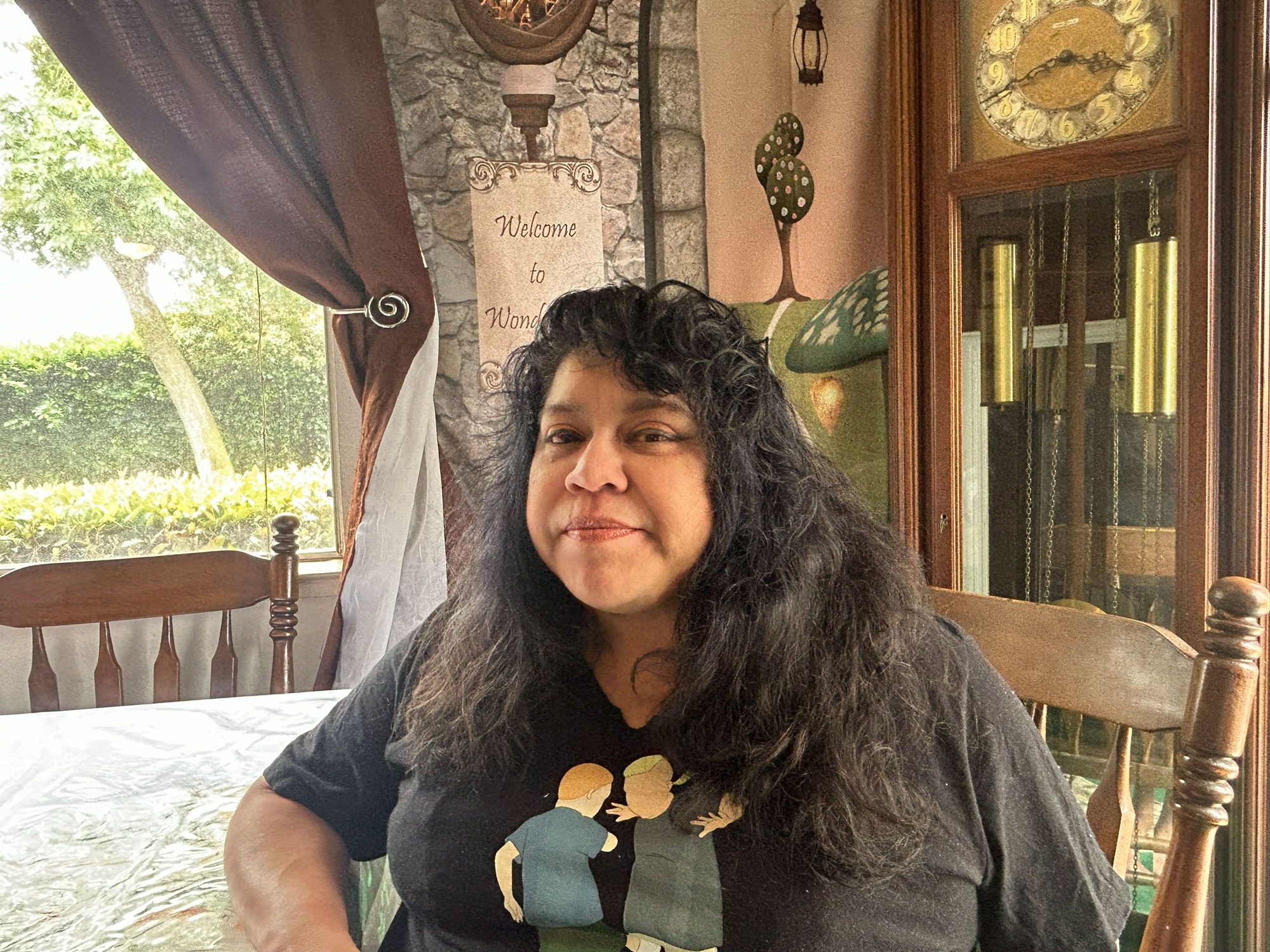
"caption": "Veronica Walter talks through her financial challenges while sitting at the dining table in her two-bedroom condo in Newark, California. Walter says she wouldn’t be able to afford the nearly $200 monthly premium for health insurance that she and her husband would likely pay on Covered California, even after a proposed expansion of state subsidies. ",
"credit": "Christine Mai-Duc/KFF Health News",
"altTag": null,
"description": null,
"imgSizes": {
"thumbnail": {
"file": "https://cdn.kqed.org/wp-content/uploads/sites/10/2026/06/PricedOutCA1-160x120.jpg",
"width": 160,
"height": 120,
"mimeType": "image/jpeg"
},
"1536x1536": {
"file": "https://cdn.kqed.org/wp-content/uploads/sites/10/2026/06/PricedOutCA1-1536x1152.jpg",
"width": 1536,
"height": 1152,
"mimeType": "image/jpeg"
},
"post-thumbnail": {
"file": "https://cdn.kqed.org/wp-content/uploads/sites/10/2026/06/PricedOutCA1-672x372.jpg",
"width": 672,
"height": 372,
"mimeType": "image/jpeg"
},
"twentyfourteen-full-width": {
"file": "https://cdn.kqed.org/wp-content/uploads/sites/10/2026/06/PricedOutCA1-1038x576.jpg",
"width": 1038,
"height": 576,
"mimeType": "image/jpeg"
},
"npr-cds-wide": {
"file": "https://cdn.kqed.org/wp-content/uploads/sites/10/2026/06/PricedOutCA1-1200x675.jpg",
"width": 1200,
"height": 675,
"mimeType": "image/jpeg"
},
"npr-cds-square": {
"file": "https://cdn.kqed.org/wp-content/uploads/sites/10/2026/06/PricedOutCA1-600x600.jpg",
"width": 600,
"height": 600,
"mimeType": "image/jpeg"
},
"kqedFullSize": {
"file": "https://cdn.kqed.org/wp-content/uploads/sites/10/2026/06/PricedOutCA1.jpg",
"width": 2000,
"height": 1500
}
},
"isLoading": false,
"fetchFailed": false
},
"news_12057996": {
"type": "attachments",
"id": "news_12057996",
"meta": {
"index": "attachments_1716263798",
"site": "news",
"id": "12057996",
"found": true
},
"title": "Atmospheric river storm in Northern California",
"publishDate": 1759168970,
"status": "inherit",
"parent": 12057992,
"modified": 1781200630,
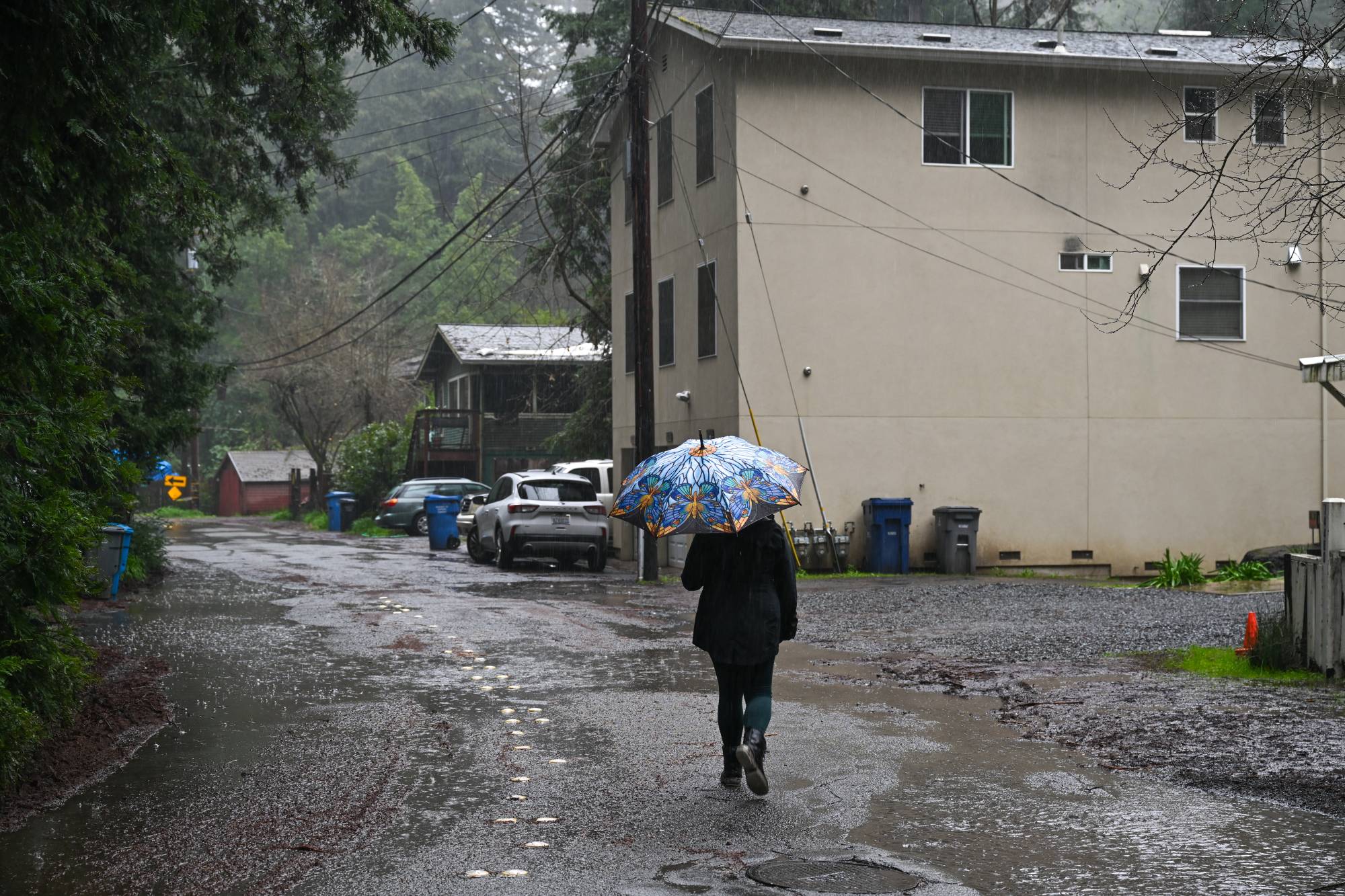
"caption": "A woman with an umbrella walks on a road during heavy rain in Guerneville, California, on Feb. 6, 2025, as an atmospheric river hits Northern California. ",
"credit": "Tayfun Coskun/Anadolu via Getty Images",
"altTag": null,
"description": null,
"imgSizes": {
"medium": {
"file": "https://cdn.kqed.org/wp-content/uploads/sites/10/2025/09/GettyImages-2197490970-2000x1333.jpg",
"width": 2000,
"height": 1333,
"mimeType": "image/jpeg"
},
"large": {
"file": "https://cdn.kqed.org/wp-content/uploads/sites/10/2025/09/GettyImages-2197490970-2000x1333.jpg",
"width": 2000,
"height": 1333,
"mimeType": "image/jpeg"
},
"thumbnail": {
"file": "https://cdn.kqed.org/wp-content/uploads/sites/10/2025/09/GettyImages-2197490970-160x107.jpg",
"width": 160,
"height": 107,
"mimeType": "image/jpeg"
},
"1536x1536": {
"file": "https://cdn.kqed.org/wp-content/uploads/sites/10/2025/09/GettyImages-2197490970-1536x1024.jpg",
"width": 1536,
"height": 1024,
"mimeType": "image/jpeg"
},
"2048x2048": {
"file": "https://cdn.kqed.org/wp-content/uploads/sites/10/2025/09/GettyImages-2197490970-2048x1365.jpg",
"width": 2048,
"height": 1365,
"mimeType": "image/jpeg"
},
"post-thumbnail": {
"file": "https://cdn.kqed.org/wp-content/uploads/sites/10/2025/09/GettyImages-2197490970-672x372.jpg",
"width": 672,
"height": 372,
"mimeType": "image/jpeg"
},
"twentyfourteen-full-width": {
"file": "https://cdn.kqed.org/wp-content/uploads/sites/10/2025/09/GettyImages-2197490970-1038x576.jpg",
"width": 1038,
"height": 576,
"mimeType": "image/jpeg"
},
"full-width": {
"file": "https://cdn.kqed.org/wp-content/uploads/sites/10/2025/09/GettyImages-2197490970-2000x1333.jpg",
"width": 2000,
"height": 1333,
"mimeType": "image/jpeg"
},
"kqedFullSize": {
"file": "https://cdn.kqed.org/wp-content/uploads/sites/10/2025/09/GettyImages-2197490970-scaled-e1759169024848.jpg",
"width": 2000,
"height": 1334
}
},
"isLoading": false,
"fetchFailed": false
},
"news_12086750": {
"type": "attachments",
"id": "news_12086750",
"meta": {
"index": "attachments_1716263798",
"site": "news",
"id": "12086750",
"found": true
},
"title": "060926Paraguay SJSU_GH_009",
"publishDate": 1781038626,
"status": "inherit",
"parent": 12086567,
"modified": 1781039605,
"caption": "Paraguay goalkeeper Gastón Olveira reacts to a shot during a training scrimmage at CEFCU Stadium in San José on June 8, 2026.",
"credit": "Gustavo Hernandez/KQED",
"altTag": null,
"description": null,
"imgSizes": {
"thumbnail": {
"file": "https://cdn.kqed.org/wp-content/uploads/sites/10/2026/06/060926Paraguay-SJSU_GH_009-160x107.jpg",
"width": 160,
"height": 107,
"mimeType": "image/jpeg"
},
"1536x1536": {
"file": "https://cdn.kqed.org/wp-content/uploads/sites/10/2026/06/060926Paraguay-SJSU_GH_009-1536x1024.jpg",
"width": 1536,
"height": 1024,
"mimeType": "image/jpeg"
},
"post-thumbnail": {
"file": "https://cdn.kqed.org/wp-content/uploads/sites/10/2026/06/060926Paraguay-SJSU_GH_009-672x372.jpg",
"width": 672,
"height": 372,
"mimeType": "image/jpeg"
},
"twentyfourteen-full-width": {
"file": "https://cdn.kqed.org/wp-content/uploads/sites/10/2026/06/060926Paraguay-SJSU_GH_009-1038x576.jpg",
"width": 1038,
"height": 576,
"mimeType": "image/jpeg"
},
"npr-cds-wide": {
"file": "https://cdn.kqed.org/wp-content/uploads/sites/10/2026/06/060926Paraguay-SJSU_GH_009-1200x675.jpg",
"width": 1200,
"height": 675,
"mimeType": "image/jpeg"
},
"npr-cds-square": {
"file": "https://cdn.kqed.org/wp-content/uploads/sites/10/2026/06/060926Paraguay-SJSU_GH_009-600x600.jpg",
"width": 600,
"height": 600,
"mimeType": "image/jpeg"
},
"kqedFullSize": {
"file": "https://cdn.kqed.org/wp-content/uploads/sites/10/2026/06/060926Paraguay-SJSU_GH_009.jpg",
"width": 1724,
"height": 1149
}
},
"isLoading": false,
"fetchFailed": false
},
"news_12078033": {
"type": "attachments",
"id": "news_12078033",
"meta": {
"index": "attachments_1716263798",
"site": "news",
"id": "12078033",
"found": true
},
"title": "260324-BAYCURIOUSFERRY00289_TV-KQED",
"publishDate": 1774891660,
"status": "inherit",
"parent": 12084929,
"modified": 1781113253,
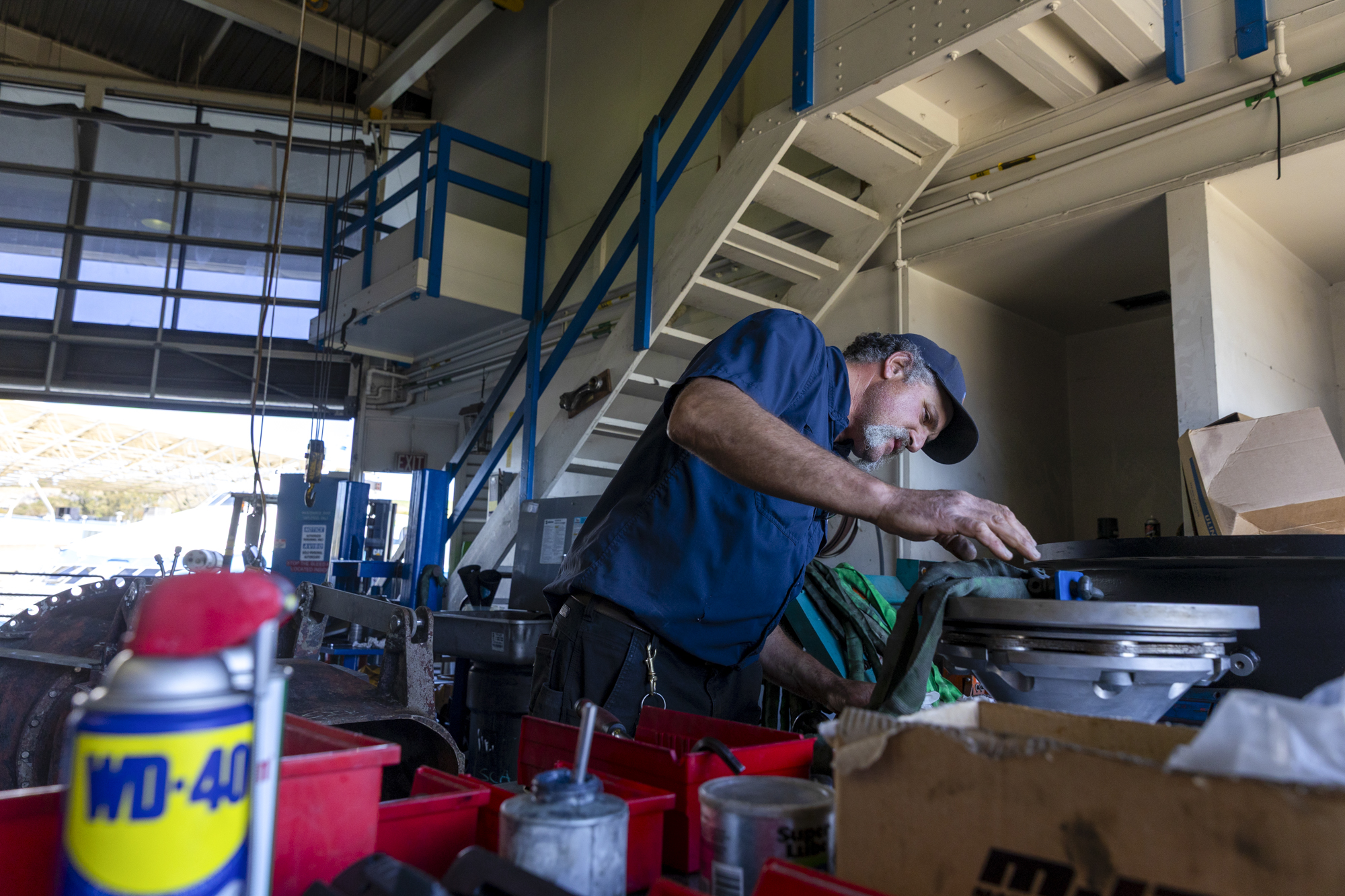
"caption": "Raymond Garibaldi, a mechanic for Golden Gate Ferry, repairs parts of a water jet at the shop where ferry machinery is maintained at the Larkspur Ferry Terminal in Larkspur on March 24, 2026.",
"credit": "Tâm Vũ/KQED",
"altTag": null,
"description": null,
"imgSizes": {
"thumbnail": {
"file": "https://cdn.kqed.org/wp-content/uploads/sites/10/2026/03/260324-BAYCURIOUSFERRY00289_TV-KQED-160x107.jpg",
"width": 160,
"height": 107,
"mimeType": "image/jpeg"
},
"1536x1536": {
"file": "https://cdn.kqed.org/wp-content/uploads/sites/10/2026/03/260324-BAYCURIOUSFERRY00289_TV-KQED-1536x1024.jpg",
"width": 1536,
"height": 1024,
"mimeType": "image/jpeg"
},
"post-thumbnail": {
"file": "https://cdn.kqed.org/wp-content/uploads/sites/10/2026/03/260324-BAYCURIOUSFERRY00289_TV-KQED-672x372.jpg",
"width": 672,
"height": 372,
"mimeType": "image/jpeg"
},
"twentyfourteen-full-width": {
"file": "https://cdn.kqed.org/wp-content/uploads/sites/10/2026/03/260324-BAYCURIOUSFERRY00289_TV-KQED-1038x576.jpg",
"width": 1038,
"height": 576,
"mimeType": "image/jpeg"
},
"npr-cds-wide": {
"file": "https://cdn.kqed.org/wp-content/uploads/sites/10/2026/03/260324-BAYCURIOUSFERRY00289_TV-KQED-1200x675.jpg",
"width": 1200,
"height": 675,
"mimeType": "image/jpeg"
},
"npr-cds-square": {
"file": "https://cdn.kqed.org/wp-content/uploads/sites/10/2026/03/260324-BAYCURIOUSFERRY00289_TV-KQED-600x600.jpg",
"width": 600,
"height": 600,
"mimeType": "image/jpeg"
},
"kqedFullSize": {
"file": "https://cdn.kqed.org/wp-content/uploads/sites/10/2026/03/260324-BAYCURIOUSFERRY00289_TV-KQED.jpg",
"width": 2000,
"height": 1333
}
},
"isLoading": false,
"fetchFailed": false
},
"news_12087082": {
"type": "attachments",
"id": "news_12087082",
"meta": {
"index": "attachments_1716263798",
"site": "news",
"id": "12087082",
"found": true
},
"title": "People enjoy the water at Ocean Beach in San Francisco on June 10, 2026.",
"publishDate": 1781134708,
"status": "inherit",
"parent": 0,
"modified": 1781134787,
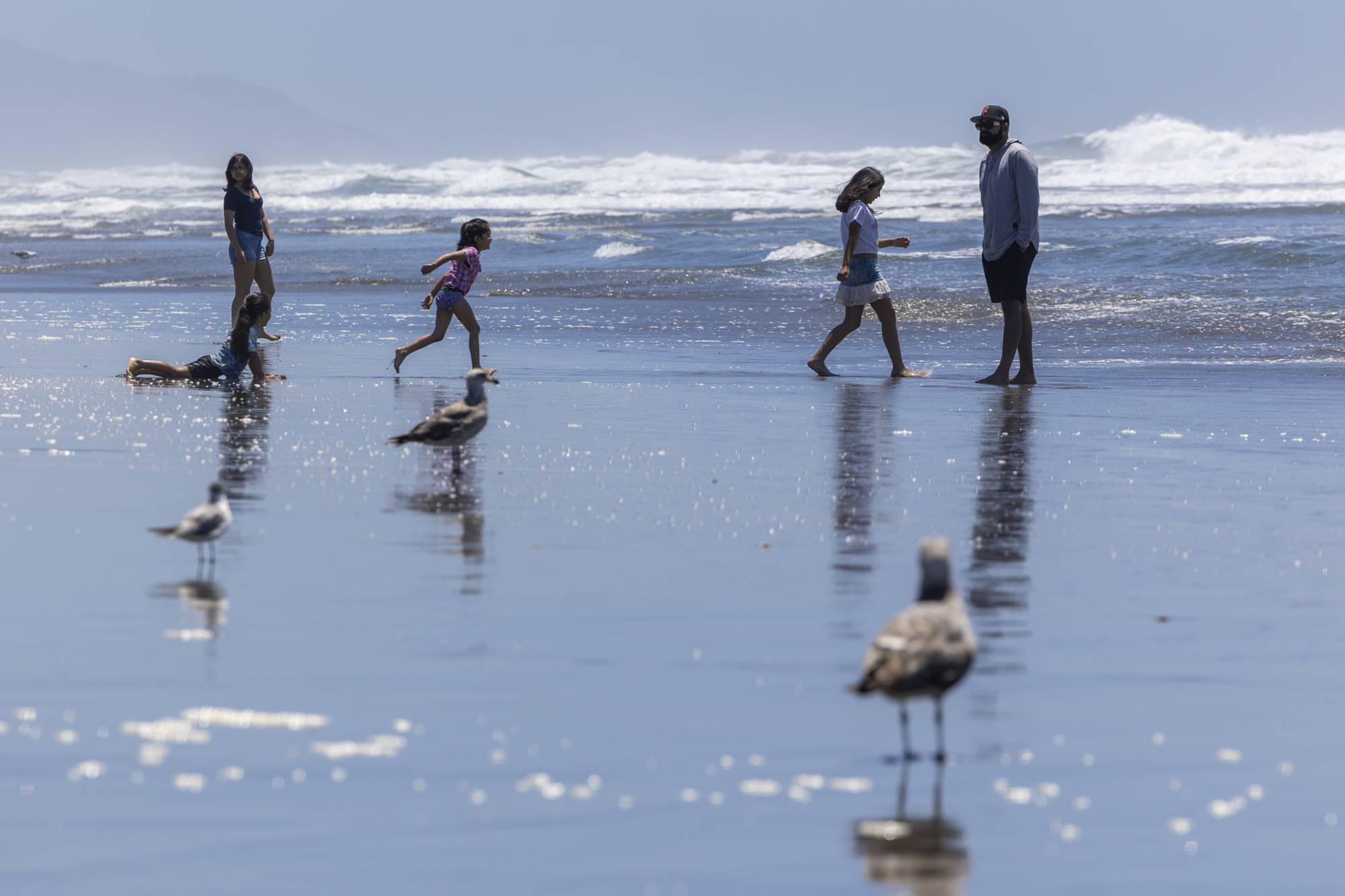
"caption": "People enjoy the water at Ocean Beach in San Francisco on June 10, 2026.",
"credit": "Tâm Vũ/KQED",
"altTag": null,
"description": null,
"imgSizes": {
"medium": {
"file": "https://cdn.kqed.org/wp-content/uploads/sites/10/2026/06/260610-RISKYWX00337_TV-KQED-2000x1333.jpg",
"width": 2000,
"height": 1333,
"mimeType": "image/jpeg"
},
"large": {
"file": "https://cdn.kqed.org/wp-content/uploads/sites/10/2026/06/260610-RISKYWX00337_TV-KQED-2000x1333.jpg",
"width": 2000,
"height": 1333,
"mimeType": "image/jpeg"
},
"thumbnail": {
"file": "https://cdn.kqed.org/wp-content/uploads/sites/10/2026/06/260610-RISKYWX00337_TV-KQED-160x107.jpg",
"width": 160,
"height": 107,
"mimeType": "image/jpeg"
},
"1536x1536": {
"file": "https://cdn.kqed.org/wp-content/uploads/sites/10/2026/06/260610-RISKYWX00337_TV-KQED-1536x1024.jpg",
"width": 1536,
"height": 1024,
"mimeType": "image/jpeg"
},
"2048x2048": {
"file": "https://cdn.kqed.org/wp-content/uploads/sites/10/2026/06/260610-RISKYWX00337_TV-KQED-2048x1365.jpg",
"width": 2048,
"height": 1365,
"mimeType": "image/jpeg"
},
"post-thumbnail": {
"file": "https://cdn.kqed.org/wp-content/uploads/sites/10/2026/06/260610-RISKYWX00337_TV-KQED-672x372.jpg",
"width": 672,
"height": 372,
"mimeType": "image/jpeg"
},
"twentyfourteen-full-width": {
"file": "https://cdn.kqed.org/wp-content/uploads/sites/10/2026/06/260610-RISKYWX00337_TV-KQED-1038x576.jpg",
"width": 1038,
"height": 576,
"mimeType": "image/jpeg"
},
"full-width": {
"file": "https://cdn.kqed.org/wp-content/uploads/sites/10/2026/06/260610-RISKYWX00337_TV-KQED-2000x1333.jpg",
"width": 2000,
"height": 1333,
"mimeType": "image/jpeg"
},
"npr-cds-wide": {
"file": "https://cdn.kqed.org/wp-content/uploads/sites/10/2026/06/260610-RISKYWX00337_TV-KQED-1200x675.jpg",
"width": 1200,
"height": 675,
"mimeType": "image/jpeg"
},
"npr-cds-square": {
"file": "https://cdn.kqed.org/wp-content/uploads/sites/10/2026/06/260610-RISKYWX00337_TV-KQED-600x600.jpg",
"width": 600,
"height": 600,
"mimeType": "image/jpeg"
},
"kqedFullSize": {
"file": "https://cdn.kqed.org/wp-content/uploads/sites/10/2026/06/260610-RISKYWX00337_TV-KQED.jpg",
"width": 2500,
"height": 1666
}
},
"isLoading": false,
"fetchFailed": false
}
},
"audioPlayerReducer": {
"postId": "stream_live",
"isPaused": true,
"isPlaying": false,
"pfsActive": false,
"pledgeModalIsOpen": true,
"playerDrawerIsOpen": false,
"liveAudioPlayStartedAt": 0,
"liveAudioPlayContext": ""
},
"authorsReducer": {
"byline_news_12086356": {
"type": "authors",
"id": "byline_news_12086356",
"meta": {
"override": true
},
"slug": "byline_news_12086356",
"name": "Alonso Daboub",
"isLoading": false
},
"byline_news_12086971": {
"type": "authors",
"id": "byline_news_12086971",
"meta": {
"override": true
},
"slug": "byline_news_12086971",
"name": "Christine Mai-Duc and Jackie Fortiér, KFF Health News",
"isLoading": false
},
"btorres": {
"type": "authors",
"id": "11666",
"meta": {
"index": "authors_1716337520",
"id": "11666",
"found": true
},
"name": "Blanca Torres",
"firstName": "Blanca",
"lastName": "Torres",
"slug": "btorres",
"email": "btorres@kqed.org",
"display_author_email": true,
"staff_mastheads": [
"news"
],
"title": "Producer, Forum",
"bio": "Blanca Torres brings sharp news judgement and keen sense of lively conversation to her work as producer for Forum. She loves producing shows that leave listeners feeling like they heard distinctive voices, learned something new and gained a fresh perspective.\r\n\r\nShe joined KQED in January of 2020 after 16 years of working as a newspaper reporter most recently at the \u003cem>San Francisco Business Times,\u003c/em> where she wrote about real estate and economic development. Before that, she covered a variety of beats including crime, education, retail, workplace, the economy, consumer issues, and small business for the \u003cem>Contra Costa Times, Baltimore Sun\u003c/em> and\u003cem> The Seattle Times\u003c/em>. In addition to reporting, she worked as an editorial writer and columnist for the \u003cem>Seattle Times\u003c/em>. From 2017 to 2020, Blanca won a total of ten awards from the National Association of Real Estate Editors and won first place for land use reporting from the California News Publishers Association two years in a row. She is also a member and former board member for the National Association of Hispanic Journalists.\r\n\r\nA native of the Pacific Northwest, Blanca earned her bachelor's degree from Vanderbilt University in Nashville and a master's in fine arts in creative writing at Mills College. She lives in the East Bay with her family.",
"avatar": "https://secure.gravatar.com/avatar/50b49d19b14a1eed34f26ebf4681152cdd81574ed21851100871ccd29e578cdc?s=600&d=blank&r=g",
"twitter": "@blancawrites",
"bluesky": null,
"facebook": null,
"instagram": null,
"linkedin": null,
"sites": [
{
"site": "arts",
"roles": [
"editor"
]
},
{
"site": "news",
"roles": [
"editor"
]
},
{
"site": "forum",
"roles": [
"editor"
]
}
],
"headData": {
"title": "Blanca Torres | KQED",
"description": "Producer, Forum",
"ogImgSrc": "https://secure.gravatar.com/avatar/50b49d19b14a1eed34f26ebf4681152cdd81574ed21851100871ccd29e578cdc?s=600&d=blank&r=g",
"twImgSrc": "https://secure.gravatar.com/avatar/50b49d19b14a1eed34f26ebf4681152cdd81574ed21851100871ccd29e578cdc?s=600&d=blank&r=g"
},
"isLoading": false,
"link": "/author/btorres"
},
"abandlamudi": {
"type": "authors",
"id": "11672",
"meta": {
"index": "authors_1716337520",
"id": "11672",
"found": true
},
"name": "Adhiti Bandlamudi",
"firstName": "Adhiti",
"lastName": "Bandlamudi",
"slug": "abandlamudi",
"email": "abandlamudi@kqed.org",
"display_author_email": false,
"staff_mastheads": [
"news"
],
"title": "KQED Housing Reporter",
"bio": "Adhiti Bandlamudi reports for KQED's Housing desk. She focuses on how housing gets built across the Bay Area. Before joining KQED in 2020, she reported for WUNC in Durham, North Carolina, WABE in Atlanta, Georgia and Capital Public Radio in Sacramento. In 2017, she was awarded a Kroc Fellowship at NPR where she reported on everything from sprinkles to the Golden State Killer's arrest. When she's not reporting, she's baking new recipes in her kitchen or watching movies with friends and family. She's originally from Georgia and has strong opinions about Great British Bake Off.",
"avatar": "https://secure.gravatar.com/avatar/868129c8b257bb99a3500e2c86a65400?s=600&d=mm&r=g",
"twitter": "oddity_adhiti",
"facebook": null,
"instagram": null,
"linkedin": null,
"sites": [
{
"site": "arts",
"roles": [
"author"
]
},
{
"site": "news",
"roles": [
"editor"
]
},
{
"site": "liveblog",
"roles": [
"author"
]
}
],
"headData": {
"title": "Adhiti Bandlamudi | KQED",
"description": "KQED Housing Reporter",
"ogImgSrc": "https://secure.gravatar.com/avatar/868129c8b257bb99a3500e2c86a65400?s=600&d=mm&r=g",
"twImgSrc": "https://secure.gravatar.com/avatar/868129c8b257bb99a3500e2c86a65400?s=600&d=mm&r=g"
},
"isLoading": false,
"link": "/author/abandlamudi"
},
"eromero": {
"type": "authors",
"id": "11746",
"meta": {
"index": "authors_1716337520",
"id": "11746",
"found": true
},
"name": "Ezra David Romero",
"firstName": "Ezra David",
"lastName": "Romero",
"slug": "eromero",
"email": "eromero@kqed.org",
"display_author_email": true,
"staff_mastheads": [
"news",
"science"
],
"title": "Climate Reporter",
"bio": "Ezra David Romero is a climate reporter for KQED News. He covers the absence and excess of water in the Bay Area — think sea level rise, flooding and drought. For nearly a decade he’s covered how warming temperatures are altering the lives of Californians. He’s reported on farmers worried their pistachio trees aren’t getting enough sleep, families desperate for water, scientists studying dying giant sequoias, and alongside firefighters containing wildfires. His work has appeared on local stations across California and nationally on public radio shows like Morning Edition, Here and Now, All Things Considered and Science Friday. ",
"avatar": "https://secure.gravatar.com/avatar/c76404d287c10ed40224227551ac36e24352c7306f106632caf6fead76f8801f?s=600&d=blank&r=g",
"twitter": "ezraromero",
"bluesky": null,
"facebook": null,
"instagram": null,
"linkedin": null,
"sites": [
{
"site": "arts",
"roles": [
"editor"
]
},
{
"site": "news",
"roles": [
"editor"
]
},
{
"site": "science",
"roles": [
"editor"
]
},
{
"site": "liveblog",
"roles": [
"author"
]
}
],
"headData": {
"title": "Ezra David Romero | KQED",
"description": "Climate Reporter",
"ogImgSrc": "https://secure.gravatar.com/avatar/c76404d287c10ed40224227551ac36e24352c7306f106632caf6fead76f8801f?s=600&d=blank&r=g",
"twImgSrc": "https://secure.gravatar.com/avatar/c76404d287c10ed40224227551ac36e24352c7306f106632caf6fead76f8801f?s=600&d=blank&r=g"
},
"isLoading": false,
"link": "/author/eromero"
},
"adahlstromeckman": {
"type": "authors",
"id": "11785",
"meta": {
"index": "authors_1716337520",
"id": "11785",
"found": true
},
"name": "Azul Dahlstrom-Eckman",
"firstName": "Azul",
"lastName": "Dahlstrom-Eckman",
"slug": "adahlstromeckman",
"email": "adahlstrom-eckman@kqed.org",
"display_author_email": true,
"staff_mastheads": [],
"title": "Reporter",
"bio": "Azul is a reporter for KQED focusing on transportation and features. He joined KQED in 2021 as an alumna of KALW's Audio Academy radio journalism training program.",
"avatar": "https://secure.gravatar.com/avatar/9cb750298435add7815a777f55bf1f46845c1386bb8452555c60a7b820b5aba3?s=600&d=blank&r=g",
"twitter": "@zuliemann",
"bluesky": "@azul415.bsky.social",
"facebook": null,
"instagram": null,
"linkedin": null,
"sites": [
{
"site": "arts",
"roles": [
"editor"
]
},
{
"site": "news",
"roles": [
"editor"
]
},
{
"site": "science",
"roles": [
"editor"
]
},
{
"site": "liveblog",
"roles": [
"author"
]
}
],
"headData": {
"title": "Azul Dahlstrom-Eckman | KQED",
"description": "Reporter",
"ogImgSrc": "https://secure.gravatar.com/avatar/9cb750298435add7815a777f55bf1f46845c1386bb8452555c60a7b820b5aba3?s=600&d=blank&r=g",
"twImgSrc": "https://secure.gravatar.com/avatar/9cb750298435add7815a777f55bf1f46845c1386bb8452555c60a7b820b5aba3?s=600&d=blank&r=g"
},
"isLoading": false,
"link": "/author/adahlstromeckman"
},
"sjohnson": {
"type": "authors",
"id": "11840",
"meta": {
"index": "authors_1716337520",
"id": "11840",
"found": true
},
"name": "Sydney Johnson",
"firstName": "Sydney",
"lastName": "Johnson",
"slug": "sjohnson",
"email": "sjohnson@kqed.org",
"display_author_email": false,
"staff_mastheads": [
"news"
],
"title": "KQED Reporter",
"bio": "Sydney Johnson is a general assignment reporter at KQED. She previously reported on public health and city government at the San Francisco Examiner, and before that, she covered statewide education policy for EdSource. Her reporting has won multiple local, state and national awards. Sydney is a graduate of the University of California, Berkeley and lives in San Francisco.",
"avatar": "https://secure.gravatar.com/avatar/97855f2719b72ad6190b7c535fe642c8?s=600&d=blank&r=g",
"twitter": "sydneyfjohnson",
"facebook": null,
"instagram": null,
"linkedin": null,
"sites": [
{
"site": "news",
"roles": [
"editor"
]
}
],
"headData": {
"title": "Sydney Johnson | KQED",
"description": "KQED Reporter",
"ogImgSrc": "https://secure.gravatar.com/avatar/97855f2719b72ad6190b7c535fe642c8?s=600&d=blank&r=g",
"twImgSrc": "https://secure.gravatar.com/avatar/97855f2719b72ad6190b7c535fe642c8?s=600&d=blank&r=g"
},
"isLoading": false,
"link": "/author/sjohnson"
},
"jgeha": {
"type": "authors",
"id": "11906",
"meta": {
"index": "authors_1716337520",
"id": "11906",
"found": true
},
"name": "Joseph Geha",
"firstName": "Joseph",
"lastName": "Geha",
"slug": "jgeha",
"email": "jgeha@kqed.org",
"display_author_email": false,
"staff_mastheads": [
"news",
"science"
],
"title": "KQED Contributor",
"bio": null,
"avatar": "https://secure.gravatar.com/avatar/ea84d2b6dd93d6369d453edf19dd583f117cd1759d2d9c9c92f9de77017354fe?s=600&d=blank&r=g",
"twitter": null,
"bluesky": null,
"facebook": null,
"instagram": null,
"linkedin": null,
"sites": [
{
"site": "news",
"roles": [
"editor"
]
},
{
"site": "liveblog",
"roles": [
"author"
]
}
],
"headData": {
"title": "Joseph Geha | KQED",
"description": "KQED Contributor",
"ogImgSrc": "https://secure.gravatar.com/avatar/ea84d2b6dd93d6369d453edf19dd583f117cd1759d2d9c9c92f9de77017354fe?s=600&d=blank&r=g",
"twImgSrc": "https://secure.gravatar.com/avatar/ea84d2b6dd93d6369d453edf19dd583f117cd1759d2d9c9c92f9de77017354fe?s=600&d=blank&r=g"
},
"isLoading": false,
"link": "/author/jgeha"
},
"kdebenedetti": {
"type": "authors",
"id": "11913",
"meta": {
"index": "authors_1716337520",
"id": "11913",
"found": true
},
"name": "Katie DeBenedetti",
"firstName": "Katie",
"lastName": "DeBenedetti",
"slug": "kdebenedetti",
"email": "kdebenedetti@kqed.org",
"display_author_email": false,
"staff_mastheads": [
"news",
"science"
],
"title": "KQED Contributor",
"bio": "Katie DeBenedetti is a digital reporter covering daily news for the Express Desk. Prior to joining KQED as a culture reporting intern in January 2024, she covered education and city government for the Napa Valley Register.",
"avatar": "https://secure.gravatar.com/avatar/6e31073cb8f7e4214ab03f42771d0f45?s=600&d=blank&r=g",
"twitter": null,
"facebook": null,
"instagram": null,
"linkedin": null,
"sites": [
{
"site": "news",
"roles": [
"author"
]
},
{
"site": "science",
"roles": [
"author"
]
},
{
"site": "liveblog",
"roles": [
"author"
]
}
],
"headData": {
"title": "Katie DeBenedetti | KQED",
"description": "KQED Contributor",
"ogImgSrc": "https://secure.gravatar.com/avatar/6e31073cb8f7e4214ab03f42771d0f45?s=600&d=blank&r=g",
"twImgSrc": "https://secure.gravatar.com/avatar/6e31073cb8f7e4214ab03f42771d0f45?s=600&d=blank&r=g"
},
"isLoading": false,
"link": "/author/kdebenedetti"
},
"skennedy": {
"type": "authors",
"id": "11935",
"meta": {
"index": "authors_1716337520",
"id": "11935",
"found": true
},
"name": "Samantha Kennedy",
"firstName": "Samantha",
"lastName": "Kennedy",
"slug": "skennedy",
"email": "SKennedy@kqed.org",
"display_author_email": false,
"staff_mastheads": [],
"title": "KQED Contributor",
"bio": null,
"avatar": "https://secure.gravatar.com/avatar/adc7b14bf1e801793202a156ecc864d4ad505b0fd63162a2f3da0e5ba57222d0?s=600&d=blank&r=g",
"twitter": null,
"bluesky": null,
"facebook": null,
"instagram": null,
"linkedin": null,
"sites": [
{
"site": "arts",
"roles": [
"author"
]
},
{
"site": "news",
"roles": [
"editor"
]
},
{
"site": "science",
"roles": [
"editor"
]
}
],
"headData": {
"title": "Samantha Kennedy | KQED",
"description": "KQED Contributor",
"ogImgSrc": "https://secure.gravatar.com/avatar/adc7b14bf1e801793202a156ecc864d4ad505b0fd63162a2f3da0e5ba57222d0?s=600&d=blank&r=g",
"twImgSrc": "https://secure.gravatar.com/avatar/adc7b14bf1e801793202a156ecc864d4ad505b0fd63162a2f3da0e5ba57222d0?s=600&d=blank&r=g"
},
"isLoading": false,
"link": "/author/skennedy"
},
"sarahwright": {
"type": "authors",
"id": "11956",
"meta": {
"index": "authors_1716337520",
"id": "11956",
"found": true
},
"name": "Sarah Wright",
"firstName": "Sarah",
"lastName": "Wright",
"slug": "sarahwright",
"email": "swright@kqed.org",
"display_author_email": true,
"staff_mastheads": [],
"title": "Outdoors Engagement Reporter",
"bio": "Sarah Wright is KQED's Outdoors Engagement Reporter. Originally from Lake Tahoe, she completed a thru-hike of the Pacific Crest Trail in 2019 and was a U.S. Fulbright Program grantee to Argentina in 2023. Her journalism has appeared in The Guardian, The San Francisco Standard, The Palo Alto Weekly and the Half Moon Bay Review.",
"avatar": "https://secure.gravatar.com/avatar/c161a3d6441865cba25e6db4fa561099ad665799e9432e34da2b84d7e371524c?s=600&d=blank&r=g",
"twitter": null,
"bluesky": null,
"facebook": null,
"instagram": null,
"linkedin": null,
"sites": [
{
"site": "arts",
"roles": [
"editor"
]
},
{
"site": "news",
"roles": [
"editor"
]
},
{
"site": "science",
"roles": [
"contributor",
"author"
]
},
{
"site": "forum",
"roles": [
"editor"
]
}
],
"headData": {
"title": "Sarah Wright | KQED",
"description": "Outdoors Engagement Reporter",
"ogImgSrc": "https://secure.gravatar.com/avatar/c161a3d6441865cba25e6db4fa561099ad665799e9432e34da2b84d7e371524c?s=600&d=blank&r=g",
"twImgSrc": "https://secure.gravatar.com/avatar/c161a3d6441865cba25e6db4fa561099ad665799e9432e34da2b84d7e371524c?s=600&d=blank&r=g"
},
"isLoading": false,
"link": "/author/sarahwright"
},
"aaliahmad": {
"type": "authors",
"id": "11986",
"meta": {
"index": "authors_1716337520",
"id": "11986",
"found": true
},
"name": "Ayah Ali-Ahmad",
"firstName": "Ayah",
"lastName": "Ali-Ahmad",
"slug": "aaliahmad",
"email": "aaliahmad@KQED.org",
"display_author_email": false,
"staff_mastheads": [],
"title": "KQED Contributor",
"bio": null,
"avatar": "https://secure.gravatar.com/avatar/1cf54f187a5e1064b2cfef3f3d2f1e4f93e453395d56912aca6382a6071ec3ed?s=600&d=blank&r=g",
"twitter": "ayahaliahmad",
"bluesky": null,
"facebook": null,
"instagram": null,
"linkedin": null,
"sites": [
{
"site": "news",
"roles": [
"subscriber"
]
}
],
"headData": {
"title": "Ayah Ali-Ahmad | KQED",
"description": "KQED Contributor",
"ogImgSrc": "https://secure.gravatar.com/avatar/1cf54f187a5e1064b2cfef3f3d2f1e4f93e453395d56912aca6382a6071ec3ed?s=600&d=blank&r=g",
"twImgSrc": "https://secure.gravatar.com/avatar/1cf54f187a5e1064b2cfef3f3d2f1e4f93e453395d56912aca6382a6071ec3ed?s=600&d=blank&r=g"
},
"isLoading": false,
"link": "/author/aaliahmad"
}
},
"pagesReducer": {
"news_tag_bay-area": {
"type": "terms",
"id": "news_1386",
"meta": {
"index": "terms_1716263798",
"site": "news",
"id": "1386",
"score": 7.788453
},
"featImg": null,
"name": "Bay Area",
"description": null,
"taxonomy": "tag",
"headData": {
"twImgId": null,
"twTitle": null,
"ogTitle": null,
"ogImgId": null,
"twDescription": null,
"description": null,
"title": "Bay Area Archives | KQED News",
"ogDescription": null
},
"ttid": 1398,
"slug": "bay-area",
"isLoading": false,
"title": "Bay Area",
"pageMeta": {
"site": "news",
"WpPageTemplate": "page-topic-editorial",
"currentPage": 18
},
"blocks": [
{
"blockName": "kqed/post-list",
"attrs": {
"layout": "cardArticle2",
"query": "posts/news?tag=bay-area",
"seeMore": false,
"paginated": true,
"page": 18
}
},
{
"blockName": "kqed/ad"
}
]
}
},
"pfsSessionReducer": {},
"postsReducer": {
"stream_live": {
"type": "live",
"id": "stream_live",
"audioUrl": "https://streams.kqed.org/kqedradio",
"title": "Live Stream",
"excerpt": "Live Stream information currently unavailable.",
"link": "/radio",
"featImg": "",
"label": {
"name": "KQED Live",
"link": "/"
}
},
"stream_kqedNewscast": {
"type": "posts",
"id": "stream_kqedNewscast",
"audioUrl": "https://www.kqed.org/.stream/anon/radio/RDnews/newscast.mp3?_=1",
"title": "KQED Newscast",
"featImg": "",
"label": {
"name": "88.5 FM",
"link": "/"
}
},
"news_12087577": {
"type": "posts",
"id": "news_12087577",
"meta": {
"index": "posts_1716263798",
"site": "news",
"id": "12087577",
"score": null,
"sort": [
1781607658000
]
},
"guestAuthors": [],
"slug": "after-pacifica-pier-damage-bay-area-leaders-urge-trump-to-restore-aid",
"title": "After Pacifica Pier Damage, Bay Area Leaders Urge Trump to Restore Aid",
"publishDate": 1781607658,
"format": "standard",
"headTitle": "After Pacifica Pier Damage, Bay Area Leaders Urge Trump to Restore Aid | KQED",
"labelTerm": {
"site": "news"
},
"content": "\u003cp>Bay Area officials are calling on the Trump administration to provide immediate aid for \u003ca href=\"https://www.kqed.org/science/2001267/you-cant-beat-mother-nature-destroyed-cafe-gives-pacifica-look-at-climate-changed-future\">Pacifica’s\u003c/a> seawall after its pier and a beloved cafe \u003ca href=\"https://www.kqed.org/news/12087431/what-will-pacifica-do-about-its-iconic-but-crumbling-pier\">cracked\u003c/a> this month.\u003c/p>\n\u003cp>The city last week decided to tear down the Chit Chat Cafe, situated at the end of the Pacific Municipal Pier, so that it wouldn’t crumble into the sea. The pier remains indefinitely closed.\u003c/p>\n\u003cp>Congressman \u003ca href=\"https://www.kqed.org/news/tag/sam-liccardo\">Sam Liccardo\u003c/a>, whose district includes Pacifica, demanded that the Trump administration reinstate the $50 million it revoked last year, so the city can rebuild the seawall. He is also asking for immediate financial aid to repair parts of the pier and to develop solutions for nearby areas facing significant coastal erosion.\u003c/p>\n\u003cp>[ad fullwidth]\u003c/p>\n\u003cp>“We need to save this pier,” Liccardo said in front of the dilapidated structure. “We need to do all that we can to protect Pacifica and our coast side.”\u003c/p>\n\u003cp>“It turns out the climate doesn’t care whether or not we believe in climate change,” he continued. “If we do not act, the ocean will always win the battle over coastal erosion.”\u003c/p>\n\u003cp>For Gordon Prescott, who attended the Chit Chat Cafe’s opening ceremony in 1973, its closure is devastating.\u003c/p>\n\u003cfigure id=\"attachment_12087705\" class=\"wp-caption aligncenter\" style=\"max-width: 2000px\">\u003cimg loading=\"lazy\" decoding=\"async\" class=\"size-full wp-image-12087705\" src=\"https://cdn.kqed.org/wp-content/uploads/sites/10/2026/06/260615-PacificaPier-01-BL_qed.jpg\" alt=\"\" width=\"2000\" height=\"1333\" srcset=\"https://cdn.kqed.org/wp-content/uploads/sites/10/2026/06/260615-PacificaPier-01-BL_qed.jpg 2000w, https://cdn.kqed.org/wp-content/uploads/sites/10/2026/06/260615-PacificaPier-01-BL_qed-160x107.jpg 160w, https://cdn.kqed.org/wp-content/uploads/sites/10/2026/06/260615-PacificaPier-01-BL_qed-1536x1024.jpg 1536w\" sizes=\"auto, (max-width: 2000px) 100vw, 2000px\">\u003cfigcaption class=\"wp-caption-text\">Gordon and Renee Prescott stand near the Pacifica Municipal Pier in Pacifica on June 15, 2026, after structural damage led to the pier’s closure and the demolition of the Chit Chat Cafe. \u003ccite>(Beth LaBerge/KQED)\u003c/cite>\u003c/figcaption>\u003c/figure>\n\u003cp>“We were two of the kids waiting in line when they cut the ribbon,” Prescott said. “It’s kind of like losing an old friend.”\u003c/p>\n\u003cp>In a June 12 \u003ca href=\"https://liccardo.house.gov/sites/evo-subsites/liccardo.house.gov/files/evo-media-document/6.12.26-liccardo-letter-to-fema-re-pacifica.pdf\">letter\u003c/a> to the Federal Emergency Management Agency, Liccardo said that, although the agency has short-listed the project under the Building Resilient Infrastructure and Communities program, the city has not been awarded funding because FEMA halted the program. But after a federal judge ordered the agency to make the funding available, FEMA \u003ca href=\"https://apnews.com/article/bric-fema-grant-disasters-resilience-mullin-ff0df0da60e3001e19f97bcb7778f41c\">reopened applications\u003c/a> for the resilience grant program in March.\u003c/p>\n\u003cp>Liccardo wrote that the project is undergoing environmental and historical preservation reviews, and that FEMA could then process the application for the award. He also asked the administration for an extension on a project to strengthen a nearby eroding bluff, where waves and erosion had forced the city to tear down three apartment buildings.[aside postID=news_12087431 hero='https://cdn.kqed.org/wp-content/uploads/sites/10/2026/06/260609-PacificaPierUpdate-22-BL_qed.jpg']“It’s unfortunate that Pacifica has lost valuable time on a project that would prevent exactly the damage that occurred at the pier last week,” Liccardo wrote.\u003c/p>\n\u003cp>He also announced new bipartisan legislation, the “Ounce of Prevention” Act, a bill that Liccardo said would allow state and local governments to use Community Development Block Grants for disaster preparedness — not just after a catastrophe.\u003c/p>\n\u003cp>The Pacifica City Council last week unanimously voted to declare a local state of emergency around the pier. It is also seeking a state of emergency from the governor and help from the state.\u003c/p>\n\u003cp>Currently, the city is working to stabilize the pier by adding 150 boulders at the pier’s seawall connection. After that work is finished, City Manager Sean Charpentier said Pacifica will consider two options: bracing the pier from below with a pylon or removing it from the seawall to stabilize the first section of the structure.\u003c/p>\n\u003cp>“Construction in the coastal zone is very complicated, and we don’t have a time frame for when that would begin right now,” Charpentier said.\u003c/p>\n\u003cp>Charpentier said that even before the most recent damages, the pier alone would cost around $21 million to fix. The sea wall regularly fails throughout the year, allowing waves to crash over the structure and flood Beach Boulevard. The city’s sea wall project, the Beach Boulevard Infrastructure Resiliency Project, would cost more than $80 million.\u003c/p>\n\u003cfigure id=\"attachment_12087651\" class=\"wp-caption aligncenter\" style=\"max-width: 2000px\">\u003cimg loading=\"lazy\" decoding=\"async\" class=\"size-full wp-image-12087651\" src=\"https://cdn.kqed.org/wp-content/uploads/sites/10/2026/06/260615-PacificaPier-11-BL-KQED.jpg\" alt=\"\" width=\"2000\" height=\"1333\" srcset=\"https://cdn.kqed.org/wp-content/uploads/sites/10/2026/06/260615-PacificaPier-11-BL-KQED.jpg 2000w, https://cdn.kqed.org/wp-content/uploads/sites/10/2026/06/260615-PacificaPier-11-BL-KQED-160x107.jpg 160w, https://cdn.kqed.org/wp-content/uploads/sites/10/2026/06/260615-PacificaPier-11-BL-KQED-1536x1024.jpg 1536w\" sizes=\"auto, (max-width: 2000px) 100vw, 2000px\">\u003cfigcaption class=\"wp-caption-text\">Pacifica Mayor Christine Boles speaks during a news conference calling for federal aid for the Pacifica Municipal Pier on June 15, 2026, after structural damage led to the pier’s closure and the demolition of the Chit Chat Cafe. \u003ccite>(Beth LaBerge/KQED)\u003c/cite>\u003c/figcaption>\u003c/figure>\n\u003cp>Pacifica Mayor Christine Boles said she hopes the administration reinstates funding so the city can move forward with a plan to rebuild the seawall. She fears that as seas continue to rise, Pacifica’s coastal issues will only worsen.\u003c/p>\n\u003cp>“We in Pacifica are the canary in the coal mine for the increasing effects of a warming ocean,” Boles said. “Sea level rise, coastal erosion, and flooding are already here.”\u003c/p>\n\u003cp>Boles said the city is beginning to define a community vision for the changing coastline and potential solutions. It will likely hold community listening sessions this fall. But still, she noted, the city needs outside help.\u003c/p>\n\u003cp>“Individual cities cannot address these massive global climate threats on our own,” Boles said. “The state and federal government need to bring significantly higher amounts of financial support.”\u003c/p>\n\u003cfigure id=\"attachment_12087653\" class=\"wp-caption aligncenter\" style=\"max-width: 2000px\">\u003cimg loading=\"lazy\" decoding=\"async\" class=\"size-full wp-image-12087653\" src=\"https://cdn.kqed.org/wp-content/uploads/sites/10/2026/06/260615-PacificaPier-19-BL-KQED.jpg\" alt=\"\" width=\"2000\" height=\"1333\" srcset=\"https://cdn.kqed.org/wp-content/uploads/sites/10/2026/06/260615-PacificaPier-19-BL-KQED.jpg 2000w, https://cdn.kqed.org/wp-content/uploads/sites/10/2026/06/260615-PacificaPier-19-BL-KQED-160x107.jpg 160w, https://cdn.kqed.org/wp-content/uploads/sites/10/2026/06/260615-PacificaPier-19-BL-KQED-1536x1024.jpg 1536w\" sizes=\"auto, (max-width: 2000px) 100vw, 2000px\">\u003cfigcaption class=\"wp-caption-text\">Rep. Sam Liccardo speaks with Chit Chat Cafe owner Ginger Davis after a news conference calling for federal aid for the Pacifica Municipal Pier in Pacifica on June 15, 2026, after structural damage led to the pier’s closure and the demolition of the Chit Chat Cafe. \u003ccite>(Beth LaBerge/KQED)\u003c/cite>\u003c/figcaption>\u003c/figure>\n\u003cp>Meanwhile, locals are still reeling from the Chit Chat Cafe’s teardown.\u003c/p>\n\u003cp>“My husband Brandon and I are still in shock,” said Ginger Davis, one of the cafe’s owners. “We all knew that the pier had seen better days, but none of us expected it to end like this.”\u003c/p>\n\u003cp>The community has raised more than $30,000 for the couple through a \u003ca href=\"https://www.gofundme.com/f/support-chit-chat-cafe-owners-after-pier-closure\">GoFundMe\u003c/a> page.\u003c/p>\n\u003cp>Pacifica resident Lilia Bae Cadotte spent many early mornings fishing off the pier. She said she would like the city to reopen it as soon as possible.\u003c/p>\n\u003cp>“The Pacifica Pier is not just a pier,” Cadotte said. “She’s a home. She’s the gate that unlocks many doors for many people … and it is a source that provides us food.”\u003c/p>\n\u003cp>\u003c/p>\n",
"blocks": [],
"excerpt": "As the city reels from pier damage and the loss of a beloved cafe, officials are pushing for aid — which they believe is long overdue.",
"status": "publish",
"parent": 0,
"modified": 1781567989,
"stats": {
"hasAudio": false,
"hasVideo": false,
"hasChartOrMap": false,
"iframeSrcs": [],
"hasGoogleForm": false,
"hasGallery": false,
"hasHearkenModule": false,
"hasPolis": false,
"paragraphCount": 25,
"wordCount": 1034
},
"headData": {
"title": "After Pacifica Pier Damage, Bay Area Leaders Urge Trump to Restore Aid | KQED",
"description": "As the city reels from pier damage and the loss of a beloved cafe, officials are pushing for aid — which they believe is long overdue.",
"ogTitle": "",
"ogDescription": "",
"ogImgId": "",
"twTitle": "",
"twDescription": "",
"twImgId": "",
"schema": {
"@context": "https://schema.org",
"@type": "NewsArticle",
"headline": "After Pacifica Pier Damage, Bay Area Leaders Urge Trump to Restore Aid",
"datePublished": "2026-06-16T04:00:58-07:00",
"dateModified": "2026-06-15T16:59:49-07:00",
"image": "https://cdn.kqed.org/wp-content/uploads/2020/02/KQED-OG-Image@1x.png",
"isAccessibleForFree": "True",
"publisher": {
"@type": "NewsMediaOrganization",
"@id": "https://www.kqed.org/#organization",
"name": "KQED",
"logo": "https://cdn.kqed.org/wp-content/uploads/2020/02/KQED-OG-Image@1x.png",
"url": "https://www.kqed.org",
"sameAs": [
"https://www.facebook.com/KQED",
"https://twitter.com/KQED",
"https://www.instagram.com/kqed/",
"https://www.tiktok.com/@kqedofficial",
"https://www.linkedin.com/company/kqed",
"https://www.youtube.com/channel/UCeC0IOo7i1P_61zVUWbJ4nw"
]
}
}
},
"primaryCategory": {
"termId": 34165,
"slug": "climate",
"name": "Climate"
},
"sticky": false,
"templateType": "standard",
"featuredImageType": "standard",
"excludeFromSiteSearch": "Include",
"articleAge": "0",
"path": "/news/12087577/after-pacifica-pier-damage-bay-area-leaders-urge-trump-to-restore-aid",
"audioTrackLength": null,
"parsedContent": [
{
"type": "contentString",
"content": "\u003cdiv class=\"post-body\">\u003cp>\u003cp>Bay Area officials are calling on the Trump administration to provide immediate aid for \u003ca href=\"https://www.kqed.org/science/2001267/you-cant-beat-mother-nature-destroyed-cafe-gives-pacifica-look-at-climate-changed-future\">Pacifica’s\u003c/a> seawall after its pier and a beloved cafe \u003ca href=\"https://www.kqed.org/news/12087431/what-will-pacifica-do-about-its-iconic-but-crumbling-pier\">cracked\u003c/a> this month.\u003c/p>\n\u003cp>The city last week decided to tear down the Chit Chat Cafe, situated at the end of the Pacific Municipal Pier, so that it wouldn’t crumble into the sea. The pier remains indefinitely closed.\u003c/p>\n\u003cp>Congressman \u003ca href=\"https://www.kqed.org/news/tag/sam-liccardo\">Sam Liccardo\u003c/a>, whose district includes Pacifica, demanded that the Trump administration reinstate the $50 million it revoked last year, so the city can rebuild the seawall. He is also asking for immediate financial aid to repair parts of the pier and to develop solutions for nearby areas facing significant coastal erosion.\u003c/p>\n\u003cp>\u003c/p>\u003c/div>",
"attributes": {
"named": {},
"numeric": []
}
},
{
"type": "component",
"content": "",
"name": "ad",
"attributes": {
"named": {
"label": "fullwidth"
},
"numeric": [
"fullwidth"
]
}
},
{
"type": "contentString",
"content": "\u003cdiv class=\"post-body\">\u003cp>\u003c/p>\n\u003cp>“We need to save this pier,” Liccardo said in front of the dilapidated structure. “We need to do all that we can to protect Pacifica and our coast side.”\u003c/p>\n\u003cp>“It turns out the climate doesn’t care whether or not we believe in climate change,” he continued. “If we do not act, the ocean will always win the battle over coastal erosion.”\u003c/p>\n\u003cp>For Gordon Prescott, who attended the Chit Chat Cafe’s opening ceremony in 1973, its closure is devastating.\u003c/p>\n\u003cfigure id=\"attachment_12087705\" class=\"wp-caption aligncenter\" style=\"max-width: 2000px\">\u003cimg loading=\"lazy\" decoding=\"async\" class=\"size-full wp-image-12087705\" src=\"https://cdn.kqed.org/wp-content/uploads/sites/10/2026/06/260615-PacificaPier-01-BL_qed.jpg\" alt=\"\" width=\"2000\" height=\"1333\" srcset=\"https://cdn.kqed.org/wp-content/uploads/sites/10/2026/06/260615-PacificaPier-01-BL_qed.jpg 2000w, https://cdn.kqed.org/wp-content/uploads/sites/10/2026/06/260615-PacificaPier-01-BL_qed-160x107.jpg 160w, https://cdn.kqed.org/wp-content/uploads/sites/10/2026/06/260615-PacificaPier-01-BL_qed-1536x1024.jpg 1536w\" sizes=\"auto, (max-width: 2000px) 100vw, 2000px\">\u003cfigcaption class=\"wp-caption-text\">Gordon and Renee Prescott stand near the Pacifica Municipal Pier in Pacifica on June 15, 2026, after structural damage led to the pier’s closure and the demolition of the Chit Chat Cafe. \u003ccite>(Beth LaBerge/KQED)\u003c/cite>\u003c/figcaption>\u003c/figure>\n\u003cp>“We were two of the kids waiting in line when they cut the ribbon,” Prescott said. “It’s kind of like losing an old friend.”\u003c/p>\n\u003cp>In a June 12 \u003ca href=\"https://liccardo.house.gov/sites/evo-subsites/liccardo.house.gov/files/evo-media-document/6.12.26-liccardo-letter-to-fema-re-pacifica.pdf\">letter\u003c/a> to the Federal Emergency Management Agency, Liccardo said that, although the agency has short-listed the project under the Building Resilient Infrastructure and Communities program, the city has not been awarded funding because FEMA halted the program. But after a federal judge ordered the agency to make the funding available, FEMA \u003ca href=\"https://apnews.com/article/bric-fema-grant-disasters-resilience-mullin-ff0df0da60e3001e19f97bcb7778f41c\">reopened applications\u003c/a> for the resilience grant program in March.\u003c/p>\n\u003cp>Liccardo wrote that the project is undergoing environmental and historical preservation reviews, and that FEMA could then process the application for the award. He also asked the administration for an extension on a project to strengthen a nearby eroding bluff, where waves and erosion had forced the city to tear down three apartment buildings.\u003c/p>\u003c/div>",
"attributes": {
"named": {},
"numeric": []
}
},
{
"type": "component",
"content": "",
"name": "aside",
"attributes": {
"named": {
"postid": "news_12087431",
"hero": "https://cdn.kqed.org/wp-content/uploads/sites/10/2026/06/260609-PacificaPierUpdate-22-BL_qed.jpg",
"label": ""
},
"numeric": []
}
},
{
"type": "contentString",
"content": "\u003cdiv class=\"post-body\">\u003cp>“It’s unfortunate that Pacifica has lost valuable time on a project that would prevent exactly the damage that occurred at the pier last week,” Liccardo wrote.\u003c/p>\n\u003cp>He also announced new bipartisan legislation, the “Ounce of Prevention” Act, a bill that Liccardo said would allow state and local governments to use Community Development Block Grants for disaster preparedness — not just after a catastrophe.\u003c/p>\n\u003cp>The Pacifica City Council last week unanimously voted to declare a local state of emergency around the pier. It is also seeking a state of emergency from the governor and help from the state.\u003c/p>\n\u003cp>Currently, the city is working to stabilize the pier by adding 150 boulders at the pier’s seawall connection. After that work is finished, City Manager Sean Charpentier said Pacifica will consider two options: bracing the pier from below with a pylon or removing it from the seawall to stabilize the first section of the structure.\u003c/p>\n\u003cp>“Construction in the coastal zone is very complicated, and we don’t have a time frame for when that would begin right now,” Charpentier said.\u003c/p>\n\u003cp>Charpentier said that even before the most recent damages, the pier alone would cost around $21 million to fix. The sea wall regularly fails throughout the year, allowing waves to crash over the structure and flood Beach Boulevard. The city’s sea wall project, the Beach Boulevard Infrastructure Resiliency Project, would cost more than $80 million.\u003c/p>\n\u003cfigure id=\"attachment_12087651\" class=\"wp-caption aligncenter\" style=\"max-width: 2000px\">\u003cimg loading=\"lazy\" decoding=\"async\" class=\"size-full wp-image-12087651\" src=\"https://cdn.kqed.org/wp-content/uploads/sites/10/2026/06/260615-PacificaPier-11-BL-KQED.jpg\" alt=\"\" width=\"2000\" height=\"1333\" srcset=\"https://cdn.kqed.org/wp-content/uploads/sites/10/2026/06/260615-PacificaPier-11-BL-KQED.jpg 2000w, https://cdn.kqed.org/wp-content/uploads/sites/10/2026/06/260615-PacificaPier-11-BL-KQED-160x107.jpg 160w, https://cdn.kqed.org/wp-content/uploads/sites/10/2026/06/260615-PacificaPier-11-BL-KQED-1536x1024.jpg 1536w\" sizes=\"auto, (max-width: 2000px) 100vw, 2000px\">\u003cfigcaption class=\"wp-caption-text\">Pacifica Mayor Christine Boles speaks during a news conference calling for federal aid for the Pacifica Municipal Pier on June 15, 2026, after structural damage led to the pier’s closure and the demolition of the Chit Chat Cafe. \u003ccite>(Beth LaBerge/KQED)\u003c/cite>\u003c/figcaption>\u003c/figure>\n\u003cp>Pacifica Mayor Christine Boles said she hopes the administration reinstates funding so the city can move forward with a plan to rebuild the seawall. She fears that as seas continue to rise, Pacifica’s coastal issues will only worsen.\u003c/p>\n\u003cp>“We in Pacifica are the canary in the coal mine for the increasing effects of a warming ocean,” Boles said. “Sea level rise, coastal erosion, and flooding are already here.”\u003c/p>\n\u003cp>Boles said the city is beginning to define a community vision for the changing coastline and potential solutions. It will likely hold community listening sessions this fall. But still, she noted, the city needs outside help.\u003c/p>\n\u003cp>“Individual cities cannot address these massive global climate threats on our own,” Boles said. “The state and federal government need to bring significantly higher amounts of financial support.”\u003c/p>\n\u003cfigure id=\"attachment_12087653\" class=\"wp-caption aligncenter\" style=\"max-width: 2000px\">\u003cimg loading=\"lazy\" decoding=\"async\" class=\"size-full wp-image-12087653\" src=\"https://cdn.kqed.org/wp-content/uploads/sites/10/2026/06/260615-PacificaPier-19-BL-KQED.jpg\" alt=\"\" width=\"2000\" height=\"1333\" srcset=\"https://cdn.kqed.org/wp-content/uploads/sites/10/2026/06/260615-PacificaPier-19-BL-KQED.jpg 2000w, https://cdn.kqed.org/wp-content/uploads/sites/10/2026/06/260615-PacificaPier-19-BL-KQED-160x107.jpg 160w, https://cdn.kqed.org/wp-content/uploads/sites/10/2026/06/260615-PacificaPier-19-BL-KQED-1536x1024.jpg 1536w\" sizes=\"auto, (max-width: 2000px) 100vw, 2000px\">\u003cfigcaption class=\"wp-caption-text\">Rep. Sam Liccardo speaks with Chit Chat Cafe owner Ginger Davis after a news conference calling for federal aid for the Pacifica Municipal Pier in Pacifica on June 15, 2026, after structural damage led to the pier’s closure and the demolition of the Chit Chat Cafe. \u003ccite>(Beth LaBerge/KQED)\u003c/cite>\u003c/figcaption>\u003c/figure>\n\u003cp>Meanwhile, locals are still reeling from the Chit Chat Cafe’s teardown.\u003c/p>\n\u003cp>“My husband Brandon and I are still in shock,” said Ginger Davis, one of the cafe’s owners. “We all knew that the pier had seen better days, but none of us expected it to end like this.”\u003c/p>\n\u003cp>The community has raised more than $30,000 for the couple through a \u003ca href=\"https://www.gofundme.com/f/support-chit-chat-cafe-owners-after-pier-closure\">GoFundMe\u003c/a> page.\u003c/p>\n\u003cp>Pacifica resident Lilia Bae Cadotte spent many early mornings fishing off the pier. She said she would like the city to reopen it as soon as possible.\u003c/p>\n\u003cp>“The Pacifica Pier is not just a pier,” Cadotte said. “She’s a home. She’s the gate that unlocks many doors for many people … and it is a source that provides us food.”\u003c/p>\n\u003cp>\u003c/p>\n\u003c/div>\u003c/p>",
"attributes": {
"named": {},
"numeric": []
}
}
],
"link": "/news/12087577/after-pacifica-pier-damage-bay-area-leaders-urge-trump-to-restore-aid",
"authors": [
"11746"
],
"categories": [
"news_31795",
"news_34165",
"news_19906",
"news_8",
"news_356"
],
"tags": [
"news_1386",
"news_18538",
"news_34076",
"news_19204",
"news_255",
"news_27626",
"news_28199",
"news_5521",
"news_6413",
"news_3187",
"news_20920"
],
"featImg": "news_12087650",
"label": "news"
},
"news_12087558": {
"type": "posts",
"id": "news_12087558",
"meta": {
"index": "posts_1716263798",
"site": "news",
"id": "12087558",
"score": null,
"sort": [
1781564820000
]
},
"guestAuthors": [],
"slug": "san-francisco-and-marin-face-flooding-amid-highest-summer-tide-on-record",
"title": "San Francisco and Marin Face Flooding Amid Highest Summer Tide on Record",
"publishDate": 1781564820,
"format": "standard",
"headTitle": "San Francisco and Marin Face Flooding Amid Highest Summer Tide on Record | KQED",
"labelTerm": {
"site": "news"
},
"content": "\u003cp>The \u003ca href=\"https://www.kqed.org/news/tag/bay-area\">Bay Area\u003c/a> saw its highest summer tides on record over the weekend, and more flooding and king tides are expected in low-lying coastal and bayshore areas through Thursday, according to the National Weather Service.\u003c/p>\n\u003cp>Water levels peaked at 1.97 feet above normal Sunday — breaking the Bay Area’s summer record, set the previous day. Tides are predicted to peak again overnight Monday at 2 feet above normal in Monterey County and 1.8 feet in San Francisco, according to the weather service.\u003c/p>\n\u003cp>The region should see slightly lower peaks just after midnight Wednesday and Thursday, as the astronomical tide recedes late this week. The weather service also warned of hazardous beach conditions, including sneaker waves and strong rip currents.\u003c/p>\n\u003cp>[ad fullwidth]\u003c/p>\n\u003cp>The weekend’s record-breaking tides caused some coastal flooding in Larkspur along Lucky Drive and Redwood Highway, as well as throughout Corte Madera’s Golden Hind Passage neighborhood.\u003c/p>\n\u003cp>Water also flooded the sidewalk and spilled into the street in San Francisco near Pier 14 on the Embarcadero, disrupting pedestrian and cyclist traffic.\u003c/p>\n\u003cp>Meteorologist Rachel Kennedy said the weather service is predicting some isolated road and parking lot closures, especially along the Marin County shoreline and coastal Sonoma County.\u003c/p>\n\u003cfigure id=\"attachment_12087663\" class=\"wp-caption aligncenter\" style=\"max-width: 2000px\">\u003cimg loading=\"lazy\" decoding=\"async\" class=\"size-full wp-image-12087663\" src=\"https://cdn.kqed.org/wp-content/uploads/sites/10/2026/06/061526Flooding_GH_002-KQED.jpg\" alt=\"\" width=\"2000\" height=\"1333\" srcset=\"https://cdn.kqed.org/wp-content/uploads/sites/10/2026/06/061526Flooding_GH_002-KQED.jpg 2000w, https://cdn.kqed.org/wp-content/uploads/sites/10/2026/06/061526Flooding_GH_002-KQED-160x107.jpg 160w, https://cdn.kqed.org/wp-content/uploads/sites/10/2026/06/061526Flooding_GH_002-KQED-1536x1024.jpg 1536w\" sizes=\"auto, (max-width: 2000px) 100vw, 2000px\">\u003cfigcaption class=\"wp-caption-text\">Jamie and her son, Rowan, stand outside their home beside road closure signs staged for potential flooding along Golden Hind Passage in Corte Madera on June 15, 2026. Residents in low-lying neighborhoods were advised to prepare for king tide flooding through June 16. \u003ccite>(Gustavo Hernandez/KQED)\u003c/cite>\u003c/figcaption>\u003c/figure>\n\u003cp>“If you’re driving in those areas, [make] sure that you have an alternate route ready to go in the event that your normal path is encountering some coastal flooding, or you’re going to park in a parking lot that’s now got some flooding going on in it,” she said.\u003c/p>\n\u003cp>Jaime Kelly, 48, who’s lived in the Golden Hind Passage neighborhood in Marin County for more than 20 years, said this weekend was the first time her home has flooded in the summer, without significant rainfall.\u003c/p>\n\u003cp>“It’s definitely gotten worse since we first moved in 2002,” she told KQED. “It would happen maybe once every few years, and it might come up over the sidewalk or something, but the last couple years, it’s come up higher and higher.”[aside postID=news_12069118 hero='https://cdn.kqed.org/wp-content/uploads/sites/10/2026/01/MarinCountyFloodingAP3.jpg']During January’s record-setting \u003ca href=\"https://www.kqed.org/news/12068644/marin-county-looked-like-a-lagoon-after-king-tides-heavy-rain\">king tides\u003c/a>, which peaked at 2.5 feet above normal after multiple particularly wet weeks, she said water seeped into her and her husband’s garage for the first time.\u003c/p>\n\u003cp>Residents are increasingly taking protective measures into their own hands. On Monday, nearby construction crews were busy raising the foundation of one of Kelly’s neighbor’s homes, and Kelly said she and her husband recently opted to install a new fence around their garden as a way to protect it from flooding.\u003c/p>\n\u003cp>The tides are driven by the phases of the moon, according to Kennedy, usually peaking around the new moon, which happened Sunday. Water levels have historically risen the highest in the winter months, but meteorologists said at the time that extreme tides could become more common as the climate changes.\u003c/p>\n\u003cp>The Bay Area’s water levels have risen nearly 2 millimeters per year on average over the past three decades, and the ocean and the bay could rise by about a foot by 2050 — and more than 6 feet by the end of the century.\u003c/p>\n\u003cp>Neighbors who live at slightly lower elevations, Kelly said, can sometimes be up to their knees in seawater in their garages.\u003c/p>\n\u003cp>John Breidenbaugh, who was visiting his daughter’s home in Golden Hind, said that her garage had upwards of seven inches of water in it during Sunday night’s peak tide. The house effectively became an island.\u003c/p>\n\u003cfigure id=\"attachment_12087668\" class=\"wp-caption aligncenter\" style=\"max-width: 2000px\">\u003cimg loading=\"lazy\" decoding=\"async\" class=\"size-full wp-image-12087668\" src=\"https://cdn.kqed.org/wp-content/uploads/sites/10/2026/06/061526Flooding_GH_011-KQED.jpg\" alt=\"\" width=\"2000\" height=\"1333\" srcset=\"https://cdn.kqed.org/wp-content/uploads/sites/10/2026/06/061526Flooding_GH_011-KQED.jpg 2000w, https://cdn.kqed.org/wp-content/uploads/sites/10/2026/06/061526Flooding_GH_011-KQED-160x107.jpg 160w, https://cdn.kqed.org/wp-content/uploads/sites/10/2026/06/061526Flooding_GH_011-KQED-1536x1024.jpg 1536w\" sizes=\"auto, (max-width: 2000px) 100vw, 2000px\">\u003cfigcaption class=\"wp-caption-text\">Plastic sheeting and sandbags are placed outside a home along Golden Hind Passage, as residents prepare for potential king tide flooding, in Corte Madera, on June 15, 2026. \u003ccite>(Gustavo Hernandez/KQED)\u003c/cite>\u003c/figcaption>\u003c/figure>\n\u003cp>“This lot is a bit below high sea level, unfortunately,” he told KQED. “They’ve lost some stuff because they weren’t as diligent as they should be, but they’re learning fast.”\u003c/p>\n\u003cp>Breidenbaugh was drying out the garage with a fan Monday and said the family was going to line it with some polyethylene plastic sheeting before the tides are expected to rise again overnight.\u003c/p>\n\u003cp>The family has learned to keep everything in the garage, from a baby stroller to the washer and dryer, off the floor. Seawater remained pooled along the curb of his daughter’s house late into the morning.\u003c/p>\n\u003cp>“It’ll flood again tonight, so we’ll be doing this again tomorrow,” he said.\u003c/p>\n\u003cfigure id=\"attachment_12087664\" class=\"wp-caption aligncenter\" style=\"max-width: 2000px\">\u003cimg loading=\"lazy\" decoding=\"async\" class=\"size-full wp-image-12087664\" src=\"https://cdn.kqed.org/wp-content/uploads/sites/10/2026/06/061526Flooding_GH_003-KQED.jpg\" alt=\"\" width=\"2000\" height=\"1333\" srcset=\"https://cdn.kqed.org/wp-content/uploads/sites/10/2026/06/061526Flooding_GH_003-KQED.jpg 2000w, https://cdn.kqed.org/wp-content/uploads/sites/10/2026/06/061526Flooding_GH_003-KQED-160x107.jpg 160w, https://cdn.kqed.org/wp-content/uploads/sites/10/2026/06/061526Flooding_GH_003-KQED-1536x1024.jpg 1536w\" sizes=\"auto, (max-width: 2000px) 100vw, 2000px\">\u003cfigcaption class=\"wp-caption-text\">A home along Golden Hind Passage is raised above its foundation in Corte Madera on June 15, 2026. Some homeowners are elevating structures as part of long-term efforts to adapt to recurring tidal flooding. \u003ccite>(Gustavo Hernandez/KQED)\u003c/cite>\u003c/figcaption>\u003c/figure>\n\u003cp>Longer term, he said the family was planning to install a sump — a basin dug in a basement that drains water — in the garage, and considering building up perimeter walls around the property.\u003c/p>\n\u003cp>“We’re helping them figure this property out and get it armored against the water,” he said. “We’ll figure it out. It might take a few years.”\u003c/p>\n\u003cp>Corte Madera Mayor Rosa Thomas said her office is also looking at solutions to protect the entire town. In January, sea water reached freeways, and spilled over levees, bike trails and into homes and businesses.\u003c/p>\n\u003cp>Thomas said they’re hoping to build berms, or raised mounts of earth and soil material that slope, to keep water out.\u003c/p>\n\u003cfigure id=\"attachment_12087666\" class=\"wp-caption aligncenter\" style=\"max-width: 2000px\">\u003cimg loading=\"lazy\" decoding=\"async\" class=\"size-full wp-image-12087666\" src=\"https://cdn.kqed.org/wp-content/uploads/sites/10/2026/06/061526Flooding_GH_008-KQED.jpg\" alt=\"\" width=\"2000\" height=\"1333\" srcset=\"https://cdn.kqed.org/wp-content/uploads/sites/10/2026/06/061526Flooding_GH_008-KQED.jpg 2000w, https://cdn.kqed.org/wp-content/uploads/sites/10/2026/06/061526Flooding_GH_008-KQED-160x107.jpg 160w, https://cdn.kqed.org/wp-content/uploads/sites/10/2026/06/061526Flooding_GH_008-KQED-1536x1024.jpg 1536w\" sizes=\"auto, (max-width: 2000px) 100vw, 2000px\">\u003cfigcaption class=\"wp-caption-text\">Rosa Thomas, mayor of Corte Madera, poses for a portrait in Corte Madera on June 15, 2026. \u003ccite>(Gustavo Hernandez/KQED)\u003c/cite>\u003c/figcaption>\u003c/figure>\n\u003cp>Corte Madera has a system of flood gates and pumps, Thomas said, but “when the tides are as high as they were back in January, there’s nowhere for the water to go.”\u003c/p>\n\u003cp>Corte Madera does have a FEMA-funded berm project in the pipeline, but Thomas said it’s been stalled under the Trump administration.\u003c/p>\n\u003cp>In the meantime, she said, they’re looking at building temporary, inflatable berms ahead of next winter, when California is expecting stormier, wetter weather thanks to what could be a strong El Niño season. The arrival of the weather pattern likely means more intense atmospheric rivers, major snow events in the Sierra Nevada, and larger waves, coastal flooding, and higher sea levels.\u003c/p>\n\u003cp>“The next big tidal flooding that we’re expecting is going to probably be around January [or] December of this year, so we were looking at how we can best be ready for that,” she said.\u003c/p>\n\u003cp>[ad floatright]\u003c/p>\n",
"blocks": [],
"excerpt": "Minor coastal flooding is expected along Bay Area shorelines and along the Pacific Coast, as water levels peak around 2 feet above normal. For some Marin County residents, it’s a forecast of a wetter future. ",
"status": "publish",
"parent": 0,
"modified": 1781632332,
"stats": {
"hasAudio": false,
"hasVideo": false,
"hasChartOrMap": false,
"iframeSrcs": [],
"hasGoogleForm": false,
"hasGallery": false,
"hasHearkenModule": false,
"hasPolis": false,
"paragraphCount": 28,
"wordCount": 1178
},
"headData": {
"title": "San Francisco and Marin Face Flooding Amid Highest Summer Tide on Record | KQED",
"description": "Minor coastal flooding is expected along Bay Area shorelines and along the Pacific Coast, as water levels peak around 2 feet above normal. For some Marin County residents, it’s a forecast of a wetter future. ",
"ogTitle": "",
"ogDescription": "",
"ogImgId": "",
"twTitle": "",
"twDescription": "",
"twImgId": "",
"schema": {
"@context": "https://schema.org",
"@type": "NewsArticle",
"headline": "San Francisco and Marin Face Flooding Amid Highest Summer Tide on Record",
"datePublished": "2026-06-15T16:07:00-07:00",
"dateModified": "2026-06-16T10:52:12-07:00",
"image": "https://cdn.kqed.org/wp-content/uploads/2020/02/KQED-OG-Image@1x.png",
"isAccessibleForFree": "True",
"publisher": {
"@type": "NewsMediaOrganization",
"@id": "https://www.kqed.org/#organization",
"name": "KQED",
"logo": "https://cdn.kqed.org/wp-content/uploads/2020/02/KQED-OG-Image@1x.png",
"url": "https://www.kqed.org",
"sameAs": [
"https://www.facebook.com/KQED",
"https://twitter.com/KQED",
"https://www.instagram.com/kqed/",
"https://www.tiktok.com/@kqedofficial",
"https://www.linkedin.com/company/kqed",
"https://www.youtube.com/channel/UCeC0IOo7i1P_61zVUWbJ4nw"
]
}
}
},
"primaryCategory": {
"termId": 34165,
"slug": "climate",
"name": "Climate"
},
"audioUrl": "https://traffic.omny.fm/d/clips/0af137ef-751e-4b19-a055-aaef00d2d578/ffca7e9f-6831-41c5-bcaf-aaef00f5a073/1cf37955-443e-4780-a3b2-b46b0123c602/audio.mp3",
"sticky": false,
"nprStoryId": "kqed-12087558",
"templateType": "standard",
"featuredImageType": "standard",
"excludeFromSiteSearch": "Include",
"articleAge": "0",
"path": "/news/12087558/san-francisco-and-marin-face-flooding-amid-highest-summer-tide-on-record",
"audioTrackLength": null,
"parsedContent": [
{
"type": "contentString",
"content": "\u003cdiv class=\"post-body\">\u003cp>\u003cp>The \u003ca href=\"https://www.kqed.org/news/tag/bay-area\">Bay Area\u003c/a> saw its highest summer tides on record over the weekend, and more flooding and king tides are expected in low-lying coastal and bayshore areas through Thursday, according to the National Weather Service.\u003c/p>\n\u003cp>Water levels peaked at 1.97 feet above normal Sunday — breaking the Bay Area’s summer record, set the previous day. Tides are predicted to peak again overnight Monday at 2 feet above normal in Monterey County and 1.8 feet in San Francisco, according to the weather service.\u003c/p>\n\u003cp>The region should see slightly lower peaks just after midnight Wednesday and Thursday, as the astronomical tide recedes late this week. The weather service also warned of hazardous beach conditions, including sneaker waves and strong rip currents.\u003c/p>\n\u003cp>\u003c/p>\u003c/div>",
"attributes": {
"named": {},
"numeric": []
}
},
{
"type": "component",
"content": "",
"name": "ad",
"attributes": {
"named": {
"label": "fullwidth"
},
"numeric": [
"fullwidth"
]
}
},
{
"type": "contentString",
"content": "\u003cdiv class=\"post-body\">\u003cp>\u003c/p>\n\u003cp>The weekend’s record-breaking tides caused some coastal flooding in Larkspur along Lucky Drive and Redwood Highway, as well as throughout Corte Madera’s Golden Hind Passage neighborhood.\u003c/p>\n\u003cp>Water also flooded the sidewalk and spilled into the street in San Francisco near Pier 14 on the Embarcadero, disrupting pedestrian and cyclist traffic.\u003c/p>\n\u003cp>Meteorologist Rachel Kennedy said the weather service is predicting some isolated road and parking lot closures, especially along the Marin County shoreline and coastal Sonoma County.\u003c/p>\n\u003cfigure id=\"attachment_12087663\" class=\"wp-caption aligncenter\" style=\"max-width: 2000px\">\u003cimg loading=\"lazy\" decoding=\"async\" class=\"size-full wp-image-12087663\" src=\"https://cdn.kqed.org/wp-content/uploads/sites/10/2026/06/061526Flooding_GH_002-KQED.jpg\" alt=\"\" width=\"2000\" height=\"1333\" srcset=\"https://cdn.kqed.org/wp-content/uploads/sites/10/2026/06/061526Flooding_GH_002-KQED.jpg 2000w, https://cdn.kqed.org/wp-content/uploads/sites/10/2026/06/061526Flooding_GH_002-KQED-160x107.jpg 160w, https://cdn.kqed.org/wp-content/uploads/sites/10/2026/06/061526Flooding_GH_002-KQED-1536x1024.jpg 1536w\" sizes=\"auto, (max-width: 2000px) 100vw, 2000px\">\u003cfigcaption class=\"wp-caption-text\">Jamie and her son, Rowan, stand outside their home beside road closure signs staged for potential flooding along Golden Hind Passage in Corte Madera on June 15, 2026. Residents in low-lying neighborhoods were advised to prepare for king tide flooding through June 16. \u003ccite>(Gustavo Hernandez/KQED)\u003c/cite>\u003c/figcaption>\u003c/figure>\n\u003cp>“If you’re driving in those areas, [make] sure that you have an alternate route ready to go in the event that your normal path is encountering some coastal flooding, or you’re going to park in a parking lot that’s now got some flooding going on in it,” she said.\u003c/p>\n\u003cp>Jaime Kelly, 48, who’s lived in the Golden Hind Passage neighborhood in Marin County for more than 20 years, said this weekend was the first time her home has flooded in the summer, without significant rainfall.\u003c/p>\n\u003cp>“It’s definitely gotten worse since we first moved in 2002,” she told KQED. “It would happen maybe once every few years, and it might come up over the sidewalk or something, but the last couple years, it’s come up higher and higher.”\u003c/p>\u003c/div>",
"attributes": {
"named": {},
"numeric": []
}
},
{
"type": "component",
"content": "",
"name": "aside",
"attributes": {
"named": {
"postid": "news_12069118",
"hero": "https://cdn.kqed.org/wp-content/uploads/sites/10/2026/01/MarinCountyFloodingAP3.jpg",
"label": ""
},
"numeric": []
}
},
{
"type": "contentString",
"content": "\u003cdiv class=\"post-body\">\u003cp>During January’s record-setting \u003ca href=\"https://www.kqed.org/news/12068644/marin-county-looked-like-a-lagoon-after-king-tides-heavy-rain\">king tides\u003c/a>, which peaked at 2.5 feet above normal after multiple particularly wet weeks, she said water seeped into her and her husband’s garage for the first time.\u003c/p>\n\u003cp>Residents are increasingly taking protective measures into their own hands. On Monday, nearby construction crews were busy raising the foundation of one of Kelly’s neighbor’s homes, and Kelly said she and her husband recently opted to install a new fence around their garden as a way to protect it from flooding.\u003c/p>\n\u003cp>The tides are driven by the phases of the moon, according to Kennedy, usually peaking around the new moon, which happened Sunday. Water levels have historically risen the highest in the winter months, but meteorologists said at the time that extreme tides could become more common as the climate changes.\u003c/p>\n\u003cp>The Bay Area’s water levels have risen nearly 2 millimeters per year on average over the past three decades, and the ocean and the bay could rise by about a foot by 2050 — and more than 6 feet by the end of the century.\u003c/p>\n\u003cp>Neighbors who live at slightly lower elevations, Kelly said, can sometimes be up to their knees in seawater in their garages.\u003c/p>\n\u003cp>John Breidenbaugh, who was visiting his daughter’s home in Golden Hind, said that her garage had upwards of seven inches of water in it during Sunday night’s peak tide. The house effectively became an island.\u003c/p>\n\u003cfigure id=\"attachment_12087668\" class=\"wp-caption aligncenter\" style=\"max-width: 2000px\">\u003cimg loading=\"lazy\" decoding=\"async\" class=\"size-full wp-image-12087668\" src=\"https://cdn.kqed.org/wp-content/uploads/sites/10/2026/06/061526Flooding_GH_011-KQED.jpg\" alt=\"\" width=\"2000\" height=\"1333\" srcset=\"https://cdn.kqed.org/wp-content/uploads/sites/10/2026/06/061526Flooding_GH_011-KQED.jpg 2000w, https://cdn.kqed.org/wp-content/uploads/sites/10/2026/06/061526Flooding_GH_011-KQED-160x107.jpg 160w, https://cdn.kqed.org/wp-content/uploads/sites/10/2026/06/061526Flooding_GH_011-KQED-1536x1024.jpg 1536w\" sizes=\"auto, (max-width: 2000px) 100vw, 2000px\">\u003cfigcaption class=\"wp-caption-text\">Plastic sheeting and sandbags are placed outside a home along Golden Hind Passage, as residents prepare for potential king tide flooding, in Corte Madera, on June 15, 2026. \u003ccite>(Gustavo Hernandez/KQED)\u003c/cite>\u003c/figcaption>\u003c/figure>\n\u003cp>“This lot is a bit below high sea level, unfortunately,” he told KQED. “They’ve lost some stuff because they weren’t as diligent as they should be, but they’re learning fast.”\u003c/p>\n\u003cp>Breidenbaugh was drying out the garage with a fan Monday and said the family was going to line it with some polyethylene plastic sheeting before the tides are expected to rise again overnight.\u003c/p>\n\u003cp>The family has learned to keep everything in the garage, from a baby stroller to the washer and dryer, off the floor. Seawater remained pooled along the curb of his daughter’s house late into the morning.\u003c/p>\n\u003cp>“It’ll flood again tonight, so we’ll be doing this again tomorrow,” he said.\u003c/p>\n\u003cfigure id=\"attachment_12087664\" class=\"wp-caption aligncenter\" style=\"max-width: 2000px\">\u003cimg loading=\"lazy\" decoding=\"async\" class=\"size-full wp-image-12087664\" src=\"https://cdn.kqed.org/wp-content/uploads/sites/10/2026/06/061526Flooding_GH_003-KQED.jpg\" alt=\"\" width=\"2000\" height=\"1333\" srcset=\"https://cdn.kqed.org/wp-content/uploads/sites/10/2026/06/061526Flooding_GH_003-KQED.jpg 2000w, https://cdn.kqed.org/wp-content/uploads/sites/10/2026/06/061526Flooding_GH_003-KQED-160x107.jpg 160w, https://cdn.kqed.org/wp-content/uploads/sites/10/2026/06/061526Flooding_GH_003-KQED-1536x1024.jpg 1536w\" sizes=\"auto, (max-width: 2000px) 100vw, 2000px\">\u003cfigcaption class=\"wp-caption-text\">A home along Golden Hind Passage is raised above its foundation in Corte Madera on June 15, 2026. Some homeowners are elevating structures as part of long-term efforts to adapt to recurring tidal flooding. \u003ccite>(Gustavo Hernandez/KQED)\u003c/cite>\u003c/figcaption>\u003c/figure>\n\u003cp>Longer term, he said the family was planning to install a sump — a basin dug in a basement that drains water — in the garage, and considering building up perimeter walls around the property.\u003c/p>\n\u003cp>“We’re helping them figure this property out and get it armored against the water,” he said. “We’ll figure it out. It might take a few years.”\u003c/p>\n\u003cp>Corte Madera Mayor Rosa Thomas said her office is also looking at solutions to protect the entire town. In January, sea water reached freeways, and spilled over levees, bike trails and into homes and businesses.\u003c/p>\n\u003cp>Thomas said they’re hoping to build berms, or raised mounts of earth and soil material that slope, to keep water out.\u003c/p>\n\u003cfigure id=\"attachment_12087666\" class=\"wp-caption aligncenter\" style=\"max-width: 2000px\">\u003cimg loading=\"lazy\" decoding=\"async\" class=\"size-full wp-image-12087666\" src=\"https://cdn.kqed.org/wp-content/uploads/sites/10/2026/06/061526Flooding_GH_008-KQED.jpg\" alt=\"\" width=\"2000\" height=\"1333\" srcset=\"https://cdn.kqed.org/wp-content/uploads/sites/10/2026/06/061526Flooding_GH_008-KQED.jpg 2000w, https://cdn.kqed.org/wp-content/uploads/sites/10/2026/06/061526Flooding_GH_008-KQED-160x107.jpg 160w, https://cdn.kqed.org/wp-content/uploads/sites/10/2026/06/061526Flooding_GH_008-KQED-1536x1024.jpg 1536w\" sizes=\"auto, (max-width: 2000px) 100vw, 2000px\">\u003cfigcaption class=\"wp-caption-text\">Rosa Thomas, mayor of Corte Madera, poses for a portrait in Corte Madera on June 15, 2026. \u003ccite>(Gustavo Hernandez/KQED)\u003c/cite>\u003c/figcaption>\u003c/figure>\n\u003cp>Corte Madera has a system of flood gates and pumps, Thomas said, but “when the tides are as high as they were back in January, there’s nowhere for the water to go.”\u003c/p>\n\u003cp>Corte Madera does have a FEMA-funded berm project in the pipeline, but Thomas said it’s been stalled under the Trump administration.\u003c/p>\n\u003cp>In the meantime, she said, they’re looking at building temporary, inflatable berms ahead of next winter, when California is expecting stormier, wetter weather thanks to what could be a strong El Niño season. The arrival of the weather pattern likely means more intense atmospheric rivers, major snow events in the Sierra Nevada, and larger waves, coastal flooding, and higher sea levels.\u003c/p>\n\u003cp>“The next big tidal flooding that we’re expecting is going to probably be around January [or] December of this year, so we were looking at how we can best be ready for that,” she said.\u003c/p>\n\u003cp>\u003c/p>\u003c/div>",
"attributes": {
"named": {},
"numeric": []
}
},
{
"type": "component",
"content": "",
"name": "ad",
"attributes": {
"named": {
"label": "floatright"
},
"numeric": [
"floatright"
]
}
},
{
"type": "contentString",
"content": "\u003cdiv class=\"post-body\">\u003cp>\u003c/p>\n\u003c/div>\u003c/p>",
"attributes": {
"named": {},
"numeric": []
}
}
],
"link": "/news/12087558/san-francisco-and-marin-face-flooding-amid-highest-summer-tide-on-record",
"authors": [
"11913",
"11785"
],
"categories": [
"news_34165",
"news_19906",
"news_8"
],
"tags": [
"news_1386",
"news_34945",
"news_19204",
"news_255",
"news_27626",
"news_28199",
"news_3431",
"news_3729",
"news_461",
"news_35836",
"news_38",
"news_3187",
"news_2181"
],
"featImg": "news_12087662",
"label": "news"
},
"news_12087535": {
"type": "posts",
"id": "news_12087535",
"meta": {
"index": "posts_1716263798",
"site": "news",
"id": "12087535",
"score": null,
"sort": [
1781476220000
]
},
"guestAuthors": [],
"slug": "santa-clara-resident-infected-with-measles-traveled-through-sfo-health-officials-say",
"title": "Santa Clara Resident Infected With Measles Traveled Through SFO, Health Officials Say",
"publishDate": 1781476220,
"format": "standard",
"headTitle": "Santa Clara Resident Infected With Measles Traveled Through SFO, Health Officials Say | KQED",
"labelTerm": {
"site": "news"
},
"content": "\u003cp>A \u003ca href=\"https://www.kqed.org/news/tag/santa-clara-county\">Santa Clara County\u003c/a> resident infected with measles may have exposed others while contagious on Monday, Santa Clara County public health officials said.\u003c/p>\n\u003cp>Health officials say the resident was likely exposed during international travel. On June 8, they traveled through the San Francisco International Airport terminal between 8:30 a.m. and 11 a.m. Between 8 p.m. and 10 p.m. that same day, the resident visited Trader Joe’s at 635 Coleman Ave. and the International Halal Market on 960 E Santa Clara St. in San Jose.\u003c/p>\n\u003cp>Individuals who traveled to the locations at the same time could be at risk of developing the disease between seven and 10 days after exposure, county public health officials warned.\u003c/p>\n\u003cp>[ad fullwidth]\u003c/p>\n\u003cp>“Because of our very high vaccination rates and folks who had measles decades ago before there was a vaccine, we are very well protected as a community here in the Bay Area,” Dr. Sarah Rudman, the county’s public health officer, said.\u003c/p>\n\u003cp>The possible exposure comes as the county hosts thousands of soccer fans for the World Cup tournament, which kicked off locally on Saturday.\u003c/p>\n\u003cp>As of Sunday afternoon, the state Department of Public Health dashboard reported 49 confirmed measles cases, though that number doesn’t appear to include Santa Clara’s latest case. The number of state-confirmed cases has sat steady since at least mid-May.\u003c/p>\n\u003cp>If confirmed by CDPH, Santa Clara’s case would be the 50th this year.\u003c/p>\n\u003cfigure id=\"attachment_12041432\" class=\"wp-caption aligncenter\" style=\"max-width: 1600px\">\u003cimg loading=\"lazy\" decoding=\"async\" class=\"size-full wp-image-12041432\" src=\"https://cdn.kqed.org/wp-content/uploads/sites/10/2025/05/npr.brightspotcdn-1-copy-1.jpg\" alt=\"\" width=\"1600\" height=\"1065\" srcset=\"https://cdn.kqed.org/wp-content/uploads/sites/10/2025/05/npr.brightspotcdn-1-copy-1.jpg 1600w, https://cdn.kqed.org/wp-content/uploads/sites/10/2025/05/npr.brightspotcdn-1-copy-1-800x533.jpg 800w, https://cdn.kqed.org/wp-content/uploads/sites/10/2025/05/npr.brightspotcdn-1-copy-1-1020x679.jpg 1020w, https://cdn.kqed.org/wp-content/uploads/sites/10/2025/05/npr.brightspotcdn-1-copy-1-160x107.jpg 160w, https://cdn.kqed.org/wp-content/uploads/sites/10/2025/05/npr.brightspotcdn-1-copy-1-1536x1022.jpg 1536w\" sizes=\"auto, (max-width: 1600px) 100vw, 1600px\">\u003cfigcaption class=\"wp-caption-text\">A measles advisory is shown tacked to a bulletin board outside Gaines County Courthouse in Seminole, Texas, on April 9, 2025. \u003ccite>(Brandon Bell/Getty Images)\u003c/cite>\u003c/figcaption>\u003c/figure>\n\u003cp>State health officials reported half that — 25 confirmed cases — across the state last year.\u003c/p>\n\u003cp>“This is becoming more and more common,” Rudman said in a media availability on Saturday. “A year ago, I would have said this is incredibly rare. And now this is already our second case of the year.”\u003c/p>\n\u003cp>In February, the county reported its first measles case of the year when a vaccinated resident returned from international travel. Before 2025, the county hadn’t recorded a measles case since 2019.\u003c/p>\n\u003cp>The U.S. \u003ca href=\"https://www.kqed.org/news/12069161/californias-first-measles-case-of-2026-appears-to-be-unvaccinated-patient-in-bay-area\">recorded its highest number \u003c/a>of cases in 2025, 25 years after the disease was declared eliminated.[aside postID=news_12080063 hero='https://cdn.kqed.org/wp-content/uploads/sites/10/2026/01/GettyImages-2242752228-scaled-e1769196948121.jpg']California’s numbers also rose last year, state data shows. Since 2023, measles cases have increased every year. The last time cases surpassed current 2026 numbers was in 2019, when 72 cases \u003ca href=\"https://www.cdph.ca.gov/Programs/CID/DCDC/Pages/Immunization/2022-VPD-Annual-Report.aspx\">were reported\u003c/a>.\u003c/p>\n\u003cp>Rudman said that the county is working with federal and state officials from the Centers for Disease Control and Prevention and the state Department of Public Health to identify any people who may have been exposed.\u003c/p>\n\u003cp>Measles symptoms include a runny nose, fever, cough and rash, according \u003ca href=\"https://www.cdc.gov/measles/signs-symptoms/\">to the CDC\u003c/a>. The first symptoms can appear up to two weeks after infection.\u003c/p>\n\u003cp>Children, pregnant women and people with weakened immune systems are more likely to experience complications because of the disease.\u003c/p>\n\u003cp>Santa Clara health officials said that people should monitor for symptoms for 21 days after the potential exposure and not attend large gatherings.\u003c/p>\n\u003cp>“Given the number of large international events currently happening throughout the Bay Area, it is especially important that any unvaccinated, exposed individual quarantines to the best of their ability and avoids contact with others if feeling unwell,” the Department said in a statement.\u003c/p>\n\u003cp>If symptoms do appear, health officials advise contacting your doctor right away.\u003c/p>\n\u003cp>\u003c/p>\n",
"blocks": [],
"excerpt": "The possible exposure comes as thousands of soccer fans descend on the county for the World Cup tournament. ",
"status": "publish",
"parent": 0,
"modified": 1781545453,
"stats": {
"hasAudio": false,
"hasVideo": false,
"hasChartOrMap": false,
"iframeSrcs": [],
"hasGoogleForm": false,
"hasGallery": false,
"hasHearkenModule": false,
"hasPolis": false,
"paragraphCount": 19,
"wordCount": 600
},
"headData": {
"title": "Santa Clara Resident Infected With Measles Traveled Through SFO, Health Officials Say | KQED",
"description": "The possible exposure comes as thousands of soccer fans descend on the county for the World Cup tournament. ",
"ogTitle": "",
"ogDescription": "",
"ogImgId": "",
"twTitle": "",
"twDescription": "",
"twImgId": "",
"schema": {
"@context": "https://schema.org",
"@type": "NewsArticle",
"headline": "Santa Clara Resident Infected With Measles Traveled Through SFO, Health Officials Say",
"datePublished": "2026-06-14T15:30:20-07:00",
"dateModified": "2026-06-15T10:44:13-07:00",
"image": "https://cdn.kqed.org/wp-content/uploads/2020/02/KQED-OG-Image@1x.png",
"isAccessibleForFree": "True",
"publisher": {
"@type": "NewsMediaOrganization",
"@id": "https://www.kqed.org/#organization",
"name": "KQED",
"logo": "https://cdn.kqed.org/wp-content/uploads/2020/02/KQED-OG-Image@1x.png",
"url": "https://www.kqed.org",
"sameAs": [
"https://www.facebook.com/KQED",
"https://twitter.com/KQED",
"https://www.instagram.com/kqed/",
"https://www.tiktok.com/@kqedofficial",
"https://www.linkedin.com/company/kqed",
"https://www.youtube.com/channel/UCeC0IOo7i1P_61zVUWbJ4nw"
]
}
}
},
"primaryCategory": {
"termId": 457,
"slug": "health",
"name": "Health"
},
"sticky": false,
"nprStoryId": "kqed-12087535",
"templateType": "standard",
"featuredImageType": "standard",
"excludeFromSiteSearch": "Include",
"articleAge": "0",
"path": "/news/12087535/santa-clara-resident-infected-with-measles-traveled-through-sfo-health-officials-say",
"audioTrackLength": null,
"parsedContent": [
{
"type": "contentString",
"content": "\u003cdiv class=\"post-body\">\u003cp>\u003cp>A \u003ca href=\"https://www.kqed.org/news/tag/santa-clara-county\">Santa Clara County\u003c/a> resident infected with measles may have exposed others while contagious on Monday, Santa Clara County public health officials said.\u003c/p>\n\u003cp>Health officials say the resident was likely exposed during international travel. On June 8, they traveled through the San Francisco International Airport terminal between 8:30 a.m. and 11 a.m. Between 8 p.m. and 10 p.m. that same day, the resident visited Trader Joe’s at 635 Coleman Ave. and the International Halal Market on 960 E Santa Clara St. in San Jose.\u003c/p>\n\u003cp>Individuals who traveled to the locations at the same time could be at risk of developing the disease between seven and 10 days after exposure, county public health officials warned.\u003c/p>\n\u003cp>\u003c/p>\u003c/div>",
"attributes": {
"named": {},
"numeric": []
}
},
{
"type": "component",
"content": "",
"name": "ad",
"attributes": {
"named": {
"label": "fullwidth"
},
"numeric": [
"fullwidth"
]
}
},
{
"type": "contentString",
"content": "\u003cdiv class=\"post-body\">\u003cp>\u003c/p>\n\u003cp>“Because of our very high vaccination rates and folks who had measles decades ago before there was a vaccine, we are very well protected as a community here in the Bay Area,” Dr. Sarah Rudman, the county’s public health officer, said.\u003c/p>\n\u003cp>The possible exposure comes as the county hosts thousands of soccer fans for the World Cup tournament, which kicked off locally on Saturday.\u003c/p>\n\u003cp>As of Sunday afternoon, the state Department of Public Health dashboard reported 49 confirmed measles cases, though that number doesn’t appear to include Santa Clara’s latest case. The number of state-confirmed cases has sat steady since at least mid-May.\u003c/p>\n\u003cp>If confirmed by CDPH, Santa Clara’s case would be the 50th this year.\u003c/p>\n\u003cfigure id=\"attachment_12041432\" class=\"wp-caption aligncenter\" style=\"max-width: 1600px\">\u003cimg loading=\"lazy\" decoding=\"async\" class=\"size-full wp-image-12041432\" src=\"https://cdn.kqed.org/wp-content/uploads/sites/10/2025/05/npr.brightspotcdn-1-copy-1.jpg\" alt=\"\" width=\"1600\" height=\"1065\" srcset=\"https://cdn.kqed.org/wp-content/uploads/sites/10/2025/05/npr.brightspotcdn-1-copy-1.jpg 1600w, https://cdn.kqed.org/wp-content/uploads/sites/10/2025/05/npr.brightspotcdn-1-copy-1-800x533.jpg 800w, https://cdn.kqed.org/wp-content/uploads/sites/10/2025/05/npr.brightspotcdn-1-copy-1-1020x679.jpg 1020w, https://cdn.kqed.org/wp-content/uploads/sites/10/2025/05/npr.brightspotcdn-1-copy-1-160x107.jpg 160w, https://cdn.kqed.org/wp-content/uploads/sites/10/2025/05/npr.brightspotcdn-1-copy-1-1536x1022.jpg 1536w\" sizes=\"auto, (max-width: 1600px) 100vw, 1600px\">\u003cfigcaption class=\"wp-caption-text\">A measles advisory is shown tacked to a bulletin board outside Gaines County Courthouse in Seminole, Texas, on April 9, 2025. \u003ccite>(Brandon Bell/Getty Images)\u003c/cite>\u003c/figcaption>\u003c/figure>\n\u003cp>State health officials reported half that — 25 confirmed cases — across the state last year.\u003c/p>\n\u003cp>“This is becoming more and more common,” Rudman said in a media availability on Saturday. “A year ago, I would have said this is incredibly rare. And now this is already our second case of the year.”\u003c/p>\n\u003cp>In February, the county reported its first measles case of the year when a vaccinated resident returned from international travel. Before 2025, the county hadn’t recorded a measles case since 2019.\u003c/p>\n\u003cp>The U.S. \u003ca href=\"https://www.kqed.org/news/12069161/californias-first-measles-case-of-2026-appears-to-be-unvaccinated-patient-in-bay-area\">recorded its highest number \u003c/a>of cases in 2025, 25 years after the disease was declared eliminated.\u003c/p>\u003c/div>",
"attributes": {
"named": {},
"numeric": []
}
},
{
"type": "component",
"content": "",
"name": "aside",
"attributes": {
"named": {
"postid": "news_12080063",
"hero": "https://cdn.kqed.org/wp-content/uploads/sites/10/2026/01/GettyImages-2242752228-scaled-e1769196948121.jpg",
"label": ""
},
"numeric": []
}
},
{
"type": "contentString",
"content": "\u003cdiv class=\"post-body\">\u003cp>California’s numbers also rose last year, state data shows. Since 2023, measles cases have increased every year. The last time cases surpassed current 2026 numbers was in 2019, when 72 cases \u003ca href=\"https://www.cdph.ca.gov/Programs/CID/DCDC/Pages/Immunization/2022-VPD-Annual-Report.aspx\">were reported\u003c/a>.\u003c/p>\n\u003cp>Rudman said that the county is working with federal and state officials from the Centers for Disease Control and Prevention and the state Department of Public Health to identify any people who may have been exposed.\u003c/p>\n\u003cp>Measles symptoms include a runny nose, fever, cough and rash, according \u003ca href=\"https://www.cdc.gov/measles/signs-symptoms/\">to the CDC\u003c/a>. The first symptoms can appear up to two weeks after infection.\u003c/p>\n\u003cp>Children, pregnant women and people with weakened immune systems are more likely to experience complications because of the disease.\u003c/p>\n\u003cp>Santa Clara health officials said that people should monitor for symptoms for 21 days after the potential exposure and not attend large gatherings.\u003c/p>\n\u003cp>“Given the number of large international events currently happening throughout the Bay Area, it is especially important that any unvaccinated, exposed individual quarantines to the best of their ability and avoids contact with others if feeling unwell,” the Department said in a statement.\u003c/p>\n\u003cp>If symptoms do appear, health officials advise contacting your doctor right away.\u003c/p>\n\u003cp>\u003c/p>\n\u003c/div>\u003c/p>",
"attributes": {
"named": {},
"numeric": []
}
}
],
"link": "/news/12087535/santa-clara-resident-infected-with-measles-traveled-through-sfo-health-officials-say",
"authors": [
"11935"
],
"categories": [
"news_457",
"news_28250",
"news_8"
],
"tags": [
"news_20281",
"news_1386",
"news_18543",
"news_17604",
"news_19960",
"news_508",
"news_18188",
"news_451",
"news_20517"
],
"featImg": "news_12070909",
"label": "news"
},
"news_12087471": {
"type": "posts",
"id": "news_12087471",
"meta": {
"index": "posts_1716263798",
"site": "news",
"id": "12087471",
"score": null,
"sort": [
1781307755000
]
},
"guestAuthors": [],
"slug": "a-moment-under-the-sun-queer-led-groups-are-getting-outside-this-pride",
"title": "‘A Moment Under the Sun’: Queer-Led Groups Are Getting Outside This Pride",
"publishDate": 1781307755,
"format": "standard",
"headTitle": "‘A Moment Under the Sun’: Queer-Led Groups Are Getting Outside This Pride | KQED",
"labelTerm": {
"site": "news"
},
"content": "\u003cp>Celebrations for Pride Month are happening all June long. And if you’re even a little bit outdoorsy, \u003ca href=\"https://www.kqed.org/news/12043590/pride-2025-outdoor-meetups-lgbtq-hiking-bay-area#FindcommunitythroughBranchingOutAdventures\">there’s no shortage of groups \u003c/a>leading hikes, birding adventures and even surfing celebrations around the Bay Area.\u003c/p>\n\u003cp>“The outdoors, it belongs to everybody,” said Ryan McCauley, spokesperson for the Midpeninsula Regional Open Space District, which hosts yearly Pride events with community groups like Branching Out Adventures to “make sure we have equitable access to our preserves,” he said.\u003c/p>\n\u003cp>This year, the district is hosting its \u003ca href=\"https://volunteer.openspace.org/need/detail/?need_id=1260152\">own habitat restoration volunteer event\u003c/a> on June 26 at the Sierra Azul Preserve’s Cathedral Oaks, which was \u003ca href=\"https://www.numulosgatos.org/uncovering-untold-stories-feedback/the-boys\">home to a South Bay couple\u003c/a>, Frank Ingerson and George Dennison, who created a haven there for the queer community.\u003c/p>\n\u003cp>[ad fullwidth]\u003c/p>\n\u003cp>“They were both big artists and invited artists from across the country to their home,” McCauley said. “So the specific space has a lot of history as well.”\u003c/p>\n\u003cp>Even if you don’t typically consider yourself the outdoorsy type, summer is nonetheless a great time to get outside in the Bay Area, McCauley said — when the birds and other wildlife are particularly active.\u003c/p>\n\u003cul>\n\u003cli>\u003cstrong>Jump straight to: \u003ca href=\"#MoreoutdoorsPrideeventsintheBayAreathisJune\">More outdoors Pride events in the Bay Area this June\u003c/a>\u003c/strong>\u003c/li>\n\u003c/ul>\n\u003cp>One group taking full advantage of the summer weather’s possibilities for creating community is \u003ca href=\"https://trailheadgays.com/\">Trailhead Gays. \u003c/a>Founded by Gio Orantes, the group is a gathering space for gay men interested in exploring the outdoors.\u003c/p>\n\u003cp>Orantes’s collective organizes free events all year round, including hikes, camping, backpacking and other trips, but for Pride month this year, they’re hosting \u003ca href=\"https://trailheadgays.com/experiences/3979f231-e9ba-44ed-8d12-ee483b9e8f38\">a hike around Angel Island\u003c/a> on June 21 and \u003ca href=\"https://trailheadgays.com/experiences/7f3fad5c-f33d-40e2-b76f-64e7a30ffd29\">a daytime campout in Dolores Park\u003c/a> on June 28.\u003c/p>\n\u003cfigure id=\"attachment_12087487\" class=\"wp-caption aligncenter\" style=\"max-width: 2000px\">\u003cimg loading=\"lazy\" decoding=\"async\" class=\"size-full wp-image-12087487\" src=\"https://cdn.kqed.org/wp-content/uploads/sites/10/2026/06/Trailhead-Gays-1.jpg\" alt=\"\" width=\"2000\" height=\"1500\" srcset=\"https://cdn.kqed.org/wp-content/uploads/sites/10/2026/06/Trailhead-Gays-1.jpg 2000w, https://cdn.kqed.org/wp-content/uploads/sites/10/2026/06/Trailhead-Gays-1-160x120.jpg 160w, https://cdn.kqed.org/wp-content/uploads/sites/10/2026/06/Trailhead-Gays-1-1536x1152.jpg 1536w\" sizes=\"auto, (max-width: 2000px) 100vw, 2000px\">\u003cfigcaption class=\"wp-caption-text\">Members of Trailhead Gays gather under redwoods for their monthly outdoors-oriented adventures. \u003ccite>(Courtesy of Gio Orantes)\u003c/cite>\u003c/figcaption>\u003c/figure>\n\u003cp>Orantes, who is originally from Guatemala, said he came out as gay 17 years ago, just three days after moving to San Francisco: “It’s a beautiful city, and with the sense of community, it just felt like the right moment.”\u003c/p>\n\u003cp>After becoming more interested in the outdoors as an alternative to the party scene, Orantes took up sports, joining local leagues and organizing hikes with friends every month. At first, it started with just a few friends, but more and more kept joining. “And suddenly it was like, 50 people hiking,” Orantes said.\u003c/p>\n\u003cp>Many of the participants don’t have cars, so everyone started carpooling — which sealed the deal on building community, he said.[aside postID=news_12043590 hero='https://cdn.kqed.org/wp-content/uploads/sites/10/2025/06/SEASACHI-SWITCH-QUEERSURF-JUNE-7-2025-_23-scaled-e1749590375194.jpg']“Sometimes you are driving for an hour or two hours with people you have never met,” he said. “So it helps us to start creating those friendships and start getting people to connect and get a lot more social and make new friends.”\u003c/p>\n\u003cp>Since then, word about Trailhead Gays has spread throughout the San Francisco LGBTQ+ community, especially among those new to the city. Online interest through Instagram has also resulted in the group’s more unique events, like their upcoming \u003ca href=\"https://trailheadgays.com/experiences/840e3042-0deb-4926-a8d7-5827fcffdb18\">New Year’s camping trip to Death Valley\u003c/a>, attracting people from across the country. Now, he’s hoping to expand the website to serve as a community portal, powered entirely by donations, and even introduce a housing page for those seeking rentals, World Cup watch parties and more.\u003c/p>\n\u003cp>While “San Francisco is so gay in a sense,” Orantes said, there is still “a lot of isolation between gay men.”\u003c/p>\n\u003cp>He said organizing Trailhead Gays felt more urgent than ever last year, when a friend died by suicide.\u003c/p>\n\u003cp>The kind of events the group organizes offer “a moment under the sun with people like them,” Orantes said. “A lot of people come for different reasons, and they keep coming, at the core, I think, because they want to be with their community.”\u003c/p>\n\u003cfigure id=\"attachment_12087492\" class=\"wp-caption aligncenter\" style=\"max-width: 2000px\">\u003cimg loading=\"lazy\" decoding=\"async\" class=\"size-full wp-image-12087492\" src=\"https://cdn.kqed.org/wp-content/uploads/sites/10/2026/06/Trailhead-Gays-3.jpg\" alt=\"\" width=\"2000\" height=\"1500\" srcset=\"https://cdn.kqed.org/wp-content/uploads/sites/10/2026/06/Trailhead-Gays-3.jpg 2000w, https://cdn.kqed.org/wp-content/uploads/sites/10/2026/06/Trailhead-Gays-3-160x120.jpg 160w, https://cdn.kqed.org/wp-content/uploads/sites/10/2026/06/Trailhead-Gays-3-1536x1152.jpg 1536w\" sizes=\"auto, (max-width: 2000px) 100vw, 2000px\">\u003cfigcaption class=\"wp-caption-text\">Members of Trailhead Gays gather for their monthly outdoors-oriented adventures. \u003ccite>(Courtesy of Gio Orantes)\u003c/cite>\u003c/figcaption>\u003c/figure>\n\u003cp>Orantes himself has only grown more and more proud of his identity, with the green stripe on the Pride flag, \u003ca href=\"https://www.hrc.org/resources/lgbtq-pride-flags\">which represents nature\u003c/a>, serving as his inspiration.\u003c/p>\n\u003cp>“[I went] from feeling ‘unnatural’ being gay to now fully embracing myself as a gay man, and understanding that it’s part of nature as well,” he said. “Nature itself just gave me a new outlook on life and a place where I feel like I belong.”\u003c/p>\n\u003cp>Knowing he would probably still be in the closet if he were in Guatemala, “it also feels good to give back to San Francisco,” Orantes said.\u003c/p>\n\u003cp>Anyone interested in joining Trailhead Gays can \u003ca href=\"https://trailheadgays.com/members\">register online for free.\u003c/a>\u003c/p>\n\u003ch2>\u003ca id=\"MoreoutdoorsPrideeventsintheBayAreathisJune\">\u003c/a>More outdoor Bay Area Pride events this month\u003c/h2>\n\u003cp>\u003ca href=\"https://events.humanitix.com/en-plein-air-queer-art-class-at-antonelli-pond\">\u003cstrong>Queer Art Workshop\u003c/strong>\u003c/a>\u003c/p>\n\u003cp>\u003cstrong>June 13 @ 9:30 a.m., hosted by Branching Out Adventures\u003c/strong>\u003c/p>\n\u003cp>Visit Antonelli Pond in Santa Cruz for a workshop on queer art and capturing landscape with artist Taylor Seamount. All skill levels welcome.\u003c/p>\n\u003cp>\u003ca href=\"https://scvbirdalliance.org/event-calendar/field-trip-birding-with-pride-at-ulistac-santa-clara\">\u003cstrong>Birding with Pride\u003c/strong>\u003c/a>\u003c/p>\n\u003cp>\u003cstrong>June 20 @ 8 a.m., hosted by the Santa Clara Valley Bird Alliance\u003c/strong>\u003c/p>\n\u003cp>A leisurely 2-mile visit to Ulistac Natural Area showcases the diversity and resilience of nature in the heart of the Santa Clara Valley.\u003c/p>\n\u003cp>\u003ca href=\"https://sfhiking.com/event-6682718\">\u003cstrong>Queer History Walking Tour\u003c/strong>\u003c/a>\u003c/p>\n\u003cp>\u003cstrong>June 20 @ 9:45 a.m., hosted by San Francisco Hiking Club\u003c/strong>\u003c/p>\n\u003cp>A 5.5-mile hike starting from the Ferry Building brings hikers back in time for a guided walking tour of San Francisco’s queer history.\u003c/p>\n\u003cp>\u003c/p>\n",
"blocks": [],
"excerpt": "June is full of gay-friendly hikes and other outdoor-oriented events. Meet one group building community outdoors. ",
"status": "publish",
"parent": 0,
"modified": 1781312129,
"stats": {
"hasAudio": false,
"hasVideo": false,
"hasChartOrMap": false,
"iframeSrcs": [],
"hasGoogleForm": false,
"hasGallery": false,
"hasHearkenModule": false,
"hasPolis": false,
"paragraphCount": 29,
"wordCount": 948
},
"headData": {
"title": "‘A Moment Under the Sun’: Queer-Led Groups Are Getting Outside This Pride | KQED",
"description": "June is full of gay-friendly hikes and other outdoor-oriented events. Meet one group building community outdoors. ",
"ogTitle": "",
"ogDescription": "",
"ogImgId": "",
"twTitle": "",
"twDescription": "",
"twImgId": "",
"schema": {
"@context": "https://schema.org",
"@type": "NewsArticle",
"headline": "‘A Moment Under the Sun’: Queer-Led Groups Are Getting Outside This Pride",
"datePublished": "2026-06-12T16:42:35-07:00",
"dateModified": "2026-06-12T17:55:29-07:00",
"image": "https://cdn.kqed.org/wp-content/uploads/2020/02/KQED-OG-Image@1x.png",
"isAccessibleForFree": "True",
"publisher": {
"@type": "NewsMediaOrganization",
"@id": "https://www.kqed.org/#organization",
"name": "KQED",
"logo": "https://cdn.kqed.org/wp-content/uploads/2020/02/KQED-OG-Image@1x.png",
"url": "https://www.kqed.org",
"sameAs": [
"https://www.facebook.com/KQED",
"https://twitter.com/KQED",
"https://www.instagram.com/kqed/",
"https://www.tiktok.com/@kqedofficial",
"https://www.linkedin.com/company/kqed",
"https://www.youtube.com/channel/UCeC0IOo7i1P_61zVUWbJ4nw"
]
}
}
},
"primaryCategory": {
"termId": 34168,
"slug": "guides-and-explainers",
"name": "Guides and Explainers"
},
"sticky": false,
"nprStoryId": "kqed-12087471",
"templateType": "standard",
"featuredImageType": "standard",
"excludeFromSiteSearch": "Include",
"articleAge": "0",
"path": "/news/12087471/a-moment-under-the-sun-queer-led-groups-are-getting-outside-this-pride",
"audioTrackLength": null,
"parsedContent": [
{
"type": "contentString",
"content": "\u003cdiv class=\"post-body\">\u003cp>\u003cp>Celebrations for Pride Month are happening all June long. And if you’re even a little bit outdoorsy, \u003ca href=\"https://www.kqed.org/news/12043590/pride-2025-outdoor-meetups-lgbtq-hiking-bay-area#FindcommunitythroughBranchingOutAdventures\">there’s no shortage of groups \u003c/a>leading hikes, birding adventures and even surfing celebrations around the Bay Area.\u003c/p>\n\u003cp>“The outdoors, it belongs to everybody,” said Ryan McCauley, spokesperson for the Midpeninsula Regional Open Space District, which hosts yearly Pride events with community groups like Branching Out Adventures to “make sure we have equitable access to our preserves,” he said.\u003c/p>\n\u003cp>This year, the district is hosting its \u003ca href=\"https://volunteer.openspace.org/need/detail/?need_id=1260152\">own habitat restoration volunteer event\u003c/a> on June 26 at the Sierra Azul Preserve’s Cathedral Oaks, which was \u003ca href=\"https://www.numulosgatos.org/uncovering-untold-stories-feedback/the-boys\">home to a South Bay couple\u003c/a>, Frank Ingerson and George Dennison, who created a haven there for the queer community.\u003c/p>\n\u003cp>\u003c/p>\u003c/div>",
"attributes": {
"named": {},
"numeric": []
}
},
{
"type": "component",
"content": "",
"name": "ad",
"attributes": {
"named": {
"label": "fullwidth"
},
"numeric": [
"fullwidth"
]
}
},
{
"type": "contentString",
"content": "\u003cdiv class=\"post-body\">\u003cp>\u003c/p>\n\u003cp>“They were both big artists and invited artists from across the country to their home,” McCauley said. “So the specific space has a lot of history as well.”\u003c/p>\n\u003cp>Even if you don’t typically consider yourself the outdoorsy type, summer is nonetheless a great time to get outside in the Bay Area, McCauley said — when the birds and other wildlife are particularly active.\u003c/p>\n\u003cul>\n\u003cli>\u003cstrong>Jump straight to: \u003ca href=\"#MoreoutdoorsPrideeventsintheBayAreathisJune\">More outdoors Pride events in the Bay Area this June\u003c/a>\u003c/strong>\u003c/li>\n\u003c/ul>\n\u003cp>One group taking full advantage of the summer weather’s possibilities for creating community is \u003ca href=\"https://trailheadgays.com/\">Trailhead Gays. \u003c/a>Founded by Gio Orantes, the group is a gathering space for gay men interested in exploring the outdoors.\u003c/p>\n\u003cp>Orantes’s collective organizes free events all year round, including hikes, camping, backpacking and other trips, but for Pride month this year, they’re hosting \u003ca href=\"https://trailheadgays.com/experiences/3979f231-e9ba-44ed-8d12-ee483b9e8f38\">a hike around Angel Island\u003c/a> on June 21 and \u003ca href=\"https://trailheadgays.com/experiences/7f3fad5c-f33d-40e2-b76f-64e7a30ffd29\">a daytime campout in Dolores Park\u003c/a> on June 28.\u003c/p>\n\u003cfigure id=\"attachment_12087487\" class=\"wp-caption aligncenter\" style=\"max-width: 2000px\">\u003cimg loading=\"lazy\" decoding=\"async\" class=\"size-full wp-image-12087487\" src=\"https://cdn.kqed.org/wp-content/uploads/sites/10/2026/06/Trailhead-Gays-1.jpg\" alt=\"\" width=\"2000\" height=\"1500\" srcset=\"https://cdn.kqed.org/wp-content/uploads/sites/10/2026/06/Trailhead-Gays-1.jpg 2000w, https://cdn.kqed.org/wp-content/uploads/sites/10/2026/06/Trailhead-Gays-1-160x120.jpg 160w, https://cdn.kqed.org/wp-content/uploads/sites/10/2026/06/Trailhead-Gays-1-1536x1152.jpg 1536w\" sizes=\"auto, (max-width: 2000px) 100vw, 2000px\">\u003cfigcaption class=\"wp-caption-text\">Members of Trailhead Gays gather under redwoods for their monthly outdoors-oriented adventures. \u003ccite>(Courtesy of Gio Orantes)\u003c/cite>\u003c/figcaption>\u003c/figure>\n\u003cp>Orantes, who is originally from Guatemala, said he came out as gay 17 years ago, just three days after moving to San Francisco: “It’s a beautiful city, and with the sense of community, it just felt like the right moment.”\u003c/p>\n\u003cp>After becoming more interested in the outdoors as an alternative to the party scene, Orantes took up sports, joining local leagues and organizing hikes with friends every month. At first, it started with just a few friends, but more and more kept joining. “And suddenly it was like, 50 people hiking,” Orantes said.\u003c/p>\n\u003cp>Many of the participants don’t have cars, so everyone started carpooling — which sealed the deal on building community, he said.\u003c/p>\u003c/div>",
"attributes": {
"named": {},
"numeric": []
}
},
{
"type": "component",
"content": "",
"name": "aside",
"attributes": {
"named": {
"postid": "news_12043590",
"hero": "https://cdn.kqed.org/wp-content/uploads/sites/10/2025/06/SEASACHI-SWITCH-QUEERSURF-JUNE-7-2025-_23-scaled-e1749590375194.jpg",
"label": ""
},
"numeric": []
}
},
{
"type": "contentString",
"content": "\u003cdiv class=\"post-body\">\u003cp>“Sometimes you are driving for an hour or two hours with people you have never met,” he said. “So it helps us to start creating those friendships and start getting people to connect and get a lot more social and make new friends.”\u003c/p>\n\u003cp>Since then, word about Trailhead Gays has spread throughout the San Francisco LGBTQ+ community, especially among those new to the city. Online interest through Instagram has also resulted in the group’s more unique events, like their upcoming \u003ca href=\"https://trailheadgays.com/experiences/840e3042-0deb-4926-a8d7-5827fcffdb18\">New Year’s camping trip to Death Valley\u003c/a>, attracting people from across the country. Now, he’s hoping to expand the website to serve as a community portal, powered entirely by donations, and even introduce a housing page for those seeking rentals, World Cup watch parties and more.\u003c/p>\n\u003cp>While “San Francisco is so gay in a sense,” Orantes said, there is still “a lot of isolation between gay men.”\u003c/p>\n\u003cp>He said organizing Trailhead Gays felt more urgent than ever last year, when a friend died by suicide.\u003c/p>\n\u003cp>The kind of events the group organizes offer “a moment under the sun with people like them,” Orantes said. “A lot of people come for different reasons, and they keep coming, at the core, I think, because they want to be with their community.”\u003c/p>\n\u003cfigure id=\"attachment_12087492\" class=\"wp-caption aligncenter\" style=\"max-width: 2000px\">\u003cimg loading=\"lazy\" decoding=\"async\" class=\"size-full wp-image-12087492\" src=\"https://cdn.kqed.org/wp-content/uploads/sites/10/2026/06/Trailhead-Gays-3.jpg\" alt=\"\" width=\"2000\" height=\"1500\" srcset=\"https://cdn.kqed.org/wp-content/uploads/sites/10/2026/06/Trailhead-Gays-3.jpg 2000w, https://cdn.kqed.org/wp-content/uploads/sites/10/2026/06/Trailhead-Gays-3-160x120.jpg 160w, https://cdn.kqed.org/wp-content/uploads/sites/10/2026/06/Trailhead-Gays-3-1536x1152.jpg 1536w\" sizes=\"auto, (max-width: 2000px) 100vw, 2000px\">\u003cfigcaption class=\"wp-caption-text\">Members of Trailhead Gays gather for their monthly outdoors-oriented adventures. \u003ccite>(Courtesy of Gio Orantes)\u003c/cite>\u003c/figcaption>\u003c/figure>\n\u003cp>Orantes himself has only grown more and more proud of his identity, with the green stripe on the Pride flag, \u003ca href=\"https://www.hrc.org/resources/lgbtq-pride-flags\">which represents nature\u003c/a>, serving as his inspiration.\u003c/p>\n\u003cp>“[I went] from feeling ‘unnatural’ being gay to now fully embracing myself as a gay man, and understanding that it’s part of nature as well,” he said. “Nature itself just gave me a new outlook on life and a place where I feel like I belong.”\u003c/p>\n\u003cp>Knowing he would probably still be in the closet if he were in Guatemala, “it also feels good to give back to San Francisco,” Orantes said.\u003c/p>\n\u003cp>Anyone interested in joining Trailhead Gays can \u003ca href=\"https://trailheadgays.com/members\">register online for free.\u003c/a>\u003c/p>\n\u003ch2>\u003ca id=\"MoreoutdoorsPrideeventsintheBayAreathisJune\">\u003c/a>More outdoor Bay Area Pride events this month\u003c/h2>\n\u003cp>\u003ca href=\"https://events.humanitix.com/en-plein-air-queer-art-class-at-antonelli-pond\">\u003cstrong>Queer Art Workshop\u003c/strong>\u003c/a>\u003c/p>\n\u003cp>\u003cstrong>June 13 @ 9:30 a.m., hosted by Branching Out Adventures\u003c/strong>\u003c/p>\n\u003cp>Visit Antonelli Pond in Santa Cruz for a workshop on queer art and capturing landscape with artist Taylor Seamount. All skill levels welcome.\u003c/p>\n\u003cp>\u003ca href=\"https://scvbirdalliance.org/event-calendar/field-trip-birding-with-pride-at-ulistac-santa-clara\">\u003cstrong>Birding with Pride\u003c/strong>\u003c/a>\u003c/p>\n\u003cp>\u003cstrong>June 20 @ 8 a.m., hosted by the Santa Clara Valley Bird Alliance\u003c/strong>\u003c/p>\n\u003cp>A leisurely 2-mile visit to Ulistac Natural Area showcases the diversity and resilience of nature in the heart of the Santa Clara Valley.\u003c/p>\n\u003cp>\u003ca href=\"https://sfhiking.com/event-6682718\">\u003cstrong>Queer History Walking Tour\u003c/strong>\u003c/a>\u003c/p>\n\u003cp>\u003cstrong>June 20 @ 9:45 a.m., hosted by San Francisco Hiking Club\u003c/strong>\u003c/p>\n\u003cp>A 5.5-mile hike starting from the Ferry Building brings hikers back in time for a guided walking tour of San Francisco’s queer history.\u003c/p>\n\u003cp>\u003c/p>\n\u003c/div>\u003c/p>",
"attributes": {
"named": {},
"numeric": []
}
}
],
"link": "/news/12087471/a-moment-under-the-sun-queer-led-groups-are-getting-outside-this-pride",
"authors": [
"11956"
],
"categories": [
"news_31795",
"news_34168",
"news_28250",
"news_8"
],
"tags": [
"news_32707",
"news_1386",
"news_18352",
"news_35888",
"news_138",
"news_17925",
"news_20004",
"news_20003",
"news_36379",
"news_3123",
"news_21176",
"news_38",
"news_1579",
"news_1345",
"news_21285"
],
"featImg": "news_12087488",
"label": "news"
},
"news_12087398": {
"type": "posts",
"id": "news_12087398",
"meta": {
"index": "posts_1716263798",
"site": "news",
"id": "12087398",
"score": null,
"sort": [
1781306535000
]
},
"guestAuthors": [],
"slug": "san-jose-loses-its-only-major-water-park-for-now",
"title": "San José Loses Its Only Major Water Park — for Now",
"publishDate": 1781306535,
"format": "standard",
"headTitle": "San José Loses Its Only Major Water Park — for Now | KQED",
"labelTerm": {
"site": "news"
},
"content": "\u003cp>With temperatures in \u003ca href=\"https://www.kqed.org/news/tag/san-jose\">San José\u003c/a> climbing to around 97 degrees, and summer just around the corner, the city’s only major water park will stay shuttered.\u003c/p>\n\u003cp>Known for nearly four decades as Raging Waters and part of Lake Cunningham Regional Park, the newly rebranded CaliBunga will close temporarily while the city and a newly selected operator plan to transform the site. The city has not set a date for when it will reopen, revealing only that the new operator will work toward welcoming visitors back “in the coming summers.”\u003c/p>\n\u003cp>For generations of \u003ca href=\"https://www.kqed.org/news/tag/south-bay\">South Bay\u003c/a> families and visitors from across the region, the park has been one of the few places to cool off during the warmest stretches of the year. While there is Great America’s smaller South Bay Shores in Santa Clara, the Lake Cunningham park was the area’s only major standalone water park. The 23-acre site opened in 1985, one of the first in the region, housing 14 water slides and a 350,000-gallon wave pool.\u003c/p>\n\u003cp>[ad fullwidth]\u003c/p>\n\u003cp>Mayor Matt Mahan acknowledged the timing was poor.\u003c/p>\n\u003cp>“I’m incredibly disappointed that the water park won’t be open this summer, and I share the frustration of every family that was counting on it to beat the heat,” he said. “The time to have an operator in place was months ago — not during the hottest weeks of the year.”\u003c/p>\n\u003cp>Ed Bautista, a spokesperson for the city’s Parks, Recreation and Neighborhood Services Department, emphasized that only the water park itself is closing — not the surrounding regional park, which includes the Action Sports Park and a 50-acre lake.\u003c/p>\n\u003cp>“The vision is going to be creating something new,” Bautista told KQED. “It’s going to be a new modern aquatic destination with a state-of-the-art water park, expanded aquatic amenities, and really innovative interactive play experiences that will better serve the residents and visitors for generations to come.”\u003c/p>\n\u003ch2>A revolving door of operators\u003c/h2>\n\u003cp>CaliBunga’s closure marks the latest turn for a park that has changed hands repeatedly in recent years. Raging Waters operated under Palace Entertainment from 1985 until September 2023, when the company walked away early from its lease with the city.\u003c/p>\n\u003cp>Subsequently taken over by California Dreamin’ Entertainment Inc., a Sacramento-based investment group, it was reopened as CaliBunga in July 2024 under a contract set to run through September 2025. The company \u003ca href=\"https://www.kqed.org/news/11992887/san-joses-revamped-waterpark-reopens-july-4th-in-time-for-bay-area-heat-wave\">told KQED at the time \u003c/a>that it had invested roughly $6.5 million into repairs and upgrades, with its CEO comparing the aging infrastructure to the movie \u003cem>The Money Pit\u003c/em> — because every time they turned something on, something else broke.[aside postID=arts_13990563 hero='https://cdn.kqed.org/wp-content/uploads/sites/2/2026/06/20260605_SCRAPNewBuilding_GC-12_qed.jpg']The city has maintained that the CaliBunga arrangement is temporary, voting in late February 2024 to award the contract through September 2025, with the option to extend another six months.\u003c/p>\n\u003cp>Before CaliBunga’s contract was set to expire, the city planned to accept bids from California Dreamin’ and other contractors for a long-term operator. Bautista said the city ultimately selected Lakeside Partners through an open, competitive request-for-proposal process.\u003c/p>\n\u003cp>“A request for a proposal was submitted, and in an open competitive process, the partners, Lakeside Partners, were awarded the bid based on their vision and their plans,” Bautista said. He declined to comment on other bidders.\u003c/p>\n\u003cp>Lakeside Partners is connected to a current \u003ca href=\"https://www.sanjoseca.gov/your-government/departments-offices/planning-building-code-enforcement/planning-division/major-development-projects/pleasant-hills-golf-course-redevelopment\">development proposal\u003c/a> in East San José: the redevelopment of the former Pleasant Hills Golf Course, a 113-acre site adjacent to Lake Cunningham. Its real estate investors have proposed building roughly 2,000 homes there, a project that housing \u003ca href=\"https://www.kqed.org/news/12074738/housing-advocates-call-this-big-plot-of-san-jose-land-the-most-important-in-a-century\">advocates have called one of the most important in the city in a century,\u003c/a> and one that remains under environmental review.\u003c/p>\n\u003cp>Details of Lakeside’s contract with the city —including its duration, rent structure and who will pay for the planned upgrades — have not yet been released. Bautista said the city is still working out those terms and will share them with the public once finalized.\u003c/p>\n\u003ch2>What’s open this summer\u003c/h2>\n\u003cp>Community organizations are planning a series of summer activities, including water play days, a live concert series, kids’ maker events, skate and BMX showcases, and outdoor movie nights.\u003c/p>\n\u003cp>Recreational swimming will also be available at three East Side high school pools — Overfelt, Mt. Pleasant and Silver Creek — through a partnership with the East Side Union High School District.\u003c/p>\n\u003cp>“The biggest thing is that the park is still open,” Bautista said. “There will still be activities happening at the park, additional swimming pool opportunities and nearby destinations.”\u003c/p>\n\u003cp>\u003c/p>\n",
"blocks": [],
"excerpt": "Generations of South Bay families have relied on Lake Cunningham water park to escape the heat. Now, as temperatures climb, the city is shutting down the water park indefinitely. ",
"status": "publish",
"parent": 0,
"modified": 1781537917,
"stats": {
"hasAudio": false,
"hasVideo": false,
"hasChartOrMap": false,
"iframeSrcs": [],
"hasGoogleForm": false,
"hasGallery": false,
"hasHearkenModule": false,
"hasPolis": false,
"paragraphCount": 18,
"wordCount": 809
},
"headData": {
"title": "San José Loses Its Only Major Water Park — for Now | KQED",
"description": "Generations of South Bay families have relied on Lake Cunningham water park to escape the heat. Now, as temperatures climb, the city is shutting down the water park indefinitely. ",
"ogTitle": "",
"ogDescription": "",
"ogImgId": "",
"twTitle": "",
"twDescription": "",
"twImgId": "",
"schema": {
"@context": "https://schema.org",
"@type": "NewsArticle",
"headline": "San José Loses Its Only Major Water Park — for Now",
"datePublished": "2026-06-12T16:22:15-07:00",
"dateModified": "2026-06-15T08:38:37-07:00",
"image": "https://cdn.kqed.org/wp-content/uploads/2020/02/KQED-OG-Image@1x.png",
"isAccessibleForFree": "True",
"publisher": {
"@type": "NewsMediaOrganization",
"@id": "https://www.kqed.org/#organization",
"name": "KQED",
"logo": "https://cdn.kqed.org/wp-content/uploads/2020/02/KQED-OG-Image@1x.png",
"url": "https://www.kqed.org",
"sameAs": [
"https://www.facebook.com/KQED",
"https://twitter.com/KQED",
"https://www.instagram.com/kqed/",
"https://www.tiktok.com/@kqedofficial",
"https://www.linkedin.com/company/kqed",
"https://www.youtube.com/channel/UCeC0IOo7i1P_61zVUWbJ4nw"
]
}
}
},
"primaryCategory": {
"termId": 28250,
"slug": "local",
"name": "Local"
},
"sticky": false,
"nprStoryId": "kqed-12087398",
"templateType": "standard",
"featuredImageType": "standard",
"excludeFromSiteSearch": "Include",
"articleAge": "0",
"path": "/news/12087398/san-jose-loses-its-only-major-water-park-for-now",
"audioTrackLength": null,
"parsedContent": [
{
"type": "contentString",
"content": "\u003cdiv class=\"post-body\">\u003cp>\u003cp>With temperatures in \u003ca href=\"https://www.kqed.org/news/tag/san-jose\">San José\u003c/a> climbing to around 97 degrees, and summer just around the corner, the city’s only major water park will stay shuttered.\u003c/p>\n\u003cp>Known for nearly four decades as Raging Waters and part of Lake Cunningham Regional Park, the newly rebranded CaliBunga will close temporarily while the city and a newly selected operator plan to transform the site. The city has not set a date for when it will reopen, revealing only that the new operator will work toward welcoming visitors back “in the coming summers.”\u003c/p>\n\u003cp>For generations of \u003ca href=\"https://www.kqed.org/news/tag/south-bay\">South Bay\u003c/a> families and visitors from across the region, the park has been one of the few places to cool off during the warmest stretches of the year. While there is Great America’s smaller South Bay Shores in Santa Clara, the Lake Cunningham park was the area’s only major standalone water park. The 23-acre site opened in 1985, one of the first in the region, housing 14 water slides and a 350,000-gallon wave pool.\u003c/p>\n\u003cp>\u003c/p>\u003c/div>",
"attributes": {
"named": {},
"numeric": []
}
},
{
"type": "component",
"content": "",
"name": "ad",
"attributes": {
"named": {
"label": "fullwidth"
},
"numeric": [
"fullwidth"
]
}
},
{
"type": "contentString",
"content": "\u003cdiv class=\"post-body\">\u003cp>\u003c/p>\n\u003cp>Mayor Matt Mahan acknowledged the timing was poor.\u003c/p>\n\u003cp>“I’m incredibly disappointed that the water park won’t be open this summer, and I share the frustration of every family that was counting on it to beat the heat,” he said. “The time to have an operator in place was months ago — not during the hottest weeks of the year.”\u003c/p>\n\u003cp>Ed Bautista, a spokesperson for the city’s Parks, Recreation and Neighborhood Services Department, emphasized that only the water park itself is closing — not the surrounding regional park, which includes the Action Sports Park and a 50-acre lake.\u003c/p>\n\u003cp>“The vision is going to be creating something new,” Bautista told KQED. “It’s going to be a new modern aquatic destination with a state-of-the-art water park, expanded aquatic amenities, and really innovative interactive play experiences that will better serve the residents and visitors for generations to come.”\u003c/p>\n\u003ch2>A revolving door of operators\u003c/h2>\n\u003cp>CaliBunga’s closure marks the latest turn for a park that has changed hands repeatedly in recent years. Raging Waters operated under Palace Entertainment from 1985 until September 2023, when the company walked away early from its lease with the city.\u003c/p>\n\u003cp>Subsequently taken over by California Dreamin’ Entertainment Inc., a Sacramento-based investment group, it was reopened as CaliBunga in July 2024 under a contract set to run through September 2025. The company \u003ca href=\"https://www.kqed.org/news/11992887/san-joses-revamped-waterpark-reopens-july-4th-in-time-for-bay-area-heat-wave\">told KQED at the time \u003c/a>that it had invested roughly $6.5 million into repairs and upgrades, with its CEO comparing the aging infrastructure to the movie \u003cem>The Money Pit\u003c/em> — because every time they turned something on, something else broke.\u003c/p>\u003c/div>",
"attributes": {
"named": {},
"numeric": []
}
},
{
"type": "component",
"content": "",
"name": "aside",
"attributes": {
"named": {
"postid": "arts_13990563",
"hero": "https://cdn.kqed.org/wp-content/uploads/sites/2/2026/06/20260605_SCRAPNewBuilding_GC-12_qed.jpg",
"label": ""
},
"numeric": []
}
},
{
"type": "contentString",
"content": "\u003cdiv class=\"post-body\">\u003cp>The city has maintained that the CaliBunga arrangement is temporary, voting in late February 2024 to award the contract through September 2025, with the option to extend another six months.\u003c/p>\n\u003cp>Before CaliBunga’s contract was set to expire, the city planned to accept bids from California Dreamin’ and other contractors for a long-term operator. Bautista said the city ultimately selected Lakeside Partners through an open, competitive request-for-proposal process.\u003c/p>\n\u003cp>“A request for a proposal was submitted, and in an open competitive process, the partners, Lakeside Partners, were awarded the bid based on their vision and their plans,” Bautista said. He declined to comment on other bidders.\u003c/p>\n\u003cp>Lakeside Partners is connected to a current \u003ca href=\"https://www.sanjoseca.gov/your-government/departments-offices/planning-building-code-enforcement/planning-division/major-development-projects/pleasant-hills-golf-course-redevelopment\">development proposal\u003c/a> in East San José: the redevelopment of the former Pleasant Hills Golf Course, a 113-acre site adjacent to Lake Cunningham. Its real estate investors have proposed building roughly 2,000 homes there, a project that housing \u003ca href=\"https://www.kqed.org/news/12074738/housing-advocates-call-this-big-plot-of-san-jose-land-the-most-important-in-a-century\">advocates have called one of the most important in the city in a century,\u003c/a> and one that remains under environmental review.\u003c/p>\n\u003cp>Details of Lakeside’s contract with the city —including its duration, rent structure and who will pay for the planned upgrades — have not yet been released. Bautista said the city is still working out those terms and will share them with the public once finalized.\u003c/p>\n\u003ch2>What’s open this summer\u003c/h2>\n\u003cp>Community organizations are planning a series of summer activities, including water play days, a live concert series, kids’ maker events, skate and BMX showcases, and outdoor movie nights.\u003c/p>\n\u003cp>Recreational swimming will also be available at three East Side high school pools — Overfelt, Mt. Pleasant and Silver Creek — through a partnership with the East Side Union High School District.\u003c/p>\n\u003cp>“The biggest thing is that the park is still open,” Bautista said. “There will still be activities happening at the park, additional swimming pool opportunities and nearby destinations.”\u003c/p>\n\u003cp>\u003c/p>\n\u003c/div>\u003c/p>",
"attributes": {
"named": {},
"numeric": []
}
}
],
"link": "/news/12087398/san-jose-loses-its-only-major-water-park-for-now",
"authors": [
"11986"
],
"categories": [
"news_28250",
"news_8"
],
"tags": [
"news_1386",
"news_36379",
"news_2905",
"news_18541",
"news_21285"
],
"featImg": "news_12087378",
"label": "news"
},
"news_12087163": {
"type": "posts",
"id": "news_12087163",
"meta": {
"index": "posts_1716263798",
"site": "news",
"id": "12087163",
"score": null,
"sort": [
1781284416000
]
},
"guestAuthors": [],
"slug": "for-bay-area-latinos-world-cup-is-a-celebration-of-pride-and-identity",
"title": "For Bay Area Latinos, World Cup Is a Celebration of Pride and Identity",
"publishDate": 1781284416,
"format": "standard",
"headTitle": "For Bay Area Latinos, World Cup Is a Celebration of Pride and Identity | KQED",
"labelTerm": {},
"content": "\u003cp>\u003cem>This story was reported for K Onda KQED, a monthly newsletter focused on the Bay Area’s Latinx community. \u003ca href=\"https://www.kqed.org/newsletters/k-onda\">Click here to subscribe\u003c/a>\u003c/em>.\u003c/p>\n\u003cp>San Francisco resident Salvador Rodriguez started planning — and saving up — for this year’s \u003ca href=\"https://www.kqed.org/news/tag/world-cup\">World Cup\u003c/a> eight years ago when the United States, Mexico and Canada were named host nations.\u003c/p>\n\u003cp>The independent journalist publishes “\u003ca href=\"https://the2026dispatch.substack.com/\">The 2026 Dispatch\u003c/a>,” a Substack newsletter featuring reporting and personal reflections on the World Cup. He plans to attend at least a dozen matches, including the opener in Mexico City and the final in New York City, as well as matches in Atlanta, Seattle, Dallas and Philadelphia among other cities.\u003c/p>\n\u003cp>“I personally measure my life based on World Cups,” Rodriguez, 36, said. “If you bring up basically any World Cup and I could tell you where I was during it.”\u003c/p>\n\u003cp>[ad fullwidth]\u003c/p>\n\u003cp>Latino fans have long been the backbone of soccer culture in the United States, and many are expected to help fuel interest in the 2026 World Cup as the tournament unfolds across North America.\u003c/p>\n\u003cp>Despite concerns about high ticket prices, immigration policies and the politics surrounding the event, fans across the Bay Area say the World Cup remains a powerful expression of cultural pride, family heritage and connection to countries they or their relatives still call home.\u003c/p>\n\u003cfigure id=\"attachment_12087320\" class=\"wp-caption aligncenter\" style=\"max-width: 2000px\">\u003cimg loading=\"lazy\" decoding=\"async\" class=\"size-full wp-image-12087320\" src=\"https://cdn.kqed.org/wp-content/uploads/sites/10/2026/06/260612-K-ONDA-LATINO-WORLD-CUP-STORY-01-KQED.jpg\" alt=\"\" width=\"2000\" height=\"1500\" srcset=\"https://cdn.kqed.org/wp-content/uploads/sites/10/2026/06/260612-K-ONDA-LATINO-WORLD-CUP-STORY-01-KQED.jpg 2000w, https://cdn.kqed.org/wp-content/uploads/sites/10/2026/06/260612-K-ONDA-LATINO-WORLD-CUP-STORY-01-KQED-160x120.jpg 160w, https://cdn.kqed.org/wp-content/uploads/sites/10/2026/06/260612-K-ONDA-LATINO-WORLD-CUP-STORY-01-KQED-1536x1152.jpg 1536w\" sizes=\"auto, (max-width: 2000px) 100vw, 2000px\">\u003cfigcaption class=\"wp-caption-text\">Salvador Rodriguez, right, with his mother, Aida Rodriguez, outside of the Estadio Azteca in Mexico City. \u003ccite>(Courtesy of Salvador Rodriguez)\u003c/cite>\u003c/figcaption>\u003c/figure>\n\u003cp>Rodriguez agrees that there is plenty to criticize about the World Cup, from \u003ca href=\"https://www.kqed.org/news/12086953/the-world-cup-has-arrived-in-the-san-francisco-bay-area-is-anyone-else-coming\">high ticket prices\u003c/a> and \u003ca href=\"https://www.nytimes.com/2026/05/27/nyregion/fifa-indictments-soccer-dismissed.html\">administrative corruption\u003c/a> to a lackluster lineup of matches slated for\u003ca href=\"https://www.kqed.org/news/12086949/levis-stadium-is-no-more-san-francisco-bay-area-stadium-hosts-world-cup\"> the Bay Area\u003c/a>. Still, he said, there is nothing like the World Cup, especially for fans from Latin America, where soccer reigns supreme and love of national teams is paramount.\u003c/p>\n\u003cp>“It’s very rare that the majority of the world comes together in a way where everyone can compete, but also have cultural exchanges,” Rodriguez said before departing for Mexico. “For the people who want to focus on that, they’re going to have an amazing time. And even if you don’t have a lot of money to spend, there’s so many great ways to partake.”\u003c/p>\n\u003cp>While Rodriguez attended the opening match in Mexico City, a few hundred people gathered Thursday at the Spark Social SF Food Truck Park in San Francisco’s Mission Bay to watch Mexico’s 2-0 win over South Africa.[aside postID=news_12086953 hero='https://cdn.kqed.org/wp-content/uploads/sites/10/2026/06/060926Paraguay-SJSU_GH_009.jpg']As soccer slowly gains traction among U.S. sports fans, Latine fans are driving much of the growth, thanks in part to the legacy of soccer fandom from Latin America.\u003c/p>\n\u003cp>“I love the World Cup. I think it’s so beautiful. I get really emotional during it,” said Cynthia Villamizar of San Francisco, who came to the food truck park with her husband and 7-week-old son.\u003c/p>\n\u003cp>“My dad is from Colombia. My mom’s from Ecuador, so both teams are represented. And my husband’s from India, who I don’t think is represented,” she continued. “But either way, the World Cup represents a beautiful, multicultural, global moment. And our baby is one of those global moments. So it’s a whole family thing.”\u003c/p>\n\u003cp>Latine fans make up much of the growth of soccer in the United States. A 2022 \u003ca href=\"https://www.prnewswire.com/news-releases/telemundo-rolls-out-the-future-is-futbol-a-comprehensive-report-on-the-state-of-soccer-the-fastest-growing-major-team-sport-in-america-301619868.html\">report\u003c/a> from NBCUniversal Telemundo Enterprises found that among U.S. Latinos ages 16 and older, 73% say they are soccer fans and 22% described themselves as “superfans” — more than triple the share of non-Hispanics who ascribe to that term.\u003c/p>\n\u003cp>“We definitely see the World Cup as a big opportunity,” said Javier Garcia, senior vice president of multicultural growth for cable and internet provider Comcast. “For multicultural consumers, it is very clear that it’s a huge opportunity. We see soccer as a sport that continues to grow in the United States. We know that is the future and that’s why we’re putting all the investment and efforts behind it.”\u003c/p>\n\u003cp>A sea of fans in green Mexico jerseys packed picnic tables in the lawn area at Spark SF under a bright midday sun. They sipped beers, noshed on plates from food trucks while keeping their eyes fixed on a giant TV broadcasting the match.\u003c/p>\n\u003cfigure id=\"attachment_12087343\" class=\"wp-caption aligncenter\" style=\"max-width: 2000px\">\u003cimg loading=\"lazy\" decoding=\"async\" class=\"size-full wp-image-12087343\" src=\"https://cdn.kqed.org/wp-content/uploads/sites/10/2026/06/260611-KONDAWORLDCUP00635_TV-KQED.jpg\" alt=\"\" width=\"2000\" height=\"1333\" srcset=\"https://cdn.kqed.org/wp-content/uploads/sites/10/2026/06/260611-KONDAWORLDCUP00635_TV-KQED.jpg 2000w, https://cdn.kqed.org/wp-content/uploads/sites/10/2026/06/260611-KONDAWORLDCUP00635_TV-KQED-160x107.jpg 160w, https://cdn.kqed.org/wp-content/uploads/sites/10/2026/06/260611-KONDAWORLDCUP00635_TV-KQED-1536x1024.jpg 1536w\" sizes=\"auto, (max-width: 2000px) 100vw, 2000px\">\u003cfigcaption class=\"wp-caption-text\">Fans express disbelief while watching the Mexico vs. South Africa World Cup game at a watch party at SPARK Social SF in San Francisco on June 11, 2026. \u003ccite>(Tâm Vũ/KQED)\u003c/cite>\u003c/figcaption>\u003c/figure>\n\u003cp>“The World Cup is such a moment for our cultures to shine on a global stage, for people to just celebrate where they’re from, whether they were born there or not,” Villamizar said. “Especially for American-born Latinos, it’s a way to represent for a country that their family celebrates.”\u003c/p>\n\u003cp>Luis Pablo Michel, a 27-year-old from San José, said U.S. hostility toward immigrants and foreign visitors – including World Cup players – along with high ticket prices, is putting a damper on this year’s celebration.\u003c/p>\n\u003cp>“I’m not paying $200 to watch only from the top,” he said. “It’s like the first time you get excited about the World Cup, and it’s like you’re outmatched, you’re outpriced, and it’s kind of a sad thing.”\u003c/p>\n\u003cfigure id=\"attachment_12087328\" class=\"wp-caption aligncenter\" style=\"max-width: 2000px\">\u003cimg loading=\"lazy\" decoding=\"async\" class=\"size-full wp-image-12087328\" src=\"https://cdn.kqed.org/wp-content/uploads/sites/10/2026/06/260611-KONDAWORLDCUP00033_TV-KQED.jpg\" alt=\"\" width=\"2000\" height=\"1333\" srcset=\"https://cdn.kqed.org/wp-content/uploads/sites/10/2026/06/260611-KONDAWORLDCUP00033_TV-KQED.jpg 2000w, https://cdn.kqed.org/wp-content/uploads/sites/10/2026/06/260611-KONDAWORLDCUP00033_TV-KQED-160x107.jpg 160w, https://cdn.kqed.org/wp-content/uploads/sites/10/2026/06/260611-KONDAWORLDCUP00033_TV-KQED-1536x1024.jpg 1536w\" sizes=\"auto, (max-width: 2000px) 100vw, 2000px\">\u003cfigcaption class=\"wp-caption-text\">Luis Pablo Michel poses for a portrait at a Mexico vs. South Africa World Cup watch party at SPARK Social SF in San Francisco on June 11, 2026. \u003ccite>(Tâm Vũ/KQED)\u003c/cite>\u003c/figcaption>\u003c/figure>\n\u003cp>Still, he was excited to watch the opener with his girlfriend.\u003c/p>\n\u003cp>“I love soccer. I love Mexico,” he said. “What are you going to do, you know? It’s the World Cup. You’re going to watch it.”\u003c/p>\n\u003cp>Nataly and Aimee Rendon, two sisters from San Pablo, also came out to watch Mexico play.\u003c/p>\n\u003cfigure id=\"attachment_12087329\" class=\"wp-caption aligncenter\" style=\"max-width: 2000px\">\u003cimg loading=\"lazy\" decoding=\"async\" class=\"size-full wp-image-12087329\" src=\"https://cdn.kqed.org/wp-content/uploads/sites/10/2026/06/260611-KONDAWORLDCUP00048_TV-KQED.jpg\" alt=\"\" width=\"2000\" height=\"1333\" srcset=\"https://cdn.kqed.org/wp-content/uploads/sites/10/2026/06/260611-KONDAWORLDCUP00048_TV-KQED.jpg 2000w, https://cdn.kqed.org/wp-content/uploads/sites/10/2026/06/260611-KONDAWORLDCUP00048_TV-KQED-160x107.jpg 160w, https://cdn.kqed.org/wp-content/uploads/sites/10/2026/06/260611-KONDAWORLDCUP00048_TV-KQED-1536x1024.jpg 1536w\" sizes=\"auto, (max-width: 2000px) 100vw, 2000px\">\u003cfigcaption class=\"wp-caption-text\">Sisters Aimee Rendon (left) and Natalie Rendon (right) pose for a portrait at a Mexico vs. South Africa World Cup watch party at SPARK Social SF in San Francisco on June 11, 2026. \u003ccite>(Tâm Vũ/KQED)\u003c/cite>\u003c/figcaption>\u003c/figure>\n\u003cp>“I’m feeling excited, mostly excited,” said Nataly Rendon, 30. “I’m excited for everyone, all the cultures to visit different countries and just get to know other places of the world.”\u003c/p>\n\u003cp>At the same time, Aimee Rendon, 29, said it’s important to recognize other issues surrounding the festivities, like\u003ca href=\"https://www.npr.org/2026/06/08/nx-s1-5850429/as-mexico-hosts-the-world-cup-families-of-the-disappeared-keep-searching\"> families of missing people \u003c/a>protesting at games in Mexico or \u003ca href=\"http://theguardian.com/football/2026/jun/11/iran-world-cup-tijuana-security-camp-mexico\">the Iranian National Team\u003c/a> being barred from preparing in the United States.\u003c/p>\n\u003cp>As Mexican-Americans, they were also excited to cheer for their parents’ home country.\u003c/p>\n\u003cfigure id=\"attachment_12087339\" class=\"wp-caption aligncenter\" style=\"max-width: 2000px\">\u003cimg loading=\"lazy\" decoding=\"async\" class=\"size-full wp-image-12087339\" src=\"https://cdn.kqed.org/wp-content/uploads/sites/10/2026/06/260611-KONDAWORLDCUP00413_TV-KQED.jpg\" alt=\"\" width=\"2000\" height=\"1333\" srcset=\"https://cdn.kqed.org/wp-content/uploads/sites/10/2026/06/260611-KONDAWORLDCUP00413_TV-KQED.jpg 2000w, https://cdn.kqed.org/wp-content/uploads/sites/10/2026/06/260611-KONDAWORLDCUP00413_TV-KQED-160x107.jpg 160w, https://cdn.kqed.org/wp-content/uploads/sites/10/2026/06/260611-KONDAWORLDCUP00413_TV-KQED-1536x1024.jpg 1536w\" sizes=\"auto, (max-width: 2000px) 100vw, 2000px\">\u003cfigcaption class=\"wp-caption-text\">A handkerchief with a Mexico flag design rests on a picnic table at a Mexico vs. South Africa World Cup watch party at SPARK Social SF in San Francisco on June 11, 2026. \u003ccite>(Tâm Vũ/KQED)\u003c/cite>\u003c/figcaption>\u003c/figure>\n\u003cp>Rooting for Mexico “feels natural,” Nataly Rendon said. “I feel like it’s más orgullo mexicano, definitely, 100%.”\u003c/p>\n\u003cp>Ana Guzman, 37, took the day off and drove from her home in Stockton with her daughter to San Francisco for “the vibe.”\u003c/p>\n\u003cp>“The World Cup really brings out something in us — our pride, our heritage, our culture,” Guzman, who is Mexican-American, said. “Every four years you will catch me watching the World Cup.”\u003c/p>\n\u003cp>[ad floatright]\u003c/p>\n",
"blocks": [],
"excerpt": "Soccer fans across the Bay Area embrace the 2026 World Cup as a celebration of Latino culture, family heritage and global connection despite soaring ticket prices.",
"status": "publish",
"parent": 0,
"modified": 1781286172,
"stats": {
"hasAudio": false,
"hasVideo": false,
"hasChartOrMap": false,
"iframeSrcs": [],
"hasGoogleForm": false,
"hasGallery": false,
"hasHearkenModule": false,
"hasPolis": false,
"paragraphCount": 28,
"wordCount": 1300
},
"headData": {
"title": "For Bay Area Latinos, World Cup Is a Celebration of Pride and Identity | KQED",
"description": "Soccer fans across the Bay Area embrace the 2026 World Cup as a celebration of Latino culture, family heritage and global connection despite soaring ticket prices.",
"ogTitle": "",
"ogDescription": "",
"ogImgId": "",
"twTitle": "",
"twDescription": "",
"twImgId": "",
"schema": {
"@context": "https://schema.org",
"@type": "NewsArticle",
"headline": "For Bay Area Latinos, World Cup Is a Celebration of Pride and Identity",
"datePublished": "2026-06-12T10:13:36-07:00",
"dateModified": "2026-06-12T10:42:52-07:00",
"image": "https://cdn.kqed.org/wp-content/uploads/2020/02/KQED-OG-Image@1x.png",
"isAccessibleForFree": "True",
"publisher": {
"@type": "NewsMediaOrganization",
"@id": "https://www.kqed.org/#organization",
"name": "KQED",
"logo": "https://cdn.kqed.org/wp-content/uploads/2020/02/KQED-OG-Image@1x.png",
"url": "https://www.kqed.org",
"sameAs": [
"https://www.facebook.com/KQED",
"https://twitter.com/KQED",
"https://www.instagram.com/kqed/",
"https://www.tiktok.com/@kqedofficial",
"https://www.linkedin.com/company/kqed",
"https://www.youtube.com/channel/UCeC0IOo7i1P_61zVUWbJ4nw"
]
}
}
},
"primaryCategory": {
"termId": 10,
"slug": "sports",
"name": "Sports"
},
"source": "K Onda KQED",
"sourceUrl": "https://www.kqed.org/newsletters/k-onda",
"sticky": false,
"nprStoryId": "kqed-12087163",
"templateType": "standard",
"featuredImageType": "standard",
"excludeFromSiteSearch": "Include",
"articleAge": "0",
"path": "/news/12087163/for-bay-area-latinos-world-cup-is-a-celebration-of-pride-and-identity",
"audioTrackLength": null,
"parsedContent": [
{
"type": "contentString",
"content": "\u003cdiv class=\"post-body\">\u003cp>\u003cp>\u003cem>This story was reported for K Onda KQED, a monthly newsletter focused on the Bay Area’s Latinx community. \u003ca href=\"https://www.kqed.org/newsletters/k-onda\">Click here to subscribe\u003c/a>\u003c/em>.\u003c/p>\n\u003cp>San Francisco resident Salvador Rodriguez started planning — and saving up — for this year’s \u003ca href=\"https://www.kqed.org/news/tag/world-cup\">World Cup\u003c/a> eight years ago when the United States, Mexico and Canada were named host nations.\u003c/p>\n\u003cp>The independent journalist publishes “\u003ca href=\"https://the2026dispatch.substack.com/\">The 2026 Dispatch\u003c/a>,” a Substack newsletter featuring reporting and personal reflections on the World Cup. He plans to attend at least a dozen matches, including the opener in Mexico City and the final in New York City, as well as matches in Atlanta, Seattle, Dallas and Philadelphia among other cities.\u003c/p>\n\u003cp>“I personally measure my life based on World Cups,” Rodriguez, 36, said. “If you bring up basically any World Cup and I could tell you where I was during it.”\u003c/p>\n\u003cp>\u003c/p>\u003c/div>",
"attributes": {
"named": {},
"numeric": []
}
},
{
"type": "component",
"content": "",
"name": "ad",
"attributes": {
"named": {
"label": "fullwidth"
},
"numeric": [
"fullwidth"
]
}
},
{
"type": "contentString",
"content": "\u003cdiv class=\"post-body\">\u003cp>\u003c/p>\n\u003cp>Latino fans have long been the backbone of soccer culture in the United States, and many are expected to help fuel interest in the 2026 World Cup as the tournament unfolds across North America.\u003c/p>\n\u003cp>Despite concerns about high ticket prices, immigration policies and the politics surrounding the event, fans across the Bay Area say the World Cup remains a powerful expression of cultural pride, family heritage and connection to countries they or their relatives still call home.\u003c/p>\n\u003cfigure id=\"attachment_12087320\" class=\"wp-caption aligncenter\" style=\"max-width: 2000px\">\u003cimg loading=\"lazy\" decoding=\"async\" class=\"size-full wp-image-12087320\" src=\"https://cdn.kqed.org/wp-content/uploads/sites/10/2026/06/260612-K-ONDA-LATINO-WORLD-CUP-STORY-01-KQED.jpg\" alt=\"\" width=\"2000\" height=\"1500\" srcset=\"https://cdn.kqed.org/wp-content/uploads/sites/10/2026/06/260612-K-ONDA-LATINO-WORLD-CUP-STORY-01-KQED.jpg 2000w, https://cdn.kqed.org/wp-content/uploads/sites/10/2026/06/260612-K-ONDA-LATINO-WORLD-CUP-STORY-01-KQED-160x120.jpg 160w, https://cdn.kqed.org/wp-content/uploads/sites/10/2026/06/260612-K-ONDA-LATINO-WORLD-CUP-STORY-01-KQED-1536x1152.jpg 1536w\" sizes=\"auto, (max-width: 2000px) 100vw, 2000px\">\u003cfigcaption class=\"wp-caption-text\">Salvador Rodriguez, right, with his mother, Aida Rodriguez, outside of the Estadio Azteca in Mexico City. \u003ccite>(Courtesy of Salvador Rodriguez)\u003c/cite>\u003c/figcaption>\u003c/figure>\n\u003cp>Rodriguez agrees that there is plenty to criticize about the World Cup, from \u003ca href=\"https://www.kqed.org/news/12086953/the-world-cup-has-arrived-in-the-san-francisco-bay-area-is-anyone-else-coming\">high ticket prices\u003c/a> and \u003ca href=\"https://www.nytimes.com/2026/05/27/nyregion/fifa-indictments-soccer-dismissed.html\">administrative corruption\u003c/a> to a lackluster lineup of matches slated for\u003ca href=\"https://www.kqed.org/news/12086949/levis-stadium-is-no-more-san-francisco-bay-area-stadium-hosts-world-cup\"> the Bay Area\u003c/a>. Still, he said, there is nothing like the World Cup, especially for fans from Latin America, where soccer reigns supreme and love of national teams is paramount.\u003c/p>\n\u003cp>“It’s very rare that the majority of the world comes together in a way where everyone can compete, but also have cultural exchanges,” Rodriguez said before departing for Mexico. “For the people who want to focus on that, they’re going to have an amazing time. And even if you don’t have a lot of money to spend, there’s so many great ways to partake.”\u003c/p>\n\u003cp>While Rodriguez attended the opening match in Mexico City, a few hundred people gathered Thursday at the Spark Social SF Food Truck Park in San Francisco’s Mission Bay to watch Mexico’s 2-0 win over South Africa.\u003c/p>\u003c/div>",
"attributes": {
"named": {},
"numeric": []
}
},
{
"type": "component",
"content": "",
"name": "aside",
"attributes": {
"named": {
"postid": "news_12086953",
"hero": "https://cdn.kqed.org/wp-content/uploads/sites/10/2026/06/060926Paraguay-SJSU_GH_009.jpg",
"label": ""
},
"numeric": []
}
},
{
"type": "contentString",
"content": "\u003cdiv class=\"post-body\">\u003cp>As soccer slowly gains traction among U.S. sports fans, Latine fans are driving much of the growth, thanks in part to the legacy of soccer fandom from Latin America.\u003c/p>\n\u003cp>“I love the World Cup. I think it’s so beautiful. I get really emotional during it,” said Cynthia Villamizar of San Francisco, who came to the food truck park with her husband and 7-week-old son.\u003c/p>\n\u003cp>“My dad is from Colombia. My mom’s from Ecuador, so both teams are represented. And my husband’s from India, who I don’t think is represented,” she continued. “But either way, the World Cup represents a beautiful, multicultural, global moment. And our baby is one of those global moments. So it’s a whole family thing.”\u003c/p>\n\u003cp>Latine fans make up much of the growth of soccer in the United States. A 2022 \u003ca href=\"https://www.prnewswire.com/news-releases/telemundo-rolls-out-the-future-is-futbol-a-comprehensive-report-on-the-state-of-soccer-the-fastest-growing-major-team-sport-in-america-301619868.html\">report\u003c/a> from NBCUniversal Telemundo Enterprises found that among U.S. Latinos ages 16 and older, 73% say they are soccer fans and 22% described themselves as “superfans” — more than triple the share of non-Hispanics who ascribe to that term.\u003c/p>\n\u003cp>“We definitely see the World Cup as a big opportunity,” said Javier Garcia, senior vice president of multicultural growth for cable and internet provider Comcast. “For multicultural consumers, it is very clear that it’s a huge opportunity. We see soccer as a sport that continues to grow in the United States. We know that is the future and that’s why we’re putting all the investment and efforts behind it.”\u003c/p>\n\u003cp>A sea of fans in green Mexico jerseys packed picnic tables in the lawn area at Spark SF under a bright midday sun. They sipped beers, noshed on plates from food trucks while keeping their eyes fixed on a giant TV broadcasting the match.\u003c/p>\n\u003cfigure id=\"attachment_12087343\" class=\"wp-caption aligncenter\" style=\"max-width: 2000px\">\u003cimg loading=\"lazy\" decoding=\"async\" class=\"size-full wp-image-12087343\" src=\"https://cdn.kqed.org/wp-content/uploads/sites/10/2026/06/260611-KONDAWORLDCUP00635_TV-KQED.jpg\" alt=\"\" width=\"2000\" height=\"1333\" srcset=\"https://cdn.kqed.org/wp-content/uploads/sites/10/2026/06/260611-KONDAWORLDCUP00635_TV-KQED.jpg 2000w, https://cdn.kqed.org/wp-content/uploads/sites/10/2026/06/260611-KONDAWORLDCUP00635_TV-KQED-160x107.jpg 160w, https://cdn.kqed.org/wp-content/uploads/sites/10/2026/06/260611-KONDAWORLDCUP00635_TV-KQED-1536x1024.jpg 1536w\" sizes=\"auto, (max-width: 2000px) 100vw, 2000px\">\u003cfigcaption class=\"wp-caption-text\">Fans express disbelief while watching the Mexico vs. South Africa World Cup game at a watch party at SPARK Social SF in San Francisco on June 11, 2026. \u003ccite>(Tâm Vũ/KQED)\u003c/cite>\u003c/figcaption>\u003c/figure>\n\u003cp>“The World Cup is such a moment for our cultures to shine on a global stage, for people to just celebrate where they’re from, whether they were born there or not,” Villamizar said. “Especially for American-born Latinos, it’s a way to represent for a country that their family celebrates.”\u003c/p>\n\u003cp>Luis Pablo Michel, a 27-year-old from San José, said U.S. hostility toward immigrants and foreign visitors – including World Cup players – along with high ticket prices, is putting a damper on this year’s celebration.\u003c/p>\n\u003cp>“I’m not paying $200 to watch only from the top,” he said. “It’s like the first time you get excited about the World Cup, and it’s like you’re outmatched, you’re outpriced, and it’s kind of a sad thing.”\u003c/p>\n\u003cfigure id=\"attachment_12087328\" class=\"wp-caption aligncenter\" style=\"max-width: 2000px\">\u003cimg loading=\"lazy\" decoding=\"async\" class=\"size-full wp-image-12087328\" src=\"https://cdn.kqed.org/wp-content/uploads/sites/10/2026/06/260611-KONDAWORLDCUP00033_TV-KQED.jpg\" alt=\"\" width=\"2000\" height=\"1333\" srcset=\"https://cdn.kqed.org/wp-content/uploads/sites/10/2026/06/260611-KONDAWORLDCUP00033_TV-KQED.jpg 2000w, https://cdn.kqed.org/wp-content/uploads/sites/10/2026/06/260611-KONDAWORLDCUP00033_TV-KQED-160x107.jpg 160w, https://cdn.kqed.org/wp-content/uploads/sites/10/2026/06/260611-KONDAWORLDCUP00033_TV-KQED-1536x1024.jpg 1536w\" sizes=\"auto, (max-width: 2000px) 100vw, 2000px\">\u003cfigcaption class=\"wp-caption-text\">Luis Pablo Michel poses for a portrait at a Mexico vs. South Africa World Cup watch party at SPARK Social SF in San Francisco on June 11, 2026. \u003ccite>(Tâm Vũ/KQED)\u003c/cite>\u003c/figcaption>\u003c/figure>\n\u003cp>Still, he was excited to watch the opener with his girlfriend.\u003c/p>\n\u003cp>“I love soccer. I love Mexico,” he said. “What are you going to do, you know? It’s the World Cup. You’re going to watch it.”\u003c/p>\n\u003cp>Nataly and Aimee Rendon, two sisters from San Pablo, also came out to watch Mexico play.\u003c/p>\n\u003cfigure id=\"attachment_12087329\" class=\"wp-caption aligncenter\" style=\"max-width: 2000px\">\u003cimg loading=\"lazy\" decoding=\"async\" class=\"size-full wp-image-12087329\" src=\"https://cdn.kqed.org/wp-content/uploads/sites/10/2026/06/260611-KONDAWORLDCUP00048_TV-KQED.jpg\" alt=\"\" width=\"2000\" height=\"1333\" srcset=\"https://cdn.kqed.org/wp-content/uploads/sites/10/2026/06/260611-KONDAWORLDCUP00048_TV-KQED.jpg 2000w, https://cdn.kqed.org/wp-content/uploads/sites/10/2026/06/260611-KONDAWORLDCUP00048_TV-KQED-160x107.jpg 160w, https://cdn.kqed.org/wp-content/uploads/sites/10/2026/06/260611-KONDAWORLDCUP00048_TV-KQED-1536x1024.jpg 1536w\" sizes=\"auto, (max-width: 2000px) 100vw, 2000px\">\u003cfigcaption class=\"wp-caption-text\">Sisters Aimee Rendon (left) and Natalie Rendon (right) pose for a portrait at a Mexico vs. South Africa World Cup watch party at SPARK Social SF in San Francisco on June 11, 2026. \u003ccite>(Tâm Vũ/KQED)\u003c/cite>\u003c/figcaption>\u003c/figure>\n\u003cp>“I’m feeling excited, mostly excited,” said Nataly Rendon, 30. “I’m excited for everyone, all the cultures to visit different countries and just get to know other places of the world.”\u003c/p>\n\u003cp>At the same time, Aimee Rendon, 29, said it’s important to recognize other issues surrounding the festivities, like\u003ca href=\"https://www.npr.org/2026/06/08/nx-s1-5850429/as-mexico-hosts-the-world-cup-families-of-the-disappeared-keep-searching\"> families of missing people \u003c/a>protesting at games in Mexico or \u003ca href=\"http://theguardian.com/football/2026/jun/11/iran-world-cup-tijuana-security-camp-mexico\">the Iranian National Team\u003c/a> being barred from preparing in the United States.\u003c/p>\n\u003cp>As Mexican-Americans, they were also excited to cheer for their parents’ home country.\u003c/p>\n\u003cfigure id=\"attachment_12087339\" class=\"wp-caption aligncenter\" style=\"max-width: 2000px\">\u003cimg loading=\"lazy\" decoding=\"async\" class=\"size-full wp-image-12087339\" src=\"https://cdn.kqed.org/wp-content/uploads/sites/10/2026/06/260611-KONDAWORLDCUP00413_TV-KQED.jpg\" alt=\"\" width=\"2000\" height=\"1333\" srcset=\"https://cdn.kqed.org/wp-content/uploads/sites/10/2026/06/260611-KONDAWORLDCUP00413_TV-KQED.jpg 2000w, https://cdn.kqed.org/wp-content/uploads/sites/10/2026/06/260611-KONDAWORLDCUP00413_TV-KQED-160x107.jpg 160w, https://cdn.kqed.org/wp-content/uploads/sites/10/2026/06/260611-KONDAWORLDCUP00413_TV-KQED-1536x1024.jpg 1536w\" sizes=\"auto, (max-width: 2000px) 100vw, 2000px\">\u003cfigcaption class=\"wp-caption-text\">A handkerchief with a Mexico flag design rests on a picnic table at a Mexico vs. South Africa World Cup watch party at SPARK Social SF in San Francisco on June 11, 2026. \u003ccite>(Tâm Vũ/KQED)\u003c/cite>\u003c/figcaption>\u003c/figure>\n\u003cp>Rooting for Mexico “feels natural,” Nataly Rendon said. “I feel like it’s más orgullo mexicano, definitely, 100%.”\u003c/p>\n\u003cp>Ana Guzman, 37, took the day off and drove from her home in Stockton with her daughter to San Francisco for “the vibe.”\u003c/p>\n\u003cp>“The World Cup really brings out something in us — our pride, our heritage, our culture,” Guzman, who is Mexican-American, said. “Every four years you will catch me watching the World Cup.”\u003c/p>\n\u003cp>\u003c/p>\u003c/div>",
"attributes": {
"named": {},
"numeric": []
}
},
{
"type": "component",
"content": "",
"name": "ad",
"attributes": {
"named": {
"label": "floatright"
},
"numeric": [
"floatright"
]
}
},
{
"type": "contentString",
"content": "\u003cdiv class=\"post-body\">\u003cp>\u003c/p>\n\u003c/div>\u003c/p>",
"attributes": {
"named": {},
"numeric": []
}
}
],
"link": "/news/12087163/for-bay-area-latinos-world-cup-is-a-celebration-of-pride-and-identity",
"authors": [
"11666"
],
"categories": [
"news_1169",
"news_28250",
"news_8",
"news_10"
],
"tags": [
"news_1386",
"news_27626",
"news_18142",
"news_25409",
"news_2403",
"news_1489",
"news_34078",
"news_6464"
],
"featImg": "news_12087340",
"label": "source_news_12087163"
},
"news_12086356": {
"type": "posts",
"id": "news_12086356",
"meta": {
"index": "posts_1716263798",
"site": "news",
"id": "12086356",
"score": null,
"sort": [
1781280014000
]
},
"guestAuthors": [],
"slug": "an-oakland-soccer-program-helps-immigrant-youth-find-belonging",
"title": "An Oakland Soccer Program Helps Immigrant Youth Find Belonging",
"publishDate": 1781280014,
"format": "standard",
"headTitle": "An Oakland Soccer Program Helps Immigrant Youth Find Belonging | KQED",
"labelTerm": {
"site": "news"
},
"content": "\u003cp>At the soccer fields of \u003ca href=\"https://www.kqed.org/mindshift/64582/how-can-the-community-school-model-support-newcomer-education\">Oakland International High School\u003c/a> in late May, players excitedly spilled onto the pitch for the last game of the season.\u003c/p>\n\u003cp>“Sometimes, I get super nervous before a game,” said Sharon, a 15-year-old player for a high school team in East Oakland.\u003c/p>\n\u003cp>“Leave the negative aside, give the best of yourself,” the athlete, an immigrant from El Salvador, said to herself before each game.\u003c/p>\n\u003cp>[ad fullwidth]\u003c/p>\n\u003cp>Mildred, her teammate, said she admires Sharon’s improvement over the last year. At one point, she said, Sharon didn’t know how to kick a ball.\u003c/p>\n\u003cp>“But I would tell her to have confidence and to not stop,” said Mildred, 17, originally from Honduras.\u003c/p>\n\u003cfigure id=\"attachment_12086815\" class=\"wp-caption aligncenter\" style=\"max-width: 2500px\">\u003cimg loading=\"lazy\" decoding=\"async\" class=\"size-full wp-image-12086815\" src=\"https://cdn.kqed.org/wp-content/uploads/sites/10/2026/06/NATERA_CLMENTALHEALTH_260530_147-KQED.jpg\" alt=\"\" width=\"2500\" height=\"1665\" srcset=\"https://cdn.kqed.org/wp-content/uploads/sites/10/2026/06/NATERA_CLMENTALHEALTH_260530_147-KQED.jpg 2500w, https://cdn.kqed.org/wp-content/uploads/sites/10/2026/06/NATERA_CLMENTALHEALTH_260530_147-KQED-2000x1332.jpg 2000w, https://cdn.kqed.org/wp-content/uploads/sites/10/2026/06/NATERA_CLMENTALHEALTH_260530_147-KQED-160x107.jpg 160w, https://cdn.kqed.org/wp-content/uploads/sites/10/2026/06/NATERA_CLMENTALHEALTH_260530_147-KQED-1536x1023.jpg 1536w, https://cdn.kqed.org/wp-content/uploads/sites/10/2026/06/NATERA_CLMENTALHEALTH_260530_147-KQED-2048x1364.jpg 2048w\" sizes=\"auto, (max-width: 2500px) 100vw, 2500px\">\u003cfigcaption class=\"wp-caption-text\">Coach Alexis Catt rallies her players during halftime of their league’s final game of the season. After missing the playoffs last season, the team fought for a podium finish this spring. \u003ccite>(Ximena Natera for Catchlight/KQED)\u003c/cite>\u003c/figcaption>\u003c/figure>\n\u003cp>The girls have come a long way: last season, their team didn’t make the playoffs. This spring, as the \u003ca href=\"https://www.kqed.org/news/tag/world-cup\">2026 FIFA World Cup\u003c/a> kicks off in the Bay Area, the girls set out to win third place.\u003c/p>\n\u003cp>More importantly, the teams play for community — “their sense of belonging,” said Alexis Catt, who coaches the East Oakland high school team as part of a national nonprofit Soccer Without Borders.\u003c/p>\n\u003cfigure id=\"attachment_12086824\" class=\"wp-caption aligncenter\" style=\"max-width: 2500px\">\u003cimg loading=\"lazy\" decoding=\"async\" class=\"size-full wp-image-12086824\" src=\"https://cdn.kqed.org/wp-content/uploads/sites/10/2026/06/NATERA_NEWAMERICANS-DYPTIC-1-KQED.jpg\" alt=\"\" width=\"2500\" height=\"1140\" srcset=\"https://cdn.kqed.org/wp-content/uploads/sites/10/2026/06/NATERA_NEWAMERICANS-DYPTIC-1-KQED.jpg 2500w, https://cdn.kqed.org/wp-content/uploads/sites/10/2026/06/NATERA_NEWAMERICANS-DYPTIC-1-KQED-2000x912.jpg 2000w, https://cdn.kqed.org/wp-content/uploads/sites/10/2026/06/NATERA_NEWAMERICANS-DYPTIC-1-KQED-160x73.jpg 160w, https://cdn.kqed.org/wp-content/uploads/sites/10/2026/06/NATERA_NEWAMERICANS-DYPTIC-1-KQED-1536x700.jpg 1536w, https://cdn.kqed.org/wp-content/uploads/sites/10/2026/06/NATERA_NEWAMERICANS-DYPTIC-1-KQED-2048x934.jpg 2048w\" sizes=\"auto, (max-width: 2500px) 100vw, 2500px\">\u003cfigcaption class=\"wp-caption-text\">Left: One Soccer Without Borders girls team earned a medal in the playoffs. Right: The Soccer Without Borders alumni team, composed of former Soccer Without Borders players, huddles after a match in April. Although they get to compete in Soccer Without Borders’s regular league, the alumni are responsible for training themselves. The team has become a tight-knit community for those who aged out of the high school program. \u003ccite>(Ximena Natera for Catchlight/KQED)\u003c/cite>\u003c/figcaption>\u003c/figure>\n\u003cfigure id=\"attachment_12086816\" class=\"wp-caption aligncenter\" style=\"max-width: 2500px\">\u003cimg loading=\"lazy\" decoding=\"async\" class=\"size-full wp-image-12086816\" src=\"https://cdn.kqed.org/wp-content/uploads/sites/10/2026/06/NATERA_CLMENTALHEALTH_260530_152-KQED.jpg\" alt=\"\" width=\"2500\" height=\"1667\" srcset=\"https://cdn.kqed.org/wp-content/uploads/sites/10/2026/06/NATERA_CLMENTALHEALTH_260530_152-KQED.jpg 2500w, https://cdn.kqed.org/wp-content/uploads/sites/10/2026/06/NATERA_CLMENTALHEALTH_260530_152-KQED-2000x1334.jpg 2000w, https://cdn.kqed.org/wp-content/uploads/sites/10/2026/06/NATERA_CLMENTALHEALTH_260530_152-KQED-160x107.jpg 160w, https://cdn.kqed.org/wp-content/uploads/sites/10/2026/06/NATERA_CLMENTALHEALTH_260530_152-KQED-1536x1024.jpg 1536w, https://cdn.kqed.org/wp-content/uploads/sites/10/2026/06/NATERA_CLMENTALHEALTH_260530_152-KQED-2048x1366.jpg 2048w\" sizes=\"auto, (max-width: 2500px) 100vw, 2500px\">\u003cfigcaption class=\"wp-caption-text\">Oakland Soccer Without Borders player Tatiana battles a Hayward player during the last game of the season. \u003ccite>(Ximena Natera for Catchlight/KQED)\u003c/cite>\u003c/figcaption>\u003c/figure>\n\u003cp>The Bay Area location provides critical year-round support to newcomer refugee and immigrant youth across Alameda and San Francisco counties.\u003c/p>\n\u003cp>The program combines zero-cost access to fields, gear and soccer training with dedicated mental health resources to support underserved youth in the Bay Area. Through a new program called \u003ca href=\"https://clinicaltrials.ucsf.edu/trial/NCT07339228\">Meet Me on the Pitch\u003c/a> and a collaboration with UCSF, coaches aim to provide comprehensive mental health support for the students on and off the field.\u003c/p>\n\u003cfigure id=\"attachment_12086825\" class=\"wp-caption aligncenter\" style=\"max-width: 2500px\">\u003cimg loading=\"lazy\" decoding=\"async\" class=\"size-full wp-image-12086825\" src=\"https://cdn.kqed.org/wp-content/uploads/sites/10/2026/06/NATERA_NEWAMERICANS-DYPTIC-2-KQED.jpg\" alt=\"\" width=\"2500\" height=\"1140\" srcset=\"https://cdn.kqed.org/wp-content/uploads/sites/10/2026/06/NATERA_NEWAMERICANS-DYPTIC-2-KQED.jpg 2500w, https://cdn.kqed.org/wp-content/uploads/sites/10/2026/06/NATERA_NEWAMERICANS-DYPTIC-2-KQED-2000x912.jpg 2000w, https://cdn.kqed.org/wp-content/uploads/sites/10/2026/06/NATERA_NEWAMERICANS-DYPTIC-2-KQED-160x73.jpg 160w, https://cdn.kqed.org/wp-content/uploads/sites/10/2026/06/NATERA_NEWAMERICANS-DYPTIC-2-KQED-1536x700.jpg 1536w, https://cdn.kqed.org/wp-content/uploads/sites/10/2026/06/NATERA_NEWAMERICANS-DYPTIC-2-KQED-2048x934.jpg 2048w\" sizes=\"auto, (max-width: 2500px) 100vw, 2500px\">\u003cfigcaption class=\"wp-caption-text\">Soccer Without Borders coaches Alexis Catt and Ney Lovato photographed at the Soccer Without Borders office. \u003ccite>(Ximena Natera for Catchlight/KQED)\u003c/cite>\u003c/figcaption>\u003c/figure>\n\u003cp>“It’s a very holistic approach,” said Natalie Ramos, a program coordinator. On top of coaching, Ramos and other staff act as case managers and provide academic mentorship to their students.\u003c/p>\n\u003cp>“If they need support in their classes, I can do that. If they’re having trouble communicating with one of their teachers, I can help them with that,” Ramos said.\u003c/p>\n\u003cp>Ye-Htet Soe, co-director of Soccer Without Borders in the Bay Area, knows firsthand the difference soccer can make in a kid’s life.\u003c/p>\n\u003cp>He said he remembers his first time playing soccer in a refugee camp between Thailand and Burma. Instead of grass and cleats, the kids played shoeless in the dirt, with a ball wrapped in duct tape.\u003c/p>\n\u003cp>“We were just so happy,” he said. There were no lines to organize the field, but “it was organized in our heart.”\u003c/p>\n\u003cfigure id=\"attachment_12086823\" class=\"wp-caption aligncenter\" style=\"max-width: 2500px\">\u003cimg loading=\"lazy\" decoding=\"async\" class=\"size-full wp-image-12086823\" src=\"https://cdn.kqed.org/wp-content/uploads/sites/10/2026/06/NATERA_CLMENTALHEALTH_POLAROID_260603_019-KQED.jpg\" alt=\"\" width=\"2500\" height=\"2000\" srcset=\"https://cdn.kqed.org/wp-content/uploads/sites/10/2026/06/NATERA_CLMENTALHEALTH_POLAROID_260603_019-KQED.jpg 2500w, https://cdn.kqed.org/wp-content/uploads/sites/10/2026/06/NATERA_CLMENTALHEALTH_POLAROID_260603_019-KQED-2000x1600.jpg 2000w, https://cdn.kqed.org/wp-content/uploads/sites/10/2026/06/NATERA_CLMENTALHEALTH_POLAROID_260603_019-KQED-160x128.jpg 160w, https://cdn.kqed.org/wp-content/uploads/sites/10/2026/06/NATERA_CLMENTALHEALTH_POLAROID_260603_019-KQED-1536x1229.jpg 1536w, https://cdn.kqed.org/wp-content/uploads/sites/10/2026/06/NATERA_CLMENTALHEALTH_POLAROID_260603_019-KQED-2048x1638.jpg 2048w\" sizes=\"auto, (max-width: 2500px) 100vw, 2500px\">\u003cfigcaption class=\"wp-caption-text\">Ingrid, a Soccer Without Borders player, poses for a portrait with her boyfriend at Robert’s Regional Park during an end-of-season team picnic. Alongside the stressors of navigating a new country and language, the students experience the universal highs and lows of the teenage experience: romance, friendship, and the uncertainty of the future. \u003ccite>(Ximena Natera for Catchlight/KQED)\u003c/cite>\u003c/figcaption>\u003c/figure>\n\u003cfigure id=\"attachment_12086812\" class=\"wp-caption aligncenter\" style=\"max-width: 2500px\">\u003cimg loading=\"lazy\" decoding=\"async\" class=\"size-full wp-image-12086812\" src=\"https://cdn.kqed.org/wp-content/uploads/sites/10/2026/06/NATERA_CLMENTALHEALTH_260509_014-KQED.jpg\" alt=\"\" width=\"2500\" height=\"1665\" srcset=\"https://cdn.kqed.org/wp-content/uploads/sites/10/2026/06/NATERA_CLMENTALHEALTH_260509_014-KQED.jpg 2500w, https://cdn.kqed.org/wp-content/uploads/sites/10/2026/06/NATERA_CLMENTALHEALTH_260509_014-KQED-2000x1332.jpg 2000w, https://cdn.kqed.org/wp-content/uploads/sites/10/2026/06/NATERA_CLMENTALHEALTH_260509_014-KQED-160x107.jpg 160w, https://cdn.kqed.org/wp-content/uploads/sites/10/2026/06/NATERA_CLMENTALHEALTH_260509_014-KQED-1536x1023.jpg 1536w, https://cdn.kqed.org/wp-content/uploads/sites/10/2026/06/NATERA_CLMENTALHEALTH_260509_014-KQED-2048x1364.jpg 2048w\" sizes=\"auto, (max-width: 2500px) 100vw, 2500px\">\u003cfigcaption class=\"wp-caption-text\">Loani (left) and Abyade, Soccer Without Borders players from the Purple Team, hang out with teammates and friends after a Saturday game at Oakland High. To increase accessibility, the program concentrates most games in a single day to alleviate the burden of traveling across the Bay on families who often have limited time and resources. \u003ccite>(Ximena Natera for Catchlight/KQED)\u003c/cite>\u003c/figcaption>\u003c/figure>\n\u003cp>Years later, Soe said he hopes the program can provide the Bay Area’s youth with the same opportunity to find joy on and off the pitch.\u003c/p>\n\u003cp>“Soccer Without Borders is all about being part of something larger than you,” Soe said.\u003c/p>\n\u003cp>Using funding from the National Institute of Health, the \u003ca href=\"https://clinicaltrials.ucsf.edu/trial/NCT07339228\">Meet Me on the Pitch\u003c/a> study will enroll youth aged 14-21 over the next two years to formally explore how soccer can be used as a holistic way to support mental well-being.\u003c/p>\n\u003cfigure id=\"attachment_12086819\" class=\"wp-caption aligncenter\" style=\"max-width: 2500px\">\u003cimg loading=\"lazy\" decoding=\"async\" class=\"size-full wp-image-12086819\" src=\"https://cdn.kqed.org/wp-content/uploads/sites/10/2026/06/NATERA_CLMENTALHEALTH_260530_200-KQED.jpg\" alt=\"\" width=\"2500\" height=\"1667\" srcset=\"https://cdn.kqed.org/wp-content/uploads/sites/10/2026/06/NATERA_CLMENTALHEALTH_260530_200-KQED.jpg 2500w, https://cdn.kqed.org/wp-content/uploads/sites/10/2026/06/NATERA_CLMENTALHEALTH_260530_200-KQED-2000x1334.jpg 2000w, https://cdn.kqed.org/wp-content/uploads/sites/10/2026/06/NATERA_CLMENTALHEALTH_260530_200-KQED-160x107.jpg 160w, https://cdn.kqed.org/wp-content/uploads/sites/10/2026/06/NATERA_CLMENTALHEALTH_260530_200-KQED-1536x1024.jpg 1536w, https://cdn.kqed.org/wp-content/uploads/sites/10/2026/06/NATERA_CLMENTALHEALTH_260530_200-KQED-2048x1366.jpg 2048w\" sizes=\"auto, (max-width: 2500px) 100vw, 2500px\">\u003cfigcaption class=\"wp-caption-text\">The Meet Me at the Pitch program, whose approach was informed by a youth advisory team, seeks to bring mental health support out of the clinical setting and onto the field where the kids have learned to build their own communities. The Youth Advisory Team helped pick activities, define relevant topics, and find the right language for discussing mental health. \u003ccite>(Ximena Natera for Catchlight/KQED)\u003c/cite>\u003c/figcaption>\u003c/figure>\n\u003cfigure id=\"attachment_12086814\" class=\"wp-caption aligncenter\" style=\"max-width: 2500px\">\u003cimg loading=\"lazy\" decoding=\"async\" class=\"size-full wp-image-12086814\" src=\"https://cdn.kqed.org/wp-content/uploads/sites/10/2026/06/NATERA_CLMENTALHEALTH_260528_116-KQED.jpg\" alt=\"\" width=\"2500\" height=\"1666\" srcset=\"https://cdn.kqed.org/wp-content/uploads/sites/10/2026/06/NATERA_CLMENTALHEALTH_260528_116-KQED.jpg 2500w, https://cdn.kqed.org/wp-content/uploads/sites/10/2026/06/NATERA_CLMENTALHEALTH_260528_116-KQED-2000x1333.jpg 2000w, https://cdn.kqed.org/wp-content/uploads/sites/10/2026/06/NATERA_CLMENTALHEALTH_260528_116-KQED-160x107.jpg 160w, https://cdn.kqed.org/wp-content/uploads/sites/10/2026/06/NATERA_CLMENTALHEALTH_260528_116-KQED-1536x1024.jpg 1536w, https://cdn.kqed.org/wp-content/uploads/sites/10/2026/06/NATERA_CLMENTALHEALTH_260528_116-KQED-2048x1365.jpg 2048w\" sizes=\"auto, (max-width: 2500px) 100vw, 2500px\">\u003cfigcaption class=\"wp-caption-text\">Soccer Without Borders Coach Natalie Ramos and Malak, a Youth Advisory Team member and a participant in the “Meet me at the Pitch” pilot program, ride past a cloud on a carousel at Six Flags during a program field trip. \u003ccite>(Ximena Natera for Catchlight/KQED)\u003c/cite>\u003c/figcaption>\u003c/figure>\n\u003cp>The goal is to see whether programs like Soccer Without Borders can markedly improve mental health, academic support-seeking and social belonging among youth who participate.\u003c/p>\n\u003cp>“This is already based on the DNA of what Soccer Without Borders has been doing for decades, really using soccer as a way to build community, as a way to build confidence,” said Mara Decker, an associate professor at the Institute for Health Policy Studies at UCSF, who is leading the study.\u003c/p>\n\u003cp>Decker said the intervention gives kids the opportunity to reflect on their goals and take advantage of guidance and mentorship to get there.\u003c/p>\n\u003cp>“I feel like we so rarely in our lives have the time to just pause and think about what we want to do and what are the steps we need to take to get there,” she said.\u003c/p>\n\u003cfigure id=\"attachment_12086820\" class=\"wp-caption aligncenter\" style=\"max-width: 2500px\">\u003cimg loading=\"lazy\" decoding=\"async\" class=\"size-full wp-image-12086820\" src=\"https://cdn.kqed.org/wp-content/uploads/sites/10/2026/06/NATERA_CLMENTALHEALTH_POLAROID_260603_001-KQED.jpg\" alt=\"\" width=\"2500\" height=\"2000\" srcset=\"https://cdn.kqed.org/wp-content/uploads/sites/10/2026/06/NATERA_CLMENTALHEALTH_POLAROID_260603_001-KQED.jpg 2500w, https://cdn.kqed.org/wp-content/uploads/sites/10/2026/06/NATERA_CLMENTALHEALTH_POLAROID_260603_001-KQED-2000x1600.jpg 2000w, https://cdn.kqed.org/wp-content/uploads/sites/10/2026/06/NATERA_CLMENTALHEALTH_POLAROID_260603_001-KQED-160x128.jpg 160w, https://cdn.kqed.org/wp-content/uploads/sites/10/2026/06/NATERA_CLMENTALHEALTH_POLAROID_260603_001-KQED-1536x1229.jpg 1536w, https://cdn.kqed.org/wp-content/uploads/sites/10/2026/06/NATERA_CLMENTALHEALTH_POLAROID_260603_001-KQED-2048x1638.jpg 2048w\" sizes=\"auto, (max-width: 2500px) 100vw, 2500px\">\u003cfigcaption class=\"wp-caption-text\">Soccer Without Borders Coach Natalie Ramos (center) and Youth Advisory Team members Amar (left) and Malak pose for a portrait outside Oakland International High.\u003c/figcaption>\u003c/figure>\n\u003cp>Catt said she’s gotten to see her players grow both as individuals and as a team since last season.\u003c/p>\n\u003cp>“We create it as a developmental process. You don’t have to be good, you don’t get left behind,” Catt continued. “We have kids who have never played before with kids who are on their youth national team in their own country, playing on the same team and both excelling together.”\u003c/p>\n\u003cp>For Mildred, the program provided a place to land when she moved to the U.S. last year to reunite with her family. On her first day of classes at a high school in East Oakland, she asked around about soccer teams. By her second, she was already playing.\u003c/p>\n\u003cp>“It makes me feel free because I feel like [on the field] I can forget about my problems and make more friends,” she said.\u003c/p>\n\u003cfigure id=\"attachment_12086817\" class=\"wp-caption aligncenter\" style=\"max-width: 2500px\">\u003cimg loading=\"lazy\" decoding=\"async\" class=\"size-full wp-image-12086817\" src=\"https://cdn.kqed.org/wp-content/uploads/sites/10/2026/06/NATERA_CLMENTALHEALTH_260530_195-KQED.jpg\" alt=\"\" width=\"2500\" height=\"1667\" srcset=\"https://cdn.kqed.org/wp-content/uploads/sites/10/2026/06/NATERA_CLMENTALHEALTH_260530_195-KQED.jpg 2500w, https://cdn.kqed.org/wp-content/uploads/sites/10/2026/06/NATERA_CLMENTALHEALTH_260530_195-KQED-2000x1334.jpg 2000w, https://cdn.kqed.org/wp-content/uploads/sites/10/2026/06/NATERA_CLMENTALHEALTH_260530_195-KQED-160x107.jpg 160w, https://cdn.kqed.org/wp-content/uploads/sites/10/2026/06/NATERA_CLMENTALHEALTH_260530_195-KQED-1536x1024.jpg 1536w, https://cdn.kqed.org/wp-content/uploads/sites/10/2026/06/NATERA_CLMENTALHEALTH_260530_195-KQED-2048x1366.jpg 2048w\" sizes=\"auto, (max-width: 2500px) 100vw, 2500px\">\u003cfigcaption class=\"wp-caption-text\">The Soccer Without Borders alumni team celebrates after their championship title win in late May. \u003ccite>(Ximena Natera for Catchlight/KQED)\u003c/cite>\u003c/figcaption>\u003c/figure>\n\u003cfigure id=\"attachment_12086826\" class=\"wp-caption aligncenter\" style=\"max-width: 2500px\">\u003cimg loading=\"lazy\" decoding=\"async\" class=\"size-full wp-image-12086826\" src=\"https://cdn.kqed.org/wp-content/uploads/sites/10/2026/06/NATERA_NEWAMERICANS-DYPTIC-3-KQED.jpg\" alt=\"\" width=\"2500\" height=\"1140\" srcset=\"https://cdn.kqed.org/wp-content/uploads/sites/10/2026/06/NATERA_NEWAMERICANS-DYPTIC-3-KQED.jpg 2500w, https://cdn.kqed.org/wp-content/uploads/sites/10/2026/06/NATERA_NEWAMERICANS-DYPTIC-3-KQED-2000x912.jpg 2000w, https://cdn.kqed.org/wp-content/uploads/sites/10/2026/06/NATERA_NEWAMERICANS-DYPTIC-3-KQED-160x73.jpg 160w, https://cdn.kqed.org/wp-content/uploads/sites/10/2026/06/NATERA_NEWAMERICANS-DYPTIC-3-KQED-1536x700.jpg 1536w, https://cdn.kqed.org/wp-content/uploads/sites/10/2026/06/NATERA_NEWAMERICANS-DYPTIC-3-KQED-2048x934.jpg 2048w\" sizes=\"auto, (max-width: 2500px) 100vw, 2500px\">\u003cfigcaption class=\"wp-caption-text\">Coach Benji arrived in Oakland at age 10 to reunite with his father. Benji says that being the only Mam speaker at his school in Oakland felt like landing on a different planet. Communicating felt nearly impossible. “I can still remember those days… I cried a couple of times going to school,” he said. He found his first community through soccer when friends from Burma and Vietnam invited him to join Soccer Without Borders. For him, working as a coach supporting for other kids experiencing what he went through fills him with pride. \u003ccite>(Ximena Natera for Catchlight/KQED)\u003c/cite>\u003c/figcaption>\u003c/figure>\n\u003cfigure id=\"attachment_12086813\" class=\"wp-caption aligncenter\" style=\"max-width: 2500px\">\u003cimg loading=\"lazy\" decoding=\"async\" class=\"size-full wp-image-12086813\" src=\"https://cdn.kqed.org/wp-content/uploads/sites/10/2026/06/NATERA_CLMENTALHEALTH_260509_034-KQED.jpg\" alt=\"\" width=\"2500\" height=\"1665\" srcset=\"https://cdn.kqed.org/wp-content/uploads/sites/10/2026/06/NATERA_CLMENTALHEALTH_260509_034-KQED.jpg 2500w, https://cdn.kqed.org/wp-content/uploads/sites/10/2026/06/NATERA_CLMENTALHEALTH_260509_034-KQED-2000x1332.jpg 2000w, https://cdn.kqed.org/wp-content/uploads/sites/10/2026/06/NATERA_CLMENTALHEALTH_260509_034-KQED-160x107.jpg 160w, https://cdn.kqed.org/wp-content/uploads/sites/10/2026/06/NATERA_CLMENTALHEALTH_260509_034-KQED-1536x1023.jpg 1536w, https://cdn.kqed.org/wp-content/uploads/sites/10/2026/06/NATERA_CLMENTALHEALTH_260509_034-KQED-2048x1364.jpg 2048w\" sizes=\"auto, (max-width: 2500px) 100vw, 2500px\">\u003cfigcaption class=\"wp-caption-text\">Sweet, a player on the Soccer Without Borders alumni team, wraps her shoulders with a commemorative T-shirt signed by her teammates to celebrate her high school graduation. \u003ccite>(Ximena Natera for Catchlight/KQED)\u003c/cite>\u003c/figcaption>\u003c/figure>\n\u003cp>Sharon’s entry into the sport was less immediate. She’d been in the U.S. for three years before Mildred finally convinced her to join the team. But now she’s hooked.\u003c/p>\n\u003cp>“It feels like a family. I feel really good when I play; I feel confident,” she said.\u003c/p>\n\u003cp>She struggled with being away from El Salvador when her grandfather passed away, but she said playing soccer helped her deal with it.\u003c/p>\n\u003cp>“I would come to practice, and it would make me feel good. I know he would feel good watching me play,” she said.\u003c/p>\n\u003cfigure id=\"attachment_12086827\" class=\"wp-caption aligncenter\" style=\"max-width: 2500px\">\u003cimg loading=\"lazy\" decoding=\"async\" class=\"size-full wp-image-12086827\" src=\"https://cdn.kqed.org/wp-content/uploads/sites/10/2026/06/NATERA_NEWAMERICANS-DYPTIC-4-KQED.jpg\" alt=\"\" width=\"2500\" height=\"1826\" srcset=\"https://cdn.kqed.org/wp-content/uploads/sites/10/2026/06/NATERA_NEWAMERICANS-DYPTIC-4-KQED.jpg 2500w, https://cdn.kqed.org/wp-content/uploads/sites/10/2026/06/NATERA_NEWAMERICANS-DYPTIC-4-KQED-2000x1461.jpg 2000w, https://cdn.kqed.org/wp-content/uploads/sites/10/2026/06/NATERA_NEWAMERICANS-DYPTIC-4-KQED-160x117.jpg 160w, https://cdn.kqed.org/wp-content/uploads/sites/10/2026/06/NATERA_NEWAMERICANS-DYPTIC-4-KQED-1536x1122.jpg 1536w, https://cdn.kqed.org/wp-content/uploads/sites/10/2026/06/NATERA_NEWAMERICANS-DYPTIC-4-KQED-2048x1496.jpg 2048w\" sizes=\"auto, (max-width: 2500px) 100vw, 2500px\">\u003cfigcaption class=\"wp-caption-text\">Left: Best friends Loani, Sharon and Mildred, Soccer Without Borders players from the Purple Team, pose for a portrait with their third-place medals after a grueling season. Right: Loani holds a soccer ball to show off her game-day nails. \u003ccite>(Ximena Natera for Catchlight/KQED)\u003c/cite>\u003c/figcaption>\u003c/figure>\n\u003cfigure id=\"attachment_12086821\" class=\"wp-caption aligncenter\" style=\"max-width: 2500px\">\u003cimg loading=\"lazy\" decoding=\"async\" class=\"size-full wp-image-12086821\" src=\"https://cdn.kqed.org/wp-content/uploads/sites/10/2026/06/NATERA_CLMENTALHEALTH_POLAROID_260603_006-KQED.jpg\" alt=\"\" width=\"2500\" height=\"2000\" srcset=\"https://cdn.kqed.org/wp-content/uploads/sites/10/2026/06/NATERA_CLMENTALHEALTH_POLAROID_260603_006-KQED.jpg 2500w, https://cdn.kqed.org/wp-content/uploads/sites/10/2026/06/NATERA_CLMENTALHEALTH_POLAROID_260603_006-KQED-2000x1600.jpg 2000w, https://cdn.kqed.org/wp-content/uploads/sites/10/2026/06/NATERA_CLMENTALHEALTH_POLAROID_260603_006-KQED-160x128.jpg 160w, https://cdn.kqed.org/wp-content/uploads/sites/10/2026/06/NATERA_CLMENTALHEALTH_POLAROID_260603_006-KQED-1536x1229.jpg 1536w, https://cdn.kqed.org/wp-content/uploads/sites/10/2026/06/NATERA_CLMENTALHEALTH_POLAROID_260603_006-KQED-2048x1638.jpg 2048w\" sizes=\"auto, (max-width: 2500px) 100vw, 2500px\">\u003cfigcaption class=\"wp-caption-text\">“I’ve grown in here,” said Reyna (left), about being part of the Purple Team at Soccer Without Borders. For Reyna, who graduated from high school at the end of May with a ceremony at the Paramount Theatre, being in the U.S. allowed her to take soccer more seriously, a game she had played since childhood in her native El Salvador. After graduation, Soccer Without Borders players can continue playing, either by joining the Alumni Team or staying one more year with their original team. For Reyna, the choice to keep playing was simple: “They are my family, I am part of them.” This fall, she said, she has three things in her mind: Taking classes at Lainey College, finding a job and playing soccer.\u003c/figcaption>\u003c/figure>\n\u003cp>Together, the teammates ended the game with a hard-fought victory and a well-deserved third-place title. Catt said the biggest win comes from giving the players a place to grow and develop through the sport.\u003c/p>\n\u003cp>“If they are coming from somewhere that doesn’t speak the same language, it’s hard to feel a part of something,” she said. “And I think it’s a pretty common theme with soccer — people say it’s the same in every language.”\u003c/p>\n\u003cp>\u003cem>This project was produced jointly by KQED and the CatchLight \u003c/em>\u003ca href=\"https://www.catchlight.io/mental-health\">\u003cem>Mental Health Visual Desk\u003c/em>\u003c/a>\u003cem> initiative. \u003c/em>\u003c/p>\n\u003cp>\u003cem>Ximena Natera contributed to this report.\u003c/em>\u003c/p>\n\u003cp>[ad floatright]\u003c/p>\n",
"blocks": [],
"excerpt": "As the World Cup kicks off in the Bay Area, nonprofit Soccer Without Borders combines mental health and mentorship with the beautiful game to create community. ",
"status": "publish",
"parent": 0,
"modified": 1781300029,
"stats": {
"hasAudio": false,
"hasVideo": false,
"hasChartOrMap": false,
"iframeSrcs": [],
"hasGoogleForm": false,
"hasGallery": false,
"hasHearkenModule": false,
"hasPolis": false,
"paragraphCount": 35,
"wordCount": 1777
},
"headData": {
"title": "An Oakland Soccer Program Helps Immigrant Youth Find Belonging | KQED",
"description": "As the World Cup kicks off in the Bay Area, nonprofit Soccer Without Borders combines mental health and mentorship with the beautiful game to create community. ",
"ogTitle": "",
"ogDescription": "",
"ogImgId": "",
"twTitle": "",
"twDescription": "",
"twImgId": "",
"schema": {
"@context": "https://schema.org",
"@type": "NewsArticle",
"headline": "An Oakland Soccer Program Helps Immigrant Youth Find Belonging",
"datePublished": "2026-06-12T09:00:14-07:00",
"dateModified": "2026-06-12T14:33:49-07:00",
"image": "https://cdn.kqed.org/wp-content/uploads/2020/02/KQED-OG-Image@1x.png",
"isAccessibleForFree": "True",
"publisher": {
"@type": "NewsMediaOrganization",
"@id": "https://www.kqed.org/#organization",
"name": "KQED",
"logo": "https://cdn.kqed.org/wp-content/uploads/2020/02/KQED-OG-Image@1x.png",
"url": "https://www.kqed.org",
"sameAs": [
"https://www.facebook.com/KQED",
"https://twitter.com/KQED",
"https://www.instagram.com/kqed/",
"https://www.tiktok.com/@kqedofficial",
"https://www.linkedin.com/company/kqed",
"https://www.youtube.com/channel/UCeC0IOo7i1P_61zVUWbJ4nw"
]
}
}
},
"primaryCategory": {
"termId": 10,
"slug": "sports",
"name": "Sports"
},
"sticky": false,
"nprByline": "Alonso Daboub",
"nprStoryId": "kqed-12086356",
"templateType": "standard",
"featuredImageType": "standard",
"excludeFromSiteSearch": "Include",
"showOnAuthorArchivePages": "No",
"articleAge": "0",
"path": "/news/12086356/an-oakland-soccer-program-helps-immigrant-youth-find-belonging",
"audioTrackLength": null,
"parsedContent": [
{
"type": "contentString",
"content": "\u003cdiv class=\"post-body\">\u003cp>\u003cp>At the soccer fields of \u003ca href=\"https://www.kqed.org/mindshift/64582/how-can-the-community-school-model-support-newcomer-education\">Oakland International High School\u003c/a> in late May, players excitedly spilled onto the pitch for the last game of the season.\u003c/p>\n\u003cp>“Sometimes, I get super nervous before a game,” said Sharon, a 15-year-old player for a high school team in East Oakland.\u003c/p>\n\u003cp>“Leave the negative aside, give the best of yourself,” the athlete, an immigrant from El Salvador, said to herself before each game.\u003c/p>\n\u003cp>\u003c/p>\u003c/div>",
"attributes": {
"named": {},
"numeric": []
}
},
{
"type": "component",
"content": "",
"name": "ad",
"attributes": {
"named": {
"label": "fullwidth"
},
"numeric": [
"fullwidth"
]
}
},
{
"type": "contentString",
"content": "\u003cdiv class=\"post-body\">\u003cp>\u003c/p>\n\u003cp>Mildred, her teammate, said she admires Sharon’s improvement over the last year. At one point, she said, Sharon didn’t know how to kick a ball.\u003c/p>\n\u003cp>“But I would tell her to have confidence and to not stop,” said Mildred, 17, originally from Honduras.\u003c/p>\n\u003cfigure id=\"attachment_12086815\" class=\"wp-caption aligncenter\" style=\"max-width: 2500px\">\u003cimg loading=\"lazy\" decoding=\"async\" class=\"size-full wp-image-12086815\" src=\"https://cdn.kqed.org/wp-content/uploads/sites/10/2026/06/NATERA_CLMENTALHEALTH_260530_147-KQED.jpg\" alt=\"\" width=\"2500\" height=\"1665\" srcset=\"https://cdn.kqed.org/wp-content/uploads/sites/10/2026/06/NATERA_CLMENTALHEALTH_260530_147-KQED.jpg 2500w, https://cdn.kqed.org/wp-content/uploads/sites/10/2026/06/NATERA_CLMENTALHEALTH_260530_147-KQED-2000x1332.jpg 2000w, https://cdn.kqed.org/wp-content/uploads/sites/10/2026/06/NATERA_CLMENTALHEALTH_260530_147-KQED-160x107.jpg 160w, https://cdn.kqed.org/wp-content/uploads/sites/10/2026/06/NATERA_CLMENTALHEALTH_260530_147-KQED-1536x1023.jpg 1536w, https://cdn.kqed.org/wp-content/uploads/sites/10/2026/06/NATERA_CLMENTALHEALTH_260530_147-KQED-2048x1364.jpg 2048w\" sizes=\"auto, (max-width: 2500px) 100vw, 2500px\">\u003cfigcaption class=\"wp-caption-text\">Coach Alexis Catt rallies her players during halftime of their league’s final game of the season. After missing the playoffs last season, the team fought for a podium finish this spring. \u003ccite>(Ximena Natera for Catchlight/KQED)\u003c/cite>\u003c/figcaption>\u003c/figure>\n\u003cp>The girls have come a long way: last season, their team didn’t make the playoffs. This spring, as the \u003ca href=\"https://www.kqed.org/news/tag/world-cup\">2026 FIFA World Cup\u003c/a> kicks off in the Bay Area, the girls set out to win third place.\u003c/p>\n\u003cp>More importantly, the teams play for community — “their sense of belonging,” said Alexis Catt, who coaches the East Oakland high school team as part of a national nonprofit Soccer Without Borders.\u003c/p>\n\u003cfigure id=\"attachment_12086824\" class=\"wp-caption aligncenter\" style=\"max-width: 2500px\">\u003cimg loading=\"lazy\" decoding=\"async\" class=\"size-full wp-image-12086824\" src=\"https://cdn.kqed.org/wp-content/uploads/sites/10/2026/06/NATERA_NEWAMERICANS-DYPTIC-1-KQED.jpg\" alt=\"\" width=\"2500\" height=\"1140\" srcset=\"https://cdn.kqed.org/wp-content/uploads/sites/10/2026/06/NATERA_NEWAMERICANS-DYPTIC-1-KQED.jpg 2500w, https://cdn.kqed.org/wp-content/uploads/sites/10/2026/06/NATERA_NEWAMERICANS-DYPTIC-1-KQED-2000x912.jpg 2000w, https://cdn.kqed.org/wp-content/uploads/sites/10/2026/06/NATERA_NEWAMERICANS-DYPTIC-1-KQED-160x73.jpg 160w, https://cdn.kqed.org/wp-content/uploads/sites/10/2026/06/NATERA_NEWAMERICANS-DYPTIC-1-KQED-1536x700.jpg 1536w, https://cdn.kqed.org/wp-content/uploads/sites/10/2026/06/NATERA_NEWAMERICANS-DYPTIC-1-KQED-2048x934.jpg 2048w\" sizes=\"auto, (max-width: 2500px) 100vw, 2500px\">\u003cfigcaption class=\"wp-caption-text\">Left: One Soccer Without Borders girls team earned a medal in the playoffs. Right: The Soccer Without Borders alumni team, composed of former Soccer Without Borders players, huddles after a match in April. Although they get to compete in Soccer Without Borders’s regular league, the alumni are responsible for training themselves. The team has become a tight-knit community for those who aged out of the high school program. \u003ccite>(Ximena Natera for Catchlight/KQED)\u003c/cite>\u003c/figcaption>\u003c/figure>\n\u003cfigure id=\"attachment_12086816\" class=\"wp-caption aligncenter\" style=\"max-width: 2500px\">\u003cimg loading=\"lazy\" decoding=\"async\" class=\"size-full wp-image-12086816\" src=\"https://cdn.kqed.org/wp-content/uploads/sites/10/2026/06/NATERA_CLMENTALHEALTH_260530_152-KQED.jpg\" alt=\"\" width=\"2500\" height=\"1667\" srcset=\"https://cdn.kqed.org/wp-content/uploads/sites/10/2026/06/NATERA_CLMENTALHEALTH_260530_152-KQED.jpg 2500w, https://cdn.kqed.org/wp-content/uploads/sites/10/2026/06/NATERA_CLMENTALHEALTH_260530_152-KQED-2000x1334.jpg 2000w, https://cdn.kqed.org/wp-content/uploads/sites/10/2026/06/NATERA_CLMENTALHEALTH_260530_152-KQED-160x107.jpg 160w, https://cdn.kqed.org/wp-content/uploads/sites/10/2026/06/NATERA_CLMENTALHEALTH_260530_152-KQED-1536x1024.jpg 1536w, https://cdn.kqed.org/wp-content/uploads/sites/10/2026/06/NATERA_CLMENTALHEALTH_260530_152-KQED-2048x1366.jpg 2048w\" sizes=\"auto, (max-width: 2500px) 100vw, 2500px\">\u003cfigcaption class=\"wp-caption-text\">Oakland Soccer Without Borders player Tatiana battles a Hayward player during the last game of the season. \u003ccite>(Ximena Natera for Catchlight/KQED)\u003c/cite>\u003c/figcaption>\u003c/figure>\n\u003cp>The Bay Area location provides critical year-round support to newcomer refugee and immigrant youth across Alameda and San Francisco counties.\u003c/p>\n\u003cp>The program combines zero-cost access to fields, gear and soccer training with dedicated mental health resources to support underserved youth in the Bay Area. Through a new program called \u003ca href=\"https://clinicaltrials.ucsf.edu/trial/NCT07339228\">Meet Me on the Pitch\u003c/a> and a collaboration with UCSF, coaches aim to provide comprehensive mental health support for the students on and off the field.\u003c/p>\n\u003cfigure id=\"attachment_12086825\" class=\"wp-caption aligncenter\" style=\"max-width: 2500px\">\u003cimg loading=\"lazy\" decoding=\"async\" class=\"size-full wp-image-12086825\" src=\"https://cdn.kqed.org/wp-content/uploads/sites/10/2026/06/NATERA_NEWAMERICANS-DYPTIC-2-KQED.jpg\" alt=\"\" width=\"2500\" height=\"1140\" srcset=\"https://cdn.kqed.org/wp-content/uploads/sites/10/2026/06/NATERA_NEWAMERICANS-DYPTIC-2-KQED.jpg 2500w, https://cdn.kqed.org/wp-content/uploads/sites/10/2026/06/NATERA_NEWAMERICANS-DYPTIC-2-KQED-2000x912.jpg 2000w, https://cdn.kqed.org/wp-content/uploads/sites/10/2026/06/NATERA_NEWAMERICANS-DYPTIC-2-KQED-160x73.jpg 160w, https://cdn.kqed.org/wp-content/uploads/sites/10/2026/06/NATERA_NEWAMERICANS-DYPTIC-2-KQED-1536x700.jpg 1536w, https://cdn.kqed.org/wp-content/uploads/sites/10/2026/06/NATERA_NEWAMERICANS-DYPTIC-2-KQED-2048x934.jpg 2048w\" sizes=\"auto, (max-width: 2500px) 100vw, 2500px\">\u003cfigcaption class=\"wp-caption-text\">Soccer Without Borders coaches Alexis Catt and Ney Lovato photographed at the Soccer Without Borders office. \u003ccite>(Ximena Natera for Catchlight/KQED)\u003c/cite>\u003c/figcaption>\u003c/figure>\n\u003cp>“It’s a very holistic approach,” said Natalie Ramos, a program coordinator. On top of coaching, Ramos and other staff act as case managers and provide academic mentorship to their students.\u003c/p>\n\u003cp>“If they need support in their classes, I can do that. If they’re having trouble communicating with one of their teachers, I can help them with that,” Ramos said.\u003c/p>\n\u003cp>Ye-Htet Soe, co-director of Soccer Without Borders in the Bay Area, knows firsthand the difference soccer can make in a kid’s life.\u003c/p>\n\u003cp>He said he remembers his first time playing soccer in a refugee camp between Thailand and Burma. Instead of grass and cleats, the kids played shoeless in the dirt, with a ball wrapped in duct tape.\u003c/p>\n\u003cp>“We were just so happy,” he said. There were no lines to organize the field, but “it was organized in our heart.”\u003c/p>\n\u003cfigure id=\"attachment_12086823\" class=\"wp-caption aligncenter\" style=\"max-width: 2500px\">\u003cimg loading=\"lazy\" decoding=\"async\" class=\"size-full wp-image-12086823\" src=\"https://cdn.kqed.org/wp-content/uploads/sites/10/2026/06/NATERA_CLMENTALHEALTH_POLAROID_260603_019-KQED.jpg\" alt=\"\" width=\"2500\" height=\"2000\" srcset=\"https://cdn.kqed.org/wp-content/uploads/sites/10/2026/06/NATERA_CLMENTALHEALTH_POLAROID_260603_019-KQED.jpg 2500w, https://cdn.kqed.org/wp-content/uploads/sites/10/2026/06/NATERA_CLMENTALHEALTH_POLAROID_260603_019-KQED-2000x1600.jpg 2000w, https://cdn.kqed.org/wp-content/uploads/sites/10/2026/06/NATERA_CLMENTALHEALTH_POLAROID_260603_019-KQED-160x128.jpg 160w, https://cdn.kqed.org/wp-content/uploads/sites/10/2026/06/NATERA_CLMENTALHEALTH_POLAROID_260603_019-KQED-1536x1229.jpg 1536w, https://cdn.kqed.org/wp-content/uploads/sites/10/2026/06/NATERA_CLMENTALHEALTH_POLAROID_260603_019-KQED-2048x1638.jpg 2048w\" sizes=\"auto, (max-width: 2500px) 100vw, 2500px\">\u003cfigcaption class=\"wp-caption-text\">Ingrid, a Soccer Without Borders player, poses for a portrait with her boyfriend at Robert’s Regional Park during an end-of-season team picnic. Alongside the stressors of navigating a new country and language, the students experience the universal highs and lows of the teenage experience: romance, friendship, and the uncertainty of the future. \u003ccite>(Ximena Natera for Catchlight/KQED)\u003c/cite>\u003c/figcaption>\u003c/figure>\n\u003cfigure id=\"attachment_12086812\" class=\"wp-caption aligncenter\" style=\"max-width: 2500px\">\u003cimg loading=\"lazy\" decoding=\"async\" class=\"size-full wp-image-12086812\" src=\"https://cdn.kqed.org/wp-content/uploads/sites/10/2026/06/NATERA_CLMENTALHEALTH_260509_014-KQED.jpg\" alt=\"\" width=\"2500\" height=\"1665\" srcset=\"https://cdn.kqed.org/wp-content/uploads/sites/10/2026/06/NATERA_CLMENTALHEALTH_260509_014-KQED.jpg 2500w, https://cdn.kqed.org/wp-content/uploads/sites/10/2026/06/NATERA_CLMENTALHEALTH_260509_014-KQED-2000x1332.jpg 2000w, https://cdn.kqed.org/wp-content/uploads/sites/10/2026/06/NATERA_CLMENTALHEALTH_260509_014-KQED-160x107.jpg 160w, https://cdn.kqed.org/wp-content/uploads/sites/10/2026/06/NATERA_CLMENTALHEALTH_260509_014-KQED-1536x1023.jpg 1536w, https://cdn.kqed.org/wp-content/uploads/sites/10/2026/06/NATERA_CLMENTALHEALTH_260509_014-KQED-2048x1364.jpg 2048w\" sizes=\"auto, (max-width: 2500px) 100vw, 2500px\">\u003cfigcaption class=\"wp-caption-text\">Loani (left) and Abyade, Soccer Without Borders players from the Purple Team, hang out with teammates and friends after a Saturday game at Oakland High. To increase accessibility, the program concentrates most games in a single day to alleviate the burden of traveling across the Bay on families who often have limited time and resources. \u003ccite>(Ximena Natera for Catchlight/KQED)\u003c/cite>\u003c/figcaption>\u003c/figure>\n\u003cp>Years later, Soe said he hopes the program can provide the Bay Area’s youth with the same opportunity to find joy on and off the pitch.\u003c/p>\n\u003cp>“Soccer Without Borders is all about being part of something larger than you,” Soe said.\u003c/p>\n\u003cp>Using funding from the National Institute of Health, the \u003ca href=\"https://clinicaltrials.ucsf.edu/trial/NCT07339228\">Meet Me on the Pitch\u003c/a> study will enroll youth aged 14-21 over the next two years to formally explore how soccer can be used as a holistic way to support mental well-being.\u003c/p>\n\u003cfigure id=\"attachment_12086819\" class=\"wp-caption aligncenter\" style=\"max-width: 2500px\">\u003cimg loading=\"lazy\" decoding=\"async\" class=\"size-full wp-image-12086819\" src=\"https://cdn.kqed.org/wp-content/uploads/sites/10/2026/06/NATERA_CLMENTALHEALTH_260530_200-KQED.jpg\" alt=\"\" width=\"2500\" height=\"1667\" srcset=\"https://cdn.kqed.org/wp-content/uploads/sites/10/2026/06/NATERA_CLMENTALHEALTH_260530_200-KQED.jpg 2500w, https://cdn.kqed.org/wp-content/uploads/sites/10/2026/06/NATERA_CLMENTALHEALTH_260530_200-KQED-2000x1334.jpg 2000w, https://cdn.kqed.org/wp-content/uploads/sites/10/2026/06/NATERA_CLMENTALHEALTH_260530_200-KQED-160x107.jpg 160w, https://cdn.kqed.org/wp-content/uploads/sites/10/2026/06/NATERA_CLMENTALHEALTH_260530_200-KQED-1536x1024.jpg 1536w, https://cdn.kqed.org/wp-content/uploads/sites/10/2026/06/NATERA_CLMENTALHEALTH_260530_200-KQED-2048x1366.jpg 2048w\" sizes=\"auto, (max-width: 2500px) 100vw, 2500px\">\u003cfigcaption class=\"wp-caption-text\">The Meet Me at the Pitch program, whose approach was informed by a youth advisory team, seeks to bring mental health support out of the clinical setting and onto the field where the kids have learned to build their own communities. The Youth Advisory Team helped pick activities, define relevant topics, and find the right language for discussing mental health. \u003ccite>(Ximena Natera for Catchlight/KQED)\u003c/cite>\u003c/figcaption>\u003c/figure>\n\u003cfigure id=\"attachment_12086814\" class=\"wp-caption aligncenter\" style=\"max-width: 2500px\">\u003cimg loading=\"lazy\" decoding=\"async\" class=\"size-full wp-image-12086814\" src=\"https://cdn.kqed.org/wp-content/uploads/sites/10/2026/06/NATERA_CLMENTALHEALTH_260528_116-KQED.jpg\" alt=\"\" width=\"2500\" height=\"1666\" srcset=\"https://cdn.kqed.org/wp-content/uploads/sites/10/2026/06/NATERA_CLMENTALHEALTH_260528_116-KQED.jpg 2500w, https://cdn.kqed.org/wp-content/uploads/sites/10/2026/06/NATERA_CLMENTALHEALTH_260528_116-KQED-2000x1333.jpg 2000w, https://cdn.kqed.org/wp-content/uploads/sites/10/2026/06/NATERA_CLMENTALHEALTH_260528_116-KQED-160x107.jpg 160w, https://cdn.kqed.org/wp-content/uploads/sites/10/2026/06/NATERA_CLMENTALHEALTH_260528_116-KQED-1536x1024.jpg 1536w, https://cdn.kqed.org/wp-content/uploads/sites/10/2026/06/NATERA_CLMENTALHEALTH_260528_116-KQED-2048x1365.jpg 2048w\" sizes=\"auto, (max-width: 2500px) 100vw, 2500px\">\u003cfigcaption class=\"wp-caption-text\">Soccer Without Borders Coach Natalie Ramos and Malak, a Youth Advisory Team member and a participant in the “Meet me at the Pitch” pilot program, ride past a cloud on a carousel at Six Flags during a program field trip. \u003ccite>(Ximena Natera for Catchlight/KQED)\u003c/cite>\u003c/figcaption>\u003c/figure>\n\u003cp>The goal is to see whether programs like Soccer Without Borders can markedly improve mental health, academic support-seeking and social belonging among youth who participate.\u003c/p>\n\u003cp>“This is already based on the DNA of what Soccer Without Borders has been doing for decades, really using soccer as a way to build community, as a way to build confidence,” said Mara Decker, an associate professor at the Institute for Health Policy Studies at UCSF, who is leading the study.\u003c/p>\n\u003cp>Decker said the intervention gives kids the opportunity to reflect on their goals and take advantage of guidance and mentorship to get there.\u003c/p>\n\u003cp>“I feel like we so rarely in our lives have the time to just pause and think about what we want to do and what are the steps we need to take to get there,” she said.\u003c/p>\n\u003cfigure id=\"attachment_12086820\" class=\"wp-caption aligncenter\" style=\"max-width: 2500px\">\u003cimg loading=\"lazy\" decoding=\"async\" class=\"size-full wp-image-12086820\" src=\"https://cdn.kqed.org/wp-content/uploads/sites/10/2026/06/NATERA_CLMENTALHEALTH_POLAROID_260603_001-KQED.jpg\" alt=\"\" width=\"2500\" height=\"2000\" srcset=\"https://cdn.kqed.org/wp-content/uploads/sites/10/2026/06/NATERA_CLMENTALHEALTH_POLAROID_260603_001-KQED.jpg 2500w, https://cdn.kqed.org/wp-content/uploads/sites/10/2026/06/NATERA_CLMENTALHEALTH_POLAROID_260603_001-KQED-2000x1600.jpg 2000w, https://cdn.kqed.org/wp-content/uploads/sites/10/2026/06/NATERA_CLMENTALHEALTH_POLAROID_260603_001-KQED-160x128.jpg 160w, https://cdn.kqed.org/wp-content/uploads/sites/10/2026/06/NATERA_CLMENTALHEALTH_POLAROID_260603_001-KQED-1536x1229.jpg 1536w, https://cdn.kqed.org/wp-content/uploads/sites/10/2026/06/NATERA_CLMENTALHEALTH_POLAROID_260603_001-KQED-2048x1638.jpg 2048w\" sizes=\"auto, (max-width: 2500px) 100vw, 2500px\">\u003cfigcaption class=\"wp-caption-text\">Soccer Without Borders Coach Natalie Ramos (center) and Youth Advisory Team members Amar (left) and Malak pose for a portrait outside Oakland International High.\u003c/figcaption>\u003c/figure>\n\u003cp>Catt said she’s gotten to see her players grow both as individuals and as a team since last season.\u003c/p>\n\u003cp>“We create it as a developmental process. You don’t have to be good, you don’t get left behind,” Catt continued. “We have kids who have never played before with kids who are on their youth national team in their own country, playing on the same team and both excelling together.”\u003c/p>\n\u003cp>For Mildred, the program provided a place to land when she moved to the U.S. last year to reunite with her family. On her first day of classes at a high school in East Oakland, she asked around about soccer teams. By her second, she was already playing.\u003c/p>\n\u003cp>“It makes me feel free because I feel like [on the field] I can forget about my problems and make more friends,” she said.\u003c/p>\n\u003cfigure id=\"attachment_12086817\" class=\"wp-caption aligncenter\" style=\"max-width: 2500px\">\u003cimg loading=\"lazy\" decoding=\"async\" class=\"size-full wp-image-12086817\" src=\"https://cdn.kqed.org/wp-content/uploads/sites/10/2026/06/NATERA_CLMENTALHEALTH_260530_195-KQED.jpg\" alt=\"\" width=\"2500\" height=\"1667\" srcset=\"https://cdn.kqed.org/wp-content/uploads/sites/10/2026/06/NATERA_CLMENTALHEALTH_260530_195-KQED.jpg 2500w, https://cdn.kqed.org/wp-content/uploads/sites/10/2026/06/NATERA_CLMENTALHEALTH_260530_195-KQED-2000x1334.jpg 2000w, https://cdn.kqed.org/wp-content/uploads/sites/10/2026/06/NATERA_CLMENTALHEALTH_260530_195-KQED-160x107.jpg 160w, https://cdn.kqed.org/wp-content/uploads/sites/10/2026/06/NATERA_CLMENTALHEALTH_260530_195-KQED-1536x1024.jpg 1536w, https://cdn.kqed.org/wp-content/uploads/sites/10/2026/06/NATERA_CLMENTALHEALTH_260530_195-KQED-2048x1366.jpg 2048w\" sizes=\"auto, (max-width: 2500px) 100vw, 2500px\">\u003cfigcaption class=\"wp-caption-text\">The Soccer Without Borders alumni team celebrates after their championship title win in late May. \u003ccite>(Ximena Natera for Catchlight/KQED)\u003c/cite>\u003c/figcaption>\u003c/figure>\n\u003cfigure id=\"attachment_12086826\" class=\"wp-caption aligncenter\" style=\"max-width: 2500px\">\u003cimg loading=\"lazy\" decoding=\"async\" class=\"size-full wp-image-12086826\" src=\"https://cdn.kqed.org/wp-content/uploads/sites/10/2026/06/NATERA_NEWAMERICANS-DYPTIC-3-KQED.jpg\" alt=\"\" width=\"2500\" height=\"1140\" srcset=\"https://cdn.kqed.org/wp-content/uploads/sites/10/2026/06/NATERA_NEWAMERICANS-DYPTIC-3-KQED.jpg 2500w, https://cdn.kqed.org/wp-content/uploads/sites/10/2026/06/NATERA_NEWAMERICANS-DYPTIC-3-KQED-2000x912.jpg 2000w, https://cdn.kqed.org/wp-content/uploads/sites/10/2026/06/NATERA_NEWAMERICANS-DYPTIC-3-KQED-160x73.jpg 160w, https://cdn.kqed.org/wp-content/uploads/sites/10/2026/06/NATERA_NEWAMERICANS-DYPTIC-3-KQED-1536x700.jpg 1536w, https://cdn.kqed.org/wp-content/uploads/sites/10/2026/06/NATERA_NEWAMERICANS-DYPTIC-3-KQED-2048x934.jpg 2048w\" sizes=\"auto, (max-width: 2500px) 100vw, 2500px\">\u003cfigcaption class=\"wp-caption-text\">Coach Benji arrived in Oakland at age 10 to reunite with his father. Benji says that being the only Mam speaker at his school in Oakland felt like landing on a different planet. Communicating felt nearly impossible. “I can still remember those days… I cried a couple of times going to school,” he said. He found his first community through soccer when friends from Burma and Vietnam invited him to join Soccer Without Borders. For him, working as a coach supporting for other kids experiencing what he went through fills him with pride. \u003ccite>(Ximena Natera for Catchlight/KQED)\u003c/cite>\u003c/figcaption>\u003c/figure>\n\u003cfigure id=\"attachment_12086813\" class=\"wp-caption aligncenter\" style=\"max-width: 2500px\">\u003cimg loading=\"lazy\" decoding=\"async\" class=\"size-full wp-image-12086813\" src=\"https://cdn.kqed.org/wp-content/uploads/sites/10/2026/06/NATERA_CLMENTALHEALTH_260509_034-KQED.jpg\" alt=\"\" width=\"2500\" height=\"1665\" srcset=\"https://cdn.kqed.org/wp-content/uploads/sites/10/2026/06/NATERA_CLMENTALHEALTH_260509_034-KQED.jpg 2500w, https://cdn.kqed.org/wp-content/uploads/sites/10/2026/06/NATERA_CLMENTALHEALTH_260509_034-KQED-2000x1332.jpg 2000w, https://cdn.kqed.org/wp-content/uploads/sites/10/2026/06/NATERA_CLMENTALHEALTH_260509_034-KQED-160x107.jpg 160w, https://cdn.kqed.org/wp-content/uploads/sites/10/2026/06/NATERA_CLMENTALHEALTH_260509_034-KQED-1536x1023.jpg 1536w, https://cdn.kqed.org/wp-content/uploads/sites/10/2026/06/NATERA_CLMENTALHEALTH_260509_034-KQED-2048x1364.jpg 2048w\" sizes=\"auto, (max-width: 2500px) 100vw, 2500px\">\u003cfigcaption class=\"wp-caption-text\">Sweet, a player on the Soccer Without Borders alumni team, wraps her shoulders with a commemorative T-shirt signed by her teammates to celebrate her high school graduation. \u003ccite>(Ximena Natera for Catchlight/KQED)\u003c/cite>\u003c/figcaption>\u003c/figure>\n\u003cp>Sharon’s entry into the sport was less immediate. She’d been in the U.S. for three years before Mildred finally convinced her to join the team. But now she’s hooked.\u003c/p>\n\u003cp>“It feels like a family. I feel really good when I play; I feel confident,” she said.\u003c/p>\n\u003cp>She struggled with being away from El Salvador when her grandfather passed away, but she said playing soccer helped her deal with it.\u003c/p>\n\u003cp>“I would come to practice, and it would make me feel good. I know he would feel good watching me play,” she said.\u003c/p>\n\u003cfigure id=\"attachment_12086827\" class=\"wp-caption aligncenter\" style=\"max-width: 2500px\">\u003cimg loading=\"lazy\" decoding=\"async\" class=\"size-full wp-image-12086827\" src=\"https://cdn.kqed.org/wp-content/uploads/sites/10/2026/06/NATERA_NEWAMERICANS-DYPTIC-4-KQED.jpg\" alt=\"\" width=\"2500\" height=\"1826\" srcset=\"https://cdn.kqed.org/wp-content/uploads/sites/10/2026/06/NATERA_NEWAMERICANS-DYPTIC-4-KQED.jpg 2500w, https://cdn.kqed.org/wp-content/uploads/sites/10/2026/06/NATERA_NEWAMERICANS-DYPTIC-4-KQED-2000x1461.jpg 2000w, https://cdn.kqed.org/wp-content/uploads/sites/10/2026/06/NATERA_NEWAMERICANS-DYPTIC-4-KQED-160x117.jpg 160w, https://cdn.kqed.org/wp-content/uploads/sites/10/2026/06/NATERA_NEWAMERICANS-DYPTIC-4-KQED-1536x1122.jpg 1536w, https://cdn.kqed.org/wp-content/uploads/sites/10/2026/06/NATERA_NEWAMERICANS-DYPTIC-4-KQED-2048x1496.jpg 2048w\" sizes=\"auto, (max-width: 2500px) 100vw, 2500px\">\u003cfigcaption class=\"wp-caption-text\">Left: Best friends Loani, Sharon and Mildred, Soccer Without Borders players from the Purple Team, pose for a portrait with their third-place medals after a grueling season. Right: Loani holds a soccer ball to show off her game-day nails. \u003ccite>(Ximena Natera for Catchlight/KQED)\u003c/cite>\u003c/figcaption>\u003c/figure>\n\u003cfigure id=\"attachment_12086821\" class=\"wp-caption aligncenter\" style=\"max-width: 2500px\">\u003cimg loading=\"lazy\" decoding=\"async\" class=\"size-full wp-image-12086821\" src=\"https://cdn.kqed.org/wp-content/uploads/sites/10/2026/06/NATERA_CLMENTALHEALTH_POLAROID_260603_006-KQED.jpg\" alt=\"\" width=\"2500\" height=\"2000\" srcset=\"https://cdn.kqed.org/wp-content/uploads/sites/10/2026/06/NATERA_CLMENTALHEALTH_POLAROID_260603_006-KQED.jpg 2500w, https://cdn.kqed.org/wp-content/uploads/sites/10/2026/06/NATERA_CLMENTALHEALTH_POLAROID_260603_006-KQED-2000x1600.jpg 2000w, https://cdn.kqed.org/wp-content/uploads/sites/10/2026/06/NATERA_CLMENTALHEALTH_POLAROID_260603_006-KQED-160x128.jpg 160w, https://cdn.kqed.org/wp-content/uploads/sites/10/2026/06/NATERA_CLMENTALHEALTH_POLAROID_260603_006-KQED-1536x1229.jpg 1536w, https://cdn.kqed.org/wp-content/uploads/sites/10/2026/06/NATERA_CLMENTALHEALTH_POLAROID_260603_006-KQED-2048x1638.jpg 2048w\" sizes=\"auto, (max-width: 2500px) 100vw, 2500px\">\u003cfigcaption class=\"wp-caption-text\">“I’ve grown in here,” said Reyna (left), about being part of the Purple Team at Soccer Without Borders. For Reyna, who graduated from high school at the end of May with a ceremony at the Paramount Theatre, being in the U.S. allowed her to take soccer more seriously, a game she had played since childhood in her native El Salvador. After graduation, Soccer Without Borders players can continue playing, either by joining the Alumni Team or staying one more year with their original team. For Reyna, the choice to keep playing was simple: “They are my family, I am part of them.” This fall, she said, she has three things in her mind: Taking classes at Lainey College, finding a job and playing soccer.\u003c/figcaption>\u003c/figure>\n\u003cp>Together, the teammates ended the game with a hard-fought victory and a well-deserved third-place title. Catt said the biggest win comes from giving the players a place to grow and develop through the sport.\u003c/p>\n\u003cp>“If they are coming from somewhere that doesn’t speak the same language, it’s hard to feel a part of something,” she said. “And I think it’s a pretty common theme with soccer — people say it’s the same in every language.”\u003c/p>\n\u003cp>\u003cem>This project was produced jointly by KQED and the CatchLight \u003c/em>\u003ca href=\"https://www.catchlight.io/mental-health\">\u003cem>Mental Health Visual Desk\u003c/em>\u003c/a>\u003cem> initiative. \u003c/em>\u003c/p>\n\u003cp>\u003cem>Ximena Natera contributed to this report.\u003c/em>\u003c/p>\n\u003cp>\u003c/p>\u003c/div>",
"attributes": {
"named": {},
"numeric": []
}
},
{
"type": "component",
"content": "",
"name": "ad",
"attributes": {
"named": {
"label": "floatright"
},
"numeric": [
"floatright"
]
}
},
{
"type": "contentString",
"content": "\u003cdiv class=\"post-body\">\u003cp>\u003c/p>\n\u003c/div>\u003c/p>",
"attributes": {
"named": {},
"numeric": []
}
}
],
"link": "/news/12086356/an-oakland-soccer-program-helps-immigrant-youth-find-belonging",
"authors": [
"byline_news_12086356"
],
"categories": [
"news_1169",
"news_28250",
"news_8",
"news_10"
],
"tags": [
"news_1386",
"news_20013",
"news_27626",
"news_5379",
"news_2672",
"news_34078",
"news_6464"
],
"featImg": "news_12087240",
"label": "news"
},
"news_12086971": {
"type": "posts",
"id": "news_12086971",
"meta": {
"index": "posts_1716263798",
"site": "news",
"id": "12086971",
"score": null,
"sort": [
1781208004000
]
},
"guestAuthors": [],
"slug": "1-in-4-covered-california-enrollees-could-get-state-aid-under-newsom-proposal",
"title": "1 in 4 Covered California Enrollees Could Get State Aid Under Newsom Proposal",
"publishDate": 1781208004,
"format": "standard",
"headTitle": "1 in 4 Covered California Enrollees Could Get State Aid Under Newsom Proposal | KQED",
"labelTerm": {},
"content": "\u003cp>When Congress allowed COVID-era subsidies for health insurance to expire, \u003ca href=\"https://www.kqed.org/news/tag/california\">California\u003c/a> used its own funds to offset the hike in Obamacare premium costs for residents with low incomes.\u003c/p>\n\u003cp>But the reach has been limited.\u003c/p>\n\u003cp>As Gov. Gavin Newsom negotiates his last budget with the legislature, the Democrat wants to offer financial help to more than 1 in 4 enrollees in Covered California, the nation’s largest state-run health insurance marketplace. Democratic lawmakers, who hold a supermajority, are still debating the plan.\u003c/p>\n\u003cp>“My budget proposal would KEEP $0 monthly plans for low-income Californians to help clean up the financial disaster Trump created,” Newsom \u003ca href=\"https://www.facebook.com/CAgovernor/posts/pfbid0D7ZbfX4NexjyjBrNuyXribDdCep4aDahzNSHaZX9g8Cnyu9MA7AaUAg99dxp7K7Sl\">posted on Facebook\u003c/a>, where he often chides the president and GOP Congress.\u003c/p>\n\u003cp>[ad fullwidth]\u003c/p>\n\u003cp>\u003ca href=\"https://stateline.org/2026/02/18/some-states-are-helping-to-make-obamacare-plans-more-affordable/\">Ten blue states\u003c/a> have put up their own funds to keep Affordable Care Act plans affordable and residents insured, as the rising cost of healthcare has emerged as a \u003ca href=\"https://www.kff.org/public-opinion/poll-the-cost-of-health-care-remains-at-the-top-of-the-publics-list-of-economic-concerns-even-as-concerns-about-gas-prices-climb/\">top concern\u003c/a> among voters. Newsom’s $300 million proposal would make California’s program among the most generous, but even the nation’s richest state can’t patch a \u003ca href=\"https://hbex.coveredca.com/data-research/library/Brief%201%20IRA%20ACA%20Premium%20Impacts%202026.pdf\">$2.5 billion hole\u003c/a> left by the expiration of enhanced subsidies at the end of last year.\u003c/p>\n\u003cp>“The gap between what people can pay in their monthly budget and what health insurance costs is so big that it’s a lot for states to take on,” said \u003ca href=\"https://www.commonwealthfund.org/person/stacey-pogue\">Stacey Pogue\u003c/a>, a senior research fellow at the Center on Health Insurance Reforms at Georgetown University. “They’re going to have to figure out how they can finance that.”\u003c/p>\n\u003cp>New Mexico lawmakers have \u003ca href=\"https://stateline.org/2026/02/18/some-states-are-helping-to-make-obamacare-plans-more-affordable/\">backfilled 100%\u003c/a> of the lost federal subsidies with state money. It seems to have worked; New Mexico saw \u003ca href=\"https://www.hca.nm.gov/2026/02/10/health-insurance-enrollment-up-in-new-mexico-amid-national-decline/\">double-digit increases\u003c/a> in marketplace enrollment this year, but state analysts \u003ca href=\"https://www.nmlegis.gov/Sessions/26%20Regular/firs/HB0004.PDF\">have warned\u003c/a> that the subsidy program isn’t sustainable.\u003c/p>\n\u003cfigure id=\"attachment_12040844\" class=\"wp-caption aligncenter\" style=\"max-width: 1760px\">\u003cimg loading=\"lazy\" decoding=\"async\" class=\"size-full wp-image-12040844\" src=\"https://cdn.kqed.org/wp-content/uploads/sites/10/2025/05/npr.brightspotcdn.jpg\" alt=\"\" width=\"1760\" height=\"1174\" srcset=\"https://cdn.kqed.org/wp-content/uploads/sites/10/2025/05/npr.brightspotcdn.jpg 1760w, https://cdn.kqed.org/wp-content/uploads/sites/10/2025/05/npr.brightspotcdn-800x534.jpg 800w, https://cdn.kqed.org/wp-content/uploads/sites/10/2025/05/npr.brightspotcdn-1020x680.jpg 1020w, https://cdn.kqed.org/wp-content/uploads/sites/10/2025/05/npr.brightspotcdn-160x107.jpg 160w, https://cdn.kqed.org/wp-content/uploads/sites/10/2025/05/npr.brightspotcdn-1536x1025.jpg 1536w\" sizes=\"auto, (max-width: 1760px) 100vw, 1760px\">\u003cfigcaption class=\"wp-caption-text\">Protesters gather outside Kern Medical Hospital in Bakersfield. They’re opposing proposed GOP cuts to Medicaid, which provides health insurance to lower-income Americans. \u003ccite>(Joshua Yeager/KVPR)\u003c/cite>\u003c/figcaption>\u003c/figure>\n\u003cp>\u003ca href=\"https://www.wgbh.org/news/politics/2026-01-08/massachusetts-spending-250-million-to-blunt-cost-increases-from-expired-health-care-subsidies\">Massachusetts\u003c/a> and \u003ca href=\"https://newjerseymonitor.com/2026/05/20/new-jersey-healthcare-fiscal-abyss/\">New Jersey\u003c/a>, which, like California, tax residents \u003ca href=\"https://www.kff.org/faqs/faqs-health-insurance-marketplace-and-the-aca/marketplace-basics/im-uninsured-am-i-required-to-get-health-insurance/\">for not having health insurance\u003c/a>, are also spending hundreds of millions of dollars to try to keep premium payments low. Their hope, healthcare experts say, is to avoid the exodus seen in states such as Georgia that didn’t offer enrollees help.\u003c/p>\n\u003cp>Since the enhanced subsidies expired, \u003ca href=\"https://www.kff.org/affordable-care-act/what-we-know-so-far-about-2026-aca-marketplace-enrollment-premiums-and-deductibles/\">enrollees nationwide\u003c/a> have seen their premium payments increase by $65 a month on average.\u003c/p>\n\u003cp>Conservatives, including \u003ca href=\"https://www.ocregister.com/2026/01/13/insurance-company-subsidies-are-no-prescription-for-lowering-healthcare-costs/\">congressional Republicans\u003c/a>, have long argued that the subsidy expansion was too generous to high-income enrollees and \u003ca href=\"https://www.facebook.com/reel/25473637075567865\">inflated healthcare costs\u003c/a>.\u003c/p>\n\u003cp>“There are never enough subsidies to make health insurance affordable because subsidies are the problem,” said Michael Cannon, director of health policy studies at the libertarian Cato Institute. “They are causing people to turn a blind eye to fraud and waste and excessive prices because it’s someone else’s money that they’re spending, not their own.”\u003c/p>\n\u003ch2>Helping the poorest?\u003c/h2>\n\u003cp>People who earn too much to qualify for Medicaid got relief starting in January after Newsom and legislators softened the blow for about 300,000 of the lowest-income enrollees. They offset lost federal premium tax credits for individuals who \u003ca href=\"https://board.coveredca.com/meetings/2026/May%2021,%202026/Presentation_2027_State_Premium_Subsidy_Program_Design.pdf\">earned up to $23,475\u003c/a> last year and partially filled the gap for those who earned up to $25,823.\u003c/p>\n\u003cp>The governor now wants to expand subsidies to those who earn up to $31,920 this year for an individual and $66,000 for a family of four — an estimated 218,000 additional people.\u003c/p>\n\u003cp>Veronica and William Walter, who live in the San Francisco Bay Area, earn less than $40,000 a year in one of the nation’s most expensive regions. They’re counting on a more generous state healthcare tax credit if they have to pay for health insurance next year.\u003c/p>\n\u003cfigure id=\"attachment_12086988\" class=\"wp-caption aligncenter\" style=\"max-width: 2000px\">\u003cimg loading=\"lazy\" decoding=\"async\" class=\"size-full wp-image-12086988\" src=\"https://cdn.kqed.org/wp-content/uploads/sites/10/2026/06/PricedOutCA2.jpg\" alt=\"\" width=\"2000\" height=\"1500\" srcset=\"https://cdn.kqed.org/wp-content/uploads/sites/10/2026/06/PricedOutCA2.jpg 2000w, https://cdn.kqed.org/wp-content/uploads/sites/10/2026/06/PricedOutCA2-160x120.jpg 160w, https://cdn.kqed.org/wp-content/uploads/sites/10/2026/06/PricedOutCA2-1536x1152.jpg 1536w\" sizes=\"auto, (max-width: 2000px) 100vw, 2000px\">\u003cfigcaption class=\"wp-caption-text\">Veronica Walter talks through her financial challenges while sitting at the dining table in her two-bedroom condo in Newark, California. Walter says she wouldn’t be able to afford the nearly $200 monthly premium for health insurance that she and her husband would likely pay on Covered California, even after a proposed expansion of state subsidies. \u003ccite>(Christine Mai-Duc/KFF Health News)\u003c/cite>\u003c/figcaption>\u003c/figure>\n\u003cp>A car accident two years ago left William temporarily disabled, qualifying the couple for Medi-Cal, the state’s Medicaid program.\u003c/p>\n\u003cp>Now he’s back at work as a security guard, and Veronica said she’s worried they’ll be kicked off Medi-Cal. She’s even more worried about how they’ll get by with federal premium tax credits not nearly as generous as before.\u003c/p>\n\u003cp>“Without it, we’re going to be facing worse problems than we have now,” she said. Under Newsom’s proposal, Veronica and others in the highest eligible income bracket could receive an average monthly subsidy of $36 a person.[aside postID=news_12084761 hero='https://cdn.kqed.org/wp-content/uploads/sites/10/2026/05/IMG_1522.jpg']“For them, $36 a month is the sort of thing that can make a difference between keeping coverage and losing coverage,” said Peter Lee, former executive director of Covered California. “We can’t fix everything with that gap, but we can focus the dollars on those who need it most.”\u003c/p>\n\u003cp>The Walter family, though, may still face a nearly $200 monthly premium payment to cover both of them, $130 more than they previously paid for healthcare and prescriptions through Covered California.\u003c/p>\n\u003cp>“I can’t afford that, not really,” said Veronica, a pet sitter who works part-time at a school. “A giant state like this with this many people, and this many resources? You can’t just leave the people with nothing for healthcare or healthcare they can’t afford.”\u003c/p>\n\u003cp>California policy researchers and health advocates acknowledge the limits of a partial subsidy but say that concentrating funds on those who earn less is the most efficient way to maximize impact. People who drop coverage are \u003ca href=\"https://www.kff.org/affordable-care-act/what-we-know-so-far-about-2026-aca-marketplace-enrollment-premiums-and-deductibles/#:~:text=Declines%20in%20plan%20sign%2Dups%20for%20young%20adults%20ages%2018%20to%2034%20account%20for%20more%20of%20the%20decrease%20in%20ACA%20Marketplace%20plan%20selections%20than%20any%20other%20age%20group.\">often younger\u003c/a>, healthier, and less likely to have high healthcare costs — all factors that help stabilize the insurance risk pool. Without coverage, Lee said, they’re also more likely to experience debt from medical emergencies or leave unpaid hospital bills that strain the \u003ca href=\"https://lao.ca.gov/Publications/Report/5180\">taxpayer-funded safety net\u003c/a>.\u003c/p>\n\u003cp>Cary Sanders, senior policy director at the California Pan-Ethnic Health Network, a health advocacy group, said the state’s move last year kept low-income enrollment in Covered California steady and reduced racial disparities in coverage.\u003c/p>\n\u003cp>“It’s working; it’s just that it’s not enough,” Sanders said. “We need the federal subsidies back.”\u003c/p>\n\u003ch2>Still no help for many\u003c/h2>\n\u003cp>When Congress passed enhanced subsidies in 2021, it capped monthly premium payments for \u003ca href=\"https://kffhealthnews.org/health-industry/obamacare-premiums-subsidies-trump-republicans-policy-fallout-kff-analysis/\">even the highest earners\u003c/a> at 8.5% of income. Those temporary enhancements allowed about 8 million Americans to choose robust plans with no monthly premium payment last year and helped double Obamacare enrollment to \u003ca href=\"https://www.kff.org/affordable-care-act/enrollment-growth-in-the-aca-marketplaces/\">an all-time high\u003c/a> of 24 million.\u003c/p>\n\u003cp>At the end of last year, 22 million of them lost that help when the GOP Congress blocked the extension.\u003c/p>\n\u003cp>The pressures on Obamacare enrollees don’t stop at premiums. Federal legislation Republicans passed last summer, known as the \u003ca href=\"https://dmhc.ca.gov/Portals/0/Docs/OFR/FSSB/Feb2026/CoveredCaliforniaUpdate.pdf#page=11\">One Big Beautiful Bill Act\u003c/a>, also shortens enrollment windows, tightens income verification requirements for subsidies, and requires enrollees who earn more than they projected to pay back the full amount.\u003c/p>\n\u003cfigure id=\"attachment_12052592\" class=\"wp-caption aligncenter\" style=\"max-width: 2000px\">\u003cimg loading=\"lazy\" decoding=\"async\" class=\"size-full wp-image-12052592\" src=\"https://cdn.kqed.org/wp-content/uploads/sites/10/2025/08/Covered-CA-lawn-sign.jpg\" alt=\"Una persona camina sobre la acera, a lado del patio de una casa donde está el letrero de Covered California.\" width=\"2000\" height=\"1232\" srcset=\"https://cdn.kqed.org/wp-content/uploads/sites/10/2025/08/Covered-CA-lawn-sign.jpg 2000w, https://cdn.kqed.org/wp-content/uploads/sites/10/2025/08/Covered-CA-lawn-sign-160x99.jpg 160w, https://cdn.kqed.org/wp-content/uploads/sites/10/2025/08/Covered-CA-lawn-sign-1536x946.jpg 1536w\" sizes=\"auto, (max-width: 2000px) 100vw, 2000px\">\u003cfigcaption class=\"wp-caption-text\">Carteles de Covered California en Berkeley el 13 de enero de 2017. A partir del 31 de agosto, los beneficiarios de DACA ya no podrán encontrar planes de salud a través de Covered California. Hay algunas opciones limitadas disponibles. \u003ccite>(Lea Suzuki/The San Francisco Chronicle vía Getty Images)\u003c/cite>\u003c/figcaption>\u003c/figure>\n\u003cp>Even if Newsom’s proposal passes, most Covered California customers won’t get state help. Nearly 1 million enrollees — 52% — earn above the $31,300-a-year individual earning cutoff.\u003c/p>\n\u003cp>Victoria Garzouzi was one of many \u003ca href=\"https://kffhealthnews.org/health-care-costs/insurance-premium-payments-terminal-diagnosis-aca-subsidies-covered-california/\">middle-income retirees\u003c/a> hit with one of the most extreme premium increases: The monthly payment for her low-level bronze plan jumped eightfold to $1,600.\u003c/p>\n\u003cp>To make ends meet, she came out of retirement and dipped into her savings. “I’m working to pay for my insurance,” she said. “I am an army of one.”\u003c/p>\n\u003cp>Despite a $6,000 deductible, her health insurance premium payment is more than the mortgage on her two-bedroom house. She’s putting off a needed cataract surgery until October, when she turns 65 and qualifies for Medicare.\u003c/p>\n\u003cp>While GOP leaders have not publicly weighed in on the state subsidies, some Democratic lawmakers have questioned why more help hasn’t been proposed.[aside postID=news_12086370 hero='https://cdn.kqed.org/wp-content/uploads/sites/10/2026/06/MBC-profile-view-with-driver.jpg']Assembly member Dawn Addis, who chairs the chamber’s budget subcommittee on health, suggested Newsom could tap an additional $230 million from a fund for healthcare cost relief — money raised from a state penalty levied on those who can afford to enroll in health insurance but choose not to.\u003c/p>\n\u003cp>Lawmakers have \u003ca href=\"https://kffhealthnews.org/health-care-costs/california-stockpiles-penalties-from-uninsured-residents-instead-of-lowering-care-costs/\">previously criticized state officials\u003c/a> for socking away much of the penalty revenue, which was supposed to go toward healthcare affordability. After California discontinued its premium subsidies thanks to increased federal assistance, the Newsom administration said the state was saving to help consumers once those temporary subsidies expired. Instead, California borrowed from the subsidy fund to cover state budget shortfalls, to the tune of $771 million. Starting this year, the subsidy fund should see an influx of cash as the state pays back the loan.\u003c/p>\n\u003cp>At a May legislative hearing, Joseph Donaldson, then a Department of Finance analyst, said maintaining the reserve was a prudent and financially sustainable approach.\u003c/p>\n\u003cp>Dylan Roby, a public health professor at the University of California-Irvine who consults for Covered California, said the focus on lower-income enrollees is deliberate. They qualify for federal subsidies that higher earners don’t, maximizing federal investment and strengthening the broader system.\u003c/p>\n\u003cp>“You end up with more advanced premium tax credits flowing into the state that you would have been leaving on the table,” he said.\u003c/p>\n\u003cp>State lawmakers have until June 15 to pass a state budget. Then, Covered California’s board would decide eligibility and benefit amounts, a decision that could come this summer, with new subsidies starting Jan. 1.\u003c/p>\n\u003cp>Even with the extra help, Walter and her husband worry they won’t be able to afford a potential $200 monthly premium payment. Walter said she’d likely have to rely on free clinics or ration medications.\u003c/p>\n\u003cp>“I take so many pills, I rattle,” she said. “That, on top of the $200? For us, it really adds up.”\u003c/p>\n\u003cp>\u003cem>Are you struggling to afford your health insurance? Have you decided to forgo coverage? \u003c/em>\u003ca href=\"https://kffhealthnews.org/help-us-report-on-rising-insurance-costs/\">\u003cem>Click here\u003c/em>\u003c/a>\u003cem> to contact KFF Health News and share your story.\u003c/em>\u003c/p>\n\u003cp>\u003ca href=\"https://kffhealthnews.org/about-us/\">\u003cem>KFF Health News\u003c/em>\u003c/a>\u003cem> is a national newsroom that produces in-depth journalism about health issues and is one of the core operating programs at\u003c/em> \u003ca href=\"https://www.kff.org/about-us/\">\u003cem>KFF\u003c/em>\u003c/a>\u003cem> — the independent source for health policy research, polling, and journalism.\u003c/em>\u003c/p>\n\u003cp>[ad floatright]\u003c/p>\n",
"blocks": [],
"excerpt": "California is considering expanding financial help for low-income residents struggling to pay high health insurance premiums after losing federal subsidies. But relief for state marketplace customers will be limited. Here’s who may get help and what it could mean for premiums.",
"status": "publish",
"parent": 0,
"modified": 1781207931,
"stats": {
"hasAudio": false,
"hasVideo": false,
"hasChartOrMap": false,
"iframeSrcs": [],
"hasGoogleForm": false,
"hasGallery": false,
"hasHearkenModule": false,
"hasPolis": false,
"paragraphCount": 41,
"wordCount": 1895
},
"headData": {
"title": "1 in 4 Covered California Enrollees Could Get State Aid Under Newsom Proposal | KQED",
"description": "California is considering expanding financial help for low-income residents struggling to pay high health insurance premiums after losing federal subsidies. But relief for state marketplace customers will be limited. Here’s who may get help and what it could mean for premiums.",
"ogTitle": "",
"ogDescription": "",
"ogImgId": "",
"twTitle": "",
"twDescription": "",
"twImgId": "",
"schema": {
"@context": "https://schema.org",
"@type": "NewsArticle",
"headline": "1 in 4 Covered California Enrollees Could Get State Aid Under Newsom Proposal",
"datePublished": "2026-06-11T13:00:04-07:00",
"dateModified": "2026-06-11T12:58:51-07:00",
"image": "https://cdn.kqed.org/wp-content/uploads/2020/02/KQED-OG-Image@1x.png",
"isAccessibleForFree": "True",
"publisher": {
"@type": "NewsMediaOrganization",
"@id": "https://www.kqed.org/#organization",
"name": "KQED",
"logo": "https://cdn.kqed.org/wp-content/uploads/2020/02/KQED-OG-Image@1x.png",
"url": "https://www.kqed.org",
"sameAs": [
"https://www.facebook.com/KQED",
"https://twitter.com/KQED",
"https://www.instagram.com/kqed/",
"https://www.tiktok.com/@kqedofficial",
"https://www.linkedin.com/company/kqed",
"https://www.youtube.com/channel/UCeC0IOo7i1P_61zVUWbJ4nw"
]
}
}
},
"primaryCategory": {
"termId": 457,
"slug": "health",
"name": "Health"
},
"source": "KFF Health News",
"sourceUrl": "https://kffhealthnews.org/",
"audioUrl": "https://traffic.omny.fm/d/clips/0af137ef-751e-4b19-a055-aaef00d2d578/ffca7e9f-6831-41c5-bcaf-aaef00f5a073/78065fd9-4824-4cdf-a27b-b465011e18c7/audio.mp3",
"sticky": false,
"nprByline": "Christine Mai-Duc and Jackie Fortiér, KFF Health News",
"templateType": "standard",
"featuredImageType": "standard",
"excludeFromSiteSearch": "Include",
"showOnAuthorArchivePages": "No",
"articleAge": "0",
"path": "/news/12086971/1-in-4-covered-california-enrollees-could-get-state-aid-under-newsom-proposal",
"audioTrackLength": null,
"parsedContent": [
{
"type": "contentString",
"content": "\u003cdiv class=\"post-body\">\u003cp>\u003cp>When Congress allowed COVID-era subsidies for health insurance to expire, \u003ca href=\"https://www.kqed.org/news/tag/california\">California\u003c/a> used its own funds to offset the hike in Obamacare premium costs for residents with low incomes.\u003c/p>\n\u003cp>But the reach has been limited.\u003c/p>\n\u003cp>As Gov. Gavin Newsom negotiates his last budget with the legislature, the Democrat wants to offer financial help to more than 1 in 4 enrollees in Covered California, the nation’s largest state-run health insurance marketplace. Democratic lawmakers, who hold a supermajority, are still debating the plan.\u003c/p>\n\u003cp>“My budget proposal would KEEP $0 monthly plans for low-income Californians to help clean up the financial disaster Trump created,” Newsom \u003ca href=\"https://www.facebook.com/CAgovernor/posts/pfbid0D7ZbfX4NexjyjBrNuyXribDdCep4aDahzNSHaZX9g8Cnyu9MA7AaUAg99dxp7K7Sl\">posted on Facebook\u003c/a>, where he often chides the president and GOP Congress.\u003c/p>\n\u003cp>\u003c/p>\u003c/div>",
"attributes": {
"named": {},
"numeric": []
}
},
{
"type": "component",
"content": "",
"name": "ad",
"attributes": {
"named": {
"label": "fullwidth"
},
"numeric": [
"fullwidth"
]
}
},
{
"type": "contentString",
"content": "\u003cdiv class=\"post-body\">\u003cp>\u003c/p>\n\u003cp>\u003ca href=\"https://stateline.org/2026/02/18/some-states-are-helping-to-make-obamacare-plans-more-affordable/\">Ten blue states\u003c/a> have put up their own funds to keep Affordable Care Act plans affordable and residents insured, as the rising cost of healthcare has emerged as a \u003ca href=\"https://www.kff.org/public-opinion/poll-the-cost-of-health-care-remains-at-the-top-of-the-publics-list-of-economic-concerns-even-as-concerns-about-gas-prices-climb/\">top concern\u003c/a> among voters. Newsom’s $300 million proposal would make California’s program among the most generous, but even the nation’s richest state can’t patch a \u003ca href=\"https://hbex.coveredca.com/data-research/library/Brief%201%20IRA%20ACA%20Premium%20Impacts%202026.pdf\">$2.5 billion hole\u003c/a> left by the expiration of enhanced subsidies at the end of last year.\u003c/p>\n\u003cp>“The gap between what people can pay in their monthly budget and what health insurance costs is so big that it’s a lot for states to take on,” said \u003ca href=\"https://www.commonwealthfund.org/person/stacey-pogue\">Stacey Pogue\u003c/a>, a senior research fellow at the Center on Health Insurance Reforms at Georgetown University. “They’re going to have to figure out how they can finance that.”\u003c/p>\n\u003cp>New Mexico lawmakers have \u003ca href=\"https://stateline.org/2026/02/18/some-states-are-helping-to-make-obamacare-plans-more-affordable/\">backfilled 100%\u003c/a> of the lost federal subsidies with state money. It seems to have worked; New Mexico saw \u003ca href=\"https://www.hca.nm.gov/2026/02/10/health-insurance-enrollment-up-in-new-mexico-amid-national-decline/\">double-digit increases\u003c/a> in marketplace enrollment this year, but state analysts \u003ca href=\"https://www.nmlegis.gov/Sessions/26%20Regular/firs/HB0004.PDF\">have warned\u003c/a> that the subsidy program isn’t sustainable.\u003c/p>\n\u003cfigure id=\"attachment_12040844\" class=\"wp-caption aligncenter\" style=\"max-width: 1760px\">\u003cimg loading=\"lazy\" decoding=\"async\" class=\"size-full wp-image-12040844\" src=\"https://cdn.kqed.org/wp-content/uploads/sites/10/2025/05/npr.brightspotcdn.jpg\" alt=\"\" width=\"1760\" height=\"1174\" srcset=\"https://cdn.kqed.org/wp-content/uploads/sites/10/2025/05/npr.brightspotcdn.jpg 1760w, https://cdn.kqed.org/wp-content/uploads/sites/10/2025/05/npr.brightspotcdn-800x534.jpg 800w, https://cdn.kqed.org/wp-content/uploads/sites/10/2025/05/npr.brightspotcdn-1020x680.jpg 1020w, https://cdn.kqed.org/wp-content/uploads/sites/10/2025/05/npr.brightspotcdn-160x107.jpg 160w, https://cdn.kqed.org/wp-content/uploads/sites/10/2025/05/npr.brightspotcdn-1536x1025.jpg 1536w\" sizes=\"auto, (max-width: 1760px) 100vw, 1760px\">\u003cfigcaption class=\"wp-caption-text\">Protesters gather outside Kern Medical Hospital in Bakersfield. They’re opposing proposed GOP cuts to Medicaid, which provides health insurance to lower-income Americans. \u003ccite>(Joshua Yeager/KVPR)\u003c/cite>\u003c/figcaption>\u003c/figure>\n\u003cp>\u003ca href=\"https://www.wgbh.org/news/politics/2026-01-08/massachusetts-spending-250-million-to-blunt-cost-increases-from-expired-health-care-subsidies\">Massachusetts\u003c/a> and \u003ca href=\"https://newjerseymonitor.com/2026/05/20/new-jersey-healthcare-fiscal-abyss/\">New Jersey\u003c/a>, which, like California, tax residents \u003ca href=\"https://www.kff.org/faqs/faqs-health-insurance-marketplace-and-the-aca/marketplace-basics/im-uninsured-am-i-required-to-get-health-insurance/\">for not having health insurance\u003c/a>, are also spending hundreds of millions of dollars to try to keep premium payments low. Their hope, healthcare experts say, is to avoid the exodus seen in states such as Georgia that didn’t offer enrollees help.\u003c/p>\n\u003cp>Since the enhanced subsidies expired, \u003ca href=\"https://www.kff.org/affordable-care-act/what-we-know-so-far-about-2026-aca-marketplace-enrollment-premiums-and-deductibles/\">enrollees nationwide\u003c/a> have seen their premium payments increase by $65 a month on average.\u003c/p>\n\u003cp>Conservatives, including \u003ca href=\"https://www.ocregister.com/2026/01/13/insurance-company-subsidies-are-no-prescription-for-lowering-healthcare-costs/\">congressional Republicans\u003c/a>, have long argued that the subsidy expansion was too generous to high-income enrollees and \u003ca href=\"https://www.facebook.com/reel/25473637075567865\">inflated healthcare costs\u003c/a>.\u003c/p>\n\u003cp>“There are never enough subsidies to make health insurance affordable because subsidies are the problem,” said Michael Cannon, director of health policy studies at the libertarian Cato Institute. “They are causing people to turn a blind eye to fraud and waste and excessive prices because it’s someone else’s money that they’re spending, not their own.”\u003c/p>\n\u003ch2>Helping the poorest?\u003c/h2>\n\u003cp>People who earn too much to qualify for Medicaid got relief starting in January after Newsom and legislators softened the blow for about 300,000 of the lowest-income enrollees. They offset lost federal premium tax credits for individuals who \u003ca href=\"https://board.coveredca.com/meetings/2026/May%2021,%202026/Presentation_2027_State_Premium_Subsidy_Program_Design.pdf\">earned up to $23,475\u003c/a> last year and partially filled the gap for those who earned up to $25,823.\u003c/p>\n\u003cp>The governor now wants to expand subsidies to those who earn up to $31,920 this year for an individual and $66,000 for a family of four — an estimated 218,000 additional people.\u003c/p>\n\u003cp>Veronica and William Walter, who live in the San Francisco Bay Area, earn less than $40,000 a year in one of the nation’s most expensive regions. They’re counting on a more generous state healthcare tax credit if they have to pay for health insurance next year.\u003c/p>\n\u003cfigure id=\"attachment_12086988\" class=\"wp-caption aligncenter\" style=\"max-width: 2000px\">\u003cimg loading=\"lazy\" decoding=\"async\" class=\"size-full wp-image-12086988\" src=\"https://cdn.kqed.org/wp-content/uploads/sites/10/2026/06/PricedOutCA2.jpg\" alt=\"\" width=\"2000\" height=\"1500\" srcset=\"https://cdn.kqed.org/wp-content/uploads/sites/10/2026/06/PricedOutCA2.jpg 2000w, https://cdn.kqed.org/wp-content/uploads/sites/10/2026/06/PricedOutCA2-160x120.jpg 160w, https://cdn.kqed.org/wp-content/uploads/sites/10/2026/06/PricedOutCA2-1536x1152.jpg 1536w\" sizes=\"auto, (max-width: 2000px) 100vw, 2000px\">\u003cfigcaption class=\"wp-caption-text\">Veronica Walter talks through her financial challenges while sitting at the dining table in her two-bedroom condo in Newark, California. Walter says she wouldn’t be able to afford the nearly $200 monthly premium for health insurance that she and her husband would likely pay on Covered California, even after a proposed expansion of state subsidies. \u003ccite>(Christine Mai-Duc/KFF Health News)\u003c/cite>\u003c/figcaption>\u003c/figure>\n\u003cp>A car accident two years ago left William temporarily disabled, qualifying the couple for Medi-Cal, the state’s Medicaid program.\u003c/p>\n\u003cp>Now he’s back at work as a security guard, and Veronica said she’s worried they’ll be kicked off Medi-Cal. She’s even more worried about how they’ll get by with federal premium tax credits not nearly as generous as before.\u003c/p>\n\u003cp>“Without it, we’re going to be facing worse problems than we have now,” she said. Under Newsom’s proposal, Veronica and others in the highest eligible income bracket could receive an average monthly subsidy of $36 a person.\u003c/p>\u003c/div>",
"attributes": {
"named": {},
"numeric": []
}
},
{
"type": "component",
"content": "",
"name": "aside",
"attributes": {
"named": {
"postid": "news_12084761",
"hero": "https://cdn.kqed.org/wp-content/uploads/sites/10/2026/05/IMG_1522.jpg",
"label": ""
},
"numeric": []
}
},
{
"type": "contentString",
"content": "\u003cdiv class=\"post-body\">\u003cp>“For them, $36 a month is the sort of thing that can make a difference between keeping coverage and losing coverage,” said Peter Lee, former executive director of Covered California. “We can’t fix everything with that gap, but we can focus the dollars on those who need it most.”\u003c/p>\n\u003cp>The Walter family, though, may still face a nearly $200 monthly premium payment to cover both of them, $130 more than they previously paid for healthcare and prescriptions through Covered California.\u003c/p>\n\u003cp>“I can’t afford that, not really,” said Veronica, a pet sitter who works part-time at a school. “A giant state like this with this many people, and this many resources? You can’t just leave the people with nothing for healthcare or healthcare they can’t afford.”\u003c/p>\n\u003cp>California policy researchers and health advocates acknowledge the limits of a partial subsidy but say that concentrating funds on those who earn less is the most efficient way to maximize impact. People who drop coverage are \u003ca href=\"https://www.kff.org/affordable-care-act/what-we-know-so-far-about-2026-aca-marketplace-enrollment-premiums-and-deductibles/#:~:text=Declines%20in%20plan%20sign%2Dups%20for%20young%20adults%20ages%2018%20to%2034%20account%20for%20more%20of%20the%20decrease%20in%20ACA%20Marketplace%20plan%20selections%20than%20any%20other%20age%20group.\">often younger\u003c/a>, healthier, and less likely to have high healthcare costs — all factors that help stabilize the insurance risk pool. Without coverage, Lee said, they’re also more likely to experience debt from medical emergencies or leave unpaid hospital bills that strain the \u003ca href=\"https://lao.ca.gov/Publications/Report/5180\">taxpayer-funded safety net\u003c/a>.\u003c/p>\n\u003cp>Cary Sanders, senior policy director at the California Pan-Ethnic Health Network, a health advocacy group, said the state’s move last year kept low-income enrollment in Covered California steady and reduced racial disparities in coverage.\u003c/p>\n\u003cp>“It’s working; it’s just that it’s not enough,” Sanders said. “We need the federal subsidies back.”\u003c/p>\n\u003ch2>Still no help for many\u003c/h2>\n\u003cp>When Congress passed enhanced subsidies in 2021, it capped monthly premium payments for \u003ca href=\"https://kffhealthnews.org/health-industry/obamacare-premiums-subsidies-trump-republicans-policy-fallout-kff-analysis/\">even the highest earners\u003c/a> at 8.5% of income. Those temporary enhancements allowed about 8 million Americans to choose robust plans with no monthly premium payment last year and helped double Obamacare enrollment to \u003ca href=\"https://www.kff.org/affordable-care-act/enrollment-growth-in-the-aca-marketplaces/\">an all-time high\u003c/a> of 24 million.\u003c/p>\n\u003cp>At the end of last year, 22 million of them lost that help when the GOP Congress blocked the extension.\u003c/p>\n\u003cp>The pressures on Obamacare enrollees don’t stop at premiums. Federal legislation Republicans passed last summer, known as the \u003ca href=\"https://dmhc.ca.gov/Portals/0/Docs/OFR/FSSB/Feb2026/CoveredCaliforniaUpdate.pdf#page=11\">One Big Beautiful Bill Act\u003c/a>, also shortens enrollment windows, tightens income verification requirements for subsidies, and requires enrollees who earn more than they projected to pay back the full amount.\u003c/p>\n\u003cfigure id=\"attachment_12052592\" class=\"wp-caption aligncenter\" style=\"max-width: 2000px\">\u003cimg loading=\"lazy\" decoding=\"async\" class=\"size-full wp-image-12052592\" src=\"https://cdn.kqed.org/wp-content/uploads/sites/10/2025/08/Covered-CA-lawn-sign.jpg\" alt=\"Una persona camina sobre la acera, a lado del patio de una casa donde está el letrero de Covered California.\" width=\"2000\" height=\"1232\" srcset=\"https://cdn.kqed.org/wp-content/uploads/sites/10/2025/08/Covered-CA-lawn-sign.jpg 2000w, https://cdn.kqed.org/wp-content/uploads/sites/10/2025/08/Covered-CA-lawn-sign-160x99.jpg 160w, https://cdn.kqed.org/wp-content/uploads/sites/10/2025/08/Covered-CA-lawn-sign-1536x946.jpg 1536w\" sizes=\"auto, (max-width: 2000px) 100vw, 2000px\">\u003cfigcaption class=\"wp-caption-text\">Carteles de Covered California en Berkeley el 13 de enero de 2017. A partir del 31 de agosto, los beneficiarios de DACA ya no podrán encontrar planes de salud a través de Covered California. Hay algunas opciones limitadas disponibles. \u003ccite>(Lea Suzuki/The San Francisco Chronicle vía Getty Images)\u003c/cite>\u003c/figcaption>\u003c/figure>\n\u003cp>Even if Newsom’s proposal passes, most Covered California customers won’t get state help. Nearly 1 million enrollees — 52% — earn above the $31,300-a-year individual earning cutoff.\u003c/p>\n\u003cp>Victoria Garzouzi was one of many \u003ca href=\"https://kffhealthnews.org/health-care-costs/insurance-premium-payments-terminal-diagnosis-aca-subsidies-covered-california/\">middle-income retirees\u003c/a> hit with one of the most extreme premium increases: The monthly payment for her low-level bronze plan jumped eightfold to $1,600.\u003c/p>\n\u003cp>To make ends meet, she came out of retirement and dipped into her savings. “I’m working to pay for my insurance,” she said. “I am an army of one.”\u003c/p>\n\u003cp>Despite a $6,000 deductible, her health insurance premium payment is more than the mortgage on her two-bedroom house. She’s putting off a needed cataract surgery until October, when she turns 65 and qualifies for Medicare.\u003c/p>\n\u003cp>While GOP leaders have not publicly weighed in on the state subsidies, some Democratic lawmakers have questioned why more help hasn’t been proposed.\u003c/p>\u003c/div>",
"attributes": {
"named": {},
"numeric": []
}
},
{
"type": "component",
"content": "",
"name": "aside",
"attributes": {
"named": {
"postid": "news_12086370",
"hero": "https://cdn.kqed.org/wp-content/uploads/sites/10/2026/06/MBC-profile-view-with-driver.jpg",
"label": ""
},
"numeric": []
}
},
{
"type": "contentString",
"content": "\u003cdiv class=\"post-body\">\u003cp>Assembly member Dawn Addis, who chairs the chamber’s budget subcommittee on health, suggested Newsom could tap an additional $230 million from a fund for healthcare cost relief — money raised from a state penalty levied on those who can afford to enroll in health insurance but choose not to.\u003c/p>\n\u003cp>Lawmakers have \u003ca href=\"https://kffhealthnews.org/health-care-costs/california-stockpiles-penalties-from-uninsured-residents-instead-of-lowering-care-costs/\">previously criticized state officials\u003c/a> for socking away much of the penalty revenue, which was supposed to go toward healthcare affordability. After California discontinued its premium subsidies thanks to increased federal assistance, the Newsom administration said the state was saving to help consumers once those temporary subsidies expired. Instead, California borrowed from the subsidy fund to cover state budget shortfalls, to the tune of $771 million. Starting this year, the subsidy fund should see an influx of cash as the state pays back the loan.\u003c/p>\n\u003cp>At a May legislative hearing, Joseph Donaldson, then a Department of Finance analyst, said maintaining the reserve was a prudent and financially sustainable approach.\u003c/p>\n\u003cp>Dylan Roby, a public health professor at the University of California-Irvine who consults for Covered California, said the focus on lower-income enrollees is deliberate. They qualify for federal subsidies that higher earners don’t, maximizing federal investment and strengthening the broader system.\u003c/p>\n\u003cp>“You end up with more advanced premium tax credits flowing into the state that you would have been leaving on the table,” he said.\u003c/p>\n\u003cp>State lawmakers have until June 15 to pass a state budget. Then, Covered California’s board would decide eligibility and benefit amounts, a decision that could come this summer, with new subsidies starting Jan. 1.\u003c/p>\n\u003cp>Even with the extra help, Walter and her husband worry they won’t be able to afford a potential $200 monthly premium payment. Walter said she’d likely have to rely on free clinics or ration medications.\u003c/p>\n\u003cp>“I take so many pills, I rattle,” she said. “That, on top of the $200? For us, it really adds up.”\u003c/p>\n\u003cp>\u003cem>Are you struggling to afford your health insurance? Have you decided to forgo coverage? \u003c/em>\u003ca href=\"https://kffhealthnews.org/help-us-report-on-rising-insurance-costs/\">\u003cem>Click here\u003c/em>\u003c/a>\u003cem> to contact KFF Health News and share your story.\u003c/em>\u003c/p>\n\u003cp>\u003ca href=\"https://kffhealthnews.org/about-us/\">\u003cem>KFF Health News\u003c/em>\u003c/a>\u003cem> is a national newsroom that produces in-depth journalism about health issues and is one of the core operating programs at\u003c/em> \u003ca href=\"https://www.kff.org/about-us/\">\u003cem>KFF\u003c/em>\u003c/a>\u003cem> — the independent source for health policy research, polling, and journalism.\u003c/em>\u003c/p>\n\u003cp>\u003c/p>\u003c/div>",
"attributes": {
"named": {},
"numeric": []
}
},
{
"type": "component",
"content": "",
"name": "ad",
"attributes": {
"named": {
"label": "floatright"
},
"numeric": [
"floatright"
]
}
},
{
"type": "contentString",
"content": "\u003cdiv class=\"post-body\">\u003cp>\u003c/p>\n\u003c/div>\u003c/p>",
"attributes": {
"named": {},
"numeric": []
}
}
],
"link": "/news/12086971/1-in-4-covered-california-enrollees-could-get-state-aid-under-newsom-proposal",
"authors": [
"byline_news_12086971"
],
"programs": [
"news_72"
],
"categories": [
"news_31795",
"news_457",
"news_8"
],
"tags": [
"news_1386",
"news_18538",
"news_5164",
"news_16",
"news_18543",
"news_35118",
"news_21308",
"news_20666",
"news_34560",
"news_20851"
],
"featImg": "news_12086986",
"label": "source_news_12086971"
},
"news_12087122": {
"type": "posts",
"id": "news_12087122",
"meta": {
"index": "posts_1716263798",
"site": "news",
"id": "12087122",
"score": null,
"sort": [
1781200987000
]
},
"guestAuthors": [],
"slug": "el-nino-is-here-heres-what-it-could-mean-for-the-bay-area-this-winter",
"title": "El Niño Is Here. Here’s What It Could Mean for the Bay Area This Winter",
"publishDate": 1781200987,
"format": "standard",
"headTitle": "El Niño Is Here. Here’s What It Could Mean for the Bay Area This Winter | KQED",
"labelTerm": {
"site": "news"
},
"content": "\u003cp>It’s official: \u003ca href=\"https://www.kqed.org/news/12083376/an-incoming-super-el-nino-may-bring-california-a-wet-hot-winter\">El Niño\u003c/a> has formed, and climate experts expect the natural phenomenon to strengthen this winter.\u003c/p>\n\u003cp>The federal agency forecasts a 63% chance of a very strong \u003ca href=\"https://www.kqed.org/forum/2010101913837/a-monster-el-nino-is-brewing-in-the-pacific\">El Niño\u003c/a> this year, which “would rank among the largest El Niño events in the historical record going back to 1950,” National Oceanic and Atmospheric Administration officials \u003ca href=\"https://www.cpc.ncep.noaa.gov/products/analysis_monitoring/enso_advisory/ensodisc.shtml\">wrote Thursday\u003c/a>. Historically, the climate pattern has increased the odds of wet, stormy weather across California, especially the southern part of the state.\u003c/p>\n\u003cp>But because the Bay Area sits on the northernmost edge of the wet zone, intense rainfall is less guaranteed than in Southern California. Still, experts said human-caused climate change may be changing that equation.\u003c/p>\n\u003cp>[ad fullwidth]\u003c/p>\n\u003cp>“What that means for California is it’s basically supercharged in the atmosphere,” said Patrick Barnard, research director for the UC Santa Cruz Center for Coastal Climate Resilience.\u003c/p>\n\u003cp>El Niño forms when tropical trade winds weaken or reverse, allowing warm ocean water near Asia to move toward the Pacific Coast. This process heats the Eastern Pacific Ocean and can alter the jet stream. As a result, it can lead to a stormier winter in California. It can also disrupt the ocean’s nutrient-rich upwelling, \u003ca href=\"https://www.kqed.org/science/2001047/scientists-worry-el-nino-could-supercharge-marine-heat-wave-roiling-coastal-california\">raising local ocean temperatures\u003c/a> and impacting sea life.\u003c/p>\n\u003cp>“El Niño is here,” said Tyler Roys, senior meteorologist with AccuWeather. “Overall, the pattern is going to favor wetter than the historical average for the Bay Area, for Sacramento, for the Central Valley, going all the way down to Southern California.”\u003c/p>\n\u003cfigure id=\"attachment_12037679\" class=\"wp-caption aligncenter\" style=\"max-width: 2000px\">\u003cimg loading=\"lazy\" decoding=\"async\" class=\"size-full wp-image-12037679\" src=\"https://cdn.kqed.org/wp-content/uploads/sites/10/2025/04/NationalWeatherServiceGetty.jpg\" alt=\"\" width=\"2000\" height=\"1325\" srcset=\"https://cdn.kqed.org/wp-content/uploads/sites/10/2025/04/NationalWeatherServiceGetty.jpg 2000w, https://cdn.kqed.org/wp-content/uploads/sites/10/2025/04/NationalWeatherServiceGetty-800x530.jpg 800w, https://cdn.kqed.org/wp-content/uploads/sites/10/2025/04/NationalWeatherServiceGetty-1020x676.jpg 1020w, https://cdn.kqed.org/wp-content/uploads/sites/10/2025/04/NationalWeatherServiceGetty-160x106.jpg 160w, https://cdn.kqed.org/wp-content/uploads/sites/10/2025/04/NationalWeatherServiceGetty-1536x1018.jpg 1536w, https://cdn.kqed.org/wp-content/uploads/sites/10/2025/04/NationalWeatherServiceGetty-1920x1272.jpg 1920w\" sizes=\"auto, (max-width: 2000px) 100vw, 2000px\">\u003cfigcaption class=\"wp-caption-text\">An automated National Weather Service weather station collects data on a bluff overlooking the Pacific Ocean in Montara, California, on April 5, 2016. \u003ccite>(Paul Chinn/The San Francisco Chronicle via Getty Images)\u003c/cite>\u003c/figcaption>\u003c/figure>\n\u003cp>Climate experts said El Niño likely means that a very different winter is looming. As opposed to this year’s \u003ca href=\"https://www.kqed.org/science/2000775/sierra-storm-will-dump-more-april-snow-but-wont-fix-california-snowpack\">wet but short-lived season\u003c/a>, they anticipate several potential impacts: more intense atmospheric rivers, major snow events in the Sierra Nevada, larger waves, coastal flooding, mudslides, higher sea levels and reduced wildfire risk.\u003c/p>\n\u003cp>“This El Niño is developing unusually fast,” AccuWeather expert meteorologist Paul Pastelok said in a statement. “Most El Niños begin in the fall. This one should start in June and strengthen quickly.”\u003c/p>\n\u003cp>Pastelok said there’s a 40% chance that a super El Niño will form this year, which has only occurred seven times in modern history. The rare event was last documented in the winter of 2015.\u003c/p>\n\u003cp>“That bar is difficult to reach, so current factors contributing to the development need to continue in the second half of 2026 to allow it to build,” Pastelok said.[aside postID=news_12086933 hero='https://cdn.kqed.org/wp-content/uploads/sites/10/2026/06/260610-RISKYWX00337_TV-KQED.jpg']Barnard said El Niño could also temporarily \u003ca href=\"https://www.kqed.org/news/12083376/an-incoming-super-el-nino-may-bring-california-a-wet-hot-winter\">raise sea levels\u003c/a> by half a foot or more. This means that places like \u003ca href=\"https://www.kqed.org/science/2001267/you-cant-beat-mother-nature-destroyed-cafe-gives-pacifica-look-at-climate-changed-future\">Pacifica\u003c/a>, Sausalito, \u003ca href=\"https://www.kqed.org/science/1999461/king-tides-to-flood-bay-area-shorelines-this-week-heres-where-and-when-to-safely-see-them\">San Francisco\u003c/a> and San Rafael, which already flood during \u003ca href=\"https://www.kqed.org/science/1999871/after-king-tides-swamp-marin-san-rafael-weighs-billion-dollar-defenses-against-the-bay\">king tides\u003c/a>, could experience even worse inundation this winter.\u003c/p>\n\u003cp>Barnard said that conditions this winter could be a “precursor to what we can expect to have almost every single winter” in the coming decades.\u003c/p>\n\u003cp>The Pacific Ocean has risen by about 8 inches since the 1880s. State scientists project an additional rise of over a foot by 2050, and in worst-case scenarios, up to 6 feet or more by the end of the century.\u003c/p>\n\u003cp>Barnard said that for every couple of inches of sea level rise, the risk of coastal flooding doubles. And with up to a foot of this temporary rise, “the probability of flooding goes up exponentially.”\u003c/p>\n\u003cp>“We’ve built up so much of our communities right in this razor-thin margin of the sea, and so when all of a sudden you raise that base level by 6 to 12 inches, you’re really putting a lot of assets in harm’s way,” Barnard said.\u003c/p>\n\u003cp>When it comes to potential storms this winter, Barnard said the effects of human-caused climate change are pushing the jet stream closer to the poles, which means the effects of El Niño, primarily intensified storms, could shift north to the Bay Area rather than focusing on Southern California.\u003c/p>\n\u003cp>“The biggest El Niño impacts are moving more to the north than they did 50 years ago,” Barnard said. “We’re just looking at a different climate as a starting point when the onset of El Niño conditions hit us.”\u003c/p>\n\u003cp>AccuWeather’s Roys said that at this point, it’s “very difficult” to know exactly how intense this winter’s storms will be.\u003c/p>\n\u003cfigure id=\"attachment_12081188\" class=\"wp-caption aligncenter\" style=\"max-width: 2000px\">\u003cimg loading=\"lazy\" decoding=\"async\" class=\"size-full wp-image-12081188\" src=\"https://cdn.kqed.org/wp-content/uploads/sites/10/2026/04/19thAveSFGetty.jpg\" alt=\"\" width=\"2000\" height=\"1333\" srcset=\"https://cdn.kqed.org/wp-content/uploads/sites/10/2026/04/19thAveSFGetty.jpg 2000w, https://cdn.kqed.org/wp-content/uploads/sites/10/2026/04/19thAveSFGetty-160x107.jpg 160w, https://cdn.kqed.org/wp-content/uploads/sites/10/2026/04/19thAveSFGetty-1536x1024.jpg 1536w\" sizes=\"auto, (max-width: 2000px) 100vw, 2000px\">\u003cfigcaption class=\"wp-caption-text\">A pedestrian crosses a rain-soaked 19th Avenue amidst the ongoing winter storm in San Francisco on Feb. 17, 2026. \u003ccite>(Stephen Lam/San Francisco Chronicle via Getty Images)\u003c/cite>\u003c/figcaption>\u003c/figure>\n\u003cp>“It won’t change the number [of storms] that occur, but the intensity is likely to vary towards the higher side,” Roys said.\u003c/p>\n\u003cp>Roys said El Niño could shorten the wildfire season this winter, if the rains truly show up in force across the state.\u003c/p>\n\u003cp>“If the ground is more saturated, things don’t dry out, and when things don’t necessarily dry out, it doesn’t become fuel and fire won’t spread as fast,” Roys said.\u003c/p>\n\u003cp>Roys also noted that El Niño isn’t the only global weather factor altering weather patterns.\u003c/p>\n\u003cp>“It’s kind of like when you’re cooking, one ingredient can overpower another one,” Roys said. “What we’re still figuring out for the fall and for the winter is how that’s all going to play out.”\u003c/p>\n\u003cp>\u003c/p>\n",
"blocks": [],
"excerpt": "Federal officials report that there’s a 63% chance of a very strong El Niño this year. As a result, the Bay Area may experience a wetter, riskier winter.",
"status": "publish",
"parent": 0,
"modified": 1781202121,
"stats": {
"hasAudio": false,
"hasVideo": false,
"hasChartOrMap": false,
"iframeSrcs": [],
"hasGoogleForm": false,
"hasGallery": false,
"hasHearkenModule": false,
"hasPolis": false,
"paragraphCount": 24,
"wordCount": 1012
},
"headData": {
"title": "El Niño Is Here. Here’s What It Could Mean for the Bay Area This Winter | KQED",
"description": "Federal officials report that there’s a 63% chance of a very strong El Niño this year. As a result, the Bay Area may experience a wetter, riskier winter.",
"ogTitle": "",
"ogDescription": "",
"ogImgId": "",
"twTitle": "",
"twDescription": "",
"twImgId": "",
"schema": {
"@context": "https://schema.org",
"@type": "NewsArticle",
"headline": "El Niño Is Here. Here’s What It Could Mean for the Bay Area This Winter",
"datePublished": "2026-06-11T11:03:07-07:00",
"dateModified": "2026-06-11T11:22:01-07:00",
"image": "https://cdn.kqed.org/wp-content/uploads/2020/02/KQED-OG-Image@1x.png",
"isAccessibleForFree": "True",
"publisher": {
"@type": "NewsMediaOrganization",
"@id": "https://www.kqed.org/#organization",
"name": "KQED",
"logo": "https://cdn.kqed.org/wp-content/uploads/2020/02/KQED-OG-Image@1x.png",
"url": "https://www.kqed.org",
"sameAs": [
"https://www.facebook.com/KQED",
"https://twitter.com/KQED",
"https://www.instagram.com/kqed/",
"https://www.tiktok.com/@kqedofficial",
"https://www.linkedin.com/company/kqed",
"https://www.youtube.com/channel/UCeC0IOo7i1P_61zVUWbJ4nw"
]
}
}
},
"primaryCategory": {
"termId": 34165,
"slug": "climate",
"name": "Climate"
},
"sticky": false,
"nprStoryId": "kqed-12087122",
"templateType": "standard",
"featuredImageType": "standard",
"excludeFromSiteSearch": "Include",
"articleAge": "0",
"path": "/news/12087122/el-nino-is-here-heres-what-it-could-mean-for-the-bay-area-this-winter",
"audioTrackLength": null,
"parsedContent": [
{
"type": "contentString",
"content": "\u003cdiv class=\"post-body\">\u003cp>\u003cp>It’s official: \u003ca href=\"https://www.kqed.org/news/12083376/an-incoming-super-el-nino-may-bring-california-a-wet-hot-winter\">El Niño\u003c/a> has formed, and climate experts expect the natural phenomenon to strengthen this winter.\u003c/p>\n\u003cp>The federal agency forecasts a 63% chance of a very strong \u003ca href=\"https://www.kqed.org/forum/2010101913837/a-monster-el-nino-is-brewing-in-the-pacific\">El Niño\u003c/a> this year, which “would rank among the largest El Niño events in the historical record going back to 1950,” National Oceanic and Atmospheric Administration officials \u003ca href=\"https://www.cpc.ncep.noaa.gov/products/analysis_monitoring/enso_advisory/ensodisc.shtml\">wrote Thursday\u003c/a>. Historically, the climate pattern has increased the odds of wet, stormy weather across California, especially the southern part of the state.\u003c/p>\n\u003cp>But because the Bay Area sits on the northernmost edge of the wet zone, intense rainfall is less guaranteed than in Southern California. Still, experts said human-caused climate change may be changing that equation.\u003c/p>\n\u003cp>\u003c/p>\u003c/div>",
"attributes": {
"named": {},
"numeric": []
}
},
{
"type": "component",
"content": "",
"name": "ad",
"attributes": {
"named": {
"label": "fullwidth"
},
"numeric": [
"fullwidth"
]
}
},
{
"type": "contentString",
"content": "\u003cdiv class=\"post-body\">\u003cp>\u003c/p>\n\u003cp>“What that means for California is it’s basically supercharged in the atmosphere,” said Patrick Barnard, research director for the UC Santa Cruz Center for Coastal Climate Resilience.\u003c/p>\n\u003cp>El Niño forms when tropical trade winds weaken or reverse, allowing warm ocean water near Asia to move toward the Pacific Coast. This process heats the Eastern Pacific Ocean and can alter the jet stream. As a result, it can lead to a stormier winter in California. It can also disrupt the ocean’s nutrient-rich upwelling, \u003ca href=\"https://www.kqed.org/science/2001047/scientists-worry-el-nino-could-supercharge-marine-heat-wave-roiling-coastal-california\">raising local ocean temperatures\u003c/a> and impacting sea life.\u003c/p>\n\u003cp>“El Niño is here,” said Tyler Roys, senior meteorologist with AccuWeather. “Overall, the pattern is going to favor wetter than the historical average for the Bay Area, for Sacramento, for the Central Valley, going all the way down to Southern California.”\u003c/p>\n\u003cfigure id=\"attachment_12037679\" class=\"wp-caption aligncenter\" style=\"max-width: 2000px\">\u003cimg loading=\"lazy\" decoding=\"async\" class=\"size-full wp-image-12037679\" src=\"https://cdn.kqed.org/wp-content/uploads/sites/10/2025/04/NationalWeatherServiceGetty.jpg\" alt=\"\" width=\"2000\" height=\"1325\" srcset=\"https://cdn.kqed.org/wp-content/uploads/sites/10/2025/04/NationalWeatherServiceGetty.jpg 2000w, https://cdn.kqed.org/wp-content/uploads/sites/10/2025/04/NationalWeatherServiceGetty-800x530.jpg 800w, https://cdn.kqed.org/wp-content/uploads/sites/10/2025/04/NationalWeatherServiceGetty-1020x676.jpg 1020w, https://cdn.kqed.org/wp-content/uploads/sites/10/2025/04/NationalWeatherServiceGetty-160x106.jpg 160w, https://cdn.kqed.org/wp-content/uploads/sites/10/2025/04/NationalWeatherServiceGetty-1536x1018.jpg 1536w, https://cdn.kqed.org/wp-content/uploads/sites/10/2025/04/NationalWeatherServiceGetty-1920x1272.jpg 1920w\" sizes=\"auto, (max-width: 2000px) 100vw, 2000px\">\u003cfigcaption class=\"wp-caption-text\">An automated National Weather Service weather station collects data on a bluff overlooking the Pacific Ocean in Montara, California, on April 5, 2016. \u003ccite>(Paul Chinn/The San Francisco Chronicle via Getty Images)\u003c/cite>\u003c/figcaption>\u003c/figure>\n\u003cp>Climate experts said El Niño likely means that a very different winter is looming. As opposed to this year’s \u003ca href=\"https://www.kqed.org/science/2000775/sierra-storm-will-dump-more-april-snow-but-wont-fix-california-snowpack\">wet but short-lived season\u003c/a>, they anticipate several potential impacts: more intense atmospheric rivers, major snow events in the Sierra Nevada, larger waves, coastal flooding, mudslides, higher sea levels and reduced wildfire risk.\u003c/p>\n\u003cp>“This El Niño is developing unusually fast,” AccuWeather expert meteorologist Paul Pastelok said in a statement. “Most El Niños begin in the fall. This one should start in June and strengthen quickly.”\u003c/p>\n\u003cp>Pastelok said there’s a 40% chance that a super El Niño will form this year, which has only occurred seven times in modern history. The rare event was last documented in the winter of 2015.\u003c/p>\n\u003cp>“That bar is difficult to reach, so current factors contributing to the development need to continue in the second half of 2026 to allow it to build,” Pastelok said.\u003c/p>\u003c/div>",
"attributes": {
"named": {},
"numeric": []
}
},
{
"type": "component",
"content": "",
"name": "aside",
"attributes": {
"named": {
"postid": "news_12086933",
"hero": "https://cdn.kqed.org/wp-content/uploads/sites/10/2026/06/260610-RISKYWX00337_TV-KQED.jpg",
"label": ""
},
"numeric": []
}
},
{
"type": "contentString",
"content": "\u003cdiv class=\"post-body\">\u003cp>Barnard said El Niño could also temporarily \u003ca href=\"https://www.kqed.org/news/12083376/an-incoming-super-el-nino-may-bring-california-a-wet-hot-winter\">raise sea levels\u003c/a> by half a foot or more. This means that places like \u003ca href=\"https://www.kqed.org/science/2001267/you-cant-beat-mother-nature-destroyed-cafe-gives-pacifica-look-at-climate-changed-future\">Pacifica\u003c/a>, Sausalito, \u003ca href=\"https://www.kqed.org/science/1999461/king-tides-to-flood-bay-area-shorelines-this-week-heres-where-and-when-to-safely-see-them\">San Francisco\u003c/a> and San Rafael, which already flood during \u003ca href=\"https://www.kqed.org/science/1999871/after-king-tides-swamp-marin-san-rafael-weighs-billion-dollar-defenses-against-the-bay\">king tides\u003c/a>, could experience even worse inundation this winter.\u003c/p>\n\u003cp>Barnard said that conditions this winter could be a “precursor to what we can expect to have almost every single winter” in the coming decades.\u003c/p>\n\u003cp>The Pacific Ocean has risen by about 8 inches since the 1880s. State scientists project an additional rise of over a foot by 2050, and in worst-case scenarios, up to 6 feet or more by the end of the century.\u003c/p>\n\u003cp>Barnard said that for every couple of inches of sea level rise, the risk of coastal flooding doubles. And with up to a foot of this temporary rise, “the probability of flooding goes up exponentially.”\u003c/p>\n\u003cp>“We’ve built up so much of our communities right in this razor-thin margin of the sea, and so when all of a sudden you raise that base level by 6 to 12 inches, you’re really putting a lot of assets in harm’s way,” Barnard said.\u003c/p>\n\u003cp>When it comes to potential storms this winter, Barnard said the effects of human-caused climate change are pushing the jet stream closer to the poles, which means the effects of El Niño, primarily intensified storms, could shift north to the Bay Area rather than focusing on Southern California.\u003c/p>\n\u003cp>“The biggest El Niño impacts are moving more to the north than they did 50 years ago,” Barnard said. “We’re just looking at a different climate as a starting point when the onset of El Niño conditions hit us.”\u003c/p>\n\u003cp>AccuWeather’s Roys said that at this point, it’s “very difficult” to know exactly how intense this winter’s storms will be.\u003c/p>\n\u003cfigure id=\"attachment_12081188\" class=\"wp-caption aligncenter\" style=\"max-width: 2000px\">\u003cimg loading=\"lazy\" decoding=\"async\" class=\"size-full wp-image-12081188\" src=\"https://cdn.kqed.org/wp-content/uploads/sites/10/2026/04/19thAveSFGetty.jpg\" alt=\"\" width=\"2000\" height=\"1333\" srcset=\"https://cdn.kqed.org/wp-content/uploads/sites/10/2026/04/19thAveSFGetty.jpg 2000w, https://cdn.kqed.org/wp-content/uploads/sites/10/2026/04/19thAveSFGetty-160x107.jpg 160w, https://cdn.kqed.org/wp-content/uploads/sites/10/2026/04/19thAveSFGetty-1536x1024.jpg 1536w\" sizes=\"auto, (max-width: 2000px) 100vw, 2000px\">\u003cfigcaption class=\"wp-caption-text\">A pedestrian crosses a rain-soaked 19th Avenue amidst the ongoing winter storm in San Francisco on Feb. 17, 2026. \u003ccite>(Stephen Lam/San Francisco Chronicle via Getty Images)\u003c/cite>\u003c/figcaption>\u003c/figure>\n\u003cp>“It won’t change the number [of storms] that occur, but the intensity is likely to vary towards the higher side,” Roys said.\u003c/p>\n\u003cp>Roys said El Niño could shorten the wildfire season this winter, if the rains truly show up in force across the state.\u003c/p>\n\u003cp>“If the ground is more saturated, things don’t dry out, and when things don’t necessarily dry out, it doesn’t become fuel and fire won’t spread as fast,” Roys said.\u003c/p>\n\u003cp>Roys also noted that El Niño isn’t the only global weather factor altering weather patterns.\u003c/p>\n\u003cp>“It’s kind of like when you’re cooking, one ingredient can overpower another one,” Roys said. “What we’re still figuring out for the fall and for the winter is how that’s all going to play out.”\u003c/p>\n\u003cp>\u003c/p>\n\u003c/div>\u003c/p>",
"attributes": {
"named": {},
"numeric": []
}
}
],
"link": "/news/12087122/el-nino-is-here-heres-what-it-could-mean-for-the-bay-area-this-winter",
"authors": [
"11746"
],
"categories": [
"news_34165",
"news_19906",
"news_8"
],
"tags": [
"news_1386",
"news_34945",
"news_18538",
"news_19204",
"news_255",
"news_6217",
"news_28199",
"news_3187",
"news_18355",
"news_35370",
"news_3"
],
"featImg": "news_12057996",
"label": "news"
},
"news_12086953": {
"type": "posts",
"id": "news_12086953",
"meta": {
"index": "posts_1716263798",
"site": "news",
"id": "12086953",
"score": null,
"sort": [
1781193649000
]
},
"guestAuthors": [],
"slug": "the-world-cup-has-arrived-in-the-san-francisco-bay-area-is-anyone-else-coming",
"title": "The World Cup Has Arrived in the San Francisco Bay Area. Is Anyone Coming?",
"publishDate": 1781193649,
"format": "standard",
"headTitle": "The World Cup Has Arrived in the San Francisco Bay Area. Is Anyone Coming? | KQED",
"labelTerm": {
"site": "news"
},
"content": "\u003cp>The 2026 FIFA World Cup that promised to bring big bucks to the Bay Area \u003ca href=\"https://www.kqed.org/news/12083101/world-cup-2026-bay-area-games-where-is-fifa-world-cup-santa-clara-levis-stadium-tickets-fan-zone-watch-parties\">kicks off this week\u003c/a>, but it’s not clear if the tournament’s global audience — and their wallets — are actually coming with it.\u003c/p>\n\u003cp>Levi’s Stadium — temporarily rebranded the San Francisco Bay Area Stadium — in Santa Clara will host six games featuring teams like Paraguay and Australia. Local leaders say they are excited about the possibilities stemming from World Cup-related events taking place in the region, which has its own \u003ca href=\"https://www.kqed.org/news/12076503/mens-world-cup-soccer-san-francisco-bay-area-tickets-matches-santa-clara-levis-stadium\">vibrant soccer scene\u003c/a>.\u003c/p>\n\u003cp>The Bay Area Host Committee, the nonprofit tasked with helping FIFA locally, \u003ca href=\"https://static1.squarespace.com/static/5e4434c5fc376718dd1af892/t/666a69262d7ac4543596d909/1718249768786/BAHC+Economic+Impact+Report.pdf\">estimated in 2024\u003c/a> that the World Cup could bring in up to $630 million through hotel and restaurant bookings and other visitor spending around the tournament.\u003c/p>\n\u003cp>[ad fullwidth]\u003c/p>\n\u003cp>But so far, local excitement around the tournament has paled in comparison to the Super Bowl, which \u003ca href=\"https://www.kqed.org/news/12072702/bay-area-buzzes-with-fans-parties-and-pageantry-on-super-bowl-sunday\">Levi’s Stadium also hosted\u003c/a> earlier this year.\u003c/p>\n\u003cp>Hotel bookings in the Bay Area are lagging behind early projections, putting a damper on the hopes that the games will deliver a major economic boon.\u003c/p>\n\u003cp>“There’s plenty of research and data points out there that the expectations for the World Cup were a bit higher than what we’re actually seeing in terms of ticketing and hotels in particular,” said Jeff Bellisario, executive director of the Bay Area Council Economic Institute, a local think tank.\u003c/p>\n\u003cfigure id=\"attachment_12085866\" class=\"wp-caption aligncenter\" style=\"max-width: 2000px\">\u003cimg loading=\"lazy\" decoding=\"async\" class=\"size-full wp-image-12085866\" src=\"https://cdn.kqed.org/wp-content/uploads/sites/10/2026/06/FIFAWorldCupLevisStadiumGetty.jpg\" alt=\"\" width=\"2000\" height=\"1235\" srcset=\"https://cdn.kqed.org/wp-content/uploads/sites/10/2026/06/FIFAWorldCupLevisStadiumGetty.jpg 2000w, https://cdn.kqed.org/wp-content/uploads/sites/10/2026/06/FIFAWorldCupLevisStadiumGetty-160x99.jpg 160w, https://cdn.kqed.org/wp-content/uploads/sites/10/2026/06/FIFAWorldCupLevisStadiumGetty-1536x948.jpg 1536w\" sizes=\"auto, (max-width: 2000px) 100vw, 2000px\">\u003cfigcaption class=\"wp-caption-text\">San Francisco Bay Area Stadium (temporarily renamed from Levi’s Stadium for the 2026 FIFA World Cup) in Santa Clara, California, on May 19, 2026. Levi’s Stadium will host six matches during the 2026 FIFA World Cup, including five group stage matches throughout June 2026. \u003ccite>(Josh Edelson/AFP via Getty Images)\u003c/cite>\u003c/figcaption>\u003c/figure>\n\u003cp>While U.S. cities are expected to see an economic boost from hosting the games, the Bay Area is projected to trail other areas in terms of the impact on local tourism, according to a \u003ca href=\"https://www.oxfordeconomics.com/resource/north-american-cities-on-the-front-foot-for-2026-fifa-world-cup/\">2025 report from Tourism Economics\u003c/a>, due to the popularity of the matches being played in the region and having slightly smaller stadium capacity.\u003c/p>\n\u003cp>Hotel leaders adjusted their estimates when game schedules started materializing in late 2025, according to Alex Bastian, president and CEO of the Hotel Council of San Francisco.\u003c/p>\n\u003cp>None of the teams playing in the Bay Area is considered a powerhouse.\u003c/p>\n\u003cp>“We were keeping a close eye on the team placements and match schedules, and we adopted more conservative budgeting and forecasting strategies,” he said.[aside postID=arts_13990640 hero='https://cdn.kqed.org/wp-content/uploads/sites/2/2026/06/20260528-WORLDCUPBARS-JY-02-KQED.jpg']San Francisco International Airport said it was already in the midst of the usual busy summer travel season and couldn’t “link passenger volumes” to the World Cup. Among the U.S. host cities, Dallas is seeing the biggest increases in flight bookings leading into the England vs. Croatia game on June 14 and later matches, according to a spokesperson from United Airlines, the largest airline at SFO.\u003c/p>\n\u003cp>Across the U.S., demand for tickets and international tourism is also lackluster. Nearly 80% of hoteliers in host cities responding to a \u003ca href=\"https://www.ahla.com/news/new-report-warns-world-cup-hotel-boom-may-fall-short-expectations\">May 2026 survey\u003c/a> from the American Hotel and Lodging Association said bookings were below their initial forecast.\u003c/p>\n\u003cp>Some experts have speculated that alleged ticketing bait-and-switches by FIFA, the \u003ca href=\"https://www.kqed.org/news/12084228/dont-fall-for-world-cup-ticket-scams-in-california\">high expense of admission\u003c/a> to games in the region, even for low-ranked teams, and ongoing international issues like the U.S. war in Iran and President Donald Trump’s aggressive immigration enforcement campaign are driving low international travel.\u003c/p>\n\u003cp>“Experts say ticket prices, inflation fears and the so-called ‘Trump slump’ are putting fans off, with hotel rates down by a third in host cities from Atlanta to San Francisco,” reads a \u003ca href=\"https://www.weforum.org/stories/2026/04/fifa-world-cup-sports-economy-growth/\">post\u003c/a> from the World Economic Forum.\u003c/p>\n\u003cp>It’s also not cheap to host the World Cup. While \u003ca href=\"https://www.propublica.org/article/world-cup-2026-host-cities-revenue-houston\">FIFA captures much of the revenue\u003c/a> from ticket sales, sponsorship and merchandise, cities take on much of the logistical costs and security.\u003c/p>\n\u003cp>Santa Clara city officials estimated in 2025 that hosting the six matches would cost around \u003ca href=\"https://www.santaclaraca.gov/home/showpublisheddocument/86127/638743648872700000\">$50 million\u003c/a>. The Federal Emergency Management Agency and the Federal Transit Administration earmarked nearly $60 million in grants to cover security expenses at Levi’s, and the host committee also agreed to backfill remaining costs.\u003c/p>\n\u003cp>Costs aside, Bay Area elected officials have championed the World Cup as an opportunity to drive tourism dollars, foster a sense of community and shed positive light on a region that’s still recovering from the coronavirus pandemic.\u003c/p>\n\u003cfigure id=\"attachment_12083439\" class=\"wp-caption aligncenter\" style=\"max-width: 2000px\">\u003cimg loading=\"lazy\" decoding=\"async\" class=\"wp-image-12083439 size-full\" src=\"https://cdn.kqed.org/wp-content/uploads/sites/10/2026/05/260512-WORLDCUPFLAG-TV-01469-KQED.jpg\" alt=\"\" width=\"2000\" height=\"1333\" srcset=\"https://cdn.kqed.org/wp-content/uploads/sites/10/2026/05/260512-WORLDCUPFLAG-TV-01469-KQED.jpg 2000w, https://cdn.kqed.org/wp-content/uploads/sites/10/2026/05/260512-WORLDCUPFLAG-TV-01469-KQED-160x107.jpg 160w, https://cdn.kqed.org/wp-content/uploads/sites/10/2026/05/260512-WORLDCUPFLAG-TV-01469-KQED-1536x1024.jpg 1536w\" sizes=\"auto, (max-width: 2000px) 100vw, 2000px\">\u003cfigcaption class=\"wp-caption-text\">Mayor Matt Mahan gives his opening speech at the World Cup flag-raising ceremony at San José City Hall in San José on May 12, 2026. \u003ccite>(Tâm Vũ/KQED)\u003c/cite>\u003c/figcaption>\u003c/figure>\n\u003cp>“We are going to be on the world stage, and we’re excited to welcome tens of thousands of people from different corners of the world to our city,” San José Mayor Matt Mahan said in an interview. “We want to show off our city.”\u003c/p>\n\u003cp>“Starting this week, the World Cup will bring energy to neighborhoods across San Francisco,” San Francisco Mayor Daniel Lurie said in a statement. “As the Bay Area hosts six matches, San Francisco is where fans will gather — attending neighborhood watch parties and filling local restaurants and bars. And we are ready to welcome them.”\u003c/p>\n\u003cp>Australia and \u003ca href=\"https://www.kqed.org/news/12086567/team-paraguay-arrives-in-san-jose-ahead-of-world-cup-games-at-levis\">Paraguay have made their home bases\u003c/a> in Oakland and San José, respectively. This year’s World Cup has expanded to include 48 teams, up from 32 in the 2022 tournament. That means more games — 104 of them — and theoretically, more opportunities for fans to fill bars and attend watch parties over the weekslong event.\u003c/p>\n\u003cp>The longer duration also extends costs for hosting the tournament, which is spread out among 16 cities and three countries, unlike the Super Bowl, which happens over a single weekend in one city. That creates uncertainty around how many people will travel to the Bay Area for the games and for how long.[aside postID=news_12084960 hero='https://cdn.kqed.org/wp-content/uploads/sites/10/2026/06/Turkiye-vs.-Paraguay-Getty-1536x1054.jpg']The hotel association report specifically called out a “room block over commitment” by FIFA, in which the organization reserved significant chunks of rooms in host cities, only to later cancel most or all of them. The move “created an artificial early demand signal that has since unraveled,” the report said.\u003c/p>\n\u003cp>The soccer organization withdrew its commitments just three months from the event, “returning some blocks without a single reservation having been made,” sending hoteliers scrambling to backfill the spaces.\u003c/p>\n\u003cp>Exact hotel data will not be available until after the tournament, but it’s already telling a different story than the 2026 Super Bowl. That game exceeded projections for how much money it would bring in, \u003ca href=\"https://bayareahostcommittee.com/newsroom/bay-area-host-committee-announces-super-bowl-lx-exceeded-economic-impact-projections-generating-approximately-720-million-for-bay-area-region\">topping $720 million\u003c/a> in total economic activity for the entire region, according to the Bay Area Host Committee.\u003c/p>\n\u003cp>However, those numbers from the host committee have been called into question by economists like Roger Noll, a professor emeritus of economics at Stanford University.\u003c/p>\n\u003cp>“It’s just grossly overstated,” Noll said of the report’s findings.\u003c/p>\n\u003cp>He said such estimates often don’t take into account mitigating factors, such as the large number of people who opted not to visit the Bay Area for business or tourism around the Super Bowl to avoid schedule conflicts and higher prices at hotels.\u003c/p>\n\u003cp>“It’s purely public relations, it’s advertising,” Noll said. “They want the political leadership of the area to feel good that it did this… It’s not true that we all get richer because there’s a Super Bowl here; it’s just not true.”\u003c/p>\n\u003cp>Bellisario, with the Bay Area Council Economic Institute, thinks the World Cup is “still going to be positive for the region, but I don’t think we should be thinking about this as five or six Super Bowl-type games the region is hosting.”\u003c/p>\n\u003cfigure id=\"attachment_12086748\" class=\"wp-caption aligncenter\" style=\"max-width: 2000px\">\u003cimg loading=\"lazy\" decoding=\"async\" class=\"wp-image-12086748 size-full\" src=\"https://cdn.kqed.org/wp-content/uploads/sites/10/2026/06/060926Paraguay-SJSU_GH_002.jpg\" alt=\"\" width=\"2000\" height=\"1350\" srcset=\"https://cdn.kqed.org/wp-content/uploads/sites/10/2026/06/060926Paraguay-SJSU_GH_002.jpg 2000w, https://cdn.kqed.org/wp-content/uploads/sites/10/2026/06/060926Paraguay-SJSU_GH_002-160x108.jpg 160w, https://cdn.kqed.org/wp-content/uploads/sites/10/2026/06/060926Paraguay-SJSU_GH_002-1536x1037.jpg 1536w\" sizes=\"auto, (max-width: 2000px) 100vw, 2000px\">\u003cfigcaption class=\"wp-caption-text\">Players with the Paraguay national football team jog during a warmup before an open training session at CEFCU Stadium in San José on June 8, 2026. \u003ccite>(Gustavo Hernandez/KQED)\u003c/cite>\u003c/figcaption>\u003c/figure>\n\u003cp>Different parts of the Bay Area will also be affected in different ways.\u003c/p>\n\u003cp>According to the host committee’s report, San Francisco raked in a large portion of the Super Bowl profits, about $425 million, compared to $195 million in Santa Clara County, where the game was played, and about $100 million in other counties.\u003c/p>\n\u003cp>But the South Bay may see a bigger bump from the soccer matches this time around. The host committee’s predictions suggest Santa Clara County could see up to $360 million of the potential impact, double what it has projected for San Francisco.\u003c/p>\n\u003cp>Noll hopes it will be a better event for the South Bay, because visitors will come for a longer period and will need to spend money locally in between matches.\u003c/p>\n\u003cp>“Because it’s multiple events spread over a longer period, you would expect the economic impact per visitor to be substantially higher for the World Cup than it would be for the Super Bowl,” he said.\u003c/p>\n\u003cfigure id=\"attachment_12073892\" class=\"wp-caption aligncenter\" style=\"max-width: 1999px\">\u003cimg loading=\"lazy\" decoding=\"async\" class=\"size-full wp-image-12073892\" src=\"https://cdn.kqed.org/wp-content/uploads/sites/10/2026/02/260208-superbowlsunday00908_TV_qed.jpg\" alt=\"\" width=\"1999\" height=\"1333\" srcset=\"https://cdn.kqed.org/wp-content/uploads/sites/10/2026/02/260208-superbowlsunday00908_TV_qed.jpg 1999w, https://cdn.kqed.org/wp-content/uploads/sites/10/2026/02/260208-superbowlsunday00908_TV_qed-160x107.jpg 160w, https://cdn.kqed.org/wp-content/uploads/sites/10/2026/02/260208-superbowlsunday00908_TV_qed-1536x1024.jpg 1536w\" sizes=\"auto, (max-width: 1999px) 100vw, 1999px\">\u003cfigcaption class=\"wp-caption-text\">Spectators fill the seats at Levi’s Stadium for Super Bowl LX in Santa Clara on Feb. 8, 2026. \u003ccite>(Tâm Vũ/KQED)\u003c/cite>\u003c/figcaption>\u003c/figure>\n\u003cp>Until the World Cup concludes, it’s all guesswork, leaving cities unsure about the level of impact it and the Super Bowl had.\u003c/p>\n\u003cp>Over the years, amid a falling out with the 49ers leadership who manage Levi’s Stadium, Santa Clara Mayor Lisa Gillmor has consistently expressed concern over the onus laid on the city for the Super Bowl, World Cup and even major concerts hosted there.\u003c/p>\n\u003cp>In a statement this week, the city highlighted that the host committee’s economic impact report only offers high-level data, not city-specific analysis, and said it plans to check the math itself.\u003c/p>\n\u003cp>“The city is currently procuring a consultant to conduct an independent economic impact study of Levi’s Stadium events, including both the Super Bowl and FIFA Men’s World Cup, to better understand the direct and indirect benefits to Santa Clara,” the statement said. “Until that work is completed, we are unable to quantify the full economic impact to the city.”\u003c/p>\n\u003cp>While New York Mayor Zohran Mamdani has initiated a discounted ticket program for residents, Bay Area leaders have not followed suit. The low-popularity matches are still out of price for many soccer fans in the Bay Area, however, ranging from the low hundreds to over $1,000.\u003c/p>\n\u003cfigure id=\"attachment_12076519\" class=\"wp-caption aligncenter\" style=\"max-width: 1980px\">\u003cimg loading=\"lazy\" decoding=\"async\" class=\"size-full wp-image-12076519\" src=\"https://cdn.kqed.org/wp-content/uploads/sites/10/2026/03/GettyImages-2259411504.jpg\" alt=\"\" width=\"1980\" height=\"1321\" srcset=\"https://cdn.kqed.org/wp-content/uploads/sites/10/2026/03/GettyImages-2259411504.jpg 1980w, https://cdn.kqed.org/wp-content/uploads/sites/10/2026/03/GettyImages-2259411504-160x107.jpg 160w, https://cdn.kqed.org/wp-content/uploads/sites/10/2026/03/GettyImages-2259411504-1536x1025.jpg 1536w\" sizes=\"auto, (max-width: 1980px) 100vw, 1980px\">\u003cfigcaption class=\"wp-caption-text\">An Adidas FIFA World Cup soccer ball is seen on a FIFA x NFL chair in the Media Center ahead of Super Bowl LX on Feb. 4, 2026, at the Moscone Center in San Francisco, California. \u003ccite>(Matthew Huang/Getty Images)\u003c/cite>\u003c/figcaption>\u003c/figure>\n\u003cp>“The matchups that we have here are not the ones that are going to be drawing the superstar players and the headlines and people from across the U.S.,” Bellisario said. “They are interested in seeing a player like [Lionel] Messi or Cristiano Ronaldo, right? So I think that’s part of the muted response in our region.”\u003c/p>\n\u003cp>Still, the host committee is organizing around 80 free watch parties across the Bay Area, and FIFA has licensed 20 public viewing events in San Francisco alone. Many local bars and restaurants plan to host \u003ca href=\"https://www.kqed.org/arts/13990640/where-to-watch-world-cup-bay-area-best-bars-classic-pubs\">watch parties of their own\u003c/a>, including for the many vibrant diaspora communities who call the Bay Area home.\u003c/p>\n\u003cp>“My belief is that people engage in soccer in a much more personal way that’s authentic for them, usually around friends and family in the communities in which they live,” said Zaileen Janmohamed, Bay Area Host Committee President and CEO. “We wanted to distribute that economic impact as far as possible across the region.”\u003c/p>\n\u003cp>San José’s marquee downtown gathering space, San Pedro Square, is serving as the South Bay’s main watch party hub, with all matches televised on large screens across 39 days, and several other events in neighborhoods around the city.\u003c/p>\n\u003cfigure id=\"attachment_12072762\" class=\"wp-caption aligncenter\" style=\"max-width: 2000px\">\u003cimg loading=\"lazy\" decoding=\"async\" class=\"size-full wp-image-12072762\" src=\"https://cdn.kqed.org/wp-content/uploads/sites/10/2026/02/260206-South-Bay-Vendors-MD-08-KQED-1-1.jpg\" alt=\"\" width=\"2000\" height=\"1334\" srcset=\"https://cdn.kqed.org/wp-content/uploads/sites/10/2026/02/260206-South-Bay-Vendors-MD-08-KQED-1-1.jpg 2000w, https://cdn.kqed.org/wp-content/uploads/sites/10/2026/02/260206-South-Bay-Vendors-MD-08-KQED-1-1-160x107.jpg 160w, https://cdn.kqed.org/wp-content/uploads/sites/10/2026/02/260206-South-Bay-Vendors-MD-08-KQED-1-1-1536x1025.jpg 1536w\" sizes=\"auto, (max-width: 2000px) 100vw, 2000px\">\u003cfigcaption class=\"wp-caption-text\">People in the patio at the San Pedro Square Market in San José on Feb. 6, 2026. \u003ccite>(Martin do Nascimento/KQED)\u003c/cite>\u003c/figcaption>\u003c/figure>\n\u003cp>“This is an order of magnitude larger than the Super Bowl for us,” Mahan said.\u003c/p>\n\u003cp>Lara Potter teaches sports management at Santa Clara University’s Leavey School of Business. She helped run several Super Bowls and other major sporting events before landing her current position as the Chief Revenue Officer for the Oakland Roots and Soul soccer clubs, which have developed intimate yet dedicated fan bases at a time when other major sports franchises have left the city.\u003c/p>\n\u003cp>Potter said sports executives should not expect fans to flock to games and teams they haven’t heard of without some serious community-building.\u003c/p>\n\u003cp>“It absolutely comes down to business, community and sport working together hand-in-hand. It has to have all three working together in lockstep,” Potter said on the sideline of a recent packed Oakland Soul match. “One without the other doesn’t provide the results that are possible.”\u003c/p>\n\u003cp>[ad floatright]\u003c/p>\n",
"blocks": [],
"excerpt": "Hotel bookings are sitting below early expectations for the global soccer tournament, which will feature six games at Levi’s Stadium. ",
"status": "publish",
"parent": 0,
"modified": 1781633149,
"stats": {
"hasAudio": false,
"hasVideo": false,
"hasChartOrMap": false,
"iframeSrcs": [],
"hasGoogleForm": false,
"hasGallery": false,
"hasHearkenModule": false,
"hasPolis": false,
"paragraphCount": 47,
"wordCount": 2266
},
"headData": {
"title": "The World Cup Has Arrived in the San Francisco Bay Area. Is Anyone Coming? | KQED",
"description": "Hotel bookings are sitting below early expectations for the global soccer tournament, which will feature six games at Levi’s Stadium. ",
"ogTitle": "",
"ogDescription": "",
"ogImgId": "",
"twTitle": "",
"twDescription": "",
"twImgId": "",
"schema": {
"@context": "https://schema.org",
"@type": "NewsArticle",
"headline": "The World Cup Has Arrived in the San Francisco Bay Area. Is Anyone Coming?",
"datePublished": "2026-06-11T09:00:49-07:00",
"dateModified": "2026-06-16T11:05:49-07:00",
"image": "https://cdn.kqed.org/wp-content/uploads/2020/02/KQED-OG-Image@1x.png",
"isAccessibleForFree": "True",
"publisher": {
"@type": "NewsMediaOrganization",
"@id": "https://www.kqed.org/#organization",
"name": "KQED",
"logo": "https://cdn.kqed.org/wp-content/uploads/2020/02/KQED-OG-Image@1x.png",
"url": "https://www.kqed.org",
"sameAs": [
"https://www.facebook.com/KQED",
"https://twitter.com/KQED",
"https://www.instagram.com/kqed/",
"https://www.tiktok.com/@kqedofficial",
"https://www.linkedin.com/company/kqed",
"https://www.youtube.com/channel/UCeC0IOo7i1P_61zVUWbJ4nw"
]
}
}
},
"primaryCategory": {
"termId": 1758,
"slug": "economy",
"name": "Economy"
},
"audioUrl": "https://traffic.omny.fm/d/clips/0af137ef-751e-4b19-a055-aaef00d2d578/ffca7e9f-6831-41c5-bcaf-aaef00f5a073/e57a0f13-01b1-43ad-9082-b46b0118a685/audio.mp3",
"sticky": false,
"nprStoryId": "kqed-12086953",
"templateType": "standard",
"featuredImageType": "standard",
"excludeFromSiteSearch": "Include",
"articleAge": "0",
"path": "/news/12086953/the-world-cup-has-arrived-in-the-san-francisco-bay-area-is-anyone-else-coming",
"audioTrackLength": null,
"parsedContent": [
{
"type": "contentString",
"content": "\u003cdiv class=\"post-body\">\u003cp>\u003cp>The 2026 FIFA World Cup that promised to bring big bucks to the Bay Area \u003ca href=\"https://www.kqed.org/news/12083101/world-cup-2026-bay-area-games-where-is-fifa-world-cup-santa-clara-levis-stadium-tickets-fan-zone-watch-parties\">kicks off this week\u003c/a>, but it’s not clear if the tournament’s global audience — and their wallets — are actually coming with it.\u003c/p>\n\u003cp>Levi’s Stadium — temporarily rebranded the San Francisco Bay Area Stadium — in Santa Clara will host six games featuring teams like Paraguay and Australia. Local leaders say they are excited about the possibilities stemming from World Cup-related events taking place in the region, which has its own \u003ca href=\"https://www.kqed.org/news/12076503/mens-world-cup-soccer-san-francisco-bay-area-tickets-matches-santa-clara-levis-stadium\">vibrant soccer scene\u003c/a>.\u003c/p>\n\u003cp>The Bay Area Host Committee, the nonprofit tasked with helping FIFA locally, \u003ca href=\"https://static1.squarespace.com/static/5e4434c5fc376718dd1af892/t/666a69262d7ac4543596d909/1718249768786/BAHC+Economic+Impact+Report.pdf\">estimated in 2024\u003c/a> that the World Cup could bring in up to $630 million through hotel and restaurant bookings and other visitor spending around the tournament.\u003c/p>\n\u003cp>\u003c/p>\u003c/div>",
"attributes": {
"named": {},
"numeric": []
}
},
{
"type": "component",
"content": "",
"name": "ad",
"attributes": {
"named": {
"label": "fullwidth"
},
"numeric": [
"fullwidth"
]
}
},
{
"type": "contentString",
"content": "\u003cdiv class=\"post-body\">\u003cp>\u003c/p>\n\u003cp>But so far, local excitement around the tournament has paled in comparison to the Super Bowl, which \u003ca href=\"https://www.kqed.org/news/12072702/bay-area-buzzes-with-fans-parties-and-pageantry-on-super-bowl-sunday\">Levi’s Stadium also hosted\u003c/a> earlier this year.\u003c/p>\n\u003cp>Hotel bookings in the Bay Area are lagging behind early projections, putting a damper on the hopes that the games will deliver a major economic boon.\u003c/p>\n\u003cp>“There’s plenty of research and data points out there that the expectations for the World Cup were a bit higher than what we’re actually seeing in terms of ticketing and hotels in particular,” said Jeff Bellisario, executive director of the Bay Area Council Economic Institute, a local think tank.\u003c/p>\n\u003cfigure id=\"attachment_12085866\" class=\"wp-caption aligncenter\" style=\"max-width: 2000px\">\u003cimg loading=\"lazy\" decoding=\"async\" class=\"size-full wp-image-12085866\" src=\"https://cdn.kqed.org/wp-content/uploads/sites/10/2026/06/FIFAWorldCupLevisStadiumGetty.jpg\" alt=\"\" width=\"2000\" height=\"1235\" srcset=\"https://cdn.kqed.org/wp-content/uploads/sites/10/2026/06/FIFAWorldCupLevisStadiumGetty.jpg 2000w, https://cdn.kqed.org/wp-content/uploads/sites/10/2026/06/FIFAWorldCupLevisStadiumGetty-160x99.jpg 160w, https://cdn.kqed.org/wp-content/uploads/sites/10/2026/06/FIFAWorldCupLevisStadiumGetty-1536x948.jpg 1536w\" sizes=\"auto, (max-width: 2000px) 100vw, 2000px\">\u003cfigcaption class=\"wp-caption-text\">San Francisco Bay Area Stadium (temporarily renamed from Levi’s Stadium for the 2026 FIFA World Cup) in Santa Clara, California, on May 19, 2026. Levi’s Stadium will host six matches during the 2026 FIFA World Cup, including five group stage matches throughout June 2026. \u003ccite>(Josh Edelson/AFP via Getty Images)\u003c/cite>\u003c/figcaption>\u003c/figure>\n\u003cp>While U.S. cities are expected to see an economic boost from hosting the games, the Bay Area is projected to trail other areas in terms of the impact on local tourism, according to a \u003ca href=\"https://www.oxfordeconomics.com/resource/north-american-cities-on-the-front-foot-for-2026-fifa-world-cup/\">2025 report from Tourism Economics\u003c/a>, due to the popularity of the matches being played in the region and having slightly smaller stadium capacity.\u003c/p>\n\u003cp>Hotel leaders adjusted their estimates when game schedules started materializing in late 2025, according to Alex Bastian, president and CEO of the Hotel Council of San Francisco.\u003c/p>\n\u003cp>None of the teams playing in the Bay Area is considered a powerhouse.\u003c/p>\n\u003cp>“We were keeping a close eye on the team placements and match schedules, and we adopted more conservative budgeting and forecasting strategies,” he said.\u003c/p>\u003c/div>",
"attributes": {
"named": {},
"numeric": []
}
},
{
"type": "component",
"content": "",
"name": "aside",
"attributes": {
"named": {
"postid": "arts_13990640",
"hero": "https://cdn.kqed.org/wp-content/uploads/sites/2/2026/06/20260528-WORLDCUPBARS-JY-02-KQED.jpg",
"label": ""
},
"numeric": []
}
},
{
"type": "contentString",
"content": "\u003cdiv class=\"post-body\">\u003cp>San Francisco International Airport said it was already in the midst of the usual busy summer travel season and couldn’t “link passenger volumes” to the World Cup. Among the U.S. host cities, Dallas is seeing the biggest increases in flight bookings leading into the England vs. Croatia game on June 14 and later matches, according to a spokesperson from United Airlines, the largest airline at SFO.\u003c/p>\n\u003cp>Across the U.S., demand for tickets and international tourism is also lackluster. Nearly 80% of hoteliers in host cities responding to a \u003ca href=\"https://www.ahla.com/news/new-report-warns-world-cup-hotel-boom-may-fall-short-expectations\">May 2026 survey\u003c/a> from the American Hotel and Lodging Association said bookings were below their initial forecast.\u003c/p>\n\u003cp>Some experts have speculated that alleged ticketing bait-and-switches by FIFA, the \u003ca href=\"https://www.kqed.org/news/12084228/dont-fall-for-world-cup-ticket-scams-in-california\">high expense of admission\u003c/a> to games in the region, even for low-ranked teams, and ongoing international issues like the U.S. war in Iran and President Donald Trump’s aggressive immigration enforcement campaign are driving low international travel.\u003c/p>\n\u003cp>“Experts say ticket prices, inflation fears and the so-called ‘Trump slump’ are putting fans off, with hotel rates down by a third in host cities from Atlanta to San Francisco,” reads a \u003ca href=\"https://www.weforum.org/stories/2026/04/fifa-world-cup-sports-economy-growth/\">post\u003c/a> from the World Economic Forum.\u003c/p>\n\u003cp>It’s also not cheap to host the World Cup. While \u003ca href=\"https://www.propublica.org/article/world-cup-2026-host-cities-revenue-houston\">FIFA captures much of the revenue\u003c/a> from ticket sales, sponsorship and merchandise, cities take on much of the logistical costs and security.\u003c/p>\n\u003cp>Santa Clara city officials estimated in 2025 that hosting the six matches would cost around \u003ca href=\"https://www.santaclaraca.gov/home/showpublisheddocument/86127/638743648872700000\">$50 million\u003c/a>. The Federal Emergency Management Agency and the Federal Transit Administration earmarked nearly $60 million in grants to cover security expenses at Levi’s, and the host committee also agreed to backfill remaining costs.\u003c/p>\n\u003cp>Costs aside, Bay Area elected officials have championed the World Cup as an opportunity to drive tourism dollars, foster a sense of community and shed positive light on a region that’s still recovering from the coronavirus pandemic.\u003c/p>\n\u003cfigure id=\"attachment_12083439\" class=\"wp-caption aligncenter\" style=\"max-width: 2000px\">\u003cimg loading=\"lazy\" decoding=\"async\" class=\"wp-image-12083439 size-full\" src=\"https://cdn.kqed.org/wp-content/uploads/sites/10/2026/05/260512-WORLDCUPFLAG-TV-01469-KQED.jpg\" alt=\"\" width=\"2000\" height=\"1333\" srcset=\"https://cdn.kqed.org/wp-content/uploads/sites/10/2026/05/260512-WORLDCUPFLAG-TV-01469-KQED.jpg 2000w, https://cdn.kqed.org/wp-content/uploads/sites/10/2026/05/260512-WORLDCUPFLAG-TV-01469-KQED-160x107.jpg 160w, https://cdn.kqed.org/wp-content/uploads/sites/10/2026/05/260512-WORLDCUPFLAG-TV-01469-KQED-1536x1024.jpg 1536w\" sizes=\"auto, (max-width: 2000px) 100vw, 2000px\">\u003cfigcaption class=\"wp-caption-text\">Mayor Matt Mahan gives his opening speech at the World Cup flag-raising ceremony at San José City Hall in San José on May 12, 2026. \u003ccite>(Tâm Vũ/KQED)\u003c/cite>\u003c/figcaption>\u003c/figure>\n\u003cp>“We are going to be on the world stage, and we’re excited to welcome tens of thousands of people from different corners of the world to our city,” San José Mayor Matt Mahan said in an interview. “We want to show off our city.”\u003c/p>\n\u003cp>“Starting this week, the World Cup will bring energy to neighborhoods across San Francisco,” San Francisco Mayor Daniel Lurie said in a statement. “As the Bay Area hosts six matches, San Francisco is where fans will gather — attending neighborhood watch parties and filling local restaurants and bars. And we are ready to welcome them.”\u003c/p>\n\u003cp>Australia and \u003ca href=\"https://www.kqed.org/news/12086567/team-paraguay-arrives-in-san-jose-ahead-of-world-cup-games-at-levis\">Paraguay have made their home bases\u003c/a> in Oakland and San José, respectively. This year’s World Cup has expanded to include 48 teams, up from 32 in the 2022 tournament. That means more games — 104 of them — and theoretically, more opportunities for fans to fill bars and attend watch parties over the weekslong event.\u003c/p>\n\u003cp>The longer duration also extends costs for hosting the tournament, which is spread out among 16 cities and three countries, unlike the Super Bowl, which happens over a single weekend in one city. That creates uncertainty around how many people will travel to the Bay Area for the games and for how long.\u003c/p>\u003c/div>",
"attributes": {
"named": {},
"numeric": []
}
},
{
"type": "component",
"content": "",
"name": "aside",
"attributes": {
"named": {
"postid": "news_12084960",
"hero": "https://cdn.kqed.org/wp-content/uploads/sites/10/2026/06/Turkiye-vs.-Paraguay-Getty-1536x1054.jpg",
"label": ""
},
"numeric": []
}
},
{
"type": "contentString",
"content": "\u003cdiv class=\"post-body\">\u003cp>The hotel association report specifically called out a “room block over commitment” by FIFA, in which the organization reserved significant chunks of rooms in host cities, only to later cancel most or all of them. The move “created an artificial early demand signal that has since unraveled,” the report said.\u003c/p>\n\u003cp>The soccer organization withdrew its commitments just three months from the event, “returning some blocks without a single reservation having been made,” sending hoteliers scrambling to backfill the spaces.\u003c/p>\n\u003cp>Exact hotel data will not be available until after the tournament, but it’s already telling a different story than the 2026 Super Bowl. That game exceeded projections for how much money it would bring in, \u003ca href=\"https://bayareahostcommittee.com/newsroom/bay-area-host-committee-announces-super-bowl-lx-exceeded-economic-impact-projections-generating-approximately-720-million-for-bay-area-region\">topping $720 million\u003c/a> in total economic activity for the entire region, according to the Bay Area Host Committee.\u003c/p>\n\u003cp>However, those numbers from the host committee have been called into question by economists like Roger Noll, a professor emeritus of economics at Stanford University.\u003c/p>\n\u003cp>“It’s just grossly overstated,” Noll said of the report’s findings.\u003c/p>\n\u003cp>He said such estimates often don’t take into account mitigating factors, such as the large number of people who opted not to visit the Bay Area for business or tourism around the Super Bowl to avoid schedule conflicts and higher prices at hotels.\u003c/p>\n\u003cp>“It’s purely public relations, it’s advertising,” Noll said. “They want the political leadership of the area to feel good that it did this… It’s not true that we all get richer because there’s a Super Bowl here; it’s just not true.”\u003c/p>\n\u003cp>Bellisario, with the Bay Area Council Economic Institute, thinks the World Cup is “still going to be positive for the region, but I don’t think we should be thinking about this as five or six Super Bowl-type games the region is hosting.”\u003c/p>\n\u003cfigure id=\"attachment_12086748\" class=\"wp-caption aligncenter\" style=\"max-width: 2000px\">\u003cimg loading=\"lazy\" decoding=\"async\" class=\"wp-image-12086748 size-full\" src=\"https://cdn.kqed.org/wp-content/uploads/sites/10/2026/06/060926Paraguay-SJSU_GH_002.jpg\" alt=\"\" width=\"2000\" height=\"1350\" srcset=\"https://cdn.kqed.org/wp-content/uploads/sites/10/2026/06/060926Paraguay-SJSU_GH_002.jpg 2000w, https://cdn.kqed.org/wp-content/uploads/sites/10/2026/06/060926Paraguay-SJSU_GH_002-160x108.jpg 160w, https://cdn.kqed.org/wp-content/uploads/sites/10/2026/06/060926Paraguay-SJSU_GH_002-1536x1037.jpg 1536w\" sizes=\"auto, (max-width: 2000px) 100vw, 2000px\">\u003cfigcaption class=\"wp-caption-text\">Players with the Paraguay national football team jog during a warmup before an open training session at CEFCU Stadium in San José on June 8, 2026. \u003ccite>(Gustavo Hernandez/KQED)\u003c/cite>\u003c/figcaption>\u003c/figure>\n\u003cp>Different parts of the Bay Area will also be affected in different ways.\u003c/p>\n\u003cp>According to the host committee’s report, San Francisco raked in a large portion of the Super Bowl profits, about $425 million, compared to $195 million in Santa Clara County, where the game was played, and about $100 million in other counties.\u003c/p>\n\u003cp>But the South Bay may see a bigger bump from the soccer matches this time around. The host committee’s predictions suggest Santa Clara County could see up to $360 million of the potential impact, double what it has projected for San Francisco.\u003c/p>\n\u003cp>Noll hopes it will be a better event for the South Bay, because visitors will come for a longer period and will need to spend money locally in between matches.\u003c/p>\n\u003cp>“Because it’s multiple events spread over a longer period, you would expect the economic impact per visitor to be substantially higher for the World Cup than it would be for the Super Bowl,” he said.\u003c/p>\n\u003cfigure id=\"attachment_12073892\" class=\"wp-caption aligncenter\" style=\"max-width: 1999px\">\u003cimg loading=\"lazy\" decoding=\"async\" class=\"size-full wp-image-12073892\" src=\"https://cdn.kqed.org/wp-content/uploads/sites/10/2026/02/260208-superbowlsunday00908_TV_qed.jpg\" alt=\"\" width=\"1999\" height=\"1333\" srcset=\"https://cdn.kqed.org/wp-content/uploads/sites/10/2026/02/260208-superbowlsunday00908_TV_qed.jpg 1999w, https://cdn.kqed.org/wp-content/uploads/sites/10/2026/02/260208-superbowlsunday00908_TV_qed-160x107.jpg 160w, https://cdn.kqed.org/wp-content/uploads/sites/10/2026/02/260208-superbowlsunday00908_TV_qed-1536x1024.jpg 1536w\" sizes=\"auto, (max-width: 1999px) 100vw, 1999px\">\u003cfigcaption class=\"wp-caption-text\">Spectators fill the seats at Levi’s Stadium for Super Bowl LX in Santa Clara on Feb. 8, 2026. \u003ccite>(Tâm Vũ/KQED)\u003c/cite>\u003c/figcaption>\u003c/figure>\n\u003cp>Until the World Cup concludes, it’s all guesswork, leaving cities unsure about the level of impact it and the Super Bowl had.\u003c/p>\n\u003cp>Over the years, amid a falling out with the 49ers leadership who manage Levi’s Stadium, Santa Clara Mayor Lisa Gillmor has consistently expressed concern over the onus laid on the city for the Super Bowl, World Cup and even major concerts hosted there.\u003c/p>\n\u003cp>In a statement this week, the city highlighted that the host committee’s economic impact report only offers high-level data, not city-specific analysis, and said it plans to check the math itself.\u003c/p>\n\u003cp>“The city is currently procuring a consultant to conduct an independent economic impact study of Levi’s Stadium events, including both the Super Bowl and FIFA Men’s World Cup, to better understand the direct and indirect benefits to Santa Clara,” the statement said. “Until that work is completed, we are unable to quantify the full economic impact to the city.”\u003c/p>\n\u003cp>While New York Mayor Zohran Mamdani has initiated a discounted ticket program for residents, Bay Area leaders have not followed suit. The low-popularity matches are still out of price for many soccer fans in the Bay Area, however, ranging from the low hundreds to over $1,000.\u003c/p>\n\u003cfigure id=\"attachment_12076519\" class=\"wp-caption aligncenter\" style=\"max-width: 1980px\">\u003cimg loading=\"lazy\" decoding=\"async\" class=\"size-full wp-image-12076519\" src=\"https://cdn.kqed.org/wp-content/uploads/sites/10/2026/03/GettyImages-2259411504.jpg\" alt=\"\" width=\"1980\" height=\"1321\" srcset=\"https://cdn.kqed.org/wp-content/uploads/sites/10/2026/03/GettyImages-2259411504.jpg 1980w, https://cdn.kqed.org/wp-content/uploads/sites/10/2026/03/GettyImages-2259411504-160x107.jpg 160w, https://cdn.kqed.org/wp-content/uploads/sites/10/2026/03/GettyImages-2259411504-1536x1025.jpg 1536w\" sizes=\"auto, (max-width: 1980px) 100vw, 1980px\">\u003cfigcaption class=\"wp-caption-text\">An Adidas FIFA World Cup soccer ball is seen on a FIFA x NFL chair in the Media Center ahead of Super Bowl LX on Feb. 4, 2026, at the Moscone Center in San Francisco, California. \u003ccite>(Matthew Huang/Getty Images)\u003c/cite>\u003c/figcaption>\u003c/figure>\n\u003cp>“The matchups that we have here are not the ones that are going to be drawing the superstar players and the headlines and people from across the U.S.,” Bellisario said. “They are interested in seeing a player like [Lionel] Messi or Cristiano Ronaldo, right? So I think that’s part of the muted response in our region.”\u003c/p>\n\u003cp>Still, the host committee is organizing around 80 free watch parties across the Bay Area, and FIFA has licensed 20 public viewing events in San Francisco alone. Many local bars and restaurants plan to host \u003ca href=\"https://www.kqed.org/arts/13990640/where-to-watch-world-cup-bay-area-best-bars-classic-pubs\">watch parties of their own\u003c/a>, including for the many vibrant diaspora communities who call the Bay Area home.\u003c/p>\n\u003cp>“My belief is that people engage in soccer in a much more personal way that’s authentic for them, usually around friends and family in the communities in which they live,” said Zaileen Janmohamed, Bay Area Host Committee President and CEO. “We wanted to distribute that economic impact as far as possible across the region.”\u003c/p>\n\u003cp>San José’s marquee downtown gathering space, San Pedro Square, is serving as the South Bay’s main watch party hub, with all matches televised on large screens across 39 days, and several other events in neighborhoods around the city.\u003c/p>\n\u003cfigure id=\"attachment_12072762\" class=\"wp-caption aligncenter\" style=\"max-width: 2000px\">\u003cimg loading=\"lazy\" decoding=\"async\" class=\"size-full wp-image-12072762\" src=\"https://cdn.kqed.org/wp-content/uploads/sites/10/2026/02/260206-South-Bay-Vendors-MD-08-KQED-1-1.jpg\" alt=\"\" width=\"2000\" height=\"1334\" srcset=\"https://cdn.kqed.org/wp-content/uploads/sites/10/2026/02/260206-South-Bay-Vendors-MD-08-KQED-1-1.jpg 2000w, https://cdn.kqed.org/wp-content/uploads/sites/10/2026/02/260206-South-Bay-Vendors-MD-08-KQED-1-1-160x107.jpg 160w, https://cdn.kqed.org/wp-content/uploads/sites/10/2026/02/260206-South-Bay-Vendors-MD-08-KQED-1-1-1536x1025.jpg 1536w\" sizes=\"auto, (max-width: 2000px) 100vw, 2000px\">\u003cfigcaption class=\"wp-caption-text\">People in the patio at the San Pedro Square Market in San José on Feb. 6, 2026. \u003ccite>(Martin do Nascimento/KQED)\u003c/cite>\u003c/figcaption>\u003c/figure>\n\u003cp>“This is an order of magnitude larger than the Super Bowl for us,” Mahan said.\u003c/p>\n\u003cp>Lara Potter teaches sports management at Santa Clara University’s Leavey School of Business. She helped run several Super Bowls and other major sporting events before landing her current position as the Chief Revenue Officer for the Oakland Roots and Soul soccer clubs, which have developed intimate yet dedicated fan bases at a time when other major sports franchises have left the city.\u003c/p>\n\u003cp>Potter said sports executives should not expect fans to flock to games and teams they haven’t heard of without some serious community-building.\u003c/p>\n\u003cp>“It absolutely comes down to business, community and sport working together hand-in-hand. It has to have all three working together in lockstep,” Potter said on the sideline of a recent packed Oakland Soul match. “One without the other doesn’t provide the results that are possible.”\u003c/p>\n\u003cp>\u003c/p>\u003c/div>",
"attributes": {
"named": {},
"numeric": []
}
},
{
"type": "component",
"content": "",
"name": "ad",
"attributes": {
"named": {
"label": "floatright"
},
"numeric": [
"floatright"
]
}
},
{
"type": "contentString",
"content": "\u003cdiv class=\"post-body\">\u003cp>\u003c/p>\n\u003c/div>\u003c/p>",
"attributes": {
"named": {},
"numeric": []
}
}
],
"link": "/news/12086953/the-world-cup-has-arrived-in-the-san-francisco-bay-area-is-anyone-else-coming",
"authors": [
"11840",
"11906"
],
"categories": [
"news_1758",
"news_28250",
"news_8",
"news_10"
],
"tags": [
"news_1386",
"news_18545",
"news_27626",
"news_5379",
"news_18188",
"news_1489",
"news_21285",
"news_34078",
"news_6464"
],
"featImg": "news_12086750",
"label": "news"
},
"news_12084929": {
"type": "posts",
"id": "news_12084929",
"meta": {
"index": "posts_1716263798",
"site": "news",
"id": "12084929",
"score": null,
"sort": [
1781172033000
]
},
"guestAuthors": [],
"slug": "meet-the-around-the-clock-mechanics-keeping-golden-gate-ferries-moving",
"title": "Meet the Around-the-Clock Mechanics Keeping Golden Gate Ferries Moving",
"publishDate": 1781172033,
"format": "standard",
"headTitle": "Meet the Around-the-Clock Mechanics Keeping Golden Gate Ferries Moving | KQED",
"labelTerm": {},
"content": "\u003cp>\u003cem>\u003ca href=\"#Viewthefullepisodetranscript\">View the full episode transcript.\u003c/a>\u003c/em>\u003c/p>\n\u003cp>Kristen Breck remembers sitting in traffic on the \u003ca href=\"https://www.kqed.org/news/tag/richmond\">Richmond\u003c/a> Bridge and looking out on the water. She spotted a ferry coming in from Vallejo. Then she saw another one.\u003c/p>\n\u003cp>“I just thought, they’re so beautiful,” she said. “What happens if they get injured? Where do they go? Who is taking care of them?”\u003c/p>\n\u003cp>The Bay Area is home to two major public ferry agencies: SF Bay Ferry, serving the East Bay, and Golden Gate Ferry, which serves the North Bay. Last year, both agencies combined carried about 4 million passengers.\u003c/p>\n\u003cp>Ferries have long been an important mode of transportation in the region. Before the late 1930s, ferries were the primary way people got across the bay. But after the Bay and Golden Gate Bridges were constructed in 1936 and 1937, respectively, ferry ridership dwindled to “extinction levels,” according to Tom Hall, director of operations and customer experience at SF Bay Ferry.\u003c/p>\n\u003cp>[ad fullwidth]\u003c/p>\n\u003cp>While a number of smaller companies continued to ferry people across the bay, the region went without a major ferry agency for decades. In 1970, Golden Gate Ferry began service to the North Bay as a way to ease congestion on the Golden Gate Bridge.\u003c/p>\n\u003cp>Then, in 1989, the \u003ca href=\"https://www.kqed.org/science/1949362/how-loma-prieta-changed-earthquake-science-building-codes-and-the-bay-area\">Loma Prieta earthquake\u003c/a> hit.\u003c/p>\n\u003cp>The 6.9 magnitude earthquake, in which \u003ca href=\"https://pubs.usgs.gov/fs/2014/3092/pdf/fs2014-3092.pdf\">63 people died\u003c/a> and more than 3,700 were injured, collapsed a section of the Bay Bridge. It was unusable for about a month. Hall said that, after the disaster, officials realized they needed an alternative way to evacuate the city in cases of emergency.\u003c/p>\n\u003cfigure id=\"attachment_12078039\" class=\"wp-caption aligncenter\" style=\"max-width: 2000px\">\u003cimg loading=\"lazy\" decoding=\"async\" class=\"size-full wp-image-12078039\" src=\"https://cdn.kqed.org/wp-content/uploads/sites/10/2026/03/260324-BAYCURIOUSFERRY00673_TV-KQED.jpg\" alt=\"\" width=\"2000\" height=\"1333\" srcset=\"https://cdn.kqed.org/wp-content/uploads/sites/10/2026/03/260324-BAYCURIOUSFERRY00673_TV-KQED.jpg 2000w, https://cdn.kqed.org/wp-content/uploads/sites/10/2026/03/260324-BAYCURIOUSFERRY00673_TV-KQED-160x107.jpg 160w, https://cdn.kqed.org/wp-content/uploads/sites/10/2026/03/260324-BAYCURIOUSFERRY00673_TV-KQED-1536x1024.jpg 1536w\" sizes=\"auto, (max-width: 2000px) 100vw, 2000px\">\u003cfigcaption class=\"wp-caption-text\">Passengers exit from the Larkspur Ferry Terminal in Larkspur on March 24, 2026. \u003ccite>(Tâm Vũ/KQED)\u003c/cite>\u003c/figcaption>\u003c/figure>\n\u003cp>State and local officials started to plan for a ferry service to serve the East Bay. The Water Emergency Transportation Authority (WETA) was formed in 2007, and four years later, it started operating SF Bay Ferry.\u003c/p>\n\u003cp>“Our core mission is emergency water transit in the event of a natural disaster or another event that disrupts the existing transportation system in the Bay Area,” Hall said. “Since we have all the boats and terminals to be ready for that, we might as well moonlight as a ferry operator in the interim.”\u003c/p>\n\u003ch2>Keeping the ferries running\u003c/h2>\n\u003cp>“Imagine driving your vehicle to and from work all day long and doing it full speed — you’re probably going to have a decent amount of maintenance that needs to be required to keep your car running,” said Mike Hoffman, deputy general manager for Golden Gate Ferry. “It’s no different for our ferry vessels.”\u003c/p>\n\u003cp>Agencies send most ferries to maintenance shops located locally for quick fixes. Golden Gate Ferry’s maintenance shop, at the Larkspur terminal, handles everything from replacing lightbulbs to rebuilding engines.\u003c/p>\n\u003cfigure id=\"attachment_12078030\" class=\"wp-caption aligncenter\" style=\"max-width: 2000px\">\u003cimg loading=\"lazy\" decoding=\"async\" class=\"size-full wp-image-12078030\" src=\"https://cdn.kqed.org/wp-content/uploads/sites/10/2026/03/260324-BAYCURIOUSFERRY00168_TV-KQED.jpg\" alt=\"\" width=\"2000\" height=\"1333\" srcset=\"https://cdn.kqed.org/wp-content/uploads/sites/10/2026/03/260324-BAYCURIOUSFERRY00168_TV-KQED.jpg 2000w, https://cdn.kqed.org/wp-content/uploads/sites/10/2026/03/260324-BAYCURIOUSFERRY00168_TV-KQED-160x107.jpg 160w, https://cdn.kqed.org/wp-content/uploads/sites/10/2026/03/260324-BAYCURIOUSFERRY00168_TV-KQED-1536x1024.jpg 1536w\" sizes=\"auto, (max-width: 2000px) 100vw, 2000px\">\u003cfigcaption class=\"wp-caption-text\">Mike Hoffman, the deputy general manager for Golden Gate Ferry, poses for a portrait at the shop where ferry machinery is maintained at the Larkspur Ferry Terminal in Larkspur on March 24, 2026. \u003ccite>(Tâm Vũ/KQED)\u003c/cite>\u003c/figcaption>\u003c/figure>\n\u003cp>To avoid service delays, mechanics in groups of four work in shifts around the clock, seven days a week, to make sure the seven Golden Gate ferries are running smoothly.\u003c/p>\n\u003cp>“Back in 2001, there was a tech boom going on and a lot of friends and family were getting into the tech industry,” said Ray Garibaldi, who has worked as a ferry mechanic for the Golden Gate Transportation District since 2001. “I decided to stick with mechanical welding and fabricating. And it’s been a great career for me.”\u003c/p>\n\u003cp>He said every day brings a new problem to solve. One day, he might be making replacement parts and welding them in the metal shop. Other days, he is repairing water jets when they get clogged with fishing line and debris. If there are problems with the main engine, he will spend days in the hot engine room repairing the control system.[aside postID=news_12078602 hero='https://cdn.kqed.org/wp-content/uploads/sites/10/2025/08/20241204-BART-JY-002_qed.jpg']Meanwhile, across the bay, SF Bay Ferry operates 11 vessels, sailing from the San Francisco Ferry Building to several destinations in the East Bay, including Oakland, Richmond and Vallejo. For everyday maintenance, vessels are sent to decommissioned military bases in Alameda and Mare Island in Vallejo.\u003c/p>\n\u003cp>Every two years, the U.S. Coast Guard inspects ferries run by both agencies to make sure they are up to code. For those inspections, the ferries are sent to the decommissioned military bases so they can be hoisted out of the water — or “dry docked” — if needed.\u003c/p>\n\u003cp>Inspectors will look for signs of weakness in the hull of the vessel or any small water intrusions that might be on the surface of the vessel. They will also ride with crews to make sure safety measures are followed properly.\u003c/p>\n\u003cp>Ferries are dry-docked again every five or six years so crews can do more extensive repairs, including replacing carpets, repairing damaged seats and changing out older technology for updated systems.\u003c/p>\n\u003cp>To comply with California’s emissions standards, ferries are often decommissioned after 25 years. But Hall said the agencies often sell vessels to other states whose standards are less strict.\u003c/p>\n\u003cp>“We have a couple of boats in Alaska that are serving as whale watching boats,” Hall said. “They always seem to have a second life.”\u003c/p>\n\u003ch2>The future of Bay Area ferry service\u003c/h2>\n\u003cp>Ferry operators, like other public transportation agencies, struggled during the coronavirus pandemic and mandatory shelter-in-place orders. SF Bay Ferry’s ridership dropped to 6% of its normal capacity, Hall said. They immediately reduced service to two routes built around essential workers.\u003c/p>\n\u003cp>When people came back to work, different commuting patterns emerged. Before the pandemic, the agency could count on passengers five days a week.\u003c/p>\n\u003cfigure id=\"attachment_12078036\" class=\"wp-caption aligncenter\" style=\"max-width: 2000px\">\u003cimg loading=\"lazy\" decoding=\"async\" class=\"size-full wp-image-12078036\" src=\"https://cdn.kqed.org/wp-content/uploads/sites/10/2026/03/260324-BAYCURIOUSFERRY00390_TV-KQED.jpg\" alt=\"\" width=\"2000\" height=\"1333\" srcset=\"https://cdn.kqed.org/wp-content/uploads/sites/10/2026/03/260324-BAYCURIOUSFERRY00390_TV-KQED.jpg 2000w, https://cdn.kqed.org/wp-content/uploads/sites/10/2026/03/260324-BAYCURIOUSFERRY00390_TV-KQED-160x107.jpg 160w, https://cdn.kqed.org/wp-content/uploads/sites/10/2026/03/260324-BAYCURIOUSFERRY00390_TV-KQED-1536x1024.jpg 1536w\" sizes=\"auto, (max-width: 2000px) 100vw, 2000px\">\u003cfigcaption class=\"wp-caption-text\">The Napa ferry is stationed at a servicing dock at Larkspur Ferry Terminal in Larkspur on March 24, 2026. \u003ccite>(Tâm Vũ/KQED)\u003c/cite>\u003c/figcaption>\u003c/figure>\n\u003cp>But after the pandemic, with many people working from home at least some of the time, ridership has been less predictable. Hall said one of the most surprising changes has been a boost in weekend ridership.\u003c/p>\n\u003cp>“People were ready to go back out,” he said. “I think the fact that we have outdoor seating on all of the ferries helped us a ton because if you were uncomfortable being in an enclosed area with other people that you didn’t know, you [could] sit outside.”\u003c/p>\n\u003cp>As companies slowly called employees back into the office, the agency saw an uptick in ridership. Now, with the trend towards more weekend riding continuing, along with some weekday commuting, the agency is seeing more riders than it ever has. In May of 2026, it \u003ca href=\"https://sanfranciscobayferry.com/san-francisco-bay-ferry-sets-another-ridership-record-in-may/\">beat its all-time ridership\u003c/a> record for the third month in a row.\u003c/p>\n\u003cfigure id=\"attachment_12078040\" class=\"wp-caption aligncenter\" style=\"max-width: 2000px\">\u003cimg loading=\"lazy\" decoding=\"async\" class=\"size-full wp-image-12078040\" src=\"https://cdn.kqed.org/wp-content/uploads/sites/10/2026/03/260324-BAYCURIOUSFERRY00383_TV-KQED.jpg\" alt=\"\" width=\"2000\" height=\"1333\" srcset=\"https://cdn.kqed.org/wp-content/uploads/sites/10/2026/03/260324-BAYCURIOUSFERRY00383_TV-KQED.jpg 2000w, https://cdn.kqed.org/wp-content/uploads/sites/10/2026/03/260324-BAYCURIOUSFERRY00383_TV-KQED-160x107.jpg 160w, https://cdn.kqed.org/wp-content/uploads/sites/10/2026/03/260324-BAYCURIOUSFERRY00383_TV-KQED-1536x1024.jpg 1536w\" sizes=\"auto, (max-width: 2000px) 100vw, 2000px\">\u003cfigcaption class=\"wp-caption-text\">A replacement water jet sits on a servicing dock at Larkspur Ferry Terminal in Larkspur on March 24, 2026. \u003ccite>(Tâm Vũ/KQED)\u003c/cite>\u003c/figcaption>\u003c/figure>\n\u003cp>“We’re on track to have our all-time best year in 2026, if things keep going the way they do,” Hall said. “That’s been gratifying to see people come back to the ferries.”\u003c/p>\n\u003cp>Ferry lovers will be excited to know that SF Bay Ferry someday hopes to expand its service to Treasure Island, Mission Bay, Berkeley and Redwood City. However, that expansion probably won’t happen anytime soon.\u003c/p>\n\u003cp>More immediately, riders of the Golden Gate ferries will start seeing new vessels in the rotation. Next year, the agency plans to start replacing its fleet, and the new boats will be more fuel efficient and will have elevators and more bike parking.\u003c/p>\n\u003cp>[baycuriousquestion]\u003c/p>\n\u003ch2>\u003ca id=\"Viewthefullepisodetranscript\">\u003c/a>Episode transcript\u003c/h2>\n\u003cp>\u003cem>Sounds water lapping\u003c/em>\u003c/p>\n\u003cp>\u003cstrong>Olivia Allen-Price:\u003c/strong> Every time I ride a ferry across San Francisco Bay I feel a little fizz of excitement.\u003c/p>\n\u003cp>\u003cem>Ferry engine sounds along with lapping water\u003c/em>\u003c/p>\n\u003cp>\u003cstrong>Olivia Allen-Price: \u003c/strong>Part of me knows that ferries are practical. A way a lot of people commute to work. But I mean look around – it’s hard not to get caught up in the romance of being on the water in such a gorgeous place.\u003c/p>\n\u003cp>Some people even ride them just for fun. Like Peggy Gallagher who was riding the Larkspur ferry with her sister, in from out of town.\u003c/p>\n\u003cp>\u003cstrong>Peggy Gallegher: \u003c/strong>I mean, we live in the Bay Area, the most beautiful area in the world. And you just kind of forget your troubles because everywhere you look is just another view.\u003c/p>\n\u003cp>\u003cstrong>Olivia Allen-Price: \u003c/strong>From the deck of the ferry there’s a great view of downtown San Francisco, Alcatraz and Angel Island, the Golden Gate Bridge…even Mount Tam. When you’re riding one, you can really appreciate the bay itself…the water at the heart of our region.\u003c/p>\n\u003cp>\u003cstrong>Kristen Breck: \u003c/strong>I think ferries really are emblematic of where we live and I love where we live.\u003c/p>\n\u003cp>\u003cstrong>Olivia Allen-Price:\u003c/strong> Kristen Breck, our question asker today, doesn’t get to ride ferries as often as she’d like. But she sees them when she’s driving around. One day she was on the Richmond bridge looking out over the water when she saw a Vallejo ferry.\u003c/p>\n\u003cp>\u003cstrong>Kristen Breck: \u003c/strong>And I just thought, there’s just so beautiful. What happens if they get injured? I’d like to know how and where the Golden Gate ferries around the bay are serviced and fixed. What does it take to fix a ferry? Where does that work get done, and who does it?\u003c/p>\n\u003cp>\u003cstrong>Olivia Allen-Price:\u003c/strong> Ferries have long been an important mode of transportation in our region. Before the Golden Gate and Bay Bridges were built in the 1930s, ferries were the primary way to get to and from The City from the North and East Bay.\u003c/p>\n\u003cp>Now, more people drive than take ferries of course, but we still have two major public ferry services that together carry about 3 to 4 million passengers a year. SF Bay Ferry services the East Bay and Golden Gate Ferries serve the North Bay. KQED’s housing and transportation reporter Adhiti Bandlamudi checked in with both ferry agencies about how they manage and repair their vessels.\u003c/p>\n\u003cp>\u003cem>Sound of ferry commuters boarding\u003c/em>\u003c/p>\n\u003cp>\u003cstrong>Adhiti Bandlamudi:\u003c/strong> I join a group of commuters and tourists headed from the San Francisco Ferry building to Larkspur on a beautiful sunny day.\u003c/p>\n\u003cp>\u003cstrong>Adhiti Bandlamudi in scene : \u003c/strong>That was so easy, I could use my clipper card.\u003c/p>\n\u003cp>\u003cstrong>Adhiti Bandlamudi: \u003c/strong>I’m on my way to the maintenance shop housed at the Larkspur Ferry Terminal, where a lot of the Golden Gate Ferries get repairs.\u003c/p>\n\u003cp>\u003cstrong>Mike Hoffman: \u003c/strong>These ferry vessels go back and forth from San Francisco to Marin County all day long and they go full speed.\u003c/p>\n\u003cp>\u003cstrong>Adhiti Bandlamudi: \u003c/strong>Mike Hoffman is the Deputy General Manager of Golden Gate Ferry.\u003c/p>\n\u003cp>\u003cstrong>Mike Hoffman: \u003c/strong>So imagine driving your vehicle to and from work all day along and doing it full speed, you’re probably going to have a decent amount of maintenance that needs to be required to keep your car running. It’s no different for our ferry vessels.\u003c/p>\n\u003cp>\u003cstrong>Adhiti Bandlamudi: \u003c/strong>The average ferry has a lifespan of about 25 years. And it’s mechanic Ray Garibaldi’s job to keep them running smoothly throughout.\u003c/p>\n\u003cp>\u003cstrong>Ray Garibaldi: \u003c/strong>Wow, okay. What is this?\u003c/p>\n\u003cp>\u003cstrong>Adhiti Bandlamudi: \u003c/strong>Ray and I are looking at a ferry jet that has a fishing line and other debris caught in the rotors. It looks like the metal blade at the bottom of a blender…just much larger. All seven of Golden Gate Ferry’s vessels cycle through this shop at the Larkspur terminal at one time or another.\u003c/p>\n\u003cp>\u003cstrong>Ray Garibaldi: \u003c/strong>We can be fabricating parts, welding, rebuilding water jets, working on the main engines, repairing the control systems. So every day is a little bit different.\u003cem> \u003c/em>\u003c/p>\n\u003cp>\u003cstrong>Adhiti Bandlamudi: \u003c/strong>There are big machines all over the place– a bandsaw that cuts metal, a big crane and a huge workbench. The walls are lined with nuts and bolts organized into little cubbies.\u003c/p>\n\u003cp>Ray has been a ferry mechanic for the past 25 years.\u003c/p>\n\u003cp>\u003cstrong>Ray Garibaldi: \u003c/strong>Back in 2001, there was a tech boom going on and a lot of friends and family were getting into the tech industry and I decided to stick with mechanical welding, fabricating, and it’s been a great career for me.\u003cem> \u003c/em>\u003c/p>\n\u003cp>\u003cstrong>Adhiti Bandlamudi: \u003c/strong>He and his colleagues at the Larkspur shop handle all the routine maintenance issues that come up. Everything from changing lightbulbs to fixing the main engine.\u003c/p>\n\u003cp>If the team can’t get a boat running safely, that will cause service delays.\u003c/p>\n\u003cp>\u003cstrong>Ray Garibaldi: \u003c/strong>We have three shifts, seven days a week.\u003c/p>\n\u003cp>\u003cstrong>Adhiti Bandlamudi: \u003c/strong>There are usually four mechanics on each shift.\u003c/p>\n\u003cp>\u003cstrong>Ray Garibaldi: \u003c/strong>And each shift kind of does things a little different. You know, day shift takes care of the terminals and rebuilding some of the major components and swing shift starts doing the maintenance and repairs and then graveyard kind of gets scheduled for. Get the boats ready to go out again in the morning if there’s any issues that need to be taken care of.\u003cem> \u003c/em>\u003c/p>\n\u003cp>\u003cstrong>Adhiti Bandlamudi: \u003c/strong>Ray says, when he travels on a ferry now, he pays attention in a different way..\u003c/p>\n\u003cp>\u003cstrong>Ray Garibaldi: \u003c/strong>Boats are like a big tuning fork you could have you know a problem in one part of the boat and the sound will travel through the boat and end up in a different spot.\u003c/p>\n\u003cp>\u003cstrong>Adhiti Bandlamudi: \u003c/strong>In addition to these routine maintenance needs, every ferry boat goes through inspections every 2-3 years…and major refurbishments every 5-6 years.\u003c/p>\n\u003cp>\u003cstrong>Olivia Allen-Price:\u003c/strong> More on that after this quick break.\u003c/p>\n\u003cp>\u003cem>Sponsor message\u003c/em>\u003c/p>\n\u003cp>\u003cstrong>Olivia Allen-Price: \u003c/strong>We’ve learned what happens when one of our ferries needs day to day repairs, but where do they go when they need more intense repairs? KQED reporter Adhiti Bandlamudi takes us into a ferry’s engine room to find out.\u003c/p>\n\u003cp>\u003cstrong>Adhiti Bandlamudi:\u003c/strong> Look closely next time you’re on a ferry, and you might notice a hatch on the floor.\u003c/p>\n\u003cp>\u003cstrong>Adhiti Bandlamudi in scene: \u003c/strong>Oh, this is where we’re going.\u003c/p>\n\u003cp>\u003cstrong>Adhiti Bandlamudi: \u003c/strong>Ray Garibaldi leads me down a narrow ladder into the belly of the vessel.\u003c/p>\n\u003cp>\u003cstrong>Adhiti Bandlamudi in scene:\u003c/strong> Okay, so, uh, where, where are we, Ray?\u003c/p>\n\u003cp>\u003cstrong>Ray Garibaldi: \u003c/strong>Oh, we’re in the main engine room.\u003c/p>\n\u003cp>\u003cstrong>Adhiti Bandlamudi in scene:\u003c/strong> Oh man, okay, we’re like basically surrounded by pipes and ducts and nice and toasty in here.\u003c/p>\n\u003cp>\u003cstrong>Ray Garibaldi: \u003c/strong>Yeah, it always stays warm in the engine room.\u003c/p>\n\u003cp>\u003cstrong>Adhiti Bandlamudi in scene:\u003c/strong> When things break in this room, Ray is looking at a longer repair. Changing fuel pumps and other machinery can be week-long fixes. It’s warm in here… I’m starting to sweat.\u003c/p>\n\u003cp>\u003cstrong>Adhiti Bandlamudi in scene:\u003c/strong> I would imagine if it’s like cold outside then it would be really nice to work in the engine.\u003c/p>\n\u003cp>\u003cstrong>Ray Garibaldi: \u003c/strong>Yes, it is.\u003c/p>\n\u003cp>\u003cstrong>Adhiti Bandlamudi: \u003c/strong>Every two years, the U.S. Coast Guard inspects the engine room to make sure everything is up to code. They also look for signs of weakness in the hull of the boat.\u003c/p>\n\u003cp>Tom Hall is the Director of Operations and Customer Experience of SF Bay Ferry serving the East Bay. He explains the aluminum boats are light and strong, but susceptible to water damage.\u003c/p>\n\u003cp>\u003cstrong>Tom Hall: \u003c/strong>So what they’re inspecting for is any intrusions, which kind of looks like little holes cropping up.\u003c/p>\n\u003cp>\u003cstrong>Adhiti Bandlamudi: \u003c/strong>If they find any, those get patched.\u003c/p>\n\u003cp>Tom says, after the Golden Gate and Bay Bridges were built, ferry ridership dropped dramatically. But when the 1989 Loma Prieta earthquake damaged the Bay Bridge, lawmakers realized people needed an alternative way to evacuate in an emergency.\u003c/p>\n\u003cp>Immediately following the earthquake, smaller ferry services picked up the slack. And in 2011, SF Bay Ferry was born.\u003c/p>\n\u003cp>\u003cstrong>Tom Hall: \u003c/strong>Our core mission is emergency water transit in the event of a natural disaster or another event that disrupts the existing transportation system in the Bay area. Since we have all the boats and terminals to be ready for that, we might as well, you known, moonlight as a ferry operator in the interim.\u003c/p>\n\u003cp>\u003cstrong>Adhiti Bandlamudi: \u003c/strong>It’s now grown to be the largest ferry operator in the region, carrying three quarters of passengers on its routes to San Francisco, South San Francisco,Vallejo, Richmond, Alameda and Oakland.\u003c/p>\n\u003cp>Every five or six years, all ferries need a little bit of extra maintenance love. That means using a lift to hoist the vessel out of the water. Then, maintenance crews get to work replacing stuff like the carpets, electronics and other technology.\u003c/p>\n\u003cp>Much of that more intensive maintenance also happens here in the bay.\u003c/p>\n\u003cp>\u003cstrong>Tom Hall: \u003c/strong>At our two maintenance facilities, we have one in Alameda, our Central Bay facility, and the second one is in Vallejo on Mare Island. They’re both on decommissioned military bases.\u003c/p>\n\u003cp>\u003cstrong>Adhiti Bandlamudi: \u003c/strong>After 25 years of service, vessels often have to be decommissioned because they no longer meet state emissions standards. So, they get sold to other states.\u003c/p>\n\u003cp>\u003cstrong>Tom Hall: We have a couple of boats in Alaska that are serving as whale watching boats and so yeah, they always seem to have a second life.\u003c/strong>\u003c/p>\n\u003cp>\u003cem>Music transition\u003c/em>\u003c/p>\n\u003cp>\u003cstrong>Olivia Allen-Price:\u003c/strong> I know a lot more about how ferries get fixed, Adhiti, but I’m wondering about their future. So many transit agencies have really been struggling these past few years. So, how is the ferry system doing?\u003c/p>\n\u003cp>\u003cstrong>Adhiti Bandlamudi:\u003c/strong> SF Bay Ferry is actually seeing more people use its service now than it did before the pandemic. But like other transit agencies, they took a huge hit when commuters were told to stay home and shelter in place. Tom Hall said, when people started coming back, they saw different patterns emerging. With people working from home some days of the week, they can’t rely on consistent weekday ridership. But–\u003c/p>\n\u003cp>\u003cstrong>Tom Hall: \u003c/strong>We’ve seen a tremendous amount of growth in our weekend ridership, which is why we have so much weekend service now.\u003c/p>\n\u003cp>\u003cstrong>Adhiti Bandlamudi:\u003c/strong> Even though ridership is up now, they haven’t fully recovered. Both ferry services get some money from bridge tolls and local governments, but both still rely on fares. In fact, there’s a bond initiative making its way to the November ballot which could provide funding for BART and other transit agencies. If it passes, the two ferry agencies could get some money out of it.\u003c/p>\n\u003cp>\u003cstrong>Olivia Allen-Price:\u003c/strong> Since people really like ferries, we often get questions about whether service will expand in the future. Can you tell us anything about that?\u003c/p>\n\u003cp>\u003cstrong>Adhiti Bandlamudi:\u003c/strong> Well, SF Bay Ferry, which serves the East Bay, has long wanted to expand its service to Treasure Island and Mission Bay. And eventually, it could even run vessels to Berkeley and Redwood City too.\u003c/p>\n\u003cp>But something that’s happening sooner– Golden Gate Ferry, which operates in the North Bay, is slowly replacing their fleet of vessels with brand new ships, thanks to some federal dollars that came through. The first vessel hits the water next year. The new ships will have elevators, which will make the ships more accessible. They’ll also be more fuel efficient, and will have more bike parking.\u003c/p>\n\u003cp>\u003cstrong>Olivia Allen-Price:\u003c/strong> Adhiti Bandlamudi covers housing and transit for KQED. Thanks so much for diving into this topic!\u003c/p>\n\u003cp>\u003cstrong>Adhiti Bandlamudi:\u003c/strong> My pleasure! It was a wild, but mostly pleasant ride!\u003c/p>\n\u003cp>\u003cstrong>Olivia Allen-Price:\u003c/strong> Just like the ferries – KQED also needs some funding! Help us out by becoming a sustaining member. It’s an ongoing monthly donation that happens automatically – and you can change or cancel at any time. Learn more at \u003ca href=\"http://kqed.org/donate\">KQED.org/donate\u003c/a>. Thanks!\u003c/p>\n\u003cp>Olivia: Bay Curious is made by Katrina Schwartz, Christopher Beale and me Olivia Allen-Price.\u003c/p>\n\u003cp>We get extra support from Maha Sanad, Katie Sprenger, Jen Chien, Ethan Toven-Lindsey and everyone on Team KQED.\u003c/p>\n\u003cp>Some members of the KQED podcast team are represented by The Screen Actors Guild, American Federation of Television and Radio Artists, San Francisco Northern California Local.\u003c/p>\n\u003cp>I’m Olivia Allen-Price. Have a wonderful week.\u003c/p>\n\u003cp>[ad floatright]\u003c/p>\n",
"blocks": [],
"excerpt": "The Bay Area has two major ferry agencies that together serve millions of riders. But what does it take to keep the fleet running and the ferries running on time?",
"status": "publish",
"parent": 0,
"modified": 1781115431,
"stats": {
"hasAudio": false,
"hasVideo": false,
"hasChartOrMap": false,
"iframeSrcs": [],
"hasGoogleForm": false,
"hasGallery": false,
"hasHearkenModule": true,
"hasPolis": false,
"paragraphCount": 106,
"wordCount": 3462
},
"headData": {
"title": "Meet the Around-the-Clock Mechanics Keeping Golden Gate Ferries Moving | KQED",
"description": "The Bay Area has two major ferry agencies that together serve millions of riders. But what does it take to keep the fleet running and the ferries running on time?",
"ogTitle": "",
"ogDescription": "",
"ogImgId": "",
"twTitle": "",
"twDescription": "",
"twImgId": "",
"schema": {
"@context": "https://schema.org",
"@type": "NewsArticle",
"headline": "Meet the Around-the-Clock Mechanics Keeping Golden Gate Ferries Moving",
"datePublished": "2026-06-11T03:00:33-07:00",
"dateModified": "2026-06-10T11:17:11-07:00",
"image": "https://cdn.kqed.org/wp-content/uploads/2020/02/KQED-OG-Image@1x.png",
"isAccessibleForFree": "True",
"publisher": {
"@type": "NewsMediaOrganization",
"@id": "https://www.kqed.org/#organization",
"name": "KQED",
"logo": "https://cdn.kqed.org/wp-content/uploads/2020/02/KQED-OG-Image@1x.png",
"url": "https://www.kqed.org",
"sameAs": [
"https://www.facebook.com/KQED",
"https://twitter.com/KQED",
"https://www.instagram.com/kqed/",
"https://www.tiktok.com/@kqedofficial",
"https://www.linkedin.com/company/kqed",
"https://www.youtube.com/channel/UCeC0IOo7i1P_61zVUWbJ4nw"
]
}
}
},
"primaryCategory": {
"termId": 33520,
"slug": "podcast",
"name": "Podcast"
},
"source": "Bay Curious",
"sourceUrl": "https://www.kqed.org/podcasts/baycurious",
"audioUrl": "https://dcs-spotify.megaphone.fm/KQINC6437500896.mp3?key=cc8bb28714c5efcd45bed444fa0cad88&request_event_id=7f68187a-b86a-483b-bce9-383ef2590646&session_id=7f68187a-b86a-483b-bce9-383ef2590646&timetoken=1781045383_C819BA47A68B041309ED85DCDA779557",
"sticky": false,
"templateType": "standard",
"featuredImageType": "standard",
"excludeFromSiteSearch": "Include",
"articleAge": "0",
"path": "/news/12084929/meet-the-around-the-clock-mechanics-keeping-golden-gate-ferries-moving",
"audioTrackLength": null,
"parsedContent": [
{
"type": "contentString",
"content": "\u003cdiv class=\"post-body\">\u003cp>\u003cp>\u003cem>\u003ca href=\"#Viewthefullepisodetranscript\">View the full episode transcript.\u003c/a>\u003c/em>\u003c/p>\n\u003cp>Kristen Breck remembers sitting in traffic on the \u003ca href=\"https://www.kqed.org/news/tag/richmond\">Richmond\u003c/a> Bridge and looking out on the water. She spotted a ferry coming in from Vallejo. Then she saw another one.\u003c/p>\n\u003cp>“I just thought, they’re so beautiful,” she said. “What happens if they get injured? Where do they go? Who is taking care of them?”\u003c/p>\n\u003cp>The Bay Area is home to two major public ferry agencies: SF Bay Ferry, serving the East Bay, and Golden Gate Ferry, which serves the North Bay. Last year, both agencies combined carried about 4 million passengers.\u003c/p>\n\u003cp>Ferries have long been an important mode of transportation in the region. Before the late 1930s, ferries were the primary way people got across the bay. But after the Bay and Golden Gate Bridges were constructed in 1936 and 1937, respectively, ferry ridership dwindled to “extinction levels,” according to Tom Hall, director of operations and customer experience at SF Bay Ferry.\u003c/p>\n\u003cp>\u003c/p>\u003c/div>",
"attributes": {
"named": {},
"numeric": []
}
},
{
"type": "component",
"content": "",
"name": "ad",
"attributes": {
"named": {
"label": "fullwidth"
},
"numeric": [
"fullwidth"
]
}
},
{
"type": "contentString",
"content": "\u003cdiv class=\"post-body\">\u003cp>\u003c/p>\n\u003cp>While a number of smaller companies continued to ferry people across the bay, the region went without a major ferry agency for decades. In 1970, Golden Gate Ferry began service to the North Bay as a way to ease congestion on the Golden Gate Bridge.\u003c/p>\n\u003cp>Then, in 1989, the \u003ca href=\"https://www.kqed.org/science/1949362/how-loma-prieta-changed-earthquake-science-building-codes-and-the-bay-area\">Loma Prieta earthquake\u003c/a> hit.\u003c/p>\n\u003cp>The 6.9 magnitude earthquake, in which \u003ca href=\"https://pubs.usgs.gov/fs/2014/3092/pdf/fs2014-3092.pdf\">63 people died\u003c/a> and more than 3,700 were injured, collapsed a section of the Bay Bridge. It was unusable for about a month. Hall said that, after the disaster, officials realized they needed an alternative way to evacuate the city in cases of emergency.\u003c/p>\n\u003cfigure id=\"attachment_12078039\" class=\"wp-caption aligncenter\" style=\"max-width: 2000px\">\u003cimg loading=\"lazy\" decoding=\"async\" class=\"size-full wp-image-12078039\" src=\"https://cdn.kqed.org/wp-content/uploads/sites/10/2026/03/260324-BAYCURIOUSFERRY00673_TV-KQED.jpg\" alt=\"\" width=\"2000\" height=\"1333\" srcset=\"https://cdn.kqed.org/wp-content/uploads/sites/10/2026/03/260324-BAYCURIOUSFERRY00673_TV-KQED.jpg 2000w, https://cdn.kqed.org/wp-content/uploads/sites/10/2026/03/260324-BAYCURIOUSFERRY00673_TV-KQED-160x107.jpg 160w, https://cdn.kqed.org/wp-content/uploads/sites/10/2026/03/260324-BAYCURIOUSFERRY00673_TV-KQED-1536x1024.jpg 1536w\" sizes=\"auto, (max-width: 2000px) 100vw, 2000px\">\u003cfigcaption class=\"wp-caption-text\">Passengers exit from the Larkspur Ferry Terminal in Larkspur on March 24, 2026. \u003ccite>(Tâm Vũ/KQED)\u003c/cite>\u003c/figcaption>\u003c/figure>\n\u003cp>State and local officials started to plan for a ferry service to serve the East Bay. The Water Emergency Transportation Authority (WETA) was formed in 2007, and four years later, it started operating SF Bay Ferry.\u003c/p>\n\u003cp>“Our core mission is emergency water transit in the event of a natural disaster or another event that disrupts the existing transportation system in the Bay Area,” Hall said. “Since we have all the boats and terminals to be ready for that, we might as well moonlight as a ferry operator in the interim.”\u003c/p>\n\u003ch2>Keeping the ferries running\u003c/h2>\n\u003cp>“Imagine driving your vehicle to and from work all day long and doing it full speed — you’re probably going to have a decent amount of maintenance that needs to be required to keep your car running,” said Mike Hoffman, deputy general manager for Golden Gate Ferry. “It’s no different for our ferry vessels.”\u003c/p>\n\u003cp>Agencies send most ferries to maintenance shops located locally for quick fixes. Golden Gate Ferry’s maintenance shop, at the Larkspur terminal, handles everything from replacing lightbulbs to rebuilding engines.\u003c/p>\n\u003cfigure id=\"attachment_12078030\" class=\"wp-caption aligncenter\" style=\"max-width: 2000px\">\u003cimg loading=\"lazy\" decoding=\"async\" class=\"size-full wp-image-12078030\" src=\"https://cdn.kqed.org/wp-content/uploads/sites/10/2026/03/260324-BAYCURIOUSFERRY00168_TV-KQED.jpg\" alt=\"\" width=\"2000\" height=\"1333\" srcset=\"https://cdn.kqed.org/wp-content/uploads/sites/10/2026/03/260324-BAYCURIOUSFERRY00168_TV-KQED.jpg 2000w, https://cdn.kqed.org/wp-content/uploads/sites/10/2026/03/260324-BAYCURIOUSFERRY00168_TV-KQED-160x107.jpg 160w, https://cdn.kqed.org/wp-content/uploads/sites/10/2026/03/260324-BAYCURIOUSFERRY00168_TV-KQED-1536x1024.jpg 1536w\" sizes=\"auto, (max-width: 2000px) 100vw, 2000px\">\u003cfigcaption class=\"wp-caption-text\">Mike Hoffman, the deputy general manager for Golden Gate Ferry, poses for a portrait at the shop where ferry machinery is maintained at the Larkspur Ferry Terminal in Larkspur on March 24, 2026. \u003ccite>(Tâm Vũ/KQED)\u003c/cite>\u003c/figcaption>\u003c/figure>\n\u003cp>To avoid service delays, mechanics in groups of four work in shifts around the clock, seven days a week, to make sure the seven Golden Gate ferries are running smoothly.\u003c/p>\n\u003cp>“Back in 2001, there was a tech boom going on and a lot of friends and family were getting into the tech industry,” said Ray Garibaldi, who has worked as a ferry mechanic for the Golden Gate Transportation District since 2001. “I decided to stick with mechanical welding and fabricating. And it’s been a great career for me.”\u003c/p>\n\u003cp>He said every day brings a new problem to solve. One day, he might be making replacement parts and welding them in the metal shop. Other days, he is repairing water jets when they get clogged with fishing line and debris. If there are problems with the main engine, he will spend days in the hot engine room repairing the control system.\u003c/p>\u003c/div>",
"attributes": {
"named": {},
"numeric": []
}
},
{
"type": "component",
"content": "",
"name": "aside",
"attributes": {
"named": {
"postid": "news_12078602",
"hero": "https://cdn.kqed.org/wp-content/uploads/sites/10/2025/08/20241204-BART-JY-002_qed.jpg",
"label": ""
},
"numeric": []
}
},
{
"type": "contentString",
"content": "\u003cdiv class=\"post-body\">\u003cp>Meanwhile, across the bay, SF Bay Ferry operates 11 vessels, sailing from the San Francisco Ferry Building to several destinations in the East Bay, including Oakland, Richmond and Vallejo. For everyday maintenance, vessels are sent to decommissioned military bases in Alameda and Mare Island in Vallejo.\u003c/p>\n\u003cp>Every two years, the U.S. Coast Guard inspects ferries run by both agencies to make sure they are up to code. For those inspections, the ferries are sent to the decommissioned military bases so they can be hoisted out of the water — or “dry docked” — if needed.\u003c/p>\n\u003cp>Inspectors will look for signs of weakness in the hull of the vessel or any small water intrusions that might be on the surface of the vessel. They will also ride with crews to make sure safety measures are followed properly.\u003c/p>\n\u003cp>Ferries are dry-docked again every five or six years so crews can do more extensive repairs, including replacing carpets, repairing damaged seats and changing out older technology for updated systems.\u003c/p>\n\u003cp>To comply with California’s emissions standards, ferries are often decommissioned after 25 years. But Hall said the agencies often sell vessels to other states whose standards are less strict.\u003c/p>\n\u003cp>“We have a couple of boats in Alaska that are serving as whale watching boats,” Hall said. “They always seem to have a second life.”\u003c/p>\n\u003ch2>The future of Bay Area ferry service\u003c/h2>\n\u003cp>Ferry operators, like other public transportation agencies, struggled during the coronavirus pandemic and mandatory shelter-in-place orders. SF Bay Ferry’s ridership dropped to 6% of its normal capacity, Hall said. They immediately reduced service to two routes built around essential workers.\u003c/p>\n\u003cp>When people came back to work, different commuting patterns emerged. Before the pandemic, the agency could count on passengers five days a week.\u003c/p>\n\u003cfigure id=\"attachment_12078036\" class=\"wp-caption aligncenter\" style=\"max-width: 2000px\">\u003cimg loading=\"lazy\" decoding=\"async\" class=\"size-full wp-image-12078036\" src=\"https://cdn.kqed.org/wp-content/uploads/sites/10/2026/03/260324-BAYCURIOUSFERRY00390_TV-KQED.jpg\" alt=\"\" width=\"2000\" height=\"1333\" srcset=\"https://cdn.kqed.org/wp-content/uploads/sites/10/2026/03/260324-BAYCURIOUSFERRY00390_TV-KQED.jpg 2000w, https://cdn.kqed.org/wp-content/uploads/sites/10/2026/03/260324-BAYCURIOUSFERRY00390_TV-KQED-160x107.jpg 160w, https://cdn.kqed.org/wp-content/uploads/sites/10/2026/03/260324-BAYCURIOUSFERRY00390_TV-KQED-1536x1024.jpg 1536w\" sizes=\"auto, (max-width: 2000px) 100vw, 2000px\">\u003cfigcaption class=\"wp-caption-text\">The Napa ferry is stationed at a servicing dock at Larkspur Ferry Terminal in Larkspur on March 24, 2026. \u003ccite>(Tâm Vũ/KQED)\u003c/cite>\u003c/figcaption>\u003c/figure>\n\u003cp>But after the pandemic, with many people working from home at least some of the time, ridership has been less predictable. Hall said one of the most surprising changes has been a boost in weekend ridership.\u003c/p>\n\u003cp>“People were ready to go back out,” he said. “I think the fact that we have outdoor seating on all of the ferries helped us a ton because if you were uncomfortable being in an enclosed area with other people that you didn’t know, you [could] sit outside.”\u003c/p>\n\u003cp>As companies slowly called employees back into the office, the agency saw an uptick in ridership. Now, with the trend towards more weekend riding continuing, along with some weekday commuting, the agency is seeing more riders than it ever has. In May of 2026, it \u003ca href=\"https://sanfranciscobayferry.com/san-francisco-bay-ferry-sets-another-ridership-record-in-may/\">beat its all-time ridership\u003c/a> record for the third month in a row.\u003c/p>\n\u003cfigure id=\"attachment_12078040\" class=\"wp-caption aligncenter\" style=\"max-width: 2000px\">\u003cimg loading=\"lazy\" decoding=\"async\" class=\"size-full wp-image-12078040\" src=\"https://cdn.kqed.org/wp-content/uploads/sites/10/2026/03/260324-BAYCURIOUSFERRY00383_TV-KQED.jpg\" alt=\"\" width=\"2000\" height=\"1333\" srcset=\"https://cdn.kqed.org/wp-content/uploads/sites/10/2026/03/260324-BAYCURIOUSFERRY00383_TV-KQED.jpg 2000w, https://cdn.kqed.org/wp-content/uploads/sites/10/2026/03/260324-BAYCURIOUSFERRY00383_TV-KQED-160x107.jpg 160w, https://cdn.kqed.org/wp-content/uploads/sites/10/2026/03/260324-BAYCURIOUSFERRY00383_TV-KQED-1536x1024.jpg 1536w\" sizes=\"auto, (max-width: 2000px) 100vw, 2000px\">\u003cfigcaption class=\"wp-caption-text\">A replacement water jet sits on a servicing dock at Larkspur Ferry Terminal in Larkspur on March 24, 2026. \u003ccite>(Tâm Vũ/KQED)\u003c/cite>\u003c/figcaption>\u003c/figure>\n\u003cp>“We’re on track to have our all-time best year in 2026, if things keep going the way they do,” Hall said. “That’s been gratifying to see people come back to the ferries.”\u003c/p>\n\u003cp>Ferry lovers will be excited to know that SF Bay Ferry someday hopes to expand its service to Treasure Island, Mission Bay, Berkeley and Redwood City. However, that expansion probably won’t happen anytime soon.\u003c/p>\n\u003cp>More immediately, riders of the Golden Gate ferries will start seeing new vessels in the rotation. Next year, the agency plans to start replacing its fleet, and the new boats will be more fuel efficient and will have elevators and more bike parking.\u003c/p>\n\u003cp>\u003c/p>\u003c/div>",
"attributes": {
"named": {},
"numeric": []
}
},
{
"type": "component",
"content": "",
"name": "baycuriousquestion",
"attributes": {
"named": {
"label": ""
},
"numeric": []
}
},
{
"type": "contentString",
"content": "\u003cdiv class=\"post-body\">\u003cp>\u003c/p>\n\u003ch2>\u003ca id=\"Viewthefullepisodetranscript\">\u003c/a>Episode transcript\u003c/h2>\n\u003cp>\u003cem>Sounds water lapping\u003c/em>\u003c/p>\n\u003cp>\u003cstrong>Olivia Allen-Price:\u003c/strong> Every time I ride a ferry across San Francisco Bay I feel a little fizz of excitement.\u003c/p>\n\u003cp>\u003cem>Ferry engine sounds along with lapping water\u003c/em>\u003c/p>\n\u003cp>\u003cstrong>Olivia Allen-Price: \u003c/strong>Part of me knows that ferries are practical. A way a lot of people commute to work. But I mean look around – it’s hard not to get caught up in the romance of being on the water in such a gorgeous place.\u003c/p>\n\u003cp>Some people even ride them just for fun. Like Peggy Gallagher who was riding the Larkspur ferry with her sister, in from out of town.\u003c/p>\n\u003cp>\u003cstrong>Peggy Gallegher: \u003c/strong>I mean, we live in the Bay Area, the most beautiful area in the world. And you just kind of forget your troubles because everywhere you look is just another view.\u003c/p>\n\u003cp>\u003cstrong>Olivia Allen-Price: \u003c/strong>From the deck of the ferry there’s a great view of downtown San Francisco, Alcatraz and Angel Island, the Golden Gate Bridge…even Mount Tam. When you’re riding one, you can really appreciate the bay itself…the water at the heart of our region.\u003c/p>\n\u003cp>\u003cstrong>Kristen Breck: \u003c/strong>I think ferries really are emblematic of where we live and I love where we live.\u003c/p>\n\u003cp>\u003cstrong>Olivia Allen-Price:\u003c/strong> Kristen Breck, our question asker today, doesn’t get to ride ferries as often as she’d like. But she sees them when she’s driving around. One day she was on the Richmond bridge looking out over the water when she saw a Vallejo ferry.\u003c/p>\n\u003cp>\u003cstrong>Kristen Breck: \u003c/strong>And I just thought, there’s just so beautiful. What happens if they get injured? I’d like to know how and where the Golden Gate ferries around the bay are serviced and fixed. What does it take to fix a ferry? Where does that work get done, and who does it?\u003c/p>\n\u003cp>\u003cstrong>Olivia Allen-Price:\u003c/strong> Ferries have long been an important mode of transportation in our region. Before the Golden Gate and Bay Bridges were built in the 1930s, ferries were the primary way to get to and from The City from the North and East Bay.\u003c/p>\n\u003cp>Now, more people drive than take ferries of course, but we still have two major public ferry services that together carry about 3 to 4 million passengers a year. SF Bay Ferry services the East Bay and Golden Gate Ferries serve the North Bay. KQED’s housing and transportation reporter Adhiti Bandlamudi checked in with both ferry agencies about how they manage and repair their vessels.\u003c/p>\n\u003cp>\u003cem>Sound of ferry commuters boarding\u003c/em>\u003c/p>\n\u003cp>\u003cstrong>Adhiti Bandlamudi:\u003c/strong> I join a group of commuters and tourists headed from the San Francisco Ferry building to Larkspur on a beautiful sunny day.\u003c/p>\n\u003cp>\u003cstrong>Adhiti Bandlamudi in scene : \u003c/strong>That was so easy, I could use my clipper card.\u003c/p>\n\u003cp>\u003cstrong>Adhiti Bandlamudi: \u003c/strong>I’m on my way to the maintenance shop housed at the Larkspur Ferry Terminal, where a lot of the Golden Gate Ferries get repairs.\u003c/p>\n\u003cp>\u003cstrong>Mike Hoffman: \u003c/strong>These ferry vessels go back and forth from San Francisco to Marin County all day long and they go full speed.\u003c/p>\n\u003cp>\u003cstrong>Adhiti Bandlamudi: \u003c/strong>Mike Hoffman is the Deputy General Manager of Golden Gate Ferry.\u003c/p>\n\u003cp>\u003cstrong>Mike Hoffman: \u003c/strong>So imagine driving your vehicle to and from work all day along and doing it full speed, you’re probably going to have a decent amount of maintenance that needs to be required to keep your car running. It’s no different for our ferry vessels.\u003c/p>\n\u003cp>\u003cstrong>Adhiti Bandlamudi: \u003c/strong>The average ferry has a lifespan of about 25 years. And it’s mechanic Ray Garibaldi’s job to keep them running smoothly throughout.\u003c/p>\n\u003cp>\u003cstrong>Ray Garibaldi: \u003c/strong>Wow, okay. What is this?\u003c/p>\n\u003cp>\u003cstrong>Adhiti Bandlamudi: \u003c/strong>Ray and I are looking at a ferry jet that has a fishing line and other debris caught in the rotors. It looks like the metal blade at the bottom of a blender…just much larger. All seven of Golden Gate Ferry’s vessels cycle through this shop at the Larkspur terminal at one time or another.\u003c/p>\n\u003cp>\u003cstrong>Ray Garibaldi: \u003c/strong>We can be fabricating parts, welding, rebuilding water jets, working on the main engines, repairing the control systems. So every day is a little bit different.\u003cem> \u003c/em>\u003c/p>\n\u003cp>\u003cstrong>Adhiti Bandlamudi: \u003c/strong>There are big machines all over the place– a bandsaw that cuts metal, a big crane and a huge workbench. The walls are lined with nuts and bolts organized into little cubbies.\u003c/p>\n\u003cp>Ray has been a ferry mechanic for the past 25 years.\u003c/p>\n\u003cp>\u003cstrong>Ray Garibaldi: \u003c/strong>Back in 2001, there was a tech boom going on and a lot of friends and family were getting into the tech industry and I decided to stick with mechanical welding, fabricating, and it’s been a great career for me.\u003cem> \u003c/em>\u003c/p>\n\u003cp>\u003cstrong>Adhiti Bandlamudi: \u003c/strong>He and his colleagues at the Larkspur shop handle all the routine maintenance issues that come up. Everything from changing lightbulbs to fixing the main engine.\u003c/p>\n\u003cp>If the team can’t get a boat running safely, that will cause service delays.\u003c/p>\n\u003cp>\u003cstrong>Ray Garibaldi: \u003c/strong>We have three shifts, seven days a week.\u003c/p>\n\u003cp>\u003cstrong>Adhiti Bandlamudi: \u003c/strong>There are usually four mechanics on each shift.\u003c/p>\n\u003cp>\u003cstrong>Ray Garibaldi: \u003c/strong>And each shift kind of does things a little different. You know, day shift takes care of the terminals and rebuilding some of the major components and swing shift starts doing the maintenance and repairs and then graveyard kind of gets scheduled for. Get the boats ready to go out again in the morning if there’s any issues that need to be taken care of.\u003cem> \u003c/em>\u003c/p>\n\u003cp>\u003cstrong>Adhiti Bandlamudi: \u003c/strong>Ray says, when he travels on a ferry now, he pays attention in a different way..\u003c/p>\n\u003cp>\u003cstrong>Ray Garibaldi: \u003c/strong>Boats are like a big tuning fork you could have you know a problem in one part of the boat and the sound will travel through the boat and end up in a different spot.\u003c/p>\n\u003cp>\u003cstrong>Adhiti Bandlamudi: \u003c/strong>In addition to these routine maintenance needs, every ferry boat goes through inspections every 2-3 years…and major refurbishments every 5-6 years.\u003c/p>\n\u003cp>\u003cstrong>Olivia Allen-Price:\u003c/strong> More on that after this quick break.\u003c/p>\n\u003cp>\u003cem>Sponsor message\u003c/em>\u003c/p>\n\u003cp>\u003cstrong>Olivia Allen-Price: \u003c/strong>We’ve learned what happens when one of our ferries needs day to day repairs, but where do they go when they need more intense repairs? KQED reporter Adhiti Bandlamudi takes us into a ferry’s engine room to find out.\u003c/p>\n\u003cp>\u003cstrong>Adhiti Bandlamudi:\u003c/strong> Look closely next time you’re on a ferry, and you might notice a hatch on the floor.\u003c/p>\n\u003cp>\u003cstrong>Adhiti Bandlamudi in scene: \u003c/strong>Oh, this is where we’re going.\u003c/p>\n\u003cp>\u003cstrong>Adhiti Bandlamudi: \u003c/strong>Ray Garibaldi leads me down a narrow ladder into the belly of the vessel.\u003c/p>\n\u003cp>\u003cstrong>Adhiti Bandlamudi in scene:\u003c/strong> Okay, so, uh, where, where are we, Ray?\u003c/p>\n\u003cp>\u003cstrong>Ray Garibaldi: \u003c/strong>Oh, we’re in the main engine room.\u003c/p>\n\u003cp>\u003cstrong>Adhiti Bandlamudi in scene:\u003c/strong> Oh man, okay, we’re like basically surrounded by pipes and ducts and nice and toasty in here.\u003c/p>\n\u003cp>\u003cstrong>Ray Garibaldi: \u003c/strong>Yeah, it always stays warm in the engine room.\u003c/p>\n\u003cp>\u003cstrong>Adhiti Bandlamudi in scene:\u003c/strong> When things break in this room, Ray is looking at a longer repair. Changing fuel pumps and other machinery can be week-long fixes. It’s warm in here… I’m starting to sweat.\u003c/p>\n\u003cp>\u003cstrong>Adhiti Bandlamudi in scene:\u003c/strong> I would imagine if it’s like cold outside then it would be really nice to work in the engine.\u003c/p>\n\u003cp>\u003cstrong>Ray Garibaldi: \u003c/strong>Yes, it is.\u003c/p>\n\u003cp>\u003cstrong>Adhiti Bandlamudi: \u003c/strong>Every two years, the U.S. Coast Guard inspects the engine room to make sure everything is up to code. They also look for signs of weakness in the hull of the boat.\u003c/p>\n\u003cp>Tom Hall is the Director of Operations and Customer Experience of SF Bay Ferry serving the East Bay. He explains the aluminum boats are light and strong, but susceptible to water damage.\u003c/p>\n\u003cp>\u003cstrong>Tom Hall: \u003c/strong>So what they’re inspecting for is any intrusions, which kind of looks like little holes cropping up.\u003c/p>\n\u003cp>\u003cstrong>Adhiti Bandlamudi: \u003c/strong>If they find any, those get patched.\u003c/p>\n\u003cp>Tom says, after the Golden Gate and Bay Bridges were built, ferry ridership dropped dramatically. But when the 1989 Loma Prieta earthquake damaged the Bay Bridge, lawmakers realized people needed an alternative way to evacuate in an emergency.\u003c/p>\n\u003cp>Immediately following the earthquake, smaller ferry services picked up the slack. And in 2011, SF Bay Ferry was born.\u003c/p>\n\u003cp>\u003cstrong>Tom Hall: \u003c/strong>Our core mission is emergency water transit in the event of a natural disaster or another event that disrupts the existing transportation system in the Bay area. Since we have all the boats and terminals to be ready for that, we might as well, you known, moonlight as a ferry operator in the interim.\u003c/p>\n\u003cp>\u003cstrong>Adhiti Bandlamudi: \u003c/strong>It’s now grown to be the largest ferry operator in the region, carrying three quarters of passengers on its routes to San Francisco, South San Francisco,Vallejo, Richmond, Alameda and Oakland.\u003c/p>\n\u003cp>Every five or six years, all ferries need a little bit of extra maintenance love. That means using a lift to hoist the vessel out of the water. Then, maintenance crews get to work replacing stuff like the carpets, electronics and other technology.\u003c/p>\n\u003cp>Much of that more intensive maintenance also happens here in the bay.\u003c/p>\n\u003cp>\u003cstrong>Tom Hall: \u003c/strong>At our two maintenance facilities, we have one in Alameda, our Central Bay facility, and the second one is in Vallejo on Mare Island. They’re both on decommissioned military bases.\u003c/p>\n\u003cp>\u003cstrong>Adhiti Bandlamudi: \u003c/strong>After 25 years of service, vessels often have to be decommissioned because they no longer meet state emissions standards. So, they get sold to other states.\u003c/p>\n\u003cp>\u003cstrong>Tom Hall: We have a couple of boats in Alaska that are serving as whale watching boats and so yeah, they always seem to have a second life.\u003c/strong>\u003c/p>\n\u003cp>\u003cem>Music transition\u003c/em>\u003c/p>\n\u003cp>\u003cstrong>Olivia Allen-Price:\u003c/strong> I know a lot more about how ferries get fixed, Adhiti, but I’m wondering about their future. So many transit agencies have really been struggling these past few years. So, how is the ferry system doing?\u003c/p>\n\u003cp>\u003cstrong>Adhiti Bandlamudi:\u003c/strong> SF Bay Ferry is actually seeing more people use its service now than it did before the pandemic. But like other transit agencies, they took a huge hit when commuters were told to stay home and shelter in place. Tom Hall said, when people started coming back, they saw different patterns emerging. With people working from home some days of the week, they can’t rely on consistent weekday ridership. But–\u003c/p>\n\u003cp>\u003cstrong>Tom Hall: \u003c/strong>We’ve seen a tremendous amount of growth in our weekend ridership, which is why we have so much weekend service now.\u003c/p>\n\u003cp>\u003cstrong>Adhiti Bandlamudi:\u003c/strong> Even though ridership is up now, they haven’t fully recovered. Both ferry services get some money from bridge tolls and local governments, but both still rely on fares. In fact, there’s a bond initiative making its way to the November ballot which could provide funding for BART and other transit agencies. If it passes, the two ferry agencies could get some money out of it.\u003c/p>\n\u003cp>\u003cstrong>Olivia Allen-Price:\u003c/strong> Since people really like ferries, we often get questions about whether service will expand in the future. Can you tell us anything about that?\u003c/p>\n\u003cp>\u003cstrong>Adhiti Bandlamudi:\u003c/strong> Well, SF Bay Ferry, which serves the East Bay, has long wanted to expand its service to Treasure Island and Mission Bay. And eventually, it could even run vessels to Berkeley and Redwood City too.\u003c/p>\n\u003cp>But something that’s happening sooner– Golden Gate Ferry, which operates in the North Bay, is slowly replacing their fleet of vessels with brand new ships, thanks to some federal dollars that came through. The first vessel hits the water next year. The new ships will have elevators, which will make the ships more accessible. They’ll also be more fuel efficient, and will have more bike parking.\u003c/p>\n\u003cp>\u003cstrong>Olivia Allen-Price:\u003c/strong> Adhiti Bandlamudi covers housing and transit for KQED. Thanks so much for diving into this topic!\u003c/p>\n\u003cp>\u003cstrong>Adhiti Bandlamudi:\u003c/strong> My pleasure! It was a wild, but mostly pleasant ride!\u003c/p>\n\u003cp>\u003cstrong>Olivia Allen-Price:\u003c/strong> Just like the ferries – KQED also needs some funding! Help us out by becoming a sustaining member. It’s an ongoing monthly donation that happens automatically – and you can change or cancel at any time. Learn more at \u003ca href=\"http://kqed.org/donate\">KQED.org/donate\u003c/a>. Thanks!\u003c/p>\n\u003cp>Olivia: Bay Curious is made by Katrina Schwartz, Christopher Beale and me Olivia Allen-Price.\u003c/p>\n\u003cp>We get extra support from Maha Sanad, Katie Sprenger, Jen Chien, Ethan Toven-Lindsey and everyone on Team KQED.\u003c/p>\n\u003cp>Some members of the KQED podcast team are represented by The Screen Actors Guild, American Federation of Television and Radio Artists, San Francisco Northern California Local.\u003c/p>\n\u003cp>I’m Olivia Allen-Price. Have a wonderful week.\u003c/p>\n\u003cp>\u003c/p>\u003c/div>",
"attributes": {
"named": {},
"numeric": []
}
},
{
"type": "component",
"content": "",
"name": "ad",
"attributes": {
"named": {
"label": "floatright"
},
"numeric": [
"floatright"
]
}
},
{
"type": "contentString",
"content": "\u003cdiv class=\"post-body\">\u003cp>\u003c/p>\n\u003c/div>\u003c/p>",
"attributes": {
"named": {},
"numeric": []
}
}
],
"link": "/news/12084929/meet-the-around-the-clock-mechanics-keeping-golden-gate-ferries-moving",
"authors": [
"11672"
],
"programs": [
"news_33523",
"news_34552"
],
"series": [
"news_17986"
],
"categories": [
"news_28250",
"news_8",
"news_33520",
"news_1397"
],
"tags": [
"news_1386",
"news_18426",
"news_27626",
"news_2493",
"news_34560",
"news_1533",
"news_38",
"news_20887",
"news_20517"
],
"featImg": "news_12078033",
"label": "source_news_12084929"
},
"news_12086933": {
"type": "posts",
"id": "news_12086933",
"meta": {
"index": "posts_1716263798",
"site": "news",
"id": "12086933",
"score": null,
"sort": [
1781135138000
]
},
"guestAuthors": [],
"slug": "bay-area-faces-a-weather-quadfecta-heat-fire-risk-flooding-and-powerful-waves",
"title": "Bay Area Faces a Weather ‘Quadfecta’: Heat, Fire Risk, Flooding and Powerful Waves",
"publishDate": 1781135138,
"format": "standard",
"headTitle": "Bay Area Faces a Weather ‘Quadfecta’: Heat, Fire Risk, Flooding and Powerful Waves | KQED",
"labelTerm": {
"site": "news"
},
"content": "\u003cp>The \u003ca href=\"https://www.kqed.org/news/tag/bay-area\">Bay Area \u003c/a>is about to experience a quadfecta of \u003ca href=\"https://www.kqed.org/science/2001255/bay-area-warm-up-could-bring-100-degree-heat-and-high-wildfire-risk\">hot weather\u003c/a> and climate effects this week — high temperatures, fire danger, sneaker waves and high tides.\u003c/p>\n\u003cp>As a ridge of higher pressure builds over the region, Bay Area National Weather Service meteorologists forecast high heat to peak on Thursday.\u003c/p>\n\u003cp>“Thursday is going to be the hottest day and almost 15 to 25 degrees above normal for this time of year,” said Lamont Bain, a meteorologist with the weather service’s Bay Area office. “It’s going to certainly be pretty warm to downright hot for some people.”\u003c/p>\n\u003cp>[ad fullwidth]\u003c/p>\n\u003cp>On Wednesday, temperatures will range from the 80s to 90s in inland areas, with the warmest spots reaching the triple digits, including Concord, Napa and Sonoma. Forecasters expect the ridge to keep the marine layer at bay overnight.\u003c/p>\n\u003cp>By Thursday, meteorologists forecast temperatures to soar into the 90s or low 100s in inland valleys, including Santa Rosa and San José. The warmest spots — in rural Contra Costa County — could reach around 105 degrees. Temperatures across the Bay will range from the 80s to mid-90s.\u003c/p>\n\u003cfigure id=\"attachment_12087080\" class=\"wp-caption aligncenter\" style=\"max-width: 2500px\">\u003cimg loading=\"lazy\" decoding=\"async\" class=\"size-full wp-image-12087080\" src=\"https://cdn.kqed.org/wp-content/uploads/sites/10/2026/06/260610-RISKYWX00193_TV-KQED.jpg\" alt=\"\" width=\"2500\" height=\"1667\" srcset=\"https://cdn.kqed.org/wp-content/uploads/sites/10/2026/06/260610-RISKYWX00193_TV-KQED.jpg 2500w, https://cdn.kqed.org/wp-content/uploads/sites/10/2026/06/260610-RISKYWX00193_TV-KQED-2000x1334.jpg 2000w, https://cdn.kqed.org/wp-content/uploads/sites/10/2026/06/260610-RISKYWX00193_TV-KQED-160x107.jpg 160w, https://cdn.kqed.org/wp-content/uploads/sites/10/2026/06/260610-RISKYWX00193_TV-KQED-1536x1024.jpg 1536w, https://cdn.kqed.org/wp-content/uploads/sites/10/2026/06/260610-RISKYWX00193_TV-KQED-2048x1366.jpg 2048w\" sizes=\"auto, (max-width: 2500px) 100vw, 2500px\">\u003cfigcaption class=\"wp-caption-text\">People sunbathe at Ocean Beach in San Francisco on June 10, 2026. \u003ccite>(Tâm Vũ/KQED)\u003c/cite>\u003c/figcaption>\u003c/figure>\n\u003cp>Forecasters have also issued a heat advisory from noon to 11 p.m. Thursday for the North Bay, the Sonoma coastal range, the East Bay, the Santa Clara Valley and the San Francisco Bay shoreline.\u003c/p>\n\u003cp>The current forecast shows a slight cooling trend on Friday, though forecasters said they’ll continue to look out for “heat headlines,” particularly inland in the East Bay. Because of the short duration, Bain said forecasters aren’t calling it a heat wave.\u003c/p>\n\u003cp>“As of now, this week’s warmth is not going to be like the heat events that we had earlier this year, where we had multiple days of warmth; this will be maybe two days at most,” Bain said.[aside postID=science_2001267 hero='https://cdn.kqed.org/wp-content/uploads/sites/35/2026/06/260609-PACIFICAPIERUPDATE-10-BL-KQED.jpg']As for how long the heat will last, Bain said the marine layer could return by Sunday, pushing away the high pressure that is causing the heat.\u003c/p>\n\u003cp>Still, the “combination of the hot, dry, and windy conditions” has led the weather service to issue a red flag warning for the North and East Bay interior and mountain areas from 11 p.m. Wednesday through 9 a.m. Thursday. Fire weather conditions may also be prevalent in mountain areas in Santa Clara County.\u003c/p>\n\u003cp>Overnight, forecasters said to expect strong north-to-northeast winds of up to 45 mph in mountain areas; gusts of 60 mph or higher are possible at the highest elevations. The winds will help lower relative humidity, and “result in critical fire weather conditions where any fires that start could take hold and spread rapidly,” forecasters wrote in their daily \u003ca href=\"https://forecast.weather.gov/product.php?site=mtr&issuedby=MTR&product=AFD\">forecast discussion\u003c/a>.\u003c/p>\n\u003cp>The weather service also expects normal high astronomical tides with about a half a foot of surge. This will likely result in minor flooding in low-lying parts of the Bay Area on Wednesday evening. The hardest-hit areas could be in the North Bay, particularly \u003ca href=\"https://www.kqed.org/news/12069118/for-marin-county-last-weekends-floods-were-a-wake-up-call\">Marin County\u003c/a>. Forecasters expect the high tides to expand across the rest of the Bay Area on Thursday.\u003c/p>\n\u003cp>As a result, the weather service issued coastal flood advisories starting at 6 p.m. Wednesday for the North Bay, and at 7 p.m. Thursday for the rest of the San Francisco Bayshore.\u003c/p>\n\u003cp>Forecasters expect the San Francisco tidal gauge to read around 7 inches above normal at around 8 p.m. Wednesday, 1.2 feet above normal around 9 p.m. Thursday, and 1.5 feet above normal around 9:30 p.m. on Friday. Coastal flood advisories will likely remain in effect into the weekend as high tides persist.\u003c/p>\n\u003cfigure id=\"attachment_12087086\" class=\"wp-caption aligncenter\" style=\"max-width: 2500px\">\u003cimg loading=\"lazy\" decoding=\"async\" class=\"size-full wp-image-12087086\" src=\"https://cdn.kqed.org/wp-content/uploads/sites/10/2026/06/260610-RISKYWX00895_TV-KQED.jpg\" alt=\"\" width=\"2500\" height=\"1667\" srcset=\"https://cdn.kqed.org/wp-content/uploads/sites/10/2026/06/260610-RISKYWX00895_TV-KQED.jpg 2500w, https://cdn.kqed.org/wp-content/uploads/sites/10/2026/06/260610-RISKYWX00895_TV-KQED-2000x1334.jpg 2000w, https://cdn.kqed.org/wp-content/uploads/sites/10/2026/06/260610-RISKYWX00895_TV-KQED-160x107.jpg 160w, https://cdn.kqed.org/wp-content/uploads/sites/10/2026/06/260610-RISKYWX00895_TV-KQED-1536x1024.jpg 1536w, https://cdn.kqed.org/wp-content/uploads/sites/10/2026/06/260610-RISKYWX00895_TV-KQED-2048x1366.jpg 2048w\" sizes=\"auto, (max-width: 2500px) 100vw, 2500px\">\u003cfigcaption class=\"wp-caption-text\">Bently Ha (left) and Michael Matey (right) practice boxing at Ocean Beach in San Francisco on June 10, 2026. \u003ccite>(Tâm Vũ/KQED)\u003c/cite>\u003c/figcaption>\u003c/figure>\n\u003cp>And finally, meteorologists expect an increased risk of potentially dangerous sneaker waves and rip currents along southwest-facing beaches on the Pacific Coast this week. As a result, NWS has issued a beach hazards statement for the coast along the North Bay as well as San Mateo and Santa Cruz counties through 5 a.m. Thursday.\u003c/p>\n\u003cp>Sneaker waves can run up the beach farther than smaller waves and catch beachgoers by surprise and sweep them out into the water.\u003c/p>\n\u003cp>“People should care because, as the name implies, sneaker waves happen very suddenly,” Bain said. “Pay attention because sneaker waves aren’t always huge waves. Be smart and be aware.”\u003c/p>\n\u003cp>\u003c/p>\n",
"blocks": [],
"excerpt": "Triple-digit heat, wildfire danger, sneaker waves and high tides could make for a sunny — and risky — week for the Bay Area. ",
"status": "publish",
"parent": 0,
"modified": 1781135152,
"stats": {
"hasAudio": false,
"hasVideo": false,
"hasChartOrMap": false,
"iframeSrcs": [],
"hasGoogleForm": false,
"hasGallery": false,
"hasHearkenModule": false,
"hasPolis": false,
"paragraphCount": 18,
"wordCount": 800
},
"headData": {
"title": "Bay Area Faces a Weather ‘Quadfecta’: Heat, Fire Risk, Flooding and Powerful Waves | KQED",
"description": "Triple-digit heat, wildfire danger, sneaker waves and high tides could make for a sunny — and risky — week for the Bay Area. ",
"ogTitle": "",
"ogDescription": "",
"ogImgId": "",
"twTitle": "",
"twDescription": "",
"twImgId": "",
"schema": {
"@context": "https://schema.org",
"@type": "NewsArticle",
"headline": "Bay Area Faces a Weather ‘Quadfecta’: Heat, Fire Risk, Flooding and Powerful Waves",
"datePublished": "2026-06-10T16:45:38-07:00",
"dateModified": "2026-06-10T16:45:52-07:00",
"image": "https://cdn.kqed.org/wp-content/uploads/2020/02/KQED-OG-Image@1x.png",
"isAccessibleForFree": "True",
"publisher": {
"@type": "NewsMediaOrganization",
"@id": "https://www.kqed.org/#organization",
"name": "KQED",
"logo": "https://cdn.kqed.org/wp-content/uploads/2020/02/KQED-OG-Image@1x.png",
"url": "https://www.kqed.org",
"sameAs": [
"https://www.facebook.com/KQED",
"https://twitter.com/KQED",
"https://www.instagram.com/kqed/",
"https://www.tiktok.com/@kqedofficial",
"https://www.linkedin.com/company/kqed",
"https://www.youtube.com/channel/UCeC0IOo7i1P_61zVUWbJ4nw"
]
}
}
},
"primaryCategory": {
"termId": 34165,
"slug": "climate",
"name": "Climate"
},
"sticky": false,
"nprStoryId": "kqed-12086933",
"templateType": "standard",
"featuredImageType": "standard",
"excludeFromSiteSearch": "Include",
"articleAge": "0",
"path": "/news/12086933/bay-area-faces-a-weather-quadfecta-heat-fire-risk-flooding-and-powerful-waves",
"audioTrackLength": null,
"parsedContent": [
{
"type": "contentString",
"content": "\u003cdiv class=\"post-body\">\u003cp>\u003cp>The \u003ca href=\"https://www.kqed.org/news/tag/bay-area\">Bay Area \u003c/a>is about to experience a quadfecta of \u003ca href=\"https://www.kqed.org/science/2001255/bay-area-warm-up-could-bring-100-degree-heat-and-high-wildfire-risk\">hot weather\u003c/a> and climate effects this week — high temperatures, fire danger, sneaker waves and high tides.\u003c/p>\n\u003cp>As a ridge of higher pressure builds over the region, Bay Area National Weather Service meteorologists forecast high heat to peak on Thursday.\u003c/p>\n\u003cp>“Thursday is going to be the hottest day and almost 15 to 25 degrees above normal for this time of year,” said Lamont Bain, a meteorologist with the weather service’s Bay Area office. “It’s going to certainly be pretty warm to downright hot for some people.”\u003c/p>\n\u003cp>\u003c/p>\u003c/div>",
"attributes": {
"named": {},
"numeric": []
}
},
{
"type": "component",
"content": "",
"name": "ad",
"attributes": {
"named": {
"label": "fullwidth"
},
"numeric": [
"fullwidth"
]
}
},
{
"type": "contentString",
"content": "\u003cdiv class=\"post-body\">\u003cp>\u003c/p>\n\u003cp>On Wednesday, temperatures will range from the 80s to 90s in inland areas, with the warmest spots reaching the triple digits, including Concord, Napa and Sonoma. Forecasters expect the ridge to keep the marine layer at bay overnight.\u003c/p>\n\u003cp>By Thursday, meteorologists forecast temperatures to soar into the 90s or low 100s in inland valleys, including Santa Rosa and San José. The warmest spots — in rural Contra Costa County — could reach around 105 degrees. Temperatures across the Bay will range from the 80s to mid-90s.\u003c/p>\n\u003cfigure id=\"attachment_12087080\" class=\"wp-caption aligncenter\" style=\"max-width: 2500px\">\u003cimg loading=\"lazy\" decoding=\"async\" class=\"size-full wp-image-12087080\" src=\"https://cdn.kqed.org/wp-content/uploads/sites/10/2026/06/260610-RISKYWX00193_TV-KQED.jpg\" alt=\"\" width=\"2500\" height=\"1667\" srcset=\"https://cdn.kqed.org/wp-content/uploads/sites/10/2026/06/260610-RISKYWX00193_TV-KQED.jpg 2500w, https://cdn.kqed.org/wp-content/uploads/sites/10/2026/06/260610-RISKYWX00193_TV-KQED-2000x1334.jpg 2000w, https://cdn.kqed.org/wp-content/uploads/sites/10/2026/06/260610-RISKYWX00193_TV-KQED-160x107.jpg 160w, https://cdn.kqed.org/wp-content/uploads/sites/10/2026/06/260610-RISKYWX00193_TV-KQED-1536x1024.jpg 1536w, https://cdn.kqed.org/wp-content/uploads/sites/10/2026/06/260610-RISKYWX00193_TV-KQED-2048x1366.jpg 2048w\" sizes=\"auto, (max-width: 2500px) 100vw, 2500px\">\u003cfigcaption class=\"wp-caption-text\">People sunbathe at Ocean Beach in San Francisco on June 10, 2026. \u003ccite>(Tâm Vũ/KQED)\u003c/cite>\u003c/figcaption>\u003c/figure>\n\u003cp>Forecasters have also issued a heat advisory from noon to 11 p.m. Thursday for the North Bay, the Sonoma coastal range, the East Bay, the Santa Clara Valley and the San Francisco Bay shoreline.\u003c/p>\n\u003cp>The current forecast shows a slight cooling trend on Friday, though forecasters said they’ll continue to look out for “heat headlines,” particularly inland in the East Bay. Because of the short duration, Bain said forecasters aren’t calling it a heat wave.\u003c/p>\n\u003cp>“As of now, this week’s warmth is not going to be like the heat events that we had earlier this year, where we had multiple days of warmth; this will be maybe two days at most,” Bain said.\u003c/p>\u003c/div>",
"attributes": {
"named": {},
"numeric": []
}
},
{
"type": "component",
"content": "",
"name": "aside",
"attributes": {
"named": {
"postid": "science_2001267",
"hero": "https://cdn.kqed.org/wp-content/uploads/sites/35/2026/06/260609-PACIFICAPIERUPDATE-10-BL-KQED.jpg",
"label": ""
},
"numeric": []
}
},
{
"type": "contentString",
"content": "\u003cdiv class=\"post-body\">\u003cp>As for how long the heat will last, Bain said the marine layer could return by Sunday, pushing away the high pressure that is causing the heat.\u003c/p>\n\u003cp>Still, the “combination of the hot, dry, and windy conditions” has led the weather service to issue a red flag warning for the North and East Bay interior and mountain areas from 11 p.m. Wednesday through 9 a.m. Thursday. Fire weather conditions may also be prevalent in mountain areas in Santa Clara County.\u003c/p>\n\u003cp>Overnight, forecasters said to expect strong north-to-northeast winds of up to 45 mph in mountain areas; gusts of 60 mph or higher are possible at the highest elevations. The winds will help lower relative humidity, and “result in critical fire weather conditions where any fires that start could take hold and spread rapidly,” forecasters wrote in their daily \u003ca href=\"https://forecast.weather.gov/product.php?site=mtr&issuedby=MTR&product=AFD\">forecast discussion\u003c/a>.\u003c/p>\n\u003cp>The weather service also expects normal high astronomical tides with about a half a foot of surge. This will likely result in minor flooding in low-lying parts of the Bay Area on Wednesday evening. The hardest-hit areas could be in the North Bay, particularly \u003ca href=\"https://www.kqed.org/news/12069118/for-marin-county-last-weekends-floods-were-a-wake-up-call\">Marin County\u003c/a>. Forecasters expect the high tides to expand across the rest of the Bay Area on Thursday.\u003c/p>\n\u003cp>As a result, the weather service issued coastal flood advisories starting at 6 p.m. Wednesday for the North Bay, and at 7 p.m. Thursday for the rest of the San Francisco Bayshore.\u003c/p>\n\u003cp>Forecasters expect the San Francisco tidal gauge to read around 7 inches above normal at around 8 p.m. Wednesday, 1.2 feet above normal around 9 p.m. Thursday, and 1.5 feet above normal around 9:30 p.m. on Friday. Coastal flood advisories will likely remain in effect into the weekend as high tides persist.\u003c/p>\n\u003cfigure id=\"attachment_12087086\" class=\"wp-caption aligncenter\" style=\"max-width: 2500px\">\u003cimg loading=\"lazy\" decoding=\"async\" class=\"size-full wp-image-12087086\" src=\"https://cdn.kqed.org/wp-content/uploads/sites/10/2026/06/260610-RISKYWX00895_TV-KQED.jpg\" alt=\"\" width=\"2500\" height=\"1667\" srcset=\"https://cdn.kqed.org/wp-content/uploads/sites/10/2026/06/260610-RISKYWX00895_TV-KQED.jpg 2500w, https://cdn.kqed.org/wp-content/uploads/sites/10/2026/06/260610-RISKYWX00895_TV-KQED-2000x1334.jpg 2000w, https://cdn.kqed.org/wp-content/uploads/sites/10/2026/06/260610-RISKYWX00895_TV-KQED-160x107.jpg 160w, https://cdn.kqed.org/wp-content/uploads/sites/10/2026/06/260610-RISKYWX00895_TV-KQED-1536x1024.jpg 1536w, https://cdn.kqed.org/wp-content/uploads/sites/10/2026/06/260610-RISKYWX00895_TV-KQED-2048x1366.jpg 2048w\" sizes=\"auto, (max-width: 2500px) 100vw, 2500px\">\u003cfigcaption class=\"wp-caption-text\">Bently Ha (left) and Michael Matey (right) practice boxing at Ocean Beach in San Francisco on June 10, 2026. \u003ccite>(Tâm Vũ/KQED)\u003c/cite>\u003c/figcaption>\u003c/figure>\n\u003cp>And finally, meteorologists expect an increased risk of potentially dangerous sneaker waves and rip currents along southwest-facing beaches on the Pacific Coast this week. As a result, NWS has issued a beach hazards statement for the coast along the North Bay as well as San Mateo and Santa Cruz counties through 5 a.m. Thursday.\u003c/p>\n\u003cp>Sneaker waves can run up the beach farther than smaller waves and catch beachgoers by surprise and sweep them out into the water.\u003c/p>\n\u003cp>“People should care because, as the name implies, sneaker waves happen very suddenly,” Bain said. “Pay attention because sneaker waves aren’t always huge waves. Be smart and be aware.”\u003c/p>\n\u003cp>\u003c/p>\n\u003c/div>\u003c/p>",
"attributes": {
"named": {},
"numeric": []
}
}
],
"link": "/news/12086933/bay-area-faces-a-weather-quadfecta-heat-fire-risk-flooding-and-powerful-waves",
"authors": [
"11746"
],
"categories": [
"news_34165",
"news_28250",
"news_8"
],
"tags": [
"news_1386",
"news_34945",
"news_19204",
"news_255",
"news_27626",
"news_28199",
"news_2929",
"news_18578",
"news_34507",
"news_461",
"news_38",
"news_1861",
"news_3187",
"news_3"
],
"featImg": "news_12087082",
"label": "news"
}
},
"podcastsReducer": {
"isFetching": false,
"fetchFailed": false,
"hasFetched": false,
"podcasts": {}
},
"radioProgramsReducer": {
"isFetching": false,
"fetchFailed": false,
"hasFetched": false,
"radioPrograms": {}
},
"radioSearchSegmentsReducer": {},
"programsReducer": {
"all-things-considered": {
"id": "all-things-considered",
"title": "All Things Considered",
"info": "Every weekday, \u003cem>All Things Considered\u003c/em> hosts Robert Siegel, Audie Cornish, Ari Shapiro, and Kelly McEvers present the program's trademark mix of news, interviews, commentaries, reviews, and offbeat features. Michel Martin hosts on the weekends.",
"airtime": "MON-FRI 1pm-2pm, 4:30pm-6:30pm\u003cbr />SAT-SUN 5pm-6pm",
"imageSrc": "https://cdn.kqed.org/wp-content/uploads/2024/04/All-Things-Considered-Podcast-Tile-360x360-1.jpg",
"officialWebsiteLink": "https://www.npr.org/programs/all-things-considered/",
"meta": {
"site": "news",
"source": "npr"
},
"link": "/radio/program/all-things-considered"
},
"american-suburb-podcast": {
"id": "american-suburb-podcast",
"title": "American Suburb: The Podcast",
"tagline": "The flip side of gentrification, told through one town",
"info": "Gentrification is changing cities across America, forcing people from neighborhoods they have long called home. Call them the displaced. Now those priced out of the Bay Area are looking for a better life in an unlikely place. American Suburb follows this migration to one California town along the Delta, 45 miles from San Francisco. But is this once sleepy suburb ready for them?",
"imageSrc": "https://cdn.kqed.org/wp-content/uploads/2024/04/American-Suburb-Podcast-Tile-703x703-1.jpg",
"officialWebsiteLink": "/news/series/american-suburb-podcast",
"meta": {
"site": "news",
"source": "kqed",
"order": 19
},
"link": "/news/series/american-suburb-podcast/",
"subscribe": {
"npr": "https://rpb3r.app.goo.gl/RBrW",
"apple": "https://itunes.apple.com/WebObjects/MZStore.woa/wa/viewPodcast?mt=2&id=1287748328",
"tuneIn": "https://tunein.com/radio/American-Suburb-p1086805/",
"rss": "https://ww2.kqed.org/news/series/american-suburb-podcast/feed/podcast",
"google": "https://podcasts.google.com/feed/aHR0cHM6Ly9mZWVkcy5tZWdhcGhvbmUuZm0vS1FJTkMzMDExODgxNjA5"
}
},
"baycurious": {
"id": "baycurious",
"title": "Bay Curious",
"tagline": "Exploring the Bay Area, one question at a time",
"info": "KQED’s new podcast, Bay Curious, gets to the bottom of the mysteries — both profound and peculiar — that give the Bay Area its unique identity. And we’ll do it with your help! You ask the questions. You decide what Bay Curious investigates. And you join us on the journey to find the answers.",
"imageSrc": "https://cdn.kqed.org/wp-content/uploads/2024/04/Bay-Curious-Podcast-Tile-703x703-1.jpg",
"imageAlt": "KQED Bay Curious",
"officialWebsiteLink": "/news/series/baycurious",
"meta": {
"site": "news",
"source": "kqed",
"order": 3
},
"link": "/podcasts/baycurious",
"subscribe": {
"apple": "https://podcasts.apple.com/us/podcast/bay-curious/id1172473406",
"npr": "https://www.npr.org/podcasts/500557090/bay-curious",
"rss": "https://ww2.kqed.org/news/category/bay-curious-podcast/feed/podcast",
"amazon": "https://music.amazon.com/podcasts/9a90d476-aa04-455d-9a4c-0871ed6216d4/bay-curious",
"stitcher": "https://www.stitcher.com/podcast/kqed/bay-curious",
"spotify": "https://open.spotify.com/show/6O76IdmhixfijmhTZLIJ8k"
}
},
"bbc-world-service": {
"id": "bbc-world-service",
"title": "BBC World Service",
"info": "The day's top stories from BBC News compiled twice daily in the week, once at weekends.",
"airtime": "MON-FRI 9pm-10pm, TUE-FRI 1am-2am",
"imageSrc": "https://cdn.kqed.org/wp-content/uploads/2024/04/BBC-World-Service-Podcast-Tile-360x360-1.jpg",
"officialWebsiteLink": "https://www.bbc.co.uk/sounds/play/live:bbc_world_service",
"meta": {
"site": "news",
"source": "BBC World Service"
},
"link": "/radio/program/bbc-world-service",
"subscribe": {
"apple": "https://itunes.apple.com/us/podcast/global-news-podcast/id135067274?mt=2",
"tuneIn": "https://tunein.com/radio/BBC-World-Service-p455581/",
"rss": "https://podcasts.files.bbci.co.uk/p02nq0gn.rss"
}
},
"californiareport": {
"id": "californiareport",
"title": "The California Report",
"tagline": "California, day by day",
"info": "KQED’s statewide radio news program providing daily coverage of issues, trends and public policy decisions.",
"imageSrc": "https://cdn.kqed.org/wp-content/uploads/2024/04/The-California-Report-Podcast-Tile-703x703-1.jpg",
"imageAlt": "KQED The California Report",
"officialWebsiteLink": "/californiareport",
"meta": {
"site": "news",
"source": "kqed",
"order": 8
},
"link": "/californiareport",
"subscribe": {
"apple": "https://podcasts.apple.com/us/podcast/kqeds-the-california-report/id79681292",
"amazon": "https://music.amazon.com/podcasts/26099305-72af-4542-9dde-ac1807fe36d5/kqed-s-the-california-report",
"npr": "https://www.npr.org/podcasts/432285393/the-california-report",
"stitcher": "https://www.stitcher.com/podcast/kqedfm-kqeds-the-california-report-podcast-8838",
"rss": "https://ww2.kqed.org/news/tag/tcram/feed/podcast"
}
},
"californiareportmagazine": {
"id": "californiareportmagazine",
"title": "The California Report Magazine",
"tagline": "Your state, your stories",
"info": "Every week, The California Report Magazine takes you on a road trip for the ears: to visit the places and meet the people who make California unique. The in-depth storytelling podcast from the California Report.",
"airtime": "FRI 4:30pm-5pm, 6:30pm-7pm, 11pm-11:30pm",
"imageSrc": "https://cdn.kqed.org/wp-content/uploads/2024/04/The-California-Report-Magazine-Podcast-Tile-703x703-1.jpg",
"imageAlt": "KQED The California Report Magazine",
"officialWebsiteLink": "/californiareportmagazine",
"meta": {
"site": "news",
"source": "kqed",
"order": 10
},
"link": "/californiareportmagazine",
"subscribe": {
"apple": "https://podcasts.apple.com/us/podcast/the-california-report-magazine/id1314750545",
"google": "https://podcasts.google.com/feed/aHR0cHM6Ly9mZWVkcy5tZWdhcGhvbmUuZm0vS1FJTkM3NjkwNjk1OTAz",
"npr": "https://www.npr.org/podcasts/564733126/the-california-report-magazine",
"stitcher": "https://www.stitcher.com/podcast/kqed/the-california-report-magazine",
"rss": "https://ww2.kqed.org/news/tag/tcrmag/feed/podcast"
}
},
"city-arts": {
"id": "city-arts",
"title": "City Arts & Lectures",
"info": "A one-hour radio program to hear celebrated writers, artists and thinkers address contemporary ideas and values, often discussing the creative process. Please note: tapes or transcripts are not available",
"imageSrc": "https://ww2.kqed.org/radio/wp-content/uploads/sites/50/2018/05/cityartsandlecture-300x300.jpg",
"officialWebsiteLink": "https://www.cityarts.net/",
"airtime": "SUN 1pm-2pm, TUE 10pm, WED 1am",
"meta": {
"site": "news",
"source": "City Arts & Lectures"
},
"link": "https://www.cityarts.net",
"subscribe": {
"tuneIn": "https://tunein.com/radio/City-Arts-and-Lectures-p692/",
"rss": "https://www.cityarts.net/feed/"
}
},
"closealltabs": {
"id": "closealltabs",
"title": "Close All Tabs",
"tagline": "Your irreverent guide to the trends redefining our world",
"info": "Close All Tabs breaks down how digital culture shapes our world through thoughtful insights and irreverent humor.",
"imageSrc": "https://cdn.kqed.org/wp-content/uploads/2025/02/CAT_2_Tile-scaled.jpg",
"imageAlt": "KQED Close All Tabs",
"officialWebsiteLink": "/podcasts/closealltabs",
"meta": {
"site": "news",
"source": "kqed",
"order": 1
},
"link": "/podcasts/closealltabs",
"subscribe": {
"apple": "https://podcasts.apple.com/us/podcast/close-all-tabs/id214663465",
"rss": "https://feeds.megaphone.fm/KQINC6993880386",
"amazon": "https://music.amazon.com/podcasts/92d9d4ac-67a3-4eed-b10a-fb45d45b1ef2/close-all-tabs",
"spotify": "https://open.spotify.com/show/6LAJFHnGK1pYXYzv6SIol6?si=deb0cae19813417c"
}
},
"code-switch-life-kit": {
"id": "code-switch-life-kit",
"title": "Code Switch / Life Kit",
"info": "\u003cem>Code Switch\u003c/em>, which listeners will hear in the first part of the hour, has fearless and much-needed conversations about race. Hosted by journalists of color, the show tackles the subject of race head-on, exploring how it impacts every part of society — from politics and pop culture to history, sports and more.\u003cbr />\u003cbr />\u003cem>Life Kit\u003c/em>, which will be in the second part of the hour, guides you through spaces and feelings no one prepares you for — from finances to mental health, from workplace microaggressions to imposter syndrome, from relationships to parenting. The show features experts with real world experience and shares their knowledge. Because everyone needs a little help being human.\u003cbr />\u003cbr />\u003ca href=\"https://www.npr.org/podcasts/510312/codeswitch\">\u003cem>Code Switch\u003c/em> offical site and podcast\u003c/a>\u003cbr />\u003ca href=\"https://www.npr.org/lifekit\">\u003cem>Life Kit\u003c/em> offical site and podcast\u003c/a>\u003cbr />",
"airtime": "SUN 9pm-10pm",
"imageSrc": "https://cdn.kqed.org/wp-content/uploads/2024/04/Code-Switch-Life-Kit-Podcast-Tile-360x360-1.jpg",
"meta": {
"site": "radio",
"source": "npr"
},
"link": "/radio/program/code-switch-life-kit",
"subscribe": {
"apple": "https://podcasts.apple.com/podcast/1112190608?mt=2&at=11l79Y&ct=nprdirectory",
"google": "https://podcasts.google.com/feed/aHR0cHM6Ly93d3cubnByLm9yZy9yc3MvcG9kY2FzdC5waHA_aWQ9NTEwMzEy",
"spotify": "https://open.spotify.com/show/3bExJ9JQpkwNhoHvaIIuyV",
"rss": "https://feeds.npr.org/510312/podcast.xml"
}
},
"commonwealth-club": {
"id": "commonwealth-club",
"title": "Commonwealth Club of California Podcast",
"info": "The Commonwealth Club of California is the nation's oldest and largest public affairs forum. As a non-partisan forum, The Club brings to the public airwaves diverse viewpoints on important topics. The Club's weekly radio broadcast - the oldest in the U.S., dating back to 1924 - is carried across the nation on public radio stations and is now podcasting. Our website archive features audio of our recent programs, as well as selected speeches from our long and distinguished history. This podcast feed is usually updated twice a week and is always un-edited.",
"airtime": "THU 10pm, FRI 1am",
"imageSrc": "https://cdn.kqed.org/wp-content/uploads/2024/04/Commonwealth-Club-Podcast-Tile-360x360-1.jpg",
"officialWebsiteLink": "https://www.commonwealthclub.org/podcasts",
"meta": {
"site": "news",
"source": "Commonwealth Club of California"
},
"link": "/radio/program/commonwealth-club",
"subscribe": {
"apple": "https://itunes.apple.com/us/podcast/commonwealth-club-of-california-podcast/id976334034?mt=2",
"google": "https://podcasts.google.com/feed/aHR0cDovL3d3dy5jb21tb253ZWFsdGhjbHViLm9yZy9hdWRpby9wb2RjYXN0L3dlZWtseS54bWw",
"tuneIn": "https://tunein.com/radio/Commonwealth-Club-of-California-p1060/"
}
},
"forum": {
"id": "forum",
"title": "Forum",
"tagline": "The conversation starts here",
"info": "KQED’s live call-in program discussing local, state, national and international issues, as well as in-depth interviews.",
"airtime": "MON-FRI 9am-11am, 10pm-11pm",
"imageSrc": "https://cdn.kqed.org/wp-content/uploads/2024/04/Forum-Podcast-Tile-703x703-1.jpg",
"imageAlt": "KQED Forum with Mina Kim and Alexis Madrigal",
"officialWebsiteLink": "/forum",
"meta": {
"site": "news",
"source": "kqed",
"order": 9
},
"link": "/forum",
"subscribe": {
"apple": "https://podcasts.apple.com/us/podcast/kqeds-forum/id73329719",
"google": "https://podcasts.google.com/feed/aHR0cHM6Ly9mZWVkcy5tZWdhcGhvbmUuZm0vS1FJTkM5NTU3MzgxNjMz",
"npr": "https://www.npr.org/podcasts/432307980/forum",
"stitcher": "https://www.stitcher.com/podcast/kqedfm-kqeds-forum-podcast",
"rss": "https://feeds.megaphone.fm/KQINC9557381633"
}
},
"freakonomics-radio": {
"id": "freakonomics-radio",
"title": "Freakonomics Radio",
"info": "Freakonomics Radio is a one-hour award-winning podcast and public-radio project hosted by Stephen Dubner, with co-author Steve Levitt as a regular guest. It is produced in partnership with WNYC.",
"imageSrc": "https://ww2.kqed.org/news/wp-content/uploads/sites/10/2018/05/freakonomicsRadio.png",
"officialWebsiteLink": "http://freakonomics.com/",
"airtime": "SUN 1am-2am, SAT 3pm-4pm",
"meta": {
"site": "radio",
"source": "WNYC"
},
"link": "/radio/program/freakonomics-radio",
"subscribe": {
"npr": "https://rpb3r.app.goo.gl/4s8b",
"apple": "https://itunes.apple.com/us/podcast/freakonomics-radio/id354668519",
"tuneIn": "https://tunein.com/podcasts/WNYC-Podcasts/Freakonomics-Radio-p272293/",
"rss": "https://feeds.feedburner.com/freakonomicsradio"
}
},
"fresh-air": {
"id": "fresh-air",
"title": "Fresh Air",
"info": "Hosted by Terry Gross, \u003cem>Fresh Air from WHYY\u003c/em> is the Peabody Award-winning weekday magazine of contemporary arts and issues. One of public radio's most popular programs, Fresh Air features intimate conversations with today's biggest luminaries.",
"airtime": "MON-FRI 7pm-8pm",
"imageSrc": "https://cdn.kqed.org/wp-content/uploads/2024/04/Fresh-Air-Podcast-Tile-360x360-1.jpg",
"officialWebsiteLink": "https://www.npr.org/programs/fresh-air/",
"meta": {
"site": "radio",
"source": "npr"
},
"link": "/radio/program/fresh-air",
"subscribe": {
"npr": "https://rpb3r.app.goo.gl/4s8b",
"apple": "https://itunes.apple.com/WebObjects/MZStore.woa/wa/viewPodcast?s=143441&mt=2&id=214089682&at=11l79Y&ct=nprdirectory",
"tuneIn": "https://tunein.com/radio/Fresh-Air-p17/",
"rss": "https://feeds.npr.org/381444908/podcast.xml"
}
},
"here-and-now": {
"id": "here-and-now",
"title": "Here & Now",
"info": "A live production of NPR and WBUR Boston, in collaboration with stations across the country, Here & Now reflects the fluid world of news as it's happening in the middle of the day, with timely, in-depth news, interviews and conversation. Hosted by Robin Young, Jeremy Hobson and Tonya Mosley.",
"airtime": "MON-THU 11am-12pm",
"imageSrc": "https://cdn.kqed.org/wp-content/uploads/2024/04/Here-And-Now-Podcast-Tile-360x360-1.jpg",
"officialWebsiteLink": "http://www.wbur.org/hereandnow",
"meta": {
"site": "news",
"source": "npr"
},
"link": "/radio/program/here-and-now",
"subsdcribe": {
"apple": "https://itunes.apple.com/WebObjects/MZStore.woa/wa/viewPodcast?mt=2&id=426698661",
"tuneIn": "https://tunein.com/radio/Here--Now-p211/",
"rss": "https://feeds.npr.org/510051/podcast.xml"
}
},
"hidden-brain": {
"id": "hidden-brain",
"title": "Hidden Brain",
"info": "Shankar Vedantam uses science and storytelling to reveal the unconscious patterns that drive human behavior, shape our choices and direct our relationships.",
"imageSrc": "https://ww2.kqed.org/radio/wp-content/uploads/sites/50/2018/05/hiddenbrain.jpg",
"officialWebsiteLink": "https://www.npr.org/series/423302056/hidden-brain",
"airtime": "SUN 7pm-8pm",
"meta": {
"site": "news",
"source": "NPR"
},
"link": "/radio/program/hidden-brain",
"subscribe": {
"apple": "https://itunes.apple.com/us/podcast/hidden-brain/id1028908750?mt=2",
"tuneIn": "https://tunein.com/podcasts/Science-Podcasts/Hidden-Brain-p787503/",
"rss": "https://feeds.npr.org/510308/podcast.xml"
}
},
"how-i-built-this": {
"id": "how-i-built-this",
"title": "How I Built This with Guy Raz",
"info": "Guy Raz dives into the stories behind some of the world's best known companies. How I Built This weaves a narrative journey about innovators, entrepreneurs and idealists—and the movements they built.",
"imageSrc": "https://ww2.kqed.org/news/wp-content/uploads/sites/10/2018/05/howIBuiltThis.png",
"officialWebsiteLink": "https://www.npr.org/podcasts/510313/how-i-built-this",
"airtime": "SUN 7:30pm-8pm",
"meta": {
"site": "news",
"source": "npr"
},
"link": "/radio/program/how-i-built-this",
"subscribe": {
"npr": "https://rpb3r.app.goo.gl/3zxy",
"apple": "https://itunes.apple.com/us/podcast/how-i-built-this-with-guy-raz/id1150510297?mt=2",
"tuneIn": "https://tunein.com/podcasts/Arts--Culture-Podcasts/How-I-Built-This-p910896/",
"rss": "https://feeds.npr.org/510313/podcast.xml"
}
},
"hyphenacion": {
"id": "hyphenacion",
"title": "Hyphenación",
"tagline": "Where conversation and cultura meet",
"info": "What kind of no sabo word is Hyphenación? For us, it’s about living within a hyphenation. Like being a third-gen Mexican-American from the Texas border now living that Bay Area Chicano life. Like Xorje! Each week we bring together a couple of hyphenated Latinos to talk all about personal life choices: family, careers, relationships, belonging … everything is on the table. ",
"imageSrc": "https://cdn.kqed.org/wp-content/uploads/2025/03/Hyphenacion_FinalAssets_PodcastTile.png",
"imageAlt": "KQED Hyphenación",
"officialWebsiteLink": "/podcasts/hyphenacion",
"meta": {
"site": "news",
"source": "kqed",
"order": 15
},
"link": "/podcasts/hyphenacion",
"subscribe": {
"apple": "https://podcasts.apple.com/us/podcast/hyphenaci%C3%B3n/id1191591838",
"spotify": "https://open.spotify.com/show/2p3Fifq96nw9BPcmFdIq0o?si=39209f7b25774f38",
"youtube": "https://www.youtube.com/c/kqedarts",
"amazon": "https://music.amazon.com/podcasts/6c3dd23c-93fb-4aab-97ba-1725fa6315f1/hyphenaci%C3%B3n",
"rss": "https://feeds.megaphone.fm/KQINC2275451163"
}
},
"jerrybrown": {
"id": "jerrybrown",
"title": "The Political Mind of Jerry Brown",
"tagline": "Lessons from a lifetime in politics",
"info": "The Political Mind of Jerry Brown brings listeners the wisdom of the former Governor, Mayor, and presidential candidate. Scott Shafer interviewed Brown for more than 40 hours, covering the former governor's life and half-century in the political game – and Brown has some lessons he'd like to share. ",
"imageSrc": "https://cdn.kqed.org/wp-content/uploads/2024/04/The-Political-Mind-of-Jerry-Brown-Podcast-Tile-703x703-1.jpg",
"imageAlt": "KQED The Political Mind of Jerry Brown",
"officialWebsiteLink": "/podcasts/jerrybrown",
"meta": {
"site": "news",
"source": "kqed",
"order": 18
},
"link": "/podcasts/jerrybrown",
"subscribe": {
"npr": "https://www.npr.org/podcasts/790253322/the-political-mind-of-jerry-brown",
"apple": "https://itunes.apple.com/us/podcast/id1492194549",
"rss": "https://ww2.kqed.org/news/series/jerrybrown/feed/podcast/",
"tuneIn": "http://tun.in/pjGcK",
"stitcher": "https://www.stitcher.com/podcast/kqed/the-political-mind-of-jerry-brown",
"spotify": "https://open.spotify.com/show/54C1dmuyFyKMFttY6X2j6r?si=K8SgRCoISNK6ZbjpXrX5-w",
"amazon": "https://music.amazon.com/podcasts/44420f75-3b0e-4301-ab3b-16da6b09e543/the-political-mind-of-jerry-brown"
}
},
"latino-usa": {
"id": "latino-usa",
"title": "Latino USA",
"airtime": "MON 1am-2am, SUN 6pm-7pm",
"info": "Latino USA, the radio journal of news and culture, is the only national, English-language radio program produced from a Latino perspective.",
"imageSrc": "https://ww2.kqed.org/radio/wp-content/uploads/sites/50/2018/04/latinoUsa.jpg",
"officialWebsiteLink": "http://latinousa.org/",
"meta": {
"site": "news",
"source": "npr"
},
"link": "/radio/program/latino-usa",
"subscribe": {
"npr": "https://rpb3r.app.goo.gl/xtTd",
"apple": "https://itunes.apple.com/WebObjects/MZStore.woa/wa/viewPodcast?s=143441&mt=2&id=79681317&at=11l79Y&ct=nprdirectory",
"tuneIn": "https://tunein.com/radio/Latino-USA-p621/",
"rss": "https://feeds.npr.org/510016/podcast.xml"
}
},
"marketplace": {
"id": "marketplace",
"title": "Marketplace",
"info": "Our flagship program, helmed by Kai Ryssdal, examines what the day in money delivered, through stories, conversations, newsworthy numbers and more. Updated Monday through Friday at about 3:30 p.m. PT.",
"airtime": "MON-FRI 4pm-4:30pm, MON-WED 6:30pm-7pm",
"imageSrc": "https://cdn.kqed.org/wp-content/uploads/2024/04/Marketplace-Podcast-Tile-360x360-1.jpg",
"officialWebsiteLink": "https://www.marketplace.org/",
"meta": {
"site": "news",
"source": "American Public Media"
},
"link": "/radio/program/marketplace",
"subscribe": {
"apple": "https://itunes.apple.com/WebObjects/MZStore.woa/wa/viewPodcast?s=143441&mt=2&id=201853034&at=11l79Y&ct=nprdirectory",
"tuneIn": "https://tunein.com/radio/APM-Marketplace-p88/",
"rss": "https://feeds.publicradio.org/public_feeds/marketplace-pm/rss/rss"
}
},
"masters-of-scale": {
"id": "masters-of-scale",
"title": "Masters of Scale",
"info": "Masters of Scale is an original podcast in which LinkedIn co-founder and Greylock Partner Reid Hoffman sets out to describe and prove theories that explain how great entrepreneurs take their companies from zero to a gazillion in ingenious fashion.",
"airtime": "Every other Wednesday June 12 through October 16 at 8pm (repeats Thursdays at 2am)",
"imageSrc": "https://cdn.kqed.org/wp-content/uploads/2024/04/Masters-of-Scale-Podcast-Tile-360x360-1.jpg",
"officialWebsiteLink": "https://mastersofscale.com/",
"meta": {
"site": "radio",
"source": "WaitWhat"
},
"link": "/radio/program/masters-of-scale",
"subscribe": {
"apple": "http://mastersofscale.app.link/",
"rss": "https://rss.art19.com/masters-of-scale"
}
},
"mindshift": {
"id": "mindshift",
"title": "MindShift",
"tagline": "A podcast about the future of learning and how we raise our kids",
"info": "The MindShift podcast explores the innovations in education that are shaping how kids learn. Hosts Ki Sung and Katrina Schwartz introduce listeners to educators, researchers, parents and students who are developing effective ways to improve how kids learn. We cover topics like how fed-up administrators are developing surprising tactics to deal with classroom disruptions; how listening to podcasts are helping kids develop reading skills; the consequences of overparenting; and why interdisciplinary learning can engage students on all ends of the traditional achievement spectrum. This podcast is part of the MindShift education site, a division of KQED News. KQED is an NPR/PBS member station based in San Francisco. You can also visit the MindShift website for episodes and supplemental blog posts or tweet us \u003ca href=\"https://twitter.com/MindShiftKQED\">@MindShiftKQED\u003c/a> or visit us at \u003ca href=\"/mindshift\">MindShift.KQED.org\u003c/a>",
"imageSrc": "https://cdn.kqed.org/wp-content/uploads/2024/04/Mindshift-Podcast-Tile-703x703-1.jpg",
"imageAlt": "KQED MindShift: How We Will Learn",
"officialWebsiteLink": "/mindshift/",
"meta": {
"site": "news",
"source": "kqed",
"order": 12
},
"link": "/podcasts/mindshift",
"subscribe": {
"apple": "https://podcasts.apple.com/us/podcast/mindshift-podcast/id1078765985",
"google": "https://podcasts.google.com/feed/aHR0cHM6Ly9mZWVkcy5tZWdhcGhvbmUuZm0vS1FJTkM1NzY0NjAwNDI5",
"npr": "https://www.npr.org/podcasts/464615685/mind-shift-podcast",
"stitcher": "https://www.stitcher.com/podcast/kqed/stories-teachers-share",
"spotify": "https://open.spotify.com/show/0MxSpNYZKNprFLCl7eEtyx"
}
},
"morning-edition": {
"id": "morning-edition",
"title": "Morning Edition",
"info": "\u003cem>Morning Edition\u003c/em> takes listeners around the country and the world with multi-faceted stories and commentaries every weekday. Hosts Steve Inskeep, David Greene and Rachel Martin bring you the latest breaking news and features to prepare you for the day.",
"airtime": "MON-FRI 3am-9am",
"imageSrc": "https://cdn.kqed.org/wp-content/uploads/2024/04/Morning-Edition-Podcast-Tile-360x360-1.jpg",
"officialWebsiteLink": "https://www.npr.org/programs/morning-edition/",
"meta": {
"site": "news",
"source": "npr"
},
"link": "/radio/program/morning-edition"
},
"onourwatch": {
"id": "onourwatch",
"title": "On Our Watch",
"tagline": "Deeply-reported investigative journalism",
"info": "For decades, the process for how police police themselves has been inconsistent – if not opaque. In some states, like California, these proceedings were completely hidden. After a new police transparency law unsealed scores of internal affairs files, our reporters set out to examine these cases and the shadow world of police discipline. On Our Watch brings listeners into the rooms where officers are questioned and witnesses are interrogated to find out who this system is really protecting. Is it the officers, or the public they've sworn to serve?",
"imageSrc": "https://cdn.kqed.org/wp-content/uploads/2024/04/On-Our-Watch-Podcast-Tile-703x703-1.jpg",
"imageAlt": "On Our Watch from NPR and KQED",
"officialWebsiteLink": "/podcasts/onourwatch",
"meta": {
"site": "news",
"source": "kqed",
"order": 11
},
"link": "/podcasts/onourwatch",
"subscribe": {
"apple": "https://podcasts.apple.com/podcast/id1567098962",
"google": "https://podcasts.google.com/feed/aHR0cHM6Ly9mZWVkcy5ucHIub3JnLzUxMDM2MC9wb2RjYXN0LnhtbD9zYz1nb29nbGVwb2RjYXN0cw",
"npr": "https://rpb3r.app.goo.gl/onourwatch",
"spotify": "https://open.spotify.com/show/0OLWoyizopu6tY1XiuX70x",
"tuneIn": "https://tunein.com/radio/On-Our-Watch-p1436229/",
"stitcher": "https://www.stitcher.com/show/on-our-watch",
"rss": "https://feeds.npr.org/510360/podcast.xml"
}
},
"on-the-media": {
"id": "on-the-media",
"title": "On The Media",
"info": "Our weekly podcast explores how the media 'sausage' is made, casts an incisive eye on fluctuations in the marketplace of ideas, and examines threats to the freedom of information and expression in America and abroad. For one hour a week, the show tries to lift the veil from the process of \"making media,\" especially news media, because it's through that lens that we see the world and the world sees us",
"airtime": "SUN 2pm-3pm, MON 12am-1am",
"imageSrc": "https://ww2.kqed.org/radio/wp-content/uploads/sites/50/2018/04/onTheMedia.png",
"officialWebsiteLink": "https://www.wnycstudios.org/shows/otm",
"meta": {
"site": "news",
"source": "wnyc"
},
"link": "/radio/program/on-the-media",
"subscribe": {
"apple": "https://itunes.apple.com/us/podcast/on-the-media/id73330715?mt=2",
"tuneIn": "https://tunein.com/radio/On-the-Media-p69/",
"rss": "http://feeds.wnyc.org/onthemedia"
}
},
"pbs-newshour": {
"id": "pbs-newshour",
"title": "PBS NewsHour",
"info": "Analysis, background reports and updates from the PBS NewsHour putting today's news in context.",
"airtime": "MON-FRI 3pm-4pm",
"imageSrc": "https://cdn.kqed.org/wp-content/uploads/2024/04/PBS-News-Hour-Podcast-Tile-360x360-1.jpg",
"officialWebsiteLink": "https://www.pbs.org/newshour/",
"meta": {
"site": "news",
"source": "pbs"
},
"link": "/radio/program/pbs-newshour",
"subscribe": {
"apple": "https://itunes.apple.com/us/podcast/pbs-newshour-full-show/id394432287?mt=2",
"tuneIn": "https://tunein.com/radio/PBS-NewsHour---Full-Show-p425698/",
"rss": "https://www.pbs.org/newshour/feeds/rss/podcasts/show"
}
},
"perspectives": {
"id": "perspectives",
"title": "Perspectives",
"tagline": "KQED's series of daily listener commentaries since 1991",
"info": "KQED's series of daily listener commentaries since 1991.",
"imageSrc": "https://cdn.kqed.org/wp-content/uploads/2025/01/Perspectives_Tile_Final.jpg",
"imageAlt": "KQED Perspectives",
"officialWebsiteLink": "/perspectives/",
"meta": {
"site": "radio",
"source": "kqed",
"order": 14
},
"link": "/perspectives",
"subscribe": {
"apple": "https://podcasts.apple.com/us/podcast/id73801135",
"npr": "https://www.npr.org/podcasts/432309616/perspectives",
"rss": "https://ww2.kqed.org/perspectives/category/perspectives/feed/",
"google": "https://podcasts.google.com/feed/aHR0cHM6Ly93dzIua3FlZC5vcmcvcGVyc3BlY3RpdmVzL2NhdGVnb3J5L3BlcnNwZWN0aXZlcy9mZWVkLw"
}
},
"planet-money": {
"id": "planet-money",
"title": "Planet Money",
"info": "The economy explained. Imagine you could call up a friend and say, Meet me at the bar and tell me what's going on with the economy. Now imagine that's actually a fun evening.",
"airtime": "SUN 3pm-4pm",
"imageSrc": "https://ww2.kqed.org/radio/wp-content/uploads/sites/50/2018/04/planetmoney.jpg",
"officialWebsiteLink": "https://www.npr.org/sections/money/",
"meta": {
"site": "news",
"source": "npr"
},
"link": "/radio/program/planet-money",
"subscribe": {
"npr": "https://rpb3r.app.goo.gl/M4f5",
"apple": "https://itunes.apple.com/us/podcast/planet-money/id290783428?mt=2",
"tuneIn": "https://tunein.com/podcasts/Business--Economics-Podcasts/Planet-Money-p164680/",
"rss": "https://feeds.npr.org/510289/podcast.xml"
}
},
"politicalbreakdown": {
"id": "politicalbreakdown",
"title": "Political Breakdown",
"tagline": "Politics from a personal perspective",
"info": "Political Breakdown is a new series that explores the political intersection of California and the nation. Each week hosts Scott Shafer and Marisa Lagos are joined with a new special guest to unpack politics -- with personality — and offer an insider’s glimpse at how politics happens.",
"airtime": "THU 6:30pm-7pm",
"imageSrc": "https://cdn.kqed.org/wp-content/uploads/2024/04/Political-Breakdown-2024-Podcast-Tile-703x703-1.jpg",
"imageAlt": "KQED Political Breakdown",
"officialWebsiteLink": "/podcasts/politicalbreakdown",
"meta": {
"site": "radio",
"source": "kqed",
"order": 5
},
"link": "/podcasts/politicalbreakdown",
"subscribe": {
"apple": "https://podcasts.apple.com/us/podcast/political-breakdown/id1327641087",
"amazon": "https://music.amazon.com/podcasts/e0c2d153-ad36-4c8d-901d-f1da6a724824/political-breakdown",
"npr": "https://www.npr.org/podcasts/572155894/political-breakdown",
"stitcher": "https://www.stitcher.com/podcast/kqed/political-breakdown",
"spotify": "https://open.spotify.com/show/07RVyIjIdk2WDuVehvBMoN",
"rss": "https://ww2.kqed.org/news/tag/political-breakdown/feed/podcast"
}
},
"possible": {
"id": "possible",
"title": "Possible",
"info": "Possible is hosted by entrepreneur Reid Hoffman and writer Aria Finger. Together in Possible, Hoffman and Finger lead enlightening discussions about building a brighter collective future. The show features interviews with visionary guests like Trevor Noah, Sam Altman and Janette Sadik-Khan. Possible paints an optimistic portrait of the world we can create through science, policy, business, art and our shared humanity. It asks: What if everything goes right for once? How can we get there? Each episode also includes a short fiction story generated by advanced AI GPT-4, serving as a thought-provoking springboard to speculate how humanity could leverage technology for good.",
"airtime": "SUN 2pm",
"imageSrc": "https://cdn.kqed.org/wp-content/uploads/2024/04/Possible-Podcast-Tile-360x360-1.jpg",
"officialWebsiteLink": "https://www.possible.fm/",
"meta": {
"site": "news",
"source": "Possible"
},
"link": "/radio/program/possible",
"subscribe": {
"apple": "https://podcasts.apple.com/us/podcast/possible/id1677184070",
"spotify": "https://open.spotify.com/show/730YpdUSNlMyPQwNnyjp4k"
}
},
"pri-the-world": {
"id": "pri-the-world",
"title": "PRI's The World: Latest Edition",
"info": "Each weekday, host Marco Werman and his team of producers bring you the world's most interesting stories in an hour of radio that reminds us just how small our planet really is.",
"airtime": "MON-FRI 2pm-3pm",
"imageSrc": "https://cdn.kqed.org/wp-content/uploads/2024/04/The-World-Podcast-Tile-360x360-1.jpg",
"officialWebsiteLink": "https://www.pri.org/programs/the-world",
"meta": {
"site": "news",
"source": "PRI"
},
"link": "/radio/program/pri-the-world",
"subscribe": {
"apple": "https://itunes.apple.com/us/podcast/pris-the-world-latest-edition/id278196007?mt=2",
"tuneIn": "https://tunein.com/podcasts/News--Politics-Podcasts/PRIs-The-World-p24/",
"rss": "http://feeds.feedburner.com/pri/theworld"
}
},
"radiolab": {
"id": "radiolab",
"title": "Radiolab",
"info": "A two-time Peabody Award-winner, Radiolab is an investigation told through sounds and stories, and centered around one big idea. In the Radiolab world, information sounds like music and science and culture collide. Hosted by Jad Abumrad and Robert Krulwich, the show is designed for listeners who demand skepticism, but appreciate wonder. WNYC Studios is the producer of other leading podcasts including Freakonomics Radio, Death, Sex & Money, On the Media and many more.",
"airtime": "SUN 12am-1am, SAT 2pm-3pm",
"imageSrc": "https://ww2.kqed.org/radio/wp-content/uploads/sites/50/2018/04/radiolab1400.png",
"officialWebsiteLink": "https://www.wnycstudios.org/shows/radiolab/",
"meta": {
"site": "science",
"source": "WNYC"
},
"link": "/radio/program/radiolab",
"subscribe": {
"apple": "https://itunes.apple.com/us/podcast/radiolab/id152249110?mt=2",
"tuneIn": "https://tunein.com/radio/RadioLab-p68032/",
"rss": "https://feeds.wnyc.org/radiolab"
}
},
"reveal": {
"id": "reveal",
"title": "Reveal",
"info": "Created by The Center for Investigative Reporting and PRX, Reveal is public radios first one-hour weekly radio show and podcast dedicated to investigative reporting. Credible, fact based and without a partisan agenda, Reveal combines the power and artistry of driveway moment storytelling with data-rich reporting on critically important issues. The result is stories that inform and inspire, arming our listeners with information to right injustices, hold the powerful accountable and improve lives.Reveal is hosted by Al Letson and showcases the award-winning work of CIR and newsrooms large and small across the nation. In a radio and podcast market crowded with choices, Reveal focuses on important and often surprising stories that illuminate the world for our listeners.",
"airtime": "SAT 4pm-5pm",
"imageSrc": "https://ww2.kqed.org/radio/wp-content/uploads/sites/50/2018/04/reveal300px.png",
"officialWebsiteLink": "https://www.revealnews.org/episodes/",
"meta": {
"site": "news",
"source": "npr"
},
"link": "/radio/program/reveal",
"subscribe": {
"apple": "https://itunes.apple.com/us/podcast/reveal/id886009669",
"tuneIn": "https://tunein.com/radio/Reveal-p679597/",
"rss": "http://feeds.revealradio.org/revealpodcast"
}
},
"rightnowish": {
"id": "rightnowish",
"title": "Rightnowish",
"tagline": "Art is where you find it",
"info": "Rightnowish digs into life in the Bay Area right now… ish. Journalist Pendarvis Harshaw takes us to galleries painted on the sides of liquor stores in West Oakland. We'll dance in warehouses in the Bayview, make smoothies with kids in South Berkeley, and listen to classical music in a 1984 Cutlass Supreme in Richmond. Every week, Pen talks to movers and shakers about how the Bay Area shapes what they create, and how they shape the place we call home.",
"imageSrc": "https://cdn.kqed.org/wp-content/uploads/2024/04/Rightnowish-Podcast-Tile-500x500-1.jpg",
"imageAlt": "KQED Rightnowish with Pendarvis Harshaw",
"officialWebsiteLink": "/podcasts/rightnowish",
"meta": {
"site": "arts",
"source": "kqed",
"order": 16
},
"link": "/podcasts/rightnowish",
"subscribe": {
"npr": "https://www.npr.org/podcasts/721590300/rightnowish",
"rss": "https://ww2.kqed.org/arts/programs/rightnowish/feed/podcast",
"apple": "https://podcasts.apple.com/us/podcast/rightnowish/id1482187648",
"stitcher": "https://www.stitcher.com/podcast/kqed/rightnowish",
"google": "https://podcasts.google.com/feed/aHR0cHM6Ly9mZWVkcy5tZWdhcGhvbmUuZm0vS1FJTkMxMjU5MTY3NDc4",
"spotify": "https://open.spotify.com/show/7kEJuafTzTVan7B78ttz1I"
}
},
"science-friday": {
"id": "science-friday",
"title": "Science Friday",
"info": "Science Friday is a weekly science talk show, broadcast live over public radio stations nationwide. Each week, the show focuses on science topics that are in the news and tries to bring an educated, balanced discussion to bear on the scientific issues at hand. Panels of expert guests join host Ira Flatow, a veteran science journalist, to discuss science and to take questions from listeners during the call-in portion of the program.",
"airtime": "FRI 11am-1pm",
"imageSrc": "https://cdn.kqed.org/wp-content/uploads/2024/04/Science-Friday-Podcast-Tile-360x360-1.jpg",
"officialWebsiteLink": "https://www.wnycstudios.org/shows/science-friday",
"meta": {
"site": "news",
"source": "npr"
},
"link": "/radio/program/science-friday",
"subscribe": {
"apple": "https://itunes.apple.com/WebObjects/MZStore.woa/wa/viewPodcast?s=143441&mt=2&id=73329284&at=11l79Y&ct=nprdirectory",
"tuneIn": "https://tunein.com/radio/Science-Friday-p394/",
"rss": "http://feeds.wnyc.org/science-friday"
}
},
"snap-judgment": {
"id": "snap-judgment",
"title": "Snap Judgment",
"tagline": "Real stories with killer beats",
"info": "The Snap Judgment radio show and podcast mixes real stories with killer beats to produce cinematic, dramatic radio. Snap's musical brand of storytelling dares listeners to see the world through the eyes of another. This is storytelling... with a BEAT!! Snap first aired on public radio stations nationwide in July 2010. Today, Snap Judgment airs on over 450 public radio stations and is brought to the airwaves by KQED & PRX.",
"airtime": "SAT 1pm-2pm, 9pm-10pm",
"imageSrc": "https://cdn.kqed.org/wp-content/uploads/2024/05/Snap-Judgment-Podcast-Tile-703x703-1.jpg",
"imageAlt": "KQED Snap Judgment",
"officialWebsiteLink": "https://snapjudgment.org",
"meta": {
"site": "arts",
"source": "kqed",
"order": 4
},
"link": "https://snapjudgment.org",
"subscribe": {
"apple": "https://podcasts.apple.com/us/podcast/snap-judgment/id283657561",
"npr": "https://www.npr.org/podcasts/449018144/snap-judgment",
"stitcher": "https://www.pandora.com/podcast/snap-judgment/PC:241?source=stitcher-sunset",
"spotify": "https://open.spotify.com/show/3Cct7ZWmxHNAtLgBTqjC5v",
"rss": "https://snap.feed.snapjudgment.org/"
}
},
"soldout": {
"id": "soldout",
"title": "SOLD OUT: Rethinking Housing in America",
"tagline": "A new future for housing",
"info": "Sold Out: Rethinking Housing in America",
"imageSrc": "https://cdn.kqed.org/wp-content/uploads/2024/04/Sold-Out-Podcast-Tile-703x703-1.jpg",
"imageAlt": "KQED Sold Out: Rethinking Housing in America",
"officialWebsiteLink": "/podcasts/soldout",
"meta": {
"site": "news",
"source": "kqed",
"order": 13
},
"link": "/podcasts/soldout",
"subscribe": {
"npr": "https://www.npr.org/podcasts/911586047/s-o-l-d-o-u-t-a-new-future-for-housing",
"apple": "https://podcasts.apple.com/us/podcast/introducing-sold-out-rethinking-housing-in-america/id1531354937",
"rss": "https://feeds.megaphone.fm/soldout",
"spotify": "https://open.spotify.com/show/38dTBSk2ISFoPiyYNoKn1X",
"stitcher": "https://www.stitcher.com/podcast/kqed/sold-out-rethinking-housing-in-america",
"tunein": "https://tunein.com/radio/SOLD-OUT-Rethinking-Housing-in-America-p1365871/"
}
},
"spooked": {
"id": "spooked",
"title": "Spooked",
"tagline": "True-life supernatural stories",
"info": "",
"imageSrc": "https://cdn.kqed.org/wp-content/uploads/2024/10/Spooked-Podcast-Tile-703x703-1.jpg",
"imageAlt": "KQED Spooked",
"officialWebsiteLink": "https://spookedpodcast.org/",
"meta": {
"site": "news",
"source": "kqed",
"order": 7
},
"link": "https://spookedpodcast.org/",
"subscribe": {
"apple": "https://podcasts.apple.com/us/podcast/spooked/id1279361017",
"npr": "https://www.npr.org/podcasts/549547848/snap-judgment-presents-spooked",
"spotify": "https://open.spotify.com/show/76571Rfl3m7PLJQZKQIGCT",
"rss": "https://feeds.simplecast.com/TBotaapn"
}
},
"tech-nation": {
"id": "tech-nation",
"title": "Tech Nation Radio Podcast",
"info": "Tech Nation is a weekly public radio program, hosted by Dr. Moira Gunn. Founded in 1993, it has grown from a simple interview show to a multi-faceted production, featuring conversations with noted technology and science leaders, and a weekly science and technology-related commentary.",
"airtime": "FRI 10pm",
"imageSrc": "https://cdn.kqed.org/wp-content/uploads/2024/04/Tech-Nation-Radio-Podcast-Tile-360x360-1.jpg",
"officialWebsiteLink": "http://technation.podomatic.com/",
"meta": {
"site": "science",
"source": "Tech Nation Media"
},
"link": "/radio/program/tech-nation",
"subscribe": {
"rss": "https://technation.podomatic.com/rss2.xml"
}
},
"ted-radio-hour": {
"id": "ted-radio-hour",
"title": "TED Radio Hour",
"info": "The TED Radio Hour is a journey through fascinating ideas, astonishing inventions, fresh approaches to old problems, and new ways to think and create.",
"airtime": "SUN 3pm-4pm, SAT 10pm-11pm",
"imageSrc": "https://ww2.kqed.org/radio/wp-content/uploads/sites/50/2018/04/tedRadioHour.jpg",
"officialWebsiteLink": "https://www.npr.org/programs/ted-radio-hour/?showDate=2018-06-22",
"meta": {
"site": "news",
"source": "npr"
},
"link": "/radio/program/ted-radio-hour",
"subscribe": {
"npr": "https://rpb3r.app.goo.gl/8vsS",
"apple": "https://itunes.apple.com/WebObjects/MZStore.woa/wa/viewPodcast?s=143441&mt=2&id=523121474&at=11l79Y&ct=nprdirectory",
"tuneIn": "https://tunein.com/radio/TED-Radio-Hour-p418021/",
"rss": "https://feeds.npr.org/510298/podcast.xml"
}
},
"thebay": {
"id": "thebay",
"title": "The Bay",
"tagline": "Local news to keep you rooted",
"info": "Host Devin Katayama walks you through the biggest story of the day with reporters and newsmakers.",
"imageSrc": "https://cdn.kqed.org/wp-content/uploads/2024/04/The-Bay-Podcast-Tile-703x703-1.jpg",
"imageAlt": "KQED The Bay",
"officialWebsiteLink": "/podcasts/thebay",
"meta": {
"site": "radio",
"source": "kqed",
"order": 2
},
"link": "/podcasts/thebay",
"subscribe": {
"apple": "https://podcasts.apple.com/us/podcast/the-bay/id1350043452",
"amazon": "https://music.amazon.com/podcasts/d800ea4c-7a2c-42f2-b861-edaf78a5db0b/the-bay",
"npr": "https://www.npr.org/podcasts/586725995/the-bay",
"stitcher": "https://www.stitcher.com/podcast/kqed/the-bay",
"spotify": "https://open.spotify.com/show/4BIKBKIujizLHlIlBNaAqQ",
"rss": "https://feeds.megaphone.fm/KQINC8259786327"
}
},
"thelatest": {
"id": "thelatest",
"title": "The Latest",
"tagline": "Trusted local news in real time",
"info": "",
"imageSrc": "https://cdn.kqed.org/wp-content/uploads/2025/05/The-Latest-2025-Podcast-Tile-703x703-1.jpg",
"imageAlt": "KQED The Latest",
"officialWebsiteLink": "/thelatest",
"meta": {
"site": "news",
"source": "kqed",
"order": 6
},
"link": "/thelatest",
"subscribe": {
"apple": "https://podcasts.apple.com/us/podcast/the-latest-from-kqed/id1197721799",
"npr": "https://www.npr.org/podcasts/1257949365/the-latest-from-k-q-e-d",
"spotify": "https://open.spotify.com/show/5KIIXMgM9GTi5AepwOYvIZ?si=bd3053fec7244dba",
"rss": "https://feeds.megaphone.fm/KQINC9137121918"
}
},
"theleap": {
"id": "theleap",
"title": "The Leap",
"tagline": "What if you closed your eyes, and jumped?",
"info": "Stories about people making dramatic, risky changes, told by award-winning public radio reporter Judy Campbell.",
"imageSrc": "https://cdn.kqed.org/wp-content/uploads/2024/04/The-Leap-Podcast-Tile-703x703-1.jpg",
"imageAlt": "KQED The Leap",
"officialWebsiteLink": "/podcasts/theleap",
"meta": {
"site": "news",
"source": "kqed",
"order": 17
},
"link": "/podcasts/theleap",
"subscribe": {
"apple": "https://podcasts.apple.com/us/podcast/the-leap/id1046668171",
"npr": "https://www.npr.org/podcasts/447248267/the-leap",
"stitcher": "https://www.stitcher.com/podcast/kqed/the-leap",
"spotify": "https://open.spotify.com/show/3sSlVHHzU0ytLwuGs1SD1U",
"rss": "https://ww2.kqed.org/news/programs/the-leap/feed/podcast"
}
},
"the-moth-radio-hour": {
"id": "the-moth-radio-hour",
"title": "The Moth Radio Hour",
"info": "Since its launch in 1997, The Moth has presented thousands of true stories, told live and without notes, to standing-room-only crowds worldwide. Moth storytellers stand alone, under a spotlight, with only a microphone and a roomful of strangers. The storyteller and the audience embark on a high-wire act of shared experience which is both terrifying and exhilarating. Since 2008, The Moth podcast has featured many of our favorite stories told live on Moth stages around the country. For information on all of our programs and live events, visit themoth.org.",
"airtime": "SAT 8pm-9pm and SUN 11am-12pm",
"imageSrc": "https://ww2.kqed.org/radio/wp-content/uploads/sites/50/2018/04/theMoth.jpg",
"officialWebsiteLink": "https://themoth.org/",
"meta": {
"site": "arts",
"source": "prx"
},
"link": "/radio/program/the-moth-radio-hour",
"subscribe": {
"apple": "https://itunes.apple.com/us/podcast/the-moth-podcast/id275699983?mt=2",
"tuneIn": "https://tunein.com/radio/The-Moth-p273888/",
"rss": "http://feeds.themoth.org/themothpodcast"
}
},
"the-new-yorker-radio-hour": {
"id": "the-new-yorker-radio-hour",
"title": "The New Yorker Radio Hour",
"info": "The New Yorker Radio Hour is a weekly program presented by the magazine's editor, David Remnick, and produced by WNYC Studios and The New Yorker. Each episode features a diverse mix of interviews, profiles, storytelling, and an occasional burst of humor inspired by the magazine, and shaped by its writers, artists, and editors. This isn't a radio version of a magazine, but something all its own, reflecting the rich possibilities of audio storytelling and conversation. Theme music for the show was composed and performed by Merrill Garbus of tUnE-YArDs.",
"airtime": "SAT 10am-11am",
"imageSrc": "https://cdn.kqed.org/wp-content/uploads/2024/04/The-New-Yorker-Podcast-Tile-360x360-1.jpg",
"officialWebsiteLink": "https://www.wnycstudios.org/shows/tnyradiohour",
"meta": {
"site": "arts",
"source": "WNYC"
},
"link": "/radio/program/the-new-yorker-radio-hour",
"subscribe": {
"apple": "https://itunes.apple.com/us/podcast/id1050430296",
"tuneIn": "https://tunein.com/podcasts/WNYC-Podcasts/New-Yorker-Radio-Hour-p803804/",
"rss": "https://feeds.feedburner.com/newyorkerradiohour"
}
},
"the-sam-sanders-show": {
"id": "the-sam-sanders-show",
"title": "The Sam Sanders Show",
"info": "One of public radio's most dynamic voices, Sam Sanders helped launch The NPR Politics Podcast and hosted NPR's hit show It's Been A Minute. Now, the award-winning host returns with something brand new, The Sam Sanders Show. Every week, Sam Sanders and friends dig into the culture that shapes our lives: what's driving the biggest trends, how artists really think, and even the memes you can't stop scrolling past. Sam is beloved for his way of unpacking the world and bringing you up close to fresh currents and engaging conversations. The Sam Sanders Show is smart, funny and always a good time.",
"airtime": "FRI 12-1pm AND SAT 11am-12pm",
"imageSrc": "https://cdn.kqed.org/wp-content/uploads/2025/11/The-Sam-Sanders-Show-Podcast-Tile-400x400-1.jpg",
"officialWebsiteLink": "https://www.kcrw.com/shows/the-sam-sanders-show/latest",
"meta": {
"site": "arts",
"source": "KCRW"
},
"link": "https://www.kcrw.com/shows/the-sam-sanders-show/latest",
"subscribe": {
"rss": "https://feed.cdnstream1.com/zjb/feed/download/ac/28/59/ac28594c-e1d0-4231-8728-61865cdc80e8.xml"
}
},
"the-splendid-table": {
"id": "the-splendid-table",
"title": "The Splendid Table",
"info": "\u003cem>The Splendid Table\u003c/em> hosts our nation's conversations about cooking, sustainability and food culture.",
"imageSrc": "https://cdn.kqed.org/wp-content/uploads/2024/04/The-Splendid-Table-Podcast-Tile-360x360-1.jpg",
"officialWebsiteLink": "https://www.splendidtable.org/",
"airtime": "SUN 10-11 pm",
"meta": {
"site": "radio",
"source": "npr"
},
"link": "/radio/program/the-splendid-table"
},
"this-american-life": {
"id": "this-american-life",
"title": "This American Life",
"info": "This American Life is a weekly public radio show, heard by 2.2 million people on more than 500 stations. Another 2.5 million people download the weekly podcast. It is hosted by Ira Glass, produced in collaboration with Chicago Public Media, delivered to stations by PRX The Public Radio Exchange, and has won all of the major broadcasting awards.",
"airtime": "SAT 12pm-1pm, 7pm-8pm",
"imageSrc": "https://ww2.kqed.org/radio/wp-content/uploads/sites/50/2018/04/thisAmericanLife.png",
"officialWebsiteLink": "https://www.thisamericanlife.org/",
"meta": {
"site": "news",
"source": "wbez"
},
"link": "/radio/program/this-american-life",
"subscribe": {
"apple": "https://itunes.apple.com/WebObjects/MZStore.woa/wa/viewPodcast?s=143441&mt=2&id=201671138&at=11l79Y&ct=nprdirectory",
"rss": "https://www.thisamericanlife.org/podcast/rss.xml"
}
},
"tinydeskradio": {
"id": "tinydeskradio",
"title": "Tiny Desk Radio",
"info": "We're bringing the best of Tiny Desk to the airwaves, only on public radio.",
"airtime": "SUN 8pm and SAT 9pm",
"imageSrc": "https://cdn.kqed.org/wp-content/uploads/2025/04/300x300-For-Member-Station-Logo-Tiny-Desk-Radio-@2x.png",
"officialWebsiteLink": "https://www.npr.org/series/g-s1-52030/tiny-desk-radio",
"meta": {
"site": "news",
"source": "npr"
},
"link": "/radio/program/tinydeskradio",
"subscribe": {
"rss": "https://feeds.npr.org/g-s1-52030/rss.xml"
}
},
"wait-wait-dont-tell-me": {
"id": "wait-wait-dont-tell-me",
"title": "Wait Wait... Don't Tell Me!",
"info": "Peter Sagal and Bill Kurtis host the weekly NPR News quiz show alongside some of the best and brightest news and entertainment personalities.",
"airtime": "SUN 10am-11am, SAT 11am-12pm, SAT 6pm-7pm",
"imageSrc": "https://cdn.kqed.org/wp-content/uploads/2024/04/Wait-Wait-Podcast-Tile-300x300-1.jpg",
"officialWebsiteLink": "https://www.npr.org/programs/wait-wait-dont-tell-me/",
"meta": {
"site": "news",
"source": "npr"
},
"link": "/radio/program/wait-wait-dont-tell-me",
"subscribe": {
"npr": "https://rpb3r.app.goo.gl/Xogv",
"apple": "https://itunes.apple.com/WebObjects/MZStore.woa/wa/viewPodcast?s=143441&mt=2&id=121493804&at=11l79Y&ct=nprdirectory",
"tuneIn": "https://tunein.com/radio/Wait-Wait-Dont-Tell-Me-p46/",
"rss": "https://feeds.npr.org/344098539/podcast.xml"
}
},
"weekend-edition-saturday": {
"id": "weekend-edition-saturday",
"title": "Weekend Edition Saturday",
"info": "Weekend Edition Saturday wraps up the week's news and offers a mix of analysis and features on a wide range of topics, including arts, sports, entertainment, and human interest stories. The two-hour program is hosted by NPR's Peabody Award-winning Scott Simon.",
"airtime": "SAT 5am-10am",
"imageSrc": "https://cdn.kqed.org/wp-content/uploads/2024/04/Weekend-Edition-Podcast-Tile-360x360-1.jpg",
"officialWebsiteLink": "https://www.npr.org/programs/weekend-edition-saturday/",
"meta": {
"site": "news",
"source": "npr"
},
"link": "/radio/program/weekend-edition-saturday"
},
"weekend-edition-sunday": {
"id": "weekend-edition-sunday",
"title": "Weekend Edition Sunday",
"info": "Weekend Edition Sunday features interviews with newsmakers, artists, scientists, politicians, musicians, writers, theologians and historians. The program has covered news events from Nelson Mandela's 1990 release from a South African prison to the capture of Saddam Hussein.",
"airtime": "SUN 5am-10am",
"imageSrc": "https://cdn.kqed.org/wp-content/uploads/2024/04/Weekend-Edition-Podcast-Tile-360x360-1.jpg",
"officialWebsiteLink": "https://www.npr.org/programs/weekend-edition-sunday/",
"meta": {
"site": "news",
"source": "npr"
},
"link": "/radio/program/weekend-edition-sunday"
}
},
"racesReducer": {},
"racesGenElectionReducer": {},
"racesGenElection2026Reducer": {},
"radioSchedulesReducer": {},
"listsReducer": {
"posts/news?tag=bay-area": {
"isFetching": false,
"latestQuery": {
"from": 204,
"size": 12
},
"vitalsOnly": false,
"totalRequested": 12,
"isLoading": false,
"isLoadingMore": true,
"total": {
"value": 1215,
"relation": "eq"
},
"items": [
"news_12087577",
"news_12087558",
"news_12087535",
"news_12087471",
"news_12087398",
"news_12087163",
"news_12086356",
"news_12086971",
"news_12087122",
"news_12086953",
"news_12084929",
"news_12086933"
],
"complete": true
}
},
"recallGuideReducer": {
"intros": {},
"policy": {},
"candidates": {}
},
"savedArticleReducer": {
"articles": [],
"status": {}
},
"newslettersReducer": {
"isFetching": false,
"fetchFailed": false,
"hasFetched": false,
"newsletters": {},
"isSubscribing": false,
"isUnsubscribing": false,
"subscribedNewsletters": {}
},
"termsReducer": {
"about": {
"name": "About",
"type": "terms",
"id": "about",
"slug": "about",
"link": "/about",
"taxonomy": "site"
},
"arts": {
"name": "Arts & Culture",
"grouping": [
"arts",
"pop",
"trulyca"
],
"description": "KQED Arts provides daily in-depth coverage of the Bay Area's music, art, film, performing arts, literature and arts news, as well as cultural commentary and criticism.",
"type": "terms",
"id": "arts",
"slug": "arts",
"link": "/arts",
"taxonomy": "site"
},
"artschool": {
"name": "Art School",
"parent": "arts",
"type": "terms",
"id": "artschool",
"slug": "artschool",
"link": "/artschool",
"taxonomy": "site"
},
"bayareabites": {
"name": "KQED food",
"grouping": [
"food",
"bayareabites",
"checkplease"
],
"parent": "food",
"type": "terms",
"id": "bayareabites",
"slug": "bayareabites",
"link": "/food",
"taxonomy": "site"
},
"bayareahiphop": {
"name": "Bay Area Hiphop",
"type": "terms",
"id": "bayareahiphop",
"slug": "bayareahiphop",
"link": "/bayareahiphop",
"taxonomy": "site"
},
"campaign21": {
"name": "Campaign 21",
"type": "terms",
"id": "campaign21",
"slug": "campaign21",
"link": "/campaign21",
"taxonomy": "site"
},
"careers": {
"name": "Careers",
"type": "terms",
"id": "careers",
"slug": "careers",
"link": "/careers",
"taxonomy": "site"
},
"checkplease": {
"name": "KQED food",
"grouping": [
"food",
"bayareabites",
"checkplease"
],
"parent": "food",
"type": "terms",
"id": "checkplease",
"slug": "checkplease",
"link": "/food",
"taxonomy": "site"
},
"education": {
"name": "Education",
"grouping": [
"education"
],
"type": "terms",
"id": "education",
"slug": "education",
"link": "/education",
"taxonomy": "site"
},
"elections": {
"name": "Elections",
"type": "terms",
"id": "elections",
"slug": "elections",
"link": "/elections",
"taxonomy": "site"
},
"events": {
"name": "Events",
"type": "terms",
"id": "events",
"slug": "events",
"link": "/events",
"taxonomy": "site"
},
"event": {
"name": "Event",
"alias": "events",
"type": "terms",
"id": "event",
"slug": "event",
"link": "/event",
"taxonomy": "site"
},
"filmschoolshorts": {
"name": "Film School Shorts",
"type": "terms",
"id": "filmschoolshorts",
"slug": "filmschoolshorts",
"link": "/filmschoolshorts",
"taxonomy": "site"
},
"food": {
"name": "KQED food",
"grouping": [
"food",
"bayareabites",
"checkplease"
],
"type": "terms",
"id": "food",
"slug": "food",
"link": "/food",
"taxonomy": "site"
},
"forum": {
"name": "Forum",
"relatedContentQuery": "posts/forum?",
"parent": "news",
"type": "terms",
"id": "forum",
"slug": "forum",
"link": "/forum",
"taxonomy": "site"
},
"futureofyou": {
"name": "Future of You",
"grouping": [
"science",
"futureofyou"
],
"parent": "science",
"type": "terms",
"id": "futureofyou",
"slug": "futureofyou",
"link": "/futureofyou",
"taxonomy": "site"
},
"jpepinheart": {
"name": "KQED food",
"relatedContentQuery": "posts/food,bayareabites,checkplease",
"parent": "food",
"type": "terms",
"id": "jpepinheart",
"slug": "jpepinheart",
"link": "/food",
"taxonomy": "site"
},
"liveblog": {
"name": "Live Blog",
"type": "terms",
"id": "liveblog",
"slug": "liveblog",
"link": "/liveblog",
"taxonomy": "site"
},
"livetv": {
"name": "Live TV",
"parent": "tv",
"type": "terms",
"id": "livetv",
"slug": "livetv",
"link": "/livetv",
"taxonomy": "site"
},
"lowdown": {
"name": "The Lowdown",
"relatedContentQuery": "posts/lowdown?",
"parent": "news",
"type": "terms",
"id": "lowdown",
"slug": "lowdown",
"link": "/lowdown",
"taxonomy": "site"
},
"mindshift": {
"name": "Mindshift",
"parent": "news",
"description": "MindShift explores the future of education by highlighting the innovative – and sometimes counterintuitive – ways educators and parents are helping all children succeed.",
"type": "terms",
"id": "mindshift",
"slug": "mindshift",
"link": "/mindshift",
"taxonomy": "site"
},
"news": {
"name": "News",
"grouping": [
"news",
"forum"
],
"type": "terms",
"id": "news",
"slug": "news",
"link": "/news",
"taxonomy": "site"
},
"newsletters": {
"name": "newsletters",
"type": "terms",
"id": "newsletters",
"slug": "newsletters",
"link": "/newsletters",
"taxonomy": "site"
},
"perspectives": {
"name": "Perspectives",
"parent": "radio",
"type": "terms",
"id": "perspectives",
"slug": "perspectives",
"link": "/perspectives",
"taxonomy": "site"
},
"podcasts": {
"name": "Podcasts",
"type": "terms",
"id": "podcasts",
"slug": "podcasts",
"link": "/podcasts",
"taxonomy": "site"
},
"pop": {
"name": "Pop",
"parent": "arts",
"type": "terms",
"id": "pop",
"slug": "pop",
"link": "/pop",
"taxonomy": "site"
},
"pressroom": {
"name": "Pressroom",
"type": "terms",
"id": "pressroom",
"slug": "pressroom",
"link": "/pressroom",
"taxonomy": "site"
},
"quest": {
"name": "Quest",
"parent": "science",
"type": "terms",
"id": "quest",
"slug": "quest",
"link": "/quest",
"taxonomy": "site"
},
"radio": {
"name": "Radio",
"grouping": [
"forum",
"perspectives"
],
"description": "Listen to KQED Public Radio – home of Forum and The California Report – on 88.5 FM in San Francisco, 89.3 FM in Sacramento, 88.3 FM in Santa Rosa and 88.1 FM in Martinez.",
"type": "terms",
"id": "radio",
"slug": "radio",
"link": "/radio",
"taxonomy": "site"
},
"root": {
"name": "KQED",
"image": "https://ww2.kqed.org/app/uploads/2020/02/KQED-OG-Image@1x.png",
"imageWidth": 1200,
"imageHeight": 630,
"headData": {
"title": "KQED | News, Radio, Podcasts, TV | Public Media for Northern California",
"description": "KQED provides public radio, television, and independent reporting on issues that matter to the Bay Area. We’re the NPR and PBS member station for Northern California."
},
"type": "terms",
"id": "root",
"slug": "root",
"link": "/root",
"taxonomy": "site"
},
"science": {
"name": "Science",
"grouping": [
"science",
"futureofyou"
],
"description": "KQED Science brings you award-winning science and environment coverage from the Bay Area and beyond.",
"type": "terms",
"id": "science",
"slug": "science",
"link": "/science",
"taxonomy": "site"
},
"stateofhealth": {
"name": "State of Health",
"parent": "science",
"type": "terms",
"id": "stateofhealth",
"slug": "stateofhealth",
"link": "/stateofhealth",
"taxonomy": "site"
},
"support": {
"name": "Support",
"type": "terms",
"id": "support",
"slug": "support",
"link": "/support",
"taxonomy": "site"
},
"thedolist": {
"name": "The Do List",
"parent": "arts",
"type": "terms",
"id": "thedolist",
"slug": "thedolist",
"link": "/thedolist",
"taxonomy": "site"
},
"trulyca": {
"name": "Truly CA",
"grouping": [
"arts",
"pop",
"trulyca"
],
"parent": "arts",
"type": "terms",
"id": "trulyca",
"slug": "trulyca",
"link": "/trulyca",
"taxonomy": "site"
},
"tv": {
"name": "TV",
"type": "terms",
"id": "tv",
"slug": "tv",
"link": "/tv",
"taxonomy": "site"
},
"voterguide": {
"name": "Voter Guide",
"parent": "elections",
"alias": "elections",
"type": "terms",
"id": "voterguide",
"slug": "voterguide",
"link": "/voterguide",
"taxonomy": "site"
},
"guiaelectoral": {
"name": "Guia Electoral",
"parent": "elections",
"alias": "elections",
"type": "terms",
"id": "guiaelectoral",
"slug": "guiaelectoral",
"link": "/guiaelectoral",
"taxonomy": "site"
},
"news_tag_bay-area": {
"isLoading": true
},
"news_1386": {
"type": "terms",
"id": "news_1386",
"meta": {
"index": "terms_1716263798",
"site": "news",
"id": "1386",
"found": true
},
"relationships": {},
"featImg": null,
"name": "Bay Area",
"description": null,
"taxonomy": "tag",
"headData": {
"twImgId": null,
"twTitle": null,
"ogTitle": null,
"ogImgId": null,
"twDescription": null,
"description": null,
"title": "Bay Area Archives | KQED News",
"ogDescription": null
},
"ttid": 1398,
"slug": "bay-area",
"isLoading": false,
"link": "/news/tag/bay-area"
},
"source_news_12087163": {
"type": "terms",
"id": "source_news_12087163",
"meta": {
"override": true
},
"name": "K Onda KQED",
"link": "https://www.kqed.org/newsletters/k-onda",
"isLoading": false
},
"source_news_12086971": {
"type": "terms",
"id": "source_news_12086971",
"meta": {
"override": true
},
"name": "KFF Health News",
"link": "https://kffhealthnews.org/",
"isLoading": false
},
"source_news_12084929": {
"type": "terms",
"id": "source_news_12084929",
"meta": {
"override": true
},
"name": "Bay Curious",
"link": "https://www.kqed.org/podcasts/baycurious",
"isLoading": false
},
"news_31795": {
"type": "terms",
"id": "news_31795",
"meta": {
"index": "terms_1716263798",
"site": "news",
"id": "31795",
"found": true
},
"relationships": {},
"featImg": null,
"name": "California",
"description": null,
"taxonomy": "category",
"headData": {
"twImgId": null,
"twTitle": null,
"ogTitle": null,
"ogImgId": null,
"twDescription": null,
"description": null,
"title": "California Archives | KQED News",
"ogDescription": null
},
"ttid": 31812,
"slug": "california",
"isLoading": false,
"link": "/news/category/california"
},
"news_34165": {
"type": "terms",
"id": "news_34165",
"meta": {
"index": "terms_1716263798",
"site": "news",
"id": "34165",
"found": true
},
"relationships": {},
"name": "Climate",
"slug": "climate",
"taxonomy": "category",
"description": null,
"featImg": null,
"headData": {
"title": "Climate Archives | KQED News",
"description": null,
"ogTitle": null,
"ogDescription": null,
"ogImgId": null,
"twTitle": null,
"twDescription": null,
"twImgId": null
},
"ttid": 34182,
"isLoading": false,
"link": "/news/category/climate"
},
"news_19906": {
"type": "terms",
"id": "news_19906",
"meta": {
"index": "terms_1716263798",
"site": "news",
"id": "19906",
"found": true
},
"relationships": {},
"featImg": null,
"name": "Environment",
"description": null,
"taxonomy": "category",
"headData": {
"twImgId": null,
"twTitle": null,
"ogTitle": null,
"ogImgId": null,
"twDescription": null,
"description": null,
"title": "Environment Archives | KQED News",
"ogDescription": null
},
"ttid": 19923,
"slug": "environment",
"isLoading": false,
"link": "/news/category/environment"
},
"news_8": {
"type": "terms",
"id": "news_8",
"meta": {
"index": "terms_1716263798",
"site": "news",
"id": "8",
"found": true
},
"relationships": {},
"featImg": null,
"name": "News",
"description": null,
"taxonomy": "category",
"headData": {
"twImgId": null,
"twTitle": null,
"ogTitle": null,
"ogImgId": null,
"twDescription": null,
"description": null,
"title": "News Archives | KQED News",
"ogDescription": null
},
"ttid": 8,
"slug": "news",
"isLoading": false,
"link": "/news/category/news"
},
"news_356": {
"type": "terms",
"id": "news_356",
"meta": {
"index": "terms_1716263798",
"site": "news",
"id": "356",
"found": true
},
"relationships": {},
"featImg": null,
"name": "Science",
"description": null,
"taxonomy": "category",
"headData": {
"twImgId": null,
"twTitle": null,
"ogTitle": null,
"ogImgId": null,
"twDescription": null,
"description": null,
"title": "Science Archives | KQED News",
"ogDescription": null
},
"ttid": 364,
"slug": "science",
"isLoading": false,
"link": "/news/category/science"
},
"news_18538": {
"type": "terms",
"id": "news_18538",
"meta": {
"index": "terms_1716263798",
"site": "news",
"id": "18538",
"found": true
},
"relationships": {},
"featImg": null,
"name": "California",
"description": null,
"taxonomy": "tag",
"headData": {
"twImgId": null,
"twTitle": null,
"ogTitle": null,
"ogImgId": null,
"twDescription": null,
"description": null,
"title": "California Archives | KQED News",
"ogDescription": null
},
"ttid": 31,
"slug": "california",
"isLoading": false,
"link": "/news/tag/california"
},
"news_34076": {
"type": "terms",
"id": "news_34076",
"meta": {
"index": "terms_1716263798",
"site": "news",
"id": "34076",
"found": true
},
"relationships": {},
"featImg": null,
"name": "California coast",
"description": null,
"taxonomy": "tag",
"headData": {
"twImgId": null,
"twTitle": null,
"ogTitle": null,
"ogImgId": null,
"twDescription": null,
"description": null,
"title": "California coast Archives | KQED News",
"ogDescription": null
},
"ttid": 34093,
"slug": "california-coast",
"isLoading": false,
"link": "/news/tag/california-coast"
},
"news_19204": {
"type": "terms",
"id": "news_19204",
"meta": {
"index": "terms_1716263798",
"site": "news",
"id": "19204",
"found": true
},
"relationships": {},
"featImg": null,
"name": "climate",
"description": null,
"taxonomy": "tag",
"headData": {
"twImgId": null,
"twTitle": null,
"ogTitle": null,
"ogImgId": null,
"twDescription": null,
"description": null,
"title": "climate Archives | KQED News",
"ogDescription": null
},
"ttid": 19221,
"slug": "climate",
"isLoading": false,
"link": "/news/tag/climate"
},
"news_255": {
"type": "terms",
"id": "news_255",
"meta": {
"index": "terms_1716263798",
"site": "news",
"id": "255",
"found": true
},
"relationships": {},
"featImg": null,
"name": "climate change",
"description": null,
"taxonomy": "tag",
"headData": {
"twImgId": null,
"twTitle": null,
"ogTitle": null,
"ogImgId": null,
"twDescription": null,
"description": null,
"title": "climate change Archives | KQED News",
"ogDescription": null
},
"ttid": 263,
"slug": "climate-change",
"isLoading": false,
"link": "/news/tag/climate-change"
},
"news_27626": {
"type": "terms",
"id": "news_27626",
"meta": {
"index": "terms_1716263798",
"site": "news",
"id": "27626",
"found": true
},
"relationships": {},
"featImg": null,
"name": "featured-news",
"description": null,
"taxonomy": "tag",
"headData": {
"twImgId": null,
"twTitle": null,
"ogTitle": null,
"ogImgId": null,
"twDescription": null,
"description": null,
"title": "featured-news Archives | KQED News",
"ogDescription": null
},
"ttid": 27643,
"slug": "featured-news",
"isLoading": false,
"link": "/news/tag/featured-news"
},
"news_28199": {
"type": "terms",
"id": "news_28199",
"meta": {
"index": "terms_1716263798",
"site": "news",
"id": "28199",
"found": true
},
"relationships": {},
"featImg": null,
"name": "featured-science",
"description": null,
"taxonomy": "tag",
"headData": {
"twImgId": null,
"twTitle": null,
"ogTitle": null,
"ogImgId": null,
"twDescription": null,
"description": null,
"title": "featured-science Archives | KQED News",
"ogDescription": null
},
"ttid": 28216,
"slug": "featured-science",
"isLoading": false,
"link": "/news/tag/featured-science"
},
"news_5521": {
"type": "terms",
"id": "news_5521",
"meta": {
"index": "terms_1716263798",
"site": "news",
"id": "5521",
"found": true
},
"relationships": {},
"featImg": null,
"name": "Pacifica",
"description": null,
"taxonomy": "tag",
"headData": {
"twImgId": null,
"twTitle": null,
"ogTitle": null,
"ogImgId": null,
"twDescription": null,
"description": null,
"title": "Pacifica Archives | KQED News",
"ogDescription": null
},
"ttid": 5544,
"slug": "pacifica",
"isLoading": false,
"link": "/news/tag/pacifica"
},
"news_6413": {
"type": "terms",
"id": "news_6413",
"meta": {
"index": "terms_1716263798",
"site": "news",
"id": "6413",
"found": true
},
"relationships": {},
"featImg": null,
"name": "Sam Liccardo",
"description": null,
"taxonomy": "tag",
"headData": {
"twImgId": null,
"twTitle": null,
"ogTitle": null,
"ogImgId": null,
"twDescription": null,
"description": null,
"title": "Sam Liccardo Archives | KQED News",
"ogDescription": null
},
"ttid": 6437,
"slug": "sam-liccardo",
"isLoading": false,
"link": "/news/tag/sam-liccardo"
},
"news_3187": {
"type": "terms",
"id": "news_3187",
"meta": {
"index": "terms_1716263798",
"site": "news",
"id": "3187",
"found": true
},
"relationships": {},
"featImg": null,
"name": "science",
"description": null,
"taxonomy": "tag",
"headData": {
"twImgId": null,
"twTitle": null,
"ogTitle": null,
"ogImgId": null,
"twDescription": null,
"description": null,
"title": "science Archives | KQED News",
"ogDescription": null
},
"ttid": 3205,
"slug": "science-2",
"isLoading": false,
"link": "/news/tag/science-2"
},
"news_20920": {
"type": "terms",
"id": "news_20920",
"meta": {
"index": "terms_1716263798",
"site": "news",
"id": "20920",
"found": true
},
"relationships": {},
"featImg": null,
"name": "small business",
"description": null,
"taxonomy": "tag",
"headData": {
"twImgId": null,
"twTitle": null,
"ogTitle": null,
"ogImgId": null,
"twDescription": null,
"description": null,
"title": "small business Archives | KQED News",
"ogDescription": null
},
"ttid": 20937,
"slug": "small-business",
"isLoading": false,
"link": "/news/tag/small-business"
},
"news_33750": {
"type": "terms",
"id": "news_33750",
"meta": {
"index": "terms_1716263798",
"site": "news",
"id": "33750",
"found": true
},
"relationships": {},
"featImg": null,
"name": "Climate",
"description": null,
"taxonomy": "interest",
"headData": {
"twImgId": null,
"twTitle": null,
"ogTitle": null,
"ogImgId": null,
"twDescription": null,
"description": null,
"title": "Climate Archives | KQED News",
"ogDescription": null
},
"ttid": 33767,
"slug": "climate",
"isLoading": false,
"link": "/news/interest/climate"
},
"news_33733": {
"type": "terms",
"id": "news_33733",
"meta": {
"index": "terms_1716263798",
"site": "news",
"id": "33733",
"found": true
},
"relationships": {},
"featImg": null,
"name": "News",
"description": null,
"taxonomy": "interest",
"headData": {
"twImgId": null,
"twTitle": null,
"ogTitle": null,
"ogImgId": null,
"twDescription": null,
"description": null,
"title": "News Archives | KQED News",
"ogDescription": null
},
"ttid": 33750,
"slug": "news",
"isLoading": false,
"link": "/news/interest/news"
},
"news_33744": {
"type": "terms",
"id": "news_33744",
"meta": {
"index": "terms_1716263798",
"site": "news",
"id": "33744",
"found": true
},
"relationships": {},
"featImg": null,
"name": "Peninsula",
"description": null,
"taxonomy": "interest",
"headData": {
"twImgId": null,
"twTitle": null,
"ogTitle": null,
"ogImgId": null,
"twDescription": null,
"description": null,
"title": "Peninsula Archives | KQED News",
"ogDescription": null
},
"ttid": 33761,
"slug": "peninsula",
"isLoading": false,
"link": "/news/interest/peninsula"
},
"news_34945": {
"type": "terms",
"id": "news_34945",
"meta": {
"index": "terms_1716263798",
"site": "news",
"id": "34945",
"found": true
},
"relationships": {},
"name": "bay area weather",
"slug": "bay-area-weather",
"taxonomy": "tag",
"description": null,
"featImg": null,
"headData": {
"title": "bay area weather | KQED News",
"description": null,
"ogTitle": null,
"ogDescription": null,
"ogImgId": null,
"twTitle": null,
"twDescription": null,
"twImgId": null
},
"ttid": 34962,
"isLoading": false,
"link": "/news/tag/bay-area-weather"
},
"news_3431": {
"type": "terms",
"id": "news_3431",
"meta": {
"index": "terms_1716263798",
"site": "news",
"id": "3431",
"found": true
},
"relationships": {},
"name": "Flooding",
"slug": "flooding",
"taxonomy": "tag",
"description": null,
"featImg": null,
"headData": {
"title": "Flooding | KQED News",
"description": null,
"ogTitle": null,
"ogDescription": null,
"ogImgId": null,
"twTitle": null,
"twDescription": null,
"twImgId": null
},
"ttid": 3449,
"isLoading": false,
"link": "/news/tag/flooding"
},
"news_3729": {
"type": "terms",
"id": "news_3729",
"meta": {
"index": "terms_1716263798",
"site": "news",
"id": "3729",
"found": true
},
"relationships": {},
"featImg": null,
"name": "Marin County",
"description": null,
"taxonomy": "tag",
"headData": {
"twImgId": null,
"twTitle": null,
"ogTitle": null,
"ogImgId": null,
"twDescription": null,
"description": null,
"title": "Marin County Archives | KQED News",
"ogDescription": null
},
"ttid": 3747,
"slug": "marin-county",
"isLoading": false,
"link": "/news/tag/marin-county"
},
"news_461": {
"type": "terms",
"id": "news_461",
"meta": {
"index": "terms_1716263798",
"site": "news",
"id": "461",
"found": true
},
"relationships": {},
"featImg": null,
"name": "National Weather Service",
"description": null,
"taxonomy": "tag",
"headData": {
"twImgId": null,
"twTitle": null,
"ogTitle": null,
"ogImgId": null,
"twDescription": null,
"description": null,
"title": "National Weather Service Archives | KQED News",
"ogDescription": null
},
"ttid": 470,
"slug": "national-weather-service",
"isLoading": false,
"link": "/news/tag/national-weather-service"
},
"news_35836": {
"type": "terms",
"id": "news_35836",
"meta": {
"index": "terms_1716263798",
"site": "news",
"id": "35836",
"found": true
},
"relationships": {},
"name": "safety",
"slug": "safety",
"taxonomy": "tag",
"description": null,
"featImg": null,
"headData": {
"title": "safety | KQED News",
"description": null,
"ogTitle": null,
"ogDescription": null,
"ogImgId": null,
"twTitle": null,
"twDescription": null,
"twImgId": null
},
"ttid": 35853,
"isLoading": false,
"link": "/news/tag/safety"
},
"news_38": {
"type": "terms",
"id": "news_38",
"meta": {
"index": "terms_1716263798",
"site": "news",
"id": "38",
"found": true
},
"relationships": {},
"featImg": null,
"name": "San Francisco",
"description": null,
"taxonomy": "tag",
"headData": {
"twImgId": null,
"twTitle": null,
"ogTitle": null,
"ogImgId": null,
"twDescription": null,
"description": null,
"title": "San Francisco Archives | KQED News",
"ogDescription": null
},
"ttid": 58,
"slug": "san-francisco",
"isLoading": false,
"link": "/news/tag/san-francisco"
},
"news_2181": {
"type": "terms",
"id": "news_2181",
"meta": {
"index": "terms_1716263798",
"site": "news",
"id": "2181",
"found": true
},
"relationships": {},
"featImg": null,
"name": "sea-level rise",
"description": null,
"taxonomy": "tag",
"headData": {
"twImgId": null,
"twTitle": null,
"ogTitle": null,
"ogImgId": null,
"twDescription": null,
"description": null,
"title": "sea-level rise Archives | KQED News",
"ogDescription": null
},
"ttid": 2196,
"slug": "sea-level-rise",
"isLoading": false,
"link": "/news/tag/sea-level-rise"
},
"news_33738": {
"type": "terms",
"id": "news_33738",
"meta": {
"index": "terms_1716263798",
"site": "news",
"id": "33738",
"found": true
},
"relationships": {},
"featImg": null,
"name": "California",
"description": null,
"taxonomy": "interest",
"headData": {
"twImgId": null,
"twTitle": null,
"ogTitle": null,
"ogImgId": null,
"twDescription": null,
"description": null,
"title": "California Archives | KQED News",
"ogDescription": null
},
"ttid": 33755,
"slug": "california",
"isLoading": false,
"link": "/news/interest/california"
},
"news_33743": {
"type": "terms",
"id": "news_33743",
"meta": {
"index": "terms_1716263798",
"site": "news",
"id": "33743",
"found": true
},
"relationships": {},
"featImg": null,
"name": "North Bay",
"description": null,
"taxonomy": "interest",
"headData": {
"twImgId": null,
"twTitle": null,
"ogTitle": null,
"ogImgId": null,
"twDescription": null,
"description": null,
"title": "North Bay Archives | KQED News",
"ogDescription": null
},
"ttid": 33760,
"slug": "north-bay",
"isLoading": false,
"link": "/news/interest/north-bay"
},
"news_457": {
"type": "terms",
"id": "news_457",
"meta": {
"index": "terms_1716263798",
"site": "news",
"id": "457",
"found": true
},
"relationships": {},
"featImg": null,
"name": "Health",
"description": null,
"taxonomy": "category",
"headData": {
"twImgId": null,
"twTitle": null,
"ogTitle": null,
"ogImgId": null,
"twDescription": null,
"description": null,
"title": "Health Archives | KQED News",
"ogDescription": null
},
"ttid": 16998,
"slug": "health",
"isLoading": false,
"link": "/news/category/health"
},
"news_28250": {
"type": "terms",
"id": "news_28250",
"meta": {
"index": "terms_1716263798",
"site": "news",
"id": "28250",
"found": true
},
"relationships": {},
"featImg": null,
"name": "Local",
"description": null,
"taxonomy": "category",
"headData": {
"twImgId": null,
"twTitle": null,
"ogTitle": null,
"ogImgId": null,
"twDescription": null,
"description": null,
"title": "Local Archives | KQED News",
"ogDescription": null
},
"ttid": 28267,
"slug": "local",
"isLoading": false,
"link": "/news/category/local"
},
"news_20281": {
"type": "terms",
"id": "news_20281",
"meta": {
"index": "terms_1716263798",
"site": "news",
"id": "20281",
"found": true
},
"relationships": {},
"featImg": null,
"name": "air travel",
"description": null,
"taxonomy": "tag",
"headData": {
"twImgId": null,
"twTitle": null,
"ogTitle": null,
"ogImgId": null,
"twDescription": null,
"description": null,
"title": "air travel Archives | KQED News",
"ogDescription": null
},
"ttid": 20298,
"slug": "air-travel",
"isLoading": false,
"link": "/news/tag/air-travel"
},
"news_18543": {
"type": "terms",
"id": "news_18543",
"meta": {
"index": "terms_1716263798",
"site": "news",
"id": "18543",
"found": true
},
"relationships": {},
"featImg": null,
"name": "Health",
"description": null,
"taxonomy": "tag",
"headData": {
"twImgId": null,
"twTitle": null,
"ogTitle": null,
"ogImgId": null,
"twDescription": null,
"description": null,
"title": "Health Archives | KQED News",
"ogDescription": null
},
"ttid": 466,
"slug": "health",
"isLoading": false,
"link": "/news/tag/health"
},
"news_17604": {
"type": "terms",
"id": "news_17604",
"meta": {
"index": "terms_1716263798",
"site": "news",
"id": "17604",
"found": true
},
"relationships": {},
"featImg": null,
"name": "measles",
"description": null,
"taxonomy": "tag",
"headData": {
"twImgId": null,
"twTitle": null,
"ogTitle": null,
"ogImgId": null,
"twDescription": null,
"description": null,
"title": "measles Archives | KQED News",
"ogDescription": null
},
"ttid": 17638,
"slug": "measles",
"isLoading": false,
"link": "/news/tag/measles"
},
"news_19960": {
"type": "terms",
"id": "news_19960",
"meta": {
"index": "terms_1716263798",
"site": "news",
"id": "19960",
"found": true
},
"relationships": {},
"featImg": null,
"name": "public health",
"description": null,
"taxonomy": "tag",
"headData": {
"twImgId": null,
"twTitle": null,
"ogTitle": null,
"ogImgId": null,
"twDescription": null,
"description": null,
"title": "public health Archives | KQED News",
"ogDescription": null
},
"ttid": 19977,
"slug": "public-health",
"isLoading": false,
"link": "/news/tag/public-health"
},
"news_508": {
"type": "terms",
"id": "news_508",
"meta": {
"index": "terms_1716263798",
"site": "news",
"id": "508",
"found": true
},
"relationships": {},
"featImg": null,
"name": "San Francisco Airport",
"description": null,
"taxonomy": "tag",
"headData": {
"twImgId": null,
"twTitle": null,
"ogTitle": null,
"ogImgId": null,
"twDescription": null,
"description": null,
"title": "San Francisco Airport Archives | KQED News",
"ogDescription": null
},
"ttid": 517,
"slug": "san-francisco-airport",
"isLoading": false,
"link": "/news/tag/san-francisco-airport"
},
"news_18188": {
"type": "terms",
"id": "news_18188",
"meta": {
"index": "terms_1716263798",
"site": "news",
"id": "18188",
"found": true
},
"relationships": {},
"featImg": null,
"name": "Santa Clara County",
"description": null,
"taxonomy": "tag",
"headData": {
"twImgId": null,
"twTitle": null,
"ogTitle": null,
"ogImgId": null,
"twDescription": null,
"description": null,
"title": "Santa Clara County Archives | KQED News",
"ogDescription": null
},
"ttid": 18222,
"slug": "santa-clara-county",
"isLoading": false,
"link": "/news/tag/santa-clara-county"
},
"news_451": {
"type": "terms",
"id": "news_451",
"meta": {
"index": "terms_1716263798",
"site": "news",
"id": "451",
"found": true
},
"relationships": {},
"featImg": null,
"name": "SFO",
"description": null,
"taxonomy": "tag",
"headData": {
"twImgId": null,
"twTitle": null,
"ogTitle": null,
"ogImgId": null,
"twDescription": null,
"description": null,
"title": "SFO Archives | KQED News",
"ogDescription": null
},
"ttid": 460,
"slug": "sfo",
"isLoading": false,
"link": "/news/tag/sfo"
},
"news_20517": {
"type": "terms",
"id": "news_20517",
"meta": {
"index": "terms_1716263798",
"site": "news",
"id": "20517",
"found": true
},
"relationships": {},
"featImg": null,
"name": "transportation",
"description": null,
"taxonomy": "tag",
"headData": {
"twImgId": null,
"twTitle": null,
"ogTitle": null,
"ogImgId": null,
"twDescription": null,
"description": null,
"title": "transportation Archives | KQED News",
"ogDescription": null
},
"ttid": 20534,
"slug": "transportation",
"isLoading": false,
"link": "/news/tag/transportation"
},
"news_33747": {
"type": "terms",
"id": "news_33747",
"meta": {
"index": "terms_1716263798",
"site": "news",
"id": "33747",
"found": true
},
"relationships": {},
"featImg": null,
"name": "Health",
"description": null,
"taxonomy": "interest",
"headData": {
"twImgId": null,
"twTitle": null,
"ogTitle": null,
"ogImgId": null,
"twDescription": null,
"description": null,
"title": "Health Archives | KQED News",
"ogDescription": null
},
"ttid": 33764,
"slug": "health",
"isLoading": false,
"link": "/news/interest/health"
},
"news_34168": {
"type": "terms",
"id": "news_34168",
"meta": {
"index": "terms_1716263798",
"site": "news",
"id": "34168",
"found": true
},
"relationships": {},
"name": "Guides and Explainers",
"slug": "guides-and-explainers",
"taxonomy": "category",
"description": null,
"featImg": null,
"headData": {
"title": "Guides and Explainers Archives | KQED News",
"description": null,
"ogTitle": null,
"ogDescription": null,
"ogImgId": null,
"twTitle": null,
"twDescription": null,
"twImgId": null
},
"ttid": 34185,
"isLoading": false,
"link": "/news/category/guides-and-explainers"
},
"news_32707": {
"type": "terms",
"id": "news_32707",
"meta": {
"index": "terms_1716263798",
"site": "news",
"id": "32707",
"found": true
},
"relationships": {},
"featImg": null,
"name": "audience-news",
"description": null,
"taxonomy": "tag",
"headData": {
"twImgId": null,
"twTitle": null,
"ogTitle": null,
"ogImgId": null,
"twDescription": null,
"description": null,
"title": "audience-news Archives | KQED News",
"ogDescription": null
},
"ttid": 32724,
"slug": "audience-news",
"isLoading": false,
"link": "/news/tag/audience-news"
},
"news_18352": {
"type": "terms",
"id": "news_18352",
"meta": {
"index": "terms_1716263798",
"site": "news",
"id": "18352",
"found": true
},
"relationships": {},
"featImg": null,
"name": "East Bay",
"description": null,
"taxonomy": "tag",
"headData": {
"twImgId": null,
"twTitle": null,
"ogTitle": null,
"ogImgId": null,
"twDescription": null,
"description": null,
"title": "East Bay Archives | KQED News",
"ogDescription": null
},
"ttid": 18386,
"slug": "east-bay",
"isLoading": false,
"link": "/news/tag/east-bay"
},
"news_35888": {
"type": "terms",
"id": "news_35888",
"meta": {
"index": "terms_1716263798",
"site": "news",
"id": "35888",
"found": true
},
"relationships": {},
"name": "featured-audience-news",
"slug": "featured-audience-news",
"taxonomy": "tag",
"description": null,
"featImg": null,
"headData": {
"title": "featured-audience-news | KQED News",
"description": null,
"ogTitle": null,
"ogDescription": null,
"ogImgId": null,
"twTitle": null,
"twDescription": null,
"twImgId": null
},
"ttid": 35905,
"isLoading": false,
"link": "/news/tag/featured-audience-news"
},
"news_138": {
"type": "terms",
"id": "news_138",
"meta": {
"index": "terms_1716263798",
"site": "news",
"id": "138",
"found": true
},
"relationships": {},
"featImg": null,
"name": "Gay Pride",
"description": null,
"taxonomy": "tag",
"headData": {
"twImgId": null,
"twTitle": null,
"ogTitle": null,
"ogImgId": null,
"twDescription": null,
"description": null,
"title": "Gay Pride Archives | KQED News",
"ogDescription": null
},
"ttid": 142,
"slug": "gay-pride",
"isLoading": false,
"link": "/news/tag/gay-pride"
},
"news_17925": {
"type": "terms",
"id": "news_17925",
"meta": {
"index": "terms_1716263798",
"site": "news",
"id": "17925",
"found": true
},
"relationships": {},
"featImg": null,
"name": "hiking",
"description": null,
"taxonomy": "tag",
"headData": {
"twImgId": null,
"twTitle": null,
"ogTitle": null,
"ogImgId": null,
"twDescription": null,
"description": null,
"title": "hiking Archives | KQED News",
"ogDescription": null
},
"ttid": 17959,
"slug": "hiking",
"isLoading": false,
"link": "/news/tag/hiking"
},
"news_20004": {
"type": "terms",
"id": "news_20004",
"meta": {
"index": "terms_1716263798",
"site": "news",
"id": "20004",
"found": true
},
"relationships": {},
"featImg": null,
"name": "LGBTQ",
"description": null,
"taxonomy": "tag",
"headData": {
"twImgId": null,
"twTitle": null,
"ogTitle": null,
"ogImgId": null,
"twDescription": null,
"description": null,
"title": "LGBTQ Archives | KQED News",
"ogDescription": null
},
"ttid": 20021,
"slug": "lgbtq",
"isLoading": false,
"link": "/news/tag/lgbtq"
},
"news_20003": {
"type": "terms",
"id": "news_20003",
"meta": {
"index": "terms_1716263798",
"site": "news",
"id": "20003",
"found": true
},
"relationships": {},
"featImg": null,
"name": "LGBTQ community",
"description": null,
"taxonomy": "tag",
"headData": {
"twImgId": null,
"twTitle": null,
"ogTitle": null,
"ogImgId": null,
"twDescription": null,
"description": null,
"title": "LGBTQ community Archives | KQED News",
"ogDescription": null
},
"ttid": 20020,
"slug": "lgbtq-community",
"isLoading": false,
"link": "/news/tag/lgbtq-community"
},
"news_36379": {
"type": "terms",
"id": "news_36379",
"meta": {
"index": "terms_1716263798",
"site": "news",
"id": "36379",
"found": true
},
"relationships": {},
"name": "outdoors",
"slug": "outdoors",
"taxonomy": "tag",
"description": null,
"featImg": null,
"headData": {
"title": "outdoors | KQED News",
"description": null,
"ogTitle": null,
"ogDescription": null,
"ogImgId": null,
"twTitle": null,
"twDescription": null,
"twImgId": null
},
"ttid": 36396,
"isLoading": false,
"link": "/news/tag/outdoors"
},
"news_3123": {
"type": "terms",
"id": "news_3123",
"meta": {
"index": "terms_1716263798",
"site": "news",
"id": "3123",
"found": true
},
"relationships": {},
"featImg": null,
"name": "pride",
"description": null,
"taxonomy": "tag",
"headData": {
"twImgId": null,
"twTitle": null,
"ogTitle": null,
"ogImgId": null,
"twDescription": null,
"description": null,
"title": "pride Archives | KQED News",
"ogDescription": null
},
"ttid": 3141,
"slug": "pride",
"isLoading": false,
"link": "/news/tag/pride"
},
"news_21176": {
"type": "terms",
"id": "news_21176",
"meta": {
"index": "terms_1716263798",
"site": "news",
"id": "21176",
"found": true
},
"relationships": {},
"featImg": null,
"name": "redwoods",
"description": null,
"taxonomy": "tag",
"headData": {
"twImgId": null,
"twTitle": null,
"ogTitle": null,
"ogImgId": null,
"twDescription": null,
"description": null,
"title": "redwoods Archives | KQED News",
"ogDescription": null
},
"ttid": 21193,
"slug": "redwoods",
"isLoading": false,
"link": "/news/tag/redwoods"
},
"news_1579": {
"type": "terms",
"id": "news_1579",
"meta": {
"index": "terms_1716263798",
"site": "news",
"id": "1579",
"found": true
},
"relationships": {},
"featImg": null,
"name": "San Francisco Pride",
"description": null,
"taxonomy": "tag",
"headData": {
"twImgId": null,
"twTitle": null,
"ogTitle": null,
"ogImgId": null,
"twDescription": null,
"description": null,
"title": "San Francisco Pride Archives | KQED News",
"ogDescription": null
},
"ttid": 1591,
"slug": "san-francisco-pride",
"isLoading": false,
"link": "/news/tag/san-francisco-pride"
},
"news_1345": {
"type": "terms",
"id": "news_1345",
"meta": {
"index": "terms_1716263798",
"site": "news",
"id": "1345",
"found": true
},
"relationships": {},
"featImg": null,
"name": "SF Pride",
"description": null,
"taxonomy": "tag",
"headData": {
"twImgId": null,
"twTitle": null,
"ogTitle": null,
"ogImgId": null,
"twDescription": null,
"description": null,
"title": "SF Pride Archives | KQED News",
"ogDescription": null
},
"ttid": 1357,
"slug": "sf-pride",
"isLoading": false,
"link": "/news/tag/sf-pride"
},
"news_21285": {
"type": "terms",
"id": "news_21285",
"meta": {
"index": "terms_1716263798",
"site": "news",
"id": "21285",
"found": true
},
"relationships": {},
"featImg": null,
"name": "South Bay",
"description": null,
"taxonomy": "tag",
"headData": {
"twImgId": null,
"twTitle": null,
"ogTitle": null,
"ogImgId": null,
"twDescription": null,
"description": null,
"title": "South Bay Archives | KQED News",
"ogDescription": null
},
"ttid": 21302,
"slug": "south-bay",
"isLoading": false,
"link": "/news/tag/south-bay"
},
"news_33749": {
"type": "terms",
"id": "news_33749",
"meta": {
"index": "terms_1716263798",
"site": "news",
"id": "33749",
"found": true
},
"relationships": {},
"featImg": null,
"name": "Entertainment",
"description": null,
"taxonomy": "interest",
"headData": {
"twImgId": null,
"twTitle": null,
"ogTitle": null,
"ogImgId": null,
"twDescription": null,
"description": null,
"title": "Entertainment Archives | KQED News",
"ogDescription": null
},
"ttid": 33766,
"slug": "entertainment",
"isLoading": false,
"link": "/news/interest/entertainment"
},
"news_33740": {
"type": "terms",
"id": "news_33740",
"meta": {
"index": "terms_1716263798",
"site": "news",
"id": "33740",
"found": true
},
"relationships": {},
"featImg": null,
"name": "Events",
"description": null,
"taxonomy": "interest",
"headData": {
"twImgId": null,
"twTitle": null,
"ogTitle": null,
"ogImgId": null,
"twDescription": null,
"description": null,
"title": "Events Archives | KQED News",
"ogDescription": null
},
"ttid": 33757,
"slug": "events",
"isLoading": false,
"link": "/news/interest/events"
},
"news_2905": {
"type": "terms",
"id": "news_2905",
"meta": {
"index": "terms_1716263798",
"site": "news",
"id": "2905",
"found": true
},
"relationships": {},
"featImg": null,
"name": "parks",
"description": null,
"taxonomy": "tag",
"headData": {
"twImgId": null,
"twTitle": null,
"ogTitle": null,
"ogImgId": null,
"twDescription": null,
"description": null,
"title": "parks Archives | KQED News",
"ogDescription": null
},
"ttid": 2923,
"slug": "parks",
"isLoading": false,
"link": "/news/tag/parks"
},
"news_18541": {
"type": "terms",
"id": "news_18541",
"meta": {
"index": "terms_1716263798",
"site": "news",
"id": "18541",
"found": true
},
"relationships": {},
"featImg": null,
"name": "San Jose",
"description": null,
"taxonomy": "tag",
"headData": {
"twImgId": null,
"twTitle": null,
"ogTitle": null,
"ogImgId": null,
"twDescription": null,
"description": null,
"title": "San Jose Archives | KQED News",
"ogDescription": null
},
"ttid": 91,
"slug": "san-jose",
"isLoading": false,
"link": "/news/tag/san-jose"
},
"news_33731": {
"type": "terms",
"id": "news_33731",
"meta": {
"index": "terms_1716263798",
"site": "news",
"id": "33731",
"found": true
},
"relationships": {},
"featImg": null,
"name": "South Bay",
"description": null,
"taxonomy": "interest",
"headData": {
"twImgId": null,
"twTitle": null,
"ogTitle": null,
"ogImgId": null,
"twDescription": null,
"description": null,
"title": "South Bay Archives | KQED News",
"ogDescription": null
},
"ttid": 33748,
"slug": "south-bay",
"isLoading": false,
"link": "/news/interest/south-bay"
},
"news_1169": {
"type": "terms",
"id": "news_1169",
"meta": {
"index": "terms_1716263798",
"site": "news",
"id": "1169",
"found": true
},
"relationships": {},
"featImg": null,
"name": "Immigration",
"description": null,
"taxonomy": "category",
"headData": {
"twImgId": null,
"twTitle": null,
"ogTitle": null,
"ogImgId": null,
"twDescription": null,
"description": null,
"title": "Immigration Archives | KQED News",
"ogDescription": null
},
"ttid": 1180,
"slug": "immigration",
"isLoading": false,
"link": "/news/category/immigration"
},
"news_10": {
"type": "terms",
"id": "news_10",
"meta": {
"index": "terms_1716263798",
"site": "news",
"id": "10",
"found": true
},
"relationships": {},
"featImg": null,
"name": "Sports",
"description": null,
"taxonomy": "category",
"headData": {
"twImgId": null,
"twTitle": null,
"ogTitle": null,
"ogImgId": null,
"twDescription": null,
"description": null,
"title": "Sports Archives | KQED News",
"ogDescription": null
},
"ttid": 10,
"slug": "sports",
"isLoading": false,
"link": "/news/category/sports"
},
"news_18142": {
"type": "terms",
"id": "news_18142",
"meta": {
"index": "terms_1716263798",
"site": "news",
"id": "18142",
"found": true
},
"relationships": {},
"featImg": null,
"name": "Latinos",
"description": null,
"taxonomy": "tag",
"headData": {
"twImgId": null,
"twTitle": null,
"ogTitle": null,
"ogImgId": null,
"twDescription": null,
"description": null,
"title": "Latinos Archives | KQED News",
"ogDescription": null
},
"ttid": 18176,
"slug": "latinos",
"isLoading": false,
"link": "/news/tag/latinos"
},
"news_25409": {
"type": "terms",
"id": "news_25409",
"meta": {
"index": "terms_1716263798",
"site": "news",
"id": "25409",
"found": true
},
"relationships": {},
"featImg": null,
"name": "Latinx",
"description": null,
"taxonomy": "tag",
"headData": {
"twImgId": null,
"twTitle": null,
"ogTitle": null,
"ogImgId": null,
"twDescription": null,
"description": null,
"title": "Latinx Archives | KQED News",
"ogDescription": null
},
"ttid": 25426,
"slug": "latinx",
"isLoading": false,
"link": "/news/tag/latinx"
},
"news_2403": {
"type": "terms",
"id": "news_2403",
"meta": {
"index": "terms_1716263798",
"site": "news",
"id": "2403",
"found": true
},
"relationships": {},
"featImg": null,
"name": "Mexico",
"description": null,
"taxonomy": "tag",
"headData": {
"twImgId": null,
"twTitle": null,
"ogTitle": null,
"ogImgId": null,
"twDescription": null,
"description": null,
"title": "Mexico Archives | KQED News",
"ogDescription": null
},
"ttid": 2418,
"slug": "mexico",
"isLoading": false,
"link": "/news/tag/mexico"
},
"news_1489": {
"type": "terms",
"id": "news_1489",
"meta": {
"index": "terms_1716263798",
"site": "news",
"id": "1489",
"found": true
},
"relationships": {},
"featImg": null,
"name": "soccer",
"description": null,
"taxonomy": "tag",
"headData": {
"twImgId": null,
"twTitle": null,
"ogTitle": null,
"ogImgId": null,
"twDescription": null,
"description": null,
"title": "soccer Archives | KQED News",
"ogDescription": null
},
"ttid": 1501,
"slug": "soccer",
"isLoading": false,
"link": "/news/tag/soccer"
},
"news_34078": {
"type": "terms",
"id": "news_34078",
"meta": {
"index": "terms_1716263798",
"site": "news",
"id": "34078",
"found": true
},
"relationships": {},
"featImg": null,
"name": "sports",
"description": null,
"taxonomy": "tag",
"headData": {
"twImgId": null,
"twTitle": null,
"ogTitle": null,
"ogImgId": null,
"twDescription": null,
"description": null,
"title": "sports Archives | KQED News",
"ogDescription": null
},
"ttid": 34095,
"slug": "sports",
"isLoading": false,
"link": "/news/tag/sports"
},
"news_6464": {
"type": "terms",
"id": "news_6464",
"meta": {
"index": "terms_1716263798",
"site": "news",
"id": "6464",
"found": true
},
"relationships": {},
"featImg": null,
"name": "World Cup",
"description": null,
"taxonomy": "tag",
"headData": {
"twImgId": null,
"twTitle": null,
"ogTitle": null,
"ogImgId": null,
"twDescription": null,
"description": null,
"title": "World Cup Archives | KQED News",
"ogDescription": null
},
"ttid": 6488,
"slug": "world-cup",
"isLoading": false,
"link": "/news/tag/world-cup"
},
"news_20013": {
"type": "terms",
"id": "news_20013",
"meta": {
"index": "terms_1716263798",
"site": "news",
"id": "20013",
"found": true
},
"relationships": {},
"featImg": null,
"name": "education",
"description": null,
"taxonomy": "tag",
"headData": {
"twImgId": null,
"twTitle": null,
"ogTitle": null,
"ogImgId": null,
"twDescription": null,
"description": null,
"title": "education Archives | KQED News",
"ogDescription": null
},
"ttid": 20030,
"slug": "education",
"isLoading": false,
"link": "/news/tag/education"
},
"news_5379": {
"type": "terms",
"id": "news_5379",
"meta": {
"index": "terms_1716263798",
"site": "news",
"id": "5379",
"found": true
},
"relationships": {},
"featImg": null,
"name": "Levi's Stadium",
"description": null,
"taxonomy": "tag",
"headData": {
"twImgId": null,
"twTitle": null,
"ogTitle": null,
"ogImgId": null,
"twDescription": null,
"description": null,
"title": "Levi's Stadium Archives | KQED News",
"ogDescription": null
},
"ttid": 5402,
"slug": "levis-stadium",
"isLoading": false,
"link": "/news/tag/levis-stadium"
},
"news_2672": {
"type": "terms",
"id": "news_2672",
"meta": {
"index": "terms_1716263798",
"site": "news",
"id": "2672",
"found": true
},
"relationships": {},
"featImg": null,
"name": "Photography",
"description": "Witness the Bay Area through captivating images and compelling narratives. Explore the latest visually-driven storytelling by KQED and immerse yourself in the heart of our community.",
"taxonomy": "tag",
"headData": {
"twImgId": null,
"twTitle": null,
"ogTitle": null,
"ogImgId": null,
"twDescription": null,
"description": "Witness the Bay Area through captivating images and compelling narratives. Explore the latest visually-driven storytelling by KQED and immerse yourself in the heart of our community.",
"title": "Photography Archives | KQED News",
"ogDescription": null
},
"ttid": 2689,
"slug": "photography",
"isLoading": false,
"link": "/news/tag/photography"
},
"news_33746": {
"type": "terms",
"id": "news_33746",
"meta": {
"index": "terms_1716263798",
"site": "news",
"id": "33746",
"found": true
},
"relationships": {},
"featImg": null,
"name": "Education",
"description": null,
"taxonomy": "interest",
"headData": {
"twImgId": null,
"twTitle": null,
"ogTitle": null,
"ogImgId": null,
"twDescription": null,
"description": null,
"title": "Education Archives | KQED News",
"ogDescription": null
},
"ttid": 33763,
"slug": "education",
"isLoading": false,
"link": "/news/interest/education"
},
"news_33748": {
"type": "terms",
"id": "news_33748",
"meta": {
"index": "terms_1716263798",
"site": "news",
"id": "33748",
"found": true
},
"relationships": {},
"featImg": null,
"name": "Immigration",
"description": null,
"taxonomy": "interest",
"headData": {
"twImgId": null,
"twTitle": null,
"ogTitle": null,
"ogImgId": null,
"twDescription": null,
"description": null,
"title": "Immigration Archives | KQED News",
"ogDescription": null
},
"ttid": 33765,
"slug": "immigration",
"isLoading": false,
"link": "/news/interest/immigration"
},
"news_72": {
"type": "terms",
"id": "news_72",
"meta": {
"index": "terms_1716263798",
"site": "news",
"id": "72",
"found": true
},
"relationships": {},
"featImg": "https://ww2.kqed.org/app/uploads/sites/10/2014/10/TCR-2-Logo-Web-Banners-03.png",
"name": "The California Report",
"description": null,
"taxonomy": "program",
"headData": {
"twImgId": null,
"twTitle": null,
"ogTitle": null,
"ogImgId": null,
"twDescription": null,
"description": null,
"title": "The California Report Archives | KQED News",
"ogDescription": null
},
"ttid": 6969,
"slug": "the-california-report",
"isLoading": false,
"link": "/news/program/the-california-report"
},
"news_5164": {
"type": "terms",
"id": "news_5164",
"meta": {
"index": "terms_1716263798",
"site": "news",
"id": "5164",
"found": true
},
"relationships": {},
"featImg": null,
"name": "Covered California",
"description": null,
"taxonomy": "tag",
"headData": {
"twImgId": null,
"twTitle": null,
"ogTitle": null,
"ogImgId": null,
"twDescription": null,
"description": null,
"title": "Covered California Archives | KQED News",
"ogDescription": null
},
"ttid": 5185,
"slug": "covered-california",
"isLoading": false,
"link": "/news/tag/covered-california"
},
"news_16": {
"type": "terms",
"id": "news_16",
"meta": {
"index": "terms_1716263798",
"site": "news",
"id": "16",
"found": true
},
"relationships": {},
"featImg": null,
"name": "Gavin Newsom",
"description": null,
"taxonomy": "tag",
"headData": {
"twImgId": null,
"twTitle": null,
"ogTitle": null,
"ogImgId": null,
"twDescription": null,
"description": null,
"title": "Gavin Newsom Archives | KQED News",
"ogDescription": null
},
"ttid": 16,
"slug": "gavin-newsom",
"isLoading": false,
"link": "/news/tag/gavin-newsom"
},
"news_35118": {
"type": "terms",
"id": "news_35118",
"meta": {
"index": "terms_1716263798",
"site": "news",
"id": "35118",
"found": true
},
"relationships": {},
"name": "health care",
"slug": "health-care",
"taxonomy": "tag",
"description": null,
"featImg": null,
"headData": {
"title": "health care | KQED News",
"description": null,
"ogTitle": null,
"ogDescription": null,
"ogImgId": null,
"twTitle": null,
"twDescription": null,
"twImgId": null
},
"ttid": 35135,
"isLoading": false,
"link": "/news/tag/health-care"
},
"news_21308": {
"type": "terms",
"id": "news_21308",
"meta": {
"index": "terms_1716263798",
"site": "news",
"id": "21308",
"found": true
},
"relationships": {},
"featImg": null,
"name": "low-income",
"description": null,
"taxonomy": "tag",
"headData": {
"twImgId": null,
"twTitle": null,
"ogTitle": null,
"ogImgId": null,
"twDescription": null,
"description": null,
"title": "low-income Archives | KQED News",
"ogDescription": null
},
"ttid": 21325,
"slug": "low-income",
"isLoading": false,
"link": "/news/tag/low-income"
},
"news_20666": {
"type": "terms",
"id": "news_20666",
"meta": {
"index": "terms_1716263798",
"site": "news",
"id": "20666",
"found": true
},
"relationships": {},
"featImg": null,
"name": "Medicaid",
"description": null,
"taxonomy": "tag",
"headData": {
"twImgId": null,
"twTitle": null,
"ogTitle": null,
"ogImgId": null,
"twDescription": null,
"description": null,
"title": "Medicaid Archives | KQED News",
"ogDescription": null
},
"ttid": 20683,
"slug": "medicaid",
"isLoading": false,
"link": "/news/tag/medicaid"
},
"news_34560": {
"type": "terms",
"id": "news_34560",
"meta": {
"index": "terms_1716263798",
"site": "news",
"id": "34560",
"found": true
},
"relationships": {},
"name": "podcasts",
"slug": "podcasts",
"taxonomy": "tag",
"description": null,
"featImg": null,
"headData": {
"title": "podcasts | KQED News",
"description": null,
"ogTitle": null,
"ogDescription": null,
"ogImgId": null,
"twTitle": null,
"twDescription": null,
"twImgId": null
},
"ttid": 34577,
"isLoading": false,
"link": "/news/tag/podcasts"
},
"news_20851": {
"type": "terms",
"id": "news_20851",
"meta": {
"index": "terms_1716263798",
"site": "news",
"id": "20851",
"found": true
},
"relationships": {},
"featImg": null,
"name": "The California Report",
"description": null,
"taxonomy": "tag",
"headData": {
"twImgId": null,
"twTitle": null,
"ogTitle": null,
"ogImgId": null,
"twDescription": null,
"description": null,
"title": "The California Report Archives | KQED News",
"ogDescription": null
},
"ttid": 20868,
"slug": "the-california-report",
"isLoading": false,
"link": "/news/tag/the-california-report"
},
"news_6217": {
"type": "terms",
"id": "news_6217",
"meta": {
"index": "terms_1716263798",
"site": "news",
"id": "6217",
"found": true
},
"relationships": {},
"featImg": null,
"name": "El Niño",
"description": null,
"taxonomy": "tag",
"headData": {
"twImgId": null,
"twTitle": null,
"ogTitle": null,
"ogImgId": null,
"twDescription": null,
"description": null,
"title": "El Niño Archives | KQED News",
"ogDescription": null
},
"ttid": 6241,
"slug": "el-nino",
"isLoading": false,
"link": "/news/tag/el-nino"
},
"news_18355": {
"type": "terms",
"id": "news_18355",
"meta": {
"index": "terms_1716263798",
"site": "news",
"id": "18355",
"found": true
},
"relationships": {},
"featImg": null,
"name": "Southern California",
"description": null,
"taxonomy": "tag",
"headData": {
"twImgId": null,
"twTitle": null,
"ogTitle": null,
"ogImgId": null,
"twDescription": null,
"description": null,
"title": "Southern California Archives | KQED News",
"ogDescription": null
},
"ttid": 18389,
"slug": "southern-california",
"isLoading": false,
"link": "/news/tag/southern-california"
},
"news_35370": {
"type": "terms",
"id": "news_35370",
"meta": {
"index": "terms_1716263798",
"site": "news",
"id": "35370",
"found": true
},
"relationships": {},
"name": "storms",
"slug": "storms",
"taxonomy": "tag",
"description": null,
"featImg": null,
"headData": {
"title": "storms | KQED News",
"description": null,
"ogTitle": null,
"ogDescription": null,
"ogImgId": null,
"twTitle": null,
"twDescription": null,
"twImgId": null
},
"ttid": 35387,
"isLoading": false,
"link": "/news/tag/storms"
},
"news_3": {
"type": "terms",
"id": "news_3",
"meta": {
"index": "terms_1716263798",
"site": "news",
"id": "3",
"found": true
},
"relationships": {},
"featImg": null,
"name": "weather",
"description": null,
"taxonomy": "tag",
"headData": {
"twImgId": null,
"twTitle": null,
"ogTitle": null,
"ogImgId": null,
"twDescription": null,
"description": null,
"title": "weather Archives | KQED News",
"ogDescription": null
},
"ttid": 3,
"slug": "weather",
"isLoading": false,
"link": "/news/tag/weather"
},
"news_1758": {
"type": "terms",
"id": "news_1758",
"meta": {
"index": "terms_1716263798",
"site": "news",
"id": "1758",
"found": true
},
"relationships": {},
"featImg": null,
"name": "Economy",
"description": null,
"taxonomy": "category",
"headData": {
"twImgId": null,
"twTitle": null,
"ogTitle": null,
"ogImgId": null,
"twDescription": null,
"description": "Full coverage of the economy",
"title": "Economy Archives | KQED News",
"ogDescription": null
},
"ttid": 2648,
"slug": "economy",
"isLoading": false,
"link": "/news/category/economy"
},
"news_18545": {
"type": "terms",
"id": "news_18545",
"meta": {
"index": "terms_1716263798",
"site": "news",
"id": "18545",
"found": true
},
"relationships": {},
"featImg": null,
"name": "Economy",
"description": null,
"taxonomy": "tag",
"headData": {
"twImgId": null,
"twTitle": null,
"ogTitle": null,
"ogImgId": null,
"twDescription": null,
"description": null,
"title": "Economy Archives | KQED News",
"ogDescription": null
},
"ttid": 1771,
"slug": "economy",
"isLoading": false,
"link": "/news/tag/economy"
},
"news_33523": {
"type": "terms",
"id": "news_33523",
"meta": {
"index": "terms_1716263798",
"site": "news",
"id": "33523",
"found": true
},
"relationships": {},
"featImg": null,
"name": "Bay Curious",
"description": null,
"taxonomy": "program",
"headData": {
"twImgId": null,
"twTitle": null,
"ogTitle": null,
"ogImgId": null,
"twDescription": null,
"description": null,
"title": "Bay Curious Archives | KQED News",
"ogDescription": null
},
"ttid": 33540,
"slug": "bay-curious",
"isLoading": false,
"link": "/news/program/bay-curious"
},
"news_34552": {
"type": "terms",
"id": "news_34552",
"meta": {
"index": "terms_1716263798",
"site": "news",
"id": "34552",
"found": true
},
"relationships": {},
"name": "baycurious",
"slug": "baycurious",
"taxonomy": "program",
"description": null,
"featImg": null,
"headData": {
"title": "baycurious | KQED News",
"description": null,
"ogTitle": null,
"ogDescription": null,
"ogImgId": null,
"twTitle": null,
"twDescription": null,
"twImgId": null
},
"ttid": 34569,
"isLoading": false,
"link": "/news/program/baycurious"
},
"news_17986": {
"type": "terms",
"id": "news_17986",
"meta": {
"index": "terms_1716263798",
"site": "news",
"id": "17986",
"found": true
},
"relationships": {},
"featImg": "https://ww2.kqed.org/app/uploads/sites/10/2016/11/BayCuriousLogoFinal01-e1493662037229.png",
"name": "Bay Curious",
"description": "\u003ch2>A podcast exploring the Bay Area one question at a time\u003c/h2>\r\n\r\n\u003caside>\r\n\u003cdiv style=\"width: 100%; padding-right: 20px;\">\r\n\r\nKQED’s \u003cstrong>Bay Curious\u003c/strong> gets to the bottom of the mysteries — both profound and peculiar — that give the Bay Area its unique identity. And we’ll do it with your help! You ask the questions. You decide what Bay Curious investigates. And you join us on the journey to find the answers.\r\n\u003cbr />\r\n\u003cspan class=\"alignleft\">\u003ca href=\"https://itunes.apple.com/us/podcast/id1172473406\">\u003cimg width=\"75px\" src=\"https://ww2.kqed.org/news/wp-content/uploads/sites/10/2016/11/DownloadOniTunes_100x100.png\">\u003c/a> \u003ca href=\"https://goo.gl/app/playmusic?ibi=com.google.PlayMusic&isi=691797987&ius=googleplaymusic&link=https://play.google.com/music/m/Ipi2mc5aqfen4nr2daayiziiyuy?t%3DBay_Curious\">\u003cimg width=\"75px\" src=\"https://ww2.kqed.org/news/wp-content/uploads/sites/10/2016/11/Google_Play_100x100.png\">\u003c/a>\u003c/span>\u003c/div>\r\n\u003c/aside> \r\n\u003ch2>What's your question?\u003c/h2>\r\n\u003cdiv id=\"huxq6\" class=\"curiosity-module\" data-pym-src=\"//modules.wearehearken.com/kqed/curiosity_modules/133\">\u003c/div>\r\n\u003cscript src=\"//assets.wearehearken.com/production/thirdparty/p.m.js\">\u003c/script>\r\n\u003ch2>Bay Curious monthly newsletter\u003c/h2>\r\nWe're launching it soon! \u003ca href=\"https://docs.google.com/forms/d/e/1FAIpQLSdEtzbyNbSQkRHCCAkKhoGiAl3Bd0zWxhk0ZseJ1KH_o_ZDjQ/viewform\" target=\"_blank\">Sign up\u003c/a> so you don't miss it when it drops.\r\n",
"taxonomy": "series",
"headData": {
"twImgId": null,
"twTitle": null,
"ogTitle": null,
"ogImgId": null,
"twDescription": null,
"description": "A podcast exploring the Bay Area one question at a time KQED’s Bay Curious gets to the bottom of the mysteries — both profound and peculiar — that give the Bay Area its unique identity. And we’ll do it with your help! You ask the questions. You decide what Bay Curious investigates. And you join us on the journey to find the answers. What's your question? Bay Curious monthly newsletter We're launching it soon! Sign up so you don't miss it when it drops.",
"title": "Bay Curious Archives | KQED News",
"ogDescription": null
},
"ttid": 18020,
"slug": "baycurious",
"isLoading": false,
"link": "/news/series/baycurious"
},
"news_33520": {
"type": "terms",
"id": "news_33520",
"meta": {
"index": "terms_1716263798",
"site": "news",
"id": "33520",
"found": true
},
"relationships": {},
"featImg": null,
"name": "Podcast",
"description": null,
"taxonomy": "category",
"headData": {
"twImgId": null,
"twTitle": null,
"ogTitle": null,
"ogImgId": null,
"twDescription": null,
"description": null,
"title": "Podcast Archives | KQED News",
"ogDescription": null
},
"ttid": 33537,
"slug": "podcast",
"isLoading": false,
"link": "/news/category/podcast"
},
"news_1397": {
"type": "terms",
"id": "news_1397",
"meta": {
"index": "terms_1716263798",
"site": "news",
"id": "1397",
"found": true
},
"relationships": {},
"featImg": null,
"name": "Transportation",
"description": null,
"taxonomy": "category",
"headData": {
"twImgId": null,
"twTitle": null,
"ogTitle": null,
"ogImgId": null,
"twDescription": null,
"description": null,
"title": "Transportation Archives | KQED News",
"ogDescription": null
},
"ttid": 1409,
"slug": "transportation",
"isLoading": false,
"link": "/news/category/transportation"
},
"news_18426": {
"type": "terms",
"id": "news_18426",
"meta": {
"index": "terms_1716263798",
"site": "news",
"id": "18426",
"found": true
},
"relationships": {},
"featImg": null,
"name": "Bay Curious",
"description": null,
"taxonomy": "tag",
"headData": {
"twImgId": null,
"twTitle": null,
"ogTitle": null,
"ogImgId": null,
"twDescription": null,
"description": null,
"title": "Bay Curious Archives | KQED News",
"ogDescription": null
},
"ttid": 18460,
"slug": "bay-curious",
"isLoading": false,
"link": "/news/tag/bay-curious"
},
"news_2493": {
"type": "terms",
"id": "news_2493",
"meta": {
"index": "terms_1716263798",
"site": "news",
"id": "2493",
"found": true
},
"relationships": {},
"name": "Golden Gate Ferry",
"slug": "golden-gate-ferry",
"taxonomy": "tag",
"description": null,
"featImg": null,
"headData": {
"title": "Golden Gate Ferry | KQED News",
"description": null,
"ogTitle": null,
"ogDescription": null,
"ogImgId": null,
"twTitle": null,
"twDescription": null,
"twImgId": null,
"metaRobotsNoIndex": "noindex"
},
"ttid": 2508,
"isLoading": false,
"link": "/news/tag/golden-gate-ferry"
},
"news_1533": {
"type": "terms",
"id": "news_1533",
"meta": {
"index": "terms_1716263798",
"site": "news",
"id": "1533",
"found": true
},
"relationships": {},
"featImg": null,
"name": "public transportation",
"description": null,
"taxonomy": "tag",
"headData": {
"twImgId": null,
"twTitle": null,
"ogTitle": null,
"ogImgId": null,
"twDescription": null,
"description": null,
"title": "public transportation Archives | KQED News",
"ogDescription": null
},
"ttid": 1545,
"slug": "public-transportation",
"isLoading": false,
"link": "/news/tag/public-transportation"
},
"news_20887": {
"type": "terms",
"id": "news_20887",
"meta": {
"index": "terms_1716263798",
"site": "news",
"id": "20887",
"found": true
},
"relationships": {},
"featImg": null,
"name": "San Francisco Bay Ferry",
"description": null,
"taxonomy": "tag",
"headData": {
"twImgId": null,
"twTitle": null,
"ogTitle": null,
"ogImgId": null,
"twDescription": null,
"description": null,
"title": "San Francisco Bay Ferry Archives | KQED News",
"ogDescription": null
},
"ttid": 20904,
"slug": "san-francisco-bay-ferry",
"isLoading": false,
"link": "/news/tag/san-francisco-bay-ferry"
},
"news_33729": {
"type": "terms",
"id": "news_33729",
"meta": {
"index": "terms_1716263798",
"site": "news",
"id": "33729",
"found": true
},
"relationships": {},
"featImg": null,
"name": "San Francisco",
"description": null,
"taxonomy": "interest",
"headData": {
"twImgId": null,
"twTitle": null,
"ogTitle": null,
"ogImgId": null,
"twDescription": null,
"description": null,
"title": "San Francisco Archives | KQED News",
"ogDescription": null
},
"ttid": 33746,
"slug": "san-francisco",
"isLoading": false,
"link": "/news/interest/san-francisco"
},
"news_2929": {
"type": "terms",
"id": "news_2929",
"meta": {
"index": "terms_1716263798",
"site": "news",
"id": "2929",
"found": true
},
"relationships": {},
"featImg": null,
"name": "heat",
"description": null,
"taxonomy": "tag",
"headData": {
"twImgId": null,
"twTitle": null,
"ogTitle": null,
"ogImgId": null,
"twDescription": null,
"description": null,
"title": "heat Archives | KQED News",
"ogDescription": null
},
"ttid": 2947,
"slug": "heat",
"isLoading": false,
"link": "/news/tag/heat"
},
"news_18578": {
"type": "terms",
"id": "news_18578",
"meta": {
"index": "terms_1716263798",
"site": "news",
"id": "18578",
"found": true
},
"relationships": {},
"featImg": null,
"name": "heat wave",
"description": null,
"taxonomy": "tag",
"headData": {
"twImgId": null,
"twTitle": null,
"ogTitle": null,
"ogImgId": null,
"twDescription": null,
"description": null,
"title": "heat wave Archives | KQED News",
"ogDescription": null
},
"ttid": 18595,
"slug": "heat-wave",
"isLoading": false,
"link": "/news/tag/heat-wave"
},
"news_34507": {
"type": "terms",
"id": "news_34507",
"meta": {
"index": "terms_1716263798",
"site": "news",
"id": "34507",
"found": true
},
"relationships": {},
"name": "hot weather",
"slug": "hot-weather",
"taxonomy": "tag",
"description": null,
"featImg": null,
"headData": {
"title": "hot weather | KQED News",
"description": null,
"ogTitle": null,
"ogDescription": null,
"ogImgId": null,
"twTitle": null,
"twDescription": null,
"twImgId": null
},
"ttid": 34524,
"isLoading": false,
"link": "/news/tag/hot-weather"
},
"news_1861": {
"type": "terms",
"id": "news_1861",
"meta": {
"index": "terms_1716263798",
"site": "news",
"id": "1861",
"found": true
},
"relationships": {},
"featImg": null,
"name": "San Francisco Bay",
"description": null,
"taxonomy": "tag",
"headData": {
"twImgId": null,
"twTitle": null,
"ogTitle": null,
"ogImgId": null,
"twDescription": null,
"description": null,
"title": "San Francisco Bay Archives | KQED News",
"ogDescription": null
},
"ttid": 1876,
"slug": "san-francisco-bay",
"isLoading": false,
"link": "/news/tag/san-francisco-bay"
}
},
"userPermissionsReducer": {
"wpLoggedIn": false
},
"eventsReducer": {},
"fssReducer": {},
"tvDailyScheduleReducer": {},
"tvWeeklyScheduleReducer": {},
"tvPrimetimeScheduleReducer": {},
"tvMonthlyScheduleReducer": {},
"userAccountReducer": {
"user": {
"email": null,
"emailStatus": "EMAIL_UNVALIDATED",
"loggedStatus": "LOGGED_OUT",
"loggingChecked": false,
"articles": [],
"firstName": null,
"lastName": null,
"phoneNumber": null,
"fetchingMembership": false,
"membershipError": false,
"memberships": [
{
"id": null,
"startDate": null,
"firstName": null,
"lastName": null,
"familyNumber": null,
"memberNumber": null,
"memberSince": null,
"expirationDate": null,
"pfsEligible": false,
"isSustaining": false,
"membershipLevel": "Prospect",
"membershipStatus": "Non Member",
"lastGiftDate": null,
"renewalDate": null,
"lastDonationAmount": null
}
]
},
"authModal": {
"isOpen": false,
"view": "LANDING_VIEW"
},
"error": null
},
"youthMediaReducer": {},
"checkPleaseReducer": {
"filterData": {
"region": {
"key": "Restaurant Region",
"filters": [
"Any Region"
]
},
"cuisine": {
"key": "Restaurant Cuisine",
"filters": [
"Any Cuisine"
]
}
},
"restaurantDataById": {},
"restaurantIdsSorted": [],
"error": null
},
"userAgentReducer": {
"userAgent": "Mozilla/5.0 AppleWebKit/537.36 (KHTML, like Gecko; compatible; ClaudeBot/1.0; +claudebot@anthropic.com)",
"isBot": true
},
"requestOutcomesReducer": {
"notFound": []
}
}