window.__IS_SSR__=true
window.__INITIAL_STATE__={
"attachmentsReducer": {
"audio_0": {
"type": "attachments",
"id": "audio_0",
"imgSizes": {
"kqedFullSize": {
"file": "https://ww2.kqed.org/news/wp-content/themes/KQED-unified/img/audio_bgs/background0.jpg"
}
}
},
"audio_1": {
"type": "attachments",
"id": "audio_1",
"imgSizes": {
"kqedFullSize": {
"file": "https://ww2.kqed.org/news/wp-content/themes/KQED-unified/img/audio_bgs/background1.jpg"
}
}
},
"audio_2": {
"type": "attachments",
"id": "audio_2",
"imgSizes": {
"kqedFullSize": {
"file": "https://ww2.kqed.org/news/wp-content/themes/KQED-unified/img/audio_bgs/background2.jpg"
}
}
},
"audio_3": {
"type": "attachments",
"id": "audio_3",
"imgSizes": {
"kqedFullSize": {
"file": "https://ww2.kqed.org/news/wp-content/themes/KQED-unified/img/audio_bgs/background3.jpg"
}
}
},
"audio_4": {
"type": "attachments",
"id": "audio_4",
"imgSizes": {
"kqedFullSize": {
"file": "https://ww2.kqed.org/news/wp-content/themes/KQED-unified/img/audio_bgs/background4.jpg"
}
}
},
"placeholder": {
"type": "attachments",
"id": "placeholder",
"imgSizes": {
"thumbnail": {
"file": "https://cdn.kqed.org/wp-content/uploads/2024/12/KQED-Default-Image-816638274-2000x1333-1-160x107.jpg",
"width": 160,
"height": 107,
"mimeType": "image/jpeg"
},
"medium": {
"file": "https://cdn.kqed.org/wp-content/uploads/2024/12/KQED-Default-Image-816638274-2000x1333-1-800x533.jpg",
"width": 800,
"height": 533,
"mimeType": "image/jpeg"
},
"medium_large": {
"file": "https://cdn.kqed.org/wp-content/uploads/2024/12/KQED-Default-Image-816638274-2000x1333-1-768x512.jpg",
"width": 768,
"height": 512,
"mimeType": "image/jpeg"
},
"large": {
"file": "https://cdn.kqed.org/wp-content/uploads/2024/12/KQED-Default-Image-816638274-2000x1333-1-1020x680.jpg",
"width": 1020,
"height": 680,
"mimeType": "image/jpeg"
},
"1536x1536": {
"file": "https://cdn.kqed.org/wp-content/uploads/2024/12/KQED-Default-Image-816638274-2000x1333-1-1536x1024.jpg",
"width": 1536,
"height": 1024,
"mimeType": "image/jpeg"
},
"fd-lrg": {
"file": "https://cdn.kqed.org/wp-content/uploads/2024/12/KQED-Default-Image-816638274-2000x1333-1-1536x1024.jpg",
"width": 1536,
"height": 1024,
"mimeType": "image/jpeg"
},
"fd-med": {
"file": "https://cdn.kqed.org/wp-content/uploads/2024/12/KQED-Default-Image-816638274-2000x1333-1-1020x680.jpg",
"width": 1020,
"height": 680,
"mimeType": "image/jpeg"
},
"fd-sm": {
"file": "https://cdn.kqed.org/wp-content/uploads/2024/12/KQED-Default-Image-816638274-2000x1333-1-800x533.jpg",
"width": 800,
"height": 533,
"mimeType": "image/jpeg"
},
"post-thumbnail": {
"file": "https://cdn.kqed.org/wp-content/uploads/2024/12/KQED-Default-Image-816638274-2000x1333-1-672x372.jpg",
"width": 672,
"height": 372,
"mimeType": "image/jpeg"
},
"twentyfourteen-full-width": {
"file": "https://cdn.kqed.org/wp-content/uploads/2024/12/KQED-Default-Image-816638274-2000x1333-1-1038x576.jpg",
"width": 1038,
"height": 576,
"mimeType": "image/jpeg"
},
"xxsmall": {
"file": "https://cdn.kqed.org/wp-content/uploads/2024/12/KQED-Default-Image-816638274-2000x1333-1-160x107.jpg",
"width": 160,
"height": 107,
"mimeType": "image/jpeg"
},
"xsmall": {
"file": "https://cdn.kqed.org/wp-content/uploads/2024/12/KQED-Default-Image-816638274-2000x1333-1-672x372.jpg",
"width": 672,
"height": 372,
"mimeType": "image/jpeg"
},
"small": {
"file": "https://cdn.kqed.org/wp-content/uploads/2024/12/KQED-Default-Image-816638274-2000x1333-1-672x372.jpg",
"width": 672,
"height": 372,
"mimeType": "image/jpeg"
},
"xlarge": {
"file": "https://cdn.kqed.org/wp-content/uploads/2024/12/KQED-Default-Image-816638274-2000x1333-1-1020x680.jpg",
"width": 1020,
"height": 680,
"mimeType": "image/jpeg"
},
"full-width": {
"file": "https://cdn.kqed.org/wp-content/uploads/2024/12/KQED-Default-Image-816638274-2000x1333-1-1920x1280.jpg",
"width": 1920,
"height": 1280,
"mimeType": "image/jpeg"
},
"guest-author-32": {
"file": "https://cdn.kqed.org/wp-content/uploads/2025/01/KQED-Default-Image-816638274-1333x1333-1-160x160.jpg",
"width": 32,
"height": 32,
"mimeType": "image/jpeg"
},
"guest-author-50": {
"file": "https://cdn.kqed.org/wp-content/uploads/2025/01/KQED-Default-Image-816638274-1333x1333-1-160x160.jpg",
"width": 50,
"height": 50,
"mimeType": "image/jpeg"
},
"guest-author-64": {
"file": "https://cdn.kqed.org/wp-content/uploads/2025/01/KQED-Default-Image-816638274-1333x1333-1-160x160.jpg",
"width": 64,
"height": 64,
"mimeType": "image/jpeg"
},
"guest-author-96": {
"file": "https://cdn.kqed.org/wp-content/uploads/2025/01/KQED-Default-Image-816638274-1333x1333-1-160x160.jpg",
"width": 96,
"height": 96,
"mimeType": "image/jpeg"
},
"guest-author-128": {
"file": "https://cdn.kqed.org/wp-content/uploads/2025/01/KQED-Default-Image-816638274-1333x1333-1-160x160.jpg",
"width": 128,
"height": 128,
"mimeType": "image/jpeg"
},
"detail": {
"file": "https://cdn.kqed.org/wp-content/uploads/2025/01/KQED-Default-Image-816638274-1333x1333-1-160x160.jpg",
"width": 160,
"height": 160,
"mimeType": "image/jpeg"
},
"kqedFullSize": {
"file": "https://cdn.kqed.org/wp-content/uploads/2024/12/KQED-Default-Image-816638274-2000x1333-1.jpg",
"width": 2000,
"height": 1333
}
}
},
"news_10556878": {
"type": "attachments",
"id": "news_10556878",
"meta": {
"index": "attachments_1716263798",
"site": "news",
"id": "10556878",
"found": true
},
"parent": 10556807,
"imgSizes": {
"twentyfourteen-full-width": {
"file": "https://ww2.kqed.org/app/uploads/sites/10/2015/06/RS7013_175333538.jpg-alt_246-1038x576.jpg",
"width": 1038,
"mimeType": "image/jpeg",
"height": 576
},
"thumbnail": {
"file": "https://ww2.kqed.org/app/uploads/sites/10/2015/06/RS7013_175333538.jpg-alt_246-400x300.jpg",
"width": 400,
"mimeType": "image/jpeg",
"height": 300
},
"fd-sm": {
"file": "https://ww2.kqed.org/app/uploads/sites/10/2015/06/RS7013_175333538.jpg-alt_246-960x720.jpg",
"width": 960,
"mimeType": "image/jpeg",
"height": 720
},
"post-thumbnail": {
"file": "https://ww2.kqed.org/app/uploads/sites/10/2015/06/RS7013_175333538.jpg-alt_246-672x372.jpg",
"width": 672,
"mimeType": "image/jpeg",
"height": 372
},
"kqedFullSize": {
"file": "https://ww2.kqed.org/app/uploads/sites/10/2015/06/RS7013_175333538.jpg-alt_246.jpg",
"width": 1920,
"height": 1440
},
"large": {
"file": "https://ww2.kqed.org/app/uploads/sites/10/2015/06/RS7013_175333538.jpg-alt_246-1440x1080.jpg",
"width": 1440,
"mimeType": "image/jpeg",
"height": 1080
},
"guest-author-96": {
"file": "https://ww2.kqed.org/app/uploads/sites/10/2015/06/RS7013_175333538.jpg-alt_246-96x96.jpg",
"width": 96,
"mimeType": "image/jpeg",
"height": 96
},
"medium": {
"file": "https://ww2.kqed.org/app/uploads/sites/10/2015/06/RS7013_175333538.jpg-alt_246-800x600.jpg",
"width": 800,
"mimeType": "image/jpeg",
"height": 600
},
"guest-author-64": {
"file": "https://ww2.kqed.org/app/uploads/sites/10/2015/06/RS7013_175333538.jpg-alt_246-64x64.jpg",
"width": 64,
"mimeType": "image/jpeg",
"height": 64
},
"guest-author-32": {
"file": "https://ww2.kqed.org/app/uploads/sites/10/2015/06/RS7013_175333538.jpg-alt_246-32x32.jpg",
"width": 32,
"mimeType": "image/jpeg",
"height": 32
},
"fd-med": {
"file": "https://ww2.kqed.org/app/uploads/sites/10/2015/06/RS7013_175333538.jpg-alt_246-1180x885.jpg",
"width": 1180,
"mimeType": "image/jpeg",
"height": 885
},
"detail": {
"file": "https://ww2.kqed.org/app/uploads/sites/10/2015/06/RS7013_175333538.jpg-alt_246-75x75.jpg",
"width": 75,
"mimeType": "image/jpeg",
"height": 75
},
"guest-author-128": {
"file": "https://ww2.kqed.org/app/uploads/sites/10/2015/06/RS7013_175333538.jpg-alt_246-128x128.jpg",
"width": 128,
"mimeType": "image/jpeg",
"height": 128
}
},
"publishDate": 1433888629,
"modified": 1463606344,
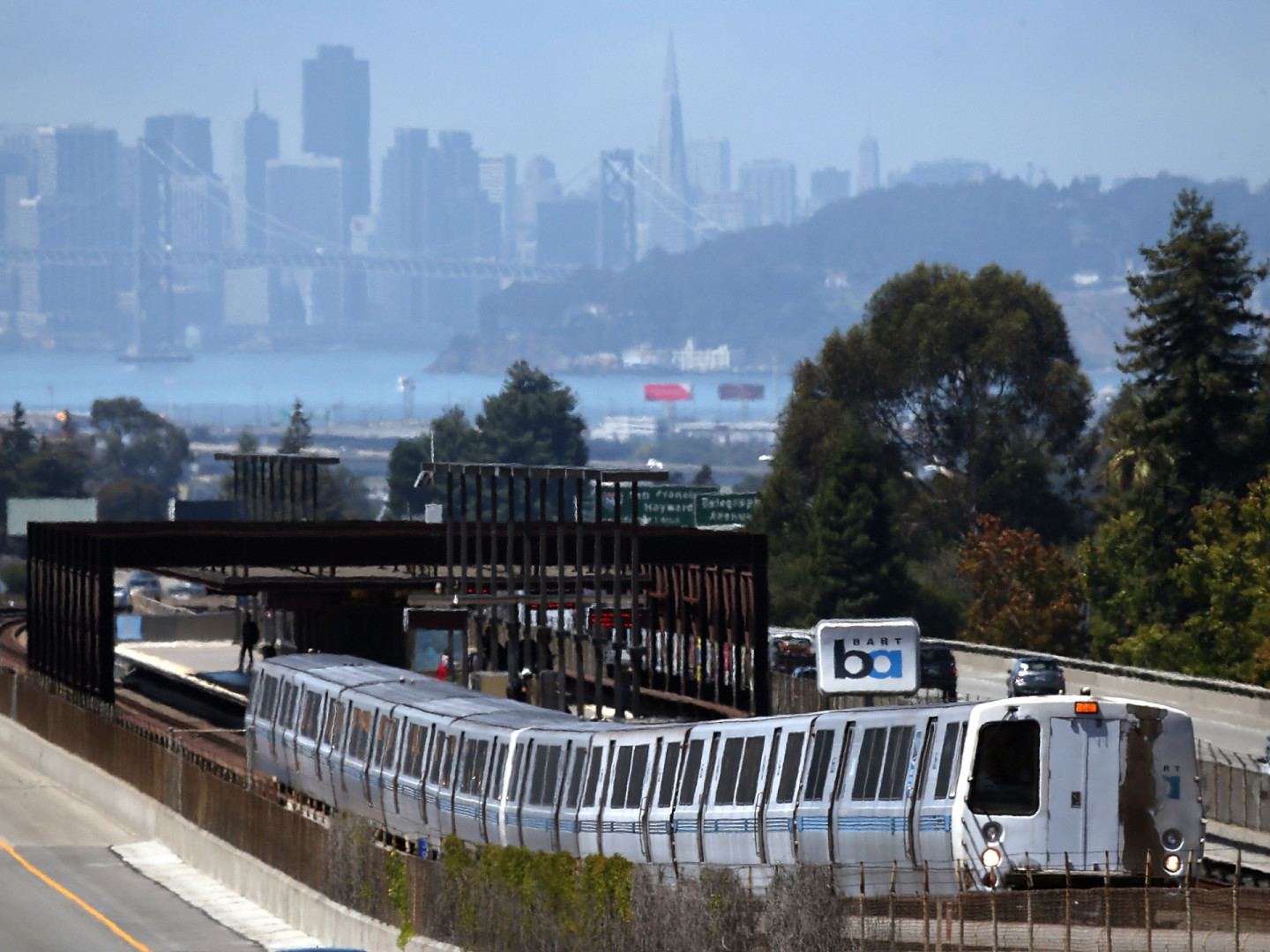
"caption": "A BART train on the Pittsburg-Bay Point line departing Oakland's Rockridge Station.",
"description": "BART train service will not run Saturday and Sunday between West Oakland and Embarcadero stations. ",
"title": "BART",
"credit": "Justin Sullivan/Getty Images",
"status": "inherit",
"isLoading": false,
"fetchFailed": false
},
"news_115315": {
"type": "attachments",
"id": "news_115315",
"meta": {
"index": "attachments_1716263798",
"site": "news",
"id": "115315",
"found": true
},
"parent": 0,
"imgSizes": {
"kqedFullSize": {
"file": "https://ww2.kqed.org/app/uploads/sites/10/2013/10/Caltrain-Photo-1.jpg",
"width": 1673,
"height": 940
}
},
"publishDate": 1382055547,
"modified": 1382055547,
"caption": "Caltrain arriving in Mountain View on October 12, 2013.",
"description": "Christine Hsu/KQED",
"title": "Caltrain Photo 1",
"credit": null,
"status": "inherit",
"isLoading": false,
"fetchFailed": false
},
"news_10940176": {
"type": "attachments",
"id": "news_10940176",
"meta": {
"index": "attachments_1716263798",
"site": "news",
"id": "10940176",
"found": true
},
"parent": 10940170,
"imgSizes": {
"jmtc-small-thumb": {
"file": "https://ww2.kqed.org/app/uploads/sites/10/2016/04/bartmishap-280x150.jpg",
"width": 280,
"mimeType": "image/jpeg",
"height": 150
},
"thumbnail": {
"file": "https://ww2.kqed.org/app/uploads/sites/10/2016/04/bartmishap-400x225.jpg",
"width": 400,
"mimeType": "image/jpeg",
"height": 225
},
"fd-sm": {
"file": "https://ww2.kqed.org/app/uploads/sites/10/2016/04/bartmishap-960x539.jpg",
"width": 960,
"mimeType": "image/jpeg",
"height": 539
},
"post-thumbnail": {
"file": "https://ww2.kqed.org/app/uploads/sites/10/2016/04/bartmishap-672x372.jpg",
"width": 672,
"mimeType": "image/jpeg",
"height": 372
},
"kqedFullSize": {
"file": "https://ww2.kqed.org/app/uploads/sites/10/2016/04/bartmishap.jpg",
"width": 1024,
"height": 575
},
"guest-author-96": {
"file": "https://ww2.kqed.org/app/uploads/sites/10/2016/04/bartmishap-96x96.jpg",
"width": 96,
"mimeType": "image/jpeg",
"height": 96
},
"medium": {
"file": "https://ww2.kqed.org/app/uploads/sites/10/2016/04/bartmishap-800x449.jpg",
"width": 800,
"mimeType": "image/jpeg",
"height": 449
},
"guest-author-64": {
"file": "https://ww2.kqed.org/app/uploads/sites/10/2016/04/bartmishap-64x64.jpg",
"width": 64,
"mimeType": "image/jpeg",
"height": 64
},
"detail": {
"file": "https://ww2.kqed.org/app/uploads/sites/10/2016/04/bartmishap-150x150.jpg",
"width": 150,
"mimeType": "image/jpeg",
"height": 150
},
"guest-author-32": {
"file": "https://ww2.kqed.org/app/uploads/sites/10/2016/04/bartmishap-32x32.jpg",
"width": 32,
"mimeType": "image/jpeg",
"height": 32
},
"guest-author-128": {
"file": "https://ww2.kqed.org/app/uploads/sites/10/2016/04/bartmishap-128x128.jpg",
"width": 128,
"mimeType": "image/jpeg",
"height": 128
}
},
"publishDate": 1461791571,
"modified": 1461791637,
"caption": "The new BART car that ran off the end of a test track in Hayward on Friday, April 22. ",
"description": null,
"title": "BART Mishap",
"credit": "KTVU",
"status": "inherit",
"isLoading": false,
"fetchFailed": false
},
"news_10934955": {
"type": "attachments",
"id": "news_10934955",
"meta": {
"index": "attachments_1716263798",
"site": "news",
"id": "10934955",
"found": true
},
"parent": 10934791,
"imgSizes": {
"twentyfourteen-full-width": {
"file": "https://ww2.kqed.org/app/uploads/sites/10/2016/04/RS19215_13234025773_170d03f828_o-qut-1038x576.jpg",
"width": 1038,
"mimeType": "image/jpeg",
"height": 576
},
"thumbnail": {
"file": "https://ww2.kqed.org/app/uploads/sites/10/2016/04/RS19215_13234025773_170d03f828_o-qut-400x225.jpg",
"width": 400,
"mimeType": "image/jpeg",
"height": 225
},
"fd-sm": {
"file": "https://ww2.kqed.org/app/uploads/sites/10/2016/04/RS19215_13234025773_170d03f828_o-qut-960x540.jpg",
"width": 960,
"mimeType": "image/jpeg",
"height": 540
},
"post-thumbnail": {
"file": "https://ww2.kqed.org/app/uploads/sites/10/2016/04/RS19215_13234025773_170d03f828_o-qut-672x372.jpg",
"width": 672,
"mimeType": "image/jpeg",
"height": 372
},
"kqedFullSize": {
"file": "https://ww2.kqed.org/app/uploads/sites/10/2016/04/RS19215_13234025773_170d03f828_o-qut.jpg",
"width": 1920,
"height": 1080
},
"large": {
"file": "https://ww2.kqed.org/app/uploads/sites/10/2016/04/RS19215_13234025773_170d03f828_o-qut-1920x1080.jpg",
"width": 1920,
"mimeType": "image/jpeg",
"height": 1080
},
"guest-author-96": {
"file": "https://ww2.kqed.org/app/uploads/sites/10/2016/04/RS19215_13234025773_170d03f828_o-qut-96x96.jpg",
"width": 96,
"mimeType": "image/jpeg",
"height": 96
},
"medium": {
"file": "https://ww2.kqed.org/app/uploads/sites/10/2016/04/RS19215_13234025773_170d03f828_o-qut-800x450.jpg",
"width": 800,
"mimeType": "image/jpeg",
"height": 450
},
"guest-author-64": {
"file": "https://ww2.kqed.org/app/uploads/sites/10/2016/04/RS19215_13234025773_170d03f828_o-qut-64x64.jpg",
"width": 64,
"mimeType": "image/jpeg",
"height": 64
},
"guest-author-32": {
"file": "https://ww2.kqed.org/app/uploads/sites/10/2016/04/RS19215_13234025773_170d03f828_o-qut-32x32.jpg",
"width": 32,
"mimeType": "image/jpeg",
"height": 32
},
"jmtc-small-thumb": {
"file": "https://ww2.kqed.org/app/uploads/sites/10/2016/04/RS19215_13234025773_170d03f828_o-qut-280x150.jpg",
"width": 280,
"mimeType": "image/jpeg",
"height": 150
},
"fd-lrg": {
"file": "https://ww2.kqed.org/app/uploads/sites/10/2016/04/RS19215_13234025773_170d03f828_o-qut-1920x1080.jpg",
"width": 1920,
"mimeType": "image/jpeg",
"height": 1080
},
"fd-med": {
"file": "https://ww2.kqed.org/app/uploads/sites/10/2016/04/RS19215_13234025773_170d03f828_o-qut-1180x664.jpg",
"width": 1180,
"mimeType": "image/jpeg",
"height": 664
},
"detail": {
"file": "https://ww2.kqed.org/app/uploads/sites/10/2016/04/RS19215_13234025773_170d03f828_o-qut-75x75.jpg",
"width": 75,
"mimeType": "image/jpeg",
"height": 75
},
"guest-author-128": {
"file": "https://ww2.kqed.org/app/uploads/sites/10/2016/04/RS19215_13234025773_170d03f828_o-qut-128x128.jpg",
"width": 128,
"mimeType": "image/jpeg",
"height": 128
}
},
"publishDate": 1461176957,
"modified": 1461177085,
"caption": "A Muni bus stops at 19th and Holloway avenues, near San Francisco State University, on March 17, 2014.",
"description": "A Muni bus stops at 19th and Holloway avenues, near San Francisco State University, on March 17, 2014.",
"title": "RS19215_13234025773_170d03f828_o-qut",
"credit": "\u003ca href=\"https://www.flickr.com/photos/116334989@N03/\" target=\"_blank\">Sergio Portela\u003c/a>/\u003ca href=\"https://www.flickr.com/photos/116334989@N03/13234025773/in/photolist-srC1s-7Lnfmo-59j1Ca-marQNa-7HAMxT-yJUma-zXSrn-9wZszj\" target=\"_blank\">Flickr\u003c/a>",
"status": "inherit",
"isLoading": false,
"fetchFailed": false
},
"news_10929507": {
"type": "attachments",
"id": "news_10929507",
"meta": {
"index": "attachments_1716263798",
"site": "news",
"id": "10929507",
"found": true
},
"parent": 10929465,
"imgSizes": {
"twentyfourteen-full-width": {
"file": "https://ww2.kqed.org/app/uploads/sites/10/2016/04/Untitled-2-1038x576.png",
"width": 1038,
"mimeType": "image/png",
"height": 576
},
"thumbnail": {
"file": "https://ww2.kqed.org/app/uploads/sites/10/2016/04/Untitled-2-400x309.png",
"width": 400,
"mimeType": "image/png",
"height": 309
},
"fd-sm": {
"file": "https://ww2.kqed.org/app/uploads/sites/10/2016/04/Untitled-2-960x742.png",
"width": 960,
"mimeType": "image/png",
"height": 742
},
"post-thumbnail": {
"file": "https://ww2.kqed.org/app/uploads/sites/10/2016/04/Untitled-2-672x372.png",
"width": 672,
"mimeType": "image/png",
"height": 372
},
"kqedFullSize": {
"file": "https://ww2.kqed.org/app/uploads/sites/10/2016/04/Untitled-2.png",
"width": 1626,
"height": 1257
},
"guest-author-96": {
"file": "https://ww2.kqed.org/app/uploads/sites/10/2016/04/Untitled-2-96x96.png",
"width": 96,
"mimeType": "image/png",
"height": 96
},
"medium": {
"file": "https://ww2.kqed.org/app/uploads/sites/10/2016/04/Untitled-2-800x618.png",
"width": 800,
"mimeType": "image/png",
"height": 618
},
"guest-author-64": {
"file": "https://ww2.kqed.org/app/uploads/sites/10/2016/04/Untitled-2-64x64.png",
"width": 64,
"mimeType": "image/png",
"height": 64
},
"guest-author-32": {
"file": "https://ww2.kqed.org/app/uploads/sites/10/2016/04/Untitled-2-32x32.png",
"width": 32,
"mimeType": "image/png",
"height": 32
},
"jmtc-small-thumb": {
"file": "https://ww2.kqed.org/app/uploads/sites/10/2016/04/Untitled-2-280x150.png",
"width": 280,
"mimeType": "image/png",
"height": 150
},
"fd-med": {
"file": "https://ww2.kqed.org/app/uploads/sites/10/2016/04/Untitled-2-1180x912.png",
"width": 1180,
"mimeType": "image/png",
"height": 912
},
"detail": {
"file": "https://ww2.kqed.org/app/uploads/sites/10/2016/04/Untitled-2-75x75.png",
"width": 75,
"mimeType": "image/png",
"height": 75
},
"guest-author-128": {
"file": "https://ww2.kqed.org/app/uploads/sites/10/2016/04/Untitled-2-128x128.png",
"width": 128,
"mimeType": "image/png",
"height": 128
}
},
"publishDate": 1460676793,
"modified": 1460676915,
"caption": "A rider who would be fined under the new rule. ",
"description": null,
"title": "Untitled 2",
"credit": "moppet65535/Flickr",
"status": "inherit",
"isLoading": false,
"fetchFailed": false
},
"news_10927388": {
"type": "attachments",
"id": "news_10927388",
"meta": {
"index": "attachments_1716263798",
"site": "news",
"id": "10927388",
"found": true
},
"parent": 10927353,
"imgSizes": {
"jmtc-small-thumb": {
"file": "https://ww2.kqed.org/app/uploads/sites/10/2016/04/glazer-baker-townhall-walnut-creek-280x150.jpg",
"width": 280,
"mimeType": "image/jpeg",
"height": 150
},
"thumbnail": {
"file": "https://ww2.kqed.org/app/uploads/sites/10/2016/04/glazer-baker-townhall-walnut-creek-400x300.jpg",
"width": 400,
"mimeType": "image/jpeg",
"height": 300
},
"post-thumbnail": {
"file": "https://ww2.kqed.org/app/uploads/sites/10/2016/04/glazer-baker-townhall-walnut-creek-600x372.jpg",
"width": 600,
"mimeType": "image/jpeg",
"height": 372
},
"kqedFullSize": {
"file": "https://ww2.kqed.org/app/uploads/sites/10/2016/04/glazer-baker-townhall-walnut-creek.jpg",
"width": 600,
"height": 450
},
"guest-author-96": {
"file": "https://ww2.kqed.org/app/uploads/sites/10/2016/04/glazer-baker-townhall-walnut-creek-96x96.jpg",
"width": 96,
"mimeType": "image/jpeg",
"height": 96
},
"guest-author-64": {
"file": "https://ww2.kqed.org/app/uploads/sites/10/2016/04/glazer-baker-townhall-walnut-creek-64x64.jpg",
"width": 64,
"mimeType": "image/jpeg",
"height": 64
},
"detail": {
"file": "https://ww2.kqed.org/app/uploads/sites/10/2016/04/glazer-baker-townhall-walnut-creek-75x75.jpg",
"width": 75,
"mimeType": "image/jpeg",
"height": 75
},
"guest-author-32": {
"file": "https://ww2.kqed.org/app/uploads/sites/10/2016/04/glazer-baker-townhall-walnut-creek-32x32.jpg",
"width": 32,
"mimeType": "image/jpeg",
"height": 32
},
"guest-author-128": {
"file": "https://ww2.kqed.org/app/uploads/sites/10/2016/04/glazer-baker-townhall-walnut-creek-128x128.jpg",
"width": 128,
"mimeType": "image/jpeg",
"height": 128
}
},
"publishDate": 1460479648,
"modified": 1460479861,
"caption": "State Sen. Steve Glazer during a town hall meeting earlier this year during which he discussed his proposal to ban future BART strikes.",
"description": null,
"title": "Steve Glazer-BART",
"credit": "Office of state Sen. Steve Glazer",
"status": "inherit",
"isLoading": false,
"fetchFailed": false
},
"news_10489894": {
"type": "attachments",
"id": "news_10489894",
"meta": {
"index": "attachments_1716263798",
"site": "news",
"id": "10489894",
"found": true
},
"parent": 10489893,
"imgSizes": {
"twentyfourteen-full-width": {
"file": "https://ww2.kqed.org/app/uploads/sites/10/2015/04/BART1-1038x576.jpg",
"width": 1038,
"mimeType": "image/jpeg",
"height": 576
},
"thumbnail": {
"file": "https://ww2.kqed.org/app/uploads/sites/10/2015/04/BART1-400x300.jpg",
"width": 400,
"mimeType": "image/jpeg",
"height": 300
},
"fd-sm": {
"file": "https://ww2.kqed.org/app/uploads/sites/10/2015/04/BART1-320x240.jpg",
"width": 320,
"mimeType": "image/jpeg",
"height": 240
},
"post-thumbnail": {
"file": "https://ww2.kqed.org/app/uploads/sites/10/2015/04/BART1-672x372.jpg",
"width": 672,
"mimeType": "image/jpeg",
"height": 372
},
"kqedFullSize": {
"file": "https://ww2.kqed.org/app/uploads/sites/10/2015/04/BART1.jpg",
"width": 1920,
"height": 1440
},
"large": {
"file": "https://ww2.kqed.org/app/uploads/sites/10/2015/04/BART1-1440x1080.jpg",
"width": 1440,
"mimeType": "image/jpeg",
"height": 1080
},
"guest-author-96": {
"file": "https://ww2.kqed.org/app/uploads/sites/10/2015/04/BART1-96x96.jpg",
"width": 96,
"mimeType": "image/jpeg",
"height": 96
},
"medium": {
"file": "https://ww2.kqed.org/app/uploads/sites/10/2015/04/BART1-800x600.jpg",
"width": 800,
"mimeType": "image/jpeg",
"height": 600
},
"guest-author-64": {
"file": "https://ww2.kqed.org/app/uploads/sites/10/2015/04/BART1-64x64.jpg",
"width": 64,
"mimeType": "image/jpeg",
"height": 64
},
"guest-author-32": {
"file": "https://ww2.kqed.org/app/uploads/sites/10/2015/04/BART1-32x32.jpg",
"width": 32,
"mimeType": "image/jpeg",
"height": 32
},
"fd-lrg": {
"file": "https://ww2.kqed.org/app/uploads/sites/10/2015/04/BART1-1180x885.jpg",
"width": 1180,
"mimeType": "image/jpeg",
"height": 885
},
"fd-med": {
"file": "https://ww2.kqed.org/app/uploads/sites/10/2015/04/BART1-768x576.jpg",
"width": 768,
"mimeType": "image/jpeg",
"height": 576
},
"detail": {
"file": "https://ww2.kqed.org/app/uploads/sites/10/2015/04/BART1-75x75.jpg",
"width": 75,
"mimeType": "image/jpeg",
"height": 75
},
"guest-author-128": {
"file": "https://ww2.kqed.org/app/uploads/sites/10/2015/04/BART1-128x128.jpg",
"width": 128,
"mimeType": "image/jpeg",
"height": 128
}
},
"publishDate": 1429029419,
"modified": 1442352820,
"caption": "A BART train near the system's Rockridge Station in Oakland. ",
"description": "A BART train near the system's Rockridge station in Oakland. ",
"title": "Bay Area Transportation Workers Strike Looms Ahead Of Monday Deadline",
"credit": "Justin Sullivan/Getty Images",
"status": "inherit",
"isLoading": false,
"fetchFailed": false
},
"news_10854569": {
"type": "attachments",
"id": "news_10854569",
"meta": {
"index": "attachments_1716263798",
"site": "news",
"id": "10854569",
"found": true
},
"parent": 10840322,
"imgSizes": {
"twentyfourteen-full-width": {
"file": "https://ww2.kqed.org/app/uploads/sites/10/2016/01/RS18311_african-art-and-baskets-qut-1038x576.jpg",
"width": 1038,
"mimeType": "image/jpeg",
"height": 576
},
"thumbnail": {
"file": "https://ww2.kqed.org/app/uploads/sites/10/2016/01/RS18311_african-art-and-baskets-qut-400x225.jpg",
"width": 400,
"mimeType": "image/jpeg",
"height": 225
},
"fd-sm": {
"file": "https://ww2.kqed.org/app/uploads/sites/10/2016/01/RS18311_african-art-and-baskets-qut-960x541.jpg",
"width": 960,
"mimeType": "image/jpeg",
"height": 541
},
"post-thumbnail": {
"file": "https://ww2.kqed.org/app/uploads/sites/10/2016/01/RS18311_african-art-and-baskets-qut-672x372.jpg",
"width": 672,
"mimeType": "image/jpeg",
"height": 372
},
"kqedFullSize": {
"file": "https://ww2.kqed.org/app/uploads/sites/10/2016/01/RS18311_african-art-and-baskets-qut.jpg",
"width": 1920,
"height": 1081
},
"large": {
"file": "https://ww2.kqed.org/app/uploads/sites/10/2016/01/RS18311_african-art-and-baskets-qut-1440x811.jpg",
"width": 1440,
"mimeType": "image/jpeg",
"height": 811
},
"guest-author-96": {
"file": "https://ww2.kqed.org/app/uploads/sites/10/2016/01/RS18311_african-art-and-baskets-qut-96x96.jpg",
"width": 96,
"mimeType": "image/jpeg",
"height": 96
},
"medium": {
"file": "https://ww2.kqed.org/app/uploads/sites/10/2016/01/RS18311_african-art-and-baskets-qut-800x450.jpg",
"width": 800,
"mimeType": "image/jpeg",
"height": 450
},
"guest-author-64": {
"file": "https://ww2.kqed.org/app/uploads/sites/10/2016/01/RS18311_african-art-and-baskets-qut-64x64.jpg",
"width": 64,
"mimeType": "image/jpeg",
"height": 64
},
"guest-author-32": {
"file": "https://ww2.kqed.org/app/uploads/sites/10/2016/01/RS18311_african-art-and-baskets-qut-32x32.jpg",
"width": 32,
"mimeType": "image/jpeg",
"height": 32
},
"jmtc-small-thumb": {
"file": "https://ww2.kqed.org/app/uploads/sites/10/2016/01/RS18311_african-art-and-baskets-qut-280x150.jpg",
"width": 280,
"mimeType": "image/jpeg",
"height": 150
},
"fd-lrg": {
"file": "https://ww2.kqed.org/app/uploads/sites/10/2016/01/RS18311_african-art-and-baskets-qut-1920x1081.jpg",
"width": 1920,
"mimeType": "image/jpeg",
"height": 1081
},
"fd-med": {
"file": "https://ww2.kqed.org/app/uploads/sites/10/2016/01/RS18311_african-art-and-baskets-qut-1180x664.jpg",
"width": 1180,
"mimeType": "image/jpeg",
"height": 664
},
"detail": {
"file": "https://ww2.kqed.org/app/uploads/sites/10/2016/01/RS18311_african-art-and-baskets-qut-75x75.jpg",
"width": 75,
"mimeType": "image/jpeg",
"height": 75
},
"medium_large": {
"file": "https://ww2.kqed.org/app/uploads/sites/10/2016/01/RS18311_african-art-and-baskets-qut-768x432.jpg",
"width": 768,
"mimeType": "image/jpeg",
"height": 432
},
"guest-author-128": {
"file": "https://ww2.kqed.org/app/uploads/sites/10/2016/01/RS18311_african-art-and-baskets-qut-128x128.jpg",
"width": 128,
"mimeType": "image/jpeg",
"height": 128
}
},
"publishDate": 1454624225,
"modified": 1458252455,
"caption": "One of the many African and African-American themed vendors at the Berkeley Flea Market.",
"description": null,
"title": "RS18311_african art and baskets-qut",
"credit": "Andrew Stelzer/KQED",
"status": "inherit",
"isLoading": false,
"fetchFailed": false
},
"news_10889688": {
"type": "attachments",
"id": "news_10889688",
"meta": {
"index": "attachments_1716263798",
"site": "news",
"id": "10889688",
"found": true
},
"parent": 10889488,
"imgSizes": {
"twentyfourteen-full-width": {
"file": "https://ww2.kqed.org/app/uploads/sites/10/2016/03/6277008624_eda57765c4_o-e1457476400621-1038x576.jpg",
"width": 1038,
"mimeType": "image/jpeg",
"height": 576
},
"thumbnail": {
"file": "https://ww2.kqed.org/app/uploads/sites/10/2016/03/6277008624_eda57765c4_o-e1457476400621-400x300.jpg",
"width": 400,
"mimeType": "image/jpeg",
"height": 300
},
"fd-sm": {
"file": "https://ww2.kqed.org/app/uploads/sites/10/2016/03/6277008624_eda57765c4_o-e1457476400621-960x720.jpg",
"width": 960,
"mimeType": "image/jpeg",
"height": 720
},
"post-thumbnail": {
"file": "https://ww2.kqed.org/app/uploads/sites/10/2016/03/6277008624_eda57765c4_o-e1457476400621-672x372.jpg",
"width": 672,
"mimeType": "image/jpeg",
"height": 372
},
"kqedFullSize": {
"file": "https://ww2.kqed.org/app/uploads/sites/10/2016/03/6277008624_eda57765c4_o-e1457476400621.jpg",
"width": 1600,
"height": 1200
},
"guest-author-96": {
"file": "https://ww2.kqed.org/app/uploads/sites/10/2016/03/6277008624_eda57765c4_o-e1457476400621-96x96.jpg",
"width": 96,
"mimeType": "image/jpeg",
"height": 96
},
"medium": {
"file": "https://ww2.kqed.org/app/uploads/sites/10/2016/03/6277008624_eda57765c4_o-e1457476400621-800x600.jpg",
"width": 800,
"mimeType": "image/jpeg",
"height": 600
},
"guest-author-64": {
"file": "https://ww2.kqed.org/app/uploads/sites/10/2016/03/6277008624_eda57765c4_o-e1457476400621-64x64.jpg",
"width": 64,
"mimeType": "image/jpeg",
"height": 64
},
"guest-author-32": {
"file": "https://ww2.kqed.org/app/uploads/sites/10/2016/03/6277008624_eda57765c4_o-e1457476400621-32x32.jpg",
"width": 32,
"mimeType": "image/jpeg",
"height": 32
},
"jmtc-small-thumb": {
"file": "https://ww2.kqed.org/app/uploads/sites/10/2016/03/6277008624_eda57765c4_o-e1457476400621-280x150.jpg",
"width": 280,
"mimeType": "image/jpeg",
"height": 150
},
"fd-med": {
"file": "https://ww2.kqed.org/app/uploads/sites/10/2016/03/6277008624_eda57765c4_o-e1457476400621-1180x885.jpg",
"width": 1180,
"mimeType": "image/jpeg",
"height": 885
},
"detail": {
"file": "https://ww2.kqed.org/app/uploads/sites/10/2016/03/6277008624_eda57765c4_o-e1457476400621-75x75.jpg",
"width": 75,
"mimeType": "image/jpeg",
"height": 75
},
"guest-author-128": {
"file": "https://ww2.kqed.org/app/uploads/sites/10/2016/03/6277008624_eda57765c4_o-e1457476400621-128x128.jpg",
"width": 128,
"mimeType": "image/jpeg",
"height": 128
}
},
"publishDate": 1457476267,
"modified": 1457476568,
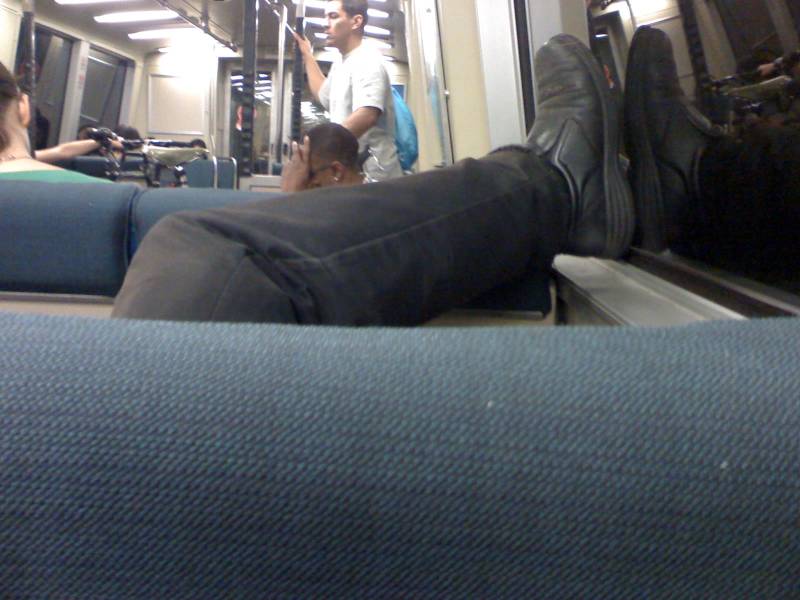
"caption": "Seen on a BART train: passenger lying on a seat with leg luxuriously stretched up to window. ",
"description": null,
"title": "BART-Seat Etiquette",
"credit": "\u003ca href=\"https://flic.kr/p/ayFiYC\" target=\"_blank\">AgentAkit/Flickr\u003c/a>",
"status": "inherit",
"isLoading": false,
"fetchFailed": false
},
"news_10854502": {
"type": "attachments",
"id": "news_10854502",
"meta": {
"index": "attachments_1716263798",
"site": "news",
"id": "10854502",
"found": true
},
"parent": 10854501,
"imgSizes": {
"twentyfourteen-full-width": {
"file": "https://ww2.kqed.org/app/uploads/sites/10/2016/02/bartlayouttest2-1038x576.jpg",
"width": 1038,
"mimeType": "image/jpeg",
"height": 576
},
"thumbnail": {
"file": "https://ww2.kqed.org/app/uploads/sites/10/2016/02/bartlayouttest2-400x309.jpg",
"width": 400,
"mimeType": "image/jpeg",
"height": 309
},
"fd-sm": {
"file": "https://ww2.kqed.org/app/uploads/sites/10/2016/02/bartlayouttest2-960x741.jpg",
"width": 960,
"mimeType": "image/jpeg",
"height": 741
},
"post-thumbnail": {
"file": "https://ww2.kqed.org/app/uploads/sites/10/2016/02/bartlayouttest2-672x372.jpg",
"width": 672,
"mimeType": "image/jpeg",
"height": 372
},
"kqedFullSize": {
"file": "https://ww2.kqed.org/app/uploads/sites/10/2016/02/bartlayouttest2.jpg",
"width": 1920,
"height": 1482
},
"large": {
"file": "https://ww2.kqed.org/app/uploads/sites/10/2016/02/bartlayouttest2-1440x1112.jpg",
"width": 1440,
"mimeType": "image/jpeg",
"height": 1112
},
"guest-author-96": {
"file": "https://ww2.kqed.org/app/uploads/sites/10/2016/02/bartlayouttest2-96x96.jpg",
"width": 96,
"mimeType": "image/jpeg",
"height": 96
},
"medium": {
"file": "https://ww2.kqed.org/app/uploads/sites/10/2016/02/bartlayouttest2-800x618.jpg",
"width": 800,
"mimeType": "image/jpeg",
"height": 618
},
"guest-author-64": {
"file": "https://ww2.kqed.org/app/uploads/sites/10/2016/02/bartlayouttest2-64x64.jpg",
"width": 64,
"mimeType": "image/jpeg",
"height": 64
},
"guest-author-32": {
"file": "https://ww2.kqed.org/app/uploads/sites/10/2016/02/bartlayouttest2-32x32.jpg",
"width": 32,
"mimeType": "image/jpeg",
"height": 32
},
"jmtc-small-thumb": {
"file": "https://ww2.kqed.org/app/uploads/sites/10/2016/02/bartlayouttest2-280x150.jpg",
"width": 280,
"mimeType": "image/jpeg",
"height": 150
},
"fd-lrg": {
"file": "https://ww2.kqed.org/app/uploads/sites/10/2016/02/bartlayouttest2-1920x1482.jpg",
"width": 1920,
"mimeType": "image/jpeg",
"height": 1482
},
"fd-med": {
"file": "https://ww2.kqed.org/app/uploads/sites/10/2016/02/bartlayouttest2-1180x911.jpg",
"width": 1180,
"mimeType": "image/jpeg",
"height": 911
},
"detail": {
"file": "https://ww2.kqed.org/app/uploads/sites/10/2016/02/bartlayouttest2-75x75.jpg",
"width": 75,
"mimeType": "image/jpeg",
"height": 75
},
"medium_large": {
"file": "https://ww2.kqed.org/app/uploads/sites/10/2016/02/bartlayouttest2-768x593.jpg",
"width": 768,
"mimeType": "image/jpeg",
"height": 593
},
"guest-author-128": {
"file": "https://ww2.kqed.org/app/uploads/sites/10/2016/02/bartlayouttest2-128x128.jpg",
"width": 128,
"mimeType": "image/jpeg",
"height": 128
}
},
"publishDate": 1454617774,
"modified": 1454620712,
"caption": "Pictured during an atypically uncrowded run, here's one of the 20 train cars BART plans to reconfigure to test a new seating layout. ",
"description": null,
"title": "BART Layout Test",
"credit": "Dan Brekke/KQED",
"status": "inherit",
"isLoading": false,
"fetchFailed": false
},
"news_10845734": {
"type": "attachments",
"id": "news_10845734",
"meta": {
"index": "attachments_1716263798",
"site": "news",
"id": "10845734",
"found": true
},
"parent": 10845639,
"imgSizes": {
"twentyfourteen-full-width": {
"file": "https://ww2.kqed.org/app/uploads/sites/10/2016/01/PumpingGas-1038x576.jpg",
"width": 1038,
"mimeType": "image/jpeg",
"height": 576
},
"thumbnail": {
"file": "https://ww2.kqed.org/app/uploads/sites/10/2016/01/PumpingGas-400x259.jpg",
"width": 400,
"mimeType": "image/jpeg",
"height": 259
},
"fd-sm": {
"file": "https://ww2.kqed.org/app/uploads/sites/10/2016/01/PumpingGas-960x621.jpg",
"width": 960,
"mimeType": "image/jpeg",
"height": 621
},
"post-thumbnail": {
"file": "https://ww2.kqed.org/app/uploads/sites/10/2016/01/PumpingGas-672x372.jpg",
"width": 672,
"mimeType": "image/jpeg",
"height": 372
},
"kqedFullSize": {
"file": "https://ww2.kqed.org/app/uploads/sites/10/2016/01/PumpingGas.jpg",
"width": 1920,
"height": 1242
},
"large": {
"file": "https://ww2.kqed.org/app/uploads/sites/10/2016/01/PumpingGas-1440x932.jpg",
"width": 1440,
"mimeType": "image/jpeg",
"height": 932
},
"guest-author-96": {
"file": "https://ww2.kqed.org/app/uploads/sites/10/2016/01/PumpingGas-96x96.jpg",
"width": 96,
"mimeType": "image/jpeg",
"height": 96
},
"medium": {
"file": "https://ww2.kqed.org/app/uploads/sites/10/2016/01/PumpingGas-800x518.jpg",
"width": 800,
"mimeType": "image/jpeg",
"height": 518
},
"guest-author-64": {
"file": "https://ww2.kqed.org/app/uploads/sites/10/2016/01/PumpingGas-64x64.jpg",
"width": 64,
"mimeType": "image/jpeg",
"height": 64
},
"guest-author-32": {
"file": "https://ww2.kqed.org/app/uploads/sites/10/2016/01/PumpingGas-32x32.jpg",
"width": 32,
"mimeType": "image/jpeg",
"height": 32
},
"jmtc-small-thumb": {
"file": "https://ww2.kqed.org/app/uploads/sites/10/2016/01/PumpingGas-280x150.jpg",
"width": 280,
"mimeType": "image/jpeg",
"height": 150
},
"fd-lrg": {
"file": "https://ww2.kqed.org/app/uploads/sites/10/2016/01/PumpingGas-1920x1242.jpg",
"width": 1920,
"mimeType": "image/jpeg",
"height": 1242
},
"fd-med": {
"file": "https://ww2.kqed.org/app/uploads/sites/10/2016/01/PumpingGas-1180x763.jpg",
"width": 1180,
"mimeType": "image/jpeg",
"height": 763
},
"detail": {
"file": "https://ww2.kqed.org/app/uploads/sites/10/2016/01/PumpingGas-75x75.jpg",
"width": 75,
"mimeType": "image/jpeg",
"height": 75
},
"medium_large": {
"file": "https://ww2.kqed.org/app/uploads/sites/10/2016/01/PumpingGas-768x497.jpg",
"width": 768,
"mimeType": "image/jpeg",
"height": 497
},
"guest-author-128": {
"file": "https://ww2.kqed.org/app/uploads/sites/10/2016/01/PumpingGas-128x128.jpg",
"width": 128,
"mimeType": "image/jpeg",
"height": 128
}
},
"publishDate": 1453839649,
"modified": 1453839683,
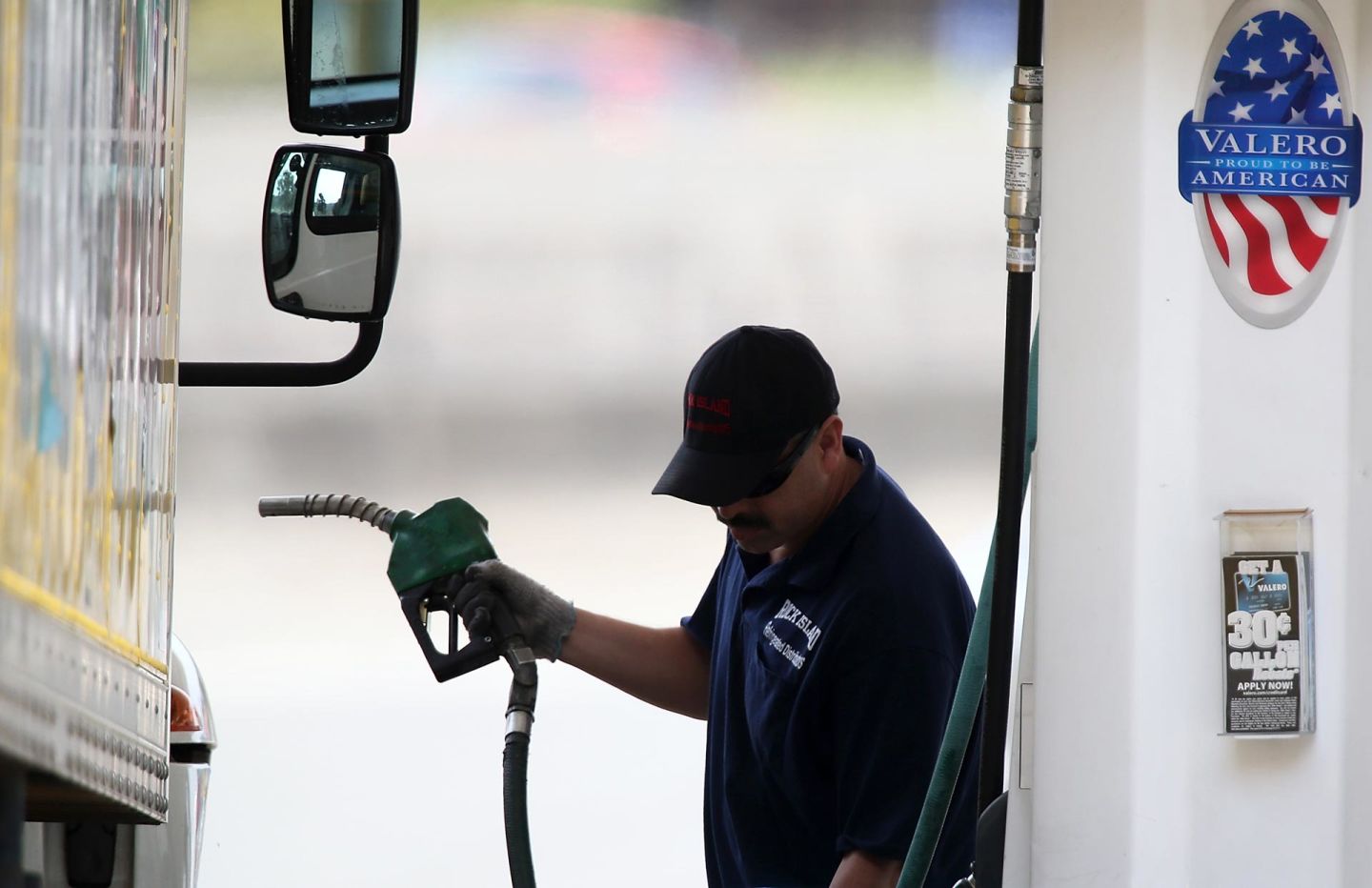
"caption": "A customer prepares to pump gas into his truck at a Valero gas station in Mill Valley.",
"description": "A customer prepares to pump gas into his truck at a Valero gas station in Mill Valley.",
"title": "PumpingGas",
"credit": "Justin Sullivan/Getty Images",
"status": "inherit",
"isLoading": false,
"fetchFailed": false
}
},
"audioPlayerReducer": {
"postId": "stream_live",
"isPaused": true,
"isPlaying": false,
"pfsActive": false,
"pledgeModalIsOpen": true,
"playerDrawerIsOpen": false,
"liveAudioPlayStartedAt": 0,
"liveAudioPlayContext": ""
},
"authorsReducer": {
"dclyde": {
"type": "authors",
"id": "104",
"meta": {
"index": "authors_1716337520",
"id": "104",
"found": true
},
"name": "Don Clyde",
"firstName": "Don",
"lastName": "Clyde",
"slug": "dclyde",
"email": "dclyde@kqed.org",
"display_author_email": false,
"staff_mastheads": [],
"title": "KQED Contributor",
"bio": "Don Clyde is an online producer, reporter and copy editor for KQED News. Before venturing into journalism, he worked as a medical device engineer and scientist for nearly a decade after earning a degree in physics from UC Berkeley. He loves travel, reading, living in Oakland, and most importantly, a good walk. Email him at dclyde@kqed.org or follow him @clydedon.",
"avatar": "https://secure.gravatar.com/avatar/decd3e640c3eedbd0a574275aebb2d19?s=600&d=blank&r=g",
"twitter": "clydedon",
"facebook": null,
"instagram": null,
"linkedin": null,
"sites": [
{
"site": "artschool",
"roles": [
"editor"
]
},
{
"site": "news",
"roles": [
"administrator"
]
},
{
"site": "futureofyou",
"roles": [
"editor"
]
},
{
"site": "about",
"roles": [
"editor"
]
},
{
"site": "mindshift",
"roles": [
"contributor"
]
},
{
"site": "bayareabites",
"roles": [
"contributor"
]
},
{
"site": "lowdown",
"roles": [
"editor"
]
},
{
"site": "stateofhealth",
"roles": [
"administrator"
]
},
{
"site": "spark",
"roles": [
"administrator"
]
},
{
"site": "trulyca",
"roles": [
"administrator"
]
},
{
"site": "imagemakers",
"roles": [
"administrator"
]
},
{
"site": "science",
"roles": []
},
{
"site": "education",
"roles": [
"editor"
]
},
{
"site": "quest",
"roles": [
"subscriber"
]
},
{
"site": "checkplease",
"roles": [
"subscriber"
]
},
{
"site": "forum",
"roles": [
"editor"
]
},
{
"site": "perspectives",
"roles": [
"editor"
]
}
],
"headData": {
"title": "Don Clyde | KQED",
"description": "KQED Contributor",
"ogImgSrc": "https://secure.gravatar.com/avatar/decd3e640c3eedbd0a574275aebb2d19?s=600&d=blank&r=g",
"twImgSrc": "https://secure.gravatar.com/avatar/decd3e640c3eedbd0a574275aebb2d19?s=600&d=blank&r=g"
},
"isLoading": false,
"link": "/author/dclyde"
},
"andrewstelzer": {
"type": "authors",
"id": "213",
"meta": {
"index": "authors_1716337520",
"id": "213",
"found": true
},
"name": "Andrew Stelzer",
"firstName": "Andrew",
"lastName": "Stelzer",
"slug": "andrewstelzer",
"email": "andrewstelzer@gmail.com",
"display_author_email": false,
"staff_mastheads": [],
"title": null,
"bio": "Andrew Stelzer has been reporting for KQED since 2010, and is a producer at \u003ca href=\"http://www.radioproject.org\" target=\"_blank\">Making Contact\u003c/a> in Oakland.. His work has been featured on programs including \u003ca href=\"http://www.npr.org/templates/story/story.php?storyId=5010\" target=\"_blank\">NPR’s Weekend Edition\u003c/a>, \u003ca href=\"http://www.theworld.org/\" target=\"_blank\">PRI’s The World\u003c/a>, \u003ca href=\"http://www.studio360.org/\" target=\"_blank\">Studio 360\u003c/a>, \u003ca href=\"http://marketplace.publicradio.org/\" target=\"_blank\">Marketplace\u003c/a>,\u003ca href=\"http://www.loe.org/\" target=\"_blank\">Living on Earth\u003c/a>, \u003ca href=\"http://www.onthemedia.org/\" target=\"_blank\">On the Media\u003c/a>, \u003ca href=\"http://www.latinousa.org/index.html\" target=\"_blank\">Latino USA,\u003c/a> \u003ca href=\"http://www.onlyagame.org/\" rel=\"tag\">Only a Game,\u003c/a> \u003ca href=\"http://www.tswi.org/\" target=\"_blank\">Radio Netherlands,\u003c/a> \u003ca href=\"http://worldradio.ch/index.shtml\" target=\"_blank\">World Radio Switzerland,\u003c/a> and \u003ca href=\"http://www.rfi.fr/langues/statiques/rfi_anglais.asp\" target=\"_blank\">Radio France International\u003c/a>. Andrew has written for publications including \u003ca href=\"http://www.inthesetimes.com/site/about/author/2369\" target=\"_blank\">In These Times\u003c/a>, \u003ca href=\"http://www.progressive.org/\" target=\"_blank\">The Progressive\u003c/a>, \u003ca href=\"http://ipsnews.net/\" target=\"_blank\">Interpress Service\u003c/a>, \u003ca href=\"http://www.tampabay.com/\" target=\"_blank\">The St. Petersburg Times\u003c/a>, and \u003ca href=\"http://www.eastbayexpress.com/ebx/Home\" target=\"_blank\">The East Bay Express\u003c/a>.\r\n\r\nAndrew’s work has received numerous awards from the Society of Professional Journalists, the National Lesbian and Gay Journalists Association, and the National Council on Crime and Delinquency.\r\n\r\nHe previously was a reporter at \u003ca href=\"http://www.wmnf.org/\" target=\"_blank\">WMNF\u003c/a> radio in Tampa, FL, and reporter and youth advocate st \u003ca href=\"http://www.kboo.org/\" target=\"_blank\">KBOO \u003c/a> in Portland, Oregon. Andrew has conducted radio production trainings around the world, from Algeria, to New Orleans, to the desert of Southern Jordan.",
"avatar": "https://secure.gravatar.com/avatar/14c7e75469395cb2468d45c9f6896ca9?s=600&d=blank&r=g",
"twitter": null,
"facebook": null,
"instagram": null,
"linkedin": null,
"sites": [
{
"site": "arts",
"roles": [
"contributor"
]
},
{
"site": "news",
"roles": [
"author"
]
},
{
"site": "stateofhealth",
"roles": [
"author"
]
}
],
"headData": {
"title": "Andrew Stelzer | KQED",
"description": null,
"ogImgSrc": "https://secure.gravatar.com/avatar/14c7e75469395cb2468d45c9f6896ca9?s=600&d=blank&r=g",
"twImgSrc": "https://secure.gravatar.com/avatar/14c7e75469395cb2468d45c9f6896ca9?s=600&d=blank&r=g"
},
"isLoading": false,
"link": "/author/andrewstelzer"
},
"danbrekke": {
"type": "authors",
"id": "222",
"meta": {
"index": "authors_1716337520",
"id": "222",
"found": true
},
"name": "Dan Brekke",
"firstName": "Dan",
"lastName": "Brekke",
"slug": "danbrekke",
"email": "dbrekke@kqed.org",
"display_author_email": true,
"staff_mastheads": [
"news",
"science"
],
"title": "KQED Editor and Reporter",
"bio": "Dan Brekke is a reporter and editor for KQED News, responsible for coverage of topics ranging from California water issues to the Bay Area's transportation challenges. In a newsroom career that began in Chicago in 1972, Dan has worked for \u003cem>The San Francisco Examiner,\u003c/em> Wired and TechTV and has been published in The New York Times, The New York Times Magazine, Business 2.0, Salon and elsewhere.\r\n\r\nSince joining KQED in 2007, Dan has reported, edited and produced both radio and online features and breaking news pieces. He has shared as both editor and reporter in four Society of Professional Journalists Norcal Excellence in Journalism awards and one Edward R. Murrow regional award. He was chosen for a spring 2017 residency at the Mesa Refuge to advance his research on California salmon.\r\n\r\nEmail Dan at: \u003ca href=\"mailto:dbrekke@kqed.org\">dbrekke@kqed.org\u003c/a>\r\n\r\n\u003cstrong>Twitter:\u003c/strong> \u003ca href=\"https://twitter.com/danbrekke\" rel=\"noopener noreferrer\">twitter.com/danbrekke\u003c/a>\r\n\u003cstrong>Facebook:\u003c/strong> \u003ca href=\"https://www.facebook.com/danbrekke\" rel=\"noopener noreferrer\">www.facebook.com/danbrekke\u003c/a>\r\n\u003cstrong>LinkedIn:\u003c/strong> \u003ca href=\"https://www.linkedin.com/in/danbrekke\" rel=\"noopener noreferrer\">www.linkedin.com/in/danbrekke\u003c/a>",
"avatar": "https://secure.gravatar.com/avatar/8f1f0d2a978fb3b23426c922c7e2af558fa36905b49c4ce76a97dc3c72d27226?s=600&d=mm&r=g",
"twitter": "danbrekke",
"bluesky": null,
"facebook": null,
"instagram": "https://www.instagram.com/dan.brekke/",
"linkedin": "https://www.linkedin.com/in/danbrekke/",
"sites": [
{
"site": "news",
"roles": [
"administrator",
"create_posts"
]
},
{
"site": "stateofhealth",
"roles": [
"editor"
]
},
{
"site": "science",
"roles": [
"editor"
]
},
{
"site": "quest",
"roles": [
"contributor"
]
},
{
"site": "food",
"roles": [
"contributor"
]
},
{
"site": "forum",
"roles": [
"contributor"
]
},
{
"site": "elections",
"roles": [
"editor"
]
},
{
"site": "liveblog",
"roles": [
"editor"
]
}
],
"headData": {
"title": "Dan Brekke | KQED",
"description": "KQED Editor and Reporter",
"ogImgSrc": "https://secure.gravatar.com/avatar/8f1f0d2a978fb3b23426c922c7e2af558fa36905b49c4ce76a97dc3c72d27226?s=600&d=mm&r=g",
"twImgSrc": "https://secure.gravatar.com/avatar/8f1f0d2a978fb3b23426c922c7e2af558fa36905b49c4ce76a97dc3c72d27226?s=600&d=mm&r=g"
},
"isLoading": false,
"link": "/author/danbrekke"
},
"tgoldberg": {
"type": "authors",
"id": "258",
"meta": {
"index": "authors_1716337520",
"id": "258",
"found": true
},
"name": "Ted Goldberg",
"firstName": "Ted",
"lastName": "Goldberg",
"slug": "tgoldberg",
"email": "tgoldberg@kqed.org",
"display_author_email": true,
"staff_mastheads": [
"news"
],
"title": "KQED Managing Editor, News and Newscasts",
"bio": "Ted Goldberg is Managing Editor of News and Newscasts at KQED. His main reporting beat is the Bay Area's oil refining industry.\r\n\r\nPrior to joining KQED in 2014, Ted worked at CBS News and WCBS AM in New York and Bay City News and KCBS Radio in San Francisco. He graduated from Oberlin College in Ohio in 1998.",
"avatar": "https://secure.gravatar.com/avatar/30ce2e4fe89135e104f89be2394d16225b9d36c121b5b3cb7651ce642978b96f?s=600&d=blank&r=g",
"twitter": "TedrickG",
"bluesky": null,
"facebook": null,
"instagram": null,
"linkedin": null,
"sites": [
{
"site": "news",
"roles": [
"editor"
]
},
{
"site": "science",
"roles": [
"editor"
]
}
],
"headData": {
"title": "Ted Goldberg | KQED",
"description": "KQED Managing Editor, News and Newscasts",
"ogImgSrc": "https://secure.gravatar.com/avatar/30ce2e4fe89135e104f89be2394d16225b9d36c121b5b3cb7651ce642978b96f?s=600&d=blank&r=g",
"twImgSrc": "https://secure.gravatar.com/avatar/30ce2e4fe89135e104f89be2394d16225b9d36c121b5b3cb7651ce642978b96f?s=600&d=blank&r=g"
},
"isLoading": false,
"link": "/author/tgoldberg"
},
"kdomara": {
"type": "authors",
"id": "1459",
"meta": {
"index": "authors_1716337520",
"id": "1459",
"found": true
},
"name": "Kelly O'Mara",
"firstName": "Kelly",
"lastName": "O'Mara",
"slug": "kdomara",
"email": "komara@kqed.org",
"display_author_email": false,
"staff_mastheads": [
"news"
],
"title": "KQED Contributor",
"bio": "Kelly O'Mara is a writer and reporter in the San Francisco Bay Area. She writes about food, health, sports, travel, business and California news. Her work has appeared on KQED, online for Outside Magazine, epsnW, VICE and in Competitor Magazine, among others. Follow Kelly on Twitter \u003ca href=\"https://twitter.com/kellydomara\">@kellydomara\u003c/a>.",
"avatar": "https://secure.gravatar.com/avatar/768fec7412028b72f13bdd0f5f9d8186?s=600&d=blank&r=g",
"twitter": null,
"facebook": null,
"instagram": null,
"linkedin": null,
"sites": [
{
"site": "arts",
"roles": []
},
{
"site": "news",
"roles": []
},
{
"site": "bayareabites",
"roles": []
},
{
"site": "stateofhealth",
"roles": []
},
{
"site": "science",
"roles": []
},
{
"site": "checkplease",
"roles": [
"editor"
]
},
{
"site": "food",
"roles": []
},
{
"site": "forum",
"roles": [
"editor"
]
},
{
"site": "liveblog",
"roles": [
"editor"
]
}
],
"headData": {
"title": "Kelly O'Mara | KQED",
"description": "KQED Contributor",
"ogImgSrc": "https://secure.gravatar.com/avatar/768fec7412028b72f13bdd0f5f9d8186?s=600&d=blank&r=g",
"twImgSrc": "https://secure.gravatar.com/avatar/768fec7412028b72f13bdd0f5f9d8186?s=600&d=blank&r=g"
},
"isLoading": false,
"link": "/author/kdomara"
},
"korr": {
"type": "authors",
"id": "11200",
"meta": {
"index": "authors_1716337520",
"id": "11200",
"found": true
},
"name": "Katie Orr",
"firstName": "Katie",
"lastName": "Orr",
"slug": "korr",
"email": "korr@kqed.org",
"display_author_email": false,
"staff_mastheads": [],
"title": "KQED Contributor",
"bio": "Katie Orr was a Sacramento-based reporter for KQED's Politics and Government Desk, covering the state Capitol and a variety of issues including women in politics, voting and elections and legislation. Prior to joining KQED in 2016, Katie was state government reporter for Capital Public Radio in Sacramento. She's also worked for KPBS in San Diego, where she covered City Hall.\r\n\r\nKatie received her masters degree in political science from San Diego State University and holds a Bachelors degree in broadcast journalism from Arizona State University.\r\n\r\nIn 2015 Katie won a national Clarion Award for a series of stories she did on women in California politics. She's been honored by the Society for Professional Journalists and, in 2013, was named by \u003cem>The Washington Post\u003c/em> as one of the country's top state Capitol reporters. She's also reported for the award-winning documentary series \u003cem>The View from Here \u003c/em>and was part of the team that won national PRNDI and Gabriel Awards in 2015. She lives in Sacramento with her husband. Twitter: @1KatieOrr",
"avatar": "https://secure.gravatar.com/avatar/41a40b25845adc78f50808670860449e?s=600&d=blank&r=g",
"twitter": "1katieorr",
"facebook": null,
"instagram": null,
"linkedin": null,
"sites": [
{
"site": "news",
"roles": [
"subscriber"
]
},
{
"site": "stateofhealth",
"roles": [
"author"
]
},
{
"site": "forum",
"roles": [
"author"
]
}
],
"headData": {
"title": "Katie Orr | KQED",
"description": "KQED Contributor",
"ogImgSrc": "https://secure.gravatar.com/avatar/41a40b25845adc78f50808670860449e?s=600&d=blank&r=g",
"twImgSrc": "https://secure.gravatar.com/avatar/41a40b25845adc78f50808670860449e?s=600&d=blank&r=g"
},
"isLoading": false,
"link": "/author/korr"
},
"imojadad": {
"type": "authors",
"id": "11230",
"meta": {
"index": "authors_1716337520",
"id": "11230",
"found": true
},
"name": "Ida Mojadad",
"firstName": "Ida",
"lastName": "Mojadad",
"slug": "imojadad",
"email": "imojadad@KQED.org",
"display_author_email": false,
"staff_mastheads": [],
"title": null,
"bio": null,
"avatar": "https://secure.gravatar.com/avatar/6451b8d7e03e39bad3306efe658d625d?s=600&d=blank&r=g",
"twitter": "@idamoj",
"facebook": null,
"instagram": null,
"linkedin": null,
"sites": [
{
"site": "news",
"roles": [
"author"
]
}
],
"headData": {
"title": "Ida Mojadad | KQED",
"description": null,
"ogImgSrc": "https://secure.gravatar.com/avatar/6451b8d7e03e39bad3306efe658d625d?s=600&d=blank&r=g",
"twImgSrc": "https://secure.gravatar.com/avatar/6451b8d7e03e39bad3306efe658d625d?s=600&d=blank&r=g"
},
"isLoading": false,
"link": "/author/imojadad"
}
},
"pagesReducer": {
"news_tag_bart": {
"type": "terms",
"id": "news_269",
"meta": {
"index": "terms_1716263798",
"site": "news",
"id": "269",
"score": 8.558313
},
"featImg": null,
"name": "BART",
"description": null,
"taxonomy": "tag",
"headData": {
"twImgId": null,
"twTitle": null,
"ogTitle": null,
"ogImgId": null,
"twDescription": null,
"description": null,
"title": "BART Archives | KQED News",
"ogDescription": null
},
"ttid": 277,
"slug": "bart",
"isLoading": false,
"title": "BART",
"pageMeta": {
"site": "news",
"WpPageTemplate": "page-topic-editorial",
"currentPage": 24
},
"blocks": [
{
"blockName": "kqed/post-list",
"attrs": {
"layout": "cardArticle2",
"query": "posts/news?tag=bart",
"seeMore": false,
"paginated": true,
"page": 24
}
},
{
"blockName": "kqed/ad"
}
]
}
},
"pfsSessionReducer": {},
"postsReducer": {
"stream_live": {
"type": "live",
"id": "stream_live",
"audioUrl": "https://streams.kqed.org/kqedradio",
"title": "Live Stream",
"excerpt": "Live Stream information currently unavailable.",
"link": "/radio",
"featImg": "",
"label": {
"name": "KQED Live",
"link": "/"
}
},
"stream_kqedNewscast": {
"type": "posts",
"id": "stream_kqedNewscast",
"audioUrl": "https://www.kqed.org/.stream/anon/radio/RDnews/newscast.mp3?_=1",
"title": "KQED Newscast",
"featImg": "",
"label": {
"name": "88.5 FM",
"link": "/"
}
},
"news_10959594": {
"type": "posts",
"id": "news_10959594",
"meta": {
"index": "posts_1716263798",
"site": "news",
"id": "10959594",
"score": null,
"sort": [
1463593795000
]
},
"parent": 0,
"labelTerm": {
"site": "news",
"term": 6944
},
"blocks": [],
"publishDate": 1463593795,
"format": "standard",
"disqusTitle": "BART Computers Lose Power, Briefly Halting Trains Systemwide",
"title": "BART Computers Lose Power, Briefly Halting Trains Systemwide",
"headTitle": "News Fix | KQED News",
"content": "\u003cp>BART passengers on the late end of the Wednesday morning commute just got a little bit of a jolt: a power outage at 10:24 a.m. brought down the system's central control computer, briefly halting trains systemwide.\u003c/p>\n\u003cp>Here's the explanation from BART's Taylor Huckaby:\u003c/p>\n\u003cblockquote>\u003cp>There is a power failure that is affecting the operations control center’s computers, which need to be reset. There is no safety concern. However, when electrical problems occur at the operations control center, it takes some time to reset the automatic train control system.\u003c/p>\n\u003cp>This delay has not yet developed into a major delay. Announcements will continue as the situation develops, and as our Operations Control Center is actively resolving the issue. Delays may grow to 20 minutes, but should clear soon.\u003c/p>\u003c/blockquote>\n\u003cp>BART's central control computer is the brain the keeps track of trains across the system's 107 miles of track. The agency has said for years the computer system is badly in need of replacement, a project that likely will be covered as part of BART's expected $3.5 billion bond measure this year.\u003c/p>\n\u003cp>[ad fullwidth]\u003c/p>\u003cp>\u003c/p>\n",
"disqusIdentifier": "10959594 http://ww2.kqed.org/news/?p=10959594",
"disqusUrl": "https://ww2.kqed.org/news/2016/05/18/bart-computers-lose-power-briefly-halting-trains-systemwide/",
"stats": {
"hasVideo": false,
"hasChartOrMap": false,
"hasAudio": false,
"hasPolis": false,
"wordCount": 190,
"hasGoogleForm": false,
"hasGallery": false,
"hasHearkenModule": false,
"iframeSrcs": [],
"paragraphCount": 7
},
"modified": 1463606407,
"excerpt": "Power outage shuts down agency's central control computer, leading to delays as long as 20 minutes. ",
"headData": {
"twImgId": "",
"twTitle": "",
"ogTitle": "",
"ogImgId": "",
"twDescription": "",
"description": "Power outage shuts down agency's central control computer, leading to delays as long as 20 minutes. ",
"title": "BART Computers Lose Power, Briefly Halting Trains Systemwide | KQED",
"ogDescription": "",
"schema": {
"@context": "https://schema.org",
"@type": "NewsArticle",
"headline": "BART Computers Lose Power, Briefly Halting Trains Systemwide",
"datePublished": "2016-05-18T10:49:55-07:00",
"dateModified": "2016-05-18T14:20:07-07:00",
"image": "https://cdn.kqed.org/wp-content/uploads/2020/02/KQED-OG-Image@1x.png",
"isAccessibleForFree": "True",
"publisher": {
"@type": "NewsMediaOrganization",
"@id": "https://www.kqed.org/#organization",
"name": "KQED",
"logo": "https://cdn.kqed.org/wp-content/uploads/2020/02/KQED-OG-Image@1x.png",
"url": "https://www.kqed.org",
"sameAs": [
"https://www.facebook.com/KQED",
"https://twitter.com/KQED",
"https://www.instagram.com/kqed/",
"https://www.tiktok.com/@kqedofficial",
"https://www.linkedin.com/company/kqed",
"https://www.youtube.com/channel/UCeC0IOo7i1P_61zVUWbJ4nw"
]
}
}
},
"guestAuthors": [],
"slug": "bart-computers-lose-power-briefly-halting-trains-systemwide",
"status": "publish",
"nprStoryId": "478550482",
"path": "/news/10959594/bart-computers-lose-power-briefly-halting-trains-systemwide",
"audioTrackLength": null,
"parsedContent": [
{
"type": "contentString",
"content": "\u003cdiv class=\"post-body\">\u003cp>\u003cp>BART passengers on the late end of the Wednesday morning commute just got a little bit of a jolt: a power outage at 10:24 a.m. brought down the system's central control computer, briefly halting trains systemwide.\u003c/p>\n\u003cp>Here's the explanation from BART's Taylor Huckaby:\u003c/p>\n\u003cblockquote>\u003cp>There is a power failure that is affecting the operations control center’s computers, which need to be reset. There is no safety concern. However, when electrical problems occur at the operations control center, it takes some time to reset the automatic train control system.\u003c/p>\n\u003cp>This delay has not yet developed into a major delay. Announcements will continue as the situation develops, and as our Operations Control Center is actively resolving the issue. Delays may grow to 20 minutes, but should clear soon.\u003c/p>\u003c/blockquote>\n\u003cp>BART's central control computer is the brain the keeps track of trains across the system's 107 miles of track. The agency has said for years the computer system is badly in need of replacement, a project that likely will be covered as part of BART's expected $3.5 billion bond measure this year.\u003c/p>\n\u003cp>\u003c/p>\u003c/div>",
"attributes": {
"named": {},
"numeric": []
}
},
{
"type": "component",
"content": "",
"name": "ad",
"attributes": {
"named": {
"label": "fullwidth"
},
"numeric": [
"fullwidth"
]
}
},
{
"type": "contentString",
"content": "\u003cdiv class=\"post-body\">\u003cp>\u003c/p>\u003cp>\u003c/p>\n\u003c/div>\u003c/p>",
"attributes": {
"named": {},
"numeric": []
}
}
],
"link": "/news/10959594/bart-computers-lose-power-briefly-halting-trains-systemwide",
"authors": [
"222"
],
"programs": [
"news_6944"
],
"categories": [
"news_8"
],
"tags": [
"news_269"
],
"featImg": "news_10556878",
"label": "news_6944"
},
"news_10941045": {
"type": "posts",
"id": "news_10941045",
"meta": {
"index": "posts_1716263798",
"site": "news",
"id": "10941045",
"score": null,
"sort": [
1461954062000
]
},
"parent": 0,
"labelTerm": {
"site": "news",
"term": 6944
},
"blocks": [],
"publishDate": 1461954062,
"format": "standard",
"disqusTitle": "'@Caltrain Sucks': New Frontiers in Transit Agency Social Media",
"title": "'@Caltrain Sucks': New Frontiers in Transit Agency Social Media",
"headTitle": "News Fix | KQED News",
"content": "\u003cp>Just last month, BART -- or should we say \u003ca href=\"https://twitter.com/SFBART\" target=\"_blank\">@SFBART\u003c/a> -- sent out a tweet that rocked the world for social media pundits and at least some customers.\u003c/p>\n\u003cp>Amid a service meltdown in the East Bay, the BART Twitter account let it be known that yes, the system's infrastructure was old, frayed and kind of screwed up.\u003c/p>\n\u003cp>https://twitter.com/SFBART/status/710274963987570689\u003c/p>\n\u003cp>\"This is our reality\" became a mini-meme and hashtag, touched off a mostly thoughtful conversation with the system's riders and made \u003ca href=\"https://twitter.com/iwriterealgood\" target=\"_blank\">Taylor Huckaby\u003c/a>, the BART employee who works the @SFBART account, a bit of a celebrity.\u003c/p>\n\u003cp>The general tenor of \u003ca href=\"http://www.popularmechanics.com/technology/infrastructure/a20019/taylor-huckaby-bart/\" target=\"_blank\">the ensuing coverage\u003c/a> was laudatory: Just imagine a public agency being so real with the public! (Not everyone was buying BART's \"truth bombs,\" though. Daniel Borenstein, a columnist for the \u003ca href=\"http://www.eastbaytimes.com/\" target=\"_blank\">East Bay WhateverYouCallIt\u003c/a> who has long been a bruising critic of BART management, called the tweets \"\u003ca href=\"http://www.mercurynews.com/ci_29704142/borenstein-bart-ratchets-up-diversionary-propaganda-tax-vote\" target=\"_blank\">diversionary propaganda\u003c/a>.\")\u003c/p>\n\u003cp>[ad fullwidth]\u003c/p>\n\u003cp>Anyway. That was last month. BART has run for several weeks with its usual crowding, normal delays and \u003ca href=\"http://www.eastbaytimes.com/\" target=\"_blank\">a mishap involving a brand-new train car\u003c/a>. #ThisIsOurReality is all but forgotten.\u003c/p>\n\u003cp>Now another Bay Area transit agency is upping the ante for social media attention.\u003c/p>\n\u003cp>On Thursday, the guy running the official account for Caltrain noticed a tweet from someone who was debating whether to drive up the Peninsula to San Mateo, a trip that would take 48 minutes, or take the train, which would take 18 minutes. Here's how \u003ca href=\"https://twitter.com/Caltrain\" target=\"_blank\">@Caltrain\u003c/a> responded:\u003c/p>\n\u003cp>https://twitter.com/Caltrain/status/725836973923913728\u003c/p>\n\u003cp>The message there, of course, is that \"Caltrain doesn't suck, and you'd be crazy to drive.\"\u003c/p>\n\u003cp>Caltrain's gambit, as explained in a series of exchanges with Twitter followers who expressed amazement that the account had not been hacked, aimed to promote a conversation about its service. And the conversation included some @SFBART-like straight talk about the agency's shortcomings, along with customer surprise and gratitude:\u003c/p>\n\u003cfigure id=\"attachment_10941087\" class=\"wp-caption aligncenter\" style=\"max-width: 633px\">\u003ca href=\"http://ww2.kqed.org/news/wp-content/uploads/sites/10/2016/04/Screenshot-2016-04-29-10.33.45.png\">\u003cimg class=\"size-full wp-image-10941087\" src=\"http://ww2.kqed.org/news/wp-content/uploads/sites/10/2016/04/Screenshot-2016-04-29-10.33.45.png\" alt=\"Screenshot of Twitter conversation between @Caltrain and some of its followers. \" width=\"633\" height=\"399\" srcset=\"https://ww2.kqed.org/app/uploads/sites/10/2016/04/Screenshot-2016-04-29-10.33.45.png 633w, https://ww2.kqed.org/app/uploads/sites/10/2016/04/Screenshot-2016-04-29-10.33.45-400x252.png 400w\" sizes=\"(max-width: 633px) 100vw, 633px\">\u003c/a>\u003cfigcaption class=\"wp-caption-text\">Screenshot of Twitter conversation between @Caltrain and some of its followers. \u003ccite>(Twitter screenshot)\u003c/cite>\u003c/figcaption>\u003c/figure>\n\u003cp>Caltrain spokesman Will Reisman confirmed Friday that the @Caltrain tweets were real and originated with the agency's social media officer, \u003ca href=\"https://twitter.com/Calif0rnio\" target=\"_blank\">Jeremy Lipps\u003c/a>.\u003c/p>\n\u003cp>\u003c/p>\n\u003cp>\"The point is that Caltrain is a very reliable transportation source,\" Reisman said. \"He was using wry humor and a little sarcasm to make that point.\"\u003c/p>\n\n",
"disqusIdentifier": "10941045 http://ww2.kqed.org/news/?p=10941045",
"disqusUrl": "https://ww2.kqed.org/news/2016/04/29/caltrain-sucks-new-frontiers-in-transit-agency-social-media/",
"stats": {
"hasVideo": false,
"hasChartOrMap": false,
"hasAudio": false,
"hasPolis": false,
"wordCount": 385,
"hasGoogleForm": false,
"hasGallery": false,
"hasHearkenModule": false,
"iframeSrcs": [],
"paragraphCount": 13
},
"modified": 1461964961,
"excerpt": "BART got widespread attention for some straight tweets about its shortcomings. Caltrain takes the tactic in a new direction. ",
"headData": {
"twImgId": "",
"twTitle": "",
"ogTitle": "",
"ogImgId": "",
"twDescription": "",
"description": "BART got widespread attention for some straight tweets about its shortcomings. Caltrain takes the tactic in a new direction. ",
"title": "'@Caltrain Sucks': New Frontiers in Transit Agency Social Media | KQED",
"ogDescription": "",
"schema": {
"@context": "https://schema.org",
"@type": "NewsArticle",
"headline": "'@Caltrain Sucks': New Frontiers in Transit Agency Social Media",
"datePublished": "2016-04-29T11:21:02-07:00",
"dateModified": "2016-04-29T14:22:41-07:00",
"image": "https://cdn.kqed.org/wp-content/uploads/2020/02/KQED-OG-Image@1x.png",
"isAccessibleForFree": "True",
"publisher": {
"@type": "NewsMediaOrganization",
"@id": "https://www.kqed.org/#organization",
"name": "KQED",
"logo": "https://cdn.kqed.org/wp-content/uploads/2020/02/KQED-OG-Image@1x.png",
"url": "https://www.kqed.org",
"sameAs": [
"https://www.facebook.com/KQED",
"https://twitter.com/KQED",
"https://www.instagram.com/kqed/",
"https://www.tiktok.com/@kqedofficial",
"https://www.linkedin.com/company/kqed",
"https://www.youtube.com/channel/UCeC0IOo7i1P_61zVUWbJ4nw"
]
}
}
},
"guestAuthors": [],
"slug": "caltrain-sucks-new-frontiers-in-transit-agency-social-media",
"status": "publish",
"path": "/news/10941045/caltrain-sucks-new-frontiers-in-transit-agency-social-media",
"audioTrackLength": null,
"parsedContent": [
{
"type": "contentString",
"content": "\u003cdiv class=\"post-body\">\u003cp>\u003cp>Just last month, BART -- or should we say \u003ca href=\"https://twitter.com/SFBART\" target=\"_blank\">@SFBART\u003c/a> -- sent out a tweet that rocked the world for social media pundits and at least some customers.\u003c/p>\n\u003cp>Amid a service meltdown in the East Bay, the BART Twitter account let it be known that yes, the system's infrastructure was old, frayed and kind of screwed up.\u003c/p>\u003c/p>\u003c/div>",
"attributes": {
"named": {},
"numeric": []
}
},
{
"type": "component",
"content": "",
"name": "singleTwitterStatus",
"attributes": {
"named": {
"id": "710274963987570689"
},
"numeric": []
}
},
{
"type": "contentString",
"content": "\u003cdiv class=\"post-body\">\u003cp>\n\u003cp>\"This is our reality\" became a mini-meme and hashtag, touched off a mostly thoughtful conversation with the system's riders and made \u003ca href=\"https://twitter.com/iwriterealgood\" target=\"_blank\">Taylor Huckaby\u003c/a>, the BART employee who works the @SFBART account, a bit of a celebrity.\u003c/p>\n\u003cp>The general tenor of \u003ca href=\"http://www.popularmechanics.com/technology/infrastructure/a20019/taylor-huckaby-bart/\" target=\"_blank\">the ensuing coverage\u003c/a> was laudatory: Just imagine a public agency being so real with the public! (Not everyone was buying BART's \"truth bombs,\" though. Daniel Borenstein, a columnist for the \u003ca href=\"http://www.eastbaytimes.com/\" target=\"_blank\">East Bay WhateverYouCallIt\u003c/a> who has long been a bruising critic of BART management, called the tweets \"\u003ca href=\"http://www.mercurynews.com/ci_29704142/borenstein-bart-ratchets-up-diversionary-propaganda-tax-vote\" target=\"_blank\">diversionary propaganda\u003c/a>.\")\u003c/p>\n\u003cp>\u003c/p>\u003c/div>",
"attributes": {
"named": {},
"numeric": []
}
},
{
"type": "component",
"content": "",
"name": "ad",
"attributes": {
"named": {
"label": "fullwidth"
},
"numeric": [
"fullwidth"
]
}
},
{
"type": "contentString",
"content": "\u003cdiv class=\"post-body\">\u003cp>\u003c/p>\n\u003cp>Anyway. That was last month. BART has run for several weeks with its usual crowding, normal delays and \u003ca href=\"http://www.eastbaytimes.com/\" target=\"_blank\">a mishap involving a brand-new train car\u003c/a>. #ThisIsOurReality is all but forgotten.\u003c/p>\n\u003cp>Now another Bay Area transit agency is upping the ante for social media attention.\u003c/p>\n\u003cp>On Thursday, the guy running the official account for Caltrain noticed a tweet from someone who was debating whether to drive up the Peninsula to San Mateo, a trip that would take 48 minutes, or take the train, which would take 18 minutes. Here's how \u003ca href=\"https://twitter.com/Caltrain\" target=\"_blank\">@Caltrain\u003c/a> responded:\u003c/p>\u003c/p>\u003c/div>",
"attributes": {
"named": {},
"numeric": []
}
},
{
"type": "component",
"content": "",
"name": "singleTwitterStatus",
"attributes": {
"named": {
"id": "725836973923913728"
},
"numeric": []
}
},
{
"type": "contentString",
"content": "\u003cdiv class=\"post-body\">\u003cp>\n\u003cp>The message there, of course, is that \"Caltrain doesn't suck, and you'd be crazy to drive.\"\u003c/p>\n\u003cp>Caltrain's gambit, as explained in a series of exchanges with Twitter followers who expressed amazement that the account had not been hacked, aimed to promote a conversation about its service. And the conversation included some @SFBART-like straight talk about the agency's shortcomings, along with customer surprise and gratitude:\u003c/p>\n\u003cfigure id=\"attachment_10941087\" class=\"wp-caption aligncenter\" style=\"max-width: 633px\">\u003ca href=\"http://ww2.kqed.org/news/wp-content/uploads/sites/10/2016/04/Screenshot-2016-04-29-10.33.45.png\">\u003cimg class=\"size-full wp-image-10941087\" src=\"http://ww2.kqed.org/news/wp-content/uploads/sites/10/2016/04/Screenshot-2016-04-29-10.33.45.png\" alt=\"Screenshot of Twitter conversation between @Caltrain and some of its followers. \" width=\"633\" height=\"399\" srcset=\"https://ww2.kqed.org/app/uploads/sites/10/2016/04/Screenshot-2016-04-29-10.33.45.png 633w, https://ww2.kqed.org/app/uploads/sites/10/2016/04/Screenshot-2016-04-29-10.33.45-400x252.png 400w\" sizes=\"(max-width: 633px) 100vw, 633px\">\u003c/a>\u003cfigcaption class=\"wp-caption-text\">Screenshot of Twitter conversation between @Caltrain and some of its followers. \u003ccite>(Twitter screenshot)\u003c/cite>\u003c/figcaption>\u003c/figure>\n\u003cp>Caltrain spokesman Will Reisman confirmed Friday that the @Caltrain tweets were real and originated with the agency's social media officer, \u003ca href=\"https://twitter.com/Calif0rnio\" target=\"_blank\">Jeremy Lipps\u003c/a>.\u003c/p>\n\u003cp>\u003c/p>\n\u003cp>\"The point is that Caltrain is a very reliable transportation source,\" Reisman said. \"He was using wry humor and a little sarcasm to make that point.\"\u003c/p>\n\n\u003c/div>\u003c/p>",
"attributes": {
"named": {},
"numeric": []
}
}
],
"link": "/news/10941045/caltrain-sucks-new-frontiers-in-transit-agency-social-media",
"authors": [
"222"
],
"programs": [
"news_6944"
],
"categories": [
"news_248",
"news_1397"
],
"tags": [
"news_269",
"news_510",
"news_2684"
],
"featImg": "news_115315",
"label": "news_6944"
},
"news_10940170": {
"type": "posts",
"id": "news_10940170",
"meta": {
"index": "posts_1716263798",
"site": "news",
"id": "10940170",
"score": null,
"sort": [
1461792188000
]
},
"parent": 0,
"labelTerm": {
"site": "news",
"term": 6944
},
"blocks": [],
"publishDate": 1461792188,
"format": "standard",
"disqusTitle": "BART Explains Mishap Involving 'Fleet of the Future' Car",
"title": "BART Explains Mishap Involving 'Fleet of the Future' Car",
"headTitle": "News Fix | KQED News",
"content": "\u003cp>It was just 19 days ago that BART \u003ca href=\"https://www.youtube.com/watch?v=O4Mm9zEKVKE\" target=\"_blank\">showed off the first car\u003c/a> of its long-awaited \"fleet of the future.\" It didn't take long for that shiny new vehicle to make the wrong kind of news for the transit agency.\u003c/p>\n\u003cp>On Friday, the vehicle plowed into a sand barrier at the end of a test track in Hayward. No one was hurt, and the only thing that was damaged, apparently, was BART's message of better times coming for its hundreds of thousands of daily riders.\u003c/p>\n\u003cp>Wednesday, the agency called reporters and camera crews to its downtown Oakland headquarters to explain what happened. Friday's failure was due to a mishap involving a piece of testing equipment, a wire, a cabinet door, an auxiliary power source and a short circuit that came together to foul up the $2 million car's braking system.\u003c/p>\n\u003cp>Tamar Allen, BART's chief maintenance and engineering officer, and John Garnham, who's overseeing the agency's fleet of the future program, said that train operators were on a training run on a 2-mile test track.\u003c/p>\n\u003cp>They'd gotten the car up to 15 mph and were slowing down as they neared the end of the track, Garnham said. The car's braking system seemed to be working the way it was supposed to, he said. But then, the operators were unable to engage the friction braking system designed to bring the car to a gradual stop.\u003c/p>\n\u003cp>[ad fullwidth]\u003c/p>\n\u003cp>The problem?\u003c/p>\n\u003cp>A piece of testing equipment on the car had been connected to an auxiliary power system that runs the car's lights, air conditioning and brakes. A wire from the testing equipment had been damaged when a cabinet door was slammed on it. The damaged wire, in turn, shorted out the auxiliary power system. That cut off electricity to a pump that maintains the hydraulic pressure needed to operate the brakes.\u003c/p>\n\u003cp>None of that was apparent, Garnham said, until the operators tried to stop the car. The vehicle hit a sand berm at the end of the rails at about 5 mph.\u003c/p>\n\u003cp>Garnham and Allen both said that neither the operators nor the new train car could be faulted for the episode.\u003c/p>\n\u003cp>The operators \"did their proper procedure,\" Garnham said. \"They went through their training -- they're highly skilled people.\"\u003c/p>\n\u003cp>\"There was no failure of the vehicle itself,\" Allen said. \"The vehicle performed as it was designed.\"\u003c/p>\n\u003cp>She added that \"the testing process is lengthy and deliberate. We expect to have unexpected things happen, and we see those as opportunities to make improvements.\"\u003c/p>\n\u003cp>As a result of the incident, Allen and Garnham said, BART plans so update operating procedures on the new cars and add additional training. The agency hopes to quickly resume testing on the new cars.\u003c/p>\n\u003cp>\u003c/p>\n\u003cp>\u003cem>KQED's Sara Hossaini contributed to this post. \u003c/em>\u003c/p>\n\n",
"disqusIdentifier": "10940170 http://ww2.kqed.org/news/?p=10940170",
"disqusUrl": "https://ww2.kqed.org/news/2016/04/27/bart-explains-mishap-involving-fleet-of-the-future-car/",
"stats": {
"hasVideo": false,
"hasChartOrMap": false,
"hasAudio": false,
"hasPolis": false,
"wordCount": 474,
"hasGoogleForm": false,
"hasGallery": false,
"hasHearkenModule": false,
"iframeSrcs": [],
"paragraphCount": 16
},
"modified": 1461793645,
"excerpt": "Agency says brakes failed after a damaged wire triggered a short circuit aboard new car. ",
"headData": {
"twImgId": "",
"twTitle": "",
"ogTitle": "",
"ogImgId": "",
"twDescription": "",
"description": "Agency says brakes failed after a damaged wire triggered a short circuit aboard new car. ",
"title": "BART Explains Mishap Involving 'Fleet of the Future' Car | KQED",
"ogDescription": "",
"schema": {
"@context": "https://schema.org",
"@type": "NewsArticle",
"headline": "BART Explains Mishap Involving 'Fleet of the Future' Car",
"datePublished": "2016-04-27T14:23:08-07:00",
"dateModified": "2016-04-27T14:47:25-07:00",
"image": "https://cdn.kqed.org/wp-content/uploads/2020/02/KQED-OG-Image@1x.png",
"isAccessibleForFree": "True",
"publisher": {
"@type": "NewsMediaOrganization",
"@id": "https://www.kqed.org/#organization",
"name": "KQED",
"logo": "https://cdn.kqed.org/wp-content/uploads/2020/02/KQED-OG-Image@1x.png",
"url": "https://www.kqed.org",
"sameAs": [
"https://www.facebook.com/KQED",
"https://twitter.com/KQED",
"https://www.instagram.com/kqed/",
"https://www.tiktok.com/@kqedofficial",
"https://www.linkedin.com/company/kqed",
"https://www.youtube.com/channel/UCeC0IOo7i1P_61zVUWbJ4nw"
]
}
}
},
"guestAuthors": [],
"slug": "bart-explains-mishap-involving-fleet-of-the-future-car",
"status": "publish",
"path": "/news/10940170/bart-explains-mishap-involving-fleet-of-the-future-car",
"audioTrackLength": null,
"parsedContent": [
{
"type": "contentString",
"content": "\u003cdiv class=\"post-body\">\u003cp>\u003cp>It was just 19 days ago that BART \u003ca href=\"https://www.youtube.com/watch?v=O4Mm9zEKVKE\" target=\"_blank\">showed off the first car\u003c/a> of its long-awaited \"fleet of the future.\" It didn't take long for that shiny new vehicle to make the wrong kind of news for the transit agency.\u003c/p>\n\u003cp>On Friday, the vehicle plowed into a sand barrier at the end of a test track in Hayward. No one was hurt, and the only thing that was damaged, apparently, was BART's message of better times coming for its hundreds of thousands of daily riders.\u003c/p>\n\u003cp>Wednesday, the agency called reporters and camera crews to its downtown Oakland headquarters to explain what happened. Friday's failure was due to a mishap involving a piece of testing equipment, a wire, a cabinet door, an auxiliary power source and a short circuit that came together to foul up the $2 million car's braking system.\u003c/p>\n\u003cp>Tamar Allen, BART's chief maintenance and engineering officer, and John Garnham, who's overseeing the agency's fleet of the future program, said that train operators were on a training run on a 2-mile test track.\u003c/p>\n\u003cp>They'd gotten the car up to 15 mph and were slowing down as they neared the end of the track, Garnham said. The car's braking system seemed to be working the way it was supposed to, he said. But then, the operators were unable to engage the friction braking system designed to bring the car to a gradual stop.\u003c/p>\n\u003cp>\u003c/p>\u003c/div>",
"attributes": {
"named": {},
"numeric": []
}
},
{
"type": "component",
"content": "",
"name": "ad",
"attributes": {
"named": {
"label": "fullwidth"
},
"numeric": [
"fullwidth"
]
}
},
{
"type": "contentString",
"content": "\u003cdiv class=\"post-body\">\u003cp>\u003c/p>\n\u003cp>The problem?\u003c/p>\n\u003cp>A piece of testing equipment on the car had been connected to an auxiliary power system that runs the car's lights, air conditioning and brakes. A wire from the testing equipment had been damaged when a cabinet door was slammed on it. The damaged wire, in turn, shorted out the auxiliary power system. That cut off electricity to a pump that maintains the hydraulic pressure needed to operate the brakes.\u003c/p>\n\u003cp>None of that was apparent, Garnham said, until the operators tried to stop the car. The vehicle hit a sand berm at the end of the rails at about 5 mph.\u003c/p>\n\u003cp>Garnham and Allen both said that neither the operators nor the new train car could be faulted for the episode.\u003c/p>\n\u003cp>The operators \"did their proper procedure,\" Garnham said. \"They went through their training -- they're highly skilled people.\"\u003c/p>\n\u003cp>\"There was no failure of the vehicle itself,\" Allen said. \"The vehicle performed as it was designed.\"\u003c/p>\n\u003cp>She added that \"the testing process is lengthy and deliberate. We expect to have unexpected things happen, and we see those as opportunities to make improvements.\"\u003c/p>\n\u003cp>As a result of the incident, Allen and Garnham said, BART plans so update operating procedures on the new cars and add additional training. The agency hopes to quickly resume testing on the new cars.\u003c/p>\n\u003cp>\u003c/p>\n\u003cp>\u003cem>KQED's Sara Hossaini contributed to this post. \u003c/em>\u003c/p>\n\n\u003c/div>\u003c/p>",
"attributes": {
"named": {},
"numeric": []
}
}
],
"link": "/news/10940170/bart-explains-mishap-involving-fleet-of-the-future-car",
"authors": [
"222"
],
"programs": [
"news_6944"
],
"categories": [
"news_8",
"news_1397"
],
"tags": [
"news_269"
],
"featImg": "news_10940176",
"label": "news_6944"
},
"news_10934791": {
"type": "posts",
"id": "news_10934791",
"meta": {
"index": "posts_1716263798",
"site": "news",
"id": "10934791",
"score": null,
"sort": [
1461274289000
]
},
"parent": 0,
"labelTerm": {
"site": "news",
"term": 6944
},
"blocks": [],
"publishDate": 1461274289,
"format": "standard",
"disqusTitle": "S.F. State Students Approve $180 Per Semester Fee for New Transit Pass",
"title": "S.F. State Students Approve $180 Per Semester Fee for New Transit Pass",
"headTitle": "News Fix | KQED News",
"content": "\u003cp>San Francisco State University students overwhelmingly approved a referendum last week to add a $180 per semester mandatory campus fee in exchange for unlimited Muni use and a 25 percent BART discount for trips starting or ending at the Daly City stop.\u003c/p>\n\u003cp>Just under 10 percent of the school's student body voted in this year's Associated Students elections, which ended last Friday. \u003ca href=\"https://eballot4.votenet.com/sfsu/admin/images/reports/D332022/PDFReport.pdf?CFID=1592456&CFTOKEN=71879886\">Almost three-quarters\u003c/a> of voters supported the new fee to implement a \"Gator Pass\" in fall 2017.\u003c/p>\n\u003cp>The fee must still be approved by the Associated Students president and California State University Chancellor Timothy White. Backers of the Gator Pass say they hope for final approval by the end of May. \u003c/p>\n\u003cp>“If students decide they don’t want the pass, we have the power to stop it,” said Naeemah Charles, Associated Students vice president of external affairs, who says she's worked on creating the transit pass for two and a half years. \"It is a student-led fee.”\u003c/p>\n\u003cp>If the Gator Pass gets a final green light, SFSU will become the latest Bay Area university to provide students with discounted transportation and the first to land cheaper BART fare, although that's limited to just the Daly City station.\u003c/p>\n\u003cp>[ad fullwidth]\u003c/p>\n\u003cp>\u003ca href=\"http://archives.sfmta.com/cms/cmta/documents/mx070402_v5.pdf\">University of San Francisco students\u003c/a> held Muni passes since 2000, and \u003ca href=\"http://www.actransit.org/wp-content/uploads/UCB-Class-Pass-User-Guide-Web-0111.pdf\">UC Berkeley students\u003c/a> have had discounted AC Transit since 2006. But neither of those arrangements include BART.\u003c/p>\n\u003cp>For SFSU, a transit pass without BART would have been a tough sell. The school's \u003ca href=\"http://parking.sfsu.edu/sites/sites7.sfsu.edu.parking/files/forms/SF%20State%20Transportation%20Survey%202014%20FINAL.pdf\">2014 Transportation Survey\u003c/a> shows 26 percent of students use BART and nearly half use Muni for at least part of their commute. Though the rest of the students on campus use neither system, they'll still pay the $180 fee.\u003c/p>\n\u003cp>Freshman Kevin Catalan lives in Daly City's Westlake Center and uses San Mateo County's SamTrans to commute to school, but uses Muni and BART to visit family in Concord.\u003c/p>\n\u003cp>\"I was bummed there wasn't SamTrans, but I take Muni,\" Catalan said. \"It would save me a lot of money.\"\u003c/p>\n\u003cp>The referendum approved last week says that the fee is likely to go up in the future:\u003c/p>\n\u003cp>\"It is anticipated that the fee will increase by $5 annually (i.e., Fall 2018: $185; Fall 2019: $190) to account for Muni and BART fare increases, which will be subject to review by a team of SFSU students and administrators who will regularly evaluate the program’s efficacy and determine appropriate cost escalation, if any,\" the measure said. \u003c/p>\n\u003cp>\u003c/p>\n\u003cp>The effort also got help from campus administrators, San Francisco Supervisor Scott Wiener, BART District 8 Director Nick Josefowitz and U.S. Rep. Jackie Speier.\u003c/p>\n\n",
"disqusIdentifier": "10934791 http://ww2.kqed.org/news/?p=10934791",
"disqusUrl": "https://ww2.kqed.org/news/2016/04/21/s-f-state-students-approve-180-per-semester-fee-for-new-transit-pass/",
"stats": {
"hasVideo": false,
"hasChartOrMap": false,
"hasAudio": false,
"hasPolis": false,
"wordCount": 449,
"hasGoogleForm": false,
"hasGallery": false,
"hasHearkenModule": false,
"iframeSrcs": [],
"paragraphCount": 14
},
"modified": 1461277574,
"excerpt": "Students would pay $180 per semester for pass that gives them unlimited Muni access and a discount on BART trips to and from Daly City. ",
"headData": {
"twImgId": "",
"twTitle": "",
"ogTitle": "",
"ogImgId": "",
"twDescription": "",
"description": "Students would pay $180 per semester for pass that gives them unlimited Muni access and a discount on BART trips to and from Daly City. ",
"title": "S.F. State Students Approve $180 Per Semester Fee for New Transit Pass | KQED",
"ogDescription": "",
"schema": {
"@context": "https://schema.org",
"@type": "NewsArticle",
"headline": "S.F. State Students Approve $180 Per Semester Fee for New Transit Pass",
"datePublished": "2016-04-21T14:31:29-07:00",
"dateModified": "2016-04-21T15:26:14-07:00",
"image": "https://cdn.kqed.org/wp-content/uploads/2020/02/KQED-OG-Image@1x.png",
"isAccessibleForFree": "True",
"publisher": {
"@type": "NewsMediaOrganization",
"@id": "https://www.kqed.org/#organization",
"name": "KQED",
"logo": "https://cdn.kqed.org/wp-content/uploads/2020/02/KQED-OG-Image@1x.png",
"url": "https://www.kqed.org",
"sameAs": [
"https://www.facebook.com/KQED",
"https://twitter.com/KQED",
"https://www.instagram.com/kqed/",
"https://www.tiktok.com/@kqedofficial",
"https://www.linkedin.com/company/kqed",
"https://www.youtube.com/channel/UCeC0IOo7i1P_61zVUWbJ4nw"
]
}
}
},
"guestAuthors": [],
"slug": "s-f-state-students-approve-180-per-semester-fee-for-new-transit-pass",
"status": "publish",
"path": "/news/10934791/s-f-state-students-approve-180-per-semester-fee-for-new-transit-pass",
"audioTrackLength": null,
"parsedContent": [
{
"type": "contentString",
"content": "\u003cdiv class=\"post-body\">\u003cp>\u003cp>San Francisco State University students overwhelmingly approved a referendum last week to add a $180 per semester mandatory campus fee in exchange for unlimited Muni use and a 25 percent BART discount for trips starting or ending at the Daly City stop.\u003c/p>\n\u003cp>Just under 10 percent of the school's student body voted in this year's Associated Students elections, which ended last Friday. \u003ca href=\"https://eballot4.votenet.com/sfsu/admin/images/reports/D332022/PDFReport.pdf?CFID=1592456&CFTOKEN=71879886\">Almost three-quarters\u003c/a> of voters supported the new fee to implement a \"Gator Pass\" in fall 2017.\u003c/p>\n\u003cp>The fee must still be approved by the Associated Students president and California State University Chancellor Timothy White. Backers of the Gator Pass say they hope for final approval by the end of May. \u003c/p>\n\u003cp>“If students decide they don’t want the pass, we have the power to stop it,” said Naeemah Charles, Associated Students vice president of external affairs, who says she's worked on creating the transit pass for two and a half years. \"It is a student-led fee.”\u003c/p>\n\u003cp>If the Gator Pass gets a final green light, SFSU will become the latest Bay Area university to provide students with discounted transportation and the first to land cheaper BART fare, although that's limited to just the Daly City station.\u003c/p>\n\u003cp>\u003c/p>\u003c/div>",
"attributes": {
"named": {},
"numeric": []
}
},
{
"type": "component",
"content": "",
"name": "ad",
"attributes": {
"named": {
"label": "fullwidth"
},
"numeric": [
"fullwidth"
]
}
},
{
"type": "contentString",
"content": "\u003cdiv class=\"post-body\">\u003cp>\u003c/p>\n\u003cp>\u003ca href=\"http://archives.sfmta.com/cms/cmta/documents/mx070402_v5.pdf\">University of San Francisco students\u003c/a> held Muni passes since 2000, and \u003ca href=\"http://www.actransit.org/wp-content/uploads/UCB-Class-Pass-User-Guide-Web-0111.pdf\">UC Berkeley students\u003c/a> have had discounted AC Transit since 2006. But neither of those arrangements include BART.\u003c/p>\n\u003cp>For SFSU, a transit pass without BART would have been a tough sell. The school's \u003ca href=\"http://parking.sfsu.edu/sites/sites7.sfsu.edu.parking/files/forms/SF%20State%20Transportation%20Survey%202014%20FINAL.pdf\">2014 Transportation Survey\u003c/a> shows 26 percent of students use BART and nearly half use Muni for at least part of their commute. Though the rest of the students on campus use neither system, they'll still pay the $180 fee.\u003c/p>\n\u003cp>Freshman Kevin Catalan lives in Daly City's Westlake Center and uses San Mateo County's SamTrans to commute to school, but uses Muni and BART to visit family in Concord.\u003c/p>\n\u003cp>\"I was bummed there wasn't SamTrans, but I take Muni,\" Catalan said. \"It would save me a lot of money.\"\u003c/p>\n\u003cp>The referendum approved last week says that the fee is likely to go up in the future:\u003c/p>\n\u003cp>\"It is anticipated that the fee will increase by $5 annually (i.e., Fall 2018: $185; Fall 2019: $190) to account for Muni and BART fare increases, which will be subject to review by a team of SFSU students and administrators who will regularly evaluate the program’s efficacy and determine appropriate cost escalation, if any,\" the measure said. \u003c/p>\n\u003cp>\u003c/p>\n\u003cp>The effort also got help from campus administrators, San Francisco Supervisor Scott Wiener, BART District 8 Director Nick Josefowitz and U.S. Rep. Jackie Speier.\u003c/p>\n\n\u003c/div>\u003c/p>",
"attributes": {
"named": {},
"numeric": []
}
}
],
"link": "/news/10934791/s-f-state-students-approve-180-per-semester-fee-for-new-transit-pass",
"authors": [
"11230"
],
"programs": [
"news_6944"
],
"categories": [
"news_18540",
"news_8",
"news_1397"
],
"tags": [
"news_269",
"news_320",
"news_2200"
],
"featImg": "news_10934955",
"label": "news_6944"
},
"news_10929465": {
"type": "posts",
"id": "news_10929465",
"meta": {
"index": "posts_1716263798",
"site": "news",
"id": "10929465",
"score": null,
"sort": [
1460685765000
]
},
"parent": 0,
"labelTerm": {
"site": "news",
"term": 6944
},
"blocks": [],
"publishDate": 1460685765,
"format": "standard",
"disqusTitle": "BART Board OKs Penalties for Seat Hogs",
"title": "BART Board OKs Penalties for Seat Hogs",
"headTitle": "News Fix | KQED News",
"content": "\u003cp>They say you can't regulate rudeness, but BART is determined to try.\u003c/p>\n\u003cp>In a 5-4 vote Thursday, the BART board of directors approved an ordinance that would fine \"seat hogs\" who wantonly take up more than their fair share of space. Now those rude riders will be subject to more than just side-eye from their fellow passengers. Violators will first get a warning before facing a $100 fine, $200 on the next offense and up to $500 for each ticket after that.\u003c/p>\n\u003cp>The ordinance will be enforced only from 6 a.m. to 10 a.m. and from 3 p.m. to 7:30 p.m. And people with medical or physical conditions that require them to occupy more than one seat will be exempt from the law.\u003c/p>\n\u003cp>There will be a six-month delay before the seat hog rule goes into effect as an education campaign rolls out to first let riders know their boorish behavior will be punished. That time will also be used to explore whether disabled and senior seating will be added to the \"one ticket, one seat\" policy.\u003c/p>\n\u003cp>\"People pay a lot of money for a seat, and to be required to stand up while someone is taking more than one seat is really hard for people,\" said board member Joel Keller, who brought forward the proposal. Keller said most riders are courteous enough not to occupy two seats on a crowded train, but now officers will have authority to ticket those who refuse to move.\u003c/p>\n\u003cp>[ad fullwidth]\u003c/p>\n\u003cp>\"At least the officer can write a citation and there'll be some accountability,\" Keller said.\u003c/p>\n\u003cp>\u003ca href=\"http://ww2.kqed.org/news/2016/03/08/a-law-to-deal-with-bart-seat-hogs-such-as-my-former-self#bartseats\" target=\"_blank\">Keller's original proposal\u003c/a> asked for enforcement around the clock, but was revised, particularly after criticism that the rules will unfairly target homeless passengers.\u003c/p>\n\u003cp>BART Police Chief Kenton Rainey \u003ca href=\"http://www.sfgate.com/bayarea/article/BART-seat-hog-law-narrowly-wins-approval-7249458.php\" target=\"_blank\">told the San Francisco Chronicle\u003c/a> that the rules are primarily aimed at people who use seats as foot rests, not those who are loaded down with luggage.\u003c/p>\n\u003cp>He also said he expects the sprawlers to comply once they're told they're breaking the rules.\u003c/p>\n\u003cp>“It's not the suitcases. It's the feet on the seats,” he said. “It's displaying rude and boorish behavior.”\u003c/p>\n\u003cp>As trains have gotten \u003cem>very\u003c/em> crowded recently, the agency is experimenting with ways to relieve the congestion, including \u003ca href=\"http://ww2.kqed.org/news/2016/02/04/bart-tests-new-seat-layout-to-ease-crowding-on-trains\" target=\"_blank\">a new car layout\u003c/a> that would allow more riders to pack in.\u003c/p>\n\u003cp>\u003c/p>\n\u003cp>The BART board also approved on Thursday $2.9 million to repair some of the most frequently broken station escalators.\u003c/p>\n\n",
"disqusIdentifier": "10929465 http://ww2.kqed.org/news/?p=10929465",
"disqusUrl": "https://ww2.kqed.org/news/2016/04/14/bart-board-oks-penalties-for-seat-hogs/",
"stats": {
"hasVideo": false,
"hasChartOrMap": false,
"hasAudio": false,
"hasPolis": false,
"wordCount": 435,
"hasGoogleForm": false,
"hasGallery": false,
"hasHearkenModule": false,
"iframeSrcs": [],
"paragraphCount": 14
},
"modified": 1460755653,
"excerpt": "People who rudely take up more than one seat will face fines up to $500.",
"headData": {
"twImgId": "",
"twTitle": "",
"ogTitle": "",
"ogImgId": "",
"twDescription": "",
"description": "People who rudely take up more than one seat will face fines up to $500.",
"title": "BART Board OKs Penalties for Seat Hogs | KQED",
"ogDescription": "",
"schema": {
"@context": "https://schema.org",
"@type": "NewsArticle",
"headline": "BART Board OKs Penalties for Seat Hogs",
"datePublished": "2016-04-14T19:02:45-07:00",
"dateModified": "2016-04-15T14:27:33-07:00",
"image": "https://cdn.kqed.org/wp-content/uploads/2020/02/KQED-OG-Image@1x.png",
"isAccessibleForFree": "True",
"publisher": {
"@type": "NewsMediaOrganization",
"@id": "https://www.kqed.org/#organization",
"name": "KQED",
"logo": "https://cdn.kqed.org/wp-content/uploads/2020/02/KQED-OG-Image@1x.png",
"url": "https://www.kqed.org",
"sameAs": [
"https://www.facebook.com/KQED",
"https://twitter.com/KQED",
"https://www.instagram.com/kqed/",
"https://www.tiktok.com/@kqedofficial",
"https://www.linkedin.com/company/kqed",
"https://www.youtube.com/channel/UCeC0IOo7i1P_61zVUWbJ4nw"
]
}
}
},
"guestAuthors": [],
"slug": "bart-board-oks-penalties-for-seat-hogs",
"status": "publish",
"path": "/news/10929465/bart-board-oks-penalties-for-seat-hogs",
"audioTrackLength": null,
"parsedContent": [
{
"type": "contentString",
"content": "\u003cdiv class=\"post-body\">\u003cp>\u003cp>They say you can't regulate rudeness, but BART is determined to try.\u003c/p>\n\u003cp>In a 5-4 vote Thursday, the BART board of directors approved an ordinance that would fine \"seat hogs\" who wantonly take up more than their fair share of space. Now those rude riders will be subject to more than just side-eye from their fellow passengers. Violators will first get a warning before facing a $100 fine, $200 on the next offense and up to $500 for each ticket after that.\u003c/p>\n\u003cp>The ordinance will be enforced only from 6 a.m. to 10 a.m. and from 3 p.m. to 7:30 p.m. And people with medical or physical conditions that require them to occupy more than one seat will be exempt from the law.\u003c/p>\n\u003cp>There will be a six-month delay before the seat hog rule goes into effect as an education campaign rolls out to first let riders know their boorish behavior will be punished. That time will also be used to explore whether disabled and senior seating will be added to the \"one ticket, one seat\" policy.\u003c/p>\n\u003cp>\"People pay a lot of money for a seat, and to be required to stand up while someone is taking more than one seat is really hard for people,\" said board member Joel Keller, who brought forward the proposal. Keller said most riders are courteous enough not to occupy two seats on a crowded train, but now officers will have authority to ticket those who refuse to move.\u003c/p>\n\u003cp>\u003c/p>\u003c/div>",
"attributes": {
"named": {},
"numeric": []
}
},
{
"type": "component",
"content": "",
"name": "ad",
"attributes": {
"named": {
"label": "fullwidth"
},
"numeric": [
"fullwidth"
]
}
},
{
"type": "contentString",
"content": "\u003cdiv class=\"post-body\">\u003cp>\u003c/p>\n\u003cp>\"At least the officer can write a citation and there'll be some accountability,\" Keller said.\u003c/p>\n\u003cp>\u003ca href=\"http://ww2.kqed.org/news/2016/03/08/a-law-to-deal-with-bart-seat-hogs-such-as-my-former-self#bartseats\" target=\"_blank\">Keller's original proposal\u003c/a> asked for enforcement around the clock, but was revised, particularly after criticism that the rules will unfairly target homeless passengers.\u003c/p>\n\u003cp>BART Police Chief Kenton Rainey \u003ca href=\"http://www.sfgate.com/bayarea/article/BART-seat-hog-law-narrowly-wins-approval-7249458.php\" target=\"_blank\">told the San Francisco Chronicle\u003c/a> that the rules are primarily aimed at people who use seats as foot rests, not those who are loaded down with luggage.\u003c/p>\n\u003cp>He also said he expects the sprawlers to comply once they're told they're breaking the rules.\u003c/p>\n\u003cp>“It's not the suitcases. It's the feet on the seats,” he said. “It's displaying rude and boorish behavior.”\u003c/p>\n\u003cp>As trains have gotten \u003cem>very\u003c/em> crowded recently, the agency is experimenting with ways to relieve the congestion, including \u003ca href=\"http://ww2.kqed.org/news/2016/02/04/bart-tests-new-seat-layout-to-ease-crowding-on-trains\" target=\"_blank\">a new car layout\u003c/a> that would allow more riders to pack in.\u003c/p>\n\u003cp>\u003c/p>\n\u003cp>The BART board also approved on Thursday $2.9 million to repair some of the most frequently broken station escalators.\u003c/p>\n\n\u003c/div>\u003c/p>",
"attributes": {
"named": {},
"numeric": []
}
}
],
"link": "/news/10929465/bart-board-oks-penalties-for-seat-hogs",
"authors": [
"1459"
],
"programs": [
"news_6944"
],
"categories": [
"news_8",
"news_1397"
],
"tags": [
"news_269"
],
"featImg": "news_10929507",
"label": "news_6944"
},
"news_10927353": {
"type": "posts",
"id": "news_10927353",
"meta": {
"index": "posts_1716263798",
"site": "news",
"id": "10927353",
"score": null,
"sort": [
1460479920000
]
},
"guestAuthors": [],
"slug": "bart-critic-says-agency-needs-to-do-more-to-win-bond-support",
"title": "BART Critic Says Agency Needs to Do More to Win Bond Support",
"publishDate": 1460479920,
"format": "standard",
"headTitle": "BART Critic Says Agency Needs to Do More to Win Bond Support | KQED",
"labelTerm": {
"term": 6944,
"site": "news"
},
"content": "\u003cp>An East Bay lawmaker who has been a leading critic of BART and its unions says a tentative contract is a good start toward restoring public confidence in the agency — but he wants to see more before he drops his opposition to a BART bond measure expected to appear on the November ballot.\u003c/p>\n\u003cp>The proposed labor deal announced by BART General Manager Grace Crunican and union leaders on Monday would give workers a 10.8 percent wage increase in a contract stretching from mid-2017 through mid-2021.\u003c/p>\n\u003cp>“I think the agreement has a lot of positive elements to it,” state Sen. Steve Glazer told KQED’s Tara Siler during a Tuesday morning interview at BART’s Walnut Creek station. “Number one, that we’re not going to endure strikes for at least five years. That’s a big deal — strikes are too debilitating and too impactful on the Bay Area.”\u003c/p>\n\u003cp>Glazer was elected to the Legislature in the wake of his so far unsuccessful campaign, prompted by a pair of BART strikes in 2013, to bar the agency’s union workers from walking off the job.\u003c/p>\n\u003cp>Glazer said in February he’d fight a bond measure BART says it needs to upgrade its system, arguing the agency’s 2013 contracts and subsequent pay raises for managers were fiscally irresponsible. Tuesday, he said he’s not a fan of the most widely reported provision in the tentative labor agreement: the four-year pay increase.\u003c/p>\n\u003cp>[ad fullwidth]\u003c/p>\n\u003cp>“I think the compensation is higher than I would have negotiated,” Glazer said. “But I respect the collective bargaining process and recognize that compromises have to be made.”\u003c/p>\n\u003cp>But Glazer said the proposed contract has not convinced him to abandon his promise to oppose BART’s expected $3.5 billion bond measure. He said he’d like to see the agency take additional steps to prove to the public it’s serious about fiscal accountability.\u003c/p>\n\u003cp>“One, I’d like them to not do a ‘me-too’ clause” that would award raises for managers similar to those given to the union workforce. “Those choices should be based on merit and an individual evaluation — not to do what they did 3½ years ago, which is to give the same giant raises to all of the managers.”\u003c/p>\n\u003cp>Glazer said he also wants BART to undertake a salary study “to show us the compensation that workers are making are comparable to the marketplace.”\u003c/p>\n\u003cp>\u003c/p>\n\u003cp>Finally, the former Orinda mayor said he wants the agency “to show us the plan to pay their retirement costs. There’s a big retirement overhang in BART, and I don’t think it’s clear how that’s going to be paid out.”\u003c/p>\n\n",
"blocks": [],
"excerpt": "In wake of labor deal, state Sen. Steve Glazer wants to see further 'confidence-building' measures.",
"status": "publish",
"parent": 0,
"modified": 1721105129,
"stats": {
"hasAudio": false,
"hasVideo": false,
"hasChartOrMap": false,
"iframeSrcs": [],
"hasGoogleForm": false,
"hasGallery": false,
"hasHearkenModule": false,
"hasPolis": false,
"paragraphCount": 12,
"wordCount": 487
},
"headData": {
"title": "BART Critic Says Agency Needs to Do More to Win Bond Support | KQED",
"description": "In wake of labor deal, state Sen. Steve Glazer wants to see further 'confidence-building' measures.",
"ogTitle": "",
"ogDescription": "",
"ogImgId": "",
"twTitle": "",
"twDescription": "",
"twImgId": "",
"schema": {
"@context": "https://schema.org",
"@type": "NewsArticle",
"headline": "BART Critic Says Agency Needs to Do More to Win Bond Support",
"datePublished": "2016-04-12T09:52:00-07:00",
"dateModified": "2024-07-15T21:45:29-07:00",
"image": "https://cdn.kqed.org/wp-content/uploads/2020/02/KQED-OG-Image@1x.png",
"isAccessibleForFree": "True",
"publisher": {
"@type": "NewsMediaOrganization",
"@id": "https://www.kqed.org/#organization",
"name": "KQED",
"logo": "https://cdn.kqed.org/wp-content/uploads/2020/02/KQED-OG-Image@1x.png",
"url": "https://www.kqed.org",
"sameAs": [
"https://www.facebook.com/KQED",
"https://twitter.com/KQED",
"https://www.instagram.com/kqed/",
"https://www.tiktok.com/@kqedofficial",
"https://www.linkedin.com/company/kqed",
"https://www.youtube.com/channel/UCeC0IOo7i1P_61zVUWbJ4nw"
]
}
}
},
"sticky": false,
"customPermalink": "2016/04/12/steve-glazer-bart-bond-measure-opposition/",
"path": "/news/10927353/bart-critic-says-agency-needs-to-do-more-to-win-bond-support",
"audioTrackLength": null,
"parsedContent": [
{
"type": "contentString",
"content": "\u003cdiv class=\"post-body\">\u003cp>\u003cp>An East Bay lawmaker who has been a leading critic of BART and its unions says a tentative contract is a good start toward restoring public confidence in the agency — but he wants to see more before he drops his opposition to a BART bond measure expected to appear on the November ballot.\u003c/p>\n\u003cp>The proposed labor deal announced by BART General Manager Grace Crunican and union leaders on Monday would give workers a 10.8 percent wage increase in a contract stretching from mid-2017 through mid-2021.\u003c/p>\n\u003cp>“I think the agreement has a lot of positive elements to it,” state Sen. Steve Glazer told KQED’s Tara Siler during a Tuesday morning interview at BART’s Walnut Creek station. “Number one, that we’re not going to endure strikes for at least five years. That’s a big deal — strikes are too debilitating and too impactful on the Bay Area.”\u003c/p>\n\u003cp>Glazer was elected to the Legislature in the wake of his so far unsuccessful campaign, prompted by a pair of BART strikes in 2013, to bar the agency’s union workers from walking off the job.\u003c/p>\n\u003cp>Glazer said in February he’d fight a bond measure BART says it needs to upgrade its system, arguing the agency’s 2013 contracts and subsequent pay raises for managers were fiscally irresponsible. Tuesday, he said he’s not a fan of the most widely reported provision in the tentative labor agreement: the four-year pay increase.\u003c/p>\n\u003cp>\u003c/p>\u003c/div>",
"attributes": {
"named": {},
"numeric": []
}
},
{
"type": "component",
"content": "",
"name": "ad",
"attributes": {
"named": {
"label": "fullwidth"
},
"numeric": [
"fullwidth"
]
}
},
{
"type": "contentString",
"content": "\u003cdiv class=\"post-body\">\u003cp>\u003c/p>\n\u003cp>“I think the compensation is higher than I would have negotiated,” Glazer said. “But I respect the collective bargaining process and recognize that compromises have to be made.”\u003c/p>\n\u003cp>But Glazer said the proposed contract has not convinced him to abandon his promise to oppose BART’s expected $3.5 billion bond measure. He said he’d like to see the agency take additional steps to prove to the public it’s serious about fiscal accountability.\u003c/p>\n\u003cp>“One, I’d like them to not do a ‘me-too’ clause” that would award raises for managers similar to those given to the union workforce. “Those choices should be based on merit and an individual evaluation — not to do what they did 3½ years ago, which is to give the same giant raises to all of the managers.”\u003c/p>\n\u003cp>Glazer said he also wants BART to undertake a salary study “to show us the compensation that workers are making are comparable to the marketplace.”\u003c/p>\n\u003cp>\u003c/p>\n\u003cp>Finally, the former Orinda mayor said he wants the agency “to show us the plan to pay their retirement costs. There’s a big retirement overhang in BART, and I don’t think it’s clear how that’s going to be paid out.”\u003c/p>\n\n\u003c/div>\u003c/p>",
"attributes": {
"named": {},
"numeric": []
}
}
],
"link": "/news/10927353/bart-critic-says-agency-needs-to-do-more-to-win-bond-support",
"authors": [
"222"
],
"programs": [
"news_6944"
],
"categories": [
"news_13",
"news_1397"
],
"tags": [
"news_269",
"news_17810",
"news_794"
],
"featImg": "news_10927388",
"label": "news_6944"
},
"news_10926482": {
"type": "posts",
"id": "news_10926482",
"meta": {
"index": "posts_1716263798",
"site": "news",
"id": "10926482",
"score": null,
"sort": [
1460404382000
]
},
"parent": 0,
"labelTerm": {
"site": "news",
"term": 6944
},
"blocks": [],
"publishDate": 1460404382,
"format": "standard",
"disqusTitle": "BART, Unions Announce Tentative Contract, Vow Cooperation to 'Rebuild' System",
"title": "BART, Unions Announce Tentative Contract, Vow Cooperation to 'Rebuild' System",
"headTitle": "News Fix | KQED News",
"content": "\u003cp>\u003cem>Updated, 2:50 p.m. Monday\u003c/em>\u003c/p>\n\u003cp>BART and its major unions have announced a tentative agreement for a new four-year contract, a deal that would head off a repeat of 2013's strikes and allow the agency to focus on its campaign for a $3.5 billion bond issue this fall.\u003c/p>\n\u003cp>BART General Manager Grace Crunican announced the proposed agreements, which include a 10.8 percent pay increase over four years, at a Monday morning press conference at the agency's Oakland headquarters. She was joined by leaders of the agency's four biggest unions, including Amalgamated Transit Union Local 1555 and SEIU Local 1021's BART unit.\u003c/p>\n\u003cp>In a joint statement, the two sides acknowledged the need to improve labor-management relations after 2013's bitter contract dispute, which shut down the system twice for a total of eight days. The dispute played a part in the death of two trackside workers, who were struck and killed by a train under the control of a trainee operator during the second union walkout.\u003c/p>\n\u003cp>\"Both sides are dedicated to rebuilding the system as a major priority,\" the statement said. \"That shared commitment has motivated a series of conversations that ... have created a tentative agreement reached by both parties.\"\u003c/p>\n\u003cp>[ad fullwidth]\u003c/p>\n\u003cp>The proposed contract, which must still be approved by the unions and by BART's elected board of directors, would be in force from mid-2017 through mid-2021.\u003c/p>\n\u003cp>The tentative pact \"will provide the region and our riders with consistent and uninterrupted service for the next five years,\" the joint statement said. \"This agreement will enable BART workers and management to continue to work on improving the relationship so that all of our collective energy can focus on rebuilding BART.\"\u003c/p>\n\u003cp>The 2013 strikes led to calls for a ban on walkouts by BART employees, a stand championed by former Orinda Mayor Steve Glazer in his successful 2015 run for the state Senate.\u003c/p>\n\u003cp>Glazer \u003ca href=\"http://www.sfgate.com/bayarea/article/State-Sen-Steve-Glazer-ties-BART-bond-support-to-6805416.php\" target=\"_blank\">announced in February\u003c/a> that he would fight the anticipated BART bond measure unless the agency negotiated new \"financially responsible\" contracts with its union.\u003c/p>\n\u003cp>“I look forward to reviewing the details of the agreement and its implications to commuters and taxpayers,” Glazer said after the tentative contract was announced. \"I will be consulting today with the 40 elected officials who co-signed my letter urging that BART rebuild its public trust with concrete, fiscally responsible actions before the November elections when BART is expected to ask voters for a multi-billion dollar bond.\"\u003c/p>\n\u003cp>Glazer added that he would hold a Tuesday morning press conference at the Walnut Creek BART station to give his \"more complete assessment\" of the contract proposal.\u003c/p>\n\u003cp>BART says the bond issue is crucial to help meet the system's nearly $5 billion in unfunded capital investment needs. Bond funds would go toward purchasing the agency's new generation of rail cars, buying and installing an updated central train control system and modernizing its principal maintenance facility in Hayward.\u003c/p>\n\u003cp>Zakhary Mallett, who has been critical of fellow board members for approving the 2013 labor contracts, nonetheless argued in\u003ca href=\"http://www.sfchronicle.com/opinion/article/Support-a-bond-measure-to-reinvest-in-BART-7223479.php\" target=\"_blank\"> a recent San Francisco Chronicle op-ed\u003c/a> piece for voters to support the bond measure.\u003c/p>\n\u003cp>\u003c/p>\n\u003cp>He also offered a suggestion for those who are, like him, unhappy with the agency's labor contracts:\u003c/p>\n\u003cblockquote>\u003cp>Getting those under control requires a different action. If you’re disgusted with BART’s leadership for not being careful enough with your money, then vote for financially responsible directors to lead BART or run for office yourself. Five BART director seats — including mine — are up in November. You have until August to throw your name in the hat for a race.\u003c/p>\u003c/blockquote>\n\n",
"disqusIdentifier": "10926482 http://ww2.kqed.org/news/?p=10926482",
"disqusUrl": "https://ww2.kqed.org/news/2016/04/11/bart-unions-announce-tentative-contract-vow-cooperation-to-rebuild-system/",
"stats": {
"hasVideo": false,
"hasChartOrMap": false,
"hasAudio": false,
"hasPolis": false,
"wordCount": 615,
"hasGoogleForm": false,
"hasGallery": false,
"hasHearkenModule": false,
"iframeSrcs": [],
"paragraphCount": 17
},
"modified": 1460411560,
"excerpt": "Tentative labor agreements would run from 2017 to 2021 and include 10.8 percent pay increase.",
"headData": {
"twImgId": "",
"twTitle": "",
"ogTitle": "",
"ogImgId": "",
"twDescription": "",
"description": "Tentative labor agreements would run from 2017 to 2021 and include 10.8 percent pay increase.",
"title": "BART, Unions Announce Tentative Contract, Vow Cooperation to 'Rebuild' System | KQED",
"ogDescription": "",
"schema": {
"@context": "https://schema.org",
"@type": "NewsArticle",
"headline": "BART, Unions Announce Tentative Contract, Vow Cooperation to 'Rebuild' System",
"datePublished": "2016-04-11T12:53:02-07:00",
"dateModified": "2016-04-11T14:52:40-07:00",
"image": "https://cdn.kqed.org/wp-content/uploads/2020/02/KQED-OG-Image@1x.png",
"isAccessibleForFree": "True",
"publisher": {
"@type": "NewsMediaOrganization",
"@id": "https://www.kqed.org/#organization",
"name": "KQED",
"logo": "https://cdn.kqed.org/wp-content/uploads/2020/02/KQED-OG-Image@1x.png",
"url": "https://www.kqed.org",
"sameAs": [
"https://www.facebook.com/KQED",
"https://twitter.com/KQED",
"https://www.instagram.com/kqed/",
"https://www.tiktok.com/@kqedofficial",
"https://www.linkedin.com/company/kqed",
"https://www.youtube.com/channel/UCeC0IOo7i1P_61zVUWbJ4nw"
]
}
}
},
"guestAuthors": [],
"slug": "bart-unions-announce-tentative-contract-vow-cooperation-to-rebuild-system",
"status": "publish",
"path": "/news/10926482/bart-unions-announce-tentative-contract-vow-cooperation-to-rebuild-system",
"audioTrackLength": null,
"parsedContent": [
{
"type": "contentString",
"content": "\u003cdiv class=\"post-body\">\u003cp>\u003cp>\u003cem>Updated, 2:50 p.m. Monday\u003c/em>\u003c/p>\n\u003cp>BART and its major unions have announced a tentative agreement for a new four-year contract, a deal that would head off a repeat of 2013's strikes and allow the agency to focus on its campaign for a $3.5 billion bond issue this fall.\u003c/p>\n\u003cp>BART General Manager Grace Crunican announced the proposed agreements, which include a 10.8 percent pay increase over four years, at a Monday morning press conference at the agency's Oakland headquarters. She was joined by leaders of the agency's four biggest unions, including Amalgamated Transit Union Local 1555 and SEIU Local 1021's BART unit.\u003c/p>\n\u003cp>In a joint statement, the two sides acknowledged the need to improve labor-management relations after 2013's bitter contract dispute, which shut down the system twice for a total of eight days. The dispute played a part in the death of two trackside workers, who were struck and killed by a train under the control of a trainee operator during the second union walkout.\u003c/p>\n\u003cp>\"Both sides are dedicated to rebuilding the system as a major priority,\" the statement said. \"That shared commitment has motivated a series of conversations that ... have created a tentative agreement reached by both parties.\"\u003c/p>\n\u003cp>\u003c/p>\u003c/div>",
"attributes": {
"named": {},
"numeric": []
}
},
{
"type": "component",
"content": "",
"name": "ad",
"attributes": {
"named": {
"label": "fullwidth"
},
"numeric": [
"fullwidth"
]
}
},
{
"type": "contentString",
"content": "\u003cdiv class=\"post-body\">\u003cp>\u003c/p>\n\u003cp>The proposed contract, which must still be approved by the unions and by BART's elected board of directors, would be in force from mid-2017 through mid-2021.\u003c/p>\n\u003cp>The tentative pact \"will provide the region and our riders with consistent and uninterrupted service for the next five years,\" the joint statement said. \"This agreement will enable BART workers and management to continue to work on improving the relationship so that all of our collective energy can focus on rebuilding BART.\"\u003c/p>\n\u003cp>The 2013 strikes led to calls for a ban on walkouts by BART employees, a stand championed by former Orinda Mayor Steve Glazer in his successful 2015 run for the state Senate.\u003c/p>\n\u003cp>Glazer \u003ca href=\"http://www.sfgate.com/bayarea/article/State-Sen-Steve-Glazer-ties-BART-bond-support-to-6805416.php\" target=\"_blank\">announced in February\u003c/a> that he would fight the anticipated BART bond measure unless the agency negotiated new \"financially responsible\" contracts with its union.\u003c/p>\n\u003cp>“I look forward to reviewing the details of the agreement and its implications to commuters and taxpayers,” Glazer said after the tentative contract was announced. \"I will be consulting today with the 40 elected officials who co-signed my letter urging that BART rebuild its public trust with concrete, fiscally responsible actions before the November elections when BART is expected to ask voters for a multi-billion dollar bond.\"\u003c/p>\n\u003cp>Glazer added that he would hold a Tuesday morning press conference at the Walnut Creek BART station to give his \"more complete assessment\" of the contract proposal.\u003c/p>\n\u003cp>BART says the bond issue is crucial to help meet the system's nearly $5 billion in unfunded capital investment needs. Bond funds would go toward purchasing the agency's new generation of rail cars, buying and installing an updated central train control system and modernizing its principal maintenance facility in Hayward.\u003c/p>\n\u003cp>Zakhary Mallett, who has been critical of fellow board members for approving the 2013 labor contracts, nonetheless argued in\u003ca href=\"http://www.sfchronicle.com/opinion/article/Support-a-bond-measure-to-reinvest-in-BART-7223479.php\" target=\"_blank\"> a recent San Francisco Chronicle op-ed\u003c/a> piece for voters to support the bond measure.\u003c/p>\n\u003cp>\u003c/p>\n\u003cp>He also offered a suggestion for those who are, like him, unhappy with the agency's labor contracts:\u003c/p>\n\u003cblockquote>\u003cp>Getting those under control requires a different action. If you’re disgusted with BART’s leadership for not being careful enough with your money, then vote for financially responsible directors to lead BART or run for office yourself. Five BART director seats — including mine — are up in November. You have until August to throw your name in the hat for a race.\u003c/p>\u003c/blockquote>\n\n\u003c/div>\u003c/p>",
"attributes": {
"named": {},
"numeric": []
}
}
],
"link": "/news/10926482/bart-unions-announce-tentative-contract-vow-cooperation-to-rebuild-system",
"authors": [
"222"
],
"programs": [
"news_6944"
],
"categories": [
"news_8",
"news_1397"
],
"tags": [
"news_269",
"news_19904"
],
"featImg": "news_10556878",
"label": "news_6944"
},
"news_10898963": {
"type": "posts",
"id": "news_10898963",
"meta": {
"index": "posts_1716263798",
"site": "news",
"id": "10898963",
"score": null,
"sort": [
1458579627000
]
},
"parent": 0,
"labelTerm": {
"site": "news",
"term": 6944
},
"blocks": [],
"publishDate": 1458579627,
"format": "standard",
"disqusTitle": "BART: Limited Train Service Resumes to Pittsburg/Bay Point During Commute Hours",
"title": "BART: Limited Train Service Resumes to Pittsburg/Bay Point During Commute Hours",
"headTitle": "News Fix | KQED News",
"content": "\u003cp>\u003cstrong>Update, 4 p.m. Monday:\u003c/strong> BART resumed limited train service Monday between the Pittsburg/Bay Point and North Concord/Martinez stations during commute hours, the agency said in a \u003ca href=\"https://www.bart.gov/news/articles/2016/news20160316-0\" target=\"_blank\">news release\u003c/a>.\u003c/p>\n\u003cp>Buses will continue to shuttle passengers between the stations during off-peak hours, while crews continue to search for the cause of an electrical power surge that damaged 58 train cars last Wednesday.\u003c/p>\n\u003cp>One train will make trips between the two stations every 15 minutes from 4 a.m. to 9 a.m and then from 3 p.m. to 8 p.m. The bus bridge between the stations will not operate during these hours.\u003c/p>\n\u003cp>From 9 a.m. to 3 p.m. and from 8 p.m. to closing, only bus shuttle service will be available between the stations.\u003c/p>\n\u003cp>Passengers traveling from Pittsburg/Bay Point Station will need to transfer at the North Concord/Martinez Station if they wish to continue westward. Passengers heading to the Pittsburg/Bay Point station will also need to catch a transfer train at North Concord/Martinez station.\u003c/p>\n\u003cp>[ad fullwidth]\u003c/p>\n\u003cp>BART officials said there are no safety concerns for riders taking trains between the stations.\u003c/p>\n\u003cp>Follow Twitter updates from BART below.\u003c/p>\n\u003cp>[twitterbart]\u003c/p>\n\u003cp>\u003cstrong>Update, 12:05 p.m. Monday:\u003c/strong> BART will continue to operate a bus shuttle service between the Pittsburg/Bay Point and North Concord/Martinez stations, while crews try to determine the cause of an electrical power surge along one stretch of track that damaged 58 cars on Wednesday.\u003c/p>\n\u003cp>The transit system is also running a test train between the stations periodically with riders on board. BART began those tests last night.\u003c/p>\n\u003cp>\"Where we're at right now, and where we've been for the last couple of days, we've used some fairly sophisticated instrumentation that we've put on board a test train, and we've been running back and forth, both in that area and elsewhere in the system in the hopes that we would have a repeat and could get some recorded data that would allow us to analyze and come to a conclusion on what exactly the problem was,\" Paul Oversier, assistant general manager of BART, said on \u003ca href=\"http://www.kqed.org/a/forum/R201603211000\" target=\"_blank\">KQED's Forum Monday\u003c/a>.\u003c/p>\n\u003cp>Oversier said that the cause of the electrical surge was still not known, but that the damage to the cars was caused by \"extreme voltage transients.\" Those voltage spikes damaged semiconductor components known as thyristors, mostly on \"C\" cars. Oversier called \"C\" cars some of the most versatile because they can operate in the lead, end or middle of the train.\u003c/p>\n\u003cp>Oversier said BART made improvements to cars over the weekend and has returned 36 to service since Friday. He said BART requires 579 cars to operate morning service, but the transit system was running 557 cars Monday.\u003c/p>\n\u003cp>\"In terms of car availability, we're moving forward.\" Oversier said. \"We've got a plan that hopefully over the next week or two will allow that trend to continue, barring, of course, problems like this appearing elsewhere in the system.\"\u003c/p>\n\u003cp>Tom Radulovich, president of the BART Board of Directors, said the system, which was designed in the 1960s, is vulnerable to disruption.\u003c/p>\n\u003cp>\"We have four lines in the East Bay, and they converge and run in one single line from West Oakland to the city,\" Radulovich said. \"So when anything happens on that one line, (it) very quickly replicates throughout the entire system. The saying is that 'when BART goes down, it goes down big.' \"\u003c/p>\n\u003cp>Radulovich said there's not a lot of resiliency built into BART, but said the system is trying to implement it as it can.\u003c/p>\n\u003cp>Listen to the full Forum episode here below.\u003c/p>\n\u003cp>[soundcloud url=\"https://api.soundcloud.com/tracks/253897076\" params=\"color=ff5500&auto_play=false&hide_related=false&show_comments=true&show_user=true&show_reposts=false\" width=\"100%\" height=\"166\" iframe=\"true\" /]\u003c/p>\n\u003cp>\u003cstrong>Update, 4 p.m. Friday:\u003c/strong> BART says it's conducting intensive testing of a stretch of track where electrical power surges damaged dozens of cars on Wednesday.\u003c/p>\n\u003cp>But the agency says that section of the system, between North Concord and Pittsburg/Bay Point, will remain closed and that a bus bridge between those stations is expected to continue at least through Monday.\u003c/p>\n\u003cp>BART spokeswoman Alicia Trost said Friday afternoon that a test train equipped with special measuring gear is being run across the affected stretch of track to try to find the source of the rogue voltage.\u003c/p>\n\u003cp>\"A specialist who has been flown in from the East Coast is on that train as well, and we're trying to pinpoint the exact location this spike in voltage is occurring and get to the bottom of why it's happening,\" Trost told KQED's Tara Siler.\u003c/p>\n\u003cp>The specialist \"understands high-voltage and electrical systems and has helped other transit systems troubleshoot and identify complex problems like this,\" Trost said. \"So we’re hoping he and our experts can get to the bottom of this today.”\u003c/p>\n\u003cp>But she cautioned passengers not to get their hopes up about a return to normal service over the weekend.\u003c/p>\n\u003cp>\"It will be great if we get service back up and running, but we would rather people plan to expect bus bridge to the end of Monday,\" she said.\u003c/p>\n\u003cp>Trost said the number of train cars in service had fallen from 534 on Thursday to 521 Friday. That compares with the 590 the district says run on a typical weekday.\u003c/p>\n\u003cp>But she added that BART mechanics hoped to have about 40 of the 58 cars sidelined by the Wednesday power surges back in service over the next couple of weeks. That would be possible, she said, by borrowing intact components from some out-of-service train cars to repair some of the vehicles damaged this week.\u003c/p>\n\u003cp>\"So there's some good news in terms of the crowding\" on the system, Trost said.\u003c/p>\n\u003cp>\u003cstrong>Original post (Thursday):\u003c/strong> BART says it's trying to cope with a shortage of train cars throughout its 104-mile system after a still undetermined electrical problem knocked 50 cars out of service Wednesday and shut down operations between the North Concord and Pittsburg/Bay Point stations.\u003c/p>\n\u003cp>The agency said Thursday afternoon that the bus bridge that's been ferrying passengers between the two Contra Costa County stations will be running at least into Friday's morning commute.\u003c/p>\n\u003cp>Meantime, crews will continue investigating what caused the electrical problem that damaged the cars less than a month after a similar issue near downtown Oakland and the Transbay Tube damaged propulsion systems on dozens of train cars.\u003c/p>\n\u003cp>BART spokeswoman Alicia Trost described the problem between Pittsburgh/Bay Point and North Concord as \"extreme voltage spikes that damage cars at any given moment.\"\u003c/p>\n\u003cp>She said BART was operating with 534 cars on Thursday instead of the normal complement of 590. That forced the agency to run shorter trains than usual and to simply suspend some scheduled runs. Trost said that 11 trains were missing one car, five trains were missing two cars and three trains were \"out of circulation.\"\u003c/p>\n\u003cp>https://twitter.com/mgafni/status/710593621544669184\u003c/p>\n\u003cp>Maintenance workers spent Thursday assessing the condition of the affected cars, which suffered damage to a variety of electrical components.\u003c/p>\n\u003cp>BART Chief Maintenance Officer Dave Hardt said one crucial part that failed on the cars is called a thyristor -- \"THIGH-wrister\" if you're trying to pronounce that at home -- a semiconductor that regulates power to the traction motors that make the cars go faster and slower.\u003c/p>\n\u003cp>In an interview with KQED's Tara Siler, Hardt said the the power spikes essentially fried the thyristors and disabled the cars' propulsion systems.\u003c/p>\n\u003cp>Hardt said between 50 and 100 of the thyristors, which cost $1,000 each, failed during Wednesday's episode. Replacing them is a challenge, he said. While some used thryristors can be cannibalized from out-of-service cars, BART will need to order new ones, too, and it typically takes the district's supplier 22 weeks to fill an order for the parts. Hardt said that means some cars damaged in the power surges may not be returned to service until summer.\u003c/p>\n\u003cp>But Hardt said the biggest problem BART faces right now is finding the source of the power spikes that damaged the cars, and he admits he's baffled.\u003c/p>\n\u003cp>\"Based on what I know, having spent until after midnight in our operations control center with my partners and engineers and some maintenance personnel trying to isolate the failure, we just plain don't know\" what's causing the power surges, Hardt said. \"We know, though, that the current problem has not gone away -- it didn't disappear.\"\u003c/p>\n\u003cp>He added that the problem is \"very localized\" to a certain part of the trackway and that PG&E is working side by side with BART to troubleshoot the problem.\u003c/p>\n\u003cfigure id=\"attachment_10899064\" class=\"wp-caption alignleft\" style=\"max-width: 550px\">\u003ca href=\"http://ww2.kqed.org/news/wp-content/uploads/sites/10/2016/03/bart-infographic.png\" rel=\"attachment wp-att-10899064\">\u003cimg class=\"size-full wp-image-10899064\" src=\"http://ww2.kqed.org/news/wp-content/uploads/sites/10/2016/03/bart-infographic.png\" alt=\"BART infographic explaining logistics behind putting its daily trains together.\" width=\"550\" height=\"690\" srcset=\"https://ww2.kqed.org/app/uploads/sites/10/2016/03/bart-infographic.png 550w, https://ww2.kqed.org/app/uploads/sites/10/2016/03/bart-infographic-400x502.png 400w\" sizes=\"(max-width: 550px) 100vw, 550px\">\u003c/a>\u003cfigcaption class=\"wp-caption-text\">BART infographic explaining logistics behind putting its daily trains together. \u003ccite>(BART)\u003c/cite>\u003c/figcaption>\u003c/figure>\n\u003cp>Trost said that crews have been examining the trackway between the two Contra Costa County stations looking for the source of the power spikes.\u003c/p>\n\u003cp>\"We did field testing all day (Wednesday), inch-by-inch inspections of the wayside equipment, and we found no abnormalities in that inspection,\" Trost said in a statement. \"We are flying in outside experts to help get to the bottom of what's causing this problem.\"\u003c/p>\n\u003cp>\"PG&E has also been on site with us to see if there' s something they can help us identify, because we know it is an electrical issue of some sort,\" she said.\u003c/p>\n\u003cp>As it did Wednesday night, BART set up a bus bridge Thursday morning between the Pittsburg/Bay Point and North Concord stations a day after service between the two stations was brought to a halt.\u003c/p>\n\u003cp>The trip between the two stations usually takes six minutes, but travel on the buses, which must use busy Highway 4 between the stations, took 15 minutes or more Wednesday evening.\u003c/p>\n\u003cp>https://twitter.com/3rdERH/status/710494176991780865\u003c/p>\n\u003cp>Westbound commuters Thursday morning were reporting bus rides of about 10 minutes from Pittsburg/Bay Point to North Concord, where riders catch trains to Oakland, San Francisco and San Francisco International Airport.\u003c/p>\n\u003cp>The early Thursday commute was going less than smoothly.\u003c/p>\n\u003cp>The agency said service on the line was suffering 10-minute delays. And because the the system is running with fewer cars, crowding on the system's already jampacked trains is likely to be worse than usual.\u003c/p>\n\u003cp>[ad floatright]\u003c/p>\n\u003cp>\u003cem>Tara Siler of KQED News contributed to this post.\u003c/em>\u003c/p>\n\n",
"disqusIdentifier": "10898963 http://ww2.kqed.org/news/?p=10898963",
"disqusUrl": "https://ww2.kqed.org/news/2016/03/21/bart-power-problem-damages-50-cars-adds-to-crowding-and-delays/",
"stats": {
"hasVideo": false,
"hasChartOrMap": false,
"hasAudio": false,
"hasPolis": false,
"wordCount": 1748,
"hasGoogleForm": false,
"hasGallery": false,
"hasHearkenModule": false,
"iframeSrcs": [],
"paragraphCount": 52
},
"modified": 1458610746,
"excerpt": "A train will make trips between North Concord/Martinez and Pittsburg/Bay Point stations every 15 minutes from 4 a.m. to 9 a.m. and 3 p.m. to 8 p.m.",
"headData": {
"twImgId": "",
"twTitle": "",
"ogTitle": "",
"ogImgId": "",
"twDescription": "",
"description": "A train will make trips between North Concord/Martinez and Pittsburg/Bay Point stations every 15 minutes from 4 a.m. to 9 a.m. and 3 p.m. to 8 p.m.",
"title": "BART: Limited Train Service Resumes to Pittsburg/Bay Point During Commute Hours | KQED",
"ogDescription": "",
"schema": {
"@context": "https://schema.org",
"@type": "NewsArticle",
"headline": "BART: Limited Train Service Resumes to Pittsburg/Bay Point During Commute Hours",
"datePublished": "2016-03-21T10:00:27-07:00",
"dateModified": "2016-03-21T18:39:06-07:00",
"image": "https://cdn.kqed.org/wp-content/uploads/2020/02/KQED-OG-Image@1x.png",
"isAccessibleForFree": "True",
"publisher": {
"@type": "NewsMediaOrganization",
"@id": "https://www.kqed.org/#organization",
"name": "KQED",
"logo": "https://cdn.kqed.org/wp-content/uploads/2020/02/KQED-OG-Image@1x.png",
"url": "https://www.kqed.org",
"sameAs": [
"https://www.facebook.com/KQED",
"https://twitter.com/KQED",
"https://www.instagram.com/kqed/",
"https://www.tiktok.com/@kqedofficial",
"https://www.linkedin.com/company/kqed",
"https://www.youtube.com/channel/UCeC0IOo7i1P_61zVUWbJ4nw"
]
}
}
},
"guestAuthors": [],
"slug": "bart-power-problem-damages-50-cars-adds-to-crowding-and-delays",
"status": "publish",
"customPermalink": "2016/03/17/bart-power-problem-damages-50-cars-adds-to-crowding-and-delays/",
"path": "/news/10898963/bart-power-problem-damages-50-cars-adds-to-crowding-and-delays",
"audioTrackLength": null,
"parsedContent": [
{
"type": "contentString",
"content": "\u003cdiv class=\"post-body\">\u003cp>\u003cp>\u003cstrong>Update, 4 p.m. Monday:\u003c/strong> BART resumed limited train service Monday between the Pittsburg/Bay Point and North Concord/Martinez stations during commute hours, the agency said in a \u003ca href=\"https://www.bart.gov/news/articles/2016/news20160316-0\" target=\"_blank\">news release\u003c/a>.\u003c/p>\n\u003cp>Buses will continue to shuttle passengers between the stations during off-peak hours, while crews continue to search for the cause of an electrical power surge that damaged 58 train cars last Wednesday.\u003c/p>\n\u003cp>One train will make trips between the two stations every 15 minutes from 4 a.m. to 9 a.m and then from 3 p.m. to 8 p.m. The bus bridge between the stations will not operate during these hours.\u003c/p>\n\u003cp>From 9 a.m. to 3 p.m. and from 8 p.m. to closing, only bus shuttle service will be available between the stations.\u003c/p>\n\u003cp>Passengers traveling from Pittsburg/Bay Point Station will need to transfer at the North Concord/Martinez Station if they wish to continue westward. Passengers heading to the Pittsburg/Bay Point station will also need to catch a transfer train at North Concord/Martinez station.\u003c/p>\n\u003cp>\u003c/p>\u003c/div>",
"attributes": {
"named": {},
"numeric": []
}
},
{
"type": "component",
"content": "",
"name": "ad",
"attributes": {
"named": {
"label": "fullwidth"
},
"numeric": [
"fullwidth"
]
}
},
{
"type": "contentString",
"content": "\u003cdiv class=\"post-body\">\u003cp>\u003c/p>\n\u003cp>BART officials said there are no safety concerns for riders taking trains between the stations.\u003c/p>\n\u003cp>Follow Twitter updates from BART below.\u003c/p>\n\u003cp>[twitterbart]\u003c/p>\n\u003cp>\u003cstrong>Update, 12:05 p.m. Monday:\u003c/strong> BART will continue to operate a bus shuttle service between the Pittsburg/Bay Point and North Concord/Martinez stations, while crews try to determine the cause of an electrical power surge along one stretch of track that damaged 58 cars on Wednesday.\u003c/p>\n\u003cp>The transit system is also running a test train between the stations periodically with riders on board. BART began those tests last night.\u003c/p>\n\u003cp>\"Where we're at right now, and where we've been for the last couple of days, we've used some fairly sophisticated instrumentation that we've put on board a test train, and we've been running back and forth, both in that area and elsewhere in the system in the hopes that we would have a repeat and could get some recorded data that would allow us to analyze and come to a conclusion on what exactly the problem was,\" Paul Oversier, assistant general manager of BART, said on \u003ca href=\"http://www.kqed.org/a/forum/R201603211000\" target=\"_blank\">KQED's Forum Monday\u003c/a>.\u003c/p>\n\u003cp>Oversier said that the cause of the electrical surge was still not known, but that the damage to the cars was caused by \"extreme voltage transients.\" Those voltage spikes damaged semiconductor components known as thyristors, mostly on \"C\" cars. Oversier called \"C\" cars some of the most versatile because they can operate in the lead, end or middle of the train.\u003c/p>\n\u003cp>Oversier said BART made improvements to cars over the weekend and has returned 36 to service since Friday. He said BART requires 579 cars to operate morning service, but the transit system was running 557 cars Monday.\u003c/p>\n\u003cp>\"In terms of car availability, we're moving forward.\" Oversier said. \"We've got a plan that hopefully over the next week or two will allow that trend to continue, barring, of course, problems like this appearing elsewhere in the system.\"\u003c/p>\n\u003cp>Tom Radulovich, president of the BART Board of Directors, said the system, which was designed in the 1960s, is vulnerable to disruption.\u003c/p>\n\u003cp>\"We have four lines in the East Bay, and they converge and run in one single line from West Oakland to the city,\" Radulovich said. \"So when anything happens on that one line, (it) very quickly replicates throughout the entire system. The saying is that 'when BART goes down, it goes down big.' \"\u003c/p>\n\u003cp>Radulovich said there's not a lot of resiliency built into BART, but said the system is trying to implement it as it can.\u003c/p>\n\u003cp>Listen to the full Forum episode here below.\u003c/p>\n\u003cp>\u003c/p>\u003cp>\u003cdiv class='utils-parseShortcode-shortcodes-__shortcodes__shortcodeWrapper'>\n \u003ciframe width='100%' height='166'\n scrolling='no' frameborder='no'\n src='https://w.soundcloud.com/player/?url=https://api.soundcloud.com/tracks/253897076&visual=true&color=ff5500&auto_play=false&hide_related=false&show_comments=true&show_user=true&show_reposts=false'\n title='https://api.soundcloud.com/tracks/253897076'>\n \u003c/iframe>\n \u003c/div>\u003c/p>\u003cp>\u003c/p>\n\u003cp>\u003cstrong>Update, 4 p.m. Friday:\u003c/strong> BART says it's conducting intensive testing of a stretch of track where electrical power surges damaged dozens of cars on Wednesday.\u003c/p>\n\u003cp>But the agency says that section of the system, between North Concord and Pittsburg/Bay Point, will remain closed and that a bus bridge between those stations is expected to continue at least through Monday.\u003c/p>\n\u003cp>BART spokeswoman Alicia Trost said Friday afternoon that a test train equipped with special measuring gear is being run across the affected stretch of track to try to find the source of the rogue voltage.\u003c/p>\n\u003cp>\"A specialist who has been flown in from the East Coast is on that train as well, and we're trying to pinpoint the exact location this spike in voltage is occurring and get to the bottom of why it's happening,\" Trost told KQED's Tara Siler.\u003c/p>\n\u003cp>The specialist \"understands high-voltage and electrical systems and has helped other transit systems troubleshoot and identify complex problems like this,\" Trost said. \"So we’re hoping he and our experts can get to the bottom of this today.”\u003c/p>\n\u003cp>But she cautioned passengers not to get their hopes up about a return to normal service over the weekend.\u003c/p>\n\u003cp>\"It will be great if we get service back up and running, but we would rather people plan to expect bus bridge to the end of Monday,\" she said.\u003c/p>\n\u003cp>Trost said the number of train cars in service had fallen from 534 on Thursday to 521 Friday. That compares with the 590 the district says run on a typical weekday.\u003c/p>\n\u003cp>But she added that BART mechanics hoped to have about 40 of the 58 cars sidelined by the Wednesday power surges back in service over the next couple of weeks. That would be possible, she said, by borrowing intact components from some out-of-service train cars to repair some of the vehicles damaged this week.\u003c/p>\n\u003cp>\"So there's some good news in terms of the crowding\" on the system, Trost said.\u003c/p>\n\u003cp>\u003cstrong>Original post (Thursday):\u003c/strong> BART says it's trying to cope with a shortage of train cars throughout its 104-mile system after a still undetermined electrical problem knocked 50 cars out of service Wednesday and shut down operations between the North Concord and Pittsburg/Bay Point stations.\u003c/p>\n\u003cp>The agency said Thursday afternoon that the bus bridge that's been ferrying passengers between the two Contra Costa County stations will be running at least into Friday's morning commute.\u003c/p>\n\u003cp>Meantime, crews will continue investigating what caused the electrical problem that damaged the cars less than a month after a similar issue near downtown Oakland and the Transbay Tube damaged propulsion systems on dozens of train cars.\u003c/p>\n\u003cp>BART spokeswoman Alicia Trost described the problem between Pittsburgh/Bay Point and North Concord as \"extreme voltage spikes that damage cars at any given moment.\"\u003c/p>\n\u003cp>She said BART was operating with 534 cars on Thursday instead of the normal complement of 590. That forced the agency to run shorter trains than usual and to simply suspend some scheduled runs. Trost said that 11 trains were missing one car, five trains were missing two cars and three trains were \"out of circulation.\"\u003c/p>\u003c/p>\u003c/div>",
"attributes": {
"named": {},
"numeric": []
}
},
{
"type": "component",
"content": "",
"name": "singleTwitterStatus",
"attributes": {
"named": {
"id": "710593621544669184"
},
"numeric": []
}
},
{
"type": "contentString",
"content": "\u003cdiv class=\"post-body\">\u003cp>\n\u003cp>Maintenance workers spent Thursday assessing the condition of the affected cars, which suffered damage to a variety of electrical components.\u003c/p>\n\u003cp>BART Chief Maintenance Officer Dave Hardt said one crucial part that failed on the cars is called a thyristor -- \"THIGH-wrister\" if you're trying to pronounce that at home -- a semiconductor that regulates power to the traction motors that make the cars go faster and slower.\u003c/p>\n\u003cp>In an interview with KQED's Tara Siler, Hardt said the the power spikes essentially fried the thyristors and disabled the cars' propulsion systems.\u003c/p>\n\u003cp>Hardt said between 50 and 100 of the thyristors, which cost $1,000 each, failed during Wednesday's episode. Replacing them is a challenge, he said. While some used thryristors can be cannibalized from out-of-service cars, BART will need to order new ones, too, and it typically takes the district's supplier 22 weeks to fill an order for the parts. Hardt said that means some cars damaged in the power surges may not be returned to service until summer.\u003c/p>\n\u003cp>But Hardt said the biggest problem BART faces right now is finding the source of the power spikes that damaged the cars, and he admits he's baffled.\u003c/p>\n\u003cp>\"Based on what I know, having spent until after midnight in our operations control center with my partners and engineers and some maintenance personnel trying to isolate the failure, we just plain don't know\" what's causing the power surges, Hardt said. \"We know, though, that the current problem has not gone away -- it didn't disappear.\"\u003c/p>\n\u003cp>He added that the problem is \"very localized\" to a certain part of the trackway and that PG&E is working side by side with BART to troubleshoot the problem.\u003c/p>\n\u003cfigure id=\"attachment_10899064\" class=\"wp-caption alignleft\" style=\"max-width: 550px\">\u003ca href=\"http://ww2.kqed.org/news/wp-content/uploads/sites/10/2016/03/bart-infographic.png\" rel=\"attachment wp-att-10899064\">\u003cimg class=\"size-full wp-image-10899064\" src=\"http://ww2.kqed.org/news/wp-content/uploads/sites/10/2016/03/bart-infographic.png\" alt=\"BART infographic explaining logistics behind putting its daily trains together.\" width=\"550\" height=\"690\" srcset=\"https://ww2.kqed.org/app/uploads/sites/10/2016/03/bart-infographic.png 550w, https://ww2.kqed.org/app/uploads/sites/10/2016/03/bart-infographic-400x502.png 400w\" sizes=\"(max-width: 550px) 100vw, 550px\">\u003c/a>\u003cfigcaption class=\"wp-caption-text\">BART infographic explaining logistics behind putting its daily trains together. \u003ccite>(BART)\u003c/cite>\u003c/figcaption>\u003c/figure>\n\u003cp>Trost said that crews have been examining the trackway between the two Contra Costa County stations looking for the source of the power spikes.\u003c/p>\n\u003cp>\"We did field testing all day (Wednesday), inch-by-inch inspections of the wayside equipment, and we found no abnormalities in that inspection,\" Trost said in a statement. \"We are flying in outside experts to help get to the bottom of what's causing this problem.\"\u003c/p>\n\u003cp>\"PG&E has also been on site with us to see if there' s something they can help us identify, because we know it is an electrical issue of some sort,\" she said.\u003c/p>\n\u003cp>As it did Wednesday night, BART set up a bus bridge Thursday morning between the Pittsburg/Bay Point and North Concord stations a day after service between the two stations was brought to a halt.\u003c/p>\n\u003cp>The trip between the two stations usually takes six minutes, but travel on the buses, which must use busy Highway 4 between the stations, took 15 minutes or more Wednesday evening.\u003c/p>\u003c/p>\u003c/div>",
"attributes": {
"named": {},
"numeric": []
}
},
{
"type": "component",
"content": "",
"name": "singleTwitterStatus",
"attributes": {
"named": {
"id": "710494176991780865"
},
"numeric": []
}
},
{
"type": "contentString",
"content": "\u003cdiv class=\"post-body\">\u003cp>\n\u003cp>Westbound commuters Thursday morning were reporting bus rides of about 10 minutes from Pittsburg/Bay Point to North Concord, where riders catch trains to Oakland, San Francisco and San Francisco International Airport.\u003c/p>\n\u003cp>The early Thursday commute was going less than smoothly.\u003c/p>\n\u003cp>The agency said service on the line was suffering 10-minute delays. And because the the system is running with fewer cars, crowding on the system's already jampacked trains is likely to be worse than usual.\u003c/p>\n\u003cp>\u003c/p>\u003c/div>",
"attributes": {
"named": {},
"numeric": []
}
},
{
"type": "component",
"content": "",
"name": "ad",
"attributes": {
"named": {
"label": "floatright"
},
"numeric": [
"floatright"
]
}
},
{
"type": "contentString",
"content": "\u003cdiv class=\"post-body\">\u003cp>\u003c/p>\n\u003cp>\u003cem>Tara Siler of KQED News contributed to this post.\u003c/em>\u003c/p>\n\n\u003c/div>\u003c/p>",
"attributes": {
"named": {},
"numeric": []
}
}
],
"link": "/news/10898963/bart-power-problem-damages-50-cars-adds-to-crowding-and-delays",
"authors": [
"222",
"258",
"104"
],
"programs": [
"news_6944"
],
"categories": [
"news_8",
"news_1397"
],
"tags": [
"news_269"
],
"featImg": "news_10489894",
"label": "news_6944"
},
"news_10840322": {
"type": "posts",
"id": "news_10840322",
"meta": {
"index": "posts_1716263798",
"site": "news",
"id": "10840322",
"score": null,
"sort": [
1458252608000
]
},
"parent": 0,
"labelTerm": {
"site": "news",
"term": 6944
},
"blocks": [],
"publishDate": 1458252608,
"format": "standard",
"disqusTitle": "Will the Berkeley Flea Market Survive a Changing Neighborhood?",
"title": "Will the Berkeley Flea Market Survive a Changing Neighborhood?",
"headTitle": "Boomtown | News Fix | KQED News",
"content": "\u003cp>You can hear the rumble of a drum circle from more than a block away, and it grows louder and louder as you approach Berkeley's Ashby BART Station. Every Saturday and Sunday -- except when it rains -- a freewheeling jam session brings together drummers and other musicians in the BART parking lot.\u003c/p>\n\u003cp>Guy Fuerte, who's been banging on his Cajon -- a large rectangular drum -- says he's been coming to play here for 20 years, and it's kept him from \"making bad decisions.\"\u003c/p>\n\u003cp>\"It just gave me a place to come to express myself freely,” says Fuerte, who is now friends with many other musicians who come to play. “I was intimidated by the playing, by the music. I didn’t know how it all came together. I didn’t know how to use my hands to create such rhythms, but they invited me into it and showed me how ... they were patient with me.\"\u003c/p>\n\u003cfigure id=\"attachment_10888778\" class=\"wp-caption alignright\" style=\"max-width: 400px\">\u003cimg class=\"wp-image-10888778 size-thumbnail\" src=\"http://ww2.kqed.org/news/wp-content/uploads/sites/10/2016/02/circle-dancer-from-above-1-400x225.jpg\" alt=\"The drum circle is an integral part of the flea market's culture\" width=\"400\" height=\"225\" srcset=\"https://ww2.kqed.org/app/uploads/sites/10/2016/02/circle-dancer-from-above-1-400x225.jpg 400w, https://ww2.kqed.org/app/uploads/sites/10/2016/02/circle-dancer-from-above-1-800x450.jpg 800w, https://ww2.kqed.org/app/uploads/sites/10/2016/02/circle-dancer-from-above-1.jpg 1920w, https://ww2.kqed.org/app/uploads/sites/10/2016/02/circle-dancer-from-above-1-1180x664.jpg 1180w, https://ww2.kqed.org/app/uploads/sites/10/2016/02/circle-dancer-from-above-1-960x541.jpg 960w\" sizes=\"(max-width: 400px) 100vw, 400px\">\u003cfigcaption class=\"wp-caption-text\">The drum circle is an integral part of the flea market's culture. \u003ccite>(Andrew Stelzer/KQED)\u003c/cite>\u003c/figcaption>\u003c/figure>\n\u003cp>This drum circle is part of the \u003ca href=\"http://www.berkeleyfleamarket.com/\" target=\"_blank\">Berkeley Flea Market\u003c/a>, which has served as a gathering place for African-Americans and other local residents for decades. Now the city of Berkeley is planning improvements to the surrounding neighborhood, and many are concerned that will contribute to more displacement of longtime residents — and of this well-loved market.\u003c/p>\n\u003cp>[soundcloud url=\"https://api.soundcloud.com/tracks/252024798?secret_token=s-KFtwH\" params=\"color=ff5500&auto_play=false&hide_related=false&show_comments=true&show_user=true&show_reposts=false\" width=\"100%\" height=\"166\" iframe=\"true\" /]\u003c/p>\n\u003cp>Walking the aisles, you can find everything from handmade soaps to used electronics and classic comic books. But one thing is impossible to miss: booths full of items celebrating or exploring black culture. At Pamela Jackson's booth you can find what she calls \"slave documents, mammy/pappy cookie jars, all that racist memorabilia.”\u003c/p>\n\u003cp>[ad fullwidth]\u003c/p>\n\u003cp>“I sell history, is what I sell,\" explains Jackson, who's been a vendor for five years. She's been coming to shop here since the Ashby BART Station opened in 1973.\u003c/p>\n\u003cfigure id=\"attachment_10854611\" class=\"wp-caption alignleft\" style=\"max-width: 400px\">\u003cimg class=\"wp-image-10854611 size-thumbnail\" src=\"http://ww2.kqed.org/news/wp-content/uploads/sites/10/2016/02/black-history-photos-qut-400x225.jpg\" alt=\"Many vendors sell items commemorating black history\" width=\"400\" height=\"225\" srcset=\"https://ww2.kqed.org/app/uploads/sites/10/2016/02/black-history-photos-qut-400x225.jpg 400w, https://ww2.kqed.org/app/uploads/sites/10/2016/02/black-history-photos-qut-800x450.jpg 800w, https://ww2.kqed.org/app/uploads/sites/10/2016/02/black-history-photos-qut-768x432.jpg 768w, https://ww2.kqed.org/app/uploads/sites/10/2016/02/black-history-photos-qut-1440x811.jpg 1440w, https://ww2.kqed.org/app/uploads/sites/10/2016/02/black-history-photos-qut.jpg 1920w, https://ww2.kqed.org/app/uploads/sites/10/2016/02/black-history-photos-qut-1180x664.jpg 1180w, https://ww2.kqed.org/app/uploads/sites/10/2016/02/black-history-photos-qut-960x541.jpg 960w\" sizes=\"(max-width: 400px) 100vw, 400px\">\u003cfigcaption class=\"wp-caption-text\">Many vendors sell items commemorating black history. \u003ccite>(Andrew Stelzer)\u003c/cite>\u003c/figcaption>\u003c/figure>\n\u003cp>BART originally didn’t run trains on the weekends, says Errol Davis, with Community Services United, a nonprofit group that sponsors the market. “The parking lot was empty, so people felt they had the right to go in and set up and sell.”\u003c/p>\n\u003cp>Davis says the market is now a vital community gathering spot and a source of income for vendors.\u003c/p>\n\u003cp>“It’s not just African-American. There’s people out here from India, Tibet, Africa, South America, I mean from all over the world,\" says Davis. \"To wipe it out, they wouldn’t be able to make the extra money it takes to put their kids through Cal or whatever they’re doing with their income from the flea market. It would be gone.”\u003c/p>\n\u003ch4>Planning For The Future\u003c/h4>\n\u003cp>In 2014, Berkeley \u003ca href=\"http://www.mercurynews.com/ci_25899895/berkeley-lands-750-000-adeline-district-revitalization-planning\" target=\"_blank\">received a $750,000 grant\u003c/a> from the Metropolitan Transportation Commission, and designated the \u003ca href=\"http://www.ci.berkeley.ca.us/AdelineCorridor/\" target=\"_blank\">Adeline corridor\u003c/a> a priority development area. The roughly 1-mile commercial strip stretches from the Oakland border to the intersection of Shattuck Avenue and Dwight Way.\u003c/p>\n\u003cp>The MTC money is funding dozens of community meetings to get input on the area's future.\u003c/p>\n\u003cp>“This is the last neighborhood in Berkeley that’s gotten this kind of attention,\" says City Councilman \u003ca href=\"http://www.ci.berkeley.ca.us/council3/\" target=\"_blank\">Max Anderson\u003c/a>, who represents District 3. \"We’ve got Solano, we’ve got Elmwood, we’ve got Shattuck, we’ve got Telegraph, and finally after 40 years, we’re gonna do something about South Berkeley.”\u003c/p>\n\u003cp>Anderson, who lives a block away from Adeline Street, says it used to be the heart of a thriving black neighborhood, before BART built the station and \"demolished that whole Adeline corridor.\"\u003c/p>\n\u003cfigure id=\"attachment_10888781\" class=\"wp-caption alignright\" style=\"max-width: 400px\">\u003cimg class=\"size-thumbnail wp-image-10888781\" src=\"http://ww2.kqed.org/news/wp-content/uploads/sites/10/2016/02/market-BART-logo-and-stairs-400x225.jpg\" alt=\"The flea market takes place every weekend in the Ashby BART station parking lot.\" width=\"400\" height=\"225\" srcset=\"https://ww2.kqed.org/app/uploads/sites/10/2016/02/market-BART-logo-and-stairs-400x225.jpg 400w, https://ww2.kqed.org/app/uploads/sites/10/2016/02/market-BART-logo-and-stairs-800x450.jpg 800w, https://ww2.kqed.org/app/uploads/sites/10/2016/02/market-BART-logo-and-stairs.jpg 1920w, https://ww2.kqed.org/app/uploads/sites/10/2016/02/market-BART-logo-and-stairs-1180x664.jpg 1180w, https://ww2.kqed.org/app/uploads/sites/10/2016/02/market-BART-logo-and-stairs-960x541.jpg 960w\" sizes=\"(max-width: 400px) 100vw, 400px\">\u003cfigcaption class=\"wp-caption-text\">The flea market takes place every weekend in the Ashby BART station parking lot. \u003ccite>(Andrew Stelzer/KQED)\u003c/cite>\u003c/figcaption>\u003c/figure>\n\u003cp>“Forty-three homes were eminent-domained and the construction lasted four or five years. And so all of those businesses there that were largely African-American went under ... everything from eating establishments, to funeral homes to you name it,\" says Anderson.\u003c/p>\n\u003cp>\"So here we are in 2016, trying to undo something that happened 40 years ago.”\u003c/p>\n\u003cp>Affordable housing is something that many in this neighborhood would welcome, and that's under consideration. But it may be the very thing that ends up threatening the flea market. Alisa Shen, with Berkeley’s planning department, says the city is \"just trying to solicit ideas\" at this point, but the BART parking lot is one of the few available sites where new housing could be built.\u003c/p>\n\u003cp>\"We've heard the community wants more affordable housing, and typically you look at surface parking lots or vacant lots,” says Shen.\u003c/p>\n\u003ch4>Learning From The Past?\u003c/h4>\n\u003cp>In 2006, a proposal to build residential housing on the Ashby BART parking lot site \u003ca href=\"http://www.berkeleydailyplanet.com/issue/2006-01-20/article/23234?headline=Neighbors-Oppose-Ashby-BART-Project-By-RICHARD-BRENNEMAN&status=301\" target=\"_blank\">was beaten back by neighborhood residents\u003c/a>. But Shen says the city learned its lessons during similar revisioning initiatives for downtown and West Berkeley. Many felt that developers dominated those discussions and local residents were locked out.\u003c/p>\n\u003cp>This time around, the city is conducting a survey of the flea market vendors, and holding dozens of community meetings, where they’re hearing from a lot of skeptics. At a meeting with the Community Services United board of directors and other concerned citizens, \u003ca href=\"http://berkeleycopwatch.org/\" target=\"_blank\">Berkeley Copwatch\u003c/a>'s Andrea Prichett sounded off.\u003c/p>\n\u003cp>“I feel like what’s gonna end up is, you’re gonna be building expensive apartments for people who don’t live here yet, and that the people that do live here are gonna be forced out,\" Prichett told Shen. \"And then you’re gonna be able to say that the flea market was part of the process.\"\u003c/p>\n\u003cp>The market could be relocated onto Adeline Street, which would be closed to traffic in one direction on the weekends.\u003c/p>\n\u003cp>Pamela Jackson is trying to organize her fellow vendors to create their own vision for the future. They recently held their first meeting. Jackson, who was born and raised in San Francisco, says she doesn’t want to see history repeat itself, where neighborhood improvements have ended up displacing black residents.\u003c/p>\n\u003cp>\"My family was very prominent in the \u003ca href=\"http://www.pbs.org/kqed/fillmore/learning/story.html\" target=\"_blank\">Fillmore area\u003c/a> when redevelopment came through there, so that kinda tugs at my heartstrings. To remember what happened in San Francisco to the black community there, and then to hear the same rhetoric 40, 50 years later here in Berkeley now.”\u003c/p>\n\u003cp>[ad floatright]\u003c/p>\n\u003cp>The planning department hopes to have a proposal for the Adeline corridor by next year. The City Council will then have the final say.\u003c/p>\n\n",
"disqusIdentifier": "10840322 http://ww2.kqed.org/news/?p=10840322",
"disqusUrl": "https://ww2.kqed.org/news/2016/03/17/will-the-berkeley-flea-market-survive-neighborhood-improvements/",
"stats": {
"hasVideo": false,
"hasChartOrMap": false,
"hasAudio": false,
"hasPolis": false,
"wordCount": 1149,
"hasGoogleForm": false,
"hasGallery": false,
"hasHearkenModule": false,
"iframeSrcs": [],
"paragraphCount": 27
},
"modified": 1458330409,
"excerpt": "Upcoming changes to the historically black South Berkeley neighborhood have many nervous about further displacement and gentrification.",
"headData": {
"twImgId": "",
"twTitle": "",
"ogTitle": "",
"ogImgId": "",
"twDescription": "",
"description": "Upcoming changes to the historically black South Berkeley neighborhood have many nervous about further displacement and gentrification.",
"title": "Will the Berkeley Flea Market Survive a Changing Neighborhood? | KQED",
"ogDescription": "",
"schema": {
"@context": "https://schema.org",
"@type": "NewsArticle",
"headline": "Will the Berkeley Flea Market Survive a Changing Neighborhood?",
"datePublished": "2016-03-17T15:10:08-07:00",
"dateModified": "2016-03-18T12:46:49-07:00",
"image": "https://cdn.kqed.org/wp-content/uploads/2020/02/KQED-OG-Image@1x.png",
"isAccessibleForFree": "True",
"publisher": {
"@type": "NewsMediaOrganization",
"@id": "https://www.kqed.org/#organization",
"name": "KQED",
"logo": "https://cdn.kqed.org/wp-content/uploads/2020/02/KQED-OG-Image@1x.png",
"url": "https://www.kqed.org",
"sameAs": [
"https://www.facebook.com/KQED",
"https://twitter.com/KQED",
"https://www.instagram.com/kqed/",
"https://www.tiktok.com/@kqedofficial",
"https://www.linkedin.com/company/kqed",
"https://www.youtube.com/channel/UCeC0IOo7i1P_61zVUWbJ4nw"
]
}
}
},
"guestAuthors": [],
"slug": "will-the-berkeley-flea-market-survive-neighborhood-improvements",
"status": "publish",
"path": "/news/10840322/will-the-berkeley-flea-market-survive-neighborhood-improvements",
"audioTrackLength": null,
"parsedContent": [
{
"type": "contentString",
"content": "\u003cdiv class=\"post-body\">\u003cp>\u003cp>You can hear the rumble of a drum circle from more than a block away, and it grows louder and louder as you approach Berkeley's Ashby BART Station. Every Saturday and Sunday -- except when it rains -- a freewheeling jam session brings together drummers and other musicians in the BART parking lot.\u003c/p>\n\u003cp>Guy Fuerte, who's been banging on his Cajon -- a large rectangular drum -- says he's been coming to play here for 20 years, and it's kept him from \"making bad decisions.\"\u003c/p>\n\u003cp>\"It just gave me a place to come to express myself freely,” says Fuerte, who is now friends with many other musicians who come to play. “I was intimidated by the playing, by the music. I didn’t know how it all came together. I didn’t know how to use my hands to create such rhythms, but they invited me into it and showed me how ... they were patient with me.\"\u003c/p>\n\u003cfigure id=\"attachment_10888778\" class=\"wp-caption alignright\" style=\"max-width: 400px\">\u003cimg class=\"wp-image-10888778 size-thumbnail\" src=\"http://ww2.kqed.org/news/wp-content/uploads/sites/10/2016/02/circle-dancer-from-above-1-400x225.jpg\" alt=\"The drum circle is an integral part of the flea market's culture\" width=\"400\" height=\"225\" srcset=\"https://ww2.kqed.org/app/uploads/sites/10/2016/02/circle-dancer-from-above-1-400x225.jpg 400w, https://ww2.kqed.org/app/uploads/sites/10/2016/02/circle-dancer-from-above-1-800x450.jpg 800w, https://ww2.kqed.org/app/uploads/sites/10/2016/02/circle-dancer-from-above-1.jpg 1920w, https://ww2.kqed.org/app/uploads/sites/10/2016/02/circle-dancer-from-above-1-1180x664.jpg 1180w, https://ww2.kqed.org/app/uploads/sites/10/2016/02/circle-dancer-from-above-1-960x541.jpg 960w\" sizes=\"(max-width: 400px) 100vw, 400px\">\u003cfigcaption class=\"wp-caption-text\">The drum circle is an integral part of the flea market's culture. \u003ccite>(Andrew Stelzer/KQED)\u003c/cite>\u003c/figcaption>\u003c/figure>\n\u003cp>This drum circle is part of the \u003ca href=\"http://www.berkeleyfleamarket.com/\" target=\"_blank\">Berkeley Flea Market\u003c/a>, which has served as a gathering place for African-Americans and other local residents for decades. Now the city of Berkeley is planning improvements to the surrounding neighborhood, and many are concerned that will contribute to more displacement of longtime residents — and of this well-loved market.\u003c/p>\n\u003cp>\u003c/p>\u003cp>\u003cdiv class='utils-parseShortcode-shortcodes-__shortcodes__shortcodeWrapper'>\n \u003ciframe width='100%' height='166'\n scrolling='no' frameborder='no'\n src='https://w.soundcloud.com/player/?url=https://api.soundcloud.com/tracks/252024798?secret_token=s-KFtwH&visual=true&color=ff5500&auto_play=false&hide_related=false&show_comments=true&show_user=true&show_reposts=false'\n title='https://api.soundcloud.com/tracks/252024798?secret_token=s-KFtwH'>\n \u003c/iframe>\n \u003c/div>\u003c/p>\u003cp>\u003c/p>\n\u003cp>Walking the aisles, you can find everything from handmade soaps to used electronics and classic comic books. But one thing is impossible to miss: booths full of items celebrating or exploring black culture. At Pamela Jackson's booth you can find what she calls \"slave documents, mammy/pappy cookie jars, all that racist memorabilia.”\u003c/p>\n\u003cp>\u003c/p>\u003c/div>",
"attributes": {
"named": {},
"numeric": []
}
},
{
"type": "component",
"content": "",
"name": "ad",
"attributes": {
"named": {
"label": "fullwidth"
},
"numeric": [
"fullwidth"
]
}
},
{
"type": "contentString",
"content": "\u003cdiv class=\"post-body\">\u003cp>\u003c/p>\n\u003cp>“I sell history, is what I sell,\" explains Jackson, who's been a vendor for five years. She's been coming to shop here since the Ashby BART Station opened in 1973.\u003c/p>\n\u003cfigure id=\"attachment_10854611\" class=\"wp-caption alignleft\" style=\"max-width: 400px\">\u003cimg class=\"wp-image-10854611 size-thumbnail\" src=\"http://ww2.kqed.org/news/wp-content/uploads/sites/10/2016/02/black-history-photos-qut-400x225.jpg\" alt=\"Many vendors sell items commemorating black history\" width=\"400\" height=\"225\" srcset=\"https://ww2.kqed.org/app/uploads/sites/10/2016/02/black-history-photos-qut-400x225.jpg 400w, https://ww2.kqed.org/app/uploads/sites/10/2016/02/black-history-photos-qut-800x450.jpg 800w, https://ww2.kqed.org/app/uploads/sites/10/2016/02/black-history-photos-qut-768x432.jpg 768w, https://ww2.kqed.org/app/uploads/sites/10/2016/02/black-history-photos-qut-1440x811.jpg 1440w, https://ww2.kqed.org/app/uploads/sites/10/2016/02/black-history-photos-qut.jpg 1920w, https://ww2.kqed.org/app/uploads/sites/10/2016/02/black-history-photos-qut-1180x664.jpg 1180w, https://ww2.kqed.org/app/uploads/sites/10/2016/02/black-history-photos-qut-960x541.jpg 960w\" sizes=\"(max-width: 400px) 100vw, 400px\">\u003cfigcaption class=\"wp-caption-text\">Many vendors sell items commemorating black history. \u003ccite>(Andrew Stelzer)\u003c/cite>\u003c/figcaption>\u003c/figure>\n\u003cp>BART originally didn’t run trains on the weekends, says Errol Davis, with Community Services United, a nonprofit group that sponsors the market. “The parking lot was empty, so people felt they had the right to go in and set up and sell.”\u003c/p>\n\u003cp>Davis says the market is now a vital community gathering spot and a source of income for vendors.\u003c/p>\n\u003cp>“It’s not just African-American. There’s people out here from India, Tibet, Africa, South America, I mean from all over the world,\" says Davis. \"To wipe it out, they wouldn’t be able to make the extra money it takes to put their kids through Cal or whatever they’re doing with their income from the flea market. It would be gone.”\u003c/p>\n\u003ch4>Planning For The Future\u003c/h4>\n\u003cp>In 2014, Berkeley \u003ca href=\"http://www.mercurynews.com/ci_25899895/berkeley-lands-750-000-adeline-district-revitalization-planning\" target=\"_blank\">received a $750,000 grant\u003c/a> from the Metropolitan Transportation Commission, and designated the \u003ca href=\"http://www.ci.berkeley.ca.us/AdelineCorridor/\" target=\"_blank\">Adeline corridor\u003c/a> a priority development area. The roughly 1-mile commercial strip stretches from the Oakland border to the intersection of Shattuck Avenue and Dwight Way.\u003c/p>\n\u003cp>The MTC money is funding dozens of community meetings to get input on the area's future.\u003c/p>\n\u003cp>“This is the last neighborhood in Berkeley that’s gotten this kind of attention,\" says City Councilman \u003ca href=\"http://www.ci.berkeley.ca.us/council3/\" target=\"_blank\">Max Anderson\u003c/a>, who represents District 3. \"We’ve got Solano, we’ve got Elmwood, we’ve got Shattuck, we’ve got Telegraph, and finally after 40 years, we’re gonna do something about South Berkeley.”\u003c/p>\n\u003cp>Anderson, who lives a block away from Adeline Street, says it used to be the heart of a thriving black neighborhood, before BART built the station and \"demolished that whole Adeline corridor.\"\u003c/p>\n\u003cfigure id=\"attachment_10888781\" class=\"wp-caption alignright\" style=\"max-width: 400px\">\u003cimg class=\"size-thumbnail wp-image-10888781\" src=\"http://ww2.kqed.org/news/wp-content/uploads/sites/10/2016/02/market-BART-logo-and-stairs-400x225.jpg\" alt=\"The flea market takes place every weekend in the Ashby BART station parking lot.\" width=\"400\" height=\"225\" srcset=\"https://ww2.kqed.org/app/uploads/sites/10/2016/02/market-BART-logo-and-stairs-400x225.jpg 400w, https://ww2.kqed.org/app/uploads/sites/10/2016/02/market-BART-logo-and-stairs-800x450.jpg 800w, https://ww2.kqed.org/app/uploads/sites/10/2016/02/market-BART-logo-and-stairs.jpg 1920w, https://ww2.kqed.org/app/uploads/sites/10/2016/02/market-BART-logo-and-stairs-1180x664.jpg 1180w, https://ww2.kqed.org/app/uploads/sites/10/2016/02/market-BART-logo-and-stairs-960x541.jpg 960w\" sizes=\"(max-width: 400px) 100vw, 400px\">\u003cfigcaption class=\"wp-caption-text\">The flea market takes place every weekend in the Ashby BART station parking lot. \u003ccite>(Andrew Stelzer/KQED)\u003c/cite>\u003c/figcaption>\u003c/figure>\n\u003cp>“Forty-three homes were eminent-domained and the construction lasted four or five years. And so all of those businesses there that were largely African-American went under ... everything from eating establishments, to funeral homes to you name it,\" says Anderson.\u003c/p>\n\u003cp>\"So here we are in 2016, trying to undo something that happened 40 years ago.”\u003c/p>\n\u003cp>Affordable housing is something that many in this neighborhood would welcome, and that's under consideration. But it may be the very thing that ends up threatening the flea market. Alisa Shen, with Berkeley’s planning department, says the city is \"just trying to solicit ideas\" at this point, but the BART parking lot is one of the few available sites where new housing could be built.\u003c/p>\n\u003cp>\"We've heard the community wants more affordable housing, and typically you look at surface parking lots or vacant lots,” says Shen.\u003c/p>\n\u003ch4>Learning From The Past?\u003c/h4>\n\u003cp>In 2006, a proposal to build residential housing on the Ashby BART parking lot site \u003ca href=\"http://www.berkeleydailyplanet.com/issue/2006-01-20/article/23234?headline=Neighbors-Oppose-Ashby-BART-Project-By-RICHARD-BRENNEMAN&status=301\" target=\"_blank\">was beaten back by neighborhood residents\u003c/a>. But Shen says the city learned its lessons during similar revisioning initiatives for downtown and West Berkeley. Many felt that developers dominated those discussions and local residents were locked out.\u003c/p>\n\u003cp>This time around, the city is conducting a survey of the flea market vendors, and holding dozens of community meetings, where they’re hearing from a lot of skeptics. At a meeting with the Community Services United board of directors and other concerned citizens, \u003ca href=\"http://berkeleycopwatch.org/\" target=\"_blank\">Berkeley Copwatch\u003c/a>'s Andrea Prichett sounded off.\u003c/p>\n\u003cp>“I feel like what’s gonna end up is, you’re gonna be building expensive apartments for people who don’t live here yet, and that the people that do live here are gonna be forced out,\" Prichett told Shen. \"And then you’re gonna be able to say that the flea market was part of the process.\"\u003c/p>\n\u003cp>The market could be relocated onto Adeline Street, which would be closed to traffic in one direction on the weekends.\u003c/p>\n\u003cp>Pamela Jackson is trying to organize her fellow vendors to create their own vision for the future. They recently held their first meeting. Jackson, who was born and raised in San Francisco, says she doesn’t want to see history repeat itself, where neighborhood improvements have ended up displacing black residents.\u003c/p>\n\u003cp>\"My family was very prominent in the \u003ca href=\"http://www.pbs.org/kqed/fillmore/learning/story.html\" target=\"_blank\">Fillmore area\u003c/a> when redevelopment came through there, so that kinda tugs at my heartstrings. To remember what happened in San Francisco to the black community there, and then to hear the same rhetoric 40, 50 years later here in Berkeley now.”\u003c/p>\n\u003cp>\u003c/p>\u003c/div>",
"attributes": {
"named": {},
"numeric": []
}
},
{
"type": "component",
"content": "",
"name": "ad",
"attributes": {
"named": {
"label": "floatright"
},
"numeric": [
"floatright"
]
}
},
{
"type": "contentString",
"content": "\u003cdiv class=\"post-body\">\u003cp>\u003c/p>\n\u003cp>The planning department hopes to have a proposal for the Adeline corridor by next year. The City Council will then have the final say.\u003c/p>\n\n\u003c/div>\u003c/p>",
"attributes": {
"named": {},
"numeric": []
}
}
],
"link": "/news/10840322/will-the-berkeley-flea-market-survive-neighborhood-improvements",
"authors": [
"213"
],
"programs": [
"news_6944"
],
"series": [
"news_17411"
],
"categories": [
"news_223",
"news_8"
],
"tags": [
"news_269",
"news_4613"
],
"featImg": "news_10854569",
"label": "news_6944"
},
"news_10889488": {
"type": "posts",
"id": "news_10889488",
"meta": {
"index": "posts_1716263798",
"site": "news",
"id": "10889488",
"score": null,
"sort": [
1457480555000
]
},
"parent": 0,
"labelTerm": {
"site": "news",
"term": 6944
},
"blocks": [],
"publishDate": 1457480555,
"format": "standard",
"disqusTitle": "A Law to Deal With BART Seat Hogs Such as My Former Self",
"title": "A Law to Deal With BART Seat Hogs Such as My Former Self",
"headTitle": "News Fix | KQED News",
"content": "\u003cp>In perhaps my most perverse BART moment ever, I once stood in the aisle of a crowded train so my suitcase and bags could have my seat.\u003c/p>\n\u003cp>It was maybe five years ago, on my way from SFO to Berkeley at the end of a long, miserable day of travel that had started on the East Coast. I was sitting in an aisle seat on an evening train, at the tail end of rush hour, and my full-size suitcase and a couple of other bags were in the window seat beside me. As the train filled up in downtown San Francisco, a fellow rider stood in the aisle and glared at me.\u003c/p>\n\u003cp>I got up and gave my seat to her. My bags, which I thought would be a headache to manage in the aisle, stayed put.\u003c/p>\n\u003cp>Then another rider approached and looked askance at the suitcase-filled seat. She asked me to move them in tones I felt to be a bit too demanding.\u003c/p>\n\u003cp>Here comes the perverse part.\u003c/p>\n\u003cp>[ad fullwidth]\u003c/p>\n\u003cp>I asked the passenger in the aisle seat to get up so I could move my bags. She did, then she scooted back in and took the window seat when it was clear. But then, instead of letting the second rider sit in the now-vacant seat or sitting myself, I put my bags there. My luggage would get a relaxed trip back to the East Bay. My demanding fellow rider and I would stand.\u003c/p>\n\u003cp>Fury ensued, and the rest of the trip was very uncomfortable.\u003c/p>\n\u003cp>All I can say now for my behavior is that it was angry and spiteful and that, in the moment, I was incapable of imagining that my Demanding Fellow Passenger might have been at the end of a hard day herself. Whoever and wherever you are, DFP, I am still sorry for being such a jerk.\u003c/p>\n\u003cp>Maybe by way of atonement, and definitely in response to the new jampacked reality of BART, I have a different approach today. If I get a seat, I always carry my bag -- usually a backpack -- on my lap and make sure the seat next to me is clear. And no, I don't \u003ca href=\"http://www.nytimes.com/2014/12/21/nyregion/MTA-targets-manspreading-on-new-york-city-subways.html?_r=0\" target=\"_blank\">manspread\u003c/a>.\u003c/p>\n\u003cfigure id=\"attachment_10889884\" class=\"wp-caption alignright\" style=\"max-width: 400px\">\u003ca href=\"http://ww2.kqed.org/news/wp-content/uploads/sites/10/2016/03/bartseathog.jpg\" rel=\"attachment wp-att-10889884\">\u003cimg class=\"wp-image-10889884 size-thumbnail\" src=\"http://ww2.kqed.org/news/wp-content/uploads/sites/10/2016/03/bartseathog-400x533.jpg\" alt=\"A BART seat hog enjoys a quiet moment Tuesday afternoon on Pittsbrugh-Bay Point train. Under a proposed ordinance, those who occupy more than one seat and force other passengers to stands could face a fine beginning at $100.\" width=\"400\" height=\"533\" srcset=\"https://ww2.kqed.org/app/uploads/sites/10/2016/03/bartseathog-400x533.jpg 400w, https://ww2.kqed.org/app/uploads/sites/10/2016/03/bartseathog-800x1067.jpg 800w, https://ww2.kqed.org/app/uploads/sites/10/2016/03/bartseathog-1920x2560.jpg 1920w, https://ww2.kqed.org/app/uploads/sites/10/2016/03/bartseathog-1180x1573.jpg 1180w, https://ww2.kqed.org/app/uploads/sites/10/2016/03/bartseathog-960x1280.jpg 960w\" sizes=\"(max-width: 400px) 100vw, 400px\">\u003c/a>\u003cfigcaption class=\"wp-caption-text\">A BART seat hog enjoys a quiet moment Tuesday afternoon on a Pittsburgh-Bay Point train. Under a proposed ordinance, those who occupy more than one seat and force other passengers to stand could face a fine beginning at $100. \u003ccite>(Cameron Jones)\u003c/cite>\u003c/figcaption>\u003c/figure>\n\u003cp>But that reconstructed behavior --\u003cem> please, exalted fellow rider, enjoy this empty seat next to me!\u003c/em> -- will become the law if BART board member Joel Keller has his way.\u003c/p>\n\u003cp>Under \u003ca href=\"#bartseats\">a Keller proposal\u003c/a> to be considered by the BART board Thursday, riders who take up more than one seat on crowded trains could face fines that would start at $100 and top out at $500 for slow learners.\u003c/p>\n\u003cp>\"It is hoped that this ordinance will encourage patrons to be considerate of their fellow riders,\" the ordinance says, \"and, if voluntary compliance fails, to authorize BART Police to act with the legal tools necessary to fulfill this ordinance's objectives.\"\u003c/p>\n\u003cp>\u003ca href=\"http://www.sfgate.com/bayarea/article/Hogging-2-seats-on-BART-You-may-face-a-fine-in-6875866.php\" target=\"_blank\">Keller told\u003c/a> the San Francisco Chronicle's Michael Cabanatuan the ordinance grows in part out of concern for patrons who face marathon standing trips to and from work and in part out of direct experience with seat hogs:\u003c/p>\n\u003cblockquote>\u003cp>Keller represents residents of eastern Contra Costa County, who face long BART rides that can seem interminable when they’re standing. He said he was motivated to draw up the ordinance when he boarded a train and found a sleeping young man sprawled out over four seats near the door. He realized that even if he summoned police, they could do nothing but rouse the seat hoarder and ask him to sit up.\u003c/p>\n\u003cp>The ordinance would give police the legal leverage to force the greedy passenger to slide over or sit up, he said.\u003c/p>\n\u003cp>“In the past, when we had plenty of seats, it was not as serious an issue as it is today,” Keller said. “But with ridership growing and seats becoming a much more desirable commodity, we have to make sure they’re available and avoid them being taken up with backpacks, luggage or someone using two seats to lie down.”\u003c/p>\u003c/blockquote>\n\u003cp>Keller added that the ordinance is not designed to be enforced on mostly empty train cars and that the law would not be used against homeless people who often take refuge on BART.\u003c/p>\n\u003cp>The proposal exempts \"those who by virtue of their soma type or physique must occupy more than one seat\" and \"those who may suffer from medical ailments or other physical limitations that warrant the reasonable use of more than one seat.\"\u003c/p>\n\u003cp>The proposal would become law only after a second reading of the ordinance, which could happen later in March.\u003c/p>\n\u003cp>\u003ca id=\"bartseats\">\u003c/a>\u003c/p>\n\u003cp>\u003c/p>\n\u003cp>\u003c!-- iframe plugin v.4.3 wordpress.org/plugins/iframe/ -->\u003cbr>\n\u003ciframe class=\"scribd_iframe_embed\" src=\"https://www.scribd.com/embeds/303224586/content?start_page=1&view_mode=scroll&show_recommendations=true\" data-auto-height=\"false\" data-aspect-ratio=\"undefined\" scrolling=\"no\" id=\"doc_17612\" width=\"100%\" height=\"600\" frameborder=\"0\">\u003c/iframe>\u003c/p>\n\n",
"disqusIdentifier": "10889488 http://ww2.kqed.org/news/?p=10889488",
"disqusUrl": "https://ww2.kqed.org/news/2016/03/08/a-law-to-deal-with-bart-seat-hogs-such-as-my-former-self/",
"stats": {
"hasVideo": false,
"hasChartOrMap": false,
"hasAudio": false,
"hasPolis": false,
"wordCount": 809,
"hasGoogleForm": false,
"hasGallery": false,
"hasHearkenModule": false,
"iframeSrcs": [],
"paragraphCount": 23
},
"modified": 1457584458,
"excerpt": "A proposed BART ordinance would make it illegal for most of us to take up more than one seat on a crowded train. ",
"headData": {
"twImgId": "",
"twTitle": "",
"ogTitle": "",
"ogImgId": "",
"twDescription": "",
"description": "A proposed BART ordinance would make it illegal for most of us to take up more than one seat on a crowded train. ",
"title": "A Law to Deal With BART Seat Hogs Such as My Former Self | KQED",
"ogDescription": "",
"schema": {
"@context": "https://schema.org",
"@type": "NewsArticle",
"headline": "A Law to Deal With BART Seat Hogs Such as My Former Self",
"datePublished": "2016-03-08T15:42:35-08:00",
"dateModified": "2016-03-09T20:34:18-08:00",
"image": "https://cdn.kqed.org/wp-content/uploads/2020/02/KQED-OG-Image@1x.png",
"isAccessibleForFree": "True",
"publisher": {
"@type": "NewsMediaOrganization",
"@id": "https://www.kqed.org/#organization",
"name": "KQED",
"logo": "https://cdn.kqed.org/wp-content/uploads/2020/02/KQED-OG-Image@1x.png",
"url": "https://www.kqed.org",
"sameAs": [
"https://www.facebook.com/KQED",
"https://twitter.com/KQED",
"https://www.instagram.com/kqed/",
"https://www.tiktok.com/@kqedofficial",
"https://www.linkedin.com/company/kqed",
"https://www.youtube.com/channel/UCeC0IOo7i1P_61zVUWbJ4nw"
]
}
}
},
"guestAuthors": [],
"slug": "a-law-to-deal-with-bart-seat-hogs-such-as-my-former-self",
"status": "publish",
"path": "/news/10889488/a-law-to-deal-with-bart-seat-hogs-such-as-my-former-self",
"audioTrackLength": null,
"parsedContent": [
{
"type": "contentString",
"content": "\u003cdiv class=\"post-body\">\u003cp>\u003cp>In perhaps my most perverse BART moment ever, I once stood in the aisle of a crowded train so my suitcase and bags could have my seat.\u003c/p>\n\u003cp>It was maybe five years ago, on my way from SFO to Berkeley at the end of a long, miserable day of travel that had started on the East Coast. I was sitting in an aisle seat on an evening train, at the tail end of rush hour, and my full-size suitcase and a couple of other bags were in the window seat beside me. As the train filled up in downtown San Francisco, a fellow rider stood in the aisle and glared at me.\u003c/p>\n\u003cp>I got up and gave my seat to her. My bags, which I thought would be a headache to manage in the aisle, stayed put.\u003c/p>\n\u003cp>Then another rider approached and looked askance at the suitcase-filled seat. She asked me to move them in tones I felt to be a bit too demanding.\u003c/p>\n\u003cp>Here comes the perverse part.\u003c/p>\n\u003cp>\u003c/p>\u003c/div>",
"attributes": {
"named": {},
"numeric": []
}
},
{
"type": "component",
"content": "",
"name": "ad",
"attributes": {
"named": {
"label": "fullwidth"
},
"numeric": [
"fullwidth"
]
}
},
{
"type": "contentString",
"content": "\u003cdiv class=\"post-body\">\u003cp>\u003c/p>\n\u003cp>I asked the passenger in the aisle seat to get up so I could move my bags. She did, then she scooted back in and took the window seat when it was clear. But then, instead of letting the second rider sit in the now-vacant seat or sitting myself, I put my bags there. My luggage would get a relaxed trip back to the East Bay. My demanding fellow rider and I would stand.\u003c/p>\n\u003cp>Fury ensued, and the rest of the trip was very uncomfortable.\u003c/p>\n\u003cp>All I can say now for my behavior is that it was angry and spiteful and that, in the moment, I was incapable of imagining that my Demanding Fellow Passenger might have been at the end of a hard day herself. Whoever and wherever you are, DFP, I am still sorry for being such a jerk.\u003c/p>\n\u003cp>Maybe by way of atonement, and definitely in response to the new jampacked reality of BART, I have a different approach today. If I get a seat, I always carry my bag -- usually a backpack -- on my lap and make sure the seat next to me is clear. And no, I don't \u003ca href=\"http://www.nytimes.com/2014/12/21/nyregion/MTA-targets-manspreading-on-new-york-city-subways.html?_r=0\" target=\"_blank\">manspread\u003c/a>.\u003c/p>\n\u003cfigure id=\"attachment_10889884\" class=\"wp-caption alignright\" style=\"max-width: 400px\">\u003ca href=\"http://ww2.kqed.org/news/wp-content/uploads/sites/10/2016/03/bartseathog.jpg\" rel=\"attachment wp-att-10889884\">\u003cimg class=\"wp-image-10889884 size-thumbnail\" src=\"http://ww2.kqed.org/news/wp-content/uploads/sites/10/2016/03/bartseathog-400x533.jpg\" alt=\"A BART seat hog enjoys a quiet moment Tuesday afternoon on Pittsbrugh-Bay Point train. Under a proposed ordinance, those who occupy more than one seat and force other passengers to stands could face a fine beginning at $100.\" width=\"400\" height=\"533\" srcset=\"https://ww2.kqed.org/app/uploads/sites/10/2016/03/bartseathog-400x533.jpg 400w, https://ww2.kqed.org/app/uploads/sites/10/2016/03/bartseathog-800x1067.jpg 800w, https://ww2.kqed.org/app/uploads/sites/10/2016/03/bartseathog-1920x2560.jpg 1920w, https://ww2.kqed.org/app/uploads/sites/10/2016/03/bartseathog-1180x1573.jpg 1180w, https://ww2.kqed.org/app/uploads/sites/10/2016/03/bartseathog-960x1280.jpg 960w\" sizes=\"(max-width: 400px) 100vw, 400px\">\u003c/a>\u003cfigcaption class=\"wp-caption-text\">A BART seat hog enjoys a quiet moment Tuesday afternoon on a Pittsburgh-Bay Point train. Under a proposed ordinance, those who occupy more than one seat and force other passengers to stand could face a fine beginning at $100. \u003ccite>(Cameron Jones)\u003c/cite>\u003c/figcaption>\u003c/figure>\n\u003cp>But that reconstructed behavior --\u003cem> please, exalted fellow rider, enjoy this empty seat next to me!\u003c/em> -- will become the law if BART board member Joel Keller has his way.\u003c/p>\n\u003cp>Under \u003ca href=\"#bartseats\">a Keller proposal\u003c/a> to be considered by the BART board Thursday, riders who take up more than one seat on crowded trains could face fines that would start at $100 and top out at $500 for slow learners.\u003c/p>\n\u003cp>\"It is hoped that this ordinance will encourage patrons to be considerate of their fellow riders,\" the ordinance says, \"and, if voluntary compliance fails, to authorize BART Police to act with the legal tools necessary to fulfill this ordinance's objectives.\"\u003c/p>\n\u003cp>\u003ca href=\"http://www.sfgate.com/bayarea/article/Hogging-2-seats-on-BART-You-may-face-a-fine-in-6875866.php\" target=\"_blank\">Keller told\u003c/a> the San Francisco Chronicle's Michael Cabanatuan the ordinance grows in part out of concern for patrons who face marathon standing trips to and from work and in part out of direct experience with seat hogs:\u003c/p>\n\u003cblockquote>\u003cp>Keller represents residents of eastern Contra Costa County, who face long BART rides that can seem interminable when they’re standing. He said he was motivated to draw up the ordinance when he boarded a train and found a sleeping young man sprawled out over four seats near the door. He realized that even if he summoned police, they could do nothing but rouse the seat hoarder and ask him to sit up.\u003c/p>\n\u003cp>The ordinance would give police the legal leverage to force the greedy passenger to slide over or sit up, he said.\u003c/p>\n\u003cp>“In the past, when we had plenty of seats, it was not as serious an issue as it is today,” Keller said. “But with ridership growing and seats becoming a much more desirable commodity, we have to make sure they’re available and avoid them being taken up with backpacks, luggage or someone using two seats to lie down.”\u003c/p>\u003c/blockquote>\n\u003cp>Keller added that the ordinance is not designed to be enforced on mostly empty train cars and that the law would not be used against homeless people who often take refuge on BART.\u003c/p>\n\u003cp>The proposal exempts \"those who by virtue of their soma type or physique must occupy more than one seat\" and \"those who may suffer from medical ailments or other physical limitations that warrant the reasonable use of more than one seat.\"\u003c/p>\n\u003cp>The proposal would become law only after a second reading of the ordinance, which could happen later in March.\u003c/p>\n\u003cp>\u003ca id=\"bartseats\">\u003c/a>\u003c/p>\n\u003cp>\u003c/p>\n\u003cp>\u003c!-- iframe plugin v.4.3 wordpress.org/plugins/iframe/ -->\u003cbr>\n\u003ciframe class=\"scribd_iframe_embed\" src=\"https://www.scribd.com/embeds/303224586/content?start_page=1&view_mode=scroll&show_recommendations=true\" data-auto-height=\"false\" data-aspect-ratio=\"undefined\" scrolling=\"no\" id=\"doc_17612\" width=\"100%\" height=\"600\" frameborder=\"0\">\u003c/iframe>\u003c/p>\n\n\u003c/div>\u003c/p>",
"attributes": {
"named": {},
"numeric": []
}
}
],
"link": "/news/10889488/a-law-to-deal-with-bart-seat-hogs-such-as-my-former-self",
"authors": [
"222"
],
"programs": [
"news_6944"
],
"categories": [
"news_8",
"news_1397"
],
"tags": [
"news_269",
"news_2684"
],
"featImg": "news_10889688",
"label": "news_6944"
},
"news_10854501": {
"type": "posts",
"id": "news_10854501",
"meta": {
"index": "posts_1716263798",
"site": "news",
"id": "10854501",
"score": null,
"sort": [
1454621008000
]
},
"parent": 0,
"labelTerm": {
"site": "news",
"term": 6944
},
"blocks": [],
"publishDate": 1454621008,
"format": "standard",
"disqusTitle": "BART Tries Removing Some Seats to Ease Crowding on Trains",
"title": "BART Tries Removing Some Seats to Ease Crowding on Trains",
"headTitle": "News Fix | KQED News",
"content": "\u003cp>If you ride BART, you've noticed the crowds, right?\u003c/p>\n\u003cp>With trains at capacity during every rush hour -- who knew so many people could become such close friends? -- BART is testing a new seating layout that will allow more passengers to board each car.\u003c/p>\n\u003cp>\"New seating layout\" is a little bit of a euphemism, actually. What BART is doing is replacing seven double seats with seven single seats on a group of test cars. In other words, each of those cars will have seven fewer seats, but more room for passengers to stand.\u003c/p>\n\u003cp>BART spokeswoman Alicia Trost said via email that a total of 20 of the system's 669 cars will be retrofitted with the test layout, and seven are already in service. She adds that it's not clear yet how many extra passengers might fit aboard \u003ca href=\"http://ww2.kqed.org/news/2016/01/26/after-a-million-miles-bart-is-hella-old\" target=\"_blank\">BART's aging cars\u003c/a> with the new configuration -- that's one of the points of the test.\u003c/p>\n\u003cp>The agency is looking for passenger feedback on the new configuration -- go to \u003ca href=\"http://www.bart.gov/testcar\" target=\"_blank\">www.bart.gov/testcar\u003c/a>.\u003c/p>\n\u003cfigure id=\"attachment_10854507\" class=\"wp-caption alignright\" style=\"max-width: 400px\">\u003ca href=\"http://ww2.kqed.org/news/wp-content/uploads/sites/10/2016/02/bartlayouttest.jpg\" rel=\"attachment wp-att-10854507\">\u003cimg class=\"size-thumbnail wp-image-10854507\" src=\"http://ww2.kqed.org/news/wp-content/uploads/sites/10/2016/02/bartlayouttest-400x221.jpg\" alt=\"BART's inviting feedback on experimental car layout.\" width=\"400\" height=\"221\" srcset=\"https://ww2.kqed.org/app/uploads/sites/10/2016/02/bartlayouttest-400x221.jpg 400w, https://ww2.kqed.org/app/uploads/sites/10/2016/02/bartlayouttest-800x442.jpg 800w, https://ww2.kqed.org/app/uploads/sites/10/2016/02/bartlayouttest-768x424.jpg 768w, https://ww2.kqed.org/app/uploads/sites/10/2016/02/bartlayouttest-1440x796.jpg 1440w, https://ww2.kqed.org/app/uploads/sites/10/2016/02/bartlayouttest.jpg 1920w, https://ww2.kqed.org/app/uploads/sites/10/2016/02/bartlayouttest-1180x652.jpg 1180w, https://ww2.kqed.org/app/uploads/sites/10/2016/02/bartlayouttest-960x531.jpg 960w, https://ww2.kqed.org/app/uploads/sites/10/2016/02/bartlayouttest-672x372.jpg 672w, https://ww2.kqed.org/app/uploads/sites/10/2016/02/bartlayouttest-1038x576.jpg 1038w\" sizes=\"(max-width: 400px) 100vw, 400px\">\u003c/a>\u003cfigcaption class=\"wp-caption-text\">BART's inviting feedback on experimental car layout. \u003ccite>(Dan Brekke/KQED)\u003c/cite>\u003c/figcaption>\u003c/figure>\n\u003cp>While formal study results still haven't come in, Trost says she conducted her own informal survey when she got on one of the retrofitted cars last week, on the Pittsburg-Bay Point line.\u003c/p>\n\u003cp>[ad fullwidth]\u003c/p>\n\u003cp>\"There are those who want a seat at all cost because they travel a long distance on the train, and there are others who appreciate more breathing room and how it is easier to get on and off the train car because there is more floor space to maneuver around people,\" Trost said. \"One person said it will make it harder for people with disabilities to get a seat because there will be more demand for the seats.\"\u003c/p>\n\u003cp>My own take, having been surprised to board one of the test cars well after the morning rush on Wednesday: I kind of liked the novelty of the single seats. However, my preferred mode of BART travel is asleep -- I'm luckier than most in the daily BART seat scramble -- and I think that sitting in those singles during a sardine-can evening commute might feel a little more claustrophobic than the current double seats do.\u003c/p>\n\u003cp>\u003c/p>\n\u003cp>Of course, I'm describing what's really a luxury commute experience. Here's \u003ca href=\"https://youtu.be/33qxTMA9XTA\" target=\"_blank\">what real crowding looks like\u003c/a>.\u003c/p>\n\n",
"disqusIdentifier": "10854501 http://ww2.kqed.org/news/?p=10854501",
"disqusUrl": "https://ww2.kqed.org/news/2016/02/04/bart-tests-new-seat-layout-to-ease-crowding-on-trains/",
"stats": {
"hasVideo": false,
"hasChartOrMap": false,
"hasAudio": false,
"hasPolis": false,
"wordCount": 393,
"hasGoogleForm": false,
"hasGallery": false,
"hasHearkenModule": false,
"iframeSrcs": [],
"paragraphCount": 11
},
"modified": 1454624603,
"excerpt": "As ridership soars, transit agency seeks customer feedback on test that removes a handful of seats to make more room for standees.",
"headData": {
"twImgId": "",
"twTitle": "",
"ogTitle": "",
"ogImgId": "",
"twDescription": "",
"description": "As ridership soars, transit agency seeks customer feedback on test that removes a handful of seats to make more room for standees.",
"title": "BART Tries Removing Some Seats to Ease Crowding on Trains | KQED",
"ogDescription": "",
"schema": {
"@context": "https://schema.org",
"@type": "NewsArticle",
"headline": "BART Tries Removing Some Seats to Ease Crowding on Trains",
"datePublished": "2016-02-04T13:23:28-08:00",
"dateModified": "2016-02-04T14:23:23-08:00",
"image": "https://cdn.kqed.org/wp-content/uploads/2020/02/KQED-OG-Image@1x.png",
"isAccessibleForFree": "True",
"publisher": {
"@type": "NewsMediaOrganization",
"@id": "https://www.kqed.org/#organization",
"name": "KQED",
"logo": "https://cdn.kqed.org/wp-content/uploads/2020/02/KQED-OG-Image@1x.png",
"url": "https://www.kqed.org",
"sameAs": [
"https://www.facebook.com/KQED",
"https://twitter.com/KQED",
"https://www.instagram.com/kqed/",
"https://www.tiktok.com/@kqedofficial",
"https://www.linkedin.com/company/kqed",
"https://www.youtube.com/channel/UCeC0IOo7i1P_61zVUWbJ4nw"
]
}
}
},
"guestAuthors": [],
"slug": "bart-tests-new-seat-layout-to-ease-crowding-on-trains",
"status": "publish",
"nprStoryId": "465611903",
"path": "/news/10854501/bart-tests-new-seat-layout-to-ease-crowding-on-trains",
"audioTrackLength": null,
"parsedContent": [
{
"type": "contentString",
"content": "\u003cdiv class=\"post-body\">\u003cp>\u003cp>If you ride BART, you've noticed the crowds, right?\u003c/p>\n\u003cp>With trains at capacity during every rush hour -- who knew so many people could become such close friends? -- BART is testing a new seating layout that will allow more passengers to board each car.\u003c/p>\n\u003cp>\"New seating layout\" is a little bit of a euphemism, actually. What BART is doing is replacing seven double seats with seven single seats on a group of test cars. In other words, each of those cars will have seven fewer seats, but more room for passengers to stand.\u003c/p>\n\u003cp>BART spokeswoman Alicia Trost said via email that a total of 20 of the system's 669 cars will be retrofitted with the test layout, and seven are already in service. She adds that it's not clear yet how many extra passengers might fit aboard \u003ca href=\"http://ww2.kqed.org/news/2016/01/26/after-a-million-miles-bart-is-hella-old\" target=\"_blank\">BART's aging cars\u003c/a> with the new configuration -- that's one of the points of the test.\u003c/p>\n\u003cp>The agency is looking for passenger feedback on the new configuration -- go to \u003ca href=\"http://www.bart.gov/testcar\" target=\"_blank\">www.bart.gov/testcar\u003c/a>.\u003c/p>\n\u003cfigure id=\"attachment_10854507\" class=\"wp-caption alignright\" style=\"max-width: 400px\">\u003ca href=\"http://ww2.kqed.org/news/wp-content/uploads/sites/10/2016/02/bartlayouttest.jpg\" rel=\"attachment wp-att-10854507\">\u003cimg class=\"size-thumbnail wp-image-10854507\" src=\"http://ww2.kqed.org/news/wp-content/uploads/sites/10/2016/02/bartlayouttest-400x221.jpg\" alt=\"BART's inviting feedback on experimental car layout.\" width=\"400\" height=\"221\" srcset=\"https://ww2.kqed.org/app/uploads/sites/10/2016/02/bartlayouttest-400x221.jpg 400w, https://ww2.kqed.org/app/uploads/sites/10/2016/02/bartlayouttest-800x442.jpg 800w, https://ww2.kqed.org/app/uploads/sites/10/2016/02/bartlayouttest-768x424.jpg 768w, https://ww2.kqed.org/app/uploads/sites/10/2016/02/bartlayouttest-1440x796.jpg 1440w, https://ww2.kqed.org/app/uploads/sites/10/2016/02/bartlayouttest.jpg 1920w, https://ww2.kqed.org/app/uploads/sites/10/2016/02/bartlayouttest-1180x652.jpg 1180w, https://ww2.kqed.org/app/uploads/sites/10/2016/02/bartlayouttest-960x531.jpg 960w, https://ww2.kqed.org/app/uploads/sites/10/2016/02/bartlayouttest-672x372.jpg 672w, https://ww2.kqed.org/app/uploads/sites/10/2016/02/bartlayouttest-1038x576.jpg 1038w\" sizes=\"(max-width: 400px) 100vw, 400px\">\u003c/a>\u003cfigcaption class=\"wp-caption-text\">BART's inviting feedback on experimental car layout. \u003ccite>(Dan Brekke/KQED)\u003c/cite>\u003c/figcaption>\u003c/figure>\n\u003cp>While formal study results still haven't come in, Trost says she conducted her own informal survey when she got on one of the retrofitted cars last week, on the Pittsburg-Bay Point line.\u003c/p>\n\u003cp>\u003c/p>\u003c/div>",
"attributes": {
"named": {},
"numeric": []
}
},
{
"type": "component",
"content": "",
"name": "ad",
"attributes": {
"named": {
"label": "fullwidth"
},
"numeric": [
"fullwidth"
]
}
},
{
"type": "contentString",
"content": "\u003cdiv class=\"post-body\">\u003cp>\u003c/p>\n\u003cp>\"There are those who want a seat at all cost because they travel a long distance on the train, and there are others who appreciate more breathing room and how it is easier to get on and off the train car because there is more floor space to maneuver around people,\" Trost said. \"One person said it will make it harder for people with disabilities to get a seat because there will be more demand for the seats.\"\u003c/p>\n\u003cp>My own take, having been surprised to board one of the test cars well after the morning rush on Wednesday: I kind of liked the novelty of the single seats. However, my preferred mode of BART travel is asleep -- I'm luckier than most in the daily BART seat scramble -- and I think that sitting in those singles during a sardine-can evening commute might feel a little more claustrophobic than the current double seats do.\u003c/p>\n\u003cp>\u003c/p>\n\u003cp>Of course, I'm describing what's really a luxury commute experience. Here's \u003ca href=\"https://youtu.be/33qxTMA9XTA\" target=\"_blank\">what real crowding looks like\u003c/a>.\u003c/p>\n\n\u003c/div>\u003c/p>",
"attributes": {
"named": {},
"numeric": []
}
}
],
"link": "/news/10854501/bart-tests-new-seat-layout-to-ease-crowding-on-trains",
"authors": [
"222"
],
"programs": [
"news_6944"
],
"categories": [
"news_8",
"news_1397"
],
"tags": [
"news_269"
],
"featImg": "news_10854502",
"label": "news_6944"
},
"news_10845639": {
"type": "posts",
"id": "news_10845639",
"meta": {
"index": "posts_1716263798",
"site": "news",
"id": "10845639",
"score": null,
"sort": [
1453840477000
]
},
"parent": 0,
"labelTerm": {
"site": "news",
"term": 72
},
"blocks": [],
"publishDate": 1453840477,
"format": "standard",
"disqusTitle": "Why Lower Oil Prices Are Hurting California's Transportation Projects",
"title": "Why Lower Oil Prices Are Hurting California's Transportation Projects",
"headTitle": "The California Report | KQED News",
"content": "\u003cp>Falling gas prices are helping drivers -- but they’re hurting transportation projects across the state.\u003c/p>\n\u003cp>The average price of a gallon of gas in California is now $2.66. That’s cutting into gas tax revenues, the main source of funds for the state's highways, bridges and public transit projects.\u003c/p>\n\u003cp>Declining gas tax revenues mean the State Transportation Commission will \u003ca href=\"http://www.dot.ca.gov/hq/paffairs/news/pressrel/2016/16pr004.htm\" target=\"_blank\">have to cut\u003c/a> more than $750 million in funding over the next five years. Projects across California could be delayed or abandoned.\u003c/p>\n\u003cp>[soundcloud url=\"https://api.soundcloud.com/tracks/243925740\" params=\"color=ff5500&auto_play=false&hide_related=false&show_comments=true&show_user=true&show_reposts=false\" width=\"100%\" height=\"166\" iframe=\"true\" /]\u003c/p>\n\u003cp>State Sen. Jim Beall from San Jose chairs the Senate Transportation Committee. He says projects across the state that have already been approved could see their money disappear.\u003c/p>\n\u003cp>[ad fullwidth]\u003c/p>\n\u003cp>\"I’m concerned about the BART to San Jose project,\" he says. \"I’m concerned about other financing of a multitude of transit projects, highway projects that have been on that list.”\u003c/p>\n\u003cp>Beall, a Democrat, says delays on transportation projects could end up costing California billions of dollars.\u003c/p>\n\u003cp>[contextly_sidebar id=\"v9Ifu2SpZFim1r5UtaxhGHb2gEnafgyb\"]\u003c/p>\n\u003cp>Still, there may be a political silver lining: Beall hopes the cuts put pressure on lawmakers to come up with a better way to maintain the state’s roads.\u003c/p>\n\u003cp>“I think when you talk about real-life situations where projects are frozen, not funded and people not being able to go to work and build these projects that were formerly funded, that’s reality,\" he says.\u003c/p>\n\u003cp>\u003c/p>\n\u003cp>During his recent \u003ca href=\"http://ww2.kqed.org/news/2016/01/21/Jerry-Brown-Delivers-State-of-State\" target=\"_blank\">State of the State address\u003c/a>, Gov. Jerry Brown called for new taxes or fees to fund transportation infrastructure, but that will take a two-thirds vote of the Legislature.\u003c/p>\n\n",
"disqusIdentifier": "10845639 http://ww2.kqed.org/news/?p=10845639",
"disqusUrl": "https://ww2.kqed.org/news/2016/01/26/why-lower-oil-prices-are-hurting-californias-transportation-projects/",
"stats": {
"hasVideo": false,
"hasChartOrMap": false,
"hasAudio": false,
"hasPolis": false,
"wordCount": 303,
"hasGoogleForm": false,
"hasGallery": false,
"hasHearkenModule": false,
"iframeSrcs": [],
"paragraphCount": 13
},
"modified": 1453847710,
"excerpt": "Declining gas tax revenues have led the state to cut $750 million slated for transportation projects.",
"headData": {
"twImgId": "",
"twTitle": "",
"ogTitle": "",
"ogImgId": "",
"twDescription": "",
"description": "Declining gas tax revenues have led the state to cut $750 million slated for transportation projects.",
"title": "Why Lower Oil Prices Are Hurting California's Transportation Projects | KQED",
"ogDescription": "",
"schema": {
"@context": "https://schema.org",
"@type": "NewsArticle",
"headline": "Why Lower Oil Prices Are Hurting California's Transportation Projects",
"datePublished": "2016-01-26T12:34:37-08:00",
"dateModified": "2016-01-26T14:35:10-08:00",
"image": "https://cdn.kqed.org/wp-content/uploads/2020/02/KQED-OG-Image@1x.png",
"isAccessibleForFree": "True",
"publisher": {
"@type": "NewsMediaOrganization",
"@id": "https://www.kqed.org/#organization",
"name": "KQED",
"logo": "https://cdn.kqed.org/wp-content/uploads/2020/02/KQED-OG-Image@1x.png",
"url": "https://www.kqed.org",
"sameAs": [
"https://www.facebook.com/KQED",
"https://twitter.com/KQED",
"https://www.instagram.com/kqed/",
"https://www.tiktok.com/@kqedofficial",
"https://www.linkedin.com/company/kqed",
"https://www.youtube.com/channel/UCeC0IOo7i1P_61zVUWbJ4nw"
]
}
}
},
"guestAuthors": [],
"slug": "why-lower-oil-prices-are-hurting-californias-transportation-projects",
"status": "publish",
"nprStoryId": "464466822",
"path": "/news/10845639/why-lower-oil-prices-are-hurting-californias-transportation-projects",
"audioTrackLength": null,
"parsedContent": [
{
"type": "contentString",
"content": "\u003cdiv class=\"post-body\">\u003cp>\u003cp>Falling gas prices are helping drivers -- but they’re hurting transportation projects across the state.\u003c/p>\n\u003cp>The average price of a gallon of gas in California is now $2.66. That’s cutting into gas tax revenues, the main source of funds for the state's highways, bridges and public transit projects.\u003c/p>\n\u003cp>Declining gas tax revenues mean the State Transportation Commission will \u003ca href=\"http://www.dot.ca.gov/hq/paffairs/news/pressrel/2016/16pr004.htm\" target=\"_blank\">have to cut\u003c/a> more than $750 million in funding over the next five years. Projects across California could be delayed or abandoned.\u003c/p>\n\u003cp>\u003c/p>\u003cp>\u003cdiv class='utils-parseShortcode-shortcodes-__shortcodes__shortcodeWrapper'>\n \u003ciframe width='100%' height='166'\n scrolling='no' frameborder='no'\n src='https://w.soundcloud.com/player/?url=https://api.soundcloud.com/tracks/243925740&visual=true&color=ff5500&auto_play=false&hide_related=false&show_comments=true&show_user=true&show_reposts=false'\n title='https://api.soundcloud.com/tracks/243925740'>\n \u003c/iframe>\n \u003c/div>\u003c/p>\u003cp>\u003c/p>\n\u003cp>State Sen. Jim Beall from San Jose chairs the Senate Transportation Committee. He says projects across the state that have already been approved could see their money disappear.\u003c/p>\n\u003cp>\u003c/p>\u003c/div>",
"attributes": {
"named": {},
"numeric": []
}
},
{
"type": "component",
"content": "",
"name": "ad",
"attributes": {
"named": {
"label": "fullwidth"
},
"numeric": [
"fullwidth"
]
}
},
{
"type": "contentString",
"content": "\u003cdiv class=\"post-body\">\u003cp>\u003c/p>\n\u003cp>\"I’m concerned about the BART to San Jose project,\" he says. \"I’m concerned about other financing of a multitude of transit projects, highway projects that have been on that list.”\u003c/p>\n\u003cp>Beall, a Democrat, says delays on transportation projects could end up costing California billions of dollars.\u003c/p>\n\u003cp>\u003c/p>\u003cp>\u003c/p>\u003cp>\u003c/p>\n\u003cp>Still, there may be a political silver lining: Beall hopes the cuts put pressure on lawmakers to come up with a better way to maintain the state’s roads.\u003c/p>\n\u003cp>“I think when you talk about real-life situations where projects are frozen, not funded and people not being able to go to work and build these projects that were formerly funded, that’s reality,\" he says.\u003c/p>\n\u003cp>\u003c/p>\n\u003cp>During his recent \u003ca href=\"http://ww2.kqed.org/news/2016/01/21/Jerry-Brown-Delivers-State-of-State\" target=\"_blank\">State of the State address\u003c/a>, Gov. Jerry Brown called for new taxes or fees to fund transportation infrastructure, but that will take a two-thirds vote of the Legislature.\u003c/p>\n\n\u003c/div>\u003c/p>",
"attributes": {
"named": {},
"numeric": []
}
}
],
"link": "/news/10845639/why-lower-oil-prices-are-hurting-californias-transportation-projects",
"authors": [
"11200"
],
"programs": [
"news_72"
],
"categories": [
"news_8",
"news_13",
"news_1397"
],
"tags": [
"news_269",
"news_3854",
"news_19105",
"news_423",
"news_17286"
],
"featImg": "news_10845734",
"label": "news_72"
}
},
"podcastsReducer": {
"isFetching": false,
"fetchFailed": false,
"hasFetched": false,
"podcasts": {}
},
"radioProgramsReducer": {
"isFetching": false,
"fetchFailed": false,
"hasFetched": false,
"radioPrograms": {}
},
"radioSearchSegmentsReducer": {},
"programsReducer": {
"all-things-considered": {
"id": "all-things-considered",
"title": "All Things Considered",
"info": "Every weekday, \u003cem>All Things Considered\u003c/em> hosts Robert Siegel, Audie Cornish, Ari Shapiro, and Kelly McEvers present the program's trademark mix of news, interviews, commentaries, reviews, and offbeat features. Michel Martin hosts on the weekends.",
"airtime": "MON-FRI 1pm-2pm, 4:30pm-6:30pm\u003cbr />SAT-SUN 5pm-6pm",
"imageSrc": "https://cdn.kqed.org/wp-content/uploads/2024/04/All-Things-Considered-Podcast-Tile-360x360-1.jpg",
"officialWebsiteLink": "https://www.npr.org/programs/all-things-considered/",
"meta": {
"site": "news",
"source": "npr"
},
"link": "/radio/program/all-things-considered"
},
"american-suburb-podcast": {
"id": "american-suburb-podcast",
"title": "American Suburb: The Podcast",
"tagline": "The flip side of gentrification, told through one town",
"info": "Gentrification is changing cities across America, forcing people from neighborhoods they have long called home. Call them the displaced. Now those priced out of the Bay Area are looking for a better life in an unlikely place. American Suburb follows this migration to one California town along the Delta, 45 miles from San Francisco. But is this once sleepy suburb ready for them?",
"imageSrc": "https://cdn.kqed.org/wp-content/uploads/2024/04/American-Suburb-Podcast-Tile-703x703-1.jpg",
"officialWebsiteLink": "/news/series/american-suburb-podcast",
"meta": {
"site": "news",
"source": "kqed",
"order": 19
},
"link": "/news/series/american-suburb-podcast/",
"subscribe": {
"npr": "https://rpb3r.app.goo.gl/RBrW",
"apple": "https://itunes.apple.com/WebObjects/MZStore.woa/wa/viewPodcast?mt=2&id=1287748328",
"tuneIn": "https://tunein.com/radio/American-Suburb-p1086805/",
"rss": "https://ww2.kqed.org/news/series/american-suburb-podcast/feed/podcast",
"google": "https://podcasts.google.com/feed/aHR0cHM6Ly9mZWVkcy5tZWdhcGhvbmUuZm0vS1FJTkMzMDExODgxNjA5"
}
},
"baycurious": {
"id": "baycurious",
"title": "Bay Curious",
"tagline": "Exploring the Bay Area, one question at a time",
"info": "KQED’s new podcast, Bay Curious, gets to the bottom of the mysteries — both profound and peculiar — that give the Bay Area its unique identity. And we’ll do it with your help! You ask the questions. You decide what Bay Curious investigates. And you join us on the journey to find the answers.",
"imageSrc": "https://cdn.kqed.org/wp-content/uploads/2024/04/Bay-Curious-Podcast-Tile-703x703-1.jpg",
"imageAlt": "KQED Bay Curious",
"officialWebsiteLink": "/news/series/baycurious",
"meta": {
"site": "news",
"source": "kqed",
"order": 3
},
"link": "/podcasts/baycurious",
"subscribe": {
"apple": "https://podcasts.apple.com/us/podcast/bay-curious/id1172473406",
"npr": "https://www.npr.org/podcasts/500557090/bay-curious",
"rss": "https://ww2.kqed.org/news/category/bay-curious-podcast/feed/podcast",
"amazon": "https://music.amazon.com/podcasts/9a90d476-aa04-455d-9a4c-0871ed6216d4/bay-curious",
"stitcher": "https://www.stitcher.com/podcast/kqed/bay-curious",
"spotify": "https://open.spotify.com/show/6O76IdmhixfijmhTZLIJ8k"
}
},
"bbc-world-service": {
"id": "bbc-world-service",
"title": "BBC World Service",
"info": "The day's top stories from BBC News compiled twice daily in the week, once at weekends.",
"airtime": "MON-FRI 9pm-10pm, TUE-FRI 1am-2am",
"imageSrc": "https://cdn.kqed.org/wp-content/uploads/2024/04/BBC-World-Service-Podcast-Tile-360x360-1.jpg",
"officialWebsiteLink": "https://www.bbc.co.uk/sounds/play/live:bbc_world_service",
"meta": {
"site": "news",
"source": "BBC World Service"
},
"link": "/radio/program/bbc-world-service",
"subscribe": {
"apple": "https://itunes.apple.com/us/podcast/global-news-podcast/id135067274?mt=2",
"tuneIn": "https://tunein.com/radio/BBC-World-Service-p455581/",
"rss": "https://podcasts.files.bbci.co.uk/p02nq0gn.rss"
}
},
"californiareport": {
"id": "californiareport",
"title": "The California Report",
"tagline": "California, day by day",
"info": "KQED’s statewide radio news program providing daily coverage of issues, trends and public policy decisions.",
"imageSrc": "https://cdn.kqed.org/wp-content/uploads/2024/04/The-California-Report-Podcast-Tile-703x703-1.jpg",
"imageAlt": "KQED The California Report",
"officialWebsiteLink": "/californiareport",
"meta": {
"site": "news",
"source": "kqed",
"order": 8
},
"link": "/californiareport",
"subscribe": {
"apple": "https://podcasts.apple.com/us/podcast/kqeds-the-california-report/id79681292",
"amazon": "https://music.amazon.com/podcasts/26099305-72af-4542-9dde-ac1807fe36d5/kqed-s-the-california-report",
"npr": "https://www.npr.org/podcasts/432285393/the-california-report",
"stitcher": "https://www.stitcher.com/podcast/kqedfm-kqeds-the-california-report-podcast-8838",
"rss": "https://ww2.kqed.org/news/tag/tcram/feed/podcast"
}
},
"californiareportmagazine": {
"id": "californiareportmagazine",
"title": "The California Report Magazine",
"tagline": "Your state, your stories",
"info": "Every week, The California Report Magazine takes you on a road trip for the ears: to visit the places and meet the people who make California unique. The in-depth storytelling podcast from the California Report.",
"airtime": "FRI 4:30pm-5pm, 6:30pm-7pm, 11pm-11:30pm",
"imageSrc": "https://cdn.kqed.org/wp-content/uploads/2024/04/The-California-Report-Magazine-Podcast-Tile-703x703-1.jpg",
"imageAlt": "KQED The California Report Magazine",
"officialWebsiteLink": "/californiareportmagazine",
"meta": {
"site": "news",
"source": "kqed",
"order": 10
},
"link": "/californiareportmagazine",
"subscribe": {
"apple": "https://podcasts.apple.com/us/podcast/the-california-report-magazine/id1314750545",
"google": "https://podcasts.google.com/feed/aHR0cHM6Ly9mZWVkcy5tZWdhcGhvbmUuZm0vS1FJTkM3NjkwNjk1OTAz",
"npr": "https://www.npr.org/podcasts/564733126/the-california-report-magazine",
"stitcher": "https://www.stitcher.com/podcast/kqed/the-california-report-magazine",
"rss": "https://ww2.kqed.org/news/tag/tcrmag/feed/podcast"
}
},
"city-arts": {
"id": "city-arts",
"title": "City Arts & Lectures",
"info": "A one-hour radio program to hear celebrated writers, artists and thinkers address contemporary ideas and values, often discussing the creative process. Please note: tapes or transcripts are not available",
"imageSrc": "https://ww2.kqed.org/radio/wp-content/uploads/sites/50/2018/05/cityartsandlecture-300x300.jpg",
"officialWebsiteLink": "https://www.cityarts.net/",
"airtime": "SUN 1pm-2pm, TUE 10pm, WED 1am",
"meta": {
"site": "news",
"source": "City Arts & Lectures"
},
"link": "https://www.cityarts.net",
"subscribe": {
"tuneIn": "https://tunein.com/radio/City-Arts-and-Lectures-p692/",
"rss": "https://www.cityarts.net/feed/"
}
},
"closealltabs": {
"id": "closealltabs",
"title": "Close All Tabs",
"tagline": "Your irreverent guide to the trends redefining our world",
"info": "Close All Tabs breaks down how digital culture shapes our world through thoughtful insights and irreverent humor.",
"imageSrc": "https://cdn.kqed.org/wp-content/uploads/2025/02/CAT_2_Tile-scaled.jpg",
"imageAlt": "KQED Close All Tabs",
"officialWebsiteLink": "/podcasts/closealltabs",
"meta": {
"site": "news",
"source": "kqed",
"order": 1
},
"link": "/podcasts/closealltabs",
"subscribe": {
"apple": "https://podcasts.apple.com/us/podcast/close-all-tabs/id214663465",
"rss": "https://feeds.megaphone.fm/KQINC6993880386",
"amazon": "https://music.amazon.com/podcasts/92d9d4ac-67a3-4eed-b10a-fb45d45b1ef2/close-all-tabs",
"spotify": "https://open.spotify.com/show/6LAJFHnGK1pYXYzv6SIol6?si=deb0cae19813417c"
}
},
"code-switch-life-kit": {
"id": "code-switch-life-kit",
"title": "Code Switch / Life Kit",
"info": "\u003cem>Code Switch\u003c/em>, which listeners will hear in the first part of the hour, has fearless and much-needed conversations about race. Hosted by journalists of color, the show tackles the subject of race head-on, exploring how it impacts every part of society — from politics and pop culture to history, sports and more.\u003cbr />\u003cbr />\u003cem>Life Kit\u003c/em>, which will be in the second part of the hour, guides you through spaces and feelings no one prepares you for — from finances to mental health, from workplace microaggressions to imposter syndrome, from relationships to parenting. The show features experts with real world experience and shares their knowledge. Because everyone needs a little help being human.\u003cbr />\u003cbr />\u003ca href=\"https://www.npr.org/podcasts/510312/codeswitch\">\u003cem>Code Switch\u003c/em> offical site and podcast\u003c/a>\u003cbr />\u003ca href=\"https://www.npr.org/lifekit\">\u003cem>Life Kit\u003c/em> offical site and podcast\u003c/a>\u003cbr />",
"airtime": "SUN 9pm-10pm",
"imageSrc": "https://cdn.kqed.org/wp-content/uploads/2024/04/Code-Switch-Life-Kit-Podcast-Tile-360x360-1.jpg",
"meta": {
"site": "radio",
"source": "npr"
},
"link": "/radio/program/code-switch-life-kit",
"subscribe": {
"apple": "https://podcasts.apple.com/podcast/1112190608?mt=2&at=11l79Y&ct=nprdirectory",
"google": "https://podcasts.google.com/feed/aHR0cHM6Ly93d3cubnByLm9yZy9yc3MvcG9kY2FzdC5waHA_aWQ9NTEwMzEy",
"spotify": "https://open.spotify.com/show/3bExJ9JQpkwNhoHvaIIuyV",
"rss": "https://feeds.npr.org/510312/podcast.xml"
}
},
"commonwealth-club": {
"id": "commonwealth-club",
"title": "Commonwealth Club of California Podcast",
"info": "The Commonwealth Club of California is the nation's oldest and largest public affairs forum. As a non-partisan forum, The Club brings to the public airwaves diverse viewpoints on important topics. The Club's weekly radio broadcast - the oldest in the U.S., dating back to 1924 - is carried across the nation on public radio stations and is now podcasting. Our website archive features audio of our recent programs, as well as selected speeches from our long and distinguished history. This podcast feed is usually updated twice a week and is always un-edited.",
"airtime": "THU 10pm, FRI 1am",
"imageSrc": "https://cdn.kqed.org/wp-content/uploads/2024/04/Commonwealth-Club-Podcast-Tile-360x360-1.jpg",
"officialWebsiteLink": "https://www.commonwealthclub.org/podcasts",
"meta": {
"site": "news",
"source": "Commonwealth Club of California"
},
"link": "/radio/program/commonwealth-club",
"subscribe": {
"apple": "https://itunes.apple.com/us/podcast/commonwealth-club-of-california-podcast/id976334034?mt=2",
"google": "https://podcasts.google.com/feed/aHR0cDovL3d3dy5jb21tb253ZWFsdGhjbHViLm9yZy9hdWRpby9wb2RjYXN0L3dlZWtseS54bWw",
"tuneIn": "https://tunein.com/radio/Commonwealth-Club-of-California-p1060/"
}
},
"forum": {
"id": "forum",
"title": "Forum",
"tagline": "The conversation starts here",
"info": "KQED’s live call-in program discussing local, state, national and international issues, as well as in-depth interviews.",
"airtime": "MON-FRI 9am-11am, 10pm-11pm",
"imageSrc": "https://cdn.kqed.org/wp-content/uploads/2024/04/Forum-Podcast-Tile-703x703-1.jpg",
"imageAlt": "KQED Forum with Mina Kim and Alexis Madrigal",
"officialWebsiteLink": "/forum",
"meta": {
"site": "news",
"source": "kqed",
"order": 9
},
"link": "/forum",
"subscribe": {
"apple": "https://podcasts.apple.com/us/podcast/kqeds-forum/id73329719",
"google": "https://podcasts.google.com/feed/aHR0cHM6Ly9mZWVkcy5tZWdhcGhvbmUuZm0vS1FJTkM5NTU3MzgxNjMz",
"npr": "https://www.npr.org/podcasts/432307980/forum",
"stitcher": "https://www.stitcher.com/podcast/kqedfm-kqeds-forum-podcast",
"rss": "https://feeds.megaphone.fm/KQINC9557381633"
}
},
"freakonomics-radio": {
"id": "freakonomics-radio",
"title": "Freakonomics Radio",
"info": "Freakonomics Radio is a one-hour award-winning podcast and public-radio project hosted by Stephen Dubner, with co-author Steve Levitt as a regular guest. It is produced in partnership with WNYC.",
"imageSrc": "https://ww2.kqed.org/news/wp-content/uploads/sites/10/2018/05/freakonomicsRadio.png",
"officialWebsiteLink": "http://freakonomics.com/",
"airtime": "SUN 1am-2am, SAT 3pm-4pm",
"meta": {
"site": "radio",
"source": "WNYC"
},
"link": "/radio/program/freakonomics-radio",
"subscribe": {
"npr": "https://rpb3r.app.goo.gl/4s8b",
"apple": "https://itunes.apple.com/us/podcast/freakonomics-radio/id354668519",
"tuneIn": "https://tunein.com/podcasts/WNYC-Podcasts/Freakonomics-Radio-p272293/",
"rss": "https://feeds.feedburner.com/freakonomicsradio"
}
},
"fresh-air": {
"id": "fresh-air",
"title": "Fresh Air",
"info": "Hosted by Terry Gross, \u003cem>Fresh Air from WHYY\u003c/em> is the Peabody Award-winning weekday magazine of contemporary arts and issues. One of public radio's most popular programs, Fresh Air features intimate conversations with today's biggest luminaries.",
"airtime": "MON-FRI 7pm-8pm",
"imageSrc": "https://cdn.kqed.org/wp-content/uploads/2024/04/Fresh-Air-Podcast-Tile-360x360-1.jpg",
"officialWebsiteLink": "https://www.npr.org/programs/fresh-air/",
"meta": {
"site": "radio",
"source": "npr"
},
"link": "/radio/program/fresh-air",
"subscribe": {
"npr": "https://rpb3r.app.goo.gl/4s8b",
"apple": "https://itunes.apple.com/WebObjects/MZStore.woa/wa/viewPodcast?s=143441&mt=2&id=214089682&at=11l79Y&ct=nprdirectory",
"tuneIn": "https://tunein.com/radio/Fresh-Air-p17/",
"rss": "https://feeds.npr.org/381444908/podcast.xml"
}
},
"here-and-now": {
"id": "here-and-now",
"title": "Here & Now",
"info": "A live production of NPR and WBUR Boston, in collaboration with stations across the country, Here & Now reflects the fluid world of news as it's happening in the middle of the day, with timely, in-depth news, interviews and conversation. Hosted by Robin Young, Jeremy Hobson and Tonya Mosley.",
"airtime": "MON-THU 11am-12pm",
"imageSrc": "https://cdn.kqed.org/wp-content/uploads/2024/04/Here-And-Now-Podcast-Tile-360x360-1.jpg",
"officialWebsiteLink": "http://www.wbur.org/hereandnow",
"meta": {
"site": "news",
"source": "npr"
},
"link": "/radio/program/here-and-now",
"subsdcribe": {
"apple": "https://itunes.apple.com/WebObjects/MZStore.woa/wa/viewPodcast?mt=2&id=426698661",
"tuneIn": "https://tunein.com/radio/Here--Now-p211/",
"rss": "https://feeds.npr.org/510051/podcast.xml"
}
},
"hidden-brain": {
"id": "hidden-brain",
"title": "Hidden Brain",
"info": "Shankar Vedantam uses science and storytelling to reveal the unconscious patterns that drive human behavior, shape our choices and direct our relationships.",
"imageSrc": "https://ww2.kqed.org/radio/wp-content/uploads/sites/50/2018/05/hiddenbrain.jpg",
"officialWebsiteLink": "https://www.npr.org/series/423302056/hidden-brain",
"airtime": "SUN 7pm-8pm",
"meta": {
"site": "news",
"source": "NPR"
},
"link": "/radio/program/hidden-brain",
"subscribe": {
"apple": "https://itunes.apple.com/us/podcast/hidden-brain/id1028908750?mt=2",
"tuneIn": "https://tunein.com/podcasts/Science-Podcasts/Hidden-Brain-p787503/",
"rss": "https://feeds.npr.org/510308/podcast.xml"
}
},
"how-i-built-this": {
"id": "how-i-built-this",
"title": "How I Built This with Guy Raz",
"info": "Guy Raz dives into the stories behind some of the world's best known companies. How I Built This weaves a narrative journey about innovators, entrepreneurs and idealists—and the movements they built.",
"imageSrc": "https://ww2.kqed.org/news/wp-content/uploads/sites/10/2018/05/howIBuiltThis.png",
"officialWebsiteLink": "https://www.npr.org/podcasts/510313/how-i-built-this",
"airtime": "SUN 7:30pm-8pm",
"meta": {
"site": "news",
"source": "npr"
},
"link": "/radio/program/how-i-built-this",
"subscribe": {
"npr": "https://rpb3r.app.goo.gl/3zxy",
"apple": "https://itunes.apple.com/us/podcast/how-i-built-this-with-guy-raz/id1150510297?mt=2",
"tuneIn": "https://tunein.com/podcasts/Arts--Culture-Podcasts/How-I-Built-This-p910896/",
"rss": "https://feeds.npr.org/510313/podcast.xml"
}
},
"hyphenacion": {
"id": "hyphenacion",
"title": "Hyphenación",
"tagline": "Where conversation and cultura meet",
"info": "What kind of no sabo word is Hyphenación? For us, it’s about living within a hyphenation. Like being a third-gen Mexican-American from the Texas border now living that Bay Area Chicano life. Like Xorje! Each week we bring together a couple of hyphenated Latinos to talk all about personal life choices: family, careers, relationships, belonging … everything is on the table. ",
"imageSrc": "https://cdn.kqed.org/wp-content/uploads/2025/03/Hyphenacion_FinalAssets_PodcastTile.png",
"imageAlt": "KQED Hyphenación",
"officialWebsiteLink": "/podcasts/hyphenacion",
"meta": {
"site": "news",
"source": "kqed",
"order": 15
},
"link": "/podcasts/hyphenacion",
"subscribe": {
"apple": "https://podcasts.apple.com/us/podcast/hyphenaci%C3%B3n/id1191591838",
"spotify": "https://open.spotify.com/show/2p3Fifq96nw9BPcmFdIq0o?si=39209f7b25774f38",
"youtube": "https://www.youtube.com/c/kqedarts",
"amazon": "https://music.amazon.com/podcasts/6c3dd23c-93fb-4aab-97ba-1725fa6315f1/hyphenaci%C3%B3n",
"rss": "https://feeds.megaphone.fm/KQINC2275451163"
}
},
"jerrybrown": {
"id": "jerrybrown",
"title": "The Political Mind of Jerry Brown",
"tagline": "Lessons from a lifetime in politics",
"info": "The Political Mind of Jerry Brown brings listeners the wisdom of the former Governor, Mayor, and presidential candidate. Scott Shafer interviewed Brown for more than 40 hours, covering the former governor's life and half-century in the political game – and Brown has some lessons he'd like to share. ",
"imageSrc": "https://cdn.kqed.org/wp-content/uploads/2024/04/The-Political-Mind-of-Jerry-Brown-Podcast-Tile-703x703-1.jpg",
"imageAlt": "KQED The Political Mind of Jerry Brown",
"officialWebsiteLink": "/podcasts/jerrybrown",
"meta": {
"site": "news",
"source": "kqed",
"order": 18
},
"link": "/podcasts/jerrybrown",
"subscribe": {
"npr": "https://www.npr.org/podcasts/790253322/the-political-mind-of-jerry-brown",
"apple": "https://itunes.apple.com/us/podcast/id1492194549",
"rss": "https://ww2.kqed.org/news/series/jerrybrown/feed/podcast/",
"tuneIn": "http://tun.in/pjGcK",
"stitcher": "https://www.stitcher.com/podcast/kqed/the-political-mind-of-jerry-brown",
"spotify": "https://open.spotify.com/show/54C1dmuyFyKMFttY6X2j6r?si=K8SgRCoISNK6ZbjpXrX5-w",
"amazon": "https://music.amazon.com/podcasts/44420f75-3b0e-4301-ab3b-16da6b09e543/the-political-mind-of-jerry-brown"
}
},
"latino-usa": {
"id": "latino-usa",
"title": "Latino USA",
"airtime": "MON 1am-2am, SUN 6pm-7pm",
"info": "Latino USA, the radio journal of news and culture, is the only national, English-language radio program produced from a Latino perspective.",
"imageSrc": "https://ww2.kqed.org/radio/wp-content/uploads/sites/50/2018/04/latinoUsa.jpg",
"officialWebsiteLink": "http://latinousa.org/",
"meta": {
"site": "news",
"source": "npr"
},
"link": "/radio/program/latino-usa",
"subscribe": {
"npr": "https://rpb3r.app.goo.gl/xtTd",
"apple": "https://itunes.apple.com/WebObjects/MZStore.woa/wa/viewPodcast?s=143441&mt=2&id=79681317&at=11l79Y&ct=nprdirectory",
"tuneIn": "https://tunein.com/radio/Latino-USA-p621/",
"rss": "https://feeds.npr.org/510016/podcast.xml"
}
},
"marketplace": {
"id": "marketplace",
"title": "Marketplace",
"info": "Our flagship program, helmed by Kai Ryssdal, examines what the day in money delivered, through stories, conversations, newsworthy numbers and more. Updated Monday through Friday at about 3:30 p.m. PT.",
"airtime": "MON-FRI 4pm-4:30pm, MON-WED 6:30pm-7pm",
"imageSrc": "https://cdn.kqed.org/wp-content/uploads/2024/04/Marketplace-Podcast-Tile-360x360-1.jpg",
"officialWebsiteLink": "https://www.marketplace.org/",
"meta": {
"site": "news",
"source": "American Public Media"
},
"link": "/radio/program/marketplace",
"subscribe": {
"apple": "https://itunes.apple.com/WebObjects/MZStore.woa/wa/viewPodcast?s=143441&mt=2&id=201853034&at=11l79Y&ct=nprdirectory",
"tuneIn": "https://tunein.com/radio/APM-Marketplace-p88/",
"rss": "https://feeds.publicradio.org/public_feeds/marketplace-pm/rss/rss"
}
},
"masters-of-scale": {
"id": "masters-of-scale",
"title": "Masters of Scale",
"info": "Masters of Scale is an original podcast in which LinkedIn co-founder and Greylock Partner Reid Hoffman sets out to describe and prove theories that explain how great entrepreneurs take their companies from zero to a gazillion in ingenious fashion.",
"airtime": "Every other Wednesday June 12 through October 16 at 8pm (repeats Thursdays at 2am)",
"imageSrc": "https://cdn.kqed.org/wp-content/uploads/2024/04/Masters-of-Scale-Podcast-Tile-360x360-1.jpg",
"officialWebsiteLink": "https://mastersofscale.com/",
"meta": {
"site": "radio",
"source": "WaitWhat"
},
"link": "/radio/program/masters-of-scale",
"subscribe": {
"apple": "http://mastersofscale.app.link/",
"rss": "https://rss.art19.com/masters-of-scale"
}
},
"mindshift": {
"id": "mindshift",
"title": "MindShift",
"tagline": "A podcast about the future of learning and how we raise our kids",
"info": "The MindShift podcast explores the innovations in education that are shaping how kids learn. Hosts Ki Sung and Katrina Schwartz introduce listeners to educators, researchers, parents and students who are developing effective ways to improve how kids learn. We cover topics like how fed-up administrators are developing surprising tactics to deal with classroom disruptions; how listening to podcasts are helping kids develop reading skills; the consequences of overparenting; and why interdisciplinary learning can engage students on all ends of the traditional achievement spectrum. This podcast is part of the MindShift education site, a division of KQED News. KQED is an NPR/PBS member station based in San Francisco. You can also visit the MindShift website for episodes and supplemental blog posts or tweet us \u003ca href=\"https://twitter.com/MindShiftKQED\">@MindShiftKQED\u003c/a> or visit us at \u003ca href=\"/mindshift\">MindShift.KQED.org\u003c/a>",
"imageSrc": "https://cdn.kqed.org/wp-content/uploads/2024/04/Mindshift-Podcast-Tile-703x703-1.jpg",
"imageAlt": "KQED MindShift: How We Will Learn",
"officialWebsiteLink": "/mindshift/",
"meta": {
"site": "news",
"source": "kqed",
"order": 12
},
"link": "/podcasts/mindshift",
"subscribe": {
"apple": "https://podcasts.apple.com/us/podcast/mindshift-podcast/id1078765985",
"google": "https://podcasts.google.com/feed/aHR0cHM6Ly9mZWVkcy5tZWdhcGhvbmUuZm0vS1FJTkM1NzY0NjAwNDI5",
"npr": "https://www.npr.org/podcasts/464615685/mind-shift-podcast",
"stitcher": "https://www.stitcher.com/podcast/kqed/stories-teachers-share",
"spotify": "https://open.spotify.com/show/0MxSpNYZKNprFLCl7eEtyx"
}
},
"morning-edition": {
"id": "morning-edition",
"title": "Morning Edition",
"info": "\u003cem>Morning Edition\u003c/em> takes listeners around the country and the world with multi-faceted stories and commentaries every weekday. Hosts Steve Inskeep, David Greene and Rachel Martin bring you the latest breaking news and features to prepare you for the day.",
"airtime": "MON-FRI 3am-9am",
"imageSrc": "https://cdn.kqed.org/wp-content/uploads/2024/04/Morning-Edition-Podcast-Tile-360x360-1.jpg",
"officialWebsiteLink": "https://www.npr.org/programs/morning-edition/",
"meta": {
"site": "news",
"source": "npr"
},
"link": "/radio/program/morning-edition"
},
"onourwatch": {
"id": "onourwatch",
"title": "On Our Watch",
"tagline": "Deeply-reported investigative journalism",
"info": "For decades, the process for how police police themselves has been inconsistent – if not opaque. In some states, like California, these proceedings were completely hidden. After a new police transparency law unsealed scores of internal affairs files, our reporters set out to examine these cases and the shadow world of police discipline. On Our Watch brings listeners into the rooms where officers are questioned and witnesses are interrogated to find out who this system is really protecting. Is it the officers, or the public they've sworn to serve?",
"imageSrc": "https://cdn.kqed.org/wp-content/uploads/2024/04/On-Our-Watch-Podcast-Tile-703x703-1.jpg",
"imageAlt": "On Our Watch from NPR and KQED",
"officialWebsiteLink": "/podcasts/onourwatch",
"meta": {
"site": "news",
"source": "kqed",
"order": 11
},
"link": "/podcasts/onourwatch",
"subscribe": {
"apple": "https://podcasts.apple.com/podcast/id1567098962",
"google": "https://podcasts.google.com/feed/aHR0cHM6Ly9mZWVkcy5ucHIub3JnLzUxMDM2MC9wb2RjYXN0LnhtbD9zYz1nb29nbGVwb2RjYXN0cw",
"npr": "https://rpb3r.app.goo.gl/onourwatch",
"spotify": "https://open.spotify.com/show/0OLWoyizopu6tY1XiuX70x",
"tuneIn": "https://tunein.com/radio/On-Our-Watch-p1436229/",
"stitcher": "https://www.stitcher.com/show/on-our-watch",
"rss": "https://feeds.npr.org/510360/podcast.xml"
}
},
"on-the-media": {
"id": "on-the-media",
"title": "On The Media",
"info": "Our weekly podcast explores how the media 'sausage' is made, casts an incisive eye on fluctuations in the marketplace of ideas, and examines threats to the freedom of information and expression in America and abroad. For one hour a week, the show tries to lift the veil from the process of \"making media,\" especially news media, because it's through that lens that we see the world and the world sees us",
"airtime": "SUN 2pm-3pm, MON 12am-1am",
"imageSrc": "https://ww2.kqed.org/radio/wp-content/uploads/sites/50/2018/04/onTheMedia.png",
"officialWebsiteLink": "https://www.wnycstudios.org/shows/otm",
"meta": {
"site": "news",
"source": "wnyc"
},
"link": "/radio/program/on-the-media",
"subscribe": {
"apple": "https://itunes.apple.com/us/podcast/on-the-media/id73330715?mt=2",
"tuneIn": "https://tunein.com/radio/On-the-Media-p69/",
"rss": "http://feeds.wnyc.org/onthemedia"
}
},
"pbs-newshour": {
"id": "pbs-newshour",
"title": "PBS NewsHour",
"info": "Analysis, background reports and updates from the PBS NewsHour putting today's news in context.",
"airtime": "MON-FRI 3pm-4pm",
"imageSrc": "https://cdn.kqed.org/wp-content/uploads/2024/04/PBS-News-Hour-Podcast-Tile-360x360-1.jpg",
"officialWebsiteLink": "https://www.pbs.org/newshour/",
"meta": {
"site": "news",
"source": "pbs"
},
"link": "/radio/program/pbs-newshour",
"subscribe": {
"apple": "https://itunes.apple.com/us/podcast/pbs-newshour-full-show/id394432287?mt=2",
"tuneIn": "https://tunein.com/radio/PBS-NewsHour---Full-Show-p425698/",
"rss": "https://www.pbs.org/newshour/feeds/rss/podcasts/show"
}
},
"perspectives": {
"id": "perspectives",
"title": "Perspectives",
"tagline": "KQED's series of daily listener commentaries since 1991",
"info": "KQED's series of daily listener commentaries since 1991.",
"imageSrc": "https://cdn.kqed.org/wp-content/uploads/2025/01/Perspectives_Tile_Final.jpg",
"imageAlt": "KQED Perspectives",
"officialWebsiteLink": "/perspectives/",
"meta": {
"site": "radio",
"source": "kqed",
"order": 14
},
"link": "/perspectives",
"subscribe": {
"apple": "https://podcasts.apple.com/us/podcast/id73801135",
"npr": "https://www.npr.org/podcasts/432309616/perspectives",
"rss": "https://ww2.kqed.org/perspectives/category/perspectives/feed/",
"google": "https://podcasts.google.com/feed/aHR0cHM6Ly93dzIua3FlZC5vcmcvcGVyc3BlY3RpdmVzL2NhdGVnb3J5L3BlcnNwZWN0aXZlcy9mZWVkLw"
}
},
"planet-money": {
"id": "planet-money",
"title": "Planet Money",
"info": "The economy explained. Imagine you could call up a friend and say, Meet me at the bar and tell me what's going on with the economy. Now imagine that's actually a fun evening.",
"airtime": "SUN 3pm-4pm",
"imageSrc": "https://ww2.kqed.org/radio/wp-content/uploads/sites/50/2018/04/planetmoney.jpg",
"officialWebsiteLink": "https://www.npr.org/sections/money/",
"meta": {
"site": "news",
"source": "npr"
},
"link": "/radio/program/planet-money",
"subscribe": {
"npr": "https://rpb3r.app.goo.gl/M4f5",
"apple": "https://itunes.apple.com/us/podcast/planet-money/id290783428?mt=2",
"tuneIn": "https://tunein.com/podcasts/Business--Economics-Podcasts/Planet-Money-p164680/",
"rss": "https://feeds.npr.org/510289/podcast.xml"
}
},
"politicalbreakdown": {
"id": "politicalbreakdown",
"title": "Political Breakdown",
"tagline": "Politics from a personal perspective",
"info": "Political Breakdown is a new series that explores the political intersection of California and the nation. Each week hosts Scott Shafer and Marisa Lagos are joined with a new special guest to unpack politics -- with personality — and offer an insider’s glimpse at how politics happens.",
"airtime": "THU 6:30pm-7pm",
"imageSrc": "https://cdn.kqed.org/wp-content/uploads/2024/04/Political-Breakdown-2024-Podcast-Tile-703x703-1.jpg",
"imageAlt": "KQED Political Breakdown",
"officialWebsiteLink": "/podcasts/politicalbreakdown",
"meta": {
"site": "radio",
"source": "kqed",
"order": 5
},
"link": "/podcasts/politicalbreakdown",
"subscribe": {
"apple": "https://podcasts.apple.com/us/podcast/political-breakdown/id1327641087",
"amazon": "https://music.amazon.com/podcasts/e0c2d153-ad36-4c8d-901d-f1da6a724824/political-breakdown",
"npr": "https://www.npr.org/podcasts/572155894/political-breakdown",
"stitcher": "https://www.stitcher.com/podcast/kqed/political-breakdown",
"spotify": "https://open.spotify.com/show/07RVyIjIdk2WDuVehvBMoN",
"rss": "https://ww2.kqed.org/news/tag/political-breakdown/feed/podcast"
}
},
"possible": {
"id": "possible",
"title": "Possible",
"info": "Possible is hosted by entrepreneur Reid Hoffman and writer Aria Finger. Together in Possible, Hoffman and Finger lead enlightening discussions about building a brighter collective future. The show features interviews with visionary guests like Trevor Noah, Sam Altman and Janette Sadik-Khan. Possible paints an optimistic portrait of the world we can create through science, policy, business, art and our shared humanity. It asks: What if everything goes right for once? How can we get there? Each episode also includes a short fiction story generated by advanced AI GPT-4, serving as a thought-provoking springboard to speculate how humanity could leverage technology for good.",
"airtime": "SUN 2pm",
"imageSrc": "https://cdn.kqed.org/wp-content/uploads/2024/04/Possible-Podcast-Tile-360x360-1.jpg",
"officialWebsiteLink": "https://www.possible.fm/",
"meta": {
"site": "news",
"source": "Possible"
},
"link": "/radio/program/possible",
"subscribe": {
"apple": "https://podcasts.apple.com/us/podcast/possible/id1677184070",
"spotify": "https://open.spotify.com/show/730YpdUSNlMyPQwNnyjp4k"
}
},
"pri-the-world": {
"id": "pri-the-world",
"title": "PRI's The World: Latest Edition",
"info": "Each weekday, host Marco Werman and his team of producers bring you the world's most interesting stories in an hour of radio that reminds us just how small our planet really is.",
"airtime": "MON-FRI 2pm-3pm",
"imageSrc": "https://cdn.kqed.org/wp-content/uploads/2024/04/The-World-Podcast-Tile-360x360-1.jpg",
"officialWebsiteLink": "https://www.pri.org/programs/the-world",
"meta": {
"site": "news",
"source": "PRI"
},
"link": "/radio/program/pri-the-world",
"subscribe": {
"apple": "https://itunes.apple.com/us/podcast/pris-the-world-latest-edition/id278196007?mt=2",
"tuneIn": "https://tunein.com/podcasts/News--Politics-Podcasts/PRIs-The-World-p24/",
"rss": "http://feeds.feedburner.com/pri/theworld"
}
},
"radiolab": {
"id": "radiolab",
"title": "Radiolab",
"info": "A two-time Peabody Award-winner, Radiolab is an investigation told through sounds and stories, and centered around one big idea. In the Radiolab world, information sounds like music and science and culture collide. Hosted by Jad Abumrad and Robert Krulwich, the show is designed for listeners who demand skepticism, but appreciate wonder. WNYC Studios is the producer of other leading podcasts including Freakonomics Radio, Death, Sex & Money, On the Media and many more.",
"airtime": "SUN 12am-1am, SAT 2pm-3pm",
"imageSrc": "https://ww2.kqed.org/radio/wp-content/uploads/sites/50/2018/04/radiolab1400.png",
"officialWebsiteLink": "https://www.wnycstudios.org/shows/radiolab/",
"meta": {
"site": "science",
"source": "WNYC"
},
"link": "/radio/program/radiolab",
"subscribe": {
"apple": "https://itunes.apple.com/us/podcast/radiolab/id152249110?mt=2",
"tuneIn": "https://tunein.com/radio/RadioLab-p68032/",
"rss": "https://feeds.wnyc.org/radiolab"
}
},
"reveal": {
"id": "reveal",
"title": "Reveal",
"info": "Created by The Center for Investigative Reporting and PRX, Reveal is public radios first one-hour weekly radio show and podcast dedicated to investigative reporting. Credible, fact based and without a partisan agenda, Reveal combines the power and artistry of driveway moment storytelling with data-rich reporting on critically important issues. The result is stories that inform and inspire, arming our listeners with information to right injustices, hold the powerful accountable and improve lives.Reveal is hosted by Al Letson and showcases the award-winning work of CIR and newsrooms large and small across the nation. In a radio and podcast market crowded with choices, Reveal focuses on important and often surprising stories that illuminate the world for our listeners.",
"airtime": "SAT 4pm-5pm",
"imageSrc": "https://ww2.kqed.org/radio/wp-content/uploads/sites/50/2018/04/reveal300px.png",
"officialWebsiteLink": "https://www.revealnews.org/episodes/",
"meta": {
"site": "news",
"source": "npr"
},
"link": "/radio/program/reveal",
"subscribe": {
"apple": "https://itunes.apple.com/us/podcast/reveal/id886009669",
"tuneIn": "https://tunein.com/radio/Reveal-p679597/",
"rss": "http://feeds.revealradio.org/revealpodcast"
}
},
"rightnowish": {
"id": "rightnowish",
"title": "Rightnowish",
"tagline": "Art is where you find it",
"info": "Rightnowish digs into life in the Bay Area right now… ish. Journalist Pendarvis Harshaw takes us to galleries painted on the sides of liquor stores in West Oakland. We'll dance in warehouses in the Bayview, make smoothies with kids in South Berkeley, and listen to classical music in a 1984 Cutlass Supreme in Richmond. Every week, Pen talks to movers and shakers about how the Bay Area shapes what they create, and how they shape the place we call home.",
"imageSrc": "https://cdn.kqed.org/wp-content/uploads/2024/04/Rightnowish-Podcast-Tile-500x500-1.jpg",
"imageAlt": "KQED Rightnowish with Pendarvis Harshaw",
"officialWebsiteLink": "/podcasts/rightnowish",
"meta": {
"site": "arts",
"source": "kqed",
"order": 16
},
"link": "/podcasts/rightnowish",
"subscribe": {
"npr": "https://www.npr.org/podcasts/721590300/rightnowish",
"rss": "https://ww2.kqed.org/arts/programs/rightnowish/feed/podcast",
"apple": "https://podcasts.apple.com/us/podcast/rightnowish/id1482187648",
"stitcher": "https://www.stitcher.com/podcast/kqed/rightnowish",
"google": "https://podcasts.google.com/feed/aHR0cHM6Ly9mZWVkcy5tZWdhcGhvbmUuZm0vS1FJTkMxMjU5MTY3NDc4",
"spotify": "https://open.spotify.com/show/7kEJuafTzTVan7B78ttz1I"
}
},
"science-friday": {
"id": "science-friday",
"title": "Science Friday",
"info": "Science Friday is a weekly science talk show, broadcast live over public radio stations nationwide. Each week, the show focuses on science topics that are in the news and tries to bring an educated, balanced discussion to bear on the scientific issues at hand. Panels of expert guests join host Ira Flatow, a veteran science journalist, to discuss science and to take questions from listeners during the call-in portion of the program.",
"airtime": "FRI 11am-1pm",
"imageSrc": "https://cdn.kqed.org/wp-content/uploads/2024/04/Science-Friday-Podcast-Tile-360x360-1.jpg",
"officialWebsiteLink": "https://www.wnycstudios.org/shows/science-friday",
"meta": {
"site": "news",
"source": "npr"
},
"link": "/radio/program/science-friday",
"subscribe": {
"apple": "https://itunes.apple.com/WebObjects/MZStore.woa/wa/viewPodcast?s=143441&mt=2&id=73329284&at=11l79Y&ct=nprdirectory",
"tuneIn": "https://tunein.com/radio/Science-Friday-p394/",
"rss": "http://feeds.wnyc.org/science-friday"
}
},
"snap-judgment": {
"id": "snap-judgment",
"title": "Snap Judgment",
"tagline": "Real stories with killer beats",
"info": "The Snap Judgment radio show and podcast mixes real stories with killer beats to produce cinematic, dramatic radio. Snap's musical brand of storytelling dares listeners to see the world through the eyes of another. This is storytelling... with a BEAT!! Snap first aired on public radio stations nationwide in July 2010. Today, Snap Judgment airs on over 450 public radio stations and is brought to the airwaves by KQED & PRX.",
"airtime": "SAT 1pm-2pm, 9pm-10pm",
"imageSrc": "https://cdn.kqed.org/wp-content/uploads/2024/05/Snap-Judgment-Podcast-Tile-703x703-1.jpg",
"imageAlt": "KQED Snap Judgment",
"officialWebsiteLink": "https://snapjudgment.org",
"meta": {
"site": "arts",
"source": "kqed",
"order": 4
},
"link": "https://snapjudgment.org",
"subscribe": {
"apple": "https://podcasts.apple.com/us/podcast/snap-judgment/id283657561",
"npr": "https://www.npr.org/podcasts/449018144/snap-judgment",
"stitcher": "https://www.pandora.com/podcast/snap-judgment/PC:241?source=stitcher-sunset",
"spotify": "https://open.spotify.com/show/3Cct7ZWmxHNAtLgBTqjC5v",
"rss": "https://snap.feed.snapjudgment.org/"
}
},
"soldout": {
"id": "soldout",
"title": "SOLD OUT: Rethinking Housing in America",
"tagline": "A new future for housing",
"info": "Sold Out: Rethinking Housing in America",
"imageSrc": "https://cdn.kqed.org/wp-content/uploads/2024/04/Sold-Out-Podcast-Tile-703x703-1.jpg",
"imageAlt": "KQED Sold Out: Rethinking Housing in America",
"officialWebsiteLink": "/podcasts/soldout",
"meta": {
"site": "news",
"source": "kqed",
"order": 13
},
"link": "/podcasts/soldout",
"subscribe": {
"npr": "https://www.npr.org/podcasts/911586047/s-o-l-d-o-u-t-a-new-future-for-housing",
"apple": "https://podcasts.apple.com/us/podcast/introducing-sold-out-rethinking-housing-in-america/id1531354937",
"rss": "https://feeds.megaphone.fm/soldout",
"spotify": "https://open.spotify.com/show/38dTBSk2ISFoPiyYNoKn1X",
"stitcher": "https://www.stitcher.com/podcast/kqed/sold-out-rethinking-housing-in-america",
"tunein": "https://tunein.com/radio/SOLD-OUT-Rethinking-Housing-in-America-p1365871/"
}
},
"spooked": {
"id": "spooked",
"title": "Spooked",
"tagline": "True-life supernatural stories",
"info": "",
"imageSrc": "https://cdn.kqed.org/wp-content/uploads/2024/10/Spooked-Podcast-Tile-703x703-1.jpg",
"imageAlt": "KQED Spooked",
"officialWebsiteLink": "https://spookedpodcast.org/",
"meta": {
"site": "news",
"source": "kqed",
"order": 7
},
"link": "https://spookedpodcast.org/",
"subscribe": {
"apple": "https://podcasts.apple.com/us/podcast/spooked/id1279361017",
"npr": "https://www.npr.org/podcasts/549547848/snap-judgment-presents-spooked",
"spotify": "https://open.spotify.com/show/76571Rfl3m7PLJQZKQIGCT",
"rss": "https://feeds.simplecast.com/TBotaapn"
}
},
"tech-nation": {
"id": "tech-nation",
"title": "Tech Nation Radio Podcast",
"info": "Tech Nation is a weekly public radio program, hosted by Dr. Moira Gunn. Founded in 1993, it has grown from a simple interview show to a multi-faceted production, featuring conversations with noted technology and science leaders, and a weekly science and technology-related commentary.",
"airtime": "FRI 10pm",
"imageSrc": "https://cdn.kqed.org/wp-content/uploads/2024/04/Tech-Nation-Radio-Podcast-Tile-360x360-1.jpg",
"officialWebsiteLink": "http://technation.podomatic.com/",
"meta": {
"site": "science",
"source": "Tech Nation Media"
},
"link": "/radio/program/tech-nation",
"subscribe": {
"rss": "https://technation.podomatic.com/rss2.xml"
}
},
"ted-radio-hour": {
"id": "ted-radio-hour",
"title": "TED Radio Hour",
"info": "The TED Radio Hour is a journey through fascinating ideas, astonishing inventions, fresh approaches to old problems, and new ways to think and create.",
"airtime": "SUN 3pm-4pm, SAT 10pm-11pm",
"imageSrc": "https://ww2.kqed.org/radio/wp-content/uploads/sites/50/2018/04/tedRadioHour.jpg",
"officialWebsiteLink": "https://www.npr.org/programs/ted-radio-hour/?showDate=2018-06-22",
"meta": {
"site": "news",
"source": "npr"
},
"link": "/radio/program/ted-radio-hour",
"subscribe": {
"npr": "https://rpb3r.app.goo.gl/8vsS",
"apple": "https://itunes.apple.com/WebObjects/MZStore.woa/wa/viewPodcast?s=143441&mt=2&id=523121474&at=11l79Y&ct=nprdirectory",
"tuneIn": "https://tunein.com/radio/TED-Radio-Hour-p418021/",
"rss": "https://feeds.npr.org/510298/podcast.xml"
}
},
"thebay": {
"id": "thebay",
"title": "The Bay",
"tagline": "Local news to keep you rooted",
"info": "Host Devin Katayama walks you through the biggest story of the day with reporters and newsmakers.",
"imageSrc": "https://cdn.kqed.org/wp-content/uploads/2024/04/The-Bay-Podcast-Tile-703x703-1.jpg",
"imageAlt": "KQED The Bay",
"officialWebsiteLink": "/podcasts/thebay",
"meta": {
"site": "radio",
"source": "kqed",
"order": 2
},
"link": "/podcasts/thebay",
"subscribe": {
"apple": "https://podcasts.apple.com/us/podcast/the-bay/id1350043452",
"amazon": "https://music.amazon.com/podcasts/d800ea4c-7a2c-42f2-b861-edaf78a5db0b/the-bay",
"npr": "https://www.npr.org/podcasts/586725995/the-bay",
"stitcher": "https://www.stitcher.com/podcast/kqed/the-bay",
"spotify": "https://open.spotify.com/show/4BIKBKIujizLHlIlBNaAqQ",
"rss": "https://feeds.megaphone.fm/KQINC8259786327"
}
},
"thelatest": {
"id": "thelatest",
"title": "The Latest",
"tagline": "Trusted local news in real time",
"info": "",
"imageSrc": "https://cdn.kqed.org/wp-content/uploads/2025/05/The-Latest-2025-Podcast-Tile-703x703-1.jpg",
"imageAlt": "KQED The Latest",
"officialWebsiteLink": "/thelatest",
"meta": {
"site": "news",
"source": "kqed",
"order": 6
},
"link": "/thelatest",
"subscribe": {
"apple": "https://podcasts.apple.com/us/podcast/the-latest-from-kqed/id1197721799",
"npr": "https://www.npr.org/podcasts/1257949365/the-latest-from-k-q-e-d",
"spotify": "https://open.spotify.com/show/5KIIXMgM9GTi5AepwOYvIZ?si=bd3053fec7244dba",
"rss": "https://feeds.megaphone.fm/KQINC9137121918"
}
},
"theleap": {
"id": "theleap",
"title": "The Leap",
"tagline": "What if you closed your eyes, and jumped?",
"info": "Stories about people making dramatic, risky changes, told by award-winning public radio reporter Judy Campbell.",
"imageSrc": "https://cdn.kqed.org/wp-content/uploads/2024/04/The-Leap-Podcast-Tile-703x703-1.jpg",
"imageAlt": "KQED The Leap",
"officialWebsiteLink": "/podcasts/theleap",
"meta": {
"site": "news",
"source": "kqed",
"order": 17
},
"link": "/podcasts/theleap",
"subscribe": {
"apple": "https://podcasts.apple.com/us/podcast/the-leap/id1046668171",
"npr": "https://www.npr.org/podcasts/447248267/the-leap",
"stitcher": "https://www.stitcher.com/podcast/kqed/the-leap",
"spotify": "https://open.spotify.com/show/3sSlVHHzU0ytLwuGs1SD1U",
"rss": "https://ww2.kqed.org/news/programs/the-leap/feed/podcast"
}
},
"the-moth-radio-hour": {
"id": "the-moth-radio-hour",
"title": "The Moth Radio Hour",
"info": "Since its launch in 1997, The Moth has presented thousands of true stories, told live and without notes, to standing-room-only crowds worldwide. Moth storytellers stand alone, under a spotlight, with only a microphone and a roomful of strangers. The storyteller and the audience embark on a high-wire act of shared experience which is both terrifying and exhilarating. Since 2008, The Moth podcast has featured many of our favorite stories told live on Moth stages around the country. For information on all of our programs and live events, visit themoth.org.",
"airtime": "SAT 8pm-9pm and SUN 11am-12pm",
"imageSrc": "https://ww2.kqed.org/radio/wp-content/uploads/sites/50/2018/04/theMoth.jpg",
"officialWebsiteLink": "https://themoth.org/",
"meta": {
"site": "arts",
"source": "prx"
},
"link": "/radio/program/the-moth-radio-hour",
"subscribe": {
"apple": "https://itunes.apple.com/us/podcast/the-moth-podcast/id275699983?mt=2",
"tuneIn": "https://tunein.com/radio/The-Moth-p273888/",
"rss": "http://feeds.themoth.org/themothpodcast"
}
},
"the-new-yorker-radio-hour": {
"id": "the-new-yorker-radio-hour",
"title": "The New Yorker Radio Hour",
"info": "The New Yorker Radio Hour is a weekly program presented by the magazine's editor, David Remnick, and produced by WNYC Studios and The New Yorker. Each episode features a diverse mix of interviews, profiles, storytelling, and an occasional burst of humor inspired by the magazine, and shaped by its writers, artists, and editors. This isn't a radio version of a magazine, but something all its own, reflecting the rich possibilities of audio storytelling and conversation. Theme music for the show was composed and performed by Merrill Garbus of tUnE-YArDs.",
"airtime": "SAT 10am-11am",
"imageSrc": "https://cdn.kqed.org/wp-content/uploads/2024/04/The-New-Yorker-Podcast-Tile-360x360-1.jpg",
"officialWebsiteLink": "https://www.wnycstudios.org/shows/tnyradiohour",
"meta": {
"site": "arts",
"source": "WNYC"
},
"link": "/radio/program/the-new-yorker-radio-hour",
"subscribe": {
"apple": "https://itunes.apple.com/us/podcast/id1050430296",
"tuneIn": "https://tunein.com/podcasts/WNYC-Podcasts/New-Yorker-Radio-Hour-p803804/",
"rss": "https://feeds.feedburner.com/newyorkerradiohour"
}
},
"the-sam-sanders-show": {
"id": "the-sam-sanders-show",
"title": "The Sam Sanders Show",
"info": "One of public radio's most dynamic voices, Sam Sanders helped launch The NPR Politics Podcast and hosted NPR's hit show It's Been A Minute. Now, the award-winning host returns with something brand new, The Sam Sanders Show. Every week, Sam Sanders and friends dig into the culture that shapes our lives: what's driving the biggest trends, how artists really think, and even the memes you can't stop scrolling past. Sam is beloved for his way of unpacking the world and bringing you up close to fresh currents and engaging conversations. The Sam Sanders Show is smart, funny and always a good time.",
"airtime": "FRI 12-1pm AND SAT 11am-12pm",
"imageSrc": "https://cdn.kqed.org/wp-content/uploads/2025/11/The-Sam-Sanders-Show-Podcast-Tile-400x400-1.jpg",
"officialWebsiteLink": "https://www.kcrw.com/shows/the-sam-sanders-show/latest",
"meta": {
"site": "arts",
"source": "KCRW"
},
"link": "https://www.kcrw.com/shows/the-sam-sanders-show/latest",
"subscribe": {
"rss": "https://feed.cdnstream1.com/zjb/feed/download/ac/28/59/ac28594c-e1d0-4231-8728-61865cdc80e8.xml"
}
},
"the-splendid-table": {
"id": "the-splendid-table",
"title": "The Splendid Table",
"info": "\u003cem>The Splendid Table\u003c/em> hosts our nation's conversations about cooking, sustainability and food culture.",
"imageSrc": "https://cdn.kqed.org/wp-content/uploads/2024/04/The-Splendid-Table-Podcast-Tile-360x360-1.jpg",
"officialWebsiteLink": "https://www.splendidtable.org/",
"airtime": "SUN 10-11 pm",
"meta": {
"site": "radio",
"source": "npr"
},
"link": "/radio/program/the-splendid-table"
},
"this-american-life": {
"id": "this-american-life",
"title": "This American Life",
"info": "This American Life is a weekly public radio show, heard by 2.2 million people on more than 500 stations. Another 2.5 million people download the weekly podcast. It is hosted by Ira Glass, produced in collaboration with Chicago Public Media, delivered to stations by PRX The Public Radio Exchange, and has won all of the major broadcasting awards.",
"airtime": "SAT 12pm-1pm, 7pm-8pm",
"imageSrc": "https://ww2.kqed.org/radio/wp-content/uploads/sites/50/2018/04/thisAmericanLife.png",
"officialWebsiteLink": "https://www.thisamericanlife.org/",
"meta": {
"site": "news",
"source": "wbez"
},
"link": "/radio/program/this-american-life",
"subscribe": {
"apple": "https://itunes.apple.com/WebObjects/MZStore.woa/wa/viewPodcast?s=143441&mt=2&id=201671138&at=11l79Y&ct=nprdirectory",
"rss": "https://www.thisamericanlife.org/podcast/rss.xml"
}
},
"tinydeskradio": {
"id": "tinydeskradio",
"title": "Tiny Desk Radio",
"info": "We're bringing the best of Tiny Desk to the airwaves, only on public radio.",
"airtime": "SUN 8pm and SAT 9pm",
"imageSrc": "https://cdn.kqed.org/wp-content/uploads/2025/04/300x300-For-Member-Station-Logo-Tiny-Desk-Radio-@2x.png",
"officialWebsiteLink": "https://www.npr.org/series/g-s1-52030/tiny-desk-radio",
"meta": {
"site": "news",
"source": "npr"
},
"link": "/radio/program/tinydeskradio",
"subscribe": {
"rss": "https://feeds.npr.org/g-s1-52030/rss.xml"
}
},
"wait-wait-dont-tell-me": {
"id": "wait-wait-dont-tell-me",
"title": "Wait Wait... Don't Tell Me!",
"info": "Peter Sagal and Bill Kurtis host the weekly NPR News quiz show alongside some of the best and brightest news and entertainment personalities.",
"airtime": "SUN 10am-11am, SAT 11am-12pm, SAT 6pm-7pm",
"imageSrc": "https://cdn.kqed.org/wp-content/uploads/2024/04/Wait-Wait-Podcast-Tile-300x300-1.jpg",
"officialWebsiteLink": "https://www.npr.org/programs/wait-wait-dont-tell-me/",
"meta": {
"site": "news",
"source": "npr"
},
"link": "/radio/program/wait-wait-dont-tell-me",
"subscribe": {
"npr": "https://rpb3r.app.goo.gl/Xogv",
"apple": "https://itunes.apple.com/WebObjects/MZStore.woa/wa/viewPodcast?s=143441&mt=2&id=121493804&at=11l79Y&ct=nprdirectory",
"tuneIn": "https://tunein.com/radio/Wait-Wait-Dont-Tell-Me-p46/",
"rss": "https://feeds.npr.org/344098539/podcast.xml"
}
},
"weekend-edition-saturday": {
"id": "weekend-edition-saturday",
"title": "Weekend Edition Saturday",
"info": "Weekend Edition Saturday wraps up the week's news and offers a mix of analysis and features on a wide range of topics, including arts, sports, entertainment, and human interest stories. The two-hour program is hosted by NPR's Peabody Award-winning Scott Simon.",
"airtime": "SAT 5am-10am",
"imageSrc": "https://cdn.kqed.org/wp-content/uploads/2024/04/Weekend-Edition-Podcast-Tile-360x360-1.jpg",
"officialWebsiteLink": "https://www.npr.org/programs/weekend-edition-saturday/",
"meta": {
"site": "news",
"source": "npr"
},
"link": "/radio/program/weekend-edition-saturday"
},
"weekend-edition-sunday": {
"id": "weekend-edition-sunday",
"title": "Weekend Edition Sunday",
"info": "Weekend Edition Sunday features interviews with newsmakers, artists, scientists, politicians, musicians, writers, theologians and historians. The program has covered news events from Nelson Mandela's 1990 release from a South African prison to the capture of Saddam Hussein.",
"airtime": "SUN 5am-10am",
"imageSrc": "https://cdn.kqed.org/wp-content/uploads/2024/04/Weekend-Edition-Podcast-Tile-360x360-1.jpg",
"officialWebsiteLink": "https://www.npr.org/programs/weekend-edition-sunday/",
"meta": {
"site": "news",
"source": "npr"
},
"link": "/radio/program/weekend-edition-sunday"
}
},
"racesReducer": {},
"racesGenElectionReducer": {},
"racesGenElection2026Reducer": {},
"racesGenElection2026PresidentialReducer": {},
"radioSchedulesReducer": {},
"listsReducer": {
"posts/news?tag=bart": {
"isFetching": false,
"latestQuery": {
"from": 276,
"size": 12
},
"vitalsOnly": false,
"totalRequested": 12,
"isLoading": false,
"isLoadingMore": true,
"total": {
"value": 481,
"relation": "eq"
},
"items": [
"news_10959594",
"news_10941045",
"news_10940170",
"news_10934791",
"news_10929465",
"news_10927353",
"news_10926482",
"news_10898963",
"news_10840322",
"news_10889488",
"news_10854501",
"news_10845639"
],
"complete": true
}
},
"recallGuideReducer": {
"intros": {},
"policy": {},
"candidates": {}
},
"savedArticleReducer": {
"articles": [],
"status": {}
},
"newslettersReducer": {
"isFetching": false,
"fetchFailed": false,
"hasFetched": false,
"newsletters": {},
"isSubscribing": false,
"isUnsubscribing": false,
"subscribedNewsletters": {}
},
"termsReducer": {
"about": {
"name": "About",
"type": "terms",
"id": "about",
"slug": "about",
"link": "/about",
"taxonomy": "site"
},
"arts": {
"name": "Arts & Culture",
"grouping": [
"arts",
"pop",
"trulyca"
],
"description": "KQED Arts provides daily in-depth coverage of the Bay Area's music, art, film, performing arts, literature and arts news, as well as cultural commentary and criticism.",
"type": "terms",
"id": "arts",
"slug": "arts",
"link": "/arts",
"taxonomy": "site"
},
"artschool": {
"name": "Art School",
"parent": "arts",
"type": "terms",
"id": "artschool",
"slug": "artschool",
"link": "/artschool",
"taxonomy": "site"
},
"bayareabites": {
"name": "KQED food",
"grouping": [
"food",
"bayareabites",
"checkplease"
],
"parent": "food",
"type": "terms",
"id": "bayareabites",
"slug": "bayareabites",
"link": "/food",
"taxonomy": "site"
},
"bayareahiphop": {
"name": "Bay Area Hiphop",
"type": "terms",
"id": "bayareahiphop",
"slug": "bayareahiphop",
"link": "/bayareahiphop",
"taxonomy": "site"
},
"campaign21": {
"name": "Campaign 21",
"type": "terms",
"id": "campaign21",
"slug": "campaign21",
"link": "/campaign21",
"taxonomy": "site"
},
"careers": {
"name": "Careers",
"type": "terms",
"id": "careers",
"slug": "careers",
"link": "/careers",
"taxonomy": "site"
},
"checkplease": {
"name": "KQED food",
"grouping": [
"food",
"bayareabites",
"checkplease"
],
"parent": "food",
"type": "terms",
"id": "checkplease",
"slug": "checkplease",
"link": "/food",
"taxonomy": "site"
},
"education": {
"name": "Education",
"grouping": [
"education"
],
"type": "terms",
"id": "education",
"slug": "education",
"link": "/education",
"taxonomy": "site"
},
"elections": {
"name": "Elections",
"type": "terms",
"id": "elections",
"slug": "elections",
"link": "/elections",
"taxonomy": "site"
},
"events": {
"name": "Events",
"type": "terms",
"id": "events",
"slug": "events",
"link": "/events",
"taxonomy": "site"
},
"event": {
"name": "Event",
"alias": "events",
"type": "terms",
"id": "event",
"slug": "event",
"link": "/event",
"taxonomy": "site"
},
"filmschoolshorts": {
"name": "Film School Shorts",
"type": "terms",
"id": "filmschoolshorts",
"slug": "filmschoolshorts",
"link": "/filmschoolshorts",
"taxonomy": "site"
},
"food": {
"name": "KQED food",
"grouping": [
"food",
"bayareabites",
"checkplease"
],
"type": "terms",
"id": "food",
"slug": "food",
"link": "/food",
"taxonomy": "site"
},
"forum": {
"name": "Forum",
"relatedContentQuery": "posts/forum?",
"parent": "news",
"type": "terms",
"id": "forum",
"slug": "forum",
"link": "/forum",
"taxonomy": "site"
},
"futureofyou": {
"name": "Future of You",
"grouping": [
"science",
"futureofyou"
],
"parent": "science",
"type": "terms",
"id": "futureofyou",
"slug": "futureofyou",
"link": "/futureofyou",
"taxonomy": "site"
},
"jpepinheart": {
"name": "KQED food",
"relatedContentQuery": "posts/food,bayareabites,checkplease",
"parent": "food",
"type": "terms",
"id": "jpepinheart",
"slug": "jpepinheart",
"link": "/food",
"taxonomy": "site"
},
"liveblog": {
"name": "Live Blog",
"type": "terms",
"id": "liveblog",
"slug": "liveblog",
"link": "/liveblog",
"taxonomy": "site"
},
"livetv": {
"name": "Live TV",
"parent": "tv",
"type": "terms",
"id": "livetv",
"slug": "livetv",
"link": "/livetv",
"taxonomy": "site"
},
"lowdown": {
"name": "The Lowdown",
"relatedContentQuery": "posts/lowdown?",
"parent": "news",
"type": "terms",
"id": "lowdown",
"slug": "lowdown",
"link": "/lowdown",
"taxonomy": "site"
},
"mindshift": {
"name": "Mindshift",
"parent": "news",
"description": "MindShift explores the future of education by highlighting the innovative – and sometimes counterintuitive – ways educators and parents are helping all children succeed.",
"type": "terms",
"id": "mindshift",
"slug": "mindshift",
"link": "/mindshift",
"taxonomy": "site"
},
"news": {
"name": "News",
"grouping": [
"news",
"forum"
],
"type": "terms",
"id": "news",
"slug": "news",
"link": "/news",
"taxonomy": "site"
},
"newsletters": {
"name": "newsletters",
"type": "terms",
"id": "newsletters",
"slug": "newsletters",
"link": "/newsletters",
"taxonomy": "site"
},
"perspectives": {
"name": "Perspectives",
"parent": "radio",
"type": "terms",
"id": "perspectives",
"slug": "perspectives",
"link": "/perspectives",
"taxonomy": "site"
},
"podcasts": {
"name": "Podcasts",
"type": "terms",
"id": "podcasts",
"slug": "podcasts",
"link": "/podcasts",
"taxonomy": "site"
},
"pop": {
"name": "Pop",
"parent": "arts",
"type": "terms",
"id": "pop",
"slug": "pop",
"link": "/pop",
"taxonomy": "site"
},
"pressroom": {
"name": "Pressroom",
"type": "terms",
"id": "pressroom",
"slug": "pressroom",
"link": "/pressroom",
"taxonomy": "site"
},
"quest": {
"name": "Quest",
"parent": "science",
"type": "terms",
"id": "quest",
"slug": "quest",
"link": "/quest",
"taxonomy": "site"
},
"radio": {
"name": "Radio",
"grouping": [
"forum",
"perspectives"
],
"description": "Listen to KQED Public Radio – home of Forum and The California Report – on 88.5 FM in San Francisco, 89.3 FM in Sacramento, 88.3 FM in Santa Rosa and 88.1 FM in Martinez.",
"type": "terms",
"id": "radio",
"slug": "radio",
"link": "/radio",
"taxonomy": "site"
},
"root": {
"name": "KQED",
"image": "https://ww2.kqed.org/app/uploads/2020/02/KQED-OG-Image@1x.png",
"imageWidth": 1200,
"imageHeight": 630,
"headData": {
"title": "KQED | News, Radio, Podcasts, TV | Public Media for Northern California",
"description": "KQED provides public radio, television, and independent reporting on issues that matter to the Bay Area. We’re the NPR and PBS member station for Northern California."
},
"type": "terms",
"id": "root",
"slug": "root",
"link": "/root",
"taxonomy": "site"
},
"science": {
"name": "Science",
"grouping": [
"science",
"futureofyou"
],
"description": "KQED Science brings you award-winning science and environment coverage from the Bay Area and beyond.",
"type": "terms",
"id": "science",
"slug": "science",
"link": "/science",
"taxonomy": "site"
},
"stateofhealth": {
"name": "State of Health",
"parent": "science",
"type": "terms",
"id": "stateofhealth",
"slug": "stateofhealth",
"link": "/stateofhealth",
"taxonomy": "site"
},
"support": {
"name": "Support",
"type": "terms",
"id": "support",
"slug": "support",
"link": "/support",
"taxonomy": "site"
},
"thedolist": {
"name": "The Do List",
"parent": "arts",
"type": "terms",
"id": "thedolist",
"slug": "thedolist",
"link": "/thedolist",
"taxonomy": "site"
},
"trulyca": {
"name": "Truly CA",
"grouping": [
"arts",
"pop",
"trulyca"
],
"parent": "arts",
"type": "terms",
"id": "trulyca",
"slug": "trulyca",
"link": "/trulyca",
"taxonomy": "site"
},
"tv": {
"name": "TV",
"type": "terms",
"id": "tv",
"slug": "tv",
"link": "/tv",
"taxonomy": "site"
},
"voterguide": {
"name": "Voter Guide",
"parent": "elections",
"alias": "elections",
"type": "terms",
"id": "voterguide",
"slug": "voterguide",
"link": "/voterguide",
"taxonomy": "site"
},
"guiaelectoral": {
"name": "Guia Electoral",
"parent": "elections",
"alias": "elections",
"type": "terms",
"id": "guiaelectoral",
"slug": "guiaelectoral",
"link": "/guiaelectoral",
"taxonomy": "site"
},
"news_tag_bart": {
"isLoading": true
},
"news_269": {
"type": "terms",
"id": "news_269",
"meta": {
"index": "terms_1716263798",
"site": "news",
"id": "269",
"found": true
},
"relationships": {},
"featImg": null,
"name": "BART",
"description": null,
"taxonomy": "tag",
"headData": {
"twImgId": null,
"twTitle": null,
"ogTitle": null,
"ogImgId": null,
"twDescription": null,
"description": null,
"title": "BART Archives | KQED News",
"ogDescription": null
},
"ttid": 277,
"slug": "bart",
"isLoading": false,
"link": "/news/tag/bart"
},
"news_6944": {
"type": "terms",
"id": "news_6944",
"meta": {
"index": "terms_1716263798",
"site": "news",
"id": "6944",
"found": true
},
"relationships": {},
"featImg": "https://ww2.kqed.org/app/uploads/sites/10/2014/10/News-Fix-Logo-Web-Banners-04.png",
"name": "News Fix",
"description": null,
"taxonomy": "program",
"headData": {
"twImgId": null,
"twTitle": null,
"ogTitle": null,
"ogImgId": null,
"twDescription": null,
"description": "The News Fix is a daily news podcast from KQED that breaks down the latest headlines and provides in-depth analysis of the stories that matter to the Bay Area.",
"title": "News Fix - Daily Dose of Bay Area News | KQED",
"ogDescription": null
},
"ttid": 6968,
"slug": "news-fix",
"isLoading": false,
"link": "/news/program/news-fix"
},
"news_8": {
"type": "terms",
"id": "news_8",
"meta": {
"index": "terms_1716263798",
"site": "news",
"id": "8",
"found": true
},
"relationships": {},
"featImg": null,
"name": "News",
"description": null,
"taxonomy": "category",
"headData": {
"twImgId": null,
"twTitle": null,
"ogTitle": null,
"ogImgId": null,
"twDescription": null,
"description": null,
"title": "News Archives | KQED News",
"ogDescription": null
},
"ttid": 8,
"slug": "news",
"isLoading": false,
"link": "/news/category/news"
},
"news_248": {
"type": "terms",
"id": "news_248",
"meta": {
"index": "terms_1716263798",
"site": "news",
"id": "248",
"found": true
},
"relationships": {},
"featImg": null,
"name": "Technology",
"description": null,
"taxonomy": "category",
"headData": {
"twImgId": null,
"twTitle": null,
"ogTitle": null,
"ogImgId": null,
"twDescription": null,
"description": null,
"title": "Technology Archives | KQED News",
"ogDescription": null
},
"ttid": 256,
"slug": "technology",
"isLoading": false,
"link": "/news/category/technology"
},
"news_1397": {
"type": "terms",
"id": "news_1397",
"meta": {
"index": "terms_1716263798",
"site": "news",
"id": "1397",
"found": true
},
"relationships": {},
"featImg": null,
"name": "Transportation",
"description": null,
"taxonomy": "category",
"headData": {
"twImgId": null,
"twTitle": null,
"ogTitle": null,
"ogImgId": null,
"twDescription": null,
"description": null,
"title": "Transportation Archives | KQED News",
"ogDescription": null
},
"ttid": 1409,
"slug": "transportation",
"isLoading": false,
"link": "/news/category/transportation"
},
"news_510": {
"type": "terms",
"id": "news_510",
"meta": {
"index": "terms_1716263798",
"site": "news",
"id": "510",
"found": true
},
"relationships": {},
"featImg": null,
"name": "Caltrain",
"description": null,
"taxonomy": "tag",
"headData": {
"twImgId": null,
"twTitle": null,
"ogTitle": null,
"ogImgId": null,
"twDescription": null,
"description": null,
"title": "Caltrain Archives | KQED News",
"ogDescription": null
},
"ttid": 519,
"slug": "caltrain",
"isLoading": false,
"link": "/news/tag/caltrain"
},
"news_2684": {
"type": "terms",
"id": "news_2684",
"meta": {
"index": "terms_1716263798",
"site": "news",
"id": "2684",
"found": true
},
"relationships": {},
"featImg": null,
"name": "transit",
"description": null,
"taxonomy": "tag",
"headData": {
"twImgId": null,
"twTitle": null,
"ogTitle": null,
"ogImgId": null,
"twDescription": null,
"description": null,
"title": "transit Archives | KQED News",
"ogDescription": null
},
"ttid": 2701,
"slug": "transit",
"isLoading": false,
"link": "/news/tag/transit"
},
"news_18540": {
"type": "terms",
"id": "news_18540",
"meta": {
"index": "terms_1716263798",
"site": "news",
"id": "18540",
"found": true
},
"relationships": {},
"featImg": null,
"name": "Education",
"description": null,
"taxonomy": "category",
"headData": {
"twImgId": null,
"twTitle": null,
"ogTitle": null,
"ogImgId": null,
"twDescription": null,
"description": null,
"title": "Education Archives | KQED News",
"ogDescription": null
},
"ttid": 2595,
"slug": "education",
"isLoading": false,
"link": "/news/category/education"
},
"news_320": {
"type": "terms",
"id": "news_320",
"meta": {
"index": "terms_1716263798",
"site": "news",
"id": "320",
"found": true
},
"relationships": {},
"featImg": null,
"name": "Muni",
"description": null,
"taxonomy": "tag",
"headData": {
"twImgId": null,
"twTitle": null,
"ogTitle": null,
"ogImgId": null,
"twDescription": null,
"description": null,
"title": "Muni Archives | KQED News",
"ogDescription": null
},
"ttid": 328,
"slug": "muni",
"isLoading": false,
"link": "/news/tag/muni"
},
"news_2200": {
"type": "terms",
"id": "news_2200",
"meta": {
"index": "terms_1716263798",
"site": "news",
"id": "2200",
"found": true
},
"relationships": {},
"featImg": null,
"name": "San Francisco State University",
"description": null,
"taxonomy": "tag",
"headData": {
"twImgId": null,
"twTitle": null,
"ogTitle": null,
"ogImgId": null,
"twDescription": null,
"description": null,
"title": "San Francisco State University Archives | KQED News",
"ogDescription": null
},
"ttid": 2215,
"slug": "san-francisco-state-university",
"isLoading": false,
"link": "/news/tag/san-francisco-state-university"
},
"news_13": {
"type": "terms",
"id": "news_13",
"meta": {
"index": "terms_1716263798",
"site": "news",
"id": "13",
"found": true
},
"relationships": {},
"name": "Politics",
"slug": "politics",
"taxonomy": "category",
"description": null,
"featImg": null,
"headData": {
"title": "Politics | KQED News",
"description": null,
"ogTitle": null,
"ogDescription": null,
"ogImgId": null,
"twTitle": null,
"twDescription": null,
"twImgId": null
},
"ttid": 13,
"isLoading": false,
"link": "/news/category/politics"
},
"news_17810": {
"type": "terms",
"id": "news_17810",
"meta": {
"index": "terms_1716263798",
"site": "news",
"id": "17810",
"found": true
},
"relationships": {},
"featImg": null,
"name": "Steve Glazer",
"description": null,
"taxonomy": "tag",
"headData": {
"twImgId": null,
"twTitle": null,
"ogTitle": null,
"ogImgId": null,
"twDescription": null,
"description": null,
"title": "Steve Glazer Archives | KQED News",
"ogDescription": null
},
"ttid": 17844,
"slug": "steve-glazer",
"isLoading": false,
"link": "/news/tag/steve-glazer"
},
"news_794": {
"type": "terms",
"id": "news_794",
"meta": {
"index": "terms_1716263798",
"site": "news",
"id": "794",
"found": true
},
"relationships": {},
"name": "Unions",
"slug": "unions",
"taxonomy": "tag",
"description": null,
"featImg": null,
"headData": {
"title": "Unions | KQED News",
"description": null,
"ogTitle": null,
"ogDescription": null,
"ogImgId": null,
"twTitle": null,
"twDescription": null,
"twImgId": null
},
"ttid": 804,
"isLoading": false,
"link": "/news/tag/unions"
},
"news_19904": {
"type": "terms",
"id": "news_19904",
"meta": {
"index": "terms_1716263798",
"site": "news",
"id": "19904",
"found": true
},
"relationships": {},
"name": "Labor",
"slug": "labor",
"taxonomy": "tag",
"description": null,
"featImg": null,
"headData": {
"title": "Labor | KQED News",
"description": null,
"ogTitle": null,
"ogDescription": null,
"ogImgId": null,
"twTitle": null,
"twDescription": null,
"twImgId": null
},
"ttid": 19921,
"isLoading": false,
"link": "/news/tag/labor"
},
"news_17411": {
"type": "terms",
"id": "news_17411",
"meta": {
"index": "terms_1716263798",
"site": "news",
"id": "17411",
"found": true
},
"relationships": {},
"featImg": "https://ww2.kqed.org/app/uploads/sites/10/2014/12/boomtown-logo-series.jpg",
"name": "Boomtown",
"description": "Boom-bust. Starting with the Gold Rush in 1849, the Bay Area has experienced dramatic up-and-down cycles that generate tremendous new wealth for some and trouble for others. Exhibit A is the current tech boom.\r\n\r\nKQED’s “Boomtown” series seeks to identify not only what is happening in real time in this boom but drawing out the causes and possible solutions to the conflicts and pressures between the old and the new.",
"taxonomy": "series",
"headData": {
"twImgId": null,
"twTitle": null,
"ogTitle": null,
"ogImgId": null,
"twDescription": null,
"description": "Boom-bust. Starting with the Gold Rush in 1849, the Bay Area has experienced dramatic up-and-down cycles that generate tremendous new wealth for some and trouble for others. Exhibit A is the current tech boom. KQED’s “Boomtown” series seeks to identify not only what is happening in real time in this boom but drawing out the causes and possible solutions to the conflicts and pressures between the old and the new.",
"title": "Boomtown Archives | KQED News",
"ogDescription": null
},
"ttid": 17444,
"slug": "boomtown",
"isLoading": false,
"link": "/news/series/boomtown"
},
"news_223": {
"type": "terms",
"id": "news_223",
"meta": {
"index": "terms_1716263798",
"site": "news",
"id": "223",
"found": true
},
"relationships": {},
"featImg": null,
"name": "Arts and Culture",
"description": null,
"taxonomy": "category",
"headData": {
"twImgId": null,
"twTitle": null,
"ogTitle": null,
"ogImgId": null,
"twDescription": null,
"description": null,
"title": "Arts and Culture Archives | KQED News",
"ogDescription": null
},
"ttid": 231,
"slug": "arts-and-culture",
"isLoading": false,
"link": "/news/category/arts-and-culture"
},
"news_4613": {
"type": "terms",
"id": "news_4613",
"meta": {
"index": "terms_1716263798",
"site": "news",
"id": "4613",
"found": true
},
"relationships": {},
"featImg": null,
"name": "gentrification",
"description": null,
"taxonomy": "tag",
"headData": {
"twImgId": null,
"twTitle": null,
"ogTitle": null,
"ogImgId": null,
"twDescription": null,
"description": null,
"title": "gentrification Archives | KQED News",
"ogDescription": null
},
"ttid": 4632,
"slug": "gentrification",
"isLoading": false,
"link": "/news/tag/gentrification"
},
"news_72": {
"type": "terms",
"id": "news_72",
"meta": {
"index": "terms_1716263798",
"site": "news",
"id": "72",
"found": true
},
"relationships": {},
"featImg": "https://ww2.kqed.org/app/uploads/sites/10/2014/10/TCR-2-Logo-Web-Banners-03.png",
"name": "The California Report",
"description": null,
"taxonomy": "program",
"headData": {
"twImgId": null,
"twTitle": null,
"ogTitle": null,
"ogImgId": null,
"twDescription": null,
"description": null,
"title": "The California Report Archives | KQED News",
"ogDescription": null
},
"ttid": 6969,
"slug": "the-california-report",
"isLoading": false,
"link": "/news/program/the-california-report"
},
"news_3854": {
"type": "terms",
"id": "news_3854",
"meta": {
"index": "terms_1716263798",
"site": "news",
"id": "3854",
"found": true
},
"relationships": {},
"featImg": null,
"name": "budget cuts",
"description": null,
"taxonomy": "tag",
"headData": {
"twImgId": null,
"twTitle": null,
"ogTitle": null,
"ogImgId": null,
"twDescription": null,
"description": null,
"title": "budget cuts Archives | KQED News",
"ogDescription": null
},
"ttid": 3873,
"slug": "budget-cuts",
"isLoading": false,
"link": "/news/tag/budget-cuts"
},
"news_19105": {
"type": "terms",
"id": "news_19105",
"meta": {
"index": "terms_1716263798",
"site": "news",
"id": "19105",
"found": true
},
"relationships": {},
"featImg": null,
"name": "gas tax",
"description": null,
"taxonomy": "tag",
"headData": {
"twImgId": null,
"twTitle": null,
"ogTitle": null,
"ogImgId": null,
"twDescription": null,
"description": null,
"title": "gas tax Archives | KQED News",
"ogDescription": null
},
"ttid": 19122,
"slug": "gas-tax",
"isLoading": false,
"link": "/news/tag/gas-tax"
},
"news_423": {
"type": "terms",
"id": "news_423",
"meta": {
"index": "terms_1716263798",
"site": "news",
"id": "423",
"found": true
},
"relationships": {},
"featImg": null,
"name": "taxes",
"description": null,
"taxonomy": "tag",
"headData": {
"twImgId": null,
"twTitle": null,
"ogTitle": null,
"ogImgId": null,
"twDescription": null,
"description": null,
"title": "taxes Archives | KQED News",
"ogDescription": null
},
"ttid": 432,
"slug": "taxes",
"isLoading": false,
"link": "/news/tag/taxes"
},
"news_17286": {
"type": "terms",
"id": "news_17286",
"meta": {
"index": "terms_1716263798",
"site": "news",
"id": "17286",
"found": true
},
"relationships": {},
"featImg": null,
"name": "tcr",
"description": null,
"taxonomy": "tag",
"headData": {
"twImgId": null,
"twTitle": null,
"ogTitle": null,
"ogImgId": null,
"twDescription": null,
"description": null,
"title": "tcr Archives | KQED News",
"ogDescription": null
},
"ttid": 17318,
"slug": "tcr",
"isLoading": false,
"link": "/news/tag/tcr"
}
},
"userPermissionsReducer": {
"wpLoggedIn": false
},
"eventsReducer": {},
"fssReducer": {},
"tvDailyScheduleReducer": {},
"tvWeeklyScheduleReducer": {},
"tvPrimetimeScheduleReducer": {},
"tvMonthlyScheduleReducer": {},
"userAccountReducer": {
"user": {
"email": null,
"emailStatus": "EMAIL_UNVALIDATED",
"loggedStatus": "LOGGED_OUT",
"loggingChecked": false,
"articles": [],
"firstName": null,
"lastName": null,
"phoneNumber": null,
"fetchingMembership": false,
"membershipError": false,
"memberships": [
{
"id": null,
"startDate": null,
"firstName": null,
"lastName": null,
"familyNumber": null,
"memberNumber": null,
"memberSince": null,
"expirationDate": null,
"pfsEligible": false,
"isSustaining": false,
"membershipLevel": "Prospect",
"membershipStatus": "Non Member",
"lastGiftDate": null,
"renewalDate": null,
"lastDonationAmount": null
}
]
},
"authModal": {
"isOpen": false,
"view": "LANDING_VIEW"
},
"error": null
},
"youthMediaReducer": {},
"checkPleaseReducer": {
"filterData": {
"region": {
"key": "Restaurant Region",
"filters": [
"Any Region"
]
},
"cuisine": {
"key": "Restaurant Cuisine",
"filters": [
"Any Cuisine"
]
}
},
"restaurantDataById": {},
"restaurantIdsSorted": [],
"error": null
},
"userAgentReducer": {
"userAgent": "Mozilla/5.0 AppleWebKit/537.36 (KHTML, like Gecko; compatible; ClaudeBot/1.0; +claudebot@anthropic.com)",
"isBot": true
},
"requestOutcomesReducer": {
"notFound": []
}
}