window.__IS_SSR__=true
window.__INITIAL_STATE__={
"attachmentsReducer": {
"audio_0": {
"type": "attachments",
"id": "audio_0",
"imgSizes": {
"kqedFullSize": {
"file": "https://ww2.kqed.org/news/wp-content/themes/KQED-unified/img/audio_bgs/background0.jpg"
}
}
},
"audio_1": {
"type": "attachments",
"id": "audio_1",
"imgSizes": {
"kqedFullSize": {
"file": "https://ww2.kqed.org/news/wp-content/themes/KQED-unified/img/audio_bgs/background1.jpg"
}
}
},
"audio_2": {
"type": "attachments",
"id": "audio_2",
"imgSizes": {
"kqedFullSize": {
"file": "https://ww2.kqed.org/news/wp-content/themes/KQED-unified/img/audio_bgs/background2.jpg"
}
}
},
"audio_3": {
"type": "attachments",
"id": "audio_3",
"imgSizes": {
"kqedFullSize": {
"file": "https://ww2.kqed.org/news/wp-content/themes/KQED-unified/img/audio_bgs/background3.jpg"
}
}
},
"audio_4": {
"type": "attachments",
"id": "audio_4",
"imgSizes": {
"kqedFullSize": {
"file": "https://ww2.kqed.org/news/wp-content/themes/KQED-unified/img/audio_bgs/background4.jpg"
}
}
},
"placeholder": {
"type": "attachments",
"id": "placeholder",
"imgSizes": {
"thumbnail": {
"file": "https://cdn.kqed.org/wp-content/uploads/2024/12/KQED-Default-Image-816638274-2000x1333-1-160x107.jpg",
"width": 160,
"height": 107,
"mimeType": "image/jpeg"
},
"medium": {
"file": "https://cdn.kqed.org/wp-content/uploads/2024/12/KQED-Default-Image-816638274-2000x1333-1-800x533.jpg",
"width": 800,
"height": 533,
"mimeType": "image/jpeg"
},
"medium_large": {
"file": "https://cdn.kqed.org/wp-content/uploads/2024/12/KQED-Default-Image-816638274-2000x1333-1-768x512.jpg",
"width": 768,
"height": 512,
"mimeType": "image/jpeg"
},
"large": {
"file": "https://cdn.kqed.org/wp-content/uploads/2024/12/KQED-Default-Image-816638274-2000x1333-1-1020x680.jpg",
"width": 1020,
"height": 680,
"mimeType": "image/jpeg"
},
"1536x1536": {
"file": "https://cdn.kqed.org/wp-content/uploads/2024/12/KQED-Default-Image-816638274-2000x1333-1-1536x1024.jpg",
"width": 1536,
"height": 1024,
"mimeType": "image/jpeg"
},
"fd-lrg": {
"file": "https://cdn.kqed.org/wp-content/uploads/2024/12/KQED-Default-Image-816638274-2000x1333-1-1536x1024.jpg",
"width": 1536,
"height": 1024,
"mimeType": "image/jpeg"
},
"fd-med": {
"file": "https://cdn.kqed.org/wp-content/uploads/2024/12/KQED-Default-Image-816638274-2000x1333-1-1020x680.jpg",
"width": 1020,
"height": 680,
"mimeType": "image/jpeg"
},
"fd-sm": {
"file": "https://cdn.kqed.org/wp-content/uploads/2024/12/KQED-Default-Image-816638274-2000x1333-1-800x533.jpg",
"width": 800,
"height": 533,
"mimeType": "image/jpeg"
},
"post-thumbnail": {
"file": "https://cdn.kqed.org/wp-content/uploads/2024/12/KQED-Default-Image-816638274-2000x1333-1-672x372.jpg",
"width": 672,
"height": 372,
"mimeType": "image/jpeg"
},
"twentyfourteen-full-width": {
"file": "https://cdn.kqed.org/wp-content/uploads/2024/12/KQED-Default-Image-816638274-2000x1333-1-1038x576.jpg",
"width": 1038,
"height": 576,
"mimeType": "image/jpeg"
},
"xxsmall": {
"file": "https://cdn.kqed.org/wp-content/uploads/2024/12/KQED-Default-Image-816638274-2000x1333-1-160x107.jpg",
"width": 160,
"height": 107,
"mimeType": "image/jpeg"
},
"xsmall": {
"file": "https://cdn.kqed.org/wp-content/uploads/2024/12/KQED-Default-Image-816638274-2000x1333-1-672x372.jpg",
"width": 672,
"height": 372,
"mimeType": "image/jpeg"
},
"small": {
"file": "https://cdn.kqed.org/wp-content/uploads/2024/12/KQED-Default-Image-816638274-2000x1333-1-672x372.jpg",
"width": 672,
"height": 372,
"mimeType": "image/jpeg"
},
"xlarge": {
"file": "https://cdn.kqed.org/wp-content/uploads/2024/12/KQED-Default-Image-816638274-2000x1333-1-1020x680.jpg",
"width": 1020,
"height": 680,
"mimeType": "image/jpeg"
},
"full-width": {
"file": "https://cdn.kqed.org/wp-content/uploads/2024/12/KQED-Default-Image-816638274-2000x1333-1-1920x1280.jpg",
"width": 1920,
"height": 1280,
"mimeType": "image/jpeg"
},
"guest-author-32": {
"file": "https://cdn.kqed.org/wp-content/uploads/2025/01/KQED-Default-Image-816638274-1333x1333-1-160x160.jpg",
"width": 32,
"height": 32,
"mimeType": "image/jpeg"
},
"guest-author-50": {
"file": "https://cdn.kqed.org/wp-content/uploads/2025/01/KQED-Default-Image-816638274-1333x1333-1-160x160.jpg",
"width": 50,
"height": 50,
"mimeType": "image/jpeg"
},
"guest-author-64": {
"file": "https://cdn.kqed.org/wp-content/uploads/2025/01/KQED-Default-Image-816638274-1333x1333-1-160x160.jpg",
"width": 64,
"height": 64,
"mimeType": "image/jpeg"
},
"guest-author-96": {
"file": "https://cdn.kqed.org/wp-content/uploads/2025/01/KQED-Default-Image-816638274-1333x1333-1-160x160.jpg",
"width": 96,
"height": 96,
"mimeType": "image/jpeg"
},
"guest-author-128": {
"file": "https://cdn.kqed.org/wp-content/uploads/2025/01/KQED-Default-Image-816638274-1333x1333-1-160x160.jpg",
"width": 128,
"height": 128,
"mimeType": "image/jpeg"
},
"detail": {
"file": "https://cdn.kqed.org/wp-content/uploads/2025/01/KQED-Default-Image-816638274-1333x1333-1-160x160.jpg",
"width": 160,
"height": 160,
"mimeType": "image/jpeg"
},
"kqedFullSize": {
"file": "https://cdn.kqed.org/wp-content/uploads/2024/12/KQED-Default-Image-816638274-2000x1333-1.jpg",
"width": 2000,
"height": 1333
}
}
},
"news_11900290": {
"type": "attachments",
"id": "news_11900290",
"meta": {
"index": "attachments_1716263798",
"site": "news",
"id": "11900290",
"found": true
},
"title": "United Airlines Reports Third Quarter Earnings",
"publishDate": 1640633504,
"status": "inherit",
"parent": 11900288,
"modified": 1640819691,
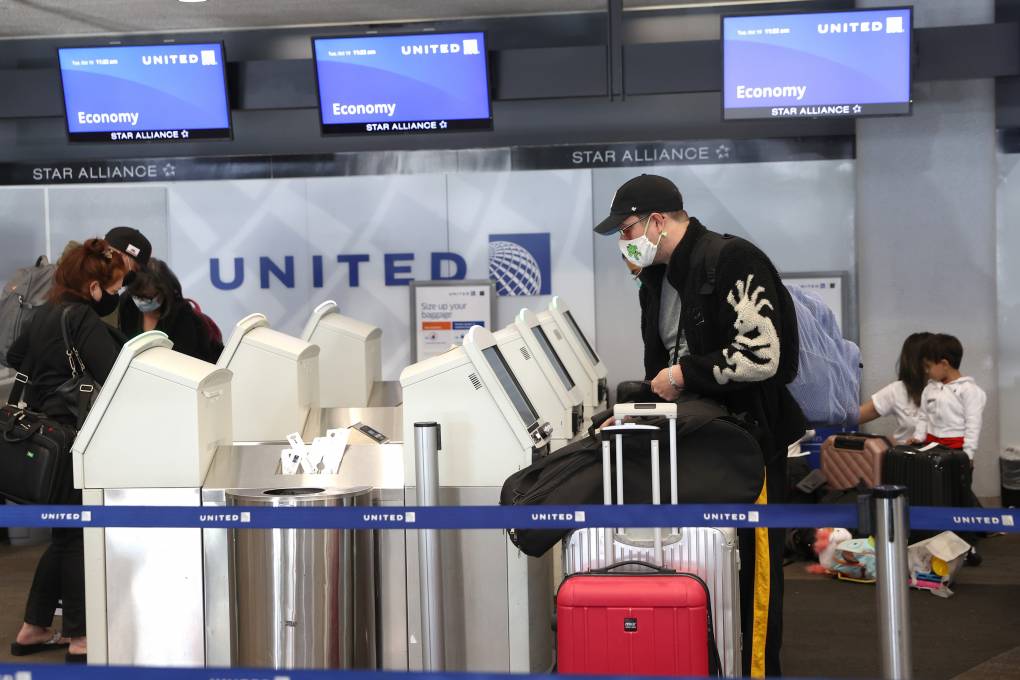
"caption": "United Airlines customers use a kiosk to check in to a flight at San Francisco International Airport on Oct. 19, 2021.",
"credit": "Justin Sullivan/Getty Images",
"altTag": "The customer wears a face mask and takes their luggage through the United check-in at the airport.",
"description": "United Airlines customers use a kiosk to check into a flight at San Francisco International Airport (SFO) on October 19, 2021.",
"imgSizes": {
"medium": {
"file": "https://cdn.kqed.org/wp-content/uploads/sites/10/2021/12/GettyImages-1347542133-800x533.jpg",
"width": 800,
"height": 533,
"mimeType": "image/jpeg"
},
"large": {
"file": "https://cdn.kqed.org/wp-content/uploads/sites/10/2021/12/GettyImages-1347542133-1020x680.jpg",
"width": 1020,
"height": 680,
"mimeType": "image/jpeg"
},
"thumbnail": {
"file": "https://cdn.kqed.org/wp-content/uploads/sites/10/2021/12/GettyImages-1347542133-160x107.jpg",
"width": 160,
"height": 107,
"mimeType": "image/jpeg"
},
"1536x1536": {
"file": "https://cdn.kqed.org/wp-content/uploads/sites/10/2021/12/GettyImages-1347542133-1536x1024.jpg",
"width": 1536,
"height": 1024,
"mimeType": "image/jpeg"
},
"2048x2048": {
"file": "https://cdn.kqed.org/wp-content/uploads/sites/10/2021/12/GettyImages-1347542133-2048x1365.jpg",
"width": 2048,
"height": 1365,
"mimeType": "image/jpeg"
},
"post-thumbnail": {
"file": "https://cdn.kqed.org/wp-content/uploads/sites/10/2021/12/GettyImages-1347542133-672x372.jpg",
"width": 672,
"height": 372,
"mimeType": "image/jpeg"
},
"twentyfourteen-full-width": {
"file": "https://cdn.kqed.org/wp-content/uploads/sites/10/2021/12/GettyImages-1347542133-1038x576.jpg",
"width": 1038,
"height": 576,
"mimeType": "image/jpeg"
},
"full-width": {
"file": "https://cdn.kqed.org/wp-content/uploads/sites/10/2021/12/GettyImages-1347542133-1920x1280.jpg",
"width": 1920,
"height": 1280,
"mimeType": "image/jpeg"
},
"kqedFullSize": {
"file": "https://cdn.kqed.org/wp-content/uploads/sites/10/2021/12/GettyImages-1347542133-scaled-e1746650711470.jpg",
"width": 2000,
"height": 1334
}
},
"isLoading": false,
"fetchFailed": false
},
"news_11889190": {
"type": "attachments",
"id": "news_11889190",
"meta": {
"index": "attachments_1716263798",
"site": "news",
"id": "11889190",
"found": true
},
"parent": 11889184,
"imgSizes": {
"twentyfourteen-full-width": {
"file": "https://ww2.kqed.org/app/uploads/sites/10/2021/09/domesticflight_092021_final-1038x576.png",
"width": 1038,
"mimeType": "image/png",
"height": 576
},
"thumbnail": {
"file": "https://ww2.kqed.org/app/uploads/sites/10/2021/09/domesticflight_092021_final-160x115.png",
"width": 160,
"mimeType": "image/png",
"height": 115
},
"post-thumbnail": {
"file": "https://ww2.kqed.org/app/uploads/sites/10/2021/09/domesticflight_092021_final-672x372.png",
"width": 672,
"mimeType": "image/png",
"height": 372
},
"kqedFullSize": {
"file": "https://ww2.kqed.org/app/uploads/sites/10/2021/09/domesticflight_092021_final.png",
"width": 1920,
"height": 1378
},
"large": {
"file": "https://ww2.kqed.org/app/uploads/sites/10/2021/09/domesticflight_092021_final-1020x732.png",
"width": 1020,
"mimeType": "image/png",
"height": 732
},
"1536x1536": {
"file": "https://ww2.kqed.org/app/uploads/sites/10/2021/09/domesticflight_092021_final-1536x1102.png",
"width": 1536,
"mimeType": "image/png",
"height": 1102
},
"medium": {
"file": "https://ww2.kqed.org/app/uploads/sites/10/2021/09/domesticflight_092021_final-800x574.png",
"width": 800,
"mimeType": "image/png",
"height": 574
}
},
"publishDate": 1632179076,
"modified": 1632179174,
"caption": null,
"description": null,
"title": "domesticflight_092021_final",
"credit": null,
"status": "inherit",
"altTag": "Cartoon: a passenger plane labeled, \"international flight\" with arrows showing vaccinated passengers. The second frame shows a domestic flight with passengers labeled \"vaccinated,\" \"unvaccinated\" and \"on horse dewormer.\"",
"isLoading": false,
"fetchFailed": false
},
"news_11877911": {
"type": "attachments",
"id": "news_11877911",
"meta": {
"index": "attachments_1716263798",
"site": "news",
"id": "11877911",
"found": true
},
"parent": 11877885,
"imgSizes": {
"twentyfourteen-full-width": {
"file": "https://ww2.kqed.org/app/uploads/sites/10/2021/06/GettyImages-1233142034-1-1038x576.jpg",
"width": 1038,
"mimeType": "image/jpeg",
"height": 576
},
"thumbnail": {
"file": "https://ww2.kqed.org/app/uploads/sites/10/2021/06/GettyImages-1233142034-1-160x107.jpg",
"width": 160,
"mimeType": "image/jpeg",
"height": 107
},
"post-thumbnail": {
"file": "https://ww2.kqed.org/app/uploads/sites/10/2021/06/GettyImages-1233142034-1-672x372.jpg",
"width": 672,
"mimeType": "image/jpeg",
"height": 372
},
"kqedFullSize": {
"file": "https://ww2.kqed.org/app/uploads/sites/10/2021/06/GettyImages-1233142034-1-scaled.jpg",
"width": 2560,
"height": 1706
},
"2048x2048": {
"file": "https://ww2.kqed.org/app/uploads/sites/10/2021/06/GettyImages-1233142034-1-2048x1365.jpg",
"width": 2048,
"mimeType": "image/jpeg",
"height": 1365
},
"large": {
"file": "https://ww2.kqed.org/app/uploads/sites/10/2021/06/GettyImages-1233142034-1-1020x680.jpg",
"width": 1020,
"mimeType": "image/jpeg",
"height": 680
},
"1536x1536": {
"file": "https://ww2.kqed.org/app/uploads/sites/10/2021/06/GettyImages-1233142034-1-1536x1024.jpg",
"width": 1536,
"mimeType": "image/jpeg",
"height": 1024
},
"full-width": {
"file": "https://ww2.kqed.org/app/uploads/sites/10/2021/06/GettyImages-1233142034-1-1920x1279.jpg",
"width": 1920,
"mimeType": "image/jpeg",
"height": 1279
},
"medium": {
"file": "https://ww2.kqed.org/app/uploads/sites/10/2021/06/GettyImages-1233142034-1-800x533.jpg",
"width": 800,
"mimeType": "image/jpeg",
"height": 533
}
},
"publishDate": 1623702901,
"modified": 1623712943,
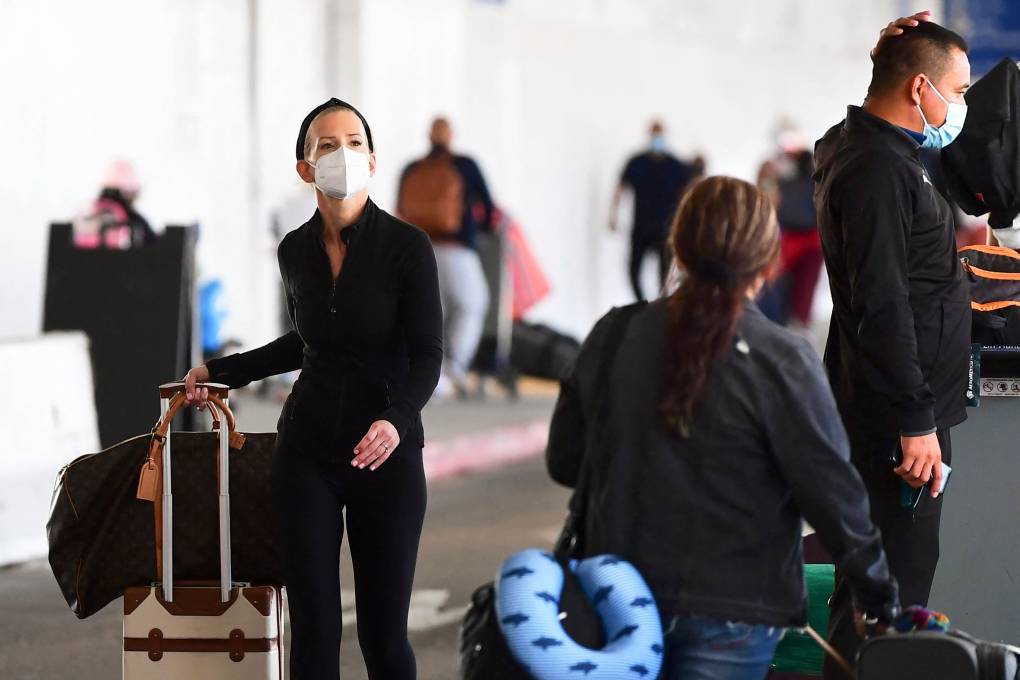
"caption": "Travelers await ground transport on arrival at Los Angeles International Airport (LAX) on May 27, 2021 in Los Angeles. Airports will be one of the spaces in California where the use of face masks will still be required after June 15.",
"description": "Travelers await ground transport on arrival at Los Angeles International Airport (LAX) on May 27, 2021 in Los Angeles. Airports will be one of the spaces in California where the use of facemasks will still be required after June 15.",
"title": "US-TRAVEL-HOLIDAYS-MEMORIAL",
"credit": "Frederic J. Brown/AFP via Getty Images",
"status": "inherit",
"altTag": "A person wearing a facemask walks through an airport.",
"isLoading": false,
"fetchFailed": false
},
"news_11836754": {
"type": "attachments",
"id": "news_11836754",
"meta": {
"index": "attachments_1716263798",
"site": "news",
"id": "11836754",
"found": true
},
"parent": 11836745,
"imgSizes": {
"apple_news_ca_landscape_5_5": {
"file": "https://ww2.kqed.org/app/uploads/sites/10/2020/09/open-road-1-1044x783.jpg",
"width": 1044,
"mimeType": "image/jpeg",
"height": 783
},
"apple_news_ca_square_4_0": {
"file": "https://ww2.kqed.org/app/uploads/sites/10/2020/09/open-road-1-470x470.jpg",
"width": 470,
"mimeType": "image/jpeg",
"height": 470
},
"twentyfourteen-full-width": {
"file": "https://ww2.kqed.org/app/uploads/sites/10/2020/09/open-road-1-1038x576.jpg",
"width": 1038,
"mimeType": "image/jpeg",
"height": 576
},
"thumbnail": {
"file": "https://ww2.kqed.org/app/uploads/sites/10/2020/09/open-road-1-160x108.jpg",
"width": 160,
"mimeType": "image/jpeg",
"height": 108
},
"post-thumbnail": {
"file": "https://ww2.kqed.org/app/uploads/sites/10/2020/09/open-road-1-672x372.jpg",
"width": 672,
"mimeType": "image/jpeg",
"height": 372
},
"kqedFullSize": {
"file": "https://ww2.kqed.org/app/uploads/sites/10/2020/09/open-road-1.jpg",
"width": 1900,
"height": 1280
},
"apple_news_ca_landscape_4_7": {
"file": "https://ww2.kqed.org/app/uploads/sites/10/2020/09/open-road-1-632x474.jpg",
"width": 632,
"mimeType": "image/jpeg",
"height": 474
},
"large": {
"file": "https://ww2.kqed.org/app/uploads/sites/10/2020/09/open-road-1-1020x687.jpg",
"width": 1020,
"mimeType": "image/jpeg",
"height": 687
},
"apple_news_ca_landscape_4_0": {
"file": "https://ww2.kqed.org/app/uploads/sites/10/2020/09/open-road-1-536x402.jpg",
"width": 536,
"mimeType": "image/jpeg",
"height": 402
},
"apple_news_ca_portrait_12_9": {
"file": "https://ww2.kqed.org/app/uploads/sites/10/2020/09/open-road-1-1122x1280.jpg",
"width": 1122,
"mimeType": "image/jpeg",
"height": 1280
},
"medium": {
"file": "https://ww2.kqed.org/app/uploads/sites/10/2020/09/open-road-1-800x539.jpg",
"width": 800,
"mimeType": "image/jpeg",
"height": 539
},
"apple_news_ca_portrait_4_0": {
"file": "https://ww2.kqed.org/app/uploads/sites/10/2020/09/open-road-1-354x472.jpg",
"width": 354,
"mimeType": "image/jpeg",
"height": 472
},
"apple_news_ca_portrait_9_7": {
"file": "https://ww2.kqed.org/app/uploads/sites/10/2020/09/open-road-1-840x1120.jpg",
"width": 840,
"mimeType": "image/jpeg",
"height": 1120
},
"apple_news_ca_landscape_12_9": {
"file": "https://ww2.kqed.org/app/uploads/sites/10/2020/09/open-road-1-1832x1280.jpg",
"width": 1832,
"mimeType": "image/jpeg",
"height": 1280
},
"apple_news_ca_square_9_7": {
"file": "https://ww2.kqed.org/app/uploads/sites/10/2020/09/open-road-1-1104x1104.jpg",
"width": 1104,
"mimeType": "image/jpeg",
"height": 1104
},
"1536x1536": {
"file": "https://ww2.kqed.org/app/uploads/sites/10/2020/09/open-road-1-1536x1035.jpg",
"width": 1536,
"mimeType": "image/jpeg",
"height": 1035
},
"apple_news_ca_portrait_4_7": {
"file": "https://ww2.kqed.org/app/uploads/sites/10/2020/09/open-road-1-414x552.jpg",
"width": 414,
"mimeType": "image/jpeg",
"height": 552
},
"apple_news_ca_square_12_9": {
"file": "https://ww2.kqed.org/app/uploads/sites/10/2020/09/open-road-1-1472x1280.jpg",
"width": 1472,
"mimeType": "image/jpeg",
"height": 1280
},
"apple_news_ca_portrait_5_5": {
"file": "https://ww2.kqed.org/app/uploads/sites/10/2020/09/open-road-1-687x916.jpg",
"width": 687,
"mimeType": "image/jpeg",
"height": 916
},
"apple_news_ca_square_4_7": {
"file": "https://ww2.kqed.org/app/uploads/sites/10/2020/09/open-road-1-550x550.jpg",
"width": 550,
"mimeType": "image/jpeg",
"height": 550
},
"apple_news_ca_landscape_9_7": {
"file": "https://ww2.kqed.org/app/uploads/sites/10/2020/09/open-road-1-1376x1032.jpg",
"width": 1376,
"mimeType": "image/jpeg",
"height": 1032
},
"apple_news_ca_square_5_5": {
"file": "https://ww2.kqed.org/app/uploads/sites/10/2020/09/open-road-1-912x912.jpg",
"width": 912,
"mimeType": "image/jpeg",
"height": 912
}
},
"publishDate": 1599247874,
"modified": 1599247940,
"caption": "Travel restrictions due to COVID-19 are still in place in California. How can you travel safely?",
"description": null,
"title": "travelrestrictions",
"credit": "Pixabay/Pexels",
"status": "inherit",
"isLoading": false,
"fetchFailed": false
},
"news_11830188": {
"type": "attachments",
"id": "news_11830188",
"meta": {
"index": "attachments_1716263798",
"site": "news",
"id": "11830188",
"found": true
},
"parent": 11829403,
"imgSizes": {
"apple_news_ca_landscape_5_5": {
"file": "https://ww2.kqed.org/app/uploads/sites/10/2020/07/covidsafetravel-1044x783.jpg",
"width": 1044,
"mimeType": "image/jpeg",
"height": 783
},
"apple_news_ca_square_4_0": {
"file": "https://ww2.kqed.org/app/uploads/sites/10/2020/07/covidsafetravel-470x470.jpg",
"width": 470,
"mimeType": "image/jpeg",
"height": 470
},
"twentyfourteen-full-width": {
"file": "https://ww2.kqed.org/app/uploads/sites/10/2020/07/covidsafetravel-1038x576.jpg",
"width": 1038,
"mimeType": "image/jpeg",
"height": 576
},
"thumbnail": {
"file": "https://ww2.kqed.org/app/uploads/sites/10/2020/07/covidsafetravel-160x108.jpg",
"width": 160,
"mimeType": "image/jpeg",
"height": 108
},
"post-thumbnail": {
"file": "https://ww2.kqed.org/app/uploads/sites/10/2020/07/covidsafetravel-672x372.jpg",
"width": 672,
"mimeType": "image/jpeg",
"height": 372
},
"kqedFullSize": {
"file": "https://ww2.kqed.org/app/uploads/sites/10/2020/07/covidsafetravel.jpg",
"width": 1900,
"height": 1280
},
"apple_news_ca_landscape_4_7": {
"file": "https://ww2.kqed.org/app/uploads/sites/10/2020/07/covidsafetravel-632x474.jpg",
"width": 632,
"mimeType": "image/jpeg",
"height": 474
},
"large": {
"file": "https://ww2.kqed.org/app/uploads/sites/10/2020/07/covidsafetravel-1020x687.jpg",
"width": 1020,
"mimeType": "image/jpeg",
"height": 687
},
"apple_news_ca_landscape_4_0": {
"file": "https://ww2.kqed.org/app/uploads/sites/10/2020/07/covidsafetravel-536x402.jpg",
"width": 536,
"mimeType": "image/jpeg",
"height": 402
},
"apple_news_ca_portrait_12_9": {
"file": "https://ww2.kqed.org/app/uploads/sites/10/2020/07/covidsafetravel-1122x1280.jpg",
"width": 1122,
"mimeType": "image/jpeg",
"height": 1280
},
"medium": {
"file": "https://ww2.kqed.org/app/uploads/sites/10/2020/07/covidsafetravel-800x539.jpg",
"width": 800,
"mimeType": "image/jpeg",
"height": 539
},
"apple_news_ca_portrait_4_0": {
"file": "https://ww2.kqed.org/app/uploads/sites/10/2020/07/covidsafetravel-354x472.jpg",
"width": 354,
"mimeType": "image/jpeg",
"height": 472
},
"apple_news_ca_portrait_9_7": {
"file": "https://ww2.kqed.org/app/uploads/sites/10/2020/07/covidsafetravel-840x1120.jpg",
"width": 840,
"mimeType": "image/jpeg",
"height": 1120
},
"apple_news_ca_landscape_12_9": {
"file": "https://ww2.kqed.org/app/uploads/sites/10/2020/07/covidsafetravel-1832x1280.jpg",
"width": 1832,
"mimeType": "image/jpeg",
"height": 1280
},
"apple_news_ca_square_9_7": {
"file": "https://ww2.kqed.org/app/uploads/sites/10/2020/07/covidsafetravel-1104x1104.jpg",
"width": 1104,
"mimeType": "image/jpeg",
"height": 1104
},
"1536x1536": {
"file": "https://ww2.kqed.org/app/uploads/sites/10/2020/07/covidsafetravel-1536x1035.jpg",
"width": 1536,
"mimeType": "image/jpeg",
"height": 1035
},
"apple_news_ca_portrait_4_7": {
"file": "https://ww2.kqed.org/app/uploads/sites/10/2020/07/covidsafetravel-414x552.jpg",
"width": 414,
"mimeType": "image/jpeg",
"height": 552
},
"apple_news_ca_square_12_9": {
"file": "https://ww2.kqed.org/app/uploads/sites/10/2020/07/covidsafetravel-1472x1280.jpg",
"width": 1472,
"mimeType": "image/jpeg",
"height": 1280
},
"apple_news_ca_portrait_5_5": {
"file": "https://ww2.kqed.org/app/uploads/sites/10/2020/07/covidsafetravel-687x916.jpg",
"width": 687,
"mimeType": "image/jpeg",
"height": 916
},
"apple_news_ca_square_4_7": {
"file": "https://ww2.kqed.org/app/uploads/sites/10/2020/07/covidsafetravel-550x550.jpg",
"width": 550,
"mimeType": "image/jpeg",
"height": 550
},
"apple_news_ca_landscape_9_7": {
"file": "https://ww2.kqed.org/app/uploads/sites/10/2020/07/covidsafetravel-1376x1032.jpg",
"width": 1376,
"mimeType": "image/jpeg",
"height": 1032
},
"apple_news_ca_square_5_5": {
"file": "https://ww2.kqed.org/app/uploads/sites/10/2020/07/covidsafetravel-912x912.jpg",
"width": 912,
"mimeType": "image/jpeg",
"height": 912
}
},
"publishDate": 1595443237,
"modified": 1595443296,
"caption": "Can you travel safely right now? Travel is officially discouraged, but people are wondering how they can reduce the risk of spreading COVID-19 if they do.",
"description": "Can you travel safely right now? Travel is officially discouraged, but people are wondering how they can reduce the risk of spreading COVID-19 if they do.",
"title": "covidsafetravel",
"credit": "Johannes Plenio/Pexels",
"status": "inherit",
"isLoading": false,
"fetchFailed": false
},
"news_11717570": {
"type": "attachments",
"id": "news_11717570",
"meta": {
"index": "attachments_1716263798",
"site": "news",
"id": "11717570",
"found": true
},
"parent": 11717442,
"imgSizes": {
"twentyfourteen-full-width": {
"file": "https://ww2.kqed.org/app/uploads/sites/10/2019/01/ATCTowerViewSFO-1038x576.jpg",
"width": 1038,
"mimeType": "image/jpeg",
"height": 576
},
"thumbnail": {
"file": "https://ww2.kqed.org/app/uploads/sites/10/2019/01/ATCTowerViewSFO-160x113.jpg",
"width": 160,
"mimeType": "image/jpeg",
"height": 113
},
"post-thumbnail": {
"file": "https://ww2.kqed.org/app/uploads/sites/10/2019/01/ATCTowerViewSFO-672x372.jpg",
"width": 672,
"mimeType": "image/jpeg",
"height": 372
},
"kqedFullSize": {
"file": "https://ww2.kqed.org/app/uploads/sites/10/2019/01/ATCTowerViewSFO.jpg",
"width": 1920,
"height": 1357
},
"large": {
"file": "https://ww2.kqed.org/app/uploads/sites/10/2019/01/ATCTowerViewSFO-1020x721.jpg",
"width": 1020,
"mimeType": "image/jpeg",
"height": 721
},
"complete_open_graph": {
"file": "https://ww2.kqed.org/app/uploads/sites/10/2019/01/ATCTowerViewSFO-1200x848.jpg",
"width": 1200,
"mimeType": "image/jpeg",
"height": 848
},
"guest-author-50": {
"file": "https://ww2.kqed.org/app/uploads/sites/10/2019/01/ATCTowerViewSFO-50x50.jpg",
"width": 50,
"mimeType": "image/jpeg",
"height": 50
},
"guest-author-96": {
"file": "https://ww2.kqed.org/app/uploads/sites/10/2019/01/ATCTowerViewSFO-96x96.jpg",
"width": 96,
"mimeType": "image/jpeg",
"height": 96
},
"medium": {
"file": "https://ww2.kqed.org/app/uploads/sites/10/2019/01/ATCTowerViewSFO-800x565.jpg",
"width": 800,
"mimeType": "image/jpeg",
"height": 565
},
"guest-author-64": {
"file": "https://ww2.kqed.org/app/uploads/sites/10/2019/01/ATCTowerViewSFO-64x64.jpg",
"width": 64,
"mimeType": "image/jpeg",
"height": 64
},
"guest-author-32": {
"file": "https://ww2.kqed.org/app/uploads/sites/10/2019/01/ATCTowerViewSFO-32x32.jpg",
"width": 32,
"mimeType": "image/jpeg",
"height": 32
},
"full-width": {
"file": "https://ww2.kqed.org/app/uploads/sites/10/2019/01/ATCTowerViewSFO-1920x1357.jpg",
"width": 1920,
"mimeType": "image/jpeg",
"height": 1357
},
"detail": {
"file": "https://ww2.kqed.org/app/uploads/sites/10/2019/01/ATCTowerViewSFO-150x150.jpg",
"width": 150,
"mimeType": "image/jpeg",
"height": 150
},
"guest-author-128": {
"file": "https://ww2.kqed.org/app/uploads/sites/10/2019/01/ATCTowerViewSFO-128x128.jpg",
"width": 128,
"mimeType": "image/jpeg",
"height": 128
}
},
"publishDate": 1547172655,
"modified": 1555007777,
"caption": "An air traffic controller's view looking northwest from San Francisco International Airport's control tower. ",
"description": "An air traffic controller's view looking northwest from San Francisco International Airport's control tower. Air traffic controllers at SFO and across the nation won't receive a paycheck on Friday due to the partial government shutdown.",
"title": "ATCTowerViewSFO",
"credit": "Courtesy of Frederick Naujoks",
"status": "inherit",
"isLoading": false,
"fetchFailed": false
},
"news_11643619": {
"type": "attachments",
"id": "news_11643619",
"meta": {
"index": "attachments_1716263798",
"site": "news",
"id": "11643619",
"found": true
},
"parent": 11643609,
"imgSizes": {
"small": {
"file": "https://ww2.kqed.org/app/uploads/sites/10/2018/01/Screen-Shot-2018-01-22-at-2.30.36-PM-520x348.png",
"width": 520,
"mimeType": "image/png",
"height": 348
},
"twentyfourteen-full-width": {
"file": "https://ww2.kqed.org/app/uploads/sites/10/2018/01/Screen-Shot-2018-01-22-at-2.30.36-PM-1038x576.png",
"width": 1038,
"mimeType": "image/png",
"height": 576
},
"thumbnail": {
"file": "https://ww2.kqed.org/app/uploads/sites/10/2018/01/Screen-Shot-2018-01-22-at-2.30.36-PM-160x107.png",
"width": 160,
"mimeType": "image/png",
"height": 107
},
"fd-sm": {
"file": "https://ww2.kqed.org/app/uploads/sites/10/2018/01/Screen-Shot-2018-01-22-at-2.30.36-PM-960x643.png",
"width": 960,
"mimeType": "image/png",
"height": 643
},
"post-thumbnail": {
"file": "https://ww2.kqed.org/app/uploads/sites/10/2018/01/Screen-Shot-2018-01-22-at-2.30.36-PM-672x372.png",
"width": 672,
"mimeType": "image/png",
"height": 372
},
"xsmall": {
"file": "https://ww2.kqed.org/app/uploads/sites/10/2018/01/Screen-Shot-2018-01-22-at-2.30.36-PM-375x251.png",
"width": 375,
"mimeType": "image/png",
"height": 251
},
"kqedFullSize": {
"file": "https://ww2.kqed.org/app/uploads/sites/10/2018/01/Screen-Shot-2018-01-22-at-2.30.36-PM.png",
"width": 1284,
"height": 860
},
"large": {
"file": "https://ww2.kqed.org/app/uploads/sites/10/2018/01/Screen-Shot-2018-01-22-at-2.30.36-PM-1020x683.png",
"width": 1020,
"mimeType": "image/png",
"height": 683
},
"xlarge": {
"file": "https://ww2.kqed.org/app/uploads/sites/10/2018/01/Screen-Shot-2018-01-22-at-2.30.36-PM-1180x790.png",
"width": 1180,
"mimeType": "image/png",
"height": 790
},
"guest-author-50": {
"file": "https://ww2.kqed.org/app/uploads/sites/10/2018/01/Screen-Shot-2018-01-22-at-2.30.36-PM-50x50.png",
"width": 50,
"mimeType": "image/png",
"height": 50
},
"guest-author-96": {
"file": "https://ww2.kqed.org/app/uploads/sites/10/2018/01/Screen-Shot-2018-01-22-at-2.30.36-PM-96x96.png",
"width": 96,
"mimeType": "image/png",
"height": 96
},
"medium": {
"file": "https://ww2.kqed.org/app/uploads/sites/10/2018/01/Screen-Shot-2018-01-22-at-2.30.36-PM-800x536.png",
"width": 800,
"mimeType": "image/png",
"height": 536
},
"guest-author-64": {
"file": "https://ww2.kqed.org/app/uploads/sites/10/2018/01/Screen-Shot-2018-01-22-at-2.30.36-PM-64x64.png",
"width": 64,
"mimeType": "image/png",
"height": 64
},
"guest-author-32": {
"file": "https://ww2.kqed.org/app/uploads/sites/10/2018/01/Screen-Shot-2018-01-22-at-2.30.36-PM-32x32.png",
"width": 32,
"mimeType": "image/png",
"height": 32
},
"fd-med": {
"file": "https://ww2.kqed.org/app/uploads/sites/10/2018/01/Screen-Shot-2018-01-22-at-2.30.36-PM-1180x790.png",
"width": 1180,
"mimeType": "image/png",
"height": 790
},
"detail": {
"file": "https://ww2.kqed.org/app/uploads/sites/10/2018/01/Screen-Shot-2018-01-22-at-2.30.36-PM-150x150.png",
"width": 150,
"mimeType": "image/png",
"height": 150
},
"guest-author-128": {
"file": "https://ww2.kqed.org/app/uploads/sites/10/2018/01/Screen-Shot-2018-01-22-at-2.30.36-PM-128x128.png",
"width": 128,
"mimeType": "image/png",
"height": 128
},
"xxsmall": {
"file": "https://ww2.kqed.org/app/uploads/sites/10/2018/01/Screen-Shot-2018-01-22-at-2.30.36-PM-240x161.png",
"width": 240,
"mimeType": "image/png",
"height": 161
}
},
"publishDate": 1516660260,
"modified": 1516660303,
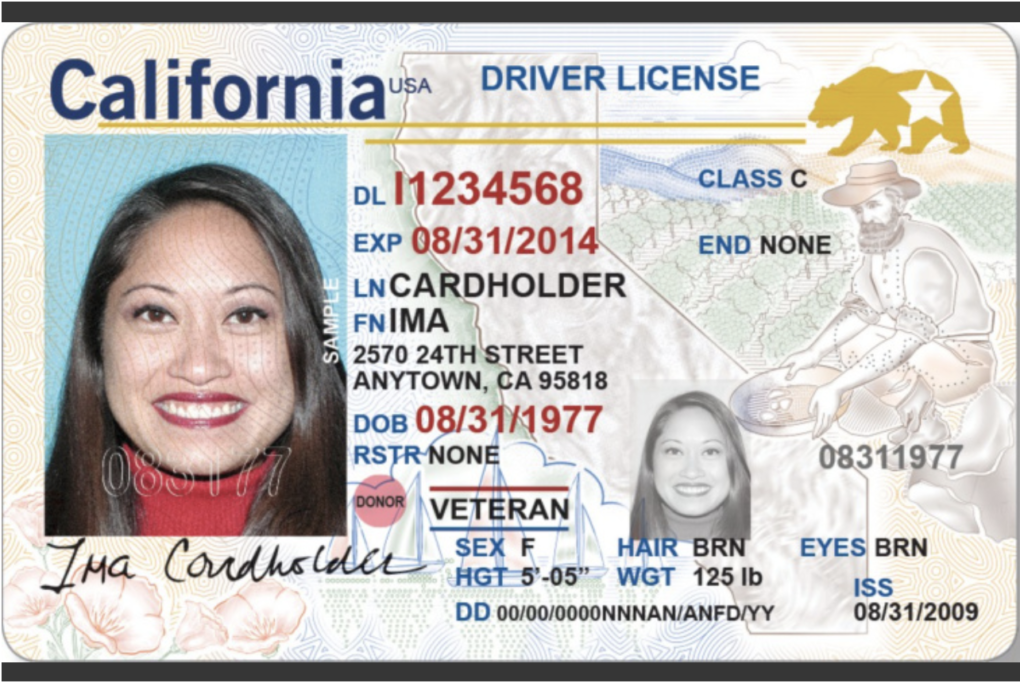
"caption": "This is what a California \"Real ID\" driver's license will look like. The federally compliant license can be used to board a domestic flight beginning in 2020.",
"description": "This is what a California \"Real ID\" driver's license will look like. The federally compliant license can be used to board a domestic flight beginning in 2020.",
"title": "Screen Shot 2018-01-22 at 2.30.36 PM",
"credit": "Courtesy of DMV",
"status": "inherit",
"isLoading": false,
"fetchFailed": false
},
"news_11442085": {
"type": "attachments",
"id": "news_11442085",
"meta": {
"index": "attachments_1716263798",
"site": "news",
"id": "11442085",
"found": true
},
"parent": 11442081,
"imgSizes": {
"small": {
"file": "https://ww2.kqed.org/app/uploads/sites/10/2017/05/DeltaLAX-520x334.jpg",
"width": 520,
"mimeType": "image/jpeg",
"height": 334
},
"twentyfourteen-full-width": {
"file": "https://ww2.kqed.org/app/uploads/sites/10/2017/05/DeltaLAX-1038x576.jpg",
"width": 1038,
"mimeType": "image/jpeg",
"height": 576
},
"thumbnail": {
"file": "https://ww2.kqed.org/app/uploads/sites/10/2017/05/DeltaLAX-160x103.jpg",
"width": 160,
"mimeType": "image/jpeg",
"height": 103
},
"fd-sm": {
"file": "https://ww2.kqed.org/app/uploads/sites/10/2017/05/DeltaLAX-960x617.jpg",
"width": 960,
"mimeType": "image/jpeg",
"height": 617
},
"post-thumbnail": {
"file": "https://ww2.kqed.org/app/uploads/sites/10/2017/05/DeltaLAX-672x372.jpg",
"width": 672,
"mimeType": "image/jpeg",
"height": 372
},
"xsmall": {
"file": "https://ww2.kqed.org/app/uploads/sites/10/2017/05/DeltaLAX-375x241.jpg",
"width": 375,
"mimeType": "image/jpeg",
"height": 241
},
"kqedFullSize": {
"file": "https://ww2.kqed.org/app/uploads/sites/10/2017/05/DeltaLAX.jpg",
"width": 1920,
"height": 1234
},
"large": {
"file": "https://ww2.kqed.org/app/uploads/sites/10/2017/05/DeltaLAX-1020x656.jpg",
"width": 1020,
"mimeType": "image/jpeg",
"height": 656
},
"xlarge": {
"file": "https://ww2.kqed.org/app/uploads/sites/10/2017/05/DeltaLAX-1180x758.jpg",
"width": 1180,
"mimeType": "image/jpeg",
"height": 758
},
"guest-author-50": {
"file": "https://ww2.kqed.org/app/uploads/sites/10/2017/05/DeltaLAX-50x50.jpg",
"width": 50,
"mimeType": "image/jpeg",
"height": 50
},
"guest-author-96": {
"file": "https://ww2.kqed.org/app/uploads/sites/10/2017/05/DeltaLAX-96x96.jpg",
"width": 96,
"mimeType": "image/jpeg",
"height": 96
},
"medium": {
"file": "https://ww2.kqed.org/app/uploads/sites/10/2017/05/DeltaLAX-800x514.jpg",
"width": 800,
"mimeType": "image/jpeg",
"height": 514
},
"guest-author-64": {
"file": "https://ww2.kqed.org/app/uploads/sites/10/2017/05/DeltaLAX-64x64.jpg",
"width": 64,
"mimeType": "image/jpeg",
"height": 64
},
"guest-author-32": {
"file": "https://ww2.kqed.org/app/uploads/sites/10/2017/05/DeltaLAX-32x32.jpg",
"width": 32,
"mimeType": "image/jpeg",
"height": 32
},
"fd-lrg": {
"file": "https://ww2.kqed.org/app/uploads/sites/10/2017/05/DeltaLAX-1920x1234.jpg",
"width": 1920,
"mimeType": "image/jpeg",
"height": 1234
},
"fd-med": {
"file": "https://ww2.kqed.org/app/uploads/sites/10/2017/05/DeltaLAX-1180x758.jpg",
"width": 1180,
"mimeType": "image/jpeg",
"height": 758
},
"full-width": {
"file": "https://ww2.kqed.org/app/uploads/sites/10/2017/05/DeltaLAX-1920x1234.jpg",
"width": 1920,
"mimeType": "image/jpeg",
"height": 1234
},
"detail": {
"file": "https://ww2.kqed.org/app/uploads/sites/10/2017/05/DeltaLAX-150x150.jpg",
"width": 150,
"mimeType": "image/jpeg",
"height": 150
},
"guest-author-128": {
"file": "https://ww2.kqed.org/app/uploads/sites/10/2017/05/DeltaLAX-128x128.jpg",
"width": 128,
"mimeType": "image/jpeg",
"height": 128
},
"xxsmall": {
"file": "https://ww2.kqed.org/app/uploads/sites/10/2017/05/DeltaLAX-240x154.jpg",
"width": 240,
"mimeType": "image/jpeg",
"height": 154
}
},
"publishDate": 1494019069,
"modified": 1494019167,
"caption": "In yet another incident that could prove a public relations nightmare for an airline, a Huntington Beach couple has come forward claiming they were kicked off an overbooked Delta flight for refusing to give up their child's seat. ",
"description": "In yet another incident that could prove a public relations nightmare for an airline, a Huntington Beach couple has come forward claiming they were kicked off an overbooked Delta flight for refusing to give up their child's seat. ",
"title": "DeltaLAX",
"credit": "ROBYN BECK/AFP/Getty Images",
"status": "inherit",
"isLoading": false,
"fetchFailed": false
},
"news_11216670": {
"type": "attachments",
"id": "news_11216670",
"meta": {
"index": "attachments_1716263798",
"site": "news",
"id": "11216670",
"found": true
},
"parent": 11216669,
"imgSizes": {
"small": {
"file": "https://ww2.kqed.org/app/uploads/sites/10/2016/12/gettyimages-585753154_wide-c935c699a83cf4641976d6c9c00c5ab4fb3e4a69-520x293.jpg",
"width": 520,
"mimeType": "image/jpeg",
"height": 293
},
"twentyfourteen-full-width": {
"file": "https://ww2.kqed.org/app/uploads/sites/10/2016/12/gettyimages-585753154_wide-c935c699a83cf4641976d6c9c00c5ab4fb3e4a69-1038x576.jpg",
"width": 1038,
"mimeType": "image/jpeg",
"height": 576
},
"thumbnail": {
"file": "https://ww2.kqed.org/app/uploads/sites/10/2016/12/gettyimages-585753154_wide-c935c699a83cf4641976d6c9c00c5ab4fb3e4a69-160x90.jpg",
"width": 160,
"mimeType": "image/jpeg",
"height": 90
},
"fd-sm": {
"file": "https://ww2.kqed.org/app/uploads/sites/10/2016/12/gettyimages-585753154_wide-c935c699a83cf4641976d6c9c00c5ab4fb3e4a69-960x540.jpg",
"width": 960,
"mimeType": "image/jpeg",
"height": 540
},
"post-thumbnail": {
"file": "https://ww2.kqed.org/app/uploads/sites/10/2016/12/gettyimages-585753154_wide-c935c699a83cf4641976d6c9c00c5ab4fb3e4a69-672x372.jpg",
"width": 672,
"mimeType": "image/jpeg",
"height": 372
},
"xsmall": {
"file": "https://ww2.kqed.org/app/uploads/sites/10/2016/12/gettyimages-585753154_wide-c935c699a83cf4641976d6c9c00c5ab4fb3e4a69-375x211.jpg",
"width": 375,
"mimeType": "image/jpeg",
"height": 211
},
"kqedFullSize": {
"file": "https://ww2.kqed.org/app/uploads/sites/10/2016/12/gettyimages-585753154_wide-c935c699a83cf4641976d6c9c00c5ab4fb3e4a69-e1481553799582.jpg",
"width": 1920,
"height": 1080
},
"large": {
"file": "https://ww2.kqed.org/app/uploads/sites/10/2016/12/gettyimages-585753154_wide-c935c699a83cf4641976d6c9c00c5ab4fb3e4a69-1020x574.jpg",
"width": 1020,
"mimeType": "image/jpeg",
"height": 574
},
"xlarge": {
"file": "https://ww2.kqed.org/app/uploads/sites/10/2016/12/gettyimages-585753154_wide-c935c699a83cf4641976d6c9c00c5ab4fb3e4a69-1180x664.jpg",
"width": 1180,
"mimeType": "image/jpeg",
"height": 664
},
"guest-author-50": {
"file": "https://ww2.kqed.org/app/uploads/sites/10/2016/12/gettyimages-585753154_wide-c935c699a83cf4641976d6c9c00c5ab4fb3e4a69-50x50.jpg",
"width": 50,
"mimeType": "image/jpeg",
"height": 50
},
"guest-author-96": {
"file": "https://ww2.kqed.org/app/uploads/sites/10/2016/12/gettyimages-585753154_wide-c935c699a83cf4641976d6c9c00c5ab4fb3e4a69-96x96.jpg",
"width": 96,
"mimeType": "image/jpeg",
"height": 96
},
"medium": {
"file": "https://ww2.kqed.org/app/uploads/sites/10/2016/12/gettyimages-585753154_wide-c935c699a83cf4641976d6c9c00c5ab4fb3e4a69-800x450.jpg",
"width": 800,
"mimeType": "image/jpeg",
"height": 450
},
"guest-author-64": {
"file": "https://ww2.kqed.org/app/uploads/sites/10/2016/12/gettyimages-585753154_wide-c935c699a83cf4641976d6c9c00c5ab4fb3e4a69-64x64.jpg",
"width": 64,
"mimeType": "image/jpeg",
"height": 64
},
"guest-author-32": {
"file": "https://ww2.kqed.org/app/uploads/sites/10/2016/12/gettyimages-585753154_wide-c935c699a83cf4641976d6c9c00c5ab4fb3e4a69-32x32.jpg",
"width": 32,
"mimeType": "image/jpeg",
"height": 32
},
"jmtc-small-thumb": {
"file": "https://ww2.kqed.org/app/uploads/sites/10/2016/12/gettyimages-585753154_wide-c935c699a83cf4641976d6c9c00c5ab4fb3e4a69-280x150.jpg",
"width": 280,
"mimeType": "image/jpeg",
"height": 150
},
"fd-lrg": {
"file": "https://ww2.kqed.org/app/uploads/sites/10/2016/12/gettyimages-585753154_wide-c935c699a83cf4641976d6c9c00c5ab4fb3e4a69-1920x1080.jpg",
"width": 1920,
"mimeType": "image/jpeg",
"height": 1080
},
"fd-med": {
"file": "https://ww2.kqed.org/app/uploads/sites/10/2016/12/gettyimages-585753154_wide-c935c699a83cf4641976d6c9c00c5ab4fb3e4a69-1180x664.jpg",
"width": 1180,
"mimeType": "image/jpeg",
"height": 664
},
"full-width": {
"file": "https://ww2.kqed.org/app/uploads/sites/10/2016/12/gettyimages-585753154_wide-c935c699a83cf4641976d6c9c00c5ab4fb3e4a69-1920x1080.jpg",
"width": 1920,
"mimeType": "image/jpeg",
"height": 1080
},
"detail": {
"file": "https://ww2.kqed.org/app/uploads/sites/10/2016/12/gettyimages-585753154_wide-c935c699a83cf4641976d6c9c00c5ab4fb3e4a69-150x150.jpg",
"width": 150,
"mimeType": "image/jpeg",
"height": 150
},
"guest-author-128": {
"file": "https://ww2.kqed.org/app/uploads/sites/10/2016/12/gettyimages-585753154_wide-c935c699a83cf4641976d6c9c00c5ab4fb3e4a69-128x128.jpg",
"width": 128,
"mimeType": "image/jpeg",
"height": 128
},
"xxsmall": {
"file": "https://ww2.kqed.org/app/uploads/sites/10/2016/12/gettyimages-585753154_wide-c935c699a83cf4641976d6c9c00c5ab4fb3e4a69-240x135.jpg",
"width": 240,
"mimeType": "image/jpeg",
"height": 135
}
},
"publishDate": 1481553722,
"modified": 1481553792,
"caption": "United Airlines in 2017 will offer a new flying option: Basic Economy. It'll mean giving up some of the few remaining so-called perks of air travel.",
"description": "United Airlines in 2017 will offer a new flying option: Basic Economy. It'll mean giving up some of the few remaining so-called perks of air travel.",
"title": "United Airlines",
"credit": "Rick Kern/Getty Images for United Airlines",
"status": "inherit",
"isLoading": false,
"fetchFailed": false
}
},
"audioPlayerReducer": {
"postId": "stream_live",
"isPaused": true,
"isPlaying": false,
"pfsActive": false,
"pledgeModalIsOpen": true,
"playerDrawerIsOpen": false,
"liveAudioPlayStartedAt": 0,
"liveAudioPlayContext": ""
},
"authorsReducer": {
"byline_news_11900288": {
"type": "authors",
"id": "byline_news_11900288",
"meta": {
"override": true
},
"slug": "byline_news_11900288",
"name": "Tali Arbel \u003cbr> The Associated Press",
"isLoading": false
},
"byline_news_11877885": {
"type": "authors",
"id": "byline_news_11877885",
"meta": {
"override": true
},
"slug": "byline_news_11877885",
"name": "Fran Kritz",
"isLoading": false
},
"byline_news_11643609": {
"type": "authors",
"id": "byline_news_11643609",
"meta": {
"override": true
},
"slug": "byline_news_11643609",
"name": "Leslie Berestein Rojas\u003cbr>\u003cstrong>\u003ca href=\"https://www.scpr.org/news/2018/01/22/79986/what-you-need-to-know-about-california-real-id-dri/\">KPCC\u003c/strong>\u003c/a>",
"isLoading": false
},
"byline_news_11442081": {
"type": "authors",
"id": "byline_news_11442081",
"meta": {
"override": true
},
"slug": "byline_news_11442081",
"name": "David Koenig and Christopher Weber \u003cbr> Associated Press",
"isLoading": false
},
"byline_news_11216669": {
"type": "authors",
"id": "byline_news_11216669",
"meta": {
"override": true
},
"slug": "byline_news_11216669",
"name": "\u003cstrong>David Schaper\u003cbr />NPR\u003c/strong>",
"isLoading": false
},
"dmarks": {
"type": "authors",
"id": "182",
"meta": {
"index": "authors_1716337520",
"id": "182",
"found": true
},
"name": "David Marks",
"firstName": "David",
"lastName": "Marks",
"slug": "dmarks",
"email": "dmarks@kqed.org",
"display_author_email": false,
"staff_mastheads": [],
"title": "KQED Editor",
"bio": "David Marks is a senior digital editor for KQED News. \u003c/a>Reach him at dmarks@kqed.org.",
"avatar": "https://secure.gravatar.com/avatar/b88bd6227ce6cb96ae33fefaf42b2a29?s=600&d=mm&r=g",
"twitter": "divadskram",
"facebook": null,
"instagram": null,
"linkedin": null,
"sites": [
{
"site": "news",
"roles": []
},
{
"site": "science",
"roles": []
},
{
"site": "perspectives",
"roles": []
},
{
"site": "liveblog",
"roles": []
}
],
"headData": {
"title": "David Marks | KQED",
"description": "KQED Editor",
"ogImgSrc": "https://secure.gravatar.com/avatar/b88bd6227ce6cb96ae33fefaf42b2a29?s=600&d=mm&r=g",
"twImgSrc": "https://secure.gravatar.com/avatar/b88bd6227ce6cb96ae33fefaf42b2a29?s=600&d=mm&r=g"
},
"isLoading": false,
"link": "/author/dmarks"
},
"matthewgreen": {
"type": "authors",
"id": "1263",
"meta": {
"index": "authors_1716337520",
"id": "1263",
"found": true
},
"name": "Matthew Green",
"firstName": "Matthew",
"lastName": "Green",
"slug": "matthewgreen",
"email": "mgreen@kqed.org",
"display_author_email": false,
"staff_mastheads": [],
"title": "KQED Editor/Reporter",
"bio": "Matthew Green is a digital media producer for KQED News. He previously produced \u003ca href=\"http://www.kqed.org/lowdown\">The Lowdown\u003c/a>, KQED’s multimedia news education blog. Matthew's written for numerous Bay Area publications, including the Oakland Tribune and San Francisco Chronicle. He also taught journalism classes at Fremont High School in East Oakland.\r\n\r\nEmail: mgreen@kqed.org; Twitter: @MGreenKQED",
"avatar": "https://secure.gravatar.com/avatar/3bf498d1267ca02c8494f33d8cfc575e?s=600&d=blank&r=g",
"twitter": "MGreenKQED",
"facebook": null,
"instagram": null,
"linkedin": null,
"sites": [
{
"site": "news",
"roles": []
},
{
"site": "lowdown",
"roles": []
},
{
"site": "science",
"roles": []
},
{
"site": "education",
"roles": []
},
{
"site": "quest",
"roles": []
},
{
"site": "liveblog",
"roles": []
}
],
"headData": {
"title": "Matthew Green | KQED",
"description": "KQED Editor/Reporter",
"ogImgSrc": "https://secure.gravatar.com/avatar/3bf498d1267ca02c8494f33d8cfc575e?s=600&d=blank&r=g",
"twImgSrc": "https://secure.gravatar.com/avatar/3bf498d1267ca02c8494f33d8cfc575e?s=600&d=blank&r=g"
},
"isLoading": false,
"link": "/author/matthewgreen"
},
"markfiore": {
"type": "authors",
"id": "3236",
"meta": {
"index": "authors_1716337520",
"id": "3236",
"found": true
},
"name": "Mark Fiore",
"firstName": "Mark",
"lastName": "Fiore",
"slug": "markfiore",
"email": "mark@markfiore.com",
"display_author_email": false,
"staff_mastheads": [
"news"
],
"title": "KQED News Cartoonist",
"bio": "\u003ca href=\"http://www.MarkFiore.com\">MarkFiore.com\u003c/a> | \u003ca href=\"https://twitter.com/markfiore\">Follow on Twitter\u003c/a> | \u003ca href=\"https://www.facebook.com/pages/Mark-Fiore-Animated-Political-Cartoons/94451707396?ref=bookmarks\">Facebook\u003c/a> | \u003ca href=\"mailto:mark@markfiore.com\">email\u003c/a>\r\n\r\nPulitzer Prize-winner, Mark Fiore, who the Wall Street Journal has called “the undisputed guru of the form,” creates animated political cartoons in San Francisco, where his work has been featured regularly on the San Francisco Chronicle’s web site, SFGate.com. His work has appeared on Newsweek.com, Slate.com, CBSNews.com, MotherJones.com, DailyKos.com and NPR’s web site. Fiore’s political animation has appeared on CNN, Frontline, Bill Moyers Journal, Salon.com and cable and broadcast outlets across the globe.\r\n\r\nBeginning his professional life by drawing traditional political cartoons for newspapers, Fiore’s work appeared in publications ranging from the Washington Post to the Los Angeles Times. In the late 1990s, he began to experiment with animating political cartoons and, after a short stint at the San Jose Mercury News as their staff cartoonist, Fiore devoted all his energies to animation.\r\nGrowing up in California, Fiore also spent a good portion of his life in the backwoods of Idaho. It was this combination that shaped him politically. Mark majored in political science at Colorado College, where, in a perfect send-off for a cartoonist, he received his diploma in 1991 as commencement speaker Dick Cheney smiled approvingly.\r\nMark Fiore was awarded the Pulitzer Prize for political cartooning in 2010, a Robert F. Kennedy Journalism Award in 2004 and has twice received an Online Journalism Award for commentary from the Online News Association (2002, 2008). Fiore has received two awards for his work in new media from the National Cartoonists Society (2001, 2002), and in 2006 received The James Madison Freedom of Information Award from The Society of Professional Journalists.",
"avatar": "https://secure.gravatar.com/avatar/fc4e2a612b15b67bad0c6f0e1db4ca9b?s=600&d=blank&r=g",
"twitter": "MarkFiore",
"facebook": null,
"instagram": "https://www.instagram.com/markfiore/?hl=en",
"linkedin": null,
"sites": [
{
"site": "arts",
"roles": [
"contributor"
]
},
{
"site": "news",
"roles": [
"editor"
]
},
{
"site": "futureofyou",
"roles": [
"editor"
]
},
{
"site": "science",
"roles": [
"editor"
]
}
],
"headData": {
"title": "Mark Fiore | KQED",
"description": "KQED News Cartoonist",
"ogImgSrc": "https://secure.gravatar.com/avatar/fc4e2a612b15b67bad0c6f0e1db4ca9b?s=600&d=blank&r=g",
"twImgSrc": "https://secure.gravatar.com/avatar/fc4e2a612b15b67bad0c6f0e1db4ca9b?s=600&d=blank&r=g"
},
"isLoading": false,
"link": "/author/markfiore"
},
"carlysevern": {
"type": "authors",
"id": "3243",
"meta": {
"index": "authors_1716337520",
"id": "3243",
"found": true
},
"name": "Carly Severn",
"firstName": "Carly",
"lastName": "Severn",
"slug": "carlysevern",
"email": "csevern@kqed.org",
"display_author_email": false,
"staff_mastheads": [
"news"
],
"title": "Senior Editor, Audience News ",
"bio": "Carly is KQED's Senior Editor of Audience News on the Digital News team, and has reported for the California Report Magazine, Bay Curious and KQED Arts. She's formerly the host of \u003ca href=\"http://ww2.kqed.org/pop/category/the-cooler/\" rel=\"noopener noreferrer\">The Cooler\u003c/a> podcast.",
"avatar": "https://secure.gravatar.com/avatar/2d8d6765f186e64c798cf7f0c8088a41?s=600&d=blank&r=g",
"twitter": "teacupinthebay",
"facebook": null,
"instagram": null,
"linkedin": null,
"sites": [
{
"site": "",
"roles": [
"editor"
]
},
{
"site": "arts",
"roles": [
"editor"
]
},
{
"site": "news",
"roles": [
"administrator"
]
},
{
"site": "pop",
"roles": [
"editor"
]
},
{
"site": "futureofyou",
"roles": [
"editor"
]
},
{
"site": "about",
"roles": [
"administrator"
]
},
{
"site": "mindshift",
"roles": [
"editor"
]
},
{
"site": "bayareabites",
"roles": [
"editor"
]
},
{
"site": "stateofhealth",
"roles": [
"editor"
]
},
{
"site": "science",
"roles": [
"editor"
]
},
{
"site": "food",
"roles": [
"contributor"
]
},
{
"site": "forum",
"roles": [
"editor"
]
},
{
"site": "perspectives",
"roles": [
"administrator"
]
},
{
"site": "liveblog",
"roles": [
"editor"
]
}
],
"headData": {
"title": "Carly Severn | KQED",
"description": "Senior Editor, Audience News ",
"ogImgSrc": "https://secure.gravatar.com/avatar/2d8d6765f186e64c798cf7f0c8088a41?s=600&d=blank&r=g",
"twImgSrc": "https://secure.gravatar.com/avatar/2d8d6765f186e64c798cf7f0c8088a41?s=600&d=blank&r=g"
},
"isLoading": false,
"link": "/author/carlysevern"
}
},
"pagesReducer": {
"news_tag_air-travel": {
"type": "terms",
"id": "news_20281",
"meta": {
"index": "terms_1716263798",
"site": "news",
"id": "20281",
"score": 10.400451
},
"featImg": null,
"name": "air travel",
"description": null,
"taxonomy": "tag",
"headData": {
"twImgId": null,
"twTitle": null,
"ogTitle": null,
"ogImgId": null,
"twDescription": null,
"description": null,
"title": "air travel Archives | KQED News",
"ogDescription": null
},
"ttid": 20298,
"slug": "air-travel",
"isLoading": false,
"title": "air travel",
"pageMeta": {
"site": "news",
"WpPageTemplate": "page-topic-editorial",
"currentPage": 4
},
"blocks": [
{
"blockName": "kqed/post-list",
"attrs": {
"layout": "cardArticle2",
"query": "posts/news?tag=air-travel",
"seeMore": false,
"paginated": true,
"page": 4
}
},
{
"blockName": "kqed/ad"
}
]
}
},
"pfsSessionReducer": {},
"postsReducer": {
"stream_live": {
"type": "live",
"id": "stream_live",
"audioUrl": "https://streams.kqed.org/kqedradio",
"title": "Live Stream",
"excerpt": "Live Stream information currently unavailable.",
"link": "/radio",
"featImg": "",
"label": {
"name": "KQED Live",
"link": "/"
}
},
"stream_kqedNewscast": {
"type": "posts",
"id": "stream_kqedNewscast",
"audioUrl": "https://www.kqed.org/.stream/anon/radio/RDnews/newscast.mp3?_=1",
"title": "KQED Newscast",
"featImg": "",
"label": {
"name": "88.5 FM",
"link": "/"
}
},
"news_11900288": {
"type": "posts",
"id": "news_11900288",
"meta": {
"index": "posts_1716263798",
"site": "news",
"id": "11900288",
"score": null,
"sort": [
1640643333000
]
},
"guestAuthors": [],
"slug": "bad-weather-staff-shortages-and-omicron-extend-air-travel-disruptions",
"title": "Bad Weather, Staff Shortages and Omicron Extend Air Travel Disruptions",
"publishDate": 1640643333,
"format": "standard",
"headTitle": "Bad Weather, Staff Shortages and Omicron Extend Air Travel Disruptions | KQED",
"labelTerm": {
"site": "news"
},
"content": "\u003cp>Flight cancellations that disrupted holiday travel stretched into Monday with thousands of U.S. flights canceled and delayed during one of the year’s busiest travel periods, due to airline crews being out sick with COVID-19 and worsening weather conditions.\u003c/p>\n\u003cp>Staffing shortages also added to the chaos. In 2020, when air travel collapsed, airlines encouraged workers to quit, and then struggled to make up ground this year when travel rebounded faster than almost anyone expected.\u003c/p>\n\u003cp>Add the arrival of the omicron variant, and thousands of flights were canceled over four days. According to FlightAware, which tracks flight cancellations, airlines have canceled more than 4,000 flights to, from or inside the U.S. since Friday, with over 1,000 U.S. cancellations on Monday.\u003c/p>\n\u003cp>[aside postID=\"news_11900284\" hero=\"https://ww2.kqed.org/app/uploads/sites/10/2021/12/HW89-1020x519.jpg\"]Bay Area airports have been affected. At San Francisco International, 36 departing flights and 39 arriving flights were canceled Monday as of 6 p.m. At Oakland International Airport, the number of cancellations was much smaller — 10 departing and 9 incoming — but dozens more have been delayed.\u003c/p>\n\u003cp>Delta, United, JetBlue and American all have said the coronavirus was causing staffing problems, and European and Australian airlines also canceled holiday-season flights because staff were infected, but weather and other factors played a role as well.\u003c/p>\n\u003cp>Winter weather in the Pacific Northwest led to nearly 250 flight cancellations to or from Seattle on Sunday, said Alaska Airlines, and the airline expects more than 100 flight cancellations Monday. But it said that crew calling in sick because of COVID-19 is no longer a factor.\u003c/p>\n\u003cp>United said it canceled 115 flights Monday, out of more than 4,000 scheduled, due to crews out with COVID-19. SkyWest, a regional airline based in Utah, said it had more cancellations than normal during the weekend and on Monday, after bad weather affected several of its hubs and many crew members were out with COVID-19.\u003c/p>\n\u003cp>Airlines have called on the Biden administration to shorten the guidelines for the isolation period for vaccinated workers who get COVID-19, in order to ease staffing shortages. The union for flight attendants has pushed back against that, saying the isolation period should remain 10 days.\u003c/p>\n\u003cp>Air travel dropped steeply in 2020 and has recovered throughout 2021. Transportation Security Administration data shows the number of passengers screened at TSA checkpoints during the holiday season up significantly from last year — on some days double the number of fliers or even more — but generally still short of 2019 levels.\u003c/p>\n\u003cp>[aside label ='Related Coverage' tag='omicron']The U.S. government requires vaccinations of foreigners coming to the U.S. as well as a negative COVID test of both U.S. citizens and foreigners flying into the country. Dr. Anthony Fauci, the top U.S. infectious disease expert, said on Monday that the U.S. should also “seriously” consider a vaccination mandate for domestic travel as another way to push people to get vaccinated.\u003c/p>\n\u003cp>The administration has at times considered a domestic vaccination requirement, or one requiring either vaccination or proof of a negative test. Such a requirement could face legal challenges.\u003c/p>\n\u003cp>\u003cem>This post includes reporting from KQED’s Carlos Cabrera-Lomelí.\u003c/em>\u003cbr>\n[ad fullwidth]\u003c/p>\n\u003cp>\u003c/p>\n",
"blocks": [],
"excerpt": "Hundreds of flights were canceled Monday across the country, following a holiday weekend that saw thousands of more flights disrupted, due to airline crews being out sick with COVID-19 and weather conditions.",
"status": "publish",
"parent": 0,
"modified": 1726005858,
"stats": {
"hasAudio": false,
"hasVideo": false,
"hasChartOrMap": false,
"iframeSrcs": [],
"hasGoogleForm": false,
"hasGallery": false,
"hasHearkenModule": false,
"hasPolis": false,
"paragraphCount": 13,
"wordCount": 552
},
"headData": {
"title": "Bad Weather, Staff Shortages and Omicron Extend Air Travel Disruptions | KQED",
"description": "Hundreds of flights were canceled Monday across the country, following a holiday weekend that saw thousands of more flights disrupted, due to airline crews being out sick with COVID-19 and weather conditions.",
"ogTitle": "",
"ogDescription": "",
"ogImgId": "",
"twTitle": "",
"twDescription": "",
"twImgId": "",
"schema": {
"@context": "https://schema.org",
"@type": "NewsArticle",
"headline": "Bad Weather, Staff Shortages and Omicron Extend Air Travel Disruptions",
"datePublished": "2021-12-27T14:15:33-08:00",
"dateModified": "2024-09-10T15:04:18-07:00",
"image": "https://cdn.kqed.org/wp-content/uploads/2020/02/KQED-OG-Image@1x.png",
"isAccessibleForFree": "True",
"publisher": {
"@type": "NewsMediaOrganization",
"@id": "https://www.kqed.org/#organization",
"name": "KQED",
"logo": "https://cdn.kqed.org/wp-content/uploads/2020/02/KQED-OG-Image@1x.png",
"url": "https://www.kqed.org",
"sameAs": [
"https://www.facebook.com/KQED",
"https://twitter.com/KQED",
"https://www.instagram.com/kqed/",
"https://www.tiktok.com/@kqedofficial",
"https://www.linkedin.com/company/kqed",
"https://www.youtube.com/channel/UCeC0IOo7i1P_61zVUWbJ4nw"
]
}
}
},
"sticky": false,
"nprByline": "Tali Arbel \u003cbr> The Associated Press",
"excludeFromSiteSearch": "Include",
"showOnAuthorArchivePages": "No",
"path": "/news/11900288/bad-weather-staff-shortages-and-omicron-extend-air-travel-disruptions",
"audioTrackLength": null,
"parsedContent": [
{
"type": "contentString",
"content": "\u003cdiv class=\"post-body\">\u003cp>\u003cp>Flight cancellations that disrupted holiday travel stretched into Monday with thousands of U.S. flights canceled and delayed during one of the year’s busiest travel periods, due to airline crews being out sick with COVID-19 and worsening weather conditions.\u003c/p>\n\u003cp>Staffing shortages also added to the chaos. In 2020, when air travel collapsed, airlines encouraged workers to quit, and then struggled to make up ground this year when travel rebounded faster than almost anyone expected.\u003c/p>\n\u003cp>Add the arrival of the omicron variant, and thousands of flights were canceled over four days. According to FlightAware, which tracks flight cancellations, airlines have canceled more than 4,000 flights to, from or inside the U.S. since Friday, with over 1,000 U.S. cancellations on Monday.\u003c/p>\n\u003cp>\u003c/p>\u003c/div>",
"attributes": {
"named": {},
"numeric": []
}
},
{
"type": "component",
"content": "",
"name": "aside",
"attributes": {
"named": {
"postid": "news_11900284",
"hero": "https://ww2.kqed.org/app/uploads/sites/10/2021/12/HW89-1020x519.jpg",
"label": ""
},
"numeric": []
}
},
{
"type": "contentString",
"content": "\u003cdiv class=\"post-body\">\u003cp>Bay Area airports have been affected. At San Francisco International, 36 departing flights and 39 arriving flights were canceled Monday as of 6 p.m. At Oakland International Airport, the number of cancellations was much smaller — 10 departing and 9 incoming — but dozens more have been delayed.\u003c/p>\n\u003cp>Delta, United, JetBlue and American all have said the coronavirus was causing staffing problems, and European and Australian airlines also canceled holiday-season flights because staff were infected, but weather and other factors played a role as well.\u003c/p>\n\u003cp>Winter weather in the Pacific Northwest led to nearly 250 flight cancellations to or from Seattle on Sunday, said Alaska Airlines, and the airline expects more than 100 flight cancellations Monday. But it said that crew calling in sick because of COVID-19 is no longer a factor.\u003c/p>\n\u003cp>United said it canceled 115 flights Monday, out of more than 4,000 scheduled, due to crews out with COVID-19. SkyWest, a regional airline based in Utah, said it had more cancellations than normal during the weekend and on Monday, after bad weather affected several of its hubs and many crew members were out with COVID-19.\u003c/p>\n\u003cp>Airlines have called on the Biden administration to shorten the guidelines for the isolation period for vaccinated workers who get COVID-19, in order to ease staffing shortages. The union for flight attendants has pushed back against that, saying the isolation period should remain 10 days.\u003c/p>\n\u003cp>Air travel dropped steeply in 2020 and has recovered throughout 2021. Transportation Security Administration data shows the number of passengers screened at TSA checkpoints during the holiday season up significantly from last year — on some days double the number of fliers or even more — but generally still short of 2019 levels.\u003c/p>\n\u003cp>\u003c/p>\u003c/div>",
"attributes": {
"named": {},
"numeric": []
}
},
{
"type": "component",
"content": "",
"name": "aside",
"attributes": {
"named": {
"label": "Related Coverage ",
"tag": "omicron"
},
"numeric": []
}
},
{
"type": "contentString",
"content": "\u003cdiv class=\"post-body\">\u003cp>The U.S. government requires vaccinations of foreigners coming to the U.S. as well as a negative COVID test of both U.S. citizens and foreigners flying into the country. Dr. Anthony Fauci, the top U.S. infectious disease expert, said on Monday that the U.S. should also “seriously” consider a vaccination mandate for domestic travel as another way to push people to get vaccinated.\u003c/p>\n\u003cp>The administration has at times considered a domestic vaccination requirement, or one requiring either vaccination or proof of a negative test. Such a requirement could face legal challenges.\u003c/p>\n\u003cp>\u003cem>This post includes reporting from KQED’s Carlos Cabrera-Lomelí.\u003c/em>\u003cbr>\n\u003c/p>\u003c/div>",
"attributes": {
"named": {},
"numeric": []
}
},
{
"type": "component",
"content": "",
"name": "ad",
"attributes": {
"named": {
"label": "fullwidth"
},
"numeric": [
"fullwidth"
]
}
},
{
"type": "contentString",
"content": "\u003cdiv class=\"post-body\">\u003cp>\u003c/p>\n\u003cp>\u003c/p>\n\u003c/div>\u003c/p>",
"attributes": {
"named": {},
"numeric": []
}
}
],
"link": "/news/11900288/bad-weather-staff-shortages-and-omicron-extend-air-travel-disruptions",
"authors": [
"byline_news_11900288"
],
"categories": [
"news_457",
"news_8"
],
"tags": [
"news_20281",
"news_18543",
"news_30305",
"news_30306",
"news_20517",
"news_1855"
],
"featImg": "news_11900290",
"label": "news"
},
"news_11889184": {
"type": "posts",
"id": "news_11889184",
"meta": {
"index": "posts_1716263798",
"site": "news",
"id": "11889184",
"score": null,
"sort": [
1632180063000
]
},
"guestAuthors": [],
"slug": "our-unvaccinated-skies",
"title": "Our Unvaccinated Skies",
"publishDate": 1632180063,
"format": "aside",
"headTitle": "Our Unvaccinated Skies | KQED",
"labelTerm": {
"term": 18515,
"site": "news"
},
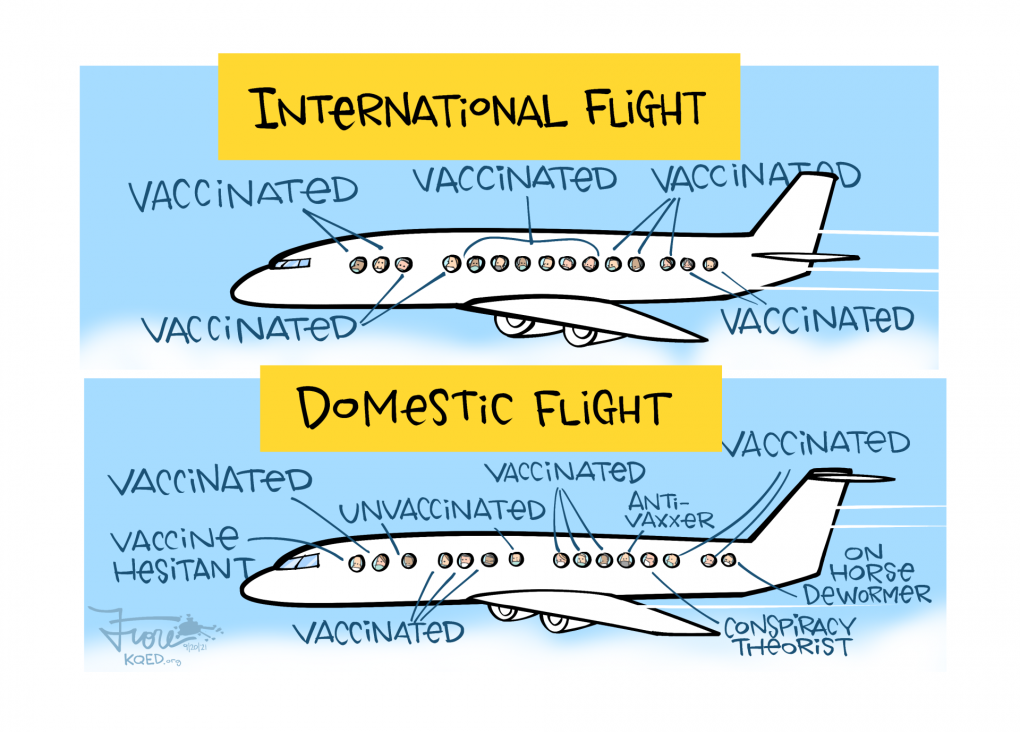
"content": "\u003cp>\u003ca href=\"https://ww2.kqed.org/app/uploads/sites/10/2021/09/domesticflight_092021_final.png\">\u003cimg loading=\"lazy\" decoding=\"async\" class=\"alignnone size-full wp-image-11889190\" src=\"https://ww2.kqed.org/app/uploads/sites/10/2021/09/domesticflight_092021_final.png\" alt='Cartoon: a passenger plane labeled, \"international flight\" with arrows showing vaccinated passengers. The second frame shows a domestic flight with passengers labeled \"vaccinated,\" \"unvaccinated\" and \"on horse dewormer.\"' width=\"1920\" height=\"1378\" srcset=\"https://cdn.kqed.org/wp-content/uploads/sites/10/2021/09/domesticflight_092021_final.png 1920w, https://cdn.kqed.org/wp-content/uploads/sites/10/2021/09/domesticflight_092021_final-800x574.png 800w, https://cdn.kqed.org/wp-content/uploads/sites/10/2021/09/domesticflight_092021_final-1020x732.png 1020w, https://cdn.kqed.org/wp-content/uploads/sites/10/2021/09/domesticflight_092021_final-160x115.png 160w, https://cdn.kqed.org/wp-content/uploads/sites/10/2021/09/domesticflight_092021_final-1536x1102.png 1536w\" sizes=\"auto, (max-width: 1920px) 100vw, 1920px\">\u003c/a>\u003c/p>\n\u003cp>Foreign nationals who want to fly to the United States \u003ca href=\"https://bit.ly/fiorevaccinesairtravel\">will be required to show proof of coronavirus vaccination\u003c/a>.\u003c/p>\n\u003cp>Meanwhile, vaccination currently is not required for anyone on a domestic flight.\u003c/p>\n\u003cp>I sure hope this will \u003ca href=\"https://www.npr.org/2021/09/16/1038032203/health-officials-wonder-why-bidens-mandate-didnt-also-require-vaccination-to-tra?utm_medium=social&utm_campaign=npr&utm_term=nprnews&utm_source=twitter.com\">soon be changing\u003c/a>, since it seems pretty silly we’re checking passengers for nail clippers and bottled water — but not for vaccine status as we struggle to fight \u003ca href=\"https://coronavirus.jhu.edu/map.html\">a pandemic that has killed over 675,000 people in this country\u003c/a> alone.\u003c/p>\n\u003cp>[ad fullwidth]\u003c/p>\u003cp>\u003c/p>\n",
"blocks": [],
"excerpt": "Foreign nationals who want to fly to the U.S. will be required to show proof of coronavirus vaccination. Meanwhile, a vaccine currently is not required for anyone on a domestic flight.",
"status": "publish",
"parent": 0,
"modified": 1740699519,
"stats": {
"hasAudio": false,
"hasVideo": false,
"hasChartOrMap": false,
"iframeSrcs": [],
"hasGoogleForm": false,
"hasGallery": false,
"hasHearkenModule": false,
"hasPolis": false,
"paragraphCount": 6,
"wordCount": 81
},
"headData": {
"title": "Our Unvaccinated Skies | KQED",
"description": "Foreign nationals who want to fly to the U.S. will be required to show proof of coronavirus vaccination. Meanwhile, a vaccine currently is not required for anyone on a domestic flight.",
"ogTitle": "",
"ogDescription": "",
"ogImgId": "",
"twTitle": "",
"twDescription": "",
"twImgId": "",
"schema": {
"@context": "https://schema.org",
"@type": "NewsArticle",
"headline": "Our Unvaccinated Skies",
"datePublished": "2021-09-20T16:21:03-07:00",
"dateModified": "2025-02-27T15:38:39-08:00",
"image": "https://cdn.kqed.org/wp-content/uploads/2020/02/KQED-OG-Image@1x.png",
"isAccessibleForFree": "True",
"publisher": {
"@type": "NewsMediaOrganization",
"@id": "https://www.kqed.org/#organization",
"name": "KQED",
"logo": "https://cdn.kqed.org/wp-content/uploads/2020/02/KQED-OG-Image@1x.png",
"url": "https://www.kqed.org",
"sameAs": [
"https://www.facebook.com/KQED",
"https://twitter.com/KQED",
"https://www.instagram.com/kqed/",
"https://www.tiktok.com/@kqedofficial",
"https://www.linkedin.com/company/kqed",
"https://www.youtube.com/channel/UCeC0IOo7i1P_61zVUWbJ4nw"
]
}
}
},
"sticky": false,
"path": "/news/11889184/our-unvaccinated-skies",
"audioTrackLength": null,
"parsedContent": [
{
"type": "contentString",
"content": "\u003cdiv class=\"post-body\">\u003cp>\u003cp>\u003ca href=\"https://ww2.kqed.org/app/uploads/sites/10/2021/09/domesticflight_092021_final.png\">\u003cimg loading=\"lazy\" decoding=\"async\" class=\"alignnone size-full wp-image-11889190\" src=\"https://ww2.kqed.org/app/uploads/sites/10/2021/09/domesticflight_092021_final.png\" alt='Cartoon: a passenger plane labeled, \"international flight\" with arrows showing vaccinated passengers. The second frame shows a domestic flight with passengers labeled \"vaccinated,\" \"unvaccinated\" and \"on horse dewormer.\"' width=\"1920\" height=\"1378\" srcset=\"https://cdn.kqed.org/wp-content/uploads/sites/10/2021/09/domesticflight_092021_final.png 1920w, https://cdn.kqed.org/wp-content/uploads/sites/10/2021/09/domesticflight_092021_final-800x574.png 800w, https://cdn.kqed.org/wp-content/uploads/sites/10/2021/09/domesticflight_092021_final-1020x732.png 1020w, https://cdn.kqed.org/wp-content/uploads/sites/10/2021/09/domesticflight_092021_final-160x115.png 160w, https://cdn.kqed.org/wp-content/uploads/sites/10/2021/09/domesticflight_092021_final-1536x1102.png 1536w\" sizes=\"auto, (max-width: 1920px) 100vw, 1920px\">\u003c/a>\u003c/p>\n\u003cp>Foreign nationals who want to fly to the United States \u003ca href=\"https://bit.ly/fiorevaccinesairtravel\">will be required to show proof of coronavirus vaccination\u003c/a>.\u003c/p>\n\u003cp>Meanwhile, vaccination currently is not required for anyone on a domestic flight.\u003c/p>\n\u003cp>I sure hope this will \u003ca href=\"https://www.npr.org/2021/09/16/1038032203/health-officials-wonder-why-bidens-mandate-didnt-also-require-vaccination-to-tra?utm_medium=social&utm_campaign=npr&utm_term=nprnews&utm_source=twitter.com\">soon be changing\u003c/a>, since it seems pretty silly we’re checking passengers for nail clippers and bottled water — but not for vaccine status as we struggle to fight \u003ca href=\"https://coronavirus.jhu.edu/map.html\">a pandemic that has killed over 675,000 people in this country\u003c/a> alone.\u003c/p>\n\u003cp>\u003c/p>\u003c/div>",
"attributes": {
"named": {},
"numeric": []
}
},
{
"type": "component",
"content": "",
"name": "ad",
"attributes": {
"named": {
"label": "fullwidth"
},
"numeric": [
"fullwidth"
]
}
},
{
"type": "contentString",
"content": "\u003cdiv class=\"post-body\">\u003cp>\u003c/p>\u003cp>\u003c/p>\n\u003c/div>\u003c/p>",
"attributes": {
"named": {},
"numeric": []
}
}
],
"link": "/news/11889184/our-unvaccinated-skies",
"authors": [
"3236"
],
"series": [
"news_18515"
],
"categories": [
"news_457",
"news_13"
],
"tags": [
"news_20281",
"news_28801",
"news_18543",
"news_20949",
"news_3228",
"news_981"
],
"featImg": "news_11889190",
"label": "news_18515"
},
"news_11877885": {
"type": "posts",
"id": "news_11877885",
"meta": {
"index": "posts_1716263798",
"site": "news",
"id": "11877885",
"score": null,
"sort": [
1623709811000
]
},
"guestAuthors": [],
"slug": "traveling-internationally-what-to-know-about-flying-abroad-with-covid-19-in-mind-this-summer",
"title": "Traveling Internationally? What to Know About Flying Abroad With COVID-19 in Mind This Summer",
"publishDate": 1623709811,
"format": "standard",
"headTitle": "Traveling Internationally? What to Know About Flying Abroad With COVID-19 in Mind This Summer | KQED",
"labelTerm": {
"site": "news"
},
"content": "\u003cp>This Tuesday, California will scrap its social distancing requirements and allow businesses to operate at full capacity. The mask mandate will also end as well, but there are a few exceptions. If you’re planning to travel soon, keep in mind that COVID-19 health restrictions change depending on how you travel, where and when.\u003c/p>\n\u003cfigure id=\"attachment_11877910\" class=\"wp-caption alignnone\" style=\"max-width: 1024px\">\u003cimg loading=\"lazy\" decoding=\"async\" class=\"size-full wp-image-11877910\" src=\"https://ww2.kqed.org/app/uploads/sites/10/2021/06/233791-full.jpg\" alt=\"Cartoon versions of some of the restrictions one can expect when traveling to either Sierra Leone, Peru, the United States, Egypt, Samoa or Thailand.\" width=\"1024\" height=\"576\" srcset=\"https://cdn.kqed.org/wp-content/uploads/sites/10/2021/06/233791-full.jpg 1024w, https://cdn.kqed.org/wp-content/uploads/sites/10/2021/06/233791-full-800x450.jpg 800w, https://cdn.kqed.org/wp-content/uploads/sites/10/2021/06/233791-full-1020x574.jpg 1020w, https://cdn.kqed.org/wp-content/uploads/sites/10/2021/06/233791-full-160x90.jpg 160w\" sizes=\"(max-width: 1024px) 100vw, 1024px\">\u003cfigcaption class=\"wp-caption-text\">While most health restrictions will soon be lifted in California, it’s important to remember when planning to travel that each country has a distinct approach to controlling the pandemic. \u003ccite>(Malaka Gharib/NPR)\u003c/cite>\u003c/figcaption>\u003c/figure>\n\u003ch3>What do I need to know about international air travel at this stage of pandemic?\u003c/h3>\n\u003cp>First of all, you have plenty of company. International air travel is expected to surge this summer. Americans are thinking of European vacations again. “We’ve had people asking a lot about Europe,” says Chicago-area travel adviser Kendra Thornton of Royal Travel & Tours. “Not necessarily booking but wanting to keep tabs on it.”\u003c/p>\n\u003cp>In addition, residents of the U.S. with family members in other countries are eager for a reunion after pandemic-enforced separations. People may be traveling abroad for work as well.\u003c/p>\n\u003cp>They’ll run into quite a range of travel restrictions and entry requirements.\u003c/p>\n\u003cp>NPR correspondent Jason Beaubien was surprised to see his face on a giant screen in an airport in Sierra Leone, where thermal scanners take the temperature of everyone in the crowd simultaneously. Airport personnel take aside anyone who registers a fever for evaluation.\u003c/p>\n\u003cp>Travelers headed to Peru should pack a face shield. You have to wear it \u003ca href=\"https://pe.usembassy.gov/health-alert-government-of-peru-announces-new-business-hours-and-face-shield-requirements-april-19-2021/\">in crowded spaces such as an airport\u003c/a>.\u003c/p>\n\u003cp>What’s more, the protocols may change as new variants, such as the \u003ca href=\"https://www.npr.org/sections/coronavirus-live-updates/2021/06/08/1004597294/the-highly-contagious-delta-variant-of-covid-is-on-the-rise-in-the-u-s\">highly contagious Delta variant\u003c/a>, spread and take hold in different countries.\u003c/p>\n\u003cp>So if you’re itching to travel abroad or have already booked a trip, you probably have a lot of questions. Here are some guidelines that might help you deal with the new rules of international flight:\u003c/p>\n\u003cp>\u003cstrong>The Centers for Disease Control and Prevention says to get vaccinated before you go.\u003c/strong>\u003c/p>\n\u003cp>Air travelers should be fully vaccinated regardless of the risk level in the country you’re visiting, according to the health agency. There’s still a lot of virus circulating.\u003c/p>\n\u003cp>\u003cstrong>Keep track of the ever-changing guidelines and restrictions for your destination.\u003c/strong>\u003c/p>\n\u003cp>You can check specific travel requirements through the \u003ca href=\"https://travel.state.gov/content/travel/en/traveladvisories/COVID-19-Country-Specific-Information.html\">U.S. State Department website\u003c/a> or your destination’s Office of Foreign Affairs or Ministry of Health.\u003c/p>\n\u003cp>In addition, the CDC provides \u003ca href=\"https://www.cdc.gov/coronavirus/2019-ncov/travelers/map-and-travel-notices.html\">guidance on travel to other countries\u003c/a>, which are ranked from “very high” risk of COVID-19 transmission to “low” (among them China, Iceland and Rwanda).\u003c/p>\n\u003cp>\u003cstrong>Avoid countries in the “very high” category unless it is essential travel.\u003c/strong>\u003c/p>\n\u003cp>There are 60 countries on this list, ranging from Argentina to Yemen.\u003c/p>\n\u003cp>\u003cstrong>Some countries are closed to visitors but make exceptions.\u003c/strong>\u003c/p>\n\u003cp>Belgium, Canada, the United Kingdom and Uruguay are a few examples. But some of these “no visitor” countries may make exceptions for the death or serious illness of a family member. If those are your circumstances, you may be able to visit. But the authorities might not/will not take your word for it. Expect to have to show proof of the reason for the visit, such as a death certificate or a doctor’s note about a family member’s illness. You can inquire about rules in your destination by contacting the American Embassy or Consulate there, or the country’s embassy in the United States.\u003c/p>\n\u003cp>And changes occur almost daily in this matter, so it’s good to keep an eye on the State Department’s or the country’s official website for updates.\u003c/p>\n\u003cfigure id=\"attachment_11877917\" class=\"wp-caption alignnone\" style=\"max-width: 2560px\">\u003cimg loading=\"lazy\" decoding=\"async\" class=\"size-full wp-image-11877917\" src=\"https://ww2.kqed.org/app/uploads/sites/10/2021/06/GettyImages-1232312321-scaled.jpg\" alt=\"Photo of a COVID-19 vaccination card\" width=\"2560\" height=\"1707\" srcset=\"https://cdn.kqed.org/wp-content/uploads/sites/10/2021/06/GettyImages-1232312321-scaled.jpg 2560w, https://cdn.kqed.org/wp-content/uploads/sites/10/2021/06/GettyImages-1232312321-800x533.jpg 800w, https://cdn.kqed.org/wp-content/uploads/sites/10/2021/06/GettyImages-1232312321-1020x680.jpg 1020w, https://cdn.kqed.org/wp-content/uploads/sites/10/2021/06/GettyImages-1232312321-160x107.jpg 160w, https://cdn.kqed.org/wp-content/uploads/sites/10/2021/06/GettyImages-1232312321-1536x1024.jpg 1536w, https://cdn.kqed.org/wp-content/uploads/sites/10/2021/06/GettyImages-1232312321-2048x1365.jpg 2048w, https://cdn.kqed.org/wp-content/uploads/sites/10/2021/06/GettyImages-1232312321-1920x1280.jpg 1920w\" sizes=\"(max-width: 2560px) 100vw, 2560px\">\u003cfigcaption class=\"wp-caption-text\">Some travel advisers suggest to make a copy of your COVID-19 vaccination card or have a photo on your phone as backup when traveling. \u003ccite>(Chandan Khanna/AFP via Getty Images)\u003c/cite>\u003c/figcaption>\u003c/figure>\n\u003cp>\u003cstrong>Bring your vaccination card.\u003c/strong>\u003c/p>\n\u003cp>Some countries want to see your vaccination card, so make sure your official CDC vaccination card is filled out with the date of your dose or doses (if you received a two-dose vaccine). It’s a good idea to make a copy of the card or have a photo on your phone as backup, suggests Thornton, the travel adviser.\u003c/p>\n\u003cp>\u003cstrong>Lost your card?\u003c/strong>\u003c/p>\n\u003cp>Reach out to your vaccination provider or contact your state health department’s immunization information system.\u003c/p>\n\u003cp>You can also present the World Health Organization international certificate of vaccination, also known as a yellow card. You can ask your vaccine provider to add your COVID-19 vaccination info if you already have a card. Or if you need one, you can purchase it through the U.S. Government Bookstore, which tells NPR it has seen a 55% increase in sales in the last six months.\u003c/p>\n\u003cp>Cards are on back order but should be available by the end of June. Or you can purchase one from the WHO, which means waiting at least a week for shipment from Switzerland.\u003c/p>\n\u003cfigure id=\"attachment_11877918\" class=\"wp-caption alignnone\" style=\"max-width: 2560px\">\u003cimg loading=\"lazy\" decoding=\"async\" class=\"size-full wp-image-11877918\" src=\"https://ww2.kqed.org/app/uploads/sites/10/2021/06/GettyImages-1323218766-scaled.jpg\" alt=\"A photo of the WHO international certificate of vaccination.\" width=\"2560\" height=\"1785\" srcset=\"https://cdn.kqed.org/wp-content/uploads/sites/10/2021/06/GettyImages-1323218766-scaled.jpg 2560w, https://cdn.kqed.org/wp-content/uploads/sites/10/2021/06/GettyImages-1323218766-800x558.jpg 800w, https://cdn.kqed.org/wp-content/uploads/sites/10/2021/06/GettyImages-1323218766-1020x711.jpg 1020w, https://cdn.kqed.org/wp-content/uploads/sites/10/2021/06/GettyImages-1323218766-160x112.jpg 160w, https://cdn.kqed.org/wp-content/uploads/sites/10/2021/06/GettyImages-1323218766-1536x1071.jpg 1536w, https://cdn.kqed.org/wp-content/uploads/sites/10/2021/06/GettyImages-1323218766-2048x1428.jpg 2048w, https://cdn.kqed.org/wp-content/uploads/sites/10/2021/06/GettyImages-1323218766-1920x1338.jpg 1920w\" sizes=\"(max-width: 2560px) 100vw, 2560px\">\u003cfigcaption class=\"wp-caption-text\">The WHO international certificate of vaccination, also known as a yellow card, is another way to verify that you received the COVID-19 vaccine. You can ask your vaccine provider to add your COVID-19 vaccination info if you already have a card. \u003ccite>(Sean Gallup/Getty Images)\u003c/cite>\u003c/figcaption>\u003c/figure>\n\u003ch3>What about vaccine apps?\u003c/h3>\n\u003cp>Vaccine apps that show your record could be accepted as well, but there’s no guarantee that border control will accept these as proof, so bringing a paper record is a good idea.\u003c/p>\n\u003cp>Citizens of the European Union will soon have a Digital COVID Certificate system that provides a scannable QR code to verify vaccination status and coronavirus test results. This should smooth travel between member states but won’t help a vaccinated tourist from outside the EU.\u003c/p>\n\u003cp>Airlines are trying to help their customers meet the vaccination and testing requirements of various countries by developing their own apps. The International Air Transport Association has rolled out its own IATA Travel Pass, which many major airlines around the world will use.\u003c/p>\n\u003cp>But officials say calling it a vaccine passport, as many people are, is a bit of a misnomer.\u003c/p>\n\u003cp>“It’s more of a digital credential associated with your vaccination or testing profile,” the IATA’s Nick Careen says. “So the consumer can use that to help them through their passenger journey.”\u003c/p>\n\u003cp>British Airways, Japan Airlines, Qatar Airways and Emirates are among the global airlines running trials of IATA’s travel pass app, which is expected to go live soon.\u003c/p>\n\u003cp>Other airlines, including American, will be using an app called VeriFly.\u003c/p>\n\u003cp>American’s Preston Peterson told NPR that “because the requirements for entry differ by almost every single country and, in some cases, by the region within a country,” the app will give the customer “the peace of mind to know that they comply with those different regulations.”\u003c/p>\n\u003cp>“A customer can submit their documentation, have it verified and then they receive a green check mark, or effectively, an OK to travel status, that we as the airline trust, the customer can trust and then they know they’re ready to go,” Peterson says, adding that the app will update in real time as entry requirements for various destinations change.\u003c/p>\n\u003cfigure id=\"attachment_11877919\" class=\"wp-caption alignnone\" style=\"max-width: 2560px\">\u003cimg loading=\"lazy\" decoding=\"async\" class=\"size-full wp-image-11877919\" src=\"https://ww2.kqed.org/app/uploads/sites/10/2021/06/GettyImages-1230974343-scaled.jpg\" alt=\"A coronavirus testing sign at Los Angeles International Airport (LAX) on February 4, 2021 in Los Angeles.\" width=\"2560\" height=\"1707\" srcset=\"https://cdn.kqed.org/wp-content/uploads/sites/10/2021/06/GettyImages-1230974343-scaled.jpg 2560w, https://cdn.kqed.org/wp-content/uploads/sites/10/2021/06/GettyImages-1230974343-800x533.jpg 800w, https://cdn.kqed.org/wp-content/uploads/sites/10/2021/06/GettyImages-1230974343-1020x680.jpg 1020w, https://cdn.kqed.org/wp-content/uploads/sites/10/2021/06/GettyImages-1230974343-160x107.jpg 160w, https://cdn.kqed.org/wp-content/uploads/sites/10/2021/06/GettyImages-1230974343-1536x1024.jpg 1536w, https://cdn.kqed.org/wp-content/uploads/sites/10/2021/06/GettyImages-1230974343-2048x1365.jpg 2048w, https://cdn.kqed.org/wp-content/uploads/sites/10/2021/06/GettyImages-1230974343-1920x1280.jpg 1920w\" sizes=\"(max-width: 2560px) 100vw, 2560px\">\u003cfigcaption class=\"wp-caption-text\">A coronavirus testing sign at Los Angeles International Airport (LAX) on Feb. 4, 2021 in Los Angeles. \u003ccite>(Patrick Fallon/AFP via Getty Images)\u003c/cite>\u003c/figcaption>\u003c/figure>\n\u003ch3>But even proof of vaccination may not be sufficient to ease your entry.\u003c/h3>\n\u003cp>Some countries don’t care if you have a vaccine card, as they can be easily faked or forged, or a digital vaccine pass on an app. They’ll still insist on a PCR test to determine if you’re infected several days before flying into and out of their airports. Most countries are asking airline personnel to verify the test. A positive result means the trip is off. That’s the case in Egypt, some European countries and Israel. And you can’t leave Ben Gurion Airport in Tel Aviv, Israel, after arrival in the country without taking a coronavirus test; airport personnel usher everyone to the clinic tent right after baggage claim.\u003c/p>\n\u003cp>Even if you’re vaccinated and tested negative for the coronavirus, you may have to quarantine. Samoa, for example, requires a minimum 21-day quarantine for all incoming passengers.\u003c/p>\n\u003cp>[aside postID=\"news_11874128\" hero=\"https://ww2.kqed.org/app/uploads/sites/10/2021/05/RS49056_GettyImages-1218880487-qut-1020x680.jpg\"]Keep up on testing requirements before your departure. They definitely change. Because of the high rate of cases, Namibia on June 1 changed its visitor entry rules from a simple self-test for the coronavirus to a typically more expensive laboratory test conducted before leaving your home country and not older than seven days before your arrival.\u003c/p>\n\u003cp>The State Department site dates its updates so you can see when a change was made, and it also provides links to specific country guidelines provided by U.S. consulates and embassies.\u003c/p>\n\u003cp>Check the latest requirements three days before your flight just to make sure. In the Bay Area, all three major airports offer COVID-19 testing on-site. Oakland International Airport is the only one that \u003ca href=\"https://www.oaklandairport.com/oakland-airport-offering-free-rapid-result-covid-19-airport-testing-program/\">provides free testing\u003c/a>, conducted by CityHealth. And airport testing sites might have limited hours, so check before you head to the airport.\u003c/p>\n\u003cp>\u003cstrong>Get alerted.\u003c/strong>\u003c/p>\n\u003cp>It’s a good idea to sign up for notices on international travel from the State Department, says Zane Kerby, president of the American Society of Travel Advisors. In Portugal, for example, increased cases of the COVID-19 variant known as Delta, identified as likely more transmissible and causing more severe disease, has put the country at a higher risk level.\u003c/p>\n\u003cp>Bring proof of health insurance. Even if you’re a veteran traveler who knows that your insurance carrier covers you overseas, be sure to check on COVID-19 coverage before you leave. Some countries, such as Argentina, require that you have a notice from your health insurer that specifically mentions COVID-19 coverage as proof that you are covered for the virus. Cambodia requires all foreigners to purchase insurance from the government on arrival: $90 for 20 days of coverage. Also check to see if your policy covers medical evacuation insurance, or consider buying a separate policy if not. Travel specialists say it’s a wise investment during a pandemic.\u003c/p>\n\u003cp>The CDC offers great background information on health insurance and foreign travel on its site. If you buy a supplemental plan, the State Department site recommends looking for one that will pay for care directly rather than reimburse you so out-of-pocket expenses are limited.\u003c/p>\n\u003cfigure id=\"attachment_11877921\" class=\"wp-caption alignnone\" style=\"max-width: 2560px\">\u003cimg loading=\"lazy\" decoding=\"async\" class=\"size-full wp-image-11877921\" src=\"https://ww2.kqed.org/app/uploads/sites/10/2021/06/GettyImages-1229672390-1-scaled.jpg\" alt=\"A traveler receives an in-airport Covid-19 nasal swab test a day before his flight to Hawaii at Los Angeles International Airport (LAX) in Los Angeles on Nov. 18, 2020.\" width=\"2560\" height=\"1707\" srcset=\"https://cdn.kqed.org/wp-content/uploads/sites/10/2021/06/GettyImages-1229672390-1-scaled.jpg 2560w, https://cdn.kqed.org/wp-content/uploads/sites/10/2021/06/GettyImages-1229672390-1-800x533.jpg 800w, https://cdn.kqed.org/wp-content/uploads/sites/10/2021/06/GettyImages-1229672390-1-1020x680.jpg 1020w, https://cdn.kqed.org/wp-content/uploads/sites/10/2021/06/GettyImages-1229672390-1-160x107.jpg 160w, https://cdn.kqed.org/wp-content/uploads/sites/10/2021/06/GettyImages-1229672390-1-1536x1024.jpg 1536w, https://cdn.kqed.org/wp-content/uploads/sites/10/2021/06/GettyImages-1229672390-1-2048x1365.jpg 2048w, https://cdn.kqed.org/wp-content/uploads/sites/10/2021/06/GettyImages-1229672390-1-1920x1280.jpg 1920w\" sizes=\"(max-width: 2560px) 100vw, 2560px\">\u003cfigcaption class=\"wp-caption-text\">A traveler receives an in-airport COVID-19 nasal swab test a day before his flight to Hawaii at Los Angeles International Airport (LAX) in Los Angeles on Nov. 18, 2020. \u003ccite>(Patrick Fallon/AFP via Getty Images)\u003c/cite>\u003c/figcaption>\u003c/figure>\n\u003ch3>Brush up on testing requirements.\u003c/h3>\n\u003cp>All air passengers coming to the United States — residents who have traveled abroad and visitors as well — are required to have a negative coronavirus viral test no more than three days before travel or documentation of recovery from COVID-19 in the past three months before they will be allowed to board a flight to the United States.\u003c/p>\n\u003cp>That test can be either a so-called molecular test done at a laboratory that can detect specific genetic material from the virus and is the most precise test, or an antigen test — which can be done as a self-test — which detects proteins on the surface of the virus if you were infected.\u003c/p>\n\u003cp>[aside label ='Related Coverage' tag='coronavirus']Embassy and consular notes on the State Department’s travel website offer detailed information on locations for a molecular test in each country if available. In some countries, the test is free. Or it could cost up to $200. Check the State Department travel site, which offers frequently updated, detailed testing requirements and resources for many countries.\u003c/p>\n\u003cp>Self-tests are a limited option. Right now, only two airlines are making self-tests easily available: United and American – and you need to be able to perform the self-test while conducting a telehealth visit with a designated clinic. For more information, contact United or American if you will be returning home on either carrier, or eMed.com, a telehealth company handling the testing to see if you qualify for the self-test, even if you’re on another carrier.\u003c/p>\n\u003cp>If you’re not vaccinated, though, you may want to choose a lab test rather than the self-test for reentry, “especially if you’re returning from a country experiencing high rates of COVID-19,” says Matthew Binnicker, vice chair of practice in the Department of Laboratory Medicine and Pathology at the Mayo Clinic. That’s because the lab test can be more accurate than the self-test, according to guidelines published by the Infectious Diseases Society of America.\u003c/p>\n\u003cp>Don’t forget your mask. While some jurisdictions around the world are beginning to loosen COVID-19 restrictions, the Transportation Security Administration in late April extended its mask requirement to Sept. 13 (and could extend it further) for U.S. airports and on board U.S. airlines. Many foreign carriers have the same rule.\u003c/p>\n\u003chr>\n\u003cp>\u003cem>\u003ca href=\"https://twitter.com/fkritz\">Fran Kritz\u003c/a> is a health policy reporter based in Washington, D.C., who has contributed to The Washington Post and Kaiser Health News.\u003c/em>\u003c/p>\n\u003cp>Each week, NPR answers frequently asked questions about life during the coronavirus crisis. If you have a question you’d like NPR to consider for a future post, email goatsandsoda@npr.org with the subject line: “Weekly Coronavirus Questions.” See an archive of \u003ca href=\"https://www.npr.org/tags/926361810/coronavirus-faqs\">past FAQs here\u003c/a>.\u003cbr>\n[ad fullwidth]\u003c/p>\n\u003cp>[ad floatright]\u003c/p>\n",
"blocks": [],
"excerpt": "Traveling abroad during the pandemic changes depending on the country you travel to. If you are traveling from California, keep in mind that you still have to follow some health restrictions even after June 15.",
"status": "publish",
"parent": 0,
"modified": 1721156368,
"stats": {
"hasAudio": false,
"hasVideo": false,
"hasChartOrMap": false,
"iframeSrcs": [],
"hasGoogleForm": false,
"hasGallery": false,
"hasHearkenModule": false,
"hasPolis": false,
"paragraphCount": 51,
"wordCount": 2330
},
"headData": {
"title": "Traveling Internationally? What to Know About Flying Abroad With COVID-19 in Mind This Summer | KQED",
"description": "Traveling abroad during the pandemic changes depending on the country you travel to. If you are traveling from California, keep in mind that you still have to follow some health restrictions even after June 15.",
"ogTitle": "",
"ogDescription": "",
"ogImgId": "",
"twTitle": "",
"twDescription": "",
"twImgId": "",
"schema": {
"@context": "https://schema.org",
"@type": "NewsArticle",
"headline": "Traveling Internationally? What to Know About Flying Abroad With COVID-19 in Mind This Summer",
"datePublished": "2021-06-14T15:30:11-07:00",
"dateModified": "2024-07-16T11:59:28-07:00",
"image": "https://cdn.kqed.org/wp-content/uploads/2020/02/KQED-OG-Image@1x.png",
"isAccessibleForFree": "True",
"publisher": {
"@type": "NewsMediaOrganization",
"@id": "https://www.kqed.org/#organization",
"name": "KQED",
"logo": "https://cdn.kqed.org/wp-content/uploads/2020/02/KQED-OG-Image@1x.png",
"url": "https://www.kqed.org",
"sameAs": [
"https://www.facebook.com/KQED",
"https://twitter.com/KQED",
"https://www.instagram.com/kqed/",
"https://www.tiktok.com/@kqedofficial",
"https://www.linkedin.com/company/kqed",
"https://www.youtube.com/channel/UCeC0IOo7i1P_61zVUWbJ4nw"
]
}
}
},
"sticky": false,
"nprByline": "Fran Kritz",
"path": "/news/11877885/traveling-internationally-what-to-know-about-flying-abroad-with-covid-19-in-mind-this-summer",
"audioTrackLength": null,
"parsedContent": [
{
"type": "contentString",
"content": "\u003cdiv class=\"post-body\">\u003cp>\u003cp>This Tuesday, California will scrap its social distancing requirements and allow businesses to operate at full capacity. The mask mandate will also end as well, but there are a few exceptions. If you’re planning to travel soon, keep in mind that COVID-19 health restrictions change depending on how you travel, where and when.\u003c/p>\n\u003cfigure id=\"attachment_11877910\" class=\"wp-caption alignnone\" style=\"max-width: 1024px\">\u003cimg loading=\"lazy\" decoding=\"async\" class=\"size-full wp-image-11877910\" src=\"https://ww2.kqed.org/app/uploads/sites/10/2021/06/233791-full.jpg\" alt=\"Cartoon versions of some of the restrictions one can expect when traveling to either Sierra Leone, Peru, the United States, Egypt, Samoa or Thailand.\" width=\"1024\" height=\"576\" srcset=\"https://cdn.kqed.org/wp-content/uploads/sites/10/2021/06/233791-full.jpg 1024w, https://cdn.kqed.org/wp-content/uploads/sites/10/2021/06/233791-full-800x450.jpg 800w, https://cdn.kqed.org/wp-content/uploads/sites/10/2021/06/233791-full-1020x574.jpg 1020w, https://cdn.kqed.org/wp-content/uploads/sites/10/2021/06/233791-full-160x90.jpg 160w\" sizes=\"(max-width: 1024px) 100vw, 1024px\">\u003cfigcaption class=\"wp-caption-text\">While most health restrictions will soon be lifted in California, it’s important to remember when planning to travel that each country has a distinct approach to controlling the pandemic. \u003ccite>(Malaka Gharib/NPR)\u003c/cite>\u003c/figcaption>\u003c/figure>\n\u003ch3>What do I need to know about international air travel at this stage of pandemic?\u003c/h3>\n\u003cp>First of all, you have plenty of company. International air travel is expected to surge this summer. Americans are thinking of European vacations again. “We’ve had people asking a lot about Europe,” says Chicago-area travel adviser Kendra Thornton of Royal Travel & Tours. “Not necessarily booking but wanting to keep tabs on it.”\u003c/p>\n\u003cp>In addition, residents of the U.S. with family members in other countries are eager for a reunion after pandemic-enforced separations. People may be traveling abroad for work as well.\u003c/p>\n\u003cp>They’ll run into quite a range of travel restrictions and entry requirements.\u003c/p>\n\u003cp>NPR correspondent Jason Beaubien was surprised to see his face on a giant screen in an airport in Sierra Leone, where thermal scanners take the temperature of everyone in the crowd simultaneously. Airport personnel take aside anyone who registers a fever for evaluation.\u003c/p>\n\u003cp>Travelers headed to Peru should pack a face shield. You have to wear it \u003ca href=\"https://pe.usembassy.gov/health-alert-government-of-peru-announces-new-business-hours-and-face-shield-requirements-april-19-2021/\">in crowded spaces such as an airport\u003c/a>.\u003c/p>\n\u003cp>What’s more, the protocols may change as new variants, such as the \u003ca href=\"https://www.npr.org/sections/coronavirus-live-updates/2021/06/08/1004597294/the-highly-contagious-delta-variant-of-covid-is-on-the-rise-in-the-u-s\">highly contagious Delta variant\u003c/a>, spread and take hold in different countries.\u003c/p>\n\u003cp>So if you’re itching to travel abroad or have already booked a trip, you probably have a lot of questions. Here are some guidelines that might help you deal with the new rules of international flight:\u003c/p>\n\u003cp>\u003cstrong>The Centers for Disease Control and Prevention says to get vaccinated before you go.\u003c/strong>\u003c/p>\n\u003cp>Air travelers should be fully vaccinated regardless of the risk level in the country you’re visiting, according to the health agency. There’s still a lot of virus circulating.\u003c/p>\n\u003cp>\u003cstrong>Keep track of the ever-changing guidelines and restrictions for your destination.\u003c/strong>\u003c/p>\n\u003cp>You can check specific travel requirements through the \u003ca href=\"https://travel.state.gov/content/travel/en/traveladvisories/COVID-19-Country-Specific-Information.html\">U.S. State Department website\u003c/a> or your destination’s Office of Foreign Affairs or Ministry of Health.\u003c/p>\n\u003cp>In addition, the CDC provides \u003ca href=\"https://www.cdc.gov/coronavirus/2019-ncov/travelers/map-and-travel-notices.html\">guidance on travel to other countries\u003c/a>, which are ranked from “very high” risk of COVID-19 transmission to “low” (among them China, Iceland and Rwanda).\u003c/p>\n\u003cp>\u003cstrong>Avoid countries in the “very high” category unless it is essential travel.\u003c/strong>\u003c/p>\n\u003cp>There are 60 countries on this list, ranging from Argentina to Yemen.\u003c/p>\n\u003cp>\u003cstrong>Some countries are closed to visitors but make exceptions.\u003c/strong>\u003c/p>\n\u003cp>Belgium, Canada, the United Kingdom and Uruguay are a few examples. But some of these “no visitor” countries may make exceptions for the death or serious illness of a family member. If those are your circumstances, you may be able to visit. But the authorities might not/will not take your word for it. Expect to have to show proof of the reason for the visit, such as a death certificate or a doctor’s note about a family member’s illness. You can inquire about rules in your destination by contacting the American Embassy or Consulate there, or the country’s embassy in the United States.\u003c/p>\n\u003cp>And changes occur almost daily in this matter, so it’s good to keep an eye on the State Department’s or the country’s official website for updates.\u003c/p>\n\u003cfigure id=\"attachment_11877917\" class=\"wp-caption alignnone\" style=\"max-width: 2560px\">\u003cimg loading=\"lazy\" decoding=\"async\" class=\"size-full wp-image-11877917\" src=\"https://ww2.kqed.org/app/uploads/sites/10/2021/06/GettyImages-1232312321-scaled.jpg\" alt=\"Photo of a COVID-19 vaccination card\" width=\"2560\" height=\"1707\" srcset=\"https://cdn.kqed.org/wp-content/uploads/sites/10/2021/06/GettyImages-1232312321-scaled.jpg 2560w, https://cdn.kqed.org/wp-content/uploads/sites/10/2021/06/GettyImages-1232312321-800x533.jpg 800w, https://cdn.kqed.org/wp-content/uploads/sites/10/2021/06/GettyImages-1232312321-1020x680.jpg 1020w, https://cdn.kqed.org/wp-content/uploads/sites/10/2021/06/GettyImages-1232312321-160x107.jpg 160w, https://cdn.kqed.org/wp-content/uploads/sites/10/2021/06/GettyImages-1232312321-1536x1024.jpg 1536w, https://cdn.kqed.org/wp-content/uploads/sites/10/2021/06/GettyImages-1232312321-2048x1365.jpg 2048w, https://cdn.kqed.org/wp-content/uploads/sites/10/2021/06/GettyImages-1232312321-1920x1280.jpg 1920w\" sizes=\"(max-width: 2560px) 100vw, 2560px\">\u003cfigcaption class=\"wp-caption-text\">Some travel advisers suggest to make a copy of your COVID-19 vaccination card or have a photo on your phone as backup when traveling. \u003ccite>(Chandan Khanna/AFP via Getty Images)\u003c/cite>\u003c/figcaption>\u003c/figure>\n\u003cp>\u003cstrong>Bring your vaccination card.\u003c/strong>\u003c/p>\n\u003cp>Some countries want to see your vaccination card, so make sure your official CDC vaccination card is filled out with the date of your dose or doses (if you received a two-dose vaccine). It’s a good idea to make a copy of the card or have a photo on your phone as backup, suggests Thornton, the travel adviser.\u003c/p>\n\u003cp>\u003cstrong>Lost your card?\u003c/strong>\u003c/p>\n\u003cp>Reach out to your vaccination provider or contact your state health department’s immunization information system.\u003c/p>\n\u003cp>You can also present the World Health Organization international certificate of vaccination, also known as a yellow card. You can ask your vaccine provider to add your COVID-19 vaccination info if you already have a card. Or if you need one, you can purchase it through the U.S. Government Bookstore, which tells NPR it has seen a 55% increase in sales in the last six months.\u003c/p>\n\u003cp>Cards are on back order but should be available by the end of June. Or you can purchase one from the WHO, which means waiting at least a week for shipment from Switzerland.\u003c/p>\n\u003cfigure id=\"attachment_11877918\" class=\"wp-caption alignnone\" style=\"max-width: 2560px\">\u003cimg loading=\"lazy\" decoding=\"async\" class=\"size-full wp-image-11877918\" src=\"https://ww2.kqed.org/app/uploads/sites/10/2021/06/GettyImages-1323218766-scaled.jpg\" alt=\"A photo of the WHO international certificate of vaccination.\" width=\"2560\" height=\"1785\" srcset=\"https://cdn.kqed.org/wp-content/uploads/sites/10/2021/06/GettyImages-1323218766-scaled.jpg 2560w, https://cdn.kqed.org/wp-content/uploads/sites/10/2021/06/GettyImages-1323218766-800x558.jpg 800w, https://cdn.kqed.org/wp-content/uploads/sites/10/2021/06/GettyImages-1323218766-1020x711.jpg 1020w, https://cdn.kqed.org/wp-content/uploads/sites/10/2021/06/GettyImages-1323218766-160x112.jpg 160w, https://cdn.kqed.org/wp-content/uploads/sites/10/2021/06/GettyImages-1323218766-1536x1071.jpg 1536w, https://cdn.kqed.org/wp-content/uploads/sites/10/2021/06/GettyImages-1323218766-2048x1428.jpg 2048w, https://cdn.kqed.org/wp-content/uploads/sites/10/2021/06/GettyImages-1323218766-1920x1338.jpg 1920w\" sizes=\"(max-width: 2560px) 100vw, 2560px\">\u003cfigcaption class=\"wp-caption-text\">The WHO international certificate of vaccination, also known as a yellow card, is another way to verify that you received the COVID-19 vaccine. You can ask your vaccine provider to add your COVID-19 vaccination info if you already have a card. \u003ccite>(Sean Gallup/Getty Images)\u003c/cite>\u003c/figcaption>\u003c/figure>\n\u003ch3>What about vaccine apps?\u003c/h3>\n\u003cp>Vaccine apps that show your record could be accepted as well, but there’s no guarantee that border control will accept these as proof, so bringing a paper record is a good idea.\u003c/p>\n\u003cp>Citizens of the European Union will soon have a Digital COVID Certificate system that provides a scannable QR code to verify vaccination status and coronavirus test results. This should smooth travel between member states but won’t help a vaccinated tourist from outside the EU.\u003c/p>\n\u003cp>Airlines are trying to help their customers meet the vaccination and testing requirements of various countries by developing their own apps. The International Air Transport Association has rolled out its own IATA Travel Pass, which many major airlines around the world will use.\u003c/p>\n\u003cp>But officials say calling it a vaccine passport, as many people are, is a bit of a misnomer.\u003c/p>\n\u003cp>“It’s more of a digital credential associated with your vaccination or testing profile,” the IATA’s Nick Careen says. “So the consumer can use that to help them through their passenger journey.”\u003c/p>\n\u003cp>British Airways, Japan Airlines, Qatar Airways and Emirates are among the global airlines running trials of IATA’s travel pass app, which is expected to go live soon.\u003c/p>\n\u003cp>Other airlines, including American, will be using an app called VeriFly.\u003c/p>\n\u003cp>American’s Preston Peterson told NPR that “because the requirements for entry differ by almost every single country and, in some cases, by the region within a country,” the app will give the customer “the peace of mind to know that they comply with those different regulations.”\u003c/p>\n\u003cp>“A customer can submit their documentation, have it verified and then they receive a green check mark, or effectively, an OK to travel status, that we as the airline trust, the customer can trust and then they know they’re ready to go,” Peterson says, adding that the app will update in real time as entry requirements for various destinations change.\u003c/p>\n\u003cfigure id=\"attachment_11877919\" class=\"wp-caption alignnone\" style=\"max-width: 2560px\">\u003cimg loading=\"lazy\" decoding=\"async\" class=\"size-full wp-image-11877919\" src=\"https://ww2.kqed.org/app/uploads/sites/10/2021/06/GettyImages-1230974343-scaled.jpg\" alt=\"A coronavirus testing sign at Los Angeles International Airport (LAX) on February 4, 2021 in Los Angeles.\" width=\"2560\" height=\"1707\" srcset=\"https://cdn.kqed.org/wp-content/uploads/sites/10/2021/06/GettyImages-1230974343-scaled.jpg 2560w, https://cdn.kqed.org/wp-content/uploads/sites/10/2021/06/GettyImages-1230974343-800x533.jpg 800w, https://cdn.kqed.org/wp-content/uploads/sites/10/2021/06/GettyImages-1230974343-1020x680.jpg 1020w, https://cdn.kqed.org/wp-content/uploads/sites/10/2021/06/GettyImages-1230974343-160x107.jpg 160w, https://cdn.kqed.org/wp-content/uploads/sites/10/2021/06/GettyImages-1230974343-1536x1024.jpg 1536w, https://cdn.kqed.org/wp-content/uploads/sites/10/2021/06/GettyImages-1230974343-2048x1365.jpg 2048w, https://cdn.kqed.org/wp-content/uploads/sites/10/2021/06/GettyImages-1230974343-1920x1280.jpg 1920w\" sizes=\"(max-width: 2560px) 100vw, 2560px\">\u003cfigcaption class=\"wp-caption-text\">A coronavirus testing sign at Los Angeles International Airport (LAX) on Feb. 4, 2021 in Los Angeles. \u003ccite>(Patrick Fallon/AFP via Getty Images)\u003c/cite>\u003c/figcaption>\u003c/figure>\n\u003ch3>But even proof of vaccination may not be sufficient to ease your entry.\u003c/h3>\n\u003cp>Some countries don’t care if you have a vaccine card, as they can be easily faked or forged, or a digital vaccine pass on an app. They’ll still insist on a PCR test to determine if you’re infected several days before flying into and out of their airports. Most countries are asking airline personnel to verify the test. A positive result means the trip is off. That’s the case in Egypt, some European countries and Israel. And you can’t leave Ben Gurion Airport in Tel Aviv, Israel, after arrival in the country without taking a coronavirus test; airport personnel usher everyone to the clinic tent right after baggage claim.\u003c/p>\n\u003cp>Even if you’re vaccinated and tested negative for the coronavirus, you may have to quarantine. Samoa, for example, requires a minimum 21-day quarantine for all incoming passengers.\u003c/p>\n\u003cp>\u003c/p>\u003c/div>",
"attributes": {
"named": {},
"numeric": []
}
},
{
"type": "component",
"content": "",
"name": "aside",
"attributes": {
"named": {
"postid": "news_11874128",
"hero": "https://ww2.kqed.org/app/uploads/sites/10/2021/05/RS49056_GettyImages-1218880487-qut-1020x680.jpg",
"label": ""
},
"numeric": []
}
},
{
"type": "contentString",
"content": "\u003cdiv class=\"post-body\">\u003cp>Keep up on testing requirements before your departure. They definitely change. Because of the high rate of cases, Namibia on June 1 changed its visitor entry rules from a simple self-test for the coronavirus to a typically more expensive laboratory test conducted before leaving your home country and not older than seven days before your arrival.\u003c/p>\n\u003cp>The State Department site dates its updates so you can see when a change was made, and it also provides links to specific country guidelines provided by U.S. consulates and embassies.\u003c/p>\n\u003cp>Check the latest requirements three days before your flight just to make sure. In the Bay Area, all three major airports offer COVID-19 testing on-site. Oakland International Airport is the only one that \u003ca href=\"https://www.oaklandairport.com/oakland-airport-offering-free-rapid-result-covid-19-airport-testing-program/\">provides free testing\u003c/a>, conducted by CityHealth. And airport testing sites might have limited hours, so check before you head to the airport.\u003c/p>\n\u003cp>\u003cstrong>Get alerted.\u003c/strong>\u003c/p>\n\u003cp>It’s a good idea to sign up for notices on international travel from the State Department, says Zane Kerby, president of the American Society of Travel Advisors. In Portugal, for example, increased cases of the COVID-19 variant known as Delta, identified as likely more transmissible and causing more severe disease, has put the country at a higher risk level.\u003c/p>\n\u003cp>Bring proof of health insurance. Even if you’re a veteran traveler who knows that your insurance carrier covers you overseas, be sure to check on COVID-19 coverage before you leave. Some countries, such as Argentina, require that you have a notice from your health insurer that specifically mentions COVID-19 coverage as proof that you are covered for the virus. Cambodia requires all foreigners to purchase insurance from the government on arrival: $90 for 20 days of coverage. Also check to see if your policy covers medical evacuation insurance, or consider buying a separate policy if not. Travel specialists say it’s a wise investment during a pandemic.\u003c/p>\n\u003cp>The CDC offers great background information on health insurance and foreign travel on its site. If you buy a supplemental plan, the State Department site recommends looking for one that will pay for care directly rather than reimburse you so out-of-pocket expenses are limited.\u003c/p>\n\u003cfigure id=\"attachment_11877921\" class=\"wp-caption alignnone\" style=\"max-width: 2560px\">\u003cimg loading=\"lazy\" decoding=\"async\" class=\"size-full wp-image-11877921\" src=\"https://ww2.kqed.org/app/uploads/sites/10/2021/06/GettyImages-1229672390-1-scaled.jpg\" alt=\"A traveler receives an in-airport Covid-19 nasal swab test a day before his flight to Hawaii at Los Angeles International Airport (LAX) in Los Angeles on Nov. 18, 2020.\" width=\"2560\" height=\"1707\" srcset=\"https://cdn.kqed.org/wp-content/uploads/sites/10/2021/06/GettyImages-1229672390-1-scaled.jpg 2560w, https://cdn.kqed.org/wp-content/uploads/sites/10/2021/06/GettyImages-1229672390-1-800x533.jpg 800w, https://cdn.kqed.org/wp-content/uploads/sites/10/2021/06/GettyImages-1229672390-1-1020x680.jpg 1020w, https://cdn.kqed.org/wp-content/uploads/sites/10/2021/06/GettyImages-1229672390-1-160x107.jpg 160w, https://cdn.kqed.org/wp-content/uploads/sites/10/2021/06/GettyImages-1229672390-1-1536x1024.jpg 1536w, https://cdn.kqed.org/wp-content/uploads/sites/10/2021/06/GettyImages-1229672390-1-2048x1365.jpg 2048w, https://cdn.kqed.org/wp-content/uploads/sites/10/2021/06/GettyImages-1229672390-1-1920x1280.jpg 1920w\" sizes=\"(max-width: 2560px) 100vw, 2560px\">\u003cfigcaption class=\"wp-caption-text\">A traveler receives an in-airport COVID-19 nasal swab test a day before his flight to Hawaii at Los Angeles International Airport (LAX) in Los Angeles on Nov. 18, 2020. \u003ccite>(Patrick Fallon/AFP via Getty Images)\u003c/cite>\u003c/figcaption>\u003c/figure>\n\u003ch3>Brush up on testing requirements.\u003c/h3>\n\u003cp>All air passengers coming to the United States — residents who have traveled abroad and visitors as well — are required to have a negative coronavirus viral test no more than three days before travel or documentation of recovery from COVID-19 in the past three months before they will be allowed to board a flight to the United States.\u003c/p>\n\u003cp>That test can be either a so-called molecular test done at a laboratory that can detect specific genetic material from the virus and is the most precise test, or an antigen test — which can be done as a self-test — which detects proteins on the surface of the virus if you were infected.\u003c/p>\n\u003cp>\u003c/p>\u003c/div>",
"attributes": {
"named": {},
"numeric": []
}
},
{
"type": "component",
"content": "",
"name": "aside",
"attributes": {
"named": {
"label": "Related Coverage ",
"tag": "coronavirus"
},
"numeric": []
}
},
{
"type": "contentString",
"content": "\u003cdiv class=\"post-body\">\u003cp>Embassy and consular notes on the State Department’s travel website offer detailed information on locations for a molecular test in each country if available. In some countries, the test is free. Or it could cost up to $200. Check the State Department travel site, which offers frequently updated, detailed testing requirements and resources for many countries.\u003c/p>\n\u003cp>Self-tests are a limited option. Right now, only two airlines are making self-tests easily available: United and American – and you need to be able to perform the self-test while conducting a telehealth visit with a designated clinic. For more information, contact United or American if you will be returning home on either carrier, or eMed.com, a telehealth company handling the testing to see if you qualify for the self-test, even if you’re on another carrier.\u003c/p>\n\u003cp>If you’re not vaccinated, though, you may want to choose a lab test rather than the self-test for reentry, “especially if you’re returning from a country experiencing high rates of COVID-19,” says Matthew Binnicker, vice chair of practice in the Department of Laboratory Medicine and Pathology at the Mayo Clinic. That’s because the lab test can be more accurate than the self-test, according to guidelines published by the Infectious Diseases Society of America.\u003c/p>\n\u003cp>Don’t forget your mask. While some jurisdictions around the world are beginning to loosen COVID-19 restrictions, the Transportation Security Administration in late April extended its mask requirement to Sept. 13 (and could extend it further) for U.S. airports and on board U.S. airlines. Many foreign carriers have the same rule.\u003c/p>\n\u003chr>\n\u003cp>\u003cem>\u003ca href=\"https://twitter.com/fkritz\">Fran Kritz\u003c/a> is a health policy reporter based in Washington, D.C., who has contributed to The Washington Post and Kaiser Health News.\u003c/em>\u003c/p>\n\u003cp>Each week, NPR answers frequently asked questions about life during the coronavirus crisis. If you have a question you’d like NPR to consider for a future post, email goatsandsoda@npr.org with the subject line: “Weekly Coronavirus Questions.” See an archive of \u003ca href=\"https://www.npr.org/tags/926361810/coronavirus-faqs\">past FAQs here\u003c/a>.\u003cbr>\n\u003c/p>\u003c/div>",
"attributes": {
"named": {},
"numeric": []
}
},
{
"type": "component",
"content": "",
"name": "ad",
"attributes": {
"named": {
"label": "fullwidth"
},
"numeric": [
"fullwidth"
]
}
},
{
"type": "contentString",
"content": "\u003cdiv class=\"post-body\">\u003cp>\u003c/p>\n\u003cp>\u003c/p>\u003c/div>",
"attributes": {
"named": {},
"numeric": []
}
},
{
"type": "component",
"content": "",
"name": "ad",
"attributes": {
"named": {
"label": "floatright"
},
"numeric": [
"floatright"
]
}
},
{
"type": "contentString",
"content": "\u003cdiv class=\"post-body\">\u003cp>\u003c/p>\n\u003c/div>\u003c/p>",
"attributes": {
"named": {},
"numeric": []
}
}
],
"link": "/news/11877885/traveling-internationally-what-to-know-about-flying-abroad-with-covid-19-in-mind-this-summer",
"authors": [
"byline_news_11877885"
],
"categories": [
"news_8"
],
"tags": [
"news_20281",
"news_27350",
"news_27504",
"news_508",
"news_2767",
"news_20112",
"news_1855"
],
"featImg": "news_11877911",
"label": "news"
},
"news_11836745": {
"type": "posts",
"id": "news_11836745",
"meta": {
"index": "posts_1716263798",
"site": "news",
"id": "11836745",
"score": null,
"sort": [
1599251667000
]
},
"guestAuthors": [],
"slug": "travel-restrictions-during-covid-19-in-california",
"title": "Travel Restrictions During COVID-19: Can I Take a Trip in California?",
"publishDate": 1599251667,
"format": "image",
"headTitle": "Travel Restrictions During COVID-19: Can I Take a Trip in California? | KQED",
"labelTerm": {},
"content": "\u003cp>\u003cem>This story was updated November 13 at 10 a.m. An \u003ca href=\"https://www.kqed.org/news/11829403/summer-travel-during-covid-19-in-california-can-i-do-it-safely\">earlier version\u003c/a> of this story was published on July 22.\u003c/em>\u003c/p>\n\u003cp>\u003cstrong>Go straight to:\u003c/strong>\u003c/p>\n\u003cul>\n\u003cli>\u003cstrong>\u003ca href=\"#official\">Official travel restrictions in California\u003c/a>\u003c/strong>\u003c/li>\n\u003cli>\u003cstrong>\u003ca href=\"#fly\">Is it safe to fly?\u003c/a>\u003c/strong>\u003c/li>\n\u003cli>\u003cstrong>\u003ca href=\"#road\">Road trips during COVID-19\u003c/a>\u003c/strong>\u003c/li>\n\u003cli>\u003cstrong>\u003ca href=\"#hotel\">Staying in hotels and Airbnbs\u003c/a>\u003c/strong>\u003c/li>\n\u003c/ul>\n\u003cp>If you’re wondering about the official advice for travel in California, eight months into shelter-in-place, it’s still “limit your travel.”\u003c/p>\n\u003cp>And yet people \u003cem>are\u003c/em> traveling. Hotels are being reserved. Airbnbs are being booked. Airports are busy. As the holiday season fast approaches, people are wondering if — and how — they might visit family for traditional gatherings, while also reducing the risk of spreading COVID-19.\u003c/p>\n\u003cp>So we looked at guidance from the state of California and the Centers for Disease Control and Prevention (CDC), as well as these Bay Area medical experts:\u003c/p>\n\u003cul>\n\u003cli>\u003cstrong>Dr. Yvonne Maldonado\u003c/strong>, senior associate dean, faculty development and diversity, professor of pediatrics (infectious diseases) and of health research and policy at Stanford University\u003c/li>\n\u003cli>\u003cstrong>Dr. Peter Chin-Hong\u003c/strong>, professor of medicine, associate dean for regional campuses at UCSF\u003c/li>\n\u003c/ul>\n\u003ch3>\u003ca id=\"official\">\u003c/a>What Are the Official Rules on Traveling?\u003c/h3>\n\u003cp>It depends on who you ask.\u003c/p>\n\u003cp>On November 13, Gov. Gavin Newsom joined the governors of Oregon and Washington in \u003ca href=\"https://www.kqed.org/coronavirusliveupdates/news/11847404/newsom-urges-against-out-of-state-travel-advises-quarantine-for-those-who-do\">issuing a travel advisory\u003c/a> urging people entering their states or returning from travel outside their states to self-quarantine to slow the spread of the coronavirus. \u003ca href=\"https://www.cdph.ca.gov/Programs/CID/DCDC/Pages/COVID-19/Travel-Advisory.aspx\">The advisories\u003c/a> urge against non-essential out-of-state travel, ask people to self-quarantine for 14 days after arriving from another state or country and encourage residents to stay local.\u003cspan style=\"font-weight: 400;\">[aside postID=\"news_11846759\"]\u003c/span>\u003c/p>\n\u003cp>This state guidance comes on the heels of \u003ca href=\"https://cchealth.org/press-releases/2020/1109-ABAHO-Holiday-Recommendations.pdf\" target=\"_blank\" rel=\"noopener noreferrer\">recommendations\u003c/a> that were recently released by the nine Bay Area counties plus the city of Berkeley around travel, with the holidays specifically in mind. The guidance states that “nonessential travel, including holiday travel, is not recommended. Traveling outside the Bay Area will increase your chance of getting infected and spreading the virus to others after your return.”\u003c/p>\n\u003cfigure id=\"attachment_11829698\" class=\"wp-caption alignnone\" style=\"max-width: 1900px\">\u003cimg loading=\"lazy\" decoding=\"async\" class=\"size-full wp-image-11829698\" src=\"https://ww2.kqed.org/app/uploads/sites/10/2020/07/bixby.jpg\" alt=\"\" width=\"1900\" height=\"1280\" srcset=\"https://cdn.kqed.org/wp-content/uploads/sites/10/2020/07/bixby.jpg 1900w, https://cdn.kqed.org/wp-content/uploads/sites/10/2020/07/bixby-800x539.jpg 800w, https://cdn.kqed.org/wp-content/uploads/sites/10/2020/07/bixby-1020x687.jpg 1020w, https://cdn.kqed.org/wp-content/uploads/sites/10/2020/07/bixby-160x108.jpg 160w, https://cdn.kqed.org/wp-content/uploads/sites/10/2020/07/bixby-1536x1035.jpg 1536w\" sizes=\"(max-width: 1900px) 100vw, 1900px\">\u003cfigcaption class=\"wp-caption-text\">Destinations like Big Sur are usually popular tourist hotspots. \u003ccite>(Kelsey Johnson/Pexels)\u003c/cite>\u003c/figcaption>\u003c/figure>\n\u003cp>The\u003ca href=\"https://covid19.ca.gov/stay-home-except-for-essential-needs/#:~:text=All%20individuals%20living%20in%20the,the%20Questions%20%26%20Answers%20below).\"> state’s own travel guidance\u003c/a> still reiterates that travel should really only be for work or in urgent situations right now, and still asks you to “avoid (traveling) long distances for vacations or pleasure as much as possible” to help slow the spread of the coronavirus. But they \u003cem>also\u003c/em> offer\u003ca href=\"https://www.cdc.gov/coronavirus/2019-ncov/travelers/travel-in-the-us.html\"> this specific guidance\u003c/a> to consider from the CDC, “before traveling away from your community”:\u003c/p>\n\u003cul>\n\u003cli>Is the coronavirus spreading where you are traveling?\u003c/li>\n\u003cli>Are you or those you are traveling with more likely to get very sick from coronavirus?\u003c/li>\n\u003cli>Will you be able to keep 6 feet of physical distance from others during or after your trip?\u003c/li>\n\u003c/ul>\n\u003cp>The state’s official tourism body, Visit California, says that COVID-19 travel restrictions due to the coronavirus pandemic “\u003ca href=\"https://www.visitcalifornia.com/latest-covid-19-coronavirus\">still allow travel in California\u003c/a>, and many tourism assets have reopened.” They also urge you to consider the impact of wildfires in the state on your plans.\u003c/p>\n\u003cp>So, essentially, recreational travel is still discouraged right now. But if you’re determined to travel despite the official guidance, or if you absolutely have to travel for an essential reason, there are at least certain strategies you might employ to reduce the risk of spreading the coronavirus as much as possible.\u003c/p>\n\u003ch3>What Are the Safety Basics for Travel?\u003c/h3>\n\u003cp>The basic rules for any travel right now are the same for being outside your home at any time: wear your mask, distance as much as possible and wash your hands. Everything else would be about being an informed consumer and using your best judgement to keep risk as low as possible.\u003c/p>\n\u003cp>Per the state’s guidance, \u003ca href=\"https://covid19.ca.gov/stay-home-except-for-essential-needs/#:~:text=All%20individuals%20living%20in%20the,the%20Questions%20%26%20Answers%20below).\">do not travel if you are sick\u003c/a>, or if someone in your household has had the coronavirus in the last two weeks. Do not travel with someone who is sick.\u003c/p>\n\u003cp>The state also recommends that if you choose to travel, you need to start by doing some in-depth planning. Check in on what COVID-19 infection and hospitalization rates are like with the local health department where you live, with the health department at your ultimate destination — and with health departments along your planned route, too.\u003c/p>\n\u003ch3>Can I Travel to See My Family for the Holidays?\u003c/h3>\n\u003cp>A lot of people are wondering this right now, especially as the pandemic has prevented many families from maintaining their usual physical contact for months now.\u003c/p>\n\u003cfigure id=\"attachment_11829707\" class=\"wp-caption aligncenter\" style=\"max-width: 1900px\">\u003cimg loading=\"lazy\" decoding=\"async\" class=\"size-full wp-image-11829707\" src=\"https://ww2.kqed.org/app/uploads/sites/10/2020/07/family.jpg\" alt=\"\" width=\"1900\" height=\"1280\" srcset=\"https://cdn.kqed.org/wp-content/uploads/sites/10/2020/07/family.jpg 1900w, https://cdn.kqed.org/wp-content/uploads/sites/10/2020/07/family-800x539.jpg 800w, https://cdn.kqed.org/wp-content/uploads/sites/10/2020/07/family-1020x687.jpg 1020w, https://cdn.kqed.org/wp-content/uploads/sites/10/2020/07/family-160x108.jpg 160w, https://cdn.kqed.org/wp-content/uploads/sites/10/2020/07/family-1536x1035.jpg 1536w\" sizes=\"(max-width: 1900px) 100vw, 1900px\">\u003cfigcaption class=\"wp-caption-text\">With usual visits disrupted by the pandemic, many people are craving tips to see family \u003ccite>(Andrea Piacquadio/Pexels)\u003c/cite>\u003c/figcaption>\u003c/figure>\n\u003cp>While doctors say there’s no way to completely eliminate the risk of catching or spreading the novel coronavirus when venturing out, there are things you can do to reduce the risk. The \u003ca href=\"https://cchealth.org/press-releases/2020/1109-ABAHO-Holiday-Recommendations.pdf\" target=\"_blank\" rel=\"noopener noreferrer\">recommendations \u003c/a> released by Bay Area public health officers contains tips for for doing just that, with travel for the holidays specifically in mind.\u003c/p>\n\u003cp>If you travel outside the Bay Area, this guidance “strongly” recommends a self-imposed quarantine for 14 days when you return “if your activities while travelling put you at higher risk of getting COVID-19.” Such activities are defined as including:\u003c/p>\n\u003cul>\n\u003cli>“Spending time within 6 feet of people you do not normally live with, while you or anyone around you was not wearing a face mask – especially if you were indoors”\u003c/li>\n\u003cli>“Traveling on planes, buses, trains, public transportation, or other shared vehicles, if face masks were not worn at all times by both you and the other people in the vehicle.”\u003c/li>\n\u003c/ul>\n\u003cp>For folks who are determined to travel, and want to minimize their risk, we also created \u003ca href=\"https://www.kqed.org/science/1966305/quiz-planning-a-summer-trip-to-visit-family-check-your-covid-19-travel-risk\">this short checklist quiz\u003c/a> in consultation with medical experts and government health guidelines, to help you keep track of your household’s distancing habits and test for leaks in your stay-at-home bubble.\u003c/p>\n\u003cp>When you try the quiz you’ll be reminded that taking precautions will reduce, but can’t eliminate, your risk.\u003c/p>\n\u003ch3>\u003ca id=\"fly\">\u003c/a>What if I Really Have to Fly?\u003c/h3>\n\u003cp>As the CDC says, flying will increase your risk for COVID-19. Even though their guidance confirms that most viruses and other germs don’t actually spread easily \u003cem>on\u003c/em> flights because of how air circulates and is filtered on airplanes, this kind of travel means you’re spending prolonged time in security lines and airport terminals, where you can be brought into close contact not just with others, but with surfaces that could be harboring the coronavirus. Being in an assigned seat also makes social distancing hard.\u003c/p>\n\u003cp>Both our experts — Dr. Yvonne Maldonado and Dr. Peter Chin-Hong — said \u003cem>they\u003c/em> really wouldn’t get on an airplane right now unless they absolutely had to — in the case of, say, a family emergency. But if you absolutely must get on a domestic flight, they recommend investigating the airline’s safety policies before you fly.\u003c/p>\n\u003cp>Do they keep middle seats empty to enable social distancing? Do they enforce face coverings?\u003c/p>\n\u003cp>Bring disinfectant wipes and wipe down your seat and anything you touch in the bathroom, if you use it. Keep the air vent on by your seat, and choose a seat as close to the window as possible and as far away from where other people are sitting as possible. Bring your own food or make sure your food is pre-packaged if you purchase it in the airport or on the plane.\u003c/p>\n\u003cp>And wear your mask at all times.\u003c/p>\n\u003cfigure id=\"attachment_11829701\" class=\"wp-caption aligncenter\" style=\"max-width: 1900px\">\u003cimg loading=\"lazy\" decoding=\"async\" class=\"size-full wp-image-11829701\" src=\"https://ww2.kqed.org/app/uploads/sites/10/2020/07/air-travel.jpg\" alt=\"\" width=\"1900\" height=\"1280\" srcset=\"https://cdn.kqed.org/wp-content/uploads/sites/10/2020/07/air-travel.jpg 1900w, https://cdn.kqed.org/wp-content/uploads/sites/10/2020/07/air-travel-800x539.jpg 800w, https://cdn.kqed.org/wp-content/uploads/sites/10/2020/07/air-travel-1020x687.jpg 1020w, https://cdn.kqed.org/wp-content/uploads/sites/10/2020/07/air-travel-160x108.jpg 160w, https://cdn.kqed.org/wp-content/uploads/sites/10/2020/07/air-travel-1536x1035.jpg 1536w\" sizes=\"(max-width: 1900px) 100vw, 1900px\">\u003cfigcaption class=\"wp-caption-text\">The airline industry has been hit hard by the COVID-19 pandemic \u003ccite>(Sourav Mishra/Pexels)\u003c/cite>\u003c/figcaption>\u003c/figure>\n\u003cp>What if someone’s sick with COVID-19 on your flight? The CDC says pilots have to notify them of all illnesses on a flight, and if a traveler is deemed a risk to public health, they’ll collaborate to contact any passengers or crew who might have been exposed.\u003c/p>\n\u003cp>For that reason, says the CDC, make sure you give the airline your up-to-date, reliable contact information when making your reservation — so they can find you, to tell you if you’ve been in contact with someone with the coronavirus.\u003c/p>\n\u003ch3>Are Some Places Safer to Travel to Than Others?\u003c/h3>\n\u003cp>Dr. Chin-Hong advises that much like you’d research the weather at a potential destination, you should look up the COVID-19 case numbers and risk levels. Are their case numbers rising? Are they at risk of an overwhelmed health care system — one that wouldn’t be able to care for you, if you got sick too? How far would you have to drive home if things got bad?\u003c/p>\n\u003cp>Take a look at a county tracker \u003ca href=\"https://laist.com/projects/2020/coronavirus-tracker/app/california/index.html\">like this one\u003c/a> or the state’s own county monitoring list, and do your research. And remember that the more densely populated a place, the harder it will be to maintain social distancing.\u003c/p>\n\u003cp>Also, while you may normally love exploring new regions when there \u003cem>isn’t\u003c/em> a pandemic raging, Dr. Maldonado says this is still “not the time” to experiment with new travel destinations and all the unknowns they entail. Having a degree of familiarity with where you’re going — and whether the health care system could support you if you got sick and where the hospitals are — is still incredibly important right now.\u003c/p>\n\u003ch3>I’m Choosing to Stay in a Rural Area With a Small Population. That Should Be OK, Right?\u003c/h3>\n\u003cp>Unsurprisingly, the rural outdoors is generally safer than urban areas for COVID-19 risk right now, confirm Maldonado and Chin-Hong.\u003c/p>\n\u003cp>But just because a county is rural doesn’t necessarily mean its COVID-19 rates are low. And even if they are, remember that you’re the one potentially bringing in a risk of COVID-19.\u003c/p>\n\u003cp>In sparsely populated area, residents might not feel the “need” to wear a mask regularly, so be prepared to potentially be the only one wearing a mask in rural areas, and stick to your own values on the issue. Even if people are giving you odd looks.\u003c/p>\n\u003cfigure id=\"attachment_11829704\" class=\"wp-caption aligncenter\" style=\"max-width: 1900px\">\u003cimg loading=\"lazy\" decoding=\"async\" class=\"size-full wp-image-11829704\" src=\"https://ww2.kqed.org/app/uploads/sites/10/2020/07/cabin.jpg\" alt=\"\" width=\"1900\" height=\"1280\" srcset=\"https://cdn.kqed.org/wp-content/uploads/sites/10/2020/07/cabin.jpg 1900w, https://cdn.kqed.org/wp-content/uploads/sites/10/2020/07/cabin-800x539.jpg 800w, https://cdn.kqed.org/wp-content/uploads/sites/10/2020/07/cabin-1020x687.jpg 1020w, https://cdn.kqed.org/wp-content/uploads/sites/10/2020/07/cabin-160x108.jpg 160w, https://cdn.kqed.org/wp-content/uploads/sites/10/2020/07/cabin-1536x1035.jpg 1536w\" sizes=\"(max-width: 1900px) 100vw, 1900px\">\u003cfigcaption class=\"wp-caption-text\">Rural areas aren’t without COVID-19 risks right now \u003ccite>(Johannes Plenio/Pexels)\u003c/cite>\u003c/figcaption>\u003c/figure>\n\u003cp>And if you’re going really rural, and you’re solo, make sure people know where you are — in case you get sick.\u003c/p>\n\u003cp>[ad fullwidth]\u003c/p>\n\u003ch3>\u003ca id=\"road\">\u003c/a>If Driving Is Safer, How Can I Road Trip Safely?\u003c/h3>\n\u003cp>Making your trip in a car undoubtedly reduces your risk of contracting or spreading COVID-19 because of how contained you are from others. It’s way less risky than taking a plane or a train right now. But by leaving your household and hitting the road, you’re still running the risk of spreading the coronavirus, and should take precautions — especially if you’re planning to drive longer distances.\u003c/p>\n\u003cp>Unless you’re purposefully limiting your mileage, you’re going to need to get out of your car at certain times. It’s smart to plan your route and be aware of the COVID-19 risks in the areas you’re driving through — if you’re driving through a hot spot, you may wish to limit your stops.\u003c/p>\n\u003cp>Bring an ample supply of wipes to keep your car disinfected by wiping the steering wheel, surfaces, gearstick, parking brake and inside the dashboard every time you return to your car from a gas station, rest stop, restaurant or lodging — basically, from anywhere you’re around people or touching surfaces.\u003c/p>\n\u003cp>Keep a sealed bag in your car for disposing of your used wipes and gloves. Stash your mask(s) safely somewhere where you can easily and quickly grab it.\u003c/p>\n\u003cp>You’re almost certainly going to need to stop for gas, so remember to wipe down gas pump handles with your disinfectant wipes. You might consider bringing a supply of gloves to wear when refueling and using gas station restrooms — just remember to avoid touching your face when you’re wearing them. When stopping for gas, wear your mask at all times.\u003c/p>\n\u003cfigure id=\"attachment_11829688\" class=\"wp-caption aligncenter\" style=\"max-width: 1900px\">\u003cimg loading=\"lazy\" decoding=\"async\" class=\"size-full wp-image-11829688\" src=\"https://ww2.kqed.org/app/uploads/sites/10/2020/07/road-trip.jpg\" alt=\"\" width=\"1900\" height=\"1280\" srcset=\"https://cdn.kqed.org/wp-content/uploads/sites/10/2020/07/road-trip.jpg 1900w, https://cdn.kqed.org/wp-content/uploads/sites/10/2020/07/road-trip-800x539.jpg 800w, https://cdn.kqed.org/wp-content/uploads/sites/10/2020/07/road-trip-1020x687.jpg 1020w, https://cdn.kqed.org/wp-content/uploads/sites/10/2020/07/road-trip-160x108.jpg 160w, https://cdn.kqed.org/wp-content/uploads/sites/10/2020/07/road-trip-1536x1035.jpg 1536w\" sizes=\"(max-width: 1900px) 100vw, 1900px\">\u003cfigcaption class=\"wp-caption-text\">Driving is undoubtedly safer than some other forms of transportation, but precautions are still necessary \u003ccite>(Kei Scampa/Pexels)\u003c/cite>\u003c/figcaption>\u003c/figure>\n\u003cp>When stopping for food, always consider drive-thru, grab-and-go or takeout over in-restaurant dining. With the potential for breaking social distance, decreased ventilation, increased time in one spot and the risk of surface transmission, indoor dining really is a “perfect storm,” Maldonado says. Any time you spend inside somewhere like a restaurant will really increase your risk of contracting or spreading COVID-19. And if you do decide to dine indoors and spot that it’s a buffet, turn right around, Chin-Hong advises.\u003c/p>\n\u003cp>If you’re renting a car, consider the rental company’s cleaning and pick-up policies. And it goes without saying that now is not the time to be giving rides to strangers or picking up hitchhikers, either.\u003c/p>\n\u003ch3>Are Hotels OK to Stay in Right Now?\u003c/h3>\n\u003cp>They’re open again after initial closures, that’s for sure. So if you’re planning to stay in a hotel, it’s up to you to do your due diligence and research their COVID-19 policies and prevention practices before you make a reservation.\u003c/p>\n\u003cp>The \u003ca href=\"https://www.cdc.gov/coronavirus/2019-ncov/daily-life-coping/personal-social-activities.html#hotel\">CDC recommends\u003c/a> considering the following:\u003c/p>\n\u003cul>\n\u003cli>Call and ask if all staff are wearing face coverings at work\u003c/li>\n\u003cli>Make the most of options for online reservation and check-in, mobile room key and contactless payment\u003c/li>\n\u003cli>Ask about any extra prevention practices being implemented by the hotel, such as plexiglass barriers at check-in counters, and physical distancing signs in the lobby\u003c/li>\n\u003cli>Ask if the hotel has updated policies about cleaning and disinfecting or removing frequently touched surfaces and items (such as pens, room keys, tables, phones, doorknobs, light switches, elevator buttons, water fountains, ATMs/card payment stations, business center computers and printers, ice/vending machines and remote controls)\u003c/li>\n\u003c/ul>\n\u003cfigure id=\"attachment_11829702\" class=\"wp-caption alignnone\" style=\"max-width: 1900px\">\u003cimg loading=\"lazy\" decoding=\"async\" class=\"size-full wp-image-11829702\" src=\"https://ww2.kqed.org/app/uploads/sites/10/2020/07/hotel.jpg\" alt=\"\" width=\"1900\" height=\"1280\" srcset=\"https://cdn.kqed.org/wp-content/uploads/sites/10/2020/07/hotel.jpg 1900w, https://cdn.kqed.org/wp-content/uploads/sites/10/2020/07/hotel-800x539.jpg 800w, https://cdn.kqed.org/wp-content/uploads/sites/10/2020/07/hotel-1020x687.jpg 1020w, https://cdn.kqed.org/wp-content/uploads/sites/10/2020/07/hotel-160x108.jpg 160w, https://cdn.kqed.org/wp-content/uploads/sites/10/2020/07/hotel-1536x1035.jpg 1536w\" sizes=\"(max-width: 1900px) 100vw, 1900px\">\u003cfigcaption class=\"wp-caption-text\">The CDC has guidance for people who need (or choose) to stay in hotels during the pandemic \u003ccite>(Francesco Ungaro/Pexels)\u003c/cite>\u003c/figcaption>\u003c/figure>\n\u003cp>If you decide to stay in a hotel, the CDC recommends the following practices:\u003c/p>\n\u003cul>\n\u003cli>Wear face coverings — especially in the lobby or other common areas — and limit close contact with others\u003c/li>\n\u003cli>Minimize use of areas that may lead to close contact (within 6 feet) with other people as much as possible, like break rooms, outside patios, inside lounging areas, dining areas/kitchens, game rooms, pools, hot tubs, saunas, spas, salons and fitness centers\u003c/li>\n\u003cli>Consider taking the stairs — otherwise wait to use the elevator until you can either ride alone or only with people from your household.\u003c/li>\n\u003cli>Choose contactless options when possible, like room service orders for example\u003c/li>\n\u003c/ul>\n\u003cp>If you want to further clean your room upon arrival, here’s \u003ca href=\"https://www.cdc.gov/coronavirus/2019-ncov/prevent-getting-sick/cleaning-disinfection.html#clean-disinfect\">the cleaning protocol\u003c/a> the CDC recommends.\u003c/p>\n\u003ch3>\u003ca id=\"hotel\">\u003c/a>How Can I Safely Stay in an Airbnb or a Similar Rental Property?\u003c/h3>\n\u003cp>If you’re reserving a self-contained property, you’ll certainly be encountering fewer people than you would in a hotel. “Self check-in” is often a filter on rental property searches, which will allow you to remove the need to interact with your hosts.\u003c/p>\n\u003cfigure id=\"attachment_11829703\" class=\"wp-caption aligncenter\" style=\"max-width: 1900px\">\u003cimg loading=\"lazy\" decoding=\"async\" class=\"size-full wp-image-11829703\" src=\"https://ww2.kqed.org/app/uploads/sites/10/2020/07/airbnb.jpg\" alt=\"\" width=\"1900\" height=\"1280\" srcset=\"https://cdn.kqed.org/wp-content/uploads/sites/10/2020/07/airbnb.jpg 1900w, https://cdn.kqed.org/wp-content/uploads/sites/10/2020/07/airbnb-800x539.jpg 800w, https://cdn.kqed.org/wp-content/uploads/sites/10/2020/07/airbnb-1020x687.jpg 1020w, https://cdn.kqed.org/wp-content/uploads/sites/10/2020/07/airbnb-160x108.jpg 160w, https://cdn.kqed.org/wp-content/uploads/sites/10/2020/07/airbnb-1536x1035.jpg 1536w\" sizes=\"(max-width: 1900px) 100vw, 1900px\">\u003cfigcaption class=\"wp-caption-text\">Rental services like Airbnb are still open for business \u003ccite>(John Tekeridis/Pexels)\u003c/cite>\u003c/figcaption>\u003c/figure>\n\u003cp>Drs. Maldonado and Chin-Hong stress the importance of checking the reviews for anywhere you’re considering staying.\u003c/p>\n\u003cp>Many owners are promising enhanced COVID-19 cleaning procedures, and increased spacing between guests. You’ll want to know that they’re cleaning and disinfecting anywhere you’re going to stay, especially if someone was there right before you. If a place has zero reviews, you’re lacking potentially crucial information — so you may choose not to book such a property.\u003c/p>\n\u003cp>You might consider messaging or chatting with an owner or host to drill down on their policies and cleaning practices. They’ll understand: this is a pandemic. And if they don’t? Don’t stay there.\u003c/p>\n\u003cp>When it comes to travel in general, you basically want to assess what Dr. Chin-Hong calls the “COVID-19 values” of the place you’re staying, as well as the surrounding area. Talk to people, like hotel owners or locals: Are people taking COVID-19 seriously? Have they been masking?\u003c/p>\n\u003ch3>OK, I Traveled… and Now I’m Worried I Might Have COVID-19. How Long After I Return Should I Get Tested?\u003c/h3>\n\u003cp>Maldonado and Chin-Hong confirm that there’s a window of around two to 14 days from when you are exposed to when your symptoms show, or when you would test positive. The average length of time for this is about five days. That means, our experts say, that getting a test five days after you return from traveling is a good rule of thumb.\u003c/p>\n\u003cp>They advise being extra sure to maintain your usual pandemic protocol of keeping social distance and wearing a facial covering in public before you get your test. These precautions mean you can be somewhat reassured that even if you \u003cem>did\u003c/em> contract COVID-19 on your travels, the risk that you’ve infected others is much lowered.\u003c/p>\n\u003ch3>Is International Travel Off the Table Right Now?\u003c/h3>\n\u003cp>Basically, yes. The CDC’s guidance, which they say is “updated frequently,” still recommends that you \u003ca href=\"https://www.cdc.gov/coronavirus/2019-ncov/travelers/faqs.html\">avoid all nonessential international travel\u003c/a> because of the COVID-19 pandemic.\u003c/p>\n\u003cp>In addition to the significant risk long-haul international flights pose to spreading the coronavirus globally, you could find yourself stuck in multiple sticky situations even if you’re able to book a flight. For one thing, several countries are currently barring entry to travelers from the United States.\u003c/p>\n\u003cp>Even before you leave, plans and reserved tickets could be thrown into total disarray as airlines are canceling many international flights and travel within another country can be totally unpredictable. If you manage to get \u003cem>on\u003c/em> your flight without cancellation, the country to which you’re traveling could change its travel rules and deny you entry as a noncitizen with very little notice.\u003c/p>\n\u003cfigure id=\"attachment_11829695\" class=\"wp-caption aligncenter\" style=\"max-width: 1900px\">\u003cimg loading=\"lazy\" decoding=\"async\" class=\"size-full wp-image-11829695\" src=\"https://ww2.kqed.org/app/uploads/sites/10/2020/07/plane.jpg\" alt=\"\" width=\"1900\" height=\"1280\" srcset=\"https://cdn.kqed.org/wp-content/uploads/sites/10/2020/07/plane.jpg 1900w, https://cdn.kqed.org/wp-content/uploads/sites/10/2020/07/plane-800x539.jpg 800w, https://cdn.kqed.org/wp-content/uploads/sites/10/2020/07/plane-1020x687.jpg 1020w, https://cdn.kqed.org/wp-content/uploads/sites/10/2020/07/plane-160x108.jpg 160w, https://cdn.kqed.org/wp-content/uploads/sites/10/2020/07/plane-1536x1035.jpg 1536w\" sizes=\"(max-width: 1900px) 100vw, 1900px\">\u003cfigcaption class=\"wp-caption-text\">Right now, international travel is strongly discouraged. \u003ccite>(C. Cagnin/Pexels)\u003c/cite>\u003c/figcaption>\u003c/figure>\n\u003cp>Even if you \u003cem>do\u003c/em> manage to enter another country, you could be exposing yourself to an overwhelmed health care system, where your access to potentially urgent medical care if you contract COVID-19 would not be guaranteed. This isn’t to mention the possibility of travel restrictions within that country, and with bordering nations.\u003c/p>\n\u003cp>Lastly, as the CDC warns, choosing to travel internationally right now might mean having to remain outside the United States for “an indefinite length of time.”\u003c/p>\n\u003ch3>What Else Should I Consider When I’m on My Trip?\u003c/h3>\n\u003cp>The big takeaway? If you decide to go against official guidance and travel this fall, this isn’t going to be a “normal” vacation. You will be 100% less carefree than you might usually be on your time off, and you’ll be doing things like:\u003c/p>\n\u003cul>\n\u003cli>Planning your route to check it doesn’t take you through any COVID-19 hot spots, rather than taking the scenic route\u003c/li>\n\u003cli>Choosing a restaurant based on how far apart their outside tables are, rather than what you see on their menu\u003c/li>\n\u003cli>Arriving at your rental property and disinfecting the surfaces, rather than jumping in the pool straightaway\u003c/li>\n\u003cli>Strolling 20 minutes into a downtown area where you’re staying and having to turn back because you’ve realized you’ve forgotten your mask\u003c/li>\n\u003c/ul>\n\u003cp>If all of this sounds incredibly stressful, you might reconsider why you’re choosing to take a trip right now — and potentially redesign your plans.\u003c/p>\n\u003cp>If you’re looking for rest and relaxation, it may be that, in 2020, traveling \u003cem>isn’t\u003c/em> what’s going to provide it.\u003c/p>\n\u003cp>[ad floatright]\u003c/p>\n",
"blocks": [],
"excerpt": "Travel restrictions are in place during the coronavirus pandemic, but some are still choosing to go on trips and vacations.",
"status": "publish",
"parent": 0,
"modified": 1721150705,
"stats": {
"hasAudio": false,
"hasVideo": false,
"hasChartOrMap": false,
"iframeSrcs": [],
"hasGoogleForm": false,
"hasGallery": false,
"hasHearkenModule": false,
"hasPolis": false,
"paragraphCount": 61,
"wordCount": 3351
},
"headData": {
"title": "Travel Restrictions During COVID-19: Can I Take a Trip in California? | KQED",
"description": "Travel restrictions are in place during the coronavirus pandemic, but some are still choosing to go on trips and vacations.",
"ogTitle": "",
"ogDescription": "",
"ogImgId": "",
"twTitle": "",
"twDescription": "",
"twImgId": "",
"socialDescription": "Travel restrictions are in place during the coronavirus pandemic, but some are still choosing to go on trips and vacations.",
"schema": {
"@context": "https://schema.org",
"@type": "NewsArticle",
"headline": "Travel Restrictions During COVID-19: Can I Take a Trip in California?",
"datePublished": "2020-09-04T13:34:27-07:00",
"dateModified": "2024-07-16T10:25:05-07:00",
"image": "https://cdn.kqed.org/wp-content/uploads/2020/02/KQED-OG-Image@1x.png",
"isAccessibleForFree": "True",
"publisher": {
"@type": "NewsMediaOrganization",
"@id": "https://www.kqed.org/#organization",
"name": "KQED",
"logo": "https://cdn.kqed.org/wp-content/uploads/2020/02/KQED-OG-Image@1x.png",
"url": "https://www.kqed.org",
"sameAs": [
"https://www.facebook.com/KQED",
"https://twitter.com/KQED",
"https://www.instagram.com/kqed/",
"https://www.tiktok.com/@kqedofficial",
"https://www.linkedin.com/company/kqed",
"https://www.youtube.com/channel/UCeC0IOo7i1P_61zVUWbJ4nw"
]
}
}
},
"source": "Coronavirus",
"sourceUrl": "https://www.kqed.org/coronavirus",
"audioUrl": "https://traffic.omny.fm/d/clips/0af137ef-751e-4b19-a055-aaef00d2d578/ffca7e9f-6831-41c5-bcaf-aaef00f5a073/8f7e443c-4228-4b88-b3cd-ac080133a07f/audio.mp3",
"sticky": false,
"path": "/news/11836745/travel-restrictions-during-covid-19-in-california",
"audioDuration": 274000,
"audioTrackLength": null,
"parsedContent": [
{
"type": "contentString",
"content": "\u003cdiv class=\"post-body\">\u003cp>\u003cp>\u003cem>This story was updated November 13 at 10 a.m. An \u003ca href=\"https://www.kqed.org/news/11829403/summer-travel-during-covid-19-in-california-can-i-do-it-safely\">earlier version\u003c/a> of this story was published on July 22.\u003c/em>\u003c/p>\n\u003cp>\u003cstrong>Go straight to:\u003c/strong>\u003c/p>\n\u003cul>\n\u003cli>\u003cstrong>\u003ca href=\"#official\">Official travel restrictions in California\u003c/a>\u003c/strong>\u003c/li>\n\u003cli>\u003cstrong>\u003ca href=\"#fly\">Is it safe to fly?\u003c/a>\u003c/strong>\u003c/li>\n\u003cli>\u003cstrong>\u003ca href=\"#road\">Road trips during COVID-19\u003c/a>\u003c/strong>\u003c/li>\n\u003cli>\u003cstrong>\u003ca href=\"#hotel\">Staying in hotels and Airbnbs\u003c/a>\u003c/strong>\u003c/li>\n\u003c/ul>\n\u003cp>If you’re wondering about the official advice for travel in California, eight months into shelter-in-place, it’s still “limit your travel.”\u003c/p>\n\u003cp>And yet people \u003cem>are\u003c/em> traveling. Hotels are being reserved. Airbnbs are being booked. Airports are busy. As the holiday season fast approaches, people are wondering if — and how — they might visit family for traditional gatherings, while also reducing the risk of spreading COVID-19.\u003c/p>\n\u003cp>So we looked at guidance from the state of California and the Centers for Disease Control and Prevention (CDC), as well as these Bay Area medical experts:\u003c/p>\n\u003cul>\n\u003cli>\u003cstrong>Dr. Yvonne Maldonado\u003c/strong>, senior associate dean, faculty development and diversity, professor of pediatrics (infectious diseases) and of health research and policy at Stanford University\u003c/li>\n\u003cli>\u003cstrong>Dr. Peter Chin-Hong\u003c/strong>, professor of medicine, associate dean for regional campuses at UCSF\u003c/li>\n\u003c/ul>\n\u003ch3>\u003ca id=\"official\">\u003c/a>What Are the Official Rules on Traveling?\u003c/h3>\n\u003cp>It depends on who you ask.\u003c/p>\n\u003cp>On November 13, Gov. Gavin Newsom joined the governors of Oregon and Washington in \u003ca href=\"https://www.kqed.org/coronavirusliveupdates/news/11847404/newsom-urges-against-out-of-state-travel-advises-quarantine-for-those-who-do\">issuing a travel advisory\u003c/a> urging people entering their states or returning from travel outside their states to self-quarantine to slow the spread of the coronavirus. \u003ca href=\"https://www.cdph.ca.gov/Programs/CID/DCDC/Pages/COVID-19/Travel-Advisory.aspx\">The advisories\u003c/a> urge against non-essential out-of-state travel, ask people to self-quarantine for 14 days after arriving from another state or country and encourage residents to stay local.\u003cspan style=\"font-weight: 400;\">\u003c/p>\u003c/div>",
"attributes": {
"named": {},
"numeric": []
}
},
{
"type": "component",
"content": "",
"name": "aside",
"attributes": {
"named": {
"postid": "news_11846759",
"label": ""
},
"numeric": []
}
},
{
"type": "contentString",
"content": "\u003cdiv class=\"post-body\">\u003cp>\u003c/span>\u003c/p>\n\u003cp>This state guidance comes on the heels of \u003ca href=\"https://cchealth.org/press-releases/2020/1109-ABAHO-Holiday-Recommendations.pdf\" target=\"_blank\" rel=\"noopener noreferrer\">recommendations\u003c/a> that were recently released by the nine Bay Area counties plus the city of Berkeley around travel, with the holidays specifically in mind. The guidance states that “nonessential travel, including holiday travel, is not recommended. Traveling outside the Bay Area will increase your chance of getting infected and spreading the virus to others after your return.”\u003c/p>\n\u003cfigure id=\"attachment_11829698\" class=\"wp-caption alignnone\" style=\"max-width: 1900px\">\u003cimg loading=\"lazy\" decoding=\"async\" class=\"size-full wp-image-11829698\" src=\"https://ww2.kqed.org/app/uploads/sites/10/2020/07/bixby.jpg\" alt=\"\" width=\"1900\" height=\"1280\" srcset=\"https://cdn.kqed.org/wp-content/uploads/sites/10/2020/07/bixby.jpg 1900w, https://cdn.kqed.org/wp-content/uploads/sites/10/2020/07/bixby-800x539.jpg 800w, https://cdn.kqed.org/wp-content/uploads/sites/10/2020/07/bixby-1020x687.jpg 1020w, https://cdn.kqed.org/wp-content/uploads/sites/10/2020/07/bixby-160x108.jpg 160w, https://cdn.kqed.org/wp-content/uploads/sites/10/2020/07/bixby-1536x1035.jpg 1536w\" sizes=\"(max-width: 1900px) 100vw, 1900px\">\u003cfigcaption class=\"wp-caption-text\">Destinations like Big Sur are usually popular tourist hotspots. \u003ccite>(Kelsey Johnson/Pexels)\u003c/cite>\u003c/figcaption>\u003c/figure>\n\u003cp>The\u003ca href=\"https://covid19.ca.gov/stay-home-except-for-essential-needs/#:~:text=All%20individuals%20living%20in%20the,the%20Questions%20%26%20Answers%20below).\"> state’s own travel guidance\u003c/a> still reiterates that travel should really only be for work or in urgent situations right now, and still asks you to “avoid (traveling) long distances for vacations or pleasure as much as possible” to help slow the spread of the coronavirus. But they \u003cem>also\u003c/em> offer\u003ca href=\"https://www.cdc.gov/coronavirus/2019-ncov/travelers/travel-in-the-us.html\"> this specific guidance\u003c/a> to consider from the CDC, “before traveling away from your community”:\u003c/p>\n\u003cul>\n\u003cli>Is the coronavirus spreading where you are traveling?\u003c/li>\n\u003cli>Are you or those you are traveling with more likely to get very sick from coronavirus?\u003c/li>\n\u003cli>Will you be able to keep 6 feet of physical distance from others during or after your trip?\u003c/li>\n\u003c/ul>\n\u003cp>The state’s official tourism body, Visit California, says that COVID-19 travel restrictions due to the coronavirus pandemic “\u003ca href=\"https://www.visitcalifornia.com/latest-covid-19-coronavirus\">still allow travel in California\u003c/a>, and many tourism assets have reopened.” They also urge you to consider the impact of wildfires in the state on your plans.\u003c/p>\n\u003cp>So, essentially, recreational travel is still discouraged right now. But if you’re determined to travel despite the official guidance, or if you absolutely have to travel for an essential reason, there are at least certain strategies you might employ to reduce the risk of spreading the coronavirus as much as possible.\u003c/p>\n\u003ch3>What Are the Safety Basics for Travel?\u003c/h3>\n\u003cp>The basic rules for any travel right now are the same for being outside your home at any time: wear your mask, distance as much as possible and wash your hands. Everything else would be about being an informed consumer and using your best judgement to keep risk as low as possible.\u003c/p>\n\u003cp>Per the state’s guidance, \u003ca href=\"https://covid19.ca.gov/stay-home-except-for-essential-needs/#:~:text=All%20individuals%20living%20in%20the,the%20Questions%20%26%20Answers%20below).\">do not travel if you are sick\u003c/a>, or if someone in your household has had the coronavirus in the last two weeks. Do not travel with someone who is sick.\u003c/p>\n\u003cp>The state also recommends that if you choose to travel, you need to start by doing some in-depth planning. Check in on what COVID-19 infection and hospitalization rates are like with the local health department where you live, with the health department at your ultimate destination — and with health departments along your planned route, too.\u003c/p>\n\u003ch3>Can I Travel to See My Family for the Holidays?\u003c/h3>\n\u003cp>A lot of people are wondering this right now, especially as the pandemic has prevented many families from maintaining their usual physical contact for months now.\u003c/p>\n\u003cfigure id=\"attachment_11829707\" class=\"wp-caption aligncenter\" style=\"max-width: 1900px\">\u003cimg loading=\"lazy\" decoding=\"async\" class=\"size-full wp-image-11829707\" src=\"https://ww2.kqed.org/app/uploads/sites/10/2020/07/family.jpg\" alt=\"\" width=\"1900\" height=\"1280\" srcset=\"https://cdn.kqed.org/wp-content/uploads/sites/10/2020/07/family.jpg 1900w, https://cdn.kqed.org/wp-content/uploads/sites/10/2020/07/family-800x539.jpg 800w, https://cdn.kqed.org/wp-content/uploads/sites/10/2020/07/family-1020x687.jpg 1020w, https://cdn.kqed.org/wp-content/uploads/sites/10/2020/07/family-160x108.jpg 160w, https://cdn.kqed.org/wp-content/uploads/sites/10/2020/07/family-1536x1035.jpg 1536w\" sizes=\"(max-width: 1900px) 100vw, 1900px\">\u003cfigcaption class=\"wp-caption-text\">With usual visits disrupted by the pandemic, many people are craving tips to see family \u003ccite>(Andrea Piacquadio/Pexels)\u003c/cite>\u003c/figcaption>\u003c/figure>\n\u003cp>While doctors say there’s no way to completely eliminate the risk of catching or spreading the novel coronavirus when venturing out, there are things you can do to reduce the risk. The \u003ca href=\"https://cchealth.org/press-releases/2020/1109-ABAHO-Holiday-Recommendations.pdf\" target=\"_blank\" rel=\"noopener noreferrer\">recommendations \u003c/a> released by Bay Area public health officers contains tips for for doing just that, with travel for the holidays specifically in mind.\u003c/p>\n\u003cp>If you travel outside the Bay Area, this guidance “strongly” recommends a self-imposed quarantine for 14 days when you return “if your activities while travelling put you at higher risk of getting COVID-19.” Such activities are defined as including:\u003c/p>\n\u003cul>\n\u003cli>“Spending time within 6 feet of people you do not normally live with, while you or anyone around you was not wearing a face mask – especially if you were indoors”\u003c/li>\n\u003cli>“Traveling on planes, buses, trains, public transportation, or other shared vehicles, if face masks were not worn at all times by both you and the other people in the vehicle.”\u003c/li>\n\u003c/ul>\n\u003cp>For folks who are determined to travel, and want to minimize their risk, we also created \u003ca href=\"https://www.kqed.org/science/1966305/quiz-planning-a-summer-trip-to-visit-family-check-your-covid-19-travel-risk\">this short checklist quiz\u003c/a> in consultation with medical experts and government health guidelines, to help you keep track of your household’s distancing habits and test for leaks in your stay-at-home bubble.\u003c/p>\n\u003cp>When you try the quiz you’ll be reminded that taking precautions will reduce, but can’t eliminate, your risk.\u003c/p>\n\u003ch3>\u003ca id=\"fly\">\u003c/a>What if I Really Have to Fly?\u003c/h3>\n\u003cp>As the CDC says, flying will increase your risk for COVID-19. Even though their guidance confirms that most viruses and other germs don’t actually spread easily \u003cem>on\u003c/em> flights because of how air circulates and is filtered on airplanes, this kind of travel means you’re spending prolonged time in security lines and airport terminals, where you can be brought into close contact not just with others, but with surfaces that could be harboring the coronavirus. Being in an assigned seat also makes social distancing hard.\u003c/p>\n\u003cp>Both our experts — Dr. Yvonne Maldonado and Dr. Peter Chin-Hong — said \u003cem>they\u003c/em> really wouldn’t get on an airplane right now unless they absolutely had to — in the case of, say, a family emergency. But if you absolutely must get on a domestic flight, they recommend investigating the airline’s safety policies before you fly.\u003c/p>\n\u003cp>Do they keep middle seats empty to enable social distancing? Do they enforce face coverings?\u003c/p>\n\u003cp>Bring disinfectant wipes and wipe down your seat and anything you touch in the bathroom, if you use it. Keep the air vent on by your seat, and choose a seat as close to the window as possible and as far away from where other people are sitting as possible. Bring your own food or make sure your food is pre-packaged if you purchase it in the airport or on the plane.\u003c/p>\n\u003cp>And wear your mask at all times.\u003c/p>\n\u003cfigure id=\"attachment_11829701\" class=\"wp-caption aligncenter\" style=\"max-width: 1900px\">\u003cimg loading=\"lazy\" decoding=\"async\" class=\"size-full wp-image-11829701\" src=\"https://ww2.kqed.org/app/uploads/sites/10/2020/07/air-travel.jpg\" alt=\"\" width=\"1900\" height=\"1280\" srcset=\"https://cdn.kqed.org/wp-content/uploads/sites/10/2020/07/air-travel.jpg 1900w, https://cdn.kqed.org/wp-content/uploads/sites/10/2020/07/air-travel-800x539.jpg 800w, https://cdn.kqed.org/wp-content/uploads/sites/10/2020/07/air-travel-1020x687.jpg 1020w, https://cdn.kqed.org/wp-content/uploads/sites/10/2020/07/air-travel-160x108.jpg 160w, https://cdn.kqed.org/wp-content/uploads/sites/10/2020/07/air-travel-1536x1035.jpg 1536w\" sizes=\"(max-width: 1900px) 100vw, 1900px\">\u003cfigcaption class=\"wp-caption-text\">The airline industry has been hit hard by the COVID-19 pandemic \u003ccite>(Sourav Mishra/Pexels)\u003c/cite>\u003c/figcaption>\u003c/figure>\n\u003cp>What if someone’s sick with COVID-19 on your flight? The CDC says pilots have to notify them of all illnesses on a flight, and if a traveler is deemed a risk to public health, they’ll collaborate to contact any passengers or crew who might have been exposed.\u003c/p>\n\u003cp>For that reason, says the CDC, make sure you give the airline your up-to-date, reliable contact information when making your reservation — so they can find you, to tell you if you’ve been in contact with someone with the coronavirus.\u003c/p>\n\u003ch3>Are Some Places Safer to Travel to Than Others?\u003c/h3>\n\u003cp>Dr. Chin-Hong advises that much like you’d research the weather at a potential destination, you should look up the COVID-19 case numbers and risk levels. Are their case numbers rising? Are they at risk of an overwhelmed health care system — one that wouldn’t be able to care for you, if you got sick too? How far would you have to drive home if things got bad?\u003c/p>\n\u003cp>Take a look at a county tracker \u003ca href=\"https://laist.com/projects/2020/coronavirus-tracker/app/california/index.html\">like this one\u003c/a> or the state’s own county monitoring list, and do your research. And remember that the more densely populated a place, the harder it will be to maintain social distancing.\u003c/p>\n\u003cp>Also, while you may normally love exploring new regions when there \u003cem>isn’t\u003c/em> a pandemic raging, Dr. Maldonado says this is still “not the time” to experiment with new travel destinations and all the unknowns they entail. Having a degree of familiarity with where you’re going — and whether the health care system could support you if you got sick and where the hospitals are — is still incredibly important right now.\u003c/p>\n\u003ch3>I’m Choosing to Stay in a Rural Area With a Small Population. That Should Be OK, Right?\u003c/h3>\n\u003cp>Unsurprisingly, the rural outdoors is generally safer than urban areas for COVID-19 risk right now, confirm Maldonado and Chin-Hong.\u003c/p>\n\u003cp>But just because a county is rural doesn’t necessarily mean its COVID-19 rates are low. And even if they are, remember that you’re the one potentially bringing in a risk of COVID-19.\u003c/p>\n\u003cp>In sparsely populated area, residents might not feel the “need” to wear a mask regularly, so be prepared to potentially be the only one wearing a mask in rural areas, and stick to your own values on the issue. Even if people are giving you odd looks.\u003c/p>\n\u003cfigure id=\"attachment_11829704\" class=\"wp-caption aligncenter\" style=\"max-width: 1900px\">\u003cimg loading=\"lazy\" decoding=\"async\" class=\"size-full wp-image-11829704\" src=\"https://ww2.kqed.org/app/uploads/sites/10/2020/07/cabin.jpg\" alt=\"\" width=\"1900\" height=\"1280\" srcset=\"https://cdn.kqed.org/wp-content/uploads/sites/10/2020/07/cabin.jpg 1900w, https://cdn.kqed.org/wp-content/uploads/sites/10/2020/07/cabin-800x539.jpg 800w, https://cdn.kqed.org/wp-content/uploads/sites/10/2020/07/cabin-1020x687.jpg 1020w, https://cdn.kqed.org/wp-content/uploads/sites/10/2020/07/cabin-160x108.jpg 160w, https://cdn.kqed.org/wp-content/uploads/sites/10/2020/07/cabin-1536x1035.jpg 1536w\" sizes=\"(max-width: 1900px) 100vw, 1900px\">\u003cfigcaption class=\"wp-caption-text\">Rural areas aren’t without COVID-19 risks right now \u003ccite>(Johannes Plenio/Pexels)\u003c/cite>\u003c/figcaption>\u003c/figure>\n\u003cp>And if you’re going really rural, and you’re solo, make sure people know where you are — in case you get sick.\u003c/p>\n\u003cp>\u003c/p>\u003c/div>",
"attributes": {
"named": {},
"numeric": []
}
},
{
"type": "component",
"content": "",
"name": "ad",
"attributes": {
"named": {
"label": "fullwidth"
},
"numeric": [
"fullwidth"
]
}
},
{
"type": "contentString",
"content": "\u003cdiv class=\"post-body\">\u003cp>\u003c/p>\n\u003ch3>\u003ca id=\"road\">\u003c/a>If Driving Is Safer, How Can I Road Trip Safely?\u003c/h3>\n\u003cp>Making your trip in a car undoubtedly reduces your risk of contracting or spreading COVID-19 because of how contained you are from others. It’s way less risky than taking a plane or a train right now. But by leaving your household and hitting the road, you’re still running the risk of spreading the coronavirus, and should take precautions — especially if you’re planning to drive longer distances.\u003c/p>\n\u003cp>Unless you’re purposefully limiting your mileage, you’re going to need to get out of your car at certain times. It’s smart to plan your route and be aware of the COVID-19 risks in the areas you’re driving through — if you’re driving through a hot spot, you may wish to limit your stops.\u003c/p>\n\u003cp>Bring an ample supply of wipes to keep your car disinfected by wiping the steering wheel, surfaces, gearstick, parking brake and inside the dashboard every time you return to your car from a gas station, rest stop, restaurant or lodging — basically, from anywhere you’re around people or touching surfaces.\u003c/p>\n\u003cp>Keep a sealed bag in your car for disposing of your used wipes and gloves. Stash your mask(s) safely somewhere where you can easily and quickly grab it.\u003c/p>\n\u003cp>You’re almost certainly going to need to stop for gas, so remember to wipe down gas pump handles with your disinfectant wipes. You might consider bringing a supply of gloves to wear when refueling and using gas station restrooms — just remember to avoid touching your face when you’re wearing them. When stopping for gas, wear your mask at all times.\u003c/p>\n\u003cfigure id=\"attachment_11829688\" class=\"wp-caption aligncenter\" style=\"max-width: 1900px\">\u003cimg loading=\"lazy\" decoding=\"async\" class=\"size-full wp-image-11829688\" src=\"https://ww2.kqed.org/app/uploads/sites/10/2020/07/road-trip.jpg\" alt=\"\" width=\"1900\" height=\"1280\" srcset=\"https://cdn.kqed.org/wp-content/uploads/sites/10/2020/07/road-trip.jpg 1900w, https://cdn.kqed.org/wp-content/uploads/sites/10/2020/07/road-trip-800x539.jpg 800w, https://cdn.kqed.org/wp-content/uploads/sites/10/2020/07/road-trip-1020x687.jpg 1020w, https://cdn.kqed.org/wp-content/uploads/sites/10/2020/07/road-trip-160x108.jpg 160w, https://cdn.kqed.org/wp-content/uploads/sites/10/2020/07/road-trip-1536x1035.jpg 1536w\" sizes=\"(max-width: 1900px) 100vw, 1900px\">\u003cfigcaption class=\"wp-caption-text\">Driving is undoubtedly safer than some other forms of transportation, but precautions are still necessary \u003ccite>(Kei Scampa/Pexels)\u003c/cite>\u003c/figcaption>\u003c/figure>\n\u003cp>When stopping for food, always consider drive-thru, grab-and-go or takeout over in-restaurant dining. With the potential for breaking social distance, decreased ventilation, increased time in one spot and the risk of surface transmission, indoor dining really is a “perfect storm,” Maldonado says. Any time you spend inside somewhere like a restaurant will really increase your risk of contracting or spreading COVID-19. And if you do decide to dine indoors and spot that it’s a buffet, turn right around, Chin-Hong advises.\u003c/p>\n\u003cp>If you’re renting a car, consider the rental company’s cleaning and pick-up policies. And it goes without saying that now is not the time to be giving rides to strangers or picking up hitchhikers, either.\u003c/p>\n\u003ch3>Are Hotels OK to Stay in Right Now?\u003c/h3>\n\u003cp>They’re open again after initial closures, that’s for sure. So if you’re planning to stay in a hotel, it’s up to you to do your due diligence and research their COVID-19 policies and prevention practices before you make a reservation.\u003c/p>\n\u003cp>The \u003ca href=\"https://www.cdc.gov/coronavirus/2019-ncov/daily-life-coping/personal-social-activities.html#hotel\">CDC recommends\u003c/a> considering the following:\u003c/p>\n\u003cul>\n\u003cli>Call and ask if all staff are wearing face coverings at work\u003c/li>\n\u003cli>Make the most of options for online reservation and check-in, mobile room key and contactless payment\u003c/li>\n\u003cli>Ask about any extra prevention practices being implemented by the hotel, such as plexiglass barriers at check-in counters, and physical distancing signs in the lobby\u003c/li>\n\u003cli>Ask if the hotel has updated policies about cleaning and disinfecting or removing frequently touched surfaces and items (such as pens, room keys, tables, phones, doorknobs, light switches, elevator buttons, water fountains, ATMs/card payment stations, business center computers and printers, ice/vending machines and remote controls)\u003c/li>\n\u003c/ul>\n\u003cfigure id=\"attachment_11829702\" class=\"wp-caption alignnone\" style=\"max-width: 1900px\">\u003cimg loading=\"lazy\" decoding=\"async\" class=\"size-full wp-image-11829702\" src=\"https://ww2.kqed.org/app/uploads/sites/10/2020/07/hotel.jpg\" alt=\"\" width=\"1900\" height=\"1280\" srcset=\"https://cdn.kqed.org/wp-content/uploads/sites/10/2020/07/hotel.jpg 1900w, https://cdn.kqed.org/wp-content/uploads/sites/10/2020/07/hotel-800x539.jpg 800w, https://cdn.kqed.org/wp-content/uploads/sites/10/2020/07/hotel-1020x687.jpg 1020w, https://cdn.kqed.org/wp-content/uploads/sites/10/2020/07/hotel-160x108.jpg 160w, https://cdn.kqed.org/wp-content/uploads/sites/10/2020/07/hotel-1536x1035.jpg 1536w\" sizes=\"(max-width: 1900px) 100vw, 1900px\">\u003cfigcaption class=\"wp-caption-text\">The CDC has guidance for people who need (or choose) to stay in hotels during the pandemic \u003ccite>(Francesco Ungaro/Pexels)\u003c/cite>\u003c/figcaption>\u003c/figure>\n\u003cp>If you decide to stay in a hotel, the CDC recommends the following practices:\u003c/p>\n\u003cul>\n\u003cli>Wear face coverings — especially in the lobby or other common areas — and limit close contact with others\u003c/li>\n\u003cli>Minimize use of areas that may lead to close contact (within 6 feet) with other people as much as possible, like break rooms, outside patios, inside lounging areas, dining areas/kitchens, game rooms, pools, hot tubs, saunas, spas, salons and fitness centers\u003c/li>\n\u003cli>Consider taking the stairs — otherwise wait to use the elevator until you can either ride alone or only with people from your household.\u003c/li>\n\u003cli>Choose contactless options when possible, like room service orders for example\u003c/li>\n\u003c/ul>\n\u003cp>If you want to further clean your room upon arrival, here’s \u003ca href=\"https://www.cdc.gov/coronavirus/2019-ncov/prevent-getting-sick/cleaning-disinfection.html#clean-disinfect\">the cleaning protocol\u003c/a> the CDC recommends.\u003c/p>\n\u003ch3>\u003ca id=\"hotel\">\u003c/a>How Can I Safely Stay in an Airbnb or a Similar Rental Property?\u003c/h3>\n\u003cp>If you’re reserving a self-contained property, you’ll certainly be encountering fewer people than you would in a hotel. “Self check-in” is often a filter on rental property searches, which will allow you to remove the need to interact with your hosts.\u003c/p>\n\u003cfigure id=\"attachment_11829703\" class=\"wp-caption aligncenter\" style=\"max-width: 1900px\">\u003cimg loading=\"lazy\" decoding=\"async\" class=\"size-full wp-image-11829703\" src=\"https://ww2.kqed.org/app/uploads/sites/10/2020/07/airbnb.jpg\" alt=\"\" width=\"1900\" height=\"1280\" srcset=\"https://cdn.kqed.org/wp-content/uploads/sites/10/2020/07/airbnb.jpg 1900w, https://cdn.kqed.org/wp-content/uploads/sites/10/2020/07/airbnb-800x539.jpg 800w, https://cdn.kqed.org/wp-content/uploads/sites/10/2020/07/airbnb-1020x687.jpg 1020w, https://cdn.kqed.org/wp-content/uploads/sites/10/2020/07/airbnb-160x108.jpg 160w, https://cdn.kqed.org/wp-content/uploads/sites/10/2020/07/airbnb-1536x1035.jpg 1536w\" sizes=\"(max-width: 1900px) 100vw, 1900px\">\u003cfigcaption class=\"wp-caption-text\">Rental services like Airbnb are still open for business \u003ccite>(John Tekeridis/Pexels)\u003c/cite>\u003c/figcaption>\u003c/figure>\n\u003cp>Drs. Maldonado and Chin-Hong stress the importance of checking the reviews for anywhere you’re considering staying.\u003c/p>\n\u003cp>Many owners are promising enhanced COVID-19 cleaning procedures, and increased spacing between guests. You’ll want to know that they’re cleaning and disinfecting anywhere you’re going to stay, especially if someone was there right before you. If a place has zero reviews, you’re lacking potentially crucial information — so you may choose not to book such a property.\u003c/p>\n\u003cp>You might consider messaging or chatting with an owner or host to drill down on their policies and cleaning practices. They’ll understand: this is a pandemic. And if they don’t? Don’t stay there.\u003c/p>\n\u003cp>When it comes to travel in general, you basically want to assess what Dr. Chin-Hong calls the “COVID-19 values” of the place you’re staying, as well as the surrounding area. Talk to people, like hotel owners or locals: Are people taking COVID-19 seriously? Have they been masking?\u003c/p>\n\u003ch3>OK, I Traveled… and Now I’m Worried I Might Have COVID-19. How Long After I Return Should I Get Tested?\u003c/h3>\n\u003cp>Maldonado and Chin-Hong confirm that there’s a window of around two to 14 days from when you are exposed to when your symptoms show, or when you would test positive. The average length of time for this is about five days. That means, our experts say, that getting a test five days after you return from traveling is a good rule of thumb.\u003c/p>\n\u003cp>They advise being extra sure to maintain your usual pandemic protocol of keeping social distance and wearing a facial covering in public before you get your test. These precautions mean you can be somewhat reassured that even if you \u003cem>did\u003c/em> contract COVID-19 on your travels, the risk that you’ve infected others is much lowered.\u003c/p>\n\u003ch3>Is International Travel Off the Table Right Now?\u003c/h3>\n\u003cp>Basically, yes. The CDC’s guidance, which they say is “updated frequently,” still recommends that you \u003ca href=\"https://www.cdc.gov/coronavirus/2019-ncov/travelers/faqs.html\">avoid all nonessential international travel\u003c/a> because of the COVID-19 pandemic.\u003c/p>\n\u003cp>In addition to the significant risk long-haul international flights pose to spreading the coronavirus globally, you could find yourself stuck in multiple sticky situations even if you’re able to book a flight. For one thing, several countries are currently barring entry to travelers from the United States.\u003c/p>\n\u003cp>Even before you leave, plans and reserved tickets could be thrown into total disarray as airlines are canceling many international flights and travel within another country can be totally unpredictable. If you manage to get \u003cem>on\u003c/em> your flight without cancellation, the country to which you’re traveling could change its travel rules and deny you entry as a noncitizen with very little notice.\u003c/p>\n\u003cfigure id=\"attachment_11829695\" class=\"wp-caption aligncenter\" style=\"max-width: 1900px\">\u003cimg loading=\"lazy\" decoding=\"async\" class=\"size-full wp-image-11829695\" src=\"https://ww2.kqed.org/app/uploads/sites/10/2020/07/plane.jpg\" alt=\"\" width=\"1900\" height=\"1280\" srcset=\"https://cdn.kqed.org/wp-content/uploads/sites/10/2020/07/plane.jpg 1900w, https://cdn.kqed.org/wp-content/uploads/sites/10/2020/07/plane-800x539.jpg 800w, https://cdn.kqed.org/wp-content/uploads/sites/10/2020/07/plane-1020x687.jpg 1020w, https://cdn.kqed.org/wp-content/uploads/sites/10/2020/07/plane-160x108.jpg 160w, https://cdn.kqed.org/wp-content/uploads/sites/10/2020/07/plane-1536x1035.jpg 1536w\" sizes=\"(max-width: 1900px) 100vw, 1900px\">\u003cfigcaption class=\"wp-caption-text\">Right now, international travel is strongly discouraged. \u003ccite>(C. Cagnin/Pexels)\u003c/cite>\u003c/figcaption>\u003c/figure>\n\u003cp>Even if you \u003cem>do\u003c/em> manage to enter another country, you could be exposing yourself to an overwhelmed health care system, where your access to potentially urgent medical care if you contract COVID-19 would not be guaranteed. This isn’t to mention the possibility of travel restrictions within that country, and with bordering nations.\u003c/p>\n\u003cp>Lastly, as the CDC warns, choosing to travel internationally right now might mean having to remain outside the United States for “an indefinite length of time.”\u003c/p>\n\u003ch3>What Else Should I Consider When I’m on My Trip?\u003c/h3>\n\u003cp>The big takeaway? If you decide to go against official guidance and travel this fall, this isn’t going to be a “normal” vacation. You will be 100% less carefree than you might usually be on your time off, and you’ll be doing things like:\u003c/p>\n\u003cul>\n\u003cli>Planning your route to check it doesn’t take you through any COVID-19 hot spots, rather than taking the scenic route\u003c/li>\n\u003cli>Choosing a restaurant based on how far apart their outside tables are, rather than what you see on their menu\u003c/li>\n\u003cli>Arriving at your rental property and disinfecting the surfaces, rather than jumping in the pool straightaway\u003c/li>\n\u003cli>Strolling 20 minutes into a downtown area where you’re staying and having to turn back because you’ve realized you’ve forgotten your mask\u003c/li>\n\u003c/ul>\n\u003cp>If all of this sounds incredibly stressful, you might reconsider why you’re choosing to take a trip right now — and potentially redesign your plans.\u003c/p>\n\u003cp>If you’re looking for rest and relaxation, it may be that, in 2020, traveling \u003cem>isn’t\u003c/em> what’s going to provide it.\u003c/p>\n\u003cp>\u003c/p>\u003c/div>",
"attributes": {
"named": {},
"numeric": []
}
},
{
"type": "component",
"content": "",
"name": "ad",
"attributes": {
"named": {
"label": "floatright"
},
"numeric": [
"floatright"
]
}
},
{
"type": "contentString",
"content": "\u003cdiv class=\"post-body\">\u003cp>\u003c/p>\n\u003c/div>\u003c/p>",
"attributes": {
"named": {},
"numeric": []
}
}
],
"link": "/news/11836745/travel-restrictions-during-covid-19-in-california",
"authors": [
"3243"
],
"categories": [
"news_1758",
"news_457",
"news_8",
"news_1397"
],
"tags": [
"news_20281",
"news_18538",
"news_27350",
"news_29029",
"news_27504",
"news_27660",
"news_27808",
"news_1855"
],
"featImg": "news_11836754",
"label": "source_news_11836745"
},
"news_11829403": {
"type": "posts",
"id": "news_11829403",
"meta": {
"index": "posts_1716263798",
"site": "news",
"id": "11829403",
"score": null,
"sort": [
1595447820000
]
},
"guestAuthors": [],
"slug": "summer-travel-during-covid-19-in-california-can-i-do-it-safely",
"title": "Summer Travel During COVID-19 in California: Can I Do it Safely?",
"publishDate": 1595447820,
"format": "image",
"headTitle": "Summer Travel During COVID-19 in California: Can I Do it Safely? | KQED",
"labelTerm": {},
"content": "\u003cp>\u003cstrong>Go straight to:\u003c/strong>\u003c/p>\n\u003cul>\n\u003cli>\u003cstrong>\u003ca href=\"#official\">Official rules on travel right now\u003c/a>\u003c/strong>\u003c/li>\n\u003cli>\u003cstrong>\u003ca href=\"#fly\">Is it safe to fly?\u003c/a>\u003c/strong>\u003c/li>\n\u003cli>\u003cstrong>\u003ca href=\"#road\">Road trips during COVID-19\u003c/a>\u003c/strong>\u003c/li>\n\u003cli>\u003cstrong>\u003ca href=\"#hotel\">Staying in hotels and Airbnbs\u003c/a>\u003c/strong>\u003c/li>\n\u003c/ul>\n\u003cp>If you’re wondering what the official advice is on travel right now, it’s “don’t travel.”\u003c/p>\n\u003cp>And yet people \u003cem>are\u003c/em> traveling, in the Bay Area and beyond. Hotels are being reserved. Airbnbs are being booked. \u003ca href=\"https://www.oaklandairport.com/added-flights-at-oakland-international-airport-prompt-full-reopening-of-terminal-2/\">Airports are ramping up once more\u003c/a>. People are wondering what to do with their summer PTO — and how they might potentially reroute canceled plans. And all of this is leaving many wondering: how \u003ci>could \u003c/i>a person travel in a way that reduces the risk of spreading COVID-19 right now?\u003c/p>\n\u003cp>We got the latest guidance from the state of California and the Centers for Disease Control and Prevention (CDC), as well as these Bay Area medical experts:\u003c/p>\n\u003cul>\n\u003cli>\u003cstrong>Dr. Yvonne Maldonado\u003c/strong>, senior associate dean, faculty development and diversity, professor of pediatrics (infectious diseases) and of health research and policy at Stanford University\u003c/li>\n\u003cli>\u003cstrong>Dr. Peter Chin-Hong\u003c/strong>, professor of medicine, associate dean for regional campuses at UCSF\u003c/li>\n\u003c/ul>\n\u003ch3>\u003ca id=\"official\">\u003c/a>What Are the Official Rules on Traveling?\u003c/h3>\n\u003cp>It depends on who you ask. On a local level, the Alameda County Department of Public Health is unequivocal: “There is no nonessential travel allowed per the Health Officer Order to Shelter in Place. Stay in the county unless it’s for work or if there is an emergency.”\u003c/p>\n\u003cfigure id=\"attachment_11829698\" class=\"wp-caption alignnone\" style=\"max-width: 1900px\">\u003cimg loading=\"lazy\" decoding=\"async\" class=\"size-full wp-image-11829698\" src=\"https://ww2.kqed.org/app/uploads/sites/10/2020/07/bixby.jpg\" alt=\"\" width=\"1900\" height=\"1280\" srcset=\"https://cdn.kqed.org/wp-content/uploads/sites/10/2020/07/bixby.jpg 1900w, https://cdn.kqed.org/wp-content/uploads/sites/10/2020/07/bixby-800x539.jpg 800w, https://cdn.kqed.org/wp-content/uploads/sites/10/2020/07/bixby-1020x687.jpg 1020w, https://cdn.kqed.org/wp-content/uploads/sites/10/2020/07/bixby-160x108.jpg 160w, https://cdn.kqed.org/wp-content/uploads/sites/10/2020/07/bixby-1536x1035.jpg 1536w\" sizes=\"(max-width: 1900px) 100vw, 1900px\">\u003cfigcaption class=\"wp-caption-text\">Destinations like Big Sur are usually popular tourist hotspots. \u003ccite>(Kelsey Johnson/Pexels)\u003c/cite>\u003c/figcaption>\u003c/figure>\n\u003cp>The\u003ca href=\"https://covid19.ca.gov/stay-home-except-for-essential-needs/#:~:text=All%20individuals%20living%20in%20the,the%20Questions%20%26%20Answers%20below).\"> state’s own travel guidance\u003c/a> reiterates that travel should really only be for work or in urgent situations right now, and asks you to “avoid (traveling) long distances for vacations or pleasure as much as possible” to help slow the spread of the coronavirus. But they \u003cem>also\u003c/em> offer\u003ca href=\"https://www.cdc.gov/coronavirus/2019-ncov/travelers/travel-in-the-us.html\"> this specific guidance\u003c/a> to consider from the CDC, “before traveling away from your community”:\u003c/p>\n\u003cul>\n\u003cli>Is the coronavirus spreading where you are traveling?\u003c/li>\n\u003cli>Are you or those you are traveling with more likely to get very sick from coronavirus?\u003c/li>\n\u003cli>Will you be able to keep 6 feet of physical distance from others during or after your trip?\u003c/li>\n\u003c/ul>\n\u003cp>The state’s official tourism body, Visit California, says that COVID-19 travel restrictions due to the coronavirus pandemic “\u003ca href=\"https://www.visitcalifornia.com/latest-covid-19-coronavirus\">still allow travel in California\u003c/a>, and many tourism assets have reopened.”\u003c/p>\n\u003cp>So, essentially, recreational travel is strongly discouraged right now.\u003c/p>\n\u003cp>But if you’re determined to travel despite the official guidance, or if you absolutely have to travel for an essential reason, there are at least certain strategies you might employ to reduce the risk of spreading the coronavirus as much as possible.\u003c/p>\n\u003ch3>Is International Travel Off the Table Right Now?\u003c/h3>\n\u003cp>Basically, yes. The CDC recommends that you \u003ca href=\"https://www.cdc.gov/coronavirus/2019-ncov/travelers/faqs.html\">avoid all nonessential international travel\u003c/a> because of the COVID-19 pandemic.\u003c/p>\n\u003cp>In addition to the significant risk long-haul international flights pose to spreading the coronavirus globally, you could find yourself stuck in multiple sticky situations even if you’re able to book a flight. For one thing, several countries are currently barring entry to travelers from the United States.\u003c/p>\n\u003cp>Even before you leave, plans and reserved tickets could be thrown into total disarray as airlines are canceling many international flights and travel within another country can be totally unpredictable. If you manage to get \u003cem>on\u003c/em> your flight without cancellation, the country to which you’re traveling could change its travel rules and deny you entry as a non-citizen with very little notice.\u003c/p>\n\u003cfigure id=\"attachment_11829695\" class=\"wp-caption aligncenter\" style=\"max-width: 1900px\">\u003cimg loading=\"lazy\" decoding=\"async\" class=\"size-full wp-image-11829695\" src=\"https://ww2.kqed.org/app/uploads/sites/10/2020/07/plane.jpg\" alt=\"\" width=\"1900\" height=\"1280\" srcset=\"https://cdn.kqed.org/wp-content/uploads/sites/10/2020/07/plane.jpg 1900w, https://cdn.kqed.org/wp-content/uploads/sites/10/2020/07/plane-800x539.jpg 800w, https://cdn.kqed.org/wp-content/uploads/sites/10/2020/07/plane-1020x687.jpg 1020w, https://cdn.kqed.org/wp-content/uploads/sites/10/2020/07/plane-160x108.jpg 160w, https://cdn.kqed.org/wp-content/uploads/sites/10/2020/07/plane-1536x1035.jpg 1536w\" sizes=\"(max-width: 1900px) 100vw, 1900px\">\u003cfigcaption class=\"wp-caption-text\">Right now, international travel is strongly discouraged. \u003ccite>(C. Cagnin/Pexels)\u003c/cite>\u003c/figcaption>\u003c/figure>\n\u003cp>Even if you \u003cem>do\u003c/em> manage to enter another country, you could be exposing yourself to an overwhelmed health care system, where your access to potentially urgent medical care if you contract COVID-19 would not be guaranteed. This isn’t to mention the possibility of travel restrictions within that country, and with bordering nations.\u003c/p>\n\u003cp>Lastly, as the CDC warns, choosing to travel internationally right now might mean having to remain outside the United States for “an indefinite length of time.”\u003c/p>\n\u003ch3>What Are the Safety Basics for Domestic Travel?\u003c/h3>\n\u003cp>The basic rules for any travel right now are the same for being outside your home at any time: wear your mask, distance as much as possible and wash your hands. Everything else would be about being an informed consumer and using your best judgement to keep risk as low as possible.\u003c/p>\n\u003cp>Per the state’s guidance, \u003ca href=\"https://covid19.ca.gov/stay-home-except-for-essential-needs/#:~:text=All%20individuals%20living%20in%20the,the%20Questions%20%26%20Answers%20below).\">do not travel if you are sick\u003c/a>, or if someone in your household has had the coronavirus in the last two weeks. Do not travel with someone who is sick.\u003c/p>\n\u003cp>The state also recommends that if you choose to travel, you need to start by doing some in-depth planning. Check in on what COVID-19 infection and hospitalization rates are like with the local health department where you live, with the health department at your ultimate destination — and with health departments along your planned route, too.\u003c/p>\n\u003ch3>\u003ca id=\"fly\">\u003c/a>What if I Really Have to Fly?\u003c/h3>\n\u003cp>As the CDC says, flying will increase your risk for COVID-19. Even though their guidance confirms that most viruses and other germs don’t actually spread easily \u003cem>on\u003c/em> flights because of how air circulates and is filtered on airplanes, this kind of travel means you’re spending prolonged time in security lines and airport terminals, where you can be brought into close contact not just with others, but with surfaces that could be harboring the coronavirus. Being in an assigned seat also makes social distancing hard.\u003c/p>\n\u003cp>Both our experts — Dr. Yvonne Maldonado and Dr. Peter Chin-Hong — said \u003cem>they\u003c/em> really wouldn’t get on an airplane right now unless they absolutely had to, in the case, say, of a family emergency. But if you absolutely must get on a domestic flight, they recommend investigating the airline’s safety policies before you fly.\u003c/p>\n\u003cp>Do they keep middle seats empty to enable social distancing? Do they enforce face coverings?\u003c/p>\n\u003cp>Bring disinfectant wipes and wipe down your seat and anything you touch in the bathroom, if you use it. Keep the air vent on by your seat, and choose a seat as close to the window as possible and as far away from where other people are sitting as possible. Bring your own food or make sure your food is pre-packaged if you purchase it in the airport or on the plane.\u003c/p>\n\u003cp>And wear your mask at all times.\u003c/p>\n\u003cfigure id=\"attachment_11829701\" class=\"wp-caption aligncenter\" style=\"max-width: 1900px\">\u003cimg loading=\"lazy\" decoding=\"async\" class=\"size-full wp-image-11829701\" src=\"https://ww2.kqed.org/app/uploads/sites/10/2020/07/air-travel.jpg\" alt=\"\" width=\"1900\" height=\"1280\" srcset=\"https://cdn.kqed.org/wp-content/uploads/sites/10/2020/07/air-travel.jpg 1900w, https://cdn.kqed.org/wp-content/uploads/sites/10/2020/07/air-travel-800x539.jpg 800w, https://cdn.kqed.org/wp-content/uploads/sites/10/2020/07/air-travel-1020x687.jpg 1020w, https://cdn.kqed.org/wp-content/uploads/sites/10/2020/07/air-travel-160x108.jpg 160w, https://cdn.kqed.org/wp-content/uploads/sites/10/2020/07/air-travel-1536x1035.jpg 1536w\" sizes=\"(max-width: 1900px) 100vw, 1900px\">\u003cfigcaption class=\"wp-caption-text\">The airline industry has been hit hard by the COVID-19 pandemic \u003ccite>(Sourav Mishra/Pexels)\u003c/cite>\u003c/figcaption>\u003c/figure>\n\u003cp>What if someone’s sick with COVID-19 on your flight? The CDC says pilots have to notify them of all illnesses on a flight, and if a traveler is deemed a risk to public health, they’ll collaborate to contact any passengers or crew who might have been exposed.\u003c/p>\n\u003cp>For that reason, says the CDC, make sure you give the airline your up-to-date, reliable contact information when making your reservation — so they can find you, to tell you if you’ve been in contact with someone with the coronavirus.\u003c/p>\n\u003ch3>Are Some Places Safer to Travel to Than Others?\u003c/h3>\n\u003cp>Dr. Chin-Hong advises that much like you’d research the weather at a potential destination, you should look up the COVID-19 case numbers and risk levels. Are their case numbers rising? Are they at risk of an overwhelmed health care system — one that wouldn’t be able to care for you, if you got sick too? How far would you have to drive home if things got bad?\u003c/p>\n\u003cp>Take a look at a county tracker \u003ca href=\"https://laist.com/projects/2020/coronavirus-tracker/app/california/index.html\">like this one\u003c/a> or the state’s own county monitoring list, and do your research. And remember that the more densely populated a place, the harder it will be to maintain social distancing.\u003c/p>\n\u003cp>Also, while you may normally love exploring new regions when there \u003cem>isn’t\u003c/em> a pandemic raging, Dr. Maldonado says this is “not the time” to experiment with new travel destinations and all the unknowns they entail. Having a degree of familiarity with where you’re going — and whether the health care system could support you if you got sick and where the hospitals are — is incredibly important right now.\u003c/p>\n\u003ch3>I’m Choosing to Stay in a Rural Area With a Small Population. That Should Be OK, Right?\u003c/h3>\n\u003cp>Unsurprisingly, the rural outdoors is generally safer than urban areas for COVID-19 risk right now, confirm Maldonado and Chin-Hong.\u003c/p>\n\u003cp>But just because a county is rural doesn’t necessarily mean its COVID-19 rates are low. And even if they are, remember that you’re the one potentially bringing in a risk of COVID-19.\u003c/p>\n\u003cp>In sparsely populated area, residents might not feel the “need” to wear a mask regularly, so be prepared to potentially be the only one wearing a mask in rural areas, and stick to your own values on the issue. Even if people are giving you odd looks.\u003c/p>\n\u003cfigure id=\"attachment_11829704\" class=\"wp-caption aligncenter\" style=\"max-width: 1900px\">\u003cimg loading=\"lazy\" decoding=\"async\" class=\"size-full wp-image-11829704\" src=\"https://ww2.kqed.org/app/uploads/sites/10/2020/07/cabin.jpg\" alt=\"\" width=\"1900\" height=\"1280\" srcset=\"https://cdn.kqed.org/wp-content/uploads/sites/10/2020/07/cabin.jpg 1900w, https://cdn.kqed.org/wp-content/uploads/sites/10/2020/07/cabin-800x539.jpg 800w, https://cdn.kqed.org/wp-content/uploads/sites/10/2020/07/cabin-1020x687.jpg 1020w, https://cdn.kqed.org/wp-content/uploads/sites/10/2020/07/cabin-160x108.jpg 160w, https://cdn.kqed.org/wp-content/uploads/sites/10/2020/07/cabin-1536x1035.jpg 1536w\" sizes=\"(max-width: 1900px) 100vw, 1900px\">\u003cfigcaption class=\"wp-caption-text\">Rural areas aren’t without COVID-19 risks right now \u003ccite>(Johannes Plenio/Pexels)\u003c/cite>\u003c/figcaption>\u003c/figure>\n\u003cp>And if you’re going really rural, and you’re solo, make sure people know where you are — in case you get sick.\u003c/p>\n\u003cp>[ad fullwidth]\u003c/p>\n\u003ch3>\u003ca id=\"road\">\u003c/a>If Driving Is Safer, How Can I Road Trip Safely?\u003c/h3>\n\u003cp>Making your trip in a car undoubtedly reduces your risk of contracting or spreading COVID-19 because of how contained you are from others. It’s way less risky than taking a plane or a train right now. But by leaving your household and hitting the road, you’re still running the risk of spreading the coronavirus, and should take precautions — especially if you’re planning to drive longer distances.\u003c/p>\n\u003cp>Unless you’re purposefully limiting your mileage, you’re going to need to get out of your car at certain times. It’s smart to plan your route and be aware of the COVID-19 risks in the areas you’re driving through — if you’re driving through a hot spot, you may wish to limit your stops.\u003c/p>\n\u003cp>Bring an ample supply of wipes to keep your car disinfected by wiping the steering wheel, surfaces, gearstick, parking brake and inside the dashboard every time you return to your car from a gas station, rest stop, restaurant or lodging — basically, from anywhere you’re around people or touching surfaces.\u003c/p>\n\u003cp>Keep a sealed bag in your car for disposing of your used wipes and gloves. Stash your mask(s) safely somewhere where you can easily and quickly grab it.\u003c/p>\n\u003cp>You’re almost certainly going to need to stop for gas, so remember to wipe down gas pump handles with your disinfectant wipes. You might consider bringing a supply of gloves to wear when refueling and using gas station restrooms – just remember to avoid touching your face when you’re wearing them. When stopping for gas, wear your mask at all times.\u003c/p>\n\u003cfigure id=\"attachment_11829688\" class=\"wp-caption aligncenter\" style=\"max-width: 1900px\">\u003cimg loading=\"lazy\" decoding=\"async\" class=\"size-full wp-image-11829688\" src=\"https://ww2.kqed.org/app/uploads/sites/10/2020/07/road-trip.jpg\" alt=\"\" width=\"1900\" height=\"1280\" srcset=\"https://cdn.kqed.org/wp-content/uploads/sites/10/2020/07/road-trip.jpg 1900w, https://cdn.kqed.org/wp-content/uploads/sites/10/2020/07/road-trip-800x539.jpg 800w, https://cdn.kqed.org/wp-content/uploads/sites/10/2020/07/road-trip-1020x687.jpg 1020w, https://cdn.kqed.org/wp-content/uploads/sites/10/2020/07/road-trip-160x108.jpg 160w, https://cdn.kqed.org/wp-content/uploads/sites/10/2020/07/road-trip-1536x1035.jpg 1536w\" sizes=\"(max-width: 1900px) 100vw, 1900px\">\u003cfigcaption class=\"wp-caption-text\">Driving is undoubtedly safer than some other forms of transportation, but precautions are still necessary \u003ccite>(Kei Scampa/Pexels)\u003c/cite>\u003c/figcaption>\u003c/figure>\n\u003cp>When stopping for food, always consider drive-thru, grab-and-go or take-out over in-restaurant dining. With the potential for breaking social distance, decreased ventilation, increased time in one spot and risk of surface transmission, indoor dining really is a “perfect storm” Maldonado says. Any time you spent inside somewhere like a restaurant will really increase your risk of contracting or spreading COVID-19. And if you do decide to dine indoors and spot that it’s a buffet, turn right around, Chin-Hong advises.\u003c/p>\n\u003cp>If you’re renting a car, consider the rental company’s cleaning and pick-up policies. And it goes without saying that now is not the time to be giving rides to strangers or picking up hitchhikers, either.\u003c/p>\n\u003ch3>Are Hotels OK to Stay in Right Now?\u003c/h3>\n\u003cp>They’re opening again, that’s for sure. So if you’re planning to stay in a hotel, it’s up to you to do your due diligence and research their COVID-19 policies and prevention practices before you make a reservation.\u003c/p>\n\u003cp>The \u003ca href=\"https://www.cdc.gov/coronavirus/2019-ncov/daily-life-coping/personal-social-activities.html#hotel\">CDC recommends\u003c/a> considering the following:\u003c/p>\n\u003cul>\n\u003cli>Call and ask if all staff are wearing face coverings at work\u003c/li>\n\u003cli>Make the most of options for online reservation and check-in, mobile room key and contactless payment\u003c/li>\n\u003cli>Ask about any extra prevention practices being implemented by the hotel, such as plexiglass barriers at check-in counters, and physical distancing signs in the lobby\u003c/li>\n\u003cli>Ask if the hotel has updated policies about cleaning and disinfecting or removing frequently touched surfaces and items (such as pens, room keys, tables, phones, doorknobs, light switches, elevator buttons, water fountains, ATMs/card payment stations, business center computers and printers, ice/vending machines and remote controls)\u003c/li>\n\u003c/ul>\n\u003cfigure id=\"attachment_11829702\" class=\"wp-caption alignnone\" style=\"max-width: 1900px\">\u003cimg loading=\"lazy\" decoding=\"async\" class=\"size-full wp-image-11829702\" src=\"https://ww2.kqed.org/app/uploads/sites/10/2020/07/hotel.jpg\" alt=\"\" width=\"1900\" height=\"1280\" srcset=\"https://cdn.kqed.org/wp-content/uploads/sites/10/2020/07/hotel.jpg 1900w, https://cdn.kqed.org/wp-content/uploads/sites/10/2020/07/hotel-800x539.jpg 800w, https://cdn.kqed.org/wp-content/uploads/sites/10/2020/07/hotel-1020x687.jpg 1020w, https://cdn.kqed.org/wp-content/uploads/sites/10/2020/07/hotel-160x108.jpg 160w, https://cdn.kqed.org/wp-content/uploads/sites/10/2020/07/hotel-1536x1035.jpg 1536w\" sizes=\"(max-width: 1900px) 100vw, 1900px\">\u003cfigcaption class=\"wp-caption-text\">The CDC has guidance for people who need (or choose) to stay in hotels during the pandemic \u003ccite>(Francesco Ungaro/Pexels)\u003c/cite>\u003c/figcaption>\u003c/figure>\n\u003cp>If you decide to stay in a hotel, the CDC recommends the following practices:\u003c/p>\n\u003cul>\n\u003cli>Wear face coverings — especially in the lobby or other common areas — and limit close contact with others\u003c/li>\n\u003cli>Minimize use of areas that may lead to close contact (within 6 feet) with other people as much as possible, like break rooms, outside patios, inside lounging areas, dining areas/kitchens, game rooms, pools, hot tubs, saunas, spas, salons and fitness centers\u003c/li>\n\u003cli>Consider taking the stairs — otherwise wait to use the elevator until you can either ride alone or only with people from your household.\u003c/li>\n\u003cli>Choose contactless options when possible, like room service orders for example\u003c/li>\n\u003c/ul>\n\u003cp>If you want to further clean your room upon arrival, here’s \u003ca href=\"https://www.cdc.gov/coronavirus/2019-ncov/prevent-getting-sick/cleaning-disinfection.html#clean-disinfect\">the cleaning protocol\u003c/a> the CDC recommends.\u003c/p>\n\u003ch3>\u003ca id=\"hotel\">\u003c/a>How Can I Safely Stay in an Airbnb or a Similar Rental Property?\u003c/h3>\n\u003cp>If you’re reserving a self-contained property, you’ll certainly be encountering fewer people than you would in a hotel. “Self check-in” is often a filter on rental property searches, which will allow you to remove the need to interact with your hosts.\u003c/p>\n\u003cfigure id=\"attachment_11829703\" class=\"wp-caption aligncenter\" style=\"max-width: 1900px\">\u003cimg loading=\"lazy\" decoding=\"async\" class=\"size-full wp-image-11829703\" src=\"https://ww2.kqed.org/app/uploads/sites/10/2020/07/airbnb.jpg\" alt=\"\" width=\"1900\" height=\"1280\" srcset=\"https://cdn.kqed.org/wp-content/uploads/sites/10/2020/07/airbnb.jpg 1900w, https://cdn.kqed.org/wp-content/uploads/sites/10/2020/07/airbnb-800x539.jpg 800w, https://cdn.kqed.org/wp-content/uploads/sites/10/2020/07/airbnb-1020x687.jpg 1020w, https://cdn.kqed.org/wp-content/uploads/sites/10/2020/07/airbnb-160x108.jpg 160w, https://cdn.kqed.org/wp-content/uploads/sites/10/2020/07/airbnb-1536x1035.jpg 1536w\" sizes=\"(max-width: 1900px) 100vw, 1900px\">\u003cfigcaption class=\"wp-caption-text\">Rental services like Airbnb are still open for business \u003ccite>(John Tekeridis/Pexels)\u003c/cite>\u003c/figcaption>\u003c/figure>\n\u003cp>Drs. Maldonado and Chin-Hong stress the importance of checking the reviews for anywhere you’re considering staying.\u003c/p>\n\u003cp>Many owners are promising enhanced cleaning procedures, and increased spacing between guests. You’ll want to know that they’re cleaning and disinfecting anywhere you’re going to stay, especially if someone was there right before you. If a place has zero reviews, you’re lacking potentially crucial information — so you may choose not to book such a property.\u003c/p>\n\u003cp>You might consider messaging or chatting with an owner or host to drill down on their policies and cleaning practices. They’ll understand: this is a pandemic. And if they don’t? Don’t stay there.\u003c/p>\n\u003cp>When it comes to travel in general, you basically want to assess what Dr. Chin-Hong calls the “COVID-19 values” of the place you’re staying, as well as the surrounding area. Talk to people, like hotel owners or locals: Are people taking COVID-19 seriously? Have they been masking?\u003c/p>\n\u003ch3>Can I Travel to See My Family?\u003c/h3>\n\u003cp>A lot of people are wondering this right now, especially as the pandemic has prevented many families from maintaining their usual physical contact.\u003c/p>\n\u003cfigure id=\"attachment_11829707\" class=\"wp-caption aligncenter\" style=\"max-width: 1900px\">\u003cimg loading=\"lazy\" decoding=\"async\" class=\"size-full wp-image-11829707\" src=\"https://ww2.kqed.org/app/uploads/sites/10/2020/07/family.jpg\" alt=\"\" width=\"1900\" height=\"1280\" srcset=\"https://cdn.kqed.org/wp-content/uploads/sites/10/2020/07/family.jpg 1900w, https://cdn.kqed.org/wp-content/uploads/sites/10/2020/07/family-800x539.jpg 800w, https://cdn.kqed.org/wp-content/uploads/sites/10/2020/07/family-1020x687.jpg 1020w, https://cdn.kqed.org/wp-content/uploads/sites/10/2020/07/family-160x108.jpg 160w, https://cdn.kqed.org/wp-content/uploads/sites/10/2020/07/family-1536x1035.jpg 1536w\" sizes=\"(max-width: 1900px) 100vw, 1900px\">\u003cfigcaption class=\"wp-caption-text\">With usual visits disrupted by the pandemic, many people are craving tips to see family \u003ccite>(Andrea Piacquadio/Pexels)\u003c/cite>\u003c/figcaption>\u003c/figure>\n\u003cp>For folks who are determined to travel, and want to minimize their risk, we created \u003ca href=\"https://www.kqed.org/science/1966305/quiz-planning-a-summer-trip-to-visit-family-check-your-covid-19-travel-risk\">this short checklist quiz\u003c/a> in consultation with medical experts and government health guidelines, to help you keep track of your household’s distancing habits and test for leaks in your stay-at-home bubble.\u003c/p>\n\u003cp>When you try the quiz you’ll be reminded that taking precautions will reduce, but can’t eliminate, your risk.\u003c/p>\n\u003ch3>OK, I Traveled… and Now I’m Worried I Might Have COVID-19. How Long After I Return Should I Get Tested?\u003c/h3>\n\u003cp>Maldonado and Chin-Hong confirm that there’s a window of around two to 14 days from when you are exposed to when your symptoms show, or when you would test positive. The average length of time for this is about five days. That means, say our experts, that getting a test five days after you return from traveling is a good rule of thumb.\u003c/p>\n\u003cp>They advise being extra sure to maintain your usual pandemic protocol of keeping social distance and wearing a facial covering in public before you get your test. These precautions mean you can be somewhat reassured that even if you \u003cem>did\u003c/em> contract COVID-19 on your travels, the risk that you’ve infected others is much lowered.\u003c/p>\n\u003ch3>What Else Should I Consider When I’m on My Trip?\u003c/h3>\n\u003cp>The big takeaway? If you decide to go against official guidance and travel this summer, this isn’t going to be a “normal” vacation. You will be 100% less carefree than you might usually be on your time off, and you’ll be doing things like:\u003c/p>\n\u003cul>\n\u003cli>Planning your route to check it doesn’t take you through any COVID-19 hot spots, rather than taking the scenic route\u003c/li>\n\u003cli>Choosing a restaurant based on how far apart their tables are, rather than what you see on their menu\u003c/li>\n\u003cli>Arriving at your rental property and disinfecting the surfaces, rather than jumping in the pool straightaway\u003c/li>\n\u003cli>Strolling 20 minutes into a downtown area where you’re staying and having to turn back because you’ve realized you’ve forgotten your mask\u003c/li>\n\u003c/ul>\n\u003cp>If all of this sounds incredibly stressful, you might reconsider why you’re choosing to take a trip right now — and potentially redesign your plans.\u003c/p>\n\u003cp>If you’re looking for rest and relaxation, it may be that, in 2020, traveling \u003cem>isn’t\u003c/em> what’s going to provide it.\u003c/p>\n\u003cp>[ad floatright]\u003c/p>\n",
"blocks": [],
"excerpt": "Travel restrictions are in place during the coronavirus pandemic, but some are still choosing to go on trips and vacations.",
"status": "publish",
"parent": 0,
"modified": 1721150710,
"stats": {
"hasAudio": false,
"hasVideo": false,
"hasChartOrMap": false,
"iframeSrcs": [],
"hasGoogleForm": false,
"hasGallery": false,
"hasHearkenModule": false,
"hasPolis": false,
"paragraphCount": 57,
"wordCount": 3039
},
"headData": {
"title": "Summer Travel During COVID-19 in California: Can I Do it Safely? | KQED",
"description": "Travel restrictions are in place during the coronavirus pandemic, but some are still choosing to go on trips and vacations.",
"ogTitle": "",
"ogDescription": "",
"ogImgId": "",
"twTitle": "",
"twDescription": "",
"twImgId": "",
"socialDescription": "Travel restrictions are in place during the coronavirus pandemic, but some are still choosing to go on trips and vacations.",
"schema": {
"@context": "https://schema.org",
"@type": "NewsArticle",
"headline": "Summer Travel During COVID-19 in California: Can I Do it Safely?",
"datePublished": "2020-07-22T12:57:00-07:00",
"dateModified": "2024-07-16T10:25:10-07:00",
"image": "https://cdn.kqed.org/wp-content/uploads/2020/02/KQED-OG-Image@1x.png",
"isAccessibleForFree": "True",
"publisher": {
"@type": "NewsMediaOrganization",
"@id": "https://www.kqed.org/#organization",
"name": "KQED",
"logo": "https://cdn.kqed.org/wp-content/uploads/2020/02/KQED-OG-Image@1x.png",
"url": "https://www.kqed.org",
"sameAs": [
"https://www.facebook.com/KQED",
"https://twitter.com/KQED",
"https://www.instagram.com/kqed/",
"https://www.tiktok.com/@kqedofficial",
"https://www.linkedin.com/company/kqed",
"https://www.youtube.com/channel/UCeC0IOo7i1P_61zVUWbJ4nw"
]
}
}
},
"source": "Coronavirus",
"sourceUrl": "https://www.kqed.org/coronavirus",
"audioUrl": "https://traffic.omny.fm/d/clips/0af137ef-751e-4b19-a055-aaef00d2d578/ffca7e9f-6831-41c5-bcaf-aaef00f5a073/8f7e443c-4228-4b88-b3cd-ac080133a07f/audio.mp3",
"sticky": false,
"path": "/news/11829403/summer-travel-during-covid-19-in-california-can-i-do-it-safely",
"audioDuration": 274000,
"audioTrackLength": null,
"parsedContent": [
{
"type": "contentString",
"content": "\u003cdiv class=\"post-body\">\u003cp>\u003cp>\u003cstrong>Go straight to:\u003c/strong>\u003c/p>\n\u003cul>\n\u003cli>\u003cstrong>\u003ca href=\"#official\">Official rules on travel right now\u003c/a>\u003c/strong>\u003c/li>\n\u003cli>\u003cstrong>\u003ca href=\"#fly\">Is it safe to fly?\u003c/a>\u003c/strong>\u003c/li>\n\u003cli>\u003cstrong>\u003ca href=\"#road\">Road trips during COVID-19\u003c/a>\u003c/strong>\u003c/li>\n\u003cli>\u003cstrong>\u003ca href=\"#hotel\">Staying in hotels and Airbnbs\u003c/a>\u003c/strong>\u003c/li>\n\u003c/ul>\n\u003cp>If you’re wondering what the official advice is on travel right now, it’s “don’t travel.”\u003c/p>\n\u003cp>And yet people \u003cem>are\u003c/em> traveling, in the Bay Area and beyond. Hotels are being reserved. Airbnbs are being booked. \u003ca href=\"https://www.oaklandairport.com/added-flights-at-oakland-international-airport-prompt-full-reopening-of-terminal-2/\">Airports are ramping up once more\u003c/a>. People are wondering what to do with their summer PTO — and how they might potentially reroute canceled plans. And all of this is leaving many wondering: how \u003ci>could \u003c/i>a person travel in a way that reduces the risk of spreading COVID-19 right now?\u003c/p>\n\u003cp>We got the latest guidance from the state of California and the Centers for Disease Control and Prevention (CDC), as well as these Bay Area medical experts:\u003c/p>\n\u003cul>\n\u003cli>\u003cstrong>Dr. Yvonne Maldonado\u003c/strong>, senior associate dean, faculty development and diversity, professor of pediatrics (infectious diseases) and of health research and policy at Stanford University\u003c/li>\n\u003cli>\u003cstrong>Dr. Peter Chin-Hong\u003c/strong>, professor of medicine, associate dean for regional campuses at UCSF\u003c/li>\n\u003c/ul>\n\u003ch3>\u003ca id=\"official\">\u003c/a>What Are the Official Rules on Traveling?\u003c/h3>\n\u003cp>It depends on who you ask. On a local level, the Alameda County Department of Public Health is unequivocal: “There is no nonessential travel allowed per the Health Officer Order to Shelter in Place. Stay in the county unless it’s for work or if there is an emergency.”\u003c/p>\n\u003cfigure id=\"attachment_11829698\" class=\"wp-caption alignnone\" style=\"max-width: 1900px\">\u003cimg loading=\"lazy\" decoding=\"async\" class=\"size-full wp-image-11829698\" src=\"https://ww2.kqed.org/app/uploads/sites/10/2020/07/bixby.jpg\" alt=\"\" width=\"1900\" height=\"1280\" srcset=\"https://cdn.kqed.org/wp-content/uploads/sites/10/2020/07/bixby.jpg 1900w, https://cdn.kqed.org/wp-content/uploads/sites/10/2020/07/bixby-800x539.jpg 800w, https://cdn.kqed.org/wp-content/uploads/sites/10/2020/07/bixby-1020x687.jpg 1020w, https://cdn.kqed.org/wp-content/uploads/sites/10/2020/07/bixby-160x108.jpg 160w, https://cdn.kqed.org/wp-content/uploads/sites/10/2020/07/bixby-1536x1035.jpg 1536w\" sizes=\"(max-width: 1900px) 100vw, 1900px\">\u003cfigcaption class=\"wp-caption-text\">Destinations like Big Sur are usually popular tourist hotspots. \u003ccite>(Kelsey Johnson/Pexels)\u003c/cite>\u003c/figcaption>\u003c/figure>\n\u003cp>The\u003ca href=\"https://covid19.ca.gov/stay-home-except-for-essential-needs/#:~:text=All%20individuals%20living%20in%20the,the%20Questions%20%26%20Answers%20below).\"> state’s own travel guidance\u003c/a> reiterates that travel should really only be for work or in urgent situations right now, and asks you to “avoid (traveling) long distances for vacations or pleasure as much as possible” to help slow the spread of the coronavirus. But they \u003cem>also\u003c/em> offer\u003ca href=\"https://www.cdc.gov/coronavirus/2019-ncov/travelers/travel-in-the-us.html\"> this specific guidance\u003c/a> to consider from the CDC, “before traveling away from your community”:\u003c/p>\n\u003cul>\n\u003cli>Is the coronavirus spreading where you are traveling?\u003c/li>\n\u003cli>Are you or those you are traveling with more likely to get very sick from coronavirus?\u003c/li>\n\u003cli>Will you be able to keep 6 feet of physical distance from others during or after your trip?\u003c/li>\n\u003c/ul>\n\u003cp>The state’s official tourism body, Visit California, says that COVID-19 travel restrictions due to the coronavirus pandemic “\u003ca href=\"https://www.visitcalifornia.com/latest-covid-19-coronavirus\">still allow travel in California\u003c/a>, and many tourism assets have reopened.”\u003c/p>\n\u003cp>So, essentially, recreational travel is strongly discouraged right now.\u003c/p>\n\u003cp>But if you’re determined to travel despite the official guidance, or if you absolutely have to travel for an essential reason, there are at least certain strategies you might employ to reduce the risk of spreading the coronavirus as much as possible.\u003c/p>\n\u003ch3>Is International Travel Off the Table Right Now?\u003c/h3>\n\u003cp>Basically, yes. The CDC recommends that you \u003ca href=\"https://www.cdc.gov/coronavirus/2019-ncov/travelers/faqs.html\">avoid all nonessential international travel\u003c/a> because of the COVID-19 pandemic.\u003c/p>\n\u003cp>In addition to the significant risk long-haul international flights pose to spreading the coronavirus globally, you could find yourself stuck in multiple sticky situations even if you’re able to book a flight. For one thing, several countries are currently barring entry to travelers from the United States.\u003c/p>\n\u003cp>Even before you leave, plans and reserved tickets could be thrown into total disarray as airlines are canceling many international flights and travel within another country can be totally unpredictable. If you manage to get \u003cem>on\u003c/em> your flight without cancellation, the country to which you’re traveling could change its travel rules and deny you entry as a non-citizen with very little notice.\u003c/p>\n\u003cfigure id=\"attachment_11829695\" class=\"wp-caption aligncenter\" style=\"max-width: 1900px\">\u003cimg loading=\"lazy\" decoding=\"async\" class=\"size-full wp-image-11829695\" src=\"https://ww2.kqed.org/app/uploads/sites/10/2020/07/plane.jpg\" alt=\"\" width=\"1900\" height=\"1280\" srcset=\"https://cdn.kqed.org/wp-content/uploads/sites/10/2020/07/plane.jpg 1900w, https://cdn.kqed.org/wp-content/uploads/sites/10/2020/07/plane-800x539.jpg 800w, https://cdn.kqed.org/wp-content/uploads/sites/10/2020/07/plane-1020x687.jpg 1020w, https://cdn.kqed.org/wp-content/uploads/sites/10/2020/07/plane-160x108.jpg 160w, https://cdn.kqed.org/wp-content/uploads/sites/10/2020/07/plane-1536x1035.jpg 1536w\" sizes=\"(max-width: 1900px) 100vw, 1900px\">\u003cfigcaption class=\"wp-caption-text\">Right now, international travel is strongly discouraged. \u003ccite>(C. Cagnin/Pexels)\u003c/cite>\u003c/figcaption>\u003c/figure>\n\u003cp>Even if you \u003cem>do\u003c/em> manage to enter another country, you could be exposing yourself to an overwhelmed health care system, where your access to potentially urgent medical care if you contract COVID-19 would not be guaranteed. This isn’t to mention the possibility of travel restrictions within that country, and with bordering nations.\u003c/p>\n\u003cp>Lastly, as the CDC warns, choosing to travel internationally right now might mean having to remain outside the United States for “an indefinite length of time.”\u003c/p>\n\u003ch3>What Are the Safety Basics for Domestic Travel?\u003c/h3>\n\u003cp>The basic rules for any travel right now are the same for being outside your home at any time: wear your mask, distance as much as possible and wash your hands. Everything else would be about being an informed consumer and using your best judgement to keep risk as low as possible.\u003c/p>\n\u003cp>Per the state’s guidance, \u003ca href=\"https://covid19.ca.gov/stay-home-except-for-essential-needs/#:~:text=All%20individuals%20living%20in%20the,the%20Questions%20%26%20Answers%20below).\">do not travel if you are sick\u003c/a>, or if someone in your household has had the coronavirus in the last two weeks. Do not travel with someone who is sick.\u003c/p>\n\u003cp>The state also recommends that if you choose to travel, you need to start by doing some in-depth planning. Check in on what COVID-19 infection and hospitalization rates are like with the local health department where you live, with the health department at your ultimate destination — and with health departments along your planned route, too.\u003c/p>\n\u003ch3>\u003ca id=\"fly\">\u003c/a>What if I Really Have to Fly?\u003c/h3>\n\u003cp>As the CDC says, flying will increase your risk for COVID-19. Even though their guidance confirms that most viruses and other germs don’t actually spread easily \u003cem>on\u003c/em> flights because of how air circulates and is filtered on airplanes, this kind of travel means you’re spending prolonged time in security lines and airport terminals, where you can be brought into close contact not just with others, but with surfaces that could be harboring the coronavirus. Being in an assigned seat also makes social distancing hard.\u003c/p>\n\u003cp>Both our experts — Dr. Yvonne Maldonado and Dr. Peter Chin-Hong — said \u003cem>they\u003c/em> really wouldn’t get on an airplane right now unless they absolutely had to, in the case, say, of a family emergency. But if you absolutely must get on a domestic flight, they recommend investigating the airline’s safety policies before you fly.\u003c/p>\n\u003cp>Do they keep middle seats empty to enable social distancing? Do they enforce face coverings?\u003c/p>\n\u003cp>Bring disinfectant wipes and wipe down your seat and anything you touch in the bathroom, if you use it. Keep the air vent on by your seat, and choose a seat as close to the window as possible and as far away from where other people are sitting as possible. Bring your own food or make sure your food is pre-packaged if you purchase it in the airport or on the plane.\u003c/p>\n\u003cp>And wear your mask at all times.\u003c/p>\n\u003cfigure id=\"attachment_11829701\" class=\"wp-caption aligncenter\" style=\"max-width: 1900px\">\u003cimg loading=\"lazy\" decoding=\"async\" class=\"size-full wp-image-11829701\" src=\"https://ww2.kqed.org/app/uploads/sites/10/2020/07/air-travel.jpg\" alt=\"\" width=\"1900\" height=\"1280\" srcset=\"https://cdn.kqed.org/wp-content/uploads/sites/10/2020/07/air-travel.jpg 1900w, https://cdn.kqed.org/wp-content/uploads/sites/10/2020/07/air-travel-800x539.jpg 800w, https://cdn.kqed.org/wp-content/uploads/sites/10/2020/07/air-travel-1020x687.jpg 1020w, https://cdn.kqed.org/wp-content/uploads/sites/10/2020/07/air-travel-160x108.jpg 160w, https://cdn.kqed.org/wp-content/uploads/sites/10/2020/07/air-travel-1536x1035.jpg 1536w\" sizes=\"(max-width: 1900px) 100vw, 1900px\">\u003cfigcaption class=\"wp-caption-text\">The airline industry has been hit hard by the COVID-19 pandemic \u003ccite>(Sourav Mishra/Pexels)\u003c/cite>\u003c/figcaption>\u003c/figure>\n\u003cp>What if someone’s sick with COVID-19 on your flight? The CDC says pilots have to notify them of all illnesses on a flight, and if a traveler is deemed a risk to public health, they’ll collaborate to contact any passengers or crew who might have been exposed.\u003c/p>\n\u003cp>For that reason, says the CDC, make sure you give the airline your up-to-date, reliable contact information when making your reservation — so they can find you, to tell you if you’ve been in contact with someone with the coronavirus.\u003c/p>\n\u003ch3>Are Some Places Safer to Travel to Than Others?\u003c/h3>\n\u003cp>Dr. Chin-Hong advises that much like you’d research the weather at a potential destination, you should look up the COVID-19 case numbers and risk levels. Are their case numbers rising? Are they at risk of an overwhelmed health care system — one that wouldn’t be able to care for you, if you got sick too? How far would you have to drive home if things got bad?\u003c/p>\n\u003cp>Take a look at a county tracker \u003ca href=\"https://laist.com/projects/2020/coronavirus-tracker/app/california/index.html\">like this one\u003c/a> or the state’s own county monitoring list, and do your research. And remember that the more densely populated a place, the harder it will be to maintain social distancing.\u003c/p>\n\u003cp>Also, while you may normally love exploring new regions when there \u003cem>isn’t\u003c/em> a pandemic raging, Dr. Maldonado says this is “not the time” to experiment with new travel destinations and all the unknowns they entail. Having a degree of familiarity with where you’re going — and whether the health care system could support you if you got sick and where the hospitals are — is incredibly important right now.\u003c/p>\n\u003ch3>I’m Choosing to Stay in a Rural Area With a Small Population. That Should Be OK, Right?\u003c/h3>\n\u003cp>Unsurprisingly, the rural outdoors is generally safer than urban areas for COVID-19 risk right now, confirm Maldonado and Chin-Hong.\u003c/p>\n\u003cp>But just because a county is rural doesn’t necessarily mean its COVID-19 rates are low. And even if they are, remember that you’re the one potentially bringing in a risk of COVID-19.\u003c/p>\n\u003cp>In sparsely populated area, residents might not feel the “need” to wear a mask regularly, so be prepared to potentially be the only one wearing a mask in rural areas, and stick to your own values on the issue. Even if people are giving you odd looks.\u003c/p>\n\u003cfigure id=\"attachment_11829704\" class=\"wp-caption aligncenter\" style=\"max-width: 1900px\">\u003cimg loading=\"lazy\" decoding=\"async\" class=\"size-full wp-image-11829704\" src=\"https://ww2.kqed.org/app/uploads/sites/10/2020/07/cabin.jpg\" alt=\"\" width=\"1900\" height=\"1280\" srcset=\"https://cdn.kqed.org/wp-content/uploads/sites/10/2020/07/cabin.jpg 1900w, https://cdn.kqed.org/wp-content/uploads/sites/10/2020/07/cabin-800x539.jpg 800w, https://cdn.kqed.org/wp-content/uploads/sites/10/2020/07/cabin-1020x687.jpg 1020w, https://cdn.kqed.org/wp-content/uploads/sites/10/2020/07/cabin-160x108.jpg 160w, https://cdn.kqed.org/wp-content/uploads/sites/10/2020/07/cabin-1536x1035.jpg 1536w\" sizes=\"(max-width: 1900px) 100vw, 1900px\">\u003cfigcaption class=\"wp-caption-text\">Rural areas aren’t without COVID-19 risks right now \u003ccite>(Johannes Plenio/Pexels)\u003c/cite>\u003c/figcaption>\u003c/figure>\n\u003cp>And if you’re going really rural, and you’re solo, make sure people know where you are — in case you get sick.\u003c/p>\n\u003cp>\u003c/p>\u003c/div>",
"attributes": {
"named": {},
"numeric": []
}
},
{
"type": "component",
"content": "",
"name": "ad",
"attributes": {
"named": {
"label": "fullwidth"
},
"numeric": [
"fullwidth"
]
}
},
{
"type": "contentString",
"content": "\u003cdiv class=\"post-body\">\u003cp>\u003c/p>\n\u003ch3>\u003ca id=\"road\">\u003c/a>If Driving Is Safer, How Can I Road Trip Safely?\u003c/h3>\n\u003cp>Making your trip in a car undoubtedly reduces your risk of contracting or spreading COVID-19 because of how contained you are from others. It’s way less risky than taking a plane or a train right now. But by leaving your household and hitting the road, you’re still running the risk of spreading the coronavirus, and should take precautions — especially if you’re planning to drive longer distances.\u003c/p>\n\u003cp>Unless you’re purposefully limiting your mileage, you’re going to need to get out of your car at certain times. It’s smart to plan your route and be aware of the COVID-19 risks in the areas you’re driving through — if you’re driving through a hot spot, you may wish to limit your stops.\u003c/p>\n\u003cp>Bring an ample supply of wipes to keep your car disinfected by wiping the steering wheel, surfaces, gearstick, parking brake and inside the dashboard every time you return to your car from a gas station, rest stop, restaurant or lodging — basically, from anywhere you’re around people or touching surfaces.\u003c/p>\n\u003cp>Keep a sealed bag in your car for disposing of your used wipes and gloves. Stash your mask(s) safely somewhere where you can easily and quickly grab it.\u003c/p>\n\u003cp>You’re almost certainly going to need to stop for gas, so remember to wipe down gas pump handles with your disinfectant wipes. You might consider bringing a supply of gloves to wear when refueling and using gas station restrooms – just remember to avoid touching your face when you’re wearing them. When stopping for gas, wear your mask at all times.\u003c/p>\n\u003cfigure id=\"attachment_11829688\" class=\"wp-caption aligncenter\" style=\"max-width: 1900px\">\u003cimg loading=\"lazy\" decoding=\"async\" class=\"size-full wp-image-11829688\" src=\"https://ww2.kqed.org/app/uploads/sites/10/2020/07/road-trip.jpg\" alt=\"\" width=\"1900\" height=\"1280\" srcset=\"https://cdn.kqed.org/wp-content/uploads/sites/10/2020/07/road-trip.jpg 1900w, https://cdn.kqed.org/wp-content/uploads/sites/10/2020/07/road-trip-800x539.jpg 800w, https://cdn.kqed.org/wp-content/uploads/sites/10/2020/07/road-trip-1020x687.jpg 1020w, https://cdn.kqed.org/wp-content/uploads/sites/10/2020/07/road-trip-160x108.jpg 160w, https://cdn.kqed.org/wp-content/uploads/sites/10/2020/07/road-trip-1536x1035.jpg 1536w\" sizes=\"(max-width: 1900px) 100vw, 1900px\">\u003cfigcaption class=\"wp-caption-text\">Driving is undoubtedly safer than some other forms of transportation, but precautions are still necessary \u003ccite>(Kei Scampa/Pexels)\u003c/cite>\u003c/figcaption>\u003c/figure>\n\u003cp>When stopping for food, always consider drive-thru, grab-and-go or take-out over in-restaurant dining. With the potential for breaking social distance, decreased ventilation, increased time in one spot and risk of surface transmission, indoor dining really is a “perfect storm” Maldonado says. Any time you spent inside somewhere like a restaurant will really increase your risk of contracting or spreading COVID-19. And if you do decide to dine indoors and spot that it’s a buffet, turn right around, Chin-Hong advises.\u003c/p>\n\u003cp>If you’re renting a car, consider the rental company’s cleaning and pick-up policies. And it goes without saying that now is not the time to be giving rides to strangers or picking up hitchhikers, either.\u003c/p>\n\u003ch3>Are Hotels OK to Stay in Right Now?\u003c/h3>\n\u003cp>They’re opening again, that’s for sure. So if you’re planning to stay in a hotel, it’s up to you to do your due diligence and research their COVID-19 policies and prevention practices before you make a reservation.\u003c/p>\n\u003cp>The \u003ca href=\"https://www.cdc.gov/coronavirus/2019-ncov/daily-life-coping/personal-social-activities.html#hotel\">CDC recommends\u003c/a> considering the following:\u003c/p>\n\u003cul>\n\u003cli>Call and ask if all staff are wearing face coverings at work\u003c/li>\n\u003cli>Make the most of options for online reservation and check-in, mobile room key and contactless payment\u003c/li>\n\u003cli>Ask about any extra prevention practices being implemented by the hotel, such as plexiglass barriers at check-in counters, and physical distancing signs in the lobby\u003c/li>\n\u003cli>Ask if the hotel has updated policies about cleaning and disinfecting or removing frequently touched surfaces and items (such as pens, room keys, tables, phones, doorknobs, light switches, elevator buttons, water fountains, ATMs/card payment stations, business center computers and printers, ice/vending machines and remote controls)\u003c/li>\n\u003c/ul>\n\u003cfigure id=\"attachment_11829702\" class=\"wp-caption alignnone\" style=\"max-width: 1900px\">\u003cimg loading=\"lazy\" decoding=\"async\" class=\"size-full wp-image-11829702\" src=\"https://ww2.kqed.org/app/uploads/sites/10/2020/07/hotel.jpg\" alt=\"\" width=\"1900\" height=\"1280\" srcset=\"https://cdn.kqed.org/wp-content/uploads/sites/10/2020/07/hotel.jpg 1900w, https://cdn.kqed.org/wp-content/uploads/sites/10/2020/07/hotel-800x539.jpg 800w, https://cdn.kqed.org/wp-content/uploads/sites/10/2020/07/hotel-1020x687.jpg 1020w, https://cdn.kqed.org/wp-content/uploads/sites/10/2020/07/hotel-160x108.jpg 160w, https://cdn.kqed.org/wp-content/uploads/sites/10/2020/07/hotel-1536x1035.jpg 1536w\" sizes=\"(max-width: 1900px) 100vw, 1900px\">\u003cfigcaption class=\"wp-caption-text\">The CDC has guidance for people who need (or choose) to stay in hotels during the pandemic \u003ccite>(Francesco Ungaro/Pexels)\u003c/cite>\u003c/figcaption>\u003c/figure>\n\u003cp>If you decide to stay in a hotel, the CDC recommends the following practices:\u003c/p>\n\u003cul>\n\u003cli>Wear face coverings — especially in the lobby or other common areas — and limit close contact with others\u003c/li>\n\u003cli>Minimize use of areas that may lead to close contact (within 6 feet) with other people as much as possible, like break rooms, outside patios, inside lounging areas, dining areas/kitchens, game rooms, pools, hot tubs, saunas, spas, salons and fitness centers\u003c/li>\n\u003cli>Consider taking the stairs — otherwise wait to use the elevator until you can either ride alone or only with people from your household.\u003c/li>\n\u003cli>Choose contactless options when possible, like room service orders for example\u003c/li>\n\u003c/ul>\n\u003cp>If you want to further clean your room upon arrival, here’s \u003ca href=\"https://www.cdc.gov/coronavirus/2019-ncov/prevent-getting-sick/cleaning-disinfection.html#clean-disinfect\">the cleaning protocol\u003c/a> the CDC recommends.\u003c/p>\n\u003ch3>\u003ca id=\"hotel\">\u003c/a>How Can I Safely Stay in an Airbnb or a Similar Rental Property?\u003c/h3>\n\u003cp>If you’re reserving a self-contained property, you’ll certainly be encountering fewer people than you would in a hotel. “Self check-in” is often a filter on rental property searches, which will allow you to remove the need to interact with your hosts.\u003c/p>\n\u003cfigure id=\"attachment_11829703\" class=\"wp-caption aligncenter\" style=\"max-width: 1900px\">\u003cimg loading=\"lazy\" decoding=\"async\" class=\"size-full wp-image-11829703\" src=\"https://ww2.kqed.org/app/uploads/sites/10/2020/07/airbnb.jpg\" alt=\"\" width=\"1900\" height=\"1280\" srcset=\"https://cdn.kqed.org/wp-content/uploads/sites/10/2020/07/airbnb.jpg 1900w, https://cdn.kqed.org/wp-content/uploads/sites/10/2020/07/airbnb-800x539.jpg 800w, https://cdn.kqed.org/wp-content/uploads/sites/10/2020/07/airbnb-1020x687.jpg 1020w, https://cdn.kqed.org/wp-content/uploads/sites/10/2020/07/airbnb-160x108.jpg 160w, https://cdn.kqed.org/wp-content/uploads/sites/10/2020/07/airbnb-1536x1035.jpg 1536w\" sizes=\"(max-width: 1900px) 100vw, 1900px\">\u003cfigcaption class=\"wp-caption-text\">Rental services like Airbnb are still open for business \u003ccite>(John Tekeridis/Pexels)\u003c/cite>\u003c/figcaption>\u003c/figure>\n\u003cp>Drs. Maldonado and Chin-Hong stress the importance of checking the reviews for anywhere you’re considering staying.\u003c/p>\n\u003cp>Many owners are promising enhanced cleaning procedures, and increased spacing between guests. You’ll want to know that they’re cleaning and disinfecting anywhere you’re going to stay, especially if someone was there right before you. If a place has zero reviews, you’re lacking potentially crucial information — so you may choose not to book such a property.\u003c/p>\n\u003cp>You might consider messaging or chatting with an owner or host to drill down on their policies and cleaning practices. They’ll understand: this is a pandemic. And if they don’t? Don’t stay there.\u003c/p>\n\u003cp>When it comes to travel in general, you basically want to assess what Dr. Chin-Hong calls the “COVID-19 values” of the place you’re staying, as well as the surrounding area. Talk to people, like hotel owners or locals: Are people taking COVID-19 seriously? Have they been masking?\u003c/p>\n\u003ch3>Can I Travel to See My Family?\u003c/h3>\n\u003cp>A lot of people are wondering this right now, especially as the pandemic has prevented many families from maintaining their usual physical contact.\u003c/p>\n\u003cfigure id=\"attachment_11829707\" class=\"wp-caption aligncenter\" style=\"max-width: 1900px\">\u003cimg loading=\"lazy\" decoding=\"async\" class=\"size-full wp-image-11829707\" src=\"https://ww2.kqed.org/app/uploads/sites/10/2020/07/family.jpg\" alt=\"\" width=\"1900\" height=\"1280\" srcset=\"https://cdn.kqed.org/wp-content/uploads/sites/10/2020/07/family.jpg 1900w, https://cdn.kqed.org/wp-content/uploads/sites/10/2020/07/family-800x539.jpg 800w, https://cdn.kqed.org/wp-content/uploads/sites/10/2020/07/family-1020x687.jpg 1020w, https://cdn.kqed.org/wp-content/uploads/sites/10/2020/07/family-160x108.jpg 160w, https://cdn.kqed.org/wp-content/uploads/sites/10/2020/07/family-1536x1035.jpg 1536w\" sizes=\"(max-width: 1900px) 100vw, 1900px\">\u003cfigcaption class=\"wp-caption-text\">With usual visits disrupted by the pandemic, many people are craving tips to see family \u003ccite>(Andrea Piacquadio/Pexels)\u003c/cite>\u003c/figcaption>\u003c/figure>\n\u003cp>For folks who are determined to travel, and want to minimize their risk, we created \u003ca href=\"https://www.kqed.org/science/1966305/quiz-planning-a-summer-trip-to-visit-family-check-your-covid-19-travel-risk\">this short checklist quiz\u003c/a> in consultation with medical experts and government health guidelines, to help you keep track of your household’s distancing habits and test for leaks in your stay-at-home bubble.\u003c/p>\n\u003cp>When you try the quiz you’ll be reminded that taking precautions will reduce, but can’t eliminate, your risk.\u003c/p>\n\u003ch3>OK, I Traveled… and Now I’m Worried I Might Have COVID-19. How Long After I Return Should I Get Tested?\u003c/h3>\n\u003cp>Maldonado and Chin-Hong confirm that there’s a window of around two to 14 days from when you are exposed to when your symptoms show, or when you would test positive. The average length of time for this is about five days. That means, say our experts, that getting a test five days after you return from traveling is a good rule of thumb.\u003c/p>\n\u003cp>They advise being extra sure to maintain your usual pandemic protocol of keeping social distance and wearing a facial covering in public before you get your test. These precautions mean you can be somewhat reassured that even if you \u003cem>did\u003c/em> contract COVID-19 on your travels, the risk that you’ve infected others is much lowered.\u003c/p>\n\u003ch3>What Else Should I Consider When I’m on My Trip?\u003c/h3>\n\u003cp>The big takeaway? If you decide to go against official guidance and travel this summer, this isn’t going to be a “normal” vacation. You will be 100% less carefree than you might usually be on your time off, and you’ll be doing things like:\u003c/p>\n\u003cul>\n\u003cli>Planning your route to check it doesn’t take you through any COVID-19 hot spots, rather than taking the scenic route\u003c/li>\n\u003cli>Choosing a restaurant based on how far apart their tables are, rather than what you see on their menu\u003c/li>\n\u003cli>Arriving at your rental property and disinfecting the surfaces, rather than jumping in the pool straightaway\u003c/li>\n\u003cli>Strolling 20 minutes into a downtown area where you’re staying and having to turn back because you’ve realized you’ve forgotten your mask\u003c/li>\n\u003c/ul>\n\u003cp>If all of this sounds incredibly stressful, you might reconsider why you’re choosing to take a trip right now — and potentially redesign your plans.\u003c/p>\n\u003cp>If you’re looking for rest and relaxation, it may be that, in 2020, traveling \u003cem>isn’t\u003c/em> what’s going to provide it.\u003c/p>\n\u003cp>\u003c/p>\u003c/div>",
"attributes": {
"named": {},
"numeric": []
}
},
{
"type": "component",
"content": "",
"name": "ad",
"attributes": {
"named": {
"label": "floatright"
},
"numeric": [
"floatright"
]
}
},
{
"type": "contentString",
"content": "\u003cdiv class=\"post-body\">\u003cp>\u003c/p>\n\u003c/div>\u003c/p>",
"attributes": {
"named": {},
"numeric": []
}
}
],
"link": "/news/11829403/summer-travel-during-covid-19-in-california-can-i-do-it-safely",
"authors": [
"3243"
],
"categories": [
"news_1758",
"news_457",
"news_8",
"news_1397"
],
"tags": [
"news_20281",
"news_18538",
"news_27350",
"news_29029",
"news_27504",
"news_27660",
"news_27808",
"news_1855"
],
"featImg": "news_11830188",
"label": "source_news_11829403"
},
"news_11717442": {
"type": "posts",
"id": "news_11717442",
"meta": {
"index": "posts_1716263798",
"site": "news",
"id": "11717442",
"score": null,
"sort": [
1547215239000
]
},
"parent": 0,
"labelTerm": {
"site": "news"
},
"blocks": [],
"publishDate": 1547215239,
"format": "image",
"disqusTitle": "SFO's Air Traffic Controllers Are Working Without Pay. Here's How It Impacts Safety",
"title": "SFO's Air Traffic Controllers Are Working Without Pay. Here's How It Impacts Safety",
"headTitle": "KQED News",
"content": "\u003cp>Most of the nation's air traffic controllers — the folks who, among other things, prevent commercial flights from crashing into each other — are among the roughly 800,000 federal workers who will not be receiving a paycheck Friday.\u003c/p>\n\u003cp>That's because of the partial federal government shutdown, now in its 21st day, with no end in sight.\u003c/p>\n\u003cp>About 10,000 air traffic controllers who work for the Federal Aviation Administration, 51,000 Transportation Security Administration officers and an undisclosed number of federal air marshals have been told to keep reporting to work because they're deemed essential.\u003c/p>\n\u003caside class=\"pullquote alignright\">'We are still treating every flight as if our family members are on those flights.'\u003ccite>Frederick Naujoks, SFO air traffic controller\u003c/cite>\u003c/aside>\n\u003cp>This includes Frederick Naujoks and his fellow air traffic controllers at San Francisco International Airport. Naujoks, local president of the National Air Traffic Controllers Association, and his colleagues have been reporting for work every day to make sure the airport's roughly 2,000 combined daily departures and arrivals take off and land safely.\u003c/p>\n\u003cp>Government employees have always been paid after past shutdowns, and that's the expectation this time, too. But that assurance doesn't help pay the bills right now.\u003c/p>\n\u003cp>KQED's Brian Watt spoke with Naujoks about the situation, and whether air travelers should be worried about potential safety impacts due to the shutdown. Here is an abridged version of their conversation.\u003c/p>\n\u003cp>[ad fullwidth]\u003c/p>\n\u003cp>\u003cstrong>So you guys are still showing up to work, right?\u003c/strong>\u003c/p>\n\u003cp>Absolutely. We are still working, those of us that are certified on at least one position. There's about five positions in the tower. We're still going to work every day, but we're not getting our paychecks. The primary impact is that people are going to work without pay. They're going to work for an IOU.\u003c/p>\n\u003cp>The secondary impacts are a lot of training is being suspended or stopping. We don't have the manpower to provide classroom training. We don't have the simulators available to us to provide training that's not on-the-job training and the staff support specialists that help us out with a lot of the backend duties. They're furloughed and they're not coming to work.\u003c/p>\n\u003cp>So people are manning the towers and the centers and they're guiding the flights from point A to point B — but that's just the first layer. All those secondary layers are gone.\u003c/p>\n\u003cfigure id=\"attachment_11717573\" class=\"wp-caption aligncenter\" style=\"max-width: 800px\">\u003cimg class=\"size-medium wp-image-11717573\" src=\"https://ww2.kqed.org/news/wp-content/uploads/sites/10/2019/01/ATCinSFO-800x546.jpg\" alt=\"Air traffic controllers at work inside SFO's control tower.\" width=\"800\" height=\"546\" srcset=\"https://ww2.kqed.org/app/uploads/sites/10/2019/01/ATCinSFO-800x546.jpg 800w, https://ww2.kqed.org/app/uploads/sites/10/2019/01/ATCinSFO-160x109.jpg 160w, https://ww2.kqed.org/app/uploads/sites/10/2019/01/ATCinSFO-1020x696.jpg 1020w, https://ww2.kqed.org/app/uploads/sites/10/2019/01/ATCinSFO-1200x819.jpg 1200w, https://ww2.kqed.org/app/uploads/sites/10/2019/01/ATCinSFO.jpg 1920w\" sizes=\"(max-width: 800px) 100vw, 800px\">\u003cfigcaption class=\"wp-caption-text\">Air traffic controllers at work inside SFO's control tower. \u003ccite>(Courtesy Frederick Naujoks)\u003c/cite>\u003c/figcaption>\u003c/figure>\n\u003cp>\u003cstrong>Is it safe to fly?\u003c/strong>\u003c/p>\n\u003cp>I wouldn't say that it's a safety issue at this moment. We are still going to work. We are still treating every flight as if our family members are on those flights.\u003c/p>\n\u003cp>The problem is that safety is something that you build up on. We call it a Swiss cheese model. We layer Swiss cheese until you can't see the holes through it, and hopefully if something passes through one layer it won't get all the way to the bottom.\u003c/p>\n\u003cp>What we're starting to do is, we're peeling off layers by lengthening the shutdown. Because without getting training done, without getting quality assurance and looking at event analysis done without any of these pieces that are from the back end of our job getting accomplished, eventually you're eroding away what is essentially a very safe and robust system.\u003c/p>\n\u003cp>We don't want to throw that away at all. We wanted to keep it safe and robust, but we can't do that.\u003c/p>\n\u003caside class=\"pullquote alignright\">'I've even had a couple of people say that they want to work for Lyft or Uber, in addition to working air traffic ... I would hate to be as fatigued as you would be if you were working both of those jobs.'\u003ccite>Frederick Naujoks, SFO air traffic controller\u003c/cite>\u003c/aside>\n\u003cp>\u003cstrong>So what does this mean for the men and women who do this work in the tower?\u003c/strong>\u003c/p>\n\u003cp>I don't want to complain too much because we are very well paid. But when you talk about Bay Area living standards and the cost of living around here, it does end up being a paycheck-to-paycheck job for many people.\u003c/p>\n\u003cp>I mean, sure, you're putting some money away in the midst of that, but we are primarily counting on that next paycheck to make our mortgage payments, to make our rent payments, to pay our insurance, to pay for our kid's school.\u003c/p>\n\u003cp>All of that stuff is not there.\u003c/p>\n\u003cp>We've got some promise from our credit union that they will offer us some short-term, low-interest loans. But, you know, how long can we really live off of that?\u003c/p>\n\u003cp>It's the promise of the IOU and not knowing when that next paycheck is coming is a little bit scary because we just don't know how much we need to cut back on our purse strings.\u003c/p>\n\u003cp>I've even had a couple of people come to me and say that they want to work for Lyft or Uber, in addition to coming to work and working air traffic.\u003c/p>\n\u003cfigure id=\"attachment_11717604\" class=\"wp-caption alignright\" style=\"max-width: 800px\">\u003cimg class=\"size-medium wp-image-11717604\" src=\"https://ww2.kqed.org/news/wp-content/uploads/sites/10/2019/01/Naujoks-800x561.jpg\" alt=\"Air traffic controller Frederick Naujoks in the KQED studios.\" width=\"800\" height=\"561\" srcset=\"https://ww2.kqed.org/app/uploads/sites/10/2019/01/Naujoks-800x561.jpg 800w, https://ww2.kqed.org/app/uploads/sites/10/2019/01/Naujoks-160x112.jpg 160w, https://ww2.kqed.org/app/uploads/sites/10/2019/01/Naujoks-1020x715.jpg 1020w, https://ww2.kqed.org/app/uploads/sites/10/2019/01/Naujoks-1200x841.jpg 1200w, https://ww2.kqed.org/app/uploads/sites/10/2019/01/Naujoks.jpg 1884w\" sizes=\"(max-width: 800px) 100vw, 800px\">\u003cfigcaption class=\"wp-caption-text\">Air traffic controller Frederick Naujoks in the KQED studios. \u003ccite>(Brian Watt/KQED)\u003c/cite>\u003c/figcaption>\u003c/figure>\n\u003cp>\u003cstrong>For real?\u003c/strong>\u003c/p>\n\u003cp>For real. Yeah, they said that if this lasts more than two paychecks they can't sustain themselves otherwise.\u003c/p>\n\u003cp>\u003cstrong>That doesn't strike me as safe either for the roadways or the airways.\u003c/strong>\u003c/p>\n\u003cp>I would hate to be as fatigued as you would be if you were working both of those jobs.\u003c/p>\n\u003cp>\u003cstrong>And air traffic control has always had some staffing challenges, right?\u003c/strong>\u003c/p>\n\u003cp>That's correct. And we are actually at a 30-year low in staffing right now.\u003c/p>\n\u003cp>Nationwide, we're about 2,000 bodies short from where we need to be. At SFO we're about six bodies short from where we need to be, and that's out of a staff of 30. So that's a pretty big percentage.\u003c/p>\n\u003cp>So, yeah, we have a lot of staffing challenges. There's a lot of overtime already, and now people are going to work six days a week for no paycheck.\u003c/p>\n\u003cp>\u003c/p>\n",
"disqusIdentifier": "11717442 https://ww2.kqed.org/news/?p=11717442",
"disqusUrl": "https://ww2.kqed.org/news/2019/01/11/sfos-air-traffic-controllers-are-working-without-pay-heres-what-you-need-to-know/",
"stats": {
"hasVideo": false,
"hasChartOrMap": false,
"hasAudio": false,
"hasPolis": false,
"wordCount": 1026,
"hasGoogleForm": false,
"hasGallery": false,
"hasHearkenModule": false,
"iframeSrcs": [],
"paragraphCount": 32
},
"modified": 1547246254,
"excerpt": "Safety isn’t an issue yet, says controller Frederick Naujoks. But if the shutdown continues? 'Eventually you're eroding away what is essentially a very safe and robust system.'",
"headData": {
"twImgId": "",
"twTitle": "",
"ogTitle": "",
"ogImgId": "",
"twDescription": "",
"description": "Safety isn’t an issue yet, says controller Frederick Naujoks. But if the shutdown continues? 'Eventually you're eroding away what is essentially a very safe and robust system.'",
"title": "SFO's Air Traffic Controllers Are Working Without Pay. Here's How It Impacts Safety | KQED",
"ogDescription": "",
"schema": {
"@context": "https://schema.org",
"@type": "NewsArticle",
"headline": "SFO's Air Traffic Controllers Are Working Without Pay. Here's How It Impacts Safety",
"datePublished": "2019-01-11T06:00:39-08:00",
"dateModified": "2019-01-11T14:37:34-08:00",
"image": "https://cdn.kqed.org/wp-content/uploads/2020/02/KQED-OG-Image@1x.png",
"isAccessibleForFree": "True",
"publisher": {
"@type": "NewsMediaOrganization",
"@id": "https://www.kqed.org/#organization",
"name": "KQED",
"logo": "https://cdn.kqed.org/wp-content/uploads/2020/02/KQED-OG-Image@1x.png",
"url": "https://www.kqed.org",
"sameAs": [
"https://www.facebook.com/KQED",
"https://twitter.com/KQED",
"https://www.instagram.com/kqed/",
"https://www.tiktok.com/@kqedofficial",
"https://www.linkedin.com/company/kqed",
"https://www.youtube.com/channel/UCeC0IOo7i1P_61zVUWbJ4nw"
]
}
}
},
"guestAuthors": [],
"slug": "sfos-air-traffic-controllers-are-working-without-pay-heres-what-you-need-to-know",
"status": "publish",
"audioUrl": "https://www.kqed.org/.stream/anon/radio/RDnews/2019/01/Watt2wayAirTrafficControllers.mp3",
"audioTrackLength": 182,
"path": "/news/11717442/sfos-air-traffic-controllers-are-working-without-pay-heres-what-you-need-to-know",
"audioDuration": 189000,
"parsedContent": [
{
"type": "contentString",
"content": "\u003cdiv class=\"post-body\">\u003cp>\u003cp>Most of the nation's air traffic controllers — the folks who, among other things, prevent commercial flights from crashing into each other — are among the roughly 800,000 federal workers who will not be receiving a paycheck Friday.\u003c/p>\n\u003cp>That's because of the partial federal government shutdown, now in its 21st day, with no end in sight.\u003c/p>\n\u003cp>About 10,000 air traffic controllers who work for the Federal Aviation Administration, 51,000 Transportation Security Administration officers and an undisclosed number of federal air marshals have been told to keep reporting to work because they're deemed essential.\u003c/p>\n\u003caside class=\"pullquote alignright\">'We are still treating every flight as if our family members are on those flights.'\u003ccite>Frederick Naujoks, SFO air traffic controller\u003c/cite>\u003c/aside>\n\u003cp>This includes Frederick Naujoks and his fellow air traffic controllers at San Francisco International Airport. Naujoks, local president of the National Air Traffic Controllers Association, and his colleagues have been reporting for work every day to make sure the airport's roughly 2,000 combined daily departures and arrivals take off and land safely.\u003c/p>\n\u003cp>Government employees have always been paid after past shutdowns, and that's the expectation this time, too. But that assurance doesn't help pay the bills right now.\u003c/p>\n\u003cp>KQED's Brian Watt spoke with Naujoks about the situation, and whether air travelers should be worried about potential safety impacts due to the shutdown. Here is an abridged version of their conversation.\u003c/p>\n\u003cp>\u003c/p>\u003c/div>",
"attributes": {
"named": {},
"numeric": []
}
},
{
"type": "component",
"content": "",
"name": "ad",
"attributes": {
"named": {
"label": "fullwidth"
},
"numeric": [
"fullwidth"
]
}
},
{
"type": "contentString",
"content": "\u003cdiv class=\"post-body\">\u003cp>\u003c/p>\n\u003cp>\u003cstrong>So you guys are still showing up to work, right?\u003c/strong>\u003c/p>\n\u003cp>Absolutely. We are still working, those of us that are certified on at least one position. There's about five positions in the tower. We're still going to work every day, but we're not getting our paychecks. The primary impact is that people are going to work without pay. They're going to work for an IOU.\u003c/p>\n\u003cp>The secondary impacts are a lot of training is being suspended or stopping. We don't have the manpower to provide classroom training. We don't have the simulators available to us to provide training that's not on-the-job training and the staff support specialists that help us out with a lot of the backend duties. They're furloughed and they're not coming to work.\u003c/p>\n\u003cp>So people are manning the towers and the centers and they're guiding the flights from point A to point B — but that's just the first layer. All those secondary layers are gone.\u003c/p>\n\u003cfigure id=\"attachment_11717573\" class=\"wp-caption aligncenter\" style=\"max-width: 800px\">\u003cimg class=\"size-medium wp-image-11717573\" src=\"https://ww2.kqed.org/news/wp-content/uploads/sites/10/2019/01/ATCinSFO-800x546.jpg\" alt=\"Air traffic controllers at work inside SFO's control tower.\" width=\"800\" height=\"546\" srcset=\"https://ww2.kqed.org/app/uploads/sites/10/2019/01/ATCinSFO-800x546.jpg 800w, https://ww2.kqed.org/app/uploads/sites/10/2019/01/ATCinSFO-160x109.jpg 160w, https://ww2.kqed.org/app/uploads/sites/10/2019/01/ATCinSFO-1020x696.jpg 1020w, https://ww2.kqed.org/app/uploads/sites/10/2019/01/ATCinSFO-1200x819.jpg 1200w, https://ww2.kqed.org/app/uploads/sites/10/2019/01/ATCinSFO.jpg 1920w\" sizes=\"(max-width: 800px) 100vw, 800px\">\u003cfigcaption class=\"wp-caption-text\">Air traffic controllers at work inside SFO's control tower. \u003ccite>(Courtesy Frederick Naujoks)\u003c/cite>\u003c/figcaption>\u003c/figure>\n\u003cp>\u003cstrong>Is it safe to fly?\u003c/strong>\u003c/p>\n\u003cp>I wouldn't say that it's a safety issue at this moment. We are still going to work. We are still treating every flight as if our family members are on those flights.\u003c/p>\n\u003cp>The problem is that safety is something that you build up on. We call it a Swiss cheese model. We layer Swiss cheese until you can't see the holes through it, and hopefully if something passes through one layer it won't get all the way to the bottom.\u003c/p>\n\u003cp>What we're starting to do is, we're peeling off layers by lengthening the shutdown. Because without getting training done, without getting quality assurance and looking at event analysis done without any of these pieces that are from the back end of our job getting accomplished, eventually you're eroding away what is essentially a very safe and robust system.\u003c/p>\n\u003cp>We don't want to throw that away at all. We wanted to keep it safe and robust, but we can't do that.\u003c/p>\n\u003caside class=\"pullquote alignright\">'I've even had a couple of people say that they want to work for Lyft or Uber, in addition to working air traffic ... I would hate to be as fatigued as you would be if you were working both of those jobs.'\u003ccite>Frederick Naujoks, SFO air traffic controller\u003c/cite>\u003c/aside>\n\u003cp>\u003cstrong>So what does this mean for the men and women who do this work in the tower?\u003c/strong>\u003c/p>\n\u003cp>I don't want to complain too much because we are very well paid. But when you talk about Bay Area living standards and the cost of living around here, it does end up being a paycheck-to-paycheck job for many people.\u003c/p>\n\u003cp>I mean, sure, you're putting some money away in the midst of that, but we are primarily counting on that next paycheck to make our mortgage payments, to make our rent payments, to pay our insurance, to pay for our kid's school.\u003c/p>\n\u003cp>All of that stuff is not there.\u003c/p>\n\u003cp>We've got some promise from our credit union that they will offer us some short-term, low-interest loans. But, you know, how long can we really live off of that?\u003c/p>\n\u003cp>It's the promise of the IOU and not knowing when that next paycheck is coming is a little bit scary because we just don't know how much we need to cut back on our purse strings.\u003c/p>\n\u003cp>I've even had a couple of people come to me and say that they want to work for Lyft or Uber, in addition to coming to work and working air traffic.\u003c/p>\n\u003cfigure id=\"attachment_11717604\" class=\"wp-caption alignright\" style=\"max-width: 800px\">\u003cimg class=\"size-medium wp-image-11717604\" src=\"https://ww2.kqed.org/news/wp-content/uploads/sites/10/2019/01/Naujoks-800x561.jpg\" alt=\"Air traffic controller Frederick Naujoks in the KQED studios.\" width=\"800\" height=\"561\" srcset=\"https://ww2.kqed.org/app/uploads/sites/10/2019/01/Naujoks-800x561.jpg 800w, https://ww2.kqed.org/app/uploads/sites/10/2019/01/Naujoks-160x112.jpg 160w, https://ww2.kqed.org/app/uploads/sites/10/2019/01/Naujoks-1020x715.jpg 1020w, https://ww2.kqed.org/app/uploads/sites/10/2019/01/Naujoks-1200x841.jpg 1200w, https://ww2.kqed.org/app/uploads/sites/10/2019/01/Naujoks.jpg 1884w\" sizes=\"(max-width: 800px) 100vw, 800px\">\u003cfigcaption class=\"wp-caption-text\">Air traffic controller Frederick Naujoks in the KQED studios. \u003ccite>(Brian Watt/KQED)\u003c/cite>\u003c/figcaption>\u003c/figure>\n\u003cp>\u003cstrong>For real?\u003c/strong>\u003c/p>\n\u003cp>For real. Yeah, they said that if this lasts more than two paychecks they can't sustain themselves otherwise.\u003c/p>\n\u003cp>\u003cstrong>That doesn't strike me as safe either for the roadways or the airways.\u003c/strong>\u003c/p>\n\u003cp>I would hate to be as fatigued as you would be if you were working both of those jobs.\u003c/p>\n\u003cp>\u003cstrong>And air traffic control has always had some staffing challenges, right?\u003c/strong>\u003c/p>\n\u003cp>That's correct. And we are actually at a 30-year low in staffing right now.\u003c/p>\n\u003cp>Nationwide, we're about 2,000 bodies short from where we need to be. At SFO we're about six bodies short from where we need to be, and that's out of a staff of 30. So that's a pretty big percentage.\u003c/p>\n\u003cp>So, yeah, we have a lot of staffing challenges. There's a lot of overtime already, and now people are going to work six days a week for no paycheck.\u003c/p>\n\u003cp>\u003c/p>\n\u003c/div>\u003c/p>",
"attributes": {
"named": {},
"numeric": []
}
}
],
"link": "/news/11717442/sfos-air-traffic-controllers-are-working-without-pay-heres-what-you-need-to-know",
"authors": [
"1263",
"182"
],
"categories": [
"news_8",
"news_13",
"news_1397"
],
"tags": [
"news_20281",
"news_21043",
"news_1323",
"news_19542",
"news_1204",
"news_19904",
"news_508",
"news_451",
"news_17041"
],
"featImg": "news_11717570",
"label": "news"
},
"news_11643609": {
"type": "posts",
"id": "news_11643609",
"meta": {
"index": "posts_1716263798",
"site": "news",
"id": "11643609",
"score": null,
"sort": [
1516660399000
]
},
"guestAuthors": [],
"slug": "what-you-need-to-know-about-california-real-id-drivers-licenses",
"title": "What You Need to Know About California 'Real-ID' Driver's Licenses",
"publishDate": 1516660399,
"format": "standard",
"headTitle": "What You Need to Know About California ‘Real-ID’ Driver’s Licenses | KQED",
"labelTerm": {},
"content": "\u003cp>The California Department of Motor Vehicles begins accepting applications today for \u003ca href=\"https://www.dmv.ca.gov/portal/dmv/detail/realid\">“Real ID”\u003c/a> driver’s licenses and state identification cards. These are licenses and IDs that will be required to board a domestic flight, enter federal buildings and visit military installations starting in 2020.\u003c/p>\n\u003cp>Here’s what Californians need to know about Real ID licenses, how to get them and how necessary they will be.\u003c/p>\n\u003cp>\u003cstrong>Q: What is a Real ID driver’s license or identification card?\u003c/strong>\u003c/p>\n\u003cp>It’s a license or ID that is compliant with the Real ID Act, a law passed by Congress in 2005 following 9/11 that sought to create standardized driver’s licenses in all states. The law established certain national security requirements for these state-issued documents.\u003c/p>\n\u003cp>Beginning Oct. 1, 2020, travelers boarding domestic commercial flights, entering a military base or using their ID for other federal purposes will need to present a Real ID-compliant driver’s license or state ID card.\u003c/p>\n\u003cp>[ad fullwidth]\u003c/p>\n\u003cp>While non-compliant licenses or IDs won’t be accepted, people can present other federally compliant documents, such as a passport, passport card or military ID for taking flights and other federal uses.\u003c/p>\n\u003cp>\u003cstrong>Q: Is obtaining a Real ID license or identification card necessary?\u003c/strong>\u003c/p>\n\u003cp>No, it is not. “A Real ID driver’s license or ID card is optional,” said DMV spokeswoman Jessica Gonzalez. “It is just an easier way for you to continue using your driver’s license to board a domestic flight. That is really the main part of it.”\u003c/p>\n\u003cp>Californians who don’t wish to obtain a Real ID license or state identification may apply for what’s called a “federal non-compliant” driver’s license or ID card. The card will be marked with the words “federal limits apply.”\u003c/p>\n\u003cp>Californians who choose this option may continue to use their state licenses to drive and use them as they do now. But they won’t be able to use them starting in 2020 for taking a domestic flight, for example. If they don’t have a Real ID license or identification card, they’ll need to present a passport or other approved document to fly.\u003c/p>\n\u003cp>\u003cstrong>Q: How does this affect AB 60 driver’s license holders?\u003c/strong>\u003c/p>\n\u003cp>According to the California DMV, the changes don’t apply to the nearly 1 million immigrants who have driver’s licenses under AB 60, the law that allows unauthorized immigrants in the state to apply for the licenses. According to the DMV, only people who are legally in the United States may apply for a Real ID license or identification.\u003c/p>\n\u003cp>“If you already have an AB 60 driver’s license, when it is time for you to renew, you can just continue to renew by mail, or online as normal,” said the DMV’s Gonzalez. She added that AB 60 license applicants’ information will not be shared with the federal government.\u003c/p>\n\u003cp>\u003cstrong>Q: Must those who want a Real ID license apply right away?\u003c/strong>\u003c/p>\n\u003cp>No, there is no rush, according to DMV officials. Until Oct. 1, 2020, a valid California driver’s license may still be used to board a domestic flight or to enter a secure facility. Today is simply the date that the Real ID option becomes available to California residents.\u003c/p>\n\u003cp>\u003cstrong>Q: How do I apply?\u003c/strong>\u003c/p>\n\u003cp>Those wishing to apply for a Real ID license or identification card must do so in person at a DMV office. Applicants must make an appointment and come prepared with proof of California residency, proof of their Social Security number, and proof of identity such as a U.S. passport, a birth certificate, an employment authorization document, a permanent resident card (green card) or a foreign passport with an approved form I-94 arrival and departure record. The DMV has posted a \u003ca href=\"https://www.dmv.ca.gov/portal/wcm/connect/2db22455-e270-47a3-819c-d7c7716d5194/List_of_Docs_REALID.pdf?MOD=AJPERES\">list of documents\u003c/a> that Real ID applicants may use.\u003c/p>\n\u003cp>\u003c/p>\n\u003cp>The cost is the same as for a regular California driver’s license, $35. The cost is $30 for state ID cards. DMV officials said the processing time should be about four weeks.\u003c/p>\n\n",
"blocks": [],
"excerpt": "The California DMV begins accepting applications today for \"Real ID\" driver's licenses and IDs. Starting in 2020, you'll need Real ID-compliant identification to board a domestic flight.",
"status": "publish",
"parent": 0,
"modified": 1721153467,
"stats": {
"hasAudio": false,
"hasVideo": false,
"hasChartOrMap": false,
"iframeSrcs": [],
"hasGoogleForm": false,
"hasGallery": false,
"hasHearkenModule": false,
"hasPolis": false,
"paragraphCount": 20,
"wordCount": 714
},
"headData": {
"title": "What You Need to Know About California 'Real-ID' Driver's Licenses | KQED",
"description": "The California DMV begins accepting applications today for "Real ID" driver's licenses and IDs. Starting in 2020, you'll need Real ID-compliant identification to board a domestic flight.",
"ogTitle": "",
"ogDescription": "",
"ogImgId": "",
"twTitle": "",
"twDescription": "",
"twImgId": "",
"schema": {
"@context": "https://schema.org",
"@type": "NewsArticle",
"headline": "What You Need to Know About California 'Real-ID' Driver's Licenses",
"datePublished": "2018-01-22T14:33:19-08:00",
"dateModified": "2024-07-16T11:11:07-07:00",
"image": "https://cdn.kqed.org/wp-content/uploads/2020/02/KQED-OG-Image@1x.png",
"isAccessibleForFree": "True",
"publisher": {
"@type": "NewsMediaOrganization",
"@id": "https://www.kqed.org/#organization",
"name": "KQED",
"logo": "https://cdn.kqed.org/wp-content/uploads/2020/02/KQED-OG-Image@1x.png",
"url": "https://www.kqed.org",
"sameAs": [
"https://www.facebook.com/KQED",
"https://twitter.com/KQED",
"https://www.instagram.com/kqed/",
"https://www.tiktok.com/@kqedofficial",
"https://www.linkedin.com/company/kqed",
"https://www.youtube.com/channel/UCeC0IOo7i1P_61zVUWbJ4nw"
]
}
}
},
"source": "KPCC",
"sourceUrl": "https://www.scpr.org/news/2018/01/22/79986/what-you-need-to-know-about-california-real-id-dri/",
"sticky": false,
"nprByline": "Leslie Berestein Rojas\u003cbr>\u003cstrong>\u003ca href=\"https://www.scpr.org/news/2018/01/22/79986/what-you-need-to-know-about-california-real-id-dri/\">KPCC\u003c/strong>\u003c/a>",
"path": "/news/11643609/what-you-need-to-know-about-california-real-id-drivers-licenses",
"audioTrackLength": null,
"parsedContent": [
{
"type": "contentString",
"content": "\u003cdiv class=\"post-body\">\u003cp>\u003cp>The California Department of Motor Vehicles begins accepting applications today for \u003ca href=\"https://www.dmv.ca.gov/portal/dmv/detail/realid\">“Real ID”\u003c/a> driver’s licenses and state identification cards. These are licenses and IDs that will be required to board a domestic flight, enter federal buildings and visit military installations starting in 2020.\u003c/p>\n\u003cp>Here’s what Californians need to know about Real ID licenses, how to get them and how necessary they will be.\u003c/p>\n\u003cp>\u003cstrong>Q: What is a Real ID driver’s license or identification card?\u003c/strong>\u003c/p>\n\u003cp>It’s a license or ID that is compliant with the Real ID Act, a law passed by Congress in 2005 following 9/11 that sought to create standardized driver’s licenses in all states. The law established certain national security requirements for these state-issued documents.\u003c/p>\n\u003cp>Beginning Oct. 1, 2020, travelers boarding domestic commercial flights, entering a military base or using their ID for other federal purposes will need to present a Real ID-compliant driver’s license or state ID card.\u003c/p>\n\u003cp>\u003c/p>\u003c/div>",
"attributes": {
"named": {},
"numeric": []
}
},
{
"type": "component",
"content": "",
"name": "ad",
"attributes": {
"named": {
"label": "fullwidth"
},
"numeric": [
"fullwidth"
]
}
},
{
"type": "contentString",
"content": "\u003cdiv class=\"post-body\">\u003cp>\u003c/p>\n\u003cp>While non-compliant licenses or IDs won’t be accepted, people can present other federally compliant documents, such as a passport, passport card or military ID for taking flights and other federal uses.\u003c/p>\n\u003cp>\u003cstrong>Q: Is obtaining a Real ID license or identification card necessary?\u003c/strong>\u003c/p>\n\u003cp>No, it is not. “A Real ID driver’s license or ID card is optional,” said DMV spokeswoman Jessica Gonzalez. “It is just an easier way for you to continue using your driver’s license to board a domestic flight. That is really the main part of it.”\u003c/p>\n\u003cp>Californians who don’t wish to obtain a Real ID license or state identification may apply for what’s called a “federal non-compliant” driver’s license or ID card. The card will be marked with the words “federal limits apply.”\u003c/p>\n\u003cp>Californians who choose this option may continue to use their state licenses to drive and use them as they do now. But they won’t be able to use them starting in 2020 for taking a domestic flight, for example. If they don’t have a Real ID license or identification card, they’ll need to present a passport or other approved document to fly.\u003c/p>\n\u003cp>\u003cstrong>Q: How does this affect AB 60 driver’s license holders?\u003c/strong>\u003c/p>\n\u003cp>According to the California DMV, the changes don’t apply to the nearly 1 million immigrants who have driver’s licenses under AB 60, the law that allows unauthorized immigrants in the state to apply for the licenses. According to the DMV, only people who are legally in the United States may apply for a Real ID license or identification.\u003c/p>\n\u003cp>“If you already have an AB 60 driver’s license, when it is time for you to renew, you can just continue to renew by mail, or online as normal,” said the DMV’s Gonzalez. She added that AB 60 license applicants’ information will not be shared with the federal government.\u003c/p>\n\u003cp>\u003cstrong>Q: Must those who want a Real ID license apply right away?\u003c/strong>\u003c/p>\n\u003cp>No, there is no rush, according to DMV officials. Until Oct. 1, 2020, a valid California driver’s license may still be used to board a domestic flight or to enter a secure facility. Today is simply the date that the Real ID option becomes available to California residents.\u003c/p>\n\u003cp>\u003cstrong>Q: How do I apply?\u003c/strong>\u003c/p>\n\u003cp>Those wishing to apply for a Real ID license or identification card must do so in person at a DMV office. Applicants must make an appointment and come prepared with proof of California residency, proof of their Social Security number, and proof of identity such as a U.S. passport, a birth certificate, an employment authorization document, a permanent resident card (green card) or a foreign passport with an approved form I-94 arrival and departure record. The DMV has posted a \u003ca href=\"https://www.dmv.ca.gov/portal/wcm/connect/2db22455-e270-47a3-819c-d7c7716d5194/List_of_Docs_REALID.pdf?MOD=AJPERES\">list of documents\u003c/a> that Real ID applicants may use.\u003c/p>\n\u003cp>\u003c/p>\n\u003cp>The cost is the same as for a regular California driver’s license, $35. The cost is $30 for state ID cards. DMV officials said the processing time should be about four weeks.\u003c/p>\n\n\u003c/div>\u003c/p>",
"attributes": {
"named": {},
"numeric": []
}
}
],
"link": "/news/11643609/what-you-need-to-know-about-california-real-id-drivers-licenses",
"authors": [
"byline_news_11643609"
],
"programs": [
"news_6944",
"news_72"
],
"categories": [
"news_8",
"news_13"
],
"tags": [
"news_20281",
"news_17636",
"news_17940",
"news_17041"
],
"affiliates": [
"news_7055"
],
"featImg": "news_11643619",
"label": "source_news_11643609"
},
"news_11442081": {
"type": "posts",
"id": "news_11442081",
"meta": {
"index": "posts_1716263798",
"site": "news",
"id": "11442081",
"score": null,
"sort": [
1494020352000
]
},
"parent": 0,
"labelTerm": {
"site": "news",
"term": 72
},
"blocks": [],
"publishDate": 1494020352,
"format": "standard",
"disqusTitle": "Delta Apologizes After California Family Booted From Flight",
"title": "Delta Apologizes After California Family Booted From Flight",
"headTitle": "The California Report | KQED News",
"content": "\u003cp>LOS ANGELES — Delta Air Lines is offering refunds and compensation to a Huntington Beach family that says they were forced off a plane and threatened with jail after refusing to give up one of their seats on a crowded flight.\u003c/p>\n\u003cp>A video of the April 23 incident was \u003ca href=\"https://www.youtube.com/watch?v=p7pM8IyxpTc\" target=\"_blank\">uploaded to YouTube\u003c/a> on Wednesday and added to the list of recent encounters on airlines that have gone viral, including the \u003ca href=\"https://ww2.kqed.org/news/2017/04/13/united-passenger-suffered-broken-nose-lost-teeth-lawyer/\" target=\"_blank\">dragging of a bloodied passenger\u003c/a> off a United Express plane.\u003c/p>\n\u003cp>https://www.youtube.com/watch?v=p7pM8IyxpTc\u003c/p>\n\u003cp>Brian and Brittany Schear told KABC-TV in Los Angeles that they were returning from Kahului Airport in Maui, Hawaii, with their two toddlers. They wanted to put one of the children in a seat they had bought for their 18-year-old son, who instead flew home on an earlier flight.\u003c/p>\n\u003cp>Delta says on its website that tickets cannot be transferred and name changes are not allowed. Federal regulations do not bar changing the name on a ticket as long as the new passenger's name can be run through a database before the flight, according to a Transportation Security Administration spokesman.\u003c/p>\n\u003cp>[ad fullwidth]\u003c/p>\n\u003cp>By late Thursday afternoon, Delta still had not explained why the Schears were removed from the plane. A spokesman said the flight was not overbooked.\u003c/p>\n\u003cp>On the video, Brian Schear can be heard talking with a person off-camera -- it is not clear whether that person is a Delta employee, a security officer or somebody else.\u003c/p>\n\u003cp>After Schear says that he won't leave -- the airline will have to remove him -- the person off-camera replies, \"You and your wife will be in jail ... it's a federal offense if you don't abide\" by an airline crew's order.\u003c/p>\n\u003cp>\"I bought that seat,\" Schear protests.\u003c/p>\n\u003cp>[contextly_sidebar id=\"k2kdF9DnHvLy0YIQKLf2Me9MrMKf0nO2\"]\u003c/p>\n\u003cp>Schear then suggests that his wife could hold one of the toddlers during takeoff and then put the youngster in the car seat. Another person, who appears to be a Delta supervisor, tells him that federal rules require that children under 2 must stay in a parent's lap throughout the flight.\u003c/p>\n\u003cp>That is false.\u003c/p>\n\u003cp>The Federal Aviation Administration \"strongly urges\" that infants be in a car seat, although it permits those under 2 to be held in a parent's lap. On its website, Delta recommends that parents buy a seat for children under 2 and put them in an approved child-safety seat.\u003c/p>\n\u003cp>Brian Schear spoke briefly to The Associated Press by telephone Thursday and said he has been overwhelmed by media requests. He declined additional comment and said the family may hold a news conference.\u003c/p>\n\u003cp>The Atlanta-based airline issued an updated statement late Thursday afternoon.\u003c/p>\n\u003cp>\"We are sorry for the unfortunate experience our customers had with Delta, and we've reached out to them to refund their travel and provide additional compensation,\" the statement read. Delta said its goal is to work with customers to resolve travel issues, and \"that did not happen in this case and we apologize.\"\u003c/p>\n\u003cp>A spokesman said Delta would not disclose the amount of the refund or compensation.\u003c/p>\n\u003cp>Congress held two hearings this week on airline customer service -- a response to the video of Chicago airport security officers dragging a 69-year-old man off a United Express flight to make room for crew members who were traveling for work.\u003c/p>\n\u003cp>\u003c/p>\n\u003cp>Executives from United, American, Southwest and Alaska testified at one or both hearings. Delta was notably absent.\u003c/p>\n\n",
"disqusIdentifier": "11442081 https://ww2.kqed.org/news/?p=11442081",
"disqusUrl": "https://ww2.kqed.org/news/2017/05/05/delta-apologizes-after-california-family-booted-from-flight/",
"stats": {
"hasVideo": true,
"hasChartOrMap": false,
"hasAudio": false,
"hasPolis": false,
"wordCount": 577,
"hasGoogleForm": false,
"hasGallery": false,
"hasHearkenModule": false,
"iframeSrcs": [],
"paragraphCount": 20
},
"modified": 1494021913,
"excerpt": "In another incident that could prove a PR disaster for an airline, a Huntington Beach couple says they were kicked off an overbooked Delta flight for refusing to give up their child's seat.",
"headData": {
"twImgId": "",
"twTitle": "",
"ogTitle": "",
"ogImgId": "",
"twDescription": "",
"description": "In another incident that could prove a PR disaster for an airline, a Huntington Beach couple says they were kicked off an overbooked Delta flight for refusing to give up their child's seat.",
"title": "Delta Apologizes After California Family Booted From Flight | KQED",
"ogDescription": "",
"schema": {
"@context": "https://schema.org",
"@type": "NewsArticle",
"headline": "Delta Apologizes After California Family Booted From Flight",
"datePublished": "2017-05-05T14:39:12-07:00",
"dateModified": "2017-05-05T15:05:13-07:00",
"image": "https://cdn.kqed.org/wp-content/uploads/2020/02/KQED-OG-Image@1x.png",
"isAccessibleForFree": "True",
"publisher": {
"@type": "NewsMediaOrganization",
"@id": "https://www.kqed.org/#organization",
"name": "KQED",
"logo": "https://cdn.kqed.org/wp-content/uploads/2020/02/KQED-OG-Image@1x.png",
"url": "https://www.kqed.org",
"sameAs": [
"https://www.facebook.com/KQED",
"https://twitter.com/KQED",
"https://www.instagram.com/kqed/",
"https://www.tiktok.com/@kqedofficial",
"https://www.linkedin.com/company/kqed",
"https://www.youtube.com/channel/UCeC0IOo7i1P_61zVUWbJ4nw"
]
}
}
},
"guestAuthors": [],
"slug": "delta-apologizes-after-california-family-booted-from-flight",
"status": "publish",
"nprByline": "David Koenig and Christopher Weber \u003cbr> Associated Press",
"path": "/news/11442081/delta-apologizes-after-california-family-booted-from-flight",
"audioTrackLength": null,
"parsedContent": [
{
"type": "contentString",
"content": "\u003cdiv class=\"post-body\">\u003cp>\u003cp>LOS ANGELES — Delta Air Lines is offering refunds and compensation to a Huntington Beach family that says they were forced off a plane and threatened with jail after refusing to give up one of their seats on a crowded flight.\u003c/p>\n\u003cp>A video of the April 23 incident was \u003ca href=\"https://www.youtube.com/watch?v=p7pM8IyxpTc\" target=\"_blank\">uploaded to YouTube\u003c/a> on Wednesday and added to the list of recent encounters on airlines that have gone viral, including the \u003ca href=\"https://ww2.kqed.org/news/2017/04/13/united-passenger-suffered-broken-nose-lost-teeth-lawyer/\" target=\"_blank\">dragging of a bloodied passenger\u003c/a> off a United Express plane.\u003c/p>\u003c/p>\u003cp>\u003cspan class='utils-parseShortcode-shortcodes-__youtubeShortcode__embedYoutube'>\n \u003cspan class='utils-parseShortcode-shortcodes-__youtubeShortcode__embedYoutubeInside'>\n \u003ciframe\n loading='lazy'\n class='utils-parseShortcode-shortcodes-__youtubeShortcode__youtubePlayer'\n type='text/html'\n src='//www.youtube.com/embed/p7pM8IyxpTc'\n title='//www.youtube.com/embed/p7pM8IyxpTc'\n allowfullscreen='true'\n style='border:0;'>\u003c/iframe>\n \u003c/span>\n \u003c/span>\u003c/p>\u003cp>\u003cp>Brian and Brittany Schear told KABC-TV in Los Angeles that they were returning from Kahului Airport in Maui, Hawaii, with their two toddlers. They wanted to put one of the children in a seat they had bought for their 18-year-old son, who instead flew home on an earlier flight.\u003c/p>\n\u003cp>Delta says on its website that tickets cannot be transferred and name changes are not allowed. Federal regulations do not bar changing the name on a ticket as long as the new passenger's name can be run through a database before the flight, according to a Transportation Security Administration spokesman.\u003c/p>\n\u003cp>\u003c/p>\u003c/div>",
"attributes": {
"named": {},
"numeric": []
}
},
{
"type": "component",
"content": "",
"name": "ad",
"attributes": {
"named": {
"label": "fullwidth"
},
"numeric": [
"fullwidth"
]
}
},
{
"type": "contentString",
"content": "\u003cdiv class=\"post-body\">\u003cp>\u003c/p>\n\u003cp>By late Thursday afternoon, Delta still had not explained why the Schears were removed from the plane. A spokesman said the flight was not overbooked.\u003c/p>\n\u003cp>On the video, Brian Schear can be heard talking with a person off-camera -- it is not clear whether that person is a Delta employee, a security officer or somebody else.\u003c/p>\n\u003cp>After Schear says that he won't leave -- the airline will have to remove him -- the person off-camera replies, \"You and your wife will be in jail ... it's a federal offense if you don't abide\" by an airline crew's order.\u003c/p>\n\u003cp>\"I bought that seat,\" Schear protests.\u003c/p>\n\u003cp>\u003c/p>\u003cp>\u003c/p>\u003cp>\u003c/p>\n\u003cp>Schear then suggests that his wife could hold one of the toddlers during takeoff and then put the youngster in the car seat. Another person, who appears to be a Delta supervisor, tells him that federal rules require that children under 2 must stay in a parent's lap throughout the flight.\u003c/p>\n\u003cp>That is false.\u003c/p>\n\u003cp>The Federal Aviation Administration \"strongly urges\" that infants be in a car seat, although it permits those under 2 to be held in a parent's lap. On its website, Delta recommends that parents buy a seat for children under 2 and put them in an approved child-safety seat.\u003c/p>\n\u003cp>Brian Schear spoke briefly to The Associated Press by telephone Thursday and said he has been overwhelmed by media requests. He declined additional comment and said the family may hold a news conference.\u003c/p>\n\u003cp>The Atlanta-based airline issued an updated statement late Thursday afternoon.\u003c/p>\n\u003cp>\"We are sorry for the unfortunate experience our customers had with Delta, and we've reached out to them to refund their travel and provide additional compensation,\" the statement read. Delta said its goal is to work with customers to resolve travel issues, and \"that did not happen in this case and we apologize.\"\u003c/p>\n\u003cp>A spokesman said Delta would not disclose the amount of the refund or compensation.\u003c/p>\n\u003cp>Congress held two hearings this week on airline customer service -- a response to the video of Chicago airport security officers dragging a 69-year-old man off a United Express flight to make room for crew members who were traveling for work.\u003c/p>\n\u003cp>\u003c/p>\n\u003cp>Executives from United, American, Southwest and Alaska testified at one or both hearings. Delta was notably absent.\u003c/p>\n\n\u003c/div>\u003c/p>",
"attributes": {
"named": {},
"numeric": []
}
}
],
"link": "/news/11442081/delta-apologizes-after-california-family-booted-from-flight",
"authors": [
"byline_news_11442081"
],
"programs": [
"news_72"
],
"categories": [
"news_8",
"news_1397"
],
"tags": [
"news_20281",
"news_17611",
"news_17286"
],
"featImg": "news_11442085",
"label": "news_72"
},
"news_11216669": {
"type": "posts",
"id": "news_11216669",
"meta": {
"index": "posts_1716263798",
"site": "news",
"id": "11216669",
"score": null,
"sort": [
1481554120000
]
},
"parent": 0,
"labelTerm": {
"site": "news",
"term": 6944
},
"blocks": [],
"publishDate": 1481554120,
"format": "standard",
"disqusTitle": "United's 'Basic Economy' Aims to Compete With Discount Airlines",
"title": "United's 'Basic Economy' Aims to Compete With Discount Airlines",
"headTitle": "News Fix | KQED News",
"content": "\u003cp>Beginning in 2017, United Airlines will offer cheaper airfares for budget-conscious travelers.\u003c/p>\n\u003cp>\"Basic economy\" will be lower priced than regular fares, allowing United to compete head to head with discount airlines such as Spirit, Frontier and Allegient.\u003c/p>\n\u003cp>But there's a trade-off for passengers who will be giving up some of the few remaining perks of air travel, like putting a carry-on suitcase in the overhead bin or getting an assigned seat.\u003c/p>\n\u003cp>In a company-distributed video touting his airline's new low-fare tier, United CEO Oscar Munoz says that in addition to offering more lavish perks to higher spending business travelers, United needs to \"get the basics right for the price sensitive customer as well.\"\u003c/p>\n\u003cp>\"We will not only be more flexible when it comes to price,\" Munoz says in the video, \"We'll also be more efficient operationally by foregoing pre-assigned seating, priority boarding, upgrading the option for last minute changes.\"\u003c/p>\n\u003cp>[ad fullwidth]\u003c/p>\n\u003cp>Sounds good, right? But here's the rub: With basic economy, you can't change flights or choose your seat, not even for a fee; there are no refunds, passengers will board last and the overhead bins for luggage will be off-limits. Passengers will be allowed only a personal item fitting underneath the seat. Anything bigger will have to be checked for a $25 fee.\u003c/p>\n\u003cp>It's a no-frills, bare-bones airfare, but that's fine with some travelers.\u003c/p>\n\u003cp>https://twitter.com/united/status/798511015436701697\u003c/p>\n\u003cp>\"I'd say that's attractive to people like me,\" says Kevin Verre, 27, who recently passed through the United terminal at Chicago's O'Hare airport. \"I don't really care too much about the flight. I'm just trying to get from A to B and if it's cheap, that's fine with me.\"\u003c/p>\n\u003cp>Verre says he doesn't fly very often and when he does, he just wants the lowest fare.\u003c/p>\n\u003cp>Christopher Holliday, 49, of Chicago, is a little more skeptical. \"Hopefully, it's not just a money-saving tactic but it will allow more people to fly, which I think is important.\"\u003c/p>\n\u003cp>But many others, especially frequent fliers, feel differently.\u003c/p>\n\u003cp>Daphne Kenyon of Watertown, Massachusetts, says she's \"not interested\" in the basic economy fare.\u003c/p>\n\u003cp>She flies at least once a week and is willing to pay for some amenities, but she worries the trend of airlines nickel-and-diming for every little thing is getting out of hand.\u003c/p>\n\u003cp>\"The key thing is to have some basics because if people are too crowded and not treated with respect, or if you have to pay to use the bathroom or something, you know, there is a limit\" (to what customers will tolerate), Kenyon says.\u003c/p>\n\u003cp>And she says the carry-on luggage restrictions are especially troubling. \"I think many people would have a hard time adjusting to not being able to bring anything of a reasonable size on board,\" Kenyon adds.\u003c/p>\n\u003cfigure id=\"attachment_11216671\" class=\"wp-caption aligncenter\" style=\"max-width: 657px\">\u003ca href=\"http://ww2.kqed.org/news/wp-content/uploads/sites/10/2016/12/united-basic-economy-graphic_wide-1b227905cbae6d78f0de03373b6b6d658f331782.jpg\">\u003cimg class=\"size-full wp-image-11216671\" src=\"http://ww2.kqed.org/news/wp-content/uploads/sites/10/2016/12/united-basic-economy-graphic_wide-1b227905cbae6d78f0de03373b6b6d658f331782.jpg\" alt=\"United Airlines fare comparison chart.\" width=\"657\" height=\"370\" srcset=\"https://ww2.kqed.org/app/uploads/sites/10/2016/12/united-basic-economy-graphic_wide-1b227905cbae6d78f0de03373b6b6d658f331782.jpg 657w, https://ww2.kqed.org/app/uploads/sites/10/2016/12/united-basic-economy-graphic_wide-1b227905cbae6d78f0de03373b6b6d658f331782-160x90.jpg 160w, https://ww2.kqed.org/app/uploads/sites/10/2016/12/united-basic-economy-graphic_wide-1b227905cbae6d78f0de03373b6b6d658f331782-240x135.jpg 240w, https://ww2.kqed.org/app/uploads/sites/10/2016/12/united-basic-economy-graphic_wide-1b227905cbae6d78f0de03373b6b6d658f331782-375x211.jpg 375w, https://ww2.kqed.org/app/uploads/sites/10/2016/12/united-basic-economy-graphic_wide-1b227905cbae6d78f0de03373b6b6d658f331782-520x293.jpg 520w\" sizes=\"(max-width: 657px) 100vw, 657px\">\u003c/a>\u003cfigcaption class=\"wp-caption-text\">United Airlines fare comparison chart. \u003ccite>(NPR)\u003c/cite>\u003c/figcaption>\u003c/figure>\n\u003cp>And that is a part of United's new fare structure that really strikes a nerve.\u003c/p>\n\u003cp>Critics from travel blogs and Twitter to the U.S. Senate say the no-frills basic fare really amounts to charging extra to put luggage in the overhead bin.\u003c/p>\n\u003cp>\"The overhead bin is one of the last sacred conveniences of air travel, and the fact that United Airlines — and potentially others — plan to take that convenience away unless you pay up is really troubling,\" said Sen. Charles Schumer (D-NY), a frequent critic of airline fees, in a press release last week.\u003c/p>\n\u003cp>\"What will airlines charge for next, seat cushions?\" asks a the travel blog, Booking Buddy. And a radio station in Iowa tweeted, \"How long before we have to pay for oxygen?\"\u003c/p>\n\u003cp>A spokesman for United insists the airline is not charging a fee for carry-on bags — adding basic economy is just one new fare class that will give customers the lowest available price and it's not for everyone. Passengers wanting to put carry-ons in the overhead bin can still do so by purchasing the regular economy fare. What isn't yet known is if those standard economy fares will now go up because there is a lower fare option.\u003c/p>\n\u003cp>The bottom line is that \"with the basic economy fare, you get some additional savings but you trade off a lot of control and convenience,\" says independent travel industry analyst Henry Harteveldt, founder of the Atmosphere Research Group.\u003c/p>\n\u003cp>\"It will never be 1975 again,\" Harteveldt says. \"You should never expect to get steak meals or things like that in coach. I will tell you having worked for airlines where we have tried these different things, customers vote with their wallets, and they have said, where we have the chance to save money we will do so.\"\u003c/p>\n\u003cp>Delta Airlines already has its own version of the basic economy fare, but without the carry-on restrictions. American Airlines is expected to add a basic fare next year, too.\u003c/p>\n\u003cp>That means travelers on a tight budget have some new considerations to think about when booking.\u003c/p>\n\u003cp>\"You have to ask yourself, how much do I really want to rough it on this trip,\" says DePaul University transportation professor Joe Schwieterman, who used to work in airline pricing and marketing at United.\u003c/p>\n\u003cp>The ultra-low cost carriers, Spirit, Frontier and Allegient in the U.S. and RyanAir, Norwegian and Easy Jet in Europe, \"have been coming on like a storm,\" Schwieterman says. \"The big guys (United, Delta and American) are nervous. They know some people out there just want the lowest fare regardless of what the circumstances or the conditions are, and that's who United is taking aim at here.\"\u003c/p>\n\u003cp>The key to making it work will be making sure customers know what they are getting so there are no surprises with the lack of amenities, Harteveldt says.\u003c/p>\n\u003cp>[ad floatright]\u003c/p>\n\u003cp>\"Managing the customers' expectations, making sure they are aware of the restrictions associated with this fare will be paramount for United,\" Harteveldt says. \"And not just when they buy the fare, but during check-in and other times as well. Otherwise, there is a risk for a customer service problem and for this to cause harm to United's brand.\"\u003c/p>\n\u003cdiv class=\"fullattribution\">Copyright 2016 NPR. To see more, visit http://www.npr.org/.\u003cimg src=\"http://www.google-analytics.com/__utm.gif?utmac=UA-5828686-4&utmdt=United%27s+%27Basic+Economy%27+Aims+To+Compete+With+Discount+Airlines&utme=8(APIKey)9(MDAxOTAwOTE4MDEyMTkxMDAzNjczZDljZA004)\">\u003c/div>\n\n",
"disqusIdentifier": "11216669 http://ww2.kqed.org/news/?p=11216669",
"disqusUrl": "https://ww2.kqed.org/news/2016/12/12/uniteds-basic-economy-aims-to-compete-with-discount-airlines/",
"stats": {
"hasVideo": false,
"hasChartOrMap": false,
"hasAudio": false,
"hasPolis": false,
"wordCount": 1057,
"hasGoogleForm": false,
"hasGallery": false,
"hasHearkenModule": false,
"iframeSrcs": [],
"paragraphCount": 30
},
"modified": 1481582670,
"excerpt": "New tier offers low fares to those willing to board last and carry only one bag that fits under the seat. Critics say the offering could worsen flying for everyone.",
"headData": {
"twImgId": "",
"twTitle": "",
"ogTitle": "",
"ogImgId": "",
"twDescription": "",
"description": "New tier offers low fares to those willing to board last and carry only one bag that fits under the seat. Critics say the offering could worsen flying for everyone.",
"title": "United's 'Basic Economy' Aims to Compete With Discount Airlines | KQED",
"ogDescription": "",
"schema": {
"@context": "https://schema.org",
"@type": "NewsArticle",
"headline": "United's 'Basic Economy' Aims to Compete With Discount Airlines",
"datePublished": "2016-12-12T06:48:40-08:00",
"dateModified": "2016-12-12T14:44:30-08:00",
"image": "https://cdn.kqed.org/wp-content/uploads/2020/02/KQED-OG-Image@1x.png",
"isAccessibleForFree": "True",
"publisher": {
"@type": "NewsMediaOrganization",
"@id": "https://www.kqed.org/#organization",
"name": "KQED",
"logo": "https://cdn.kqed.org/wp-content/uploads/2020/02/KQED-OG-Image@1x.png",
"url": "https://www.kqed.org",
"sameAs": [
"https://www.facebook.com/KQED",
"https://twitter.com/KQED",
"https://www.instagram.com/kqed/",
"https://www.tiktok.com/@kqedofficial",
"https://www.linkedin.com/company/kqed",
"https://www.youtube.com/channel/UCeC0IOo7i1P_61zVUWbJ4nw"
]
}
}
},
"guestAuthors": [],
"slug": "uniteds-basic-economy-aims-to-compete-with-discount-airlines",
"status": "publish",
"nprApiLink": "http://api.npr.org/query?id=505015248&apiKey=MDAxOTAwOTE4MDEyMTkxMDAzNjczZDljZA004",
"nprByline": "\u003cstrong>David Schaper\u003cbr />NPR\u003c/strong>",
"nprStoryDate": "Mon, 12 Dec 2016 04:54:00 -0500",
"nprLastModifiedDate": "Mon, 12 Dec 2016 08:53:57 -0500",
"nprHtmlLink": "http://www.npr.org/2016/12/12/505015248/united-s-basic-economy-aims-to-compete-with-discount-airlines?ft=nprml&f=505015248",
"nprAudio": "https://ondemand.npr.org/anon.npr-mp3/npr/me/2016/12/20161212_me_united_airlines_goes_bare_bones.mp3?orgId=1&topicId=1006&d=239&p=3&story=505015248&t=progseg&e=505227770&seg=7&ft=nprml&f=505015248",
"nprImageAgency": "Getty Images for United Airlines",
"nprImageCredit": "Rick Kern",
"nprAudioM3u": "http://api.npr.org/m3u/1505227848-2dc184.m3u?orgId=1&topicId=1006&d=239&p=3&story=505015248&t=progseg&e=505227770&seg=7&ft=nprml&f=505015248",
"nprStoryId": "505015248",
"nprRetrievedStory": "1",
"nprPubDate": "Mon, 12 Dec 2016 08:53:00 -0500",
"path": "/news/11216669/uniteds-basic-economy-aims-to-compete-with-discount-airlines",
"audioUrl": "https://ondemand.npr.org/anon.npr-mp3/npr/me/2016/12/20161212_me_united_airlines_goes_bare_bones.mp3?orgId=1&topicId=1006&d=239&p=3&story=505015248&t=progseg&e=505227770&seg=7&ft=nprml&f=505015248",
"audioTrackLength": null,
"parsedContent": [
{
"type": "contentString",
"content": "\u003cdiv class=\"post-body\">\u003cp>\u003cp>Beginning in 2017, United Airlines will offer cheaper airfares for budget-conscious travelers.\u003c/p>\n\u003cp>\"Basic economy\" will be lower priced than regular fares, allowing United to compete head to head with discount airlines such as Spirit, Frontier and Allegient.\u003c/p>\n\u003cp>But there's a trade-off for passengers who will be giving up some of the few remaining perks of air travel, like putting a carry-on suitcase in the overhead bin or getting an assigned seat.\u003c/p>\n\u003cp>In a company-distributed video touting his airline's new low-fare tier, United CEO Oscar Munoz says that in addition to offering more lavish perks to higher spending business travelers, United needs to \"get the basics right for the price sensitive customer as well.\"\u003c/p>\n\u003cp>\"We will not only be more flexible when it comes to price,\" Munoz says in the video, \"We'll also be more efficient operationally by foregoing pre-assigned seating, priority boarding, upgrading the option for last minute changes.\"\u003c/p>\n\u003cp>\u003c/p>\u003c/div>",
"attributes": {
"named": {},
"numeric": []
}
},
{
"type": "component",
"content": "",
"name": "ad",
"attributes": {
"named": {
"label": "fullwidth"
},
"numeric": [
"fullwidth"
]
}
},
{
"type": "contentString",
"content": "\u003cdiv class=\"post-body\">\u003cp>\u003c/p>\n\u003cp>Sounds good, right? But here's the rub: With basic economy, you can't change flights or choose your seat, not even for a fee; there are no refunds, passengers will board last and the overhead bins for luggage will be off-limits. Passengers will be allowed only a personal item fitting underneath the seat. Anything bigger will have to be checked for a $25 fee.\u003c/p>\n\u003cp>It's a no-frills, bare-bones airfare, but that's fine with some travelers.\u003c/p>\u003c/p>\u003c/div>",
"attributes": {
"named": {},
"numeric": []
}
},
{
"type": "component",
"content": "",
"name": "singleTwitterStatus",
"attributes": {
"named": {
"id": "798511015436701697"
},
"numeric": []
}
},
{
"type": "contentString",
"content": "\u003cdiv class=\"post-body\">\u003cp>\n\u003cp>\"I'd say that's attractive to people like me,\" says Kevin Verre, 27, who recently passed through the United terminal at Chicago's O'Hare airport. \"I don't really care too much about the flight. I'm just trying to get from A to B and if it's cheap, that's fine with me.\"\u003c/p>\n\u003cp>Verre says he doesn't fly very often and when he does, he just wants the lowest fare.\u003c/p>\n\u003cp>Christopher Holliday, 49, of Chicago, is a little more skeptical. \"Hopefully, it's not just a money-saving tactic but it will allow more people to fly, which I think is important.\"\u003c/p>\n\u003cp>But many others, especially frequent fliers, feel differently.\u003c/p>\n\u003cp>Daphne Kenyon of Watertown, Massachusetts, says she's \"not interested\" in the basic economy fare.\u003c/p>\n\u003cp>She flies at least once a week and is willing to pay for some amenities, but she worries the trend of airlines nickel-and-diming for every little thing is getting out of hand.\u003c/p>\n\u003cp>\"The key thing is to have some basics because if people are too crowded and not treated with respect, or if you have to pay to use the bathroom or something, you know, there is a limit\" (to what customers will tolerate), Kenyon says.\u003c/p>\n\u003cp>And she says the carry-on luggage restrictions are especially troubling. \"I think many people would have a hard time adjusting to not being able to bring anything of a reasonable size on board,\" Kenyon adds.\u003c/p>\n\u003cfigure id=\"attachment_11216671\" class=\"wp-caption aligncenter\" style=\"max-width: 657px\">\u003ca href=\"http://ww2.kqed.org/news/wp-content/uploads/sites/10/2016/12/united-basic-economy-graphic_wide-1b227905cbae6d78f0de03373b6b6d658f331782.jpg\">\u003cimg class=\"size-full wp-image-11216671\" src=\"http://ww2.kqed.org/news/wp-content/uploads/sites/10/2016/12/united-basic-economy-graphic_wide-1b227905cbae6d78f0de03373b6b6d658f331782.jpg\" alt=\"United Airlines fare comparison chart.\" width=\"657\" height=\"370\" srcset=\"https://ww2.kqed.org/app/uploads/sites/10/2016/12/united-basic-economy-graphic_wide-1b227905cbae6d78f0de03373b6b6d658f331782.jpg 657w, https://ww2.kqed.org/app/uploads/sites/10/2016/12/united-basic-economy-graphic_wide-1b227905cbae6d78f0de03373b6b6d658f331782-160x90.jpg 160w, https://ww2.kqed.org/app/uploads/sites/10/2016/12/united-basic-economy-graphic_wide-1b227905cbae6d78f0de03373b6b6d658f331782-240x135.jpg 240w, https://ww2.kqed.org/app/uploads/sites/10/2016/12/united-basic-economy-graphic_wide-1b227905cbae6d78f0de03373b6b6d658f331782-375x211.jpg 375w, https://ww2.kqed.org/app/uploads/sites/10/2016/12/united-basic-economy-graphic_wide-1b227905cbae6d78f0de03373b6b6d658f331782-520x293.jpg 520w\" sizes=\"(max-width: 657px) 100vw, 657px\">\u003c/a>\u003cfigcaption class=\"wp-caption-text\">United Airlines fare comparison chart. \u003ccite>(NPR)\u003c/cite>\u003c/figcaption>\u003c/figure>\n\u003cp>And that is a part of United's new fare structure that really strikes a nerve.\u003c/p>\n\u003cp>Critics from travel blogs and Twitter to the U.S. Senate say the no-frills basic fare really amounts to charging extra to put luggage in the overhead bin.\u003c/p>\n\u003cp>\"The overhead bin is one of the last sacred conveniences of air travel, and the fact that United Airlines — and potentially others — plan to take that convenience away unless you pay up is really troubling,\" said Sen. Charles Schumer (D-NY), a frequent critic of airline fees, in a press release last week.\u003c/p>\n\u003cp>\"What will airlines charge for next, seat cushions?\" asks a the travel blog, Booking Buddy. And a radio station in Iowa tweeted, \"How long before we have to pay for oxygen?\"\u003c/p>\n\u003cp>A spokesman for United insists the airline is not charging a fee for carry-on bags — adding basic economy is just one new fare class that will give customers the lowest available price and it's not for everyone. Passengers wanting to put carry-ons in the overhead bin can still do so by purchasing the regular economy fare. What isn't yet known is if those standard economy fares will now go up because there is a lower fare option.\u003c/p>\n\u003cp>The bottom line is that \"with the basic economy fare, you get some additional savings but you trade off a lot of control and convenience,\" says independent travel industry analyst Henry Harteveldt, founder of the Atmosphere Research Group.\u003c/p>\n\u003cp>\"It will never be 1975 again,\" Harteveldt says. \"You should never expect to get steak meals or things like that in coach. I will tell you having worked for airlines where we have tried these different things, customers vote with their wallets, and they have said, where we have the chance to save money we will do so.\"\u003c/p>\n\u003cp>Delta Airlines already has its own version of the basic economy fare, but without the carry-on restrictions. American Airlines is expected to add a basic fare next year, too.\u003c/p>\n\u003cp>That means travelers on a tight budget have some new considerations to think about when booking.\u003c/p>\n\u003cp>\"You have to ask yourself, how much do I really want to rough it on this trip,\" says DePaul University transportation professor Joe Schwieterman, who used to work in airline pricing and marketing at United.\u003c/p>\n\u003cp>The ultra-low cost carriers, Spirit, Frontier and Allegient in the U.S. and RyanAir, Norwegian and Easy Jet in Europe, \"have been coming on like a storm,\" Schwieterman says. \"The big guys (United, Delta and American) are nervous. They know some people out there just want the lowest fare regardless of what the circumstances or the conditions are, and that's who United is taking aim at here.\"\u003c/p>\n\u003cp>The key to making it work will be making sure customers know what they are getting so there are no surprises with the lack of amenities, Harteveldt says.\u003c/p>\n\u003cp>\u003c/p>\u003c/div>",
"attributes": {
"named": {},
"numeric": []
}
},
{
"type": "component",
"content": "",
"name": "ad",
"attributes": {
"named": {
"label": "floatright"
},
"numeric": [
"floatright"
]
}
},
{
"type": "contentString",
"content": "\u003cdiv class=\"post-body\">\u003cp>\u003c/p>\n\u003cp>\"Managing the customers' expectations, making sure they are aware of the restrictions associated with this fare will be paramount for United,\" Harteveldt says. \"And not just when they buy the fare, but during check-in and other times as well. Otherwise, there is a risk for a customer service problem and for this to cause harm to United's brand.\"\u003c/p>\n\u003cdiv class=\"fullattribution\">Copyright 2016 NPR. To see more, visit http://www.npr.org/.\u003cimg src=\"http://www.google-analytics.com/__utm.gif?utmac=UA-5828686-4&utmdt=United%27s+%27Basic+Economy%27+Aims+To+Compete+With+Discount+Airlines&utme=8(APIKey)9(MDAxOTAwOTE4MDEyMTkxMDAzNjczZDljZA004)\">\u003c/div>\n\n\u003c/div>\u003c/p>",
"attributes": {
"named": {},
"numeric": []
}
}
],
"link": "/news/11216669/uniteds-basic-economy-aims-to-compete-with-discount-airlines",
"authors": [
"byline_news_11216669"
],
"programs": [
"news_6944"
],
"categories": [
"news_1397"
],
"tags": [
"news_20281",
"news_1561"
],
"affiliates": [
"news_253"
],
"featImg": "news_11216670",
"label": "news_6944"
}
},
"podcastsReducer": {
"isFetching": false,
"fetchFailed": false,
"hasFetched": false,
"podcasts": {}
},
"radioProgramsReducer": {
"isFetching": false,
"fetchFailed": false,
"hasFetched": false,
"radioPrograms": {}
},
"programsReducer": {
"all-things-considered": {
"id": "all-things-considered",
"title": "All Things Considered",
"info": "Every weekday, \u003cem>All Things Considered\u003c/em> hosts Robert Siegel, Audie Cornish, Ari Shapiro, and Kelly McEvers present the program's trademark mix of news, interviews, commentaries, reviews, and offbeat features. Michel Martin hosts on the weekends.",
"airtime": "MON-FRI 1pm-2pm, 4:30pm-6:30pm\u003cbr />SAT-SUN 5pm-6pm",
"imageSrc": "https://cdn.kqed.org/wp-content/uploads/2024/04/All-Things-Considered-Podcast-Tile-360x360-1.jpg",
"officialWebsiteLink": "https://www.npr.org/programs/all-things-considered/",
"meta": {
"site": "news",
"source": "npr"
},
"link": "/radio/program/all-things-considered"
},
"american-suburb-podcast": {
"id": "american-suburb-podcast",
"title": "American Suburb: The Podcast",
"tagline": "The flip side of gentrification, told through one town",
"info": "Gentrification is changing cities across America, forcing people from neighborhoods they have long called home. Call them the displaced. Now those priced out of the Bay Area are looking for a better life in an unlikely place. American Suburb follows this migration to one California town along the Delta, 45 miles from San Francisco. But is this once sleepy suburb ready for them?",
"imageSrc": "https://cdn.kqed.org/wp-content/uploads/2024/04/American-Suburb-Podcast-Tile-703x703-1.jpg",
"officialWebsiteLink": "/news/series/american-suburb-podcast",
"meta": {
"site": "news",
"source": "kqed",
"order": 19
},
"link": "/news/series/american-suburb-podcast/",
"subscribe": {
"npr": "https://rpb3r.app.goo.gl/RBrW",
"apple": "https://itunes.apple.com/WebObjects/MZStore.woa/wa/viewPodcast?mt=2&id=1287748328",
"tuneIn": "https://tunein.com/radio/American-Suburb-p1086805/",
"rss": "https://ww2.kqed.org/news/series/american-suburb-podcast/feed/podcast",
"google": "https://podcasts.google.com/feed/aHR0cHM6Ly9mZWVkcy5tZWdhcGhvbmUuZm0vS1FJTkMzMDExODgxNjA5"
}
},
"baycurious": {
"id": "baycurious",
"title": "Bay Curious",
"tagline": "Exploring the Bay Area, one question at a time",
"info": "KQED’s new podcast, Bay Curious, gets to the bottom of the mysteries — both profound and peculiar — that give the Bay Area its unique identity. And we’ll do it with your help! You ask the questions. You decide what Bay Curious investigates. And you join us on the journey to find the answers.",
"imageSrc": "https://cdn.kqed.org/wp-content/uploads/2024/04/Bay-Curious-Podcast-Tile-703x703-1.jpg",
"imageAlt": "KQED Bay Curious",
"officialWebsiteLink": "/news/series/baycurious",
"meta": {
"site": "news",
"source": "kqed",
"order": 3
},
"link": "/podcasts/baycurious",
"subscribe": {
"apple": "https://podcasts.apple.com/us/podcast/bay-curious/id1172473406",
"npr": "https://www.npr.org/podcasts/500557090/bay-curious",
"rss": "https://ww2.kqed.org/news/category/bay-curious-podcast/feed/podcast",
"amazon": "https://music.amazon.com/podcasts/9a90d476-aa04-455d-9a4c-0871ed6216d4/bay-curious",
"stitcher": "https://www.stitcher.com/podcast/kqed/bay-curious",
"spotify": "https://open.spotify.com/show/6O76IdmhixfijmhTZLIJ8k"
}
},
"bbc-world-service": {
"id": "bbc-world-service",
"title": "BBC World Service",
"info": "The day's top stories from BBC News compiled twice daily in the week, once at weekends.",
"airtime": "MON-FRI 9pm-10pm, TUE-FRI 1am-2am",
"imageSrc": "https://cdn.kqed.org/wp-content/uploads/2024/04/BBC-World-Service-Podcast-Tile-360x360-1.jpg",
"officialWebsiteLink": "https://www.bbc.co.uk/sounds/play/live:bbc_world_service",
"meta": {
"site": "news",
"source": "BBC World Service"
},
"link": "/radio/program/bbc-world-service",
"subscribe": {
"apple": "https://itunes.apple.com/us/podcast/global-news-podcast/id135067274?mt=2",
"tuneIn": "https://tunein.com/radio/BBC-World-Service-p455581/",
"rss": "https://podcasts.files.bbci.co.uk/p02nq0gn.rss"
}
},
"californiareport": {
"id": "californiareport",
"title": "The California Report",
"tagline": "California, day by day",
"info": "KQED’s statewide radio news program providing daily coverage of issues, trends and public policy decisions.",
"imageSrc": "https://cdn.kqed.org/wp-content/uploads/2024/04/The-California-Report-Podcast-Tile-703x703-1.jpg",
"imageAlt": "KQED The California Report",
"officialWebsiteLink": "/californiareport",
"meta": {
"site": "news",
"source": "kqed",
"order": 8
},
"link": "/californiareport",
"subscribe": {
"apple": "https://podcasts.apple.com/us/podcast/kqeds-the-california-report/id79681292",
"amazon": "https://music.amazon.com/podcasts/26099305-72af-4542-9dde-ac1807fe36d5/kqed-s-the-california-report",
"npr": "https://www.npr.org/podcasts/432285393/the-california-report",
"stitcher": "https://www.stitcher.com/podcast/kqedfm-kqeds-the-california-report-podcast-8838",
"rss": "https://ww2.kqed.org/news/tag/tcram/feed/podcast"
}
},
"californiareportmagazine": {
"id": "californiareportmagazine",
"title": "The California Report Magazine",
"tagline": "Your state, your stories",
"info": "Every week, The California Report Magazine takes you on a road trip for the ears: to visit the places and meet the people who make California unique. The in-depth storytelling podcast from the California Report.",
"airtime": "FRI 4:30pm-5pm, 6:30pm-7pm, 11pm-11:30pm",
"imageSrc": "https://cdn.kqed.org/wp-content/uploads/2024/04/The-California-Report-Magazine-Podcast-Tile-703x703-1.jpg",
"imageAlt": "KQED The California Report Magazine",
"officialWebsiteLink": "/californiareportmagazine",
"meta": {
"site": "news",
"source": "kqed",
"order": 10
},
"link": "/californiareportmagazine",
"subscribe": {
"apple": "https://podcasts.apple.com/us/podcast/the-california-report-magazine/id1314750545",
"google": "https://podcasts.google.com/feed/aHR0cHM6Ly9mZWVkcy5tZWdhcGhvbmUuZm0vS1FJTkM3NjkwNjk1OTAz",
"npr": "https://www.npr.org/podcasts/564733126/the-california-report-magazine",
"stitcher": "https://www.stitcher.com/podcast/kqed/the-california-report-magazine",
"rss": "https://ww2.kqed.org/news/tag/tcrmag/feed/podcast"
}
},
"city-arts": {
"id": "city-arts",
"title": "City Arts & Lectures",
"info": "A one-hour radio program to hear celebrated writers, artists and thinkers address contemporary ideas and values, often discussing the creative process. Please note: tapes or transcripts are not available",
"imageSrc": "https://ww2.kqed.org/radio/wp-content/uploads/sites/50/2018/05/cityartsandlecture-300x300.jpg",
"officialWebsiteLink": "https://www.cityarts.net/",
"airtime": "SUN 1pm-2pm, TUE 10pm, WED 1am",
"meta": {
"site": "news",
"source": "City Arts & Lectures"
},
"link": "https://www.cityarts.net",
"subscribe": {
"tuneIn": "https://tunein.com/radio/City-Arts-and-Lectures-p692/",
"rss": "https://www.cityarts.net/feed/"
}
},
"closealltabs": {
"id": "closealltabs",
"title": "Close All Tabs",
"tagline": "Your irreverent guide to the trends redefining our world",
"info": "Close All Tabs breaks down how digital culture shapes our world through thoughtful insights and irreverent humor.",
"imageSrc": "https://cdn.kqed.org/wp-content/uploads/2025/02/CAT_2_Tile-scaled.jpg",
"imageAlt": "KQED Close All Tabs",
"officialWebsiteLink": "/podcasts/closealltabs",
"meta": {
"site": "news",
"source": "kqed",
"order": 1
},
"link": "/podcasts/closealltabs",
"subscribe": {
"apple": "https://podcasts.apple.com/us/podcast/close-all-tabs/id214663465",
"rss": "https://feeds.megaphone.fm/KQINC6993880386",
"amazon": "https://music.amazon.com/podcasts/92d9d4ac-67a3-4eed-b10a-fb45d45b1ef2/close-all-tabs",
"spotify": "https://open.spotify.com/show/6LAJFHnGK1pYXYzv6SIol6?si=deb0cae19813417c"
}
},
"code-switch-life-kit": {
"id": "code-switch-life-kit",
"title": "Code Switch / Life Kit",
"info": "\u003cem>Code Switch\u003c/em>, which listeners will hear in the first part of the hour, has fearless and much-needed conversations about race. Hosted by journalists of color, the show tackles the subject of race head-on, exploring how it impacts every part of society — from politics and pop culture to history, sports and more.\u003cbr />\u003cbr />\u003cem>Life Kit\u003c/em>, which will be in the second part of the hour, guides you through spaces and feelings no one prepares you for — from finances to mental health, from workplace microaggressions to imposter syndrome, from relationships to parenting. The show features experts with real world experience and shares their knowledge. Because everyone needs a little help being human.\u003cbr />\u003cbr />\u003ca href=\"https://www.npr.org/podcasts/510312/codeswitch\">\u003cem>Code Switch\u003c/em> offical site and podcast\u003c/a>\u003cbr />\u003ca href=\"https://www.npr.org/lifekit\">\u003cem>Life Kit\u003c/em> offical site and podcast\u003c/a>\u003cbr />",
"airtime": "SUN 9pm-10pm",
"imageSrc": "https://cdn.kqed.org/wp-content/uploads/2024/04/Code-Switch-Life-Kit-Podcast-Tile-360x360-1.jpg",
"meta": {
"site": "radio",
"source": "npr"
},
"link": "/radio/program/code-switch-life-kit",
"subscribe": {
"apple": "https://podcasts.apple.com/podcast/1112190608?mt=2&at=11l79Y&ct=nprdirectory",
"google": "https://podcasts.google.com/feed/aHR0cHM6Ly93d3cubnByLm9yZy9yc3MvcG9kY2FzdC5waHA_aWQ9NTEwMzEy",
"spotify": "https://open.spotify.com/show/3bExJ9JQpkwNhoHvaIIuyV",
"rss": "https://feeds.npr.org/510312/podcast.xml"
}
},
"commonwealth-club": {
"id": "commonwealth-club",
"title": "Commonwealth Club of California Podcast",
"info": "The Commonwealth Club of California is the nation's oldest and largest public affairs forum. As a non-partisan forum, The Club brings to the public airwaves diverse viewpoints on important topics. The Club's weekly radio broadcast - the oldest in the U.S., dating back to 1924 - is carried across the nation on public radio stations and is now podcasting. Our website archive features audio of our recent programs, as well as selected speeches from our long and distinguished history. This podcast feed is usually updated twice a week and is always un-edited.",
"airtime": "THU 10pm, FRI 1am",
"imageSrc": "https://cdn.kqed.org/wp-content/uploads/2024/04/Commonwealth-Club-Podcast-Tile-360x360-1.jpg",
"officialWebsiteLink": "https://www.commonwealthclub.org/podcasts",
"meta": {
"site": "news",
"source": "Commonwealth Club of California"
},
"link": "/radio/program/commonwealth-club",
"subscribe": {
"apple": "https://itunes.apple.com/us/podcast/commonwealth-club-of-california-podcast/id976334034?mt=2",
"google": "https://podcasts.google.com/feed/aHR0cDovL3d3dy5jb21tb253ZWFsdGhjbHViLm9yZy9hdWRpby9wb2RjYXN0L3dlZWtseS54bWw",
"tuneIn": "https://tunein.com/radio/Commonwealth-Club-of-California-p1060/"
}
},
"forum": {
"id": "forum",
"title": "Forum",
"tagline": "The conversation starts here",
"info": "KQED’s live call-in program discussing local, state, national and international issues, as well as in-depth interviews.",
"airtime": "MON-FRI 9am-11am, 10pm-11pm",
"imageSrc": "https://cdn.kqed.org/wp-content/uploads/2024/04/Forum-Podcast-Tile-703x703-1.jpg",
"imageAlt": "KQED Forum with Mina Kim and Alexis Madrigal",
"officialWebsiteLink": "/forum",
"meta": {
"site": "news",
"source": "kqed",
"order": 9
},
"link": "/forum",
"subscribe": {
"apple": "https://podcasts.apple.com/us/podcast/kqeds-forum/id73329719",
"google": "https://podcasts.google.com/feed/aHR0cHM6Ly9mZWVkcy5tZWdhcGhvbmUuZm0vS1FJTkM5NTU3MzgxNjMz",
"npr": "https://www.npr.org/podcasts/432307980/forum",
"stitcher": "https://www.stitcher.com/podcast/kqedfm-kqeds-forum-podcast",
"rss": "https://feeds.megaphone.fm/KQINC9557381633"
}
},
"freakonomics-radio": {
"id": "freakonomics-radio",
"title": "Freakonomics Radio",
"info": "Freakonomics Radio is a one-hour award-winning podcast and public-radio project hosted by Stephen Dubner, with co-author Steve Levitt as a regular guest. It is produced in partnership with WNYC.",
"imageSrc": "https://ww2.kqed.org/news/wp-content/uploads/sites/10/2018/05/freakonomicsRadio.png",
"officialWebsiteLink": "http://freakonomics.com/",
"airtime": "SUN 1am-2am, SAT 3pm-4pm",
"meta": {
"site": "radio",
"source": "WNYC"
},
"link": "/radio/program/freakonomics-radio",
"subscribe": {
"npr": "https://rpb3r.app.goo.gl/4s8b",
"apple": "https://itunes.apple.com/us/podcast/freakonomics-radio/id354668519",
"tuneIn": "https://tunein.com/podcasts/WNYC-Podcasts/Freakonomics-Radio-p272293/",
"rss": "https://feeds.feedburner.com/freakonomicsradio"
}
},
"fresh-air": {
"id": "fresh-air",
"title": "Fresh Air",
"info": "Hosted by Terry Gross, \u003cem>Fresh Air from WHYY\u003c/em> is the Peabody Award-winning weekday magazine of contemporary arts and issues. One of public radio's most popular programs, Fresh Air features intimate conversations with today's biggest luminaries.",
"airtime": "MON-FRI 7pm-8pm",
"imageSrc": "https://cdn.kqed.org/wp-content/uploads/2024/04/Fresh-Air-Podcast-Tile-360x360-1.jpg",
"officialWebsiteLink": "https://www.npr.org/programs/fresh-air/",
"meta": {
"site": "radio",
"source": "npr"
},
"link": "/radio/program/fresh-air",
"subscribe": {
"npr": "https://rpb3r.app.goo.gl/4s8b",
"apple": "https://itunes.apple.com/WebObjects/MZStore.woa/wa/viewPodcast?s=143441&mt=2&id=214089682&at=11l79Y&ct=nprdirectory",
"tuneIn": "https://tunein.com/radio/Fresh-Air-p17/",
"rss": "https://feeds.npr.org/381444908/podcast.xml"
}
},
"here-and-now": {
"id": "here-and-now",
"title": "Here & Now",
"info": "A live production of NPR and WBUR Boston, in collaboration with stations across the country, Here & Now reflects the fluid world of news as it's happening in the middle of the day, with timely, in-depth news, interviews and conversation. Hosted by Robin Young, Jeremy Hobson and Tonya Mosley.",
"airtime": "MON-THU 11am-12pm",
"imageSrc": "https://cdn.kqed.org/wp-content/uploads/2024/04/Here-And-Now-Podcast-Tile-360x360-1.jpg",
"officialWebsiteLink": "http://www.wbur.org/hereandnow",
"meta": {
"site": "news",
"source": "npr"
},
"link": "/radio/program/here-and-now",
"subsdcribe": {
"apple": "https://itunes.apple.com/WebObjects/MZStore.woa/wa/viewPodcast?mt=2&id=426698661",
"tuneIn": "https://tunein.com/radio/Here--Now-p211/",
"rss": "https://feeds.npr.org/510051/podcast.xml"
}
},
"hidden-brain": {
"id": "hidden-brain",
"title": "Hidden Brain",
"info": "Shankar Vedantam uses science and storytelling to reveal the unconscious patterns that drive human behavior, shape our choices and direct our relationships.",
"imageSrc": "https://ww2.kqed.org/radio/wp-content/uploads/sites/50/2018/05/hiddenbrain.jpg",
"officialWebsiteLink": "https://www.npr.org/series/423302056/hidden-brain",
"airtime": "SUN 7pm-8pm",
"meta": {
"site": "news",
"source": "NPR"
},
"link": "/radio/program/hidden-brain",
"subscribe": {
"apple": "https://itunes.apple.com/us/podcast/hidden-brain/id1028908750?mt=2",
"tuneIn": "https://tunein.com/podcasts/Science-Podcasts/Hidden-Brain-p787503/",
"rss": "https://feeds.npr.org/510308/podcast.xml"
}
},
"how-i-built-this": {
"id": "how-i-built-this",
"title": "How I Built This with Guy Raz",
"info": "Guy Raz dives into the stories behind some of the world's best known companies. How I Built This weaves a narrative journey about innovators, entrepreneurs and idealists—and the movements they built.",
"imageSrc": "https://ww2.kqed.org/news/wp-content/uploads/sites/10/2018/05/howIBuiltThis.png",
"officialWebsiteLink": "https://www.npr.org/podcasts/510313/how-i-built-this",
"airtime": "SUN 7:30pm-8pm",
"meta": {
"site": "news",
"source": "npr"
},
"link": "/radio/program/how-i-built-this",
"subscribe": {
"npr": "https://rpb3r.app.goo.gl/3zxy",
"apple": "https://itunes.apple.com/us/podcast/how-i-built-this-with-guy-raz/id1150510297?mt=2",
"tuneIn": "https://tunein.com/podcasts/Arts--Culture-Podcasts/How-I-Built-This-p910896/",
"rss": "https://feeds.npr.org/510313/podcast.xml"
}
},
"hyphenacion": {
"id": "hyphenacion",
"title": "Hyphenación",
"tagline": "Where conversation and cultura meet",
"info": "What kind of no sabo word is Hyphenación? For us, it’s about living within a hyphenation. Like being a third-gen Mexican-American from the Texas border now living that Bay Area Chicano life. Like Xorje! Each week we bring together a couple of hyphenated Latinos to talk all about personal life choices: family, careers, relationships, belonging … everything is on the table. ",
"imageSrc": "https://cdn.kqed.org/wp-content/uploads/2025/03/Hyphenacion_FinalAssets_PodcastTile.png",
"imageAlt": "KQED Hyphenación",
"officialWebsiteLink": "/podcasts/hyphenacion",
"meta": {
"site": "news",
"source": "kqed",
"order": 15
},
"link": "/podcasts/hyphenacion",
"subscribe": {
"apple": "https://podcasts.apple.com/us/podcast/hyphenaci%C3%B3n/id1191591838",
"spotify": "https://open.spotify.com/show/2p3Fifq96nw9BPcmFdIq0o?si=39209f7b25774f38",
"youtube": "https://www.youtube.com/c/kqedarts",
"amazon": "https://music.amazon.com/podcasts/6c3dd23c-93fb-4aab-97ba-1725fa6315f1/hyphenaci%C3%B3n",
"rss": "https://feeds.megaphone.fm/KQINC2275451163"
}
},
"jerrybrown": {
"id": "jerrybrown",
"title": "The Political Mind of Jerry Brown",
"tagline": "Lessons from a lifetime in politics",
"info": "The Political Mind of Jerry Brown brings listeners the wisdom of the former Governor, Mayor, and presidential candidate. Scott Shafer interviewed Brown for more than 40 hours, covering the former governor's life and half-century in the political game – and Brown has some lessons he'd like to share. ",
"imageSrc": "https://cdn.kqed.org/wp-content/uploads/2024/04/The-Political-Mind-of-Jerry-Brown-Podcast-Tile-703x703-1.jpg",
"imageAlt": "KQED The Political Mind of Jerry Brown",
"officialWebsiteLink": "/podcasts/jerrybrown",
"meta": {
"site": "news",
"source": "kqed",
"order": 18
},
"link": "/podcasts/jerrybrown",
"subscribe": {
"npr": "https://www.npr.org/podcasts/790253322/the-political-mind-of-jerry-brown",
"apple": "https://itunes.apple.com/us/podcast/id1492194549",
"rss": "https://ww2.kqed.org/news/series/jerrybrown/feed/podcast/",
"tuneIn": "http://tun.in/pjGcK",
"stitcher": "https://www.stitcher.com/podcast/kqed/the-political-mind-of-jerry-brown",
"spotify": "https://open.spotify.com/show/54C1dmuyFyKMFttY6X2j6r?si=K8SgRCoISNK6ZbjpXrX5-w",
"amazon": "https://music.amazon.com/podcasts/44420f75-3b0e-4301-ab3b-16da6b09e543/the-political-mind-of-jerry-brown"
}
},
"latino-usa": {
"id": "latino-usa",
"title": "Latino USA",
"airtime": "MON 1am-2am, SUN 6pm-7pm",
"info": "Latino USA, the radio journal of news and culture, is the only national, English-language radio program produced from a Latino perspective.",
"imageSrc": "https://ww2.kqed.org/radio/wp-content/uploads/sites/50/2018/04/latinoUsa.jpg",
"officialWebsiteLink": "http://latinousa.org/",
"meta": {
"site": "news",
"source": "npr"
},
"link": "/radio/program/latino-usa",
"subscribe": {
"npr": "https://rpb3r.app.goo.gl/xtTd",
"apple": "https://itunes.apple.com/WebObjects/MZStore.woa/wa/viewPodcast?s=143441&mt=2&id=79681317&at=11l79Y&ct=nprdirectory",
"tuneIn": "https://tunein.com/radio/Latino-USA-p621/",
"rss": "https://feeds.npr.org/510016/podcast.xml"
}
},
"marketplace": {
"id": "marketplace",
"title": "Marketplace",
"info": "Our flagship program, helmed by Kai Ryssdal, examines what the day in money delivered, through stories, conversations, newsworthy numbers and more. Updated Monday through Friday at about 3:30 p.m. PT.",
"airtime": "MON-FRI 4pm-4:30pm, MON-WED 6:30pm-7pm",
"imageSrc": "https://cdn.kqed.org/wp-content/uploads/2024/04/Marketplace-Podcast-Tile-360x360-1.jpg",
"officialWebsiteLink": "https://www.marketplace.org/",
"meta": {
"site": "news",
"source": "American Public Media"
},
"link": "/radio/program/marketplace",
"subscribe": {
"apple": "https://itunes.apple.com/WebObjects/MZStore.woa/wa/viewPodcast?s=143441&mt=2&id=201853034&at=11l79Y&ct=nprdirectory",
"tuneIn": "https://tunein.com/radio/APM-Marketplace-p88/",
"rss": "https://feeds.publicradio.org/public_feeds/marketplace-pm/rss/rss"
}
},
"masters-of-scale": {
"id": "masters-of-scale",
"title": "Masters of Scale",
"info": "Masters of Scale is an original podcast in which LinkedIn co-founder and Greylock Partner Reid Hoffman sets out to describe and prove theories that explain how great entrepreneurs take their companies from zero to a gazillion in ingenious fashion.",
"airtime": "Every other Wednesday June 12 through October 16 at 8pm (repeats Thursdays at 2am)",
"imageSrc": "https://cdn.kqed.org/wp-content/uploads/2024/04/Masters-of-Scale-Podcast-Tile-360x360-1.jpg",
"officialWebsiteLink": "https://mastersofscale.com/",
"meta": {
"site": "radio",
"source": "WaitWhat"
},
"link": "/radio/program/masters-of-scale",
"subscribe": {
"apple": "http://mastersofscale.app.link/",
"rss": "https://rss.art19.com/masters-of-scale"
}
},
"mindshift": {
"id": "mindshift",
"title": "MindShift",
"tagline": "A podcast about the future of learning and how we raise our kids",
"info": "The MindShift podcast explores the innovations in education that are shaping how kids learn. Hosts Ki Sung and Katrina Schwartz introduce listeners to educators, researchers, parents and students who are developing effective ways to improve how kids learn. We cover topics like how fed-up administrators are developing surprising tactics to deal with classroom disruptions; how listening to podcasts are helping kids develop reading skills; the consequences of overparenting; and why interdisciplinary learning can engage students on all ends of the traditional achievement spectrum. This podcast is part of the MindShift education site, a division of KQED News. KQED is an NPR/PBS member station based in San Francisco. You can also visit the MindShift website for episodes and supplemental blog posts or tweet us \u003ca href=\"https://twitter.com/MindShiftKQED\">@MindShiftKQED\u003c/a> or visit us at \u003ca href=\"/mindshift\">MindShift.KQED.org\u003c/a>",
"imageSrc": "https://cdn.kqed.org/wp-content/uploads/2024/04/Mindshift-Podcast-Tile-703x703-1.jpg",
"imageAlt": "KQED MindShift: How We Will Learn",
"officialWebsiteLink": "/mindshift/",
"meta": {
"site": "news",
"source": "kqed",
"order": 12
},
"link": "/podcasts/mindshift",
"subscribe": {
"apple": "https://podcasts.apple.com/us/podcast/mindshift-podcast/id1078765985",
"google": "https://podcasts.google.com/feed/aHR0cHM6Ly9mZWVkcy5tZWdhcGhvbmUuZm0vS1FJTkM1NzY0NjAwNDI5",
"npr": "https://www.npr.org/podcasts/464615685/mind-shift-podcast",
"stitcher": "https://www.stitcher.com/podcast/kqed/stories-teachers-share",
"spotify": "https://open.spotify.com/show/0MxSpNYZKNprFLCl7eEtyx"
}
},
"morning-edition": {
"id": "morning-edition",
"title": "Morning Edition",
"info": "\u003cem>Morning Edition\u003c/em> takes listeners around the country and the world with multi-faceted stories and commentaries every weekday. Hosts Steve Inskeep, David Greene and Rachel Martin bring you the latest breaking news and features to prepare you for the day.",
"airtime": "MON-FRI 3am-9am",
"imageSrc": "https://cdn.kqed.org/wp-content/uploads/2024/04/Morning-Edition-Podcast-Tile-360x360-1.jpg",
"officialWebsiteLink": "https://www.npr.org/programs/morning-edition/",
"meta": {
"site": "news",
"source": "npr"
},
"link": "/radio/program/morning-edition"
},
"onourwatch": {
"id": "onourwatch",
"title": "On Our Watch",
"tagline": "Deeply-reported investigative journalism",
"info": "For decades, the process for how police police themselves has been inconsistent – if not opaque. In some states, like California, these proceedings were completely hidden. After a new police transparency law unsealed scores of internal affairs files, our reporters set out to examine these cases and the shadow world of police discipline. On Our Watch brings listeners into the rooms where officers are questioned and witnesses are interrogated to find out who this system is really protecting. Is it the officers, or the public they've sworn to serve?",
"imageSrc": "https://cdn.kqed.org/wp-content/uploads/2024/04/On-Our-Watch-Podcast-Tile-703x703-1.jpg",
"imageAlt": "On Our Watch from NPR and KQED",
"officialWebsiteLink": "/podcasts/onourwatch",
"meta": {
"site": "news",
"source": "kqed",
"order": 11
},
"link": "/podcasts/onourwatch",
"subscribe": {
"apple": "https://podcasts.apple.com/podcast/id1567098962",
"google": "https://podcasts.google.com/feed/aHR0cHM6Ly9mZWVkcy5ucHIub3JnLzUxMDM2MC9wb2RjYXN0LnhtbD9zYz1nb29nbGVwb2RjYXN0cw",
"npr": "https://rpb3r.app.goo.gl/onourwatch",
"spotify": "https://open.spotify.com/show/0OLWoyizopu6tY1XiuX70x",
"tuneIn": "https://tunein.com/radio/On-Our-Watch-p1436229/",
"stitcher": "https://www.stitcher.com/show/on-our-watch",
"rss": "https://feeds.npr.org/510360/podcast.xml"
}
},
"on-the-media": {
"id": "on-the-media",
"title": "On The Media",
"info": "Our weekly podcast explores how the media 'sausage' is made, casts an incisive eye on fluctuations in the marketplace of ideas, and examines threats to the freedom of information and expression in America and abroad. For one hour a week, the show tries to lift the veil from the process of \"making media,\" especially news media, because it's through that lens that we see the world and the world sees us",
"airtime": "SUN 2pm-3pm, MON 12am-1am",
"imageSrc": "https://ww2.kqed.org/radio/wp-content/uploads/sites/50/2018/04/onTheMedia.png",
"officialWebsiteLink": "https://www.wnycstudios.org/shows/otm",
"meta": {
"site": "news",
"source": "wnyc"
},
"link": "/radio/program/on-the-media",
"subscribe": {
"apple": "https://itunes.apple.com/us/podcast/on-the-media/id73330715?mt=2",
"tuneIn": "https://tunein.com/radio/On-the-Media-p69/",
"rss": "http://feeds.wnyc.org/onthemedia"
}
},
"pbs-newshour": {
"id": "pbs-newshour",
"title": "PBS NewsHour",
"info": "Analysis, background reports and updates from the PBS NewsHour putting today's news in context.",
"airtime": "MON-FRI 3pm-4pm",
"imageSrc": "https://cdn.kqed.org/wp-content/uploads/2024/04/PBS-News-Hour-Podcast-Tile-360x360-1.jpg",
"officialWebsiteLink": "https://www.pbs.org/newshour/",
"meta": {
"site": "news",
"source": "pbs"
},
"link": "/radio/program/pbs-newshour",
"subscribe": {
"apple": "https://itunes.apple.com/us/podcast/pbs-newshour-full-show/id394432287?mt=2",
"tuneIn": "https://tunein.com/radio/PBS-NewsHour---Full-Show-p425698/",
"rss": "https://www.pbs.org/newshour/feeds/rss/podcasts/show"
}
},
"perspectives": {
"id": "perspectives",
"title": "Perspectives",
"tagline": "KQED's series of daily listener commentaries since 1991",
"info": "KQED's series of daily listener commentaries since 1991.",
"imageSrc": "https://cdn.kqed.org/wp-content/uploads/2025/01/Perspectives_Tile_Final.jpg",
"imageAlt": "KQED Perspectives",
"officialWebsiteLink": "/perspectives/",
"meta": {
"site": "radio",
"source": "kqed",
"order": 14
},
"link": "/perspectives",
"subscribe": {
"apple": "https://podcasts.apple.com/us/podcast/id73801135",
"npr": "https://www.npr.org/podcasts/432309616/perspectives",
"rss": "https://ww2.kqed.org/perspectives/category/perspectives/feed/",
"google": "https://podcasts.google.com/feed/aHR0cHM6Ly93dzIua3FlZC5vcmcvcGVyc3BlY3RpdmVzL2NhdGVnb3J5L3BlcnNwZWN0aXZlcy9mZWVkLw"
}
},
"planet-money": {
"id": "planet-money",
"title": "Planet Money",
"info": "The economy explained. Imagine you could call up a friend and say, Meet me at the bar and tell me what's going on with the economy. Now imagine that's actually a fun evening.",
"airtime": "SUN 3pm-4pm",
"imageSrc": "https://ww2.kqed.org/radio/wp-content/uploads/sites/50/2018/04/planetmoney.jpg",
"officialWebsiteLink": "https://www.npr.org/sections/money/",
"meta": {
"site": "news",
"source": "npr"
},
"link": "/radio/program/planet-money",
"subscribe": {
"npr": "https://rpb3r.app.goo.gl/M4f5",
"apple": "https://itunes.apple.com/us/podcast/planet-money/id290783428?mt=2",
"tuneIn": "https://tunein.com/podcasts/Business--Economics-Podcasts/Planet-Money-p164680/",
"rss": "https://feeds.npr.org/510289/podcast.xml"
}
},
"politicalbreakdown": {
"id": "politicalbreakdown",
"title": "Political Breakdown",
"tagline": "Politics from a personal perspective",
"info": "Political Breakdown is a new series that explores the political intersection of California and the nation. Each week hosts Scott Shafer and Marisa Lagos are joined with a new special guest to unpack politics -- with personality — and offer an insider’s glimpse at how politics happens.",
"airtime": "THU 6:30pm-7pm",
"imageSrc": "https://cdn.kqed.org/wp-content/uploads/2024/04/Political-Breakdown-2024-Podcast-Tile-703x703-1.jpg",
"imageAlt": "KQED Political Breakdown",
"officialWebsiteLink": "/podcasts/politicalbreakdown",
"meta": {
"site": "radio",
"source": "kqed",
"order": 5
},
"link": "/podcasts/politicalbreakdown",
"subscribe": {
"apple": "https://podcasts.apple.com/us/podcast/political-breakdown/id1327641087",
"amazon": "https://music.amazon.com/podcasts/e0c2d153-ad36-4c8d-901d-f1da6a724824/political-breakdown",
"npr": "https://www.npr.org/podcasts/572155894/political-breakdown",
"stitcher": "https://www.stitcher.com/podcast/kqed/political-breakdown",
"spotify": "https://open.spotify.com/show/07RVyIjIdk2WDuVehvBMoN",
"rss": "https://ww2.kqed.org/news/tag/political-breakdown/feed/podcast"
}
},
"possible": {
"id": "possible",
"title": "Possible",
"info": "Possible is hosted by entrepreneur Reid Hoffman and writer Aria Finger. Together in Possible, Hoffman and Finger lead enlightening discussions about building a brighter collective future. The show features interviews with visionary guests like Trevor Noah, Sam Altman and Janette Sadik-Khan. Possible paints an optimistic portrait of the world we can create through science, policy, business, art and our shared humanity. It asks: What if everything goes right for once? How can we get there? Each episode also includes a short fiction story generated by advanced AI GPT-4, serving as a thought-provoking springboard to speculate how humanity could leverage technology for good.",
"airtime": "SUN 2pm",
"imageSrc": "https://cdn.kqed.org/wp-content/uploads/2024/04/Possible-Podcast-Tile-360x360-1.jpg",
"officialWebsiteLink": "https://www.possible.fm/",
"meta": {
"site": "news",
"source": "Possible"
},
"link": "/radio/program/possible",
"subscribe": {
"apple": "https://podcasts.apple.com/us/podcast/possible/id1677184070",
"spotify": "https://open.spotify.com/show/730YpdUSNlMyPQwNnyjp4k"
}
},
"pri-the-world": {
"id": "pri-the-world",
"title": "PRI's The World: Latest Edition",
"info": "Each weekday, host Marco Werman and his team of producers bring you the world's most interesting stories in an hour of radio that reminds us just how small our planet really is.",
"airtime": "MON-FRI 2pm-3pm",
"imageSrc": "https://cdn.kqed.org/wp-content/uploads/2024/04/The-World-Podcast-Tile-360x360-1.jpg",
"officialWebsiteLink": "https://www.pri.org/programs/the-world",
"meta": {
"site": "news",
"source": "PRI"
},
"link": "/radio/program/pri-the-world",
"subscribe": {
"apple": "https://itunes.apple.com/us/podcast/pris-the-world-latest-edition/id278196007?mt=2",
"tuneIn": "https://tunein.com/podcasts/News--Politics-Podcasts/PRIs-The-World-p24/",
"rss": "http://feeds.feedburner.com/pri/theworld"
}
},
"radiolab": {
"id": "radiolab",
"title": "Radiolab",
"info": "A two-time Peabody Award-winner, Radiolab is an investigation told through sounds and stories, and centered around one big idea. In the Radiolab world, information sounds like music and science and culture collide. Hosted by Jad Abumrad and Robert Krulwich, the show is designed for listeners who demand skepticism, but appreciate wonder. WNYC Studios is the producer of other leading podcasts including Freakonomics Radio, Death, Sex & Money, On the Media and many more.",
"airtime": "SUN 12am-1am, SAT 2pm-3pm",
"imageSrc": "https://ww2.kqed.org/radio/wp-content/uploads/sites/50/2018/04/radiolab1400.png",
"officialWebsiteLink": "https://www.wnycstudios.org/shows/radiolab/",
"meta": {
"site": "science",
"source": "WNYC"
},
"link": "/radio/program/radiolab",
"subscribe": {
"apple": "https://itunes.apple.com/us/podcast/radiolab/id152249110?mt=2",
"tuneIn": "https://tunein.com/radio/RadioLab-p68032/",
"rss": "https://feeds.wnyc.org/radiolab"
}
},
"reveal": {
"id": "reveal",
"title": "Reveal",
"info": "Created by The Center for Investigative Reporting and PRX, Reveal is public radios first one-hour weekly radio show and podcast dedicated to investigative reporting. Credible, fact based and without a partisan agenda, Reveal combines the power and artistry of driveway moment storytelling with data-rich reporting on critically important issues. The result is stories that inform and inspire, arming our listeners with information to right injustices, hold the powerful accountable and improve lives.Reveal is hosted by Al Letson and showcases the award-winning work of CIR and newsrooms large and small across the nation. In a radio and podcast market crowded with choices, Reveal focuses on important and often surprising stories that illuminate the world for our listeners.",
"airtime": "SAT 4pm-5pm",
"imageSrc": "https://ww2.kqed.org/radio/wp-content/uploads/sites/50/2018/04/reveal300px.png",
"officialWebsiteLink": "https://www.revealnews.org/episodes/",
"meta": {
"site": "news",
"source": "npr"
},
"link": "/radio/program/reveal",
"subscribe": {
"apple": "https://itunes.apple.com/us/podcast/reveal/id886009669",
"tuneIn": "https://tunein.com/radio/Reveal-p679597/",
"rss": "http://feeds.revealradio.org/revealpodcast"
}
},
"rightnowish": {
"id": "rightnowish",
"title": "Rightnowish",
"tagline": "Art is where you find it",
"info": "Rightnowish digs into life in the Bay Area right now… ish. Journalist Pendarvis Harshaw takes us to galleries painted on the sides of liquor stores in West Oakland. We'll dance in warehouses in the Bayview, make smoothies with kids in South Berkeley, and listen to classical music in a 1984 Cutlass Supreme in Richmond. Every week, Pen talks to movers and shakers about how the Bay Area shapes what they create, and how they shape the place we call home.",
"imageSrc": "https://cdn.kqed.org/wp-content/uploads/2024/04/Rightnowish-Podcast-Tile-500x500-1.jpg",
"imageAlt": "KQED Rightnowish with Pendarvis Harshaw",
"officialWebsiteLink": "/podcasts/rightnowish",
"meta": {
"site": "arts",
"source": "kqed",
"order": 16
},
"link": "/podcasts/rightnowish",
"subscribe": {
"npr": "https://www.npr.org/podcasts/721590300/rightnowish",
"rss": "https://ww2.kqed.org/arts/programs/rightnowish/feed/podcast",
"apple": "https://podcasts.apple.com/us/podcast/rightnowish/id1482187648",
"stitcher": "https://www.stitcher.com/podcast/kqed/rightnowish",
"google": "https://podcasts.google.com/feed/aHR0cHM6Ly9mZWVkcy5tZWdhcGhvbmUuZm0vS1FJTkMxMjU5MTY3NDc4",
"spotify": "https://open.spotify.com/show/7kEJuafTzTVan7B78ttz1I"
}
},
"science-friday": {
"id": "science-friday",
"title": "Science Friday",
"info": "Science Friday is a weekly science talk show, broadcast live over public radio stations nationwide. Each week, the show focuses on science topics that are in the news and tries to bring an educated, balanced discussion to bear on the scientific issues at hand. Panels of expert guests join host Ira Flatow, a veteran science journalist, to discuss science and to take questions from listeners during the call-in portion of the program.",
"airtime": "FRI 11am-1pm",
"imageSrc": "https://cdn.kqed.org/wp-content/uploads/2024/04/Science-Friday-Podcast-Tile-360x360-1.jpg",
"officialWebsiteLink": "https://www.wnycstudios.org/shows/science-friday",
"meta": {
"site": "news",
"source": "npr"
},
"link": "/radio/program/science-friday",
"subscribe": {
"apple": "https://itunes.apple.com/WebObjects/MZStore.woa/wa/viewPodcast?s=143441&mt=2&id=73329284&at=11l79Y&ct=nprdirectory",
"tuneIn": "https://tunein.com/radio/Science-Friday-p394/",
"rss": "http://feeds.wnyc.org/science-friday"
}
},
"snap-judgment": {
"id": "snap-judgment",
"title": "Snap Judgment",
"tagline": "Real stories with killer beats",
"info": "The Snap Judgment radio show and podcast mixes real stories with killer beats to produce cinematic, dramatic radio. Snap's musical brand of storytelling dares listeners to see the world through the eyes of another. This is storytelling... with a BEAT!! Snap first aired on public radio stations nationwide in July 2010. Today, Snap Judgment airs on over 450 public radio stations and is brought to the airwaves by KQED & PRX.",
"airtime": "SAT 1pm-2pm, 9pm-10pm",
"imageSrc": "https://cdn.kqed.org/wp-content/uploads/2024/05/Snap-Judgment-Podcast-Tile-703x703-1.jpg",
"imageAlt": "KQED Snap Judgment",
"officialWebsiteLink": "https://snapjudgment.org",
"meta": {
"site": "arts",
"source": "kqed",
"order": 4
},
"link": "https://snapjudgment.org",
"subscribe": {
"apple": "https://podcasts.apple.com/us/podcast/snap-judgment/id283657561",
"npr": "https://www.npr.org/podcasts/449018144/snap-judgment",
"stitcher": "https://www.pandora.com/podcast/snap-judgment/PC:241?source=stitcher-sunset",
"spotify": "https://open.spotify.com/show/3Cct7ZWmxHNAtLgBTqjC5v",
"rss": "https://snap.feed.snapjudgment.org/"
}
},
"soldout": {
"id": "soldout",
"title": "SOLD OUT: Rethinking Housing in America",
"tagline": "A new future for housing",
"info": "Sold Out: Rethinking Housing in America",
"imageSrc": "https://cdn.kqed.org/wp-content/uploads/2024/04/Sold-Out-Podcast-Tile-703x703-1.jpg",
"imageAlt": "KQED Sold Out: Rethinking Housing in America",
"officialWebsiteLink": "/podcasts/soldout",
"meta": {
"site": "news",
"source": "kqed",
"order": 13
},
"link": "/podcasts/soldout",
"subscribe": {
"npr": "https://www.npr.org/podcasts/911586047/s-o-l-d-o-u-t-a-new-future-for-housing",
"apple": "https://podcasts.apple.com/us/podcast/introducing-sold-out-rethinking-housing-in-america/id1531354937",
"rss": "https://feeds.megaphone.fm/soldout",
"spotify": "https://open.spotify.com/show/38dTBSk2ISFoPiyYNoKn1X",
"stitcher": "https://www.stitcher.com/podcast/kqed/sold-out-rethinking-housing-in-america",
"tunein": "https://tunein.com/radio/SOLD-OUT-Rethinking-Housing-in-America-p1365871/"
}
},
"spooked": {
"id": "spooked",
"title": "Spooked",
"tagline": "True-life supernatural stories",
"info": "",
"imageSrc": "https://cdn.kqed.org/wp-content/uploads/2024/10/Spooked-Podcast-Tile-703x703-1.jpg",
"imageAlt": "KQED Spooked",
"officialWebsiteLink": "https://spookedpodcast.org/",
"meta": {
"site": "news",
"source": "kqed",
"order": 7
},
"link": "https://spookedpodcast.org/",
"subscribe": {
"apple": "https://podcasts.apple.com/us/podcast/spooked/id1279361017",
"npr": "https://www.npr.org/podcasts/549547848/snap-judgment-presents-spooked",
"spotify": "https://open.spotify.com/show/76571Rfl3m7PLJQZKQIGCT",
"rss": "https://feeds.simplecast.com/TBotaapn"
}
},
"tech-nation": {
"id": "tech-nation",
"title": "Tech Nation Radio Podcast",
"info": "Tech Nation is a weekly public radio program, hosted by Dr. Moira Gunn. Founded in 1993, it has grown from a simple interview show to a multi-faceted production, featuring conversations with noted technology and science leaders, and a weekly science and technology-related commentary.",
"airtime": "FRI 10pm",
"imageSrc": "https://cdn.kqed.org/wp-content/uploads/2024/04/Tech-Nation-Radio-Podcast-Tile-360x360-1.jpg",
"officialWebsiteLink": "http://technation.podomatic.com/",
"meta": {
"site": "science",
"source": "Tech Nation Media"
},
"link": "/radio/program/tech-nation",
"subscribe": {
"rss": "https://technation.podomatic.com/rss2.xml"
}
},
"ted-radio-hour": {
"id": "ted-radio-hour",
"title": "TED Radio Hour",
"info": "The TED Radio Hour is a journey through fascinating ideas, astonishing inventions, fresh approaches to old problems, and new ways to think and create.",
"airtime": "SUN 3pm-4pm, SAT 10pm-11pm",
"imageSrc": "https://ww2.kqed.org/radio/wp-content/uploads/sites/50/2018/04/tedRadioHour.jpg",
"officialWebsiteLink": "https://www.npr.org/programs/ted-radio-hour/?showDate=2018-06-22",
"meta": {
"site": "news",
"source": "npr"
},
"link": "/radio/program/ted-radio-hour",
"subscribe": {
"npr": "https://rpb3r.app.goo.gl/8vsS",
"apple": "https://itunes.apple.com/WebObjects/MZStore.woa/wa/viewPodcast?s=143441&mt=2&id=523121474&at=11l79Y&ct=nprdirectory",
"tuneIn": "https://tunein.com/radio/TED-Radio-Hour-p418021/",
"rss": "https://feeds.npr.org/510298/podcast.xml"
}
},
"thebay": {
"id": "thebay",
"title": "The Bay",
"tagline": "Local news to keep you rooted",
"info": "Host Devin Katayama walks you through the biggest story of the day with reporters and newsmakers.",
"imageSrc": "https://cdn.kqed.org/wp-content/uploads/2024/04/The-Bay-Podcast-Tile-703x703-1.jpg",
"imageAlt": "KQED The Bay",
"officialWebsiteLink": "/podcasts/thebay",
"meta": {
"site": "radio",
"source": "kqed",
"order": 2
},
"link": "/podcasts/thebay",
"subscribe": {
"apple": "https://podcasts.apple.com/us/podcast/the-bay/id1350043452",
"amazon": "https://music.amazon.com/podcasts/d800ea4c-7a2c-42f2-b861-edaf78a5db0b/the-bay",
"npr": "https://www.npr.org/podcasts/586725995/the-bay",
"stitcher": "https://www.stitcher.com/podcast/kqed/the-bay",
"spotify": "https://open.spotify.com/show/4BIKBKIujizLHlIlBNaAqQ",
"rss": "https://feeds.megaphone.fm/KQINC8259786327"
}
},
"thelatest": {
"id": "thelatest",
"title": "The Latest",
"tagline": "Trusted local news in real time",
"info": "",
"imageSrc": "https://cdn.kqed.org/wp-content/uploads/2025/05/The-Latest-2025-Podcast-Tile-703x703-1.jpg",
"imageAlt": "KQED The Latest",
"officialWebsiteLink": "/thelatest",
"meta": {
"site": "news",
"source": "kqed",
"order": 6
},
"link": "/thelatest",
"subscribe": {
"apple": "https://podcasts.apple.com/us/podcast/the-latest-from-kqed/id1197721799",
"npr": "https://www.npr.org/podcasts/1257949365/the-latest-from-k-q-e-d",
"spotify": "https://open.spotify.com/show/5KIIXMgM9GTi5AepwOYvIZ?si=bd3053fec7244dba",
"rss": "https://feeds.megaphone.fm/KQINC9137121918"
}
},
"theleap": {
"id": "theleap",
"title": "The Leap",
"tagline": "What if you closed your eyes, and jumped?",
"info": "Stories about people making dramatic, risky changes, told by award-winning public radio reporter Judy Campbell.",
"imageSrc": "https://cdn.kqed.org/wp-content/uploads/2024/04/The-Leap-Podcast-Tile-703x703-1.jpg",
"imageAlt": "KQED The Leap",
"officialWebsiteLink": "/podcasts/theleap",
"meta": {
"site": "news",
"source": "kqed",
"order": 17
},
"link": "/podcasts/theleap",
"subscribe": {
"apple": "https://podcasts.apple.com/us/podcast/the-leap/id1046668171",
"npr": "https://www.npr.org/podcasts/447248267/the-leap",
"stitcher": "https://www.stitcher.com/podcast/kqed/the-leap",
"spotify": "https://open.spotify.com/show/3sSlVHHzU0ytLwuGs1SD1U",
"rss": "https://ww2.kqed.org/news/programs/the-leap/feed/podcast"
}
},
"the-moth-radio-hour": {
"id": "the-moth-radio-hour",
"title": "The Moth Radio Hour",
"info": "Since its launch in 1997, The Moth has presented thousands of true stories, told live and without notes, to standing-room-only crowds worldwide. Moth storytellers stand alone, under a spotlight, with only a microphone and a roomful of strangers. The storyteller and the audience embark on a high-wire act of shared experience which is both terrifying and exhilarating. Since 2008, The Moth podcast has featured many of our favorite stories told live on Moth stages around the country. For information on all of our programs and live events, visit themoth.org.",
"airtime": "SAT 8pm-9pm and SUN 11am-12pm",
"imageSrc": "https://ww2.kqed.org/radio/wp-content/uploads/sites/50/2018/04/theMoth.jpg",
"officialWebsiteLink": "https://themoth.org/",
"meta": {
"site": "arts",
"source": "prx"
},
"link": "/radio/program/the-moth-radio-hour",
"subscribe": {
"apple": "https://itunes.apple.com/us/podcast/the-moth-podcast/id275699983?mt=2",
"tuneIn": "https://tunein.com/radio/The-Moth-p273888/",
"rss": "http://feeds.themoth.org/themothpodcast"
}
},
"the-new-yorker-radio-hour": {
"id": "the-new-yorker-radio-hour",
"title": "The New Yorker Radio Hour",
"info": "The New Yorker Radio Hour is a weekly program presented by the magazine's editor, David Remnick, and produced by WNYC Studios and The New Yorker. Each episode features a diverse mix of interviews, profiles, storytelling, and an occasional burst of humor inspired by the magazine, and shaped by its writers, artists, and editors. This isn't a radio version of a magazine, but something all its own, reflecting the rich possibilities of audio storytelling and conversation. Theme music for the show was composed and performed by Merrill Garbus of tUnE-YArDs.",
"airtime": "SAT 10am-11am",
"imageSrc": "https://cdn.kqed.org/wp-content/uploads/2024/04/The-New-Yorker-Podcast-Tile-360x360-1.jpg",
"officialWebsiteLink": "https://www.wnycstudios.org/shows/tnyradiohour",
"meta": {
"site": "arts",
"source": "WNYC"
},
"link": "/radio/program/the-new-yorker-radio-hour",
"subscribe": {
"apple": "https://itunes.apple.com/us/podcast/id1050430296",
"tuneIn": "https://tunein.com/podcasts/WNYC-Podcasts/New-Yorker-Radio-Hour-p803804/",
"rss": "https://feeds.feedburner.com/newyorkerradiohour"
}
},
"the-sam-sanders-show": {
"id": "the-sam-sanders-show",
"title": "The Sam Sanders Show",
"info": "One of public radio's most dynamic voices, Sam Sanders helped launch The NPR Politics Podcast and hosted NPR's hit show It's Been A Minute. Now, the award-winning host returns with something brand new, The Sam Sanders Show. Every week, Sam Sanders and friends dig into the culture that shapes our lives: what's driving the biggest trends, how artists really think, and even the memes you can't stop scrolling past. Sam is beloved for his way of unpacking the world and bringing you up close to fresh currents and engaging conversations. The Sam Sanders Show is smart, funny and always a good time.",
"airtime": "FRI 12-1pm AND SAT 11am-12pm",
"imageSrc": "https://cdn.kqed.org/wp-content/uploads/2025/11/The-Sam-Sanders-Show-Podcast-Tile-400x400-1.jpg",
"officialWebsiteLink": "https://www.kcrw.com/shows/the-sam-sanders-show/latest",
"meta": {
"site": "arts",
"source": "KCRW"
},
"link": "https://www.kcrw.com/shows/the-sam-sanders-show/latest",
"subscribe": {
"rss": "https://feed.cdnstream1.com/zjb/feed/download/ac/28/59/ac28594c-e1d0-4231-8728-61865cdc80e8.xml"
}
},
"the-splendid-table": {
"id": "the-splendid-table",
"title": "The Splendid Table",
"info": "\u003cem>The Splendid Table\u003c/em> hosts our nation's conversations about cooking, sustainability and food culture.",
"imageSrc": "https://cdn.kqed.org/wp-content/uploads/2024/04/The-Splendid-Table-Podcast-Tile-360x360-1.jpg",
"officialWebsiteLink": "https://www.splendidtable.org/",
"airtime": "SUN 10-11 pm",
"meta": {
"site": "radio",
"source": "npr"
},
"link": "/radio/program/the-splendid-table"
},
"this-american-life": {
"id": "this-american-life",
"title": "This American Life",
"info": "This American Life is a weekly public radio show, heard by 2.2 million people on more than 500 stations. Another 2.5 million people download the weekly podcast. It is hosted by Ira Glass, produced in collaboration with Chicago Public Media, delivered to stations by PRX The Public Radio Exchange, and has won all of the major broadcasting awards.",
"airtime": "SAT 12pm-1pm, 7pm-8pm",
"imageSrc": "https://ww2.kqed.org/radio/wp-content/uploads/sites/50/2018/04/thisAmericanLife.png",
"officialWebsiteLink": "https://www.thisamericanlife.org/",
"meta": {
"site": "news",
"source": "wbez"
},
"link": "/radio/program/this-american-life",
"subscribe": {
"apple": "https://itunes.apple.com/WebObjects/MZStore.woa/wa/viewPodcast?s=143441&mt=2&id=201671138&at=11l79Y&ct=nprdirectory",
"rss": "https://www.thisamericanlife.org/podcast/rss.xml"
}
},
"tinydeskradio": {
"id": "tinydeskradio",
"title": "Tiny Desk Radio",
"info": "We're bringing the best of Tiny Desk to the airwaves, only on public radio.",
"airtime": "SUN 8pm and SAT 9pm",
"imageSrc": "https://cdn.kqed.org/wp-content/uploads/2025/04/300x300-For-Member-Station-Logo-Tiny-Desk-Radio-@2x.png",
"officialWebsiteLink": "https://www.npr.org/series/g-s1-52030/tiny-desk-radio",
"meta": {
"site": "news",
"source": "npr"
},
"link": "/radio/program/tinydeskradio",
"subscribe": {
"rss": "https://feeds.npr.org/g-s1-52030/rss.xml"
}
},
"wait-wait-dont-tell-me": {
"id": "wait-wait-dont-tell-me",
"title": "Wait Wait... Don't Tell Me!",
"info": "Peter Sagal and Bill Kurtis host the weekly NPR News quiz show alongside some of the best and brightest news and entertainment personalities.",
"airtime": "SUN 10am-11am, SAT 11am-12pm, SAT 6pm-7pm",
"imageSrc": "https://cdn.kqed.org/wp-content/uploads/2024/04/Wait-Wait-Podcast-Tile-300x300-1.jpg",
"officialWebsiteLink": "https://www.npr.org/programs/wait-wait-dont-tell-me/",
"meta": {
"site": "news",
"source": "npr"
},
"link": "/radio/program/wait-wait-dont-tell-me",
"subscribe": {
"npr": "https://rpb3r.app.goo.gl/Xogv",
"apple": "https://itunes.apple.com/WebObjects/MZStore.woa/wa/viewPodcast?s=143441&mt=2&id=121493804&at=11l79Y&ct=nprdirectory",
"tuneIn": "https://tunein.com/radio/Wait-Wait-Dont-Tell-Me-p46/",
"rss": "https://feeds.npr.org/344098539/podcast.xml"
}
},
"weekend-edition-saturday": {
"id": "weekend-edition-saturday",
"title": "Weekend Edition Saturday",
"info": "Weekend Edition Saturday wraps up the week's news and offers a mix of analysis and features on a wide range of topics, including arts, sports, entertainment, and human interest stories. The two-hour program is hosted by NPR's Peabody Award-winning Scott Simon.",
"airtime": "SAT 5am-10am",
"imageSrc": "https://cdn.kqed.org/wp-content/uploads/2024/04/Weekend-Edition-Podcast-Tile-360x360-1.jpg",
"officialWebsiteLink": "https://www.npr.org/programs/weekend-edition-saturday/",
"meta": {
"site": "news",
"source": "npr"
},
"link": "/radio/program/weekend-edition-saturday"
},
"weekend-edition-sunday": {
"id": "weekend-edition-sunday",
"title": "Weekend Edition Sunday",
"info": "Weekend Edition Sunday features interviews with newsmakers, artists, scientists, politicians, musicians, writers, theologians and historians. The program has covered news events from Nelson Mandela's 1990 release from a South African prison to the capture of Saddam Hussein.",
"airtime": "SUN 5am-10am",
"imageSrc": "https://cdn.kqed.org/wp-content/uploads/2024/04/Weekend-Edition-Podcast-Tile-360x360-1.jpg",
"officialWebsiteLink": "https://www.npr.org/programs/weekend-edition-sunday/",
"meta": {
"site": "news",
"source": "npr"
},
"link": "/radio/program/weekend-edition-sunday"
}
},
"racesReducer": {},
"racesGenElectionReducer": {},
"racesGenElection2026Reducer": {},
"radioSchedulesReducer": {},
"listsReducer": {
"posts/news?tag=air-travel": {
"isFetching": false,
"latestQuery": {
"from": 36,
"size": 12
},
"vitalsOnly": false,
"totalRequested": 9,
"isLoading": false,
"isLoadingMore": true,
"total": {
"value": 45,
"relation": "eq"
},
"items": [
"news_11900288",
"news_11889184",
"news_11877885",
"news_11836745",
"news_11829403",
"news_11717442",
"news_11643609",
"news_11442081",
"news_11216669"
],
"complete": true
}
},
"recallGuideReducer": {
"intros": {},
"policy": {},
"candidates": {}
},
"savedArticleReducer": {
"articles": [],
"status": {}
},
"newslettersReducer": {
"isFetching": false,
"fetchFailed": false,
"hasFetched": false,
"newsletters": {},
"isSubscribing": false,
"isUnsubscribing": false,
"subscribedNewsletters": {}
},
"termsReducer": {
"about": {
"name": "About",
"type": "terms",
"id": "about",
"slug": "about",
"link": "/about",
"taxonomy": "site"
},
"arts": {
"name": "Arts & Culture",
"grouping": [
"arts",
"pop",
"trulyca"
],
"description": "KQED Arts provides daily in-depth coverage of the Bay Area's music, art, film, performing arts, literature and arts news, as well as cultural commentary and criticism.",
"type": "terms",
"id": "arts",
"slug": "arts",
"link": "/arts",
"taxonomy": "site"
},
"artschool": {
"name": "Art School",
"parent": "arts",
"type": "terms",
"id": "artschool",
"slug": "artschool",
"link": "/artschool",
"taxonomy": "site"
},
"bayareabites": {
"name": "KQED food",
"grouping": [
"food",
"bayareabites",
"checkplease"
],
"parent": "food",
"type": "terms",
"id": "bayareabites",
"slug": "bayareabites",
"link": "/food",
"taxonomy": "site"
},
"bayareahiphop": {
"name": "Bay Area Hiphop",
"type": "terms",
"id": "bayareahiphop",
"slug": "bayareahiphop",
"link": "/bayareahiphop",
"taxonomy": "site"
},
"campaign21": {
"name": "Campaign 21",
"type": "terms",
"id": "campaign21",
"slug": "campaign21",
"link": "/campaign21",
"taxonomy": "site"
},
"careers": {
"name": "Careers",
"type": "terms",
"id": "careers",
"slug": "careers",
"link": "/careers",
"taxonomy": "site"
},
"checkplease": {
"name": "KQED food",
"grouping": [
"food",
"bayareabites",
"checkplease"
],
"parent": "food",
"type": "terms",
"id": "checkplease",
"slug": "checkplease",
"link": "/food",
"taxonomy": "site"
},
"education": {
"name": "Education",
"grouping": [
"education"
],
"type": "terms",
"id": "education",
"slug": "education",
"link": "/education",
"taxonomy": "site"
},
"elections": {
"name": "Elections",
"type": "terms",
"id": "elections",
"slug": "elections",
"link": "/elections",
"taxonomy": "site"
},
"events": {
"name": "Events",
"type": "terms",
"id": "events",
"slug": "events",
"link": "/events",
"taxonomy": "site"
},
"event": {
"name": "Event",
"alias": "events",
"type": "terms",
"id": "event",
"slug": "event",
"link": "/event",
"taxonomy": "site"
},
"filmschoolshorts": {
"name": "Film School Shorts",
"type": "terms",
"id": "filmschoolshorts",
"slug": "filmschoolshorts",
"link": "/filmschoolshorts",
"taxonomy": "site"
},
"food": {
"name": "KQED food",
"grouping": [
"food",
"bayareabites",
"checkplease"
],
"type": "terms",
"id": "food",
"slug": "food",
"link": "/food",
"taxonomy": "site"
},
"forum": {
"name": "Forum",
"relatedContentQuery": "posts/forum?",
"parent": "news",
"type": "terms",
"id": "forum",
"slug": "forum",
"link": "/forum",
"taxonomy": "site"
},
"futureofyou": {
"name": "Future of You",
"grouping": [
"science",
"futureofyou"
],
"parent": "science",
"type": "terms",
"id": "futureofyou",
"slug": "futureofyou",
"link": "/futureofyou",
"taxonomy": "site"
},
"jpepinheart": {
"name": "KQED food",
"relatedContentQuery": "posts/food,bayareabites,checkplease",
"parent": "food",
"type": "terms",
"id": "jpepinheart",
"slug": "jpepinheart",
"link": "/food",
"taxonomy": "site"
},
"liveblog": {
"name": "Live Blog",
"type": "terms",
"id": "liveblog",
"slug": "liveblog",
"link": "/liveblog",
"taxonomy": "site"
},
"livetv": {
"name": "Live TV",
"parent": "tv",
"type": "terms",
"id": "livetv",
"slug": "livetv",
"link": "/livetv",
"taxonomy": "site"
},
"lowdown": {
"name": "The Lowdown",
"relatedContentQuery": "posts/lowdown?",
"parent": "news",
"type": "terms",
"id": "lowdown",
"slug": "lowdown",
"link": "/lowdown",
"taxonomy": "site"
},
"mindshift": {
"name": "Mindshift",
"parent": "news",
"description": "MindShift explores the future of education by highlighting the innovative – and sometimes counterintuitive – ways educators and parents are helping all children succeed.",
"type": "terms",
"id": "mindshift",
"slug": "mindshift",
"link": "/mindshift",
"taxonomy": "site"
},
"news": {
"name": "News",
"grouping": [
"news",
"forum"
],
"type": "terms",
"id": "news",
"slug": "news",
"link": "/news",
"taxonomy": "site"
},
"newsletters": {
"name": "newsletters",
"type": "terms",
"id": "newsletters",
"slug": "newsletters",
"link": "/newsletters",
"taxonomy": "site"
},
"perspectives": {
"name": "Perspectives",
"parent": "radio",
"type": "terms",
"id": "perspectives",
"slug": "perspectives",
"link": "/perspectives",
"taxonomy": "site"
},
"podcasts": {
"name": "Podcasts",
"type": "terms",
"id": "podcasts",
"slug": "podcasts",
"link": "/podcasts",
"taxonomy": "site"
},
"pop": {
"name": "Pop",
"parent": "arts",
"type": "terms",
"id": "pop",
"slug": "pop",
"link": "/pop",
"taxonomy": "site"
},
"pressroom": {
"name": "Pressroom",
"type": "terms",
"id": "pressroom",
"slug": "pressroom",
"link": "/pressroom",
"taxonomy": "site"
},
"quest": {
"name": "Quest",
"parent": "science",
"type": "terms",
"id": "quest",
"slug": "quest",
"link": "/quest",
"taxonomy": "site"
},
"radio": {
"name": "Radio",
"grouping": [
"forum",
"perspectives"
],
"description": "Listen to KQED Public Radio – home of Forum and The California Report – on 88.5 FM in San Francisco, 89.3 FM in Sacramento, 88.3 FM in Santa Rosa and 88.1 FM in Martinez.",
"type": "terms",
"id": "radio",
"slug": "radio",
"link": "/radio",
"taxonomy": "site"
},
"root": {
"name": "KQED",
"image": "https://ww2.kqed.org/app/uploads/2020/02/KQED-OG-Image@1x.png",
"imageWidth": 1200,
"imageHeight": 630,
"headData": {
"title": "KQED | News, Radio, Podcasts, TV | Public Media for Northern California",
"description": "KQED provides public radio, television, and independent reporting on issues that matter to the Bay Area. We’re the NPR and PBS member station for Northern California."
},
"type": "terms",
"id": "root",
"slug": "root",
"link": "/root",
"taxonomy": "site"
},
"science": {
"name": "Science",
"grouping": [
"science",
"futureofyou"
],
"description": "KQED Science brings you award-winning science and environment coverage from the Bay Area and beyond.",
"type": "terms",
"id": "science",
"slug": "science",
"link": "/science",
"taxonomy": "site"
},
"stateofhealth": {
"name": "State of Health",
"parent": "science",
"type": "terms",
"id": "stateofhealth",
"slug": "stateofhealth",
"link": "/stateofhealth",
"taxonomy": "site"
},
"support": {
"name": "Support",
"type": "terms",
"id": "support",
"slug": "support",
"link": "/support",
"taxonomy": "site"
},
"thedolist": {
"name": "The Do List",
"parent": "arts",
"type": "terms",
"id": "thedolist",
"slug": "thedolist",
"link": "/thedolist",
"taxonomy": "site"
},
"trulyca": {
"name": "Truly CA",
"grouping": [
"arts",
"pop",
"trulyca"
],
"parent": "arts",
"type": "terms",
"id": "trulyca",
"slug": "trulyca",
"link": "/trulyca",
"taxonomy": "site"
},
"tv": {
"name": "TV",
"type": "terms",
"id": "tv",
"slug": "tv",
"link": "/tv",
"taxonomy": "site"
},
"voterguide": {
"name": "Voter Guide",
"parent": "elections",
"alias": "elections",
"type": "terms",
"id": "voterguide",
"slug": "voterguide",
"link": "/voterguide",
"taxonomy": "site"
},
"guiaelectoral": {
"name": "Guia Electoral",
"parent": "elections",
"alias": "elections",
"type": "terms",
"id": "guiaelectoral",
"slug": "guiaelectoral",
"link": "/guiaelectoral",
"taxonomy": "site"
},
"news_tag_air-travel": {
"isLoading": true
},
"news_20281": {
"type": "terms",
"id": "news_20281",
"meta": {
"index": "terms_1716263798",
"site": "news",
"id": "20281",
"found": true
},
"relationships": {},
"featImg": null,
"name": "air travel",
"description": null,
"taxonomy": "tag",
"headData": {
"twImgId": null,
"twTitle": null,
"ogTitle": null,
"ogImgId": null,
"twDescription": null,
"description": null,
"title": "air travel Archives | KQED News",
"ogDescription": null
},
"ttid": 20298,
"slug": "air-travel",
"isLoading": false,
"link": "/news/tag/air-travel"
},
"source_news_11836745": {
"type": "terms",
"id": "source_news_11836745",
"meta": {
"override": true
},
"name": "Coronavirus",
"link": "https://www.kqed.org/coronavirus",
"isLoading": false
},
"source_news_11829403": {
"type": "terms",
"id": "source_news_11829403",
"meta": {
"override": true
},
"name": "Coronavirus",
"link": "https://www.kqed.org/coronavirus",
"isLoading": false
},
"source_news_11643609": {
"type": "terms",
"id": "source_news_11643609",
"meta": {
"override": true
},
"name": "KPCC",
"link": "https://www.scpr.org/news/2018/01/22/79986/what-you-need-to-know-about-california-real-id-dri/",
"isLoading": false
},
"news_457": {
"type": "terms",
"id": "news_457",
"meta": {
"index": "terms_1716263798",
"site": "news",
"id": "457",
"found": true
},
"relationships": {},
"featImg": null,
"name": "Health",
"description": null,
"taxonomy": "category",
"headData": {
"twImgId": null,
"twTitle": null,
"ogTitle": null,
"ogImgId": null,
"twDescription": null,
"description": null,
"title": "Health Archives | KQED News",
"ogDescription": null
},
"ttid": 16998,
"slug": "health",
"isLoading": false,
"link": "/news/category/health"
},
"news_8": {
"type": "terms",
"id": "news_8",
"meta": {
"index": "terms_1716263798",
"site": "news",
"id": "8",
"found": true
},
"relationships": {},
"featImg": null,
"name": "News",
"description": null,
"taxonomy": "category",
"headData": {
"twImgId": null,
"twTitle": null,
"ogTitle": null,
"ogImgId": null,
"twDescription": null,
"description": null,
"title": "News Archives | KQED News",
"ogDescription": null
},
"ttid": 8,
"slug": "news",
"isLoading": false,
"link": "/news/category/news"
},
"news_18543": {
"type": "terms",
"id": "news_18543",
"meta": {
"index": "terms_1716263798",
"site": "news",
"id": "18543",
"found": true
},
"relationships": {},
"featImg": null,
"name": "Health",
"description": null,
"taxonomy": "tag",
"headData": {
"twImgId": null,
"twTitle": null,
"ogTitle": null,
"ogImgId": null,
"twDescription": null,
"description": null,
"title": "Health Archives | KQED News",
"ogDescription": null
},
"ttid": 466,
"slug": "health",
"isLoading": false,
"link": "/news/tag/health"
},
"news_30305": {
"type": "terms",
"id": "news_30305",
"meta": {
"index": "terms_1716263798",
"site": "news",
"id": "30305",
"found": true
},
"relationships": {},
"featImg": null,
"name": "omicron",
"description": null,
"taxonomy": "tag",
"headData": {
"twImgId": null,
"twTitle": null,
"ogTitle": null,
"ogImgId": null,
"twDescription": null,
"description": null,
"title": "omicron Archives | KQED News",
"ogDescription": null
},
"ttid": 30322,
"slug": "omicron",
"isLoading": false,
"link": "/news/tag/omicron"
},
"news_30306": {
"type": "terms",
"id": "news_30306",
"meta": {
"index": "terms_1716263798",
"site": "news",
"id": "30306",
"found": true
},
"relationships": {},
"featImg": null,
"name": "omicron variant",
"description": null,
"taxonomy": "tag",
"headData": {
"twImgId": null,
"twTitle": null,
"ogTitle": null,
"ogImgId": null,
"twDescription": null,
"description": null,
"title": "omicron variant Archives | KQED News",
"ogDescription": null
},
"ttid": 30323,
"slug": "omicron-variant",
"isLoading": false,
"link": "/news/tag/omicron-variant"
},
"news_20517": {
"type": "terms",
"id": "news_20517",
"meta": {
"index": "terms_1716263798",
"site": "news",
"id": "20517",
"found": true
},
"relationships": {},
"featImg": null,
"name": "transportation",
"description": null,
"taxonomy": "tag",
"headData": {
"twImgId": null,
"twTitle": null,
"ogTitle": null,
"ogImgId": null,
"twDescription": null,
"description": null,
"title": "transportation Archives | KQED News",
"ogDescription": null
},
"ttid": 20534,
"slug": "transportation",
"isLoading": false,
"link": "/news/tag/transportation"
},
"news_1855": {
"type": "terms",
"id": "news_1855",
"meta": {
"index": "terms_1716263798",
"site": "news",
"id": "1855",
"found": true
},
"relationships": {},
"featImg": null,
"name": "travel",
"description": null,
"taxonomy": "tag",
"headData": {
"twImgId": null,
"twTitle": null,
"ogTitle": null,
"ogImgId": null,
"twDescription": null,
"description": null,
"title": "travel Archives | KQED News",
"ogDescription": null
},
"ttid": 1870,
"slug": "travel",
"isLoading": false,
"link": "/news/tag/travel"
},
"news_18515": {
"type": "terms",
"id": "news_18515",
"meta": {
"index": "terms_1716263798",
"site": "news",
"id": "18515",
"found": true
},
"relationships": {},
"featImg": "https://ww2.kqed.org/app/uploads/sites/10/2015/09/DrawnBayHeader.jpg",
"name": "Mark Fiore: Drawn to the Bay",
"description": "\"Mark Fiore: Drawn to the Bay\" is a look at the Bay Area through the eyes of a longtime local cartoonist. Sometimes current, sometimes quirky, always interesting and engaging, you can find Drawn to the Bay here and on KQED’s Facebook, Twitter and Instagram feeds Monday through Friday. Mark Fiore is a Pulitzer Prize-winning political animator and cartoonist who hatched in California before the Intertubes were even invented.\r\n",
"taxonomy": "series",
"headData": {
"twImgId": null,
"twTitle": null,
"ogTitle": null,
"ogImgId": null,
"twDescription": null,
"description": "\"Mark Fiore: Drawn to the Bay\" is a look at the Bay Area through the eyes of a longtime local cartoonist. Sometimes current, sometimes quirky, always interesting and engaging, you can find Drawn to the Bay here and on KQED’s Facebook, Twitter and Instagram feeds Monday through Friday. Mark Fiore is a Pulitzer Prize-winning political animator and cartoonist who hatched in California before the Intertubes were even invented.",
"title": "Mark Fiore: Drawn to the Bay Archives | KQED News",
"ogDescription": null
},
"ttid": 18549,
"slug": "mark-fiore-drawn-to-the-bay",
"isLoading": false,
"link": "/news/series/mark-fiore-drawn-to-the-bay"
},
"news_13": {
"type": "terms",
"id": "news_13",
"meta": {
"index": "terms_1716263798",
"site": "news",
"id": "13",
"found": true
},
"relationships": {},
"name": "Politics",
"slug": "politics",
"taxonomy": "category",
"description": null,
"featImg": null,
"headData": {
"title": "Politics | KQED News",
"description": null,
"ogTitle": null,
"ogDescription": null,
"ogImgId": null,
"twTitle": null,
"twDescription": null,
"twImgId": null
},
"ttid": 13,
"isLoading": false,
"link": "/news/category/politics"
},
"news_28801": {
"type": "terms",
"id": "news_28801",
"meta": {
"index": "terms_1716263798",
"site": "news",
"id": "28801",
"found": true
},
"relationships": {},
"name": "COVID vaccines",
"slug": "covid-vaccines",
"taxonomy": "tag",
"description": null,
"featImg": null,
"headData": {
"title": "COVID vaccines | KQED News",
"description": null,
"ogTitle": null,
"ogDescription": null,
"ogImgId": null,
"twTitle": null,
"twDescription": null,
"twImgId": null
},
"ttid": 28818,
"isLoading": false,
"link": "/news/tag/covid-vaccines"
},
"news_20949": {
"type": "terms",
"id": "news_20949",
"meta": {
"index": "terms_1716263798",
"site": "news",
"id": "20949",
"found": true
},
"relationships": {},
"featImg": null,
"name": "mark-fiore-drawn-to-the-bay-featured",
"description": null,
"taxonomy": "tag",
"headData": {
"twImgId": null,
"twTitle": null,
"ogTitle": null,
"ogImgId": null,
"twDescription": null,
"description": null,
"title": "mark-fiore-drawn-to-the-bay-featured Archives | KQED News",
"ogDescription": null
},
"ttid": 20966,
"slug": "mark-fiore-drawn-to-the-bay-featured",
"isLoading": false,
"link": "/news/tag/mark-fiore-drawn-to-the-bay-featured"
},
"news_3228": {
"type": "terms",
"id": "news_3228",
"meta": {
"index": "terms_1716263798",
"site": "news",
"id": "3228",
"found": true
},
"relationships": {},
"featImg": null,
"name": "vaccination",
"description": null,
"taxonomy": "tag",
"headData": {
"twImgId": null,
"twTitle": null,
"ogTitle": null,
"ogImgId": null,
"twDescription": null,
"description": null,
"title": "vaccination Archives | KQED News",
"ogDescription": null
},
"ttid": 3246,
"slug": "vaccination",
"isLoading": false,
"link": "/news/tag/vaccination"
},
"news_981": {
"type": "terms",
"id": "news_981",
"meta": {
"index": "terms_1716263798",
"site": "news",
"id": "981",
"found": true
},
"relationships": {},
"name": "Vaccines",
"slug": "vaccines",
"taxonomy": "tag",
"description": null,
"featImg": null,
"headData": {
"title": "Vaccines | KQED News",
"description": null,
"ogTitle": null,
"ogDescription": null,
"ogImgId": null,
"twTitle": null,
"twDescription": null,
"twImgId": null
},
"ttid": 991,
"isLoading": false,
"link": "/news/tag/vaccines"
},
"news_27350": {
"type": "terms",
"id": "news_27350",
"meta": {
"index": "terms_1716263798",
"site": "news",
"id": "27350",
"found": true
},
"relationships": {},
"featImg": null,
"name": "coronavirus",
"description": null,
"taxonomy": "tag",
"headData": {
"twImgId": null,
"twTitle": null,
"ogTitle": null,
"ogImgId": null,
"twDescription": null,
"description": null,
"title": "coronavirus Archives | KQED News",
"ogDescription": null
},
"ttid": 27367,
"slug": "coronavirus",
"isLoading": false,
"link": "/news/tag/coronavirus"
},
"news_27504": {
"type": "terms",
"id": "news_27504",
"meta": {
"index": "terms_1716263798",
"site": "news",
"id": "27504",
"found": true
},
"relationships": {},
"featImg": null,
"name": "covid-19",
"description": null,
"taxonomy": "tag",
"headData": {
"twImgId": null,
"twTitle": null,
"ogTitle": null,
"ogImgId": null,
"twDescription": null,
"description": null,
"title": "covid-19 Archives | KQED News",
"ogDescription": null
},
"ttid": 27521,
"slug": "covid-19",
"isLoading": false,
"link": "/news/tag/covid-19"
},
"news_508": {
"type": "terms",
"id": "news_508",
"meta": {
"index": "terms_1716263798",
"site": "news",
"id": "508",
"found": true
},
"relationships": {},
"featImg": null,
"name": "San Francisco Airport",
"description": null,
"taxonomy": "tag",
"headData": {
"twImgId": null,
"twTitle": null,
"ogTitle": null,
"ogImgId": null,
"twDescription": null,
"description": null,
"title": "San Francisco Airport Archives | KQED News",
"ogDescription": null
},
"ttid": 517,
"slug": "san-francisco-airport",
"isLoading": false,
"link": "/news/tag/san-francisco-airport"
},
"news_2767": {
"type": "terms",
"id": "news_2767",
"meta": {
"index": "terms_1716263798",
"site": "news",
"id": "2767",
"found": true
},
"relationships": {},
"featImg": null,
"name": "San Francisco international Airport",
"description": null,
"taxonomy": "tag",
"headData": {
"twImgId": null,
"twTitle": null,
"ogTitle": null,
"ogImgId": null,
"twDescription": null,
"description": null,
"title": "San Francisco international Airport Archives | KQED News",
"ogDescription": null
},
"ttid": 2785,
"slug": "san-francisco-international-airport",
"isLoading": false,
"link": "/news/tag/san-francisco-international-airport"
},
"news_20112": {
"type": "terms",
"id": "news_20112",
"meta": {
"index": "terms_1716263798",
"site": "news",
"id": "20112",
"found": true
},
"relationships": {},
"name": "San Jose International Airport",
"slug": "san-jose-international-airport",
"taxonomy": "tag",
"description": null,
"featImg": null,
"headData": {
"title": "San Jose International Airport | KQED News",
"description": null,
"ogTitle": null,
"ogDescription": null,
"ogImgId": null,
"twTitle": null,
"twDescription": null,
"twImgId": null,
"metaRobotsNoIndex": "noindex"
},
"ttid": 20129,
"isLoading": false,
"link": "/news/tag/san-jose-international-airport"
},
"news_1758": {
"type": "terms",
"id": "news_1758",
"meta": {
"index": "terms_1716263798",
"site": "news",
"id": "1758",
"found": true
},
"relationships": {},
"featImg": null,
"name": "Economy",
"description": null,
"taxonomy": "category",
"headData": {
"twImgId": null,
"twTitle": null,
"ogTitle": null,
"ogImgId": null,
"twDescription": null,
"description": "Full coverage of the economy",
"title": "Economy Archives | KQED News",
"ogDescription": null
},
"ttid": 2648,
"slug": "economy",
"isLoading": false,
"link": "/news/category/economy"
},
"news_1397": {
"type": "terms",
"id": "news_1397",
"meta": {
"index": "terms_1716263798",
"site": "news",
"id": "1397",
"found": true
},
"relationships": {},
"featImg": null,
"name": "Transportation",
"description": null,
"taxonomy": "category",
"headData": {
"twImgId": null,
"twTitle": null,
"ogTitle": null,
"ogImgId": null,
"twDescription": null,
"description": null,
"title": "Transportation Archives | KQED News",
"ogDescription": null
},
"ttid": 1409,
"slug": "transportation",
"isLoading": false,
"link": "/news/category/transportation"
},
"news_18538": {
"type": "terms",
"id": "news_18538",
"meta": {
"index": "terms_1716263798",
"site": "news",
"id": "18538",
"found": true
},
"relationships": {},
"featImg": null,
"name": "California",
"description": null,
"taxonomy": "tag",
"headData": {
"twImgId": null,
"twTitle": null,
"ogTitle": null,
"ogImgId": null,
"twDescription": null,
"description": null,
"title": "California Archives | KQED News",
"ogDescription": null
},
"ttid": 31,
"slug": "california",
"isLoading": false,
"link": "/news/tag/california"
},
"news_29029": {
"type": "terms",
"id": "news_29029",
"meta": {
"index": "terms_1716263798",
"site": "news",
"id": "29029",
"found": true
},
"relationships": {},
"featImg": null,
"name": "Coronavirus Resources and Explainers",
"description": null,
"taxonomy": "tag",
"headData": {
"twImgId": null,
"twTitle": null,
"ogTitle": null,
"ogImgId": null,
"twDescription": null,
"description": null,
"title": "Coronavirus Resources and Explainers Archives | KQED News",
"ogDescription": null
},
"ttid": 29046,
"slug": "coronavirus-resources-and-explainers",
"isLoading": false,
"link": "/news/tag/coronavirus-resources-and-explainers"
},
"news_27660": {
"type": "terms",
"id": "news_27660",
"meta": {
"index": "terms_1716263798",
"site": "news",
"id": "27660",
"found": true
},
"relationships": {},
"featImg": null,
"name": "pandemic",
"description": null,
"taxonomy": "tag",
"headData": {
"twImgId": null,
"twTitle": null,
"ogTitle": null,
"ogImgId": null,
"twDescription": null,
"description": null,
"title": "pandemic Archives | KQED News",
"ogDescription": null
},
"ttid": 27677,
"slug": "pandemic",
"isLoading": false,
"link": "/news/tag/pandemic"
},
"news_27808": {
"type": "terms",
"id": "news_27808",
"meta": {
"index": "terms_1716263798",
"site": "news",
"id": "27808",
"found": true
},
"relationships": {},
"featImg": null,
"name": "resource",
"description": null,
"taxonomy": "tag",
"headData": {
"twImgId": null,
"twTitle": null,
"ogTitle": null,
"ogImgId": null,
"twDescription": null,
"description": null,
"title": "resource Archives | KQED News",
"ogDescription": null
},
"ttid": 27825,
"slug": "resource",
"isLoading": false,
"link": "/news/tag/resource"
},
"news_21043": {
"type": "terms",
"id": "news_21043",
"meta": {
"index": "terms_1716263798",
"site": "news",
"id": "21043",
"found": true
},
"relationships": {},
"featImg": null,
"name": "aviation",
"description": null,
"taxonomy": "tag",
"headData": {
"twImgId": null,
"twTitle": null,
"ogTitle": null,
"ogImgId": null,
"twDescription": null,
"description": null,
"title": "aviation Archives | KQED News",
"ogDescription": null
},
"ttid": 21060,
"slug": "aviation",
"isLoading": false,
"link": "/news/tag/aviation"
},
"news_1323": {
"type": "terms",
"id": "news_1323",
"meta": {
"index": "terms_1716263798",
"site": "news",
"id": "1323",
"found": true
},
"relationships": {},
"featImg": null,
"name": "Donald Trump",
"description": null,
"taxonomy": "tag",
"headData": {
"twImgId": null,
"twTitle": null,
"ogTitle": null,
"ogImgId": null,
"twDescription": null,
"description": null,
"title": "Donald Trump Archives | KQED News",
"ogDescription": null
},
"ttid": 1335,
"slug": "donald-trump",
"isLoading": false,
"link": "/news/tag/donald-trump"
},
"news_19542": {
"type": "terms",
"id": "news_19542",
"meta": {
"index": "terms_1716263798",
"site": "news",
"id": "19542",
"found": true
},
"relationships": {},
"featImg": null,
"name": "featured",
"description": null,
"taxonomy": "tag",
"headData": {
"twImgId": null,
"twTitle": null,
"ogTitle": null,
"ogImgId": null,
"twDescription": null,
"description": null,
"title": "featured Archives | KQED News",
"ogDescription": null
},
"ttid": 19559,
"slug": "featured",
"isLoading": false,
"link": "/news/tag/featured"
},
"news_1204": {
"type": "terms",
"id": "news_1204",
"meta": {
"index": "terms_1716263798",
"site": "news",
"id": "1204",
"found": true
},
"relationships": {},
"featImg": null,
"name": "government shutdown",
"description": null,
"taxonomy": "tag",
"headData": {
"twImgId": null,
"twTitle": null,
"ogTitle": null,
"ogImgId": null,
"twDescription": null,
"description": null,
"title": "government shutdown Archives | KQED News",
"ogDescription": null
},
"ttid": 1216,
"slug": "government-shutdown",
"isLoading": false,
"link": "/news/tag/government-shutdown"
},
"news_19904": {
"type": "terms",
"id": "news_19904",
"meta": {
"index": "terms_1716263798",
"site": "news",
"id": "19904",
"found": true
},
"relationships": {},
"name": "Labor",
"slug": "labor",
"taxonomy": "tag",
"description": null,
"featImg": null,
"headData": {
"title": "Labor | KQED News",
"description": null,
"ogTitle": null,
"ogDescription": null,
"ogImgId": null,
"twTitle": null,
"twDescription": null,
"twImgId": null
},
"ttid": 19921,
"isLoading": false,
"link": "/news/tag/labor"
},
"news_451": {
"type": "terms",
"id": "news_451",
"meta": {
"index": "terms_1716263798",
"site": "news",
"id": "451",
"found": true
},
"relationships": {},
"featImg": null,
"name": "SFO",
"description": null,
"taxonomy": "tag",
"headData": {
"twImgId": null,
"twTitle": null,
"ogTitle": null,
"ogImgId": null,
"twDescription": null,
"description": null,
"title": "SFO Archives | KQED News",
"ogDescription": null
},
"ttid": 460,
"slug": "sfo",
"isLoading": false,
"link": "/news/tag/sfo"
},
"news_17041": {
"type": "terms",
"id": "news_17041",
"meta": {
"index": "terms_1716263798",
"site": "news",
"id": "17041",
"found": true
},
"relationships": {},
"featImg": null,
"name": "the-california-report-featured",
"description": null,
"taxonomy": "tag",
"headData": {
"twImgId": null,
"twTitle": null,
"ogTitle": null,
"ogImgId": null,
"twDescription": null,
"description": null,
"title": "the-california-report-featured Archives | KQED News",
"ogDescription": null
},
"ttid": 17067,
"slug": "the-california-report-featured",
"isLoading": false,
"link": "/news/tag/the-california-report-featured"
},
"news_6944": {
"type": "terms",
"id": "news_6944",
"meta": {
"index": "terms_1716263798",
"site": "news",
"id": "6944",
"found": true
},
"relationships": {},
"featImg": "https://ww2.kqed.org/app/uploads/sites/10/2014/10/News-Fix-Logo-Web-Banners-04.png",
"name": "News Fix",
"description": null,
"taxonomy": "program",
"headData": {
"twImgId": null,
"twTitle": null,
"ogTitle": null,
"ogImgId": null,
"twDescription": null,
"description": "The News Fix is a daily news podcast from KQED that breaks down the latest headlines and provides in-depth analysis of the stories that matter to the Bay Area.",
"title": "News Fix - Daily Dose of Bay Area News | KQED",
"ogDescription": null
},
"ttid": 6968,
"slug": "news-fix",
"isLoading": false,
"link": "/news/program/news-fix"
},
"news_72": {
"type": "terms",
"id": "news_72",
"meta": {
"index": "terms_1716263798",
"site": "news",
"id": "72",
"found": true
},
"relationships": {},
"featImg": "https://ww2.kqed.org/app/uploads/sites/10/2014/10/TCR-2-Logo-Web-Banners-03.png",
"name": "The California Report",
"description": null,
"taxonomy": "program",
"headData": {
"twImgId": null,
"twTitle": null,
"ogTitle": null,
"ogImgId": null,
"twDescription": null,
"description": null,
"title": "The California Report Archives | KQED News",
"ogDescription": null
},
"ttid": 6969,
"slug": "the-california-report",
"isLoading": false,
"link": "/news/program/the-california-report"
},
"news_17636": {
"type": "terms",
"id": "news_17636",
"meta": {
"index": "terms_1716263798",
"site": "news",
"id": "17636",
"found": true
},
"relationships": {},
"featImg": null,
"name": "DMV",
"description": null,
"taxonomy": "tag",
"headData": {
"twImgId": null,
"twTitle": null,
"ogTitle": null,
"ogImgId": null,
"twDescription": null,
"description": null,
"title": "DMV Archives | KQED News",
"ogDescription": null
},
"ttid": 17670,
"slug": "dmv",
"isLoading": false,
"link": "/news/tag/dmv"
},
"news_17940": {
"type": "terms",
"id": "news_17940",
"meta": {
"index": "terms_1716263798",
"site": "news",
"id": "17940",
"found": true
},
"relationships": {},
"featImg": null,
"name": "Drivers' Licenses",
"description": null,
"taxonomy": "tag",
"headData": {
"twImgId": null,
"twTitle": null,
"ogTitle": null,
"ogImgId": null,
"twDescription": null,
"description": null,
"title": "Drivers' Licenses Archives | KQED News",
"ogDescription": null
},
"ttid": 17974,
"slug": "drivers-licenses",
"isLoading": false,
"link": "/news/tag/drivers-licenses"
},
"news_7055": {
"type": "terms",
"id": "news_7055",
"meta": {
"index": "terms_1716263798",
"site": "news",
"id": "7055",
"found": true
},
"relationships": {},
"featImg": null,
"name": "KPCC",
"description": null,
"taxonomy": "affiliate",
"headData": {
"twImgId": null,
"twTitle": null,
"ogTitle": null,
"ogImgId": null,
"twDescription": null,
"description": null,
"title": "KPCC Archives | KQED Arts",
"ogDescription": null
},
"ttid": 7082,
"slug": "kpcc",
"isLoading": false,
"link": "/news/affiliate/kpcc"
},
"news_17611": {
"type": "terms",
"id": "news_17611",
"meta": {
"index": "terms_1716263798",
"site": "news",
"id": "17611",
"found": true
},
"relationships": {},
"featImg": null,
"name": "business",
"description": null,
"taxonomy": "tag",
"headData": {
"twImgId": null,
"twTitle": null,
"ogTitle": null,
"ogImgId": null,
"twDescription": null,
"description": null,
"title": "business Archives | KQED News",
"ogDescription": null
},
"ttid": 17645,
"slug": "business",
"isLoading": false,
"link": "/news/tag/business"
},
"news_17286": {
"type": "terms",
"id": "news_17286",
"meta": {
"index": "terms_1716263798",
"site": "news",
"id": "17286",
"found": true
},
"relationships": {},
"featImg": null,
"name": "tcr",
"description": null,
"taxonomy": "tag",
"headData": {
"twImgId": null,
"twTitle": null,
"ogTitle": null,
"ogImgId": null,
"twDescription": null,
"description": null,
"title": "tcr Archives | KQED News",
"ogDescription": null
},
"ttid": 17318,
"slug": "tcr",
"isLoading": false,
"link": "/news/tag/tcr"
},
"news_1561": {
"type": "terms",
"id": "news_1561",
"meta": {
"index": "terms_1716263798",
"site": "news",
"id": "1561",
"found": true
},
"relationships": {},
"featImg": null,
"name": "United Airlines",
"description": null,
"taxonomy": "tag",
"headData": {
"twImgId": null,
"twTitle": null,
"ogTitle": null,
"ogImgId": null,
"twDescription": null,
"description": null,
"title": "United Airlines Archives | KQED News",
"ogDescription": null
},
"ttid": 1573,
"slug": "united-airlines",
"isLoading": false,
"link": "/news/tag/united-airlines"
},
"news_253": {
"type": "terms",
"id": "news_253",
"meta": {
"index": "terms_1716263798",
"site": "news",
"id": "253",
"found": true
},
"relationships": {},
"featImg": null,
"name": "NPR",
"description": null,
"taxonomy": "affiliate",
"headData": {
"twImgId": null,
"twTitle": null,
"ogTitle": null,
"ogImgId": null,
"twDescription": null,
"description": "KQED is the NPR station for the Bay Area, providing award-winning news, programming, and community engagement.",
"title": "NPR Archives - Get the Latest News and Reports from California | KQED",
"ogDescription": null
},
"ttid": 7083,
"slug": "npr",
"isLoading": false,
"link": "/news/affiliate/npr"
}
},
"userPermissionsReducer": {
"wpLoggedIn": false
},
"eventsReducer": {},
"fssReducer": {},
"tvDailyScheduleReducer": {},
"tvWeeklyScheduleReducer": {},
"tvPrimetimeScheduleReducer": {},
"tvMonthlyScheduleReducer": {},
"userAccountReducer": {
"user": {
"email": null,
"emailStatus": "EMAIL_UNVALIDATED",
"loggedStatus": "LOGGED_OUT",
"loggingChecked": false,
"articles": [],
"firstName": null,
"lastName": null,
"phoneNumber": null,
"fetchingMembership": false,
"membershipError": false,
"memberships": [
{
"id": null,
"startDate": null,
"firstName": null,
"lastName": null,
"familyNumber": null,
"memberNumber": null,
"memberSince": null,
"expirationDate": null,
"pfsEligible": false,
"isSustaining": false,
"membershipLevel": "Prospect",
"membershipStatus": "Non Member",
"lastGiftDate": null,
"renewalDate": null,
"lastDonationAmount": null
}
]
},
"authModal": {
"isOpen": false,
"view": "LANDING_VIEW"
},
"error": null
},
"youthMediaReducer": {},
"checkPleaseReducer": {
"filterData": {
"region": {
"key": "Restaurant Region",
"filters": [
"Any Region"
]
},
"cuisine": {
"key": "Restaurant Cuisine",
"filters": [
"Any Cuisine"
]
}
},
"restaurantDataById": {},
"restaurantIdsSorted": [],
"error": null
},
"userAgentReducer": {
"userAgent": "Mozilla/5.0 AppleWebKit/537.36 (KHTML, like Gecko; compatible; ClaudeBot/1.0; +claudebot@anthropic.com)",
"isBot": true
}
}