window.__IS_SSR__=true
window.__INITIAL_STATE__={
"attachmentsReducer": {
"audio_0": {
"type": "attachments",
"id": "audio_0",
"imgSizes": {
"kqedFullSize": {
"file": "https://ww2.kqed.org/news/wp-content/themes/KQED-unified/img/audio_bgs/background0.jpg"
}
}
},
"audio_1": {
"type": "attachments",
"id": "audio_1",
"imgSizes": {
"kqedFullSize": {
"file": "https://ww2.kqed.org/news/wp-content/themes/KQED-unified/img/audio_bgs/background1.jpg"
}
}
},
"audio_2": {
"type": "attachments",
"id": "audio_2",
"imgSizes": {
"kqedFullSize": {
"file": "https://ww2.kqed.org/news/wp-content/themes/KQED-unified/img/audio_bgs/background2.jpg"
}
}
},
"audio_3": {
"type": "attachments",
"id": "audio_3",
"imgSizes": {
"kqedFullSize": {
"file": "https://ww2.kqed.org/news/wp-content/themes/KQED-unified/img/audio_bgs/background3.jpg"
}
}
},
"audio_4": {
"type": "attachments",
"id": "audio_4",
"imgSizes": {
"kqedFullSize": {
"file": "https://ww2.kqed.org/news/wp-content/themes/KQED-unified/img/audio_bgs/background4.jpg"
}
}
},
"placeholder": {
"type": "attachments",
"id": "placeholder",
"imgSizes": {
"thumbnail": {
"file": "https://cdn.kqed.org/wp-content/uploads/2024/12/KQED-Default-Image-816638274-2000x1333-1-160x107.jpg",
"width": 160,
"height": 107,
"mimeType": "image/jpeg"
},
"medium": {
"file": "https://cdn.kqed.org/wp-content/uploads/2024/12/KQED-Default-Image-816638274-2000x1333-1-800x533.jpg",
"width": 800,
"height": 533,
"mimeType": "image/jpeg"
},
"medium_large": {
"file": "https://cdn.kqed.org/wp-content/uploads/2024/12/KQED-Default-Image-816638274-2000x1333-1-768x512.jpg",
"width": 768,
"height": 512,
"mimeType": "image/jpeg"
},
"large": {
"file": "https://cdn.kqed.org/wp-content/uploads/2024/12/KQED-Default-Image-816638274-2000x1333-1-1020x680.jpg",
"width": 1020,
"height": 680,
"mimeType": "image/jpeg"
},
"1536x1536": {
"file": "https://cdn.kqed.org/wp-content/uploads/2024/12/KQED-Default-Image-816638274-2000x1333-1-1536x1024.jpg",
"width": 1536,
"height": 1024,
"mimeType": "image/jpeg"
},
"fd-lrg": {
"file": "https://cdn.kqed.org/wp-content/uploads/2024/12/KQED-Default-Image-816638274-2000x1333-1-1536x1024.jpg",
"width": 1536,
"height": 1024,
"mimeType": "image/jpeg"
},
"fd-med": {
"file": "https://cdn.kqed.org/wp-content/uploads/2024/12/KQED-Default-Image-816638274-2000x1333-1-1020x680.jpg",
"width": 1020,
"height": 680,
"mimeType": "image/jpeg"
},
"fd-sm": {
"file": "https://cdn.kqed.org/wp-content/uploads/2024/12/KQED-Default-Image-816638274-2000x1333-1-800x533.jpg",
"width": 800,
"height": 533,
"mimeType": "image/jpeg"
},
"post-thumbnail": {
"file": "https://cdn.kqed.org/wp-content/uploads/2024/12/KQED-Default-Image-816638274-2000x1333-1-672x372.jpg",
"width": 672,
"height": 372,
"mimeType": "image/jpeg"
},
"twentyfourteen-full-width": {
"file": "https://cdn.kqed.org/wp-content/uploads/2024/12/KQED-Default-Image-816638274-2000x1333-1-1038x576.jpg",
"width": 1038,
"height": 576,
"mimeType": "image/jpeg"
},
"xxsmall": {
"file": "https://cdn.kqed.org/wp-content/uploads/2024/12/KQED-Default-Image-816638274-2000x1333-1-160x107.jpg",
"width": 160,
"height": 107,
"mimeType": "image/jpeg"
},
"xsmall": {
"file": "https://cdn.kqed.org/wp-content/uploads/2024/12/KQED-Default-Image-816638274-2000x1333-1-672x372.jpg",
"width": 672,
"height": 372,
"mimeType": "image/jpeg"
},
"small": {
"file": "https://cdn.kqed.org/wp-content/uploads/2024/12/KQED-Default-Image-816638274-2000x1333-1-672x372.jpg",
"width": 672,
"height": 372,
"mimeType": "image/jpeg"
},
"xlarge": {
"file": "https://cdn.kqed.org/wp-content/uploads/2024/12/KQED-Default-Image-816638274-2000x1333-1-1020x680.jpg",
"width": 1020,
"height": 680,
"mimeType": "image/jpeg"
},
"full-width": {
"file": "https://cdn.kqed.org/wp-content/uploads/2024/12/KQED-Default-Image-816638274-2000x1333-1-1920x1280.jpg",
"width": 1920,
"height": 1280,
"mimeType": "image/jpeg"
},
"guest-author-32": {
"file": "https://cdn.kqed.org/wp-content/uploads/2025/01/KQED-Default-Image-816638274-1333x1333-1-160x160.jpg",
"width": 32,
"height": 32,
"mimeType": "image/jpeg"
},
"guest-author-50": {
"file": "https://cdn.kqed.org/wp-content/uploads/2025/01/KQED-Default-Image-816638274-1333x1333-1-160x160.jpg",
"width": 50,
"height": 50,
"mimeType": "image/jpeg"
},
"guest-author-64": {
"file": "https://cdn.kqed.org/wp-content/uploads/2025/01/KQED-Default-Image-816638274-1333x1333-1-160x160.jpg",
"width": 64,
"height": 64,
"mimeType": "image/jpeg"
},
"guest-author-96": {
"file": "https://cdn.kqed.org/wp-content/uploads/2025/01/KQED-Default-Image-816638274-1333x1333-1-160x160.jpg",
"width": 96,
"height": 96,
"mimeType": "image/jpeg"
},
"guest-author-128": {
"file": "https://cdn.kqed.org/wp-content/uploads/2025/01/KQED-Default-Image-816638274-1333x1333-1-160x160.jpg",
"width": 128,
"height": 128,
"mimeType": "image/jpeg"
},
"detail": {
"file": "https://cdn.kqed.org/wp-content/uploads/2025/01/KQED-Default-Image-816638274-1333x1333-1-160x160.jpg",
"width": 160,
"height": 160,
"mimeType": "image/jpeg"
},
"kqedFullSize": {
"file": "https://cdn.kqed.org/wp-content/uploads/2024/12/KQED-Default-Image-816638274-2000x1333-1.jpg",
"width": 2000,
"height": 1333
}
}
},
"news_12041273": {
"type": "attachments",
"id": "news_12041273",
"meta": {
"index": "attachments_1716263798",
"site": "news",
"id": "12041273",
"found": true
},
"title": "APTOPIX Plane-Crash-San-Diego",
"publishDate": 1747935465,
"status": "inherit",
"parent": 12041261,
"modified": 1747935544,
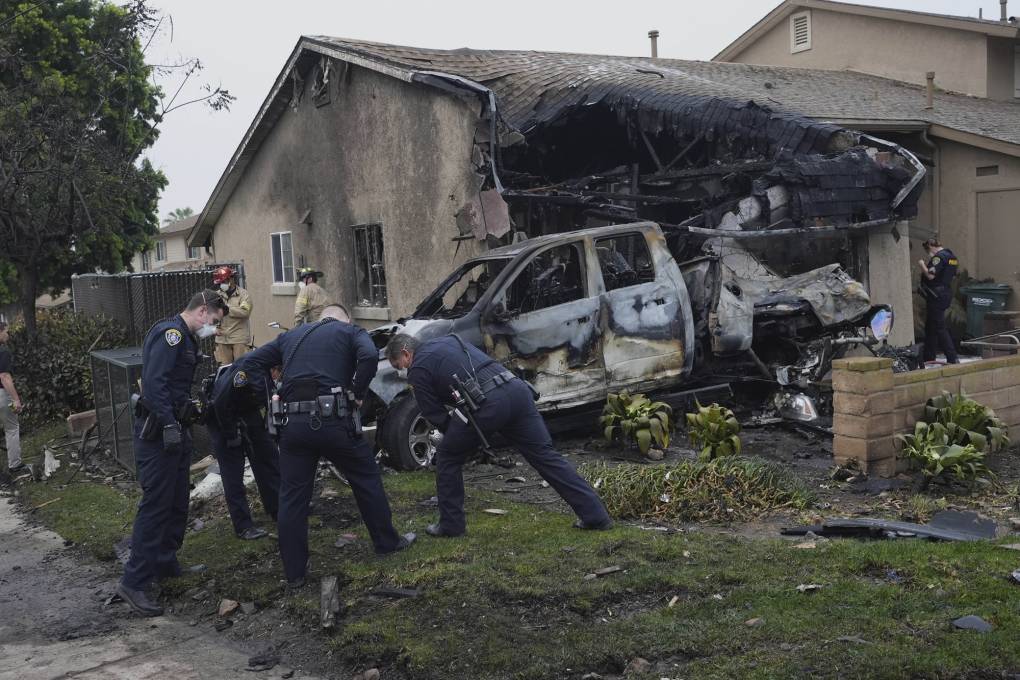
"caption": "Authorities work the scene where a small plane crashed into a San Diego neighborhood, setting several homes on fire and forcing evacuations along many blocks early Thursday, May 22, 2025.",
"credit": "Gregory Bull/AP Photo",
"altTag": null,
"description": null,
"imgSizes": {
"medium": {
"file": "https://cdn.kqed.org/wp-content/uploads/sites/10/2025/05/SanDiegoCrashAP1-800x533.jpg",
"width": 800,
"height": 533,
"mimeType": "image/jpeg"
},
"large": {
"file": "https://cdn.kqed.org/wp-content/uploads/sites/10/2025/05/SanDiegoCrashAP1-1020x680.jpg",
"width": 1020,
"height": 680,
"mimeType": "image/jpeg"
},
"thumbnail": {
"file": "https://cdn.kqed.org/wp-content/uploads/sites/10/2025/05/SanDiegoCrashAP1-160x107.jpg",
"width": 160,
"height": 107,
"mimeType": "image/jpeg"
},
"1536x1536": {
"file": "https://cdn.kqed.org/wp-content/uploads/sites/10/2025/05/SanDiegoCrashAP1-1536x1024.jpg",
"width": 1536,
"height": 1024,
"mimeType": "image/jpeg"
},
"post-thumbnail": {
"file": "https://cdn.kqed.org/wp-content/uploads/sites/10/2025/05/SanDiegoCrashAP1-672x372.jpg",
"width": 672,
"height": 372,
"mimeType": "image/jpeg"
},
"twentyfourteen-full-width": {
"file": "https://cdn.kqed.org/wp-content/uploads/sites/10/2025/05/SanDiegoCrashAP1-1038x576.jpg",
"width": 1038,
"height": 576,
"mimeType": "image/jpeg"
},
"full-width": {
"file": "https://cdn.kqed.org/wp-content/uploads/sites/10/2025/05/SanDiegoCrashAP1-1920x1280.jpg",
"width": 1920,
"height": 1280,
"mimeType": "image/jpeg"
},
"kqedFullSize": {
"file": "https://cdn.kqed.org/wp-content/uploads/sites/10/2025/05/SanDiegoCrashAP1.jpg",
"width": 2000,
"height": 1333
}
},
"isLoading": false,
"fetchFailed": false
},
"news_12040170": {
"type": "attachments",
"id": "news_12040170",
"meta": {
"index": "attachments_1716263798",
"site": "news",
"id": "12040170",
"found": true
},
"title": "Miami, Florida, Miami International Airport, Homeland Security REAL ID message",
"publishDate": 1747261644,
"status": "inherit",
"parent": 12027050,
"modified": 1747261691,
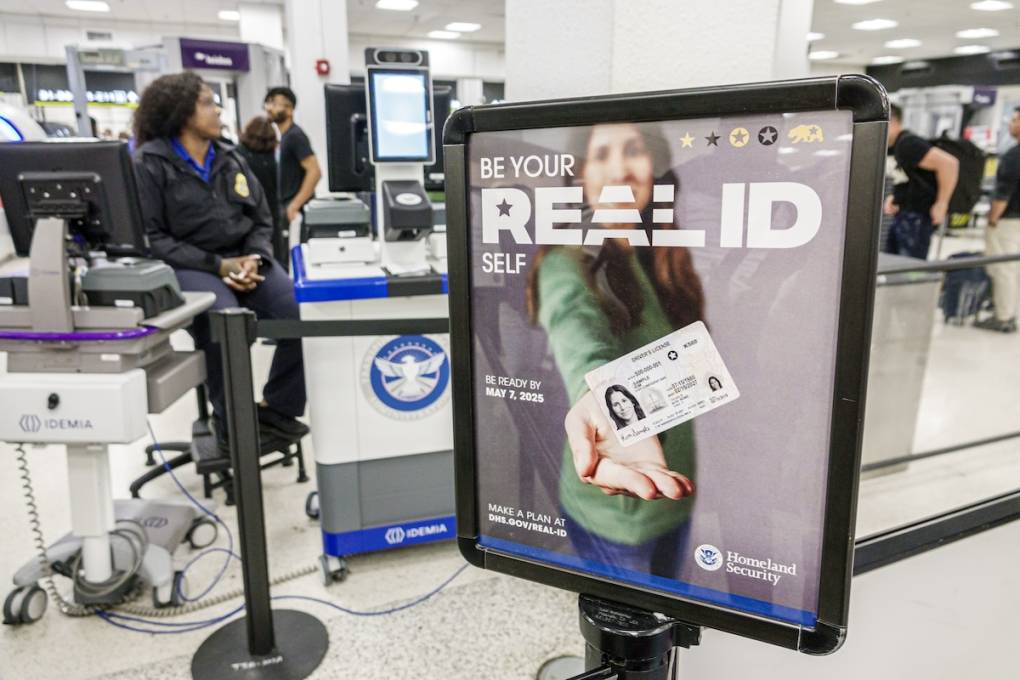
"caption": "Homeland Security REAL ID message at the Miami International Airport on Nov. 13, 2023. ",
"credit": "Jeffrey Greenberg/UCG/Universal Images Group via Getty Images",
"altTag": null,
"description": null,
"imgSizes": {
"medium": {
"file": "https://cdn.kqed.org/wp-content/uploads/sites/10/2025/05/GettyImages-1940010763-1-800x533.jpg",
"width": 800,
"height": 533,
"mimeType": "image/jpeg"
},
"large": {
"file": "https://cdn.kqed.org/wp-content/uploads/sites/10/2025/05/GettyImages-1940010763-1-1020x680.jpg",
"width": 1020,
"height": 680,
"mimeType": "image/jpeg"
},
"thumbnail": {
"file": "https://cdn.kqed.org/wp-content/uploads/sites/10/2025/05/GettyImages-1940010763-1-160x107.jpg",
"width": 160,
"height": 107,
"mimeType": "image/jpeg"
},
"post-thumbnail": {
"file": "https://cdn.kqed.org/wp-content/uploads/sites/10/2025/05/GettyImages-1940010763-1-672x372.jpg",
"width": 672,
"height": 372,
"mimeType": "image/jpeg"
},
"twentyfourteen-full-width": {
"file": "https://cdn.kqed.org/wp-content/uploads/sites/10/2025/05/GettyImages-1940010763-1-1038x576.jpg",
"width": 1038,
"height": 576,
"mimeType": "image/jpeg"
},
"kqedFullSize": {
"file": "https://cdn.kqed.org/wp-content/uploads/sites/10/2025/05/GettyImages-1940010763-1.jpg",
"width": 1200,
"height": 800
}
},
"isLoading": false,
"fetchFailed": false
},
"news_12026145": {
"type": "attachments",
"id": "news_12026145",
"meta": {
"index": "attachments_1716263798",
"site": "news",
"id": "12026145",
"found": true
},
"title": "ICE three agents",
"publishDate": 1738937051,
"status": "inherit",
"parent": 12026143,
"modified": 1746557057,
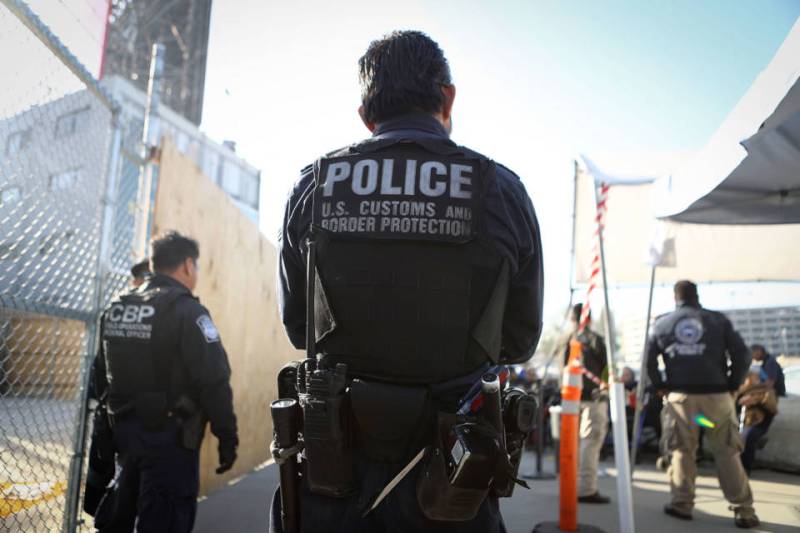
"caption": "An officer from Customs and Border Protection at the San Isidro Port of Entry on the U.S.-Mexico border. ",
"credit": "Mario Tama/Getty Images",
"altTag": null,
"description": null,
"imgSizes": {
"medium": {
"file": "https://cdn.kqed.org/wp-content/uploads/sites/10/2025/02/ICE-three-agents-800x533.jpg",
"width": 800,
"height": 533,
"mimeType": "image/jpeg"
},
"thumbnail": {
"file": "https://cdn.kqed.org/wp-content/uploads/sites/10/2025/02/ICE-three-agents-160x107.jpg",
"width": 160,
"height": 107,
"mimeType": "image/jpeg"
},
"post-thumbnail": {
"file": "https://cdn.kqed.org/wp-content/uploads/sites/10/2025/02/ICE-three-agents-672x372.jpg",
"width": 672,
"height": 372,
"mimeType": "image/jpeg"
},
"twentyfourteen-full-width": {
"file": "https://cdn.kqed.org/wp-content/uploads/sites/10/2025/02/ICE-three-agents-960x576.jpg",
"width": 960,
"height": 576,
"mimeType": "image/jpeg"
},
"kqedFullSize": {
"file": "https://cdn.kqed.org/wp-content/uploads/sites/10/2025/02/ICE-three-agents.jpg",
"width": 960,
"height": 640
}
},
"isLoading": false,
"fetchFailed": false
},
"news_12035408": {
"type": "attachments",
"id": "news_12035408",
"meta": {
"index": "attachments_1716263798",
"site": "news",
"id": "12035408",
"found": true
},
"title": "npr.brightspotcdn copy",
"publishDate": 1744312190,
"status": "inherit",
"parent": 12035407,
"modified": 1744312213,
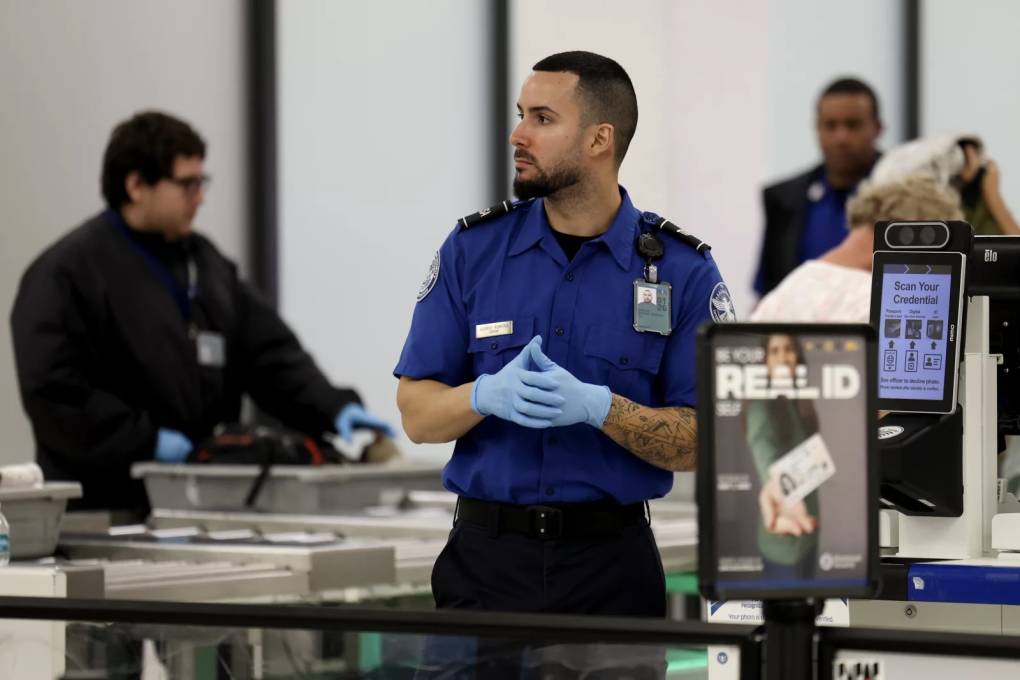
"caption": "A Transportation Security Administration agent stands at a security checkpoint at Miami International Airport on Dec. 20, 2024. The federal government is preparing to begin implementing Real ID rules in May.",
"credit": "Joe Raedle/Getty Images",
"altTag": null,
"description": null,
"imgSizes": {
"medium": {
"file": "https://cdn.kqed.org/wp-content/uploads/sites/10/2025/04/npr.brightspotcdn-copy-9-800x534.jpg",
"width": 800,
"height": 534,
"mimeType": "image/jpeg"
},
"large": {
"file": "https://cdn.kqed.org/wp-content/uploads/sites/10/2025/04/npr.brightspotcdn-copy-9-1020x680.jpg",
"width": 1020,
"height": 680,
"mimeType": "image/jpeg"
},
"thumbnail": {
"file": "https://cdn.kqed.org/wp-content/uploads/sites/10/2025/04/npr.brightspotcdn-copy-9-160x107.jpg",
"width": 160,
"height": 107,
"mimeType": "image/jpeg"
},
"1536x1536": {
"file": "https://cdn.kqed.org/wp-content/uploads/sites/10/2025/04/npr.brightspotcdn-copy-9-1536x1024.jpg",
"width": 1536,
"height": 1024,
"mimeType": "image/jpeg"
},
"post-thumbnail": {
"file": "https://cdn.kqed.org/wp-content/uploads/sites/10/2025/04/npr.brightspotcdn-copy-9-672x372.jpg",
"width": 672,
"height": 372,
"mimeType": "image/jpeg"
},
"twentyfourteen-full-width": {
"file": "https://cdn.kqed.org/wp-content/uploads/sites/10/2025/04/npr.brightspotcdn-copy-9-1038x576.jpg",
"width": 1038,
"height": 576,
"mimeType": "image/jpeg"
},
"kqedFullSize": {
"file": "https://cdn.kqed.org/wp-content/uploads/sites/10/2025/04/npr.brightspotcdn-copy-9.jpg",
"width": 1600,
"height": 1067
}
},
"isLoading": false,
"fetchFailed": false
},
"news_12033721": {
"type": "attachments",
"id": "news_12033721",
"meta": {
"index": "attachments_1716263798",
"site": "news",
"id": "12033721",
"found": true
},
"title": "npr.brightspotcdn copy",
"publishDate": 1743274151,
"status": "inherit",
"parent": 12033720,
"modified": 1743274211,
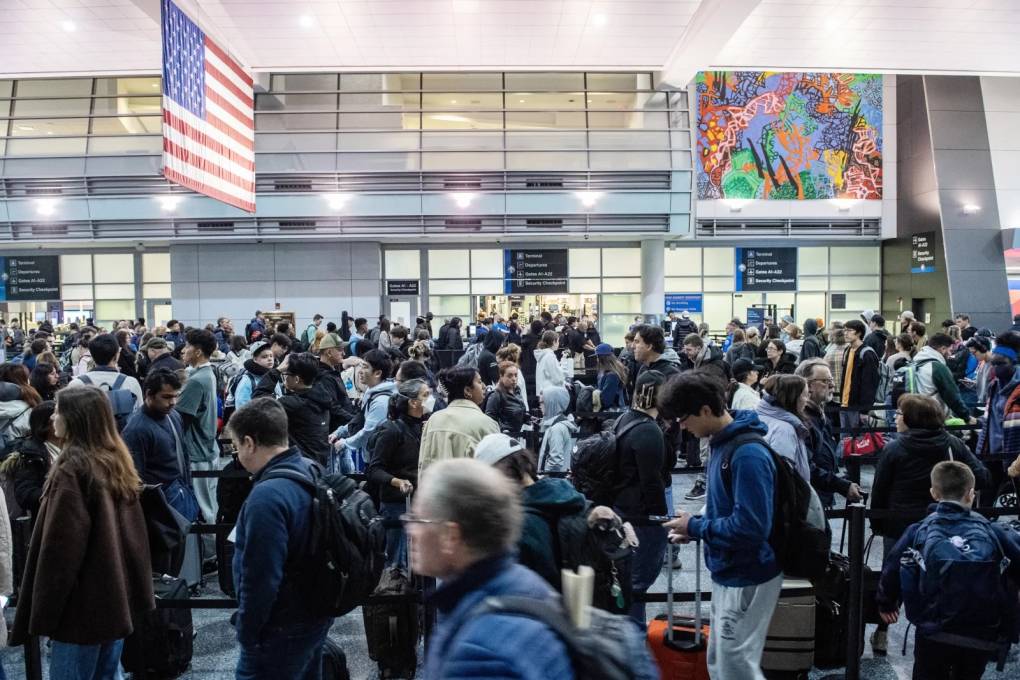
"caption": "Travelers wait in the security line in Terminal A at Boston Logan International Airport in Boston, Massachusetts, on Dec. 21, 2023. The Transportation Security Administration (TSA) stated that the end-of-the-year holiday travel period starts today and goes through Jan. 2, and predicts that Dec. 21 will be one of the busiest days of the year for travelers with a predicted 2.5 million passengers passing though the airports nationwide. ",
"credit": "Joseph Prezioso/AFP",
"altTag": null,
"description": null,
"imgSizes": {
"medium": {
"file": "https://cdn.kqed.org/wp-content/uploads/sites/10/2025/03/npr.brightspotcdn-copy-15-800x533.jpg",
"width": 800,
"height": 533,
"mimeType": "image/jpeg"
},
"large": {
"file": "https://cdn.kqed.org/wp-content/uploads/sites/10/2025/03/npr.brightspotcdn-copy-15-1020x680.jpg",
"width": 1020,
"height": 680,
"mimeType": "image/jpeg"
},
"thumbnail": {
"file": "https://cdn.kqed.org/wp-content/uploads/sites/10/2025/03/npr.brightspotcdn-copy-15-160x107.jpg",
"width": 160,
"height": 107,
"mimeType": "image/jpeg"
},
"1536x1536": {
"file": "https://cdn.kqed.org/wp-content/uploads/sites/10/2025/03/npr.brightspotcdn-copy-15-1536x1023.jpg",
"width": 1536,
"height": 1023,
"mimeType": "image/jpeg"
},
"post-thumbnail": {
"file": "https://cdn.kqed.org/wp-content/uploads/sites/10/2025/03/npr.brightspotcdn-copy-15-672x372.jpg",
"width": 672,
"height": 372,
"mimeType": "image/jpeg"
},
"twentyfourteen-full-width": {
"file": "https://cdn.kqed.org/wp-content/uploads/sites/10/2025/03/npr.brightspotcdn-copy-15-1038x576.jpg",
"width": 1038,
"height": 576,
"mimeType": "image/jpeg"
},
"kqedFullSize": {
"file": "https://cdn.kqed.org/wp-content/uploads/sites/10/2025/03/npr.brightspotcdn-copy-15.jpg",
"width": 1600,
"height": 1066
}
},
"isLoading": false,
"fetchFailed": false
},
"news_12033433": {
"type": "attachments",
"id": "news_12033433",
"meta": {
"index": "attachments_1716263798",
"site": "news",
"id": "12033433",
"found": true
},
"title": "Fast food workers at San Francisco International Airport (SFO) plan to protest on Friday",
"publishDate": 1743113525,
"status": "inherit",
"parent": 12033338,
"modified": 1743113591,
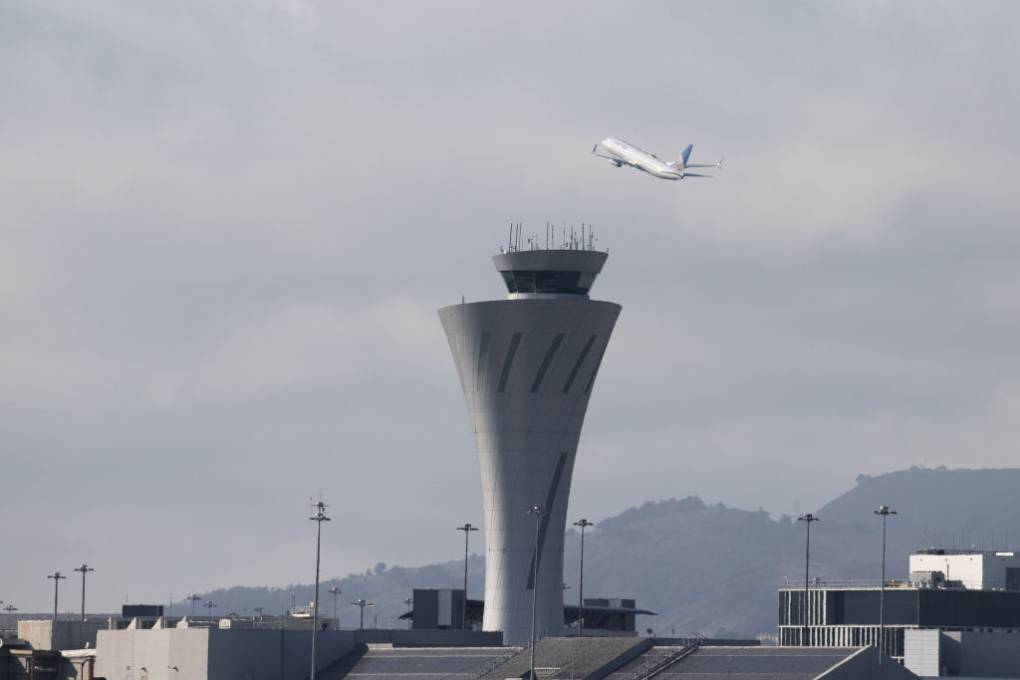
"caption": "Plane takes off behind the air traffic control tower at San Francisco International Airport (SFO) in San Francisco on Sept. 15, 2022. The federal hiring freeze has left a vital Bay Area aviation weather unit with just one meteorologist, risking flight delays and disruptions. The unit oversees a vast airspace, ensuring the safe landing of over a million flights yearly.",
"credit": "Tayfun Coskun/Anadolu Agency via Getty Images",
"altTag": null,
"description": null,
"imgSizes": {
"medium": {
"file": "https://cdn.kqed.org/wp-content/uploads/sites/10/2025/03/GettyImages-1243270396-1-800x534.jpg",
"width": 800,
"height": 534,
"mimeType": "image/jpeg"
},
"large": {
"file": "https://cdn.kqed.org/wp-content/uploads/sites/10/2025/03/GettyImages-1243270396-1-1020x680.jpg",
"width": 1020,
"height": 680,
"mimeType": "image/jpeg"
},
"thumbnail": {
"file": "https://cdn.kqed.org/wp-content/uploads/sites/10/2025/03/GettyImages-1243270396-1-160x107.jpg",
"width": 160,
"height": 107,
"mimeType": "image/jpeg"
},
"post-thumbnail": {
"file": "https://cdn.kqed.org/wp-content/uploads/sites/10/2025/03/GettyImages-1243270396-1-672x372.jpg",
"width": 672,
"height": 372,
"mimeType": "image/jpeg"
},
"twentyfourteen-full-width": {
"file": "https://cdn.kqed.org/wp-content/uploads/sites/10/2025/03/GettyImages-1243270396-1-1024x576.jpg",
"width": 1024,
"height": 576,
"mimeType": "image/jpeg"
},
"kqedFullSize": {
"file": "https://cdn.kqed.org/wp-content/uploads/sites/10/2025/03/GettyImages-1243270396-1.jpg",
"width": 1024,
"height": 683
}
},
"isLoading": false,
"fetchFailed": false
},
"news_11967918": {
"type": "attachments",
"id": "news_11967918",
"meta": {
"index": "attachments_1716263798",
"site": "news",
"id": "11967918",
"found": true
},
"parent": 11967917,
"imgSizes": {
"thumbnail": {
"file": "https://ww2.kqed.org/app/uploads/sites/10/2023/11/gettyimages-1245034839-4e70518b157c59982b247bd973771364284a3466-160x120.jpg",
"width": 160,
"mimeType": "image/jpeg",
"height": 120
},
"post-thumbnail": {
"file": "https://ww2.kqed.org/app/uploads/sites/10/2023/11/gettyimages-1245034839-4e70518b157c59982b247bd973771364284a3466-672x372.jpg",
"width": 672,
"mimeType": "image/jpeg",
"height": 372
},
"kqedFullSize": {
"file": "https://ww2.kqed.org/app/uploads/sites/10/2023/11/gettyimages-1245034839-4e70518b157c59982b247bd973771364284a3466.jpg",
"width": 756,
"height": 567
}
},
"publishDate": 1700511028,
"modified": 1700600976,
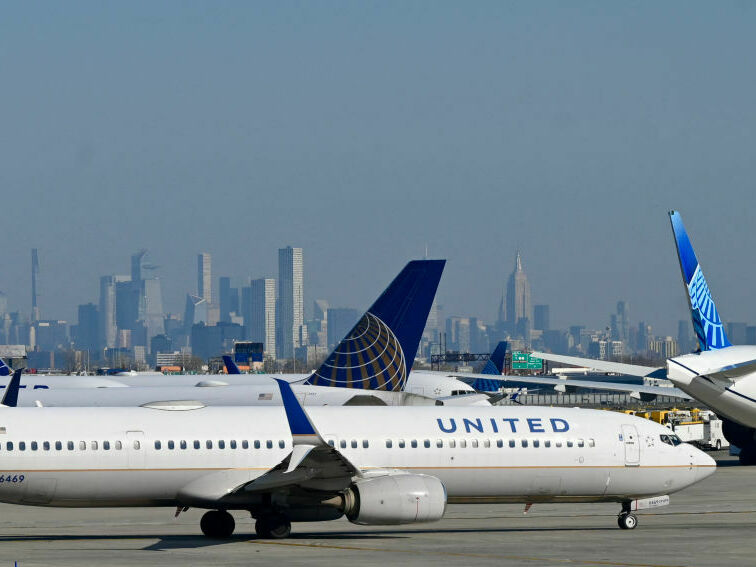
"caption": "United Air Lines planes are seen on the tarmac of Newark Liberty International Airport (EWR), New Jersey, on the eve of Thanksgiving on Nov. 23, 2022.",
"description": "United Air Lines planes are seen on the tarmac of Newark Liberty International Airport (EWR), New Jersey, on the eve of Thanksgiving on November 23, 2022.",
"title": "United Air Lines planes line up along the busy Newark Liberty International Airport, New Jersey, on the eve of Thanksgiving on November 23, 2022.",
"credit": "Daniel Slim/AFP via Getty Images",
"status": "inherit",
"altTag": "Airplanes are on a tarmac. A city skyline is seen in the background. One plane has the word United in blue on its side.",
"isLoading": false,
"fetchFailed": false
},
"news_12020715": {
"type": "attachments",
"id": "news_12020715",
"meta": {
"index": "attachments_1716263798",
"site": "news",
"id": "12020715",
"found": true
},
"title": "Farnborough International Airshow 2024",
"publishDate": 1736296192,
"status": "inherit",
"parent": 12020697,
"modified": 1736296264,
"caption": "Visitors view a Joby Aviation full-scale electric vertical takeoff and landing aircraft (eVTOL) air taxi is displayed during the Farnborough International Airshow 2024 at Farnborough International Exhibition and Conference Centre on July 23, 2024 in Farnborough, England. ",
"credit": "John Keeble/Getty Images",
"altTag": "An electric aviation vehicle with sets of propellers and a cabin sits in a showroom at a fair.",
"description": null,
"imgSizes": {
"medium": {
"file": "https://cdn.kqed.org/wp-content/uploads/sites/10/2025/01/GettyImages-2163324535-800x534.jpg",
"width": 800,
"height": 534,
"mimeType": "image/jpeg"
},
"large": {
"file": "https://cdn.kqed.org/wp-content/uploads/sites/10/2025/01/GettyImages-2163324535-1020x680.jpg",
"width": 1020,
"height": 680,
"mimeType": "image/jpeg"
},
"thumbnail": {
"file": "https://cdn.kqed.org/wp-content/uploads/sites/10/2025/01/GettyImages-2163324535-160x107.jpg",
"width": 160,
"height": 107,
"mimeType": "image/jpeg"
},
"post-thumbnail": {
"file": "https://cdn.kqed.org/wp-content/uploads/sites/10/2025/01/GettyImages-2163324535-672x372.jpg",
"width": 672,
"height": 372,
"mimeType": "image/jpeg"
},
"twentyfourteen-full-width": {
"file": "https://cdn.kqed.org/wp-content/uploads/sites/10/2025/01/GettyImages-2163324535-1024x576.jpg",
"width": 1024,
"height": 576,
"mimeType": "image/jpeg"
},
"kqedFullSize": {
"file": "https://cdn.kqed.org/wp-content/uploads/sites/10/2025/01/GettyImages-2163324535.jpg",
"width": 1024,
"height": 683
}
},
"isLoading": false,
"fetchFailed": false
},
"news_12009562": {
"type": "attachments",
"id": "news_12009562",
"meta": {
"index": "attachments_1716263798",
"site": "news",
"id": "12009562",
"found": true
},
"title": "Schulz airport",
"publishDate": 1729035449,
"status": "inherit",
"parent": 12009550,
"modified": 1729035738,
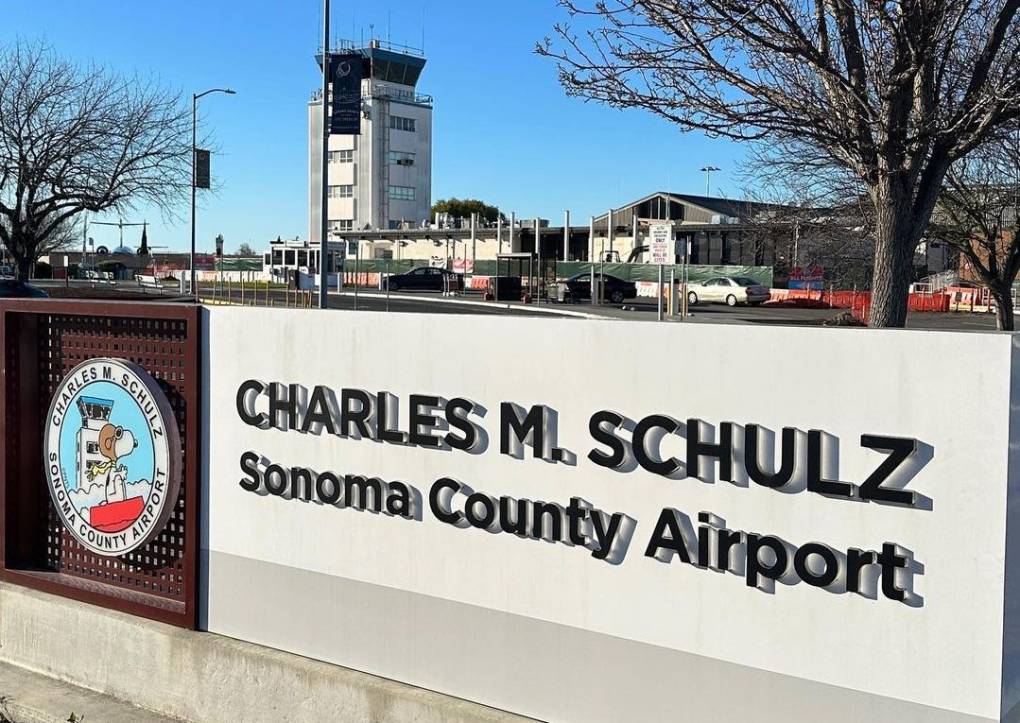
"caption": "The Charles M. Schulz-Sonoma County Airport will hire two new operations specialists after the facility failed a surprise FAA safety inspection in August.",
"credit": "Courtesy of the Charles M. Schulz-Sonoma County Airport",
"altTag": "A sign at the entrance of the Charles M. Schulz-Sonoma County Airport.",
"description": null,
"imgSizes": {
"medium": {
"file": "https://cdn.kqed.org/wp-content/uploads/sites/10/2024/10/Schulz-airport-800x567.jpg",
"width": 800,
"height": 567,
"mimeType": "image/jpeg"
},
"large": {
"file": "https://cdn.kqed.org/wp-content/uploads/sites/10/2024/10/Schulz-airport-1020x723.jpg",
"width": 1020,
"height": 723,
"mimeType": "image/jpeg"
},
"thumbnail": {
"file": "https://cdn.kqed.org/wp-content/uploads/sites/10/2024/10/Schulz-airport-160x113.jpg",
"width": 160,
"height": 113,
"mimeType": "image/jpeg"
},
"post-thumbnail": {
"file": "https://cdn.kqed.org/wp-content/uploads/sites/10/2024/10/Schulz-airport-672x372.jpg",
"width": 672,
"height": 372,
"mimeType": "image/jpeg"
},
"twentyfourteen-full-width": {
"file": "https://cdn.kqed.org/wp-content/uploads/sites/10/2024/10/Schulz-airport-1038x576.jpg",
"width": 1038,
"height": 576,
"mimeType": "image/jpeg"
},
"kqedFullSize": {
"file": "https://cdn.kqed.org/wp-content/uploads/sites/10/2024/10/Schulz-airport.jpg",
"width": 1079,
"height": 765
}
},
"isLoading": false,
"fetchFailed": false
},
"news_11973970": {
"type": "attachments",
"id": "news_11973970",
"meta": {
"index": "attachments_1716263798",
"site": "news",
"id": "11973970",
"found": true
},
"parent": 11973969,
"imgSizes": {
"twentyfourteen-full-width": {
"file": "https://cdn.kqed.org/wp-content/uploads/sites/10/2024/01/gettyimages-1948397327-7d48b5a4f4fb502524725b8fb8b887c5a611adfa-s1600-c85-copy-1038x576.jpg",
"width": 1038,
"mimeType": "image/jpeg",
"height": 576
},
"thumbnail": {
"file": "https://cdn.kqed.org/wp-content/uploads/sites/10/2024/01/gettyimages-1948397327-7d48b5a4f4fb502524725b8fb8b887c5a611adfa-s1600-c85-copy-160x120.jpg",
"width": 160,
"mimeType": "image/jpeg",
"height": 120
},
"post-thumbnail": {
"file": "https://cdn.kqed.org/wp-content/uploads/sites/10/2024/01/gettyimages-1948397327-7d48b5a4f4fb502524725b8fb8b887c5a611adfa-s1600-c85-copy-672x372.jpg",
"width": 672,
"mimeType": "image/jpeg",
"height": 372
},
"kqedFullSize": {
"file": "https://cdn.kqed.org/wp-content/uploads/sites/10/2024/01/gettyimages-1948397327-7d48b5a4f4fb502524725b8fb8b887c5a611adfa-s1600-c85-copy.jpg",
"width": 1600,
"height": 1200
},
"large": {
"file": "https://cdn.kqed.org/wp-content/uploads/sites/10/2024/01/gettyimages-1948397327-7d48b5a4f4fb502524725b8fb8b887c5a611adfa-s1600-c85-copy-1020x765.jpg",
"width": 1020,
"mimeType": "image/jpeg",
"height": 765
},
"1536x1536": {
"file": "https://cdn.kqed.org/wp-content/uploads/sites/10/2024/01/gettyimages-1948397327-7d48b5a4f4fb502524725b8fb8b887c5a611adfa-s1600-c85-copy-1536x1152.jpg",
"width": 1536,
"mimeType": "image/jpeg",
"height": 1152
},
"medium": {
"file": "https://cdn.kqed.org/wp-content/uploads/sites/10/2024/01/gettyimages-1948397327-7d48b5a4f4fb502524725b8fb8b887c5a611adfa-s1600-c85-copy-800x600.jpg",
"width": 800,
"mimeType": "image/jpeg",
"height": 600
}
},
"publishDate": 1706372072,
"modified": 1706372173,
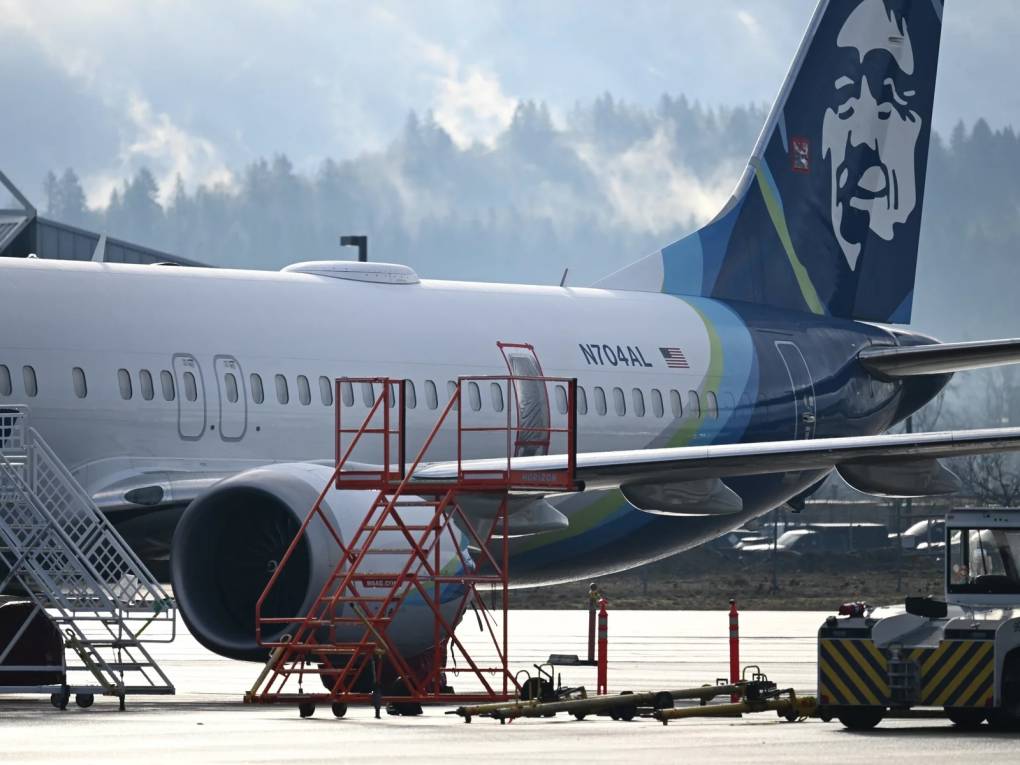
"caption": "Alaska Airlines N704AL, a 737 Max 9, which made an emergency landing at Portland International Airport on Jan. 5 is parked at a maintenance hanger in Portland, Oregon on Jan. 23, 2024. The missing emergency door is covered and taped. One of 2 door plugs on the emergency exit door blew out shortly after the plane took off from Portland. No fatalities or injuries were reported. The US Federal Aviation Administration announced Jan. 11 it was launching a safety probe into Boeing's quality control.",
"description": null,
"title": "gettyimages-1948397327-7d48b5a4f4fb502524725b8fb8b887c5a611adfa-s1600-c85 copy",
"credit": "Patrick T. Fallon/AFP",
"status": "inherit",
"altTag": "A plane on a tarmac with scaffolding around it as crews work on maintenance, repairs.",
"isLoading": false,
"fetchFailed": false
},
"news_11913447": {
"type": "attachments",
"id": "news_11913447",
"meta": {
"index": "attachments_1716263798",
"site": "news",
"id": "11913447",
"found": true
},
"parent": 11913439,
"imgSizes": {
"twentyfourteen-full-width": {
"file": "https://ww2.kqed.org/app/uploads/sites/10/2022/05/airship_featured01-1038x576.png",
"width": 1038,
"mimeType": "image/png",
"height": 576
},
"thumbnail": {
"file": "https://ww2.kqed.org/app/uploads/sites/10/2022/05/airship_featured01-160x107.png",
"width": 160,
"mimeType": "image/png",
"height": 107
},
"post-thumbnail": {
"file": "https://ww2.kqed.org/app/uploads/sites/10/2022/05/airship_featured01-672x372.png",
"width": 672,
"mimeType": "image/png",
"height": 372
},
"kqedFullSize": {
"file": "https://ww2.kqed.org/app/uploads/sites/10/2022/05/airship_featured01.png",
"width": 1920,
"height": 1285
},
"large": {
"file": "https://ww2.kqed.org/app/uploads/sites/10/2022/05/airship_featured01-1020x683.png",
"width": 1020,
"mimeType": "image/png",
"height": 683
},
"1536x1536": {
"file": "https://ww2.kqed.org/app/uploads/sites/10/2022/05/airship_featured01-1536x1028.png",
"width": 1536,
"mimeType": "image/png",
"height": 1028
},
"medium": {
"file": "https://ww2.kqed.org/app/uploads/sites/10/2022/05/airship_featured01-800x535.png",
"width": 800,
"mimeType": "image/png",
"height": 535
}
},
"publishDate": 1651869549,
"modified": 1651869598,
"caption": null,
"description": null,
"title": "airship_featured01",
"credit": null,
"status": "inherit",
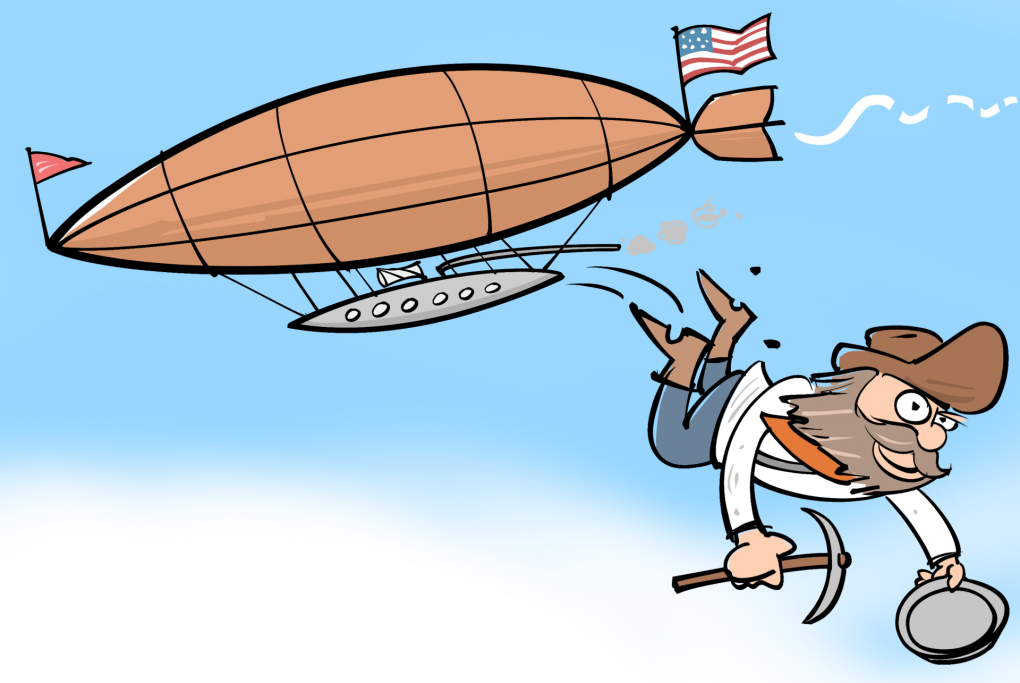
"altTag": "Cartoon: a dirigible floats through the sky as a happy gold mining sourdough character jumps into the sky holding a pick ax and gold pan.",
"isLoading": false,
"fetchFailed": false
}
},
"audioPlayerReducer": {
"postId": "stream_live",
"isPaused": true,
"isPlaying": false,
"pfsActive": false,
"pledgeModalIsOpen": true,
"playerDrawerIsOpen": false,
"liveAudioPlayStartedAt": 0,
"liveAudioPlayContext": ""
},
"authorsReducer": {
"byline_news_12041261": {
"type": "authors",
"id": "byline_news_12041261",
"meta": {
"override": true
},
"slug": "byline_news_12041261",
"name": "Julie Watson, Associated Press",
"isLoading": false
},
"byline_news_12035407": {
"type": "authors",
"id": "byline_news_12035407",
"meta": {
"override": true
},
"slug": "byline_news_12035407",
"name": "\u003ca href=\"https://www.npr.org/people/1000952100/joe-hernandez\">Joe Hernandez\u003c/a>, NPR",
"isLoading": false
},
"byline_news_12033720": {
"type": "authors",
"id": "byline_news_12033720",
"meta": {
"override": true
},
"slug": "byline_news_12033720",
"name": "\u003ca href=\"https://www.npr.org/people/1108419098/juliana-kim\">Juliana Kim\u003c/a>, NPR",
"isLoading": false
},
"byline_news_12027453": {
"type": "authors",
"id": "byline_news_12027453",
"meta": {
"override": true
},
"slug": "byline_news_12027453",
"name": "Tara Copp, Associated Press",
"isLoading": false
},
"byline_news_12020697": {
"type": "authors",
"id": "byline_news_12020697",
"meta": {
"override": true
},
"slug": "byline_news_12020697",
"name": "Michael Liedtke, Associated Press",
"isLoading": false
},
"byline_news_11973969": {
"type": "authors",
"id": "byline_news_11973969",
"meta": {
"override": true
},
"slug": "byline_news_11973969",
"name": "\u003ca href=\"https://www.npr.org/people/997906236/diba-mohtasham\">Diba Mohtasham\u003c/a>",
"isLoading": false
},
"byline_news_11967917": {
"type": "authors",
"id": "byline_news_11967917",
"meta": {
"override": true
},
"slug": "byline_news_11967917",
"name": "\u003ca href=\"https://www.npr.org/people/159989569/joel-rose\">Joel Rose\u003c/a>\u003cbr> NPR News",
"isLoading": false
},
"markfiore": {
"type": "authors",
"id": "3236",
"meta": {
"index": "authors_1716337520",
"id": "3236",
"found": true
},
"name": "Mark Fiore",
"firstName": "Mark",
"lastName": "Fiore",
"slug": "markfiore",
"email": "mark@markfiore.com",
"display_author_email": false,
"staff_mastheads": [
"news"
],
"title": "KQED News Cartoonist",
"bio": "\u003ca href=\"http://www.MarkFiore.com\">MarkFiore.com\u003c/a> | \u003ca href=\"https://twitter.com/markfiore\">Follow on Twitter\u003c/a> | \u003ca href=\"https://www.facebook.com/pages/Mark-Fiore-Animated-Political-Cartoons/94451707396?ref=bookmarks\">Facebook\u003c/a> | \u003ca href=\"mailto:mark@markfiore.com\">email\u003c/a>\r\n\r\nPulitzer Prize-winner, Mark Fiore, who the Wall Street Journal has called “the undisputed guru of the form,” creates animated political cartoons in San Francisco, where his work has been featured regularly on the San Francisco Chronicle’s web site, SFGate.com. His work has appeared on Newsweek.com, Slate.com, CBSNews.com, MotherJones.com, DailyKos.com and NPR’s web site. Fiore’s political animation has appeared on CNN, Frontline, Bill Moyers Journal, Salon.com and cable and broadcast outlets across the globe.\r\n\r\nBeginning his professional life by drawing traditional political cartoons for newspapers, Fiore’s work appeared in publications ranging from the Washington Post to the Los Angeles Times. In the late 1990s, he began to experiment with animating political cartoons and, after a short stint at the San Jose Mercury News as their staff cartoonist, Fiore devoted all his energies to animation.\r\nGrowing up in California, Fiore also spent a good portion of his life in the backwoods of Idaho. It was this combination that shaped him politically. Mark majored in political science at Colorado College, where, in a perfect send-off for a cartoonist, he received his diploma in 1991 as commencement speaker Dick Cheney smiled approvingly.\r\nMark Fiore was awarded the Pulitzer Prize for political cartooning in 2010, a Robert F. Kennedy Journalism Award in 2004 and has twice received an Online Journalism Award for commentary from the Online News Association (2002, 2008). Fiore has received two awards for his work in new media from the National Cartoonists Society (2001, 2002), and in 2006 received The James Madison Freedom of Information Award from The Society of Professional Journalists.",
"avatar": "https://secure.gravatar.com/avatar/fc4e2a612b15b67bad0c6f0e1db4ca9b?s=600&d=blank&r=g",
"twitter": "MarkFiore",
"facebook": null,
"instagram": "https://www.instagram.com/markfiore/?hl=en",
"linkedin": null,
"sites": [
{
"site": "arts",
"roles": [
"contributor"
]
},
{
"site": "news",
"roles": [
"editor"
]
},
{
"site": "futureofyou",
"roles": [
"editor"
]
},
{
"site": "science",
"roles": [
"editor"
]
}
],
"headData": {
"title": "Mark Fiore | KQED",
"description": "KQED News Cartoonist",
"ogImgSrc": "https://secure.gravatar.com/avatar/fc4e2a612b15b67bad0c6f0e1db4ca9b?s=600&d=blank&r=g",
"twImgSrc": "https://secure.gravatar.com/avatar/fc4e2a612b15b67bad0c6f0e1db4ca9b?s=600&d=blank&r=g"
},
"isLoading": false,
"link": "/author/markfiore"
},
"carlysevern": {
"type": "authors",
"id": "3243",
"meta": {
"index": "authors_1716337520",
"id": "3243",
"found": true
},
"name": "Carly Severn",
"firstName": "Carly",
"lastName": "Severn",
"slug": "carlysevern",
"email": "csevern@kqed.org",
"display_author_email": false,
"staff_mastheads": [
"news"
],
"title": "Senior Editor, Audience News ",
"bio": "Carly is KQED's Senior Editor of Audience News on the Digital News team, and has reported for the California Report Magazine, Bay Curious and KQED Arts. She's formerly the host of \u003ca href=\"http://ww2.kqed.org/pop/category/the-cooler/\" rel=\"noopener noreferrer\">The Cooler\u003c/a> podcast.",
"avatar": "https://secure.gravatar.com/avatar/2d8d6765f186e64c798cf7f0c8088a41?s=600&d=blank&r=g",
"twitter": "teacupinthebay",
"facebook": null,
"instagram": null,
"linkedin": null,
"sites": [
{
"site": "",
"roles": [
"editor"
]
},
{
"site": "arts",
"roles": [
"editor"
]
},
{
"site": "news",
"roles": [
"administrator"
]
},
{
"site": "pop",
"roles": [
"editor"
]
},
{
"site": "futureofyou",
"roles": [
"editor"
]
},
{
"site": "about",
"roles": [
"administrator"
]
},
{
"site": "mindshift",
"roles": [
"editor"
]
},
{
"site": "bayareabites",
"roles": [
"editor"
]
},
{
"site": "stateofhealth",
"roles": [
"editor"
]
},
{
"site": "science",
"roles": [
"editor"
]
},
{
"site": "food",
"roles": [
"contributor"
]
},
{
"site": "forum",
"roles": [
"editor"
]
},
{
"site": "perspectives",
"roles": [
"administrator"
]
},
{
"site": "liveblog",
"roles": [
"editor"
]
}
],
"headData": {
"title": "Carly Severn | KQED",
"description": "Senior Editor, Audience News ",
"ogImgSrc": "https://secure.gravatar.com/avatar/2d8d6765f186e64c798cf7f0c8088a41?s=600&d=blank&r=g",
"twImgSrc": "https://secure.gravatar.com/avatar/2d8d6765f186e64c798cf7f0c8088a41?s=600&d=blank&r=g"
},
"isLoading": false,
"link": "/author/carlysevern"
},
"ccabreralomeli": {
"type": "authors",
"id": "11708",
"meta": {
"index": "authors_1716337520",
"id": "11708",
"found": true
},
"name": "Carlos Cabrera-Lomelí",
"firstName": "Carlos",
"lastName": "Cabrera-Lomelí",
"slug": "ccabreralomeli",
"email": "ccabreralomeli@KQED.org",
"display_author_email": true,
"staff_mastheads": [
"news"
],
"title": "Community Reporter",
"bio": "Carlos Cabrera-Lomelí is a community reporter with KQED's digital engagement team. He also reports and co-produces for KQED's bilingual news hub KQED en Español. He grew up in San Francisco's Mission District and has previously worked with Univision, 48 Hills and REFORMA in Mexico City.",
"avatar": "https://secure.gravatar.com/avatar/c309be9665e484f887b818c89e273ecc673004f426f36b24d00a4d813a2e0518?s=600&d=blank&r=g",
"twitter": "@LomeliCabrera",
"bluesky": null,
"facebook": null,
"instagram": null,
"linkedin": null,
"sites": [
{
"site": "arts",
"roles": [
"editor"
]
},
{
"site": "news",
"roles": [
"editor"
]
},
{
"site": "about",
"roles": [
"editor"
]
},
{
"site": "science",
"roles": [
"editor"
]
},
{
"site": "perspectives",
"roles": [
"editor"
]
},
{
"site": "elections",
"roles": [
"editor"
]
},
{
"site": "liveblog",
"roles": [
"contributor"
]
}
],
"headData": {
"title": "Carlos Cabrera-Lomelí | KQED",
"description": "Community Reporter",
"ogImgSrc": "https://secure.gravatar.com/avatar/c309be9665e484f887b818c89e273ecc673004f426f36b24d00a4d813a2e0518?s=600&d=blank&r=g",
"twImgSrc": "https://secure.gravatar.com/avatar/c309be9665e484f887b818c89e273ecc673004f426f36b24d00a4d813a2e0518?s=600&d=blank&r=g"
},
"isLoading": false,
"link": "/author/ccabreralomeli"
},
"eromero": {
"type": "authors",
"id": "11746",
"meta": {
"index": "authors_1716337520",
"id": "11746",
"found": true
},
"name": "Ezra David Romero",
"firstName": "Ezra David",
"lastName": "Romero",
"slug": "eromero",
"email": "eromero@kqed.org",
"display_author_email": true,
"staff_mastheads": [
"news",
"science"
],
"title": "Climate Reporter",
"bio": "Ezra David Romero is a climate reporter for KQED News. He covers the absence and excess of water in the Bay Area — think sea level rise, flooding and drought. For nearly a decade he’s covered how warming temperatures are altering the lives of Californians. He’s reported on farmers worried their pistachio trees aren’t getting enough sleep, families desperate for water, scientists studying dying giant sequoias, and alongside firefighters containing wildfires. His work has appeared on local stations across California and nationally on public radio shows like Morning Edition, Here and Now, All Things Considered and Science Friday. ",
"avatar": "https://secure.gravatar.com/avatar/9c15bb8bab267e058708a9eeaeef16bf?s=600&d=blank&r=g",
"twitter": "ezraromero",
"bluesky": null,
"facebook": null,
"instagram": null,
"linkedin": null,
"sites": [
{
"site": "arts",
"roles": [
"editor"
]
},
{
"site": "news",
"roles": [
"editor"
]
},
{
"site": "science",
"roles": [
"editor"
]
},
{
"site": "liveblog",
"roles": [
"author"
]
}
],
"headData": {
"title": "Ezra David Romero | KQED",
"description": "Climate Reporter",
"ogImgSrc": "https://secure.gravatar.com/avatar/9c15bb8bab267e058708a9eeaeef16bf?s=600&d=blank&r=g",
"twImgSrc": "https://secure.gravatar.com/avatar/9c15bb8bab267e058708a9eeaeef16bf?s=600&d=blank&r=g"
},
"isLoading": false,
"link": "/author/eromero"
},
"gzada": {
"type": "authors",
"id": "11929",
"meta": {
"index": "authors_1716337520",
"id": "11929",
"found": true
},
"name": "Gilare Zada",
"firstName": "Gilare",
"lastName": "Zada",
"slug": "gzada",
"email": "gzada@kqed.org",
"display_author_email": true,
"staff_mastheads": [
"news"
],
"title": null,
"bio": "Gilare Zada is a Kurdish-American from San Diego, CA. Storytelling, fitness, and binge reading are some of her passions outside of news reporting. Her work has appeared in Mission Local, the Peninsula Press, the San Francisco Press Club, and more. She also writes as a class correspondent for the Stanford Magazine - go Card!",
"avatar": "https://secure.gravatar.com/avatar/33a75f2b947669a488a805edec3fbf3838c1cedaedda710e983770633b4d6a75?s=600&d=blank&r=g",
"twitter": null,
"bluesky": null,
"facebook": null,
"instagram": null,
"linkedin": null,
"sites": [
{
"site": "arts",
"roles": [
"editor"
]
},
{
"site": "news",
"roles": [
"editor",
"contributor"
]
},
{
"site": "science",
"roles": [
"editor"
]
}
],
"headData": {
"title": "Gilare Zada | KQED",
"description": null,
"ogImgSrc": "https://secure.gravatar.com/avatar/33a75f2b947669a488a805edec3fbf3838c1cedaedda710e983770633b4d6a75?s=600&d=blank&r=g",
"twImgSrc": "https://secure.gravatar.com/avatar/33a75f2b947669a488a805edec3fbf3838c1cedaedda710e983770633b4d6a75?s=600&d=blank&r=g"
},
"isLoading": false,
"link": "/author/gzada"
}
},
"pagesReducer": {
"news_tag_air-travel": {
"type": "terms",
"id": "news_20281",
"meta": {
"index": "terms_1716263798",
"site": "news",
"id": "20281",
"score": 10.400451
},
"featImg": null,
"name": "air travel",
"description": null,
"taxonomy": "tag",
"headData": {
"twImgId": null,
"twTitle": null,
"ogTitle": null,
"ogImgId": null,
"twDescription": null,
"description": null,
"title": "air travel Archives | KQED News",
"ogDescription": null
},
"ttid": 20298,
"slug": "air-travel",
"isLoading": false,
"title": "air travel",
"pageMeta": {
"site": "news",
"WpPageTemplate": "page-topic-editorial",
"currentPage": 3
},
"blocks": [
{
"blockName": "kqed/post-list",
"attrs": {
"layout": "cardArticle2",
"query": "posts/news?tag=air-travel",
"seeMore": false,
"paginated": true,
"page": 3
}
},
{
"blockName": "kqed/ad"
}
]
}
},
"pfsSessionReducer": {},
"postsReducer": {
"stream_live": {
"type": "live",
"id": "stream_live",
"audioUrl": "https://streams.kqed.org/kqedradio",
"title": "Live Stream",
"excerpt": "Live Stream information currently unavailable.",
"link": "/radio",
"featImg": "",
"label": {
"name": "KQED Live",
"link": "/"
}
},
"stream_kqedNewscast": {
"type": "posts",
"id": "stream_kqedNewscast",
"audioUrl": "https://www.kqed.org/.stream/anon/radio/RDnews/newscast.mp3?_=1",
"title": "KQED Newscast",
"featImg": "",
"label": {
"name": "88.5 FM",
"link": "/"
}
},
"news_12041261": {
"type": "posts",
"id": "news_12041261",
"meta": {
"index": "posts_1716263798",
"site": "news",
"id": "12041261",
"score": null,
"sort": [
1747935741000
]
},
"guestAuthors": [],
"slug": "fatal-san-diego-jet-crash-sparks-fire-in-military-housing-area",
"title": "Fatal San Diego Jet Crash Sparks Fire in Military Housing Area",
"publishDate": 1747935741,
"format": "standard",
"headTitle": "Fatal San Diego Jet Crash Sparks Fire in Military Housing Area | KQED",
"labelTerm": {
"site": "news"
},
"content": "\u003cp>A private jet crashed into military housing in \u003ca href=\"https://www.kqed.org/news/tag/san-diego\">San Diego\u003c/a> during foggy weather early Thursday, igniting cars parked along a suburban neighborhood block and killing multiple people on board the plane, authorities said.\u003c/p>\n\u003cp>The plane could hold eight to 10 people, but it’s not yet known how many were on the aircraft, Assistant San Diego Fire Chief Dan Eddy said at a news conference. Authorities will be investigating whether the plane hit a power line, he said.\u003c/p>\n\u003cp>The aircraft crashed just before 4 a.m. into the U.S. military’s largest housing neighborhood. It appeared to strike at least one home that had a charred and collapsed roof and smash through half a dozen vehicles. About 10 homes suffered damage.\u003c/p>\n\u003cp>[ad fullwidth]\u003c/p>\n\u003cp>Authorities initially said no one was transported by emergency crews from the military housing. But after a morning news conference, San Diego police officer Anthony Carrasco said five people from a single family were hospitalized for smoke inhalation. Another person was treated at a hospital for injuries sustained while climbing out of a window trying to flee. Two others were treated for minor injuries at the scene, Carrasco said.\u003c/p>\n\u003cp>San Diego officials haven’t released details about the plane but said it was a flight from the Midwest. The flight tracking site FlightAware lists a Cessna Citation II jet scheduled to arrive at the Montgomery-Gibbs Executive airport in San Diego at 3:47 a.m. from the small Colonel James Jabara Airport in Wichita, Kansas. Officials at the Kansas airport said it made a fueling stop in Wichita. The flight originated Wednesday night in Teterboro, New Jersey, according to FlightAware.\u003c/p>\n\u003cfigure id=\"attachment_12041274\" class=\"wp-caption aligncenter\" style=\"max-width: 2000px\">\u003cimg loading=\"lazy\" decoding=\"async\" class=\"size-full wp-image-12041274\" src=\"https://cdn.kqed.org/wp-content/uploads/sites/10/2025/05/SanDiegoCrashAP2.jpg\" alt=\"\" width=\"2000\" height=\"1333\" srcset=\"https://cdn.kqed.org/wp-content/uploads/sites/10/2025/05/SanDiegoCrashAP2.jpg 2000w, https://cdn.kqed.org/wp-content/uploads/sites/10/2025/05/SanDiegoCrashAP2-800x533.jpg 800w, https://cdn.kqed.org/wp-content/uploads/sites/10/2025/05/SanDiegoCrashAP2-1020x680.jpg 1020w, https://cdn.kqed.org/wp-content/uploads/sites/10/2025/05/SanDiegoCrashAP2-160x107.jpg 160w, https://cdn.kqed.org/wp-content/uploads/sites/10/2025/05/SanDiegoCrashAP2-1536x1024.jpg 1536w, https://cdn.kqed.org/wp-content/uploads/sites/10/2025/05/SanDiegoCrashAP2-1920x1280.jpg 1920w\" sizes=\"auto, (max-width: 2000px) 100vw, 2000px\">\u003cfigcaption class=\"wp-caption-text\">Authorities work the scene where a small plane crashed into a San Diego neighborhood, setting several homes on fire and forcing evacuations on May 22, 2025. \u003ccite>(Gregory Bull/AP Photo)\u003c/cite>\u003c/figcaption>\u003c/figure>\n\u003cp>The airport in Teterboro is about 6 miles from Manhattan and is frequently used by private and corporate jets.\u003c/p>\n\u003cp>In the San Diego neighborhood, the smell of jet fuel lingered in the air hours after the crash while authorities worked to extinguish one stubborn car fire. They described a frightening scene in the aftermath of the crash.\u003c/p>\n\u003cp>“I can’t quite put words to describe what the scene looks like, but with the jet fuel going down the street, and everything on fire all at once, it was pretty horrific to see,” San Diego Police Chief Scott Wahl said.\u003c/p>\n\u003cp>Chunks of metal from the aircraft littered the street, but no discernible part of the plane could be seen. Half a dozen fully charred cars sat on the street, and tree limbs, glass and pieces of white and blue metal were scattered around. At the end of the street, black smoke billowed as a car continued to burn.\u003c/p>\n\u003cp>Wahl said more than 50 police officers were on the scene within minutes and began evacuating homes. At least 100 residents were displaced to an evacuation center at a nearby elementary school.\u003c/p>\n\u003cp>Christopher Moore, who lives one street over from the crash site, said he and his wife were awakened by a loud bang. He saw smoke out the window.[aside postID=news_12033338 hero='https://cdn.kqed.org/wp-content/uploads/sites/10/2025/03/GettyImages-1243270396-1-1020x680.jpg']They grabbed their three young boys and ran out of the house. On their way out of the neighborhood, they saw a car engulfed in flames.\u003c/p>\n\u003cp>“It was definitely horrifying for sure, but sometimes you’ve just got to drop your head and get to safety,” he said.\u003c/p>\n\u003cp>Police officers were rescuing multiple animals, including three husky puppies that were rolled away from the crash scene in a wagon. A few blocks away, families, including Moore’s, stood in their pajamas in a parking lot waiting for word on when they could return to their homes.\u003c/p>\n\u003cp>The neighborhood is made up of single-family homes and townhomes. Montgomery-Gibbs airport is about 2 miles away.\u003c/p>\n\u003cp>Eddy said it was very foggy at the time the private plane crashed. “You could barely see in front of you,” he said. Officials were looking into whether the plane clipped a power line before crashing into the neighborhood on land owned by the U.S. Navy.\u003c/p>\n\u003cp>The Federal Aviation Administration said the National Transportation Safety Board will lead the investigation.\u003c/p>\n\u003cp>In October 2021, a twin-engine plane \u003ca href=\"https://apnews.com/article/san-diego-yuma-arizona-california-air-traffic-control-7907d92abae8e3bb50ebfa64da18a669\">plowed into a San Diego suburb\u003c/a>, killing the pilot and a UPS delivery driver on the ground and burning homes. It was preparing to land at the airport.\u003c/p>\n\u003cp>In December 2008, a U.S. Marine Corps fighter jet slammed into a house in San Diego’s University City neighborhood, causing an explosion that killed four people inside. The Marine Corps blamed the crash on mechanical failure and human error.\u003c/p>\n\u003cp>\u003cem>Associated Press writers Christopher Weber in Los Angeles; Kathy McCormack in Concord, New Hampshire; and Josh Funk in Omaha, Nebraska, contributed to this report.\u003c/em>\u003c/p>\n\u003cp>\u003c/p>\n",
"blocks": [],
"excerpt": "A private jet crashed into military housing in San Diego during heavy fog, killing several on board. Authorities are investigating whether it hit a power line.",
"status": "publish",
"parent": 0,
"modified": 1747935741,
"stats": {
"hasAudio": false,
"hasVideo": false,
"hasChartOrMap": false,
"iframeSrcs": [],
"hasGoogleForm": false,
"hasGallery": false,
"hasHearkenModule": false,
"hasPolis": false,
"paragraphCount": 21,
"wordCount": 832
},
"headData": {
"title": "Fatal San Diego Jet Crash Sparks Fire in Military Housing Area | KQED",
"description": "A private jet crashed into military housing in San Diego during heavy fog, killing several on board. Authorities are investigating whether it hit a power line.",
"ogTitle": "",
"ogDescription": "",
"ogImgId": "",
"twTitle": "",
"twDescription": "",
"twImgId": "",
"schema": {
"@context": "https://schema.org",
"@type": "NewsArticle",
"headline": "Fatal San Diego Jet Crash Sparks Fire in Military Housing Area",
"datePublished": "2025-05-22T10:42:21-07:00",
"dateModified": "2025-05-22T10:42:21-07:00",
"image": "https://cdn.kqed.org/wp-content/uploads/2020/02/KQED-OG-Image@1x.png",
"isAccessibleForFree": "True",
"publisher": {
"@type": "NewsMediaOrganization",
"@id": "https://www.kqed.org/#organization",
"name": "KQED",
"logo": "https://cdn.kqed.org/wp-content/uploads/2020/02/KQED-OG-Image@1x.png",
"url": "https://www.kqed.org",
"sameAs": [
"https://www.facebook.com/KQED",
"https://twitter.com/KQED",
"https://www.instagram.com/kqed/",
"https://www.tiktok.com/@kqedofficial",
"https://www.linkedin.com/company/kqed",
"https://www.youtube.com/channel/UCeC0IOo7i1P_61zVUWbJ4nw"
]
}
}
},
"sticky": false,
"nprByline": "Julie Watson, Associated Press",
"nprStoryId": "kqed-12041261",
"templateType": "standard",
"featuredImageType": "standard",
"excludeFromSiteSearch": "Include",
"showOnAuthorArchivePages": "No",
"articleAge": "0",
"path": "/news/12041261/fatal-san-diego-jet-crash-sparks-fire-in-military-housing-area",
"audioTrackLength": null,
"parsedContent": [
{
"type": "contentString",
"content": "\u003cdiv class=\"post-body\">\u003cp>\u003cp>A private jet crashed into military housing in \u003ca href=\"https://www.kqed.org/news/tag/san-diego\">San Diego\u003c/a> during foggy weather early Thursday, igniting cars parked along a suburban neighborhood block and killing multiple people on board the plane, authorities said.\u003c/p>\n\u003cp>The plane could hold eight to 10 people, but it’s not yet known how many were on the aircraft, Assistant San Diego Fire Chief Dan Eddy said at a news conference. Authorities will be investigating whether the plane hit a power line, he said.\u003c/p>\n\u003cp>The aircraft crashed just before 4 a.m. into the U.S. military’s largest housing neighborhood. It appeared to strike at least one home that had a charred and collapsed roof and smash through half a dozen vehicles. About 10 homes suffered damage.\u003c/p>\n\u003cp>\u003c/p>\u003c/div>",
"attributes": {
"named": {},
"numeric": []
}
},
{
"type": "component",
"content": "",
"name": "ad",
"attributes": {
"named": {
"label": "fullwidth"
},
"numeric": [
"fullwidth"
]
}
},
{
"type": "contentString",
"content": "\u003cdiv class=\"post-body\">\u003cp>\u003c/p>\n\u003cp>Authorities initially said no one was transported by emergency crews from the military housing. But after a morning news conference, San Diego police officer Anthony Carrasco said five people from a single family were hospitalized for smoke inhalation. Another person was treated at a hospital for injuries sustained while climbing out of a window trying to flee. Two others were treated for minor injuries at the scene, Carrasco said.\u003c/p>\n\u003cp>San Diego officials haven’t released details about the plane but said it was a flight from the Midwest. The flight tracking site FlightAware lists a Cessna Citation II jet scheduled to arrive at the Montgomery-Gibbs Executive airport in San Diego at 3:47 a.m. from the small Colonel James Jabara Airport in Wichita, Kansas. Officials at the Kansas airport said it made a fueling stop in Wichita. The flight originated Wednesday night in Teterboro, New Jersey, according to FlightAware.\u003c/p>\n\u003cfigure id=\"attachment_12041274\" class=\"wp-caption aligncenter\" style=\"max-width: 2000px\">\u003cimg loading=\"lazy\" decoding=\"async\" class=\"size-full wp-image-12041274\" src=\"https://cdn.kqed.org/wp-content/uploads/sites/10/2025/05/SanDiegoCrashAP2.jpg\" alt=\"\" width=\"2000\" height=\"1333\" srcset=\"https://cdn.kqed.org/wp-content/uploads/sites/10/2025/05/SanDiegoCrashAP2.jpg 2000w, https://cdn.kqed.org/wp-content/uploads/sites/10/2025/05/SanDiegoCrashAP2-800x533.jpg 800w, https://cdn.kqed.org/wp-content/uploads/sites/10/2025/05/SanDiegoCrashAP2-1020x680.jpg 1020w, https://cdn.kqed.org/wp-content/uploads/sites/10/2025/05/SanDiegoCrashAP2-160x107.jpg 160w, https://cdn.kqed.org/wp-content/uploads/sites/10/2025/05/SanDiegoCrashAP2-1536x1024.jpg 1536w, https://cdn.kqed.org/wp-content/uploads/sites/10/2025/05/SanDiegoCrashAP2-1920x1280.jpg 1920w\" sizes=\"auto, (max-width: 2000px) 100vw, 2000px\">\u003cfigcaption class=\"wp-caption-text\">Authorities work the scene where a small plane crashed into a San Diego neighborhood, setting several homes on fire and forcing evacuations on May 22, 2025. \u003ccite>(Gregory Bull/AP Photo)\u003c/cite>\u003c/figcaption>\u003c/figure>\n\u003cp>The airport in Teterboro is about 6 miles from Manhattan and is frequently used by private and corporate jets.\u003c/p>\n\u003cp>In the San Diego neighborhood, the smell of jet fuel lingered in the air hours after the crash while authorities worked to extinguish one stubborn car fire. They described a frightening scene in the aftermath of the crash.\u003c/p>\n\u003cp>“I can’t quite put words to describe what the scene looks like, but with the jet fuel going down the street, and everything on fire all at once, it was pretty horrific to see,” San Diego Police Chief Scott Wahl said.\u003c/p>\n\u003cp>Chunks of metal from the aircraft littered the street, but no discernible part of the plane could be seen. Half a dozen fully charred cars sat on the street, and tree limbs, glass and pieces of white and blue metal were scattered around. At the end of the street, black smoke billowed as a car continued to burn.\u003c/p>\n\u003cp>Wahl said more than 50 police officers were on the scene within minutes and began evacuating homes. At least 100 residents were displaced to an evacuation center at a nearby elementary school.\u003c/p>\n\u003cp>Christopher Moore, who lives one street over from the crash site, said he and his wife were awakened by a loud bang. He saw smoke out the window.\u003c/p>\u003c/div>",
"attributes": {
"named": {},
"numeric": []
}
},
{
"type": "component",
"content": "",
"name": "aside",
"attributes": {
"named": {
"postid": "news_12033338",
"hero": "https://cdn.kqed.org/wp-content/uploads/sites/10/2025/03/GettyImages-1243270396-1-1020x680.jpg",
"label": ""
},
"numeric": []
}
},
{
"type": "contentString",
"content": "\u003cdiv class=\"post-body\">\u003cp>They grabbed their three young boys and ran out of the house. On their way out of the neighborhood, they saw a car engulfed in flames.\u003c/p>\n\u003cp>“It was definitely horrifying for sure, but sometimes you’ve just got to drop your head and get to safety,” he said.\u003c/p>\n\u003cp>Police officers were rescuing multiple animals, including three husky puppies that were rolled away from the crash scene in a wagon. A few blocks away, families, including Moore’s, stood in their pajamas in a parking lot waiting for word on when they could return to their homes.\u003c/p>\n\u003cp>The neighborhood is made up of single-family homes and townhomes. Montgomery-Gibbs airport is about 2 miles away.\u003c/p>\n\u003cp>Eddy said it was very foggy at the time the private plane crashed. “You could barely see in front of you,” he said. Officials were looking into whether the plane clipped a power line before crashing into the neighborhood on land owned by the U.S. Navy.\u003c/p>\n\u003cp>The Federal Aviation Administration said the National Transportation Safety Board will lead the investigation.\u003c/p>\n\u003cp>In October 2021, a twin-engine plane \u003ca href=\"https://apnews.com/article/san-diego-yuma-arizona-california-air-traffic-control-7907d92abae8e3bb50ebfa64da18a669\">plowed into a San Diego suburb\u003c/a>, killing the pilot and a UPS delivery driver on the ground and burning homes. It was preparing to land at the airport.\u003c/p>\n\u003cp>In December 2008, a U.S. Marine Corps fighter jet slammed into a house in San Diego’s University City neighborhood, causing an explosion that killed four people inside. The Marine Corps blamed the crash on mechanical failure and human error.\u003c/p>\n\u003cp>\u003cem>Associated Press writers Christopher Weber in Los Angeles; Kathy McCormack in Concord, New Hampshire; and Josh Funk in Omaha, Nebraska, contributed to this report.\u003c/em>\u003c/p>\n\u003cp>\u003c/p>\n\u003c/div>\u003c/p>",
"attributes": {
"named": {},
"numeric": []
}
}
],
"link": "/news/12041261/fatal-san-diego-jet-crash-sparks-fire-in-military-housing-area",
"authors": [
"byline_news_12041261"
],
"categories": [
"news_31795",
"news_34165",
"news_8",
"news_1397"
],
"tags": [
"news_20281",
"news_18538",
"news_22434",
"news_22456",
"news_4486",
"news_18355"
],
"featImg": "news_12041273",
"label": "news"
},
"news_12027050": {
"type": "posts",
"id": "news_12027050",
"meta": {
"index": "posts_1716263798",
"site": "news",
"id": "12027050",
"score": null,
"sort": [
1746657938000
]
},
"guestAuthors": [],
"slug": "apply-for-real-id-deadline-may-7-can-i-fly-without",
"title": "What You Need to Know About REAL ID for Air Travel",
"publishDate": 1746657938,
"format": "standard",
"headTitle": "What You Need to Know About REAL ID for Air Travel | KQED",
"labelTerm": {
"site": "news"
},
"content": "\u003cp>Starting May 7, every person 18 or older boarding a domestic flight now needs to present identification that meets \u003ca href=\"https://www.kqed.org/news/11643609/what-you-need-to-know-about-california-real-id-drivers-licenses\">federal REAL ID standards\u003c/a>: \u003ca href=\"https://www.dmv.ca.gov/portal/driver-licenses-identification-cards/real-id/\">a REAL ID driver’s license\u003c/a> or state identification card, a passport or another federally approved document.\u003c/p>\n\u003cp>\u003cstrong>Jump straight to: \u003c/strong>\u003c/p>\n\u003cul>\n\u003cli style=\"list-style-type: none;\">\n\u003cul>\n\u003cli>\u003cstrong>\u003ca href=\"#tsa-without-real-id\">I’m flying soon: What should I do if I don’t have time to get a REAL ID? \u003c/a>\u003c/strong>\u003c/li>\n\u003c/ul>\n\u003c/li>\n\u003c/ul>\n\u003cp>But if you have a domestic flight coming up, don’t panic. Travelers without a REAL ID or \u003ca href=\"#tsa-without-real-id\">another federally compliant document \u003c/a>are \u003ca href=\"https://apnews.com/article/real-id-travelers-security-deadline-homeland-289d84d3c10d96546270ff0e8ca80436\">still being allowed to fly domestically — for now\u003c/a>.\u003c/p>\n\u003cp>And if you’ve applied for or renewed your driver’s license in the past few years, there’s also a good chance you already \u003cem>have\u003c/em> a REAL ID (\u003ca href=\"#do-i-already-have-real-id\">here’s how to tell.) \u003c/a>If not, there are \u003ca href=\"#may\">several other documents you can show TSA \u003c/a>\u003ca href=\"#may\">i\u003c/a>\u003ca href=\"#may\">nstead of a REAL ID\u003c/a>, including a U.S. or foreign passport.\u003c/p>\n\u003ch2>Day 1 of the REAL ID rollout\u003c/h2>\n\u003cp>Despite concerns from travelers that anyone without REAL ID would be denied boarding outright starting May 7, this group is instead being “given a pamphlet that says that they’re not REAL ID compliant with some information on what they need to do next,” said Lorie Dankers, a spokesperson with TSA’s Strategic Communications and Public Affairs team.\u003c/p>\n\u003cp>Some of those individuals “will also receive unpredictable screening,” said Dankers — but “they will still be allowed to fly\u003ci>.” \u003c/i>Dankers said she did not have an end date for this grace period around REAL ID enforcement.\u003c/p>\n\u003cp>TSA had also warned of potential delays in security lines amid the introduction of REAL ID requirements, but travelers and staff who spoke to KQED at San Francisco International Airport on Wednesday morning said they had not personally encountered or witnessed any additional delays at security checkpoints on their domestic flights.\u003c/p>\n\u003cp>“It appears to be business as usual at our security checkpoints, and that was really the goal,” said Doug Yakel, public information officer at SFO on Wednesday. “For those individuals that are flying today that do not have a Real ID or passport, we recommend allowing extra time to get through that process. But we have not seen any impact thus far on line waits our security checkpoints.”\u003c/p>\n\u003cp>That said, “Wednesday is one of our lowest passenger volume days of the week,” said Dankers. “It’s not by accident that we’re enforcing REAL ID starting today.”\u003c/p>\n\u003cp>Keep reading for everything you need to know about REAL ID requirements and what you can expect at the airport ahead of your next domestic flight. Or jump straight to:\u003c/p>\n\u003cul>\n\u003cli>\u003cstrong>\u003ca href=\"#tsa-without-real-id\">What will happen at the airport if I show up without a REAL ID on May 7?\u003c/a>\u003c/strong>\u003c/li>\n\u003cli>\u003cstrong>\u003ca href=\"#where\">How can I get a REAL ID?\u003c/a>\u003c/strong>\u003c/li>\n\u003cli>\u003cstrong>\u003ca href=\"#transgender\">How can transgender or nonbinary people mark their identity on a REAL ID?\u003c/a>\u003c/strong>\u003c/li>\n\u003cli>\u003cstrong>\u003ca href=\"#undocumented\">Can undocumented people request a REAL ID?\u003c/a>\u003c/strong>\u003c/li>\n\u003c/ul>\n\u003ch2>Who needs to apply for a REAL ID?\u003c/h2>\n\u003cp>According to the law, now that REAL ID deadline has arrived, a federal agency won’t accept any state-issued driver’s license or identification card that does not follow REAL ID standards. This applies when you are entering:\u003c/p>\n\u003cul>\n\u003cli>A Transportation Security Administration (TSA) or security checkpoint at a U.S. airport\u003c/li>\n\u003cli>A federal building\u003c/li>\n\u003cli>A military base\u003c/li>\n\u003cli>A nuclear power plant.\u003c/li>\n\u003c/ul>\n\u003cp>In California, the Department of Motor Vehicles is the agency responsible for processing REAL ID applications. \u003cstrong>Jump straight to: \u003ca href=\"#where\">How can I get a REAL ID?\u003c/a>\u003c/strong>\u003c/p>\n\u003cp>You can still \u003ca href=\"#where\">\u003cem>apply\u003c/em> for a REAL ID after May 7\u003c/a> — and of course, “not everybody in the country will be flying on [that date],” said Dankers.\u003c/p>\n\u003cp>[ad fullwidth]\u003c/p>\n\u003ch2>\u003ca id=\"do-i-already-have-real-id\">\u003c/a>How do I know if I already have a REAL ID?\u003c/h2>\n\u003cp>When you look at your current California driver’s license or identification card, what do you see in the upper right corner?\u003c/p>\n\u003cfigure id=\"attachment_12027114\" class=\"wp-caption alignnone\" style=\"max-width: 1920px\">\u003cimg loading=\"lazy\" decoding=\"async\" class=\"size-full wp-image-12027114\" src=\"https://cdn.kqed.org/wp-content/uploads/sites/10/2025/02/DL-real-id-768x986-1.png\" alt=\"\" width=\"1920\" height=\"1185\" srcset=\"https://cdn.kqed.org/wp-content/uploads/sites/10/2025/02/DL-real-id-768x986-1.png 1920w, https://cdn.kqed.org/wp-content/uploads/sites/10/2025/02/DL-real-id-768x986-1-800x494.png 800w, https://cdn.kqed.org/wp-content/uploads/sites/10/2025/02/DL-real-id-768x986-1-1020x630.png 1020w, https://cdn.kqed.org/wp-content/uploads/sites/10/2025/02/DL-real-id-768x986-1-160x99.png 160w, https://cdn.kqed.org/wp-content/uploads/sites/10/2025/02/DL-real-id-768x986-1-1536x948.png 1536w\" sizes=\"auto, (max-width: 1920px) 100vw, 1920px\">\u003cfigcaption class=\"wp-caption-text\">A side-by-side comparison of a REAL ID driver’s license (left) with a non-REAL ID driver’s license. \u003ccite>(California DMV)\u003c/cite>\u003c/figcaption>\u003c/figure>\n\u003cp>If there is a golden bear with a white star in the middle of it, your driver’s license or identification card already meets REAL ID standards and can be used when passing through TSA airport checkpoints or entering federal buildings.\u003c/p>\n\u003cp>[aside label=\"more on air travel\" tag=\"air-travel\"]But if you only see text instead that reads “FEDERAL LIMITS APPLY,” your driver’s license or identification card is not a REAL ID and will not be accepted by TSA agents or security at federal buildings starting May 7.\u003c/p>\n\u003cp>If this is you, remember that there \u003cem>are\u003c/em> \u003ca href=\"#tsa-without-real-id\">several other documents you can provide at an airport security checkpoint instead of a REAL ID\u003c/a>, including your U.S. or foreign passport.\u003c/p>\n\u003ch2>\u003ca id=\"tsa-without-real-id\">\u003c/a>What will happen at the airport now if I don’t have a REAL ID?\u003c/h2>\n\u003cp>Remember, \u003ca href=\"https://www.tsa.gov/news/press/releases/2025/04/11/tsa-begins-real-id-full-enforcement-may-7\">TSA has moved to “full enforcement” of REAL ID standards starting May 7\u003c/a> —and because it’s a federal agency, these rules will be “applied evenly across the country, across all the airports” starting Wednesday, confirmed Dankers.\u003c/p>\n\u003cp>But don’t panic: If you need to travel on or after May 7 but still don’t have a REAL ID by then, you can instead use:\u003c/p>\n\u003cul>\n\u003cli>A U.S. or foreign passport\u003c/li>\n\u003cli>A green card (permanent resident card)\u003c/li>\n\u003cli>A Department of Homeland Security (DHS) trusted traveler card like Global Entry\u003c/li>\n\u003cli>A military ID\u003c/li>\n\u003cli>A Tribal Nation ID.\u003c/li>\n\u003c/ul>\n\u003cp>See \u003ca href=\"https://www.tsa.gov/travel/security-screening/identification\">other federally recognized documents\u003c/a> that TSA says are an “acceptable alternative” to a REAL ID.\u003c/p>\n\u003cp>What if you don’t bring any of these other documents? You’ll still be allowed to fly, says TSA. You’ll just run the risk of “delays, additional screening and the possibility of not being permitted into the security checkpoint if we can’t verify your identity,” said Dankers.\u003c/p>\n\u003cp>As for what these extra checks might look like, \u003ca href=\"https://www.tsa.gov/travel/security-screening/identification\">TSA’s online guidance\u003c/a> says people lacking acceptable identification may be asked to “complete an identity verification process which includes collecting information such as your name and current address to confirm your identity.” If TSA is able to confirm your identity this way, you’ll then be allowed into the screening checkpoint, but you may still “be subject to additional screening.”\u003c/p>\n\u003ch2>If I can still fly without a REAL ID, what’s the problem?\u003c/h2>\n\u003cp>If you don’t have a REAL ID-compliant form of ID, the chances of missing your domestic flight on May 7 or after could still be higher because of these extra steps, and the delays they might cause at peak times.\u003c/p>\n\u003cp>TSA estimates that around \u003ca href=\"https://www.tsa.gov/news/press/releases/2025/04/11/tsa-begins-real-id-full-enforcement-may-7\">81% of travelers nationwide are ready to present acceptable identification, including REAL ID\u003c/a>. The California DMV says that about 58% of all driver’s license and ID cardholders in the state are REAL ID-compliant.\u003c/p>\n\u003cp>Dankers warned that since an average 2.5-2.6 million people travel through U.S. airports at this time of year, this still leaves 19% of national travelers — up to 500,000 people — “that may not be prepared for this.”\u003c/p>\n\u003cp>“It’s not a risk you want to take,” said Dankers. “Now is the time to make a plan” and either apply for a REAL ID or make sure you have another compliant document.\u003c/p>\n\u003cp>It’s also not clear how long this grace period for folks without a REAL ID might last.\u003c/p>\n\u003ch2>\u003ca id=\"where\">\u003c/a>How do I get a REAL ID?\u003c/h2>\n\u003cp>“We recommend that if you already have a valid U.S. passport or don’t need to fly within the U.S. in the next few months to wait to get your REAL ID when you renew your California driver’s license or ID card,” said DMV Director Steve Gordon.\u003c/p>\n\u003cp>A message on the \u003ca href=\"https://www.dmv.ca.gov/portal/\">California DMV’s homepage similarly reminds state residents \u003c/a>that anyone whose driver’s license isn’t due for renewal but who holds a valid passport right now “can comfortably wait to convert to a REAL ID when their driver’s license is due for renewal.”\u003c/p>\n\u003cp>But if you’ve applied for a driver’s license or state identification card in the past, the process to eventually get your REAL ID is quite similar. You’ll just need to present a few more documents this time.\u003c/p>\n\u003cp>You will still need to plan for a visit to the DMV — sorry. And amid \u003ca href=\"https://www.sfgate.com/travel/article/havent-gotten-california-real-id-yet-20263325.php\">reports of long lines and scarce appointments\u003c/a>, the California DMV announced earlier this month that \u003ca href=\"https://www.dmv.ca.gov/portal/select-dmv-offices-opening-early-for-real-id-appointments-from-april-14-to-june-27/\">select offices would open an hour early by appointment through June 27\u003c/a> for REAL ID applications only. In the Bay Area, this includes\u003ca href=\"https://www.dmv.ca.gov/portal/select-dmv-offices-opening-early-for-real-id-appointments-from-april-14-to-june-27/\"> the Fremont and Pleasanton DMV offices. \u003c/a>The Concord, Oakland and San Jose DMV offices are also offering \u003ca href=\"https://www.dmv.ca.gov/portal/driver-licenses-identification-cards/real-id/extended-hours/\">extra REAL ID appointments on Saturday.\u003c/a>\u003c/p>\n\u003cp>If you want to speed up the process, agency officials recommend first starting the application online at \u003ca href=\"http://realid.dmv.ca.gov\">realid.dmv.ca.gov\u003c/a>, where you can choose between a REAL ID driver’s license or a REAL ID state identification card.\u003c/p>\n\u003cp>The application will ask you to upload:\u003c/p>\n\u003cul>\n\u003cli>\u003ca href=\"https://www.dmv.ca.gov/portal/driver-licenses-identification-cards/real-id/real-id-checklist/\">A document recognized by the federal government that confirms your identity\u003c/a>, which could include: a U.S. passport, a birth certificate, a permanent resident card (a.k.a., a green card) or foreign passport with a valid U.S. visa.\u003c/li>\n\u003cli>\u003ca href=\"https://www.dmv.ca.gov/portal/driver-licenses-identification-cards/real-id/real-id-checklist/#gf_6\">Two printed documents that confirm your California mailing address\u003c/a>, which could include: a bill from PG&E or another utility company, bank statements, tax returns, medical documents, a lease agreement or a mortgage statement.\u003c/li>\n\u003c/ul>\n\u003cp>As you’re drawing together your paperwork, make sure that the first and last name printed on these documents exactly matches the first and last name you are using in your REAL ID application.\u003c/p>\n\u003cp>Once your application is complete, the online portal will give you the option to book an appointment at the DMV office of your choice, to have your documents verified. When the day of your appointment arrives, make sure to bring with you all the original documents you uploaded to your application. “It needs to be the actual passport or a certified copy of the birth certificate,” said California DMV spokesperson Chris Orrock.\u003c/p>\n\u003cp>“We don’t have to scan [the documents] and upload them again,” he added. “You’re just showing them, and we’re looking at the screen of what you uploaded. We verify that they match, and then you’re on your way.”\u003c/p>\n\u003cp>Something else to remember: At the DMV office, you will need to provide your Social Security Number. And if you are applying for a driver’s license for the very first time, you will still need to meet all the other requirements to confirm your driving ability, in addition to providing the required REAL ID documentation.\u003c/p>\n\u003cp>It’s also worth noting that California still offers driver’s licenses and identification cards that are not REAL ID-compliant — an option for those who are unable to provide the documentation required for a REAL ID. Although these IDs include the “FEDERAL LIMITS APPLY” text and won’t get you past TSA checkpoints, you can still use them to prove your identity and in the case of a license, confirm at a traffic stop that you meet the state’s requirements to drive a car.\u003c/p>\n\u003ch2>\u003ca id=\"deadline\">\u003c/a>Why has the REAL ID enforcement deadline been extended so many times?\u003c/h2>\n\u003cp>Twenty years ago — before the first iPhone went on sale — \u003ca href=\"https://www.govinfo.gov/content/pkg/PLAW-109publ13/pdf/PLAW-109publ13.pdf#page=72\">Congress passed the Real ID Act of 2005\u003c/a>, establishing national standards for driver’s licenses and identification cards provided by individual states. At the time, with the United States still in shock from the terrorist attacks of Sept. 11, 2001, lawmakers behind this bill argued that REAL ID standards \u003ca href=\"https://www.nbcnews.com/id/wbna7822308\">would help prevent future such attacks\u003c/a> by making it harder for terrorists to travel.\u003c/p>\n\u003cp>When Congress originally passed the Real ID Act, the enforcement date was set three years into the future — 2008. However, due to complicated legal battles between the federal government and the states over this law — along with the COVID-19 pandemic — DHS \u003ca href=\"https://www.dhs.gov/archive/news/2022/12/05/dhs-announces-extension-real-id-full-enforcement-deadline\">kept pushing back the deadline\u003c/a>, resulting in a 17-year delay.\u003c/p>\n\u003cfigure id=\"attachment_12027122\" class=\"wp-caption aligncenter\" style=\"max-width: 2400px\">\u003cimg loading=\"lazy\" decoding=\"async\" class=\"size-full wp-image-12027122\" src=\"https://cdn.kqed.org/wp-content/uploads/sites/10/2025/02/GettyImages-1915738573.jpg\" alt=\"A woman walks next to TSA agents at an airport security checkpoint.\" width=\"2400\" height=\"1600\" srcset=\"https://cdn.kqed.org/wp-content/uploads/sites/10/2025/02/GettyImages-1915738573.jpg 2400w, https://cdn.kqed.org/wp-content/uploads/sites/10/2025/02/GettyImages-1915738573-800x533.jpg 800w, https://cdn.kqed.org/wp-content/uploads/sites/10/2025/02/GettyImages-1915738573-1020x680.jpg 1020w, https://cdn.kqed.org/wp-content/uploads/sites/10/2025/02/GettyImages-1915738573-160x107.jpg 160w, https://cdn.kqed.org/wp-content/uploads/sites/10/2025/02/GettyImages-1915738573-1536x1024.jpg 1536w, https://cdn.kqed.org/wp-content/uploads/sites/10/2025/02/GettyImages-1915738573-2048x1365.jpg 2048w, https://cdn.kqed.org/wp-content/uploads/sites/10/2025/02/GettyImages-1915738573-1920x1280.jpg 1920w\" sizes=\"auto, (max-width: 2400px) 100vw, 2400px\">\u003cfigcaption class=\"wp-caption-text\">Passengers go through a security check by TSA at Los Angeles International Airport on Wednesday, Jan. 10, 2024, in Los Angeles. If you show up to a TSA checkpoint after May 7 with a driver’s license or state identification card that is not REAL ID-compliant, you may not pass TSA’s security screening. \u003ccite>(Irfan Khan / Los Angeles Times via Getty Images)\u003c/cite>\u003c/figcaption>\u003c/figure>\n\u003ch2>\u003ca id=\"transgender\">\u003c/a>What options do transgender or nonbinary people have when applying for a REAL ID?\u003c/h2>\n\u003cp>On his first day back in the White House, Trump \u003ca href=\"https://www.whitehouse.gov/presidential-actions/2025/01/defending-women-from-gender-ideology-extremism-and-restoring-biological-truth-to-the-federal-government/\">signed an executive order\u003c/a> that declared the federal government will only “recognize two sexes, male and female” — and his administration directed the State Department to \u003ca href=\"https://www.nbcnews.com/nbc-out/out-politics-and-policy/rubio-passport-sex-marker-changes-paused-trump-order-rcna189222\">suspend all U.S. passport applications requesting an “X” marker\u003c/a> or change a current sex marker.\u003c/p>\n\u003cp>So what about REAL IDs? While they must include a person’s gender, \u003ca href=\"https://www.congress.gov/bill/109th-congress/house-bill/1268/text\">the text of the Real ID Act\u003c/a> does not specify or define gender categories.\u003c/p>\n\u003cp>A driver’s license is a state document and in 2017, California passed the \u003ca href=\"https://leginfo.legislature.ca.gov/faces/billTextClient.xhtml?bill_id=201720180SB179\">Gender Recognition Act\u003c/a> to “ensure that intersex, transgender, and nonbinary people have state-issued identification documents that provide full legal recognition of their accurate gender identity.”\u003c/p>\n\u003cp>This law gives Californians three gender options when completing an application for a driver’s license or identification card: female, male and nonbinary — the last option represented by an “X” on documents. \u003ca href=\"https://www.lgbtmap.org/equality-maps/identity_documents\">California is one of 22 other states (plus Washington, D.C.) that offer this option.\u003c/a>\u003c/p>\n\u003cp>As for the Trump administration’s \u003ca href=\"https://www.whitehouse.gov/presidential-actions/2025/01/defending-women-from-gender-ideology-extremism-and-restoring-biological-truth-to-the-federal-government/\">“two sexes” executive order\u003c/a>, Orrock said that it still does not affect gender designations on California-issued REAL IDs, driver’s licenses or identification cards.\u003c/p>\n\u003cp>“[The Gender Recognition Act] ensures that Californians have the ability to have their true gender identity legally recognized on all their official documents,” he said. “California’s legislation allows for the three gender options … that will stay in the future.”\u003c/p>\n\u003cp>DHS, which oversees TSA checkpoints at airports, has not announced if it will change its policy around REAL IDs with an “x” in the gender category.\u003c/p>\n\u003ch2>\u003ca id=\"undocumented\">\u003c/a>Can undocumented people request a REAL ID?\u003c/h2>\n\u003cp>According to the Real ID Act, states must require individuals to prove that they are either U.S. citizens or are in the country “lawfully.”\u003c/p>\n\u003cp>If you are not a U.S. citizen, you can apply for a REAL ID if you:\u003c/p>\n\u003cul>\n\u003cli>Are permanent resident\u003c/li>\n\u003cli>Have been approved for asylum status or have a pending application\u003c/li>\n\u003cli>Entered the U.S. with refugee status\u003c/li>\n\u003cli>Have a foreign passport that includes a valid, unexpired U.S. visa\u003c/li>\n\u003cli>Have been approved for temporary protected status (TPS) or have a pending application\u003c/li>\n\u003cli>Have an approved deferred action status.\u003c/li>\n\u003c/ul>\n\u003cp>If you don’t have any type of legal status, like the ones above, then you will not be able to request a REAL ID.\u003c/p>\n\u003cp>However, undocumented Californians \u003cem>are \u003c/em>eligible for \u003ca href=\"https://www.dmv.ca.gov/portal/driver-licenses-identification-cards/assembly-bill-ab-60-driver-licenses/\">AB 60 driver’s licenses\u003c/a> — named after the 2013 law that allows the DMV to issue a driver’s license to any resident who is eligible for one, \u003ca href=\"https://www.ilrc.org/sites/default/files/resources/ab_60_4_27_15.pdf\">regardless of immigration status\u003c/a>. But they can’t use it as REAL ID, Orrock confirmed, and it won’t be accepted by TSA agents or security at federal buildings after Wednesday.\u003c/p>\n\u003cp>\u003cem>This story contains reporting from KQED’s Juan Carlos Lara. A version of this story originally published on February 13.\u003c/em>\u003c/p>\n\u003cp>[ad floatright]\u003c/p>\n",
"blocks": [],
"excerpt": "Starting Wednesday, any traveler 18 or older boarding a domestic flight will need to present a REAL ID driver’s license or another federally approved document. Here's what to know about REAL ID enforcement and how to use a document like your U.S. or foreign passport instead.",
"status": "publish",
"parent": 0,
"modified": 1749135768,
"stats": {
"hasAudio": false,
"hasVideo": false,
"hasChartOrMap": false,
"iframeSrcs": [],
"hasGoogleForm": false,
"hasGallery": false,
"hasHearkenModule": false,
"hasPolis": false,
"paragraphCount": 54,
"wordCount": 2696
},
"headData": {
"title": "What You Need to Know About REAL ID for Flying | KQED",
"description": "Unsure if you need a REAL ID to board a flight? Learn what documents are required for U.S. air travel and how to prepare if you don't have one.",
"ogTitle": "",
"ogDescription": "",
"ogImgId": "",
"twTitle": "",
"twDescription": "",
"twImgId": "",
"socialTitle": "What You Need to Know About REAL ID for Flying | KQED",
"socialDescription": "Unsure if you need a REAL ID to board a flight? Learn what documents are required for U.S. air travel and how to prepare if you don't have one.",
"schema": {
"@context": "https://schema.org",
"@type": "NewsArticle",
"headline": "What You Need to Know About REAL ID for Air Travel",
"datePublished": "2025-05-07T15:45:38-07:00",
"dateModified": "2025-06-05T08:02:48-07:00",
"image": "https://cdn.kqed.org/wp-content/uploads/2020/02/KQED-OG-Image@1x.png",
"isAccessibleForFree": "True",
"publisher": {
"@type": "NewsMediaOrganization",
"@id": "https://www.kqed.org/#organization",
"name": "KQED",
"logo": "https://cdn.kqed.org/wp-content/uploads/2020/02/KQED-OG-Image@1x.png",
"url": "https://www.kqed.org",
"sameAs": [
"https://www.facebook.com/KQED",
"https://twitter.com/KQED",
"https://www.instagram.com/kqed/",
"https://www.tiktok.com/@kqedofficial",
"https://www.linkedin.com/company/kqed",
"https://www.youtube.com/channel/UCeC0IOo7i1P_61zVUWbJ4nw"
]
}
}
},
"sticky": false,
"nprStoryId": "kqed-12027050",
"templateType": "standard",
"featuredImageType": "standard",
"excludeFromSiteSearch": "Include",
"articleAge": "0",
"path": "/news/12027050/apply-for-real-id-deadline-may-7-can-i-fly-without",
"audioTrackLength": null,
"parsedContent": [
{
"type": "contentString",
"content": "\u003cdiv class=\"post-body\">\u003cp>\u003cp>Starting May 7, every person 18 or older boarding a domestic flight now needs to present identification that meets \u003ca href=\"https://www.kqed.org/news/11643609/what-you-need-to-know-about-california-real-id-drivers-licenses\">federal REAL ID standards\u003c/a>: \u003ca href=\"https://www.dmv.ca.gov/portal/driver-licenses-identification-cards/real-id/\">a REAL ID driver’s license\u003c/a> or state identification card, a passport or another federally approved document.\u003c/p>\n\u003cp>\u003cstrong>Jump straight to: \u003c/strong>\u003c/p>\n\u003cul>\n\u003cli style=\"list-style-type: none;\">\n\u003cul>\n\u003cli>\u003cstrong>\u003ca href=\"#tsa-without-real-id\">I’m flying soon: What should I do if I don’t have time to get a REAL ID? \u003c/a>\u003c/strong>\u003c/li>\n\u003c/ul>\n\u003c/li>\n\u003c/ul>\n\u003cp>But if you have a domestic flight coming up, don’t panic. Travelers without a REAL ID or \u003ca href=\"#tsa-without-real-id\">another federally compliant document \u003c/a>are \u003ca href=\"https://apnews.com/article/real-id-travelers-security-deadline-homeland-289d84d3c10d96546270ff0e8ca80436\">still being allowed to fly domestically — for now\u003c/a>.\u003c/p>\n\u003cp>And if you’ve applied for or renewed your driver’s license in the past few years, there’s also a good chance you already \u003cem>have\u003c/em> a REAL ID (\u003ca href=\"#do-i-already-have-real-id\">here’s how to tell.) \u003c/a>If not, there are \u003ca href=\"#may\">several other documents you can show TSA \u003c/a>\u003ca href=\"#may\">i\u003c/a>\u003ca href=\"#may\">nstead of a REAL ID\u003c/a>, including a U.S. or foreign passport.\u003c/p>\n\u003ch2>Day 1 of the REAL ID rollout\u003c/h2>\n\u003cp>Despite concerns from travelers that anyone without REAL ID would be denied boarding outright starting May 7, this group is instead being “given a pamphlet that says that they’re not REAL ID compliant with some information on what they need to do next,” said Lorie Dankers, a spokesperson with TSA’s Strategic Communications and Public Affairs team.\u003c/p>\n\u003cp>Some of those individuals “will also receive unpredictable screening,” said Dankers — but “they will still be allowed to fly\u003ci>.” \u003c/i>Dankers said she did not have an end date for this grace period around REAL ID enforcement.\u003c/p>\n\u003cp>TSA had also warned of potential delays in security lines amid the introduction of REAL ID requirements, but travelers and staff who spoke to KQED at San Francisco International Airport on Wednesday morning said they had not personally encountered or witnessed any additional delays at security checkpoints on their domestic flights.\u003c/p>\n\u003cp>“It appears to be business as usual at our security checkpoints, and that was really the goal,” said Doug Yakel, public information officer at SFO on Wednesday. “For those individuals that are flying today that do not have a Real ID or passport, we recommend allowing extra time to get through that process. But we have not seen any impact thus far on line waits our security checkpoints.”\u003c/p>\n\u003cp>That said, “Wednesday is one of our lowest passenger volume days of the week,” said Dankers. “It’s not by accident that we’re enforcing REAL ID starting today.”\u003c/p>\n\u003cp>Keep reading for everything you need to know about REAL ID requirements and what you can expect at the airport ahead of your next domestic flight. Or jump straight to:\u003c/p>\n\u003cul>\n\u003cli>\u003cstrong>\u003ca href=\"#tsa-without-real-id\">What will happen at the airport if I show up without a REAL ID on May 7?\u003c/a>\u003c/strong>\u003c/li>\n\u003cli>\u003cstrong>\u003ca href=\"#where\">How can I get a REAL ID?\u003c/a>\u003c/strong>\u003c/li>\n\u003cli>\u003cstrong>\u003ca href=\"#transgender\">How can transgender or nonbinary people mark their identity on a REAL ID?\u003c/a>\u003c/strong>\u003c/li>\n\u003cli>\u003cstrong>\u003ca href=\"#undocumented\">Can undocumented people request a REAL ID?\u003c/a>\u003c/strong>\u003c/li>\n\u003c/ul>\n\u003ch2>Who needs to apply for a REAL ID?\u003c/h2>\n\u003cp>According to the law, now that REAL ID deadline has arrived, a federal agency won’t accept any state-issued driver’s license or identification card that does not follow REAL ID standards. This applies when you are entering:\u003c/p>\n\u003cul>\n\u003cli>A Transportation Security Administration (TSA) or security checkpoint at a U.S. airport\u003c/li>\n\u003cli>A federal building\u003c/li>\n\u003cli>A military base\u003c/li>\n\u003cli>A nuclear power plant.\u003c/li>\n\u003c/ul>\n\u003cp>In California, the Department of Motor Vehicles is the agency responsible for processing REAL ID applications. \u003cstrong>Jump straight to: \u003ca href=\"#where\">How can I get a REAL ID?\u003c/a>\u003c/strong>\u003c/p>\n\u003cp>You can still \u003ca href=\"#where\">\u003cem>apply\u003c/em> for a REAL ID after May 7\u003c/a> — and of course, “not everybody in the country will be flying on [that date],” said Dankers.\u003c/p>\n\u003cp>\u003c/p>\u003c/div>",
"attributes": {
"named": {},
"numeric": []
}
},
{
"type": "component",
"content": "",
"name": "ad",
"attributes": {
"named": {
"label": "fullwidth"
},
"numeric": [
"fullwidth"
]
}
},
{
"type": "contentString",
"content": "\u003cdiv class=\"post-body\">\u003cp>\u003c/p>\n\u003ch2>\u003ca id=\"do-i-already-have-real-id\">\u003c/a>How do I know if I already have a REAL ID?\u003c/h2>\n\u003cp>When you look at your current California driver’s license or identification card, what do you see in the upper right corner?\u003c/p>\n\u003cfigure id=\"attachment_12027114\" class=\"wp-caption alignnone\" style=\"max-width: 1920px\">\u003cimg loading=\"lazy\" decoding=\"async\" class=\"size-full wp-image-12027114\" src=\"https://cdn.kqed.org/wp-content/uploads/sites/10/2025/02/DL-real-id-768x986-1.png\" alt=\"\" width=\"1920\" height=\"1185\" srcset=\"https://cdn.kqed.org/wp-content/uploads/sites/10/2025/02/DL-real-id-768x986-1.png 1920w, https://cdn.kqed.org/wp-content/uploads/sites/10/2025/02/DL-real-id-768x986-1-800x494.png 800w, https://cdn.kqed.org/wp-content/uploads/sites/10/2025/02/DL-real-id-768x986-1-1020x630.png 1020w, https://cdn.kqed.org/wp-content/uploads/sites/10/2025/02/DL-real-id-768x986-1-160x99.png 160w, https://cdn.kqed.org/wp-content/uploads/sites/10/2025/02/DL-real-id-768x986-1-1536x948.png 1536w\" sizes=\"auto, (max-width: 1920px) 100vw, 1920px\">\u003cfigcaption class=\"wp-caption-text\">A side-by-side comparison of a REAL ID driver’s license (left) with a non-REAL ID driver’s license. \u003ccite>(California DMV)\u003c/cite>\u003c/figcaption>\u003c/figure>\n\u003cp>If there is a golden bear with a white star in the middle of it, your driver’s license or identification card already meets REAL ID standards and can be used when passing through TSA airport checkpoints or entering federal buildings.\u003c/p>\n\u003cp>\u003c/p>\u003c/div>",
"attributes": {
"named": {},
"numeric": []
}
},
{
"type": "component",
"content": "",
"name": "aside",
"attributes": {
"named": {
"label": "more on air travel ",
"tag": "air-travel"
},
"numeric": []
}
},
{
"type": "contentString",
"content": "\u003cdiv class=\"post-body\">\u003cp>But if you only see text instead that reads “FEDERAL LIMITS APPLY,” your driver’s license or identification card is not a REAL ID and will not be accepted by TSA agents or security at federal buildings starting May 7.\u003c/p>\n\u003cp>If this is you, remember that there \u003cem>are\u003c/em> \u003ca href=\"#tsa-without-real-id\">several other documents you can provide at an airport security checkpoint instead of a REAL ID\u003c/a>, including your U.S. or foreign passport.\u003c/p>\n\u003ch2>\u003ca id=\"tsa-without-real-id\">\u003c/a>What will happen at the airport now if I don’t have a REAL ID?\u003c/h2>\n\u003cp>Remember, \u003ca href=\"https://www.tsa.gov/news/press/releases/2025/04/11/tsa-begins-real-id-full-enforcement-may-7\">TSA has moved to “full enforcement” of REAL ID standards starting May 7\u003c/a> —and because it’s a federal agency, these rules will be “applied evenly across the country, across all the airports” starting Wednesday, confirmed Dankers.\u003c/p>\n\u003cp>But don’t panic: If you need to travel on or after May 7 but still don’t have a REAL ID by then, you can instead use:\u003c/p>\n\u003cul>\n\u003cli>A U.S. or foreign passport\u003c/li>\n\u003cli>A green card (permanent resident card)\u003c/li>\n\u003cli>A Department of Homeland Security (DHS) trusted traveler card like Global Entry\u003c/li>\n\u003cli>A military ID\u003c/li>\n\u003cli>A Tribal Nation ID.\u003c/li>\n\u003c/ul>\n\u003cp>See \u003ca href=\"https://www.tsa.gov/travel/security-screening/identification\">other federally recognized documents\u003c/a> that TSA says are an “acceptable alternative” to a REAL ID.\u003c/p>\n\u003cp>What if you don’t bring any of these other documents? You’ll still be allowed to fly, says TSA. You’ll just run the risk of “delays, additional screening and the possibility of not being permitted into the security checkpoint if we can’t verify your identity,” said Dankers.\u003c/p>\n\u003cp>As for what these extra checks might look like, \u003ca href=\"https://www.tsa.gov/travel/security-screening/identification\">TSA’s online guidance\u003c/a> says people lacking acceptable identification may be asked to “complete an identity verification process which includes collecting information such as your name and current address to confirm your identity.” If TSA is able to confirm your identity this way, you’ll then be allowed into the screening checkpoint, but you may still “be subject to additional screening.”\u003c/p>\n\u003ch2>If I can still fly without a REAL ID, what’s the problem?\u003c/h2>\n\u003cp>If you don’t have a REAL ID-compliant form of ID, the chances of missing your domestic flight on May 7 or after could still be higher because of these extra steps, and the delays they might cause at peak times.\u003c/p>\n\u003cp>TSA estimates that around \u003ca href=\"https://www.tsa.gov/news/press/releases/2025/04/11/tsa-begins-real-id-full-enforcement-may-7\">81% of travelers nationwide are ready to present acceptable identification, including REAL ID\u003c/a>. The California DMV says that about 58% of all driver’s license and ID cardholders in the state are REAL ID-compliant.\u003c/p>\n\u003cp>Dankers warned that since an average 2.5-2.6 million people travel through U.S. airports at this time of year, this still leaves 19% of national travelers — up to 500,000 people — “that may not be prepared for this.”\u003c/p>\n\u003cp>“It’s not a risk you want to take,” said Dankers. “Now is the time to make a plan” and either apply for a REAL ID or make sure you have another compliant document.\u003c/p>\n\u003cp>It’s also not clear how long this grace period for folks without a REAL ID might last.\u003c/p>\n\u003ch2>\u003ca id=\"where\">\u003c/a>How do I get a REAL ID?\u003c/h2>\n\u003cp>“We recommend that if you already have a valid U.S. passport or don’t need to fly within the U.S. in the next few months to wait to get your REAL ID when you renew your California driver’s license or ID card,” said DMV Director Steve Gordon.\u003c/p>\n\u003cp>A message on the \u003ca href=\"https://www.dmv.ca.gov/portal/\">California DMV’s homepage similarly reminds state residents \u003c/a>that anyone whose driver’s license isn’t due for renewal but who holds a valid passport right now “can comfortably wait to convert to a REAL ID when their driver’s license is due for renewal.”\u003c/p>\n\u003cp>But if you’ve applied for a driver’s license or state identification card in the past, the process to eventually get your REAL ID is quite similar. You’ll just need to present a few more documents this time.\u003c/p>\n\u003cp>You will still need to plan for a visit to the DMV — sorry. And amid \u003ca href=\"https://www.sfgate.com/travel/article/havent-gotten-california-real-id-yet-20263325.php\">reports of long lines and scarce appointments\u003c/a>, the California DMV announced earlier this month that \u003ca href=\"https://www.dmv.ca.gov/portal/select-dmv-offices-opening-early-for-real-id-appointments-from-april-14-to-june-27/\">select offices would open an hour early by appointment through June 27\u003c/a> for REAL ID applications only. In the Bay Area, this includes\u003ca href=\"https://www.dmv.ca.gov/portal/select-dmv-offices-opening-early-for-real-id-appointments-from-april-14-to-june-27/\"> the Fremont and Pleasanton DMV offices. \u003c/a>The Concord, Oakland and San Jose DMV offices are also offering \u003ca href=\"https://www.dmv.ca.gov/portal/driver-licenses-identification-cards/real-id/extended-hours/\">extra REAL ID appointments on Saturday.\u003c/a>\u003c/p>\n\u003cp>If you want to speed up the process, agency officials recommend first starting the application online at \u003ca href=\"http://realid.dmv.ca.gov\">realid.dmv.ca.gov\u003c/a>, where you can choose between a REAL ID driver’s license or a REAL ID state identification card.\u003c/p>\n\u003cp>The application will ask you to upload:\u003c/p>\n\u003cul>\n\u003cli>\u003ca href=\"https://www.dmv.ca.gov/portal/driver-licenses-identification-cards/real-id/real-id-checklist/\">A document recognized by the federal government that confirms your identity\u003c/a>, which could include: a U.S. passport, a birth certificate, a permanent resident card (a.k.a., a green card) or foreign passport with a valid U.S. visa.\u003c/li>\n\u003cli>\u003ca href=\"https://www.dmv.ca.gov/portal/driver-licenses-identification-cards/real-id/real-id-checklist/#gf_6\">Two printed documents that confirm your California mailing address\u003c/a>, which could include: a bill from PG&E or another utility company, bank statements, tax returns, medical documents, a lease agreement or a mortgage statement.\u003c/li>\n\u003c/ul>\n\u003cp>As you’re drawing together your paperwork, make sure that the first and last name printed on these documents exactly matches the first and last name you are using in your REAL ID application.\u003c/p>\n\u003cp>Once your application is complete, the online portal will give you the option to book an appointment at the DMV office of your choice, to have your documents verified. When the day of your appointment arrives, make sure to bring with you all the original documents you uploaded to your application. “It needs to be the actual passport or a certified copy of the birth certificate,” said California DMV spokesperson Chris Orrock.\u003c/p>\n\u003cp>“We don’t have to scan [the documents] and upload them again,” he added. “You’re just showing them, and we’re looking at the screen of what you uploaded. We verify that they match, and then you’re on your way.”\u003c/p>\n\u003cp>Something else to remember: At the DMV office, you will need to provide your Social Security Number. And if you are applying for a driver’s license for the very first time, you will still need to meet all the other requirements to confirm your driving ability, in addition to providing the required REAL ID documentation.\u003c/p>\n\u003cp>It’s also worth noting that California still offers driver’s licenses and identification cards that are not REAL ID-compliant — an option for those who are unable to provide the documentation required for a REAL ID. Although these IDs include the “FEDERAL LIMITS APPLY” text and won’t get you past TSA checkpoints, you can still use them to prove your identity and in the case of a license, confirm at a traffic stop that you meet the state’s requirements to drive a car.\u003c/p>\n\u003ch2>\u003ca id=\"deadline\">\u003c/a>Why has the REAL ID enforcement deadline been extended so many times?\u003c/h2>\n\u003cp>Twenty years ago — before the first iPhone went on sale — \u003ca href=\"https://www.govinfo.gov/content/pkg/PLAW-109publ13/pdf/PLAW-109publ13.pdf#page=72\">Congress passed the Real ID Act of 2005\u003c/a>, establishing national standards for driver’s licenses and identification cards provided by individual states. At the time, with the United States still in shock from the terrorist attacks of Sept. 11, 2001, lawmakers behind this bill argued that REAL ID standards \u003ca href=\"https://www.nbcnews.com/id/wbna7822308\">would help prevent future such attacks\u003c/a> by making it harder for terrorists to travel.\u003c/p>\n\u003cp>When Congress originally passed the Real ID Act, the enforcement date was set three years into the future — 2008. However, due to complicated legal battles between the federal government and the states over this law — along with the COVID-19 pandemic — DHS \u003ca href=\"https://www.dhs.gov/archive/news/2022/12/05/dhs-announces-extension-real-id-full-enforcement-deadline\">kept pushing back the deadline\u003c/a>, resulting in a 17-year delay.\u003c/p>\n\u003cfigure id=\"attachment_12027122\" class=\"wp-caption aligncenter\" style=\"max-width: 2400px\">\u003cimg loading=\"lazy\" decoding=\"async\" class=\"size-full wp-image-12027122\" src=\"https://cdn.kqed.org/wp-content/uploads/sites/10/2025/02/GettyImages-1915738573.jpg\" alt=\"A woman walks next to TSA agents at an airport security checkpoint.\" width=\"2400\" height=\"1600\" srcset=\"https://cdn.kqed.org/wp-content/uploads/sites/10/2025/02/GettyImages-1915738573.jpg 2400w, https://cdn.kqed.org/wp-content/uploads/sites/10/2025/02/GettyImages-1915738573-800x533.jpg 800w, https://cdn.kqed.org/wp-content/uploads/sites/10/2025/02/GettyImages-1915738573-1020x680.jpg 1020w, https://cdn.kqed.org/wp-content/uploads/sites/10/2025/02/GettyImages-1915738573-160x107.jpg 160w, https://cdn.kqed.org/wp-content/uploads/sites/10/2025/02/GettyImages-1915738573-1536x1024.jpg 1536w, https://cdn.kqed.org/wp-content/uploads/sites/10/2025/02/GettyImages-1915738573-2048x1365.jpg 2048w, https://cdn.kqed.org/wp-content/uploads/sites/10/2025/02/GettyImages-1915738573-1920x1280.jpg 1920w\" sizes=\"auto, (max-width: 2400px) 100vw, 2400px\">\u003cfigcaption class=\"wp-caption-text\">Passengers go through a security check by TSA at Los Angeles International Airport on Wednesday, Jan. 10, 2024, in Los Angeles. If you show up to a TSA checkpoint after May 7 with a driver’s license or state identification card that is not REAL ID-compliant, you may not pass TSA’s security screening. \u003ccite>(Irfan Khan / Los Angeles Times via Getty Images)\u003c/cite>\u003c/figcaption>\u003c/figure>\n\u003ch2>\u003ca id=\"transgender\">\u003c/a>What options do transgender or nonbinary people have when applying for a REAL ID?\u003c/h2>\n\u003cp>On his first day back in the White House, Trump \u003ca href=\"https://www.whitehouse.gov/presidential-actions/2025/01/defending-women-from-gender-ideology-extremism-and-restoring-biological-truth-to-the-federal-government/\">signed an executive order\u003c/a> that declared the federal government will only “recognize two sexes, male and female” — and his administration directed the State Department to \u003ca href=\"https://www.nbcnews.com/nbc-out/out-politics-and-policy/rubio-passport-sex-marker-changes-paused-trump-order-rcna189222\">suspend all U.S. passport applications requesting an “X” marker\u003c/a> or change a current sex marker.\u003c/p>\n\u003cp>So what about REAL IDs? While they must include a person’s gender, \u003ca href=\"https://www.congress.gov/bill/109th-congress/house-bill/1268/text\">the text of the Real ID Act\u003c/a> does not specify or define gender categories.\u003c/p>\n\u003cp>A driver’s license is a state document and in 2017, California passed the \u003ca href=\"https://leginfo.legislature.ca.gov/faces/billTextClient.xhtml?bill_id=201720180SB179\">Gender Recognition Act\u003c/a> to “ensure that intersex, transgender, and nonbinary people have state-issued identification documents that provide full legal recognition of their accurate gender identity.”\u003c/p>\n\u003cp>This law gives Californians three gender options when completing an application for a driver’s license or identification card: female, male and nonbinary — the last option represented by an “X” on documents. \u003ca href=\"https://www.lgbtmap.org/equality-maps/identity_documents\">California is one of 22 other states (plus Washington, D.C.) that offer this option.\u003c/a>\u003c/p>\n\u003cp>As for the Trump administration’s \u003ca href=\"https://www.whitehouse.gov/presidential-actions/2025/01/defending-women-from-gender-ideology-extremism-and-restoring-biological-truth-to-the-federal-government/\">“two sexes” executive order\u003c/a>, Orrock said that it still does not affect gender designations on California-issued REAL IDs, driver’s licenses or identification cards.\u003c/p>\n\u003cp>“[The Gender Recognition Act] ensures that Californians have the ability to have their true gender identity legally recognized on all their official documents,” he said. “California’s legislation allows for the three gender options … that will stay in the future.”\u003c/p>\n\u003cp>DHS, which oversees TSA checkpoints at airports, has not announced if it will change its policy around REAL IDs with an “x” in the gender category.\u003c/p>\n\u003ch2>\u003ca id=\"undocumented\">\u003c/a>Can undocumented people request a REAL ID?\u003c/h2>\n\u003cp>According to the Real ID Act, states must require individuals to prove that they are either U.S. citizens or are in the country “lawfully.”\u003c/p>\n\u003cp>If you are not a U.S. citizen, you can apply for a REAL ID if you:\u003c/p>\n\u003cul>\n\u003cli>Are permanent resident\u003c/li>\n\u003cli>Have been approved for asylum status or have a pending application\u003c/li>\n\u003cli>Entered the U.S. with refugee status\u003c/li>\n\u003cli>Have a foreign passport that includes a valid, unexpired U.S. visa\u003c/li>\n\u003cli>Have been approved for temporary protected status (TPS) or have a pending application\u003c/li>\n\u003cli>Have an approved deferred action status.\u003c/li>\n\u003c/ul>\n\u003cp>If you don’t have any type of legal status, like the ones above, then you will not be able to request a REAL ID.\u003c/p>\n\u003cp>However, undocumented Californians \u003cem>are \u003c/em>eligible for \u003ca href=\"https://www.dmv.ca.gov/portal/driver-licenses-identification-cards/assembly-bill-ab-60-driver-licenses/\">AB 60 driver’s licenses\u003c/a> — named after the 2013 law that allows the DMV to issue a driver’s license to any resident who is eligible for one, \u003ca href=\"https://www.ilrc.org/sites/default/files/resources/ab_60_4_27_15.pdf\">regardless of immigration status\u003c/a>. But they can’t use it as REAL ID, Orrock confirmed, and it won’t be accepted by TSA agents or security at federal buildings after Wednesday.\u003c/p>\n\u003cp>\u003cem>This story contains reporting from KQED’s Juan Carlos Lara. A version of this story originally published on February 13.\u003c/em>\u003c/p>\n\u003cp>\u003c/p>\u003c/div>",
"attributes": {
"named": {},
"numeric": []
}
},
{
"type": "component",
"content": "",
"name": "ad",
"attributes": {
"named": {
"label": "floatright"
},
"numeric": [
"floatright"
]
}
},
{
"type": "contentString",
"content": "\u003cdiv class=\"post-body\">\u003cp>\u003c/p>\n\u003c/div>\u003c/p>",
"attributes": {
"named": {},
"numeric": []
}
}
],
"link": "/news/12027050/apply-for-real-id-deadline-may-7-can-i-fly-without",
"authors": [
"11708",
"3243"
],
"categories": [
"news_8",
"news_1397"
],
"tags": [
"news_20281",
"news_1366",
"news_32707",
"news_17636",
"news_20517"
],
"featImg": "news_12040170",
"label": "news"
},
"news_12038914": {
"type": "posts",
"id": "news_12038914",
"meta": {
"index": "posts_1716263798",
"site": "news",
"id": "12038914",
"score": null,
"sort": [
1746626458000
]
},
"guestAuthors": [],
"slug": "what-can-you-do-if-cbp-asks-to-see-your-phone",
"title": "Traveling Internationally? What to Know About Airport Phone Searches at the US Border",
"publishDate": 1746626458,
"format": "standard",
"headTitle": "Traveling Internationally? What to Know About Airport Phone Searches at the US Border | KQED",
"labelTerm": {
"site": "news"
},
"content": "\u003cp>In the past few weeks, several U.S. citizens have shared their experiences being detained by \u003ca href=\"https://www.kqed.org/news/tag/customs-and-border-protection\">Customs and Border Protection\u003c/a> when reentering the country — and of having their cell phones searched in the process.\u003c/p>\n\u003cp>Attorney Amir Makled \u003ca href=\"https://www.npr.org/2025/04/09/nx-s1-5357455/attorney-detained-by-immigration-authorities\">was held by CBP for hours\u003c/a> when he landed at Detroit Metro Airport in Michigan after a family vacation in the Dominican Republic. Bachir Atallah, also a lawyer, told journalists that officials \u003ca href=\"https://www.nhpr.org/nh-news/2025-04-18/a-new-england-attorney-is-pursuing-legal-action-after-being-held-at-the-vermont-canadian-border\">detained him and his wife\u003c/a> without any explanation at the Vermont-Canadian border. In both accounts, the men said they reluctantly allowed CBP agents to look through their phones.\u003c/p>\n\u003cp>In another high-profile incident, the government of France said that \u003ca href=\"https://www.newsweek.com/french-scientist-banned-us-entry-messages-trump-2047549\">a French scientist trying to enter the U.S. to attend a conference was denied entry\u003c/a> after a CBP agent searched the man’s phone and found messages with colleagues and friends in which he expressed opinions on President Donald Trump’s administration and its research policy. In a post on X, \u003ca href=\"https://x.com/TriciaOhio/status/1902881013220385220\">the U.S. Department of Homeland Security denied the\u003c/a> claim that his removal was based on political beliefs.\u003c/p>\n\u003cp>[ad fullwidth]\u003c/p>\n\u003cp>CBP officials have long \u003ca href=\"https://www.cbp.gov/travel/cbp-search-authority/border-search-electronic-devices\">searched the personal electronic devices\u003c/a> — including phones, computers and cameras — of people at the U.S. border, which includes ports of entry like airports, land borders and sea ports. According to the agency, officials \u003ca href=\"https://www.cbp.gov/sites/default/files/2024-11/Border%20Search%20of%20Electronics%20at%20Ports%20of%20Entry%20FY%2024%20Statistics%20%28508%29.pdf\">searched through more than 47,000 devices\u003c/a> in 2024 alone. Although CBP characterizes the practice as rare, the agency’s own data shows that searches \u003ca href=\"https://apnews.com/article/717f33b1ee244594950ee39731d9fcea\">have increased consistently over the years\u003c/a>.\u003c/p>\n\u003cp>There’s no data publicly available yet for searches during the second Trump administration, although CBP spokesperson Hilton Beckham rejected the idea that “CBP is searching more electronic media due to the administration change,” and insisted that “allegations that political beliefs trigger inspections or removals are baseless and irresponsible.”\u003c/p>\n\u003cfigure id=\"attachment_11970474\" class=\"wp-caption aligncenter\" style=\"max-width: 1920px\">\u003ca href=\"https://cdn.kqed.org/wp-content/uploads/sites/10/2023/12/230925-TaxiDriver-001-BL-qut.jpg\">\u003cimg loading=\"lazy\" decoding=\"async\" class=\"size-full wp-image-11970474\" src=\"https://cdn.kqed.org/wp-content/uploads/sites/10/2023/12/230925-TaxiDriver-001-BL-qut.jpg\" alt=\"A driver's view of cars on a road moving towards a large building that says "San Francisco International."\" width=\"1920\" height=\"1280\" srcset=\"https://cdn.kqed.org/wp-content/uploads/sites/10/2023/12/230925-TaxiDriver-001-BL-qut.jpg 1920w, https://cdn.kqed.org/wp-content/uploads/sites/10/2023/12/230925-TaxiDriver-001-BL-qut-800x533.jpg 800w, https://cdn.kqed.org/wp-content/uploads/sites/10/2023/12/230925-TaxiDriver-001-BL-qut-1020x680.jpg 1020w, https://cdn.kqed.org/wp-content/uploads/sites/10/2023/12/230925-TaxiDriver-001-BL-qut-160x107.jpg 160w, https://cdn.kqed.org/wp-content/uploads/sites/10/2023/12/230925-TaxiDriver-001-BL-qut-1536x1024.jpg 1536w\" sizes=\"auto, (max-width: 1920px) 100vw, 1920px\">\u003c/a>\u003cfigcaption class=\"wp-caption-text\">Ali Asghar drives to a second waiting area for taxi drivers before being dispatched to the terminals to pick up passengers at San Francisco International Airport on Sept. 25, 2023. \u003ccite>(Beth LaBerge/KQED)\u003c/cite>\u003c/figcaption>\u003c/figure>\n\u003cp>But amid large-scale \u003ca href=\"https://www.kqed.org/news/12034742/california-students-visa-cancellations-sue-trump-administration\">denials of visas to international students\u003c/a>, \u003ca href=\"https://www.the-independent.com/travel/news-and-advice/usa-travel-advice-visa-ice-b2737431.html\">detention of tourists to the U.S.\u003c/a> and \u003ca href=\"https://www.cbsnews.com/news/what-records-show-about-migrants-sent-to-salvadoran-prison-60-minutes-transcript/\">deportations of immigrants\u003c/a> — and even \u003ca href=\"https://www.bbc.com/news/articles/c4g8yj2n33yo\">some U.S. citizens\u003c/a> — more people are feeling anxious about crossing into the United States in 2025.\u003c/p>\n\u003cp>Keep reading to learn more about how phone searches at the U.S. border work, what legal protections you have — and don’t have — when CBP officials ask to see your phone during international travel, and the possible consequences of refusing to comply with a search, especially for noncitizens.\u003c/p>\n\u003cp>Please bear in mind that the following is not legal advice, and advocates emphasize that you should \u003ca href=\"https://www.kqed.org/news/12013522/free-legal-aid-in-the-bay-area-how-it-works-where-to-find-it\">always seek legal advice about your individual situation\u003c/a>.\u003c/p>\n\u003ch2>What gives CBP the power to look through my phone?\u003c/h2>\n\u003cp>The \u003ca href=\"https://constitution.congress.gov/constitution/amendment-4/\">Fourth Amendment\u003c/a> of the U.S. Constitution establishes that all individuals have the right to be secure “from unreasonable searches and seizure” in their person, homes, documentation, and belongings.\u003c/p>\n\u003cp>This means that if government officials — like your local police department or a federal agency — want to search your home as part of an investigation, \u003ca href=\"https://constitutioncenter.org/the-constitution/amendments/amendment-iv/interpretations/121\">they would need a warrant\u003c/a>, usually provided by a judge. “But at the border, that changes,” said Tom McBrien, counsel at the nonprofit \u003ca href=\"https://epic.org/about/\">Electronic Privacy Information Center (EPIC)\u003c/a>.\u003c/p>\n\u003cp>[aside postID=news_12034742 hero='https://cdn.kqed.org/wp-content/uploads/sites/10/2025/04/20250129_UCBerkeleyRally_GC-72_qed-1020x680.jpg']\u003c/p>\n\u003cp>For decades, the federal government \u003ca href=\"https://scholarship.law.vanderbilt.edu/vlr/vol66/iss5/1/\">has argued that certain privacy protections\u003c/a> should be waived in situations where national security may be at risk — and many courts have been receptive to this argument, McBrien said.\u003c/p>\n\u003cp>In circumstances away from the border, “the courts recognize that the interest in enforcing the laws is strong, but so are people’s rights to privacy,” he said. But at the border and other points of entry, like an airport, the courts have “accepted the idea that national security is so important that it’s kind of a thumb on the scale in favor of being able to search people.”\u003c/p>\n\u003cp>This national security exception is what lets officials at the border search through your personal belongings — but groups that advocate for privacy and civil liberties insist that this exception gives the government too much power.\u003c/p>\n\u003cp>“The traditional justification for letting government agents freely access people’s luggage isn’t really appropriate for looking at digital data,” said Sophia Cope, senior staff attorney at the \u003ca href=\"https://www.eff.org/\">Electronic Frontier Foundation\u003c/a>. “But the courts haven’t been fully convinced of that argument.”\u003c/p>\n\u003ch2>What are the risks of refusing to comply with a CBP phone search?\u003c/h2>\n\u003cp>If CBP wants to search your device, \u003ca href=\"https://constitution.congress.gov/constitution/amendment-5/\">the Fifth Amendment\u003c/a> allows citizens and noncitizens alike to “refuse to give them the password to unlock the phone or an account,” McBrien said. “And they can’t force you to do that until they get a warrant.”\u003c/p>\n\u003cp>But there are risks to this.\u003c/p>\n\u003cp>“U.S. citizens have the most leverage — not a ton — but the most to not comply” with a search, Cope said. While CBP agents can detain you for several hours or \u003ca href=\"#takeyourphone\">take your phone\u003c/a> for an extended period of time, at some point, they have to let you back into the country as a citizen, she said.\u003c/p>\n\u003cp>But if you are in the U.S. with a green card or short-term visa — like a student or tourist visa — and you refuse to unlock your phone during a secondary inspection, CBP can \u003ca href=\"https://www.eff.org/wp/digital-privacy-us-border-2017#footnote1_y2jgkbj\">block you from entering the U.S.\u003c/a>, even if you live here.\u003c/p>\n\u003cp>But even if you \u003cem>do\u003c/em> comply with law enforcement, if CBP agents don’t like what they see on your phone — for whatever reason — they “can detain you, or just turn you around and force you to exit the country” if you’re a green card or visa holder, McBrien said.\u003c/p>\n\u003cp>He also noted that \u003ca href=\"https://www.kqed.org/news/12035483/trump-administration-lays-out-its-evidence-for-deporting-activist-mahmoud-khalil\">the March arrest of student activist and green card holder Mahmoud Khalil\u003c/a> by USCIS has raised serious concerns among immigration advocates and legal scholars about how the federal government is attempting to deport permanent residents.\u003c/p>\n\u003ch2>What kind of phone searches can CBP carry out — with or without a warrant?\u003c/h2>\n\u003cp>\u003cstrong>‘Manual’ or ‘basic’ media searches\u003c/strong>\u003c/p>\n\u003cp>In a manual or basic media search, officials could be “grabbing your device, thumbing through it and looking for whatever they can find,” McBrien said. It can also include looking through your social media accounts.\u003c/p>\n\u003cp>According to CBP data, this is \u003ca href=\"https://www.cbp.gov/sites/default/files/2024-11/Border%20Search%20of%20Electronics%20at%20Ports%20of%20Entry%20FY%2024%20Statistics%20%28508%29.pdf\">the most common type of search\u003c/a>, representing over 90% of the searches registered in 2024.\u003c/p>\n\u003cp>A warrant is not required for this type of search, but CBP agents expect you to unlock your phone if this search takes place.\u003c/p>\n\u003cp>\u003cstrong>‘Forensic’ or ‘advanced’ media searches\u003c/strong>\u003c/p>\n\u003cp>In this instance, an officer will usually connect your phone to another device. “That essentially allows them to either download all the content to look through it, or directly type in search terms to more powerfully screen through the phone,” McBrien said.\u003c/p>\n\u003cp>In some instances, agents can perform a forensic or advanced media search without needing you to unlock your device.\u003c/p>\n\u003cp>[aside postID=news_12027050 hero='https://cdn.kqed.org/wp-content/uploads/sites/10/2025/02/GettyImages-1808440413-1020x680.jpg']\u003c/p>\n\u003cp>CBP is also expected to follow certain rules around searches depending on \u003cem>where \u003c/em>the port of entry, like an airport, is located. Travelers arriving at the U.S. border in California have additional protections because of a 2019 ruling by the U.S. Court of Appeals for the Ninth Circuit — which presides over California, along with eight other western states — that agents can’t look in a device for anything other than “digital contraband.” (According to CBP, this could include \u003ca href=\"https://www.cbp.gov/travel/cbp-search-authority/border-search-electronic-devices\">child pornography, classified materials or export-controlled information\u003c/a>).\u003c/p>\n\u003cp>This means that a CBP agent in California can “look in the photos app of a phone, emails, email or text message \u003cem>attachments\u003c/em>,” said Cope, attorney with the Electronic Frontier Foundation. “But they can’t read the text messages. They can’t read emails. They can’t look at call logs, because call logs don’t have attachments.”\u003c/p>\n\u003cp>The Ninth Circuit court has also ruled that an advanced search “requires reasonable suspicion that the traveler is involved in some kind of illegal activity,” Cope said. And if officials don’t have \u003ca href=\"https://www.law.cornell.edu/wex/reasonable_suspicion\">reasonable suspicion\u003c/a> to conduct an advanced search, “they’re going to have to get a warrant,” Cope said.\u003c/p>\n\u003ch2>What about my social media activity?\u003c/h2>\n\u003cp>In many instances, CBP agents can look at your public social media accounts if they gain access to your phone, which has \u003ca href=\"https://x.com/DrewPavlou/status/1912380116321358274\">led many online to worry they could face consequences for having posted social media content \u003c/a>that is critical of the Trump administration.\u003c/p>\n\u003cp>It’s unclear if CBP is sharing the data its agents retrieve with other immigration agencies like U.S. Citizenship and Immigration Services, which has publicly stated that it will begin \u003ca href=\"https://www.uscis.gov/newsroom/news-releases/dhs-to-begin-screening-aliens-social-media-activity-for-antisemitism\">screening the social media activity of noncitizens\u003c/a> applying for an immigration status for “antisemitic activity.”\u003c/p>\n\u003cp>The Trump administration has already asked other government offices, \u003ca href=\"https://www.kqed.org/news/12035735/what-we-now-know-about-the-irs-ice-tax-data-deal\">like the Internal Revenue Service\u003c/a>, for data to enforce its immigration agenda. “Searching or gathering information for one purpose and then using it for another … we see that as being very dangerous and inappropriate,” McBrien said.\u003c/p>\n\u003ch2>When can CBP seize my device?\u003c/h2>\n\u003cp>Device seizures can happen in a variety of situations, but one situation that McBrien has seen before is when CBP agents confiscate a locked phone from someone who has refused to share their password.\u003c/p>\n\u003cp>Even though citizens and noncitizens alike technically have \u003ca href=\"https://constitution.congress.gov/constitution/amendment-5/\">the constitutional right to refuse to unlock their phones for CBP\u003c/a>, agents could then seize your phone “and hold onto that for days, weeks, even months at that point,” he said.\u003c/p>\n\u003cp>McBrien added that you could be more vulnerable if you use facial recognition (like an iPhone’s Face ID) to unlock your phone, as legal precedent allows law enforcement \u003ca href=\"https://idtechwire.com/fifth-amendment-does-not-protect-against-biometric-phone-unlock-says-9th-circuit-appeals-court/\">to wave your phone in front of your face to unlock it\u003c/a>.\u003c/p>\n\u003cp>If your device \u003cem>is \u003c/em>seized, McBrien recommends asking officials for a receipt that includes the name and contact information of the federal agent you can call to keep up with the status of your device – essentially, “a paper trail so that you can prove that they have your device.” The American Civil Liberties Union also recommends you \u003ca href=\"https://www.aclunc.org/our-work/know-your-rights/know-your-rights-us-airports-and-ports-entry\">document the names of any officers you interact with\u003c/a>, as well as their badge numbers and the name of the agency they work for.\u003c/p>\n\u003ch2>What will \u003cem>you \u003c/em>do if CBP asks to search your phone?\u003c/h2>\n\u003cp>EFF’s \u003ca href=\"https://www.eff.org/wp/digital-privacy-us-border-2017#footnote1_y2jgkbj\">comprehensive ‘Digital Privacy at the U.S. Border’ guide\u003c/a> explains how to best protect your personal electronic data before, during and after passing through the U.S. border. But “everyone should have a plan \u003cem>before \u003c/em>they leave on their trip,” Cope said.\u003c/p>\n\u003cp>Part of making that plan, she said, is knowing exactly what you will do and say if you are pulled into a \u003ca href=\"https://ois.usc.edu/students/travel/u-s-customs-and-border-protection-cbp-inspection-process/\">secondary inspection\u003c/a> — that is, if you are asked to step aside at the CBP checkpoint and follow another agent to a separate area, where you may be asked to unlock your phone. This is a key decision point, Cope said, “because there are consequences” depending on whether you choose to comply or not.\u003c/p>\n\u003cp>[aside postID=news_12035489 hero='https://cdn.kqed.org/wp-content/uploads/sites/10/2025/03/250319-UCBerkeleyProtest-03-BL-1020x680.jpg']\u003c/p>\n\u003cp>For many, their decision will depend on their immigration status in the U.S. and the very real risks of refusing to unlock their phone as a noncitizen.\u003c/p>\n\u003cp>You could also be steered by the type of data you have on your phone. Is it a work phone? Are you in a position to share it with law enforcement? And if CBP confiscates your phone, can you continue your job or daily functions without it?\u003c/p>\n\u003cp>If you plan to comply, remember that at that moment, it may be unclear how much of your personal information officers will try to access on your phone. This could be especially tricky if your phone contains sensitive or confidential information. For example, a doctor may have data about their patients or a lawyer about their clients, as was the case with attorneys \u003ca href=\"https://www.npr.org/2025/04/09/nx-s1-5357455/attorney-detained-by-immigration-authorities\">Amir Makled\u003c/a> and \u003ca href=\"https://www.nhpr.org/nh-news/2025-04-18/a-new-england-attorney-is-pursuing-legal-action-after-being-held-at-the-vermont-canadian-border\">Bachir Atallah\u003c/a>, whose phones contained privileged client information when CBP searched them.\u003c/p>\n\u003cp>And if you refuse to provide your password, remember that officials can still \u003ca id=\"takeyourphone\">\u003c/a>seize your phone.\u003c/p>\n\u003ch2>What do experts and advocates recommend for travelers entering the U.S. right now?\u003c/h2>\n\u003cp>Being detained, denied entry to the U.S., or having confidential information on your phone seized: If these worst-case scenarios are “something that you’re unwilling to risk, then you should think about mitigation measures,” McBrien said.\u003c/p>\n\u003cp>Leaving personal devices at home is one way to avoid these interactions with law enforcement altogether. But if bringing your cell phone or laptop is essential, McBrien said — as it is for many travelers — you can also “look into ways to protect the data that is on those devices, both by taking sensitive information off the device or storing it somewhere else,” McBrien said. If you plan to travel with a device provided to you by your employer, EFF recommends \u003ca href=\"https://www.eff.org/wp/digital-privacy-us-border-2017#talk-employer\">talking to your employer about data security before traveling\u003c/a>.\u003c/p>\n\u003cp>Cope has seen people travel with a “burner phone” — a phone you only use when travelling that doesn’t carry any personal or significant information. “But that also might raise questions,” she said. “‘What are you trying to hide?’ ‘Why isn’t this your real phone?’ So people need to be ready for that conversation.”\u003c/p>\n\u003cp>Regardless of whether you choose to comply with a phone search, Cope recommended backing up your data — to the cloud or another way — before you encounter CBP.\u003c/p>\n\u003cp>“If you do comply, the data might get corrupted if they try to do a forensic search,” she said. “If you \u003cem>don’t \u003c/em>comply, then maybe you will lose that data if your device is confiscated.”\u003c/p>\n\u003cp>If you’re worried about losing your phone at the border to a seizure, consider bringing several emergency contact numbers written in a notebook or similar, so that you can contact loved ones — or \u003ca href=\"https://www.kqed.org/news/12034703/what-should-international-students-on-visas-and-green-cards-know-right-now\">an immigration lawyer\u003c/a> — without having access to your phone’s contact list.\u003c/p>\n\u003cp>[aside postID=news_12038094 hero='https://cdn.kqed.org/wp-content/uploads/sites/10/2025/03/GettyImages-2204718967-1020x680.jpg']\u003c/p>\n\u003cp>McBrien also said it’s “a really good idea for people to have friends and family know when they are planning on crossing a border or coming into an airport — so that if they’re not heard from quickly, people in their lives are aware and can reach out to someone for help.”\u003c/p>\n\u003cp>Ultimately, any plan you make has to address concerns specific to your specific legal status and what type of information you carry with you, Cope said. “What’s important to understand is that one size doesn’t fit all.”\u003c/p>\n\u003ch2>More reading and resources\u003c/h2>\n\u003cp>\u003ca href=\"https://www.eff.org/wp/digital-privacy-us-border-2017#footnote1_y2jgkbj\">Read more about digital privacy protections at the border in EFF’s guide.\u003c/a>\u003c/p>\n\u003cp>KQED has \u003ca href=\"https://www.kqed.org/news/12013522/free-legal-aid-in-the-bay-area-how-it-works-where-to-find-it\">a guide on how to find free or low-cost legal aid in the Bay Area\u003c/a>, including those who provide immigration services. Keep in mind that many of these groups have limited resources and may not be able to provide assistance immediately.\u003c/p>\n\u003cp>The Bar Association in San Francisco \u003ca href=\"https://www.sfbar.org/lris/immigration-lawyers/\">keeps a database of private immigration lawyers\u003c/a> in San Francisco and Marin counties and \u003ca href=\"https://lrsconnect.org/\">refers those living elsewhere to LRS Connect, a nonprofit search tool\u003c/a> set up to connect individuals with lawyers specific to their needs.\u003c/p>\n\u003cp>[ad floatright]\u003c/p>\n",
"blocks": [],
"excerpt": "Amid large-scale denials of visas to international students and the detention of tourists to the U.S., as well as the deportation of U.S. citizens, more immigrants and citizens alike are feeling anxious about passing over the U.S. border.",
"status": "publish",
"parent": 0,
"modified": 1746634621,
"stats": {
"hasAudio": false,
"hasVideo": false,
"hasChartOrMap": false,
"iframeSrcs": [],
"hasGoogleForm": false,
"hasGallery": false,
"hasHearkenModule": false,
"hasPolis": false,
"paragraphCount": 60,
"wordCount": 2710
},
"headData": {
"title": "Traveling Internationally? What to Know About Airport Phone Searches at the US Border | KQED",
"description": "Amid large-scale denials of visas to international students and the detention of tourists to the U.S., as well as the deportation of U.S. citizens, more immigrants and citizens alike are feeling anxious about passing over the U.S. border.",
"ogTitle": "",
"ogDescription": "",
"ogImgId": "",
"twTitle": "",
"twDescription": "",
"twImgId": "",
"schema": {
"@context": "https://schema.org",
"@type": "NewsArticle",
"headline": "Traveling Internationally? What to Know About Airport Phone Searches at the US Border",
"datePublished": "2025-05-07T07:00:58-07:00",
"dateModified": "2025-05-07T09:17:01-07:00",
"image": "https://cdn.kqed.org/wp-content/uploads/2020/02/KQED-OG-Image@1x.png",
"isAccessibleForFree": "True",
"publisher": {
"@type": "NewsMediaOrganization",
"@id": "https://www.kqed.org/#organization",
"name": "KQED",
"logo": "https://cdn.kqed.org/wp-content/uploads/2020/02/KQED-OG-Image@1x.png",
"url": "https://www.kqed.org",
"sameAs": [
"https://www.facebook.com/KQED",
"https://twitter.com/KQED",
"https://www.instagram.com/kqed/",
"https://www.tiktok.com/@kqedofficial",
"https://www.linkedin.com/company/kqed",
"https://www.youtube.com/channel/UCeC0IOo7i1P_61zVUWbJ4nw"
]
}
}
},
"sticky": false,
"nprStoryId": "kqed-12038914",
"templateType": "standard",
"featuredImageType": "standard",
"excludeFromSiteSearch": "Include",
"articleAge": "0",
"path": "/news/12038914/what-can-you-do-if-cbp-asks-to-see-your-phone",
"audioTrackLength": null,
"parsedContent": [
{
"type": "contentString",
"content": "\u003cdiv class=\"post-body\">\u003cp>\u003cp>In the past few weeks, several U.S. citizens have shared their experiences being detained by \u003ca href=\"https://www.kqed.org/news/tag/customs-and-border-protection\">Customs and Border Protection\u003c/a> when reentering the country — and of having their cell phones searched in the process.\u003c/p>\n\u003cp>Attorney Amir Makled \u003ca href=\"https://www.npr.org/2025/04/09/nx-s1-5357455/attorney-detained-by-immigration-authorities\">was held by CBP for hours\u003c/a> when he landed at Detroit Metro Airport in Michigan after a family vacation in the Dominican Republic. Bachir Atallah, also a lawyer, told journalists that officials \u003ca href=\"https://www.nhpr.org/nh-news/2025-04-18/a-new-england-attorney-is-pursuing-legal-action-after-being-held-at-the-vermont-canadian-border\">detained him and his wife\u003c/a> without any explanation at the Vermont-Canadian border. In both accounts, the men said they reluctantly allowed CBP agents to look through their phones.\u003c/p>\n\u003cp>In another high-profile incident, the government of France said that \u003ca href=\"https://www.newsweek.com/french-scientist-banned-us-entry-messages-trump-2047549\">a French scientist trying to enter the U.S. to attend a conference was denied entry\u003c/a> after a CBP agent searched the man’s phone and found messages with colleagues and friends in which he expressed opinions on President Donald Trump’s administration and its research policy. In a post on X, \u003ca href=\"https://x.com/TriciaOhio/status/1902881013220385220\">the U.S. Department of Homeland Security denied the\u003c/a> claim that his removal was based on political beliefs.\u003c/p>\n\u003cp>\u003c/p>\u003c/div>",
"attributes": {
"named": {},
"numeric": []
}
},
{
"type": "component",
"content": "",
"name": "ad",
"attributes": {
"named": {
"label": "fullwidth"
},
"numeric": [
"fullwidth"
]
}
},
{
"type": "contentString",
"content": "\u003cdiv class=\"post-body\">\u003cp>\u003c/p>\n\u003cp>CBP officials have long \u003ca href=\"https://www.cbp.gov/travel/cbp-search-authority/border-search-electronic-devices\">searched the personal electronic devices\u003c/a> — including phones, computers and cameras — of people at the U.S. border, which includes ports of entry like airports, land borders and sea ports. According to the agency, officials \u003ca href=\"https://www.cbp.gov/sites/default/files/2024-11/Border%20Search%20of%20Electronics%20at%20Ports%20of%20Entry%20FY%2024%20Statistics%20%28508%29.pdf\">searched through more than 47,000 devices\u003c/a> in 2024 alone. Although CBP characterizes the practice as rare, the agency’s own data shows that searches \u003ca href=\"https://apnews.com/article/717f33b1ee244594950ee39731d9fcea\">have increased consistently over the years\u003c/a>.\u003c/p>\n\u003cp>There’s no data publicly available yet for searches during the second Trump administration, although CBP spokesperson Hilton Beckham rejected the idea that “CBP is searching more electronic media due to the administration change,” and insisted that “allegations that political beliefs trigger inspections or removals are baseless and irresponsible.”\u003c/p>\n\u003cfigure id=\"attachment_11970474\" class=\"wp-caption aligncenter\" style=\"max-width: 1920px\">\u003ca href=\"https://cdn.kqed.org/wp-content/uploads/sites/10/2023/12/230925-TaxiDriver-001-BL-qut.jpg\">\u003cimg loading=\"lazy\" decoding=\"async\" class=\"size-full wp-image-11970474\" src=\"https://cdn.kqed.org/wp-content/uploads/sites/10/2023/12/230925-TaxiDriver-001-BL-qut.jpg\" alt=\"A driver's view of cars on a road moving towards a large building that says "San Francisco International."\" width=\"1920\" height=\"1280\" srcset=\"https://cdn.kqed.org/wp-content/uploads/sites/10/2023/12/230925-TaxiDriver-001-BL-qut.jpg 1920w, https://cdn.kqed.org/wp-content/uploads/sites/10/2023/12/230925-TaxiDriver-001-BL-qut-800x533.jpg 800w, https://cdn.kqed.org/wp-content/uploads/sites/10/2023/12/230925-TaxiDriver-001-BL-qut-1020x680.jpg 1020w, https://cdn.kqed.org/wp-content/uploads/sites/10/2023/12/230925-TaxiDriver-001-BL-qut-160x107.jpg 160w, https://cdn.kqed.org/wp-content/uploads/sites/10/2023/12/230925-TaxiDriver-001-BL-qut-1536x1024.jpg 1536w\" sizes=\"auto, (max-width: 1920px) 100vw, 1920px\">\u003c/a>\u003cfigcaption class=\"wp-caption-text\">Ali Asghar drives to a second waiting area for taxi drivers before being dispatched to the terminals to pick up passengers at San Francisco International Airport on Sept. 25, 2023. \u003ccite>(Beth LaBerge/KQED)\u003c/cite>\u003c/figcaption>\u003c/figure>\n\u003cp>But amid large-scale \u003ca href=\"https://www.kqed.org/news/12034742/california-students-visa-cancellations-sue-trump-administration\">denials of visas to international students\u003c/a>, \u003ca href=\"https://www.the-independent.com/travel/news-and-advice/usa-travel-advice-visa-ice-b2737431.html\">detention of tourists to the U.S.\u003c/a> and \u003ca href=\"https://www.cbsnews.com/news/what-records-show-about-migrants-sent-to-salvadoran-prison-60-minutes-transcript/\">deportations of immigrants\u003c/a> — and even \u003ca href=\"https://www.bbc.com/news/articles/c4g8yj2n33yo\">some U.S. citizens\u003c/a> — more people are feeling anxious about crossing into the United States in 2025.\u003c/p>\n\u003cp>Keep reading to learn more about how phone searches at the U.S. border work, what legal protections you have — and don’t have — when CBP officials ask to see your phone during international travel, and the possible consequences of refusing to comply with a search, especially for noncitizens.\u003c/p>\n\u003cp>Please bear in mind that the following is not legal advice, and advocates emphasize that you should \u003ca href=\"https://www.kqed.org/news/12013522/free-legal-aid-in-the-bay-area-how-it-works-where-to-find-it\">always seek legal advice about your individual situation\u003c/a>.\u003c/p>\n\u003ch2>What gives CBP the power to look through my phone?\u003c/h2>\n\u003cp>The \u003ca href=\"https://constitution.congress.gov/constitution/amendment-4/\">Fourth Amendment\u003c/a> of the U.S. Constitution establishes that all individuals have the right to be secure “from unreasonable searches and seizure” in their person, homes, documentation, and belongings.\u003c/p>\n\u003cp>This means that if government officials — like your local police department or a federal agency — want to search your home as part of an investigation, \u003ca href=\"https://constitutioncenter.org/the-constitution/amendments/amendment-iv/interpretations/121\">they would need a warrant\u003c/a>, usually provided by a judge. “But at the border, that changes,” said Tom McBrien, counsel at the nonprofit \u003ca href=\"https://epic.org/about/\">Electronic Privacy Information Center (EPIC)\u003c/a>.\u003c/p>\n\u003cp>\u003c/p>\u003c/div>",
"attributes": {
"named": {},
"numeric": []
}
},
{
"type": "component",
"content": "",
"name": "aside",
"attributes": {
"named": {
"postid": "news_12034742",
"hero": "https://cdn.kqed.org/wp-content/uploads/sites/10/2025/04/20250129_UCBerkeleyRally_GC-72_qed-1020x680.jpg",
"label": ""
},
"numeric": []
}
},
{
"type": "contentString",
"content": "\u003cdiv class=\"post-body\">\u003cp>\u003c/p>\n\u003cp>For decades, the federal government \u003ca href=\"https://scholarship.law.vanderbilt.edu/vlr/vol66/iss5/1/\">has argued that certain privacy protections\u003c/a> should be waived in situations where national security may be at risk — and many courts have been receptive to this argument, McBrien said.\u003c/p>\n\u003cp>In circumstances away from the border, “the courts recognize that the interest in enforcing the laws is strong, but so are people’s rights to privacy,” he said. But at the border and other points of entry, like an airport, the courts have “accepted the idea that national security is so important that it’s kind of a thumb on the scale in favor of being able to search people.”\u003c/p>\n\u003cp>This national security exception is what lets officials at the border search through your personal belongings — but groups that advocate for privacy and civil liberties insist that this exception gives the government too much power.\u003c/p>\n\u003cp>“The traditional justification for letting government agents freely access people’s luggage isn’t really appropriate for looking at digital data,” said Sophia Cope, senior staff attorney at the \u003ca href=\"https://www.eff.org/\">Electronic Frontier Foundation\u003c/a>. “But the courts haven’t been fully convinced of that argument.”\u003c/p>\n\u003ch2>What are the risks of refusing to comply with a CBP phone search?\u003c/h2>\n\u003cp>If CBP wants to search your device, \u003ca href=\"https://constitution.congress.gov/constitution/amendment-5/\">the Fifth Amendment\u003c/a> allows citizens and noncitizens alike to “refuse to give them the password to unlock the phone or an account,” McBrien said. “And they can’t force you to do that until they get a warrant.”\u003c/p>\n\u003cp>But there are risks to this.\u003c/p>\n\u003cp>“U.S. citizens have the most leverage — not a ton — but the most to not comply” with a search, Cope said. While CBP agents can detain you for several hours or \u003ca href=\"#takeyourphone\">take your phone\u003c/a> for an extended period of time, at some point, they have to let you back into the country as a citizen, she said.\u003c/p>\n\u003cp>But if you are in the U.S. with a green card or short-term visa — like a student or tourist visa — and you refuse to unlock your phone during a secondary inspection, CBP can \u003ca href=\"https://www.eff.org/wp/digital-privacy-us-border-2017#footnote1_y2jgkbj\">block you from entering the U.S.\u003c/a>, even if you live here.\u003c/p>\n\u003cp>But even if you \u003cem>do\u003c/em> comply with law enforcement, if CBP agents don’t like what they see on your phone — for whatever reason — they “can detain you, or just turn you around and force you to exit the country” if you’re a green card or visa holder, McBrien said.\u003c/p>\n\u003cp>He also noted that \u003ca href=\"https://www.kqed.org/news/12035483/trump-administration-lays-out-its-evidence-for-deporting-activist-mahmoud-khalil\">the March arrest of student activist and green card holder Mahmoud Khalil\u003c/a> by USCIS has raised serious concerns among immigration advocates and legal scholars about how the federal government is attempting to deport permanent residents.\u003c/p>\n\u003ch2>What kind of phone searches can CBP carry out — with or without a warrant?\u003c/h2>\n\u003cp>\u003cstrong>‘Manual’ or ‘basic’ media searches\u003c/strong>\u003c/p>\n\u003cp>In a manual or basic media search, officials could be “grabbing your device, thumbing through it and looking for whatever they can find,” McBrien said. It can also include looking through your social media accounts.\u003c/p>\n\u003cp>According to CBP data, this is \u003ca href=\"https://www.cbp.gov/sites/default/files/2024-11/Border%20Search%20of%20Electronics%20at%20Ports%20of%20Entry%20FY%2024%20Statistics%20%28508%29.pdf\">the most common type of search\u003c/a>, representing over 90% of the searches registered in 2024.\u003c/p>\n\u003cp>A warrant is not required for this type of search, but CBP agents expect you to unlock your phone if this search takes place.\u003c/p>\n\u003cp>\u003cstrong>‘Forensic’ or ‘advanced’ media searches\u003c/strong>\u003c/p>\n\u003cp>In this instance, an officer will usually connect your phone to another device. “That essentially allows them to either download all the content to look through it, or directly type in search terms to more powerfully screen through the phone,” McBrien said.\u003c/p>\n\u003cp>In some instances, agents can perform a forensic or advanced media search without needing you to unlock your device.\u003c/p>\n\u003cp>\u003c/p>\u003c/div>",
"attributes": {
"named": {},
"numeric": []
}
},
{
"type": "component",
"content": "",
"name": "aside",
"attributes": {
"named": {
"postid": "news_12027050",
"hero": "https://cdn.kqed.org/wp-content/uploads/sites/10/2025/02/GettyImages-1808440413-1020x680.jpg",
"label": ""
},
"numeric": []
}
},
{
"type": "contentString",
"content": "\u003cdiv class=\"post-body\">\u003cp>\u003c/p>\n\u003cp>CBP is also expected to follow certain rules around searches depending on \u003cem>where \u003c/em>the port of entry, like an airport, is located. Travelers arriving at the U.S. border in California have additional protections because of a 2019 ruling by the U.S. Court of Appeals for the Ninth Circuit — which presides over California, along with eight other western states — that agents can’t look in a device for anything other than “digital contraband.” (According to CBP, this could include \u003ca href=\"https://www.cbp.gov/travel/cbp-search-authority/border-search-electronic-devices\">child pornography, classified materials or export-controlled information\u003c/a>).\u003c/p>\n\u003cp>This means that a CBP agent in California can “look in the photos app of a phone, emails, email or text message \u003cem>attachments\u003c/em>,” said Cope, attorney with the Electronic Frontier Foundation. “But they can’t read the text messages. They can’t read emails. They can’t look at call logs, because call logs don’t have attachments.”\u003c/p>\n\u003cp>The Ninth Circuit court has also ruled that an advanced search “requires reasonable suspicion that the traveler is involved in some kind of illegal activity,” Cope said. And if officials don’t have \u003ca href=\"https://www.law.cornell.edu/wex/reasonable_suspicion\">reasonable suspicion\u003c/a> to conduct an advanced search, “they’re going to have to get a warrant,” Cope said.\u003c/p>\n\u003ch2>What about my social media activity?\u003c/h2>\n\u003cp>In many instances, CBP agents can look at your public social media accounts if they gain access to your phone, which has \u003ca href=\"https://x.com/DrewPavlou/status/1912380116321358274\">led many online to worry they could face consequences for having posted social media content \u003c/a>that is critical of the Trump administration.\u003c/p>\n\u003cp>It’s unclear if CBP is sharing the data its agents retrieve with other immigration agencies like U.S. Citizenship and Immigration Services, which has publicly stated that it will begin \u003ca href=\"https://www.uscis.gov/newsroom/news-releases/dhs-to-begin-screening-aliens-social-media-activity-for-antisemitism\">screening the social media activity of noncitizens\u003c/a> applying for an immigration status for “antisemitic activity.”\u003c/p>\n\u003cp>The Trump administration has already asked other government offices, \u003ca href=\"https://www.kqed.org/news/12035735/what-we-now-know-about-the-irs-ice-tax-data-deal\">like the Internal Revenue Service\u003c/a>, for data to enforce its immigration agenda. “Searching or gathering information for one purpose and then using it for another … we see that as being very dangerous and inappropriate,” McBrien said.\u003c/p>\n\u003ch2>When can CBP seize my device?\u003c/h2>\n\u003cp>Device seizures can happen in a variety of situations, but one situation that McBrien has seen before is when CBP agents confiscate a locked phone from someone who has refused to share their password.\u003c/p>\n\u003cp>Even though citizens and noncitizens alike technically have \u003ca href=\"https://constitution.congress.gov/constitution/amendment-5/\">the constitutional right to refuse to unlock their phones for CBP\u003c/a>, agents could then seize your phone “and hold onto that for days, weeks, even months at that point,” he said.\u003c/p>\n\u003cp>McBrien added that you could be more vulnerable if you use facial recognition (like an iPhone’s Face ID) to unlock your phone, as legal precedent allows law enforcement \u003ca href=\"https://idtechwire.com/fifth-amendment-does-not-protect-against-biometric-phone-unlock-says-9th-circuit-appeals-court/\">to wave your phone in front of your face to unlock it\u003c/a>.\u003c/p>\n\u003cp>If your device \u003cem>is \u003c/em>seized, McBrien recommends asking officials for a receipt that includes the name and contact information of the federal agent you can call to keep up with the status of your device – essentially, “a paper trail so that you can prove that they have your device.” The American Civil Liberties Union also recommends you \u003ca href=\"https://www.aclunc.org/our-work/know-your-rights/know-your-rights-us-airports-and-ports-entry\">document the names of any officers you interact with\u003c/a>, as well as their badge numbers and the name of the agency they work for.\u003c/p>\n\u003ch2>What will \u003cem>you \u003c/em>do if CBP asks to search your phone?\u003c/h2>\n\u003cp>EFF’s \u003ca href=\"https://www.eff.org/wp/digital-privacy-us-border-2017#footnote1_y2jgkbj\">comprehensive ‘Digital Privacy at the U.S. Border’ guide\u003c/a> explains how to best protect your personal electronic data before, during and after passing through the U.S. border. But “everyone should have a plan \u003cem>before \u003c/em>they leave on their trip,” Cope said.\u003c/p>\n\u003cp>Part of making that plan, she said, is knowing exactly what you will do and say if you are pulled into a \u003ca href=\"https://ois.usc.edu/students/travel/u-s-customs-and-border-protection-cbp-inspection-process/\">secondary inspection\u003c/a> — that is, if you are asked to step aside at the CBP checkpoint and follow another agent to a separate area, where you may be asked to unlock your phone. This is a key decision point, Cope said, “because there are consequences” depending on whether you choose to comply or not.\u003c/p>\n\u003cp>\u003c/p>\u003c/div>",
"attributes": {
"named": {},
"numeric": []
}
},
{
"type": "component",
"content": "",
"name": "aside",
"attributes": {
"named": {
"postid": "news_12035489",
"hero": "https://cdn.kqed.org/wp-content/uploads/sites/10/2025/03/250319-UCBerkeleyProtest-03-BL-1020x680.jpg",
"label": ""
},
"numeric": []
}
},
{
"type": "contentString",
"content": "\u003cdiv class=\"post-body\">\u003cp>\u003c/p>\n\u003cp>For many, their decision will depend on their immigration status in the U.S. and the very real risks of refusing to unlock their phone as a noncitizen.\u003c/p>\n\u003cp>You could also be steered by the type of data you have on your phone. Is it a work phone? Are you in a position to share it with law enforcement? And if CBP confiscates your phone, can you continue your job or daily functions without it?\u003c/p>\n\u003cp>If you plan to comply, remember that at that moment, it may be unclear how much of your personal information officers will try to access on your phone. This could be especially tricky if your phone contains sensitive or confidential information. For example, a doctor may have data about their patients or a lawyer about their clients, as was the case with attorneys \u003ca href=\"https://www.npr.org/2025/04/09/nx-s1-5357455/attorney-detained-by-immigration-authorities\">Amir Makled\u003c/a> and \u003ca href=\"https://www.nhpr.org/nh-news/2025-04-18/a-new-england-attorney-is-pursuing-legal-action-after-being-held-at-the-vermont-canadian-border\">Bachir Atallah\u003c/a>, whose phones contained privileged client information when CBP searched them.\u003c/p>\n\u003cp>And if you refuse to provide your password, remember that officials can still \u003ca id=\"takeyourphone\">\u003c/a>seize your phone.\u003c/p>\n\u003ch2>What do experts and advocates recommend for travelers entering the U.S. right now?\u003c/h2>\n\u003cp>Being detained, denied entry to the U.S., or having confidential information on your phone seized: If these worst-case scenarios are “something that you’re unwilling to risk, then you should think about mitigation measures,” McBrien said.\u003c/p>\n\u003cp>Leaving personal devices at home is one way to avoid these interactions with law enforcement altogether. But if bringing your cell phone or laptop is essential, McBrien said — as it is for many travelers — you can also “look into ways to protect the data that is on those devices, both by taking sensitive information off the device or storing it somewhere else,” McBrien said. If you plan to travel with a device provided to you by your employer, EFF recommends \u003ca href=\"https://www.eff.org/wp/digital-privacy-us-border-2017#talk-employer\">talking to your employer about data security before traveling\u003c/a>.\u003c/p>\n\u003cp>Cope has seen people travel with a “burner phone” — a phone you only use when travelling that doesn’t carry any personal or significant information. “But that also might raise questions,” she said. “‘What are you trying to hide?’ ‘Why isn’t this your real phone?’ So people need to be ready for that conversation.”\u003c/p>\n\u003cp>Regardless of whether you choose to comply with a phone search, Cope recommended backing up your data — to the cloud or another way — before you encounter CBP.\u003c/p>\n\u003cp>“If you do comply, the data might get corrupted if they try to do a forensic search,” she said. “If you \u003cem>don’t \u003c/em>comply, then maybe you will lose that data if your device is confiscated.”\u003c/p>\n\u003cp>If you’re worried about losing your phone at the border to a seizure, consider bringing several emergency contact numbers written in a notebook or similar, so that you can contact loved ones — or \u003ca href=\"https://www.kqed.org/news/12034703/what-should-international-students-on-visas-and-green-cards-know-right-now\">an immigration lawyer\u003c/a> — without having access to your phone’s contact list.\u003c/p>\n\u003cp>\u003c/p>\u003c/div>",
"attributes": {
"named": {},
"numeric": []
}
},
{
"type": "component",
"content": "",
"name": "aside",
"attributes": {
"named": {
"postid": "news_12038094",
"hero": "https://cdn.kqed.org/wp-content/uploads/sites/10/2025/03/GettyImages-2204718967-1020x680.jpg",
"label": ""
},
"numeric": []
}
},
{
"type": "contentString",
"content": "\u003cdiv class=\"post-body\">\u003cp>\u003c/p>\n\u003cp>McBrien also said it’s “a really good idea for people to have friends and family know when they are planning on crossing a border or coming into an airport — so that if they’re not heard from quickly, people in their lives are aware and can reach out to someone for help.”\u003c/p>\n\u003cp>Ultimately, any plan you make has to address concerns specific to your specific legal status and what type of information you carry with you, Cope said. “What’s important to understand is that one size doesn’t fit all.”\u003c/p>\n\u003ch2>More reading and resources\u003c/h2>\n\u003cp>\u003ca href=\"https://www.eff.org/wp/digital-privacy-us-border-2017#footnote1_y2jgkbj\">Read more about digital privacy protections at the border in EFF’s guide.\u003c/a>\u003c/p>\n\u003cp>KQED has \u003ca href=\"https://www.kqed.org/news/12013522/free-legal-aid-in-the-bay-area-how-it-works-where-to-find-it\">a guide on how to find free or low-cost legal aid in the Bay Area\u003c/a>, including those who provide immigration services. Keep in mind that many of these groups have limited resources and may not be able to provide assistance immediately.\u003c/p>\n\u003cp>The Bar Association in San Francisco \u003ca href=\"https://www.sfbar.org/lris/immigration-lawyers/\">keeps a database of private immigration lawyers\u003c/a> in San Francisco and Marin counties and \u003ca href=\"https://lrsconnect.org/\">refers those living elsewhere to LRS Connect, a nonprofit search tool\u003c/a> set up to connect individuals with lawyers specific to their needs.\u003c/p>\n\u003cp>\u003c/p>\u003c/div>",
"attributes": {
"named": {},
"numeric": []
}
},
{
"type": "component",
"content": "",
"name": "ad",
"attributes": {
"named": {
"label": "floatright"
},
"numeric": [
"floatright"
]
}
},
{
"type": "contentString",
"content": "\u003cdiv class=\"post-body\">\u003cp>\u003c/p>\n\u003c/div>\u003c/p>",
"attributes": {
"named": {},
"numeric": []
}
}
],
"link": "/news/12038914/what-can-you-do-if-cbp-asks-to-see-your-phone",
"authors": [
"11708"
],
"categories": [
"news_8",
"news_1397"
],
"tags": [
"news_20281",
"news_1366",
"news_32707",
"news_24736",
"news_17636",
"news_1323",
"news_20202",
"news_20517"
],
"featImg": "news_12026145",
"label": "news"
},
"news_12035407": {
"type": "posts",
"id": "news_12035407",
"meta": {
"index": "posts_1716263798",
"site": "news",
"id": "12035407",
"score": null,
"sort": [
1744322454000
]
},
"guestAuthors": [],
"slug": "the-real-id-deadline-is-may-7-but-its-unclear-if-itll-be-immediately-enforced",
"title": "The Real ID Deadline Is May 7 — but It's Unclear if It'll Be Immediately Enforced",
"publishDate": 1744322454,
"format": "standard",
"headTitle": "The Real ID Deadline Is May 7 — but It’s Unclear if It’ll Be Immediately Enforced | KQED",
"labelTerm": {
"term": 253,
"site": "news"
},
"content": "\u003cp>The federal government says it will finally begin enforcing the national \u003ca href=\"https://www.kqed.org/news/12027050/apply-for-real-id-deadline-may-7-can-i-fly-without\">Real ID law starting on May 7\u003c/a> — for real this time, after \u003ca href=\"https://www.npr.org/2008/01/11/18028514/homeland-security-unveils-real-id-regulations\">nearly two decades\u003c/a> of delays.\u003c/p>\n\u003cp>For many people, this matters most for boarding domestic flights. Non-Real ID driver’s licenses and identification cards won’t get you through security at U.S. airports when the law is fully enforced.\u003c/p>\n\u003cp>But are the millions of daily U.S. airline passengers — as well as the Transportation Security Administration (TSA) officials who screen them — ready for the changeover?\u003c/p>\n\u003cp>[ad fullwidth]\u003c/p>\n\u003cp>In recent years, the federal government has set and delayed other deadlines for Real ID enforcement after realizing that not enough Americans would be ready with compliant documents, says Kyle Potter, executive editor of the travel website Thrifty Traveler.\u003c/p>\n\u003cp>“So they extend [the deadline] again and they push it out another two or three years, but then there’s no more urgency,” he said. “So this problem just keeps happening and happening and happening.”\u003c/p>\n\u003cp>As the latest Real ID deadline approaches in less than a month, here’s what you need to know.\u003c/p>\n\u003ch2>What’s happening on May 7?\u003c/h2>\n\u003cp>On that date, federal agencies including the TSA say they will accept only state-issued driver’s licenses and IDs that meet Real ID requirements, which include having applicants provide certain identifying information such as Social Security numbers.\u003c/p>\n\u003cp>This doesn’t mean that you need a Real ID to board a domestic flight. You can still use a passport or passport card, an enhanced driver’s license issued by some states, a permanent resident card or one of many \u003ca href=\"https://www.tsa.gov/travel/security-screening/identification\">other forms of ID allowed by the TSA\u003c/a>. (Children under 18 don’t need any identification to fly within the United States.)\u003c/p>\n\u003cfigure id=\"attachment_12035416\" class=\"wp-caption aligncenter\" style=\"max-width: 1600px\">\u003cimg loading=\"lazy\" decoding=\"async\" class=\"size-full wp-image-12035416\" src=\"https://cdn.kqed.org/wp-content/uploads/sites/10/2025/04/npr.brightspotcdn-copy-10.jpg\" alt=\"\" width=\"1600\" height=\"1035\" srcset=\"https://cdn.kqed.org/wp-content/uploads/sites/10/2025/04/npr.brightspotcdn-copy-10.jpg 1600w, https://cdn.kqed.org/wp-content/uploads/sites/10/2025/04/npr.brightspotcdn-copy-10-800x518.jpg 800w, https://cdn.kqed.org/wp-content/uploads/sites/10/2025/04/npr.brightspotcdn-copy-10-1020x660.jpg 1020w, https://cdn.kqed.org/wp-content/uploads/sites/10/2025/04/npr.brightspotcdn-copy-10-160x104.jpg 160w, https://cdn.kqed.org/wp-content/uploads/sites/10/2025/04/npr.brightspotcdn-copy-10-1536x994.jpg 1536w\" sizes=\"auto, (max-width: 1600px) 100vw, 1600px\">\u003cfigcaption class=\"wp-caption-text\">This driver’s license design is meant to comply with federal Real ID requirements. The star in the top-right corner indicates that it’s a Real ID. \u003ccite>(AP/Kansas Department of Revenue)\u003c/cite>\u003c/figcaption>\u003c/figure>\n\u003cp>But it does mean that state-issued driver’s licenses that aren’t Real ID-compliant will no longer be accepted.\u003c/p>\n\u003cp>According to TSA spokesperson Lisa Farbstein, 81% of current U.S. travelers already use a Real ID license or an approved alternative form of identification, such as a passport.\u003c/p>\n\u003ch2>Will I get turned away at the airport if I don’t have a Real ID?\u003c/h2>\n\u003cp>It’s still unclear whether travelers carrying a non-Real ID license will be sent packing — or just face additional scrutiny by law enforcement.\u003c/p>\n\u003cp>In an \u003ca href=\"https://www.dhs.gov/real-id/real-id-faqs\">FAQ on its website\u003c/a>, the Department of Homeland Security says travelers without “a REAL ID-compliant license or acceptable alternative beginning May 7, 2025, will not be permitted through the security checkpoint.”\u003c/p>\n\u003cp>[aside postID=news_12027050 hero='https://cdn.kqed.org/wp-content/uploads/sites/10/2025/02/GettyImages-1808440413-1020x680.jpg']\u003c/p>\n\u003cp>But the TSA has said it plans to begin “\u003ca href=\"https://www.tsa.gov/news/press/releases/2025/01/13/tsa-publishes-final-rule-real-id-enforcement-beginning-may-7-2025\">phased enforcement\u003c/a>” on May 7, though it hasn’t shared details about what that means. In a \u003ca href=\"https://www.federalregister.gov/documents/2025/01/14/2025-00484/minimum-standards-for-drivers-licenses-and-identification-cards-acceptable-by-federal-agencies-for\">federal rule published this year\u003c/a>, the agency said it could take a “phased approach” to enforcement over two years, with the ability to issue warnings to people without Real IDs to avoid “a serious risk of operational disruption, negative public impact, and potential security vulnerabilities.”\u003c/p>\n\u003cp>Another TSA spokesperson \u003ca href=\"https://www.tpr.org/economy-and-labor/2025-04-07/tsa-warns-real-id-enforcement-starting-may-7-could-cause-long-lines-and-confusion-at-airports\">told member station KUT\u003c/a> that security officers may subject travelers with non-Real ID licenses to extra screening measures.\u003c/p>\n\u003cp>Potter, the travel editor, said he thinks the TSA and the federal government are “trying to find a middle ground of telling people that Real ID is happening but giving them some wiggle room to avoid the kinds of mass disruptions that nobody wants in air travel.”\u003c/p>\n\u003ch2>How do I get a Real ID?\u003c/h2>\n\u003cp>First, check to see whether you’ve got a Real ID already. Your driver’s license or ID card is compliant with the new rules if it has one of \u003ca href=\"https://x.com/tsa/status/1518939714937577472\">these star markings\u003c/a> in one of its top corners.\u003c/p>\n\u003cp>Otherwise, you should check with the motor vehicle agency in your state to find out how to get a Real ID.\u003c/p>\n\u003cp>According to the \u003ca href=\"https://www.dhs.gov/real-id/real-id-faqs\">Department of Homeland Security\u003c/a>, you’ll need to provide documentation showing your full legal name, date of birth, Social Security number and lawful status, as well as two proofs of address.\u003c/p>\n\u003cp>But federal officials say to double-check with your state to find out exactly what documents are necessary and whether your state goes beyond the minimum federal Real ID requirements.\u003c/p>\n\u003cp>The fast-approaching deadline has led to a surge of applications at state DMVs from \u003ca href=\"https://www.opb.org/article/2025/04/07/thousands-of-oregonians-book-appointments-as-real-id-deadline-approaches/\">Oregon\u003c/a> to \u003ca href=\"https://www.witf.org/2025/04/08/penndot-says-only-a-quarter-of-pennsylvanians-have-real-id-ahead-of-upcoming-enforcement-deadline/\">Pennsylvania\u003c/a> as people rush to get compliant licenses.\u003c/p>\n\u003ch2>Why is all this happening, anyway?\u003c/h2>\n\u003cp>The Real ID Act was \u003ca href=\"https://www.npr.org/2009/12/07/121162967/real-id-act-might-cause-real-hassles-for-travelers\">signed into law\u003c/a> in 2005 after the 9/11 Commission warned that it was too easy to obtain a driver’s license in the United States.\u003c/p>\n\u003cp>But there have been hurdles in getting all 50 states and U.S. territories to adopt the new requirements and begin issuing Real IDs, something the federal government \u003ca href=\"https://www.npr.org/transcripts/7673289?ft=nprml&f=7673289\">estimated in 2007\u003c/a> would cost states $11 billion to implement. More recently, issues stemming from the COVID-19 pandemic have \u003ca href=\"https://www.npr.org/sections/coronavirus-live-updates/2020/03/26/822031112/tougher-id-requirements-for-domestic-flights-postponed-to-2021\">caused additional delays\u003c/a>.\u003c/p>\n\u003cp>It wasn’t until 2020 — 15 years after the Real ID Act became law — that all 50 states \u003ca href=\"https://www.dhs.gov/archive/real-id/news/2020/09/10/all-us-states-now-compliant-ahead-real-id-deadline\">became compliant\u003c/a> with its licensing requirements.\u003c/p>\n\u003cp>In addition to airports, people entering certain other federal facilities and nuclear power plants will also be required to present a Real ID, the Department of Homeland Security, said.\u003c/p>\n\u003cp>\u003c/p>\n",
"blocks": [],
"excerpt": "Questions remain as to whether millions of daily US airline passengers — and the Transportation Security Administration (TSA) officials who screen them — will be ready for the changeover to Real ID.",
"status": "publish",
"parent": 0,
"modified": 1744316689,
"stats": {
"hasAudio": false,
"hasVideo": false,
"hasChartOrMap": false,
"iframeSrcs": [],
"hasGoogleForm": false,
"hasGallery": false,
"hasHearkenModule": false,
"hasPolis": false,
"paragraphCount": 27,
"wordCount": 966
},
"headData": {
"title": "The Real ID Deadline Is May 7 — but It's Unclear if It'll Be Immediately Enforced | KQED",
"description": "Questions remain as to whether millions of daily US airline passengers — and the Transportation Security Administration (TSA) officials who screen them — will be ready for the changeover to Real ID.",
"ogTitle": "",
"ogDescription": "",
"ogImgId": "",
"twTitle": "",
"twDescription": "",
"twImgId": "",
"schema": {
"@context": "https://schema.org",
"@type": "NewsArticle",
"headline": "The Real ID Deadline Is May 7 — but It's Unclear if It'll Be Immediately Enforced",
"datePublished": "2025-04-10T15:00:54-07:00",
"dateModified": "2025-04-10T13:24:49-07:00",
"image": "https://cdn.kqed.org/wp-content/uploads/2020/02/KQED-OG-Image@1x.png",
"isAccessibleForFree": "True",
"publisher": {
"@type": "NewsMediaOrganization",
"@id": "https://www.kqed.org/#organization",
"name": "KQED",
"logo": "https://cdn.kqed.org/wp-content/uploads/2020/02/KQED-OG-Image@1x.png",
"url": "https://www.kqed.org",
"sameAs": [
"https://www.facebook.com/KQED",
"https://twitter.com/KQED",
"https://www.instagram.com/kqed/",
"https://www.tiktok.com/@kqedofficial",
"https://www.linkedin.com/company/kqed",
"https://www.youtube.com/channel/UCeC0IOo7i1P_61zVUWbJ4nw"
]
}
}
},
"sticky": false,
"nprByline": "\u003ca href=\"https://www.npr.org/people/1000952100/joe-hernandez\">Joe Hernandez\u003c/a>, NPR",
"templateType": "standard",
"featuredImageType": "standard",
"excludeFromSiteSearch": "Include",
"showOnAuthorArchivePages": "No",
"articleAge": "0",
"path": "/news/12035407/the-real-id-deadline-is-may-7-but-its-unclear-if-itll-be-immediately-enforced",
"audioTrackLength": null,
"parsedContent": [
{
"type": "contentString",
"content": "\u003cdiv class=\"post-body\">\u003cp>\u003cp>The federal government says it will finally begin enforcing the national \u003ca href=\"https://www.kqed.org/news/12027050/apply-for-real-id-deadline-may-7-can-i-fly-without\">Real ID law starting on May 7\u003c/a> — for real this time, after \u003ca href=\"https://www.npr.org/2008/01/11/18028514/homeland-security-unveils-real-id-regulations\">nearly two decades\u003c/a> of delays.\u003c/p>\n\u003cp>For many people, this matters most for boarding domestic flights. Non-Real ID driver’s licenses and identification cards won’t get you through security at U.S. airports when the law is fully enforced.\u003c/p>\n\u003cp>But are the millions of daily U.S. airline passengers — as well as the Transportation Security Administration (TSA) officials who screen them — ready for the changeover?\u003c/p>\n\u003cp>\u003c/p>\u003c/div>",
"attributes": {
"named": {},
"numeric": []
}
},
{
"type": "component",
"content": "",
"name": "ad",
"attributes": {
"named": {
"label": "fullwidth"
},
"numeric": [
"fullwidth"
]
}
},
{
"type": "contentString",
"content": "\u003cdiv class=\"post-body\">\u003cp>\u003c/p>\n\u003cp>In recent years, the federal government has set and delayed other deadlines for Real ID enforcement after realizing that not enough Americans would be ready with compliant documents, says Kyle Potter, executive editor of the travel website Thrifty Traveler.\u003c/p>\n\u003cp>“So they extend [the deadline] again and they push it out another two or three years, but then there’s no more urgency,” he said. “So this problem just keeps happening and happening and happening.”\u003c/p>\n\u003cp>As the latest Real ID deadline approaches in less than a month, here’s what you need to know.\u003c/p>\n\u003ch2>What’s happening on May 7?\u003c/h2>\n\u003cp>On that date, federal agencies including the TSA say they will accept only state-issued driver’s licenses and IDs that meet Real ID requirements, which include having applicants provide certain identifying information such as Social Security numbers.\u003c/p>\n\u003cp>This doesn’t mean that you need a Real ID to board a domestic flight. You can still use a passport or passport card, an enhanced driver’s license issued by some states, a permanent resident card or one of many \u003ca href=\"https://www.tsa.gov/travel/security-screening/identification\">other forms of ID allowed by the TSA\u003c/a>. (Children under 18 don’t need any identification to fly within the United States.)\u003c/p>\n\u003cfigure id=\"attachment_12035416\" class=\"wp-caption aligncenter\" style=\"max-width: 1600px\">\u003cimg loading=\"lazy\" decoding=\"async\" class=\"size-full wp-image-12035416\" src=\"https://cdn.kqed.org/wp-content/uploads/sites/10/2025/04/npr.brightspotcdn-copy-10.jpg\" alt=\"\" width=\"1600\" height=\"1035\" srcset=\"https://cdn.kqed.org/wp-content/uploads/sites/10/2025/04/npr.brightspotcdn-copy-10.jpg 1600w, https://cdn.kqed.org/wp-content/uploads/sites/10/2025/04/npr.brightspotcdn-copy-10-800x518.jpg 800w, https://cdn.kqed.org/wp-content/uploads/sites/10/2025/04/npr.brightspotcdn-copy-10-1020x660.jpg 1020w, https://cdn.kqed.org/wp-content/uploads/sites/10/2025/04/npr.brightspotcdn-copy-10-160x104.jpg 160w, https://cdn.kqed.org/wp-content/uploads/sites/10/2025/04/npr.brightspotcdn-copy-10-1536x994.jpg 1536w\" sizes=\"auto, (max-width: 1600px) 100vw, 1600px\">\u003cfigcaption class=\"wp-caption-text\">This driver’s license design is meant to comply with federal Real ID requirements. The star in the top-right corner indicates that it’s a Real ID. \u003ccite>(AP/Kansas Department of Revenue)\u003c/cite>\u003c/figcaption>\u003c/figure>\n\u003cp>But it does mean that state-issued driver’s licenses that aren’t Real ID-compliant will no longer be accepted.\u003c/p>\n\u003cp>According to TSA spokesperson Lisa Farbstein, 81% of current U.S. travelers already use a Real ID license or an approved alternative form of identification, such as a passport.\u003c/p>\n\u003ch2>Will I get turned away at the airport if I don’t have a Real ID?\u003c/h2>\n\u003cp>It’s still unclear whether travelers carrying a non-Real ID license will be sent packing — or just face additional scrutiny by law enforcement.\u003c/p>\n\u003cp>In an \u003ca href=\"https://www.dhs.gov/real-id/real-id-faqs\">FAQ on its website\u003c/a>, the Department of Homeland Security says travelers without “a REAL ID-compliant license or acceptable alternative beginning May 7, 2025, will not be permitted through the security checkpoint.”\u003c/p>\n\u003cp>\u003c/p>\u003c/div>",
"attributes": {
"named": {},
"numeric": []
}
},
{
"type": "component",
"content": "",
"name": "aside",
"attributes": {
"named": {
"postid": "news_12027050",
"hero": "https://cdn.kqed.org/wp-content/uploads/sites/10/2025/02/GettyImages-1808440413-1020x680.jpg",
"label": ""
},
"numeric": []
}
},
{
"type": "contentString",
"content": "\u003cdiv class=\"post-body\">\u003cp>\u003c/p>\n\u003cp>But the TSA has said it plans to begin “\u003ca href=\"https://www.tsa.gov/news/press/releases/2025/01/13/tsa-publishes-final-rule-real-id-enforcement-beginning-may-7-2025\">phased enforcement\u003c/a>” on May 7, though it hasn’t shared details about what that means. In a \u003ca href=\"https://www.federalregister.gov/documents/2025/01/14/2025-00484/minimum-standards-for-drivers-licenses-and-identification-cards-acceptable-by-federal-agencies-for\">federal rule published this year\u003c/a>, the agency said it could take a “phased approach” to enforcement over two years, with the ability to issue warnings to people without Real IDs to avoid “a serious risk of operational disruption, negative public impact, and potential security vulnerabilities.”\u003c/p>\n\u003cp>Another TSA spokesperson \u003ca href=\"https://www.tpr.org/economy-and-labor/2025-04-07/tsa-warns-real-id-enforcement-starting-may-7-could-cause-long-lines-and-confusion-at-airports\">told member station KUT\u003c/a> that security officers may subject travelers with non-Real ID licenses to extra screening measures.\u003c/p>\n\u003cp>Potter, the travel editor, said he thinks the TSA and the federal government are “trying to find a middle ground of telling people that Real ID is happening but giving them some wiggle room to avoid the kinds of mass disruptions that nobody wants in air travel.”\u003c/p>\n\u003ch2>How do I get a Real ID?\u003c/h2>\n\u003cp>First, check to see whether you’ve got a Real ID already. Your driver’s license or ID card is compliant with the new rules if it has one of \u003ca href=\"https://x.com/tsa/status/1518939714937577472\">these star markings\u003c/a> in one of its top corners.\u003c/p>\n\u003cp>Otherwise, you should check with the motor vehicle agency in your state to find out how to get a Real ID.\u003c/p>\n\u003cp>According to the \u003ca href=\"https://www.dhs.gov/real-id/real-id-faqs\">Department of Homeland Security\u003c/a>, you’ll need to provide documentation showing your full legal name, date of birth, Social Security number and lawful status, as well as two proofs of address.\u003c/p>\n\u003cp>But federal officials say to double-check with your state to find out exactly what documents are necessary and whether your state goes beyond the minimum federal Real ID requirements.\u003c/p>\n\u003cp>The fast-approaching deadline has led to a surge of applications at state DMVs from \u003ca href=\"https://www.opb.org/article/2025/04/07/thousands-of-oregonians-book-appointments-as-real-id-deadline-approaches/\">Oregon\u003c/a> to \u003ca href=\"https://www.witf.org/2025/04/08/penndot-says-only-a-quarter-of-pennsylvanians-have-real-id-ahead-of-upcoming-enforcement-deadline/\">Pennsylvania\u003c/a> as people rush to get compliant licenses.\u003c/p>\n\u003ch2>Why is all this happening, anyway?\u003c/h2>\n\u003cp>The Real ID Act was \u003ca href=\"https://www.npr.org/2009/12/07/121162967/real-id-act-might-cause-real-hassles-for-travelers\">signed into law\u003c/a> in 2005 after the 9/11 Commission warned that it was too easy to obtain a driver’s license in the United States.\u003c/p>\n\u003cp>But there have been hurdles in getting all 50 states and U.S. territories to adopt the new requirements and begin issuing Real IDs, something the federal government \u003ca href=\"https://www.npr.org/transcripts/7673289?ft=nprml&f=7673289\">estimated in 2007\u003c/a> would cost states $11 billion to implement. More recently, issues stemming from the COVID-19 pandemic have \u003ca href=\"https://www.npr.org/sections/coronavirus-live-updates/2020/03/26/822031112/tougher-id-requirements-for-domestic-flights-postponed-to-2021\">caused additional delays\u003c/a>.\u003c/p>\n\u003cp>It wasn’t until 2020 — 15 years after the Real ID Act became law — that all 50 states \u003ca href=\"https://www.dhs.gov/archive/real-id/news/2020/09/10/all-us-states-now-compliant-ahead-real-id-deadline\">became compliant\u003c/a> with its licensing requirements.\u003c/p>\n\u003cp>In addition to airports, people entering certain other federal facilities and nuclear power plants will also be required to present a Real ID, the Department of Homeland Security, said.\u003c/p>\n\u003cp>\u003c/p>\n\u003c/div>\u003c/p>",
"attributes": {
"named": {},
"numeric": []
}
}
],
"link": "/news/12035407/the-real-id-deadline-is-may-7-but-its-unclear-if-itll-be-immediately-enforced",
"authors": [
"byline_news_12035407"
],
"categories": [
"news_8"
],
"tags": [
"news_20281",
"news_24736",
"news_17940",
"news_34550",
"news_1855",
"news_264"
],
"affiliates": [
"news_253"
],
"featImg": "news_12035408",
"label": "news_253"
},
"news_12033720": {
"type": "posts",
"id": "news_12033720",
"meta": {
"index": "posts_1716263798",
"site": "news",
"id": "12033720",
"score": null,
"sort": [
1743361242000
]
},
"guestAuthors": [],
"slug": "what-green-card-and-visa-holders-should-know-before-traveling-abroad",
"title": "What Green-Card and Visa Holders Should Know Before Traveling Abroad",
"publishDate": 1743361242,
"format": "standard",
"headTitle": "What Green-Card and Visa Holders Should Know Before Traveling Abroad | KQED",
"labelTerm": {
"term": 253,
"site": "news"
},
"content": "\u003cp>Traveling or returning to the U.S. from abroad has become increasingly risky for some — even for people with valid visas and green cards.\u003c/p>\n\u003cp>In recent weeks, international tourists, visa holders and lawful permanent residents — also known as green-card holders — have been facing tougher scrutiny at airports and border crossings. The change comes amid a broader crackdown by the Trump administration to reduce both legal and illegal immigration to the country.\u003c/p>\n\u003cp>And as spring break trips and summer vacations draw near, stories of green-card and visa holders being detained have sparked new concerns about traveling.\u003c/p>\n\u003cp>Earlier this month, for example, Brown University \u003ca href=\"https://today.brown.edu/announcements/193542\">urged\u003c/a> its international staff and students to postpone any plans to travel outside the U.S. “out of an abundance of caution.” Canada, along with several countries in Europe, including Denmark, Ireland and Germany, have also \u003ca href=\"https://www.npr.org/2025/03/22/nx-s1-5336792/european-countries-canada-travel-warnings-us\">updated their travel guidance\u003c/a> for the U.S., urging their citizens to strictly adhere to U.S. entry rules or risk detention.\u003c/p>\n\u003cp>[ad fullwidth]\u003c/p>\n\u003cp>In a statement to NPR, Hilton Beckham, assistant commissioner of U.S. Customs and Border Protection (CBP), said, “Green card holders who have not broken any U.S. laws, committed application fraud, or failed to apply for a re-entry permit after a long period of travel have nothing to fear about entering and exiting the country.”\u003c/p>\n\u003cp>Immigration attorneys told NPR the riskiness of traveling abroad will be different for individual travelers, making it important for them to understand their rights and privileges before making travel plans.\u003c/p>\n\u003cp>Here’s what to know.\u003c/p>\n\u003ch2>Get up to speed on your rights based on your status\u003c/h2>\n\u003cp>There are generally three kinds of travelers who enter the U.S., according to Stephanie Gee, senior director of U.S. legal services at the International Refugee Assistance Project (IRAP).\u003c/p>\n\u003cp>[aside postID=news_12032046 hero='https://cdn.kqed.org/wp-content/uploads/sites/10/2025/01/DonaldTrumpEOGetty-1020x664.jpg']\u003c/p>\n\u003cp>U.S. citizens have guaranteed access to the country, Gee said. Green-card holders have procedural rights, meaning only an immigration judge can revoke their green card status. That means U.S. citizens and green-card holders can choose to not answer CBP officers’ questions or let them search their electronic devices, though refusing to do so can result in a delay in entry.\u003c/p>\n\u003cp>On the other hand, travelers with a temporary visa, which is common among students and tourists, have the “fewest rights,” Gee said. CBP officers have the final say on whether these travelers can enter the country, and can simply deny entry if a visa holder refuses to answer officers’ questions.\u003c/p>\n\u003cp>Stephen Yale-Loehr, a retired immigration law professor from Cornell Law School, recommends that green-card and visa holders double check their immigration documents before they fly.\u003c/p>\n\u003cp>“Make sure everything is in order, their visa hasn’t expired or they don’t have a renewal application pending,” he said.\u003c/p>\n\u003ch2>Assess your risk level, preferably with an immigration attorney\u003c/h2>\n\u003cp>There are additional factors that could raise a traveler’s risk level. Yale-Loehr pointed to a draft list of 43 countries that could be hit with a new travel ban, as reported by \u003ca href=\"https://www.nytimes.com/2025/03/14/us/politics/trump-travel-ban.html\">\u003cem>The New York Times\u003c/em>\u003c/a> earlier this month. (NPR has not independently confirmed the reporting.)\u003c/p>\n\u003cp>Though there’s not a list that’s currently in effect, Yale-Loehr advised that travelers from the 11 countries in the proposed “red” category — places where travel to the U.S. would be banned outright — should think twice before flying here. These countries include Afghanistan, Bhutan, Cuba, Iran, Libya, North Korea, Somalia, Sudan, Syria, Venezuela and Yemen.[aside postID=news_12026273 hero='https://cdn.kqed.org/wp-content/uploads/sites/10/2024/09/GettyImages-1277623147-1020x680.jpg']Yale-Loehr added that typically, visa holders who are denied entry are simply put on the next plane back to their home country. But some people have recently been taken into custody and detained for days and \u003ca href=\"https://www.theguardian.com/uk-news/2025/mar/18/british-tourist-rebecca-burke-held-by-us-over-visa-released-from-detention-says-family\">weeks on end\u003c/a>. “ It’s a seemingly a growing problem,” he said.\u003c/p>\n\u003cp>For green-card holders, factors like a long trip abroad can raise suspicion at the airport. Lately, some immigration attorneys have also been warning that green-card holders with a criminal record, no matter how minor, should avoid leaving the country.\u003c/p>\n\u003cp>In a recent case earlier this month, 34-year-old electrical engineer Fabian Schmidt, a green-card holder originally from Germany, was \u003ca href=\"https://www.npr.org/2025/03/17/nx-s1-5329818/2-cases-boston-focus-immigration-crackdown\">taken to immigration detention\u003c/a> from Logan International Airport in Boston over a decade-old misdemeanor charge for marijuana possession.\u003c/p>\n\u003cp>Gee from IRAP said the best practice is for green-card and visa holders to consult an immigration attorney and get tailored advice on their personal situation.\u003c/p>\n\u003cp>“Even if this is not something you would’ve considered doing and you’ve traveled routinely before,” she said. “Just because its clear that immigration enforcement at airports is picking up in a way that it has not in the past.”\u003c/p>\n\u003ch2>Know that customs officers are allowed to search your electronic devices\u003c/h2>\n\u003cp>CBP officers can ask travelers to unlock their cell phones, give laptop passwords or hand over digital cameras. U.S. citizens and green-card holders can’t be turned away simply because they refuse, but visa holders can, according to Yale-Loehr.\u003c/p>\n\u003cp>He said during an electronic search, CBP officers often look for material that would suggest non-citizens are ineligible to enter the U.S. That includes criminal convictions, domestic violence and support of terrorism.\u003c/p>\n\u003cp>“There’s wide discretion at the border in terms of who to admit to the United States, even if you have a valid visa,” Yale-Loehr said.\u003c/p>\n\u003cp>If a traveler’s electronic device gets confiscated, the \u003ca href=\"https://www.aclunc.org/our-work/know-your-rights/know-your-rights-us-airports-and-ports-entry\">American Civil Liberties Union\u003c/a> suggests asking for the officers’ names, badge numbers and which agency they work for. It also advises that travelers should call the agency to request a receipt documenting that a personal item was taken away.\u003c/p>\n\u003ch2>Alert a trusted friend if things go awry\u003c/h2>\n\u003cp>According to the \u003ca href=\"https://www.aclu.org/know-your-rights/what-do-when-encountering-law-enforcement-airports-and-other-ports-entry-us#do-i-have-to-provide-my-laptop-passwords-or-unlock-my-mobile-phone-for-law-enforcement-officers-at-the-border\">ACLU\u003c/a>, travelers who are asked to undergo further inspection at the airport are not entitled to an attorney.\u003c/p>\n\u003cp>Yale-Loehr said it’s still useful to have an immigration attorney’s contact information on hand. He also suggests travelers to have a friend who can be quickly reached if there’s trouble entering the U.S.\u003c/p>\n\u003cp>“So if it looks like you’re going to be questioned by the border people, you can text a friend saying, ‘I’m being pulled into secondary inspection, contact my immigration lawyer,’ ” he said.\u003c/p>\n\u003cp>Gee from IRAP added that travelers can also ask for an interpreter if they need language assistance during inspections.\u003c/p>\n\u003cp>“That’s really important actually because the questions you’re being asked and your answers to them are really going to determine — a lot of times — the outcome of that situation,” she said. “So you should not be shy about saying, ‘I don’t understand. I need an interpreter.’ If that’s your situation.”\u003c/p>\n\u003cp>Even if authorities do not provide an interpreter, Gee said it’s helpful to have the request on the record.\u003c/p>\n\u003cp>“There’s generally going to be a transcript of the questions and answers in these types of interviews and inspections, and that is the kind of official record of what actually happens during this time,” she said.\u003c/p>\n\u003cp>\u003cem>NPR’s Joel Rose contributed to this story.\u003c/em>\u003c/p>\n\u003cp>[ad floatright]\u003c/p>\n",
"blocks": [],
"excerpt": "Traveling or returning to the US from abroad has become increasingly risky for some — even for people with valid visas and green cards. ",
"status": "publish",
"parent": 0,
"modified": 1743279247,
"stats": {
"hasAudio": false,
"hasVideo": false,
"hasChartOrMap": false,
"iframeSrcs": [],
"hasGoogleForm": false,
"hasGallery": false,
"hasHearkenModule": false,
"hasPolis": false,
"paragraphCount": 33,
"wordCount": 1293
},
"headData": {
"title": "What Green-Card and Visa Holders Should Know Before Traveling Abroad | KQED",
"description": "Traveling or returning to the US from abroad has become increasingly risky for some — even for people with valid visas and green cards. ",
"ogTitle": "",
"ogDescription": "",
"ogImgId": "",
"twTitle": "",
"twDescription": "",
"twImgId": "",
"schema": {
"@context": "https://schema.org",
"@type": "NewsArticle",
"headline": "What Green-Card and Visa Holders Should Know Before Traveling Abroad",
"datePublished": "2025-03-30T12:00:42-07:00",
"dateModified": "2025-03-29T13:14:07-07:00",
"image": "https://cdn.kqed.org/wp-content/uploads/2020/02/KQED-OG-Image@1x.png",
"isAccessibleForFree": "True",
"publisher": {
"@type": "NewsMediaOrganization",
"@id": "https://www.kqed.org/#organization",
"name": "KQED",
"logo": "https://cdn.kqed.org/wp-content/uploads/2020/02/KQED-OG-Image@1x.png",
"url": "https://www.kqed.org",
"sameAs": [
"https://www.facebook.com/KQED",
"https://twitter.com/KQED",
"https://www.instagram.com/kqed/",
"https://www.tiktok.com/@kqedofficial",
"https://www.linkedin.com/company/kqed",
"https://www.youtube.com/channel/UCeC0IOo7i1P_61zVUWbJ4nw"
]
}
}
},
"sticky": false,
"nprByline": "\u003ca href=\"https://www.npr.org/people/1108419098/juliana-kim\">Juliana Kim\u003c/a>, NPR",
"templateType": "standard",
"featuredImageType": "standard",
"excludeFromSiteSearch": "Include",
"showOnAuthorArchivePages": "No",
"articleAge": "0",
"path": "/news/12033720/what-green-card-and-visa-holders-should-know-before-traveling-abroad",
"audioTrackLength": null,
"parsedContent": [
{
"type": "contentString",
"content": "\u003cdiv class=\"post-body\">\u003cp>\u003cp>Traveling or returning to the U.S. from abroad has become increasingly risky for some — even for people with valid visas and green cards.\u003c/p>\n\u003cp>In recent weeks, international tourists, visa holders and lawful permanent residents — also known as green-card holders — have been facing tougher scrutiny at airports and border crossings. The change comes amid a broader crackdown by the Trump administration to reduce both legal and illegal immigration to the country.\u003c/p>\n\u003cp>And as spring break trips and summer vacations draw near, stories of green-card and visa holders being detained have sparked new concerns about traveling.\u003c/p>\n\u003cp>Earlier this month, for example, Brown University \u003ca href=\"https://today.brown.edu/announcements/193542\">urged\u003c/a> its international staff and students to postpone any plans to travel outside the U.S. “out of an abundance of caution.” Canada, along with several countries in Europe, including Denmark, Ireland and Germany, have also \u003ca href=\"https://www.npr.org/2025/03/22/nx-s1-5336792/european-countries-canada-travel-warnings-us\">updated their travel guidance\u003c/a> for the U.S., urging their citizens to strictly adhere to U.S. entry rules or risk detention.\u003c/p>\n\u003cp>\u003c/p>\u003c/div>",
"attributes": {
"named": {},
"numeric": []
}
},
{
"type": "component",
"content": "",
"name": "ad",
"attributes": {
"named": {
"label": "fullwidth"
},
"numeric": [
"fullwidth"
]
}
},
{
"type": "contentString",
"content": "\u003cdiv class=\"post-body\">\u003cp>\u003c/p>\n\u003cp>In a statement to NPR, Hilton Beckham, assistant commissioner of U.S. Customs and Border Protection (CBP), said, “Green card holders who have not broken any U.S. laws, committed application fraud, or failed to apply for a re-entry permit after a long period of travel have nothing to fear about entering and exiting the country.”\u003c/p>\n\u003cp>Immigration attorneys told NPR the riskiness of traveling abroad will be different for individual travelers, making it important for them to understand their rights and privileges before making travel plans.\u003c/p>\n\u003cp>Here’s what to know.\u003c/p>\n\u003ch2>Get up to speed on your rights based on your status\u003c/h2>\n\u003cp>There are generally three kinds of travelers who enter the U.S., according to Stephanie Gee, senior director of U.S. legal services at the International Refugee Assistance Project (IRAP).\u003c/p>\n\u003cp>\u003c/p>\u003c/div>",
"attributes": {
"named": {},
"numeric": []
}
},
{
"type": "component",
"content": "",
"name": "aside",
"attributes": {
"named": {
"postid": "news_12032046",
"hero": "https://cdn.kqed.org/wp-content/uploads/sites/10/2025/01/DonaldTrumpEOGetty-1020x664.jpg",
"label": ""
},
"numeric": []
}
},
{
"type": "contentString",
"content": "\u003cdiv class=\"post-body\">\u003cp>\u003c/p>\n\u003cp>U.S. citizens have guaranteed access to the country, Gee said. Green-card holders have procedural rights, meaning only an immigration judge can revoke their green card status. That means U.S. citizens and green-card holders can choose to not answer CBP officers’ questions or let them search their electronic devices, though refusing to do so can result in a delay in entry.\u003c/p>\n\u003cp>On the other hand, travelers with a temporary visa, which is common among students and tourists, have the “fewest rights,” Gee said. CBP officers have the final say on whether these travelers can enter the country, and can simply deny entry if a visa holder refuses to answer officers’ questions.\u003c/p>\n\u003cp>Stephen Yale-Loehr, a retired immigration law professor from Cornell Law School, recommends that green-card and visa holders double check their immigration documents before they fly.\u003c/p>\n\u003cp>“Make sure everything is in order, their visa hasn’t expired or they don’t have a renewal application pending,” he said.\u003c/p>\n\u003ch2>Assess your risk level, preferably with an immigration attorney\u003c/h2>\n\u003cp>There are additional factors that could raise a traveler’s risk level. Yale-Loehr pointed to a draft list of 43 countries that could be hit with a new travel ban, as reported by \u003ca href=\"https://www.nytimes.com/2025/03/14/us/politics/trump-travel-ban.html\">\u003cem>The New York Times\u003c/em>\u003c/a> earlier this month. (NPR has not independently confirmed the reporting.)\u003c/p>\n\u003cp>Though there’s not a list that’s currently in effect, Yale-Loehr advised that travelers from the 11 countries in the proposed “red” category — places where travel to the U.S. would be banned outright — should think twice before flying here. These countries include Afghanistan, Bhutan, Cuba, Iran, Libya, North Korea, Somalia, Sudan, Syria, Venezuela and Yemen.\u003c/p>\u003c/div>",
"attributes": {
"named": {},
"numeric": []
}
},
{
"type": "component",
"content": "",
"name": "aside",
"attributes": {
"named": {
"postid": "news_12026273",
"hero": "https://cdn.kqed.org/wp-content/uploads/sites/10/2024/09/GettyImages-1277623147-1020x680.jpg",
"label": ""
},
"numeric": []
}
},
{
"type": "contentString",
"content": "\u003cdiv class=\"post-body\">\u003cp>Yale-Loehr added that typically, visa holders who are denied entry are simply put on the next plane back to their home country. But some people have recently been taken into custody and detained for days and \u003ca href=\"https://www.theguardian.com/uk-news/2025/mar/18/british-tourist-rebecca-burke-held-by-us-over-visa-released-from-detention-says-family\">weeks on end\u003c/a>. “ It’s a seemingly a growing problem,” he said.\u003c/p>\n\u003cp>For green-card holders, factors like a long trip abroad can raise suspicion at the airport. Lately, some immigration attorneys have also been warning that green-card holders with a criminal record, no matter how minor, should avoid leaving the country.\u003c/p>\n\u003cp>In a recent case earlier this month, 34-year-old electrical engineer Fabian Schmidt, a green-card holder originally from Germany, was \u003ca href=\"https://www.npr.org/2025/03/17/nx-s1-5329818/2-cases-boston-focus-immigration-crackdown\">taken to immigration detention\u003c/a> from Logan International Airport in Boston over a decade-old misdemeanor charge for marijuana possession.\u003c/p>\n\u003cp>Gee from IRAP said the best practice is for green-card and visa holders to consult an immigration attorney and get tailored advice on their personal situation.\u003c/p>\n\u003cp>“Even if this is not something you would’ve considered doing and you’ve traveled routinely before,” she said. “Just because its clear that immigration enforcement at airports is picking up in a way that it has not in the past.”\u003c/p>\n\u003ch2>Know that customs officers are allowed to search your electronic devices\u003c/h2>\n\u003cp>CBP officers can ask travelers to unlock their cell phones, give laptop passwords or hand over digital cameras. U.S. citizens and green-card holders can’t be turned away simply because they refuse, but visa holders can, according to Yale-Loehr.\u003c/p>\n\u003cp>He said during an electronic search, CBP officers often look for material that would suggest non-citizens are ineligible to enter the U.S. That includes criminal convictions, domestic violence and support of terrorism.\u003c/p>\n\u003cp>“There’s wide discretion at the border in terms of who to admit to the United States, even if you have a valid visa,” Yale-Loehr said.\u003c/p>\n\u003cp>If a traveler’s electronic device gets confiscated, the \u003ca href=\"https://www.aclunc.org/our-work/know-your-rights/know-your-rights-us-airports-and-ports-entry\">American Civil Liberties Union\u003c/a> suggests asking for the officers’ names, badge numbers and which agency they work for. It also advises that travelers should call the agency to request a receipt documenting that a personal item was taken away.\u003c/p>\n\u003ch2>Alert a trusted friend if things go awry\u003c/h2>\n\u003cp>According to the \u003ca href=\"https://www.aclu.org/know-your-rights/what-do-when-encountering-law-enforcement-airports-and-other-ports-entry-us#do-i-have-to-provide-my-laptop-passwords-or-unlock-my-mobile-phone-for-law-enforcement-officers-at-the-border\">ACLU\u003c/a>, travelers who are asked to undergo further inspection at the airport are not entitled to an attorney.\u003c/p>\n\u003cp>Yale-Loehr said it’s still useful to have an immigration attorney’s contact information on hand. He also suggests travelers to have a friend who can be quickly reached if there’s trouble entering the U.S.\u003c/p>\n\u003cp>“So if it looks like you’re going to be questioned by the border people, you can text a friend saying, ‘I’m being pulled into secondary inspection, contact my immigration lawyer,’ ” he said.\u003c/p>\n\u003cp>Gee from IRAP added that travelers can also ask for an interpreter if they need language assistance during inspections.\u003c/p>\n\u003cp>“That’s really important actually because the questions you’re being asked and your answers to them are really going to determine — a lot of times — the outcome of that situation,” she said. “So you should not be shy about saying, ‘I don’t understand. I need an interpreter.’ If that’s your situation.”\u003c/p>\n\u003cp>Even if authorities do not provide an interpreter, Gee said it’s helpful to have the request on the record.\u003c/p>\n\u003cp>“There’s generally going to be a transcript of the questions and answers in these types of interviews and inspections, and that is the kind of official record of what actually happens during this time,” she said.\u003c/p>\n\u003cp>\u003cem>NPR’s Joel Rose contributed to this story.\u003c/em>\u003c/p>\n\u003cp>\u003c/p>\u003c/div>",
"attributes": {
"named": {},
"numeric": []
}
},
{
"type": "component",
"content": "",
"name": "ad",
"attributes": {
"named": {
"label": "floatright"
},
"numeric": [
"floatright"
]
}
},
{
"type": "contentString",
"content": "\u003cdiv class=\"post-body\">\u003cp>\u003c/p>\n\u003c/div>\u003c/p>",
"attributes": {
"named": {},
"numeric": []
}
}
],
"link": "/news/12033720/what-green-card-and-visa-holders-should-know-before-traveling-abroad",
"authors": [
"byline_news_12033720"
],
"categories": [
"news_34168",
"news_1169",
"news_8",
"news_13"
],
"tags": [
"news_20281",
"news_24736",
"news_20829",
"news_20526",
"news_20202",
"news_1855",
"news_23744"
],
"affiliates": [
"news_253"
],
"featImg": "news_12033721",
"label": "news_253"
},
"news_12033338": {
"type": "posts",
"id": "news_12033338",
"meta": {
"index": "posts_1716263798",
"site": "news",
"id": "12033338",
"score": null,
"sort": [
1743112845000
]
},
"guestAuthors": [],
"slug": "bay-area-air-traffic-control-is-down-to-1-meteorologist-after-trumps-hiring-freeze",
"title": "Bay Area Air Traffic Control Is Down to 1 Meteorologist After Trump's Hiring Freeze",
"publishDate": 1743112845,
"format": "standard",
"headTitle": "Bay Area Air Traffic Control Is Down to 1 Meteorologist After Trump’s Hiring Freeze | KQED",
"labelTerm": {
"site": "news"
},
"content": "\u003cp>The Trump administration’s federal hiring freeze is squeezing the team of \u003ca href=\"https://www.kqed.org/news/12029178/trumps-mass-layoffs-noaa-cut-into-bay-area-weather-service\">meteorologists\u003c/a> who help air traffic controllers inform pilots about the weather minute-by-minute as they steer airplanes in and out of the Bay Area’s three major airports.\u003c/p>\n\u003cp>For several weeks, a single \u003ca href=\"https://www.kqed.org/news/12029178/trumps-mass-layoffs-noaa-cut-into-bay-area-weather-service\">meteorologist\u003c/a> has staffed the National Weather Service’s Fremont-based \u003ca href=\"https://www.weather.gov/zoa\">Center Weather Service Unit Oakland\u003c/a> after a forecaster there retired. The unit already had two vacant positions when President Trump ordered a federal hiring freeze on Jan. 20, which have not been filled.\u003c/p>\n\u003cp>“This person’s doing the job by themselves, and our hands are kind of tied because of the hiring freeze,” said Dalton Behringer, the Bay Area office’s union steward for the National Weather Service Employees Organization. “There’s definitely a possibility of a degradation of service.”\u003c/p>\n\u003cp>[ad fullwidth]\u003c/p>\n\u003cp>“A lot of people don’t even realize this job exists,” said Behringer, who is a meteorologist with the weather service’s Bay Area office but spoke to KQED after hours in his union capacity. “Ninety-five percent of the delays at San Francisco International Airport are actually due to the weather.”\u003c/p>\n\u003cp>Meteorologists located at the weather service offices in Seattle, Washington, and Palmdale, California, are helping, but those teams are also short-staffed, Behringer said.\u003c/p>\n\u003cp>Trump’s order included a non-specific exemption for public safety jobs, which the White House has said includes air traffic controllers. However, it is not clear if the meteorologists who support them are also exempt. Behringer said he is not sure if the administration will fill the vacancies and is unsure who could authorize a hire; typically, regional managers would do so, but it would require approval from the U.S. Department of Commerce.\u003c/p>\n\u003cp>The meteorologist works with the air traffic controllers at a command center in Fremont. Their role is to provide real-time weather updates seven days a week, forecasting any turbulence from around 40,000 feet in the air down to the runway.\u003c/p>\n\u003cp>[aside postID=news_12029178 hero='https://cdn.kqed.org/wp-content/uploads/sites/10/2025/02/NOAAGetty-1020x680.jpg']\u003c/p>\n\u003cp>This includes issuing pre-shift briefings, weather advisories and coordinating with the weather service’s Aviation Weather Center. The work is similar to the National Oceanic and Atmospheric Administration’s public-facing weather service located in Monterey. But the center’s forecasters are looking for threats to airplanes, thunderstorms, strong wind, volcanic ash and anything else that could affect flights.\u003c/p>\n\u003cp>This information, compiled by looking at local weather observations and satellite imagery, is vital for safely landing the around 1.2 million passenger flights and 140,000 cargo flights that travel to the region each year.\u003c/p>\n\u003cp>The meteorologists from this office provide guidance to jets flying west from places like Nevada, north from Southern California, east as they approach from Asia and south as they draw near from Alaska, Behringer said.\u003c/p>\n\u003cp>“Aspects of the job are quite hidden,” Behringer said. “If you’re on a flight and everything went smoothly, you can thank the air traffic controllers, but a meteorologist was feeding them the information, and in this case, the sole meteorologist there at the Oakland Center.”\u003c/p>\n\u003cp>San José Mineta International Airport officials said they “aren’t in a position to provide feedback” on the situation. San Francisco International Airport press officers did not respond to KQED’s interview request.\u003c/p>\n\u003cp>Officials with the Oakland International Airport said in a statement that it “relies upon its partners for flight traffic direction and weather data” and referred KQED to the Federal Aviation Administration for further comment. The FAA directed questions to NOAA.[aside postID=forum_2010101909160 hero='https://cdn.kqed.org/wp-content/uploads/sites/43/2025/03/GettyImages-2203084546-noaa-1020x574.jpg']Scott Smullen, NOAA’s deputy director of communications, would not speculate if the hiring freeze could impact its service to the region. “Per long-standing practice, we are not discussing internal personnel and management matters,” Smullen said.\u003c/p>\n\u003cp>He said the agency remains dedicated to its mission of “providing timely information, research, and resources that serve the American public and ensure our nation’s environmental and economic resilience.” He added agency staff will “continue to provide weather information, forecasts and warnings pursuant to our public safety mission.”\u003c/p>\n\u003cp>There are \u003ca href=\"https://www.weather.gov/aviation/cwsu\">21 of these weather service units nationwide\u003c/a> who work alongside air traffic controllers. NOAA and the FAA founded the program after a Southern Airways flight flew into a thunderstorm and crashed while en route to Atlanta in 1977. An investigation found that air traffic controllers needed timely weather information.\u003c/p>\n\u003cp>While Behringer said the safety of passengers is not in jeopardy, a single sick day could create problems.\u003c/p>\n\u003cp>The meteorologists are employees of the weather service, which pays for their time off. The FAA funds their salaries.\u003c/p>\n\u003cp>“Safety and efficiency are really the top issues,” Behringer said. “If you have a weather surprise on your hands and suddenly you have to change the traffic pattern, then the controllers may have a little more urgency.”\u003c/p>\n\u003cp>\u003c/p>\n",
"blocks": [],
"excerpt": "The federal hiring freeze has left a vital Bay Area aviation weather unit with just one meteorologist, risking flight delays and disruptions. The unit oversees a vast airspace, ensuring the safe landing of over a million flights yearly.",
"status": "publish",
"parent": 0,
"modified": 1743454773,
"stats": {
"hasAudio": false,
"hasVideo": false,
"hasChartOrMap": false,
"iframeSrcs": [],
"hasGoogleForm": false,
"hasGallery": false,
"hasHearkenModule": false,
"hasPolis": false,
"paragraphCount": 21,
"wordCount": 874
},
"headData": {
"title": "Bay Area Air Traffic Control Is Down to 1 Meteorologist After Trump's Hiring Freeze | KQED",
"description": "The federal hiring freeze has left a vital Bay Area aviation weather unit with just one meteorologist, risking flight delays and disruptions. The unit oversees a vast airspace, ensuring the safe landing of over a million flights yearly.",
"ogTitle": "",
"ogDescription": "",
"ogImgId": "",
"twTitle": "",
"twDescription": "",
"twImgId": "",
"schema": {
"@context": "https://schema.org",
"@type": "NewsArticle",
"headline": "Bay Area Air Traffic Control Is Down to 1 Meteorologist After Trump's Hiring Freeze",
"datePublished": "2025-03-27T15:00:45-07:00",
"dateModified": "2025-03-31T13:59:33-07:00",
"image": "https://cdn.kqed.org/wp-content/uploads/2020/02/KQED-OG-Image@1x.png",
"isAccessibleForFree": "True",
"publisher": {
"@type": "NewsMediaOrganization",
"@id": "https://www.kqed.org/#organization",
"name": "KQED",
"logo": "https://cdn.kqed.org/wp-content/uploads/2020/02/KQED-OG-Image@1x.png",
"url": "https://www.kqed.org",
"sameAs": [
"https://www.facebook.com/KQED",
"https://twitter.com/KQED",
"https://www.instagram.com/kqed/",
"https://www.tiktok.com/@kqedofficial",
"https://www.linkedin.com/company/kqed",
"https://www.youtube.com/channel/UCeC0IOo7i1P_61zVUWbJ4nw"
]
}
}
},
"audioUrl": "https://traffic.omny.fm/d/clips/0af137ef-751e-4b19-a055-aaef00d2d578/ffca7e9f-6831-41c5-bcaf-aaef00f5a073/46c6de69-45e3-44d9-977d-b2ae010bd3e8/audio.mp3",
"sticky": false,
"nprStoryId": "kqed-12033338",
"templateType": "standard",
"featuredImageType": "standard",
"excludeFromSiteSearch": "Include",
"articleAge": "0",
"path": "/news/12033338/bay-area-air-traffic-control-is-down-to-1-meteorologist-after-trumps-hiring-freeze",
"audioTrackLength": null,
"parsedContent": [
{
"type": "contentString",
"content": "\u003cdiv class=\"post-body\">\u003cp>\u003cp>The Trump administration’s federal hiring freeze is squeezing the team of \u003ca href=\"https://www.kqed.org/news/12029178/trumps-mass-layoffs-noaa-cut-into-bay-area-weather-service\">meteorologists\u003c/a> who help air traffic controllers inform pilots about the weather minute-by-minute as they steer airplanes in and out of the Bay Area’s three major airports.\u003c/p>\n\u003cp>For several weeks, a single \u003ca href=\"https://www.kqed.org/news/12029178/trumps-mass-layoffs-noaa-cut-into-bay-area-weather-service\">meteorologist\u003c/a> has staffed the National Weather Service’s Fremont-based \u003ca href=\"https://www.weather.gov/zoa\">Center Weather Service Unit Oakland\u003c/a> after a forecaster there retired. The unit already had two vacant positions when President Trump ordered a federal hiring freeze on Jan. 20, which have not been filled.\u003c/p>\n\u003cp>“This person’s doing the job by themselves, and our hands are kind of tied because of the hiring freeze,” said Dalton Behringer, the Bay Area office’s union steward for the National Weather Service Employees Organization. “There’s definitely a possibility of a degradation of service.”\u003c/p>\n\u003cp>\u003c/p>\u003c/div>",
"attributes": {
"named": {},
"numeric": []
}
},
{
"type": "component",
"content": "",
"name": "ad",
"attributes": {
"named": {
"label": "fullwidth"
},
"numeric": [
"fullwidth"
]
}
},
{
"type": "contentString",
"content": "\u003cdiv class=\"post-body\">\u003cp>\u003c/p>\n\u003cp>“A lot of people don’t even realize this job exists,” said Behringer, who is a meteorologist with the weather service’s Bay Area office but spoke to KQED after hours in his union capacity. “Ninety-five percent of the delays at San Francisco International Airport are actually due to the weather.”\u003c/p>\n\u003cp>Meteorologists located at the weather service offices in Seattle, Washington, and Palmdale, California, are helping, but those teams are also short-staffed, Behringer said.\u003c/p>\n\u003cp>Trump’s order included a non-specific exemption for public safety jobs, which the White House has said includes air traffic controllers. However, it is not clear if the meteorologists who support them are also exempt. Behringer said he is not sure if the administration will fill the vacancies and is unsure who could authorize a hire; typically, regional managers would do so, but it would require approval from the U.S. Department of Commerce.\u003c/p>\n\u003cp>The meteorologist works with the air traffic controllers at a command center in Fremont. Their role is to provide real-time weather updates seven days a week, forecasting any turbulence from around 40,000 feet in the air down to the runway.\u003c/p>\n\u003cp>\u003c/p>\u003c/div>",
"attributes": {
"named": {},
"numeric": []
}
},
{
"type": "component",
"content": "",
"name": "aside",
"attributes": {
"named": {
"postid": "news_12029178",
"hero": "https://cdn.kqed.org/wp-content/uploads/sites/10/2025/02/NOAAGetty-1020x680.jpg",
"label": ""
},
"numeric": []
}
},
{
"type": "contentString",
"content": "\u003cdiv class=\"post-body\">\u003cp>\u003c/p>\n\u003cp>This includes issuing pre-shift briefings, weather advisories and coordinating with the weather service’s Aviation Weather Center. The work is similar to the National Oceanic and Atmospheric Administration’s public-facing weather service located in Monterey. But the center’s forecasters are looking for threats to airplanes, thunderstorms, strong wind, volcanic ash and anything else that could affect flights.\u003c/p>\n\u003cp>This information, compiled by looking at local weather observations and satellite imagery, is vital for safely landing the around 1.2 million passenger flights and 140,000 cargo flights that travel to the region each year.\u003c/p>\n\u003cp>The meteorologists from this office provide guidance to jets flying west from places like Nevada, north from Southern California, east as they approach from Asia and south as they draw near from Alaska, Behringer said.\u003c/p>\n\u003cp>“Aspects of the job are quite hidden,” Behringer said. “If you’re on a flight and everything went smoothly, you can thank the air traffic controllers, but a meteorologist was feeding them the information, and in this case, the sole meteorologist there at the Oakland Center.”\u003c/p>\n\u003cp>San José Mineta International Airport officials said they “aren’t in a position to provide feedback” on the situation. San Francisco International Airport press officers did not respond to KQED’s interview request.\u003c/p>\n\u003cp>Officials with the Oakland International Airport said in a statement that it “relies upon its partners for flight traffic direction and weather data” and referred KQED to the Federal Aviation Administration for further comment. The FAA directed questions to NOAA.\u003c/p>\u003c/div>",
"attributes": {
"named": {},
"numeric": []
}
},
{
"type": "component",
"content": "",
"name": "aside",
"attributes": {
"named": {
"postid": "forum_2010101909160",
"hero": "https://cdn.kqed.org/wp-content/uploads/sites/43/2025/03/GettyImages-2203084546-noaa-1020x574.jpg",
"label": ""
},
"numeric": []
}
},
{
"type": "contentString",
"content": "\u003cdiv class=\"post-body\">\u003cp>Scott Smullen, NOAA’s deputy director of communications, would not speculate if the hiring freeze could impact its service to the region. “Per long-standing practice, we are not discussing internal personnel and management matters,” Smullen said.\u003c/p>\n\u003cp>He said the agency remains dedicated to its mission of “providing timely information, research, and resources that serve the American public and ensure our nation’s environmental and economic resilience.” He added agency staff will “continue to provide weather information, forecasts and warnings pursuant to our public safety mission.”\u003c/p>\n\u003cp>There are \u003ca href=\"https://www.weather.gov/aviation/cwsu\">21 of these weather service units nationwide\u003c/a> who work alongside air traffic controllers. NOAA and the FAA founded the program after a Southern Airways flight flew into a thunderstorm and crashed while en route to Atlanta in 1977. An investigation found that air traffic controllers needed timely weather information.\u003c/p>\n\u003cp>While Behringer said the safety of passengers is not in jeopardy, a single sick day could create problems.\u003c/p>\n\u003cp>The meteorologists are employees of the weather service, which pays for their time off. The FAA funds their salaries.\u003c/p>\n\u003cp>“Safety and efficiency are really the top issues,” Behringer said. “If you have a weather surprise on your hands and suddenly you have to change the traffic pattern, then the controllers may have a little more urgency.”\u003c/p>\n\u003cp>\u003c/p>\n\u003c/div>\u003c/p>",
"attributes": {
"named": {},
"numeric": []
}
}
],
"link": "/news/12033338/bay-area-air-traffic-control-is-down-to-1-meteorologist-after-trumps-hiring-freeze",
"authors": [
"11746"
],
"categories": [
"news_8",
"news_13",
"news_356",
"news_1397"
],
"tags": [
"news_20281",
"news_1323",
"news_34377",
"news_17968",
"news_22456",
"news_20517"
],
"featImg": "news_12033433",
"label": "news"
},
"news_12027453": {
"type": "posts",
"id": "news_12027453",
"meta": {
"index": "posts_1716263798",
"site": "news",
"id": "12027453",
"score": null,
"sort": [
1739818830000
]
},
"guestAuthors": [],
"slug": "trump-fires-hundreds-of-air-traffic-control-staff-ahead-of-busy-travel-weekend",
"title": "Trump Fires Hundreds of Air Traffic Control Staff Ahead of Busy Travel Weekend",
"publishDate": 1739818830,
"format": "standard",
"headTitle": "Trump Fires Hundreds of Air Traffic Control Staff Ahead of Busy Travel Weekend | KQED",
"labelTerm": {
"site": "news"
},
"content": "\u003cp>The Trump administration has begun firing several hundred Federal Aviation Administration employees, upending staff on a busy air travel weekend and just weeks after a January fatal mid-air collision at Ronald Reagan Washington National Airport.\u003c/p>\n\u003cp>Probationary workers were targeted in late night emails Friday notifying them they had been fired, David Spero, president of the Professional Aviation Safety Specialists union, said in a statement.\u003c/p>\n\u003cp>The impacted workers include personnel hired for FAA radar, landing and navigational aid maintenance, one air traffic controller told the Associated Press. The air traffic controller was not authorized to talk to the media and spoke on condition of anonymity.\u003c/p>\n\u003cp>The National Air Traffic Controllers Association said in a brief statement Monday it was “analyzing the effect of the reported federal employee terminations on aviation safety, the national airspace system and our members.”\u003c/p>\n\u003cp>Spero said messages began arriving after 7 p.m. on Friday and continued late into the night. More might be notified over the long weekend or barred from entering FAA buildings on Tuesday, he said.\u003c/p>\n\u003cp>[ad fullwidth]\u003c/p>\n\u003cp>The employees were fired “without cause nor based on performance or conduct,” Spero said, and the emails were “from an ‘exec order’ Microsoft email address” — not a government email address.\u003c/p>\n\u003cp>The firings hit the FAA when it faces a shortfall in controllers. Federal officials \u003ca href=\"https://apnews.com/article/airlines-faa-close-calls-senate-hearing-7309801ccbf64bcecfb0cf58e3e58498\">have been raising concerns\u003c/a> about an overtaxed and understaffed air traffic control system for years, especially after a series of close calls between planes at U.S. airports. Among the reasons they have cited for staffing shortages are uncompetitive pay, long shifts, intensive training and mandatory retirements.\u003c/p>\n\u003cp>In the Jan. 29 fatal crash between a U.S. Army Black Hawk helicopter and American Airlines passenger jet, which is still under investigation, one controller was handing \u003ca href=\"https://apnews.com/article/black-hawk-crash-night-faa-helicopter-286319ac01bee91e4992c95e7946063e\">both commercial airline and helicopter traffic\u003c/a> at the busy airport.\u003c/p>\n\u003cp>\u003cspan style=\"font-weight: 400\">[aside label='Related Coverage' tag='donald-trump']\u003c/span>\u003c/p>\n\u003cp>Just days before the collision, President Donald Trump had already \u003ca href=\"https://apnews.com/article/coast-guard-homeland-security-priorities-committees-trump-tsa-d3e4398c8871ada8d0590859442e092c\">fired all the members\u003c/a> of the Aviation Security Advisory Committee, a panel mandated by Congress after the 1988 PanAm 103 bombing over Lockerbie, Scotland. The committee is charged with examining safety issues at airlines and airports.\u003c/p>\n\u003cp>One FAA employee who was fired over the weekend suggested he was targeted for his views on Tesla and X, formerly Twitter, not as part of a general probationary-level sweep. Both are owned by Elon Musk, who is leading Trump’s effort to cut the federal government.\u003c/p>\n\u003cp>\u003ca href=\"https://www.linkedin.com/in/charles-spitzer-stadtlander-jd-mpa-9b018b25/\">Charles Spitzer-Stadtlander\u003c/a> posted on LinkedIn that he was fired just after midnight Saturday, days after he started getting harassing messages on Facebook.\u003c/p>\n\u003cp>“The official DOGE Facebook page started harassing me on my personal Facebook account after I criticized Tesla and Twitter,” Spitzer-Stadtlander wrote. “Less than a week later, I was fired, despite my position allegedly being exempted due to national security.”\u003c/p>\n\u003cp>He added: “When DOGE fired me, they turned off my computer and wiped all of my files without warning.”\u003c/p>\n\u003cp>Spitzer-Stadtlander said he was supposed to be exempted from the probationary firings because the FAA office he worked in focused on national security threats such as attacks on the national airspace by drones.\u003c/p>\n\u003cp>The Musk-led Department of Government Efficiency did not immediately respond to a request for comment. The firings were first reported by CNN.\u003c/p>\n\u003cp>\u003c/p>\n\u003cp>\u003cem>Associated Press writer Ellen Knickmeyer contributed from Washington.\u003c/em>\u003c/p>\n\n",
"blocks": [],
"excerpt": "The Trump administration has begun firing several hundred Federal Aviation Administration employees, upending staff on a busy air travel weekend and just weeks after a fatal mid-air collision in Washington.",
"status": "publish",
"parent": 0,
"modified": 1740701787,
"stats": {
"hasAudio": false,
"hasVideo": false,
"hasChartOrMap": false,
"iframeSrcs": [],
"hasGoogleForm": false,
"hasGallery": false,
"hasHearkenModule": false,
"hasPolis": false,
"paragraphCount": 19,
"wordCount": 568
},
"headData": {
"title": "Trump Fires Hundreds of Air Traffic Control Staff Ahead of Busy Travel Weekend | KQED",
"description": "The Trump administration has begun firing several hundred Federal Aviation Administration employees, upending staff on a busy air travel weekend and just weeks after a fatal mid-air collision in Washington.",
"ogTitle": "",
"ogDescription": "",
"ogImgId": "",
"twTitle": "",
"twDescription": "",
"twImgId": "",
"schema": {
"@context": "https://schema.org",
"@type": "NewsArticle",
"headline": "Trump Fires Hundreds of Air Traffic Control Staff Ahead of Busy Travel Weekend",
"datePublished": "2025-02-17T11:00:30-08:00",
"dateModified": "2025-02-27T16:16:27-08:00",
"image": "https://cdn.kqed.org/wp-content/uploads/2020/02/KQED-OG-Image@1x.png",
"isAccessibleForFree": "True",
"publisher": {
"@type": "NewsMediaOrganization",
"@id": "https://www.kqed.org/#organization",
"name": "KQED",
"logo": "https://cdn.kqed.org/wp-content/uploads/2020/02/KQED-OG-Image@1x.png",
"url": "https://www.kqed.org",
"sameAs": [
"https://www.facebook.com/KQED",
"https://twitter.com/KQED",
"https://www.instagram.com/kqed/",
"https://www.tiktok.com/@kqedofficial",
"https://www.linkedin.com/company/kqed",
"https://www.youtube.com/channel/UCeC0IOo7i1P_61zVUWbJ4nw"
]
}
}
},
"sticky": false,
"nprByline": "Tara Copp, Associated Press",
"excludeFromSiteSearch": "Include",
"showOnAuthorArchivePages": "No",
"articleAge": "0",
"path": "/news/12027453/trump-fires-hundreds-of-air-traffic-control-staff-ahead-of-busy-travel-weekend",
"audioTrackLength": null,
"parsedContent": [
{
"type": "contentString",
"content": "\u003cdiv class=\"post-body\">\u003cp>\u003cp>The Trump administration has begun firing several hundred Federal Aviation Administration employees, upending staff on a busy air travel weekend and just weeks after a January fatal mid-air collision at Ronald Reagan Washington National Airport.\u003c/p>\n\u003cp>Probationary workers were targeted in late night emails Friday notifying them they had been fired, David Spero, president of the Professional Aviation Safety Specialists union, said in a statement.\u003c/p>\n\u003cp>The impacted workers include personnel hired for FAA radar, landing and navigational aid maintenance, one air traffic controller told the Associated Press. The air traffic controller was not authorized to talk to the media and spoke on condition of anonymity.\u003c/p>\n\u003cp>The National Air Traffic Controllers Association said in a brief statement Monday it was “analyzing the effect of the reported federal employee terminations on aviation safety, the national airspace system and our members.”\u003c/p>\n\u003cp>Spero said messages began arriving after 7 p.m. on Friday and continued late into the night. More might be notified over the long weekend or barred from entering FAA buildings on Tuesday, he said.\u003c/p>\n\u003cp>\u003c/p>\u003c/div>",
"attributes": {
"named": {},
"numeric": []
}
},
{
"type": "component",
"content": "",
"name": "ad",
"attributes": {
"named": {
"label": "fullwidth"
},
"numeric": [
"fullwidth"
]
}
},
{
"type": "contentString",
"content": "\u003cdiv class=\"post-body\">\u003cp>\u003c/p>\n\u003cp>The employees were fired “without cause nor based on performance or conduct,” Spero said, and the emails were “from an ‘exec order’ Microsoft email address” — not a government email address.\u003c/p>\n\u003cp>The firings hit the FAA when it faces a shortfall in controllers. Federal officials \u003ca href=\"https://apnews.com/article/airlines-faa-close-calls-senate-hearing-7309801ccbf64bcecfb0cf58e3e58498\">have been raising concerns\u003c/a> about an overtaxed and understaffed air traffic control system for years, especially after a series of close calls between planes at U.S. airports. Among the reasons they have cited for staffing shortages are uncompetitive pay, long shifts, intensive training and mandatory retirements.\u003c/p>\n\u003cp>In the Jan. 29 fatal crash between a U.S. Army Black Hawk helicopter and American Airlines passenger jet, which is still under investigation, one controller was handing \u003ca href=\"https://apnews.com/article/black-hawk-crash-night-faa-helicopter-286319ac01bee91e4992c95e7946063e\">both commercial airline and helicopter traffic\u003c/a> at the busy airport.\u003c/p>\n\u003cp>\u003cspan style=\"font-weight: 400\">\u003c/p>\u003c/div>",
"attributes": {
"named": {},
"numeric": []
}
},
{
"type": "component",
"content": "",
"name": "aside",
"attributes": {
"named": {
"label": "Related Coverage ",
"tag": "donald-trump"
},
"numeric": []
}
},
{
"type": "contentString",
"content": "\u003cdiv class=\"post-body\">\u003cp>\u003c/span>\u003c/p>\n\u003cp>Just days before the collision, President Donald Trump had already \u003ca href=\"https://apnews.com/article/coast-guard-homeland-security-priorities-committees-trump-tsa-d3e4398c8871ada8d0590859442e092c\">fired all the members\u003c/a> of the Aviation Security Advisory Committee, a panel mandated by Congress after the 1988 PanAm 103 bombing over Lockerbie, Scotland. The committee is charged with examining safety issues at airlines and airports.\u003c/p>\n\u003cp>One FAA employee who was fired over the weekend suggested he was targeted for his views on Tesla and X, formerly Twitter, not as part of a general probationary-level sweep. Both are owned by Elon Musk, who is leading Trump’s effort to cut the federal government.\u003c/p>\n\u003cp>\u003ca href=\"https://www.linkedin.com/in/charles-spitzer-stadtlander-jd-mpa-9b018b25/\">Charles Spitzer-Stadtlander\u003c/a> posted on LinkedIn that he was fired just after midnight Saturday, days after he started getting harassing messages on Facebook.\u003c/p>\n\u003cp>“The official DOGE Facebook page started harassing me on my personal Facebook account after I criticized Tesla and Twitter,” Spitzer-Stadtlander wrote. “Less than a week later, I was fired, despite my position allegedly being exempted due to national security.”\u003c/p>\n\u003cp>He added: “When DOGE fired me, they turned off my computer and wiped all of my files without warning.”\u003c/p>\n\u003cp>Spitzer-Stadtlander said he was supposed to be exempted from the probationary firings because the FAA office he worked in focused on national security threats such as attacks on the national airspace by drones.\u003c/p>\n\u003cp>The Musk-led Department of Government Efficiency did not immediately respond to a request for comment. The firings were first reported by CNN.\u003c/p>\n\u003cp>\u003c/p>\n\u003cp>\u003cem>Associated Press writer Ellen Knickmeyer contributed from Washington.\u003c/em>\u003c/p>\n\n\u003c/div>\u003c/p>",
"attributes": {
"named": {},
"numeric": []
}
}
],
"link": "/news/12027453/trump-fires-hundreds-of-air-traffic-control-staff-ahead-of-busy-travel-weekend",
"authors": [
"byline_news_12027453"
],
"categories": [
"news_34551",
"news_28250",
"news_8",
"news_13",
"news_1397"
],
"tags": [
"news_20281",
"news_1323",
"news_5647",
"news_20517"
],
"featImg": "news_11967918",
"label": "news"
},
"news_12020697": {
"type": "posts",
"id": "news_12020697",
"meta": {
"index": "posts_1716263798",
"site": "news",
"id": "12020697",
"score": null,
"sort": [
1736337623000
]
},
"guestAuthors": [],
"slug": "flying-taxis-are-on-the-horizon-as-aviation-soars-into-a-new-frontier",
"title": "Flying Taxis Are on the Horizon in Silicon Valley as Aviation Soars Into a New Frontier",
"publishDate": 1736337623,
"format": "standard",
"headTitle": "Flying Taxis Are on the Horizon in Silicon Valley as Aviation Soars Into a New Frontier | KQED",
"labelTerm": {
"site": "news"
},
"content": "\u003cp>When he was still a boy making long, tedious trips between his school and his woodsy home in the mountains during the 1980s, JoeBen Bevirt began fantasizing about flying cars that could whisk him to his destination in a matter of minutes.\u003c/p>\n\u003cp>As CEO of Joby Aviation, Bevirt is getting closer to turning his boyhood flights of fancy into a dream come true as he and latter-day versions of the Wright Brothers launch a new class of electric-powered aircraft vying to become taxis in the sky.\u003c/p>\n\u003cp>The aircraft — known as “electric vertical take-off and landing vehicle,” or eVTOL — lift off the ground like a helicopter before flying at speeds up to 200 miles per hour with a range of about 100 miles. And these craft do it without filling the air with excessive noise caused by fuel-powered helicopters and small airplanes.\u003c/p>\n\u003cp>[ad fullwidth]\u003c/p>\n\u003cp>“We are just a few steps from the finish line. We want to turn what are now one- and two-hour trips into five-minute trips,” Bevirt, 51, told The Associated Press before a Joby air taxi took off on a test flight in Marina, California — located about 40 miles south from where he grew up in the mountains.\u003c/p>\n\u003cp>Archer Aviation, a Silicon Valley company backed by automaker Stellantis and United Airlines, has been testing its own eVTOLs over farmland in Salinas, California, where a prototype called “Midnight” could be seen gliding above a tractor plowing fields last November.\u003c/p>\n\u003cp>The tests are part of the journey that Joby Aviation and other ambitious companies that collectively have raised billions of dollars are taking to turn flying cars into more than just pie-in-the-sky concepts popularized in 1960s-era cartoon series, \u003ca href=\"https://www.youtube.com/watch?v=tTq6Tofmo7E\">\u003cem>The Jetsons\u003c/em>\u003c/a>, and the 1982 science fiction film, \u003ca href=\"https://www.youtube.com/watch?v=ePbK0tiVWKY&t=23s\">\u003cem>Blade Runner\u003c/em>\u003c/a>.\u003c/p>\n\u003cp>Archer Aviation and nearby Wisk Aero, with ties to aerospace giant Boeing Co. and Google cofounder Larry Page, are also at the forefront in the race to bring air taxis to market in the United States. Joby has already formed a partnership to connect its air taxis with Delta Air Lines passengers while Archer Aviation has lined up a deal to sell up to 200 of its aircraft to United Airlines.\u003c/p>\n\u003cp>Flying taxis have made enough regulatory inroads with the U.S. Federal Aviation Administration to result in the recent creation of a new aircraft category called \u003ca href=\"https://www.faa.gov/newsroom/new-rule-faa-ready-air-travel-future\">“powered lift,”\u003c/a> a step that the agency hadn’t taken since helicopters were introduced for civilian use in the 1940s.\u003c/p>\n\u003cp>But there are more regulatory hurdles to be cleared before air taxis will be allowed to carry passengers in the U.S., making Dubai the most likely place where eVTOLs will take commercial flight — perhaps by the end of this year.\u003c/p>\n\u003cp>“It’s a tricky business to develop a whole new class of vehicles,” said Adam Lim, director of Alton Aviation Consultancy, a firm tracking the industry’s evolution. “It is going to be like a crawl, walk, run situation. Right now, I think we are still crawling. We are not going to have the Jetsons-type reality where everyone will be flying around everywhere in the next two to three years.”\u003c/p>\n\u003cp>China is also vying to make flying cars a reality, a quest that has \u003ca href=\"https://x.com/BehizyTweets/status/1856058590060245417\">piqued President-elect Donald Trump’s interest\u003c/a> in making the vehicles a priority for his incoming administration during the next four years.\u003c/p>\n\u003cp>If the ambitions of eVTOL pioneers are realized in the U.S., people will be able to hop in an air taxi to get to and from airports serving New York and Los Angeles within the next few years.\u003c/p>\n\u003cp>Because its electric taxis can fly unimpeded at high speeds, Joby envisions transporting up to four Delta Air Lines passengers at a time from New York area airports to Manhattan in about 10 minutes or less. To start, air taxi prices almost certainly will be significantly more that the cost of taking a cab or Uber ride from JFK airport to Manhattan, but the difference could narrow over time because eVTOLs should be able to transport a higher volume of passengers than ground vehicles stuck in traffic going each way.\u003c/p>\n\u003cp>“You will see highways in the sky,” Archer Aviation CEO Adam Goldstein predicted during an interview at the company’s San José, California, headquarters. “There will be hundreds, maybe thousands of these aircraft flying in these individual cities and it will truly change the way cities are being built.”\u003c/p>\n\u003cp>Investors are betting Goldstein is right, helping Archer raise an additional $430 million late last year from a group that included Stellantis and United Airlines. The infusion came shortly after a Japanese automaker poured another $500 million into Joby to bring its total investment in that company to nearly $900 million.\u003c/p>\n\u003cp>Those investments were part of the $13 billion that eVTOL companies have raised during the past five years, according to Alton Aviation.[aside label='Transportation News' tag='transportation']Both Joby Aviation and Archer Aviation went public in 2021 through reverse mergers, opening up another fundraising avenue and making it easier to recruit engineers with the allure of stock options. Both companies have been able to attract workers away from electric automaker Tesla and rocket maker SpaceX and, in Archer’s instance, raiding the ranks of Wisk Aero.\u003c/p>\n\u003cp>The Wisk defections triggered a lawsuit accusing Archer of intellectual property theft in a dispute that was resolved with \u003ca href=\"https://wisk.aero/news/press-release/wisk-aero-archer-and-boeing-reach-agreement-to-settle-litigation-and-enter-into-autonomous-flight-collaboration-boeing-invests-in-archers-latest-funding-round/\">a 2023 settlement\u003c/a> that included an agreement for the two sides to collaborate on some facets of eVTOL technology.\u003c/p>\n\u003cp>Before going public, Joby also acquired eVTOL technology developed by ride-hailing service Uber in an $83 million deal that also brought those two companies together as partners.\u003c/p>\n\u003cp>But none of the deals or technological advances have stopped the losses from piling up at the companies building flying cars. Joby, whose roots date back to 2009 when Bevirt founded the company, has sustained $1.6 billion in losses since its inception while Archer has amassed nearly $1.5 billion in losses since its founding in 2018.\u003c/p>\n\u003cp>While they moved to commercial air taxi services, both Joby and Archer are trying to bring in revenue by negotiating contracts to use their eVTOLs in the U.S. military for deliveries and other other short-range missions. Archer has forged a partnership with Anduril Industries, a military defense technology specialist founded by Oculus headset inventor Palmer Luckey, to help it win deals.\u003c/p>\n\u003cp>The uncertain prospects have left both companies with relatively low market values by tech industry standards, with Joby’s hovering around $7 billion and Archer’s $6 billion.\u003c/p>\n\u003cp>But Bevirt sees blue skies ahead. “eVTOLs are going to transform the way we move,” he said. “It’s a dramatically better way to get around. Seeing the world from the air is better than being stuck in the traffic on the interstate.”\u003c/p>\n\u003cp>[ad floatright]\u003c/p>\n",
"blocks": [],
"excerpt": "CEO of Joby Aviation, JoeBen Bevirt is turning his boyhood flights of fancy into a dream come true as he and latter-day versions of the Wright Brothers build a new class of electric-powered aircraft vying to be taxis in the sky. ",
"status": "publish",
"parent": 0,
"modified": 1736356764,
"stats": {
"hasAudio": false,
"hasVideo": false,
"hasChartOrMap": false,
"iframeSrcs": [],
"hasGoogleForm": false,
"hasGallery": false,
"hasHearkenModule": false,
"hasPolis": false,
"paragraphCount": 24,
"wordCount": 1179
},
"headData": {
"title": "Flying Taxis Are on the Horizon in Silicon Valley as Aviation Soars Into a New Frontier | KQED",
"description": "CEO of Joby Aviation, JoeBen Bevirt is turning his boyhood flights of fancy into a dream come true as he and latter-day versions of the Wright Brothers build a new class of electric-powered aircraft vying to be taxis in the sky. ",
"ogTitle": "",
"ogDescription": "",
"ogImgId": "",
"twTitle": "",
"twDescription": "",
"twImgId": "",
"schema": {
"@context": "https://schema.org",
"@type": "NewsArticle",
"headline": "Flying Taxis Are on the Horizon in Silicon Valley as Aviation Soars Into a New Frontier",
"datePublished": "2025-01-08T04:00:23-08:00",
"dateModified": "2025-01-08T09:19:24-08:00",
"image": "https://cdn.kqed.org/wp-content/uploads/2020/02/KQED-OG-Image@1x.png",
"isAccessibleForFree": "True",
"publisher": {
"@type": "NewsMediaOrganization",
"@id": "https://www.kqed.org/#organization",
"name": "KQED",
"logo": "https://cdn.kqed.org/wp-content/uploads/2020/02/KQED-OG-Image@1x.png",
"url": "https://www.kqed.org",
"sameAs": [
"https://www.facebook.com/KQED",
"https://twitter.com/KQED",
"https://www.instagram.com/kqed/",
"https://www.tiktok.com/@kqedofficial",
"https://www.linkedin.com/company/kqed",
"https://www.youtube.com/channel/UCeC0IOo7i1P_61zVUWbJ4nw"
]
}
}
},
"sticky": false,
"nprByline": "Michael Liedtke, Associated Press",
"nprStoryId": "kqed-12020697",
"excludeFromSiteSearch": "Include",
"showOnAuthorArchivePages": "No",
"articleAge": "0",
"path": "/news/12020697/flying-taxis-are-on-the-horizon-as-aviation-soars-into-a-new-frontier",
"audioTrackLength": null,
"parsedContent": [
{
"type": "contentString",
"content": "\u003cdiv class=\"post-body\">\u003cp>\u003cp>When he was still a boy making long, tedious trips between his school and his woodsy home in the mountains during the 1980s, JoeBen Bevirt began fantasizing about flying cars that could whisk him to his destination in a matter of minutes.\u003c/p>\n\u003cp>As CEO of Joby Aviation, Bevirt is getting closer to turning his boyhood flights of fancy into a dream come true as he and latter-day versions of the Wright Brothers launch a new class of electric-powered aircraft vying to become taxis in the sky.\u003c/p>\n\u003cp>The aircraft — known as “electric vertical take-off and landing vehicle,” or eVTOL — lift off the ground like a helicopter before flying at speeds up to 200 miles per hour with a range of about 100 miles. And these craft do it without filling the air with excessive noise caused by fuel-powered helicopters and small airplanes.\u003c/p>\n\u003cp>\u003c/p>\u003c/div>",
"attributes": {
"named": {},
"numeric": []
}
},
{
"type": "component",
"content": "",
"name": "ad",
"attributes": {
"named": {
"label": "fullwidth"
},
"numeric": [
"fullwidth"
]
}
},
{
"type": "contentString",
"content": "\u003cdiv class=\"post-body\">\u003cp>\u003c/p>\n\u003cp>“We are just a few steps from the finish line. We want to turn what are now one- and two-hour trips into five-minute trips,” Bevirt, 51, told The Associated Press before a Joby air taxi took off on a test flight in Marina, California — located about 40 miles south from where he grew up in the mountains.\u003c/p>\n\u003cp>Archer Aviation, a Silicon Valley company backed by automaker Stellantis and United Airlines, has been testing its own eVTOLs over farmland in Salinas, California, where a prototype called “Midnight” could be seen gliding above a tractor plowing fields last November.\u003c/p>\n\u003cp>The tests are part of the journey that Joby Aviation and other ambitious companies that collectively have raised billions of dollars are taking to turn flying cars into more than just pie-in-the-sky concepts popularized in 1960s-era cartoon series, \u003ca href=\"https://www.youtube.com/watch?v=tTq6Tofmo7E\">\u003cem>The Jetsons\u003c/em>\u003c/a>, and the 1982 science fiction film, \u003ca href=\"https://www.youtube.com/watch?v=ePbK0tiVWKY&t=23s\">\u003cem>Blade Runner\u003c/em>\u003c/a>.\u003c/p>\n\u003cp>Archer Aviation and nearby Wisk Aero, with ties to aerospace giant Boeing Co. and Google cofounder Larry Page, are also at the forefront in the race to bring air taxis to market in the United States. Joby has already formed a partnership to connect its air taxis with Delta Air Lines passengers while Archer Aviation has lined up a deal to sell up to 200 of its aircraft to United Airlines.\u003c/p>\n\u003cp>Flying taxis have made enough regulatory inroads with the U.S. Federal Aviation Administration to result in the recent creation of a new aircraft category called \u003ca href=\"https://www.faa.gov/newsroom/new-rule-faa-ready-air-travel-future\">“powered lift,”\u003c/a> a step that the agency hadn’t taken since helicopters were introduced for civilian use in the 1940s.\u003c/p>\n\u003cp>But there are more regulatory hurdles to be cleared before air taxis will be allowed to carry passengers in the U.S., making Dubai the most likely place where eVTOLs will take commercial flight — perhaps by the end of this year.\u003c/p>\n\u003cp>“It’s a tricky business to develop a whole new class of vehicles,” said Adam Lim, director of Alton Aviation Consultancy, a firm tracking the industry’s evolution. “It is going to be like a crawl, walk, run situation. Right now, I think we are still crawling. We are not going to have the Jetsons-type reality where everyone will be flying around everywhere in the next two to three years.”\u003c/p>\n\u003cp>China is also vying to make flying cars a reality, a quest that has \u003ca href=\"https://x.com/BehizyTweets/status/1856058590060245417\">piqued President-elect Donald Trump’s interest\u003c/a> in making the vehicles a priority for his incoming administration during the next four years.\u003c/p>\n\u003cp>If the ambitions of eVTOL pioneers are realized in the U.S., people will be able to hop in an air taxi to get to and from airports serving New York and Los Angeles within the next few years.\u003c/p>\n\u003cp>Because its electric taxis can fly unimpeded at high speeds, Joby envisions transporting up to four Delta Air Lines passengers at a time from New York area airports to Manhattan in about 10 minutes or less. To start, air taxi prices almost certainly will be significantly more that the cost of taking a cab or Uber ride from JFK airport to Manhattan, but the difference could narrow over time because eVTOLs should be able to transport a higher volume of passengers than ground vehicles stuck in traffic going each way.\u003c/p>\n\u003cp>“You will see highways in the sky,” Archer Aviation CEO Adam Goldstein predicted during an interview at the company’s San José, California, headquarters. “There will be hundreds, maybe thousands of these aircraft flying in these individual cities and it will truly change the way cities are being built.”\u003c/p>\n\u003cp>Investors are betting Goldstein is right, helping Archer raise an additional $430 million late last year from a group that included Stellantis and United Airlines. The infusion came shortly after a Japanese automaker poured another $500 million into Joby to bring its total investment in that company to nearly $900 million.\u003c/p>\n\u003cp>Those investments were part of the $13 billion that eVTOL companies have raised during the past five years, according to Alton Aviation.\u003c/p>\u003c/div>",
"attributes": {
"named": {},
"numeric": []
}
},
{
"type": "component",
"content": "",
"name": "aside",
"attributes": {
"named": {
"label": "Transportation News ",
"tag": "transportation"
},
"numeric": []
}
},
{
"type": "contentString",
"content": "\u003cdiv class=\"post-body\">\u003cp>Both Joby Aviation and Archer Aviation went public in 2021 through reverse mergers, opening up another fundraising avenue and making it easier to recruit engineers with the allure of stock options. Both companies have been able to attract workers away from electric automaker Tesla and rocket maker SpaceX and, in Archer’s instance, raiding the ranks of Wisk Aero.\u003c/p>\n\u003cp>The Wisk defections triggered a lawsuit accusing Archer of intellectual property theft in a dispute that was resolved with \u003ca href=\"https://wisk.aero/news/press-release/wisk-aero-archer-and-boeing-reach-agreement-to-settle-litigation-and-enter-into-autonomous-flight-collaboration-boeing-invests-in-archers-latest-funding-round/\">a 2023 settlement\u003c/a> that included an agreement for the two sides to collaborate on some facets of eVTOL technology.\u003c/p>\n\u003cp>Before going public, Joby also acquired eVTOL technology developed by ride-hailing service Uber in an $83 million deal that also brought those two companies together as partners.\u003c/p>\n\u003cp>But none of the deals or technological advances have stopped the losses from piling up at the companies building flying cars. Joby, whose roots date back to 2009 when Bevirt founded the company, has sustained $1.6 billion in losses since its inception while Archer has amassed nearly $1.5 billion in losses since its founding in 2018.\u003c/p>\n\u003cp>While they moved to commercial air taxi services, both Joby and Archer are trying to bring in revenue by negotiating contracts to use their eVTOLs in the U.S. military for deliveries and other other short-range missions. Archer has forged a partnership with Anduril Industries, a military defense technology specialist founded by Oculus headset inventor Palmer Luckey, to help it win deals.\u003c/p>\n\u003cp>The uncertain prospects have left both companies with relatively low market values by tech industry standards, with Joby’s hovering around $7 billion and Archer’s $6 billion.\u003c/p>\n\u003cp>But Bevirt sees blue skies ahead. “eVTOLs are going to transform the way we move,” he said. “It’s a dramatically better way to get around. Seeing the world from the air is better than being stuck in the traffic on the interstate.”\u003c/p>\n\u003cp>\u003c/p>\u003c/div>",
"attributes": {
"named": {},
"numeric": []
}
},
{
"type": "component",
"content": "",
"name": "ad",
"attributes": {
"named": {
"label": "floatright"
},
"numeric": [
"floatright"
]
}
},
{
"type": "contentString",
"content": "\u003cdiv class=\"post-body\">\u003cp>\u003c/p>\n\u003c/div>\u003c/p>",
"attributes": {
"named": {},
"numeric": []
}
}
],
"link": "/news/12020697/flying-taxis-are-on-the-horizon-as-aviation-soars-into-a-new-frontier",
"authors": [
"byline_news_12020697"
],
"categories": [
"news_8",
"news_248",
"news_1397"
],
"tags": [
"news_20281",
"news_2024",
"news_1631",
"news_20517"
],
"featImg": "news_12020715",
"label": "news"
},
"news_12009550": {
"type": "posts",
"id": "news_12009550",
"meta": {
"index": "posts_1716263798",
"site": "news",
"id": "12009550",
"score": null,
"sort": [
1729035773000
]
},
"guestAuthors": [],
"slug": "sonoma-county-board-approves-staffing-increases-at-airport-after-failed-safety-inspection",
"title": "Sonoma County Board Approves Staffing Increases at Airport After Failed Safety Inspection",
"publishDate": 1729035773,
"format": "standard",
"headTitle": "Sonoma County Board Approves Staffing Increases at Airport After Failed Safety Inspection | KQED",
"labelTerm": {
"site": "news"
},
"content": "\u003cp>On a recent morning at the Charles M. Schulz-Sonoma County Airport in Santa Rosa, some two dozen passengers filed out of the lone plane on a small airfield — a patch of land not larger than a mid-sized parking lot.\u003c/p>\n\u003cp>Inside the terminal, Snoopy and Charlie Brown statues beamed from their pedestals, the Peanuts-themed interior boasting a single baggage claim, two restrooms, some benches, and not much else.\u003c/p>\n\u003cp>The airport is small indeed, averaging about 10 departures a day, with only eight operations specialists to ensure everything runs smoothly.\u003c/p>\n\u003cp>However, that staffing level is about to change following the Sonoma County Board of Supervisors’ unanimous vote on Tuesday to hire two additional operations specialists at the regional airport. The vote comes a day after \u003ca href=\"https://www.pressdemocrat.com/article/news/sonoma-county-airport-faa-emergency-investigation/\">the\u003cem> Press Democrat\u003c/em> reported\u003c/a> that the airport failed a surprise emergency safety test from the Federal Aviation Administration.\u003c/p>\n\u003cp>During the FAA’s surprise test in August, airport safety staff failed a three-minute emergency drill. Inspectors also noted that the equipment on the airport’s fire trucks was not adequate and that the facility’s emergency plan was outdated.\u003c/p>\n\u003cp>[ad fullwidth]\u003c/p>\n\u003cp>The FAA conducted the inspection after several whistleblowers reported that the airport — \u003ca href=\"https://sonomacountyairport.org/about-sts/passenger-numbers/\">which served some 641,000 passengers last year\u003c/a> — lacked adequate fire and rescue personnel to effectively respond to certain emergencies.\u003c/p>\n\u003cp>At Tuesday’s meeting, supervisors referred to the understaffing as the tip of the iceberg, calling for better oversight and collaboration among the airport’s management and other agencies.\u003c/p>\n\u003cp>[aside label=\"more from Sonoma County\" tag=\"sonoma-county\"]“What I’ve heard is a request, a strong request — and I agree — that we need more collaboration, more transparency, more oversight, and more partnership going forward,” Supervisor James Gore said.\u003c/p>\n\u003cp>An operations specialist also told the board that the failed test was the fault of the airport’s management, not its employees.\u003c/p>\n\u003cp>Mark Jordan Sr., the employee, claimed that a manager had forced one of his colleagues to abandon their post just minutes before the surprise test – and later lied about doing so.\u003c/p>\n\u003cp>Jordan also said that management has claimed they have since addressed and reinforced training procedures.\u003c/p>\n\u003cp>“As a matter of fact, we have no training, procedures, standards, tactics or methodologies. We train ourselves,” he said. “It is a sad day when management blames its failures on its employees. After all, employees are simply a reflection of those that lead them.”\u003c/p>\n\u003cp>The move to increase staffing and oversight comes as airport officials have already had to make multiple emergency repairs on the main runway this year and faced increasing pressure from employees and their union to boost emergency increase staffing levels, the Press Democrat reported.\u003c/p>\n\u003cp>At the meeting, the board encouraged airport managers to “keep their eyes open” for cash-flow opportunities to compensate for the expenses associated with bringing on two more full-time operations specialists — a cost they estimated at around $300,000 annually.\u003c/p>\n\u003cp>The three airport managers who presented to the board said that they were optimistic about boosting revenue, claiming that their terminal advertising program is expected to double over the next two years. They noted that several other airlines have expressed interest in renting space at the terminal, which now primarily hosts just three airlines.\u003c/p>\n\u003cp>John Stout, one of the airport managers, said that the two new hires would only mark the beginning of the airport’s transformation.\u003c/p>\n\u003cp>\u003c/p>\n\u003cp>“We’ll be coming back in the first quarter next year with a larger staffing plan, looking at a five-year plan,” he told the board. “We do need additional staffing as the growth continues, both in the office and in the field.”\u003c/p>\n\n",
"blocks": [],
"excerpt": "The FAA conducted the safety inspection at Charles M. Schulz-Sonoma County Airport in August after several whistleblowers reported that the facility lacked the adequate number of fire and rescue personnel to effectively respond to certain emergencies.",
"status": "publish",
"parent": 0,
"modified": 1734634842,
"stats": {
"hasAudio": false,
"hasVideo": false,
"hasChartOrMap": false,
"iframeSrcs": [],
"hasGoogleForm": false,
"hasGallery": false,
"hasHearkenModule": false,
"hasPolis": false,
"paragraphCount": 19,
"wordCount": 635
},
"headData": {
"title": "Sonoma County Board Approves Staffing Increases at Airport After Failed Safety Inspection | KQED",
"description": "The FAA conducted the safety inspection at Charles M. Schulz-Sonoma County Airport in August after several whistleblowers reported that the facility lacked the adequate number of fire and rescue personnel to effectively respond to certain emergencies.",
"ogTitle": "",
"ogDescription": "",
"ogImgId": "",
"twTitle": "",
"twDescription": "",
"twImgId": "",
"schema": {
"@context": "https://schema.org",
"@type": "NewsArticle",
"headline": "Sonoma County Board Approves Staffing Increases at Airport After Failed Safety Inspection",
"datePublished": "2024-10-15T16:42:53-07:00",
"dateModified": "2024-12-19T11:00:42-08:00",
"image": "https://cdn.kqed.org/wp-content/uploads/2020/02/KQED-OG-Image@1x.png",
"isAccessibleForFree": "True",
"publisher": {
"@type": "NewsMediaOrganization",
"@id": "https://www.kqed.org/#organization",
"name": "KQED",
"logo": "https://cdn.kqed.org/wp-content/uploads/2020/02/KQED-OG-Image@1x.png",
"url": "https://www.kqed.org",
"sameAs": [
"https://www.facebook.com/KQED",
"https://twitter.com/KQED",
"https://www.instagram.com/kqed/",
"https://www.tiktok.com/@kqedofficial",
"https://www.linkedin.com/company/kqed",
"https://www.youtube.com/channel/UCeC0IOo7i1P_61zVUWbJ4nw"
]
}
}
},
"sticky": false,
"nprStoryId": "kqed-12009550",
"excludeFromSiteSearch": "Include",
"showOnAuthorArchivePages": "No",
"articleAge": "0",
"path": "/news/12009550/sonoma-county-board-approves-staffing-increases-at-airport-after-failed-safety-inspection",
"audioTrackLength": null,
"parsedContent": [
{
"type": "contentString",
"content": "\u003cdiv class=\"post-body\">\u003cp>\u003cp>On a recent morning at the Charles M. Schulz-Sonoma County Airport in Santa Rosa, some two dozen passengers filed out of the lone plane on a small airfield — a patch of land not larger than a mid-sized parking lot.\u003c/p>\n\u003cp>Inside the terminal, Snoopy and Charlie Brown statues beamed from their pedestals, the Peanuts-themed interior boasting a single baggage claim, two restrooms, some benches, and not much else.\u003c/p>\n\u003cp>The airport is small indeed, averaging about 10 departures a day, with only eight operations specialists to ensure everything runs smoothly.\u003c/p>\n\u003cp>However, that staffing level is about to change following the Sonoma County Board of Supervisors’ unanimous vote on Tuesday to hire two additional operations specialists at the regional airport. The vote comes a day after \u003ca href=\"https://www.pressdemocrat.com/article/news/sonoma-county-airport-faa-emergency-investigation/\">the\u003cem> Press Democrat\u003c/em> reported\u003c/a> that the airport failed a surprise emergency safety test from the Federal Aviation Administration.\u003c/p>\n\u003cp>During the FAA’s surprise test in August, airport safety staff failed a three-minute emergency drill. Inspectors also noted that the equipment on the airport’s fire trucks was not adequate and that the facility’s emergency plan was outdated.\u003c/p>\n\u003cp>\u003c/p>\u003c/div>",
"attributes": {
"named": {},
"numeric": []
}
},
{
"type": "component",
"content": "",
"name": "ad",
"attributes": {
"named": {
"label": "fullwidth"
},
"numeric": [
"fullwidth"
]
}
},
{
"type": "contentString",
"content": "\u003cdiv class=\"post-body\">\u003cp>\u003c/p>\n\u003cp>The FAA conducted the inspection after several whistleblowers reported that the airport — \u003ca href=\"https://sonomacountyairport.org/about-sts/passenger-numbers/\">which served some 641,000 passengers last year\u003c/a> — lacked adequate fire and rescue personnel to effectively respond to certain emergencies.\u003c/p>\n\u003cp>At Tuesday’s meeting, supervisors referred to the understaffing as the tip of the iceberg, calling for better oversight and collaboration among the airport’s management and other agencies.\u003c/p>\n\u003cp>\u003c/p>\u003c/div>",
"attributes": {
"named": {},
"numeric": []
}
},
{
"type": "component",
"content": "",
"name": "aside",
"attributes": {
"named": {
"label": "more from Sonoma County ",
"tag": "sonoma-county"
},
"numeric": []
}
},
{
"type": "contentString",
"content": "\u003cdiv class=\"post-body\">\u003cp>“What I’ve heard is a request, a strong request — and I agree — that we need more collaboration, more transparency, more oversight, and more partnership going forward,” Supervisor James Gore said.\u003c/p>\n\u003cp>An operations specialist also told the board that the failed test was the fault of the airport’s management, not its employees.\u003c/p>\n\u003cp>Mark Jordan Sr., the employee, claimed that a manager had forced one of his colleagues to abandon their post just minutes before the surprise test – and later lied about doing so.\u003c/p>\n\u003cp>Jordan also said that management has claimed they have since addressed and reinforced training procedures.\u003c/p>\n\u003cp>“As a matter of fact, we have no training, procedures, standards, tactics or methodologies. We train ourselves,” he said. “It is a sad day when management blames its failures on its employees. After all, employees are simply a reflection of those that lead them.”\u003c/p>\n\u003cp>The move to increase staffing and oversight comes as airport officials have already had to make multiple emergency repairs on the main runway this year and faced increasing pressure from employees and their union to boost emergency increase staffing levels, the Press Democrat reported.\u003c/p>\n\u003cp>At the meeting, the board encouraged airport managers to “keep their eyes open” for cash-flow opportunities to compensate for the expenses associated with bringing on two more full-time operations specialists — a cost they estimated at around $300,000 annually.\u003c/p>\n\u003cp>The three airport managers who presented to the board said that they were optimistic about boosting revenue, claiming that their terminal advertising program is expected to double over the next two years. They noted that several other airlines have expressed interest in renting space at the terminal, which now primarily hosts just three airlines.\u003c/p>\n\u003cp>John Stout, one of the airport managers, said that the two new hires would only mark the beginning of the airport’s transformation.\u003c/p>\n\u003cp>\u003c/p>\n\u003cp>“We’ll be coming back in the first quarter next year with a larger staffing plan, looking at a five-year plan,” he told the board. “We do need additional staffing as the growth continues, both in the office and in the field.”\u003c/p>\n\n\u003c/div>\u003c/p>",
"attributes": {
"named": {},
"numeric": []
}
}
],
"link": "/news/12009550/sonoma-county-board-approves-staffing-increases-at-airport-after-failed-safety-inspection",
"authors": [
"11929"
],
"categories": [
"news_8"
],
"tags": [
"news_20281",
"news_5647",
"news_4981"
],
"featImg": "news_12009562",
"label": "news"
},
"news_11973969": {
"type": "posts",
"id": "news_11973969",
"meta": {
"index": "posts_1716263798",
"site": "news",
"id": "11973969",
"score": null,
"sort": [
1706385654000
]
},
"guestAuthors": [],
"slug": "heres-how-to-know-if-your-next-flight-is-on-a-boeing-737-max-9",
"title": "Here's How to Know If Your Next Flight Is on a Boeing 737 Max 9",
"publishDate": 1706385654,
"format": "standard",
"headTitle": "Here’s How to Know If Your Next Flight Is on a Boeing 737 Max 9 | KQED",
"labelTerm": {
"term": 253,
"site": "news"
},
"content": "\u003cp>The Federal Aviation Administration \u003ca href=\"https://www.npr.org/2024/01/24/1226762641/faa-boeing-737-max-9-grounded-inspections-resume\">gave approval\u003c/a> this week for the Boeing 737 Max 9 to begin flying again, clearing the way for the planes to return to the skies as early as Friday.\u003c/p>\n\u003cp>The agency’s decision on Wednesday came a little less than three weeks after part of the fuselage \u003ca href=\"https://www.npr.org/2024/01/06/1223280562/alaska-airlines-flight-emergency-landing-oregon\">blew out of an Alaska Airlines plane\u003c/a> at 16,000 feet shortly after departing from Portland International Airport. While the plane returned safely back and no one was seriously hurt, the incident rattled fliers and prompted the FAA to order an \u003ca href=\"https://www.npr.org/2024/01/06/1223296736/boeing-737-max-9-planes-grounded\">immediate grounding and inspection \u003c/a>of 171 Boeing aircraft operated by U.S. airlines or in U.S. territory.\u003c/p>\n\u003cp>[pullquote align=\"right\" size=\"medium\" citation=\"Robert Ditchey, aviation consultant\"]‘There’s always a subset of the flying public that is particularly concerned about incidents like this, and it affects their individual choices. People have lost confidence in Boeing in general.’[/pullquote]In its decision this week, the FAA said airlines can start bringing the 737 Max 9 back into service, but only after completing a “thorough inspection and maintenance process” outlined by the regulators.\u003c/p>\n\u003cp>Even with the agency’s green light, there are still many passengers who might have reservations about boarding a 737 Max 9. As the planes started coming back into service, here’s what you need to know.\u003c/p>\n\u003ch2 class=\"edTag\">Which carriers fly the Max 9?\u003c/h2>\n\u003cp>United and Alaska are the two U.S. carriers of the 737 Max 9, and account for about two-thirds of 215 models in service worldwide, according to \u003ca href=\"https://www.cirium.com/solutions/fleets-analyzer/\">Cirium\u003c/a>, an airline analytics company. United has 79 of them in its fleet, and Alaska operates 65.\u003c/p>\n\u003cp>The other airlines that fly the plane are Panama’s Copa Airlines, Aeromexico, Turkish Airlines, Icelandair, Flydubai and SCAT Airlines in Kazakhstan.\u003c/p>\n\u003ch2 class=\"edTag\">How soon will they be back in the air?\u003c/h2>\n\u003cp>Alaska Airlines said in a statement on Wednesday that it expects the first of its Max 9 aircrafts \u003ca href=\"https://twitter.com/AlaskaAir/status/1750326027270889756\">to return to passenger service\u003c/a> on Friday. And in a letter to United employees this week, the company’s chief operating officer, Toby Enqvist, said the carrier was preparing “to return to scheduled service beginning on Sunday.”\u003c/p>\n\u003ch2 class=\"edTag\">\u003cstrong>Checking your flight status\u003c/strong>\u003c/h2>\n\u003cp>“There’s always a subset of the flying public that is particularly concerned about incidents like this, and it affects their individual choices,” says aviation consultant Robert Ditchey. “People have lost confidence in Boeing in general.”\u003c/p>\n\u003cp>[aside postID=news_11973255 hero='https://cdn.kqed.org/wp-content/uploads/sites/10/2024/01/gettyimages-1153938828-2d45abca8f8698086de90a4445ac220ef8f1b9e8.jpg']If you want to find out if your next flight is on a Max 9, Ditchey says the booking site \u003ca href=\"https://www.kayak.com/\">Kayak\u003c/a> just introduced a way in which ticket buyers can eliminate and exclude the Max 9 from their search. After searching for their desired flight, users can uncheck the Max 9 model from their search results.\u003c/p>\n\u003cp>Websites such as \u003ca href=\"https://www.flightaware.com/\">FlightAware\u003c/a> also include plane information for specific flights. But it’s important to remember that\u003cstrong> \u003c/strong>the plane you are scheduled to fly on is always subject to change, says FlightAware spokesperson and former airline pilot Kathleen Bangs.\u003c/p>\n\u003cp>“Airlines can last minute substitute aircraft at any time for a wide variety of reasons from maintenance to weight limitations,” says Bangs.\u003c/p>\n\u003ch2 class=\"edTag\">Can I change my flight to avoid a Max 9?\u003c/h2>\n\u003cp>Passengers can also find out what particular model of airplane they’ll be flying when they book their ticket directly on the Alaska or United sites.\u003c/p>\n\u003cp>According to the Alaska airlines website, passengers can check the aircraft type by looking at the “Details” tab when booking a flight on alaskaair.com. Once the flight is booked, the model is listed on the customer reservation under “Flight Details.”\u003c/p>\n\u003cp>[pullquote align=\"right\" size=\"medium\" citation=\"United spokesperson\"]‘We’ll work with customers directly to ensure they feel comfortable flying. If they wish to change their flight, we’ll move them onto the next available flight.’[/pullquote]If a passenger prefers not to fly on a 737 9 Max, the airline currently points to a \u003ca href=\"https://www.alaskaair.com/content/advisories/travel-advisories#system\">Flexible Travel Policy\u003c/a> that is in place through Jan. 31 for passengers to make other travel arrangements.\u003c/p>\n\u003cp>“For guests who are not comfortable flying on a 737-9 MAX right now, we’ll work with them,” reads the \u003ca href=\"https://news.alaskaair.com/alaska-airlines/operations/as-1282/\">website\u003c/a>. “If they request it, we can move them to a different flight on another aircraft. We take great pride in our customer service and want everyone to have a great flight.”\u003c/p>\n\u003cp>The airline says it will be extending its travel waiver through Feb. 2 shortly.\u003c/p>\n\u003cp>“After that, guests can call our Reservations team and we’ll put them on a different flight without an additional charge, which includes our Saver fares,” an Alaska spokesperson told NPR.\u003c/p>\n\u003ch2 class=\"edTag\">United\u003c/h2>\n\u003cp>For United, passengers can typically find out the model plane that they’ll be traveling on when they go through the flight booking process — either online or through the United mobile app.\u003c/p>\n\u003cp>“We’ll work with customers directly to ensure they feel comfortable flying. If they wish to change their flight, we’ll move them onto the next available flight,” said a United spokesperson.\u003c/p>\n\u003cp>The policy will be at no cost to passengers, but it’s unclear how long it will be in place.\u003c/p>\n\u003cp>“I think we’ll wait to see how often it is used,” said a United spokesperson.\u003c/p>\n\u003cp>[ad fullwidth]\u003c/p>\n\u003cp>\u003c/p>\n",
"blocks": [],
"excerpt": "Less than 3 weeks after part of the fuselage blew out of an Alaska Airlines Boeing 737 Max 9 plane at 16,000 feet, the FAA has cleared the way for the planes to operate again.",
"status": "publish",
"parent": 0,
"modified": 1721120128,
"stats": {
"hasAudio": false,
"hasVideo": false,
"hasChartOrMap": false,
"iframeSrcs": [],
"hasGoogleForm": false,
"hasGallery": false,
"hasHearkenModule": false,
"hasPolis": false,
"paragraphCount": 23,
"wordCount": 950
},
"headData": {
"title": "Here's How to Know If Your Next Flight Is on a Boeing 737 Max 9 | KQED",
"description": "Less than 3 weeks after part of the fuselage blew out of an Alaska Airlines Boeing 737 Max 9 plane at 16,000 feet, the FAA has cleared the way for the planes to operate again.",
"ogTitle": "",
"ogDescription": "",
"ogImgId": "",
"twTitle": "",
"twDescription": "",
"twImgId": "",
"schema": {
"@context": "https://schema.org",
"@type": "NewsArticle",
"headline": "Here's How to Know If Your Next Flight Is on a Boeing 737 Max 9",
"datePublished": "2024-01-27T12:00:54-08:00",
"dateModified": "2024-07-16T01:55:28-07:00",
"image": "https://cdn.kqed.org/wp-content/uploads/2020/02/KQED-OG-Image@1x.png",
"isAccessibleForFree": "True",
"publisher": {
"@type": "NewsMediaOrganization",
"@id": "https://www.kqed.org/#organization",
"name": "KQED",
"logo": "https://cdn.kqed.org/wp-content/uploads/2020/02/KQED-OG-Image@1x.png",
"url": "https://www.kqed.org",
"sameAs": [
"https://www.facebook.com/KQED",
"https://twitter.com/KQED",
"https://www.instagram.com/kqed/",
"https://www.tiktok.com/@kqedofficial",
"https://www.linkedin.com/company/kqed",
"https://www.youtube.com/channel/UCeC0IOo7i1P_61zVUWbJ4nw"
]
}
}
},
"sticky": false,
"nprByline": "\u003ca href=\"https://www.npr.org/people/997906236/diba-mohtasham\">Diba Mohtasham\u003c/a>",
"excludeFromSiteSearch": "Include",
"showOnAuthorArchivePages": "No",
"articleAge": "0",
"path": "/news/11973969/heres-how-to-know-if-your-next-flight-is-on-a-boeing-737-max-9",
"audioTrackLength": null,
"parsedContent": [
{
"type": "contentString",
"content": "\u003cdiv class=\"post-body\">\u003cp>\u003cp>The Federal Aviation Administration \u003ca href=\"https://www.npr.org/2024/01/24/1226762641/faa-boeing-737-max-9-grounded-inspections-resume\">gave approval\u003c/a> this week for the Boeing 737 Max 9 to begin flying again, clearing the way for the planes to return to the skies as early as Friday.\u003c/p>\n\u003cp>The agency’s decision on Wednesday came a little less than three weeks after part of the fuselage \u003ca href=\"https://www.npr.org/2024/01/06/1223280562/alaska-airlines-flight-emergency-landing-oregon\">blew out of an Alaska Airlines plane\u003c/a> at 16,000 feet shortly after departing from Portland International Airport. While the plane returned safely back and no one was seriously hurt, the incident rattled fliers and prompted the FAA to order an \u003ca href=\"https://www.npr.org/2024/01/06/1223296736/boeing-737-max-9-planes-grounded\">immediate grounding and inspection \u003c/a>of 171 Boeing aircraft operated by U.S. airlines or in U.S. territory.\u003c/p>\n\u003cp>\u003c/p>\u003c/div>",
"attributes": {
"named": {},
"numeric": []
}
},
{
"type": "component",
"content": "‘There’s always a subset of the flying public that is particularly concerned about incidents like this, and it affects their individual choices. People have lost confidence in Boeing in general.’",
"name": "pullquote",
"attributes": {
"named": {
"align": "right",
"size": "medium",
"citation": "Robert Ditchey, aviation consultant",
"label": ""
},
"numeric": []
}
},
{
"type": "contentString",
"content": "\u003cdiv class=\"post-body\">\u003cp>In its decision this week, the FAA said airlines can start bringing the 737 Max 9 back into service, but only after completing a “thorough inspection and maintenance process” outlined by the regulators.\u003c/p>\n\u003cp>Even with the agency’s green light, there are still many passengers who might have reservations about boarding a 737 Max 9. As the planes started coming back into service, here’s what you need to know.\u003c/p>\n\u003ch2 class=\"edTag\">Which carriers fly the Max 9?\u003c/h2>\n\u003cp>United and Alaska are the two U.S. carriers of the 737 Max 9, and account for about two-thirds of 215 models in service worldwide, according to \u003ca href=\"https://www.cirium.com/solutions/fleets-analyzer/\">Cirium\u003c/a>, an airline analytics company. United has 79 of them in its fleet, and Alaska operates 65.\u003c/p>\n\u003cp>The other airlines that fly the plane are Panama’s Copa Airlines, Aeromexico, Turkish Airlines, Icelandair, Flydubai and SCAT Airlines in Kazakhstan.\u003c/p>\n\u003ch2 class=\"edTag\">How soon will they be back in the air?\u003c/h2>\n\u003cp>Alaska Airlines said in a statement on Wednesday that it expects the first of its Max 9 aircrafts \u003ca href=\"https://twitter.com/AlaskaAir/status/1750326027270889756\">to return to passenger service\u003c/a> on Friday. And in a letter to United employees this week, the company’s chief operating officer, Toby Enqvist, said the carrier was preparing “to return to scheduled service beginning on Sunday.”\u003c/p>\n\u003ch2 class=\"edTag\">\u003cstrong>Checking your flight status\u003c/strong>\u003c/h2>\n\u003cp>“There’s always a subset of the flying public that is particularly concerned about incidents like this, and it affects their individual choices,” says aviation consultant Robert Ditchey. “People have lost confidence in Boeing in general.”\u003c/p>\n\u003cp>\u003c/p>\u003c/div>",
"attributes": {
"named": {},
"numeric": []
}
},
{
"type": "component",
"content": "",
"name": "aside",
"attributes": {
"named": {
"postid": "news_11973255",
"hero": "https://cdn.kqed.org/wp-content/uploads/sites/10/2024/01/gettyimages-1153938828-2d45abca8f8698086de90a4445ac220ef8f1b9e8.jpg",
"label": ""
},
"numeric": []
}
},
{
"type": "contentString",
"content": "\u003cdiv class=\"post-body\">\u003cp>If you want to find out if your next flight is on a Max 9, Ditchey says the booking site \u003ca href=\"https://www.kayak.com/\">Kayak\u003c/a> just introduced a way in which ticket buyers can eliminate and exclude the Max 9 from their search. After searching for their desired flight, users can uncheck the Max 9 model from their search results.\u003c/p>\n\u003cp>Websites such as \u003ca href=\"https://www.flightaware.com/\">FlightAware\u003c/a> also include plane information for specific flights. But it’s important to remember that\u003cstrong> \u003c/strong>the plane you are scheduled to fly on is always subject to change, says FlightAware spokesperson and former airline pilot Kathleen Bangs.\u003c/p>\n\u003cp>“Airlines can last minute substitute aircraft at any time for a wide variety of reasons from maintenance to weight limitations,” says Bangs.\u003c/p>\n\u003ch2 class=\"edTag\">Can I change my flight to avoid a Max 9?\u003c/h2>\n\u003cp>Passengers can also find out what particular model of airplane they’ll be flying when they book their ticket directly on the Alaska or United sites.\u003c/p>\n\u003cp>According to the Alaska airlines website, passengers can check the aircraft type by looking at the “Details” tab when booking a flight on alaskaair.com. Once the flight is booked, the model is listed on the customer reservation under “Flight Details.”\u003c/p>\n\u003cp>\u003c/p>\u003c/div>",
"attributes": {
"named": {},
"numeric": []
}
},
{
"type": "component",
"content": "‘We’ll work with customers directly to ensure they feel comfortable flying. If they wish to change their flight, we’ll move them onto the next available flight.’",
"name": "pullquote",
"attributes": {
"named": {
"align": "right",
"size": "medium",
"citation": "United spokesperson",
"label": ""
},
"numeric": []
}
},
{
"type": "contentString",
"content": "\u003cdiv class=\"post-body\">\u003cp>If a passenger prefers not to fly on a 737 9 Max, the airline currently points to a \u003ca href=\"https://www.alaskaair.com/content/advisories/travel-advisories#system\">Flexible Travel Policy\u003c/a> that is in place through Jan. 31 for passengers to make other travel arrangements.\u003c/p>\n\u003cp>“For guests who are not comfortable flying on a 737-9 MAX right now, we’ll work with them,” reads the \u003ca href=\"https://news.alaskaair.com/alaska-airlines/operations/as-1282/\">website\u003c/a>. “If they request it, we can move them to a different flight on another aircraft. We take great pride in our customer service and want everyone to have a great flight.”\u003c/p>\n\u003cp>The airline says it will be extending its travel waiver through Feb. 2 shortly.\u003c/p>\n\u003cp>“After that, guests can call our Reservations team and we’ll put them on a different flight without an additional charge, which includes our Saver fares,” an Alaska spokesperson told NPR.\u003c/p>\n\u003ch2 class=\"edTag\">United\u003c/h2>\n\u003cp>For United, passengers can typically find out the model plane that they’ll be traveling on when they go through the flight booking process — either online or through the United mobile app.\u003c/p>\n\u003cp>“We’ll work with customers directly to ensure they feel comfortable flying. If they wish to change their flight, we’ll move them onto the next available flight,” said a United spokesperson.\u003c/p>\n\u003cp>The policy will be at no cost to passengers, but it’s unclear how long it will be in place.\u003c/p>\n\u003cp>“I think we’ll wait to see how often it is used,” said a United spokesperson.\u003c/p>\n\u003cp>\u003c/p>\u003c/div>",
"attributes": {
"named": {},
"numeric": []
}
},
{
"type": "component",
"content": "",
"name": "ad",
"attributes": {
"named": {
"label": "fullwidth"
},
"numeric": [
"fullwidth"
]
}
},
{
"type": "contentString",
"content": "\u003cdiv class=\"post-body\">\u003cp>\u003c/p>\n\u003cp>\u003c/p>\n\u003c/div>\u003c/p>",
"attributes": {
"named": {},
"numeric": []
}
}
],
"link": "/news/11973969/heres-how-to-know-if-your-next-flight-is-on-a-boeing-737-max-9",
"authors": [
"byline_news_11973969"
],
"categories": [
"news_8",
"news_248",
"news_1397"
],
"tags": [
"news_20281",
"news_21043",
"news_20517"
],
"affiliates": [
"news_253"
],
"featImg": "news_11973970",
"label": "news_253"
},
"news_11967917": {
"type": "posts",
"id": "news_11967917",
"meta": {
"index": "posts_1716263798",
"site": "news",
"id": "11967917",
"score": null,
"sort": [
1700740834000
]
},
"guestAuthors": [],
"slug": "federal-regulators-work-to-ensure-safe-skies-amid-holiday-travel-demand",
"title": "US Aviation System Strains to Keep Up with Holiday Travel Demand",
"publishDate": 1700740834,
"format": "standard",
"headTitle": "US Aviation System Strains to Keep Up with Holiday Travel Demand | KQED",
"labelTerm": {
"term": 253,
"site": "news"
},
"content": "\u003cp>Records are likely to fall this week as \u003ca href=\"https://www.npr.org/2023/11/13/1199885876/holiday-travel-best-flights\">millions of Americans take to the skies for Thanksgiving.\u003c/a>\u003c/p>\n\u003cp>The annual rush of holiday travelers will test a U.S. aviation system that is straining to keep up with demand. But federal regulators said the system is resilient and ready. [pullquote size=\"medium\" align=\"right\" citation=\"Holly Canevari, TSA deputy administrator\"]‘We’re ready to go. I think the Sunday after Thanksgiving will be our record-breaker.’[/pullquote]“This year, we are seeing more people flying than ever with fewer cancellations than we have seen in years,” Transportation Secretary Pete Buttigieg said at \u003ca href=\"https://www.transportation.gov/briefing-room/fact-sheet-usdot-faa-work-improve-holiday-air-travel-and-strengthen-passenger-rights\">a press conference on Monday\u003c/a>.\u003c/p>\n\u003cp>The Transportation Security Administration is predicting it will screen \u003ca href=\"https://www.tsa.gov/news/press/releases/2023/11/13/tsa-prepared-more-travelers-airport-security-checkpoints-expects\">more than 30 million people\u003c/a> during a 12-day window that started last Friday.\u003c/p>\n\u003cp>“We’re ready to go,” TSA deputy administrator Holly Canevari said last week at a travel industry conference in Washington, D.C. “I think the Sunday after Thanksgiving will be our record-breaker for a single day. ”\u003c/p>\n\u003cp>[ad fullwidth]\u003c/p>\n\u003cp>The Federal Aviation Administration is expecting nearly 50,000 flights on Wednesday alone.\u003c/p>\n\u003cp>“While we don’t control the weather, we’re doing everything in our power to keep flights safe and keep cancellations and delays low this Thanksgiving,” said Mike Whitaker, the newly-appointed administrator of the FAA, who was \u003ca href=\"https://www.npr.org/2023/10/18/1206607841/senate-committee-michael-whitaker-faa-administrator\">unanimously confirmed by the Senate last month\u003c/a>.\u003c/p>\n\u003ch2>The FAA responds to a troubling safety warning\u003c/h2>\n\u003cp>Whitaker is confronting deep concerns about safety in his first weeks on the job. An independent safety review board appointed by the FAA is calling for “urgent action” to prevent plane crashes after a series of close calls on runways across the country this year.\u003c/p>\n\u003cp>The panel’s \u003ca href=\"https://www.faa.gov/NAS_safety_review_team_report.pdf\">52-page report\u003c/a>, released last week, raises extensive concerns about the shortage of air traffic controllers and outdated equipment, which are “rendering the current level of safety unsustainable.”\u003c/p>\n\u003cp>Whitaker said the FAA welcomes the report and has already announced several new initiatives to speed up the \u003ca href=\"https://www.npr.org/2023/11/09/1211838624/air-traffic-controllers-shortage-close-calls-senate-safety-near-miss-senate\">hiring of more air traffic controllers\u003c/a>. Those include hiring qualified students directly from aeronautical colleges and universities and deploying dozens of high-resolution tower simulators nationwide to take some pressure off the agency’s training academy in Oklahoma. [pullquote size=\"medium\" align=\"right\" citation=\"Geoff Freeman, CEO, U.S. Travel Association\"]‘We have not put the resources we need into funding the air traffic control system — not just this year or last year, but for decades.’[/pullquote]The FAA is also looking at how to lower the attrition rate for aspiring air traffic controllers.\u003c/p>\n\u003cp>“There’s a fairly high failure rate” at the training academy, Whitaker told reporters on Monday. “My initial focus has been on how to make these numbers go up quickly without lowering standards.”\u003c/p>\n\u003cp>While troubling, some of the challenges outlined in the independent safety review are not new.\u003c/p>\n\u003cp>“We have not put the resources we need into funding the air traffic control system — not just this year or last year, but for decades,” said Geoff Freeman, the CEO of the U.S. Travel Association. “We have not prioritized it. We’ve kicked the can down the road on modernization efforts, and we’re paying the price for that today.”\u003c/p>\n\u003ch2>Flight attendants brace for the holiday rush\u003c/h2>\n\u003cp>Full planes and crowded overhead bins could also make for a challenging holiday in the flight cabin.\u003c/p>\n\u003cp>“The holidays have always been a time period that flight attendants sort of dread going to work,” said Sara Nelson, the president of the Association of Flight Attendants union. [aside postID=news_11911992 hero='https://ww2.kqed.org/app/uploads/sites/10/2022/04/GettyImages-1237045095-1020x646.jpg']“The flying is much harder. You have inexperienced people, you’re answering more questions. There’s fewer of us,” she said. “Which then often means that passengers are trying to work things out between each other, and you don’t have a referee there right at the start.”\u003c/p>\n\u003cp>Nelson said it used to be widespread across the industry for flight attendants to earn more on holiday shifts, but those incentives have been gradually eroding. She urges travelers to keep all of that in mind when flying.\u003c/p>\n\u003cp>Thankfully, she said, most do.\u003c/p>\n\u003cp>“The vast majority of people come to the door of our airplane with kindness in their heart and a desire for a safe, uneventful flight.”\u003c/p>\n\u003cp>\u003c/p>\n",
"blocks": [],
"excerpt": "\"This year, we are seeing more people flying than ever with fewer cancellations than we have seen in years,\" Transportation Secretary Pete Buttigieg said.",
"status": "publish",
"parent": 0,
"modified": 1721157907,
"stats": {
"hasAudio": false,
"hasVideo": false,
"hasChartOrMap": false,
"iframeSrcs": [],
"hasGoogleForm": false,
"hasGallery": false,
"hasHearkenModule": false,
"hasPolis": false,
"paragraphCount": 19,
"wordCount": 764
},
"headData": {
"title": "US Aviation System Strains to Keep Up with Holiday Travel Demand | KQED",
"description": ""This year, we are seeing more people flying than ever with fewer cancellations than we have seen in years," Transportation Secretary Pete Buttigieg said.",
"ogTitle": "",
"ogDescription": "",
"ogImgId": "",
"twTitle": "",
"twDescription": "",
"twImgId": "",
"schema": {
"@context": "https://schema.org",
"@type": "NewsArticle",
"headline": "US Aviation System Strains to Keep Up with Holiday Travel Demand",
"datePublished": "2023-11-23T04:00:34-08:00",
"dateModified": "2024-07-16T12:25:07-07:00",
"image": "https://cdn.kqed.org/wp-content/uploads/2020/02/KQED-OG-Image@1x.png",
"isAccessibleForFree": "True",
"publisher": {
"@type": "NewsMediaOrganization",
"@id": "https://www.kqed.org/#organization",
"name": "KQED",
"logo": "https://cdn.kqed.org/wp-content/uploads/2020/02/KQED-OG-Image@1x.png",
"url": "https://www.kqed.org",
"sameAs": [
"https://www.facebook.com/KQED",
"https://twitter.com/KQED",
"https://www.instagram.com/kqed/",
"https://www.tiktok.com/@kqedofficial",
"https://www.linkedin.com/company/kqed",
"https://www.youtube.com/channel/UCeC0IOo7i1P_61zVUWbJ4nw"
]
}
}
},
"sticky": false,
"nprImageCredit": "Daniel Slim",
"nprByline": "\u003ca href=\"https://www.npr.org/people/159989569/joel-rose\">Joel Rose\u003c/a>\u003cbr> NPR News",
"nprImageAgency": "AFP via Getty Images",
"nprStoryId": "1214199834",
"nprApiLink": "http://api.npr.org/query?id=1214199834&apiKey=MDAxOTAwOTE4MDEyMTkxMDAzNjczZDljZA004",
"nprHtmlLink": "https://www.npr.org/2023/11/20/1214199834/thanksgiving-holiday-air-travel-system-strained?ft=nprml&f=1214199834",
"nprRetrievedStory": "1",
"nprPubDate": "Mon, 20 Nov 2023 13:20:00 -0500",
"nprStoryDate": "Mon, 20 Nov 2023 13:10:53 -0500",
"nprLastModifiedDate": "Mon, 20 Nov 2023 13:20:16 -0500",
"excludeFromSiteSearch": "Include",
"showOnAuthorArchivePages": "No",
"articleAge": "0",
"path": "/news/11967917/federal-regulators-work-to-ensure-safe-skies-amid-holiday-travel-demand",
"audioTrackLength": null,
"parsedContent": [
{
"type": "contentString",
"content": "\u003cdiv class=\"post-body\">\u003cp>\u003cp>Records are likely to fall this week as \u003ca href=\"https://www.npr.org/2023/11/13/1199885876/holiday-travel-best-flights\">millions of Americans take to the skies for Thanksgiving.\u003c/a>\u003c/p>\n\u003cp>The annual rush of holiday travelers will test a U.S. aviation system that is straining to keep up with demand. But federal regulators said the system is resilient and ready. \u003c/p>\u003c/div>",
"attributes": {
"named": {},
"numeric": []
}
},
{
"type": "component",
"content": "‘We’re ready to go. I think the Sunday after Thanksgiving will be our record-breaker.’",
"name": "pullquote",
"attributes": {
"named": {
"size": "medium",
"align": "right",
"citation": "Holly Canevari, TSA deputy administrator",
"label": ""
},
"numeric": []
}
},
{
"type": "contentString",
"content": "\u003cdiv class=\"post-body\">\u003cp>“This year, we are seeing more people flying than ever with fewer cancellations than we have seen in years,” Transportation Secretary Pete Buttigieg said at \u003ca href=\"https://www.transportation.gov/briefing-room/fact-sheet-usdot-faa-work-improve-holiday-air-travel-and-strengthen-passenger-rights\">a press conference on Monday\u003c/a>.\u003c/p>\n\u003cp>The Transportation Security Administration is predicting it will screen \u003ca href=\"https://www.tsa.gov/news/press/releases/2023/11/13/tsa-prepared-more-travelers-airport-security-checkpoints-expects\">more than 30 million people\u003c/a> during a 12-day window that started last Friday.\u003c/p>\n\u003cp>“We’re ready to go,” TSA deputy administrator Holly Canevari said last week at a travel industry conference in Washington, D.C. “I think the Sunday after Thanksgiving will be our record-breaker for a single day. ”\u003c/p>\n\u003cp>\u003c/p>\u003c/div>",
"attributes": {
"named": {},
"numeric": []
}
},
{
"type": "component",
"content": "",
"name": "ad",
"attributes": {
"named": {
"label": "fullwidth"
},
"numeric": [
"fullwidth"
]
}
},
{
"type": "contentString",
"content": "\u003cdiv class=\"post-body\">\u003cp>\u003c/p>\n\u003cp>The Federal Aviation Administration is expecting nearly 50,000 flights on Wednesday alone.\u003c/p>\n\u003cp>“While we don’t control the weather, we’re doing everything in our power to keep flights safe and keep cancellations and delays low this Thanksgiving,” said Mike Whitaker, the newly-appointed administrator of the FAA, who was \u003ca href=\"https://www.npr.org/2023/10/18/1206607841/senate-committee-michael-whitaker-faa-administrator\">unanimously confirmed by the Senate last month\u003c/a>.\u003c/p>\n\u003ch2>The FAA responds to a troubling safety warning\u003c/h2>\n\u003cp>Whitaker is confronting deep concerns about safety in his first weeks on the job. An independent safety review board appointed by the FAA is calling for “urgent action” to prevent plane crashes after a series of close calls on runways across the country this year.\u003c/p>\n\u003cp>The panel’s \u003ca href=\"https://www.faa.gov/NAS_safety_review_team_report.pdf\">52-page report\u003c/a>, released last week, raises extensive concerns about the shortage of air traffic controllers and outdated equipment, which are “rendering the current level of safety unsustainable.”\u003c/p>\n\u003cp>Whitaker said the FAA welcomes the report and has already announced several new initiatives to speed up the \u003ca href=\"https://www.npr.org/2023/11/09/1211838624/air-traffic-controllers-shortage-close-calls-senate-safety-near-miss-senate\">hiring of more air traffic controllers\u003c/a>. Those include hiring qualified students directly from aeronautical colleges and universities and deploying dozens of high-resolution tower simulators nationwide to take some pressure off the agency’s training academy in Oklahoma. \u003c/p>\u003c/div>",
"attributes": {
"named": {},
"numeric": []
}
},
{
"type": "component",
"content": "‘We have not put the resources we need into funding the air traffic control system — not just this year or last year, but for decades.’",
"name": "pullquote",
"attributes": {
"named": {
"size": "medium",
"align": "right",
"citation": "Geoff Freeman, CEO, U.S. Travel Association",
"label": ""
},
"numeric": []
}
},
{
"type": "contentString",
"content": "\u003cdiv class=\"post-body\">\u003cp>The FAA is also looking at how to lower the attrition rate for aspiring air traffic controllers.\u003c/p>\n\u003cp>“There’s a fairly high failure rate” at the training academy, Whitaker told reporters on Monday. “My initial focus has been on how to make these numbers go up quickly without lowering standards.”\u003c/p>\n\u003cp>While troubling, some of the challenges outlined in the independent safety review are not new.\u003c/p>\n\u003cp>“We have not put the resources we need into funding the air traffic control system — not just this year or last year, but for decades,” said Geoff Freeman, the CEO of the U.S. Travel Association. “We have not prioritized it. We’ve kicked the can down the road on modernization efforts, and we’re paying the price for that today.”\u003c/p>\n\u003ch2>Flight attendants brace for the holiday rush\u003c/h2>\n\u003cp>Full planes and crowded overhead bins could also make for a challenging holiday in the flight cabin.\u003c/p>\n\u003cp>“The holidays have always been a time period that flight attendants sort of dread going to work,” said Sara Nelson, the president of the Association of Flight Attendants union. \u003c/p>\u003c/div>",
"attributes": {
"named": {},
"numeric": []
}
},
{
"type": "component",
"content": "",
"name": "aside",
"attributes": {
"named": {
"postid": "news_11911992",
"hero": "https://ww2.kqed.org/app/uploads/sites/10/2022/04/GettyImages-1237045095-1020x646.jpg",
"label": ""
},
"numeric": []
}
},
{
"type": "contentString",
"content": "\u003cdiv class=\"post-body\">\u003cp>“The flying is much harder. You have inexperienced people, you’re answering more questions. There’s fewer of us,” she said. “Which then often means that passengers are trying to work things out between each other, and you don’t have a referee there right at the start.”\u003c/p>\n\u003cp>Nelson said it used to be widespread across the industry for flight attendants to earn more on holiday shifts, but those incentives have been gradually eroding. She urges travelers to keep all of that in mind when flying.\u003c/p>\n\u003cp>Thankfully, she said, most do.\u003c/p>\n\u003cp>“The vast majority of people come to the door of our airplane with kindness in their heart and a desire for a safe, uneventful flight.”\u003c/p>\n\u003cp>\u003c/p>\n\u003c/div>\u003c/p>",
"attributes": {
"named": {},
"numeric": []
}
}
],
"link": "/news/11967917/federal-regulators-work-to-ensure-safe-skies-amid-holiday-travel-demand",
"authors": [
"byline_news_11967917"
],
"categories": [
"news_8",
"news_1397"
],
"tags": [
"news_20281",
"news_21043",
"news_27626",
"news_28495",
"news_20517",
"news_1855"
],
"affiliates": [
"news_253"
],
"featImg": "news_11967918",
"label": "news_253"
},
"news_11913439": {
"type": "posts",
"id": "news_11913439",
"meta": {
"index": "posts_1716263798",
"site": "news",
"id": "11913439",
"score": null,
"sort": [
1651878829000
]
},
"parent": 0,
"labelTerm": {
"site": "news",
"term": 18515
},
"blocks": [],
"publishDate": 1651878829,
"format": "aside",
"disqusTitle": "The Inventor and Artist Who Tried Starting the First Airline Service to SF ... in 1849",
"title": "The Inventor and Artist Who Tried Starting the First Airline Service to SF ... in 1849",
"headTitle": "Mark Fiore: Drawn to the Bay | KQED News",
"content": "\u003cp>If you lived on the East Coast and had gold fever in 1849, getting to California's gold country was not easy.\u003c/p>\n\u003cp>You had to either travel overland by foot, horse or wagon, or hop on a ship that would take you around Cape Horn at the southern tip of South America. Or you could catch a ship to Panama, where you would have to trudge through the jungle and catch another ship up to San Francisco.\u003c/p>\n\u003cp>Your trip would likely be measured in months rather than weeks.\u003c/p>\n\u003cp>Enter Rufus Porter, a serial inventor and artist, who promised \u003ca href=\"https://collection.sfomuseum.org/objects/1511919121\">his soon-to-be-built steam-powered \"aerial locomotive\"\u003c/a> could get you to California comfortably in three days at speeds of around 100 miles per hour.\u003c/p>\n\u003cp>\u003ca href=\"https://ww2.kqed.org/app/uploads/sites/10/2022/05/airship_050622_final.png\">\u003cimg class=\"aligncenter wp-image-11913446 size-large\" src=\"https://ww2.kqed.org/app/uploads/sites/10/2022/05/airship_050622_final-1020x1020.png\" alt='Cartoon: a dirigible floats through the sky as a happy gold mining sourdough character jumps into the sky holding a pick ax and gold pan. Text reads, \"air travel from N.Y. to S.F. ... in 1849? Rufus Porter promised a quick, 3-day trip westward on his 800-foot \"aerial locomotive.\" Tickets were $50, but the airship was never built.\"' width=\"640\" height=\"640\" srcset=\"https://ww2.kqed.org/app/uploads/sites/10/2022/05/airship_050622_final-1020x1020.png 1020w, https://ww2.kqed.org/app/uploads/sites/10/2022/05/airship_050622_final-800x800.png 800w, https://ww2.kqed.org/app/uploads/sites/10/2022/05/airship_050622_final-160x160.png 160w, https://ww2.kqed.org/app/uploads/sites/10/2022/05/airship_050622_final-1536x1536.png 1536w, https://ww2.kqed.org/app/uploads/sites/10/2022/05/airship_050622_final.png 1920w\" sizes=\"(max-width: 640px) 100vw, 640px\">\u003c/a>\u003c/p>\n\u003cp>Porter might sound like a nut — but he also founded \u003ca href=\"https://www.scientificamerican.com/\">Scientific American\u003c/a>, which remains a respected publication today, and has a \u003ca href=\"https://www.rufusportermuseum.org/\">museum dedicated to his artwork in Maine\u003c/a>.\u003c/p>\n\u003cp>His publication did much better than \u003ca href=\"https://www.inventionandtech.com/content/transcontinental-airline-1849-1\">his transcontinental airline service, which never got off the ground\u003c/a>, literally or figuratively.\u003c/p>\n\u003cp>Porter never sold enough tickets to fund the huge dirigible he promised.\u003c/p>\n\u003cp>(Perhaps someone also pointed out to him which way prevailing winds blow across the West.)\u003c/p>\n\u003cp>Eighty years later, though, the monstrous German dirigible \u003ca href=\"https://opensfhistory.org/news/2019/08/31/zeppelin-comes-to-san-francisco-a-closer-look/\">the Graf Zeppelin floated over San Francisco\u003c/a> after leaving Japan on its 22-day journey around the world.\u003c/p>\n\u003cp>Knowing what happened to \u003ca href=\"https://www.airships.net/hindenburg/disaster/\">the Hindenburg\u003c/a> and \u003ca href=\"https://www.theguardian.com/world/2016/nov/27/brazil-zeppelin-hangar-nazis\">the future that awaited the zeppelins\u003c/a>, riding a horse across the country seems like a walk in the park.\u003c/p>\n\u003cp>[ad fullwidth]\u003c/p>\n\u003cp>\u003c/p>\n",
"disqusIdentifier": "11913439 https://ww2.kqed.org/news/?p=11913439",
"disqusUrl": "https://ww2.kqed.org/news/2022/05/06/the-inventor-artist-who-tried-starting-the-first-airline-service-to-sf-in-1849/",
"stats": {
"hasVideo": false,
"hasChartOrMap": false,
"hasAudio": false,
"hasPolis": false,
"wordCount": 253,
"hasGoogleForm": false,
"hasGallery": false,
"hasHearkenModule": false,
"iframeSrcs": [],
"paragraphCount": 13
},
"modified": 1651880886,
"excerpt": "Rufus Porter, a serial inventor and artist who founded Scientific American, dreamed of a steam-powered 'aerial locomotive' that could get you from the East Coast to California in three days.",
"headData": {
"twImgId": "",
"twTitle": "",
"ogTitle": "",
"ogImgId": "",
"twDescription": "",
"description": "Rufus Porter, a serial inventor and artist who founded Scientific American, dreamed of a steam-powered 'aerial locomotive' that could get you from the East Coast to California in three days.",
"title": "The Inventor and Artist Who Tried Starting the First Airline Service to SF ... in 1849 | KQED",
"ogDescription": "",
"schema": {
"@context": "https://schema.org",
"@type": "NewsArticle",
"headline": "The Inventor and Artist Who Tried Starting the First Airline Service to SF ... in 1849",
"datePublished": "2022-05-06T16:13:49-07:00",
"dateModified": "2022-05-06T16:48:06-07:00",
"image": "https://cdn.kqed.org/wp-content/uploads/2020/02/KQED-OG-Image@1x.png",
"isAccessibleForFree": "True",
"publisher": {
"@type": "NewsMediaOrganization",
"@id": "https://www.kqed.org/#organization",
"name": "KQED",
"logo": "https://cdn.kqed.org/wp-content/uploads/2020/02/KQED-OG-Image@1x.png",
"url": "https://www.kqed.org",
"sameAs": [
"https://www.facebook.com/KQED",
"https://twitter.com/KQED",
"https://www.instagram.com/kqed/",
"https://www.tiktok.com/@kqedofficial",
"https://www.linkedin.com/company/kqed",
"https://www.youtube.com/channel/UCeC0IOo7i1P_61zVUWbJ4nw"
]
}
}
},
"guestAuthors": [],
"slug": "the-inventor-artist-who-tried-starting-the-first-airline-service-to-sf-in-1849",
"status": "publish",
"excludeFromSiteSearch": "Include",
"path": "/news/11913439/the-inventor-artist-who-tried-starting-the-first-airline-service-to-sf-in-1849",
"audioTrackLength": null,
"parsedContent": [
{
"type": "contentString",
"content": "\u003cdiv class=\"post-body\">\u003cp>\u003cp>If you lived on the East Coast and had gold fever in 1849, getting to California's gold country was not easy.\u003c/p>\n\u003cp>You had to either travel overland by foot, horse or wagon, or hop on a ship that would take you around Cape Horn at the southern tip of South America. Or you could catch a ship to Panama, where you would have to trudge through the jungle and catch another ship up to San Francisco.\u003c/p>\n\u003cp>Your trip would likely be measured in months rather than weeks.\u003c/p>\n\u003cp>Enter Rufus Porter, a serial inventor and artist, who promised \u003ca href=\"https://collection.sfomuseum.org/objects/1511919121\">his soon-to-be-built steam-powered \"aerial locomotive\"\u003c/a> could get you to California comfortably in three days at speeds of around 100 miles per hour.\u003c/p>\n\u003cp>\u003ca href=\"https://ww2.kqed.org/app/uploads/sites/10/2022/05/airship_050622_final.png\">\u003cimg class=\"aligncenter wp-image-11913446 size-large\" src=\"https://ww2.kqed.org/app/uploads/sites/10/2022/05/airship_050622_final-1020x1020.png\" alt='Cartoon: a dirigible floats through the sky as a happy gold mining sourdough character jumps into the sky holding a pick ax and gold pan. Text reads, \"air travel from N.Y. to S.F. ... in 1849? Rufus Porter promised a quick, 3-day trip westward on his 800-foot \"aerial locomotive.\" Tickets were $50, but the airship was never built.\"' width=\"640\" height=\"640\" srcset=\"https://ww2.kqed.org/app/uploads/sites/10/2022/05/airship_050622_final-1020x1020.png 1020w, https://ww2.kqed.org/app/uploads/sites/10/2022/05/airship_050622_final-800x800.png 800w, https://ww2.kqed.org/app/uploads/sites/10/2022/05/airship_050622_final-160x160.png 160w, https://ww2.kqed.org/app/uploads/sites/10/2022/05/airship_050622_final-1536x1536.png 1536w, https://ww2.kqed.org/app/uploads/sites/10/2022/05/airship_050622_final.png 1920w\" sizes=\"(max-width: 640px) 100vw, 640px\">\u003c/a>\u003c/p>\n\u003cp>Porter might sound like a nut — but he also founded \u003ca href=\"https://www.scientificamerican.com/\">Scientific American\u003c/a>, which remains a respected publication today, and has a \u003ca href=\"https://www.rufusportermuseum.org/\">museum dedicated to his artwork in Maine\u003c/a>.\u003c/p>\n\u003cp>His publication did much better than \u003ca href=\"https://www.inventionandtech.com/content/transcontinental-airline-1849-1\">his transcontinental airline service, which never got off the ground\u003c/a>, literally or figuratively.\u003c/p>\n\u003cp>Porter never sold enough tickets to fund the huge dirigible he promised.\u003c/p>\n\u003cp>(Perhaps someone also pointed out to him which way prevailing winds blow across the West.)\u003c/p>\n\u003cp>Eighty years later, though, the monstrous German dirigible \u003ca href=\"https://opensfhistory.org/news/2019/08/31/zeppelin-comes-to-san-francisco-a-closer-look/\">the Graf Zeppelin floated over San Francisco\u003c/a> after leaving Japan on its 22-day journey around the world.\u003c/p>\n\u003cp>Knowing what happened to \u003ca href=\"https://www.airships.net/hindenburg/disaster/\">the Hindenburg\u003c/a> and \u003ca href=\"https://www.theguardian.com/world/2016/nov/27/brazil-zeppelin-hangar-nazis\">the future that awaited the zeppelins\u003c/a>, riding a horse across the country seems like a walk in the park.\u003c/p>\n\u003cp>\u003c/p>\u003c/div>",
"attributes": {
"named": {},
"numeric": []
}
},
{
"type": "component",
"content": "",
"name": "ad",
"attributes": {
"named": {
"label": "fullwidth"
},
"numeric": [
"fullwidth"
]
}
},
{
"type": "contentString",
"content": "\u003cdiv class=\"post-body\">\u003cp>\u003c/p>\n\u003cp>\u003c/p>\n\u003c/div>\u003c/p>",
"attributes": {
"named": {},
"numeric": []
}
}
],
"link": "/news/11913439/the-inventor-artist-who-tried-starting-the-first-airline-service-to-sf-in-1849",
"authors": [
"3236"
],
"series": [
"news_18515"
],
"categories": [
"news_8",
"news_1397"
],
"tags": [
"news_20281",
"news_31058",
"news_18607",
"news_20949",
"news_31057",
"news_20517"
],
"featImg": "news_11913447",
"label": "news_18515"
}
},
"podcastsReducer": {
"isFetching": false,
"fetchFailed": false,
"hasFetched": false,
"podcasts": {}
},
"radioProgramsReducer": {
"isFetching": false,
"fetchFailed": false,
"hasFetched": false,
"radioPrograms": {}
},
"programsReducer": {
"all-things-considered": {
"id": "all-things-considered",
"title": "All Things Considered",
"info": "Every weekday, \u003cem>All Things Considered\u003c/em> hosts Robert Siegel, Audie Cornish, Ari Shapiro, and Kelly McEvers present the program's trademark mix of news, interviews, commentaries, reviews, and offbeat features. Michel Martin hosts on the weekends.",
"airtime": "MON-FRI 1pm-2pm, 4:30pm-6:30pm\u003cbr />SAT-SUN 5pm-6pm",
"imageSrc": "https://cdn.kqed.org/wp-content/uploads/2024/04/All-Things-Considered-Podcast-Tile-360x360-1.jpg",
"officialWebsiteLink": "https://www.npr.org/programs/all-things-considered/",
"meta": {
"site": "news",
"source": "npr"
},
"link": "/radio/program/all-things-considered"
},
"american-suburb-podcast": {
"id": "american-suburb-podcast",
"title": "American Suburb: The Podcast",
"tagline": "The flip side of gentrification, told through one town",
"info": "Gentrification is changing cities across America, forcing people from neighborhoods they have long called home. Call them the displaced. Now those priced out of the Bay Area are looking for a better life in an unlikely place. American Suburb follows this migration to one California town along the Delta, 45 miles from San Francisco. But is this once sleepy suburb ready for them?",
"imageSrc": "https://cdn.kqed.org/wp-content/uploads/2024/04/American-Suburb-Podcast-Tile-703x703-1.jpg",
"officialWebsiteLink": "/news/series/american-suburb-podcast",
"meta": {
"site": "news",
"source": "kqed",
"order": 19
},
"link": "/news/series/american-suburb-podcast/",
"subscribe": {
"npr": "https://rpb3r.app.goo.gl/RBrW",
"apple": "https://itunes.apple.com/WebObjects/MZStore.woa/wa/viewPodcast?mt=2&id=1287748328",
"tuneIn": "https://tunein.com/radio/American-Suburb-p1086805/",
"rss": "https://ww2.kqed.org/news/series/american-suburb-podcast/feed/podcast",
"google": "https://podcasts.google.com/feed/aHR0cHM6Ly9mZWVkcy5tZWdhcGhvbmUuZm0vS1FJTkMzMDExODgxNjA5"
}
},
"baycurious": {
"id": "baycurious",
"title": "Bay Curious",
"tagline": "Exploring the Bay Area, one question at a time",
"info": "KQED’s new podcast, Bay Curious, gets to the bottom of the mysteries — both profound and peculiar — that give the Bay Area its unique identity. And we’ll do it with your help! You ask the questions. You decide what Bay Curious investigates. And you join us on the journey to find the answers.",
"imageSrc": "https://cdn.kqed.org/wp-content/uploads/2024/04/Bay-Curious-Podcast-Tile-703x703-1.jpg",
"imageAlt": "KQED Bay Curious",
"officialWebsiteLink": "/news/series/baycurious",
"meta": {
"site": "news",
"source": "kqed",
"order": 3
},
"link": "/podcasts/baycurious",
"subscribe": {
"apple": "https://podcasts.apple.com/us/podcast/bay-curious/id1172473406",
"npr": "https://www.npr.org/podcasts/500557090/bay-curious",
"rss": "https://ww2.kqed.org/news/category/bay-curious-podcast/feed/podcast",
"amazon": "https://music.amazon.com/podcasts/9a90d476-aa04-455d-9a4c-0871ed6216d4/bay-curious",
"stitcher": "https://www.stitcher.com/podcast/kqed/bay-curious",
"spotify": "https://open.spotify.com/show/6O76IdmhixfijmhTZLIJ8k"
}
},
"bbc-world-service": {
"id": "bbc-world-service",
"title": "BBC World Service",
"info": "The day's top stories from BBC News compiled twice daily in the week, once at weekends.",
"airtime": "MON-FRI 9pm-10pm, TUE-FRI 1am-2am",
"imageSrc": "https://cdn.kqed.org/wp-content/uploads/2024/04/BBC-World-Service-Podcast-Tile-360x360-1.jpg",
"officialWebsiteLink": "https://www.bbc.co.uk/sounds/play/live:bbc_world_service",
"meta": {
"site": "news",
"source": "BBC World Service"
},
"link": "/radio/program/bbc-world-service",
"subscribe": {
"apple": "https://itunes.apple.com/us/podcast/global-news-podcast/id135067274?mt=2",
"tuneIn": "https://tunein.com/radio/BBC-World-Service-p455581/",
"rss": "https://podcasts.files.bbci.co.uk/p02nq0gn.rss"
}
},
"californiareport": {
"id": "californiareport",
"title": "The California Report",
"tagline": "California, day by day",
"info": "KQED’s statewide radio news program providing daily coverage of issues, trends and public policy decisions.",
"imageSrc": "https://cdn.kqed.org/wp-content/uploads/2024/04/The-California-Report-Podcast-Tile-703x703-1.jpg",
"imageAlt": "KQED The California Report",
"officialWebsiteLink": "/californiareport",
"meta": {
"site": "news",
"source": "kqed",
"order": 8
},
"link": "/californiareport",
"subscribe": {
"apple": "https://podcasts.apple.com/us/podcast/kqeds-the-california-report/id79681292",
"amazon": "https://music.amazon.com/podcasts/26099305-72af-4542-9dde-ac1807fe36d5/kqed-s-the-california-report",
"npr": "https://www.npr.org/podcasts/432285393/the-california-report",
"stitcher": "https://www.stitcher.com/podcast/kqedfm-kqeds-the-california-report-podcast-8838",
"rss": "https://ww2.kqed.org/news/tag/tcram/feed/podcast"
}
},
"californiareportmagazine": {
"id": "californiareportmagazine",
"title": "The California Report Magazine",
"tagline": "Your state, your stories",
"info": "Every week, The California Report Magazine takes you on a road trip for the ears: to visit the places and meet the people who make California unique. The in-depth storytelling podcast from the California Report.",
"airtime": "FRI 4:30pm-5pm, 6:30pm-7pm, 11pm-11:30pm",
"imageSrc": "https://cdn.kqed.org/wp-content/uploads/2024/04/The-California-Report-Magazine-Podcast-Tile-703x703-1.jpg",
"imageAlt": "KQED The California Report Magazine",
"officialWebsiteLink": "/californiareportmagazine",
"meta": {
"site": "news",
"source": "kqed",
"order": 10
},
"link": "/californiareportmagazine",
"subscribe": {
"apple": "https://podcasts.apple.com/us/podcast/the-california-report-magazine/id1314750545",
"google": "https://podcasts.google.com/feed/aHR0cHM6Ly9mZWVkcy5tZWdhcGhvbmUuZm0vS1FJTkM3NjkwNjk1OTAz",
"npr": "https://www.npr.org/podcasts/564733126/the-california-report-magazine",
"stitcher": "https://www.stitcher.com/podcast/kqed/the-california-report-magazine",
"rss": "https://ww2.kqed.org/news/tag/tcrmag/feed/podcast"
}
},
"city-arts": {
"id": "city-arts",
"title": "City Arts & Lectures",
"info": "A one-hour radio program to hear celebrated writers, artists and thinkers address contemporary ideas and values, often discussing the creative process. Please note: tapes or transcripts are not available",
"imageSrc": "https://ww2.kqed.org/radio/wp-content/uploads/sites/50/2018/05/cityartsandlecture-300x300.jpg",
"officialWebsiteLink": "https://www.cityarts.net/",
"airtime": "SUN 1pm-2pm, TUE 10pm, WED 1am",
"meta": {
"site": "news",
"source": "City Arts & Lectures"
},
"link": "https://www.cityarts.net",
"subscribe": {
"tuneIn": "https://tunein.com/radio/City-Arts-and-Lectures-p692/",
"rss": "https://www.cityarts.net/feed/"
}
},
"closealltabs": {
"id": "closealltabs",
"title": "Close All Tabs",
"tagline": "Your irreverent guide to the trends redefining our world",
"info": "Close All Tabs breaks down how digital culture shapes our world through thoughtful insights and irreverent humor.",
"imageSrc": "https://cdn.kqed.org/wp-content/uploads/2025/02/CAT_2_Tile-scaled.jpg",
"imageAlt": "KQED Close All Tabs",
"officialWebsiteLink": "/podcasts/closealltabs",
"meta": {
"site": "news",
"source": "kqed",
"order": 1
},
"link": "/podcasts/closealltabs",
"subscribe": {
"apple": "https://podcasts.apple.com/us/podcast/close-all-tabs/id214663465",
"rss": "https://feeds.megaphone.fm/KQINC6993880386",
"amazon": "https://music.amazon.com/podcasts/92d9d4ac-67a3-4eed-b10a-fb45d45b1ef2/close-all-tabs",
"spotify": "https://open.spotify.com/show/6LAJFHnGK1pYXYzv6SIol6?si=deb0cae19813417c"
}
},
"code-switch-life-kit": {
"id": "code-switch-life-kit",
"title": "Code Switch / Life Kit",
"info": "\u003cem>Code Switch\u003c/em>, which listeners will hear in the first part of the hour, has fearless and much-needed conversations about race. Hosted by journalists of color, the show tackles the subject of race head-on, exploring how it impacts every part of society — from politics and pop culture to history, sports and more.\u003cbr />\u003cbr />\u003cem>Life Kit\u003c/em>, which will be in the second part of the hour, guides you through spaces and feelings no one prepares you for — from finances to mental health, from workplace microaggressions to imposter syndrome, from relationships to parenting. The show features experts with real world experience and shares their knowledge. Because everyone needs a little help being human.\u003cbr />\u003cbr />\u003ca href=\"https://www.npr.org/podcasts/510312/codeswitch\">\u003cem>Code Switch\u003c/em> offical site and podcast\u003c/a>\u003cbr />\u003ca href=\"https://www.npr.org/lifekit\">\u003cem>Life Kit\u003c/em> offical site and podcast\u003c/a>\u003cbr />",
"airtime": "SUN 9pm-10pm",
"imageSrc": "https://cdn.kqed.org/wp-content/uploads/2024/04/Code-Switch-Life-Kit-Podcast-Tile-360x360-1.jpg",
"meta": {
"site": "radio",
"source": "npr"
},
"link": "/radio/program/code-switch-life-kit",
"subscribe": {
"apple": "https://podcasts.apple.com/podcast/1112190608?mt=2&at=11l79Y&ct=nprdirectory",
"google": "https://podcasts.google.com/feed/aHR0cHM6Ly93d3cubnByLm9yZy9yc3MvcG9kY2FzdC5waHA_aWQ9NTEwMzEy",
"spotify": "https://open.spotify.com/show/3bExJ9JQpkwNhoHvaIIuyV",
"rss": "https://feeds.npr.org/510312/podcast.xml"
}
},
"commonwealth-club": {
"id": "commonwealth-club",
"title": "Commonwealth Club of California Podcast",
"info": "The Commonwealth Club of California is the nation's oldest and largest public affairs forum. As a non-partisan forum, The Club brings to the public airwaves diverse viewpoints on important topics. The Club's weekly radio broadcast - the oldest in the U.S., dating back to 1924 - is carried across the nation on public radio stations and is now podcasting. Our website archive features audio of our recent programs, as well as selected speeches from our long and distinguished history. This podcast feed is usually updated twice a week and is always un-edited.",
"airtime": "THU 10pm, FRI 1am",
"imageSrc": "https://cdn.kqed.org/wp-content/uploads/2024/04/Commonwealth-Club-Podcast-Tile-360x360-1.jpg",
"officialWebsiteLink": "https://www.commonwealthclub.org/podcasts",
"meta": {
"site": "news",
"source": "Commonwealth Club of California"
},
"link": "/radio/program/commonwealth-club",
"subscribe": {
"apple": "https://itunes.apple.com/us/podcast/commonwealth-club-of-california-podcast/id976334034?mt=2",
"google": "https://podcasts.google.com/feed/aHR0cDovL3d3dy5jb21tb253ZWFsdGhjbHViLm9yZy9hdWRpby9wb2RjYXN0L3dlZWtseS54bWw",
"tuneIn": "https://tunein.com/radio/Commonwealth-Club-of-California-p1060/"
}
},
"forum": {
"id": "forum",
"title": "Forum",
"tagline": "The conversation starts here",
"info": "KQED’s live call-in program discussing local, state, national and international issues, as well as in-depth interviews.",
"airtime": "MON-FRI 9am-11am, 10pm-11pm",
"imageSrc": "https://cdn.kqed.org/wp-content/uploads/2024/04/Forum-Podcast-Tile-703x703-1.jpg",
"imageAlt": "KQED Forum with Mina Kim and Alexis Madrigal",
"officialWebsiteLink": "/forum",
"meta": {
"site": "news",
"source": "kqed",
"order": 9
},
"link": "/forum",
"subscribe": {
"apple": "https://podcasts.apple.com/us/podcast/kqeds-forum/id73329719",
"google": "https://podcasts.google.com/feed/aHR0cHM6Ly9mZWVkcy5tZWdhcGhvbmUuZm0vS1FJTkM5NTU3MzgxNjMz",
"npr": "https://www.npr.org/podcasts/432307980/forum",
"stitcher": "https://www.stitcher.com/podcast/kqedfm-kqeds-forum-podcast",
"rss": "https://feeds.megaphone.fm/KQINC9557381633"
}
},
"freakonomics-radio": {
"id": "freakonomics-radio",
"title": "Freakonomics Radio",
"info": "Freakonomics Radio is a one-hour award-winning podcast and public-radio project hosted by Stephen Dubner, with co-author Steve Levitt as a regular guest. It is produced in partnership with WNYC.",
"imageSrc": "https://ww2.kqed.org/news/wp-content/uploads/sites/10/2018/05/freakonomicsRadio.png",
"officialWebsiteLink": "http://freakonomics.com/",
"airtime": "SUN 1am-2am, SAT 3pm-4pm",
"meta": {
"site": "radio",
"source": "WNYC"
},
"link": "/radio/program/freakonomics-radio",
"subscribe": {
"npr": "https://rpb3r.app.goo.gl/4s8b",
"apple": "https://itunes.apple.com/us/podcast/freakonomics-radio/id354668519",
"tuneIn": "https://tunein.com/podcasts/WNYC-Podcasts/Freakonomics-Radio-p272293/",
"rss": "https://feeds.feedburner.com/freakonomicsradio"
}
},
"fresh-air": {
"id": "fresh-air",
"title": "Fresh Air",
"info": "Hosted by Terry Gross, \u003cem>Fresh Air from WHYY\u003c/em> is the Peabody Award-winning weekday magazine of contemporary arts and issues. One of public radio's most popular programs, Fresh Air features intimate conversations with today's biggest luminaries.",
"airtime": "MON-FRI 7pm-8pm",
"imageSrc": "https://cdn.kqed.org/wp-content/uploads/2024/04/Fresh-Air-Podcast-Tile-360x360-1.jpg",
"officialWebsiteLink": "https://www.npr.org/programs/fresh-air/",
"meta": {
"site": "radio",
"source": "npr"
},
"link": "/radio/program/fresh-air",
"subscribe": {
"npr": "https://rpb3r.app.goo.gl/4s8b",
"apple": "https://itunes.apple.com/WebObjects/MZStore.woa/wa/viewPodcast?s=143441&mt=2&id=214089682&at=11l79Y&ct=nprdirectory",
"tuneIn": "https://tunein.com/radio/Fresh-Air-p17/",
"rss": "https://feeds.npr.org/381444908/podcast.xml"
}
},
"here-and-now": {
"id": "here-and-now",
"title": "Here & Now",
"info": "A live production of NPR and WBUR Boston, in collaboration with stations across the country, Here & Now reflects the fluid world of news as it's happening in the middle of the day, with timely, in-depth news, interviews and conversation. Hosted by Robin Young, Jeremy Hobson and Tonya Mosley.",
"airtime": "MON-THU 11am-12pm",
"imageSrc": "https://cdn.kqed.org/wp-content/uploads/2024/04/Here-And-Now-Podcast-Tile-360x360-1.jpg",
"officialWebsiteLink": "http://www.wbur.org/hereandnow",
"meta": {
"site": "news",
"source": "npr"
},
"link": "/radio/program/here-and-now",
"subsdcribe": {
"apple": "https://itunes.apple.com/WebObjects/MZStore.woa/wa/viewPodcast?mt=2&id=426698661",
"tuneIn": "https://tunein.com/radio/Here--Now-p211/",
"rss": "https://feeds.npr.org/510051/podcast.xml"
}
},
"hidden-brain": {
"id": "hidden-brain",
"title": "Hidden Brain",
"info": "Shankar Vedantam uses science and storytelling to reveal the unconscious patterns that drive human behavior, shape our choices and direct our relationships.",
"imageSrc": "https://ww2.kqed.org/radio/wp-content/uploads/sites/50/2018/05/hiddenbrain.jpg",
"officialWebsiteLink": "https://www.npr.org/series/423302056/hidden-brain",
"airtime": "SUN 7pm-8pm",
"meta": {
"site": "news",
"source": "NPR"
},
"link": "/radio/program/hidden-brain",
"subscribe": {
"apple": "https://itunes.apple.com/us/podcast/hidden-brain/id1028908750?mt=2",
"tuneIn": "https://tunein.com/podcasts/Science-Podcasts/Hidden-Brain-p787503/",
"rss": "https://feeds.npr.org/510308/podcast.xml"
}
},
"how-i-built-this": {
"id": "how-i-built-this",
"title": "How I Built This with Guy Raz",
"info": "Guy Raz dives into the stories behind some of the world's best known companies. How I Built This weaves a narrative journey about innovators, entrepreneurs and idealists—and the movements they built.",
"imageSrc": "https://ww2.kqed.org/news/wp-content/uploads/sites/10/2018/05/howIBuiltThis.png",
"officialWebsiteLink": "https://www.npr.org/podcasts/510313/how-i-built-this",
"airtime": "SUN 7:30pm-8pm",
"meta": {
"site": "news",
"source": "npr"
},
"link": "/radio/program/how-i-built-this",
"subscribe": {
"npr": "https://rpb3r.app.goo.gl/3zxy",
"apple": "https://itunes.apple.com/us/podcast/how-i-built-this-with-guy-raz/id1150510297?mt=2",
"tuneIn": "https://tunein.com/podcasts/Arts--Culture-Podcasts/How-I-Built-This-p910896/",
"rss": "https://feeds.npr.org/510313/podcast.xml"
}
},
"hyphenacion": {
"id": "hyphenacion",
"title": "Hyphenación",
"tagline": "Where conversation and cultura meet",
"info": "What kind of no sabo word is Hyphenación? For us, it’s about living within a hyphenation. Like being a third-gen Mexican-American from the Texas border now living that Bay Area Chicano life. Like Xorje! Each week we bring together a couple of hyphenated Latinos to talk all about personal life choices: family, careers, relationships, belonging … everything is on the table. ",
"imageSrc": "https://cdn.kqed.org/wp-content/uploads/2025/03/Hyphenacion_FinalAssets_PodcastTile.png",
"imageAlt": "KQED Hyphenación",
"officialWebsiteLink": "/podcasts/hyphenacion",
"meta": {
"site": "news",
"source": "kqed",
"order": 15
},
"link": "/podcasts/hyphenacion",
"subscribe": {
"apple": "https://podcasts.apple.com/us/podcast/hyphenaci%C3%B3n/id1191591838",
"spotify": "https://open.spotify.com/show/2p3Fifq96nw9BPcmFdIq0o?si=39209f7b25774f38",
"youtube": "https://www.youtube.com/c/kqedarts",
"amazon": "https://music.amazon.com/podcasts/6c3dd23c-93fb-4aab-97ba-1725fa6315f1/hyphenaci%C3%B3n",
"rss": "https://feeds.megaphone.fm/KQINC2275451163"
}
},
"jerrybrown": {
"id": "jerrybrown",
"title": "The Political Mind of Jerry Brown",
"tagline": "Lessons from a lifetime in politics",
"info": "The Political Mind of Jerry Brown brings listeners the wisdom of the former Governor, Mayor, and presidential candidate. Scott Shafer interviewed Brown for more than 40 hours, covering the former governor's life and half-century in the political game – and Brown has some lessons he'd like to share. ",
"imageSrc": "https://cdn.kqed.org/wp-content/uploads/2024/04/The-Political-Mind-of-Jerry-Brown-Podcast-Tile-703x703-1.jpg",
"imageAlt": "KQED The Political Mind of Jerry Brown",
"officialWebsiteLink": "/podcasts/jerrybrown",
"meta": {
"site": "news",
"source": "kqed",
"order": 18
},
"link": "/podcasts/jerrybrown",
"subscribe": {
"npr": "https://www.npr.org/podcasts/790253322/the-political-mind-of-jerry-brown",
"apple": "https://itunes.apple.com/us/podcast/id1492194549",
"rss": "https://ww2.kqed.org/news/series/jerrybrown/feed/podcast/",
"tuneIn": "http://tun.in/pjGcK",
"stitcher": "https://www.stitcher.com/podcast/kqed/the-political-mind-of-jerry-brown",
"spotify": "https://open.spotify.com/show/54C1dmuyFyKMFttY6X2j6r?si=K8SgRCoISNK6ZbjpXrX5-w",
"amazon": "https://music.amazon.com/podcasts/44420f75-3b0e-4301-ab3b-16da6b09e543/the-political-mind-of-jerry-brown"
}
},
"latino-usa": {
"id": "latino-usa",
"title": "Latino USA",
"airtime": "MON 1am-2am, SUN 6pm-7pm",
"info": "Latino USA, the radio journal of news and culture, is the only national, English-language radio program produced from a Latino perspective.",
"imageSrc": "https://ww2.kqed.org/radio/wp-content/uploads/sites/50/2018/04/latinoUsa.jpg",
"officialWebsiteLink": "http://latinousa.org/",
"meta": {
"site": "news",
"source": "npr"
},
"link": "/radio/program/latino-usa",
"subscribe": {
"npr": "https://rpb3r.app.goo.gl/xtTd",
"apple": "https://itunes.apple.com/WebObjects/MZStore.woa/wa/viewPodcast?s=143441&mt=2&id=79681317&at=11l79Y&ct=nprdirectory",
"tuneIn": "https://tunein.com/radio/Latino-USA-p621/",
"rss": "https://feeds.npr.org/510016/podcast.xml"
}
},
"marketplace": {
"id": "marketplace",
"title": "Marketplace",
"info": "Our flagship program, helmed by Kai Ryssdal, examines what the day in money delivered, through stories, conversations, newsworthy numbers and more. Updated Monday through Friday at about 3:30 p.m. PT.",
"airtime": "MON-FRI 4pm-4:30pm, MON-WED 6:30pm-7pm",
"imageSrc": "https://cdn.kqed.org/wp-content/uploads/2024/04/Marketplace-Podcast-Tile-360x360-1.jpg",
"officialWebsiteLink": "https://www.marketplace.org/",
"meta": {
"site": "news",
"source": "American Public Media"
},
"link": "/radio/program/marketplace",
"subscribe": {
"apple": "https://itunes.apple.com/WebObjects/MZStore.woa/wa/viewPodcast?s=143441&mt=2&id=201853034&at=11l79Y&ct=nprdirectory",
"tuneIn": "https://tunein.com/radio/APM-Marketplace-p88/",
"rss": "https://feeds.publicradio.org/public_feeds/marketplace-pm/rss/rss"
}
},
"masters-of-scale": {
"id": "masters-of-scale",
"title": "Masters of Scale",
"info": "Masters of Scale is an original podcast in which LinkedIn co-founder and Greylock Partner Reid Hoffman sets out to describe and prove theories that explain how great entrepreneurs take their companies from zero to a gazillion in ingenious fashion.",
"airtime": "Every other Wednesday June 12 through October 16 at 8pm (repeats Thursdays at 2am)",
"imageSrc": "https://cdn.kqed.org/wp-content/uploads/2024/04/Masters-of-Scale-Podcast-Tile-360x360-1.jpg",
"officialWebsiteLink": "https://mastersofscale.com/",
"meta": {
"site": "radio",
"source": "WaitWhat"
},
"link": "/radio/program/masters-of-scale",
"subscribe": {
"apple": "http://mastersofscale.app.link/",
"rss": "https://rss.art19.com/masters-of-scale"
}
},
"mindshift": {
"id": "mindshift",
"title": "MindShift",
"tagline": "A podcast about the future of learning and how we raise our kids",
"info": "The MindShift podcast explores the innovations in education that are shaping how kids learn. Hosts Ki Sung and Katrina Schwartz introduce listeners to educators, researchers, parents and students who are developing effective ways to improve how kids learn. We cover topics like how fed-up administrators are developing surprising tactics to deal with classroom disruptions; how listening to podcasts are helping kids develop reading skills; the consequences of overparenting; and why interdisciplinary learning can engage students on all ends of the traditional achievement spectrum. This podcast is part of the MindShift education site, a division of KQED News. KQED is an NPR/PBS member station based in San Francisco. You can also visit the MindShift website for episodes and supplemental blog posts or tweet us \u003ca href=\"https://twitter.com/MindShiftKQED\">@MindShiftKQED\u003c/a> or visit us at \u003ca href=\"/mindshift\">MindShift.KQED.org\u003c/a>",
"imageSrc": "https://cdn.kqed.org/wp-content/uploads/2024/04/Mindshift-Podcast-Tile-703x703-1.jpg",
"imageAlt": "KQED MindShift: How We Will Learn",
"officialWebsiteLink": "/mindshift/",
"meta": {
"site": "news",
"source": "kqed",
"order": 12
},
"link": "/podcasts/mindshift",
"subscribe": {
"apple": "https://podcasts.apple.com/us/podcast/mindshift-podcast/id1078765985",
"google": "https://podcasts.google.com/feed/aHR0cHM6Ly9mZWVkcy5tZWdhcGhvbmUuZm0vS1FJTkM1NzY0NjAwNDI5",
"npr": "https://www.npr.org/podcasts/464615685/mind-shift-podcast",
"stitcher": "https://www.stitcher.com/podcast/kqed/stories-teachers-share",
"spotify": "https://open.spotify.com/show/0MxSpNYZKNprFLCl7eEtyx"
}
},
"morning-edition": {
"id": "morning-edition",
"title": "Morning Edition",
"info": "\u003cem>Morning Edition\u003c/em> takes listeners around the country and the world with multi-faceted stories and commentaries every weekday. Hosts Steve Inskeep, David Greene and Rachel Martin bring you the latest breaking news and features to prepare you for the day.",
"airtime": "MON-FRI 3am-9am",
"imageSrc": "https://cdn.kqed.org/wp-content/uploads/2024/04/Morning-Edition-Podcast-Tile-360x360-1.jpg",
"officialWebsiteLink": "https://www.npr.org/programs/morning-edition/",
"meta": {
"site": "news",
"source": "npr"
},
"link": "/radio/program/morning-edition"
},
"onourwatch": {
"id": "onourwatch",
"title": "On Our Watch",
"tagline": "Deeply-reported investigative journalism",
"info": "For decades, the process for how police police themselves has been inconsistent – if not opaque. In some states, like California, these proceedings were completely hidden. After a new police transparency law unsealed scores of internal affairs files, our reporters set out to examine these cases and the shadow world of police discipline. On Our Watch brings listeners into the rooms where officers are questioned and witnesses are interrogated to find out who this system is really protecting. Is it the officers, or the public they've sworn to serve?",
"imageSrc": "https://cdn.kqed.org/wp-content/uploads/2024/04/On-Our-Watch-Podcast-Tile-703x703-1.jpg",
"imageAlt": "On Our Watch from NPR and KQED",
"officialWebsiteLink": "/podcasts/onourwatch",
"meta": {
"site": "news",
"source": "kqed",
"order": 11
},
"link": "/podcasts/onourwatch",
"subscribe": {
"apple": "https://podcasts.apple.com/podcast/id1567098962",
"google": "https://podcasts.google.com/feed/aHR0cHM6Ly9mZWVkcy5ucHIub3JnLzUxMDM2MC9wb2RjYXN0LnhtbD9zYz1nb29nbGVwb2RjYXN0cw",
"npr": "https://rpb3r.app.goo.gl/onourwatch",
"spotify": "https://open.spotify.com/show/0OLWoyizopu6tY1XiuX70x",
"tuneIn": "https://tunein.com/radio/On-Our-Watch-p1436229/",
"stitcher": "https://www.stitcher.com/show/on-our-watch",
"rss": "https://feeds.npr.org/510360/podcast.xml"
}
},
"on-the-media": {
"id": "on-the-media",
"title": "On The Media",
"info": "Our weekly podcast explores how the media 'sausage' is made, casts an incisive eye on fluctuations in the marketplace of ideas, and examines threats to the freedom of information and expression in America and abroad. For one hour a week, the show tries to lift the veil from the process of \"making media,\" especially news media, because it's through that lens that we see the world and the world sees us",
"airtime": "SUN 2pm-3pm, MON 12am-1am",
"imageSrc": "https://ww2.kqed.org/radio/wp-content/uploads/sites/50/2018/04/onTheMedia.png",
"officialWebsiteLink": "https://www.wnycstudios.org/shows/otm",
"meta": {
"site": "news",
"source": "wnyc"
},
"link": "/radio/program/on-the-media",
"subscribe": {
"apple": "https://itunes.apple.com/us/podcast/on-the-media/id73330715?mt=2",
"tuneIn": "https://tunein.com/radio/On-the-Media-p69/",
"rss": "http://feeds.wnyc.org/onthemedia"
}
},
"pbs-newshour": {
"id": "pbs-newshour",
"title": "PBS NewsHour",
"info": "Analysis, background reports and updates from the PBS NewsHour putting today's news in context.",
"airtime": "MON-FRI 3pm-4pm",
"imageSrc": "https://cdn.kqed.org/wp-content/uploads/2024/04/PBS-News-Hour-Podcast-Tile-360x360-1.jpg",
"officialWebsiteLink": "https://www.pbs.org/newshour/",
"meta": {
"site": "news",
"source": "pbs"
},
"link": "/radio/program/pbs-newshour",
"subscribe": {
"apple": "https://itunes.apple.com/us/podcast/pbs-newshour-full-show/id394432287?mt=2",
"tuneIn": "https://tunein.com/radio/PBS-NewsHour---Full-Show-p425698/",
"rss": "https://www.pbs.org/newshour/feeds/rss/podcasts/show"
}
},
"perspectives": {
"id": "perspectives",
"title": "Perspectives",
"tagline": "KQED's series of daily listener commentaries since 1991",
"info": "KQED's series of daily listener commentaries since 1991.",
"imageSrc": "https://cdn.kqed.org/wp-content/uploads/2025/01/Perspectives_Tile_Final.jpg",
"imageAlt": "KQED Perspectives",
"officialWebsiteLink": "/perspectives/",
"meta": {
"site": "radio",
"source": "kqed",
"order": 14
},
"link": "/perspectives",
"subscribe": {
"apple": "https://podcasts.apple.com/us/podcast/id73801135",
"npr": "https://www.npr.org/podcasts/432309616/perspectives",
"rss": "https://ww2.kqed.org/perspectives/category/perspectives/feed/",
"google": "https://podcasts.google.com/feed/aHR0cHM6Ly93dzIua3FlZC5vcmcvcGVyc3BlY3RpdmVzL2NhdGVnb3J5L3BlcnNwZWN0aXZlcy9mZWVkLw"
}
},
"planet-money": {
"id": "planet-money",
"title": "Planet Money",
"info": "The economy explained. Imagine you could call up a friend and say, Meet me at the bar and tell me what's going on with the economy. Now imagine that's actually a fun evening.",
"airtime": "SUN 3pm-4pm",
"imageSrc": "https://ww2.kqed.org/radio/wp-content/uploads/sites/50/2018/04/planetmoney.jpg",
"officialWebsiteLink": "https://www.npr.org/sections/money/",
"meta": {
"site": "news",
"source": "npr"
},
"link": "/radio/program/planet-money",
"subscribe": {
"npr": "https://rpb3r.app.goo.gl/M4f5",
"apple": "https://itunes.apple.com/us/podcast/planet-money/id290783428?mt=2",
"tuneIn": "https://tunein.com/podcasts/Business--Economics-Podcasts/Planet-Money-p164680/",
"rss": "https://feeds.npr.org/510289/podcast.xml"
}
},
"politicalbreakdown": {
"id": "politicalbreakdown",
"title": "Political Breakdown",
"tagline": "Politics from a personal perspective",
"info": "Political Breakdown is a new series that explores the political intersection of California and the nation. Each week hosts Scott Shafer and Marisa Lagos are joined with a new special guest to unpack politics -- with personality — and offer an insider’s glimpse at how politics happens.",
"airtime": "THU 6:30pm-7pm",
"imageSrc": "https://cdn.kqed.org/wp-content/uploads/2024/04/Political-Breakdown-2024-Podcast-Tile-703x703-1.jpg",
"imageAlt": "KQED Political Breakdown",
"officialWebsiteLink": "/podcasts/politicalbreakdown",
"meta": {
"site": "radio",
"source": "kqed",
"order": 5
},
"link": "/podcasts/politicalbreakdown",
"subscribe": {
"apple": "https://podcasts.apple.com/us/podcast/political-breakdown/id1327641087",
"amazon": "https://music.amazon.com/podcasts/e0c2d153-ad36-4c8d-901d-f1da6a724824/political-breakdown",
"npr": "https://www.npr.org/podcasts/572155894/political-breakdown",
"stitcher": "https://www.stitcher.com/podcast/kqed/political-breakdown",
"spotify": "https://open.spotify.com/show/07RVyIjIdk2WDuVehvBMoN",
"rss": "https://ww2.kqed.org/news/tag/political-breakdown/feed/podcast"
}
},
"possible": {
"id": "possible",
"title": "Possible",
"info": "Possible is hosted by entrepreneur Reid Hoffman and writer Aria Finger. Together in Possible, Hoffman and Finger lead enlightening discussions about building a brighter collective future. The show features interviews with visionary guests like Trevor Noah, Sam Altman and Janette Sadik-Khan. Possible paints an optimistic portrait of the world we can create through science, policy, business, art and our shared humanity. It asks: What if everything goes right for once? How can we get there? Each episode also includes a short fiction story generated by advanced AI GPT-4, serving as a thought-provoking springboard to speculate how humanity could leverage technology for good.",
"airtime": "SUN 2pm",
"imageSrc": "https://cdn.kqed.org/wp-content/uploads/2024/04/Possible-Podcast-Tile-360x360-1.jpg",
"officialWebsiteLink": "https://www.possible.fm/",
"meta": {
"site": "news",
"source": "Possible"
},
"link": "/radio/program/possible",
"subscribe": {
"apple": "https://podcasts.apple.com/us/podcast/possible/id1677184070",
"spotify": "https://open.spotify.com/show/730YpdUSNlMyPQwNnyjp4k"
}
},
"pri-the-world": {
"id": "pri-the-world",
"title": "PRI's The World: Latest Edition",
"info": "Each weekday, host Marco Werman and his team of producers bring you the world's most interesting stories in an hour of radio that reminds us just how small our planet really is.",
"airtime": "MON-FRI 2pm-3pm",
"imageSrc": "https://cdn.kqed.org/wp-content/uploads/2024/04/The-World-Podcast-Tile-360x360-1.jpg",
"officialWebsiteLink": "https://www.pri.org/programs/the-world",
"meta": {
"site": "news",
"source": "PRI"
},
"link": "/radio/program/pri-the-world",
"subscribe": {
"apple": "https://itunes.apple.com/us/podcast/pris-the-world-latest-edition/id278196007?mt=2",
"tuneIn": "https://tunein.com/podcasts/News--Politics-Podcasts/PRIs-The-World-p24/",
"rss": "http://feeds.feedburner.com/pri/theworld"
}
},
"radiolab": {
"id": "radiolab",
"title": "Radiolab",
"info": "A two-time Peabody Award-winner, Radiolab is an investigation told through sounds and stories, and centered around one big idea. In the Radiolab world, information sounds like music and science and culture collide. Hosted by Jad Abumrad and Robert Krulwich, the show is designed for listeners who demand skepticism, but appreciate wonder. WNYC Studios is the producer of other leading podcasts including Freakonomics Radio, Death, Sex & Money, On the Media and many more.",
"airtime": "SUN 12am-1am, SAT 2pm-3pm",
"imageSrc": "https://ww2.kqed.org/radio/wp-content/uploads/sites/50/2018/04/radiolab1400.png",
"officialWebsiteLink": "https://www.wnycstudios.org/shows/radiolab/",
"meta": {
"site": "science",
"source": "WNYC"
},
"link": "/radio/program/radiolab",
"subscribe": {
"apple": "https://itunes.apple.com/us/podcast/radiolab/id152249110?mt=2",
"tuneIn": "https://tunein.com/radio/RadioLab-p68032/",
"rss": "https://feeds.wnyc.org/radiolab"
}
},
"reveal": {
"id": "reveal",
"title": "Reveal",
"info": "Created by The Center for Investigative Reporting and PRX, Reveal is public radios first one-hour weekly radio show and podcast dedicated to investigative reporting. Credible, fact based and without a partisan agenda, Reveal combines the power and artistry of driveway moment storytelling with data-rich reporting on critically important issues. The result is stories that inform and inspire, arming our listeners with information to right injustices, hold the powerful accountable and improve lives.Reveal is hosted by Al Letson and showcases the award-winning work of CIR and newsrooms large and small across the nation. In a radio and podcast market crowded with choices, Reveal focuses on important and often surprising stories that illuminate the world for our listeners.",
"airtime": "SAT 4pm-5pm",
"imageSrc": "https://ww2.kqed.org/radio/wp-content/uploads/sites/50/2018/04/reveal300px.png",
"officialWebsiteLink": "https://www.revealnews.org/episodes/",
"meta": {
"site": "news",
"source": "npr"
},
"link": "/radio/program/reveal",
"subscribe": {
"apple": "https://itunes.apple.com/us/podcast/reveal/id886009669",
"tuneIn": "https://tunein.com/radio/Reveal-p679597/",
"rss": "http://feeds.revealradio.org/revealpodcast"
}
},
"rightnowish": {
"id": "rightnowish",
"title": "Rightnowish",
"tagline": "Art is where you find it",
"info": "Rightnowish digs into life in the Bay Area right now… ish. Journalist Pendarvis Harshaw takes us to galleries painted on the sides of liquor stores in West Oakland. We'll dance in warehouses in the Bayview, make smoothies with kids in South Berkeley, and listen to classical music in a 1984 Cutlass Supreme in Richmond. Every week, Pen talks to movers and shakers about how the Bay Area shapes what they create, and how they shape the place we call home.",
"imageSrc": "https://cdn.kqed.org/wp-content/uploads/2024/04/Rightnowish-Podcast-Tile-500x500-1.jpg",
"imageAlt": "KQED Rightnowish with Pendarvis Harshaw",
"officialWebsiteLink": "/podcasts/rightnowish",
"meta": {
"site": "arts",
"source": "kqed",
"order": 16
},
"link": "/podcasts/rightnowish",
"subscribe": {
"npr": "https://www.npr.org/podcasts/721590300/rightnowish",
"rss": "https://ww2.kqed.org/arts/programs/rightnowish/feed/podcast",
"apple": "https://podcasts.apple.com/us/podcast/rightnowish/id1482187648",
"stitcher": "https://www.stitcher.com/podcast/kqed/rightnowish",
"google": "https://podcasts.google.com/feed/aHR0cHM6Ly9mZWVkcy5tZWdhcGhvbmUuZm0vS1FJTkMxMjU5MTY3NDc4",
"spotify": "https://open.spotify.com/show/7kEJuafTzTVan7B78ttz1I"
}
},
"science-friday": {
"id": "science-friday",
"title": "Science Friday",
"info": "Science Friday is a weekly science talk show, broadcast live over public radio stations nationwide. Each week, the show focuses on science topics that are in the news and tries to bring an educated, balanced discussion to bear on the scientific issues at hand. Panels of expert guests join host Ira Flatow, a veteran science journalist, to discuss science and to take questions from listeners during the call-in portion of the program.",
"airtime": "FRI 11am-1pm",
"imageSrc": "https://cdn.kqed.org/wp-content/uploads/2024/04/Science-Friday-Podcast-Tile-360x360-1.jpg",
"officialWebsiteLink": "https://www.wnycstudios.org/shows/science-friday",
"meta": {
"site": "news",
"source": "npr"
},
"link": "/radio/program/science-friday",
"subscribe": {
"apple": "https://itunes.apple.com/WebObjects/MZStore.woa/wa/viewPodcast?s=143441&mt=2&id=73329284&at=11l79Y&ct=nprdirectory",
"tuneIn": "https://tunein.com/radio/Science-Friday-p394/",
"rss": "http://feeds.wnyc.org/science-friday"
}
},
"snap-judgment": {
"id": "snap-judgment",
"title": "Snap Judgment",
"tagline": "Real stories with killer beats",
"info": "The Snap Judgment radio show and podcast mixes real stories with killer beats to produce cinematic, dramatic radio. Snap's musical brand of storytelling dares listeners to see the world through the eyes of another. This is storytelling... with a BEAT!! Snap first aired on public radio stations nationwide in July 2010. Today, Snap Judgment airs on over 450 public radio stations and is brought to the airwaves by KQED & PRX.",
"airtime": "SAT 1pm-2pm, 9pm-10pm",
"imageSrc": "https://cdn.kqed.org/wp-content/uploads/2024/05/Snap-Judgment-Podcast-Tile-703x703-1.jpg",
"imageAlt": "KQED Snap Judgment",
"officialWebsiteLink": "https://snapjudgment.org",
"meta": {
"site": "arts",
"source": "kqed",
"order": 4
},
"link": "https://snapjudgment.org",
"subscribe": {
"apple": "https://podcasts.apple.com/us/podcast/snap-judgment/id283657561",
"npr": "https://www.npr.org/podcasts/449018144/snap-judgment",
"stitcher": "https://www.pandora.com/podcast/snap-judgment/PC:241?source=stitcher-sunset",
"spotify": "https://open.spotify.com/show/3Cct7ZWmxHNAtLgBTqjC5v",
"rss": "https://snap.feed.snapjudgment.org/"
}
},
"soldout": {
"id": "soldout",
"title": "SOLD OUT: Rethinking Housing in America",
"tagline": "A new future for housing",
"info": "Sold Out: Rethinking Housing in America",
"imageSrc": "https://cdn.kqed.org/wp-content/uploads/2024/04/Sold-Out-Podcast-Tile-703x703-1.jpg",
"imageAlt": "KQED Sold Out: Rethinking Housing in America",
"officialWebsiteLink": "/podcasts/soldout",
"meta": {
"site": "news",
"source": "kqed",
"order": 13
},
"link": "/podcasts/soldout",
"subscribe": {
"npr": "https://www.npr.org/podcasts/911586047/s-o-l-d-o-u-t-a-new-future-for-housing",
"apple": "https://podcasts.apple.com/us/podcast/introducing-sold-out-rethinking-housing-in-america/id1531354937",
"rss": "https://feeds.megaphone.fm/soldout",
"spotify": "https://open.spotify.com/show/38dTBSk2ISFoPiyYNoKn1X",
"stitcher": "https://www.stitcher.com/podcast/kqed/sold-out-rethinking-housing-in-america",
"tunein": "https://tunein.com/radio/SOLD-OUT-Rethinking-Housing-in-America-p1365871/"
}
},
"spooked": {
"id": "spooked",
"title": "Spooked",
"tagline": "True-life supernatural stories",
"info": "",
"imageSrc": "https://cdn.kqed.org/wp-content/uploads/2024/10/Spooked-Podcast-Tile-703x703-1.jpg",
"imageAlt": "KQED Spooked",
"officialWebsiteLink": "https://spookedpodcast.org/",
"meta": {
"site": "news",
"source": "kqed",
"order": 7
},
"link": "https://spookedpodcast.org/",
"subscribe": {
"apple": "https://podcasts.apple.com/us/podcast/spooked/id1279361017",
"npr": "https://www.npr.org/podcasts/549547848/snap-judgment-presents-spooked",
"spotify": "https://open.spotify.com/show/76571Rfl3m7PLJQZKQIGCT",
"rss": "https://feeds.simplecast.com/TBotaapn"
}
},
"tech-nation": {
"id": "tech-nation",
"title": "Tech Nation Radio Podcast",
"info": "Tech Nation is a weekly public radio program, hosted by Dr. Moira Gunn. Founded in 1993, it has grown from a simple interview show to a multi-faceted production, featuring conversations with noted technology and science leaders, and a weekly science and technology-related commentary.",
"airtime": "FRI 10pm",
"imageSrc": "https://cdn.kqed.org/wp-content/uploads/2024/04/Tech-Nation-Radio-Podcast-Tile-360x360-1.jpg",
"officialWebsiteLink": "http://technation.podomatic.com/",
"meta": {
"site": "science",
"source": "Tech Nation Media"
},
"link": "/radio/program/tech-nation",
"subscribe": {
"rss": "https://technation.podomatic.com/rss2.xml"
}
},
"ted-radio-hour": {
"id": "ted-radio-hour",
"title": "TED Radio Hour",
"info": "The TED Radio Hour is a journey through fascinating ideas, astonishing inventions, fresh approaches to old problems, and new ways to think and create.",
"airtime": "SUN 3pm-4pm, SAT 10pm-11pm",
"imageSrc": "https://ww2.kqed.org/radio/wp-content/uploads/sites/50/2018/04/tedRadioHour.jpg",
"officialWebsiteLink": "https://www.npr.org/programs/ted-radio-hour/?showDate=2018-06-22",
"meta": {
"site": "news",
"source": "npr"
},
"link": "/radio/program/ted-radio-hour",
"subscribe": {
"npr": "https://rpb3r.app.goo.gl/8vsS",
"apple": "https://itunes.apple.com/WebObjects/MZStore.woa/wa/viewPodcast?s=143441&mt=2&id=523121474&at=11l79Y&ct=nprdirectory",
"tuneIn": "https://tunein.com/radio/TED-Radio-Hour-p418021/",
"rss": "https://feeds.npr.org/510298/podcast.xml"
}
},
"thebay": {
"id": "thebay",
"title": "The Bay",
"tagline": "Local news to keep you rooted",
"info": "Host Devin Katayama walks you through the biggest story of the day with reporters and newsmakers.",
"imageSrc": "https://cdn.kqed.org/wp-content/uploads/2024/04/The-Bay-Podcast-Tile-703x703-1.jpg",
"imageAlt": "KQED The Bay",
"officialWebsiteLink": "/podcasts/thebay",
"meta": {
"site": "radio",
"source": "kqed",
"order": 2
},
"link": "/podcasts/thebay",
"subscribe": {
"apple": "https://podcasts.apple.com/us/podcast/the-bay/id1350043452",
"amazon": "https://music.amazon.com/podcasts/d800ea4c-7a2c-42f2-b861-edaf78a5db0b/the-bay",
"npr": "https://www.npr.org/podcasts/586725995/the-bay",
"stitcher": "https://www.stitcher.com/podcast/kqed/the-bay",
"spotify": "https://open.spotify.com/show/4BIKBKIujizLHlIlBNaAqQ",
"rss": "https://feeds.megaphone.fm/KQINC8259786327"
}
},
"thelatest": {
"id": "thelatest",
"title": "The Latest",
"tagline": "Trusted local news in real time",
"info": "",
"imageSrc": "https://cdn.kqed.org/wp-content/uploads/2025/05/The-Latest-2025-Podcast-Tile-703x703-1.jpg",
"imageAlt": "KQED The Latest",
"officialWebsiteLink": "/thelatest",
"meta": {
"site": "news",
"source": "kqed",
"order": 6
},
"link": "/thelatest",
"subscribe": {
"apple": "https://podcasts.apple.com/us/podcast/the-latest-from-kqed/id1197721799",
"npr": "https://www.npr.org/podcasts/1257949365/the-latest-from-k-q-e-d",
"spotify": "https://open.spotify.com/show/5KIIXMgM9GTi5AepwOYvIZ?si=bd3053fec7244dba",
"rss": "https://feeds.megaphone.fm/KQINC9137121918"
}
},
"theleap": {
"id": "theleap",
"title": "The Leap",
"tagline": "What if you closed your eyes, and jumped?",
"info": "Stories about people making dramatic, risky changes, told by award-winning public radio reporter Judy Campbell.",
"imageSrc": "https://cdn.kqed.org/wp-content/uploads/2024/04/The-Leap-Podcast-Tile-703x703-1.jpg",
"imageAlt": "KQED The Leap",
"officialWebsiteLink": "/podcasts/theleap",
"meta": {
"site": "news",
"source": "kqed",
"order": 17
},
"link": "/podcasts/theleap",
"subscribe": {
"apple": "https://podcasts.apple.com/us/podcast/the-leap/id1046668171",
"npr": "https://www.npr.org/podcasts/447248267/the-leap",
"stitcher": "https://www.stitcher.com/podcast/kqed/the-leap",
"spotify": "https://open.spotify.com/show/3sSlVHHzU0ytLwuGs1SD1U",
"rss": "https://ww2.kqed.org/news/programs/the-leap/feed/podcast"
}
},
"the-moth-radio-hour": {
"id": "the-moth-radio-hour",
"title": "The Moth Radio Hour",
"info": "Since its launch in 1997, The Moth has presented thousands of true stories, told live and without notes, to standing-room-only crowds worldwide. Moth storytellers stand alone, under a spotlight, with only a microphone and a roomful of strangers. The storyteller and the audience embark on a high-wire act of shared experience which is both terrifying and exhilarating. Since 2008, The Moth podcast has featured many of our favorite stories told live on Moth stages around the country. For information on all of our programs and live events, visit themoth.org.",
"airtime": "SAT 8pm-9pm and SUN 11am-12pm",
"imageSrc": "https://ww2.kqed.org/radio/wp-content/uploads/sites/50/2018/04/theMoth.jpg",
"officialWebsiteLink": "https://themoth.org/",
"meta": {
"site": "arts",
"source": "prx"
},
"link": "/radio/program/the-moth-radio-hour",
"subscribe": {
"apple": "https://itunes.apple.com/us/podcast/the-moth-podcast/id275699983?mt=2",
"tuneIn": "https://tunein.com/radio/The-Moth-p273888/",
"rss": "http://feeds.themoth.org/themothpodcast"
}
},
"the-new-yorker-radio-hour": {
"id": "the-new-yorker-radio-hour",
"title": "The New Yorker Radio Hour",
"info": "The New Yorker Radio Hour is a weekly program presented by the magazine's editor, David Remnick, and produced by WNYC Studios and The New Yorker. Each episode features a diverse mix of interviews, profiles, storytelling, and an occasional burst of humor inspired by the magazine, and shaped by its writers, artists, and editors. This isn't a radio version of a magazine, but something all its own, reflecting the rich possibilities of audio storytelling and conversation. Theme music for the show was composed and performed by Merrill Garbus of tUnE-YArDs.",
"airtime": "SAT 10am-11am",
"imageSrc": "https://cdn.kqed.org/wp-content/uploads/2024/04/The-New-Yorker-Podcast-Tile-360x360-1.jpg",
"officialWebsiteLink": "https://www.wnycstudios.org/shows/tnyradiohour",
"meta": {
"site": "arts",
"source": "WNYC"
},
"link": "/radio/program/the-new-yorker-radio-hour",
"subscribe": {
"apple": "https://itunes.apple.com/us/podcast/id1050430296",
"tuneIn": "https://tunein.com/podcasts/WNYC-Podcasts/New-Yorker-Radio-Hour-p803804/",
"rss": "https://feeds.feedburner.com/newyorkerradiohour"
}
},
"the-sam-sanders-show": {
"id": "the-sam-sanders-show",
"title": "The Sam Sanders Show",
"info": "One of public radio's most dynamic voices, Sam Sanders helped launch The NPR Politics Podcast and hosted NPR's hit show It's Been A Minute. Now, the award-winning host returns with something brand new, The Sam Sanders Show. Every week, Sam Sanders and friends dig into the culture that shapes our lives: what's driving the biggest trends, how artists really think, and even the memes you can't stop scrolling past. Sam is beloved for his way of unpacking the world and bringing you up close to fresh currents and engaging conversations. The Sam Sanders Show is smart, funny and always a good time.",
"airtime": "FRI 12-1pm AND SAT 11am-12pm",
"imageSrc": "https://cdn.kqed.org/wp-content/uploads/2025/11/The-Sam-Sanders-Show-Podcast-Tile-400x400-1.jpg",
"officialWebsiteLink": "https://www.kcrw.com/shows/the-sam-sanders-show/latest",
"meta": {
"site": "arts",
"source": "KCRW"
},
"link": "https://www.kcrw.com/shows/the-sam-sanders-show/latest",
"subscribe": {
"rss": "https://feed.cdnstream1.com/zjb/feed/download/ac/28/59/ac28594c-e1d0-4231-8728-61865cdc80e8.xml"
}
},
"the-splendid-table": {
"id": "the-splendid-table",
"title": "The Splendid Table",
"info": "\u003cem>The Splendid Table\u003c/em> hosts our nation's conversations about cooking, sustainability and food culture.",
"imageSrc": "https://cdn.kqed.org/wp-content/uploads/2024/04/The-Splendid-Table-Podcast-Tile-360x360-1.jpg",
"officialWebsiteLink": "https://www.splendidtable.org/",
"airtime": "SUN 10-11 pm",
"meta": {
"site": "radio",
"source": "npr"
},
"link": "/radio/program/the-splendid-table"
},
"this-american-life": {
"id": "this-american-life",
"title": "This American Life",
"info": "This American Life is a weekly public radio show, heard by 2.2 million people on more than 500 stations. Another 2.5 million people download the weekly podcast. It is hosted by Ira Glass, produced in collaboration with Chicago Public Media, delivered to stations by PRX The Public Radio Exchange, and has won all of the major broadcasting awards.",
"airtime": "SAT 12pm-1pm, 7pm-8pm",
"imageSrc": "https://ww2.kqed.org/radio/wp-content/uploads/sites/50/2018/04/thisAmericanLife.png",
"officialWebsiteLink": "https://www.thisamericanlife.org/",
"meta": {
"site": "news",
"source": "wbez"
},
"link": "/radio/program/this-american-life",
"subscribe": {
"apple": "https://itunes.apple.com/WebObjects/MZStore.woa/wa/viewPodcast?s=143441&mt=2&id=201671138&at=11l79Y&ct=nprdirectory",
"rss": "https://www.thisamericanlife.org/podcast/rss.xml"
}
},
"tinydeskradio": {
"id": "tinydeskradio",
"title": "Tiny Desk Radio",
"info": "We're bringing the best of Tiny Desk to the airwaves, only on public radio.",
"airtime": "SUN 8pm and SAT 9pm",
"imageSrc": "https://cdn.kqed.org/wp-content/uploads/2025/04/300x300-For-Member-Station-Logo-Tiny-Desk-Radio-@2x.png",
"officialWebsiteLink": "https://www.npr.org/series/g-s1-52030/tiny-desk-radio",
"meta": {
"site": "news",
"source": "npr"
},
"link": "/radio/program/tinydeskradio",
"subscribe": {
"rss": "https://feeds.npr.org/g-s1-52030/rss.xml"
}
},
"wait-wait-dont-tell-me": {
"id": "wait-wait-dont-tell-me",
"title": "Wait Wait... Don't Tell Me!",
"info": "Peter Sagal and Bill Kurtis host the weekly NPR News quiz show alongside some of the best and brightest news and entertainment personalities.",
"airtime": "SUN 10am-11am, SAT 11am-12pm, SAT 6pm-7pm",
"imageSrc": "https://cdn.kqed.org/wp-content/uploads/2024/04/Wait-Wait-Podcast-Tile-300x300-1.jpg",
"officialWebsiteLink": "https://www.npr.org/programs/wait-wait-dont-tell-me/",
"meta": {
"site": "news",
"source": "npr"
},
"link": "/radio/program/wait-wait-dont-tell-me",
"subscribe": {
"npr": "https://rpb3r.app.goo.gl/Xogv",
"apple": "https://itunes.apple.com/WebObjects/MZStore.woa/wa/viewPodcast?s=143441&mt=2&id=121493804&at=11l79Y&ct=nprdirectory",
"tuneIn": "https://tunein.com/radio/Wait-Wait-Dont-Tell-Me-p46/",
"rss": "https://feeds.npr.org/344098539/podcast.xml"
}
},
"weekend-edition-saturday": {
"id": "weekend-edition-saturday",
"title": "Weekend Edition Saturday",
"info": "Weekend Edition Saturday wraps up the week's news and offers a mix of analysis and features on a wide range of topics, including arts, sports, entertainment, and human interest stories. The two-hour program is hosted by NPR's Peabody Award-winning Scott Simon.",
"airtime": "SAT 5am-10am",
"imageSrc": "https://cdn.kqed.org/wp-content/uploads/2024/04/Weekend-Edition-Podcast-Tile-360x360-1.jpg",
"officialWebsiteLink": "https://www.npr.org/programs/weekend-edition-saturday/",
"meta": {
"site": "news",
"source": "npr"
},
"link": "/radio/program/weekend-edition-saturday"
},
"weekend-edition-sunday": {
"id": "weekend-edition-sunday",
"title": "Weekend Edition Sunday",
"info": "Weekend Edition Sunday features interviews with newsmakers, artists, scientists, politicians, musicians, writers, theologians and historians. The program has covered news events from Nelson Mandela's 1990 release from a South African prison to the capture of Saddam Hussein.",
"airtime": "SUN 5am-10am",
"imageSrc": "https://cdn.kqed.org/wp-content/uploads/2024/04/Weekend-Edition-Podcast-Tile-360x360-1.jpg",
"officialWebsiteLink": "https://www.npr.org/programs/weekend-edition-sunday/",
"meta": {
"site": "news",
"source": "npr"
},
"link": "/radio/program/weekend-edition-sunday"
}
},
"racesReducer": {},
"racesGenElectionReducer": {},
"racesGenElection2026Reducer": {},
"radioSchedulesReducer": {},
"listsReducer": {
"posts/news?tag=air-travel": {
"isFetching": false,
"latestQuery": {
"from": 24,
"size": 12
},
"vitalsOnly": false,
"totalRequested": 12,
"isLoading": false,
"isLoadingMore": true,
"total": {
"value": 45,
"relation": "eq"
},
"items": [
"news_12041261",
"news_12027050",
"news_12038914",
"news_12035407",
"news_12033720",
"news_12033338",
"news_12027453",
"news_12020697",
"news_12009550",
"news_11973969",
"news_11967917",
"news_11913439"
],
"complete": true
}
},
"recallGuideReducer": {
"intros": {},
"policy": {},
"candidates": {}
},
"savedArticleReducer": {
"articles": [],
"status": {}
},
"newslettersReducer": {
"isFetching": false,
"fetchFailed": false,
"hasFetched": false,
"newsletters": {},
"isSubscribing": false,
"isUnsubscribing": false,
"subscribedNewsletters": {}
},
"termsReducer": {
"about": {
"name": "About",
"type": "terms",
"id": "about",
"slug": "about",
"link": "/about",
"taxonomy": "site"
},
"arts": {
"name": "Arts & Culture",
"grouping": [
"arts",
"pop",
"trulyca"
],
"description": "KQED Arts provides daily in-depth coverage of the Bay Area's music, art, film, performing arts, literature and arts news, as well as cultural commentary and criticism.",
"type": "terms",
"id": "arts",
"slug": "arts",
"link": "/arts",
"taxonomy": "site"
},
"artschool": {
"name": "Art School",
"parent": "arts",
"type": "terms",
"id": "artschool",
"slug": "artschool",
"link": "/artschool",
"taxonomy": "site"
},
"bayareabites": {
"name": "KQED food",
"grouping": [
"food",
"bayareabites",
"checkplease"
],
"parent": "food",
"type": "terms",
"id": "bayareabites",
"slug": "bayareabites",
"link": "/food",
"taxonomy": "site"
},
"bayareahiphop": {
"name": "Bay Area Hiphop",
"type": "terms",
"id": "bayareahiphop",
"slug": "bayareahiphop",
"link": "/bayareahiphop",
"taxonomy": "site"
},
"campaign21": {
"name": "Campaign 21",
"type": "terms",
"id": "campaign21",
"slug": "campaign21",
"link": "/campaign21",
"taxonomy": "site"
},
"careers": {
"name": "Careers",
"type": "terms",
"id": "careers",
"slug": "careers",
"link": "/careers",
"taxonomy": "site"
},
"checkplease": {
"name": "KQED food",
"grouping": [
"food",
"bayareabites",
"checkplease"
],
"parent": "food",
"type": "terms",
"id": "checkplease",
"slug": "checkplease",
"link": "/food",
"taxonomy": "site"
},
"education": {
"name": "Education",
"grouping": [
"education"
],
"type": "terms",
"id": "education",
"slug": "education",
"link": "/education",
"taxonomy": "site"
},
"elections": {
"name": "Elections",
"type": "terms",
"id": "elections",
"slug": "elections",
"link": "/elections",
"taxonomy": "site"
},
"events": {
"name": "Events",
"type": "terms",
"id": "events",
"slug": "events",
"link": "/events",
"taxonomy": "site"
},
"event": {
"name": "Event",
"alias": "events",
"type": "terms",
"id": "event",
"slug": "event",
"link": "/event",
"taxonomy": "site"
},
"filmschoolshorts": {
"name": "Film School Shorts",
"type": "terms",
"id": "filmschoolshorts",
"slug": "filmschoolshorts",
"link": "/filmschoolshorts",
"taxonomy": "site"
},
"food": {
"name": "KQED food",
"grouping": [
"food",
"bayareabites",
"checkplease"
],
"type": "terms",
"id": "food",
"slug": "food",
"link": "/food",
"taxonomy": "site"
},
"forum": {
"name": "Forum",
"relatedContentQuery": "posts/forum?",
"parent": "news",
"type": "terms",
"id": "forum",
"slug": "forum",
"link": "/forum",
"taxonomy": "site"
},
"futureofyou": {
"name": "Future of You",
"grouping": [
"science",
"futureofyou"
],
"parent": "science",
"type": "terms",
"id": "futureofyou",
"slug": "futureofyou",
"link": "/futureofyou",
"taxonomy": "site"
},
"jpepinheart": {
"name": "KQED food",
"relatedContentQuery": "posts/food,bayareabites,checkplease",
"parent": "food",
"type": "terms",
"id": "jpepinheart",
"slug": "jpepinheart",
"link": "/food",
"taxonomy": "site"
},
"liveblog": {
"name": "Live Blog",
"type": "terms",
"id": "liveblog",
"slug": "liveblog",
"link": "/liveblog",
"taxonomy": "site"
},
"livetv": {
"name": "Live TV",
"parent": "tv",
"type": "terms",
"id": "livetv",
"slug": "livetv",
"link": "/livetv",
"taxonomy": "site"
},
"lowdown": {
"name": "The Lowdown",
"relatedContentQuery": "posts/lowdown?",
"parent": "news",
"type": "terms",
"id": "lowdown",
"slug": "lowdown",
"link": "/lowdown",
"taxonomy": "site"
},
"mindshift": {
"name": "Mindshift",
"parent": "news",
"description": "MindShift explores the future of education by highlighting the innovative – and sometimes counterintuitive – ways educators and parents are helping all children succeed.",
"type": "terms",
"id": "mindshift",
"slug": "mindshift",
"link": "/mindshift",
"taxonomy": "site"
},
"news": {
"name": "News",
"grouping": [
"news",
"forum"
],
"type": "terms",
"id": "news",
"slug": "news",
"link": "/news",
"taxonomy": "site"
},
"newsletters": {
"name": "newsletters",
"type": "terms",
"id": "newsletters",
"slug": "newsletters",
"link": "/newsletters",
"taxonomy": "site"
},
"perspectives": {
"name": "Perspectives",
"parent": "radio",
"type": "terms",
"id": "perspectives",
"slug": "perspectives",
"link": "/perspectives",
"taxonomy": "site"
},
"podcasts": {
"name": "Podcasts",
"type": "terms",
"id": "podcasts",
"slug": "podcasts",
"link": "/podcasts",
"taxonomy": "site"
},
"pop": {
"name": "Pop",
"parent": "arts",
"type": "terms",
"id": "pop",
"slug": "pop",
"link": "/pop",
"taxonomy": "site"
},
"pressroom": {
"name": "Pressroom",
"type": "terms",
"id": "pressroom",
"slug": "pressroom",
"link": "/pressroom",
"taxonomy": "site"
},
"quest": {
"name": "Quest",
"parent": "science",
"type": "terms",
"id": "quest",
"slug": "quest",
"link": "/quest",
"taxonomy": "site"
},
"radio": {
"name": "Radio",
"grouping": [
"forum",
"perspectives"
],
"description": "Listen to KQED Public Radio – home of Forum and The California Report – on 88.5 FM in San Francisco, 89.3 FM in Sacramento, 88.3 FM in Santa Rosa and 88.1 FM in Martinez.",
"type": "terms",
"id": "radio",
"slug": "radio",
"link": "/radio",
"taxonomy": "site"
},
"root": {
"name": "KQED",
"image": "https://ww2.kqed.org/app/uploads/2020/02/KQED-OG-Image@1x.png",
"imageWidth": 1200,
"imageHeight": 630,
"headData": {
"title": "KQED | News, Radio, Podcasts, TV | Public Media for Northern California",
"description": "KQED provides public radio, television, and independent reporting on issues that matter to the Bay Area. We’re the NPR and PBS member station for Northern California."
},
"type": "terms",
"id": "root",
"slug": "root",
"link": "/root",
"taxonomy": "site"
},
"science": {
"name": "Science",
"grouping": [
"science",
"futureofyou"
],
"description": "KQED Science brings you award-winning science and environment coverage from the Bay Area and beyond.",
"type": "terms",
"id": "science",
"slug": "science",
"link": "/science",
"taxonomy": "site"
},
"stateofhealth": {
"name": "State of Health",
"parent": "science",
"type": "terms",
"id": "stateofhealth",
"slug": "stateofhealth",
"link": "/stateofhealth",
"taxonomy": "site"
},
"support": {
"name": "Support",
"type": "terms",
"id": "support",
"slug": "support",
"link": "/support",
"taxonomy": "site"
},
"thedolist": {
"name": "The Do List",
"parent": "arts",
"type": "terms",
"id": "thedolist",
"slug": "thedolist",
"link": "/thedolist",
"taxonomy": "site"
},
"trulyca": {
"name": "Truly CA",
"grouping": [
"arts",
"pop",
"trulyca"
],
"parent": "arts",
"type": "terms",
"id": "trulyca",
"slug": "trulyca",
"link": "/trulyca",
"taxonomy": "site"
},
"tv": {
"name": "TV",
"type": "terms",
"id": "tv",
"slug": "tv",
"link": "/tv",
"taxonomy": "site"
},
"voterguide": {
"name": "Voter Guide",
"parent": "elections",
"alias": "elections",
"type": "terms",
"id": "voterguide",
"slug": "voterguide",
"link": "/voterguide",
"taxonomy": "site"
},
"guiaelectoral": {
"name": "Guia Electoral",
"parent": "elections",
"alias": "elections",
"type": "terms",
"id": "guiaelectoral",
"slug": "guiaelectoral",
"link": "/guiaelectoral",
"taxonomy": "site"
},
"news_tag_air-travel": {
"isLoading": true
},
"news_20281": {
"type": "terms",
"id": "news_20281",
"meta": {
"index": "terms_1716263798",
"site": "news",
"id": "20281",
"found": true
},
"relationships": {},
"featImg": null,
"name": "air travel",
"description": null,
"taxonomy": "tag",
"headData": {
"twImgId": null,
"twTitle": null,
"ogTitle": null,
"ogImgId": null,
"twDescription": null,
"description": null,
"title": "air travel Archives | KQED News",
"ogDescription": null
},
"ttid": 20298,
"slug": "air-travel",
"isLoading": false,
"link": "/news/tag/air-travel"
},
"news_31795": {
"type": "terms",
"id": "news_31795",
"meta": {
"index": "terms_1716263798",
"site": "news",
"id": "31795",
"found": true
},
"relationships": {},
"featImg": null,
"name": "California",
"description": null,
"taxonomy": "category",
"headData": {
"twImgId": null,
"twTitle": null,
"ogTitle": null,
"ogImgId": null,
"twDescription": null,
"description": null,
"title": "California Archives | KQED News",
"ogDescription": null
},
"ttid": 31812,
"slug": "california",
"isLoading": false,
"link": "/news/category/california"
},
"news_34165": {
"type": "terms",
"id": "news_34165",
"meta": {
"index": "terms_1716263798",
"site": "news",
"id": "34165",
"found": true
},
"relationships": {},
"name": "Climate",
"slug": "climate",
"taxonomy": "category",
"description": null,
"featImg": null,
"headData": {
"title": "Climate Archives | KQED News",
"description": null,
"ogTitle": null,
"ogDescription": null,
"ogImgId": null,
"twTitle": null,
"twDescription": null,
"twImgId": null
},
"ttid": 34182,
"isLoading": false,
"link": "/news/category/climate"
},
"news_8": {
"type": "terms",
"id": "news_8",
"meta": {
"index": "terms_1716263798",
"site": "news",
"id": "8",
"found": true
},
"relationships": {},
"featImg": null,
"name": "News",
"description": null,
"taxonomy": "category",
"headData": {
"twImgId": null,
"twTitle": null,
"ogTitle": null,
"ogImgId": null,
"twDescription": null,
"description": null,
"title": "News Archives | KQED News",
"ogDescription": null
},
"ttid": 8,
"slug": "news",
"isLoading": false,
"link": "/news/category/news"
},
"news_1397": {
"type": "terms",
"id": "news_1397",
"meta": {
"index": "terms_1716263798",
"site": "news",
"id": "1397",
"found": true
},
"relationships": {},
"featImg": null,
"name": "Transportation",
"description": null,
"taxonomy": "category",
"headData": {
"twImgId": null,
"twTitle": null,
"ogTitle": null,
"ogImgId": null,
"twDescription": null,
"description": null,
"title": "Transportation Archives | KQED News",
"ogDescription": null
},
"ttid": 1409,
"slug": "transportation",
"isLoading": false,
"link": "/news/category/transportation"
},
"news_18538": {
"type": "terms",
"id": "news_18538",
"meta": {
"index": "terms_1716263798",
"site": "news",
"id": "18538",
"found": true
},
"relationships": {},
"featImg": null,
"name": "California",
"description": null,
"taxonomy": "tag",
"headData": {
"twImgId": null,
"twTitle": null,
"ogTitle": null,
"ogImgId": null,
"twDescription": null,
"description": null,
"title": "California Archives | KQED News",
"ogDescription": null
},
"ttid": 31,
"slug": "california",
"isLoading": false,
"link": "/news/tag/california"
},
"news_22434": {
"type": "terms",
"id": "news_22434",
"meta": {
"index": "terms_1716263798",
"site": "news",
"id": "22434",
"found": true
},
"relationships": {},
"featImg": null,
"name": "death",
"description": null,
"taxonomy": "tag",
"headData": {
"twImgId": null,
"twTitle": null,
"ogTitle": null,
"ogImgId": null,
"twDescription": null,
"description": null,
"title": "death Archives | KQED News",
"ogDescription": null
},
"ttid": 22451,
"slug": "death",
"isLoading": false,
"link": "/news/tag/death"
},
"news_22456": {
"type": "terms",
"id": "news_22456",
"meta": {
"index": "terms_1716263798",
"site": "news",
"id": "22456",
"found": true
},
"relationships": {},
"featImg": null,
"name": "public safety",
"description": null,
"taxonomy": "tag",
"headData": {
"twImgId": null,
"twTitle": null,
"ogTitle": null,
"ogImgId": null,
"twDescription": null,
"description": null,
"title": "public safety Archives | KQED News",
"ogDescription": null
},
"ttid": 22473,
"slug": "public-safety",
"isLoading": false,
"link": "/news/tag/public-safety"
},
"news_4486": {
"type": "terms",
"id": "news_4486",
"meta": {
"index": "terms_1716263798",
"site": "news",
"id": "4486",
"found": true
},
"relationships": {},
"featImg": null,
"name": "San Diego",
"description": null,
"taxonomy": "tag",
"headData": {
"twImgId": null,
"twTitle": null,
"ogTitle": null,
"ogImgId": null,
"twDescription": null,
"description": null,
"title": "San Diego Archives | KQED News",
"ogDescription": null
},
"ttid": 4505,
"slug": "san-diego",
"isLoading": false,
"link": "/news/tag/san-diego"
},
"news_18355": {
"type": "terms",
"id": "news_18355",
"meta": {
"index": "terms_1716263798",
"site": "news",
"id": "18355",
"found": true
},
"relationships": {},
"featImg": null,
"name": "Southern California",
"description": null,
"taxonomy": "tag",
"headData": {
"twImgId": null,
"twTitle": null,
"ogTitle": null,
"ogImgId": null,
"twDescription": null,
"description": null,
"title": "Southern California Archives | KQED News",
"ogDescription": null
},
"ttid": 18389,
"slug": "southern-california",
"isLoading": false,
"link": "/news/tag/southern-california"
},
"news_33738": {
"type": "terms",
"id": "news_33738",
"meta": {
"index": "terms_1716263798",
"site": "news",
"id": "33738",
"found": true
},
"relationships": {},
"featImg": null,
"name": "California",
"description": null,
"taxonomy": "interest",
"headData": {
"twImgId": null,
"twTitle": null,
"ogTitle": null,
"ogImgId": null,
"twDescription": null,
"description": null,
"title": "California Archives | KQED News",
"ogDescription": null
},
"ttid": 33755,
"slug": "california",
"isLoading": false,
"link": "/news/interest/california"
},
"news_33750": {
"type": "terms",
"id": "news_33750",
"meta": {
"index": "terms_1716263798",
"site": "news",
"id": "33750",
"found": true
},
"relationships": {},
"featImg": null,
"name": "Climate",
"description": null,
"taxonomy": "interest",
"headData": {
"twImgId": null,
"twTitle": null,
"ogTitle": null,
"ogImgId": null,
"twDescription": null,
"description": null,
"title": "Climate Archives | KQED News",
"ogDescription": null
},
"ttid": 33767,
"slug": "climate",
"isLoading": false,
"link": "/news/interest/climate"
},
"news_33733": {
"type": "terms",
"id": "news_33733",
"meta": {
"index": "terms_1716263798",
"site": "news",
"id": "33733",
"found": true
},
"relationships": {},
"featImg": null,
"name": "News",
"description": null,
"taxonomy": "interest",
"headData": {
"twImgId": null,
"twTitle": null,
"ogTitle": null,
"ogImgId": null,
"twDescription": null,
"description": null,
"title": "News Archives | KQED News",
"ogDescription": null
},
"ttid": 33750,
"slug": "news",
"isLoading": false,
"link": "/news/interest/news"
},
"news_1366": {
"type": "terms",
"id": "news_1366",
"meta": {
"index": "terms_1716263798",
"site": "news",
"id": "1366",
"found": true
},
"relationships": {},
"name": "airline security",
"slug": "airline-security",
"taxonomy": "tag",
"description": null,
"featImg": null,
"headData": {
"title": "airline security | KQED News",
"description": null,
"ogTitle": null,
"ogDescription": null,
"ogImgId": null,
"twTitle": null,
"twDescription": null,
"twImgId": null,
"metaRobotsNoIndex": "noindex"
},
"ttid": 1378,
"isLoading": false,
"link": "/news/tag/airline-security"
},
"news_32707": {
"type": "terms",
"id": "news_32707",
"meta": {
"index": "terms_1716263798",
"site": "news",
"id": "32707",
"found": true
},
"relationships": {},
"featImg": null,
"name": "audience-news",
"description": null,
"taxonomy": "tag",
"headData": {
"twImgId": null,
"twTitle": null,
"ogTitle": null,
"ogImgId": null,
"twDescription": null,
"description": null,
"title": "audience-news Archives | KQED News",
"ogDescription": null
},
"ttid": 32724,
"slug": "audience-news",
"isLoading": false,
"link": "/news/tag/audience-news"
},
"news_17636": {
"type": "terms",
"id": "news_17636",
"meta": {
"index": "terms_1716263798",
"site": "news",
"id": "17636",
"found": true
},
"relationships": {},
"featImg": null,
"name": "DMV",
"description": null,
"taxonomy": "tag",
"headData": {
"twImgId": null,
"twTitle": null,
"ogTitle": null,
"ogImgId": null,
"twDescription": null,
"description": null,
"title": "DMV Archives | KQED News",
"ogDescription": null
},
"ttid": 17670,
"slug": "dmv",
"isLoading": false,
"link": "/news/tag/dmv"
},
"news_20517": {
"type": "terms",
"id": "news_20517",
"meta": {
"index": "terms_1716263798",
"site": "news",
"id": "20517",
"found": true
},
"relationships": {},
"featImg": null,
"name": "transportation",
"description": null,
"taxonomy": "tag",
"headData": {
"twImgId": null,
"twTitle": null,
"ogTitle": null,
"ogImgId": null,
"twDescription": null,
"description": null,
"title": "transportation Archives | KQED News",
"ogDescription": null
},
"ttid": 20534,
"slug": "transportation",
"isLoading": false,
"link": "/news/tag/transportation"
},
"news_24736": {
"type": "terms",
"id": "news_24736",
"meta": {
"index": "terms_1716263798",
"site": "news",
"id": "24736",
"found": true
},
"relationships": {},
"featImg": null,
"name": "CBP",
"description": null,
"taxonomy": "tag",
"headData": {
"twImgId": null,
"twTitle": null,
"ogTitle": null,
"ogImgId": null,
"twDescription": null,
"description": null,
"title": "CBP Archives | KQED News",
"ogDescription": null
},
"ttid": 24753,
"slug": "cbp",
"isLoading": false,
"link": "/news/tag/cbp"
},
"news_1323": {
"type": "terms",
"id": "news_1323",
"meta": {
"index": "terms_1716263798",
"site": "news",
"id": "1323",
"found": true
},
"relationships": {},
"featImg": null,
"name": "Donald Trump",
"description": null,
"taxonomy": "tag",
"headData": {
"twImgId": null,
"twTitle": null,
"ogTitle": null,
"ogImgId": null,
"twDescription": null,
"description": null,
"title": "Donald Trump Archives | KQED News",
"ogDescription": null
},
"ttid": 1335,
"slug": "donald-trump",
"isLoading": false,
"link": "/news/tag/donald-trump"
},
"news_20202": {
"type": "terms",
"id": "news_20202",
"meta": {
"index": "terms_1716263798",
"site": "news",
"id": "20202",
"found": true
},
"relationships": {},
"featImg": null,
"name": "immigration",
"description": null,
"taxonomy": "tag",
"headData": {
"twImgId": null,
"twTitle": null,
"ogTitle": null,
"ogImgId": null,
"twDescription": null,
"description": null,
"title": "immigration Archives | KQED News",
"ogDescription": null
},
"ttid": 20219,
"slug": "immigration",
"isLoading": false,
"link": "/news/tag/immigration"
},
"news_17940": {
"type": "terms",
"id": "news_17940",
"meta": {
"index": "terms_1716263798",
"site": "news",
"id": "17940",
"found": true
},
"relationships": {},
"featImg": null,
"name": "Drivers' Licenses",
"description": null,
"taxonomy": "tag",
"headData": {
"twImgId": null,
"twTitle": null,
"ogTitle": null,
"ogImgId": null,
"twDescription": null,
"description": null,
"title": "Drivers' Licenses Archives | KQED News",
"ogDescription": null
},
"ttid": 17974,
"slug": "drivers-licenses",
"isLoading": false,
"link": "/news/tag/drivers-licenses"
},
"news_34550": {
"type": "terms",
"id": "news_34550",
"meta": {
"index": "terms_1716263798",
"site": "news",
"id": "34550",
"found": true
},
"relationships": {},
"name": "passport",
"slug": "passport",
"taxonomy": "tag",
"description": null,
"featImg": null,
"headData": {
"title": "passport | KQED News",
"description": null,
"ogTitle": null,
"ogDescription": null,
"ogImgId": null,
"twTitle": null,
"twDescription": null,
"twImgId": null
},
"ttid": 34567,
"isLoading": false,
"link": "/news/tag/passport"
},
"news_1855": {
"type": "terms",
"id": "news_1855",
"meta": {
"index": "terms_1716263798",
"site": "news",
"id": "1855",
"found": true
},
"relationships": {},
"featImg": null,
"name": "travel",
"description": null,
"taxonomy": "tag",
"headData": {
"twImgId": null,
"twTitle": null,
"ogTitle": null,
"ogImgId": null,
"twDescription": null,
"description": null,
"title": "travel Archives | KQED News",
"ogDescription": null
},
"ttid": 1870,
"slug": "travel",
"isLoading": false,
"link": "/news/tag/travel"
},
"news_264": {
"type": "terms",
"id": "news_264",
"meta": {
"index": "terms_1716263798",
"site": "news",
"id": "264",
"found": true
},
"relationships": {},
"featImg": null,
"name": "TSA",
"description": null,
"taxonomy": "tag",
"headData": {
"twImgId": null,
"twTitle": null,
"ogTitle": null,
"ogImgId": null,
"twDescription": null,
"description": null,
"title": "TSA Archives | KQED News",
"ogDescription": null
},
"ttid": 272,
"slug": "tsa",
"isLoading": false,
"link": "/news/tag/tsa"
},
"news_253": {
"type": "terms",
"id": "news_253",
"meta": {
"index": "terms_1716263798",
"site": "news",
"id": "253",
"found": true
},
"relationships": {},
"featImg": null,
"name": "NPR",
"description": null,
"taxonomy": "affiliate",
"headData": {
"twImgId": null,
"twTitle": null,
"ogTitle": null,
"ogImgId": null,
"twDescription": null,
"description": "KQED is the NPR station for the Bay Area, providing award-winning news, programming, and community engagement.",
"title": "NPR Archives - Get the Latest News and Reports from California | KQED",
"ogDescription": null
},
"ttid": 7083,
"slug": "npr",
"isLoading": false,
"link": "/news/affiliate/npr"
},
"news_34168": {
"type": "terms",
"id": "news_34168",
"meta": {
"index": "terms_1716263798",
"site": "news",
"id": "34168",
"found": true
},
"relationships": {},
"name": "Guides and Explainers",
"slug": "guides-and-explainers",
"taxonomy": "category",
"description": null,
"featImg": null,
"headData": {
"title": "Guides and Explainers Archives | KQED News",
"description": null,
"ogTitle": null,
"ogDescription": null,
"ogImgId": null,
"twTitle": null,
"twDescription": null,
"twImgId": null
},
"ttid": 34185,
"isLoading": false,
"link": "/news/category/guides-and-explainers"
},
"news_1169": {
"type": "terms",
"id": "news_1169",
"meta": {
"index": "terms_1716263798",
"site": "news",
"id": "1169",
"found": true
},
"relationships": {},
"featImg": null,
"name": "Immigration",
"description": null,
"taxonomy": "category",
"headData": {
"twImgId": null,
"twTitle": null,
"ogTitle": null,
"ogImgId": null,
"twDescription": null,
"description": null,
"title": "Immigration Archives | KQED News",
"ogDescription": null
},
"ttid": 1180,
"slug": "immigration",
"isLoading": false,
"link": "/news/category/immigration"
},
"news_13": {
"type": "terms",
"id": "news_13",
"meta": {
"index": "terms_1716263798",
"site": "news",
"id": "13",
"found": true
},
"relationships": {},
"name": "Politics",
"slug": "politics",
"taxonomy": "category",
"description": null,
"featImg": null,
"headData": {
"title": "Politics | KQED News",
"description": null,
"ogTitle": null,
"ogDescription": null,
"ogImgId": null,
"twTitle": null,
"twDescription": null,
"twImgId": null
},
"ttid": 13,
"isLoading": false,
"link": "/news/category/politics"
},
"news_20829": {
"type": "terms",
"id": "news_20829",
"meta": {
"index": "terms_1716263798",
"site": "news",
"id": "20829",
"found": true
},
"relationships": {},
"featImg": null,
"name": "green card",
"description": null,
"taxonomy": "tag",
"headData": {
"twImgId": null,
"twTitle": null,
"ogTitle": null,
"ogImgId": null,
"twDescription": null,
"description": null,
"title": "green card Archives | KQED News",
"ogDescription": null
},
"ttid": 20846,
"slug": "green-card",
"isLoading": false,
"link": "/news/tag/green-card"
},
"news_20526": {
"type": "terms",
"id": "news_20526",
"meta": {
"index": "terms_1716263798",
"site": "news",
"id": "20526",
"found": true
},
"relationships": {},
"featImg": null,
"name": "H-1B visas",
"description": null,
"taxonomy": "tag",
"headData": {
"twImgId": null,
"twTitle": null,
"ogTitle": null,
"ogImgId": null,
"twDescription": null,
"description": null,
"title": "H-1B visas Archives | KQED News",
"ogDescription": null
},
"ttid": 20543,
"slug": "h-1b-visas",
"isLoading": false,
"link": "/news/tag/h-1b-visas"
},
"news_23744": {
"type": "terms",
"id": "news_23744",
"meta": {
"index": "terms_1716263798",
"site": "news",
"id": "23744",
"found": true
},
"relationships": {},
"featImg": null,
"name": "U.S. Customs and Border Enforcement",
"description": null,
"taxonomy": "tag",
"headData": {
"twImgId": null,
"twTitle": null,
"ogTitle": null,
"ogImgId": null,
"twDescription": null,
"description": null,
"title": "U.S. Customs and Border Enforcement Archives | KQED News",
"ogDescription": null
},
"ttid": 23761,
"slug": "u-s-customs-and-border-enforcement",
"isLoading": false,
"link": "/news/tag/u-s-customs-and-border-enforcement"
},
"news_33748": {
"type": "terms",
"id": "news_33748",
"meta": {
"index": "terms_1716263798",
"site": "news",
"id": "33748",
"found": true
},
"relationships": {},
"featImg": null,
"name": "Immigration",
"description": null,
"taxonomy": "interest",
"headData": {
"twImgId": null,
"twTitle": null,
"ogTitle": null,
"ogImgId": null,
"twDescription": null,
"description": null,
"title": "Immigration Archives | KQED News",
"ogDescription": null
},
"ttid": 33765,
"slug": "immigration",
"isLoading": false,
"link": "/news/interest/immigration"
},
"news_356": {
"type": "terms",
"id": "news_356",
"meta": {
"index": "terms_1716263798",
"site": "news",
"id": "356",
"found": true
},
"relationships": {},
"featImg": null,
"name": "Science",
"description": null,
"taxonomy": "category",
"headData": {
"twImgId": null,
"twTitle": null,
"ogTitle": null,
"ogImgId": null,
"twDescription": null,
"description": null,
"title": "Science Archives | KQED News",
"ogDescription": null
},
"ttid": 364,
"slug": "science",
"isLoading": false,
"link": "/news/category/science"
},
"news_34377": {
"type": "terms",
"id": "news_34377",
"meta": {
"index": "terms_1716263798",
"site": "news",
"id": "34377",
"found": true
},
"relationships": {},
"name": "featured-politics",
"slug": "featured-politics",
"taxonomy": "tag",
"description": null,
"featImg": null,
"headData": {
"title": "featured-politics Archives | KQED News",
"description": null,
"ogTitle": null,
"ogDescription": null,
"ogImgId": null,
"twTitle": null,
"twDescription": null,
"twImgId": null
},
"ttid": 34394,
"isLoading": false,
"link": "/news/tag/featured-politics"
},
"news_17968": {
"type": "terms",
"id": "news_17968",
"meta": {
"index": "terms_1716263798",
"site": "news",
"id": "17968",
"found": true
},
"relationships": {},
"name": "Politics",
"slug": "politics",
"taxonomy": "tag",
"description": null,
"featImg": null,
"headData": {
"title": "Politics | KQED News",
"description": null,
"ogTitle": null,
"ogDescription": null,
"ogImgId": null,
"twTitle": null,
"twDescription": null,
"twImgId": null
},
"ttid": 18002,
"isLoading": false,
"link": "/news/tag/politics"
},
"news_33734": {
"type": "terms",
"id": "news_33734",
"meta": {
"index": "terms_1716263798",
"site": "news",
"id": "33734",
"found": true
},
"relationships": {},
"featImg": null,
"name": "Local Politics",
"description": null,
"taxonomy": "interest",
"headData": {
"twImgId": null,
"twTitle": null,
"ogTitle": null,
"ogImgId": null,
"twDescription": null,
"description": null,
"title": "Local Politics Archives | KQED News",
"ogDescription": null
},
"ttid": 33751,
"slug": "local-politics",
"isLoading": false,
"link": "/news/interest/local-politics"
},
"news_34551": {
"type": "terms",
"id": "news_34551",
"meta": {
"index": "terms_1716263798",
"site": "news",
"id": "34551",
"found": true
},
"relationships": {},
"name": "Labor",
"slug": "labor",
"taxonomy": "category",
"description": "We examine worker safety, workplace regulation, employment trends and union organizing.",
"featImg": null,
"headData": {
"title": "Labor | KQED News",
"description": "We examine worker safety, workplace regulation, employment trends and union organizing.",
"ogTitle": null,
"ogDescription": null,
"ogImgId": null,
"twTitle": null,
"twDescription": null,
"twImgId": null
},
"ttid": 34568,
"isLoading": false,
"link": "/news/category/labor"
},
"news_28250": {
"type": "terms",
"id": "news_28250",
"meta": {
"index": "terms_1716263798",
"site": "news",
"id": "28250",
"found": true
},
"relationships": {},
"featImg": null,
"name": "Local",
"description": null,
"taxonomy": "category",
"headData": {
"twImgId": null,
"twTitle": null,
"ogTitle": null,
"ogImgId": null,
"twDescription": null,
"description": null,
"title": "Local Archives | KQED News",
"ogDescription": null
},
"ttid": 28267,
"slug": "local",
"isLoading": false,
"link": "/news/category/local"
},
"news_5647": {
"type": "terms",
"id": "news_5647",
"meta": {
"index": "terms_1716263798",
"site": "news",
"id": "5647",
"found": true
},
"relationships": {},
"featImg": null,
"name": "FAA",
"description": null,
"taxonomy": "tag",
"headData": {
"twImgId": null,
"twTitle": null,
"ogTitle": null,
"ogImgId": null,
"twDescription": null,
"description": null,
"title": "FAA Archives | KQED News",
"ogDescription": null
},
"ttid": 5671,
"slug": "faa",
"isLoading": false,
"link": "/news/tag/faa"
},
"news_248": {
"type": "terms",
"id": "news_248",
"meta": {
"index": "terms_1716263798",
"site": "news",
"id": "248",
"found": true
},
"relationships": {},
"featImg": null,
"name": "Technology",
"description": null,
"taxonomy": "category",
"headData": {
"twImgId": null,
"twTitle": null,
"ogTitle": null,
"ogImgId": null,
"twDescription": null,
"description": null,
"title": "Technology Archives | KQED News",
"ogDescription": null
},
"ttid": 256,
"slug": "technology",
"isLoading": false,
"link": "/news/category/technology"
},
"news_2024": {
"type": "terms",
"id": "news_2024",
"meta": {
"index": "terms_1716263798",
"site": "news",
"id": "2024",
"found": true
},
"relationships": {},
"featImg": null,
"name": "taxis",
"description": null,
"taxonomy": "tag",
"headData": {
"twImgId": null,
"twTitle": null,
"ogTitle": null,
"ogImgId": null,
"twDescription": null,
"description": null,
"title": "taxis Archives | KQED News",
"ogDescription": null
},
"ttid": 2039,
"slug": "taxis",
"isLoading": false,
"link": "/news/tag/taxis"
},
"news_1631": {
"type": "terms",
"id": "news_1631",
"meta": {
"index": "terms_1716263798",
"site": "news",
"id": "1631",
"found": true
},
"relationships": {},
"name": "Technology",
"slug": "technology",
"taxonomy": "tag",
"description": null,
"featImg": null,
"headData": {
"title": "Technology | KQED News",
"description": null,
"ogTitle": null,
"ogDescription": null,
"ogImgId": null,
"twTitle": null,
"twDescription": null,
"twImgId": null
},
"ttid": 1643,
"isLoading": false,
"link": "/news/tag/technology"
},
"news_33732": {
"type": "terms",
"id": "news_33732",
"meta": {
"index": "terms_1716263798",
"site": "news",
"id": "33732",
"found": true
},
"relationships": {},
"featImg": null,
"name": "Technology",
"description": null,
"taxonomy": "interest",
"headData": {
"twImgId": null,
"twTitle": null,
"ogTitle": null,
"ogImgId": null,
"twDescription": null,
"description": null,
"title": "Technology Archives | KQED News",
"ogDescription": null
},
"ttid": 33749,
"slug": "technology",
"isLoading": false,
"link": "/news/interest/technology"
},
"news_4981": {
"type": "terms",
"id": "news_4981",
"meta": {
"index": "terms_1716263798",
"site": "news",
"id": "4981",
"found": true
},
"relationships": {},
"featImg": null,
"name": "Sonoma County",
"description": null,
"taxonomy": "tag",
"headData": {
"twImgId": null,
"twTitle": null,
"ogTitle": null,
"ogImgId": null,
"twDescription": null,
"description": null,
"title": "Sonoma County Archives | KQED News",
"ogDescription": null
},
"ttid": 5000,
"slug": "sonoma-county",
"isLoading": false,
"link": "/news/tag/sonoma-county"
},
"news_33743": {
"type": "terms",
"id": "news_33743",
"meta": {
"index": "terms_1716263798",
"site": "news",
"id": "33743",
"found": true
},
"relationships": {},
"featImg": null,
"name": "North Bay",
"description": null,
"taxonomy": "interest",
"headData": {
"twImgId": null,
"twTitle": null,
"ogTitle": null,
"ogImgId": null,
"twDescription": null,
"description": null,
"title": "North Bay Archives | KQED News",
"ogDescription": null
},
"ttid": 33760,
"slug": "north-bay",
"isLoading": false,
"link": "/news/interest/north-bay"
},
"news_21043": {
"type": "terms",
"id": "news_21043",
"meta": {
"index": "terms_1716263798",
"site": "news",
"id": "21043",
"found": true
},
"relationships": {},
"featImg": null,
"name": "aviation",
"description": null,
"taxonomy": "tag",
"headData": {
"twImgId": null,
"twTitle": null,
"ogTitle": null,
"ogImgId": null,
"twDescription": null,
"description": null,
"title": "aviation Archives | KQED News",
"ogDescription": null
},
"ttid": 21060,
"slug": "aviation",
"isLoading": false,
"link": "/news/tag/aviation"
},
"news_27626": {
"type": "terms",
"id": "news_27626",
"meta": {
"index": "terms_1716263798",
"site": "news",
"id": "27626",
"found": true
},
"relationships": {},
"featImg": null,
"name": "featured-news",
"description": null,
"taxonomy": "tag",
"headData": {
"twImgId": null,
"twTitle": null,
"ogTitle": null,
"ogImgId": null,
"twDescription": null,
"description": null,
"title": "featured-news Archives | KQED News",
"ogDescription": null
},
"ttid": 27643,
"slug": "featured-news",
"isLoading": false,
"link": "/news/tag/featured-news"
},
"news_28495": {
"type": "terms",
"id": "news_28495",
"meta": {
"index": "terms_1716263798",
"site": "news",
"id": "28495",
"found": true
},
"relationships": {},
"name": "holiday weekend",
"slug": "holiday-weekend",
"taxonomy": "tag",
"description": null,
"featImg": null,
"headData": {
"title": "holiday weekend | KQED News",
"description": null,
"ogTitle": null,
"ogDescription": null,
"ogImgId": null,
"twTitle": null,
"twDescription": null,
"twImgId": null,
"metaRobotsNoIndex": "noindex"
},
"ttid": 28512,
"isLoading": false,
"link": "/news/tag/holiday-weekend"
},
"news_18515": {
"type": "terms",
"id": "news_18515",
"meta": {
"index": "terms_1716263798",
"site": "news",
"id": "18515",
"found": true
},
"relationships": {},
"featImg": "https://ww2.kqed.org/app/uploads/sites/10/2015/09/DrawnBayHeader.jpg",
"name": "Mark Fiore: Drawn to the Bay",
"description": "\"Mark Fiore: Drawn to the Bay\" is a look at the Bay Area through the eyes of a longtime local cartoonist. Sometimes current, sometimes quirky, always interesting and engaging, you can find Drawn to the Bay here and on KQED’s Facebook, Twitter and Instagram feeds Monday through Friday. Mark Fiore is a Pulitzer Prize-winning political animator and cartoonist who hatched in California before the Intertubes were even invented.\r\n",
"taxonomy": "series",
"headData": {
"twImgId": null,
"twTitle": null,
"ogTitle": null,
"ogImgId": null,
"twDescription": null,
"description": "\"Mark Fiore: Drawn to the Bay\" is a look at the Bay Area through the eyes of a longtime local cartoonist. Sometimes current, sometimes quirky, always interesting and engaging, you can find Drawn to the Bay here and on KQED’s Facebook, Twitter and Instagram feeds Monday through Friday. Mark Fiore is a Pulitzer Prize-winning political animator and cartoonist who hatched in California before the Intertubes were even invented.",
"title": "Mark Fiore: Drawn to the Bay Archives | KQED News",
"ogDescription": null
},
"ttid": 18549,
"slug": "mark-fiore-drawn-to-the-bay",
"isLoading": false,
"link": "/news/series/mark-fiore-drawn-to-the-bay"
},
"news_18607": {
"type": "terms",
"id": "news_18607",
"meta": {
"index": "terms_1716263798",
"site": "news",
"id": "18607",
"found": true
},
"relationships": {},
"featImg": null,
"name": "Gold rush",
"description": null,
"taxonomy": "tag",
"headData": {
"twImgId": null,
"twTitle": null,
"ogTitle": null,
"ogImgId": null,
"twDescription": null,
"description": null,
"title": "Gold rush Archives | KQED News",
"ogDescription": null
},
"ttid": 18624,
"slug": "gold-rush",
"isLoading": false,
"link": "/news/tag/gold-rush"
},
"news_20949": {
"type": "terms",
"id": "news_20949",
"meta": {
"index": "terms_1716263798",
"site": "news",
"id": "20949",
"found": true
},
"relationships": {},
"featImg": null,
"name": "mark-fiore-drawn-to-the-bay-featured",
"description": null,
"taxonomy": "tag",
"headData": {
"twImgId": null,
"twTitle": null,
"ogTitle": null,
"ogImgId": null,
"twDescription": null,
"description": null,
"title": "mark-fiore-drawn-to-the-bay-featured Archives | KQED News",
"ogDescription": null
},
"ttid": 20966,
"slug": "mark-fiore-drawn-to-the-bay-featured",
"isLoading": false,
"link": "/news/tag/mark-fiore-drawn-to-the-bay-featured"
}
},
"userPermissionsReducer": {
"wpLoggedIn": false
},
"eventsReducer": {},
"fssReducer": {},
"tvDailyScheduleReducer": {},
"tvWeeklyScheduleReducer": {},
"tvPrimetimeScheduleReducer": {},
"tvMonthlyScheduleReducer": {},
"userAccountReducer": {
"user": {
"email": null,
"emailStatus": "EMAIL_UNVALIDATED",
"loggedStatus": "LOGGED_OUT",
"loggingChecked": false,
"articles": [],
"firstName": null,
"lastName": null,
"phoneNumber": null,
"fetchingMembership": false,
"membershipError": false,
"memberships": [
{
"id": null,
"startDate": null,
"firstName": null,
"lastName": null,
"familyNumber": null,
"memberNumber": null,
"memberSince": null,
"expirationDate": null,
"pfsEligible": false,
"isSustaining": false,
"membershipLevel": "Prospect",
"membershipStatus": "Non Member",
"lastGiftDate": null,
"renewalDate": null,
"lastDonationAmount": null
}
]
},
"authModal": {
"isOpen": false,
"view": "LANDING_VIEW"
},
"error": null
},
"youthMediaReducer": {},
"checkPleaseReducer": {
"filterData": {
"region": {
"key": "Restaurant Region",
"filters": [
"Any Region"
]
},
"cuisine": {
"key": "Restaurant Cuisine",
"filters": [
"Any Cuisine"
]
}
},
"restaurantDataById": {},
"restaurantIdsSorted": [],
"error": null
},
"userAgentReducer": {
"userAgent": "Mozilla/5.0 AppleWebKit/537.36 (KHTML, like Gecko; compatible; ClaudeBot/1.0; +claudebot@anthropic.com)",
"isBot": true
}
}