window.__IS_SSR__=true
window.__INITIAL_STATE__={
"attachmentsReducer": {
"audio_0": {
"type": "attachments",
"id": "audio_0",
"imgSizes": {
"kqedFullSize": {
"file": "https://ww2.kqed.org/news/wp-content/themes/KQED-unified/img/audio_bgs/background0.jpg"
}
}
},
"audio_1": {
"type": "attachments",
"id": "audio_1",
"imgSizes": {
"kqedFullSize": {
"file": "https://ww2.kqed.org/news/wp-content/themes/KQED-unified/img/audio_bgs/background1.jpg"
}
}
},
"audio_2": {
"type": "attachments",
"id": "audio_2",
"imgSizes": {
"kqedFullSize": {
"file": "https://ww2.kqed.org/news/wp-content/themes/KQED-unified/img/audio_bgs/background2.jpg"
}
}
},
"audio_3": {
"type": "attachments",
"id": "audio_3",
"imgSizes": {
"kqedFullSize": {
"file": "https://ww2.kqed.org/news/wp-content/themes/KQED-unified/img/audio_bgs/background3.jpg"
}
}
},
"audio_4": {
"type": "attachments",
"id": "audio_4",
"imgSizes": {
"kqedFullSize": {
"file": "https://ww2.kqed.org/news/wp-content/themes/KQED-unified/img/audio_bgs/background4.jpg"
}
}
},
"placeholder": {
"type": "attachments",
"id": "placeholder",
"imgSizes": {
"thumbnail": {
"file": "https://cdn.kqed.org/wp-content/uploads/2024/12/KQED-Default-Image-816638274-2000x1333-1-160x107.jpg",
"width": 160,
"height": 107,
"mimeType": "image/jpeg"
},
"medium": {
"file": "https://cdn.kqed.org/wp-content/uploads/2024/12/KQED-Default-Image-816638274-2000x1333-1-800x533.jpg",
"width": 800,
"height": 533,
"mimeType": "image/jpeg"
},
"medium_large": {
"file": "https://cdn.kqed.org/wp-content/uploads/2024/12/KQED-Default-Image-816638274-2000x1333-1-768x512.jpg",
"width": 768,
"height": 512,
"mimeType": "image/jpeg"
},
"large": {
"file": "https://cdn.kqed.org/wp-content/uploads/2024/12/KQED-Default-Image-816638274-2000x1333-1-1020x680.jpg",
"width": 1020,
"height": 680,
"mimeType": "image/jpeg"
},
"1536x1536": {
"file": "https://cdn.kqed.org/wp-content/uploads/2024/12/KQED-Default-Image-816638274-2000x1333-1-1536x1024.jpg",
"width": 1536,
"height": 1024,
"mimeType": "image/jpeg"
},
"fd-lrg": {
"file": "https://cdn.kqed.org/wp-content/uploads/2024/12/KQED-Default-Image-816638274-2000x1333-1-1536x1024.jpg",
"width": 1536,
"height": 1024,
"mimeType": "image/jpeg"
},
"fd-med": {
"file": "https://cdn.kqed.org/wp-content/uploads/2024/12/KQED-Default-Image-816638274-2000x1333-1-1020x680.jpg",
"width": 1020,
"height": 680,
"mimeType": "image/jpeg"
},
"fd-sm": {
"file": "https://cdn.kqed.org/wp-content/uploads/2024/12/KQED-Default-Image-816638274-2000x1333-1-800x533.jpg",
"width": 800,
"height": 533,
"mimeType": "image/jpeg"
},
"post-thumbnail": {
"file": "https://cdn.kqed.org/wp-content/uploads/2024/12/KQED-Default-Image-816638274-2000x1333-1-672x372.jpg",
"width": 672,
"height": 372,
"mimeType": "image/jpeg"
},
"twentyfourteen-full-width": {
"file": "https://cdn.kqed.org/wp-content/uploads/2024/12/KQED-Default-Image-816638274-2000x1333-1-1038x576.jpg",
"width": 1038,
"height": 576,
"mimeType": "image/jpeg"
},
"xxsmall": {
"file": "https://cdn.kqed.org/wp-content/uploads/2024/12/KQED-Default-Image-816638274-2000x1333-1-160x107.jpg",
"width": 160,
"height": 107,
"mimeType": "image/jpeg"
},
"xsmall": {
"file": "https://cdn.kqed.org/wp-content/uploads/2024/12/KQED-Default-Image-816638274-2000x1333-1-672x372.jpg",
"width": 672,
"height": 372,
"mimeType": "image/jpeg"
},
"small": {
"file": "https://cdn.kqed.org/wp-content/uploads/2024/12/KQED-Default-Image-816638274-2000x1333-1-672x372.jpg",
"width": 672,
"height": 372,
"mimeType": "image/jpeg"
},
"xlarge": {
"file": "https://cdn.kqed.org/wp-content/uploads/2024/12/KQED-Default-Image-816638274-2000x1333-1-1020x680.jpg",
"width": 1020,
"height": 680,
"mimeType": "image/jpeg"
},
"full-width": {
"file": "https://cdn.kqed.org/wp-content/uploads/2024/12/KQED-Default-Image-816638274-2000x1333-1-1920x1280.jpg",
"width": 1920,
"height": 1280,
"mimeType": "image/jpeg"
},
"guest-author-32": {
"file": "https://cdn.kqed.org/wp-content/uploads/2025/01/KQED-Default-Image-816638274-1333x1333-1-160x160.jpg",
"width": 32,
"height": 32,
"mimeType": "image/jpeg"
},
"guest-author-50": {
"file": "https://cdn.kqed.org/wp-content/uploads/2025/01/KQED-Default-Image-816638274-1333x1333-1-160x160.jpg",
"width": 50,
"height": 50,
"mimeType": "image/jpeg"
},
"guest-author-64": {
"file": "https://cdn.kqed.org/wp-content/uploads/2025/01/KQED-Default-Image-816638274-1333x1333-1-160x160.jpg",
"width": 64,
"height": 64,
"mimeType": "image/jpeg"
},
"guest-author-96": {
"file": "https://cdn.kqed.org/wp-content/uploads/2025/01/KQED-Default-Image-816638274-1333x1333-1-160x160.jpg",
"width": 96,
"height": 96,
"mimeType": "image/jpeg"
},
"guest-author-128": {
"file": "https://cdn.kqed.org/wp-content/uploads/2025/01/KQED-Default-Image-816638274-1333x1333-1-160x160.jpg",
"width": 128,
"height": 128,
"mimeType": "image/jpeg"
},
"detail": {
"file": "https://cdn.kqed.org/wp-content/uploads/2025/01/KQED-Default-Image-816638274-1333x1333-1-160x160.jpg",
"width": 160,
"height": 160,
"mimeType": "image/jpeg"
},
"kqedFullSize": {
"file": "https://cdn.kqed.org/wp-content/uploads/2024/12/KQED-Default-Image-816638274-2000x1333-1.jpg",
"width": 2000,
"height": 1333
}
}
},
"news_11971001": {
"type": "attachments",
"id": "news_11971001",
"meta": {
"index": "attachments_1716263798",
"site": "news",
"id": "11971001",
"found": true
},
"parent": 11970993,
"imgSizes": {
"twentyfourteen-full-width": {
"file": "https://cdn.kqed.org/wp-content/uploads/sites/10/2023/12/002_KQED_Housing_MountainView_02192020_3308-qut-1038x576.jpg",
"width": 1038,
"mimeType": "image/jpeg",
"height": 576
},
"thumbnail": {
"file": "https://cdn.kqed.org/wp-content/uploads/sites/10/2023/12/002_KQED_Housing_MountainView_02192020_3308-qut-160x107.jpg",
"width": 160,
"mimeType": "image/jpeg",
"height": 107
},
"post-thumbnail": {
"file": "https://cdn.kqed.org/wp-content/uploads/sites/10/2023/12/002_KQED_Housing_MountainView_02192020_3308-qut-672x372.jpg",
"width": 672,
"mimeType": "image/jpeg",
"height": 372
},
"kqedFullSize": {
"file": "https://cdn.kqed.org/wp-content/uploads/sites/10/2023/12/002_KQED_Housing_MountainView_02192020_3308-qut.jpg",
"width": 1920,
"height": 1280
},
"large": {
"file": "https://cdn.kqed.org/wp-content/uploads/sites/10/2023/12/002_KQED_Housing_MountainView_02192020_3308-qut-1020x680.jpg",
"width": 1020,
"mimeType": "image/jpeg",
"height": 680
},
"1536x1536": {
"file": "https://cdn.kqed.org/wp-content/uploads/sites/10/2023/12/002_KQED_Housing_MountainView_02192020_3308-qut-1536x1024.jpg",
"width": 1536,
"mimeType": "image/jpeg",
"height": 1024
},
"medium": {
"file": "https://cdn.kqed.org/wp-content/uploads/sites/10/2023/12/002_KQED_Housing_MountainView_02192020_3308-qut-800x533.jpg",
"width": 800,
"mimeType": "image/jpeg",
"height": 533
}
},
"publishDate": 1703706845,
"modified": 1703706994,
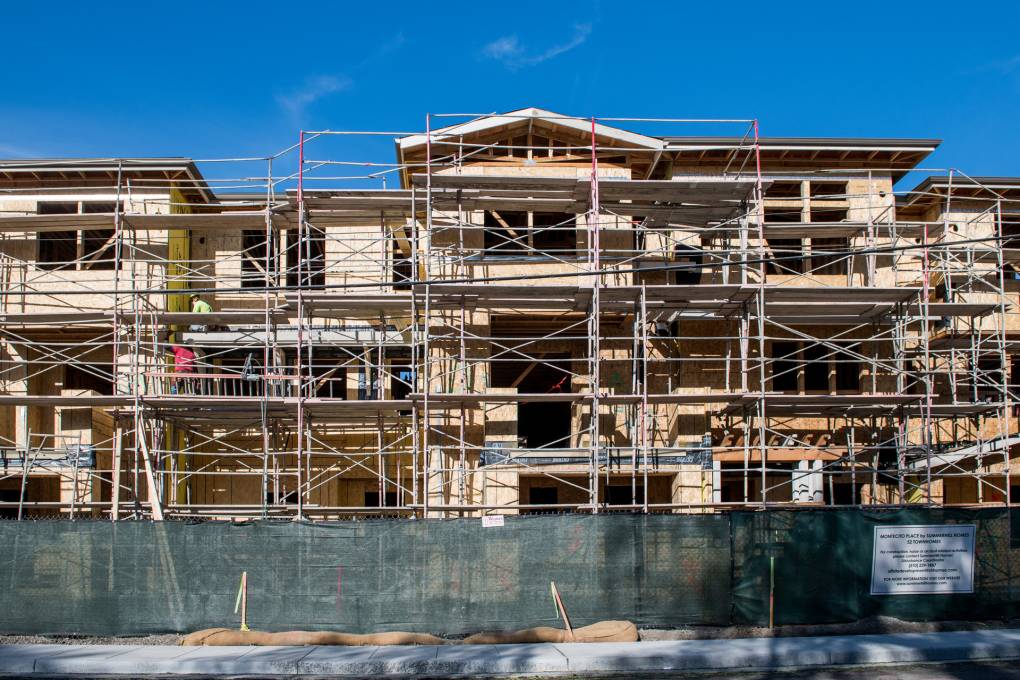
"caption": "Apartment construction in Mountain View on Feb. 19, 2020.",
"description": null,
"title": "002_KQED_Housing_MountainView_02192020_3308-qut",
"credit": "Beth LaBerge/KQED",
"status": "inherit",
"altTag": "A house under construction.",
"isLoading": false,
"fetchFailed": false
},
"news_11969628": {
"type": "attachments",
"id": "news_11969628",
"meta": {
"index": "attachments_1716263798",
"site": "news",
"id": "11969628",
"found": true
},
"parent": 11969623,
"imgSizes": {
"twentyfourteen-full-width": {
"file": "https://cdn.kqed.org/wp-content/uploads/sites/10/2023/12/102623_NB-Rent-Protest_JAH_CM_15-1038x576.jpg",
"width": 1038,
"mimeType": "image/jpeg",
"height": 576
},
"thumbnail": {
"file": "https://cdn.kqed.org/wp-content/uploads/sites/10/2023/12/102623_NB-Rent-Protest_JAH_CM_15-160x107.jpg",
"width": 160,
"mimeType": "image/jpeg",
"height": 107
},
"post-thumbnail": {
"file": "https://cdn.kqed.org/wp-content/uploads/sites/10/2023/12/102623_NB-Rent-Protest_JAH_CM_15-672x372.jpg",
"width": 672,
"mimeType": "image/jpeg",
"height": 372
},
"kqedFullSize": {
"file": "https://cdn.kqed.org/wp-content/uploads/sites/10/2023/12/102623_NB-Rent-Protest_JAH_CM_15.jpg",
"width": 2000,
"height": 1333
},
"large": {
"file": "https://cdn.kqed.org/wp-content/uploads/sites/10/2023/12/102623_NB-Rent-Protest_JAH_CM_15-1020x680.jpg",
"width": 1020,
"mimeType": "image/jpeg",
"height": 680
},
"1536x1536": {
"file": "https://cdn.kqed.org/wp-content/uploads/sites/10/2023/12/102623_NB-Rent-Protest_JAH_CM_15-1536x1024.jpg",
"width": 1536,
"mimeType": "image/jpeg",
"height": 1024
},
"full-width": {
"file": "https://cdn.kqed.org/wp-content/uploads/sites/10/2023/12/102623_NB-Rent-Protest_JAH_CM_15-1920x1280.jpg",
"width": 1920,
"mimeType": "image/jpeg",
"height": 1280
},
"medium": {
"file": "https://cdn.kqed.org/wp-content/uploads/sites/10/2023/12/102623_NB-Rent-Protest_JAH_CM_15-800x533.jpg",
"width": 800,
"mimeType": "image/jpeg",
"height": 533
}
},
"publishDate": 1702403808,
"modified": 1702421085,
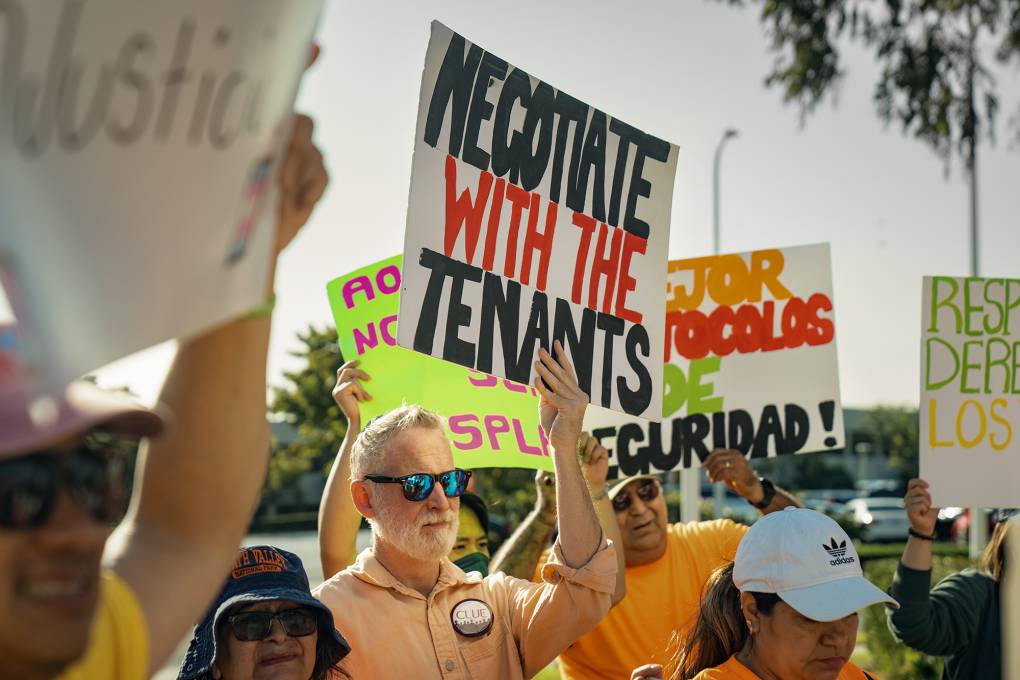
"caption": "Bay Area tenants from the KDF Tenants Association protest housing conditions and rent increases outside the office complex that houses KDF Communities LLC's office in Newport Beach on Oct. 26, 2023. ",
"description": null,
"title": "102623_NB-Rent-Protest_JAH_CM_15",
"credit": "Julie A. Hotz/CalMatters",
"status": "inherit",
"altTag": "A man wearing an orange shirt and sunglasses holds up a sign in a crowd that reads \"Negotiate with the Tenants.\"",
"isLoading": false,
"fetchFailed": false
},
"news_11965531": {
"type": "attachments",
"id": "news_11965531",
"meta": {
"index": "attachments_1716263798",
"site": "news",
"id": "11965531",
"found": true
},
"parent": 11965492,
"imgSizes": {
"twentyfourteen-full-width": {
"file": "https://ww2.kqed.org/app/uploads/sites/10/2023/10/GettyImages-1282775801-qut-1038x576.jpg",
"width": 1038,
"mimeType": "image/jpeg",
"height": 576
},
"thumbnail": {
"file": "https://ww2.kqed.org/app/uploads/sites/10/2023/10/GettyImages-1282775801-qut-160x107.jpg",
"width": 160,
"mimeType": "image/jpeg",
"height": 107
},
"post-thumbnail": {
"file": "https://ww2.kqed.org/app/uploads/sites/10/2023/10/GettyImages-1282775801-qut-672x372.jpg",
"width": 672,
"mimeType": "image/jpeg",
"height": 372
},
"kqedFullSize": {
"file": "https://ww2.kqed.org/app/uploads/sites/10/2023/10/GettyImages-1282775801-qut.jpg",
"width": 1920,
"height": 1280
},
"large": {
"file": "https://ww2.kqed.org/app/uploads/sites/10/2023/10/GettyImages-1282775801-qut-1020x680.jpg",
"width": 1020,
"mimeType": "image/jpeg",
"height": 680
},
"1536x1536": {
"file": "https://ww2.kqed.org/app/uploads/sites/10/2023/10/GettyImages-1282775801-qut-1536x1024.jpg",
"width": 1536,
"mimeType": "image/jpeg",
"height": 1024
},
"medium": {
"file": "https://ww2.kqed.org/app/uploads/sites/10/2023/10/GettyImages-1282775801-qut-800x533.jpg",
"width": 800,
"mimeType": "image/jpeg",
"height": 533
}
},
"publishDate": 1698252234,
"modified": 1698252614,
"caption": "The TransAmerica Pyramid peeks out behind wooden walls as workers construct two affordable housing developments in San Francisco in February, 2020. A new state report spells out 18 actions the city must take to streamline its approval process for new housing.",
"description": null,
"title": "Tall wooden walls under construction in the foreground with the towering pyramid of the TransAmerica Pyramid in the background",
"credit": "Jessica Christian/The San Francisco Chronicle via Getty Images",
"status": "inherit",
"altTag": null,
"isLoading": false,
"fetchFailed": false
},
"news_11965070": {
"type": "attachments",
"id": "news_11965070",
"meta": {
"index": "attachments_1716263798",
"site": "news",
"id": "11965070",
"found": true
},
"parent": 0,
"imgSizes": {
"twentyfourteen-full-width": {
"file": "https://ww2.kqed.org/app/uploads/sites/10/2023/10/231017-LakeMercedRVs-006-BL-KQED-1038x576.jpg",
"width": 1038,
"mimeType": "image/jpeg",
"height": 576
},
"thumbnail": {
"file": "https://ww2.kqed.org/app/uploads/sites/10/2023/10/231017-LakeMercedRVs-006-BL-KQED-160x107.jpg",
"width": 160,
"mimeType": "image/jpeg",
"height": 107
},
"post-thumbnail": {
"file": "https://ww2.kqed.org/app/uploads/sites/10/2023/10/231017-LakeMercedRVs-006-BL-KQED-672x372.jpg",
"width": 672,
"mimeType": "image/jpeg",
"height": 372
},
"kqedFullSize": {
"file": "https://ww2.kqed.org/app/uploads/sites/10/2023/10/231017-LakeMercedRVs-006-BL-KQED.jpg",
"width": 2000,
"height": 1333
},
"large": {
"file": "https://ww2.kqed.org/app/uploads/sites/10/2023/10/231017-LakeMercedRVs-006-BL-KQED-1020x680.jpg",
"width": 1020,
"mimeType": "image/jpeg",
"height": 680
},
"1536x1536": {
"file": "https://ww2.kqed.org/app/uploads/sites/10/2023/10/231017-LakeMercedRVs-006-BL-KQED-1536x1024.jpg",
"width": 1536,
"mimeType": "image/jpeg",
"height": 1024
},
"full-width": {
"file": "https://ww2.kqed.org/app/uploads/sites/10/2023/10/231017-LakeMercedRVs-006-BL-KQED-1920x1280.jpg",
"width": 1920,
"mimeType": "image/jpeg",
"height": 1280
},
"medium": {
"file": "https://ww2.kqed.org/app/uploads/sites/10/2023/10/231017-LakeMercedRVs-006-BL-KQED-800x533.jpg",
"width": 800,
"mimeType": "image/jpeg",
"height": 533
}
},
"publishDate": 1697758871,
"modified": 1698104035,
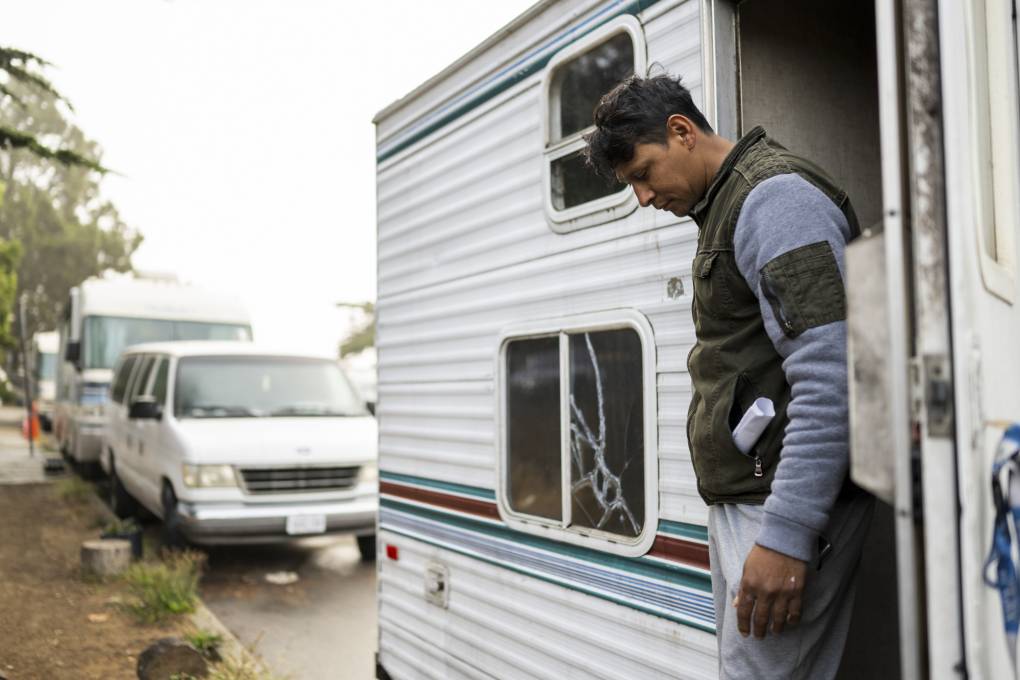
"caption": "Christian de Jesus Guevara Obando stands in the doorway of the RV where he resides on Winston Drive in San Francisco on Oct. 17, 2023. In December, the city plans to start imposing parking restrictions on this street where dozens of families park their RVs.",
"description": null,
"title": "231017-LakeMercedRVs-006-BL-KQED",
"credit": "Beth LaBerge/KQED",
"status": "inherit",
"altTag": "A person exits and RV parked on the side of a road.",
"isLoading": false,
"fetchFailed": false
},
"news_11953203": {
"type": "attachments",
"id": "news_11953203",
"meta": {
"index": "attachments_1716263798",
"site": "news",
"id": "11953203",
"found": true
},
"parent": 0,
"imgSizes": {
"twentyfourteen-full-width": {
"file": "https://ww2.kqed.org/app/uploads/sites/10/2023/06/RS66358_230615-brooklyn-basin-239-ks.NEF-24-ks-KQED-1038x576.jpg",
"width": 1038,
"mimeType": "image/jpeg",
"height": 576
},
"thumbnail": {
"file": "https://ww2.kqed.org/app/uploads/sites/10/2023/06/RS66358_230615-brooklyn-basin-239-ks.NEF-24-ks-KQED-160x106.jpg",
"width": 160,
"mimeType": "image/jpeg",
"height": 106
},
"post-thumbnail": {
"file": "https://ww2.kqed.org/app/uploads/sites/10/2023/06/RS66358_230615-brooklyn-basin-239-ks.NEF-24-ks-KQED-672x372.jpg",
"width": 672,
"mimeType": "image/jpeg",
"height": 372
},
"kqedFullSize": {
"file": "https://ww2.kqed.org/app/uploads/sites/10/2023/06/RS66358_230615-brooklyn-basin-239-ks.NEF-24-ks-KQED.jpg",
"width": 2000,
"height": 1331
},
"large": {
"file": "https://ww2.kqed.org/app/uploads/sites/10/2023/06/RS66358_230615-brooklyn-basin-239-ks.NEF-24-ks-KQED-1020x679.jpg",
"width": 1020,
"mimeType": "image/jpeg",
"height": 679
},
"1536x1536": {
"file": "https://ww2.kqed.org/app/uploads/sites/10/2023/06/RS66358_230615-brooklyn-basin-239-ks.NEF-24-ks-KQED-1536x1022.jpg",
"width": 1536,
"mimeType": "image/jpeg",
"height": 1022
},
"full-width": {
"file": "https://ww2.kqed.org/app/uploads/sites/10/2023/06/RS66358_230615-brooklyn-basin-239-ks.NEF-24-ks-KQED-1920x1278.jpg",
"width": 1920,
"mimeType": "image/jpeg",
"height": 1278
},
"medium": {
"file": "https://ww2.kqed.org/app/uploads/sites/10/2023/06/RS66358_230615-brooklyn-basin-239-ks.NEF-24-ks-KQED-800x532.jpg",
"width": 800,
"mimeType": "image/jpeg",
"height": 532
}
},
"publishDate": 1686941533,
"modified": 1695675168,
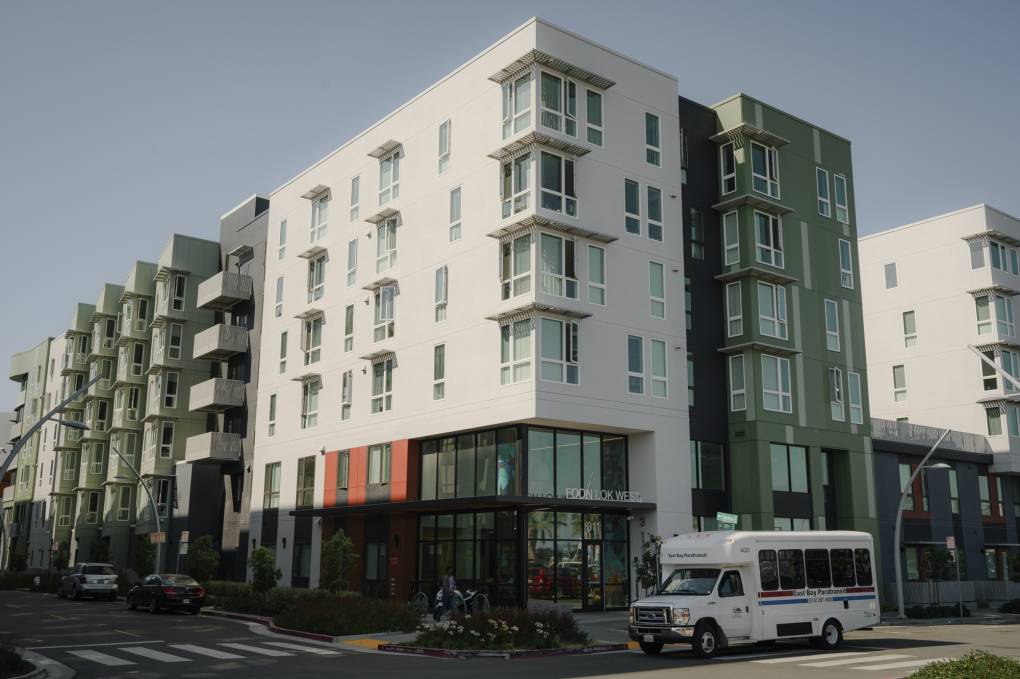
"caption": "The Foon Lok West affordable housing complex is part of the new Brooklyn Basin housing project of Oakland. Brooklyn Basin has added over 1,000 homes to the new neighborhood along the city’s waterfront and plans to add 2,000 more.",
"description": null,
"title": "affordable-housing",
"credit": "Kori Suzuki/KQED",
"status": "inherit",
"altTag": "The facade of a multistory green and white residential building seen from across the street. A white shuttle bus is parked in front.",
"isLoading": false,
"fetchFailed": false
},
"news_11961745": {
"type": "attachments",
"id": "news_11961745",
"meta": {
"index": "attachments_1716263798",
"site": "news",
"id": "11961745",
"found": true
},
"parent": 0,
"imgSizes": {
"twentyfourteen-full-width": {
"file": "https://ww2.kqed.org/app/uploads/sites/10/2023/09/CMHousing01-1038x576.jpg",
"width": 1038,
"mimeType": "image/jpeg",
"height": 576
},
"thumbnail": {
"file": "https://ww2.kqed.org/app/uploads/sites/10/2023/09/CMHousing01-160x107.jpg",
"width": 160,
"mimeType": "image/jpeg",
"height": 107
},
"post-thumbnail": {
"file": "https://ww2.kqed.org/app/uploads/sites/10/2023/09/CMHousing01-672x372.jpg",
"width": 672,
"mimeType": "image/jpeg",
"height": 372
},
"kqedFullSize": {
"file": "https://ww2.kqed.org/app/uploads/sites/10/2023/09/CMHousing01.jpg",
"width": 2000,
"height": 1333
},
"large": {
"file": "https://ww2.kqed.org/app/uploads/sites/10/2023/09/CMHousing01-1020x680.jpg",
"width": 1020,
"mimeType": "image/jpeg",
"height": 680
},
"1536x1536": {
"file": "https://ww2.kqed.org/app/uploads/sites/10/2023/09/CMHousing01-1536x1024.jpg",
"width": 1536,
"mimeType": "image/jpeg",
"height": 1024
},
"full-width": {
"file": "https://ww2.kqed.org/app/uploads/sites/10/2023/09/CMHousing01-1920x1280.jpg",
"width": 1920,
"mimeType": "image/jpeg",
"height": 1280
},
"medium": {
"file": "https://ww2.kqed.org/app/uploads/sites/10/2023/09/CMHousing01-800x533.jpg",
"width": 800,
"mimeType": "image/jpeg",
"height": 533
}
},
"publishDate": 1695146057,
"modified": 1695161084,
"caption": "Casa Sueños, an affordable housing complex at 3500 E. 12th St. in Oakland on Aug. 7, 2023.",
"description": null,
"title": "CMHousing01",
"credit": "Semantha Norris/CalMatters",
"status": "inherit",
"altTag": "A big corner building in Oakland. A surrounding chain-link fence is covered in graffiti.",
"isLoading": false,
"fetchFailed": false
},
"news_11960807": {
"type": "attachments",
"id": "news_11960807",
"meta": {
"index": "attachments_1716263798",
"site": "news",
"id": "11960807",
"found": true
},
"parent": 0,
"imgSizes": {
"twentyfourteen-full-width": {
"file": "https://ww2.kqed.org/app/uploads/sites/10/2023/09/230911-MattieScottFreedomWest-019-BL-KQED-1038x576.jpg",
"width": 1038,
"mimeType": "image/jpeg",
"height": 576
},
"thumbnail": {
"file": "https://ww2.kqed.org/app/uploads/sites/10/2023/09/230911-MattieScottFreedomWest-019-BL-KQED-160x107.jpg",
"width": 160,
"mimeType": "image/jpeg",
"height": 107
},
"post-thumbnail": {
"file": "https://ww2.kqed.org/app/uploads/sites/10/2023/09/230911-MattieScottFreedomWest-019-BL-KQED-672x372.jpg",
"width": 672,
"mimeType": "image/jpeg",
"height": 372
},
"kqedFullSize": {
"file": "https://ww2.kqed.org/app/uploads/sites/10/2023/09/230911-MattieScottFreedomWest-019-BL-KQED.jpg",
"width": 2000,
"height": 1333
},
"large": {
"file": "https://ww2.kqed.org/app/uploads/sites/10/2023/09/230911-MattieScottFreedomWest-019-BL-KQED-1020x680.jpg",
"width": 1020,
"mimeType": "image/jpeg",
"height": 680
},
"1536x1536": {
"file": "https://ww2.kqed.org/app/uploads/sites/10/2023/09/230911-MattieScottFreedomWest-019-BL-KQED-1536x1024.jpg",
"width": 1536,
"mimeType": "image/jpeg",
"height": 1024
},
"full-width": {
"file": "https://ww2.kqed.org/app/uploads/sites/10/2023/09/230911-MattieScottFreedomWest-019-BL-KQED-1920x1280.jpg",
"width": 1920,
"mimeType": "image/jpeg",
"height": 1280
},
"medium": {
"file": "https://ww2.kqed.org/app/uploads/sites/10/2023/09/230911-MattieScottFreedomWest-019-BL-KQED-800x533.jpg",
"width": 800,
"mimeType": "image/jpeg",
"height": 533
}
},
"publishDate": 1694540028,
"modified": 1694644463,
"caption": "Mattie Scott, a resident and board president of Freedom West Housing Corporation, stands in the housing cooperative in the Fillmore District on Sept. 11, 2023.",
"description": null,
"title": "230911-MattieScottFreedomWest-019-BL-KQED",
"credit": "Beth LaBerge/KQED",
"status": "inherit",
"altTag": "An older African American woman stands in front of a residential building, looking at the camera.",
"isLoading": false,
"fetchFailed": false
},
"news_11953159": {
"type": "attachments",
"id": "news_11953159",
"meta": {
"index": "attachments_1716263798",
"site": "news",
"id": "11953159",
"found": true
},
"parent": 0,
"imgSizes": {
"twentyfourteen-full-width": {
"file": "https://ww2.kqed.org/app/uploads/sites/10/2023/06/RS66328_230613-RealtorMontanaHooks-06-BL-KQED-1038x576.jpg",
"width": 1038,
"mimeType": "image/jpeg",
"height": 576
},
"thumbnail": {
"file": "https://ww2.kqed.org/app/uploads/sites/10/2023/06/RS66328_230613-RealtorMontanaHooks-06-BL-KQED-160x107.jpg",
"width": 160,
"mimeType": "image/jpeg",
"height": 107
},
"post-thumbnail": {
"file": "https://ww2.kqed.org/app/uploads/sites/10/2023/06/RS66328_230613-RealtorMontanaHooks-06-BL-KQED-672x372.jpg",
"width": 672,
"mimeType": "image/jpeg",
"height": 372
},
"kqedFullSize": {
"file": "https://ww2.kqed.org/app/uploads/sites/10/2023/06/RS66328_230613-RealtorMontanaHooks-06-BL-KQED.jpg",
"width": 2000,
"height": 1333
},
"large": {
"file": "https://ww2.kqed.org/app/uploads/sites/10/2023/06/RS66328_230613-RealtorMontanaHooks-06-BL-KQED-1020x680.jpg",
"width": 1020,
"mimeType": "image/jpeg",
"height": 680
},
"1536x1536": {
"file": "https://ww2.kqed.org/app/uploads/sites/10/2023/06/RS66328_230613-RealtorMontanaHooks-06-BL-KQED-1536x1024.jpg",
"width": 1536,
"mimeType": "image/jpeg",
"height": 1024
},
"full-width": {
"file": "https://ww2.kqed.org/app/uploads/sites/10/2023/06/RS66328_230613-RealtorMontanaHooks-06-BL-KQED-1920x1280.jpg",
"width": 1920,
"mimeType": "image/jpeg",
"height": 1280
},
"medium": {
"file": "https://ww2.kqed.org/app/uploads/sites/10/2023/06/RS66328_230613-RealtorMontanaHooks-06-BL-KQED-800x533.jpg",
"width": 800,
"mimeType": "image/jpeg",
"height": 533
}
},
"publishDate": 1686929820,
"modified": 1686930219,
"caption": "Realtor Montana Gabrielle Hooks stands outside her realty office in the Uptown neighborhood of Oakland on June 15, 2023.",
"description": null,
"title": "RS66328_230613-RealtorMontanaHooks-06-BL-KQED",
"credit": "Beth LaBerge/KQED",
"status": "inherit",
"altTag": "A woman in a red top stands outdoors along a city sidewalk leaning against big pane glass windows and looking at the camera.",
"isLoading": false,
"fetchFailed": false
},
"news_11957165": {
"type": "attachments",
"id": "news_11957165",
"meta": {
"index": "attachments_1716263798",
"site": "news",
"id": "11957165",
"found": true
},
"parent": 0,
"imgSizes": {
"twentyfourteen-full-width": {
"file": "https://ww2.kqed.org/app/uploads/sites/10/2023/08/RS67586_230728-WildfireSantaRosaHousing-53-BL-KQED-1038x576.jpg",
"width": 1038,
"mimeType": "image/jpeg",
"height": 576
},
"thumbnail": {
"file": "https://ww2.kqed.org/app/uploads/sites/10/2023/08/RS67586_230728-WildfireSantaRosaHousing-53-BL-KQED-160x107.jpg",
"width": 160,
"mimeType": "image/jpeg",
"height": 107
},
"post-thumbnail": {
"file": "https://ww2.kqed.org/app/uploads/sites/10/2023/08/RS67586_230728-WildfireSantaRosaHousing-53-BL-KQED-672x372.jpg",
"width": 672,
"mimeType": "image/jpeg",
"height": 372
},
"kqedFullSize": {
"file": "https://ww2.kqed.org/app/uploads/sites/10/2023/08/RS67586_230728-WildfireSantaRosaHousing-53-BL-KQED.jpg",
"width": 2000,
"height": 1333
},
"large": {
"file": "https://ww2.kqed.org/app/uploads/sites/10/2023/08/RS67586_230728-WildfireSantaRosaHousing-53-BL-KQED-1020x680.jpg",
"width": 1020,
"mimeType": "image/jpeg",
"height": 680
},
"1536x1536": {
"file": "https://ww2.kqed.org/app/uploads/sites/10/2023/08/RS67586_230728-WildfireSantaRosaHousing-53-BL-KQED-1536x1024.jpg",
"width": 1536,
"mimeType": "image/jpeg",
"height": 1024
},
"full-width": {
"file": "https://ww2.kqed.org/app/uploads/sites/10/2023/08/RS67586_230728-WildfireSantaRosaHousing-53-BL-KQED-1920x1280.jpg",
"width": 1920,
"mimeType": "image/jpeg",
"height": 1280
},
"medium": {
"file": "https://ww2.kqed.org/app/uploads/sites/10/2023/08/RS67586_230728-WildfireSantaRosaHousing-53-BL-KQED-800x533.jpg",
"width": 800,
"mimeType": "image/jpeg",
"height": 533
}
},
"publishDate": 1690993097,
"modified": 1691091614,
"caption": "A foundation for a home can be seen in the Fountaingrove area of Santa Rosa on July 28, 2023. Fountaingrove was hit hard by the Tubbs Fire in October 2017. In the single-family home market, large carriers, including Allstate, State Farm, Farmers and AIG, cited economic conditions and the increasing frequency and severity of weather events such as floods and wildfires as reasons for declining to sell new policies in the state.",
"description": null,
"title": "RS67586_230728-WildfireSantaRosaHousing-53-BL-KQED",
"credit": "Beth LaBerge/KQED",
"status": "inherit",
"altTag": "A hillside with the exposed foundations of several destroyed homes and a handful of newly built houses.",
"isLoading": false,
"fetchFailed": false
},
"news_11954853": {
"type": "attachments",
"id": "news_11954853",
"meta": {
"index": "attachments_1716263798",
"site": "news",
"id": "11954853",
"found": true
},
"parent": 0,
"imgSizes": {
"twentyfourteen-full-width": {
"file": "https://ww2.kqed.org/app/uploads/sites/10/2023/06/230630100-Van-Ness-MB-KQED-1038x576.jpg",
"width": 1038,
"mimeType": "image/jpeg",
"height": 576
},
"thumbnail": {
"file": "https://ww2.kqed.org/app/uploads/sites/10/2023/06/230630100-Van-Ness-MB-KQED-160x71.jpg",
"width": 160,
"mimeType": "image/jpeg",
"height": 71
},
"post-thumbnail": {
"file": "https://ww2.kqed.org/app/uploads/sites/10/2023/06/230630100-Van-Ness-MB-KQED-672x372.jpg",
"width": 672,
"mimeType": "image/jpeg",
"height": 372
},
"kqedFullSize": {
"file": "https://ww2.kqed.org/app/uploads/sites/10/2023/06/230630100-Van-Ness-MB-KQED.jpg",
"width": 2500,
"height": 1111
},
"2048x2048": {
"file": "https://ww2.kqed.org/app/uploads/sites/10/2023/06/230630100-Van-Ness-MB-KQED-2048x910.jpg",
"width": 2048,
"mimeType": "image/jpeg",
"height": 910
},
"large": {
"file": "https://ww2.kqed.org/app/uploads/sites/10/2023/06/230630100-Van-Ness-MB-KQED-1020x453.jpg",
"width": 1020,
"mimeType": "image/jpeg",
"height": 453
},
"1536x1536": {
"file": "https://ww2.kqed.org/app/uploads/sites/10/2023/06/230630100-Van-Ness-MB-KQED-1536x683.jpg",
"width": 1536,
"mimeType": "image/jpeg",
"height": 683
},
"full-width": {
"file": "https://ww2.kqed.org/app/uploads/sites/10/2023/06/230630100-Van-Ness-MB-KQED-1920x853.jpg",
"width": 1920,
"mimeType": "image/jpeg",
"height": 853
},
"medium": {
"file": "https://ww2.kqed.org/app/uploads/sites/10/2023/06/230630100-Van-Ness-MB-KQED-800x356.jpg",
"width": 800,
"mimeType": "image/jpeg",
"height": 356
}
},
"publishDate": 1688166476,
"modified": 1689272499,
"caption": "In 2012, the 100 Van Ness building was converted from office space to residential apartment units and the building's concrete facade was replaced by glass.",
"description": null,
"title": "230630100 Van Ness-MB-KQED",
"credit": "Courtesy of Marc Babsin",
"status": "inherit",
"altTag": "Three images of the same building at different points in construction. In the first, it has a concrete facade. In the second, the building has no facade. In the third, it has a modern glass facade.",
"isLoading": false,
"fetchFailed": false
},
"news_11955130": {
"type": "attachments",
"id": "news_11955130",
"meta": {
"index": "attachments_1716263798",
"site": "news",
"id": "11955130",
"found": true
},
"parent": 11955088,
"imgSizes": {
"twentyfourteen-full-width": {
"file": "https://ww2.kqed.org/app/uploads/sites/10/2023/07/GettyImages-513381988-1038x576.jpg",
"width": 1038,
"mimeType": "image/jpeg",
"height": 576
},
"thumbnail": {
"file": "https://ww2.kqed.org/app/uploads/sites/10/2023/07/GettyImages-513381988-160x107.jpg",
"width": 160,
"mimeType": "image/jpeg",
"height": 107
},
"post-thumbnail": {
"file": "https://ww2.kqed.org/app/uploads/sites/10/2023/07/GettyImages-513381988-672x372.jpg",
"width": 672,
"mimeType": "image/jpeg",
"height": 372
},
"kqedFullSize": {
"file": "https://ww2.kqed.org/app/uploads/sites/10/2023/07/GettyImages-513381988.jpg",
"width": 2119,
"height": 1414
},
"2048x2048": {
"file": "https://ww2.kqed.org/app/uploads/sites/10/2023/07/GettyImages-513381988-2048x1367.jpg",
"width": 2048,
"mimeType": "image/jpeg",
"height": 1367
},
"large": {
"file": "https://ww2.kqed.org/app/uploads/sites/10/2023/07/GettyImages-513381988-1020x681.jpg",
"width": 1020,
"mimeType": "image/jpeg",
"height": 681
},
"1536x1536": {
"file": "https://ww2.kqed.org/app/uploads/sites/10/2023/07/GettyImages-513381988-1536x1025.jpg",
"width": 1536,
"mimeType": "image/jpeg",
"height": 1025
},
"full-width": {
"file": "https://ww2.kqed.org/app/uploads/sites/10/2023/07/GettyImages-513381988-1920x1281.jpg",
"width": 1920,
"mimeType": "image/jpeg",
"height": 1281
},
"medium": {
"file": "https://ww2.kqed.org/app/uploads/sites/10/2023/07/GettyImages-513381988-800x534.jpg",
"width": 800,
"mimeType": "image/jpeg",
"height": 534
}
},
"publishDate": 1688688877,
"modified": 1688688995,
"caption": "The coast and beaches of the city of Carlsbad, San Diego County.",
"description": null,
"title": "Coastline of Carlsbad California - San Diego",
"credit": "Art Wager/Getty Images",
"status": "inherit",
"altTag": null,
"isLoading": false,
"fetchFailed": false
}
},
"audioPlayerReducer": {
"postId": "stream_live",
"isPaused": true,
"isPlaying": false,
"pfsActive": false,
"pledgeModalIsOpen": true,
"playerDrawerIsOpen": false,
"liveAudioPlayStartedAt": 0,
"liveAudioPlayContext": ""
},
"authorsReducer": {
"byline_news_11969623": {
"type": "authors",
"id": "byline_news_11969623",
"meta": {
"override": true
},
"slug": "byline_news_11969623",
"name": "Jeanne Kuang",
"isLoading": false
},
"byline_news_11961732": {
"type": "authors",
"id": "byline_news_11961732",
"meta": {
"override": true
},
"slug": "byline_news_11961732",
"name": "\u003ca href=\"https://calmatters.org/author/ben-christopher/\">Ben Christopher\u003c/a>",
"isLoading": false
},
"byline_news_11955088": {
"type": "authors",
"id": "byline_news_11955088",
"meta": {
"override": true
},
"slug": "byline_news_11955088",
"name": "\u003ca href=\"https://calmatters.org/author/ben-christopher/\">Ben Christopher\u003c/a>",
"isLoading": false
},
"mlagos": {
"type": "authors",
"id": "3239",
"meta": {
"index": "authors_1716337520",
"id": "3239",
"found": true
},
"name": "Marisa Lagos",
"firstName": "Marisa",
"lastName": "Lagos",
"slug": "mlagos",
"email": "mlagos@kqed.org",
"display_author_email": false,
"staff_mastheads": [
"news"
],
"title": "KQED Contributor",
"bio": "Marisa Lagos is a correspondent for KQED’s California Politics and Government Desk and co-hosts the award-winning show and podcast, Political Breakdown. At KQED, Lagos also conducts reporting, analysis and investigations into state, local and national politics for radio, TV, online and onstage. In 2022, she and co-host, Scott Shafer, moderated the only gubernatorial debate in California. In 2020, the \u003ci>Washington Post\u003c/i> named her one of the top political journalists in California; she was nominated for a Peabody and won several other awards for her work investigating the 2017 California wildfires. She has worked at the \u003ci>San Francisco Chronicle\u003c/i>, \u003ci>San Francisco Examiner\u003c/i> and \u003ci>Los Angeles Times\u003c/i>. A UC Santa Barbara graduate, she lives in San Francisco with her two sons and husband.",
"avatar": "https://secure.gravatar.com/avatar/a261a0d3696fc066871ef96b85b5e7d2?s=600&d=blank&r=g",
"twitter": "@mlagos",
"facebook": null,
"instagram": null,
"linkedin": null,
"sites": [
{
"site": "arts",
"roles": [
"author"
]
},
{
"site": "news",
"roles": [
"editor"
]
},
{
"site": "science",
"roles": [
"editor"
]
},
{
"site": "forum",
"roles": [
"author"
]
},
{
"site": "liveblog",
"roles": [
"author"
]
}
],
"headData": {
"title": "Marisa Lagos | KQED",
"description": "KQED Contributor",
"ogImgSrc": "https://secure.gravatar.com/avatar/a261a0d3696fc066871ef96b85b5e7d2?s=600&d=blank&r=g",
"twImgSrc": "https://secure.gravatar.com/avatar/a261a0d3696fc066871ef96b85b5e7d2?s=600&d=blank&r=g"
},
"isLoading": false,
"link": "/author/mlagos"
},
"carlysevern": {
"type": "authors",
"id": "3243",
"meta": {
"index": "authors_1716337520",
"id": "3243",
"found": true
},
"name": "Carly Severn",
"firstName": "Carly",
"lastName": "Severn",
"slug": "carlysevern",
"email": "csevern@kqed.org",
"display_author_email": false,
"staff_mastheads": [
"news"
],
"title": "Senior Editor, Audience News ",
"bio": "Carly is KQED's Senior Editor of Audience News on the Digital News team, and has reported for the California Report Magazine, Bay Curious and KQED Arts. She's formerly the host of \u003ca href=\"http://ww2.kqed.org/pop/category/the-cooler/\" rel=\"noopener noreferrer\">The Cooler\u003c/a> podcast.",
"avatar": "https://secure.gravatar.com/avatar/54037bf5c128fe678f0ef26cec97a93f2e7f220a22d7285703328f12c42c1b1d?s=600&d=blank&r=g",
"twitter": "teacupinthebay",
"bluesky": null,
"facebook": null,
"instagram": null,
"linkedin": null,
"sites": [
{
"site": "",
"roles": [
"editor"
]
},
{
"site": "arts",
"roles": [
"editor"
]
},
{
"site": "news",
"roles": [
"administrator"
]
},
{
"site": "pop",
"roles": [
"editor"
]
},
{
"site": "futureofyou",
"roles": [
"editor"
]
},
{
"site": "about",
"roles": [
"administrator"
]
},
{
"site": "mindshift",
"roles": [
"editor"
]
},
{
"site": "bayareabites",
"roles": [
"editor"
]
},
{
"site": "stateofhealth",
"roles": [
"editor"
]
},
{
"site": "science",
"roles": [
"editor"
]
},
{
"site": "food",
"roles": [
"contributor"
]
},
{
"site": "forum",
"roles": [
"editor"
]
},
{
"site": "perspectives",
"roles": [
"administrator"
]
},
{
"site": "liveblog",
"roles": [
"editor"
]
}
],
"headData": {
"title": "Carly Severn | KQED",
"description": "Senior Editor, Audience News ",
"ogImgSrc": "https://secure.gravatar.com/avatar/54037bf5c128fe678f0ef26cec97a93f2e7f220a22d7285703328f12c42c1b1d?s=600&d=blank&r=g",
"twImgSrc": "https://secure.gravatar.com/avatar/54037bf5c128fe678f0ef26cec97a93f2e7f220a22d7285703328f12c42c1b1d?s=600&d=blank&r=g"
},
"isLoading": false,
"link": "/author/carlysevern"
},
"ebaldassari": {
"type": "authors",
"id": "11652",
"meta": {
"index": "authors_1716337520",
"id": "11652",
"found": true
},
"name": "Erin Baldassari",
"firstName": "Erin",
"lastName": "Baldassari",
"slug": "ebaldassari",
"email": "ebaldassari@KQED.org",
"display_author_email": true,
"staff_mastheads": [
"news"
],
"title": "Staff Writer",
"bio": "Erin Baldassari covers housing for KQED. She's a former print journalist and most recently worked as the transportation reporter for the \u003cem>Mercury News\u003c/em> and \u003cem>East Bay Times. \u003c/em>There, she focused on how the Bay Area’s housing shortage has changed the way people move around the region. She also served on the \u003cem>East Bay Times\u003c/em>’ 2017 Pulitzer Prize-winning team for coverage of the Ghost Ship Fire in Oakland. Prior to that, Erin worked as a breaking news and general assignment reporter for a variety of outlets in the Bay Area and the greater Boston area. A Tufts University alumna, Erin grew up in the foothills of the Sierra Nevada mountains and in Sonoma County. She is a life-long KQED listener.",
"avatar": "https://secure.gravatar.com/avatar/5e95cad64a8ca08288082212e199d2b0cbeb4fd8e8ef5339395f361032bbe005?s=600&d=blank&r=g",
"twitter": "e_baldi",
"bluesky": null,
"facebook": null,
"instagram": null,
"linkedin": null,
"sites": [
{
"site": "news",
"roles": [
"edit_others_posts",
"editor"
]
},
{
"site": "science",
"roles": [
"editor"
]
},
{
"site": "liveblog",
"roles": [
"editor"
]
}
],
"headData": {
"title": "Erin Baldassari | KQED",
"description": "Staff Writer",
"ogImgSrc": "https://secure.gravatar.com/avatar/5e95cad64a8ca08288082212e199d2b0cbeb4fd8e8ef5339395f361032bbe005?s=600&d=blank&r=g",
"twImgSrc": "https://secure.gravatar.com/avatar/5e95cad64a8ca08288082212e199d2b0cbeb4fd8e8ef5339395f361032bbe005?s=600&d=blank&r=g"
},
"isLoading": false,
"link": "/author/ebaldassari"
},
"btorres": {
"type": "authors",
"id": "11666",
"meta": {
"index": "authors_1716337520",
"id": "11666",
"found": true
},
"name": "Blanca Torres",
"firstName": "Blanca",
"lastName": "Torres",
"slug": "btorres",
"email": "btorres@kqed.org",
"display_author_email": true,
"staff_mastheads": [
"news"
],
"title": "Producer, Forum",
"bio": "Blanca Torres brings sharp news judgement and keen sense of lively conversation to her work as producer for Forum. She loves producing shows that leave listeners feeling like they heard distinctive voices, learned something new and gained a fresh perspective.\r\n\r\nShe joined KQED in January of 2020 after 16 years of working as a newspaper reporter most recently at the \u003cem>San Francisco Business Times,\u003c/em> where she wrote about real estate and economic development. Before that, she covered a variety of beats including crime, education, retail, workplace, the economy, consumer issues, and small business for the \u003cem>Contra Costa Times, Baltimore Sun\u003c/em> and\u003cem> The Seattle Times\u003c/em>. In addition to reporting, she worked as an editorial writer and columnist for the \u003cem>Seattle Times\u003c/em>. From 2017 to 2020, Blanca won a total of ten awards from the National Association of Real Estate Editors and won first place for land use reporting from the California News Publishers Association two years in a row. She is also a member and former board member for the National Association of Hispanic Journalists.\r\n\r\nA native of the Pacific Northwest, Blanca earned her bachelor's degree from Vanderbilt University in Nashville and a master's in fine arts in creative writing at Mills College. She lives in the East Bay with her family.",
"avatar": "https://secure.gravatar.com/avatar/50b49d19b14a1eed34f26ebf4681152cdd81574ed21851100871ccd29e578cdc?s=600&d=blank&r=g",
"twitter": "@blancawrites",
"bluesky": null,
"facebook": null,
"instagram": null,
"linkedin": null,
"sites": [
{
"site": "arts",
"roles": [
"editor"
]
},
{
"site": "news",
"roles": [
"editor"
]
},
{
"site": "forum",
"roles": [
"editor"
]
}
],
"headData": {
"title": "Blanca Torres | KQED",
"description": "Producer, Forum",
"ogImgSrc": "https://secure.gravatar.com/avatar/50b49d19b14a1eed34f26ebf4681152cdd81574ed21851100871ccd29e578cdc?s=600&d=blank&r=g",
"twImgSrc": "https://secure.gravatar.com/avatar/50b49d19b14a1eed34f26ebf4681152cdd81574ed21851100871ccd29e578cdc?s=600&d=blank&r=g"
},
"isLoading": false,
"link": "/author/btorres"
},
"sjohnson": {
"type": "authors",
"id": "11840",
"meta": {
"index": "authors_1716337520",
"id": "11840",
"found": true
},
"name": "Sydney Johnson",
"firstName": "Sydney",
"lastName": "Johnson",
"slug": "sjohnson",
"email": "sjohnson@kqed.org",
"display_author_email": false,
"staff_mastheads": [
"news"
],
"title": "KQED Reporter",
"bio": "Sydney Johnson is a general assignment reporter at KQED. She previously reported on public health and city government at the San Francisco Examiner, and before that, she covered statewide education policy for EdSource. Her reporting has won multiple local, state and national awards. Sydney is a graduate of the University of California, Berkeley and lives in San Francisco.",
"avatar": "https://secure.gravatar.com/avatar/97855f2719b72ad6190b7c535fe642c8?s=600&d=blank&r=g",
"twitter": "sydneyfjohnson",
"facebook": null,
"instagram": null,
"linkedin": null,
"sites": [
{
"site": "news",
"roles": [
"editor"
]
}
],
"headData": {
"title": "Sydney Johnson | KQED",
"description": "KQED Reporter",
"ogImgSrc": "https://secure.gravatar.com/avatar/97855f2719b72ad6190b7c535fe642c8?s=600&d=blank&r=g",
"twImgSrc": "https://secure.gravatar.com/avatar/97855f2719b72ad6190b7c535fe642c8?s=600&d=blank&r=g"
},
"isLoading": false,
"link": "/author/sjohnson"
},
"pbartolone": {
"type": "authors",
"id": "11879",
"meta": {
"index": "authors_1716337520",
"id": "11879",
"found": true
},
"name": "Pauline Bartolone",
"firstName": "Pauline",
"lastName": "Bartolone",
"slug": "pbartolone",
"email": "pbartolone@kqed.org",
"display_author_email": false,
"staff_mastheads": [],
"title": "KQED Contributor",
"bio": "Pauline Bartolone has been a journalist for two decades, specializing in longform audio storytelling. Before editing and producing for podcasts like Bay Curious, she was a health care journalist for public radio and print outlets such as CalMatters and Kaiser Health News. Her reporting has won several regional Edward R. Murrow awards, national recognition from the Society of Professional Journalists and a first-place prize from the Association of Health Care Journalists.\r\n\r\nPauline’s work has aired frequently on National Public Radio, and bylines have appeared in The Los Angeles Times, CNN.com, Washingtonpost.com, USA Today and Scientific American.\r\n\r\nPauline has lived in Northern California for 20 years. Her other passions are crafts (now done in collaboration with her daughter) and the Brazilian martial art of capoeira.",
"avatar": "https://secure.gravatar.com/avatar/95001c30374b0d3878007af9cf1e120a?s=600&d=blank&r=g",
"twitter": "pbartolone",
"facebook": null,
"instagram": null,
"linkedin": null,
"sites": [
{
"site": "news",
"roles": [
"editor"
]
},
{
"site": "podcasts",
"roles": [
"subscriber"
]
}
],
"headData": {
"title": "Pauline Bartolone | KQED",
"description": "KQED Contributor",
"ogImgSrc": "https://secure.gravatar.com/avatar/95001c30374b0d3878007af9cf1e120a?s=600&d=blank&r=g",
"twImgSrc": "https://secure.gravatar.com/avatar/95001c30374b0d3878007af9cf1e120a?s=600&d=blank&r=g"
},
"isLoading": false,
"link": "/author/pbartolone"
}
},
"pagesReducer": {
"news_tag_affordable-housing": {
"type": "terms",
"id": "news_3921",
"meta": {
"index": "terms_1716263798",
"site": "news",
"id": "3921",
"score": 9.304556
},
"featImg": null,
"name": "affordable housing",
"description": null,
"taxonomy": "tag",
"headData": {
"twImgId": null,
"twTitle": null,
"ogTitle": null,
"ogImgId": null,
"twDescription": null,
"description": null,
"title": "affordable housing Archives | KQED News",
"ogDescription": null
},
"ttid": 3940,
"slug": "affordable-housing",
"isLoading": false,
"title": "affordable housing",
"pageMeta": {
"site": "news",
"WpPageTemplate": "page-topic-editorial",
"currentPage": 24
},
"blocks": [
{
"blockName": "kqed/post-list",
"attrs": {
"layout": "cardArticle2",
"query": "posts/news?tag=affordable-housing",
"seeMore": false,
"paginated": true,
"page": 24
}
},
{
"blockName": "kqed/ad"
}
]
}
},
"pfsSessionReducer": {},
"postsReducer": {
"stream_live": {
"type": "live",
"id": "stream_live",
"audioUrl": "https://streams.kqed.org/kqedradio",
"title": "Live Stream",
"excerpt": "Live Stream information currently unavailable.",
"link": "/radio",
"featImg": "",
"label": {
"name": "KQED Live",
"link": "/"
}
},
"stream_kqedNewscast": {
"type": "posts",
"id": "stream_kqedNewscast",
"audioUrl": "https://www.kqed.org/.stream/anon/radio/RDnews/newscast.mp3?_=1",
"title": "KQED Newscast",
"featImg": "",
"label": {
"name": "88.5 FM",
"link": "/"
}
},
"news_11970993": {
"type": "posts",
"id": "news_11970993",
"meta": {
"index": "posts_1716263798",
"site": "news",
"id": "11970993",
"score": null,
"sort": [
1704196809000
]
},
"guestAuthors": [],
"slug": "these-new-california-housing-laws-are-going-into-effect-in-2024",
"title": "These New California Housing Laws Are Going Into Effect in 2024",
"publishDate": 1704196809,
"format": "standard",
"headTitle": "These New California Housing Laws Are Going Into Effect in 2024 | KQED",
"labelTerm": {
"site": "news"
},
"content": "\u003cp>\u003cem>\u003ca href=\"#anchor\">This report contains a correction.\u003c/a>\u003c/em>\u003c/p>\n\u003cp>In 2017, California lawmakers broke through a longstanding logjam of anti-housing sentiment, unleashing 15 landmark bills that sought to boost new construction across the state. Six years later, the 2023 legislative session saw 56 housing bills signed into law, evidence the tide has yet to turn on efforts to increase home affordability in the state.\u003c/p>\n\u003cp>Unlike the controversial 2017 session — and the years of big housing battles that followed — 2023 was largely free of contentious fights over blockbuster bills, replaced with the steady shearing of restrictions on new housing and shoring up of protections designed to keep renters in their homes.\u003c/p>\n\u003cul>\n\u003cli>\u003cstrong>Jump to: \u003ca href=\"#housinghighlights\">Housing bill highlights from the 2023 Legislative session\u003c/a>\u003c/strong>\u003c/li>\n\u003c/ul>\n\u003cp>Matthew Lewis, spokesman for California YIMBY, which advocates for building more housing, said the lack of controversy has a simple explanation: There were more legislators from all the parts of the state carrying housing bills.[pullquote size=\"medium\" align=\"right\" citation=\"Amie Fishman, executive director, Non-Profit Housing Association of Northern California\"]‘We do not have to accept the status quo of the intensifying housing and homelessness crisis that our communities are experiencing across the state.’[/pullquote]\u003c/p>\n\u003cp>“The legislature is essentially now pro-housing,” he said. “Pretty unequivocally and objectively, you can say that the legislature wants to solve the housing crisis.”\u003c/p>\n\u003cp>The coming year appears poised to continue the trend of incremental legislative change, in part because of how many bills have already been approved. More than \u003ca href=\"https://ternercenter.berkeley.edu/wp-content/uploads/2023/04/New-Pathways-to-Encourage-Housing-Production-Evaluating-Californias-Recent-Housing-Legislation-April-2023-Final-1.pdf\">100 housing production\u003c/a> laws have gone into effect since 2017, and new construction has indeed increased, with nearly 114,000 homes and apartment units permitted, on average, since 2018, up roughly 17% compared to the five-year average between 2013–2017, according to the \u003ca href=\"https://cbia.org/wp-content/uploads/2022/08/Housing-Production-2005-to-2022.pdf\">Construction Industry Research Board (PDF)\u003c/a>.\u003c/p>\n\u003cp>Laws to increase granny flats and backyard cottages have been particularly successful, with accessory dwelling units now accounting for more than \u003ca href=\"https://www.hcd.ca.gov/planning-and-community-development/housing-open-data-tools/housing-element-implementation-and-apr-dashboard\">10% of all housing units built since 2018\u003c/a> and 18% of all completed units in 2022.\u003c/p>\n\u003cp>[aside postID=\"news_11965492,news_11969623,news_11970242\" label=\"Related Stories\"]But despite this success, it hasn’t been enough to move the needle on affordability, which remains at historic lows. According to the California Association of Realtors, just \u003ca href=\"https://www.car.org/en/marketdata/data/haitraditional\">15% of Californians\u003c/a> could afford the median-priced single-family home in 2023, down from \u003ca href=\"https://www.mercurynews.com/2018/11/16/auto-draft-2/\">27% in 2018\u003c/a>. And more than half of all tenants \u003ca href=\"https://chpc.net/housingneeds/\">spent over a third of their income on rent\u003c/a>, indicating housing insecurity.\u003c/p>\n\u003cp>Meanwhile, homelessness increased — up nearly 40% since 2018, compared to an 18% rise nationally, according to the federal \u003ca href=\"https://www.huduser.gov/portal/sites/default/files/pdf/2023-AHAR-Part-1.pdf\">Department of Housing and Urban Development (PDF)\u003c/a>. And while California \u003ca href=\"https://chpc.net/wp-content/uploads/2023/03/HNR_CA_CHPC-Master2023-FINAL.pdf\">more than tripled the number of homes built (PDF)\u003c/a> for low-income renters between 2019 and 2022, it is still building only around 20% of its goals, according to the California Housing Partnership.\u003c/p>\n\u003cp>As the state stares down a projected \u003ca href=\"https://www.counties.org/csac-bulletin-article/lao-releases-gloomy-2024-25-state-revenue-forecast#:~:text=Today%2C%20the%202024%2D25%20Budget,%2D23%20and%202023%2D24%20.\">$68 billion budget deficit\u003c/a>, securing additional funding will be especially critical in 2024, said Amie Fishman, executive director of the Non-Profit Housing Association of Northern California. Her organization is currently working to put a $10 billion regional housing bond for the Bay Area on the ballot, which might coincide with another proposed $10 billion statewide housing bond.\u003c/p>\n\u003cp>Already on the March 2024 ballot is \u003ca href=\"https://www.gov.ca.gov/2023/10/12/governor-newsom-puts-historic-mental-health-transformation-on-march-2024-ballot/\">Prop 1\u003c/a>, a $6.38 billion bond championed by Gov. Gavin Newsom to build new housing and treatment centers for people undergoing behavioral and mental health treatment.\u003c/p>\n\u003cp>[ad fullwidth]\u003c/p>\n\u003cp>“The forward motion [last] year was a reinforcement that we can make forward progress, that there are solutions, that we can make a difference,” she said. “We do not have to accept the status quo of the intensifying housing and homelessness crisis that our communities are experiencing across the state.”\u003c/p>\n\u003cp>The proposed funding comes amid a tough environment for builders, renters and home buyers alike as high interest rates and the \u003ca href=\"https://www.sfchronicle.com/california/article/california-loses-four-home-insurance-companies-18457381.php\">struggling insurance market\u003c/a> continue to drive up housing costs.\u003cbr>\nHome prices are expected to continue to grow at a roughly 6% pace in 2024, said Sanjay Wagle, head of government affairs for the California Association of Realtors. He said the supply of homes for sale will likely improve, but not enough to offset the corresponding increase in demand that is expected to be further boosted by decreasing mortgage rates.\u003c/p>\n\u003cp>Joshua Howard, with the California Apartment Association, said uncertainty in the job market could lead to uncertainty in the rental market. But, with mortgage rates still higher than they had been in the past, some would-be homebuyers will choose to continue renting.\u003c/p>\n\u003cp>“So, it’ll be an interesting 2024,” he said.\u003c/p>\n\u003cp>Here are some of the housing bills going into effect in 2024:\u003c/p>\n\u003ch2>\u003ca id=\"housinghighlights\">\u003c/a>Housing Production\u003c/h2>\n\u003cp>\u003ca href=\"https://leginfo.legislature.ca.gov/faces/billNavClient.xhtml?bill_id=202320240SB4\">\u003cstrong>SB 4 (Wiener):\u003c/strong>\u003c/a> The \u003ca href=\"https://www.kqed.org/news/11922784/california-churches-want-to-build-affordable-housing-on-their-land-so-why-is-it-so-hard\">third year was the charm\u003c/a> for the so-called “Yes in God’s Backyard” law. It allows 100% affordable housing developments to be built on land owned by religious institutions and nonprofit colleges or universities. It also exempts those projects from the California Environmental Quality Act and requires construction workers to be paid the prevailing wage. The Terner Center for Housing Innovation at UC Berkeley estimates \u003ca href=\"https://ternercenter.berkeley.edu/blog/faith-based-and-college-land-housing/\">171,000 acres of developable land\u003c/a> would be eligible to take advantage of the new law, which goes into effect on Jan. 1.\u003c/p>\n\u003cp>\u003ca href=\"https://leginfo.legislature.ca.gov/faces/billNavClient.xhtml?bill_id=202320240SB423\">\u003cstrong>SB 423 (Wiener)\u003c/strong>\u003c/a>\u003cstrong>:\u003c/strong> In 2017, lawmakers passed SB 35 as one of more than a dozen landmark housing bills. The law, which was set to sunset in 2026, requires cities to approve certain housing projects that meet minimum affordable housing requirements if the city has not met its state-mandated housing targets. Another \u003ca href=\"https://ternercenter.berkeley.edu/wp-content/uploads/2023/08/Terner-Center-SB-35-Paper-August-2023-Final.pdf\">Terner Center report (PDF)\u003c/a> credited the bill with adding some 18,000 housing units between 2018 and 2021. SB 423 extends the provisions of SB 35 through 2036.\u003c/p>\n\u003cp>\u003ca href=\"https://leginfo.legislature.ca.gov/faces/billNavClient.xhtml?bill_id=202320240SB684\">\u003cstrong>SB 684 (Caballero)\u003c/strong>\u003c/a>\u003cstrong>:\u003c/strong> The law streamlines the approval process for small, infill apartment buildings with up to 10 units on vacant lots in neighborhoods where apartments are already allowed. It also includes protections against demolishing existing rent-controlled or affordable housing. The bill initially included single-family neighborhoods, which tend to be \u003ca href=\"https://www.kqed.org/news/11840548/the-racist-history-of-single-family-home-zoning#:~:text=Single%2Dfamily%20zoning%20makes%20it,type%20of%20building%20as%20well.\">wealthier and whiter\u003c/a> than neighborhoods with existing apartment buildings, but that provision was later removed. Adam Briones, CEO of California Community Builders, said the move “reinforces an unfortunate message that many people of color still feel is true: Our neighborhoods matter less to those in power than wealthy, white neighborhoods. This echo of California’s discriminatory past will unfortunately make it harder to build support for housing production in communities of color.” Matthew Lewis from California YIMBY said his organization would be lobbying for a new bill in 2024 to allow small apartment buildings in single-family neighborhoods.\u003c/p>\n\u003ch2>Tenants’ Rights\u003c/h2>\n\u003cp>\u003ca href=\"https://leginfo.legislature.ca.gov/faces/billNavClient.xhtml?bill_id=202320240AB12\">\u003cstrong>AB 12 (Haney):\u003c/strong>\u003c/a> Landlords in California have been allowed to charge two months’ rent as a security deposit for unfurnished apartments or homes and up to three months’ rent for furnished ones. AB 12 limits security deposits to one month’s rent, regardless of whether the residential property is furnished or unfurnished. It goes into effect on July 1, 2024.\u003c/p>\n\u003cp>\u003ca href=\"https://leginfo.legislature.ca.gov/faces/billNavClient.xhtml?bill_id=202320240SB567\">\u003cstrong>SB 567 (Durazo):\u003c/strong>\u003c/a> In 2019, California lawmakers passed the \u003ca href=\"https://leginfo.legislature.ca.gov/faces/billTextClient.xhtml?bill_id=201920200AB1482\">Tenant Protection Act\u003c/a>, which was hailed at the time as one of the \u003ca href=\"https://www.latimes.com/california/story/2019-10-08/california-rent-cap-tenant-protections-signed\">strongest laws of its kind in the nation\u003c/a>. It capped rent increases at 10% in most rental properties that were built at least 15 years ago and imposed new eviction protections. Many tenant activists, however, felt it didn’t go far enough. SB 567 sought to strengthen the eviction protections in the 2019 law by limiting so-called “\u003ca href=\"https://www.kqed.org/news/11945257/california-landlords-can-evict-renters-for-repairs-a-new-bill-could-limit-that\">renovictions\u003c/a>,” where landlords evict tenants to complete major repairs on the property. It also heightens the penalties for landlords who claim they are taking the property off the rental market only to re-rent the units, among other provisions. It goes into effect on April 1, 2024.\u003c/p>\n\u003cp>\u003cb>AB 1418 (McKinnor): \u003c/b>The law aims for “crime-free housing” policies, which often require landlords to evict or otherwise penalize tenants if they have been arrested or had a criminal conviction or refuse to rent to them in the first place. The policies have been shown to impact people of color disproportionately. The new law does not stop landlords from performing background checks, only city policies that require them.\u003c/p>\n\u003ch2>Environmental Restrictions Removed\u003c/h2>\n\u003cp>\u003ca href=\"https://leginfo.legislature.ca.gov/faces/billNavClient.xhtml?bill_id=202320240AB1449\">\u003cstrong>AB 1449 (Alvarez):\u003c/strong>\u003c/a> This law exempts 100% affordable housing projects from the California Environmental Quality Act, which can delay projects for years. Christopher Martin, policy director for Housing California, described it as one of the most impactful bills of the year. “It’s going to open up a lot more affordable housing,” he said. The law is scheduled to sunset in Jan. 2033.\u003c/p>\n\u003cp>\u003ca href=\"https://leginfo.legislature.ca.gov/faces/billNavClient.xhtml?bill_id=202320240AB1307\">\u003cstrong>AB 1307 (Wicks):\u003c/strong>\u003c/a> The law makes clear that noise from students in university housing does not fall under the purview of the California Environmental Quality Act. It resulted from a California appeals court ruling in February that ruled it could. The case arose after a neighborhood group brought suit over UC Berkeley’s \u003ca href=\"https://www.sfchronicle.com/eastbay/article/court-halts-uc-berkeley-housing-people-s-park-17805643.php\">plan to construct housing\u003c/a> for 1,100 students and more than 100 homeless residents at People’s Park.\u003c/p>\n\u003cp>\u003ca href=\"https://cayimby.org/legislation/ab-1633/\">\u003cstrong>AB 1633 (Ting):\u003c/strong>\u003c/a> In 2021, the San Francisco Board of Supervisors failed to approve a \u003ca href=\"https://www.sfchronicle.com/sf/article/State-investigating-S-F-s-decision-to-reject-16573167.php\">500-unit housing project atop a parking lot\u003c/a>, claiming the project needed “further environmental study,” though it did not specify a clear direction for how to bring the project into compliance. AB 1633 clarifies that withholding clearance of a housing development that otherwise meets the requirements of the California Environmental Quality Act is a violation of state housing law.\u003c/p>\n\u003ch2>ADUs\u003c/h2>\n\u003cp>\u003ca href=\"https://leginfo.legislature.ca.gov/faces/billNavClient.xhtml?bill_id=202320240AB976\">\u003cstrong>AB 976 (Ting):\u003c/strong>\u003c/a> When accessory dwelling units, also known as casitas, granny flats or in-law units, were first legalized, many local governments required they only be built on properties where the owner also lived, a rule that stymied construction. A 2019 bill, \u003ca href=\"https://leginfo.legislature.ca.gov/faces/billTextClient.xhtml?bill_id=201920200AB881\">AB 881\u003c/a>, made it illegal to require owners to live on-site. That was set to sunset in 2025, but AB 976 makes it permanent.\u003c/p>\n\u003cp>\u003ca href=\"https://leginfo.legislature.ca.gov/faces/billNavClient.xhtml?bill_id=202320240AB1033\">\u003cstrong>AB 1033 (Ting)\u003c/strong>\u003c/a>: Under this new law, local governments can allow property owners to sell an accessory dwelling unit separately from the primary residence, essentially turning that casita into a condominium.\u003c/p>\n\u003ch2>Other\u003c/h2>\n\u003cp>\u003ca href=\"https://leginfo.legislature.ca.gov/faces/billNavClient.xhtml?bill_id=202320240ACA1\">\u003cstrong>ACA 1 (Aguiar-Curry)\u003c/strong>\u003c/a>: If voters approve this\u003ca href=\"https://www.sos.ca.gov/elections/ballot-measures/qualified-ballot-measures\"> constitutional amendment\u003c/a> in November, it would lower the threshold to approve bonds and special taxes for affordable housing and public infrastructure projects from a two-thirds supermajority to 55%. If it passes, any bonds on the same ballot would be approved under the new threshold.\u003c/p>\n\u003cp>\u003ca id=\"anchor\">\u003c/a>\u003ci data-stringify-type=\"italic\">The original version of this report contained inaccurate data. Assembly Bill 1532 (Haney) did not pass the Legislature. The story has been edited to correct the inaccuracy.\u003c/i>\u003c/p>\n\u003cp>[ad floatright]\u003c/p>\n",
"blocks": [],
"excerpt": "The past legislative session saw 56 housing bills signed into law, but whether the momentum can be sustained in 2024 is still an open question as the state faces a tough budget year and challenging home building environment. ",
"status": "publish",
"parent": 0,
"modified": 1721134354,
"stats": {
"hasAudio": false,
"hasVideo": false,
"hasChartOrMap": false,
"iframeSrcs": [],
"hasGoogleForm": false,
"hasGallery": false,
"hasHearkenModule": false,
"hasPolis": false,
"paragraphCount": 31,
"wordCount": 1788
},
"headData": {
"title": "These New California Housing Laws Are Going Into Effect in 2024 | KQED",
"description": "The past legislative session saw 56 housing bills signed into law, but whether the momentum can be sustained in 2024 is still an open question as the state faces a tough budget year and challenging home building environment. ",
"ogTitle": "",
"ogDescription": "",
"ogImgId": "",
"twTitle": "",
"twDescription": "",
"twImgId": "",
"schema": {
"@context": "https://schema.org",
"@type": "NewsArticle",
"headline": "These New California Housing Laws Are Going Into Effect in 2024",
"datePublished": "2024-01-02T04:00:09-08:00",
"dateModified": "2024-07-16T05:52:34-07:00",
"image": "https://cdn.kqed.org/wp-content/uploads/2020/02/KQED-OG-Image@1x.png",
"isAccessibleForFree": "True",
"publisher": {
"@type": "NewsMediaOrganization",
"@id": "https://www.kqed.org/#organization",
"name": "KQED",
"logo": "https://cdn.kqed.org/wp-content/uploads/2020/02/KQED-OG-Image@1x.png",
"url": "https://www.kqed.org",
"sameAs": [
"https://www.facebook.com/KQED",
"https://twitter.com/KQED",
"https://www.instagram.com/kqed/",
"https://www.tiktok.com/@kqedofficial",
"https://www.linkedin.com/company/kqed",
"https://www.youtube.com/channel/UCeC0IOo7i1P_61zVUWbJ4nw"
]
}
}
},
"sticky": false,
"excludeFromSiteSearch": "Include",
"articleAge": "0",
"path": "/news/11970993/these-new-california-housing-laws-are-going-into-effect-in-2024",
"audioTrackLength": null,
"parsedContent": [
{
"type": "contentString",
"content": "\u003cdiv class=\"post-body\">\u003cp>\u003cp>\u003cem>\u003ca href=\"#anchor\">This report contains a correction.\u003c/a>\u003c/em>\u003c/p>\n\u003cp>In 2017, California lawmakers broke through a longstanding logjam of anti-housing sentiment, unleashing 15 landmark bills that sought to boost new construction across the state. Six years later, the 2023 legislative session saw 56 housing bills signed into law, evidence the tide has yet to turn on efforts to increase home affordability in the state.\u003c/p>\n\u003cp>Unlike the controversial 2017 session — and the years of big housing battles that followed — 2023 was largely free of contentious fights over blockbuster bills, replaced with the steady shearing of restrictions on new housing and shoring up of protections designed to keep renters in their homes.\u003c/p>\n\u003cul>\n\u003cli>\u003cstrong>Jump to: \u003ca href=\"#housinghighlights\">Housing bill highlights from the 2023 Legislative session\u003c/a>\u003c/strong>\u003c/li>\n\u003c/ul>\n\u003cp>Matthew Lewis, spokesman for California YIMBY, which advocates for building more housing, said the lack of controversy has a simple explanation: There were more legislators from all the parts of the state carrying housing bills.\u003c/p>\u003c/div>",
"attributes": {
"named": {},
"numeric": []
}
},
{
"type": "component",
"content": "‘We do not have to accept the status quo of the intensifying housing and homelessness crisis that our communities are experiencing across the state.’",
"name": "pullquote",
"attributes": {
"named": {
"size": "medium",
"align": "right",
"citation": "Amie Fishman, executive director, Non-Profit Housing Association of Northern California",
"label": ""
},
"numeric": []
}
},
{
"type": "contentString",
"content": "\u003cdiv class=\"post-body\">\u003cp>\u003c/p>\n\u003cp>“The legislature is essentially now pro-housing,” he said. “Pretty unequivocally and objectively, you can say that the legislature wants to solve the housing crisis.”\u003c/p>\n\u003cp>The coming year appears poised to continue the trend of incremental legislative change, in part because of how many bills have already been approved. More than \u003ca href=\"https://ternercenter.berkeley.edu/wp-content/uploads/2023/04/New-Pathways-to-Encourage-Housing-Production-Evaluating-Californias-Recent-Housing-Legislation-April-2023-Final-1.pdf\">100 housing production\u003c/a> laws have gone into effect since 2017, and new construction has indeed increased, with nearly 114,000 homes and apartment units permitted, on average, since 2018, up roughly 17% compared to the five-year average between 2013–2017, according to the \u003ca href=\"https://cbia.org/wp-content/uploads/2022/08/Housing-Production-2005-to-2022.pdf\">Construction Industry Research Board (PDF)\u003c/a>.\u003c/p>\n\u003cp>Laws to increase granny flats and backyard cottages have been particularly successful, with accessory dwelling units now accounting for more than \u003ca href=\"https://www.hcd.ca.gov/planning-and-community-development/housing-open-data-tools/housing-element-implementation-and-apr-dashboard\">10% of all housing units built since 2018\u003c/a> and 18% of all completed units in 2022.\u003c/p>\n\u003cp>\u003c/p>\u003c/div>",
"attributes": {
"named": {},
"numeric": []
}
},
{
"type": "component",
"content": "",
"name": "aside",
"attributes": {
"named": {
"postid": "news_11965492,news_11969623,news_11970242",
"label": "Related Stories "
},
"numeric": []
}
},
{
"type": "contentString",
"content": "\u003cdiv class=\"post-body\">\u003cp>But despite this success, it hasn’t been enough to move the needle on affordability, which remains at historic lows. According to the California Association of Realtors, just \u003ca href=\"https://www.car.org/en/marketdata/data/haitraditional\">15% of Californians\u003c/a> could afford the median-priced single-family home in 2023, down from \u003ca href=\"https://www.mercurynews.com/2018/11/16/auto-draft-2/\">27% in 2018\u003c/a>. And more than half of all tenants \u003ca href=\"https://chpc.net/housingneeds/\">spent over a third of their income on rent\u003c/a>, indicating housing insecurity.\u003c/p>\n\u003cp>Meanwhile, homelessness increased — up nearly 40% since 2018, compared to an 18% rise nationally, according to the federal \u003ca href=\"https://www.huduser.gov/portal/sites/default/files/pdf/2023-AHAR-Part-1.pdf\">Department of Housing and Urban Development (PDF)\u003c/a>. And while California \u003ca href=\"https://chpc.net/wp-content/uploads/2023/03/HNR_CA_CHPC-Master2023-FINAL.pdf\">more than tripled the number of homes built (PDF)\u003c/a> for low-income renters between 2019 and 2022, it is still building only around 20% of its goals, according to the California Housing Partnership.\u003c/p>\n\u003cp>As the state stares down a projected \u003ca href=\"https://www.counties.org/csac-bulletin-article/lao-releases-gloomy-2024-25-state-revenue-forecast#:~:text=Today%2C%20the%202024%2D25%20Budget,%2D23%20and%202023%2D24%20.\">$68 billion budget deficit\u003c/a>, securing additional funding will be especially critical in 2024, said Amie Fishman, executive director of the Non-Profit Housing Association of Northern California. Her organization is currently working to put a $10 billion regional housing bond for the Bay Area on the ballot, which might coincide with another proposed $10 billion statewide housing bond.\u003c/p>\n\u003cp>Already on the March 2024 ballot is \u003ca href=\"https://www.gov.ca.gov/2023/10/12/governor-newsom-puts-historic-mental-health-transformation-on-march-2024-ballot/\">Prop 1\u003c/a>, a $6.38 billion bond championed by Gov. Gavin Newsom to build new housing and treatment centers for people undergoing behavioral and mental health treatment.\u003c/p>\n\u003cp>\u003c/p>\u003c/div>",
"attributes": {
"named": {},
"numeric": []
}
},
{
"type": "component",
"content": "",
"name": "ad",
"attributes": {
"named": {
"label": "fullwidth"
},
"numeric": [
"fullwidth"
]
}
},
{
"type": "contentString",
"content": "\u003cdiv class=\"post-body\">\u003cp>\u003c/p>\n\u003cp>“The forward motion [last] year was a reinforcement that we can make forward progress, that there are solutions, that we can make a difference,” she said. “We do not have to accept the status quo of the intensifying housing and homelessness crisis that our communities are experiencing across the state.”\u003c/p>\n\u003cp>The proposed funding comes amid a tough environment for builders, renters and home buyers alike as high interest rates and the \u003ca href=\"https://www.sfchronicle.com/california/article/california-loses-four-home-insurance-companies-18457381.php\">struggling insurance market\u003c/a> continue to drive up housing costs.\u003cbr>\nHome prices are expected to continue to grow at a roughly 6% pace in 2024, said Sanjay Wagle, head of government affairs for the California Association of Realtors. He said the supply of homes for sale will likely improve, but not enough to offset the corresponding increase in demand that is expected to be further boosted by decreasing mortgage rates.\u003c/p>\n\u003cp>Joshua Howard, with the California Apartment Association, said uncertainty in the job market could lead to uncertainty in the rental market. But, with mortgage rates still higher than they had been in the past, some would-be homebuyers will choose to continue renting.\u003c/p>\n\u003cp>“So, it’ll be an interesting 2024,” he said.\u003c/p>\n\u003cp>Here are some of the housing bills going into effect in 2024:\u003c/p>\n\u003ch2>\u003ca id=\"housinghighlights\">\u003c/a>Housing Production\u003c/h2>\n\u003cp>\u003ca href=\"https://leginfo.legislature.ca.gov/faces/billNavClient.xhtml?bill_id=202320240SB4\">\u003cstrong>SB 4 (Wiener):\u003c/strong>\u003c/a> The \u003ca href=\"https://www.kqed.org/news/11922784/california-churches-want-to-build-affordable-housing-on-their-land-so-why-is-it-so-hard\">third year was the charm\u003c/a> for the so-called “Yes in God’s Backyard” law. It allows 100% affordable housing developments to be built on land owned by religious institutions and nonprofit colleges or universities. It also exempts those projects from the California Environmental Quality Act and requires construction workers to be paid the prevailing wage. The Terner Center for Housing Innovation at UC Berkeley estimates \u003ca href=\"https://ternercenter.berkeley.edu/blog/faith-based-and-college-land-housing/\">171,000 acres of developable land\u003c/a> would be eligible to take advantage of the new law, which goes into effect on Jan. 1.\u003c/p>\n\u003cp>\u003ca href=\"https://leginfo.legislature.ca.gov/faces/billNavClient.xhtml?bill_id=202320240SB423\">\u003cstrong>SB 423 (Wiener)\u003c/strong>\u003c/a>\u003cstrong>:\u003c/strong> In 2017, lawmakers passed SB 35 as one of more than a dozen landmark housing bills. The law, which was set to sunset in 2026, requires cities to approve certain housing projects that meet minimum affordable housing requirements if the city has not met its state-mandated housing targets. Another \u003ca href=\"https://ternercenter.berkeley.edu/wp-content/uploads/2023/08/Terner-Center-SB-35-Paper-August-2023-Final.pdf\">Terner Center report (PDF)\u003c/a> credited the bill with adding some 18,000 housing units between 2018 and 2021. SB 423 extends the provisions of SB 35 through 2036.\u003c/p>\n\u003cp>\u003ca href=\"https://leginfo.legislature.ca.gov/faces/billNavClient.xhtml?bill_id=202320240SB684\">\u003cstrong>SB 684 (Caballero)\u003c/strong>\u003c/a>\u003cstrong>:\u003c/strong> The law streamlines the approval process for small, infill apartment buildings with up to 10 units on vacant lots in neighborhoods where apartments are already allowed. It also includes protections against demolishing existing rent-controlled or affordable housing. The bill initially included single-family neighborhoods, which tend to be \u003ca href=\"https://www.kqed.org/news/11840548/the-racist-history-of-single-family-home-zoning#:~:text=Single%2Dfamily%20zoning%20makes%20it,type%20of%20building%20as%20well.\">wealthier and whiter\u003c/a> than neighborhoods with existing apartment buildings, but that provision was later removed. Adam Briones, CEO of California Community Builders, said the move “reinforces an unfortunate message that many people of color still feel is true: Our neighborhoods matter less to those in power than wealthy, white neighborhoods. This echo of California’s discriminatory past will unfortunately make it harder to build support for housing production in communities of color.” Matthew Lewis from California YIMBY said his organization would be lobbying for a new bill in 2024 to allow small apartment buildings in single-family neighborhoods.\u003c/p>\n\u003ch2>Tenants’ Rights\u003c/h2>\n\u003cp>\u003ca href=\"https://leginfo.legislature.ca.gov/faces/billNavClient.xhtml?bill_id=202320240AB12\">\u003cstrong>AB 12 (Haney):\u003c/strong>\u003c/a> Landlords in California have been allowed to charge two months’ rent as a security deposit for unfurnished apartments or homes and up to three months’ rent for furnished ones. AB 12 limits security deposits to one month’s rent, regardless of whether the residential property is furnished or unfurnished. It goes into effect on July 1, 2024.\u003c/p>\n\u003cp>\u003ca href=\"https://leginfo.legislature.ca.gov/faces/billNavClient.xhtml?bill_id=202320240SB567\">\u003cstrong>SB 567 (Durazo):\u003c/strong>\u003c/a> In 2019, California lawmakers passed the \u003ca href=\"https://leginfo.legislature.ca.gov/faces/billTextClient.xhtml?bill_id=201920200AB1482\">Tenant Protection Act\u003c/a>, which was hailed at the time as one of the \u003ca href=\"https://www.latimes.com/california/story/2019-10-08/california-rent-cap-tenant-protections-signed\">strongest laws of its kind in the nation\u003c/a>. It capped rent increases at 10% in most rental properties that were built at least 15 years ago and imposed new eviction protections. Many tenant activists, however, felt it didn’t go far enough. SB 567 sought to strengthen the eviction protections in the 2019 law by limiting so-called “\u003ca href=\"https://www.kqed.org/news/11945257/california-landlords-can-evict-renters-for-repairs-a-new-bill-could-limit-that\">renovictions\u003c/a>,” where landlords evict tenants to complete major repairs on the property. It also heightens the penalties for landlords who claim they are taking the property off the rental market only to re-rent the units, among other provisions. It goes into effect on April 1, 2024.\u003c/p>\n\u003cp>\u003cb>AB 1418 (McKinnor): \u003c/b>The law aims for “crime-free housing” policies, which often require landlords to evict or otherwise penalize tenants if they have been arrested or had a criminal conviction or refuse to rent to them in the first place. The policies have been shown to impact people of color disproportionately. The new law does not stop landlords from performing background checks, only city policies that require them.\u003c/p>\n\u003ch2>Environmental Restrictions Removed\u003c/h2>\n\u003cp>\u003ca href=\"https://leginfo.legislature.ca.gov/faces/billNavClient.xhtml?bill_id=202320240AB1449\">\u003cstrong>AB 1449 (Alvarez):\u003c/strong>\u003c/a> This law exempts 100% affordable housing projects from the California Environmental Quality Act, which can delay projects for years. Christopher Martin, policy director for Housing California, described it as one of the most impactful bills of the year. “It’s going to open up a lot more affordable housing,” he said. The law is scheduled to sunset in Jan. 2033.\u003c/p>\n\u003cp>\u003ca href=\"https://leginfo.legislature.ca.gov/faces/billNavClient.xhtml?bill_id=202320240AB1307\">\u003cstrong>AB 1307 (Wicks):\u003c/strong>\u003c/a> The law makes clear that noise from students in university housing does not fall under the purview of the California Environmental Quality Act. It resulted from a California appeals court ruling in February that ruled it could. The case arose after a neighborhood group brought suit over UC Berkeley’s \u003ca href=\"https://www.sfchronicle.com/eastbay/article/court-halts-uc-berkeley-housing-people-s-park-17805643.php\">plan to construct housing\u003c/a> for 1,100 students and more than 100 homeless residents at People’s Park.\u003c/p>\n\u003cp>\u003ca href=\"https://cayimby.org/legislation/ab-1633/\">\u003cstrong>AB 1633 (Ting):\u003c/strong>\u003c/a> In 2021, the San Francisco Board of Supervisors failed to approve a \u003ca href=\"https://www.sfchronicle.com/sf/article/State-investigating-S-F-s-decision-to-reject-16573167.php\">500-unit housing project atop a parking lot\u003c/a>, claiming the project needed “further environmental study,” though it did not specify a clear direction for how to bring the project into compliance. AB 1633 clarifies that withholding clearance of a housing development that otherwise meets the requirements of the California Environmental Quality Act is a violation of state housing law.\u003c/p>\n\u003ch2>ADUs\u003c/h2>\n\u003cp>\u003ca href=\"https://leginfo.legislature.ca.gov/faces/billNavClient.xhtml?bill_id=202320240AB976\">\u003cstrong>AB 976 (Ting):\u003c/strong>\u003c/a> When accessory dwelling units, also known as casitas, granny flats or in-law units, were first legalized, many local governments required they only be built on properties where the owner also lived, a rule that stymied construction. A 2019 bill, \u003ca href=\"https://leginfo.legislature.ca.gov/faces/billTextClient.xhtml?bill_id=201920200AB881\">AB 881\u003c/a>, made it illegal to require owners to live on-site. That was set to sunset in 2025, but AB 976 makes it permanent.\u003c/p>\n\u003cp>\u003ca href=\"https://leginfo.legislature.ca.gov/faces/billNavClient.xhtml?bill_id=202320240AB1033\">\u003cstrong>AB 1033 (Ting)\u003c/strong>\u003c/a>: Under this new law, local governments can allow property owners to sell an accessory dwelling unit separately from the primary residence, essentially turning that casita into a condominium.\u003c/p>\n\u003ch2>Other\u003c/h2>\n\u003cp>\u003ca href=\"https://leginfo.legislature.ca.gov/faces/billNavClient.xhtml?bill_id=202320240ACA1\">\u003cstrong>ACA 1 (Aguiar-Curry)\u003c/strong>\u003c/a>: If voters approve this\u003ca href=\"https://www.sos.ca.gov/elections/ballot-measures/qualified-ballot-measures\"> constitutional amendment\u003c/a> in November, it would lower the threshold to approve bonds and special taxes for affordable housing and public infrastructure projects from a two-thirds supermajority to 55%. If it passes, any bonds on the same ballot would be approved under the new threshold.\u003c/p>\n\u003cp>\u003ca id=\"anchor\">\u003c/a>\u003ci data-stringify-type=\"italic\">The original version of this report contained inaccurate data. Assembly Bill 1532 (Haney) did not pass the Legislature. The story has been edited to correct the inaccuracy.\u003c/i>\u003c/p>\n\u003cp>\u003c/p>\u003c/div>",
"attributes": {
"named": {},
"numeric": []
}
},
{
"type": "component",
"content": "",
"name": "ad",
"attributes": {
"named": {
"label": "floatright"
},
"numeric": [
"floatright"
]
}
},
{
"type": "contentString",
"content": "\u003cdiv class=\"post-body\">\u003cp>\u003c/p>\n\u003c/div>\u003c/p>",
"attributes": {
"named": {},
"numeric": []
}
}
],
"link": "/news/11970993/these-new-california-housing-laws-are-going-into-effect-in-2024",
"authors": [
"11652"
],
"categories": [
"news_6266",
"news_8"
],
"tags": [
"news_3921",
"news_27626",
"news_1775"
],
"featImg": "news_11971001",
"label": "news"
},
"news_11969623": {
"type": "posts",
"id": "news_11969623",
"meta": {
"index": "posts_1716263798",
"site": "news",
"id": "11969623",
"score": null,
"sort": [
1702481459000
]
},
"guestAuthors": [],
"slug": "these-californians-live-in-affordable-housing-why-did-their-rent-skyrocket",
"title": "California’s Rent Hikes Hit Low-Income Housing",
"publishDate": 1702481459,
"format": "standard",
"headTitle": "California’s Rent Hikes Hit Low-Income Housing | KQED",
"labelTerm": {
"term": 18481,
"site": "news"
},
"content": "\u003cp>When California lawmakers \u003ca href=\"https://calmatters.org/housing/2019/09/big-rent-hikes-illegal-in-california-heres-what-to-know/\">passed a rent cap\u003c/a> four years ago to protect tenants from large and frequent rent hikes, they exempted hundreds of thousands of units reserved for some of the state’s poorest renters.\u003c/p>\n\u003cp>Low-income housing, after all, is usually built with public subsidies that already impose rent ceilings on developers and property owners. Some are already managed or overseen by local public housing agencies.\u003c/p>\n\u003cp>But California also has more than 350,000 \u003cem>privately\u003c/em> owned low-income housing units — built with the help of federal tax credits — exempted from the state’s rent cap. Residents of some of those units have seen their rents soar despite being the exact demographic the law sought to protect.\u003c/p>\n\u003cp>[pullquote size=\"medium\" align=\"right\" citation=\"Anya Lawler, policy advocate, The California Rural Legal Assistance Foundation\"]‘We don’t have an interest in affordable housing developers not being able to maintain the financial viability of their properties.’[/pullquote]The 2019 law, known as the Tenant Protection Act, prohibits landlords from increasing rents more than a certain amount — \u003ca href=\"https://calmatters.org/housing/2023/06/california-rent-control-settlement/\">10% this year\u003c/a>, though usually it’s less — and more than once a year.\u003c/p>\n\u003cp>It’s meant to guarantee some level of stability for tenants, proponents say. Without it, low-income renters like Miguel Contreras are seeing higher increases.\u003c/p>\n\u003cp>[ad fullwidth]\u003c/p>\n\u003cp>The 53-year-old mechanic was shocked when he opened a letter from his landlord this spring that said rent would go up from $1,828 to $2,138 — an increase of 17%. The two-bedroom apartment in San Jose where he lives was financed in 2006 with low-income housing tax credits and reserved for renters who must make less than the local average. There’s a \u003ca href=\"https://www.treasurer.ca.gov/ctcac/2023/supplemental.asp\">rent ceiling\u003c/a>, but the apartment isn’t otherwise subject to state or local caps on how fast the rent can grow.\u003c/p>\n\u003cp>Contreras said he’s lived in that apartment for more than two decades and, most of the time, got modest rent increases of about $50 a year. But the past two years, the hikes have been higher.\u003c/p>\n\u003cp>When the latest increase kicked in this past July, Contreras paid 25% more than he was just 13 months earlier, according to documents he shared with CalMatters. He said the rent eats up more than half of what Contreras earns each month. He picks up extra work on Sundays, missing church with his family.\u003c/p>\n\u003cfigure id=\"attachment_11969627\" class=\"wp-caption aligncenter\" style=\"max-width: 1600px\">\u003ca href=\"https://cdn.kqed.org/wp-content/uploads/sites/10/2023/12/102623_NB-Rent-Protest_JAH_CM_11.jpg\">\u003cimg loading=\"lazy\" decoding=\"async\" class=\"size-full wp-image-11969627\" src=\"https://cdn.kqed.org/wp-content/uploads/sites/10/2023/12/102623_NB-Rent-Protest_JAH_CM_11.jpg\" alt=\"A person wearing a orange hat and shirt holds up a sign among others dressed in orange and holding signs on the street.\" width=\"1600\" height=\"2000\" srcset=\"https://cdn.kqed.org/wp-content/uploads/sites/10/2023/12/102623_NB-Rent-Protest_JAH_CM_11.jpg 1600w, https://cdn.kqed.org/wp-content/uploads/sites/10/2023/12/102623_NB-Rent-Protest_JAH_CM_11-800x1000.jpg 800w, https://cdn.kqed.org/wp-content/uploads/sites/10/2023/12/102623_NB-Rent-Protest_JAH_CM_11-1020x1275.jpg 1020w, https://cdn.kqed.org/wp-content/uploads/sites/10/2023/12/102623_NB-Rent-Protest_JAH_CM_11-160x200.jpg 160w, https://cdn.kqed.org/wp-content/uploads/sites/10/2023/12/102623_NB-Rent-Protest_JAH_CM_11-1229x1536.jpg 1229w\" sizes=\"(max-width: 1600px) 100vw, 1600px\">\u003c/a>\u003cfigcaption class=\"wp-caption-text\">Bay Area tenants from the KDF Tenants Association protest housing conditions and rent increases outside the office complex that houses KDF Communities LLC’s office in Newport Beach on Oct. 26, 2023. \u003ccite>(Julie A. Hotz/CalMatters)\u003c/cite>\u003c/figcaption>\u003c/figure>\n\u003cp>“It’s hard to live in this apartment, it’s supposed to be affordable,” Contreras said through a Spanish interpreter. “But it’s hard to move out because when you look for another apartment in the San Jose area, it’s very expensive, and it seems the owner is trying to raise the rent to be the same like other apartments that are not affordable.”\u003c/p>\n\u003cp>With the help of the Regional Tenant Organizing Network, an activist group, Contreras and residents of several other low-income housing buildings owned by the same company drove to their landlord’s office in Newport Beach to protest the rent increases, among other complaints.\u003c/p>\n\u003cp>The company, KDF Communities, has seven apartment buildings in the San Jose area and 40 across California. They closed their offices and declined in an email to meet with the tenants, said James Huynh, an organizing network spokesperson. Mayra Peterson, a KDF executive, declined to comment when reached by phone by CalMatters.\u003c/p>\n\u003ch2>Rent cap concerns\u003c/h2>\n\u003cp>Not all private-market tenants are subject to the state’s rent cap.\u003c/p>\n\u003cp>To ease concerns that the regulations would burden small or mom-and-pop landlords, lawmakers carved out exemptions for single-family homes and apartment buildings with only two units if the landlord lives in the other. Situations in which someone rents a room in a landlord’s home are also exempt.\u003c/p>\n\u003cp>Also exempted are deed-restricted affordable housing or housing that receives any kind of government funding to house low-income tenants.\u003c/p>\n\u003cp>“The thinking was, if they’re already rent-restricted, it might not make sense to add another layer of complexity to it,” said David Chiu, the former Assemblymember who authored the 2019 law and current San Francisco city attorney. “This was a heavily negotiated bill.”\u003c/p>\n\u003cp>The exemption for tax credit-funded properties, in particular, has fueled a quiet but complex policy debate over whether to regulate rents further.\u003c/p>\n\u003cp>Factors including inflation, rising insurance costs, and the fact that many tenants were unable to pay rent during the COVID-19 pandemic have led to particularly high rent increases in low-income housing the past two years, said advocates for tenants as well as for nonprofit and for-profit low-income housing developers.\u003c/p>\n\u003cp>In many cases, affordable housing is already subject to federal restrictions on rent by preventing tenants from being charged more than 30% of their income. But in tax credit-funded units, restrictions on rent are tied not to the tenant’s individual income but to the local median income, a figure calculated by the U.S. Department of Housing and Urban Development each year.\u003c/p>\n\u003cp>In wealthy areas or times of high inflation, such as the past two years when median incomes have risen, that can create especially \u003ca href=\"https://www.novoco.com/notes-from-novogradac/record-rental-income-operating-expenses-properties-novogradac-survey-inflation-hud-caps-play\">high rent ceilings\u003c/a>, said Marcos Segura, a staff attorney at the California-based National Housing Law Project.\u003c/p>\n\u003cp>And where state or local rent caps don’t apply, there are few other limits on rents in these affordable housing units, Segura said. As long as the rent stays below the federal ceiling, it can be hiked at whatever percentage and however many times a year a property owner chooses.\u003c/p>\n\u003cp>But advocates who tried to regulate low-income housing further this year say the solution won’t be as simple as adding a rent cap.\u003c/p>\n\u003cp>Anti-poverty groups sponsored \u003ca href=\"https://leginfo.legislature.ca.gov/faces/billTextClient.xhtml?bill_id=202320240AB846\">Assembly Bill 846\u003c/a> this year, which would have imposed such a restriction. It ran aground early in the legislative session over concerns, raised mostly by nonprofit affordable housing developers, that a blanket cap would make it hard for them to keep their properties afloat.\u003c/p>\n\u003cp>[aside postID=\"news_11961732,news_11961026,news_11956396\" label=\"Related Stories\"]Marina Wiant, vice president of government affairs for the California Housing Consortium, which represents both nonprofit and for-profit affordable housing developers, said property owners need to raise rents sometimes to cover operating costs and repairs. The recent growth in median incomes, Wiant said, came after years of stagnation during which affordable housing landlords could raise rents little or not at all.\u003c/p>\n\u003cp>Many low-income housing tenants could not pay rent during the pandemic, putting nonprofit developers in difficult financial positions, she said. Last year, the accounting firm Novogradac published \u003ca href=\"https://calmatters.org/wp-content/uploads/2023/12/2022_novogradacopexreport_ebook.pdf\">a report\u003c/a> that found operating costs for tax credit-funded units in California rose 26% between 2018 and 2021 while rental income only rose 11%.\u003c/p>\n\u003cp>Many affordable housing landlords work with tenants to try to keep rents low, raising rents on those who can afford a hike instead. She said owners are worried a blanket cap will remove that flexibility.\u003c/p>\n\u003cfigure id=\"attachment_11969626\" class=\"wp-caption aligncenter\" style=\"max-width: 2000px\">\u003ca href=\"https://cdn.kqed.org/wp-content/uploads/sites/10/2023/12/102623_NB-Rent-Protest_JAH_CM_01.jpg\">\u003cimg loading=\"lazy\" decoding=\"async\" class=\"size-full wp-image-11969626\" src=\"https://cdn.kqed.org/wp-content/uploads/sites/10/2023/12/102623_NB-Rent-Protest_JAH_CM_01.jpg\" alt=\"A person holds a cell hone horizontally to record a group of people wearing orange shirts.\" width=\"2000\" height=\"1333\" srcset=\"https://cdn.kqed.org/wp-content/uploads/sites/10/2023/12/102623_NB-Rent-Protest_JAH_CM_01.jpg 2000w, https://cdn.kqed.org/wp-content/uploads/sites/10/2023/12/102623_NB-Rent-Protest_JAH_CM_01-800x533.jpg 800w, https://cdn.kqed.org/wp-content/uploads/sites/10/2023/12/102623_NB-Rent-Protest_JAH_CM_01-1020x680.jpg 1020w, https://cdn.kqed.org/wp-content/uploads/sites/10/2023/12/102623_NB-Rent-Protest_JAH_CM_01-160x107.jpg 160w, https://cdn.kqed.org/wp-content/uploads/sites/10/2023/12/102623_NB-Rent-Protest_JAH_CM_01-1536x1024.jpg 1536w, https://cdn.kqed.org/wp-content/uploads/sites/10/2023/12/102623_NB-Rent-Protest_JAH_CM_01-1920x1280.jpg 1920w\" sizes=\"(max-width: 2000px) 100vw, 2000px\">\u003c/a>\u003cfigcaption class=\"wp-caption-text\">Bay Area tenants from the KDF Tenants Association stand in the hallway outside the KDF Communities LLC office, which was unexpectedly closed during business hours, in Newport Beach to read statements and protest housing conditions and rent increases on Oct. 26, 2023. \u003ccite>(Julie A. Hotz/CalMatters)\u003c/cite>\u003c/figcaption>\u003c/figure>\n\u003cp>“We are really trying to navigate, what could be something that helps residents not get hit with large rent increases at one time?” she said. “But that (also) doesn’t fully challenge a property owner from being able to raise rents consistent with the regulations that already exist. And it’s really hard to legislate a solution like that.”\u003c/p>\n\u003cp>Tenant advocates want to bring the bill back next year but said they’re sympathetic to the concerns.\u003c/p>\n\u003cp>“We don’t have an interest in affordable housing developers not being able to maintain the financial viability of their properties,” said Anya Lawler, a policy advocate for one of the bill’s sponsors, the California Rural Legal Assistance Foundation.\u003c/p>\n\u003cp>Nine other states— including New Jersey, Wisconsin, Montana and Oregon — do cap rents on low-income housing tax credit-funded properties. Some limit increases to once per year; others cap annual increases at 5%.\u003c/p>\n\u003ch2>Local efforts\u003c/h2>\n\u003cp>Some activists are pushing for local restrictions instead.\u003c/p>\n\u003cp>In Antioch, the tenant advocacy group Alliance of Californians for Community Empowerment last fall successfully pushed for the city council to pass an ordinance that caps rental growth and includes low-income housing.\u003c/p>\n\u003cp>Tax credit units are now included in local rent caps in Richmond, Fairfax and Oakland.\u003c/p>\n\u003cp>This month, the alliance is filing ballot measures for the November 2024 election in four other Bay Area cities — Redwood City, Larkspur, Pittsburg and San Pablo — and Delano in the Central Valley that would impose local rent camps on tax credit units, legal and policy director Leah Simon-Weisberg told CalMatters.\u003c/p>\n\u003cp>Drafts of the measures show the organization aims to curb rent increases at 3% (like the Antioch cap) and 5%. Simon-Weisberg said she’s particularly concerned about \u003ca href=\"https://www.ft.com/content/3a60c15a-da53-45be-b246-a3f1288d5034\">corporate landlords\u003c/a> buying up affordable housing units and said those owners are more likely than nonprofits to raise rents to the maximum allowed by federal restrictions each year.\u003c/p>\n\u003cp>The proposals are sure to be fought by landlord groups such as the California Apartment Association, who say the properties are already heavily regulated. Low-income housing landlords in California, said spokesperson Debra Carlton, have affordability restrictions for 55 years, so unlike others who are subject to the state’s rent cap, landlords can’t just raise rents to market rates when tenants move out of a unit.\u003c/p>\n\u003cp>“You are getting in the way of owners who have entered into a contract,” Carlton said. “You can’t change the rules on them now … You would really create some problems for those owners who would even want to go into the business.”\u003c/p>\n\u003cp>But to Tachina Garrett, a former post office mail handler who moved into a tax credit property in Antioch after being priced out of San Francisco, the exemption for low-income housing is a “loophole” that should be closed. Garrett, 49, fought for the local rent cap last year after her portion of the rent increased by 40%.\u003c/p>\n\u003cp>[ad floatright]\u003c/p>\n\u003cp>“How are you supposed to live in affordable housing, but it’s not affordable?” she said.\u003c/p>\n\n",
"blocks": [],
"excerpt": "California’s rent cap doesn’t apply to low-income housing, which has its own rules. But with inflation, some tenants have gotten much higher rent increases.",
"status": "publish",
"parent": 0,
"modified": 1721119344,
"stats": {
"hasAudio": false,
"hasVideo": false,
"hasChartOrMap": false,
"iframeSrcs": [],
"hasGoogleForm": false,
"hasGallery": false,
"hasHearkenModule": false,
"hasPolis": false,
"paragraphCount": 40,
"wordCount": 1802
},
"headData": {
"title": "California’s Rent Hikes Hit Low-Income Housing | KQED",
"description": "California’s rent cap doesn’t apply to low-income housing, which has its own rules. But with inflation, some tenants have gotten much higher rent increases.",
"ogTitle": "",
"ogDescription": "",
"ogImgId": "",
"twTitle": "",
"twDescription": "",
"twImgId": "",
"schema": {
"@context": "https://schema.org",
"@type": "NewsArticle",
"headline": "California’s Rent Hikes Hit Low-Income Housing",
"datePublished": "2023-12-13T07:30:59-08:00",
"dateModified": "2024-07-16T01:42:24-07:00",
"image": "https://cdn.kqed.org/wp-content/uploads/2020/02/KQED-OG-Image@1x.png",
"isAccessibleForFree": "True",
"publisher": {
"@type": "NewsMediaOrganization",
"@id": "https://www.kqed.org/#organization",
"name": "KQED",
"logo": "https://cdn.kqed.org/wp-content/uploads/2020/02/KQED-OG-Image@1x.png",
"url": "https://www.kqed.org",
"sameAs": [
"https://www.facebook.com/KQED",
"https://twitter.com/KQED",
"https://www.instagram.com/kqed/",
"https://www.tiktok.com/@kqedofficial",
"https://www.linkedin.com/company/kqed",
"https://www.youtube.com/channel/UCeC0IOo7i1P_61zVUWbJ4nw"
]
}
}
},
"sticky": false,
"nprByline": "Jeanne Kuang",
"excludeFromSiteSearch": "Include",
"showOnAuthorArchivePages": "No",
"articleAge": "0",
"path": "/news/11969623/these-californians-live-in-affordable-housing-why-did-their-rent-skyrocket",
"audioTrackLength": null,
"parsedContent": [
{
"type": "contentString",
"content": "\u003cdiv class=\"post-body\">\u003cp>\u003cp>When California lawmakers \u003ca href=\"https://calmatters.org/housing/2019/09/big-rent-hikes-illegal-in-california-heres-what-to-know/\">passed a rent cap\u003c/a> four years ago to protect tenants from large and frequent rent hikes, they exempted hundreds of thousands of units reserved for some of the state’s poorest renters.\u003c/p>\n\u003cp>Low-income housing, after all, is usually built with public subsidies that already impose rent ceilings on developers and property owners. Some are already managed or overseen by local public housing agencies.\u003c/p>\n\u003cp>But California also has more than 350,000 \u003cem>privately\u003c/em> owned low-income housing units — built with the help of federal tax credits — exempted from the state’s rent cap. Residents of some of those units have seen their rents soar despite being the exact demographic the law sought to protect.\u003c/p>\n\u003cp>\u003c/p>\u003c/div>",
"attributes": {
"named": {},
"numeric": []
}
},
{
"type": "component",
"content": "‘We don’t have an interest in affordable housing developers not being able to maintain the financial viability of their properties.’",
"name": "pullquote",
"attributes": {
"named": {
"size": "medium",
"align": "right",
"citation": "Anya Lawler, policy advocate, The California Rural Legal Assistance Foundation",
"label": ""
},
"numeric": []
}
},
{
"type": "contentString",
"content": "\u003cdiv class=\"post-body\">\u003cp>The 2019 law, known as the Tenant Protection Act, prohibits landlords from increasing rents more than a certain amount — \u003ca href=\"https://calmatters.org/housing/2023/06/california-rent-control-settlement/\">10% this year\u003c/a>, though usually it’s less — and more than once a year.\u003c/p>\n\u003cp>It’s meant to guarantee some level of stability for tenants, proponents say. Without it, low-income renters like Miguel Contreras are seeing higher increases.\u003c/p>\n\u003cp>\u003c/p>\u003c/div>",
"attributes": {
"named": {},
"numeric": []
}
},
{
"type": "component",
"content": "",
"name": "ad",
"attributes": {
"named": {
"label": "fullwidth"
},
"numeric": [
"fullwidth"
]
}
},
{
"type": "contentString",
"content": "\u003cdiv class=\"post-body\">\u003cp>\u003c/p>\n\u003cp>The 53-year-old mechanic was shocked when he opened a letter from his landlord this spring that said rent would go up from $1,828 to $2,138 — an increase of 17%. The two-bedroom apartment in San Jose where he lives was financed in 2006 with low-income housing tax credits and reserved for renters who must make less than the local average. There’s a \u003ca href=\"https://www.treasurer.ca.gov/ctcac/2023/supplemental.asp\">rent ceiling\u003c/a>, but the apartment isn’t otherwise subject to state or local caps on how fast the rent can grow.\u003c/p>\n\u003cp>Contreras said he’s lived in that apartment for more than two decades and, most of the time, got modest rent increases of about $50 a year. But the past two years, the hikes have been higher.\u003c/p>\n\u003cp>When the latest increase kicked in this past July, Contreras paid 25% more than he was just 13 months earlier, according to documents he shared with CalMatters. He said the rent eats up more than half of what Contreras earns each month. He picks up extra work on Sundays, missing church with his family.\u003c/p>\n\u003cfigure id=\"attachment_11969627\" class=\"wp-caption aligncenter\" style=\"max-width: 1600px\">\u003ca href=\"https://cdn.kqed.org/wp-content/uploads/sites/10/2023/12/102623_NB-Rent-Protest_JAH_CM_11.jpg\">\u003cimg loading=\"lazy\" decoding=\"async\" class=\"size-full wp-image-11969627\" src=\"https://cdn.kqed.org/wp-content/uploads/sites/10/2023/12/102623_NB-Rent-Protest_JAH_CM_11.jpg\" alt=\"A person wearing a orange hat and shirt holds up a sign among others dressed in orange and holding signs on the street.\" width=\"1600\" height=\"2000\" srcset=\"https://cdn.kqed.org/wp-content/uploads/sites/10/2023/12/102623_NB-Rent-Protest_JAH_CM_11.jpg 1600w, https://cdn.kqed.org/wp-content/uploads/sites/10/2023/12/102623_NB-Rent-Protest_JAH_CM_11-800x1000.jpg 800w, https://cdn.kqed.org/wp-content/uploads/sites/10/2023/12/102623_NB-Rent-Protest_JAH_CM_11-1020x1275.jpg 1020w, https://cdn.kqed.org/wp-content/uploads/sites/10/2023/12/102623_NB-Rent-Protest_JAH_CM_11-160x200.jpg 160w, https://cdn.kqed.org/wp-content/uploads/sites/10/2023/12/102623_NB-Rent-Protest_JAH_CM_11-1229x1536.jpg 1229w\" sizes=\"(max-width: 1600px) 100vw, 1600px\">\u003c/a>\u003cfigcaption class=\"wp-caption-text\">Bay Area tenants from the KDF Tenants Association protest housing conditions and rent increases outside the office complex that houses KDF Communities LLC’s office in Newport Beach on Oct. 26, 2023. \u003ccite>(Julie A. Hotz/CalMatters)\u003c/cite>\u003c/figcaption>\u003c/figure>\n\u003cp>“It’s hard to live in this apartment, it’s supposed to be affordable,” Contreras said through a Spanish interpreter. “But it’s hard to move out because when you look for another apartment in the San Jose area, it’s very expensive, and it seems the owner is trying to raise the rent to be the same like other apartments that are not affordable.”\u003c/p>\n\u003cp>With the help of the Regional Tenant Organizing Network, an activist group, Contreras and residents of several other low-income housing buildings owned by the same company drove to their landlord’s office in Newport Beach to protest the rent increases, among other complaints.\u003c/p>\n\u003cp>The company, KDF Communities, has seven apartment buildings in the San Jose area and 40 across California. They closed their offices and declined in an email to meet with the tenants, said James Huynh, an organizing network spokesperson. Mayra Peterson, a KDF executive, declined to comment when reached by phone by CalMatters.\u003c/p>\n\u003ch2>Rent cap concerns\u003c/h2>\n\u003cp>Not all private-market tenants are subject to the state’s rent cap.\u003c/p>\n\u003cp>To ease concerns that the regulations would burden small or mom-and-pop landlords, lawmakers carved out exemptions for single-family homes and apartment buildings with only two units if the landlord lives in the other. Situations in which someone rents a room in a landlord’s home are also exempt.\u003c/p>\n\u003cp>Also exempted are deed-restricted affordable housing or housing that receives any kind of government funding to house low-income tenants.\u003c/p>\n\u003cp>“The thinking was, if they’re already rent-restricted, it might not make sense to add another layer of complexity to it,” said David Chiu, the former Assemblymember who authored the 2019 law and current San Francisco city attorney. “This was a heavily negotiated bill.”\u003c/p>\n\u003cp>The exemption for tax credit-funded properties, in particular, has fueled a quiet but complex policy debate over whether to regulate rents further.\u003c/p>\n\u003cp>Factors including inflation, rising insurance costs, and the fact that many tenants were unable to pay rent during the COVID-19 pandemic have led to particularly high rent increases in low-income housing the past two years, said advocates for tenants as well as for nonprofit and for-profit low-income housing developers.\u003c/p>\n\u003cp>In many cases, affordable housing is already subject to federal restrictions on rent by preventing tenants from being charged more than 30% of their income. But in tax credit-funded units, restrictions on rent are tied not to the tenant’s individual income but to the local median income, a figure calculated by the U.S. Department of Housing and Urban Development each year.\u003c/p>\n\u003cp>In wealthy areas or times of high inflation, such as the past two years when median incomes have risen, that can create especially \u003ca href=\"https://www.novoco.com/notes-from-novogradac/record-rental-income-operating-expenses-properties-novogradac-survey-inflation-hud-caps-play\">high rent ceilings\u003c/a>, said Marcos Segura, a staff attorney at the California-based National Housing Law Project.\u003c/p>\n\u003cp>And where state or local rent caps don’t apply, there are few other limits on rents in these affordable housing units, Segura said. As long as the rent stays below the federal ceiling, it can be hiked at whatever percentage and however many times a year a property owner chooses.\u003c/p>\n\u003cp>But advocates who tried to regulate low-income housing further this year say the solution won’t be as simple as adding a rent cap.\u003c/p>\n\u003cp>Anti-poverty groups sponsored \u003ca href=\"https://leginfo.legislature.ca.gov/faces/billTextClient.xhtml?bill_id=202320240AB846\">Assembly Bill 846\u003c/a> this year, which would have imposed such a restriction. It ran aground early in the legislative session over concerns, raised mostly by nonprofit affordable housing developers, that a blanket cap would make it hard for them to keep their properties afloat.\u003c/p>\n\u003cp>\u003c/p>\u003c/div>",
"attributes": {
"named": {},
"numeric": []
}
},
{
"type": "component",
"content": "",
"name": "aside",
"attributes": {
"named": {
"postid": "news_11961732,news_11961026,news_11956396",
"label": "Related Stories "
},
"numeric": []
}
},
{
"type": "contentString",
"content": "\u003cdiv class=\"post-body\">\u003cp>Marina Wiant, vice president of government affairs for the California Housing Consortium, which represents both nonprofit and for-profit affordable housing developers, said property owners need to raise rents sometimes to cover operating costs and repairs. The recent growth in median incomes, Wiant said, came after years of stagnation during which affordable housing landlords could raise rents little or not at all.\u003c/p>\n\u003cp>Many low-income housing tenants could not pay rent during the pandemic, putting nonprofit developers in difficult financial positions, she said. Last year, the accounting firm Novogradac published \u003ca href=\"https://calmatters.org/wp-content/uploads/2023/12/2022_novogradacopexreport_ebook.pdf\">a report\u003c/a> that found operating costs for tax credit-funded units in California rose 26% between 2018 and 2021 while rental income only rose 11%.\u003c/p>\n\u003cp>Many affordable housing landlords work with tenants to try to keep rents low, raising rents on those who can afford a hike instead. She said owners are worried a blanket cap will remove that flexibility.\u003c/p>\n\u003cfigure id=\"attachment_11969626\" class=\"wp-caption aligncenter\" style=\"max-width: 2000px\">\u003ca href=\"https://cdn.kqed.org/wp-content/uploads/sites/10/2023/12/102623_NB-Rent-Protest_JAH_CM_01.jpg\">\u003cimg loading=\"lazy\" decoding=\"async\" class=\"size-full wp-image-11969626\" src=\"https://cdn.kqed.org/wp-content/uploads/sites/10/2023/12/102623_NB-Rent-Protest_JAH_CM_01.jpg\" alt=\"A person holds a cell hone horizontally to record a group of people wearing orange shirts.\" width=\"2000\" height=\"1333\" srcset=\"https://cdn.kqed.org/wp-content/uploads/sites/10/2023/12/102623_NB-Rent-Protest_JAH_CM_01.jpg 2000w, https://cdn.kqed.org/wp-content/uploads/sites/10/2023/12/102623_NB-Rent-Protest_JAH_CM_01-800x533.jpg 800w, https://cdn.kqed.org/wp-content/uploads/sites/10/2023/12/102623_NB-Rent-Protest_JAH_CM_01-1020x680.jpg 1020w, https://cdn.kqed.org/wp-content/uploads/sites/10/2023/12/102623_NB-Rent-Protest_JAH_CM_01-160x107.jpg 160w, https://cdn.kqed.org/wp-content/uploads/sites/10/2023/12/102623_NB-Rent-Protest_JAH_CM_01-1536x1024.jpg 1536w, https://cdn.kqed.org/wp-content/uploads/sites/10/2023/12/102623_NB-Rent-Protest_JAH_CM_01-1920x1280.jpg 1920w\" sizes=\"(max-width: 2000px) 100vw, 2000px\">\u003c/a>\u003cfigcaption class=\"wp-caption-text\">Bay Area tenants from the KDF Tenants Association stand in the hallway outside the KDF Communities LLC office, which was unexpectedly closed during business hours, in Newport Beach to read statements and protest housing conditions and rent increases on Oct. 26, 2023. \u003ccite>(Julie A. Hotz/CalMatters)\u003c/cite>\u003c/figcaption>\u003c/figure>\n\u003cp>“We are really trying to navigate, what could be something that helps residents not get hit with large rent increases at one time?” she said. “But that (also) doesn’t fully challenge a property owner from being able to raise rents consistent with the regulations that already exist. And it’s really hard to legislate a solution like that.”\u003c/p>\n\u003cp>Tenant advocates want to bring the bill back next year but said they’re sympathetic to the concerns.\u003c/p>\n\u003cp>“We don’t have an interest in affordable housing developers not being able to maintain the financial viability of their properties,” said Anya Lawler, a policy advocate for one of the bill’s sponsors, the California Rural Legal Assistance Foundation.\u003c/p>\n\u003cp>Nine other states— including New Jersey, Wisconsin, Montana and Oregon — do cap rents on low-income housing tax credit-funded properties. Some limit increases to once per year; others cap annual increases at 5%.\u003c/p>\n\u003ch2>Local efforts\u003c/h2>\n\u003cp>Some activists are pushing for local restrictions instead.\u003c/p>\n\u003cp>In Antioch, the tenant advocacy group Alliance of Californians for Community Empowerment last fall successfully pushed for the city council to pass an ordinance that caps rental growth and includes low-income housing.\u003c/p>\n\u003cp>Tax credit units are now included in local rent caps in Richmond, Fairfax and Oakland.\u003c/p>\n\u003cp>This month, the alliance is filing ballot measures for the November 2024 election in four other Bay Area cities — Redwood City, Larkspur, Pittsburg and San Pablo — and Delano in the Central Valley that would impose local rent camps on tax credit units, legal and policy director Leah Simon-Weisberg told CalMatters.\u003c/p>\n\u003cp>Drafts of the measures show the organization aims to curb rent increases at 3% (like the Antioch cap) and 5%. Simon-Weisberg said she’s particularly concerned about \u003ca href=\"https://www.ft.com/content/3a60c15a-da53-45be-b246-a3f1288d5034\">corporate landlords\u003c/a> buying up affordable housing units and said those owners are more likely than nonprofits to raise rents to the maximum allowed by federal restrictions each year.\u003c/p>\n\u003cp>The proposals are sure to be fought by landlord groups such as the California Apartment Association, who say the properties are already heavily regulated. Low-income housing landlords in California, said spokesperson Debra Carlton, have affordability restrictions for 55 years, so unlike others who are subject to the state’s rent cap, landlords can’t just raise rents to market rates when tenants move out of a unit.\u003c/p>\n\u003cp>“You are getting in the way of owners who have entered into a contract,” Carlton said. “You can’t change the rules on them now … You would really create some problems for those owners who would even want to go into the business.”\u003c/p>\n\u003cp>But to Tachina Garrett, a former post office mail handler who moved into a tax credit property in Antioch after being priced out of San Francisco, the exemption for low-income housing is a “loophole” that should be closed. Garrett, 49, fought for the local rent cap last year after her portion of the rent increased by 40%.\u003c/p>\n\u003cp>\u003c/p>\u003c/div>",
"attributes": {
"named": {},
"numeric": []
}
},
{
"type": "component",
"content": "",
"name": "ad",
"attributes": {
"named": {
"label": "floatright"
},
"numeric": [
"floatright"
]
}
},
{
"type": "contentString",
"content": "\u003cdiv class=\"post-body\">\u003cp>\u003c/p>\n\u003cp>“How are you supposed to live in affordable housing, but it’s not affordable?” she said.\u003c/p>\n\n\u003c/div>\u003c/p>",
"attributes": {
"named": {},
"numeric": []
}
}
],
"link": "/news/11969623/these-californians-live-in-affordable-housing-why-did-their-rent-skyrocket",
"authors": [
"byline_news_11969623"
],
"categories": [
"news_6266",
"news_8"
],
"tags": [
"news_3921",
"news_27626",
"news_1775"
],
"affiliates": [
"news_18481"
],
"featImg": "news_11969628",
"label": "news_18481"
},
"news_11965492": {
"type": "posts",
"id": "news_11965492",
"meta": {
"index": "posts_1716263798",
"site": "news",
"id": "11965492",
"score": null,
"sort": [
1698256825000
]
},
"parent": 0,
"labelTerm": {
"site": "news"
},
"blocks": [],
"publishDate": 1698256825,
"format": "standard",
"title": "San Francisco Takes Forever to Approve New Housing. California Officials Are Forcing Change",
"headTitle": "San Francisco Takes Forever to Approve New Housing. California Officials Are Forcing Change | KQED",
"content": "\u003cp>California housing authorities are demanding a host of changes to the way San Francisco approves new housing following a yearlong state review into the city’s notoriously difficult permitting process.\u003c/p>\n\u003cp>The California Department of Housing and Community Development \u003ca href=\"https://www.hcd.ca.gov/sites/default/files/docs/policy-and-research/plan-report/sf-housing-policy-and-practice-review.pdf\">report\u003c/a>, released Wednesday morning, concluded that delays are so baked into the city’s approval process that one person can stall or kill projects that should be allowed under state law.\u003c/p>\n\u003cp>The first-of-its-kind probe into San Francisco found that the city’s policies and politics stifle the construction of apartments or condos at nearly every step, driving developers to pursue business elsewhere. Under state law, HCD’s Housing Accountability Unit will now require the city to change a number of practices and rewrite city laws governing the housing permitting and appeals process.\u003c/p>\n\u003cp>[pullquote size=\"medium\" align=\"right\" citation=\"Gov. Gavin Newsom\"]‘California’s affordability crisis is one of our own making. The decisions we made limited the creation of housing we need. Nowhere is this fact more evident than in San Francisco.’[/pullquote]The changes will make it far easier to build homes in San Francisco, said Gustavo Velasquez, director of the Department of Housing and Community Development, and far more difficult for neighbors and politicians to delay or kill projects that should be allowed under state law and existing local zoning.\u003c/p>\n\u003cp>“People who were born and raised in San Francisco cannot afford to stay and raise their own families,“ he said. “And why is that? Primarily because the cost of housing is exorbitant in San Francisco and the cost of housing is exorbitant simply because there just isn’t enough of it.”\u003c/p>\n\u003cp>Gov. Gavin Newsom’s administration launched the review in August of 2021, noting that San Francisco has the longest timelines in the state for approving housing projects and among the highest housing and construction costs. The city also received the most complaints about potential violations of state housing laws of any California jurisdiction, nearly double the next city’s.\u003c/p>\n\u003cp>[ad fullwidth]\u003c/p>\n\u003cp>“California’s affordability crisis is one of our own making,” Newsom said in an email to KQED. “The decisions we made limited the creation of housing we need. Nowhere is this fact more evident than in San Francisco. This report is an important first step to address the decades of issues that have held back San Francisco’s ability to build more housing. City leaders have come to the table to work with us on addressing these issues and [to] implement solutions.”\u003c/p>\n\u003cp>The state’s report spells out 18 actions the city must take and a specific timeline for completing them. A series of laws passed in recent years gives state officials more power to force local jurisdictions to build.\u003c/p>\n\u003cp>“San Francisco takes more than 10 months longer than the next-slowest jurisdiction to give the green light to build a house. These entrenched problems have been going on for a long time,” Velasquez said. “We’re going to be watching closely what the city does next… Failure to meet [the 18 actions] in the specified timeframes will initiate a process [of enforcement that could lead to lawsuits].”\u003c/p>\n\u003cp>The scathing report finds that many of the city’s laws and policies are in conflict with state law and have created “major inequities across the city” — concentrating density and affordable housing in certain neighborhoods while allowing “affluent NIMBYs” to “weaponize” the process and prevent construction in their areas.\u003c/p>\n\u003cp>[pullquote size=\"medium\" align=\"right\" citation=\"Dori Ganetsos, lead project manager for the state Housing and Community Development Department's report\"]‘We just want a very clear, easy process where if you’re proposing to build what the city says you’re allowed to build, you get approval.’[/pullquote]Among the key problems identified in the 44-page report are the city’s practice of making all permitting discretionary — that is, subject to review by city officials — and allowing appeals after a project has already been approved, and its local laws that add more onerous requirements to state environmental law, and go far beyond what’s required.\u003c/p>\n\u003cp>Those requirements allow for appeals that, even if dropped, delay projects and add costs to both developers and city taxpayers, the report states.\u003c/p>\n\u003cp>In both cases, the state is giving San Francisco a deadline to change those practices: It must revise laws governing the permitting process by 2026 and eliminate additional environmental requirements within one to three years.\u003c/p>\n\u003cp>Dori Ganetsos, HCD’s lead project manager on the San Francisco review, said the changes required by the report should make building far simpler.\u003c/p>\n\u003cp>“We just want a very clear, easy process where if you’re proposing to build what the city says you’re allowed to build, you get approval,” she said.\u003c/p>\n\u003cp>The report was largely based on research conducted by Moira O’Neill, an associate research scientist at UC Berkeley’s Institute of Urban and Regional Development. She noted that, unlike other cities, a proposed project in San Francisco will undergo exhaustive reviews by planning officials even if it conforms to the city’s zoning and planning laws. In other cities, those types of projects are automatically approved.\u003c/p>\n\u003cp>“The law, as it is written and as applied to the developments that I’ve showcased in this report, creates opportunity for a single project opponent to step forward and disrupt the approval pathway … even if the proposed development conforms to the local law as it is written,” O’Neill said.\u003c/p>\n\u003cp>[aside label='More Housing Coverage' tag='housing']That opportunity for subjective review adds delays and risk for developers, O’Neill said. Her review found that the median time for approving multifamily housing in San Francisco was 34 months between 2018 and 2021 — up from 27 months just a few years before. That process can be dragged out further because San Francisco law allows additional time for appeals.\u003c/p>\n\u003cp>O’Neill said many of these local laws were written to encourage the proliferation of dense housing. But over the years, they have done the opposite.\u003c/p>\n\u003cp>“San Francisco actually has comparatively more land zoned for dense housing than a lot of the other jurisdictions in California I’ve studied,” she said. “So the local law is both written in a way to try to say we want to welcome people, we want to have multifamily housing, and yet it’s written in a way to make the process so onerous, so unpredictable, it effectively blocks the development of multifamily housing. And that has huge implications for how inclusive San Francisco truly can be.”\u003c/p>\n\u003cp>But changing discretionary policies works, the report states. It cites the implementation of a 2017 state law, \u003ca href=\"https://www.kqed.org/news/11617088/housing-bills-clear-toughest-hurdle-at-state-capitol\">Senate Bill 35\u003c/a>, which required local governments to streamline approval of some projects.\u003c/p>\n\u003cp>Before SB 35, San Francisco approved just five affordable housing projects over three years from 2014–2017. Since it took effect, 18 were approved between 2018 and 2021, 14 of them directly because of SB 35.\u003c/p>\n\u003cp>Velasquez said that these numbers, and the lessons gleaned from this report and its outcomes, will help the state speed up housing production in other cities around California.\u003c/p>\n\u003cp>“A ministerial approval process is essential, to take politics, subjectivity out of the equation, out of the decision-making process. San Francisco needs to do that,” he said. “These lessons that we’re learning .… other jurisdictions will just learn from and try to apply.”\u003c/p>\n\u003cp>The report notes that to meet its housing goals, set by state law, the city would need to build more than 10,000 housing units a year, more than half of them affordable, each year through 2031. The city’s goals call for more than 82,000 new units to be constructed by 2031.\u003c/p>\n\u003cp>“Yet they have permitted less than one home per day in 2023,” Velasquez said. “The comparison just is egregious of what they have to approve versus what they’re approving now.”\u003c/p>\n\u003cp>[ad floatright]\u003c/p>\n",
"stats": {
"hasVideo": false,
"hasChartOrMap": false,
"hasAudio": false,
"hasPolis": false,
"wordCount": 1391,
"hasGoogleForm": false,
"hasGallery": false,
"hasHearkenModule": false,
"iframeSrcs": [],
"paragraphCount": 28
},
"modified": 1698260614,
"excerpt": "A first-of-its-kind report concluded that delays are so baked into the city’s approval process that one person can stall or kill projects that should be allowed under state law.",
"headData": {
"twImgId": "",
"twTitle": "",
"ogTitle": "",
"ogImgId": "",
"twDescription": "",
"description": "A first-of-its-kind report concluded that delays are so baked into the city’s approval process that one person can stall or kill projects that should be allowed under state law.",
"title": "San Francisco Takes Forever to Approve New Housing. California Officials Are Forcing Change | KQED",
"ogDescription": "",
"schema": {
"@context": "https://schema.org",
"@type": "NewsArticle",
"headline": "San Francisco Takes Forever to Approve New Housing. California Officials Are Forcing Change",
"datePublished": "2023-10-25T11:00:25-07:00",
"dateModified": "2023-10-25T12:03:34-07:00",
"image": "https://cdn.kqed.org/wp-content/uploads/2020/02/KQED-OG-Image@1x.png",
"isAccessibleForFree": "True",
"publisher": {
"@type": "NewsMediaOrganization",
"@id": "https://www.kqed.org/#organization",
"name": "KQED",
"logo": "https://cdn.kqed.org/wp-content/uploads/2020/02/KQED-OG-Image@1x.png",
"url": "https://www.kqed.org",
"sameAs": [
"https://www.facebook.com/KQED",
"https://twitter.com/KQED",
"https://www.instagram.com/kqed/",
"https://www.tiktok.com/@kqedofficial",
"https://www.linkedin.com/company/kqed",
"https://www.youtube.com/channel/UCeC0IOo7i1P_61zVUWbJ4nw"
]
}
}
},
"guestAuthors": [],
"slug": "san-francisco-takes-forever-to-approve-new-housing-california-officials-are-forcing-change",
"status": "publish",
"excludeFromSiteSearch": "Include",
"articleAge": "0",
"path": "/news/11965492/san-francisco-takes-forever-to-approve-new-housing-california-officials-are-forcing-change",
"audioTrackLength": null,
"parsedContent": [
{
"type": "contentString",
"content": "\u003cdiv class=\"post-body\">\u003cp>\u003cp>California housing authorities are demanding a host of changes to the way San Francisco approves new housing following a yearlong state review into the city’s notoriously difficult permitting process.\u003c/p>\n\u003cp>The California Department of Housing and Community Development \u003ca href=\"https://www.hcd.ca.gov/sites/default/files/docs/policy-and-research/plan-report/sf-housing-policy-and-practice-review.pdf\">report\u003c/a>, released Wednesday morning, concluded that delays are so baked into the city’s approval process that one person can stall or kill projects that should be allowed under state law.\u003c/p>\n\u003cp>The first-of-its-kind probe into San Francisco found that the city’s policies and politics stifle the construction of apartments or condos at nearly every step, driving developers to pursue business elsewhere. Under state law, HCD’s Housing Accountability Unit will now require the city to change a number of practices and rewrite city laws governing the housing permitting and appeals process.\u003c/p>\n\u003cp>\u003c/p>\u003c/div>",
"attributes": {
"named": {},
"numeric": []
}
},
{
"type": "component",
"content": "‘California’s affordability crisis is one of our own making. The decisions we made limited the creation of housing we need. Nowhere is this fact more evident than in San Francisco.’",
"name": "pullquote",
"attributes": {
"named": {
"size": "medium",
"align": "right",
"citation": "Gov. Gavin Newsom",
"label": ""
},
"numeric": []
}
},
{
"type": "contentString",
"content": "\u003cdiv class=\"post-body\">\u003cp>The changes will make it far easier to build homes in San Francisco, said Gustavo Velasquez, director of the Department of Housing and Community Development, and far more difficult for neighbors and politicians to delay or kill projects that should be allowed under state law and existing local zoning.\u003c/p>\n\u003cp>“People who were born and raised in San Francisco cannot afford to stay and raise their own families,“ he said. “And why is that? Primarily because the cost of housing is exorbitant in San Francisco and the cost of housing is exorbitant simply because there just isn’t enough of it.”\u003c/p>\n\u003cp>Gov. Gavin Newsom’s administration launched the review in August of 2021, noting that San Francisco has the longest timelines in the state for approving housing projects and among the highest housing and construction costs. The city also received the most complaints about potential violations of state housing laws of any California jurisdiction, nearly double the next city’s.\u003c/p>\n\u003cp>\u003c/p>\u003c/div>",
"attributes": {
"named": {},
"numeric": []
}
},
{
"type": "component",
"content": "",
"name": "ad",
"attributes": {
"named": {
"label": "fullwidth"
},
"numeric": [
"fullwidth"
]
}
},
{
"type": "contentString",
"content": "\u003cdiv class=\"post-body\">\u003cp>\u003c/p>\n\u003cp>“California’s affordability crisis is one of our own making,” Newsom said in an email to KQED. “The decisions we made limited the creation of housing we need. Nowhere is this fact more evident than in San Francisco. This report is an important first step to address the decades of issues that have held back San Francisco’s ability to build more housing. City leaders have come to the table to work with us on addressing these issues and [to] implement solutions.”\u003c/p>\n\u003cp>The state’s report spells out 18 actions the city must take and a specific timeline for completing them. A series of laws passed in recent years gives state officials more power to force local jurisdictions to build.\u003c/p>\n\u003cp>“San Francisco takes more than 10 months longer than the next-slowest jurisdiction to give the green light to build a house. These entrenched problems have been going on for a long time,” Velasquez said. “We’re going to be watching closely what the city does next… Failure to meet [the 18 actions] in the specified timeframes will initiate a process [of enforcement that could lead to lawsuits].”\u003c/p>\n\u003cp>The scathing report finds that many of the city’s laws and policies are in conflict with state law and have created “major inequities across the city” — concentrating density and affordable housing in certain neighborhoods while allowing “affluent NIMBYs” to “weaponize” the process and prevent construction in their areas.\u003c/p>\n\u003cp>\u003c/p>\u003c/div>",
"attributes": {
"named": {},
"numeric": []
}
},
{
"type": "component",
"content": "‘We just want a very clear, easy process where if you’re proposing to build what the city says you’re allowed to build, you get approval.’",
"name": "pullquote",
"attributes": {
"named": {
"size": "medium",
"align": "right",
"citation": "Dori Ganetsos, lead project manager for the state Housing and Community Development Department's report",
"label": ""
},
"numeric": []
}
},
{
"type": "contentString",
"content": "\u003cdiv class=\"post-body\">\u003cp>Among the key problems identified in the 44-page report are the city’s practice of making all permitting discretionary — that is, subject to review by city officials — and allowing appeals after a project has already been approved, and its local laws that add more onerous requirements to state environmental law, and go far beyond what’s required.\u003c/p>\n\u003cp>Those requirements allow for appeals that, even if dropped, delay projects and add costs to both developers and city taxpayers, the report states.\u003c/p>\n\u003cp>In both cases, the state is giving San Francisco a deadline to change those practices: It must revise laws governing the permitting process by 2026 and eliminate additional environmental requirements within one to three years.\u003c/p>\n\u003cp>Dori Ganetsos, HCD’s lead project manager on the San Francisco review, said the changes required by the report should make building far simpler.\u003c/p>\n\u003cp>“We just want a very clear, easy process where if you’re proposing to build what the city says you’re allowed to build, you get approval,” she said.\u003c/p>\n\u003cp>The report was largely based on research conducted by Moira O’Neill, an associate research scientist at UC Berkeley’s Institute of Urban and Regional Development. She noted that, unlike other cities, a proposed project in San Francisco will undergo exhaustive reviews by planning officials even if it conforms to the city’s zoning and planning laws. In other cities, those types of projects are automatically approved.\u003c/p>\n\u003cp>“The law, as it is written and as applied to the developments that I’ve showcased in this report, creates opportunity for a single project opponent to step forward and disrupt the approval pathway … even if the proposed development conforms to the local law as it is written,” O’Neill said.\u003c/p>\n\u003cp>\u003c/p>\u003c/div>",
"attributes": {
"named": {},
"numeric": []
}
},
{
"type": "component",
"content": "",
"name": "aside",
"attributes": {
"named": {
"label": "More Housing Coverage ",
"tag": "housing"
},
"numeric": []
}
},
{
"type": "contentString",
"content": "\u003cdiv class=\"post-body\">\u003cp>That opportunity for subjective review adds delays and risk for developers, O’Neill said. Her review found that the median time for approving multifamily housing in San Francisco was 34 months between 2018 and 2021 — up from 27 months just a few years before. That process can be dragged out further because San Francisco law allows additional time for appeals.\u003c/p>\n\u003cp>O’Neill said many of these local laws were written to encourage the proliferation of dense housing. But over the years, they have done the opposite.\u003c/p>\n\u003cp>“San Francisco actually has comparatively more land zoned for dense housing than a lot of the other jurisdictions in California I’ve studied,” she said. “So the local law is both written in a way to try to say we want to welcome people, we want to have multifamily housing, and yet it’s written in a way to make the process so onerous, so unpredictable, it effectively blocks the development of multifamily housing. And that has huge implications for how inclusive San Francisco truly can be.”\u003c/p>\n\u003cp>But changing discretionary policies works, the report states. It cites the implementation of a 2017 state law, \u003ca href=\"https://www.kqed.org/news/11617088/housing-bills-clear-toughest-hurdle-at-state-capitol\">Senate Bill 35\u003c/a>, which required local governments to streamline approval of some projects.\u003c/p>\n\u003cp>Before SB 35, San Francisco approved just five affordable housing projects over three years from 2014–2017. Since it took effect, 18 were approved between 2018 and 2021, 14 of them directly because of SB 35.\u003c/p>\n\u003cp>Velasquez said that these numbers, and the lessons gleaned from this report and its outcomes, will help the state speed up housing production in other cities around California.\u003c/p>\n\u003cp>“A ministerial approval process is essential, to take politics, subjectivity out of the equation, out of the decision-making process. San Francisco needs to do that,” he said. “These lessons that we’re learning .… other jurisdictions will just learn from and try to apply.”\u003c/p>\n\u003cp>The report notes that to meet its housing goals, set by state law, the city would need to build more than 10,000 housing units a year, more than half of them affordable, each year through 2031. The city’s goals call for more than 82,000 new units to be constructed by 2031.\u003c/p>\n\u003cp>“Yet they have permitted less than one home per day in 2023,” Velasquez said. “The comparison just is egregious of what they have to approve versus what they’re approving now.”\u003c/p>\n\u003cp>\u003c/p>\u003c/div>",
"attributes": {
"named": {},
"numeric": []
}
},
{
"type": "component",
"content": "",
"name": "ad",
"attributes": {
"named": {
"label": "floatright"
},
"numeric": [
"floatright"
]
}
},
{
"type": "contentString",
"content": "\u003cdiv class=\"post-body\">\u003cp>\u003c/p>\n\u003c/div>\u003c/p>",
"attributes": {
"named": {},
"numeric": []
}
}
],
"link": "/news/11965492/san-francisco-takes-forever-to-approve-new-housing-california-officials-are-forcing-change",
"authors": [
"3239"
],
"categories": [
"news_6266",
"news_8"
],
"tags": [
"news_3921",
"news_4248",
"news_27626",
"news_1775",
"news_17968",
"news_38"
],
"featImg": "news_11965531",
"label": "news"
},
"news_11965352": {
"type": "posts",
"id": "news_11965352",
"meta": {
"index": "posts_1716263798",
"site": "news",
"id": "11965352",
"score": null,
"sort": [
1698145312000
]
},
"guestAuthors": [],
"slug": "san-francisco-rv-community-fears-new-parking-rules-could-push-them-closer-to-homelessness",
"title": "San Francisco RV Community Fears New Parking Rules Could Push Them Closer to Homelessness",
"publishDate": 1698145312,
"format": "standard",
"headTitle": "San Francisco RV Community Fears New Parking Rules Could Push Them Closer to Homelessness | KQED",
"labelTerm": {
"site": "news"
},
"content": "\u003cp>\u003cem>Updated 11:05 a.m. Tuesday\u003c/em>\u003c/p>\n\u003cp>Kiko Suarez struggled to afford living in the Bay Area until he got a decent deal on an RV. Since making it his home in January, the carpenter has slowly found his footing again, working construction jobs in San Jose.\u003c/p>\n\u003cp>But, after months of parking his vehicle on Winston Drive behind Stonestown Mall in southwest San Francisco, Suarez could soon be forced out of the area and the community he’s helped build.\u003c/p>\n\u003cp>The city plans to impose new four-hour parking restrictions on the street where he and dozens of other families park their RVs starting Dec. 19.\u003c/p>\n\u003cp>“I’m not going to be able to deal with that, not with my schedule,” Suarez told KQED. “I don’t know where I will go or where I will park it.”\u003c/p>\n\u003cp>[ad fullwidth]\u003c/p>\n\u003cp>There are currently few parking restrictions on the strip of Winston Drive, where Suarez and the other families park, except for weekly street cleanings.\u003c/p>\n\u003cp>Starting Dec. 19, however, the San Francisco Municipal Transportation Agency will enforce four-hour parking between Lake Merced Boulevard and Buckingham Way from 8 a.m. to 6 p.m. Monday to Friday.\u003c/p>\n\u003cp>People who don’t move their cars will be issued a $92 ticket.\u003c/p>\n\u003cfigure id=\"attachment_11965071\" class=\"wp-caption aligncenter\" style=\"max-width: 2000px\">\u003cimg loading=\"lazy\" decoding=\"async\" class=\"size-full wp-image-11965071\" src=\"https://ww2.kqed.org/app/uploads/sites/10/2023/10/231017-LakeMercedRVs-009-BL-KQED.jpg\" alt=\"Hands leaf through a binder filled with tickets.\" width=\"2000\" height=\"1333\" srcset=\"https://cdn.kqed.org/wp-content/uploads/sites/10/2023/10/231017-LakeMercedRVs-009-BL-KQED.jpg 2000w, https://cdn.kqed.org/wp-content/uploads/sites/10/2023/10/231017-LakeMercedRVs-009-BL-KQED-800x533.jpg 800w, https://cdn.kqed.org/wp-content/uploads/sites/10/2023/10/231017-LakeMercedRVs-009-BL-KQED-1020x680.jpg 1020w, https://cdn.kqed.org/wp-content/uploads/sites/10/2023/10/231017-LakeMercedRVs-009-BL-KQED-160x107.jpg 160w, https://cdn.kqed.org/wp-content/uploads/sites/10/2023/10/231017-LakeMercedRVs-009-BL-KQED-1536x1024.jpg 1536w, https://cdn.kqed.org/wp-content/uploads/sites/10/2023/10/231017-LakeMercedRVs-009-BL-KQED-1920x1280.jpg 1920w\" sizes=\"(max-width: 2000px) 100vw, 2000px\">\u003cfigcaption class=\"wp-caption-text\">Resident Kiko Suarez displays all of the SFMTA parking tickets he’s received while living in his RV on Winston Drive. \u003ccite>(Beth LaBerge/KQED)\u003c/cite>\u003c/figcaption>\u003c/figure>\n\u003cp>Earlier this year, SFMTA proposed the daytime parking limits at the request of Supervisor Myrna Melgar, according to the transit agency, “to make Winston Drive safer for pedestrians and cyclists who currently navigate the sidewalks and bike lane to travel between Lowell High School, SF State, Lake Merced, and the Stonestown shopping center,” SFMTA spokesperson Erica Kato told KQED in an email.\u003c/p>\n\u003cp>The changes, approved at a \u003ca href=\"https://www.sfmta.com/calendar/board-directors-meeting-september-19-2023\">Sept. 19 SFMTA Board meeting\u003c/a>, are also intended to open up parking for nearby San Francisco State University staff, students and visitors and to make way for a \u003ca href=\"https://www.sfmta.com/projects/lake-merced-quick-build-project\">traffic improvement project\u003c/a>.\u003c/p>\n\u003cp>But several people living in the RVs say they will have nowhere to go and have been pushing the city to create a space where they could safely park, similar to the vehicle triage center that was set up in the Bayview during the pandemic.\u003c/p>\n\u003cp>[pullquote size=\"medium\" align=\"right\" citation=\"Jessica Coello, Winston Drive RV resident\"]‘We aren’t going to have a safe place to go, and we’ll get a lot of tickets. If we get a lot of tickets, they’ll tow the RVs, and we won’t have anywhere to live.’[/pullquote]The city is considering at least two contenders for a safe parking location for RVs. But there are no plans to open such a site before the parking restrictions go into effect.\u003c/p>\n\u003cp>“Despite assessing dozens of sites over the past two years, we have been unable to identify a suitable property for this service,” Emily Cohen, deputy director for communications and legislative affairs at the city’s Department of Homelessness and Supportive Housing, said in an email to KQED. “We are not giving up on the goal of opening a westside safe parking program.”\u003c/p>\n\u003cp>Supervisor Melgar declined to comment on this story.\u003c/p>\n\u003cp>In the meantime, HSH has been meeting with the RV residents to connect people with housing.\u003c/p>\n\u003cp>HSH said it is actively in contact with about 70 households living in vehicles on Winston. Of those, 20 are families with children that have been offered short-term and long-term housing vouchers, according to Cohen.\u003c/p>\n\u003cp>Around 20 people living in vehicles in that area have already moved into their new short- or long-term housing offer. Dozens more are enrolled in the city’s shelter system, waiting for referrals to go through.\u003c/p>\n\u003cp>“We are actively working with these households to move them into long-term housing,” Cohen said.\u003c/p>\n\u003cp>But there are still many people living in the area who don’t have any housing lined up or a place to move their RV come December.\u003c/p>\n\u003cp>[aside label='More Housing Coverage' tag='housing']Finding temporary shelter in the interim won’t be easy. As of Oct. 23, there were \u003ca href=\"https://hsh.sfgov.org/services/how-to-get-services/accessing-temporary-shelter/adult-temporary-shelter/shelter-reservation-waitlist/\">377 people on the waiting list for emergency shelter in San Francisco\u003c/a>.\u003c/p>\n\u003cp>With the clock now ticking, advocates for unhoused people say the city must find a solution quickly so no residents are ticketed, towed, or forced to abandon their vehicles and live on the street.\u003c/p>\n\u003cp>“The families on Winston Drive and Buckingham Way deserve dignity and safety, including a safe parking site and access to permanent housing,” Eleana Binder, policy manager for the homeless services nonprofit Glide, said in a written statement. “Implementing the parking restrictions without options will push them deeper into instability and homelessness.”\u003c/p>\n\u003cp>People like Suarez say it will be impossible to move their vehicle every four hours while at work, so they’ll have to find a new place to park to avoid the $92 parking tickets. For him, a single parking ticket is nearly half of this daily $220 paycheck.\u003c/p>\n\u003cp>SFMTA also noted it has payment plans for tickets, community service alternatives and \u003ca href=\"https://www.sfmta.com/discounts-people-experiencing-homelessness\">discounts for people experiencing homelessness\u003c/a>.\u003c/p>\n\u003cfigure id=\"attachment_11965072\" class=\"wp-caption aligncenter\" style=\"max-width: 2000px\">\u003cimg loading=\"lazy\" decoding=\"async\" class=\"size-full wp-image-11965072\" src=\"https://ww2.kqed.org/app/uploads/sites/10/2023/10/231017-LakeMercedRVs-015-BL-KQED.jpg\" alt=\"A person with long hair in a bun puts something under the wheel of an RV.\" width=\"2000\" height=\"1333\" srcset=\"https://cdn.kqed.org/wp-content/uploads/sites/10/2023/10/231017-LakeMercedRVs-015-BL-KQED.jpg 2000w, https://cdn.kqed.org/wp-content/uploads/sites/10/2023/10/231017-LakeMercedRVs-015-BL-KQED-800x533.jpg 800w, https://cdn.kqed.org/wp-content/uploads/sites/10/2023/10/231017-LakeMercedRVs-015-BL-KQED-1020x680.jpg 1020w, https://cdn.kqed.org/wp-content/uploads/sites/10/2023/10/231017-LakeMercedRVs-015-BL-KQED-160x107.jpg 160w, https://cdn.kqed.org/wp-content/uploads/sites/10/2023/10/231017-LakeMercedRVs-015-BL-KQED-1536x1024.jpg 1536w, https://cdn.kqed.org/wp-content/uploads/sites/10/2023/10/231017-LakeMercedRVs-015-BL-KQED-1920x1280.jpg 1920w\" sizes=\"(max-width: 2000px) 100vw, 2000px\">\u003cfigcaption class=\"wp-caption-text\">Jessica Coello puts a wedge under the front tire of her RV after moving it for street sweeping on Winston Drive in San Francisco on Oct. 17, 2023. \u003ccite>(Beth LaBerge/KQED)\u003c/cite>\u003c/figcaption>\u003c/figure>\n\u003cp>Others said they have no other option but to try to stay and move their vehicle when they can.\u003c/p>\n\u003cp>Jessica Coello has lived on Winston Drive for about a year with her two kids, ages 15 and 17, who go to high school in the city. Like many of her neighbors, she started living on Winston during the pandemic after she lost work. It was cheaper than paying rent and has allowed her to save up some money for her kids’ college education.\u003c/p>\n\u003cp>“We aren’t going to have a safe place to go, and we’ll get a lot of tickets,” she told KQED about her fears looking ahead. “If we get a lot of tickets, they’ll tow the RVs, and we won’t have anywhere to live.”\u003c/p>\n\u003cp>Coello, who works in childcare and housekeeping, has struggled to find regular work after the pandemic. But she wants to stay close to her children’s school so they can graduate on time. She feels lost without options.\u003c/p>\n\u003cp>“They don’t accept RVs anywhere. Either they are too close to the houses, and people there don’t want RVs near, or we are on the streets, and they can’t stay there,” she told KQED. “If you put restrictions, we’ll be homeless. It will be an even worse situation for us.”\u003c/p>\n\u003cfigure id=\"attachment_11965419\" class=\"wp-caption aligncenter\" style=\"max-width: 2000px\">\u003cimg loading=\"lazy\" decoding=\"async\" src=\"https://ww2.kqed.org/app/uploads/sites/10/2023/10/231024-LakeMercedRVPresser-003-BL-KQED.jpg\" alt=\"A group of people stand together holding signs in an outdoor setting.\" width=\"2000\" height=\"1333\" class=\"size-full wp-image-11965419\" srcset=\"https://cdn.kqed.org/wp-content/uploads/sites/10/2023/10/231024-LakeMercedRVPresser-003-BL-KQED.jpg 2000w, https://cdn.kqed.org/wp-content/uploads/sites/10/2023/10/231024-LakeMercedRVPresser-003-BL-KQED-800x533.jpg 800w, https://cdn.kqed.org/wp-content/uploads/sites/10/2023/10/231024-LakeMercedRVPresser-003-BL-KQED-1020x680.jpg 1020w, https://cdn.kqed.org/wp-content/uploads/sites/10/2023/10/231024-LakeMercedRVPresser-003-BL-KQED-160x107.jpg 160w, https://cdn.kqed.org/wp-content/uploads/sites/10/2023/10/231024-LakeMercedRVPresser-003-BL-KQED-1536x1024.jpg 1536w, https://cdn.kqed.org/wp-content/uploads/sites/10/2023/10/231024-LakeMercedRVPresser-003-BL-KQED-1920x1280.jpg 1920w\" sizes=\"(max-width: 2000px) 100vw, 2000px\">\u003cfigcaption class=\"wp-caption-text\">Residents chant during a rally calling on San Francisco to provide safe parking sites and housing for families living in RVs near San Francisco State University at risk of eviction on Winston Drive on Oct. 24, 2023. \u003ccite>(Beth LaBerge/KQED)\u003c/cite>\u003c/figcaption>\u003c/figure>\n\u003cp>Joshua Hernandez, 21, moved to an RV on Winston Drive with his girlfriend just three months ago, after it got too expensive to continue renting their apartment in Daly City. He’s working as a plumber and his girlfriend is taking classes at Skyline Community College. \u003c/p>\n\u003cp>“Even if we worked long days everyday, it wasn’t enough to pay our bills and still go to college. So we moved here. And it feels way better now, we can save for our future,” he told KQED outside a rally on Tuesday morning where families living in RVs were demanding the city find a safe parking site before the new rules kick in. \u003c/p>\n\u003cp>For many of the families parked next to him, Suarez said, the new parking limits will “pretty much force everyone out.”\u003c/p>\n\u003cp>But Suarez hopes he’s wrong.\u003c/p>\n\u003cp>[ad floatright]\u003c/p>\n\u003cp>“I know people are fed up with homelessness, but what else are we supposed to do?” Suarez said. “The government needs to listen and do what’s appropriate. That’s all I hope for.”\u003c/p>\n\n",
"blocks": [],
"excerpt": "New parking limits aim to clear a street of RVs near San Francisco State University and Lowell High School. But families living in vehicles there fear they have nowhere to go.",
"status": "publish",
"parent": 0,
"modified": 1721129984,
"stats": {
"hasAudio": false,
"hasVideo": false,
"hasChartOrMap": false,
"iframeSrcs": [],
"hasGoogleForm": false,
"hasGallery": false,
"hasHearkenModule": false,
"hasPolis": false,
"paragraphCount": 36,
"wordCount": 1380
},
"headData": {
"title": "San Francisco RV Community Fears New Parking Rules Could Push Them Closer to Homelessness | KQED",
"description": "New parking limits aim to clear a street of RVs near San Francisco State University and Lowell High School. But families living in vehicles there fear they have nowhere to go.",
"ogTitle": "",
"ogDescription": "",
"ogImgId": "",
"twTitle": "",
"twDescription": "",
"twImgId": "",
"schema": {
"@context": "https://schema.org",
"@type": "NewsArticle",
"headline": "San Francisco RV Community Fears New Parking Rules Could Push Them Closer to Homelessness",
"datePublished": "2023-10-24T04:01:52-07:00",
"dateModified": "2024-07-16T04:39:44-07:00",
"image": "https://cdn.kqed.org/wp-content/uploads/2020/02/KQED-OG-Image@1x.png",
"isAccessibleForFree": "True",
"publisher": {
"@type": "NewsMediaOrganization",
"@id": "https://www.kqed.org/#organization",
"name": "KQED",
"logo": "https://cdn.kqed.org/wp-content/uploads/2020/02/KQED-OG-Image@1x.png",
"url": "https://www.kqed.org",
"sameAs": [
"https://www.facebook.com/KQED",
"https://twitter.com/KQED",
"https://www.instagram.com/kqed/",
"https://www.tiktok.com/@kqedofficial",
"https://www.linkedin.com/company/kqed",
"https://www.youtube.com/channel/UCeC0IOo7i1P_61zVUWbJ4nw"
]
}
}
},
"sticky": false,
"excludeFromSiteSearch": "Include",
"articleAge": "0",
"path": "/news/11965352/san-francisco-rv-community-fears-new-parking-rules-could-push-them-closer-to-homelessness",
"audioTrackLength": null,
"parsedContent": [
{
"type": "contentString",
"content": "\u003cdiv class=\"post-body\">\u003cp>\u003cp>\u003cem>Updated 11:05 a.m. Tuesday\u003c/em>\u003c/p>\n\u003cp>Kiko Suarez struggled to afford living in the Bay Area until he got a decent deal on an RV. Since making it his home in January, the carpenter has slowly found his footing again, working construction jobs in San Jose.\u003c/p>\n\u003cp>But, after months of parking his vehicle on Winston Drive behind Stonestown Mall in southwest San Francisco, Suarez could soon be forced out of the area and the community he’s helped build.\u003c/p>\n\u003cp>The city plans to impose new four-hour parking restrictions on the street where he and dozens of other families park their RVs starting Dec. 19.\u003c/p>\n\u003cp>“I’m not going to be able to deal with that, not with my schedule,” Suarez told KQED. “I don’t know where I will go or where I will park it.”\u003c/p>\n\u003cp>\u003c/p>\u003c/div>",
"attributes": {
"named": {},
"numeric": []
}
},
{
"type": "component",
"content": "",
"name": "ad",
"attributes": {
"named": {
"label": "fullwidth"
},
"numeric": [
"fullwidth"
]
}
},
{
"type": "contentString",
"content": "\u003cdiv class=\"post-body\">\u003cp>\u003c/p>\n\u003cp>There are currently few parking restrictions on the strip of Winston Drive, where Suarez and the other families park, except for weekly street cleanings.\u003c/p>\n\u003cp>Starting Dec. 19, however, the San Francisco Municipal Transportation Agency will enforce four-hour parking between Lake Merced Boulevard and Buckingham Way from 8 a.m. to 6 p.m. Monday to Friday.\u003c/p>\n\u003cp>People who don’t move their cars will be issued a $92 ticket.\u003c/p>\n\u003cfigure id=\"attachment_11965071\" class=\"wp-caption aligncenter\" style=\"max-width: 2000px\">\u003cimg loading=\"lazy\" decoding=\"async\" class=\"size-full wp-image-11965071\" src=\"https://ww2.kqed.org/app/uploads/sites/10/2023/10/231017-LakeMercedRVs-009-BL-KQED.jpg\" alt=\"Hands leaf through a binder filled with tickets.\" width=\"2000\" height=\"1333\" srcset=\"https://cdn.kqed.org/wp-content/uploads/sites/10/2023/10/231017-LakeMercedRVs-009-BL-KQED.jpg 2000w, https://cdn.kqed.org/wp-content/uploads/sites/10/2023/10/231017-LakeMercedRVs-009-BL-KQED-800x533.jpg 800w, https://cdn.kqed.org/wp-content/uploads/sites/10/2023/10/231017-LakeMercedRVs-009-BL-KQED-1020x680.jpg 1020w, https://cdn.kqed.org/wp-content/uploads/sites/10/2023/10/231017-LakeMercedRVs-009-BL-KQED-160x107.jpg 160w, https://cdn.kqed.org/wp-content/uploads/sites/10/2023/10/231017-LakeMercedRVs-009-BL-KQED-1536x1024.jpg 1536w, https://cdn.kqed.org/wp-content/uploads/sites/10/2023/10/231017-LakeMercedRVs-009-BL-KQED-1920x1280.jpg 1920w\" sizes=\"(max-width: 2000px) 100vw, 2000px\">\u003cfigcaption class=\"wp-caption-text\">Resident Kiko Suarez displays all of the SFMTA parking tickets he’s received while living in his RV on Winston Drive. \u003ccite>(Beth LaBerge/KQED)\u003c/cite>\u003c/figcaption>\u003c/figure>\n\u003cp>Earlier this year, SFMTA proposed the daytime parking limits at the request of Supervisor Myrna Melgar, according to the transit agency, “to make Winston Drive safer for pedestrians and cyclists who currently navigate the sidewalks and bike lane to travel between Lowell High School, SF State, Lake Merced, and the Stonestown shopping center,” SFMTA spokesperson Erica Kato told KQED in an email.\u003c/p>\n\u003cp>The changes, approved at a \u003ca href=\"https://www.sfmta.com/calendar/board-directors-meeting-september-19-2023\">Sept. 19 SFMTA Board meeting\u003c/a>, are also intended to open up parking for nearby San Francisco State University staff, students and visitors and to make way for a \u003ca href=\"https://www.sfmta.com/projects/lake-merced-quick-build-project\">traffic improvement project\u003c/a>.\u003c/p>\n\u003cp>But several people living in the RVs say they will have nowhere to go and have been pushing the city to create a space where they could safely park, similar to the vehicle triage center that was set up in the Bayview during the pandemic.\u003c/p>\n\u003cp>\u003c/p>\u003c/div>",
"attributes": {
"named": {},
"numeric": []
}
},
{
"type": "component",
"content": "‘We aren’t going to have a safe place to go, and we’ll get a lot of tickets. If we get a lot of tickets, they’ll tow the RVs, and we won’t have anywhere to live.’",
"name": "pullquote",
"attributes": {
"named": {
"size": "medium",
"align": "right",
"citation": "Jessica Coello, Winston Drive RV resident",
"label": ""
},
"numeric": []
}
},
{
"type": "contentString",
"content": "\u003cdiv class=\"post-body\">\u003cp>The city is considering at least two contenders for a safe parking location for RVs. But there are no plans to open such a site before the parking restrictions go into effect.\u003c/p>\n\u003cp>“Despite assessing dozens of sites over the past two years, we have been unable to identify a suitable property for this service,” Emily Cohen, deputy director for communications and legislative affairs at the city’s Department of Homelessness and Supportive Housing, said in an email to KQED. “We are not giving up on the goal of opening a westside safe parking program.”\u003c/p>\n\u003cp>Supervisor Melgar declined to comment on this story.\u003c/p>\n\u003cp>In the meantime, HSH has been meeting with the RV residents to connect people with housing.\u003c/p>\n\u003cp>HSH said it is actively in contact with about 70 households living in vehicles on Winston. Of those, 20 are families with children that have been offered short-term and long-term housing vouchers, according to Cohen.\u003c/p>\n\u003cp>Around 20 people living in vehicles in that area have already moved into their new short- or long-term housing offer. Dozens more are enrolled in the city’s shelter system, waiting for referrals to go through.\u003c/p>\n\u003cp>“We are actively working with these households to move them into long-term housing,” Cohen said.\u003c/p>\n\u003cp>But there are still many people living in the area who don’t have any housing lined up or a place to move their RV come December.\u003c/p>\n\u003cp>\u003c/p>\u003c/div>",
"attributes": {
"named": {},
"numeric": []
}
},
{
"type": "component",
"content": "",
"name": "aside",
"attributes": {
"named": {
"label": "More Housing Coverage ",
"tag": "housing"
},
"numeric": []
}
},
{
"type": "contentString",
"content": "\u003cdiv class=\"post-body\">\u003cp>Finding temporary shelter in the interim won’t be easy. As of Oct. 23, there were \u003ca href=\"https://hsh.sfgov.org/services/how-to-get-services/accessing-temporary-shelter/adult-temporary-shelter/shelter-reservation-waitlist/\">377 people on the waiting list for emergency shelter in San Francisco\u003c/a>.\u003c/p>\n\u003cp>With the clock now ticking, advocates for unhoused people say the city must find a solution quickly so no residents are ticketed, towed, or forced to abandon their vehicles and live on the street.\u003c/p>\n\u003cp>“The families on Winston Drive and Buckingham Way deserve dignity and safety, including a safe parking site and access to permanent housing,” Eleana Binder, policy manager for the homeless services nonprofit Glide, said in a written statement. “Implementing the parking restrictions without options will push them deeper into instability and homelessness.”\u003c/p>\n\u003cp>People like Suarez say it will be impossible to move their vehicle every four hours while at work, so they’ll have to find a new place to park to avoid the $92 parking tickets. For him, a single parking ticket is nearly half of this daily $220 paycheck.\u003c/p>\n\u003cp>SFMTA also noted it has payment plans for tickets, community service alternatives and \u003ca href=\"https://www.sfmta.com/discounts-people-experiencing-homelessness\">discounts for people experiencing homelessness\u003c/a>.\u003c/p>\n\u003cfigure id=\"attachment_11965072\" class=\"wp-caption aligncenter\" style=\"max-width: 2000px\">\u003cimg loading=\"lazy\" decoding=\"async\" class=\"size-full wp-image-11965072\" src=\"https://ww2.kqed.org/app/uploads/sites/10/2023/10/231017-LakeMercedRVs-015-BL-KQED.jpg\" alt=\"A person with long hair in a bun puts something under the wheel of an RV.\" width=\"2000\" height=\"1333\" srcset=\"https://cdn.kqed.org/wp-content/uploads/sites/10/2023/10/231017-LakeMercedRVs-015-BL-KQED.jpg 2000w, https://cdn.kqed.org/wp-content/uploads/sites/10/2023/10/231017-LakeMercedRVs-015-BL-KQED-800x533.jpg 800w, https://cdn.kqed.org/wp-content/uploads/sites/10/2023/10/231017-LakeMercedRVs-015-BL-KQED-1020x680.jpg 1020w, https://cdn.kqed.org/wp-content/uploads/sites/10/2023/10/231017-LakeMercedRVs-015-BL-KQED-160x107.jpg 160w, https://cdn.kqed.org/wp-content/uploads/sites/10/2023/10/231017-LakeMercedRVs-015-BL-KQED-1536x1024.jpg 1536w, https://cdn.kqed.org/wp-content/uploads/sites/10/2023/10/231017-LakeMercedRVs-015-BL-KQED-1920x1280.jpg 1920w\" sizes=\"(max-width: 2000px) 100vw, 2000px\">\u003cfigcaption class=\"wp-caption-text\">Jessica Coello puts a wedge under the front tire of her RV after moving it for street sweeping on Winston Drive in San Francisco on Oct. 17, 2023. \u003ccite>(Beth LaBerge/KQED)\u003c/cite>\u003c/figcaption>\u003c/figure>\n\u003cp>Others said they have no other option but to try to stay and move their vehicle when they can.\u003c/p>\n\u003cp>Jessica Coello has lived on Winston Drive for about a year with her two kids, ages 15 and 17, who go to high school in the city. Like many of her neighbors, she started living on Winston during the pandemic after she lost work. It was cheaper than paying rent and has allowed her to save up some money for her kids’ college education.\u003c/p>\n\u003cp>“We aren’t going to have a safe place to go, and we’ll get a lot of tickets,” she told KQED about her fears looking ahead. “If we get a lot of tickets, they’ll tow the RVs, and we won’t have anywhere to live.”\u003c/p>\n\u003cp>Coello, who works in childcare and housekeeping, has struggled to find regular work after the pandemic. But she wants to stay close to her children’s school so they can graduate on time. She feels lost without options.\u003c/p>\n\u003cp>“They don’t accept RVs anywhere. Either they are too close to the houses, and people there don’t want RVs near, or we are on the streets, and they can’t stay there,” she told KQED. “If you put restrictions, we’ll be homeless. It will be an even worse situation for us.”\u003c/p>\n\u003cfigure id=\"attachment_11965419\" class=\"wp-caption aligncenter\" style=\"max-width: 2000px\">\u003cimg loading=\"lazy\" decoding=\"async\" src=\"https://ww2.kqed.org/app/uploads/sites/10/2023/10/231024-LakeMercedRVPresser-003-BL-KQED.jpg\" alt=\"A group of people stand together holding signs in an outdoor setting.\" width=\"2000\" height=\"1333\" class=\"size-full wp-image-11965419\" srcset=\"https://cdn.kqed.org/wp-content/uploads/sites/10/2023/10/231024-LakeMercedRVPresser-003-BL-KQED.jpg 2000w, https://cdn.kqed.org/wp-content/uploads/sites/10/2023/10/231024-LakeMercedRVPresser-003-BL-KQED-800x533.jpg 800w, https://cdn.kqed.org/wp-content/uploads/sites/10/2023/10/231024-LakeMercedRVPresser-003-BL-KQED-1020x680.jpg 1020w, https://cdn.kqed.org/wp-content/uploads/sites/10/2023/10/231024-LakeMercedRVPresser-003-BL-KQED-160x107.jpg 160w, https://cdn.kqed.org/wp-content/uploads/sites/10/2023/10/231024-LakeMercedRVPresser-003-BL-KQED-1536x1024.jpg 1536w, https://cdn.kqed.org/wp-content/uploads/sites/10/2023/10/231024-LakeMercedRVPresser-003-BL-KQED-1920x1280.jpg 1920w\" sizes=\"(max-width: 2000px) 100vw, 2000px\">\u003cfigcaption class=\"wp-caption-text\">Residents chant during a rally calling on San Francisco to provide safe parking sites and housing for families living in RVs near San Francisco State University at risk of eviction on Winston Drive on Oct. 24, 2023. \u003ccite>(Beth LaBerge/KQED)\u003c/cite>\u003c/figcaption>\u003c/figure>\n\u003cp>Joshua Hernandez, 21, moved to an RV on Winston Drive with his girlfriend just three months ago, after it got too expensive to continue renting their apartment in Daly City. He’s working as a plumber and his girlfriend is taking classes at Skyline Community College. \u003c/p>\n\u003cp>“Even if we worked long days everyday, it wasn’t enough to pay our bills and still go to college. So we moved here. And it feels way better now, we can save for our future,” he told KQED outside a rally on Tuesday morning where families living in RVs were demanding the city find a safe parking site before the new rules kick in. \u003c/p>\n\u003cp>For many of the families parked next to him, Suarez said, the new parking limits will “pretty much force everyone out.”\u003c/p>\n\u003cp>But Suarez hopes he’s wrong.\u003c/p>\n\u003cp>\u003c/p>\u003c/div>",
"attributes": {
"named": {},
"numeric": []
}
},
{
"type": "component",
"content": "",
"name": "ad",
"attributes": {
"named": {
"label": "floatright"
},
"numeric": [
"floatright"
]
}
},
{
"type": "contentString",
"content": "\u003cdiv class=\"post-body\">\u003cp>\u003c/p>\n\u003cp>“I know people are fed up with homelessness, but what else are we supposed to do?” Suarez said. “The government needs to listen and do what’s appropriate. That’s all I hope for.”\u003c/p>\n\n\u003c/div>\u003c/p>",
"attributes": {
"named": {},
"numeric": []
}
}
],
"link": "/news/11965352/san-francisco-rv-community-fears-new-parking-rules-could-push-them-closer-to-homelessness",
"authors": [
"11840"
],
"categories": [
"news_6266",
"news_8"
],
"tags": [
"news_3921",
"news_27626",
"news_4020",
"news_1775",
"news_17968",
"news_24635",
"news_38"
],
"featImg": "news_11965070",
"label": "news"
},
"news_11962307": {
"type": "posts",
"id": "news_11962307",
"meta": {
"index": "posts_1716263798",
"site": "news",
"id": "11962307",
"score": null,
"sort": [
1695726039000
]
},
"guestAuthors": [],
"slug": "oaklands-largest-housing-project-aims-to-build-3700-homes-on-site",
"title": "Oakland's Largest Housing Project Aims to Build 3,700 Homes On-Site",
"publishDate": 1695726039,
"format": "standard",
"headTitle": "Oakland’s Largest Housing Project Aims to Build 3,700 Homes On-Site | KQED",
"labelTerm": {
"site": "news"
},
"content": "\u003cp>If you’ve driven south on Interstate 880 past downtown Oakland, you’ve likely seen the cluster of apartment buildings sprouting in \u003ca href=\"https://www.kqed.org/news/11959720/millions-earmarked-for-affordable-housing-in-california\">Brooklyn Basin\u003c/a>, a 64-acre peninsula that juts out into the Oakland Estuary.\u003c/p>\n\u003cp>When Dayona Johnson leased one of the new apartments, she hadn’t even heard the name Brooklyn Basin.\u003c/p>\n\u003cp>During her first visit, the neighborhood felt bare, but she loved the waterfront views, the quiet and the feeling that the area was “up and coming.” Moving to Brooklyn Basin for her 7-year-old son “has been life-changing,” Johnson, 34, said.\u003c/p>\n\u003cp>“I’m a strong believer that your environment and where you live really sets the tone for how your day is going to go,” she added.\u003c/p>\n\u003cfigure id=\"attachment_11953202\" class=\"wp-caption aligncenter\" style=\"max-width: 2000px\">\u003cimg loading=\"lazy\" decoding=\"async\" class=\"size-full wp-image-11953202\" src=\"https://ww2.kqed.org/app/uploads/sites/10/2023/06/RS66352_230615-brooklyn-basin-239-ks.NEF-17-ks-KQED.jpg\" alt=\"A woman wearing a white baseball cap leans against a wall in a kitchen and smiles at the camera.\" width=\"2000\" height=\"1331\" srcset=\"https://cdn.kqed.org/wp-content/uploads/sites/10/2023/06/RS66352_230615-brooklyn-basin-239-ks.NEF-17-ks-KQED.jpg 2000w, https://cdn.kqed.org/wp-content/uploads/sites/10/2023/06/RS66352_230615-brooklyn-basin-239-ks.NEF-17-ks-KQED-800x532.jpg 800w, https://cdn.kqed.org/wp-content/uploads/sites/10/2023/06/RS66352_230615-brooklyn-basin-239-ks.NEF-17-ks-KQED-1020x679.jpg 1020w, https://cdn.kqed.org/wp-content/uploads/sites/10/2023/06/RS66352_230615-brooklyn-basin-239-ks.NEF-17-ks-KQED-160x106.jpg 160w, https://cdn.kqed.org/wp-content/uploads/sites/10/2023/06/RS66352_230615-brooklyn-basin-239-ks.NEF-17-ks-KQED-1536x1022.jpg 1536w, https://cdn.kqed.org/wp-content/uploads/sites/10/2023/06/RS66352_230615-brooklyn-basin-239-ks.NEF-17-ks-KQED-1920x1278.jpg 1920w\" sizes=\"(max-width: 2000px) 100vw, 2000px\">\u003cfigcaption class=\"wp-caption-text\">Dayona Johnson stands for a portrait in her new kitchen at an affordable housing complex in the Brooklyn Basin neighborhood of Oakland on June 15, 2023. \u003ccite>(Kori Suzuki/KQED)\u003c/cite>\u003c/figcaption>\u003c/figure>\n\u003cp>At a time when the Bay Area faces a major housing shortage, megaprojects like Brooklyn Basin create large-scale, high-density housing tucked into an urban area. The master-planned community is the largest residential project under construction in Oakland and promises to add up to 3,700 homes on the site of a former shipping dock.\u003c/p>\n\u003cp>But building any new housing in the Bay Area is challenging, let alone a whole neighborhood from the ground up the way developers are doing at Brooklyn Basin. Megaprojects require years, if not decades, of planning and face challenges such as regulatory hurdles, complex environmental cleanup and difficulty lining up financing. [pullquote size=\"medium\" align=\"right\" citation=\"Dayona Johnson, resident, Brooklyn Basin\"]‘I’m a strong believer that your environment and where you live really sets the tone for how your day is going to go.’[/pullquote]After two decades, Brooklyn Basin is only about one-third of the way through development. Reaching completion could take another decade — and that’s a best-case scenario, which rarely happens with housing development in California.\u003c/p>\n\u003cp>“We always thought [Brooklyn Basin] would be a big project,” said Mike Ghielmetti, CEO of Signature Development, the lead developer of the project. “It has a large acreage. It’s on the waterfront. It’s close to transit. It’s close to jobs. It’s a former industrial site that really wanted to be something different.”\u003c/p>\n\u003cp>The site was once a bustling dock where Mormon travelers from New York disembarked in Oakland off a ship named the Brooklyn in the mid-1800s. Brooklyn was also the name of a town that was later annexed by Oakland.\u003c/p>\n\u003cp>The area’s mix of industrial buildings, warehouses, marinas and a ship terminal were largely abandoned when the Port of Oakland selected Signature Development to buy the land for $18 million in 2001.\u003c/p>\n\u003cp>[ad fullwidth]\u003c/p>\n\u003cp>Five years later, the city approved Signature’s development proposal. Securing more approvals from various state and local agencies took another four years. Then came a series of legal battles from groups claiming the project did not meet state environmental laws. Other opponents wanted to convert the entire site into a park.\u003c/p>\n\u003cp>When the challenges were resolved in 2011, the real estate industry was reeling from the Great Recession, which made it hard to secure a construction loan. Signature finally broke ground in 2014 after Zarsion, a Chinese company, stepped in as a partner with $1.5 billion in financing. [aside postID=news_11956396 hero='https://ww2.kqed.org/app/uploads/sites/10/2023/06/RS66358_230615-brooklyn-basin-239-ks.NEF-24-ks-KQED-1020x679.jpg']“It shouldn’t be this hard to produce housing for our children and grandchildren. And it shouldn’t be this hard to create places where people want to stay and call home,” Ghielmetti said.\u003c/p>\n\u003cp>Brooklyn Basin is slated to include up to 200,000 square feet of commercial space and 30 acres of parks and open space. A total of 13 residential buildings are planned — four of which will be for residents with lower income.\u003c/p>\n\u003cp>Township Commons, a former shipping facility repurposed into a park, draws people from inside and outside the neighborhood for activities ranging from picnics to salsa dancing. The historic Ninth Avenue Terminal building was refurbished into a retail hall for restaurants and shops.\u003c/p>\n\u003cp>A small grocery store, Rocky’s Market, opened in April 2020 but closed two years later citing complications from the pandemic and a lack of foot traffic. The former space, inside the terminal building, will be taken over by The Lumpia Company, a Filipino-inspired restaurant backed by Bay Area rapper E-40. The terminal building also houses an Oaklandish boutique and a California Canoe and Kayak.\u003c/p>\n\u003cfigure id=\"attachment_11953201\" class=\"wp-caption aligncenter\" style=\"max-width: 2000px\">\u003cimg loading=\"lazy\" decoding=\"async\" class=\"size-full wp-image-11953201\" src=\"https://ww2.kqed.org/app/uploads/sites/10/2023/06/RS66345_230615-brooklyn-basin-239-ks.NEF-04-ks-KQED.jpg\" alt=\"A large sunny plaza with a smattering of people set beside a body of water with a sail boat floating in it and others docked on the opposite shore.\" width=\"2000\" height=\"1331\" srcset=\"https://cdn.kqed.org/wp-content/uploads/sites/10/2023/06/RS66345_230615-brooklyn-basin-239-ks.NEF-04-ks-KQED.jpg 2000w, https://cdn.kqed.org/wp-content/uploads/sites/10/2023/06/RS66345_230615-brooklyn-basin-239-ks.NEF-04-ks-KQED-800x532.jpg 800w, https://cdn.kqed.org/wp-content/uploads/sites/10/2023/06/RS66345_230615-brooklyn-basin-239-ks.NEF-04-ks-KQED-1020x679.jpg 1020w, https://cdn.kqed.org/wp-content/uploads/sites/10/2023/06/RS66345_230615-brooklyn-basin-239-ks.NEF-04-ks-KQED-160x106.jpg 160w, https://cdn.kqed.org/wp-content/uploads/sites/10/2023/06/RS66345_230615-brooklyn-basin-239-ks.NEF-04-ks-KQED-1536x1022.jpg 1536w, https://cdn.kqed.org/wp-content/uploads/sites/10/2023/06/RS66345_230615-brooklyn-basin-239-ks.NEF-04-ks-KQED-1920x1278.jpg 1920w\" sizes=\"(max-width: 2000px) 100vw, 2000px\">\u003cfigcaption class=\"wp-caption-text\">The view from one of the apartments in Brooklyn Basin. The project includes redeveloping the former shipping buildings and terminals. \u003ccite>(Kori Suzuki/KQED)\u003c/cite>\u003c/figcaption>\u003c/figure>\n\u003cp>In February, Zocalo Coffee and Kitchen opened on the ground floor of one of the apartment buildings. Owner Sara Ubelhart said the shop does have some regulars, but weekday mornings are lighter than she would like. The shop is an expansion of Zocalo’s original coffee shop and roastery in San Leandro.\u003c/p>\n\u003cp>“I actually didn’t want to open up a new cafe,” she said. “But what really attracted me was the Commons — so much space outside, people outside using it, kids skating and on their bikes, and just all this community happening outside.”\u003c/p>\n\u003cp>The cafe fills up on weekends when people from outside the neighborhood come to hang out along the water. She expects it will take time to build up a larger customer base and is working on hosting more events in the cafe to draw crowds.\u003c/p>\n\u003cp>Setting up in Brooklyn Basin “was definitely risky, is feeling risky. Not felt — \u003cem>feeling,\u003c/em>” she said. “We’ve got the water on one side and the freeway on the other, and then all of our neighborhood and community members are above us. So we’re really trying to figure out how to connect with those folks.”\u003c/p>\n\u003cp>So far, builders have constructed six mid-rise buildings with more than 1,000 apartments — three market-rate buildings and three of the affordable subsidized housing buildings. About 1,500 residents have moved in since leasing began in late 2019.[pullquote size=\"medium\" align=\"right\" citation=\"Sara Ubelhart, owner, Zocalo Coffee and Kitchen\"]‘What really attracted me was the Commons — so much space outside, people outside using it, kids skating and on their bikes, and just all this community happening outside.’[/pullquote]The first was the 241-unit Orion building, which opened just months before the COVID-19 pandemic took hold. Last year, tenants began filling up the 241-unit Artizan Apartments. This month, the first phase of the 378-unit Caspian will welcome its first residents. Rents start around $2,000 per month for a studio and range up to $5,300 for a three-bedroom apartment.\u003c/p>\n\u003cp>“Now that the project is successful, people say, ‘Oh, yeah, I’ve always loved that project,’” Ghielmetti said. “But there were a group of folks that didn’t and sued and delayed it. Those parks could have been opened five, eight years earlier. And the housing should have been there five, eight years earlier.”\u003c/p>\n\u003cp>The Bay Area has not built nearly enough housing to keep up with job and population growth for the past few decades, according to Sarah Karlinsky, a housing and land use policy expert with SPUR, a San Francisco-based planning and urban development think tank.\u003c/p>\n\u003cp>A \u003ca href=\"https://www.spur.org/sites/default/files/2021-05/SPUR_What_It_Will_Really_Take_To_Create_An_Affordable_Bay_Area_Report.pdf\">2021 report from SPUR (PDF)\u003c/a> found that the nine-county Bay Area added about 360,000 homes between 2000 and 2018, about one-third of what was needed. The organization estimates that the Bay Area needs to produce at least 2.2 million more homes by 2070, or roughly 45,000 units per year.\u003c/p>\n\u003cp>When a megaproject can add thousands of homes to a city’s inventory, Karlinsky said, that is significant.\u003c/p>\n\u003cp>“Even if our future population growth is not as strong as our prior population growth, we still have an affordability crisis, we still have incredibly expensive housing,” she said. “We’ve actually pushed out a lot of our low- and middle-income households to either far-flung portions of the region, outside of the region to the Central Valley or to other states entirely. And that is not healthy.”\u003c/p>\n\u003cp>All over the Bay Area, developers and city planners are reimagining numerous sites, including former industrial parks, military bases or massive parking lots. Treasure Island, a former naval station, is slated for more than 8,000 homes. Google is crafting plans for about 5,900 homes in downtown San José near Diridon Station. The San Francisco Giants are converting 28 acres of former surface parking in Mission Bay into 1,200 homes and 1.7 million square feet of commercial space. In San Mateo, developers have turned the former Bay Meadows Racetrack into an urban village now home to tech company offices, 1,000 homes, parks, restaurants and breweries.\u003c/p>\n\u003cp>“[Megaprojects] are not going to solve our housing crisis. But without them, we have no chance of solving our housing crisis,” said Matt Regan, senior vice president of public policy for the Bay Area Council, a business advocacy group.\u003c/p>\n\u003cp>The state’s lengthy and complicated development process could be faster for smaller projects, Karlinsky said, but megaprojects are a different category.\u003c/p>\n\u003cp>“These are going to be people’s homes for generations, right? So you really want to make sure you get the environmental right. You want to make sure that you get the planning right,” she said. “They are the sort of projects that I would say are deserving of more community input and more scrutiny. And so, they do take a really long time to get done.”\u003c/p>\n\u003cp>In 2015, nonprofit developer MidPen Housing signed on to build the affordable housing component of Brooklyn Basin, including four subsidized buildings for older adults with lower-income, families and formerly unhoused people. Those units will make up around 14% of all the homes in Brooklyn Basin.\u003c/p>\n\u003cp>Three of these affordable housing projects, including the one where Johnson lives, are completed and have added 341 homes that are now occupied. The fourth, a 124-unit building, is under construction. The cost of all four buildings, funded by a combination of local, state and federal grants and loans, is around $340 million.\u003c/p>\n\u003cfigure id=\"attachment_11953200\" class=\"wp-caption aligncenter\" style=\"max-width: 2000px\">\u003cimg loading=\"lazy\" decoding=\"async\" class=\"size-full wp-image-11953200\" src=\"https://ww2.kqed.org/app/uploads/sites/10/2023/06/RS66339_230615-brooklyn-basin-239-ks.NEF-08-ks-KQED.jpg\" alt=\"A man in a plaid sport coat leans on a railing while standing in front of the bright green exterior paneling of a building and large windows.\" width=\"2000\" height=\"1331\" srcset=\"https://cdn.kqed.org/wp-content/uploads/sites/10/2023/06/RS66339_230615-brooklyn-basin-239-ks.NEF-08-ks-KQED.jpg 2000w, https://cdn.kqed.org/wp-content/uploads/sites/10/2023/06/RS66339_230615-brooklyn-basin-239-ks.NEF-08-ks-KQED-800x532.jpg 800w, https://cdn.kqed.org/wp-content/uploads/sites/10/2023/06/RS66339_230615-brooklyn-basin-239-ks.NEF-08-ks-KQED-1020x679.jpg 1020w, https://cdn.kqed.org/wp-content/uploads/sites/10/2023/06/RS66339_230615-brooklyn-basin-239-ks.NEF-08-ks-KQED-160x106.jpg 160w, https://cdn.kqed.org/wp-content/uploads/sites/10/2023/06/RS66339_230615-brooklyn-basin-239-ks.NEF-08-ks-KQED-1536x1022.jpg 1536w, https://cdn.kqed.org/wp-content/uploads/sites/10/2023/06/RS66339_230615-brooklyn-basin-239-ks.NEF-08-ks-KQED-1920x1278.jpg 1920w\" sizes=\"(max-width: 2000px) 100vw, 2000px\">\u003cfigcaption class=\"wp-caption-text\">MidPen Housing President Matt Franklin stands for a portrait on the rooftop patio of an affordable housing complex in Brooklyn Basin on June 15, 2023. MidPen has signed on to build 4 buildings of subsidized housing. \u003ccite>(Kori Suzuki/KQED)\u003c/cite>\u003c/figcaption>\u003c/figure>\n\u003cp>“We feel really fortunate to be able to do 465 units in a new neighborhood in this central location in Oakland,” said Matt Franklin, head of MidPen. “We got over 13,000 applications for the three phases that we have done here. That’s just a small representation of how deep the need is here in Oakland and really throughout the Bay Area.”\u003c/p>\n\u003cp>MidPen was drawn in by the waterfront and park space, but also the density of the buildings, Franklin said. Building up to seven or eight stories allows for more residents to access the neighborhood’s views and amenities. [aside label='More on Affordable Housing' tag='affordable-housing']“We’ve done a really nice job collectively for this to really feel like a neighborhood,” Franklin said. “All of the buildings are distinct from one another, but all are of a similar high quality. It’s indistinguishable, what’s a market rate unit or what’s an affordable unit.”\u003c/p>\n\u003cp>On a recent afternoon, Johnson relaxed on a navy sofa in her living room that overlooks a playground she frequents with her son. Her apartment was adorned in soothing blue hues with tasteful decor akin to a Pinterest inspiration board. She gushed over the spaciousness of her two-bedroom unit and the waterfront park where she and her son spend hours walking, biking and riding scooters.\u003c/p>\n\u003cp>Before moving here, Johnson rented a cramped, one-bedroom in East Oakland for several years. The area was noisy thanks in part to frequent sideshows. The worst part was the violence, she said. She packed up and left after a shooting in her building. She and her son were staying in a hotel when she received a call that she had been selected for a home eight months after she put her name on the list. [pullquote size=\"medium\" align=\"right\" citation=\"Dayona Johnson, resident, Brooklyn Basin\"]‘This community has enhanced our overall wellness, mentally and spiritually — just everything. It’s been a great adjustment to our lives.’[/pullquote]“This environment has been a blessing to us,” Johnson said. “I want my son to be very well-rounded. I want him to be a grounded young man. I want him to be a kind person, a mindful person. And it’s difficult to do that in neighborhoods where there’s so much going on. You see so many things — homelessness — and just people not living their best lives.”\u003c/p>\n\u003cp>She is focused on completing an associate’s degree at Laney College, about a half-mile from Brooklyn Basin. Johnson, who has dabbled in podcasting, has three semesters to go. She dreams of working in media production, and eventually becoming a homeowner. For now, she’s grateful she can make a home in Brooklyn Basin.\u003c/p>\n\u003cp>“You feel safe and comfortable,” Johnson said. “This community has enhanced our overall wellness, mentally and spiritually — just everything. It’s been a great adjustment to our lives.”\u003c/p>\n\u003cp>[ad floatright]\u003c/p>\n",
"blocks": [],
"excerpt": "Builders at Brooklyn Basin's housing development have completed 5 mid-rise apartment buildings with a 6th nearing completion on the site of a former shipping dock.",
"status": "publish",
"parent": 0,
"modified": 1721149912,
"stats": {
"hasAudio": false,
"hasVideo": false,
"hasChartOrMap": false,
"iframeSrcs": [],
"hasGoogleForm": false,
"hasGallery": false,
"hasHearkenModule": false,
"hasPolis": false,
"paragraphCount": 38,
"wordCount": 2350
},
"headData": {
"title": "Oakland's Largest Housing Project Aims to Build 3,700 Homes On-Site | KQED",
"description": "Builders at Brooklyn Basin's housing development have completed 5 mid-rise apartment buildings with a 6th nearing completion on the site of a former shipping dock.",
"ogTitle": "",
"ogDescription": "",
"ogImgId": "",
"twTitle": "",
"twDescription": "",
"twImgId": "",
"schema": {
"@context": "https://schema.org",
"@type": "NewsArticle",
"headline": "Oakland's Largest Housing Project Aims to Build 3,700 Homes On-Site",
"datePublished": "2023-09-26T04:00:39-07:00",
"dateModified": "2024-07-16T10:11:52-07:00",
"image": "https://cdn.kqed.org/wp-content/uploads/2020/02/KQED-OG-Image@1x.png",
"isAccessibleForFree": "True",
"publisher": {
"@type": "NewsMediaOrganization",
"@id": "https://www.kqed.org/#organization",
"name": "KQED",
"logo": "https://cdn.kqed.org/wp-content/uploads/2020/02/KQED-OG-Image@1x.png",
"url": "https://www.kqed.org",
"sameAs": [
"https://www.facebook.com/KQED",
"https://twitter.com/KQED",
"https://www.instagram.com/kqed/",
"https://www.tiktok.com/@kqedofficial",
"https://www.linkedin.com/company/kqed",
"https://www.youtube.com/channel/UCeC0IOo7i1P_61zVUWbJ4nw"
]
}
}
},
"sticky": false,
"excludeFromSiteSearch": "Include",
"articleAge": "0",
"path": "/news/11962307/oaklands-largest-housing-project-aims-to-build-3700-homes-on-site",
"audioTrackLength": null,
"parsedContent": [
{
"type": "contentString",
"content": "\u003cdiv class=\"post-body\">\u003cp>\u003cp>If you’ve driven south on Interstate 880 past downtown Oakland, you’ve likely seen the cluster of apartment buildings sprouting in \u003ca href=\"https://www.kqed.org/news/11959720/millions-earmarked-for-affordable-housing-in-california\">Brooklyn Basin\u003c/a>, a 64-acre peninsula that juts out into the Oakland Estuary.\u003c/p>\n\u003cp>When Dayona Johnson leased one of the new apartments, she hadn’t even heard the name Brooklyn Basin.\u003c/p>\n\u003cp>During her first visit, the neighborhood felt bare, but she loved the waterfront views, the quiet and the feeling that the area was “up and coming.” Moving to Brooklyn Basin for her 7-year-old son “has been life-changing,” Johnson, 34, said.\u003c/p>\n\u003cp>“I’m a strong believer that your environment and where you live really sets the tone for how your day is going to go,” she added.\u003c/p>\n\u003cfigure id=\"attachment_11953202\" class=\"wp-caption aligncenter\" style=\"max-width: 2000px\">\u003cimg loading=\"lazy\" decoding=\"async\" class=\"size-full wp-image-11953202\" src=\"https://ww2.kqed.org/app/uploads/sites/10/2023/06/RS66352_230615-brooklyn-basin-239-ks.NEF-17-ks-KQED.jpg\" alt=\"A woman wearing a white baseball cap leans against a wall in a kitchen and smiles at the camera.\" width=\"2000\" height=\"1331\" srcset=\"https://cdn.kqed.org/wp-content/uploads/sites/10/2023/06/RS66352_230615-brooklyn-basin-239-ks.NEF-17-ks-KQED.jpg 2000w, https://cdn.kqed.org/wp-content/uploads/sites/10/2023/06/RS66352_230615-brooklyn-basin-239-ks.NEF-17-ks-KQED-800x532.jpg 800w, https://cdn.kqed.org/wp-content/uploads/sites/10/2023/06/RS66352_230615-brooklyn-basin-239-ks.NEF-17-ks-KQED-1020x679.jpg 1020w, https://cdn.kqed.org/wp-content/uploads/sites/10/2023/06/RS66352_230615-brooklyn-basin-239-ks.NEF-17-ks-KQED-160x106.jpg 160w, https://cdn.kqed.org/wp-content/uploads/sites/10/2023/06/RS66352_230615-brooklyn-basin-239-ks.NEF-17-ks-KQED-1536x1022.jpg 1536w, https://cdn.kqed.org/wp-content/uploads/sites/10/2023/06/RS66352_230615-brooklyn-basin-239-ks.NEF-17-ks-KQED-1920x1278.jpg 1920w\" sizes=\"(max-width: 2000px) 100vw, 2000px\">\u003cfigcaption class=\"wp-caption-text\">Dayona Johnson stands for a portrait in her new kitchen at an affordable housing complex in the Brooklyn Basin neighborhood of Oakland on June 15, 2023. \u003ccite>(Kori Suzuki/KQED)\u003c/cite>\u003c/figcaption>\u003c/figure>\n\u003cp>At a time when the Bay Area faces a major housing shortage, megaprojects like Brooklyn Basin create large-scale, high-density housing tucked into an urban area. The master-planned community is the largest residential project under construction in Oakland and promises to add up to 3,700 homes on the site of a former shipping dock.\u003c/p>\n\u003cp>But building any new housing in the Bay Area is challenging, let alone a whole neighborhood from the ground up the way developers are doing at Brooklyn Basin. Megaprojects require years, if not decades, of planning and face challenges such as regulatory hurdles, complex environmental cleanup and difficulty lining up financing. \u003c/p>\u003c/div>",
"attributes": {
"named": {},
"numeric": []
}
},
{
"type": "component",
"content": "‘I’m a strong believer that your environment and where you live really sets the tone for how your day is going to go.’",
"name": "pullquote",
"attributes": {
"named": {
"size": "medium",
"align": "right",
"citation": "Dayona Johnson, resident, Brooklyn Basin",
"label": ""
},
"numeric": []
}
},
{
"type": "contentString",
"content": "\u003cdiv class=\"post-body\">\u003cp>After two decades, Brooklyn Basin is only about one-third of the way through development. Reaching completion could take another decade — and that’s a best-case scenario, which rarely happens with housing development in California.\u003c/p>\n\u003cp>“We always thought [Brooklyn Basin] would be a big project,” said Mike Ghielmetti, CEO of Signature Development, the lead developer of the project. “It has a large acreage. It’s on the waterfront. It’s close to transit. It’s close to jobs. It’s a former industrial site that really wanted to be something different.”\u003c/p>\n\u003cp>The site was once a bustling dock where Mormon travelers from New York disembarked in Oakland off a ship named the Brooklyn in the mid-1800s. Brooklyn was also the name of a town that was later annexed by Oakland.\u003c/p>\n\u003cp>The area’s mix of industrial buildings, warehouses, marinas and a ship terminal were largely abandoned when the Port of Oakland selected Signature Development to buy the land for $18 million in 2001.\u003c/p>\n\u003cp>\u003c/p>\u003c/div>",
"attributes": {
"named": {},
"numeric": []
}
},
{
"type": "component",
"content": "",
"name": "ad",
"attributes": {
"named": {
"label": "fullwidth"
},
"numeric": [
"fullwidth"
]
}
},
{
"type": "contentString",
"content": "\u003cdiv class=\"post-body\">\u003cp>\u003c/p>\n\u003cp>Five years later, the city approved Signature’s development proposal. Securing more approvals from various state and local agencies took another four years. Then came a series of legal battles from groups claiming the project did not meet state environmental laws. Other opponents wanted to convert the entire site into a park.\u003c/p>\n\u003cp>When the challenges were resolved in 2011, the real estate industry was reeling from the Great Recession, which made it hard to secure a construction loan. Signature finally broke ground in 2014 after Zarsion, a Chinese company, stepped in as a partner with $1.5 billion in financing. \u003c/p>\u003c/div>",
"attributes": {
"named": {},
"numeric": []
}
},
{
"type": "component",
"content": "",
"name": "aside",
"attributes": {
"named": {
"postid": "news_11956396",
"hero": "https://ww2.kqed.org/app/uploads/sites/10/2023/06/RS66358_230615-brooklyn-basin-239-ks.NEF-24-ks-KQED-1020x679.jpg",
"label": ""
},
"numeric": []
}
},
{
"type": "contentString",
"content": "\u003cdiv class=\"post-body\">\u003cp>“It shouldn’t be this hard to produce housing for our children and grandchildren. And it shouldn’t be this hard to create places where people want to stay and call home,” Ghielmetti said.\u003c/p>\n\u003cp>Brooklyn Basin is slated to include up to 200,000 square feet of commercial space and 30 acres of parks and open space. A total of 13 residential buildings are planned — four of which will be for residents with lower income.\u003c/p>\n\u003cp>Township Commons, a former shipping facility repurposed into a park, draws people from inside and outside the neighborhood for activities ranging from picnics to salsa dancing. The historic Ninth Avenue Terminal building was refurbished into a retail hall for restaurants and shops.\u003c/p>\n\u003cp>A small grocery store, Rocky’s Market, opened in April 2020 but closed two years later citing complications from the pandemic and a lack of foot traffic. The former space, inside the terminal building, will be taken over by The Lumpia Company, a Filipino-inspired restaurant backed by Bay Area rapper E-40. The terminal building also houses an Oaklandish boutique and a California Canoe and Kayak.\u003c/p>\n\u003cfigure id=\"attachment_11953201\" class=\"wp-caption aligncenter\" style=\"max-width: 2000px\">\u003cimg loading=\"lazy\" decoding=\"async\" class=\"size-full wp-image-11953201\" src=\"https://ww2.kqed.org/app/uploads/sites/10/2023/06/RS66345_230615-brooklyn-basin-239-ks.NEF-04-ks-KQED.jpg\" alt=\"A large sunny plaza with a smattering of people set beside a body of water with a sail boat floating in it and others docked on the opposite shore.\" width=\"2000\" height=\"1331\" srcset=\"https://cdn.kqed.org/wp-content/uploads/sites/10/2023/06/RS66345_230615-brooklyn-basin-239-ks.NEF-04-ks-KQED.jpg 2000w, https://cdn.kqed.org/wp-content/uploads/sites/10/2023/06/RS66345_230615-brooklyn-basin-239-ks.NEF-04-ks-KQED-800x532.jpg 800w, https://cdn.kqed.org/wp-content/uploads/sites/10/2023/06/RS66345_230615-brooklyn-basin-239-ks.NEF-04-ks-KQED-1020x679.jpg 1020w, https://cdn.kqed.org/wp-content/uploads/sites/10/2023/06/RS66345_230615-brooklyn-basin-239-ks.NEF-04-ks-KQED-160x106.jpg 160w, https://cdn.kqed.org/wp-content/uploads/sites/10/2023/06/RS66345_230615-brooklyn-basin-239-ks.NEF-04-ks-KQED-1536x1022.jpg 1536w, https://cdn.kqed.org/wp-content/uploads/sites/10/2023/06/RS66345_230615-brooklyn-basin-239-ks.NEF-04-ks-KQED-1920x1278.jpg 1920w\" sizes=\"(max-width: 2000px) 100vw, 2000px\">\u003cfigcaption class=\"wp-caption-text\">The view from one of the apartments in Brooklyn Basin. The project includes redeveloping the former shipping buildings and terminals. \u003ccite>(Kori Suzuki/KQED)\u003c/cite>\u003c/figcaption>\u003c/figure>\n\u003cp>In February, Zocalo Coffee and Kitchen opened on the ground floor of one of the apartment buildings. Owner Sara Ubelhart said the shop does have some regulars, but weekday mornings are lighter than she would like. The shop is an expansion of Zocalo’s original coffee shop and roastery in San Leandro.\u003c/p>\n\u003cp>“I actually didn’t want to open up a new cafe,” she said. “But what really attracted me was the Commons — so much space outside, people outside using it, kids skating and on their bikes, and just all this community happening outside.”\u003c/p>\n\u003cp>The cafe fills up on weekends when people from outside the neighborhood come to hang out along the water. She expects it will take time to build up a larger customer base and is working on hosting more events in the cafe to draw crowds.\u003c/p>\n\u003cp>Setting up in Brooklyn Basin “was definitely risky, is feeling risky. Not felt — \u003cem>feeling,\u003c/em>” she said. “We’ve got the water on one side and the freeway on the other, and then all of our neighborhood and community members are above us. So we’re really trying to figure out how to connect with those folks.”\u003c/p>\n\u003cp>So far, builders have constructed six mid-rise buildings with more than 1,000 apartments — three market-rate buildings and three of the affordable subsidized housing buildings. About 1,500 residents have moved in since leasing began in late 2019.\u003c/p>\u003c/div>",
"attributes": {
"named": {},
"numeric": []
}
},
{
"type": "component",
"content": "‘What really attracted me was the Commons — so much space outside, people outside using it, kids skating and on their bikes, and just all this community happening outside.’",
"name": "pullquote",
"attributes": {
"named": {
"size": "medium",
"align": "right",
"citation": "Sara Ubelhart, owner, Zocalo Coffee and Kitchen",
"label": ""
},
"numeric": []
}
},
{
"type": "contentString",
"content": "\u003cdiv class=\"post-body\">\u003cp>The first was the 241-unit Orion building, which opened just months before the COVID-19 pandemic took hold. Last year, tenants began filling up the 241-unit Artizan Apartments. This month, the first phase of the 378-unit Caspian will welcome its first residents. Rents start around $2,000 per month for a studio and range up to $5,300 for a three-bedroom apartment.\u003c/p>\n\u003cp>“Now that the project is successful, people say, ‘Oh, yeah, I’ve always loved that project,’” Ghielmetti said. “But there were a group of folks that didn’t and sued and delayed it. Those parks could have been opened five, eight years earlier. And the housing should have been there five, eight years earlier.”\u003c/p>\n\u003cp>The Bay Area has not built nearly enough housing to keep up with job and population growth for the past few decades, according to Sarah Karlinsky, a housing and land use policy expert with SPUR, a San Francisco-based planning and urban development think tank.\u003c/p>\n\u003cp>A \u003ca href=\"https://www.spur.org/sites/default/files/2021-05/SPUR_What_It_Will_Really_Take_To_Create_An_Affordable_Bay_Area_Report.pdf\">2021 report from SPUR (PDF)\u003c/a> found that the nine-county Bay Area added about 360,000 homes between 2000 and 2018, about one-third of what was needed. The organization estimates that the Bay Area needs to produce at least 2.2 million more homes by 2070, or roughly 45,000 units per year.\u003c/p>\n\u003cp>When a megaproject can add thousands of homes to a city’s inventory, Karlinsky said, that is significant.\u003c/p>\n\u003cp>“Even if our future population growth is not as strong as our prior population growth, we still have an affordability crisis, we still have incredibly expensive housing,” she said. “We’ve actually pushed out a lot of our low- and middle-income households to either far-flung portions of the region, outside of the region to the Central Valley or to other states entirely. And that is not healthy.”\u003c/p>\n\u003cp>All over the Bay Area, developers and city planners are reimagining numerous sites, including former industrial parks, military bases or massive parking lots. Treasure Island, a former naval station, is slated for more than 8,000 homes. Google is crafting plans for about 5,900 homes in downtown San José near Diridon Station. The San Francisco Giants are converting 28 acres of former surface parking in Mission Bay into 1,200 homes and 1.7 million square feet of commercial space. In San Mateo, developers have turned the former Bay Meadows Racetrack into an urban village now home to tech company offices, 1,000 homes, parks, restaurants and breweries.\u003c/p>\n\u003cp>“[Megaprojects] are not going to solve our housing crisis. But without them, we have no chance of solving our housing crisis,” said Matt Regan, senior vice president of public policy for the Bay Area Council, a business advocacy group.\u003c/p>\n\u003cp>The state’s lengthy and complicated development process could be faster for smaller projects, Karlinsky said, but megaprojects are a different category.\u003c/p>\n\u003cp>“These are going to be people’s homes for generations, right? So you really want to make sure you get the environmental right. You want to make sure that you get the planning right,” she said. “They are the sort of projects that I would say are deserving of more community input and more scrutiny. And so, they do take a really long time to get done.”\u003c/p>\n\u003cp>In 2015, nonprofit developer MidPen Housing signed on to build the affordable housing component of Brooklyn Basin, including four subsidized buildings for older adults with lower-income, families and formerly unhoused people. Those units will make up around 14% of all the homes in Brooklyn Basin.\u003c/p>\n\u003cp>Three of these affordable housing projects, including the one where Johnson lives, are completed and have added 341 homes that are now occupied. The fourth, a 124-unit building, is under construction. The cost of all four buildings, funded by a combination of local, state and federal grants and loans, is around $340 million.\u003c/p>\n\u003cfigure id=\"attachment_11953200\" class=\"wp-caption aligncenter\" style=\"max-width: 2000px\">\u003cimg loading=\"lazy\" decoding=\"async\" class=\"size-full wp-image-11953200\" src=\"https://ww2.kqed.org/app/uploads/sites/10/2023/06/RS66339_230615-brooklyn-basin-239-ks.NEF-08-ks-KQED.jpg\" alt=\"A man in a plaid sport coat leans on a railing while standing in front of the bright green exterior paneling of a building and large windows.\" width=\"2000\" height=\"1331\" srcset=\"https://cdn.kqed.org/wp-content/uploads/sites/10/2023/06/RS66339_230615-brooklyn-basin-239-ks.NEF-08-ks-KQED.jpg 2000w, https://cdn.kqed.org/wp-content/uploads/sites/10/2023/06/RS66339_230615-brooklyn-basin-239-ks.NEF-08-ks-KQED-800x532.jpg 800w, https://cdn.kqed.org/wp-content/uploads/sites/10/2023/06/RS66339_230615-brooklyn-basin-239-ks.NEF-08-ks-KQED-1020x679.jpg 1020w, https://cdn.kqed.org/wp-content/uploads/sites/10/2023/06/RS66339_230615-brooklyn-basin-239-ks.NEF-08-ks-KQED-160x106.jpg 160w, https://cdn.kqed.org/wp-content/uploads/sites/10/2023/06/RS66339_230615-brooklyn-basin-239-ks.NEF-08-ks-KQED-1536x1022.jpg 1536w, https://cdn.kqed.org/wp-content/uploads/sites/10/2023/06/RS66339_230615-brooklyn-basin-239-ks.NEF-08-ks-KQED-1920x1278.jpg 1920w\" sizes=\"(max-width: 2000px) 100vw, 2000px\">\u003cfigcaption class=\"wp-caption-text\">MidPen Housing President Matt Franklin stands for a portrait on the rooftop patio of an affordable housing complex in Brooklyn Basin on June 15, 2023. MidPen has signed on to build 4 buildings of subsidized housing. \u003ccite>(Kori Suzuki/KQED)\u003c/cite>\u003c/figcaption>\u003c/figure>\n\u003cp>“We feel really fortunate to be able to do 465 units in a new neighborhood in this central location in Oakland,” said Matt Franklin, head of MidPen. “We got over 13,000 applications for the three phases that we have done here. That’s just a small representation of how deep the need is here in Oakland and really throughout the Bay Area.”\u003c/p>\n\u003cp>MidPen was drawn in by the waterfront and park space, but also the density of the buildings, Franklin said. Building up to seven or eight stories allows for more residents to access the neighborhood’s views and amenities. \u003c/p>\u003c/div>",
"attributes": {
"named": {},
"numeric": []
}
},
{
"type": "component",
"content": "",
"name": "aside",
"attributes": {
"named": {
"label": "More on Affordable Housing ",
"tag": "affordable-housing"
},
"numeric": []
}
},
{
"type": "contentString",
"content": "\u003cdiv class=\"post-body\">\u003cp>“We’ve done a really nice job collectively for this to really feel like a neighborhood,” Franklin said. “All of the buildings are distinct from one another, but all are of a similar high quality. It’s indistinguishable, what’s a market rate unit or what’s an affordable unit.”\u003c/p>\n\u003cp>On a recent afternoon, Johnson relaxed on a navy sofa in her living room that overlooks a playground she frequents with her son. Her apartment was adorned in soothing blue hues with tasteful decor akin to a Pinterest inspiration board. She gushed over the spaciousness of her two-bedroom unit and the waterfront park where she and her son spend hours walking, biking and riding scooters.\u003c/p>\n\u003cp>Before moving here, Johnson rented a cramped, one-bedroom in East Oakland for several years. The area was noisy thanks in part to frequent sideshows. The worst part was the violence, she said. She packed up and left after a shooting in her building. She and her son were staying in a hotel when she received a call that she had been selected for a home eight months after she put her name on the list. \u003c/p>\u003c/div>",
"attributes": {
"named": {},
"numeric": []
}
},
{
"type": "component",
"content": "‘This community has enhanced our overall wellness, mentally and spiritually — just everything. It’s been a great adjustment to our lives.’",
"name": "pullquote",
"attributes": {
"named": {
"size": "medium",
"align": "right",
"citation": "Dayona Johnson, resident, Brooklyn Basin",
"label": ""
},
"numeric": []
}
},
{
"type": "contentString",
"content": "\u003cdiv class=\"post-body\">\u003cp>“This environment has been a blessing to us,” Johnson said. “I want my son to be very well-rounded. I want him to be a grounded young man. I want him to be a kind person, a mindful person. And it’s difficult to do that in neighborhoods where there’s so much going on. You see so many things — homelessness — and just people not living their best lives.”\u003c/p>\n\u003cp>She is focused on completing an associate’s degree at Laney College, about a half-mile from Brooklyn Basin. Johnson, who has dabbled in podcasting, has three semesters to go. She dreams of working in media production, and eventually becoming a homeowner. For now, she’s grateful she can make a home in Brooklyn Basin.\u003c/p>\n\u003cp>“You feel safe and comfortable,” Johnson said. “This community has enhanced our overall wellness, mentally and spiritually — just everything. It’s been a great adjustment to our lives.”\u003c/p>\n\u003cp>\u003c/p>\u003c/div>",
"attributes": {
"named": {},
"numeric": []
}
},
{
"type": "component",
"content": "",
"name": "ad",
"attributes": {
"named": {
"label": "floatright"
},
"numeric": [
"floatright"
]
}
},
{
"type": "contentString",
"content": "\u003cdiv class=\"post-body\">\u003cp>\u003c/p>\n\u003c/div>\u003c/p>",
"attributes": {
"named": {},
"numeric": []
}
}
],
"link": "/news/11962307/oaklands-largest-housing-project-aims-to-build-3700-homes-on-site",
"authors": [
"11666"
],
"categories": [
"news_6266",
"news_8"
],
"tags": [
"news_3921",
"news_1386",
"news_33239",
"news_20013",
"news_27626",
"news_1775",
"news_30796",
"news_32313"
],
"featImg": "news_11953203",
"label": "news"
},
"news_11961732": {
"type": "posts",
"id": "news_11961732",
"meta": {
"index": "posts_1716263798",
"site": "news",
"id": "11961732",
"score": null,
"sort": [
1695220235000
]
},
"parent": 0,
"labelTerm": {
"site": "news",
"term": 18481
},
"blocks": [],
"publishDate": 1695220235,
"format": "standard",
"title": "'We Want to See Results': Affordable Housing Bills Inch Closer to Approval",
"headTitle": "‘We Want to See Results’: Affordable Housing Bills Inch Closer to Approval | KQED",
"content": "\u003cp>You may not have seen the headlines (there weren’t any). You may have missed the raucous debate (there wasn’t much of one). But with the \u003ca href=\"https://calmatters.org/explainers/new-california-laws/\">end of the legislative session\u003c/a> last week, California is now on the verge of laying down a welcome mat for most major affordable housing projects across the state.\u003c/p>\n\u003cp>That’s not because of a single bill, but a patchwork of current and former legislation that, taken together, “basically covers any flavor of affordable housing you could possibly want to build,” said Linda Mandolini, president of Eden Housing, an affordable housing development nonprofit.\u003c/p>\n\u003cp>Homes designated for lower-income occupants, like all housing projects, face a gauntlet of potential challenges and holdups that add to the \u003ca href=\"https://www.sacbee.com/news/local/homeless/article278499379.html\">already exorbitant cost of affordable housing\u003c/a> in California. Those hurdles include lawsuits filed under the \u003ca href=\"https://calmatters.org/housing/2023/08/ceqa-noise-pollution/\">wide-ranging California Environmental Quality Act\u003c/a>, extensive public hearings and other forms of opposition from local government.\u003c/p>\n\u003cp>[ad fullwidth]\u003c/p>\n\u003cp>Now, affordable housing projects — in most places and most of the time — may soon be exempt from all that, fitted out in a suit of procedural armor made up of some half a dozen bills and laws.\u003c/p>\n\u003cp>A bill now sitting on the governor’s desk would cover up one of the last chinks in that armor. \u003ca href=\"https://leginfo.legislature.ca.gov/faces/billNavClient.xhtml?bill_id=202320240AB1449\">Assembly Bill 1449\u003c/a>, authored by two Democratic Assembly members, \u003ca href=\"https://calmatters.org/legislator-tracker/david-alvarez-1980/\">David Alvarez\u003c/a> of San Diego and \u003ca href=\"https://calmatters.org/legislator-tracker/home/\">Buffy Wicks\u003c/a> of Oakland, would exempt certain affordable apartment developments from review under CEQA. To qualify, projects would have to be located in dense urban areas, set aside each unit for someone earning less than 80% of the area median income and abide by \u003ca href=\"https://calmatters.org/housing/2023/04/california-housing-law-union-dispute-2/\">stricter labor standards\u003c/a>, among other requirements.\u003c/p>\n\u003cp>Though modest and technical-sounding, that’s unusually broad for new construction in California. [pullquote size=\"medium\" align=\"right\" citation=\"Assemblymember David Alvarez (D-San Diego) \"]‘The politics of where Californians are and certainly where the Legislature is — we want to see results. We want to see housing being produced.’[/pullquote] “I do think it’s gonna be very consequential but it’s kind of flown under the radar,” Alvarez said.\u003c/p>\n\u003cp>His explanation why: “The politics of where Californians are and certainly where the Legislature is — we want to see results. We want to see housing being produced.”\u003c/p>\n\u003cp>Taken together with a handful of other bills and current laws, said Mark Stivers, a lobbyist with the California Housing Partnership, which co-sponsored AB 1449, the new legislation “effectively makes it possible for affordable housing providers to develop nearly all viable sites in California by-right and exempt from CEQA review.”\u003c/p>\n\u003cp>Speeding up approval for these projects comes with a trade-off. Environmental justice organizations, labor unions and various opponents of new development see CEQA as a vital tool to weigh in on what gets built, where and under what terms.\u003c/p>\n\u003cp>“Our communities rely heavily on CEQA to be able to get more information about proposed developments that might be contributing to further pollution,” said Grecia Orozco, a staff attorney with the nonprofit Center on Race, Poverty and the Environment.\u003c/p>\n\u003cp>Local activists also often flood the public meetings of city councils and planning boards to pressure elected officials to \u003ca href=\"https://www.cbsnews.com/sanfrancisco/news/neighbors-question-plan-millbrae-hotel-homeless-housing/\">block unpopular projects\u003c/a> or extract concessions from developers.\u003c/p>\n\u003cp>Whether AB 1449 and a handful of similar bills become law is now up to Gov. Gavin Newsom. Supporters have reason to be optimistic. The Newsom administration is pushing local governments to approve an \u003ca href=\"https://calmatters.org/housing/2023/05/california-exodus-housing-cost/\">unprecedented 2.5 million additional homes\u003c/a> by 2030, he called the \u003ca href=\"https://twitter.com/CAgovernor/status/1629602373319688192\">CEQA process “broken”\u003c/a> and in the spring he \u003ca href=\"https://calmatters.org/environment/2023/05/gavin-newsom-ceqa-reform/\">rolled out a package of bills\u003c/a> aimed at speeding up environmental challenges to projects — though \u003ca href=\"https://www.sfchronicle.com/politics/article/gavin-newsom-ceqa-reform-18114747.php\">housing was not included\u003c/a>.\u003c/p>\n\u003cp>He has until Oct. 14 to sign or veto the bills now sitting on his desk.\u003c/p>\n\u003ch2>A patchwork of carve-outs\u003c/h2>\n\u003cp>The Alvarez-Wicks bill isn’t the first legislative effort to grease the skids for new affordable housing.\u003c/p>\n\u003cp>Two others, both authored by San Francisco Democratic Sen. \u003ca href=\"https://calmatters.org/legislator-tracker/scott-wiener-1970/\">Scott Wiener\u003c/a>, would force local governments to automatically approve \u003ca href=\"https://calmatters.org/housing/2023/07/california-coast-housing-bill/\">apartment buildings in housing-strapped parts of the state\u003c/a> and most affordable housing projects on the \u003ca href=\"https://www.latimes.com/california/story/2022-12-06/california-churches-nonprofit-colleges-could-build-homes-on-their-land-with-new-bill\">properties of houses of worship and nonprofit colleges\u003c/a>, so long as they comply with a list of zoning, affordability and labor requirements.\u003c/p>\n\u003cp>A third piece of legislation by San José Democratic Sen. \u003ca href=\"https://calmatters.org/legislator-tracker/dave-cortese-1956/\">Dave Cortese\u003c/a> exempts the decision by local governments to \u003ca href=\"https://leginfo.legislature.ca.gov/faces/billNavClient.xhtml?bill_id=202320240SB406\">fund affordable housing projects\u003c/a> from environmental challenges, too. Newsom already signed it. [aside postID=news_11956396 hero='https://ww2.kqed.org/app/uploads/sites/10/2023/06/RS66358_230615-brooklyn-basin-239-ks.NEF-24-ks-KQED-1020x679.jpg'] Still awaiting the governor’s pen are a handful of bills that make it more difficult to stall housing projects through environmental lawsuits in general. That includes a bill by Sen. \u003ca href=\"https://calmatters.org/legislator-tracker/nancy-skinner-1954/\">Nancy Skinner\u003c/a>, a Berkeley Democrat, that would make it easier for \u003ca href=\"https://leginfo.legislature.ca.gov/faces/billTextClient.xhtml?bill_id=202320240SB439\">courts to toss out environmental challenges they deem “frivolous”\u003c/a> or “solely intended to cause unnecessary delay.” Another by Assemblymember \u003ca href=\"https://calmatters.org/legislator-tracker/philip-ting-1969/\">Phil Ting\u003c/a>, a San Francisco Democrat, would give local officials a \u003ca href=\"https://leginfo.legislature.ca.gov/faces/billNavClient.xhtml?bill_id=202320240AB1633\">deadline by which to approve or deny a project’s environmental review\u003c/a>.\u003c/p>\n\u003cp>The Ting proposal was fiercely opposed by many environmental activists and the State Building and Construction Trades Council, an umbrella group that represents many unionized construction workers. The bill would also make it more difficult for courts to award legal fees to groups that sue to block projects through CEQA.\u003c/p>\n\u003cp>J.P. Rose, a staff attorney with the Center for Biological Diversity, which regularly brings such suits, called that provision “the largest weakening of CEQA in recent history.” [aside label='More on Affordable Housing' tag='affordable-housing'] The fact that this long list of bills passed the Legislature — some by healthy margins — amounts to a notable political shift, said Christopher Elmendorf, a law professor at UC Davis who advised Ting on the bill.\u003c/p>\n\u003cp>“I think it illustrates that a sea change is underfoot in how people are starting to think about these environmental review laws,” he said, though he noted that the shift in California is still modest compared to those underway in other states.\u003c/p>\n\u003cp>Earlier this year, the Washington legislature nearly unanimously passed a law to \u003ca href=\"https://lawfilesext.leg.wa.gov/biennium/2023-24/Pdf/Bill%20Reports/Senate/5412-S2%20SBR%20FBR%2023.pdf?q=20230621165457\">exempt virtually all new urban housing (PDF)\u003c/a> from that state’s environmental protection law.\u003c/p>\n\u003ch2>The grand bargain continued\u003c/h2>\n\u003cp>Many of the California bills build on a law passed last year that streamlines affordable housing construction along commercial corridors.\u003c/p>\n\u003cp>In cobbling together \u003ca href=\"https://leginfo.legislature.ca.gov/faces/billNavClient.xhtml?bill_id=202120220AB2011\">the law\u003c/a>, its author, Wicks, \u003ca href=\"https://calmatters.org/housing/2022/08/california-housing-crisis-labor-deal/\">struck a compromise\u003c/a>: In exempting certain housing projects from environmental challenges and other local hurdles, developers would pay workers a higher minimum wage, provide them with health care benefits and abide by other stricter labor standards. That trade was the \u003ca href=\"https://calmatters.org/housing/2023/04/california-housing-law-union-dispute-2/\">key to winning the support of the state carpenters’ union\u003c/a> and breaking up a legislative logjam that had stymied housing production bills for years.\u003c/p>\n\u003cp>It also provided a template for Wiener’s two streamlining bills this year, along with the Alvarez-Wicks CEQA exemption proposal.\u003c/p>\n\u003cp>“That really laid the foundation for those of us who did work in the housing space this year,” said Alvarez.\u003c/p>\n\u003cp>Not every pro-housing advocate or CEQA critic is so content with the bargain. [pullquote size=\"medium\" align=\"right\" citation=\"Linda Mandolini, president, Eden Housing\"]‘You’ve got really strong laws, clear exemptions, and an attorney general who’s willing to step up and say you got to build it.’’[/pullquote] “A lot of these bills help a little,” said Jennifer Hernandez, a land-use attorney at the law firm Holland & Knight, who has \u003ca href=\"https://www.hklaw.com/en/insights/publications/2015/08/in-the-name-of-the-environment-litigation-abuse-un\">cataloged CEQA challenges to housing projects\u003c/a> for years. But she notes that swapping out the threat of environmental litigation with higher payroll expenses just replaces one cost with another.\u003c/p>\n\u003cp>In practice, she said, these exemptions are only likely to clear the way for substantial new housing construction in higher-cost areas where developers can make up the difference by charging higher rents to non-subsidized residents. “You really need premium rentals to pay for those higher labor standards,” she said.\u003c/p>\n\u003cp>But for many affordable housing developers, it’s still a trade worth making.\u003c/p>\n\u003cp>“You’ve got really strong laws, clear exemptions, and an attorney general who’s willing to step up and say you got to build it,” said Mandolini with Eden Housing, who has been working on housing in the state for more than two decades. “This is the best it has been in California. … If this had all existed 20 years ago, we might have built a lot more housing a lot faster.”\u003c/p>\n\u003cp>[ad floatright]\u003c/p>\n",
"stats": {
"hasVideo": false,
"hasChartOrMap": false,
"hasAudio": false,
"hasPolis": false,
"wordCount": 1507,
"hasGoogleForm": false,
"hasGallery": false,
"hasHearkenModule": false,
"iframeSrcs": [],
"paragraphCount": 30
},
"modified": 1695161087,
"excerpt": "A patchwork of California bills is giving housing developers and local governments more options to reduce red tape for housing projects.",
"headData": {
"twImgId": "",
"twTitle": "",
"ogTitle": "",
"ogImgId": "",
"twDescription": "",
"description": "A patchwork of California bills is giving housing developers and local governments more options to reduce red tape for housing projects.",
"title": "'We Want to See Results': Affordable Housing Bills Inch Closer to Approval | KQED",
"ogDescription": "",
"schema": {
"@context": "https://schema.org",
"@type": "NewsArticle",
"headline": "'We Want to See Results': Affordable Housing Bills Inch Closer to Approval",
"datePublished": "2023-09-20T07:30:35-07:00",
"dateModified": "2023-09-19T15:04:47-07:00",
"image": "https://cdn.kqed.org/wp-content/uploads/2020/02/KQED-OG-Image@1x.png",
"isAccessibleForFree": "True",
"publisher": {
"@type": "NewsMediaOrganization",
"@id": "https://www.kqed.org/#organization",
"name": "KQED",
"logo": "https://cdn.kqed.org/wp-content/uploads/2020/02/KQED-OG-Image@1x.png",
"url": "https://www.kqed.org",
"sameAs": [
"https://www.facebook.com/KQED",
"https://twitter.com/KQED",
"https://www.instagram.com/kqed/",
"https://www.tiktok.com/@kqedofficial",
"https://www.linkedin.com/company/kqed",
"https://www.youtube.com/channel/UCeC0IOo7i1P_61zVUWbJ4nw"
]
}
}
},
"guestAuthors": [],
"slug": "we-want-to-see-results-affordable-housing-bills-inch-closer-to-approval",
"status": "publish",
"nprByline": "\u003ca href=\"https://calmatters.org/author/ben-christopher/\">Ben Christopher\u003c/a>",
"excludeFromSiteSearch": "Include",
"showOnAuthorArchivePages": "No",
"articleAge": "0",
"path": "/news/11961732/we-want-to-see-results-affordable-housing-bills-inch-closer-to-approval",
"audioTrackLength": null,
"parsedContent": [
{
"type": "contentString",
"content": "\u003cdiv class=\"post-body\">\u003cp>\u003cp>You may not have seen the headlines (there weren’t any). You may have missed the raucous debate (there wasn’t much of one). But with the \u003ca href=\"https://calmatters.org/explainers/new-california-laws/\">end of the legislative session\u003c/a> last week, California is now on the verge of laying down a welcome mat for most major affordable housing projects across the state.\u003c/p>\n\u003cp>That’s not because of a single bill, but a patchwork of current and former legislation that, taken together, “basically covers any flavor of affordable housing you could possibly want to build,” said Linda Mandolini, president of Eden Housing, an affordable housing development nonprofit.\u003c/p>\n\u003cp>Homes designated for lower-income occupants, like all housing projects, face a gauntlet of potential challenges and holdups that add to the \u003ca href=\"https://www.sacbee.com/news/local/homeless/article278499379.html\">already exorbitant cost of affordable housing\u003c/a> in California. Those hurdles include lawsuits filed under the \u003ca href=\"https://calmatters.org/housing/2023/08/ceqa-noise-pollution/\">wide-ranging California Environmental Quality Act\u003c/a>, extensive public hearings and other forms of opposition from local government.\u003c/p>\n\u003cp>\u003c/p>\u003c/div>",
"attributes": {
"named": {},
"numeric": []
}
},
{
"type": "component",
"content": "",
"name": "ad",
"attributes": {
"named": {
"label": "fullwidth"
},
"numeric": [
"fullwidth"
]
}
},
{
"type": "contentString",
"content": "\u003cdiv class=\"post-body\">\u003cp>\u003c/p>\n\u003cp>Now, affordable housing projects — in most places and most of the time — may soon be exempt from all that, fitted out in a suit of procedural armor made up of some half a dozen bills and laws.\u003c/p>\n\u003cp>A bill now sitting on the governor’s desk would cover up one of the last chinks in that armor. \u003ca href=\"https://leginfo.legislature.ca.gov/faces/billNavClient.xhtml?bill_id=202320240AB1449\">Assembly Bill 1449\u003c/a>, authored by two Democratic Assembly members, \u003ca href=\"https://calmatters.org/legislator-tracker/david-alvarez-1980/\">David Alvarez\u003c/a> of San Diego and \u003ca href=\"https://calmatters.org/legislator-tracker/home/\">Buffy Wicks\u003c/a> of Oakland, would exempt certain affordable apartment developments from review under CEQA. To qualify, projects would have to be located in dense urban areas, set aside each unit for someone earning less than 80% of the area median income and abide by \u003ca href=\"https://calmatters.org/housing/2023/04/california-housing-law-union-dispute-2/\">stricter labor standards\u003c/a>, among other requirements.\u003c/p>\n\u003cp>Though modest and technical-sounding, that’s unusually broad for new construction in California. \u003c/p>\u003c/div>",
"attributes": {
"named": {},
"numeric": []
}
},
{
"type": "component",
"content": "‘The politics of where Californians are and certainly where the Legislature is — we want to see results. We want to see housing being produced.’",
"name": "pullquote",
"attributes": {
"named": {
"size": "medium",
"align": "right",
"citation": "Assemblymember David Alvarez (D-San Diego) ",
"label": ""
},
"numeric": []
}
},
{
"type": "contentString",
"content": "\u003cdiv class=\"post-body\">\u003cp> “I do think it’s gonna be very consequential but it’s kind of flown under the radar,” Alvarez said.\u003c/p>\n\u003cp>His explanation why: “The politics of where Californians are and certainly where the Legislature is — we want to see results. We want to see housing being produced.”\u003c/p>\n\u003cp>Taken together with a handful of other bills and current laws, said Mark Stivers, a lobbyist with the California Housing Partnership, which co-sponsored AB 1449, the new legislation “effectively makes it possible for affordable housing providers to develop nearly all viable sites in California by-right and exempt from CEQA review.”\u003c/p>\n\u003cp>Speeding up approval for these projects comes with a trade-off. Environmental justice organizations, labor unions and various opponents of new development see CEQA as a vital tool to weigh in on what gets built, where and under what terms.\u003c/p>\n\u003cp>“Our communities rely heavily on CEQA to be able to get more information about proposed developments that might be contributing to further pollution,” said Grecia Orozco, a staff attorney with the nonprofit Center on Race, Poverty and the Environment.\u003c/p>\n\u003cp>Local activists also often flood the public meetings of city councils and planning boards to pressure elected officials to \u003ca href=\"https://www.cbsnews.com/sanfrancisco/news/neighbors-question-plan-millbrae-hotel-homeless-housing/\">block unpopular projects\u003c/a> or extract concessions from developers.\u003c/p>\n\u003cp>Whether AB 1449 and a handful of similar bills become law is now up to Gov. Gavin Newsom. Supporters have reason to be optimistic. The Newsom administration is pushing local governments to approve an \u003ca href=\"https://calmatters.org/housing/2023/05/california-exodus-housing-cost/\">unprecedented 2.5 million additional homes\u003c/a> by 2030, he called the \u003ca href=\"https://twitter.com/CAgovernor/status/1629602373319688192\">CEQA process “broken”\u003c/a> and in the spring he \u003ca href=\"https://calmatters.org/environment/2023/05/gavin-newsom-ceqa-reform/\">rolled out a package of bills\u003c/a> aimed at speeding up environmental challenges to projects — though \u003ca href=\"https://www.sfchronicle.com/politics/article/gavin-newsom-ceqa-reform-18114747.php\">housing was not included\u003c/a>.\u003c/p>\n\u003cp>He has until Oct. 14 to sign or veto the bills now sitting on his desk.\u003c/p>\n\u003ch2>A patchwork of carve-outs\u003c/h2>\n\u003cp>The Alvarez-Wicks bill isn’t the first legislative effort to grease the skids for new affordable housing.\u003c/p>\n\u003cp>Two others, both authored by San Francisco Democratic Sen. \u003ca href=\"https://calmatters.org/legislator-tracker/scott-wiener-1970/\">Scott Wiener\u003c/a>, would force local governments to automatically approve \u003ca href=\"https://calmatters.org/housing/2023/07/california-coast-housing-bill/\">apartment buildings in housing-strapped parts of the state\u003c/a> and most affordable housing projects on the \u003ca href=\"https://www.latimes.com/california/story/2022-12-06/california-churches-nonprofit-colleges-could-build-homes-on-their-land-with-new-bill\">properties of houses of worship and nonprofit colleges\u003c/a>, so long as they comply with a list of zoning, affordability and labor requirements.\u003c/p>\n\u003cp>A third piece of legislation by San José Democratic Sen. \u003ca href=\"https://calmatters.org/legislator-tracker/dave-cortese-1956/\">Dave Cortese\u003c/a> exempts the decision by local governments to \u003ca href=\"https://leginfo.legislature.ca.gov/faces/billNavClient.xhtml?bill_id=202320240SB406\">fund affordable housing projects\u003c/a> from environmental challenges, too. Newsom already signed it. \u003c/p>\u003c/div>",
"attributes": {
"named": {},
"numeric": []
}
},
{
"type": "component",
"content": "",
"name": "aside",
"attributes": {
"named": {
"postid": "news_11956396",
"hero": "https://ww2.kqed.org/app/uploads/sites/10/2023/06/RS66358_230615-brooklyn-basin-239-ks.NEF-24-ks-KQED-1020x679.jpg",
"label": ""
},
"numeric": []
}
},
{
"type": "contentString",
"content": "\u003cdiv class=\"post-body\">\u003cp> Still awaiting the governor’s pen are a handful of bills that make it more difficult to stall housing projects through environmental lawsuits in general. That includes a bill by Sen. \u003ca href=\"https://calmatters.org/legislator-tracker/nancy-skinner-1954/\">Nancy Skinner\u003c/a>, a Berkeley Democrat, that would make it easier for \u003ca href=\"https://leginfo.legislature.ca.gov/faces/billTextClient.xhtml?bill_id=202320240SB439\">courts to toss out environmental challenges they deem “frivolous”\u003c/a> or “solely intended to cause unnecessary delay.” Another by Assemblymember \u003ca href=\"https://calmatters.org/legislator-tracker/philip-ting-1969/\">Phil Ting\u003c/a>, a San Francisco Democrat, would give local officials a \u003ca href=\"https://leginfo.legislature.ca.gov/faces/billNavClient.xhtml?bill_id=202320240AB1633\">deadline by which to approve or deny a project’s environmental review\u003c/a>.\u003c/p>\n\u003cp>The Ting proposal was fiercely opposed by many environmental activists and the State Building and Construction Trades Council, an umbrella group that represents many unionized construction workers. The bill would also make it more difficult for courts to award legal fees to groups that sue to block projects through CEQA.\u003c/p>\n\u003cp>J.P. Rose, a staff attorney with the Center for Biological Diversity, which regularly brings such suits, called that provision “the largest weakening of CEQA in recent history.” \u003c/p>\u003c/div>",
"attributes": {
"named": {},
"numeric": []
}
},
{
"type": "component",
"content": "",
"name": "aside",
"attributes": {
"named": {
"label": "More on Affordable Housing ",
"tag": "affordable-housing"
},
"numeric": []
}
},
{
"type": "contentString",
"content": "\u003cdiv class=\"post-body\">\u003cp> The fact that this long list of bills passed the Legislature — some by healthy margins — amounts to a notable political shift, said Christopher Elmendorf, a law professor at UC Davis who advised Ting on the bill.\u003c/p>\n\u003cp>“I think it illustrates that a sea change is underfoot in how people are starting to think about these environmental review laws,” he said, though he noted that the shift in California is still modest compared to those underway in other states.\u003c/p>\n\u003cp>Earlier this year, the Washington legislature nearly unanimously passed a law to \u003ca href=\"https://lawfilesext.leg.wa.gov/biennium/2023-24/Pdf/Bill%20Reports/Senate/5412-S2%20SBR%20FBR%2023.pdf?q=20230621165457\">exempt virtually all new urban housing (PDF)\u003c/a> from that state’s environmental protection law.\u003c/p>\n\u003ch2>The grand bargain continued\u003c/h2>\n\u003cp>Many of the California bills build on a law passed last year that streamlines affordable housing construction along commercial corridors.\u003c/p>\n\u003cp>In cobbling together \u003ca href=\"https://leginfo.legislature.ca.gov/faces/billNavClient.xhtml?bill_id=202120220AB2011\">the law\u003c/a>, its author, Wicks, \u003ca href=\"https://calmatters.org/housing/2022/08/california-housing-crisis-labor-deal/\">struck a compromise\u003c/a>: In exempting certain housing projects from environmental challenges and other local hurdles, developers would pay workers a higher minimum wage, provide them with health care benefits and abide by other stricter labor standards. That trade was the \u003ca href=\"https://calmatters.org/housing/2023/04/california-housing-law-union-dispute-2/\">key to winning the support of the state carpenters’ union\u003c/a> and breaking up a legislative logjam that had stymied housing production bills for years.\u003c/p>\n\u003cp>It also provided a template for Wiener’s two streamlining bills this year, along with the Alvarez-Wicks CEQA exemption proposal.\u003c/p>\n\u003cp>“That really laid the foundation for those of us who did work in the housing space this year,” said Alvarez.\u003c/p>\n\u003cp>Not every pro-housing advocate or CEQA critic is so content with the bargain. \u003c/p>\u003c/div>",
"attributes": {
"named": {},
"numeric": []
}
},
{
"type": "component",
"content": "‘You’ve got really strong laws, clear exemptions, and an attorney general who’s willing to step up and say you got to build it.’’",
"name": "pullquote",
"attributes": {
"named": {
"size": "medium",
"align": "right",
"citation": "Linda Mandolini, president, Eden Housing",
"label": ""
},
"numeric": []
}
},
{
"type": "contentString",
"content": "\u003cdiv class=\"post-body\">\u003cp> “A lot of these bills help a little,” said Jennifer Hernandez, a land-use attorney at the law firm Holland & Knight, who has \u003ca href=\"https://www.hklaw.com/en/insights/publications/2015/08/in-the-name-of-the-environment-litigation-abuse-un\">cataloged CEQA challenges to housing projects\u003c/a> for years. But she notes that swapping out the threat of environmental litigation with higher payroll expenses just replaces one cost with another.\u003c/p>\n\u003cp>In practice, she said, these exemptions are only likely to clear the way for substantial new housing construction in higher-cost areas where developers can make up the difference by charging higher rents to non-subsidized residents. “You really need premium rentals to pay for those higher labor standards,” she said.\u003c/p>\n\u003cp>But for many affordable housing developers, it’s still a trade worth making.\u003c/p>\n\u003cp>“You’ve got really strong laws, clear exemptions, and an attorney general who’s willing to step up and say you got to build it,” said Mandolini with Eden Housing, who has been working on housing in the state for more than two decades. “This is the best it has been in California. … If this had all existed 20 years ago, we might have built a lot more housing a lot faster.”\u003c/p>\n\u003cp>\u003c/p>\u003c/div>",
"attributes": {
"named": {},
"numeric": []
}
},
{
"type": "component",
"content": "",
"name": "ad",
"attributes": {
"named": {
"label": "floatright"
},
"numeric": [
"floatright"
]
}
},
{
"type": "contentString",
"content": "\u003cdiv class=\"post-body\">\u003cp>\u003c/p>\n\u003c/div>\u003c/p>",
"attributes": {
"named": {},
"numeric": []
}
}
],
"link": "/news/11961732/we-want-to-see-results-affordable-housing-bills-inch-closer-to-approval",
"authors": [
"byline_news_11961732"
],
"categories": [
"news_6266",
"news_8"
],
"tags": [
"news_3921",
"news_18538"
],
"affiliates": [
"news_18481"
],
"featImg": "news_11961745",
"label": "news_18481"
},
"news_11961026": {
"type": "posts",
"id": "news_11961026",
"meta": {
"index": "posts_1716263798",
"site": "news",
"id": "11961026",
"score": null,
"sort": [
1694646034000
]
},
"guestAuthors": [],
"slug": "thousands-sf-homes-destroyed-decades-ago-rebuilt-under-new-bill",
"title": "Thousands of SF Homes Destroyed Decades Ago During 'Redevelopment' Could Be Rebuilt for Lower-Income Residents",
"publishDate": 1694646034,
"format": "standard",
"headTitle": "Thousands of SF Homes Destroyed Decades Ago During ‘Redevelopment’ Could Be Rebuilt for Lower-Income Residents | KQED",
"labelTerm": {
"term": 34369,
"site": "news"
},
"content": "\u003cp>Decades after San Francisco bulldozed thousands of homes in the name of redevelopment, a state bill could boost efforts to repair that damage and make it easier for displaced families to regain a foothold in the city.\u003c/p>\n\u003cp>The push comes as San Francisco faces a state-mandated obligation to produce nearly 46,000 units for very low, low and moderate-income households in the next eight years. Supporters of the bill say it could make a dent in an area that many Bay Area housing and racial justice advocates assert is long overdue.\u003c/p>\n\u003cp>But success isn’t guaranteed.\u003c/p>\n\u003cp>Some West Coast cities have seen mixed results from their efforts to remedy similar urban infrastructure projects during the 1960s and 1970s.\u003c/p>\n\u003cp>[ad fullwidth]\u003c/p>\n\u003cp>“San Francisco went through a very ugly period where in the name of ‘urban renewal,’ the city bulldozed and destroyed thousands and thousands of homes, primarily in Black, Japanese and Filipino neighborhoods,” said state Sen. Scott Wiener (D-San Francisco), who authored \u003ca href=\"https://leginfo.legislature.ca.gov/faces/billStatusClient.xhtml?bill_id=202320240SB593\">Senate Bill 593\u003c/a>. [pullquote size=\"medium\" align=\"right\" citation=\"State Sen. Scott Wiener (D-San Francisco)\"]‘San Francisco went through a very ugly period where in the name of ‘urban renewal,’ the city bulldozed and destroyed thousands and thousands of homes, primarily in Black, Japanese and Filipino neighborhoods.’[/pullquote] The bill aims to fund the production of nearly 6,000 affordable housing units that were destroyed during the mid-century redevelopment era in San Francisco’s Western Addition, Fillmore, Japantown and SoMa neighborhoods.\u003c/p>\n\u003cp>“It was just a horrific situation and San Francisco has a legal responsibility to replace the homes that were destroyed when redevelopment ended a decade ago,” Wiener said.\u003c/p>\n\u003cp>SB 593 cleared the California Legislature on Wednesday and is now awaiting Gov. Gavin Newsom’s signature. The bill would allow residual property tax dollars to remain in the city’s Redevelopment Property Tax Trust Fund, rather than be redistributed to the city.\u003c/p>\n\u003cp>The Office of Community Investment and Infrastructure could then issue bonds to construct or add 5,800 units of replacement housing that were never rebuilt after redevelopment.\u003c/p>\n\u003cp>In San Francisco, there are between 500–900 units in the city’s own pipeline for affordable housing construction that could benefit from the new financing structure. The city will also solicit projects and developers that could maximize the number of new affordable units.\u003c/p>\n\u003cfigure id=\"attachment_11960806\" class=\"wp-caption aligncenter\" style=\"max-width: 2000px\">\u003cimg loading=\"lazy\" decoding=\"async\" class=\"wp-image-11960806 size-full\" src=\"https://ww2.kqed.org/app/uploads/sites/10/2023/09/230911-MattieScottFreedomWest-014-BL-KQED.jpg\" alt=\"\" width=\"2000\" height=\"1333\" srcset=\"https://cdn.kqed.org/wp-content/uploads/sites/10/2023/09/230911-MattieScottFreedomWest-014-BL-KQED.jpg 2000w, https://cdn.kqed.org/wp-content/uploads/sites/10/2023/09/230911-MattieScottFreedomWest-014-BL-KQED-800x533.jpg 800w, https://cdn.kqed.org/wp-content/uploads/sites/10/2023/09/230911-MattieScottFreedomWest-014-BL-KQED-1020x680.jpg 1020w, https://cdn.kqed.org/wp-content/uploads/sites/10/2023/09/230911-MattieScottFreedomWest-014-BL-KQED-160x107.jpg 160w, https://cdn.kqed.org/wp-content/uploads/sites/10/2023/09/230911-MattieScottFreedomWest-014-BL-KQED-1536x1024.jpg 1536w, https://cdn.kqed.org/wp-content/uploads/sites/10/2023/09/230911-MattieScottFreedomWest-014-BL-KQED-1920x1280.jpg 1920w\" sizes=\"(max-width: 2000px) 100vw, 2000px\">\u003cfigcaption class=\"wp-caption-text\">Homes at Freedom West, a housing cooperative, seen from the interior courtyard in the Fillmore District on Sept. 11, 2023. The property will be redeveloped in what is referred to as ‘Freedom West 2.0,’ with new buildings for current residents and community facilities. \u003ccite>(Beth LaBerge/KQED)\u003c/cite>\u003c/figcaption>\u003c/figure>\n\u003cp>There are a number of housing projects in the works that could seek funding if they are approved. Among them is Freedom West cooperative in the Western Addition, which is currently working on a renovation and expansion project with the developer MacFarlane Partners to replace 382 co-op units and add 133 affordable homes to the site.\u003c/p>\n\u003cp>Mattie Scott is a longtime resident of the Western Addition and president of the Freedom West Housing Cooperative in San Francisco, which supports Wiener’s bill. She remembers growing up in the neighborhood before redevelopment cleared it out to make way for new expressways and shopping centers.\u003c/p>\n\u003cp>“It was just wonderful being a teenager to have that experience with so much diversity,” Scott told KQED of the variety of businesses and restaurants near the Western Addition in the early 1960s. “Fillmore was the Harlem of the West at that time. You couldn’t wait to get to Fillmore Street with your families on any given day. There were Italian meat markets, Jewish delis and Japanese restaurants.” [pullquote size=\"medium\" align=\"right\" citation=\"Mattie Scott, president, Freedom West Housing Cooperative\"]‘Fillmore was the Harlem of the West at that time. You couldn’t wait to get to Fillmore Street with your families on any given day. There were Italian meat markets, Jewish delis and Japanese restaurants.’[/pullquote] When the U.S. federal government began implementing the National Housing Act of 1949, San Francisco’s Western Addition and Japantown were among the first areas selected for redevelopment in the name of addressing so-called “urban blight.”\u003c/p>\n\u003cp>To make way for a widened Geary Boulevard, the government bulldozed thousands of homes in the area that were predominantly owned and lived in by Black, Filipino, Japanese and some Jewish residents.\u003c/p>\n\u003cp>Today, San Franciscans like Scott who remember the vibrant neighborhoods that were destroyed say the urgency to rebuild the lost homes is long overdue.\u003c/p>\n\u003cp>“They called it urban renewal, but I call it urban removal,” Scott said. “All of a sudden, you just see your neighborhood just demolished, you know, homes demolished, Victorian houses demolished, whole communities. Grocery stores down the block where you go to eat with your family were no longer there. To me, as a young person, it was very devastating.”\u003c/p>\n\u003cp>Families in nearby Japantown have passed on similar stories.\u003c/p>\n\u003cp>“The community had just returned from concentration camps during World War II, and a lot of businesses and homes had already been lost. Then redevelopment happened, so it was this one-two punch that really devastated Japantown,” said Jeremy Chan, a board member with the Japantown Task Force. “The creation of the Geary Expressway created this physical barrier that divided Japantown from our African American neighbors in the Fillmore, and we’re still struggling to repair and rebuild those connections to this day.”\u003c/p>\n\u003cfigure id=\"attachment_11960803\" class=\"wp-caption aligncenter\" style=\"max-width: 2000px\">\u003cimg loading=\"lazy\" decoding=\"async\" class=\"wp-image-11960803 size-full\" src=\"https://ww2.kqed.org/app/uploads/sites/10/2023/09/230907-RightToReturn-16-BL-KQED.jpg\" alt=\"\" width=\"2000\" height=\"1333\" srcset=\"https://cdn.kqed.org/wp-content/uploads/sites/10/2023/09/230907-RightToReturn-16-BL-KQED.jpg 2000w, https://cdn.kqed.org/wp-content/uploads/sites/10/2023/09/230907-RightToReturn-16-BL-KQED-800x533.jpg 800w, https://cdn.kqed.org/wp-content/uploads/sites/10/2023/09/230907-RightToReturn-16-BL-KQED-1020x680.jpg 1020w, https://cdn.kqed.org/wp-content/uploads/sites/10/2023/09/230907-RightToReturn-16-BL-KQED-160x107.jpg 160w, https://cdn.kqed.org/wp-content/uploads/sites/10/2023/09/230907-RightToReturn-16-BL-KQED-1536x1024.jpg 1536w, https://cdn.kqed.org/wp-content/uploads/sites/10/2023/09/230907-RightToReturn-16-BL-KQED-1920x1280.jpg 1920w\" sizes=\"(max-width: 2000px) 100vw, 2000px\">\u003cfigcaption class=\"wp-caption-text\">Jeremy Chan (left) and Glynis Nakahara stand in a residential area of Japantown in San Francisco on Sept. 7, 2023. \u003ccite>(Beth LaBerge/KQED)\u003c/cite>\u003c/figcaption>\u003c/figure>\n\u003cp>Back then, the city promised to rebuild homes and give preference to families who had to flee. But it’s largely failed to follow through with promises to rebuild those homes, and only a small fraction of people have used their opportunity to return.\u003c/p>\n\u003cp>“People were forced to leave Japantown and then they were later unable to return either because they were priced out or because they ended up being disqualified for the certificates of preference they received,” Chan explained.\u003c/p>\n\u003ch2>Redressing redevelopment\u003c/h2>\n\u003cp>To address the displacement redevelopment caused, San Francisco and other cities have given preference for affordable housing to people who lost their homes and to their descendants.\u003c/p>\n\u003cp>Since the 1960s, San Francisco has distributed 6,957 “\u003ca href=\"https://sf.gov/data/dashboard-certificate-preference-eligible-waitlist-opportunities#how-to-use-the-dashboard\">certificates of preference\u003c/a>” to residents and descendants of residents who lost homes due to redevelopment, according to the Mayor’s Office of Housing and Community Development. The certificates provide \u003ca href=\"https://sf.gov/data/dashboard-certificate-preference-eligible-waitlist-opportunities#how-to-use-the-dashboard\">priority for certain housing units\u003c/a> in the city.\u003c/p>\n\u003cp>But out of the nearly 7,000 certificates of preference issued by the city, less than 1,500 of those have been utilized as of Aug. 18, city data shows. [aside postID=news_11957757 hero='https://ww2.kqed.org/app/uploads/sites/10/2023/08/GettyImages-1408881472-for-wp-1020x760.jpg'] Those who do want to use their certificate often face long wait lists. There are approximately 115,000 applicants wait-listed for the 28,500 public housing units eligible for the certificates, according to the mayor’s office.\u003c/p>\n\u003cp>In addition to those 28,500 units, the city is also listing 1,274 home-ownership and rental units that certificate holders can apply for.\u003c/p>\n\u003cp>As of Sept. 7, there were nine below-market-rate homeownership units available for certificate holders, and one rental unit available, according to data from the Office of Community Investment and Infrastructure.\u003c/p>\n\u003cp>SB 593 would increase the production of units that are eligible for the certificates and aims to prevent further displacement for families who are currently in San Francisco.\u003c/p>\n\u003cp>“San Francisco has actually, for a while, had this commitment to restore the units that were demolished during urban renewal, and this bill would provide some of the funding that’s required to help restore that,” said Sujata Srivastava, housing and planning director at the local public policy nonprofit, SPUR.\u003c/p>\n\u003cfigure id=\"attachment_11960804\" class=\"wp-caption aligncenter\" style=\"max-width: 2000px\">\u003cimg loading=\"lazy\" decoding=\"async\" class=\"size-full wp-image-11960804\" src=\"https://ww2.kqed.org/app/uploads/sites/10/2023/09/230907-RightToReturn-17-BL-KQED.jpg\" alt=\"\" width=\"2000\" height=\"1333\" srcset=\"https://cdn.kqed.org/wp-content/uploads/sites/10/2023/09/230907-RightToReturn-17-BL-KQED.jpg 2000w, https://cdn.kqed.org/wp-content/uploads/sites/10/2023/09/230907-RightToReturn-17-BL-KQED-800x533.jpg 800w, https://cdn.kqed.org/wp-content/uploads/sites/10/2023/09/230907-RightToReturn-17-BL-KQED-1020x680.jpg 1020w, https://cdn.kqed.org/wp-content/uploads/sites/10/2023/09/230907-RightToReturn-17-BL-KQED-160x107.jpg 160w, https://cdn.kqed.org/wp-content/uploads/sites/10/2023/09/230907-RightToReturn-17-BL-KQED-1536x1024.jpg 1536w, https://cdn.kqed.org/wp-content/uploads/sites/10/2023/09/230907-RightToReturn-17-BL-KQED-1920x1280.jpg 1920w\" sizes=\"(max-width: 2000px) 100vw, 2000px\">\u003cfigcaption class=\"wp-caption-text\">A view of the Japantown Peace Plaza in San Francisco on Sept. 7, 2023. \u003ccite>(Beth LaBerge/KQED)\u003c/cite>\u003c/figcaption>\u003c/figure>\n\u003cp>But many families who were displaced during that era have left, establishing lives, businesses and communities elsewhere, as affordable housing in San Francisco has lagged to meet a growing demand. When homes and businesses were destroyed, trust also eroded between the city and the communities it forced out.\u003c/p>\n\u003cp>“There is an argument for thinking more expansively about what it might look like if you were really trying to help, especially Black and African American households that were displaced from redevelopment,” Srivastava said. “How do you actually think about correcting those harms?”\u003c/p>\n\u003cp>Supporters of SB 593 don’t expect the bill to lead to a wave of migration back to San Francisco by families who were displaced decades ago.\u003c/p>\n\u003cp>But there is a hope that it can mitigate the housing crisis and acknowledge the ways that crisis falls disproportionately on communities of color.\u003c/p>\n\u003ch2>Rethinking Reparations\u003c/h2>\n\u003cp>California’s Reparations Task Force \u003ca href=\"http://oag.ca.gov/system/files/media/ch22-ca-reparations.pdf\">recommends giving preference to affordable housing, also known as “right to return” policies, for displaced African Americans (PDF)\u003c/a> as one of several ways to address lingering effects of racism and slavery on African Americans and broader society today.\u003c/p>\n\u003cp>“Predominantly white neighborhoods are that way for a clear reason: the history of racist housing policies,” said Dr. Jovan Scott Lewis, chair of the Geography Department at UC Berkeley and a member of California’s Reparations Task Force. “The only antidote to that is to create a justice-oriented housing policy. The first step is to give community members who were dispossessed a right to return.” [pullquote size=\"medium\" align=\"right\" citation=\"Berkeley Mayor Jesse Arreguín\"]‘We must face and rectify the wrongs of our City’s past and do right by those who were displaced. This policy will prioritize housing for those who have faced injustices, and restore the diversity of our community.’[/pullquote] Lewis pointed to places like Evanston, Illinois, which in 2021 became the first U.S. city to issue reparations for slavery through housing grants to Black residents. He said the effort was well-intended, but more limited in scale and scope than what he and other racial justice advocates want to see in California.\u003c/p>\n\u003cp>Meanwhile, other cities are putting forward policies that tie reparations to housing, but with different mechanisms for getting there.\u003c/p>\n\u003cp>In July, the city of Berkeley adopted a \u003ca href=\"https://records.cityofberkeley.info/PublicAccess/api/Document/AR5OmrYC8r7A%C3%89N2HFiUv4RJEsSIWGVj4VrP3fd706J0hSXkyL2DAt1mrdqsXUoz6OGtf13qdxu%C3%89asqGqDxGiyGc%3D/\">housing preference policy (PDF)\u003c/a> that prioritizes affordable housing for current and former Berkeley residents, along with their descendants.\u003c/p>\n\u003cp>Berkeley’s plan would prioritize people who were displaced because of BART construction, foreclosure anytime after 2005, or no-fault evictions and other factors.\u003c/p>\n\u003cp>“We must face and rectify the wrongs of our City’s past and do right by those who were displaced,” Berkeley Mayor Jesse Arreguín said in a press release after the policy was announced. “This policy will prioritize housing for those who have faced injustices, and restore the diversity of our community.”\u003c/p>\n\u003cp>But some are skeptical of the idea. [aside label='More Stories on Bay Area Housing' tag='housing'] Historian Darrell Millner saw how his city of Portland, Oregon, sought to \u003ca href=\"https://www.wweek.com/news/2022/05/25/the-city-of-portland-tried-to-undo-gentrification-black-portlanders-are-conflicted-about-the-results/\">slow gentrification and address redevelopment harms\u003c/a> by building new affordable housing to keep families in place and provide preference for housing to those who were displaced.\u003c/p>\n\u003cp>The program helped hundreds of lower-income residents lease subsidized apartments and at least 110 families buy homes, 94 of which were Black Portlanders, according to a \u003ca href=\"https://www.portland.gov/phb/nne-oversight/documents/n-ne-annual-report-2022/download\">city report (PDF)\u003c/a>. But some criticized the effort for having a relatively small impact compared to the damage that was done.\u003c/p>\n\u003cp>“I’m glad for the people who could find some decent housing in a decent part of town. But you haven’t replaced what was destroyed,” said Darrell Millner, professor emeritus of Black Studies at Portland State University.\u003c/p>\n\u003cp>“This happened to so many communities and in so many areas here in the Bay Area. We are now shining a light of hope that we bring families back,” said Scott of the Freedom West Housing Cooperative. “This bill is going to help us in many ways to address those issues and allow working class families and seniors to be able to afford to stay in the city.”\u003c/p>\n\u003cp>[ad floatright]\u003c/p>\n",
"blocks": [],
"excerpt": "A state bill approved by lawmakers on Wednesday aims to fund the construction of nearly 6,000 affordable housing units to help replace ones that were destroyed a half-century ago, largely in communities of color, in the name of urban renewal.",
"status": "publish",
"parent": 0,
"modified": 1725920276,
"stats": {
"hasAudio": false,
"hasVideo": false,
"hasChartOrMap": false,
"iframeSrcs": [],
"hasGoogleForm": false,
"hasGallery": false,
"hasHearkenModule": false,
"hasPolis": false,
"paragraphCount": 42,
"wordCount": 2094
},
"headData": {
"title": "Thousands of SF Homes Destroyed Decades Ago During 'Redevelopment' Could Be Rebuilt for Lower-Income Residents | KQED",
"description": "A state bill approved by lawmakers on Wednesday aims to fund the construction of nearly 6,000 affordable housing units to help replace ones that were destroyed a half-century ago, largely in communities of color, in the name of urban renewal.",
"ogTitle": "",
"ogDescription": "",
"ogImgId": "",
"twTitle": "",
"twDescription": "",
"twImgId": "",
"schema": {
"@context": "https://schema.org",
"@type": "NewsArticle",
"headline": "Thousands of SF Homes Destroyed Decades Ago During 'Redevelopment' Could Be Rebuilt for Lower-Income Residents",
"datePublished": "2023-09-13T16:00:34-07:00",
"dateModified": "2024-09-09T15:17:56-07:00",
"image": "https://cdn.kqed.org/wp-content/uploads/2020/02/KQED-OG-Image@1x.png",
"isAccessibleForFree": "True",
"publisher": {
"@type": "NewsMediaOrganization",
"@id": "https://www.kqed.org/#organization",
"name": "KQED",
"logo": "https://cdn.kqed.org/wp-content/uploads/2020/02/KQED-OG-Image@1x.png",
"url": "https://www.kqed.org",
"sameAs": [
"https://www.facebook.com/KQED",
"https://twitter.com/KQED",
"https://www.instagram.com/kqed/",
"https://www.tiktok.com/@kqedofficial",
"https://www.linkedin.com/company/kqed",
"https://www.youtube.com/channel/UCeC0IOo7i1P_61zVUWbJ4nw"
]
}
}
},
"sticky": false,
"excludeFromSiteSearch": "Include",
"articleAge": "0",
"path": "/news/11961026/thousands-sf-homes-destroyed-decades-ago-rebuilt-under-new-bill",
"audioTrackLength": null,
"parsedContent": [
{
"type": "contentString",
"content": "\u003cdiv class=\"post-body\">\u003cp>\u003cp>Decades after San Francisco bulldozed thousands of homes in the name of redevelopment, a state bill could boost efforts to repair that damage and make it easier for displaced families to regain a foothold in the city.\u003c/p>\n\u003cp>The push comes as San Francisco faces a state-mandated obligation to produce nearly 46,000 units for very low, low and moderate-income households in the next eight years. Supporters of the bill say it could make a dent in an area that many Bay Area housing and racial justice advocates assert is long overdue.\u003c/p>\n\u003cp>But success isn’t guaranteed.\u003c/p>\n\u003cp>Some West Coast cities have seen mixed results from their efforts to remedy similar urban infrastructure projects during the 1960s and 1970s.\u003c/p>\n\u003cp>\u003c/p>\u003c/div>",
"attributes": {
"named": {},
"numeric": []
}
},
{
"type": "component",
"content": "",
"name": "ad",
"attributes": {
"named": {
"label": "fullwidth"
},
"numeric": [
"fullwidth"
]
}
},
{
"type": "contentString",
"content": "\u003cdiv class=\"post-body\">\u003cp>\u003c/p>\n\u003cp>“San Francisco went through a very ugly period where in the name of ‘urban renewal,’ the city bulldozed and destroyed thousands and thousands of homes, primarily in Black, Japanese and Filipino neighborhoods,” said state Sen. Scott Wiener (D-San Francisco), who authored \u003ca href=\"https://leginfo.legislature.ca.gov/faces/billStatusClient.xhtml?bill_id=202320240SB593\">Senate Bill 593\u003c/a>. \u003c/p>\u003c/div>",
"attributes": {
"named": {},
"numeric": []
}
},
{
"type": "component",
"content": "‘San Francisco went through a very ugly period where in the name of ‘urban renewal,’ the city bulldozed and destroyed thousands and thousands of homes, primarily in Black, Japanese and Filipino neighborhoods.’",
"name": "pullquote",
"attributes": {
"named": {
"size": "medium",
"align": "right",
"citation": "State Sen. Scott Wiener (D-San Francisco)",
"label": ""
},
"numeric": []
}
},
{
"type": "contentString",
"content": "\u003cdiv class=\"post-body\">\u003cp> The bill aims to fund the production of nearly 6,000 affordable housing units that were destroyed during the mid-century redevelopment era in San Francisco’s Western Addition, Fillmore, Japantown and SoMa neighborhoods.\u003c/p>\n\u003cp>“It was just a horrific situation and San Francisco has a legal responsibility to replace the homes that were destroyed when redevelopment ended a decade ago,” Wiener said.\u003c/p>\n\u003cp>SB 593 cleared the California Legislature on Wednesday and is now awaiting Gov. Gavin Newsom’s signature. The bill would allow residual property tax dollars to remain in the city’s Redevelopment Property Tax Trust Fund, rather than be redistributed to the city.\u003c/p>\n\u003cp>The Office of Community Investment and Infrastructure could then issue bonds to construct or add 5,800 units of replacement housing that were never rebuilt after redevelopment.\u003c/p>\n\u003cp>In San Francisco, there are between 500–900 units in the city’s own pipeline for affordable housing construction that could benefit from the new financing structure. The city will also solicit projects and developers that could maximize the number of new affordable units.\u003c/p>\n\u003cfigure id=\"attachment_11960806\" class=\"wp-caption aligncenter\" style=\"max-width: 2000px\">\u003cimg loading=\"lazy\" decoding=\"async\" class=\"wp-image-11960806 size-full\" src=\"https://ww2.kqed.org/app/uploads/sites/10/2023/09/230911-MattieScottFreedomWest-014-BL-KQED.jpg\" alt=\"\" width=\"2000\" height=\"1333\" srcset=\"https://cdn.kqed.org/wp-content/uploads/sites/10/2023/09/230911-MattieScottFreedomWest-014-BL-KQED.jpg 2000w, https://cdn.kqed.org/wp-content/uploads/sites/10/2023/09/230911-MattieScottFreedomWest-014-BL-KQED-800x533.jpg 800w, https://cdn.kqed.org/wp-content/uploads/sites/10/2023/09/230911-MattieScottFreedomWest-014-BL-KQED-1020x680.jpg 1020w, https://cdn.kqed.org/wp-content/uploads/sites/10/2023/09/230911-MattieScottFreedomWest-014-BL-KQED-160x107.jpg 160w, https://cdn.kqed.org/wp-content/uploads/sites/10/2023/09/230911-MattieScottFreedomWest-014-BL-KQED-1536x1024.jpg 1536w, https://cdn.kqed.org/wp-content/uploads/sites/10/2023/09/230911-MattieScottFreedomWest-014-BL-KQED-1920x1280.jpg 1920w\" sizes=\"(max-width: 2000px) 100vw, 2000px\">\u003cfigcaption class=\"wp-caption-text\">Homes at Freedom West, a housing cooperative, seen from the interior courtyard in the Fillmore District on Sept. 11, 2023. The property will be redeveloped in what is referred to as ‘Freedom West 2.0,’ with new buildings for current residents and community facilities. \u003ccite>(Beth LaBerge/KQED)\u003c/cite>\u003c/figcaption>\u003c/figure>\n\u003cp>There are a number of housing projects in the works that could seek funding if they are approved. Among them is Freedom West cooperative in the Western Addition, which is currently working on a renovation and expansion project with the developer MacFarlane Partners to replace 382 co-op units and add 133 affordable homes to the site.\u003c/p>\n\u003cp>Mattie Scott is a longtime resident of the Western Addition and president of the Freedom West Housing Cooperative in San Francisco, which supports Wiener’s bill. She remembers growing up in the neighborhood before redevelopment cleared it out to make way for new expressways and shopping centers.\u003c/p>\n\u003cp>“It was just wonderful being a teenager to have that experience with so much diversity,” Scott told KQED of the variety of businesses and restaurants near the Western Addition in the early 1960s. “Fillmore was the Harlem of the West at that time. You couldn’t wait to get to Fillmore Street with your families on any given day. There were Italian meat markets, Jewish delis and Japanese restaurants.” \u003c/p>\u003c/div>",
"attributes": {
"named": {},
"numeric": []
}
},
{
"type": "component",
"content": "‘Fillmore was the Harlem of the West at that time. You couldn’t wait to get to Fillmore Street with your families on any given day. There were Italian meat markets, Jewish delis and Japanese restaurants.’",
"name": "pullquote",
"attributes": {
"named": {
"size": "medium",
"align": "right",
"citation": "Mattie Scott, president, Freedom West Housing Cooperative",
"label": ""
},
"numeric": []
}
},
{
"type": "contentString",
"content": "\u003cdiv class=\"post-body\">\u003cp> When the U.S. federal government began implementing the National Housing Act of 1949, San Francisco’s Western Addition and Japantown were among the first areas selected for redevelopment in the name of addressing so-called “urban blight.”\u003c/p>\n\u003cp>To make way for a widened Geary Boulevard, the government bulldozed thousands of homes in the area that were predominantly owned and lived in by Black, Filipino, Japanese and some Jewish residents.\u003c/p>\n\u003cp>Today, San Franciscans like Scott who remember the vibrant neighborhoods that were destroyed say the urgency to rebuild the lost homes is long overdue.\u003c/p>\n\u003cp>“They called it urban renewal, but I call it urban removal,” Scott said. “All of a sudden, you just see your neighborhood just demolished, you know, homes demolished, Victorian houses demolished, whole communities. Grocery stores down the block where you go to eat with your family were no longer there. To me, as a young person, it was very devastating.”\u003c/p>\n\u003cp>Families in nearby Japantown have passed on similar stories.\u003c/p>\n\u003cp>“The community had just returned from concentration camps during World War II, and a lot of businesses and homes had already been lost. Then redevelopment happened, so it was this one-two punch that really devastated Japantown,” said Jeremy Chan, a board member with the Japantown Task Force. “The creation of the Geary Expressway created this physical barrier that divided Japantown from our African American neighbors in the Fillmore, and we’re still struggling to repair and rebuild those connections to this day.”\u003c/p>\n\u003cfigure id=\"attachment_11960803\" class=\"wp-caption aligncenter\" style=\"max-width: 2000px\">\u003cimg loading=\"lazy\" decoding=\"async\" class=\"wp-image-11960803 size-full\" src=\"https://ww2.kqed.org/app/uploads/sites/10/2023/09/230907-RightToReturn-16-BL-KQED.jpg\" alt=\"\" width=\"2000\" height=\"1333\" srcset=\"https://cdn.kqed.org/wp-content/uploads/sites/10/2023/09/230907-RightToReturn-16-BL-KQED.jpg 2000w, https://cdn.kqed.org/wp-content/uploads/sites/10/2023/09/230907-RightToReturn-16-BL-KQED-800x533.jpg 800w, https://cdn.kqed.org/wp-content/uploads/sites/10/2023/09/230907-RightToReturn-16-BL-KQED-1020x680.jpg 1020w, https://cdn.kqed.org/wp-content/uploads/sites/10/2023/09/230907-RightToReturn-16-BL-KQED-160x107.jpg 160w, https://cdn.kqed.org/wp-content/uploads/sites/10/2023/09/230907-RightToReturn-16-BL-KQED-1536x1024.jpg 1536w, https://cdn.kqed.org/wp-content/uploads/sites/10/2023/09/230907-RightToReturn-16-BL-KQED-1920x1280.jpg 1920w\" sizes=\"(max-width: 2000px) 100vw, 2000px\">\u003cfigcaption class=\"wp-caption-text\">Jeremy Chan (left) and Glynis Nakahara stand in a residential area of Japantown in San Francisco on Sept. 7, 2023. \u003ccite>(Beth LaBerge/KQED)\u003c/cite>\u003c/figcaption>\u003c/figure>\n\u003cp>Back then, the city promised to rebuild homes and give preference to families who had to flee. But it’s largely failed to follow through with promises to rebuild those homes, and only a small fraction of people have used their opportunity to return.\u003c/p>\n\u003cp>“People were forced to leave Japantown and then they were later unable to return either because they were priced out or because they ended up being disqualified for the certificates of preference they received,” Chan explained.\u003c/p>\n\u003ch2>Redressing redevelopment\u003c/h2>\n\u003cp>To address the displacement redevelopment caused, San Francisco and other cities have given preference for affordable housing to people who lost their homes and to their descendants.\u003c/p>\n\u003cp>Since the 1960s, San Francisco has distributed 6,957 “\u003ca href=\"https://sf.gov/data/dashboard-certificate-preference-eligible-waitlist-opportunities#how-to-use-the-dashboard\">certificates of preference\u003c/a>” to residents and descendants of residents who lost homes due to redevelopment, according to the Mayor’s Office of Housing and Community Development. The certificates provide \u003ca href=\"https://sf.gov/data/dashboard-certificate-preference-eligible-waitlist-opportunities#how-to-use-the-dashboard\">priority for certain housing units\u003c/a> in the city.\u003c/p>\n\u003cp>But out of the nearly 7,000 certificates of preference issued by the city, less than 1,500 of those have been utilized as of Aug. 18, city data shows. \u003c/p>\u003c/div>",
"attributes": {
"named": {},
"numeric": []
}
},
{
"type": "component",
"content": "",
"name": "aside",
"attributes": {
"named": {
"postid": "news_11957757",
"hero": "https://ww2.kqed.org/app/uploads/sites/10/2023/08/GettyImages-1408881472-for-wp-1020x760.jpg",
"label": ""
},
"numeric": []
}
},
{
"type": "contentString",
"content": "\u003cdiv class=\"post-body\">\u003cp> Those who do want to use their certificate often face long wait lists. There are approximately 115,000 applicants wait-listed for the 28,500 public housing units eligible for the certificates, according to the mayor’s office.\u003c/p>\n\u003cp>In addition to those 28,500 units, the city is also listing 1,274 home-ownership and rental units that certificate holders can apply for.\u003c/p>\n\u003cp>As of Sept. 7, there were nine below-market-rate homeownership units available for certificate holders, and one rental unit available, according to data from the Office of Community Investment and Infrastructure.\u003c/p>\n\u003cp>SB 593 would increase the production of units that are eligible for the certificates and aims to prevent further displacement for families who are currently in San Francisco.\u003c/p>\n\u003cp>“San Francisco has actually, for a while, had this commitment to restore the units that were demolished during urban renewal, and this bill would provide some of the funding that’s required to help restore that,” said Sujata Srivastava, housing and planning director at the local public policy nonprofit, SPUR.\u003c/p>\n\u003cfigure id=\"attachment_11960804\" class=\"wp-caption aligncenter\" style=\"max-width: 2000px\">\u003cimg loading=\"lazy\" decoding=\"async\" class=\"size-full wp-image-11960804\" src=\"https://ww2.kqed.org/app/uploads/sites/10/2023/09/230907-RightToReturn-17-BL-KQED.jpg\" alt=\"\" width=\"2000\" height=\"1333\" srcset=\"https://cdn.kqed.org/wp-content/uploads/sites/10/2023/09/230907-RightToReturn-17-BL-KQED.jpg 2000w, https://cdn.kqed.org/wp-content/uploads/sites/10/2023/09/230907-RightToReturn-17-BL-KQED-800x533.jpg 800w, https://cdn.kqed.org/wp-content/uploads/sites/10/2023/09/230907-RightToReturn-17-BL-KQED-1020x680.jpg 1020w, https://cdn.kqed.org/wp-content/uploads/sites/10/2023/09/230907-RightToReturn-17-BL-KQED-160x107.jpg 160w, https://cdn.kqed.org/wp-content/uploads/sites/10/2023/09/230907-RightToReturn-17-BL-KQED-1536x1024.jpg 1536w, https://cdn.kqed.org/wp-content/uploads/sites/10/2023/09/230907-RightToReturn-17-BL-KQED-1920x1280.jpg 1920w\" sizes=\"(max-width: 2000px) 100vw, 2000px\">\u003cfigcaption class=\"wp-caption-text\">A view of the Japantown Peace Plaza in San Francisco on Sept. 7, 2023. \u003ccite>(Beth LaBerge/KQED)\u003c/cite>\u003c/figcaption>\u003c/figure>\n\u003cp>But many families who were displaced during that era have left, establishing lives, businesses and communities elsewhere, as affordable housing in San Francisco has lagged to meet a growing demand. When homes and businesses were destroyed, trust also eroded between the city and the communities it forced out.\u003c/p>\n\u003cp>“There is an argument for thinking more expansively about what it might look like if you were really trying to help, especially Black and African American households that were displaced from redevelopment,” Srivastava said. “How do you actually think about correcting those harms?”\u003c/p>\n\u003cp>Supporters of SB 593 don’t expect the bill to lead to a wave of migration back to San Francisco by families who were displaced decades ago.\u003c/p>\n\u003cp>But there is a hope that it can mitigate the housing crisis and acknowledge the ways that crisis falls disproportionately on communities of color.\u003c/p>\n\u003ch2>Rethinking Reparations\u003c/h2>\n\u003cp>California’s Reparations Task Force \u003ca href=\"http://oag.ca.gov/system/files/media/ch22-ca-reparations.pdf\">recommends giving preference to affordable housing, also known as “right to return” policies, for displaced African Americans (PDF)\u003c/a> as one of several ways to address lingering effects of racism and slavery on African Americans and broader society today.\u003c/p>\n\u003cp>“Predominantly white neighborhoods are that way for a clear reason: the history of racist housing policies,” said Dr. Jovan Scott Lewis, chair of the Geography Department at UC Berkeley and a member of California’s Reparations Task Force. “The only antidote to that is to create a justice-oriented housing policy. The first step is to give community members who were dispossessed a right to return.” \u003c/p>\u003c/div>",
"attributes": {
"named": {},
"numeric": []
}
},
{
"type": "component",
"content": "‘We must face and rectify the wrongs of our City’s past and do right by those who were displaced. This policy will prioritize housing for those who have faced injustices, and restore the diversity of our community.’",
"name": "pullquote",
"attributes": {
"named": {
"size": "medium",
"align": "right",
"citation": "Berkeley Mayor Jesse Arreguín",
"label": ""
},
"numeric": []
}
},
{
"type": "contentString",
"content": "\u003cdiv class=\"post-body\">\u003cp> Lewis pointed to places like Evanston, Illinois, which in 2021 became the first U.S. city to issue reparations for slavery through housing grants to Black residents. He said the effort was well-intended, but more limited in scale and scope than what he and other racial justice advocates want to see in California.\u003c/p>\n\u003cp>Meanwhile, other cities are putting forward policies that tie reparations to housing, but with different mechanisms for getting there.\u003c/p>\n\u003cp>In July, the city of Berkeley adopted a \u003ca href=\"https://records.cityofberkeley.info/PublicAccess/api/Document/AR5OmrYC8r7A%C3%89N2HFiUv4RJEsSIWGVj4VrP3fd706J0hSXkyL2DAt1mrdqsXUoz6OGtf13qdxu%C3%89asqGqDxGiyGc%3D/\">housing preference policy (PDF)\u003c/a> that prioritizes affordable housing for current and former Berkeley residents, along with their descendants.\u003c/p>\n\u003cp>Berkeley’s plan would prioritize people who were displaced because of BART construction, foreclosure anytime after 2005, or no-fault evictions and other factors.\u003c/p>\n\u003cp>“We must face and rectify the wrongs of our City’s past and do right by those who were displaced,” Berkeley Mayor Jesse Arreguín said in a press release after the policy was announced. “This policy will prioritize housing for those who have faced injustices, and restore the diversity of our community.”\u003c/p>\n\u003cp>But some are skeptical of the idea. \u003c/p>\u003c/div>",
"attributes": {
"named": {},
"numeric": []
}
},
{
"type": "component",
"content": "",
"name": "aside",
"attributes": {
"named": {
"label": "More Stories on Bay Area Housing ",
"tag": "housing"
},
"numeric": []
}
},
{
"type": "contentString",
"content": "\u003cdiv class=\"post-body\">\u003cp> Historian Darrell Millner saw how his city of Portland, Oregon, sought to \u003ca href=\"https://www.wweek.com/news/2022/05/25/the-city-of-portland-tried-to-undo-gentrification-black-portlanders-are-conflicted-about-the-results/\">slow gentrification and address redevelopment harms\u003c/a> by building new affordable housing to keep families in place and provide preference for housing to those who were displaced.\u003c/p>\n\u003cp>The program helped hundreds of lower-income residents lease subsidized apartments and at least 110 families buy homes, 94 of which were Black Portlanders, according to a \u003ca href=\"https://www.portland.gov/phb/nne-oversight/documents/n-ne-annual-report-2022/download\">city report (PDF)\u003c/a>. But some criticized the effort for having a relatively small impact compared to the damage that was done.\u003c/p>\n\u003cp>“I’m glad for the people who could find some decent housing in a decent part of town. But you haven’t replaced what was destroyed,” said Darrell Millner, professor emeritus of Black Studies at Portland State University.\u003c/p>\n\u003cp>“This happened to so many communities and in so many areas here in the Bay Area. We are now shining a light of hope that we bring families back,” said Scott of the Freedom West Housing Cooperative. “This bill is going to help us in many ways to address those issues and allow working class families and seniors to be able to afford to stay in the city.”\u003c/p>\n\u003cp>\u003c/p>\u003c/div>",
"attributes": {
"named": {},
"numeric": []
}
},
{
"type": "component",
"content": "",
"name": "ad",
"attributes": {
"named": {
"label": "floatright"
},
"numeric": [
"floatright"
]
}
},
{
"type": "contentString",
"content": "\u003cdiv class=\"post-body\">\u003cp>\u003c/p>\n\u003c/div>\u003c/p>",
"attributes": {
"named": {},
"numeric": []
}
}
],
"link": "/news/11961026/thousands-sf-homes-destroyed-decades-ago-rebuilt-under-new-bill",
"authors": [
"11840"
],
"series": [
"news_34369"
],
"categories": [
"news_6266",
"news_8"
],
"tags": [
"news_3921",
"news_28272",
"news_30345",
"news_30652",
"news_27626",
"news_22210",
"news_1775",
"news_23056",
"news_38",
"news_1217",
"news_6544"
],
"featImg": "news_11960807",
"label": "news_34369"
},
"news_11959201": {
"type": "posts",
"id": "news_11959201",
"meta": {
"index": "posts_1716263798",
"site": "news",
"id": "11959201",
"score": null,
"sort": [
1693306820000
]
},
"guestAuthors": [],
"slug": "bay-area-black-latino-residents-struggle-most-to-become-homeowners",
"title": "Why Bay Area Black, Latino Residents Struggle Most to Become Homeowners",
"publishDate": 1693306820,
"format": "standard",
"headTitle": "Why Bay Area Black, Latino Residents Struggle Most to Become Homeowners | KQED",
"labelTerm": {
"site": "news"
},
"content": "\u003cp>Montana Hooks fondly remembers a childhood filled with open houses on the weekends.\u003c/p>\n\u003cp>But the Fremont native wasn’t peering into bedrooms, living rooms and kitchens with her house-hunting family. She often found herself dashing across streets to set up signs to attract prospective buyers for her realtor father.\u003c/p>\n\u003cp>On weekday nights, he taught her to run comps, the process of using home sales data to come up with a house price. Those lessons stayed with Hooks, but she didn’t plan on following in her father’s footsteps.\u003c/p>\n\u003cp>But Hooks, 34, has spent the last few years immersing herself in real estate after leaving a career in corporate marketing.\u003c/p>\n\u003cp>[ad fullwidth]\u003c/p>\n\u003cp>“Real estate wasn’t something I thought I would do as an adult,” said Hooks, a realtor with eXp Realty. “I always knew, and looking back to my time with my dad, that real estate is definitely a way to create huge transformative wealth in your family if you stick with it.”\u003c/p>\n\u003cp>Selling homes is about much more than properties changing owners, Hooks said. A home gives buyers stability and the feeling of being rooted in a community.\u003c/p>\n\u003cp>Hooks, who is Black, focuses on working with first-time buyers and people of color, mostly Black or Latinx — the type of buyers who struggle the most to purchase homes in the Bay Area.[pullquote size=\"medium\" align=\"right\" citation=\"Montana Hooks, realtor, eXp Realty\"]‘I don’t know if I will ever be able to afford Oakland. It’s like the hairdresser whose hair is always messy or the chef who eats macaroni and cheese at home.’[/pullquote]When she’s not working directly with clients, she writes articles to help buyers understand the home-buying process. A couple of years ago, she launched \u003ca href=\"https://www.bayareablackrealtors.com/\">bayareablackrealtors.com\u003c/a>, a website that matches Black buyers with agents.\u003c/p>\n\u003cp>In 2020, nationwide, just \u003ca href=\"https://datausa.io/profile/soc/real-estate-brokers-sales-agents?ethnicity-gender=genderAllE&races-filter=shareR\">6% of realtors and real estate agents identified as Black while 11% identified as Hispanic.\u003c/a>\u003c/p>\n\u003cp>“I can’t even tell you how infrequently I see another Black listing agent,” Hooks said. “And I can’t tell you how many times I’ve been looked at with a side-eye when I show up to sell a home, even in Oakland.”\u003c/p>\n\u003cp>She continued: “The more people of color that work in real estate on any of these sides of the transactions, the less inequity that buyers of color will feel when they’re going through the buying process or when they’re trying to sell their home.”\u003c/p>\n\u003cp>While Hooks is dedicated to selling homes to people of color, she has yet to buy one for herself.\u003c/p>\n\u003cp>“I don’t know if I will ever be able to afford Oakland,” she said. “It’s like the hairdresser whose hair is always messy or the chef who eats macaroni and cheese at home.”\u003c/p>\n\u003cp>Homeownership is the most common pathway to build wealth in the U.S., but the cost of owning a home is increasingly out of reach for first-time buyers. In August, the average 30-year mortgage rate reached the highest level — 7.23% — in more than two decades, according to mortgage buyer Freddie Mac. High interest rates and low inventory have combined to create a daunting atmosphere for people looking for their starter home.\u003c/p>\n\u003cp>Hooks’ experience underscores a paradox many would-be Latinx and Black buyers face: Not coming from generational wealth makes it harder to accumulate wealth. From 2011 to 2021, Black homeownership in the Bay Area ranged between 29% and 33%, according to U.S. Census data. For Latinos, the rate ranged between 35% and 39%. At around 60%, both white and Asian households, have the highest homeownership rates in the Bay Area.\u003c/p>\n\u003cp>Both Latino and Black households in the Bay Area own homes at lower rates than they do statewide or \u003ca href=\"https://www.jchs.harvard.edu/blog/nearly-every-state-people-color-are-less-likely-own-homes-compared-white-households#:~:text=However%2C%20the%20racial%20homeownership%20gap,points%20lower%20than%20white%20households.\">across the country.\u003c/a> More often than not, clients come to Hooks excited to shop for a house only to find that they don’t qualify for a mortgage, can’t afford the location they want or simply can’t find any houses in their price ranges.\u003c/p>\n\u003cp>\u003c!-- iframe plugin v.4.3 wordpress.org/plugins/iframe/ -->\u003cbr>\n\u003ciframe loading=\"lazy\" title=\"Bay Area Homeownership Rates by Race\" aria-label=\"Interactive line chart\" id=\"datawrapper-chart-PGYfC\" src=\"https://datawrapper.dwcdn.net/PGYfC/5/\" scrolling=\"no\" frameborder=\"0\" style=\"border: none;\" width=\"1000\" height=\"600\" data-external=\"1\" class=\"iframe-class\">\u003c/iframe>\u003c/p>\n\u003cp>The Black and Latinx rates are low, but it’s not because they don’t want to own homes, according to Rebecca Gallardo, a Latina realtor in San José for more than 30 years.\u003c/p>\n\u003cp>“At the end of the day, homeownership for Latinos and African Americans creates not just general generational wealth, but also contributes to the socialization of your family and creates sustainability,” said Gallardo, a former board member for the National Association of Hispanic Real Estate Professionals.\u003c/p>\n\u003cp>In California, more than half of all households — 54.4% — own homes, but Blacks and Latinos are the only demographic groups that have homeowner rates under 50% at 34.5% and 43.2%, respectively. The trend is related to the unaffordable market, according to Jung Hyun Choi, a senior research associate with the Housing Finance Policy Center at the Urban Institute, a think tank focused on economic and social equity.[pullquote size=\"medium\" align=\"right\" citation=\"Rebecca Gallardo, realtor, Intero Real Estate Services\"]‘At the end of the day, homeownership for Latinos and African Americans creates not just general generational wealth, but also contributes to the socialization of your family and creates sustainability.’[/pullquote]“In places like California, where homes are really unaffordable, it is really difficult for those with fewer financial resources to access homeownership,” she said. “Homeownership itself is creating greater wealth disparities and inequalities among those who have been able to access homeownership and those who have not, and that is likely to exacerbate over time.”\u003c/p>\n\u003cp>Many Black and Latino households also lack know-how about the buying process, according to Maria Michel-Ramirez, a Latina East Bay realtor. And even after educating potential buyers, realtors often contend with another barrier: fear. Michel-Ramirez, who owns a home in Pinole and several investment properties, said she can’t even convince her own mother to give up renting.\u003c/p>\n\u003cp>“I find that a lot of Latinos and African Americans tell me, ‘Well, if I buy a house, I’m responsible for everything. Right now, if my dishwasher breaks, I just call the landlord, or the property manager,’” she said. “They see the negative part of homeownership, not the positive part. They don’t think, like, ‘Oh, if I buy a home, I’m going to build equity. And, I can write off my property taxes and I can write off my insurance.’”\u003c/p>\n\u003cp>Michel-Ramirez recalls a couple that was paying $3,200 a month in rent. She found them a home to purchase in a better neighborhood for a total monthly payment of $3,400, including the mortgage, taxes and insurance. According to Michel-Ramirez, the couple initially balked at the higher monthly cost of $200.\u003c/p>\n\u003cp>“A lot of individuals just don’t have the education that comes with homeownership. They think it’s like a lot of money out and no money in,” she said. “A lot of Latino and African Americans come from parents who don’t own a house and have to be the first ones to make the move and that’s a little scary.”[aside label='More on Affordable Housing' tag='affordable-housing']Many Black and Latinx households just don’t have the income needed to keep up with the Bay Area’s rising home prices. In California, the median income for white households is 45% higher than Latino households and 65% higher than Black households, according to the Public Policy Institute of California.\u003c/p>\n\u003cp>Michel-Ramirez once represented a family of buyers — two parents, two grown children, a niece and nephew — who combined their incomes to qualify for a mortgage for a house in Richmond.\u003c/p>\n\u003cp>“With the incomes that many individuals have here, they have to come together and do this,” she said.\u003c/p>\n\u003cp>The median price of an existing home in the Bay Area is $1.3 million, according to the California Association of Realtors. Gallardo, the San José realtor, said the market doesn’t have inventory, especially at the low end.\u003c/p>\n\u003cp>The lack of inventory, she continued, “doesn’t affect just the first-time homebuyer, the Latino and African American community, but it affects our country as a whole because there’s just not enough inventory and not enough housing stock for every stretch of the imagination — from the homeless to the first-time home buyer to the moderate buyer.”\u003c/p>\n\u003cp>Issi Romem, a housing and real estate economist with MetroSight, an economics research company, said people who own homes tend to be more stable and engaged in their communities, but he added that renting is not inherently bad since it gives people more flexibility about where they want to live and for how long.\u003c/p>\n\u003cp>“What’s not OK is when people are forced into renting because they can’t afford to buy a home,” Romem, who also conducts research for the Terner Center for Housing Innovation at UC Berkeley, told KQED. “We want people to have both options. We don’t want their finances or, more correctly, the cost of housing as it relates to their finances, to prevent them from having access to all the good that can come with homeownership.”\u003c/p>\n\u003cp>Boosting the state’s housing inventory, especially at low price points, would make a huge difference. California gives every city housing goals at different levels of affordability, \u003ca href=\"https://www.kqed.org/news/11938267/to-meet-state-housing-goals-one-bay-area-city-had-to-overcome-its-nimby-past\">but cities rarely meet those goals, especially at the lower end of the market.\u003c/a>[pullquote size=\"medium\" align=\"right\" citation=\"Issi Romem, real estate economist, MetroSight\"]‘The most important fundamental fix is building more housing. … housing of all types, not housing geared at this population or that population. Build enough new housing, and it will keep price growth at bay.’[/pullquote]“The most important fundamental fix is building more housing,” Romem said. “That’s what matters — housing of all types, not housing geared at this population or that population. Build enough new housing, and it will keep price growth at bay.”\u003c/p>\n\u003cp>Hooks, who has deep knowledge and roots in real estate, still faces barriers to home ownership. Her father was a realtor, but her family didn’t own a home when she was growing up.\u003c/p>\n\u003cp>“I went to six different elementary schools and moved around a lot, so I understand the stability that homeownership can provide, and even tax benefits and just having something there to pass on,” she said. “But for me, it seems very difficult to do.”\u003c/p>\n\u003cp>Television shows such as \u003cem>Selling Sunset\u003c/em> on Netflix might make it seem like realtors are raking in millions in sales commissions, Hooks said. But as a single woman in her mid-30s, she said she doesn’t have enough income to buy a home on her own.\u003c/p>\n\u003cp>“I totally understand how difficult it is to scrounge up the funds for the down payment,” she said. “I have a lot of empathy for my buyers.”\u003c/p>\n\u003cp>Hooks is contemplating buying an investment property — out of state. For now, she prioritizes living in Oakland.\u003c/p>\n\u003cp>“The cost of living might be a bit more affordable elsewhere, [but] you’re going to be giving up some of that culture that you love or the nightlife or access to great restaurants and great food or proximity to nature,” she said. “So, there’s a lot to think about. And for me, I’m not sure I’m ready to make that trade yet.”\u003c/p>\n\u003cp>[ad floatright]\u003c/p>\n",
"blocks": [],
"excerpt": "Bay Area Black and Latino households own homes at lower rates compared to statewide and across the US. These local realtors are dedicated to changing that.",
"status": "publish",
"parent": 0,
"modified": 1721105643,
"stats": {
"hasAudio": false,
"hasVideo": false,
"hasChartOrMap": true,
"iframeSrcs": [
"https://datawrapper.dwcdn.net/PGYfC/5/"
],
"hasGoogleForm": false,
"hasGallery": false,
"hasHearkenModule": false,
"hasPolis": false,
"paragraphCount": 38,
"wordCount": 2012
},
"headData": {
"title": "Why Bay Area Black, Latino Residents Struggle Most to Become Homeowners | KQED",
"description": "Bay Area Black and Latino households own homes at lower rates compared to statewide and across the US. These local realtors are dedicated to changing that.",
"ogTitle": "",
"ogDescription": "",
"ogImgId": "",
"twTitle": "",
"twDescription": "",
"twImgId": "",
"schema": {
"@context": "https://schema.org",
"@type": "NewsArticle",
"headline": "Why Bay Area Black, Latino Residents Struggle Most to Become Homeowners",
"datePublished": "2023-08-29T04:00:20-07:00",
"dateModified": "2024-07-15T21:54:03-07:00",
"image": "https://cdn.kqed.org/wp-content/uploads/2020/02/KQED-OG-Image@1x.png",
"isAccessibleForFree": "True",
"publisher": {
"@type": "NewsMediaOrganization",
"@id": "https://www.kqed.org/#organization",
"name": "KQED",
"logo": "https://cdn.kqed.org/wp-content/uploads/2020/02/KQED-OG-Image@1x.png",
"url": "https://www.kqed.org",
"sameAs": [
"https://www.facebook.com/KQED",
"https://twitter.com/KQED",
"https://www.instagram.com/kqed/",
"https://www.tiktok.com/@kqedofficial",
"https://www.linkedin.com/company/kqed",
"https://www.youtube.com/channel/UCeC0IOo7i1P_61zVUWbJ4nw"
]
}
}
},
"sticky": false,
"excludeFromSiteSearch": "Include",
"articleAge": "0",
"path": "/news/11959201/bay-area-black-latino-residents-struggle-most-to-become-homeowners",
"audioTrackLength": null,
"parsedContent": [
{
"type": "contentString",
"content": "\u003cdiv class=\"post-body\">\u003cp>\u003cp>Montana Hooks fondly remembers a childhood filled with open houses on the weekends.\u003c/p>\n\u003cp>But the Fremont native wasn’t peering into bedrooms, living rooms and kitchens with her house-hunting family. She often found herself dashing across streets to set up signs to attract prospective buyers for her realtor father.\u003c/p>\n\u003cp>On weekday nights, he taught her to run comps, the process of using home sales data to come up with a house price. Those lessons stayed with Hooks, but she didn’t plan on following in her father’s footsteps.\u003c/p>\n\u003cp>But Hooks, 34, has spent the last few years immersing herself in real estate after leaving a career in corporate marketing.\u003c/p>\n\u003cp>\u003c/p>\u003c/div>",
"attributes": {
"named": {},
"numeric": []
}
},
{
"type": "component",
"content": "",
"name": "ad",
"attributes": {
"named": {
"label": "fullwidth"
},
"numeric": [
"fullwidth"
]
}
},
{
"type": "contentString",
"content": "\u003cdiv class=\"post-body\">\u003cp>\u003c/p>\n\u003cp>“Real estate wasn’t something I thought I would do as an adult,” said Hooks, a realtor with eXp Realty. “I always knew, and looking back to my time with my dad, that real estate is definitely a way to create huge transformative wealth in your family if you stick with it.”\u003c/p>\n\u003cp>Selling homes is about much more than properties changing owners, Hooks said. A home gives buyers stability and the feeling of being rooted in a community.\u003c/p>\n\u003cp>Hooks, who is Black, focuses on working with first-time buyers and people of color, mostly Black or Latinx — the type of buyers who struggle the most to purchase homes in the Bay Area.\u003c/p>\u003c/div>",
"attributes": {
"named": {},
"numeric": []
}
},
{
"type": "component",
"content": "‘I don’t know if I will ever be able to afford Oakland. It’s like the hairdresser whose hair is always messy or the chef who eats macaroni and cheese at home.’",
"name": "pullquote",
"attributes": {
"named": {
"size": "medium",
"align": "right",
"citation": "Montana Hooks, realtor, eXp Realty",
"label": ""
},
"numeric": []
}
},
{
"type": "contentString",
"content": "\u003cdiv class=\"post-body\">\u003cp>When she’s not working directly with clients, she writes articles to help buyers understand the home-buying process. A couple of years ago, she launched \u003ca href=\"https://www.bayareablackrealtors.com/\">bayareablackrealtors.com\u003c/a>, a website that matches Black buyers with agents.\u003c/p>\n\u003cp>In 2020, nationwide, just \u003ca href=\"https://datausa.io/profile/soc/real-estate-brokers-sales-agents?ethnicity-gender=genderAllE&races-filter=shareR\">6% of realtors and real estate agents identified as Black while 11% identified as Hispanic.\u003c/a>\u003c/p>\n\u003cp>“I can’t even tell you how infrequently I see another Black listing agent,” Hooks said. “And I can’t tell you how many times I’ve been looked at with a side-eye when I show up to sell a home, even in Oakland.”\u003c/p>\n\u003cp>She continued: “The more people of color that work in real estate on any of these sides of the transactions, the less inequity that buyers of color will feel when they’re going through the buying process or when they’re trying to sell their home.”\u003c/p>\n\u003cp>While Hooks is dedicated to selling homes to people of color, she has yet to buy one for herself.\u003c/p>\n\u003cp>“I don’t know if I will ever be able to afford Oakland,” she said. “It’s like the hairdresser whose hair is always messy or the chef who eats macaroni and cheese at home.”\u003c/p>\n\u003cp>Homeownership is the most common pathway to build wealth in the U.S., but the cost of owning a home is increasingly out of reach for first-time buyers. In August, the average 30-year mortgage rate reached the highest level — 7.23% — in more than two decades, according to mortgage buyer Freddie Mac. High interest rates and low inventory have combined to create a daunting atmosphere for people looking for their starter home.\u003c/p>\n\u003cp>Hooks’ experience underscores a paradox many would-be Latinx and Black buyers face: Not coming from generational wealth makes it harder to accumulate wealth. From 2011 to 2021, Black homeownership in the Bay Area ranged between 29% and 33%, according to U.S. Census data. For Latinos, the rate ranged between 35% and 39%. At around 60%, both white and Asian households, have the highest homeownership rates in the Bay Area.\u003c/p>\n\u003cp>Both Latino and Black households in the Bay Area own homes at lower rates than they do statewide or \u003ca href=\"https://www.jchs.harvard.edu/blog/nearly-every-state-people-color-are-less-likely-own-homes-compared-white-households#:~:text=However%2C%20the%20racial%20homeownership%20gap,points%20lower%20than%20white%20households.\">across the country.\u003c/a> More often than not, clients come to Hooks excited to shop for a house only to find that they don’t qualify for a mortgage, can’t afford the location they want or simply can’t find any houses in their price ranges.\u003c/p>\n\u003cp>\u003c!-- iframe plugin v.4.3 wordpress.org/plugins/iframe/ -->\u003cbr>\n\u003ciframe loading=\"lazy\" title=\"Bay Area Homeownership Rates by Race\" aria-label=\"Interactive line chart\" id=\"datawrapper-chart-PGYfC\" src=\"https://datawrapper.dwcdn.net/PGYfC/5/\" scrolling=\"no\" frameborder=\"0\" style=\"border: none;\" width=\"1000\" height=\"600\" data-external=\"1\" class=\"iframe-class\">\u003c/iframe>\u003c/p>\n\u003cp>The Black and Latinx rates are low, but it’s not because they don’t want to own homes, according to Rebecca Gallardo, a Latina realtor in San José for more than 30 years.\u003c/p>\n\u003cp>“At the end of the day, homeownership for Latinos and African Americans creates not just general generational wealth, but also contributes to the socialization of your family and creates sustainability,” said Gallardo, a former board member for the National Association of Hispanic Real Estate Professionals.\u003c/p>\n\u003cp>In California, more than half of all households — 54.4% — own homes, but Blacks and Latinos are the only demographic groups that have homeowner rates under 50% at 34.5% and 43.2%, respectively. The trend is related to the unaffordable market, according to Jung Hyun Choi, a senior research associate with the Housing Finance Policy Center at the Urban Institute, a think tank focused on economic and social equity.\u003c/p>\u003c/div>",
"attributes": {
"named": {},
"numeric": []
}
},
{
"type": "component",
"content": "‘At the end of the day, homeownership for Latinos and African Americans creates not just general generational wealth, but also contributes to the socialization of your family and creates sustainability.’",
"name": "pullquote",
"attributes": {
"named": {
"size": "medium",
"align": "right",
"citation": "Rebecca Gallardo, realtor, Intero Real Estate Services",
"label": ""
},
"numeric": []
}
},
{
"type": "contentString",
"content": "\u003cdiv class=\"post-body\">\u003cp>“In places like California, where homes are really unaffordable, it is really difficult for those with fewer financial resources to access homeownership,” she said. “Homeownership itself is creating greater wealth disparities and inequalities among those who have been able to access homeownership and those who have not, and that is likely to exacerbate over time.”\u003c/p>\n\u003cp>Many Black and Latino households also lack know-how about the buying process, according to Maria Michel-Ramirez, a Latina East Bay realtor. And even after educating potential buyers, realtors often contend with another barrier: fear. Michel-Ramirez, who owns a home in Pinole and several investment properties, said she can’t even convince her own mother to give up renting.\u003c/p>\n\u003cp>“I find that a lot of Latinos and African Americans tell me, ‘Well, if I buy a house, I’m responsible for everything. Right now, if my dishwasher breaks, I just call the landlord, or the property manager,’” she said. “They see the negative part of homeownership, not the positive part. They don’t think, like, ‘Oh, if I buy a home, I’m going to build equity. And, I can write off my property taxes and I can write off my insurance.’”\u003c/p>\n\u003cp>Michel-Ramirez recalls a couple that was paying $3,200 a month in rent. She found them a home to purchase in a better neighborhood for a total monthly payment of $3,400, including the mortgage, taxes and insurance. According to Michel-Ramirez, the couple initially balked at the higher monthly cost of $200.\u003c/p>\n\u003cp>“A lot of individuals just don’t have the education that comes with homeownership. They think it’s like a lot of money out and no money in,” she said. “A lot of Latino and African Americans come from parents who don’t own a house and have to be the first ones to make the move and that’s a little scary.”\u003c/p>\u003c/div>",
"attributes": {
"named": {},
"numeric": []
}
},
{
"type": "component",
"content": "",
"name": "aside",
"attributes": {
"named": {
"label": "More on Affordable Housing ",
"tag": "affordable-housing"
},
"numeric": []
}
},
{
"type": "contentString",
"content": "\u003cdiv class=\"post-body\">\u003cp>Many Black and Latinx households just don’t have the income needed to keep up with the Bay Area’s rising home prices. In California, the median income for white households is 45% higher than Latino households and 65% higher than Black households, according to the Public Policy Institute of California.\u003c/p>\n\u003cp>Michel-Ramirez once represented a family of buyers — two parents, two grown children, a niece and nephew — who combined their incomes to qualify for a mortgage for a house in Richmond.\u003c/p>\n\u003cp>“With the incomes that many individuals have here, they have to come together and do this,” she said.\u003c/p>\n\u003cp>The median price of an existing home in the Bay Area is $1.3 million, according to the California Association of Realtors. Gallardo, the San José realtor, said the market doesn’t have inventory, especially at the low end.\u003c/p>\n\u003cp>The lack of inventory, she continued, “doesn’t affect just the first-time homebuyer, the Latino and African American community, but it affects our country as a whole because there’s just not enough inventory and not enough housing stock for every stretch of the imagination — from the homeless to the first-time home buyer to the moderate buyer.”\u003c/p>\n\u003cp>Issi Romem, a housing and real estate economist with MetroSight, an economics research company, said people who own homes tend to be more stable and engaged in their communities, but he added that renting is not inherently bad since it gives people more flexibility about where they want to live and for how long.\u003c/p>\n\u003cp>“What’s not OK is when people are forced into renting because they can’t afford to buy a home,” Romem, who also conducts research for the Terner Center for Housing Innovation at UC Berkeley, told KQED. “We want people to have both options. We don’t want their finances or, more correctly, the cost of housing as it relates to their finances, to prevent them from having access to all the good that can come with homeownership.”\u003c/p>\n\u003cp>Boosting the state’s housing inventory, especially at low price points, would make a huge difference. California gives every city housing goals at different levels of affordability, \u003ca href=\"https://www.kqed.org/news/11938267/to-meet-state-housing-goals-one-bay-area-city-had-to-overcome-its-nimby-past\">but cities rarely meet those goals, especially at the lower end of the market.\u003c/a>\u003c/p>\u003c/div>",
"attributes": {
"named": {},
"numeric": []
}
},
{
"type": "component",
"content": "‘The most important fundamental fix is building more housing. … housing of all types, not housing geared at this population or that population. Build enough new housing, and it will keep price growth at bay.’",
"name": "pullquote",
"attributes": {
"named": {
"size": "medium",
"align": "right",
"citation": "Issi Romem, real estate economist, MetroSight",
"label": ""
},
"numeric": []
}
},
{
"type": "contentString",
"content": "\u003cdiv class=\"post-body\">\u003cp>“The most important fundamental fix is building more housing,” Romem said. “That’s what matters — housing of all types, not housing geared at this population or that population. Build enough new housing, and it will keep price growth at bay.”\u003c/p>\n\u003cp>Hooks, who has deep knowledge and roots in real estate, still faces barriers to home ownership. Her father was a realtor, but her family didn’t own a home when she was growing up.\u003c/p>\n\u003cp>“I went to six different elementary schools and moved around a lot, so I understand the stability that homeownership can provide, and even tax benefits and just having something there to pass on,” she said. “But for me, it seems very difficult to do.”\u003c/p>\n\u003cp>Television shows such as \u003cem>Selling Sunset\u003c/em> on Netflix might make it seem like realtors are raking in millions in sales commissions, Hooks said. But as a single woman in her mid-30s, she said she doesn’t have enough income to buy a home on her own.\u003c/p>\n\u003cp>“I totally understand how difficult it is to scrounge up the funds for the down payment,” she said. “I have a lot of empathy for my buyers.”\u003c/p>\n\u003cp>Hooks is contemplating buying an investment property — out of state. For now, she prioritizes living in Oakland.\u003c/p>\n\u003cp>“The cost of living might be a bit more affordable elsewhere, [but] you’re going to be giving up some of that culture that you love or the nightlife or access to great restaurants and great food or proximity to nature,” she said. “So, there’s a lot to think about. And for me, I’m not sure I’m ready to make that trade yet.”\u003c/p>\n\u003cp>\u003c/p>\u003c/div>",
"attributes": {
"named": {},
"numeric": []
}
},
{
"type": "component",
"content": "",
"name": "ad",
"attributes": {
"named": {
"label": "floatright"
},
"numeric": [
"floatright"
]
}
},
{
"type": "contentString",
"content": "\u003cdiv class=\"post-body\">\u003cp>\u003c/p>\n\u003c/div>\u003c/p>",
"attributes": {
"named": {},
"numeric": []
}
}
],
"link": "/news/11959201/bay-area-black-latino-residents-struggle-most-to-become-homeowners",
"authors": [
"11666"
],
"categories": [
"news_6266",
"news_8"
],
"tags": [
"news_3921",
"news_28272",
"news_18538",
"news_27626",
"news_1775",
"news_30796",
"news_20605",
"news_25409",
"news_137"
],
"featImg": "news_11953159",
"label": "news"
},
"news_11957293": {
"type": "posts",
"id": "news_11957293",
"meta": {
"index": "posts_1716263798",
"site": "news",
"id": "11957293",
"score": null,
"sort": [
1691413210000
]
},
"guestAuthors": [],
"slug": "how-californias-rising-insurance-premiums-threaten-affordable-housing",
"title": "How California’s Rising Insurance Premiums Threaten Affordable Housing",
"publishDate": 1691413210,
"format": "standard",
"headTitle": "How California’s Rising Insurance Premiums Threaten Affordable Housing | KQED",
"labelTerm": {
"site": "news"
},
"content": "\u003cp>When Sarah Letts went to renew the property insurance for her organization’s 32 apartment buildings last year, she got a sticker shock: a 33% increase.\u003c/p>\n\u003cp>This year? Her carrier, Great American Insurance Group, dropped the policy entirely.\u003c/p>\n\u003cp>Letts said she might have understood if the nonprofit she helms, Hollywood Community Housing Corporation, was based in a forested area, but the affordable housing properties are all on urban infill sites within Los Angeles County and have been upgraded with sprinklers and seismic reinforcements where needed.\u003c/p>\n\u003cp>“We are not abutting a fire hazard,” she said.\u003c/p>\n\u003cp>Now, with less than a month to go before the current policy runs out, she’s scrambling. “We will get [property insurance] because we’re obligated to get it,” Letts said. “But the frightening part is, how much will we pay?”\u003c/p>\n\u003cp>[ad fullwidth]\u003c/p>\n\u003cp>Across the state, affordable housing providers report massive increases in insurance premiums — often regardless of where their buildings are located. And for nonprofits in rural areas with a more pronounced wildfire risk, it’s an “existential” crisis, according to Seana O’Shaughnessy, the president and CEO of Community Housing Improvement Program, which manages nearly 3,000 homes and apartments across seven counties in Northern California.\u003c/p>\n\u003cp>She said the state’s volatile insurance market calls into question the state’s ability to meet \u003ca href=\"https://www.kqed.org/news/11930679/newsom-campaigned-on-building-3-5-million-homes-he-hasnt-gotten-even-close\">Gov. Gavin Newsom’s ambitious goal of building 2.5 million new homes by 2031\u003c/a>.\u003c/p>\n\u003cp>“Without a stable insurance market, we aren’t able to build and meet the affordable housing needs of our state, and we aren’t able to operate effectively,” O’Shaughnessy said. “So this cannot be overstated, how important figuring out and fixing and stabilizing insurance is for our industry.”\u003c/p>\n\u003cp>Newsom’s office declined to comment for this story, deferring instead to the California Department of Insurance, which has recently held hearings to address rising premiums, as well as carriers leaving California, an issue that’s impacting all property owners. [pullquote size=\"medium\" align=\"right\" citation=\"Seana O’Shaughnessy, president and CEO, Community Housing Improvement Program\"]‘Without a stable insurance market, we aren’t able to build and meet the affordable housing needs of our state, and we aren’t able to operate effectively.’[/pullquote] Affordable housing providers, however, say they are at a particular disadvantage. Unlike for-profit apartment owners, who can raise rents to offset increased costs, the very nature of affordable housing means rents are restricted.\u003c/p>\n\u003cp>“Our margins in the affordable housing industry are very thin,” O’Shaughnessy said. “So, that means the nonprofit has to subsidize [increased costs].”\u003c/p>\n\u003cp>Industry groups that track the number of carriers and spending on premiums don’t separate affordable housing from other forms of commercial property. That means apartment buildings are lumped into the same category as gas stations and grocery stores. But according to the analytics firm CoreLogic, commercial property insurance premiums increased 45% since 2018, though the increases were not uniform across sectors.\u003c/p>\n\u003cp>Letts said she is girding for a 100% increase in premiums when she eventually does find a carrier, if not a 150% increase. Such an increase would raise the annual cost of insuring her organization’s properties from $500,000 to somewhere between $1 million to $1.5 million.\u003c/p>\n\u003cp>For the Community Housing Improvement Program’s 17 apartment buildings, property insurance premiums have more than tripled since 2017, according to the organization.\u003c/p>\n\u003cp>In the Bay Area, nonprofit Burbank Housing’s Director of Asset Management, Julie Heredia, said premiums doubled since 2018 across its portfolio of more than 70 properties.\u003c/p>\n\u003cp>And in Northern California, Ryan LaRue, the executive director of Rural Communities Housing Development Corporation, said property insurance premiums for its portfolio of 33 properties doubled between 2021 and 2022 alone.\u003c/p>\n\u003cp>“It’s a disaster,” LaRue said. “It’s a lose-lose for anyone in our part of the industry.”\u003c/p>\n\u003ch2>Rising premiums\u003c/h2>\n\u003cp>Driving the premium increases are inflation, rising interest rates and the ballooning cost of reinsurance, the insurance that carriers get to cover their losses, said Sheri Scott, a principal and consulting actuary at Milliman, an actuarial firm.\u003c/p>\n\u003cp>Unlike in other states, California doesn’t allow insurance companies to include the cost of reinsurance in determining its fire insurance rates.\u003c/p>\n\u003cfigure id=\"attachment_11957163\" class=\"wp-caption aligncenter\" style=\"max-width: 2000px\">\u003cimg loading=\"lazy\" decoding=\"async\" class=\"size-full wp-image-11957163\" src=\"https://ww2.kqed.org/app/uploads/sites/10/2023/08/RS67574_230728-WildfireSantaRosaHousing-37-BL-KQED.jpg\" alt=\"A new condo building is seen through the overgrown grasses of the lot across the street.\" width=\"2000\" height=\"1333\" srcset=\"https://cdn.kqed.org/wp-content/uploads/sites/10/2023/08/RS67574_230728-WildfireSantaRosaHousing-37-BL-KQED.jpg 2000w, https://cdn.kqed.org/wp-content/uploads/sites/10/2023/08/RS67574_230728-WildfireSantaRosaHousing-37-BL-KQED-800x533.jpg 800w, https://cdn.kqed.org/wp-content/uploads/sites/10/2023/08/RS67574_230728-WildfireSantaRosaHousing-37-BL-KQED-1020x680.jpg 1020w, https://cdn.kqed.org/wp-content/uploads/sites/10/2023/08/RS67574_230728-WildfireSantaRosaHousing-37-BL-KQED-160x107.jpg 160w, https://cdn.kqed.org/wp-content/uploads/sites/10/2023/08/RS67574_230728-WildfireSantaRosaHousing-37-BL-KQED-1536x1024.jpg 1536w, https://cdn.kqed.org/wp-content/uploads/sites/10/2023/08/RS67574_230728-WildfireSantaRosaHousing-37-BL-KQED-1920x1280.jpg 1920w\" sizes=\"auto, (max-width: 2000px) 100vw, 2000px\">\u003cfigcaption class=\"wp-caption-text\">Laurel at Perennial Park, an affordable apartment complex for seniors, can be seen behind flowers from Journey’s End mobile home park in Santa Rosa on July 28, 2023, which burned almost entirely during the Tubbs Fire in October 2017. Across the state, affordable housing providers report massive increases in insurance premiums — often regardless of where their buildings are located. And for nonprofits in rural areas with a more pronounced wildfire risk, it’s an ‘existential’ crisis. \u003ccite>(Beth LaBerge/KQED)\u003c/cite>\u003c/figcaption>\u003c/figure>\n\u003cp>“And if insurance companies aren’t able to include that cost of doing business in their insurance rates, that could create an issue where insurance companies don’t feel they’re able to get the appropriate rate for the risk,” Scott said.\u003c/p>\n\u003cp>Great American Insurance Group, the carrier that declined to continue providing coverage to Hollywood Community Housing Group, did not respond to requests for comment about its decision to discontinue the nonprofit’s policy. In the single-family home market, large carriers, including Allstate, State Farm, Farmers and AIG, cited economic conditions and the increasing frequency and severity of weather events such as floods and wildfires as reasons for declining to sell new policies in the state. [pullquote size=\"medium\" align=\"right\" citation=\"Ryan LaRue, executive director, Rural Communities Housing Development Corporation\"]‘It’s a disaster. It’s a lose-lose for anyone in our part of the industry.’[/pullquote] According to the National Oceanic and Atmospheric Administration, since 1980 there has been an average of 8.1 weather events nationally that amounted to $1 billion or more in damage. Over the past five years, the average was 18. And, as of July 11 this year, 12 events cost $1 billion or more.\u003c/p>\n\u003cp>“We are seeing a higher frequency of events and a higher severity of these events when they occur than we ever historically have had,” said Justin Dove, a broker specializing in real estate with Arthur J. Gallagher & Co., a risk management services firm.\u003c/p>\n\u003cp>Seven of California’s 10 most destructive wildfires occurred within the past decade, according to Cal Fire. But, insurance carriers in the state are barred from using catastrophe models to estimate their expected future losses to develop insurance rates. Instead, they must look at the previous 20 years of losses, a practice other states have long abandoned, Scott said.\u003c/p>\n\u003cp>“There are no other states that use that methodology anymore,” she said. “They have since modernized their procedures in what insurance companies use so that they can use catastrophe models.”\u003c/p>\n\u003cp>Deputy Insurance Commissioner Tony Cignarale said the Department of Insurance is currently looking at allowing insurers to use catastrophe modeling, as well as to include the cost of reinsurance in setting rates. Allowing the latter change might improve the availability of insurance, but not necessarily affordability.\u003c/p>\n\u003cfigure id=\"attachment_11957164\" class=\"wp-caption aligncenter\" style=\"max-width: 2000px\">\u003cimg loading=\"lazy\" decoding=\"async\" class=\"size-full wp-image-11957164\" src=\"https://ww2.kqed.org/app/uploads/sites/10/2023/08/RS67584_230728-WildfireSantaRosaHousing-55-BL-KQED.jpg\" alt=\"A large empty lot with overgrown grasses surrounded by houses.\" width=\"2000\" height=\"1333\" srcset=\"https://cdn.kqed.org/wp-content/uploads/sites/10/2023/08/RS67584_230728-WildfireSantaRosaHousing-55-BL-KQED.jpg 2000w, https://cdn.kqed.org/wp-content/uploads/sites/10/2023/08/RS67584_230728-WildfireSantaRosaHousing-55-BL-KQED-800x533.jpg 800w, https://cdn.kqed.org/wp-content/uploads/sites/10/2023/08/RS67584_230728-WildfireSantaRosaHousing-55-BL-KQED-1020x680.jpg 1020w, https://cdn.kqed.org/wp-content/uploads/sites/10/2023/08/RS67584_230728-WildfireSantaRosaHousing-55-BL-KQED-160x107.jpg 160w, https://cdn.kqed.org/wp-content/uploads/sites/10/2023/08/RS67584_230728-WildfireSantaRosaHousing-55-BL-KQED-1536x1024.jpg 1536w, https://cdn.kqed.org/wp-content/uploads/sites/10/2023/08/RS67584_230728-WildfireSantaRosaHousing-55-BL-KQED-1920x1280.jpg 1920w\" sizes=\"auto, (max-width: 2000px) 100vw, 2000px\">\u003cfigcaption class=\"wp-caption-text\">An empty plot of land in Coffey Park in Santa Rosa on July 28, 2023. Seven of California’s 10 most destructive wildfires occurred within the past 10 years, according to Cal Fire. \u003ccite>(Beth LaBerge/KQED)\u003c/cite>\u003c/figcaption>\u003c/figure>\n\u003cp>“With reinsurance, it is an additional cost. So, in theory [premiums] would rise,” Cignarale said. “The question is, how much would be allowable to add on to an individual policyholder’s premium? That’s another area that the [insurance] commissioner is looking at to ensure that it’s not excessive.”\u003c/p>\n\u003cp>And while insurance groups say allowing catastrophe modeling won’t necessarily raise rates — it may lower rates for some property owners — Cignarale said more information is needed.\u003c/p>\n\u003cp>“We’re going to take a deeper dive into these catastrophe models and see, are there good models? Are there bad models? Is there a way to make sure that there’s transparency, so that the public, as well as the insurance commissioner, can see what’s under the hood and make sure that there aren’t any negative algorithms there that may be unfair to policyholders just for the sake of increasing rates and premiums?” he said.\u003c/p>\n\u003cp>There’s no timeline for when the Department of Insurance will finalize or implement any proposed changes, Cignarale said.\u003c/p>\n\u003cp>In the meantime, the department in March announced the FAIR Plan — California’s insurance coverage of last resort. The plan is available to property owners who can’t secure fire insurance, though it doesn’t cover other hazards, such as floods or general liability — and it would raise its coverage cap to $20 million for commercial property owners. The FAIR Plan is expected to begin offering the new coverage by the end of the year. [aside label='More on Affordable Housing' tag='affordable-housing'] In October of 2022, Insurance Commissioner Ricardo Lara began enforcing new regulations requiring insurance carriers to provide discounts to property owners who mitigate their own risk of wildfires. The companies are now in the process of getting those proposed discounts approved by the department.\u003c/p>\n\u003cp>“That’s really the goal,” Cignarale said. “If you can reduce the risk, then you can reduce the insurance companies’ need to either restrict writing or increase premiums on consumers.”\u003c/p>\n\u003cp>But even with all these changes, it isn’t clear whether it would translate into lower premiums for property owners, or if the changing climate and increasing risk from wildfires and other extreme weather will discourage carriers from returning to the state.\u003c/p>\n\u003cp>Still, affordable housing providers say they aren’t going out of business — at least not yet.\u003c/p>\n\u003cp>“We always figure it out, but I don’t know that we should have to figure it out,” O’Shaughnessy said. “This is something that the state has to help figure out so that we can continue to provide essential housing for folks. We’ll do it as long as we have to, but we do need help.”\u003c/p>\n\u003cp>[ad floatright]\u003c/p>\n",
"blocks": [],
"excerpt": "California's rising insurance premiums and fleeing carriers are affecting the state’s affordable housing developers and its goal to build 2.5 million homes by 2031.",
"status": "publish",
"parent": 0,
"modified": 1738793668,
"stats": {
"hasAudio": false,
"hasVideo": false,
"hasChartOrMap": false,
"iframeSrcs": [],
"hasGoogleForm": false,
"hasGallery": false,
"hasHearkenModule": false,
"hasPolis": false,
"paragraphCount": 35,
"wordCount": 1754
},
"headData": {
"title": "How California’s Rising Insurance Premiums Threaten Affordable Housing | KQED",
"description": "California's rising insurance premiums and fleeing carriers are affecting the state’s affordable housing developers and its goal to build 2.5 million homes by 2031.",
"ogTitle": "",
"ogDescription": "",
"ogImgId": "",
"twTitle": "",
"twDescription": "",
"twImgId": "",
"schema": {
"@context": "https://schema.org",
"@type": "NewsArticle",
"headline": "How California’s Rising Insurance Premiums Threaten Affordable Housing",
"datePublished": "2023-08-07T06:00:10-07:00",
"dateModified": "2025-02-05T14:14:28-08:00",
"image": "https://cdn.kqed.org/wp-content/uploads/2020/02/KQED-OG-Image@1x.png",
"isAccessibleForFree": "True",
"publisher": {
"@type": "NewsMediaOrganization",
"@id": "https://www.kqed.org/#organization",
"name": "KQED",
"logo": "https://cdn.kqed.org/wp-content/uploads/2020/02/KQED-OG-Image@1x.png",
"url": "https://www.kqed.org",
"sameAs": [
"https://www.facebook.com/KQED",
"https://twitter.com/KQED",
"https://www.instagram.com/kqed/",
"https://www.tiktok.com/@kqedofficial",
"https://www.linkedin.com/company/kqed",
"https://www.youtube.com/channel/UCeC0IOo7i1P_61zVUWbJ4nw"
]
}
}
},
"sticky": false,
"excludeFromSiteSearch": "Include",
"articleAge": "0",
"path": "/news/11957293/how-californias-rising-insurance-premiums-threaten-affordable-housing",
"audioTrackLength": null,
"parsedContent": [
{
"type": "contentString",
"content": "\u003cdiv class=\"post-body\">\u003cp>\u003cp>When Sarah Letts went to renew the property insurance for her organization’s 32 apartment buildings last year, she got a sticker shock: a 33% increase.\u003c/p>\n\u003cp>This year? Her carrier, Great American Insurance Group, dropped the policy entirely.\u003c/p>\n\u003cp>Letts said she might have understood if the nonprofit she helms, Hollywood Community Housing Corporation, was based in a forested area, but the affordable housing properties are all on urban infill sites within Los Angeles County and have been upgraded with sprinklers and seismic reinforcements where needed.\u003c/p>\n\u003cp>“We are not abutting a fire hazard,” she said.\u003c/p>\n\u003cp>Now, with less than a month to go before the current policy runs out, she’s scrambling. “We will get [property insurance] because we’re obligated to get it,” Letts said. “But the frightening part is, how much will we pay?”\u003c/p>\n\u003cp>\u003c/p>\u003c/div>",
"attributes": {
"named": {},
"numeric": []
}
},
{
"type": "component",
"content": "",
"name": "ad",
"attributes": {
"named": {
"label": "fullwidth"
},
"numeric": [
"fullwidth"
]
}
},
{
"type": "contentString",
"content": "\u003cdiv class=\"post-body\">\u003cp>\u003c/p>\n\u003cp>Across the state, affordable housing providers report massive increases in insurance premiums — often regardless of where their buildings are located. And for nonprofits in rural areas with a more pronounced wildfire risk, it’s an “existential” crisis, according to Seana O’Shaughnessy, the president and CEO of Community Housing Improvement Program, which manages nearly 3,000 homes and apartments across seven counties in Northern California.\u003c/p>\n\u003cp>She said the state’s volatile insurance market calls into question the state’s ability to meet \u003ca href=\"https://www.kqed.org/news/11930679/newsom-campaigned-on-building-3-5-million-homes-he-hasnt-gotten-even-close\">Gov. Gavin Newsom’s ambitious goal of building 2.5 million new homes by 2031\u003c/a>.\u003c/p>\n\u003cp>“Without a stable insurance market, we aren’t able to build and meet the affordable housing needs of our state, and we aren’t able to operate effectively,” O’Shaughnessy said. “So this cannot be overstated, how important figuring out and fixing and stabilizing insurance is for our industry.”\u003c/p>\n\u003cp>Newsom’s office declined to comment for this story, deferring instead to the California Department of Insurance, which has recently held hearings to address rising premiums, as well as carriers leaving California, an issue that’s impacting all property owners. \u003c/p>\u003c/div>",
"attributes": {
"named": {},
"numeric": []
}
},
{
"type": "component",
"content": "‘Without a stable insurance market, we aren’t able to build and meet the affordable housing needs of our state, and we aren’t able to operate effectively.’",
"name": "pullquote",
"attributes": {
"named": {
"size": "medium",
"align": "right",
"citation": "Seana O’Shaughnessy, president and CEO, Community Housing Improvement Program",
"label": ""
},
"numeric": []
}
},
{
"type": "contentString",
"content": "\u003cdiv class=\"post-body\">\u003cp> Affordable housing providers, however, say they are at a particular disadvantage. Unlike for-profit apartment owners, who can raise rents to offset increased costs, the very nature of affordable housing means rents are restricted.\u003c/p>\n\u003cp>“Our margins in the affordable housing industry are very thin,” O’Shaughnessy said. “So, that means the nonprofit has to subsidize [increased costs].”\u003c/p>\n\u003cp>Industry groups that track the number of carriers and spending on premiums don’t separate affordable housing from other forms of commercial property. That means apartment buildings are lumped into the same category as gas stations and grocery stores. But according to the analytics firm CoreLogic, commercial property insurance premiums increased 45% since 2018, though the increases were not uniform across sectors.\u003c/p>\n\u003cp>Letts said she is girding for a 100% increase in premiums when she eventually does find a carrier, if not a 150% increase. Such an increase would raise the annual cost of insuring her organization’s properties from $500,000 to somewhere between $1 million to $1.5 million.\u003c/p>\n\u003cp>For the Community Housing Improvement Program’s 17 apartment buildings, property insurance premiums have more than tripled since 2017, according to the organization.\u003c/p>\n\u003cp>In the Bay Area, nonprofit Burbank Housing’s Director of Asset Management, Julie Heredia, said premiums doubled since 2018 across its portfolio of more than 70 properties.\u003c/p>\n\u003cp>And in Northern California, Ryan LaRue, the executive director of Rural Communities Housing Development Corporation, said property insurance premiums for its portfolio of 33 properties doubled between 2021 and 2022 alone.\u003c/p>\n\u003cp>“It’s a disaster,” LaRue said. “It’s a lose-lose for anyone in our part of the industry.”\u003c/p>\n\u003ch2>Rising premiums\u003c/h2>\n\u003cp>Driving the premium increases are inflation, rising interest rates and the ballooning cost of reinsurance, the insurance that carriers get to cover their losses, said Sheri Scott, a principal and consulting actuary at Milliman, an actuarial firm.\u003c/p>\n\u003cp>Unlike in other states, California doesn’t allow insurance companies to include the cost of reinsurance in determining its fire insurance rates.\u003c/p>\n\u003cfigure id=\"attachment_11957163\" class=\"wp-caption aligncenter\" style=\"max-width: 2000px\">\u003cimg loading=\"lazy\" decoding=\"async\" class=\"size-full wp-image-11957163\" src=\"https://ww2.kqed.org/app/uploads/sites/10/2023/08/RS67574_230728-WildfireSantaRosaHousing-37-BL-KQED.jpg\" alt=\"A new condo building is seen through the overgrown grasses of the lot across the street.\" width=\"2000\" height=\"1333\" srcset=\"https://cdn.kqed.org/wp-content/uploads/sites/10/2023/08/RS67574_230728-WildfireSantaRosaHousing-37-BL-KQED.jpg 2000w, https://cdn.kqed.org/wp-content/uploads/sites/10/2023/08/RS67574_230728-WildfireSantaRosaHousing-37-BL-KQED-800x533.jpg 800w, https://cdn.kqed.org/wp-content/uploads/sites/10/2023/08/RS67574_230728-WildfireSantaRosaHousing-37-BL-KQED-1020x680.jpg 1020w, https://cdn.kqed.org/wp-content/uploads/sites/10/2023/08/RS67574_230728-WildfireSantaRosaHousing-37-BL-KQED-160x107.jpg 160w, https://cdn.kqed.org/wp-content/uploads/sites/10/2023/08/RS67574_230728-WildfireSantaRosaHousing-37-BL-KQED-1536x1024.jpg 1536w, https://cdn.kqed.org/wp-content/uploads/sites/10/2023/08/RS67574_230728-WildfireSantaRosaHousing-37-BL-KQED-1920x1280.jpg 1920w\" sizes=\"auto, (max-width: 2000px) 100vw, 2000px\">\u003cfigcaption class=\"wp-caption-text\">Laurel at Perennial Park, an affordable apartment complex for seniors, can be seen behind flowers from Journey’s End mobile home park in Santa Rosa on July 28, 2023, which burned almost entirely during the Tubbs Fire in October 2017. Across the state, affordable housing providers report massive increases in insurance premiums — often regardless of where their buildings are located. And for nonprofits in rural areas with a more pronounced wildfire risk, it’s an ‘existential’ crisis. \u003ccite>(Beth LaBerge/KQED)\u003c/cite>\u003c/figcaption>\u003c/figure>\n\u003cp>“And if insurance companies aren’t able to include that cost of doing business in their insurance rates, that could create an issue where insurance companies don’t feel they’re able to get the appropriate rate for the risk,” Scott said.\u003c/p>\n\u003cp>Great American Insurance Group, the carrier that declined to continue providing coverage to Hollywood Community Housing Group, did not respond to requests for comment about its decision to discontinue the nonprofit’s policy. In the single-family home market, large carriers, including Allstate, State Farm, Farmers and AIG, cited economic conditions and the increasing frequency and severity of weather events such as floods and wildfires as reasons for declining to sell new policies in the state. \u003c/p>\u003c/div>",
"attributes": {
"named": {},
"numeric": []
}
},
{
"type": "component",
"content": "‘It’s a disaster. It’s a lose-lose for anyone in our part of the industry.’",
"name": "pullquote",
"attributes": {
"named": {
"size": "medium",
"align": "right",
"citation": "Ryan LaRue, executive director, Rural Communities Housing Development Corporation",
"label": ""
},
"numeric": []
}
},
{
"type": "contentString",
"content": "\u003cdiv class=\"post-body\">\u003cp> According to the National Oceanic and Atmospheric Administration, since 1980 there has been an average of 8.1 weather events nationally that amounted to $1 billion or more in damage. Over the past five years, the average was 18. And, as of July 11 this year, 12 events cost $1 billion or more.\u003c/p>\n\u003cp>“We are seeing a higher frequency of events and a higher severity of these events when they occur than we ever historically have had,” said Justin Dove, a broker specializing in real estate with Arthur J. Gallagher & Co., a risk management services firm.\u003c/p>\n\u003cp>Seven of California’s 10 most destructive wildfires occurred within the past decade, according to Cal Fire. But, insurance carriers in the state are barred from using catastrophe models to estimate their expected future losses to develop insurance rates. Instead, they must look at the previous 20 years of losses, a practice other states have long abandoned, Scott said.\u003c/p>\n\u003cp>“There are no other states that use that methodology anymore,” she said. “They have since modernized their procedures in what insurance companies use so that they can use catastrophe models.”\u003c/p>\n\u003cp>Deputy Insurance Commissioner Tony Cignarale said the Department of Insurance is currently looking at allowing insurers to use catastrophe modeling, as well as to include the cost of reinsurance in setting rates. Allowing the latter change might improve the availability of insurance, but not necessarily affordability.\u003c/p>\n\u003cfigure id=\"attachment_11957164\" class=\"wp-caption aligncenter\" style=\"max-width: 2000px\">\u003cimg loading=\"lazy\" decoding=\"async\" class=\"size-full wp-image-11957164\" src=\"https://ww2.kqed.org/app/uploads/sites/10/2023/08/RS67584_230728-WildfireSantaRosaHousing-55-BL-KQED.jpg\" alt=\"A large empty lot with overgrown grasses surrounded by houses.\" width=\"2000\" height=\"1333\" srcset=\"https://cdn.kqed.org/wp-content/uploads/sites/10/2023/08/RS67584_230728-WildfireSantaRosaHousing-55-BL-KQED.jpg 2000w, https://cdn.kqed.org/wp-content/uploads/sites/10/2023/08/RS67584_230728-WildfireSantaRosaHousing-55-BL-KQED-800x533.jpg 800w, https://cdn.kqed.org/wp-content/uploads/sites/10/2023/08/RS67584_230728-WildfireSantaRosaHousing-55-BL-KQED-1020x680.jpg 1020w, https://cdn.kqed.org/wp-content/uploads/sites/10/2023/08/RS67584_230728-WildfireSantaRosaHousing-55-BL-KQED-160x107.jpg 160w, https://cdn.kqed.org/wp-content/uploads/sites/10/2023/08/RS67584_230728-WildfireSantaRosaHousing-55-BL-KQED-1536x1024.jpg 1536w, https://cdn.kqed.org/wp-content/uploads/sites/10/2023/08/RS67584_230728-WildfireSantaRosaHousing-55-BL-KQED-1920x1280.jpg 1920w\" sizes=\"auto, (max-width: 2000px) 100vw, 2000px\">\u003cfigcaption class=\"wp-caption-text\">An empty plot of land in Coffey Park in Santa Rosa on July 28, 2023. Seven of California’s 10 most destructive wildfires occurred within the past 10 years, according to Cal Fire. \u003ccite>(Beth LaBerge/KQED)\u003c/cite>\u003c/figcaption>\u003c/figure>\n\u003cp>“With reinsurance, it is an additional cost. So, in theory [premiums] would rise,” Cignarale said. “The question is, how much would be allowable to add on to an individual policyholder’s premium? That’s another area that the [insurance] commissioner is looking at to ensure that it’s not excessive.”\u003c/p>\n\u003cp>And while insurance groups say allowing catastrophe modeling won’t necessarily raise rates — it may lower rates for some property owners — Cignarale said more information is needed.\u003c/p>\n\u003cp>“We’re going to take a deeper dive into these catastrophe models and see, are there good models? Are there bad models? Is there a way to make sure that there’s transparency, so that the public, as well as the insurance commissioner, can see what’s under the hood and make sure that there aren’t any negative algorithms there that may be unfair to policyholders just for the sake of increasing rates and premiums?” he said.\u003c/p>\n\u003cp>There’s no timeline for when the Department of Insurance will finalize or implement any proposed changes, Cignarale said.\u003c/p>\n\u003cp>In the meantime, the department in March announced the FAIR Plan — California’s insurance coverage of last resort. The plan is available to property owners who can’t secure fire insurance, though it doesn’t cover other hazards, such as floods or general liability — and it would raise its coverage cap to $20 million for commercial property owners. The FAIR Plan is expected to begin offering the new coverage by the end of the year. \u003c/p>\u003c/div>",
"attributes": {
"named": {},
"numeric": []
}
},
{
"type": "component",
"content": "",
"name": "aside",
"attributes": {
"named": {
"label": "More on Affordable Housing ",
"tag": "affordable-housing"
},
"numeric": []
}
},
{
"type": "contentString",
"content": "\u003cdiv class=\"post-body\">\u003cp> In October of 2022, Insurance Commissioner Ricardo Lara began enforcing new regulations requiring insurance carriers to provide discounts to property owners who mitigate their own risk of wildfires. The companies are now in the process of getting those proposed discounts approved by the department.\u003c/p>\n\u003cp>“That’s really the goal,” Cignarale said. “If you can reduce the risk, then you can reduce the insurance companies’ need to either restrict writing or increase premiums on consumers.”\u003c/p>\n\u003cp>But even with all these changes, it isn’t clear whether it would translate into lower premiums for property owners, or if the changing climate and increasing risk from wildfires and other extreme weather will discourage carriers from returning to the state.\u003c/p>\n\u003cp>Still, affordable housing providers say they aren’t going out of business — at least not yet.\u003c/p>\n\u003cp>“We always figure it out, but I don’t know that we should have to figure it out,” O’Shaughnessy said. “This is something that the state has to help figure out so that we can continue to provide essential housing for folks. We’ll do it as long as we have to, but we do need help.”\u003c/p>\n\u003cp>\u003c/p>\u003c/div>",
"attributes": {
"named": {},
"numeric": []
}
},
{
"type": "component",
"content": "",
"name": "ad",
"attributes": {
"named": {
"label": "floatright"
},
"numeric": [
"floatright"
]
}
},
{
"type": "contentString",
"content": "\u003cdiv class=\"post-body\">\u003cp>\u003c/p>\n\u003c/div>\u003c/p>",
"attributes": {
"named": {},
"numeric": []
}
}
],
"link": "/news/11957293/how-californias-rising-insurance-premiums-threaten-affordable-housing",
"authors": [
"11652"
],
"categories": [
"news_6266",
"news_8"
],
"tags": [
"news_3921",
"news_18538",
"news_27626",
"news_3431",
"news_16",
"news_1775",
"news_21358",
"news_881",
"news_4463"
],
"featImg": "news_11957165",
"label": "news"
},
"news_11956396": {
"type": "posts",
"id": "news_11956396",
"meta": {
"index": "posts_1716263798",
"site": "news",
"id": "11956396",
"score": null,
"sort": [
1690369202000
]
},
"guestAuthors": [],
"slug": "could-this-new-tool-help-you-find-affordable-housing-listings-in-the-bay-area",
"title": "New Tool Simplifies Affordable Housing Search in the Bay Area",
"publishDate": 1690369202,
"format": "standard",
"headTitle": "New Tool Simplifies Affordable Housing Search in the Bay Area | KQED",
"labelTerm": {
"site": "news"
},
"content": "\u003cp>A new online tool offers Bay Area residents a way to find and apply for \u003ca href=\"https://www.kqed.org/housing\">affordable housing\u003c/a> listings in the region.\u003c/p>\n\u003cp>\u003ca href=\"https://housingbayarea.mtc.ca.gov/\">The Doorway Housing Portal\u003c/a>, as it’s called, was launched in early July by the \u003ca href=\"https://mtc.ca.gov/about-mtc/authorities/bay-area-housing-finance-authority-bahfa\">Bay Area Housing Finance Authority \u003c/a>(BAHFA), and draws together “affordable” apartment listings submitted by local cities, counties and private housing providers.\u003c/p>\n\u003cp>Housing advocates have for years been pushing for a tool like this that covers the entire state, says Damion Scott, a community organizer with the \u003ca href=\"https://ebho.org/\">East Bay Housing Organizations \u003c/a>(EBHO), a nonprofit aimed at increasing access to affordable housing for lower-income communities. But even having this type of tool available for just the Bay Area makes Scott and his colleagues “really excited.”\u003c/p>\n\u003cp>Scott says that based on his personal experience working with folks seeking affordable housing in the East Bay, “having a portal — having somewhere where they can find affordable housing not just from one developer, or just from one city or one county, but really a regional portal — would really be able to help them.”\u003c/p>\n\u003cp>But while the new Doorway tool provides a single platform to access affordable housing listings, there are certain things to know about how it works — and who still \u003cem>won’t \u003c/em>be able to use it to find affordable housing.\u003c/p>\n\u003cp>\u003cstrong>Jump straight to:\u003c/strong>\u003c/p>\n\u003cul>\n\u003cli>\u003cstrong>\u003ca href=\"#affordablehousing\">What makes a unit “affordable”?\u003c/a>\u003c/strong>\u003c/li>\n\u003cli>\u003cstrong>\u003ca href=\"#affordablehousingincome\">I can’t see listings that match my income. Am I doing it wrong?\u003c/a>\u003c/strong>\u003c/li>\n\u003cli>\u003cstrong>\u003ca href=\"#affordablehousinghelp\">Where can I find other affordable housing resources if this tool doesn’t work for my family?\u003c/a>\u003c/strong>\u003c/li>\n\u003c/ul>\n\u003cp>Keep reading for what to know about the Doorway Housing Portal, how to fill out an application to live in an affordable housing unit or how to join a waitlist for a property and your options for finding affordable housing if this new online tool doesn’t end up working for you.\u003c/p>\n\u003ch2>\u003cstrong>How does the Doorway Housing Portal work?\u003c/strong>\u003c/h2>\n\u003cp>BAHFA, the organization behind the tool, says these listings are “verified opportunities for active housing vacancies and waitlists.” The site is currently available in five languages: English, traditional Chinese, Spanish, Vietnamese and Tagalog. You can use it on a desktop computer or your mobile phone.\u003c/p>\n\u003cp>You can \u003ca href=\"https://housingbayarea.mtc.ca.gov/listings\">see all current listings on the Doorway Housing Portal\u003c/a> by clicking the “View Listings” tab on the homepage. You can also \u003ca href=\"https://housingbayarea.mtc.ca.gov/\">search for affordable housing listings on the homepage\u003c/a> by inputting the number of bedrooms you’re seeking, your maximum desired monthly rent and the Bay Area counties you’re searching within. Either option will return a page of search results that includes a map you can use to explore more listings.[aside label='More Guides from KQED' tag='audience-news']When you click on a listing, you’ll see further information about that property, including how to apply, the leasing agent’s contact details, and eligibility criteria. These criteria will include the minimum and maximum income required for a household applying for the listing, deposit information, who gets preference for that unit, and what kinds of rental assistance programs (like Section 8 vouchers) will be considered.\u003c/p>\n\u003cp>Wondering why the tool doesn’t show listings for affordable housing in San Francisco? That’s because the city already has its own version of an affordable housing portal, called \u003ca href=\"https://housing.sfgov.org/\">DAHLIA: San Francisco Housing Portal\u003c/a>.\u003c/p>\n\u003cp>A Doorway spokesperson said that the BAHFA doesn’t have a specific timeline for integrating DAHLIA, which would “remain a standalone portal for now.” So for now, if you want to see affordable housing listings for San Francisco, use the city’s own DAHLIA tool.\u003c/p>\n\u003ch2>\u003ca id=\"affordablehousing\">\u003c/a>How does the Doorway Housing Portal define ‘affordable housing’?\u003c/h2>\n\u003cp>You’ll notice that each housing listing on Doorway has a minimum-income requirement — that is, the amount of money that your household needs to be making in total, per year, before taxes (your gross income) to be eligible to apply for that home.\u003c/p>\n\u003cp>This is because “affordable” in this context doesn’t necessarily mean low-cost.\u003c/p>\n\u003cul>\n\u003cli>\u003cstrong>\u003ca href=\"#tellus\">Tell us: What else do you need information about right now?\u003c/a>\u003c/strong>\u003c/li>\n\u003c/ul>\n\u003cp>Instead, it means that the cost of rent and utilities for that property would be no more than 30% of a household’s income. (For homeowners, that’s the total cost of mortgage payments, taxes, insurance, utilities and other housing-related costs — which has to be 30% or less of a household’s income to be considered affordable.)\u003c/p>\n\u003cp>\u003ca href=\"https://housingbayarea.mtc.ca.gov/help/questions\">These income limits are set for these listings by property managers\u003c/a>, says BAHFA, “to ensure that you are not cost-burdened by the rent.” Your household is defined as “everyone who will live with you in the new unit,” which means it doesn’t just have to be your family — it can include friends, or roommates.\u003c/p>\n\u003cp>But of course, every person and every household has a different income level, meaning that a listing that’s deemed “affordable” for one household won’t be labeled affordable for another household whose income is lower — and many of these “affordable” listings still won’t be considered affordable at all to people with lower incomes, or no income at all.\u003c/p>\n\u003cp>The Doorway Housing Portal notes that you may also see affordable housing referred to as “low-income housing” or “restricted-income housing.” It’s also sometimes called “subsidized housing” (also known as regulated housing or deed-restricted housing), or “naturally occurring affordable housing” (so-called because the government doesn’t subsidize prices, or set rules on prices). \u003ca href=\"https://ebho.org/looking-for-housing/\">Read more about the different kinds of affordable housing with this guide from EBHO.\u003c/a>\u003c/p>\n\u003cfigure id=\"attachment_11945872\" class=\"wp-caption alignnone\" style=\"max-width: 1920px\">\u003cimg loading=\"lazy\" decoding=\"async\" class=\"wp-image-11945872 size-full\" src=\"https://ww2.kqed.org/app/uploads/sites/10/2023/04/pexels-cottonbro-studio-4778412.jpg\" alt=\"A person with medium-toned skin sits at a wooden table writing on a notepad, surrounded by books. They are wearing a gray t-shirt and have tattooed forearms. We can't see their face.\" width=\"1920\" height=\"1280\" srcset=\"https://cdn.kqed.org/wp-content/uploads/sites/10/2023/04/pexels-cottonbro-studio-4778412.jpg 1920w, https://cdn.kqed.org/wp-content/uploads/sites/10/2023/04/pexels-cottonbro-studio-4778412-800x533.jpg 800w, https://cdn.kqed.org/wp-content/uploads/sites/10/2023/04/pexels-cottonbro-studio-4778412-1020x680.jpg 1020w, https://cdn.kqed.org/wp-content/uploads/sites/10/2023/04/pexels-cottonbro-studio-4778412-160x107.jpg 160w, https://cdn.kqed.org/wp-content/uploads/sites/10/2023/04/pexels-cottonbro-studio-4778412-1536x1024.jpg 1536w\" sizes=\"auto, (max-width: 1920px) 100vw, 1920px\">\u003cfigcaption class=\"wp-caption-text\">Some affordable housing listings on the Doorway Housing Portal will allow you to apply online, but some might require an in-person paper application. \u003ccite>(cottonbro studio/Pexels)\u003c/cite>\u003c/figcaption>\u003c/figure>\n\u003ch2>\u003cstrong>Does the Doorway Housing Portal include Section 8 housing? \u003c/strong>\u003c/h2>\n\u003cp>Doorway currently includes information about federal Section 8 programs for lower-income families, seniors, and people with disabilities, which you can find under the “Rental Assistance” header in each individual housing listing — for example, whether certain housing vouchers are considered for that property.\u003c/p>\n\u003cp>However, you can’t \u003cem>directly \u003c/em>access Section 8 programs on Doorway itself — yet. That’s because Section 8 offerings “aren’t fully integrated” into the tool right now, said the spokesperson for the site.\u003c/p>\n\u003cp>As for the future, BAHFA is “exploring listing open Section 8 waitlists as a starting point,” said the spokesperson — meaning that you may see more Section 8 offerings on the Doorway Housing Portal in the future.\u003c/p>\n\u003ch2>\u003ca id=\"affordablehousingincome\">\u003c/a>I’m not seeing many listings on the site that match my income level. Am I doing it wrong?\u003c/h2>\n\u003cp>Not necessarily. Because of how “affordable” is defined in this context — i.e., the rent is no more than 30% of your household income — there just might not \u003cem>be \u003c/em>any listings that are classed as affordable for your own household’s income on Doorway, at least right now.\u003c/p>\n\u003cp>Don’t be immediately discouraged. The Doorway Housing Portal is a new tool and is still growing. EBHO’s Sophia DeWitt cautions that because of this, it doesn’t yet “represent the full universe of available affordable homes in the Bay Area right now” since not all housing providers have yet added their listings — and that both cities and individual housing providers “need to continue to be encouraged to do so.” In the meantime, you can\u003ca href=\"https://public.govdelivery.com/accounts/CAMTC/signup/36832\"> sign up to get email alerts when new affordable housing listings are posted\u003c/a> to the site.\u003c/p>\n\u003cp>In an email to KQED, DeWitt noted that Alameda and Santa Clara counties are at present “further along in this process” of submitting affordable housing listings to the site than many other counties. So you might see more listings within those counties right now.\u003c/p>\n\u003ch2>\u003cstrong>I found a listing on the site I’m interested in. What now?\u003c/strong>\u003c/h2>\n\u003cp>Each listing will have details on how to apply for that property, but be aware that you might have to join a waitlist. If a listing says you can apply online, you may be redirected to the website of a property management company, where you can complete your application.\u003c/p>\n\u003cp>BAHFA advises that you don’t fill out multiple applications for a single listing, even if it’s from different members of your household, as “more than one application from any person in your household can completely disqualify all of the household members from that listing.”\u003c/p>\n\u003cp>You won’t need any supporting documentation for your initial application unless you choose to enter a lottery for that property. BAHFA says that “housing lottery preferences give certain applicants priority in the placement process,” but that this will require you to provide evidence that you fit the preference criteria. BAHFA also notes that you can “maximize your chances for these by applying for housing that is near where you live or work,” but that you should be sure to note any lottery dates marked on the listing so you don’t miss out.\u003c/p>\n\u003cp>\u003ca href=\"https://housingbayarea.mtc.ca.gov/help/questions\">Read more about the application process on the Doorway Housing Portal website\u003c/a>.\u003c/p>\n\u003cp>[ad fullwidth]\u003c/p>\n\u003ch2>\u003ca id=\"affordablehousinghelp\">\u003c/a>I can’t actually afford any of the ‘affordable’ listings on the site. What do I do now?\u003c/h2>\n\u003cp>If your household income doesn’t match the minimum amount required on the listing that you’re interested in on the site, you have options:\u003c/p>\n\u003cul>\n\u003cli>Call 211 for a referral (311 in San Francisco) for a housing counselor or other social services counselor who can give you advice on affordable housing options.\u003c/li>\n\u003cli>Look at the \u003ca href=\"https://housingbayarea.mtc.ca.gov/help/housing-help\">Housing Help resources\u003c/a> on the Doorway Housing Portal, which include county-specific resources and where to find more urgent help if you’re at risk of becoming unhoused.\u003c/li>\n\u003cli>Consider applying for the \u003ca href=\"https://covia.org/programs/home-match/\">Front Porch (formerly Covia) Home Match program\u003c/a>, which provides home-sharing opportunities locally by matching people who have available rooms with those looking for housing.\u003c/li>\n\u003cli>Browse \u003ca href=\"https://ebho.org/looking-for-housing/\">EBHO’s Looking for Housing?\u003c/a> resources online, which include links and advice for applying for housing through your local housing authority.\u003c/li>\n\u003c/ul>\n\u003ch2>\u003cstrong>How much does a tool like this really do to help increase access to affordable housing? \u003c/strong>\u003c/h2>\n\u003cp>Having these listings available in one place online, and presented clearly as “a one-stop portal,” is a big help to folks seeking affordable housing, says Scott, the EBHO community organizer, and it reduces a lot of the physical and technological barriers people often face in this quest.\u003c/p>\n\u003cp>“We have had residents who shared their stories that say when they were homeless, finding a house was a full-time job,” Scott said. “They had literally spent as much time as you and I would spend on our 40-hour-a-week, or more, work week — they spent that on looking for housing.” The tool, he said, will “help relieve people’s time” in this regard.\u003c/p>\n\u003cp>But Scott says that while widening access to affordable housing is a very positive step, increasing that access \u003cem>without \u003c/em>also increasing the supply of affordable housing means that residents are now met with “really long” wait lists for each listing.\u003c/p>\n\u003cp>“The reality is there just is not enough affordable housing in the Bay Area, and in the state,” said Scott. And local and state officials need to be “doing more to ensure that affordable housing is being funded.”\u003c/p>\n\u003ch2>\u003ca id=\"tellus\">\u003c/a>Tell us: What else do you need information about?\u003c/h2>\n\u003cp>At KQED News, we know that it can sometimes be hard to track down the answers to navigate life in the Bay Area in 2023. We’ve published \u003ca href=\"https://www.kqed.org/news/tag/coronavirus-resources-and-explainers\">clear, practical explainers and guides about COVID\u003c/a>, \u003ca href=\"https://www.kqed.org/news/11936674/how-to-prepare-for-this-weeks-atmospheric-river-storm-sandbags-emergency-kits-and-more\">how to cope with intense winter weather\u003c/a> and \u003ca href=\"https://www.kqed.org/news/11821950/how-to-safely-attend-a-protest-in-the-bay-area\">how to exercise your right to protest safely\u003c/a>.\u003c/p>\n\u003cp>So tell us: What do you need to know more about? Tell us, and you could see your question answered online or on social media. What you submit will make our reporting stronger, and help us decide what to cover here on our site, and on KQED Public Radio, too.\u003c/p>\n\u003cp>[hearken id=\"10483\" src=\"https://modules.wearehearken.com/kqed/embed/10483.js\"]\u003c/p>\n\u003cp>[ad floatright]\u003c/p>\n",
"blocks": [],
"excerpt": "An explainer on the uses — and limitations — of the new Doorway Housing Portal, a new searchable database of 'affordable' apartment listings throughout the Bay Area. ",
"status": "publish",
"parent": 0,
"modified": 1746620968,
"stats": {
"hasAudio": false,
"hasVideo": false,
"hasChartOrMap": false,
"iframeSrcs": [],
"hasGoogleForm": false,
"hasGallery": false,
"hasHearkenModule": true,
"hasPolis": false,
"paragraphCount": 37,
"wordCount": 2089
},
"headData": {
"title": "Doorway Housing Portal: Find Affordable Bay Area Rentals | KQED",
"description": "Looking for affordable housing in the Bay Area? Try this new tool to find budget-friendly listings fast — start your search today!",
"ogTitle": "",
"ogDescription": "",
"ogImgId": "",
"twTitle": "",
"twDescription": "",
"twImgId": "",
"socialTitle": "Doorway Housing Portal: Find Affordable Bay Area Rentals | KQED",
"socialDescription": "Looking for affordable housing in the Bay Area? Try this new tool to find budget-friendly listings fast — start your search today!",
"schema": {
"@context": "https://schema.org",
"@type": "NewsArticle",
"headline": "New Tool Simplifies Affordable Housing Search in the Bay Area",
"datePublished": "2023-07-26T04:00:02-07:00",
"dateModified": "2025-05-07T05:29:28-07:00",
"image": "https://cdn.kqed.org/wp-content/uploads/2020/02/KQED-OG-Image@1x.png",
"isAccessibleForFree": "True",
"publisher": {
"@type": "NewsMediaOrganization",
"@id": "https://www.kqed.org/#organization",
"name": "KQED",
"logo": "https://cdn.kqed.org/wp-content/uploads/2020/02/KQED-OG-Image@1x.png",
"url": "https://www.kqed.org",
"sameAs": [
"https://www.facebook.com/KQED",
"https://twitter.com/KQED",
"https://www.instagram.com/kqed/",
"https://www.tiktok.com/@kqedofficial",
"https://www.linkedin.com/company/kqed",
"https://www.youtube.com/channel/UCeC0IOo7i1P_61zVUWbJ4nw"
]
}
}
},
"sticky": false,
"templateType": "standard",
"featuredImageType": "standard",
"excludeFromSiteSearch": "Include",
"articleAge": "0",
"path": "/news/11956396/could-this-new-tool-help-you-find-affordable-housing-listings-in-the-bay-area",
"audioTrackLength": null,
"parsedContent": [
{
"type": "contentString",
"content": "\u003cdiv class=\"post-body\">\u003cp>\u003cp>A new online tool offers Bay Area residents a way to find and apply for \u003ca href=\"https://www.kqed.org/housing\">affordable housing\u003c/a> listings in the region.\u003c/p>\n\u003cp>\u003ca href=\"https://housingbayarea.mtc.ca.gov/\">The Doorway Housing Portal\u003c/a>, as it’s called, was launched in early July by the \u003ca href=\"https://mtc.ca.gov/about-mtc/authorities/bay-area-housing-finance-authority-bahfa\">Bay Area Housing Finance Authority \u003c/a>(BAHFA), and draws together “affordable” apartment listings submitted by local cities, counties and private housing providers.\u003c/p>\n\u003cp>Housing advocates have for years been pushing for a tool like this that covers the entire state, says Damion Scott, a community organizer with the \u003ca href=\"https://ebho.org/\">East Bay Housing Organizations \u003c/a>(EBHO), a nonprofit aimed at increasing access to affordable housing for lower-income communities. But even having this type of tool available for just the Bay Area makes Scott and his colleagues “really excited.”\u003c/p>\n\u003cp>Scott says that based on his personal experience working with folks seeking affordable housing in the East Bay, “having a portal — having somewhere where they can find affordable housing not just from one developer, or just from one city or one county, but really a regional portal — would really be able to help them.”\u003c/p>\n\u003cp>But while the new Doorway tool provides a single platform to access affordable housing listings, there are certain things to know about how it works — and who still \u003cem>won’t \u003c/em>be able to use it to find affordable housing.\u003c/p>\n\u003cp>\u003cstrong>Jump straight to:\u003c/strong>\u003c/p>\n\u003cul>\n\u003cli>\u003cstrong>\u003ca href=\"#affordablehousing\">What makes a unit “affordable”?\u003c/a>\u003c/strong>\u003c/li>\n\u003cli>\u003cstrong>\u003ca href=\"#affordablehousingincome\">I can’t see listings that match my income. Am I doing it wrong?\u003c/a>\u003c/strong>\u003c/li>\n\u003cli>\u003cstrong>\u003ca href=\"#affordablehousinghelp\">Where can I find other affordable housing resources if this tool doesn’t work for my family?\u003c/a>\u003c/strong>\u003c/li>\n\u003c/ul>\n\u003cp>Keep reading for what to know about the Doorway Housing Portal, how to fill out an application to live in an affordable housing unit or how to join a waitlist for a property and your options for finding affordable housing if this new online tool doesn’t end up working for you.\u003c/p>\n\u003ch2>\u003cstrong>How does the Doorway Housing Portal work?\u003c/strong>\u003c/h2>\n\u003cp>BAHFA, the organization behind the tool, says these listings are “verified opportunities for active housing vacancies and waitlists.” The site is currently available in five languages: English, traditional Chinese, Spanish, Vietnamese and Tagalog. You can use it on a desktop computer or your mobile phone.\u003c/p>\n\u003cp>You can \u003ca href=\"https://housingbayarea.mtc.ca.gov/listings\">see all current listings on the Doorway Housing Portal\u003c/a> by clicking the “View Listings” tab on the homepage. You can also \u003ca href=\"https://housingbayarea.mtc.ca.gov/\">search for affordable housing listings on the homepage\u003c/a> by inputting the number of bedrooms you’re seeking, your maximum desired monthly rent and the Bay Area counties you’re searching within. Either option will return a page of search results that includes a map you can use to explore more listings.\u003c/p>\u003c/div>",
"attributes": {
"named": {},
"numeric": []
}
},
{
"type": "component",
"content": "",
"name": "aside",
"attributes": {
"named": {
"label": "More Guides from KQED ",
"tag": "audience-news"
},
"numeric": []
}
},
{
"type": "contentString",
"content": "\u003cdiv class=\"post-body\">\u003cp>When you click on a listing, you’ll see further information about that property, including how to apply, the leasing agent’s contact details, and eligibility criteria. These criteria will include the minimum and maximum income required for a household applying for the listing, deposit information, who gets preference for that unit, and what kinds of rental assistance programs (like Section 8 vouchers) will be considered.\u003c/p>\n\u003cp>Wondering why the tool doesn’t show listings for affordable housing in San Francisco? That’s because the city already has its own version of an affordable housing portal, called \u003ca href=\"https://housing.sfgov.org/\">DAHLIA: San Francisco Housing Portal\u003c/a>.\u003c/p>\n\u003cp>A Doorway spokesperson said that the BAHFA doesn’t have a specific timeline for integrating DAHLIA, which would “remain a standalone portal for now.” So for now, if you want to see affordable housing listings for San Francisco, use the city’s own DAHLIA tool.\u003c/p>\n\u003ch2>\u003ca id=\"affordablehousing\">\u003c/a>How does the Doorway Housing Portal define ‘affordable housing’?\u003c/h2>\n\u003cp>You’ll notice that each housing listing on Doorway has a minimum-income requirement — that is, the amount of money that your household needs to be making in total, per year, before taxes (your gross income) to be eligible to apply for that home.\u003c/p>\n\u003cp>This is because “affordable” in this context doesn’t necessarily mean low-cost.\u003c/p>\n\u003cul>\n\u003cli>\u003cstrong>\u003ca href=\"#tellus\">Tell us: What else do you need information about right now?\u003c/a>\u003c/strong>\u003c/li>\n\u003c/ul>\n\u003cp>Instead, it means that the cost of rent and utilities for that property would be no more than 30% of a household’s income. (For homeowners, that’s the total cost of mortgage payments, taxes, insurance, utilities and other housing-related costs — which has to be 30% or less of a household’s income to be considered affordable.)\u003c/p>\n\u003cp>\u003ca href=\"https://housingbayarea.mtc.ca.gov/help/questions\">These income limits are set for these listings by property managers\u003c/a>, says BAHFA, “to ensure that you are not cost-burdened by the rent.” Your household is defined as “everyone who will live with you in the new unit,” which means it doesn’t just have to be your family — it can include friends, or roommates.\u003c/p>\n\u003cp>But of course, every person and every household has a different income level, meaning that a listing that’s deemed “affordable” for one household won’t be labeled affordable for another household whose income is lower — and many of these “affordable” listings still won’t be considered affordable at all to people with lower incomes, or no income at all.\u003c/p>\n\u003cp>The Doorway Housing Portal notes that you may also see affordable housing referred to as “low-income housing” or “restricted-income housing.” It’s also sometimes called “subsidized housing” (also known as regulated housing or deed-restricted housing), or “naturally occurring affordable housing” (so-called because the government doesn’t subsidize prices, or set rules on prices). \u003ca href=\"https://ebho.org/looking-for-housing/\">Read more about the different kinds of affordable housing with this guide from EBHO.\u003c/a>\u003c/p>\n\u003cfigure id=\"attachment_11945872\" class=\"wp-caption alignnone\" style=\"max-width: 1920px\">\u003cimg loading=\"lazy\" decoding=\"async\" class=\"wp-image-11945872 size-full\" src=\"https://ww2.kqed.org/app/uploads/sites/10/2023/04/pexels-cottonbro-studio-4778412.jpg\" alt=\"A person with medium-toned skin sits at a wooden table writing on a notepad, surrounded by books. They are wearing a gray t-shirt and have tattooed forearms. We can't see their face.\" width=\"1920\" height=\"1280\" srcset=\"https://cdn.kqed.org/wp-content/uploads/sites/10/2023/04/pexels-cottonbro-studio-4778412.jpg 1920w, https://cdn.kqed.org/wp-content/uploads/sites/10/2023/04/pexels-cottonbro-studio-4778412-800x533.jpg 800w, https://cdn.kqed.org/wp-content/uploads/sites/10/2023/04/pexels-cottonbro-studio-4778412-1020x680.jpg 1020w, https://cdn.kqed.org/wp-content/uploads/sites/10/2023/04/pexels-cottonbro-studio-4778412-160x107.jpg 160w, https://cdn.kqed.org/wp-content/uploads/sites/10/2023/04/pexels-cottonbro-studio-4778412-1536x1024.jpg 1536w\" sizes=\"auto, (max-width: 1920px) 100vw, 1920px\">\u003cfigcaption class=\"wp-caption-text\">Some affordable housing listings on the Doorway Housing Portal will allow you to apply online, but some might require an in-person paper application. \u003ccite>(cottonbro studio/Pexels)\u003c/cite>\u003c/figcaption>\u003c/figure>\n\u003ch2>\u003cstrong>Does the Doorway Housing Portal include Section 8 housing? \u003c/strong>\u003c/h2>\n\u003cp>Doorway currently includes information about federal Section 8 programs for lower-income families, seniors, and people with disabilities, which you can find under the “Rental Assistance” header in each individual housing listing — for example, whether certain housing vouchers are considered for that property.\u003c/p>\n\u003cp>However, you can’t \u003cem>directly \u003c/em>access Section 8 programs on Doorway itself — yet. That’s because Section 8 offerings “aren’t fully integrated” into the tool right now, said the spokesperson for the site.\u003c/p>\n\u003cp>As for the future, BAHFA is “exploring listing open Section 8 waitlists as a starting point,” said the spokesperson — meaning that you may see more Section 8 offerings on the Doorway Housing Portal in the future.\u003c/p>\n\u003ch2>\u003ca id=\"affordablehousingincome\">\u003c/a>I’m not seeing many listings on the site that match my income level. Am I doing it wrong?\u003c/h2>\n\u003cp>Not necessarily. Because of how “affordable” is defined in this context — i.e., the rent is no more than 30% of your household income — there just might not \u003cem>be \u003c/em>any listings that are classed as affordable for your own household’s income on Doorway, at least right now.\u003c/p>\n\u003cp>Don’t be immediately discouraged. The Doorway Housing Portal is a new tool and is still growing. EBHO’s Sophia DeWitt cautions that because of this, it doesn’t yet “represent the full universe of available affordable homes in the Bay Area right now” since not all housing providers have yet added their listings — and that both cities and individual housing providers “need to continue to be encouraged to do so.” In the meantime, you can\u003ca href=\"https://public.govdelivery.com/accounts/CAMTC/signup/36832\"> sign up to get email alerts when new affordable housing listings are posted\u003c/a> to the site.\u003c/p>\n\u003cp>In an email to KQED, DeWitt noted that Alameda and Santa Clara counties are at present “further along in this process” of submitting affordable housing listings to the site than many other counties. So you might see more listings within those counties right now.\u003c/p>\n\u003ch2>\u003cstrong>I found a listing on the site I’m interested in. What now?\u003c/strong>\u003c/h2>\n\u003cp>Each listing will have details on how to apply for that property, but be aware that you might have to join a waitlist. If a listing says you can apply online, you may be redirected to the website of a property management company, where you can complete your application.\u003c/p>\n\u003cp>BAHFA advises that you don’t fill out multiple applications for a single listing, even if it’s from different members of your household, as “more than one application from any person in your household can completely disqualify all of the household members from that listing.”\u003c/p>\n\u003cp>You won’t need any supporting documentation for your initial application unless you choose to enter a lottery for that property. BAHFA says that “housing lottery preferences give certain applicants priority in the placement process,” but that this will require you to provide evidence that you fit the preference criteria. BAHFA also notes that you can “maximize your chances for these by applying for housing that is near where you live or work,” but that you should be sure to note any lottery dates marked on the listing so you don’t miss out.\u003c/p>\n\u003cp>\u003ca href=\"https://housingbayarea.mtc.ca.gov/help/questions\">Read more about the application process on the Doorway Housing Portal website\u003c/a>.\u003c/p>\n\u003cp>\u003c/p>\u003c/div>",
"attributes": {
"named": {},
"numeric": []
}
},
{
"type": "component",
"content": "",
"name": "ad",
"attributes": {
"named": {
"label": "fullwidth"
},
"numeric": [
"fullwidth"
]
}
},
{
"type": "contentString",
"content": "\u003cdiv class=\"post-body\">\u003cp>\u003c/p>\n\u003ch2>\u003ca id=\"affordablehousinghelp\">\u003c/a>I can’t actually afford any of the ‘affordable’ listings on the site. What do I do now?\u003c/h2>\n\u003cp>If your household income doesn’t match the minimum amount required on the listing that you’re interested in on the site, you have options:\u003c/p>\n\u003cul>\n\u003cli>Call 211 for a referral (311 in San Francisco) for a housing counselor or other social services counselor who can give you advice on affordable housing options.\u003c/li>\n\u003cli>Look at the \u003ca href=\"https://housingbayarea.mtc.ca.gov/help/housing-help\">Housing Help resources\u003c/a> on the Doorway Housing Portal, which include county-specific resources and where to find more urgent help if you’re at risk of becoming unhoused.\u003c/li>\n\u003cli>Consider applying for the \u003ca href=\"https://covia.org/programs/home-match/\">Front Porch (formerly Covia) Home Match program\u003c/a>, which provides home-sharing opportunities locally by matching people who have available rooms with those looking for housing.\u003c/li>\n\u003cli>Browse \u003ca href=\"https://ebho.org/looking-for-housing/\">EBHO’s Looking for Housing?\u003c/a> resources online, which include links and advice for applying for housing through your local housing authority.\u003c/li>\n\u003c/ul>\n\u003ch2>\u003cstrong>How much does a tool like this really do to help increase access to affordable housing? \u003c/strong>\u003c/h2>\n\u003cp>Having these listings available in one place online, and presented clearly as “a one-stop portal,” is a big help to folks seeking affordable housing, says Scott, the EBHO community organizer, and it reduces a lot of the physical and technological barriers people often face in this quest.\u003c/p>\n\u003cp>“We have had residents who shared their stories that say when they were homeless, finding a house was a full-time job,” Scott said. “They had literally spent as much time as you and I would spend on our 40-hour-a-week, or more, work week — they spent that on looking for housing.” The tool, he said, will “help relieve people’s time” in this regard.\u003c/p>\n\u003cp>But Scott says that while widening access to affordable housing is a very positive step, increasing that access \u003cem>without \u003c/em>also increasing the supply of affordable housing means that residents are now met with “really long” wait lists for each listing.\u003c/p>\n\u003cp>“The reality is there just is not enough affordable housing in the Bay Area, and in the state,” said Scott. And local and state officials need to be “doing more to ensure that affordable housing is being funded.”\u003c/p>\n\u003ch2>\u003ca id=\"tellus\">\u003c/a>Tell us: What else do you need information about?\u003c/h2>\n\u003cp>At KQED News, we know that it can sometimes be hard to track down the answers to navigate life in the Bay Area in 2023. We’ve published \u003ca href=\"https://www.kqed.org/news/tag/coronavirus-resources-and-explainers\">clear, practical explainers and guides about COVID\u003c/a>, \u003ca href=\"https://www.kqed.org/news/11936674/how-to-prepare-for-this-weeks-atmospheric-river-storm-sandbags-emergency-kits-and-more\">how to cope with intense winter weather\u003c/a> and \u003ca href=\"https://www.kqed.org/news/11821950/how-to-safely-attend-a-protest-in-the-bay-area\">how to exercise your right to protest safely\u003c/a>.\u003c/p>\n\u003cp>So tell us: What do you need to know more about? Tell us, and you could see your question answered online or on social media. What you submit will make our reporting stronger, and help us decide what to cover here on our site, and on KQED Public Radio, too.\u003c/p>\n\u003cp>\u003c/p>\u003c/div>",
"attributes": {
"named": {},
"numeric": []
}
},
{
"type": "component",
"content": "",
"name": "hearken",
"attributes": {
"named": {
"id": "10483",
"src": "https://modules.wearehearken.com/kqed/embed/10483.js",
"label": ""
},
"numeric": []
}
},
{
"type": "contentString",
"content": "\u003cdiv class=\"post-body\">\u003cp>\u003c/p>\n\u003cp>\u003c/p>\u003c/div>",
"attributes": {
"named": {},
"numeric": []
}
},
{
"type": "component",
"content": "",
"name": "ad",
"attributes": {
"named": {
"label": "floatright"
},
"numeric": [
"floatright"
]
}
},
{
"type": "contentString",
"content": "\u003cdiv class=\"post-body\">\u003cp>\u003c/p>\n\u003c/div>\u003c/p>",
"attributes": {
"named": {},
"numeric": []
}
}
],
"link": "/news/11956396/could-this-new-tool-help-you-find-affordable-housing-listings-in-the-bay-area",
"authors": [
"3243"
],
"categories": [
"news_6266",
"news_8"
],
"tags": [
"news_3921",
"news_32707",
"news_32945",
"news_27626",
"news_1775",
"news_27707"
],
"featImg": "news_11953203",
"label": "news"
},
"news_11955554": {
"type": "posts",
"id": "news_11955554",
"meta": {
"index": "posts_1716263798",
"site": "news",
"id": "11955554",
"score": null,
"sort": [
1689242421000
]
},
"guestAuthors": [],
"slug": "could-empty-offices-in-san-francisco-be-converted-to-homes",
"title": "Could Empty Offices in San Francisco Be Converted to Homes?",
"publishDate": 1689242421,
"format": "standard",
"headTitle": "Could Empty Offices in San Francisco Be Converted to Homes? | KQED",
"labelTerm": {
"term": 33523,
"site": "news"
},
"content": "\u003cp>\u003cem>\u003ca href=\"https://drive.google.com/file/d/1q7BNr6kOVbzQpP46ZuANDKQEgjwIpge7/view?usp=drive_link\">Read a transcript of this episode. \u003c/a>\u003c/em>\u003c/p>\n\u003cp>If you watch national TV news — or eavesdrop at your local coffee shop — you may have heard something like this: San Francisco’s offices are lying vacant, homelessness is rampant, and the city is floundering.\u003c/p>\n\u003cp>Bay Curious listener Judith Gottlieb, a retired nurse in Oakland, has been hearing some of those stories. And the idea of people sleeping on the street breaks her heart. One day, she got an idea.\u003c/p>\n\u003cp>“I heard about all these empty office buildings in San Francisco, and I was thinking, couldn’t we just move [people] in there really quickly?” Gottlieb asked Bay Curious.\u003c/p>\n\u003cp>Office vacancy is hovering around 30% in downtown San Francisco, and recently there’s been a lot of talk about converting all these empty offices to living space as a way to create much-needed housing and revive downtown at the same time. [baycuriouspodcastinfo]\u003c/p>\n\u003cp>“The unhoused need dignity. They need a roof over their head,” said Gottlieb. “Anything we can do is better than just waiting around.”\u003cbr>\nBay Curious looked into the economics of converting office space to housing in the city, and explored whether this is a good option for getting people off the streets.\u003c/p>\n\u003ch2>How difficult is conversion?\u003c/h2>\n\u003cp>Offices have been converted to housing before in San Francisco, but only a handful of times, according to the San Francisco Planning Commission. But as far as the agency knows, it hasn’t been done for people experiencing homelessness.\u003c/p>\n\u003cp>A prime example of a market-rate conversion is 100 Van Ness, a 28-story, glass-covered tower just steps from Market Street and City Hall.\u003c/p>\n\u003cp>This tower first belonged to the California State Automobile Association and was built in the 1970s. Back then, it was a beige tower of concrete with small rectangular windows. Now its exterior is almost all glass.\u003c/p>\n\u003cfigure id=\"attachment_11955562\" class=\"wp-caption aligncenter\" style=\"max-width: 2560px\">\u003ca href=\"https://ww2.kqed.org/app/uploads/sites/10/2023/07/IMG_6909-scaled.jpeg\">\u003cimg loading=\"lazy\" decoding=\"async\" class=\"wp-image-11955562 size-full\" src=\"https://ww2.kqed.org/app/uploads/sites/10/2023/07/IMG_6909-scaled.jpeg\" alt=\"A white man wearing a suit smiles at the camera in the foreground. He's standing on the rooftop of a skyscraper. Behind him is a view of the San Francisco city skyline.\" width=\"2560\" height=\"1920\" srcset=\"https://cdn.kqed.org/wp-content/uploads/sites/10/2023/07/IMG_6909-scaled.jpeg 2560w, https://cdn.kqed.org/wp-content/uploads/sites/10/2023/07/IMG_6909-800x600.jpeg 800w, https://cdn.kqed.org/wp-content/uploads/sites/10/2023/07/IMG_6909-1020x765.jpeg 1020w, https://cdn.kqed.org/wp-content/uploads/sites/10/2023/07/IMG_6909-160x120.jpeg 160w, https://cdn.kqed.org/wp-content/uploads/sites/10/2023/07/IMG_6909-1536x1152.jpeg 1536w, https://cdn.kqed.org/wp-content/uploads/sites/10/2023/07/IMG_6909-2048x1536.jpeg 2048w, https://cdn.kqed.org/wp-content/uploads/sites/10/2023/07/IMG_6909-1920x1440.jpeg 1920w\" sizes=\"(max-width: 2560px) 100vw, 2560px\">\u003c/a>\u003cfigcaption class=\"wp-caption-text\">Strachan Forgan stands on the rooftop of 100 Van Ness. \u003ccite>(Pauline Bartolone/KQED)\u003c/cite>\u003c/figcaption>\u003c/figure>\n\u003cp>“We essentially took off the entire façade of the building and replaced it with this floor-to-ceiling glass,” said Strachan Forgan, a principal at SCB, the architectural firm that helped create the residential units in 2015.\u003c/p>\n\u003cp>During a recent tour of 100 Van Ness, Forgan explained the complete transformation of the interior of the building. The once sprawling open floors of office space have been carved up into hundreds of luxury apartments. Only four of the original eight elevators remain, because residential settings have less need for elevators, according to Forgan.\u003c/p>\n\u003cp>The converted apartments — ranging from $3,159 for a tiny studio to more than $6,000 for a roomy two-bedroom — are not without design quirks. Some are attractive, others less so.\u003c/p>\n\u003cp>Things residents may enjoy are the elevated ceilings — slightly higher than in your standard apartment. Developers also removed the heating and cooling machinery, which is typically kept on office building roofs, to make open leisure space instead, complete with chairs and 360-degree views of the Bay Area.\u003c/p>\n\u003cp>“It has pretty spectacular views in every direction,” said Forgan, with a backdrop of the Marin Headlands, and the many hills of San Francisco, behind him.\u003c/p>\n\u003cp>On the downside, some apartments at Van Ness have fewer surface area for windows, so bedrooms use “borrowed light” from living spaces. Because the apartments are carved out of a vast open office floor, many of the apartments are long and deep, stretching from the window to the center elevators.\u003c/p>\n\u003cp>As a result, many apartments at 100 Van Ness have long, tunnel-like hallways with windows at the end. In one of the building’s one-bedroom units, a windowless bedroom in the middle of the layout has a semi-transparent wall to let in light from the living room.\u003c/p>\n\u003cfigure id=\"attachment_11954821\" class=\"wp-caption aligncenter\" style=\"max-width: 2000px\">\u003ca href=\"https://ww2.kqed.org/app/uploads/sites/10/2023/06/230630-100-VAN-NESS-MHN-14-KQED.jpg\">\u003cimg loading=\"lazy\" decoding=\"async\" class=\"wp-image-11954821 size-full\" src=\"https://ww2.kqed.org/app/uploads/sites/10/2023/06/230630-100-VAN-NESS-MHN-14-KQED.jpg\" alt=\"A large empty room with a glass sliding door and glass panels in one wall.\" width=\"2000\" height=\"1333\" srcset=\"https://cdn.kqed.org/wp-content/uploads/sites/10/2023/06/230630-100-VAN-NESS-MHN-14-KQED.jpg 2000w, https://cdn.kqed.org/wp-content/uploads/sites/10/2023/06/230630-100-VAN-NESS-MHN-14-KQED-800x533.jpg 800w, https://cdn.kqed.org/wp-content/uploads/sites/10/2023/06/230630-100-VAN-NESS-MHN-14-KQED-1020x680.jpg 1020w, https://cdn.kqed.org/wp-content/uploads/sites/10/2023/06/230630-100-VAN-NESS-MHN-14-KQED-160x107.jpg 160w, https://cdn.kqed.org/wp-content/uploads/sites/10/2023/06/230630-100-VAN-NESS-MHN-14-KQED-1536x1024.jpg 1536w, https://cdn.kqed.org/wp-content/uploads/sites/10/2023/06/230630-100-VAN-NESS-MHN-14-KQED-1920x1280.jpg 1920w\" sizes=\"(max-width: 2000px) 100vw, 2000px\">\u003c/a>\u003cfigcaption class=\"wp-caption-text\">A sliding door and light panels allow light through to an interior bedroom in a converted apartment at 100 Van Ness in San Francisco on June 30, 2023. Built in 1974, the building was converted from office space to residential apartment units in 2012. \u003ccite>(Martin do Nascimento/KQED)\u003c/cite>\u003c/figcaption>\u003c/figure>\n\u003cp>When 100 Van Ness first opened to residents, units with windowless bedrooms were initially offered with significant discounts, but developers soon found that wasn’t necessary.\u003c/p>\n\u003cp>“Actually, the residents really like it because it’s very quiet,” said Forgan. “You’re away from the hustle and bustle. It can be a little darker, so if you’re sleeping there, it’s fine.”\u003c/p>\n\u003ch2>It comes down to money\u003c/h2>\n\u003cp>Forgan’s firm wants to stay in this business of designing conversions of offices to housing. They see the value to downtown San Francisco, and the environment. Reusing an existing building has a smaller carbon footprint than knocking it down and starting from scratch.\u003cbr>\nSo why is this project one of only a handful of office-to-residential conversions in San Francisco?\u003c/p>\n\u003cp>Perhaps not surprisingly, it has largely to do with the high cost of housing development.\u003c/p>\n\u003cp>On a very basic level, there’s the cost of new plumbing and electrical. You need pipes for new kitchens and bathrooms. Then, a lot of these buildings need a seismic upgrade. Forgan says the kind of housing that would recoup costs of a conversion would be at the higher end of the market.\u003c/p>\n\u003cp>“You’ve got to buy the building and do everything to convert it. And by the time you add up those costs, the only thing that pencils [out] is more of a luxury product, especially with a building like this that has great views and a good location,” he said.\u003c/p>\n\u003cfigure id=\"attachment_11954820\" class=\"wp-caption aligncenter\" style=\"max-width: 2000px\">\u003ca href=\"https://ww2.kqed.org/app/uploads/sites/10/2023/06/230630-100-VAN-NESS-MHN-10-KQED.jpg\">\u003cimg loading=\"lazy\" decoding=\"async\" class=\"wp-image-11954820 size-full\" src=\"https://ww2.kqed.org/app/uploads/sites/10/2023/06/230630-100-VAN-NESS-MHN-10-KQED.jpg\" alt=\"People pass a sign on a city sidewalk advertising luxury apartments.\" width=\"2000\" height=\"1333\" srcset=\"https://cdn.kqed.org/wp-content/uploads/sites/10/2023/06/230630-100-VAN-NESS-MHN-10-KQED.jpg 2000w, https://cdn.kqed.org/wp-content/uploads/sites/10/2023/06/230630-100-VAN-NESS-MHN-10-KQED-800x533.jpg 800w, https://cdn.kqed.org/wp-content/uploads/sites/10/2023/06/230630-100-VAN-NESS-MHN-10-KQED-1020x680.jpg 1020w, https://cdn.kqed.org/wp-content/uploads/sites/10/2023/06/230630-100-VAN-NESS-MHN-10-KQED-160x107.jpg 160w, https://cdn.kqed.org/wp-content/uploads/sites/10/2023/06/230630-100-VAN-NESS-MHN-10-KQED-1536x1024.jpg 1536w, https://cdn.kqed.org/wp-content/uploads/sites/10/2023/06/230630-100-VAN-NESS-MHN-10-KQED-1920x1280.jpg 1920w\" sizes=\"(max-width: 2000px) 100vw, 2000px\">\u003c/a>\u003cfigcaption class=\"wp-caption-text\">People pass by the entrance to the 100 Van Ness building in San Francisco on June 30, 2023. \u003ccite>(Martin do Nascimento/KQED)\u003c/cite>\u003c/figcaption>\u003c/figure>\n\u003cp>Housing developers like the Emerald Fund, which backed 100 Van Ness, say they’re interested in doing more office-to-housing conversions. The raw construction costs of converting offices could actually be done more cheaply than building a brand-new apartment tower, says Marc Babsin, president of the fund.\u003c/p>\n\u003cp>Babsin says they’ve looked at four office buildings to convert recently, but so far, no new project has made sense cost-wise.\u003c/p>\n\u003cp>“We continue to look. We think this is a great idea from a public policy perspective. We do need to save our downtowns and this is a great way to do that, to bring people onto the street,” said Babsin. “It’s a great way to produce housing that is currently not being produced.”\u003c/p>\n\u003cp>Public policy experts at the San Francisco Bay Area Planning and Urban Research Association (SPUR) agree that the hefty costs of development can make such a project a nonstarter.\u003c/p>\n\u003cp>Sujata Srivastava, San Francisco director at SPUR, explained a few of the financial burdens that give housing developers pause:\u003c/p>\n\u003cul>\n\u003cli>City fees that support public projects like child care programs and transportation, which can add up to millions of dollars.\u003c/li>\n\u003cli>Transfer and property taxes.\u003c/li>\n\u003cli>Reduced revenue potential, because San Francisco requires a certain number of units be affordable to lower-income tenants.\u003c/li>\n\u003cli>Construction costs, which are very expensive right now.\u003c/li>\n\u003c/ul>\n\u003cp>“It doesn’t really make any financial sense to do conversions under the current costs that we have in San Francisco,” said Srivastava, adding that housing development is even less likely because rents are also down since before the pandemic. “The math just doesn’t really work.”\u003c/p>\n\u003cp>A recent SPUR report suggests city lawmakers need to make major changes if they want to jump-start these conversions.\u003c/p>\n\u003cp>[ad fullwidth]\u003c/p>\n\u003cp>San Francisco politicians have already made some changes, and are working on more. The Mayor’s Office and supervisors have relaxed rules about open space, sunlight and apartment sizes for some conversions. Elected city officials have proposed reducing affordable housing requirements and impact fees on all new housing developments, but not as low as developers want.\u003c/p>\n\u003cp>It’s all part of the city’s effort to jump-start more activity downtown and build more housing.\u003c/p>\n\u003ch2>A solution for homelessness?\u003c/h2>\n\u003cp>Since the pandemic emptied out office space in the Financial District, downtown streets look vacant; pedestrians experience windy sidewalks, empty restaurants and sparse foot traffic. Graham Luth was sitting on the sidewalk on 2nd Street near Montgomery Street one recent Friday morning, trying to get money to go to Colorado.\u003c/p>\n\u003cp>“I got evicted, sort of,” said Luth about being temporarily without a home. “I got a job offer but I’m short on bus money.”\u003c/p>\n\u003cp>When asked about this idea of sheltering people in empty office space downtown, Luth looked up at the tall buildings around him, and said, if no one’s using them, why not?\u003c/p>\n\u003cp>“I think it’s a fantastic idea because there is a lot of space that is just … sitting there,” said Luth. “So I guess just being able to figure out who owns the spaces and if … they’re not gaining or losing, that the space can be used for a matter that would help support the whole community.”\u003c/p>\n\u003cp>However, the city of San Francisco may have already found a different way to shelter people without housing: buying underused hotels.\u003c/p>\n\u003cp>“One of the things that happened during the pandemic that … really kind of changed the landscape around solving homelessness was this idea of using hotels,” said Jennifer Friedenbach, executive director of the Coalition on Homelessness.\u003c/p>\n\u003cp>During the pandemic, San Francisco and their partner organizations bought eight hotels and apartment buildings to provide permanent supportive housing to people who were formerly on the streets. It has created almost 1,000 new housing units for people without shelter. The city is in the process of acquiring two more buildings. [emailsignup newslettername=\"baycurious\" align=\"right\"]\u003c/p>\n\u003cp>As a result of San Francisco’s efforts, the unsheltered unhoused population has gone down 15% since 2020. That’s as homelessness in general has gone up around the state, according to the Public Policy Institute of California.\u003c/p>\n\u003cp>“Folks are getting housed,” said Friedenbach. “That has been really incredible.”\u003c/p>\n\u003cp>San Francisco used state COVID-19 money through Project Homekey and a local tax on large corporations, known to San Francisco voters as Proposition C, to purchase and operate the buildings.\u003c/p>\n\u003cp>“We had unprecedented success during COVID,” said Shireen McSpadden, executive director of San Francisco’s Department of Homelessness and Supportive Housing, about their recent efforts to house unsheltered people.\u003c/p>\n\u003cp>The success is due to the enormous resources that were made available to them through Project Homekey and local tax dollars, said McSpadden.\u003c/p>\n\u003cp>“It really showed what can happen when you can marshal resources,” she said.\u003c/p>\n\u003cp>Friedenbach says making housing out of hotel rooms is easier and cheaper because it already has living space infrastructure.\u003c/p>\n\u003cp>“A lot of the tourist hotels have larger rooms. You can turn them into studio apartments and have small kitchens,” Friedenbach said. “There’s all these design things you can do that are really cool and you’ve already got the pipes, the electricity, the water.”\u003c/p>\n\u003cp>With nationally owned hotels like the Hilton and Parc 55 abandoning their Union Square buildings, and the city’s recent track record of housing people in hotels, repurposing these newly abandoned buildings doesn’t seem like a wild idea.\u003c/p>\n\u003cp>As for Judith Gottlieb’s question, it seems that vacant hotels may be a better option for housing unsheltered people. But those vacant offices in the city’s core could one day be high-end housing, especially if lawmakers take more steps to make conversions cheaper.\u003c/p>\n\u003cp>[baycuriousquestion]\u003c/p>\n\u003cp>[ad floatright]\u003c/p>\n",
"blocks": [],
"excerpt": "The office vacancy rate in downtown San Francisco is hovering around 30%. Is it feasible to turn these empty buildings into new housing? ",
"status": "publish",
"parent": 0,
"modified": 1729027514,
"stats": {
"hasAudio": false,
"hasVideo": false,
"hasChartOrMap": false,
"iframeSrcs": [],
"hasGoogleForm": false,
"hasGallery": false,
"hasHearkenModule": true,
"hasPolis": false,
"paragraphCount": 51,
"wordCount": 1976
},
"headData": {
"title": "Could Empty Offices in San Francisco Be Converted to Homes? | KQED",
"description": "The office vacancy rate in downtown San Francisco is hovering around 30%. Is it feasible to turn these empty buildings into new housing? ",
"ogTitle": "",
"ogDescription": "",
"ogImgId": "",
"twTitle": "",
"twDescription": "",
"twImgId": "",
"schema": {
"@context": "https://schema.org",
"@type": "NewsArticle",
"headline": "Could Empty Offices in San Francisco Be Converted to Homes?",
"datePublished": "2023-07-13T03:00:21-07:00",
"dateModified": "2024-10-15T14:25:14-07:00",
"image": "https://cdn.kqed.org/wp-content/uploads/2020/02/KQED-OG-Image@1x.png",
"isAccessibleForFree": "True",
"publisher": {
"@type": "NewsMediaOrganization",
"@id": "https://www.kqed.org/#organization",
"name": "KQED",
"logo": "https://cdn.kqed.org/wp-content/uploads/2020/02/KQED-OG-Image@1x.png",
"url": "https://www.kqed.org",
"sameAs": [
"https://www.facebook.com/KQED",
"https://twitter.com/KQED",
"https://www.instagram.com/kqed/",
"https://www.tiktok.com/@kqedofficial",
"https://www.linkedin.com/company/kqed",
"https://www.youtube.com/channel/UCeC0IOo7i1P_61zVUWbJ4nw"
]
}
}
},
"audioUrl": "https://www.podtrac.com/pts/redirect.mp3/pdst.fm/e/chrt.fm/track/G6C7C3/traffic.megaphone.fm/KQINC3726965618.mp3?updated=1689205690",
"sticky": false,
"excludeFromSiteSearch": "Include",
"showOnAuthorArchivePages": "No",
"articleAge": "0",
"path": "/news/11955554/could-empty-offices-in-san-francisco-be-converted-to-homes",
"audioTrackLength": null,
"parsedContent": [
{
"type": "contentString",
"content": "\u003cdiv class=\"post-body\">\u003cp>\u003cp>\u003cem>\u003ca href=\"https://drive.google.com/file/d/1q7BNr6kOVbzQpP46ZuANDKQEgjwIpge7/view?usp=drive_link\">Read a transcript of this episode. \u003c/a>\u003c/em>\u003c/p>\n\u003cp>If you watch national TV news — or eavesdrop at your local coffee shop — you may have heard something like this: San Francisco’s offices are lying vacant, homelessness is rampant, and the city is floundering.\u003c/p>\n\u003cp>Bay Curious listener Judith Gottlieb, a retired nurse in Oakland, has been hearing some of those stories. And the idea of people sleeping on the street breaks her heart. One day, she got an idea.\u003c/p>\n\u003cp>“I heard about all these empty office buildings in San Francisco, and I was thinking, couldn’t we just move [people] in there really quickly?” Gottlieb asked Bay Curious.\u003c/p>\n\u003cp>Office vacancy is hovering around 30% in downtown San Francisco, and recently there’s been a lot of talk about converting all these empty offices to living space as a way to create much-needed housing and revive downtown at the same time. \u003c/p>\u003cp>\u003caside class=\"alignleft utils-parseShortcode-shortcodes-__bayCuriousPodcastShortcode__bayCurious\">\u003cimg src=https://cdn.kqed.org/wp-content/uploads/2023/02/bayCuriousLogo.png alt=\"Bay Curious Podcast\" loading=\"lazy\" />\n \u003ca href=\"/news/series/baycurious\">Bay Curious\u003c/a> is a podcast that answers your questions about the Bay Area.\n Subscribe on \u003ca href=\"https://itunes.apple.com/us/podcast/bay-curious/id1172473406\" target=\"_blank\" rel=\"noopener noreferrer\">Apple Podcasts\u003c/a>,\n \u003ca href=\"http://www.npr.org/podcasts/500557090/bay-curious\" target=\"_blank\" rel=\"noopener noreferrer\">NPR One\u003c/a> or your favorite podcast platform.\u003c/aside>\u003c/p>\u003cp>\u003c/p>\n\u003cp>“The unhoused need dignity. They need a roof over their head,” said Gottlieb. “Anything we can do is better than just waiting around.”\u003cbr>\nBay Curious looked into the economics of converting office space to housing in the city, and explored whether this is a good option for getting people off the streets.\u003c/p>\n\u003ch2>How difficult is conversion?\u003c/h2>\n\u003cp>Offices have been converted to housing before in San Francisco, but only a handful of times, according to the San Francisco Planning Commission. But as far as the agency knows, it hasn’t been done for people experiencing homelessness.\u003c/p>\n\u003cp>A prime example of a market-rate conversion is 100 Van Ness, a 28-story, glass-covered tower just steps from Market Street and City Hall.\u003c/p>\n\u003cp>This tower first belonged to the California State Automobile Association and was built in the 1970s. Back then, it was a beige tower of concrete with small rectangular windows. Now its exterior is almost all glass.\u003c/p>\n\u003cfigure id=\"attachment_11955562\" class=\"wp-caption aligncenter\" style=\"max-width: 2560px\">\u003ca href=\"https://ww2.kqed.org/app/uploads/sites/10/2023/07/IMG_6909-scaled.jpeg\">\u003cimg loading=\"lazy\" decoding=\"async\" class=\"wp-image-11955562 size-full\" src=\"https://ww2.kqed.org/app/uploads/sites/10/2023/07/IMG_6909-scaled.jpeg\" alt=\"A white man wearing a suit smiles at the camera in the foreground. He's standing on the rooftop of a skyscraper. Behind him is a view of the San Francisco city skyline.\" width=\"2560\" height=\"1920\" srcset=\"https://cdn.kqed.org/wp-content/uploads/sites/10/2023/07/IMG_6909-scaled.jpeg 2560w, https://cdn.kqed.org/wp-content/uploads/sites/10/2023/07/IMG_6909-800x600.jpeg 800w, https://cdn.kqed.org/wp-content/uploads/sites/10/2023/07/IMG_6909-1020x765.jpeg 1020w, https://cdn.kqed.org/wp-content/uploads/sites/10/2023/07/IMG_6909-160x120.jpeg 160w, https://cdn.kqed.org/wp-content/uploads/sites/10/2023/07/IMG_6909-1536x1152.jpeg 1536w, https://cdn.kqed.org/wp-content/uploads/sites/10/2023/07/IMG_6909-2048x1536.jpeg 2048w, https://cdn.kqed.org/wp-content/uploads/sites/10/2023/07/IMG_6909-1920x1440.jpeg 1920w\" sizes=\"(max-width: 2560px) 100vw, 2560px\">\u003c/a>\u003cfigcaption class=\"wp-caption-text\">Strachan Forgan stands on the rooftop of 100 Van Ness. \u003ccite>(Pauline Bartolone/KQED)\u003c/cite>\u003c/figcaption>\u003c/figure>\n\u003cp>“We essentially took off the entire façade of the building and replaced it with this floor-to-ceiling glass,” said Strachan Forgan, a principal at SCB, the architectural firm that helped create the residential units in 2015.\u003c/p>\n\u003cp>During a recent tour of 100 Van Ness, Forgan explained the complete transformation of the interior of the building. The once sprawling open floors of office space have been carved up into hundreds of luxury apartments. Only four of the original eight elevators remain, because residential settings have less need for elevators, according to Forgan.\u003c/p>\n\u003cp>The converted apartments — ranging from $3,159 for a tiny studio to more than $6,000 for a roomy two-bedroom — are not without design quirks. Some are attractive, others less so.\u003c/p>\n\u003cp>Things residents may enjoy are the elevated ceilings — slightly higher than in your standard apartment. Developers also removed the heating and cooling machinery, which is typically kept on office building roofs, to make open leisure space instead, complete with chairs and 360-degree views of the Bay Area.\u003c/p>\n\u003cp>“It has pretty spectacular views in every direction,” said Forgan, with a backdrop of the Marin Headlands, and the many hills of San Francisco, behind him.\u003c/p>\n\u003cp>On the downside, some apartments at Van Ness have fewer surface area for windows, so bedrooms use “borrowed light” from living spaces. Because the apartments are carved out of a vast open office floor, many of the apartments are long and deep, stretching from the window to the center elevators.\u003c/p>\n\u003cp>As a result, many apartments at 100 Van Ness have long, tunnel-like hallways with windows at the end. In one of the building’s one-bedroom units, a windowless bedroom in the middle of the layout has a semi-transparent wall to let in light from the living room.\u003c/p>\n\u003cfigure id=\"attachment_11954821\" class=\"wp-caption aligncenter\" style=\"max-width: 2000px\">\u003ca href=\"https://ww2.kqed.org/app/uploads/sites/10/2023/06/230630-100-VAN-NESS-MHN-14-KQED.jpg\">\u003cimg loading=\"lazy\" decoding=\"async\" class=\"wp-image-11954821 size-full\" src=\"https://ww2.kqed.org/app/uploads/sites/10/2023/06/230630-100-VAN-NESS-MHN-14-KQED.jpg\" alt=\"A large empty room with a glass sliding door and glass panels in one wall.\" width=\"2000\" height=\"1333\" srcset=\"https://cdn.kqed.org/wp-content/uploads/sites/10/2023/06/230630-100-VAN-NESS-MHN-14-KQED.jpg 2000w, https://cdn.kqed.org/wp-content/uploads/sites/10/2023/06/230630-100-VAN-NESS-MHN-14-KQED-800x533.jpg 800w, https://cdn.kqed.org/wp-content/uploads/sites/10/2023/06/230630-100-VAN-NESS-MHN-14-KQED-1020x680.jpg 1020w, https://cdn.kqed.org/wp-content/uploads/sites/10/2023/06/230630-100-VAN-NESS-MHN-14-KQED-160x107.jpg 160w, https://cdn.kqed.org/wp-content/uploads/sites/10/2023/06/230630-100-VAN-NESS-MHN-14-KQED-1536x1024.jpg 1536w, https://cdn.kqed.org/wp-content/uploads/sites/10/2023/06/230630-100-VAN-NESS-MHN-14-KQED-1920x1280.jpg 1920w\" sizes=\"(max-width: 2000px) 100vw, 2000px\">\u003c/a>\u003cfigcaption class=\"wp-caption-text\">A sliding door and light panels allow light through to an interior bedroom in a converted apartment at 100 Van Ness in San Francisco on June 30, 2023. Built in 1974, the building was converted from office space to residential apartment units in 2012. \u003ccite>(Martin do Nascimento/KQED)\u003c/cite>\u003c/figcaption>\u003c/figure>\n\u003cp>When 100 Van Ness first opened to residents, units with windowless bedrooms were initially offered with significant discounts, but developers soon found that wasn’t necessary.\u003c/p>\n\u003cp>“Actually, the residents really like it because it’s very quiet,” said Forgan. “You’re away from the hustle and bustle. It can be a little darker, so if you’re sleeping there, it’s fine.”\u003c/p>\n\u003ch2>It comes down to money\u003c/h2>\n\u003cp>Forgan’s firm wants to stay in this business of designing conversions of offices to housing. They see the value to downtown San Francisco, and the environment. Reusing an existing building has a smaller carbon footprint than knocking it down and starting from scratch.\u003cbr>\nSo why is this project one of only a handful of office-to-residential conversions in San Francisco?\u003c/p>\n\u003cp>Perhaps not surprisingly, it has largely to do with the high cost of housing development.\u003c/p>\n\u003cp>On a very basic level, there’s the cost of new plumbing and electrical. You need pipes for new kitchens and bathrooms. Then, a lot of these buildings need a seismic upgrade. Forgan says the kind of housing that would recoup costs of a conversion would be at the higher end of the market.\u003c/p>\n\u003cp>“You’ve got to buy the building and do everything to convert it. And by the time you add up those costs, the only thing that pencils [out] is more of a luxury product, especially with a building like this that has great views and a good location,” he said.\u003c/p>\n\u003cfigure id=\"attachment_11954820\" class=\"wp-caption aligncenter\" style=\"max-width: 2000px\">\u003ca href=\"https://ww2.kqed.org/app/uploads/sites/10/2023/06/230630-100-VAN-NESS-MHN-10-KQED.jpg\">\u003cimg loading=\"lazy\" decoding=\"async\" class=\"wp-image-11954820 size-full\" src=\"https://ww2.kqed.org/app/uploads/sites/10/2023/06/230630-100-VAN-NESS-MHN-10-KQED.jpg\" alt=\"People pass a sign on a city sidewalk advertising luxury apartments.\" width=\"2000\" height=\"1333\" srcset=\"https://cdn.kqed.org/wp-content/uploads/sites/10/2023/06/230630-100-VAN-NESS-MHN-10-KQED.jpg 2000w, https://cdn.kqed.org/wp-content/uploads/sites/10/2023/06/230630-100-VAN-NESS-MHN-10-KQED-800x533.jpg 800w, https://cdn.kqed.org/wp-content/uploads/sites/10/2023/06/230630-100-VAN-NESS-MHN-10-KQED-1020x680.jpg 1020w, https://cdn.kqed.org/wp-content/uploads/sites/10/2023/06/230630-100-VAN-NESS-MHN-10-KQED-160x107.jpg 160w, https://cdn.kqed.org/wp-content/uploads/sites/10/2023/06/230630-100-VAN-NESS-MHN-10-KQED-1536x1024.jpg 1536w, https://cdn.kqed.org/wp-content/uploads/sites/10/2023/06/230630-100-VAN-NESS-MHN-10-KQED-1920x1280.jpg 1920w\" sizes=\"(max-width: 2000px) 100vw, 2000px\">\u003c/a>\u003cfigcaption class=\"wp-caption-text\">People pass by the entrance to the 100 Van Ness building in San Francisco on June 30, 2023. \u003ccite>(Martin do Nascimento/KQED)\u003c/cite>\u003c/figcaption>\u003c/figure>\n\u003cp>Housing developers like the Emerald Fund, which backed 100 Van Ness, say they’re interested in doing more office-to-housing conversions. The raw construction costs of converting offices could actually be done more cheaply than building a brand-new apartment tower, says Marc Babsin, president of the fund.\u003c/p>\n\u003cp>Babsin says they’ve looked at four office buildings to convert recently, but so far, no new project has made sense cost-wise.\u003c/p>\n\u003cp>“We continue to look. We think this is a great idea from a public policy perspective. We do need to save our downtowns and this is a great way to do that, to bring people onto the street,” said Babsin. “It’s a great way to produce housing that is currently not being produced.”\u003c/p>\n\u003cp>Public policy experts at the San Francisco Bay Area Planning and Urban Research Association (SPUR) agree that the hefty costs of development can make such a project a nonstarter.\u003c/p>\n\u003cp>Sujata Srivastava, San Francisco director at SPUR, explained a few of the financial burdens that give housing developers pause:\u003c/p>\n\u003cul>\n\u003cli>City fees that support public projects like child care programs and transportation, which can add up to millions of dollars.\u003c/li>\n\u003cli>Transfer and property taxes.\u003c/li>\n\u003cli>Reduced revenue potential, because San Francisco requires a certain number of units be affordable to lower-income tenants.\u003c/li>\n\u003cli>Construction costs, which are very expensive right now.\u003c/li>\n\u003c/ul>\n\u003cp>“It doesn’t really make any financial sense to do conversions under the current costs that we have in San Francisco,” said Srivastava, adding that housing development is even less likely because rents are also down since before the pandemic. “The math just doesn’t really work.”\u003c/p>\n\u003cp>A recent SPUR report suggests city lawmakers need to make major changes if they want to jump-start these conversions.\u003c/p>\n\u003cp>\u003c/p>\u003c/div>",
"attributes": {
"named": {},
"numeric": []
}
},
{
"type": "component",
"content": "",
"name": "ad",
"attributes": {
"named": {
"label": "fullwidth"
},
"numeric": [
"fullwidth"
]
}
},
{
"type": "contentString",
"content": "\u003cdiv class=\"post-body\">\u003cp>\u003c/p>\n\u003cp>San Francisco politicians have already made some changes, and are working on more. The Mayor’s Office and supervisors have relaxed rules about open space, sunlight and apartment sizes for some conversions. Elected city officials have proposed reducing affordable housing requirements and impact fees on all new housing developments, but not as low as developers want.\u003c/p>\n\u003cp>It’s all part of the city’s effort to jump-start more activity downtown and build more housing.\u003c/p>\n\u003ch2>A solution for homelessness?\u003c/h2>\n\u003cp>Since the pandemic emptied out office space in the Financial District, downtown streets look vacant; pedestrians experience windy sidewalks, empty restaurants and sparse foot traffic. Graham Luth was sitting on the sidewalk on 2nd Street near Montgomery Street one recent Friday morning, trying to get money to go to Colorado.\u003c/p>\n\u003cp>“I got evicted, sort of,” said Luth about being temporarily without a home. “I got a job offer but I’m short on bus money.”\u003c/p>\n\u003cp>When asked about this idea of sheltering people in empty office space downtown, Luth looked up at the tall buildings around him, and said, if no one’s using them, why not?\u003c/p>\n\u003cp>“I think it’s a fantastic idea because there is a lot of space that is just … sitting there,” said Luth. “So I guess just being able to figure out who owns the spaces and if … they’re not gaining or losing, that the space can be used for a matter that would help support the whole community.”\u003c/p>\n\u003cp>However, the city of San Francisco may have already found a different way to shelter people without housing: buying underused hotels.\u003c/p>\n\u003cp>“One of the things that happened during the pandemic that … really kind of changed the landscape around solving homelessness was this idea of using hotels,” said Jennifer Friedenbach, executive director of the Coalition on Homelessness.\u003c/p>\n\u003cp>During the pandemic, San Francisco and their partner organizations bought eight hotels and apartment buildings to provide permanent supportive housing to people who were formerly on the streets. It has created almost 1,000 new housing units for people without shelter. The city is in the process of acquiring two more buildings. \u003c/p>\u003c/div>",
"attributes": {
"named": {},
"numeric": []
}
},
{
"type": "component",
"content": "",
"name": "emailsignup",
"attributes": {
"named": {
"newslettername": "baycurious",
"align": "right",
"label": ""
},
"numeric": []
}
},
{
"type": "contentString",
"content": "\u003cdiv class=\"post-body\">\u003cp>\u003c/p>\n\u003cp>As a result of San Francisco’s efforts, the unsheltered unhoused population has gone down 15% since 2020. That’s as homelessness in general has gone up around the state, according to the Public Policy Institute of California.\u003c/p>\n\u003cp>“Folks are getting housed,” said Friedenbach. “That has been really incredible.”\u003c/p>\n\u003cp>San Francisco used state COVID-19 money through Project Homekey and a local tax on large corporations, known to San Francisco voters as Proposition C, to purchase and operate the buildings.\u003c/p>\n\u003cp>“We had unprecedented success during COVID,” said Shireen McSpadden, executive director of San Francisco’s Department of Homelessness and Supportive Housing, about their recent efforts to house unsheltered people.\u003c/p>\n\u003cp>The success is due to the enormous resources that were made available to them through Project Homekey and local tax dollars, said McSpadden.\u003c/p>\n\u003cp>“It really showed what can happen when you can marshal resources,” she said.\u003c/p>\n\u003cp>Friedenbach says making housing out of hotel rooms is easier and cheaper because it already has living space infrastructure.\u003c/p>\n\u003cp>“A lot of the tourist hotels have larger rooms. You can turn them into studio apartments and have small kitchens,” Friedenbach said. “There’s all these design things you can do that are really cool and you’ve already got the pipes, the electricity, the water.”\u003c/p>\n\u003cp>With nationally owned hotels like the Hilton and Parc 55 abandoning their Union Square buildings, and the city’s recent track record of housing people in hotels, repurposing these newly abandoned buildings doesn’t seem like a wild idea.\u003c/p>\n\u003cp>As for Judith Gottlieb’s question, it seems that vacant hotels may be a better option for housing unsheltered people. But those vacant offices in the city’s core could one day be high-end housing, especially if lawmakers take more steps to make conversions cheaper.\u003c/p>\n\u003cp>\u003c/p>\u003c/div>",
"attributes": {
"named": {},
"numeric": []
}
},
{
"type": "component",
"content": "",
"name": "baycuriousquestion",
"attributes": {
"named": {
"label": ""
},
"numeric": []
}
},
{
"type": "contentString",
"content": "\u003cdiv class=\"post-body\">\u003cp>\u003c/p>\n\u003cp>\u003c/p>\u003c/div>",
"attributes": {
"named": {},
"numeric": []
}
},
{
"type": "component",
"content": "",
"name": "ad",
"attributes": {
"named": {
"label": "floatright"
},
"numeric": [
"floatright"
]
}
},
{
"type": "contentString",
"content": "\u003cdiv class=\"post-body\">\u003cp>\u003c/p>\n\u003c/div>\u003c/p>",
"attributes": {
"named": {},
"numeric": []
}
}
],
"link": "/news/11955554/could-empty-offices-in-san-francisco-be-converted-to-homes",
"authors": [
"11879"
],
"programs": [
"news_28779",
"news_34552",
"news_33523"
],
"series": [
"news_17986"
],
"categories": [
"news_6266",
"news_8",
"news_33520",
"news_248"
],
"tags": [
"news_3921",
"news_27626",
"news_4020",
"news_1775",
"news_38",
"news_1631"
],
"featImg": "news_11954853",
"label": "news_33523"
},
"news_11955088": {
"type": "posts",
"id": "news_11955088",
"meta": {
"index": "posts_1716263798",
"site": "news",
"id": "11955088",
"score": null,
"sort": [
1688727633000
]
},
"guestAuthors": [],
"slug": "why-californias-affordable-housing-crisis-threatens-its-powerful-coastal-commission",
"title": "Why California's Affordable Housing Crisis Threatens Its Powerful Coastal Commission",
"publishDate": 1688727633,
"format": "standard",
"headTitle": "Why California’s Affordable Housing Crisis Threatens Its Powerful Coastal Commission | KQED",
"labelTerm": {
"term": 18481,
"site": "news"
},
"content": "\u003cp>California lawmakers have been busy over the last decade trying to make it easier to build homes across a housing-strapped state. But there’s an 840-mile-long exception.\u003c/p>\n\u003cp>In an undulating band that generally runs 1,000 yards from the shoreline, the 12 members of the California Coastal Commission have the final say over what gets built, where and how.\u003c/p>\n\u003cp>Voters empowered the commission to protect the state’s iconic beaches in 1972, responding to a \u003ca href=\"https://www.npr.org/2019/01/28/688219307/how-californias-worst-oil-spill-turned-beaches-black-and-the-nation-green\">crisis of despoiled seas\u003c/a> and the prospect of the Miami-fication of the California coast.\u003c/p>\n\u003cp>But five decades later, the state faces a different crisis as millions of Californians struggle to find an affordable place to call home. Now, a growing number of legislators and housing advocates are trying to wrest away some of the commission’s power.\u003c/p>\n\u003cp>Legislation by San Francisco Democratic Sen. Scott Wiener would \u003ca href=\"https://calmatters.org/housing/2023/04/california-housing-law-union-dispute-2/\">fast-track apartment development\u003c/a> in parts of the state that haven’t met their state-set housing goals, exempting them from lengthy public hearings and environmental legal challenges. The coast is no exception, effectively cutting the Coastal Commission out of the process.\u003c/p>\n\u003cp>Commission members, staff and environmental advocates say the bill may be the most direct assault yet at the agency’s voter-backed mandate.\u003c/p>\n\u003cp>“Once you start exempting classes of development from the \u003ca href=\"https://www.coastal.ca.gov/coastact.pdf\">Coastal Act (PDF)\u003c/a> there will be no shutting that barn door,” said Sarah Christie, a lobbyist for the commission. “You’re going to lose some of the best things about California.”\u003c/p>\n\u003cp>And as rising seas threaten to bring down bluffs and flood beachfront neighborhoods, coastal advocates argue that carefully considered development is more important than ever.\u003c/p>\n\u003cp>Wiener and his allies reject the argument that the commission is the only thing standing in the way of a development free-for-all, since current zoning rules and environmental protection laws would still apply. Ending what has become the regular practice of exempting the coast from California’s most aggressive pro-housing development laws is also fair, they argue. California’s beachfront happens to be home to some of the state’s richest residents.\u003c/p>\n\u003cp>“The coastal zone is much whiter and wealthier than the rest of the state,” Wiener noted at a recent Assembly committee hearing. “The idea we would be applying state housing law inland … while we literally \u003ca href=\"https://twitter.com/FromBenC/status/1674113439395090432\">exempt whiter, wealthier coastal communities is offensive to me\u003c/a>.”[pullquote align=\"right\" size=\"medium\" citation=\"State Sen. Scott Wiener (D-San Francisco)\"]‘The idea we would be applying state housing law inland … while we literally exempt whiter, wealthier coastal communities is offensive to me.’[/pullquote]Wiener said he plans to introduce tweaks to the bill before its next hearing on July 10 in an effort to “compromise” with the commission. But the two sides remain far apart.\u003c/p>\n\u003cp>The tension between the state’s aggressive housing goals and its longstanding commitment to coastal preservation is particularly acute in Southern California, where the \u003ca href=\"https://www.latimes.com/california/story/2019-11-07/housing-building-density-zoning-coastal-inland-empire-southern-california-scag\">latest round of state housing goals\u003c/a> shifted the bulk of the region’s planned growth from inland communities — the traditional, sprawling outlets for pent-up housing demand — to coastal ones. That includes cities like Santa Monica, Malibu, Los Angeles, Encinitas and San Diego, all of which fall at least in part, if not entirely, within the coastal zone.\u003c/p>\n\u003cp>“If you have the Coastal Commission, with their ‘less is more’ mindset saying, ‘no, you can’t build here’ … how are cities even supposed to attempt to achieve meeting that (housing) goal?” said Elizabeth Hansburg, executive director of People For Housing, a pro-housing advocacy group in Orange County.\u003c/p>\n\u003cp>Christopher Pederson, who served as chief counsel for the commission before retiring in 2018, said it’s possible for the state to build up the coast while maintaining “really strong protections” in undeveloped coastal land and for delicate ecosystems. In fact, he said, if the alternative to building in dense coastal cities is encouraging car-oriented sprawl in the exurbs, the two goals may necessarily go hand in hand.\u003c/p>\n\u003cp>“From an environmental perspective, from a climate policy perspective, from a housing perspective and from a transportation perspective, I think it makes a lot of sense to encourage more multifamily housing in the coastal zone,” said Pederson.\u003c/p>\n\u003ch2>Will the Coastal Commission hold the line?\u003c/h2>\n\u003cp>This isn’t the first time the Legislature has taken a crack at the Coastal Commission’s authority. It’s not even the first time this year.\u003c/p>\n\u003cp>San Diego Assemblymember David Alvarez, a Democrat, introduced a bill in February that would encourage developers to set aside units for lower income residents by \u003ca href=\"https://leginfo.legislature.ca.gov/faces/billNavClient.xhtml?bill_id=202320240AB1287\">allowing them to build higher and denser projects\u003c/a>. The bill builds on past “density bonus” policies that have made their way through the Legislature. But unlike its predecessors — and unlike some of the most significant housing bills in recent years, including one that \u003ca href=\"https://calmatters.org/housing/2022/04/duplex-housing-resistance/\">allows the construction of duplexes in areas zoned for single-family homes\u003c/a> across the state — Alvarez’s bill explicitly went out of its way to include the coastal zone.\u003c/p>\n\u003cp>[ad fullwidth]\u003c/p>\n\u003cp>Then, in April, the bill reached the Assembly Natural Resources Committee and a coastal exception was added back in.\u003c/p>\n\u003cp>Chair Luz Rivas of Arleta, and other Democrats including Gail Pellerin of Santa Cruz and Dawn Addis of San Luis Obispo, made clear at the hearing that overriding the commission was a no-go.\u003c/p>\n\u003cp>Alvarez accepted the change rather than see his bill die. But he was visibly frustrated.\u003c/p>\n\u003cp>“I heard a statement that coastal access is important and that people should have the opportunity to visit the coast,” he said, referring to one of the commission’s key mandates to keep California beaches open to the public. “People should also have the opportunity to live on the coast, not just visit the coast.”\u003c/p>\n\u003ch2>‘The ocean is coming’\u003c/h2>\n\u003cp>So far Wiener’s bill has not met the same fate, though it goes before the same committee later this month. His bill also, arguably, represents a bigger challenge to the commission’s authority.\u003c/p>\n\u003cp>In \u003ca href=\"https://cahcd.maps.arcgis.com/apps/webappviewer/index.html?id=29fd695819064f38afee6c9880c30ae3\">most of the state’s cities and counties\u003c/a>, proposed multiplexes and apartment projects are allowed to skirt lengthy public approval processes. Instead they get automatic approval as long as they check the right boxes — among them, offering a certain share of units at below-market rents or prices and \u003ca href=\"https://calmatters.org/housing/2023/05/california-housing-development/\">abiding by stricter labor standards\u003c/a>.[aside label=\"Related Stories\" postID=\"news_11952870,news_11943154,news_11929505\"]But the Coastal Commission doesn’t \u003cem>do\u003c/em> box checking.\u003c/p>\n\u003cp>Along much of the coast, the commission has to approve city growth and zoning plans. In neighborhoods especially close to the water, foes of proposed developments can appeal directly to the commission.\u003c/p>\n\u003cp>And in cities that haven’t come up with their own coastal protection plans, which \u003ca href=\"https://documents.coastal.ca.gov/assets/rflg/LCPStatusSummaryChart_October%202020.pdf\">includes about a quarter of coastal cities (PDF)\u003c/a> including Los Angeles, the Coastal Commission enforces the law alone, armed only with the Coastal Act. And the act itself is \u003ca href=\"https://leginfo.legislature.ca.gov/faces/codes_displayText.xhtml?lawCode=PRC&division=20.&title=&part=&chapter=3.&article=1.\">fairly light on specifics\u003c/a>.\u003c/p>\n\u003cp>That’s for good reason, said Christie, the commission lobbyist.\u003c/p>\n\u003cp>Ensuring that a proposed development is built “far enough away from an eroding bluff that it’s not going to fall into the ocean in 20 years, there is no objective standard that can speak to that complexity,” she said.\u003c/p>\n\u003cp>Climate change and rising sea levels add yet another level of complexity and another reason not to rush development, she added.\u003c/p>\n\u003cp>“The last thing that California should be doing is concentrating more new development in these hazardous flood-prone areas,” she said. “It’s going to be a managed retreat or an unmanaged retreat because the ocean is coming and nature bats last.”\u003c/p>\n\u003cp>That view is shared by all 12 members of the commission, who are appointed by the governor or the Legislature.\u003c/p>\n\u003cp>“We take a lot of time and effort in evaluating each and every project that comes before us,” said Commissioner Dayna Bochco during a June 7 hearing. “You can’t just make a mathematical formula as to what works in any given project on the coast.”\u003c/p>\n\u003cp>The commission \u003ca href=\"https://calmatters.org/newsletters/whatmatters/2023/06/caste-discrimination-bill/#wm-story-2\">voted unanimously to oppose Wiener’s bill\u003c/a>.\u003c/p>\n\u003ch2>Must fit plans for California coast\u003c/h2>\n\u003cp>The bill does include its own set of checks on which projects get the red-carpet treatment and which get closer review.\u003c/p>\n\u003cp>In order to receive the fast-tracked approval process, the land in question already has to be zoned by local governments for housing. A proposed building has to have pre-existing “urban” development on at least three of its four sides.\u003c/p>\n\u003cp>According to estimates put together by California YIMBY, a pro-housing development organization that supports the bill, of the nearly 1.5 million acres within the coastal zone, the bill would allow for streamlined development on just 277,160 acres. The vast majority of the land — wetlands, floodplains, beaches and river channels — either are explicitly exempted from the bill or aren’t zoned for housing by locals.\u003c/p>\n\u003cfigure id=\"attachment_11955110\" class=\"wp-caption alignright\" style=\"max-width: 1920px\">\u003cimg loading=\"lazy\" decoding=\"async\" class=\"size-full wp-image-11955110\" src=\"https://ww2.kqed.org/app/uploads/sites/10/2023/07/RS53926_032_KQED_UkraineRally_02242022-qut.jpg\" alt=\"A white man in a suit and tie speaks into a handheld microphone in front of a building.\" width=\"1920\" height=\"1278\" srcset=\"https://cdn.kqed.org/wp-content/uploads/sites/10/2023/07/RS53926_032_KQED_UkraineRally_02242022-qut.jpg 1920w, https://cdn.kqed.org/wp-content/uploads/sites/10/2023/07/RS53926_032_KQED_UkraineRally_02242022-qut-800x533.jpg 800w, https://cdn.kqed.org/wp-content/uploads/sites/10/2023/07/RS53926_032_KQED_UkraineRally_02242022-qut-1020x679.jpg 1020w, https://cdn.kqed.org/wp-content/uploads/sites/10/2023/07/RS53926_032_KQED_UkraineRally_02242022-qut-160x107.jpg 160w, https://cdn.kqed.org/wp-content/uploads/sites/10/2023/07/RS53926_032_KQED_UkraineRally_02242022-qut-1536x1022.jpg 1536w\" sizes=\"(max-width: 1920px) 100vw, 1920px\">\u003cfigcaption class=\"wp-caption-text\">State Sen. Scott Wiener speaks during a protest in front of San Francisco City Hall on Feb. 24, 2022. \u003ccite>(Beth LaBerge/KQED)\u003c/cite>\u003c/figcaption>\u003c/figure>\n\u003cp>“Approximately 85% of the Coastal Zone is already excluded from the bill. The remaining 15% are existing urbanized, developed communities,” Wiener said in a written statement. He added that the state “can’t afford to continue excluding these areas if we are to meet our climate goals — the lack of housing in coastal zones these exclusions produce already means coastal workers have to drive 10% more on average than their inland counterparts.”\u003c/p>\n\u003cp>Wiener and his allies also reject the idea that proper planning for rising oceans requires detailed, site-by-site analysis. The senator’s office pointed to voluntary planning guidelines produced by the \u003ca href=\"https://www.bayadapt.org/\">San Francisco Bay Conservation and Development Commission\u003c/a> and \u003ca href=\"https://oneshoreline.org/\">San Mateo County Flood Control District\u003c/a>. The San Mateo County planning document builds on \u003ca href=\"https://webapps.usgs.gov/infrm/estbfe/\">nationwide flood risk mapping\u003c/a> from the Federal Emergency Management Agency.\u003c/p>\n\u003cp>Though his office has yet to provide details, Wiener said his proposed compromise language to the Coastal Commission includes preserving the current discretionary review process for the most at-risk slivers of the coast and adding specific “objective development standards” around rising sea levels.\u003c/p>\n\u003cp>Not that anyone can say with certainty how much shore the sea is likely to swallow across the entire coast in the coming decades.\u003c/p>\n\u003cp>“Everybody admits that it’s not a hard science, it’s probabilities,” said Joseph Smith, a land-use consultant for \u003ca href=\"https://www.californiacoastalworks.com/\">California Coastal Works\u003c/a> who advises developers and governments navigating the Coastal Act. “But if it is absolutely important to get housing into the coastal zone, then yes, you could pick a number.”\u003c/p>\n\u003ch2>Building a California coast for all\u003c/h2>\n\u003cp>The commission and its defenders say pro-housing advocates and legislators are picking on the wrong enemy.\u003c/p>\n\u003cp>For the first decade of its life, the Coastal Commission was empowered to make the construction of affordable housing a condition of its approval of residential projects. In 1981, the Legislature took that power away over the commission’s objections.\u003c/p>\n\u003cp>Revoking that power will “make sure that the \u003ca href=\"https://calmatters.org/wp-content/uploads/2023/07/GroteCoastalCommissionTestimony.pdf\">ability to live near the coast is reserved for the wealthy\u003c/a>,” then-Chairman Lenard Grote warned at a legislative hearing at the time.\u003c/p>\n\u003cp>Susan Jordan, founder of the \u003ca href=\"https://www.latimes.com/local/lanow/la-me-ln-lopez-kitchen-20160809-snap-story.html\">nonprofit California Coastal Protection Network\u003c/a>, is a familiar face at the state’s public hearings, where she regularly challenges oceanside projects for violations of the Coastal Act. A recent win: the Poseidon Water \u003ca href=\"https://calmatters.org/environment/2022/05/california-desalination-plant-coastal-commission/\">desalination project in Huntington Beach\u003c/a>, which the Coastal Commission rejected last year.\u003c/p>\n\u003cp>“The Legislature ‘broke’ it and now it needs to ‘fix’ it,” Jordan said in a statement.\u003c/p>\n\u003cp>The commission’s supporters regularly stress that it has never rejected a proposed affordable housing project.\u003c/p>\n\u003cp>But for many developers — including those who build deed-restricted units for lower-income residents — the possibility of years of delay with no certain outcome has created a “chilling effect,” said Jeannette Temple, a San Diego land use consultant.\u003c/p>\n\u003cp>“If you’re an affordable housing developer, you’re already operating on the margins, so most of the time my clients, and people my clients know, don’t even look in the coastal zone,” she said. “In my opinion it’s just another kind of \u003ca href=\"https://www.npr.org/sections/thetwo-way/2016/10/19/498536077/interactive-redlining-map-zooms-in-on-americas-history-of-discrimination\">redlining\u003c/a>.”\u003c/p>\n\u003cp>[ad floatright]\u003c/p>\n",
"blocks": [],
"excerpt": "The California Coastal Commission has broad authority to protect the state's shoreline. Now, some want to curtail its power over affordable housing proposals.",
"status": "publish",
"parent": 0,
"modified": 1721119999,
"stats": {
"hasAudio": false,
"hasVideo": false,
"hasChartOrMap": false,
"iframeSrcs": [],
"hasGoogleForm": false,
"hasGallery": false,
"hasHearkenModule": false,
"hasPolis": false,
"paragraphCount": 49,
"wordCount": 2158
},
"headData": {
"title": "Why California's Affordable Housing Crisis Threatens Its Powerful Coastal Commission | KQED",
"description": "The California Coastal Commission has broad authority to protect the state's shoreline. Now, some want to curtail its power over affordable housing proposals.",
"ogTitle": "",
"ogDescription": "",
"ogImgId": "",
"twTitle": "",
"twDescription": "",
"twImgId": "",
"schema": {
"@context": "https://schema.org",
"@type": "NewsArticle",
"headline": "Why California's Affordable Housing Crisis Threatens Its Powerful Coastal Commission",
"datePublished": "2023-07-07T04:00:33-07:00",
"dateModified": "2024-07-16T01:53:19-07:00",
"image": "https://cdn.kqed.org/wp-content/uploads/2020/02/KQED-OG-Image@1x.png",
"isAccessibleForFree": "True",
"publisher": {
"@type": "NewsMediaOrganization",
"@id": "https://www.kqed.org/#organization",
"name": "KQED",
"logo": "https://cdn.kqed.org/wp-content/uploads/2020/02/KQED-OG-Image@1x.png",
"url": "https://www.kqed.org",
"sameAs": [
"https://www.facebook.com/KQED",
"https://twitter.com/KQED",
"https://www.instagram.com/kqed/",
"https://www.tiktok.com/@kqedofficial",
"https://www.linkedin.com/company/kqed",
"https://www.youtube.com/channel/UCeC0IOo7i1P_61zVUWbJ4nw"
]
}
}
},
"sticky": false,
"nprByline": "\u003ca href=\"https://calmatters.org/author/ben-christopher/\">Ben Christopher\u003c/a>",
"excludeFromSiteSearch": "Include",
"showOnAuthorArchivePages": "No",
"articleAge": "0",
"path": "/news/11955088/why-californias-affordable-housing-crisis-threatens-its-powerful-coastal-commission",
"audioTrackLength": null,
"parsedContent": [
{
"type": "contentString",
"content": "\u003cdiv class=\"post-body\">\u003cp>\u003cp>California lawmakers have been busy over the last decade trying to make it easier to build homes across a housing-strapped state. But there’s an 840-mile-long exception.\u003c/p>\n\u003cp>In an undulating band that generally runs 1,000 yards from the shoreline, the 12 members of the California Coastal Commission have the final say over what gets built, where and how.\u003c/p>\n\u003cp>Voters empowered the commission to protect the state’s iconic beaches in 1972, responding to a \u003ca href=\"https://www.npr.org/2019/01/28/688219307/how-californias-worst-oil-spill-turned-beaches-black-and-the-nation-green\">crisis of despoiled seas\u003c/a> and the prospect of the Miami-fication of the California coast.\u003c/p>\n\u003cp>But five decades later, the state faces a different crisis as millions of Californians struggle to find an affordable place to call home. Now, a growing number of legislators and housing advocates are trying to wrest away some of the commission’s power.\u003c/p>\n\u003cp>Legislation by San Francisco Democratic Sen. Scott Wiener would \u003ca href=\"https://calmatters.org/housing/2023/04/california-housing-law-union-dispute-2/\">fast-track apartment development\u003c/a> in parts of the state that haven’t met their state-set housing goals, exempting them from lengthy public hearings and environmental legal challenges. The coast is no exception, effectively cutting the Coastal Commission out of the process.\u003c/p>\n\u003cp>Commission members, staff and environmental advocates say the bill may be the most direct assault yet at the agency’s voter-backed mandate.\u003c/p>\n\u003cp>“Once you start exempting classes of development from the \u003ca href=\"https://www.coastal.ca.gov/coastact.pdf\">Coastal Act (PDF)\u003c/a> there will be no shutting that barn door,” said Sarah Christie, a lobbyist for the commission. “You’re going to lose some of the best things about California.”\u003c/p>\n\u003cp>And as rising seas threaten to bring down bluffs and flood beachfront neighborhoods, coastal advocates argue that carefully considered development is more important than ever.\u003c/p>\n\u003cp>Wiener and his allies reject the argument that the commission is the only thing standing in the way of a development free-for-all, since current zoning rules and environmental protection laws would still apply. Ending what has become the regular practice of exempting the coast from California’s most aggressive pro-housing development laws is also fair, they argue. California’s beachfront happens to be home to some of the state’s richest residents.\u003c/p>\n\u003cp>“The coastal zone is much whiter and wealthier than the rest of the state,” Wiener noted at a recent Assembly committee hearing. “The idea we would be applying state housing law inland … while we literally \u003ca href=\"https://twitter.com/FromBenC/status/1674113439395090432\">exempt whiter, wealthier coastal communities is offensive to me\u003c/a>.”\u003c/p>\u003c/div>",
"attributes": {
"named": {},
"numeric": []
}
},
{
"type": "component",
"content": "‘The idea we would be applying state housing law inland … while we literally exempt whiter, wealthier coastal communities is offensive to me.’",
"name": "pullquote",
"attributes": {
"named": {
"align": "right",
"size": "medium",
"citation": "State Sen. Scott Wiener (D-San Francisco)",
"label": ""
},
"numeric": []
}
},
{
"type": "contentString",
"content": "\u003cdiv class=\"post-body\">\u003cp>Wiener said he plans to introduce tweaks to the bill before its next hearing on July 10 in an effort to “compromise” with the commission. But the two sides remain far apart.\u003c/p>\n\u003cp>The tension between the state’s aggressive housing goals and its longstanding commitment to coastal preservation is particularly acute in Southern California, where the \u003ca href=\"https://www.latimes.com/california/story/2019-11-07/housing-building-density-zoning-coastal-inland-empire-southern-california-scag\">latest round of state housing goals\u003c/a> shifted the bulk of the region’s planned growth from inland communities — the traditional, sprawling outlets for pent-up housing demand — to coastal ones. That includes cities like Santa Monica, Malibu, Los Angeles, Encinitas and San Diego, all of which fall at least in part, if not entirely, within the coastal zone.\u003c/p>\n\u003cp>“If you have the Coastal Commission, with their ‘less is more’ mindset saying, ‘no, you can’t build here’ … how are cities even supposed to attempt to achieve meeting that (housing) goal?” said Elizabeth Hansburg, executive director of People For Housing, a pro-housing advocacy group in Orange County.\u003c/p>\n\u003cp>Christopher Pederson, who served as chief counsel for the commission before retiring in 2018, said it’s possible for the state to build up the coast while maintaining “really strong protections” in undeveloped coastal land and for delicate ecosystems. In fact, he said, if the alternative to building in dense coastal cities is encouraging car-oriented sprawl in the exurbs, the two goals may necessarily go hand in hand.\u003c/p>\n\u003cp>“From an environmental perspective, from a climate policy perspective, from a housing perspective and from a transportation perspective, I think it makes a lot of sense to encourage more multifamily housing in the coastal zone,” said Pederson.\u003c/p>\n\u003ch2>Will the Coastal Commission hold the line?\u003c/h2>\n\u003cp>This isn’t the first time the Legislature has taken a crack at the Coastal Commission’s authority. It’s not even the first time this year.\u003c/p>\n\u003cp>San Diego Assemblymember David Alvarez, a Democrat, introduced a bill in February that would encourage developers to set aside units for lower income residents by \u003ca href=\"https://leginfo.legislature.ca.gov/faces/billNavClient.xhtml?bill_id=202320240AB1287\">allowing them to build higher and denser projects\u003c/a>. The bill builds on past “density bonus” policies that have made their way through the Legislature. But unlike its predecessors — and unlike some of the most significant housing bills in recent years, including one that \u003ca href=\"https://calmatters.org/housing/2022/04/duplex-housing-resistance/\">allows the construction of duplexes in areas zoned for single-family homes\u003c/a> across the state — Alvarez’s bill explicitly went out of its way to include the coastal zone.\u003c/p>\n\u003cp>\u003c/p>\u003c/div>",
"attributes": {
"named": {},
"numeric": []
}
},
{
"type": "component",
"content": "",
"name": "ad",
"attributes": {
"named": {
"label": "fullwidth"
},
"numeric": [
"fullwidth"
]
}
},
{
"type": "contentString",
"content": "\u003cdiv class=\"post-body\">\u003cp>\u003c/p>\n\u003cp>Then, in April, the bill reached the Assembly Natural Resources Committee and a coastal exception was added back in.\u003c/p>\n\u003cp>Chair Luz Rivas of Arleta, and other Democrats including Gail Pellerin of Santa Cruz and Dawn Addis of San Luis Obispo, made clear at the hearing that overriding the commission was a no-go.\u003c/p>\n\u003cp>Alvarez accepted the change rather than see his bill die. But he was visibly frustrated.\u003c/p>\n\u003cp>“I heard a statement that coastal access is important and that people should have the opportunity to visit the coast,” he said, referring to one of the commission’s key mandates to keep California beaches open to the public. “People should also have the opportunity to live on the coast, not just visit the coast.”\u003c/p>\n\u003ch2>‘The ocean is coming’\u003c/h2>\n\u003cp>So far Wiener’s bill has not met the same fate, though it goes before the same committee later this month. His bill also, arguably, represents a bigger challenge to the commission’s authority.\u003c/p>\n\u003cp>In \u003ca href=\"https://cahcd.maps.arcgis.com/apps/webappviewer/index.html?id=29fd695819064f38afee6c9880c30ae3\">most of the state’s cities and counties\u003c/a>, proposed multiplexes and apartment projects are allowed to skirt lengthy public approval processes. Instead they get automatic approval as long as they check the right boxes — among them, offering a certain share of units at below-market rents or prices and \u003ca href=\"https://calmatters.org/housing/2023/05/california-housing-development/\">abiding by stricter labor standards\u003c/a>.\u003c/p>\u003c/div>",
"attributes": {
"named": {},
"numeric": []
}
},
{
"type": "component",
"content": "",
"name": "aside",
"attributes": {
"named": {
"label": "Related Stories ",
"postid": "news_11952870,news_11943154,news_11929505"
},
"numeric": []
}
},
{
"type": "contentString",
"content": "\u003cdiv class=\"post-body\">\u003cp>But the Coastal Commission doesn’t \u003cem>do\u003c/em> box checking.\u003c/p>\n\u003cp>Along much of the coast, the commission has to approve city growth and zoning plans. In neighborhoods especially close to the water, foes of proposed developments can appeal directly to the commission.\u003c/p>\n\u003cp>And in cities that haven’t come up with their own coastal protection plans, which \u003ca href=\"https://documents.coastal.ca.gov/assets/rflg/LCPStatusSummaryChart_October%202020.pdf\">includes about a quarter of coastal cities (PDF)\u003c/a> including Los Angeles, the Coastal Commission enforces the law alone, armed only with the Coastal Act. And the act itself is \u003ca href=\"https://leginfo.legislature.ca.gov/faces/codes_displayText.xhtml?lawCode=PRC&division=20.&title=&part=&chapter=3.&article=1.\">fairly light on specifics\u003c/a>.\u003c/p>\n\u003cp>That’s for good reason, said Christie, the commission lobbyist.\u003c/p>\n\u003cp>Ensuring that a proposed development is built “far enough away from an eroding bluff that it’s not going to fall into the ocean in 20 years, there is no objective standard that can speak to that complexity,” she said.\u003c/p>\n\u003cp>Climate change and rising sea levels add yet another level of complexity and another reason not to rush development, she added.\u003c/p>\n\u003cp>“The last thing that California should be doing is concentrating more new development in these hazardous flood-prone areas,” she said. “It’s going to be a managed retreat or an unmanaged retreat because the ocean is coming and nature bats last.”\u003c/p>\n\u003cp>That view is shared by all 12 members of the commission, who are appointed by the governor or the Legislature.\u003c/p>\n\u003cp>“We take a lot of time and effort in evaluating each and every project that comes before us,” said Commissioner Dayna Bochco during a June 7 hearing. “You can’t just make a mathematical formula as to what works in any given project on the coast.”\u003c/p>\n\u003cp>The commission \u003ca href=\"https://calmatters.org/newsletters/whatmatters/2023/06/caste-discrimination-bill/#wm-story-2\">voted unanimously to oppose Wiener’s bill\u003c/a>.\u003c/p>\n\u003ch2>Must fit plans for California coast\u003c/h2>\n\u003cp>The bill does include its own set of checks on which projects get the red-carpet treatment and which get closer review.\u003c/p>\n\u003cp>In order to receive the fast-tracked approval process, the land in question already has to be zoned by local governments for housing. A proposed building has to have pre-existing “urban” development on at least three of its four sides.\u003c/p>\n\u003cp>According to estimates put together by California YIMBY, a pro-housing development organization that supports the bill, of the nearly 1.5 million acres within the coastal zone, the bill would allow for streamlined development on just 277,160 acres. The vast majority of the land — wetlands, floodplains, beaches and river channels — either are explicitly exempted from the bill or aren’t zoned for housing by locals.\u003c/p>\n\u003cfigure id=\"attachment_11955110\" class=\"wp-caption alignright\" style=\"max-width: 1920px\">\u003cimg loading=\"lazy\" decoding=\"async\" class=\"size-full wp-image-11955110\" src=\"https://ww2.kqed.org/app/uploads/sites/10/2023/07/RS53926_032_KQED_UkraineRally_02242022-qut.jpg\" alt=\"A white man in a suit and tie speaks into a handheld microphone in front of a building.\" width=\"1920\" height=\"1278\" srcset=\"https://cdn.kqed.org/wp-content/uploads/sites/10/2023/07/RS53926_032_KQED_UkraineRally_02242022-qut.jpg 1920w, https://cdn.kqed.org/wp-content/uploads/sites/10/2023/07/RS53926_032_KQED_UkraineRally_02242022-qut-800x533.jpg 800w, https://cdn.kqed.org/wp-content/uploads/sites/10/2023/07/RS53926_032_KQED_UkraineRally_02242022-qut-1020x679.jpg 1020w, https://cdn.kqed.org/wp-content/uploads/sites/10/2023/07/RS53926_032_KQED_UkraineRally_02242022-qut-160x107.jpg 160w, https://cdn.kqed.org/wp-content/uploads/sites/10/2023/07/RS53926_032_KQED_UkraineRally_02242022-qut-1536x1022.jpg 1536w\" sizes=\"(max-width: 1920px) 100vw, 1920px\">\u003cfigcaption class=\"wp-caption-text\">State Sen. Scott Wiener speaks during a protest in front of San Francisco City Hall on Feb. 24, 2022. \u003ccite>(Beth LaBerge/KQED)\u003c/cite>\u003c/figcaption>\u003c/figure>\n\u003cp>“Approximately 85% of the Coastal Zone is already excluded from the bill. The remaining 15% are existing urbanized, developed communities,” Wiener said in a written statement. He added that the state “can’t afford to continue excluding these areas if we are to meet our climate goals — the lack of housing in coastal zones these exclusions produce already means coastal workers have to drive 10% more on average than their inland counterparts.”\u003c/p>\n\u003cp>Wiener and his allies also reject the idea that proper planning for rising oceans requires detailed, site-by-site analysis. The senator’s office pointed to voluntary planning guidelines produced by the \u003ca href=\"https://www.bayadapt.org/\">San Francisco Bay Conservation and Development Commission\u003c/a> and \u003ca href=\"https://oneshoreline.org/\">San Mateo County Flood Control District\u003c/a>. The San Mateo County planning document builds on \u003ca href=\"https://webapps.usgs.gov/infrm/estbfe/\">nationwide flood risk mapping\u003c/a> from the Federal Emergency Management Agency.\u003c/p>\n\u003cp>Though his office has yet to provide details, Wiener said his proposed compromise language to the Coastal Commission includes preserving the current discretionary review process for the most at-risk slivers of the coast and adding specific “objective development standards” around rising sea levels.\u003c/p>\n\u003cp>Not that anyone can say with certainty how much shore the sea is likely to swallow across the entire coast in the coming decades.\u003c/p>\n\u003cp>“Everybody admits that it’s not a hard science, it’s probabilities,” said Joseph Smith, a land-use consultant for \u003ca href=\"https://www.californiacoastalworks.com/\">California Coastal Works\u003c/a> who advises developers and governments navigating the Coastal Act. “But if it is absolutely important to get housing into the coastal zone, then yes, you could pick a number.”\u003c/p>\n\u003ch2>Building a California coast for all\u003c/h2>\n\u003cp>The commission and its defenders say pro-housing advocates and legislators are picking on the wrong enemy.\u003c/p>\n\u003cp>For the first decade of its life, the Coastal Commission was empowered to make the construction of affordable housing a condition of its approval of residential projects. In 1981, the Legislature took that power away over the commission’s objections.\u003c/p>\n\u003cp>Revoking that power will “make sure that the \u003ca href=\"https://calmatters.org/wp-content/uploads/2023/07/GroteCoastalCommissionTestimony.pdf\">ability to live near the coast is reserved for the wealthy\u003c/a>,” then-Chairman Lenard Grote warned at a legislative hearing at the time.\u003c/p>\n\u003cp>Susan Jordan, founder of the \u003ca href=\"https://www.latimes.com/local/lanow/la-me-ln-lopez-kitchen-20160809-snap-story.html\">nonprofit California Coastal Protection Network\u003c/a>, is a familiar face at the state’s public hearings, where she regularly challenges oceanside projects for violations of the Coastal Act. A recent win: the Poseidon Water \u003ca href=\"https://calmatters.org/environment/2022/05/california-desalination-plant-coastal-commission/\">desalination project in Huntington Beach\u003c/a>, which the Coastal Commission rejected last year.\u003c/p>\n\u003cp>“The Legislature ‘broke’ it and now it needs to ‘fix’ it,” Jordan said in a statement.\u003c/p>\n\u003cp>The commission’s supporters regularly stress that it has never rejected a proposed affordable housing project.\u003c/p>\n\u003cp>But for many developers — including those who build deed-restricted units for lower-income residents — the possibility of years of delay with no certain outcome has created a “chilling effect,” said Jeannette Temple, a San Diego land use consultant.\u003c/p>\n\u003cp>“If you’re an affordable housing developer, you’re already operating on the margins, so most of the time my clients, and people my clients know, don’t even look in the coastal zone,” she said. “In my opinion it’s just another kind of \u003ca href=\"https://www.npr.org/sections/thetwo-way/2016/10/19/498536077/interactive-redlining-map-zooms-in-on-americas-history-of-discrimination\">redlining\u003c/a>.”\u003c/p>\n\u003cp>\u003c/p>\u003c/div>",
"attributes": {
"named": {},
"numeric": []
}
},
{
"type": "component",
"content": "",
"name": "ad",
"attributes": {
"named": {
"label": "floatright"
},
"numeric": [
"floatright"
]
}
},
{
"type": "contentString",
"content": "\u003cdiv class=\"post-body\">\u003cp>\u003c/p>\n\u003c/div>\u003c/p>",
"attributes": {
"named": {},
"numeric": []
}
}
],
"link": "/news/11955088/why-californias-affordable-housing-crisis-threatens-its-powerful-coastal-commission",
"authors": [
"byline_news_11955088"
],
"categories": [
"news_31795",
"news_6266",
"news_8"
],
"tags": [
"news_3921",
"news_1775"
],
"affiliates": [
"news_18481"
],
"featImg": "news_11955130",
"label": "news_18481"
}
},
"podcastsReducer": {
"isFetching": false,
"fetchFailed": false,
"hasFetched": false,
"podcasts": {}
},
"radioProgramsReducer": {
"isFetching": false,
"fetchFailed": false,
"hasFetched": false,
"radioPrograms": {}
},
"radioSearchSegmentsReducer": {},
"programsReducer": {
"all-things-considered": {
"id": "all-things-considered",
"title": "All Things Considered",
"info": "Every weekday, \u003cem>All Things Considered\u003c/em> hosts Robert Siegel, Audie Cornish, Ari Shapiro, and Kelly McEvers present the program's trademark mix of news, interviews, commentaries, reviews, and offbeat features. Michel Martin hosts on the weekends.",
"airtime": "MON-FRI 1pm-2pm, 4:30pm-6:30pm\u003cbr />SAT-SUN 5pm-6pm",
"imageSrc": "https://cdn.kqed.org/wp-content/uploads/2024/04/All-Things-Considered-Podcast-Tile-360x360-1.jpg",
"officialWebsiteLink": "https://www.npr.org/programs/all-things-considered/",
"meta": {
"site": "news",
"source": "npr"
},
"link": "/radio/program/all-things-considered"
},
"american-suburb-podcast": {
"id": "american-suburb-podcast",
"title": "American Suburb: The Podcast",
"tagline": "The flip side of gentrification, told through one town",
"info": "Gentrification is changing cities across America, forcing people from neighborhoods they have long called home. Call them the displaced. Now those priced out of the Bay Area are looking for a better life in an unlikely place. American Suburb follows this migration to one California town along the Delta, 45 miles from San Francisco. But is this once sleepy suburb ready for them?",
"imageSrc": "https://cdn.kqed.org/wp-content/uploads/2024/04/American-Suburb-Podcast-Tile-703x703-1.jpg",
"officialWebsiteLink": "/news/series/american-suburb-podcast",
"meta": {
"site": "news",
"source": "kqed",
"order": 19
},
"link": "/news/series/american-suburb-podcast/",
"subscribe": {
"npr": "https://rpb3r.app.goo.gl/RBrW",
"apple": "https://itunes.apple.com/WebObjects/MZStore.woa/wa/viewPodcast?mt=2&id=1287748328",
"tuneIn": "https://tunein.com/radio/American-Suburb-p1086805/",
"rss": "https://ww2.kqed.org/news/series/american-suburb-podcast/feed/podcast",
"google": "https://podcasts.google.com/feed/aHR0cHM6Ly9mZWVkcy5tZWdhcGhvbmUuZm0vS1FJTkMzMDExODgxNjA5"
}
},
"baycurious": {
"id": "baycurious",
"title": "Bay Curious",
"tagline": "Exploring the Bay Area, one question at a time",
"info": "KQED’s new podcast, Bay Curious, gets to the bottom of the mysteries — both profound and peculiar — that give the Bay Area its unique identity. And we’ll do it with your help! You ask the questions. You decide what Bay Curious investigates. And you join us on the journey to find the answers.",
"imageSrc": "https://cdn.kqed.org/wp-content/uploads/2024/04/Bay-Curious-Podcast-Tile-703x703-1.jpg",
"imageAlt": "KQED Bay Curious",
"officialWebsiteLink": "/news/series/baycurious",
"meta": {
"site": "news",
"source": "kqed",
"order": 3
},
"link": "/podcasts/baycurious",
"subscribe": {
"apple": "https://podcasts.apple.com/us/podcast/bay-curious/id1172473406",
"npr": "https://www.npr.org/podcasts/500557090/bay-curious",
"rss": "https://ww2.kqed.org/news/category/bay-curious-podcast/feed/podcast",
"amazon": "https://music.amazon.com/podcasts/9a90d476-aa04-455d-9a4c-0871ed6216d4/bay-curious",
"stitcher": "https://www.stitcher.com/podcast/kqed/bay-curious",
"spotify": "https://open.spotify.com/show/6O76IdmhixfijmhTZLIJ8k"
}
},
"bbc-world-service": {
"id": "bbc-world-service",
"title": "BBC World Service",
"info": "The day's top stories from BBC News compiled twice daily in the week, once at weekends.",
"airtime": "MON-FRI 9pm-10pm, TUE-FRI 1am-2am",
"imageSrc": "https://cdn.kqed.org/wp-content/uploads/2024/04/BBC-World-Service-Podcast-Tile-360x360-1.jpg",
"officialWebsiteLink": "https://www.bbc.co.uk/sounds/play/live:bbc_world_service",
"meta": {
"site": "news",
"source": "BBC World Service"
},
"link": "/radio/program/bbc-world-service",
"subscribe": {
"apple": "https://itunes.apple.com/us/podcast/global-news-podcast/id135067274?mt=2",
"tuneIn": "https://tunein.com/radio/BBC-World-Service-p455581/",
"rss": "https://podcasts.files.bbci.co.uk/p02nq0gn.rss"
}
},
"californiareport": {
"id": "californiareport",
"title": "The California Report",
"tagline": "California, day by day",
"info": "KQED’s statewide radio news program providing daily coverage of issues, trends and public policy decisions.",
"imageSrc": "https://cdn.kqed.org/wp-content/uploads/2024/04/The-California-Report-Podcast-Tile-703x703-1.jpg",
"imageAlt": "KQED The California Report",
"officialWebsiteLink": "/californiareport",
"meta": {
"site": "news",
"source": "kqed",
"order": 8
},
"link": "/californiareport",
"subscribe": {
"apple": "https://podcasts.apple.com/us/podcast/kqeds-the-california-report/id79681292",
"amazon": "https://music.amazon.com/podcasts/26099305-72af-4542-9dde-ac1807fe36d5/kqed-s-the-california-report",
"npr": "https://www.npr.org/podcasts/432285393/the-california-report",
"stitcher": "https://www.stitcher.com/podcast/kqedfm-kqeds-the-california-report-podcast-8838",
"rss": "https://ww2.kqed.org/news/tag/tcram/feed/podcast"
}
},
"californiareportmagazine": {
"id": "californiareportmagazine",
"title": "The California Report Magazine",
"tagline": "Your state, your stories",
"info": "Every week, The California Report Magazine takes you on a road trip for the ears: to visit the places and meet the people who make California unique. The in-depth storytelling podcast from the California Report.",
"airtime": "FRI 4:30pm-5pm, 6:30pm-7pm, 11pm-11:30pm",
"imageSrc": "https://cdn.kqed.org/wp-content/uploads/2024/04/The-California-Report-Magazine-Podcast-Tile-703x703-1.jpg",
"imageAlt": "KQED The California Report Magazine",
"officialWebsiteLink": "/californiareportmagazine",
"meta": {
"site": "news",
"source": "kqed",
"order": 10
},
"link": "/californiareportmagazine",
"subscribe": {
"apple": "https://podcasts.apple.com/us/podcast/the-california-report-magazine/id1314750545",
"google": "https://podcasts.google.com/feed/aHR0cHM6Ly9mZWVkcy5tZWdhcGhvbmUuZm0vS1FJTkM3NjkwNjk1OTAz",
"npr": "https://www.npr.org/podcasts/564733126/the-california-report-magazine",
"stitcher": "https://www.stitcher.com/podcast/kqed/the-california-report-magazine",
"rss": "https://ww2.kqed.org/news/tag/tcrmag/feed/podcast"
}
},
"city-arts": {
"id": "city-arts",
"title": "City Arts & Lectures",
"info": "A one-hour radio program to hear celebrated writers, artists and thinkers address contemporary ideas and values, often discussing the creative process. Please note: tapes or transcripts are not available",
"imageSrc": "https://ww2.kqed.org/radio/wp-content/uploads/sites/50/2018/05/cityartsandlecture-300x300.jpg",
"officialWebsiteLink": "https://www.cityarts.net/",
"airtime": "SUN 1pm-2pm, TUE 10pm, WED 1am",
"meta": {
"site": "news",
"source": "City Arts & Lectures"
},
"link": "https://www.cityarts.net",
"subscribe": {
"tuneIn": "https://tunein.com/radio/City-Arts-and-Lectures-p692/",
"rss": "https://www.cityarts.net/feed/"
}
},
"closealltabs": {
"id": "closealltabs",
"title": "Close All Tabs",
"tagline": "Your irreverent guide to the trends redefining our world",
"info": "Close All Tabs breaks down how digital culture shapes our world through thoughtful insights and irreverent humor.",
"imageSrc": "https://cdn.kqed.org/wp-content/uploads/2025/02/CAT_2_Tile-scaled.jpg",
"imageAlt": "KQED Close All Tabs",
"officialWebsiteLink": "/podcasts/closealltabs",
"meta": {
"site": "news",
"source": "kqed",
"order": 1
},
"link": "/podcasts/closealltabs",
"subscribe": {
"apple": "https://podcasts.apple.com/us/podcast/close-all-tabs/id214663465",
"rss": "https://feeds.megaphone.fm/KQINC6993880386",
"amazon": "https://music.amazon.com/podcasts/92d9d4ac-67a3-4eed-b10a-fb45d45b1ef2/close-all-tabs",
"spotify": "https://open.spotify.com/show/6LAJFHnGK1pYXYzv6SIol6?si=deb0cae19813417c"
}
},
"code-switch-life-kit": {
"id": "code-switch-life-kit",
"title": "Code Switch / Life Kit",
"info": "\u003cem>Code Switch\u003c/em>, which listeners will hear in the first part of the hour, has fearless and much-needed conversations about race. Hosted by journalists of color, the show tackles the subject of race head-on, exploring how it impacts every part of society — from politics and pop culture to history, sports and more.\u003cbr />\u003cbr />\u003cem>Life Kit\u003c/em>, which will be in the second part of the hour, guides you through spaces and feelings no one prepares you for — from finances to mental health, from workplace microaggressions to imposter syndrome, from relationships to parenting. The show features experts with real world experience and shares their knowledge. Because everyone needs a little help being human.\u003cbr />\u003cbr />\u003ca href=\"https://www.npr.org/podcasts/510312/codeswitch\">\u003cem>Code Switch\u003c/em> offical site and podcast\u003c/a>\u003cbr />\u003ca href=\"https://www.npr.org/lifekit\">\u003cem>Life Kit\u003c/em> offical site and podcast\u003c/a>\u003cbr />",
"airtime": "SUN 9pm-10pm",
"imageSrc": "https://cdn.kqed.org/wp-content/uploads/2024/04/Code-Switch-Life-Kit-Podcast-Tile-360x360-1.jpg",
"meta": {
"site": "radio",
"source": "npr"
},
"link": "/radio/program/code-switch-life-kit",
"subscribe": {
"apple": "https://podcasts.apple.com/podcast/1112190608?mt=2&at=11l79Y&ct=nprdirectory",
"google": "https://podcasts.google.com/feed/aHR0cHM6Ly93d3cubnByLm9yZy9yc3MvcG9kY2FzdC5waHA_aWQ9NTEwMzEy",
"spotify": "https://open.spotify.com/show/3bExJ9JQpkwNhoHvaIIuyV",
"rss": "https://feeds.npr.org/510312/podcast.xml"
}
},
"commonwealth-club": {
"id": "commonwealth-club",
"title": "Commonwealth Club of California Podcast",
"info": "The Commonwealth Club of California is the nation's oldest and largest public affairs forum. As a non-partisan forum, The Club brings to the public airwaves diverse viewpoints on important topics. The Club's weekly radio broadcast - the oldest in the U.S., dating back to 1924 - is carried across the nation on public radio stations and is now podcasting. Our website archive features audio of our recent programs, as well as selected speeches from our long and distinguished history. This podcast feed is usually updated twice a week and is always un-edited.",
"airtime": "THU 10pm, FRI 1am",
"imageSrc": "https://cdn.kqed.org/wp-content/uploads/2024/04/Commonwealth-Club-Podcast-Tile-360x360-1.jpg",
"officialWebsiteLink": "https://www.commonwealthclub.org/podcasts",
"meta": {
"site": "news",
"source": "Commonwealth Club of California"
},
"link": "/radio/program/commonwealth-club",
"subscribe": {
"apple": "https://itunes.apple.com/us/podcast/commonwealth-club-of-california-podcast/id976334034?mt=2",
"google": "https://podcasts.google.com/feed/aHR0cDovL3d3dy5jb21tb253ZWFsdGhjbHViLm9yZy9hdWRpby9wb2RjYXN0L3dlZWtseS54bWw",
"tuneIn": "https://tunein.com/radio/Commonwealth-Club-of-California-p1060/"
}
},
"forum": {
"id": "forum",
"title": "Forum",
"tagline": "The conversation starts here",
"info": "KQED’s live call-in program discussing local, state, national and international issues, as well as in-depth interviews.",
"airtime": "MON-FRI 9am-11am, 10pm-11pm",
"imageSrc": "https://cdn.kqed.org/wp-content/uploads/2024/04/Forum-Podcast-Tile-703x703-1.jpg",
"imageAlt": "KQED Forum with Mina Kim and Alexis Madrigal",
"officialWebsiteLink": "/forum",
"meta": {
"site": "news",
"source": "kqed",
"order": 9
},
"link": "/forum",
"subscribe": {
"apple": "https://podcasts.apple.com/us/podcast/kqeds-forum/id73329719",
"google": "https://podcasts.google.com/feed/aHR0cHM6Ly9mZWVkcy5tZWdhcGhvbmUuZm0vS1FJTkM5NTU3MzgxNjMz",
"npr": "https://www.npr.org/podcasts/432307980/forum",
"stitcher": "https://www.stitcher.com/podcast/kqedfm-kqeds-forum-podcast",
"rss": "https://feeds.megaphone.fm/KQINC9557381633"
}
},
"freakonomics-radio": {
"id": "freakonomics-radio",
"title": "Freakonomics Radio",
"info": "Freakonomics Radio is a one-hour award-winning podcast and public-radio project hosted by Stephen Dubner, with co-author Steve Levitt as a regular guest. It is produced in partnership with WNYC.",
"imageSrc": "https://ww2.kqed.org/news/wp-content/uploads/sites/10/2018/05/freakonomicsRadio.png",
"officialWebsiteLink": "http://freakonomics.com/",
"airtime": "SUN 1am-2am, SAT 3pm-4pm",
"meta": {
"site": "radio",
"source": "WNYC"
},
"link": "/radio/program/freakonomics-radio",
"subscribe": {
"npr": "https://rpb3r.app.goo.gl/4s8b",
"apple": "https://itunes.apple.com/us/podcast/freakonomics-radio/id354668519",
"tuneIn": "https://tunein.com/podcasts/WNYC-Podcasts/Freakonomics-Radio-p272293/",
"rss": "https://feeds.feedburner.com/freakonomicsradio"
}
},
"fresh-air": {
"id": "fresh-air",
"title": "Fresh Air",
"info": "Hosted by Terry Gross, \u003cem>Fresh Air from WHYY\u003c/em> is the Peabody Award-winning weekday magazine of contemporary arts and issues. One of public radio's most popular programs, Fresh Air features intimate conversations with today's biggest luminaries.",
"airtime": "MON-FRI 7pm-8pm",
"imageSrc": "https://cdn.kqed.org/wp-content/uploads/2024/04/Fresh-Air-Podcast-Tile-360x360-1.jpg",
"officialWebsiteLink": "https://www.npr.org/programs/fresh-air/",
"meta": {
"site": "radio",
"source": "npr"
},
"link": "/radio/program/fresh-air",
"subscribe": {
"npr": "https://rpb3r.app.goo.gl/4s8b",
"apple": "https://itunes.apple.com/WebObjects/MZStore.woa/wa/viewPodcast?s=143441&mt=2&id=214089682&at=11l79Y&ct=nprdirectory",
"tuneIn": "https://tunein.com/radio/Fresh-Air-p17/",
"rss": "https://feeds.npr.org/381444908/podcast.xml"
}
},
"here-and-now": {
"id": "here-and-now",
"title": "Here & Now",
"info": "A live production of NPR and WBUR Boston, in collaboration with stations across the country, Here & Now reflects the fluid world of news as it's happening in the middle of the day, with timely, in-depth news, interviews and conversation. Hosted by Robin Young, Jeremy Hobson and Tonya Mosley.",
"airtime": "MON-THU 11am-12pm",
"imageSrc": "https://cdn.kqed.org/wp-content/uploads/2024/04/Here-And-Now-Podcast-Tile-360x360-1.jpg",
"officialWebsiteLink": "http://www.wbur.org/hereandnow",
"meta": {
"site": "news",
"source": "npr"
},
"link": "/radio/program/here-and-now",
"subsdcribe": {
"apple": "https://itunes.apple.com/WebObjects/MZStore.woa/wa/viewPodcast?mt=2&id=426698661",
"tuneIn": "https://tunein.com/radio/Here--Now-p211/",
"rss": "https://feeds.npr.org/510051/podcast.xml"
}
},
"hidden-brain": {
"id": "hidden-brain",
"title": "Hidden Brain",
"info": "Shankar Vedantam uses science and storytelling to reveal the unconscious patterns that drive human behavior, shape our choices and direct our relationships.",
"imageSrc": "https://ww2.kqed.org/radio/wp-content/uploads/sites/50/2018/05/hiddenbrain.jpg",
"officialWebsiteLink": "https://www.npr.org/series/423302056/hidden-brain",
"airtime": "SUN 7pm-8pm",
"meta": {
"site": "news",
"source": "NPR"
},
"link": "/radio/program/hidden-brain",
"subscribe": {
"apple": "https://itunes.apple.com/us/podcast/hidden-brain/id1028908750?mt=2",
"tuneIn": "https://tunein.com/podcasts/Science-Podcasts/Hidden-Brain-p787503/",
"rss": "https://feeds.npr.org/510308/podcast.xml"
}
},
"how-i-built-this": {
"id": "how-i-built-this",
"title": "How I Built This with Guy Raz",
"info": "Guy Raz dives into the stories behind some of the world's best known companies. How I Built This weaves a narrative journey about innovators, entrepreneurs and idealists—and the movements they built.",
"imageSrc": "https://ww2.kqed.org/news/wp-content/uploads/sites/10/2018/05/howIBuiltThis.png",
"officialWebsiteLink": "https://www.npr.org/podcasts/510313/how-i-built-this",
"airtime": "SUN 7:30pm-8pm",
"meta": {
"site": "news",
"source": "npr"
},
"link": "/radio/program/how-i-built-this",
"subscribe": {
"npr": "https://rpb3r.app.goo.gl/3zxy",
"apple": "https://itunes.apple.com/us/podcast/how-i-built-this-with-guy-raz/id1150510297?mt=2",
"tuneIn": "https://tunein.com/podcasts/Arts--Culture-Podcasts/How-I-Built-This-p910896/",
"rss": "https://feeds.npr.org/510313/podcast.xml"
}
},
"hyphenacion": {
"id": "hyphenacion",
"title": "Hyphenación",
"tagline": "Where conversation and cultura meet",
"info": "What kind of no sabo word is Hyphenación? For us, it’s about living within a hyphenation. Like being a third-gen Mexican-American from the Texas border now living that Bay Area Chicano life. Like Xorje! Each week we bring together a couple of hyphenated Latinos to talk all about personal life choices: family, careers, relationships, belonging … everything is on the table. ",
"imageSrc": "https://cdn.kqed.org/wp-content/uploads/2025/03/Hyphenacion_FinalAssets_PodcastTile.png",
"imageAlt": "KQED Hyphenación",
"officialWebsiteLink": "/podcasts/hyphenacion",
"meta": {
"site": "news",
"source": "kqed",
"order": 15
},
"link": "/podcasts/hyphenacion",
"subscribe": {
"apple": "https://podcasts.apple.com/us/podcast/hyphenaci%C3%B3n/id1191591838",
"spotify": "https://open.spotify.com/show/2p3Fifq96nw9BPcmFdIq0o?si=39209f7b25774f38",
"youtube": "https://www.youtube.com/c/kqedarts",
"amazon": "https://music.amazon.com/podcasts/6c3dd23c-93fb-4aab-97ba-1725fa6315f1/hyphenaci%C3%B3n",
"rss": "https://feeds.megaphone.fm/KQINC2275451163"
}
},
"jerrybrown": {
"id": "jerrybrown",
"title": "The Political Mind of Jerry Brown",
"tagline": "Lessons from a lifetime in politics",
"info": "The Political Mind of Jerry Brown brings listeners the wisdom of the former Governor, Mayor, and presidential candidate. Scott Shafer interviewed Brown for more than 40 hours, covering the former governor's life and half-century in the political game – and Brown has some lessons he'd like to share. ",
"imageSrc": "https://cdn.kqed.org/wp-content/uploads/2024/04/The-Political-Mind-of-Jerry-Brown-Podcast-Tile-703x703-1.jpg",
"imageAlt": "KQED The Political Mind of Jerry Brown",
"officialWebsiteLink": "/podcasts/jerrybrown",
"meta": {
"site": "news",
"source": "kqed",
"order": 18
},
"link": "/podcasts/jerrybrown",
"subscribe": {
"npr": "https://www.npr.org/podcasts/790253322/the-political-mind-of-jerry-brown",
"apple": "https://itunes.apple.com/us/podcast/id1492194549",
"rss": "https://ww2.kqed.org/news/series/jerrybrown/feed/podcast/",
"tuneIn": "http://tun.in/pjGcK",
"stitcher": "https://www.stitcher.com/podcast/kqed/the-political-mind-of-jerry-brown",
"spotify": "https://open.spotify.com/show/54C1dmuyFyKMFttY6X2j6r?si=K8SgRCoISNK6ZbjpXrX5-w",
"amazon": "https://music.amazon.com/podcasts/44420f75-3b0e-4301-ab3b-16da6b09e543/the-political-mind-of-jerry-brown"
}
},
"latino-usa": {
"id": "latino-usa",
"title": "Latino USA",
"airtime": "MON 1am-2am, SUN 6pm-7pm",
"info": "Latino USA, the radio journal of news and culture, is the only national, English-language radio program produced from a Latino perspective.",
"imageSrc": "https://ww2.kqed.org/radio/wp-content/uploads/sites/50/2018/04/latinoUsa.jpg",
"officialWebsiteLink": "http://latinousa.org/",
"meta": {
"site": "news",
"source": "npr"
},
"link": "/radio/program/latino-usa",
"subscribe": {
"npr": "https://rpb3r.app.goo.gl/xtTd",
"apple": "https://itunes.apple.com/WebObjects/MZStore.woa/wa/viewPodcast?s=143441&mt=2&id=79681317&at=11l79Y&ct=nprdirectory",
"tuneIn": "https://tunein.com/radio/Latino-USA-p621/",
"rss": "https://feeds.npr.org/510016/podcast.xml"
}
},
"marketplace": {
"id": "marketplace",
"title": "Marketplace",
"info": "Our flagship program, helmed by Kai Ryssdal, examines what the day in money delivered, through stories, conversations, newsworthy numbers and more. Updated Monday through Friday at about 3:30 p.m. PT.",
"airtime": "MON-FRI 4pm-4:30pm, MON-WED 6:30pm-7pm",
"imageSrc": "https://cdn.kqed.org/wp-content/uploads/2024/04/Marketplace-Podcast-Tile-360x360-1.jpg",
"officialWebsiteLink": "https://www.marketplace.org/",
"meta": {
"site": "news",
"source": "American Public Media"
},
"link": "/radio/program/marketplace",
"subscribe": {
"apple": "https://itunes.apple.com/WebObjects/MZStore.woa/wa/viewPodcast?s=143441&mt=2&id=201853034&at=11l79Y&ct=nprdirectory",
"tuneIn": "https://tunein.com/radio/APM-Marketplace-p88/",
"rss": "https://feeds.publicradio.org/public_feeds/marketplace-pm/rss/rss"
}
},
"masters-of-scale": {
"id": "masters-of-scale",
"title": "Masters of Scale",
"info": "Masters of Scale is an original podcast in which LinkedIn co-founder and Greylock Partner Reid Hoffman sets out to describe and prove theories that explain how great entrepreneurs take their companies from zero to a gazillion in ingenious fashion.",
"airtime": "Every other Wednesday June 12 through October 16 at 8pm (repeats Thursdays at 2am)",
"imageSrc": "https://cdn.kqed.org/wp-content/uploads/2024/04/Masters-of-Scale-Podcast-Tile-360x360-1.jpg",
"officialWebsiteLink": "https://mastersofscale.com/",
"meta": {
"site": "radio",
"source": "WaitWhat"
},
"link": "/radio/program/masters-of-scale",
"subscribe": {
"apple": "http://mastersofscale.app.link/",
"rss": "https://rss.art19.com/masters-of-scale"
}
},
"mindshift": {
"id": "mindshift",
"title": "MindShift",
"tagline": "A podcast about the future of learning and how we raise our kids",
"info": "The MindShift podcast explores the innovations in education that are shaping how kids learn. Hosts Ki Sung and Katrina Schwartz introduce listeners to educators, researchers, parents and students who are developing effective ways to improve how kids learn. We cover topics like how fed-up administrators are developing surprising tactics to deal with classroom disruptions; how listening to podcasts are helping kids develop reading skills; the consequences of overparenting; and why interdisciplinary learning can engage students on all ends of the traditional achievement spectrum. This podcast is part of the MindShift education site, a division of KQED News. KQED is an NPR/PBS member station based in San Francisco. You can also visit the MindShift website for episodes and supplemental blog posts or tweet us \u003ca href=\"https://twitter.com/MindShiftKQED\">@MindShiftKQED\u003c/a> or visit us at \u003ca href=\"/mindshift\">MindShift.KQED.org\u003c/a>",
"imageSrc": "https://cdn.kqed.org/wp-content/uploads/2024/04/Mindshift-Podcast-Tile-703x703-1.jpg",
"imageAlt": "KQED MindShift: How We Will Learn",
"officialWebsiteLink": "/mindshift/",
"meta": {
"site": "news",
"source": "kqed",
"order": 12
},
"link": "/podcasts/mindshift",
"subscribe": {
"apple": "https://podcasts.apple.com/us/podcast/mindshift-podcast/id1078765985",
"google": "https://podcasts.google.com/feed/aHR0cHM6Ly9mZWVkcy5tZWdhcGhvbmUuZm0vS1FJTkM1NzY0NjAwNDI5",
"npr": "https://www.npr.org/podcasts/464615685/mind-shift-podcast",
"stitcher": "https://www.stitcher.com/podcast/kqed/stories-teachers-share",
"spotify": "https://open.spotify.com/show/0MxSpNYZKNprFLCl7eEtyx"
}
},
"morning-edition": {
"id": "morning-edition",
"title": "Morning Edition",
"info": "\u003cem>Morning Edition\u003c/em> takes listeners around the country and the world with multi-faceted stories and commentaries every weekday. Hosts Steve Inskeep, David Greene and Rachel Martin bring you the latest breaking news and features to prepare you for the day.",
"airtime": "MON-FRI 3am-9am",
"imageSrc": "https://cdn.kqed.org/wp-content/uploads/2024/04/Morning-Edition-Podcast-Tile-360x360-1.jpg",
"officialWebsiteLink": "https://www.npr.org/programs/morning-edition/",
"meta": {
"site": "news",
"source": "npr"
},
"link": "/radio/program/morning-edition"
},
"onourwatch": {
"id": "onourwatch",
"title": "On Our Watch",
"tagline": "Deeply-reported investigative journalism",
"info": "For decades, the process for how police police themselves has been inconsistent – if not opaque. In some states, like California, these proceedings were completely hidden. After a new police transparency law unsealed scores of internal affairs files, our reporters set out to examine these cases and the shadow world of police discipline. On Our Watch brings listeners into the rooms where officers are questioned and witnesses are interrogated to find out who this system is really protecting. Is it the officers, or the public they've sworn to serve?",
"imageSrc": "https://cdn.kqed.org/wp-content/uploads/2024/04/On-Our-Watch-Podcast-Tile-703x703-1.jpg",
"imageAlt": "On Our Watch from NPR and KQED",
"officialWebsiteLink": "/podcasts/onourwatch",
"meta": {
"site": "news",
"source": "kqed",
"order": 11
},
"link": "/podcasts/onourwatch",
"subscribe": {
"apple": "https://podcasts.apple.com/podcast/id1567098962",
"google": "https://podcasts.google.com/feed/aHR0cHM6Ly9mZWVkcy5ucHIub3JnLzUxMDM2MC9wb2RjYXN0LnhtbD9zYz1nb29nbGVwb2RjYXN0cw",
"npr": "https://rpb3r.app.goo.gl/onourwatch",
"spotify": "https://open.spotify.com/show/0OLWoyizopu6tY1XiuX70x",
"tuneIn": "https://tunein.com/radio/On-Our-Watch-p1436229/",
"stitcher": "https://www.stitcher.com/show/on-our-watch",
"rss": "https://feeds.npr.org/510360/podcast.xml"
}
},
"on-the-media": {
"id": "on-the-media",
"title": "On The Media",
"info": "Our weekly podcast explores how the media 'sausage' is made, casts an incisive eye on fluctuations in the marketplace of ideas, and examines threats to the freedom of information and expression in America and abroad. For one hour a week, the show tries to lift the veil from the process of \"making media,\" especially news media, because it's through that lens that we see the world and the world sees us",
"airtime": "SUN 2pm-3pm, MON 12am-1am",
"imageSrc": "https://ww2.kqed.org/radio/wp-content/uploads/sites/50/2018/04/onTheMedia.png",
"officialWebsiteLink": "https://www.wnycstudios.org/shows/otm",
"meta": {
"site": "news",
"source": "wnyc"
},
"link": "/radio/program/on-the-media",
"subscribe": {
"apple": "https://itunes.apple.com/us/podcast/on-the-media/id73330715?mt=2",
"tuneIn": "https://tunein.com/radio/On-the-Media-p69/",
"rss": "http://feeds.wnyc.org/onthemedia"
}
},
"pbs-newshour": {
"id": "pbs-newshour",
"title": "PBS NewsHour",
"info": "Analysis, background reports and updates from the PBS NewsHour putting today's news in context.",
"airtime": "MON-FRI 3pm-4pm",
"imageSrc": "https://cdn.kqed.org/wp-content/uploads/2024/04/PBS-News-Hour-Podcast-Tile-360x360-1.jpg",
"officialWebsiteLink": "https://www.pbs.org/newshour/",
"meta": {
"site": "news",
"source": "pbs"
},
"link": "/radio/program/pbs-newshour",
"subscribe": {
"apple": "https://itunes.apple.com/us/podcast/pbs-newshour-full-show/id394432287?mt=2",
"tuneIn": "https://tunein.com/radio/PBS-NewsHour---Full-Show-p425698/",
"rss": "https://www.pbs.org/newshour/feeds/rss/podcasts/show"
}
},
"perspectives": {
"id": "perspectives",
"title": "Perspectives",
"tagline": "KQED's series of daily listener commentaries since 1991",
"info": "KQED's series of daily listener commentaries since 1991.",
"imageSrc": "https://cdn.kqed.org/wp-content/uploads/2025/01/Perspectives_Tile_Final.jpg",
"imageAlt": "KQED Perspectives",
"officialWebsiteLink": "/perspectives/",
"meta": {
"site": "radio",
"source": "kqed",
"order": 14
},
"link": "/perspectives",
"subscribe": {
"apple": "https://podcasts.apple.com/us/podcast/id73801135",
"npr": "https://www.npr.org/podcasts/432309616/perspectives",
"rss": "https://ww2.kqed.org/perspectives/category/perspectives/feed/",
"google": "https://podcasts.google.com/feed/aHR0cHM6Ly93dzIua3FlZC5vcmcvcGVyc3BlY3RpdmVzL2NhdGVnb3J5L3BlcnNwZWN0aXZlcy9mZWVkLw"
}
},
"planet-money": {
"id": "planet-money",
"title": "Planet Money",
"info": "The economy explained. Imagine you could call up a friend and say, Meet me at the bar and tell me what's going on with the economy. Now imagine that's actually a fun evening.",
"airtime": "SUN 3pm-4pm",
"imageSrc": "https://ww2.kqed.org/radio/wp-content/uploads/sites/50/2018/04/planetmoney.jpg",
"officialWebsiteLink": "https://www.npr.org/sections/money/",
"meta": {
"site": "news",
"source": "npr"
},
"link": "/radio/program/planet-money",
"subscribe": {
"npr": "https://rpb3r.app.goo.gl/M4f5",
"apple": "https://itunes.apple.com/us/podcast/planet-money/id290783428?mt=2",
"tuneIn": "https://tunein.com/podcasts/Business--Economics-Podcasts/Planet-Money-p164680/",
"rss": "https://feeds.npr.org/510289/podcast.xml"
}
},
"politicalbreakdown": {
"id": "politicalbreakdown",
"title": "Political Breakdown",
"tagline": "Politics from a personal perspective",
"info": "Political Breakdown is a new series that explores the political intersection of California and the nation. Each week hosts Scott Shafer and Marisa Lagos are joined with a new special guest to unpack politics -- with personality — and offer an insider’s glimpse at how politics happens.",
"airtime": "THU 6:30pm-7pm",
"imageSrc": "https://cdn.kqed.org/wp-content/uploads/2024/04/Political-Breakdown-2024-Podcast-Tile-703x703-1.jpg",
"imageAlt": "KQED Political Breakdown",
"officialWebsiteLink": "/podcasts/politicalbreakdown",
"meta": {
"site": "radio",
"source": "kqed",
"order": 5
},
"link": "/podcasts/politicalbreakdown",
"subscribe": {
"apple": "https://podcasts.apple.com/us/podcast/political-breakdown/id1327641087",
"amazon": "https://music.amazon.com/podcasts/e0c2d153-ad36-4c8d-901d-f1da6a724824/political-breakdown",
"npr": "https://www.npr.org/podcasts/572155894/political-breakdown",
"stitcher": "https://www.stitcher.com/podcast/kqed/political-breakdown",
"spotify": "https://open.spotify.com/show/07RVyIjIdk2WDuVehvBMoN",
"rss": "https://ww2.kqed.org/news/tag/political-breakdown/feed/podcast"
}
},
"possible": {
"id": "possible",
"title": "Possible",
"info": "Possible is hosted by entrepreneur Reid Hoffman and writer Aria Finger. Together in Possible, Hoffman and Finger lead enlightening discussions about building a brighter collective future. The show features interviews with visionary guests like Trevor Noah, Sam Altman and Janette Sadik-Khan. Possible paints an optimistic portrait of the world we can create through science, policy, business, art and our shared humanity. It asks: What if everything goes right for once? How can we get there? Each episode also includes a short fiction story generated by advanced AI GPT-4, serving as a thought-provoking springboard to speculate how humanity could leverage technology for good.",
"airtime": "SUN 2pm",
"imageSrc": "https://cdn.kqed.org/wp-content/uploads/2024/04/Possible-Podcast-Tile-360x360-1.jpg",
"officialWebsiteLink": "https://www.possible.fm/",
"meta": {
"site": "news",
"source": "Possible"
},
"link": "/radio/program/possible",
"subscribe": {
"apple": "https://podcasts.apple.com/us/podcast/possible/id1677184070",
"spotify": "https://open.spotify.com/show/730YpdUSNlMyPQwNnyjp4k"
}
},
"pri-the-world": {
"id": "pri-the-world",
"title": "PRI's The World: Latest Edition",
"info": "Each weekday, host Marco Werman and his team of producers bring you the world's most interesting stories in an hour of radio that reminds us just how small our planet really is.",
"airtime": "MON-FRI 2pm-3pm",
"imageSrc": "https://cdn.kqed.org/wp-content/uploads/2024/04/The-World-Podcast-Tile-360x360-1.jpg",
"officialWebsiteLink": "https://www.pri.org/programs/the-world",
"meta": {
"site": "news",
"source": "PRI"
},
"link": "/radio/program/pri-the-world",
"subscribe": {
"apple": "https://itunes.apple.com/us/podcast/pris-the-world-latest-edition/id278196007?mt=2",
"tuneIn": "https://tunein.com/podcasts/News--Politics-Podcasts/PRIs-The-World-p24/",
"rss": "http://feeds.feedburner.com/pri/theworld"
}
},
"radiolab": {
"id": "radiolab",
"title": "Radiolab",
"info": "A two-time Peabody Award-winner, Radiolab is an investigation told through sounds and stories, and centered around one big idea. In the Radiolab world, information sounds like music and science and culture collide. Hosted by Jad Abumrad and Robert Krulwich, the show is designed for listeners who demand skepticism, but appreciate wonder. WNYC Studios is the producer of other leading podcasts including Freakonomics Radio, Death, Sex & Money, On the Media and many more.",
"airtime": "SUN 12am-1am, SAT 2pm-3pm",
"imageSrc": "https://ww2.kqed.org/radio/wp-content/uploads/sites/50/2018/04/radiolab1400.png",
"officialWebsiteLink": "https://www.wnycstudios.org/shows/radiolab/",
"meta": {
"site": "science",
"source": "WNYC"
},
"link": "/radio/program/radiolab",
"subscribe": {
"apple": "https://itunes.apple.com/us/podcast/radiolab/id152249110?mt=2",
"tuneIn": "https://tunein.com/radio/RadioLab-p68032/",
"rss": "https://feeds.wnyc.org/radiolab"
}
},
"reveal": {
"id": "reveal",
"title": "Reveal",
"info": "Created by The Center for Investigative Reporting and PRX, Reveal is public radios first one-hour weekly radio show and podcast dedicated to investigative reporting. Credible, fact based and without a partisan agenda, Reveal combines the power and artistry of driveway moment storytelling with data-rich reporting on critically important issues. The result is stories that inform and inspire, arming our listeners with information to right injustices, hold the powerful accountable and improve lives.Reveal is hosted by Al Letson and showcases the award-winning work of CIR and newsrooms large and small across the nation. In a radio and podcast market crowded with choices, Reveal focuses on important and often surprising stories that illuminate the world for our listeners.",
"airtime": "SAT 4pm-5pm",
"imageSrc": "https://ww2.kqed.org/radio/wp-content/uploads/sites/50/2018/04/reveal300px.png",
"officialWebsiteLink": "https://www.revealnews.org/episodes/",
"meta": {
"site": "news",
"source": "npr"
},
"link": "/radio/program/reveal",
"subscribe": {
"apple": "https://itunes.apple.com/us/podcast/reveal/id886009669",
"tuneIn": "https://tunein.com/radio/Reveal-p679597/",
"rss": "http://feeds.revealradio.org/revealpodcast"
}
},
"rightnowish": {
"id": "rightnowish",
"title": "Rightnowish",
"tagline": "Art is where you find it",
"info": "Rightnowish digs into life in the Bay Area right now… ish. Journalist Pendarvis Harshaw takes us to galleries painted on the sides of liquor stores in West Oakland. We'll dance in warehouses in the Bayview, make smoothies with kids in South Berkeley, and listen to classical music in a 1984 Cutlass Supreme in Richmond. Every week, Pen talks to movers and shakers about how the Bay Area shapes what they create, and how they shape the place we call home.",
"imageSrc": "https://cdn.kqed.org/wp-content/uploads/2024/04/Rightnowish-Podcast-Tile-500x500-1.jpg",
"imageAlt": "KQED Rightnowish with Pendarvis Harshaw",
"officialWebsiteLink": "/podcasts/rightnowish",
"meta": {
"site": "arts",
"source": "kqed",
"order": 16
},
"link": "/podcasts/rightnowish",
"subscribe": {
"npr": "https://www.npr.org/podcasts/721590300/rightnowish",
"rss": "https://ww2.kqed.org/arts/programs/rightnowish/feed/podcast",
"apple": "https://podcasts.apple.com/us/podcast/rightnowish/id1482187648",
"stitcher": "https://www.stitcher.com/podcast/kqed/rightnowish",
"google": "https://podcasts.google.com/feed/aHR0cHM6Ly9mZWVkcy5tZWdhcGhvbmUuZm0vS1FJTkMxMjU5MTY3NDc4",
"spotify": "https://open.spotify.com/show/7kEJuafTzTVan7B78ttz1I"
}
},
"science-friday": {
"id": "science-friday",
"title": "Science Friday",
"info": "Science Friday is a weekly science talk show, broadcast live over public radio stations nationwide. Each week, the show focuses on science topics that are in the news and tries to bring an educated, balanced discussion to bear on the scientific issues at hand. Panels of expert guests join host Ira Flatow, a veteran science journalist, to discuss science and to take questions from listeners during the call-in portion of the program.",
"airtime": "FRI 11am-1pm",
"imageSrc": "https://cdn.kqed.org/wp-content/uploads/2024/04/Science-Friday-Podcast-Tile-360x360-1.jpg",
"officialWebsiteLink": "https://www.wnycstudios.org/shows/science-friday",
"meta": {
"site": "news",
"source": "npr"
},
"link": "/radio/program/science-friday",
"subscribe": {
"apple": "https://itunes.apple.com/WebObjects/MZStore.woa/wa/viewPodcast?s=143441&mt=2&id=73329284&at=11l79Y&ct=nprdirectory",
"tuneIn": "https://tunein.com/radio/Science-Friday-p394/",
"rss": "http://feeds.wnyc.org/science-friday"
}
},
"snap-judgment": {
"id": "snap-judgment",
"title": "Snap Judgment",
"tagline": "Real stories with killer beats",
"info": "The Snap Judgment radio show and podcast mixes real stories with killer beats to produce cinematic, dramatic radio. Snap's musical brand of storytelling dares listeners to see the world through the eyes of another. This is storytelling... with a BEAT!! Snap first aired on public radio stations nationwide in July 2010. Today, Snap Judgment airs on over 450 public radio stations and is brought to the airwaves by KQED & PRX.",
"airtime": "SAT 1pm-2pm, 9pm-10pm",
"imageSrc": "https://cdn.kqed.org/wp-content/uploads/2024/05/Snap-Judgment-Podcast-Tile-703x703-1.jpg",
"imageAlt": "KQED Snap Judgment",
"officialWebsiteLink": "https://snapjudgment.org",
"meta": {
"site": "arts",
"source": "kqed",
"order": 4
},
"link": "https://snapjudgment.org",
"subscribe": {
"apple": "https://podcasts.apple.com/us/podcast/snap-judgment/id283657561",
"npr": "https://www.npr.org/podcasts/449018144/snap-judgment",
"stitcher": "https://www.pandora.com/podcast/snap-judgment/PC:241?source=stitcher-sunset",
"spotify": "https://open.spotify.com/show/3Cct7ZWmxHNAtLgBTqjC5v",
"rss": "https://snap.feed.snapjudgment.org/"
}
},
"soldout": {
"id": "soldout",
"title": "SOLD OUT: Rethinking Housing in America",
"tagline": "A new future for housing",
"info": "Sold Out: Rethinking Housing in America",
"imageSrc": "https://cdn.kqed.org/wp-content/uploads/2024/04/Sold-Out-Podcast-Tile-703x703-1.jpg",
"imageAlt": "KQED Sold Out: Rethinking Housing in America",
"officialWebsiteLink": "/podcasts/soldout",
"meta": {
"site": "news",
"source": "kqed",
"order": 13
},
"link": "/podcasts/soldout",
"subscribe": {
"npr": "https://www.npr.org/podcasts/911586047/s-o-l-d-o-u-t-a-new-future-for-housing",
"apple": "https://podcasts.apple.com/us/podcast/introducing-sold-out-rethinking-housing-in-america/id1531354937",
"rss": "https://feeds.megaphone.fm/soldout",
"spotify": "https://open.spotify.com/show/38dTBSk2ISFoPiyYNoKn1X",
"stitcher": "https://www.stitcher.com/podcast/kqed/sold-out-rethinking-housing-in-america",
"tunein": "https://tunein.com/radio/SOLD-OUT-Rethinking-Housing-in-America-p1365871/"
}
},
"spooked": {
"id": "spooked",
"title": "Spooked",
"tagline": "True-life supernatural stories",
"info": "",
"imageSrc": "https://cdn.kqed.org/wp-content/uploads/2024/10/Spooked-Podcast-Tile-703x703-1.jpg",
"imageAlt": "KQED Spooked",
"officialWebsiteLink": "https://spookedpodcast.org/",
"meta": {
"site": "news",
"source": "kqed",
"order": 7
},
"link": "https://spookedpodcast.org/",
"subscribe": {
"apple": "https://podcasts.apple.com/us/podcast/spooked/id1279361017",
"npr": "https://www.npr.org/podcasts/549547848/snap-judgment-presents-spooked",
"spotify": "https://open.spotify.com/show/76571Rfl3m7PLJQZKQIGCT",
"rss": "https://feeds.simplecast.com/TBotaapn"
}
},
"tech-nation": {
"id": "tech-nation",
"title": "Tech Nation Radio Podcast",
"info": "Tech Nation is a weekly public radio program, hosted by Dr. Moira Gunn. Founded in 1993, it has grown from a simple interview show to a multi-faceted production, featuring conversations with noted technology and science leaders, and a weekly science and technology-related commentary.",
"airtime": "FRI 10pm",
"imageSrc": "https://cdn.kqed.org/wp-content/uploads/2024/04/Tech-Nation-Radio-Podcast-Tile-360x360-1.jpg",
"officialWebsiteLink": "http://technation.podomatic.com/",
"meta": {
"site": "science",
"source": "Tech Nation Media"
},
"link": "/radio/program/tech-nation",
"subscribe": {
"rss": "https://technation.podomatic.com/rss2.xml"
}
},
"ted-radio-hour": {
"id": "ted-radio-hour",
"title": "TED Radio Hour",
"info": "The TED Radio Hour is a journey through fascinating ideas, astonishing inventions, fresh approaches to old problems, and new ways to think and create.",
"airtime": "SUN 3pm-4pm, SAT 10pm-11pm",
"imageSrc": "https://ww2.kqed.org/radio/wp-content/uploads/sites/50/2018/04/tedRadioHour.jpg",
"officialWebsiteLink": "https://www.npr.org/programs/ted-radio-hour/?showDate=2018-06-22",
"meta": {
"site": "news",
"source": "npr"
},
"link": "/radio/program/ted-radio-hour",
"subscribe": {
"npr": "https://rpb3r.app.goo.gl/8vsS",
"apple": "https://itunes.apple.com/WebObjects/MZStore.woa/wa/viewPodcast?s=143441&mt=2&id=523121474&at=11l79Y&ct=nprdirectory",
"tuneIn": "https://tunein.com/radio/TED-Radio-Hour-p418021/",
"rss": "https://feeds.npr.org/510298/podcast.xml"
}
},
"thebay": {
"id": "thebay",
"title": "The Bay",
"tagline": "Local news to keep you rooted",
"info": "Host Devin Katayama walks you through the biggest story of the day with reporters and newsmakers.",
"imageSrc": "https://cdn.kqed.org/wp-content/uploads/2024/04/The-Bay-Podcast-Tile-703x703-1.jpg",
"imageAlt": "KQED The Bay",
"officialWebsiteLink": "/podcasts/thebay",
"meta": {
"site": "radio",
"source": "kqed",
"order": 2
},
"link": "/podcasts/thebay",
"subscribe": {
"apple": "https://podcasts.apple.com/us/podcast/the-bay/id1350043452",
"amazon": "https://music.amazon.com/podcasts/d800ea4c-7a2c-42f2-b861-edaf78a5db0b/the-bay",
"npr": "https://www.npr.org/podcasts/586725995/the-bay",
"stitcher": "https://www.stitcher.com/podcast/kqed/the-bay",
"spotify": "https://open.spotify.com/show/4BIKBKIujizLHlIlBNaAqQ",
"rss": "https://feeds.megaphone.fm/KQINC8259786327"
}
},
"thelatest": {
"id": "thelatest",
"title": "The Latest",
"tagline": "Trusted local news in real time",
"info": "",
"imageSrc": "https://cdn.kqed.org/wp-content/uploads/2025/05/The-Latest-2025-Podcast-Tile-703x703-1.jpg",
"imageAlt": "KQED The Latest",
"officialWebsiteLink": "/thelatest",
"meta": {
"site": "news",
"source": "kqed",
"order": 6
},
"link": "/thelatest",
"subscribe": {
"apple": "https://podcasts.apple.com/us/podcast/the-latest-from-kqed/id1197721799",
"npr": "https://www.npr.org/podcasts/1257949365/the-latest-from-k-q-e-d",
"spotify": "https://open.spotify.com/show/5KIIXMgM9GTi5AepwOYvIZ?si=bd3053fec7244dba",
"rss": "https://feeds.megaphone.fm/KQINC9137121918"
}
},
"theleap": {
"id": "theleap",
"title": "The Leap",
"tagline": "What if you closed your eyes, and jumped?",
"info": "Stories about people making dramatic, risky changes, told by award-winning public radio reporter Judy Campbell.",
"imageSrc": "https://cdn.kqed.org/wp-content/uploads/2024/04/The-Leap-Podcast-Tile-703x703-1.jpg",
"imageAlt": "KQED The Leap",
"officialWebsiteLink": "/podcasts/theleap",
"meta": {
"site": "news",
"source": "kqed",
"order": 17
},
"link": "/podcasts/theleap",
"subscribe": {
"apple": "https://podcasts.apple.com/us/podcast/the-leap/id1046668171",
"npr": "https://www.npr.org/podcasts/447248267/the-leap",
"stitcher": "https://www.stitcher.com/podcast/kqed/the-leap",
"spotify": "https://open.spotify.com/show/3sSlVHHzU0ytLwuGs1SD1U",
"rss": "https://ww2.kqed.org/news/programs/the-leap/feed/podcast"
}
},
"the-moth-radio-hour": {
"id": "the-moth-radio-hour",
"title": "The Moth Radio Hour",
"info": "Since its launch in 1997, The Moth has presented thousands of true stories, told live and without notes, to standing-room-only crowds worldwide. Moth storytellers stand alone, under a spotlight, with only a microphone and a roomful of strangers. The storyteller and the audience embark on a high-wire act of shared experience which is both terrifying and exhilarating. Since 2008, The Moth podcast has featured many of our favorite stories told live on Moth stages around the country. For information on all of our programs and live events, visit themoth.org.",
"airtime": "SAT 8pm-9pm and SUN 11am-12pm",
"imageSrc": "https://ww2.kqed.org/radio/wp-content/uploads/sites/50/2018/04/theMoth.jpg",
"officialWebsiteLink": "https://themoth.org/",
"meta": {
"site": "arts",
"source": "prx"
},
"link": "/radio/program/the-moth-radio-hour",
"subscribe": {
"apple": "https://itunes.apple.com/us/podcast/the-moth-podcast/id275699983?mt=2",
"tuneIn": "https://tunein.com/radio/The-Moth-p273888/",
"rss": "http://feeds.themoth.org/themothpodcast"
}
},
"the-new-yorker-radio-hour": {
"id": "the-new-yorker-radio-hour",
"title": "The New Yorker Radio Hour",
"info": "The New Yorker Radio Hour is a weekly program presented by the magazine's editor, David Remnick, and produced by WNYC Studios and The New Yorker. Each episode features a diverse mix of interviews, profiles, storytelling, and an occasional burst of humor inspired by the magazine, and shaped by its writers, artists, and editors. This isn't a radio version of a magazine, but something all its own, reflecting the rich possibilities of audio storytelling and conversation. Theme music for the show was composed and performed by Merrill Garbus of tUnE-YArDs.",
"airtime": "SAT 10am-11am",
"imageSrc": "https://cdn.kqed.org/wp-content/uploads/2024/04/The-New-Yorker-Podcast-Tile-360x360-1.jpg",
"officialWebsiteLink": "https://www.wnycstudios.org/shows/tnyradiohour",
"meta": {
"site": "arts",
"source": "WNYC"
},
"link": "/radio/program/the-new-yorker-radio-hour",
"subscribe": {
"apple": "https://itunes.apple.com/us/podcast/id1050430296",
"tuneIn": "https://tunein.com/podcasts/WNYC-Podcasts/New-Yorker-Radio-Hour-p803804/",
"rss": "https://feeds.feedburner.com/newyorkerradiohour"
}
},
"the-sam-sanders-show": {
"id": "the-sam-sanders-show",
"title": "The Sam Sanders Show",
"info": "One of public radio's most dynamic voices, Sam Sanders helped launch The NPR Politics Podcast and hosted NPR's hit show It's Been A Minute. Now, the award-winning host returns with something brand new, The Sam Sanders Show. Every week, Sam Sanders and friends dig into the culture that shapes our lives: what's driving the biggest trends, how artists really think, and even the memes you can't stop scrolling past. Sam is beloved for his way of unpacking the world and bringing you up close to fresh currents and engaging conversations. The Sam Sanders Show is smart, funny and always a good time.",
"airtime": "FRI 12-1pm AND SAT 11am-12pm",
"imageSrc": "https://cdn.kqed.org/wp-content/uploads/2025/11/The-Sam-Sanders-Show-Podcast-Tile-400x400-1.jpg",
"officialWebsiteLink": "https://www.kcrw.com/shows/the-sam-sanders-show/latest",
"meta": {
"site": "arts",
"source": "KCRW"
},
"link": "https://www.kcrw.com/shows/the-sam-sanders-show/latest",
"subscribe": {
"rss": "https://feed.cdnstream1.com/zjb/feed/download/ac/28/59/ac28594c-e1d0-4231-8728-61865cdc80e8.xml"
}
},
"the-splendid-table": {
"id": "the-splendid-table",
"title": "The Splendid Table",
"info": "\u003cem>The Splendid Table\u003c/em> hosts our nation's conversations about cooking, sustainability and food culture.",
"imageSrc": "https://cdn.kqed.org/wp-content/uploads/2024/04/The-Splendid-Table-Podcast-Tile-360x360-1.jpg",
"officialWebsiteLink": "https://www.splendidtable.org/",
"airtime": "SUN 10-11 pm",
"meta": {
"site": "radio",
"source": "npr"
},
"link": "/radio/program/the-splendid-table"
},
"this-american-life": {
"id": "this-american-life",
"title": "This American Life",
"info": "This American Life is a weekly public radio show, heard by 2.2 million people on more than 500 stations. Another 2.5 million people download the weekly podcast. It is hosted by Ira Glass, produced in collaboration with Chicago Public Media, delivered to stations by PRX The Public Radio Exchange, and has won all of the major broadcasting awards.",
"airtime": "SAT 12pm-1pm, 7pm-8pm",
"imageSrc": "https://ww2.kqed.org/radio/wp-content/uploads/sites/50/2018/04/thisAmericanLife.png",
"officialWebsiteLink": "https://www.thisamericanlife.org/",
"meta": {
"site": "news",
"source": "wbez"
},
"link": "/radio/program/this-american-life",
"subscribe": {
"apple": "https://itunes.apple.com/WebObjects/MZStore.woa/wa/viewPodcast?s=143441&mt=2&id=201671138&at=11l79Y&ct=nprdirectory",
"rss": "https://www.thisamericanlife.org/podcast/rss.xml"
}
},
"tinydeskradio": {
"id": "tinydeskradio",
"title": "Tiny Desk Radio",
"info": "We're bringing the best of Tiny Desk to the airwaves, only on public radio.",
"airtime": "SUN 8pm and SAT 9pm",
"imageSrc": "https://cdn.kqed.org/wp-content/uploads/2025/04/300x300-For-Member-Station-Logo-Tiny-Desk-Radio-@2x.png",
"officialWebsiteLink": "https://www.npr.org/series/g-s1-52030/tiny-desk-radio",
"meta": {
"site": "news",
"source": "npr"
},
"link": "/radio/program/tinydeskradio",
"subscribe": {
"rss": "https://feeds.npr.org/g-s1-52030/rss.xml"
}
},
"wait-wait-dont-tell-me": {
"id": "wait-wait-dont-tell-me",
"title": "Wait Wait... Don't Tell Me!",
"info": "Peter Sagal and Bill Kurtis host the weekly NPR News quiz show alongside some of the best and brightest news and entertainment personalities.",
"airtime": "SUN 10am-11am, SAT 11am-12pm, SAT 6pm-7pm",
"imageSrc": "https://cdn.kqed.org/wp-content/uploads/2024/04/Wait-Wait-Podcast-Tile-300x300-1.jpg",
"officialWebsiteLink": "https://www.npr.org/programs/wait-wait-dont-tell-me/",
"meta": {
"site": "news",
"source": "npr"
},
"link": "/radio/program/wait-wait-dont-tell-me",
"subscribe": {
"npr": "https://rpb3r.app.goo.gl/Xogv",
"apple": "https://itunes.apple.com/WebObjects/MZStore.woa/wa/viewPodcast?s=143441&mt=2&id=121493804&at=11l79Y&ct=nprdirectory",
"tuneIn": "https://tunein.com/radio/Wait-Wait-Dont-Tell-Me-p46/",
"rss": "https://feeds.npr.org/344098539/podcast.xml"
}
},
"weekend-edition-saturday": {
"id": "weekend-edition-saturday",
"title": "Weekend Edition Saturday",
"info": "Weekend Edition Saturday wraps up the week's news and offers a mix of analysis and features on a wide range of topics, including arts, sports, entertainment, and human interest stories. The two-hour program is hosted by NPR's Peabody Award-winning Scott Simon.",
"airtime": "SAT 5am-10am",
"imageSrc": "https://cdn.kqed.org/wp-content/uploads/2024/04/Weekend-Edition-Podcast-Tile-360x360-1.jpg",
"officialWebsiteLink": "https://www.npr.org/programs/weekend-edition-saturday/",
"meta": {
"site": "news",
"source": "npr"
},
"link": "/radio/program/weekend-edition-saturday"
},
"weekend-edition-sunday": {
"id": "weekend-edition-sunday",
"title": "Weekend Edition Sunday",
"info": "Weekend Edition Sunday features interviews with newsmakers, artists, scientists, politicians, musicians, writers, theologians and historians. The program has covered news events from Nelson Mandela's 1990 release from a South African prison to the capture of Saddam Hussein.",
"airtime": "SUN 5am-10am",
"imageSrc": "https://cdn.kqed.org/wp-content/uploads/2024/04/Weekend-Edition-Podcast-Tile-360x360-1.jpg",
"officialWebsiteLink": "https://www.npr.org/programs/weekend-edition-sunday/",
"meta": {
"site": "news",
"source": "npr"
},
"link": "/radio/program/weekend-edition-sunday"
}
},
"racesReducer": {},
"racesGenElectionReducer": {},
"racesGenElection2026Reducer": {},
"radioSchedulesReducer": {},
"listsReducer": {
"posts/news?tag=affordable-housing": {
"isFetching": false,
"latestQuery": {
"from": 276,
"size": 12
},
"vitalsOnly": false,
"totalRequested": 12,
"isLoading": false,
"isLoadingMore": true,
"total": {
"value": 645,
"relation": "eq"
},
"items": [
"news_11970993",
"news_11969623",
"news_11965492",
"news_11965352",
"news_11962307",
"news_11961732",
"news_11961026",
"news_11959201",
"news_11957293",
"news_11956396",
"news_11955554",
"news_11955088"
],
"complete": true
}
},
"recallGuideReducer": {
"intros": {},
"policy": {},
"candidates": {}
},
"savedArticleReducer": {
"articles": [],
"status": {}
},
"newslettersReducer": {
"isFetching": false,
"fetchFailed": false,
"hasFetched": false,
"newsletters": {},
"isSubscribing": false,
"isUnsubscribing": false,
"subscribedNewsletters": {}
},
"termsReducer": {
"about": {
"name": "About",
"type": "terms",
"id": "about",
"slug": "about",
"link": "/about",
"taxonomy": "site"
},
"arts": {
"name": "Arts & Culture",
"grouping": [
"arts",
"pop",
"trulyca"
],
"description": "KQED Arts provides daily in-depth coverage of the Bay Area's music, art, film, performing arts, literature and arts news, as well as cultural commentary and criticism.",
"type": "terms",
"id": "arts",
"slug": "arts",
"link": "/arts",
"taxonomy": "site"
},
"artschool": {
"name": "Art School",
"parent": "arts",
"type": "terms",
"id": "artschool",
"slug": "artschool",
"link": "/artschool",
"taxonomy": "site"
},
"bayareabites": {
"name": "KQED food",
"grouping": [
"food",
"bayareabites",
"checkplease"
],
"parent": "food",
"type": "terms",
"id": "bayareabites",
"slug": "bayareabites",
"link": "/food",
"taxonomy": "site"
},
"bayareahiphop": {
"name": "Bay Area Hiphop",
"type": "terms",
"id": "bayareahiphop",
"slug": "bayareahiphop",
"link": "/bayareahiphop",
"taxonomy": "site"
},
"campaign21": {
"name": "Campaign 21",
"type": "terms",
"id": "campaign21",
"slug": "campaign21",
"link": "/campaign21",
"taxonomy": "site"
},
"careers": {
"name": "Careers",
"type": "terms",
"id": "careers",
"slug": "careers",
"link": "/careers",
"taxonomy": "site"
},
"checkplease": {
"name": "KQED food",
"grouping": [
"food",
"bayareabites",
"checkplease"
],
"parent": "food",
"type": "terms",
"id": "checkplease",
"slug": "checkplease",
"link": "/food",
"taxonomy": "site"
},
"education": {
"name": "Education",
"grouping": [
"education"
],
"type": "terms",
"id": "education",
"slug": "education",
"link": "/education",
"taxonomy": "site"
},
"elections": {
"name": "Elections",
"type": "terms",
"id": "elections",
"slug": "elections",
"link": "/elections",
"taxonomy": "site"
},
"events": {
"name": "Events",
"type": "terms",
"id": "events",
"slug": "events",
"link": "/events",
"taxonomy": "site"
},
"event": {
"name": "Event",
"alias": "events",
"type": "terms",
"id": "event",
"slug": "event",
"link": "/event",
"taxonomy": "site"
},
"filmschoolshorts": {
"name": "Film School Shorts",
"type": "terms",
"id": "filmschoolshorts",
"slug": "filmschoolshorts",
"link": "/filmschoolshorts",
"taxonomy": "site"
},
"food": {
"name": "KQED food",
"grouping": [
"food",
"bayareabites",
"checkplease"
],
"type": "terms",
"id": "food",
"slug": "food",
"link": "/food",
"taxonomy": "site"
},
"forum": {
"name": "Forum",
"relatedContentQuery": "posts/forum?",
"parent": "news",
"type": "terms",
"id": "forum",
"slug": "forum",
"link": "/forum",
"taxonomy": "site"
},
"futureofyou": {
"name": "Future of You",
"grouping": [
"science",
"futureofyou"
],
"parent": "science",
"type": "terms",
"id": "futureofyou",
"slug": "futureofyou",
"link": "/futureofyou",
"taxonomy": "site"
},
"jpepinheart": {
"name": "KQED food",
"relatedContentQuery": "posts/food,bayareabites,checkplease",
"parent": "food",
"type": "terms",
"id": "jpepinheart",
"slug": "jpepinheart",
"link": "/food",
"taxonomy": "site"
},
"liveblog": {
"name": "Live Blog",
"type": "terms",
"id": "liveblog",
"slug": "liveblog",
"link": "/liveblog",
"taxonomy": "site"
},
"livetv": {
"name": "Live TV",
"parent": "tv",
"type": "terms",
"id": "livetv",
"slug": "livetv",
"link": "/livetv",
"taxonomy": "site"
},
"lowdown": {
"name": "The Lowdown",
"relatedContentQuery": "posts/lowdown?",
"parent": "news",
"type": "terms",
"id": "lowdown",
"slug": "lowdown",
"link": "/lowdown",
"taxonomy": "site"
},
"mindshift": {
"name": "Mindshift",
"parent": "news",
"description": "MindShift explores the future of education by highlighting the innovative – and sometimes counterintuitive – ways educators and parents are helping all children succeed.",
"type": "terms",
"id": "mindshift",
"slug": "mindshift",
"link": "/mindshift",
"taxonomy": "site"
},
"news": {
"name": "News",
"grouping": [
"news",
"forum"
],
"type": "terms",
"id": "news",
"slug": "news",
"link": "/news",
"taxonomy": "site"
},
"newsletters": {
"name": "newsletters",
"type": "terms",
"id": "newsletters",
"slug": "newsletters",
"link": "/newsletters",
"taxonomy": "site"
},
"perspectives": {
"name": "Perspectives",
"parent": "radio",
"type": "terms",
"id": "perspectives",
"slug": "perspectives",
"link": "/perspectives",
"taxonomy": "site"
},
"podcasts": {
"name": "Podcasts",
"type": "terms",
"id": "podcasts",
"slug": "podcasts",
"link": "/podcasts",
"taxonomy": "site"
},
"pop": {
"name": "Pop",
"parent": "arts",
"type": "terms",
"id": "pop",
"slug": "pop",
"link": "/pop",
"taxonomy": "site"
},
"pressroom": {
"name": "Pressroom",
"type": "terms",
"id": "pressroom",
"slug": "pressroom",
"link": "/pressroom",
"taxonomy": "site"
},
"quest": {
"name": "Quest",
"parent": "science",
"type": "terms",
"id": "quest",
"slug": "quest",
"link": "/quest",
"taxonomy": "site"
},
"radio": {
"name": "Radio",
"grouping": [
"forum",
"perspectives"
],
"description": "Listen to KQED Public Radio – home of Forum and The California Report – on 88.5 FM in San Francisco, 89.3 FM in Sacramento, 88.3 FM in Santa Rosa and 88.1 FM in Martinez.",
"type": "terms",
"id": "radio",
"slug": "radio",
"link": "/radio",
"taxonomy": "site"
},
"root": {
"name": "KQED",
"image": "https://ww2.kqed.org/app/uploads/2020/02/KQED-OG-Image@1x.png",
"imageWidth": 1200,
"imageHeight": 630,
"headData": {
"title": "KQED | News, Radio, Podcasts, TV | Public Media for Northern California",
"description": "KQED provides public radio, television, and independent reporting on issues that matter to the Bay Area. We’re the NPR and PBS member station for Northern California."
},
"type": "terms",
"id": "root",
"slug": "root",
"link": "/root",
"taxonomy": "site"
},
"science": {
"name": "Science",
"grouping": [
"science",
"futureofyou"
],
"description": "KQED Science brings you award-winning science and environment coverage from the Bay Area and beyond.",
"type": "terms",
"id": "science",
"slug": "science",
"link": "/science",
"taxonomy": "site"
},
"stateofhealth": {
"name": "State of Health",
"parent": "science",
"type": "terms",
"id": "stateofhealth",
"slug": "stateofhealth",
"link": "/stateofhealth",
"taxonomy": "site"
},
"support": {
"name": "Support",
"type": "terms",
"id": "support",
"slug": "support",
"link": "/support",
"taxonomy": "site"
},
"thedolist": {
"name": "The Do List",
"parent": "arts",
"type": "terms",
"id": "thedolist",
"slug": "thedolist",
"link": "/thedolist",
"taxonomy": "site"
},
"trulyca": {
"name": "Truly CA",
"grouping": [
"arts",
"pop",
"trulyca"
],
"parent": "arts",
"type": "terms",
"id": "trulyca",
"slug": "trulyca",
"link": "/trulyca",
"taxonomy": "site"
},
"tv": {
"name": "TV",
"type": "terms",
"id": "tv",
"slug": "tv",
"link": "/tv",
"taxonomy": "site"
},
"voterguide": {
"name": "Voter Guide",
"parent": "elections",
"alias": "elections",
"type": "terms",
"id": "voterguide",
"slug": "voterguide",
"link": "/voterguide",
"taxonomy": "site"
},
"guiaelectoral": {
"name": "Guia Electoral",
"parent": "elections",
"alias": "elections",
"type": "terms",
"id": "guiaelectoral",
"slug": "guiaelectoral",
"link": "/guiaelectoral",
"taxonomy": "site"
},
"news_tag_affordable-housing": {
"isLoading": true
},
"news_3921": {
"type": "terms",
"id": "news_3921",
"meta": {
"index": "terms_1716263798",
"site": "news",
"id": "3921",
"found": true
},
"relationships": {},
"featImg": null,
"name": "affordable housing",
"description": null,
"taxonomy": "tag",
"headData": {
"twImgId": null,
"twTitle": null,
"ogTitle": null,
"ogImgId": null,
"twDescription": null,
"description": null,
"title": "affordable housing Archives | KQED News",
"ogDescription": null
},
"ttid": 3940,
"slug": "affordable-housing",
"isLoading": false,
"link": "/news/tag/affordable-housing"
},
"news_6266": {
"type": "terms",
"id": "news_6266",
"meta": {
"index": "terms_1716263798",
"site": "news",
"id": "6266",
"found": true
},
"relationships": {},
"featImg": null,
"name": "Housing",
"description": null,
"taxonomy": "category",
"headData": {
"twImgId": null,
"twTitle": null,
"ogTitle": null,
"ogImgId": null,
"twDescription": null,
"description": null,
"title": "Housing Archives | KQED News",
"ogDescription": null
},
"ttid": 6290,
"slug": "housing",
"isLoading": false,
"link": "/news/category/housing"
},
"news_8": {
"type": "terms",
"id": "news_8",
"meta": {
"index": "terms_1716263798",
"site": "news",
"id": "8",
"found": true
},
"relationships": {},
"featImg": null,
"name": "News",
"description": null,
"taxonomy": "category",
"headData": {
"twImgId": null,
"twTitle": null,
"ogTitle": null,
"ogImgId": null,
"twDescription": null,
"description": null,
"title": "News Archives | KQED News",
"ogDescription": null
},
"ttid": 8,
"slug": "news",
"isLoading": false,
"link": "/news/category/news"
},
"news_27626": {
"type": "terms",
"id": "news_27626",
"meta": {
"index": "terms_1716263798",
"site": "news",
"id": "27626",
"found": true
},
"relationships": {},
"featImg": null,
"name": "featured-news",
"description": null,
"taxonomy": "tag",
"headData": {
"twImgId": null,
"twTitle": null,
"ogTitle": null,
"ogImgId": null,
"twDescription": null,
"description": null,
"title": "featured-news Archives | KQED News",
"ogDescription": null
},
"ttid": 27643,
"slug": "featured-news",
"isLoading": false,
"link": "/news/tag/featured-news"
},
"news_1775": {
"type": "terms",
"id": "news_1775",
"meta": {
"index": "terms_1716263798",
"site": "news",
"id": "1775",
"found": true
},
"relationships": {},
"featImg": null,
"name": "housing",
"description": null,
"taxonomy": "tag",
"headData": {
"twImgId": null,
"twTitle": null,
"ogTitle": null,
"ogImgId": null,
"twDescription": null,
"description": null,
"title": "housing Archives | KQED News",
"ogDescription": null
},
"ttid": 1790,
"slug": "housing",
"isLoading": false,
"link": "/news/tag/housing"
},
"news_18481": {
"type": "terms",
"id": "news_18481",
"meta": {
"index": "terms_1716263798",
"site": "news",
"id": "18481",
"found": true
},
"relationships": {},
"featImg": null,
"name": "CALmatters",
"description": null,
"taxonomy": "affiliate",
"headData": {
"twImgId": null,
"twTitle": null,
"ogTitle": null,
"ogImgId": null,
"twDescription": null,
"description": null,
"title": "CALmatters Archives | KQED Arts",
"ogDescription": null
},
"ttid": 18515,
"slug": "calmatters",
"isLoading": false,
"link": "/news/affiliate/calmatters"
},
"news_4248": {
"type": "terms",
"id": "news_4248",
"meta": {
"index": "terms_1716263798",
"site": "news",
"id": "4248",
"found": true
},
"relationships": {},
"featImg": null,
"name": "ceqa",
"description": null,
"taxonomy": "tag",
"headData": {
"twImgId": null,
"twTitle": null,
"ogTitle": null,
"ogImgId": null,
"twDescription": null,
"description": null,
"title": "ceqa Archives | KQED News",
"ogDescription": null
},
"ttid": 4267,
"slug": "ceqa",
"isLoading": false,
"link": "/news/tag/ceqa"
},
"news_17968": {
"type": "terms",
"id": "news_17968",
"meta": {
"index": "terms_1716263798",
"site": "news",
"id": "17968",
"found": true
},
"relationships": {},
"name": "Politics",
"slug": "politics",
"taxonomy": "tag",
"description": null,
"featImg": null,
"headData": {
"title": "Politics | KQED News",
"description": null,
"ogTitle": null,
"ogDescription": null,
"ogImgId": null,
"twTitle": null,
"twDescription": null,
"twImgId": null
},
"ttid": 18002,
"isLoading": false,
"link": "/news/tag/politics"
},
"news_38": {
"type": "terms",
"id": "news_38",
"meta": {
"index": "terms_1716263798",
"site": "news",
"id": "38",
"found": true
},
"relationships": {},
"featImg": null,
"name": "San Francisco",
"description": null,
"taxonomy": "tag",
"headData": {
"twImgId": null,
"twTitle": null,
"ogTitle": null,
"ogImgId": null,
"twDescription": null,
"description": null,
"title": "San Francisco Archives | KQED News",
"ogDescription": null
},
"ttid": 58,
"slug": "san-francisco",
"isLoading": false,
"link": "/news/tag/san-francisco"
},
"news_4020": {
"type": "terms",
"id": "news_4020",
"meta": {
"index": "terms_1716263798",
"site": "news",
"id": "4020",
"found": true
},
"relationships": {},
"name": "Homelessness",
"slug": "homelessness",
"taxonomy": "tag",
"description": null,
"featImg": null,
"headData": {
"title": "Homelessness | KQED News",
"description": null,
"ogTitle": null,
"ogDescription": null,
"ogImgId": null,
"twTitle": null,
"twDescription": null,
"twImgId": null,
"metaRobotsNoIndex": "index"
},
"ttid": 4039,
"isLoading": false,
"link": "/news/tag/homelessness"
},
"news_24635": {
"type": "terms",
"id": "news_24635",
"meta": {
"index": "terms_1716263798",
"site": "news",
"id": "24635",
"found": true
},
"relationships": {},
"featImg": null,
"name": "RVs",
"description": null,
"taxonomy": "tag",
"headData": {
"twImgId": null,
"twTitle": null,
"ogTitle": null,
"ogImgId": null,
"twDescription": null,
"description": null,
"title": "RVs Archives | KQED News",
"ogDescription": null
},
"ttid": 24652,
"slug": "rvs",
"isLoading": false,
"link": "/news/tag/rvs"
},
"news_1386": {
"type": "terms",
"id": "news_1386",
"meta": {
"index": "terms_1716263798",
"site": "news",
"id": "1386",
"found": true
},
"relationships": {},
"featImg": null,
"name": "Bay Area",
"description": null,
"taxonomy": "tag",
"headData": {
"twImgId": null,
"twTitle": null,
"ogTitle": null,
"ogImgId": null,
"twDescription": null,
"description": null,
"title": "Bay Area Archives | KQED News",
"ogDescription": null
},
"ttid": 1398,
"slug": "bay-area",
"isLoading": false,
"link": "/news/tag/bay-area"
},
"news_33239": {
"type": "terms",
"id": "news_33239",
"meta": {
"index": "terms_1716263798",
"site": "news",
"id": "33239",
"found": true
},
"relationships": {},
"name": "Brooklyn Basin",
"slug": "brooklyn-basin",
"taxonomy": "tag",
"description": null,
"featImg": null,
"headData": {
"title": "Brooklyn Basin | KQED News",
"description": null,
"ogTitle": null,
"ogDescription": null,
"ogImgId": null,
"twTitle": null,
"twDescription": null,
"twImgId": null,
"metaRobotsNoIndex": "noindex"
},
"ttid": 33256,
"isLoading": false,
"link": "/news/tag/brooklyn-basin"
},
"news_20013": {
"type": "terms",
"id": "news_20013",
"meta": {
"index": "terms_1716263798",
"site": "news",
"id": "20013",
"found": true
},
"relationships": {},
"featImg": null,
"name": "education",
"description": null,
"taxonomy": "tag",
"headData": {
"twImgId": null,
"twTitle": null,
"ogTitle": null,
"ogImgId": null,
"twDescription": null,
"description": null,
"title": "education Archives | KQED News",
"ogDescription": null
},
"ttid": 20030,
"slug": "education",
"isLoading": false,
"link": "/news/tag/education"
},
"news_30796": {
"type": "terms",
"id": "news_30796",
"meta": {
"index": "terms_1716263798",
"site": "news",
"id": "30796",
"found": true
},
"relationships": {},
"featImg": null,
"name": "housing market",
"description": null,
"taxonomy": "tag",
"headData": {
"twImgId": null,
"twTitle": null,
"ogTitle": null,
"ogImgId": null,
"twDescription": null,
"description": null,
"title": "housing market Archives | KQED News",
"ogDescription": null
},
"ttid": 30813,
"slug": "housing-market",
"isLoading": false,
"link": "/news/tag/housing-market"
},
"news_32313": {
"type": "terms",
"id": "news_32313",
"meta": {
"index": "terms_1716263798",
"site": "news",
"id": "32313",
"found": true
},
"relationships": {},
"name": "multifamily apartments",
"slug": "multifamily-apartments",
"taxonomy": "tag",
"description": null,
"featImg": null,
"headData": {
"title": "multifamily apartments | KQED News",
"description": null,
"ogTitle": null,
"ogDescription": null,
"ogImgId": null,
"twTitle": null,
"twDescription": null,
"twImgId": null,
"metaRobotsNoIndex": "noindex"
},
"ttid": 32330,
"isLoading": false,
"link": "/news/tag/multifamily-apartments"
},
"news_18538": {
"type": "terms",
"id": "news_18538",
"meta": {
"index": "terms_1716263798",
"site": "news",
"id": "18538",
"found": true
},
"relationships": {},
"featImg": null,
"name": "California",
"description": null,
"taxonomy": "tag",
"headData": {
"twImgId": null,
"twTitle": null,
"ogTitle": null,
"ogImgId": null,
"twDescription": null,
"description": null,
"title": "California Archives | KQED News",
"ogDescription": null
},
"ttid": 31,
"slug": "california",
"isLoading": false,
"link": "/news/tag/california"
},
"news_34369": {
"type": "terms",
"id": "news_34369",
"meta": {
"index": "terms_1716263798",
"site": "news",
"id": "34369",
"found": true
},
"relationships": {},
"name": "Reparations",
"slug": "reparations",
"taxonomy": "series",
"description": null,
"featImg": null,
"headData": {
"title": "Reparations Archives | KQED News",
"description": null,
"ogTitle": null,
"ogDescription": null,
"ogImgId": null,
"twTitle": null,
"twDescription": null,
"twImgId": null
},
"ttid": 34386,
"isLoading": false,
"link": "/news/series/reparations"
},
"news_28272": {
"type": "terms",
"id": "news_28272",
"meta": {
"index": "terms_1716263798",
"site": "news",
"id": "28272",
"found": true
},
"relationships": {},
"featImg": null,
"name": "black californians",
"description": null,
"taxonomy": "tag",
"headData": {
"twImgId": null,
"twTitle": null,
"ogTitle": null,
"ogImgId": null,
"twDescription": null,
"description": null,
"title": "black californians Archives | KQED News",
"ogDescription": null
},
"ttid": 28289,
"slug": "black-californians",
"isLoading": false,
"link": "/news/tag/black-californians"
},
"news_30345": {
"type": "terms",
"id": "news_30345",
"meta": {
"index": "terms_1716263798",
"site": "news",
"id": "30345",
"found": true
},
"relationships": {},
"featImg": null,
"name": "California reparations task force",
"description": null,
"taxonomy": "tag",
"headData": {
"twImgId": null,
"twTitle": null,
"ogTitle": null,
"ogImgId": null,
"twDescription": null,
"description": null,
"title": "California reparations task force Archives | KQED News",
"ogDescription": null
},
"ttid": 30362,
"slug": "california-reparations-task-force",
"isLoading": false,
"link": "/news/tag/california-reparations-task-force"
},
"news_30652": {
"type": "terms",
"id": "news_30652",
"meta": {
"index": "terms_1716263798",
"site": "news",
"id": "30652",
"found": true
},
"relationships": {},
"featImg": null,
"name": "california-reparations",
"description": null,
"taxonomy": "tag",
"headData": {
"twImgId": null,
"twTitle": null,
"ogTitle": null,
"ogImgId": null,
"twDescription": null,
"description": null,
"title": "california-reparations Archives | KQED News",
"ogDescription": null
},
"ttid": 30669,
"slug": "california-reparations",
"isLoading": false,
"link": "/news/tag/california-reparations"
},
"news_22210": {
"type": "terms",
"id": "news_22210",
"meta": {
"index": "terms_1716263798",
"site": "news",
"id": "22210",
"found": true
},
"relationships": {},
"featImg": null,
"name": "Fillmore District",
"description": null,
"taxonomy": "tag",
"headData": {
"twImgId": null,
"twTitle": null,
"ogTitle": null,
"ogImgId": null,
"twDescription": null,
"description": null,
"title": "Fillmore District Archives | KQED News",
"ogDescription": null
},
"ttid": 22227,
"slug": "fillmore-district",
"isLoading": false,
"link": "/news/tag/fillmore-district"
},
"news_23056": {
"type": "terms",
"id": "news_23056",
"meta": {
"index": "terms_1716263798",
"site": "news",
"id": "23056",
"found": true
},
"relationships": {},
"featImg": null,
"name": "japantown",
"description": null,
"taxonomy": "tag",
"headData": {
"twImgId": null,
"twTitle": null,
"ogTitle": null,
"ogImgId": null,
"twDescription": null,
"description": null,
"title": "japantown Archives | KQED News",
"ogDescription": null
},
"ttid": 23073,
"slug": "japantown",
"isLoading": false,
"link": "/news/tag/japantown"
},
"news_1217": {
"type": "terms",
"id": "news_1217",
"meta": {
"index": "terms_1716263798",
"site": "news",
"id": "1217",
"found": true
},
"relationships": {},
"featImg": null,
"name": "Scott Wiener",
"description": null,
"taxonomy": "tag",
"headData": {
"twImgId": null,
"twTitle": null,
"ogTitle": null,
"ogImgId": null,
"twDescription": null,
"description": null,
"title": "Scott Wiener Archives | KQED News",
"ogDescription": null
},
"ttid": 1229,
"slug": "scott-wiener",
"isLoading": false,
"link": "/news/tag/scott-wiener"
},
"news_6544": {
"type": "terms",
"id": "news_6544",
"meta": {
"index": "terms_1716263798",
"site": "news",
"id": "6544",
"found": true
},
"relationships": {},
"featImg": null,
"name": "SOMA",
"description": null,
"taxonomy": "tag",
"headData": {
"twImgId": null,
"twTitle": null,
"ogTitle": null,
"ogImgId": null,
"twDescription": null,
"description": null,
"title": "SOMA Archives | KQED News",
"ogDescription": null
},
"ttid": 6568,
"slug": "soma",
"isLoading": false,
"link": "/news/tag/soma"
},
"news_20605": {
"type": "terms",
"id": "news_20605",
"meta": {
"index": "terms_1716263798",
"site": "news",
"id": "20605",
"found": true
},
"relationships": {},
"featImg": null,
"name": "Latino",
"description": null,
"taxonomy": "tag",
"headData": {
"twImgId": null,
"twTitle": null,
"ogTitle": null,
"ogImgId": null,
"twDescription": null,
"description": null,
"title": "Latino Archives | KQED News",
"ogDescription": null
},
"ttid": 20622,
"slug": "latino",
"isLoading": false,
"link": "/news/tag/latino"
},
"news_25409": {
"type": "terms",
"id": "news_25409",
"meta": {
"index": "terms_1716263798",
"site": "news",
"id": "25409",
"found": true
},
"relationships": {},
"featImg": null,
"name": "Latinx",
"description": null,
"taxonomy": "tag",
"headData": {
"twImgId": null,
"twTitle": null,
"ogTitle": null,
"ogImgId": null,
"twDescription": null,
"description": null,
"title": "Latinx Archives | KQED News",
"ogDescription": null
},
"ttid": 25426,
"slug": "latinx",
"isLoading": false,
"link": "/news/tag/latinx"
},
"news_137": {
"type": "terms",
"id": "news_137",
"meta": {
"index": "terms_1716263798",
"site": "news",
"id": "137",
"found": true
},
"relationships": {},
"featImg": null,
"name": "real estate",
"description": null,
"taxonomy": "tag",
"headData": {
"twImgId": null,
"twTitle": null,
"ogTitle": null,
"ogImgId": null,
"twDescription": null,
"description": null,
"title": "real estate Archives | KQED News",
"ogDescription": null
},
"ttid": 141,
"slug": "real-estate",
"isLoading": false,
"link": "/news/tag/real-estate"
},
"news_3431": {
"type": "terms",
"id": "news_3431",
"meta": {
"index": "terms_1716263798",
"site": "news",
"id": "3431",
"found": true
},
"relationships": {},
"name": "Flooding",
"slug": "flooding",
"taxonomy": "tag",
"description": null,
"featImg": null,
"headData": {
"title": "Flooding | KQED News",
"description": null,
"ogTitle": null,
"ogDescription": null,
"ogImgId": null,
"twTitle": null,
"twDescription": null,
"twImgId": null
},
"ttid": 3449,
"isLoading": false,
"link": "/news/tag/flooding"
},
"news_16": {
"type": "terms",
"id": "news_16",
"meta": {
"index": "terms_1716263798",
"site": "news",
"id": "16",
"found": true
},
"relationships": {},
"featImg": null,
"name": "Gavin Newsom",
"description": null,
"taxonomy": "tag",
"headData": {
"twImgId": null,
"twTitle": null,
"ogTitle": null,
"ogImgId": null,
"twDescription": null,
"description": null,
"title": "Gavin Newsom Archives | KQED News",
"ogDescription": null
},
"ttid": 16,
"slug": "gavin-newsom",
"isLoading": false,
"link": "/news/tag/gavin-newsom"
},
"news_21358": {
"type": "terms",
"id": "news_21358",
"meta": {
"index": "terms_1716263798",
"site": "news",
"id": "21358",
"found": true
},
"relationships": {},
"featImg": null,
"name": "housing crisis",
"description": null,
"taxonomy": "tag",
"headData": {
"twImgId": null,
"twTitle": null,
"ogTitle": null,
"ogImgId": null,
"twDescription": null,
"description": null,
"title": "housing crisis Archives | KQED News",
"ogDescription": null
},
"ttid": 21375,
"slug": "housing-crisis",
"isLoading": false,
"link": "/news/tag/housing-crisis"
},
"news_881": {
"type": "terms",
"id": "news_881",
"meta": {
"index": "terms_1716263798",
"site": "news",
"id": "881",
"found": true
},
"relationships": {},
"featImg": null,
"name": "Natural Disasters",
"description": null,
"taxonomy": "tag",
"headData": {
"twImgId": null,
"twTitle": null,
"ogTitle": null,
"ogImgId": null,
"twDescription": null,
"description": null,
"title": "Natural Disasters Archives | KQED News",
"ogDescription": null
},
"ttid": 891,
"slug": "natural-disasters",
"isLoading": false,
"link": "/news/tag/natural-disasters"
},
"news_4463": {
"type": "terms",
"id": "news_4463",
"meta": {
"index": "terms_1716263798",
"site": "news",
"id": "4463",
"found": true
},
"relationships": {},
"featImg": null,
"name": "wildfires",
"description": null,
"taxonomy": "tag",
"headData": {
"twImgId": null,
"twTitle": null,
"ogTitle": null,
"ogImgId": null,
"twDescription": null,
"description": null,
"title": "wildfires Archives | KQED News",
"ogDescription": null
},
"ttid": 4482,
"slug": "wildfires",
"isLoading": false,
"link": "/news/tag/wildfires"
},
"news_32707": {
"type": "terms",
"id": "news_32707",
"meta": {
"index": "terms_1716263798",
"site": "news",
"id": "32707",
"found": true
},
"relationships": {},
"featImg": null,
"name": "audience-news",
"description": null,
"taxonomy": "tag",
"headData": {
"twImgId": null,
"twTitle": null,
"ogTitle": null,
"ogImgId": null,
"twDescription": null,
"description": null,
"title": "audience-news Archives | KQED News",
"ogDescription": null
},
"ttid": 32724,
"slug": "audience-news",
"isLoading": false,
"link": "/news/tag/audience-news"
},
"news_32945": {
"type": "terms",
"id": "news_32945",
"meta": {
"index": "terms_1716263798",
"site": "news",
"id": "32945",
"found": true
},
"relationships": {},
"featImg": null,
"name": "bay area housing",
"description": null,
"taxonomy": "tag",
"headData": {
"twImgId": null,
"twTitle": null,
"ogTitle": null,
"ogImgId": null,
"twDescription": null,
"description": null,
"title": "bay area housing Archives | KQED News",
"ogDescription": null
},
"ttid": 32962,
"slug": "bay-area-housing",
"isLoading": false,
"link": "/news/tag/bay-area-housing"
},
"news_27707": {
"type": "terms",
"id": "news_27707",
"meta": {
"index": "terms_1716263798",
"site": "news",
"id": "27707",
"found": true
},
"relationships": {},
"featImg": null,
"name": "tenants",
"description": null,
"taxonomy": "tag",
"headData": {
"twImgId": null,
"twTitle": null,
"ogTitle": null,
"ogImgId": null,
"twDescription": null,
"description": null,
"title": "tenants Archives | KQED News",
"ogDescription": null
},
"ttid": 27724,
"slug": "tenants",
"isLoading": false,
"link": "/news/tag/tenants"
},
"news_28779": {
"type": "terms",
"id": "news_28779",
"meta": {
"index": "terms_1716263798",
"site": "news",
"id": "28779",
"found": true
},
"relationships": {},
"featImg": null,
"name": "The Bay",
"description": null,
"taxonomy": "program",
"headData": {
"twImgId": null,
"twTitle": null,
"ogTitle": null,
"ogImgId": null,
"twDescription": null,
"description": "The Bay is a daily news and culture program from KQED that covers the latest headlines, trends, and stories that matter to the Bay Area.",
"title": "The Bay Area Archives | KQED",
"ogDescription": null
},
"ttid": 28796,
"slug": "the-bay",
"isLoading": false,
"link": "/news/program/the-bay"
},
"news_34552": {
"type": "terms",
"id": "news_34552",
"meta": {
"index": "terms_1716263798",
"site": "news",
"id": "34552",
"found": true
},
"relationships": {},
"name": "baycurious",
"slug": "baycurious",
"taxonomy": "program",
"description": null,
"featImg": null,
"headData": {
"title": "baycurious | KQED News",
"description": null,
"ogTitle": null,
"ogDescription": null,
"ogImgId": null,
"twTitle": null,
"twDescription": null,
"twImgId": null
},
"ttid": 34569,
"isLoading": false,
"link": "/news/program/baycurious"
},
"news_33523": {
"type": "terms",
"id": "news_33523",
"meta": {
"index": "terms_1716263798",
"site": "news",
"id": "33523",
"found": true
},
"relationships": {},
"featImg": null,
"name": "Bay Curious",
"description": null,
"taxonomy": "program",
"headData": {
"twImgId": null,
"twTitle": null,
"ogTitle": null,
"ogImgId": null,
"twDescription": null,
"description": null,
"title": "Bay Curious Archives | KQED News",
"ogDescription": null
},
"ttid": 33540,
"slug": "bay-curious",
"isLoading": false,
"link": "/news/program/bay-curious"
},
"news_17986": {
"type": "terms",
"id": "news_17986",
"meta": {
"index": "terms_1716263798",
"site": "news",
"id": "17986",
"found": true
},
"relationships": {},
"featImg": "https://ww2.kqed.org/app/uploads/sites/10/2016/11/BayCuriousLogoFinal01-e1493662037229.png",
"name": "Bay Curious",
"description": "\u003ch2>A podcast exploring the Bay Area one question at a time\u003c/h2>\r\n\r\n\u003caside>\r\n\u003cdiv style=\"width: 100%; padding-right: 20px;\">\r\n\r\nKQED’s \u003cstrong>Bay Curious\u003c/strong> gets to the bottom of the mysteries — both profound and peculiar — that give the Bay Area its unique identity. And we’ll do it with your help! You ask the questions. You decide what Bay Curious investigates. And you join us on the journey to find the answers.\r\n\u003cbr />\r\n\u003cspan class=\"alignleft\">\u003ca href=\"https://itunes.apple.com/us/podcast/id1172473406\">\u003cimg width=\"75px\" src=\"https://ww2.kqed.org/news/wp-content/uploads/sites/10/2016/11/DownloadOniTunes_100x100.png\">\u003c/a> \u003ca href=\"https://goo.gl/app/playmusic?ibi=com.google.PlayMusic&isi=691797987&ius=googleplaymusic&link=https://play.google.com/music/m/Ipi2mc5aqfen4nr2daayiziiyuy?t%3DBay_Curious\">\u003cimg width=\"75px\" src=\"https://ww2.kqed.org/news/wp-content/uploads/sites/10/2016/11/Google_Play_100x100.png\">\u003c/a>\u003c/span>\u003c/div>\r\n\u003c/aside> \r\n\u003ch2>What's your question?\u003c/h2>\r\n\u003cdiv id=\"huxq6\" class=\"curiosity-module\" data-pym-src=\"//modules.wearehearken.com/kqed/curiosity_modules/133\">\u003c/div>\r\n\u003cscript src=\"//assets.wearehearken.com/production/thirdparty/p.m.js\">\u003c/script>\r\n\u003ch2>Bay Curious monthly newsletter\u003c/h2>\r\nWe're launching it soon! \u003ca href=\"https://docs.google.com/forms/d/e/1FAIpQLSdEtzbyNbSQkRHCCAkKhoGiAl3Bd0zWxhk0ZseJ1KH_o_ZDjQ/viewform\" target=\"_blank\">Sign up\u003c/a> so you don't miss it when it drops.\r\n",
"taxonomy": "series",
"headData": {
"twImgId": null,
"twTitle": null,
"ogTitle": null,
"ogImgId": null,
"twDescription": null,
"description": "A podcast exploring the Bay Area one question at a time KQED’s Bay Curious gets to the bottom of the mysteries — both profound and peculiar — that give the Bay Area its unique identity. And we’ll do it with your help! You ask the questions. You decide what Bay Curious investigates. And you join us on the journey to find the answers. What's your question? Bay Curious monthly newsletter We're launching it soon! Sign up so you don't miss it when it drops.",
"title": "Bay Curious Archives | KQED News",
"ogDescription": null
},
"ttid": 18020,
"slug": "baycurious",
"isLoading": false,
"link": "/news/series/baycurious"
},
"news_33520": {
"type": "terms",
"id": "news_33520",
"meta": {
"index": "terms_1716263798",
"site": "news",
"id": "33520",
"found": true
},
"relationships": {},
"featImg": null,
"name": "Podcast",
"description": null,
"taxonomy": "category",
"headData": {
"twImgId": null,
"twTitle": null,
"ogTitle": null,
"ogImgId": null,
"twDescription": null,
"description": null,
"title": "Podcast Archives | KQED News",
"ogDescription": null
},
"ttid": 33537,
"slug": "podcast",
"isLoading": false,
"link": "/news/category/podcast"
},
"news_248": {
"type": "terms",
"id": "news_248",
"meta": {
"index": "terms_1716263798",
"site": "news",
"id": "248",
"found": true
},
"relationships": {},
"featImg": null,
"name": "Technology",
"description": null,
"taxonomy": "category",
"headData": {
"twImgId": null,
"twTitle": null,
"ogTitle": null,
"ogImgId": null,
"twDescription": null,
"description": null,
"title": "Technology Archives | KQED News",
"ogDescription": null
},
"ttid": 256,
"slug": "technology",
"isLoading": false,
"link": "/news/category/technology"
},
"news_1631": {
"type": "terms",
"id": "news_1631",
"meta": {
"index": "terms_1716263798",
"site": "news",
"id": "1631",
"found": true
},
"relationships": {},
"name": "Technology",
"slug": "technology",
"taxonomy": "tag",
"description": null,
"featImg": null,
"headData": {
"title": "Technology | KQED News",
"description": null,
"ogTitle": null,
"ogDescription": null,
"ogImgId": null,
"twTitle": null,
"twDescription": null,
"twImgId": null
},
"ttid": 1643,
"isLoading": false,
"link": "/news/tag/technology"
},
"news_31795": {
"type": "terms",
"id": "news_31795",
"meta": {
"index": "terms_1716263798",
"site": "news",
"id": "31795",
"found": true
},
"relationships": {},
"featImg": null,
"name": "California",
"description": null,
"taxonomy": "category",
"headData": {
"twImgId": null,
"twTitle": null,
"ogTitle": null,
"ogImgId": null,
"twDescription": null,
"description": null,
"title": "California Archives | KQED News",
"ogDescription": null
},
"ttid": 31812,
"slug": "california",
"isLoading": false,
"link": "/news/category/california"
}
},
"userPermissionsReducer": {
"wpLoggedIn": false
},
"eventsReducer": {},
"fssReducer": {},
"tvDailyScheduleReducer": {},
"tvWeeklyScheduleReducer": {},
"tvPrimetimeScheduleReducer": {},
"tvMonthlyScheduleReducer": {},
"userAccountReducer": {
"user": {
"email": null,
"emailStatus": "EMAIL_UNVALIDATED",
"loggedStatus": "LOGGED_OUT",
"loggingChecked": false,
"articles": [],
"firstName": null,
"lastName": null,
"phoneNumber": null,
"fetchingMembership": false,
"membershipError": false,
"memberships": [
{
"id": null,
"startDate": null,
"firstName": null,
"lastName": null,
"familyNumber": null,
"memberNumber": null,
"memberSince": null,
"expirationDate": null,
"pfsEligible": false,
"isSustaining": false,
"membershipLevel": "Prospect",
"membershipStatus": "Non Member",
"lastGiftDate": null,
"renewalDate": null,
"lastDonationAmount": null
}
]
},
"authModal": {
"isOpen": false,
"view": "LANDING_VIEW"
},
"error": null
},
"youthMediaReducer": {},
"checkPleaseReducer": {
"filterData": {
"region": {
"key": "Restaurant Region",
"filters": [
"Any Region"
]
},
"cuisine": {
"key": "Restaurant Cuisine",
"filters": [
"Any Cuisine"
]
}
},
"restaurantDataById": {},
"restaurantIdsSorted": [],
"error": null
},
"userAgentReducer": {
"userAgent": "Mozilla/5.0 AppleWebKit/537.36 (KHTML, like Gecko; compatible; ClaudeBot/1.0; +claudebot@anthropic.com)",
"isBot": true
},
"requestOutcomesReducer": {
"notFound": []
}
}